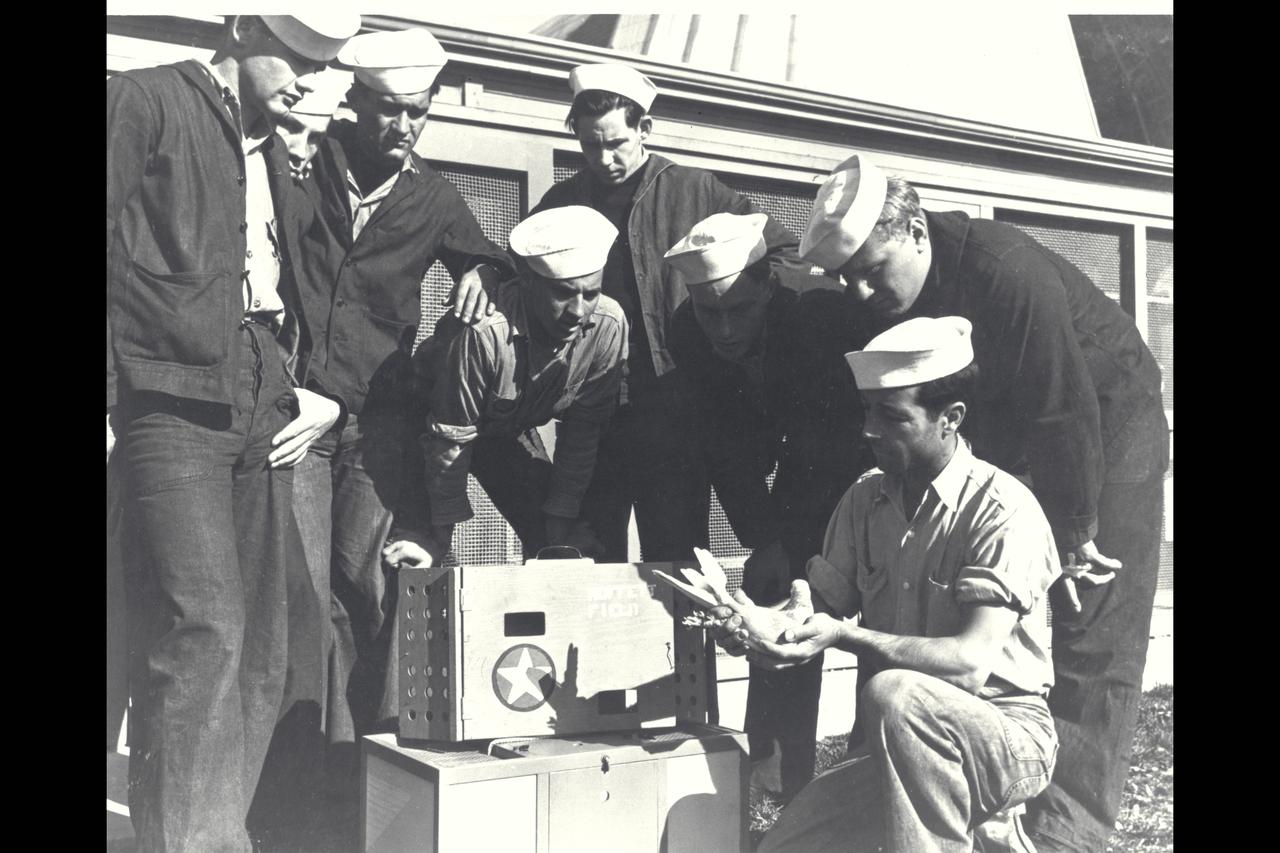
Moffett Field Pigeon with Navy personnel (@1935)
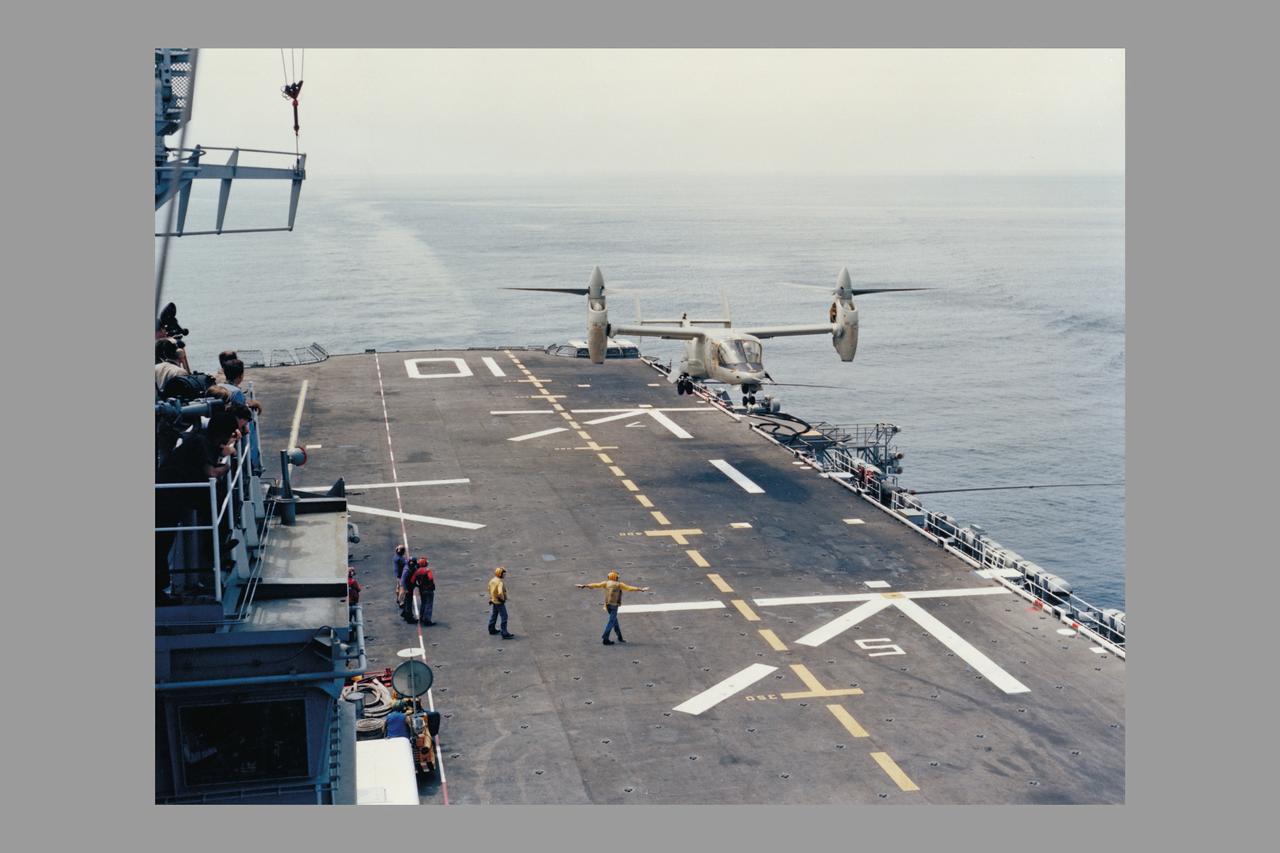
XV-15 Navy Sea Trials, Carrier Landing. Ref.: 024506.
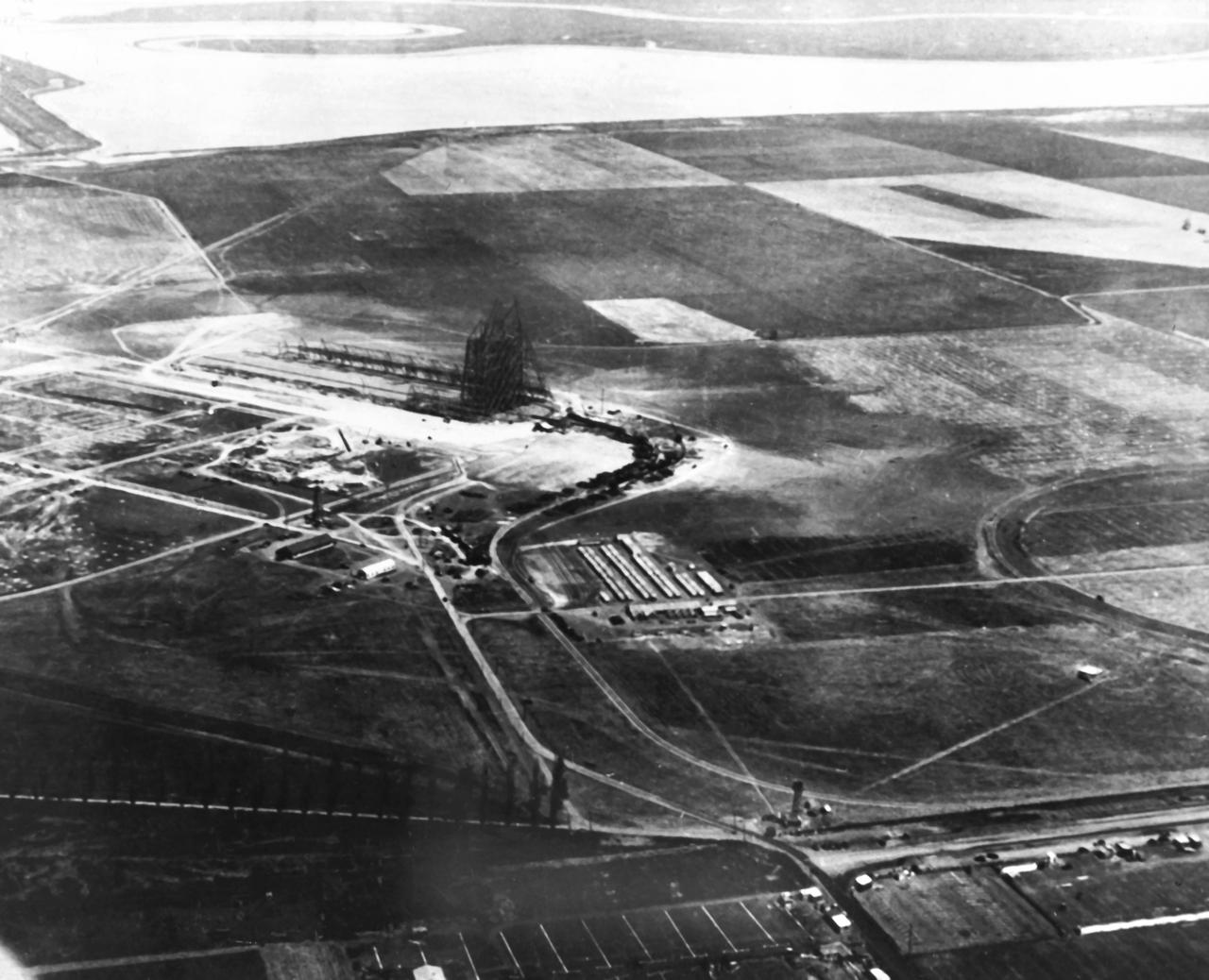
Navy (circa in 1931) Hangar 1 under construction, NAS Moffett Field
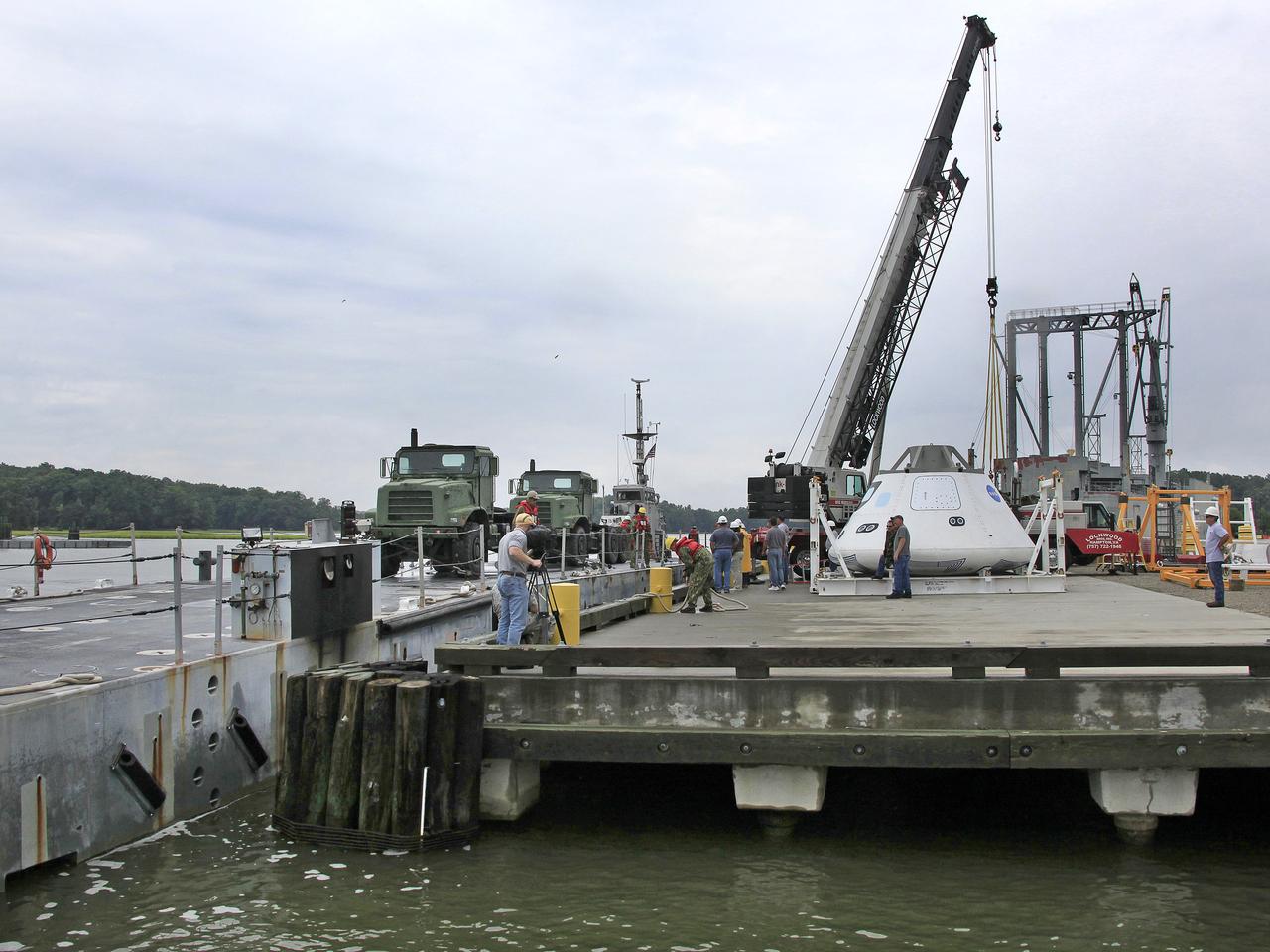
The Orion Test Capsule was loaded on a Navy INLS "Improved Navy Lighterage System" at Fort Eustis Tuesday from where it will be transported to Little Creek Amphibious Base in Norfolk.
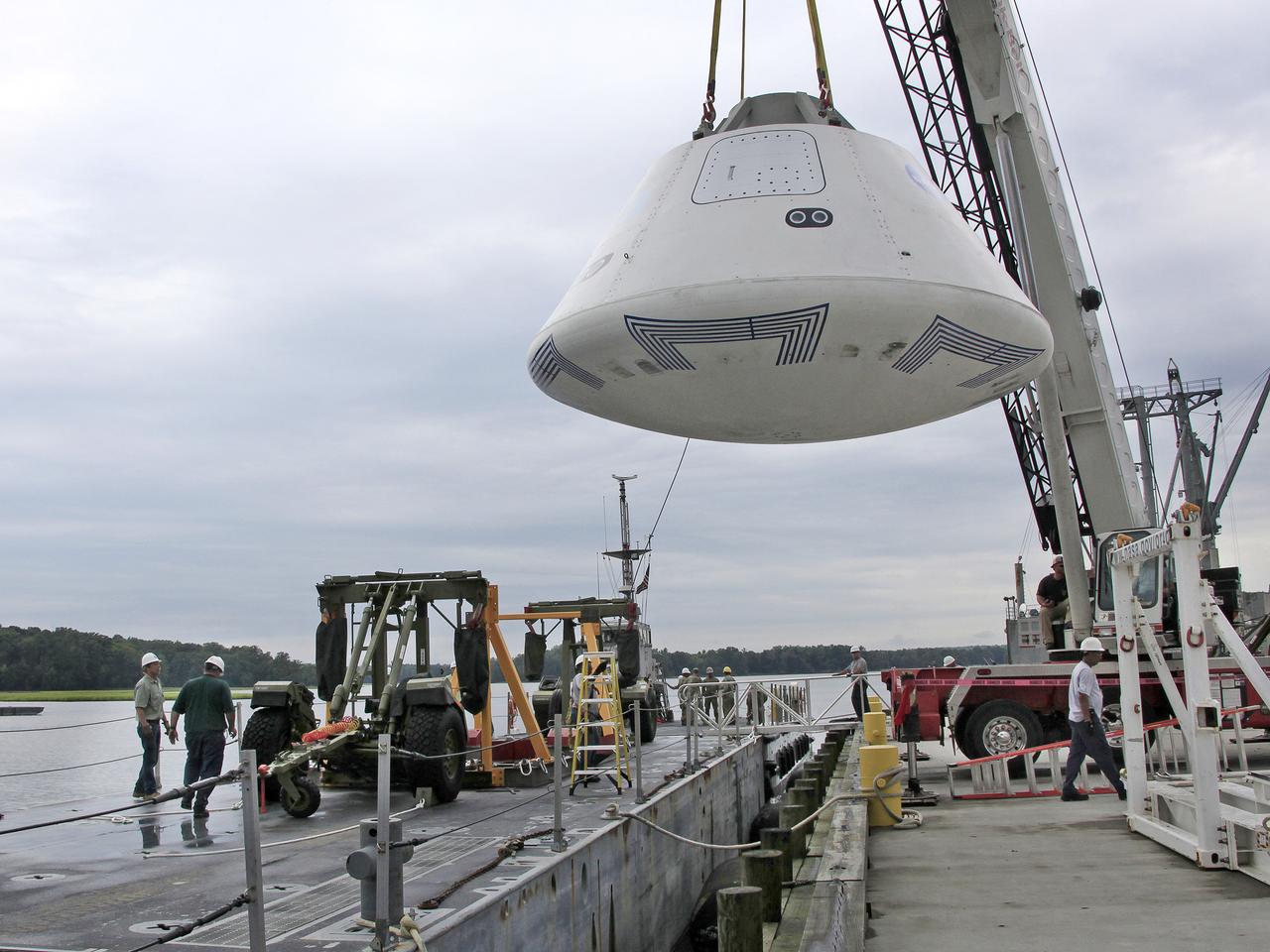
The Orion Test Capsule was loaded on a Navy INLS "Improved Navy Lighterage System" at Fort Eustis Tuesday from where it will be transported to Little Creek Amphibious Base in Norfolk.
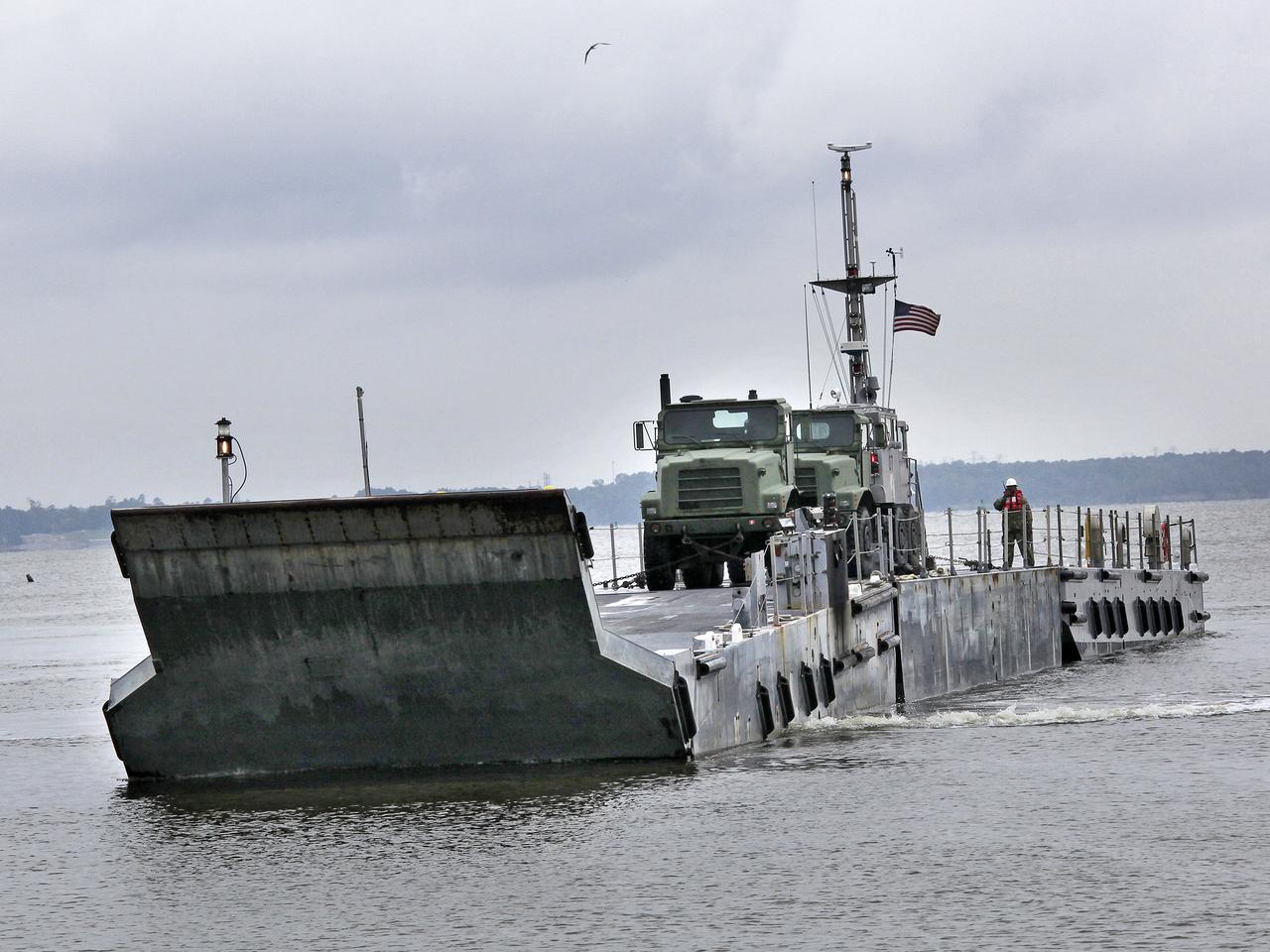
The Orion Test Capsule was loaded on a Navy INLS "Improved Navy Lighterage System" at Fort Eustis Tuesday from where it will be transported to Little Creek Amphibious Base in Norfolk.
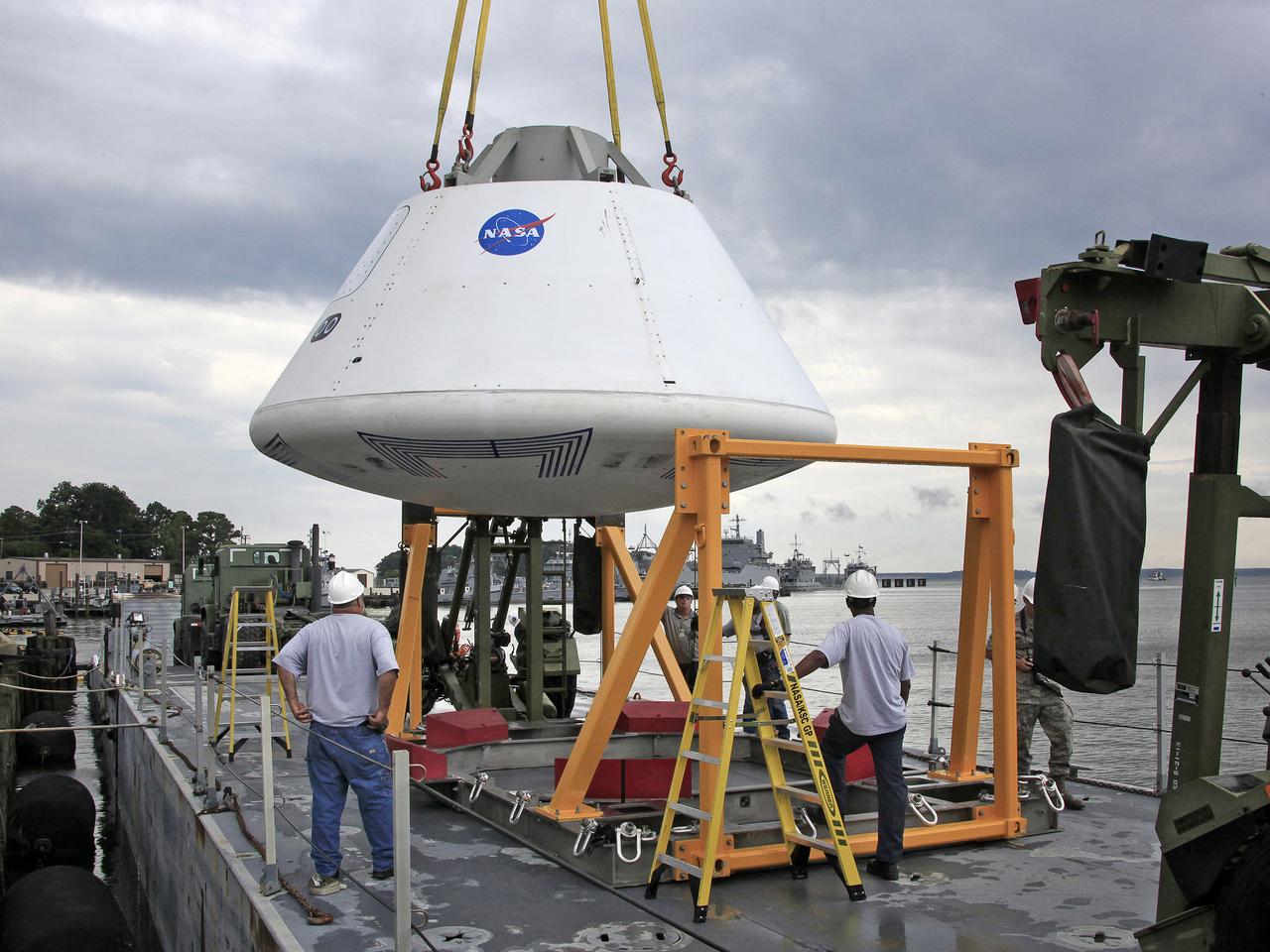
The Orion Test Capsule was loaded on a Navy INLS "Improved Navy Lighterage System" at Fort Eustis Tuesday from where it will be transported to Little Creek Amphibious Base in Norfolk.
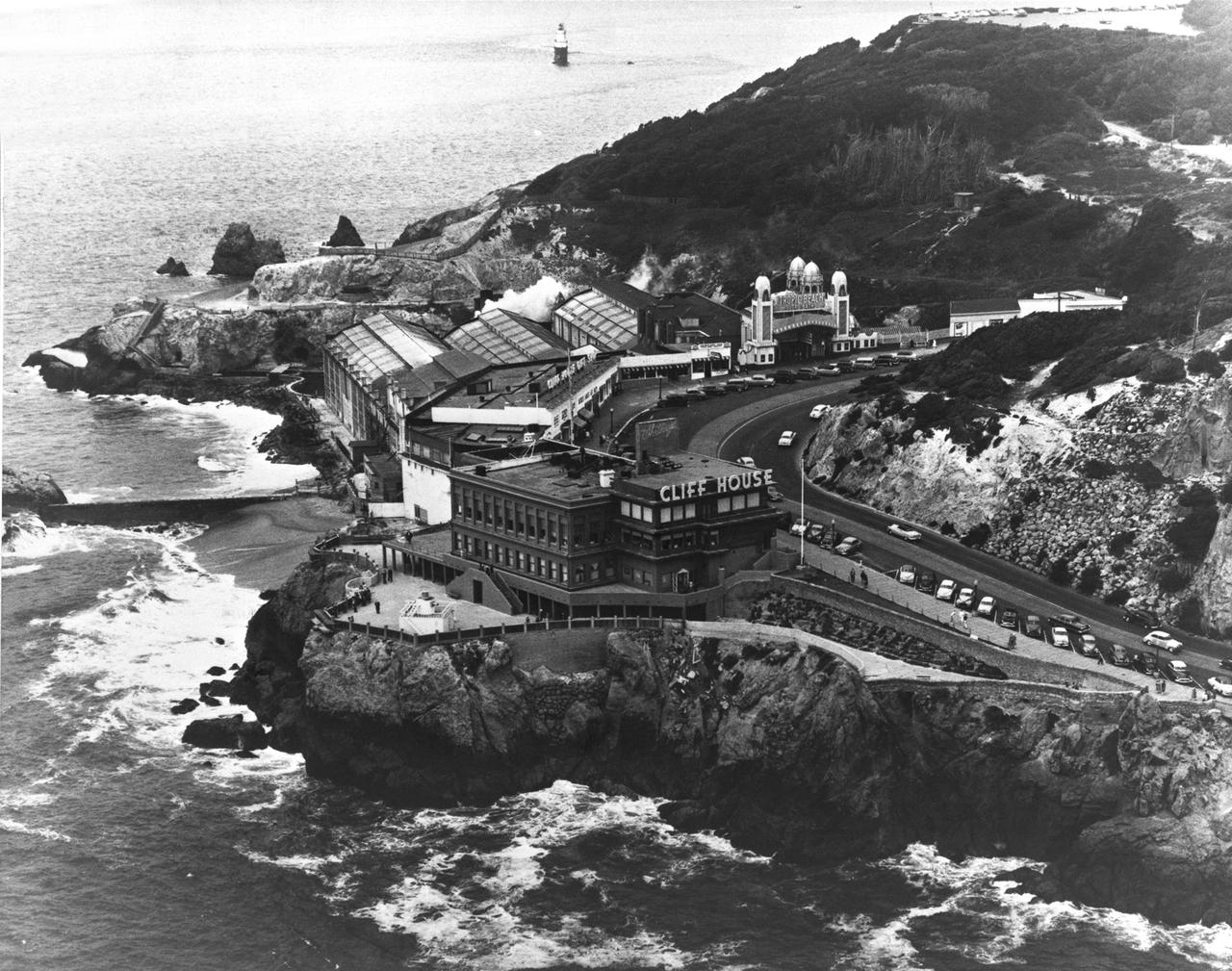
Navy San Franciso, CA Coast Seal Point, including Cliff House Restaurant
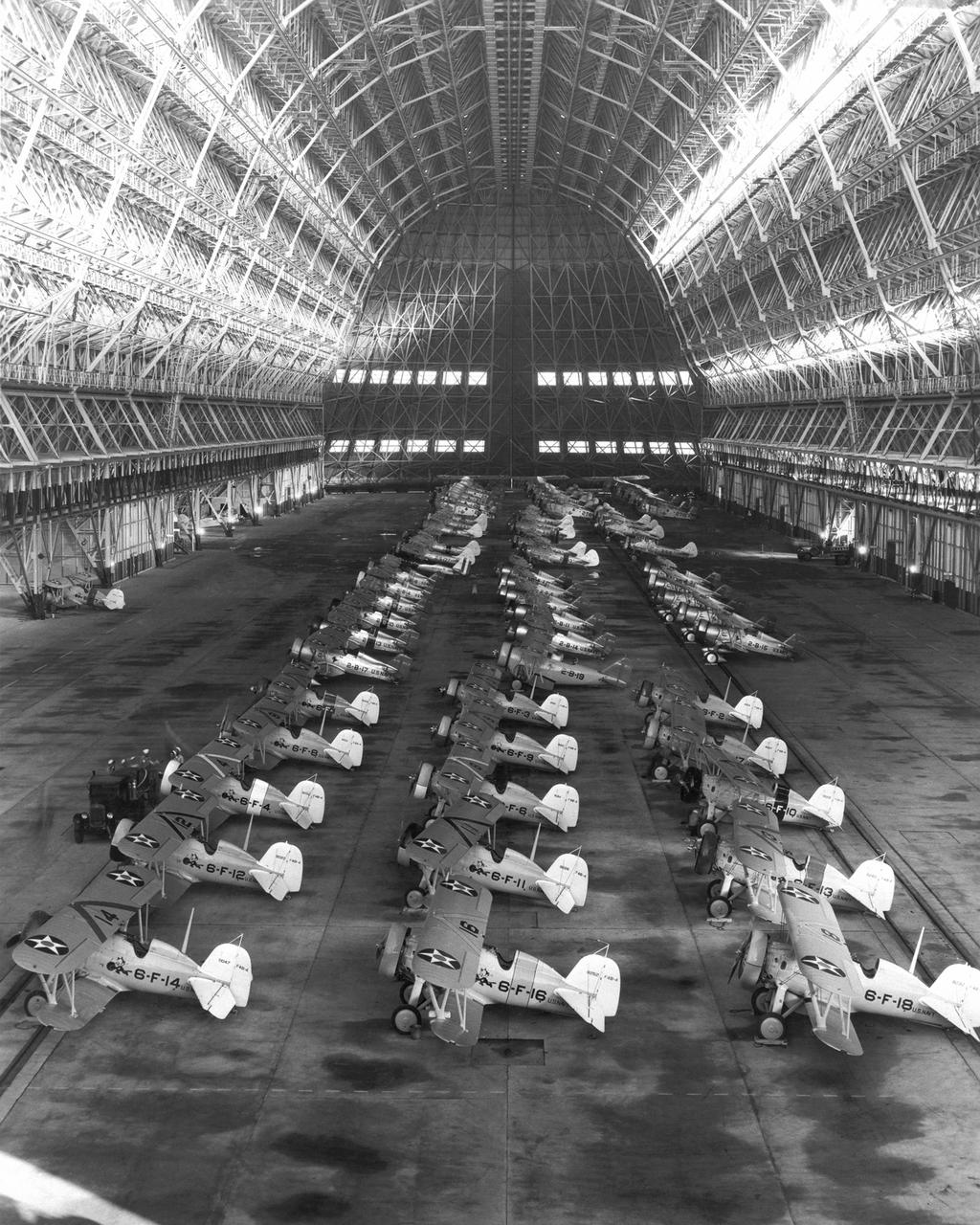
Navy Squadrons VF-6, VB-2, VS-2, & VT-2 in Hangar at NAS Sunnyvale CA looking south
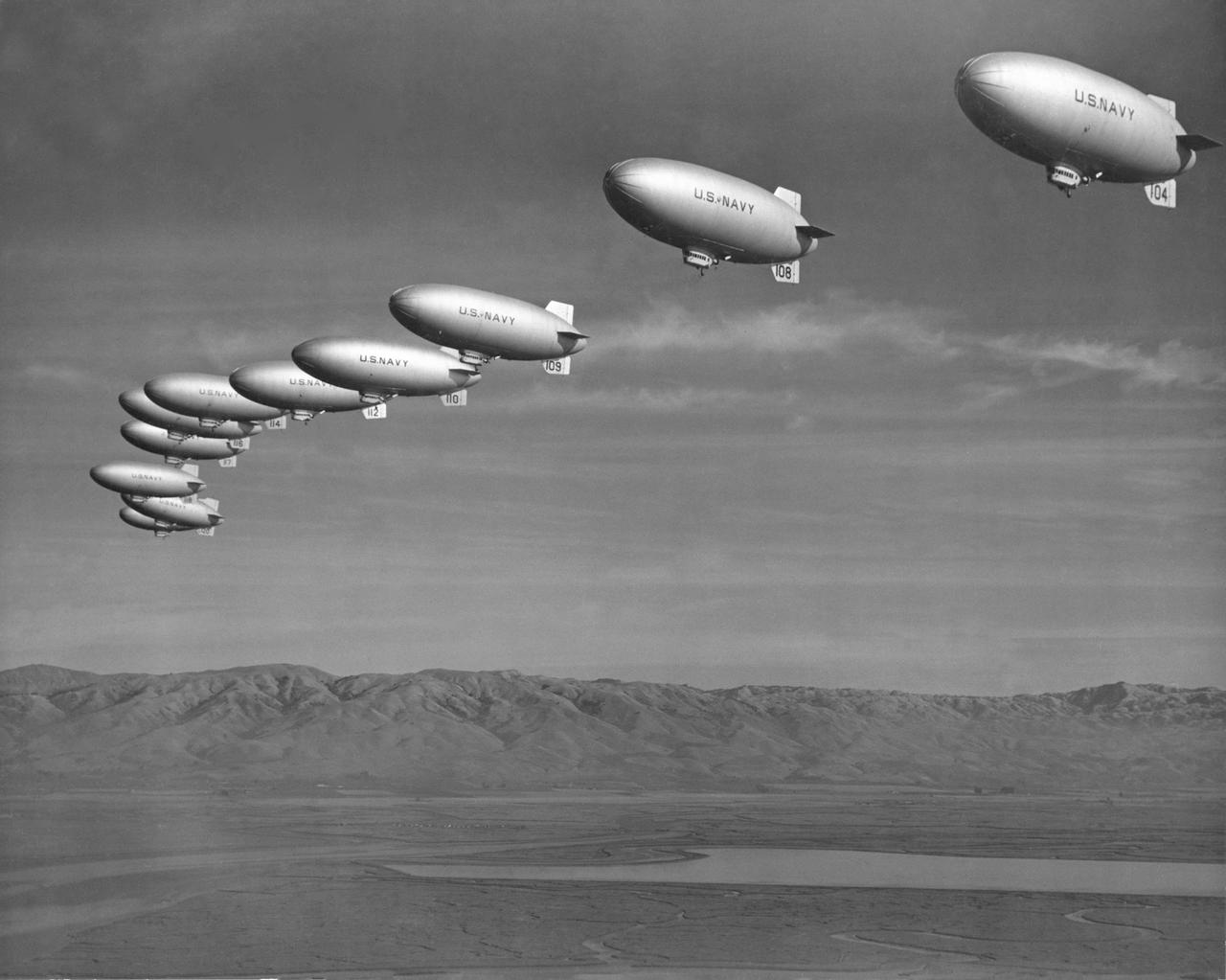
Navy L-Ships in formation (Alt. 600) heading south east lower San Francisco Bay
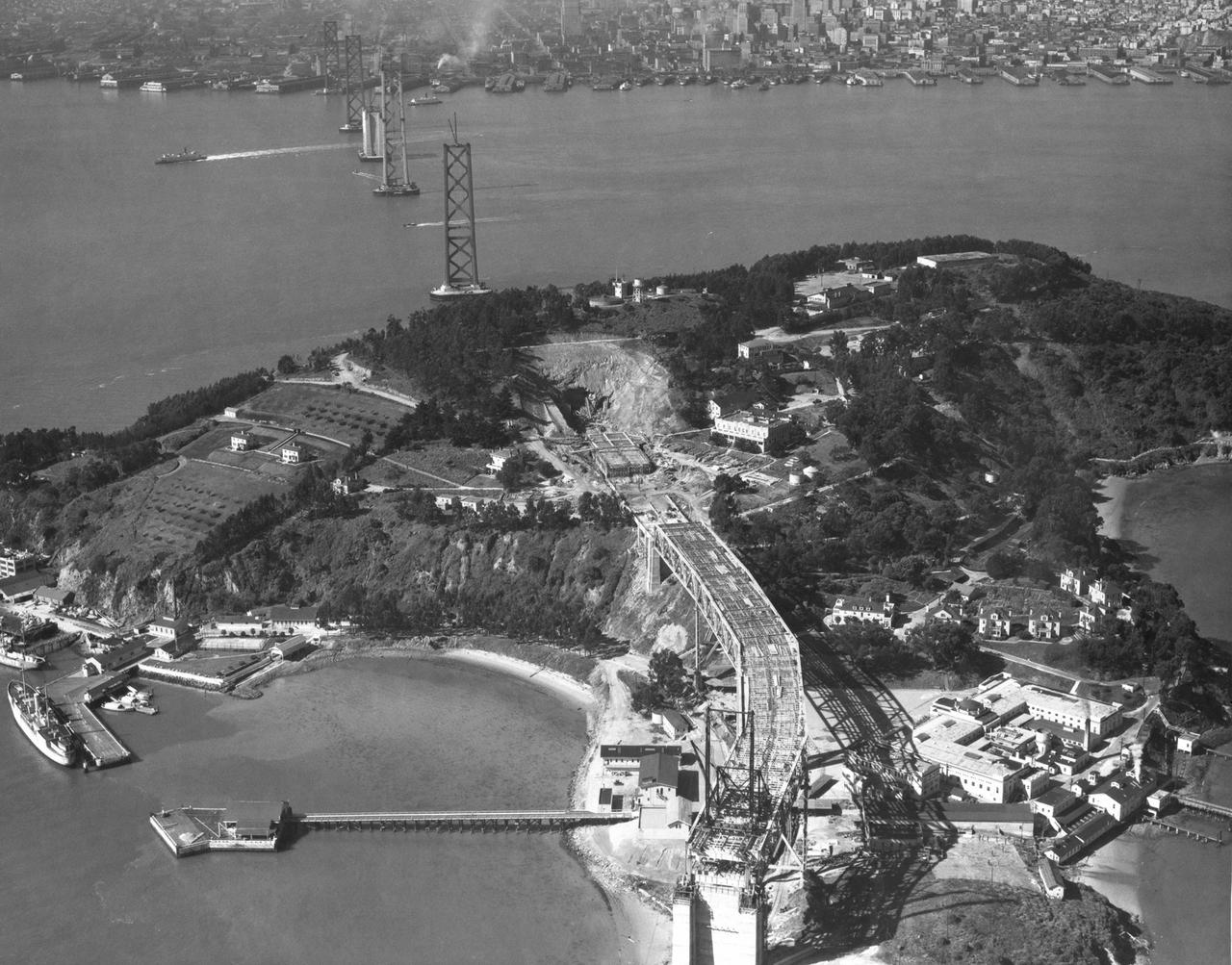
Navy San Franciso Bay Bridge Construction (looking west) toward San Francisco Yerba Buena Island in foreground
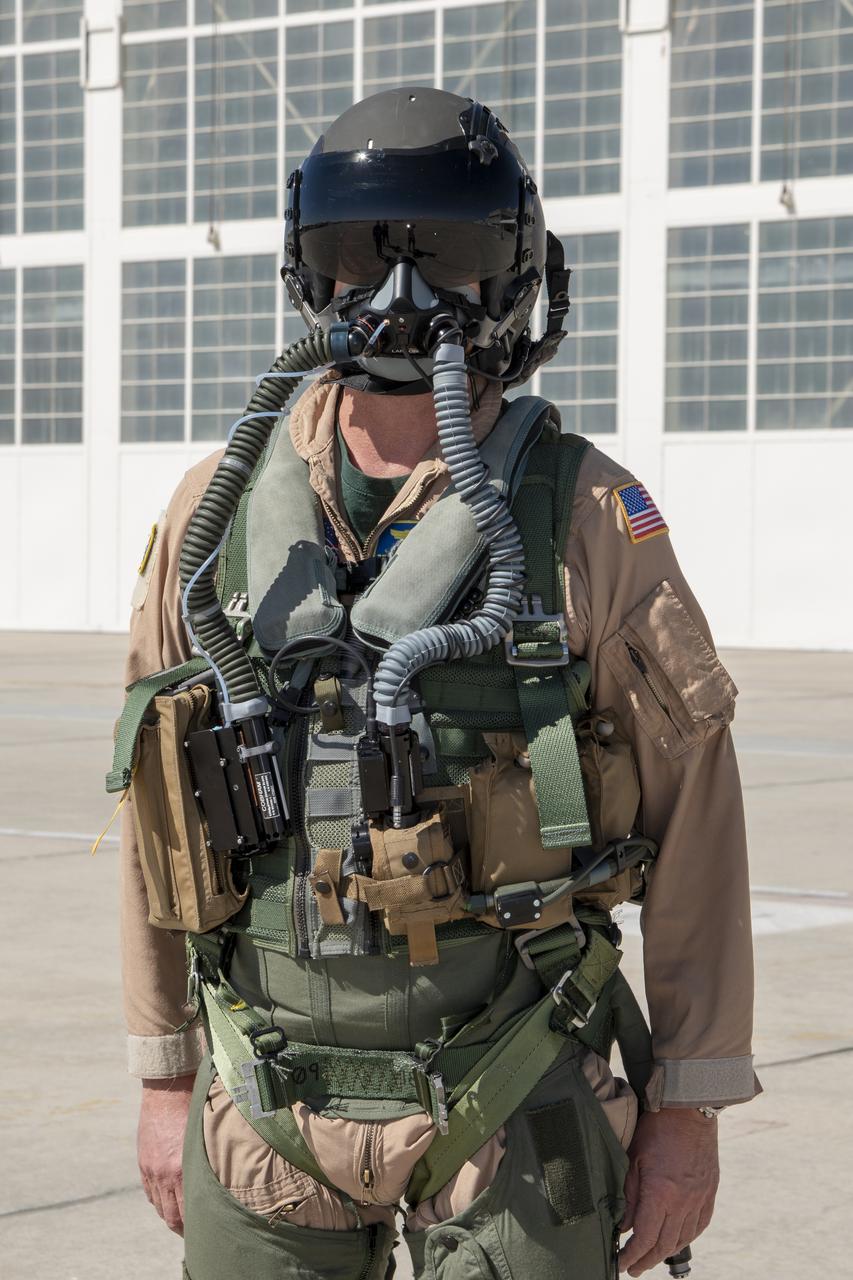
NASA Pilot Nils Larson wears a U.S. Navy harness configuration to show the integrated parachute harness and the built-in survival vest. The Navy configuration is bulkier and weighs more than the U.S. Air Force harness. Both configurations are being used in the Pilot Breathing Assessment program at NASA’s Armstrong Flight Research Center in California.
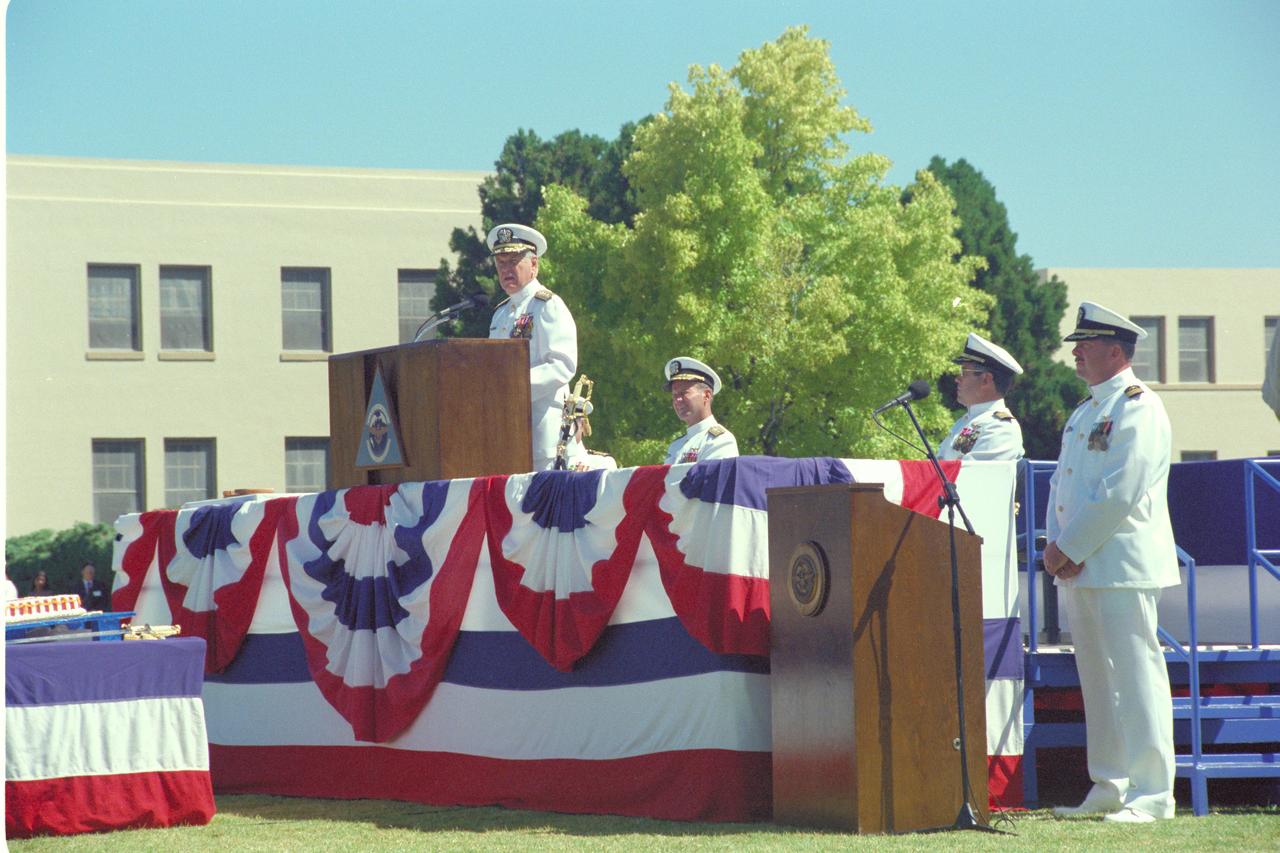
Navy Disestablishment Ceremony (NAS Moffett Field) and the handing off to NASA/AMES Research Center Director Dr. Ken Munechika (Moffett Federal Airfield MFA)
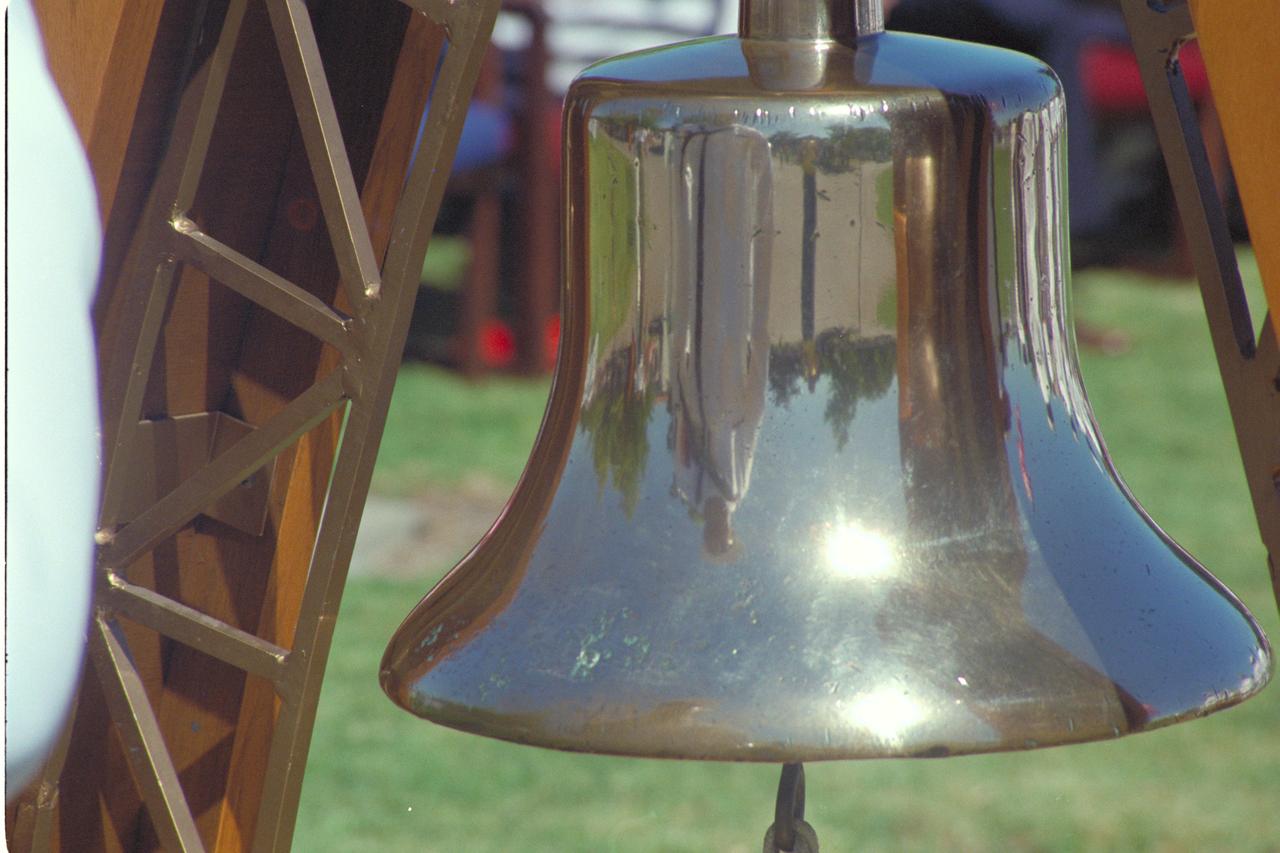
Navy Disestablishment Ceremony (NAS Moffett Field) and the handing off to NASA/AMES Research Center Director Dr. Ken Munechika (Moffett Federal Airfield MFA)
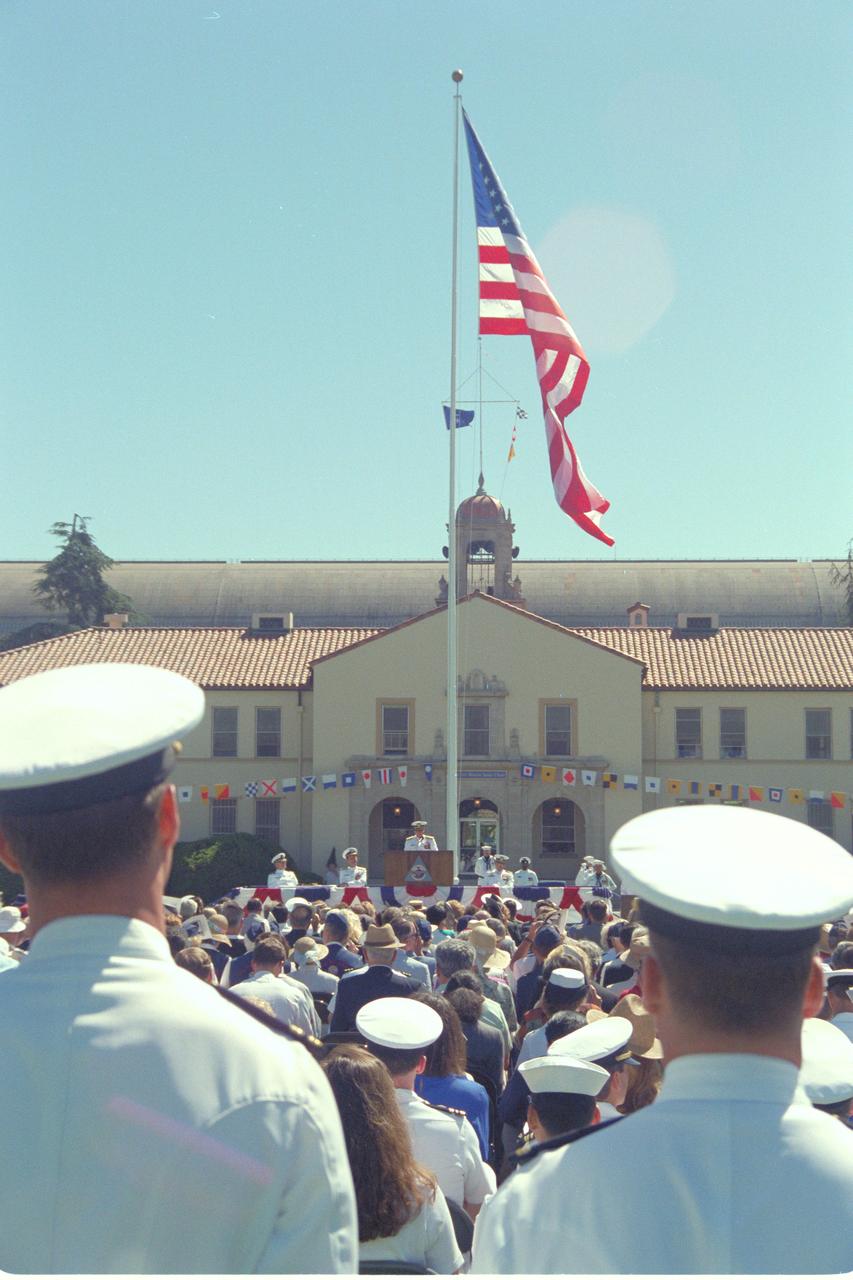
Navy Disestablishment Ceremony (NAS Moffett Field) and the handing off to NASA/AMES Research Center Director Dr. Ken Munechika (Moffett Federal Airfield MFA)
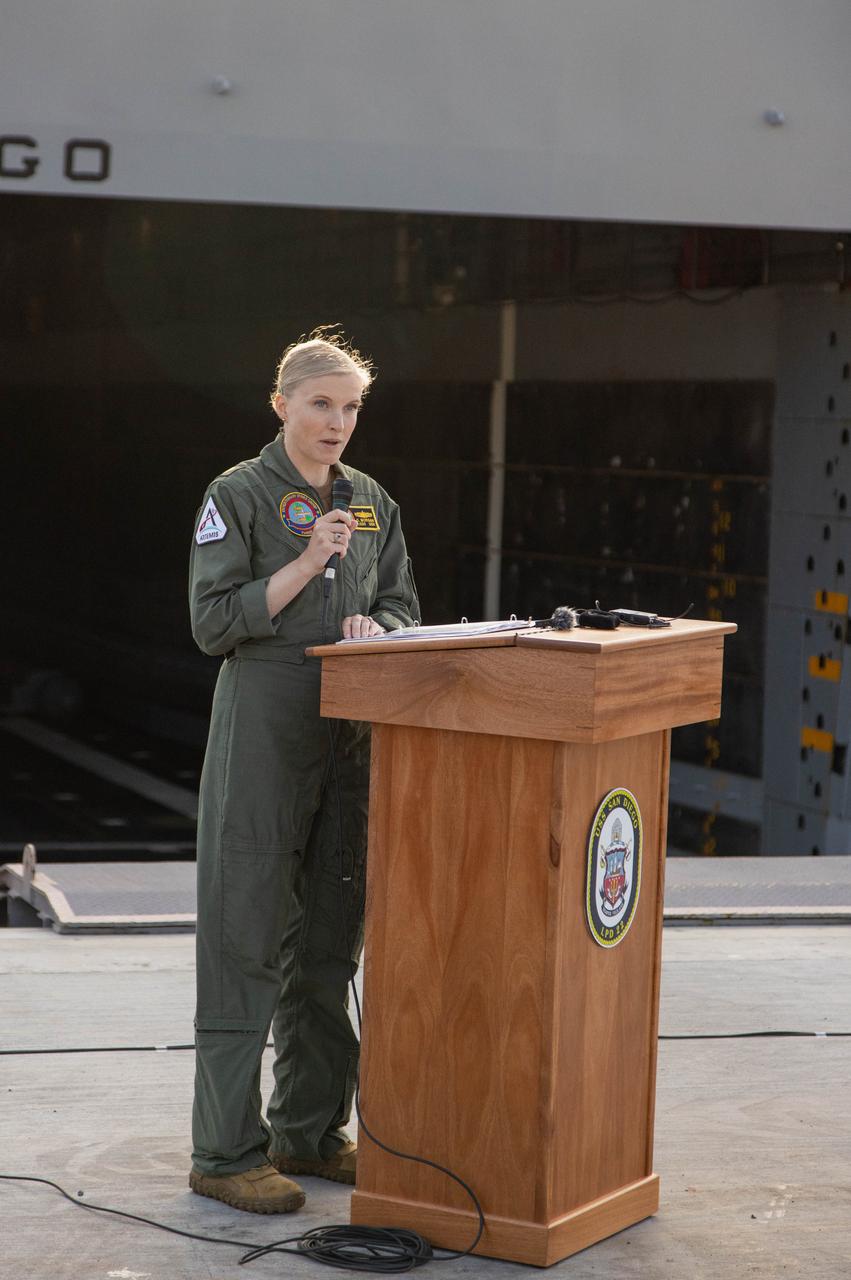
Lt. Cmdr. Chloe Morgan, public affairs officer for Expeditionary Strike Group 3 U.S. Navy speaks during a news conference held in San Diego, California on Wednesday, Feb. 28, 2024, about the Underway Recovery Test 11 (URT-11) performed off the coast of San Diego, California. URT-11 performed by NASA’s Exploration Ground System’s Landing and Recovery team, partners from the Department of Defense, and U.S. Navy personnel aboard the USS San Diego is the eleventh in a series of Artemis recovery tests, and the first the Artemis II recovery procedures involved the astronauts.

NASA’s Artemis II crew member NASA astronaut Victor Glover, along with NASA’s Exploration Ground System’s Landing and Recovery team, partners from the Department of Defense, and U.S. Navy personnel, speaks to members of the media about the Underway Recovery Test (URT-11) during a news conference held in San Diego, California on Wednesday, Feb. 28, 2024. URT-11 performed by NASA’s Exploration Ground System’s Landing and Recovery team, partners from the Department of Defense, and U.S. Navy personnel aboard the USS San Diego is the eleventh in a series of Artemis recovery tests, and the first the Artemis II recovery procedures involved the astronauts.
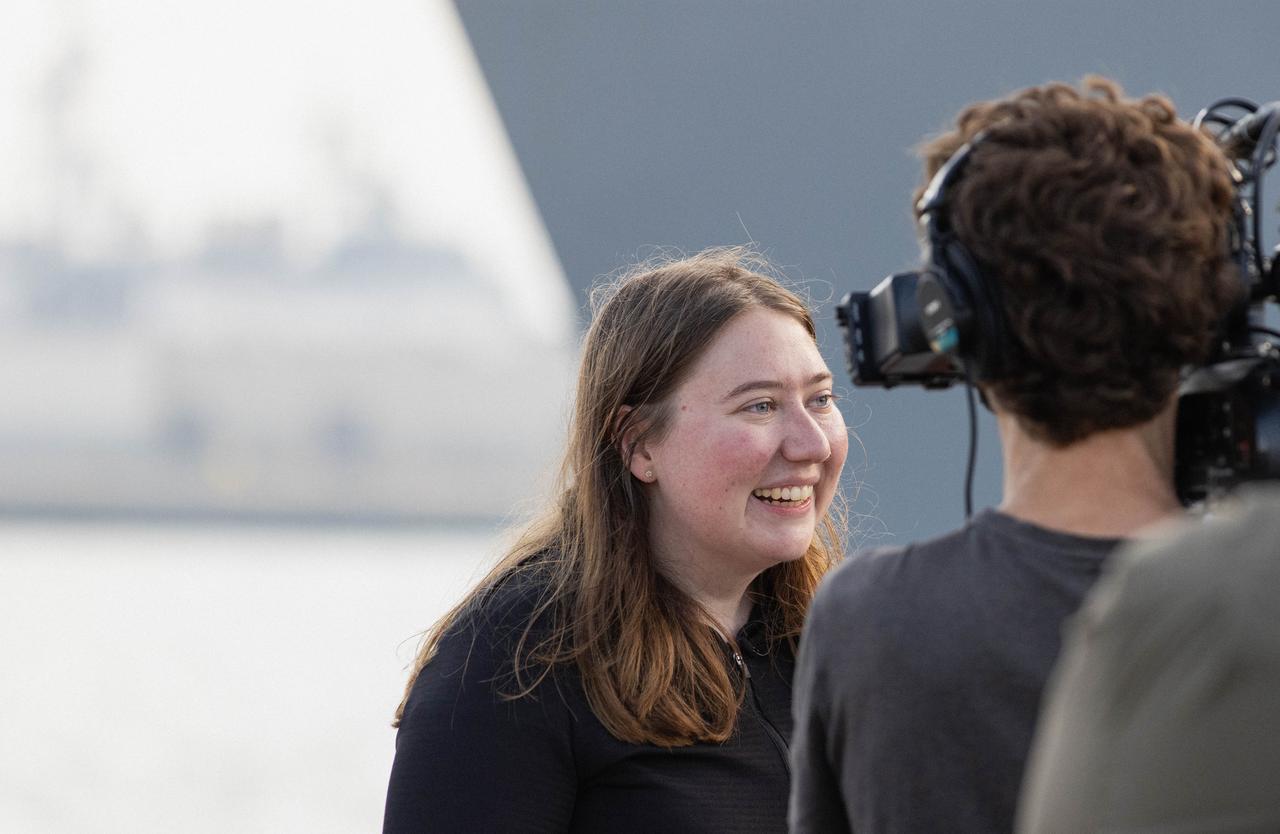
NASA’s Artemis program public affairs specialist Madison Tuttle speaks during a news conference about the practice recovery procedures performed by NASA’s Exploration Ground System’s Landing and Recovery team, partners from the Department of Defense, and U.S. Navy personnel during Underway Recovery Test 11 (URT-11) aboard the USS San Diego on Wednesday, Feb. 28, 2024. URT-11 performed by NASA’s Exploration Ground System’s Landing and Recovery team, partners from the Department of Defense, and U.S. Navy personnel aboard the USS San Diego is the eleventh in a series of Artemis recovery tests, and the first the Artemis II recovery procedures involved the astronauts.
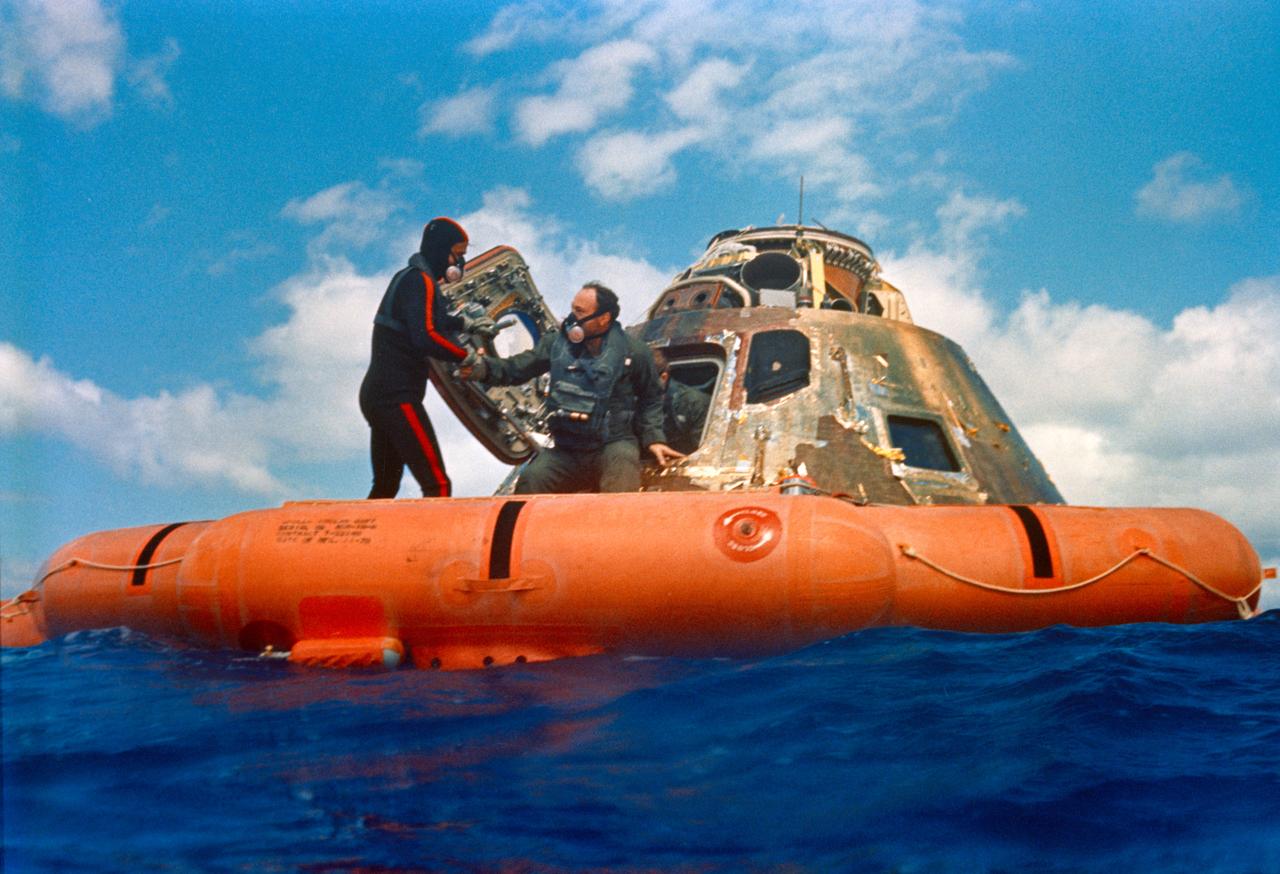
S71-19474 (9 Feb. 1971) --- Astronaut Edgar D. Mitchell, lunar module pilot, is assisted out of the Command Module (CM) by a U.S. Navy underwater demolition team swimmer during the Apollo 14 recovery operations in the South Pacific Ocean. Mitchell was followed out of the spacecraft by astronauts Alan B. Shepard Jr., commander; and Stuart A. Roosa, command module pilot. Roosa is partially visible behind Mitchell. The Apollo 14 splashdown occurred at 3:04:39 p.m. (CST), Feb. 9, 1971, in the South Pacific Ocean, approximately 765 nautical miles from American Samoa. They were transported by U.S. Navy helicopter to the USS New Orleans, prime recovery vessel.
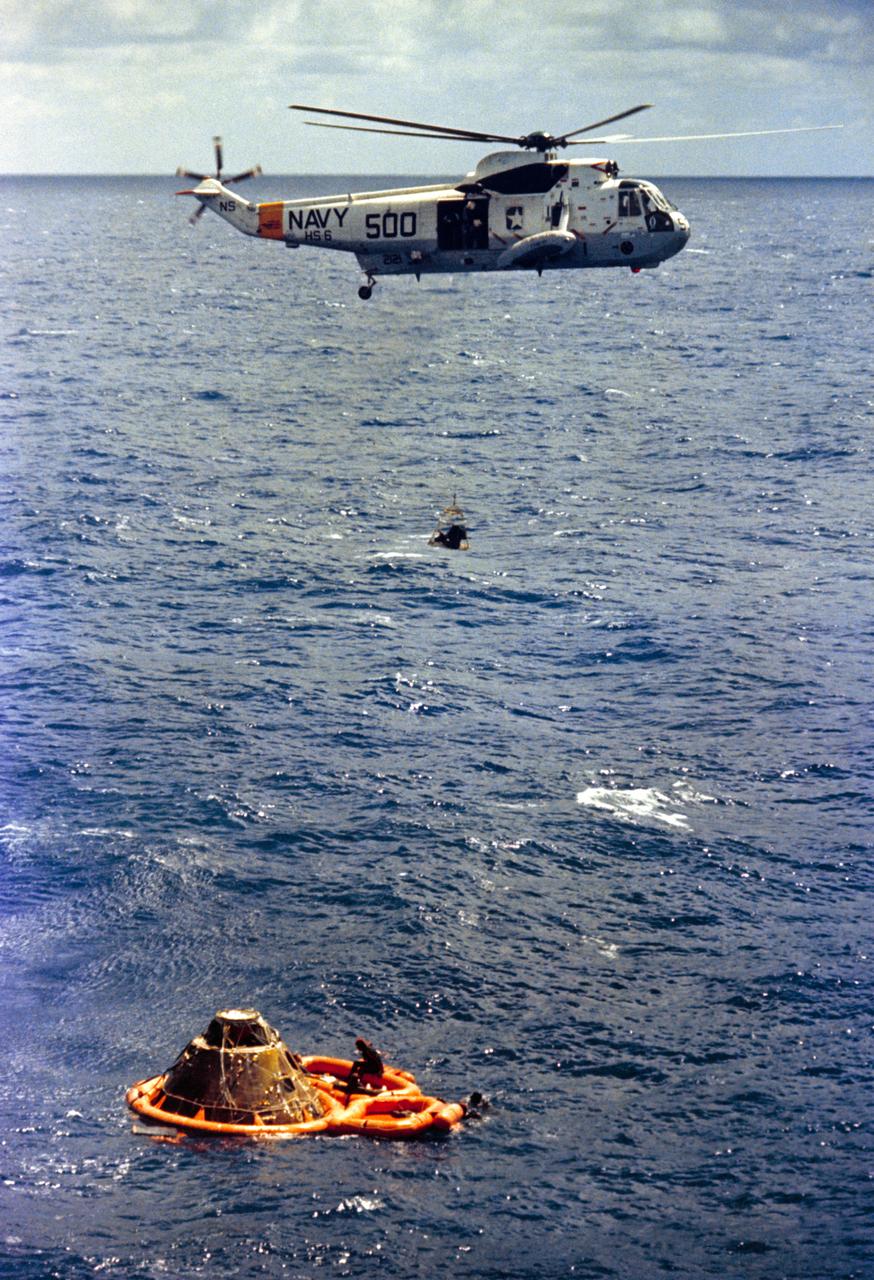
S71-19476 (9 Feb. 1971) --- Astronaut Stuart A. Roosa, command module pilot, is hoisted inside a Billy Pugh net to a U.S. Navy helicopter assisting in Apollo 14 recovery operations in the South Pacific Ocean. Visible in a life raft beside the Command Module (CM) are astronauts Alan B. Shepard Jr., commander, back to camera; and Edgar D. Mitchell (partially obscured by the spacecraft), lunar module pilot. Three U.S. Navy underwater demolition team swimmers who assisted in the recovery operations are pictured in and around the life raft. Apollo 14 splashdown occurred at 3:04:39 p.m. (CST), Feb. 9, 1971, approximately 765 nautical miles south of American Samoa in the South Pacific Ocean.
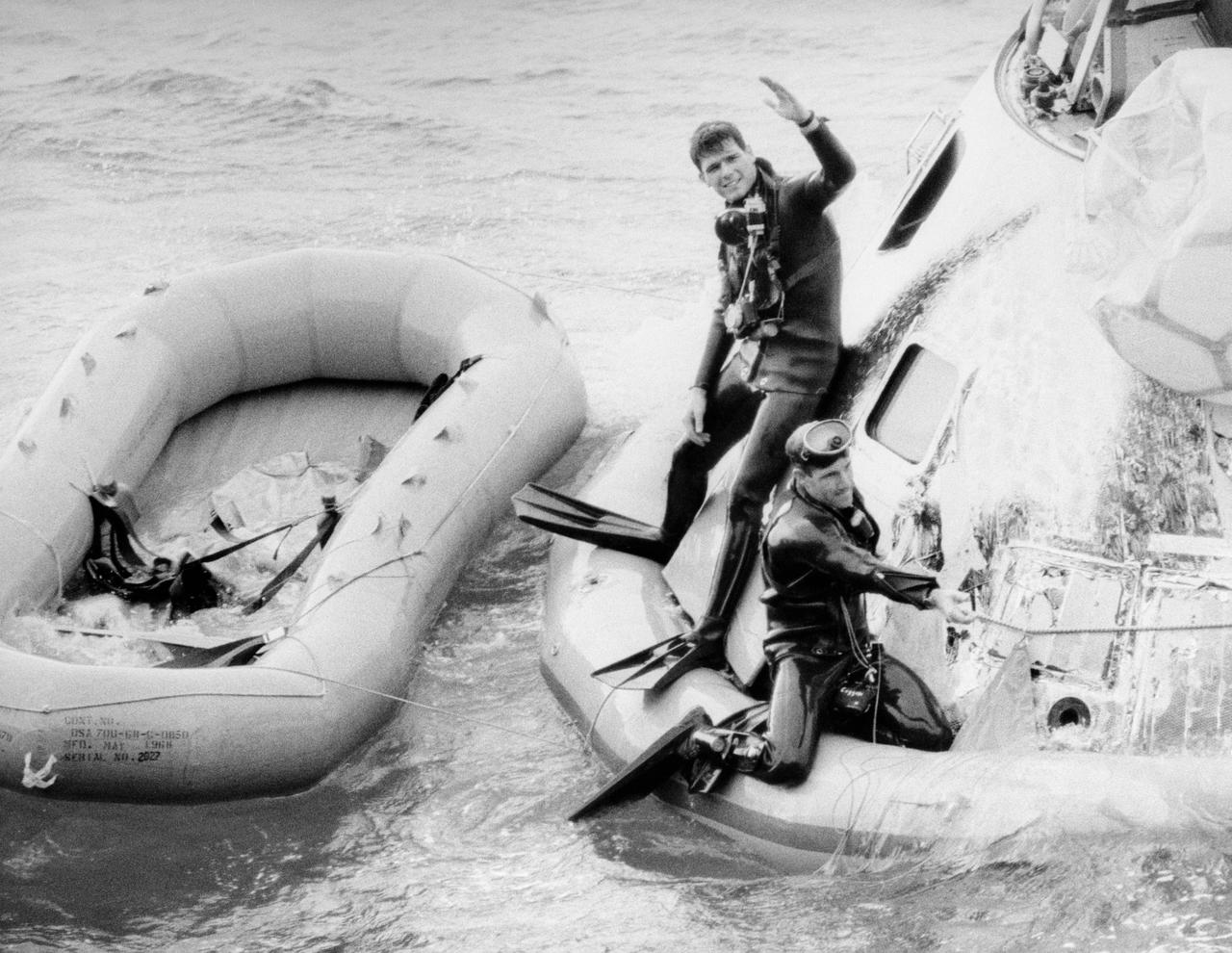
S69-15732 (27 Dec. 1968) --- A U.S. Navy frogman team participates in the Apollo 8 recovery operations. The Apollo crew, astronauts Frank Borman, James A. Lovell Jr., and William A. Anders, were recovered by helicopter and flown to the deck of the USS Yorktown, prime recovery ship for the historic Apollo 8 lunar orbit mission. Apollo 8 splashed down at 10:51 a.m. (EST), Dec. 27, 1968, about 1,000 miles south-southwest of Hawaii.
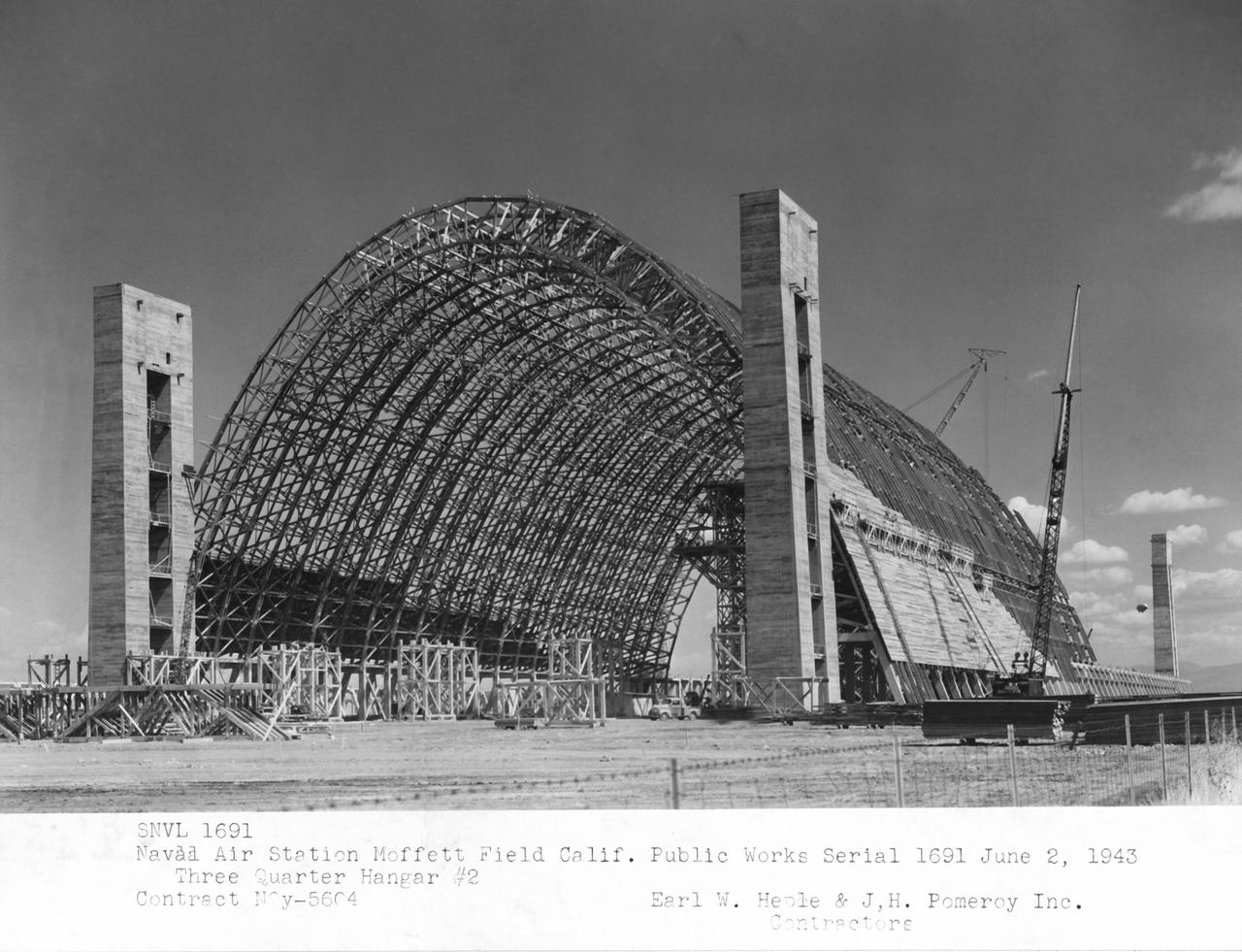
Navy Naval Air Station Moffett Field Public works Serial 1514 - Contract NOy-5604, Earl W. Heple & J.H. Pomeroy contractors NAS Air station Moffett Field, three quarter view of Hangar 2 from North West Corner

Navy (Contract NOY-5604 SNVL 1689) NAS Airstation Moffett Field, broadside view of Hangar 2 from middle of landing mat. Moffett Field Public Works Serial 1621 - Earl W. Heple & J. H. Pomeroy Contractors
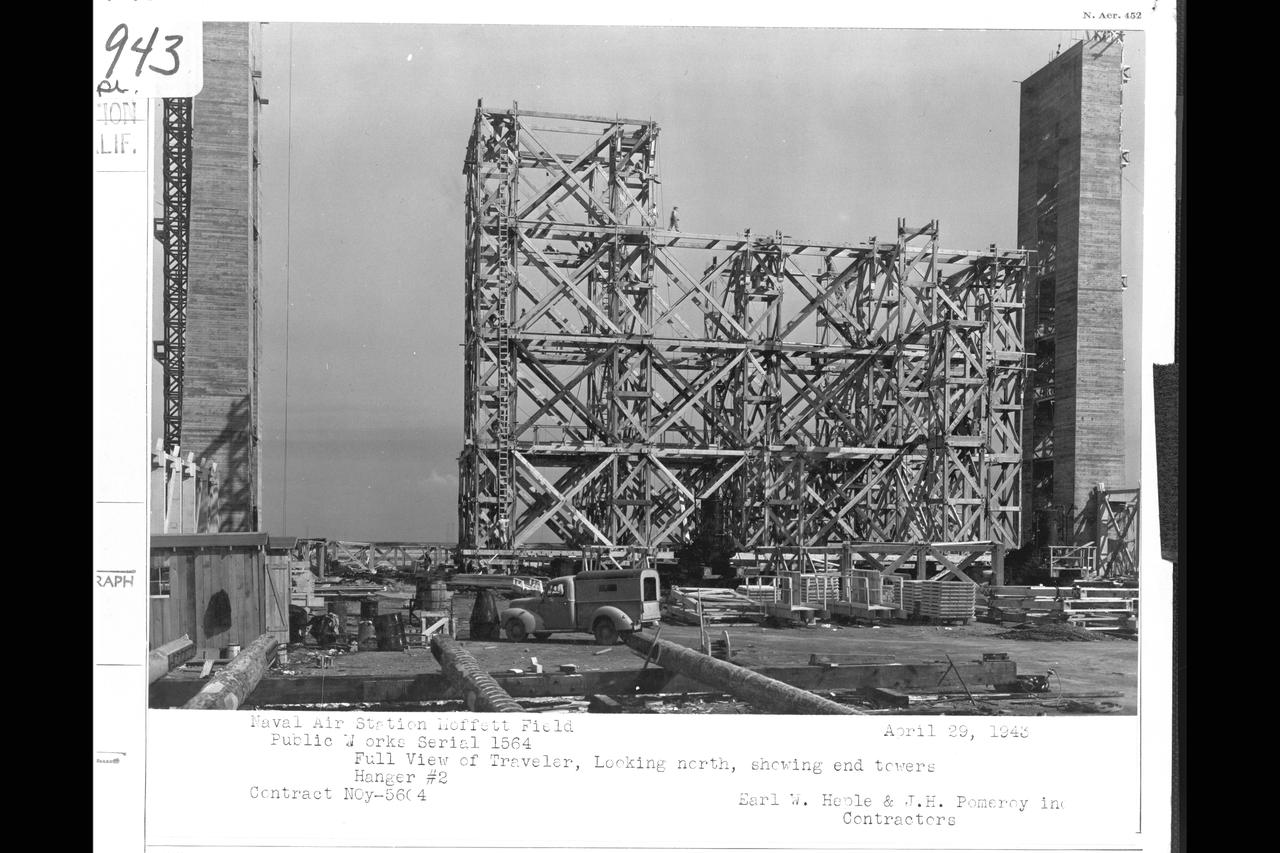
Navy Naval Air Station Moffett Field Public works Serial 1514 - Contract NOy-5604, Earl W. Heple & J.H. Pomeroy contractors NAS Moffett Field: full view of Traveler, looking north, showing end towers Hangar 2
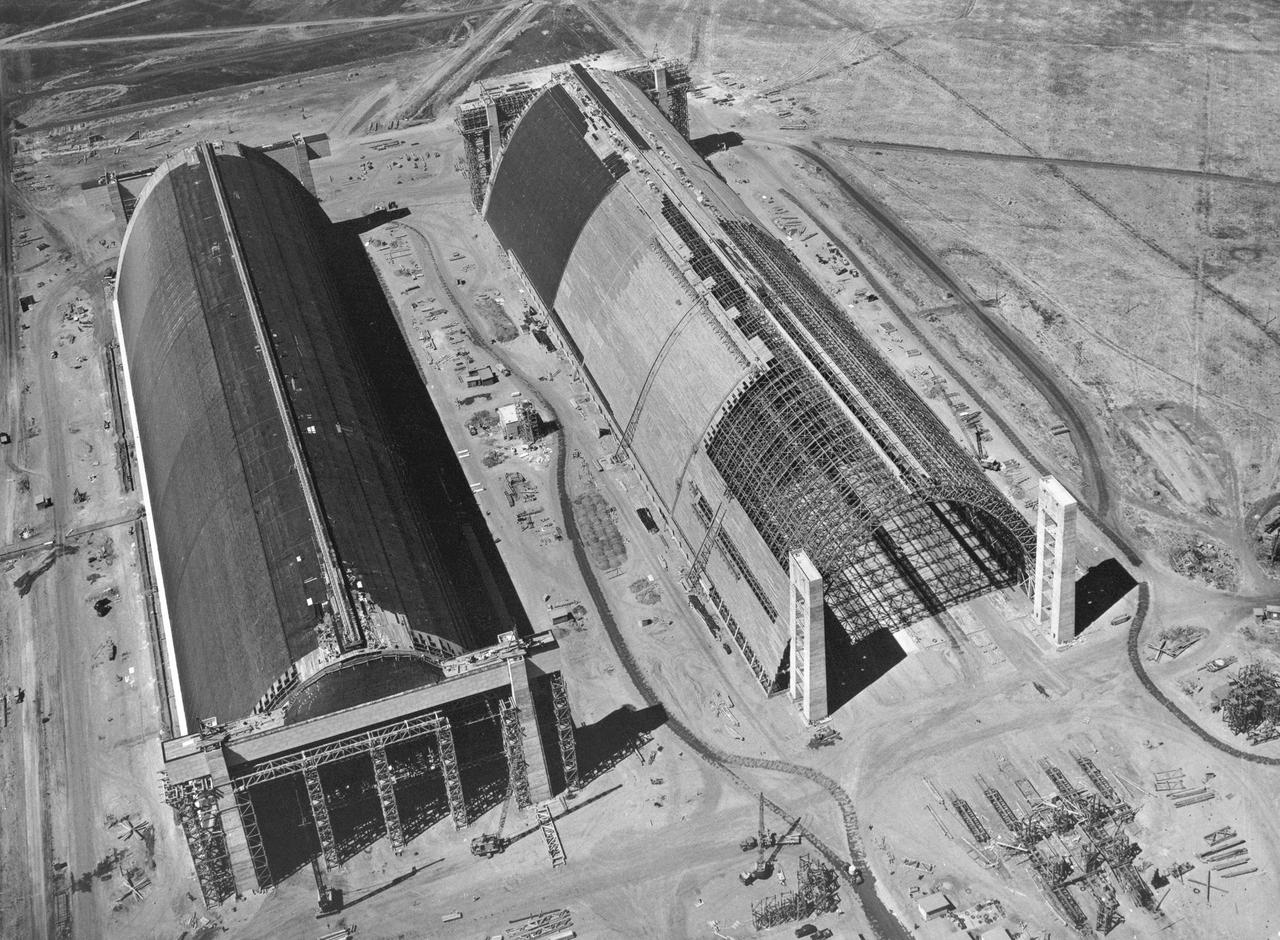
Navy (Contract NOy-5604 SNVL 1691) NAS Air station Moffett Field, overhead view of Hangar 2 and 3 from North West Corner Moffett Field Public Works Serial 1621 - Earl W. Heple & J. H. Pomeroy Contractors
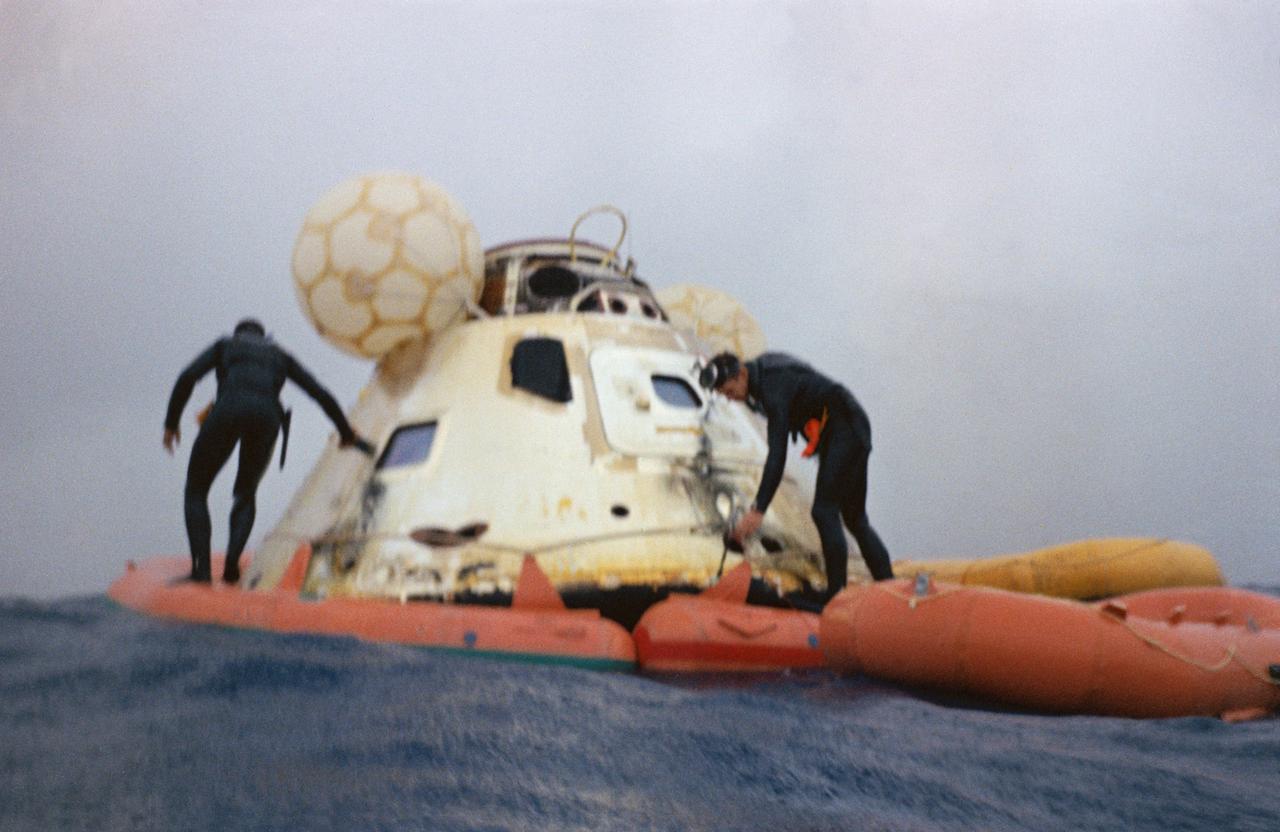
U.S. Navy frogmen attach a flotation collar to the Apollo 7 command module during recovery operations in the Atlantic. The Apollo 7 spacecraft splashed down at 7:11 a.m., October 22, 1968, approximately 200 nautical miles south-southwest of Bermuda.
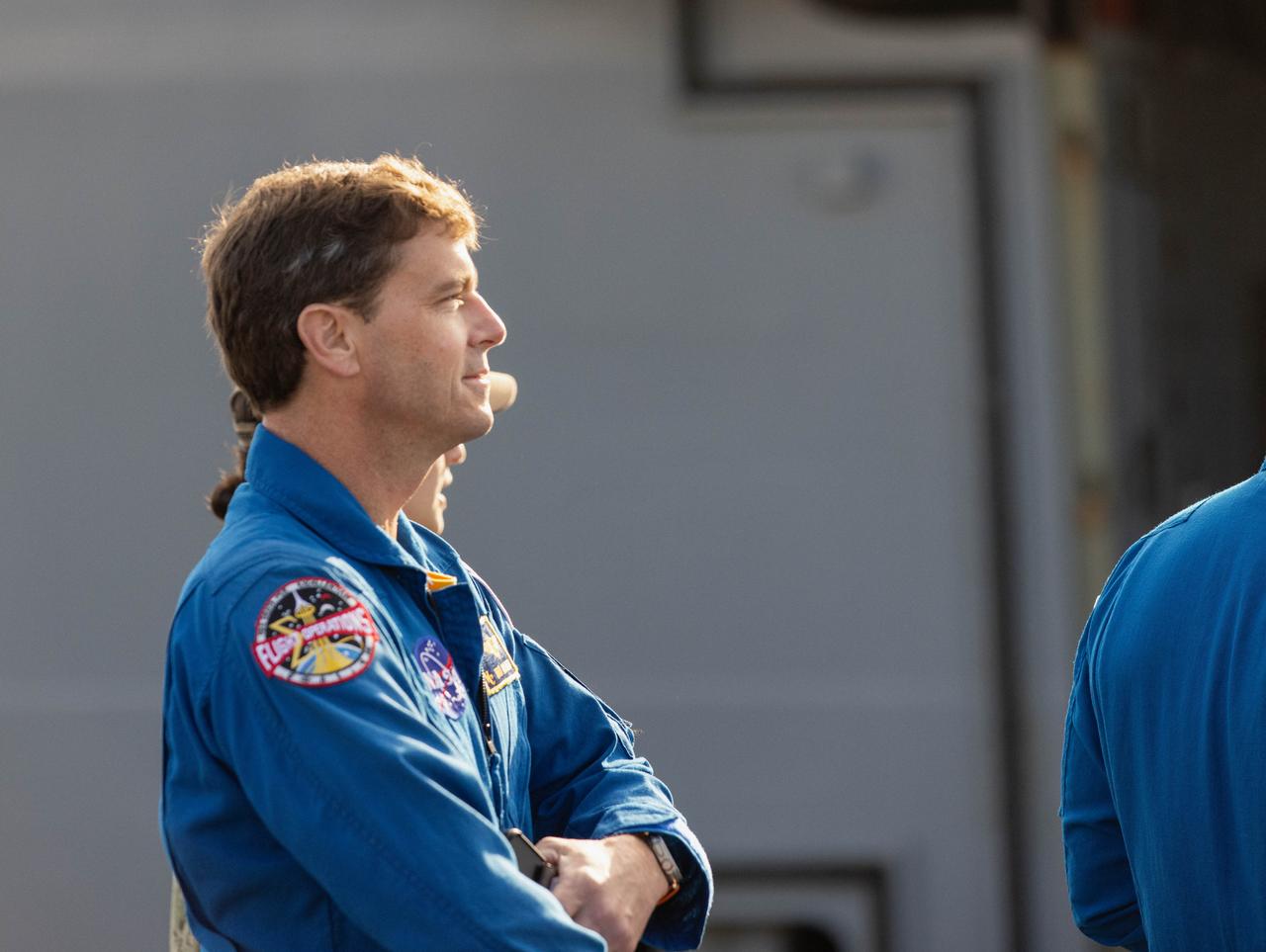
NASA’s Artemis II crew member NASA astronaut Reid Wiseman observes a news conference discussing the practice recovery procedures following the Underway Recovery Test (URT-11) aboard the USS San Diego on Wednesday, Feb. 28, 2024. URT-11 performed by NASA’s Exploration Ground System’s Landing and Recovery team, partners from the Department of Defense, and U.S. Navy personnel aboard the USS San Diego is the eleventh in a series of Artemis recovery tests, and the first the Artemis II recovery procedures involved the astronauts.

NASA’s Artemis II crew member NASA astronaut Victor Glover smiles during a news conference discussing the practice recovery procedures following the Underway Recovery Test (URT-11) aboard the USS San Diego on Wednesday, Feb. 28, 2024. URT-11 performed by NASA’s Exploration Ground System’s Landing and Recovery team, partners from the Department of Defense, and U.S. Navy personnel aboard the USS San Diego is the eleventh in a series of Artemis recovery tests, and the first the Artemis II recovery procedures involved the astronauts.
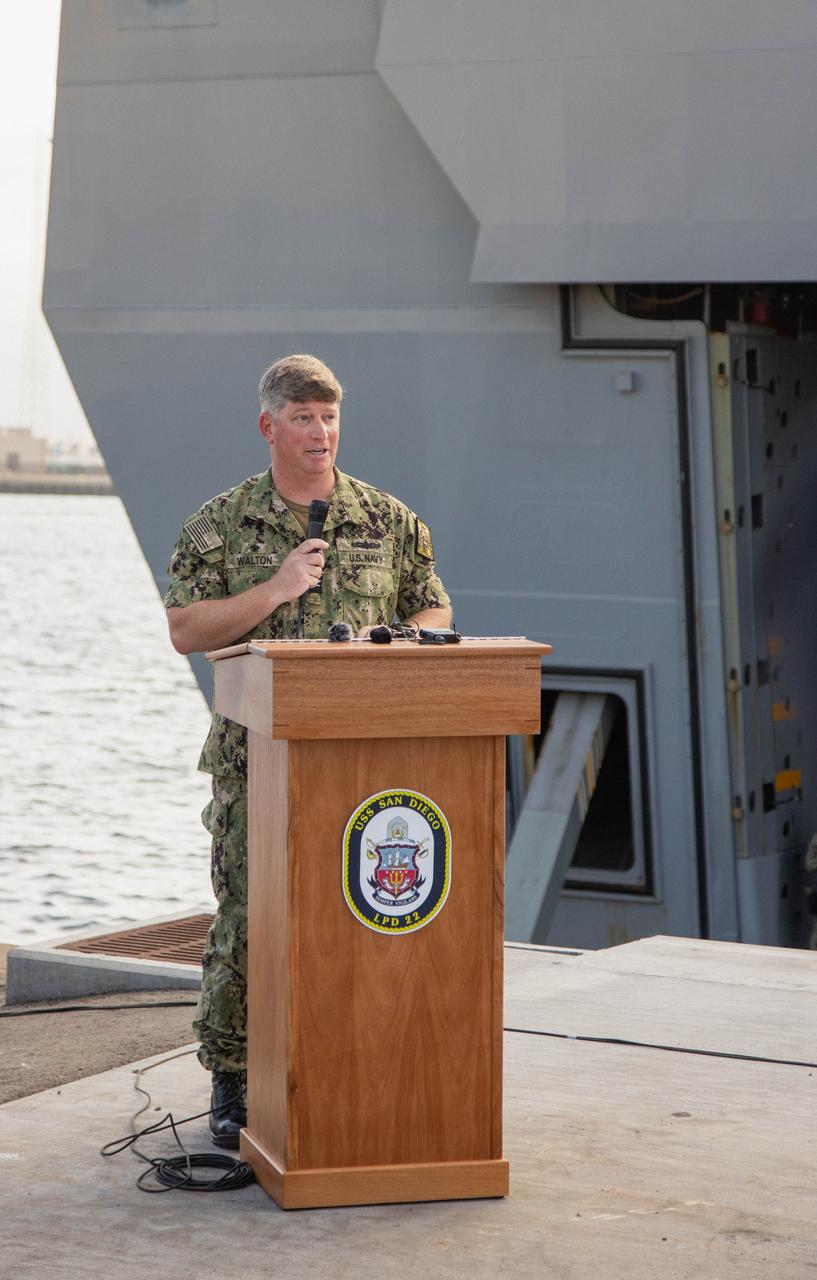
USS San Diego Commanding Officer Capt. David Walton speaks at a news conference held in San Diego, California on Wednesday, Feb. 28, 2024, about the Underway Recovery Test 11 (URT-11) off the coast of San Diego, California. URT-11 performed by NASA’s Exploration Ground System’s Landing and Recovery team, partners from the Department of Defense, and U.S. Navy personnel aboard the USS San Diego is the eleventh in a series of Artemis recovery tests, and the first the Artemis II recovery procedures involved the astronauts.
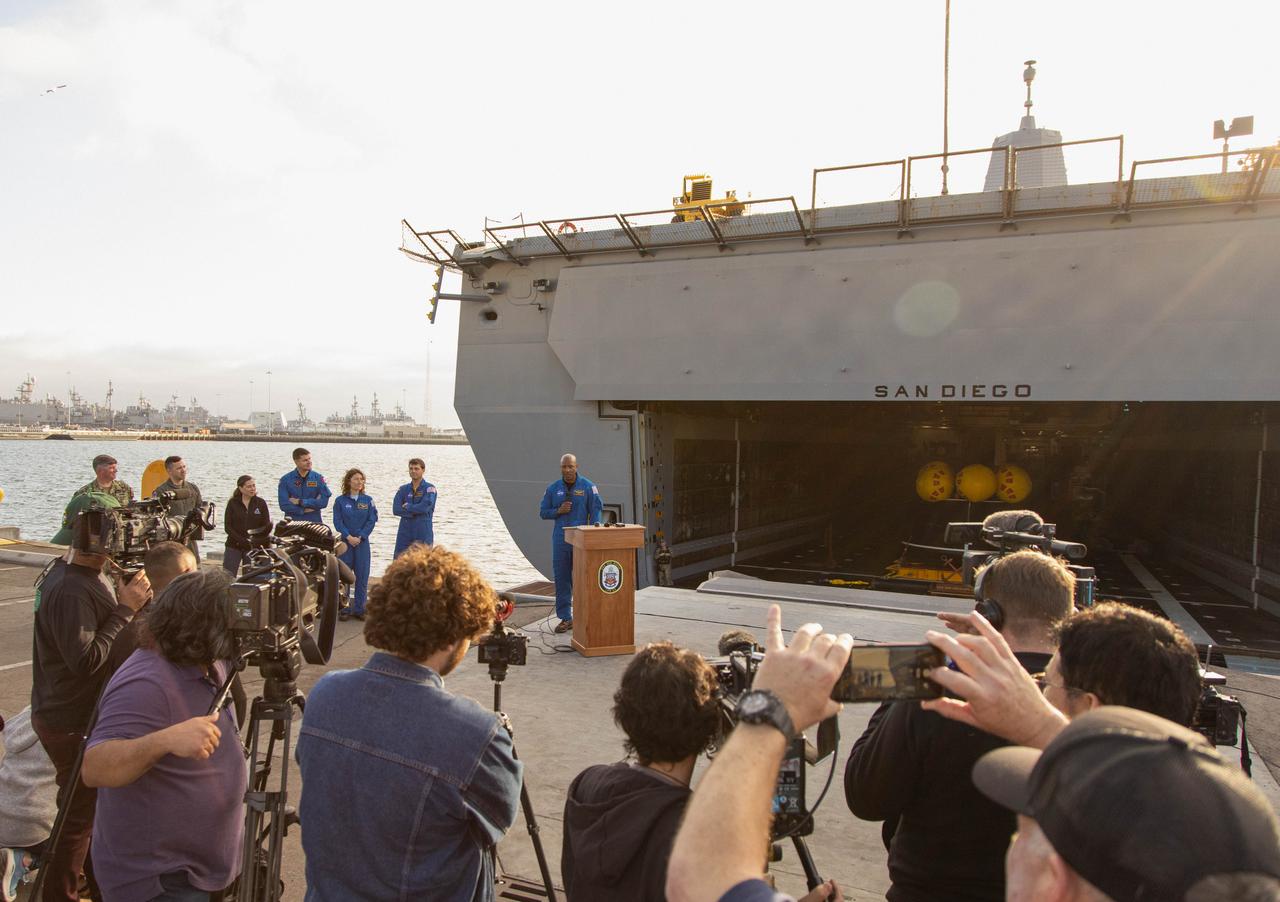
NASA’s Artemis II crew member NASA astronaut Victor Glover speaks to members of the media about the Underway Recovery Test (URT-11) during a news conference held in San Diego, California on Wednesday, Feb. 28, 2024. URT-11 performed by NASA’s Exploration Ground System’s Landing and Recovery team, partners from the Department of Defense, and U.S. Navy personnel aboard the USS San Diego is the eleventh in a series of Artemis recovery tests, and the first the Artemis II recovery procedures involved the astronauts.
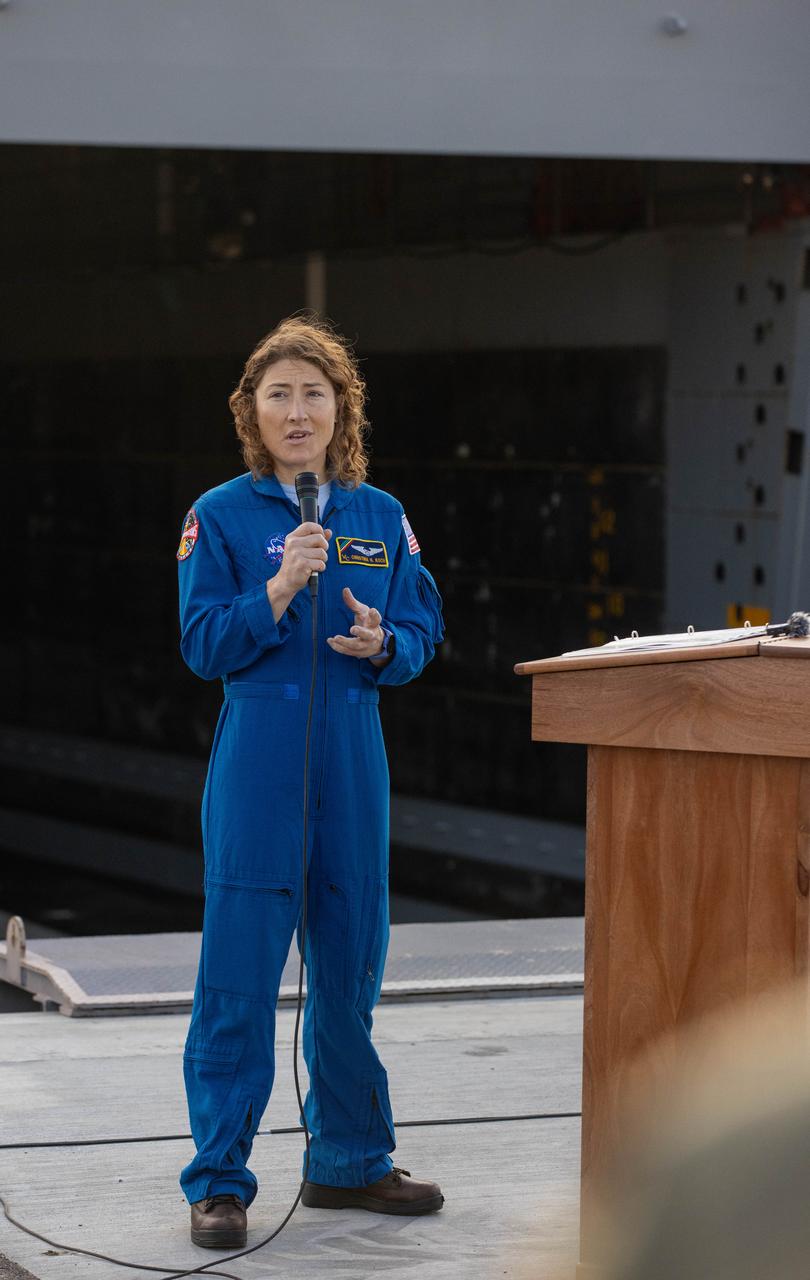
NASA’s Artemis II crew member NASA astronaut Christina Koch discusses the Underway Recovery Test (URT-11) during a news conference held in San Diego, California on Wednesday, Feb. 28, 2024. URT-11 performed by NASA’s Exploration Ground System’s Landing and Recovery team, partners from the Department of Defense, and U.S. Navy personnel aboard the USS San Diego is the eleventh in a series of Artemis recovery tests, and the first the Artemis II recovery procedures involved the astronauts.
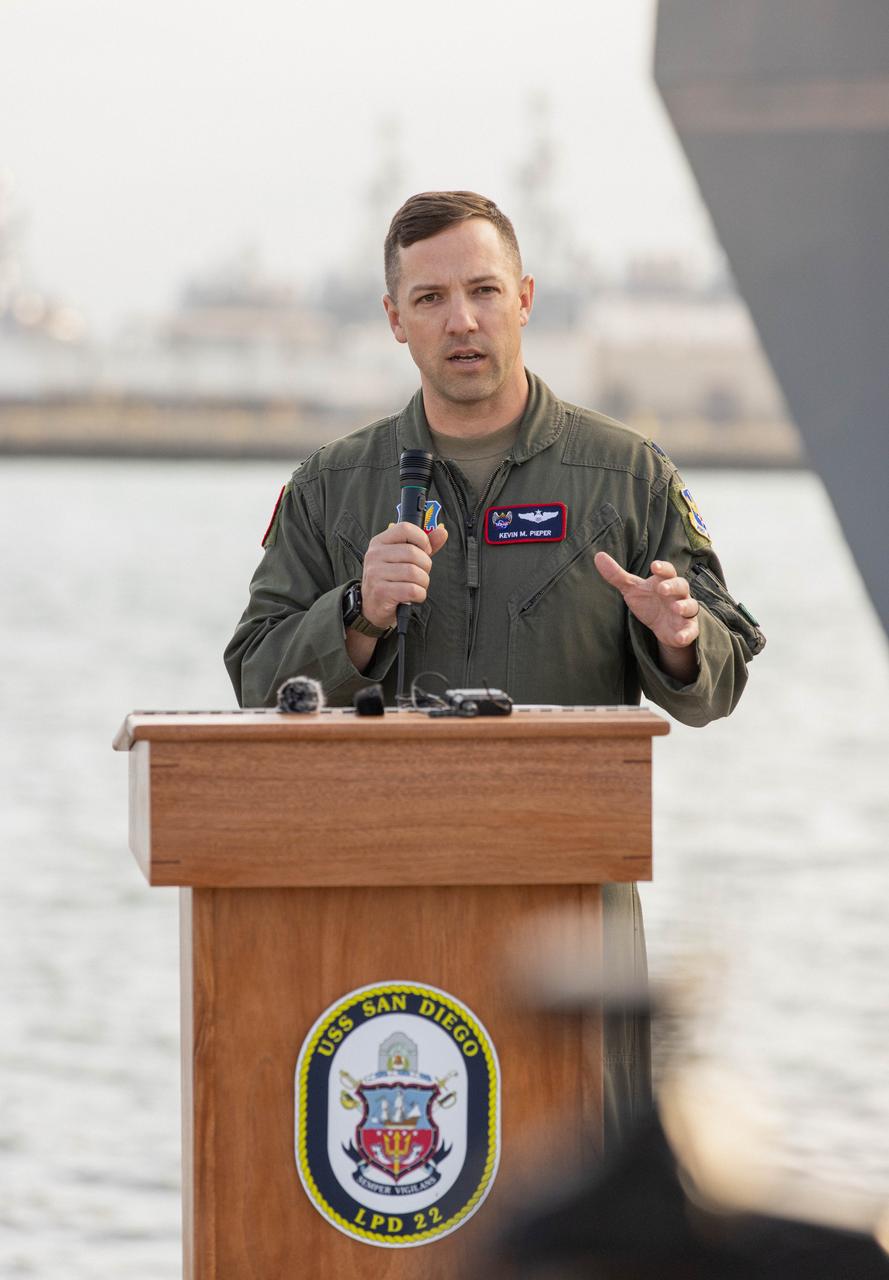
Lt. Col. Kevin Pieper, First Air Force, Detachment 3 Artemis program director discusses the Underway Recovery Test (URT-11) during a news conference held in San Diego, California on Wednesday, Feb. 28, 2024. URT-11 performed by NASA’s Exploration Ground System’s Landing and Recovery team, partners from the Department of Defense, and U.S. Navy personnel aboard the USS San Diego is the eleventh in a series of Artemis recovery tests, and the first the Artemis II recovery procedures involved the astronauts.
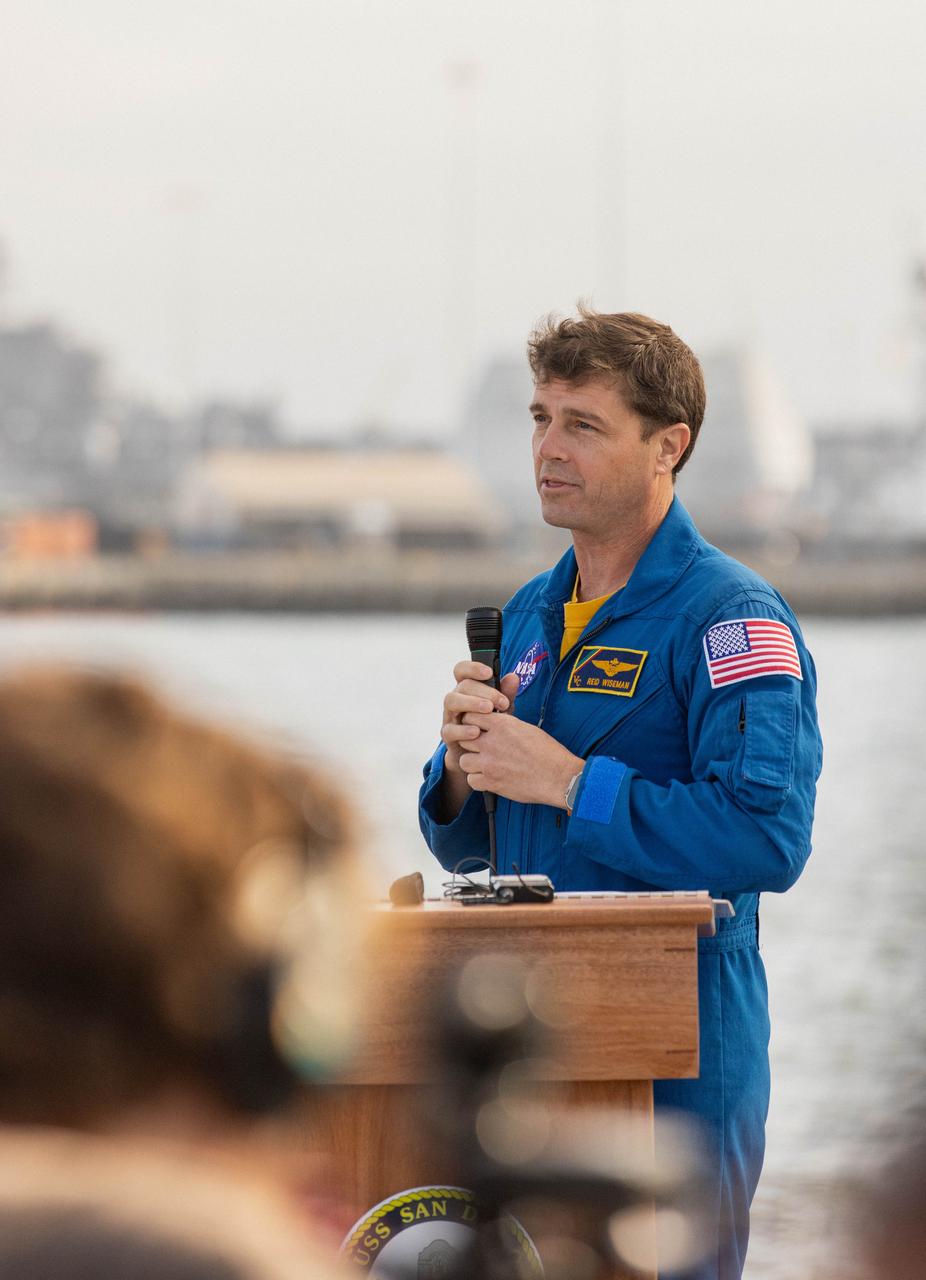
NASA’s Artemis II crew member NASA astronaut Reid Wiseman discusses the Underway Recovery Test (URT-11) during a news conference in San Diego, California on Wednesday, Feb. 28, 2024. URT-11 performed by NASA’s Exploration Ground System’s Landing and Recovery team, partners from the Department of Defense, and U.S. Navy personnel aboard the USS San Diego is the eleventh in a series of Artemis recovery tests, and the first the Artemis II recovery procedures involved the astronauts.
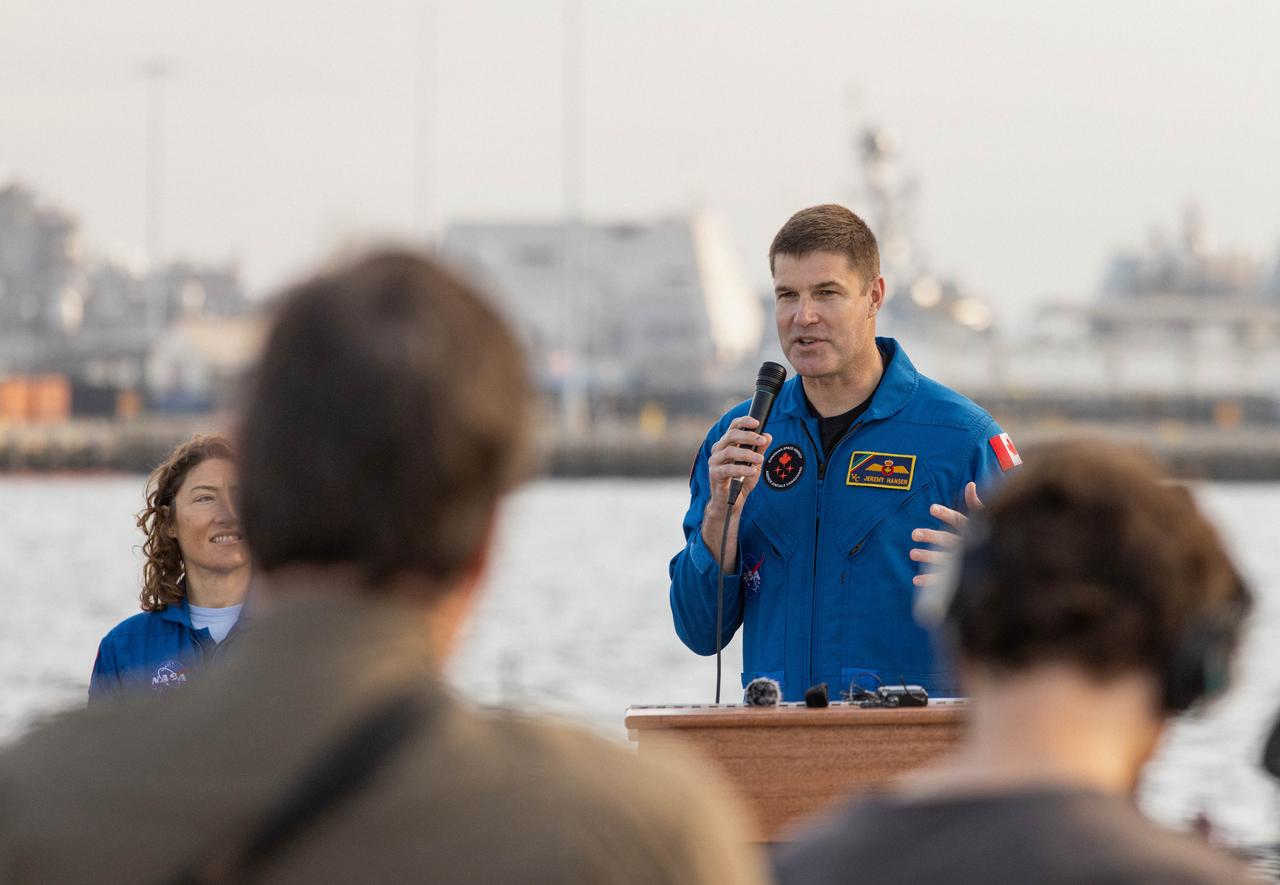
NASA’s Artemis II crew member CSA (Canadian Space Agency) astronaut Jeremy Hansen discusses the Underway Recovery Test (URT-11) during a news conference held in San Diego, California on Wednesday, Feb. 28, 2024. URT-11 performed by NASA’s Exploration Ground System’s Landing and Recovery team, partners from the Department of Defense, and U.S. Navy personnel aboard the USS San Diego is the eleventh in a series of Artemis recovery tests, and the first the Artemis II recovery procedures involved the astronauts.
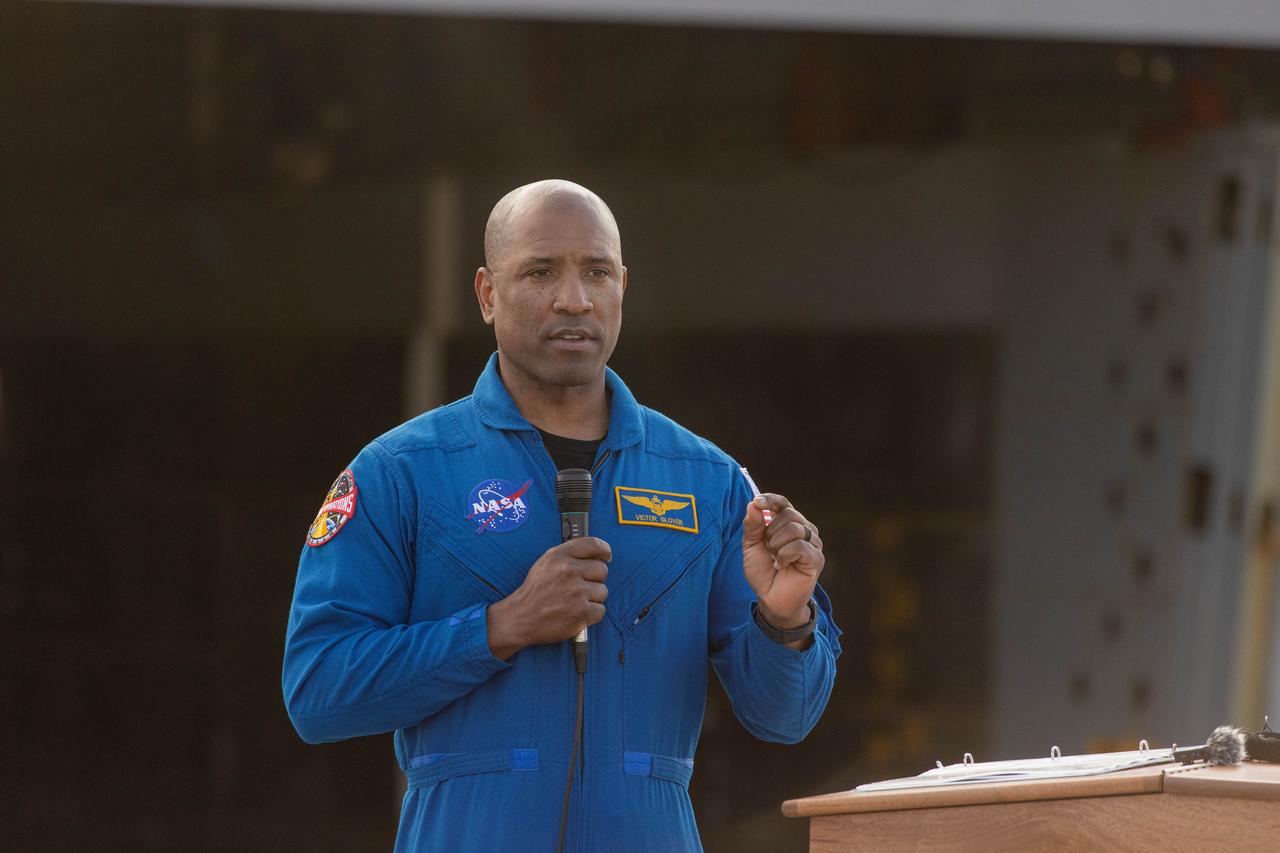
NASA’s Artemis II crew member NASA astronaut Victor Glover discusses the Underway Recovery Test (URT-11) during a news conference held in San Diego, California on Wednesday, Feb. 28, 2024. URT-11 performed by NASA’s Exploration Ground System’s Landing and Recovery team, partners from the Department of Defense, and U.S. Navy personnel aboard the USS San Diego is the eleventh in a series of Artemis recovery tests, and the first the Artemis II recovery procedures involved the astronauts.
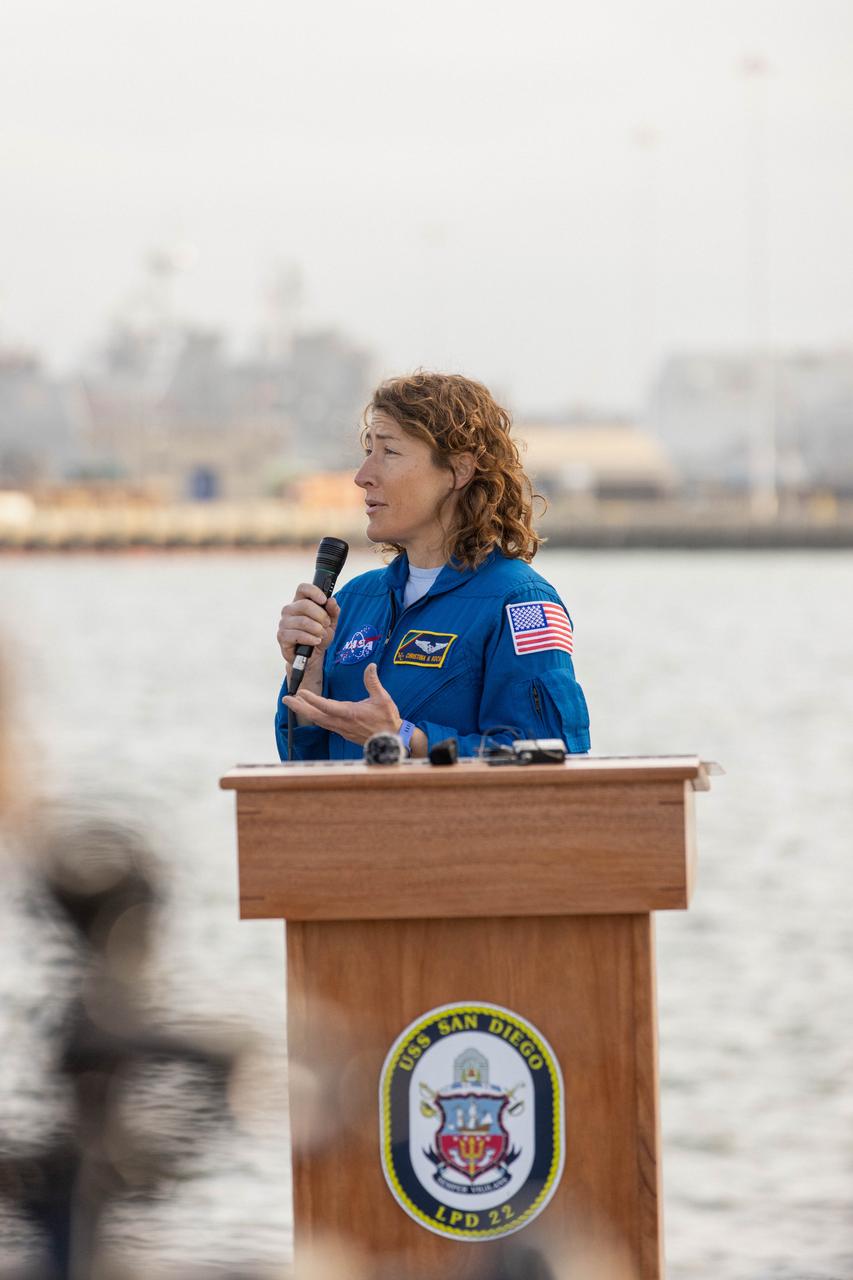
NASA’s Artemis II crew member NASA astronaut Christina Koch discusses the Underway Recovery Test (URT-11) during a news conference held in San Diego, California on Wednesday, Feb. 28, 2024. URT-11 performed by NASA’s Exploration Ground System’s Landing and Recovery team, partners from the Department of Defense, and U.S. Navy personnel aboard the USS San Diego is the eleventh in a series of Artemis recovery tests, and the first the Artemis II recovery procedures involved the astronauts.
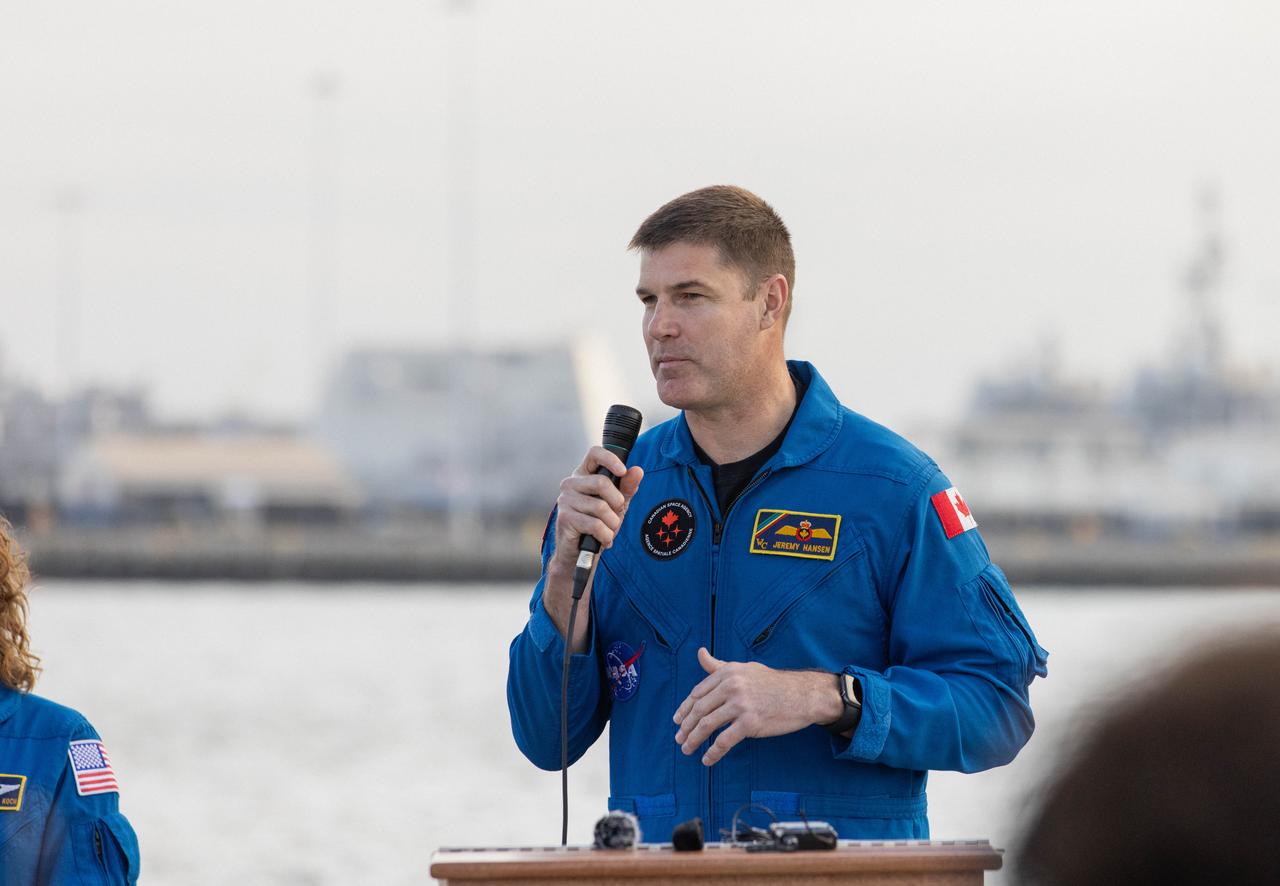
NASA’s Artemis II crew member CSA (Canadian Space Agency) astronaut Jeremy Hansen discusses the Underway Recovery Test (URT-11) during a news conference held in San Diego, California on Wednesday, Feb. 28, 2024. URT-11 performed by NASA’s Exploration Ground System’s Landing and Recovery team, partners from the Department of Defense, and U.S. Navy personnel aboard the USS San Diego is the eleventh in a series of Artemis recovery tests, and the first the Artemis II recovery procedures involved the astronauts.
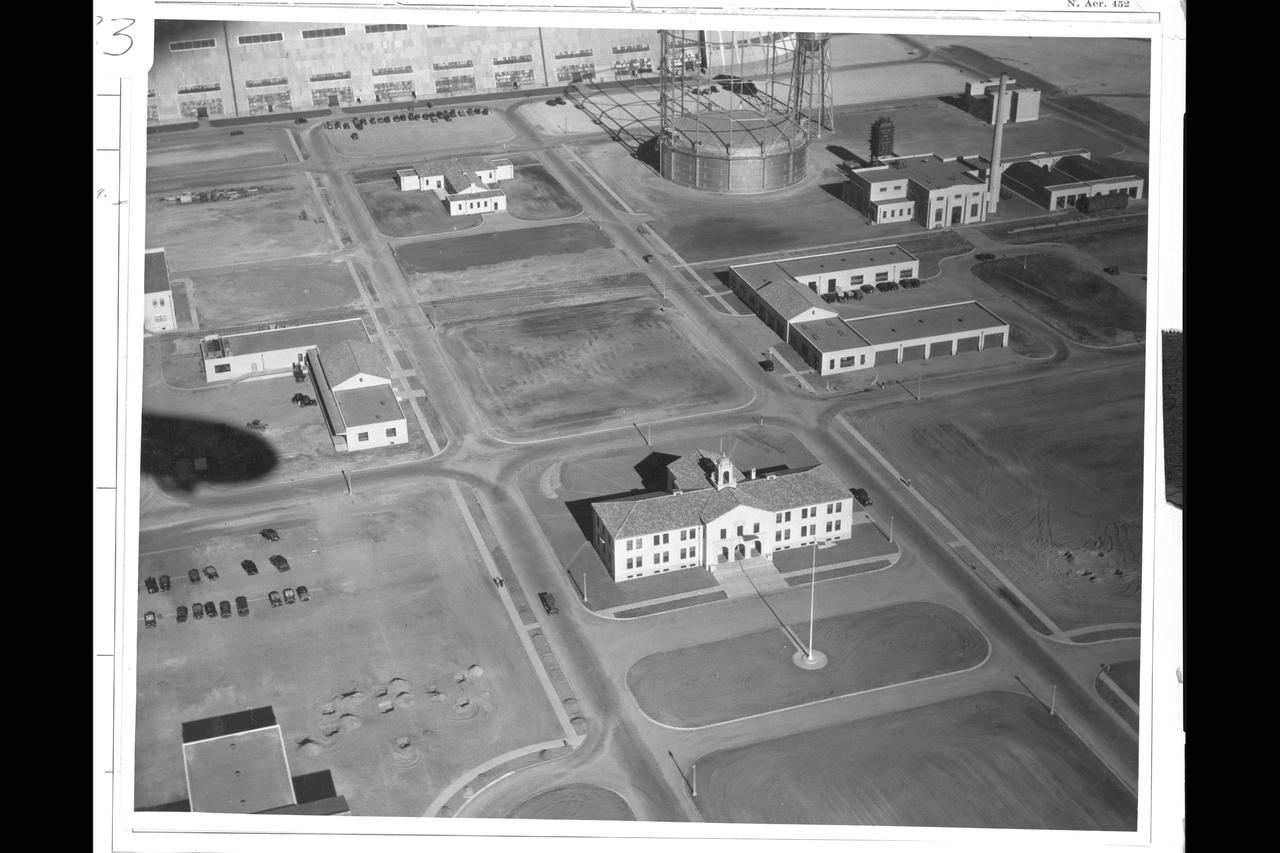
Navy NAS Sunnyvale, Mt. View CA Administration Bldg Looking East ALt 800'
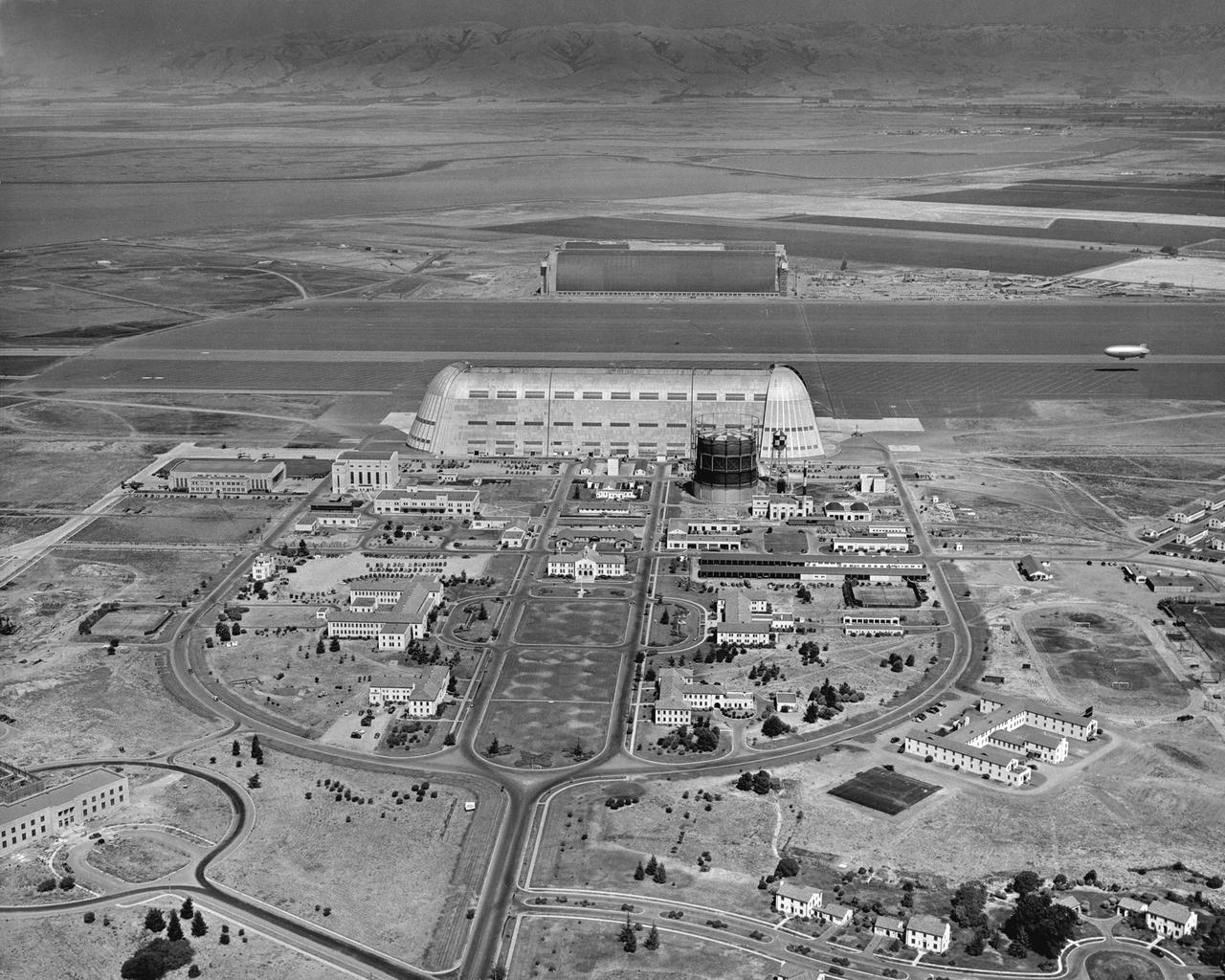
Navy NAS Sunnyvale, Moffett Field, Cat Altitude 1500ft E.S. East from front gate toward Shenandoah Plaza and Hangar One
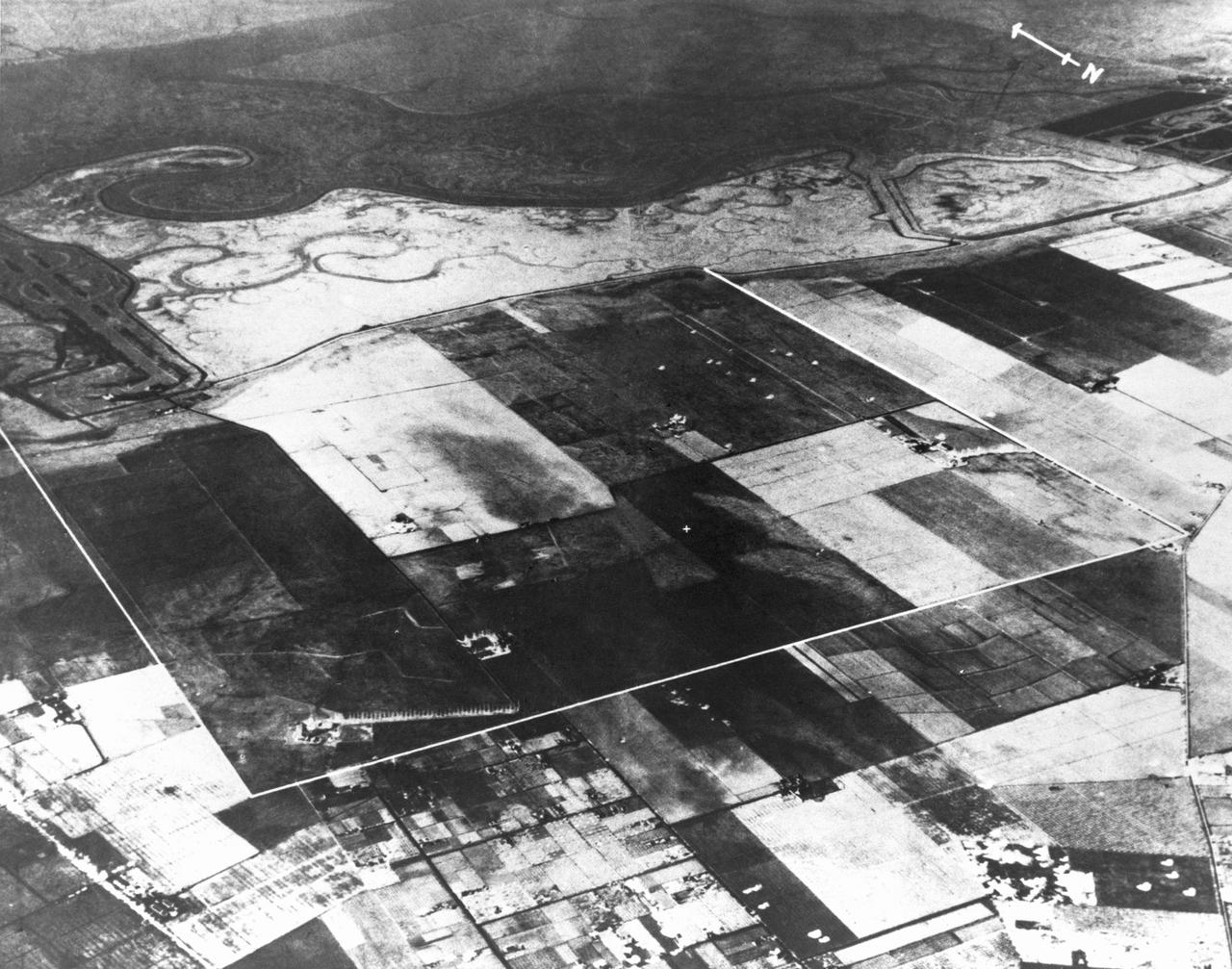
Navy NAS Sunnyvale, Mt View, California prior to construction 1930 Mt View, California farm lands. Property outline in white.
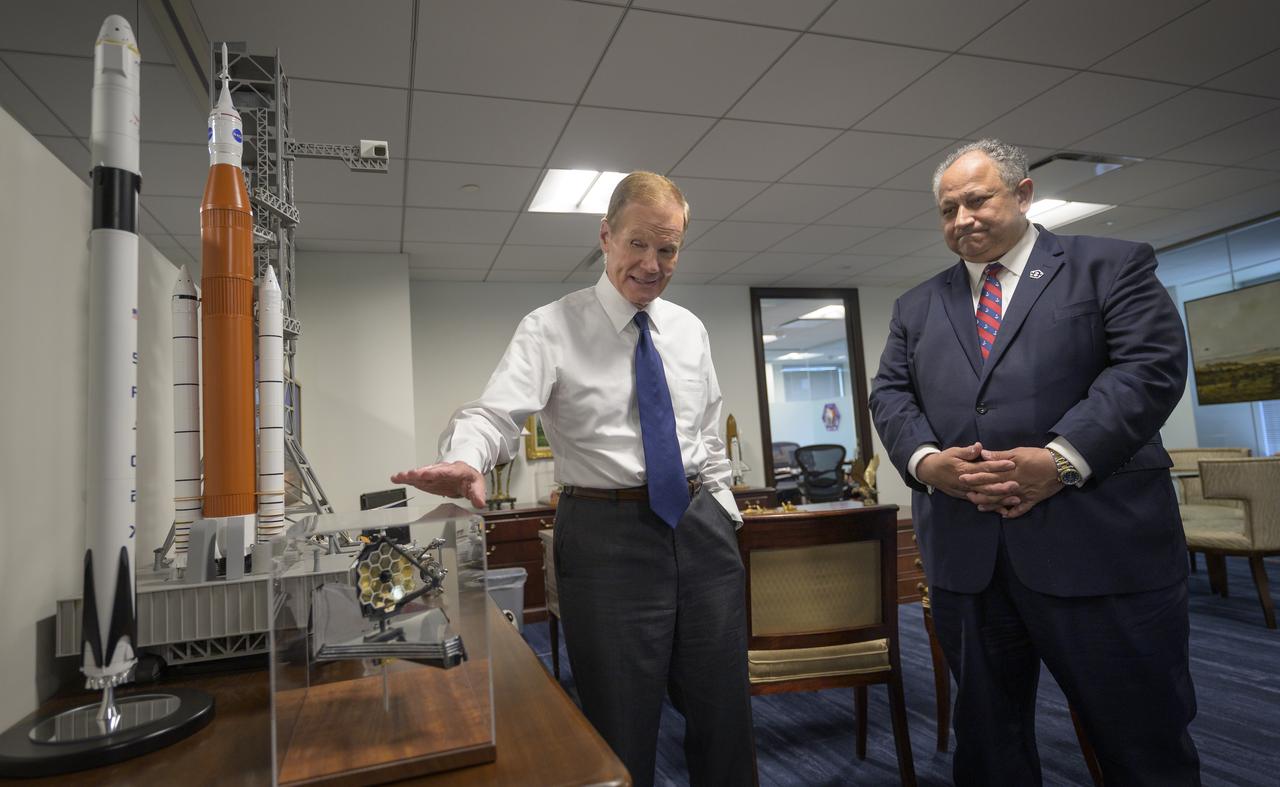
NASA Administrator Bill Nelson, left, and Secretary of the Navy Carlos Del Toro meet, Tuesday, June 7, 2022, at the Mary W. Jackson NASA Headquarters in Washington. Photo Credit: (NASA/Bill Ingalls)
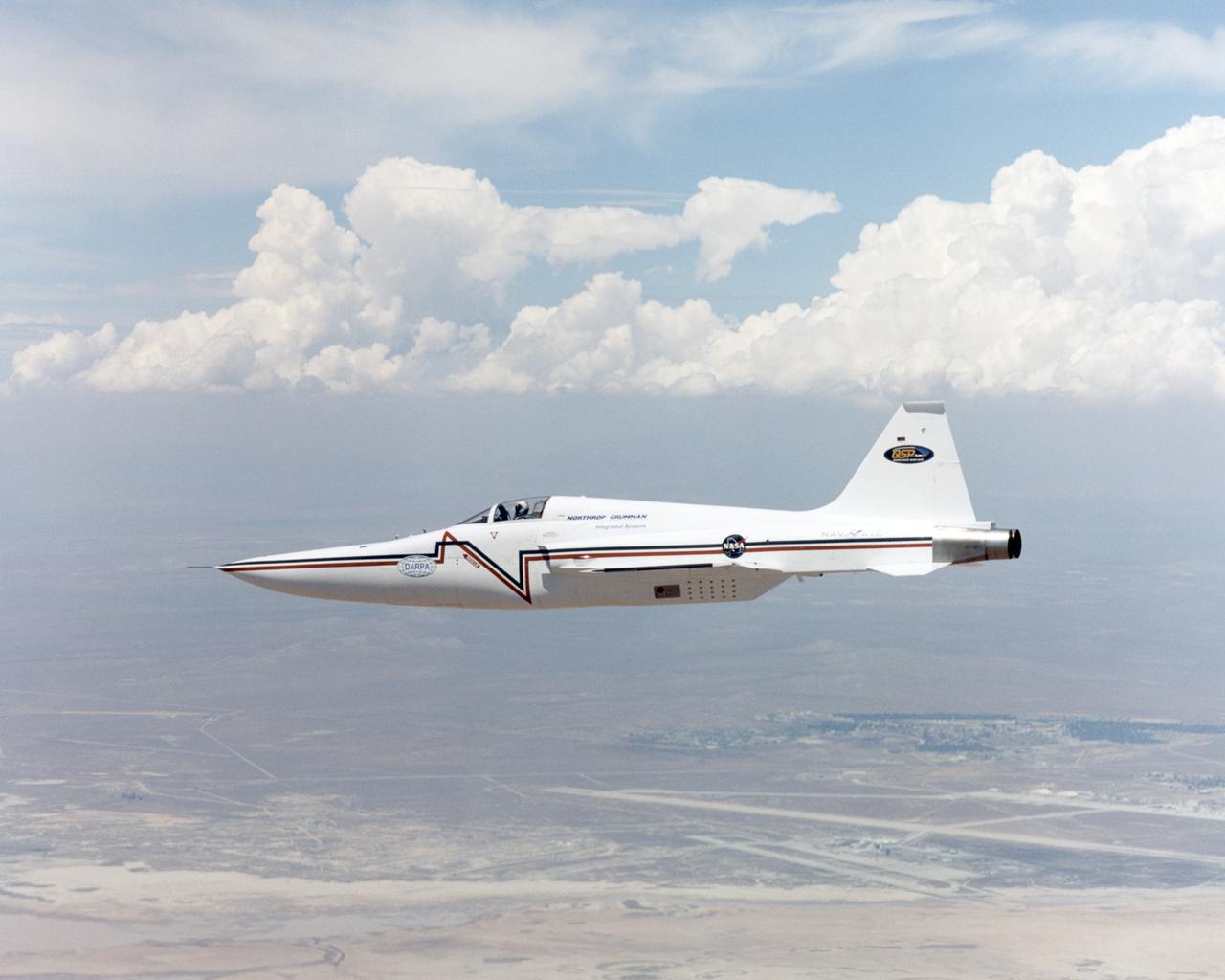
Northrop-Grumman Corporation's modified U.S. Navy F-5E Shaped Sonic Boom Demonstration (SSBD) aircraft.
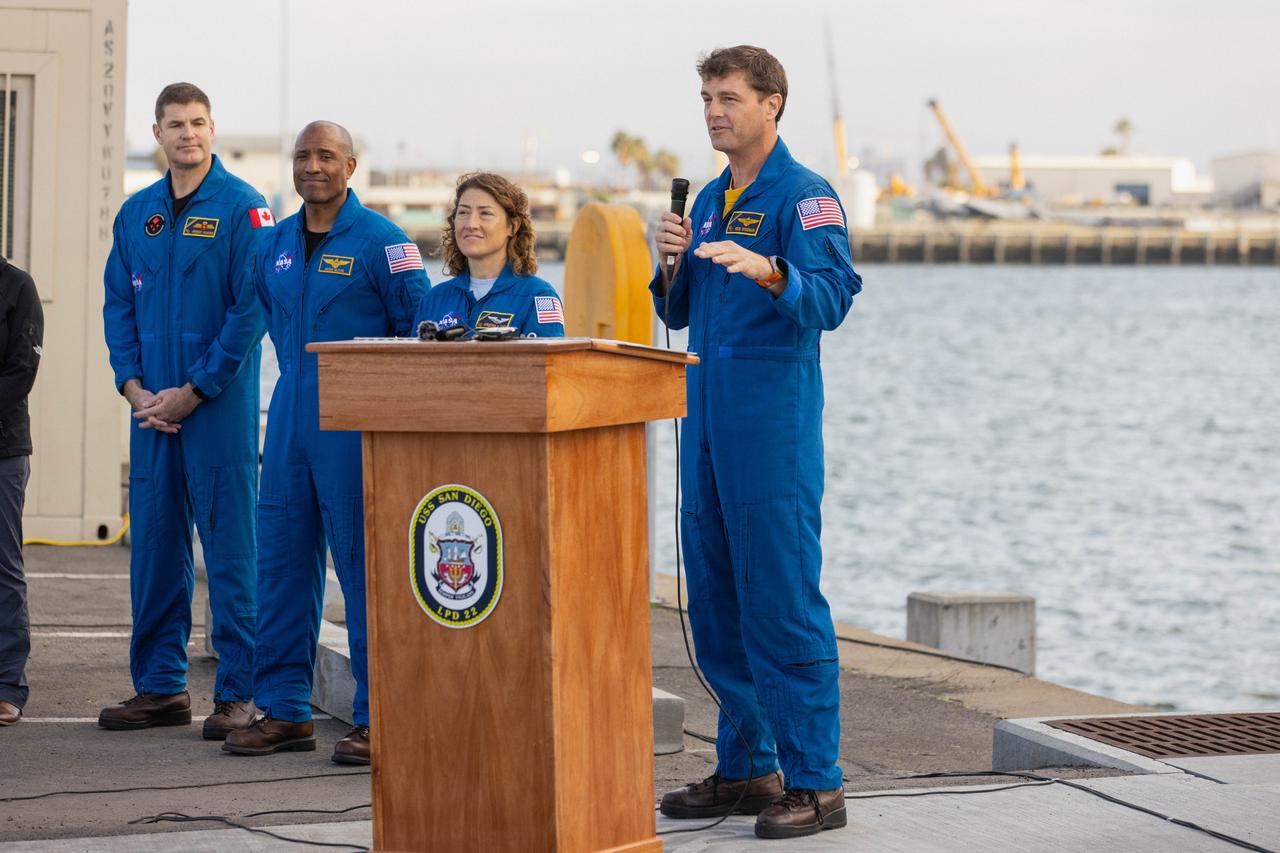
NASA’s Artemis II crew member NASA astronaut Reid Wiseman, from left to right is joined by, CSA (Canadian Space Agency) astronaut Jeremy Hansen, NASA astronauts Victor Glover and Christina Koch to discuss the Underway Recovery Test (URT-11) during a news conference held in San Diego, California on Wednesday, Feb. 28, 2024. NASA’s Exploration Ground System’s Landing and Recovery team, partners from the Department of Defense, and U.S. Navy personnel aboard the USS San Diego is the eleventh in a series of Artemis recovery tests, and the first the Artemis II recovery procedures involved the astronauts.
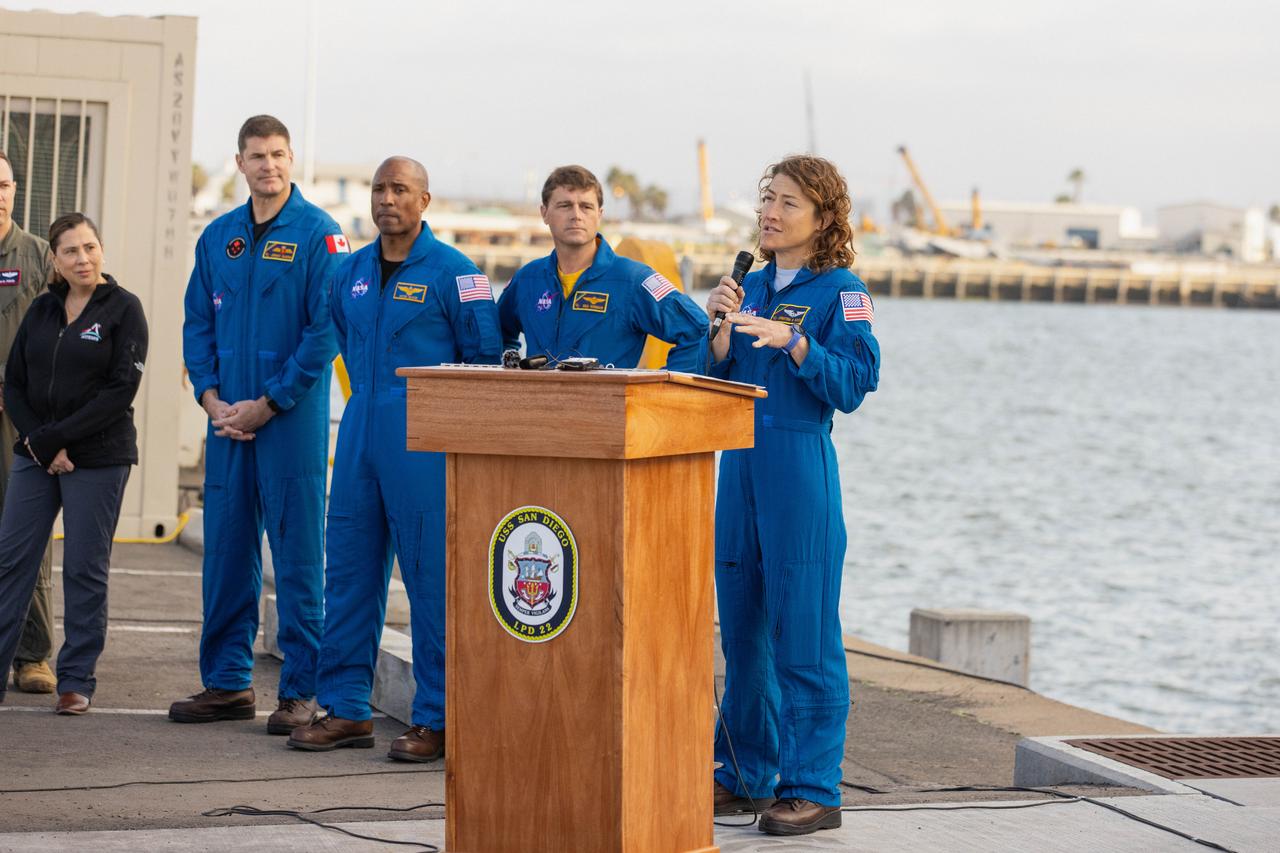
NASA’s Artemis II crew member NASA astronaut Christina Koch, from left to right is joined by, CSA (Canadian Space Agency) astronaut Jeremy Hansen, NASA astronauts Victor Glover and Reid Wiseman to discuss the Underway Recovery Test (URT-11) during a news conference held in San Diego, California on Wednesday, Feb. 28, 2024. URT-11 performed by NASA’s Exploration Ground System’s Landing and Recovery team, partners from the Department of Defense, and U.S. Navy personnel aboard the USS San Diego is the eleventh in a series of Artemis recovery tests, and the first the Artemis II recovery procedures involved the astronauts.
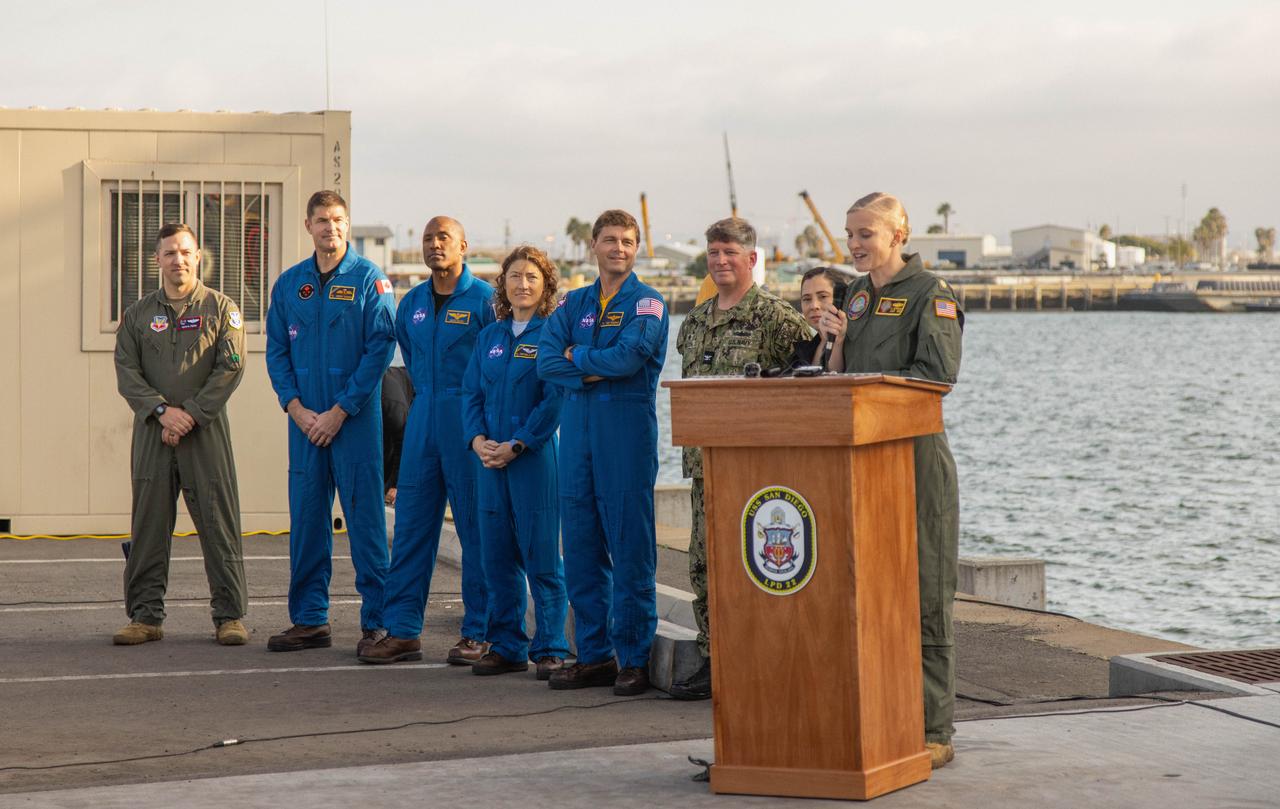
NASA’s Artemis II crew members from left to right, CSA (Canadian Space Agency) astronaut Jeremy Hansen, NASA astronauts Victor Glover, Christina Koch, and Reid Wiseman, and partners from the Department of Defense hold a news conference to discuss practice recovery procedures following the Underway Recovery Test 11 (URT-11) off the coast of San Diego, California on Wednesday, Feb. 28, 2024. URT-11 performed by NASA’s Exploration Ground System’s Landing and Recovery team, partners from the Department of Defense, and U.S. Navy personnel aboard the USS San Diego is the eleventh in a series of Artemis recovery tests, and the first the Artemis II recovery procedures involved the astronauts.
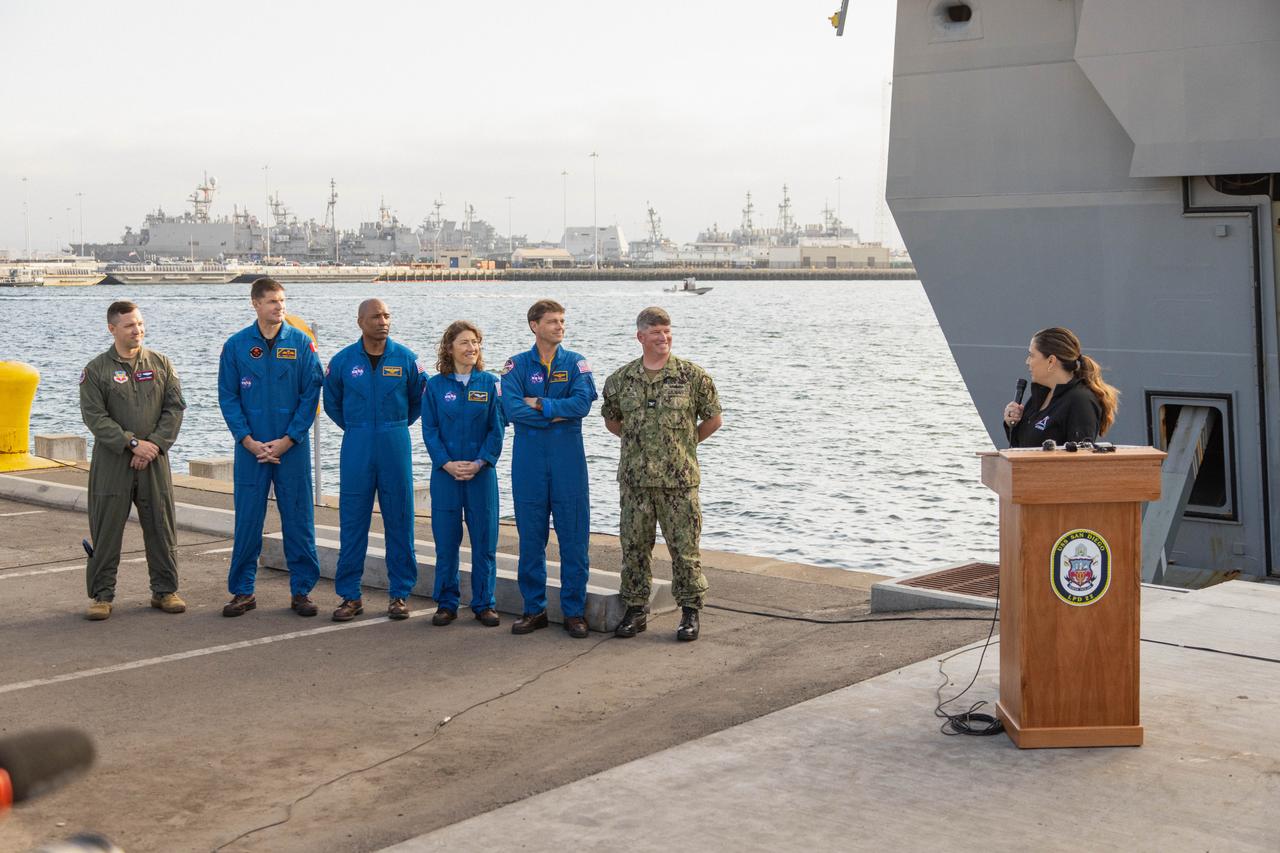
NASA’s Artemis II crew members, from left to right, CSA (Canadian Space Agency) astronaut Jeremy Hansen, NASA astronauts Victor Glover, Christina Koch, and Reid Wiseman, along with partners from the Department of Defense, and U.S. Navy personnel smile during a news conference held in San Diego, California on Wednesday, Feb. 28, 2024, to discuss the Underway Recovery Test (URT-11) aboard the USS San Diego. URT-11 is the eleventh in a series of Artemis recovery tests, and the first time NASA and its partners put their Artemis II recovery procedures in place with the astronauts.
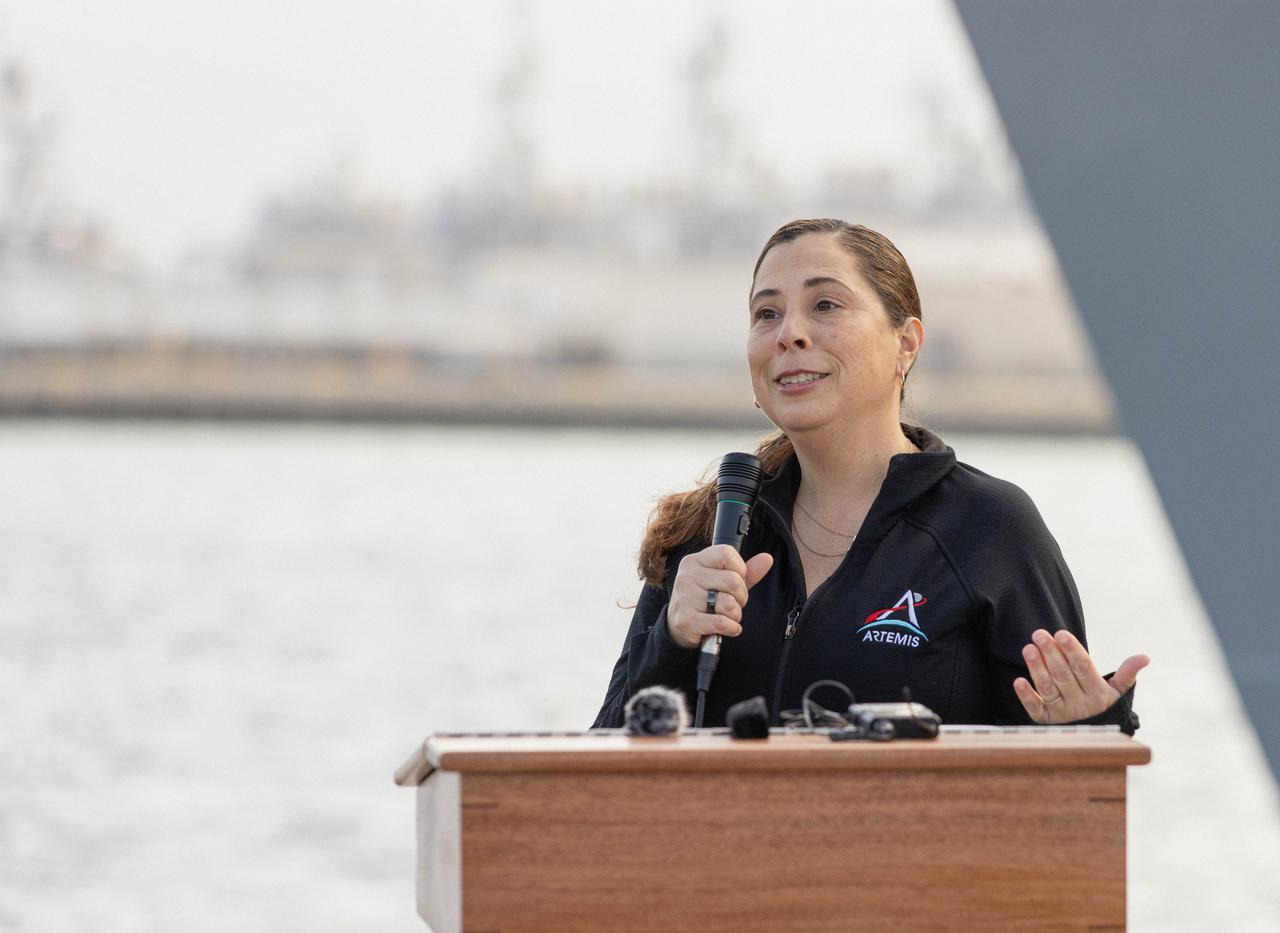
Liliana Villarreal, landing and recovery director in Exploration Ground Systems at NASA’s Kennedy Space Center in Florida speaks in a news conference held in San Diego, California on Wednesday, Feb. 28, 2024, about the Underway Recovery Test 11 (URT-11) performed off the coast of San Diego, California. URT-11 performed by NASA’s Exploration Ground System’s Landing and Recovery team, partners from the Department of Defense, and U.S. Navy personnel aboard the USS San Diego is the eleventh in a series of Artemis recovery tests, and the first the Artemis II recovery procedures involved the astronauts.
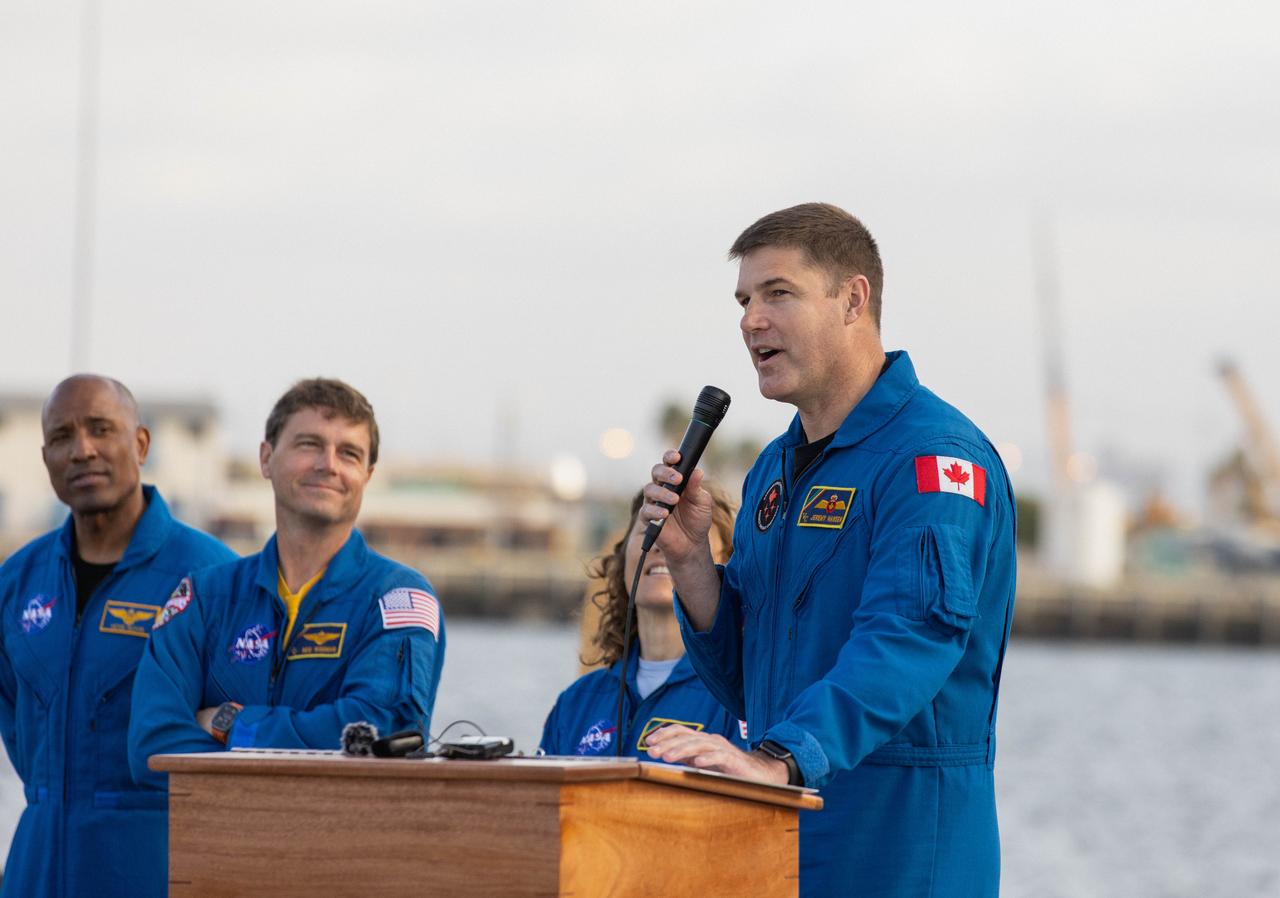
NASA’s Artemis II crew member CSA (Canadian Space Agency) astronaut Jeremy Hansen along with NASA astronauts from right to left, Victor Glover, Reid Wiseman, and Christina Koch discuss the Underway Recovery Test (URT-11) during a news conference held in San Diego, California on Wednesday, Feb. 28, 2024. URT-11 performed by NASA’s Exploration Ground System’s Landing and Recovery team, partners from the Department of Defense, and U.S. Navy personnel aboard the USS San Diego is the eleventh in a series of Artemis recovery tests, and the first the Artemis II recovery procedures involved the astronauts.
NASA’s Artemis II crew members, from left to right, CSA (Canadian Space Agency) astronaut Jeremy Hansen, NASA astronauts Christina Koch, Victor Glover, and Reid Wiseman prepare for a news conference to discuss the practice recovery procedures performed by NASA’s Exploration Ground System’s Landing and Recovery team, partners from the Department of Defense, and U.S. Navy personnel during Underway Recovery Test 11 (URT-11) aboard the USS San Diego on Wednesday, Feb. 28, 2024. URT-11 is the eleventh in a series of Artemis recovery tests, and the first time NASA and its partners put their Artemis II recovery procedures in place with the astronauts.
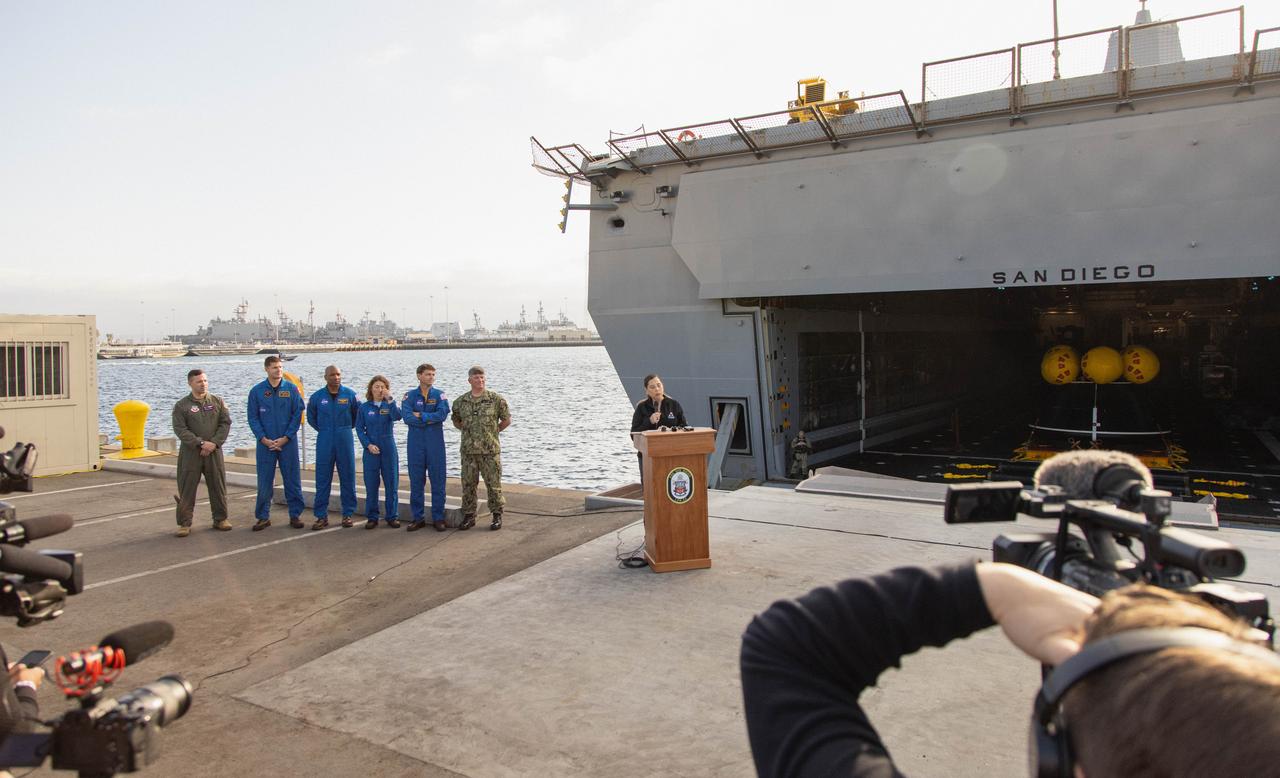
NASA’s Artemis II crew members, from left to right, CSA (Canadian Space Agency) astronaut Jeremy Hansen, NASA astronauts Victor Glover, Christina Koch, and Reid Wiseman, along with partners from the Department of Defense, and U.S. Navy personnel participate in a news conference held in San Diego, California on Wednesday, Feb. 28, 2024, to discuss the Underway Recovery Test (URT-11) aboard the USS San Diego. URT-11 is the eleventh in a series of Artemis recovery tests, and the first time NASA and its partners put their Artemis II recovery procedures in place with the astronauts.
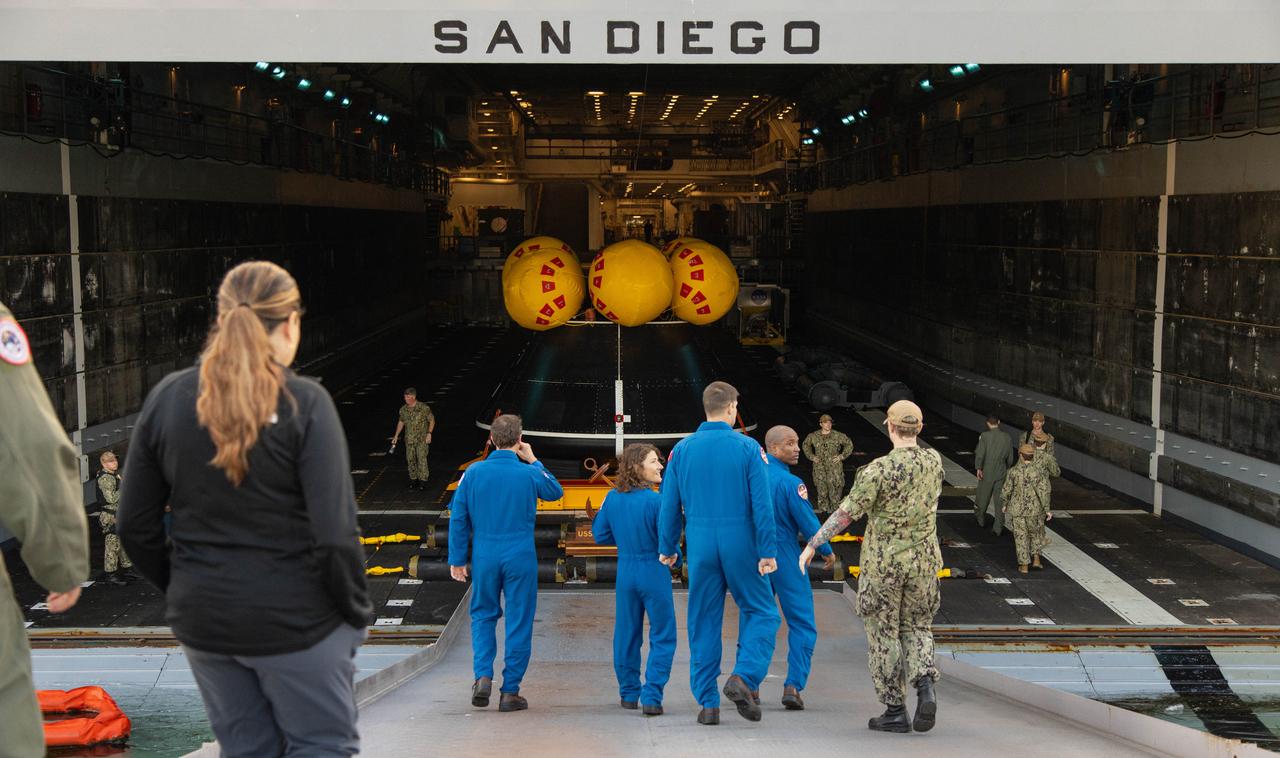
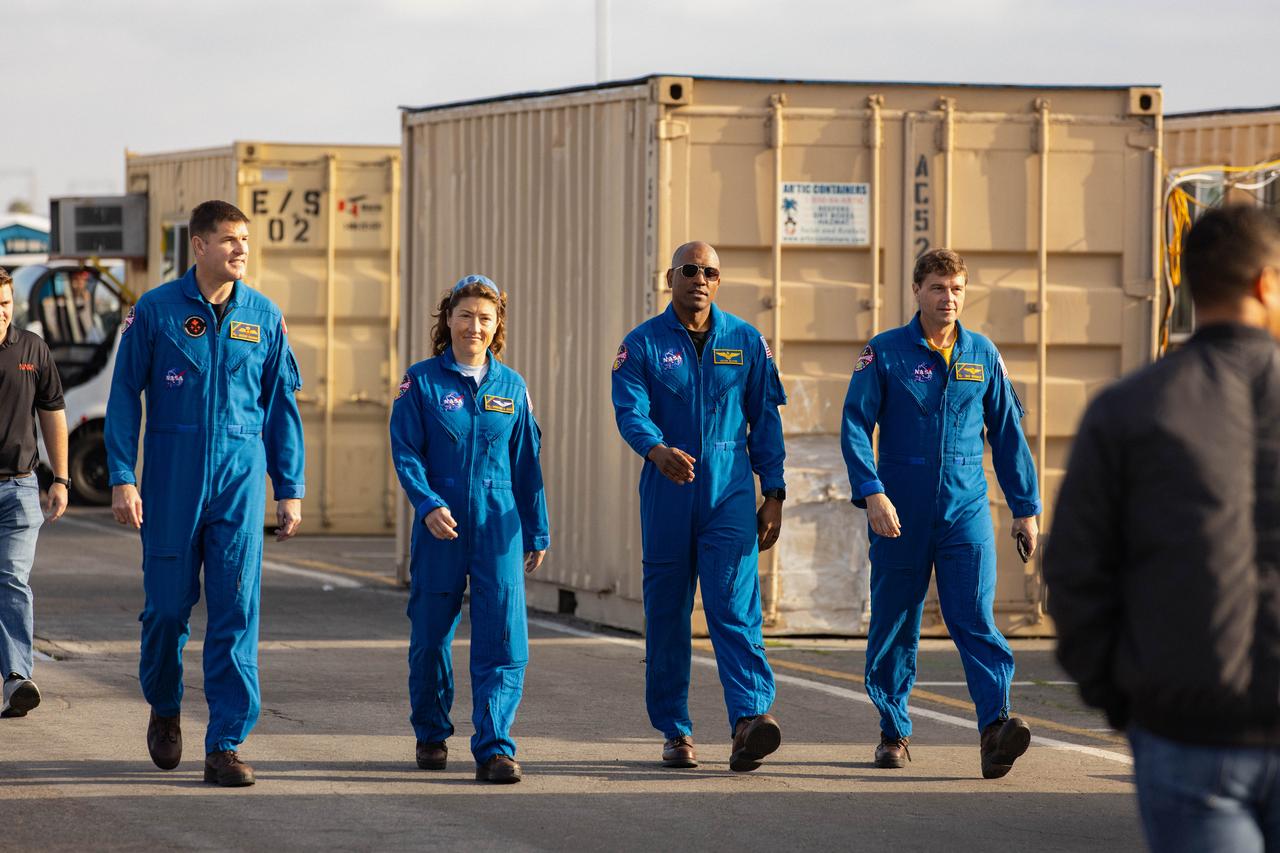
NASA’s Artemis II crew members from left to right, NASA astronauts Reid Wiseman, Christina Koch, and CSA (Canadian Space Agency) astronaut Jeremy Hansen, and NASA astronaut Victor Glover walk toward the USS San Diego and approach a mockup of the Orion spacecraft in San Diego, California on Wednesday, Feb. 28, 2024, as part of the Underway Recovery Test (URT-11). URT-11 performed by NASA’s Exploration Ground System’s Landing and Recovery team, partners from the Department of Defense, and U.S. Navy personnel aboard the USS San Diego is the eleventh in a series of Artemis recovery tests, and the first the Artemis II recovery procedures involved the astronauts.
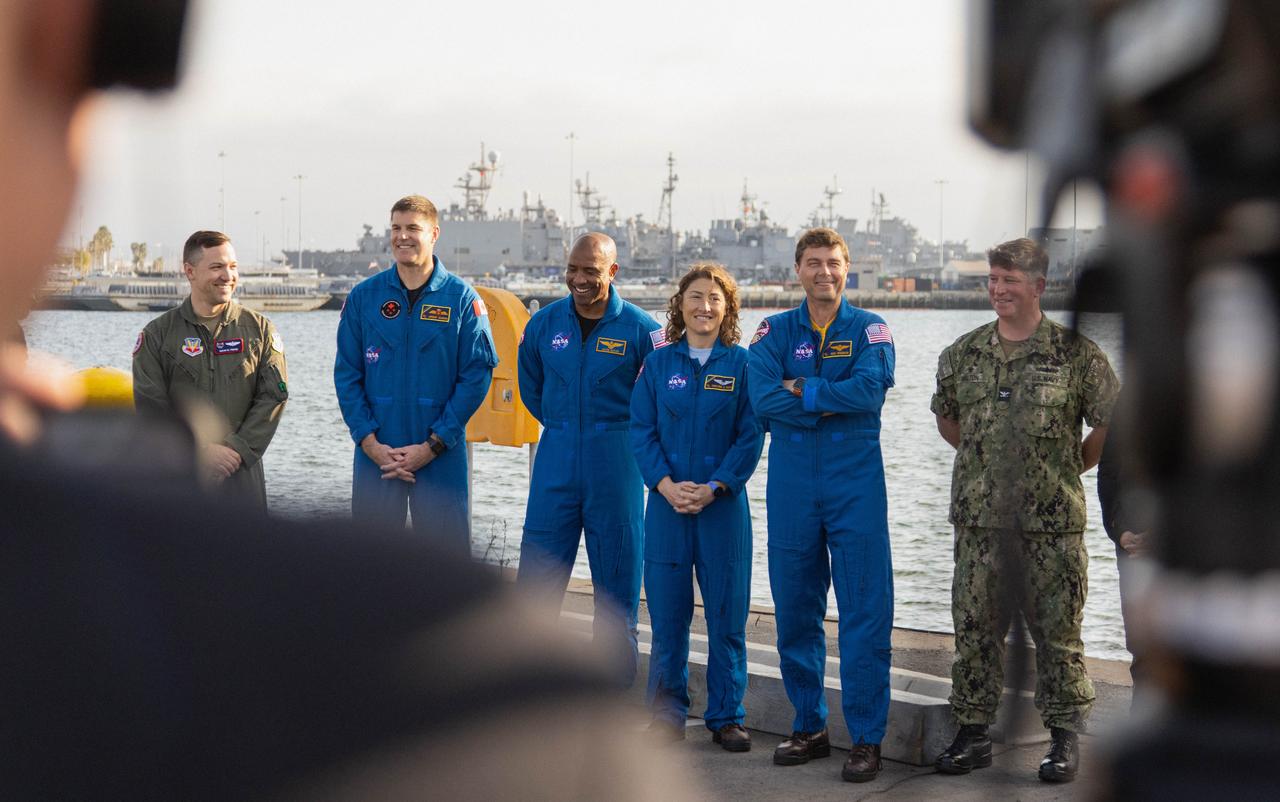
NASA’s Artemis II crew members, from left to right, CSA (Canadian Space Agency) astronaut Jeremy Hansen, NASA astronauts Victor Glover, Christina Koch, and Reid Wiseman smile during a news conference to discuss the practice recovery procedures following the Underway Recovery Test (URT-11) aboard the USS San Diego on Wednesday, Feb. 28, 2024. URT-11 performed by NASA’s Exploration Ground System’s Landing and Recovery team, partners from the Department of Defense, and U.S. Navy personnel aboard the USS San Diego is the eleventh in a series of Artemis recovery tests, and the first the Artemis II recovery procedures involved the astronauts.
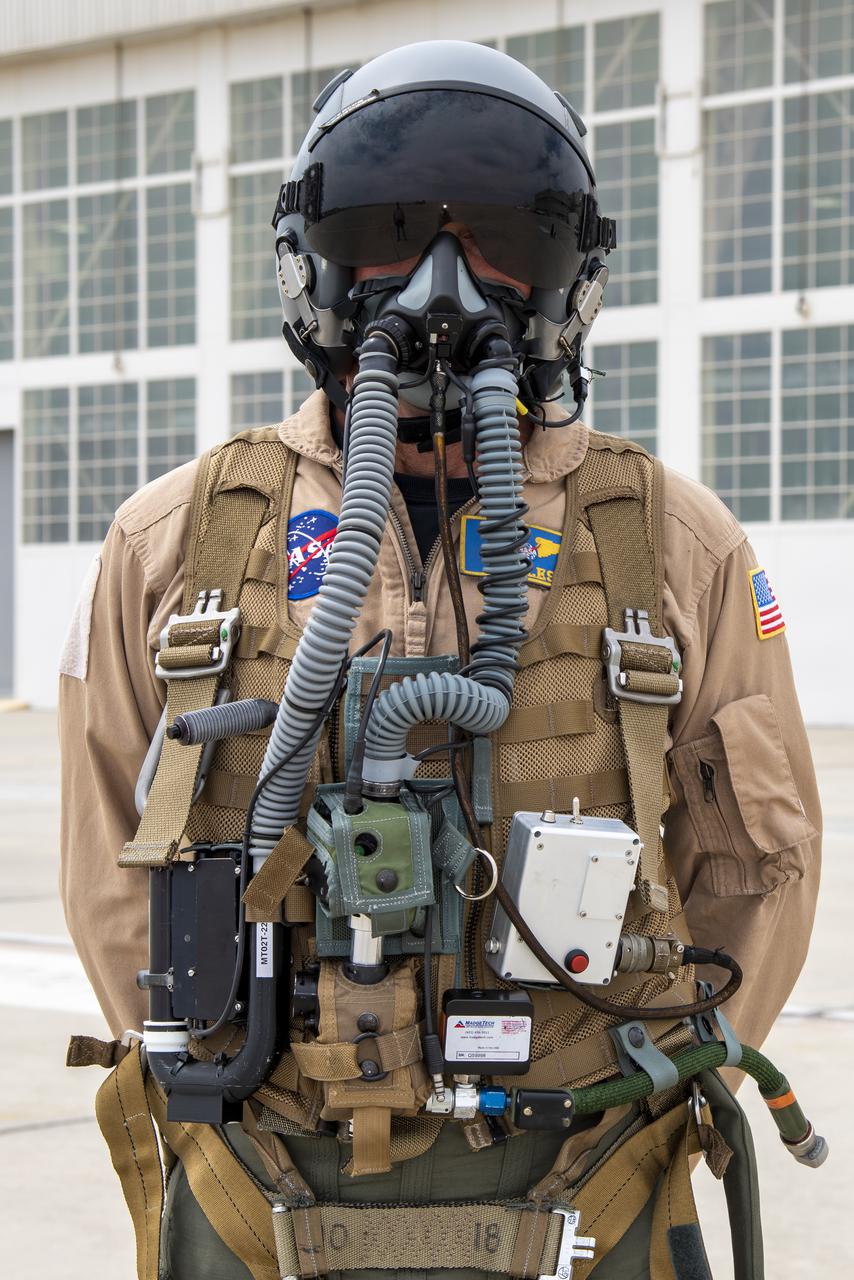
NASA research pilot Jim Less wears a U.S. Navy harness configuration with the NASA Jet Propulsion Laboratory in California prototype mask, which uses laser sensors to determine levels of carbon dioxide and water exhaled inside the mask. This prototype was tested in conjunction with the current VigilOX system, which measures the pilot’s oxygen concentration, breathing pressures and flow rates. This and the U.S. Air Force configuration was used in the Pilot Breathing Assessment program at NASA’s Armstrong Flight Research Center in California.
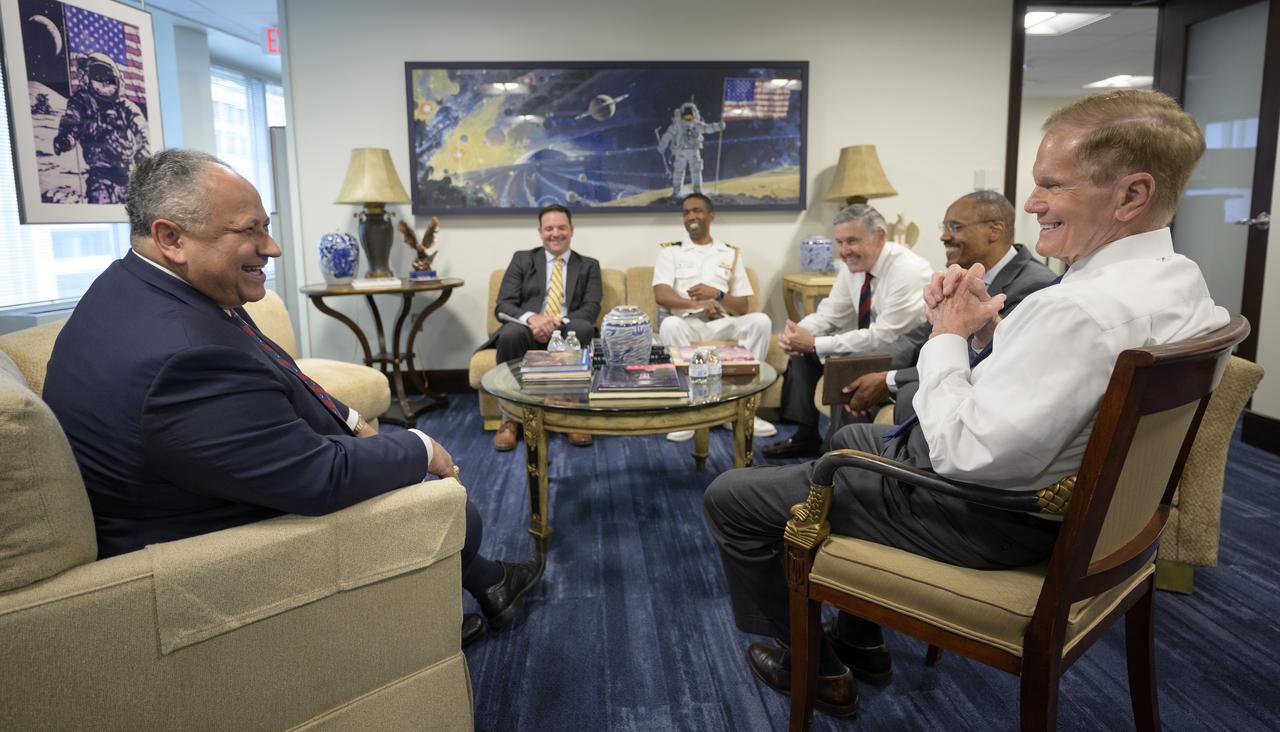
Secretary of the Navy Carlos Del Toro, left, NASA Administrator Bill Nelson, right, and other senior leadership meet, Tuesday, June 7, 2022, at the Mary W. Jackson NASA Headquarters in Washington. Photo Credit: (NASA/Bill Ingalls)
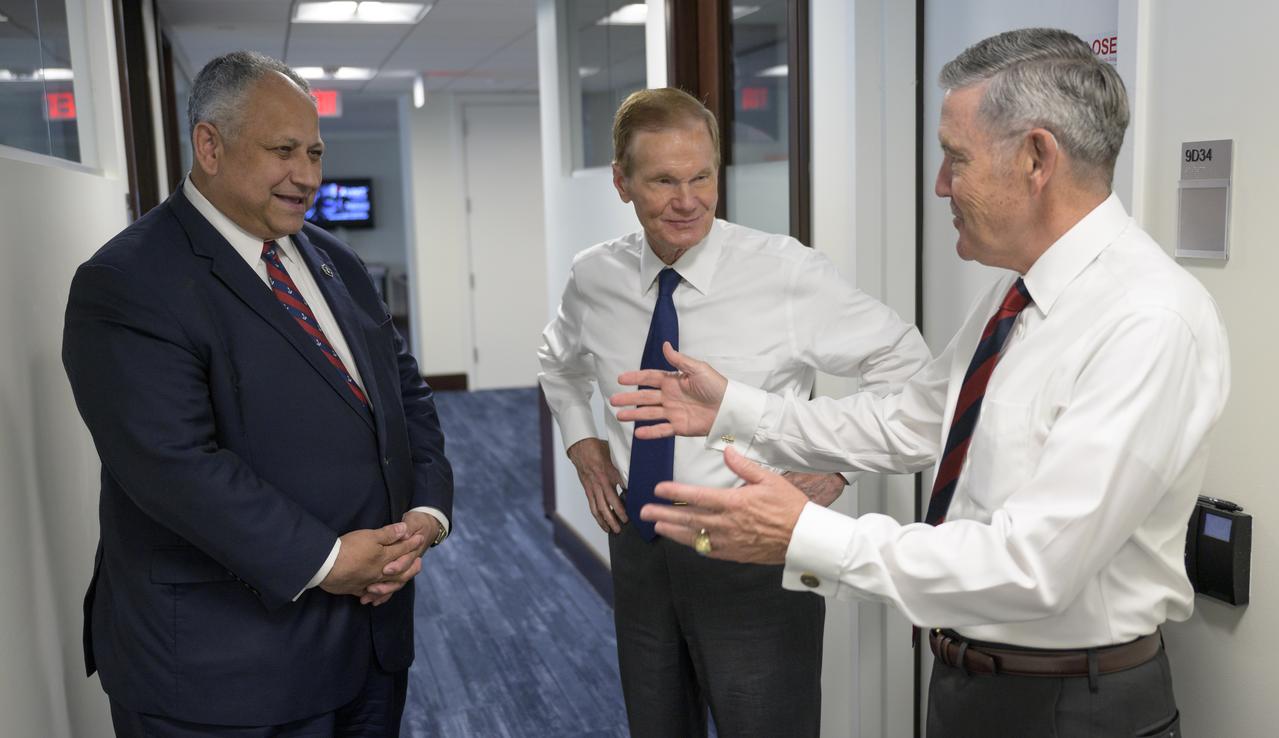
Secretary of the Navy Carlos Del Toro, left, NASA Administrator Bill Nelson, center, and NASA Associate Administrator Bob Cabana talk, Tuesday, June 7, 2022, at the Mary W. Jackson NASA Headquarters in Washington. Photo Credit: (NASA/Bill Ingalls)

Navy NAS Air station Moffett Field, Hangar 2 from North West Corner Naval Air Station Moffett Field Public works Serial 1514 - Contract NOy-5604, Earl W. Heple & J.H. Pomeroy contractors
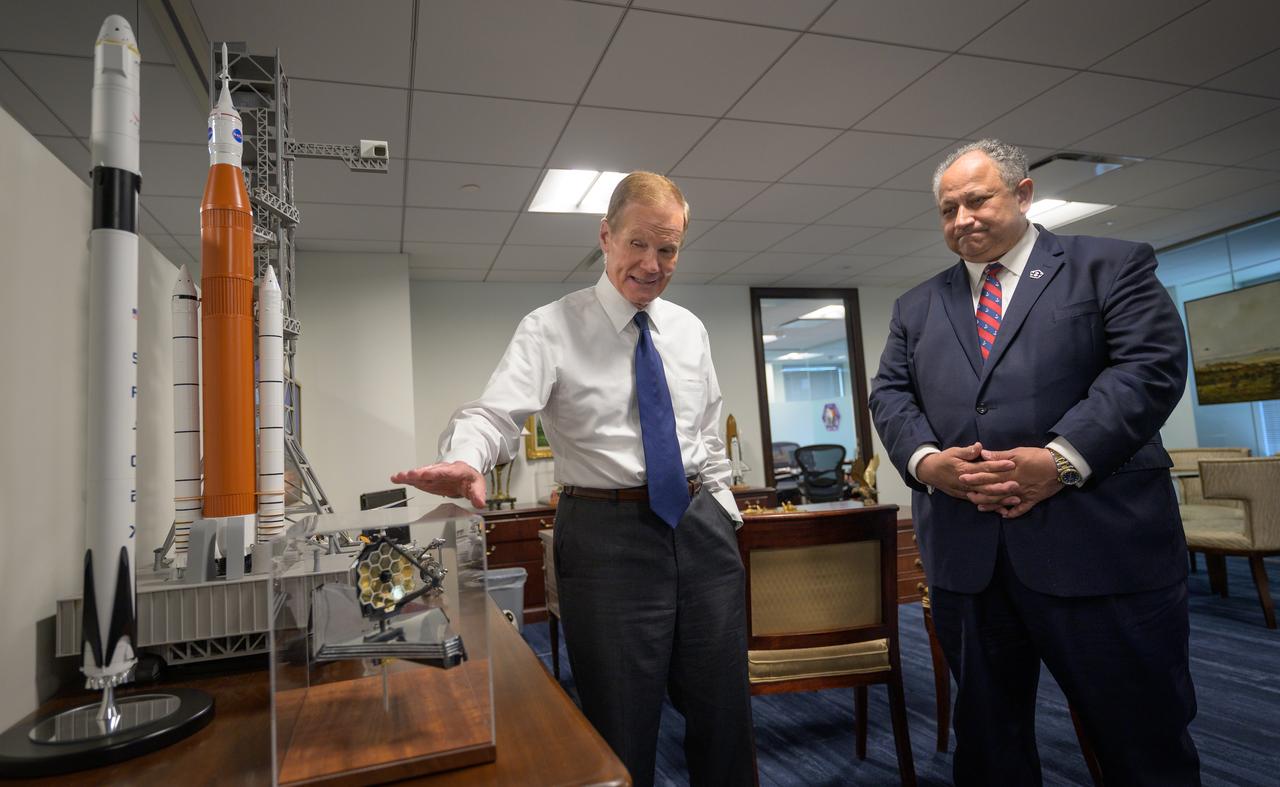
NASA Administrator Bill Nelson, left, and Secretary of the Navy Carlos Del Toro meet, Tuesday, June 7, 2022, at the Mary W. Jackson NASA Headquarters in Washington. Photo Credit: (NASA/Bill Ingalls)
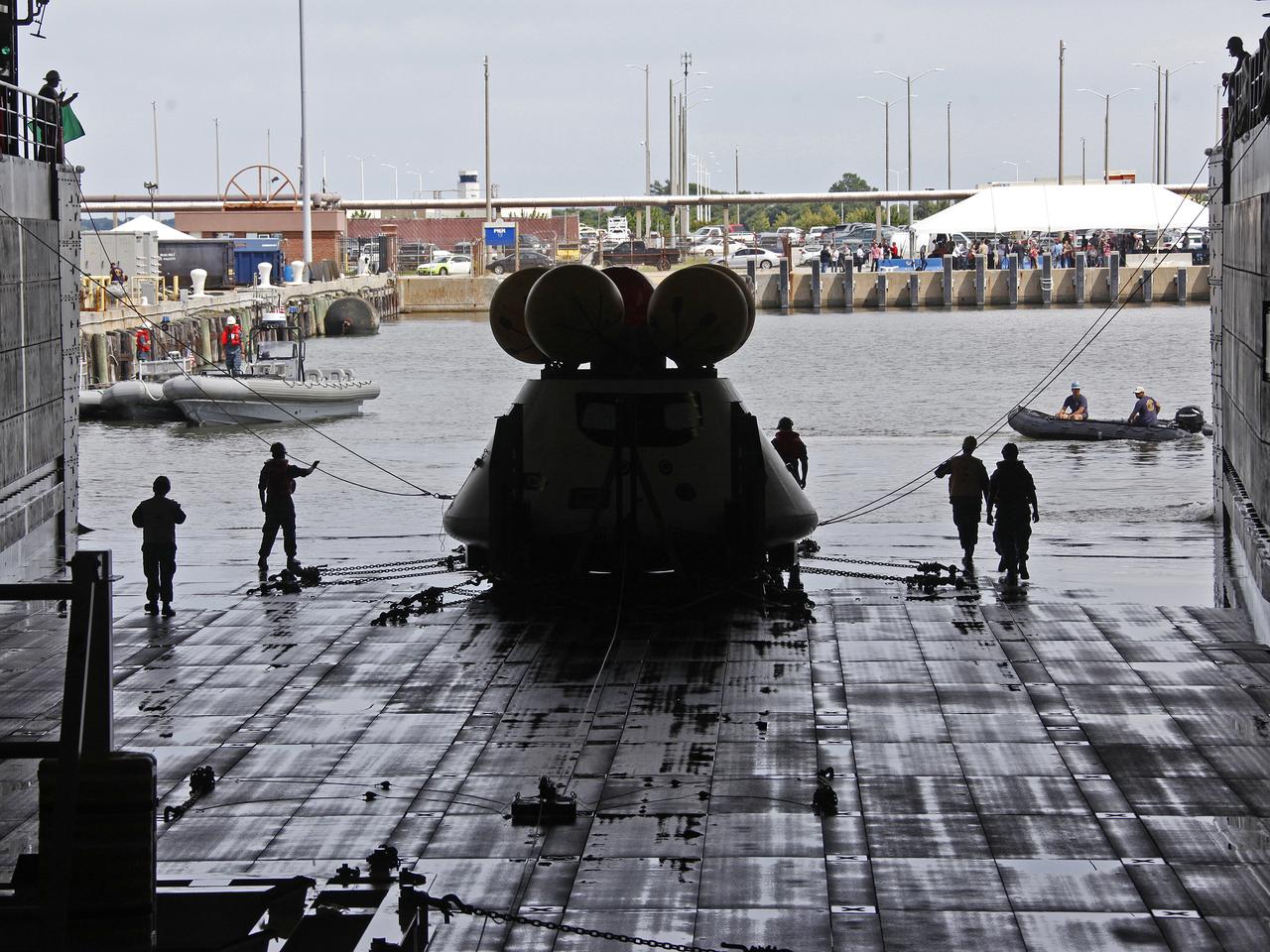
On August 15, 2013, at the Naval Station Norfolk near NASA’s Langley Research Center in Virginia, NASA and the U.S. Navy conducted a stationary recovery test on the Orion boilerplate test article in the water near a U.S. Navy ship. NASA and the U.S. Navy are conducting tests to prepare for recovery of the Orion crew module and forward bay cover on its return from a deep space mission. The stationary recovery tests allow the teams to demonstrate and evaluate the recovery processes, the hardware and the test personnel in a controlled environment. During the test, the U.S Navy Dive Team checked the capsule for hazards while sailors from the USS Arlington approached the capsule in inflatable boats, and towed it back to the ship’s flooded well deck. A second test will be conducted next year in the open waters of the Pacific Ocean.
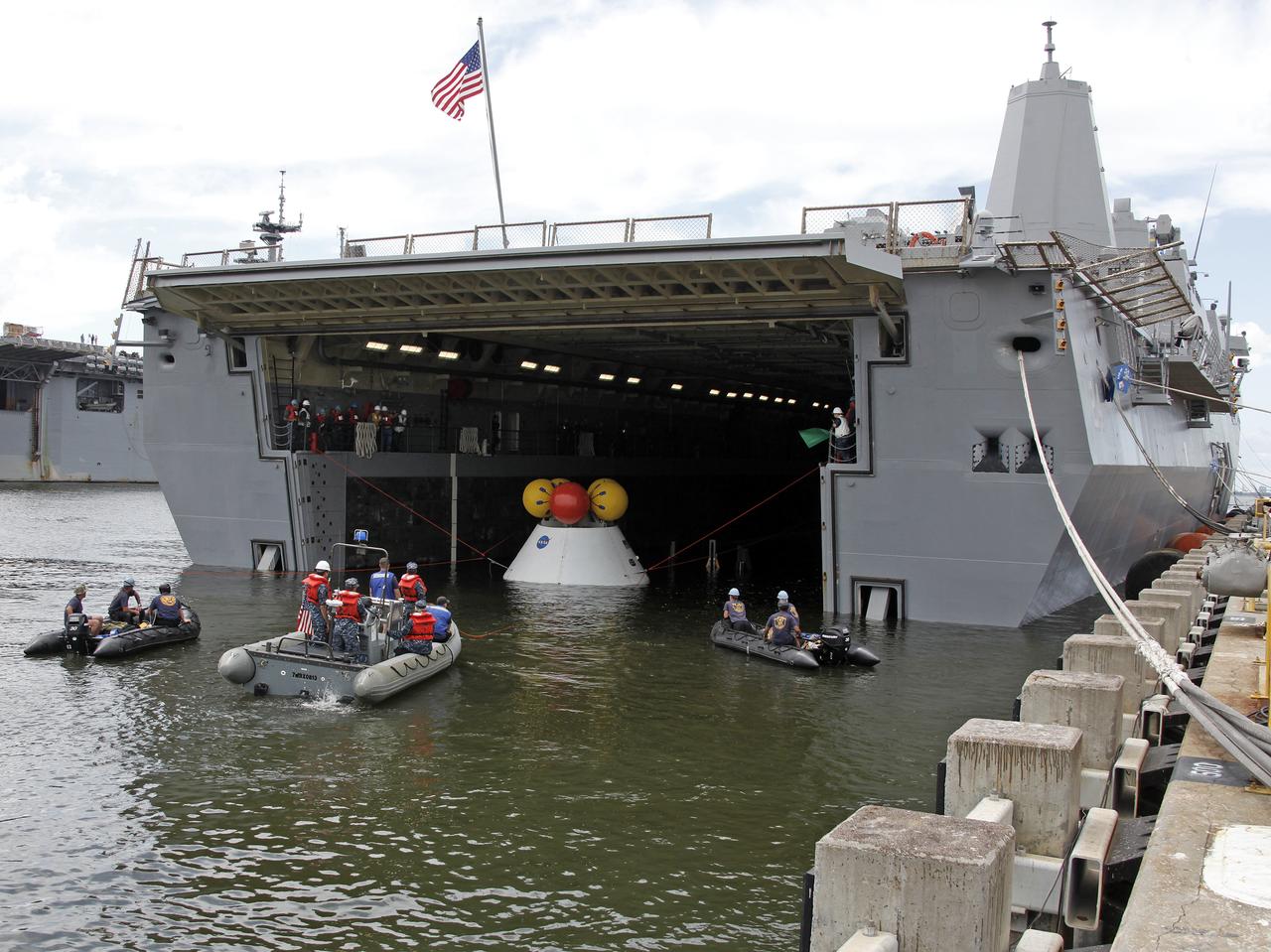
On August 15, 2013, at the Naval Station Norfolk near NASA’s Langley Research Center in Virginia, NASA and the U.S. Navy conducted a stationary recovery test on the Orion boilerplate test article in the water near a U.S. Navy ship. NASA and the U.S. Navy are conducting tests to prepare for recovery of the Orion crew module and forward bay cover on its return from a deep space mission. The stationary recovery tests allow the teams to demonstrate and evaluate the recovery processes, the hardware and the test personnel in a controlled environment. During the test, the U.S Navy Dive Team checked the capsule for hazards while sailors from the USS Arlington approached the capsule in inflatable boats, and towed it back to the ship’s flooded well deck. A second test will be conducted next year in the open waters of the Pacific Ocean.
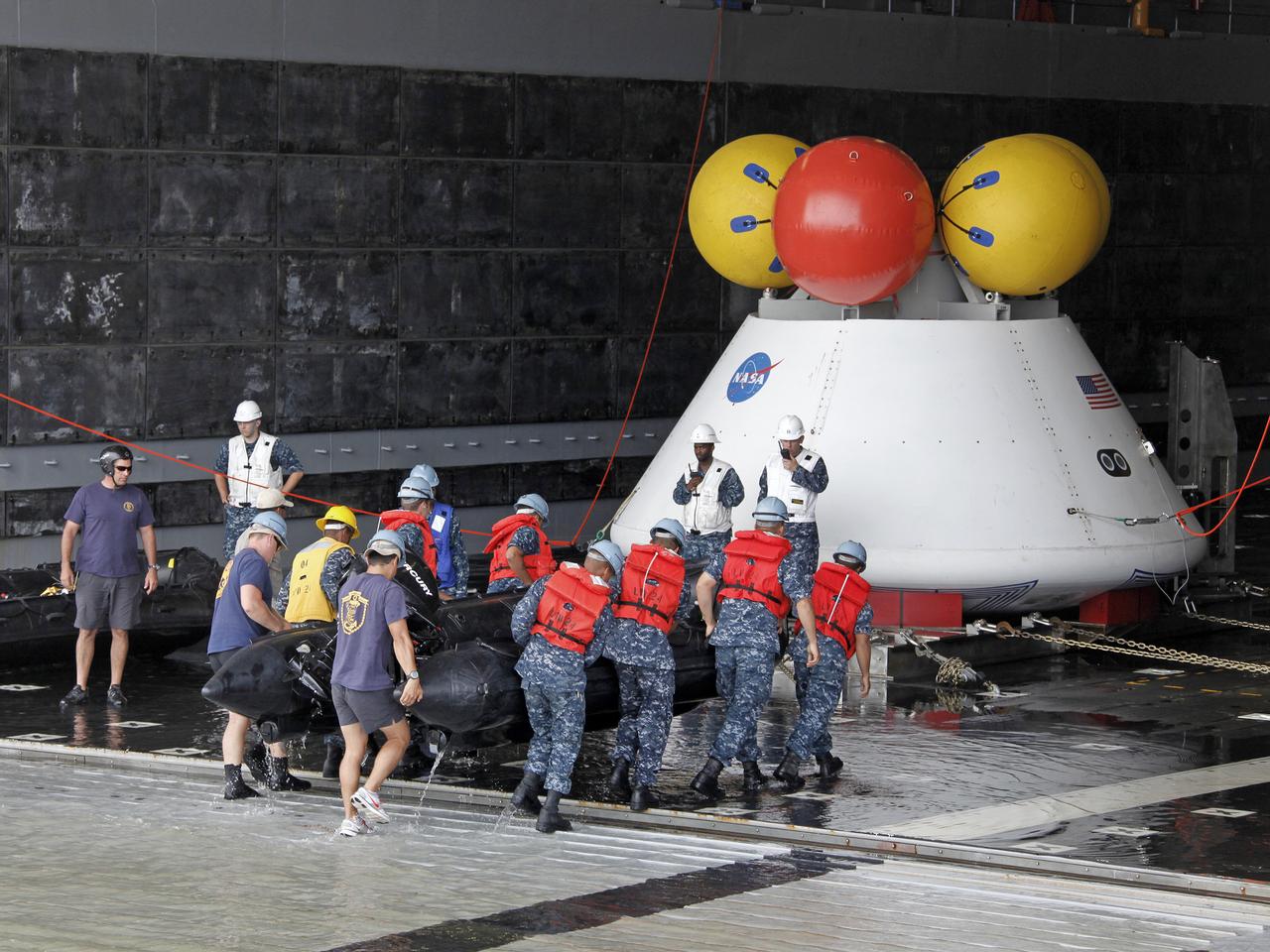
On August 15, 2013, at the Naval Station Norfolk near NASA’s Langley Research Center in Virginia, NASA and the U.S. Navy conducted a stationary recovery test on the Orion boilerplate test article in the water near a U.S. Navy ship. NASA and the U.S. Navy are conducting tests to prepare for recovery of the Orion crew module and forward bay cover on its return from a deep space mission. The stationary recovery tests allow the teams to demonstrate and evaluate the recovery processes, the hardware and the test personnel in a controlled environment. During the test, the U.S Navy Dive Team checked the capsule for hazards while sailors from the USS Arlington approached the capsule in inflatable boats, and towed it back to the ship’s flooded well deck. A second test will be conducted next year in the open waters of the Pacific Ocean.
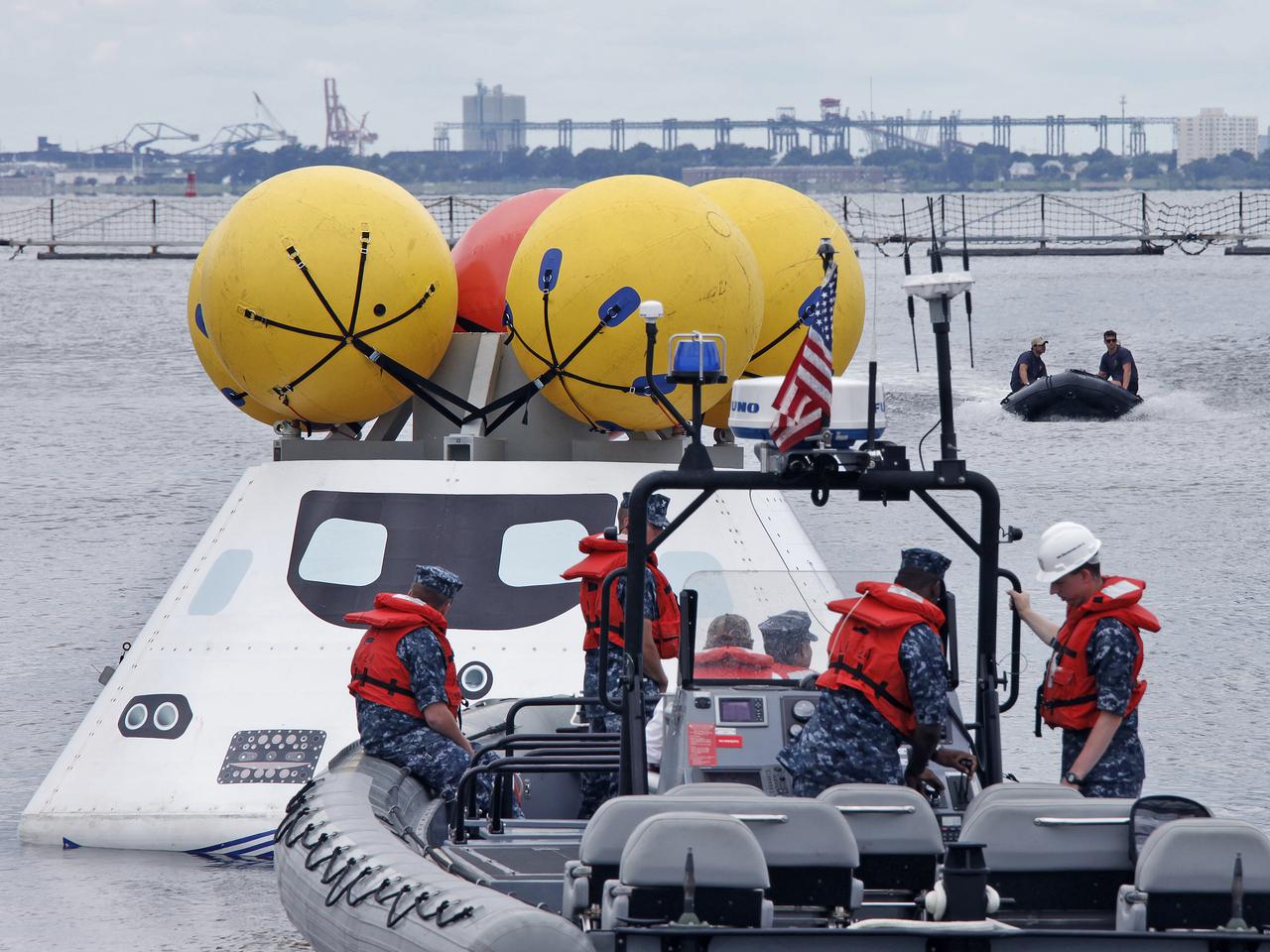
On August 15, 2013, at the Naval Station Norfolk near NASA’s Langley Research Center in Virginia, NASA and the U.S. Navy conducted a stationary recovery test on the Orion boilerplate test article in the water near a U.S. Navy ship. NASA and the U.S. Navy are conducting tests to prepare for recovery of the Orion crew module and forward bay cover on its return from a deep space mission. The stationary recovery tests allow the teams to demonstrate and evaluate the recovery processes, the hardware and the test personnel in a controlled environment. During the test, the U.S Navy Dive Team checked the capsule for hazards while sailors from the USS Arlington approached the capsule in inflatable boats, and towed it back to the ship’s flooded well deck. A second test will be conducted next year in the open waters of the Pacific Ocean.
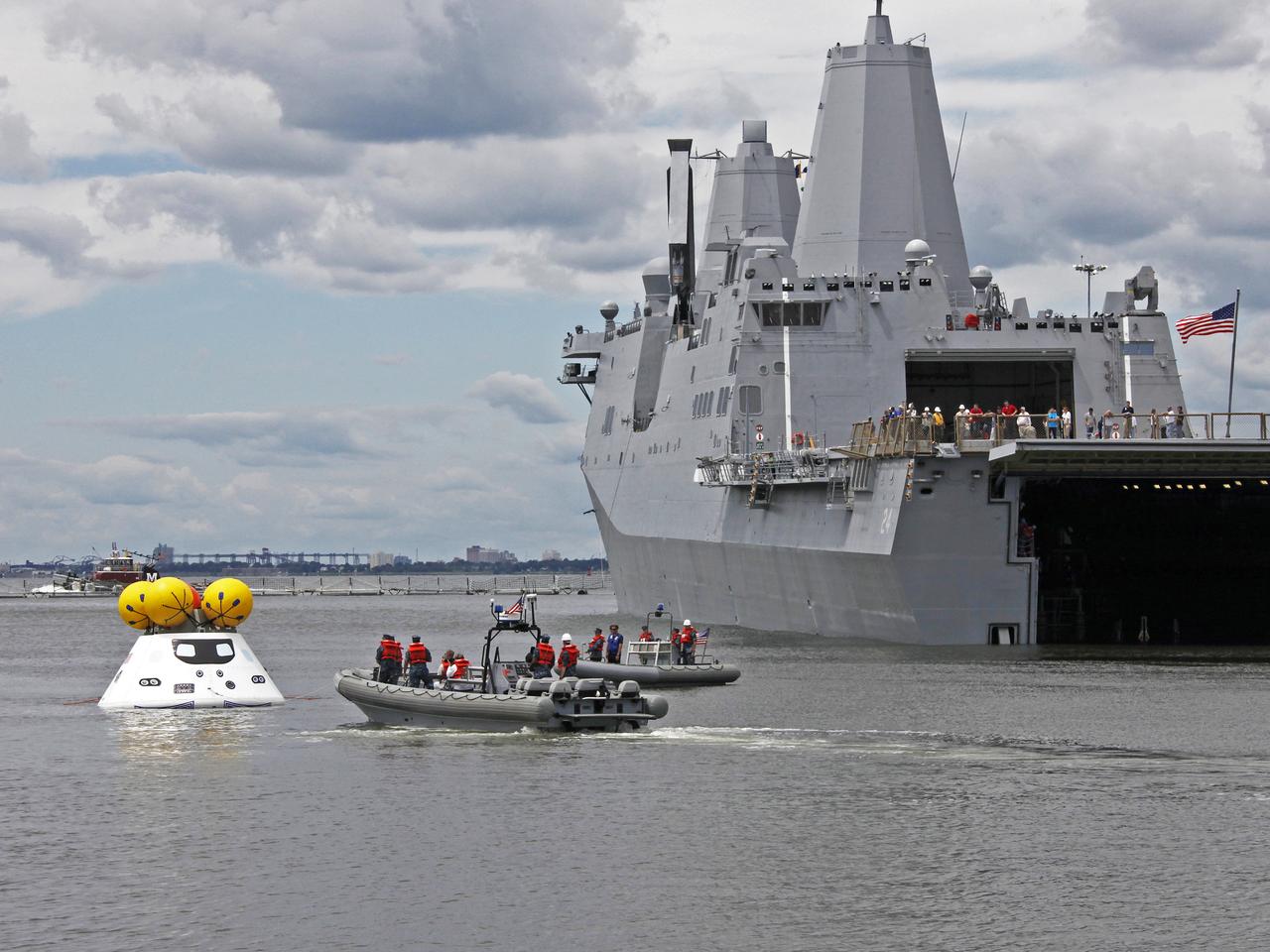
On August 15, 2013, at the Naval Station Norfolk near NASA’s Langley Research Center in Virginia, NASA and the U.S. Navy conducted a stationary recovery test on the Orion boilerplate test article in the water near a U.S. Navy ship. NASA and the U.S. Navy are conducting tests to prepare for recovery of the Orion crew module and forward bay cover on its return from a deep space mission. The stationary recovery tests allow the teams to demonstrate and evaluate the recovery processes, the hardware and the test personnel in a controlled environment. During the test, the U.S Navy Dive Team checked the capsule for hazards while sailors from the USS Arlington approached the capsule in inflatable boats, and towed it back to the ship’s flooded well deck. A second test will be conducted next year in the open waters of the Pacific Ocean.
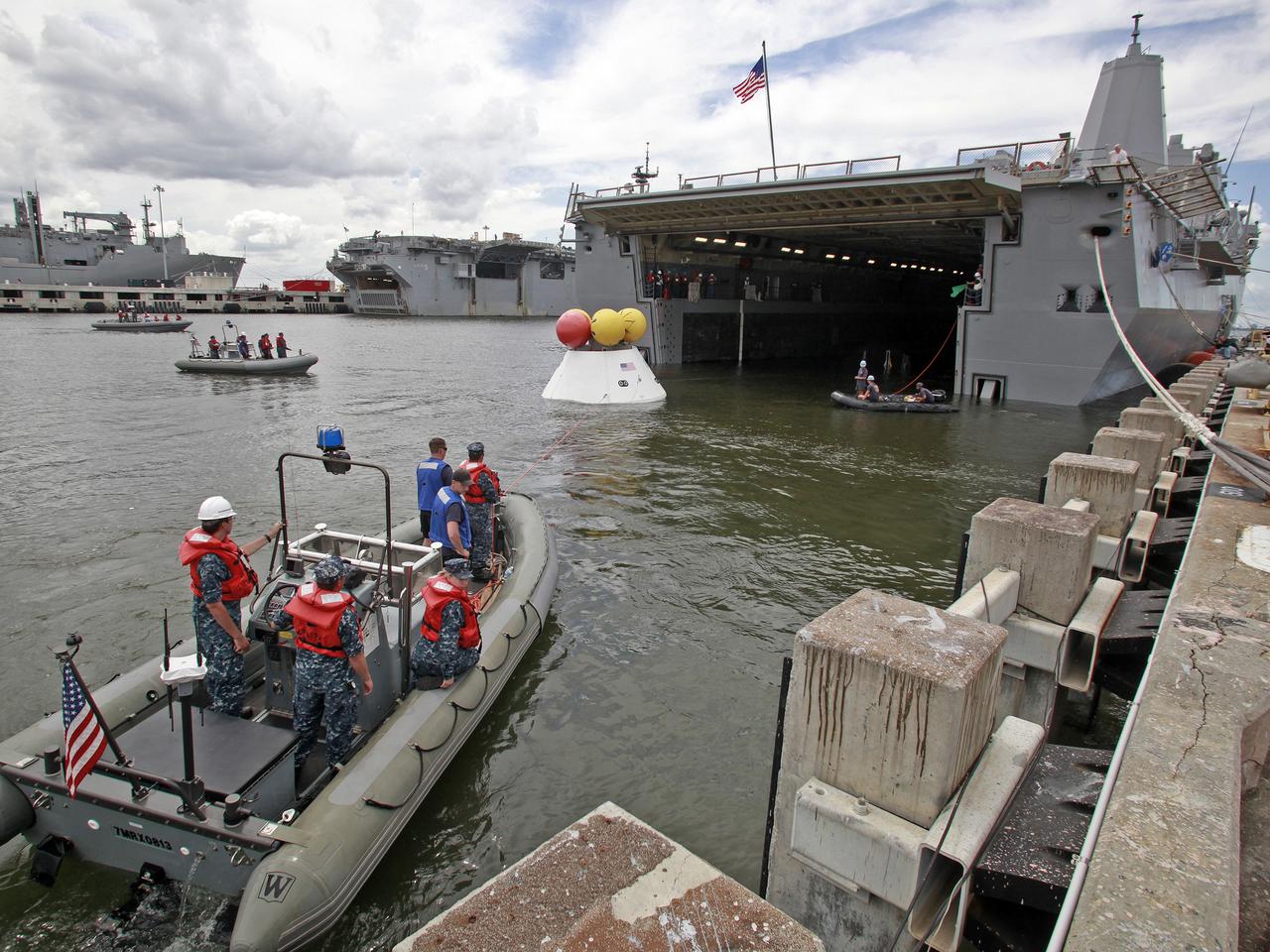
On August 15, 2013, at the Naval Station Norfolk near NASA’s Langley Research Center in Virginia, NASA and the U.S. Navy conducted a stationary recovery test on the Orion boilerplate test article in the water near a U.S. Navy ship. NASA and the U.S. Navy are conducting tests to prepare for recovery of the Orion crew module and forward bay cover on its return from a deep space mission. The stationary recovery tests allow the teams to demonstrate and evaluate the recovery processes, the hardware and the test personnel in a controlled environment. During the test, the U.S Navy Dive Team checked the capsule for hazards while sailors from the USS Arlington approached the capsule in inflatable boats, and towed it back to the ship’s flooded well deck. A second test will be conducted next year in the open waters of the Pacific Ocean.
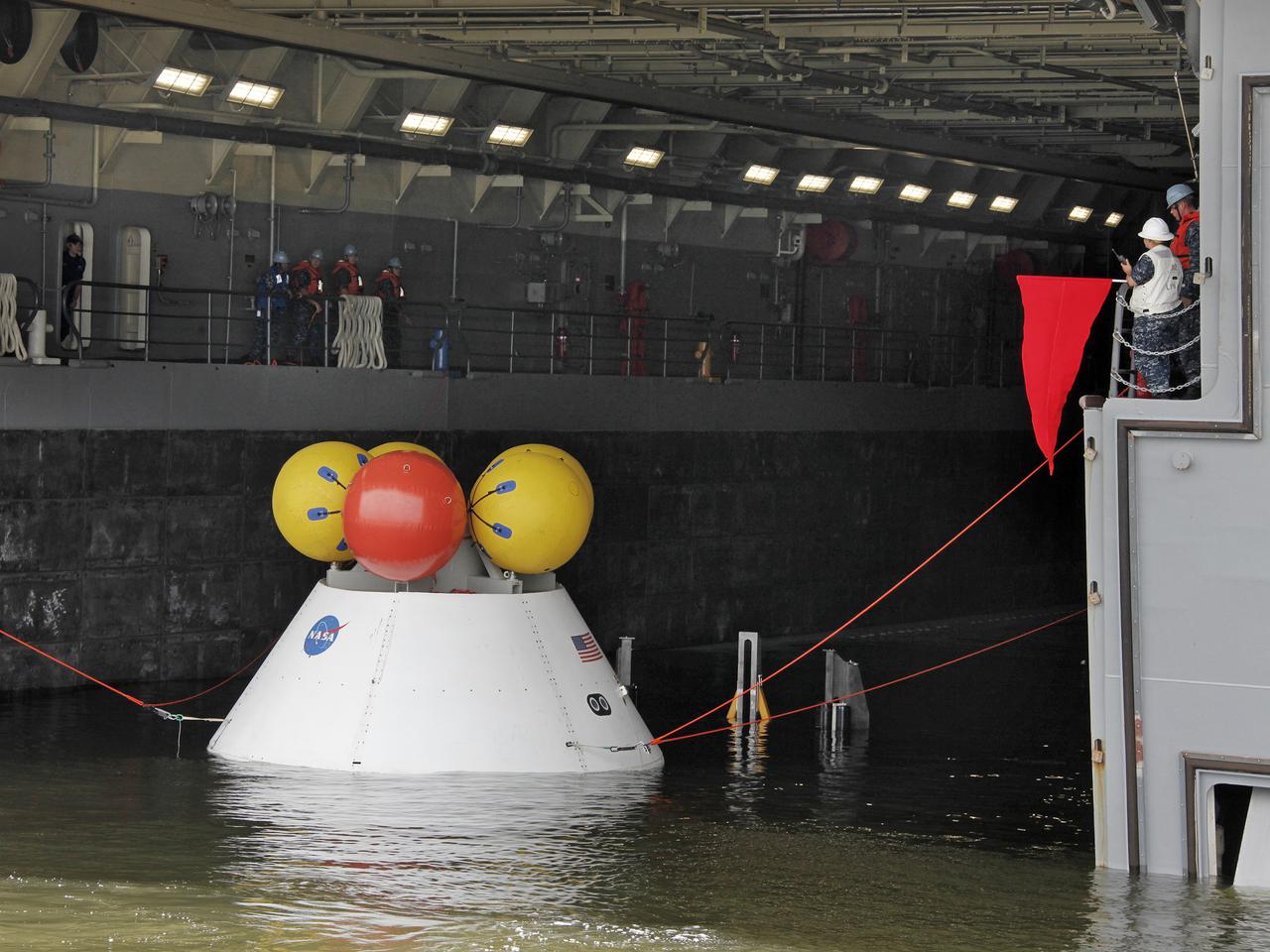
On August 15, 2013, at the Naval Station Norfolk near NASA’s Langley Research Center in Virginia, NASA and the U.S. Navy conducted a stationary recovery test on the Orion boilerplate test article in the water near a U.S. Navy ship. NASA and the U.S. Navy are conducting tests to prepare for recovery of the Orion crew module and forward bay cover on its return from a deep space mission. The stationary recovery tests allow the teams to demonstrate and evaluate the recovery processes, the hardware and the test personnel in a controlled environment. During the test, the U.S Navy Dive Team checked the capsule for hazards while sailors from the USS Arlington approached the capsule in inflatable boats, and towed it back to the ship’s flooded well deck. A second test will be conducted next year in the open waters of the Pacific Ocean.
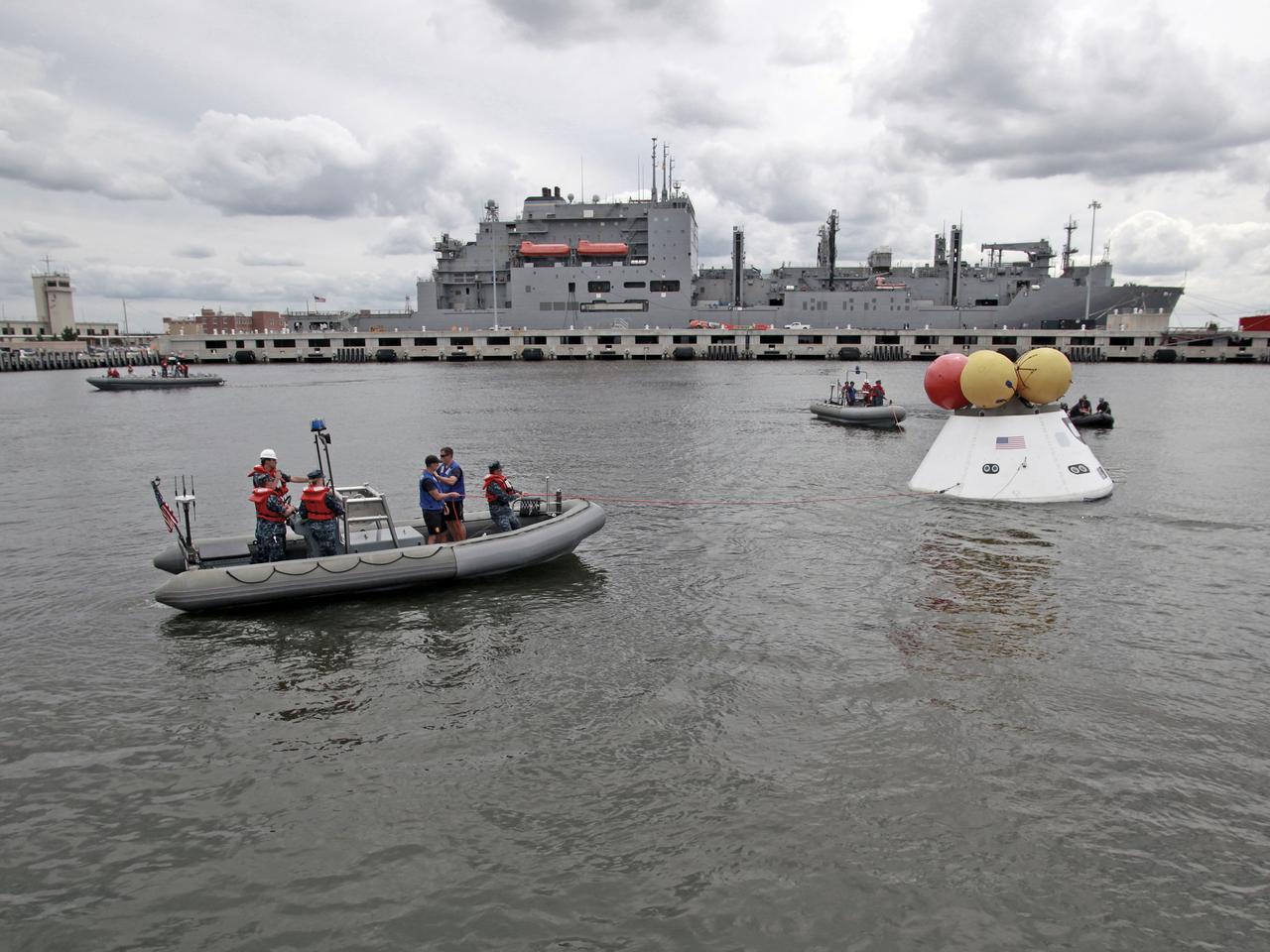
On August 15, 2013, at the Naval Station Norfolk near NASA’s Langley Research Center in Virginia, NASA and the U.S. Navy conducted a stationary recovery test on the Orion boilerplate test article in the water near a U.S. Navy ship. NASA and the U.S. Navy are conducting tests to prepare for recovery of the Orion crew module and forward bay cover on its return from a deep space mission. The stationary recovery tests allow the teams to demonstrate and evaluate the recovery processes, the hardware and the test personnel in a controlled environment. During the test, the U.S Navy Dive Team checked the capsule for hazards while sailors from the USS Arlington approached the capsule in inflatable boats, and towed it back to the ship’s flooded well deck. A second test will be conducted next year in the open waters of the Pacific Ocean.
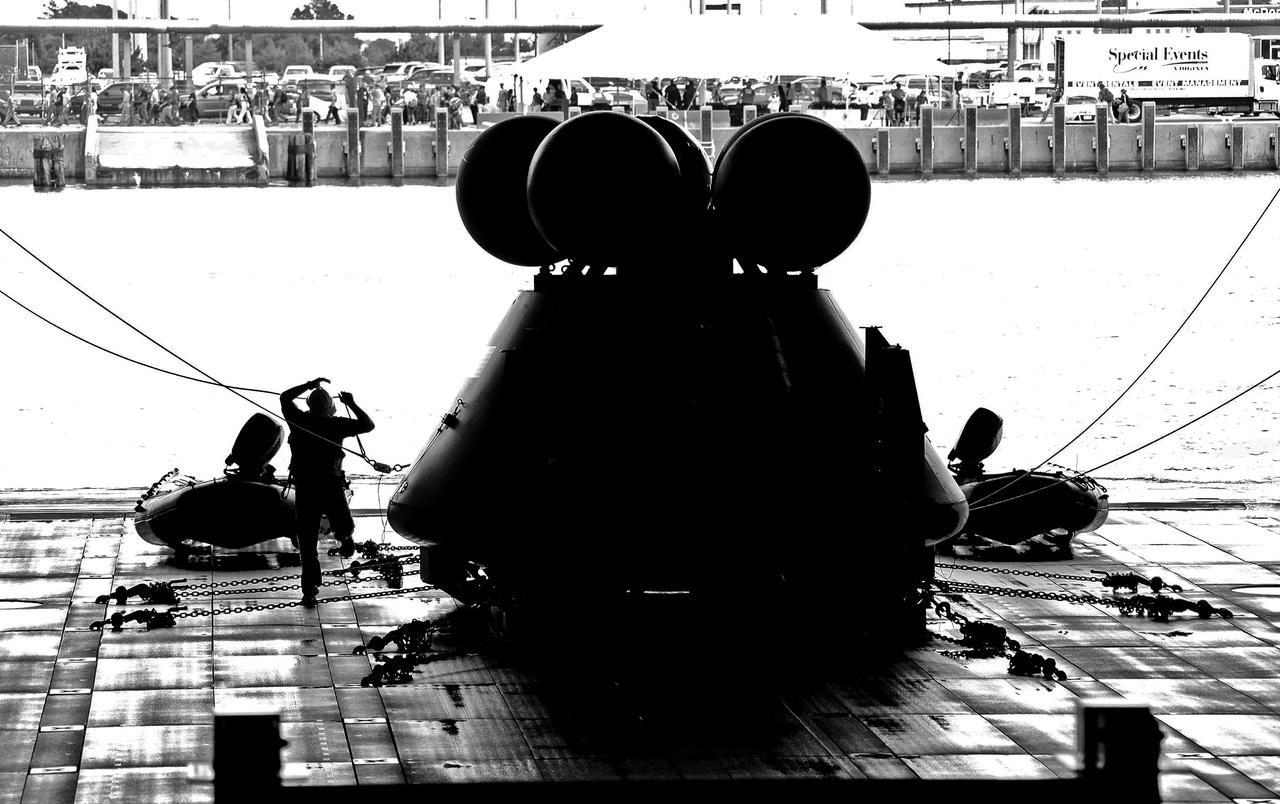
On August 15, 2013, at the Naval Station Norfolk near NASA’s Langley Research Center in Virginia, NASA and the U.S. Navy conducted a stationary recovery test on the Orion boilerplate test article in the water near a U.S. Navy ship. NASA and the U.S. Navy are conducting tests to prepare for recovery of the Orion crew module and forward bay cover on its return from a deep space mission. The stationary recovery tests allow the teams to demonstrate and evaluate the recovery processes, the hardware and the test personnel in a controlled environment. During the test, the U.S Navy Dive Team checked the capsule for hazards while sailors from the USS Arlington approached the capsule in inflatable boats, and towed it back to the ship’s flooded well deck. A second test will be conducted next year in the open waters of the Pacific Ocean.
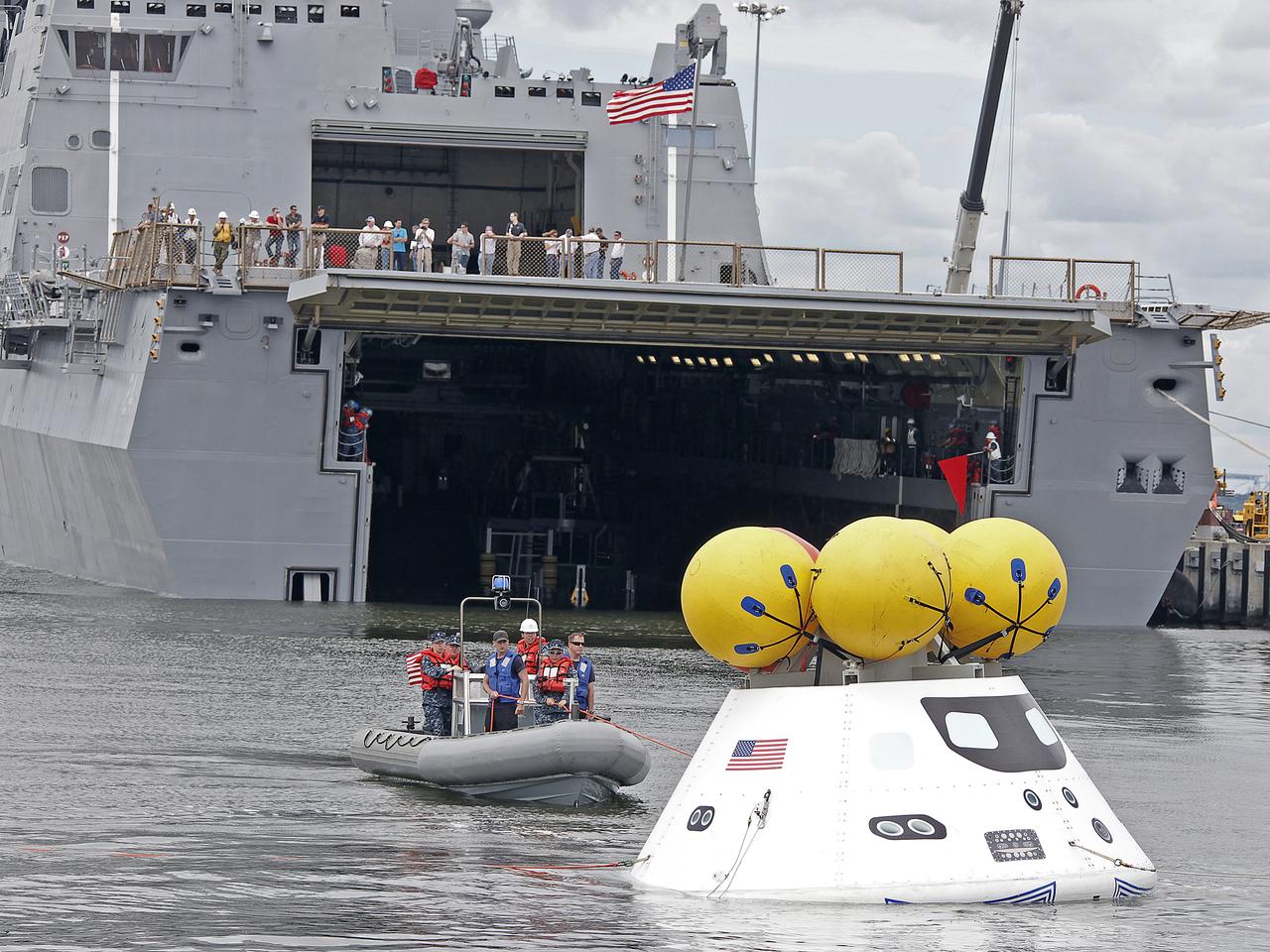
On August 15, 2013, at the Naval Station Norfolk near NASA’s Langley Research Center in Virginia, NASA and the U.S. Navy conducted a stationary recovery test on the Orion boilerplate test article in the water near a U.S. Navy ship. NASA and the U.S. Navy are conducting tests to prepare for recovery of the Orion crew module and forward bay cover on its return from a deep space mission. The stationary recovery tests allow the teams to demonstrate and evaluate the recovery processes, the hardware and the test personnel in a controlled environment. During the test, the U.S Navy Dive Team checked the capsule for hazards while sailors from the USS Arlington approached the capsule in inflatable boats, and towed it back to the ship’s flooded well deck. A second test will be conducted next year in the open waters of the Pacific Ocean.
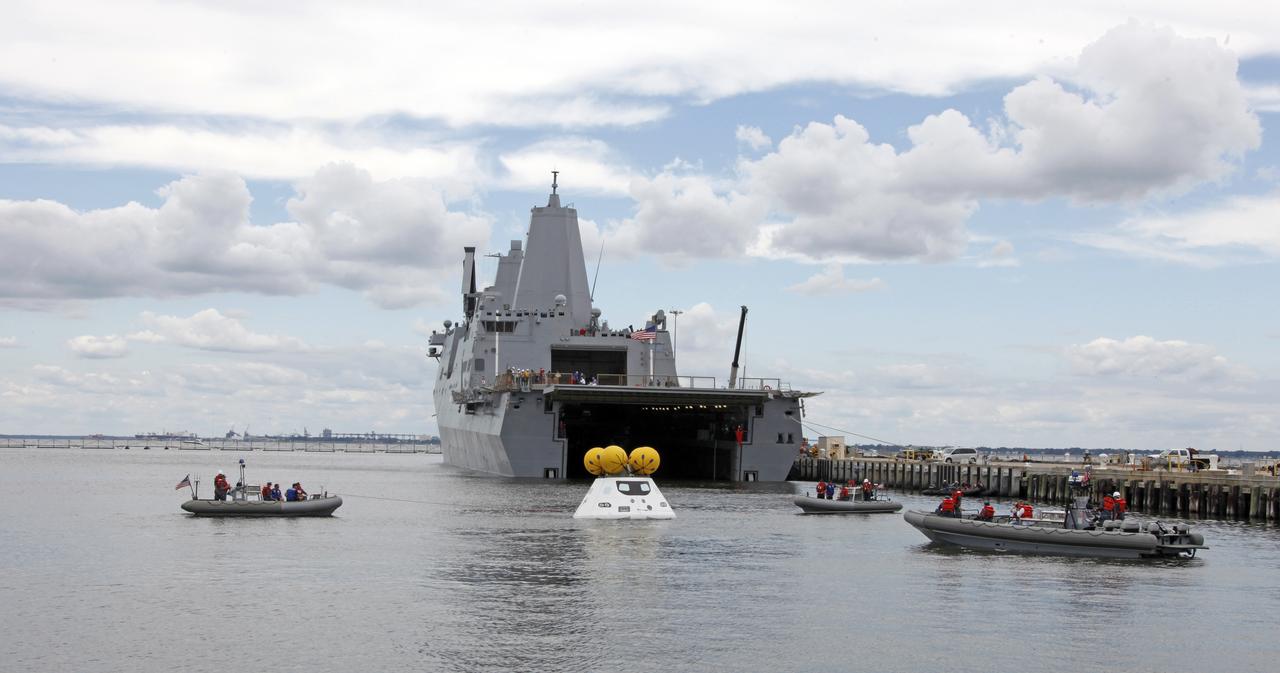
On August 15, 2013, at the Naval Station Norfolk near NASA’s Langley Research Center in Virginia, NASA and the U.S. Navy conducted a stationary recovery test on the Orion boilerplate test article in the water near a U.S. Navy ship. NASA and the U.S. Navy are conducting tests to prepare for recovery of the Orion crew module and forward bay cover on its return from a deep space mission. The stationary recovery tests allow the teams to demonstrate and evaluate the recovery processes, the hardware and the test personnel in a controlled environment. During the test, the U.S Navy Dive Team checked the capsule for hazards while sailors from the USS Arlington approached the capsule in inflatable boats, and towed it back to the ship’s flooded well deck. A second test will be conducted next year in the open waters of the Pacific Ocean.
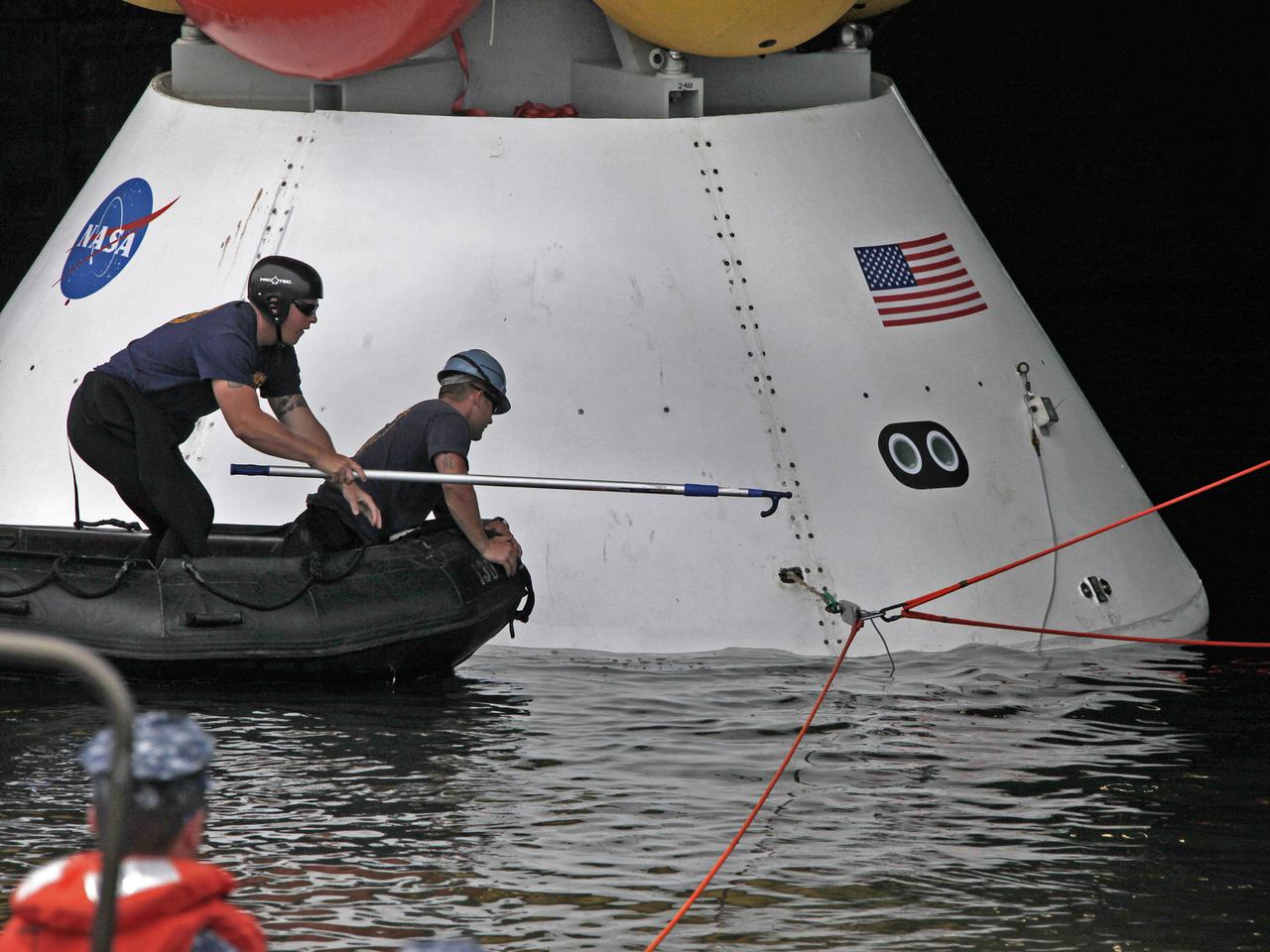
On August 15, 2013, at the Naval Station Norfolk near NASA’s Langley Research Center in Virginia, NASA and the U.S. Navy conducted a stationary recovery test on the Orion boilerplate test article in the water near a U.S. Navy ship. NASA and the U.S. Navy are conducting tests to prepare for recovery of the Orion crew module and forward bay cover on its return from a deep space mission. The stationary recovery tests allow the teams to demonstrate and evaluate the recovery processes, the hardware and the test personnel in a controlled environment. During the test, the U.S Navy Dive Team checked the capsule for hazards while sailors from the USS Arlington approached the capsule in inflatable boats, and towed it back to the ship’s flooded well deck. A second test will be conducted next year in the open waters of the Pacific Ocean.
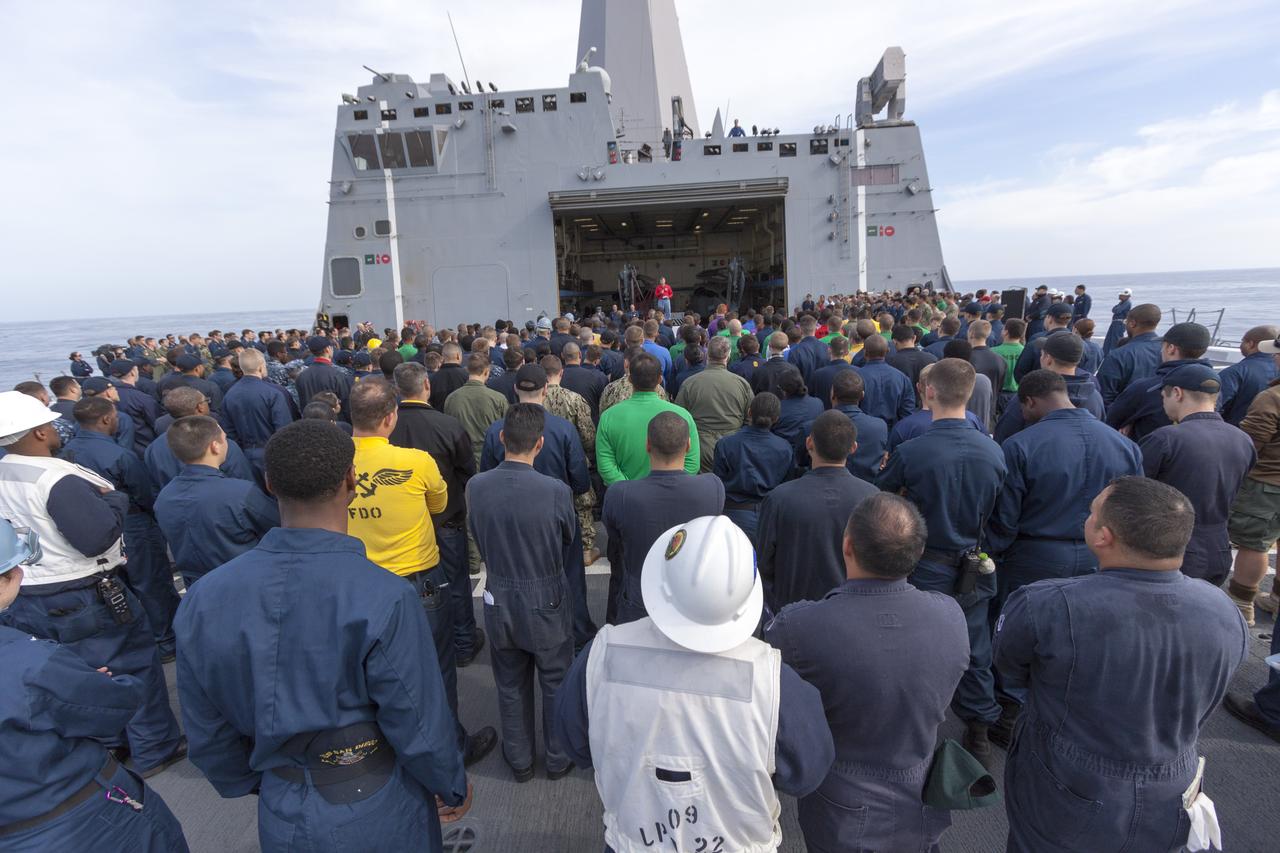
SAN DIEGO, Calif. – On the top deck of the USS San Diego, NASA and U.S. Navy personnel gather after the Orion underway recovery test. The Orion boilerplate test vehicle and other hardware were transported about 100 miles offshore for the recovery test. NASA and the U.S. Navy conducted tests to prepare for recovery of the Orion crew module, forward bay cover and parachutes on its return from a deep space mission. The underway recovery test will allow the teams to demonstrate and evaluate the recovery processes, procedures, hardware and personnel in open waters. During the testing, the tether lines were unable to support the tension caused by crew module motion that was driven by wave turbulence in the well deck of the ship. NASA and the U.S. Navy are reviewing the testing data collected to evaluate the next steps. The Ground Systems Development and Operations Program conducted the underway recovery tests. Orion is the exploration spacecraft designed to carry astronauts to destinations not yet explored by humans, including an asteroid and Mars. It will have emergency abort capability, sustain the crew during space travel and provide safe re-entry from deep space return velocities. The first unpiloted test flight of the Orion is scheduled to launch in 2014 atop a Delta IV rocket and in 2017 on NASA’s Space Launch System rocket. For more information, visit http://www.nasa.gov/orion. Photo credit: NASA/Cory Huston
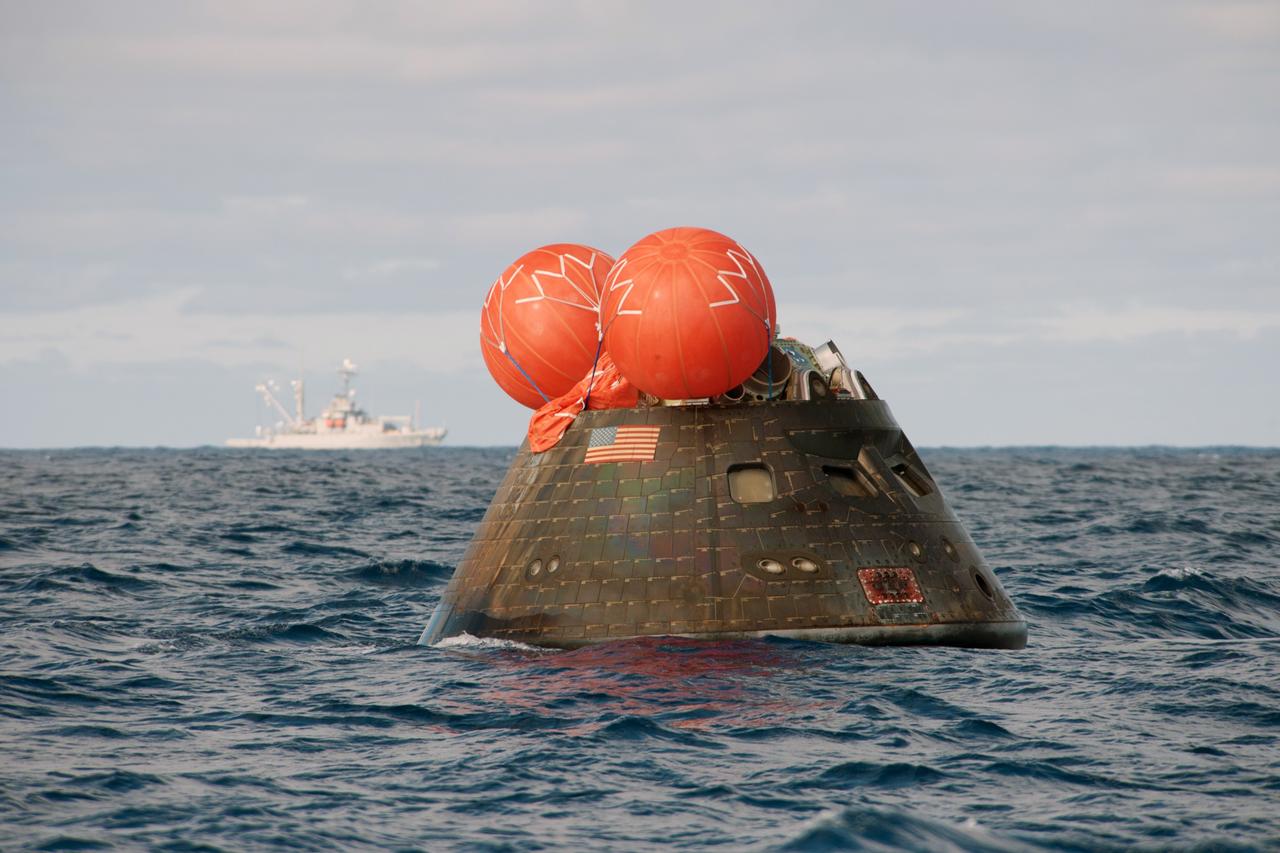
SAN DIEGO, Calif. -- NASA's Orion spacecraft floats in the Pacific Ocean after splashdown from its first flight test in Earth orbit. In the background is the USNS Salvor. This U.S. Navy salvage ship was there as a backup in case it was needed. NASA, the U.S. Navy and Lockheed Martin are coordinating efforts to recover Orion and secure the spacecraft in the well deck of the USS Anchorage. Orion completed a two-orbit, four-and-a-half hour mission, to test systems critical to crew safety, including the launch abort system, the heat shield and the parachute system. The Ground Systems Development and Operations Program is leading the recovery efforts. For more information, visit www.nasa.gov/orion Photo credit: NASA/Tony Gray
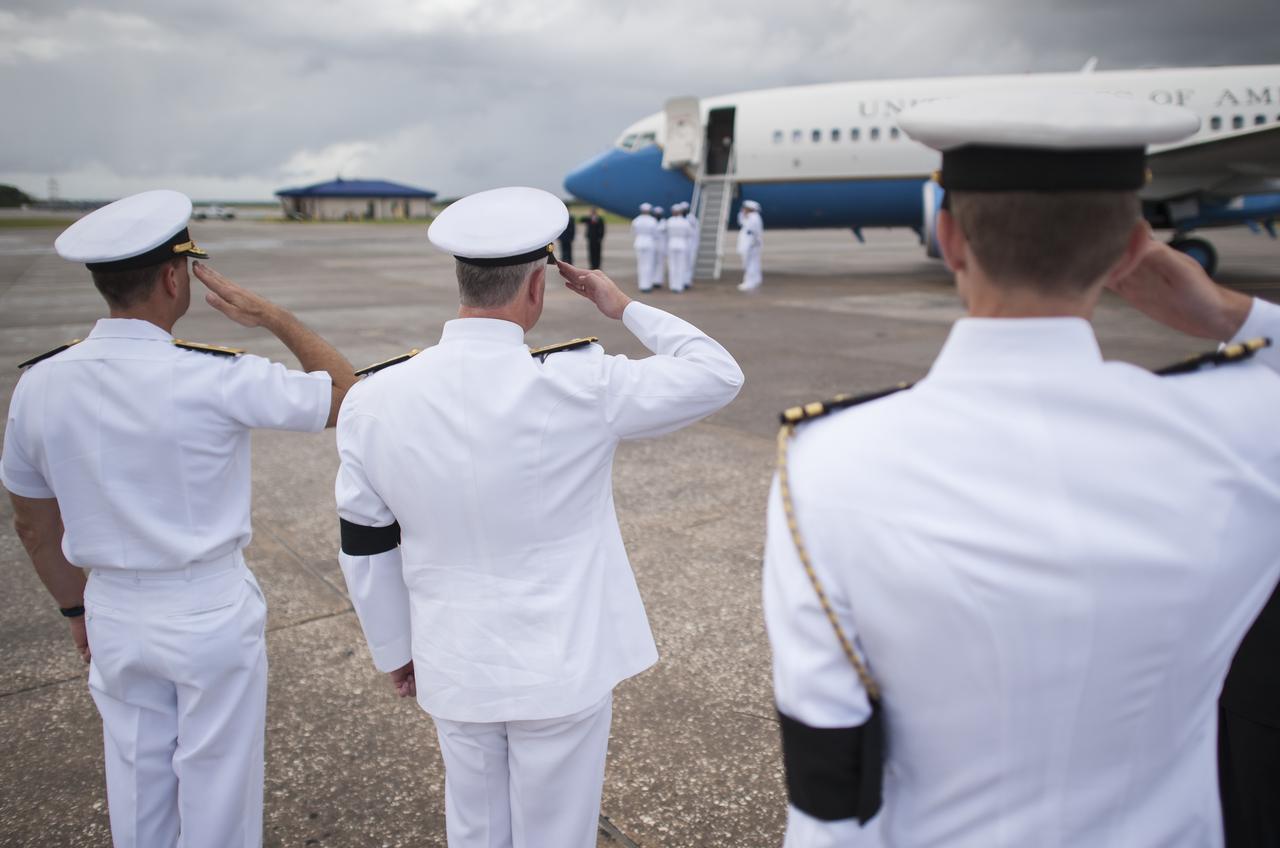
US Navy personnel salute as the cremains of Apollo 11 astronaut Neil Armstrong are transferred from a military aircraft at Naval Station Mayport the day before the Armstrong burial at sea service, Thursday, Sept. 13, 2012, Mayport, Fla. Armstrong, the first man to walk on the moon during the 1969 Apollo 11 mission, died Saturday, Aug. 25. He was 82. Photo Credit: (NASA/Bill Ingalls)
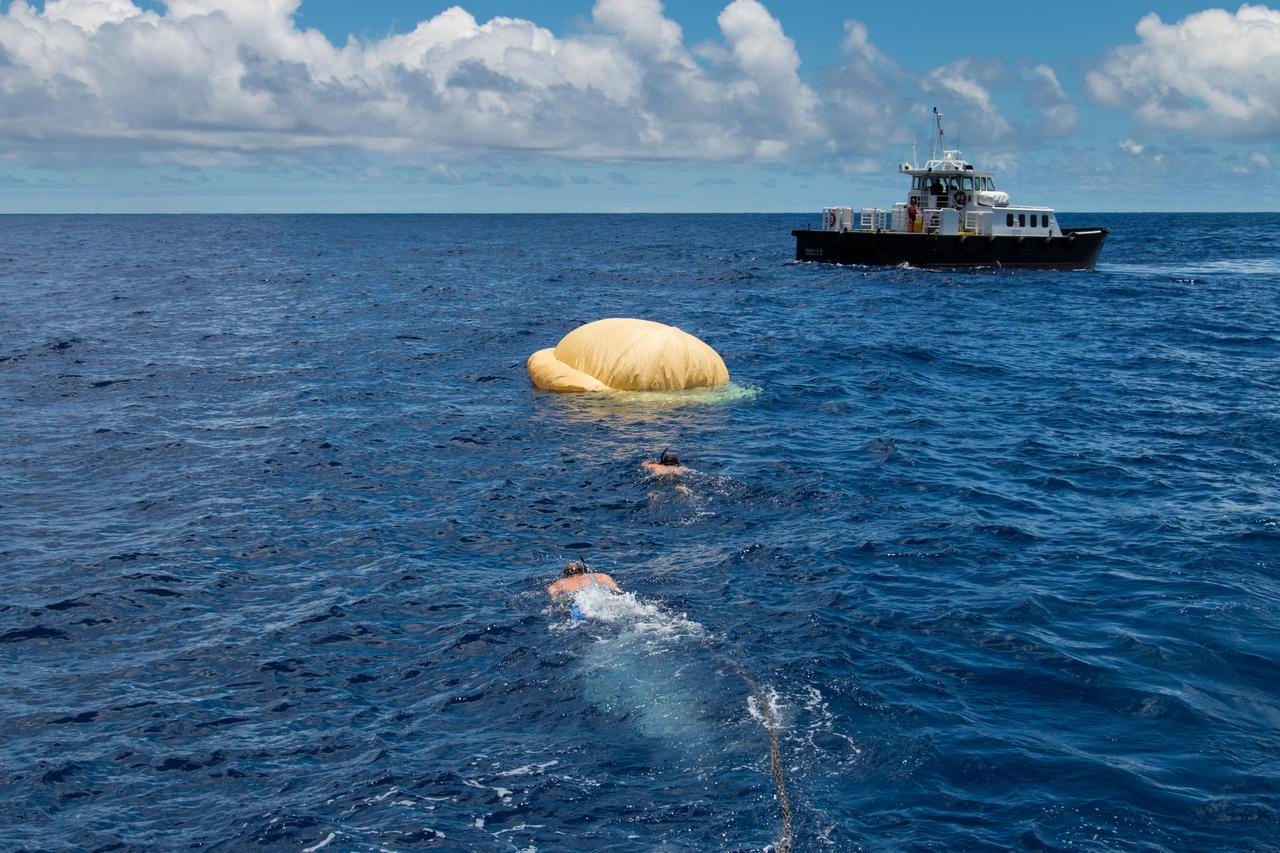
Hours after the June 28, 2014, test of NASA Low-Density Supersonic Decelerator over the U.S. Navy Pacific Missile Range, two members of the Navy Explosive Ordinance Disposal swim toward the test vehicle.
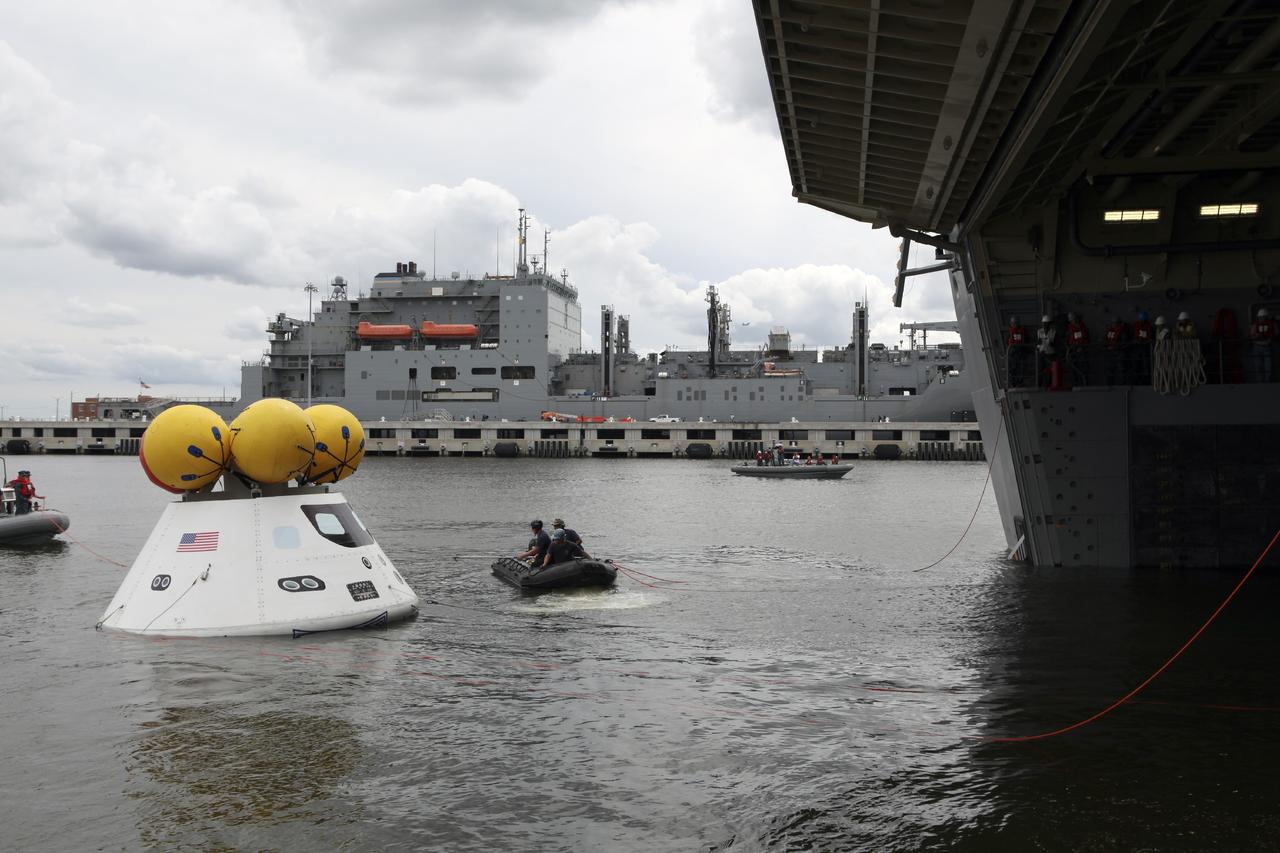
HAMPTON, Va. – At the Naval Station Norfolk near NASA’s Langley Research Center in Virginia, NASA and the U.S. Navy are conducting a stationary recovery test on the Orion boilerplate test article in the water near a U.S. Navy ship. NASA and the U.S. Navy are conducting tests to prepare for recovery of the Orion crew module and forward bay cover on its return from a deep space mission. The stationary recovery test will allow the teams to demonstrate and evaluate the recovery processes, procedures, hardware and personnel in a controlled environment before conducting a second recovery test next year in open waters. Orion is the exploration spacecraft designed to carry astronauts to destinations not yet explored by humans, including an asteroid and Mars. It will have emergency abort capability, sustain the crew during space travel and provide safe re-entry from deep space return velocities. The first unpiloted test flight of the Orion is scheduled to launch in 2014 atop a Delta IV rocket and in 2017 on NASA’s Space Launch System rocket. For more information, visit http://www.nasa.gov/orion. Photo credit: NASA/Dimitri Gerondidakis
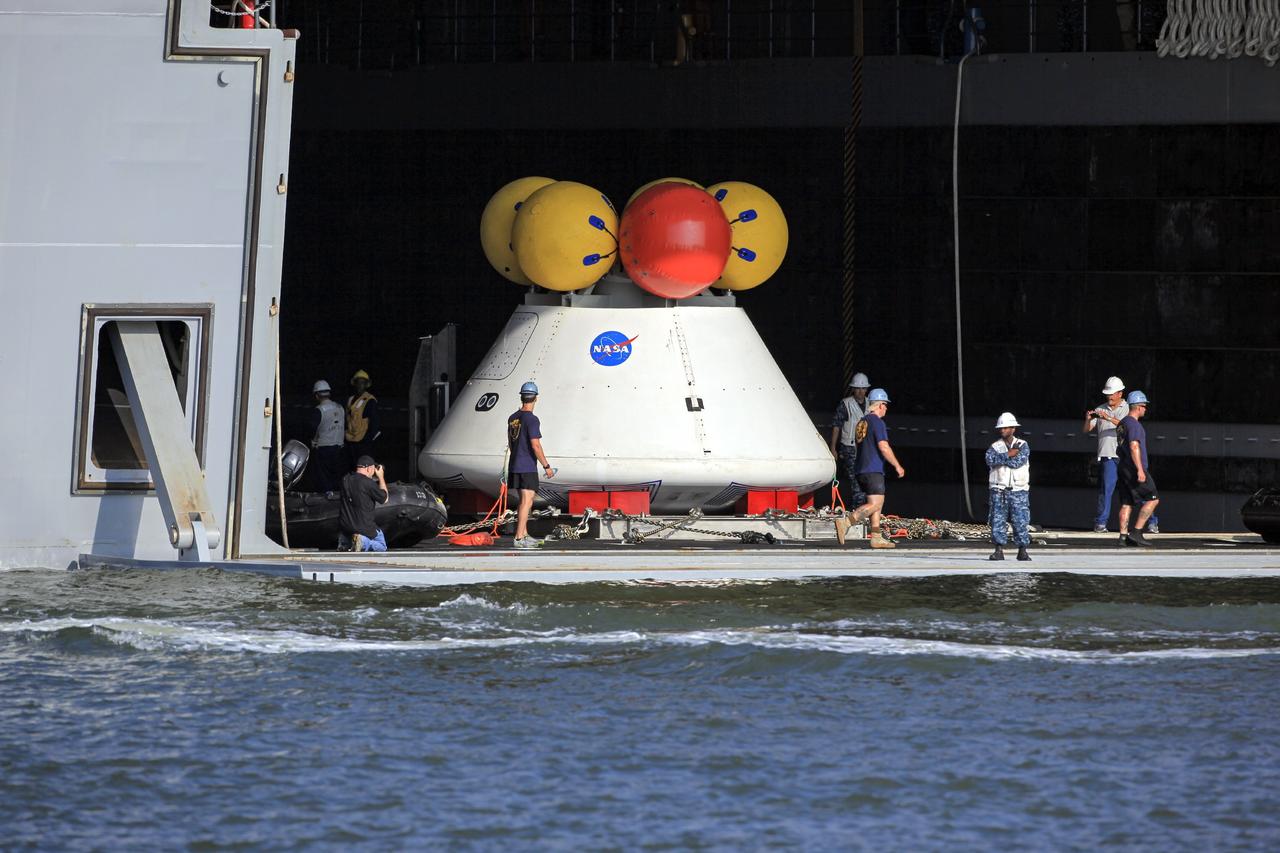
HAMPTON, Va. – At the Naval Station Norfolk near NASA’s Langley Research Center in Virginia, NASA and U.S. Navy personnel prepare the Orion boilerplate test article for a stationary recovery test aboard a U.S. Navy ship. NASA and the U.S. Navy are conducting tests to prepare for recovery of the Orion crew module and forward bay cover on its return from a deep space mission. The stationary recovery test will allow the teams to demonstrate and evaluate the recovery processes, procedures, hardware and personnel in a controlled environment before conducting a second recovery test next year in open waters. Orion is the exploration spacecraft designed to carry astronauts to destinations not yet explored by humans, including an asteroid and Mars. It will have emergency abort capability, sustain the crew during space travel and provide safe re-entry from deep space return velocities. The first unpiloted test flight of the Orion is scheduled to launch in 2014 atop a Delta IV rocket and in 2017 on NASA’s Space Launch System rocket. For more information, visit http://www.nasa.gov/orion. Photo credit: NASA/Dimitri Gerondidakis
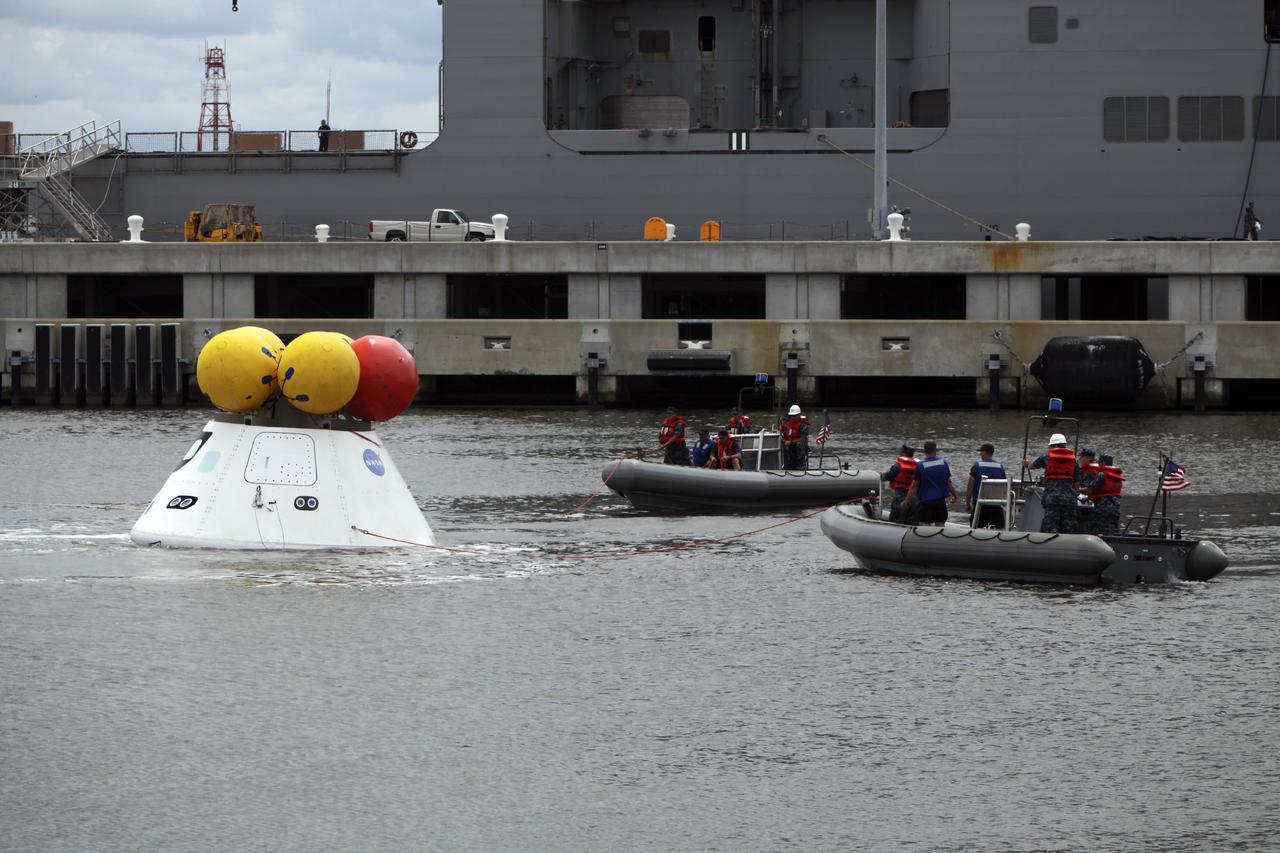
HAMPTON, Va. – At the Naval Station Norfolk near NASA’s Langley Research Center in Virginia, NASA and the U.S. Navy are conducting a stationary recovery test on the Orion boilerplate test article in the water near a U.S. Navy ship. NASA and the U.S. Navy are conducting tests to prepare for recovery of the Orion crew module and forward bay cover on its return from a deep space mission. The stationary recovery test will allow the teams to demonstrate and evaluate the recovery processes, procedures, hardware and personnel in a controlled environment before conducting a second recovery test next year in open waters. Orion is the exploration spacecraft designed to carry astronauts to destinations not yet explored by humans, including an asteroid and Mars. It will have emergency abort capability, sustain the crew during space travel and provide safe re-entry from deep space return velocities. The first unpiloted test flight of the Orion is scheduled to launch in 2014 atop a Delta IV rocket and in 2017 on NASA’s Space Launch System rocket. For more information, visit http://www.nasa.gov/orion. Photo credit: NASA/Dimitri Gerondidakis
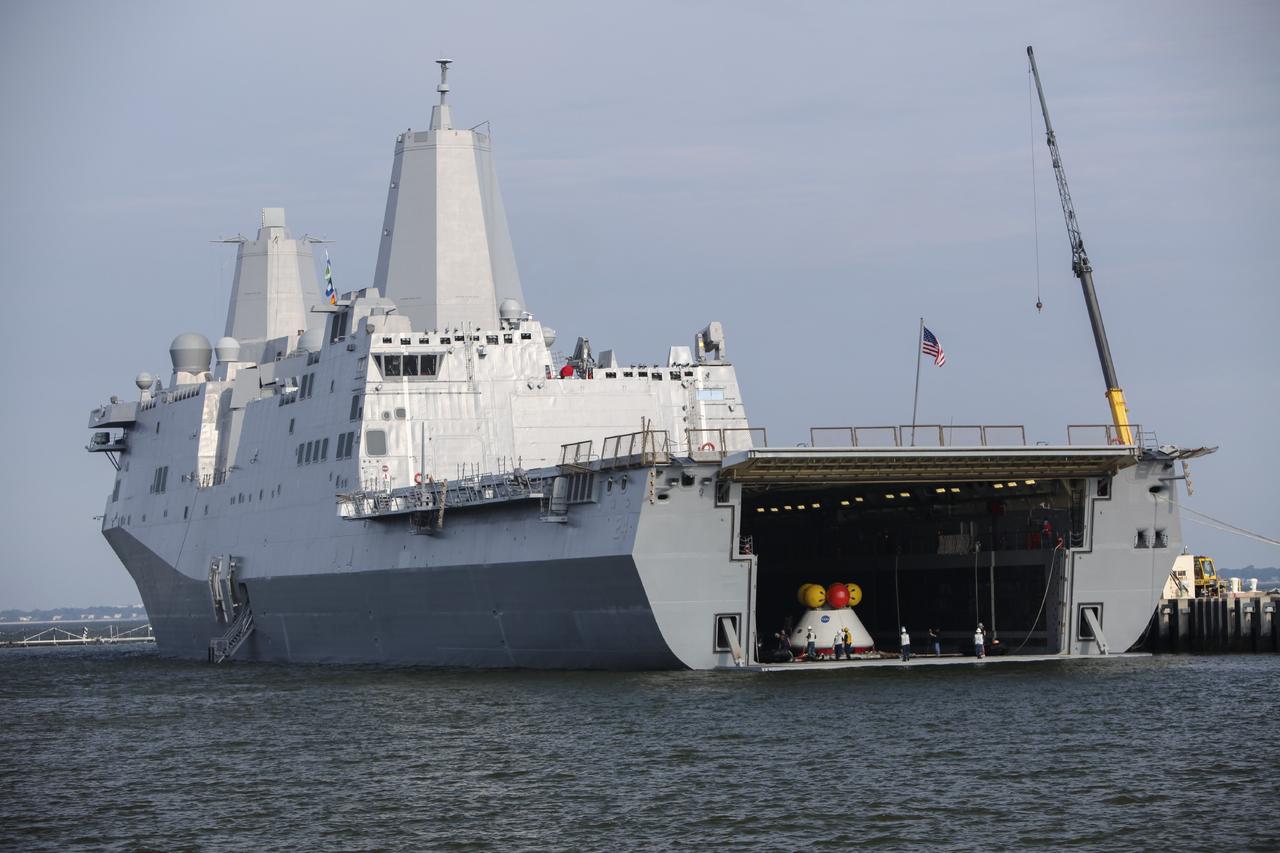
HAMPTON, Va. – At the Naval Station Norfolk near NASA’s Langley Research Center in Virginia, NASA and U.S. Navy personnel prepare the Orion boilerplate test article and support equipment for a stationary recovery test on a U.S. Navy ship. NASA and the U.S. Navy are conducting tests to prepare for recovery of the Orion crew module and forward bay cover on its return from a deep space mission. The stationary recovery test will allow the teams to demonstrate and evaluate the recovery processes, procedures, hardware and personnel in a controlled environment before conducting a second recovery test next year in open waters. Orion is the exploration spacecraft designed to carry astronauts to destinations not yet explored by humans, including an asteroid and Mars. It will have emergency abort capability, sustain the crew during space travel and provide safe re-entry from deep space return velocities. The first unpiloted test flight of the Orion is scheduled to launch in 2014 atop a Delta IV rocket and in 2017 on NASA’s Space Launch System rocket. For more information, visit http://www.nasa.gov/orion. Photo credit: NASA/Dimitri Gerondidakis
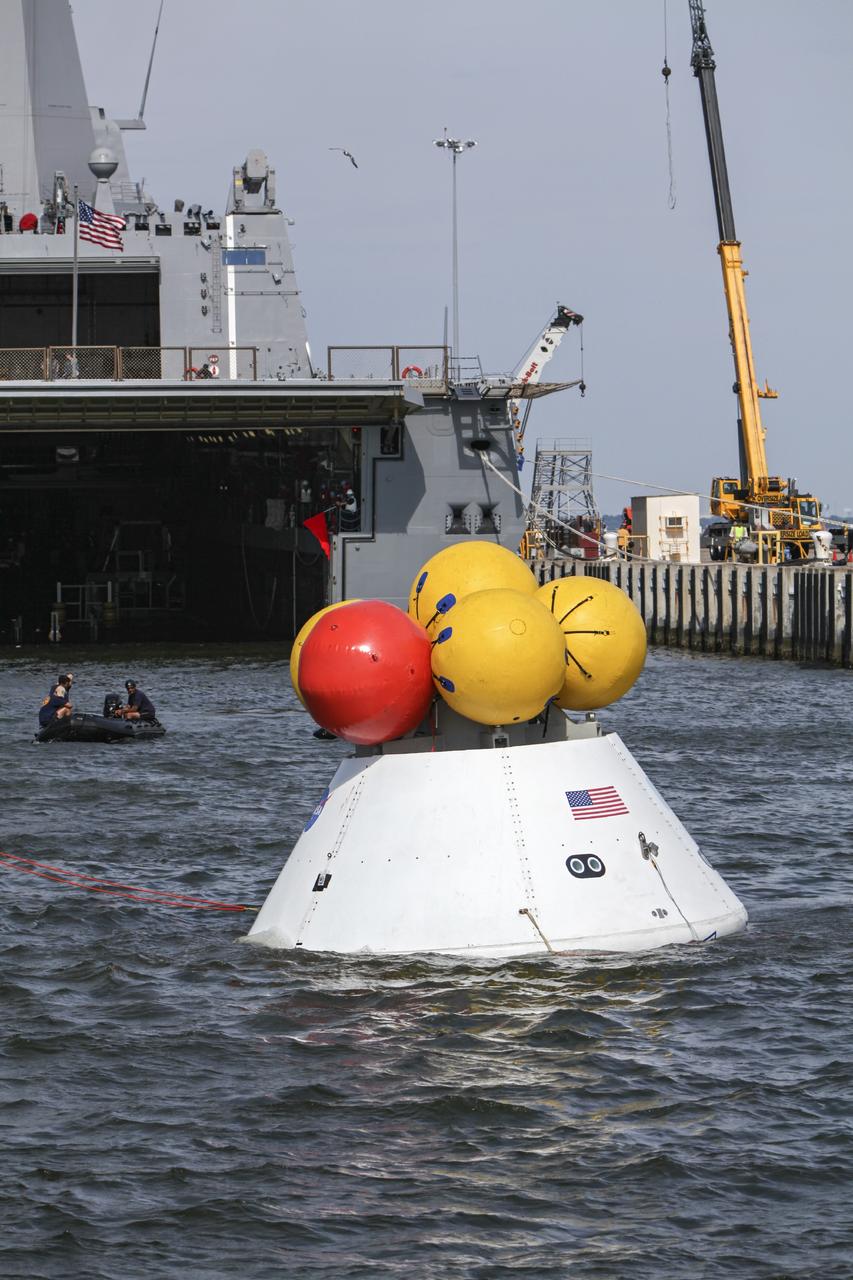
HAMPTON, Va. – At the Naval Station Norfolk near NASA’s Langley Research Center in Virginia, NASA and U.S. Navy personnel are conducting a stationary recovery test using the Orion boilerplate test article. The test article was transferred from a U.S. Navy ship into the water and tether lines have been attached. NASA and the U.S. Navy are conducting tests to prepare for recovery of the Orion crew module and forward bay cover on its return from a deep space mission. The stationary recovery test will allow the teams to demonstrate and evaluate the recovery processes, procedures, hardware and personnel in a controlled environment before conducting a second recovery test next year in open waters. Orion is the exploration spacecraft designed to carry astronauts to destinations not yet explored by humans, including an asteroid and Mars. It will have emergency abort capability, sustain the crew during space travel and provide safe re-entry from deep space return velocities. The first unpiloted test flight of the Orion is scheduled to launch in 2014 atop a Delta IV rocket and in 2017 on NASA’s Space Launch System rocket. For more information, visit http://www.nasa.gov/orion. Photo credit: NASA/Dimitri Gerondidakis
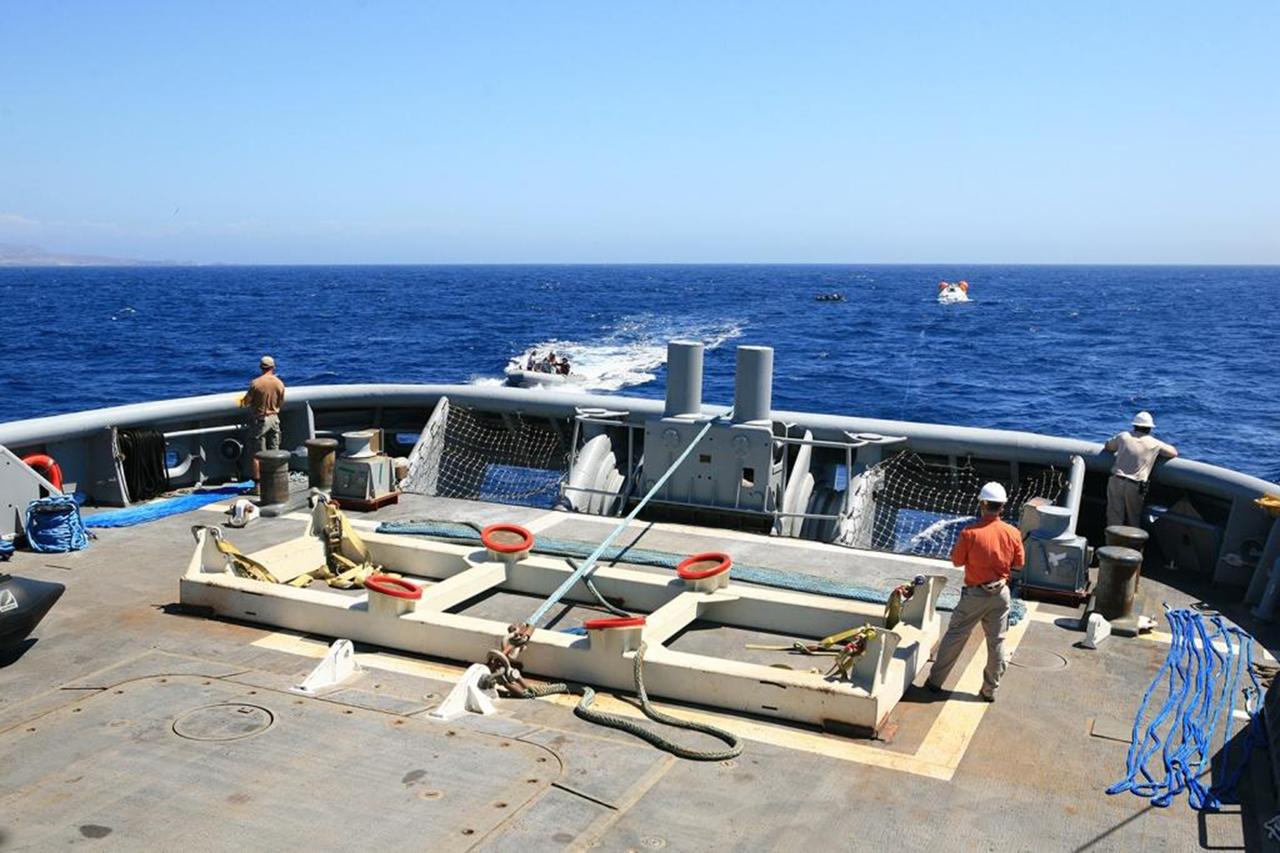
SAN DIEGO, Calif. – On board the USS Salvor, a safeguard-class rescue and salvage ship, NASA and U.S. Navy personnel monitor the progress as the Orion boilerplate test vehicle is towed behind the ship during the third day of Underway Recovery Test 4A in the Pacific Ocean. At left, Navy divers in a rigid hull inflatable boat monitor practice recovery procedures. NASA, Lockheed Martin and the U.S. Navy are conducting the test to prepare for recovery of the Orion crew module on its return from a deep space mission. The underway recovery test allows the teams to demonstrate and evaluate the recovery processes, procedures, new hardware and personnel in open waters. The Ground Systems Development and Operations Program is conducting the underway recovery test. Orion is the exploration spacecraft designed to carry astronauts to destinations not yet explored by humans, including an asteroid and Mars. It will have emergency abort capability, sustain the crew during space travel and provide safe re-entry from deep space return velocities. The first unpiloted test flight of the Orion is scheduled to launch in December 2014 atop a United Launch Alliance Delta IV Heavy rocket and in 2018 on NASA’s Space Launch System rocket. For more information, visit http://www.nasa.gov/orion. Photo credit: NASA/Kim Shiflett
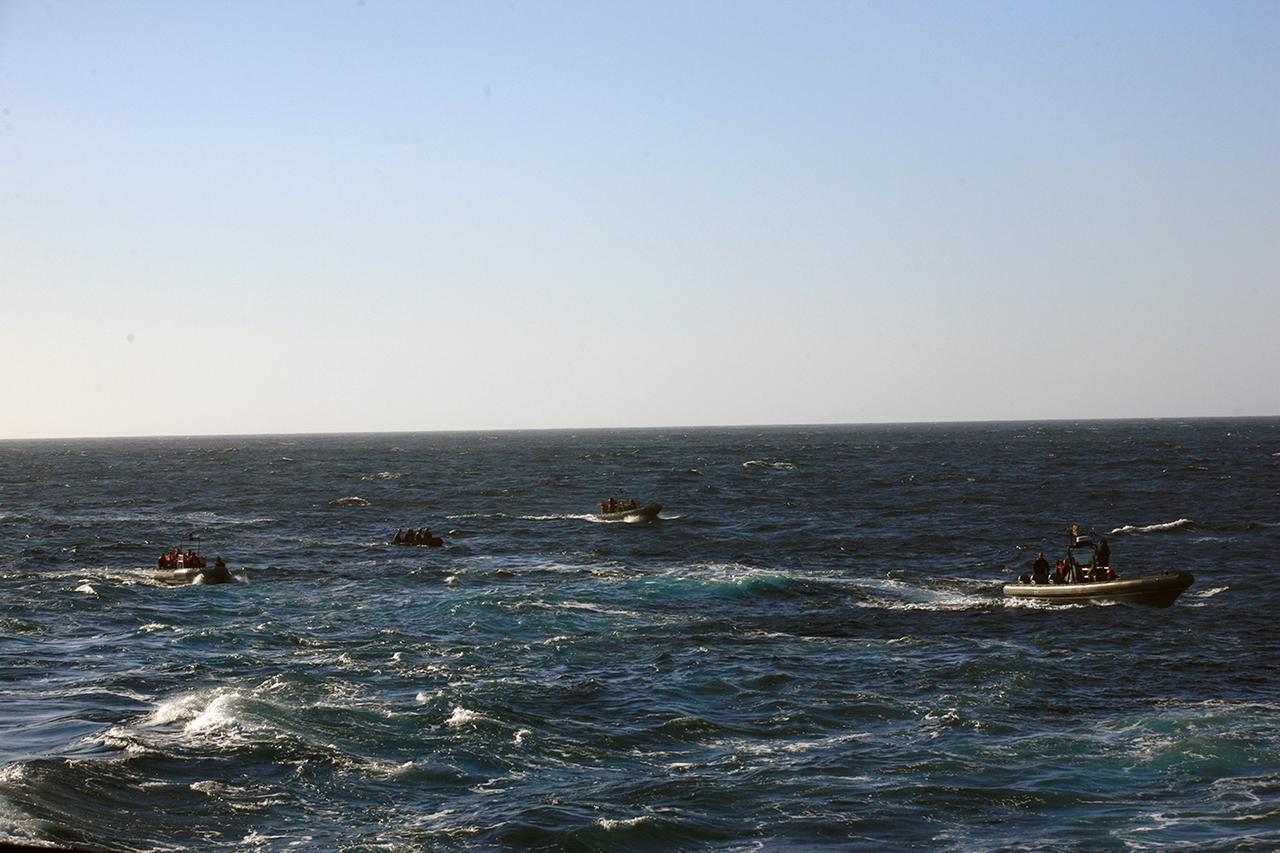
SAN DIEGO, Calif. – During the third day of Orion Underway Recovery Test 3 on the USS Anchorage in the Pacific Ocean, two Zodiac boats with U.S. Navy divers aboard, at left, and two rigid hull inflatable boats with Navy and other team personnel aboard, prepare for recovery of the Orion boilerplate test vehicle. NASA, Lockheed Martin and U.S. Navy personnel are conducting recovery tests using the Orion boilerplate test vehicle to prepare for recovery of the Orion crew module on its return from a deep space mission. The test allows the teams to demonstrate and evaluate the recovery processes, procedures, hardware and personnel in open waters. The Ground Systems Development and Operations Program is conducting the underway recovery tests. Orion is the exploration spacecraft designed to carry astronauts to destinations not yet explored by humans, including an asteroid and Mars. It will have emergency abort capability, sustain the crew during space travel and provide safe re-entry from deep space return velocities. The first unpiloted test flight of Orion is scheduled to launch in 2014 atop a United Launch Alliance Delta IV Heavy rocket and in 2018 on NASA’s Space Launch System rocket. For more information, visit http://www.nasa.gov/orion. Photo credit: NASA/Kim Shiflett
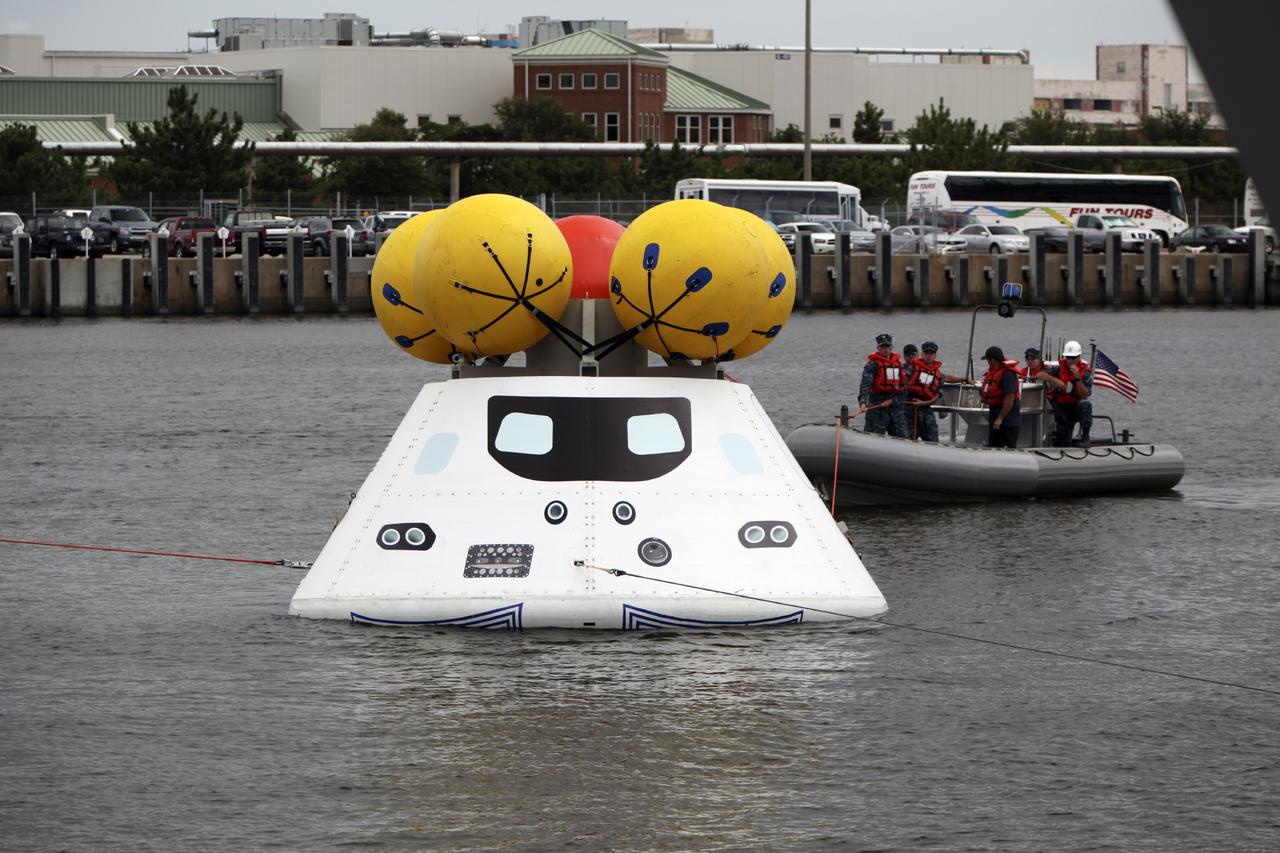
HAMPTON, Va. – At the Naval Station Norfolk near NASA’s Langley Research Center in Virginia, NASA and the U.S. Navy are conducting a stationary recovery test on the Orion boilerplate test article in the water near a U.S. Navy ship. NASA and the U.S. Navy are conducting tests to prepare for recovery of the Orion crew module and forward bay cover on its return from a deep space mission. The stationary recovery test will allow the teams to demonstrate and evaluate the recovery processes, procedures, hardware and personnel in a controlled environment before conducting a second recovery test next year in open waters. Orion is the exploration spacecraft designed to carry astronauts to destinations not yet explored by humans, including an asteroid and Mars. It will have emergency abort capability, sustain the crew during space travel and provide safe re-entry from deep space return velocities. The first unpiloted test flight of the Orion is scheduled to launch in 2014 atop a Delta IV rocket and in 2017 on NASA’s Space Launch System rocket. For more information, visit http://www.nasa.gov/orion. Photo credit: NASA/Dimitri Gerondidakis
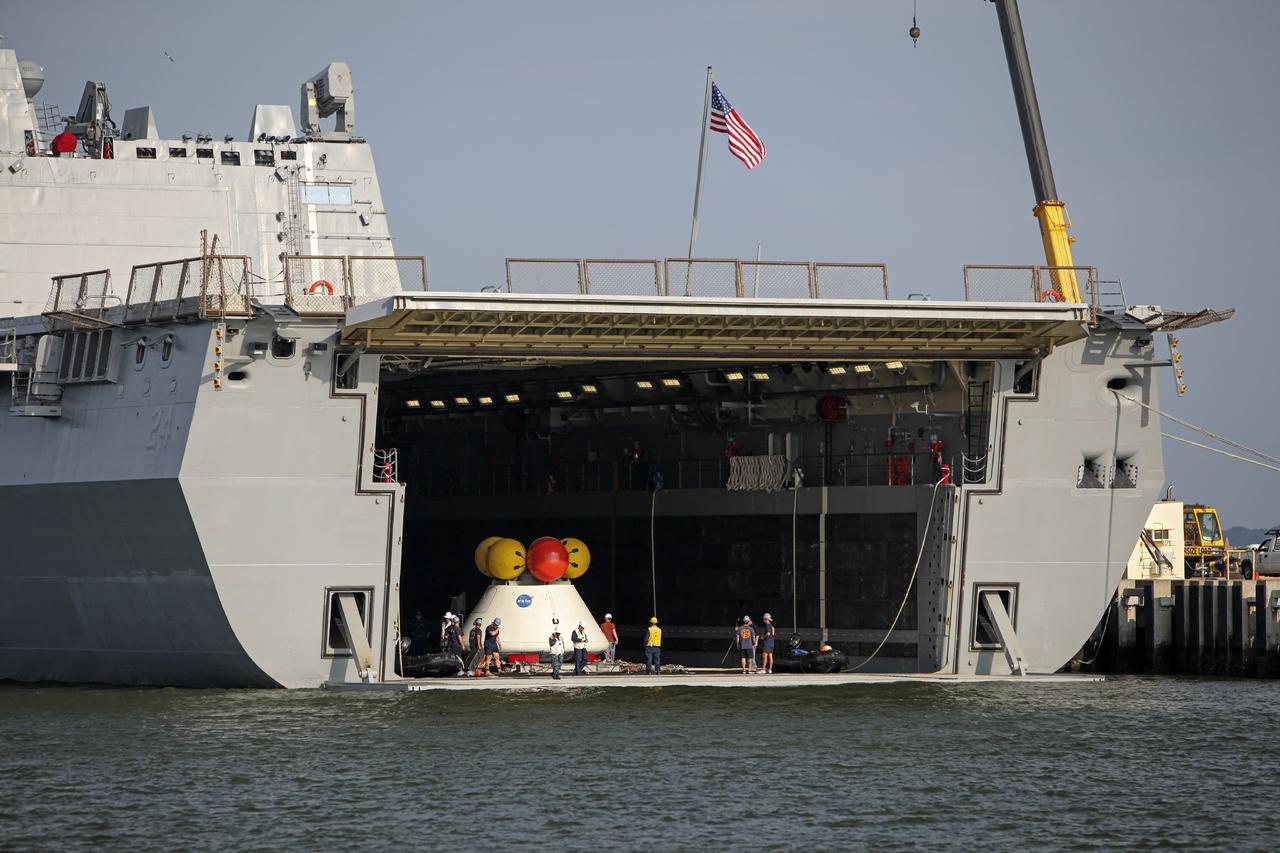
HAMPTON, Va. – At the Naval Station Norfolk near NASA’s Langley Research Center in Virginia, NASA and U.S. Navy personnel prepare the Orion boilerplate test article and support equipment for a stationary recovery test on a U.S. Navy ship. NASA and the U.S. Navy are conducting tests to prepare for recovery of the Orion crew module and forward bay cover on its return from a deep space mission. The stationary recovery test will allow the teams to demonstrate and evaluate the recovery processes, procedures, hardware and personnel in a controlled environment before conducting a second recovery test next year in open waters. Orion is the exploration spacecraft designed to carry astronauts to destinations not yet explored by humans, including an asteroid and Mars. It will have emergency abort capability, sustain the crew during space travel and provide safe re-entry from deep space return velocities. The first unpiloted test flight of the Orion is scheduled to launch in 2014 atop a Delta IV rocket and in 2017 on NASA’s Space Launch System rocket. For more information, visit http://www.nasa.gov/orion. Photo credit: NASA/Dimitri Gerondidakis
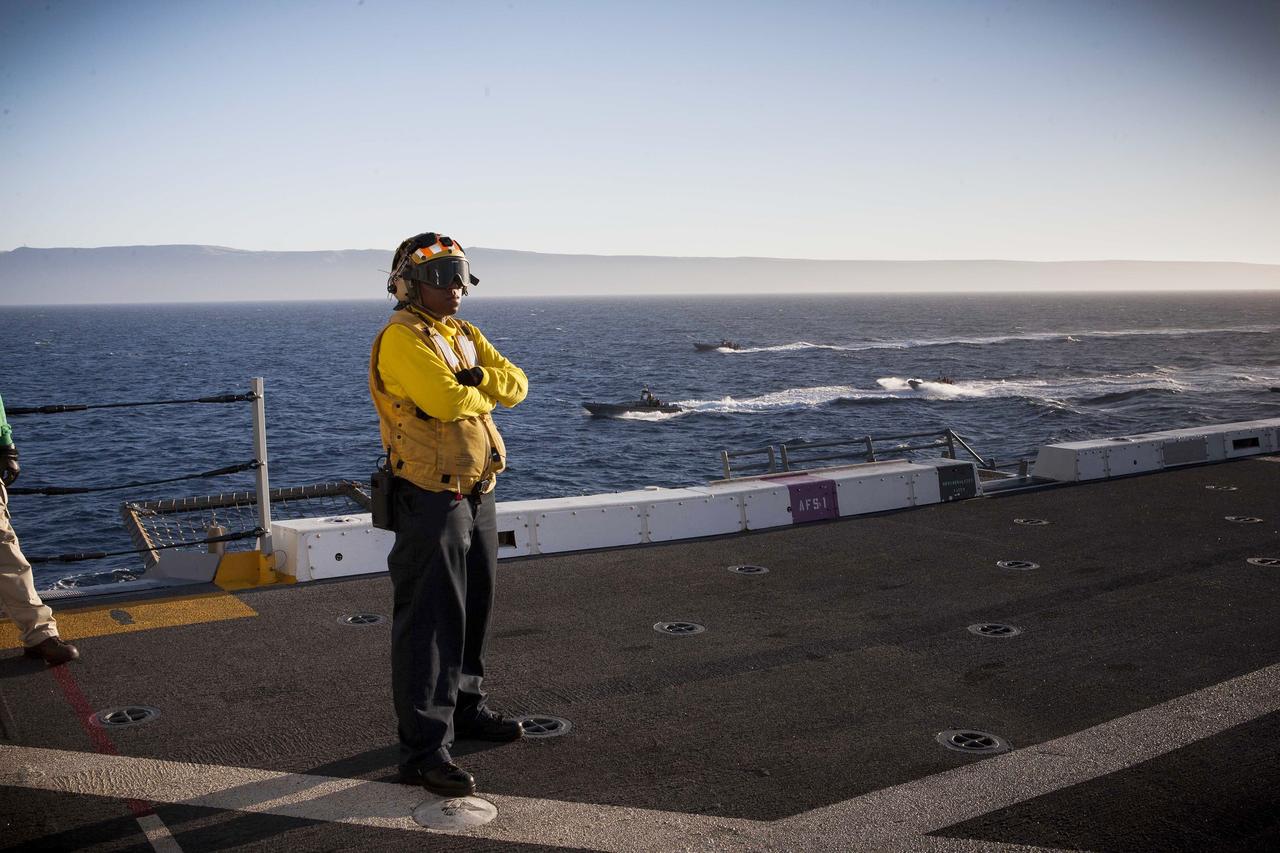
SAN DIEGO, Calif. – A member of the U.S. Navy stands on the deck of the USS Anchorage on the first day of Orion Underway Recovery Test 3 in the Pacific Ocean. In the water are several Zodiac boats and rigid hull inflatable boats with U.S. Navy personnel and divers that are preparing to recover the Orion boilerplate test vehicle already in the water. NASA, Lockheed Martin and U.S. Navy personnel are conducting the recovery test to prepare for recovery of the Orion crew module on its return from a deep space mission. The test will allow the teams to demonstrate and evaluate the recovery processes, procedures, hardware and personnel in open waters. The Ground Systems Development and Operations Program is conducting the underway recovery tests. Orion is the exploration spacecraft designed to carry astronauts to destinations not yet explored by humans, including an asteroid and Mars. It will have emergency abort capability, sustain the crew during space travel and provide safe re-entry from deep space return velocities. The first unpiloted test flight of Orion is scheduled to launch in 2014 atop a United Launch Alliance Delta IV Heavy rocket and in 2018 on NASA’s Space Launch System rocket. For more information, visit http://www.nasa.gov/orion. Photo credit: NASA/Cory Huston
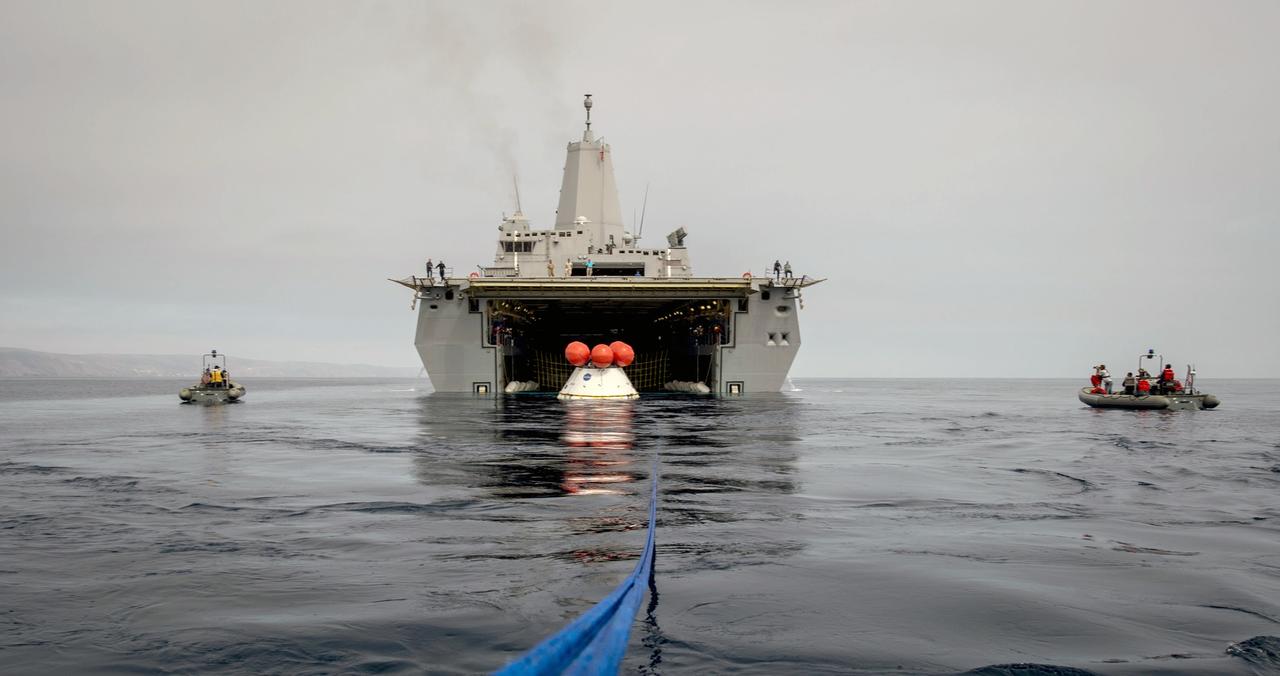
SAN DIEGO, Calif. – U.S. Navy personnel in rigid hull inflatable boats practice with tether lines attached to the Orion boilerplate test vehicle during an evolution of the Underway Recovery Test 2 near the USS Anchorage in the Pacific Ocean off the coast of San Diego. The vehicle is outside of the ship. NASA, Lockheed Martin and the U.S. Navy are conducting the test to prepare for recovery of the Orion crew module on its return from a deep space mission. The underway recovery test will allow the teams to demonstrate and evaluate the recovery processes, procedures, new hardware and personnel in open waters. The Ground Systems Development and Operations Program is conducting the underway recovery test. Orion is the exploration spacecraft designed to carry astronauts to destinations not yet explored by humans, including an asteroid and Mars. It will have emergency abort capability, sustain the crew during space travel and provide safe re-entry from deep space return velocities. The first unpiloted test flight of the Orion is scheduled to launch in 2014 atop a Delta IV rocket and in 2017 on NASA’s Space Launch System rocket. For more information, visit http://www.nasa.gov/orion. Photo credit: U.S. Navy/Specialist 1st Class Gary Keen
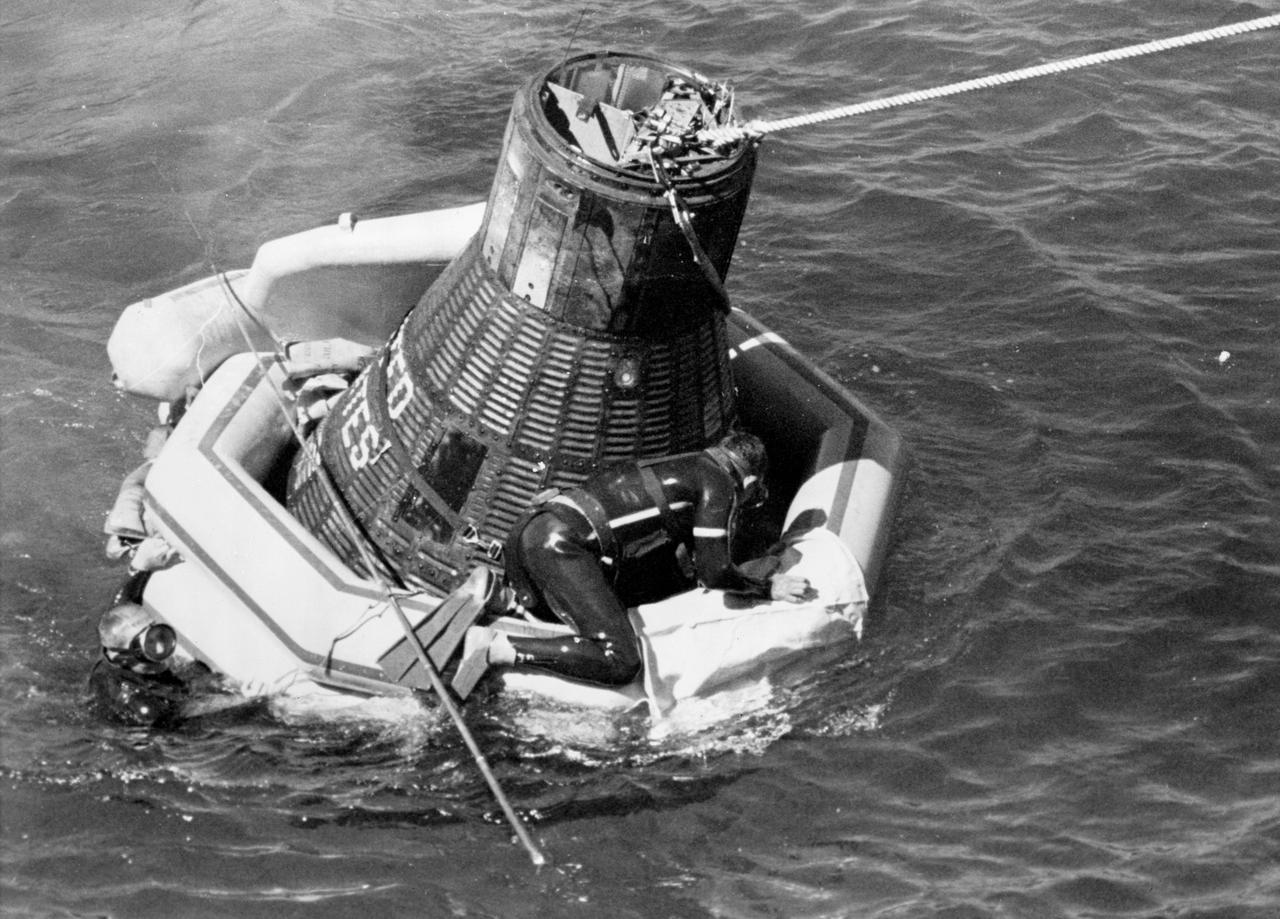
S62-061060 (3 Oct. 1962) --- Navy frogman astride Mercury-Atlas 8 caspule, the Sigma 7, floatation collar to secure tow line for recovery by USS Kearsarge. Photo credit: NASA
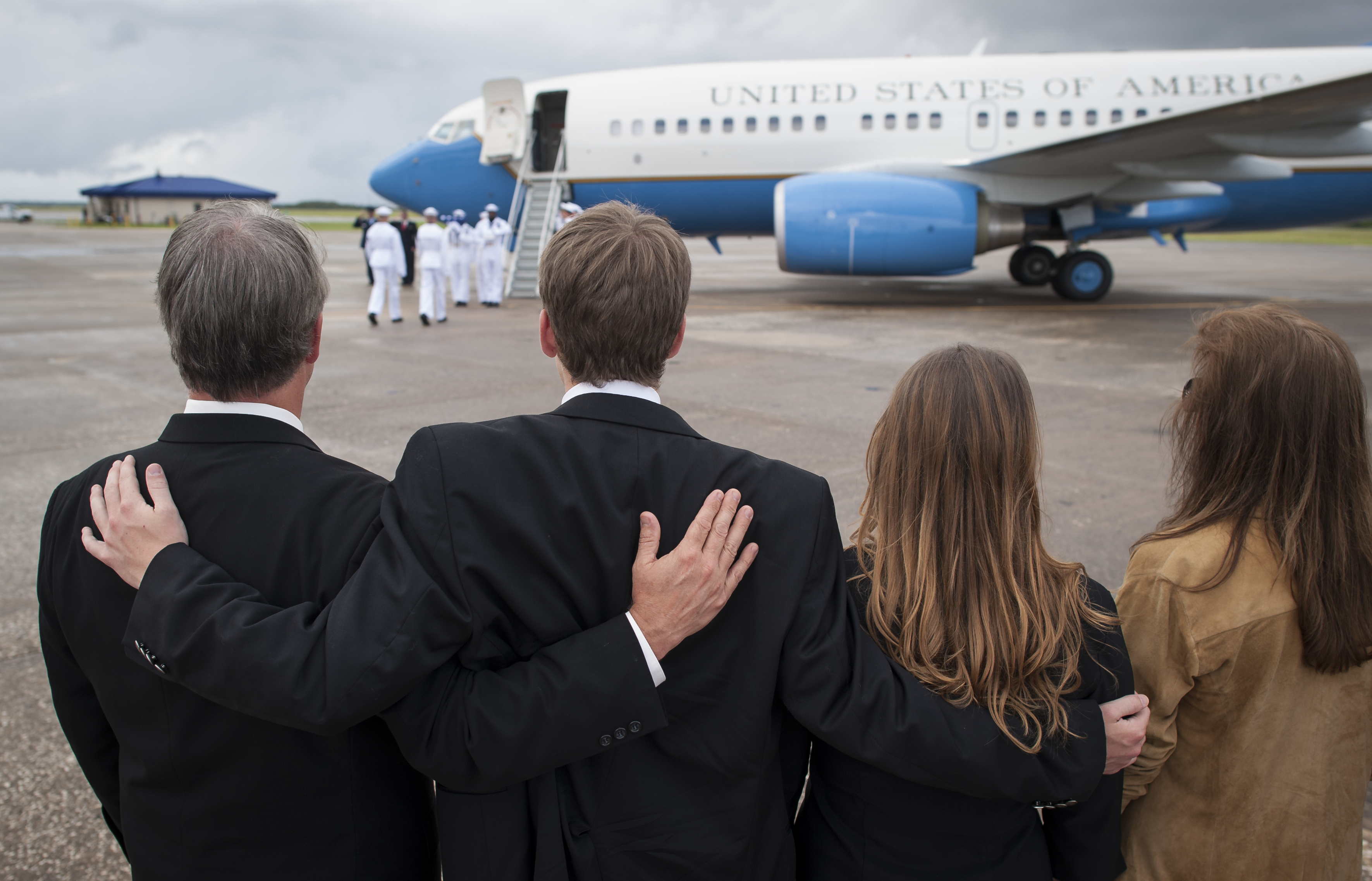
Mark Armstrong, left, and his family look on as US Navy personnel carry the cremains of his father, Apollo 11 astronaut Neil Armstrong, off of a military aircraft at Naval Station Mayport the day before the Armstrong burial at sea service, Thursday, Sept. 13, 2012, Mayport, Fla. Armstrong, the first man to walk on the moon during the 1969 Apollo 11 mission, died Saturday, Aug. 25. He was 82. Photo Credit: (NASA/Bill Ingalls)
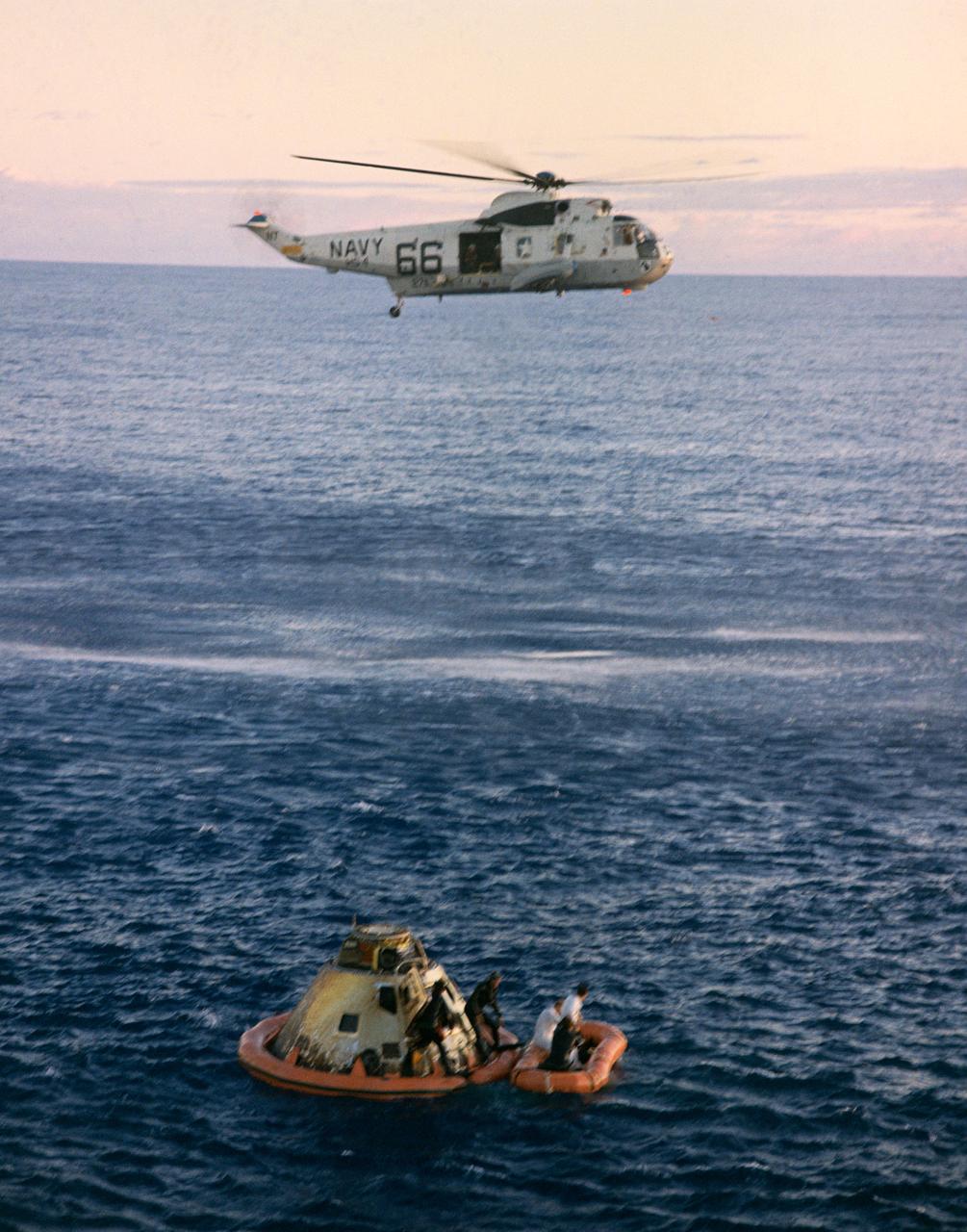
S69-21036 (26 May 1969) --- A Navy helicopter arrives to recover the Apollo 10 astronauts, seen entering a life raft, as their spacecraft floats in the South Pacific immediately after touchdown. U.S. Navy underwater demolition team swimmers assist in the recovery operations. Already in the life raft are astronauts Thomas P. Stafford (left), commander, and John W. Young (right), command module pilot. Splashdown occurred at 11:53 a.m., May 26, 1969, about 400 miles east of American Samoa and about four miles from the recovery ship to conclude a successful eight-day lunar orbit mission. Note that in this photo the divers have attached a flotation collar to the spacecraft.
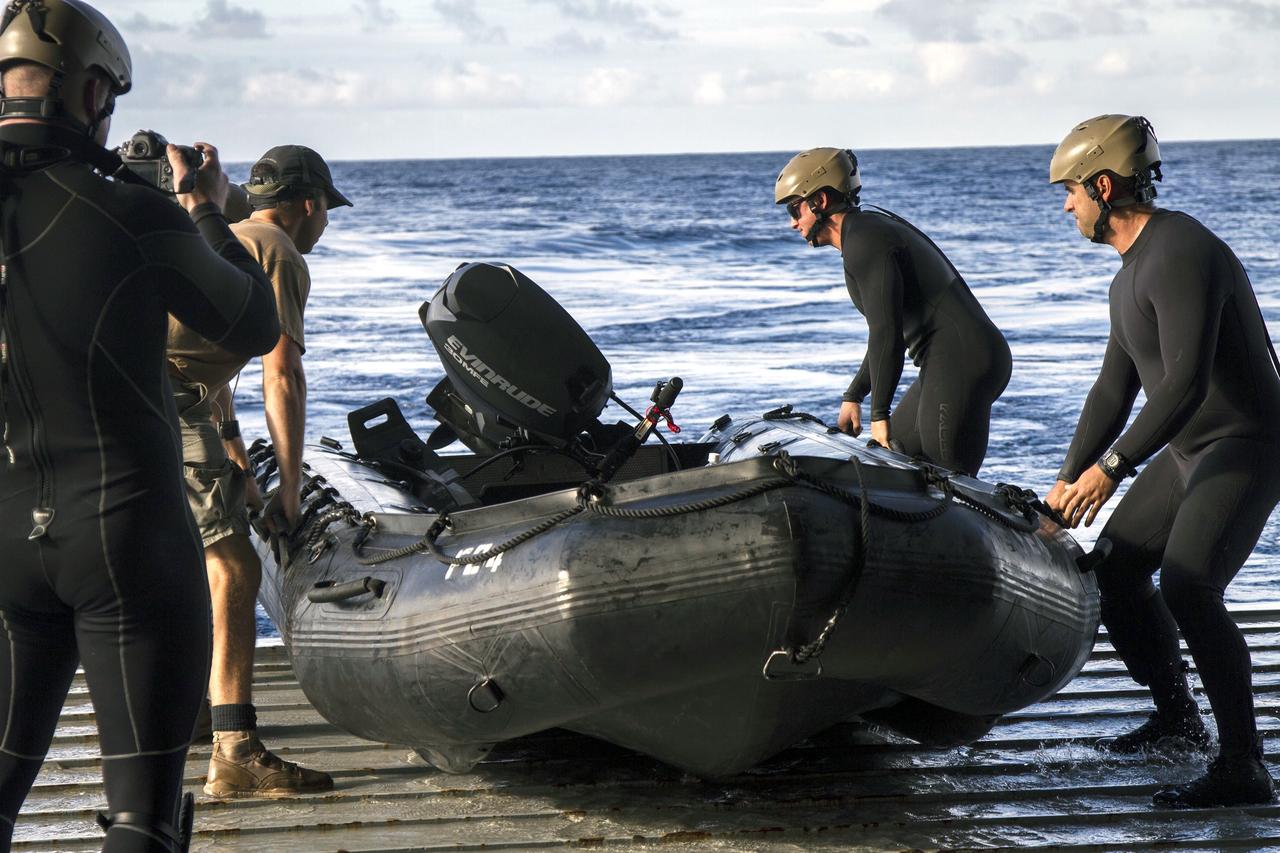
SAN DIEGO, Calif. – On the third day of preparations for recovery of Orion after its splashdown in the Pacific Ocean, U.S. Navy Divers prepare to embark from the well deck of the USS Anchorage in a rigid hull Zodiac boat about 600 miles off the coast of Baja, California. NASA, Lockheed Martin and U.S. Navy personnel are preparing for recovery of the crew module, forward bay cover and parachutes on its return from space and splashdown in the Pacific Ocean. The Ground Systems Development and Operations Program is leading the recovery efforts. The first unpiloted flight test of Orion is scheduled to launch Dec. 4 atop a United Launch Alliance Delta IV Heavy rocket. During its two-orbit, 4.5-hour flight, Orion will venture 3,600 miles in altitude and travel nearly 60,000 miles before returning to Earth for a splashdown in the Pacific Ocean. For more information, visit http://www.nasa.gov/orion. Photo credit: NASA/Cory Huston
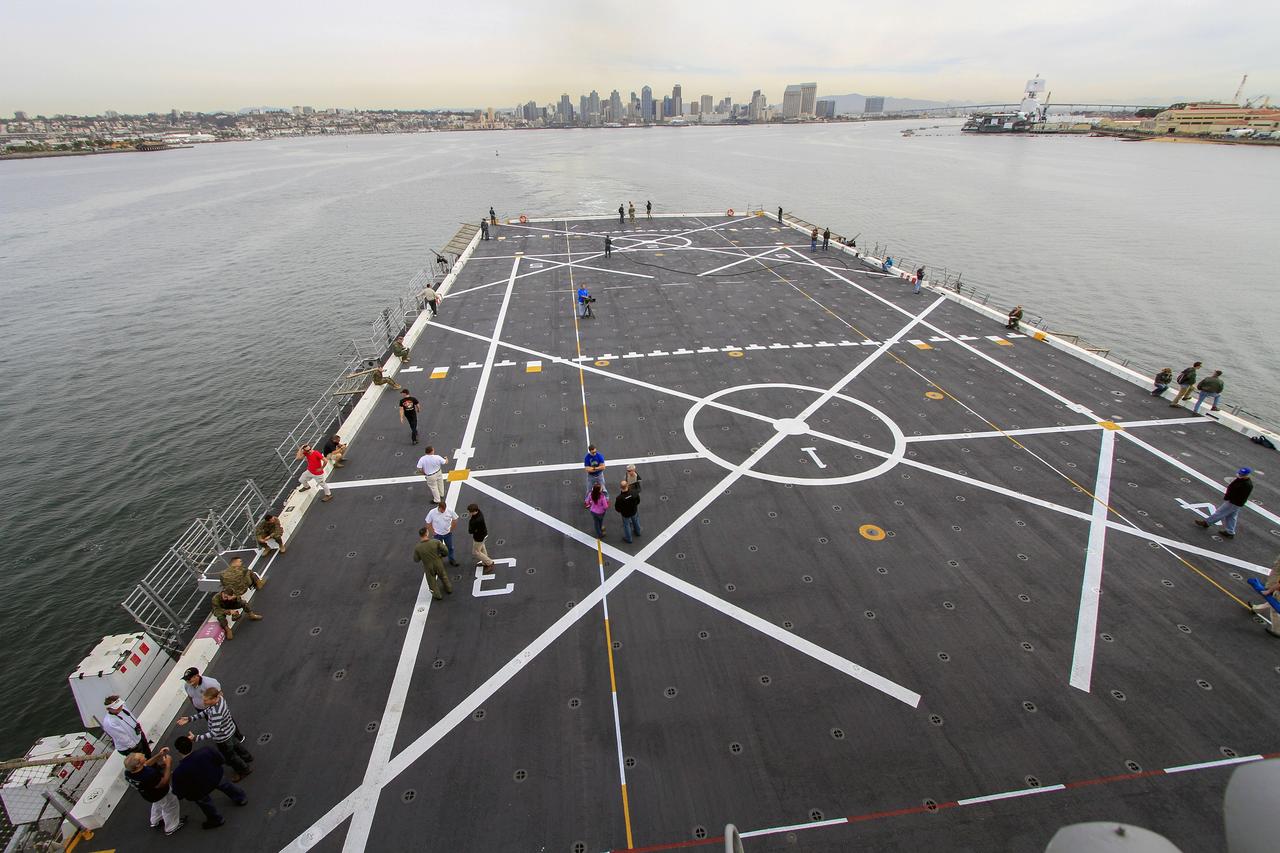
SAN DIEGO, Calif. – NASA and U.S. Navy personnel are on the deck of the USS Anchorage as the ship departs Naval Base San Diego and heads out to sea in the Pacific Ocean. NASA and the U.S. Navy are making preparations ahead of Orion's flight test for recovery of the crew module, forward bay cover and parachutes on its return from space and splashdown in the Pacific Ocean. The Ground Systems Development and Operations Program is leading the recovery efforts. The first unpiloted flight test of Orion is scheduled to launch this week atop a United Launch Alliance Delta IV Heavy rocket. During its two-orbit, 4.5-hour flight, Orion will venture 3,600 miles in altitude and travel nearly 60,000 miles before returning to Earth for a splashdown in the Pacific Ocean. For more information, visit http://www.nasa.gov/orion. Photo credit: NASA/Cory Huston
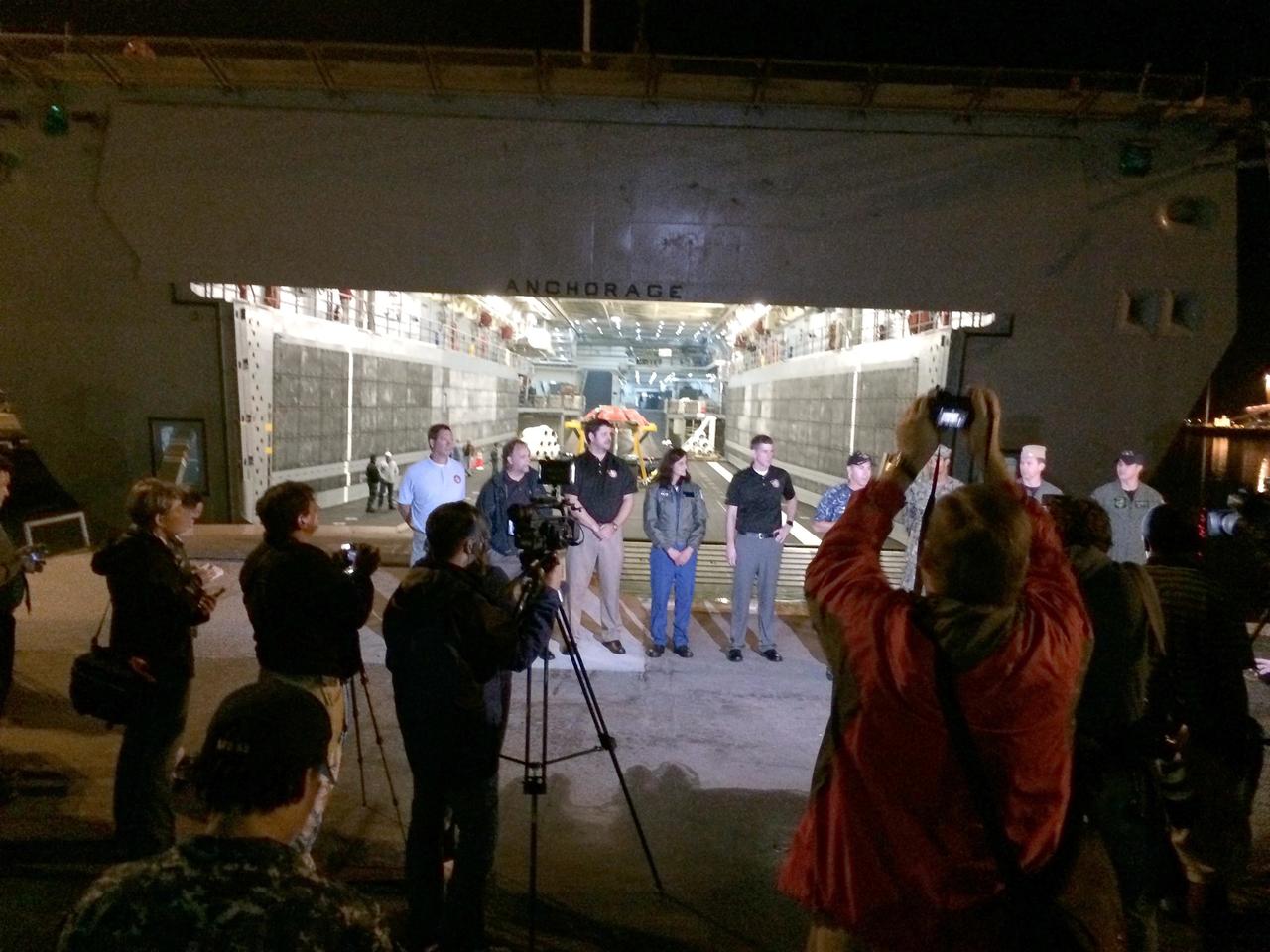
SAN DIEGO, Calif. -- At Naval Base San Diego in California, members of the news media view NASA's Orion spacecraft in the well deck of the USS Anchorage before it is offloaded and prepared for return to Kennedy Space Center in Florida. Speaking to the media are NASA and U.S. Navy officials. After lifting off at 7:05 a.m. EST on Dec. 5 atop a Delta IV Heavy rocket from Space Launch Complex 37 at Cape Canaveral Air Force Station in Florida, Orion completed a two-orbit, four-and-a-half hour mission to test systems critical to crew safety, including the launch abort system, the heat shield and the parachute system. NASA, the U.S. Navy and Lockheed Martin coordinated efforts to recover Orion after splashdown in the Pacific Ocean. The GSDO Program led the recovery efforts. For more information, visit www.nasa.gov/orion Photo credit: NASA/Amber Philman
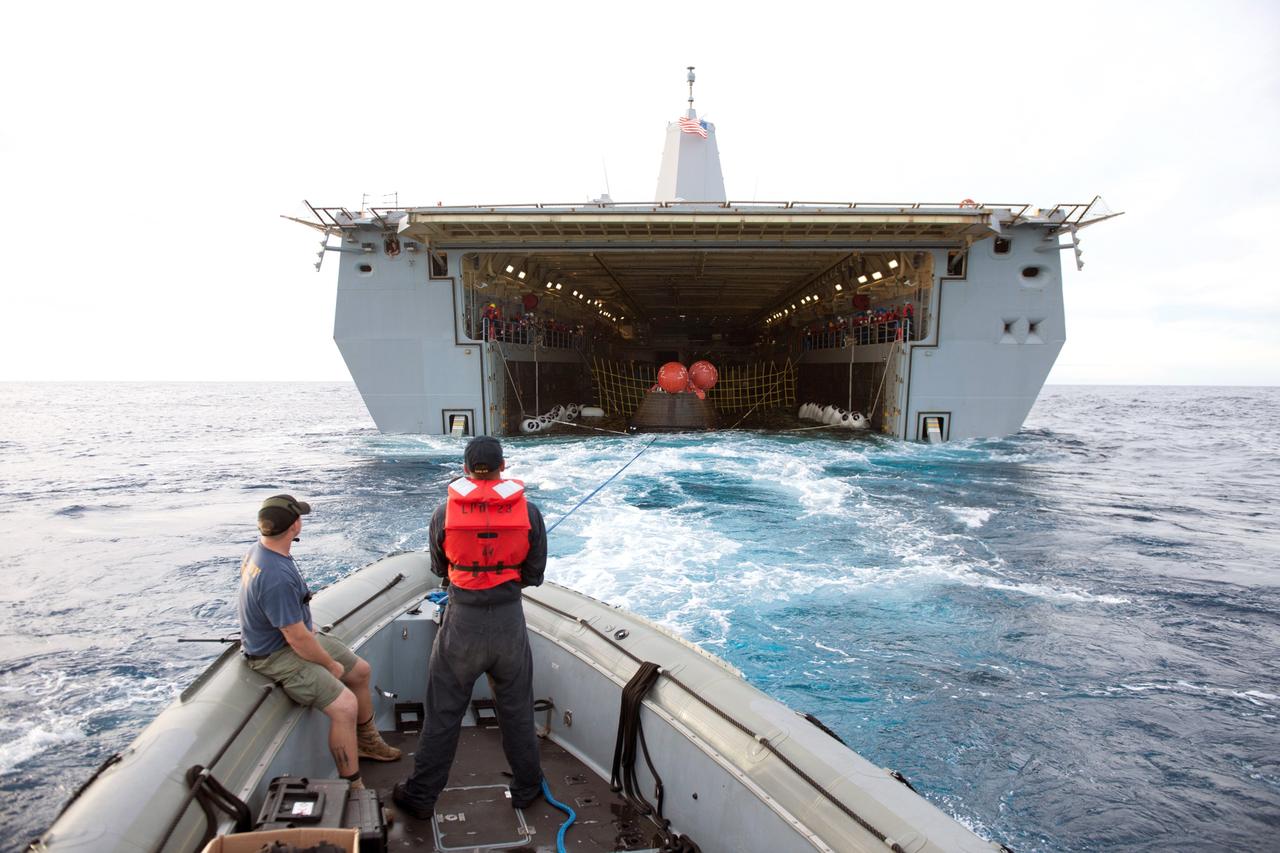
SAN DIEGO, Calif. -- U.S. Navy personnel aboard a rigid hull inflatable boat help recover NASA's Orion spacecraft following its splashdown in the Pacific Ocean after its first flight test in Earth orbit. Orion is towed into the flooded well deck of the USS Anchorage. NASA, the U.S. Navy and Lockheed Martin coordinated efforts to recover Orion, the forward bay cover and main parachutes. Orion completed a two-orbit, four-and-a-half hour mission, to test systems critical to crew safety, including the launch abort system, the heat shield and the parachute system. The Ground Systems Development and Operations Program is leading the recovery efforts. For more information, visit www.nasa.gov/orion Photo credit: NASA/Tony Gray
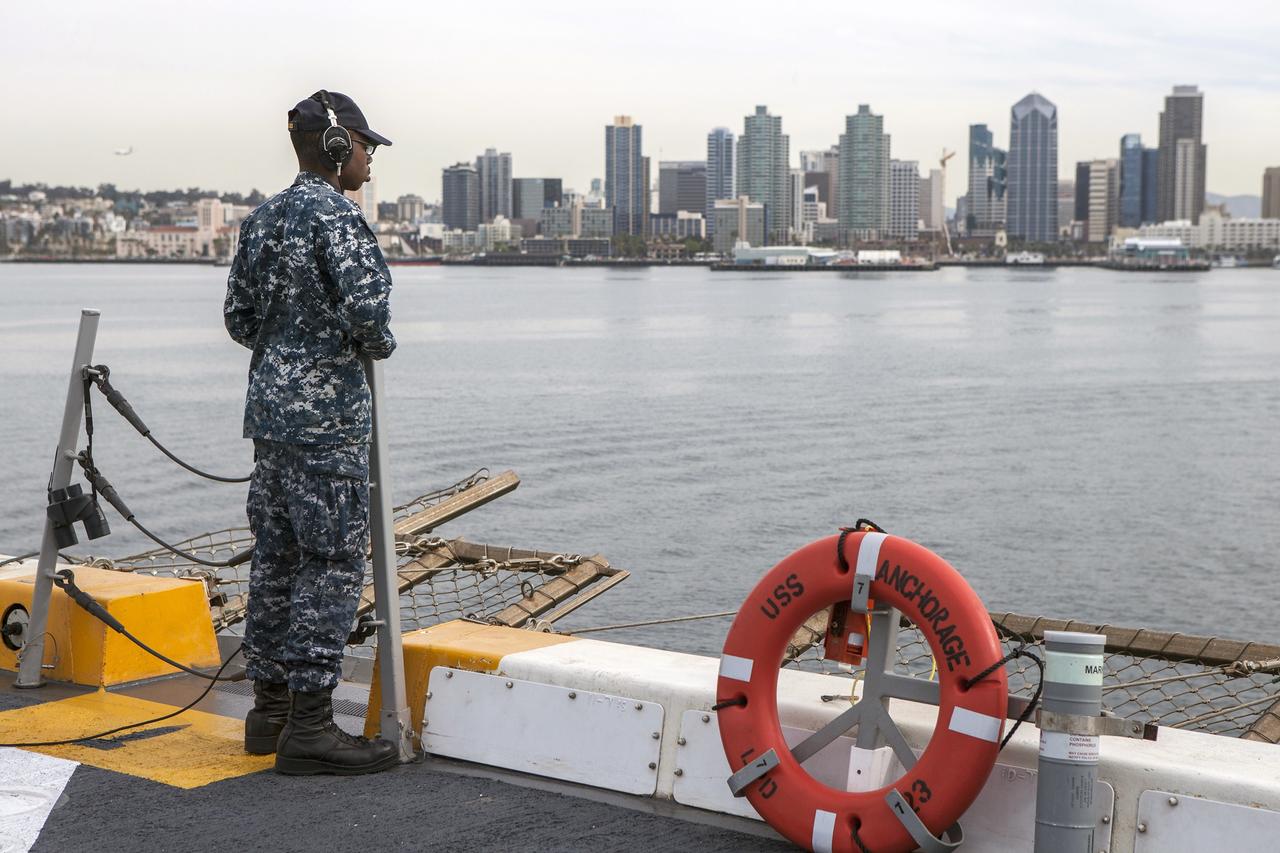
SAN DIEGO, Calif. – U.S. Navy personnel are stationed on the deck of the USS Anchorage as the ship departs Naval Base San Diego in California. NASA and the U.S. Navy are heading out to sea ahead of Orion's flight test to prepare for recovery of the crew module, forward bay cover and parachutes on its return from space and splashdown in the Pacific Ocean. The Ground Systems Development and Operations Program is leading the recovery efforts. The first unpiloted flight test of Orion is scheduled to launch this week atop a United Launch Alliance Delta IV Heavy rocket. During its two-orbit, 4.5-hour flight, Orion will venture 3,600 miles in altitude and travel nearly 60,000 miles before returning to Earth for a splashdown in the Pacific Ocean. For more information, visit http://www.nasa.gov/orion. Photo credit: NASA/Cory Huston
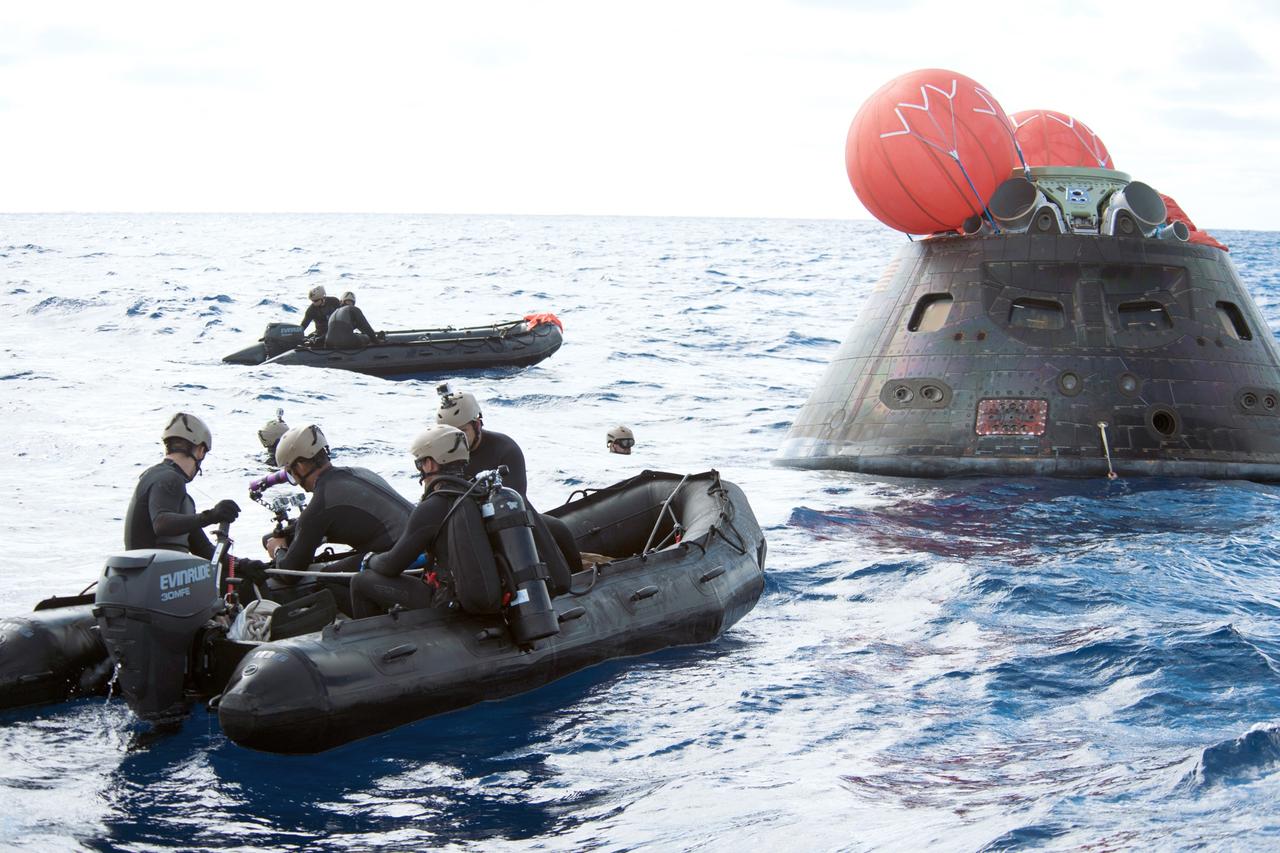
SAN DIEGO, Calif. -- NASA's Orion spacecraft splashed down in the Pacific Ocean after its first flight test atop a Delta IV Heavy rocket from Space Launch Complex 37 at Cape Canaveral Air Force Station in Florida. U.S. Navy divers in Zodiac boats prepare to recover Orion and tow her in to the well deck of the USS Anchorage. NASA's Orion spacecraft completed a two-orbit, four-and-a-half hour mission to test systems critical to crew safety, including the launch abort system, the heat shield and the parachute system. The Ground Systems Development and Operations Program is leading the recovery efforts. For more information, visit www.nasa.gov/orion Photo credit: Courtesy of U.S. Navy
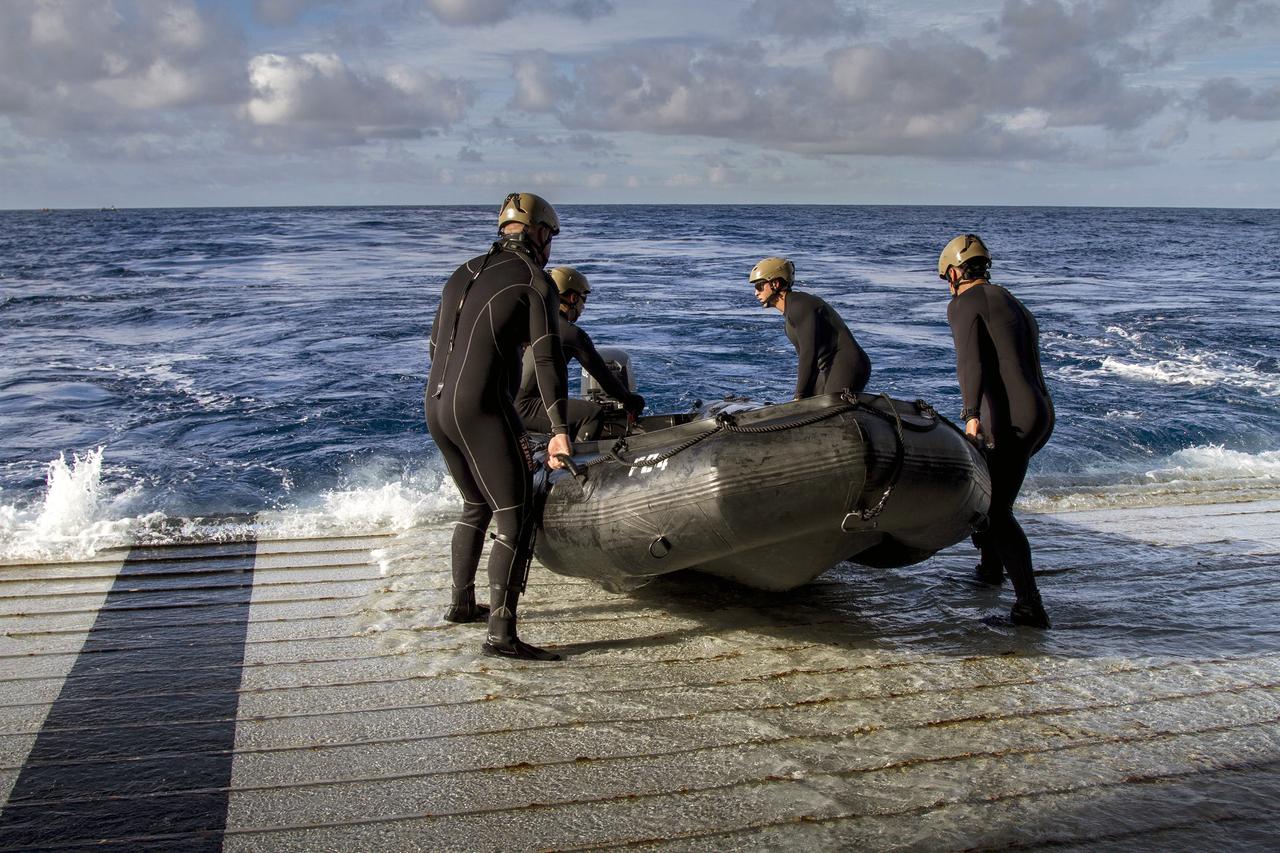
SAN DIEGO, Calif. – On the third day of preparations for recovery of Orion after its splashdown in the Pacific Ocean, U.S. Navy Divers prepare to embark from the well deck of the USS Anchorage in a rigid hull Zodiac boat about 600 miles off the coast of Baja, California. NASA, Lockheed Martin and U.S. Navy personnel are preparing for recovery of the crew module, forward bay cover and parachutes on its return from space and splashdown in the Pacific Ocean. The Ground Systems Development and Operations Program is leading the recovery efforts. The first unpiloted flight test of Orion is scheduled to launch Dec. 4 atop a United Launch Alliance Delta IV Heavy rocket. During its two-orbit, 4.5-hour flight, Orion will venture 3,600 miles in altitude and travel nearly 60,000 miles before returning to Earth for a splashdown in the Pacific Ocean. For more information, visit http://www.nasa.gov/orion. Photo credit: NASA/Cory Huston
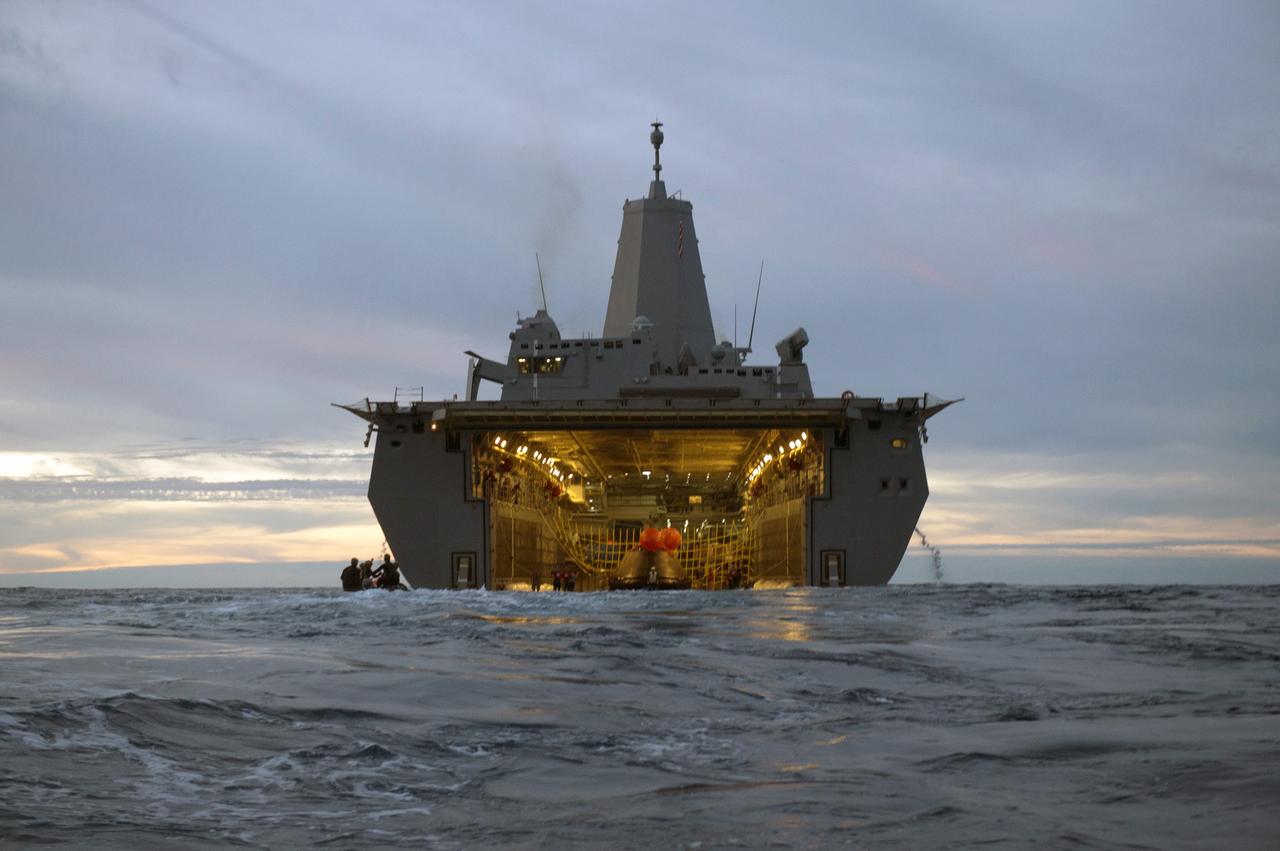
SAN DIEGO, Calif. -- The Orion crew module is recovered after splashdown in the Pacific Ocean about 600 miles off the coast of San Diego, California. NASA, the U.S. Navy and Lockheed Martin coordinated efforts to recover Orion and secure the spacecraft inside the well deck of the USS Anchorage. After lifting off at 7:05 a.m. EST atop a Delta IV Heavy rocket from Space Launch Complex 37 at Cape Canaveral Air Force Station in Florida, NASA's Orion spacecraft completed a two-orbit, four-and-a-half hour mission to test systems critical to crew safety, including the launch abort system, the heat shield and the parachute system. The Ground Systems Development and Operations Program is leading the recovery efforts. For more information, visit www.nasa.gov/orion Photo credit: Courtesy of U.S. Navy
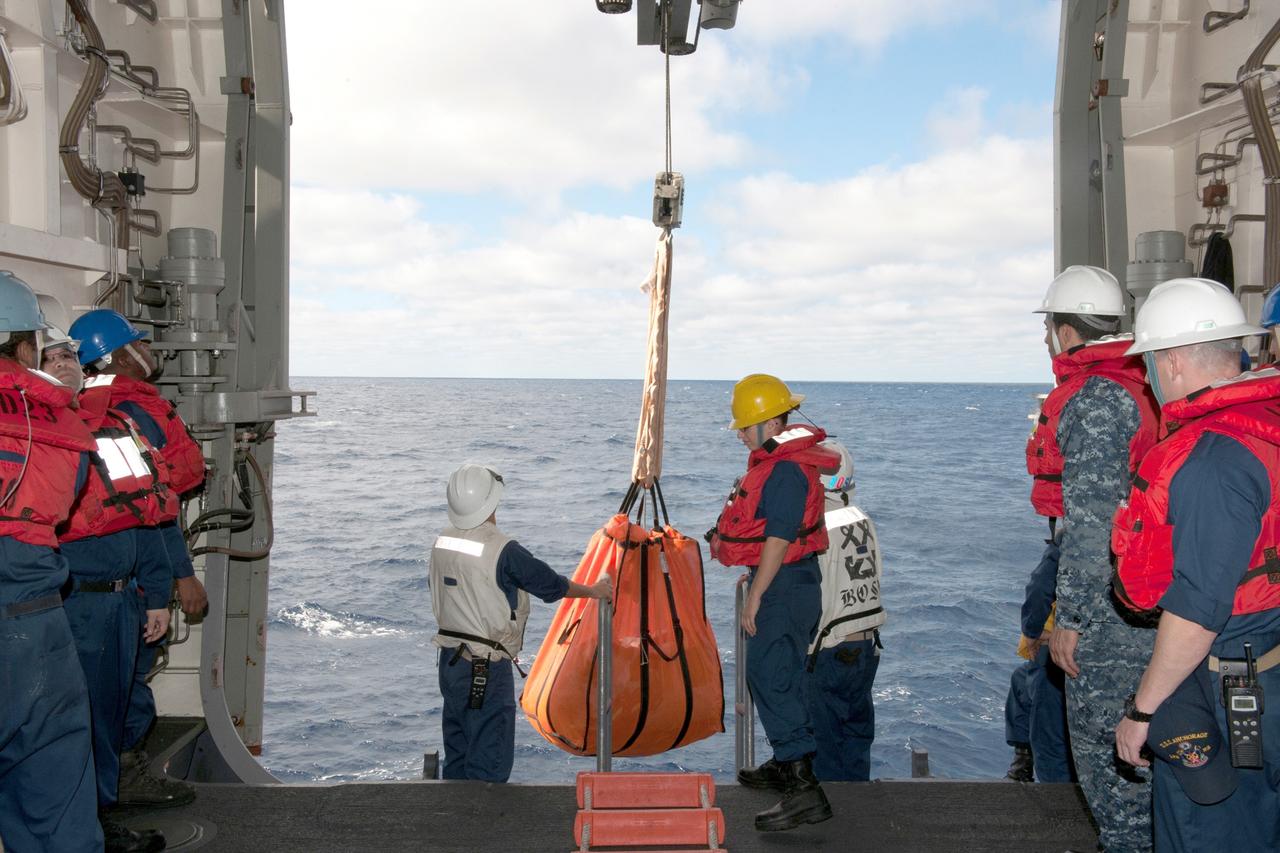
SAN DIEGO, Calif. -- U.S. Navy personnel aboard the USS Anchorage prepare for recovery of NASA's Orion spacecraft from the Pacific Ocean about 600 miles off the coast of San Diego, California. Orion splashed down after its first flight test in Earth orbit. NASA, the U.S. Navy and Lockheed Martin are coordinating efforts to recover Orion and secure the spacecraft in the well deck of the USS Anchorage. Orion completed a two-orbit, four-and-a-half hour mission, to test systems critical to crew safety, including the launch abort system, the heat shield and the parachute system. The Ground Systems Development and Operations Program is leading the recovery efforts. For more information, visit www.nasa.gov/orion Photo credit: NASA/Kenny Allen
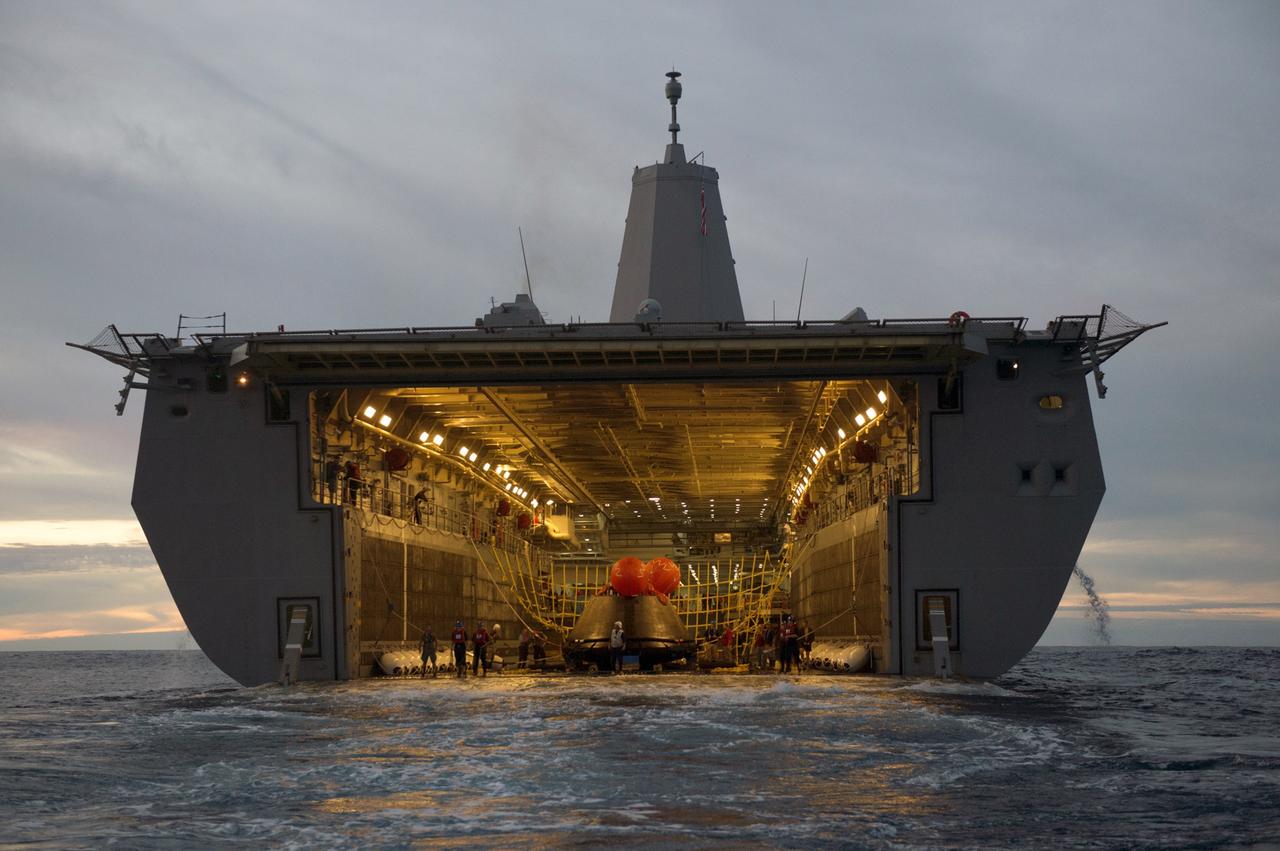
SAN DIEGO, Calif. -- The Orion crew module is recovered after splashdown in the Pacific Ocean about 600 miles off the coast of San Diego, California. NASA, the U.S. Navy and Lockheed Martin coordinated efforts to recover Orion and secure the spacecraft inside the well deck of the USS Anchorage. After lifting off at 7:05 a.m. EST atop a Delta IV Heavy rocket from Space Launch Complex 37 at Cape Canaveral Air Force Station in Florida, NASA's Orion spacecraft completed a two-orbit, four-and-a-half hour mission to test systems critical to crew safety, including the launch abort system, the heat shield and the parachute system. The Ground Systems Development and Operations Program is leading the recovery efforts. For more information, visit www.nasa.gov/orion Photo credit: Courtesy of U.S. Navy
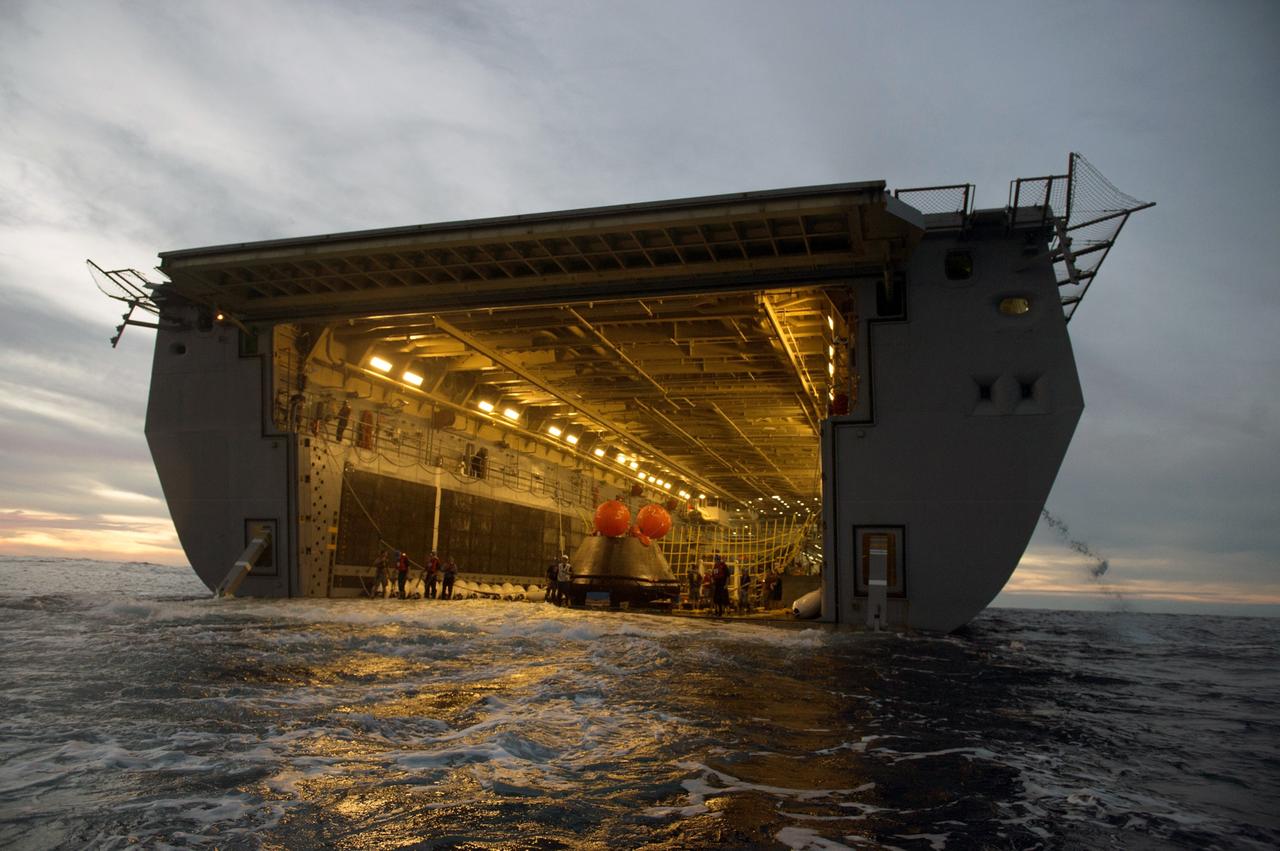
SAN DIEGO, Calif. -- The Orion crew module is recovered after splashdown in the Pacific Ocean about 600 miles off the coast of San Diego, California. NASA, the U.S. Navy and Lockheed Martin coordinated efforts to recover Orion and secure the spacecraft inside the well deck of the USS Anchorage. After lifting off at 7:05 a.m. EST atop a Delta IV Heavy rocket from Space Launch Complex 37 at Cape Canaveral Air Force Station in Florida, NASA's Orion spacecraft completed a two-orbit, four-and-a-half hour mission to test systems critical to crew safety, including the launch abort system, the heat shield and the parachute system. The Ground Systems Development and Operations Program is leading the recovery efforts. For more information, visit www.nasa.gov/orion Photo credit: Courtesy of U.S. Navy
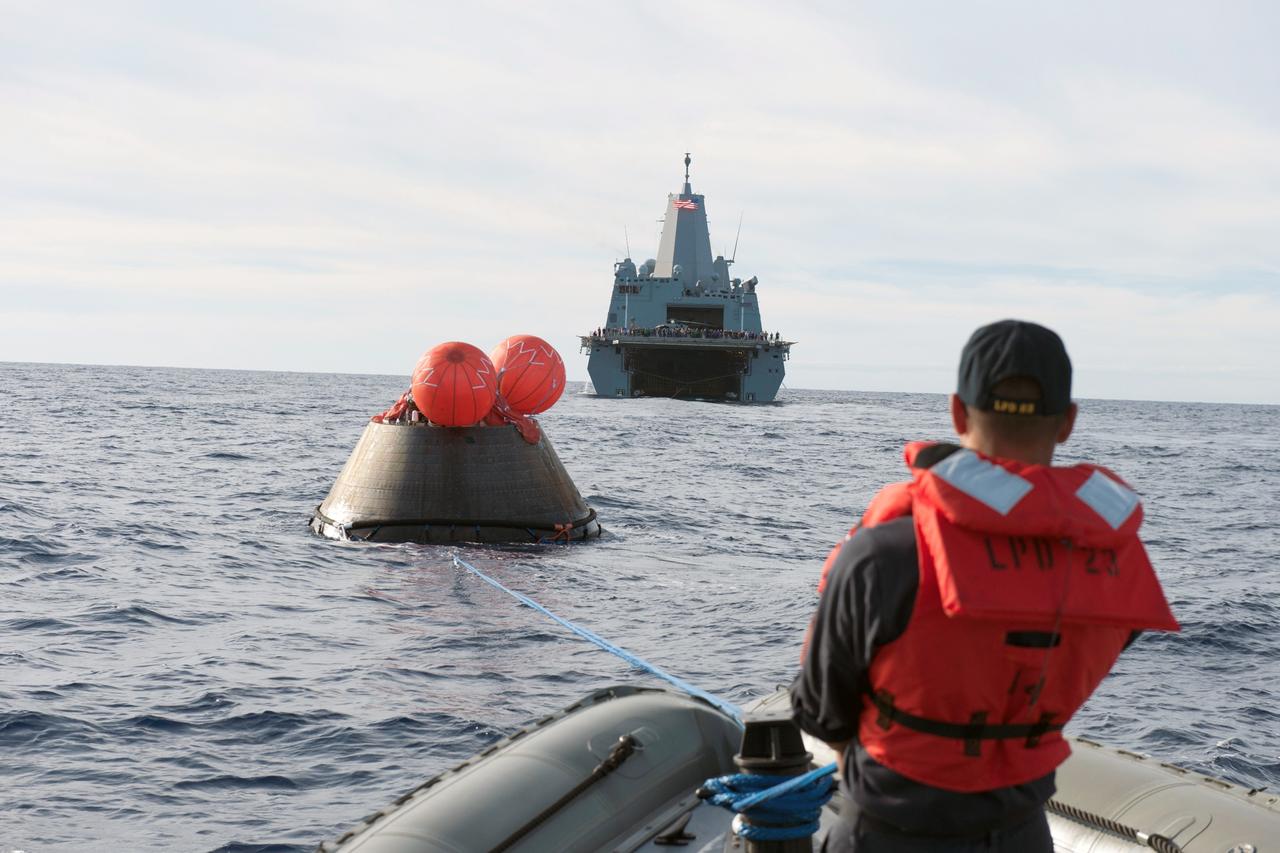
SAN DIEGO, Calif. -- U.S. Navy personnel aboard a rigid hull inflatable boat help recover NASA's Orion spacecraft following its splashdown in the Pacific Ocean after its first flight test in Earth orbit. The USS Anchorage is in the background. NASA, the U.S. Navy and Lockheed Martin are coordinating efforts to recover Orion and secure the spacecraft in the well deck of the USS Anchorage. Orion completed a two-orbit, four-and-a-half hour mission, to test systems critical to crew safety, including the launch abort system, the heat shield and the parachute system. The Ground Systems Development and Operations Program is leading the recovery efforts. For more information, visit www.nasa.gov/orion Photo credit: NASA/Tony Gray
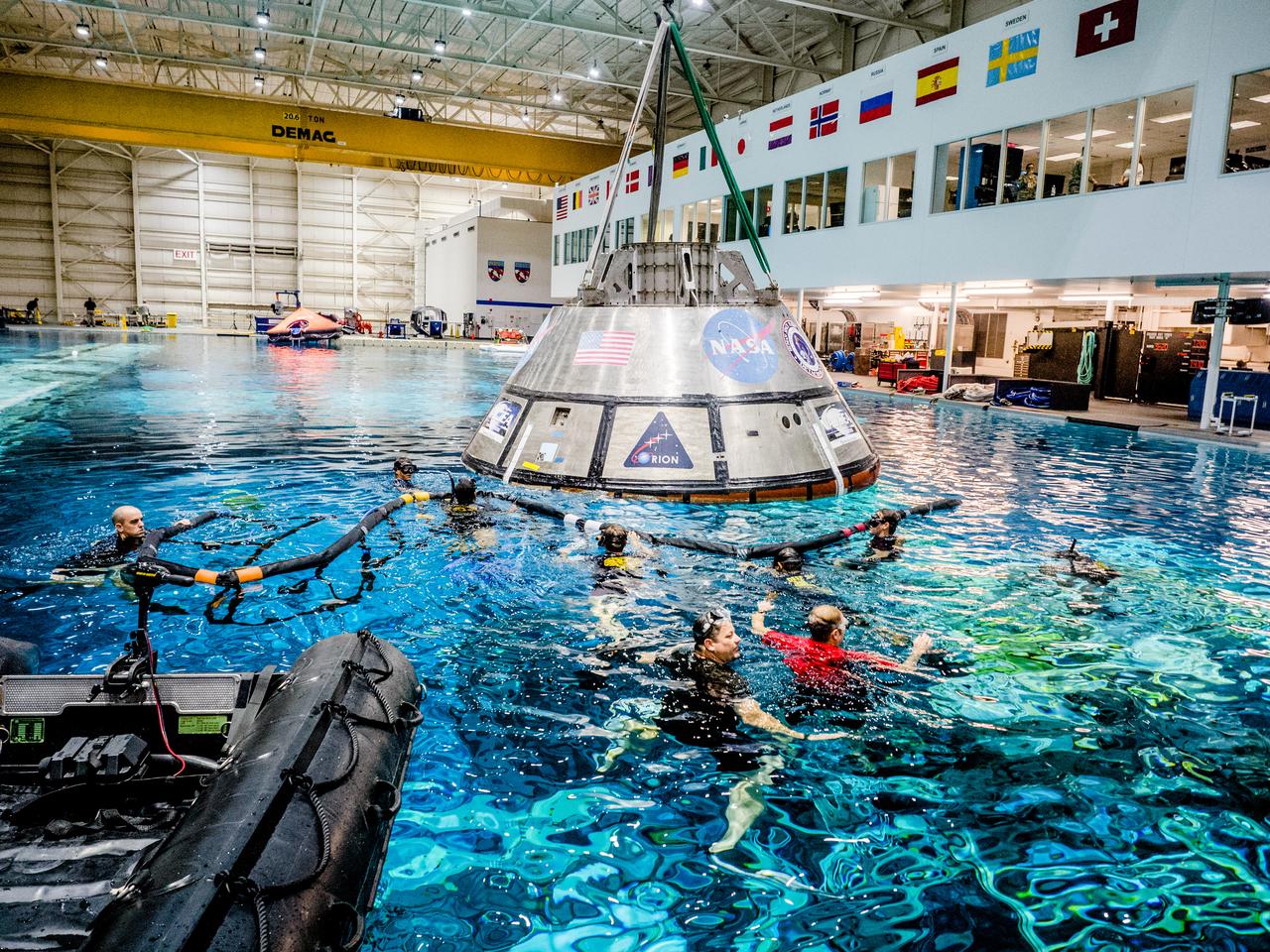
A group of U.S. Navy divers, Air Force pararescumen and Coast Guard rescue swimmers practice Orion underway recovery techniques this week in the Neutral Buoyancy Laboratory (NBL) at NASA’s Johnson Space Center in Houston on Sept. 21, 2016, to prepare for the first test flight of an uncrewed Orion spacecraft with the agency’s Space Launch System rocket during Artemis I. Part of Batch image transfer from Flickr.