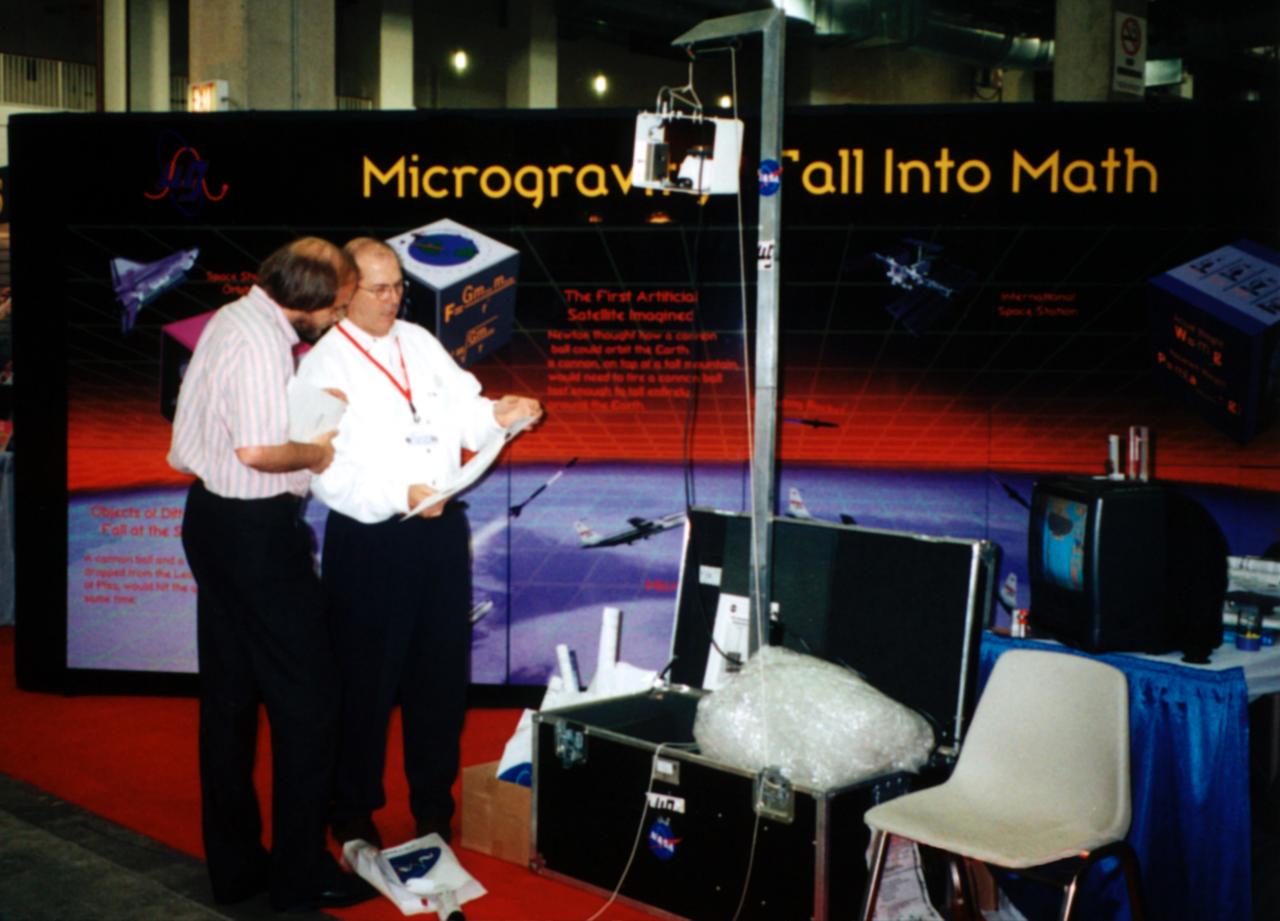
Jimmy Grisham of the Microgravity Program Plarning Integration Office at NASA/Marshall Space Flight Center, demonstrates the classroom-size Microgravity Drop Tower Demonstrator. The apparatus provides 1/6 second of microgravity for small experiments. A video camera helps teachers observe what happens inside the package. This demonstration was at the April 2000 conference of the National Council of Teachers of Mathematics (NCTM) in Chicago. Photo credit: NASA/Marshall Space Flight Center (MSFC)
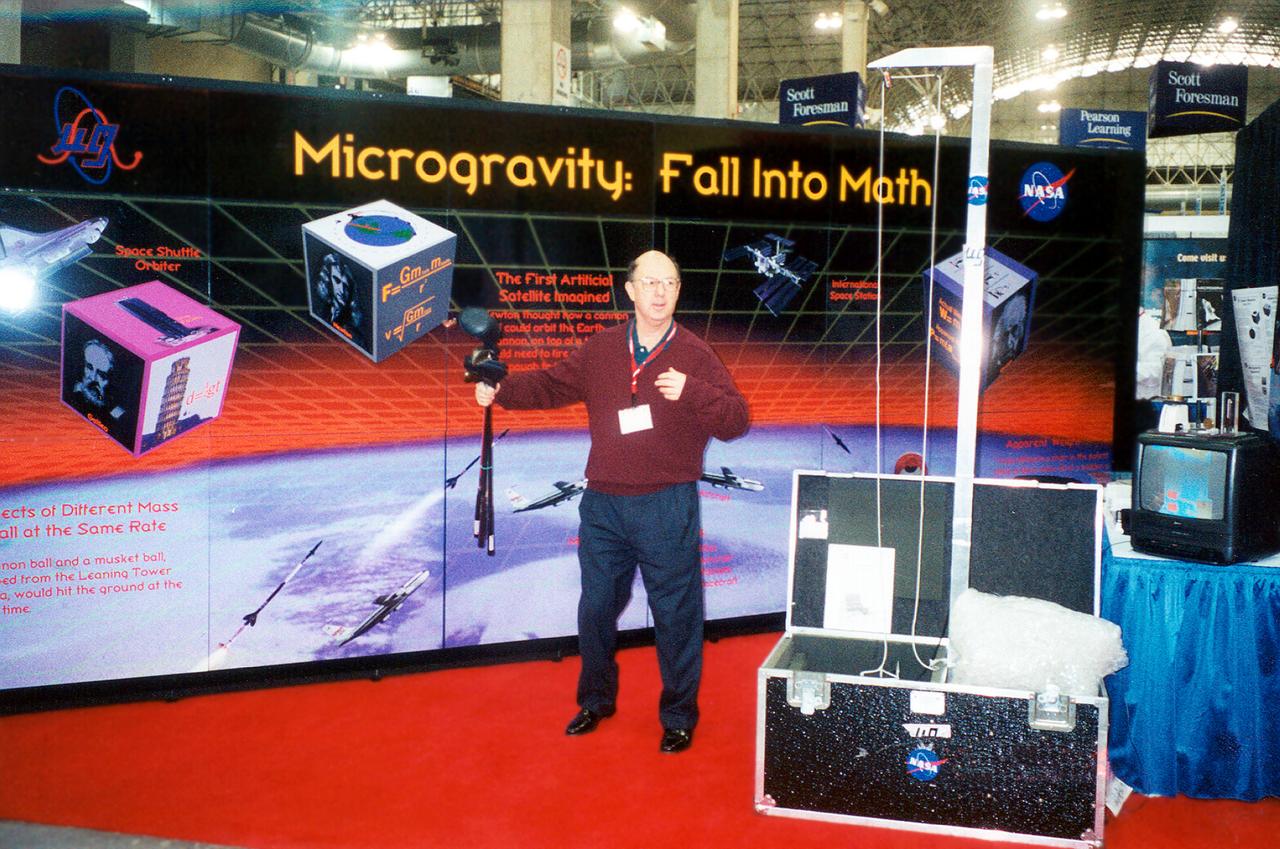
Don Gillies, a materials scientist at NASA/Marshall Space Flight Center (MSFC), demonstrates the classroom-size Microgravity Drop Tower Demonstrator. The apparatus provides 1/6 second of microgravity for small experiments. A video camera helps teachers observe what happens inside the package. This demonstration was at the April 2000 conference of the National Council of Teachers of Mathematics (NCTM) in Chicago. Photo credit: NASA/Marshall Space Flight Center (MSFC)
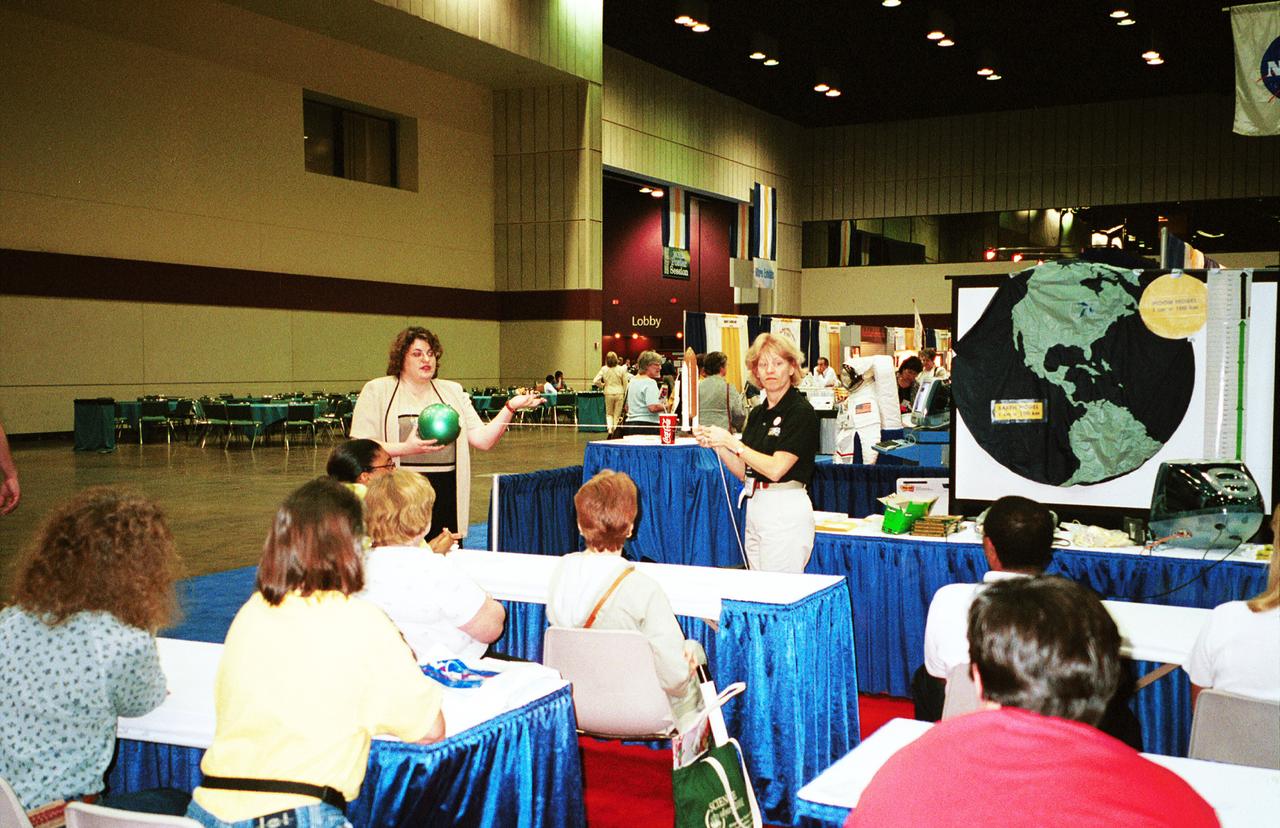
One of NASA's newest education publications made its debut at the arnual National Council of Teachers of Mathematics (NCTM) conference held in Orlando, Florida April 5-7. How High Is It? An Educator's Guide with Activities Focused on Scale Models of Distances was presented by Carla Rosenberg of the National Center for Microgravity Research at Glenn Research Center. Rosenberg, an author of the Guide, led teachers in several hands-on activities from the Guide. This image is from a digital still camera; higher resolution is not available.
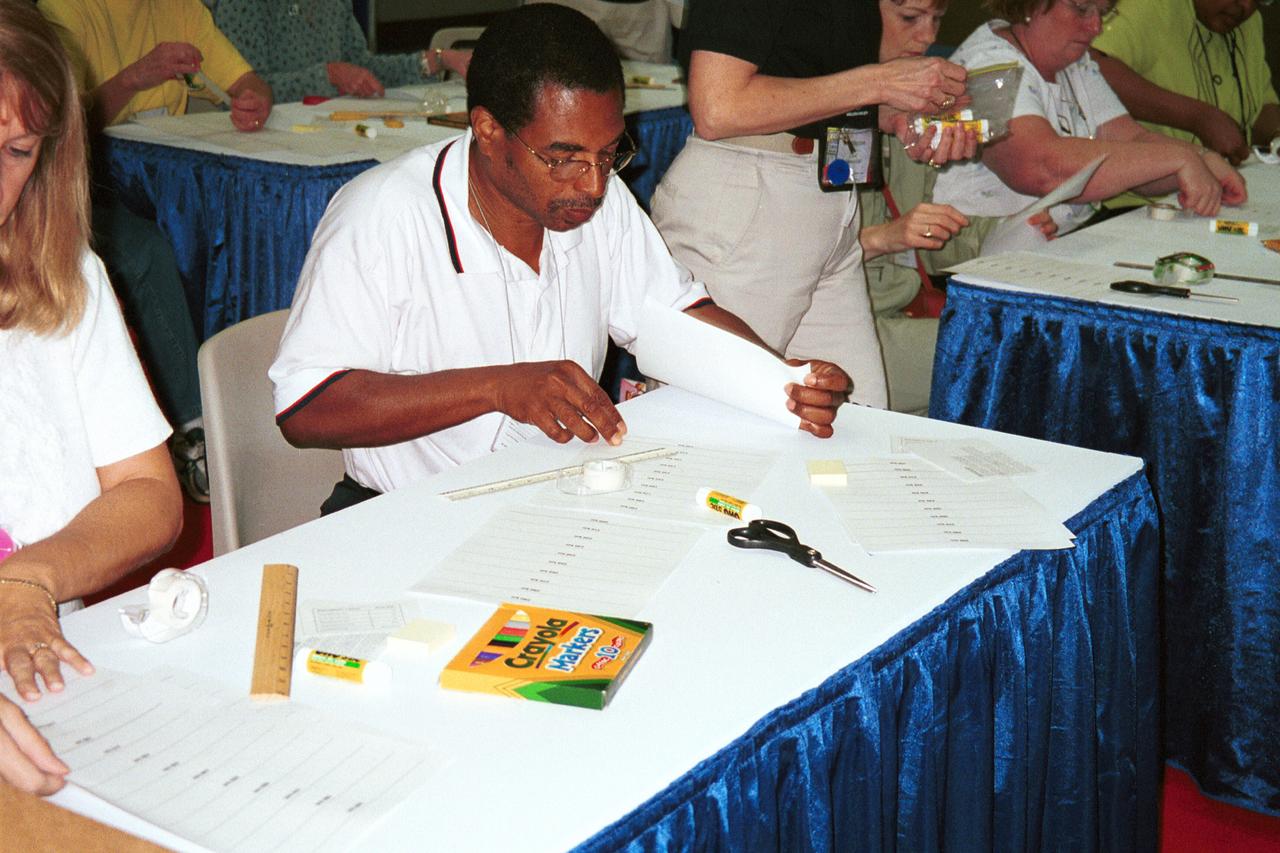
One of NASA's newest education publications made its debut at the arnual National Council of Teachers of Mathematics (NCTM) conference held in Orlando, Florida April 5-7. How High Is It? An Educator's Guide with Activities Focused on Scale Models of Distances was presented by Carla Rosenberg of the National Center for Microgravity Research at Glenn Research Center. Rosenberg, an author of the Guide, led teachers in several hands-on activities from the Guide. This image is from a digital still camera; higher resolution is not available.
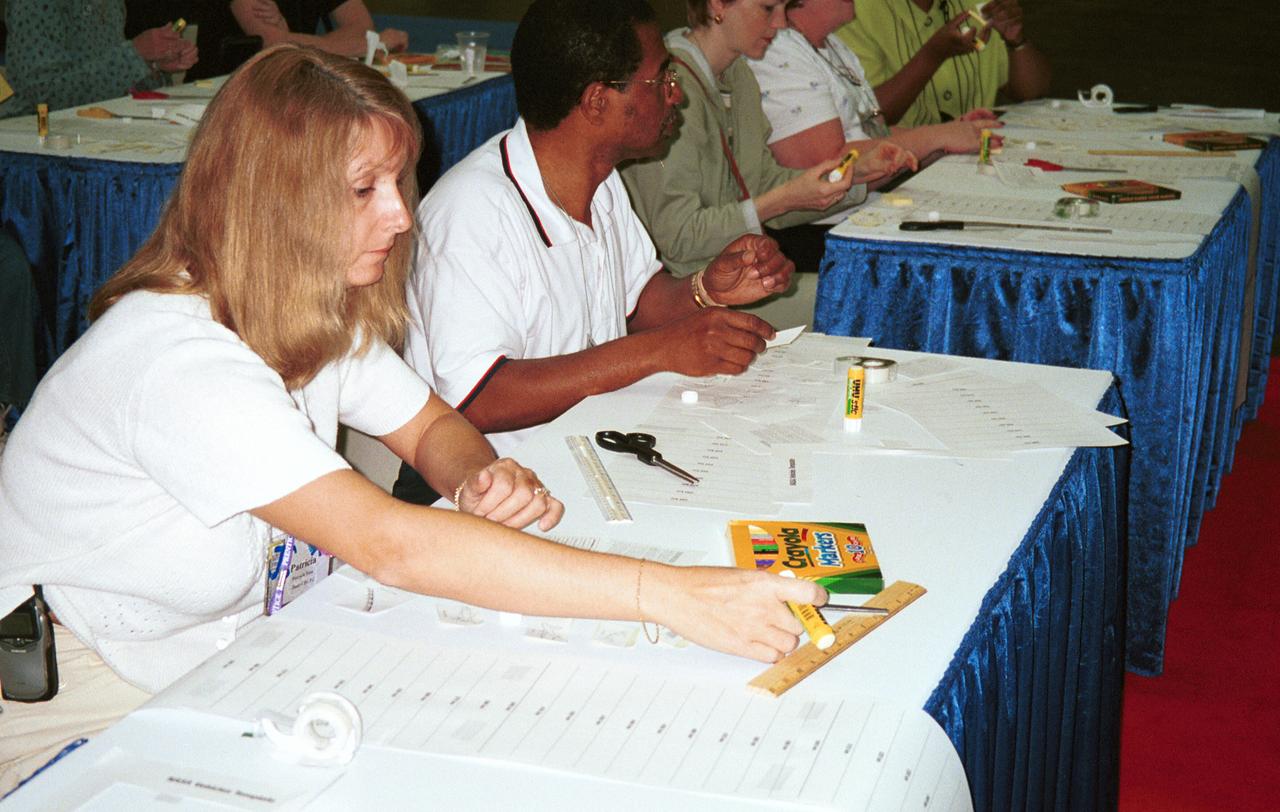
One of NASA's newest education publications made its debut at the arnual National Council of Teachers of Mathematics (NCTM) conference held in Orlando, Florida April 5-7. How High Is It? An Educator's Guide with Activities Focused on Scale Models of Distances was presented by Carla Rosenberg of the National Center for Microgravity Research at Glenn Research Center. Rosenberg, an author of the Guide, led teachers in several hands-on activities from the Guide. This image is from a digital still camera; higher resolution is not available.

One of NASA's newest education publications made its debut at the arnual National Council of Teachers of Mathematics (NCTM) conference held in Orlando, Florida April 5-7. How High Is It? An Educator's Guide with Activities Focused on Scale Models of Distances was presented by Carla Rosenberg of the National Center for Microgravity Research at Glenn Research Center. Rosenberg, an author of the Guide, led teachers in several hands-on activities from the Guide. This image is from a digital still camera; higher resolution is not available.
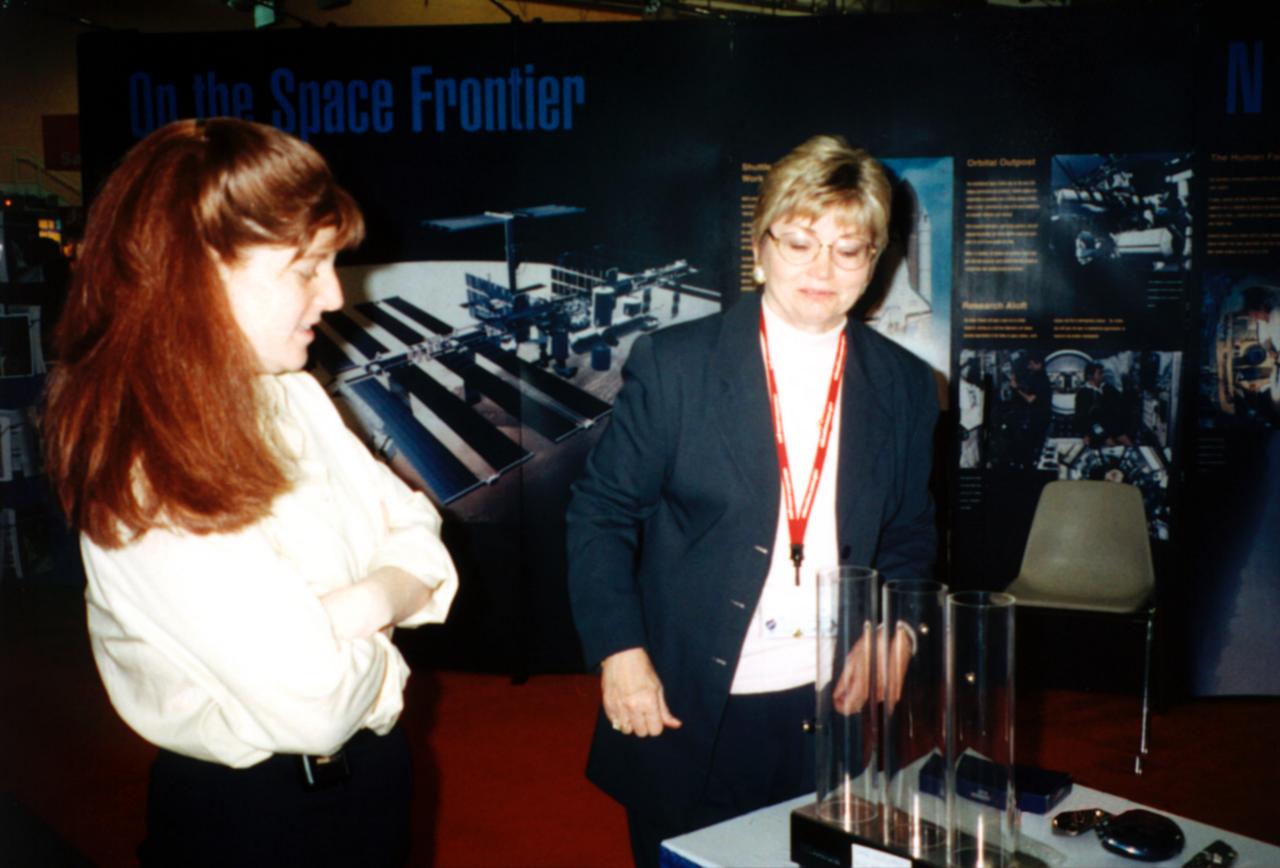
Pat Doty (right) of NASA/Marshall Space Flight Center (MSFC) demonstrates the greater bounce to the ounce of metal made from a supercooled bulk metallic glass alloy that NASA is studying in space expepriments. The metal plates at the bottom of plexiglass tubes are made of three different types of metal. Bulk mettalic glass is more resilient and, as a result, the dropped ball bearing bounces higher. Experiments in space allow scientists to study fundamental properties that carnot be observed on Earth. This demonstration was at the April 2000 conference of the National Council of Teachers of Mathematics (NCTM) in Chicago. Photo credit: NASA/Marshall Space Flight Center (MSFC)
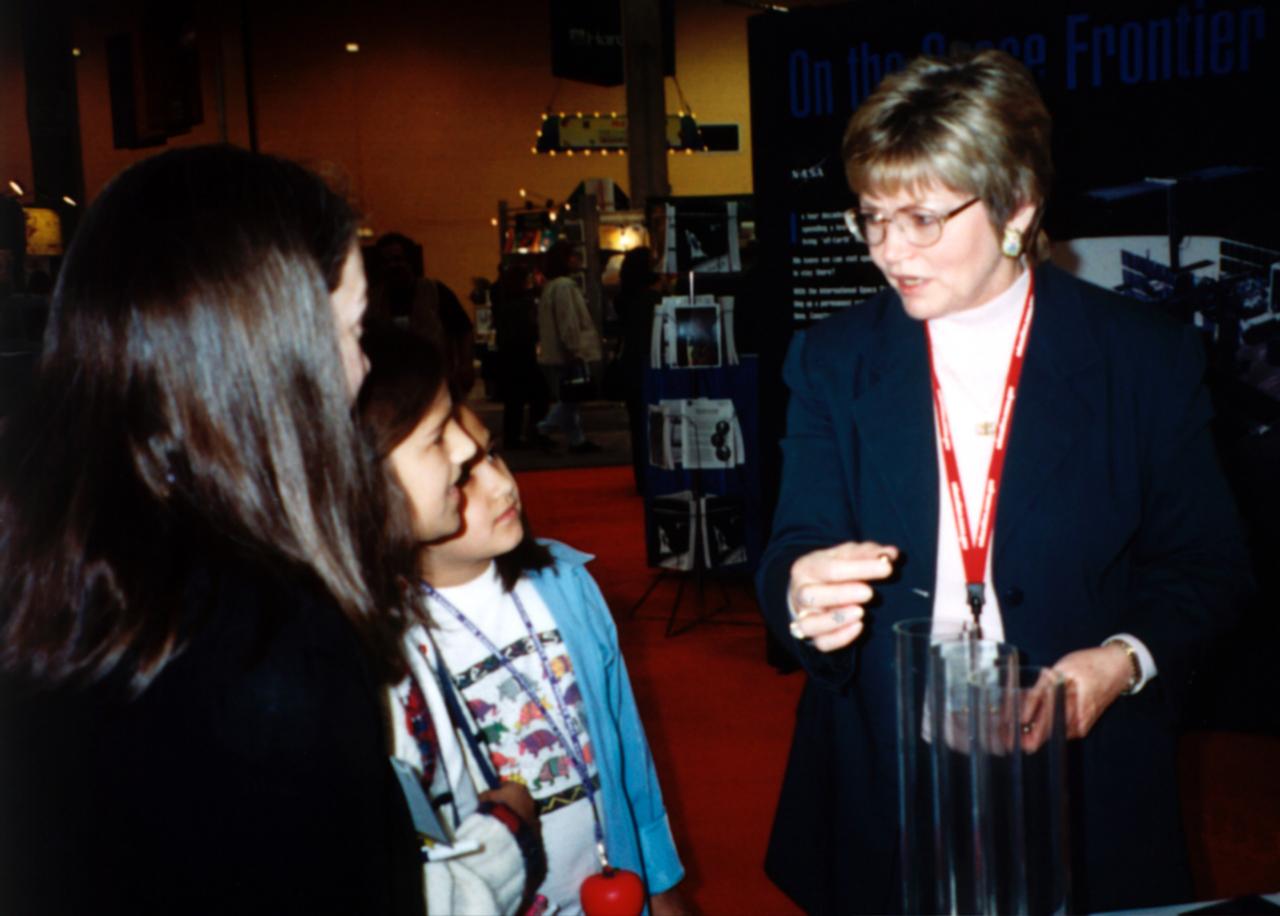
Pat Doty (right) of NASA/Marshall Space Flight Center (MSFC) demonstrates the greater bounce to the ounce of metal made from a supercooled bulk metallic glass alloy that NASA is studying in space experiments. The metal plates at the bottom of the plexiglass tubes are made of three different types of metal. Bulk metallic glass is more resilient and, as a result, the dropped ball bearing bounces higher. Experiments in space allow scientists to study fundamental properties that carnot be observed on Earth. This demonstration was at the April 200 conference of the National Council of Teachers of Mathematics (NCTM) in Chicago. photo credit: NASA/Marshall Space Flight Center (MSFC)