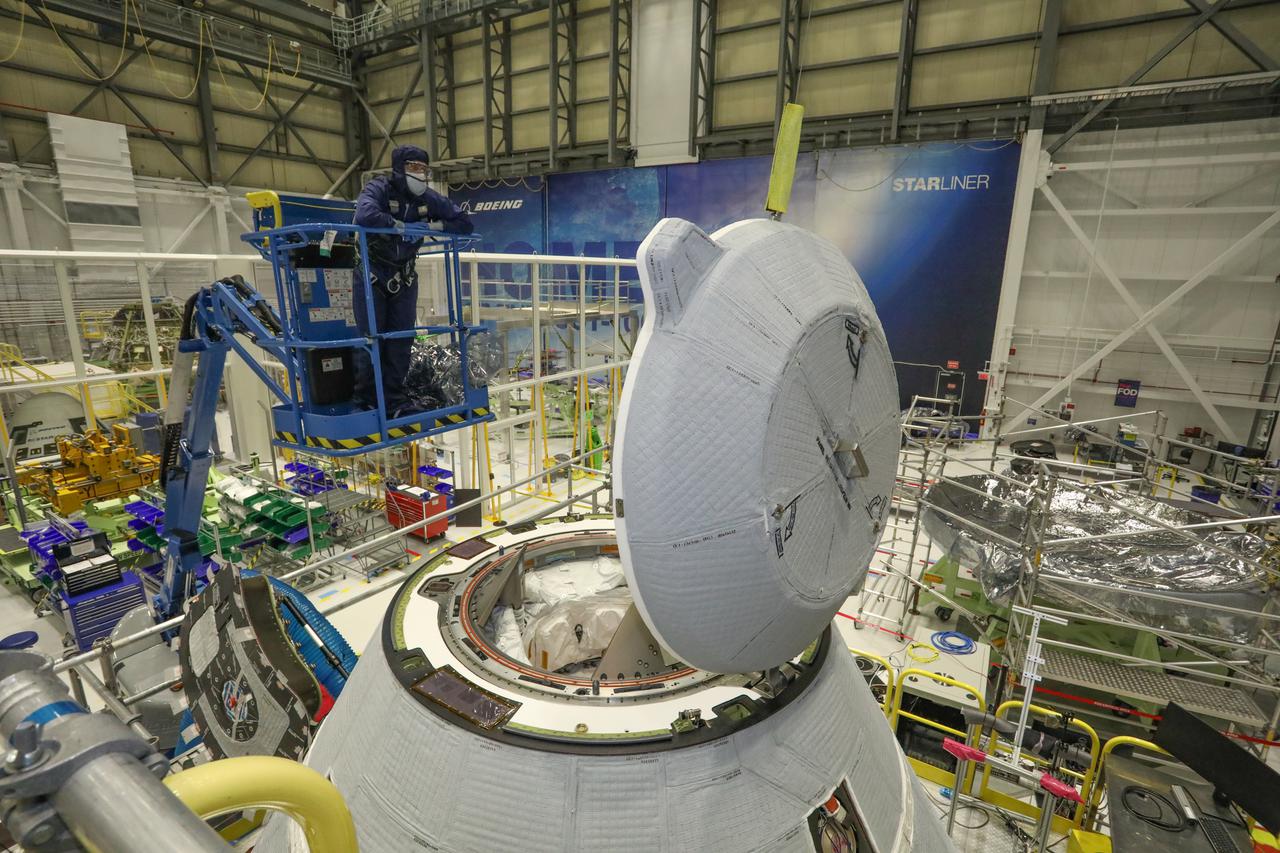
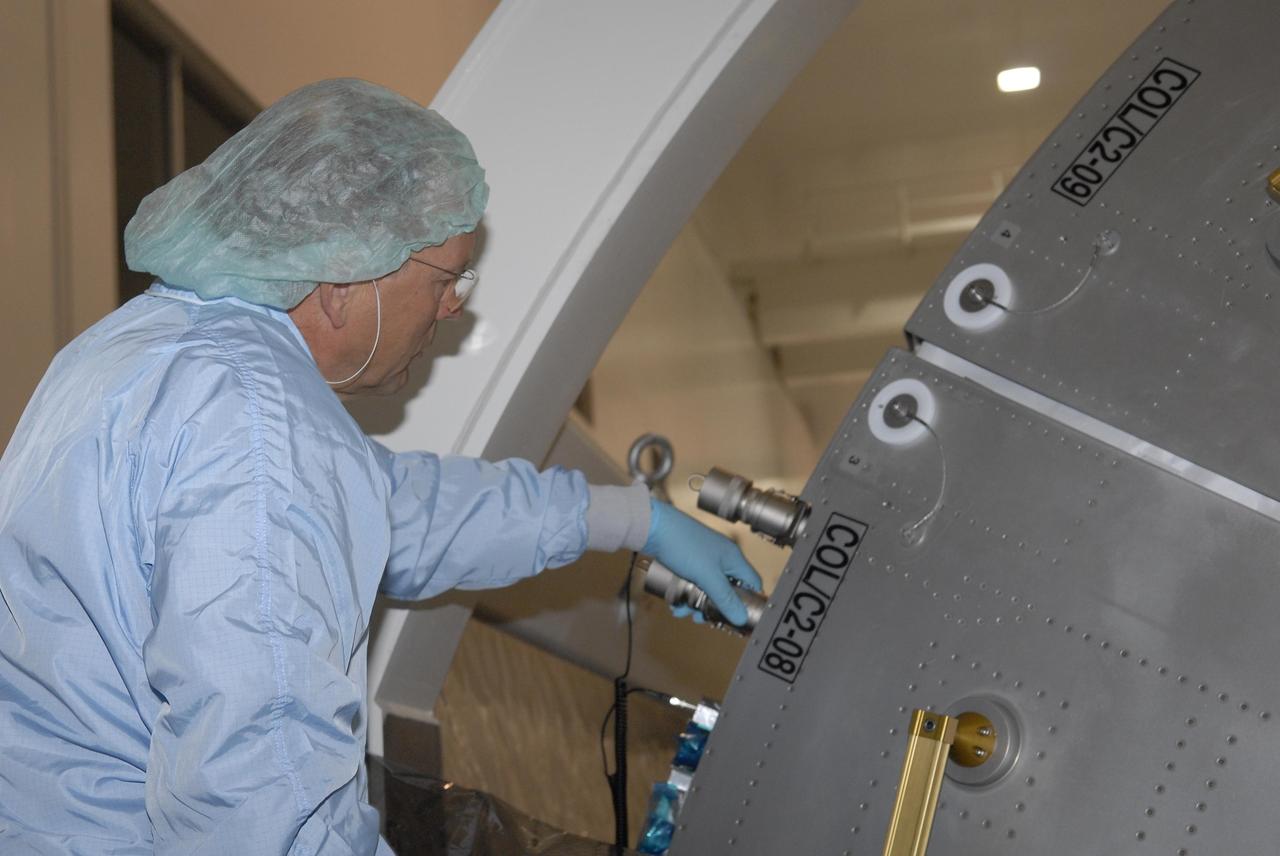
A technician observes the functional test of the NASA Docking System (NDS) cover in the Commercial Crew and Cargo Processing Facility at Kennedy Space Center in Florida on Jan. 2, 2021. The test was conducted in preparation for Boeing’s second Orbital Flight Test (OFT-2), as part of NASA’s Commercial Crew Program. The cover is designed to protect the components that connect the spacecraft to the International Space Station.
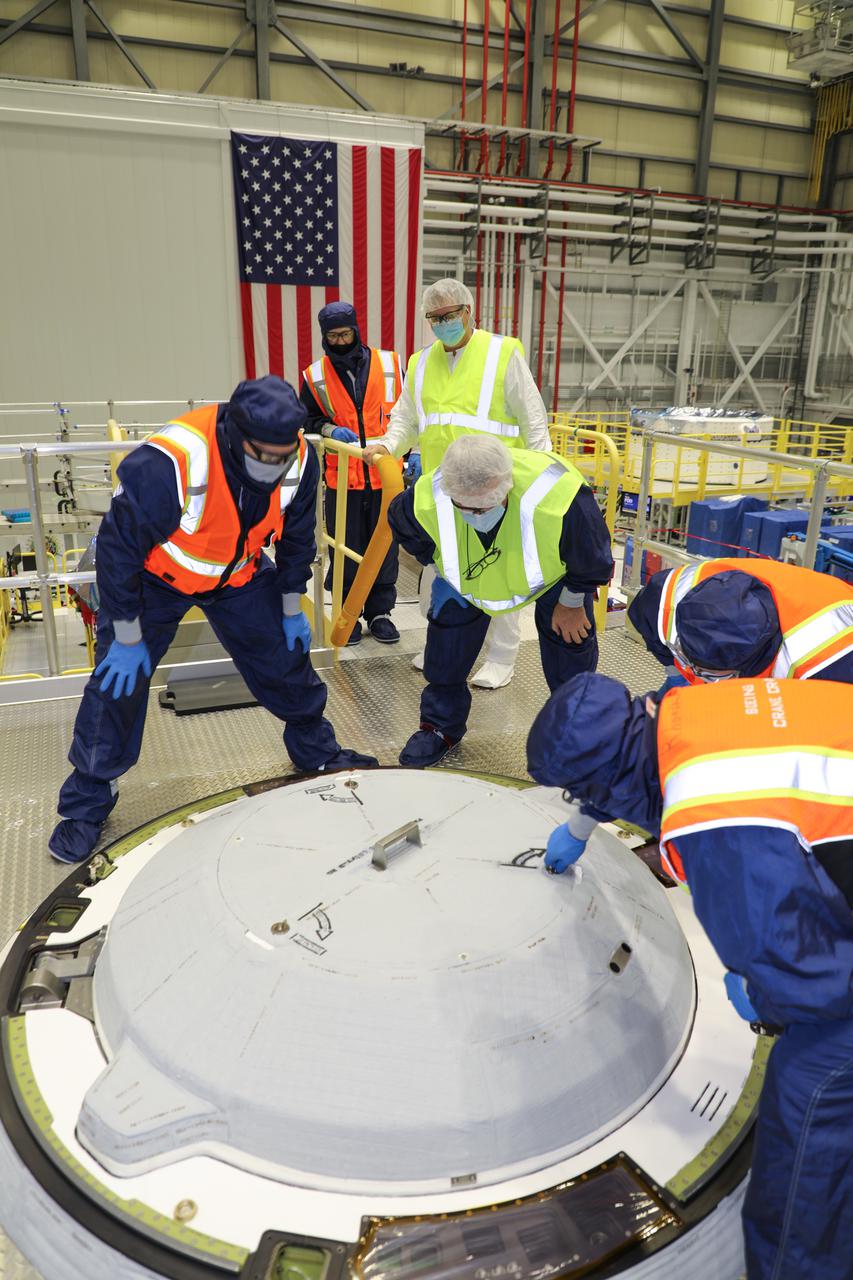
Technicians work on the NASA Docking System (NDS) hatch installation in the Commercial Crew and Cargo Processing Facility at Kennedy Space Center in Florida on Jan. 2, 2021. The NDS cover was installed on Boeing’s Starliner spacecraft in preparation for the company’s second Orbital Flight Test (OFT-2), as part of NASA’s Commercial Crew Program. The cover is designed to protect the components that connect the spacecraft to the International Space Station.
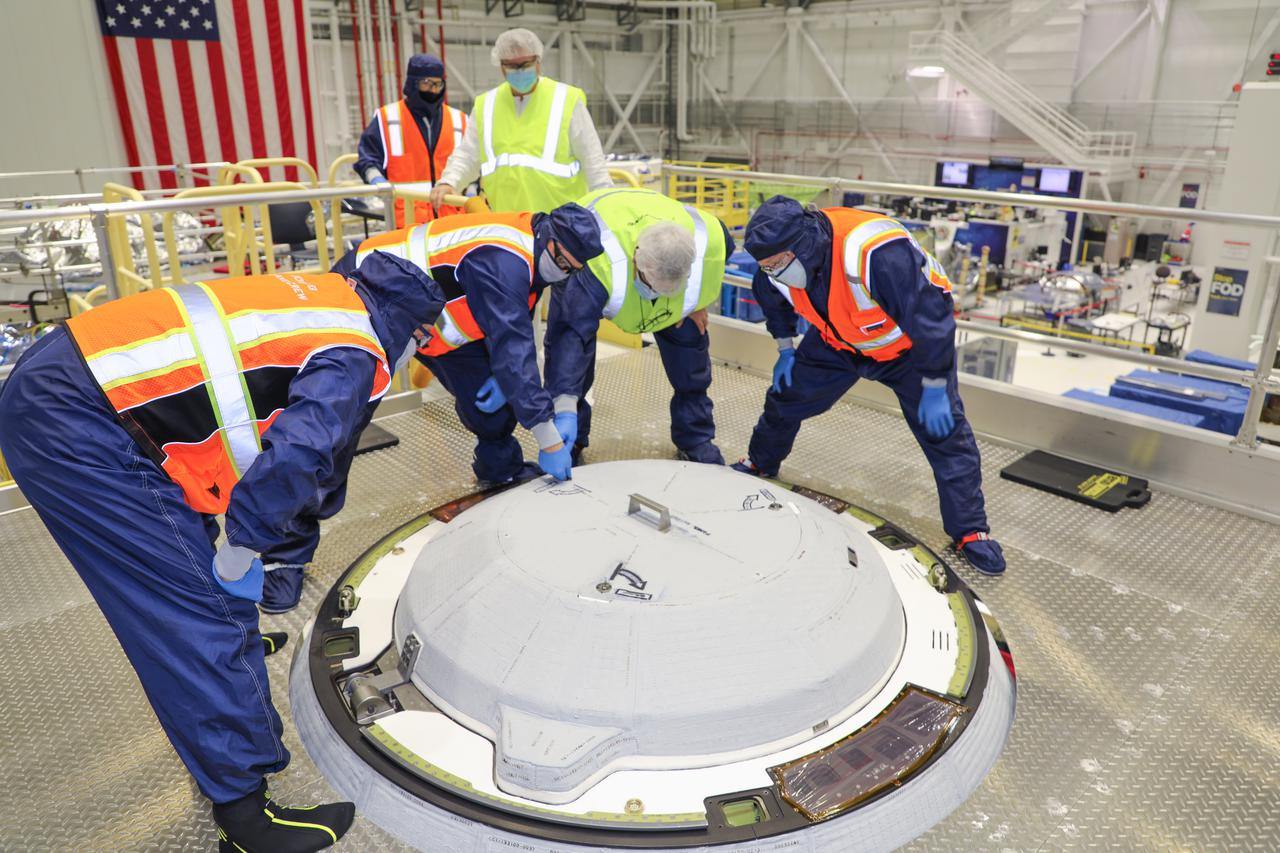
Technicians work on the NASA Docking System (NDS) cover hatch installation in the Commercial Crew and Cargo Processing Facility at Kennedy Space Center in Florida on Jan. 2, 2021. The NDS cover was installed on Boeing’s Starliner spacecraft in preparation for the company’s second Orbital Flight Test (OFT-2), as part of NASA’s Commercial Crew Program. The cover is designed to protect the components that connect the spacecraft to the International Space Station.

This image from NASA Terra spacecraft shows the Turtle Mountains, which straddle the US-Canada border in central North Dakota. Underlain by 55 million year old sandstones and shales of the Cannonball Formation, the upland surface was sculpted by glaciations. Due to the mountain's 150m elevation above the surrounding lowlands, glacial ice tended to stagnate, forming thousands of lakes and sloughs. The image was acquired May 19, 2006, covers an area of 43.5 x 53.1 km, and is located at 49 degrees north, 100.1 degrees west. http://photojournal.jpl.nasa.gov/catalog/PIA19435

JSC2006-E-43504 (October 2006) --- Computer-generated artist's rendering of the International Space Station after flight STS-122/1E. Columbus European laboratory module with Multi-Purpose Experiment Support Structure - Non-Deployable (MPESS-ND) is delivered and installed.

NASA astronaut Reid Wiseman, Artemis II commander, center, speaks with U.S. Senator Jerry Moran (R-Kan.), left, and U.S. Senator John Hoeven (R-ND) at an event at the Dirksen Senate Office Building, Tuesday, May 12, 2026, in Washington. NASA’s Artemis II mission took Wiseman, Glover, Koch, and Hansen on a nearly 10-day journey around the Moon and back to Earth in April 2026. Photo Credit: (NASA/Aubrey Gemignani)
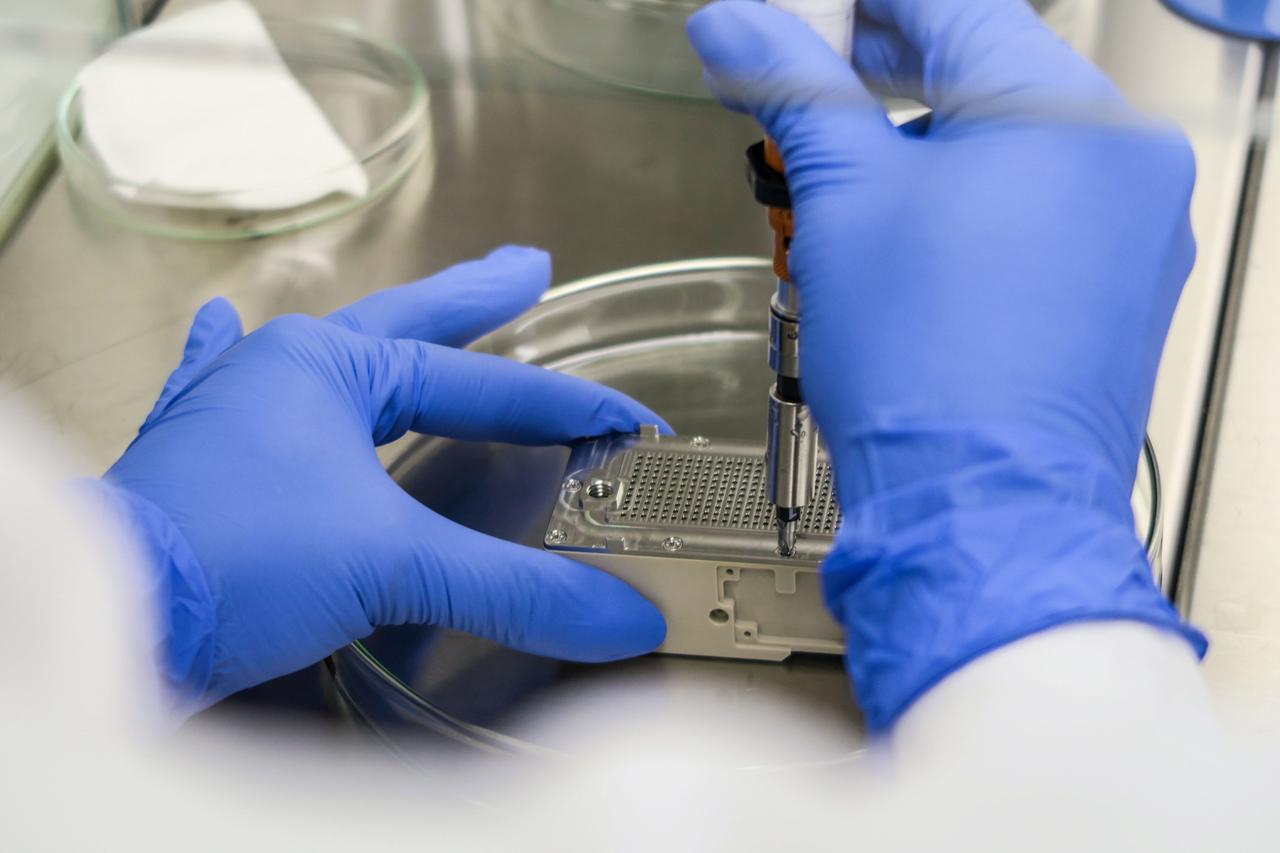
jsc2023e010176 (8/21/2021) --- This image shows the final step of assembling the ESA-Biofilms experiment unit. Inside the experiment unit, growth of the bacterial model organisms is supported under controlled conditions on different antimicrobial surfaces. The ESA-Biofilms investigation studies bacterial biofilm formation and antimicrobial properties of different metal surfaces under spaceflight conditions in altered gravity. Image courtesy of DLR, CC BY-NC-ND 3.0.

NASA astronaut Reid Wiseman, Artemis II commander signs a book for U.S. Senator John Hoeven (R-ND) at an event at the Dirksen Senate Office Building, Tuesday, May 12, 2026, in Washington. NASA’s Artemis II mission took Wiseman, Glover, Koch, and Hansen on a nearly 10-day journey around the Moon and back to Earth in April 2026. Photo Credit: (NASA/Aubrey Gemignani)
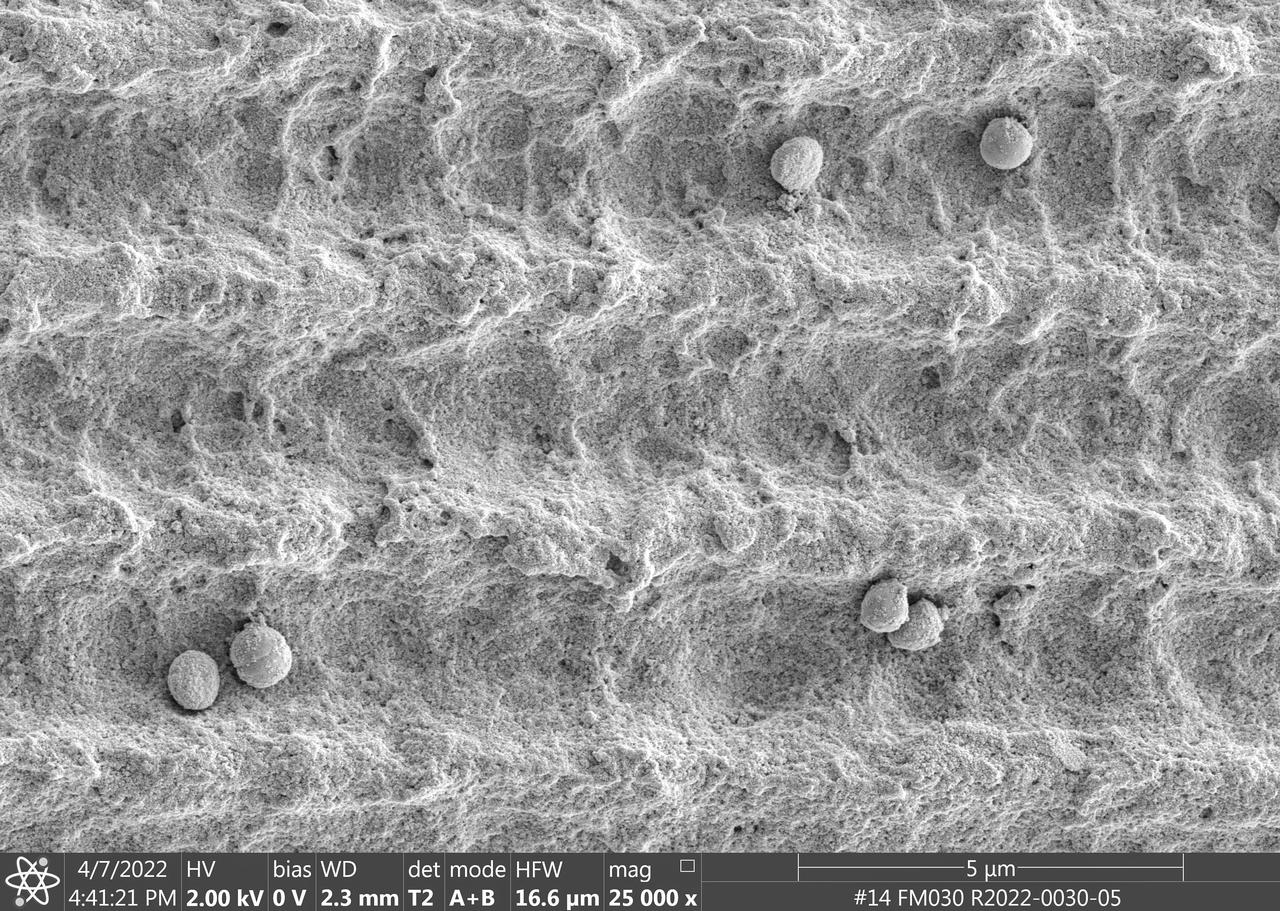
jsc2023e010177 (4/7/2022) --- This image is a scanning electron microscopic image of one of the ESA-Biofilms sample plates from the first launch to the ISS. The sample plate in this image is made of copper, which naturally has antimicrobial properties. This surface has a 3 µm laser structure engraved to the surface which improves antimicrobial efficacy. On the surface, only few cells of the bacterial species Staphylococcus capitis are attached. The cells appear small and are not actively dividing. The ESA-Biofilms investigation studies bacterial biofilm formation and antimicrobial properties of different metal surfaces under spaceflight conditions in altered gravity. Image courtesy of DLR, CC BY-NC-ND 3.0.

U.S. Senator John Hoeven (R-ND) takes a photo of congressional staff members with NASA astronaut Christina Koch, Artemis II mission specialist during an event at the Dirksen Senate Office Building, Tuesday, May 12, 2026, in Washington. NASA’s Artemis II mission took NASA astronauts Reid Wiseman, commander; Victor Glover, pilot; Christina Koch, mission specialist; and CSA (Canadian Space Agency) astronaut Jeremy Hansen, mission specialist on a nearly 10-day journey around the Moon and back to Earth in April 2026. Photo Credit: (NASA/Aubrey Gemignani)
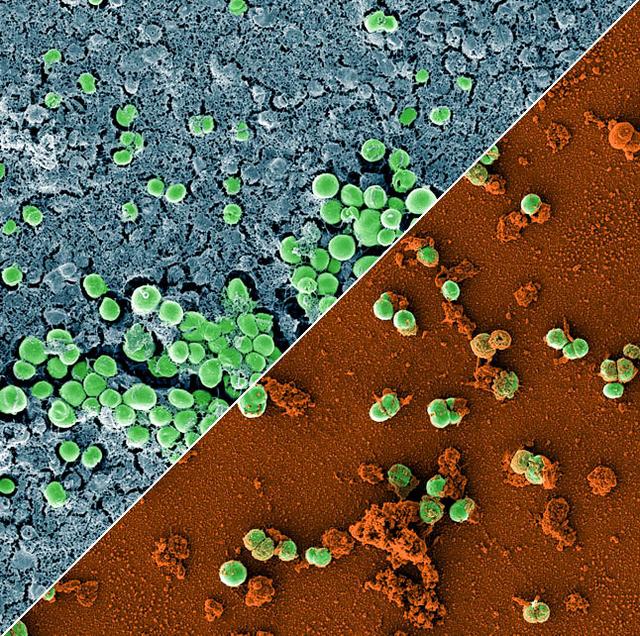
jsc2023e010179 (2/28/2023) --- This image is a composition of two scanning electron microscopic images of the bacterium Staphylococcus capitis on stainless steel versus antimicrobial copper. The image was colored to visualize the bacterial cells (green) either embedded in a biofilm matrix (blue), or covered with copper particles (red/orange). The ESA-Biofilms investigation studies bacterial biofilm formation and antimicrobial properties of different metal surfaces under spaceflight conditions in altered gravity. Both images were taken as part of the preflight experiments for ESA-Biofilms. Image courtesy of DLR, CC BY-NC-ND 3.0.
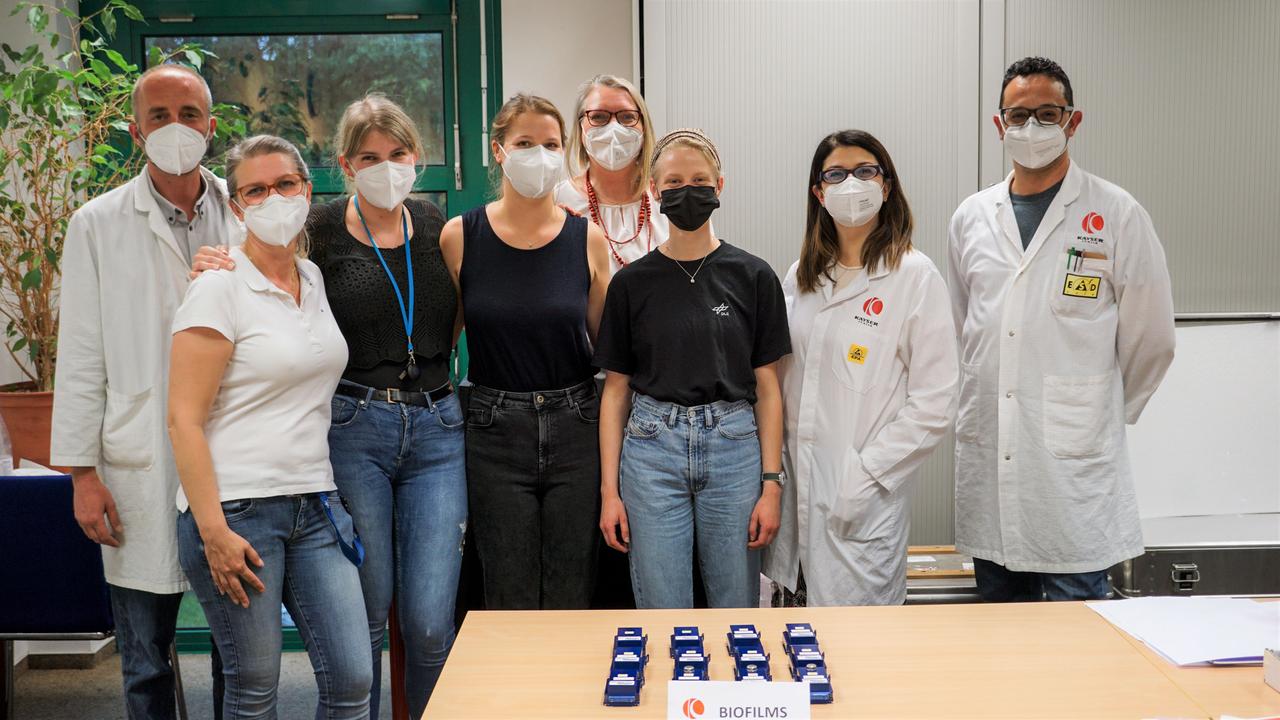
jsc2023e010180 (5/20/2022) --- This is a group picture of the DLR, ESA, and Kayser Italia teams after successful integration of the ESA-Biofilms experiment for its second launch in 2022. The assembled hardware is in the front on the table. The blue experiment containers were later integrated by ESA astronaut Samantha Cristoforetti into the two KUBIK incubators inside the Columbus laboratory aboard the International Space Station. The ESA-Biofilms investigation studies bacterial biofilm formation and antimicrobial properties of different metal surfaces under spaceflight conditions in altered gravity. Image courtesy of DLR, CC BY-NC-ND 3.0.

NASA astronaut Christina Koch, Artemis II mission specialist, signs a book for U.S. Senator John Hoeven (R-ND) at an event at the Dirksen Senate Office Building, Tuesday, May 12, 2026, in Washington. NASA’s Artemis II mission took Koch, and crewmates NASA astronauts Reid Wiseman, commander; Victor Glover, pilot; and CSA (Canadian Space Agency) astronaut Jeremy Hansen, mission specialist on a nearly 10-day journey around the Moon and back to Earth in April 2026. Photo Credit: (NASA/Aubrey Gemignani)

NASA astronaut Victor Glover, Artemis II pilot, signs a hat for U.S. Senator John Hoeven (R-ND) at an event at the Dirksen Senate Office Building, Tuesday, May 12, 2026, in Washington. NASA’s Artemis II mission took Glover and crewmates NASA astronauts Reid Wiseman, commander; Christina Koch, mission specialist; and CSA (Canadian Space Agency) astronaut Jeremy Hansen, mission specialist on a nearly 10-day journey around the Moon and back to Earth in April 2026. Photo Credit: (NASA/Aubrey Gemignani)

jsc2023e010175 (2/28/2023) --- This image shows a monospecies biofilm through the view of a scanning electron microscope. The image was colored to visualize the bacterial cells (orange) embedded in the biofilm matrix (blue). The biofilm was formed by a strain of the bacterial species Staphylococcus capitis that was isolated from the International Space Station. The ESA-Biofilms investigation studies bacterial biofilm formation and antimicrobial properties of different metal surfaces under spaceflight conditions in altered gravity. The image was taken as part of the preflight experiments for ESA-Biofilms together with the Robert Koch Institute in Berlin, Germany. Image courtesy of DLR, CC BY-NC-ND 3.0.

From left to right, U.S. Senator John Hoeven (R-ND), U.S. Senator Chris Van Hollen (D-Md.), and U.S. Senator Jerry Moran (R-Kan.) speak with NASA astronaut Christina Koch, mission specialist; CSA (Canadian Space Agency) astronaut Jeremy Hansen, mission specialist; and NASA astronauts Reid Wiseman, commander; and Victor Glover, pilot at an event at the Dirksen Senate Office Building, Tuesday, May 12, 2026, in Washington. NASA’s Artemis II mission took Wiseman, Glover, Koch, and Hansen on a nearly 10-day journey around the Moon and back to Earth in April 2026. Photo Credit: (NASA/Aubrey Gemignani)

Technicians prepare a full-scale capsule which would be used for the first rocket-launching on March 11, 1959. The purpose of the test would be to simulate a ground-level or beach abort. Joseph Shortal wrote (vol. 3, p. 27): It was a test of the ability of the escape system to rescue the astronaut in case of a malfunction of the launch vehicle prior to flight. This test was carried out by PARD under the direction of W.S. Blanchard, Jr., and was part of the program designated F57 at PARD. For these tests capsule shape C was used. -- Published in Joseph A. Shortal, History of Wallops Station: Origins and Activities Through 1949, (Wallops Island, VA: National Aeronautics and Space Administration, Wallops Station, nd), Comment Edition.
KENNEDY SPACE CENTER, FLA. -- In the Space Station Processing Facility, STS-122 crew members inspect the Columbus European Laboratory, part of the payload on their mission. Seen here is Commander Steve Frick. The crew is participating in a crew equipment interface test that provides opportunities for hands-on experience with payloads and equipment. The other crew members are Pilot Alan Poindexter and Mission Specialists Rex Walheim, Stan Love, Leland Melvin and Hans Schlegel, who represents the European Space Agency. The 24th mission to the International Space Station, STS-122 will also include the Multi-Purpose Experiment Support Structure - Non-Deployable (MPESS-ND). Launch of STS-122 on Space Shuttle Discovery is scheduled no earlier than October. Photo credit: NASA/Kim Shiflett
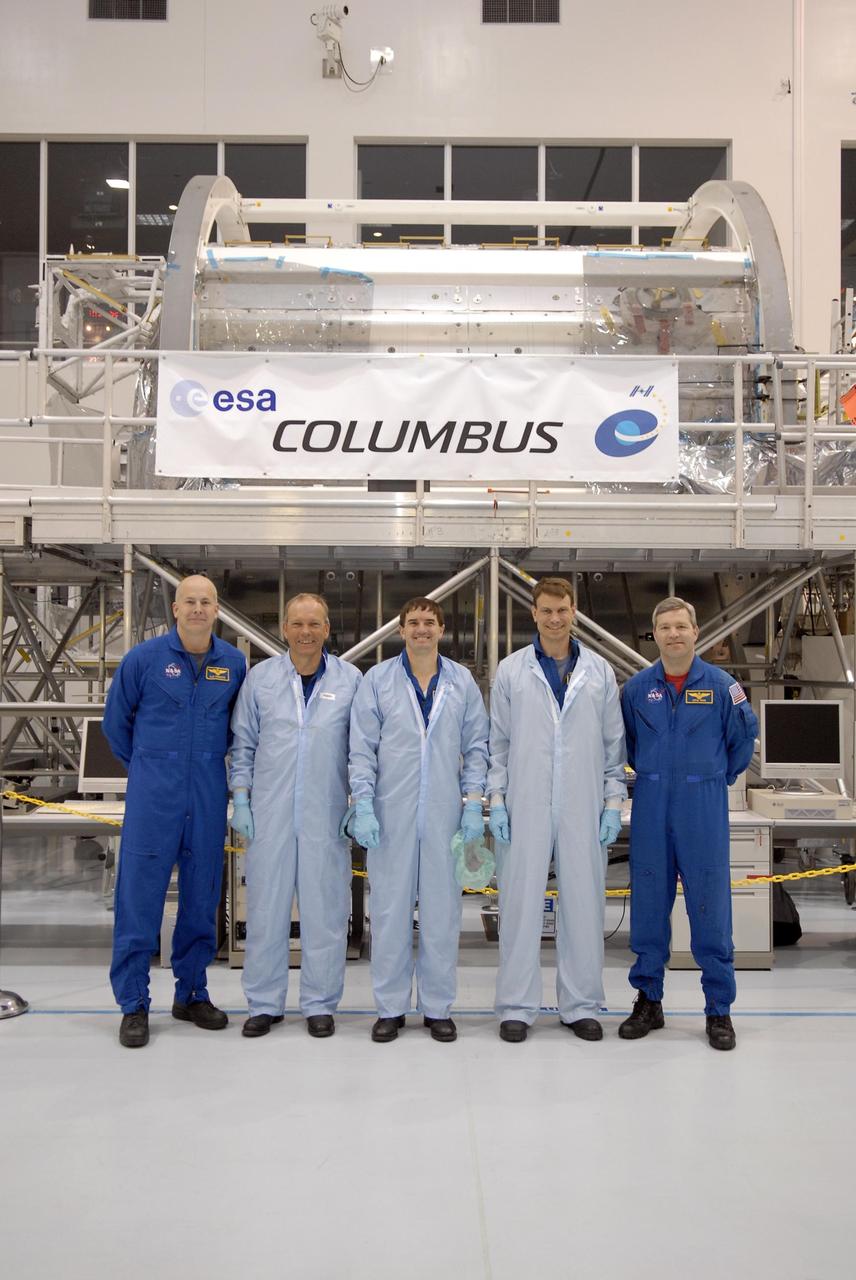
KENNEDY SPACE CENTER, FLA. -- In the Space Station Processing Facility, STS-122 crew members pause for a photo in front of the Columbus European Laboratory, part of the payload on their mission. From left are Pilot Alan Poindexter, Mission Specialists Hans Schlegel, Rex Walheim and Stan Love, and Commander Steve Frick. Schlegel represents the European Space Agency. The crew is participating in a crew equipment interface test that provides opportunities for hands-on experience with payloads and equipment. The 24th mission to the International Space Station, STS-122 will also include the Multi-Purpose Experiment Support Structure - Non-Deployable (MPESS-ND). Launch of STS-122 on Space Shuttle Discovery is scheduled no earlier than October. Photo credit: NASA/Kim Shiflett
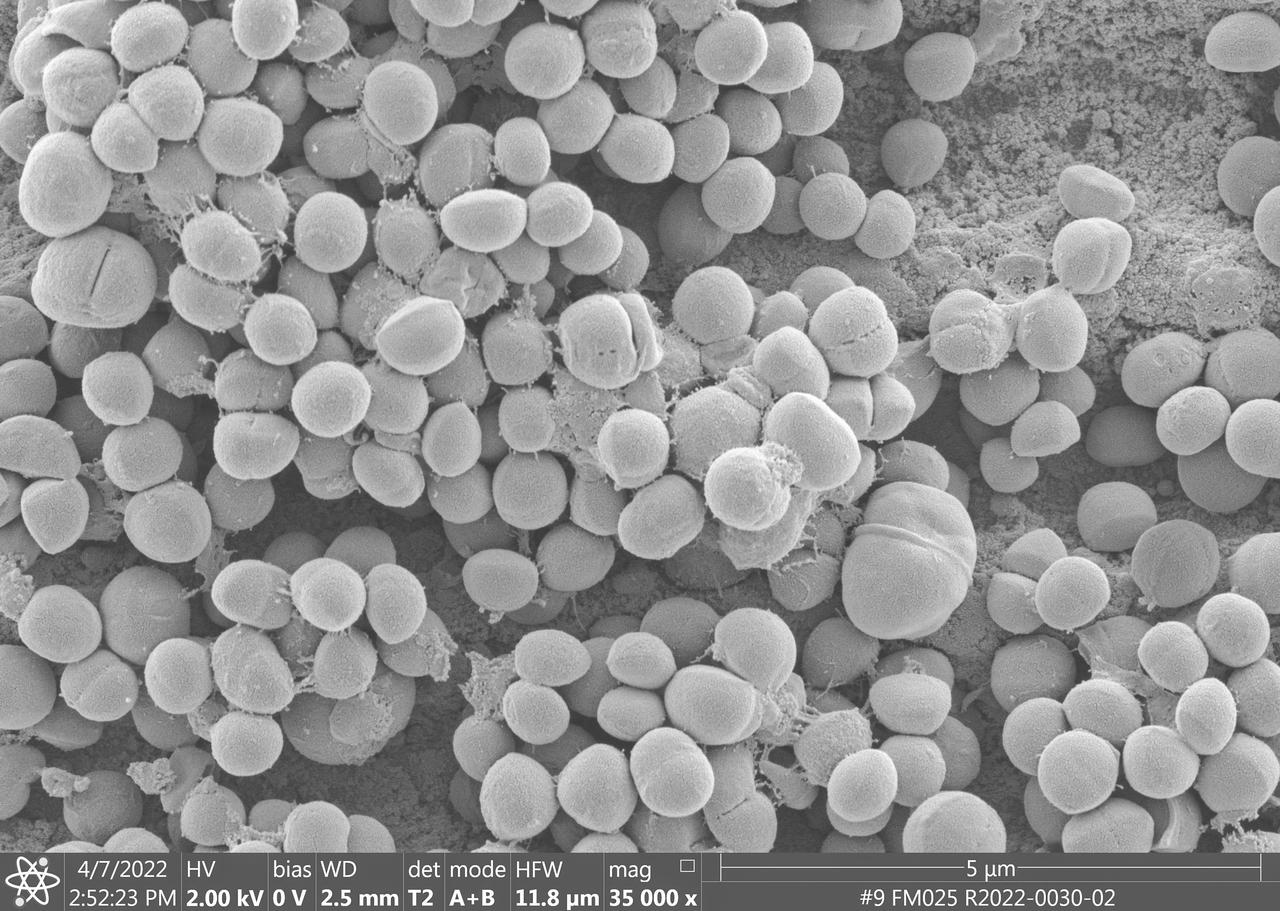
jsc2023e010178 (4/7/2022) --- This image taken by a scanning electron microscope shows one of the ESA-Biofilms sample plates from its first launch to the International Space Station. The sample plate in this image is made of stainless steel, which is the reference surface in the experiment since it has no antimicrobial properties. This surface also has a 3 µm laser structure engraved to the surface as control. In contrast to the copper surface, there are many Staphylococcus capitis cells attached to the steel surface that are actively dividing and starting to from components of a biofilm matrix. The ESA-Biofilms investigation studies bacterial biofilm formation and antimicrobial properties of different metal surfaces under spaceflight conditions in altered gravity. Image courtesy of DLR, CC BY-NC-ND 3.0.
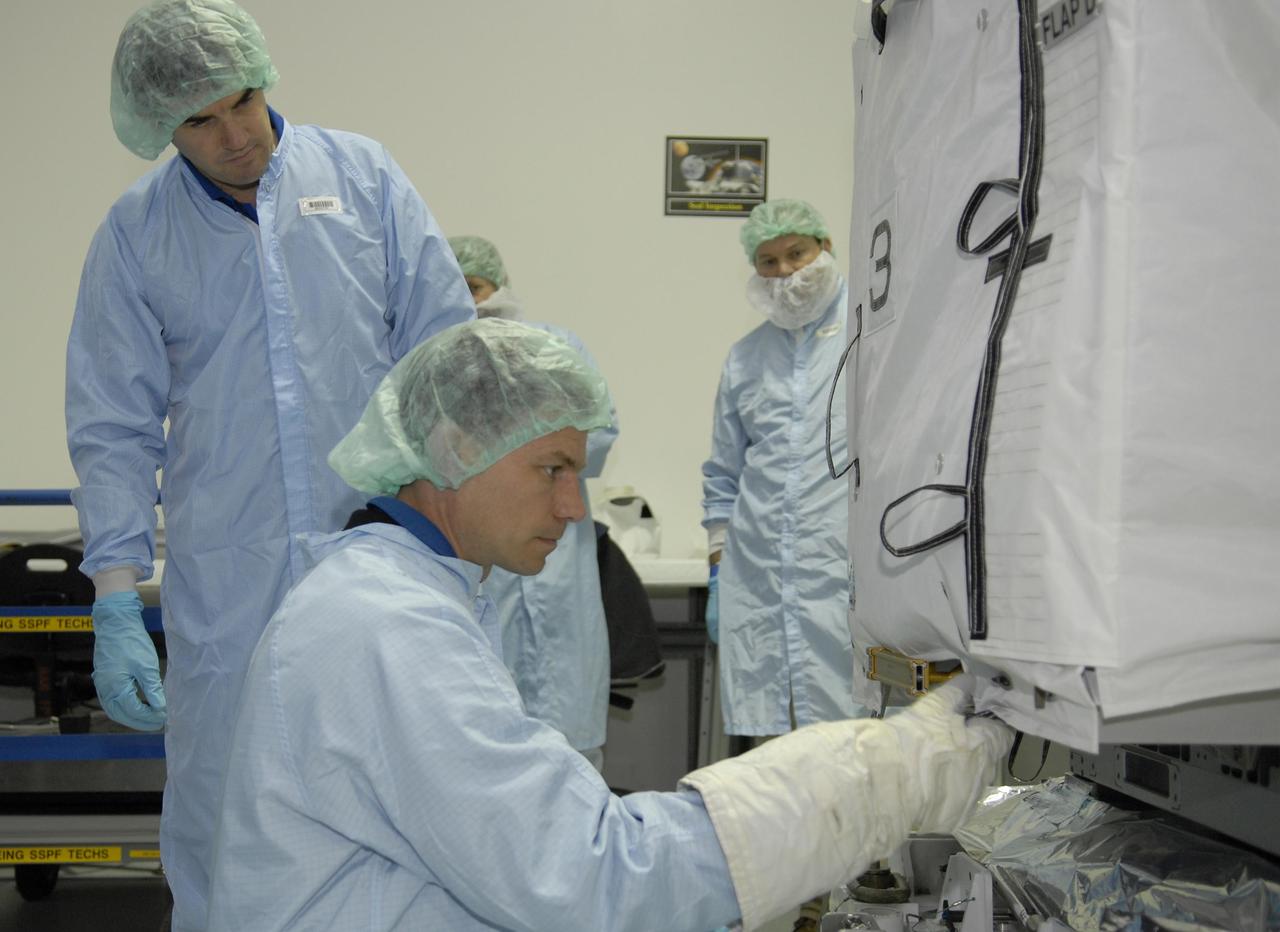
KENNEDY SPACE CENTER, FLA. -- In the Space Station Processing Facility, STS-122 crew members inspect the Multi-Purpose Experiment Support Structure - Non-Deployable (MPESS-ND), part of the payload on their mission. In the foreground are Mission Specialists Rex Walheim (left) and Stan Love. The crew is participating in a crew equipment interface test that provides opportunities for hands-on experience with payloads and equipment. The other crew members are Commander Steve Frick, Pilot Alan Poindexter and Mission Specialists Leland Melvin and Hans Schlegel, who represents the European Space Agency. The 24th mission to the International Space Station, STS-122 will also include the Columbus European Laboratory. Launch of STS-122 on Space Shuttle Discovery is scheduled no earlier than October. Photo credit: NASA/Kim Shiflett
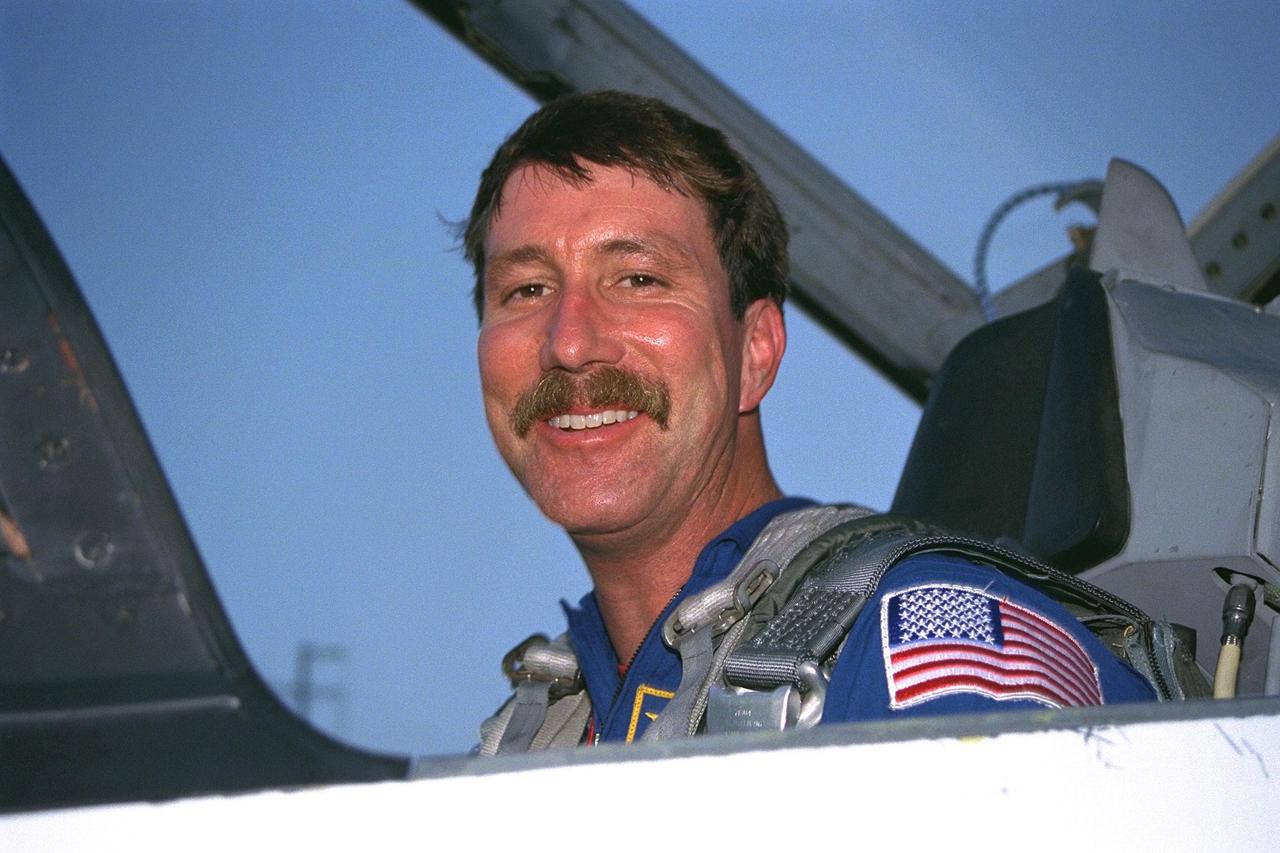
STS-85 Pilot Kent V. Rominger poses in his T-38 jet trainer after landing with other members of the flight crew at KSC’s Shuttle Landing Facility from NASA’s Johnson Space Center to begin Terminal Countdown Demonstration Test (TCDT) activities for that mission. The TCDT includes a dress rehearsal of the launch countdown. The STS-85 mission is now targeted for Aug. 7. The primary payload aboard the Space Shuttle orbiter Discovery is the Cryogenic Infrared Spectrometers and Telescopes for the Atmosphere-2 (CRISTA-SPAS-2). Other STS-85 payloads include the Manipulator Flight Demonstration (MFD), nd Technology Applications and Science-1 (TAS-1) and International Extreme Ultraviolet Hitchhiker-2 (IEH-2) experiments
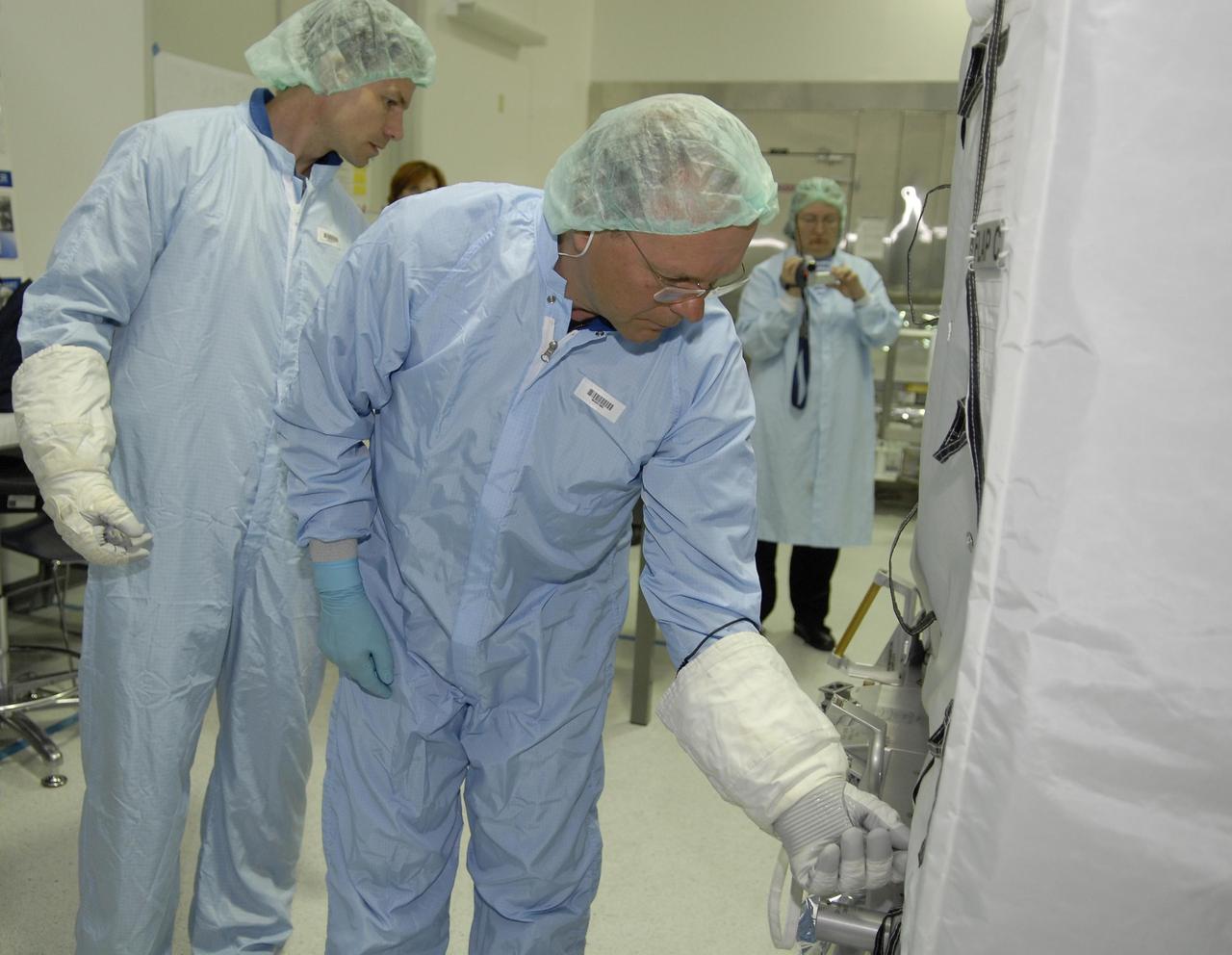
KENNEDY SPACE CENTER, FLA. -- In the Space Station Processing Facility, STS-122 crew members inspect the Multi-Purpose Experiment Support Structure - Non-Deployable (MPESS-ND), part of the payload on their mission. Here, Mission Specialist Stan Love (left) and Commander Steve Frick get a close look. The crew is participating in a crew equipment interface test that provides opportunities for hands-on experience with payloads and equipment. The other crew members are Pilot Alan Poindexter and Mission Specialists Rex Walheim, Leland Melvin and Hans Schlegel, who represents the European Space Agency. The 24th mission to the International Space Station, STS-122 will also include the Columbus European Laboratory. Launch of STS-122 on Space Shuttle Discovery is scheduled no earlier than October. Photo credit: NASA/Kim Shiflett

From left to right, U.S. Senator John Boozman (R-AR), U.S. Senator John Hoeven (R-ND), U.S. Senator Tammy Baldwin (D-WI), U.S. Senator Patty Murray, (D-Wash.), NASA astronauts Reid Wiseman, commander; Victor Glover, pilot; CSA (Canadian Space Agency) astronaut Jeremy Hansen, mission specialist; NASA astronaut Christina Koch, mission specialist; U.S. Senator Susan Collins (R-ME); and U.S. Senator Jerry Moran (R-Kan.) pose for a photo at an event at the Dirksen Senate Office Building, Tuesday, May 12, 2026, in Washington. NASA’s Artemis II mission took Wiseman, Glover, Koch, and Hansen on a nearly 10-day journey around the Moon and back to Earth in April 2026. Photo Credit: (NASA/Aubrey Gemignani)

KENNEDY SPACE CENTER, FLA. -- In the Space Station Processing Facility, STS-122 crew members manipulate the cover on the Multi-Purpose Experiment Support Structure - Non-Deployable (MPESS-ND), part of the payload on their mission. Seen here is (left) Mission Specialist Stan Love.. The crew is participating in a crew equipment interface test that provides opportunities for hands-on experience with payloads and equipment. Other crew members are Commander Steve Frick, Pilot Alan Poindexter and Mission Specialists Rex Walheim, Leland Melvin and Hans Schlegel, who represents the European Space Agency. The 24th mission to the International Space Station, STS-122 will also include the Columbus European Laboratory. Launch of STS-122 on Space Shuttle Discovery is scheduled no earlier than October. Photo credit: NASA/Kim Shiflett
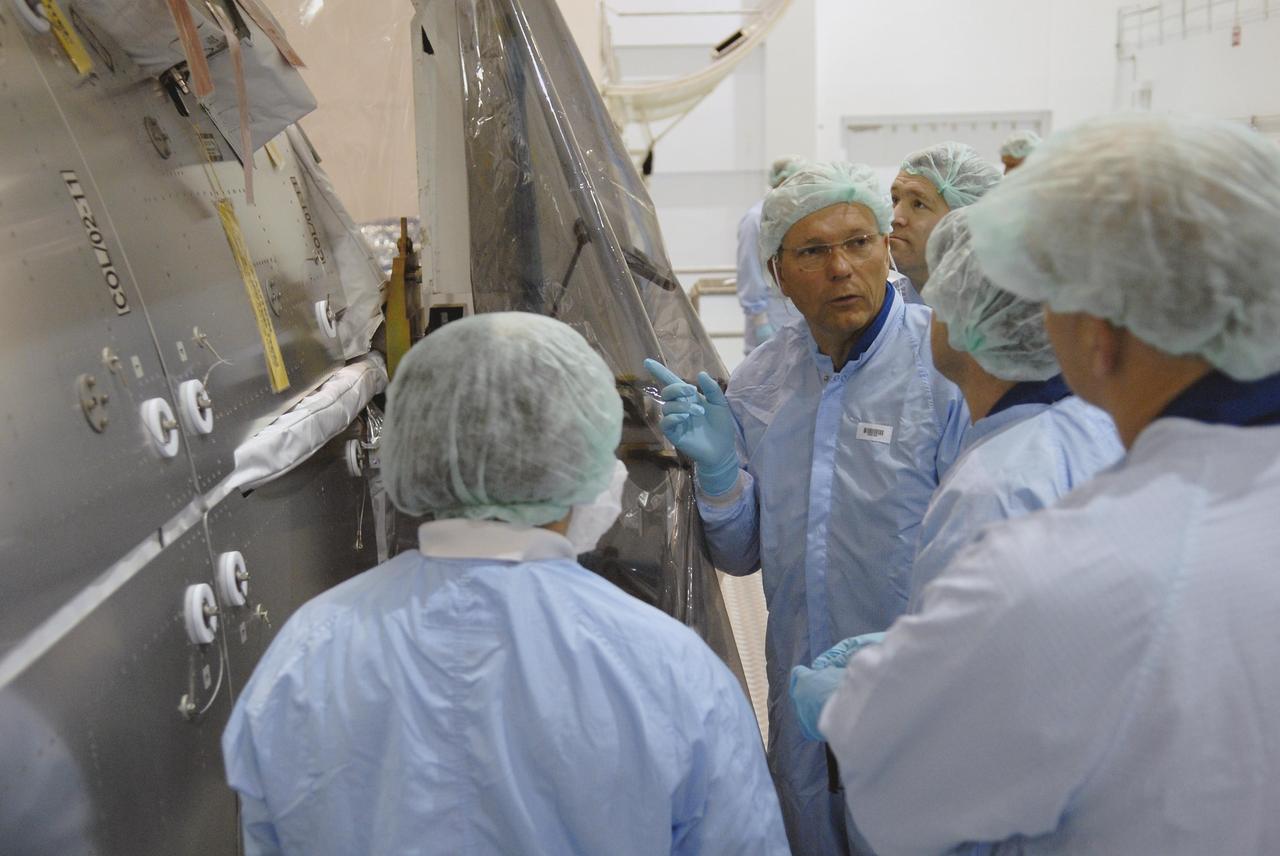
KENNEDY SPACE CENTER, FLA. -- In the Space Station Processing Facility, STS-122 crew members inspect the Columbus European Laboratory, part of the payload on their mission. Seen here is Commander Steve Frick. The crew is participating in a crew equipment interface test that provides opportunities for hands-on experience with payloads and equipment. The other crew members are Pilot Alan Poindexter and Mission Specialists Rex Walheim, Stan Love, Leland Melvin and Hans Schlegel, who represents the European Space Agency. The 24th mission to the International Space Station, STS-122 will also include the Multi-Purpose Experiment Support Structure - Non-Deployable (MPESS-ND). Launch of STS-122 on Space Shuttle Discovery is scheduled no earlier than October. Photo credit: NASA/Kim Shiflett

KENNEDY SPACE CENTER, FLA. -- In the Space Station Processing Facility, STS-122 crew members manipulate the cover on the Multi-Purpose Experiment Support Structure - Non-Deployable (MPESS-ND), part of the payload on their mission. Seen here are Mission Specialist Rex Walheim (left) and Commander Steve Frick (right). The crew is participating in a crew equipment interface test that provides opportunities for hands-on experience with payloads and equipment. The other crew members are Pilot Alan Poindexter and Mission Specialists Stan Love, Leland Melvin and Hans Schlegel, who represents the European Space Agency. The 24th mission to the International Space Station, STS-122 will also include the Columbus European Laboratory. Launch of STS-122 on Space Shuttle Discovery is scheduled no earlier than October. Photo credit: NASA/Kim Shiflett

KENNEDY SPACE CENTER, FLA. -- In the Space Station Processing Facility, STS-122 crew members get a close look at the Multi-Purpose Experiment Support Structure - Non-Deployable (MPESS-ND), part of the payload on their mission. Seen here in the foreground are Mission Specialists Stan Love (left) and Rex Walheim. The crew is participating in a crew equipment interface test that provides opportunities for hands-on experience with payloads and equipment. The other crew members are Commander Steve Frick, Pilot Alan Poindexter and Mission Specialists Leland Melvin and Hans Schlegel, who represents the European Space Agency. The 24th mission to the International Space Station, STS-122 will also include the Columbus European Laboratory. Launch of STS-122 on Space Shuttle Discovery is scheduled no earlier than October. Photo credit: NASA/Kim Shiflett
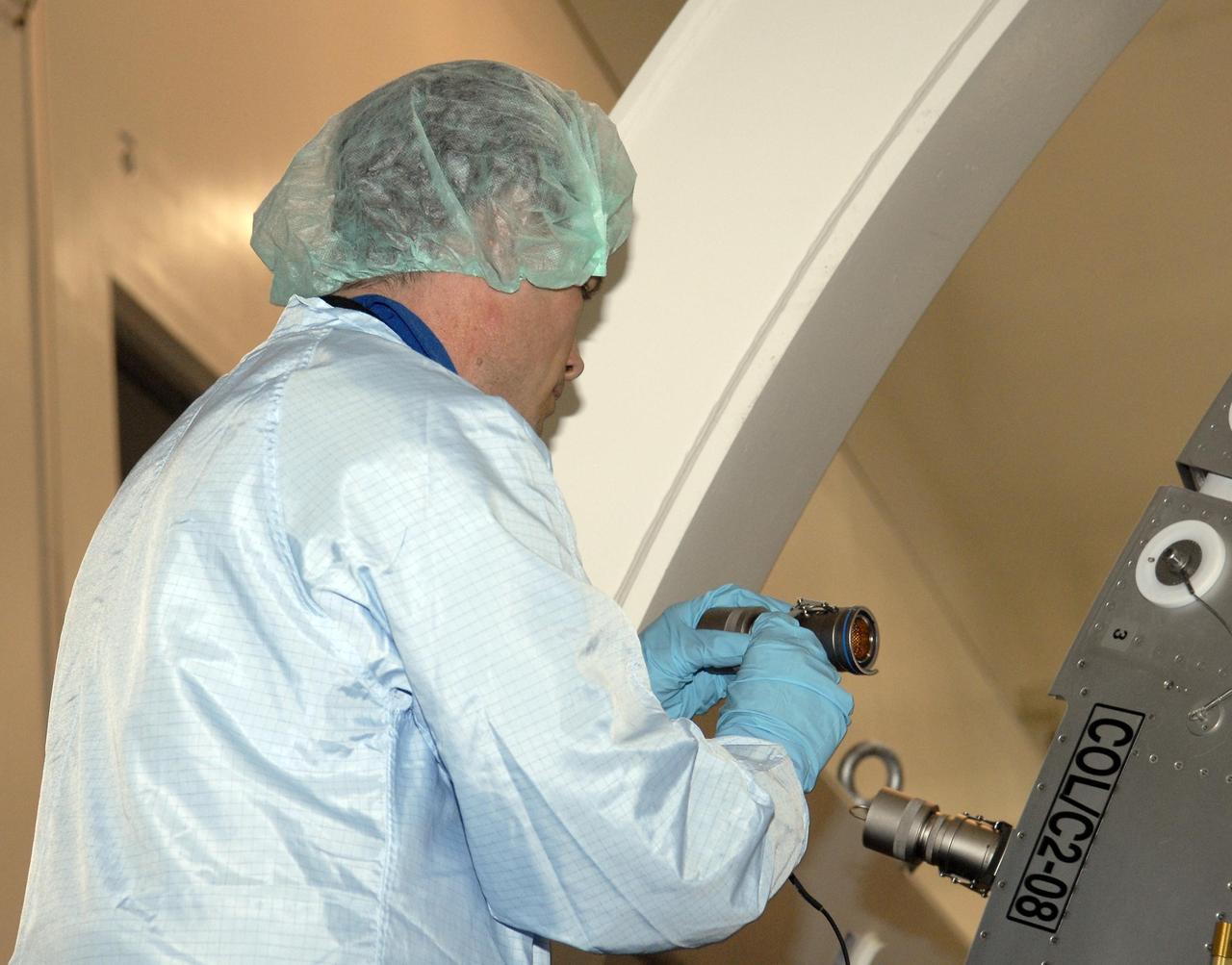
KENNEDY SPACE CENTER, FLA. -- In the Space Station Processing Facility, STS-122 crew members inspect the Columbus European Laboratory, part of the payload on their mission. Here, Mission Specialist Rex Walheim closely examines a component of the laboratory. The crew is participating in a crew equipment interface test that provides opportunities for hands-on experience with payloads and equipment. The other crew members are Commander Steve Frick, Pilot Alan Poindexter and Mission Specialists Stan Love, Leland Melvin and Hans Schlegel, who represents the European Space Agency. The 24th mission to the International Space Station, STS-122 will also include the Multi-Purpose Experiment Support Structure - Non-Deployable (MPESS-ND). Launch of STS-122 on Space Shuttle Discovery is scheduled no earlier than October. Photo credit: NASA/Kim Shiflett
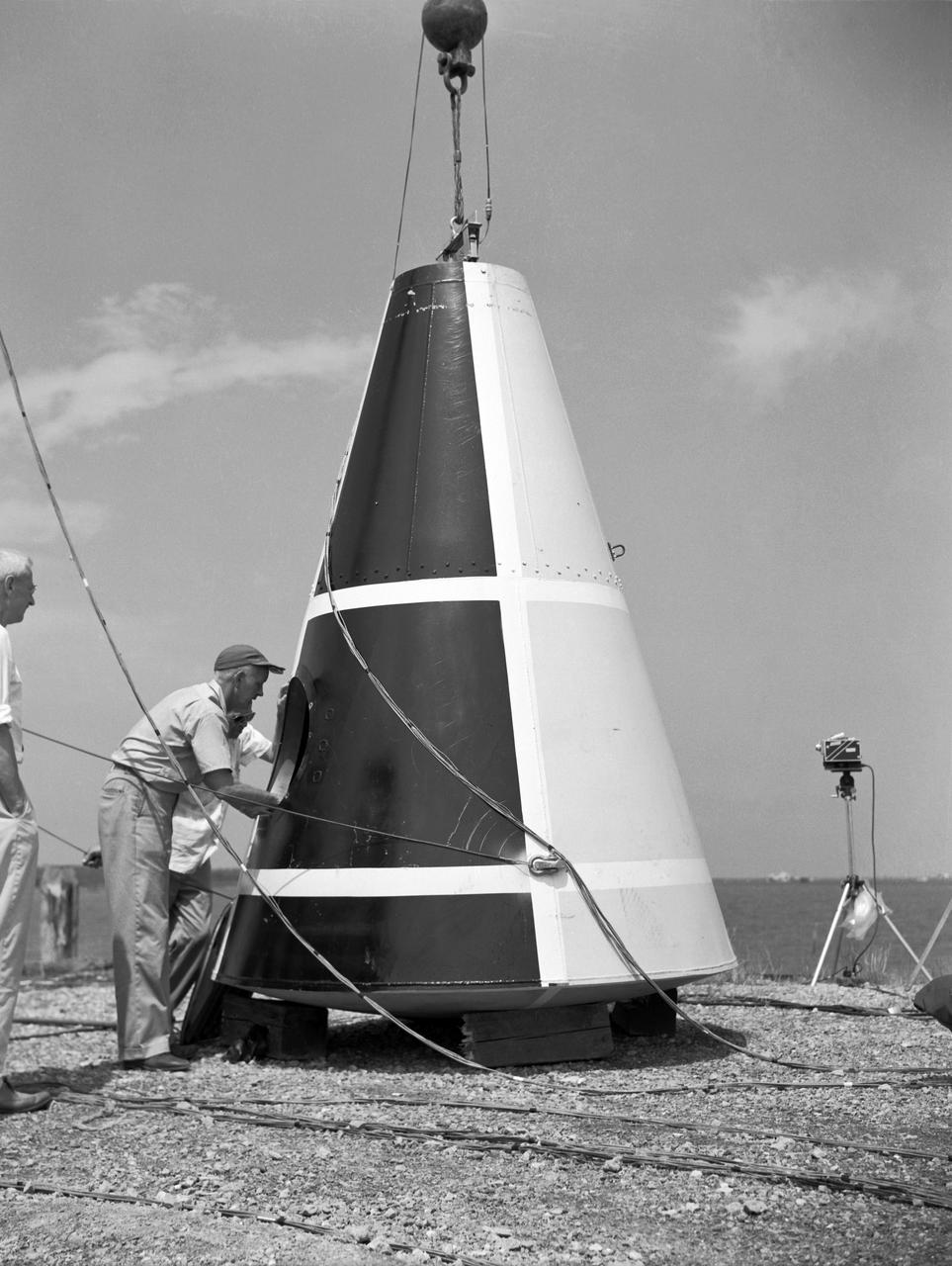
Photographed on: 08 05 1958. -- Impact test conducted by Langley's Hydrodynamics Division. The Division conducted a series of impact studies with full scale and model capsules of the original capsule shape A. Joseph Shortal wrote (Vol. 3, p. 16): The basic design of the capsule was made by M.A. Faget and his coworkers at PARD during the winter of 1957-1958. It was natural, then, that extensive use was made of the facilities at Wallops during the development of the spacecraft. The tests at Wallops consisted of 26 full-size capsules, either launched from the ground by rocket power or dropped from airplanes at high altitude and 28 scaled models, either rocket boosted or released from balloons. Emphasis in the Wallops program was on dynamic stability and aerodynamic heating of the capsule, and effectiveness of the pilot-escape and parachute-recovery systems. The biggest part of the Wallops program was the series of full-size capsules, rocket launched with the Little Joe booster, developed especially for Mercury. -- Published in Joseph A. Shortal, History of Wallops Station: Origins and Activities Through 1949, (Wallops Island, VA: National Aeronautics and Space Administration, Wallops Station, nd), Comment Edition.
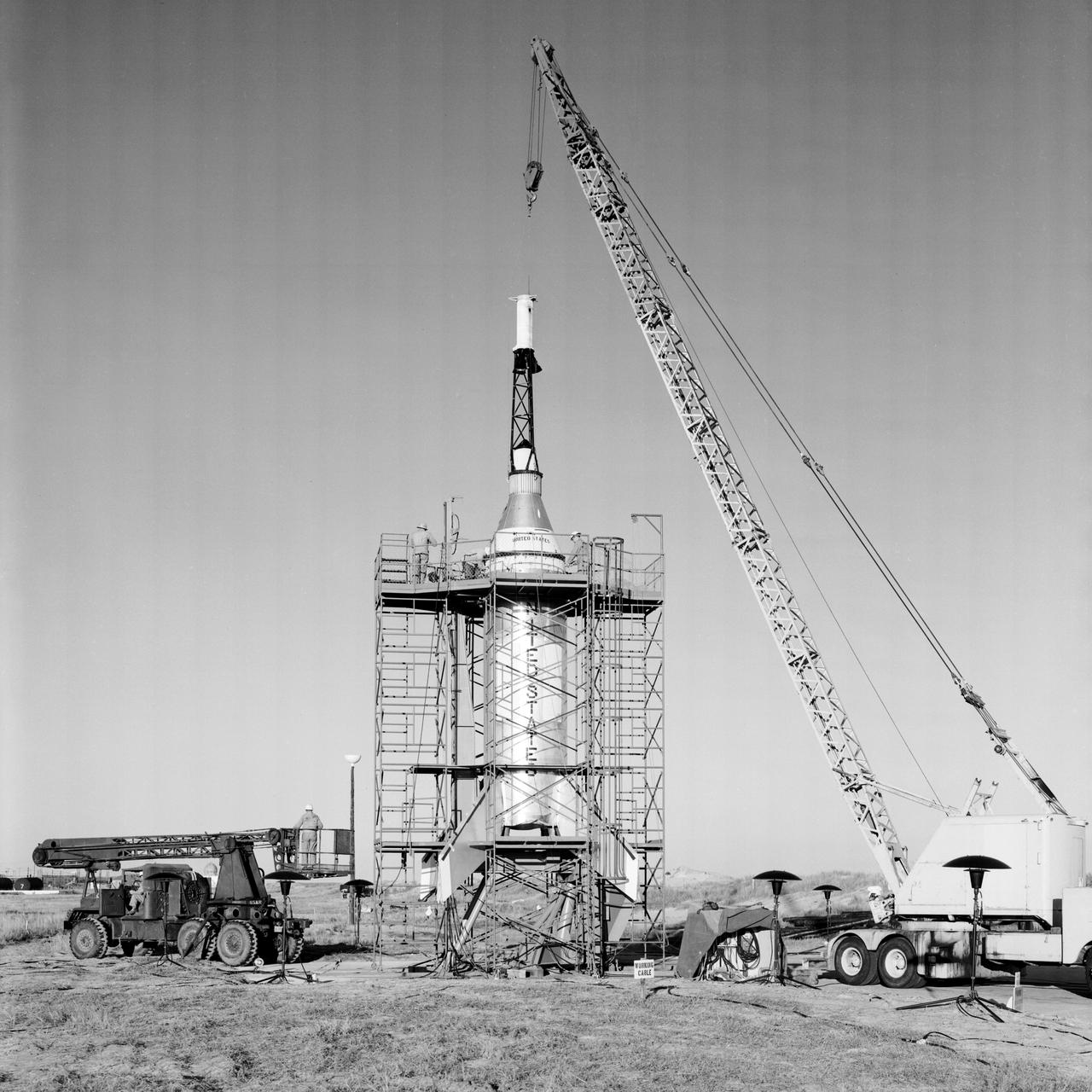
The Mercury capsule and escape tower are being lowered onto the Little Joe booster for launch on August 21, 1959. Joseph Shortal described this as follows (vol. 3, p. 33): The Little Joe booster was assembled at Wallops on its special launcher in a vertical attitude. It is shown in the on the left with the work platform in place. The launcher was located on a special concrete slab in Launching Area 1. The capsule was lowered onto the booster by crane.... After the assembly was completed, the scaffolding was disassembled and the launcher pitched over to its normal launch angle of 80 degrees.... Little Joe had a diameter of 80 inches and an overall length, including the capsule and escape tower of 48 feet. The total weight at launch was about 43,000 pounds. The overall span of the stabilizing fins was 21.3 feet. Although in comparison with the overall Mercury Project, Little Joe was a simple undertaking, the fact that an attempt was made to condense a normal two-year project into a 6-month one with in house labor turned it into a major undertaking for Langley. -- Published in Joseph A. Shortal, History of Wallops Station: Origins and Activities Through 1949, (Wallops Island, VA: National Aeronautics and Space Administration, Wallops Station, nd), Comment Edition.
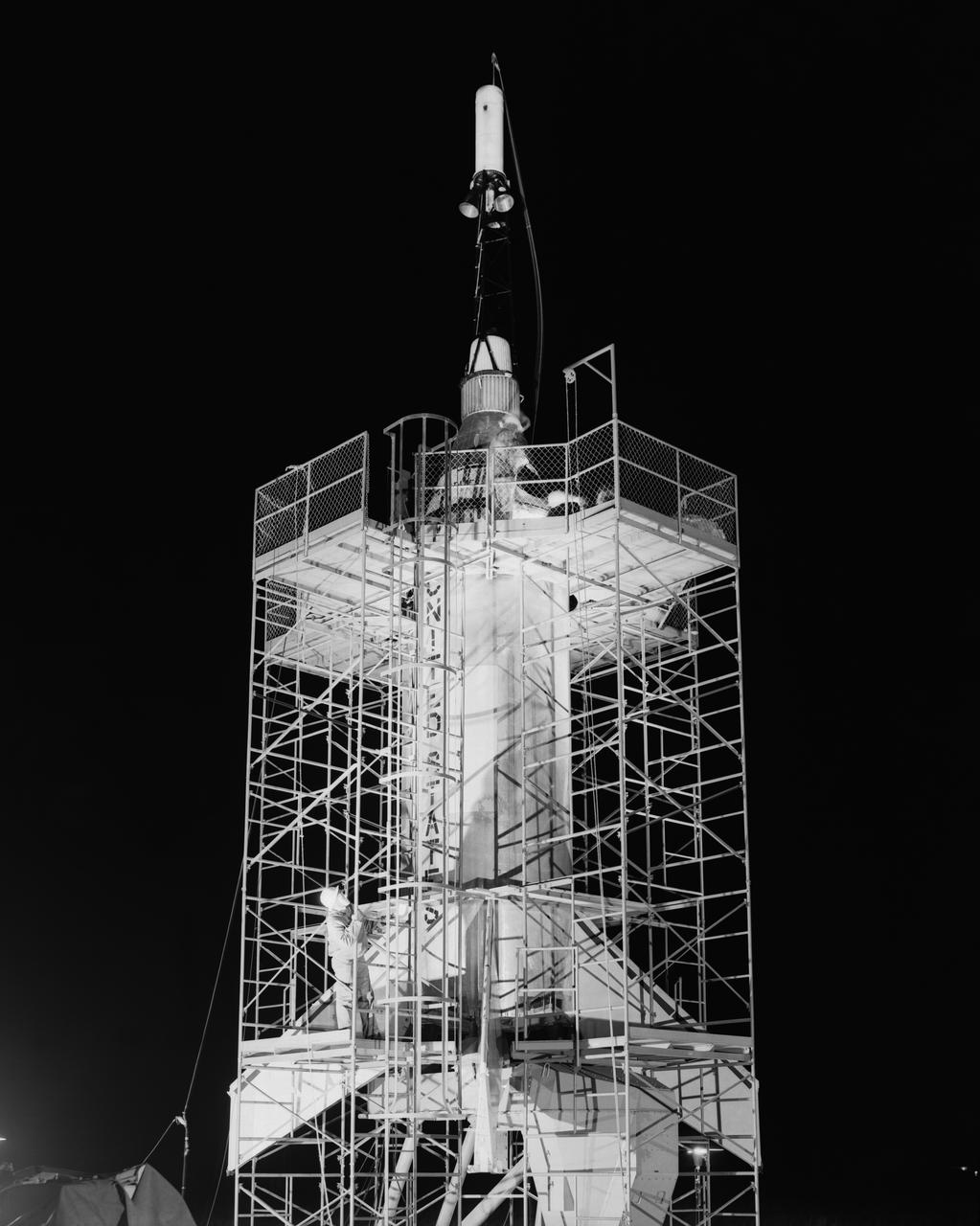
The Mercury capsule and escape tower are being lowered onto the Little Joe booster for launch on August 21, 1959. Joseph Shortal described this as follows (vol. 3, p. 33): The Little Joe booster was assembled at Wallops on its special launcher in a vertical attitude. It is shown in the on the left with the work platform in place. The launcher was located on a special concrete slab in Launching Area 1. The capsule was lowered onto the booster by crane.... After the assembly was completed, the scaffolding was disassembled and the launcher pitched over to its normal launch angle of 80 degrees.... Little Joe had a diameter of 80 inches and an overall length, including the capsule and escape tower of 48 feet. The total weight at launch was about 43,000 pounds. The overall span of the stabilizing fins was 21.3 feet. Although in comparison with the overall Mercury Project, Little Joe was a simple undertaking, the fact that an attempt was made to condense a normal two-year project into a 6-month one with in house labor turned it into a major undertaking for Langley. -- Published in Joseph A. Shortal, History of Wallops Station: Origins and Activities Through 1949, (Wallops Island, VA: National Aeronautics and Space Administration, Wallops Station, nd), Comment Edition.
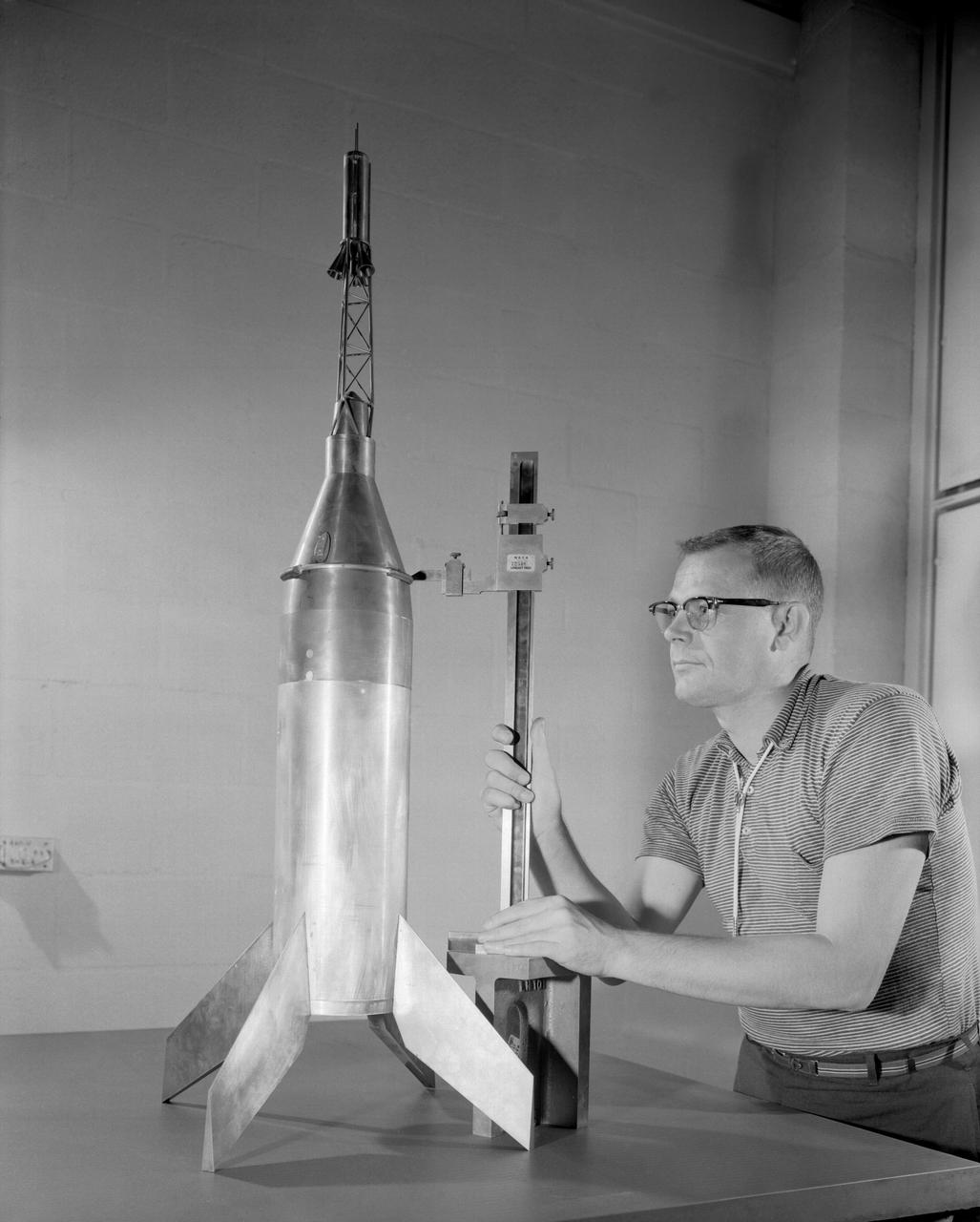
Publicity photograph of a technician measuring a wind tunnel model of the Little Joe test vehicle. Joseph Shortal noted that (vol. 3, p. 29): The largest project at Wallops in support of Mercury was the Little Joe project, designed to qualify the abort-escape system under flight conditions. James Hansen (p. 47) writes: STG engineers Max Faget and Paul Purser, then of Langley's PARD, had conceived Little Joe as a space capsule test vehicle even before the establishment of NASA and the formation of the STG. Girlruth understood the importance of the Little Joe tests: We had to be sure there were no serious performance and operational problems that we had simply not thought of in such a new and radical type of flight vehicle. -- Published in James R. Hansen, Spaceflight Revolution: NASA Langley Research Center From Sputnik to Apollo, (Washington: NASA, 1995), p. 47 Joseph A. Shortal, History of Wallops Station: Origins and Activities Through 1949, (Wallops Island, VA: National Aeronautics and Space Administration, Wallops Station, nd), Comment Edition.

ISS030-E-059433 (19 Jan. 2012) --- Ice cover on Lake Sakakawea in North Dakota is featured in this image photographed by an Expedition 30 crew member on the International Space Station. This striking photograph illustrates the harsh winter conditions frequently experienced in North Dakota. Ice covers the surface of northwestern Lake Sakakawea, a reservoir on the Missouri River in west-central North Dakota. A local weather station near New Town, ND reported an air temperature of approximately -24 °C (-11 °F), with a wind chill of approximately -32 °C (-25 °F) at 10:36 local time – six minutes before the image was taken. In addition to the grey ice on the lake, a dusting of white snow highlights agricultural fields to the north and northeast, as well as fissures and irregularities in the ice surfaces. For a sense of scale, the arms of the lake to either side of New Town are approximately 10 kilometers (6 miles) apart. Lake Sakakawea is named—in the Hidatsa language—for the Shoshone woman generally known as Sacagawea, or “Bird Woman”. She accompanied the Lewis and Clark Expedition in 1805–1806 as an interpreter and guide. The lake was created following the completion of Garrison Dam (not shown) on the Missouri River in 1954. With a surface area of approximately 148,924 hectares (368,000 acres) and length of 286 kilometers (178 miles), Lake Sakakawea is one of the largest artificial reservoirs in the USA.
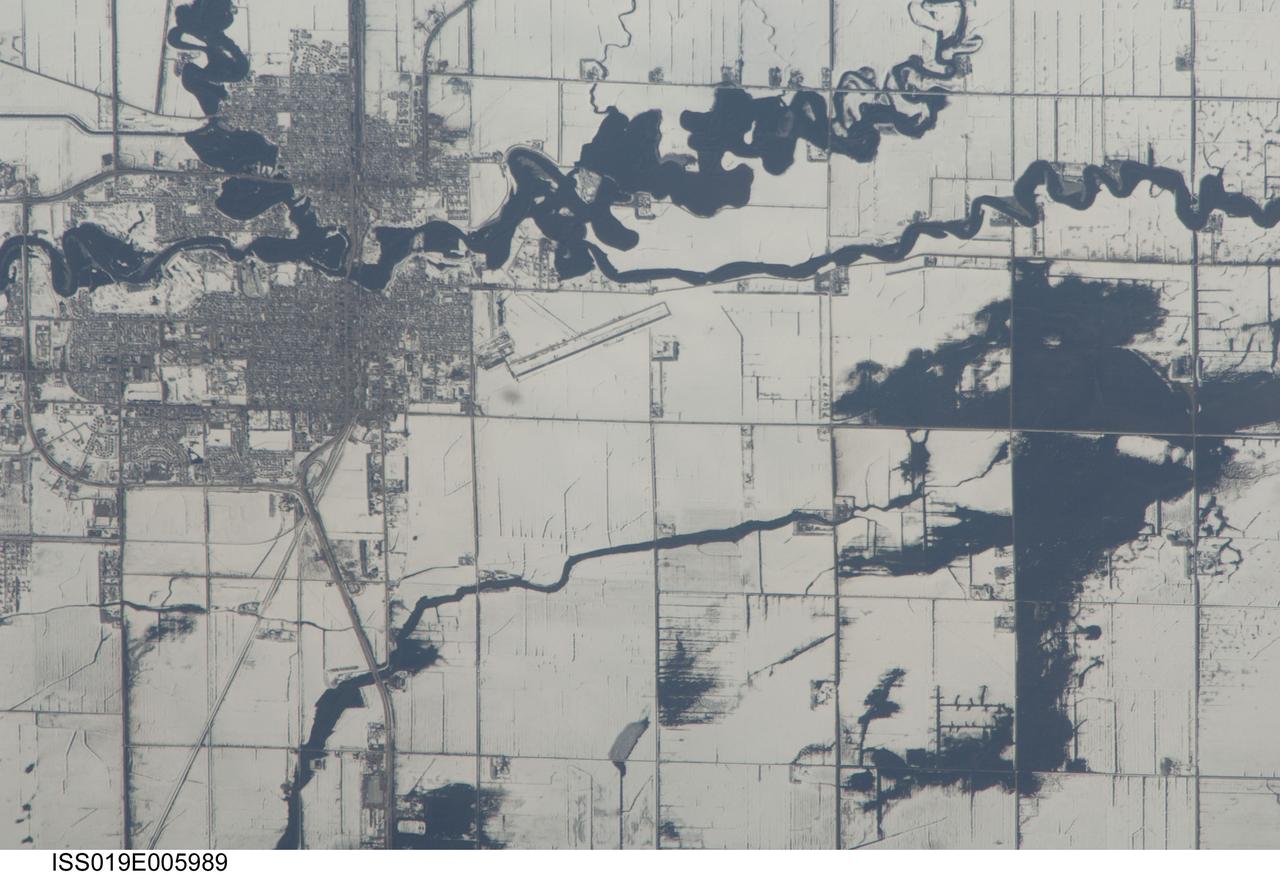
ISS019-E-005989 (9 April 2009) --- Red River floods in North Dakota and Minnesota are featured in this image photographed by an Expedition 19 crewmember on the International Space Station. The Red River, which flows north between North Dakota and Minnesota, flooded for a second time on the day this image was taken (9 April 2009). Two weeks earlier the river had crested at very high levels. The new floodwaters in the Red River, and especially in the less well-drained meandering tributaries east of the river, appear as black shapes against a snowy agricultural landscape defined by rectangular fields. The largest irregular black patches are the flooded low parts of fields along a canalized western tributary of the Red River (right). The city-block patterns of Wahpeton ND and Breckenridge MN, opposite one another on the banks of the Red River, stand out as dark gray patches against the snow at image top left. The main runway of the Henry Stern Airport lies angled northwest directly south of Wahpeton, and its 1.3 kilometers runway length gives scale to the view. Access roads to the agricultural fields tend to follow an orthogonal pattern, while larger roads leading to the cities cut across this pattern (lower left, near Wahpeton). A subtle pattern of drainage ditches and plow lines appear as thin parallel lines throughout fields in the scene.
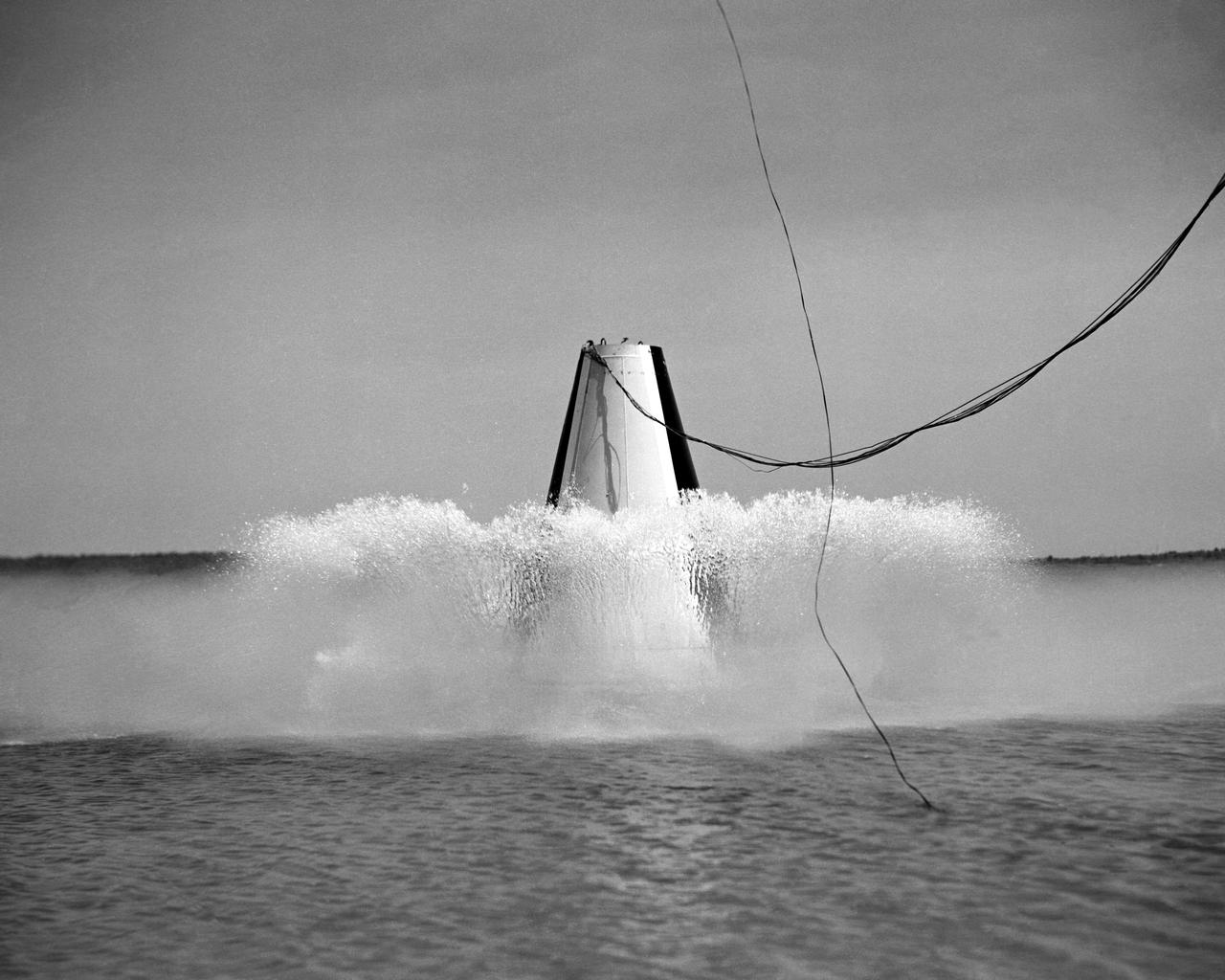
Photographed on: 08 05 1958. -- Impact test conducted by Langley's Hydrodynamics Division. The Division conducted a series of impact studies with full scale and model capsules of the original capsule shape A. Joseph Shortal wrote (Vol. 3, p. 16): The basic design of the capsule was made by M.A. Faget and his coworkers at PARD during the winter of 1957-1958. It was natural, then, that extensive use was made of the facilities at Wallops during the development of the spacecraft. The tests at Wallops consisted of 26 full-size capsules, either launched from the ground by rocket power or dropped from airplanes at high altitude and 28 scaled models, either rocket boosted or released from balloons. Emphasis in the Wallops program was on dynamic stability and aerodynamic heating of the capsule, and effectiveness of the pilot-escape and parachute-recovery systems. The biggest part of the Wallops program was the series of full-size capsules, rocket launched with the Little Joe booster, developed especially for Mercury. -- Published in Joseph A. Shortal, History of Wallops Station: Origins and Activities Through 1949, (Wallops Island, VA: National Aeronautics and Space Administration, Wallops Station, nd), Comment Edition.
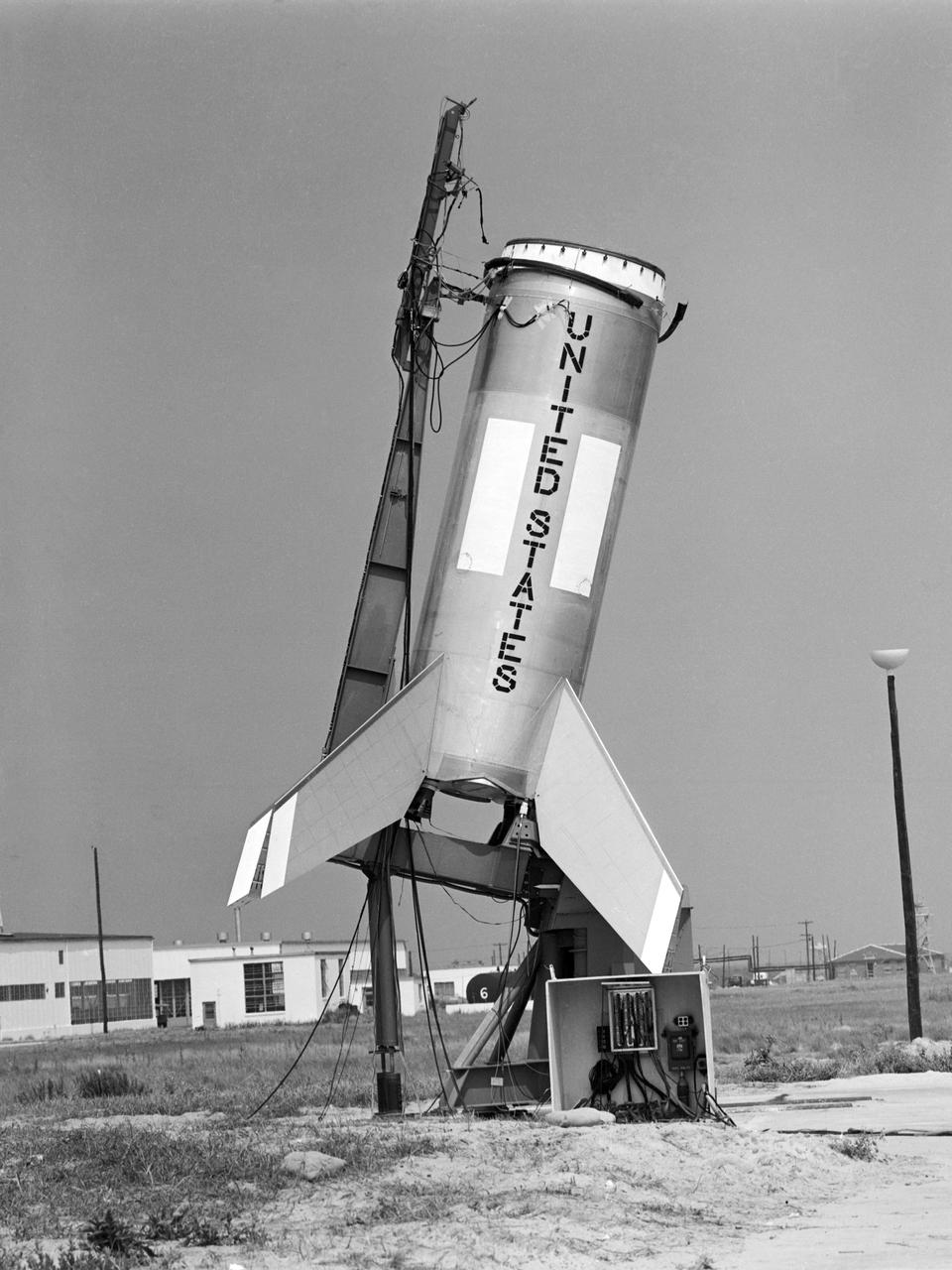
Testing of the Little Joe booster on its launcher. The launcher is positioned at its normal launch angle of 80 degrees. Joseph Shortal wrote (vol. 3, p. 33): The Little Joe booster was assembled at Wallops on its special launcher in a vertical attitude. It is shown in the on the left with the work platform in place. The launcher was located on a special concrete slab in Launching Area 1. The capsule was lowered onto the booster by crane.... After the assembly was completed, the scaffolding was disassembled and the launcher pitched over to its normal launch angle of 80 degrees.... Little Joe had a diameter of 80 inches and an overall length, including the capsule and escape tower of 48 feet. The total weight at launch was about 43,000 pounds. The overall span of the stabilizing fins was 21.3 feet. Although in comparison with the overall Mercury Project, Little Joe was a simple undertaking, the fact that an attempt was made to condense a normal two-year project into a 6-month one with in house labor turned it into a major undertaking for Langley. -- Published in Joseph A. Shortal, History of Wallops Station: Origins and Activities Through 1949, (Wallops Island, VA: National Aeronautics and Space Administration, Wallops Station, nd), Comment Edition.

Assembling the Little Joe capsules. The capsules were manufactured in-house by Langley technicians. Three capsules are shown here in various stages of assembly. The escape tower and rocket motors shown on the completed capsule would be removed before shipping and finally assembly for launching at Wallops Island. Joseph Shortal wrote (vol. 3, p. 32): Design of the Little Joe capsules began at Langley before McDonnell started on the design of the Mercury capsule and was, therefore, a separate design. Although it was not designed to carry a man, it did have to carry a monkey. It had to meet the weight and center of gravity requirements of Mercury and withstand the same aerodynamic loads during the exit trajectory. Although in comparison with the overall Mercury Project, Little Joe was a simple undertaking, the fact that an attempt was made to condense a normal two-year project into a 6-month one with in house labor turned it into a major undertaking for Langley. Project Mercury: Little Joe: Boilerplate Mercury spacecraft undergo fabrication at the shops of the Langley Research Center. They will launched atop Little Joe rockets to test the spacecraft recovery systems. -- Published in Joseph A. Shortal, History of Wallops Station: Origins and Activities Through 1949, (Wallops Island, VA: National Aeronautics and Space Administration, Wallops Station, nd), Comment Edition. L59-4947 Technicians prepare a Little Joe launch vehicle prototype for the Mercury space program, 1959. Photograph published in Winds of Change, 75th Anniversary NASA publication, page 76, by James Schultz

Assembling the Little Joe capsules. The capsules were manufactured in-house by Langley technicians. Three capsules are shown here in various stages of assembly. The escape tower and rocket motors shown on the completed capsule would be removed before shipping and finally assembly for launching at Wallops Island. Joseph Shortal wrote (vol. 3, p. 32): Design of the Little Joe capsules began at Langley before McDonnell started on the design of the Mercury capsule and was, therefore, a separate design. Although it was not designed to carry a man, it did have to carry a monkey. It had to meet the weight and center of gravity requirements of Mercury and withstand the same aerodynamic loads during the exit trajectory. Although in comparison with the overall Mercury Project, Little Joe was a simple undertaking, the fact that an attempt was made to condense a normal two-year project into a 6-month one with in house labor turned it into a major undertaking for Langley. Project Mercury: Little Joe: Boilerplate Mercury spacecraft undergo fabrication at the shops of the Langley Research Center. They will launched atop Little Joe rockets to test the spacecraft recovery systems. -- Published in Joseph A. Shortal, History of Wallops Station: Origins and Activities Through 1949, (Wallops Island, VA: National Aeronautics and Space Administration, Wallops Station, nd), Comment Edition. L59-4947 Technicians prepare a Little Joe launch vehicle prototype for the Mercury space program, 1959. Photograph published in Winds of Change, 75th Anniversary NASA publication, page 76, by James Schultz
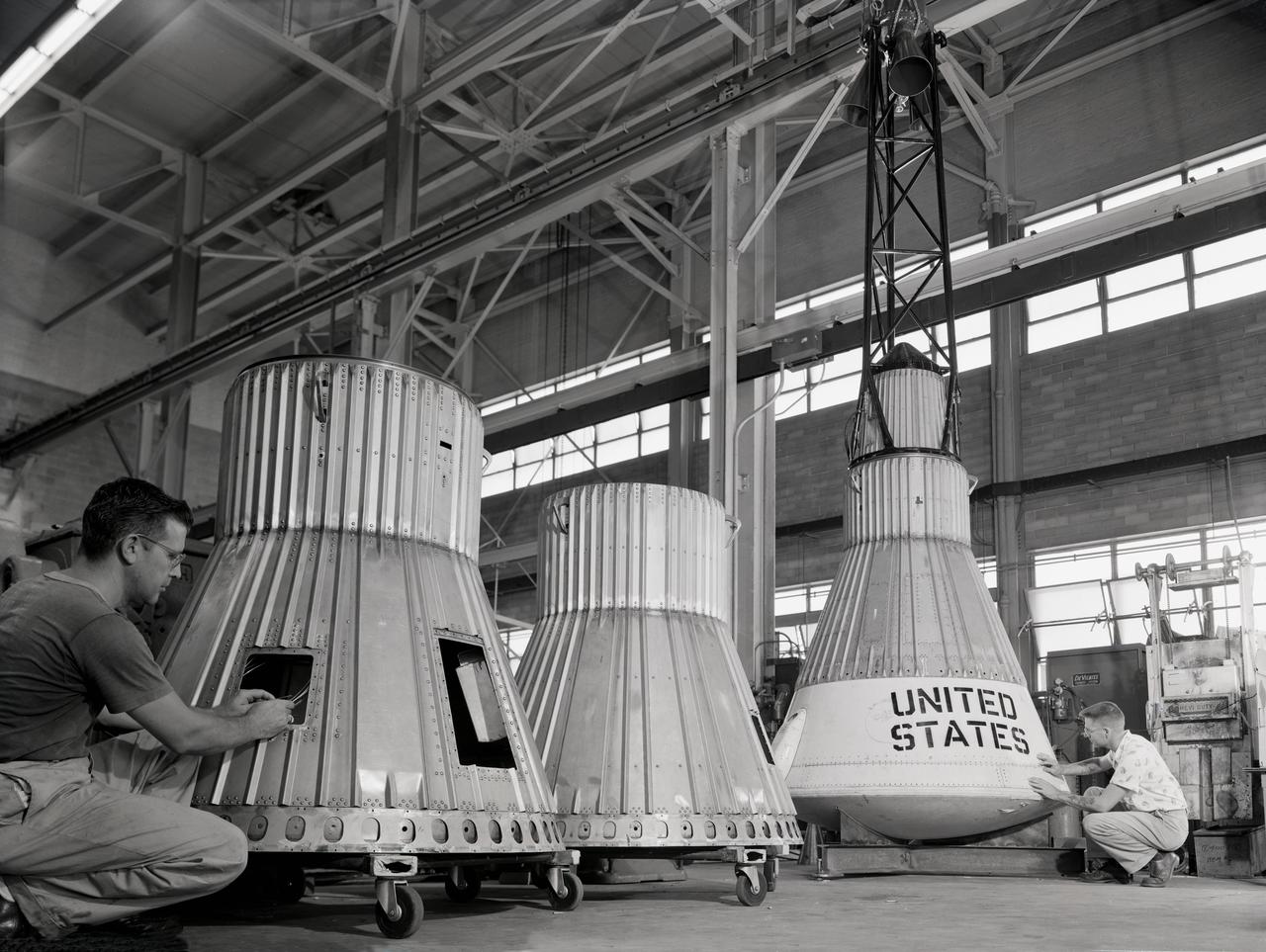
Assembling the Little Joe capsules. The capsules were manufactured in-house by Langley technicians. Three capsules are shown here in various stages of assembly. The escape tower and rocket motors shown on the completed capsule would be removed before shipping and finally assembly for launching at Wallops Island. Joseph Shortal wrote (vol. 3, p. 32): Design of the Little Joe capsules began at Langley before McDonnell started on the design of the Mercury capsule and was, therefore, a separate design. Although it was not designed to carry a man, it did have to carry a monkey. It had to meet the weight and center of gravity requirements of Mercury and withstand the same aerodynamic loads during the exit trajectory. Although in comparison with the overall Mercury Project, Little Joe was a simple undertaking, the fact that an attempt was made to condense a normal two-year project into a 6-month one with in house labor turned it into a major undertaking for Langley. Project Mercury: Little Joe: Boilerplate Mercury spacecraft undergo fabrication at the shops of the Langley Research Center. They will launched atop Little Joe rockets to test the spacecraft recovery systems. -- Published in Joseph A. Shortal, History of Wallops Station: Origins and Activities Through 1949, (Wallops Island, VA: National Aeronautics and Space Administration, Wallops Station, nd), Comment Edition. L59-4947 Technicians prepare a Little Joe launch vehicle prototype for the Mercury space program, 1959. Photograph published in Winds of Change, 75th Anniversary NASA publication, page 76, by James Schultz
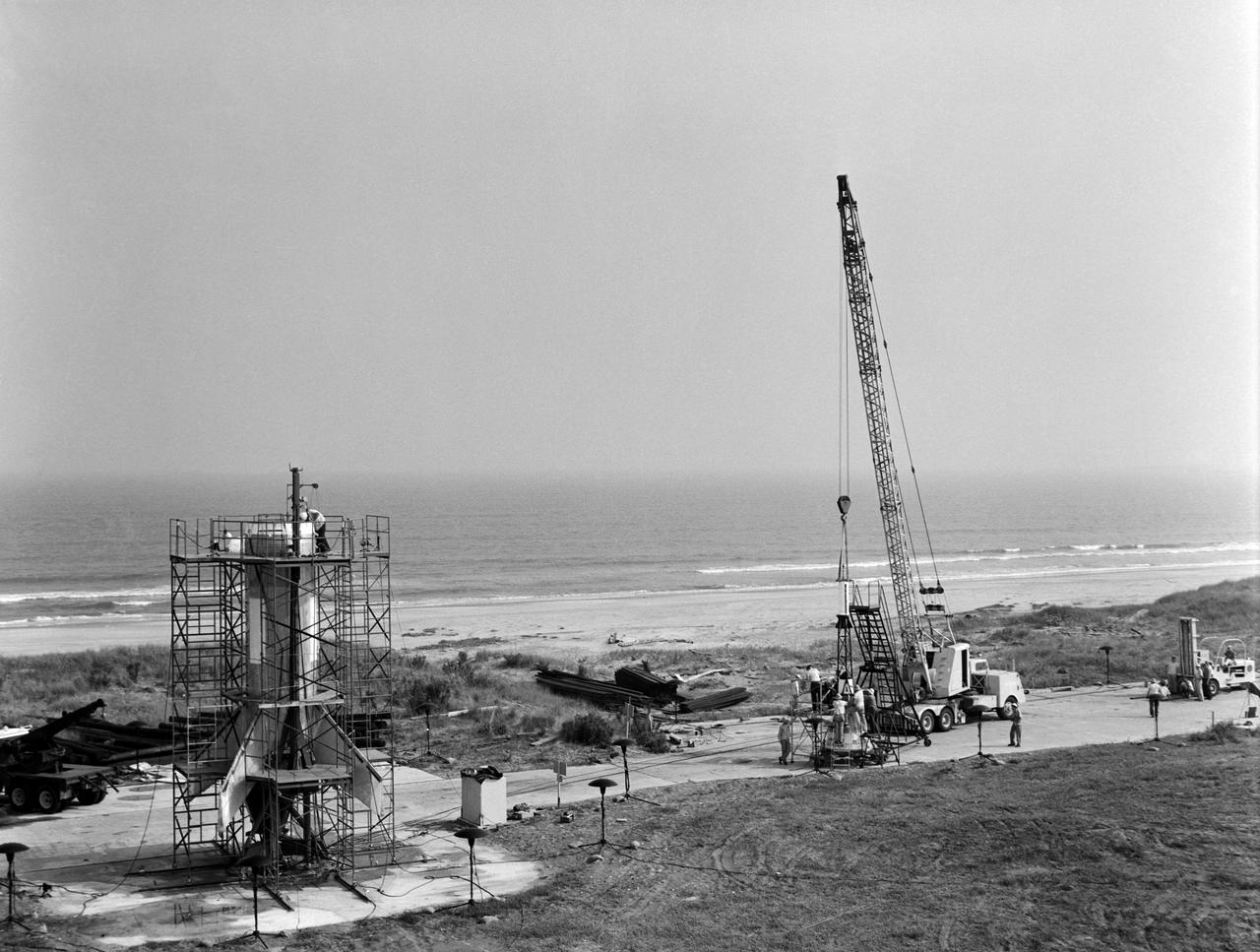
Technicians attach the escape tower to the Mercury capsule prior to assembly with Little Joe launcher, August 20, 1959. Joseph Shortal describe this as follows (vol. 3., p. 33): The escape tower and rocket motors were taken from the Mercury capsule production. The tower is shown being attached to the capsule.... The escape rocket was a Grand Central 1-KS-52000 motor with three canted nozzles. The tower-jettison motor was an Atlantic Research Corp. 1.4-KS-785 motor. This was the same design tested in a beach abort test...and had the offset thrust line as used in the beach abort test to insure that the capsule would get away from the booster in an emergency. The escape system weighed 1,015 pounds, including 236 pounds of ballast for stability. The Little Joe booster was assembled at Wallops on its special launcher in a vertical attitude. It is shown in the on the left with the work platform in place. The launcher was located on a special concrete slab in Launching Area 1. The capsule was lowered onto the booster by crane.... After the assembly was completed, the scaffolding was disassembled and the launcher pitched over to its normal launch angle of 80 degrees.... Little Joe had a diameter of 80 inches and an overall length, including the capsule and escape tower of 48 feet. The total weight at launch was about 43,000 pounds. The overall span of the stabilizing fins was 21.3 feet. Although in comparison with the overall Mercury Project, Little Joe was a simple undertaking, the fact that an attempt was made to condense a normal two-year project into a 6-month one with in house labor turned it into a major undertaking for Langley. -- Published in Joseph A. Shortal, History of Wallops Station: Origins and Activities Through 1949, (Wallops Island, VA: National Aeronautics and Space Administration, Wallops Station, nd), Comment Edition.
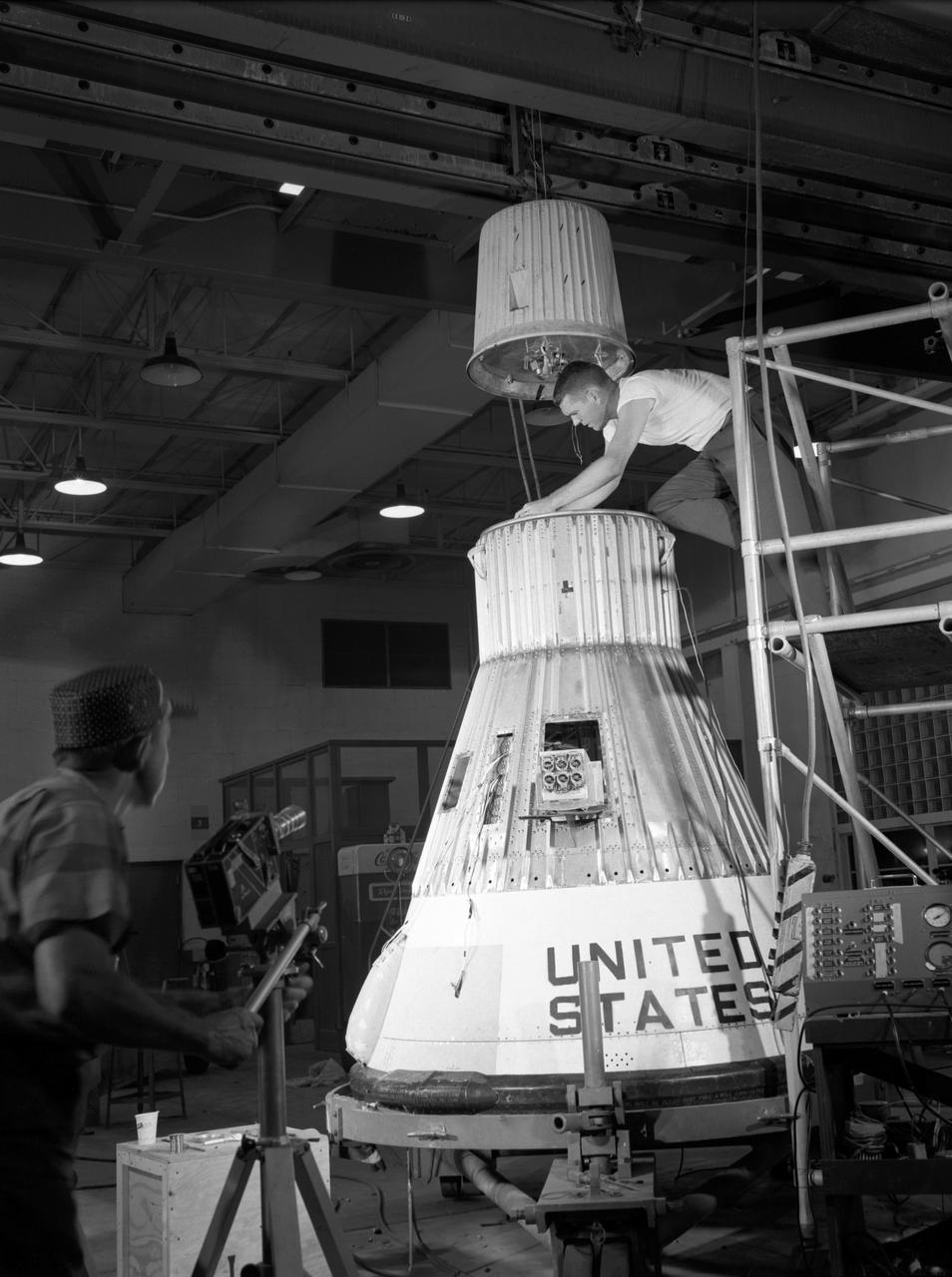
Technicians adjust the rocket motor during the attachment of the escape tower to the Mercury capsule prior to assembly with Little Joe launcher, August 20, 1959. Joseph Shortal wrote (vol. 3., p. 33): The escape tower and rocket motors were taken from the Mercury capsule production. The tower is shown being attached to the capsule.... The escape rocket was a Grand Central 1-KS-52000 motor with three canted nozzles. The tower-jettison motor was an Atlantic Research Corp. 1.4-KS-785 motor. This was the same design tested in a beach abort test...and had the offset thrust line as used in the beach abort test to insure that the capsule would get away from the booster in an emergency. The escape system weighed 1,015 pounds, including 236 pounds of ballast for stability. The Little Joe booster was assembled at Wallops on its special launcher in a vertical attitude. It is shown in the on the left with the work platform in place. The launcher was located on a special concrete slab in Launching Area 1. The capsule was lowered onto the booster by crane.... After the assembly was completed, the scaffolding was disassembled and the launcher pitched over to its normal launch angle of 80 degrees.... Little Joe had a diameter of 80 inches and an overall length, including the capsule and escape tower of 48 feet. The total weight at launch was about 43,000 pounds. The overall span of the stabilizing fins was 21.3 feet. Although in comparison with the overall Mercury Project, Little Joe was a simple undertaking, the fact that an attempt was made to condense a normal two-year project into a 6-month one with in house labor turned it into a major undertaking for Langley. -- Published in Joseph A. Shortal, History of Wallops Station: Origins and Activities Through 1949, (Wallops Island, VA: National Aeronautics and Space Administration, Wallops Station, nd), Comment Edition.
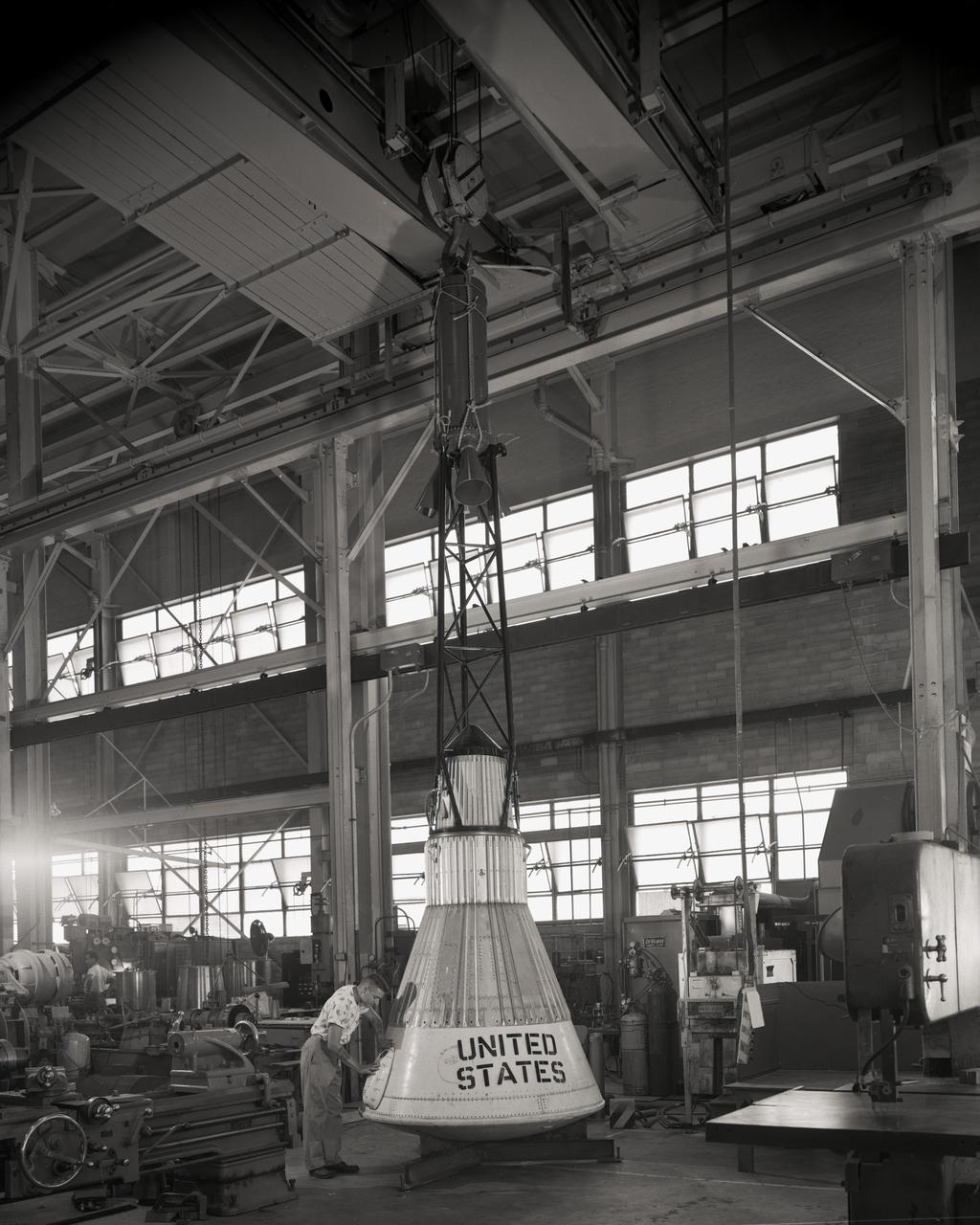
Assembling the Little Joe capsules. The capsules were manufactured in-house by Langley technicians. Three capsules are shown here in various stages of assembly. The escape tower and rocket motors shown on the completed capsule would be removed before shipping and finally assembly for launching at Wallops Island. Joseph Shortal wrote (vol. 3, p. 32): Design of the Little Joe capsules began at Langley before McDonnell started on the design of the Mercury capsule and was, therefore, a separate design. Although it was not designed to carry a man, it did have to carry a monkey. It had to meet the weight and center of gravity requirements of Mercury and withstand the same aerodynamic loads during the exit trajectory. Although in comparison with the overall Mercury Project, Little Joe was a simple undertaking, the fact that an attempt was made to condense a normal two-year project into a 6-month one with in house labor turned it into a major undertaking for Langley. Project Mercury: Little Joe: Boilerplate Mercury spacecraft undergo fabrication at the shops of the Langley Research Center. They will launched atop Little Joe rockets to test the spacecraft recovery systems. -- Published in Joseph A. Shortal, History of Wallops Station: Origins and Activities Through 1949, (Wallops Island, VA: National Aeronautics and Space Administration, Wallops Station, nd), Comment Edition. L59-4947 Technicians prepare a Little Joe launch vehicle prototype for the Mercury space program, 1959. Photograph published in Winds of Change, 75th Anniversary NASA publication, page 76, by James Schultz
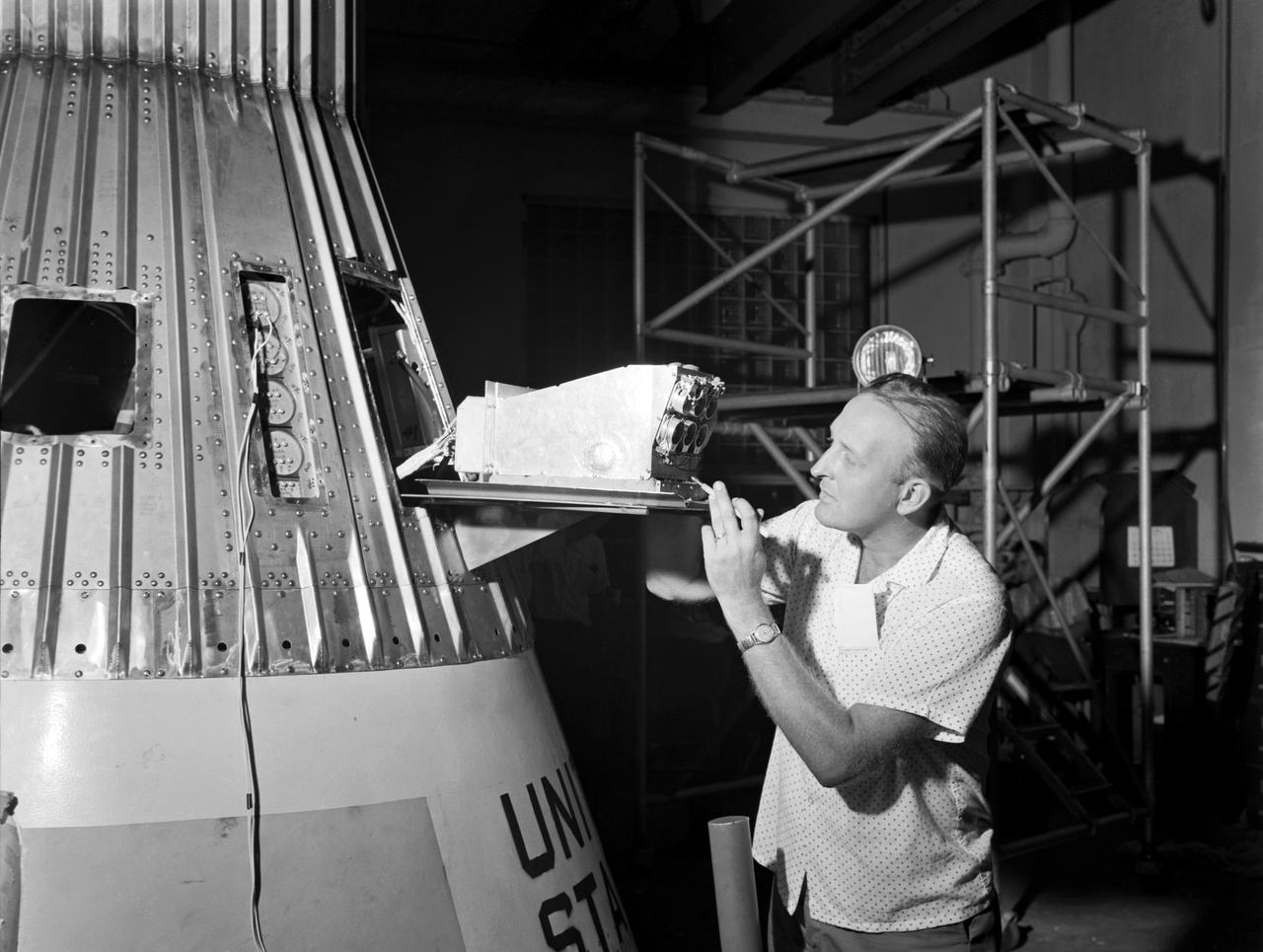
Technicians adjust the rocket motor during the attachment of the escape tower to the Mercury capsule prior to assembly with Little Joe launcher, August 20, 1959. Joseph Shortal wrote (vol. 3., p. 33): The escape tower and rocket motors were taken from the Mercury capsule production. The tower is shown being attached to the capsule.... The escape rocket was a Grand Central 1-KS-52000 motor with three canted nozzles. The tower-jettison motor was an Atlantic Research Corp. 1.4-KS-785 motor. This was the same design tested in a beach abort test...and had the offset thrust line as used in the beach abort test to insure that the capsule would get away from the booster in an emergency. The escape system weighed 1,015 pounds, including 236 pounds of ballast for stability. The Little Joe booster was assembled at Wallops on its special launcher in a vertical attitude. It is shown in the on the left with the work platform in place. The launcher was located on a special concrete slab in Launching Area 1. The capsule was lowered onto the booster by crane.... After the assembly was completed, the scaffolding was disassembled and the launcher pitched over to its normal launch angle of 80 degrees.... Little Joe had a diameter of 80 inches and an overall length, including the capsule and escape tower of 48 feet. The total weight at launch was about 43,000 pounds. The overall span of the stabilizing fins was 21.3 feet. Although in comparison with the overall Mercury Project, Little Joe was a simple undertaking, the fact that an attempt was made to condense a normal two-year project into a 6-month one with in house labor turned it into a major undertaking for Langley. -- Published in Joseph A. Shortal, History of Wallops Station: Origins and Activities Through 1949, (Wallops Island, VA: National Aeronautics and Space Administration, Wallops Station, nd), Comment Edition.
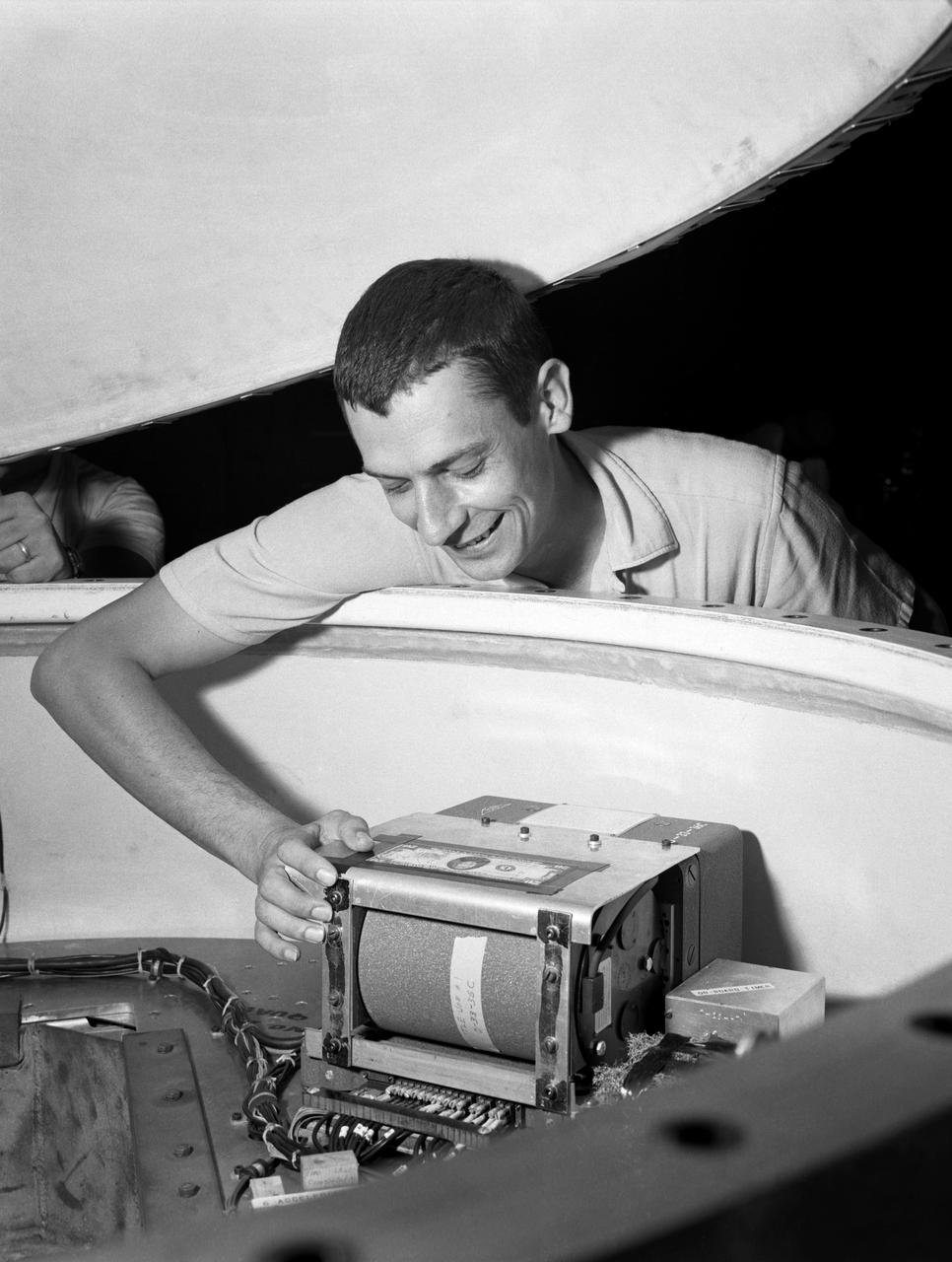
Technicians adjust the rocket motor during the attachment of the escape tower to the Mercury capsule prior to assembly with Little Joe launcher, August 20, 1959. Joseph Shortal wrote (vol. 3., p. 33): The escape tower and rocket motors were taken from the Mercury capsule production. The tower is shown being attached to the capsule.... The escape rocket was a Grand Central 1-KS-52000 motor with three canted nozzles. The tower-jettison motor was an Atlantic Research Corp. 1.4-KS-785 motor. This was the same design tested in a beach abort test...and had the offset thrust line as used in the beach abort test to insure that the capsule would get away from the booster in an emergency. The escape system weighed 1,015 pounds, including 236 pounds of ballast for stability. The Little Joe booster was assembled at Wallops on its special launcher in a vertical attitude. It is shown in the on the left with the work platform in place. The launcher was located on a special concrete slab in Launching Area 1. The capsule was lowered onto the booster by crane.... After the assembly was completed, the scaffolding was disassembled and the launcher pitched over to its normal launch angle of 80 degrees.... Little Joe had a diameter of 80 inches and an overall length, including the capsule and escape tower of 48 feet. The total weight at launch was about 43,000 pounds. The overall span of the stabilizing fins was 21.3 feet. Although in comparison with the overall Mercury Project, Little Joe was a simple undertaking, the fact that an attempt was made to condense a normal two-year project into a 6-month one with in house labor turned it into a major undertaking for Langley. -- Published in Joseph A. Shortal, History of Wallops Station: Origins and Activities Through 1949, (Wallops Island, VA: National Aeronautics and Space Administration, Wallops Station, nd), Comment Edition.
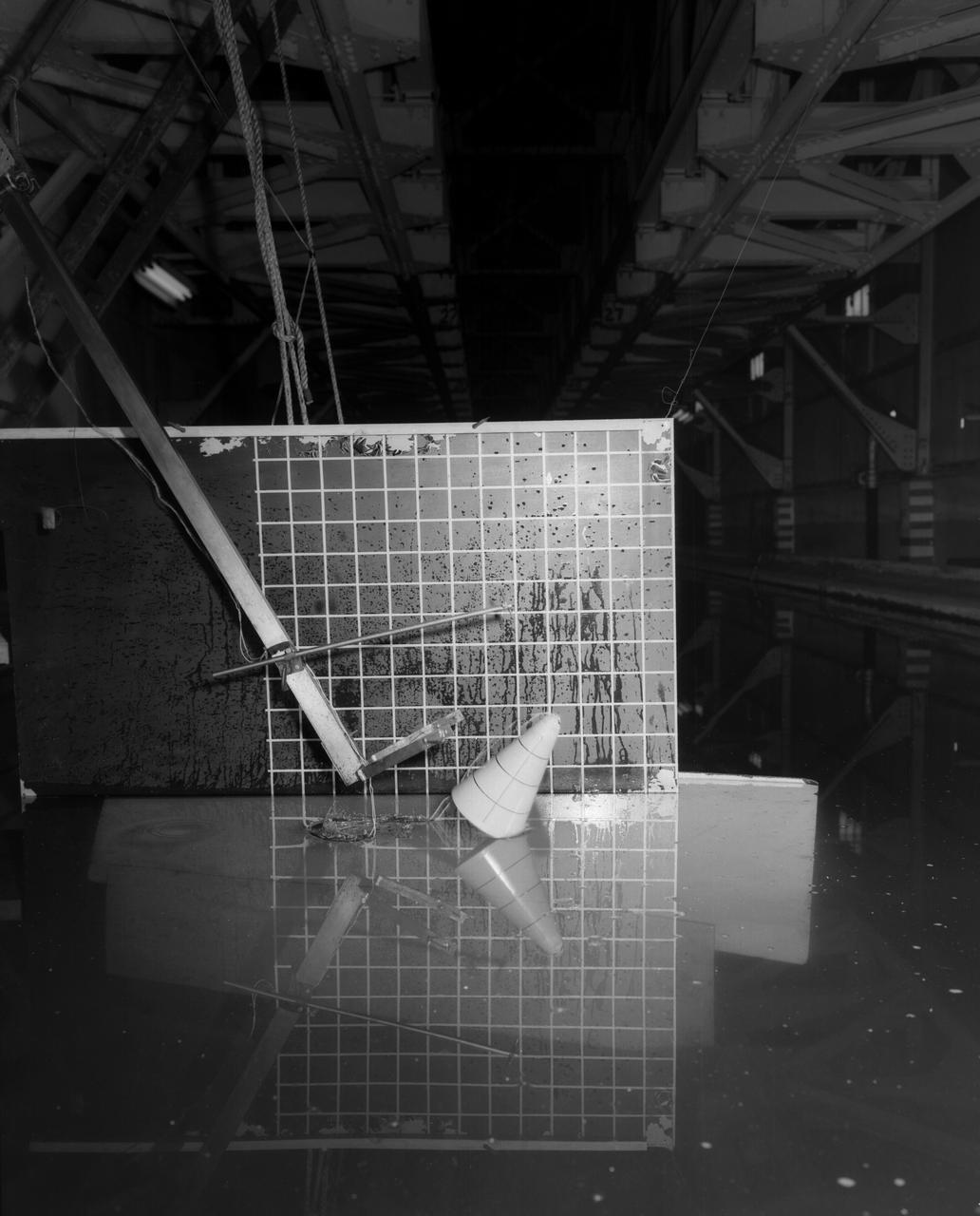
Testing of Mercury Capsule Shape A by the Hydrodynamics Division of Langley. Joseph Shortal wrote (vol. 3, p. 19): The Hydrodynamics Division provided assistance in determining landing loads. In this connection, after PARD engineers had unofficially approached that division to make some water impact tests with the boilerplate capsule, J.B. Parkinson, Hydrodynamics Chief visited Shortal to find out if the request had his support. Finding out that it did, Parkinson said, Its your capsule. If you want us to drop it in the water, we will do it. From Shortal (Vol. 3, p. 16): The basic design of the capsule was made by M.A. Faget and his coworkers at PARD during the winter of 1957-1958. It was natural, then, that extensive use was made of the facilities at Wallops during the development of the spacecraft. The tests at Wallops consisted of 26 full-size capsules, either launched from the ground by rocket power or dropped from airplanes at high altitude and 28 scaled models, either rocket boosted or released from balloons. Emphasis in the Wallops program was on dynamic stability and aerodynamic heating of the capsule, and effectiveness of the pilot-escape and parachute-recovery systems. The biggest part of the Wallops program was the series of full-size capsules, rocket launched with the Little Joe booster, developed especially for Mercury. -- Published in Joseph A. Shortal, History of Wallops Station: Origins and Activities Through 1949, (Wallops Island, VA: National Aeronautics and Space Administration, Wallops Station, nd), Comment Edition.
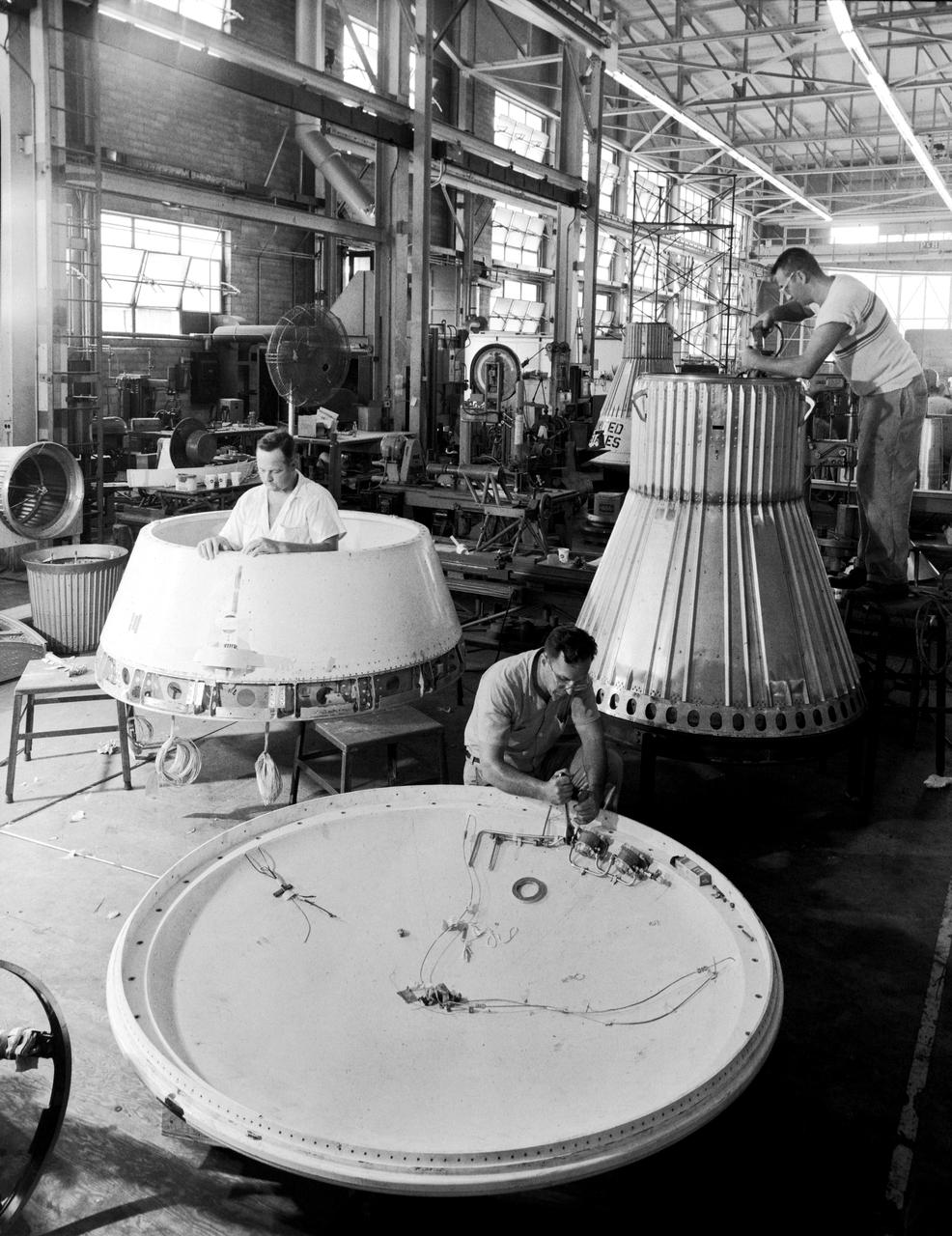
Assembling the Little Joe capsules. The capsules were manufactured in-house by Langley technicians. Three capsules are shown here in various stages of assembly. The escape tower and rocket motors shown on the completed capsule would be removed before shipping and finally assembly for launching at Wallops Island. Joseph Shortal wrote (vol. 3, p. 32): Design of the Little Joe capsules began at Langley before McDonnell started on the design of the Mercury capsule and was, therefore, a separate design. Although it was not designed to carry a man, it did have to carry a monkey. It had to meet the weight and center of gravity requirements of Mercury and withstand the same aerodynamic loads during the exit trajectory. Although in comparison with the overall Mercury Project, Little Joe was a simple undertaking, the fact that an attempt was made to condense a normal two-year project into a 6-month one with in house labor turned it into a major undertaking for Langley. Project Mercury: Little Joe: Boilerplate Mercury spacecraft undergo fabrication at the shops of the Langley Research Center. They will launched atop Little Joe rockets to test the spacecraft recovery systems. -- Published in Joseph A. Shortal, History of Wallops Station: Origins and Activities Through 1949, (Wallops Island, VA: National Aeronautics and Space Administration, Wallops Station, nd), Comment Edition. L59-4947 Technicians prepare a Little Joe launch vehicle prototype for the Mercury space program, 1959. Photograph published in Winds of Change, 75th Anniversary NASA publication, page 76, by James Schultz
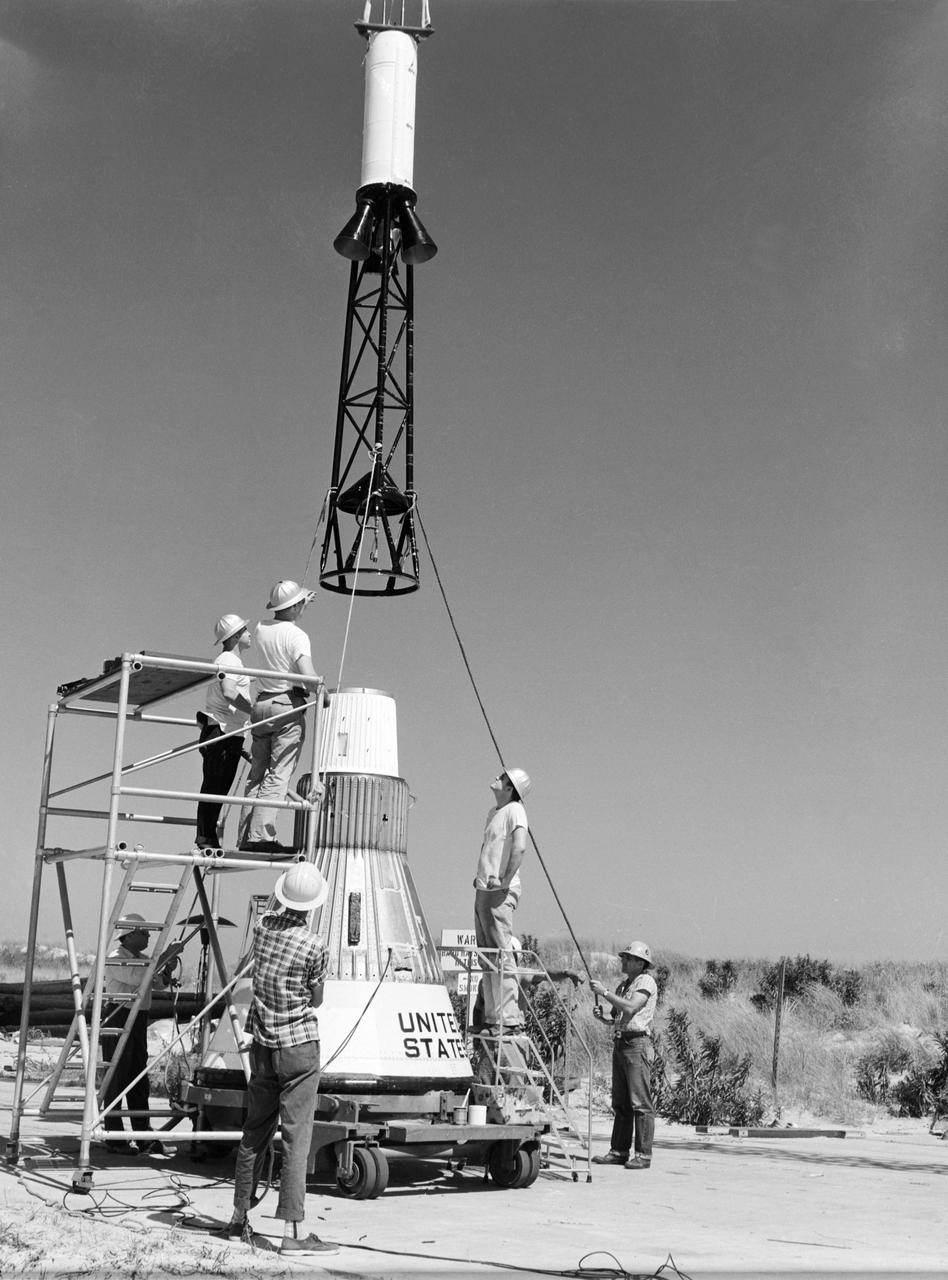
Technicians attach the escape tower to the Mercury capsule prior to assembly with Little Joe launcher, August 20, 1959. Joseph Shortal describe this as follows (vol. 3., p. 33): The escape tower and rocket motors were taken from the Mercury capsule production. The tower is shown being attached to the capsule.... The escape rocket was a Grand Central 1-KS-52000 motor with three canted nozzles. The tower-jettison motor was an Atlantic Research Corp. 1.4-KS-785 motor. This was the same design tested in a beach abort test...and had the offset thrust line as used in the beach abort test to insure that the capsule would get away from the booster in an emergency. The escape system weighed 1,015 pounds, including 236 pounds of ballast for stability. The Little Joe booster was assembled at Wallops on its special launcher in a vertical attitude. It is shown in the on the left with the work platform in place. The launcher was located on a special concrete slab in Launching Area 1. The capsule was lowered onto the booster by crane.... After the assembly was completed, the scaffolding was disassembled and the launcher pitched over to its normal launch angle of 80 degrees.... Little Joe had a diameter of 80 inches and an overall length, including the capsule and escape tower of 48 feet. The total weight at launch was about 43,000 pounds. The overall span of the stabilizing fins was 21.3 feet. Although in comparison with the overall Mercury Project, Little Joe was a simple undertaking, the fact that an attempt was made to condense a normal two-year project into a 6-month one with in house labor turned it into a major undertaking for Langley. -- Published in Joseph A. Shortal, History of Wallops Station: Origins and Activities Through 1949, (Wallops Island, VA: National Aeronautics and Space Administration, Wallops Station, nd), Comment Edition.
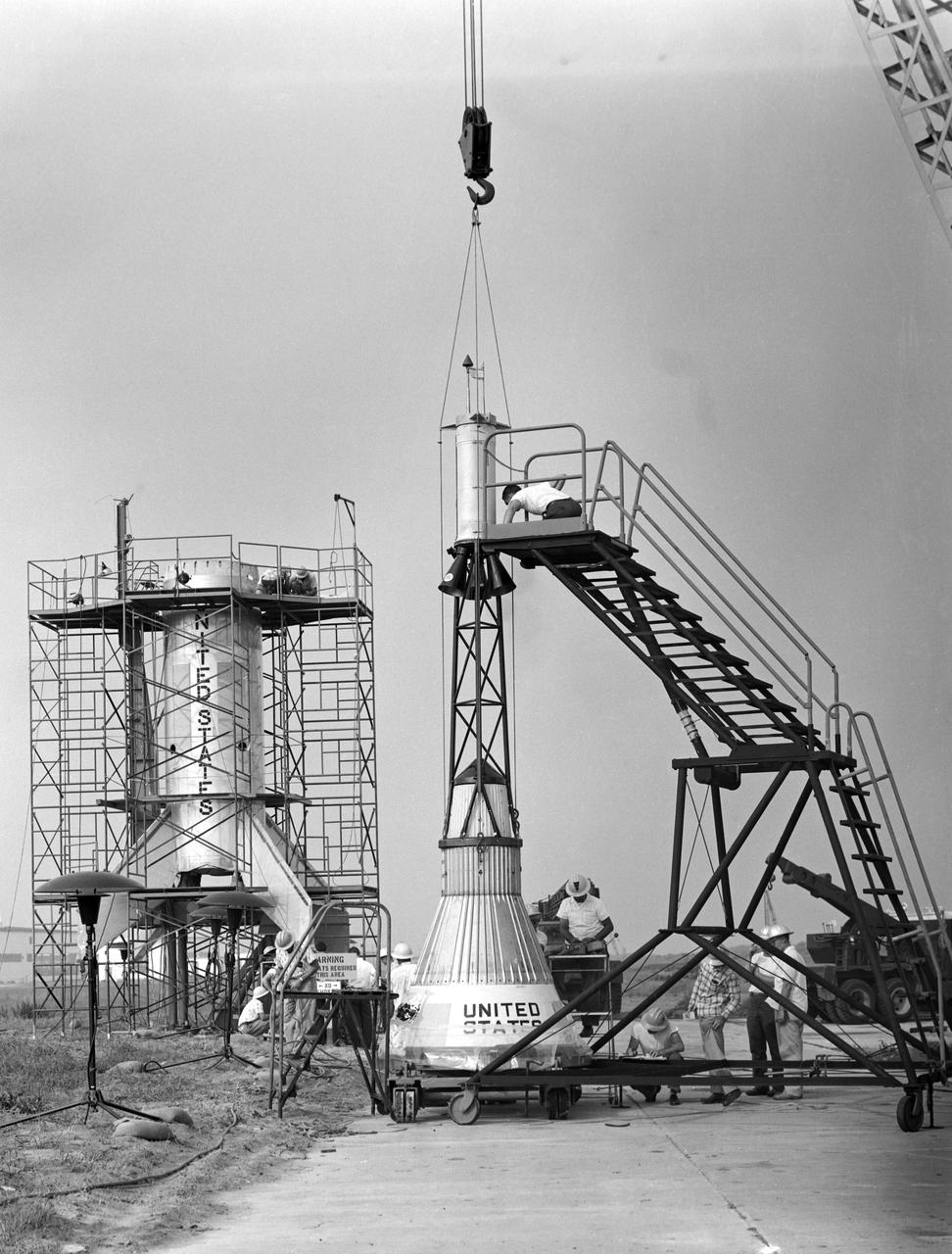
Technicians adjust the rocket motor during the attachment of the escape tower to the Mercury capsule prior to assembly with Little Joe launcher, August 20, 1959. Joseph Shortal wrote (vol. 3., p. 33): The escape tower and rocket motors were taken from the Mercury capsule production. The tower is shown being attached to the capsule.... The escape rocket was a Grand Central 1-KS-52000 motor with three canted nozzles. The tower-jettison motor was an Atlantic Research Corp. 1.4-KS-785 motor. This was the same design tested in a beach abort test...and had the offset thrust line as used in the beach abort test to insure that the capsule would get away from the booster in an emergency. The escape system weighed 1,015 pounds, including 236 pounds of ballast for stability. The Little Joe booster was assembled at Wallops on its special launcher in a vertical attitude. It is shown in the on the left with the work platform in place. The launcher was located on a special concrete slab in Launching Area 1. The capsule was lowered onto the booster by crane.... After the assembly was completed, the scaffolding was disassembled and the launcher pitched over to its normal launch angle of 80 degrees.... Little Joe had a diameter of 80 inches and an overall length, including the capsule and escape tower of 48 feet. The total weight at launch was about 43,000 pounds. The overall span of the stabilizing fins was 21.3 feet. Although in comparison with the overall Mercury Project, Little Joe was a simple undertaking, the fact that an attempt was made to condense a normal two-year project into a 6-month one with in house labor turned it into a major undertaking for Langley. -- Published in Joseph A. Shortal, History of Wallops Station: Origins and Activities Through 1949, (Wallops Island, VA: National Aeronautics and Space Administration, Wallops Station, nd), Comment Edition.

Assembling the Little Joe capsules. The capsules were manufactured in-house by Langley technicians. Three capsules are shown here in various stages of assembly. The escape tower and rocket motors shown on the completed capsule would be removed before shipping and finally assembly for launching at Wallops Island. Joseph Shortal wrote (vol. 3, p. 32): Design of the Little Joe capsules began at Langley before McDonnell started on the design of the Mercury capsule and was, therefore, a separate design. Although it was not designed to carry a man, it did have to carry a monkey. It had to meet the weight and center of gravity requirements of Mercury and withstand the same aerodynamic loads during the exit trajectory. Although in comparison with the overall Mercury Project, Little Joe was a simple undertaking, the fact that an attempt was made to condense a normal two-year project into a 6-month one with in house labor turned it into a major undertaking for Langley. Project Mercury: Little Joe: Boilerplate Mercury spacecraft undergo fabrication at the shops of the Langley Research Center. They will launched atop Little Joe rockets to test the spacecraft recovery systems. -- Published in Joseph A. Shortal, History of Wallops Station: Origins and Activities Through 1949, (Wallops Island, VA: National Aeronautics and Space Administration, Wallops Station, nd), Comment Edition. L59-4947 Technicians prepare a Little Joe launch vehicle prototype for the Mercury space program, 1959. Photograph published in Winds of Change, 75th Anniversary NASA publication, page 76, by James Schultz
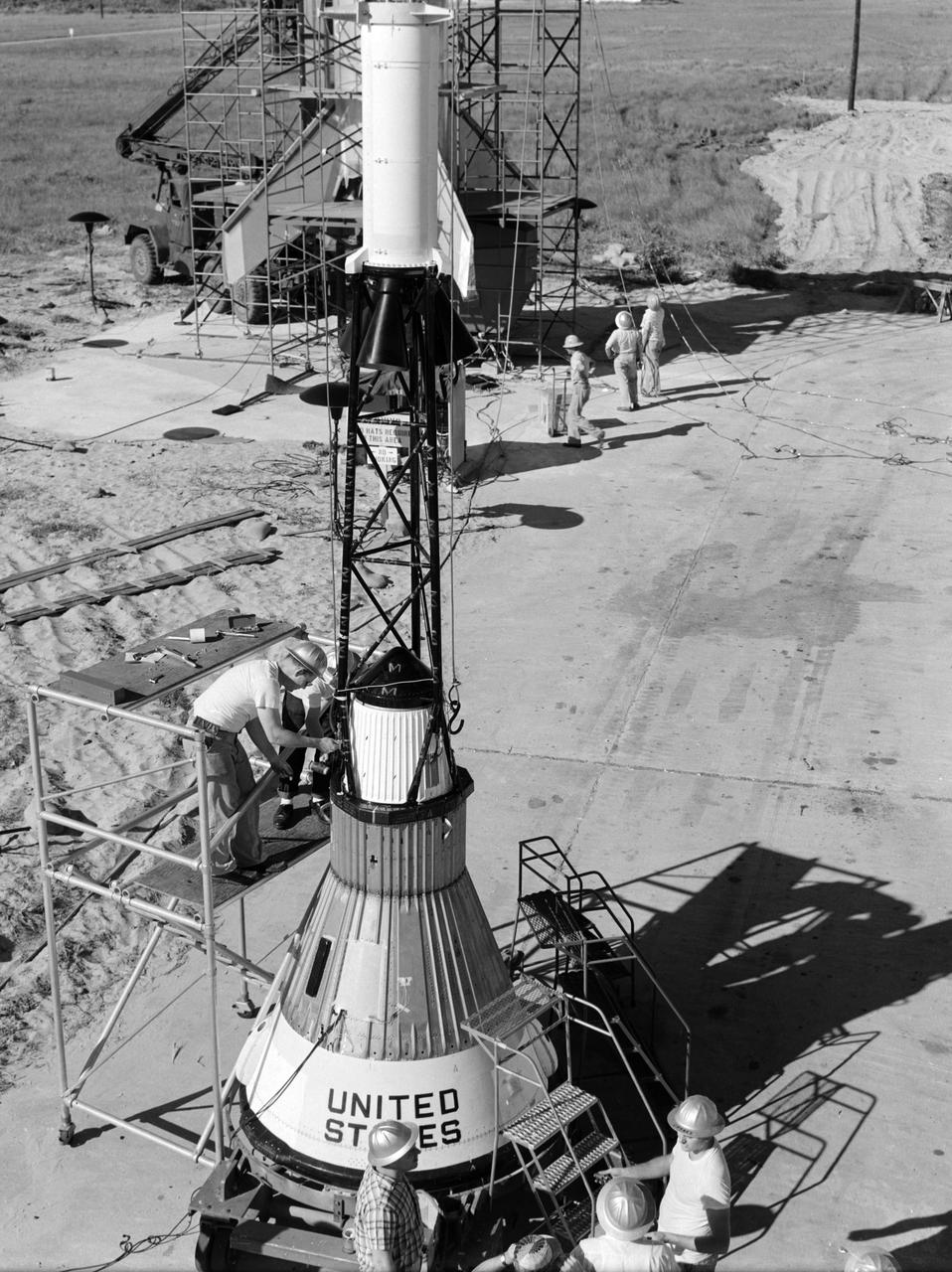
Technicians attach the escape tower to the Mercury capsule prior to assembly with Little Joe launcher, August 20, 1959. Joseph Shortal describe this as follows (vol. 3., p. 33): The escape tower and rocket motors were taken from the Mercury capsule production. The tower is shown being attached to the capsule.... The escape rocket was a Grand Central 1-KS-52000 motor with three canted nozzles. The tower-jettison motor was an Atlantic Research Corp. 1.4-KS-785 motor. This was the same design tested in a beach abort test...and had the offset thrust line as used in the beach abort test to insure that the capsule would get away from the booster in an emergency. The escape system weighed 1,015 pounds, including 236 pounds of ballast for stability. The Little Joe booster was assembled at Wallops on its special launcher in a vertical attitude. It is shown in the on the left with the work platform in place. The launcher was located on a special concrete slab in Launching Area 1. The capsule was lowered onto the booster by crane.... After the assembly was completed, the scaffolding was disassembled and the launcher pitched over to its normal launch angle of 80 degrees.... Little Joe had a diameter of 80 inches and an overall length, including the capsule and escape tower of 48 feet. The total weight at launch was about 43,000 pounds. The overall span of the stabilizing fins was 21.3 feet. Although in comparison with the overall Mercury Project, Little Joe was a simple undertaking, the fact that an attempt was made to condense a normal two-year project into a 6-month one with in house labor turned it into a major undertaking for Langley. -- Published in Joseph A. Shortal, History of Wallops Station: Origins and Activities Through 1949, (Wallops Island, VA: National Aeronautics and Space Administration, Wallops Station, nd), Comment Edition.

Technicians adjust the rocket motor during the attachment of the escape tower to the Mercury capsule prior to assembly with Little Joe launcher, August 20, 1959. Joseph Shortal wrote (vol. 3., p. 33): The escape tower and rocket motors were taken from the Mercury capsule production. The tower is shown being attached to the capsule.... The escape rocket was a Grand Central 1-KS-52000 motor with three canted nozzles. The tower-jettison motor was an Atlantic Research Corp. 1.4-KS-785 motor. This was the same design tested in a beach abort test...and had the offset thrust line as used in the beach abort test to insure that the capsule would get away from the booster in an emergency. The escape system weighed 1,015 pounds, including 236 pounds of ballast for stability. The Little Joe booster was assembled at Wallops on its special launcher in a vertical attitude. It is shown in the on the left with the work platform in place. The launcher was located on a special concrete slab in Launching Area 1. The capsule was lowered onto the booster by crane.... After the assembly was completed, the scaffolding was disassembled and the launcher pitched over to its normal launch angle of 80 degrees.... Little Joe had a diameter of 80 inches and an overall length, including the capsule and escape tower of 48 feet. The total weight at launch was about 43,000 pounds. The overall span of the stabilizing fins was 21.3 feet. Although in comparison with the overall Mercury Project, Little Joe was a simple undertaking, the fact that an attempt was made to condense a normal two-year project into a 6-month one with in house labor turned it into a major undertaking for Langley. -- Published in Joseph A. Shortal, History of Wallops Station: Origins and Activities Through 1949, (Wallops Island, VA: National Aeronautics and Space Administration, Wallops Station, nd), Comment Edition.