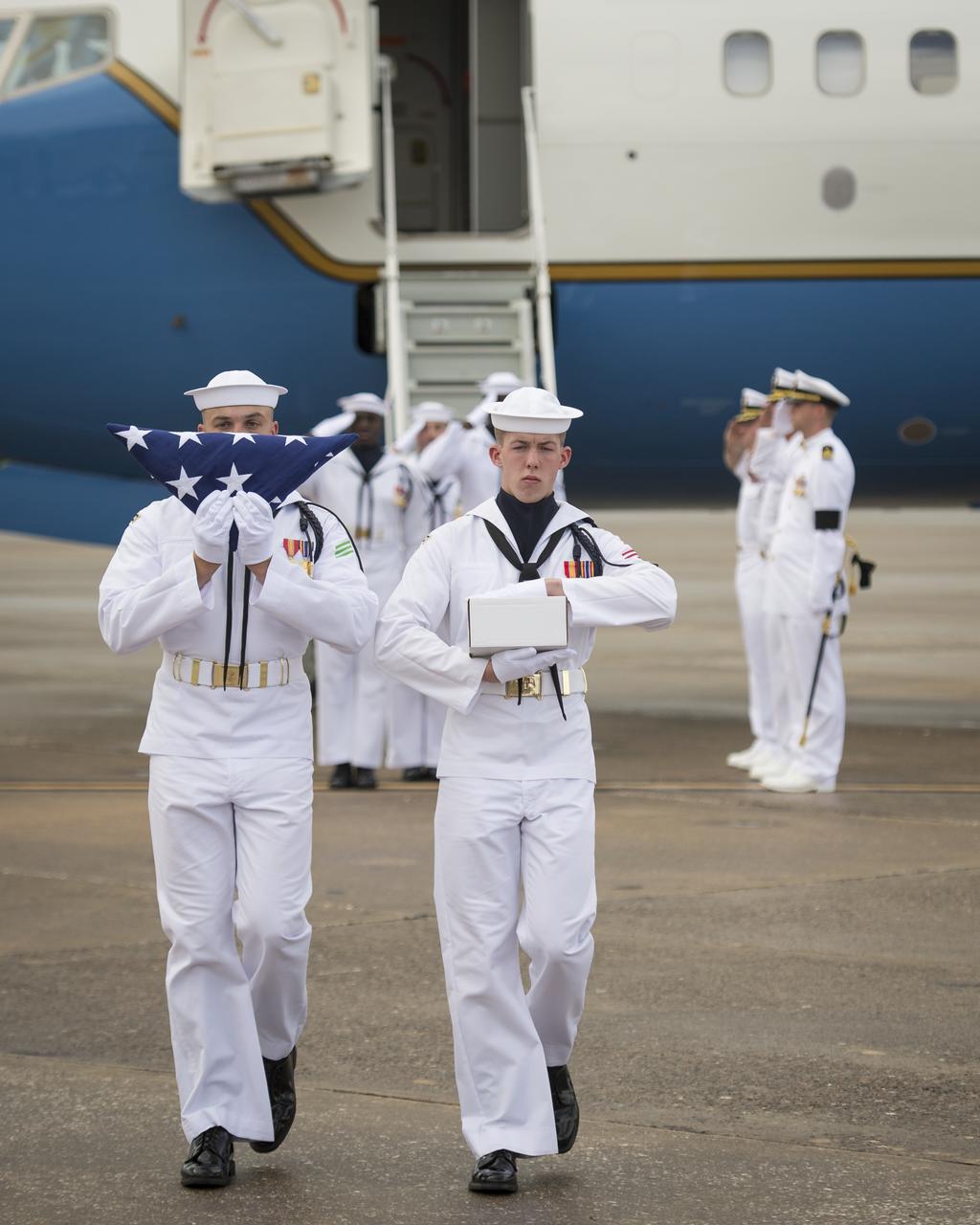
US Navy personnel carry the cremains of Apollo 11 astronaut Neil Armstrong off of a military aircraft at Naval Station Mayport the day before the Armstrong burial at sea service, Thursday, Sept. 13, 2012, Mayport, Fla. Armstrong, the first man to walk on the moon during the 1969 Apollo 11 mission, died Saturday, Aug. 25. He was 82. Photo Credit: (NASA/Bill Ingalls)
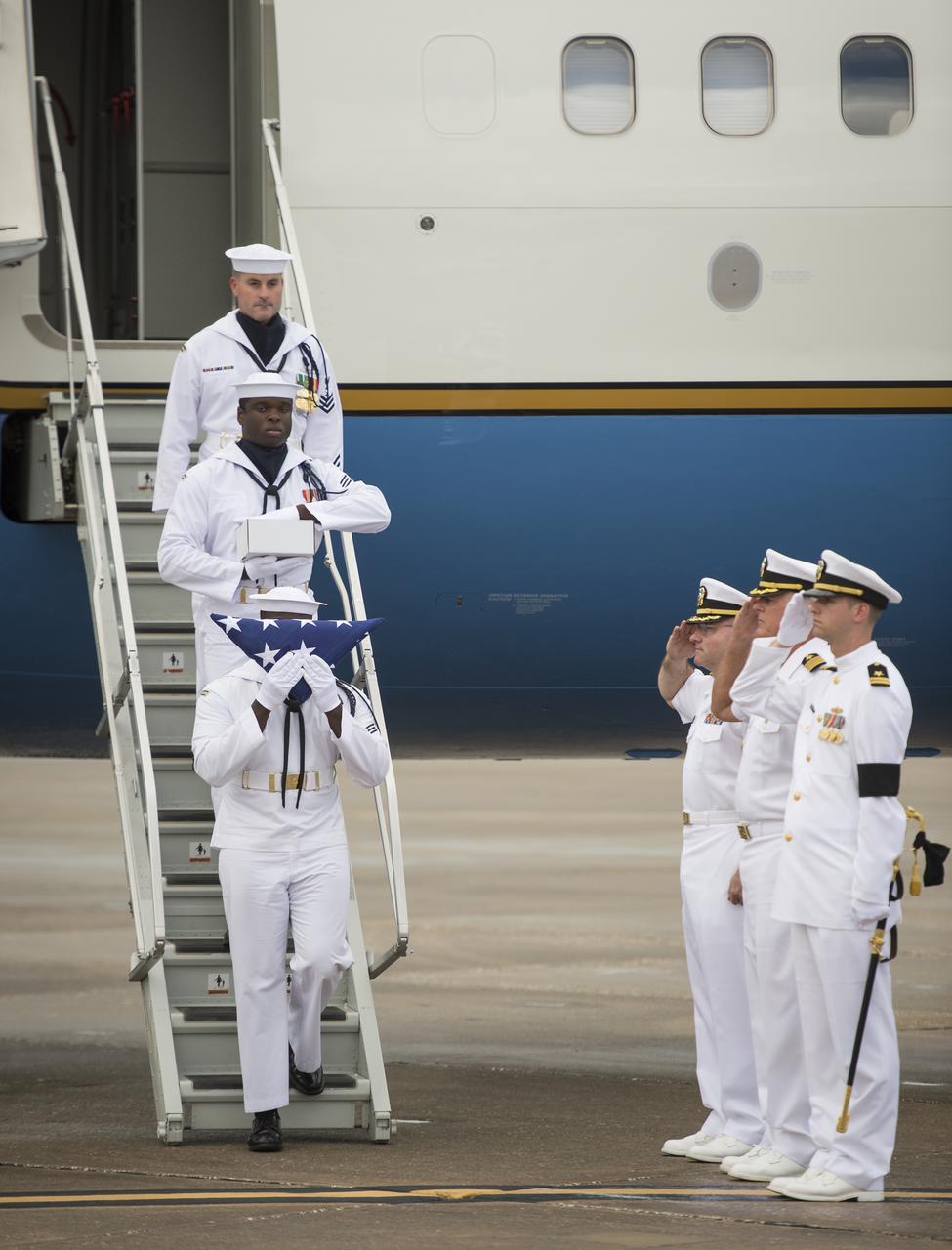
US Navy personnel carry the cremains of Apollo 11 astronaut Neil Armstrong off of a military aircraft at Naval Station Mayport the day before the Armstrong burial at sea service, Thursday, Sept. 13, 2012, Mayport, Fla. Armstrong, the first man to walk on the moon during the 1969 Apollo 11 mission, died Saturday, Aug. 25. He was 82. Photo Credit: (NASA/Bill Ingalls)
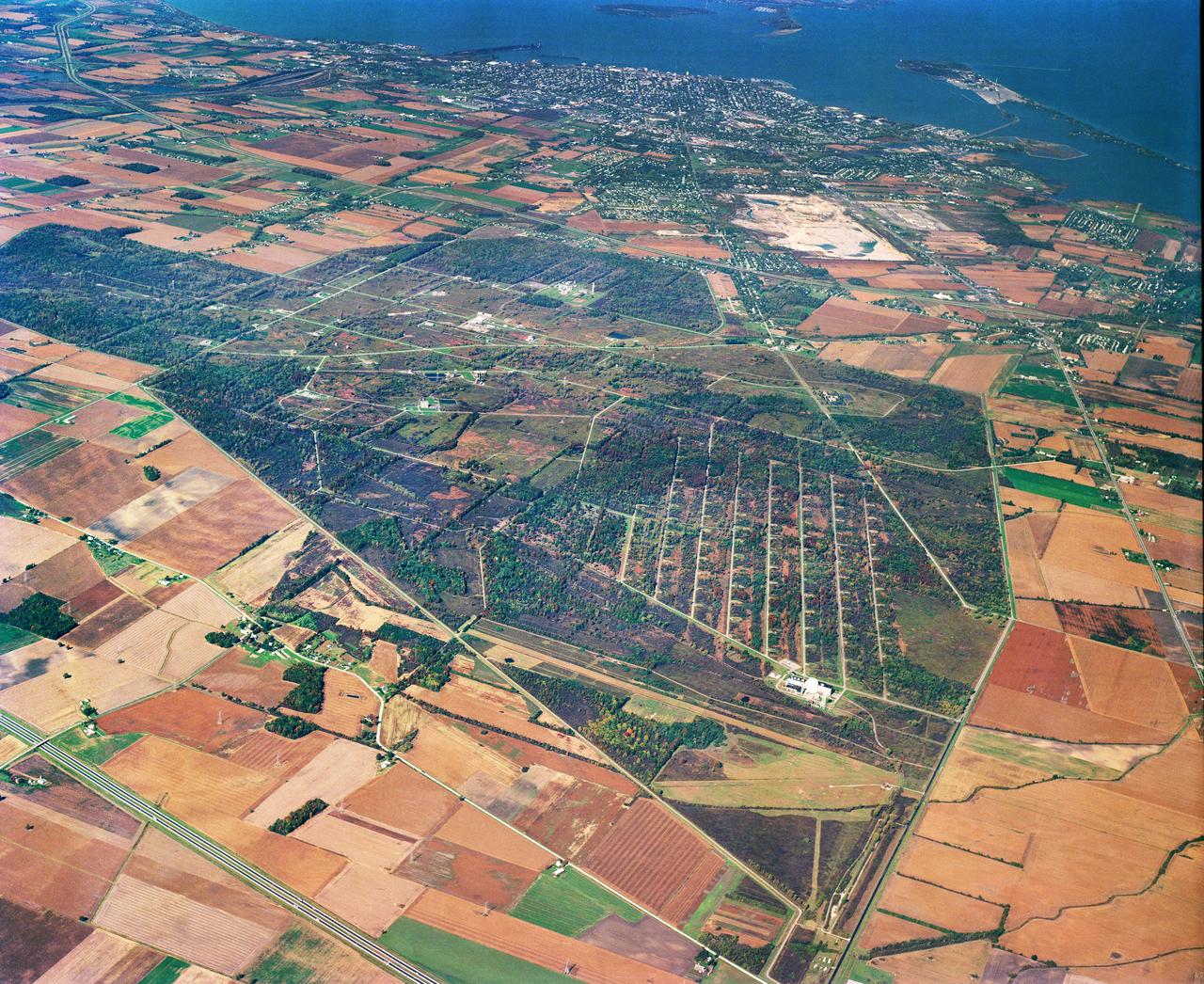
Aerial Vies of NASA Glenn Research Center, Neil A. Armstrong Test Facility. At the time this photograph was taken, the site was known as Plum Brook Station.
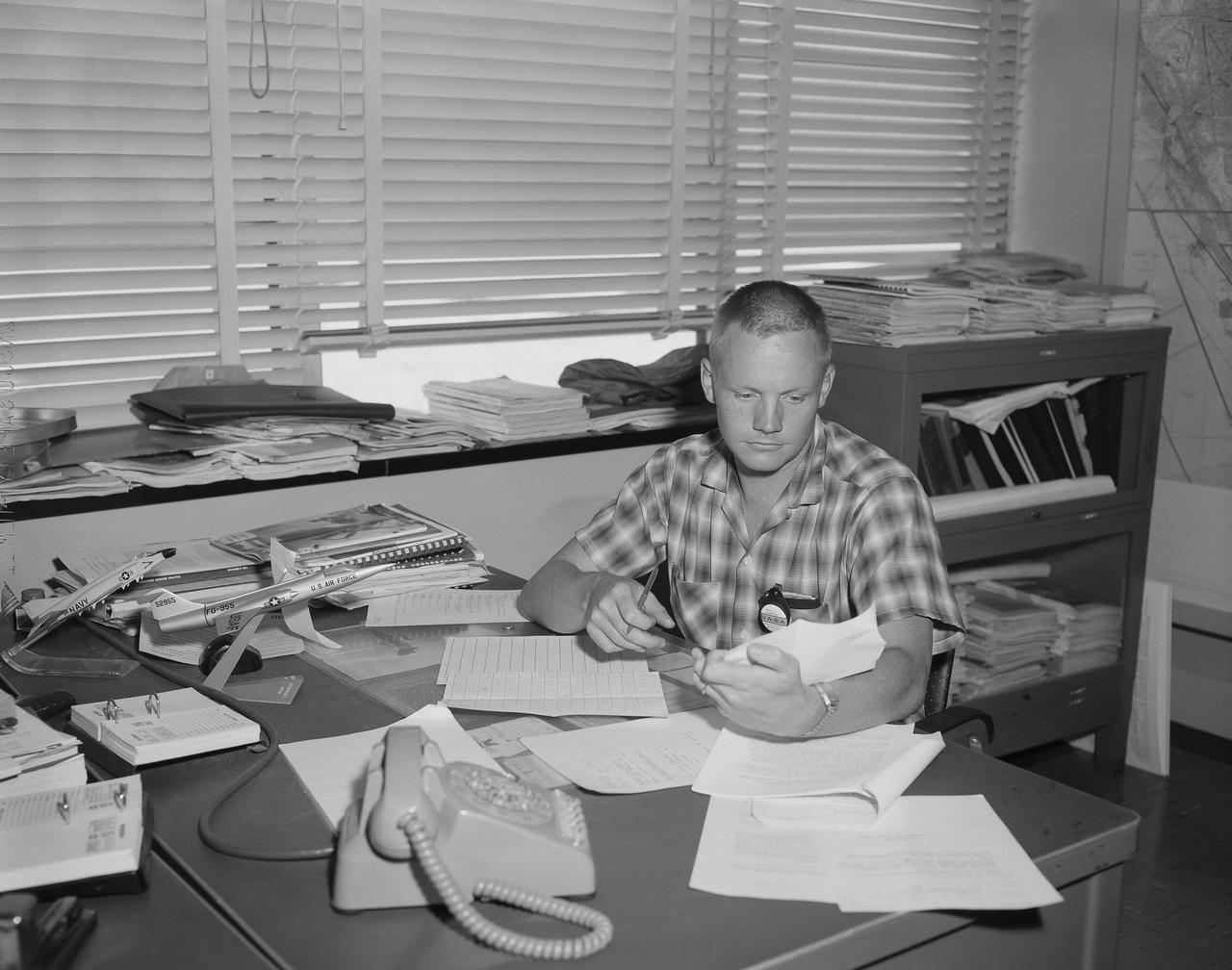
Famed astronaut Neil A. Armstrong – the first person to set foot on the Moon during the historic Apollo 11 mission in July 1969 – spent seven years as a research pilot at the NACA-NASA High-Speed Flight Station, now NASA’s Armstrong Flight Research Center in Edwards, California, before joining the space program. During his tenure, Armstrong was actively engaged in both the piloting and engineering aspects of numerous NASA programs and projects.
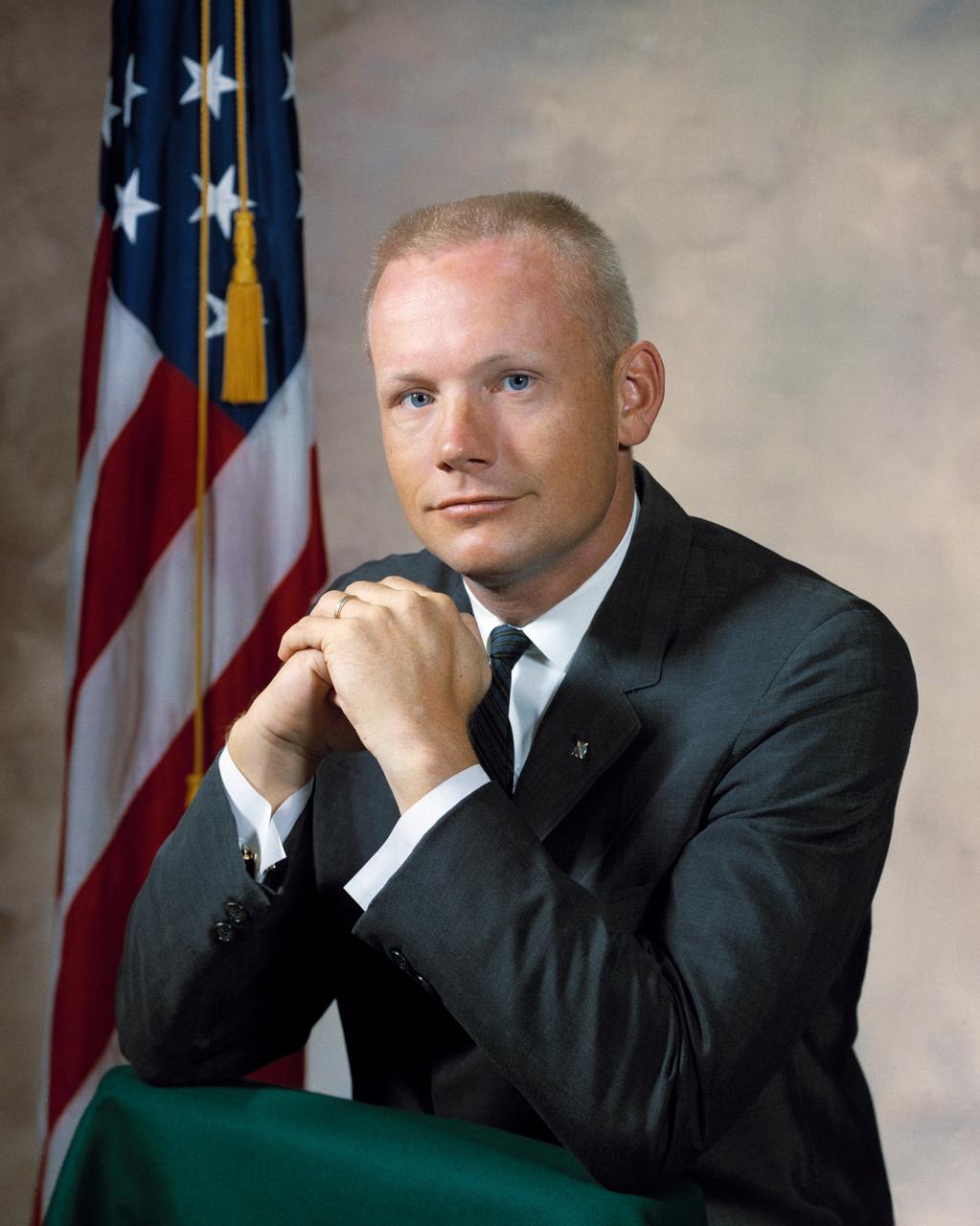
S64-31452 (1964) --- Astronaut Neil A. Armstrong. Photo credit: NASA
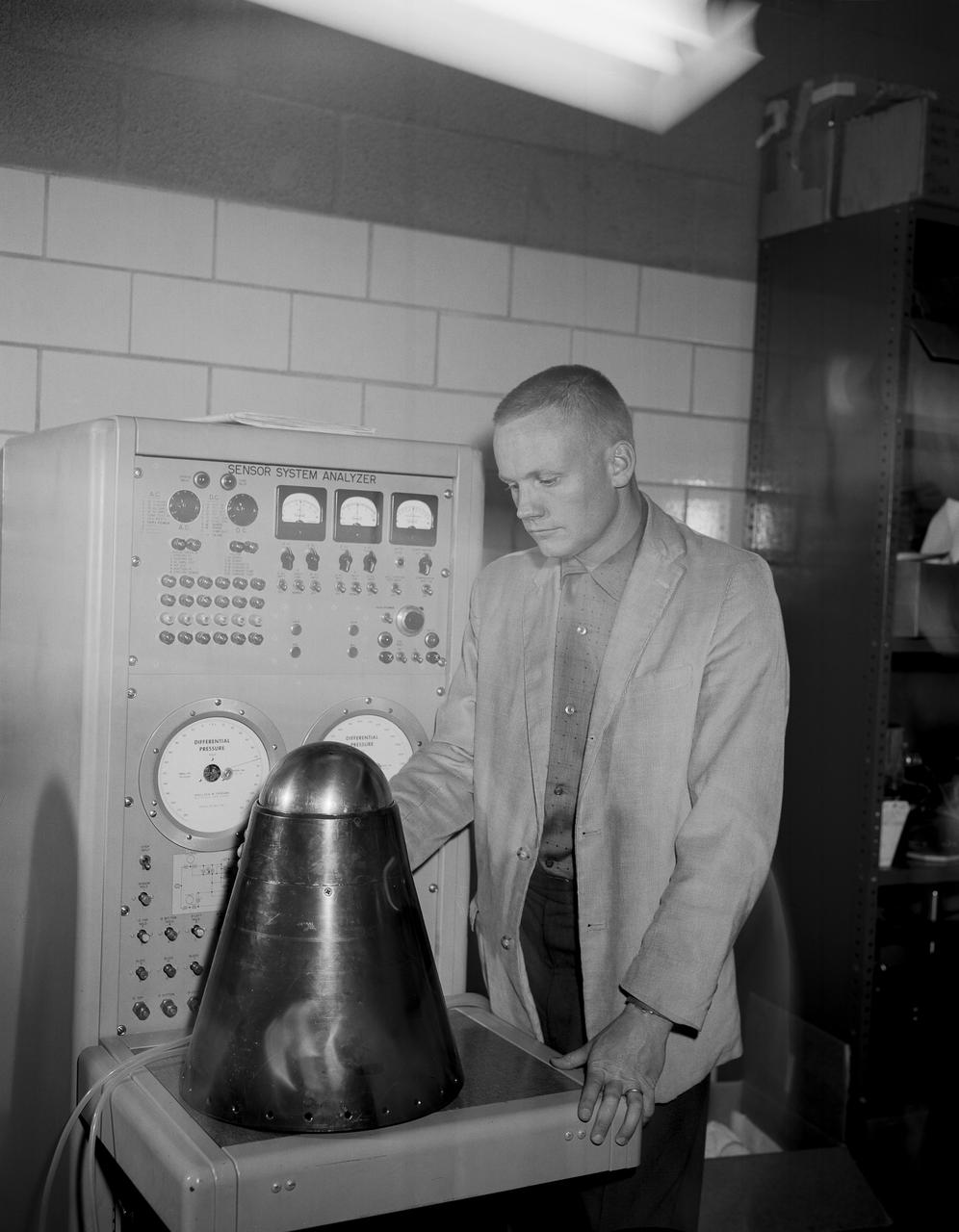
From the program’s inception, Neil Armstrong was actively engaged in both the piloting and engineering aspects of the X-15. He flew the first mission using a new flow-direction sensor (ball nose) and the first flight with a self-adaptive flight control system. Collaborating closely with designers and engineers on the system’s development, he made seven flights in the X-15 between December 1960 and July 1962. During these missions, he reached a peak altitude of 207,500 feet in the X-15-3 and a top speed of 3,989 mph (Mach 5.74) in the X-15-1.
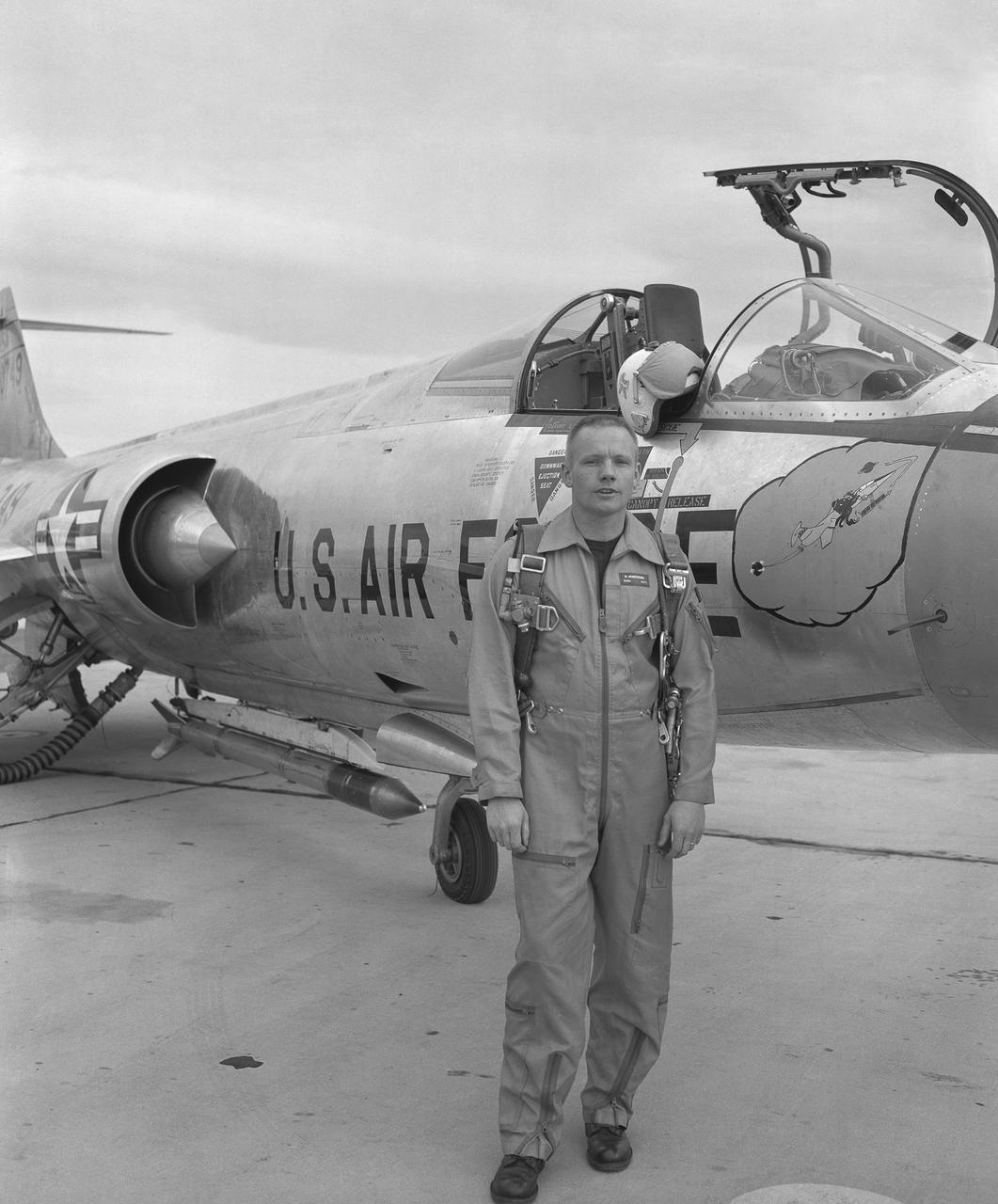
Famed astronaut Neil A. Armstrong – the first person to set foot on the Moon during the historic Apollo 11 mission in July 1969 – spent seven years as a research pilot at the NACA-NASA High-Speed Flight Station, now NASA’s Armstrong Flight Research Center in Edwards, California, before joining the space program. During his time there, he served as a project pilot on the F-100A, F-100C, F-101, and F-104A (pictured here).
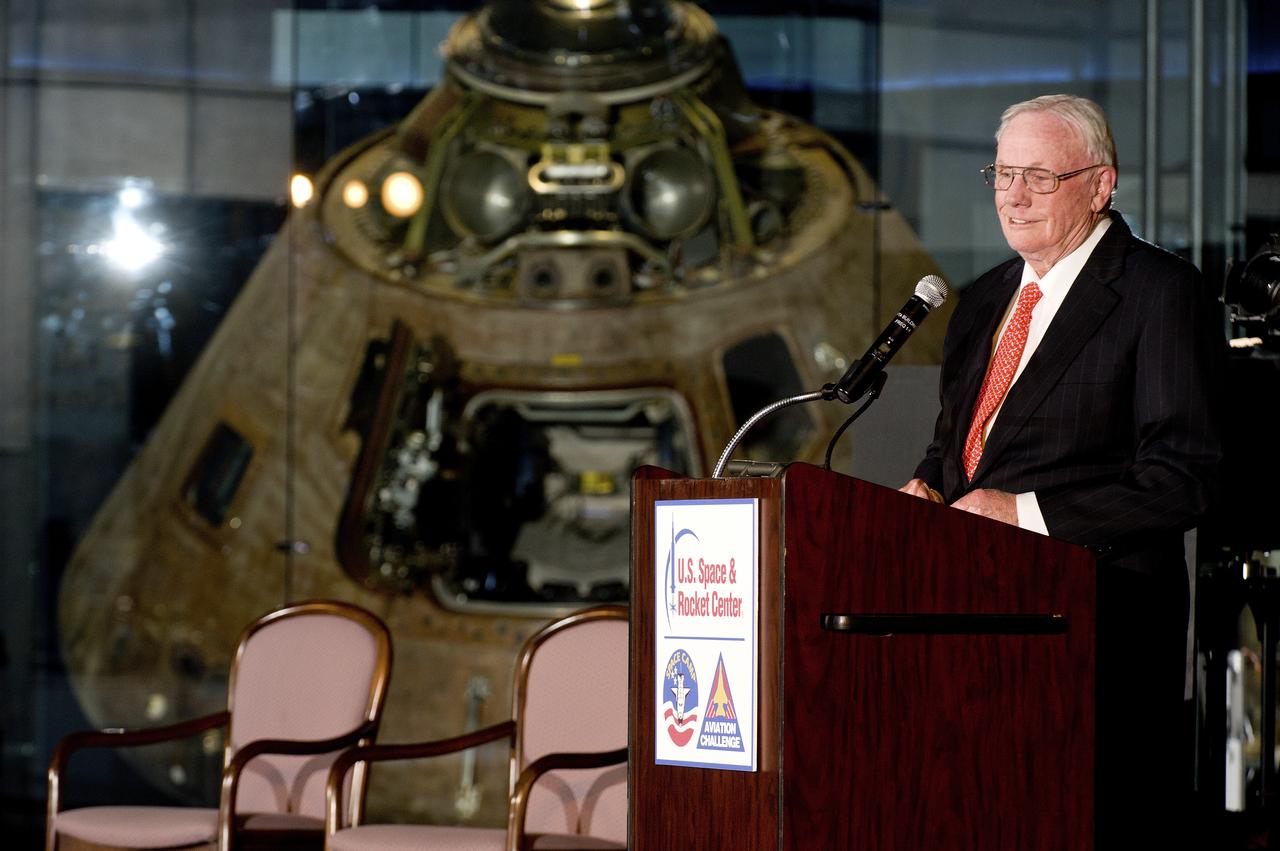
ASTRONAUT NEIL ARMSTRONG SPEAKS AT THE U.S. SPACE AND ROCKET CENTER.
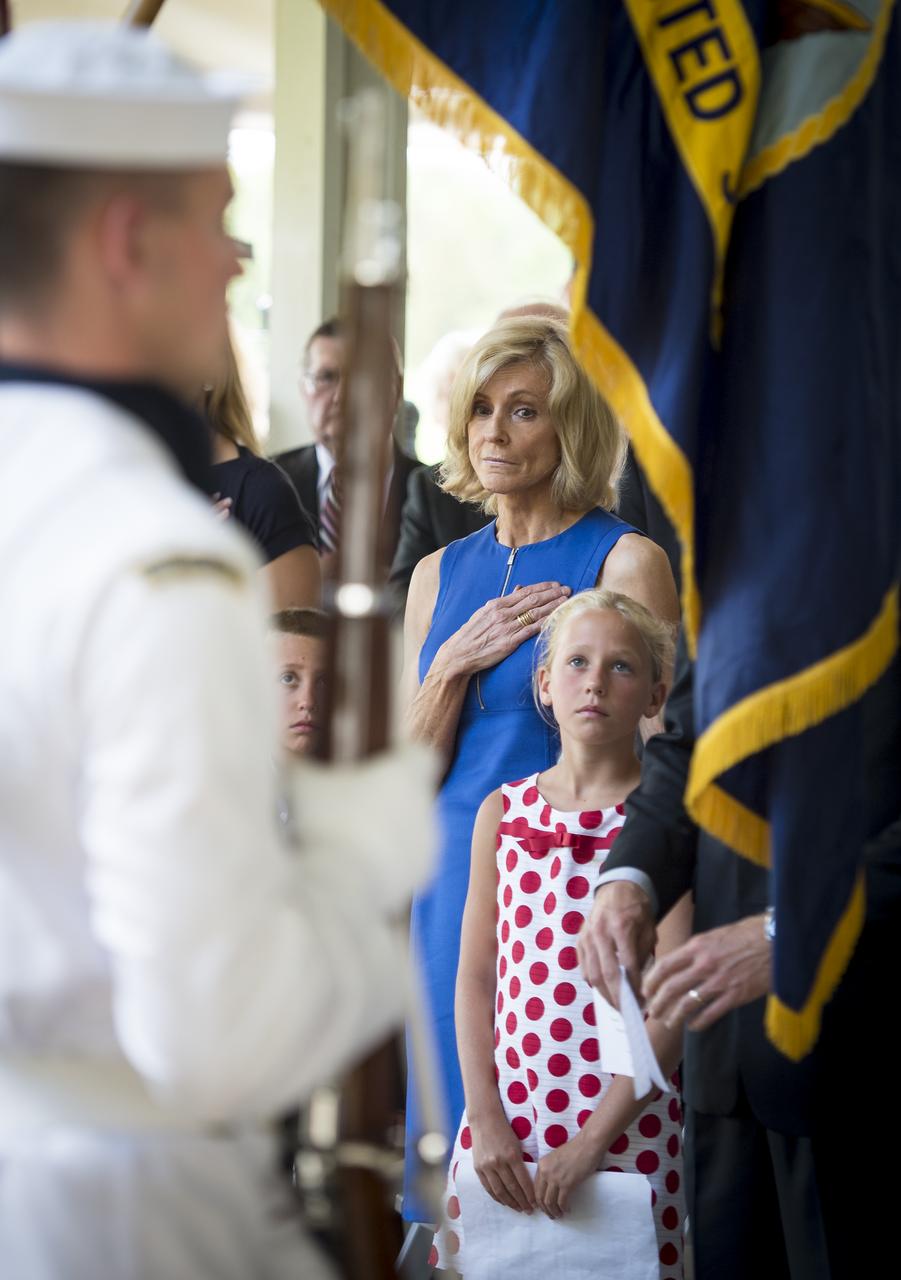
Carol Armstrong, wife of Neil Armstrong, and Piper Van Wagenen, one of 10 grandchildren, are seen during a memorial service celebrating the life of Neil Armstrong, Friday, Aug. 31, 2012, at the Camargo Club in Cincinnati. Armstrong, the first man to walk on the moon during the 1969 Apollo 11 mission, died Saturday, Aug. 25. He was 82. Photo Credit: (NASA/Bill Ingalls)
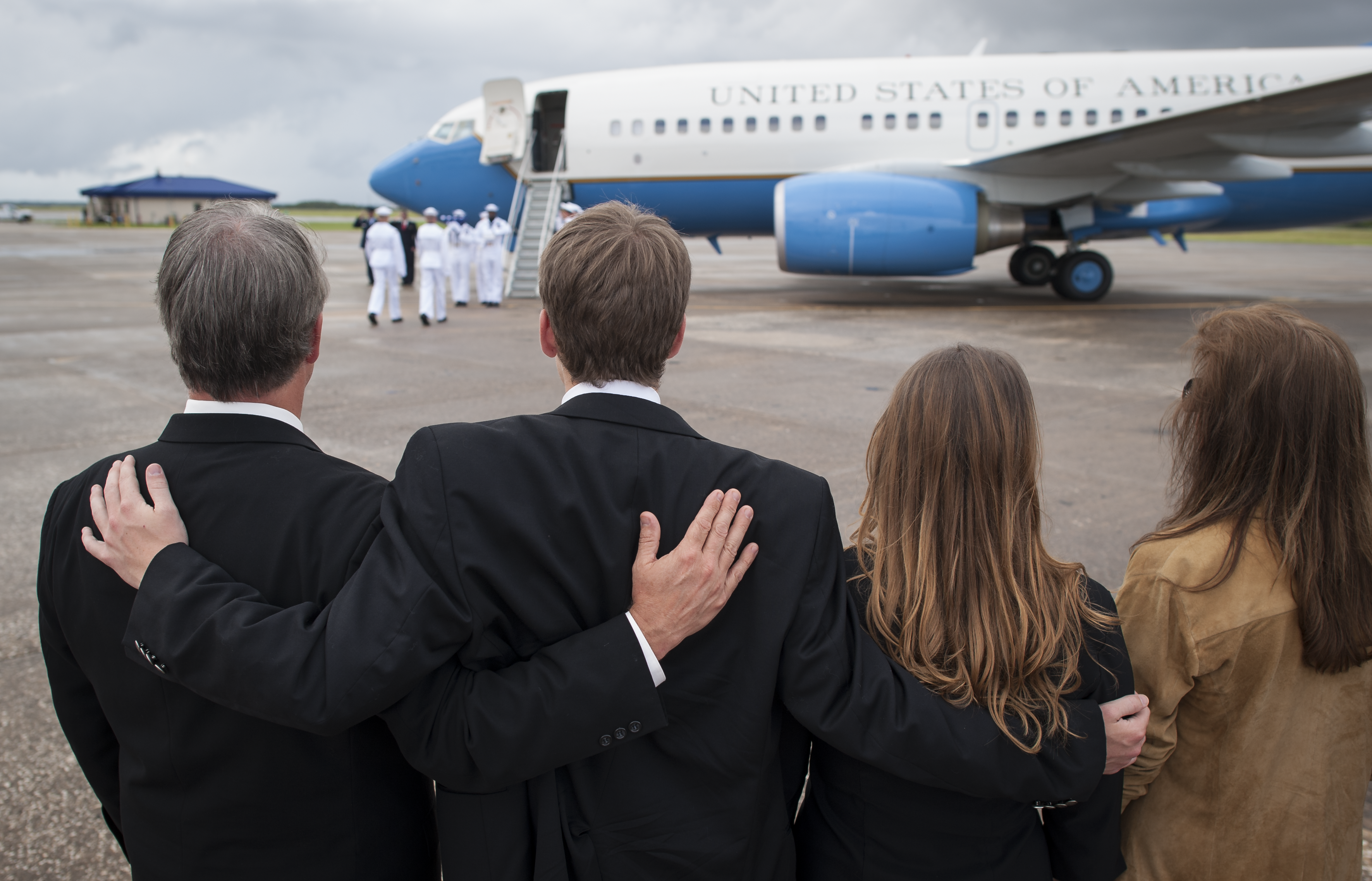
Mark Armstrong, left, and his family look on as US Navy personnel carry the cremains of his father, Apollo 11 astronaut Neil Armstrong, off of a military aircraft at Naval Station Mayport the day before the Armstrong burial at sea service, Thursday, Sept. 13, 2012, Mayport, Fla. Armstrong, the first man to walk on the moon during the 1969 Apollo 11 mission, died Saturday, Aug. 25. He was 82. Photo Credit: (NASA/Bill Ingalls)
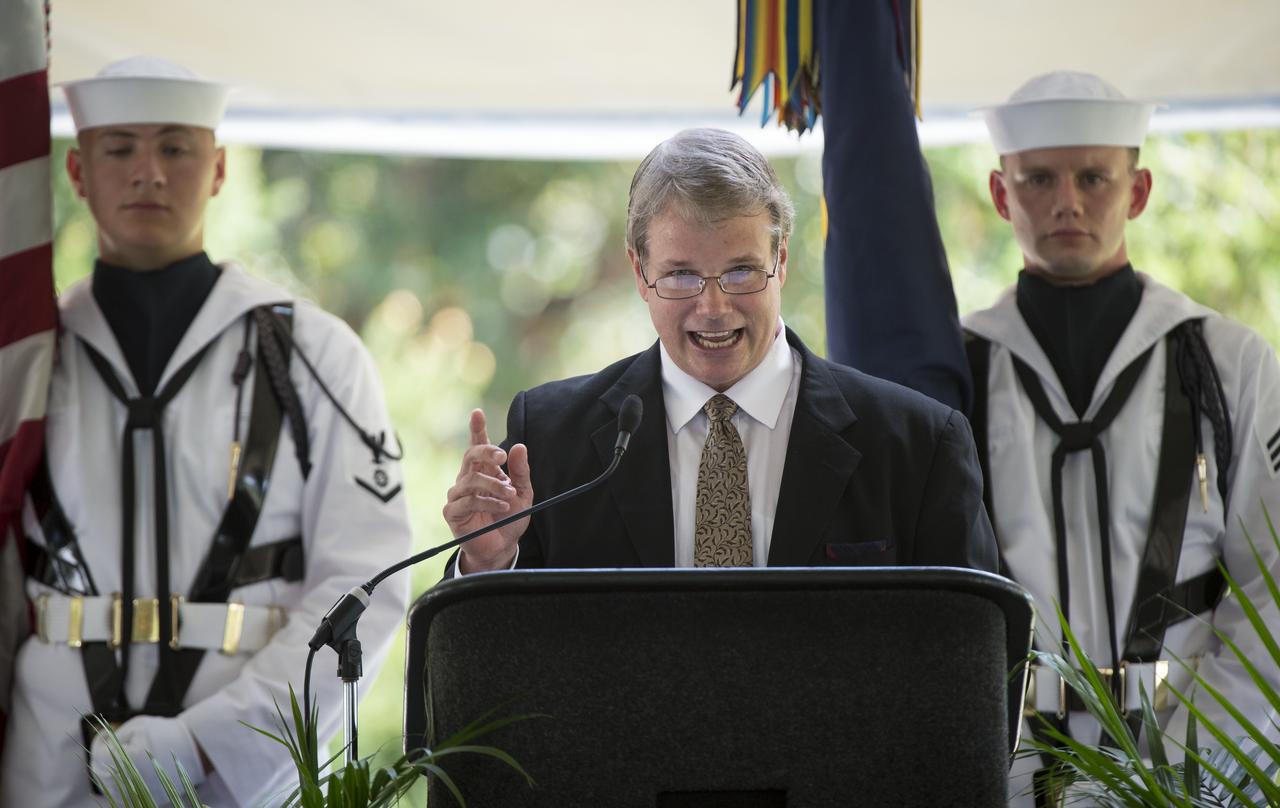
Mark Armstrong, son of Neil Armstrong, speaks during a memorial service celebrating the life of his father, Friday, Aug. 31, 2012, at the Camargo Club in Cincinnati. Neil Armstrong, the first man to walk on the moon during the 1969 Apollo 11 mission, died Saturday, Aug. 25. He was 82. Photo Credit: (NASA/Bill Ingalls)
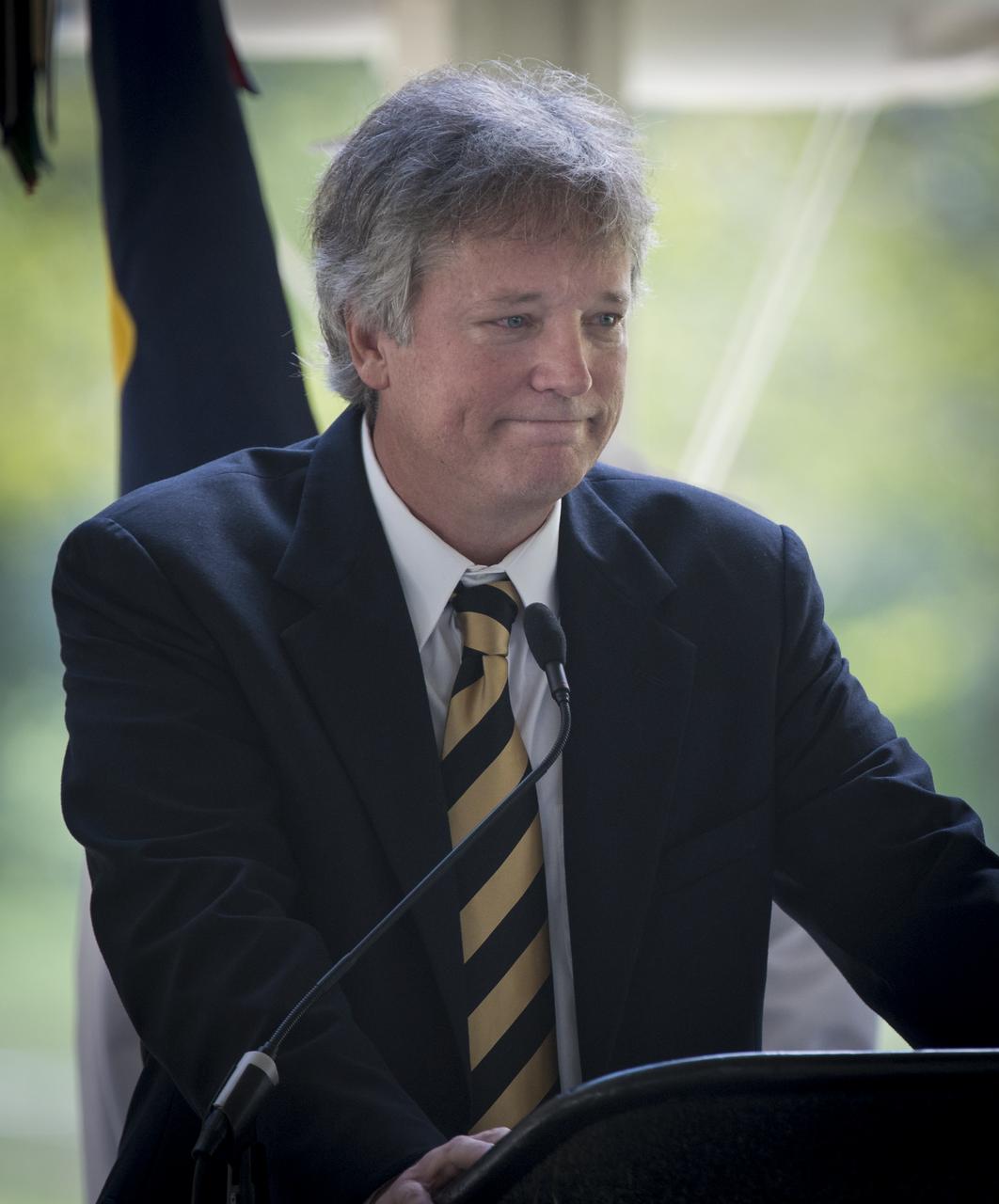
Eric "Rick" Armstrong, son of Neil Armstrong, speaks during a memorial service celebrating the life of his father, Friday, Aug. 31, 2012, at the Camargo Club in Cincinnati. Neil Armstrong, the first man to walk on the moon during the 1969 Apollo 11 mission, died Saturday, Aug. 25. He was 82. Photo Credit: (NASA/Bill Ingalls)
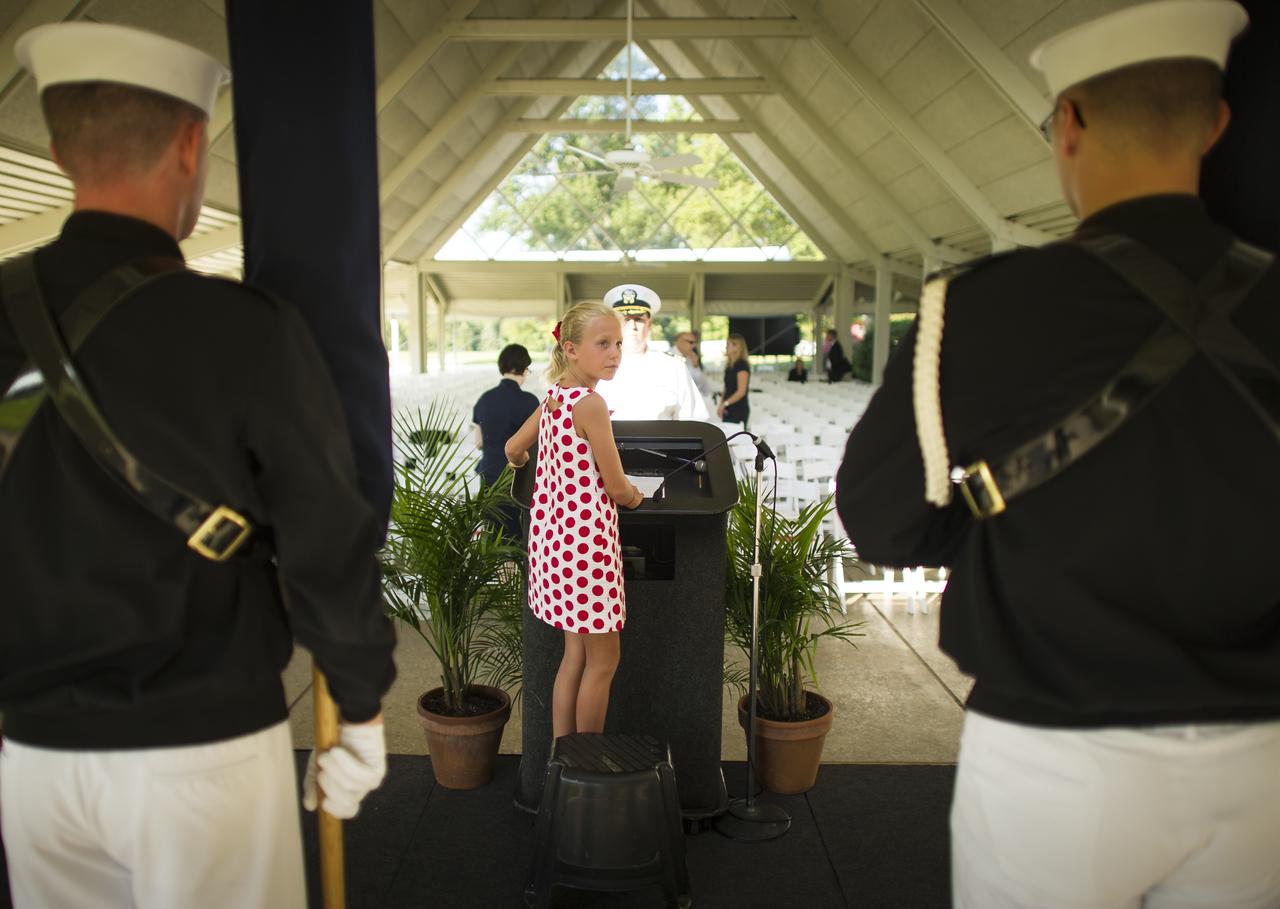
Piper Van Wagenen, one of Neil Armstrong's 10 grandchildren, is seen during preparation of a memorial service celebrating the life of Neil Armstrong, Friday, Aug. 31, 2012, at the Camargo Club in Cincinnati. Armstrong, the first man to walk on the moon during the 1969 Apollo 11 mission, died Saturday, Aug. 25. He was 82. Photo Credit: (NASA/Bill Ingalls)
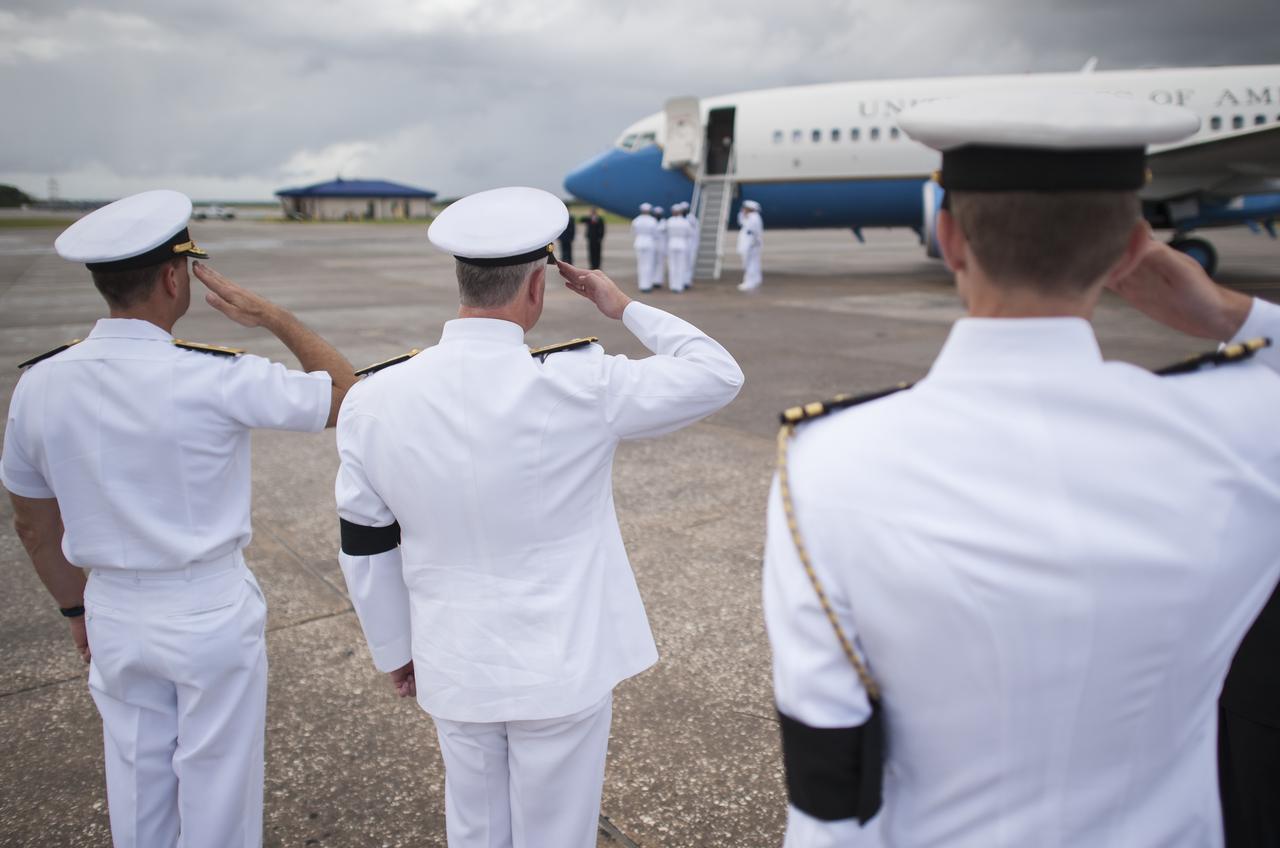
US Navy personnel salute as the cremains of Apollo 11 astronaut Neil Armstrong are transferred from a military aircraft at Naval Station Mayport the day before the Armstrong burial at sea service, Thursday, Sept. 13, 2012, Mayport, Fla. Armstrong, the first man to walk on the moon during the 1969 Apollo 11 mission, died Saturday, Aug. 25. He was 82. Photo Credit: (NASA/Bill Ingalls)
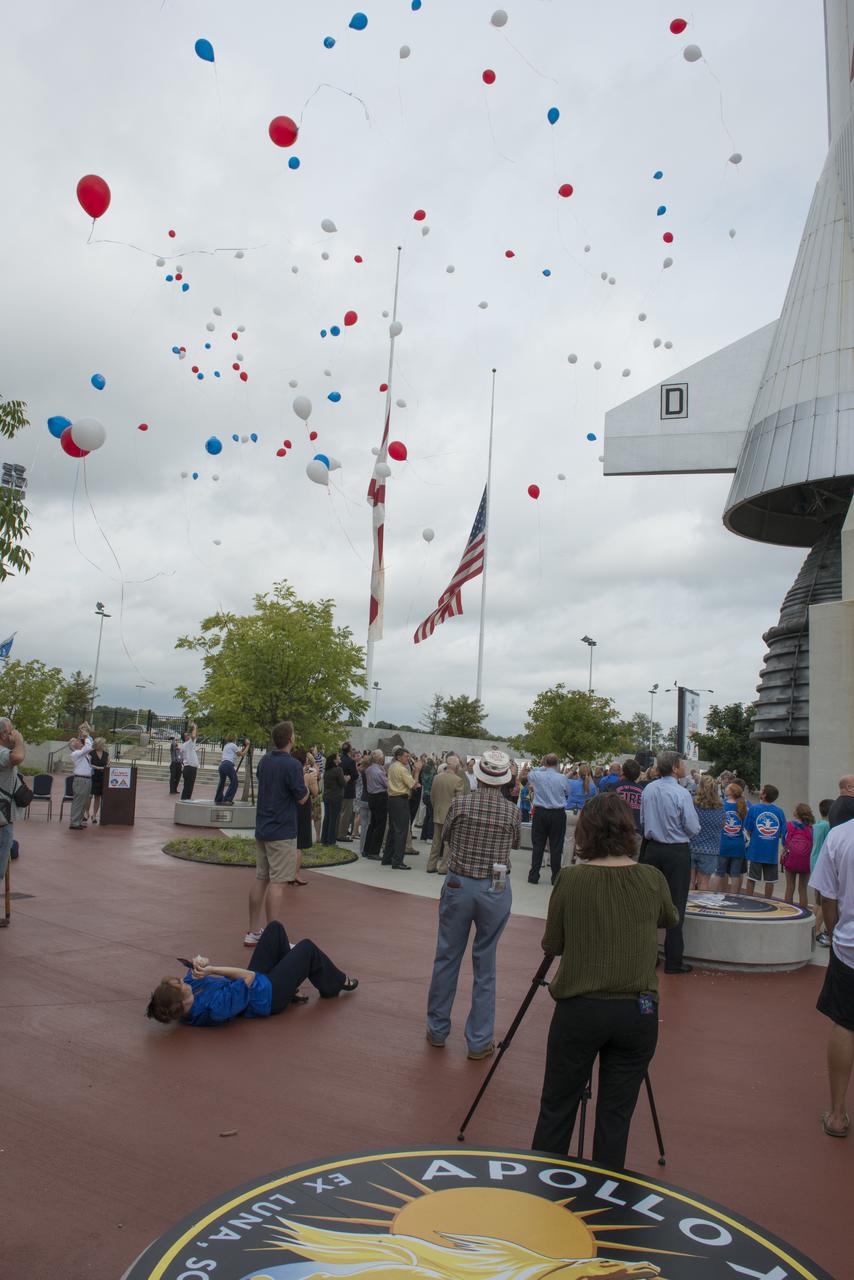
AUGUST 31, 2012 TRIBUTE TO APOLLO ASTRONAUT NEIL ARMSTRONG AT THE USSRC. A LARGE GROUP GATHERED NEAR THE LIFE-SIZE MODEL OF THE SATURN V ROCKET AND RELEASED RED, WHITE AND BLUE BALLOONS TO CELEBRATE THE LIFE OF NEIL ARMSTRONG. IN HONOR OF ARMSTRONG, FLAGS FLEW AT HALF-MAST ACROSS AMERICA ON AUGUST 31.1200934
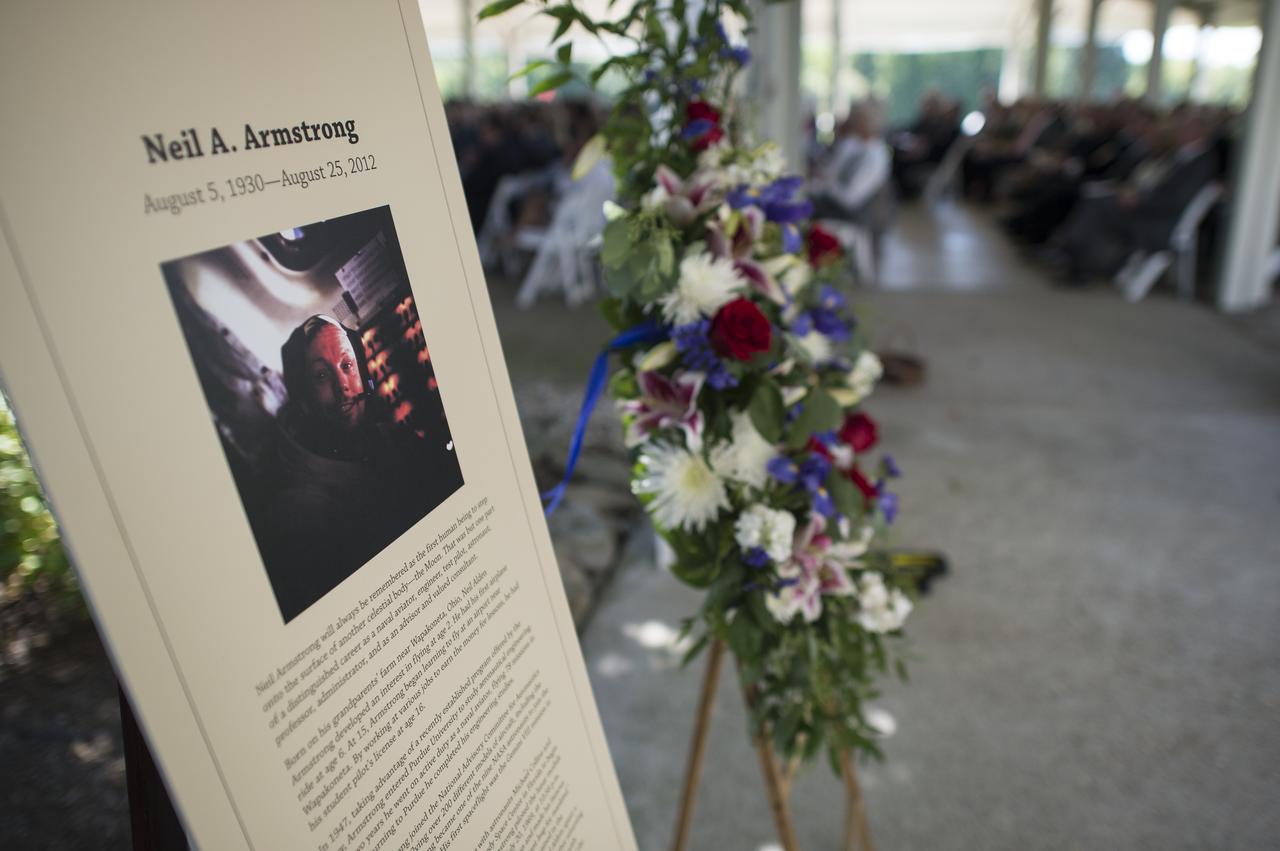
A memorial tribute from the Smithsonian is seen at the entrance of a private memorial service celebrating the life of Neil Armstrong, Aug. 31, 2012, at the Camargo Club in Cincinnati. Armstrong, the first man to walk on the moon during the 1969 Apollo 11 mission, died Saturday, Aug. 25. He was 82. Photo Credit: (NASA/Bill Ingalls)
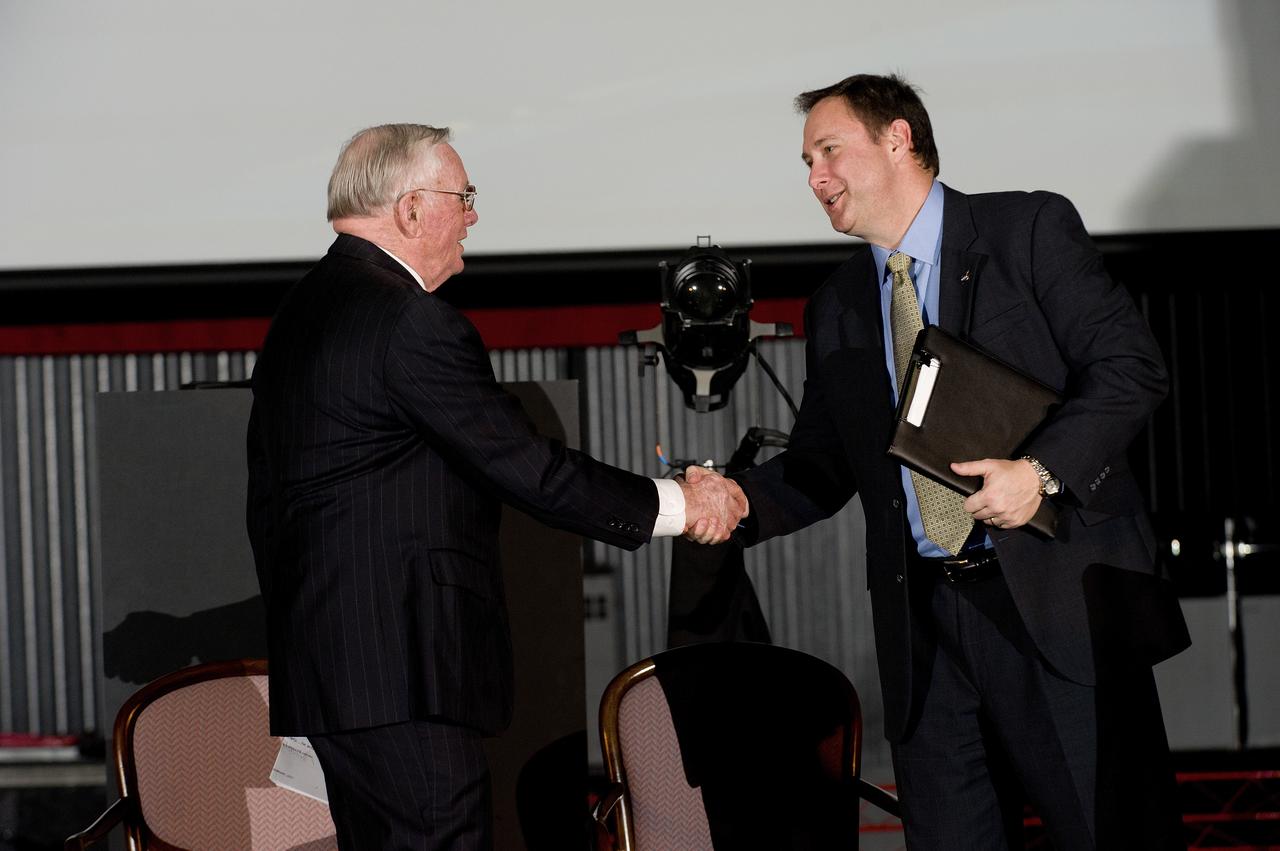
MSFC DIRECTOR ROBERT LIGHTFOOT SHAKES HANDS WITH ASTRONAUT NEIL ARMSTRONG AFTER INTRODUCING HIM AT THE U.S. SPACE AND ROCKET CENTER.
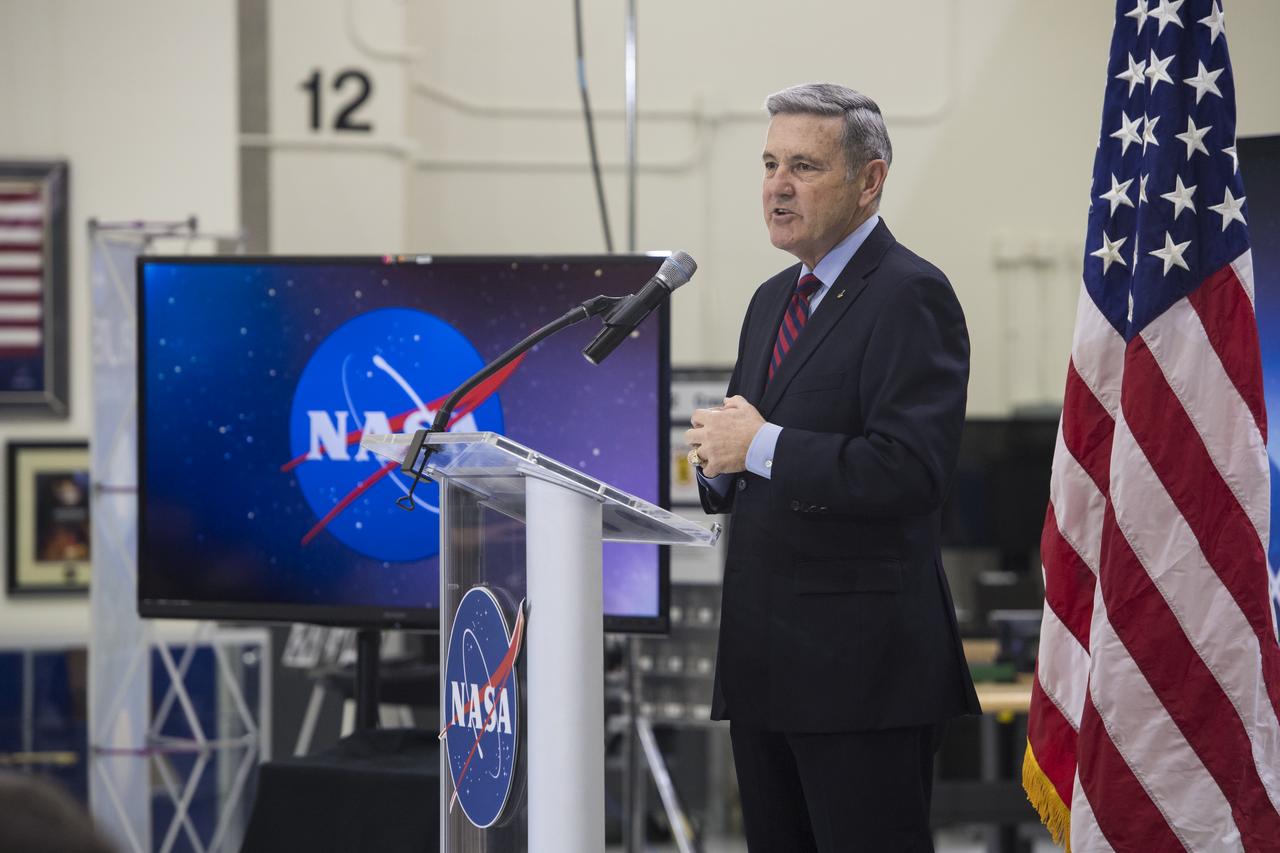
Kennedy Space Center Director Bob Cabana makes opening remarks during an event to discuss NASA’s progress toward sending astronauts to the Moon and on to Mars, Monday, March 11, 2019, at the Neil Armstrong Operations and Checkout Building at NASA's Kennedy Space Center in Florida. Representatives from the Kennedy workforce, news media and social media were in attendance. NASA's Orion spacecraft, which is scheduled to be flown on Exploration Mission-2, was on display. For information on NASA's Moon to Mars plans, visit: www.nasa.gov/moontomars Photo credit: (NASA/Aubrey Gemignani)
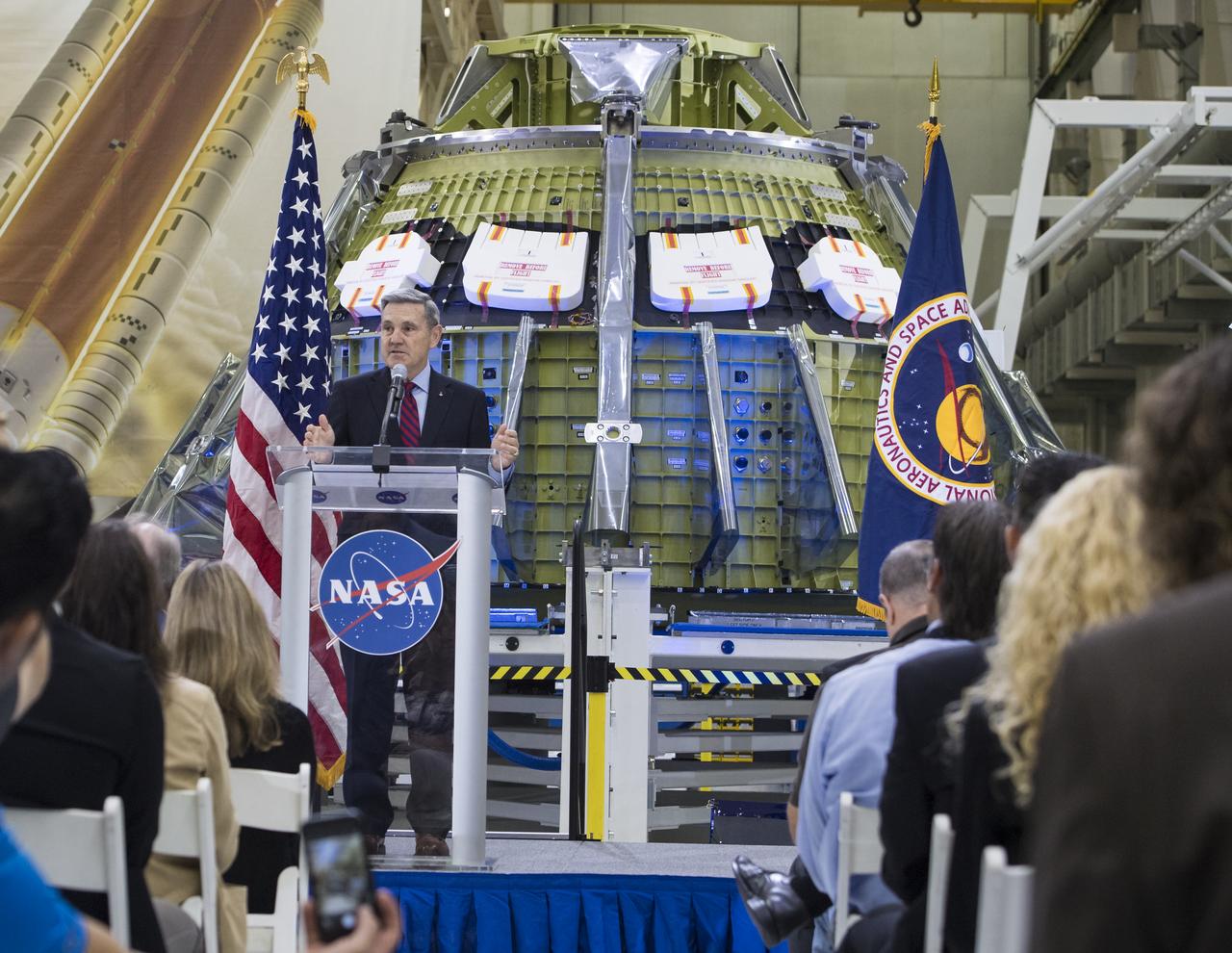
Kennedy Space Center Director Bob Cabana makes opening remarks during an event to discuss NASA’s progress toward sending astronauts to the Moon and on to Mars, Monday, March 11, 2019, at the Neil Armstrong Operations and Checkout Building at NASA's Kennedy Space Center in Florida. Representatives from the Kennedy workforce, news media and social media were in attendance. NASA's Orion spacecraft, which is scheduled to be flown on Exploration Mission-2, was on display. For information on NASA's Moon to Mars plans, visit: www.nasa.gov/moontomars Photo credit: (NASA/Aubrey Gemignani)
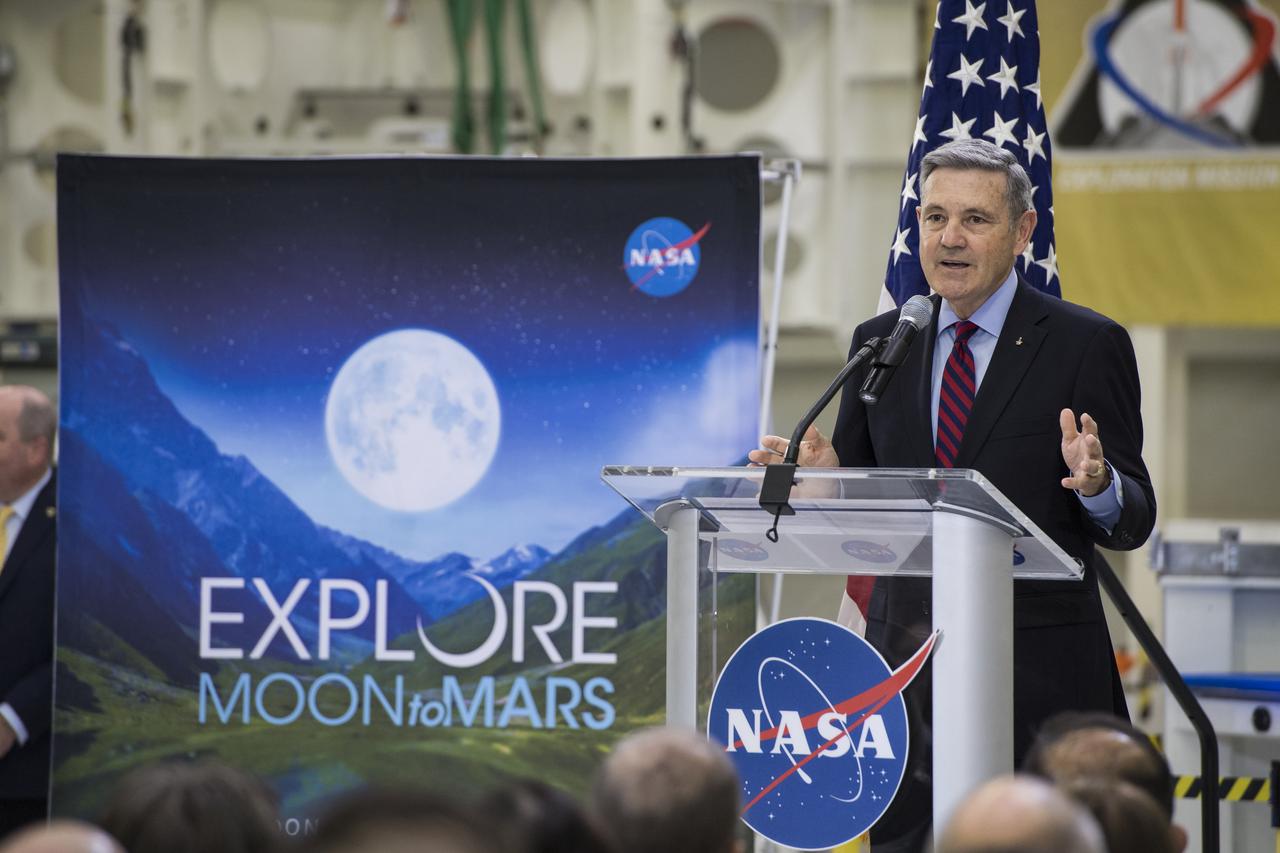
Kennedy Space Center Director Bob Cabana makes opening remarks during an event to discuss NASA’s progress toward sending astronauts to the Moon and on to Mars, Monday, March 11, 2019, at the Neil Armstrong Operations and Checkout Building at NASA's Kennedy Space Center in Florida. Representatives from the Kennedy workforce, news media and social media were in attendance. NASA's Orion spacecraft, which is scheduled to be flown on Exploration Mission-2, was on display. For information on NASA's Moon to Mars plans, visit: www.nasa.gov/moontomars Photo credit: (NASA/Aubrey Gemignani)
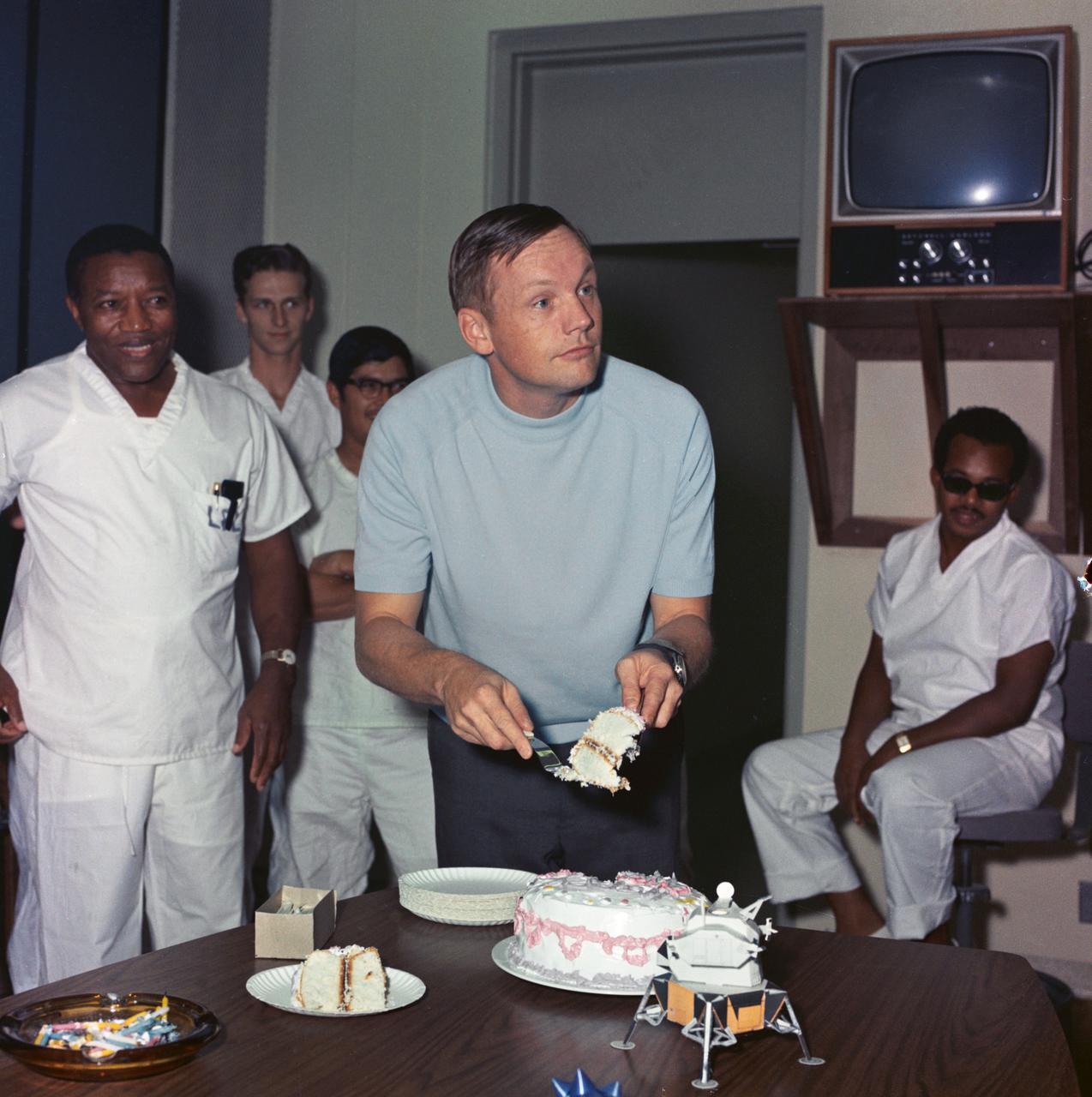
S69-40958 (5 August 1969) --- Astronaut Neil A. Armstrong, commander of the historic Apollo 11 lunar landing mission, and the first man to set foot on the Moon, cuts his birthday cake as he celebrated his 39th birthday. The crew still confined to the Crew Reception Area (CRA) of the Manned Spacecraft Center's (MSC) Lunar Receiving Laboratory (LRL). Armstrong was born on August 5, 1930, in Wapakoneta, Ohio. The cake was described as "standard two-layer, plain vanilla" on which was placed 39 candles. Eighteen of the persons quarantined with Armstrong assembled and sang happy birthday; and a champagne toast was offered. CRA support personnel are in the background. Astronauts Armstrong; Michael Collins, command module pilot; and Edwin E. Aldrin Jr., lunar module pilot, will be released from quarantine on August 11, 1969.
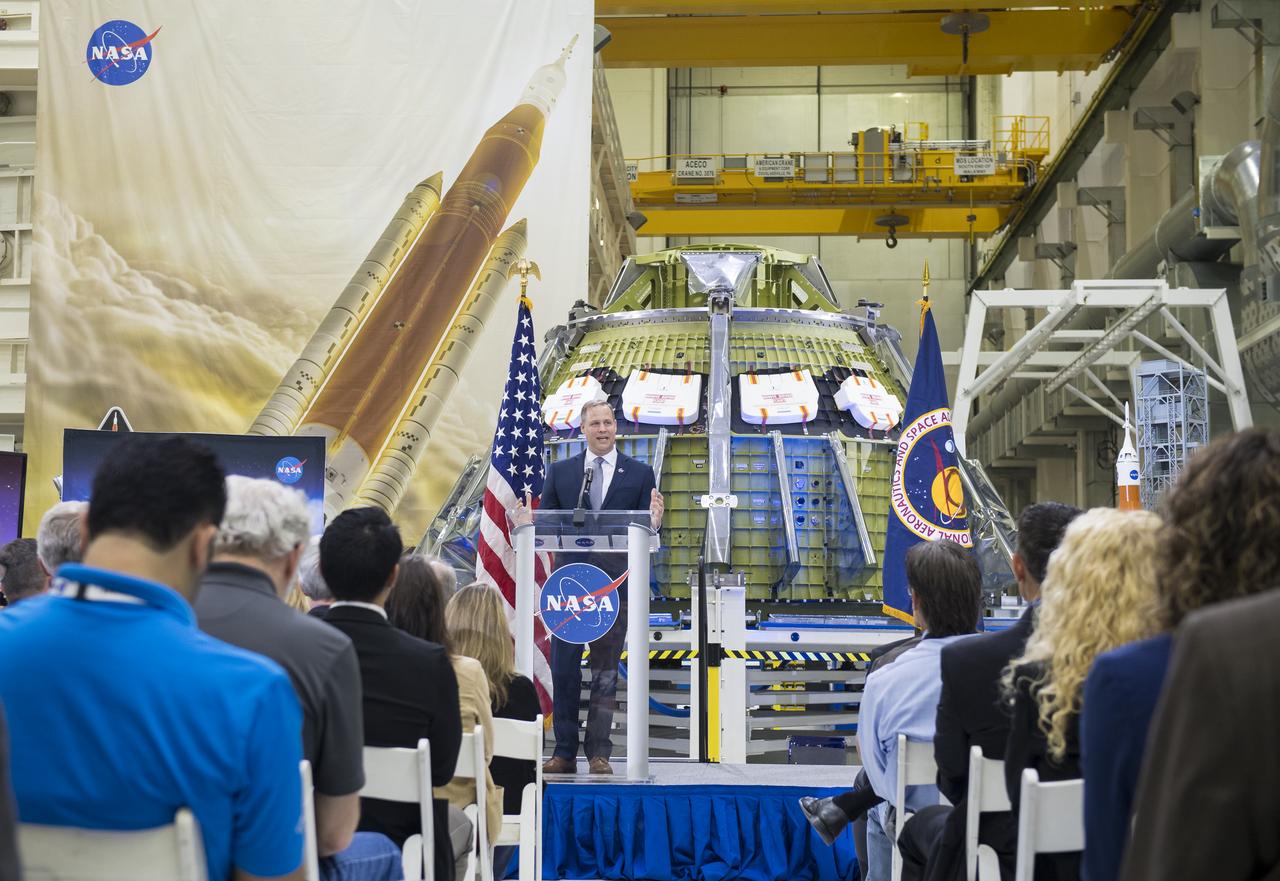
NASA Administrator Jim Bridenstine talks to employees about the agency’s progress toward sending astronauts to the Moon and on to Mars during a televised event, Monday, March 11, 2019, at the Neil Armstrong Operations and Checkout Building at NASA's Kennedy Space Center in Florida. Representatives from the Kennedy workforce, news media, and social media were in attendance. NASA's Orion spacecraft, which is scheduled to be flown on Exploration Mission-2, was on display. For information on NASA's Moon to Mars plans, visit: www.nasa.gov/moontomars Photo credit: (NASA/Aubrey Gemignani)
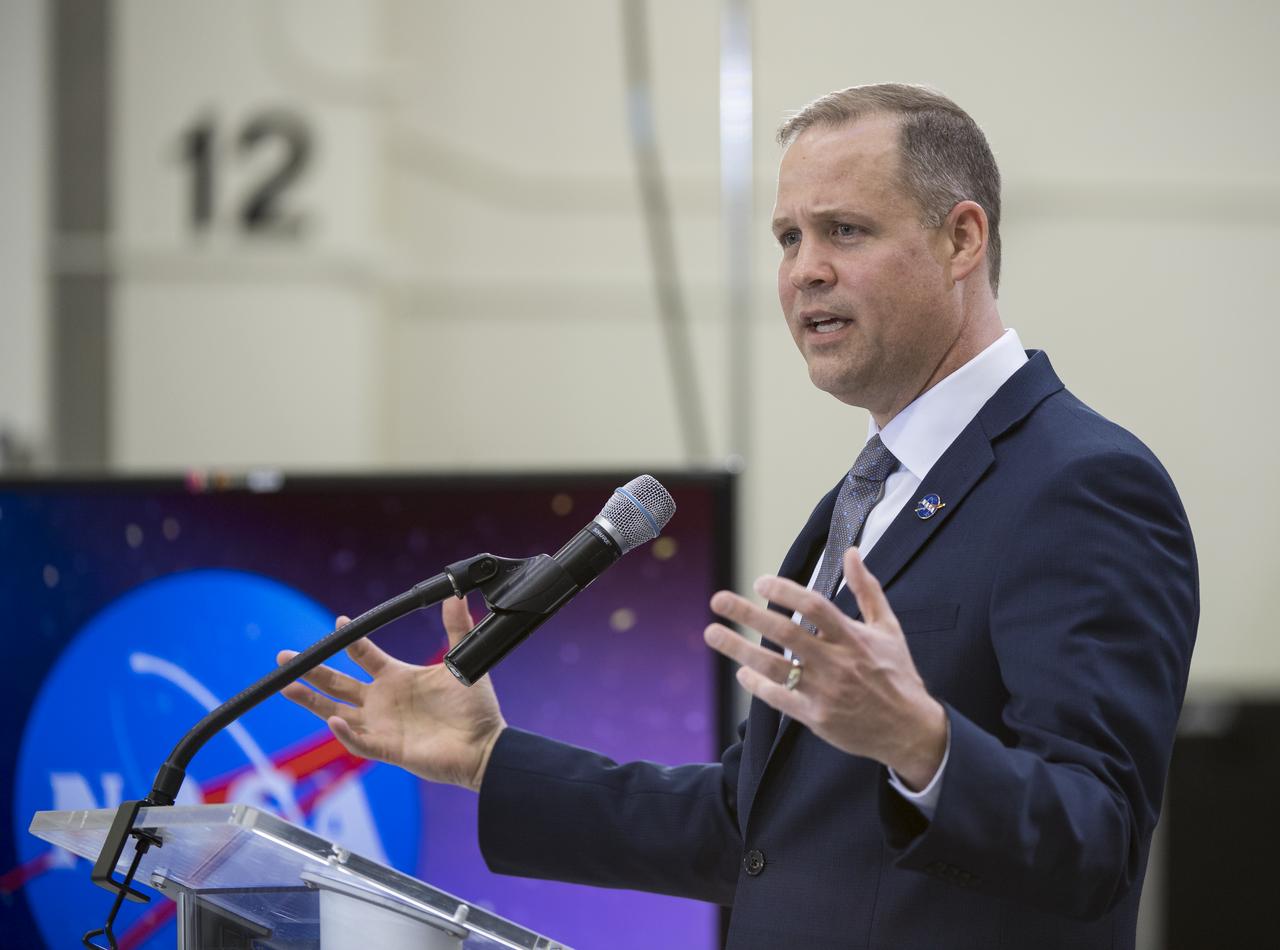
NASA Administrator Jim Bridenstine talks to employees about the agency’s progress toward sending astronauts to the Moon and on to Mars during a televised event, Monday, March 11, 2019, at the Neil Armstrong Operations and Checkout Building at NASA's Kennedy Space Center in Florida. Representatives from the Kennedy workforce, news media, and social media were in attendance. NASA's Orion spacecraft, which is scheduled to be flown on Exploration Mission-2, was on display. For information on NASA's Moon to Mars plans, visit: www.nasa.gov/moontomars Photo credit: (NASA/Aubrey Gemignani)
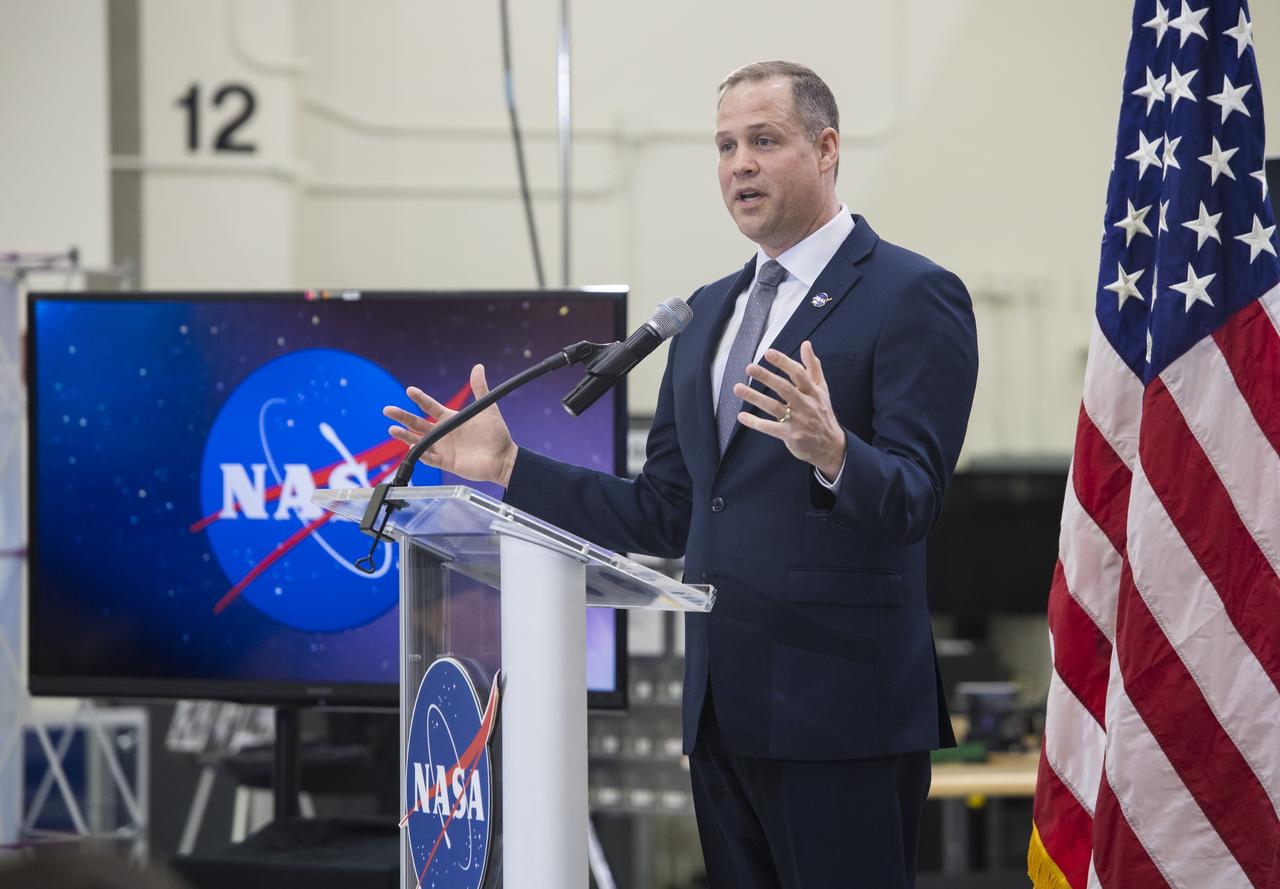
NASA Administrator Jim Bridenstine talks to employees about the agency’s progress toward sending astronauts to the Moon and on to Mars during a televised event, Monday, March 11, 2019, at the Neil Armstrong Operations and Checkout Building at NASA's Kennedy Space Center in Florida. Representatives from the Kennedy workforce, news media, and social media were in attendance. NASA's Orion spacecraft, which is scheduled to be flown on Exploration Mission-2, was on display. For information on NASA's Moon to Mars plans, visit: www.nasa.gov/moontomars Photo credit: (NASA/Aubrey Gemignani)
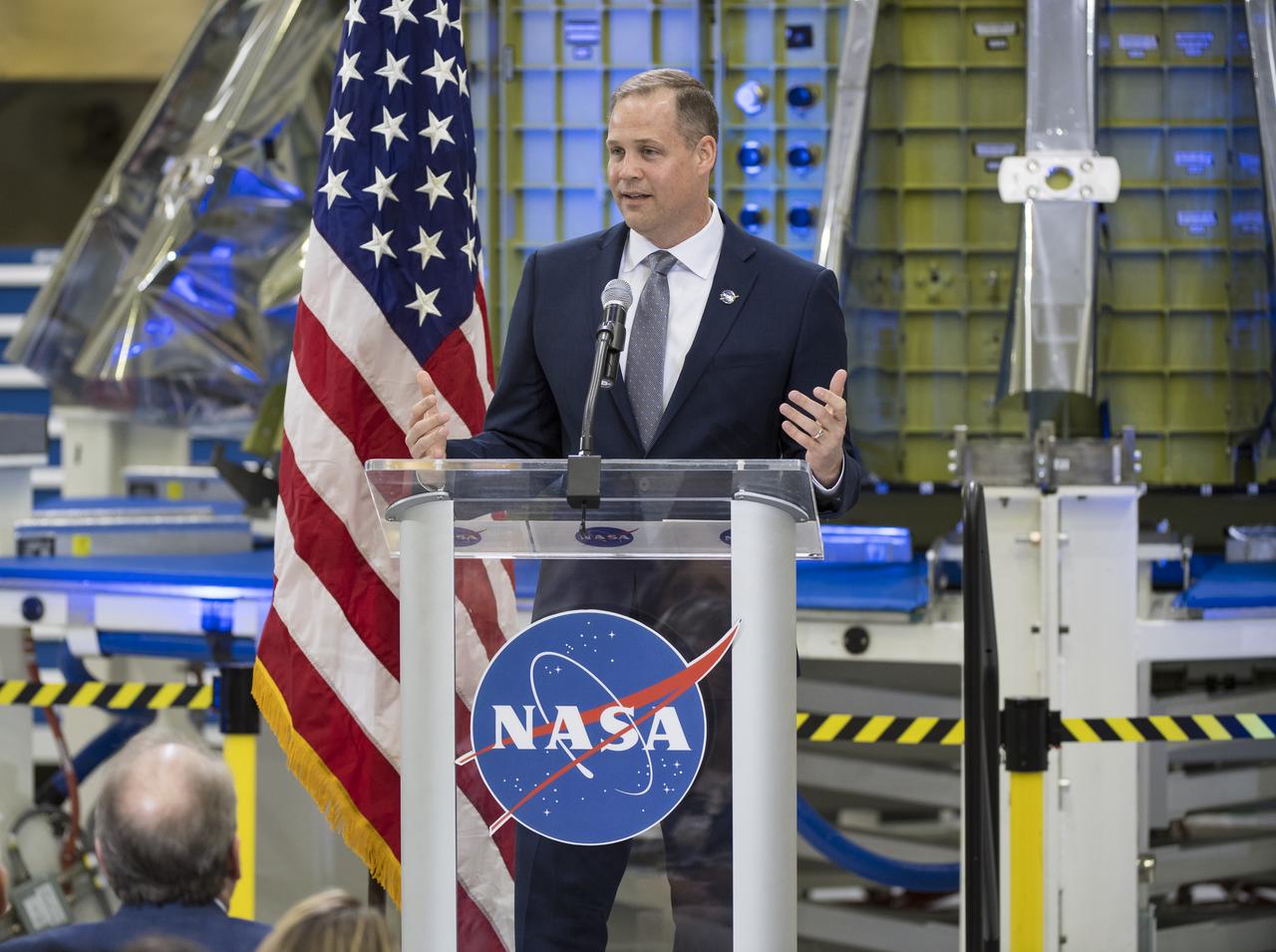
NASA Administrator Jim Bridenstine talks to employees about the agency’s progress toward sending astronauts to the Moon and on to Mars during a televised event, Monday, March 11, 2019, at the Neil Armstrong Operations and Checkout Building at NASA's Kennedy Space Center in Florida. Representatives from the Kennedy workforce, news media, and social media were in attendance. NASA's Orion spacecraft, which is scheduled to be flown on Exploration Mission-2, was on display. For information on NASA's Moon to Mars plans, visit: www.nasa.gov/moontomars Photo credit: (NASA/Aubrey Gemignani)
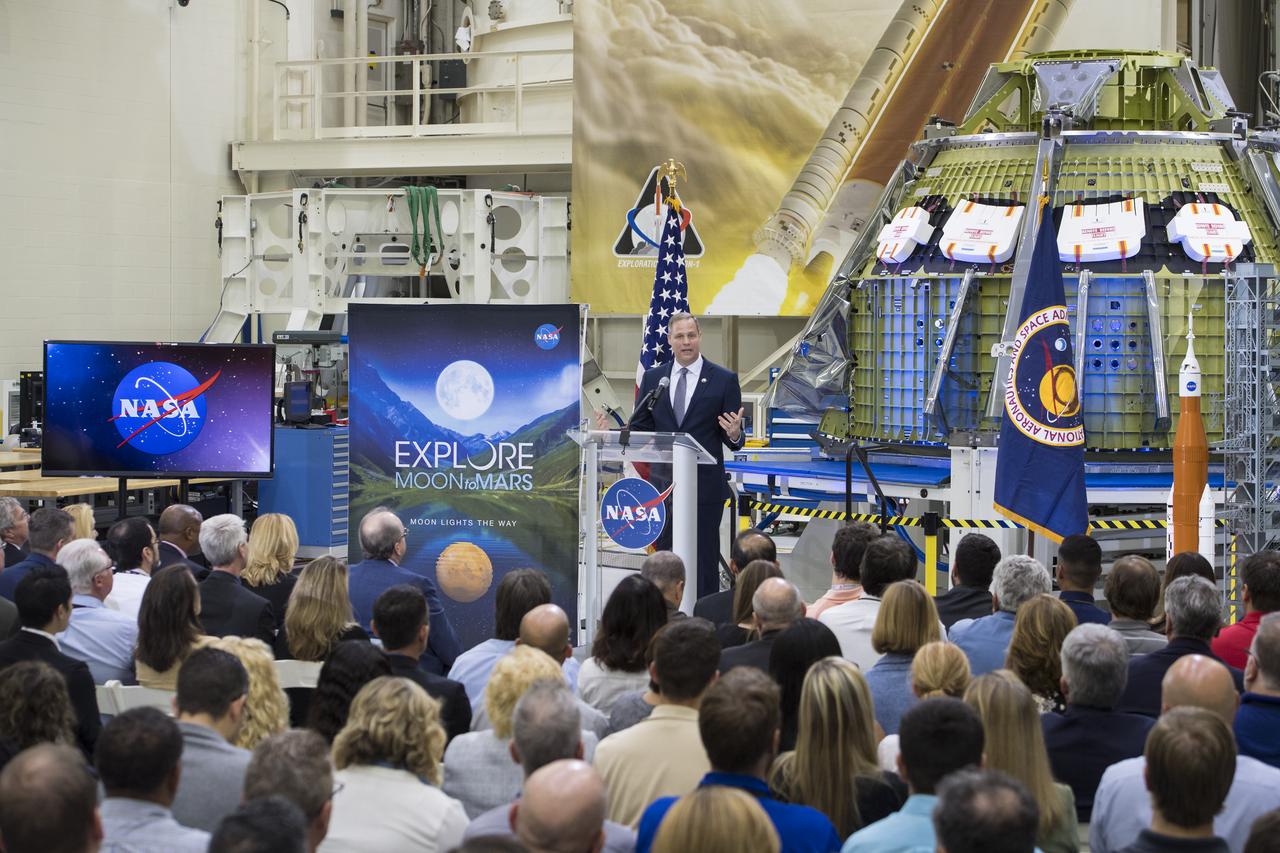
NASA Administrator Jim Bridenstine talks to employees about the agency’s progress toward sending astronauts to the Moon and on to Mars during a televised event, Monday, March 11, 2019, at the Neil Armstrong Operations and Checkout Building at NASA's Kennedy Space Center in Florida. Representatives from the Kennedy workforce, news media, and social media were in attendance. NASA's Orion spacecraft, which is scheduled to be flown on Exploration Mission-2, was on display. For information on NASA's Moon to Mars plans, visit: www.nasa.gov/moontomars Photo credit: (NASA/Aubrey Gemignani)
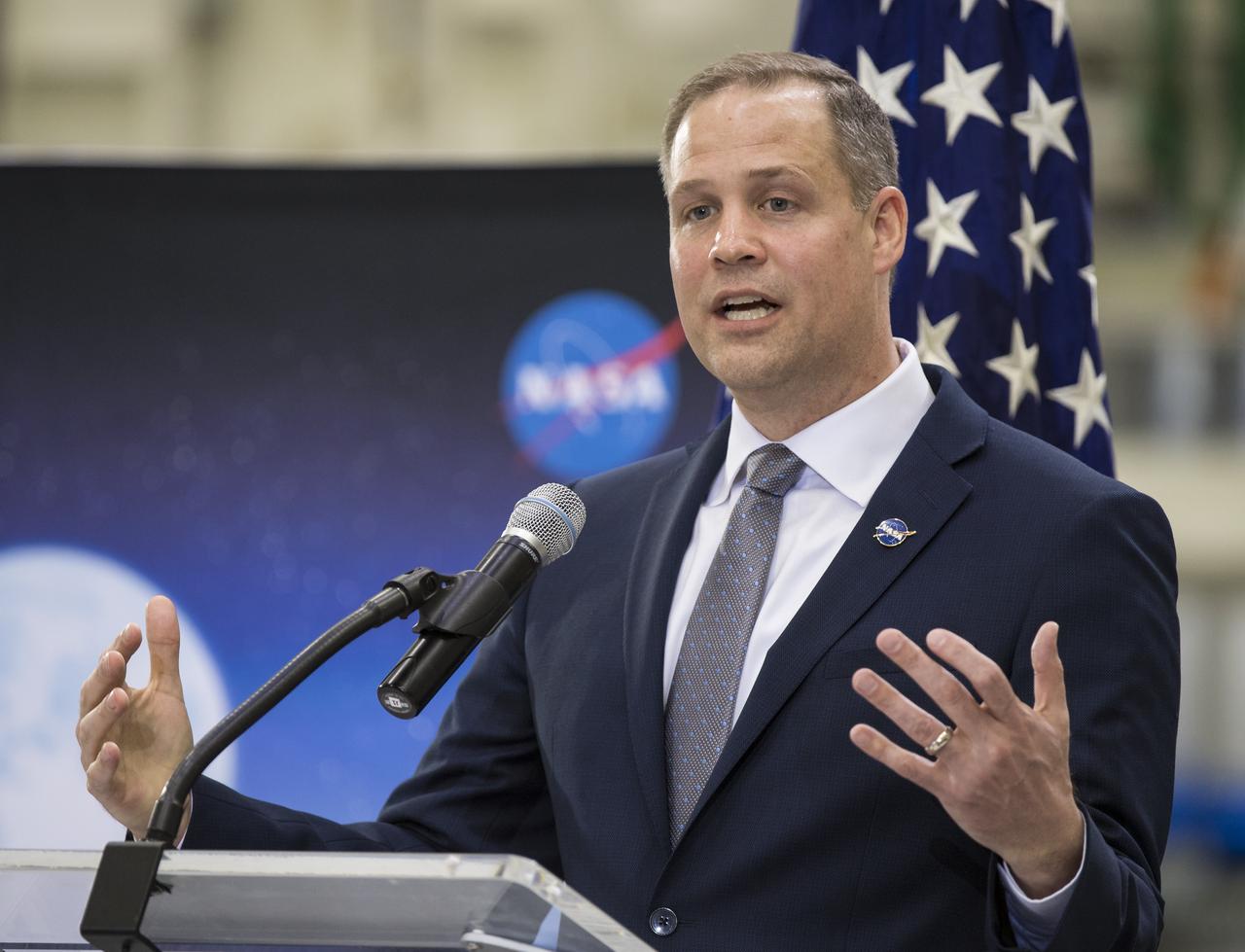
NASA Administrator Jim Bridenstine talks to employees about the agency’s progress toward sending astronauts to the Moon and on to Mars during a televised event, Monday, March 11, 2019, at the Neil Armstrong Operations and Checkout Building at NASA's Kennedy Space Center in Florida. Representatives from the Kennedy workforce, news media, and social media were in attendance. NASA's Orion spacecraft, which is scheduled to be flown on Exploration Mission-2, was on display. For information on NASA's Moon to Mars plans, visit: www.nasa.gov/moontomars Photo credit: (NASA/Aubrey Gemignani)
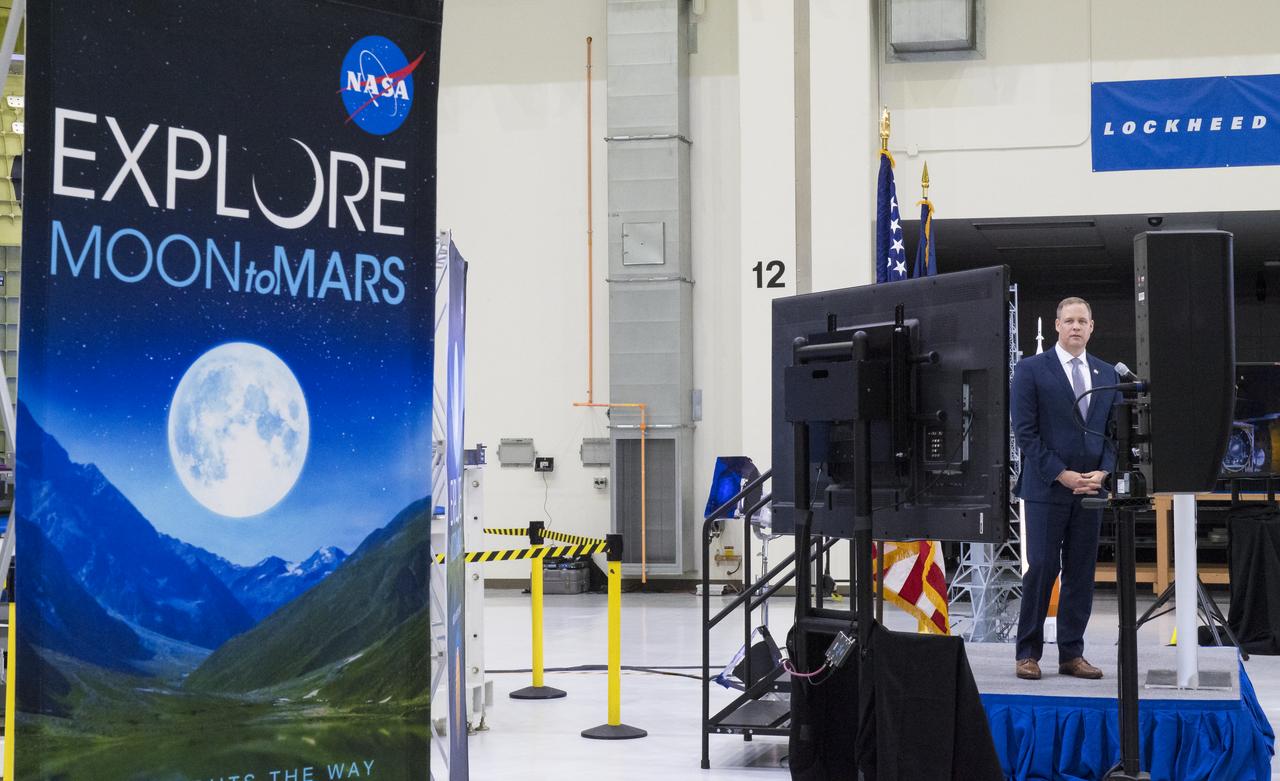
NASA Administrator Jim Bridenstine talks to Glenn Research Center facility manager, Deb Waters, and aerospace engineer, Dave Jacobson, who are inside the vacuum chamber showing one of the Hall Effect Thrusters by video, Monday, March 11, 2019, at the Neil Armstrong Operations and Checkout Building at NASA's Kennedy Space Center in Florida. Representatives from the Kennedy workforce, news media and social media were in attendance. For information on NASA's Moon to Mars plans, visit: www.nasa.gov/moontomars Photo credit: (NASA/Aubrey Gemignani)
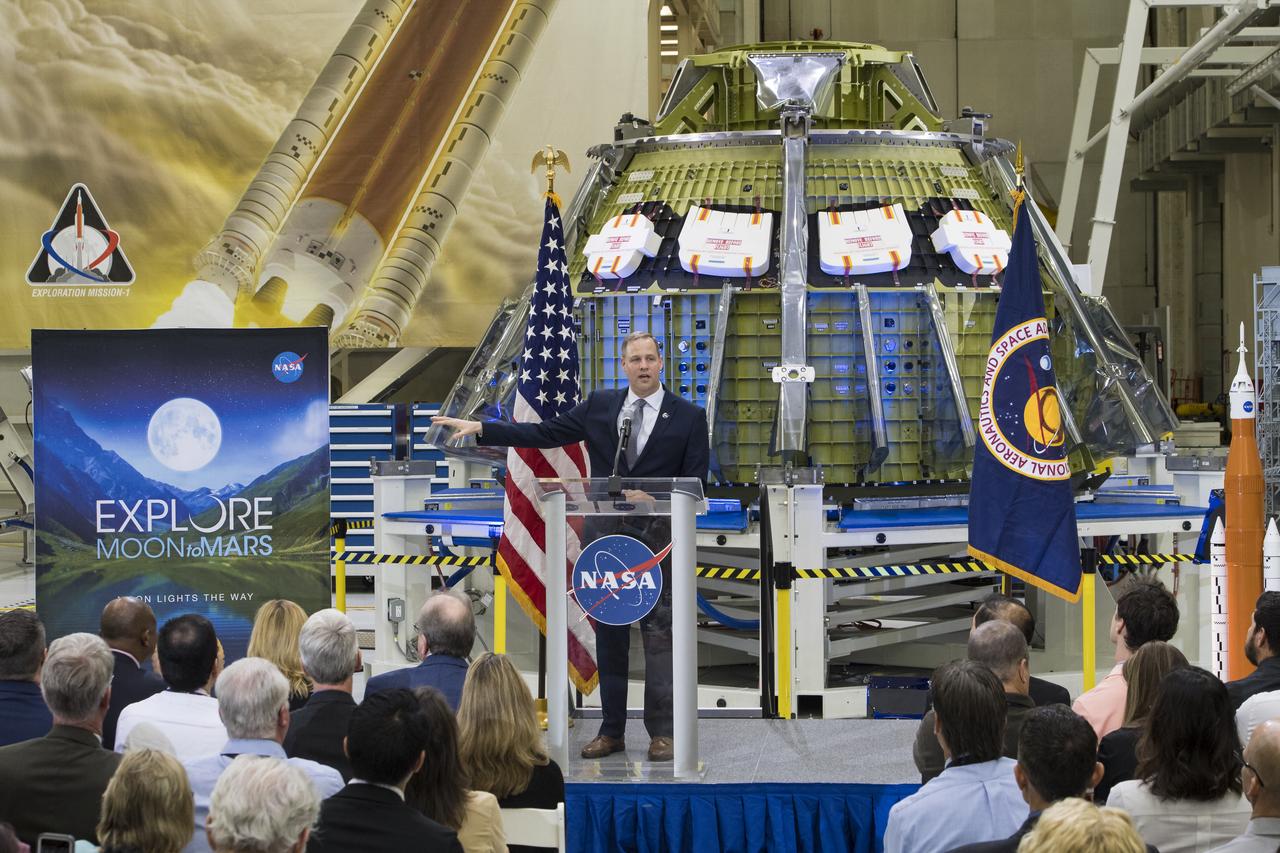
NASA Administrator Jim Bridenstine talks to employees about the agency’s progress toward sending astronauts to the Moon and on to Mars during a televised event, Monday, March 11, 2019, at the Neil Armstrong Operations and Checkout Building at NASA's Kennedy Space Center in Florida. Representatives from the Kennedy workforce, news media, and social media were in attendance. NASA's Orion spacecraft, which is scheduled to be flown on Exploration Mission-2, was on display. For information on NASA's Moon to Mars plans, visit: www.nasa.gov/moontomars Photo credit: (NASA/Aubrey Gemignani)
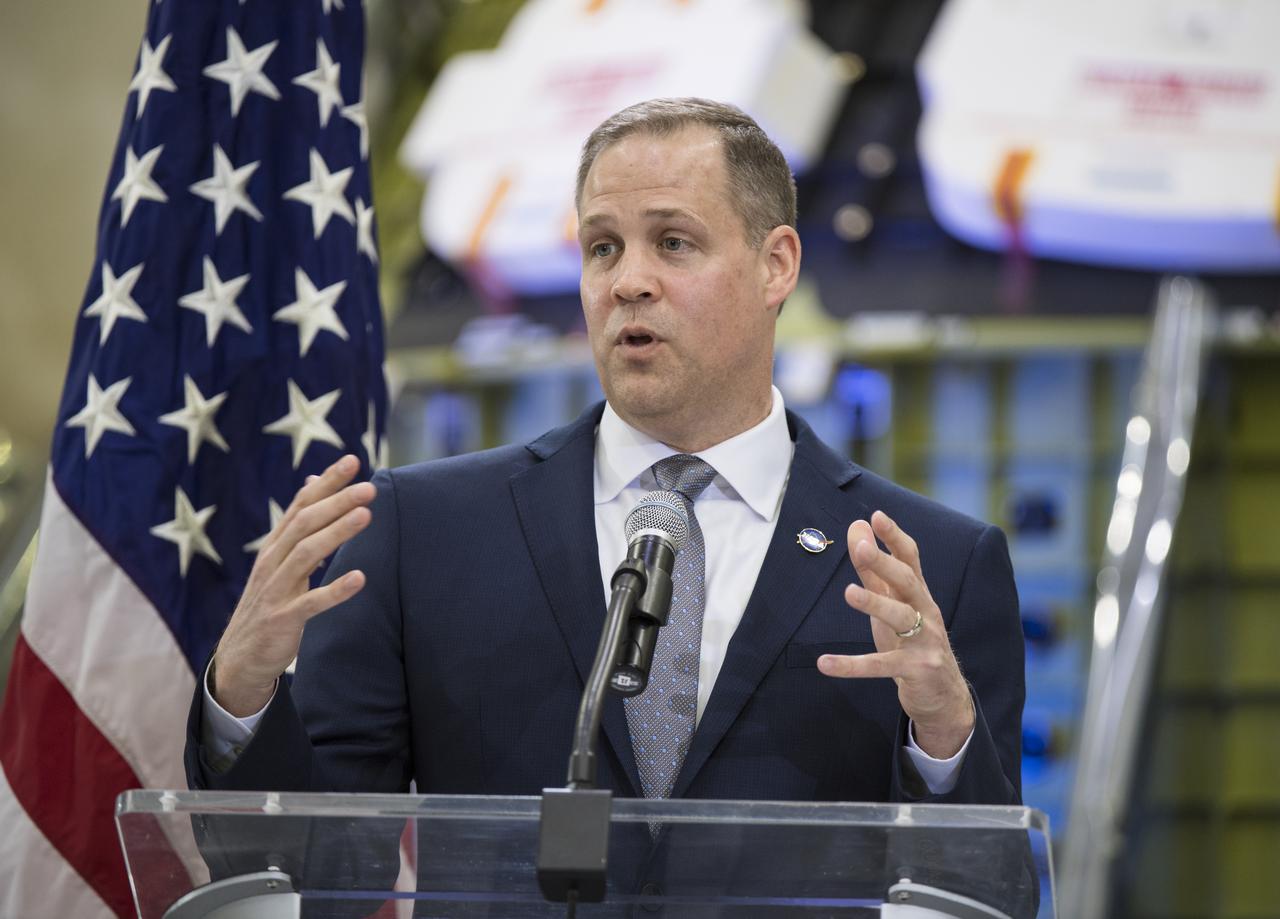
NASA Administrator Jim Bridenstine talks to employees about the agency’s progress toward sending astronauts to the Moon and on to Mars during a televised event, Monday, March 11, 2019, at the Neil Armstrong Operations and Checkout Building at NASA's Kennedy Space Center in Florida. Representatives from the Kennedy workforce, news media, and social media were in attendance. NASA's Orion spacecraft, which is scheduled to be flown on Exploration Mission-2, was on display. For information on NASA's Moon to Mars plans, visit: www.nasa.gov/moontomars Photo credit: (NASA/Aubrey Gemignani)
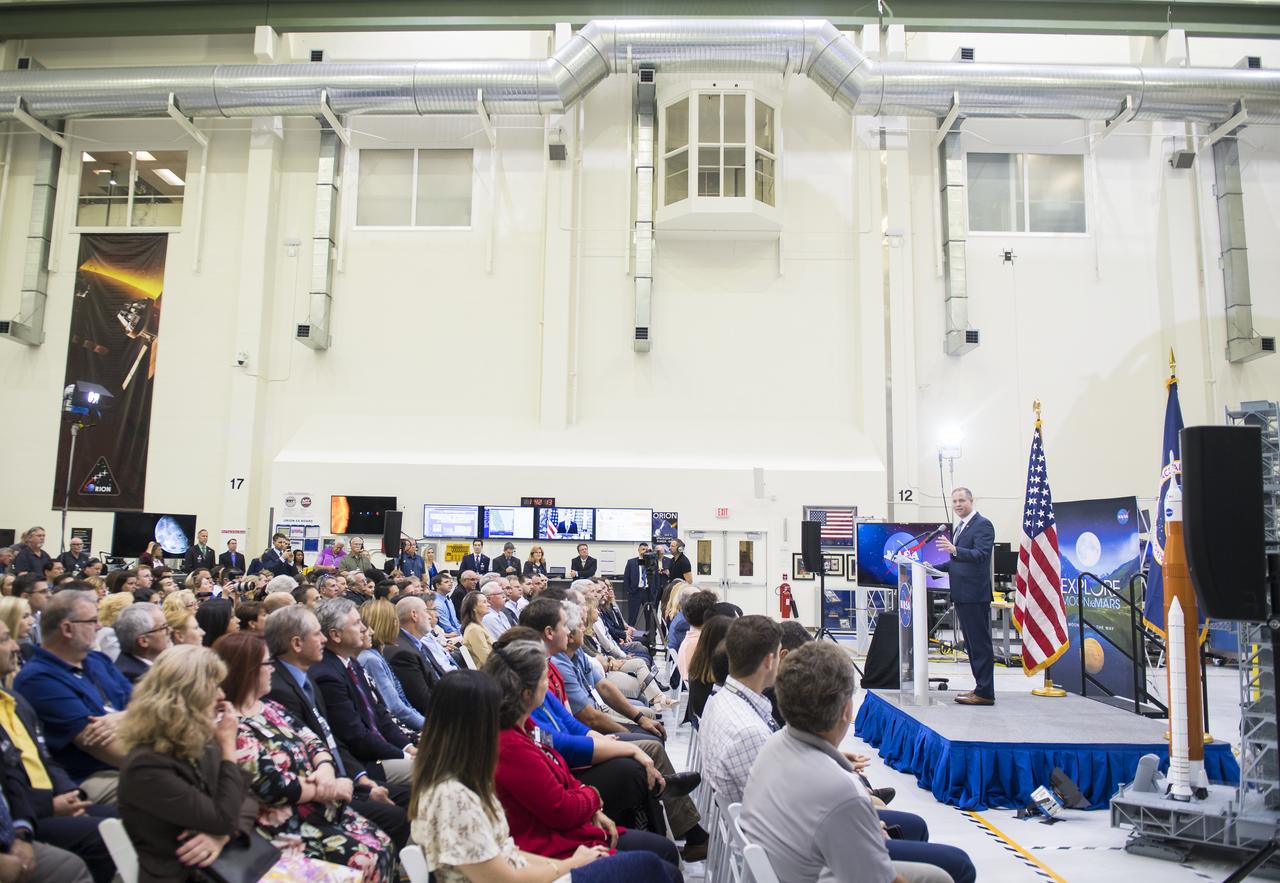
NASA Administrator Jim Bridenstine talks to employees about the agency’s progress toward sending astronauts to the Moon and on to Mars during a televised event, Monday, March 11, 2019, at the Neil Armstrong Operations and Checkout Building at NASA's Kennedy Space Center in Florida. Representatives from the Kennedy workforce, news media, and social media were in attendance. NASA's Orion spacecraft, which is scheduled to be flown on Exploration Mission-2, was on display. For information on NASA's Moon to Mars plans, visit: www.nasa.gov/moontomars Photo credit: (NASA/Aubrey Gemignani)
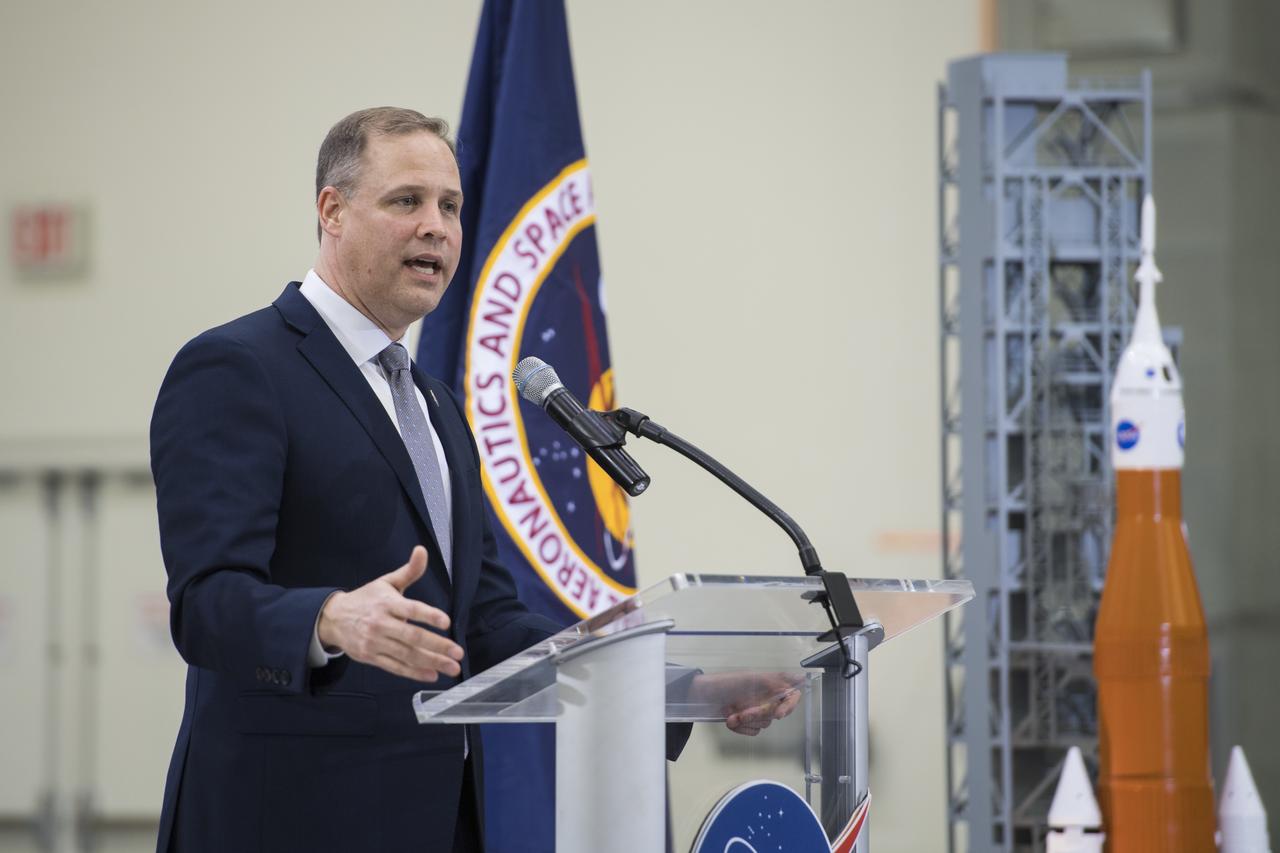
NASA Administrator Jim Bridenstine talks to employees about the agency’s progress toward sending astronauts to the Moon and on to Mars during a televised event, Monday, March 11, 2019, at the Neil Armstrong Operations and Checkout Building at NASA's Kennedy Space Center in Florida. Representatives from the Kennedy workforce, news media, and social media were in attendance. NASA's Orion spacecraft, which is scheduled to be flown on Exploration Mission-2, was on display. For information on NASA's Moon to Mars plans, visit: www.nasa.gov/moontomars Photo credit: (NASA/Aubrey Gemignani)
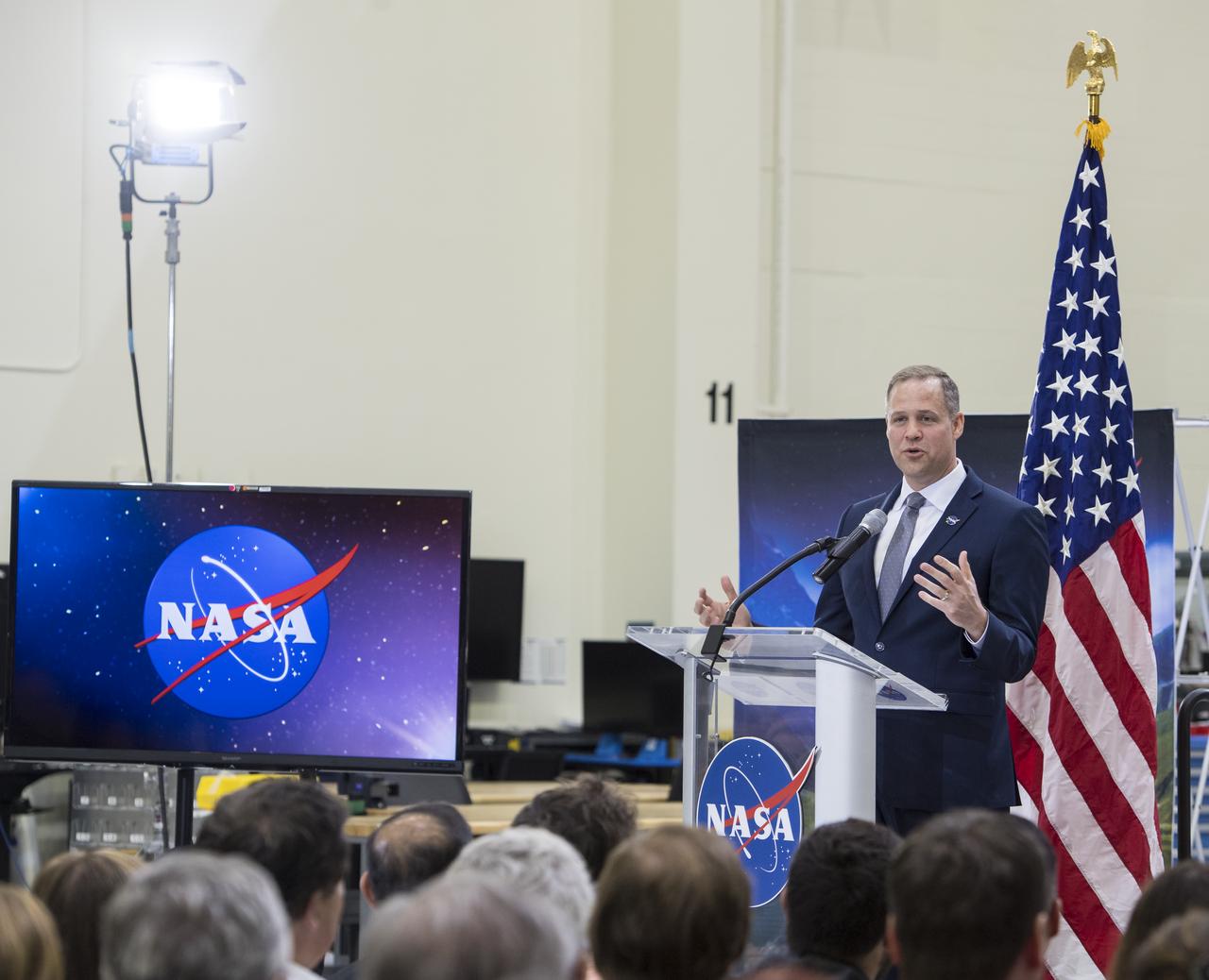
NASA Administrator Jim Bridenstine talks to employees about the agency’s progress toward sending astronauts to the Moon and on to Mars during a televised event, Monday, March 11, 2019, at the Neil Armstrong Operations and Checkout Building at NASA's Kennedy Space Center in Florida. Representatives from the Kennedy workforce, news media, and social media were in attendance. NASA's Orion spacecraft, which is scheduled to be flown on Exploration Mission-2, was on display. For information on NASA's Moon to Mars plans, visit: www.nasa.gov/moontomars Photo credit: (NASA/Aubrey Gemignani)

A photograph of Neil Armstrong as a young man is displayed on a table during a memorial service celebrating the life of Armstrong, Friday, Aug. 31, 2012, at the Camargo Club in Cincinnati. Armstrong, the first man to walk on the moon during the 1969 Apollo 11 mission, died Saturday, Aug. 25. He was 82. Photo Credit: (NASA/Bill Ingalls)
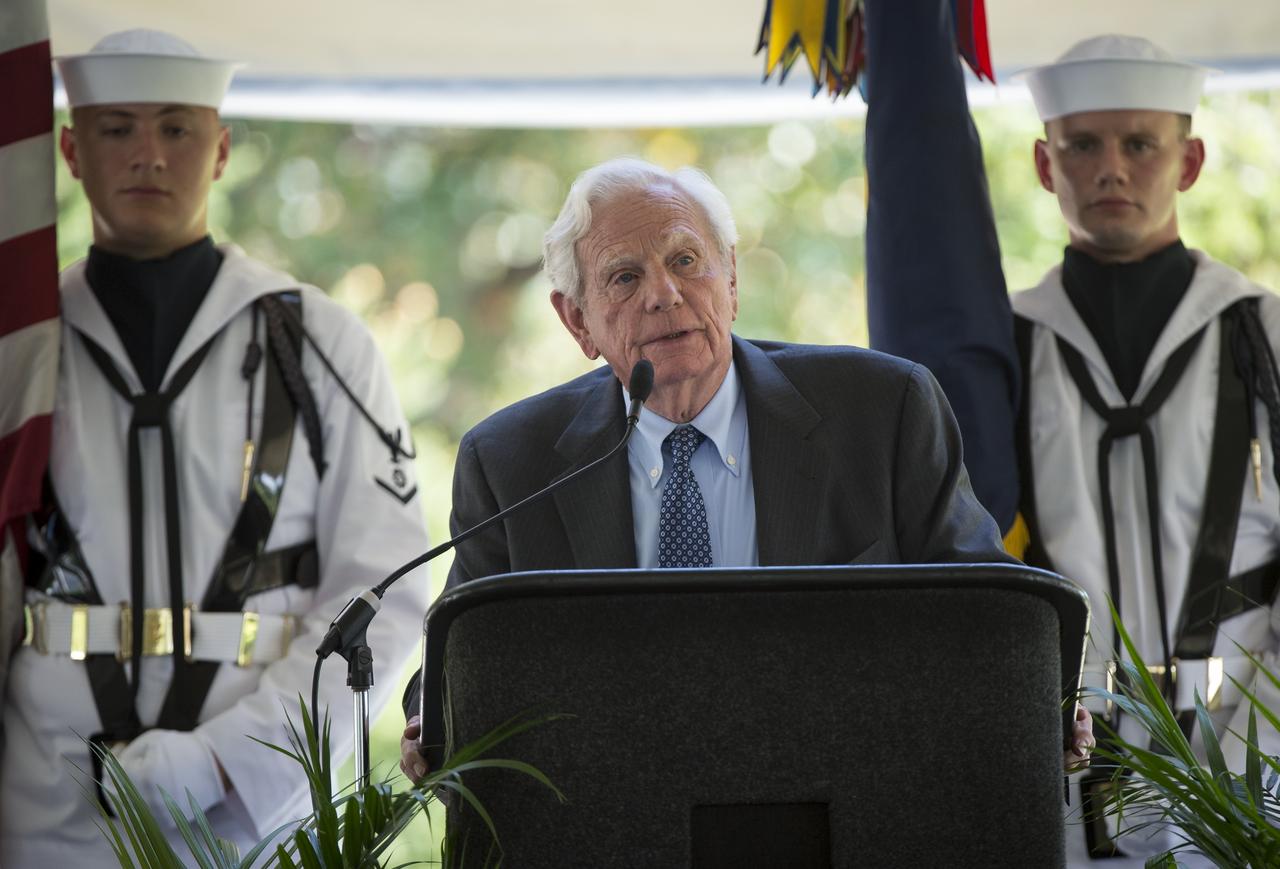
Businessman and friend of Neil Armstrong, Charles Mechem, speaks during a memorial service celebrating the life of Armstrong, Friday, Aug. 31, 2012, at the Camargo Club in Cincinnati. Armstrong, the first man to walk on the moon during the 1969 Apollo 11 mission, died Saturday, Aug. 25. He was 82. Photo Credit: (NASA/Bill Ingalls)
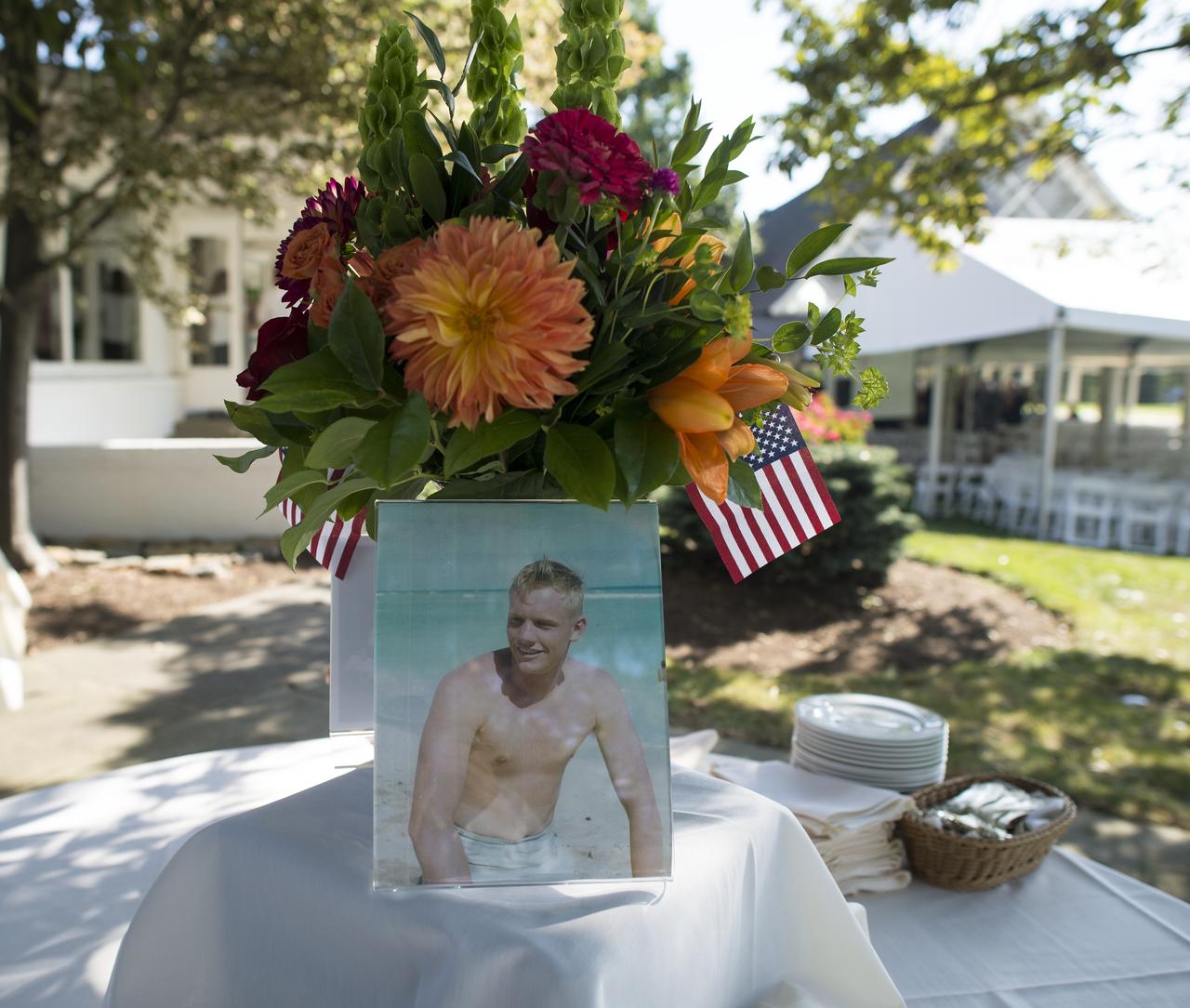
A photograph of Neil Armstrong as a young man is displayed on a table during a memorial service celebrating the life of Armstrong, Friday, Aug. 31, 2012, at the Camargo Club in Cincinnati. Armstrong, the first man to walk on the moon during the 1969 Apollo 11 mission, died Saturday, Aug. 25. He was 82. Photo Credit: (NASA/Bill Ingalls)
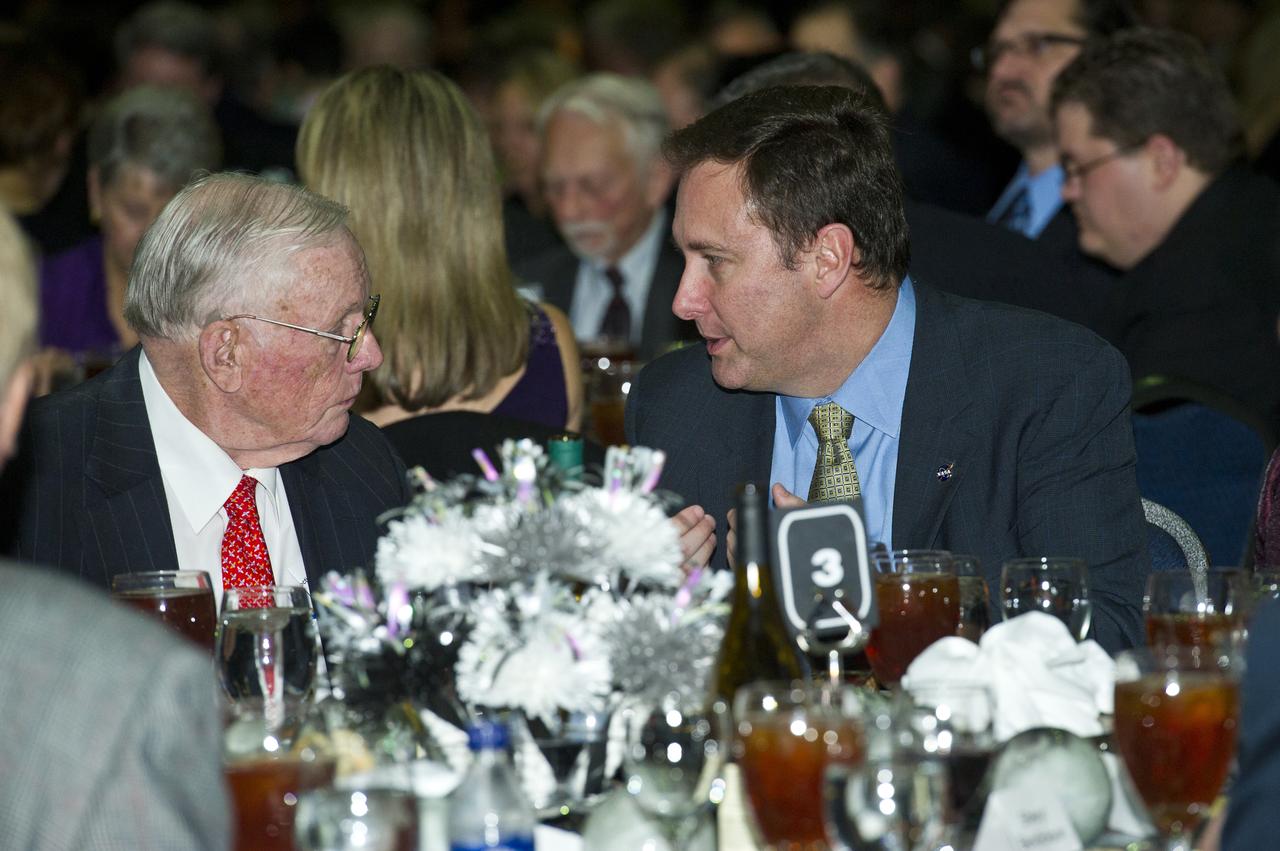
ASTRONAUT NEIL ARMSTRONG AND MSFC DIRECTOR ROBERT LIGHTFOOT IN DISCUSSION AT EVENT HONORING DR. GEORG VON TIESENHAUSEN AT USSRC ON FEB. 3, 2011
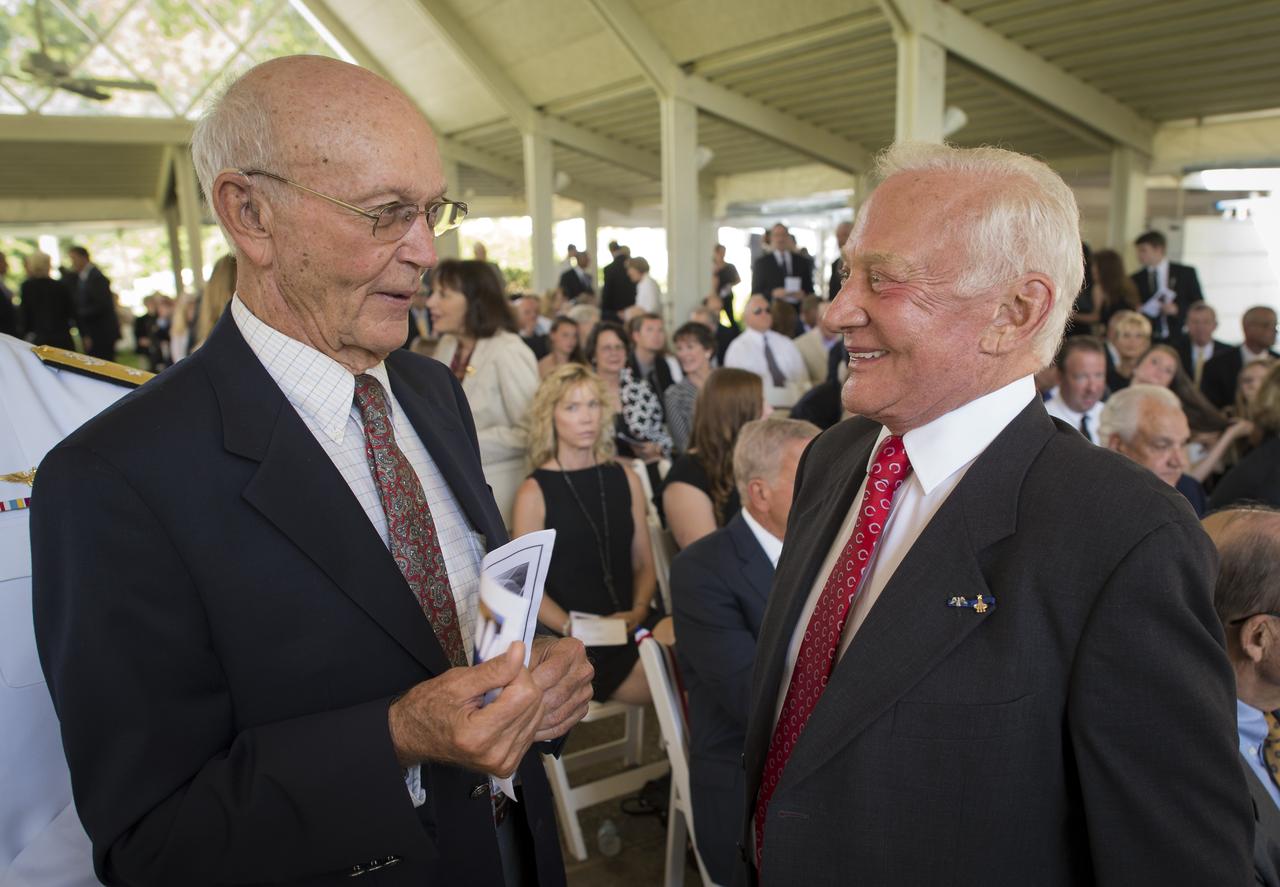
Apollo 11 Astronauts Michael Collins, left, and Buzz Aldrin talk at a private memorial service celebrating the life of Neil Armstrong, Aug. 31, 2012, at the Camargo Club in Cincinnati. Armstrong, the first man to walk on the moon during the 1969 Apollo 11 mission, died Saturday, Aug. 25. He was 82. Photo Credit: (NASA/Bill Ingalls)
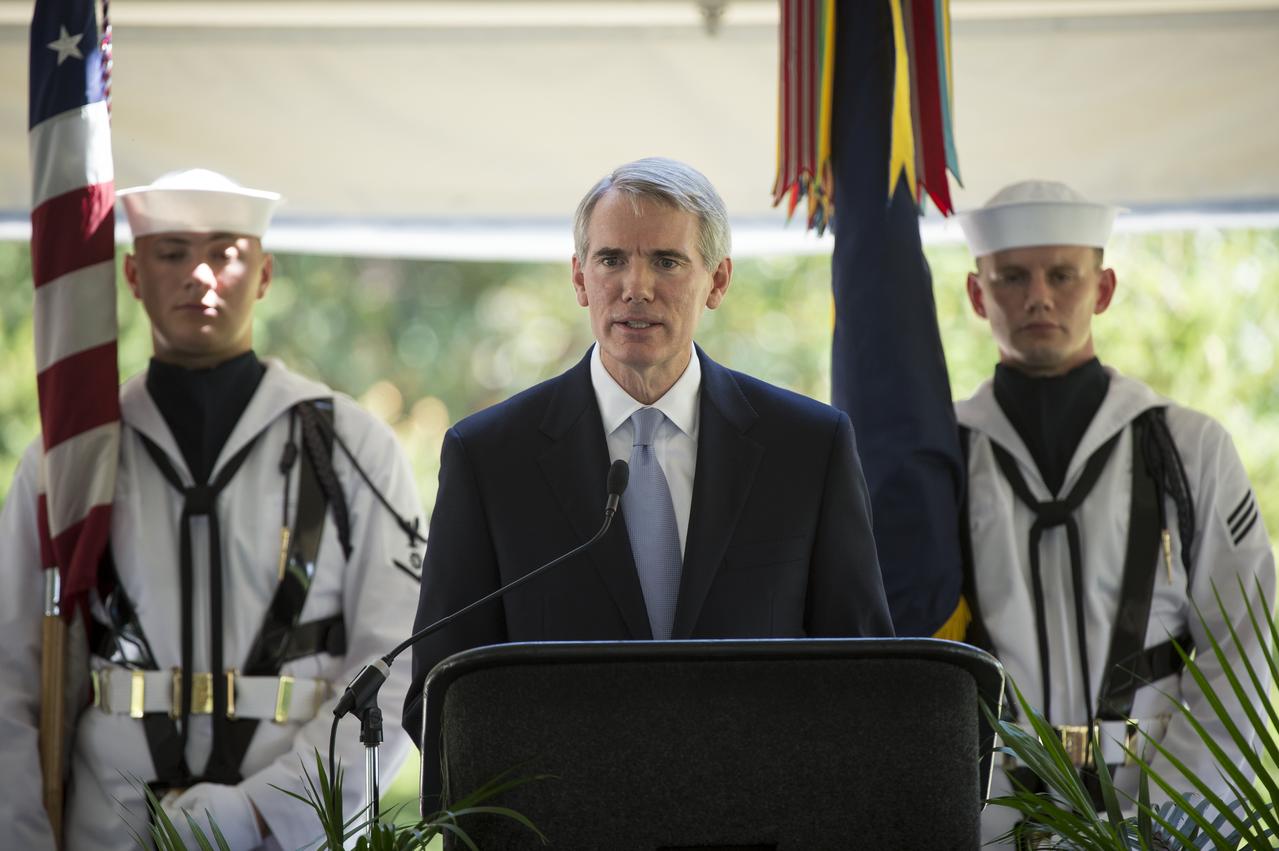
U.S. Sen. Rob Portman, R-Ohio, speaks during a memorial service celebrating the life of Neil Armstrong, Friday, Aug. 31, 2012, at the Camargo Club in Cincinnati. Armstrong, the first man to walk on the moon during the 1969 Apollo 11 mission, died Saturday, Aug. 25. He was 82. Photo Credit: (NASA/Bill Ingalls)
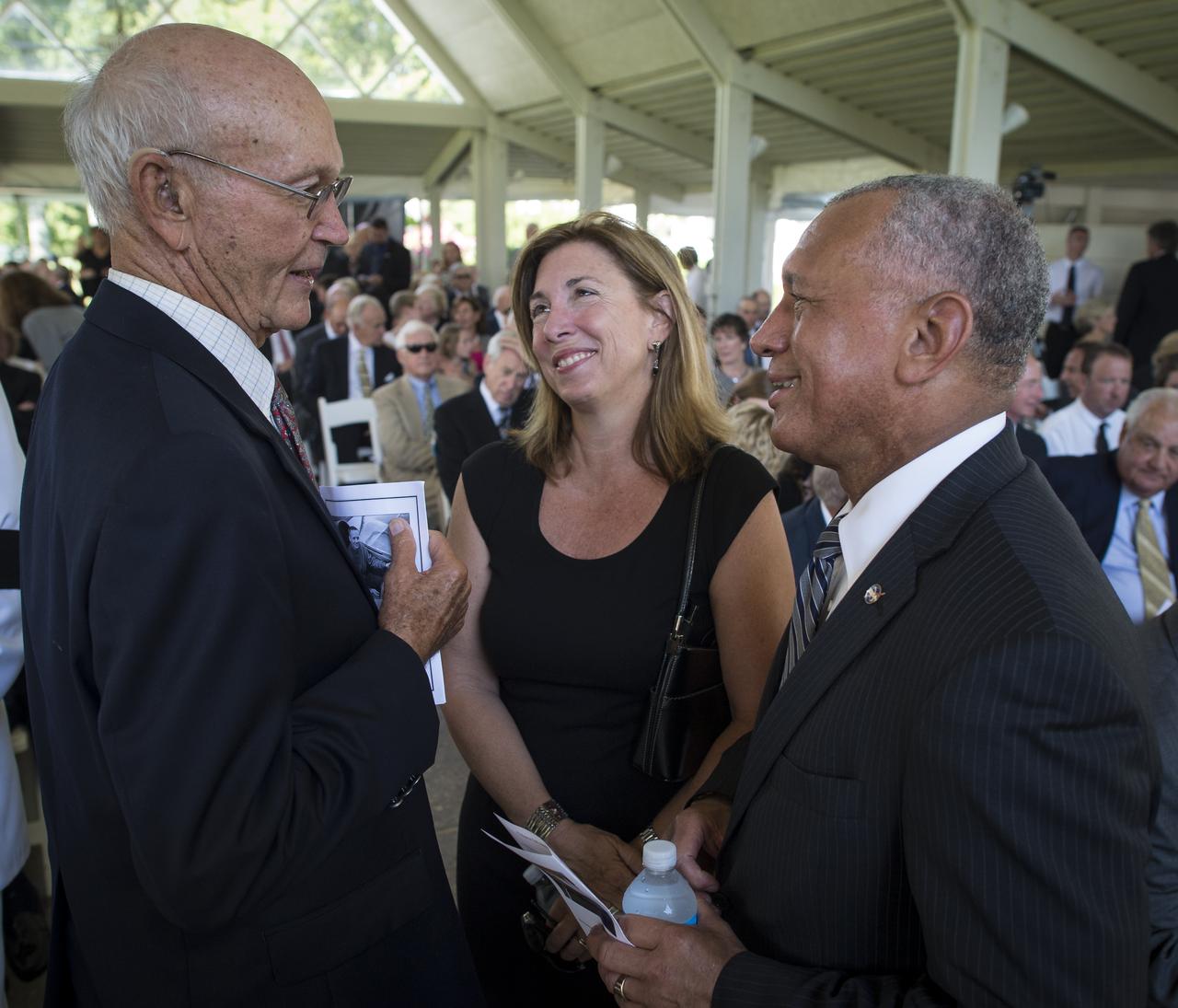
Apollo 11 Astronauts Michael Collins, left, NASA Deputy Administrator Lori Garver and NASA Administrator Charles Bolden, right, talk at a private memorial service celebrating the life of Neil Armstrong, Aug. 31, 2012, at the Camargo Club in Cincinnati. Armstrong, the first man to walk on the moon during the 1969 Apollo 11 mission, died Saturday, Aug. 25. He was 82. Photo Credit: (NASA/Bill Ingalls)

The Hamilton Co. (OH) Sheriff’s Office bagpipe corps concludes the memorial service celebrating the life of Neil Armstrong, Friday, Aug. 31, 2012, at the Camargo Club in Cincinnati. Armstrong, the first man to walk on the moon during the 1969 Apollo 11 mission, died Saturday, Aug. 25. He was 82. Photo Credit: (NASA/Bill Ingalls)
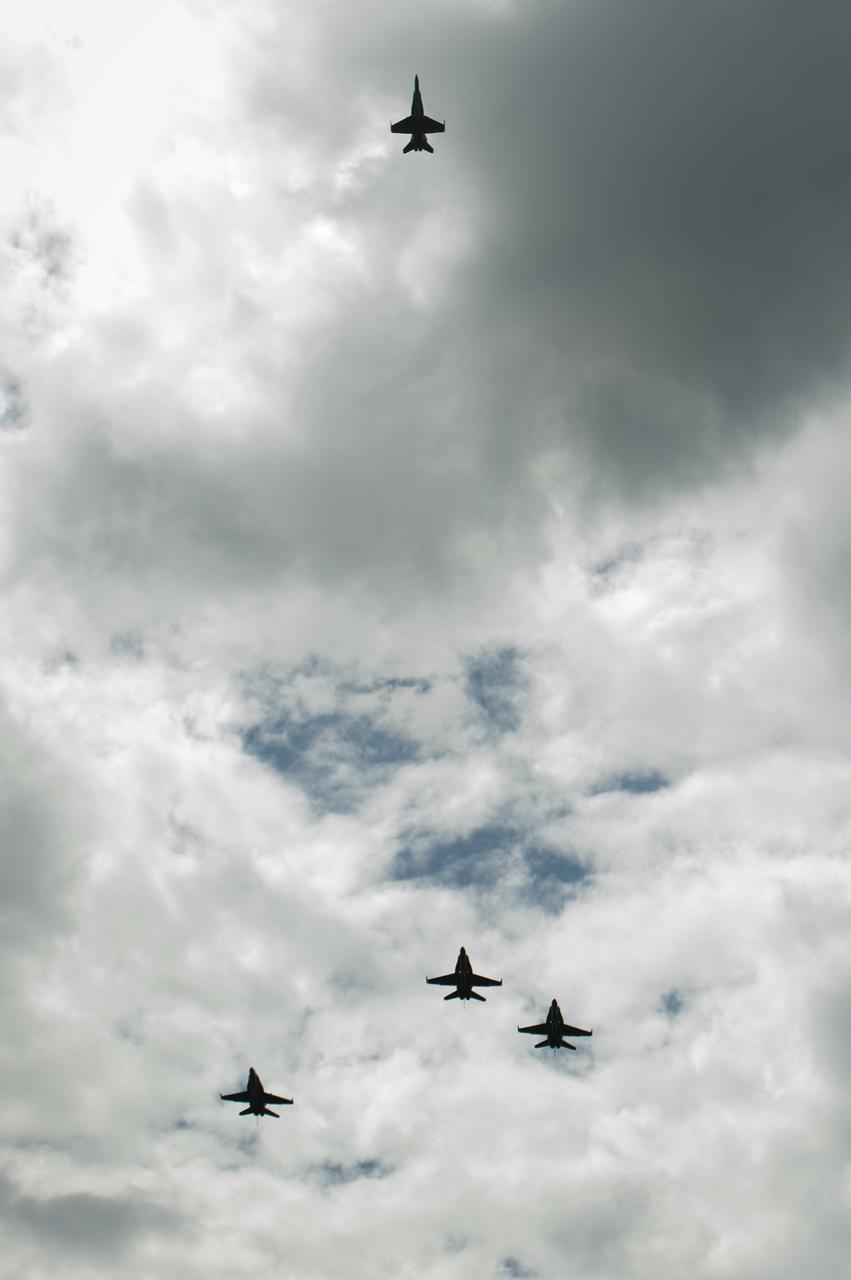
U.S. Navy F/A-18 jets from Strike Fighter Squadron (VFA) 106 and Strike Fighter Squadron (VFA) 34, from Naval Air Station Oceana (Va.) fly in a "Missing Man" formation over the Camargo Club following a memorial service celebrating the life of Neil Armstrong, Friday, Aug. 31, 2012, in Cincinnati. Armstrong, the first man to walk on the moon during the 1969 Apollo 11 mission, died Saturday, Aug. 25. He was 82. Photo Credit: (NASA/Bill Ingalls)
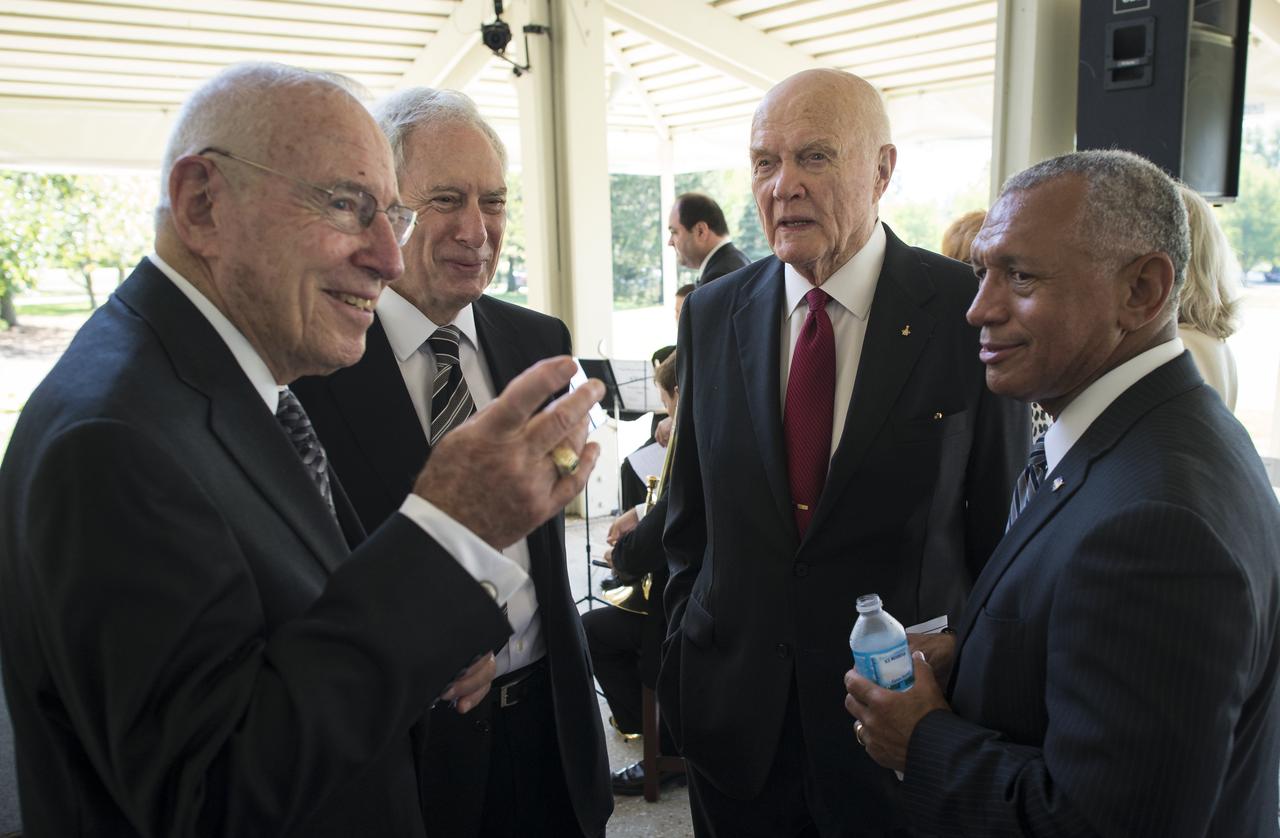
Apollo 13 Astronaut Jim Lovell, left, former NASA Administrator Dan Goldin, Sen. John Glenn, third from left, and NASA Administrator Charles Bolden, right, talk at a private memorial service celebrating the life of Neil Armstrong, Aug. 31, 2012, at the Camargo Club in Cincinnati. Armstrong, the first man to walk on the moon during the 1969 Apollo 11 mission, died Saturday, Aug. 25. He was 82. Photo Credit: (NASA/Bill Ingalls)
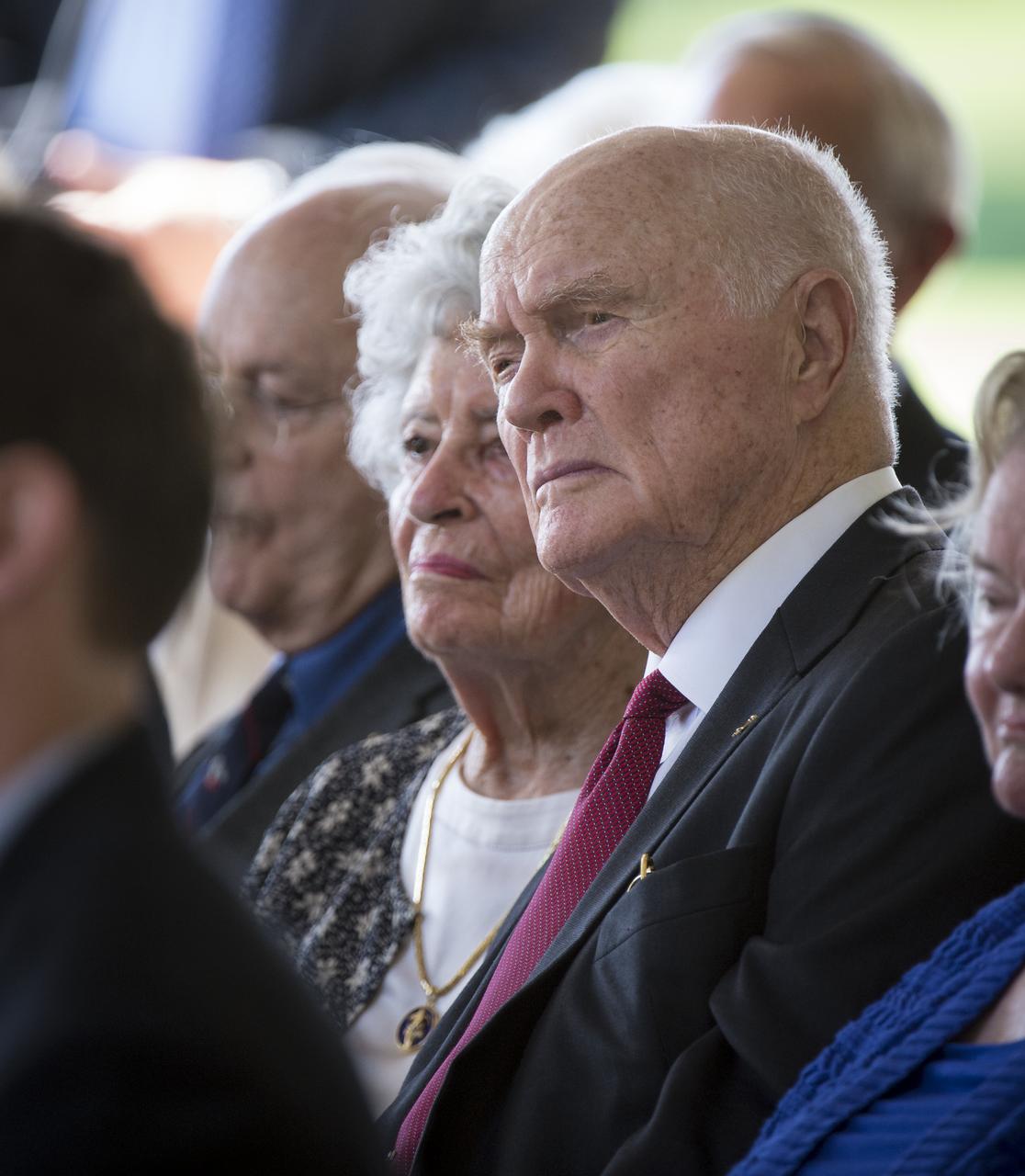
Sen. John Glenn and his wife Annie listen during a memorial service celebrating the life of Neil Armstrong, Friday, Aug. 31, 2012, at the Camargo Club in Cincinnati. Armstrong, the first man to walk on the moon during the 1969 Apollo 11 mission, died Saturday, Aug. 25. He was 82. Photo Credit: (NASA/Bill Ingalls)
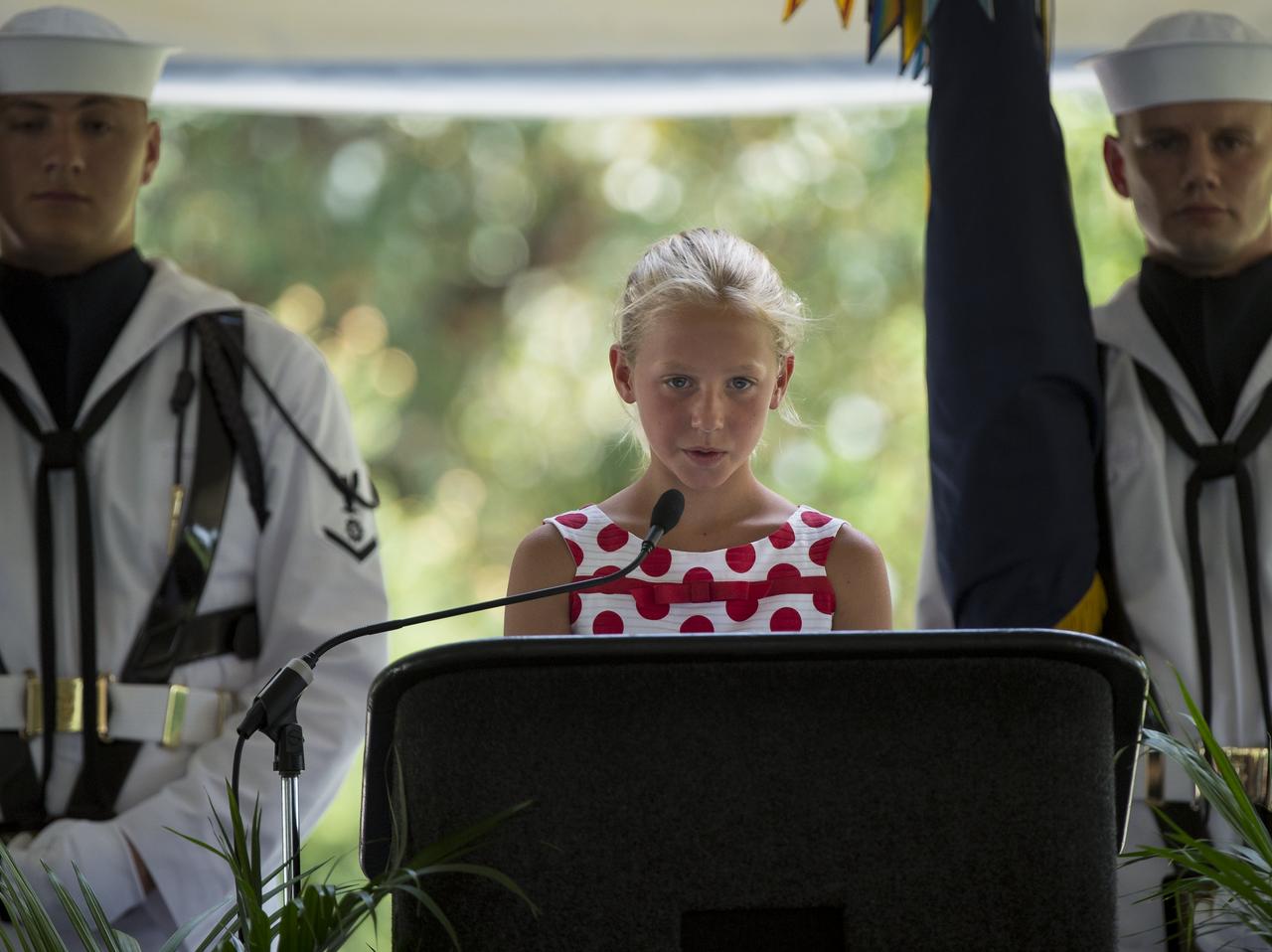
Piper Van Wagenen, one of Neil Armstrong's 10 grandchildren, speaks during a memorial service celebrating the life of her grandfather, Friday, Aug. 31, 2012, at the Camargo Club in Cincinnati. Armstrong, the first man to walk on the moon during the 1969 Apollo 11 mission, died Saturday, Aug. 25. He was 82. Photo Credit: (NASA/Bill Ingalls)
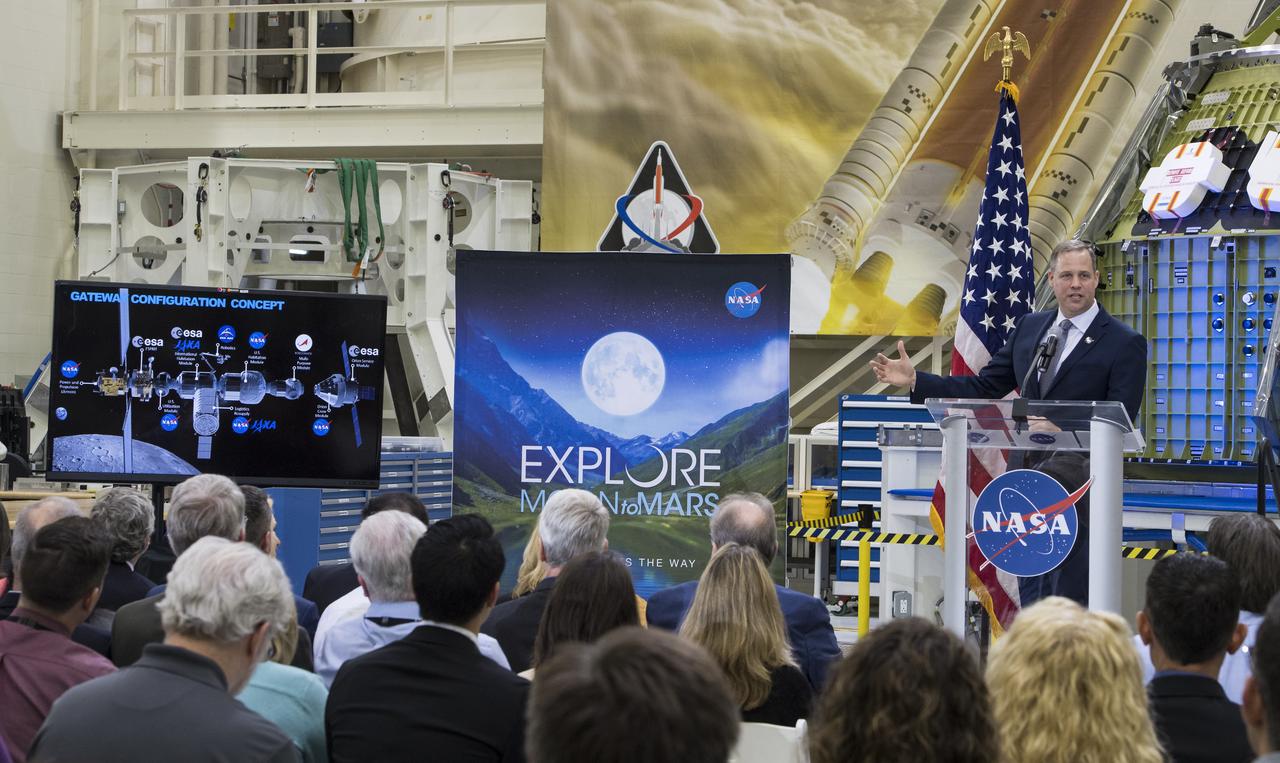
NASA Administrator Jim Bridenstine talks about the Gateway that will be in lunar orbit during an event highlighting the agency’s progress toward sending astronauts to the Moon and on to Mars, Monday, March 11, 2019, at the Neil Armstrong Operations and Checkout Building at NASA's Kennedy Space Center in Florida. Representatives from the Kennedy workforce, news media, and social media were in attendance. NASA's Orion spacecraft, which is scheduled to be flown on Exploration Mission-2, was on display. For information on NASA's Moon to Mars plans, visit: www.nasa.gov/moontomars Photo credit: (NASA/Aubrey Gemignani)
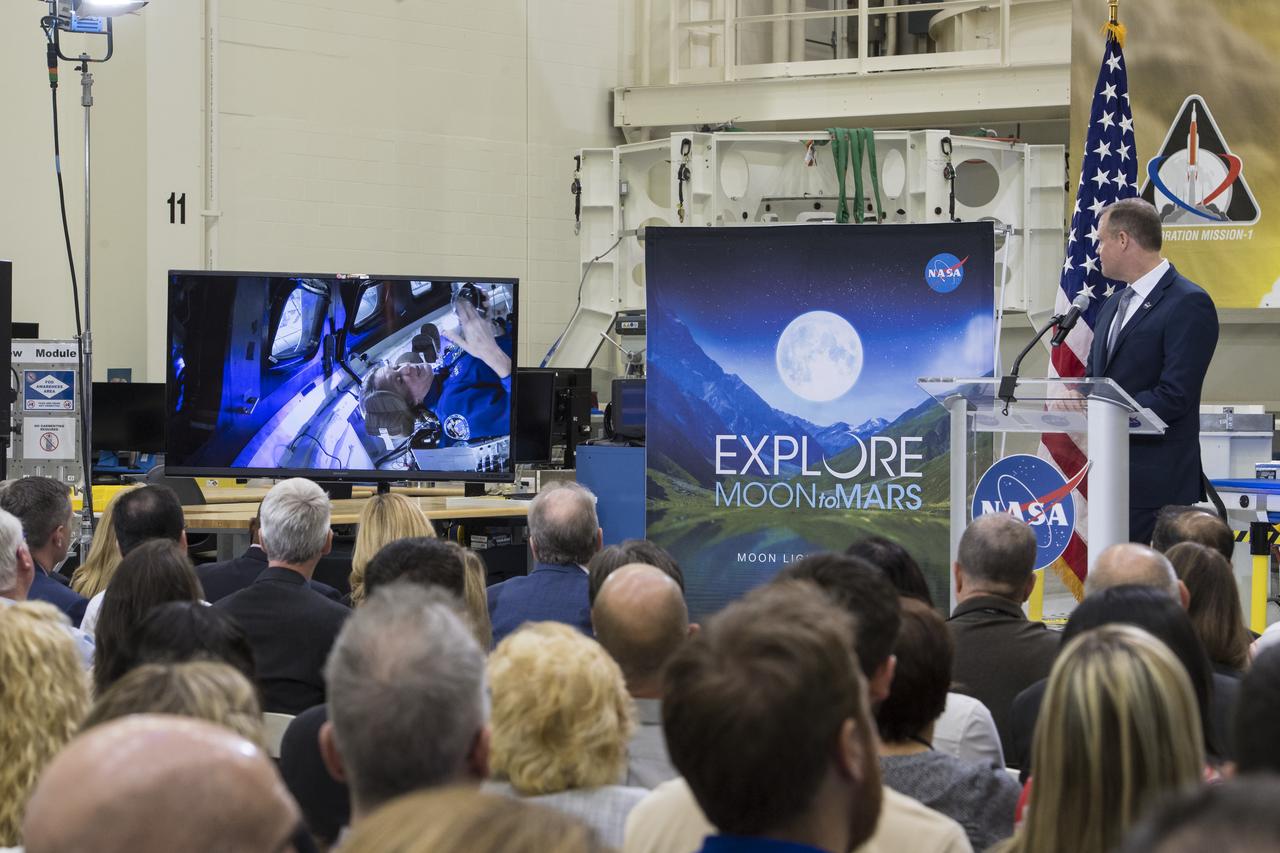
NASA Administrator Jim Bridenstine talks to astronaut Karen Nyberg who provides a tour by video, of the mockup Orion crew capsule at Johnson Space Center, during an event to discuss NASA’s progress toward sending astronauts to the Moon and on to Mars, Monday, March 11, 2019, at the Neil Armstrong Operations and Checkout Building at NASA's Kennedy Space Center in Florida. Representatives from the Kennedy workforce, news media and social media were in attendance. For information on NASA's Moon to Mars plans, visit: www.nasa.gov/moontomars Photo credit: (NASA/Aubrey Gemignani)
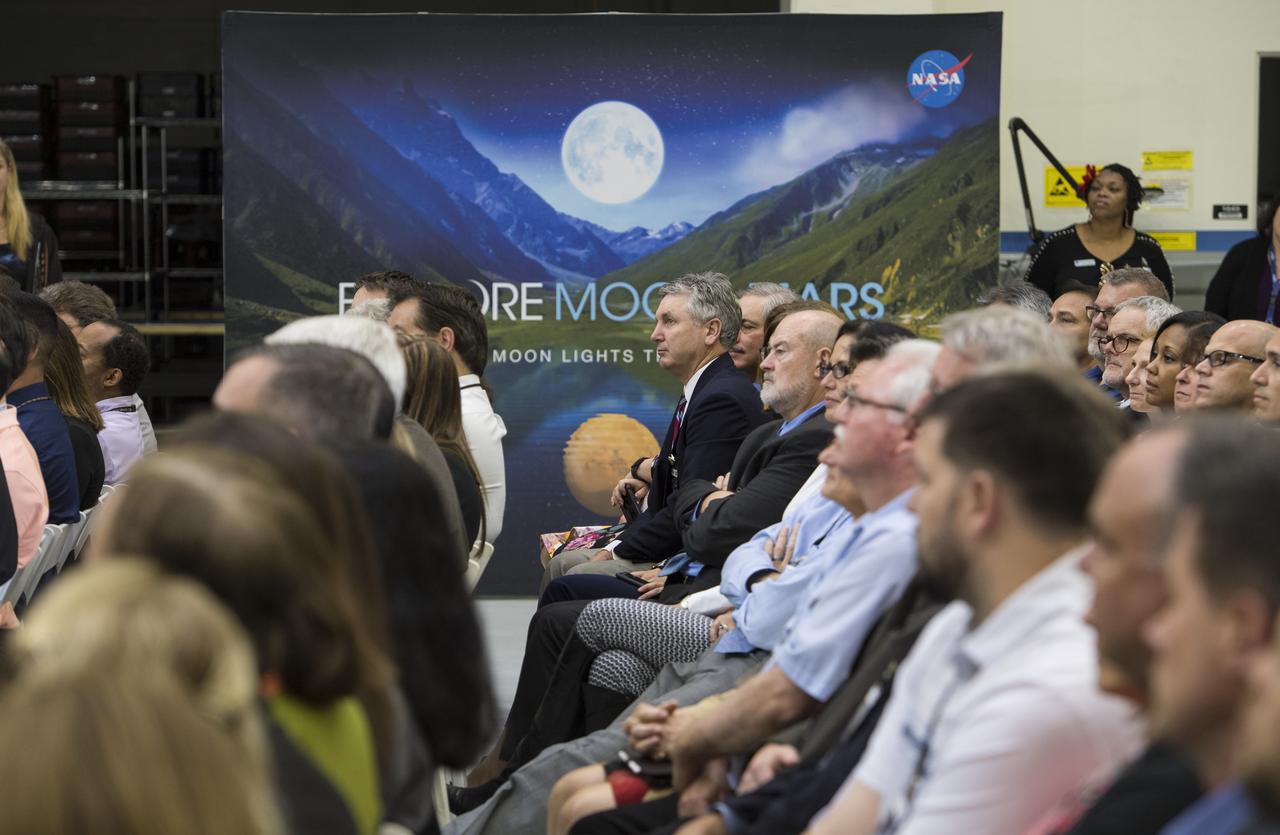
The audience listens as NASA Administrator Jim Bridenstine talks about the agency’s progress toward sending astronauts to the Moon and on to Mars during a televised event, Monday, March 11, 2019, at the Neil Armstrong Operations and Checkout Building at NASA's Kennedy Space Center in Florida. Representatives from the Kennedy workforce, news media, and social media were in attendance. NASA's Orion spacecraft, which is scheduled to be flown on Exploration Mission-2, was on display. For information on NASA's Moon to Mars plans, visit: www.nasa.gov/moontomars Photo credit: (NASA/Aubrey Gemignani)
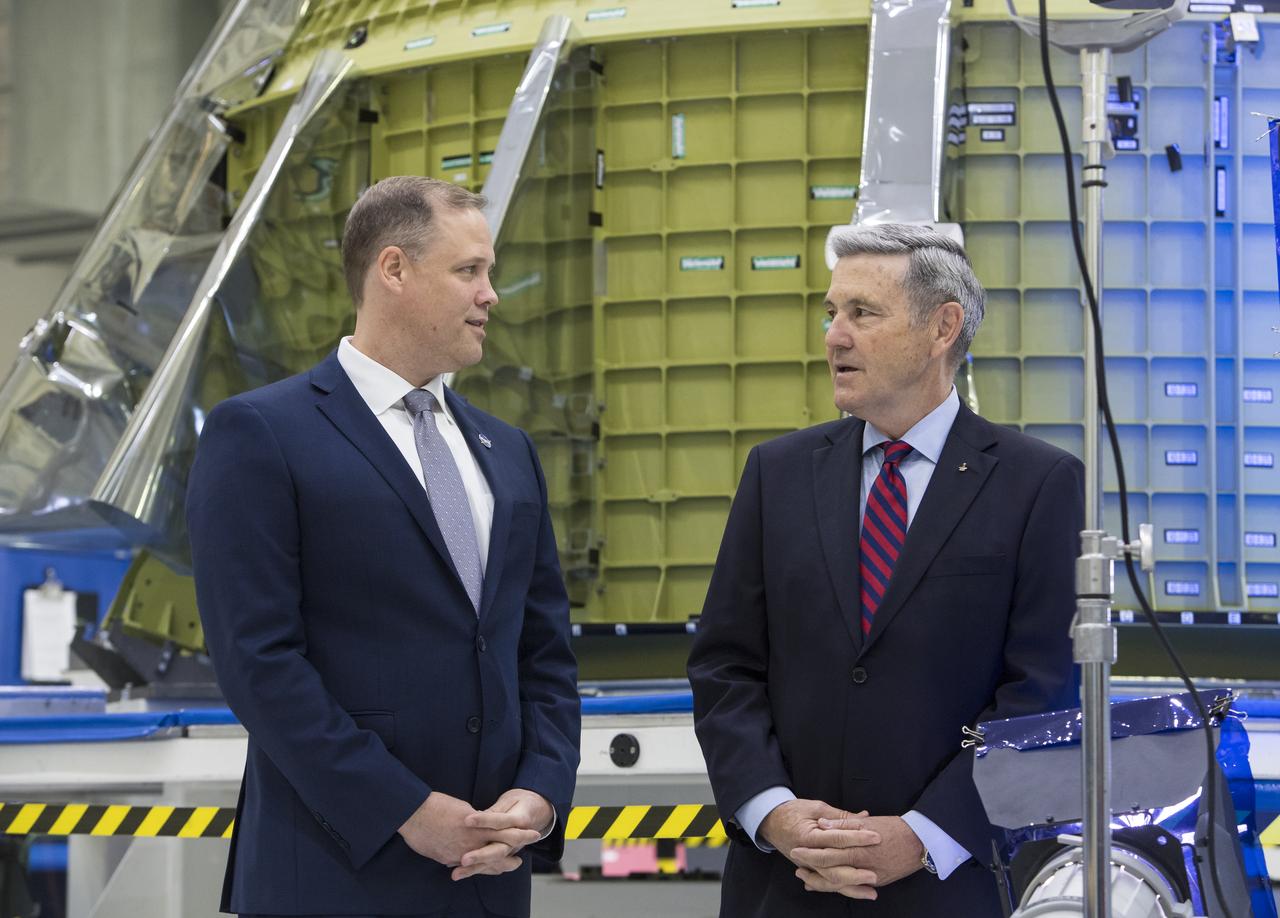
NASA Administrator Jim Bridenstine, left, talks to Kennedy Space Center Director Bob Cabana just before an event highlighting the agency’s progress toward sending astronauts to the Moon and on to Mars, Monday, March 11, 2019, at the Neil Armstrong Operations and Checkout Building at NASA's Kennedy Space Center in Florida. Representatives from the Kennedy workforce, news media, and social media were in attendance. NASA's Orion spacecraft, which is scheduled to be flown on Exploration Mission-2, was on display. For information on NASA's Moon to Mars plans, visit: www.nasa.gov/moontomars Photo credit: (NASA/Aubrey Gemignani)
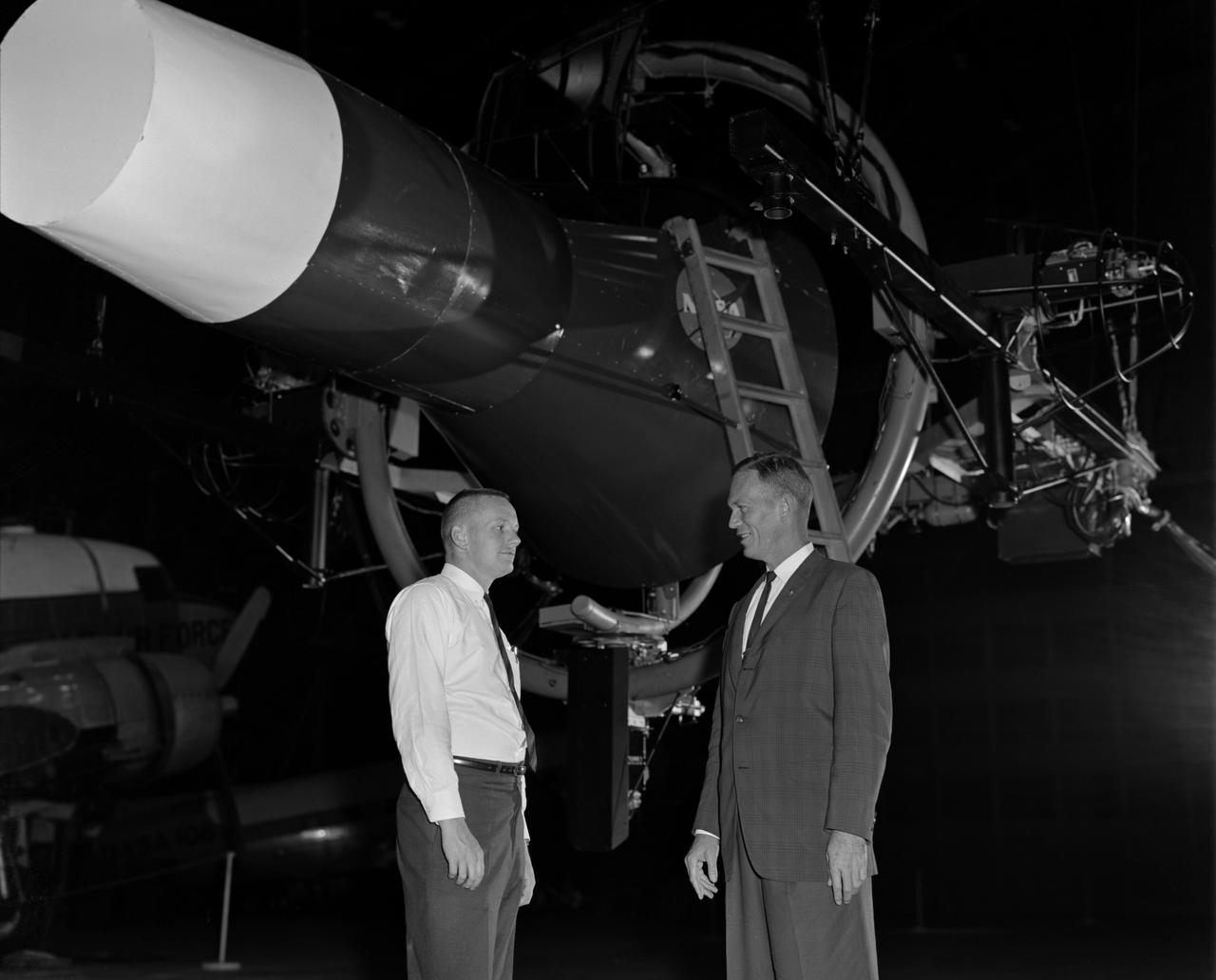
Astronaut Neil Armstrong (left) was one of 14 astronauts, 8 NASA test pilots, and 2 McDonnell test pilots who took part in simulator studies. Armstrong was the first astronaut to participate (November 6, 1963). A.W. Vogeley described the simulator in his paper "Discussion of Existing and Planned Simulators For Space Research," "Many of the astronauts have flown this simulator in support of the Gemini studies and they, without exception, appreciated the realism of the visual scene. The simulator has also been used in the development of pilot techniques to handle certain jet malfunctions in order that aborts could be avoided. In these situations large attitude changes are sometimes necessary and the false motion cues that were generated due to earth gravity were somewhat objectionable; however, the pilots were readily able to overlook these false motion cues in favor of the visual realism." Roy F. Brissenden, noted in his paper "Initial Operations with Langley's Rendezvous Docking Facility," "The basic Gemini control studies developed the necessary techniques and demonstrated the ability of human pilots to perform final space docking with the specified Gemini-Agena systems using only visual references. ... Results... showed that trained astronauts can effect the docking with direct acceleration control and even with jet malfunctions as long as good visual conditions exist.... Probably more important than data results was the early confidence that the astronauts themselves gained in their ability to perform the maneuver in the ultimate flight mission." Francis B. Smith, noted in his paper "Simulators for Manned Space Research," "Some major areas of interest in these flights were fuel requirements, docking accuracies, the development of visual aids to assist alignment of the vehicles, and investigation of alternate control techniques with partial failure modes. However, the familiarization and confidence developed by the astronaut through flying and safely docking the simulator during these tests was one of the major contributions. For example, it was found that fuel used in docking from 200 feet typically dropped from about 20 pounds to 7 pounds after an astronaut had made a few training flights." -- Published in Barton C. Hacker and James M. Grimwood, On the Shoulders of Titans: A History of Project Gemini, NASA SP-4203; A.W. Vogeley, "Discussion of Existing and Planned Simulators For Space Research," Paper presented at the Conference on the Role of Simulation in Space Technology, August 17-21, 1964; Roy F. Brissenden, "Initial Operations with Langley's Rendezvous Docking Facility," Langley Working Paper, LWP-21, 1964; Francis B. Smith, "Simulators for Manned Space Research," Paper presented at the 1966 IEEE International convention, March 21-25, 1966.
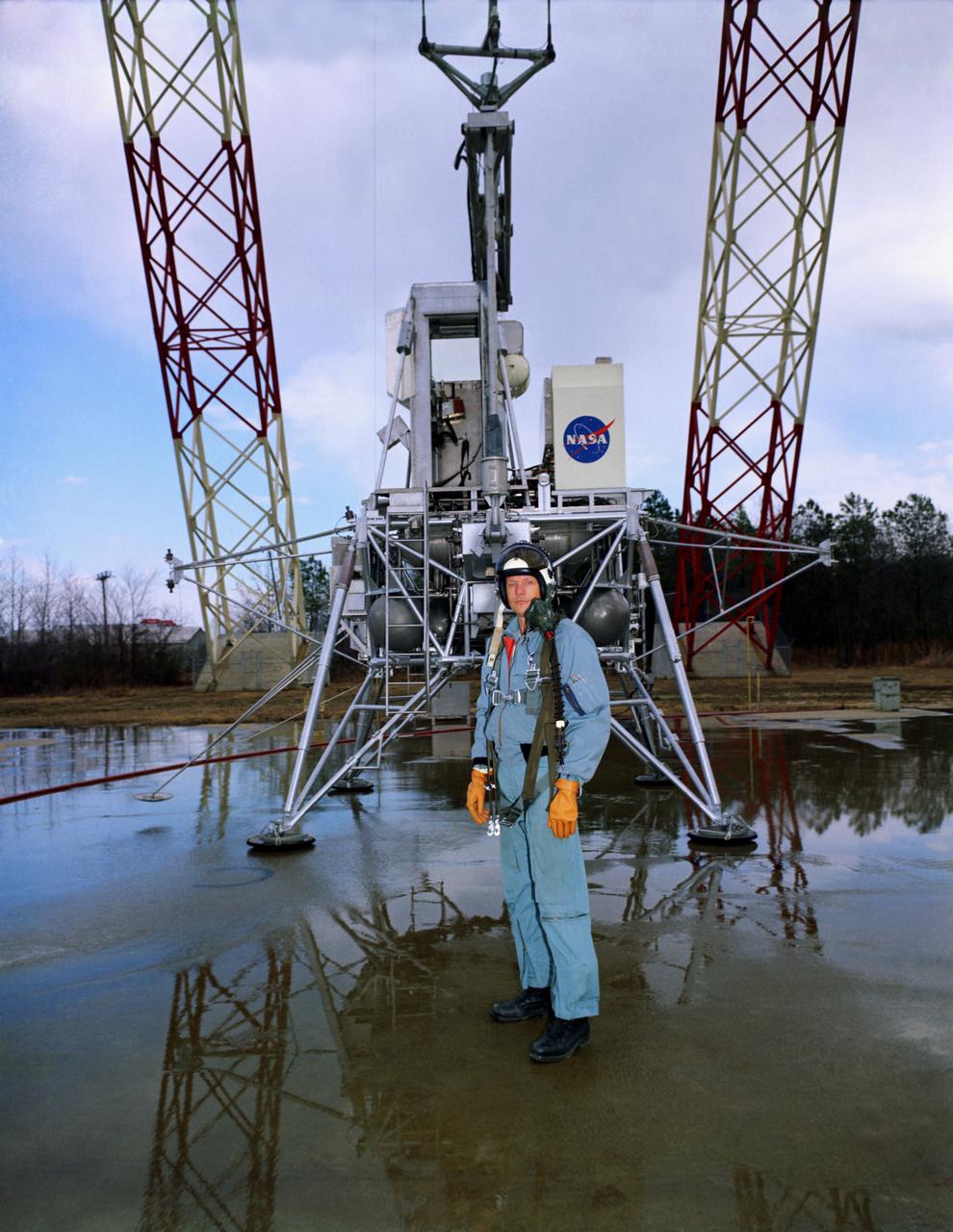
Neil Armstrong with the Lunar Excursion Module (LEM). Caption: "Not long after this photo was taken in front of the Lunar Landing Research Facility, astronaut Neil Armstrong became the first human to step upon the surface of the Moon." Photograph published in Winds of Change, 75th Anniversary NASA publication, by James Schultz, page 91. Also published in " A Century at Langley" by Joseph Chambers, pg. 95
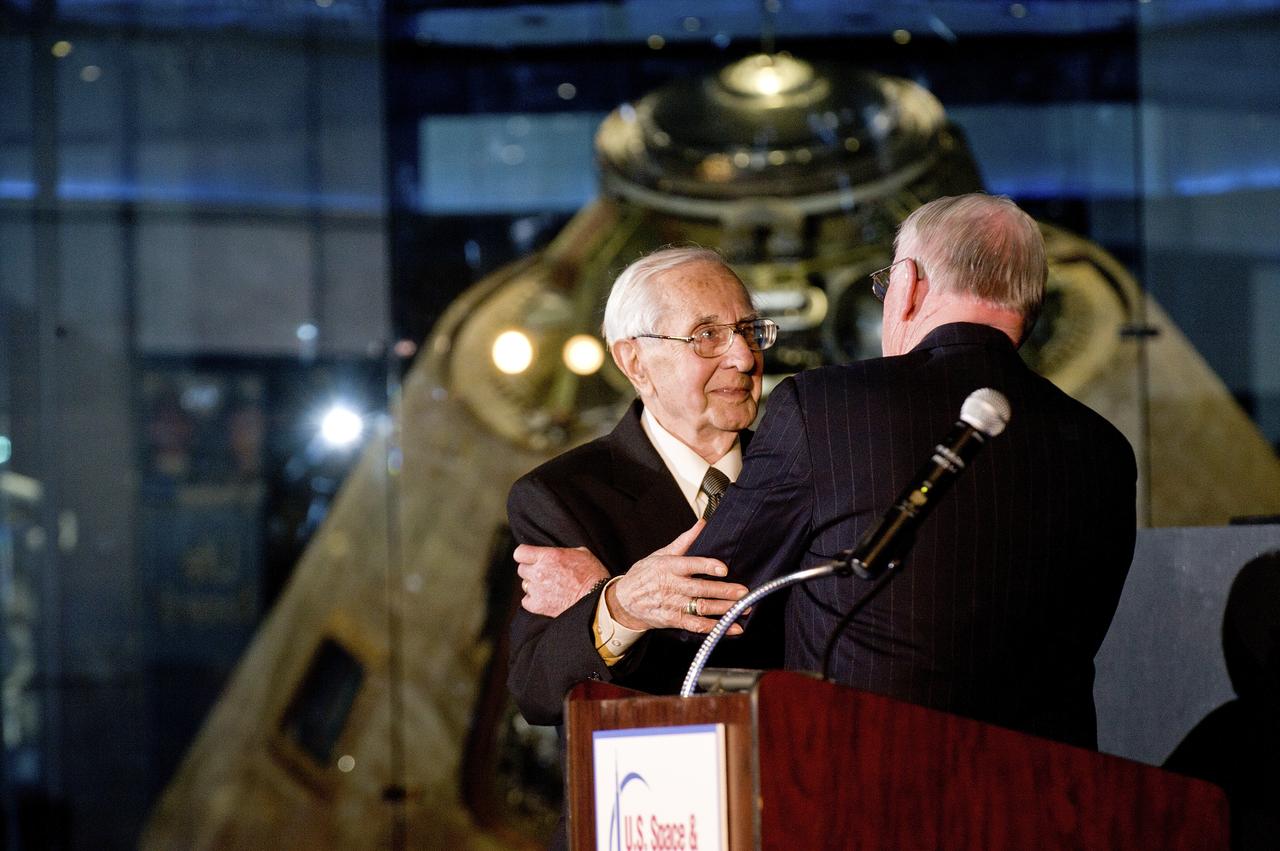
ASTRONAUT NEIL ARMSTRONG RECEIVES A HUG FROM DR. GEORG VON TIESENHAUSEN DURING AN EVENT IN HIS HONOR AT THE U.S. SPACE AND ROCKET CENTER
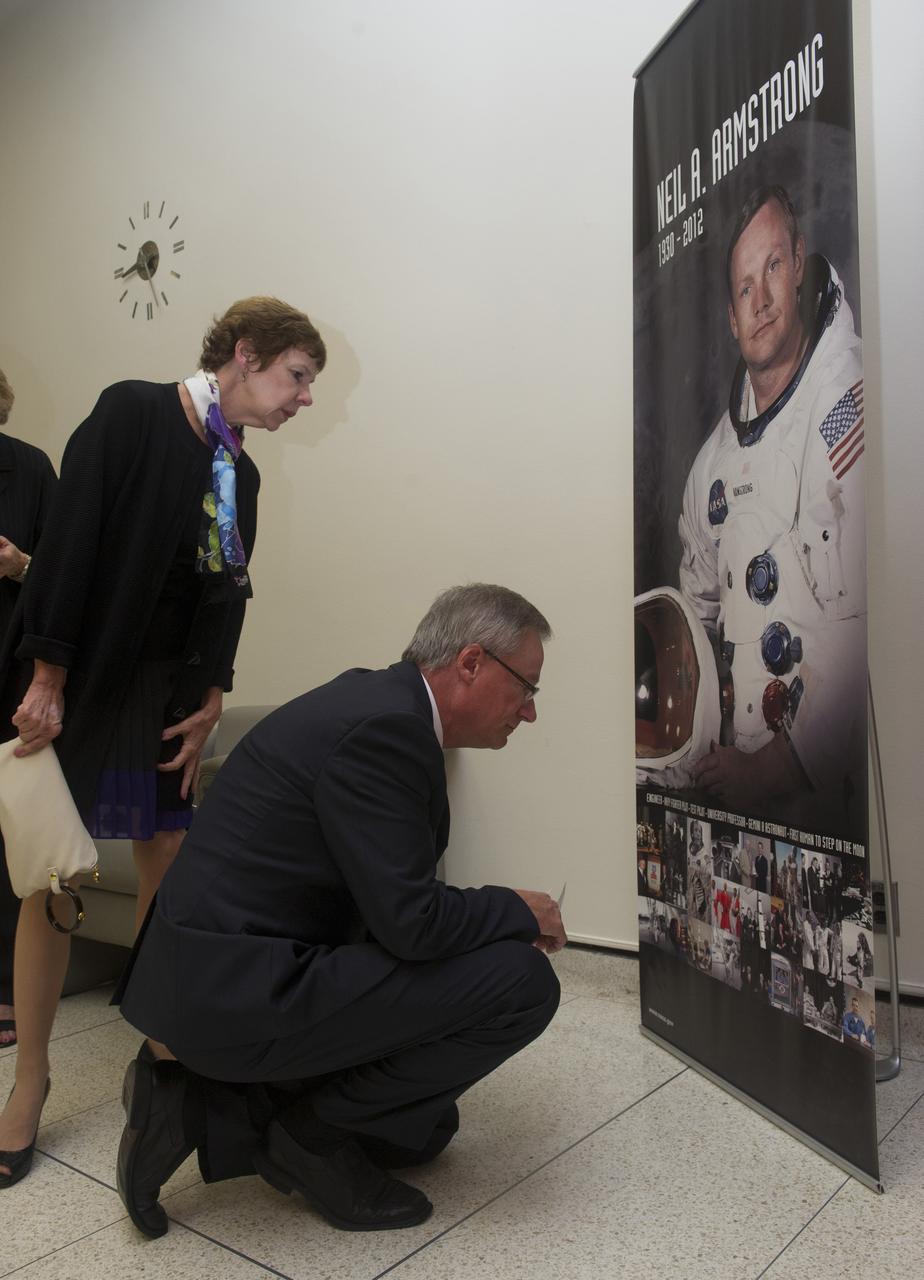
JAMES HANSEN AND HIS WIFE MARGARET INSPECT PHOTOS ON DISPLAY OF NEIL ARMSTRONG PRIOR TO HANSEN’S PRESENTATION TO MSFC EMPLOYEES ABOUT THE LIFE OF ARMSTRONG IN MORRIS AUDITORIUM
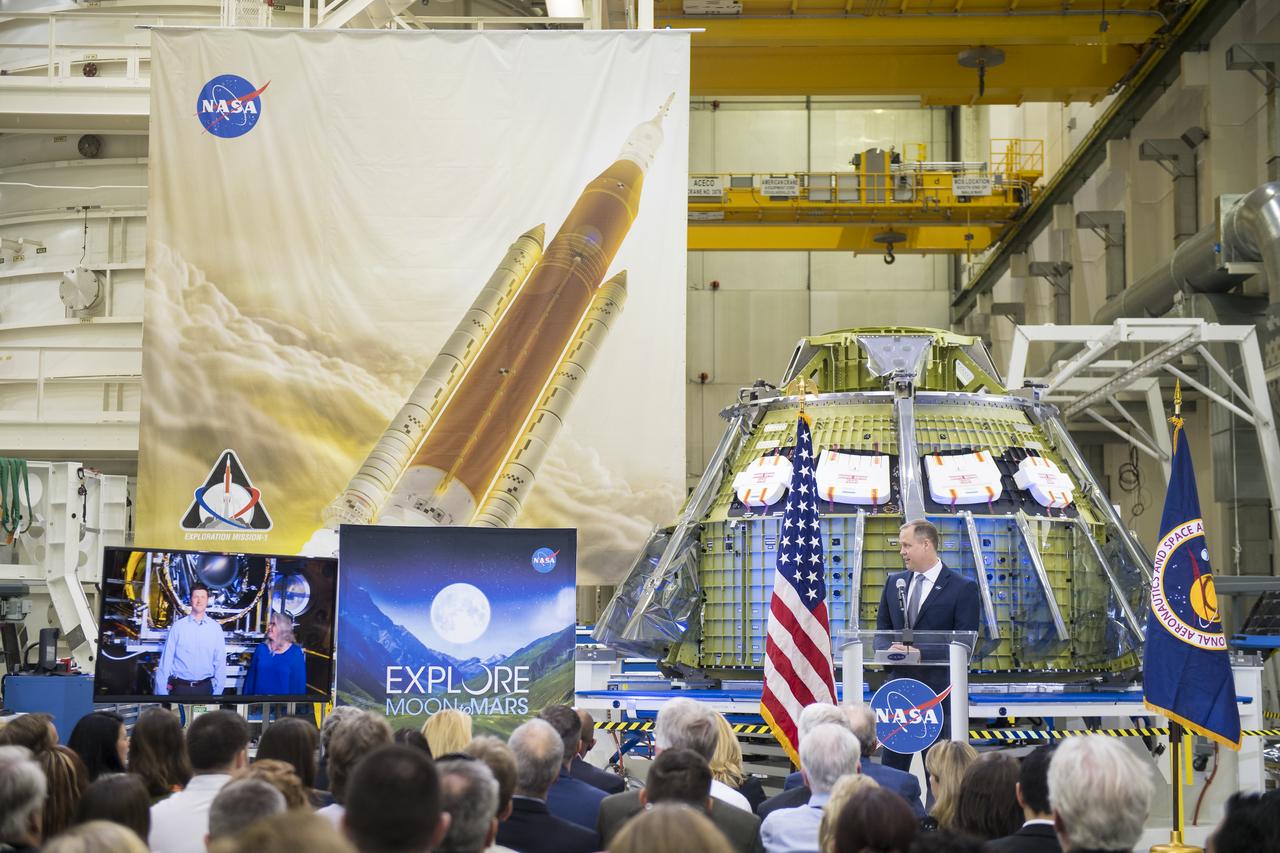
NASA Administrator Jim Bridenstine talks to Glenn Research Center aerospace engineer, Dave Jacobson, left, and facility manager, Deb Waters, who are inside the vacuum chamber showing one of the Hall Effect Thrusters by video, Monday, March 11, 2019, at the Neil Armstrong Operations and Checkout Building at NASA's Kennedy Space Center in Florida. Representatives from the Kennedy workforce, news media and social media were in attendance. For information on NASA's Moon to Mars plans, visit: www.nasa.gov/moontomars Photo credit: (NASA/Aubrey Gemignani)
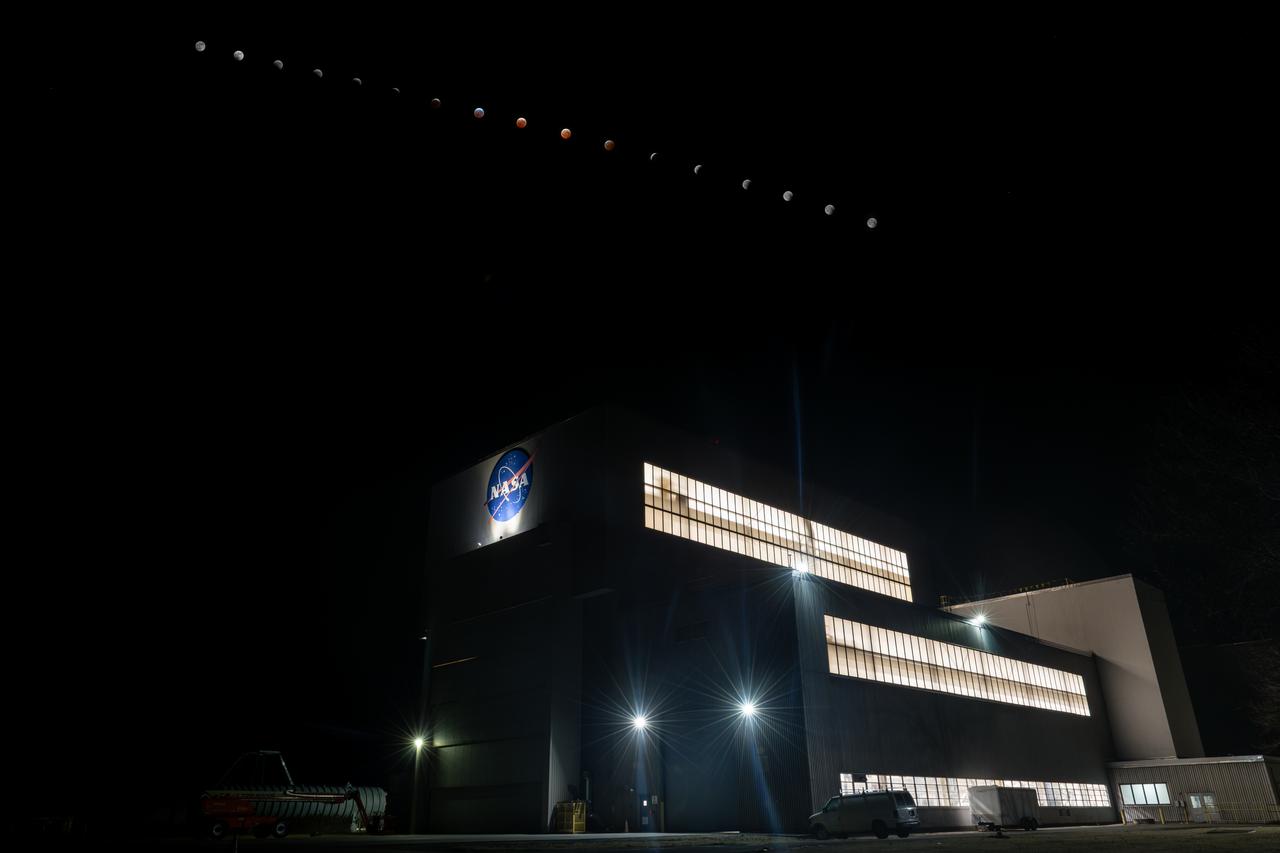
A composite photo made from 18 images of the lunar eclipse above the Space Environments Complex at NASA’s Glenn Research Center at Neil Armstrong Test Facility in Sandusky, Ohio, during the early hours of March 14, 2025. Photo Credit: (NASA/Sara Lowthian-Hanna)
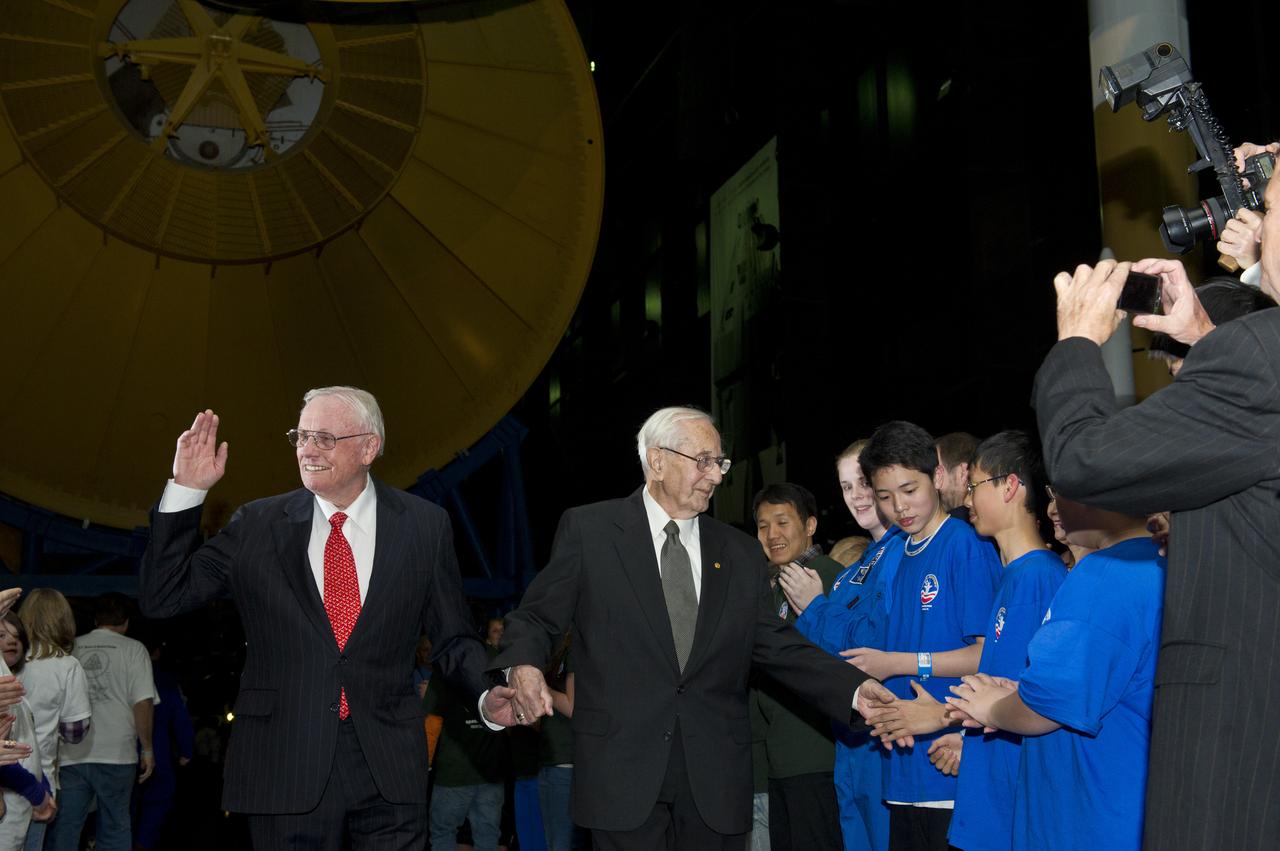
ASTRONAUT NEIL ARMSTRONG (L), AND DR. GEORG VON TIESENHAUSEN ARE APPLAUDED BY SPACE CAMP STUDENTS AT EVENT HONORING DR. VON TIESEN HAUSEN AT USSRC ON FEB. 3, 2011
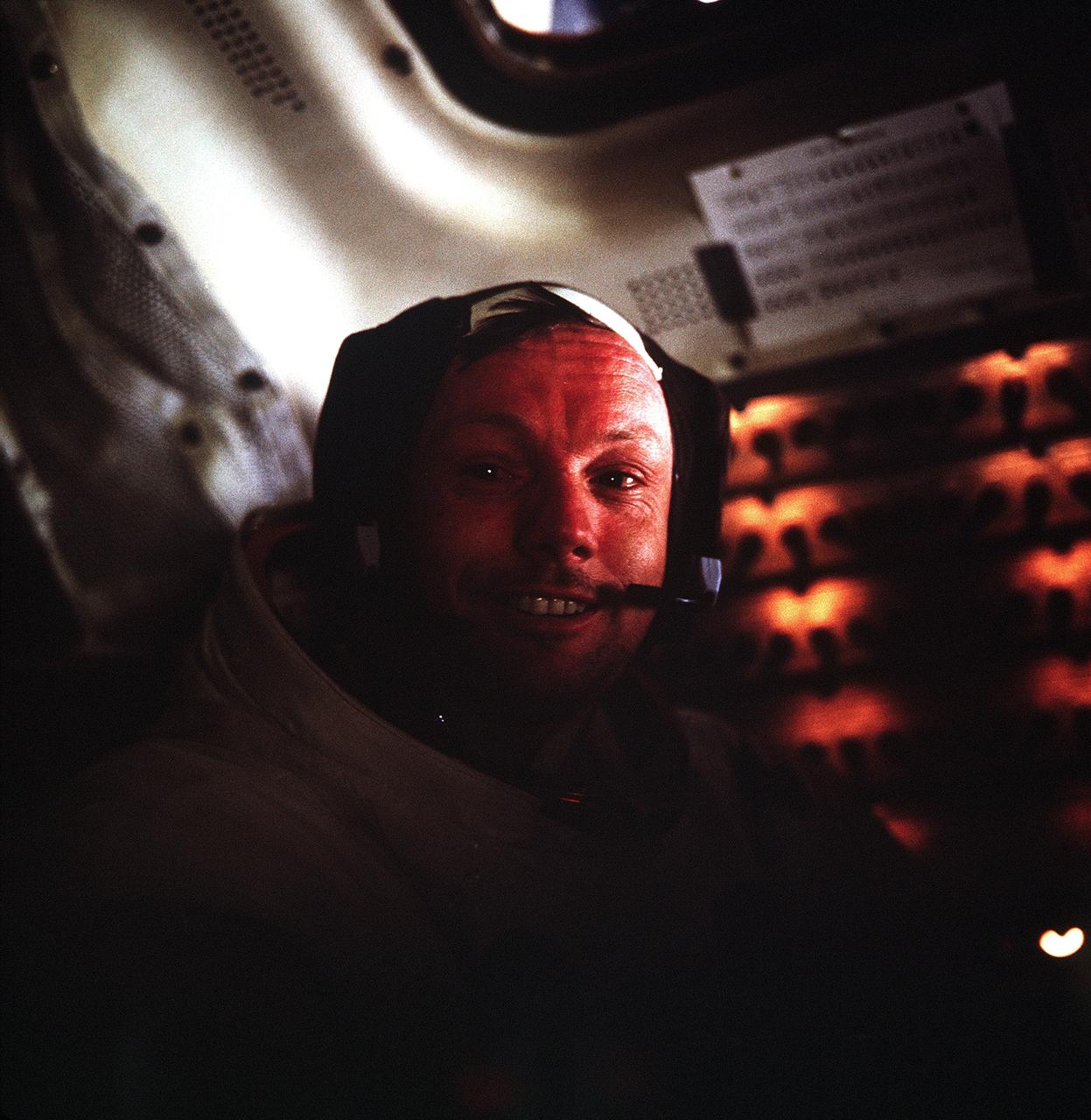
AS11-37-5528 (20 July 1969) --- This photograph of astronaut Neil A. Armstrong, Apollo 11 commander, was taken inside the Lunar Module (LM) while the LM rested on the lunar surface. Astronauts Armstrong and Edwin E. Aldrin Jr., lunar module pilot, had already completed their historic extravehicular activity (EVA) when this picture was made. Astronaut Michael Collins, command module pilot, remained with the Command and Service Modules (CSM) in lunar orbit while Armstrong and Aldrin explored the moon's surface.
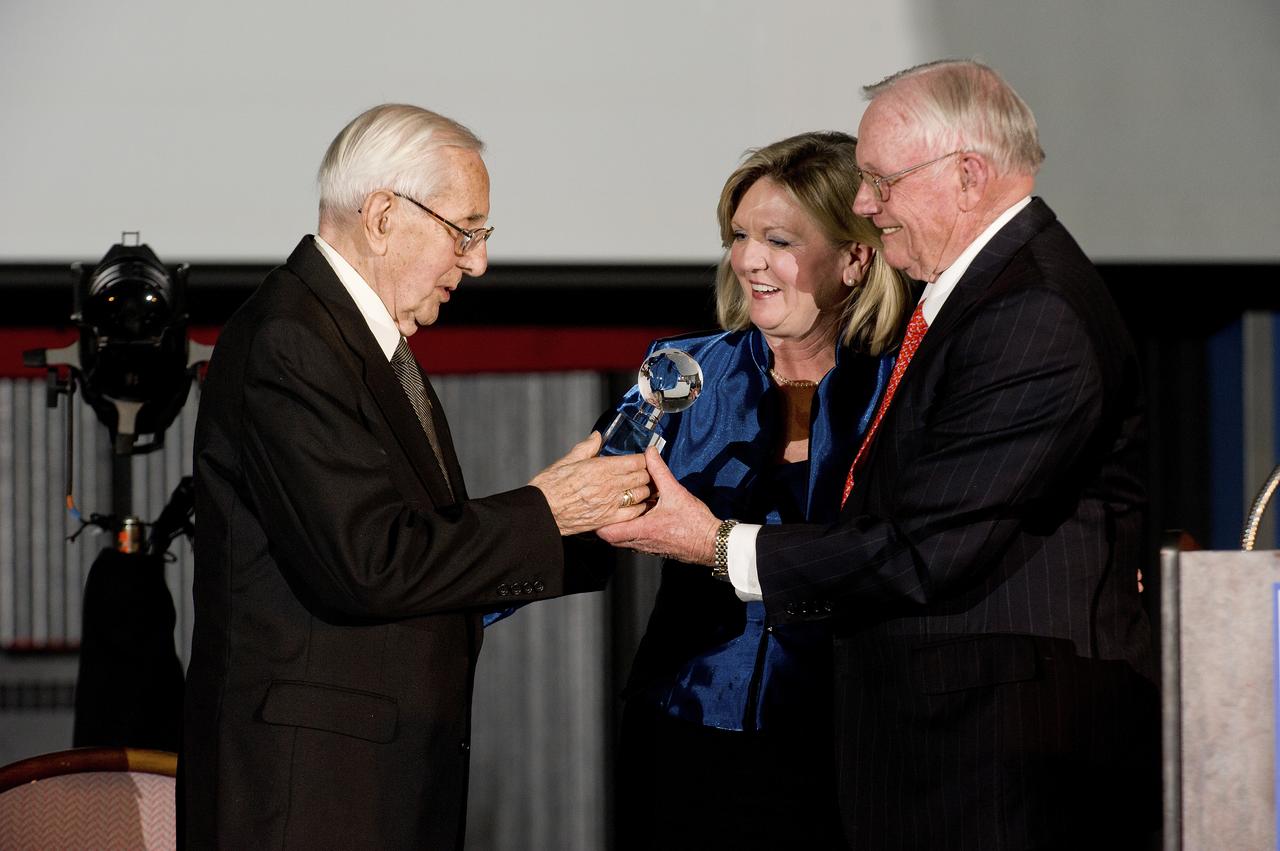
ASTRONAUT NEIL ARMSTRONG AND USSRC CEO DR. DEBRA BARNART PRESENT AN AWARD TO DR. GEORG VON TIESENHAUSEN AT AN EVENT IN HIS HONOR IN THE DAVIDSON CENTER.
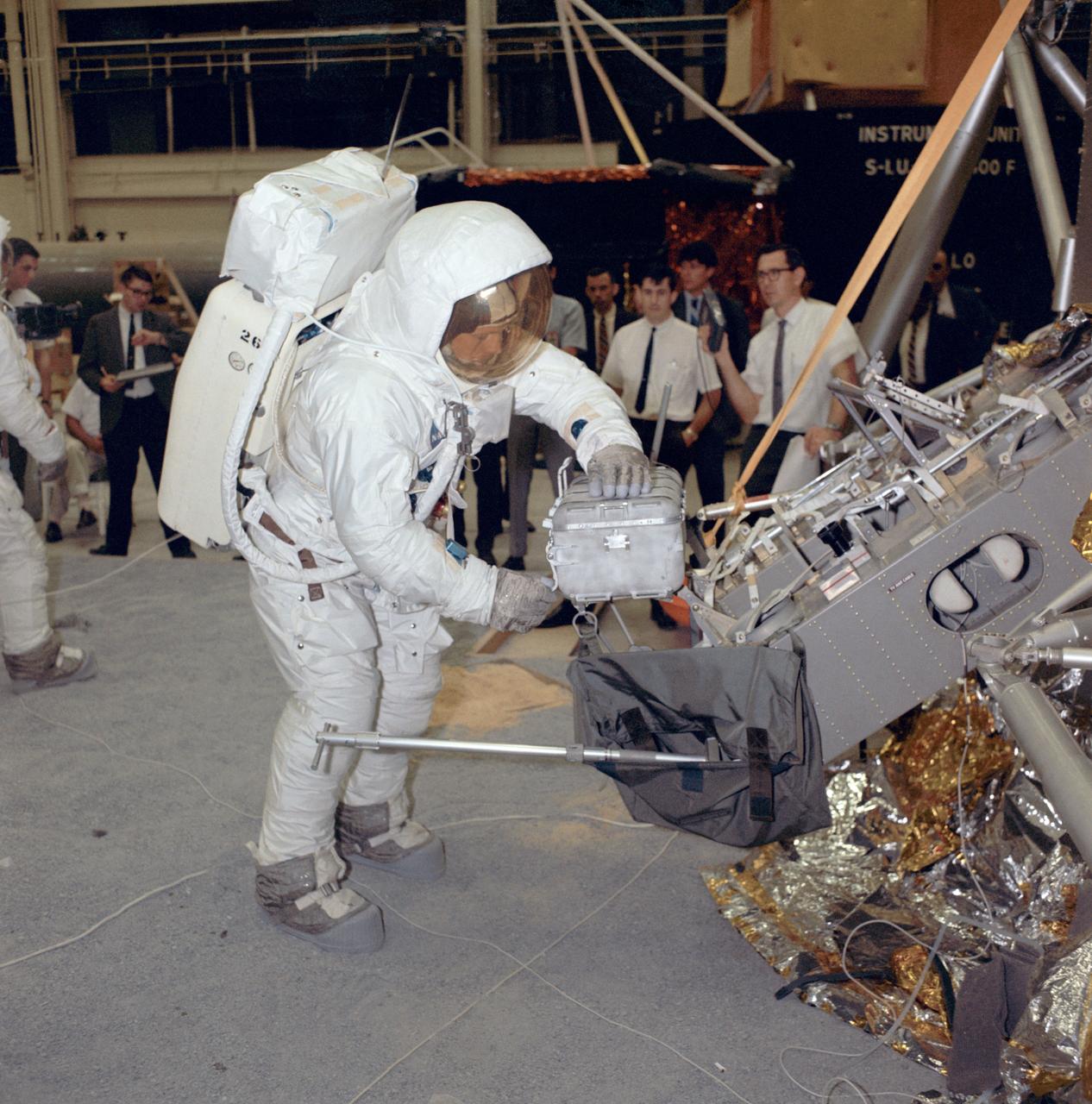
S69-31080 (18 April 1969) --- Suited astronaut Neil A. Armstrong, wearing an Extravehicular Mobility Unit (EMU), participates in lunar surface simulation training on April 18, 1969 in building 9, Manned Spacecraft Center (MSC). Armstrong is prime crew commander of the Apollo 11 lunar landing mission. Here, he is opening a sample return container. On the right is the Modular Equipment Stowage Assembly (MESA) and the Lunar Module (LM) mock-up.
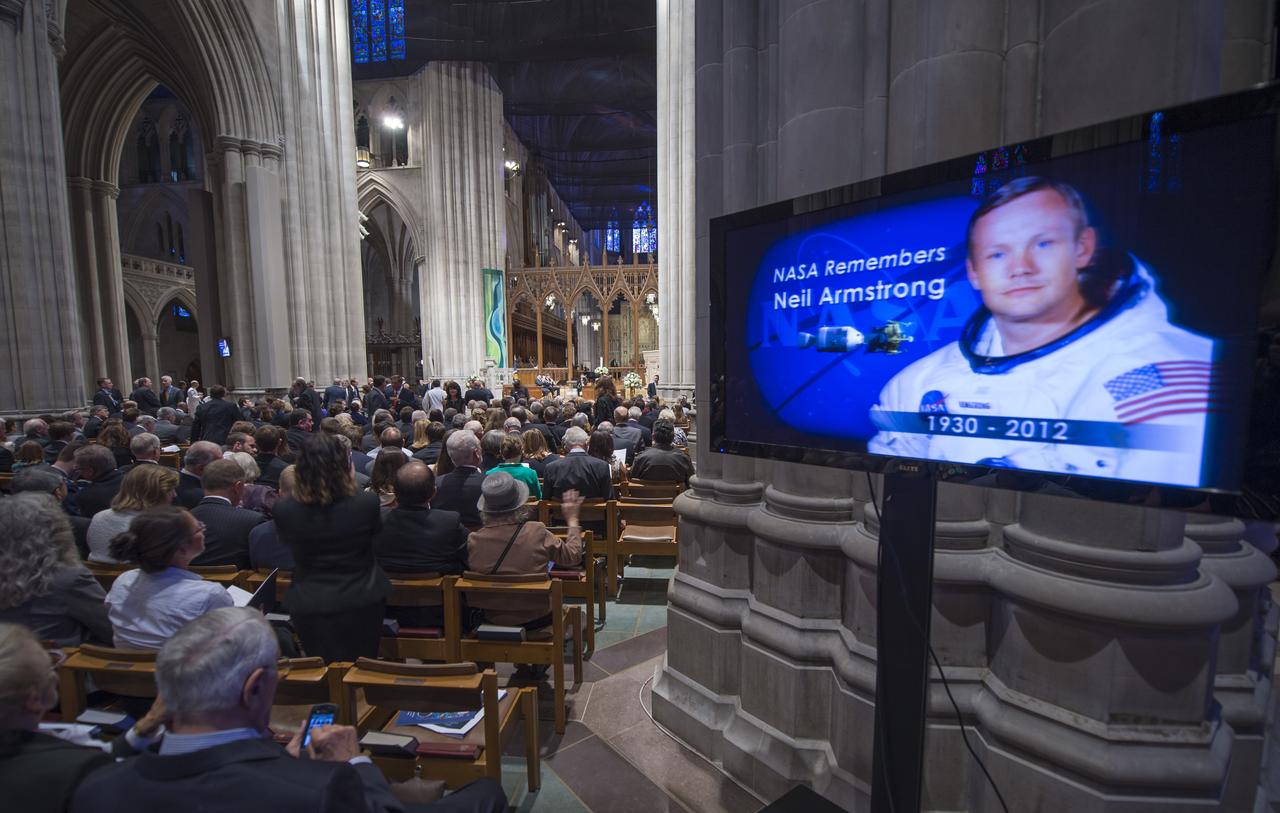
An image of Neil Armstrong is projected on a television screen as attendees sit in the Nave during a memorial service celebrating the life of Neil Armstrong at the Washington National Cathedral, Thursday, Sept. 13, 2012. Armstrong, the first man to walk on the moon during the 1969 Apollo 11 mission, died Saturday, Aug. 25. He was 82. Photo Credit: (NASA/Bill Ingalls)
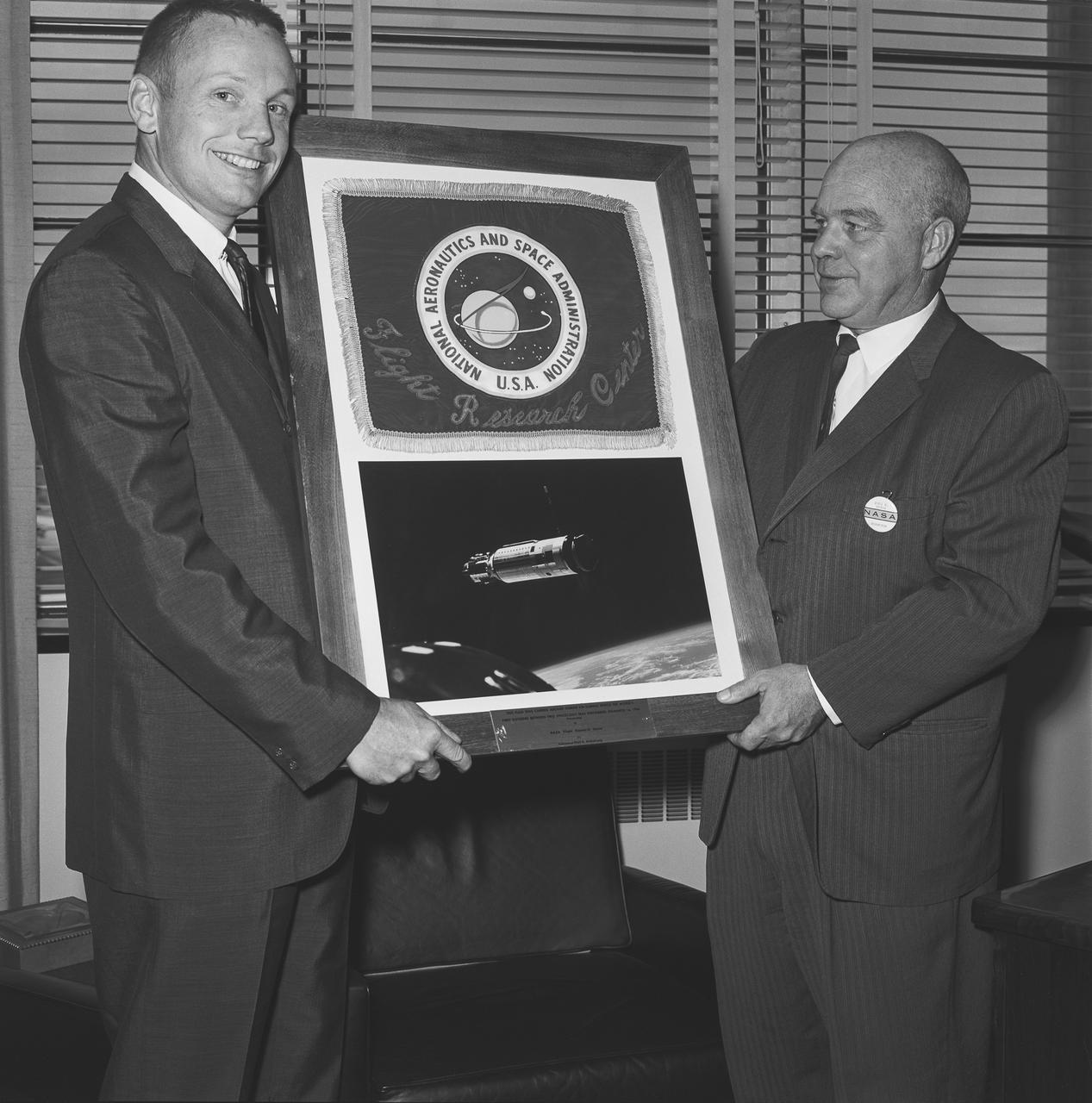
Neil A. Armstrong, left, presents a flag from the Moon to Paul F. Bikle, director of NASA’s Flight Research Center (now NASA’s Armstrong Flight Research Center), in 1966 in Edwards, California.
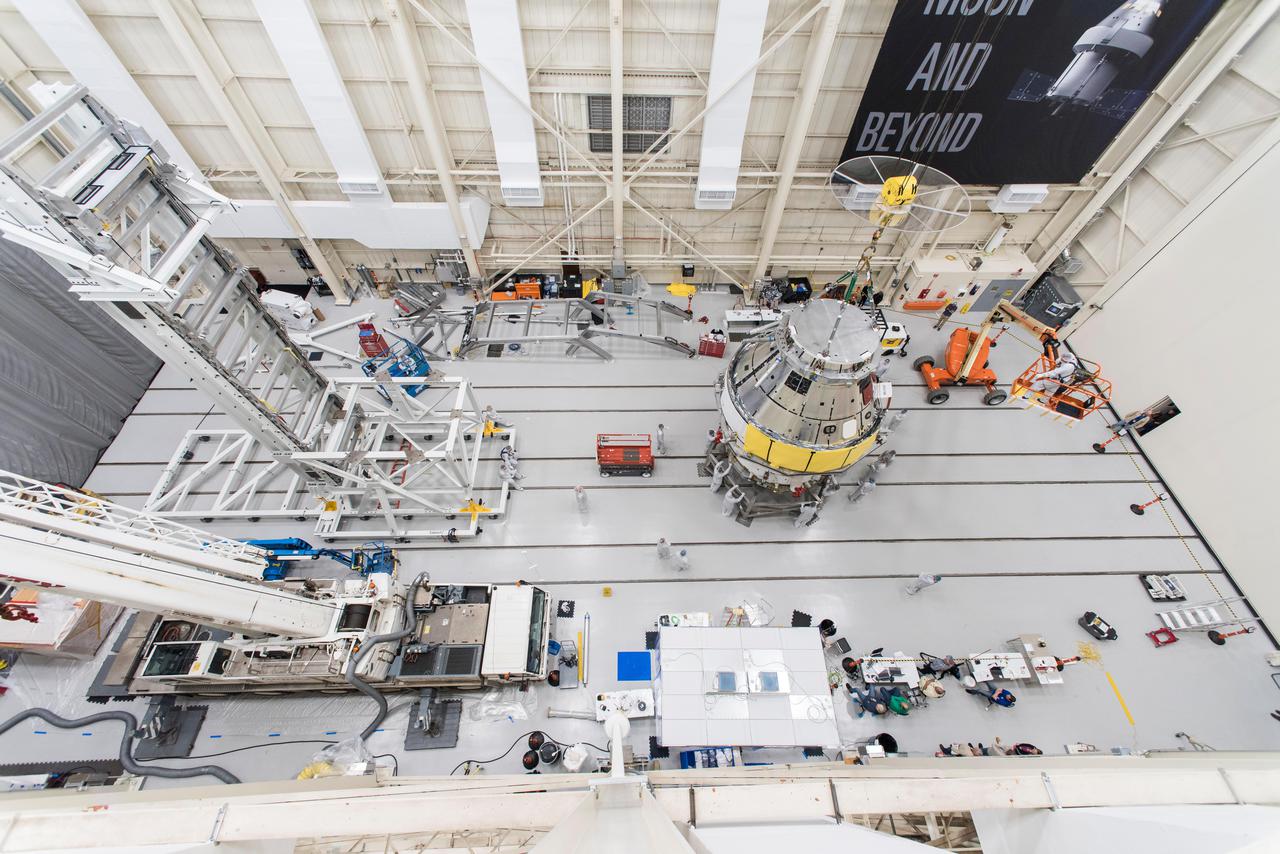
Orion - EM-1 - Artemis Spacecraft Departure at the Space Environments Complex, SEC Thermal Vacuum Chamber at the Neil A. Armstrong Test Facility, Transportation to Mansfield Lahm Airport
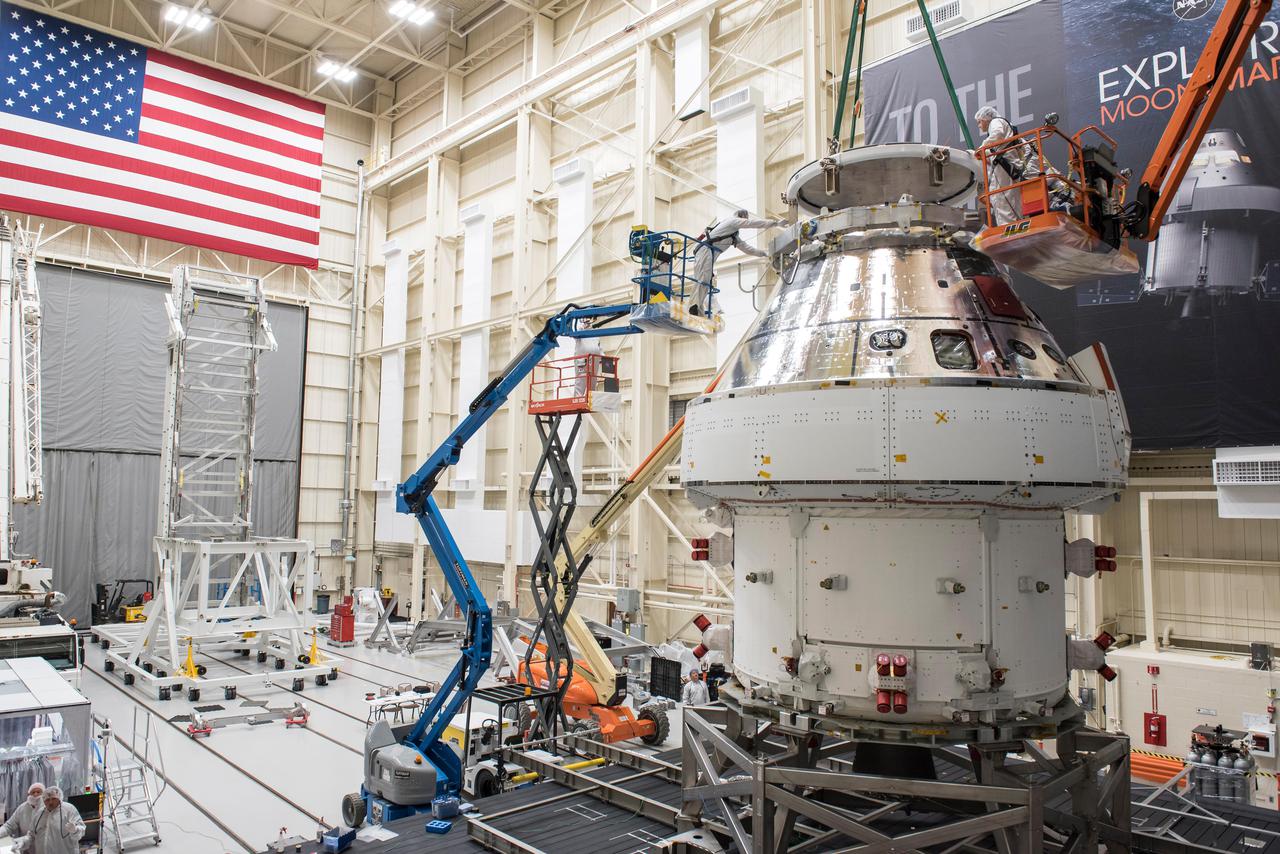
Orion - EM-1 - Artemis Spacecraft Departure at the Space Environments Complex, SEC Thermal Vacuum Chamber at the Neil A. Armstrong Test Facility, Transportation to Mansfield Lahm Airport
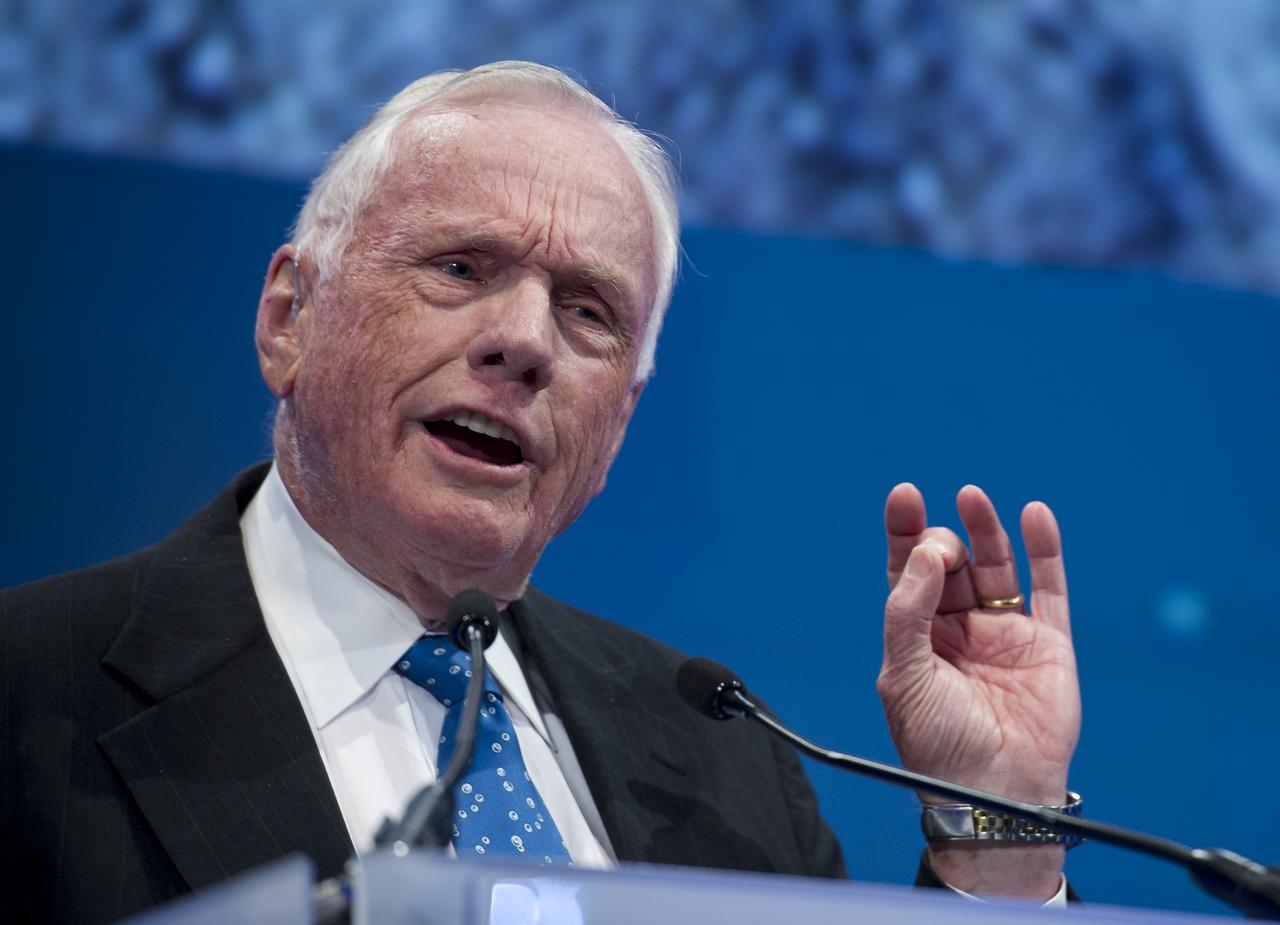
Apollo 11 Astronaut Neil Armstrong speaks during a celebration dinner at Ohio State University honoring the 50th anniversary of John Glenn's historic flight aboard Friendship 7 Monday, Feb. 20, 2012, in Columbus, Ohio. Glenn was the first American to orbit Earth. Photo Credit: (NASA/Bill Ingalls)
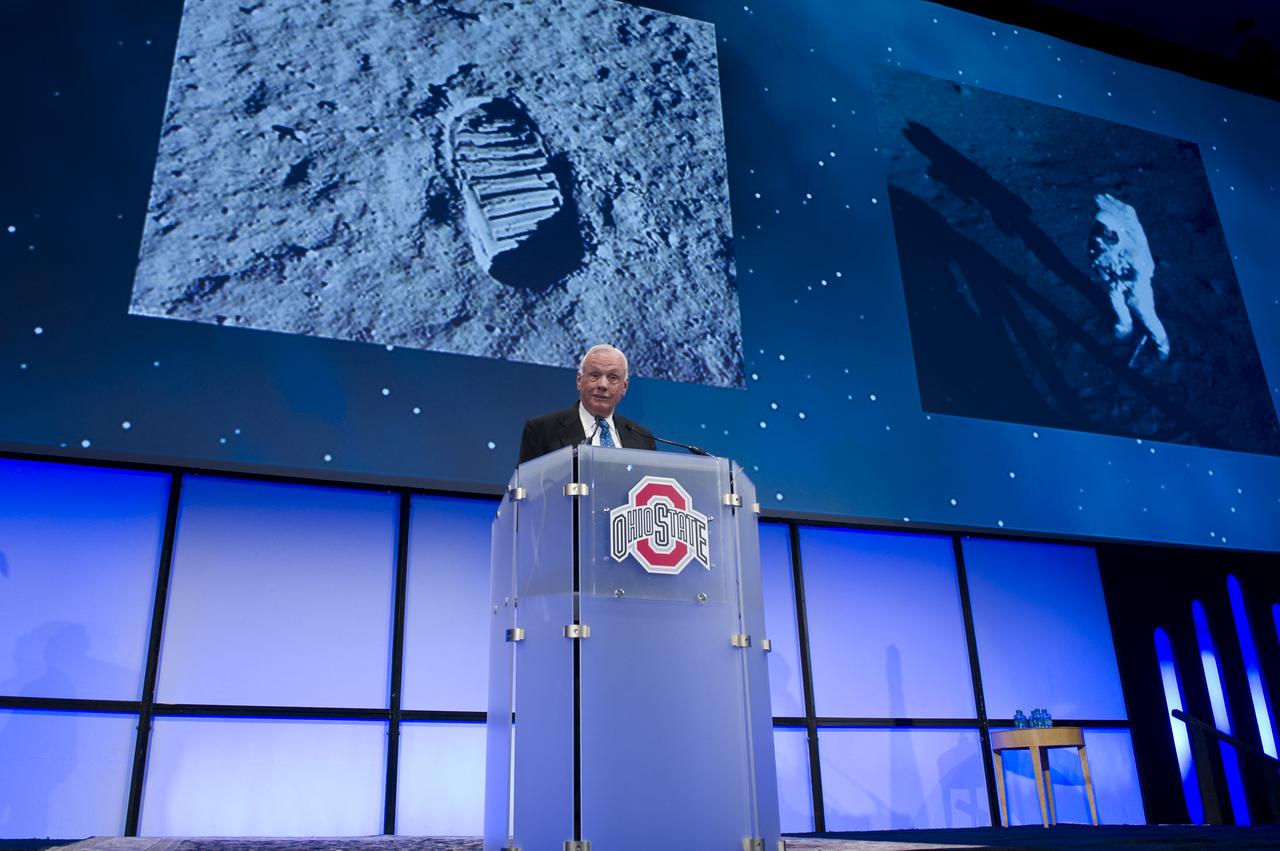
Apollo 11 Astronaut Neil Armstrong speaks during a celebration dinner at Ohio State University honoring the 50th anniversary of John Glenn's historic flight aboard Friendship 7 Monday, Feb. 20, 2012, in Columbus, Ohio. Glenn was the first American to orbit Earth. Photo Credit: (NASA/Bill Ingalls)
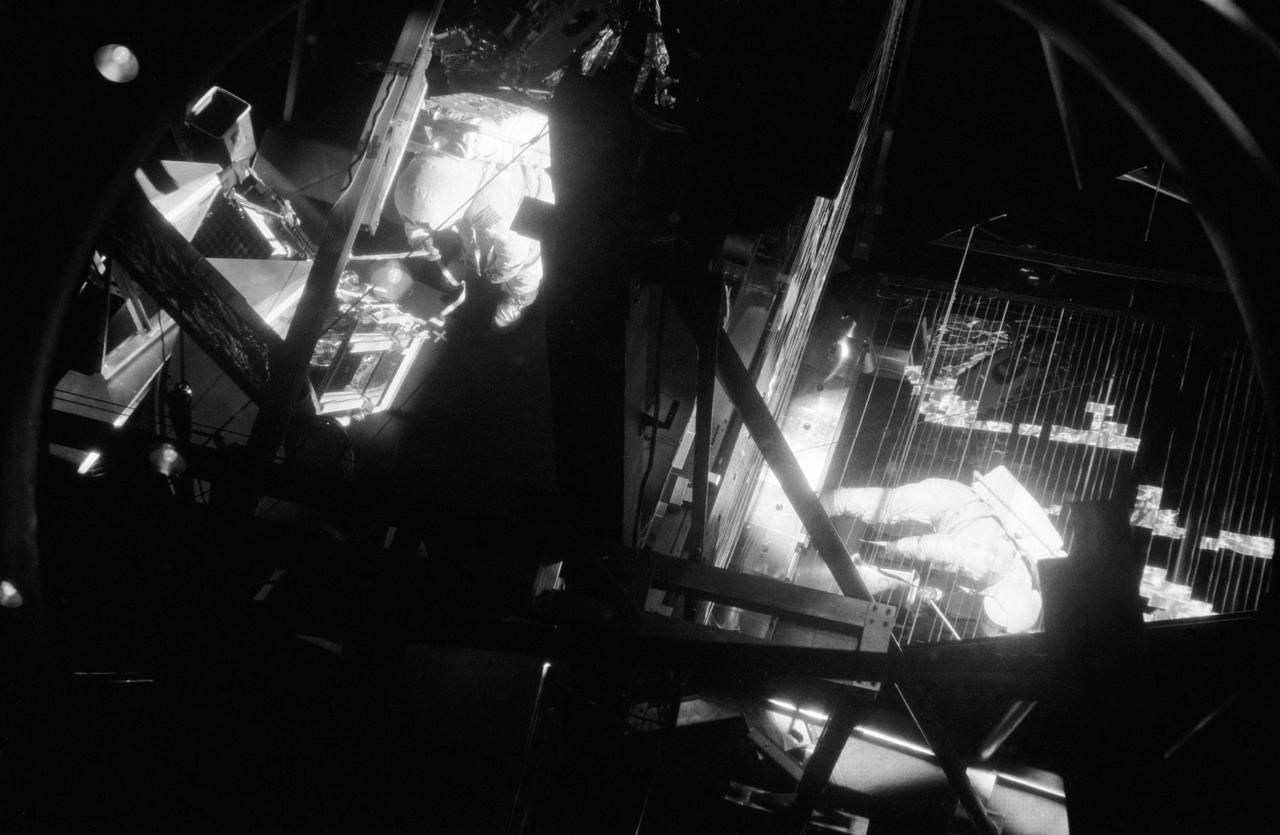
Astronaut Neil A. Armstrong, commander of the Apollo 11 lunar landing mission, is photographed during thermovacuum training in Chamber B of the Space Environment Simulation Laboratory, Building 32, Manned Spacecraft Center. He is wearing an Extravehicular Mobility Unit. The training simulated lunar surface vacuum and thermal conditions during astronaut operations outside the Lunar Module on the moon's surface. The mirror was used to reflect solar light.

NASA Administrator Charles Bolden, back to camera, speaks with Carol Armstrong after presenting her with a U.S. Flag that was flown at half-mast over Mission Control at Johnson Space Center in Houston, on the day of her husband’s passing, during a memorial service celebrating the life of Neil Armstrong at the Washington National Cathedral, Thursday, Sept. 13, 2012. Armstrong, the first man to walk on the moon during the 1969 Apollo 11 mission, died Saturday, Aug. 25. He was 82. Photo Credit: (NASA/Bill Ingalls)
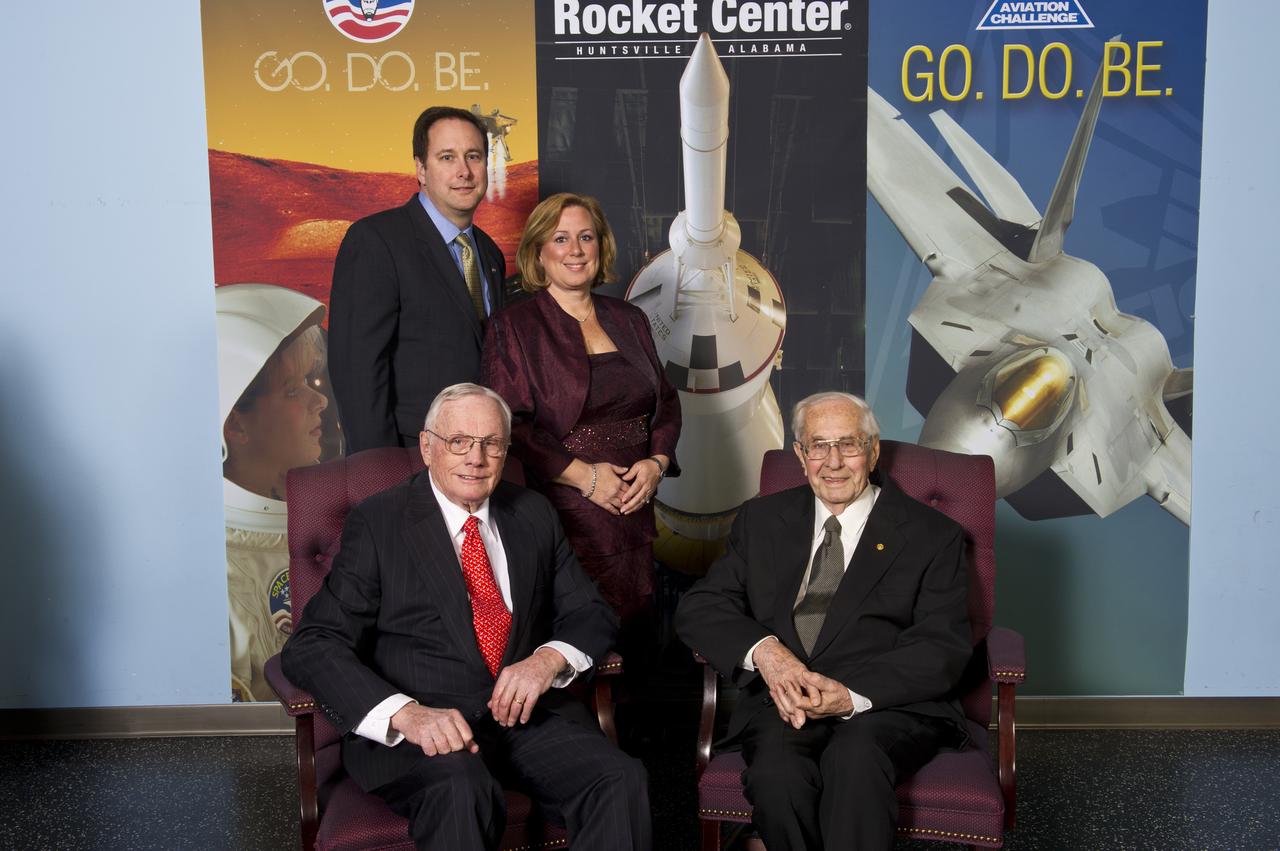
MR. AND MRS. ROBERT LIGHTFOOT POSE WITH ASTRONAUT NEIL ARMSTRONG AND DR. GEORG VON TIESENHAUSEN AT THE TRANQUILITY BASE RENDEZVOUS EVENT AT THE DAVIDSON CENTER AT THE U.S. SPACE AND ROCKET CENTER.
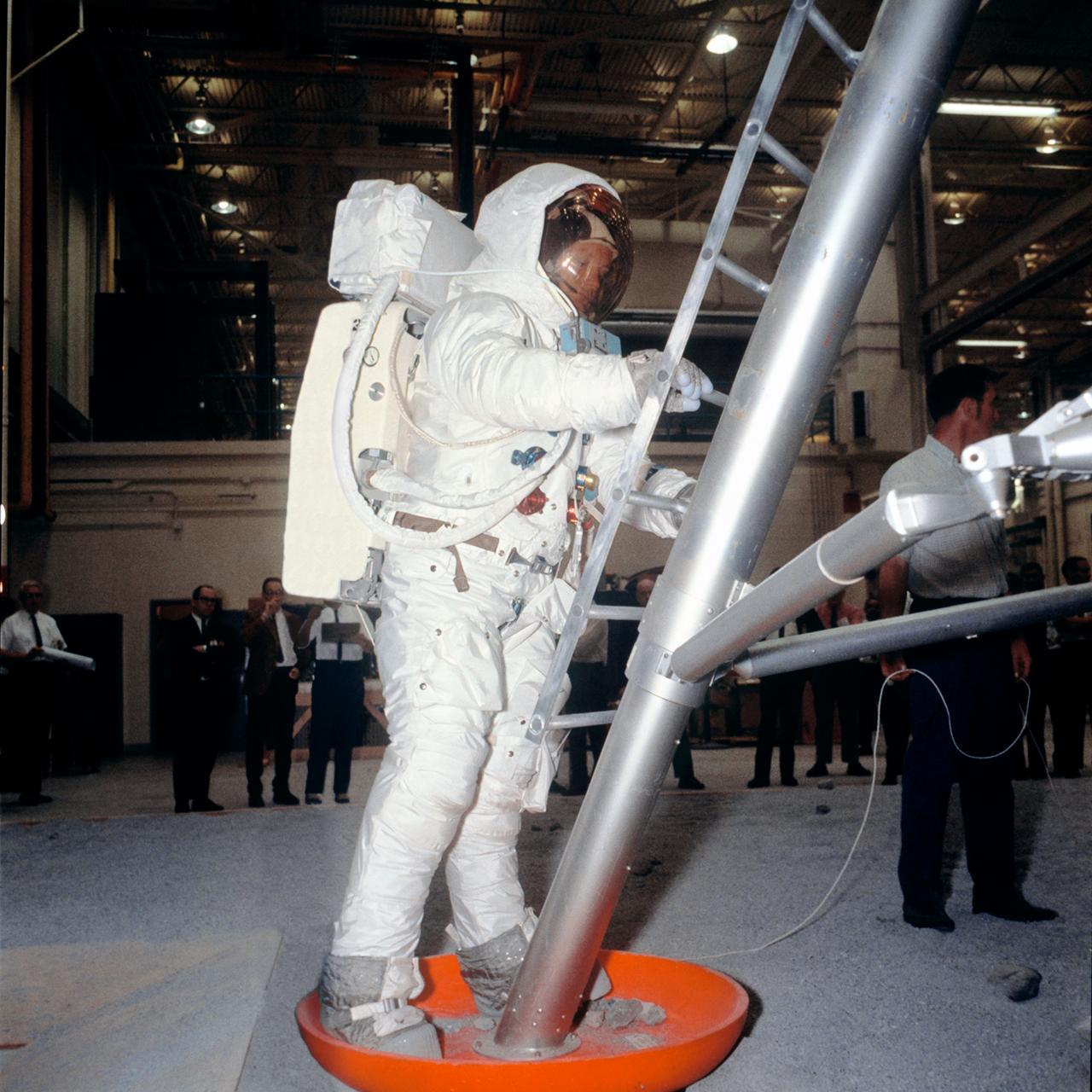
S69-31042 (18 April 1969) --- Suited astronaut Neil A. Armstrong, wearing an Extravehicular Mobility Unit (EMU), participates in lunar surface simulation training on April 18, 1969, in Building 9, Manned Spacecraft Center (MSC). Armstrong is the prime crew commander of the Apollo 11 lunar landing mission. Here, he is standing on Lunar Module (LM) mockup foot pad preparing to ascend steps.

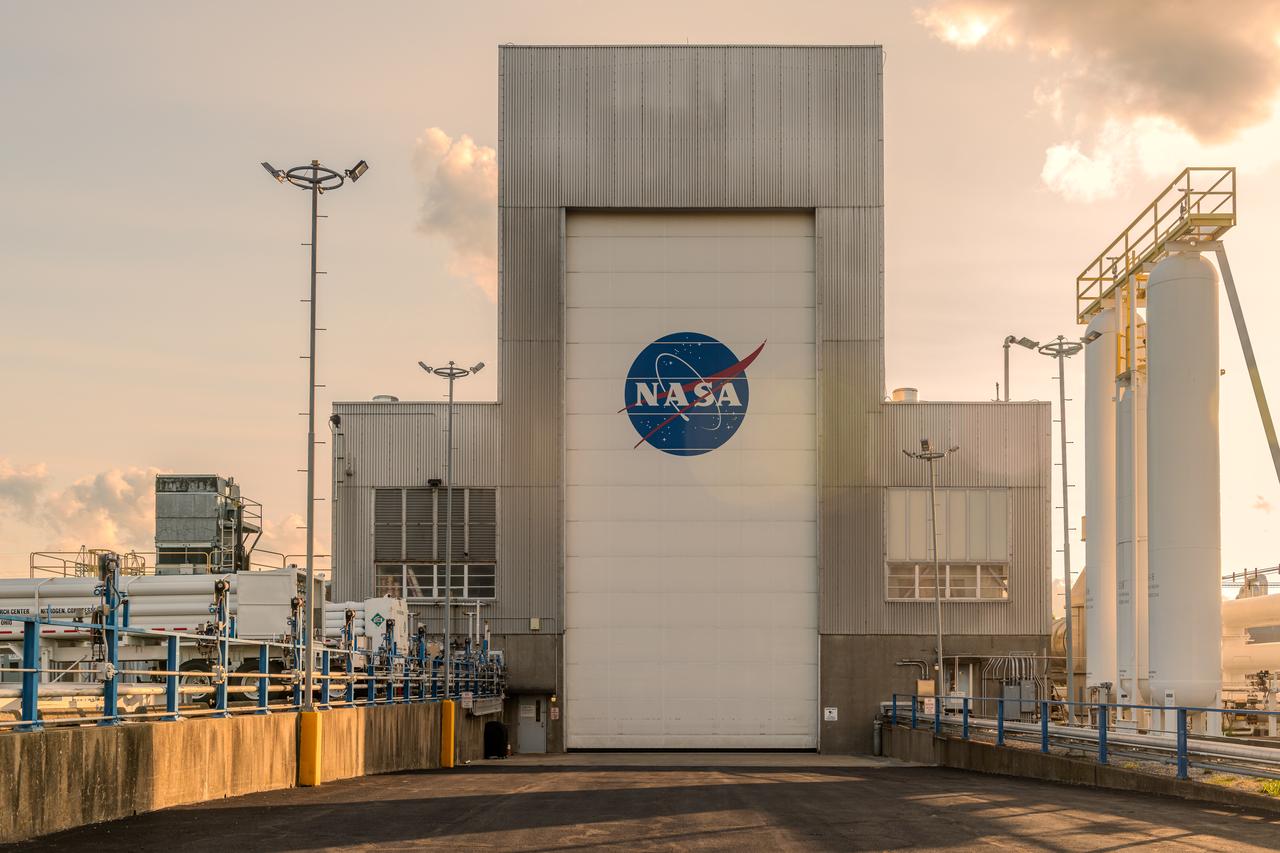
The In-Space Propulsion Facility (ISP) is shown at NASA’s Neil Armstrong Test Facility in Sandusky, Ohio. ISP is the world’s only facility capable of full-scale rocket engine and launch vehicle system level tests. Photo Credit: (NASA/Jordan Salkin)
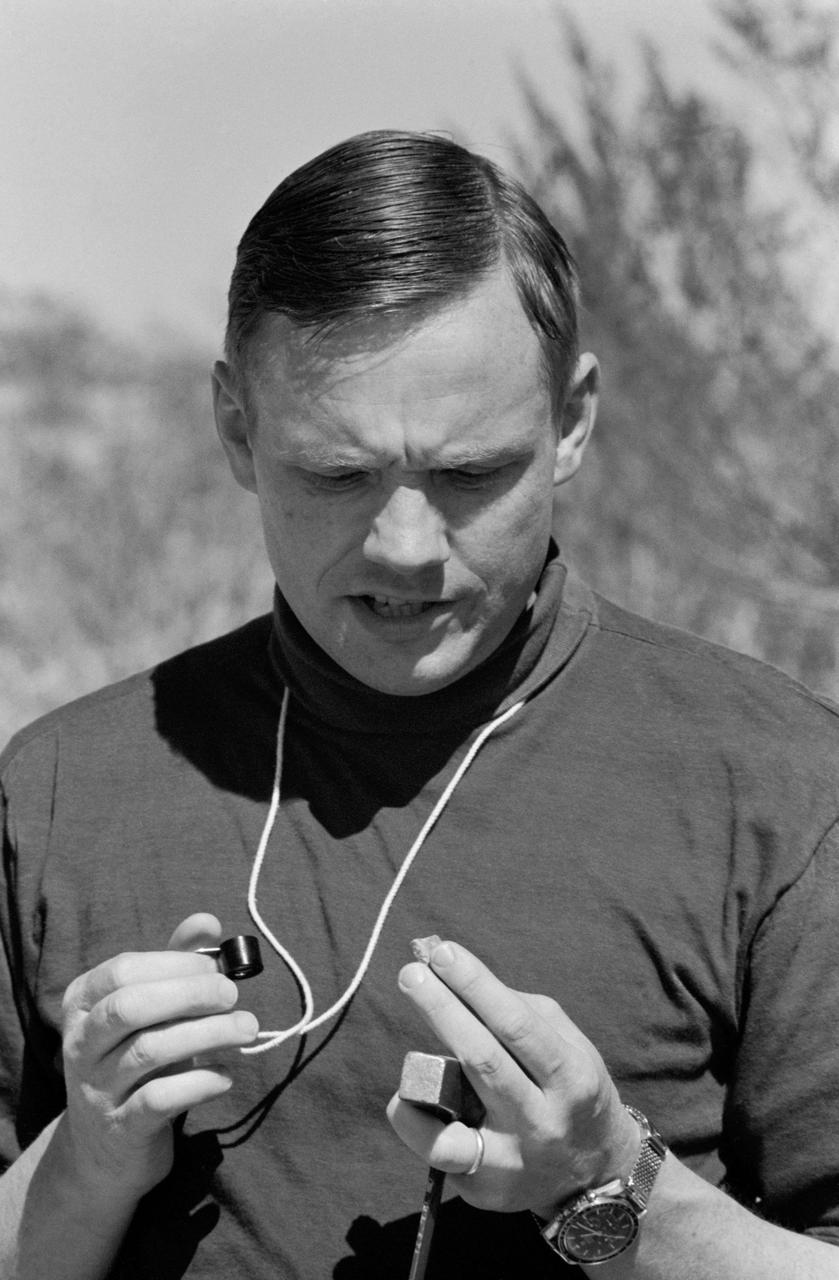
S69-25198 (25 Feb. 1969) --- Astronaut Neil A. Armstrong, commander of the Apollo 11 prime crew, studies rock sample during a geological field trip to the Quitman Mountains area near the Fort Quitman ruins in far west Texas.
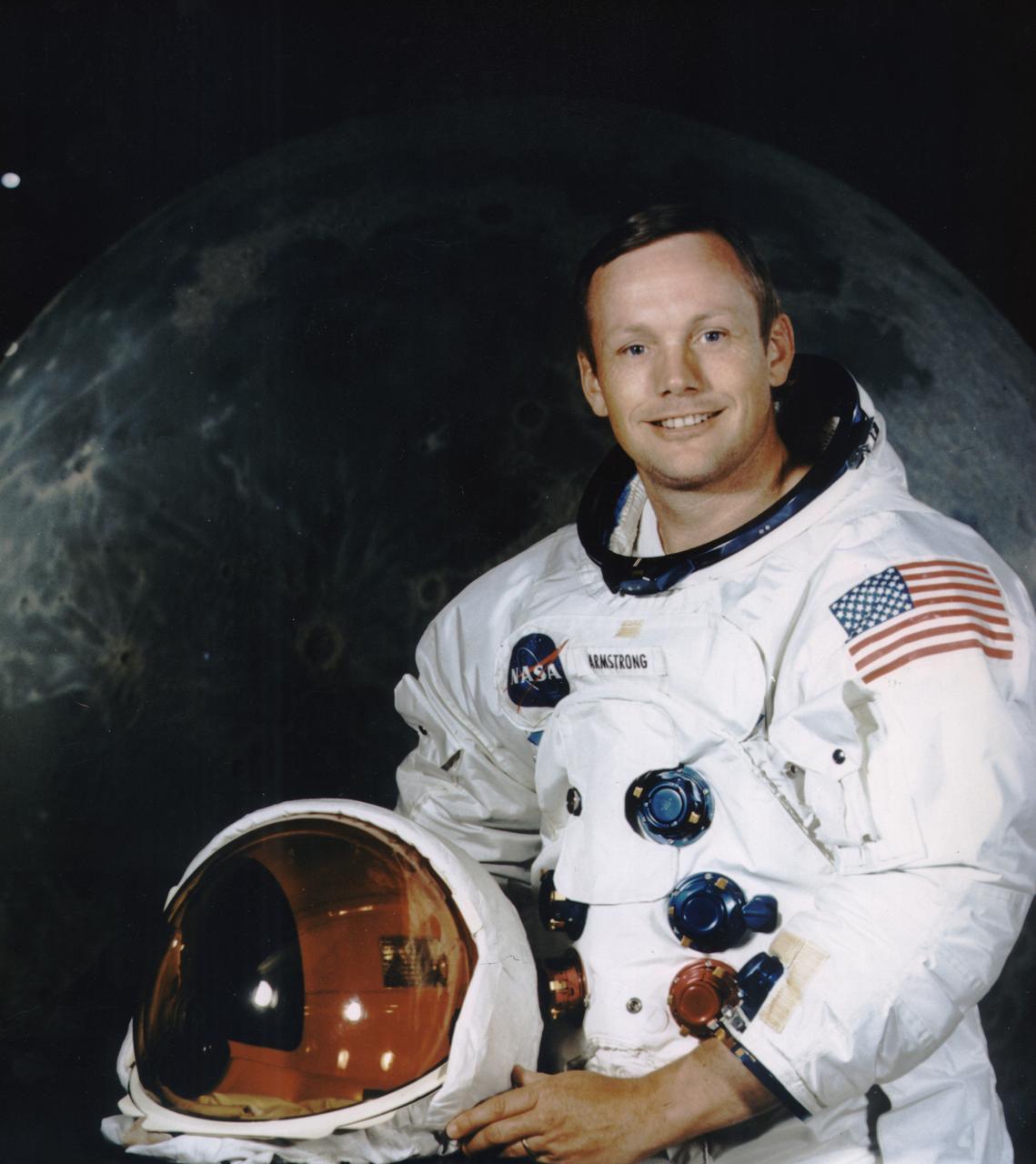
Neil Armstrong, donned in his space suit, poses for his official Apollo 11 portrait. Armstrong began his flight career as a naval aviator. He flew 78 combat missions during the Korean War. Armstrong joined the NASA predecessor, NACA (National Advisory Committee for Aeronautics), as a research pilot at the Lewis Laboratory in Cleveland and later transferred to the NACA High Speed Flight Station at Edwards AFB, California. He was a project pilot on many pioneering high speed aircraft, including the 4,000 mph X-15. He has flown over 200 different models of aircraft, including jets, rockets, helicopters, and gliders. In 1962, Armstrong was transferred to astronaut status. He served as command pilot for the Gemini 8 mission, launched March 16, 1966, and performed the first successful docking of two vehicles in space. In 1969, Armstrong was commander of Apollo 11, the first manned lunar landing mission, and gained the distinction of being the first man to land a craft on the Moon and the first man to step on its surface. Armstrong subsequently held the position of Deputy Associate Administrator for Aeronautics, NASA Headquarters Office of Advanced Research and Technology, from 1970 to 1971. He resigned from NASA in 1971.
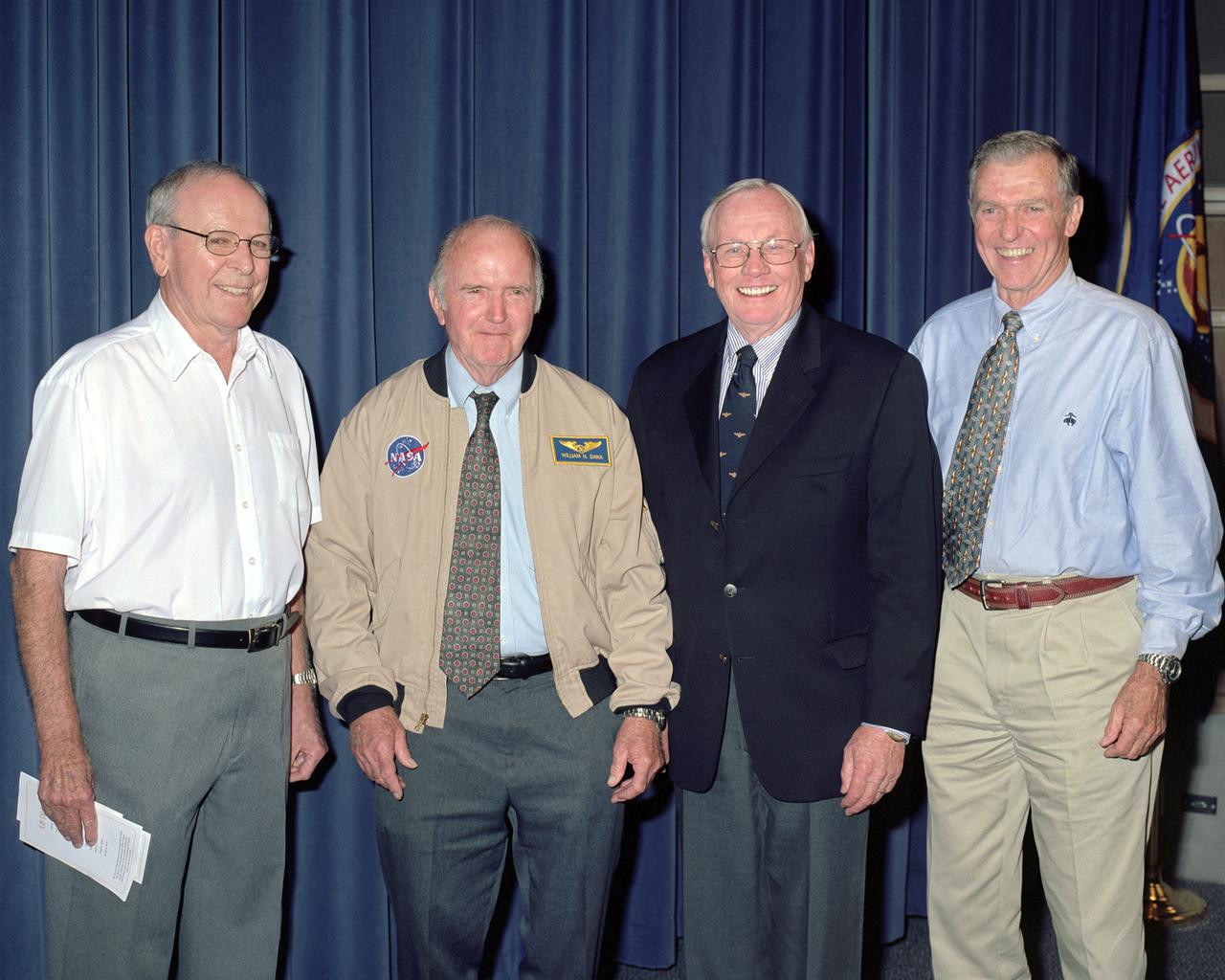
Four of the five surviving X-15 pilots were on hand when astronaut wings were presented to the three NASA pilots who flew the X-15 rocket plane into space in the 1960s, Bill Dana, Joe Walker (deceased) and Jack McKay (deceased). From left, Robert White, Dana, Neil Armstrong, Joe Engle.

Carol Armstrong, center, her son Eric, right, and daughter Molly Van Wagenen hold their hands to their hearts during a memorial service celebrating the life of Neil Armstrong at the Washington National Cathedral, Thursday, Sept. 13, 2012. Armstrong, the first man to walk on the moon during the 1969 Apollo 11 mission, died Saturday, Aug. 25. He was 82. Photo Credit: (NASA/Bill Ingalls)
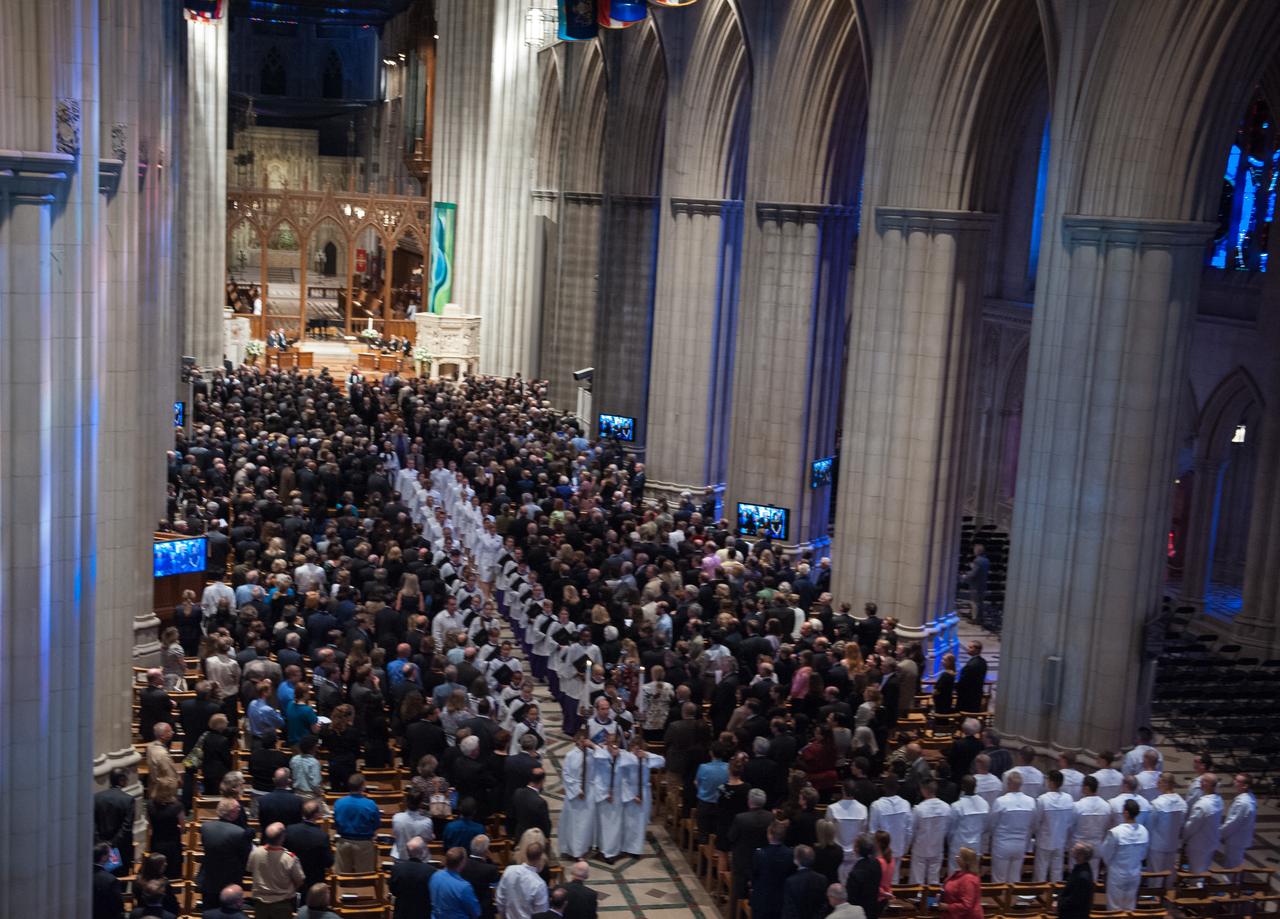
Acolytes lead the recessional through the Nave at the conclusion of a memorial service celebrating the life of Neil Armstrong at the Washington National Cathedral, Thursday, Sept. 13, 2012. Armstrong, the first man to walk on the moon during the 1969 Apollo 11 mission, died Saturday, Aug. 25. He was 82. Photo Credit:(NASA/Paul E. Alers)
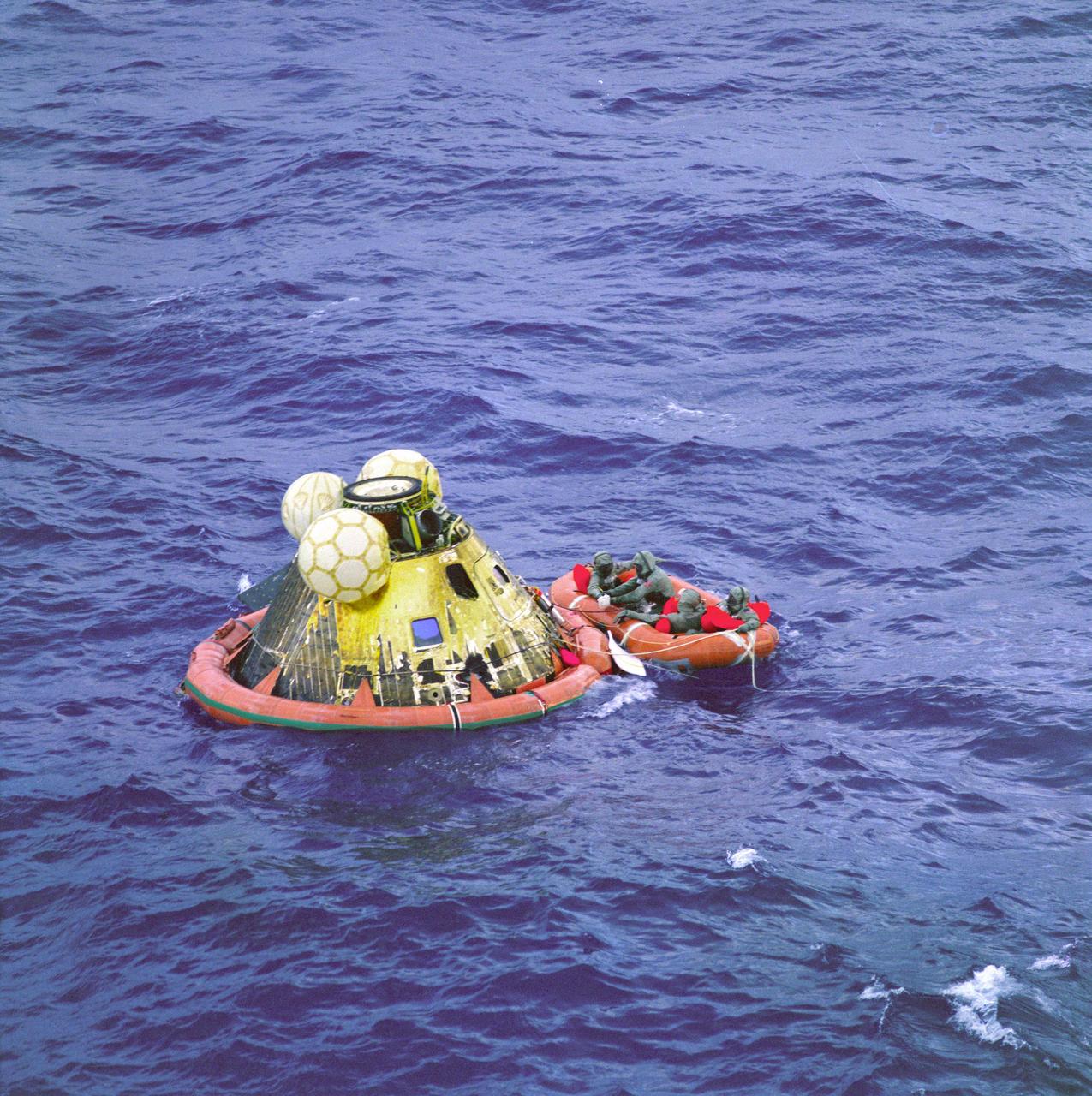
The Apollo 11 command module Columbia with astronauts Neil Armstrong, Michael Collins, and Buzz Aldrin aboard splashed down at 11:49 a.m. CDT, July 24, 1969, about 812 nautical miles southwest of Hawaii and only 12 nautical miles from the USS Hornet.
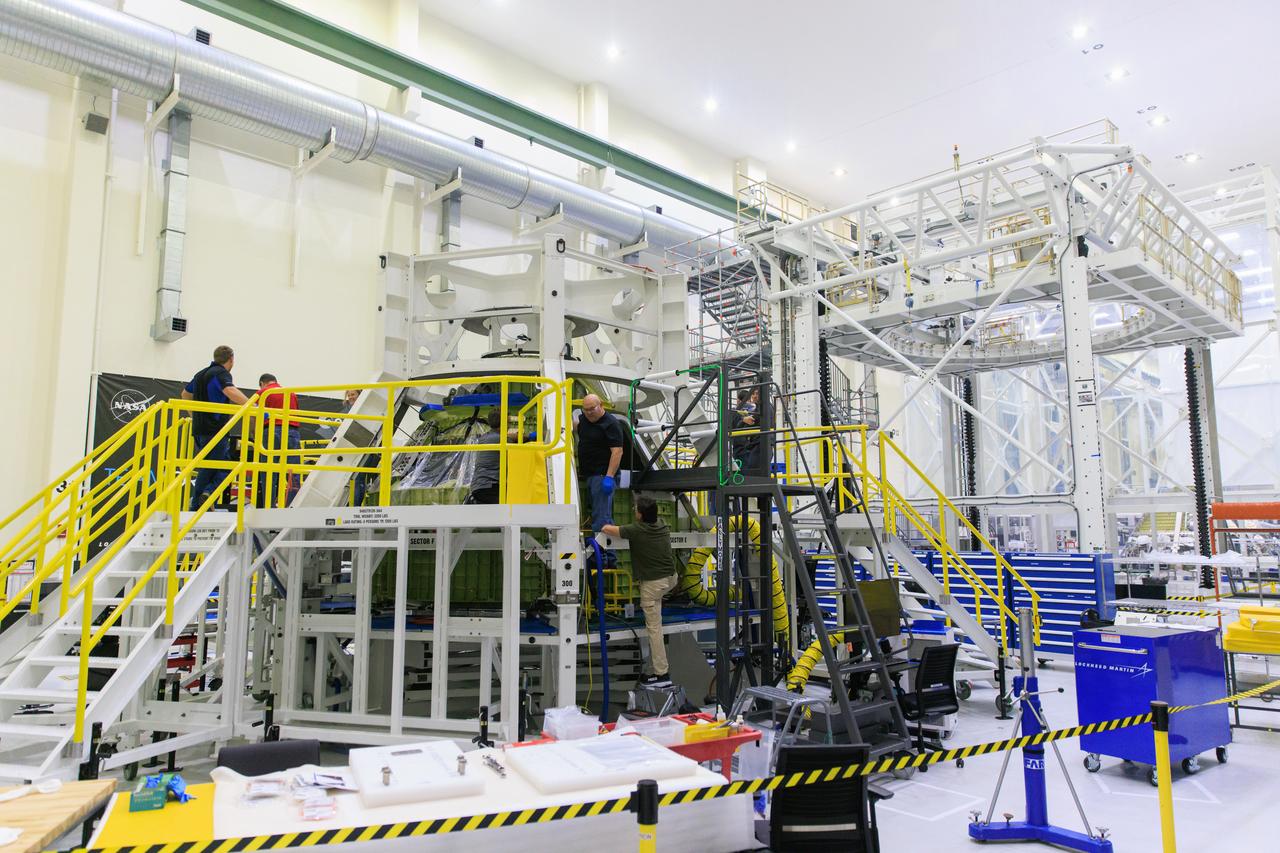
Inside the high bay of the Neil Armstrong Operations and Checkout Building at NASA’s Kennedy Space Center in Florida, Lockheed Martin and NASA technicians work on the Orion crew module for the agency’s Artemis IV mission on May 26, 2023. Artemis IV will be the first operational mission to Gateway – an outpost in lunar orbit serving as a staging point for deep space exploration – followed by a week-long surface mission on the Moon. Also sharing space in the high bay are the crew modules for Artemis II and Artemis III.

Inside the high bay of the Neil Armstrong Operations and Checkout Building at NASA’s Kennedy Space Center in Florida, Lockheed Martin and NASA technicians work on the Orion crew module for the agency’s Artemis IV mission on May 26, 2023. Artemis IV will be the first operational mission to Gateway – an outpost in lunar orbit serving as a staging point for deep space exploration – followed by a week-long surface mission on the Moon. Also sharing space in the high bay are the crew modules for Artemis II and Artemis III.

Attendees to the memorial service for Neil Armstrong sing a hymnal, Thursday, Sept. 13, 2012, at the Washington National Cathedral. Armstrong, the first man to walk on the moon during the 1969 Apollo 11 mission, died Saturday, Aug. 25. He was 82. Photo Credit: (NASA/Bill Ingalls)
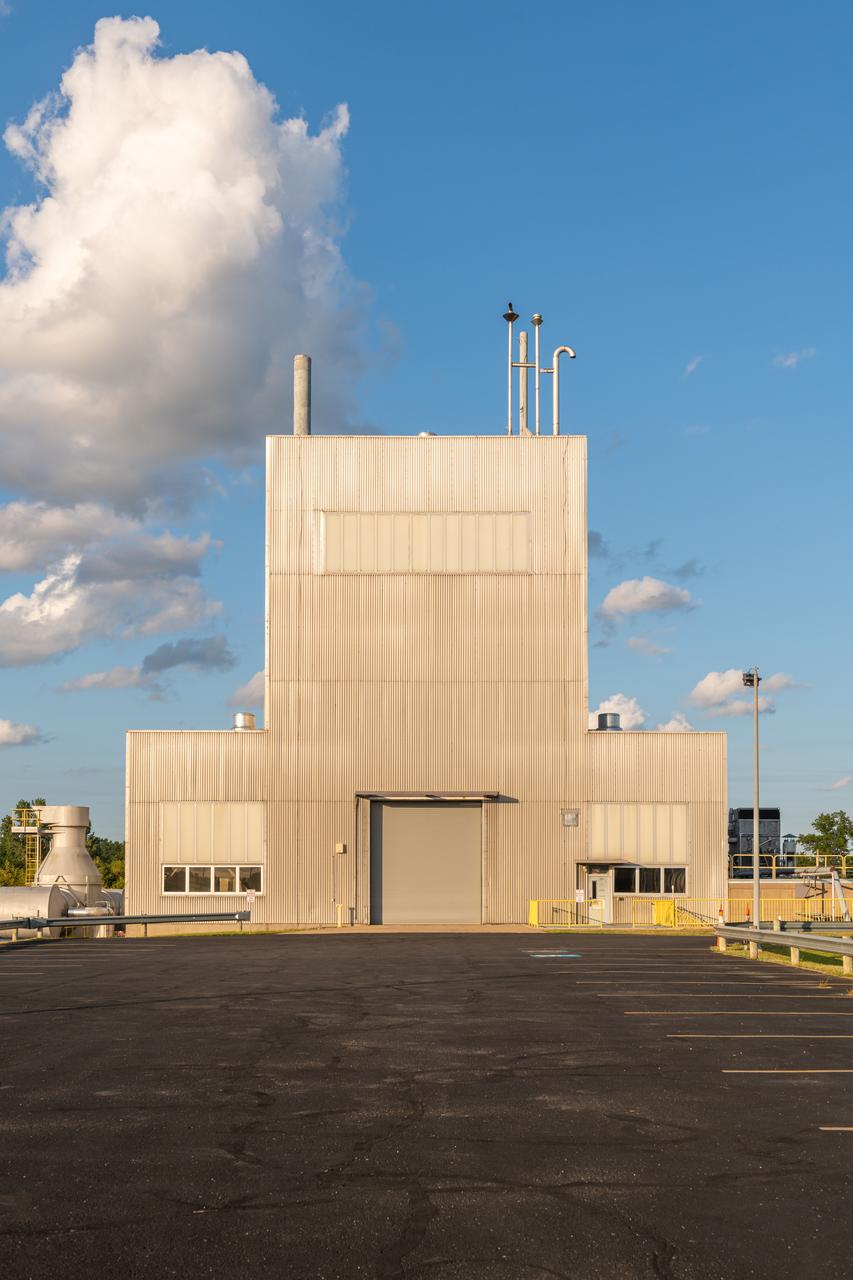
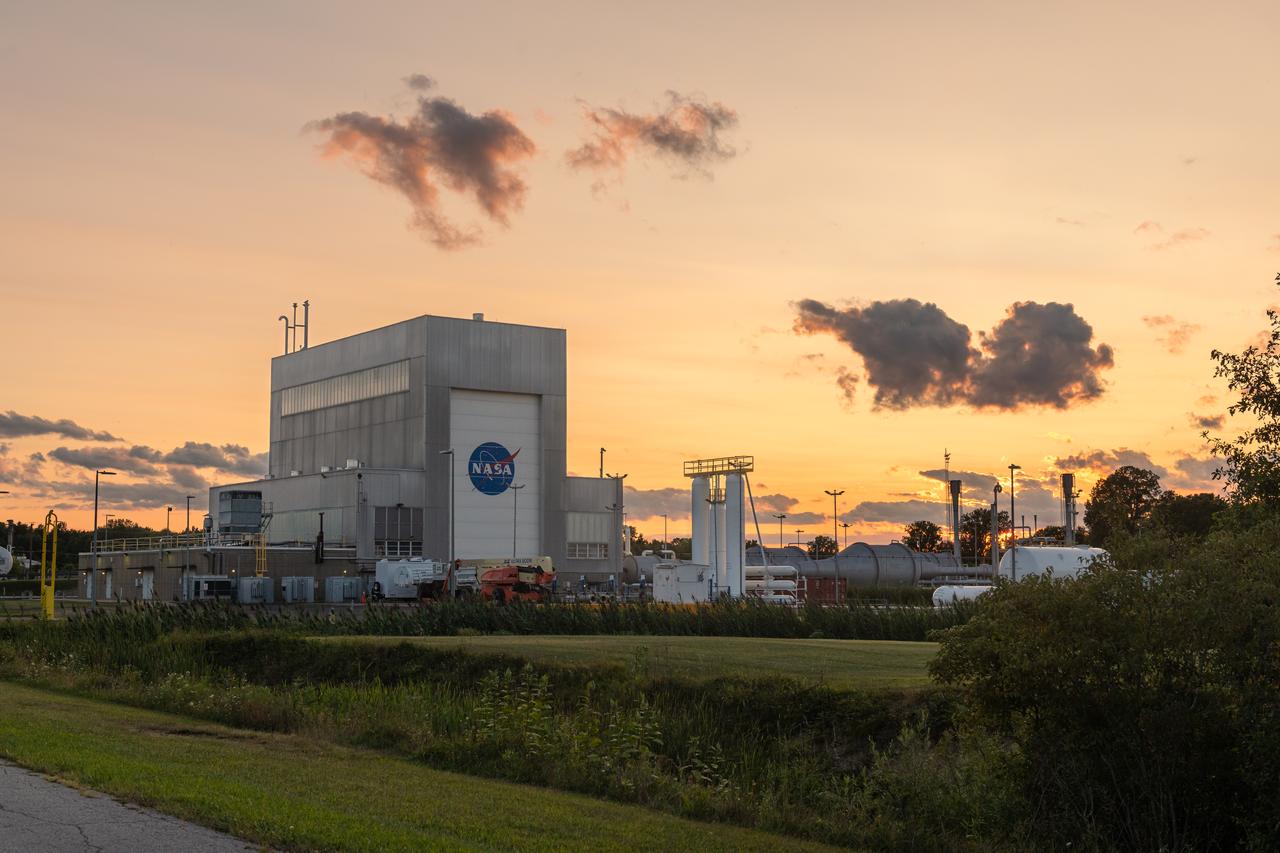
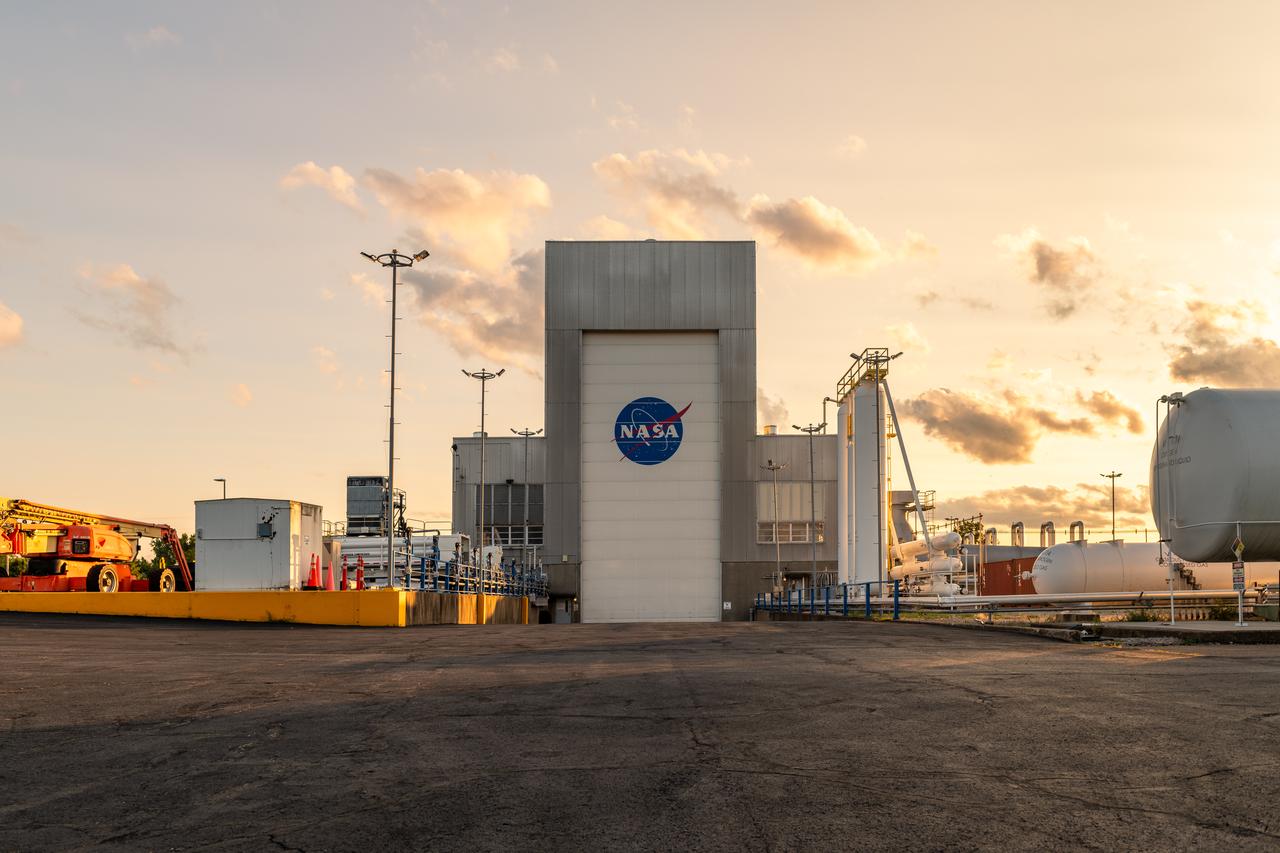
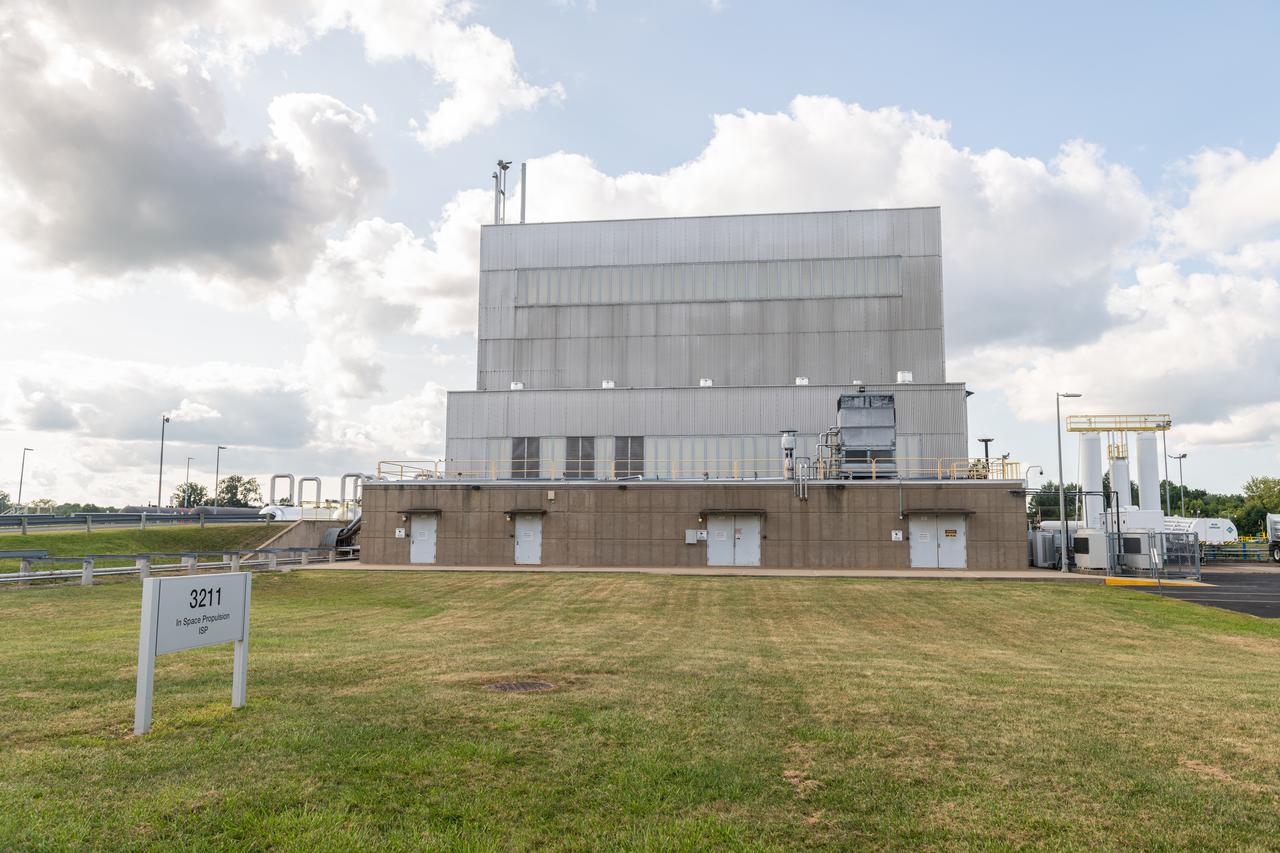
NASA’s In-Space Propulsion Facility located at Neil Armstrong Test Facility in Sandusky Ohio is the world’s only high altitude test facility capable of full-scale rocket engine and launch vehicle system level tests. The facility supports mission profile thermal vacuum simulation and engine firing. The engine or vehicle can be exposed for indefinite periods to low ambient pressures, low-background temperatures, and dynamic solar heating, simulating the environment the hardware will encounter during orbital or interplanetary travel. Photo Credit: (NASA/Jordan Salkin)
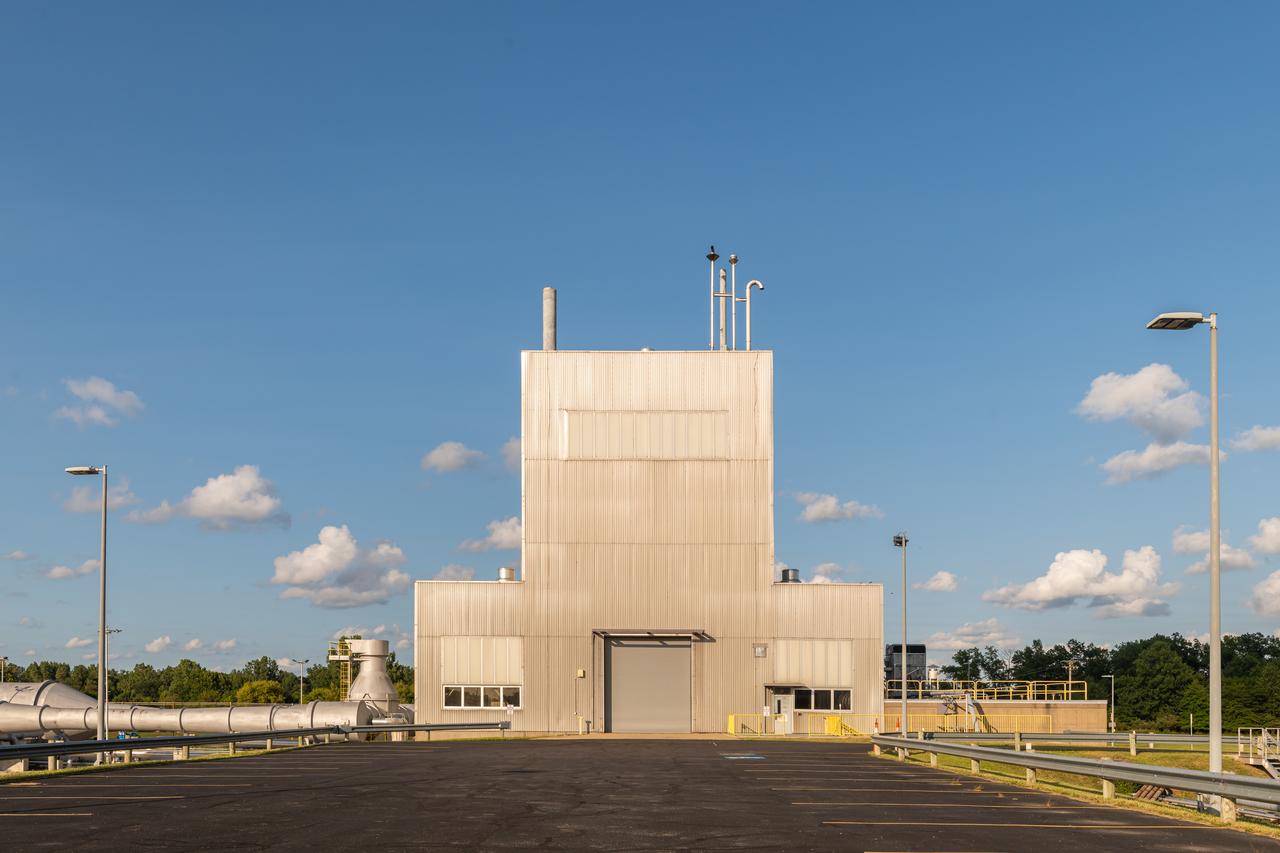
NASA’s In-Space Propulsion Facility located at Neil Armstrong Test Facility in Sandusky Ohio is the world’s only high altitude test facility capable of full-scale rocket engine and launch vehicle system level tests. The facility supports mission profile thermal vacuum simulation and engine firing. The engine or vehicle can be exposed for indefinite periods to low ambient pressures, low-background temperatures, and dynamic solar heating, simulating the environment the hardware will encounter during orbital or interplanetary travel. Photo Credit: (NASA/Jordan Salkin)
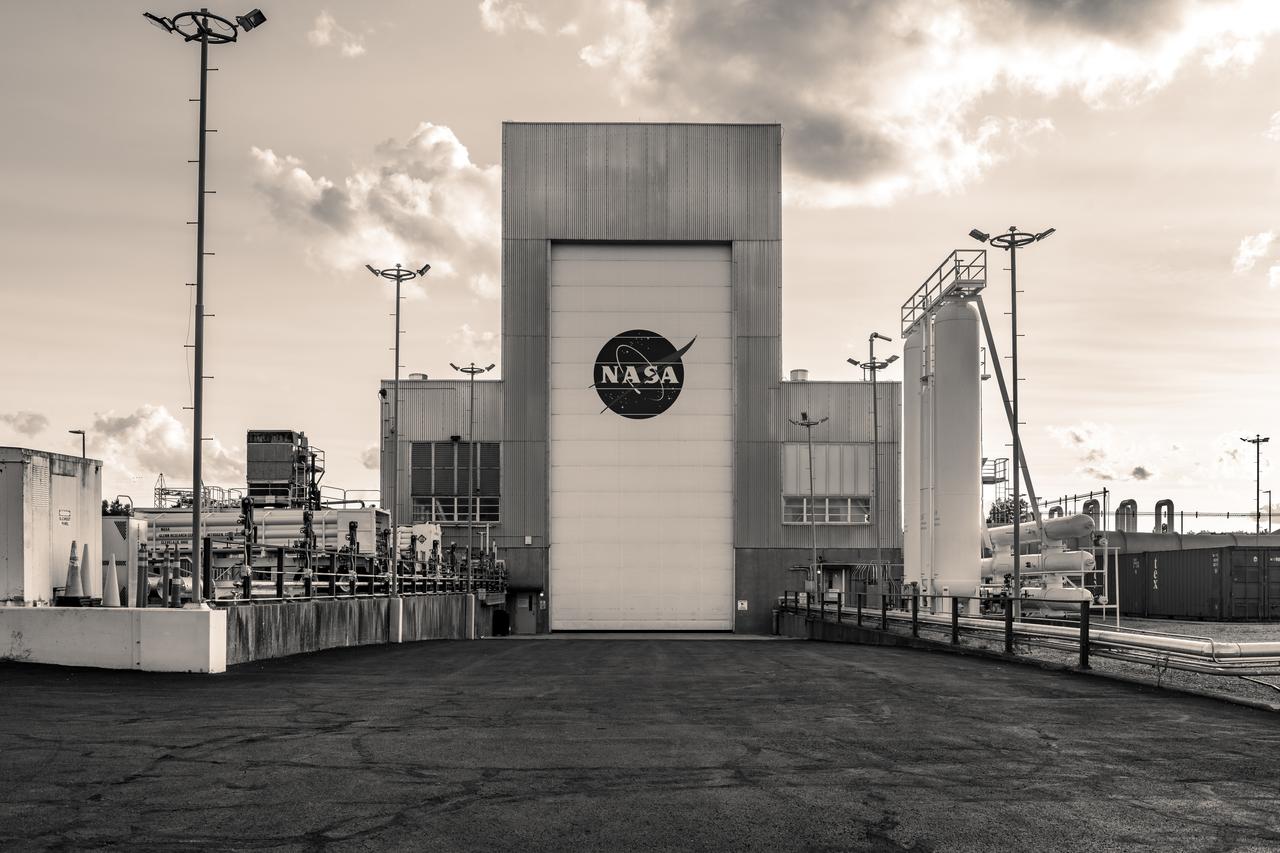
NASA’s In-Space Propulsion Facility located at Neil Armstrong Test Facility in Sandusky Ohio is the world’s only high altitude test facility capable of full-scale rocket engine and launch vehicle system level tests. The facility supports mission profile thermal vacuum simulation and engine firing. The engine or vehicle can be exposed for indefinite periods to low ambient pressures, low-background temperatures, and dynamic solar heating, simulating the environment the hardware will encounter during orbital or interplanetary travel. Photo Credit: (NASA/Jordan Salkin)
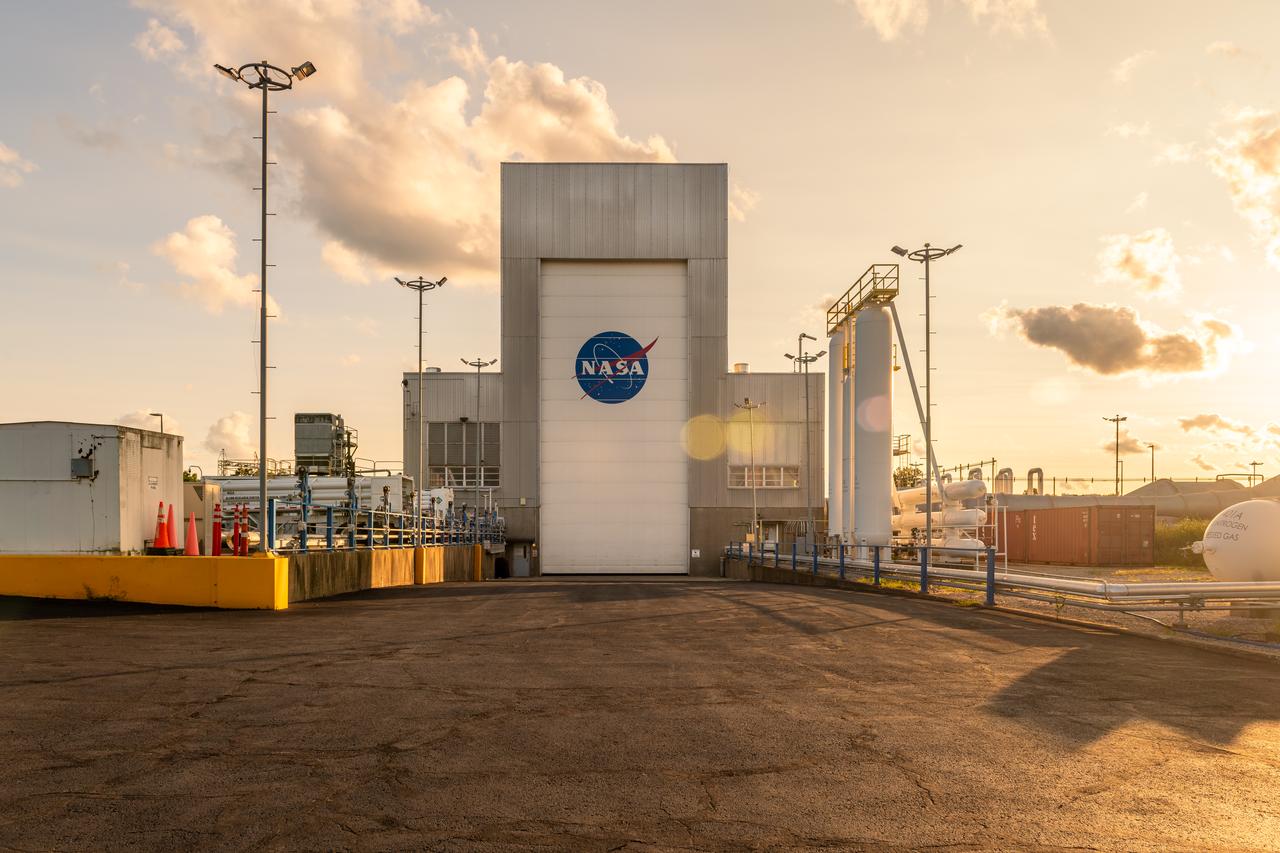
NASA’s In-Space Propulsion Facility located at Neil Armstrong Test Facility in Sandusky Ohio is the world’s only high altitude test facility capable of full-scale rocket engine and launch vehicle system level tests. The facility supports mission profile thermal vacuum simulation and engine firing. The engine or vehicle can be exposed for indefinite periods to low ambient pressures, low-background temperatures, and dynamic solar heating, simulating the environment the hardware will encounter during orbital or interplanetary travel. Photo Credit: (NASA/Jordan Salkin)
NASA’s In-Space Propulsion Facility located at Neil Armstrong Test Facility in Sandusky Ohio is the world’s only high altitude test facility capable of full-scale rocket engine and launch vehicle system level tests. The facility supports mission profile thermal vacuum simulation and engine firing. The engine or vehicle can be exposed for indefinite periods to low ambient pressures, low-background temperatures, and dynamic solar heating, simulating the environment the hardware will encounter during orbital or interplanetary travel. Photo Credit: (NASA/Jordan Salkin)
NASA’s In-Space Propulsion Facility located at Neil Armstrong Test Facility in Sandusky Ohio is the world’s only high altitude test facility capable of full-scale rocket engine and launch vehicle system level tests. The facility supports mission profile thermal vacuum simulation and engine firing. The engine or vehicle can be exposed for indefinite periods to low ambient pressures, low-background temperatures, and dynamic solar heating, simulating the environment the hardware will encounter during orbital or interplanetary travel. Photo Credit: (NASA/Jordan Salkin)
NASA’s In-Space Propulsion Facility located at Neil Armstrong Test Facility in Sandusky Ohio is the world’s only high altitude test facility capable of full-scale rocket engine and launch vehicle system level tests. The facility supports mission profile thermal vacuum simulation and engine firing. The engine or vehicle can be exposed for indefinite periods to low ambient pressures, low-background temperatures, and dynamic solar heating, simulating the environment the hardware will encounter during orbital or interplanetary travel. Photo Credit: (NASA/Jordan Salkin)
NASA’s In-Space Propulsion Facility located at Neil Armstrong Test Facility in Sandusky Ohio is the world’s only high altitude test facility capable of full-scale rocket engine and launch vehicle system level tests. The facility supports mission profile thermal vacuum simulation and engine firing. The engine or vehicle can be exposed for indefinite periods to low ambient pressures, low-background temperatures, and dynamic solar heating, simulating the environment the hardware will encounter during orbital or interplanetary travel. Photo Credit: (NASA/Jordan Salkin)
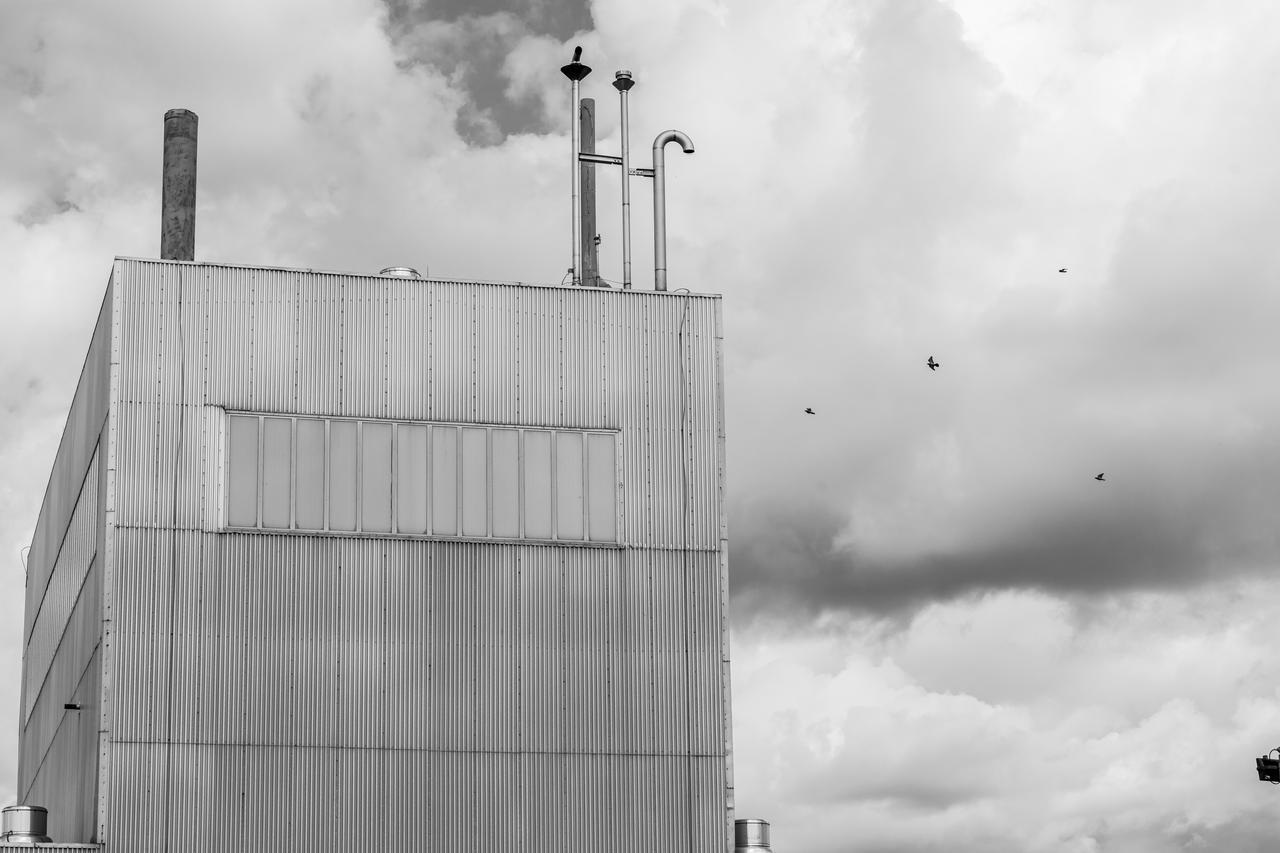
NASA’s In-Space Propulsion Facility located at Neil Armstrong Test Facility in Sandusky Ohio is the world’s only high altitude test facility capable of full-scale rocket engine and launch vehicle system level tests. The facility supports mission profile thermal vacuum simulation and engine firing. The engine or vehicle can be exposed for indefinite periods to low ambient pressures, low-background temperatures, and dynamic solar heating, simulating the environment the hardware will encounter during orbital or interplanetary travel. Photo Credit: (NASA/Jordan Salkin)
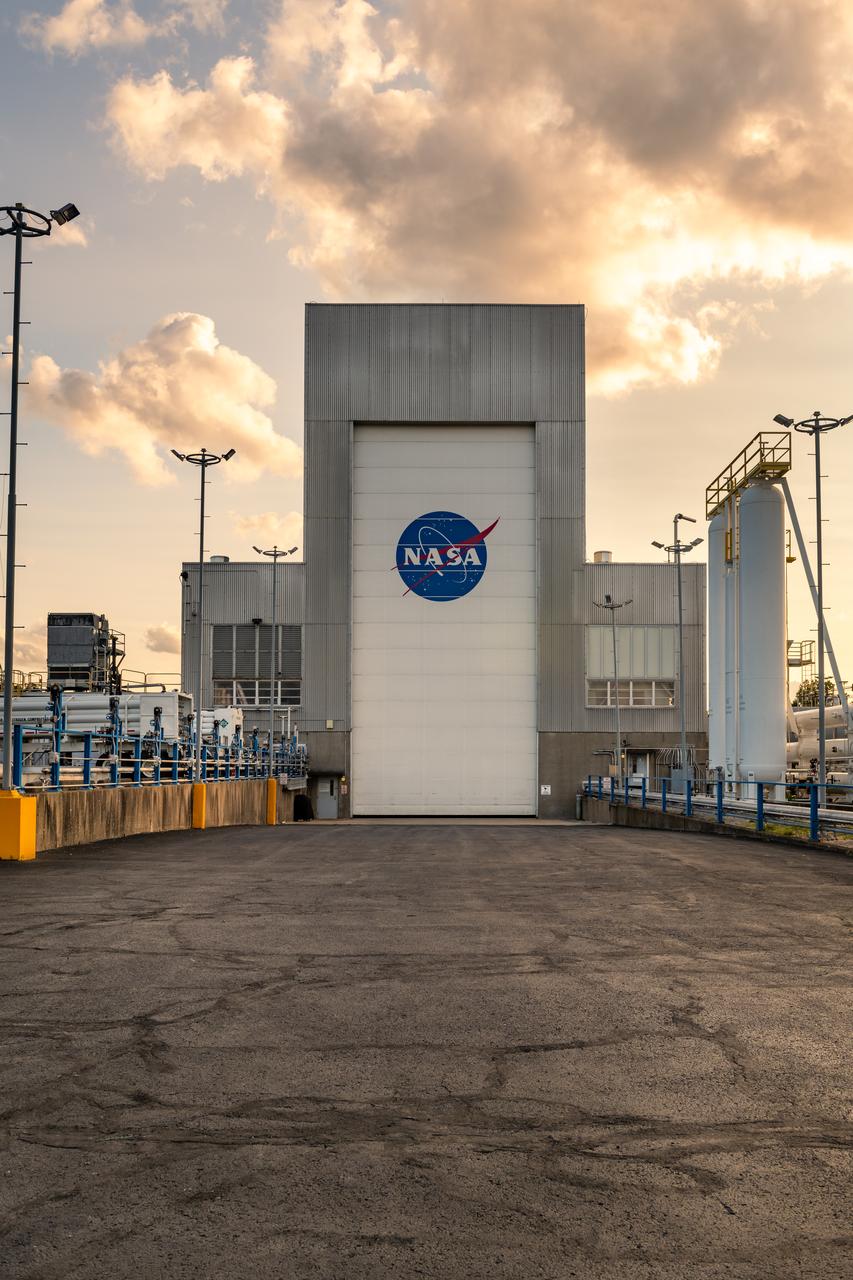
NASA’s In-Space Propulsion Facility located at Neil Armstrong Test Facility in Sandusky Ohio is the world’s only high altitude test facility capable of full-scale rocket engine and launch vehicle system level tests. The facility supports mission profile thermal vacuum simulation and engine firing. The engine or vehicle can be exposed for indefinite periods to low ambient pressures, low-background temperatures, and dynamic solar heating, simulating the environment the hardware will encounter during orbital or interplanetary travel. Photo Credit: (NASA/Jordan Salkin)
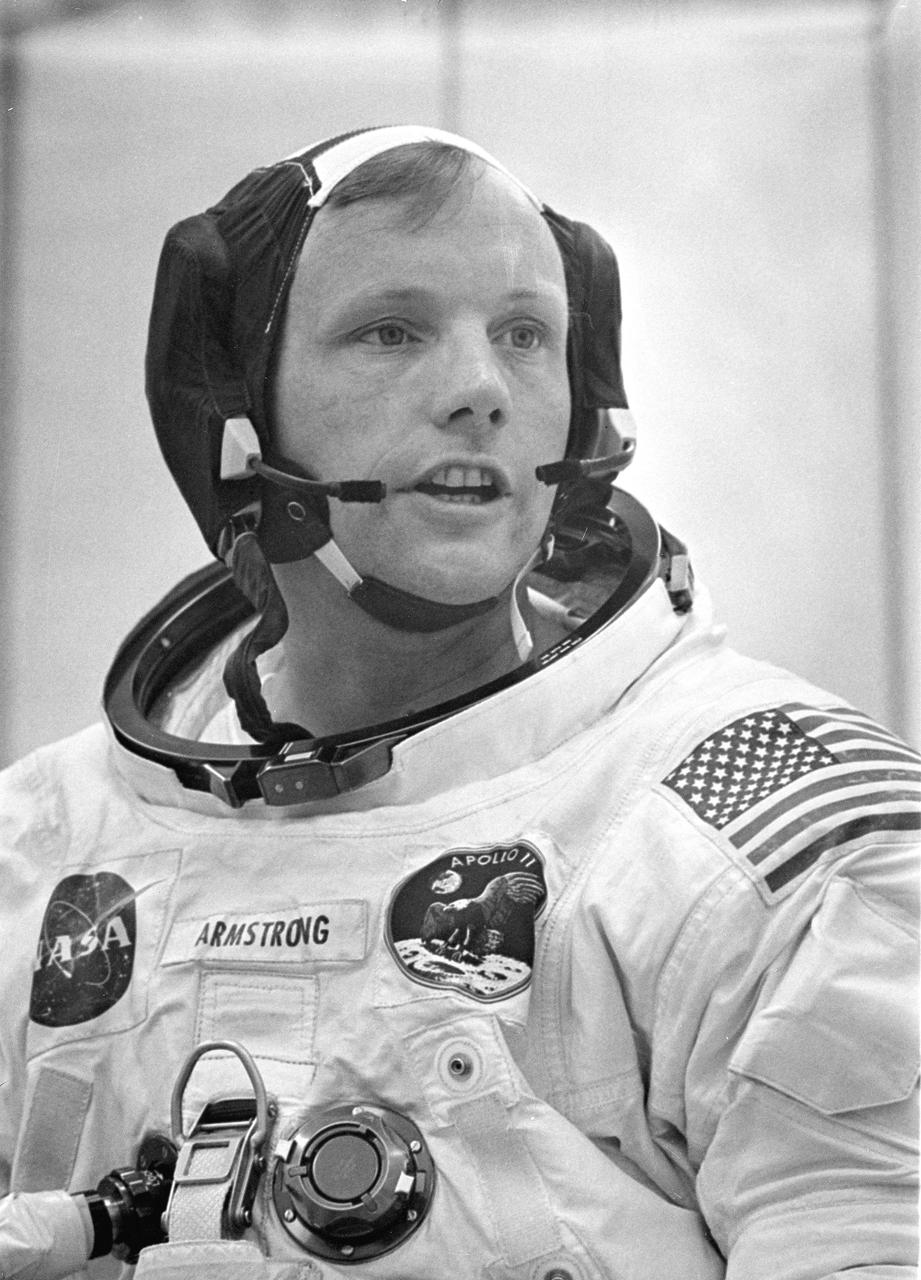
Dunned in his space suit, mission commander Neil A. Armstrong does a final check of his communications system before before the boarding of the Apollo 11 mission. Launched via a Saturn V launch vehicle, the first manned lunar mission launched from the Kennedy Space Center, Florida on July 16, 1969 and safely returned to Earth on July 24, 1969. The Saturn V vehicle was developed by the Marshall Space Flight Center (MSFC) under the direction of Dr. Wernher von Braun. The 3-man crew aboard the flight consisted of astronauts Armstrong; Michael Collins, Command Module (CM) pilot; and Edwin E. Aldrin, Jr., Lunar Module (LM) Pilot. Armstrong was the first human to ever stand on the lunar surface, followed by Edwin (Buzz) Aldrin. Meanwhile, astronaut Collins piloted the CM in a parking orbit around the Moon. During a 2½ hour surface exploration, the crew collected 47 pounds of lunar surface material which was returned to Earth for analysis. With the success of Apollo 11, the national objective to land men on the Moon and return them safely to Earth had been accomplished.
![Astronaut Neil Armstrong examines a Vertical and Short Takeoff and Landing test setup in the 9- by 15-Foot Low Speed Wind Tunnel at the National Aeronautics and Space Administration (NASA) Lewis Research Center. Armstrong spent February 6, 1970 at Lewis attending technical meetings and touring some facilities. Just six months after Armstrong had returned from the moon looming agency budget cuts were already a concern in his comments. He noted that NASA had to “find a balanced approach…and [make] aggressive use of available facilities.” Armstrong spent four months at the center as a research pilot in 1955. Armstrong had served as a Navy pilot during the Korean War then earned a degree in aeronautical engineering at Purdue University. He was recruited by Lewis while at Purdue and began at the center shortly after graduation. During his brief tenure in Cleveland Armstrong served as both a test pilot and research engineer, primarily involved with icing research. In his role as research pilot Armstrong also flew a North American F-82 Twin Mustang over the ocean near Wallops Island to launch small instrumented rockets from high altitudes down into the atmosphere to obtain high Mach numbers. After four months in Cleveland a position opened up at what is today the Dryden Flight Research Center. Armstrong’s career in Cleveland officially ended on June 30, 1955.](https://images-assets.nasa.gov/image/GRC-1970-C-00473/GRC-1970-C-00473~medium.jpg)
Astronaut Neil Armstrong examines a Vertical and Short Takeoff and Landing test setup in the 9- by 15-Foot Low Speed Wind Tunnel at the National Aeronautics and Space Administration (NASA) Lewis Research Center. Armstrong spent February 6, 1970 at Lewis attending technical meetings and touring some facilities. Just six months after Armstrong had returned from the moon looming agency budget cuts were already a concern in his comments. He noted that NASA had to “find a balanced approach…and [make] aggressive use of available facilities.” Armstrong spent four months at the center as a research pilot in 1955. Armstrong had served as a Navy pilot during the Korean War then earned a degree in aeronautical engineering at Purdue University. He was recruited by Lewis while at Purdue and began at the center shortly after graduation. During his brief tenure in Cleveland Armstrong served as both a test pilot and research engineer, primarily involved with icing research. In his role as research pilot Armstrong also flew a North American F-82 Twin Mustang over the ocean near Wallops Island to launch small instrumented rockets from high altitudes down into the atmosphere to obtain high Mach numbers. After four months in Cleveland a position opened up at what is today the Dryden Flight Research Center. Armstrong’s career in Cleveland officially ended on June 30, 1955.
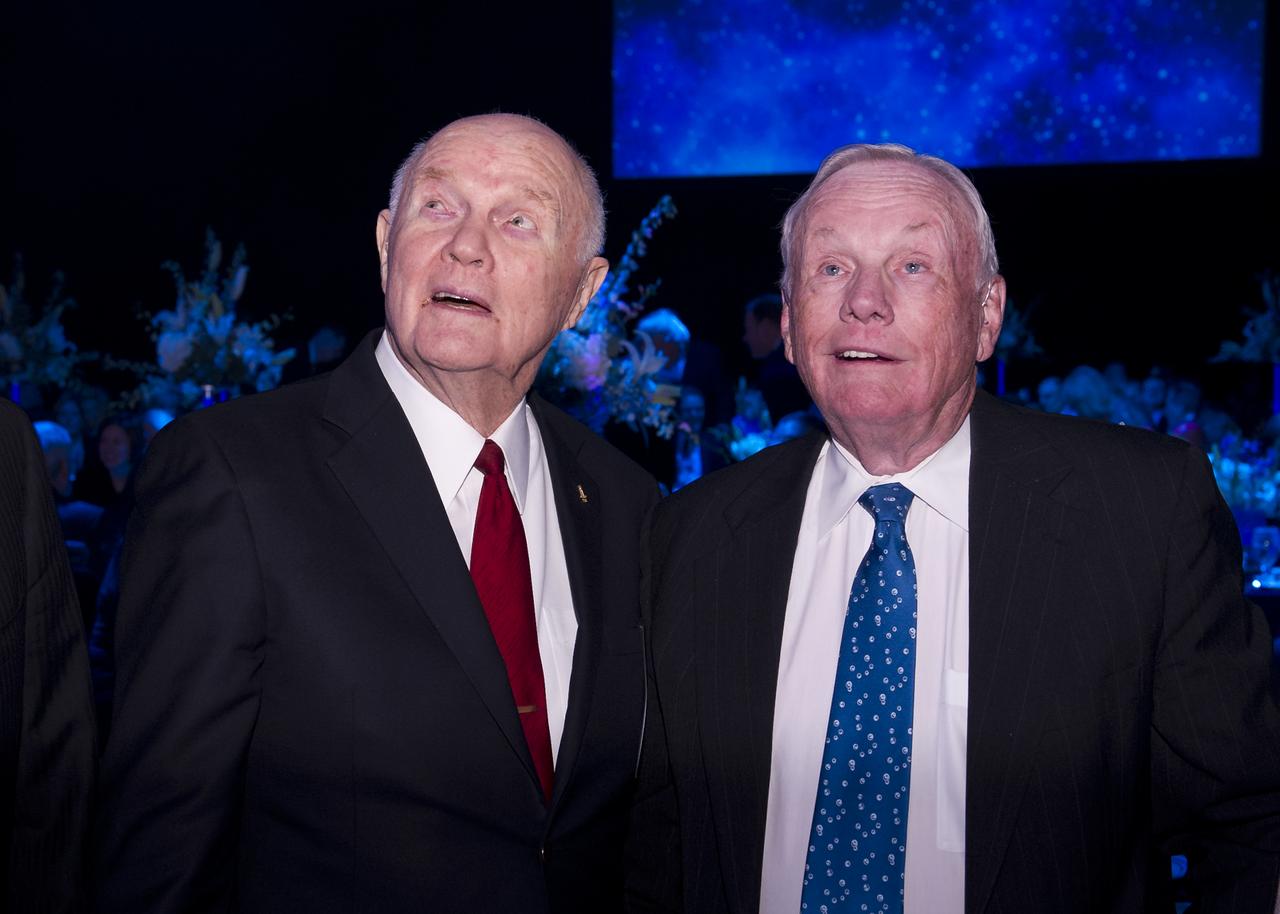
Sen. John Glenn, left, and Apollo 11 Astronaut Neil Armstrong are seen prior to the start of a dinner at Ohio State University that honored the 50th anniversary of John Glenn's historic flight aboard Friendship 7 Monday, Feb. 20, 2012, in Columbus, Ohio. Glenn was the first American to orbit Earth. Photo Credit: (NASA/Bill Ingalls)
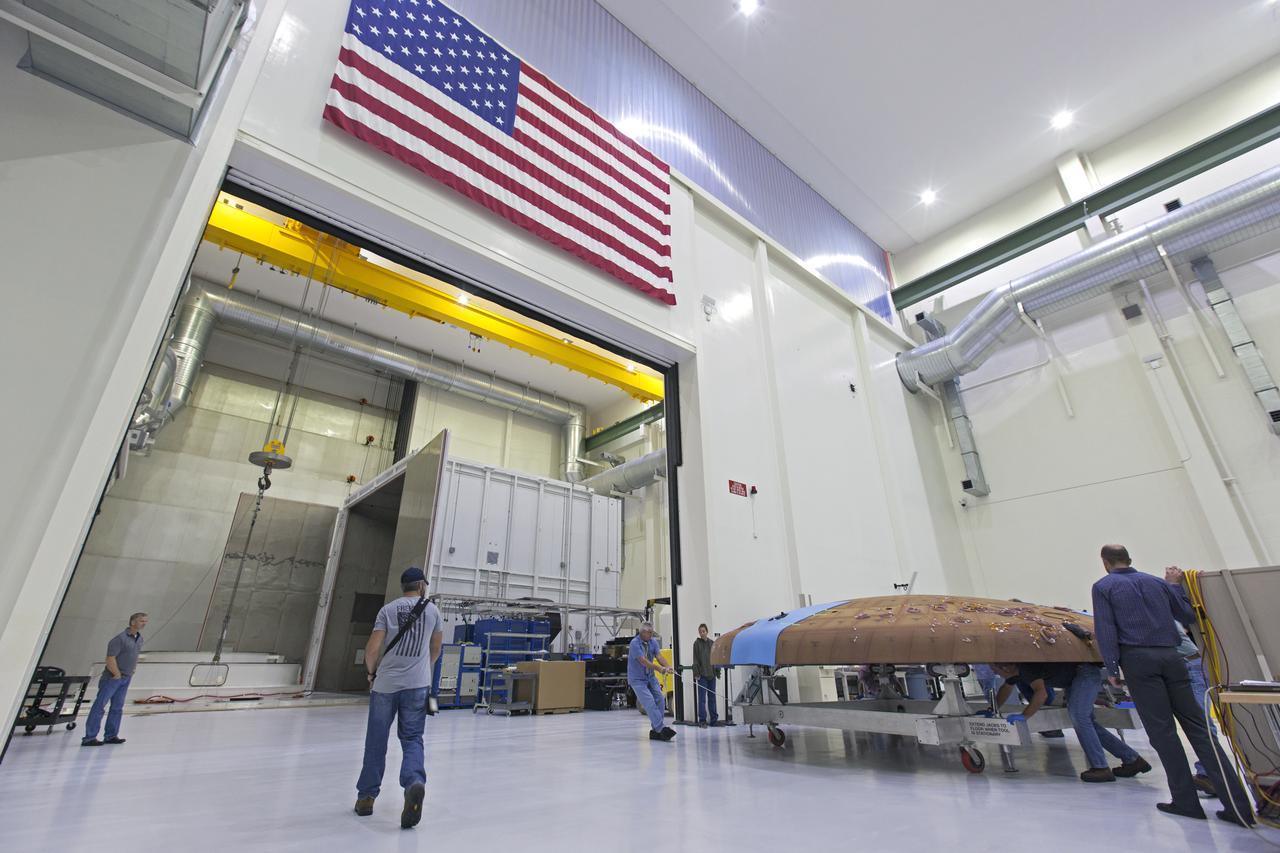
Technicians move the Orion heat shield for Exploration Mission-1 toward the thermal chamber in the Neil Armstrong Operations and Checkout Building high bay at NASA's Kennedy Space Center in Florida. Protective pads are being attached to the heat shield surface. The heat shield will undergo a thermal cycle test to verify acceptable workmanship and material quality. The test also serves to verify the heat shield's thermal protection systems have been manufactured and assembled correctly. The Orion spacecraft will launch atop NASA's Space Launch System rocket on its first uncrewed integrated flight.
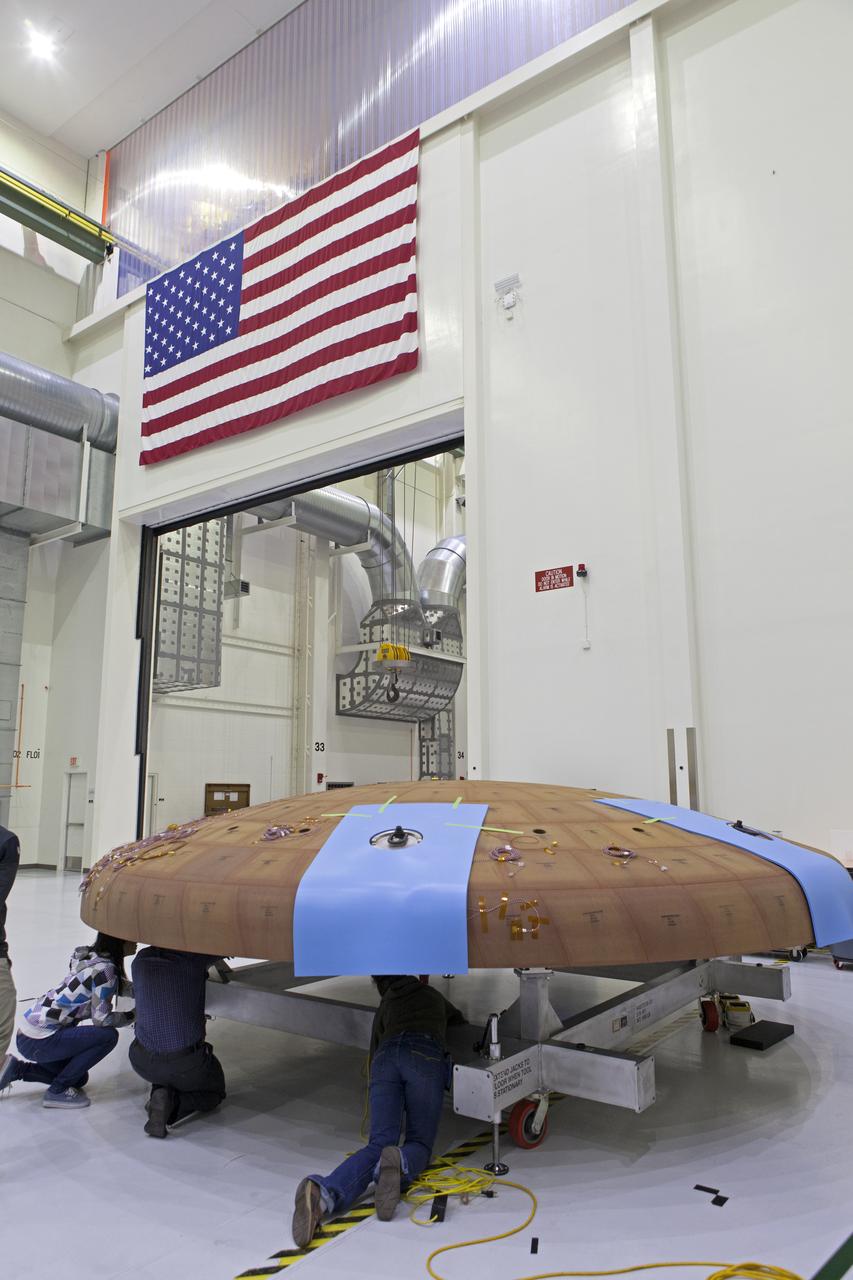
Lockheed Martin engineers and technicians prepare the Orion heat shield for Exploration Mission-1 for its move to the thermal chamber in the Neil Armstrong Operations and Checkout Building high bay at NASA's Kennedy Space Center in Florida. The heat shield will undergo a thermal cycle test to verify acceptable workmanship and material quality. The test serves to verify the heat shield's thermal protection systems have been manufactured and assembled correctly. The Orion spacecraft will launch atop NASA's Space Launch System rocket on its first uncrewed integrated flight.
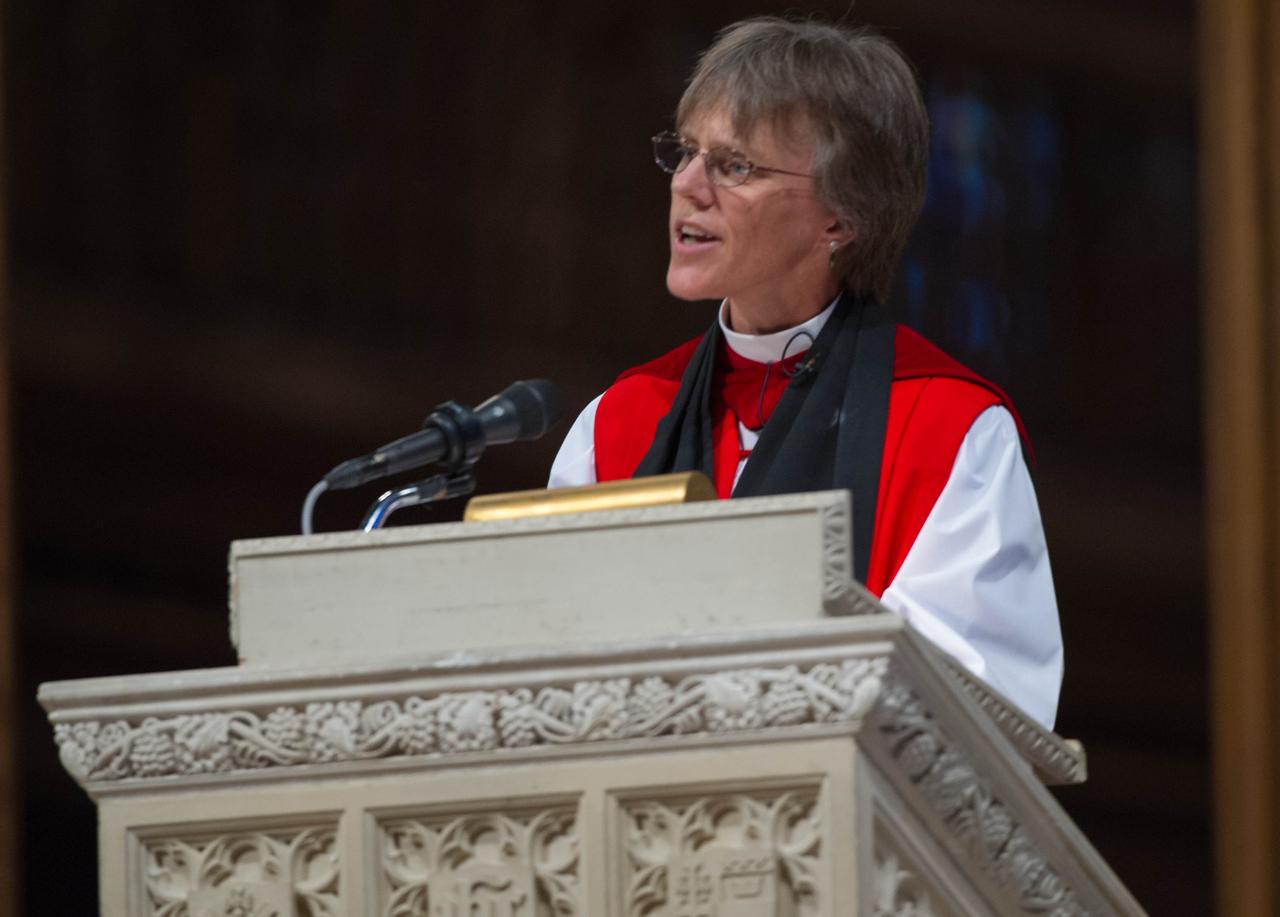
The Right Rev. Mariann Edgar Budde, bishop of Washington, delivers the Homily during a memorial service celebrating the life of Neil Armstrong at the Washington National Cathedral, Thursday, Sept. 13, 2012. Armstrong, the first man to walk on the moon during the 1969 Apollo 11 mission, died Saturday, Aug. 25. He was 82. Photo Credit:(NASA/Paul E. Alers)

Members of the Cathedral Choirsters sing "For the Beauty of the Earth" during a memorial service celebrating the life of Neil Armstrong at the Washington National Cathedral, Thursday, Sept. 13, 2012. Armstrong, the first man to walk on the moon during the 1969 Apollo 11 mission, died Saturday, Aug. 25. He was 82. Photo Credit:(NASA/Paul E. Alers)

Apollo 17 mission commander Gene Cernan, the last man to walk on the moon, speaks during a memorial service celebrating the life of Neil Armstrong at the Washington National Cathedral, Thursday, Sept. 13, 2012. Armstrong, the first man to walk on the moon during the 1969 Apollo 11 mission, died Saturday, Aug. 25. He was 82. Photo Credit: (NASA/Bill Ingalls)
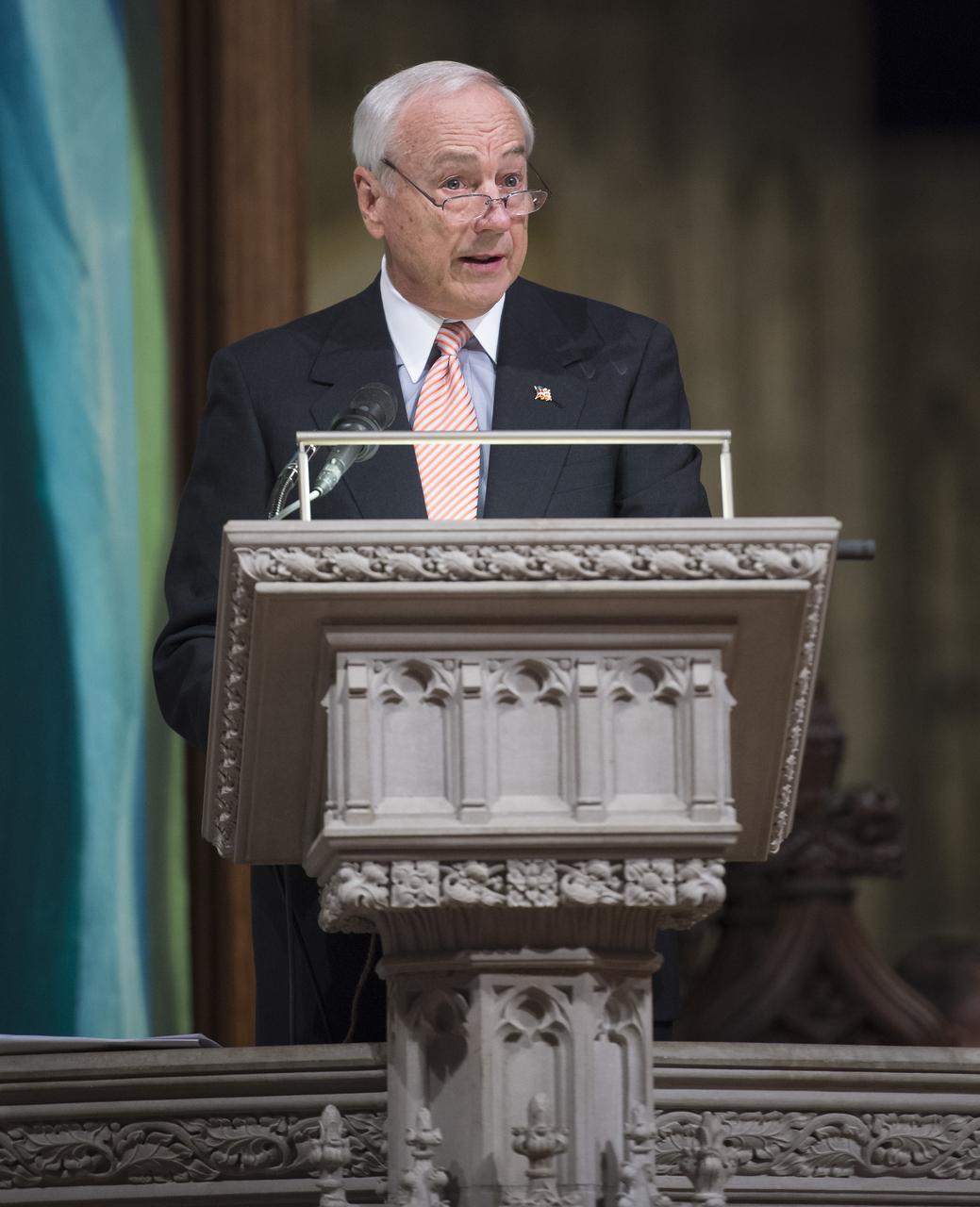
John H. Dalton, former United States Secretary of the Navy, delivers the Reading during a memorial service celebrating the life of Neil Armstrong at the Washington National Cathedral, Thursday, Sept. 13, 2012. Armstrong, the first man to walk on the moon during the 1969 Apollo 11 mission, died Saturday, Aug. 25. He was 82. Photo Credit: (NASA/Bill Ingalls)

Musician Diana Krall sings ""Fly Me to the Moon" during a memorial service celebrating the life of Neil Armstrong at the Washington National Cathedral, Thursday, Sept. 13, 2012. Armstrong, the first man to walk on the moon during the 1969 Apollo 11 mission, died Saturday, Aug. 25. He was 82. Photo Credit: (NASA/Paul E. Alers)
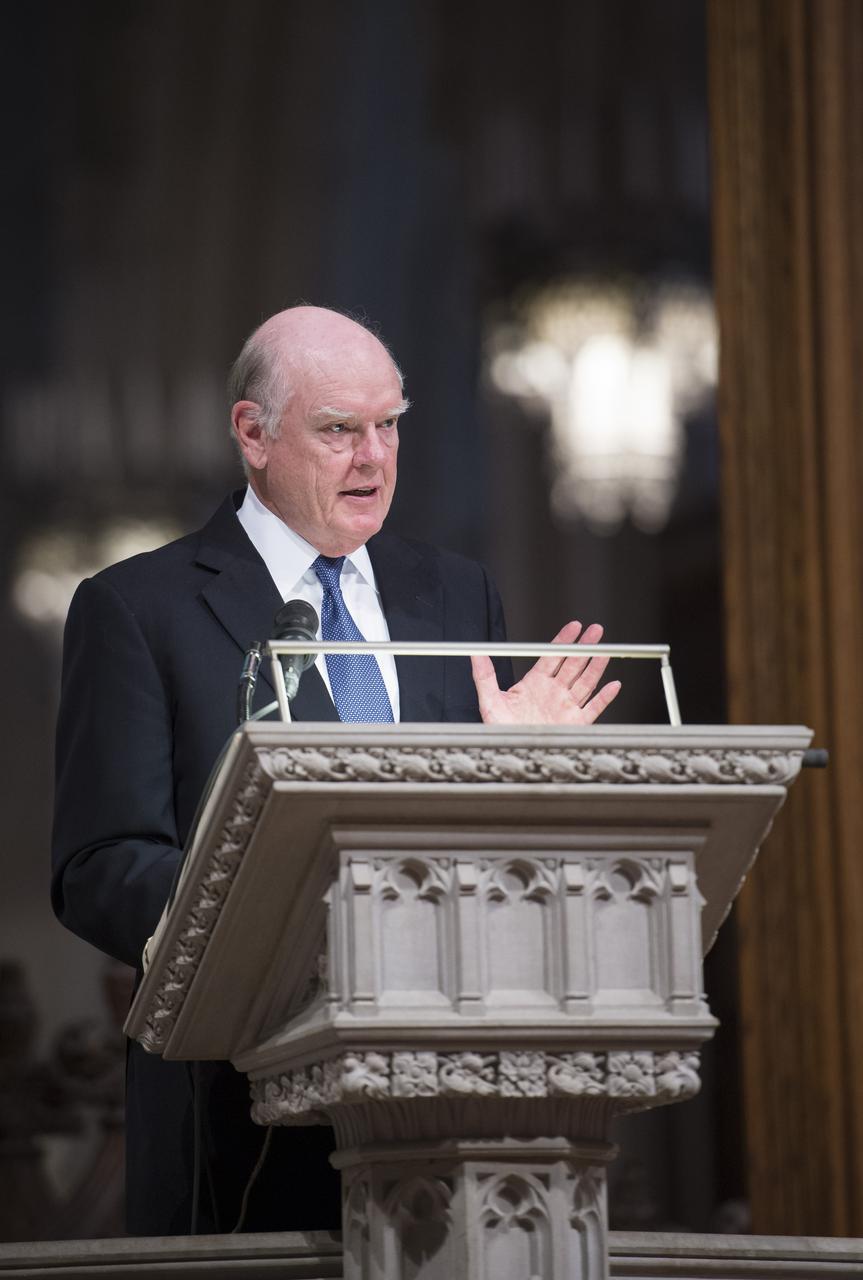
Former Secretary of the Treasury John Snow speaks during a memorial service celebrating the life of Neil Armstrong at the Washington National Cathedral, Thursday, Sept. 13, 2012. Armstrong, the first man to walk on the moon during the 1969 Apollo 11 mission, died Saturday, Aug. 25. He was 82. Photo Credit: (NASA/Bill Ingalls)