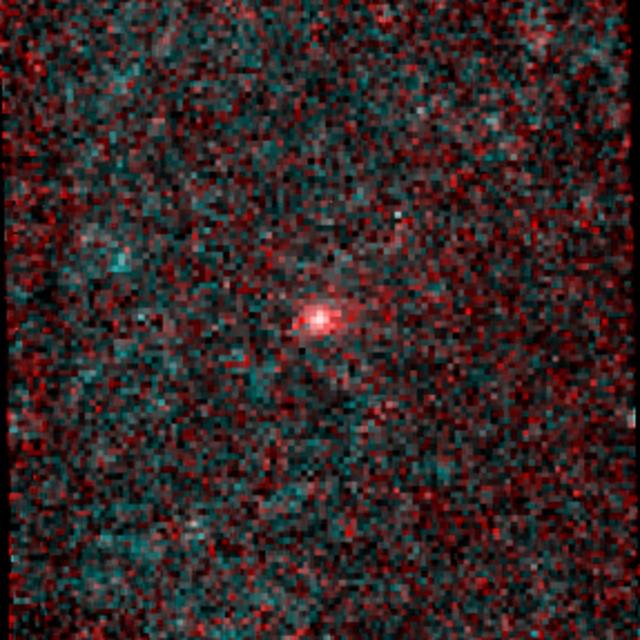
Comet NEOWISE was first observed by NASA NEOWISE spacecraft on Valentine Day, 2014. This heat-sensitive infrared image was made by combining six exposures taken by the NEOWISE mission of the newly discovered comet.
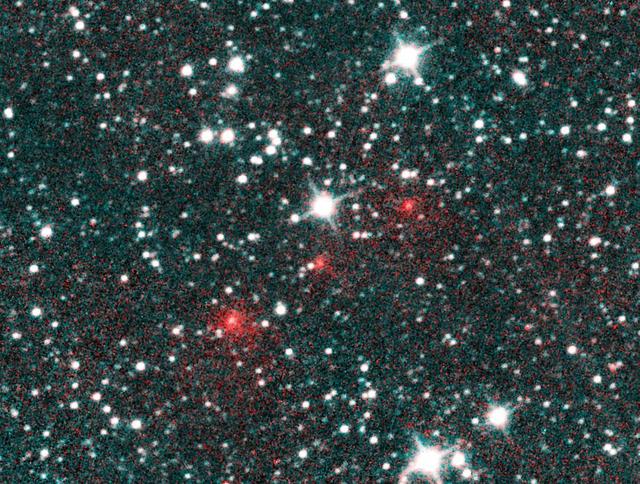
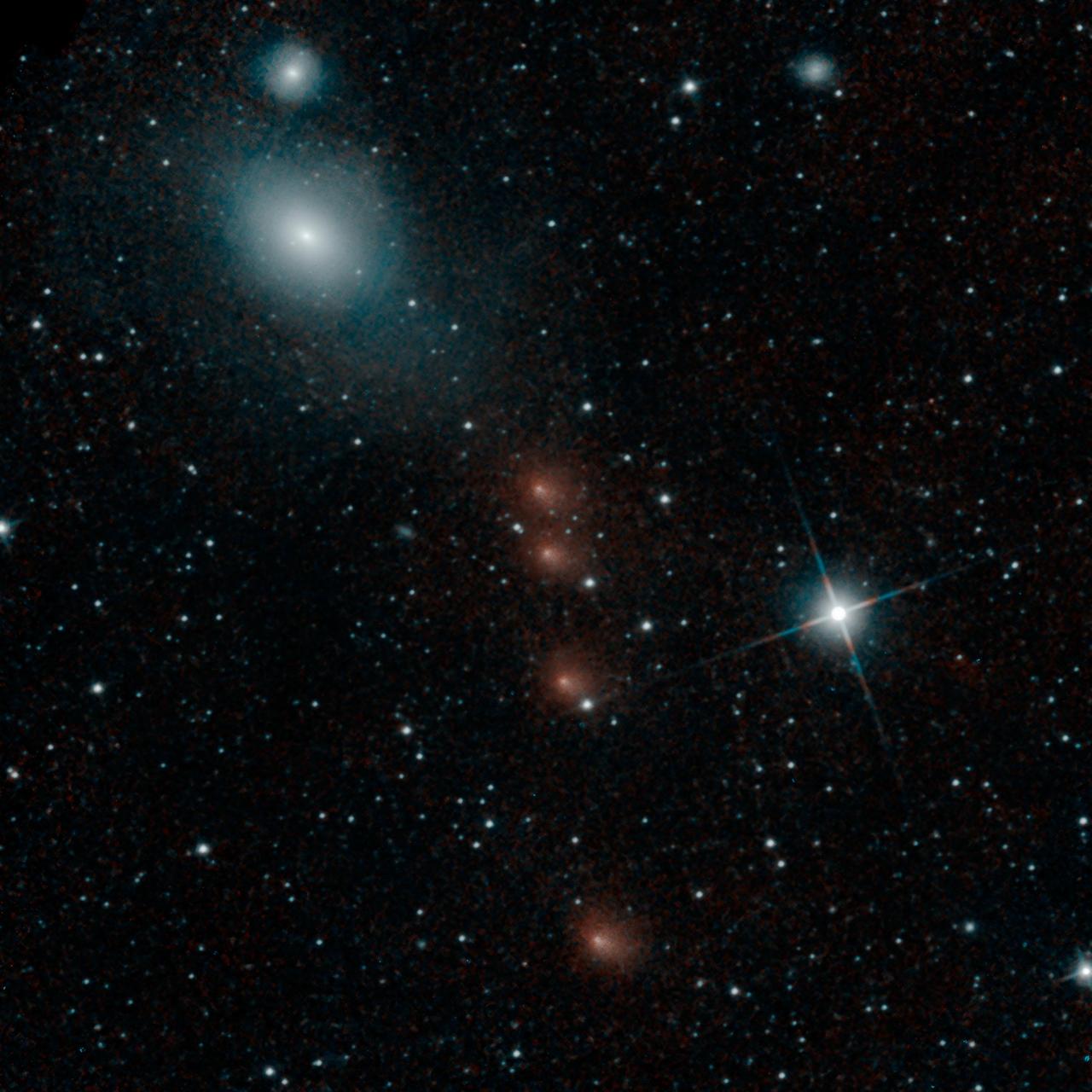
Comet C/2020 F3 NEOWISE appears as a string of fuzzy red dots in this composite of several heat-sensitive infrared images taken by NASA's Near-Earth Object Wide-field Infrared Survey Explorer (NEOWISE) mission on March 27, 2020. The comet was discovered using these images to track its motion across the sky against the backdrop of stationary stars and galaxies. These images have been processed such that cyan colors represent NEOWISE's 3.4-micron channel (a wavelength of light approximately seven times longer than the green light that humans see), and red colors represent the NEOWISE 4.6-micron channel. The comet's extended halo, or coma, of gas and dust was already apparent in the discovery images. The comet appears much redder than the background stars and galaxies because it is much cooler and therefore emits more light at longer wavelengths. https://photojournal.jpl.nasa.gov/catalog/PIA23792
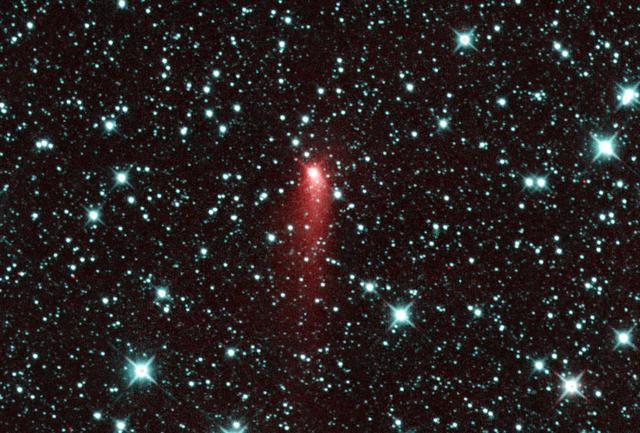
NASA NEOWISE spotted Comet C/2013 UQ4 Catalina, appearing to be a highly active comet one day past perihelion on July 7, 2014.
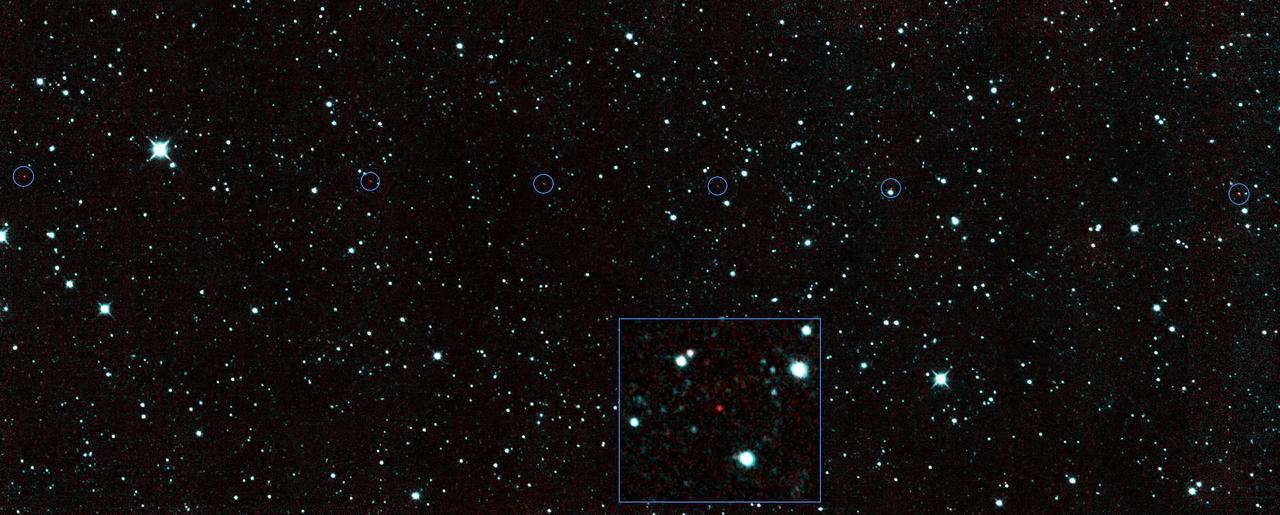
The six red dots in this composite picture indicate the location of the first new near-Earth asteroid, called 2013 YP139, as seen by NASA NEOWISE.
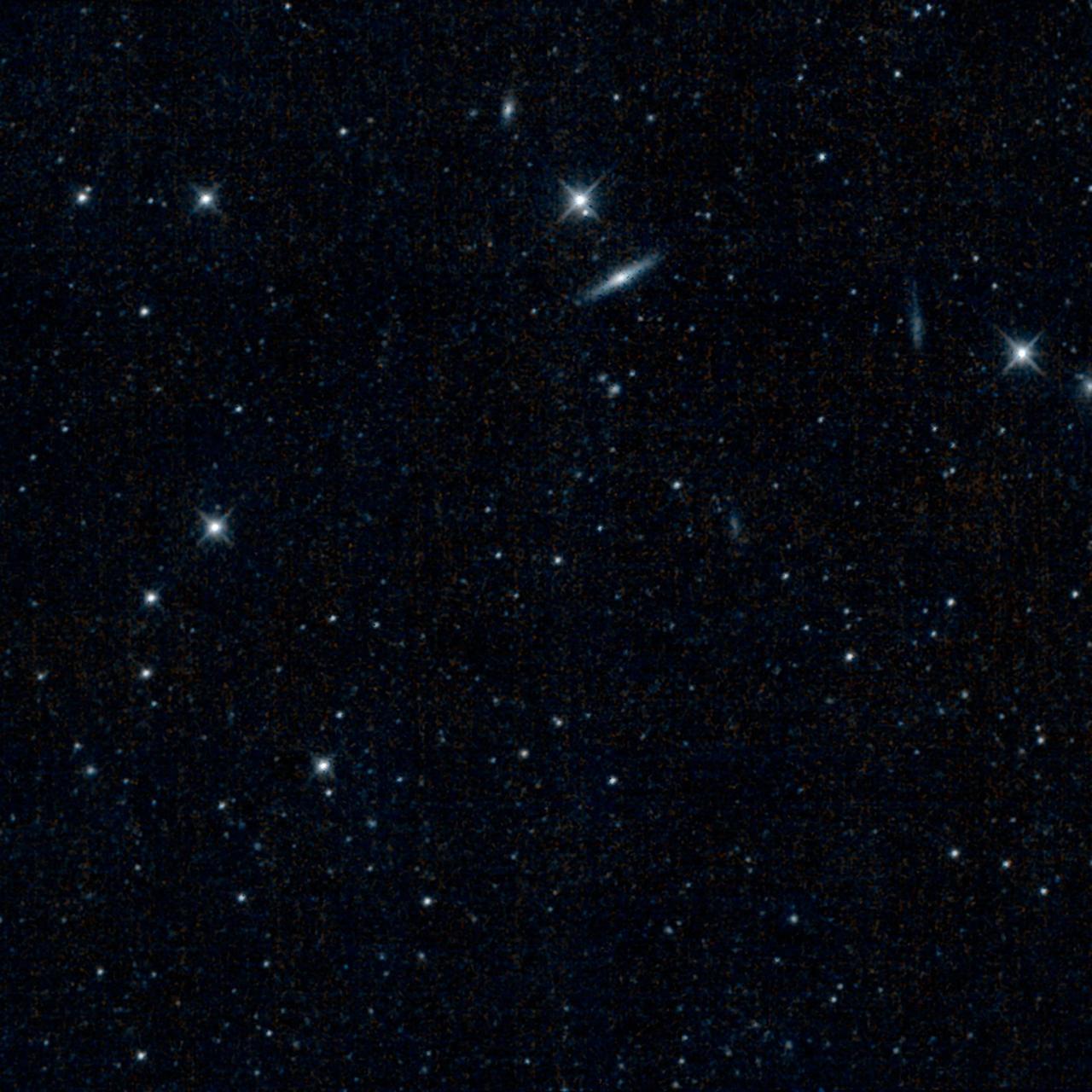
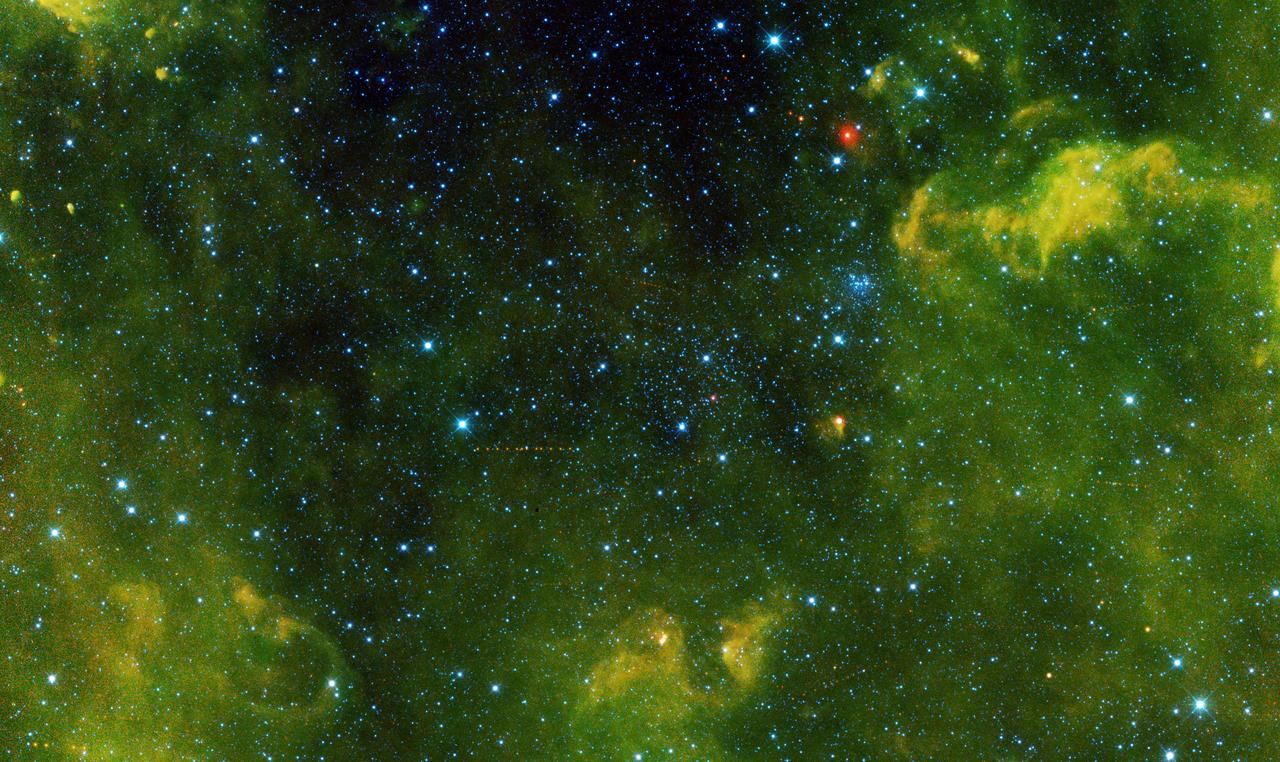
This is one of the first images captured by the revived NEOWISE mission, after more than two years of hibernation. It shows a patch of sky in the constellation Canes Venatici, or the Hunting Dogs.

NASA NEOWISE spacecraft opened its eyes after more than two years of slumber to see the starry sky with the same clarity achieved during its prime mission. This image shows a patch of sky in the constellation Pisces.
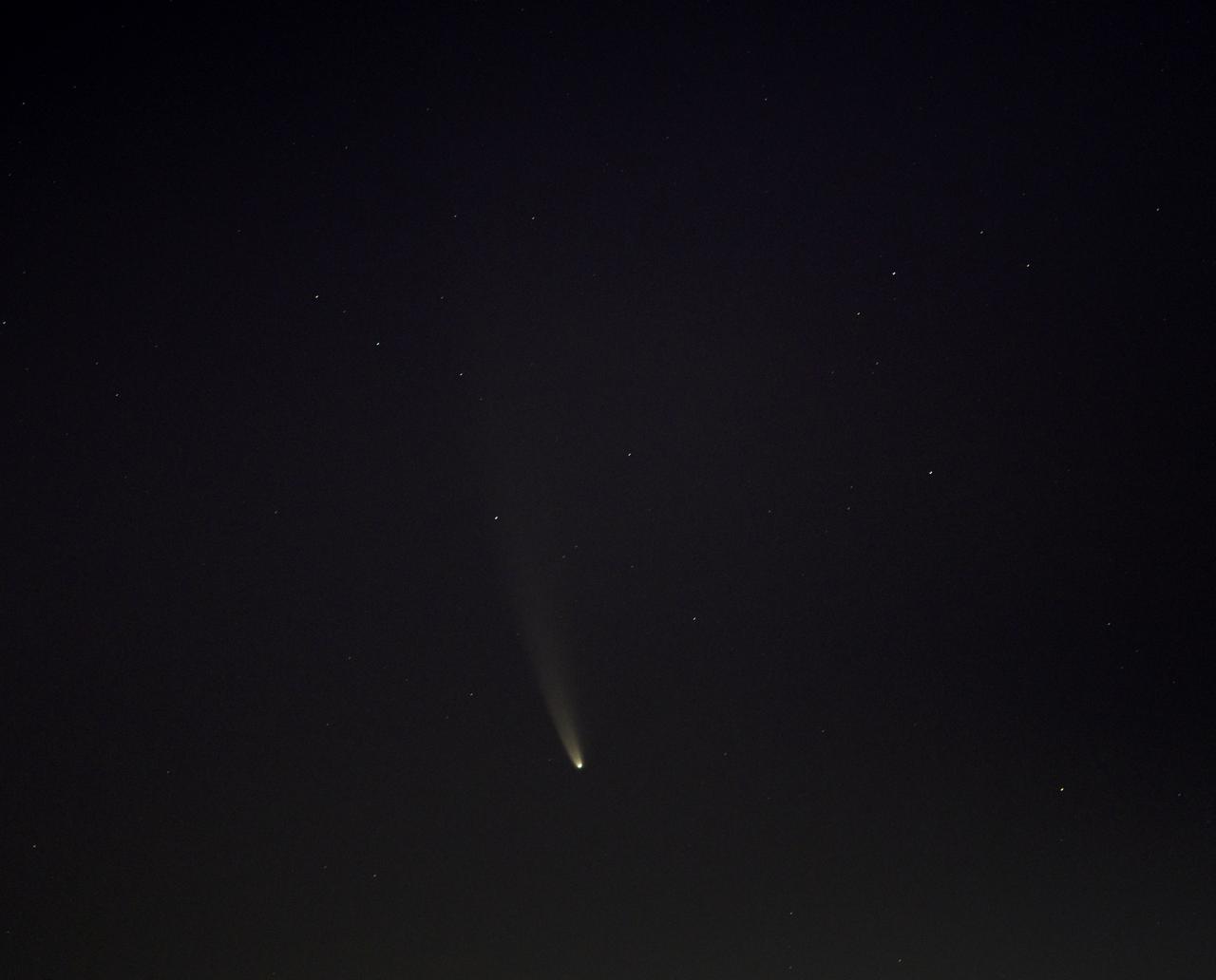
Comet NEOWISE is seen before sunrise over Washington, Sunday, July 12, 2020. The comet was discovered by NASA’s Near-Earth Object Wide-field Infrared Survey Explorer, or NEOWISE, on March 27. Since then, the comet — called comet C/2020 F3 NEOWISE and nicknamed comet NEOWISE — has been spotted by several NASA spacecraft, including Parker Solar Probe, NASA’s Solar and Terrestrial Relations Observatory, the ESA/NASA Solar and Heliospheric Observatory, and astronauts aboard the International Space Station. Photo Credit: (NASA/Bill Ingalls)
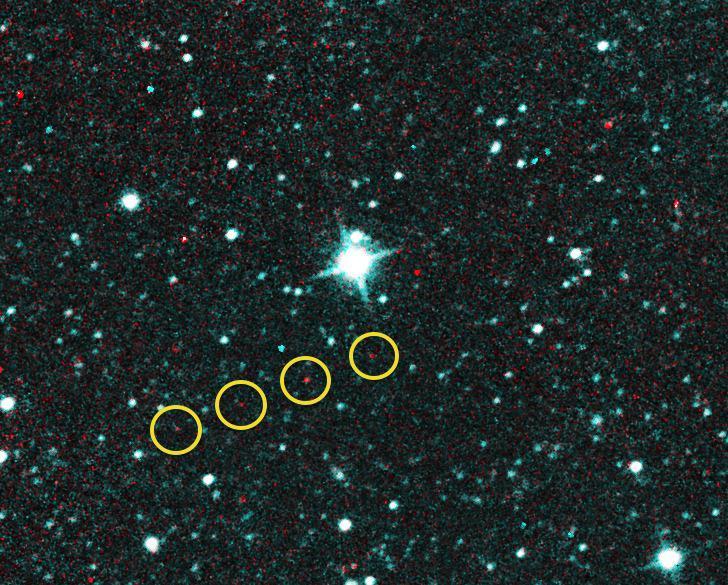
Comet C/2013 UQ4 Catalina first looked like an asteroid when NASA NEOWISE team first observed it on December 31, 2013. These exposures were taken that day, when the comet was at a distance of about 2.9 AU from the sun.
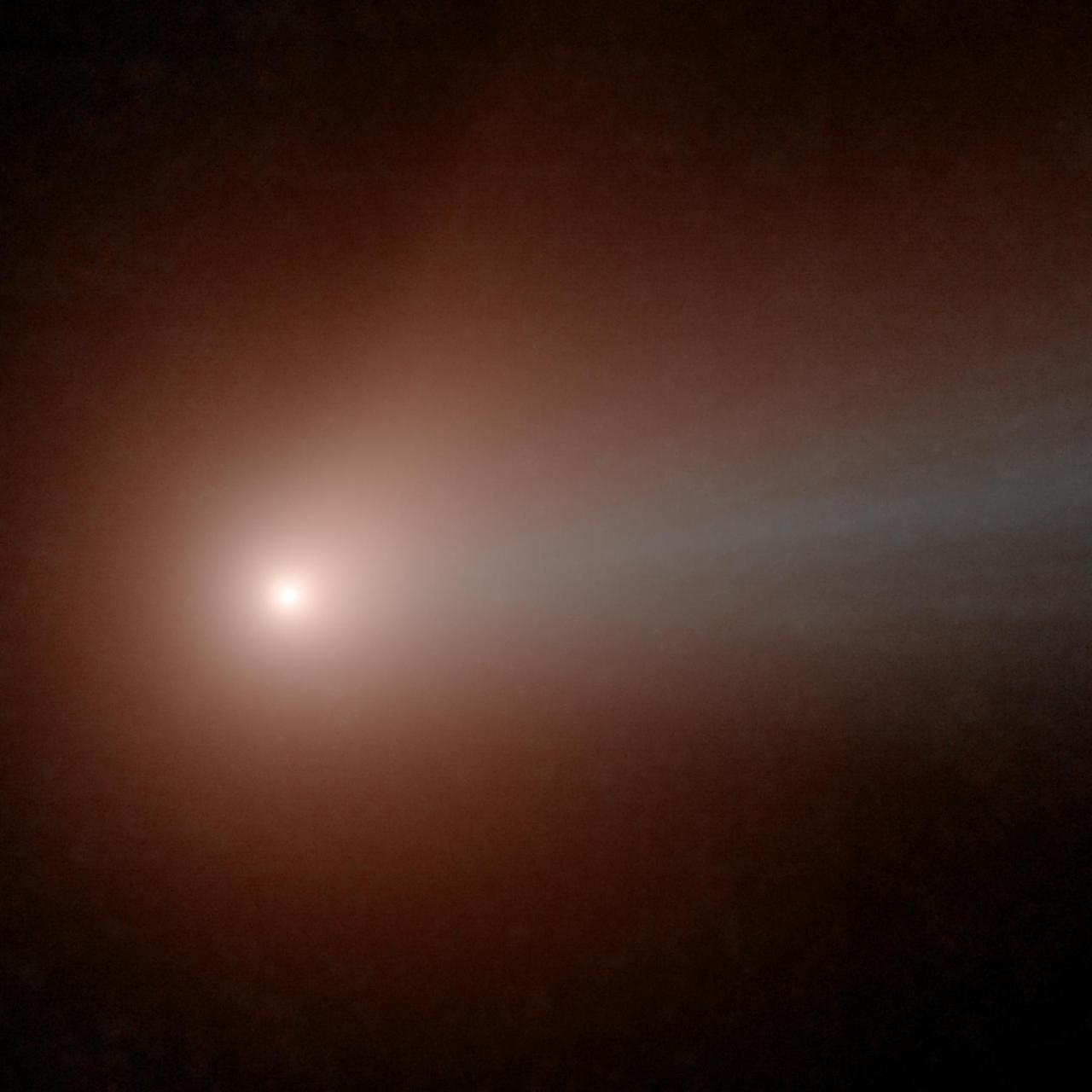
NASA NEOWISE spacecraft viewed comet C/2014 Q2 Lovejoy for a second time on January 30, 2015, as the comet passed through the closest point to our sun along its 14,000-year orbit, at a solar distance of 120 million miles 193 million kilometers.
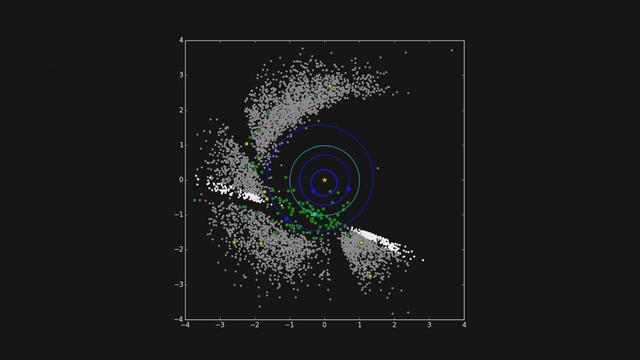
This frame from a movie shows the progression of NASA NEOWISE survey in the mission first year following its restart in December 2013. Each dot represents an asteroid or comet that the mission observed.
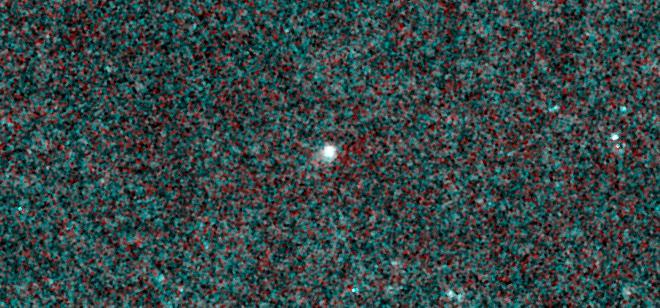
NASA NEOWISE mission captured images of Comet C/2013 A1 Siding Spring. The infrared pictures reveal a comet that is active and very dusty.
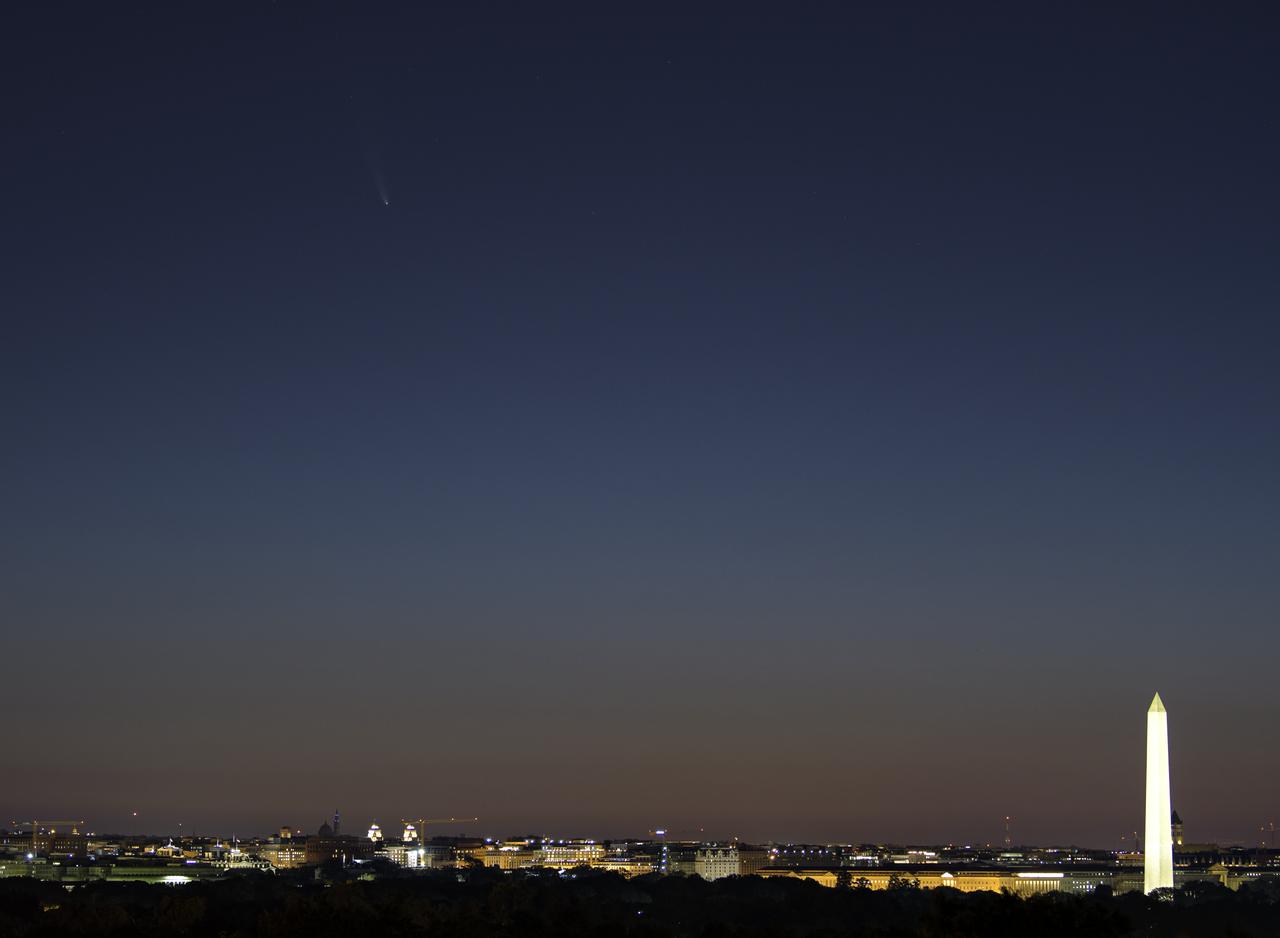
Comet NEOWISE is seen before sunrise, upper left, over Washington, Sunday, July 12, 2020. The comet was discovered by NASA’s Near-Earth Object Wide-field Infrared Survey Explorer, or NEOWISE, on March 27. Since then, the comet — called comet C/2020 F3 NEOWISE and nicknamed comet NEOWISE — has been spotted by several NASA spacecraft, including Parker Solar Probe, NASA’s Solar and Terrestrial Relations Observatory, the ESA/NASA Solar and Heliospheric Observatory, and astronauts aboard the International Space Station. Photo Credit: (NASA/Bill Ingalls)
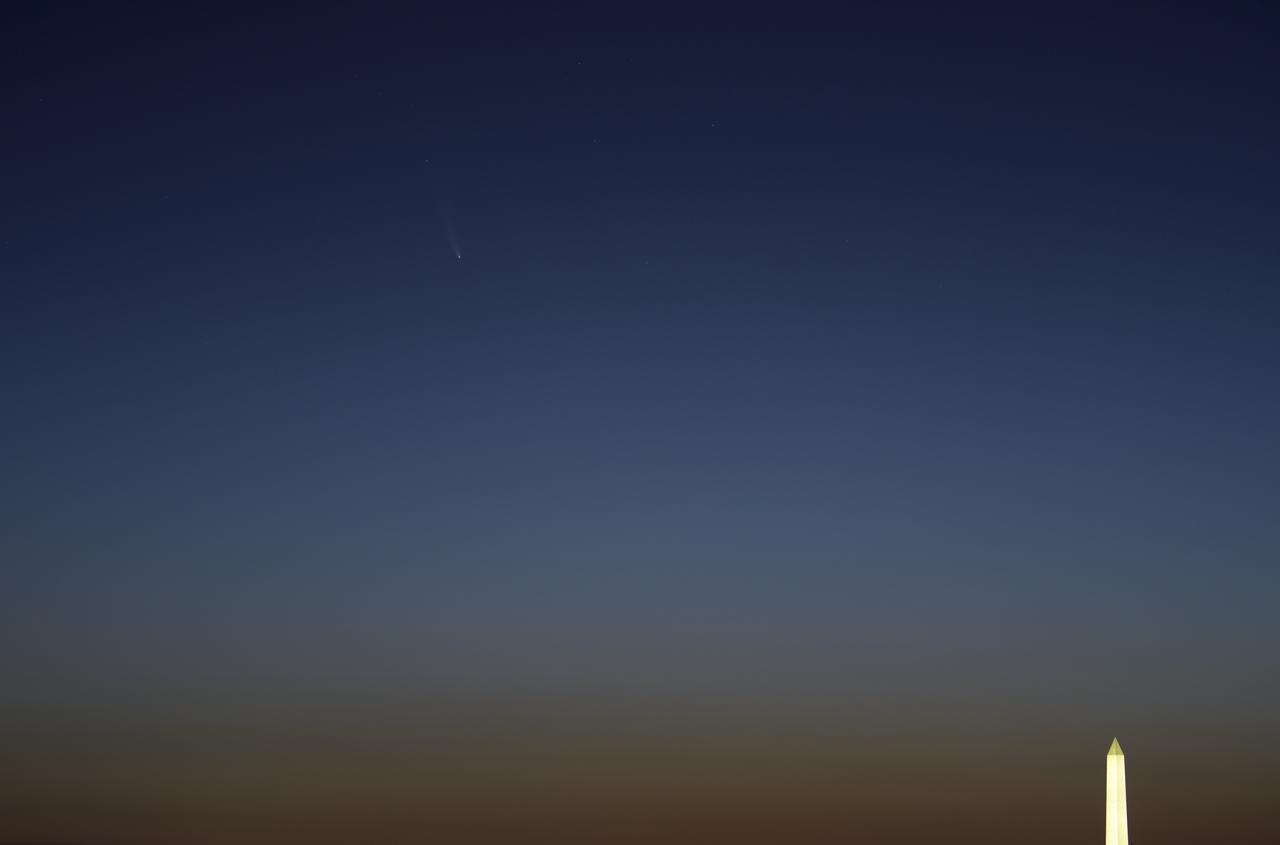
Comet NEOWISE is seen, upper left, before sunrise over Washington, Sunday, July 12, 2020. The comet was discovered by NASA’s Near-Earth Object Wide-field Infrared Survey Explorer, or NEOWISE, on March 27. Since then, the comet — called comet C/2020 F3 NEOWISE and nicknamed comet NEOWISE — has been spotted by several NASA spacecraft, including Parker Solar Probe, NASA’s Solar and Terrestrial Relations Observatory, the ESA/NASA Solar and Heliospheric Observatory, and astronauts aboard the International Space Station. Photo Credit: (NASA/Bill Ingalls)
NASA NEOWISE mission detected comet C/2013 A1 Siding Spring on July 28, 2014, less than three months before this comet close flyby of Mars on Oct. 19.
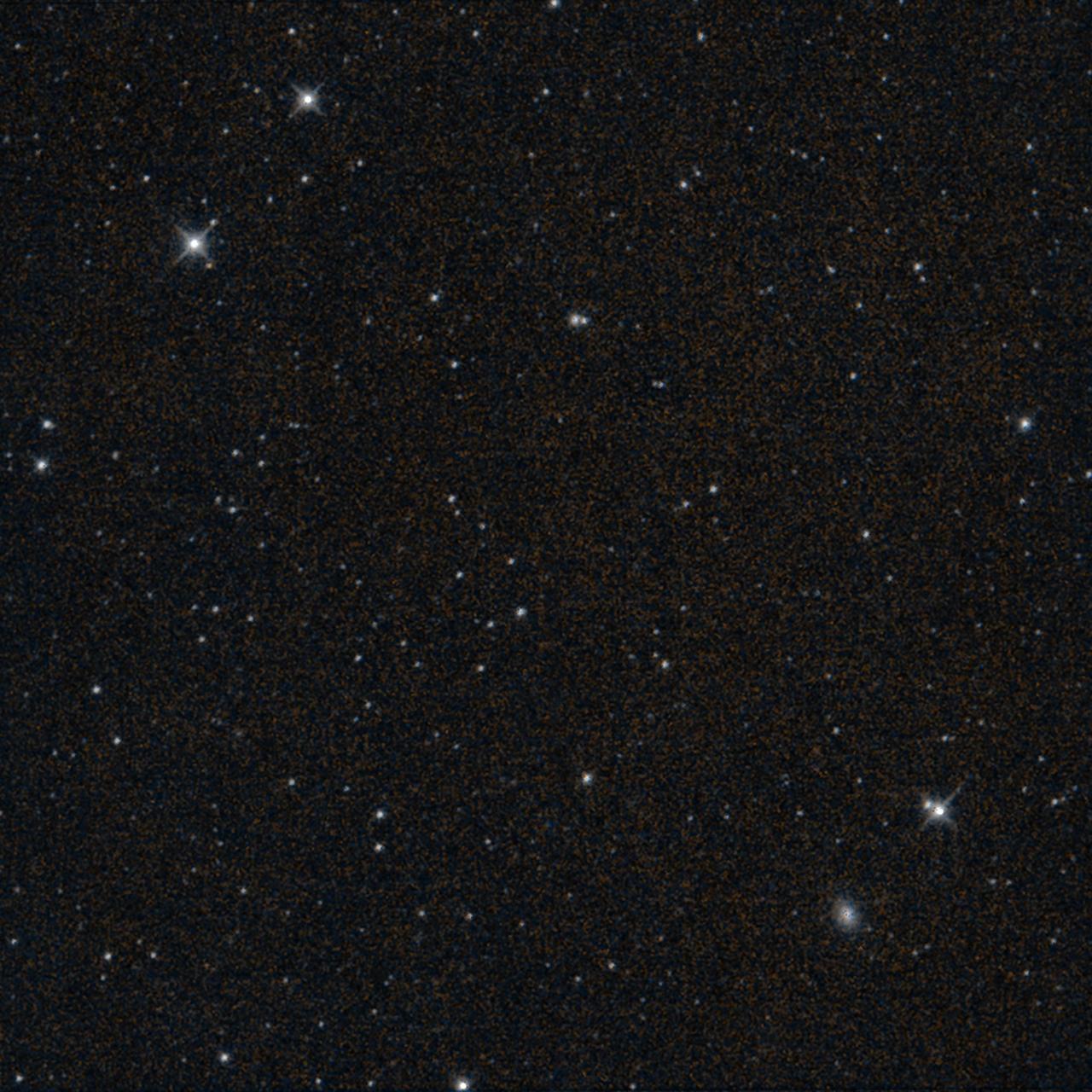
This starfield was imaged by NASA's Near-Earth Object Wide-field Infrared Survey Explorer (NEOWISE) moments before the mission's science survey ended at midnight on July 31, 2024. The observation shows part of Fornax, a constellation that is visible in Southern Hemisphere skies. The spacecraft's final image, which was processed by IPAC at Caltech, takes in a view about three times the width of Earth's full Moon. This infrared exposure is the space telescope's 26,886,704th, a number that includes observations captured during its WISE (Wide-field Infrared Survey Explorer) mission. In addition to the stars and galaxies that appear as points of light, the spiral galaxy NGC 1339 can be seen as a fuzzy oval in the bottom right of the observation. NGC 1339 is about 64 million light-years from Earth. On Aug. 8, a week after the image was captured, project engineers commanded the spacecraft to turn its transmitter off for the last time. This concluded more than 10 years of the planetary defense mission's search for asteroids and comets, including those that could pose a threat to Earth. By repeatedly observing the sky from low Earth orbit, NEOWISE created all-sky maps featuring 1.45 million infrared measurements of more than 44,000 solar system objects. Of the 3,000-plus near-Earth objects it detected, 215 were first spotted by NEOWISE. The mission also discovered 25 new comets, including the famed comet C/2020 F3 NEOWISE. https://photojournal.jpl.nasa.gov/catalog/PIA26385
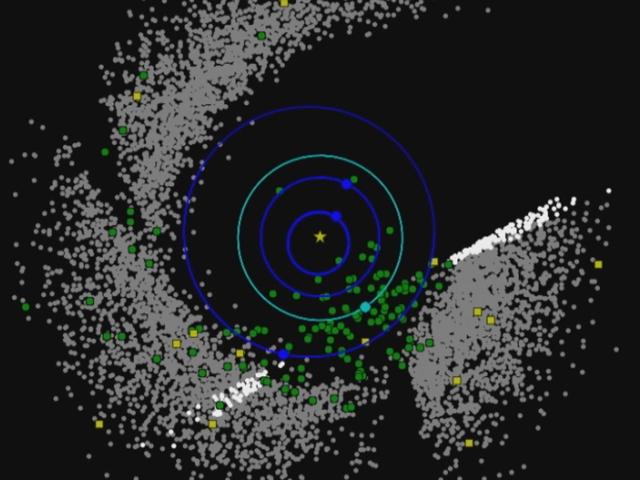
This frame from a movie shows the progression of NASA Near-Earth Object Wide-field Survey Explorer NEOWISE investigation for the mission first two years following its restart in December 2013. Green circles represent near-Earth objects.
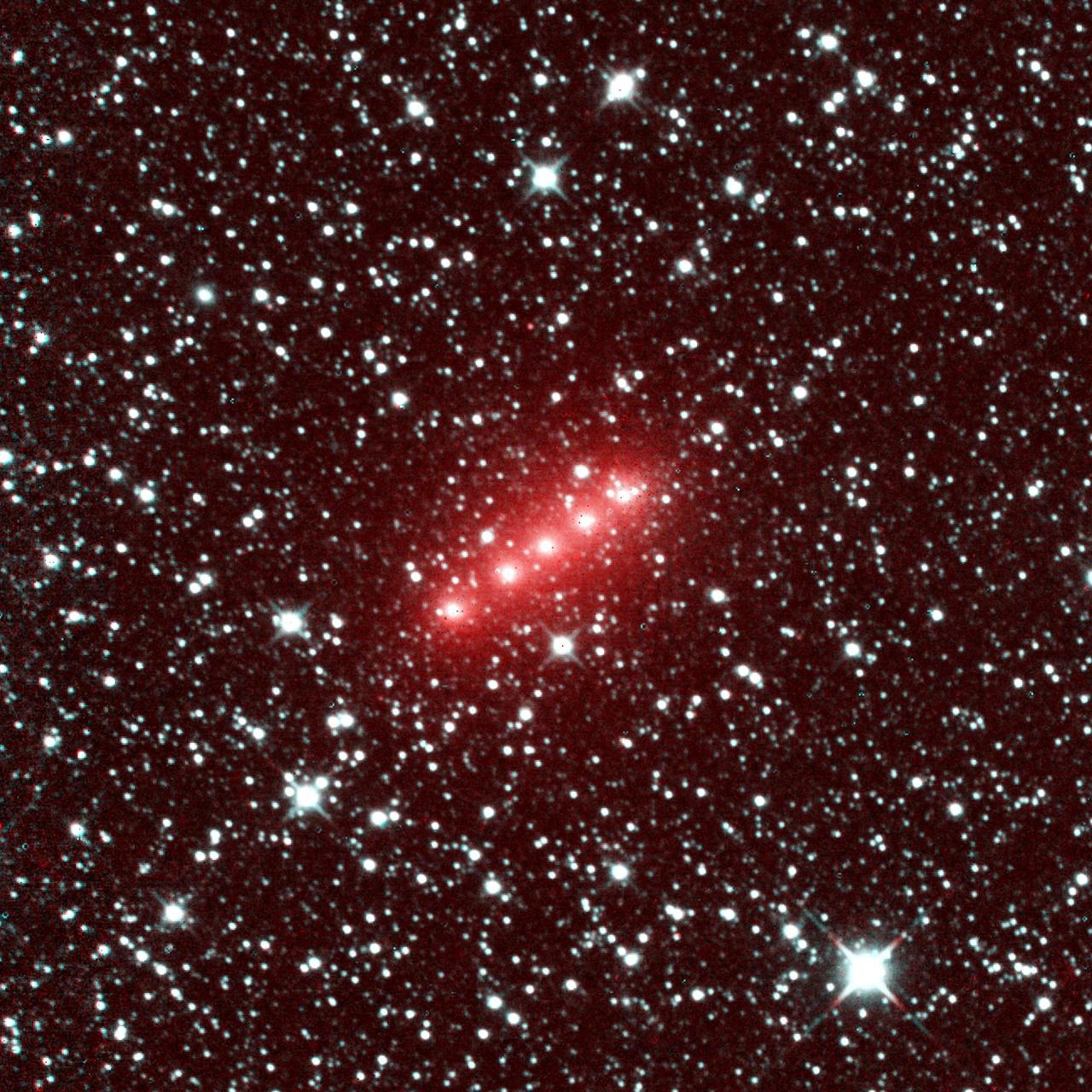
Comet C/2014 Q2 Lovejoy is one of more than 32 comets imaged by NASA NEOWISE mission from December 2013 to December 2014. This image of comet Lovejoy combines a series of observations made in November 2013.
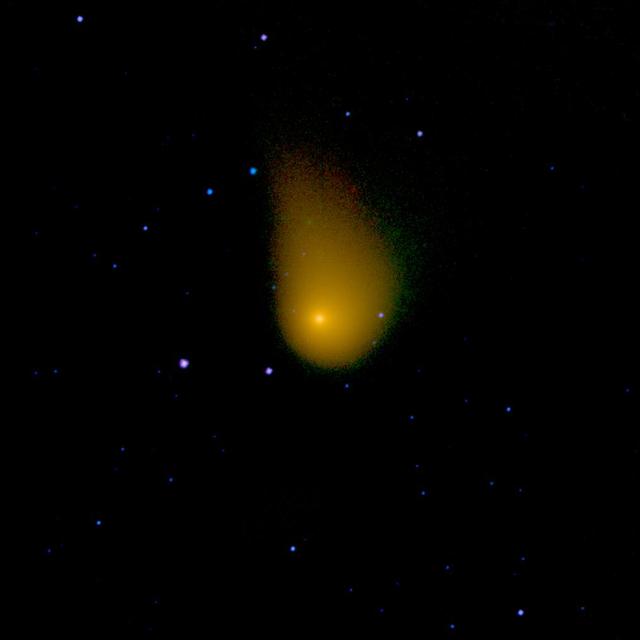
An infrared view from NASA's NEOWISE mission of the Oort cloud comet C/2006 W3 (Christensen). The spacecraft observed this comet on April 20th, 2010 as it traveled through the constellation Sagittarius. Comet Christensen was nearly 370 million miles (600 million kilometers) from Earth at the time. The image is half of a degree of the sky on each side. Infrared light with wavelengths of 3.4, 12 and 22 micron channels are mapped to blue, green, and red, respectively. The signal at these wavelengths is dominated primarily by the comet's dust thermal emission, giving it a golden hue. The WISE spacecraft was put into hibernation in 2011 upon completing its goal of surveying the entire sky in infrared light. WISE cataloged three quarters of a billion objects, including asteroids, stars and galaxies. In August 2013, NASA decided to reinstate the spacecraft on a mission to find and characterize more asteroids. http://photojournal.jpl.nasa.gov/catalog/PIA20118
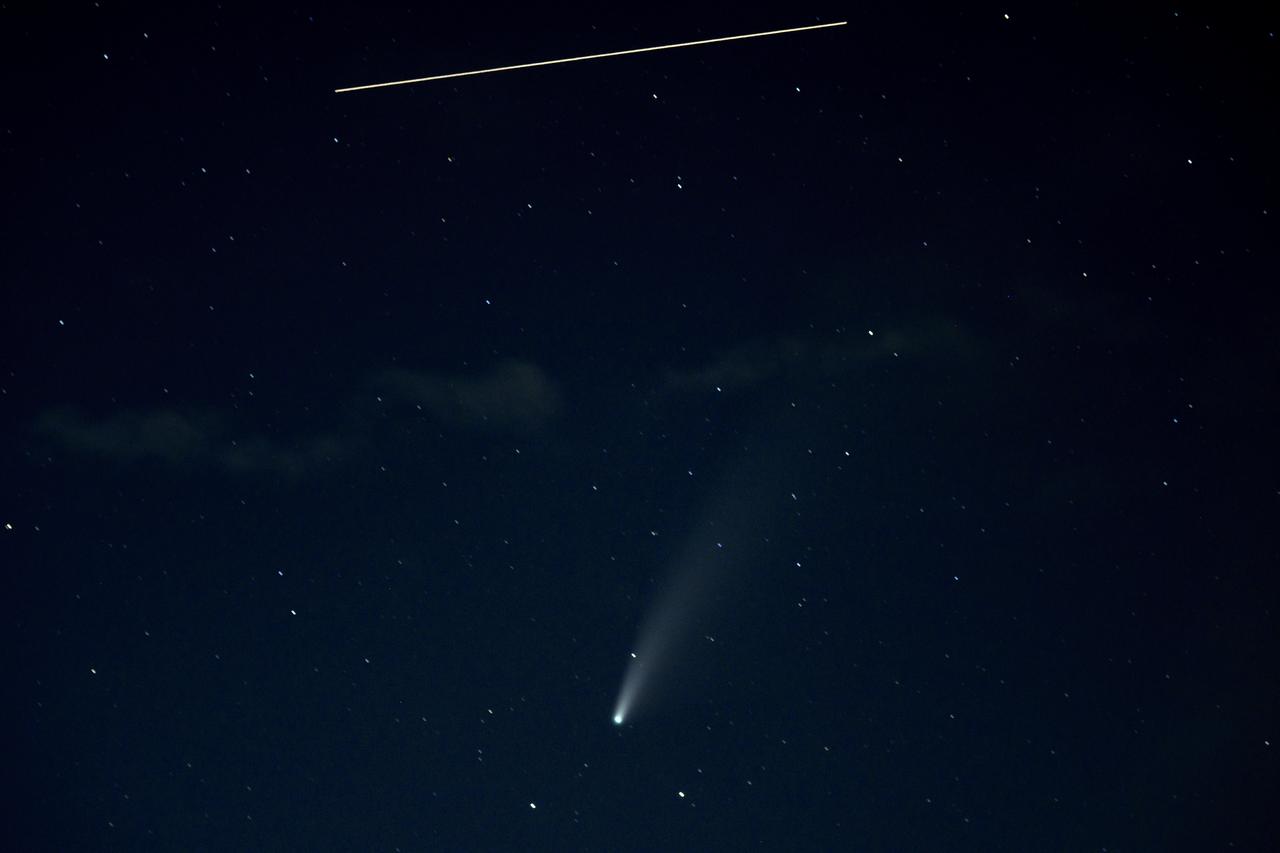
The International Space Station, with a crew of five onboard, is seen in this 10 second exposure above comet NEOWISE, Saturday, July 18, 2020 from Keys Gap, W.Va. The comet was discovered by NASA’s Near-Earth Object Wide-field Infrared Survey Explorer, or NEOWISE, on March 27. Since then, the comet — called comet C/2020 F3 NEOWISE and nicknamed comet NEOWISE — has been spotted by several NASA spacecraft, including Parker Solar Probe, NASA’s Solar and Terrestrial Relations Observatory, the ESA/NASA Solar and Heliospheric Observatory, and astronauts aboard the International Space Station. Onboard the International Space Station are Expedition 63 NASA astronauts Chris Cassidy, Douglas Hurley, Robert Behnken, and Roscosmos cosmonauts Anatoly Ivanishin and Ivan Vagner. Photo Credit: (NASA/Bill Ingalls)
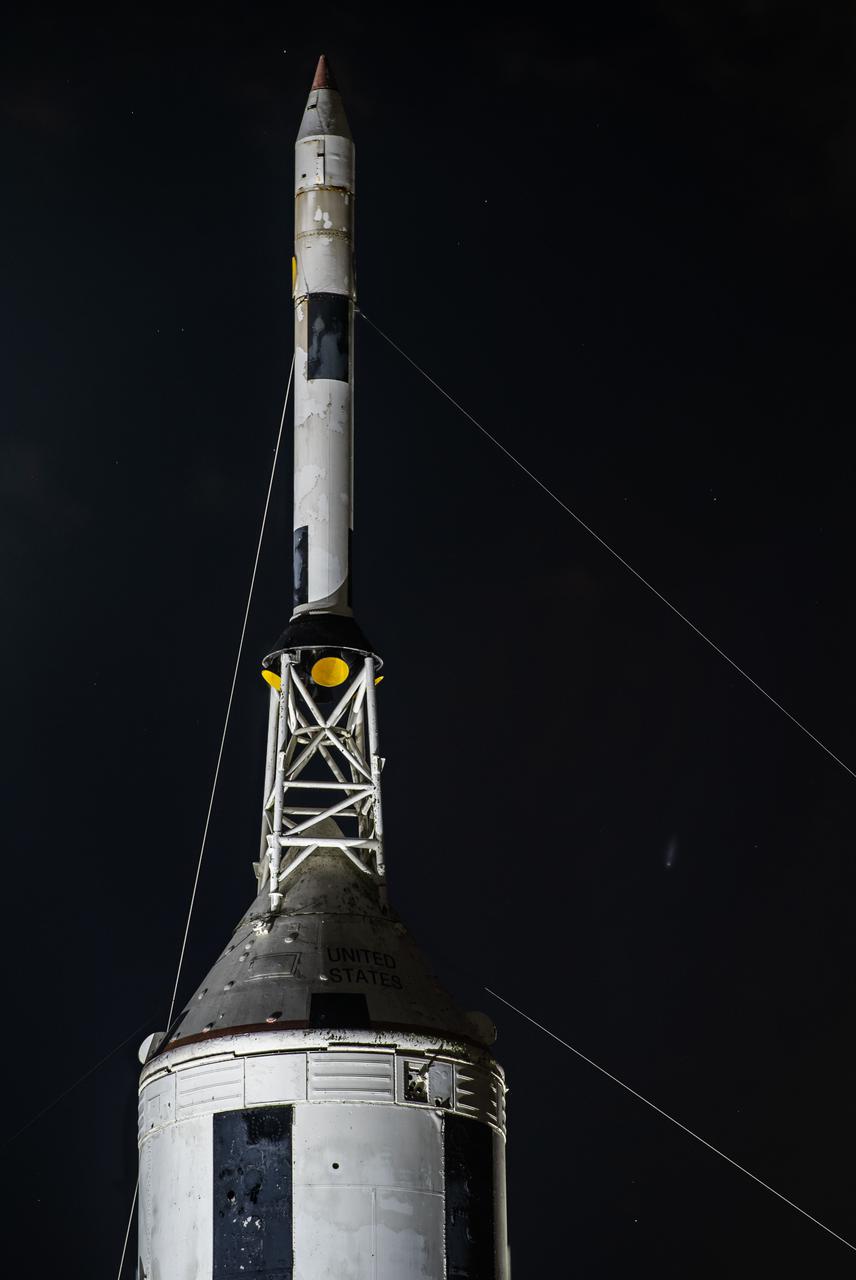
Comet NEOWISE passing over the Little Joe II rocket at NASA Johnson Space Center’s Rocket Park on July 22nd, 2020.
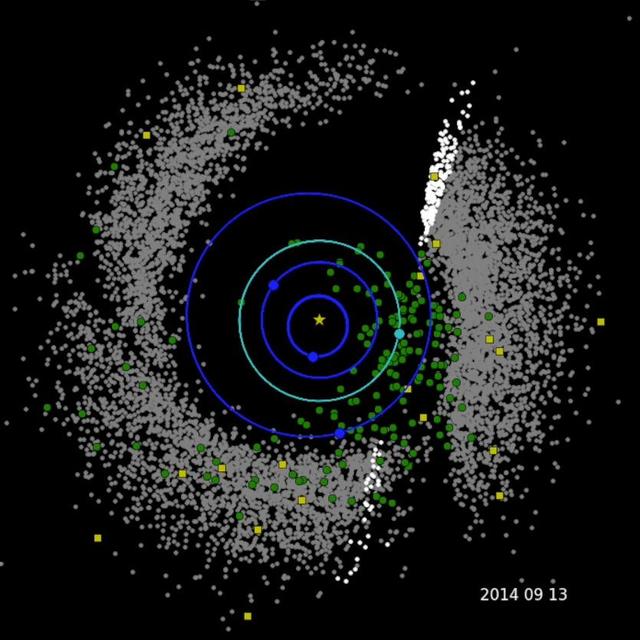
This frame from a movie shows the progression of NASA's Near-Earth Object Wide-field Survey Explorer (NEOWISE) investigation for the mission's first three years following its restart in December 2013. Green circles represent near-Earth objects (asteroids and comets that come within 1.3 astronomical units of the sun; one astronomical unit is Earth's distance from the sun). Yellow squares represent comets. Gray dots represent all other asteroids, which are mostly in the main asteroid belt between Mars and Jupiter. The orbits of Mercury, Venus, Earth and Mars are shown. The spacecraft has characterized a total of 693 near-Earth objects since the mission was restarted in December 2013. Of these, 114 are new discoveries. A movie is avaiable at https://photojournal.jpl.nasa.gov/catalog/PIA21653
The six red dots in this composite picture indicate the location of the first new near-Earth asteroid, called 2013 YP139, as seen by NASA NEOWISE.
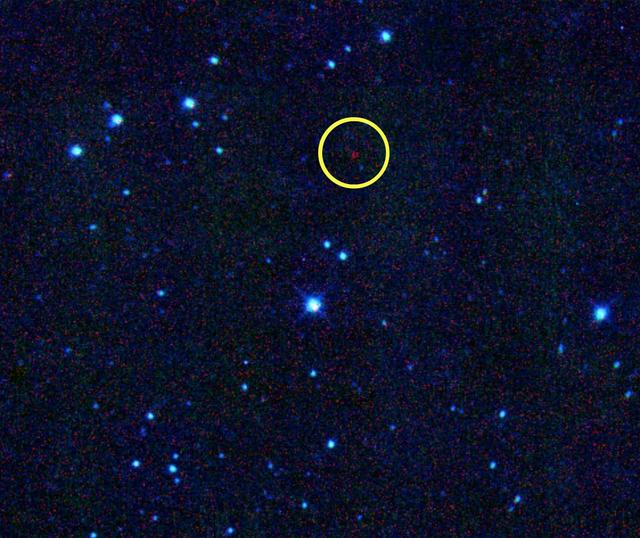
An asteroid discovered by NASA NEOWISE spacecraft has been given the formal designation 316201 Malala, in honor of Malala Yousafzai of Pakistan, who received the Nobel Peace Prize in 2014. The asteroid previous appellation was 2010 ML48. The International Astronomical Union (IAU) renamed the asteroid as the request of Amy Mainzer of NASA's Jet Propulsion Laboratory, Pasadena, California. Mainzer is the principal investigator of NASA's NEOWISE space telescope. The IAU is the sole worldwide organization recognized by astronomers everywhere to designate names for astronomical bodies. So far, Mainzer and the NEOWISE team have focused on pioneers in civil rights, science and the arts for the astronomical honor. Among the strong women of history who have already had NEOWISE-discovered asteroids named for them are civil rights activist Rosa Parks, conservationist Wangari Maathai, abolitionists Sojourner Truth and Harriet Tubman, and singer Aretha Franklin. Asteroid Malala is in the main belt between Mars and Jupiter and orbits the sun every five-and-a-half years. It is about two-and-a-half miles (four kilometers) in diameter, and its surface is very dark, the color of printer toner. http://photojournal.jpl.nasa.gov/catalog/PIA19362
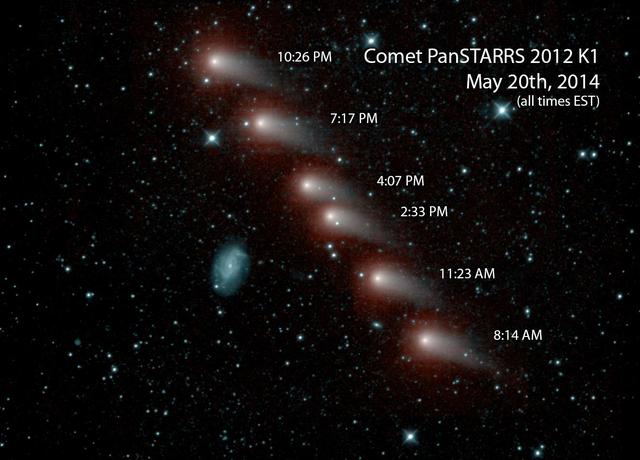
NASA NEOWISE mission captured this series of pictures of comet C/2012 K1 -- also known as comet Pan-STARRS -- as it swept across our skies on May 20, 2014.
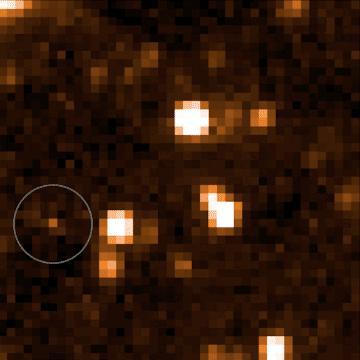
This image shows data from NASA's Near-Earth Object Wide-Field Infrared Survey Explorer (NEOWISE), launched in 2009 under the moniker WISE. The object in the bottom left corner is a brown dwarf officially named WISEA J153429.75-104303.3 and nicknamed “The Accident.” The Accident was discovered by citizen scientist Dan Caselden, who was using an online program he built to find brown dwarfs in NEOWISE data. Caselden's program attempted to remove the stationary objects emitting infrared light (like distant stars) from the NEOWISE maps and highlight moving objects that had characteristics similar to those of known brown dwarfs. He was looking at one such brown dwarf candidate when he spotted WISEA J153429.75-104303.3, which hadn't been highlighted by the program because it did not match the program's profile of a brown dwarf. The Accident confused scientists because it was faint in some key wavelengths, suggesting it was very cold (and old), but bright in others, indicating a higher temperature. A study in the Astrophysical Journal Letters posits that The Accident might be 10 billion to 13 billion years old – at least double the median age of other known brown dwarfs. That means it would have formed when our galaxy was much younger and had a different chemical makeup. The paper's authors think The Accident's brightness in certain wavelengths is an indicator that it contains very little methane, meaning it probably formed when the Milky Way was still young and carbon-poor. (Methane is composed of hydrogen and carbon). The study relies on additional observations using the W. M. Keck Observatory in Hawaii and NASA's Hubble and Spitzer Space Telescopes. Movie available at https://photojournal.jpl.nasa.gov/catalog/PIA24578
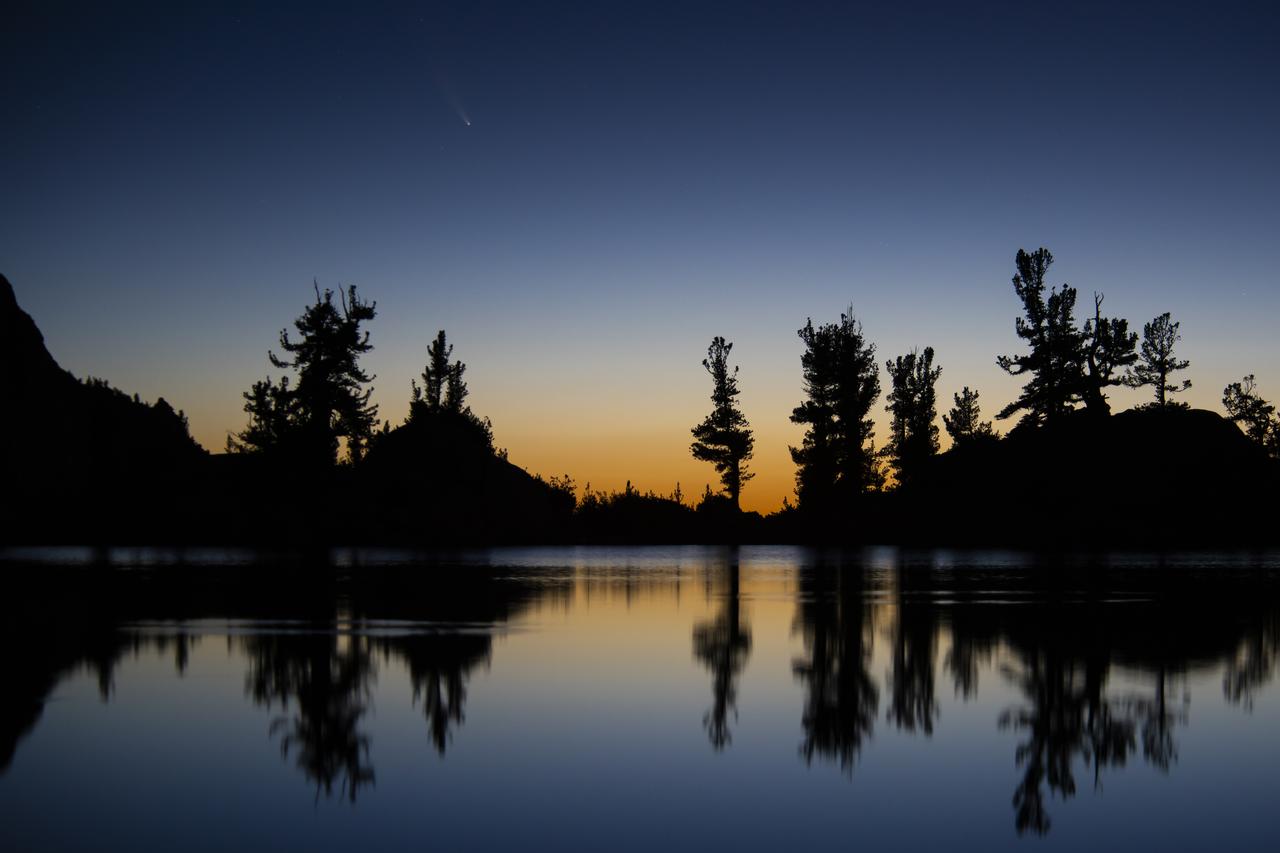
An image of the Comet C/2020 F3 NEOWISE (Comet NEOWISE) captured above the tree line of Lone Pine Lake, located on the Mount Whitney Trail in the Eastern Sierra Nevada Mountains in California. The photo was taken at 4:59 am on July 14, 2020. Visiting from the distant parts of the solar system, it’s characterized by a glowing tail and is visible during the month of July. The comet returns in 6,800 years.

This artist concept shows the NASA WISE spacecraft, in its orbit around Earth. In September of 2013, engineers will attempt to bring the mission out of hibernation to hunt for more asteroids and comets in a project called NEOWISE.

Comet C/2018 Y1 Iwamoto as imaged in multiple exposures of infrared light by the NEOWISE space telescope. The infrared images were taken on Feb. 25, 2019, when the comet was about 56 million miles, or 90 million kilometers, from Earth. C/2018 Y1 Iwamoto is a long-period comet originally from the Oort Cloud and coming in near the Sun for the first time in over 1,000 years. Appearing as a string of red dots, this comet can be seen in a series of exposures captured by the spacecraft. Infrared light detected by the 3.4-micron channel is mapped to blue and green, while light from the 4.6-micron channel is mapped to red. In this image, stars show up as blue because they are hotter, whereas the cooler dust around the comet - with a temperature near the freezing point of water - glows red. Movie available at https://photojournal.jpl.nasa.gov/catalog/PIA23165
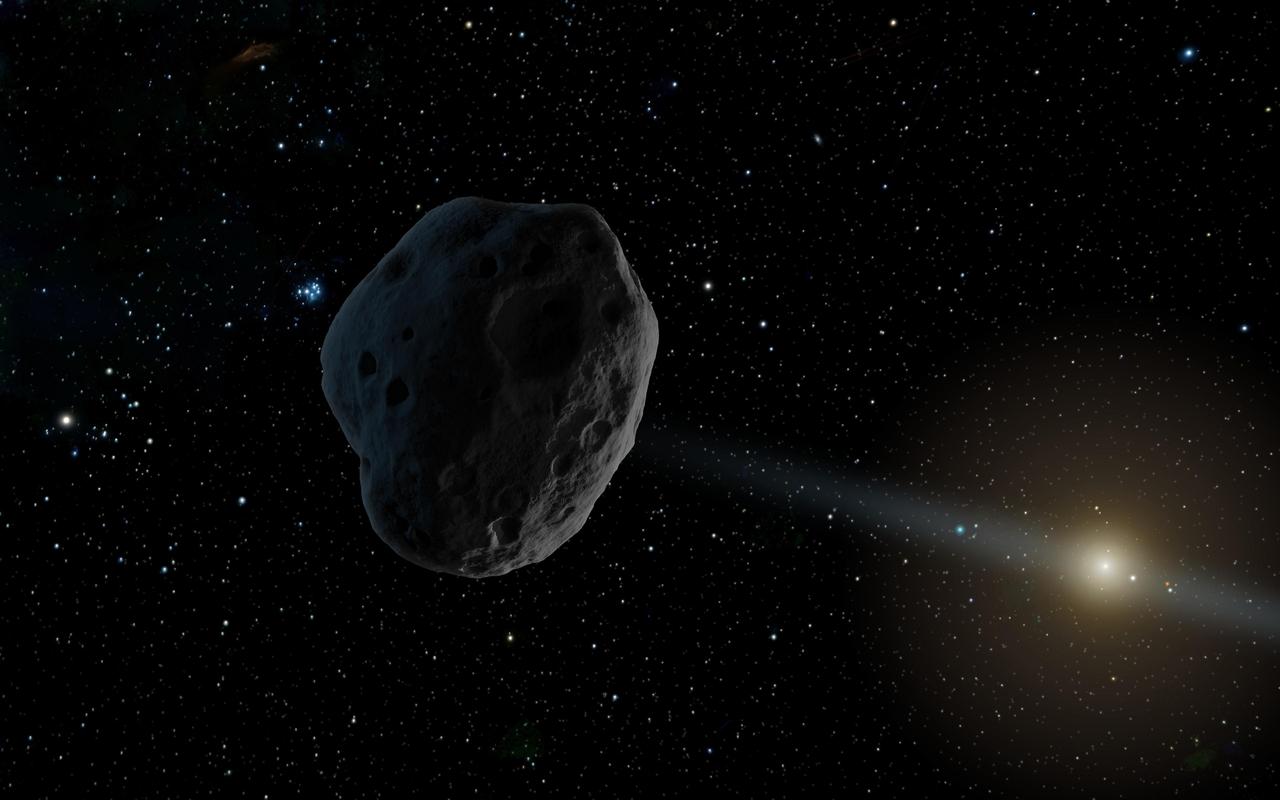
An artist rendition of 2016 WF9 as it passes Jupiter orbit inbound toward the sun. http://photojournal.jpl.nasa.gov/catalog/PIA21259
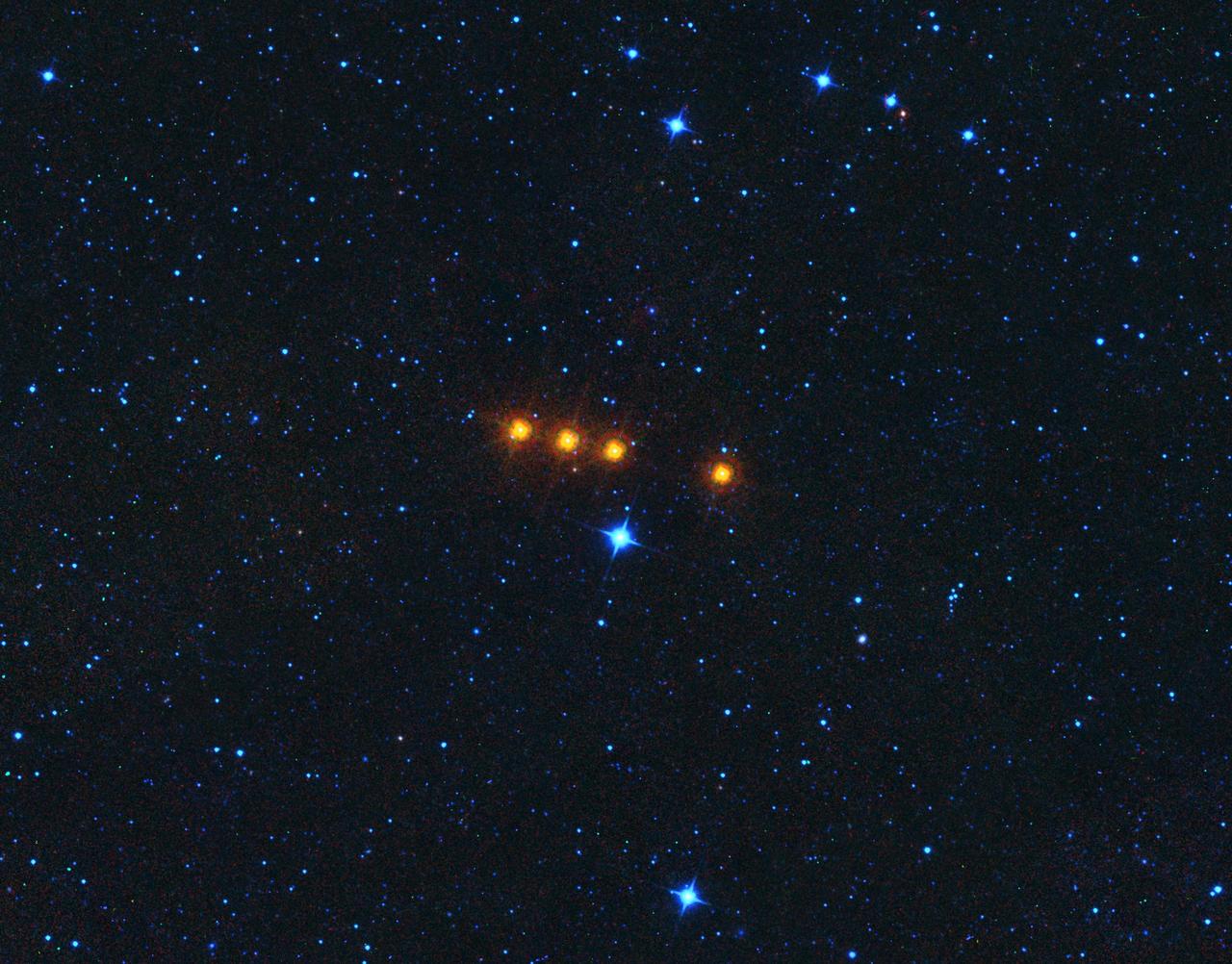
The asteroid Euphrosyne glides across a field of background stars in this time-lapse view from NASA's WISE spacecraft. WISE obtained the images used to create this view over a period of about a day around May 17, 2010, during which it observed the asteroid four times. Because WISE (renamed NEOWISE in 2013) is an infrared telescope, it senses heat from asteroids. Euphrosyne is quite dark in visible light, but glows brightly at infrared wavelengths. This view is a composite of images taken at four different infrared wavelengths: 3.4 microns (color-coded blue), 4.6 microns (cyan), 12 microns (green) and 22 microns (red). The moving asteroid appears as a string of red dots because it is much cooler than the distant background stars. Stars have temperatures in the thousands of degrees, but the asteroid is cooler than room temperature. Thus the stars are represented by shorter wavelength (hotter) blue colors in this view, while the asteroid is shown in longer wavelength (cooler) reddish colors. The WISE spacecraft was put into hibernation in 2011 upon completing its goal of surveying the entire sky in infrared light. WISE cataloged three quarters of a billion objects, including asteroids, stars and galaxies. In August 2013, NASA decided to reinstate the spacecraft on a mission to find and characterize more asteroids. http://photojournal.jpl.nasa.gov/catalog/PIA19645
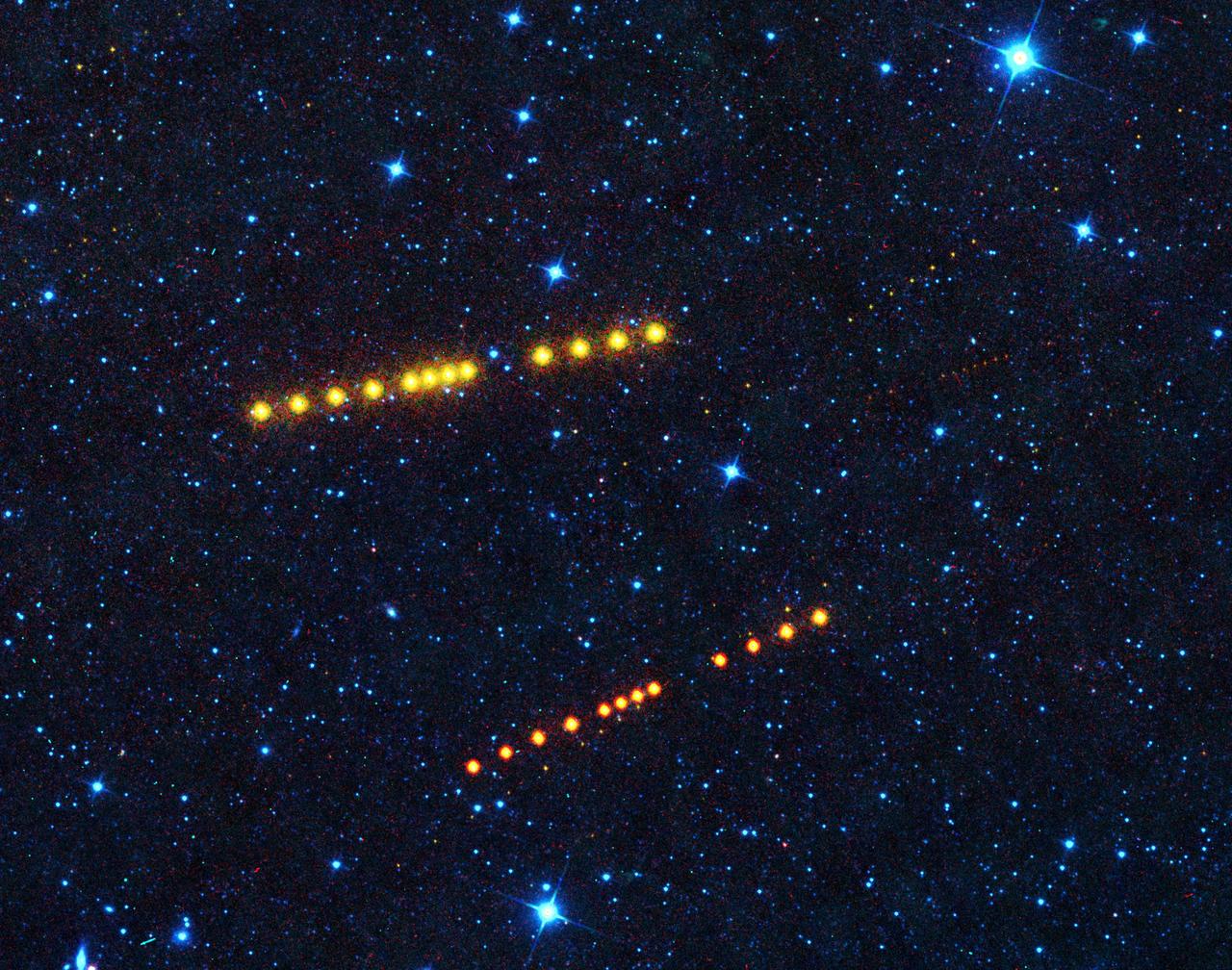
Those aren't Klingon vessels. Appearing as strings of orange dots, the brightest sets of dots belong to asteroids Klotho and Lina. Both orbit out in the main asteroid belt between Mars and Jupiter, while smaller, more distant asteroids can also be seen passing through the image. https://photojournal.jpl.nasa.gov/catalog/PIA23589
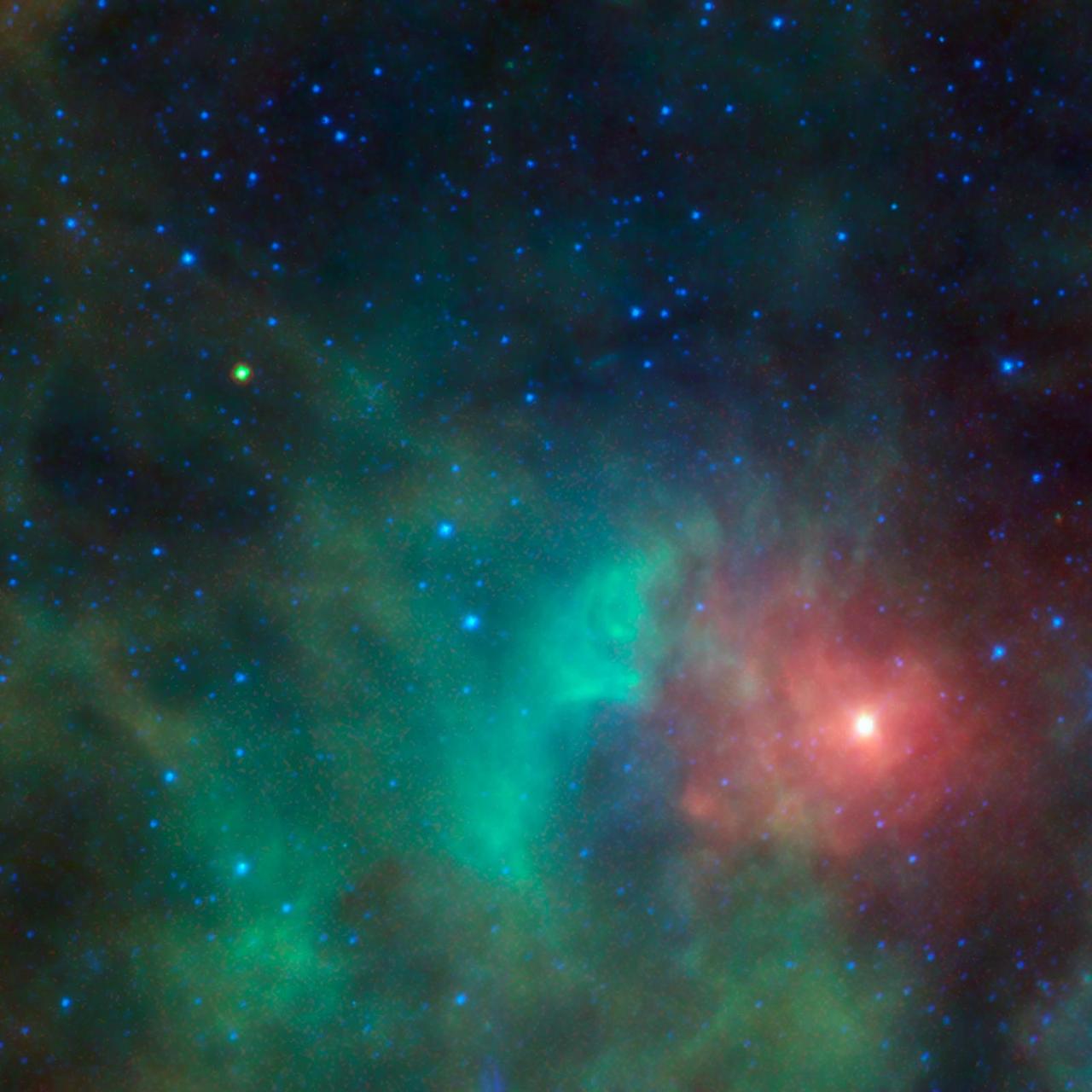
NASA NEOWISE, snapped this infrared picture of near-Earth object 1998 KN3 as it zips past a cloud of dense gas and dust near the Orion nebula.
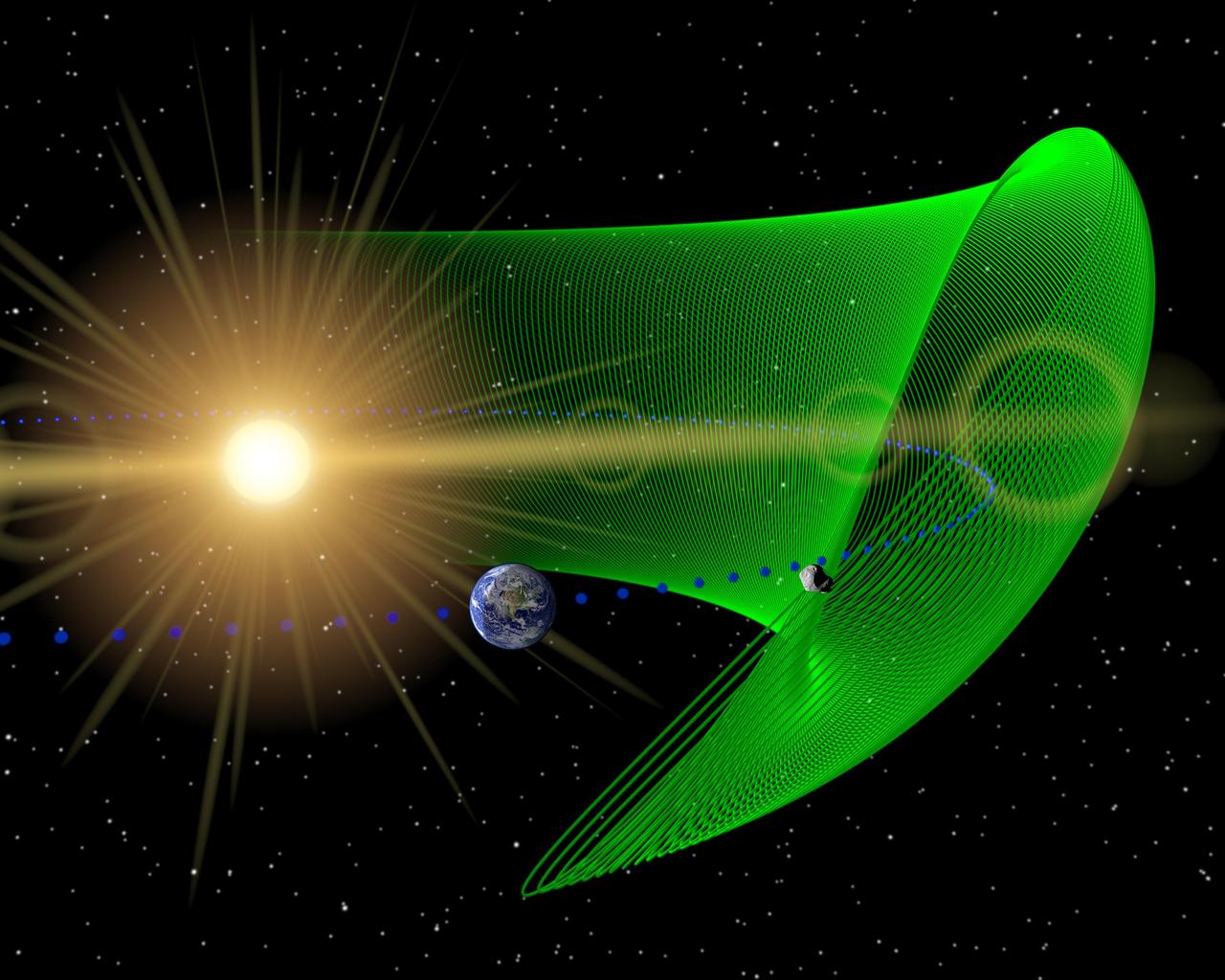
This artist concept illustrates the first known Earth Trojan asteroid, discovered by NEOWISE, the asteroid-hunting portion of NASA WISE mission. The asteroid is shown in gray and its extreme orbit is shown in green. Objects are not drawn to scale.
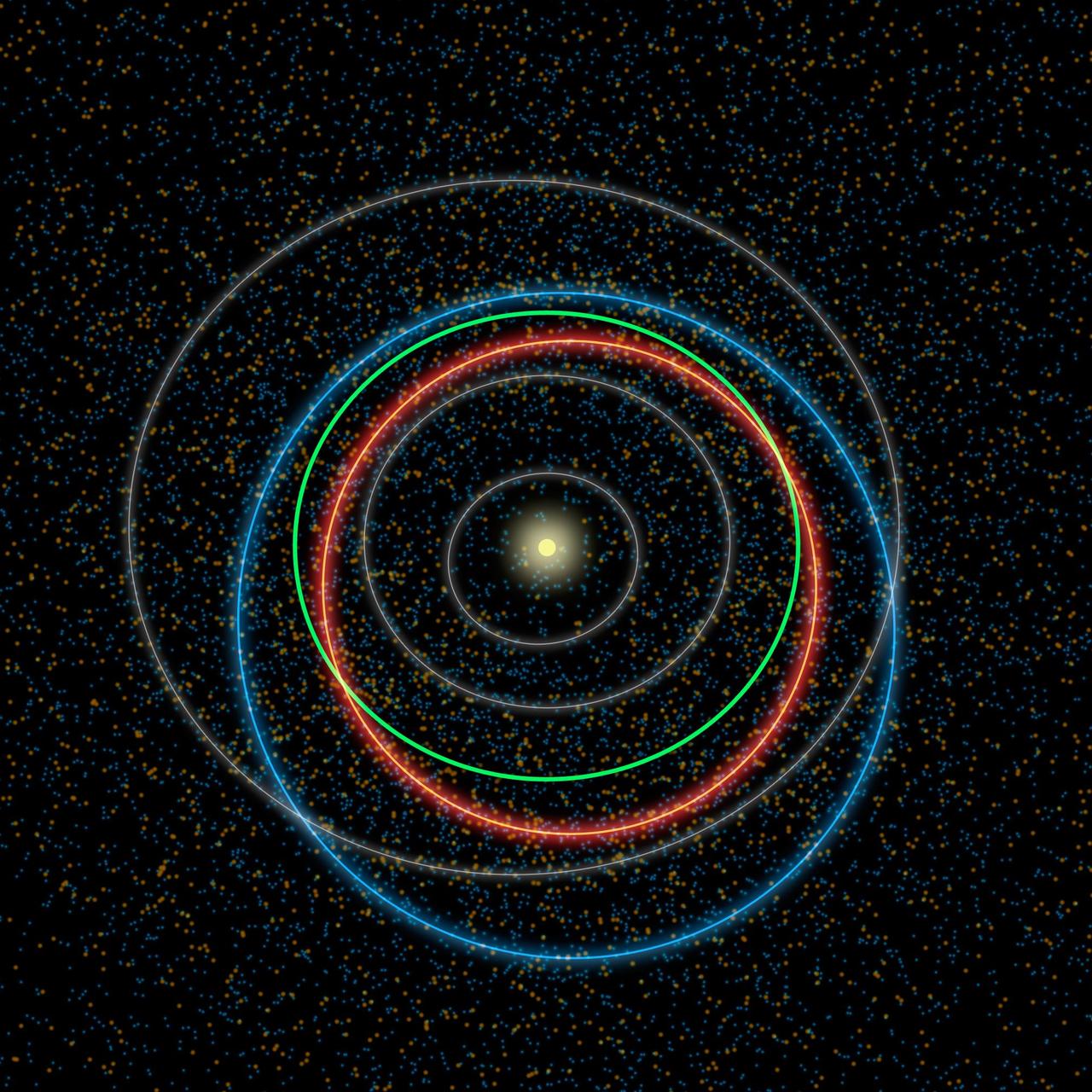
NEOWISE, the asteroid-hunting portion of NASA WISE mission, illustrates the differences between orbits of a typical near-Earth asteroid blue and a potentially hazardous asteroid, or PHA orange. PHAs are a subset of the near-Earth asteroids NEAs.
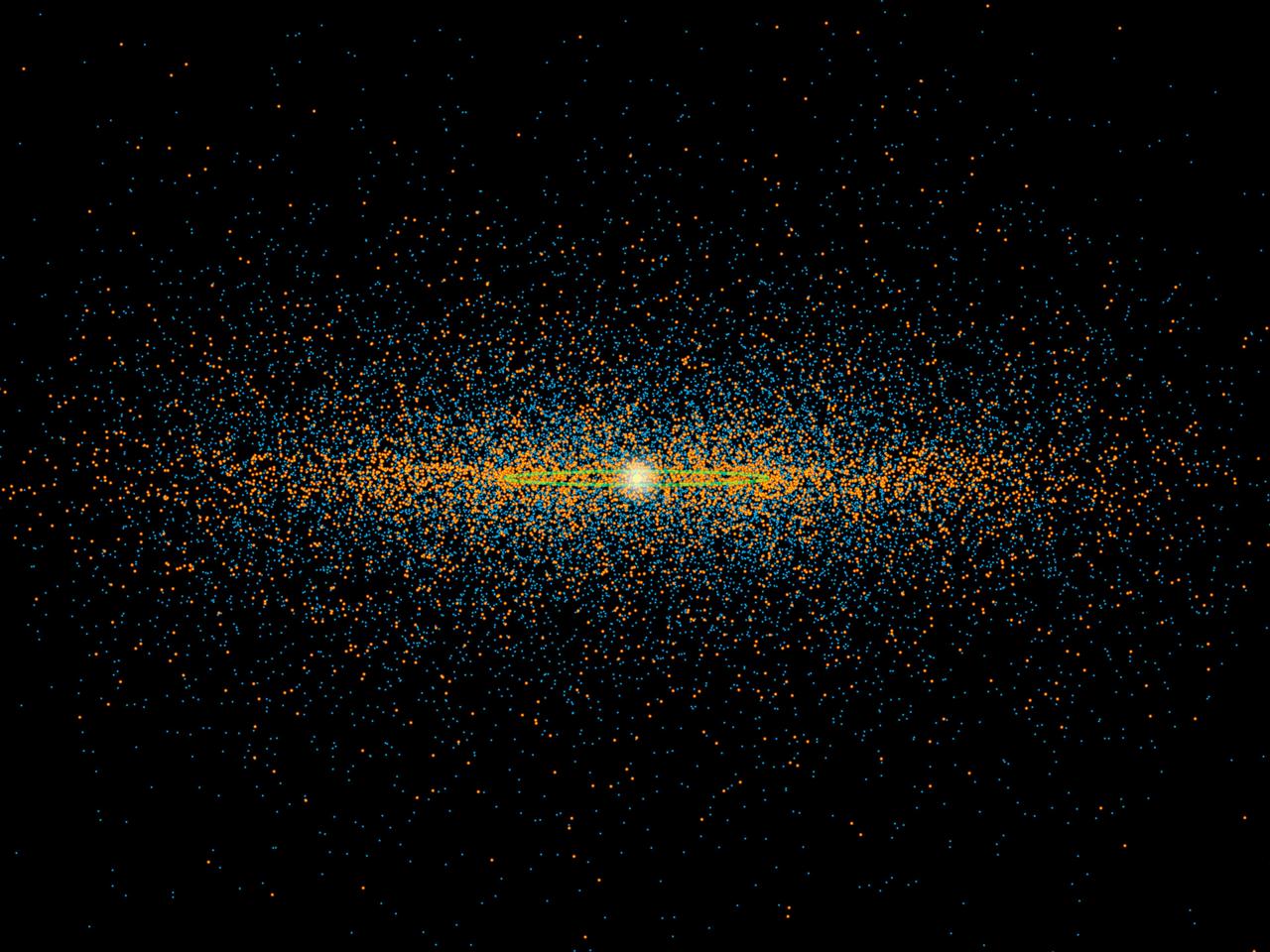
Results from NASA NEOWISE survey find that more potentially hazardous asteroids, or PHAs, are closely aligned with the plane of our solar system than previous models suggested.
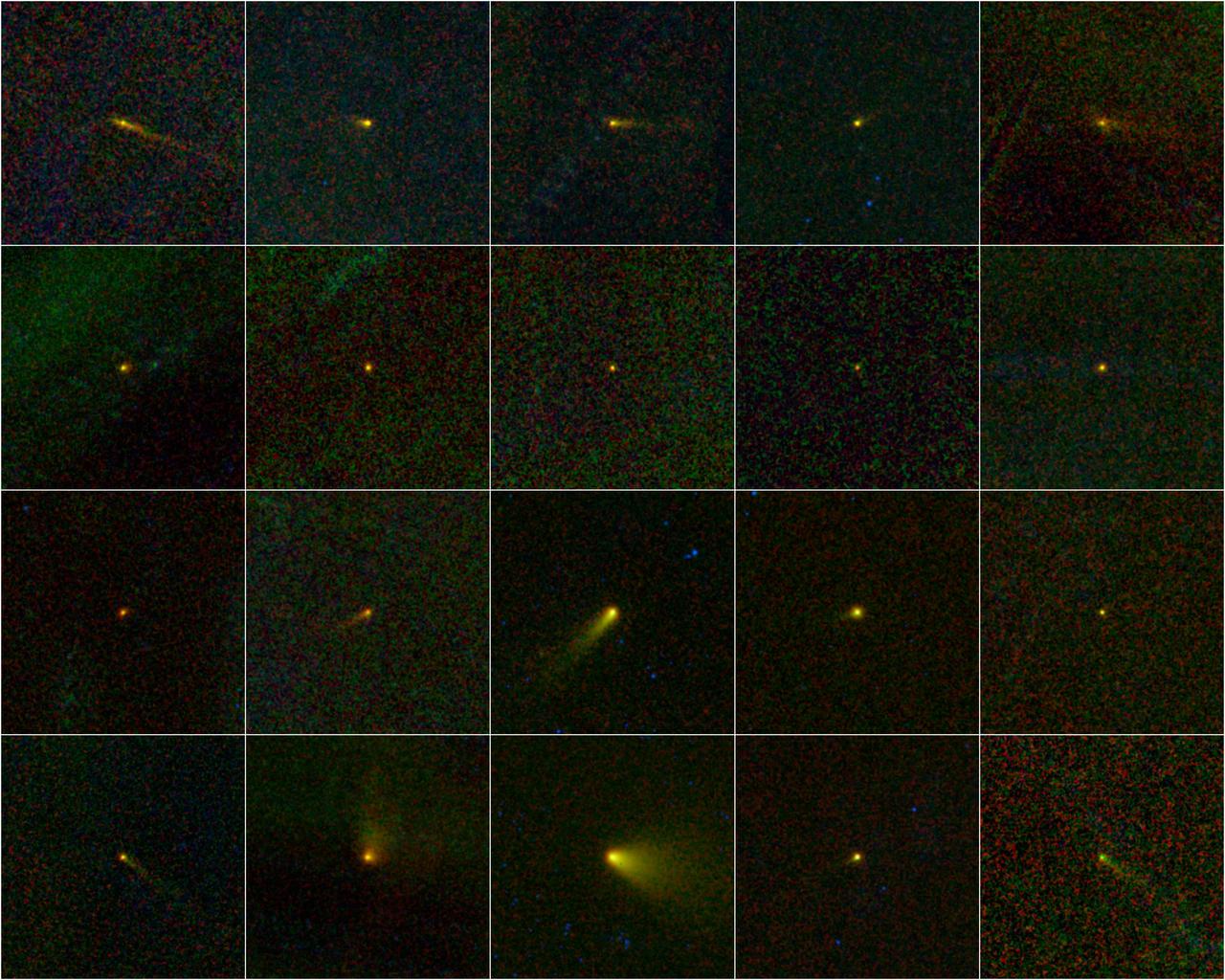
During its one-year mission, NASA Wide-field Infrared Survey Explorer, mapped the entire sky in infrared light. Among the multitudes of astronomical bodies that have been discovered by the NEOWISE portion of the WISE mission are 20 comets.
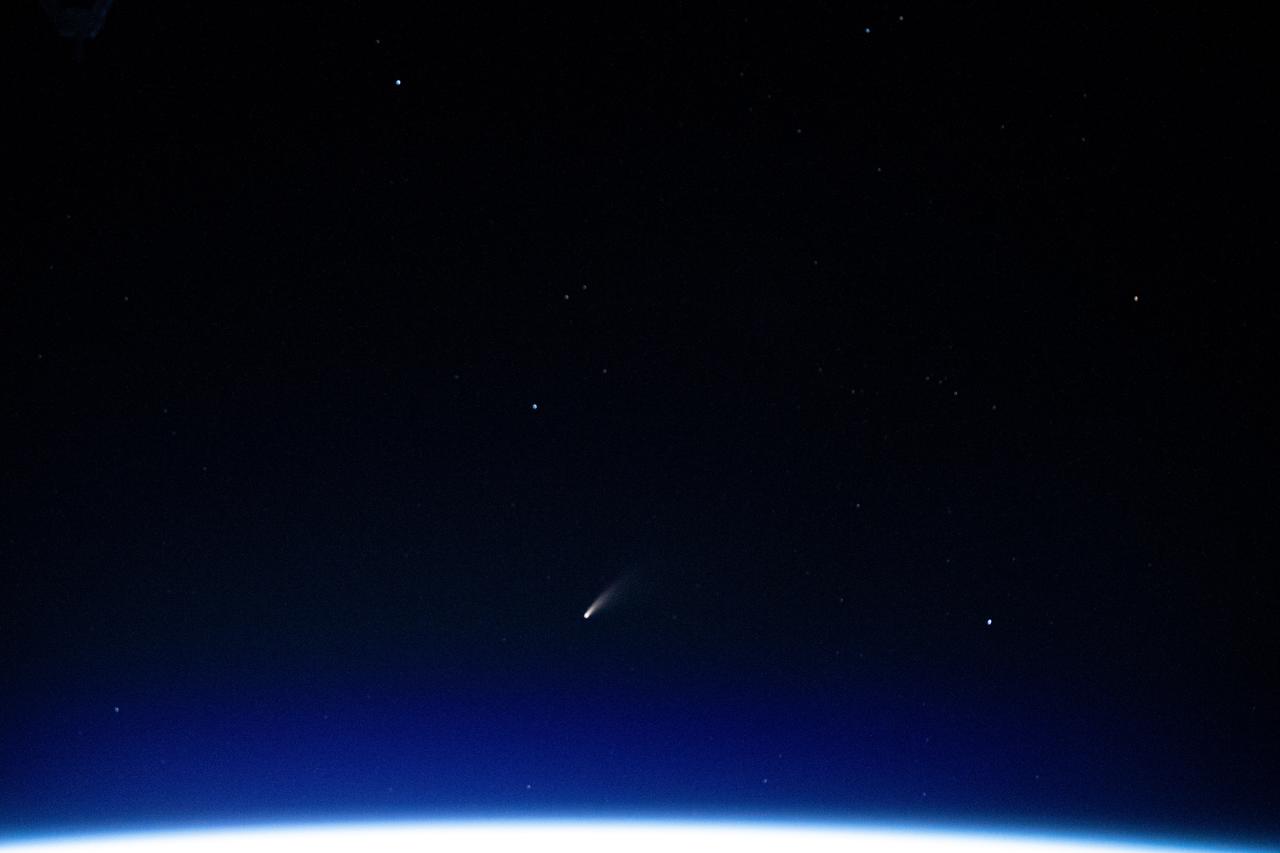
iss063e040067 (July 5, 2020) --- The tiny shooting star in the lower center of this image is Comet Neowise pictured from the International Space Station as it orbited above the Mediterranean Sea in between Tunisia and Italy.

iss063e040072 (July 5, 2020) --- The tiny shooting star in the lower center of this image is Comet Neowise pictured from the International Space Station as it orbited above the Mediterranean Sea in between Tunisia and Italy.
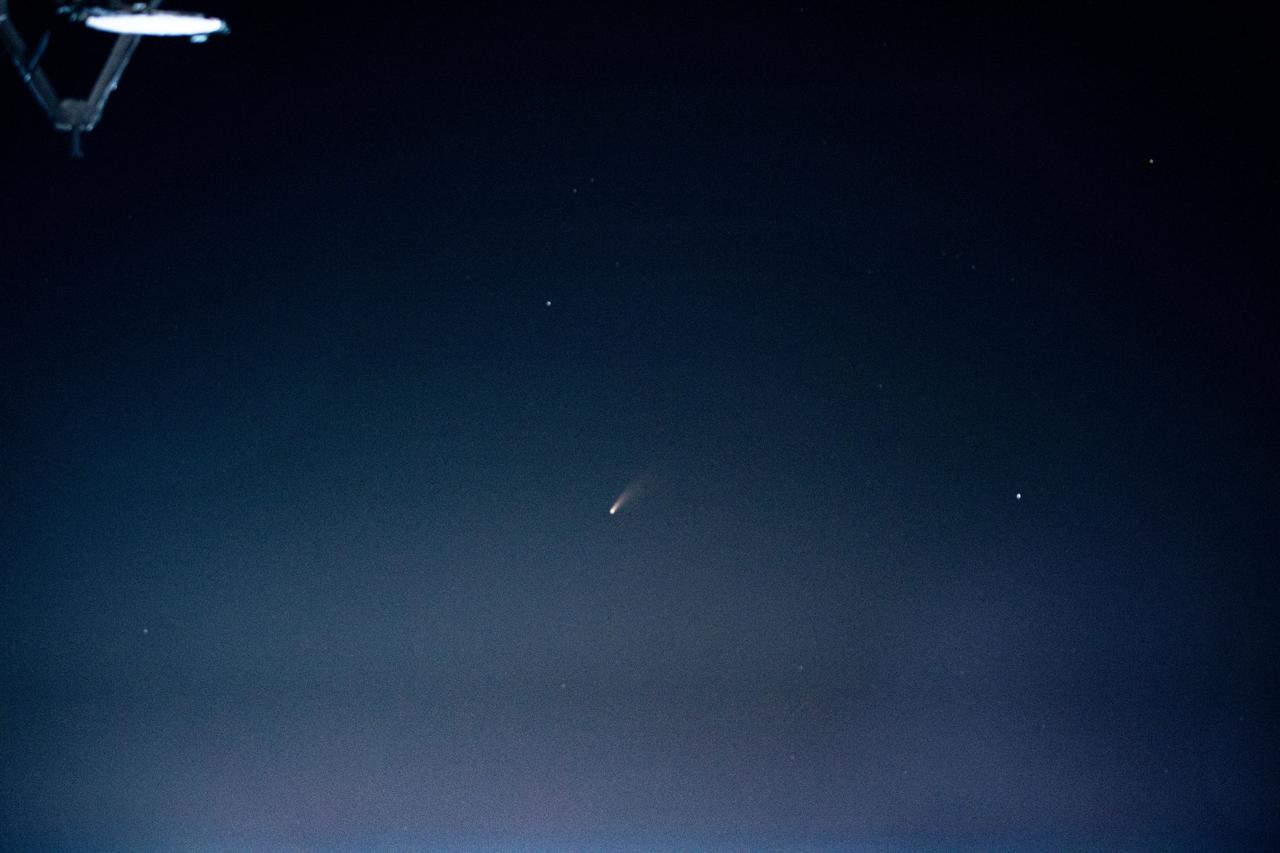
iss063e040094 (July 5, 2020) --- Comet Neowise was photographed by an Expedition 63 crew member as the International Space Station orbited above Rome, Italy, just after 1:36 a.m. local time on July 5.
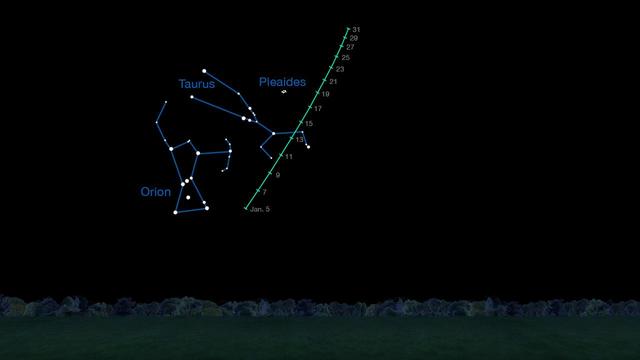
On clear nights in January 2015, comet C/2014 Q2 Lovejoy is visible in the Taurus region of the sky to observers using binoculars. This chart indicates where to look for it on different dates during the month.

An expanded view of comet C/2006 W3 (Christensen) is shown here. The WISE spacecraft observed this comet on April 20th, 2010 as it traveled through the constellation Sagittarius. Comet Christensen was nearly 370 million miles (600 million kilometers) from Earth at the time. The extent of the dust, about a tenth of a degree across in this image, is about 2/3rds the diameter of the sun. The red contours show the signal from the gas emission observed by the WISE spacecraft in the 4.6 micron wavelength channel, which contains carbon monoxide (CO) and carbon dioxide (CO2) emission lines. The strength of the 4.6 micron signal indicates over half a metric ton per second of CO or CO2 was emitted from this comet at the time of the observations. The WISE spacecraft was put into hibernation in 2011 upon completing its goal of surveying the entire sky in infrared light. WISE cataloged three quarters of a billion objects, including asteroids, stars and galaxies. In August 2013, NASA decided to reinstate the spacecraft on a mission to find and characterize more asteroids. http://photojournal.jpl.nasa.gov/catalog/PIA20119

In this illustration, an asteroid (bottom left) breaks apart under the powerful gravity of LSPM J0207+3331, the oldest, coldest white dwarf known to be surrounded by a ring of dusty debris. Scientists think the system’s infrared signal is best explained by two distinct rings composed of dust supplied by crumbling asteroids. Credit: NASA’s Goddard Space Flight Center/Scott Wiessinger https://svs.gsfc.nasa.gov/13147

In this illustration showing NEO Surveyor, NASA's next-generation near-Earth object hunter, the spacecraft floats in an infrared starfield containing stars, star clusters, gas, and dust. More than 100 asteroids can be seen as red dots, with some of them visible in a track that shows how they were captured at different times as they marched across the sky. This starfield was observed by NASA's Wide-field Infrared Survey Explorer, or WISE, during its primary all-sky survey in March 2010 before it was put into hibernation a year later. In December 2013, the space telescope was reactivated to search for more asteroids as the NEOWISE mission. NASA's NEO Surveyor will build upon the successes of NEOWISE as the first space mission built specifically to find large numbers of hazardous asteroids and comets. The space telescope will launch to a region of gravitational stability between the Earth and the Sun called the L1 Lagrange point, where the spacecraft will orbit during its five-year primary mission. From this location, the space telescope will view the solar system in infrared wavelengths &ndash light that is invisible to the human eye. Because those wavelengths are mostly blocked by Earth's atmosphere, larger ground-based observatories may miss near-Earth objects that NEO Surveyor will be able to spot from space by using its modest light-collecting aperture of nearly 20 inches (50 centimeters). NEO Surveyor's cutting-edge detectors are designed to observe two heat-sensitive infrared bands that were chosen specifically so the spacecraft can track the most challenging-to-find near-Earth objects, such as dark asteroids and comets that don't reflect much visible light. In the infrared wavelengths to which NEO Surveyor is sensitive, these objects glow as they are heated by sunlight. In addition, NEO Surveyor will be able to find asteroids that approach Earth from the direction of the Sun, as well as those that lead and trail our planet's orbit, where they are typically obscured by the glare of sunlight – objects known as Earth Trojans. The mission is tasked by NASA's Planetary Science Division within the Science Mission Directorate; program oversight is provided by the PDCO, which was established in 2016 to manage the agency's ongoing efforts in planetary defense. NASA's Planetary Missions Program Office at Marshall Space Flight Center provides program management for NEO Surveyor. The project is being developed by JPL and is led by survey director Amy Mainzer at the University of Arizona. Established aerospace and engineering companies have been contracted to build the spacecraft and its instrumentation, including Ball Aerospace , Space Dynamics Laboratory, and Teledyne. The Laboratory for Atmospheric and Space Physics at the University of Colorado, Boulder will support operations, and IPAC-Caltech in Pasadena, California, is responsible for processing survey data and producing the mission's data products. Caltech manages JPL for NASA. https://photojournal.jpl.nasa.gov/catalog/PIA25253
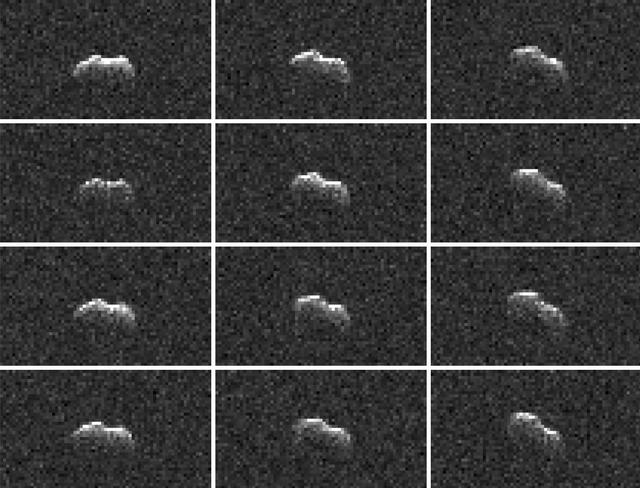
On March 21, 2021, the large asteroid 2001 FO32 made a close approach with our planet, passing at a distance of about 1.25 million miles (2 million kilometers) — or 5 1/4 times the distance from Earth to the Moon. While there was no risk of the near-Earth asteroid colliding with Earth as its orbit is very well known, scientists at NASA's Jet Propulsion Laboratory in Southern California took the opportunity to capture these radar images of the asteroid as it tumbled past. Using NASA's 34-meter (111.5-feet) Deep Space Station 13 (DSS-13) radio antenna at the Deep Space Network's Goldstone Deep Space Communication Complex near Barstow, California, radio signals were transmitted to 2001 FO32. The signals then bounced off the surface of the asteroid and were received by the 100-meter (328-feet) Green Bank Telescope in West Virginia. Such radar observations can offer additional insight into the asteroid's orbit, provide a better estimate of its dimensions and rotation rate, and help glimpse surface features (like large boulders or craters). Other radar observations were carried out by scientists using the 34-meter DSS-43 antenna at the Deep Space Network's Canberra Deep Space Communication Complex in Australia. Along with the Commonwealth Scientific and Industrial Research Organisation's Australia Telescope Compact Array near Narrabri in New South Wales, both antennas worked together to track 2001 FO32. Asteroid 2001 FO32 was discovered in March 2001 by the Lincoln Near-Earth Asteroid Research (LINEAR) program in Socorro, New Mexico, and had been estimated, based on optical measurements, to be roughly 3,000 feet (1 kilometer) wide. In more recent follow-up observations by NEOWISE, 2001 FO32 appears to be faint when observed in infrared wavelengths, which suggests the object is likely less than 1 kilometer in diameter. Analysis by the NEOWISE team shows that it is between 1,300 to 2,230 feet (440 to 680 meters) wide. Further analysis of data from the radar campaign will better refine the size of the asteroid and increase the precision of its orbital calculations. For more information about 2001 FO32 and observing campaign, read: https://www.jpl.nasa.gov/news/asteroid-2001-fo32-will-safely-pass-by-earth-march-21 https://photojournal.jpl.nasa.gov/catalog/PIA24561
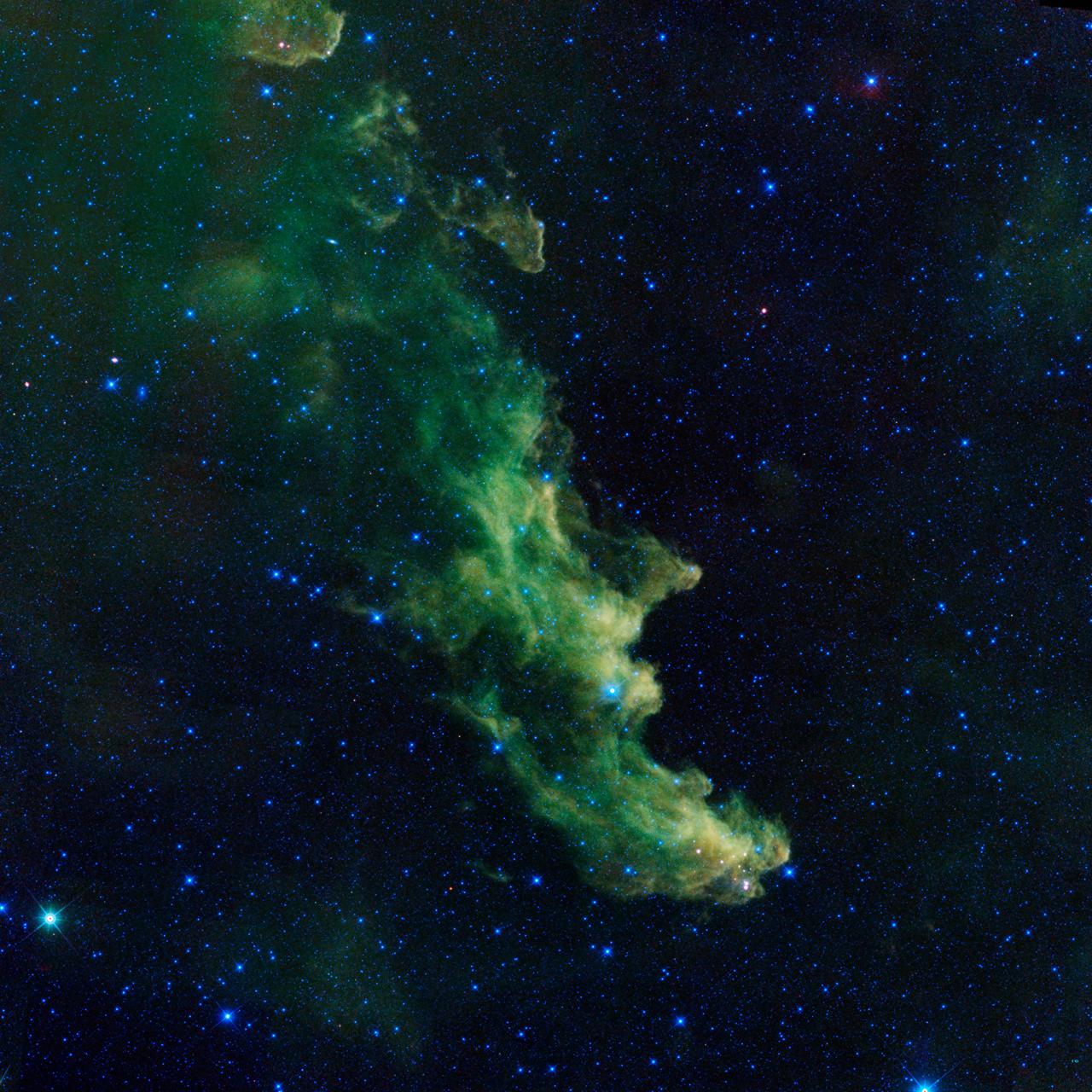
A witch appears to be screaming out into space in this new image from NASA's Wide-Field Infrared Survey Explorer, or WISE. The infrared portrait shows the Witch Head nebula, named after its resemblance to the profile of a wicked witch. Astronomers say the billowy clouds of the nebula, where baby stars are brewing, are being lit up by massive stars. Dust in the cloud is being hit with starlight, causing it to glow with infrared light, which was picked up by WISE's detectors. The Witch Head nebula is estimated to be hundreds of light-years away in the Orion constellation, just off the famous hunter's knee. WISE was recently "awakened" to hunt for asteroids in a program called NEOWISE. The reactivation came after the spacecraft was put into hibernation in 2011, when it completed two full scans of the sky, as planned. Image credit: NASA/JPL-Caltech NASA image use policy. ( http://www.nasa.gov/audience/formedia/features/MP_Photo_Guidelines.html ) NASA Goddard Space Flight Center ( http://www.nasa.gov/centers/goddard/home/index.html ) enables NASA’s mission through four scientific endeavors: Earth Science, Heliophysics, Solar System Exploration, and Astrophysics. Goddard plays a leading role in NASA’s accomplishments by contributing compelling scientific knowledge to advance the Agency’s mission. Follow us on Twitter ( http://twitter.com/NASA_GoddardPix ) Like us on Facebook ( http://www.facebook.com/pages/Greenbelt-MD/NASA-Goddard/395013845897?ref=tsd ) Find us on Instagram ( http://instagram.com/nasagoddard?vm=grid )

This new image of the Orion Nebula produced using previously released data from three telescopes shows two enormous caverns carved out by unseen giant stars that can release up to a million times more light than our Sun. All that radiation breaks apart dust grains there, helping to create the pair of cavities. Much of the remaining dust is swept away when the stars produce wind or when they die explosive deaths as supernovae. This infrared image shows dust but no stars. Blue light indicates warm dust heated by unseen massive stars. Observed in infrared light – a range of wavelengths outside what human eyes can detect – the views were provided by NASA's retired Spitzer Space Telescope and the Wide-Field Infrared Survey Explorer (WISE), which now operates under the moniker NEOWISE. Spitzer and WISE were both managed by NASA's Jet Propulsion Laboratory in Southern California, which is a division of Caltech. Around the edge of the two cavernous regions, the dust that appears green is slightly cooler. Red indicates cold dust that reaches temperatures of about minus 440 Fahrenheit (minus 260 Celsius). The cold dust appears mostly on the outskirts of the dust cloud, away from the regions where stars form. The red and green light shows data from the now-retired Herschel Space Telescope, an ESA (European Space Agency) observatory that captured wavelengths in the far-infrared and microwave ranges, where cold dust radiates. In between the two hollow regions are orange filaments where dust condenses and forms new stars. Over time, these filaments may produce new giant stars that will once again reshape the region. https://photojournal.jpl.nasa.gov/catalog/PIA25434
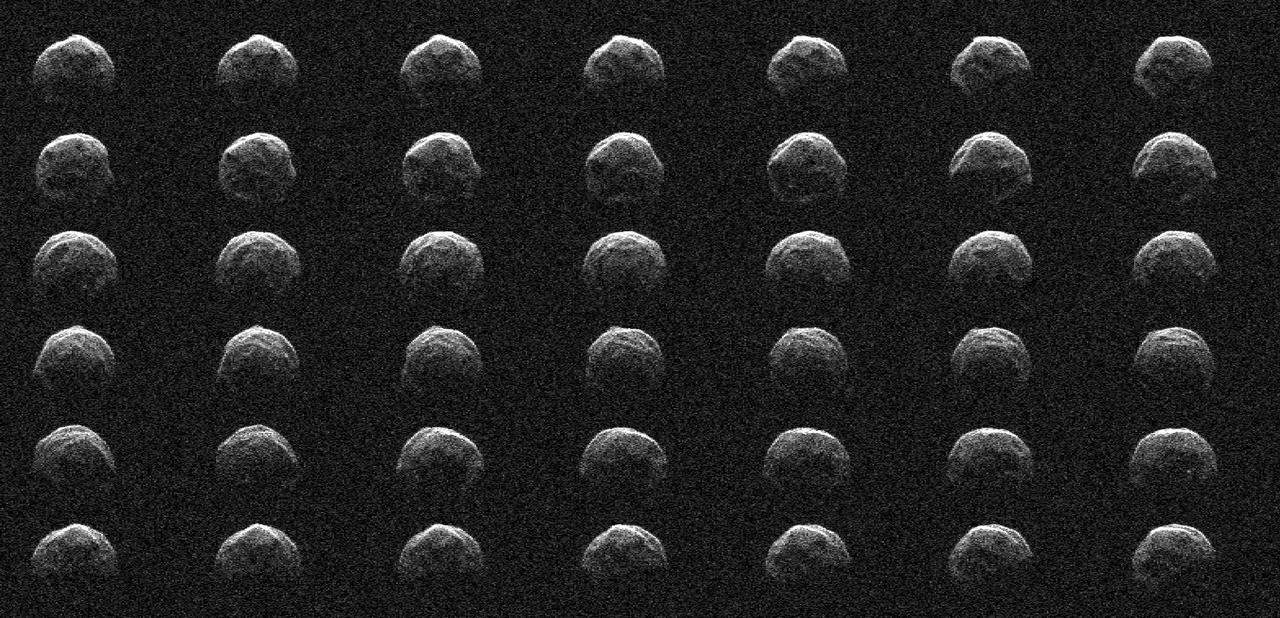
This collage represents a selection of NASA radar observations of near-Earth asteroid 2006 HV5 on April 25, 2023, less than one day before its close approach with our planet at a distance of about 1.5 million miles (2.4 million kilometers, or about 6.3 times the distance between the Moon and Earth). Asteroid 2006 HV5 was discovered by the Lincoln Near-Earth Asteroid Research (LINEAR) program in New Mexico in April 2006. The radar images show that 2006 HV5 is about 1,000 feet (300 meters) across, roughly the height of the Eiffel Tower, confirming size estimates derived from infrared observations made previously by NASA's NEOWISE mission. 2006 HV5 is classified as a potentially hazardous asteroid as its orbit brings it close to Earth, but its path around the Sun is very well known and the asteroid is not an impact risk to our planet. Asteroids of this size come this close to Earth roughly once a year, on average. The new observations were made by scientists at NASA's Jet Propulsion Laboratory using the powerful 230-foot (70-meter) Goldstone Solar System Radar antenna at the Deep Space Network's facility near Barstow, California. The images confirm the asteroid's size, while also providing a detailed look at its meatball-like shape. The asteroid has a rounded appearance, is "squished" at the poles (i.e., it is oblate), and has a rotation period of about 3.6 hours. The sequence of radar images spans slightly more than one rotation. The images, which have a resolution of about 12 feet (3.75 meters) per pixel, reveal surface features such as ridges, flat regions, concavities, and small-scale topography that might indicate boulders. https://photojournal.jpl.nasa.gov/catalog/PIA25834
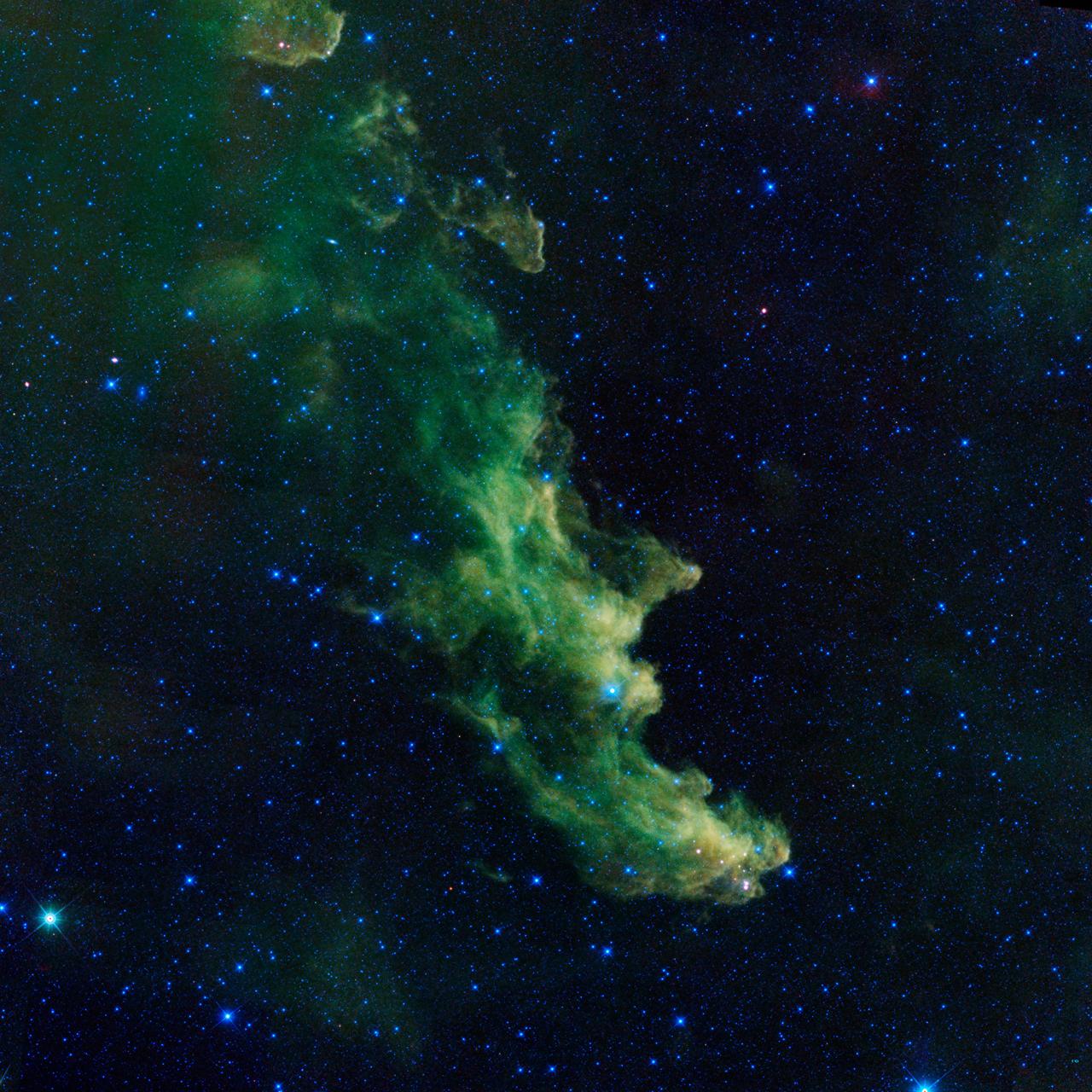
A witch appears to be screaming out into space in this new image from NASA's Wide-Field Infrared Survey Explorer, or WISE. The infrared portrait shows the Witch Head nebula, named after its resemblance to the profile of a wicked witch. Astronomers say the billowy clouds of the nebula, where baby stars are brewing, are being lit up by massive stars. Dust in the cloud is being hit with starlight, causing it to glow with infrared light, which was picked up by WISE's detectors. The Witch Head nebula is estimated to be hundreds of light-years away in the Orion constellation, just off the famous hunter's knee. WISE was recently "awakened" to hunt for asteroids in a program called NEOWISE. The reactivation came after the spacecraft was put into hibernation in 2011, when it completed two full scans of the sky, as planned. Image credit: NASA/JPL-Caltech <b><a href="http://www.nasa.gov/audience/formedia/features/MP_Photo_Guidelines.html" rel="nofollow">NASA image use policy.</a></b> <b><a href="http://www.nasa.gov/centers/goddard/home/index.html" rel="nofollow">NASA Goddard Space Flight Center</a></b> enables NASA’s mission through four scientific endeavors: Earth Science, Heliophysics, Solar System Exploration, and Astrophysics. Goddard plays a leading role in NASA’s accomplishments by contributing compelling scientific knowledge to advance the Agency’s mission. <b>Follow us on <a href="http://twitter.com/NASA_GoddardPix" rel="nofollow">Twitter</a></b> <b>Like us on <a href="http://www.facebook.com/pages/Greenbelt-MD/NASA-Goddard/395013845897?ref=tsd" rel="nofollow">Facebook</a></b> <b>Find us on <a href="http://instagram.com/nasagoddard?vm=grid" rel="nofollow">Instagram</a></b>

The dusty face of the Eagle Nebula and its surroundings are revealed in this image based on data from NASA's Wide Field Survey Explorer (WISE). WISE detects infrared light, or a range of wavelengths longer than what the human eye can see. This large star forming region is about 5,700 light years away from Earth and is most famous for being home to the the "Pillars of Creation," a region famously imaged by NASA's Hubble and James Webb space telescopes. The WISE data reveals the entire structure of the nebula surrounding the pillars, which themselves can be seen as a faint yellow-green feature inside the white circle. While the WISE view of the "Pillars" is not as sharp as those taken by Webb and Hubble, the telescope's wide field of view allows us to explore the extended nebula around it. When viewed in visible light, the dust is dark and opaque. In these infrared wavelengths, the dust becomes more translucent, and emits infrared light, shown in green, yellow, and red in this image. The data used in this image came from WISE's primary mission which ran from 2009 to 2011. In 2013, NASA took the spacecraft out of hibernation and began using it to track and study near-Earth objects. The mission and the spacecraft were renamed NEOWISE. However, the data is still being used by astronomers to study objects and regions outside our solar system. Blue and cyan are used to represent infrared light at wavelengths of 3.4 and 4.6 microns, while green and red display longer wavelengths of 12 and 22 microns, respectively. Animation available at https://photojournal.jpl.nasa.gov/catalog/PIA25433

This animation shows the events that serve as the basis of an astrophysics technique called "echo mapping," also known as reverberation mapping. At center is a supermassive black hole surrounded by a disk of material called an accretion disk. As the disk gets brighter it sometimes even releases short flares of visible light. Blue arrows show the light from this flash traveling away from the black hole, both toward an observer on Earth and toward an enormous, doughnut-shaped structure (called a torus) made of dust. The light gets absorbed, causing the dust to heat up and release infrared light. This brightening of the dust is a direct response to — or, one might, say an "echo" — of the changes happening in the disk. Red arrows show this light traveling away from the galaxy, in the same direction as the initial flash of visible light. Thus an observer would see the visible light first, and (with the right equipment) the infrared light later. Astronomers have previously proposed using echo mapping as a means of measuring distances to cosmic objects. If scientists can observe both the initial flare of visible light and the subsequent infrared brightening in the dust, they could in theory use that information to measure the disk's luminosity, which could then be used to measure the distance to that galaxy by comparing it to the galaxy's brightness as seen from Earth. The temperature in the part of the disk closest to the black hole can reach tens of thousands of degrees but decreases with distance. When it reaches about 2,200 degrees Fahrenheit (1,200 Celsius), it is cool enough for dust to form. The more luminous the disk, the farther away from it the dust forms and the longer it takes light from the disk to reach the dust and produce the "echo." The distance from the accretion disk to the inside of the dust doughnut can be billions or trillions of miles. Even light, traveling at 186,000 miles (300,000 kilometers) per second, can take months or years to cross it. NASA's Near Earth Object Wide Field Infrared Survey Explorer (NEOWISE), previously named WISE, surveys the entire sky about once every six months and is on track to complete 16 such surveys by the end of 2020, providing astronomers with repeated opportunities to observe galaxies and look for signs of those light echoes. A study using data from WISE measured the luminosity of over 500 black hole accretion disks using echo mapping, but the subsequent distance measurements lacked precision compared to other distance measuring techniques. Additional data and an improved understanding of dust torus dynamics could improve those measurements. Movie available at https://photojournal.jpl.nasa.gov/catalog/PIA23866