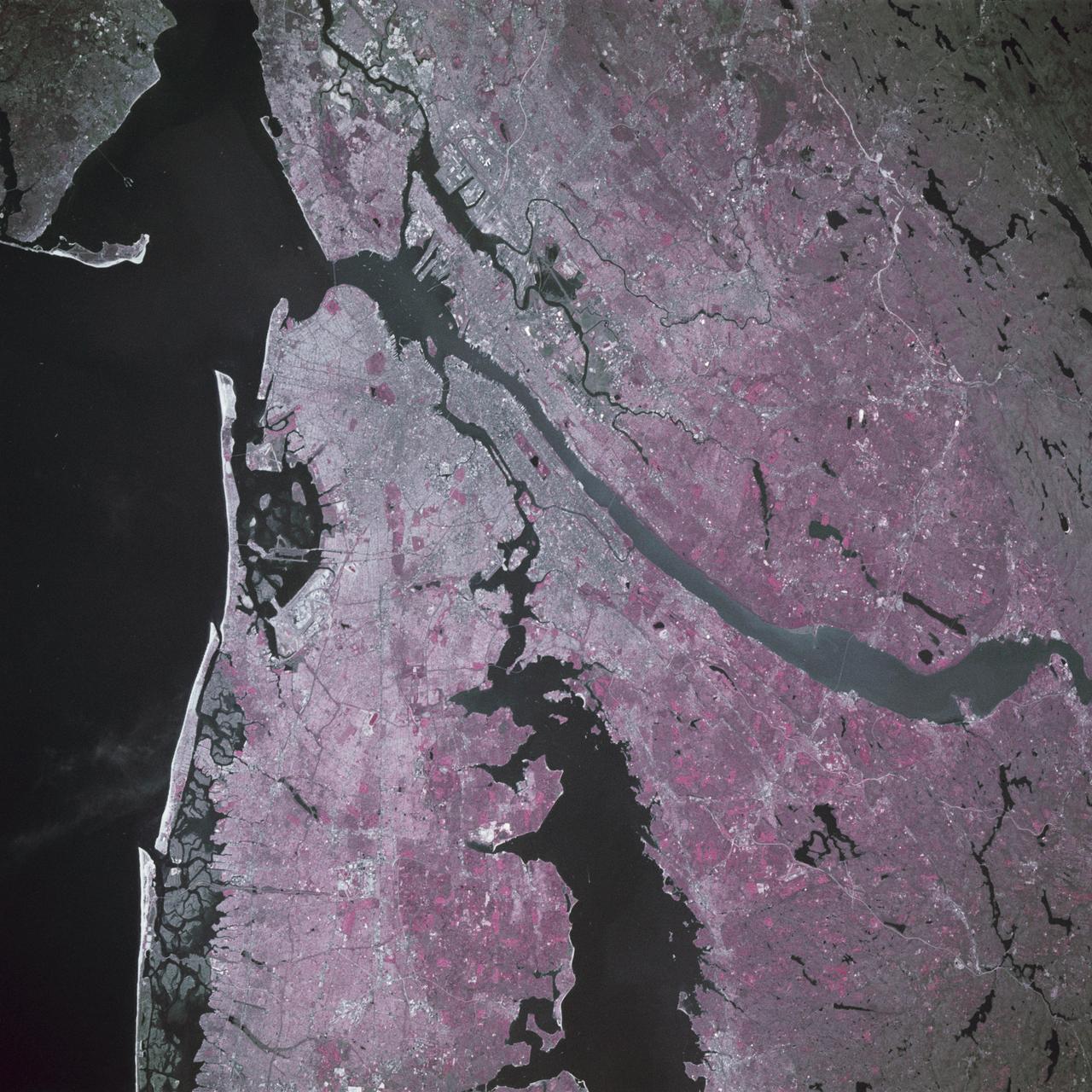
STS039-88-054 (28 April-6 May 1991) --- The dense urban development of the New York City metropolitan area in downstate New York, Long Island and New Jersey shows up as gray and white on this color Infrared photograph. The scene was taken on a remarkably clear spring day. Almost all the major man-made structures of the area are obvious, including ship traffic in and out of New York Harbor, the piers, all of the bridges spanning the area rivers and connecting Manhattan Island with New Jersey, the Bronx, Brooklyn and Queens, the three major airports (Newark, La Guardia and JFK), the New York State thruway, as well as Shea Stadium and Yankee Stadium. The reds and pinks are vegetated areas. Central Park clearly shows up on Manhattan, as do the string of parks along the cliffs (formed by the Palisades sill) along the west side of the Hudson north of the George Washington Bridge.
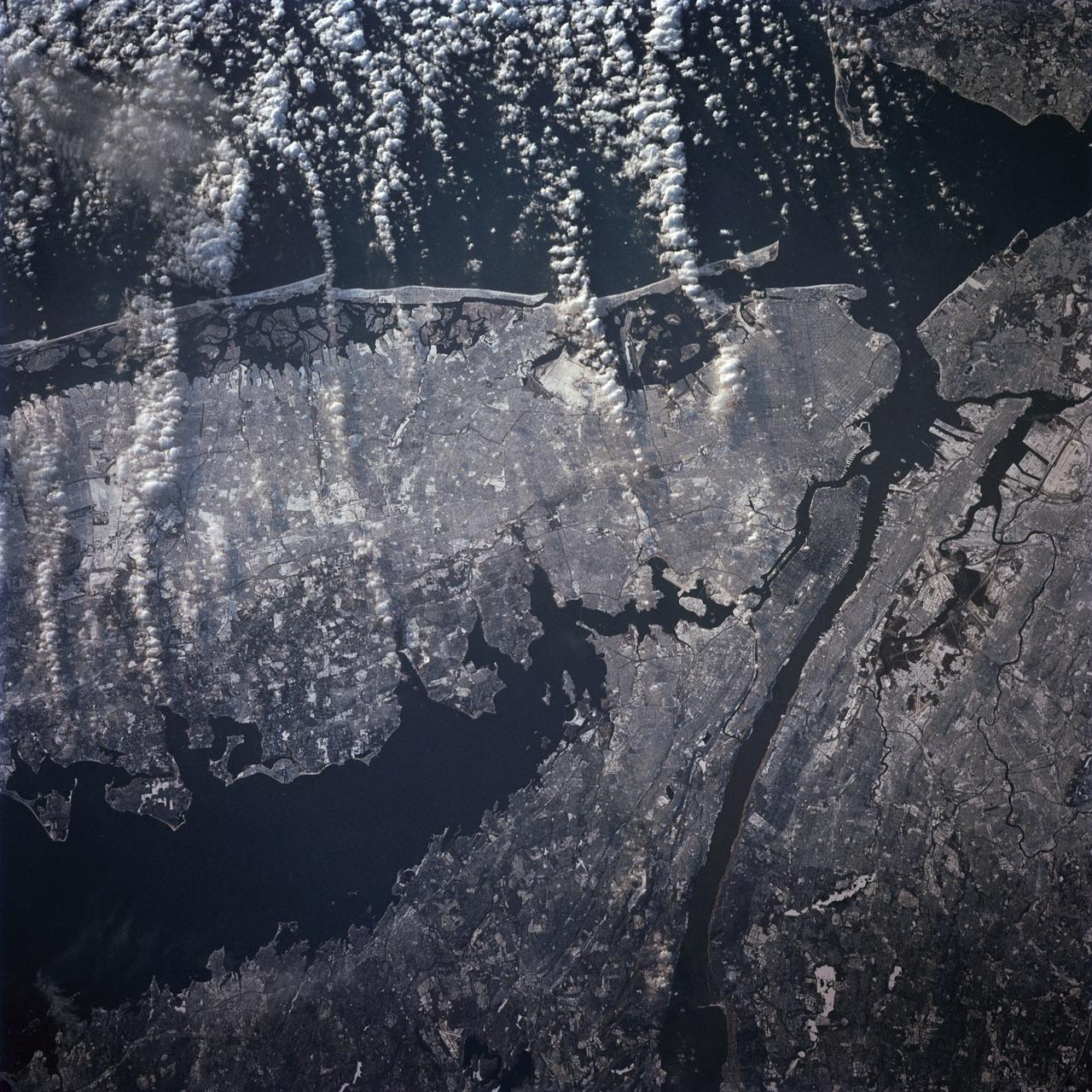
STS-42 Earth observation taken aboard Discovery, Orbiter Vehicle (OV) 103, is of New York City (NYC), New York (41.0N, 74.0W). Snow cover highlights the large areas of development and the many reservoirs in this wintertime scene of the metropolitan NYC area. Features such as Central Park in Manhattan, the George Washington Bridge connecting Manhattan with New Jersey, street patterns in most of the boroughs, La Guardia and JFK airports in Queens, and the extensive harbor system are easily identified.
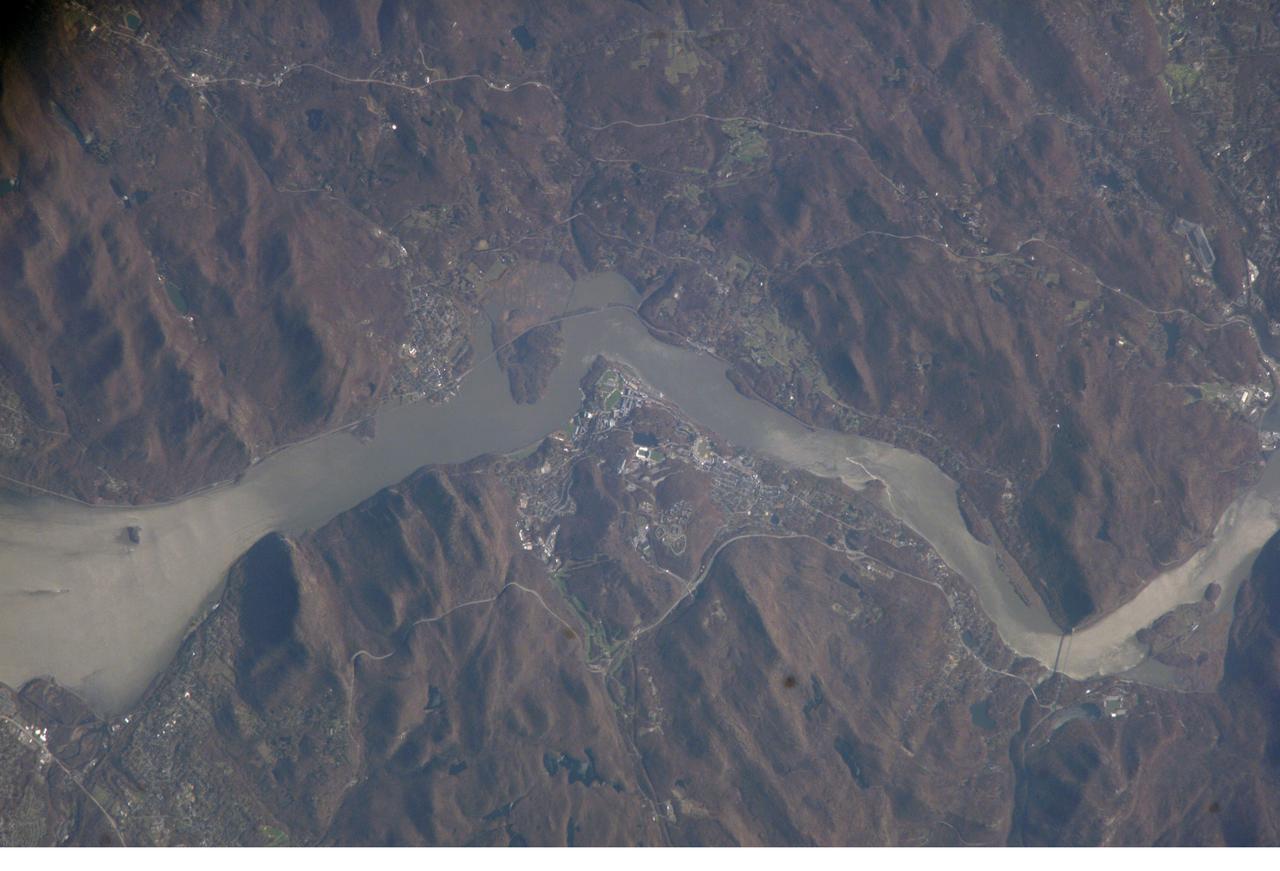
ISS012-E-08797 (20 Nov. 2005) --- West Point, NY, home of the United States Military Academy since 1802, is featured in this electronic still image recorded from the International Space Station during Expedition 12. West Point is located on the high west bank of the Hudson River north of New York City. North is at the top in this almost vertical view.
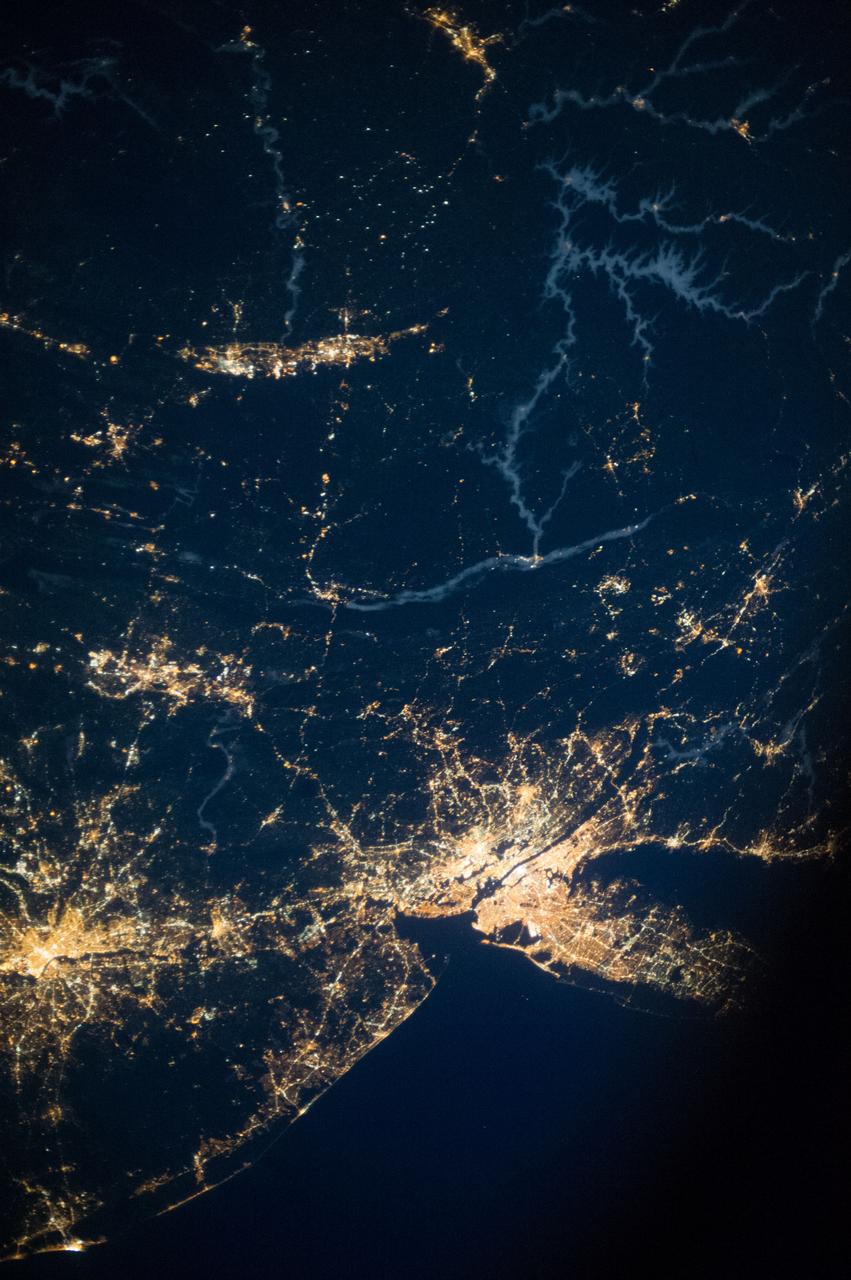
ISS037-E-001793 (20 Sept. 2013) --- One of three Expedition 37 crew members aboard the International Space Station on Sept. 20 photographed this night image showing several major cities and communities on the east coast and points west, toward the Great Lakes area. Long Island, NY is a tell-tale identifier in the lower right corner as it juts out into the Atlantic (partially obstructed by a close-up part of the orbital outpost), forming the estuary known as Long Island Sound. The New York metropolitan area is largely visible below the center of the frame.
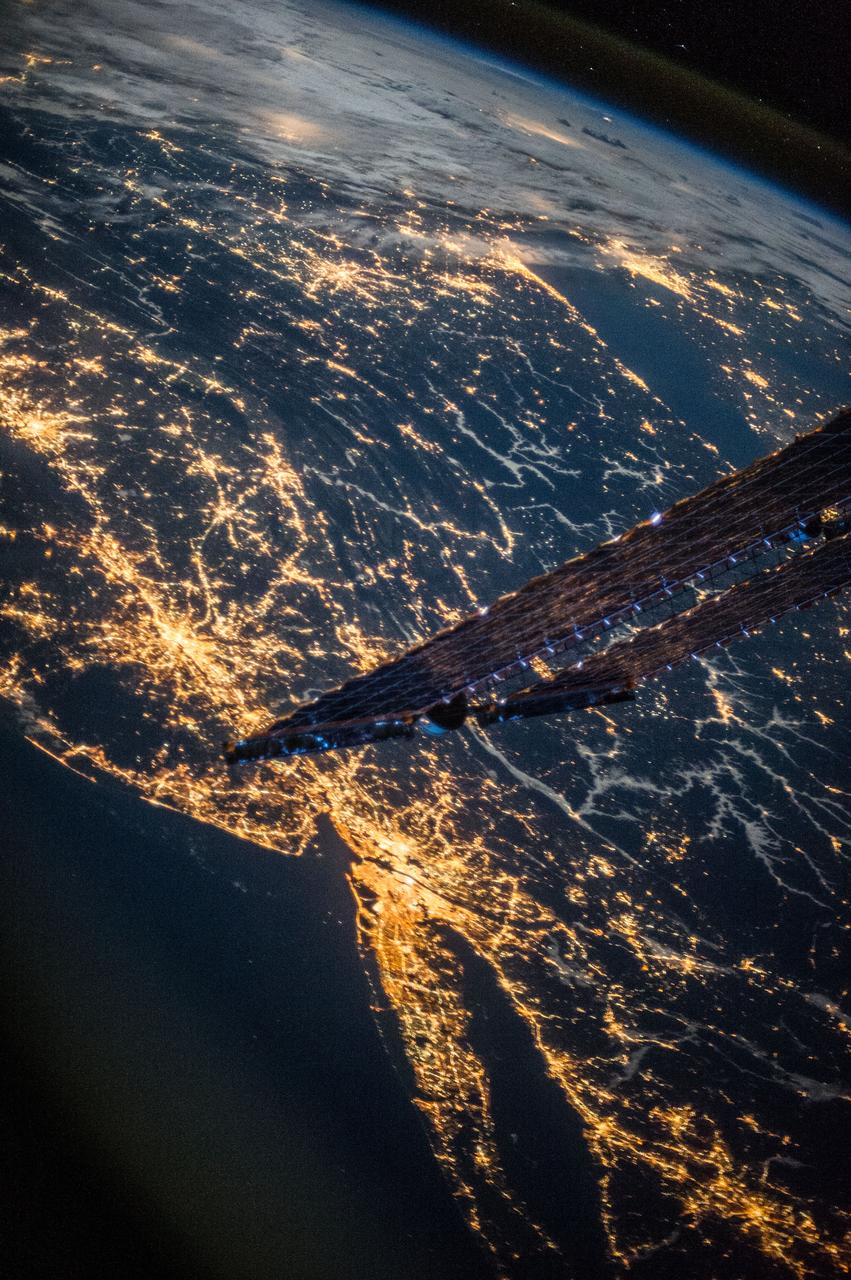
ISS037-E-002225 (18 Sept. 2013) --- One of three Expedition 37 crew members aboard the International Space Station on Sept. 18 photographed this high oblique night image showing dozens of major cities and communities on the east coast and points west toward the Great Lakes area, and even areas to the southwest. Long Island, NY is a tell-tale identifier as it juts out into the Atlantic Ocean in the lower right portion of the image. The estuary known as Long Island Sound is also visible at lower right. The New York metropolitan area is largely visible below the tip of one of the space station's solar array panels.
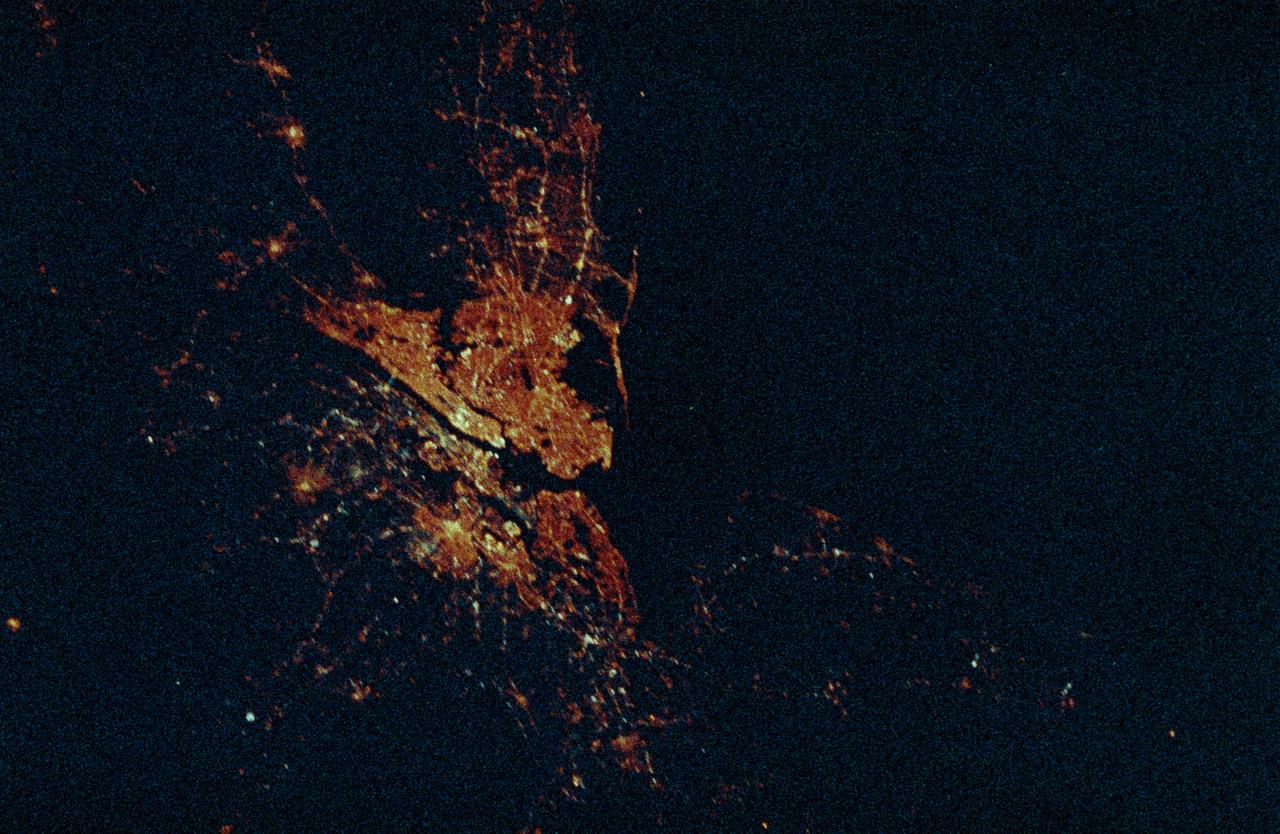
STS-36 Earth observation shows New York City, New York at night lit up along the Eastern seaboard of the United States and the Atlantic Ocean. The city lights designate the densely populated central city and the major highways surrounding it.
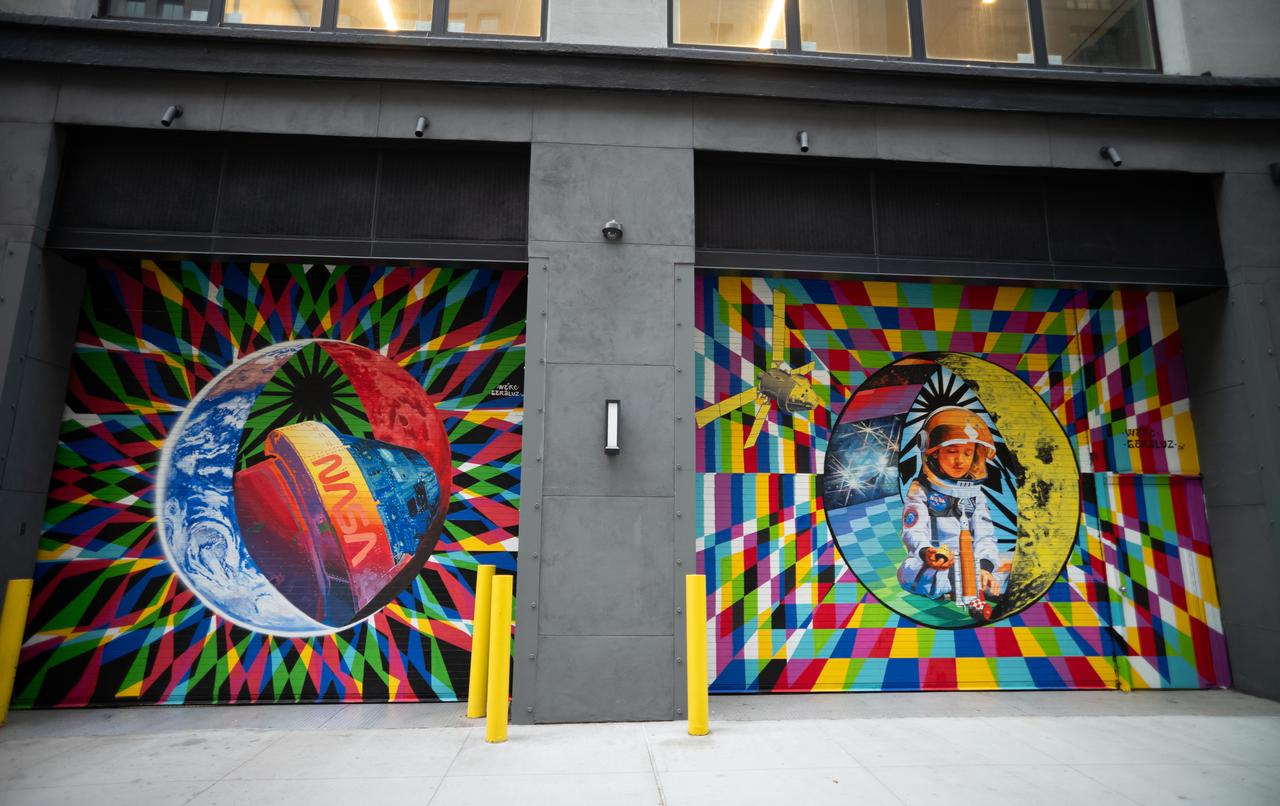
The inaugural murals for the relaunched NASA Art Program appear side-by-side at 350 Hudson Street, Monday, Sept. 23, 2024, in New York City. The murals, titled “To the Moon, and Back,” were created by New York-based artist team Geraluz and WERC and use geometrical patterns to invite deeper reflection on the exploration, creativity, and connection with the cosmos. Photo Credit: (NASA/Joel Kowsky)
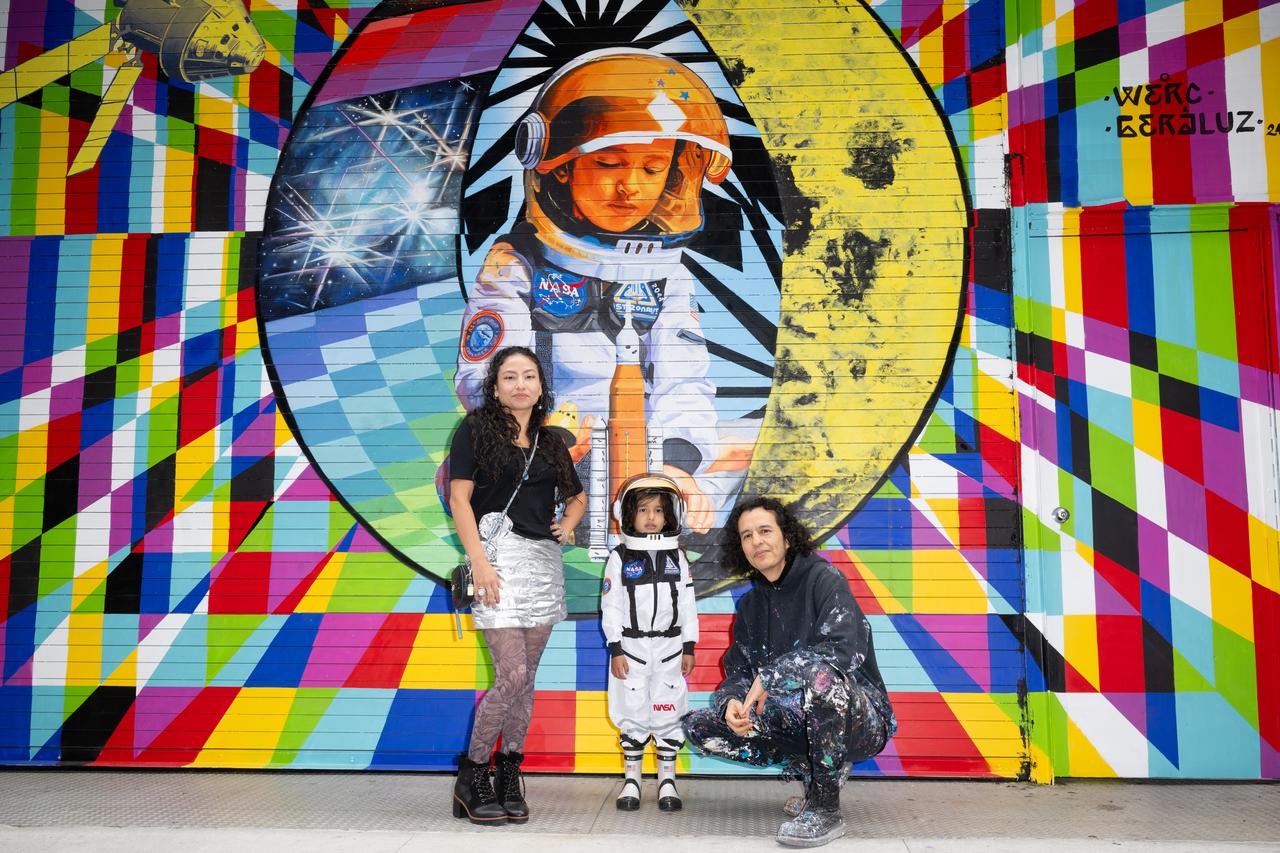
The New York-based artist team Geraluz, left, and WERC, right, and their son Amaru Alvarez, 5, pose for picture with the mural “To the Moon, and Back” by the artist team that was created as part of the reimagined NASA Art Program, Tuesday, September 24, 2024, at 350 Hudson Street in New York City. The murals use geometrical patterns to invite deeper reflection on the exploration, creativity, and connection with the cosmos. Photo Credit: (NASA/Joel Kowsky)

Artist Geraluz talks to a member of the media in front of the mural “To the Moon, and Back” by the New York-based artist team Geraluz and WERC that was created as part of the reimagined NASA Art Program, Tuesday, September 24, 2024, in New York City’s Hudson Square neighborhood. For the inaugural project of the reestablished NASA Art Program the agency collaborated with the Hudson Square Business Improvement District on an open call for New York-based artists to design and install a large-scale mural inspired by NASA’s work and missions. Photo Credit: (NASA/Joel Kowsky)
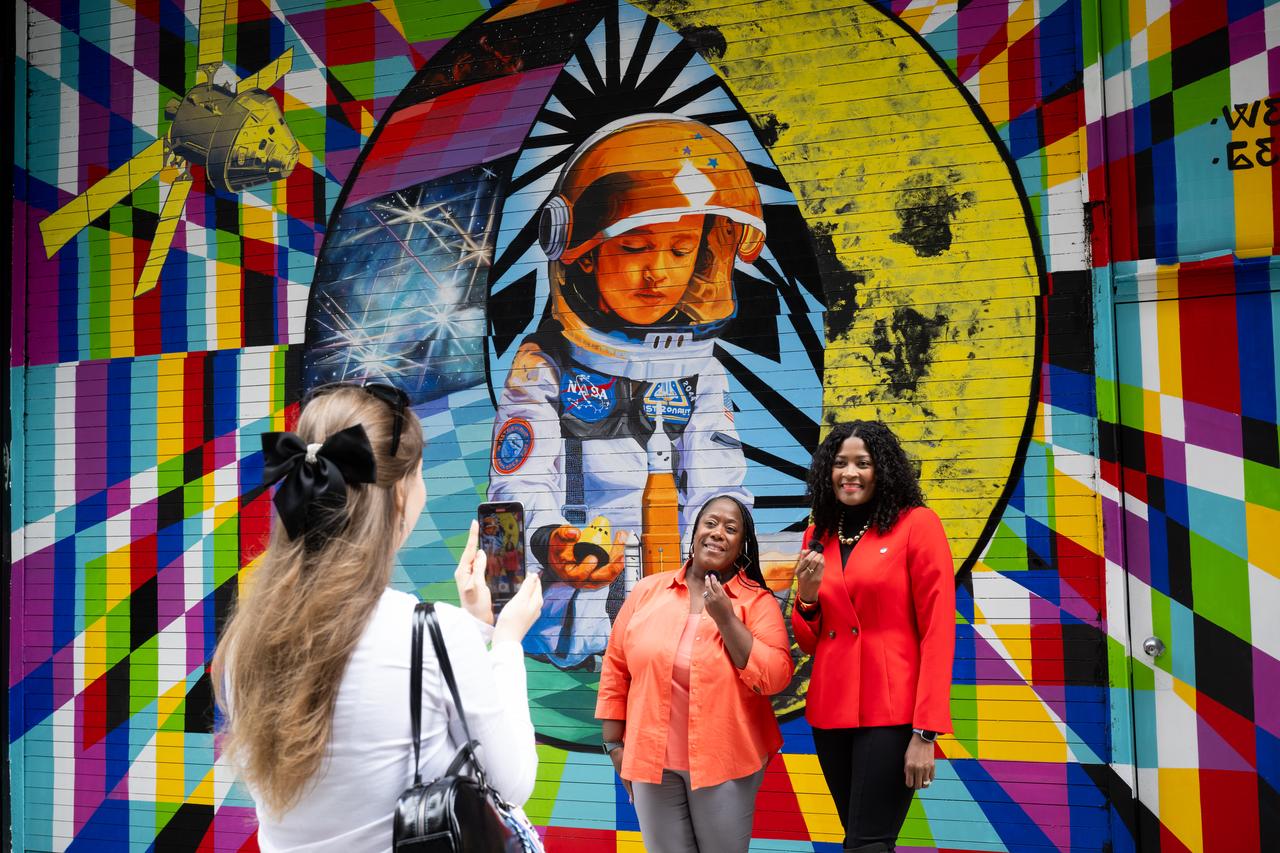
Michelle Jones, NASA’s deputy associate administrator for communications, left, and Aya Collins, director of the engagement division of NASA’s Office of Communications, record a video for social media in front of the mural “To the Moon, and Back” by the New York-based artist team Geraluz and WERC that was created as part of the reimagined NASA Art Program, Tuesday, September 24, 2024, in New York City’s Hudson Square neighborhood. For the inaugural project of the reestablished NASA Art Program the agency collaborated with the Hudson Square Business Improvement District on an open call for New York-based artists to design and install a large-scale mural inspired by NASA’s work and missions. Photo Credit: (NASA/Joel Kowsky)
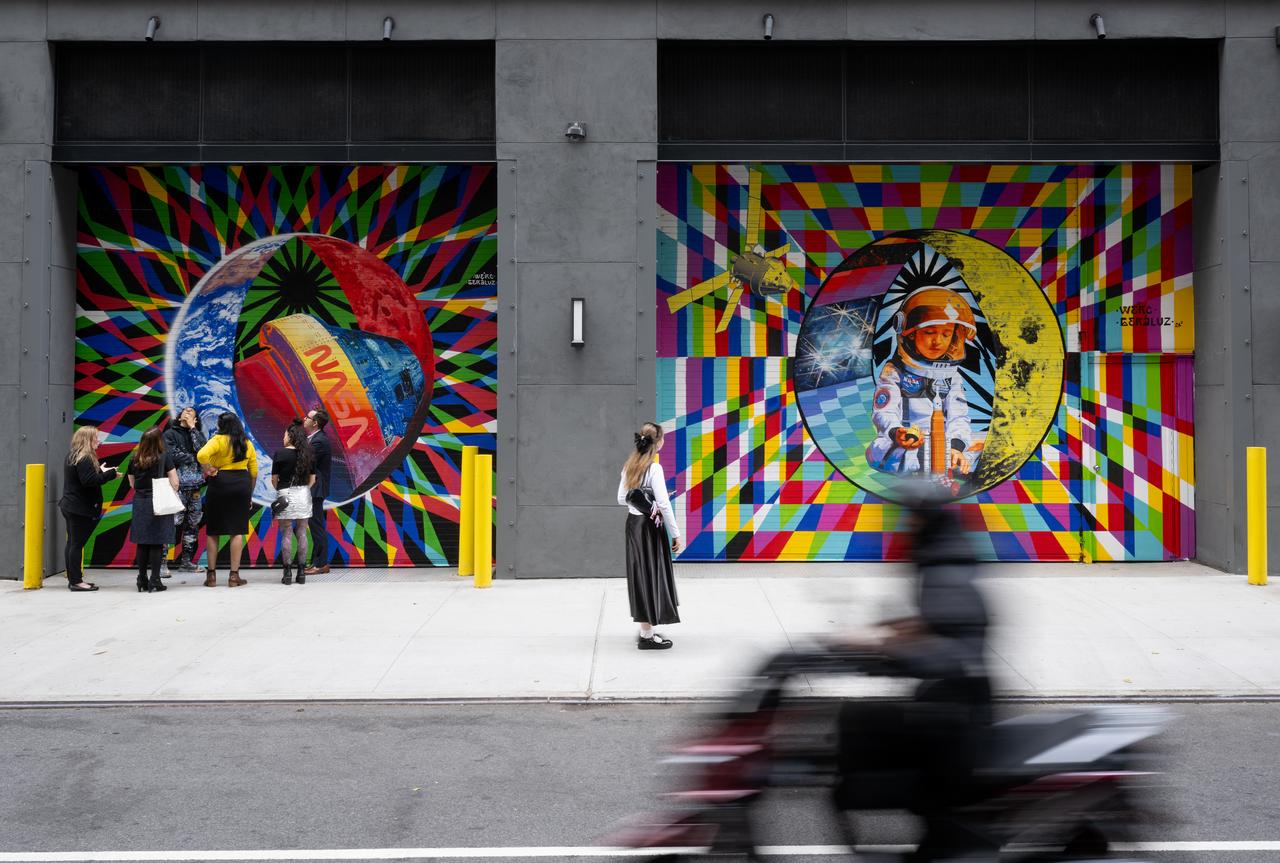
The inaugural murals for the relaunched NASA Art Program appear side-by-side at 350 Hudson Street, Tuesday, Sept. 24, 2024, in New York City. The murals, titled “To the Moon, and Back,” were created by New York-based artist team Geraluz and WERC and use geometrical patterns to invite deeper reflection on the exploration, creativity, and connection with the cosmos. Photo Credit: (NASA/Joel Kowsky)
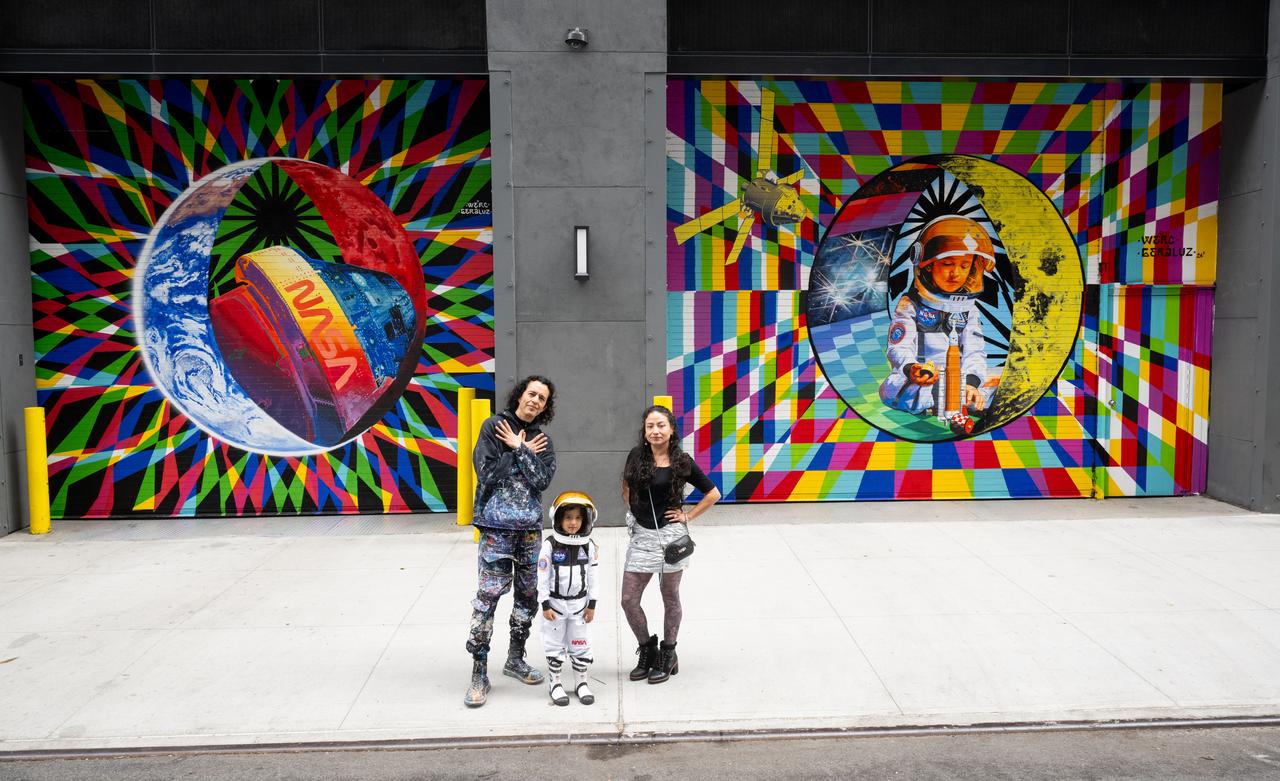
The New York-based artist team Geraluz, left, and WERC, right, and their son Amaru Alvarez, 5, pose for picture with the mural “To the Moon, and Back” by the artist team that was created as part of the reimagined NASA Art Program, Tuesday, September 24, 2024, at 350 Hudson Street in New York City. The murals use geometrical patterns to invite deeper reflection on the exploration, creativity, and connection with the cosmos. Photo Credit: (NASA/Joel Kowsky)
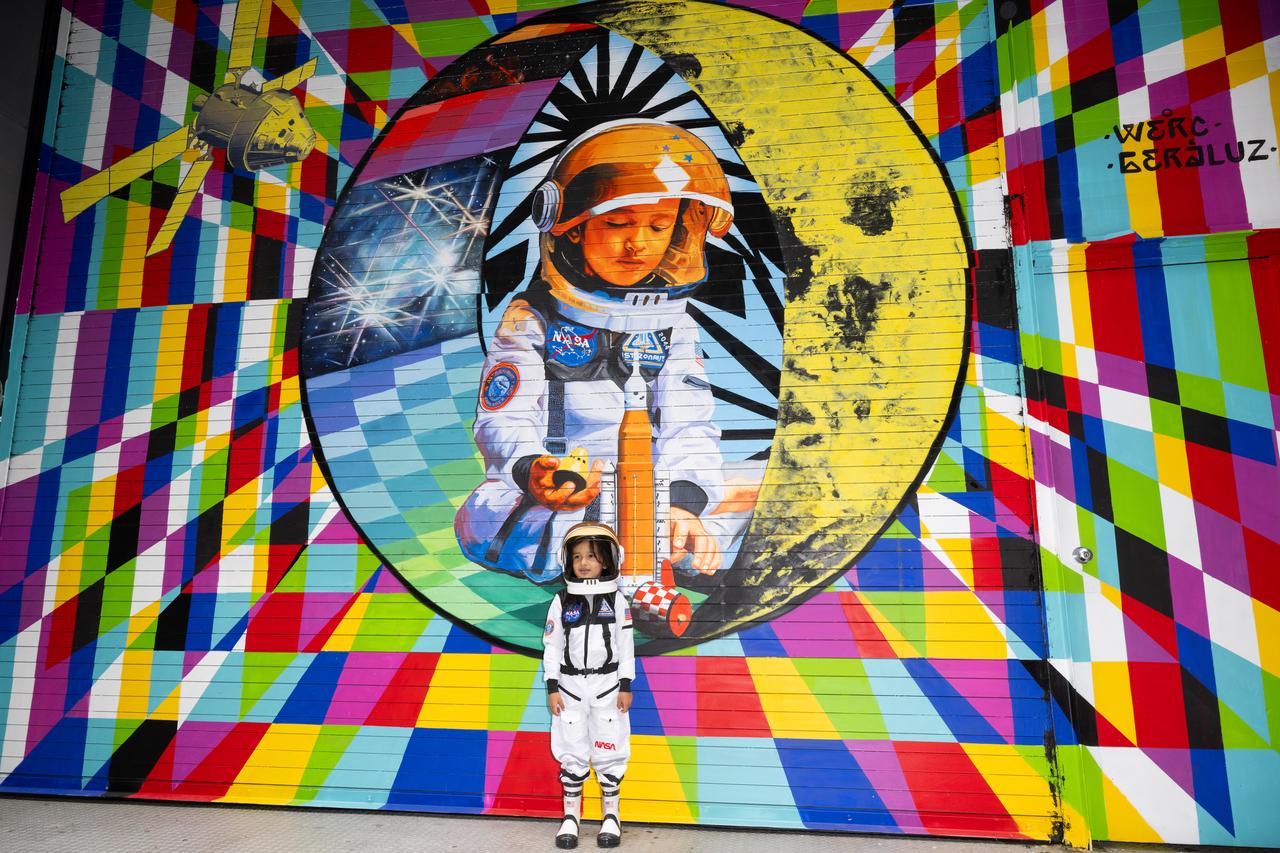
Amaru Alvarez, 5, the son of the artist team Geraluz and WERC and model for the mural, poses for picture with the mural “To the Moon, and Back” by the New York-based artist team that was created as part of the reimagined NASA Art Program, Tuesday, September 24, 2024, at 350 Hudson Street in New York City. The murals use geometrical patterns to invite deeper reflection on the exploration, creativity, and connection with the cosmos. Photo Credit: (NASA/Joel Kowsky)
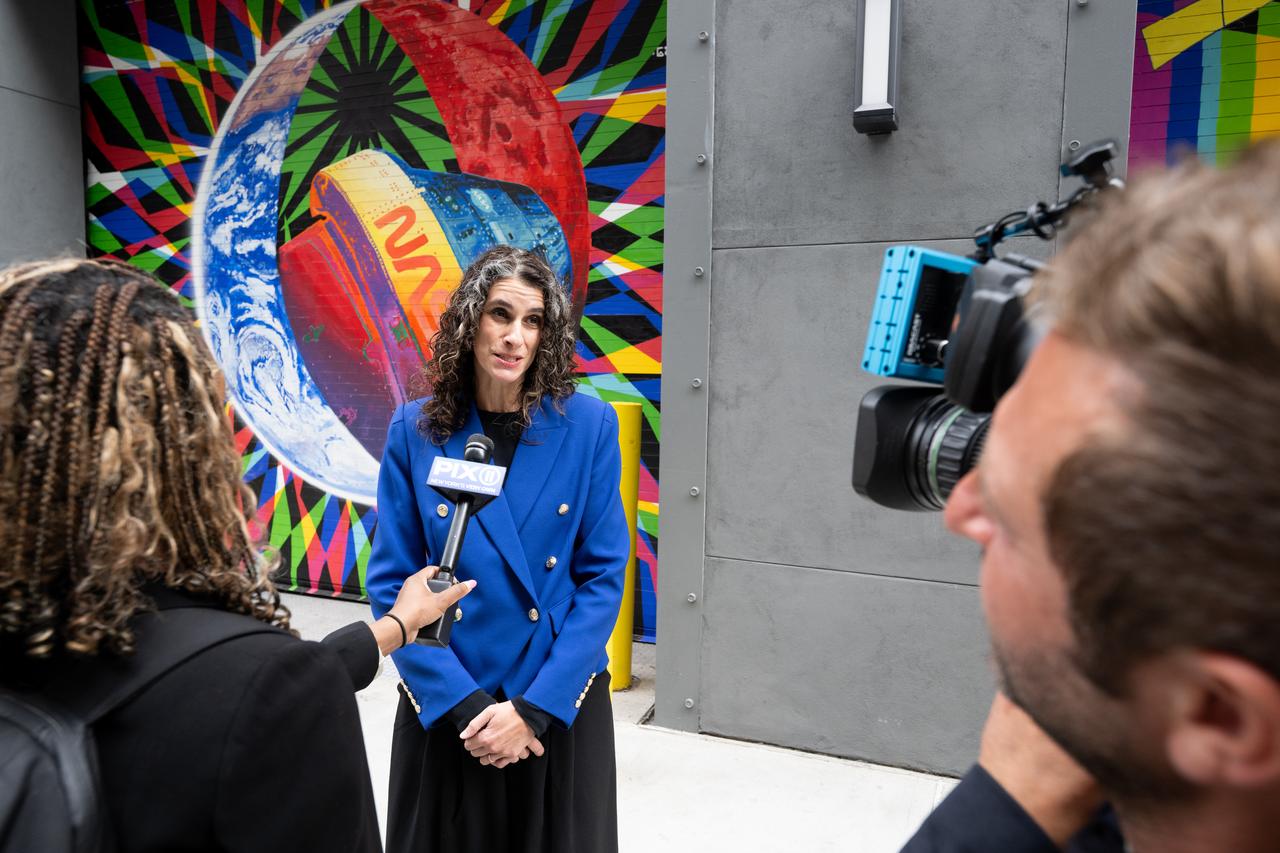
Samara Karasyk, President and CEO of the Hudson Square Business Improvement District talks to a member of the media in front of the mural “To the Moon, and Back” by the New York-based artist team Geraluz and WERC that was created as part of the reimagined NASA Art Program, Tuesday, September 24, 2024, in New York City’s Hudson Square neighborhood. For the inaugural project of the reestablished NASA Art Program the agency collaborated with the Hudson Square Business Improvement District on an open call for New York-based artists to design and install a large-scale mural inspired by NASA’s work and missions. Photo Credit: (NASA/Joel Kowsky)
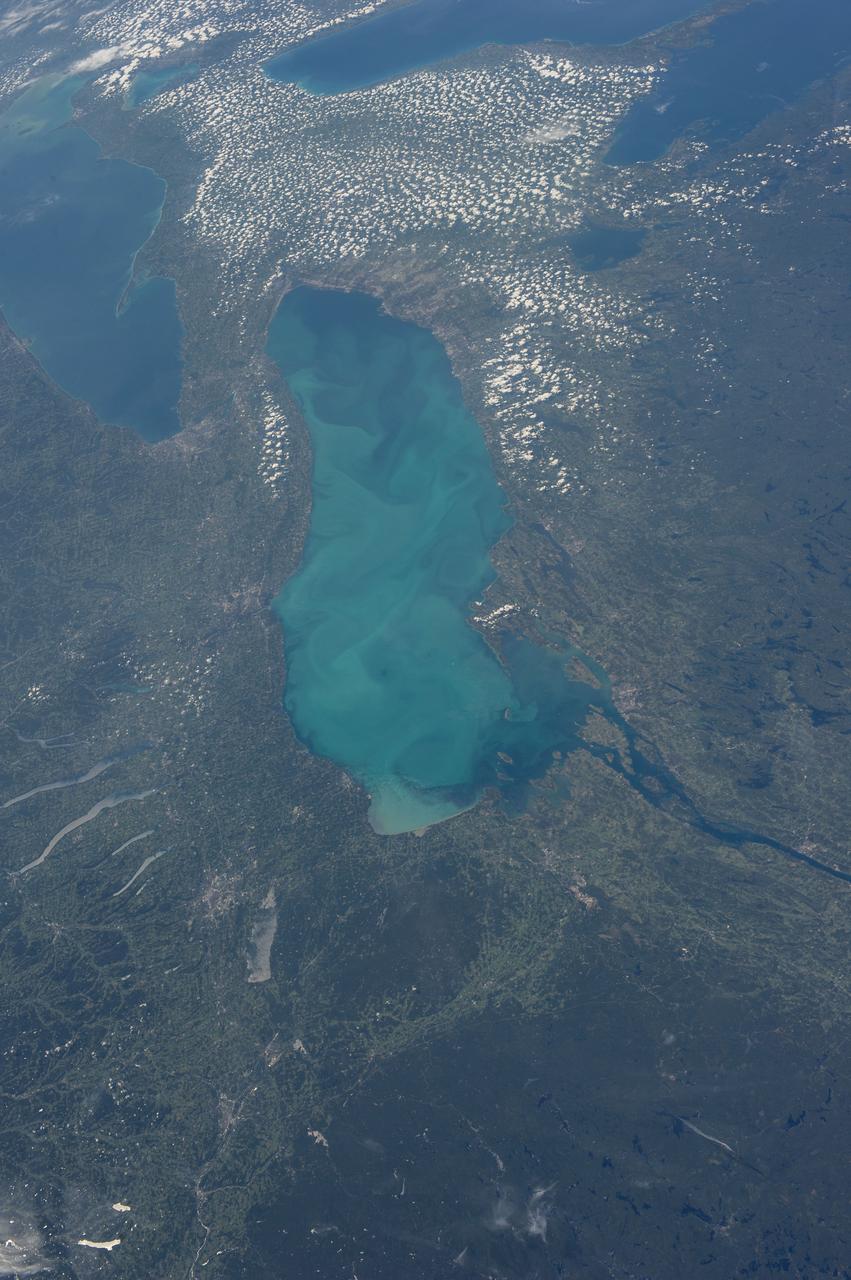
ISS036-E-035635 (24 Aug. 2013) --- Plankton bloom and Lake Ontario are featured in this image photographed by an Expedition 36 crew member on the International Space Station. This photograph highlights a late summer plankton bloom visible throughout much of Lake Ontario (one of the Great Lakes, together with Michigan, Superior, Erie, and Huron). Cyanobacteria, or blue-green algae, can reach such large concentrations that they color the water to such an extent that the change is visible from orbit. Harmful algal blooms, or HABs, have been observed in all of the Great Lakes – particularly Lake Erie - and are associated with a variety of causative factors including changes in precipitation; drought; invasive species (quagga, zebra mussels, Asian carp); nutrient loading from runoff and sewage (nitrogen and phosphorus); and warmer average temperatures. In addition to reduced water quality and human health concerns, algal blooms can also lead to hypoxia (reduction of oxygen in the bottom waters) that kills large numbers of fish and other aquatic life. Lake Ontario, like the other Great Lakes Erie, Huron, and Superior is roughly divided between the USA and Canada. The USA side of Lake Ontario has its shoreline along the state of New York, while its Canadian shoreline lies within the province of Ontario. The city of Kingston, Ontario, is visible near the Saint Lawrence River outflow from the lake. Several other landscape features of New York State are visible in the image, including the Finger Lakes region to the west of Syracuse, NY (upper left). To the northeast of Syracuse, the dark wooded slopes of the Adirondack Mountains are visible at lower right. Patchy white cloud cover obscures much of the land surface to the west of Lake Ontario.