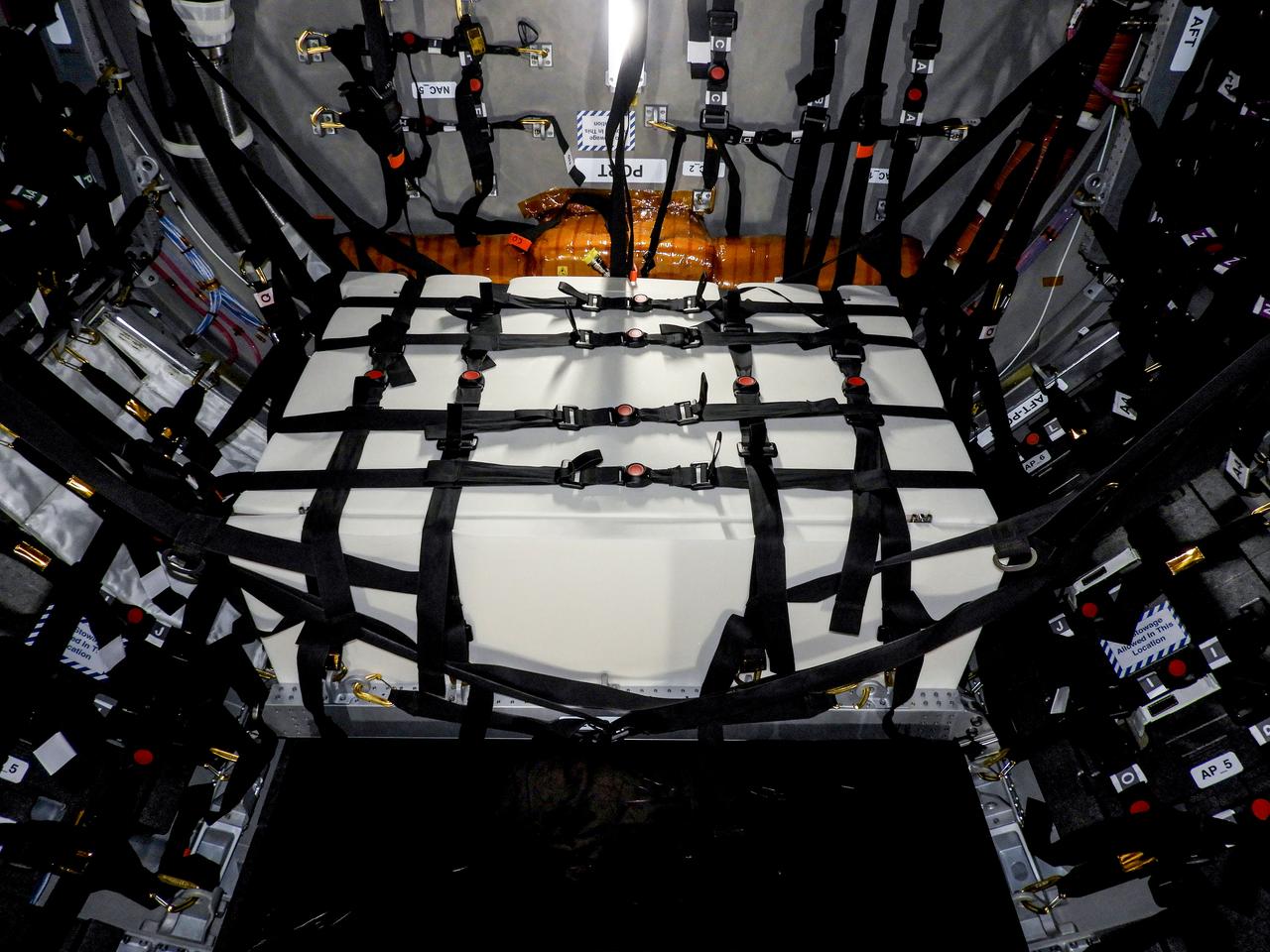
jsc2023e046377 (12/14/2019) --- A view of the Spacecraft Fire Safety Experiments (Saffire) VI experiment hardware, loaded inside the Northrop Grumman (NG) Cygnus cargo vehicle for the 19th NG resupply mission to the International Space Station. Saffire is a series of experiments to investigate how fire spreads on a variety of combustible materials in the microgravity environment. The experiments are ignited in the Cygnus cargo spacecraft after it departs the space station and before it reenters the Earth's atmosphere. Saffire-VI builds on prior results to test flammability at different oxygen levels and aims to further knowledge of realistic flame spread to aid the development of fire safety equipment and strategies for future spacecraft.

Karl Hasenstein, the principal investigator for the Plant Habitat-02, or PH-02, plants radish seeds in seed carriers for the Addvanced Plant Habitat (APH) in the Space Life Sciences Lab at Kennedy Space Center on Sept. 23, 2020. The carriers will fly aboard Northrop Grumman’s 14th commercial resupply services mission to the International Space Station. The launch, aboard Northrop Grumman’s Cygnus spacecraft, is targeted for Sept. 29 from NASA’s Wallops Flight Facility in Virginia. Astronauts will grow radish plants in the APH, NASA’s largest and most advanced growth chamber on station.

Karl Hasenstein, the principal investigator for the Plant Habitat-02, or PH-02, plants radish seeds in seed carriers for the Addvanced Plant Habitat (APH) in the Space Life Sciences Lab at Kennedy Space Center on Sept. 23, 2020. The carriers will fly aboard Northrop Grumman’s 14th commercial resupply services mission to the International Space Station. The launch, aboard Northrop Grumman’s Cygnus spacecraft, is targeted for Sept. 29 from NASA’s Wallops Flight Facility in Virginia. Astronauts will grow radish plants in the APH, NASA’s largest and most advanced growth chamber on station.

Karl Hasenstein, the principal investigator for the Plant Habitat-02, or PH-02, plants radish seeds in seed carriers for the Addvanced Plant Habitat (APH) in the Space Life Sciences Lab at Kennedy Space Center on Sept. 23, 2020. The carriers will fly aboard Northrop Grumman’s 14th commercial resupply services mission to the International Space Station. The launch, aboard Northrop Grumman’s Cygnus spacecraft, is targeted for Sept. 29 from NASA’s Wallops Flight Facility in Virginia. Astronauts will grow radish plants in the APH, NASA’s largest and most advanced growth chamber on station.

Karl Hasenstein, the principal investigator for the Plant Habitat-02, or PH-02, plants radish seeds in seed carriers for the Addvanced Plant Habitat (APH) in the Space Life Sciences Lab at Kennedy Space Center on Sept. 23, 2020. The carriers will fly aboard Northrop Grumman’s 14th commercial resupply services mission to the International Space Station. The launch, aboard Northrop Grumman’s Cygnus spacecraft, is targeted for Sept. 29 from NASA’s Wallops Flight Facility in Virginia. Astronauts will grow radish plants in the APH, NASA’s largest and most advanced growth chamber on station.

Karl Hasenstein, the principal investigator for the Plant Habitat-02, or PH-02, plants radish seeds in seed carriers for the Addvanced Plant Habitat (APH) in the Space Life Sciences Lab at Kennedy Space Center on Sept. 23, 2020. The carriers will fly aboard Northrop Grumman’s 14th commercial resupply services mission to the International Space Station. The launch, aboard Northrop Grumman’s Cygnus spacecraft, is targeted for Sept. 29 from NASA’s Wallops Flight Facility in Virginia. Astronauts will grow radish plants in the APH, NASA’s largest and most advanced growth chamber on station.

Karl Hasenstein, the principal investigator for the Plant Habitat-02, or PH-02, plants radish seeds in seed carriers for the Addvanced Plant Habitat (APH) in the Space Life Sciences Lab at Kennedy Space Center on Sept. 23, 2020. The carriers will fly aboard Northrop Grumman’s 14th commercial resupply services mission to the International Space Station. The launch, aboard Northrop Grumman’s Cygnus spacecraft, is targeted for Sept. 29 from NASA’s Wallops Flight Facility in Virginia. Astronauts will grow radish plants in the APH, NASA’s largest and most advanced growth chamber on station.

Karl Hasenstein, the principal investigator for the Plant Habitat-02, or PH-02, plants radish seeds in seed carriers for the Addvanced Plant Habitat (APH) in the Space Life Sciences Lab at Kennedy Space Center on Sept. 23, 2020. The carriers will fly aboard Northrop Grumman’s 14th commercial resupply services mission to the International Space Station. The launch, aboard Northrop Grumman’s Cygnus spacecraft, is targeted for Sept. 29 from NASA’s Wallops Flight Facility in Virginia. Astronauts will grow radish plants in the APH, NASA’s largest and most advanced growth chamber on station.

Karl Hasenstein, the principal investigator for the Plant Habitat-02, or PH-02, plants radish seeds in seed carriers for the Addvanced Plant Habitat (APH) in the Space Life Sciences Lab at Kennedy Space Center on Sept. 23, 2020. The carriers will fly aboard Northrop Grumman’s 14th commercial resupply services mission to the International Space Station. The launch, aboard Northrop Grumman’s Cygnus spacecraft, is targeted for Sept. 29 from NASA’s Wallops Flight Facility in Virginia. Astronauts will grow radish plants in the APH, NASA’s largest and most advanced growth chamber on station.

Karl Hasenstein, the principal investigator for the Plant Habitat-02, or PH-02, plants radish seeds in seed carriers for the Addvanced Plant Habitat (APH) in the Space Life Sciences Lab at Kennedy Space Center on Sept. 23, 2020. The carriers will fly aboard Northrop Grumman’s 14th commercial resupply services mission to the International Space Station. The launch, aboard Northrop Grumman’s Cygnus spacecraft, is targeted for Sept. 29 from NASA’s Wallops Flight Facility in Virginia. Astronauts will grow radish plants in the APH, NASA’s largest and most advanced growth chamber on station.

Karl Hasenstein, the principal investigator for the Plant Habitat-02, or PH-02, plants radish seeds in seed carriers for the Addvanced Plant Habitat (APH) in the Space Life Sciences Lab at Kennedy Space Center on Sept. 23, 2020. The carriers will fly aboard Northrop Grumman’s 14th commercial resupply services mission to the International Space Station. The launch, aboard Northrop Grumman’s Cygnus spacecraft, is targeted for Sept. 29 from NASA’s Wallops Flight Facility in Virginia. Astronauts will grow radish plants in the APH, NASA’s largest and most advanced growth chamber on station.
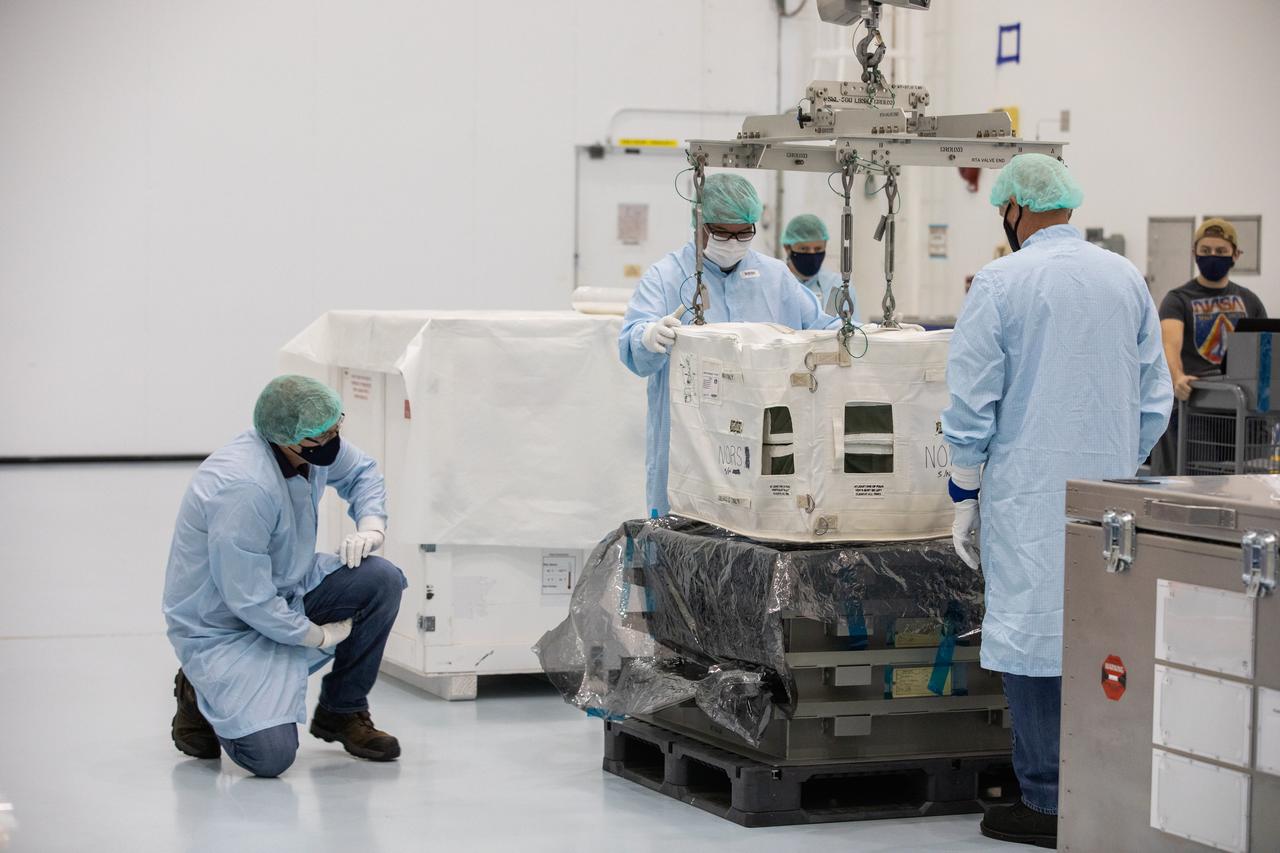
Technicians unpack and inspect a Nitrogen/Oxygen Recharge System (NORS) tank inside the Space Station Processing Facility high bay at NASA’s Kennedy Space Center in Florida on July 16, 2020. The NORS tanks and their support fixtures are designed to connect to the International Space Station’s existing air supply network to refill the previous generation of tanks installed during construction of the space station. These reusable tanks measure 3 feet long and 21 inches in diameter, and weigh about 200 pounds when filled. Once onboard, the tanks will be used to fill the oxygen and nitrogen tanks that supply the needed gases to the space station’s airlock for spacewalks. They could also be used to replenish the atmosphere inside the station. The NORS tanks will launch to the station later in the year on a commercial resupply mission.
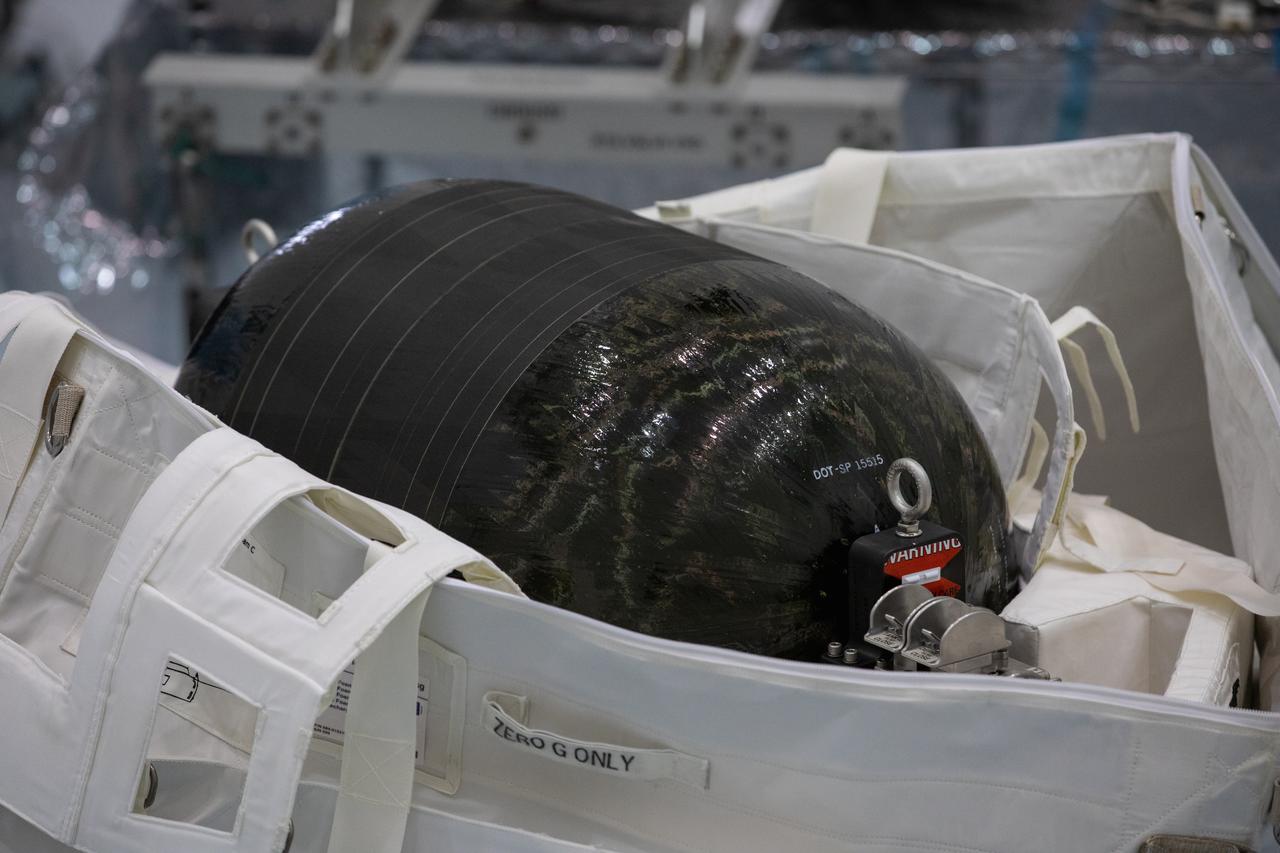
A Nitrogen/Oxygen Recharge System (NORS) tank is unpacked and readied for inspection inside the Space Station Processing Facility high bay at NASA’s Kennedy Space Center in Florida on July 16, 2020. The NORS tanks and their support fixtures are designed to connect to the International Space Station’s existing air supply network to refill the previous generation of tanks installed during construction of the space station. These reusable tanks measure 3 feet long and 21 inches in diameter, and weigh about 200 pounds when filled. Once onboard, the tanks will be used to fill the oxygen and nitrogen tanks that supply the needed gases to the space station’s airlock for spacewalks. They could also be used to replenish the atmosphere inside the station. The NORS tanks will launch to the station later in the year on a commercial resupply mission.
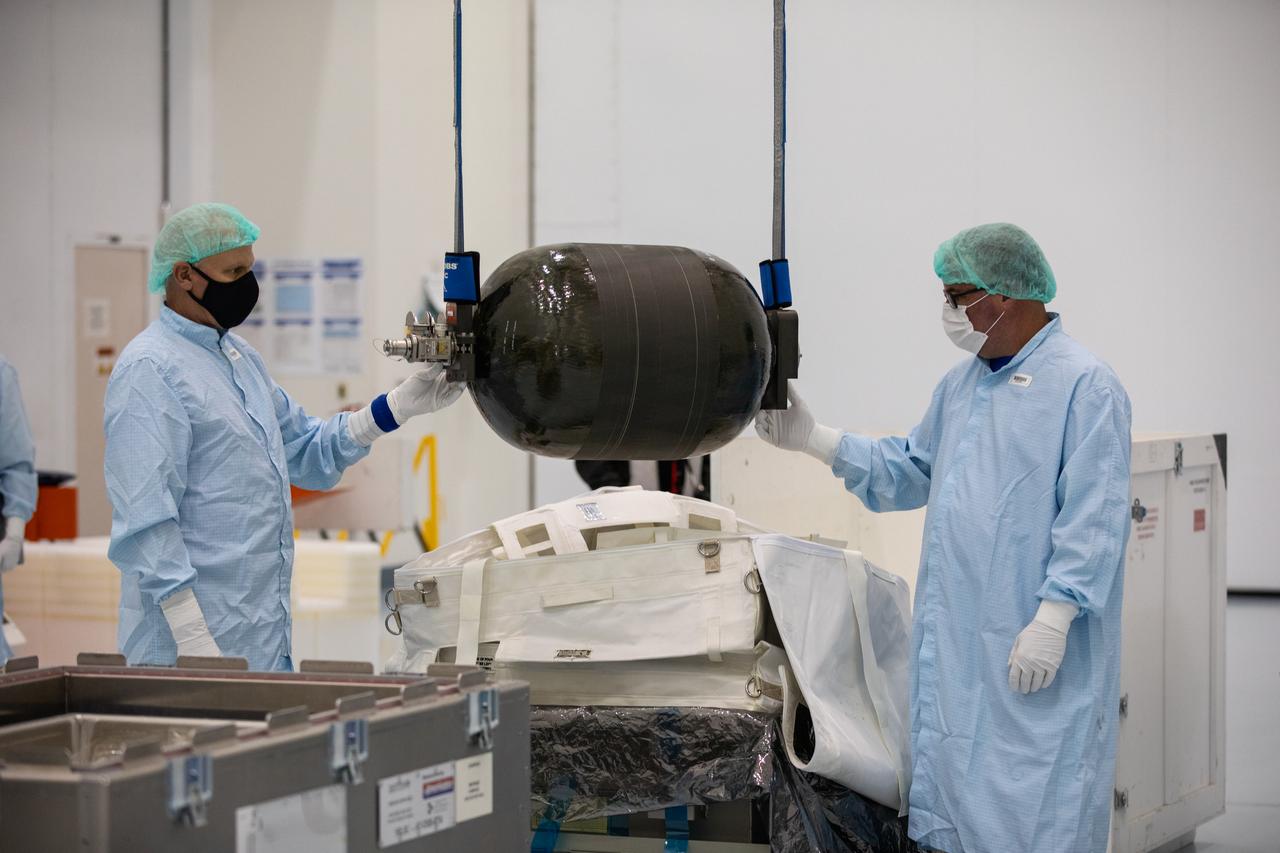
Technicians unpack and inspect a Nitrogen/Oxygen Recharge System (NORS) tank inside the Space Station Processing Facility high bay at NASA’s Kennedy Space Center in Florida on July 16, 2020. The NORS tanks and their support fixtures are designed to connect to the International Space Station’s existing air supply network to refill the previous generation of tanks installed during construction of the space station. These reusable tanks measure 3 feet long and 21 inches in diameter, and weigh about 200 pounds when filled. Once onboard, the tanks will be used to fill the oxygen and nitrogen tanks that supply the needed gases to the space station’s airlock for spacewalks. They could also be used to replenish the atmosphere inside the station. The NORS tanks will launch to the station later in the year on a commercial resupply mission.
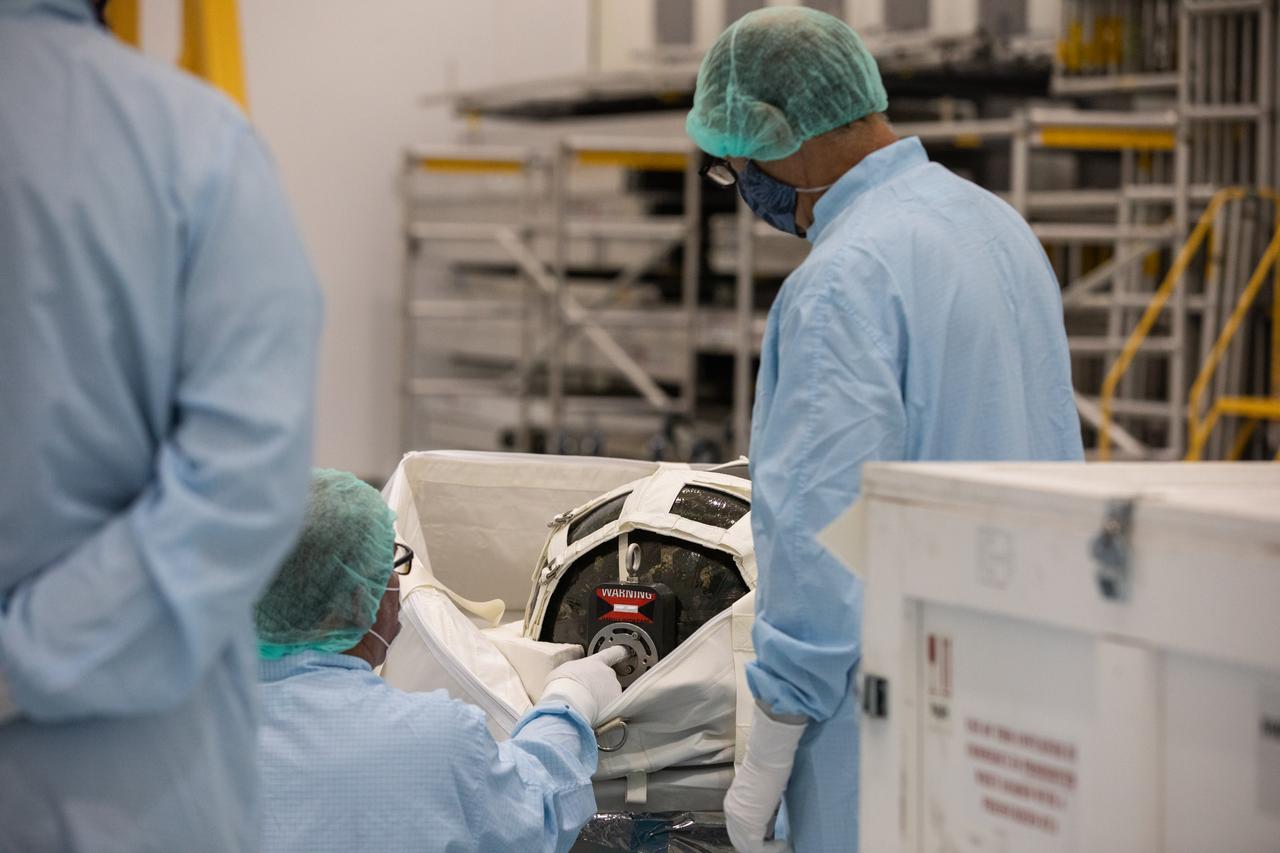
Technicians unpack and inspect a Nitrogen/Oxygen Recharge System (NORS) tank inside the Space Station Processing Facility high bay at NASA’s Kennedy Space Center in Florida on July 16, 2020. The NORS tanks and their support fixtures are designed to connect to the International Space Station’s existing air supply network to refill the previous generation of tanks installed during construction of the space station. These reusable tanks measure 3 feet long and 21 inches in diameter, and weigh about 200 pounds when filled. Once onboard, the tanks will be used to fill the oxygen and nitrogen tanks that supply the needed gases to the space station’s airlock for spacewalks. They could also be used to replenish the atmosphere inside the station. The NORS tanks will launch to the station later in the year on a commercial resupply mission.
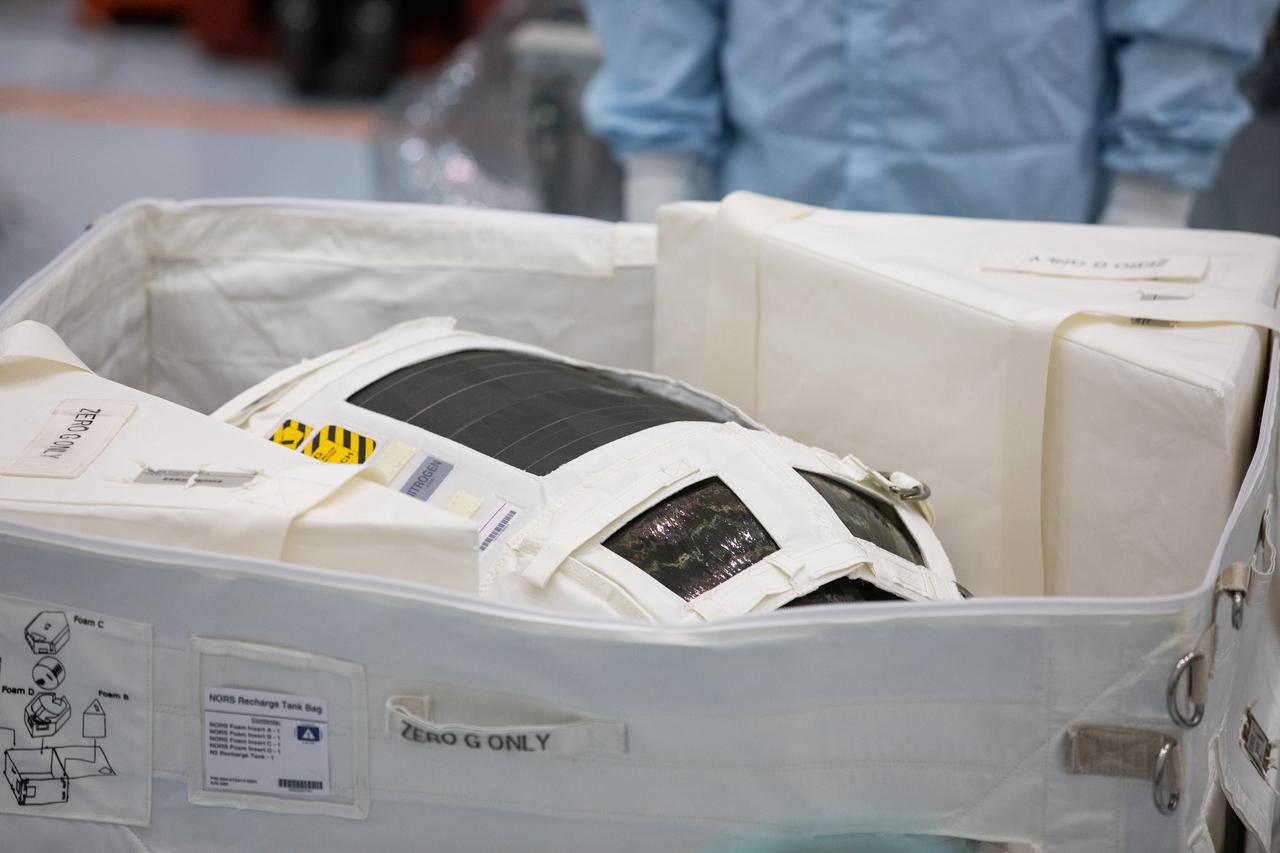
A Nitrogen/Oxygen Recharge System (NORS) tank is unpacked and readied for inspection inside the Space Station Processing Facility high bay at NASA’s Kennedy Space Center in Florida on July 16, 2020. The NORS tanks and their support fixtures are designed to connect to the International Space Station’s existing air supply network to refill the previous generation of tanks installed during construction of the space station. These reusable tanks measure 3 feet long and 21 inches in diameter, and weigh about 200 pounds when filled. Once onboard, the tanks will be used to fill the oxygen and nitrogen tanks that supply the needed gases to the space station’s airlock for spacewalks. They could also be used to replenish the atmosphere inside the station. The NORS tanks will launch to the station later in the year on a commercial resupply mission.

A technicians inspects a Nitrogen/Oxygen Recharge System (NORS) tank inside the Space Station Processing Facility high bay at NASA’s Kennedy Space Center in Florida on July 16, 2020. The NORS tanks and their support fixtures are designed to connect to the International Space Station’s existing air supply network to refill the previous generation of tanks installed during construction of the space station. These reusable tanks measure 3 feet long and 21 inches in diameter, and weigh about 200 pounds when filled. Once onboard, the tanks will be used to fill the oxygen and nitrogen tanks that supply the needed gases to the space station’s airlock for spacewalks. They could also be used to replenish the atmosphere inside the station. The NORS tanks will launch to the station later in the year on a commercial resupply mission.
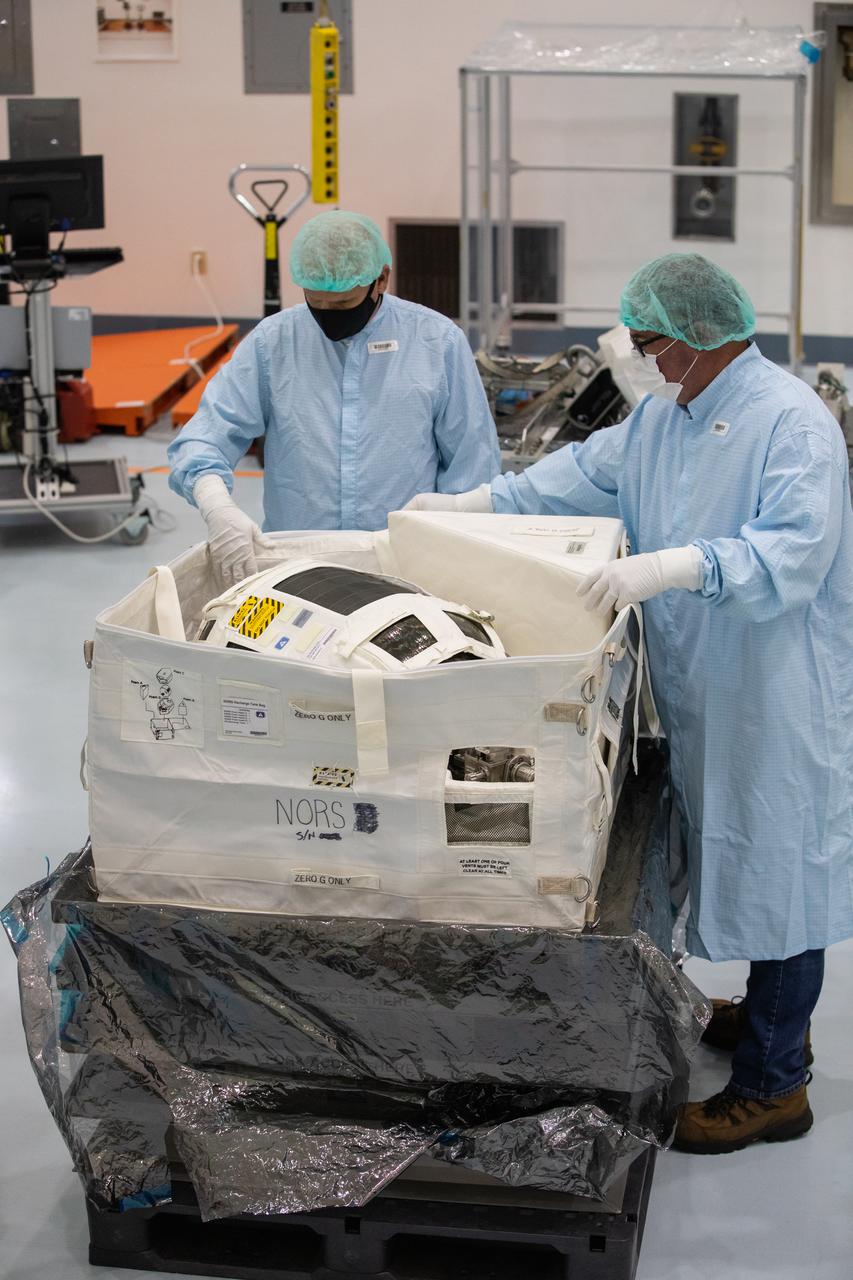
Technicians unpack and inspect a Nitrogen/Oxygen Recharge System (NORS) tank inside the Space Station Processing Facility high bay at NASA’s Kennedy Space Center in Florida on July 16, 2020. The NORS tanks and their support fixtures are designed to connect to the International Space Station’s existing air supply network to refill the previous generation of tanks installed during construction of the space station. These reusable tanks measure 3 feet long and 21 inches in diameter, and weigh about 200 pounds when filled. Once onboard, the tanks will be used to fill the oxygen and nitrogen tanks that supply the needed gases to the space station’s airlock for spacewalks. They could also be used to replenish the atmosphere inside the station. The NORS tanks will launch to the station later in the year on a commercial resupply mission.
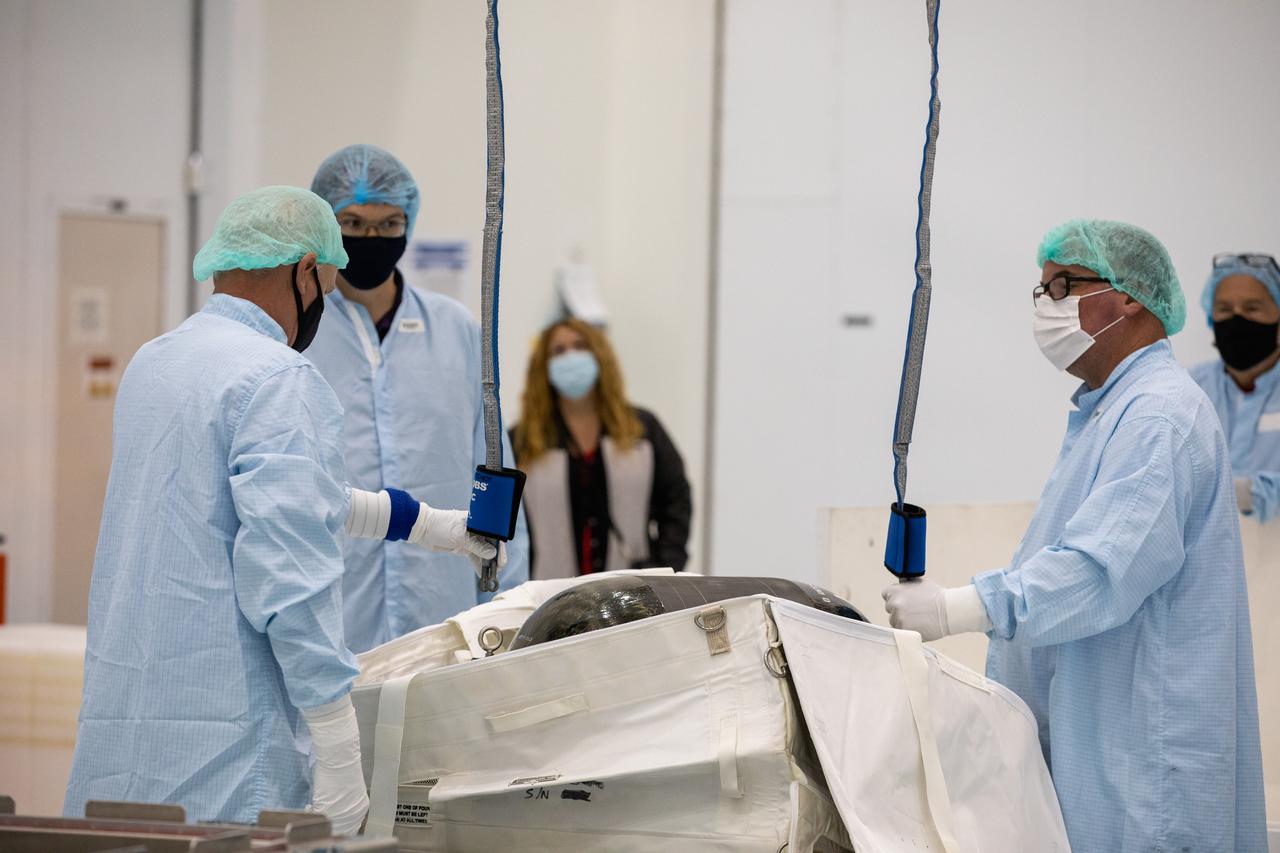
Technicians prepare to unpack and inspect a Nitrogen/Oxygen Recharge System (NORS) tank inside the Space Station Processing Facility high bay at NASA’s Kennedy Space Center in Florida on July 16, 2020. The NORS tanks and their support fixtures are designed to connect to the International Space Station’s existing air supply network to refill the previous generation of tanks installed during construction of the space station. These reusable tanks measure 3 feet long and 21 inches in diameter, and weigh about 200 pounds when filled. Once onboard, the tanks will be used to fill the oxygen and nitrogen tanks that supply the needed gases to the space station’s airlock for spacewalks. They could also be used to replenish the atmosphere inside the station. The NORS tanks will launch to the station later in the year on a commercial resupply mission.
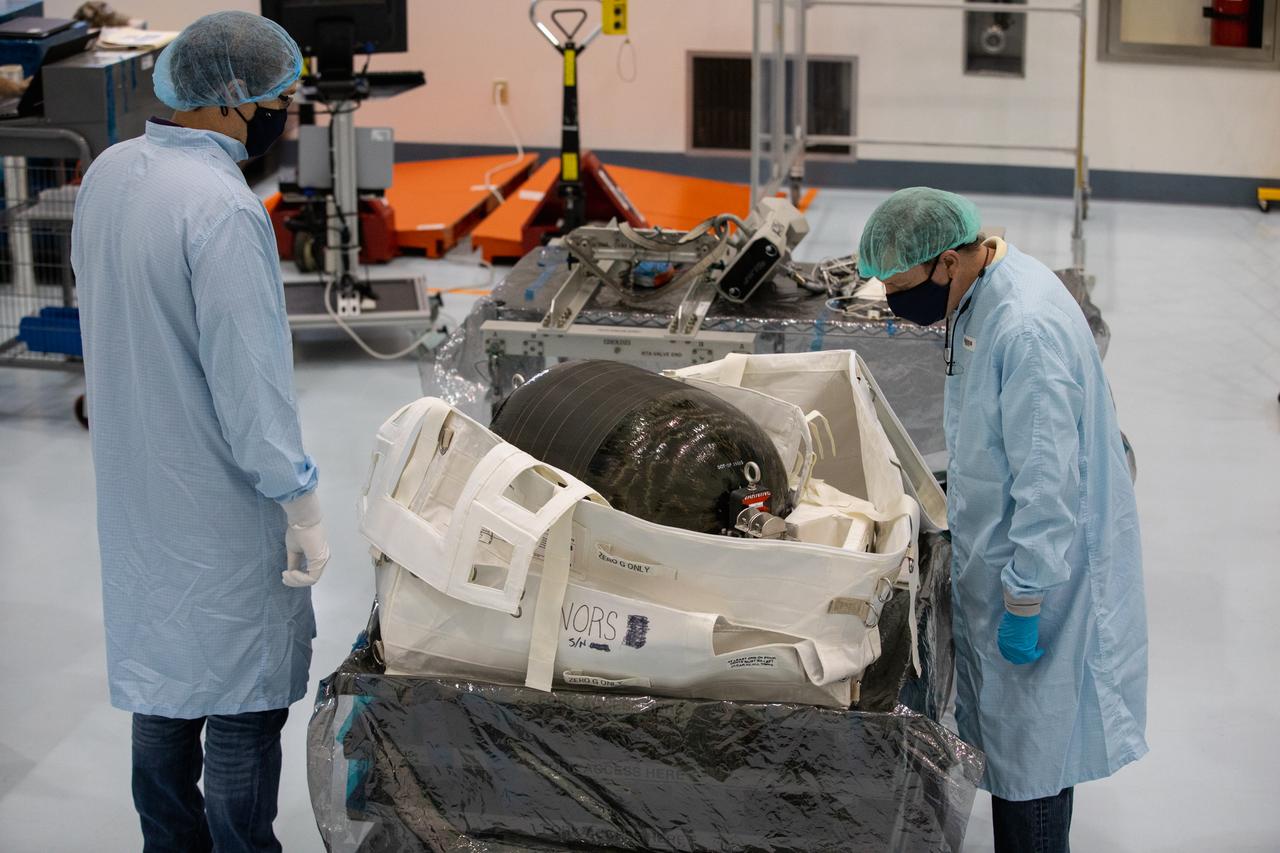
Technicians unpack and inspect a Nitrogen/Oxygen Recharge System (NORS) tank inside the Space Station Processing Facility high bay at NASA’s Kennedy Space Center in Florida on July 16, 2020. The NORS tanks and their support fixtures are designed to connect to the International Space Station’s existing air supply network to refill the previous generation of tanks installed during construction of the space station. These reusable tanks measure 3 feet long and 21 inches in diameter, and weigh about 200 pounds when filled. Once onboard, the tanks will be used to fill the oxygen and nitrogen tanks that supply the needed gases to the space station’s airlock for spacewalks. They could also be used to replenish the atmosphere inside the station. The NORS tanks will launch to the station later in the year on a commercial resupply mission.
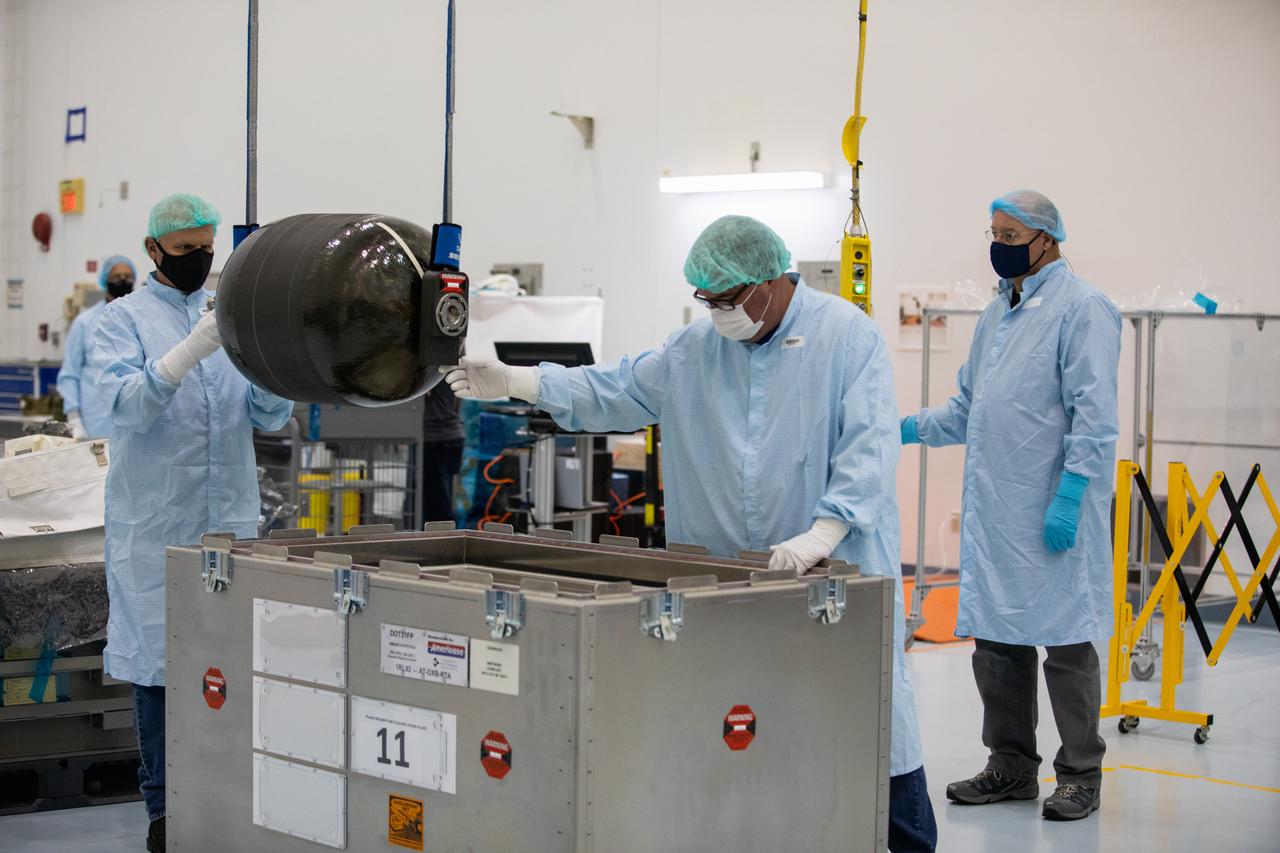
Technicians unpack and inspect a Nitrogen/Oxygen Recharge System (NORS) tank inside the Space Station Processing Facility high bay at NASA’s Kennedy Space Center in Florida on July 16, 2020. The NORS tanks and their support fixtures are designed to connect to the International Space Station’s existing air supply network to refill the previous generation of tanks installed during construction of the space station. These reusable tanks measure 3 feet long and 21 inches in diameter, and weigh about 200 pounds when filled. Once onboard, the tanks will be used to fill the oxygen and nitrogen tanks that supply the needed gases to the space station’s airlock for spacewalks. They could also be used to replenish the atmosphere inside the station. The NORS tanks will launch to the station later in the year on a commercial resupply mission.
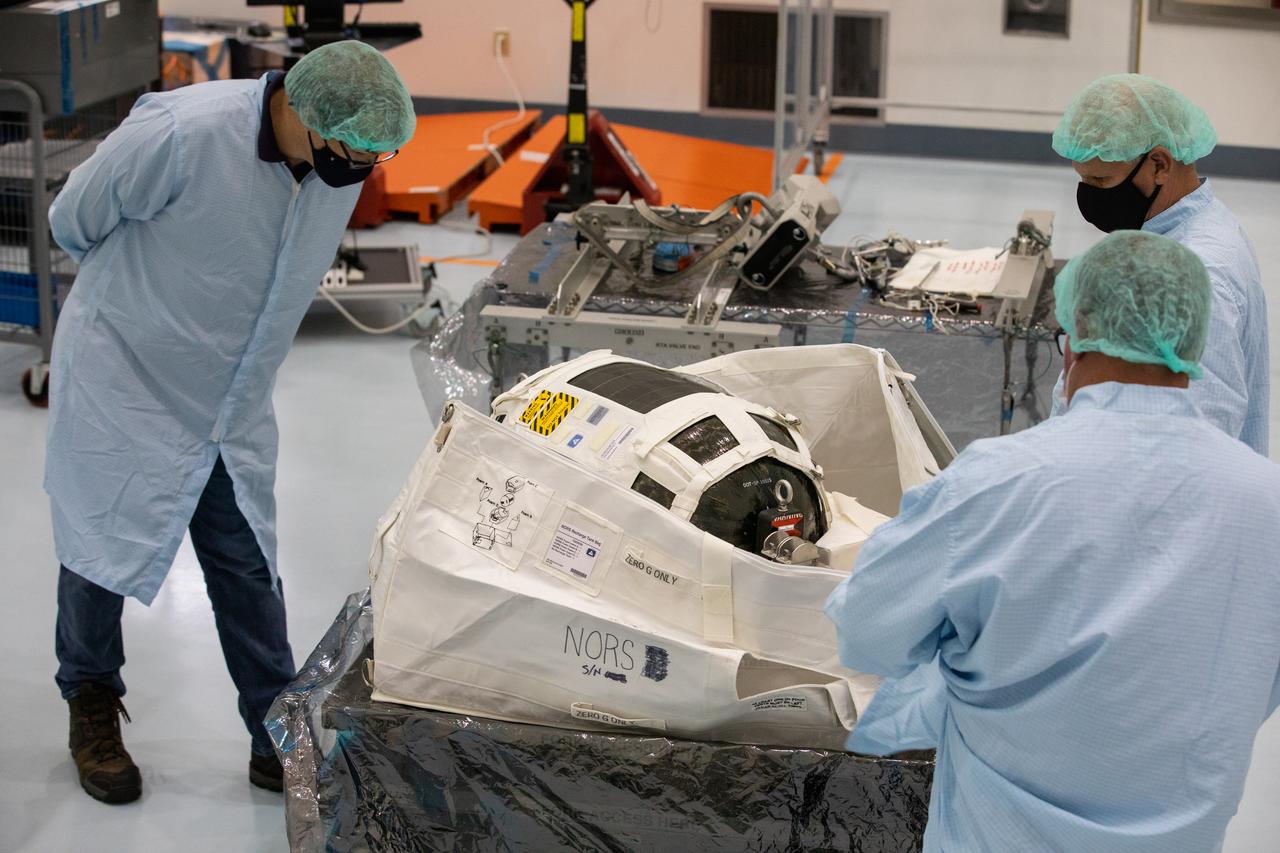
Technicians unpack and inspect a Nitrogen/Oxygen Recharge System (NORS) tank inside the Space Station Processing Facility high bay at NASA’s Kennedy Space Center in Florida on July 16, 2020. The NORS tanks and their support fixtures are designed to connect to the International Space Station’s existing air supply network to refill the previous generation of tanks installed during construction of the space station. These reusable tanks measure 3 feet long and 21 inches in diameter, and weigh about 200 pounds when filled. Once onboard, the tanks will be used to fill the oxygen and nitrogen tanks that supply the needed gases to the space station’s airlock for spacewalks. They could also be used to replenish the atmosphere inside the station. The NORS tanks will launch to the station later in the year on a commercial resupply mission.

A Nitrogen/Oxygen Recharge System (NORS) tank is unpacked and readied for inspection inside the Space Station Processing Facility high bay at NASA’s Kennedy Space Center in Florida on July 16, 2020. The NORS tanks and their support fixtures are designed to connect to the International Space Station’s existing air supply network to refill the previous generation of tanks installed during construction of the space station. These reusable tanks measure 3 feet long and 21 inches in diameter, and weigh about 200 pounds when filled. Once onboard, the tanks will be used to fill the oxygen and nitrogen tanks that supply the needed gases to the space station’s airlock for spacewalks. They could also be used to replenish the atmosphere inside the station. The NORS tanks will launch to the station later in the year on a commercial resupply mission.
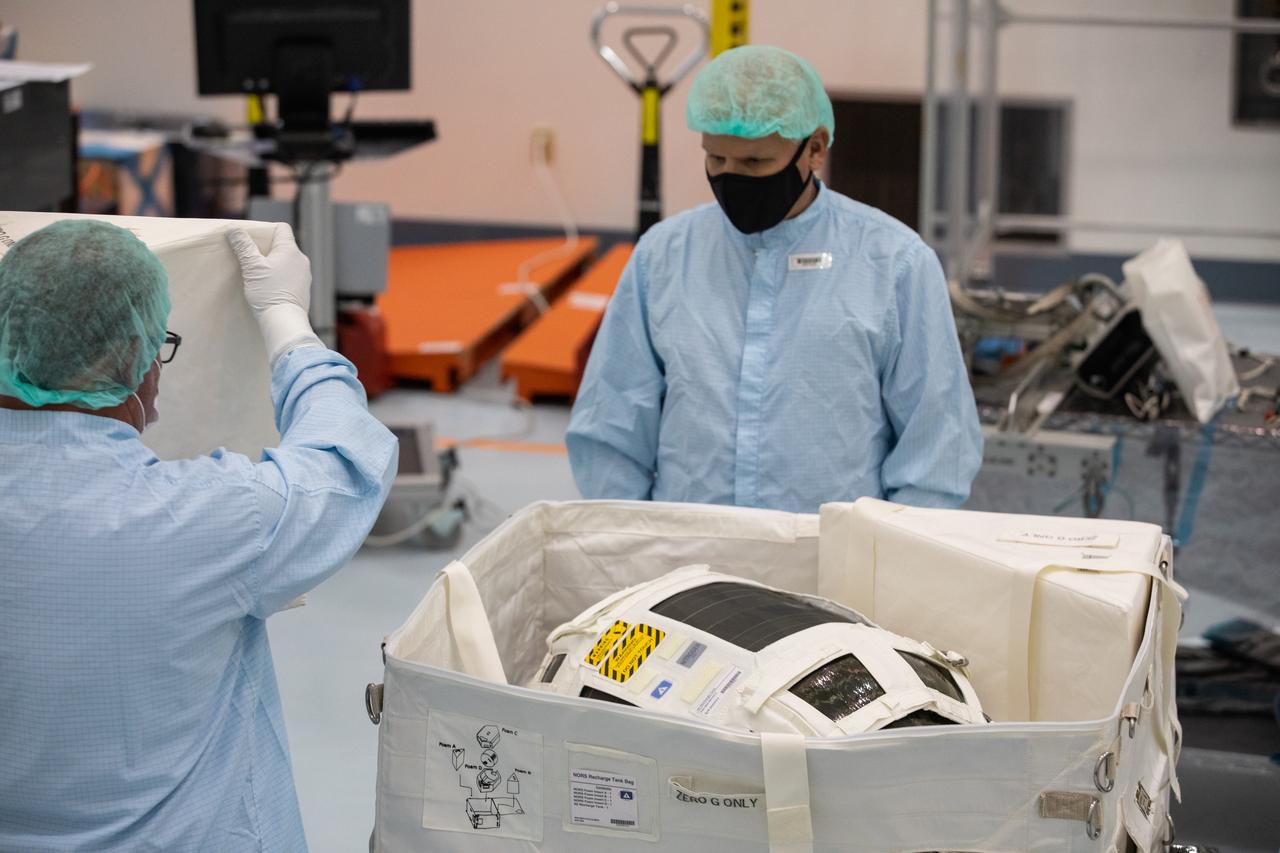
Technicians unpack and inspect a Nitrogen/Oxygen Recharge System (NORS) tank inside the Space Station Processing Facility high bay at NASA’s Kennedy Space Center in Florida on July 16, 2020. The NORS tanks and their support fixtures are designed to connect to the International Space Station’s existing air supply network to refill the previous generation of tanks installed during construction of the space station. These reusable tanks measure 3 feet long and 21 inches in diameter, and weigh about 200 pounds when filled. Once onboard, the tanks will be used to fill the oxygen and nitrogen tanks that supply the needed gases to the space station’s airlock for spacewalks. They could also be used to replenish the atmosphere inside the station. The NORS tanks will launch to the station later in the year on a commercial resupply mission.