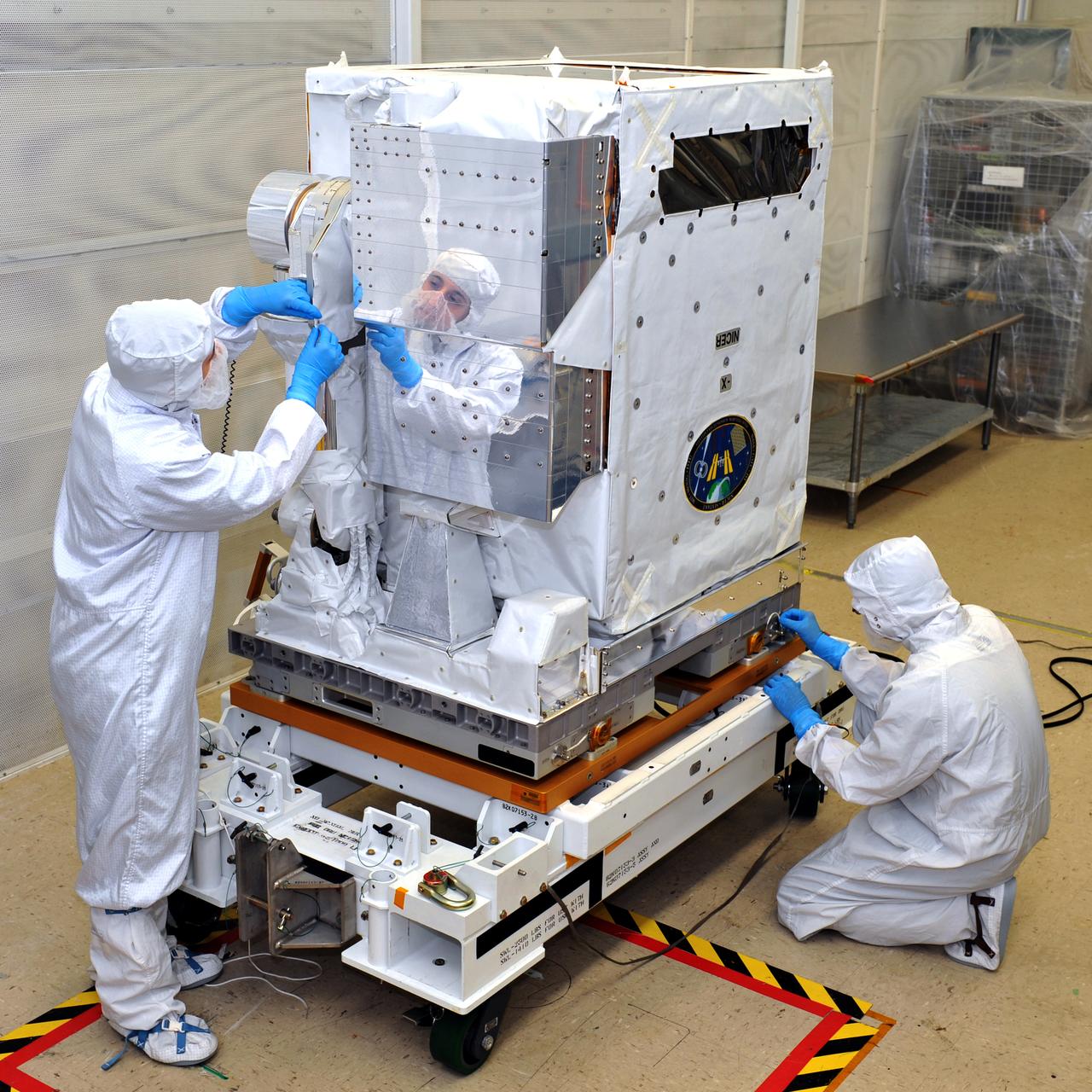
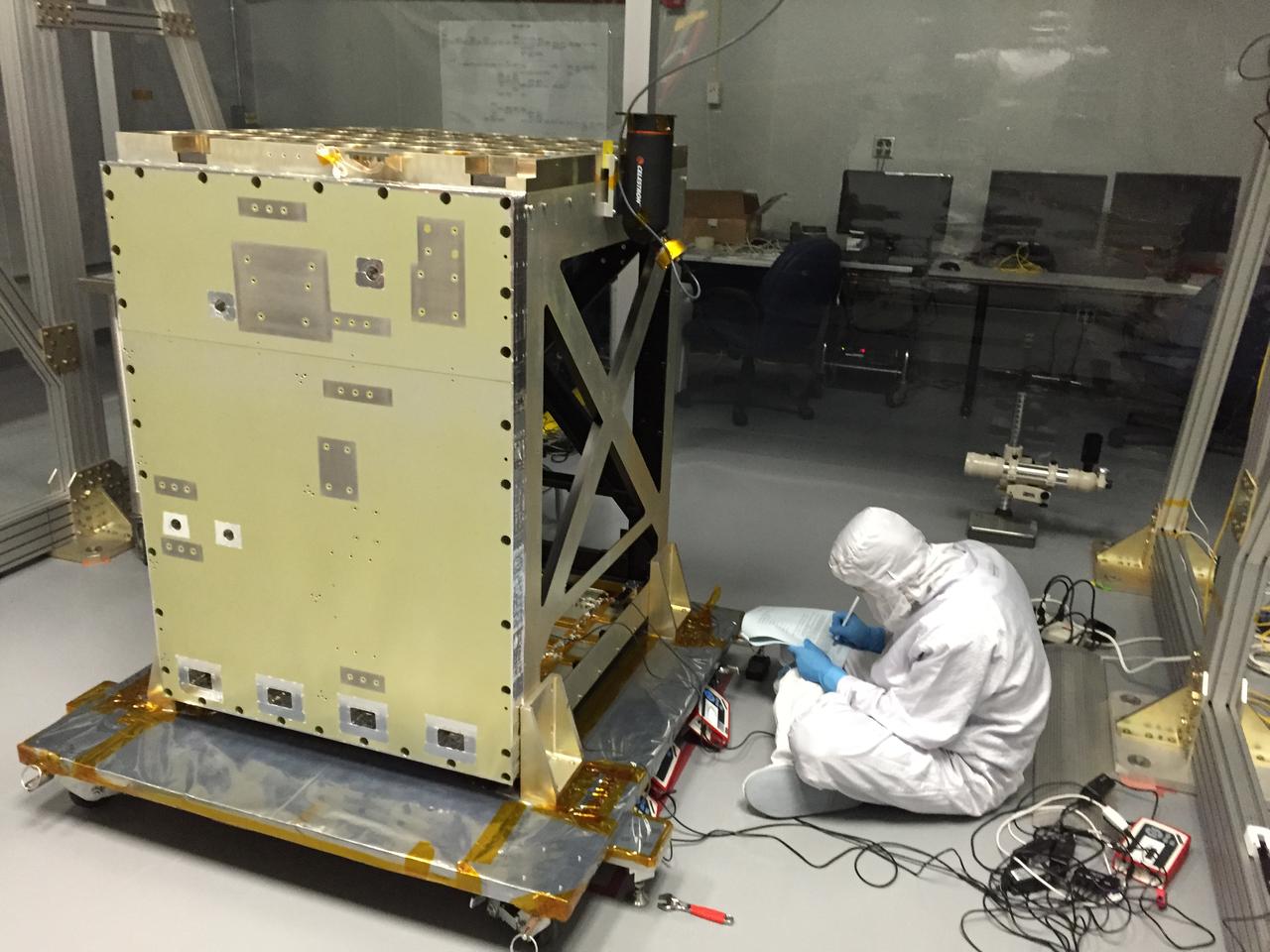
Neutron star Interior Composition Explorer (NICER) engineers prepare the instrument for a final pre-ship walkdown at Goddard Space Flight Center (GSFC)
This video previews the Neutron star Interior Composition Explorer (NICER). NICER is an Astrophysics Mission of Opportunity within NASA’s Explorer program, which provides frequent flight opportunities for world-class scientific investigations from space utilizing innovative, streamlined and efficient management approaches within the heliophysics and astrophysics science areas. NASA’s Space Technology Mission Directorate supports the SEXTANT component of the mission, demonstrating pulsar-based spacecraft navigation. NICER is an upcoming International Space Station payload scheduled to launch in June 2017. Learn more about the mission at nasa.gov/nicer <b><a href="http://www.nasa.gov/audience/formedia/features/MP_Photo_Guidelines.html" rel="nofollow">NASA image use policy.</a></b> <b><a href="http://www.nasa.gov/centers/goddard/home/index.html" rel="nofollow">NASA Goddard Space Flight Center</a></b> enables NASA’s mission through four scientific endeavors: Earth Science, Heliophysics, Solar System Exploration, and Astrophysics. Goddard plays a leading role in NASA’s accomplishments by contributing compelling scientific knowledge to advance the Agency’s mission. <b>Follow us on <a href="http://twitter.com/NASAGoddardPix" rel="nofollow">Twitter</a></b> <b>Like us on <a href="http://www.facebook.com/pages/Greenbelt-MD/NASA-Goddard/395013845897?ref=tsd" rel="nofollow">Facebook</a></b> <b>Find us on <a href="http://instagrid.me/nasagoddard/?vm=grid" rel="nofollow">Instagram</a></b>
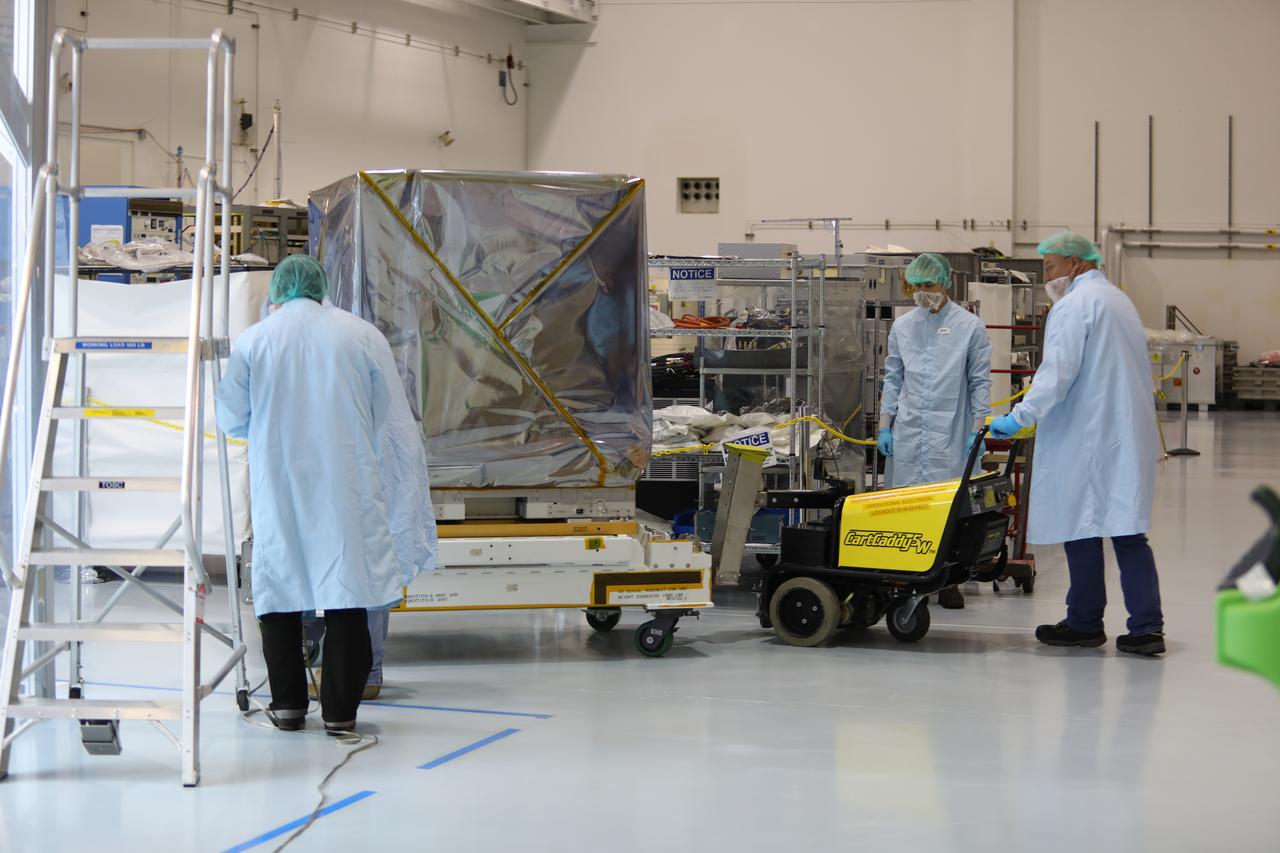
Inside the Space Station Processing Facility high bay at NASA's Kennedy Space Center in Florida, technicians prepare the Neutron star Interior Composition Explorer, or NICER, payload for final packaging. NICER will be delivered to the International Space Station aboard the SpaceX Dragon cargo carrier on the company’s 11th commercial resupply services mission to the space station. NICER will study neutron stars through soft X-ray timing. NICER will enable rotation-resolved spectroscopy of the thermal and non-thermal emissions of neutron stars in the soft X-ray band with unprecedented sensitivity, probing interior structure, the origins of dynamic phenomena and the mechanisms that underlie the most powerful cosmic particle accelerators known.
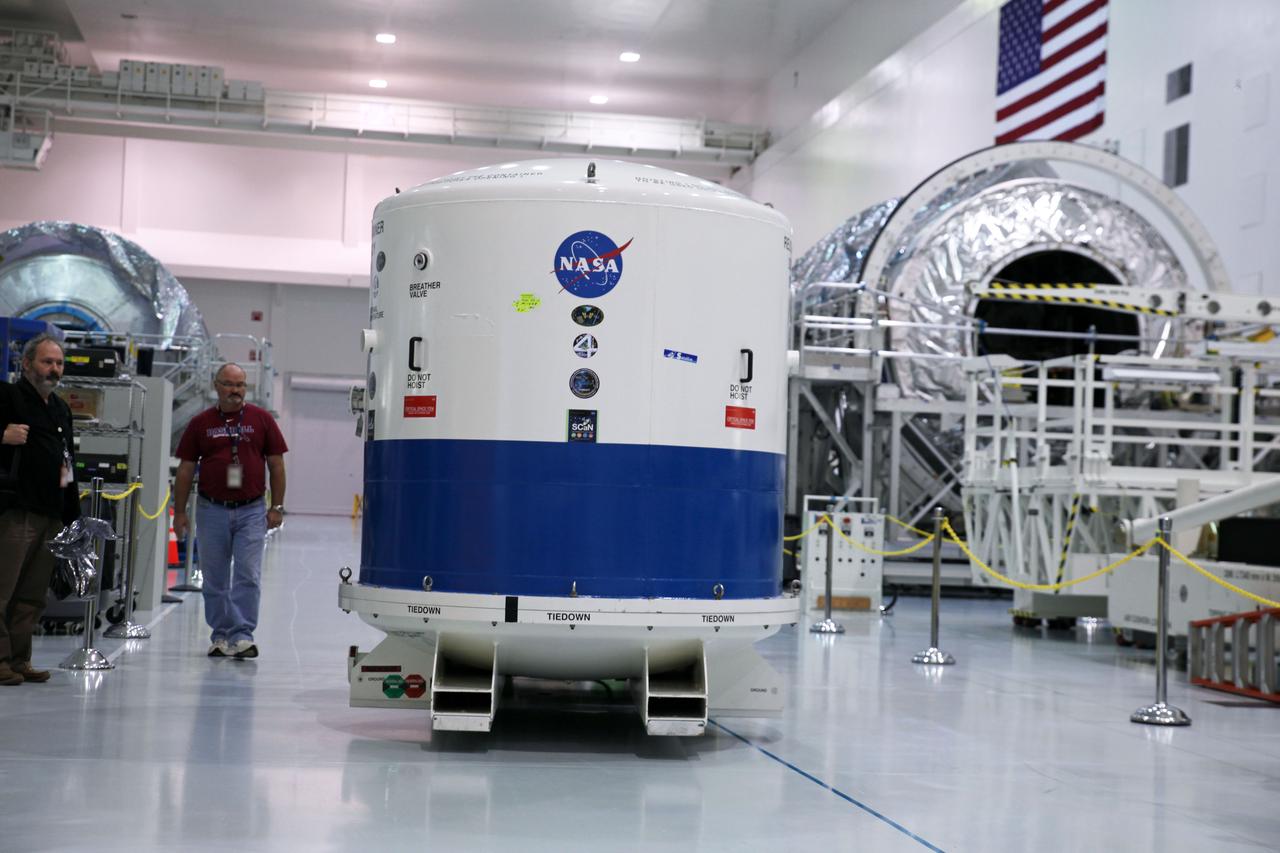
Inside the Space Station Processing Facility high bay at NASA's Kennedy Space Center in Florida, the Neutron star Interior Composition Explorer, or NICER, payload is secured inside a protective container. NICER will be delivered to the International Space Station aboard the SpaceX Dragon cargo carrier on the company’s 11th commercial resupply services mission to the space station. NICER will study neutron stars through soft X-ray timing. NICER will enable rotation-resolved spectroscopy of the thermal and non-thermal emissions of neutron stars in the soft X-ray band with unprecedented sensitivity, probing interior structure, the origins of dynamic phenomena and the mechanisms that underlie the most powerful cosmic particle accelerators known.

Inside the Space Station Processing Facility high bay at NASA's Kennedy Space Center in Florida, technicians prepare the Neutron star Interior Composition Explorer, or NICER, payload for final packaging. NICER will be delivered to the International Space Station aboard the SpaceX Dragon cargo carrier on the company’s 11th commercial resupply services mission to the space station. NICER will study neutron stars through soft X-ray timing. NICER will enable rotation-resolved spectroscopy of the thermal and non-thermal emissions of neutron stars in the soft X-ray band with unprecedented sensitivity, probing interior structure, the origins of dynamic phenomena and the mechanisms that underlie the most powerful cosmic particle accelerators known.
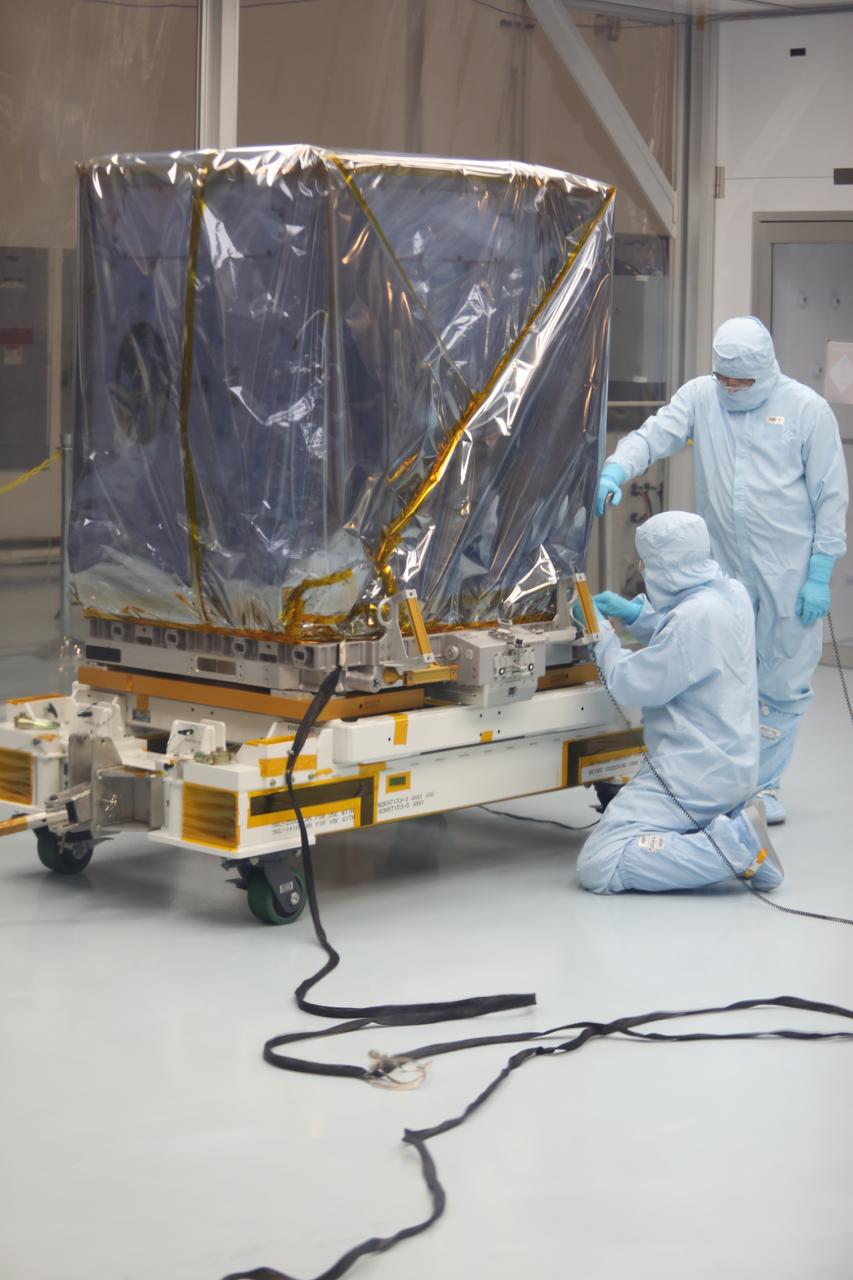
Inside the Space Station Processing Facility high bay at NASA's Kennedy Space Center in Florida, technicians prepare the Neutron star Interior Composition Explorer, or NICER, payload for final packaging. NICER will be delivered to the International Space Station aboard the SpaceX Dragon cargo carrier on the company’s 11th commercial resupply services mission to the space station. NICER will study neutron stars through soft X-ray timing. NICER will enable rotation-resolved spectroscopy of the thermal and non-thermal emissions of neutron stars in the soft X-ray band with unprecedented sensitivity, probing interior structure, the origins of dynamic phenomena and the mechanisms that underlie the most powerful cosmic particle accelerators known.
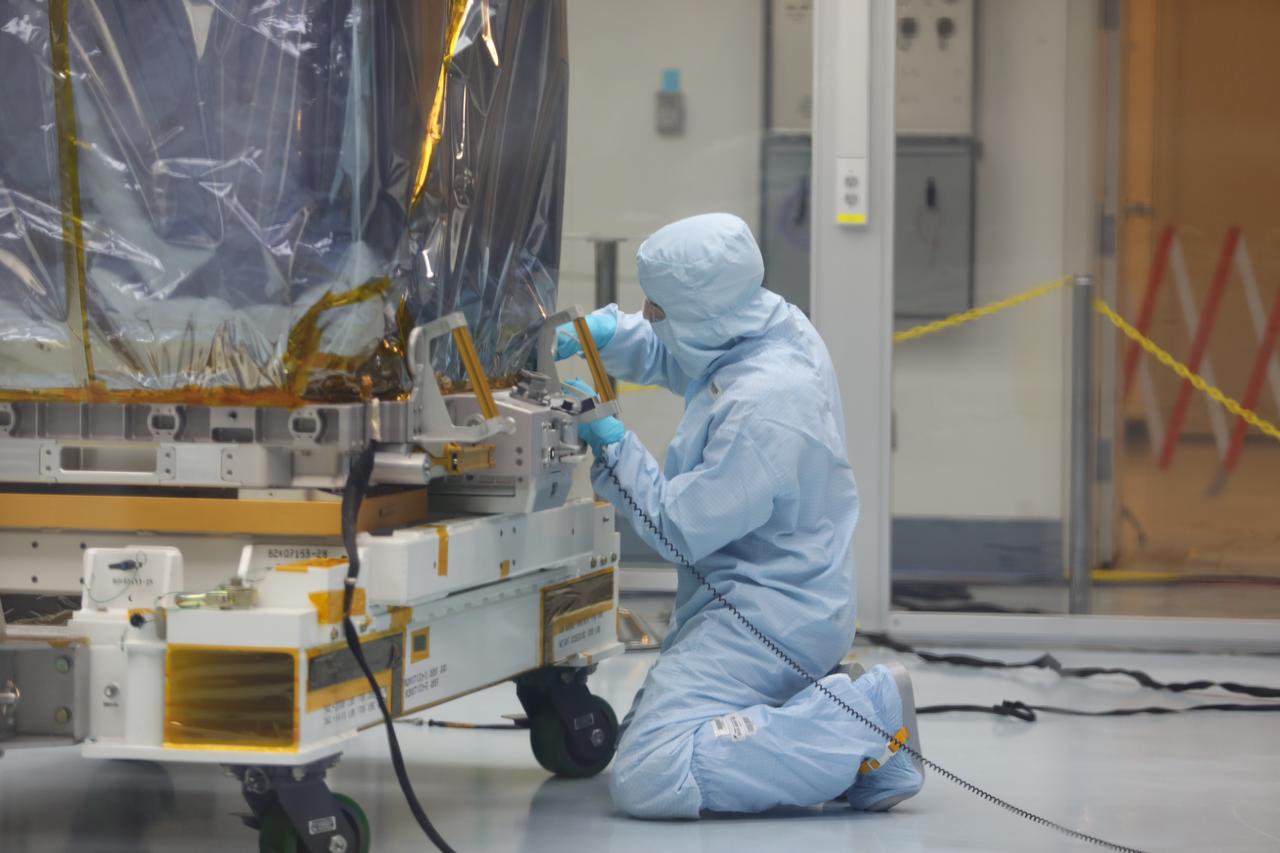
Inside the Space Station Processing Facility high bay at NASA's Kennedy Space Center in Florida, a technician prepares the Neutron star Interior Composition Explorer, or NICER, payload for final packaging. NICER will be delivered to the International Space Station aboard the SpaceX Dragon cargo carrier on the company’s 11th commercial resupply services mission to the space station. NICER will study neutron stars through soft X-ray timing. NICER will enable rotation-resolved spectroscopy of the thermal and non-thermal emissions of neutron stars in the soft X-ray band with unprecedented sensitivity, probing interior structure, the origins of dynamic phenomena and the mechanisms that underlie the most powerful cosmic particle accelerators known.
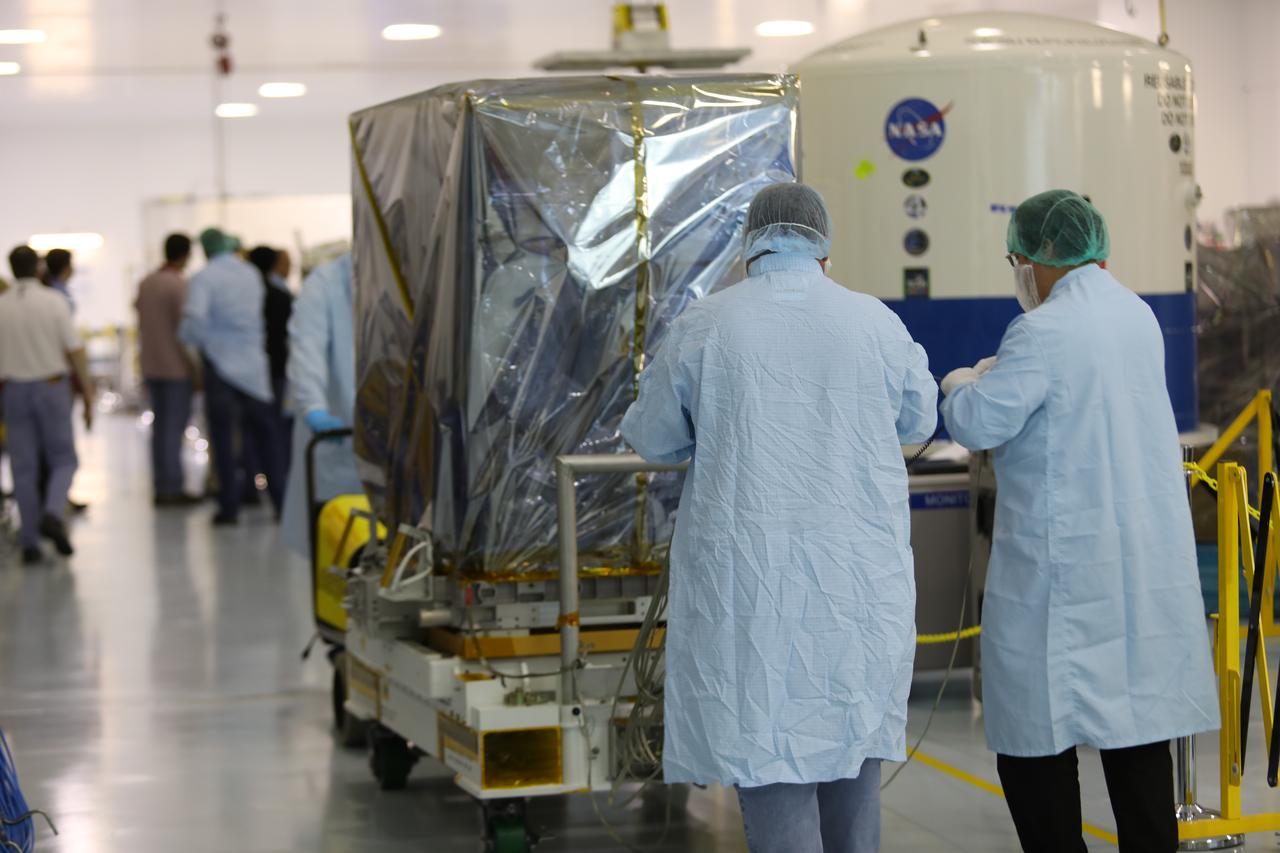
Inside the Space Station Processing Facility high bay at NASA's Kennedy Space Center in Florida, technicians prepare the Neutron star Interior Composition Explorer, or NICER, payload for final packaging. NICER will be delivered to the International Space Station aboard the SpaceX Dragon cargo carrier on the company’s 11th commercial resupply services mission to the space station. NICER will study neutron stars through soft X-ray timing. NICER will enable rotation-resolved spectroscopy of the thermal and non-thermal emissions of neutron stars in the soft X-ray band with unprecedented sensitivity, probing interior structure, the origins of dynamic phenomena and the mechanisms that underlie the most powerful cosmic particle accelerators known.
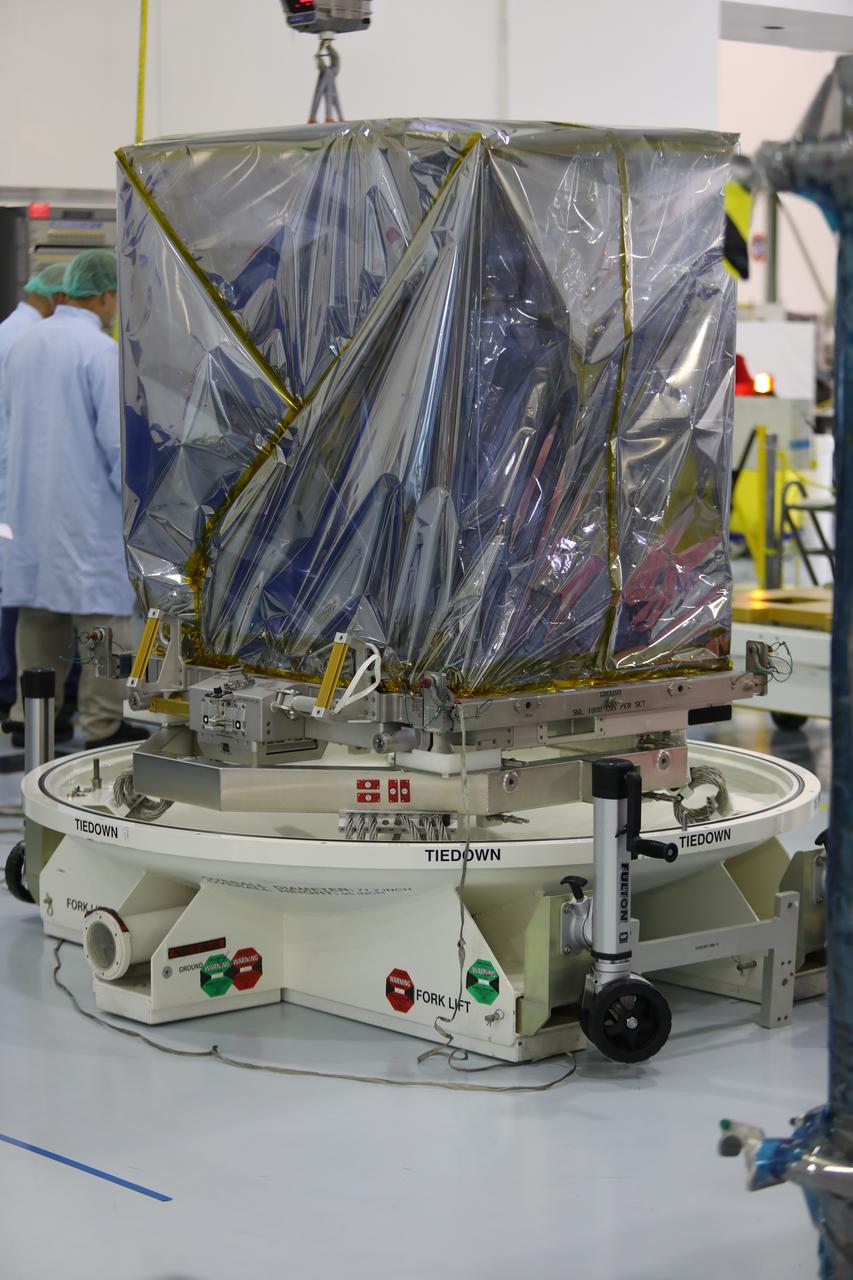
Inside the Space Station Processing Facility high bay at NASA's Kennedy Space Center in Florida, the Neutron star Interior Composition Explorer, or NICER, payload is secured on a special test stand. NICER will be delivered to the International Space Station aboard the SpaceX Dragon cargo carrier on the company’s 11th commercial resupply services mission to the space station. NICER will study neutron stars through soft X-ray timing. NICER will enable rotation-resolved spectroscopy of the thermal and non-thermal emissions of neutron stars in the soft X-ray band with unprecedented sensitivity, probing interior structure, the origins of dynamic phenomena and the mechanisms that underlie the most powerful cosmic particle accelerators known.
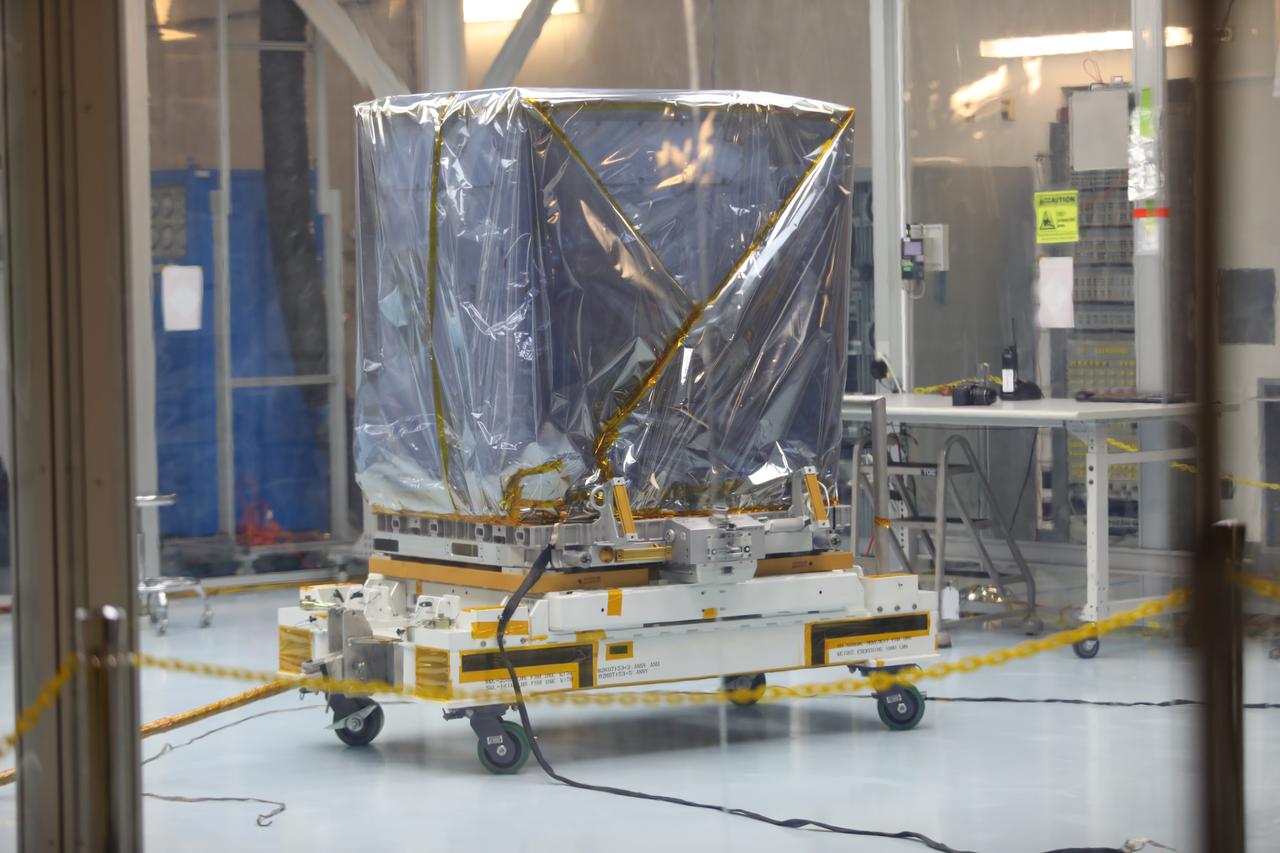
Inside the Space Station Processing Facility high bay at NASA's Kennedy Space Center in Florida, the Neutron star Interior Composition Explorer, or NICER, payload is being prepared for final packaging. NICER will be delivered to the International Space Station aboard the SpaceX Dragon cargo carrier on the company’s 11th commercial resupply services mission to the space station. NICER will study neutron stars through soft X-ray timing. NICER will enable rotation-resolved spectroscopy of the thermal and non-thermal emissions of neutron stars in the soft X-ray band with unprecedented sensitivity, probing interior structure, the origins of dynamic phenomena and the mechanisms that underlie the most powerful cosmic particle accelerators known.
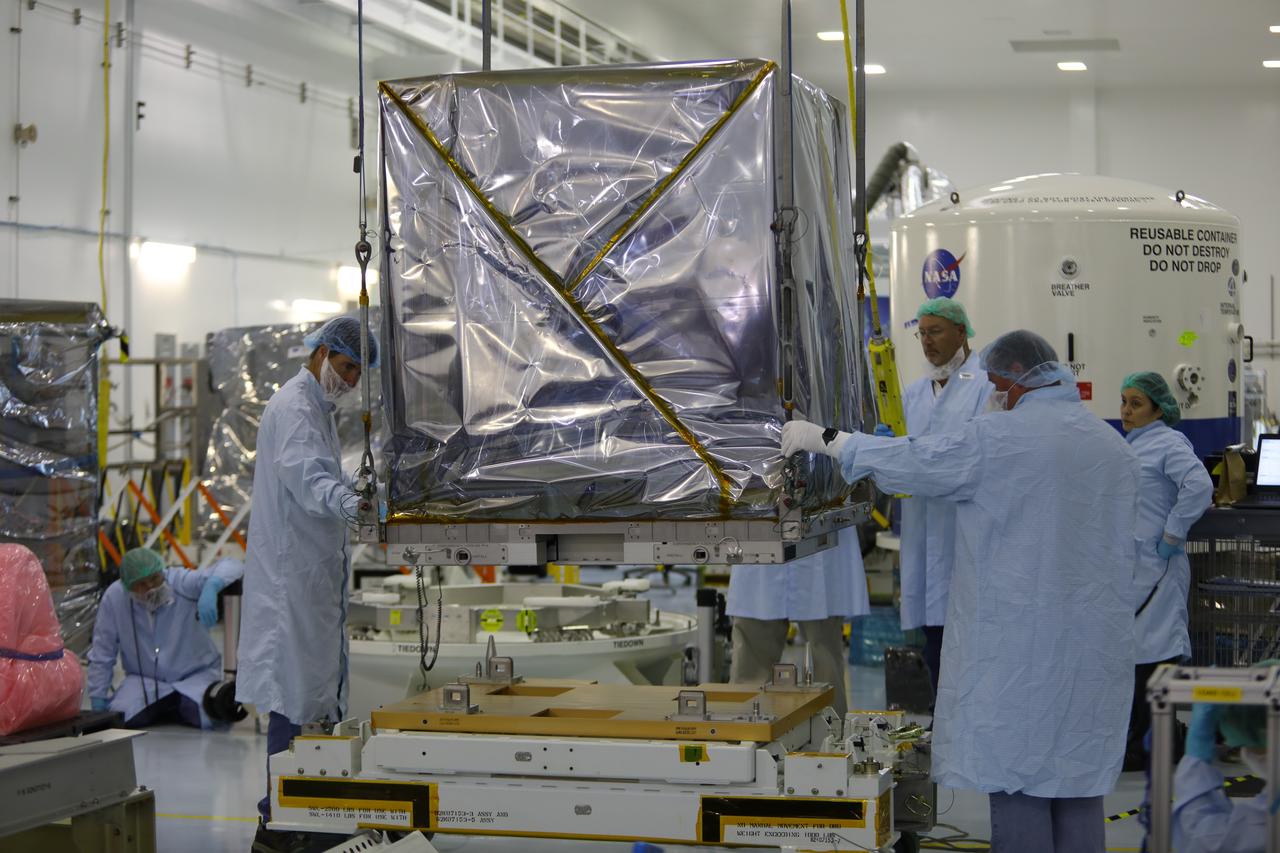
Inside the Space Station Processing Facility high bay at NASA's Kennedy Space Center in Florida, technicians assist as a crane is used to lift the Neutron star Interior Composition Explorer, or NICER, payload up from its carrier. NICER will be delivered to the International Space Station aboard the SpaceX Dragon cargo carrier on the company’s 11th commercial resupply services mission to the space station. NICER will study neutron stars through soft X-ray timing. NICER will enable rotation-resolved spectroscopy of the thermal and non-thermal emissions of neutron stars in the soft X-ray band with unprecedented sensitivity, probing interior structure, the origins of dynamic phenomena and the mechanisms that underlie the most powerful cosmic particle accelerators known.
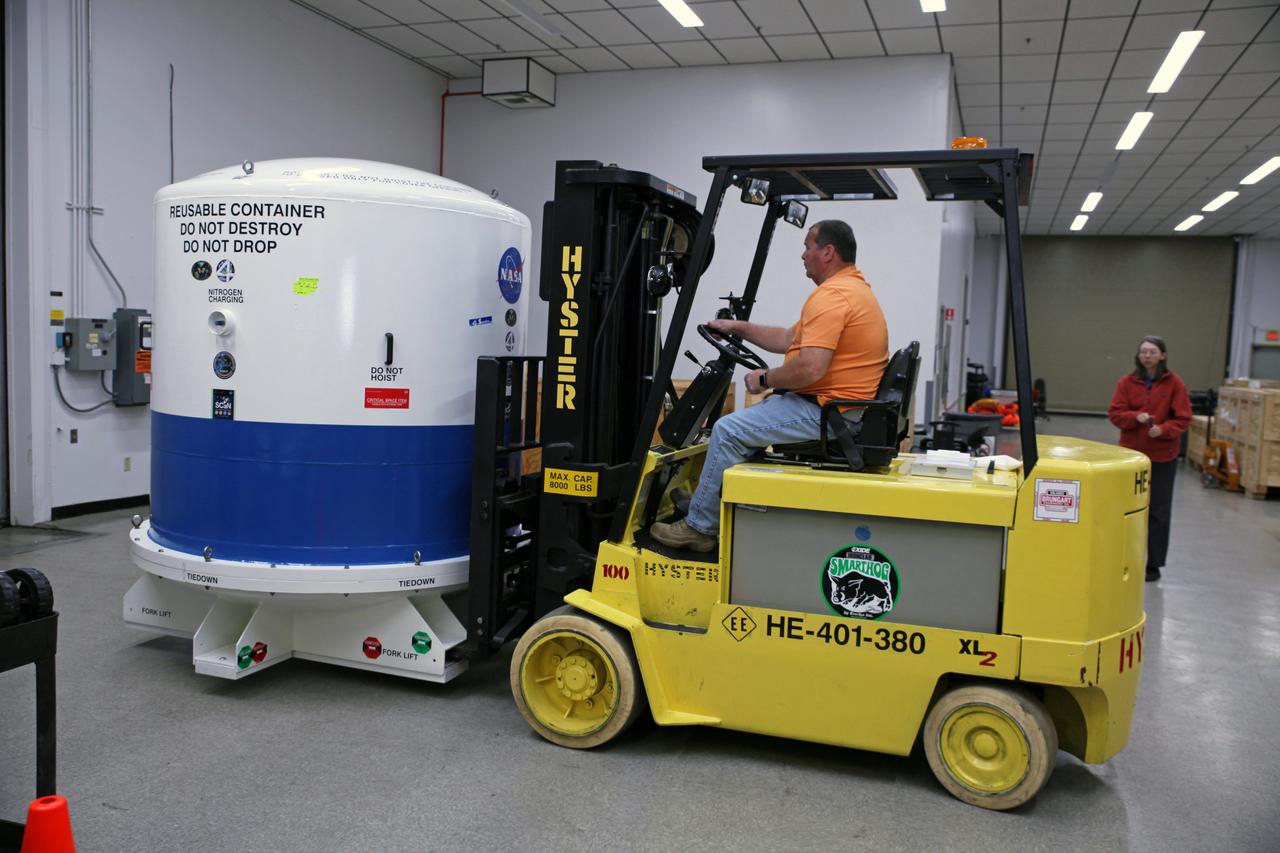
Inside the Space Station Processing Facility high bay at NASA's Kennedy Space Center in Florida, the Neutron star Interior Composition Explorer, or NICER, payload is secured inside a protective container. A technician uses a Hyster forklift to pick up the container and move it outside of the high bay. NICER will be delivered to the International Space Station aboard the SpaceX Dragon cargo carrier on the company’s 11th commercial resupply services mission to the space station. NICER will study neutron stars through soft X-ray timing. NICER will enable rotation-resolved spectroscopy of the thermal and non-thermal emissions of neutron stars in the soft X-ray band with unprecedented sensitivity, probing interior structure, the origins of dynamic phenomena and the mechanisms that underlie the most powerful cosmic particle accelerators known.
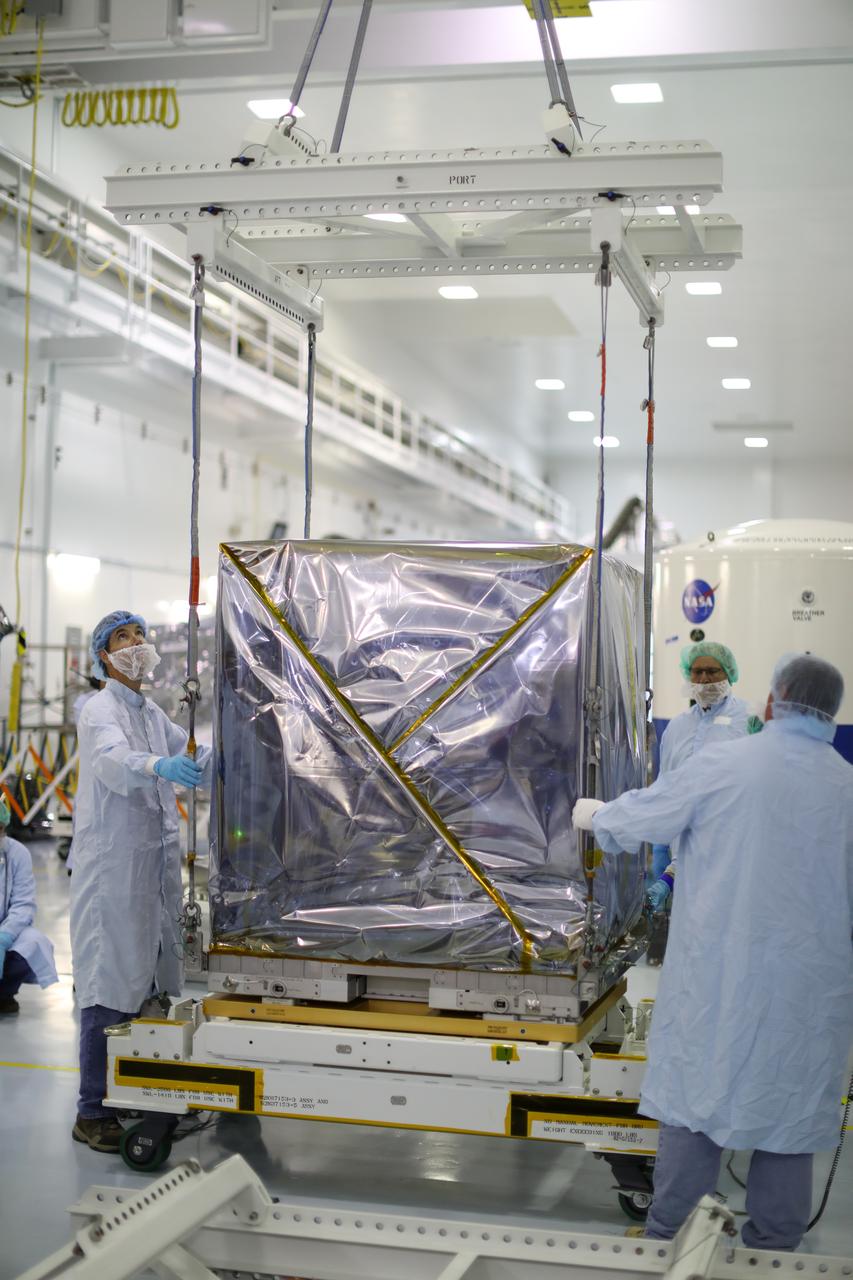
Inside the Space Station Processing Facility high bay at NASA's Kennedy Space Center in Florida, technicians assist as a crane is used to lift the Neutron star Interior Composition Explorer, or NICER, payload up from its carrier. NICER will be delivered to the International Space Station aboard the SpaceX Dragon cargo carrier on the company’s 11th commercial resupply services mission to the space station. NICER will study neutron stars through soft X-ray timing. NICER will enable rotation-resolved spectroscopy of the thermal and non-thermal emissions of neutron stars in the soft X-ray band with unprecedented sensitivity, probing interior structure, the origins of dynamic phenomena and the mechanisms that underlie the most powerful cosmic particle accelerators known.
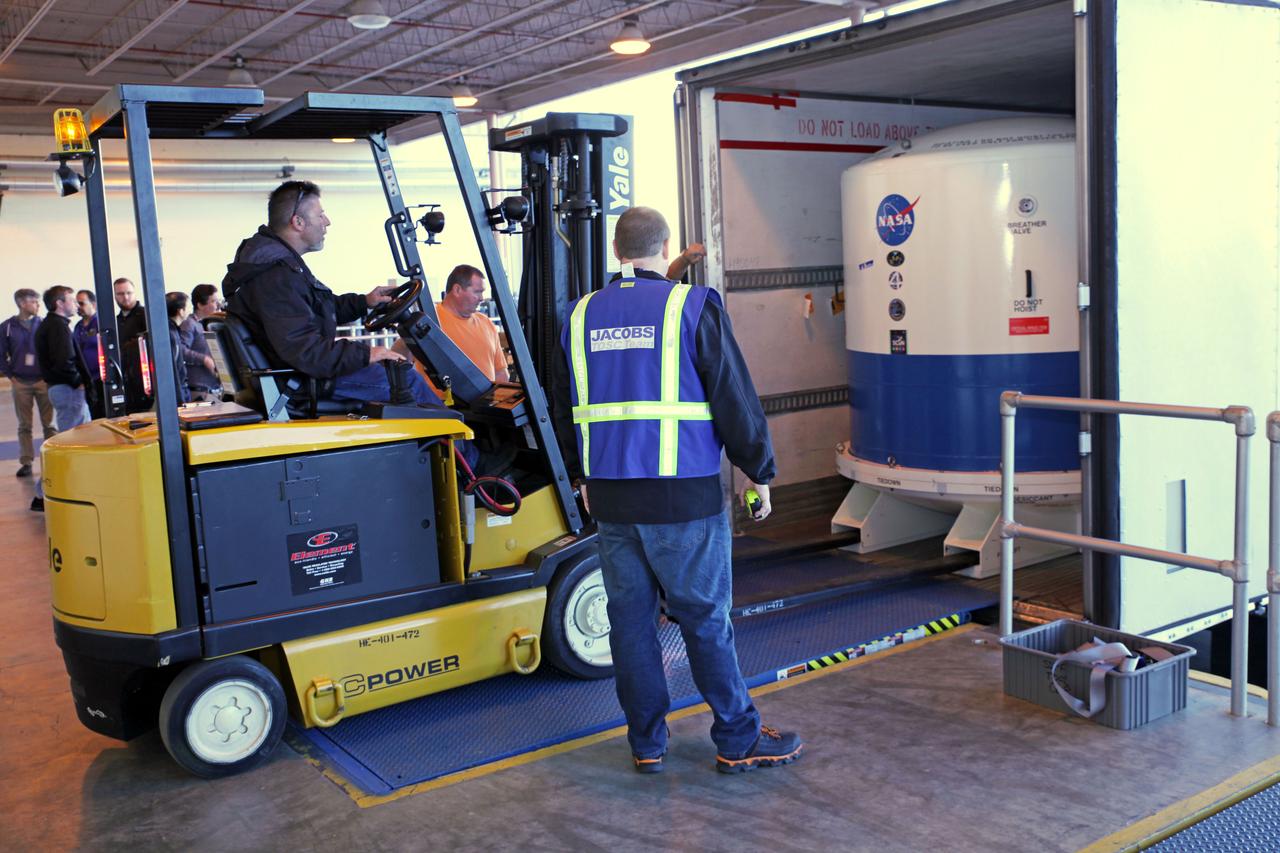
Inside the Space Station Processing Facility high bay at NASA's Kennedy Space Center in Florida, the Neutron star Interior Composition Explorer, or NICER, payload is secured inside a protective container and loaded onto a truck outside the high bay. NICER will be delivered to the International Space Station aboard the SpaceX Dragon cargo carrier on the company’s 11th commercial resupply services mission to the space station. NICER will study neutron stars through soft X-ray timing. NICER will enable rotation-resolved spectroscopy of the thermal and non-thermal emissions of neutron stars in the soft X-ray band with unprecedented sensitivity, probing interior structure, the origins of dynamic phenomena and the mechanisms that underlie the most powerful cosmic particle accelerators known.

NICER engineer Steven Kenyon prepares seven of the 56 X-ray concentrators for installation in the NICER instrument. The payload’s 56 mirror assemblies concentrate X-rays onto silicon detectors to gather data that will probe the interior makeup of neutron stars, including those that appear to flash regularly, called pulsars. The Neutron star Interior Composition Explorer (NICER) is a NASA Explorer Mission of Opportunity dedicated to studying the extraordinary environments — strong gravity, ultra-dense matter, and the most powerful magnetic fields in the universe — embodied by neutron stars. An attached payload aboard the International Space Station, NICER will deploy an instrument with unique capabilities for timing and spectroscopy of fast X-ray brightness fluctuations. The embedded Station Explorer for X-ray Timing and Navigation Technology demonstration (SEXTANT) will use NICER data to validate, for the first time in space, technology that exploits pulsars as natural navigation beacons. Credit: NASA/Goddard/ Keith Gendreau <b><a href="http://www.nasa.gov/audience/formedia/features/MP_Photo_Guidelines.html" rel="nofollow">NASA image use policy.</a></b> <b><a href="http://www.nasa.gov/centers/goddard/home/index.html" rel="nofollow">NASA Goddard Space Flight Center</a></b> enables NASA’s mission through four scientific endeavors: Earth Science, Heliophysics, Solar System Exploration, and Astrophysics. Goddard plays a leading role in NASA’s accomplishments by contributing compelling scientific knowledge to advance the Agency’s mission. <b>Follow us on <a href="http://twitter.com/NASAGoddardPix" rel="nofollow">Twitter</a></b> <b>Like us on <a href="http://www.facebook.com/pages/Greenbelt-MD/NASA-Goddard/395013845897?ref=tsd" rel="nofollow">Facebook</a></b> <b>Find us on <a href="http://instagrid.me/nasagoddard/?vm=grid" rel="nofollow">Instagram</a></b>

NICER Optics Lead Takashi Okajima installs one of NICER’s 56 X-ray “concentrators,” each consisting of 24 concentric foils. To minimize the effects of Earth’s gravity on their alignment, the concentrator assemblies were installed from the outside edges toward the center of the plate that houses them. The payload’s 56 mirror assemblies concentrate X-rays onto silicon detectors to gather data that will probe the interior makeup of neutron stars, including those that appear to flash regularly, called pulsars. The Neutron star Interior Composition Explorer (NICER) is a NASA Explorer Mission of Opportunity dedicated to studying the extraordinary environments — strong gravity, ultra-dense matter, and the most powerful magnetic fields in the universe — embodied by neutron stars. An attached payload aboard the International Space Station, NICER will deploy an instrument with unique capabilities for timing and spectroscopy of fast X-ray brightness fluctuations. The embedded Station Explorer for X-ray Timing and Navigation Technology demonstration (SEXTANT) will use NICER data to validate, for the first time in space, technology that exploits pulsars as natural navigation beacons. Credit: NASA/Goddard/ Keith Gendreau <b><a href="http://www.nasa.gov/audience/formedia/features/MP_Photo_Guidelines.html" rel="nofollow">NASA image use policy.</a></b> <b><a href="http://www.nasa.gov/centers/goddard/home/index.html" rel="nofollow">NASA Goddard Space Flight Center</a></b> enables NASA’s mission through four scientific endeavors: Earth Science, Heliophysics, Solar System Exploration, and Astrophysics. Goddard plays a leading role in NASA’s accomplishments by contributing compelling scientific knowledge to advance the Agency’s mission. <b>Follow us on <a href="http://twitter.com/NASAGoddardPix" rel="nofollow">Twitter</a></b> <b>Like us on <a href="http://www.facebook.com/pages/Greenbelt-MD/NASA-Goddard/395013845897?ref=tsd" rel="nofollow">Facebook</a></b> <b>Find us on <a href="http://instagrid.me/nasagoddard/?vm=grid" rel="nofollow">Instagram</a></b>
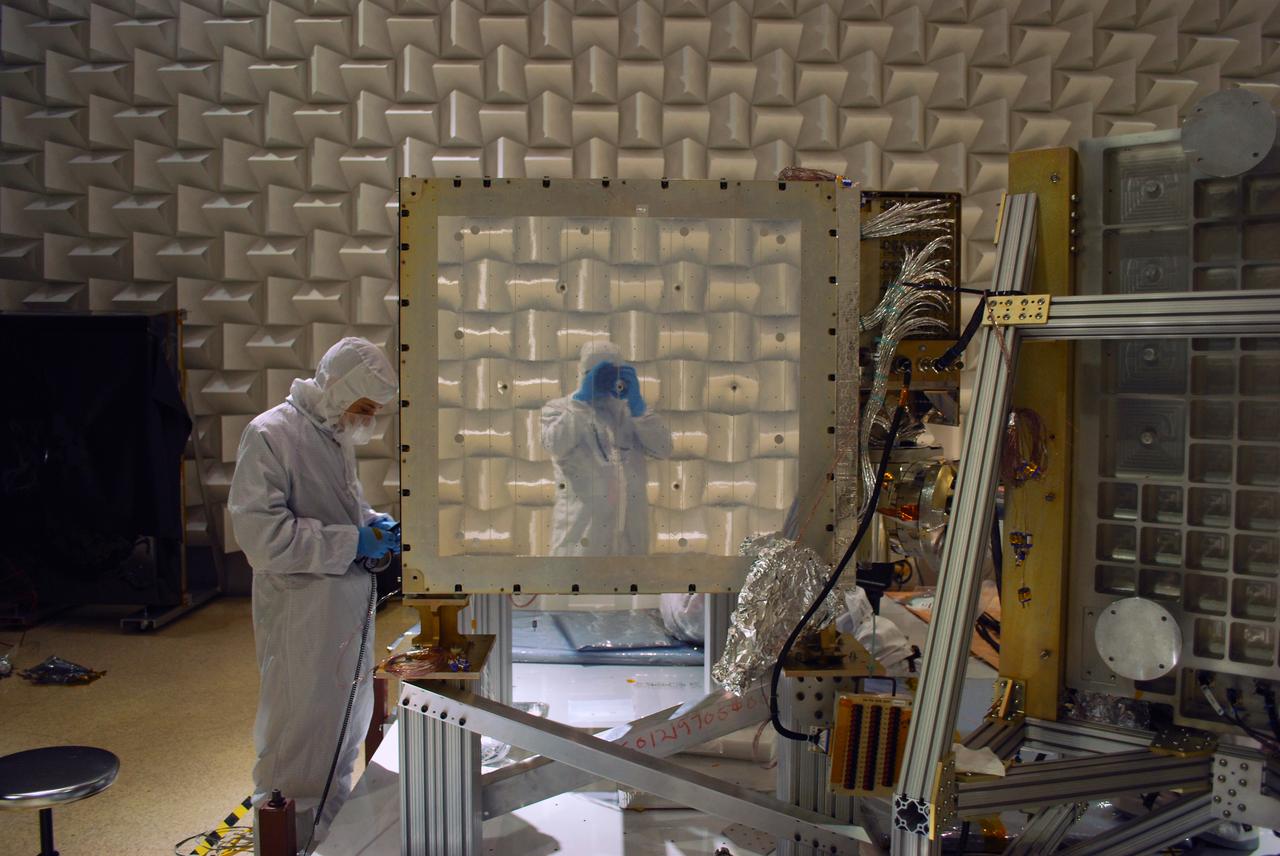
A photo taken during the NICER range-of-motion test at NASA’s Goddard Space Flight Center shows the photographer’s reflection in the mirror-like radiator surface of the detector plate. Teflon-coated silver tape is used to keep NICER’s detectors cool. The Neutron star Interior Composition Explorer (NICER) is a NASA Explorer Mission of Opportunity dedicated to studying the extraordinary environments — strong gravity, ultra-dense matter, and the most powerful magnetic fields in the universe — embodied by neutron stars. An attached payload aboard the International Space Station, NICER will deploy an instrument with unique capabilities for timing and spectroscopy of fast X-ray brightness fluctuations. The embedded Station Explorer for X-ray Timing and Navigation Technology demonstration (SEXTANT) will use NICER data to validate, for the first time in space, technology that exploits pulsars as natural navigation beacons. Credit: NASA/Goddard/ Keith Gendreau <b><a href="http://www.nasa.gov/audience/formedia/features/MP_Photo_Guidelines.html" rel="nofollow">NASA image use policy.</a></b> <b><a href="http://www.nasa.gov/centers/goddard/home/index.html" rel="nofollow">NASA Goddard Space Flight Center</a></b> enables NASA’s mission through four scientific endeavors: Earth Science, Heliophysics, Solar System Exploration, and Astrophysics. Goddard plays a leading role in NASA’s accomplishments by contributing compelling scientific knowledge to advance the Agency’s mission. <b>Follow us on <a href="http://twitter.com/NASAGoddardPix" rel="nofollow">Twitter</a></b> <b>Like us on <a href="http://www.facebook.com/pages/Greenbelt-MD/NASA-Goddard/395013845897?ref=tsd" rel="nofollow">Facebook</a></b> <b>Find us on <a href="http://instagrid.me/nasagoddard/?vm=grid" rel="nofollow">Instagram</a></b>

NICER Optics Lead Takashi Okajima makes a fine adjustment to the orientation of one X-ray “concentrator” optic. The 56 optics must point in the same direction in order for NICER to achieve its science goals. The payload’s 56 mirror assemblies concentrate X-rays onto silicon detectors to gather data that will probe the interior makeup of neutron stars, including those that appear to flash regularly, called pulsars. The Neutron star Interior Composition Explorer (NICER) is a NASA Explorer Mission of Opportunity dedicated to studying the extraordinary environments — strong gravity, ultra-dense matter, and the most powerful magnetic fields in the universe — embodied by neutron stars. An attached payload aboard the International Space Station, NICER will deploy an instrument with unique capabilities for timing and spectroscopy of fast X-ray brightness fluctuations. The embedded Station Explorer for X-ray Timing and Navigation Technology demonstration (SEXTANT) will use NICER data to validate, for the first time in space, technology that exploits pulsars as natural navigation beacons. Credit: NASA/Goddard/ Keith Gendreau <b><a href="http://www.nasa.gov/audience/formedia/features/MP_Photo_Guidelines.html" rel="nofollow">NASA image use policy.</a></b> <b><a href="http://www.nasa.gov/centers/goddard/home/index.html" rel="nofollow">NASA Goddard Space Flight Center</a></b> enables NASA’s mission through four scientific endeavors: Earth Science, Heliophysics, Solar System Exploration, and Astrophysics. Goddard plays a leading role in NASA’s accomplishments by contributing compelling scientific knowledge to advance the Agency’s mission. <b>Follow us on <a href="http://twitter.com/NASAGoddardPix" rel="nofollow">Twitter</a></b> <b>Like us on <a href="http://www.facebook.com/pages/Greenbelt-MD/NASA-Goddard/395013845897?ref=tsd" rel="nofollow">Facebook</a></b> <b>Find us on <a href="http://instagrid.me/nasagoddard/?vm=grid" rel="nofollow">Instagram</a></b>

NICER’s X-ray concentrator optics are inspected under a black light for dust and foreign object debris that could impair functionality once in space. The payload’s 56 mirror assemblies concentrate X-rays onto silicon detectors to gather data that will probe the interior makeup of neutron stars, including those that appear to flash regularly, called pulsars. The Neutron star Interior Composition Explorer (NICER) is a NASA Explorer Mission of Opportunity dedicated to studying the extraordinary environments — strong gravity, ultra-dense matter, and the most powerful magnetic fields in the universe — embodied by neutron stars. An attached payload aboard the International Space Station, NICER will deploy an instrument with unique capabilities for timing and spectroscopy of fast X-ray brightness fluctuations. The embedded Station Explorer for X-ray Timing and Navigation Technology demonstration (SEXTANT) will use NICER data to validate, for the first time in space, technology that exploits pulsars as natural navigation beacons. Credit: NASA/Goddard/ Keith Gendreau <b><a href="http://www.nasa.gov/audience/formedia/features/MP_Photo_Guidelines.html" rel="nofollow">NASA image use policy.</a></b> <b><a href="http://www.nasa.gov/centers/goddard/home/index.html" rel="nofollow">NASA Goddard Space Flight Center</a></b> enables NASA’s mission through four scientific endeavors: Earth Science, Heliophysics, Solar System Exploration, and Astrophysics. Goddard plays a leading role in NASA’s accomplishments by contributing compelling scientific knowledge to advance the Agency’s mission. <b>Follow us on <a href="http://twitter.com/NASAGoddardPix" rel="nofollow">Twitter</a></b> <b>Like us on <a href="http://www.facebook.com/pages/Greenbelt-MD/NASA-Goddard/395013845897?ref=tsd" rel="nofollow">Facebook</a></b> <b>Find us on <a href="http://instagrid.me/nasagoddard/?vm=grid" rel="nofollow">Instagram</a></b>
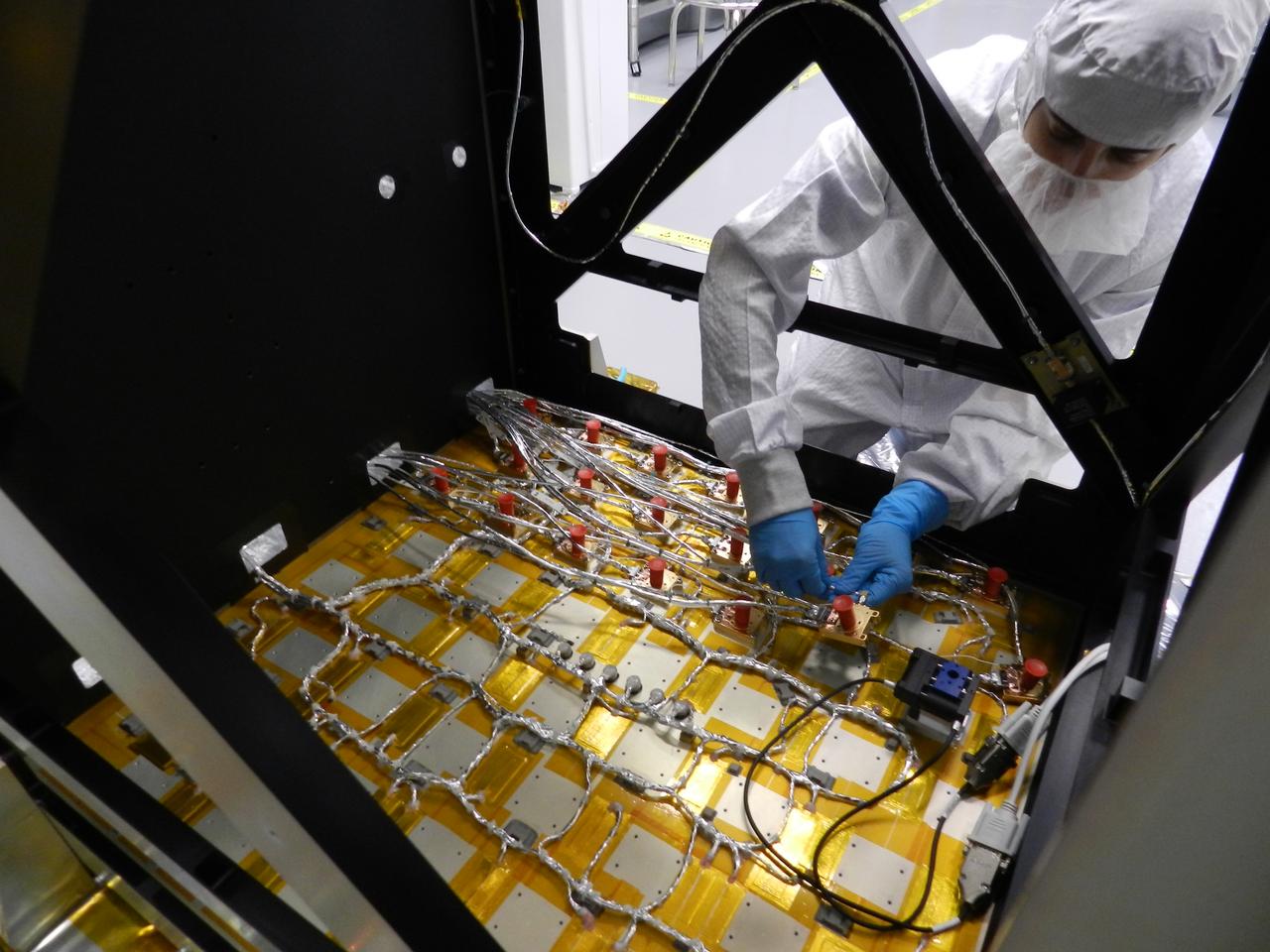
NICER engineer Steven Kenyon installs an X-ray detector onto the payload’s detector plate. The detectors are protected by red caps during installation because they are very sensitive to dust and other foreign object debris. The Neutron star Interior Composition Explorer (NICER) is a NASA Explorer Mission of Opportunity dedicated to studying the extraordinary environments — strong gravity, ultra-dense matter, and the most powerful magnetic fields in the universe — embodied by neutron stars. An attached payload aboard the International Space Station, NICER will deploy an instrument with unique capabilities for timing and spectroscopy of fast X-ray brightness fluctuations. The embedded Station Explorer for X-ray Timing and Navigation Technology demonstration (SEXTANT) will use NICER data to validate, for the first time in space, technology that exploits pulsars as natural navigation beacons. Credit: NASA/Goddard/ Keith Gendreau <b><a href="http://www.nasa.gov/audience/formedia/features/MP_Photo_Guidelines.html" rel="nofollow">NASA image use policy.</a></b> <b><a href="http://www.nasa.gov/centers/goddard/home/index.html" rel="nofollow">NASA Goddard Space Flight Center</a></b> enables NASA’s mission through four scientific endeavors: Earth Science, Heliophysics, Solar System Exploration, and Astrophysics. Goddard plays a leading role in NASA’s accomplishments by contributing compelling scientific knowledge to advance the Agency’s mission. <b>Follow us on <a href="http://twitter.com/NASAGoddardPix" rel="nofollow">Twitter</a></b> <b>Like us on <a href="http://www.facebook.com/pages/Greenbelt-MD/NASA-Goddard/395013845897?ref=tsd" rel="nofollow">Facebook</a></b> <b>Find us on <a href="http://instagrid.me/nasagoddard/?vm=grid" rel="nofollow">Instagram</a></b>
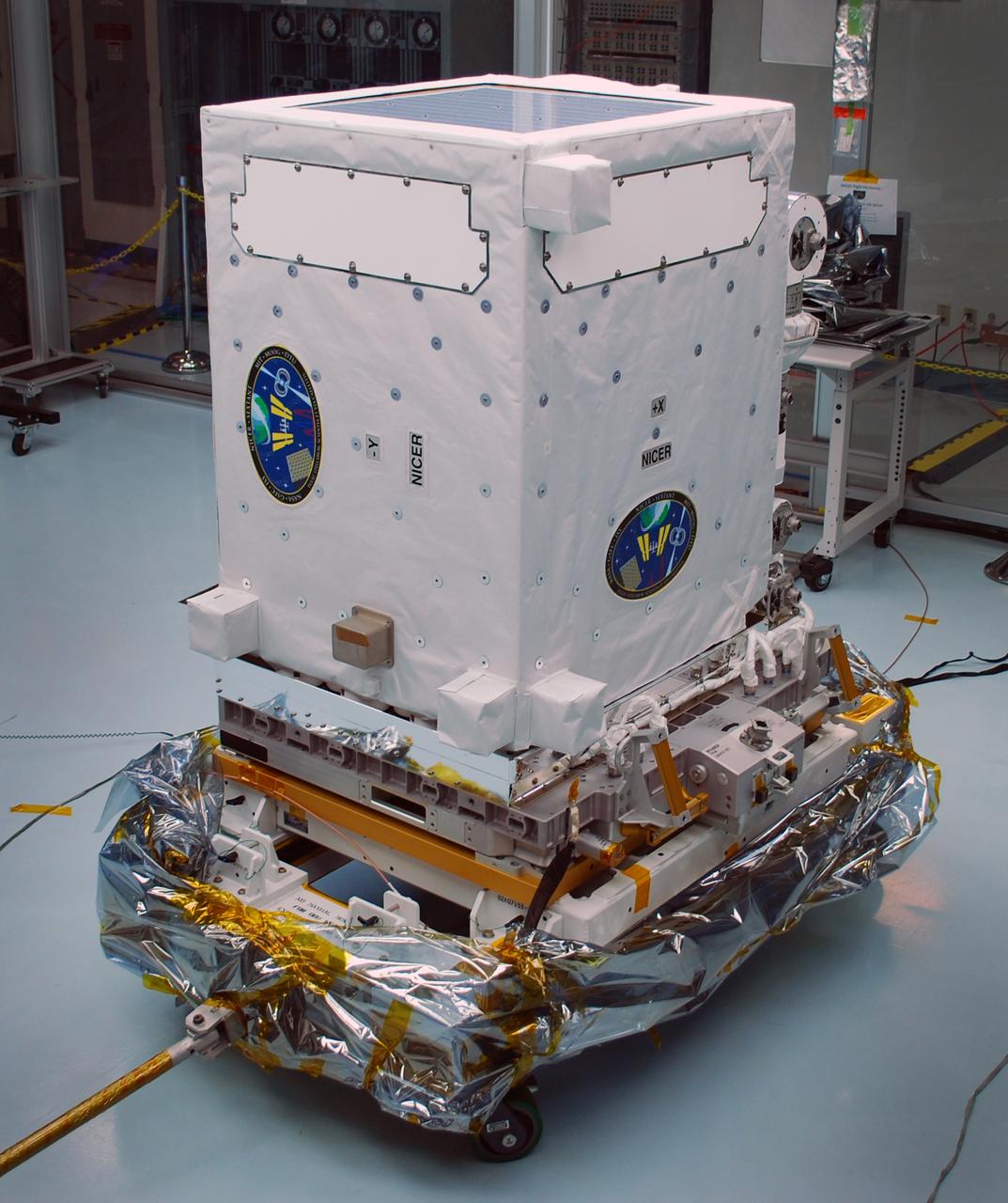
The NICER payload, blanketed and waiting for launch in the Space Station Processing Facility at NASA’s Kennedy Space Center in Cape Canaveral, Florida. The instrument is in its stowed configuration for launch. The Neutron star Interior Composition Explorer (NICER) is a NASA Explorer Mission of Opportunity dedicated to studying the extraordinary environments — strong gravity, ultra-dense matter, and the most powerful magnetic fields in the universe — embodied by neutron stars. An attached payload aboard the International Space Station, NICER will deploy an instrument with unique capabilities for timing and spectroscopy of fast X-ray brightness fluctuations. The embedded Station Explorer for X-ray Timing and Navigation Technology demonstration (SEXTANT) will use NICER data to validate, for the first time in space, technology that exploits pulsars as natural navigation beacons. Credit: NASA/Goddard/ Keith Gendreau <b><a href="http://www.nasa.gov/audience/formedia/features/MP_Photo_Guidelines.html" rel="nofollow">NASA image use policy.</a></b> <b><a href="http://www.nasa.gov/centers/goddard/home/index.html" rel="nofollow">NASA Goddard Space Flight Center</a></b> enables NASA’s mission through four scientific endeavors: Earth Science, Heliophysics, Solar System Exploration, and Astrophysics. Goddard plays a leading role in NASA’s accomplishments by contributing compelling scientific knowledge to advance the Agency’s mission. <b>Follow us on <a href="http://twitter.com/NASAGoddardPix" rel="nofollow">Twitter</a></b> <b>Like us on <a href="http://www.facebook.com/pages/Greenbelt-MD/NASA-Goddard/395013845897?ref=tsd" rel="nofollow">Facebook</a></b> <b>Find us on <a href="http://instagrid.me/nasagoddard/?vm=grid" rel="nofollow">Instagram</a></b>

Many of NICER’s 56 X-ray “concentrators” seen from within the instrument optical bench. Light reflected from the gold surfaces of the 24 concentric foils in each concentrator is focused onto detectors slightly more than 1 meter (3.5 feet) away. The payload’s 56 mirror assemblies concentrate X-rays onto silicon detectors to gather data that will probe the interior makeup of neutron stars, including those that appear to flash regularly, called pulsars. The Neutron star Interior Composition Explorer (NICER) is a NASA Explorer Mission of Opportunity dedicated to studying the extraordinary environments — strong gravity, ultra-dense matter, and the most powerful magnetic fields in the universe — embodied by neutron stars. An attached payload aboard the International Space Station, NICER will deploy an instrument with unique capabilities for timing and spectroscopy of fast X-ray brightness fluctuations. The embedded Station Explorer for X-ray Timing and Navigation Technology demonstration (SEXTANT) will use NICER data to validate, for the first time in space, technology that exploits pulsars as natural navigation beacons. Credit: NASA/Goddard/ Keith Gendreau <b><a href="http://www.nasa.gov/audience/formedia/features/MP_Photo_Guidelines.html" rel="nofollow">NASA image use policy.</a></b> <b><a href="http://www.nasa.gov/centers/goddard/home/index.html" rel="nofollow">NASA Goddard Space Flight Center</a></b> enables NASA’s mission through four scientific endeavors: Earth Science, Heliophysics, Solar System Exploration, and Astrophysics. Goddard plays a leading role in NASA’s accomplishments by contributing compelling scientific knowledge to advance the Agency’s mission. <b>Follow us on <a href="http://twitter.com/NASAGoddardPix" rel="nofollow">Twitter</a></b> <b>Like us on <a href="http://www.facebook.com/pages/Greenbelt-MD/NASA-Goddard/395013845897?ref=tsd" rel="nofollow">Facebook</a></b> <b>Find us on <a href="http://instagrid.me/nasagoddard/?vm=grid" rel="nofollow">Instagram</a></b>
A NICER team member measures the focused optical power of each X-ray concentrator in a clean tent at NASA’s Goddard Space Flight Center. The Neutron star Interior Composition Explorer (NICER) is a NASA Explorer Mission of Opportunity dedicated to studying the extraordinary environments — strong gravity, ultra-dense matter, and the most powerful magnetic fields in the universe — embodied by neutron stars. An attached payload aboard the International Space Station, NICER will deploy an instrument with unique capabilities for timing and spectroscopy of fast X-ray brightness fluctuations. The embedded Station Explorer for X-ray Timing and Navigation Technology demonstration (SEXTANT) will use NICER data to validate, for the first time in space, technology that exploits pulsars as natural navigation beacons. Credit: NASA/Goddard/ Keith Gendreau <b><a href="http://www.nasa.gov/audience/formedia/features/MP_Photo_Guidelines.html" rel="nofollow">NASA image use policy.</a></b> <b><a href="http://www.nasa.gov/centers/goddard/home/index.html" rel="nofollow">NASA Goddard Space Flight Center</a></b> enables NASA’s mission through four scientific endeavors: Earth Science, Heliophysics, Solar System Exploration, and Astrophysics. Goddard plays a leading role in NASA’s accomplishments by contributing compelling scientific knowledge to advance the Agency’s mission. <b>Follow us on <a href="http://twitter.com/NASAGoddardPix" rel="nofollow">Twitter</a></b> <b>Like us on <a href="http://www.facebook.com/pages/Greenbelt-MD/NASA-Goddard/395013845897?ref=tsd" rel="nofollow">Facebook</a></b> <b>Find us on <a href="http://instagrid.me/nasagoddard/?vm=grid" rel="nofollow">Instagram</a></b>

NICER team members Takashi Okajima, Yang Soong, and Steven Kenyon apply epoxy to the X-ray concentrator mounts after alignment. The epoxy holds the optics assemblies fixed in position through the vibrations experienced during launch to the International Space Station. The payload’s 56 mirror assemblies concentrate X-rays onto silicon detectors to gather data that will probe the interior makeup of neutron stars, including those that appear to flash regularly, called pulsars. The Neutron star Interior Composition Explorer (NICER) is a NASA Explorer Mission of Opportunity dedicated to studying the extraordinary environments — strong gravity, ultra-dense matter, and the most powerful magnetic fields in the universe — embodied by neutron stars. An attached payload aboard the International Space Station, NICER will deploy an instrument with unique capabilities for timing and spectroscopy of fast X-ray brightness fluctuations. The embedded Station Explorer for X-ray Timing and Navigation Technology demonstration (SEXTANT) will use NICER data to validate, for the first time in space, technology that exploits pulsars as natural navigation beacons. Credit: NASA/Goddard/ Keith Gendreau <b><a href="http://www.nasa.gov/audience/formedia/features/MP_Photo_Guidelines.html" rel="nofollow">NASA image use policy.</a></b> <b><a href="http://www.nasa.gov/centers/goddard/home/index.html" rel="nofollow">NASA Goddard Space Flight Center</a></b> enables NASA’s mission through four scientific endeavors: Earth Science, Heliophysics, Solar System Exploration, and Astrophysics. Goddard plays a leading role in NASA’s accomplishments by contributing compelling scientific knowledge to advance the Agency’s mission. <b>Follow us on <a href="http://twitter.com/NASAGoddardPix" rel="nofollow">Twitter</a></b> <b>Like us on <a href="http://www.facebook.com/pages/Greenbelt-MD/NASA-Goddard/395013845897?ref=tsd" rel="nofollow">Facebook</a></b> <b>Find us on <a href="http://instagrid.me/nasagoddard/?vm=grid" rel="nofollow">Instagram</a></b>

Optics Lead Takashi Okajima prepares to align NICER’s X-ray optics. The payload’s 56 mirror assemblies concentrate X-rays onto silicon detectors to gather data that will probe the interior makeup of neutron stars, including those that appear to flash regularly, called pulsars. The Neutron star Interior Composition Explorer (NICER) is a NASA Explorer Mission of Opportunity dedicated to studying the extraordinary environments — strong gravity, ultra-dense matter, and the most powerful magnetic fields in the universe — embodied by neutron stars. An attached payload aboard the International Space Station, NICER will deploy an instrument with unique capabilities for timing and spectroscopy of fast X-ray brightness fluctuations. The embedded Station Explorer for X-ray Timing and Navigation Technology demonstration (SEXTANT) will use NICER data to validate, for the first time in space, technology that exploits pulsars as natural navigation beacons. Credit: NASA/Goddard/ Keith Gendreau <b><a href="http://www.nasa.gov/audience/formedia/features/MP_Photo_Guidelines.html" rel="nofollow">NASA image use policy.</a></b> <b><a href="http://www.nasa.gov/centers/goddard/home/index.html" rel="nofollow">NASA Goddard Space Flight Center</a></b> enables NASA’s mission through four scientific endeavors: Earth Science, Heliophysics, Solar System Exploration, and Astrophysics. Goddard plays a leading role in NASA’s accomplishments by contributing compelling scientific knowledge to advance the Agency’s mission. <b>Follow us on <a href="http://twitter.com/NASAGoddardPix" rel="nofollow">Twitter</a></b> <b>Like us on <a href="http://www.facebook.com/pages/Greenbelt-MD/NASA-Goddard/395013845897?ref=tsd" rel="nofollow">Facebook</a></b> <b>Find us on <a href="http://instagrid.me/nasagoddard/?vm=grid" rel="nofollow">Instagram</a></b>
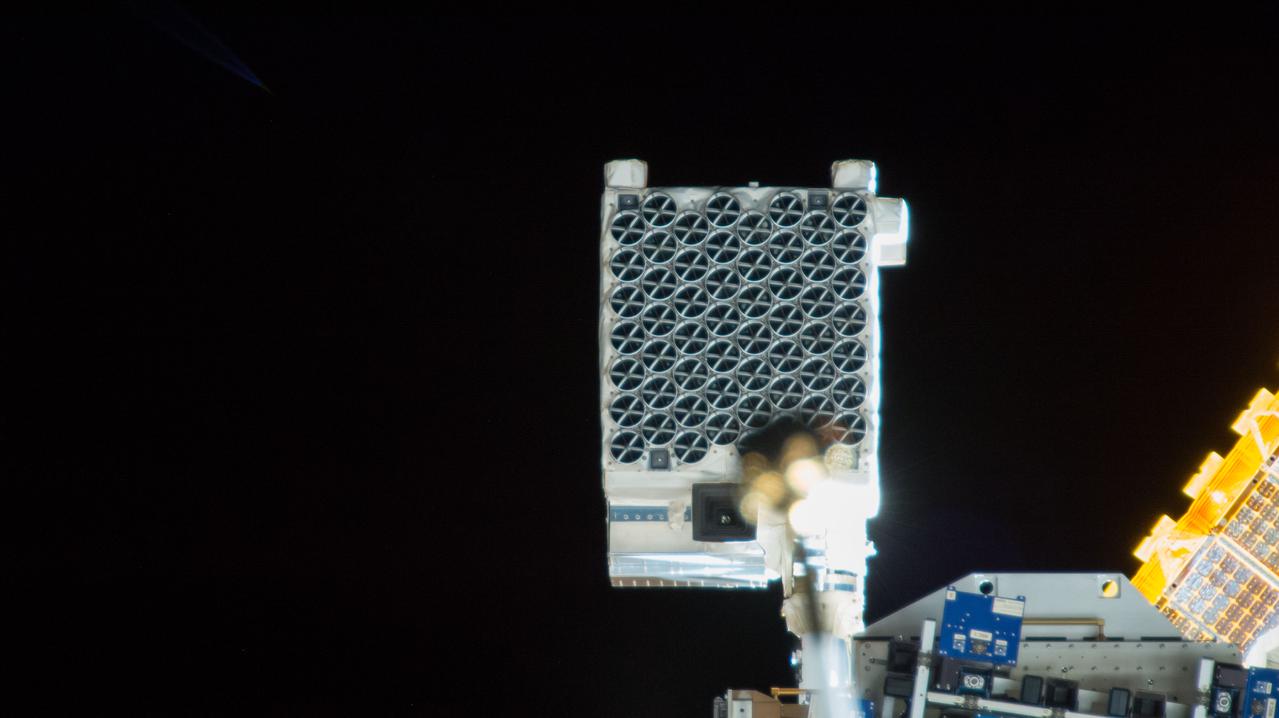
iss057e055482 (10/22/2018) --- View of the Neutron Star Interior Composition ExploreR (NICER) payload, attached to ExPRESS (Expedite the Processing of Experiments to Space Station) Logistics Carrier-2 (ELC-2) on the S3 Truss. Photo was taken by the ground-controlled External High Definition Camera 1 (EHDC1). NICER's primary mission to perform an in-depth study of neutron stars offers unrivaled astrophysics knowledge and can revolutionize the understanding of ultra-dense matter.
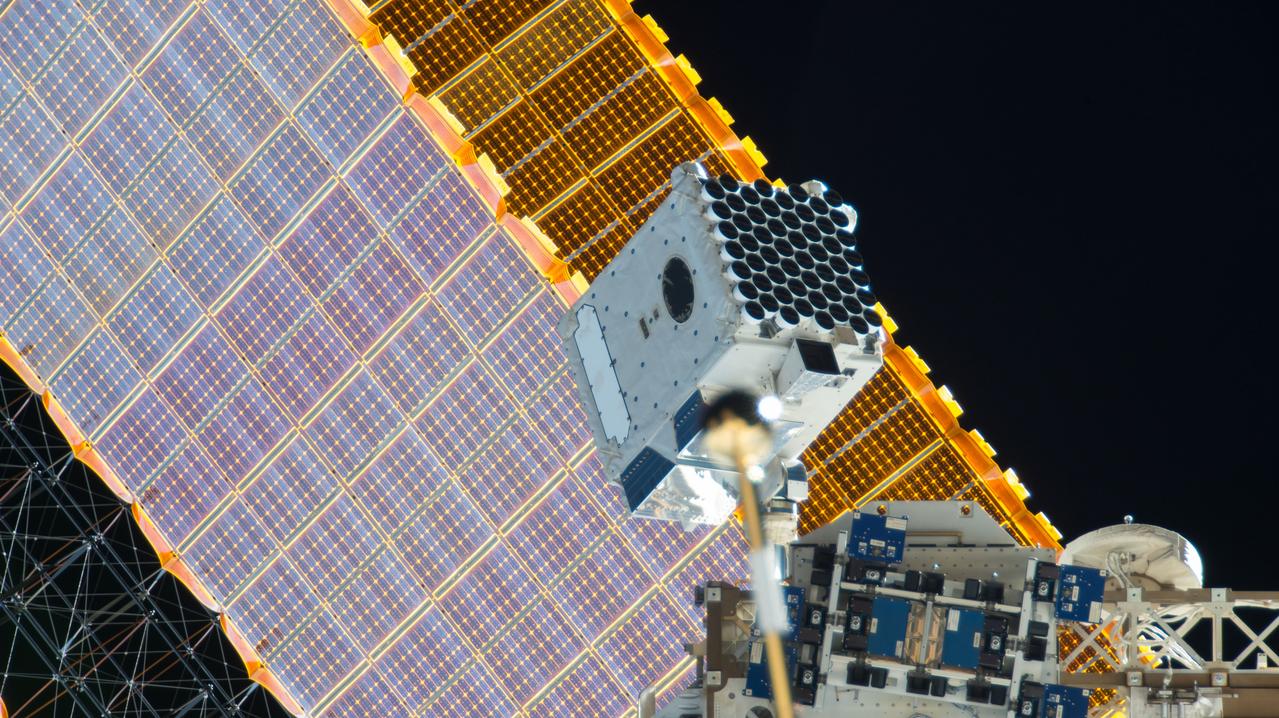
iss057e055500 (10/22/2018) --- View of the Neutron Star Interior Composition ExploreR (NICER) payload, attached to ExPRESS (Expedite the Processing of Experiments to Space Station) Logistics Carrier-2 (ELC-2) on the S3 Truss. Photo was taken by the ground-controlled External High Definition Camera 1 (EHDC1). NICER's primary mission to perform an in-depth study of neutron stars offers unrivaled astrophysics knowledge and can revolutionize the understanding of ultra-dense matter.
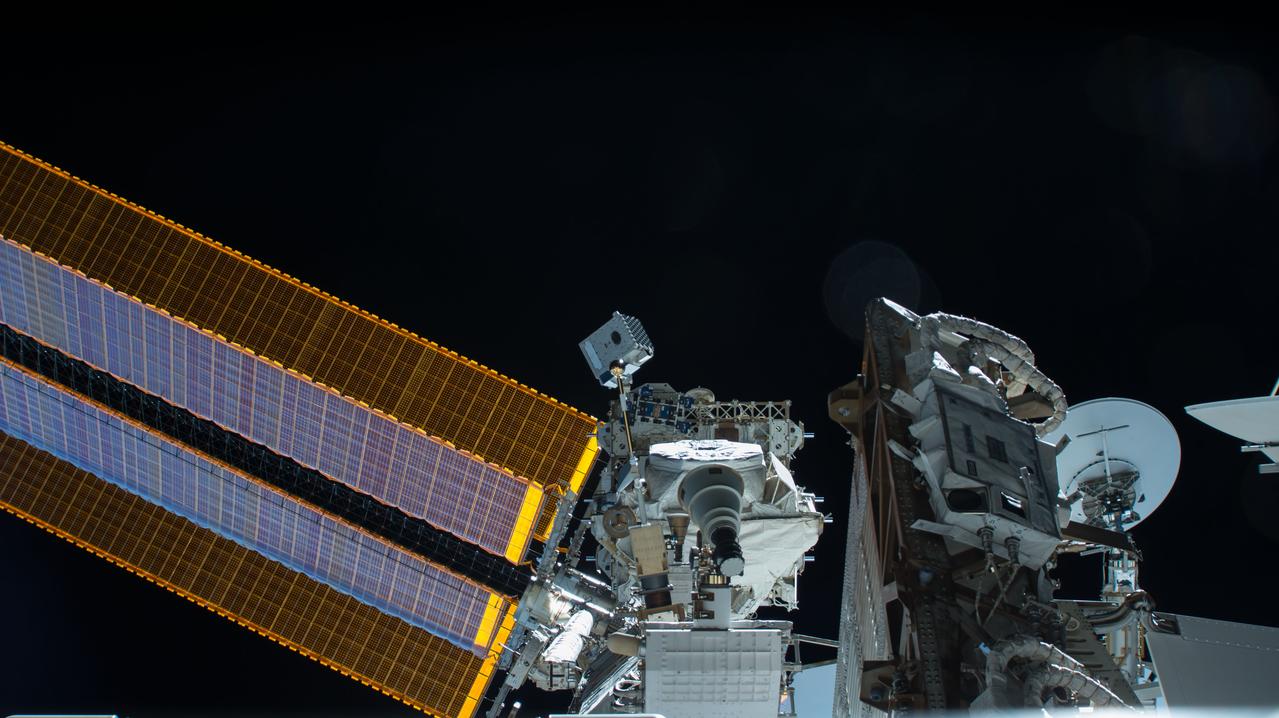
iss057e055440 (10/22/2018) --- View of the Neutron Star Interior Composition ExploreR (NICER) payload, attached to ExPRESS (Expedite the Processing of Experiments to Space Station) Logistics Carrier-2 (ELC-2) on the S3 Truss. Photo was taken by the ground-controlled External High Definition Camera 1 (EHDC1). NICER's primary mission to perform an in-depth study of neutron stars offers unrivaled astrophysics knowledge and can revolutionize the understanding of ultra-dense matter.
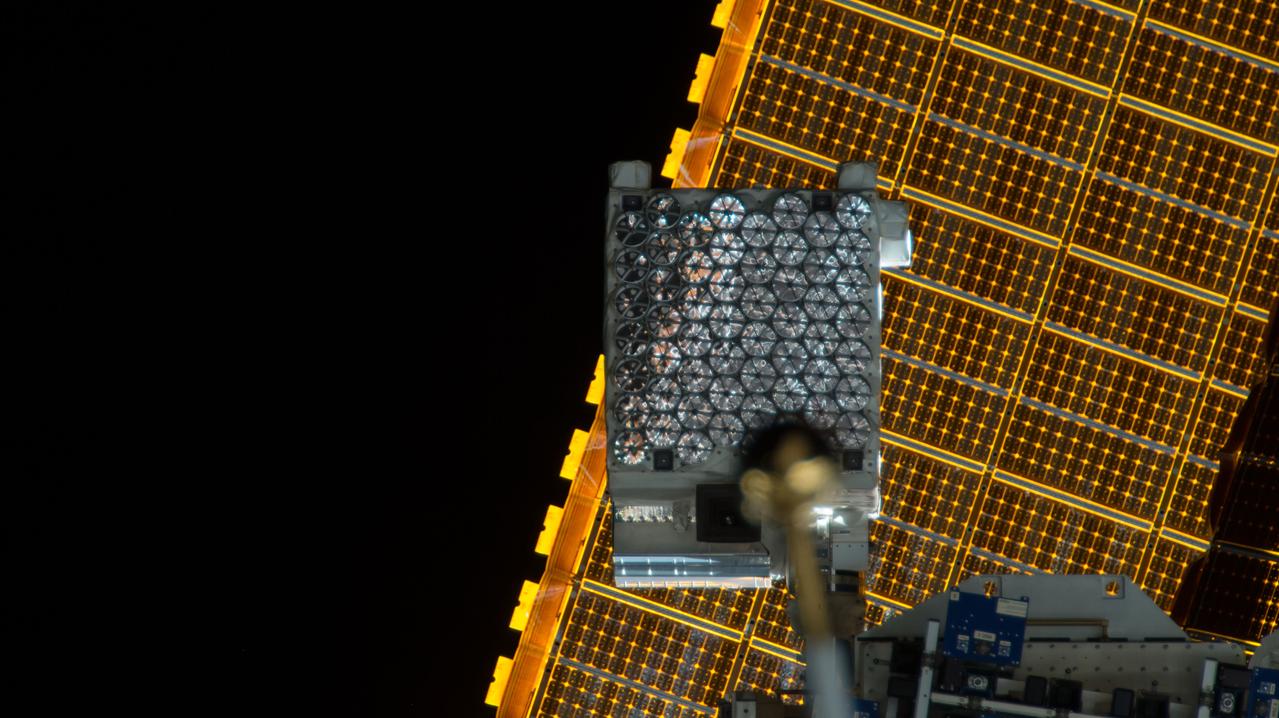
iss057e055460 (10/22/2018) --- View of the Neutron Star Interior Composition ExploreR (NICER) payload, attached to ExPRESS (Expedite the Processing of Experiments to Space Station) Logistics Carrier-2 (ELC-2) on the S3 Truss. Photo was taken by the ground-controlled External High Definition Camera 1 (EHDC1). NICER's primary mission to perform an in-depth study of neutron stars offers unrivaled astrophysics knowledge and can revolutionize the understanding of ultra-dense matter.
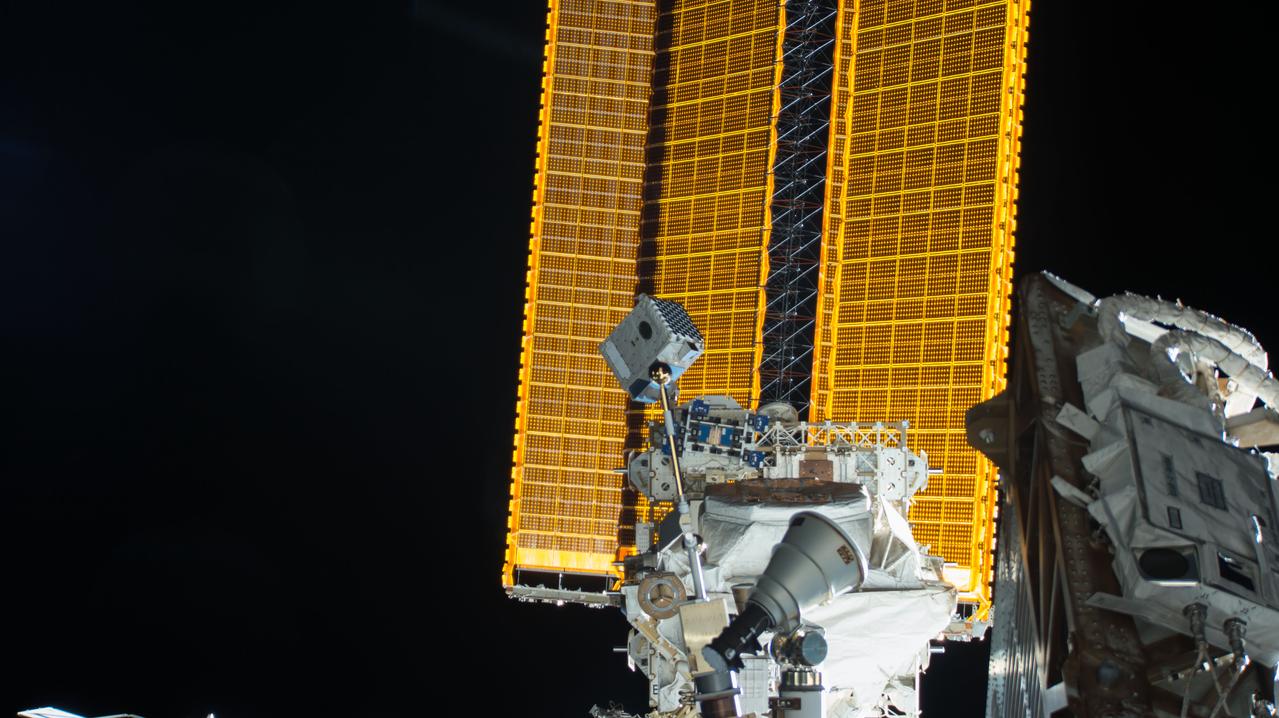
iss057e055482 (10/22/2018) --- View of the Neutron Star Interior Composition ExploreR (NICER) payload, attached to ExPRESS (Expedite the Processing of Experiments to Space Station) Logistics Carrier-2 (ELC-2) on the S3 Truss. Photo was taken by the ground-controlled External High Definition Camera 1 (EHDC1). NICER's primary mission to perform an in-depth study of neutron stars offers unrivaled astrophysics knowledge and can revolutionize the understanding of ultra-dense matter.
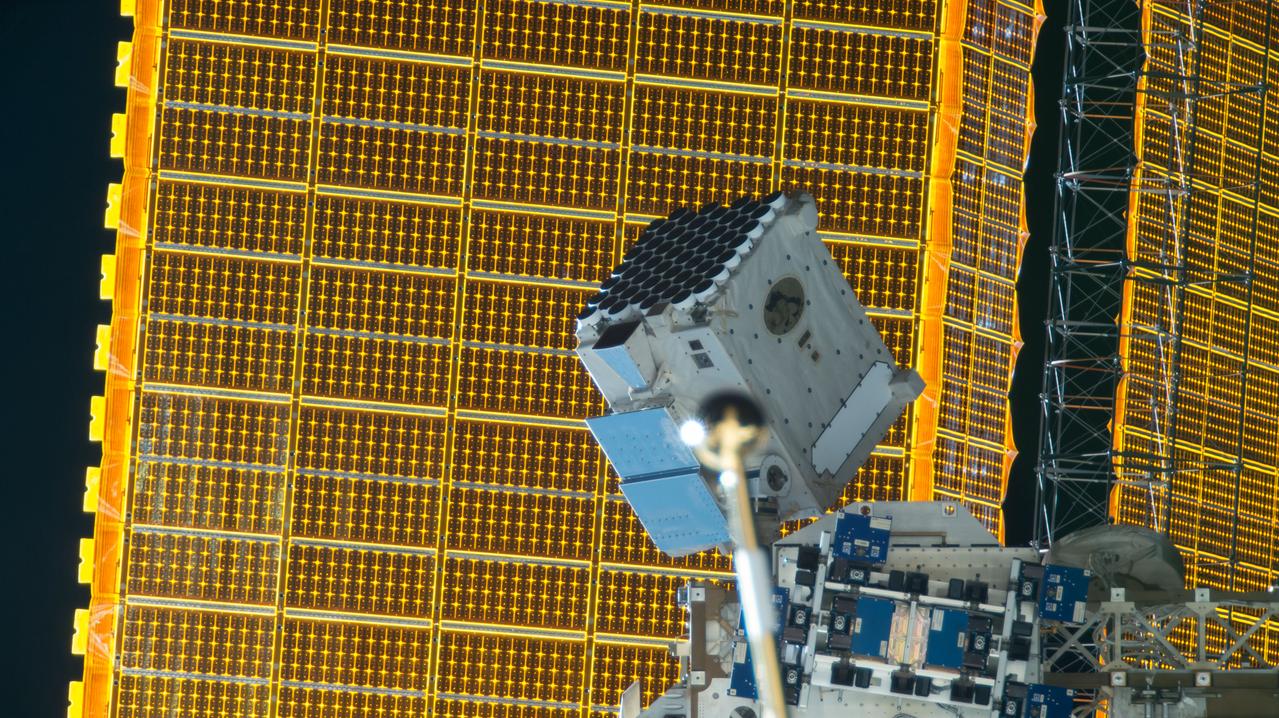
iss057e055490 (10/22/2018) --- View of the Neutron Star Interior Composition ExploreR (NICER) payload, attached to ExPRESS (Expedite the Processing of Experiments to Space Station) Logistics Carrier-2 (ELC-2) on the S3 Truss. Photo was taken by the ground-controlled External High Definition Camera 1 (EHDC1). NICER's primary mission to perform an in-depth study of neutron stars offers unrivaled astrophysics knowledge and can revolutionize the understanding of ultra-dense matter.

This artist's concept depicts a magnetar – a type of neutron star with a strong magnetic field – losing material into space in an ejection that would have caused the object's rotation to slow. Shown as thin green lines, the magnetic field lines influence the movement of charged material around the magnetar. In October 2022, astronomers using NASA's NICER (Neutron Star Interior Composition Explorer) on the International Space Station and NuSTAR (Nuclear Spectroscopic Telescope Array) in low Earth orbit observed a rapid slowdown in a nearby magnetar called SGR 1935+2154. They believe the slowdown was caused by a rapid loss of material. The slowdown coincided with the release a fast radio burst – an eruption of radio waves that last only for a fraction of a second but can release about as much energy as the Sun does in a year. The light also forms a laser-like beam, setting them apart from more chaotic cosmic explosions. The telescopes were able to observe SGR 1935+2154 for hours, catching a glimpse of what happened on its surface and in its immediate surroundings both before and after the fast radio burst. https://photojournal.jpl.nasa.gov/catalog/PIA26274
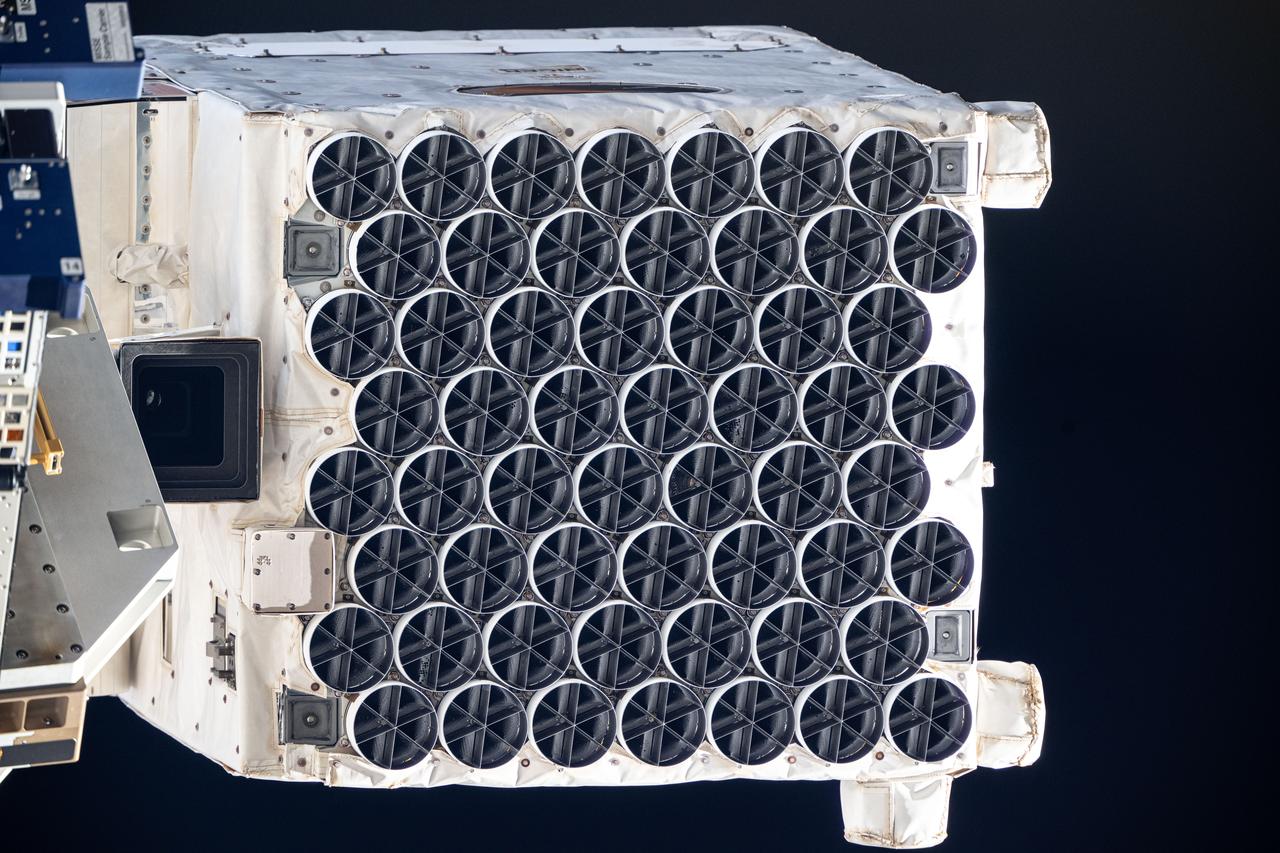
iss072e371351 (Dec. 17, 2024) --- The NICER (Neutron star Interior Composition Explorer) X-ray telescope is pictured installed on the starboard side of the International Space Station's integrated truss segment. NICER's 56 X-ray concentrators are covered by thermal shields, or filters, that block ultraviolet, infrared, and visible light while allowing X-rays to pass through to the mirrors underneath enabling the observation of neutron stars. Several thermal shields have been damaged allowing unwanted sunlight to "leak" into the astrophysics instrument interfering with X-ray measurements. NASA astronauts Nick Hague and Sun Williams will conduct a spacewalk on Jan. 16 to patch the damaged thermal shields and restore NICER for daytime scientific operations.
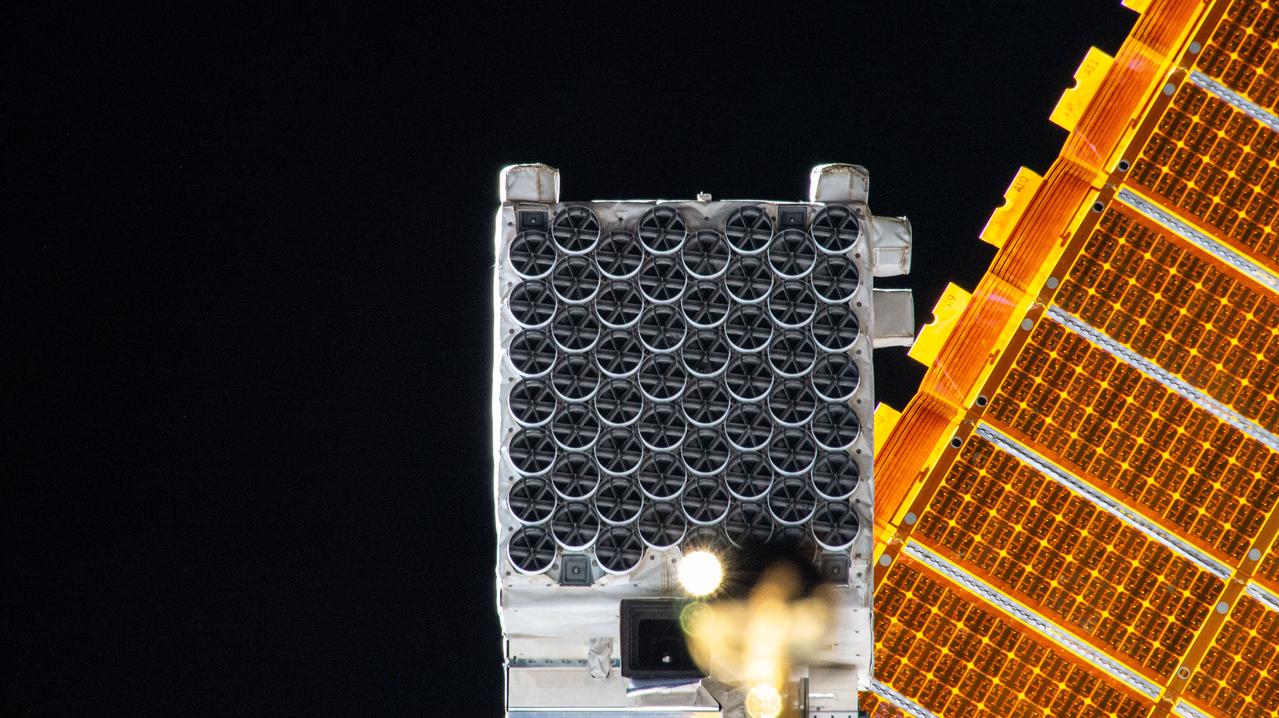
iss072e371305 (Dec. 17, 2024) --- The NICER (Neutron star Interior Composition Explorer) X-ray telescope is pictured installed on the starboard side of the International Space Station's integrated truss segment. NICER's 56 X-ray concentrators are covered by thermal shields, or filters, that block ultraviolet, infrared, and visible light while allowing X-rays to pass through to the mirrors underneath enabling the observation of neutron stars. Several thermal shields have been damaged allowing unwanted sunlight to "leak" into the astrophysics instrument interfering with X-ray measurements. NASA astronauts Nick Hague and Sun Williams will conduct a spacewalk on Jan. 16 to patch the damaged thermal shields and restore NICER for daytime scientific operations.
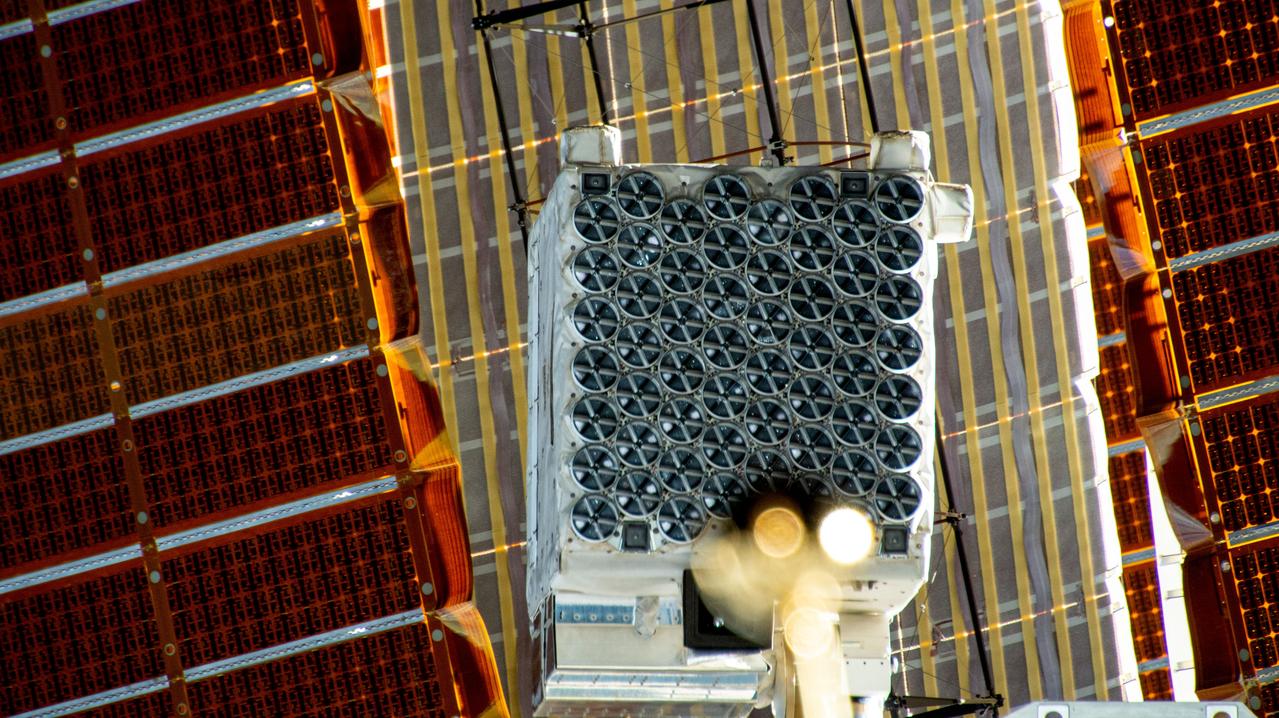
iss069e020459 (June 13, 2023) --- The Neutron star Interior Composition Explorer, or NICER, science investigation payload is pictured attached to the outside of the International Space Station. NICER studies the extraordinary physics of neutron stars providing new insights into their nature and behavior potentially revolutionizing the understanding of ultra-dense matter. Filling the background are the station's solar arrays that power the orbiting lab.
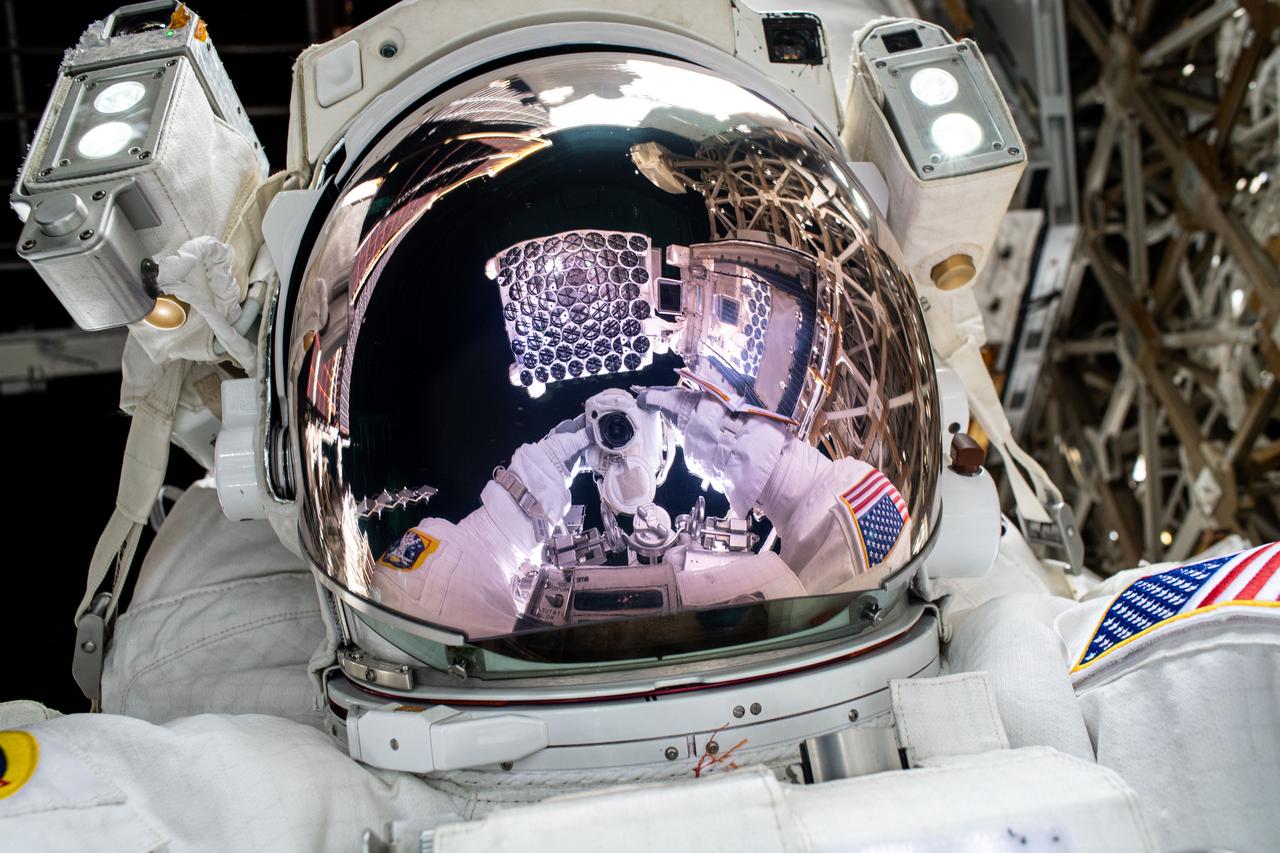
iss072e487911 (Jan. 16, 2025) --- The NICER X-ray telescope is reflected on NASA astronaut and Expedition 72 Flight Engineer Nick Hague's spacesuit helmet visor in this high-flying "space-selfie." Also, visible in Hague's visor is the camera he is pointing toward himself to take this photograph. During the six-hour spacewalk, Hague patched light leaks on some of NICER's 56 X-ray concentrators that block ultraviolet, infrared, and visible light while allowing X-rays to pass through to the mirrors underneath enabling the observation of neutron stars.
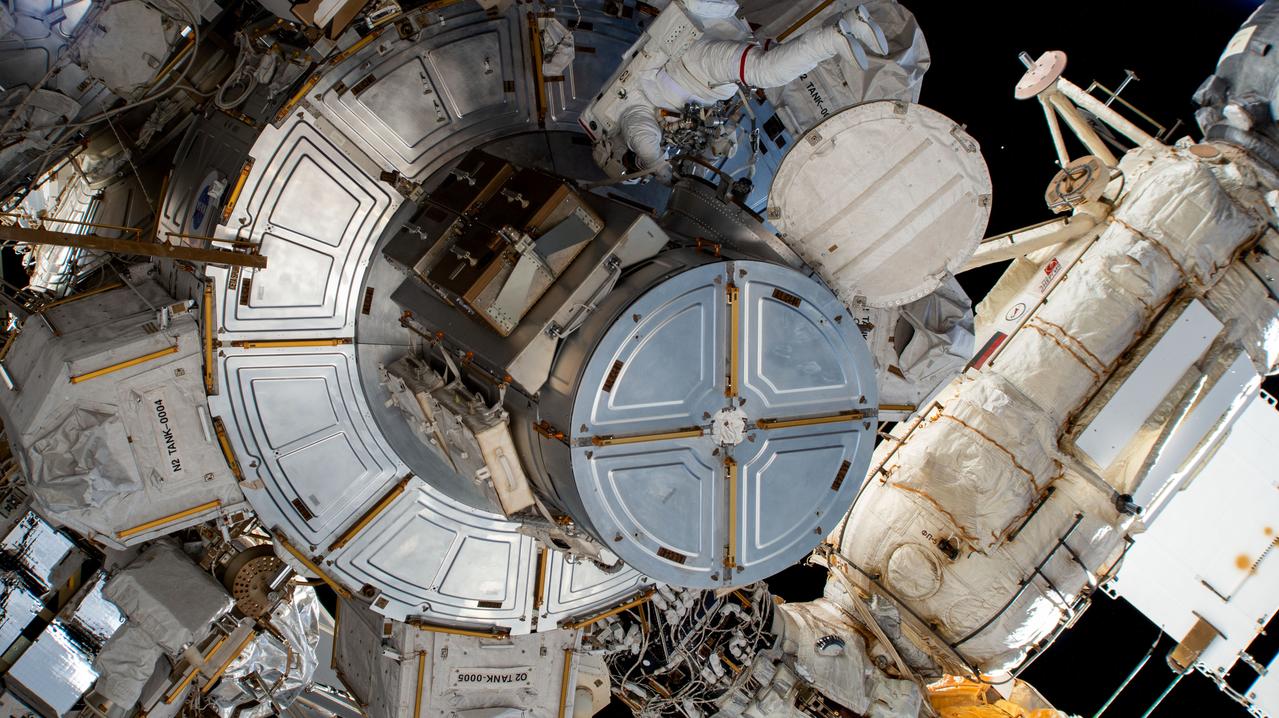
iss072e487415 (Jan. 16, 2025) --- NASA astronaut and Expedition 72 Flight Engineer Nick Hague is pictured shortly after he exited the International Space Station's Quest airlock beginning a spacewalk to service astrophysics hardware including the NICER X-ray telescope and the Alpha Magnetic Spectrometer.
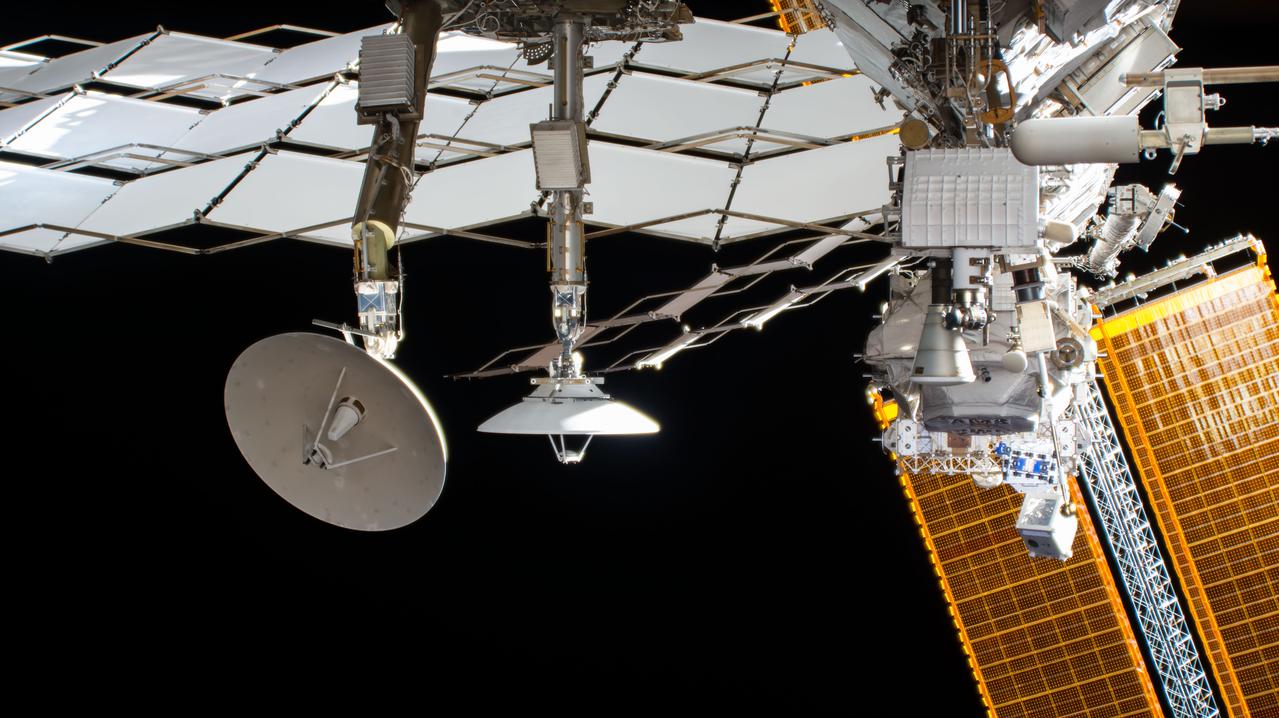
iss055e024025 (4/15/2018) - View of a radiator pane, solar array and the Alpha Magnetic Spectrometer - 02 (AMS-02) as seen by the External High Definition Camera (EHDC1). Also visible are Neutron Star Interior Composition Explorer (NICER) and Materials ISS Experiment Flight Facility (MISSE-FF).
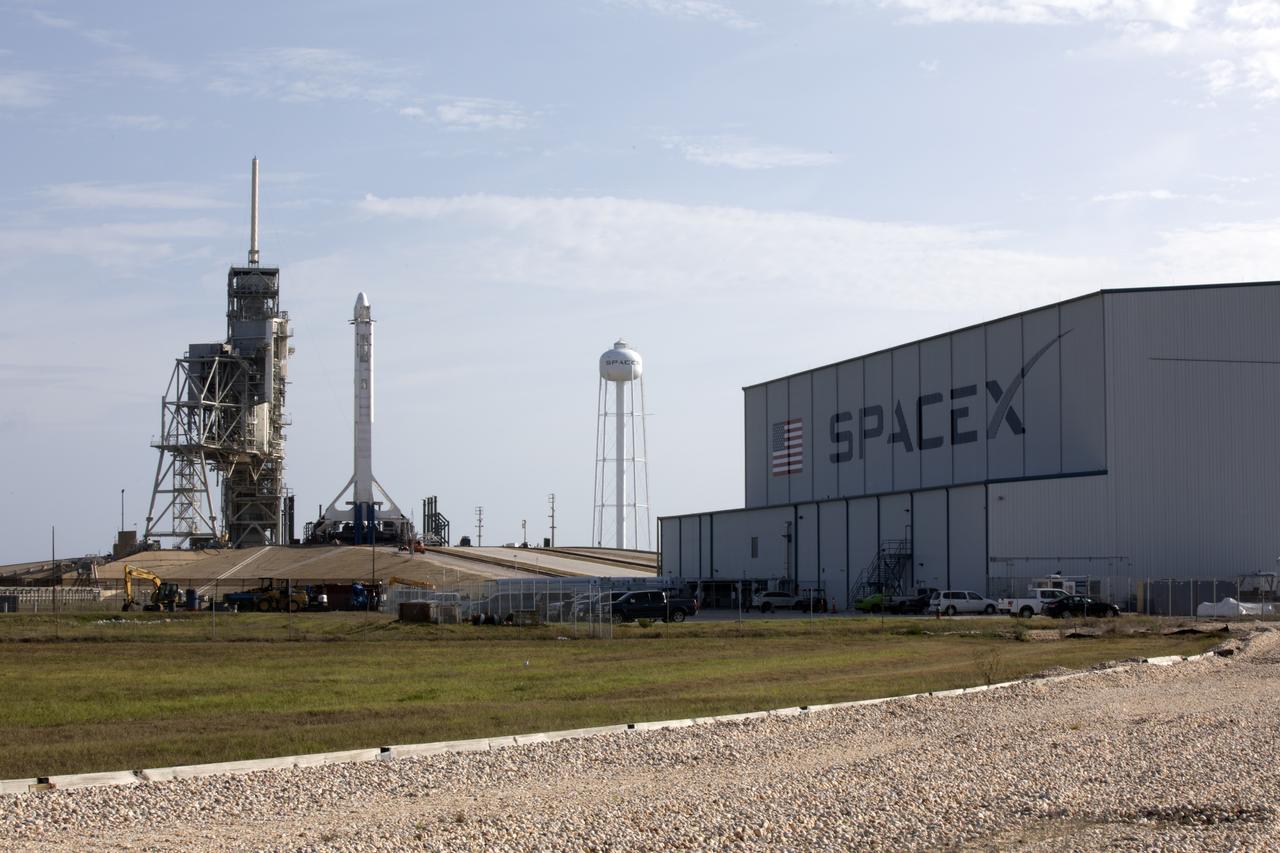
As a Falcon 9 rocket stands ready for liftoff at the Kennedy Space Center's Launch Complex 39A. The rocket will boost a Dragon resupply spacecraft to the International Space Station. Liftoff is scheduled for 5:55 p.m. EDT. On its 11th commercial resupply services mission to the space station, Dragon will bring up 6,000 pounds of supplies, such as the Neutron star Interior Composition Explorer, or NICER, instrument to study the extraordinary physics of neutron stars.
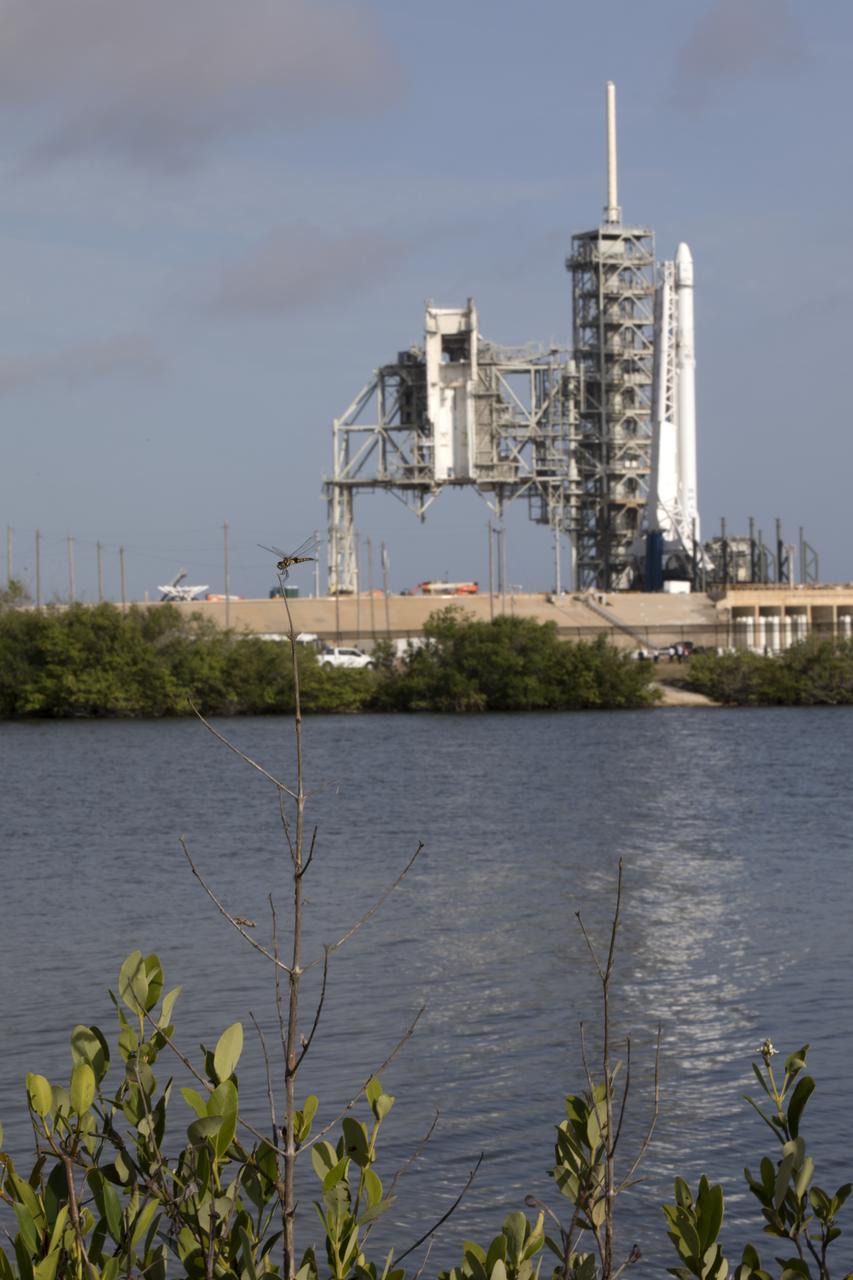
As a Falcon 9 rocket stands ready for liftoff at the Kennedy Space Center's Launch Complex 39A. The rocket will boost a Dragon resupply spacecraft to the International Space Station. Liftoff is scheduled for 5:55 p.m. EDT. On its 11th commercial resupply services mission to the space station, Dragon will bring up 6,000 pounds of supplies, such as the Neutron star Interior Composition Explorer, or NICER, instrument to study the extraordinary physics of neutron stars.
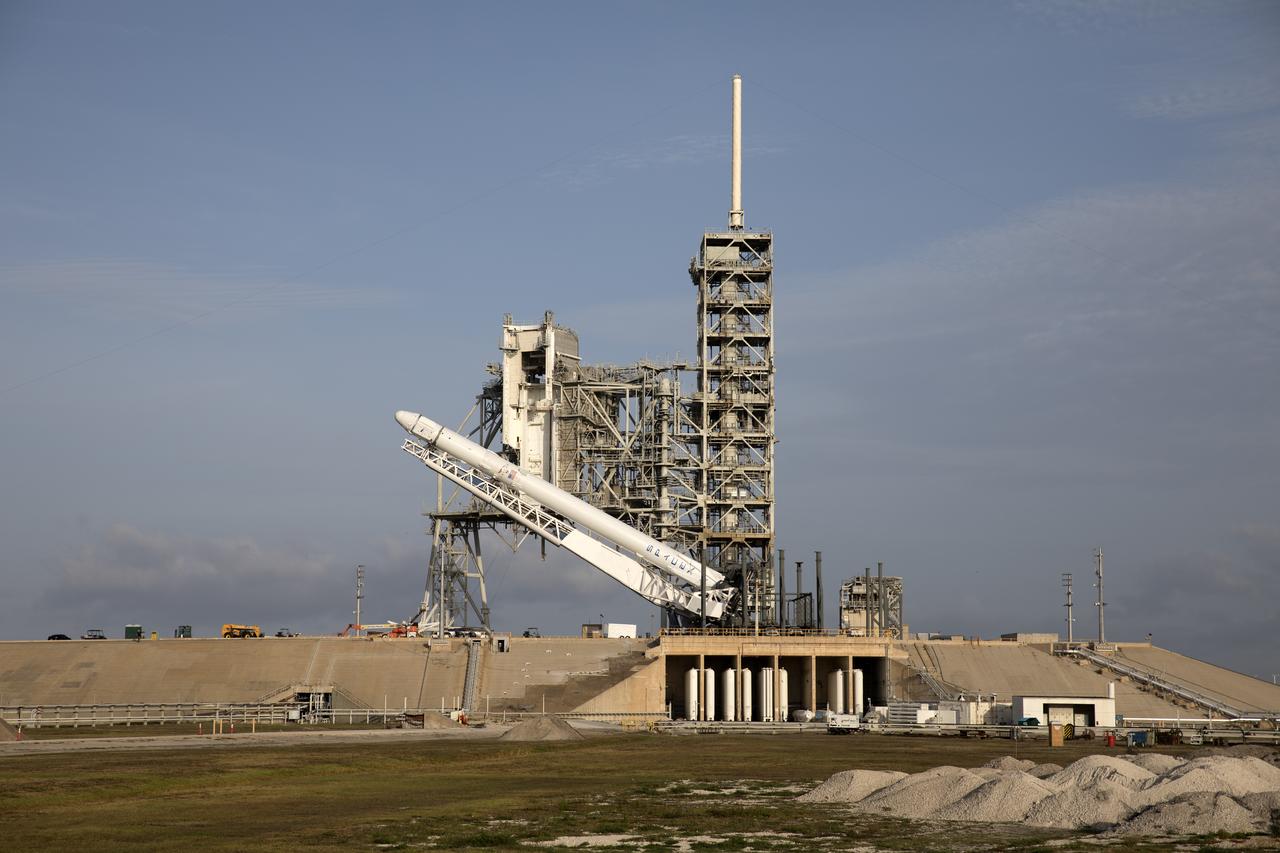
As a Falcon 9 rocket is raised into positon for liftoff at the Kennedy Space Center's Launch Complex 39A. The rocket will boost a Dragon resupply spacecraft to the International Space Station. Liftoff is scheduled for 5:55 p.m. EDT. On its 11th commercial resupply services mission to the space station, Dragon will bring up 6,000 pounds of supplies, such as the Neutron star Interior Composition Explorer, or NICER, instrument to study the extraordinary physics of neutron stars.
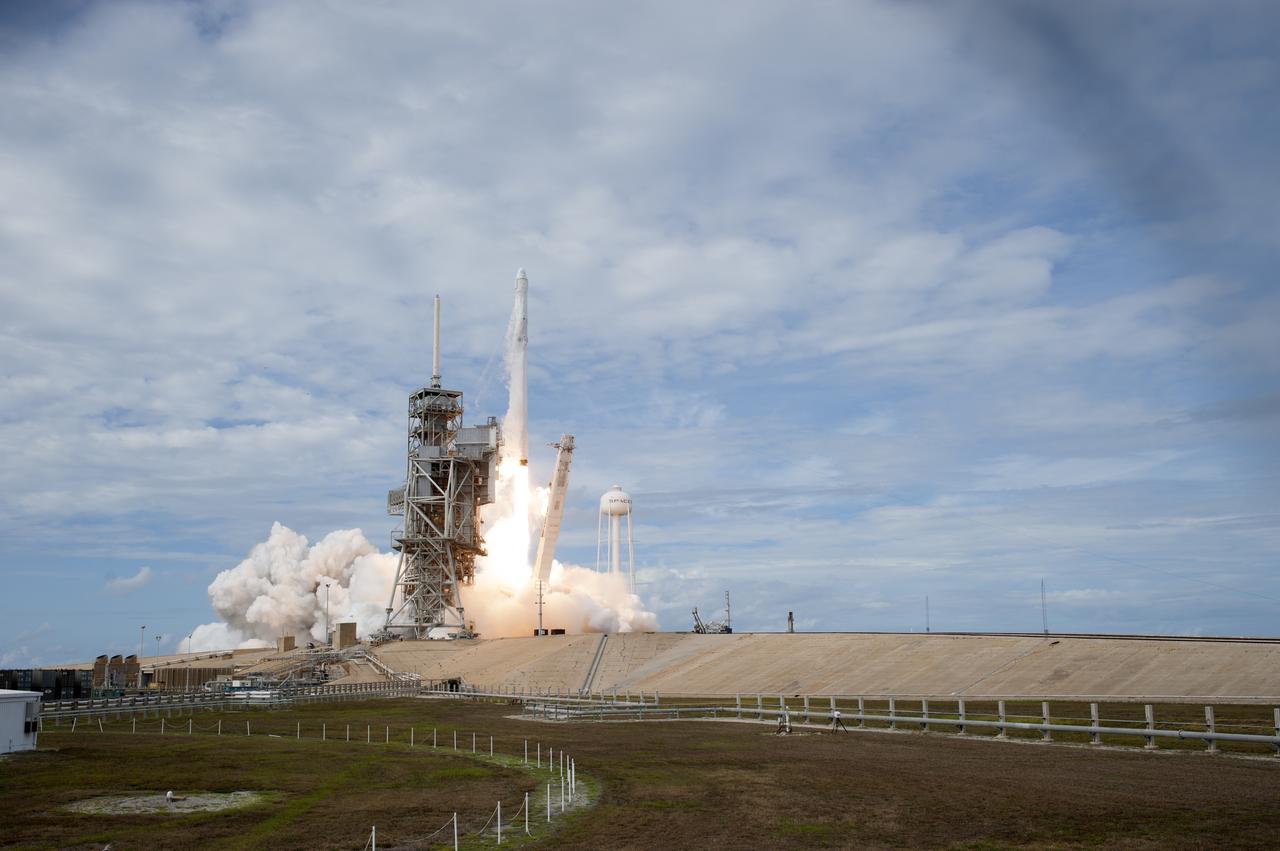
A SpaceX Falcon 9 rocket lifts off from Launch Complex 39A at NASA's Kenney Space Center in Florida, the company's 11th commercial resupply services mission to the International Space Station. Liftoff was at 5:07 p.m. EDT from the historic launch site now operated by SpaceX under a property agreement with NASA. The Dragon spacecraft will deliver 6,000 pounds of supplies, such as the Neutron star Interior Composition Explorer, or NICER, designed to study the extraordinary physics of these stars, providing insights into their nature and behavior.
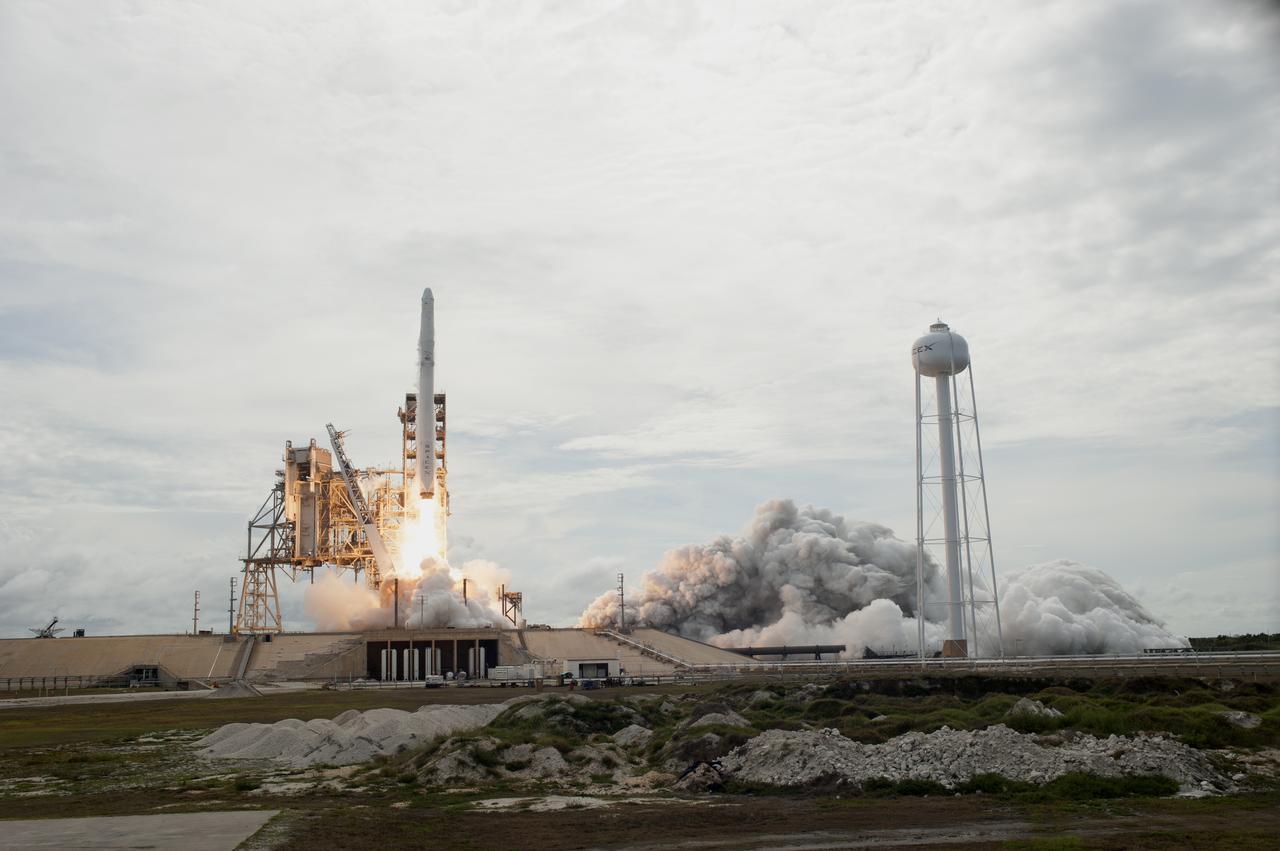
A SpaceX Falcon 9 rocket lifts off from Launch Complex 39A at NASA's Kenney Space Center in Florida, the company's 11th commercial resupply services mission to the International Space Station. Liftoff was at 5:07 p.m. EDT from the historic launch site now operated by SpaceX under a property agreement with NASA. The Dragon spacecraft will deliver 6,000 pounds of supplies, such as the Neutron star Interior Composition Explorer, or NICER, designed to study the extraordinary physics of these stars, providing insights into their nature and behavior.
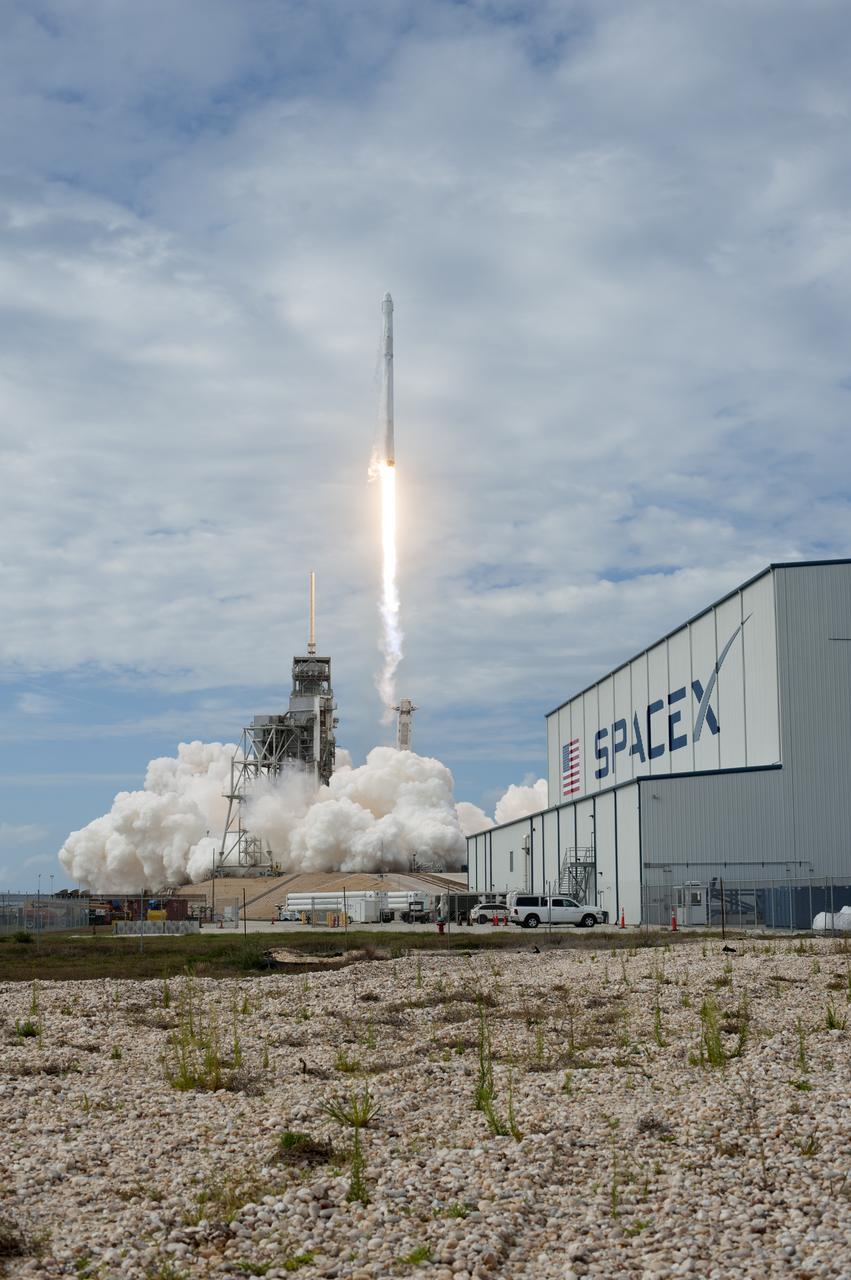
A SpaceX Falcon 9 rocket lifts off from Launch Complex 39A at NASA's Kenney Space Center in Florida, the company's 11th commercial resupply services mission to the International Space Station. Liftoff was at 5:07 p.m. EDT from the historic launch site now operated by SpaceX under a property agreement with NASA. The Dragon spacecraft will deliver 6,000 pounds of supplies, such as the Neutron star Interior Composition Explorer, or NICER, designed to study the extraordinary physics of these stars, providing insights into their nature and behavior.
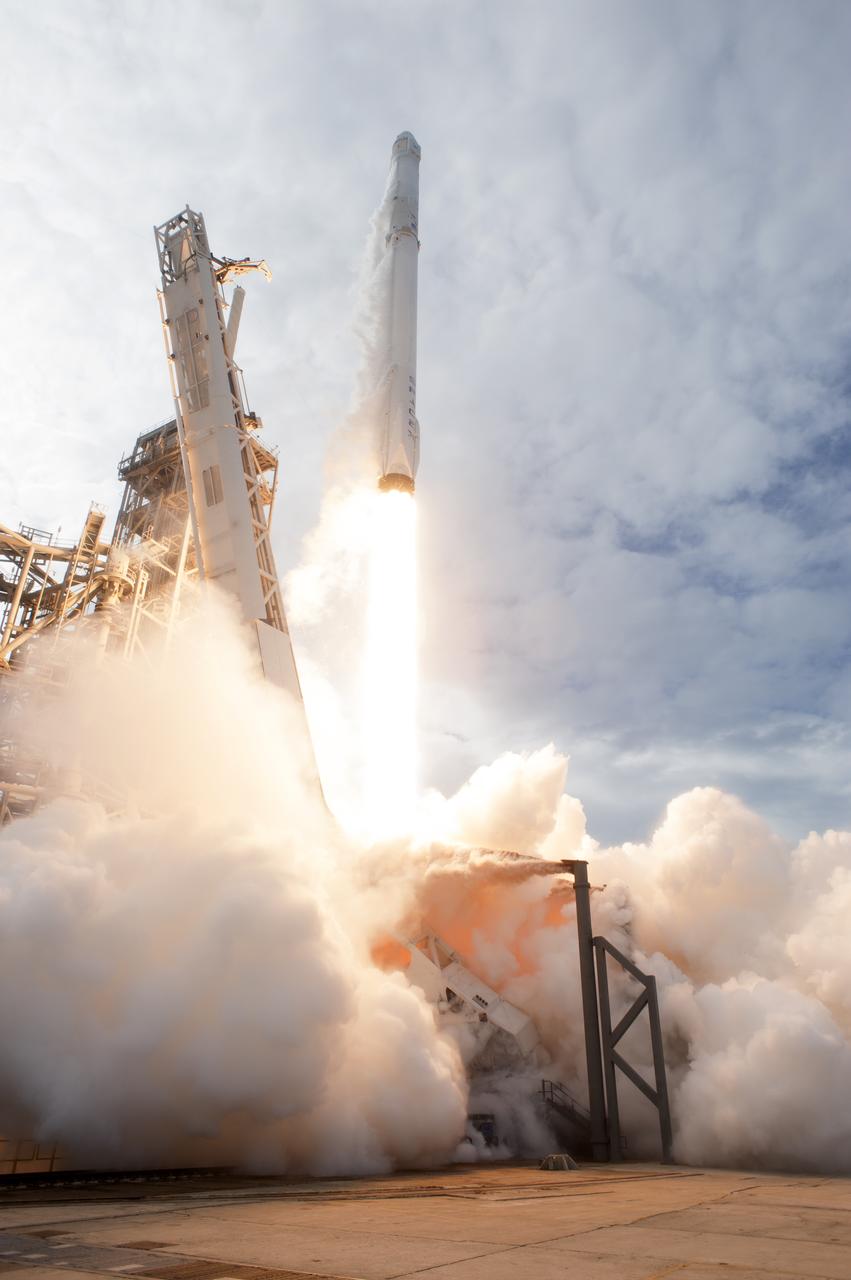
A SpaceX Falcon 9 rocket lifts off from Launch Complex 39A at NASA's Kenney Space Center in Florida, the company's 11th commercial resupply services mission to the International Space Station. Liftoff was at 5:07 p.m. EDT from the historic launch site now operated by SpaceX under a property agreement with NASA. The Dragon spacecraft will deliver 6,000 pounds of supplies, such as the Neutron star Interior Composition Explorer, or NICER, designed to study the extraordinary physics of these stars, providing insights into their nature and behavior.
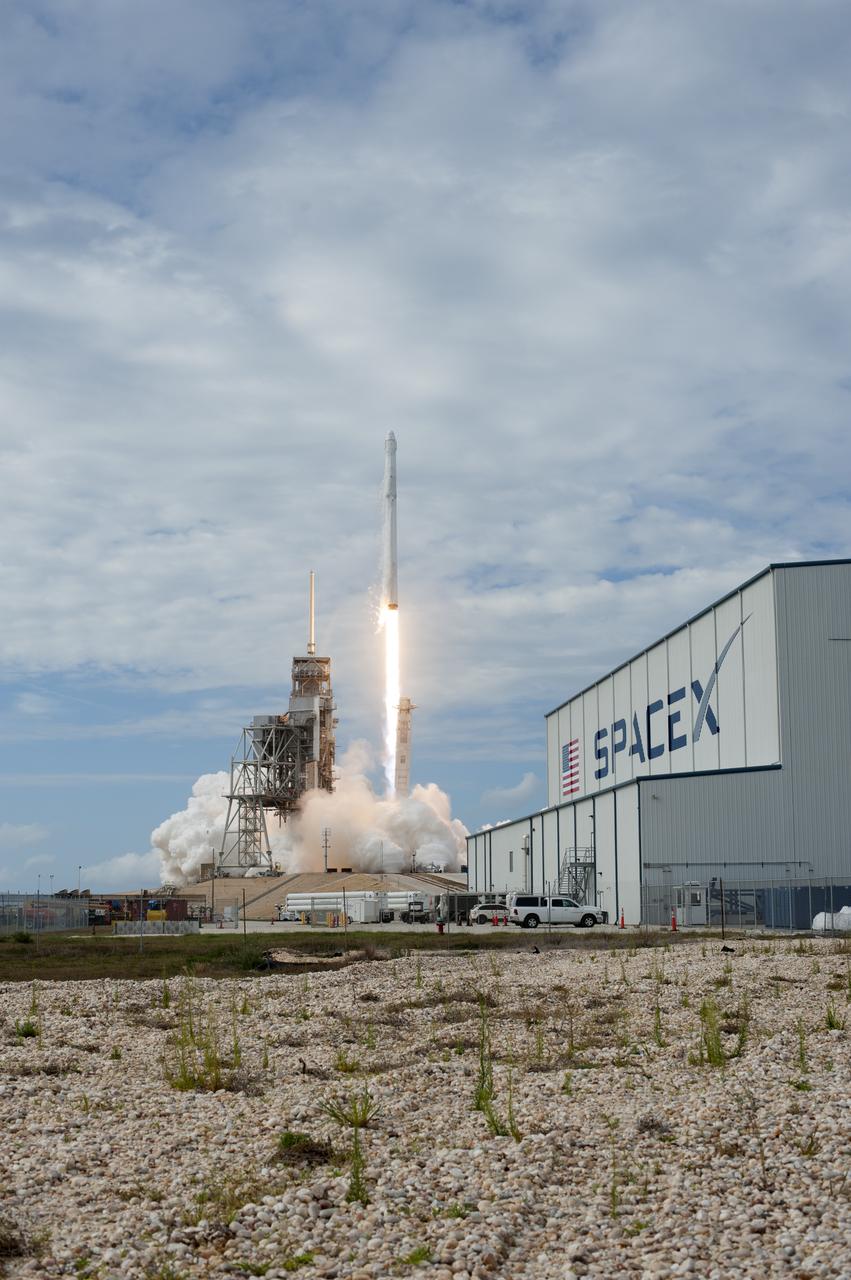
A SpaceX Falcon 9 rocket lifts off from Launch Complex 39A at NASA's Kenney Space Center in Florida, the company's 11th commercial resupply services mission to the International Space Station. Liftoff was at 5:07 p.m. EDT from the historic launch site now operated by SpaceX under a property agreement with NASA. The Dragon spacecraft will deliver 6,000 pounds of supplies, such as the Neutron star Interior Composition Explorer, or NICER, designed to study the extraordinary physics of these stars, providing insights into their nature and behavior.
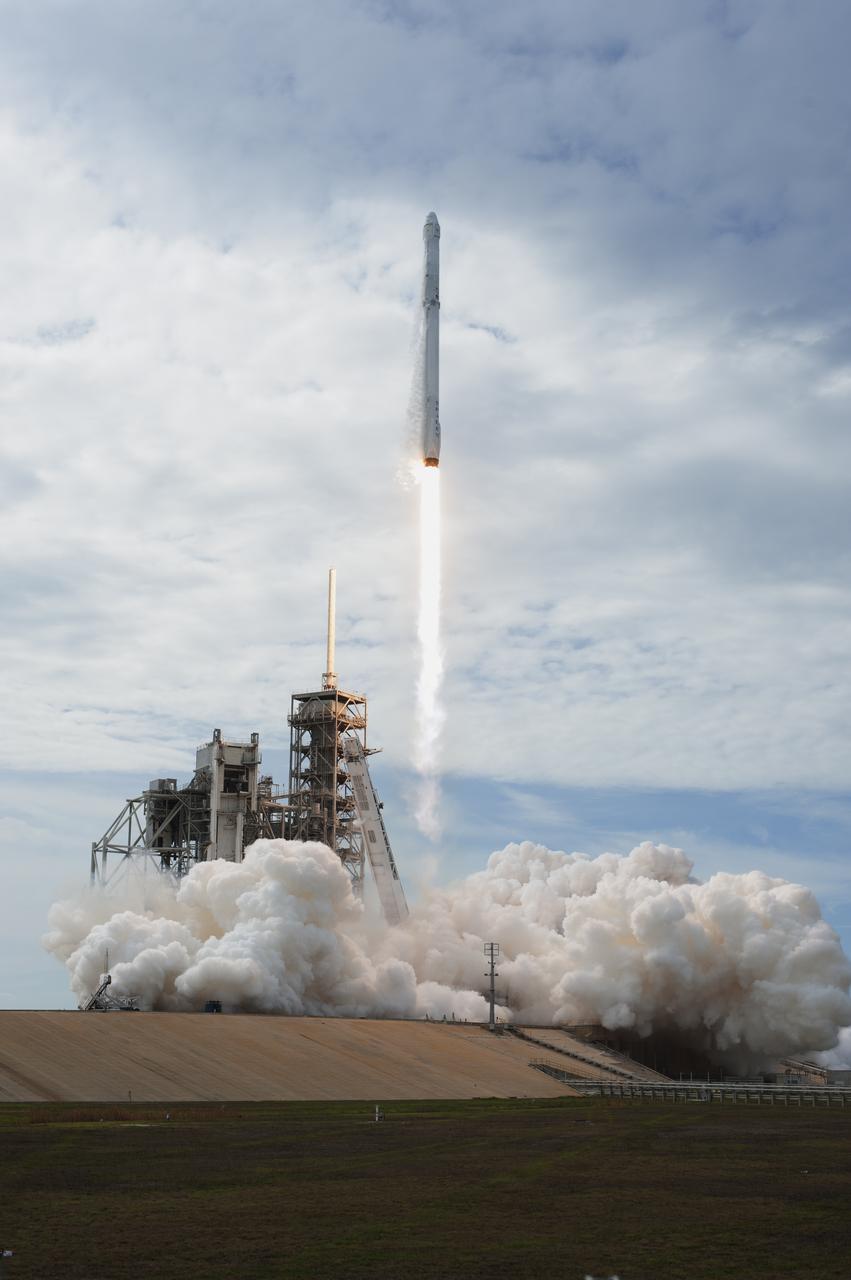
A SpaceX Falcon 9 rocket lifts off from Launch Complex 39A at NASA's Kenney Space Center in Florida, the company's 11th commercial resupply services mission to the International Space Station. Liftoff was at 5:07 p.m. EDT from the historic launch site now operated by SpaceX under a property agreement with NASA. The Dragon spacecraft will deliver 6,000 pounds of supplies, such as the Neutron star Interior Composition Explorer, or NICER, designed to study the extraordinary physics of these stars, providing insights into their nature and behavior.
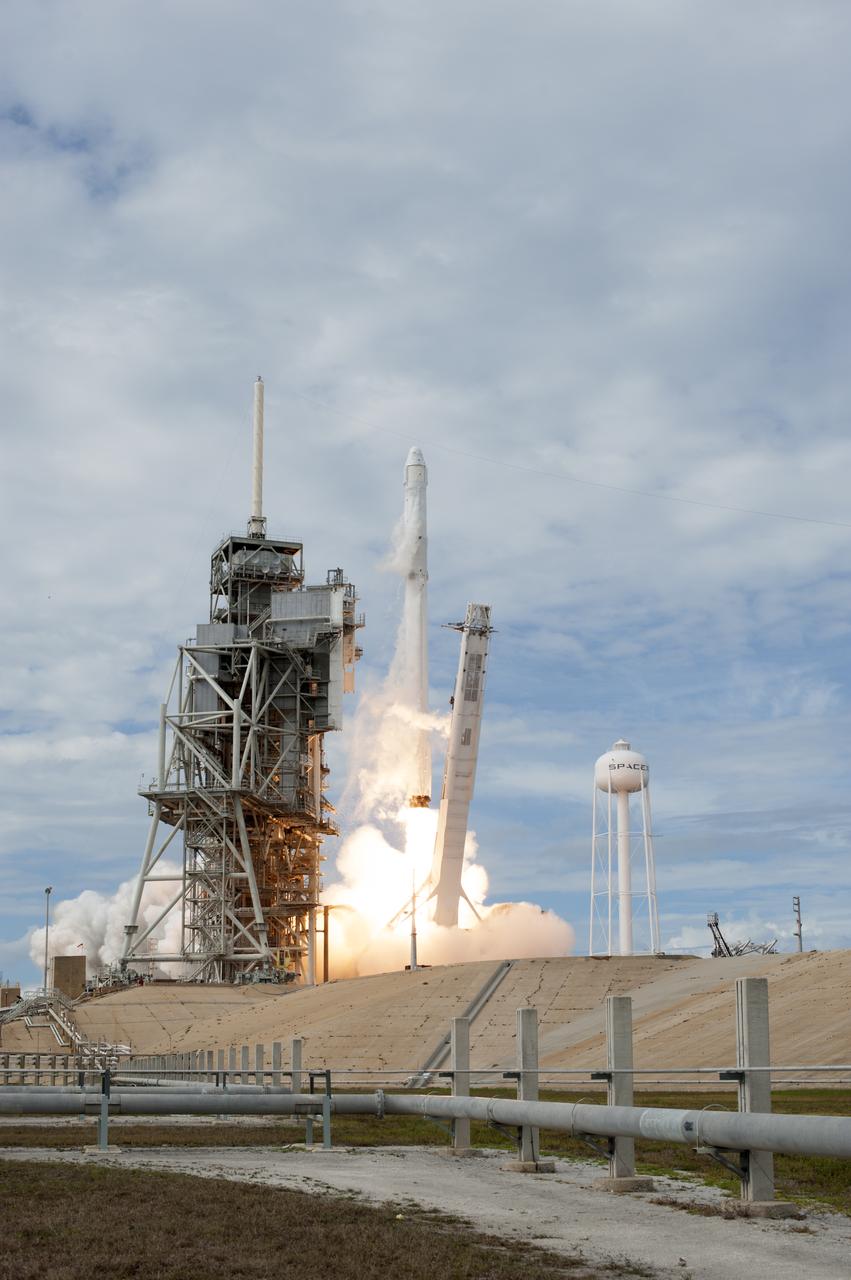
A SpaceX Falcon 9 rocket lifts off from Launch Complex 39A at NASA's Kenney Space Center in Florida, the company's 11th commercial resupply services mission to the International Space Station. Liftoff was at 5:07 p.m. EDT from the historic launch site now operated by SpaceX under a property agreement with NASA. The Dragon spacecraft will deliver 6,000 pounds of supplies, such as the Neutron star Interior Composition Explorer, or NICER, designed to study the extraordinary physics of these stars, providing insights into their nature and behavior.
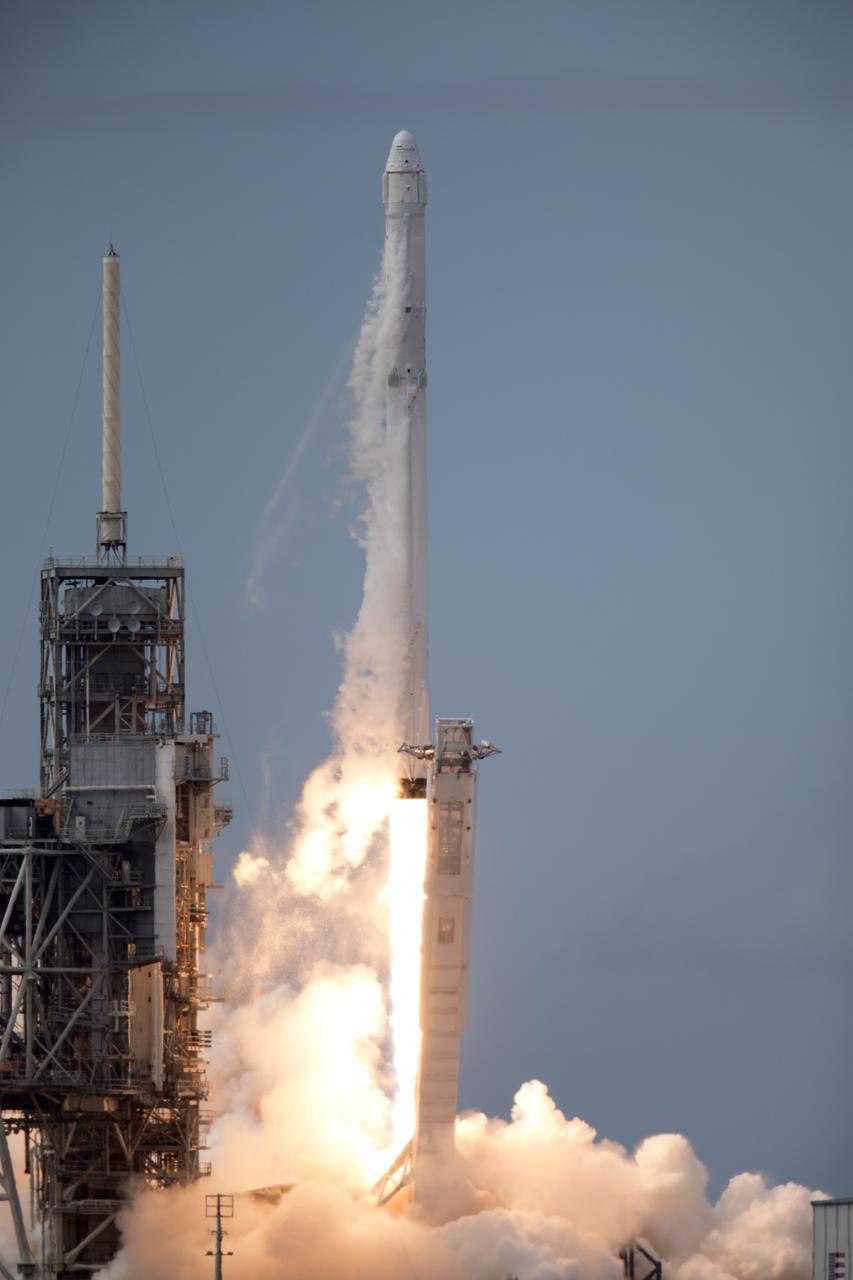
A SpaceX Falcon 9 rocket lifts off from Launch Complex 39A at NASA's Kenney Space Center in Florida, the company's 11th commercial resupply services mission to the International Space Station. Liftoff was at 5:07 p.m. EDT from the historic launch site now operated by SpaceX under a property agreement with NASA. The Dragon spacecraft will deliver 6,000 pounds of supplies, such as the Neutron star Interior Composition Explorer, or NICER, designed to study the extraordinary physics of these stars, providing insights into their nature and behavior.
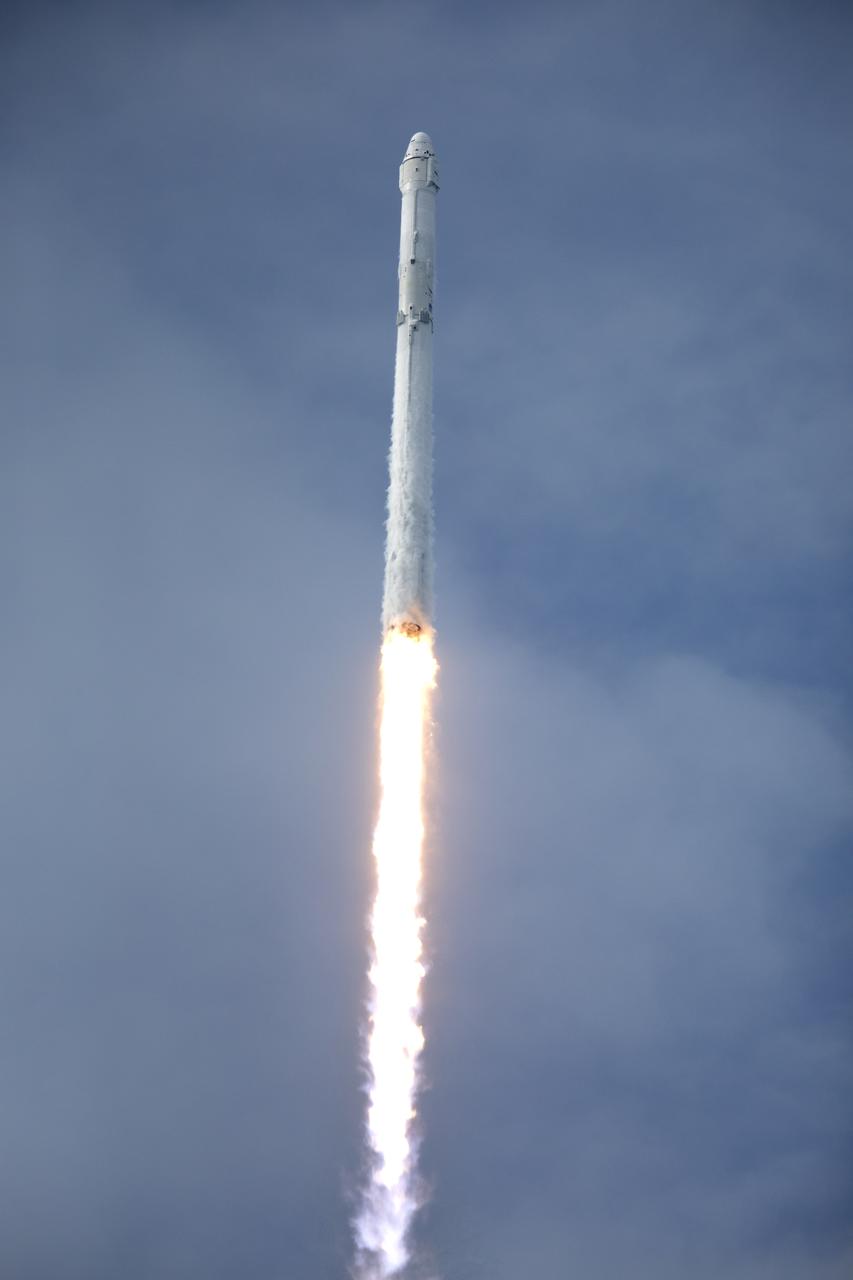
A SpaceX Falcon 9 rocket lifts off from Launch Complex 39A at NASA's Kenney Space Center in Florida, the company's 11th commercial resupply services mission to the International Space Station. Liftoff was at 5:07 p.m. EDT from the historic launch site now operated by SpaceX under a property agreement with NASA. The Dragon spacecraft will deliver 6,000 pounds of supplies, such as the Neutron star Interior Composition Explorer, or NICER, designed to study the extraordinary physics of these stars, providing insights into their nature and behavior.
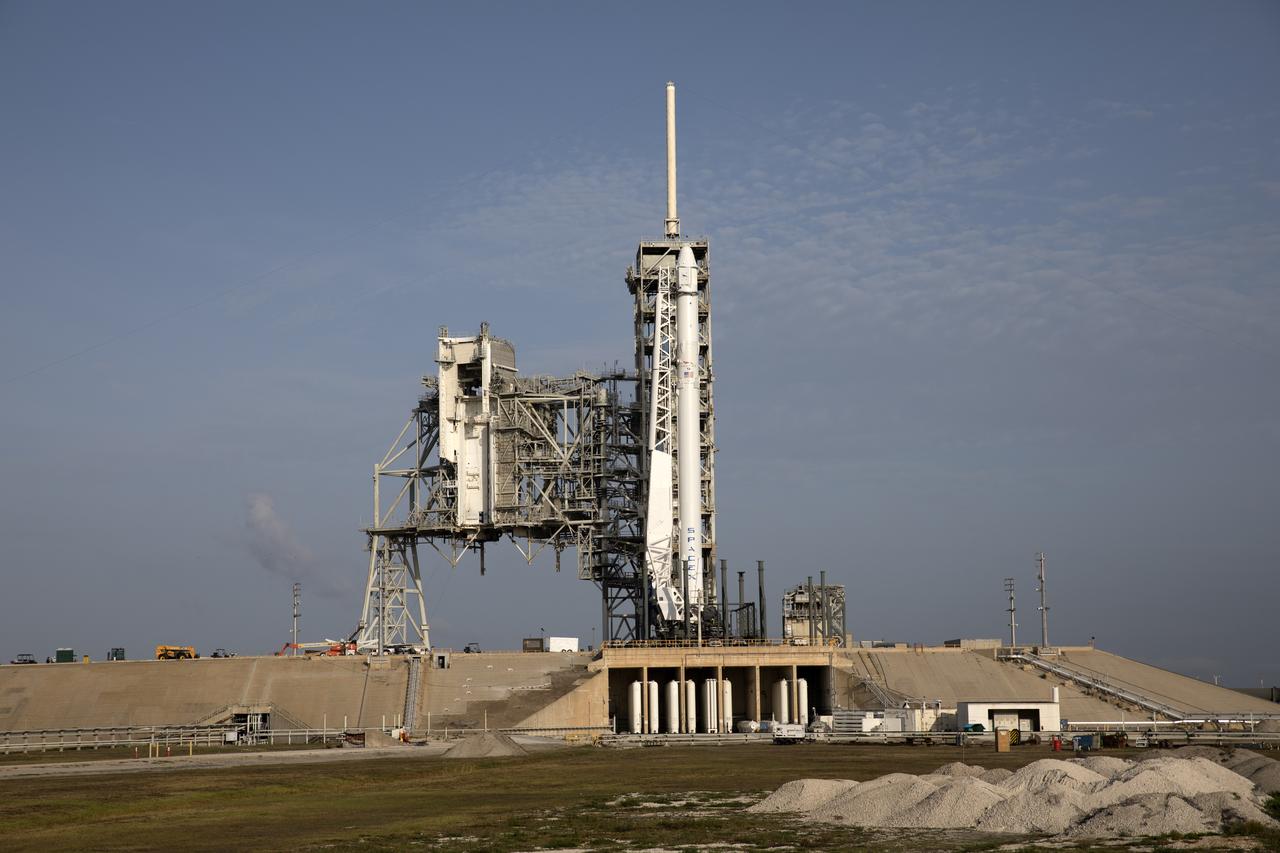
As a Falcon 9 rocket stands ready for liftoff at the Kennedy Space Center's Launch Complex 39A. The rocket will boost a Dragon resupply spacecraft to the International Space Station. Liftoff is scheduled for 5:55 p.m. EDT. On its 11th commercial resupply services mission to the space station, Dragon will bring up 6,000 pounds of supplies, such as the Neutron star Interior Composition Explorer, or NICER, instrument to study the extraordinary physics of neutron stars.

A SpaceX Falcon 9 rocket lifts off from Launch Complex 39A at NASA's Kenney Space Center in Florida, the company's 11th commercial resupply services mission to the International Space Station. Liftoff was at 5:07 p.m. EDT from the historic launch site now operated by SpaceX under a property agreement with NASA. The Dragon spacecraft will deliver 6,000 pounds of supplies, such as the Neutron star Interior Composition Explorer, or NICER, designed to study the extraordinary physics of these stars, providing insights into their nature and behavior.
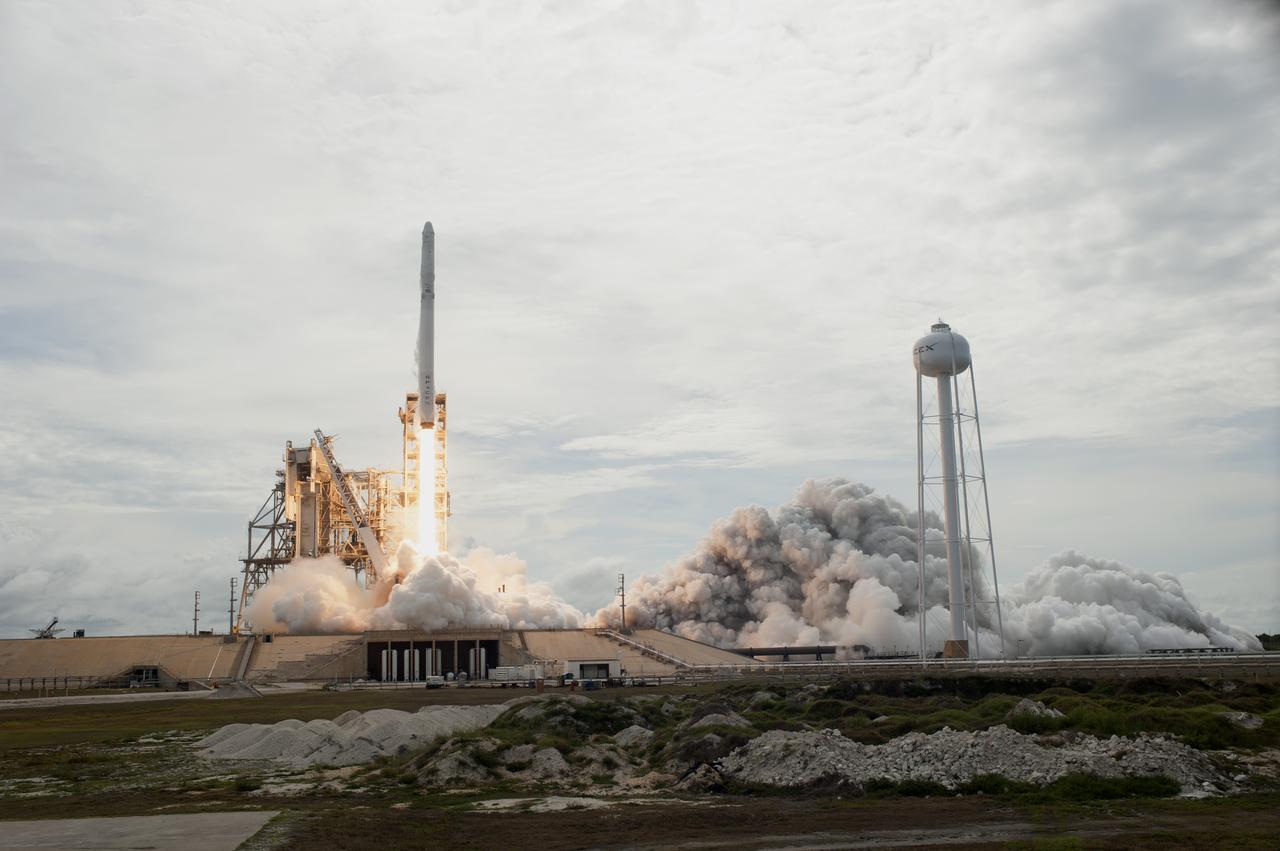
A SpaceX Falcon 9 rocket lifts off from Launch Complex 39A at NASA's Kenney Space Center in Florida, the company's 11th commercial resupply services mission to the International Space Station. Liftoff was at 5:07 p.m. EDT from the historic launch site now operated by SpaceX under a property agreement with NASA. The Dragon spacecraft will deliver 6,000 pounds of supplies, such as the Neutron star Interior Composition Explorer, or NICER, designed to study the extraordinary physics of these stars, providing insights into their nature and behavior.
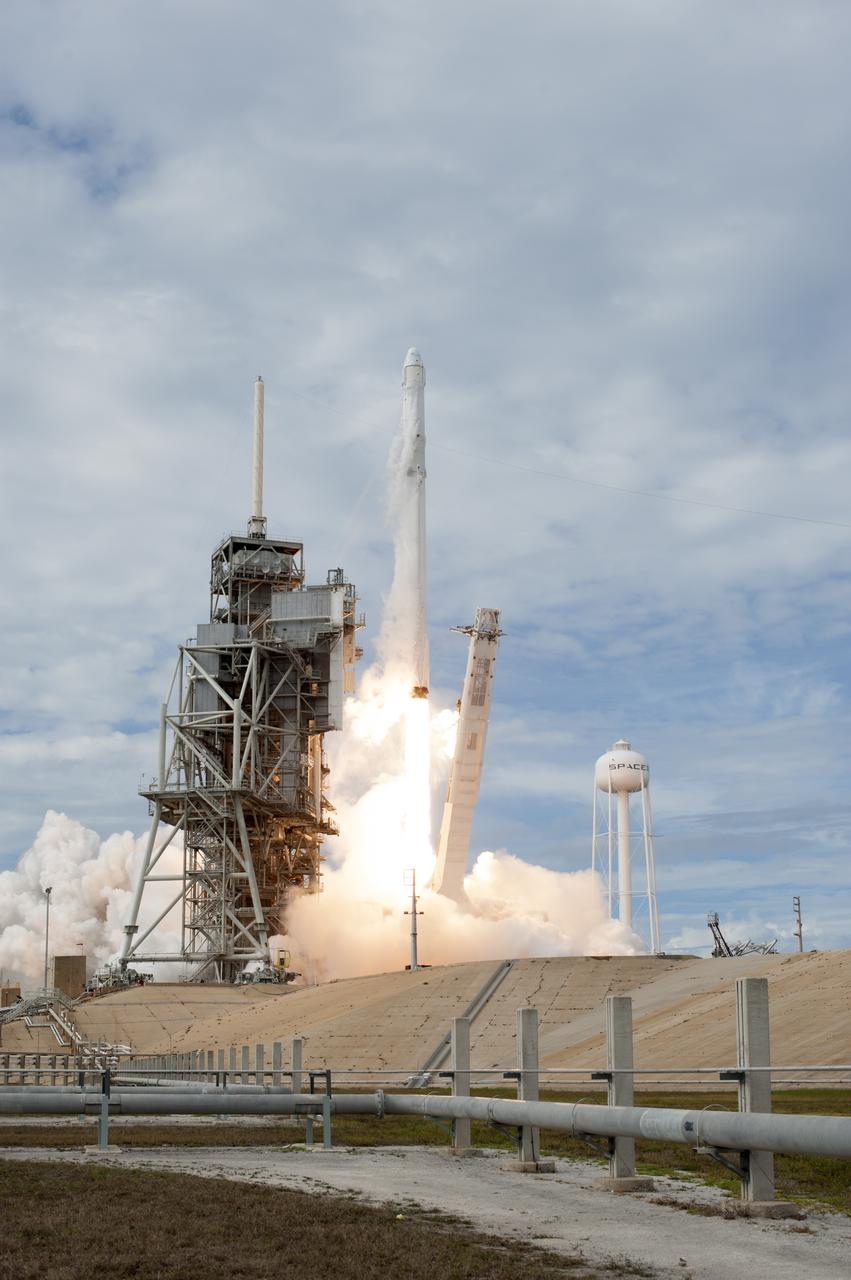
A SpaceX Falcon 9 rocket lifts off from Launch Complex 39A at NASA's Kenney Space Center in Florida, the company's 11th commercial resupply services mission to the International Space Station. Liftoff was at 5:07 p.m. EDT from the historic launch site now operated by SpaceX under a property agreement with NASA. The Dragon spacecraft will deliver 6,000 pounds of supplies, such as the Neutron star Interior Composition Explorer, or NICER, designed to study the extraordinary physics of these stars, providing insights into their nature and behavior.
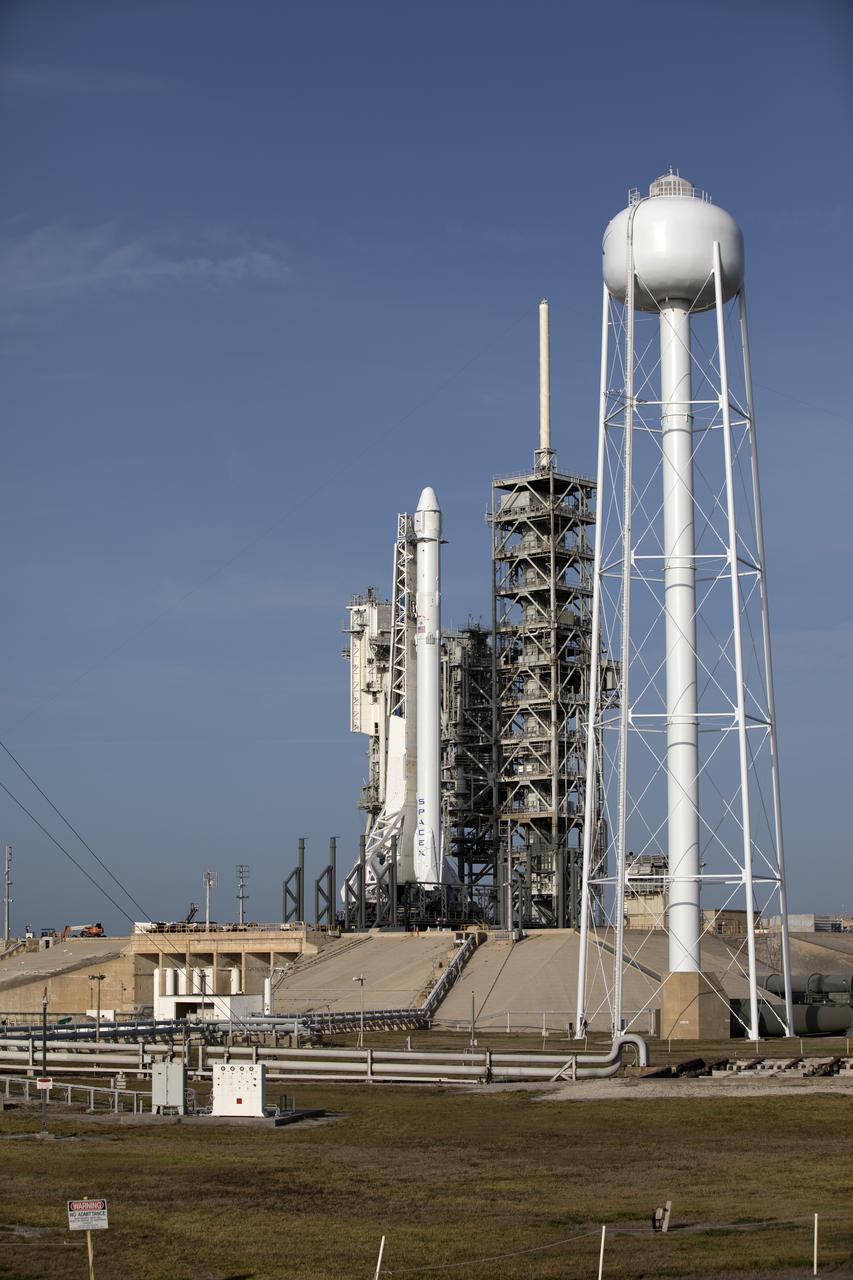
As a Falcon 9 rocket stands ready for liftoff at the Kennedy Space Center's Launch Complex 39A. The rocket will boost a Dragon resupply spacecraft to the International Space Station. Liftoff is scheduled for 5:55 p.m. EDT. On its 11th commercial resupply services mission to the space station, Dragon will bring up 6,000 pounds of supplies, such as the Neutron star Interior Composition Explorer, or NICER, instrument to study the extraordinary physics of neutron stars.
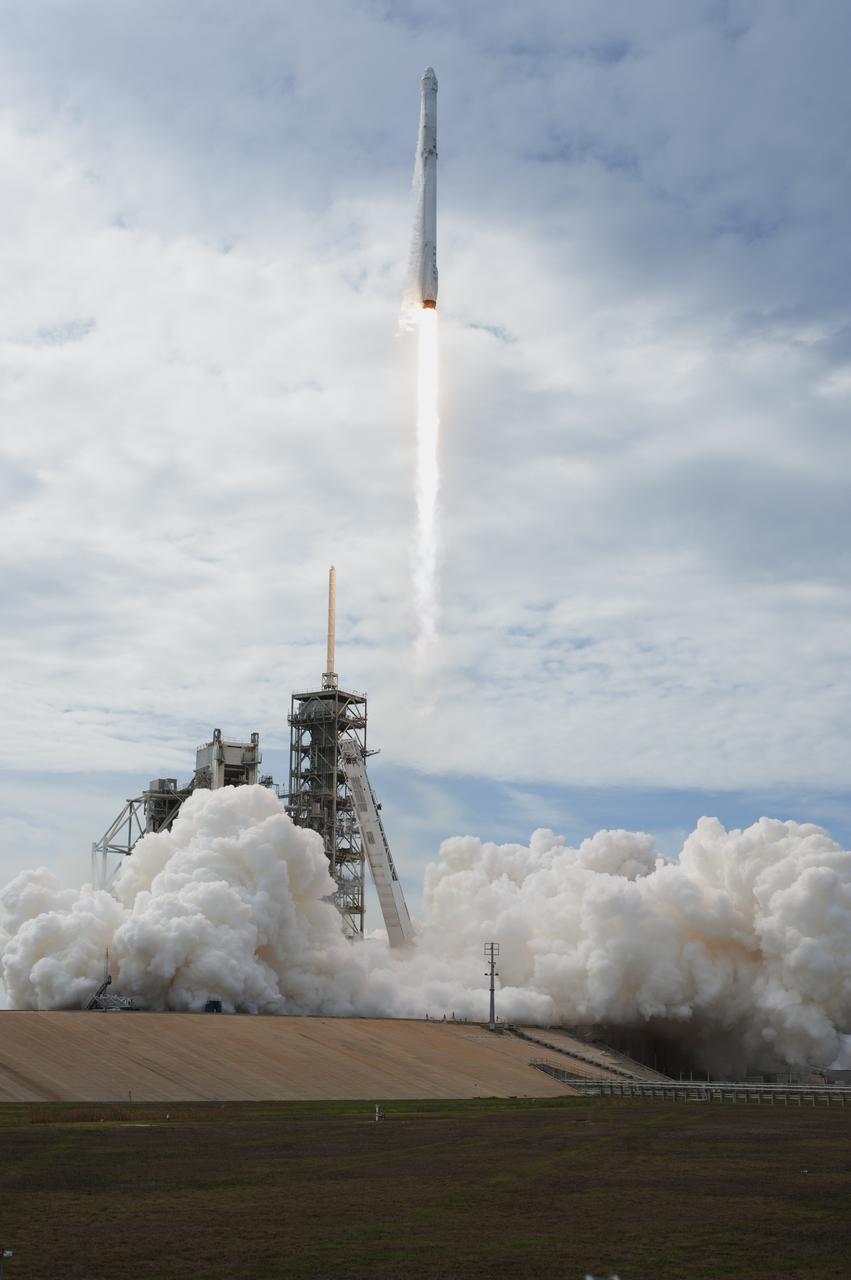
A SpaceX Falcon 9 rocket lifts off from Launch Complex 39A at NASA's Kenney Space Center in Florida, the company's 11th commercial resupply services mission to the International Space Station. Liftoff was at 5:07 p.m. EDT from the historic launch site now operated by SpaceX under a property agreement with NASA. The Dragon spacecraft will deliver 6,000 pounds of supplies, such as the Neutron star Interior Composition Explorer, or NICER, designed to study the extraordinary physics of these stars, providing insights into their nature and behavior.
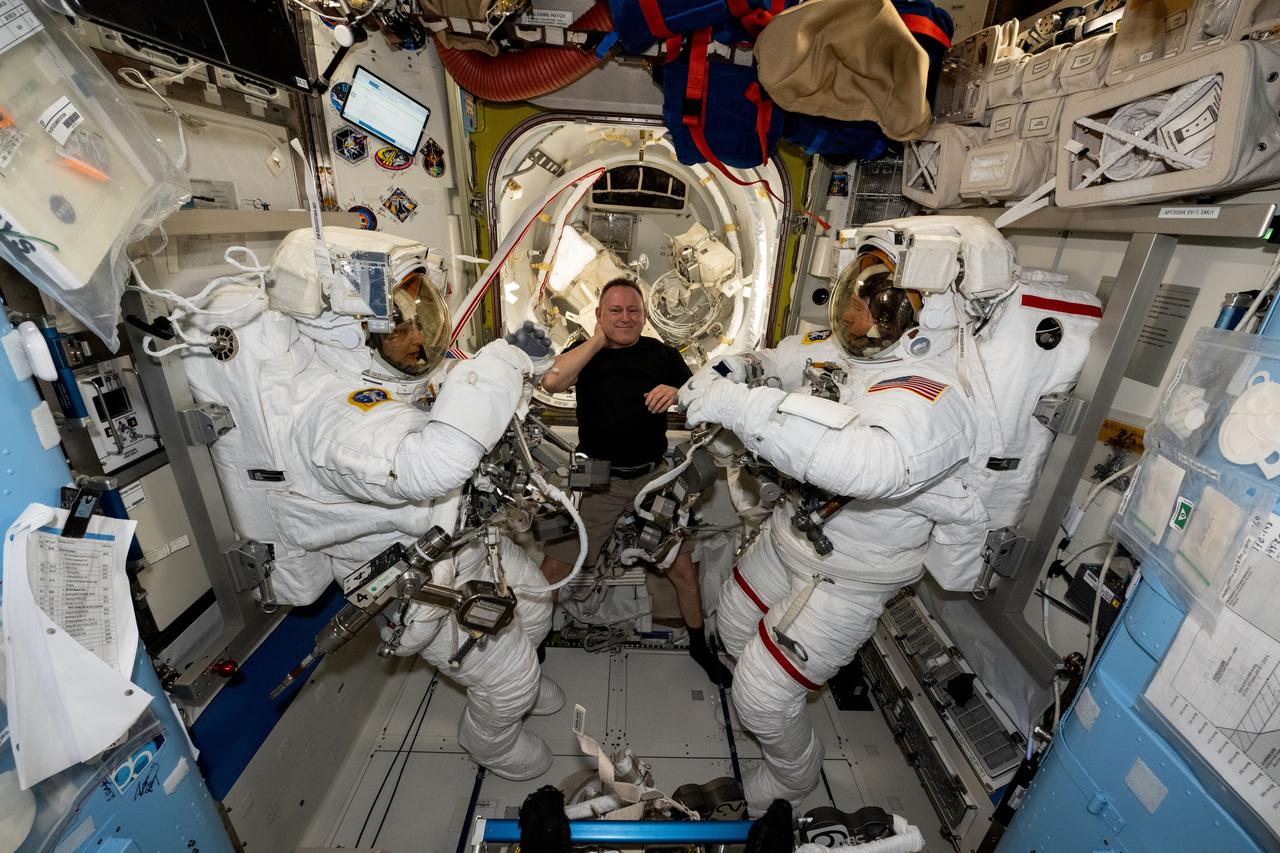
iss072e451696 (Jan. 9, 2025) --- NASA astronaut and Expedition 72 Flight Engineer Butch Wilmore (center) assists International Space Station Commander Suni Williams (left) and Flight Engineer Nick Hague (right), both NASA astronauts, as they prepare to evaluate their spacesuits in a pressurized configuration. Hague and Williams are scheduled to exit the orbital outpost on Jan. 16 for a spacewalk to service astrophysics gear including the NICER X-ray telescope and the Alpha Magnetic Spectrometer.
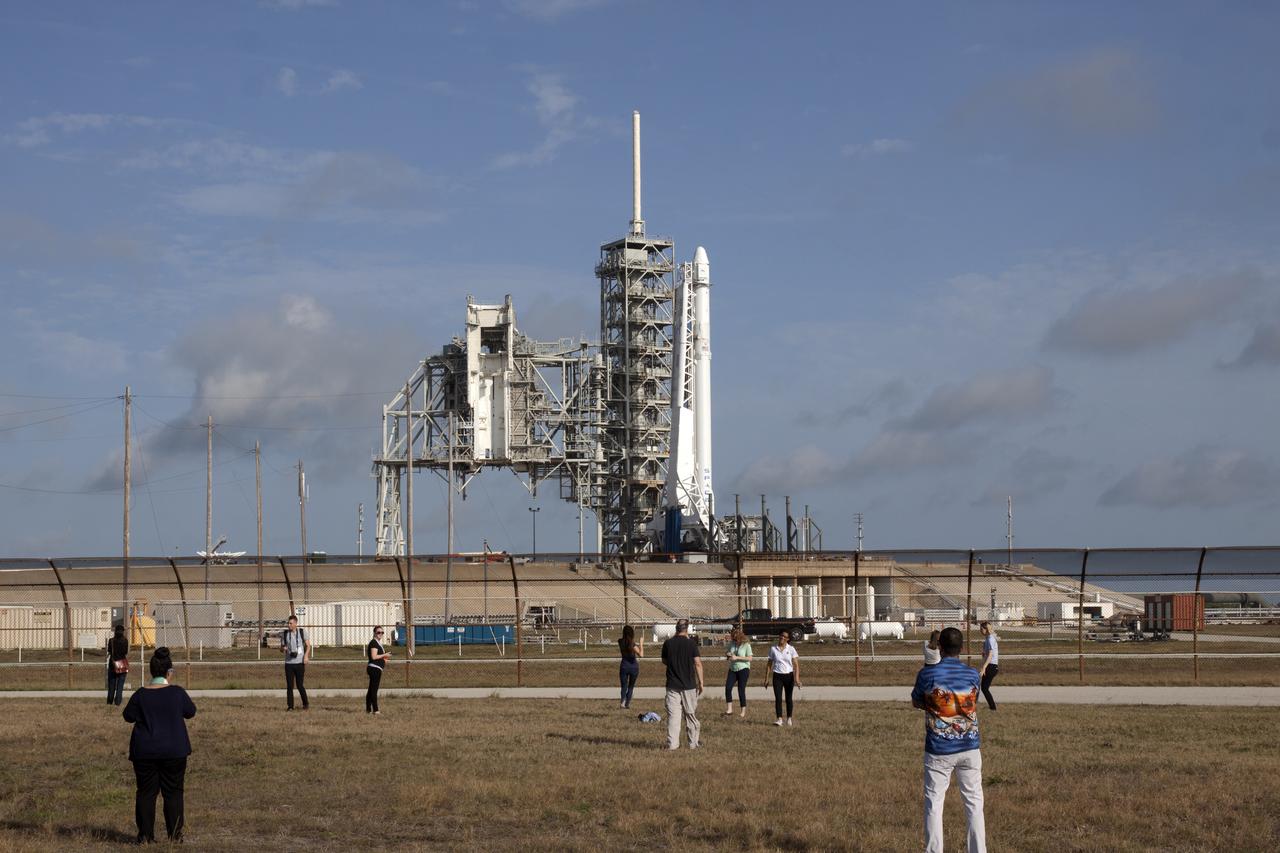
As a Falcon 9 rocket stands ready for liftoff at the Kennedy Space Center's Launch Complex 39A. The rocket will boost a Dragon resupply spacecraft to the International Space Station. Liftoff is scheduled for 5:55 p.m. EDT. On its 11th commercial resupply services mission to the space station, Dragon will bring up 6,000 pounds of supplies, such as the Neutron star Interior Composition Explorer, or NICER, instrument to study the extraordinary physics of neutron stars.
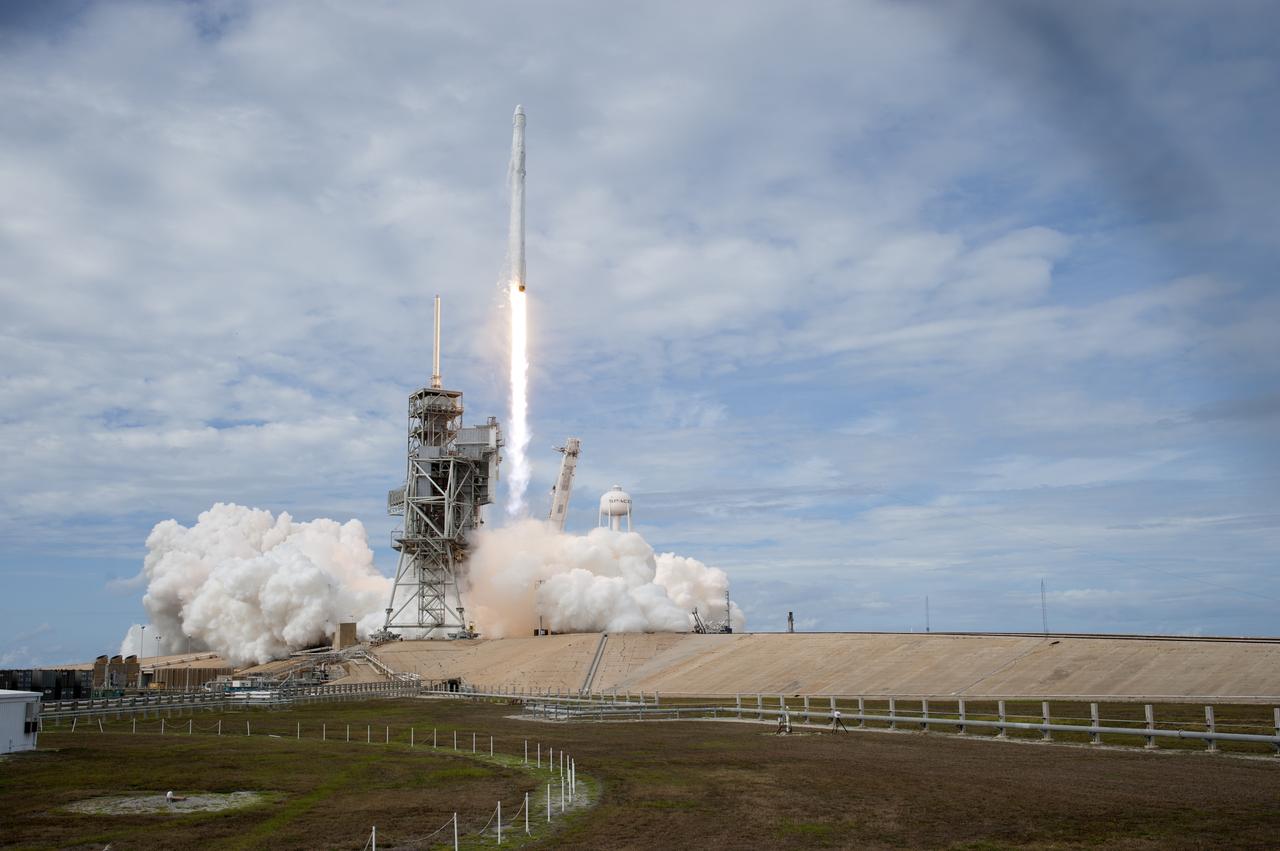
A SpaceX Falcon 9 rocket lifts off from Launch Complex 39A at NASA's Kenney Space Center in Florida, the company's 11th commercial resupply services mission to the International Space Station. Liftoff was at 5:07 p.m. EDT from the historic launch site now operated by SpaceX under a property agreement with NASA. The Dragon spacecraft will deliver 6,000 pounds of supplies, such as the Neutron star Interior Composition Explorer, or NICER, designed to study the extraordinary physics of these stars, providing insights into their nature and behavior.
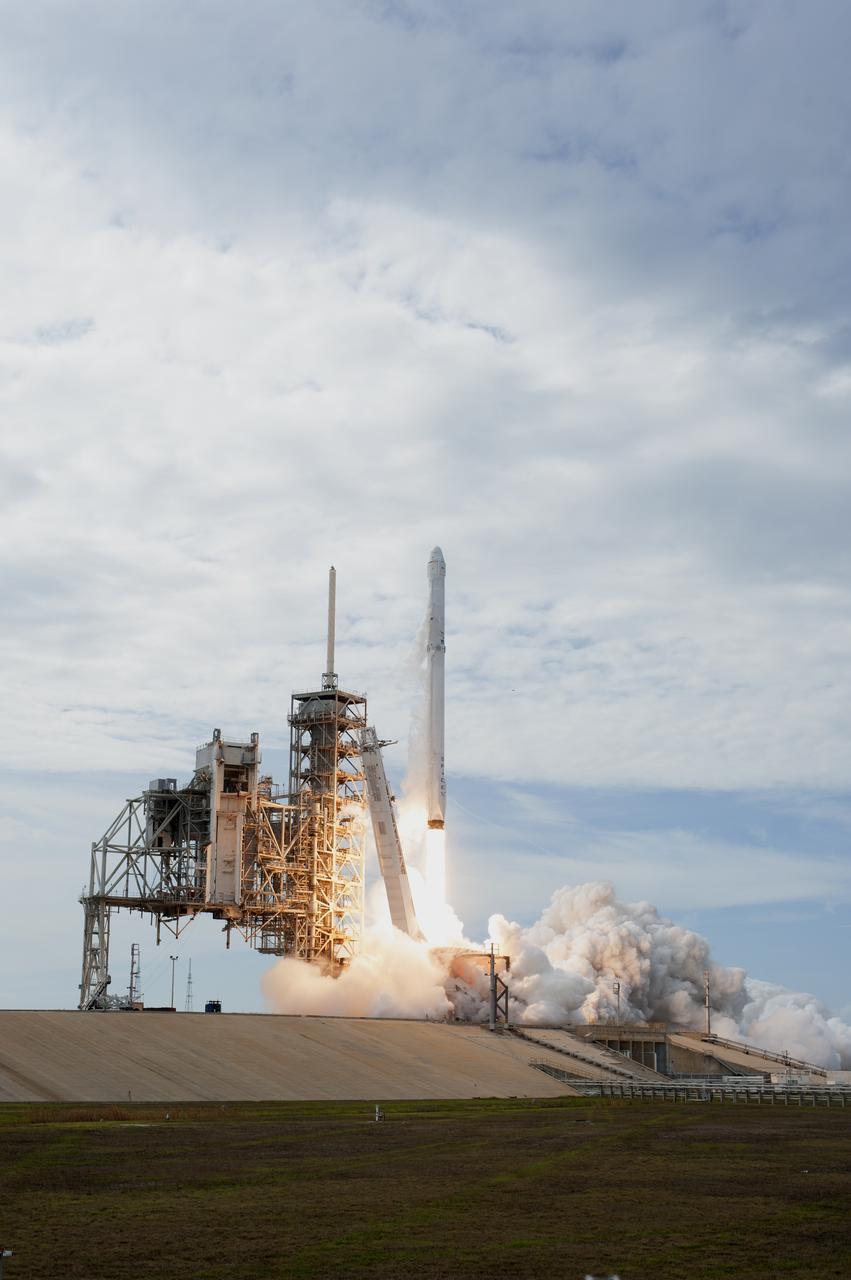
A SpaceX Falcon 9 rocket lifts off from Launch Complex 39A at NASA's Kenney Space Center in Florida, the company's 11th commercial resupply services mission to the International Space Station. Liftoff was at 5:07 p.m. EDT from the historic launch site now operated by SpaceX under a property agreement with NASA. The Dragon spacecraft will deliver 6,000 pounds of supplies, such as the Neutron star Interior Composition Explorer, or NICER, designed to study the extraordinary physics of these stars, providing insights into their nature and behavior.
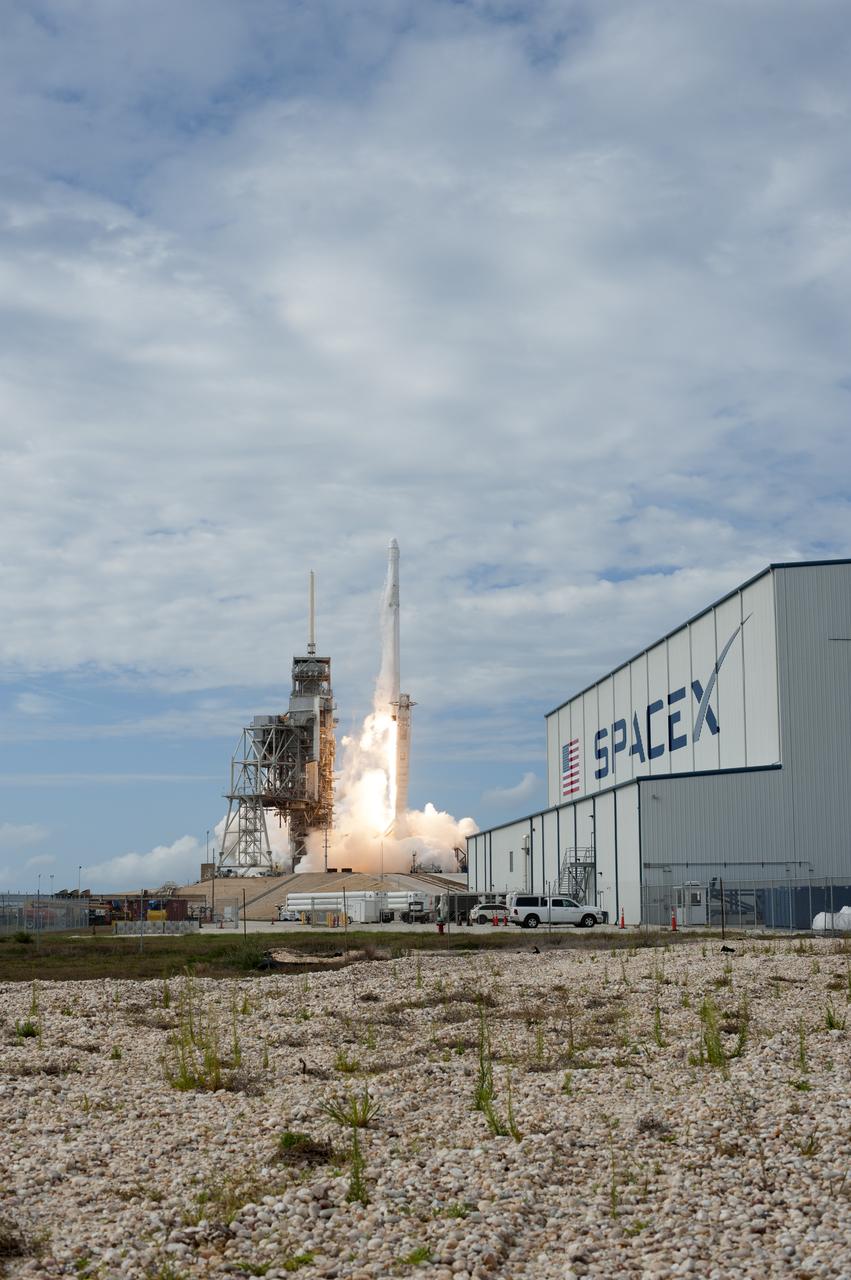
A SpaceX Falcon 9 rocket lifts off from Launch Complex 39A at NASA's Kenney Space Center in Florida, the company's 11th commercial resupply services mission to the International Space Station. Liftoff was at 5:07 p.m. EDT from the historic launch site now operated by SpaceX under a property agreement with NASA. The Dragon spacecraft will deliver 6,000 pounds of supplies, such as the Neutron star Interior Composition Explorer, or NICER, designed to study the extraordinary physics of these stars, providing insights into their nature and behavior.

A SpaceX Falcon 9 rocket lifts off from Launch Complex 39A at NASA's Kenney Space Center in Florida, the company's 11th commercial resupply services mission to the International Space Station. Liftoff was at 5:07 p.m. EDT from the historic launch site now operated by SpaceX under a property agreement with NASA. The Dragon spacecraft will deliver 6,000 pounds of supplies, such as the Neutron star Interior Composition Explorer, or NICER, designed to study the extraordinary physics of these stars, providing insights into their nature and behavior.
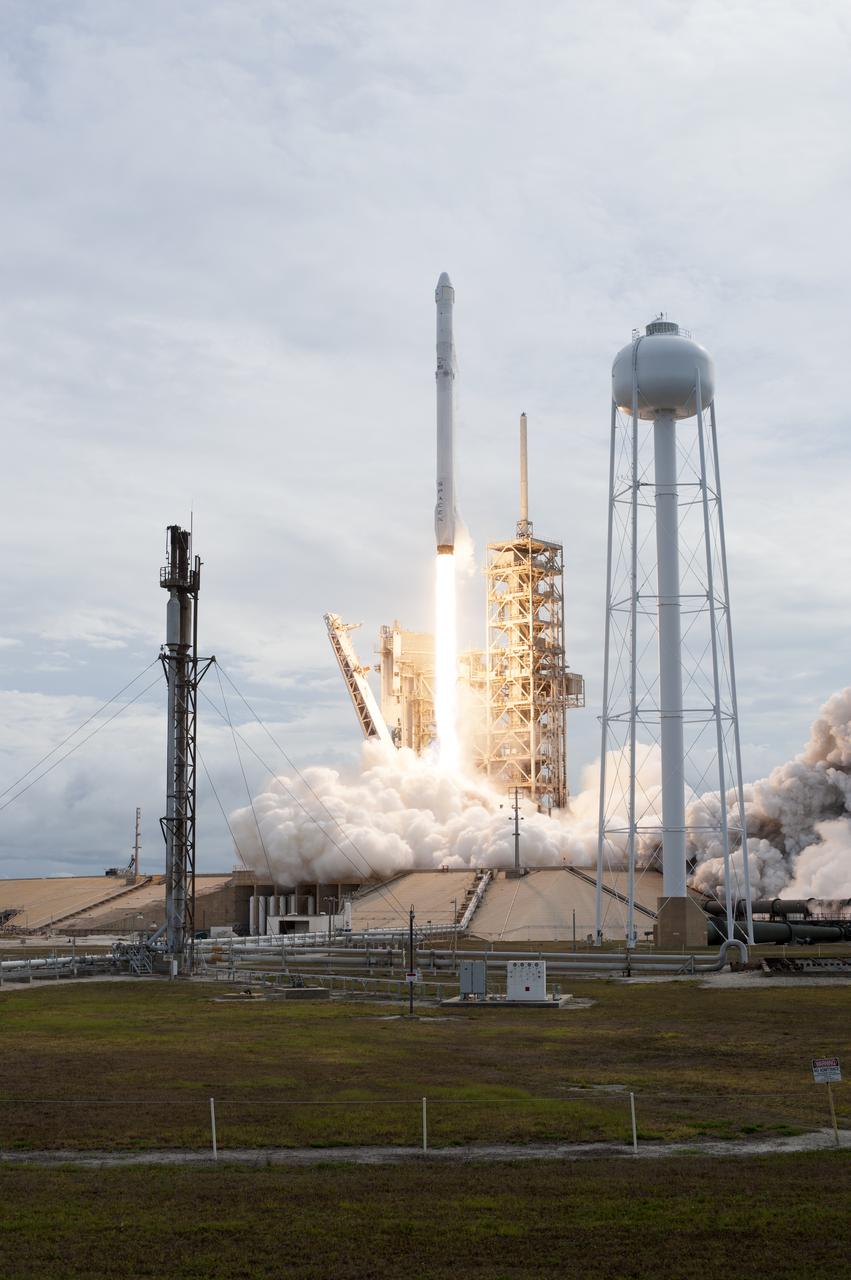
A SpaceX Falcon 9 rocket lifts off from Launch Complex 39A at NASA's Kenney Space Center in Florida, the company's 11th commercial resupply services mission to the International Space Station. Liftoff was at 5:07 p.m. EDT from the historic launch site now operated by SpaceX under a property agreement with NASA. The Dragon spacecraft will deliver 6,000 pounds of supplies, such as the Neutron star Interior Composition Explorer, or NICER, designed to study the extraordinary physics of these stars, providing insights into their nature and behavior.
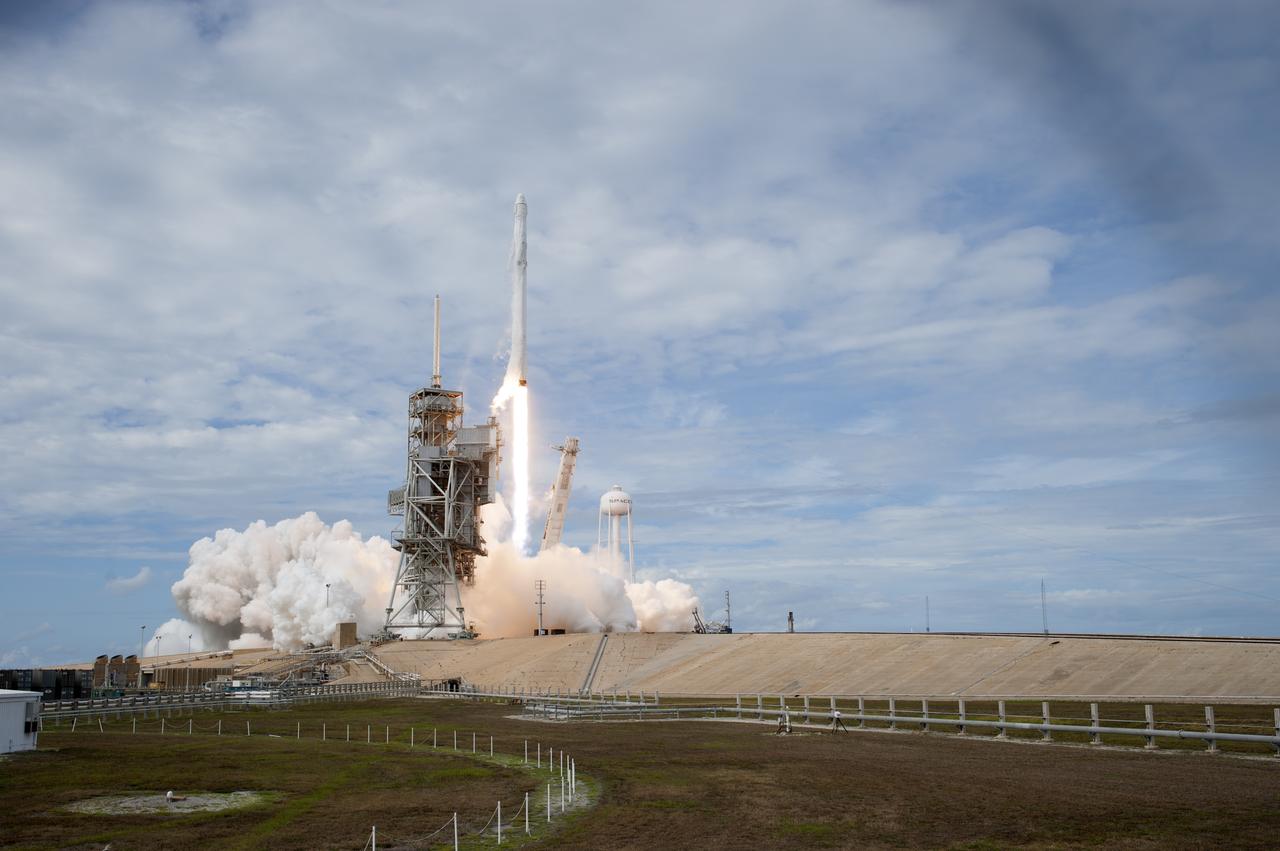
A SpaceX Falcon 9 rocket lifts off from Launch Complex 39A at NASA's Kenney Space Center in Florida, the company's 11th commercial resupply services mission to the International Space Station. Liftoff was at 5:07 p.m. EDT from the historic launch site now operated by SpaceX under a property agreement with NASA. The Dragon spacecraft will deliver 6,000 pounds of supplies, such as the Neutron star Interior Composition Explorer, or NICER, designed to study the extraordinary physics of these stars, providing insights into their nature and behavior.
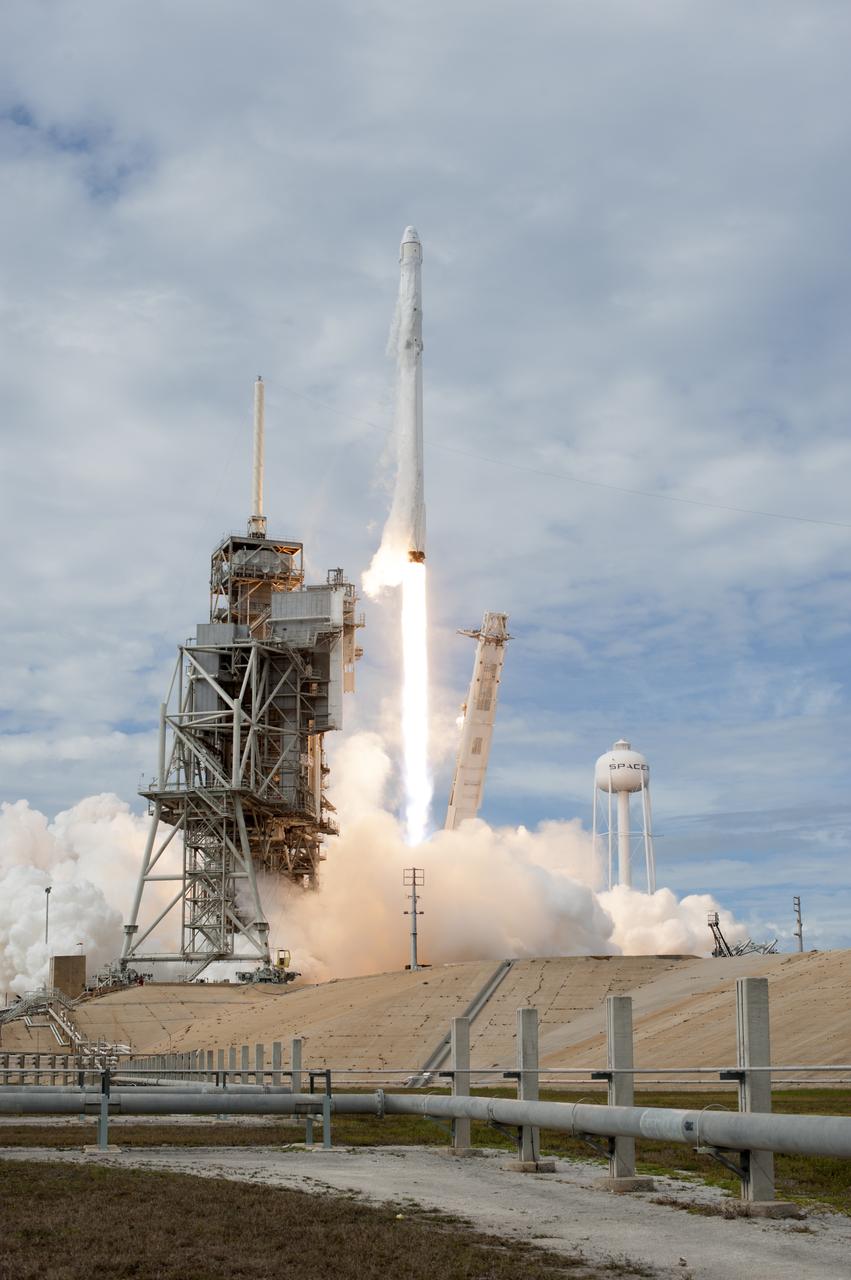
A SpaceX Falcon 9 rocket lifts off from Launch Complex 39A at NASA's Kenney Space Center in Florida, the company's 11th commercial resupply services mission to the International Space Station. Liftoff was at 5:07 p.m. EDT from the historic launch site now operated by SpaceX under a property agreement with NASA. The Dragon spacecraft will deliver 6,000 pounds of supplies, such as the Neutron star Interior Composition Explorer, or NICER, designed to study the extraordinary physics of these stars, providing insights into their nature and behavior.
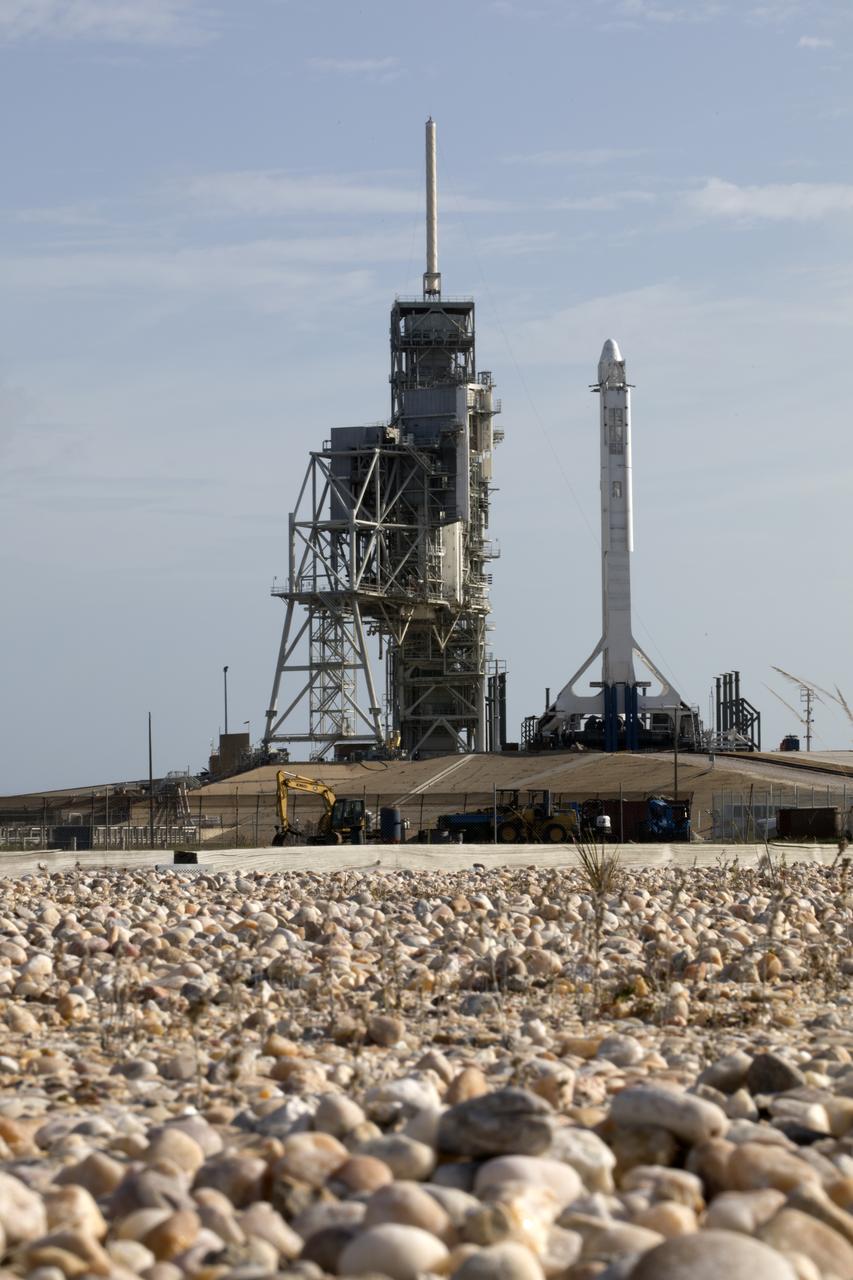
As a Falcon 9 rocket stands ready for liftoff at the Kennedy Space Center's Launch Complex 39A. The rocket will boost a Dragon resupply spacecraft to the International Space Station. Liftoff is scheduled for 5:55 p.m. EDT. On its 11th commercial resupply services mission to the space station, Dragon will bring up 6,000 pounds of supplies, such as the Neutron star Interior Composition Explorer, or NICER, instrument to study the extraordinary physics of neutron stars.
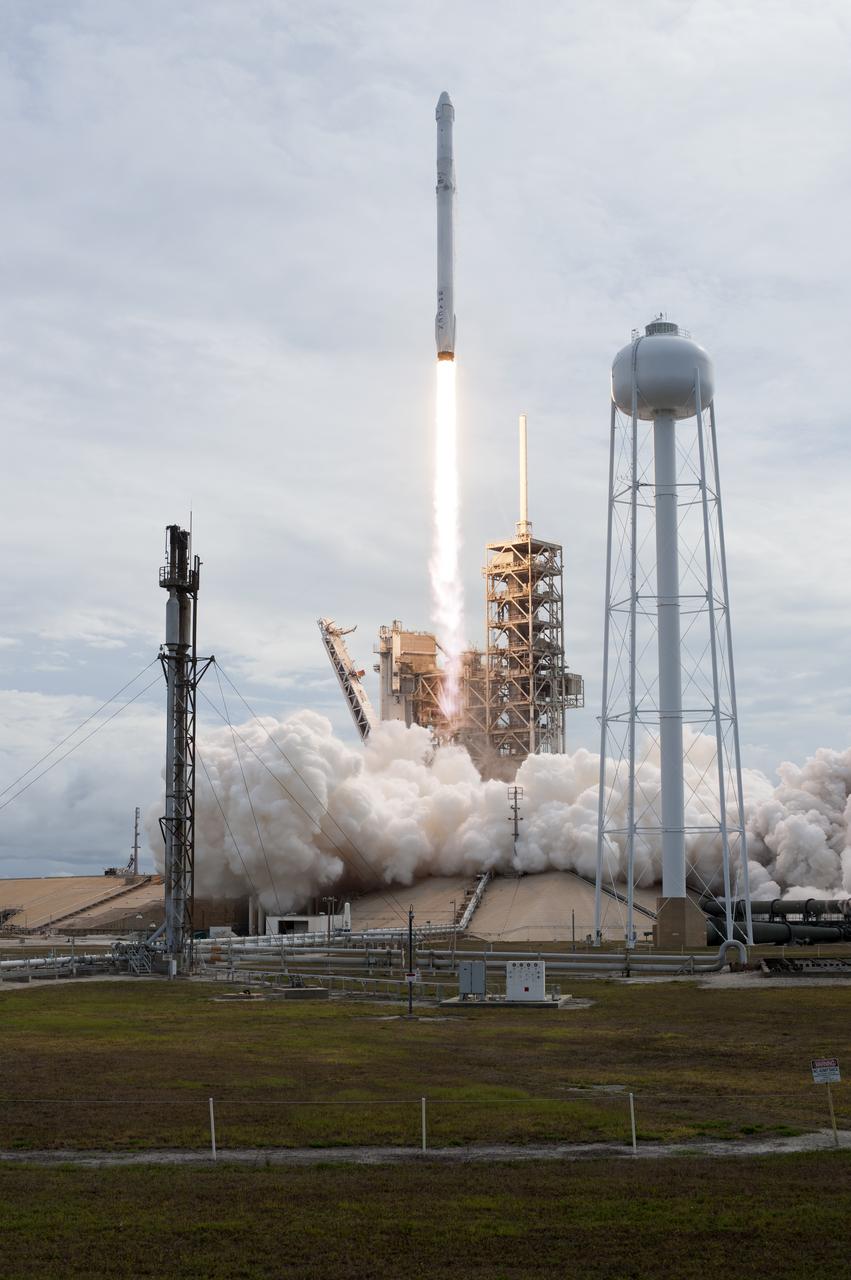
A SpaceX Falcon 9 rocket lifts off from Launch Complex 39A at NASA's Kenney Space Center in Florida, the company's 11th commercial resupply services mission to the International Space Station. Liftoff was at 5:07 p.m. EDT from the historic launch site now operated by SpaceX under a property agreement with NASA. The Dragon spacecraft will deliver 6,000 pounds of supplies, such as the Neutron star Interior Composition Explorer, or NICER, designed to study the extraordinary physics of these stars, providing insights into their nature and behavior.
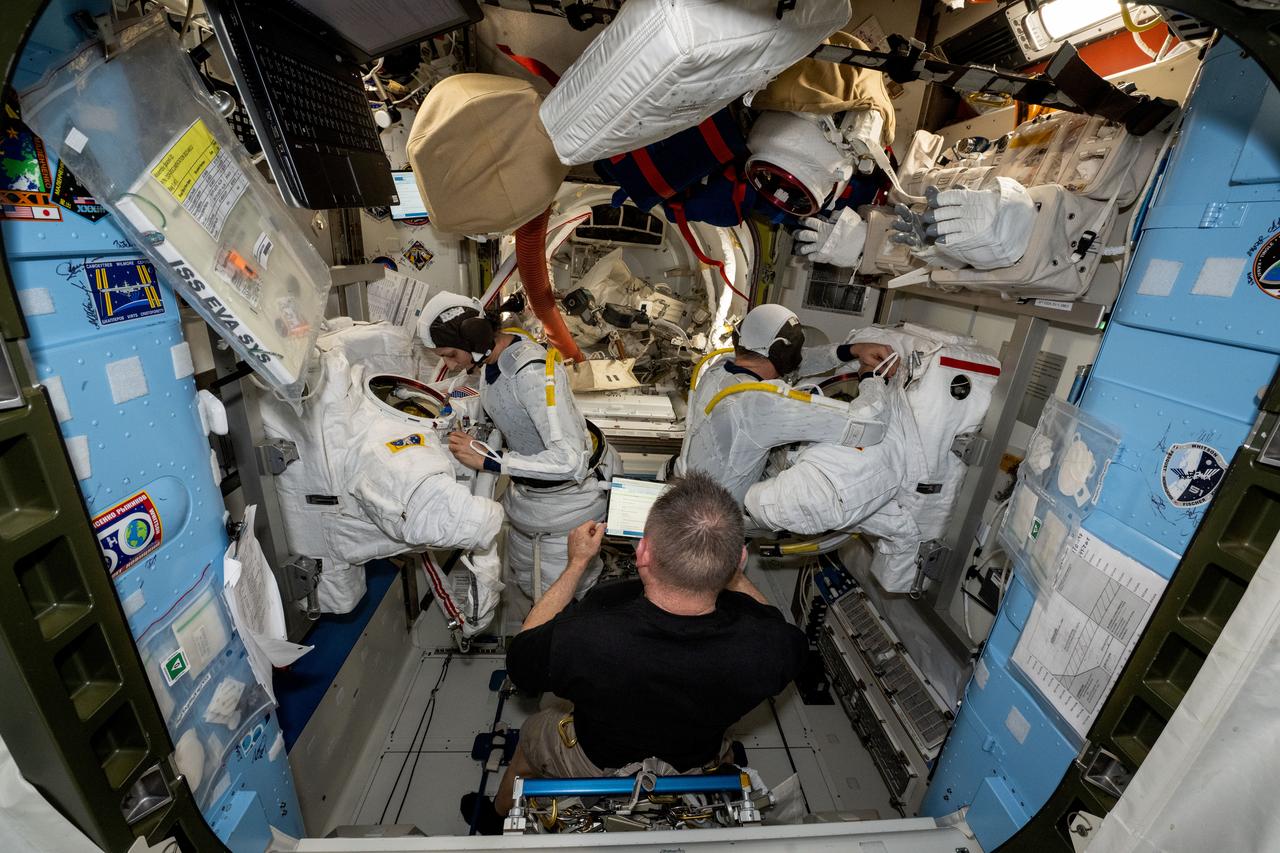
iss072e451646 (Jan. 9, 2025) --- NASA astronaut and Expedition 72 Flight Engineer Butch Wilmore (center) assists International Space Station Commander Suni Williams (left) and Flight Engineer Nick Hague (right), both NASA astronauts, as they prepare to evaluate their spacesuits in a pressurized configuration. Hague and Williams are scheduled to exit the orbital outpost on Jan. 16 for a spacewalk to service astrophysics gear including the NICER X-ray telescope and the Alpha Magnetic Spectrometer.

A SpaceX Falcon 9 rocket lifts off from Launch Complex 39A at NASA's Kenney Space Center in Florida, the company's 11th commercial resupply services mission to the International Space Station. Liftoff was at 5:07 p.m. EDT from the historic launch site now operated by SpaceX under a property agreement with NASA. The Dragon spacecraft will deliver 6,000 pounds of supplies, such as the Neutron star Interior Composition Explorer, or NICER, designed to study the extraordinary physics of these stars, providing insights into their nature and behavior.
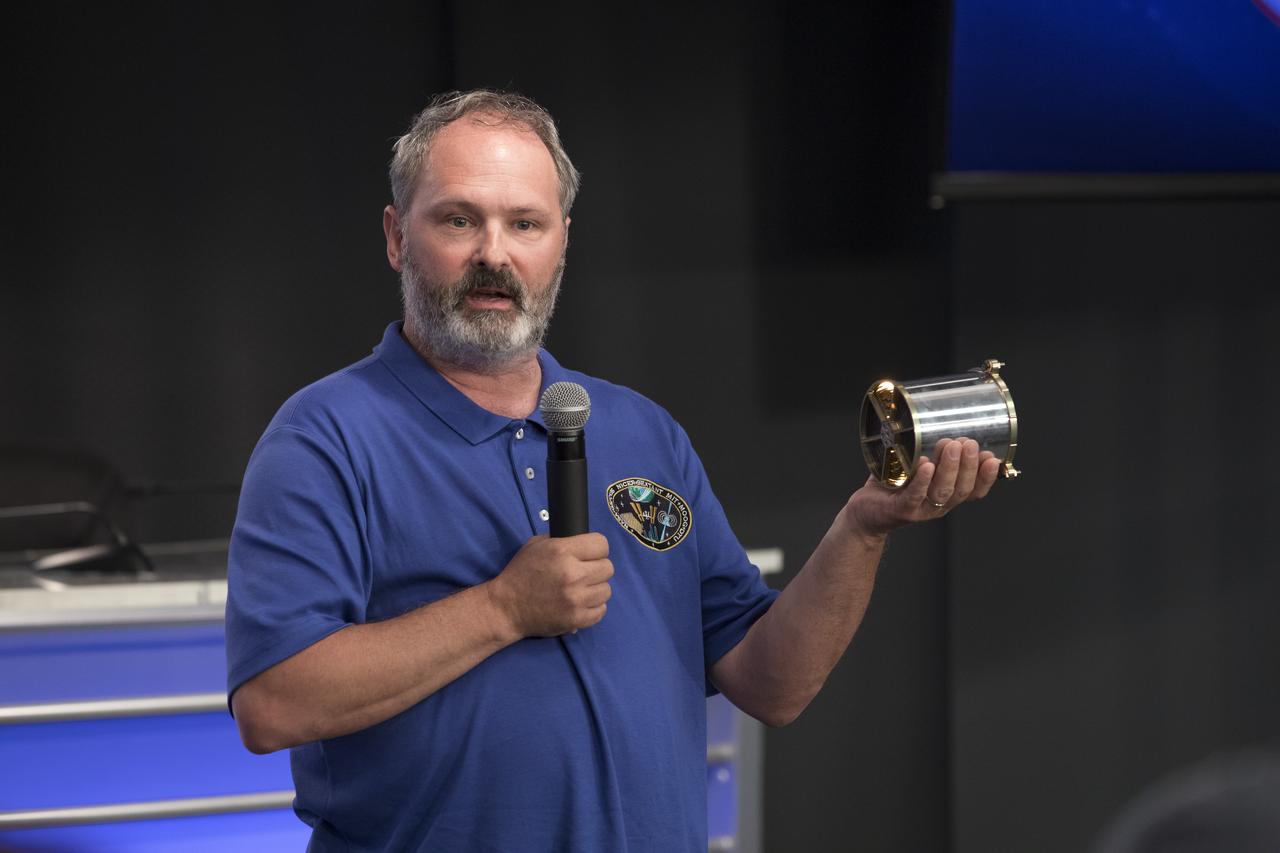
Keith Gendreau, principle investigator for the Neutron star Interior Composition Explorer, or NICER, speaks to members of social media in the Kennedy Space Center’s Press Site auditorium. The briefing focused on the purpose of their experiments and instruments to be delivered to the International Space Station on SpaceX CRS-11. A Dragon spacecraft is scheduled to be launched from Kennedy’s Launch Complex 39A on June 1 atop a SpaceX Falcon 9 rocket on the company's 11th Commercial Resupply Services mission to the space station.
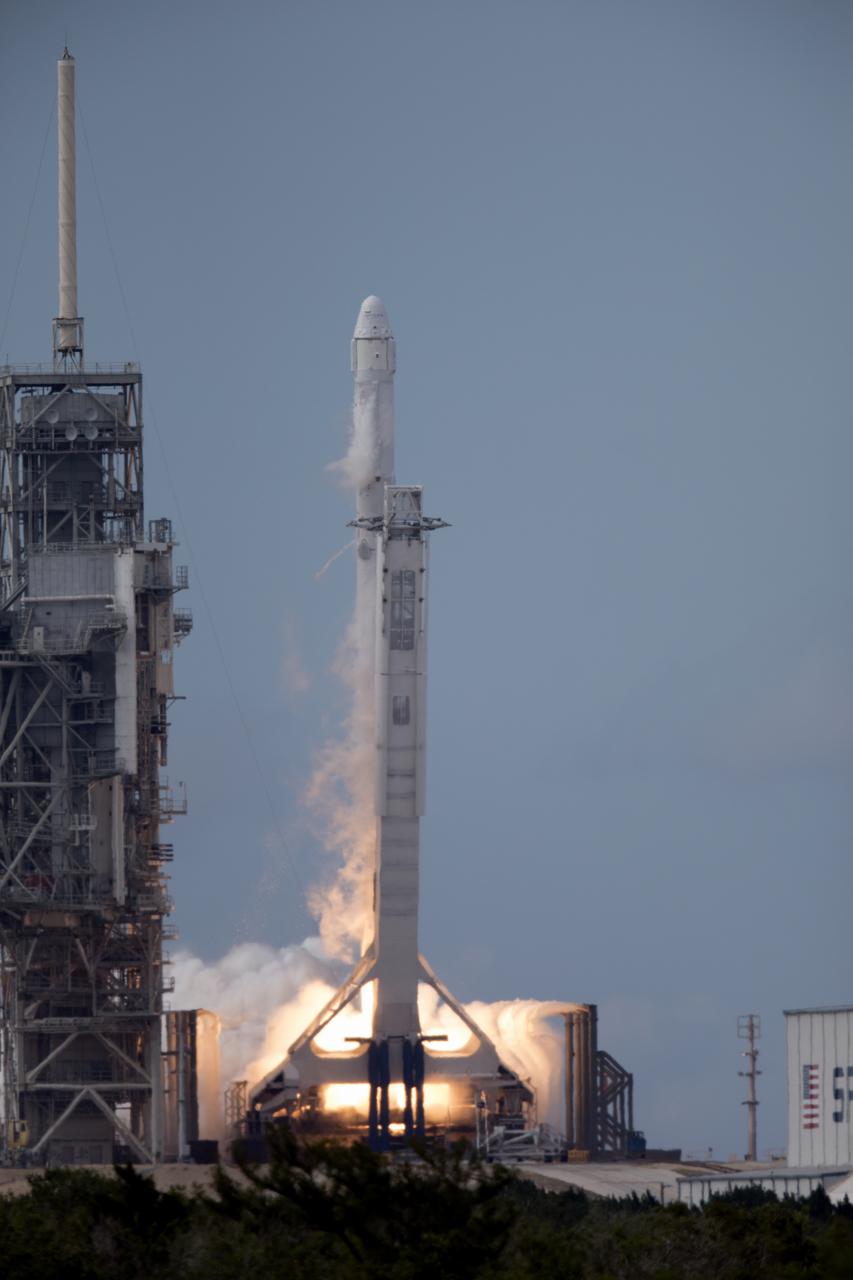
A SpaceX Falcon 9 rocket lifts off from Launch Complex 39A at NASA's Kenney Space Center in Florida, the company's 11th commercial resupply services mission to the International Space Station. Liftoff was at 5:07 p.m. EDT from the historic launch site now operated by SpaceX under a property agreement with NASA. The Dragon spacecraft will deliver 6,000 pounds of supplies, such as the Neutron star Interior Composition Explorer, or NICER, designed to study the extraordinary physics of these stars, providing insights into their nature and behavior.
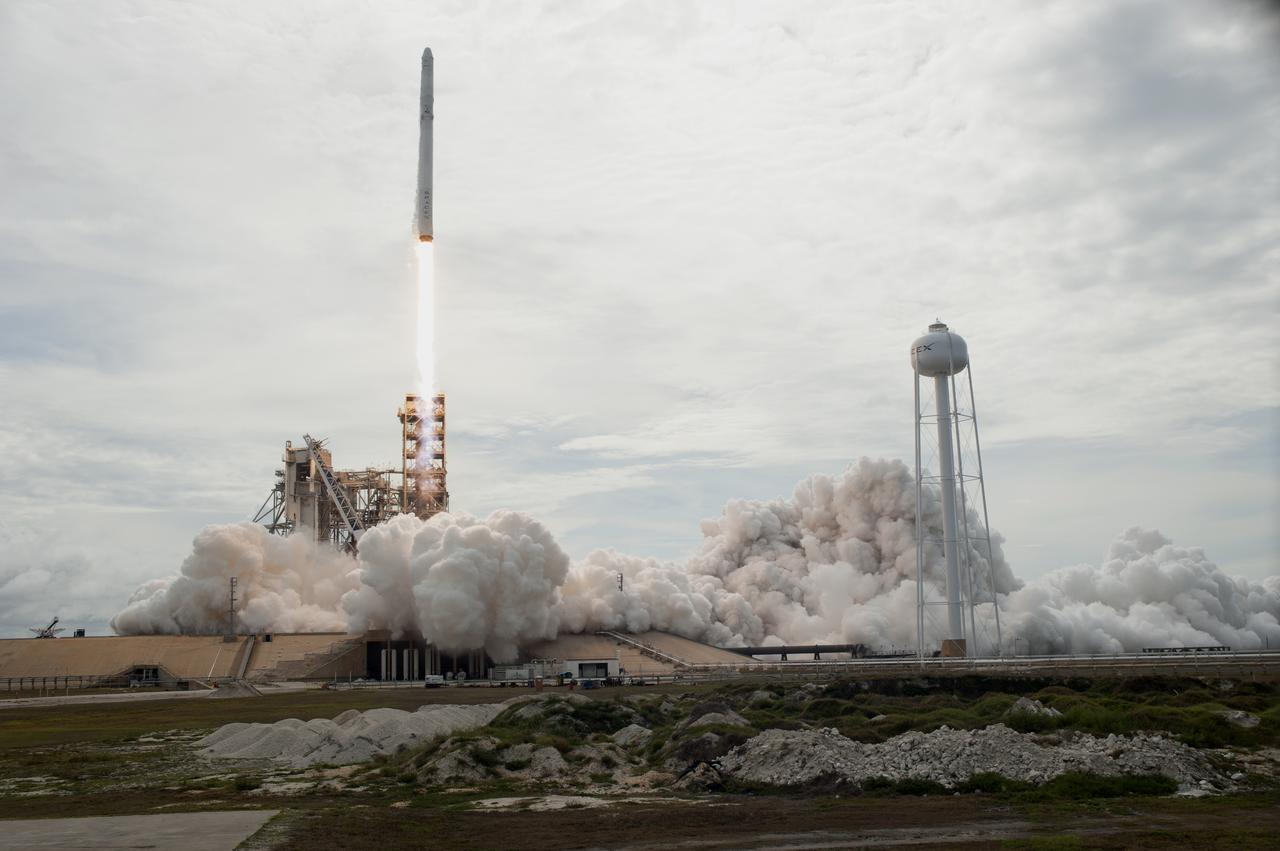
A SpaceX Falcon 9 rocket lifts off from Launch Complex 39A at NASA's Kenney Space Center in Florida, the company's 11th commercial resupply services mission to the International Space Station. Liftoff was at 5:07 p.m. EDT from the historic launch site now operated by SpaceX under a property agreement with NASA. The Dragon spacecraft will deliver 6,000 pounds of supplies, such as the Neutron star Interior Composition Explorer, or NICER, designed to study the extraordinary physics of these stars, providing insights into their nature and behavior.
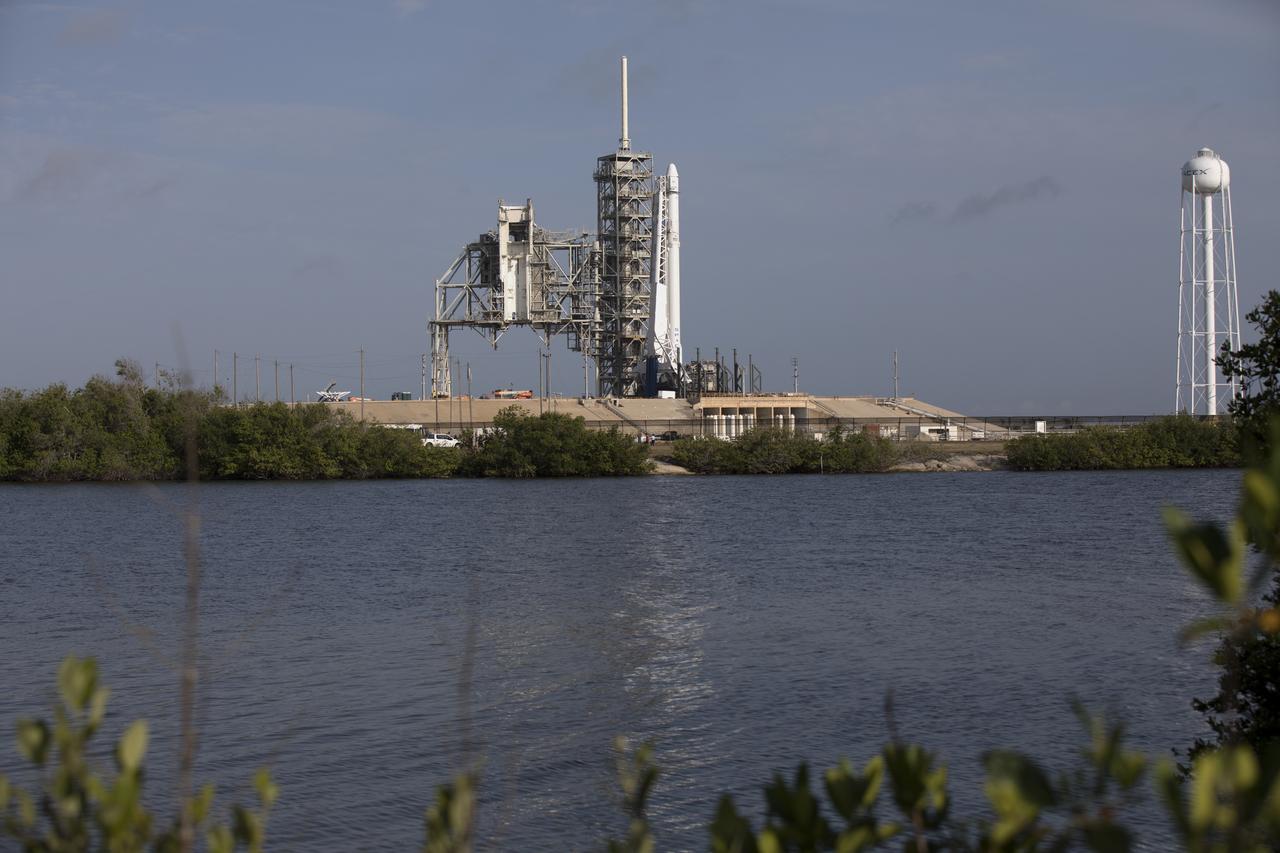
As a Falcon 9 rocket stands ready for liftoff at the Kennedy Space Center's Launch Complex 39A. The rocket will boost a Dragon resupply spacecraft to the International Space Station. Liftoff is scheduled for 5:55 p.m. EDT. On its 11th commercial resupply services mission to the space station, Dragon will bring up 6,000 pounds of supplies, such as the Neutron star Interior Composition Explorer, or NICER, instrument to study the extraordinary physics of neutron stars.
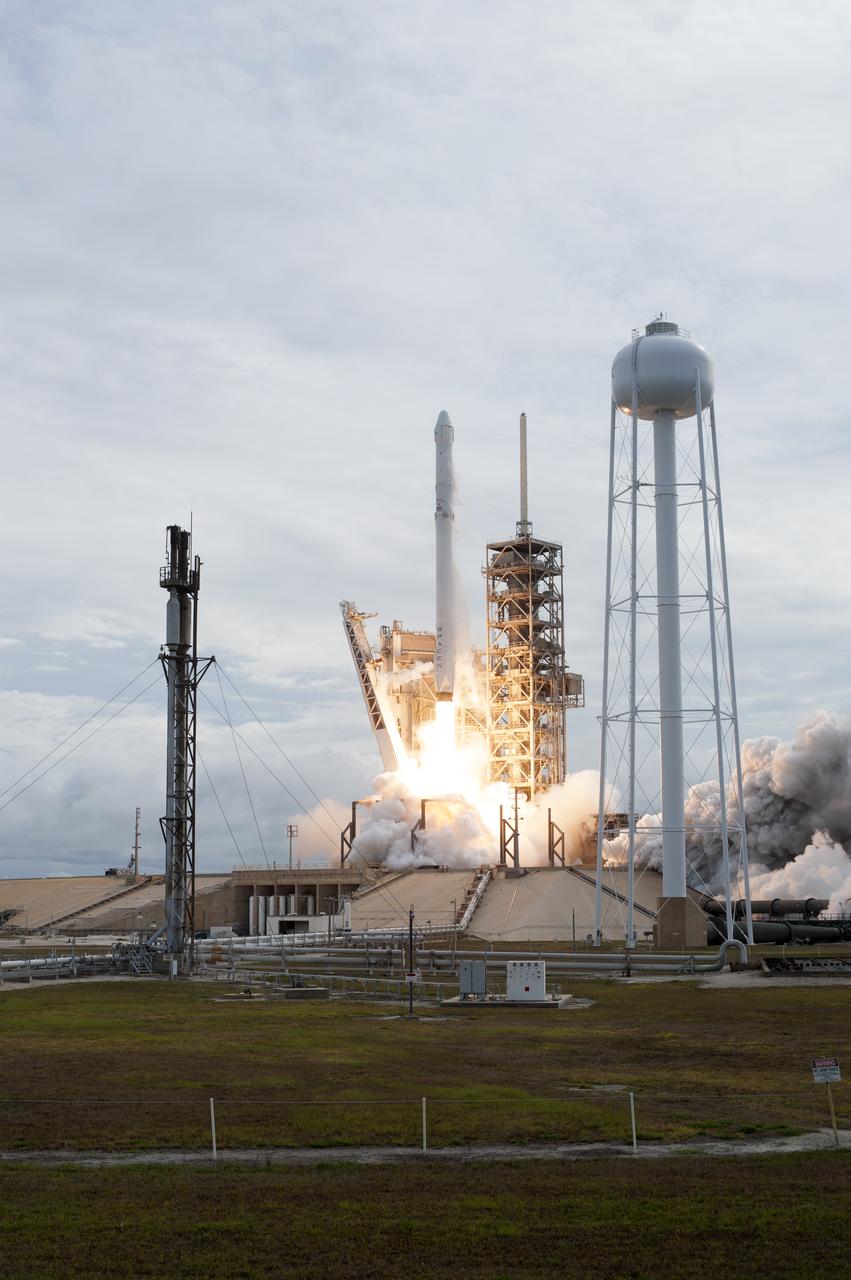
A SpaceX Falcon 9 rocket lifts off from Launch Complex 39A at NASA's Kenney Space Center in Florida, the company's 11th commercial resupply services mission to the International Space Station. Liftoff was at 5:07 p.m. EDT from the historic launch site now operated by SpaceX under a property agreement with NASA. The Dragon spacecraft will deliver 6,000 pounds of supplies, such as the Neutron star Interior Composition Explorer, or NICER, designed to study the extraordinary physics of these stars, providing insights into their nature and behavior.

A SpaceX Falcon 9 rocket lifts off from Launch Complex 39A at NASA's Kenney Space Center in Florida, the company's 11th commercial resupply services mission to the International Space Station. Liftoff was at 5:07 p.m. EDT from the historic launch site now operated by SpaceX under a property agreement with NASA. The Dragon spacecraft will deliver 6,000 pounds of supplies, such as the Neutron star Interior Composition Explorer, or NICER, designed to study the extraordinary physics of these stars, providing insights into their nature and behavior.
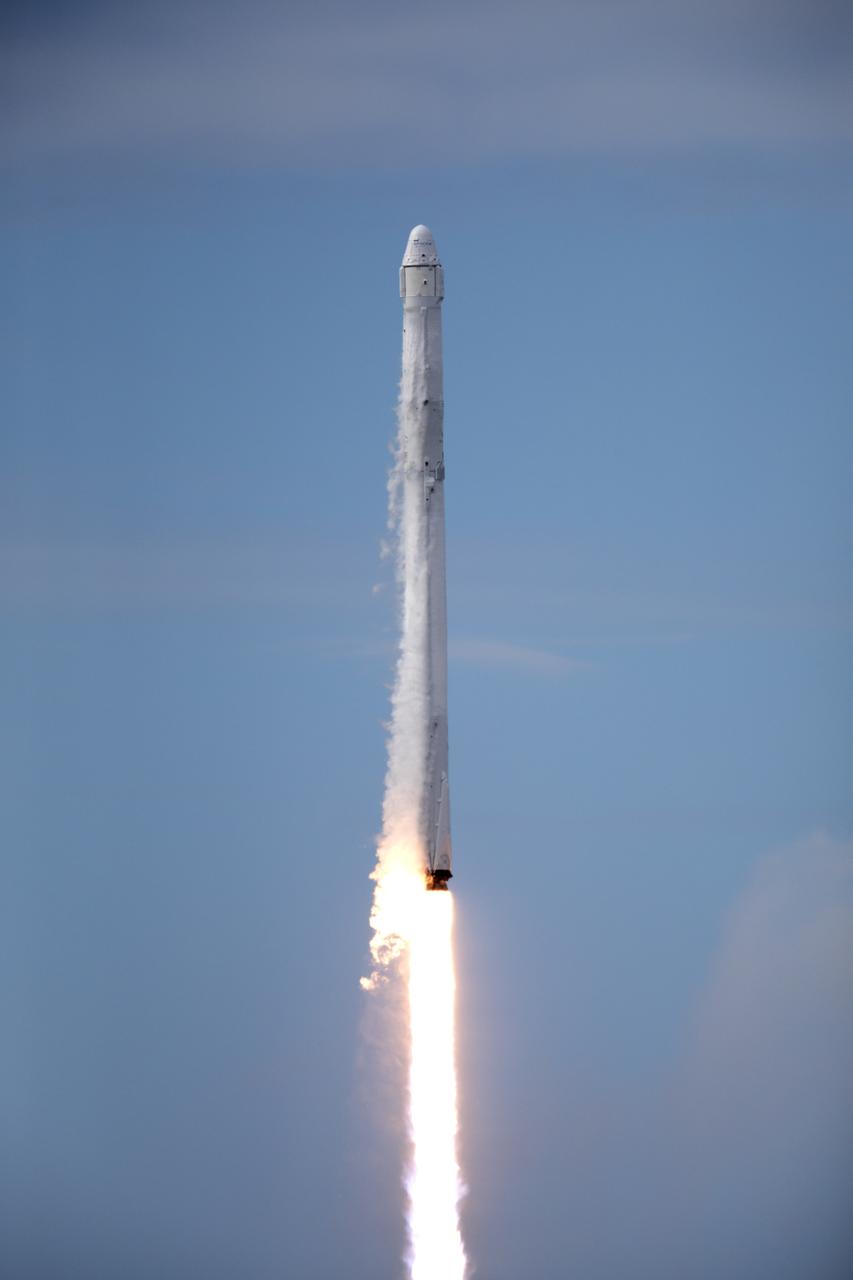
A SpaceX Falcon 9 rocket lifts off from Launch Complex 39A at NASA's Kenney Space Center in Florida, the company's 11th commercial resupply services mission to the International Space Station. Liftoff was at 5:07 p.m. EDT from the historic launch site now operated by SpaceX under a property agreement with NASA. The Dragon spacecraft will deliver 6,000 pounds of supplies, such as the Neutron star Interior Composition Explorer, or NICER, designed to study the extraordinary physics of these stars, providing insights into their nature and behavior.
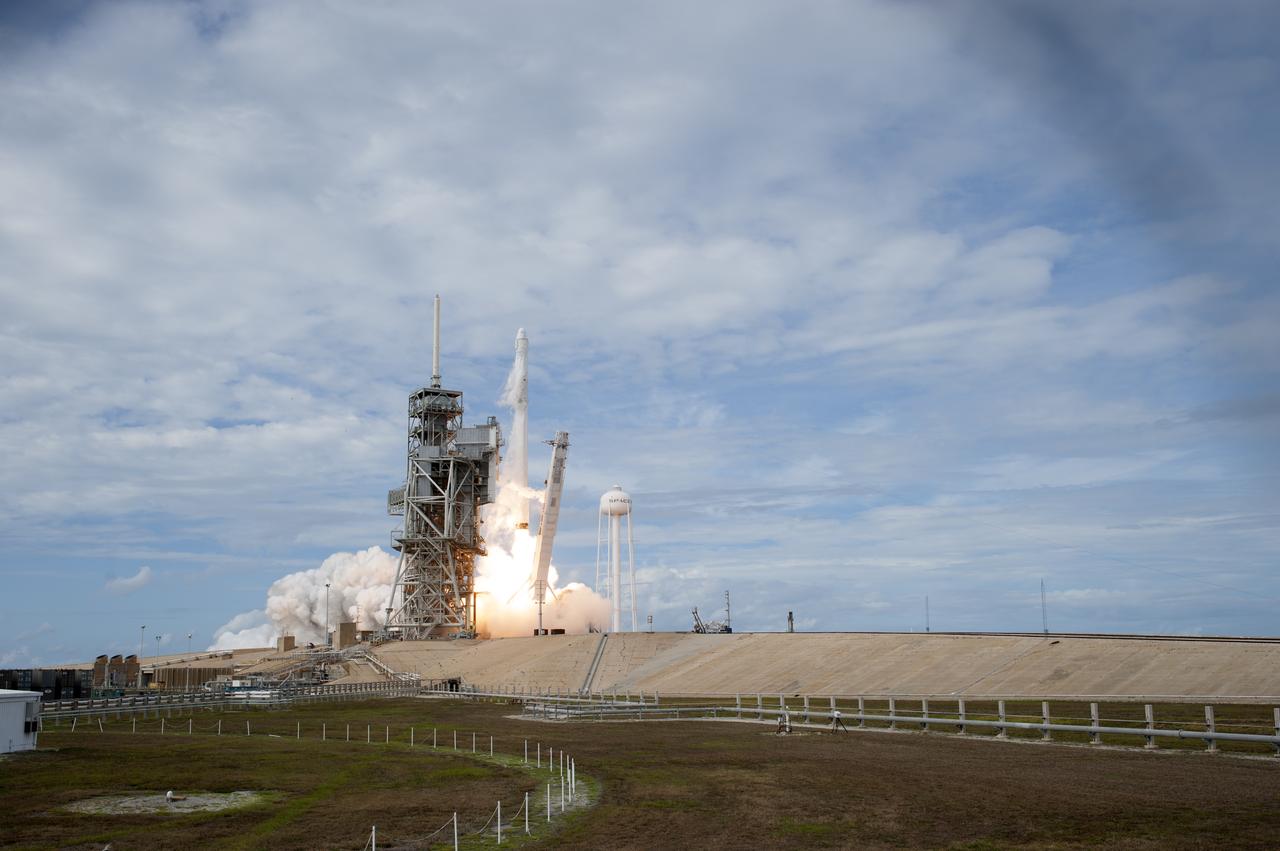
A SpaceX Falcon 9 rocket lifts off from Launch Complex 39A at NASA's Kenney Space Center in Florida, the company's 11th commercial resupply services mission to the International Space Station. Liftoff was at 5:07 p.m. EDT from the historic launch site now operated by SpaceX under a property agreement with NASA. The Dragon spacecraft will deliver 6,000 pounds of supplies, such as the Neutron star Interior Composition Explorer, or NICER, designed to study the extraordinary physics of these stars, providing insights into their nature and behavior.

iss072e451687 (Jan. 9, 2025) --- NASA astronaut and Expedition 72 Flight Engineer Butch Wilmore (center) assists International Space Station Commander Suni Williams (left) and Flight Engineer Nick Hague (right), both NASA astronauts, as they prepare to evaluate their spacesuits in a pressurized configuration. Hague and Williams are scheduled to exit the orbital outpost on Jan. 16 for a spacewalk to service astrophysics gear including the NICER X-ray telescope and the Alpha Magnetic Spectrometer.
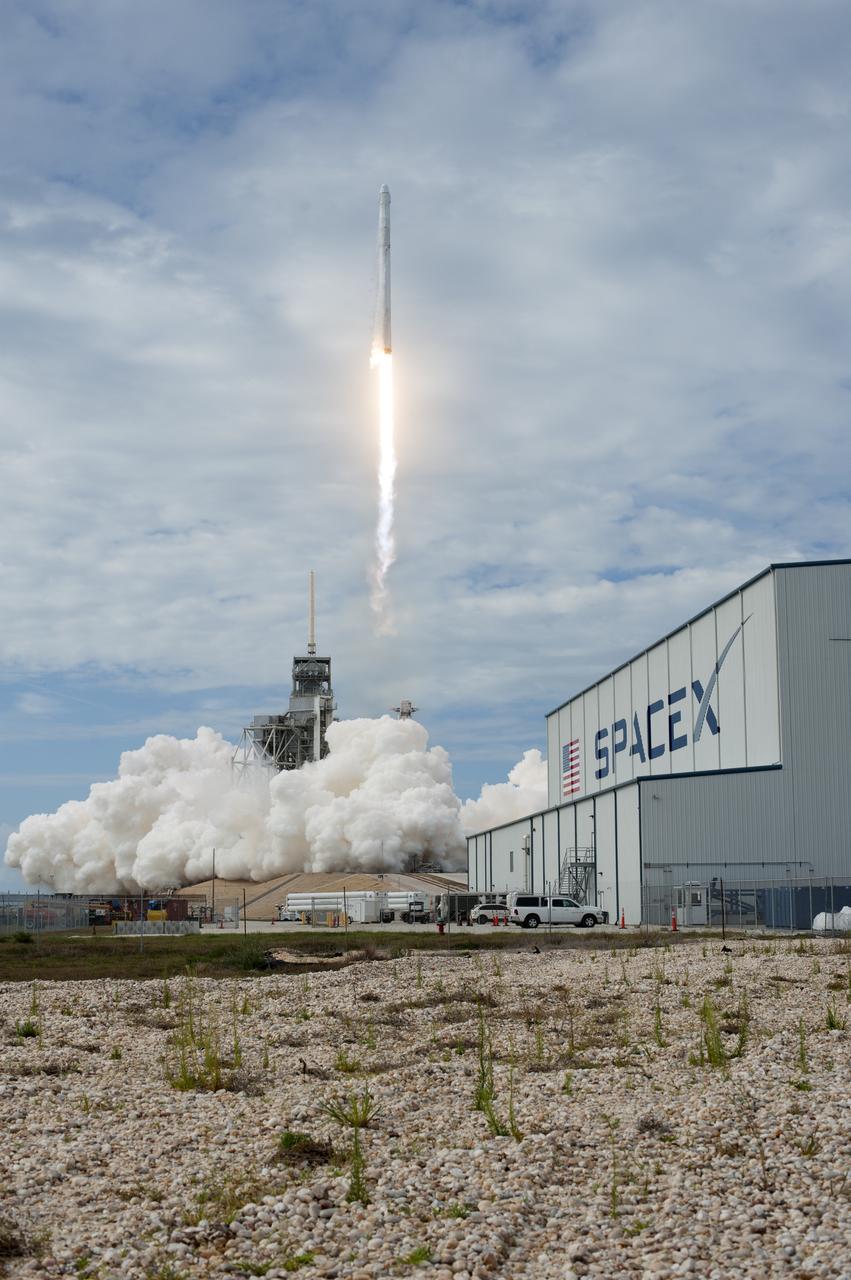
A SpaceX Falcon 9 rocket lifts off from Launch Complex 39A at NASA's Kenney Space Center in Florida, the company's 11th commercial resupply services mission to the International Space Station. Liftoff was at 5:07 p.m. EDT from the historic launch site now operated by SpaceX under a property agreement with NASA. The Dragon spacecraft will deliver 6,000 pounds of supplies, such as the Neutron star Interior Composition Explorer, or NICER, designed to study the extraordinary physics of these stars, providing insights into their nature and behavior.
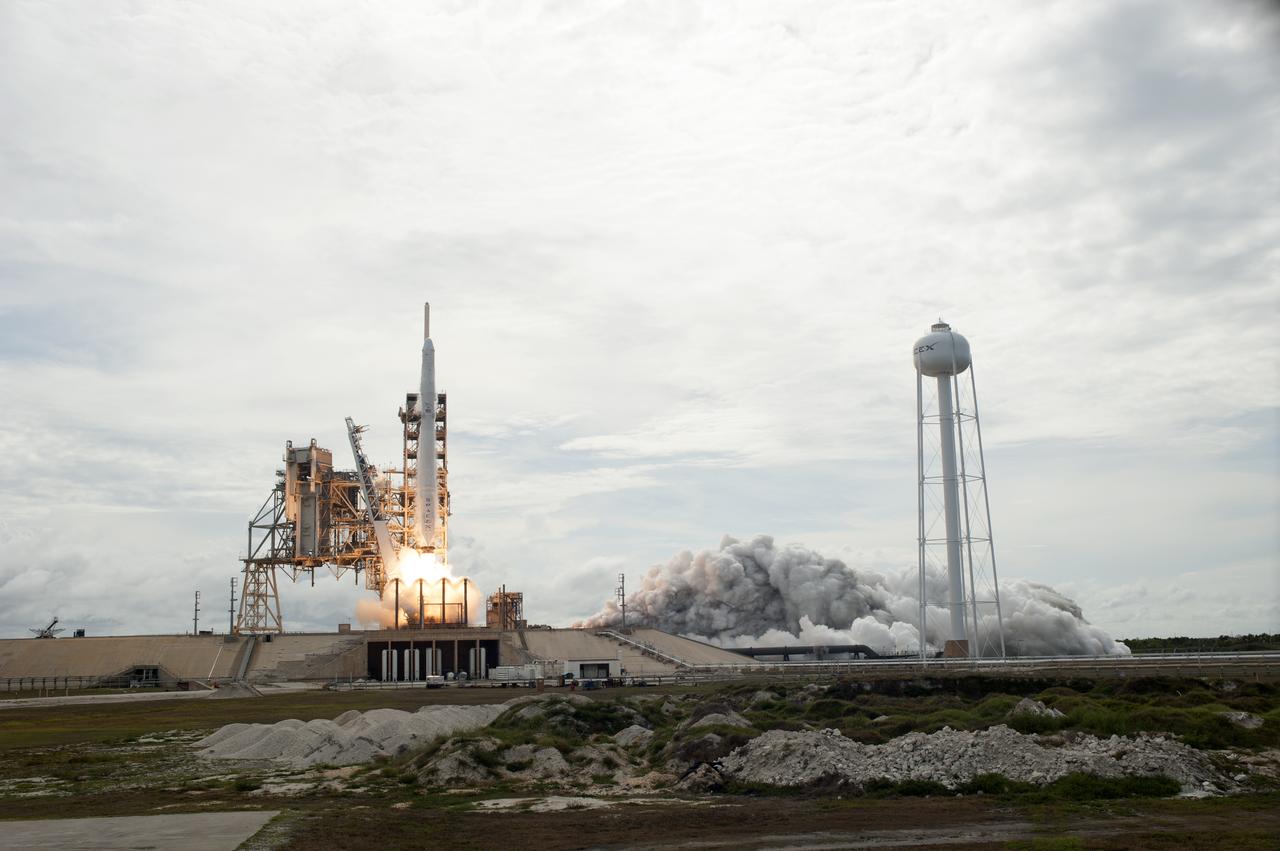
A SpaceX Falcon 9 rocket lifts off from Launch Complex 39A at NASA's Kenney Space Center in Florida, the company's 11th commercial resupply services mission to the International Space Station. Liftoff was at 5:07 p.m. EDT from the historic launch site now operated by SpaceX under a property agreement with NASA. The Dragon spacecraft will deliver 6,000 pounds of supplies, such as the Neutron star Interior Composition Explorer, or NICER, designed to study the extraordinary physics of these stars, providing insights into their nature and behavior.
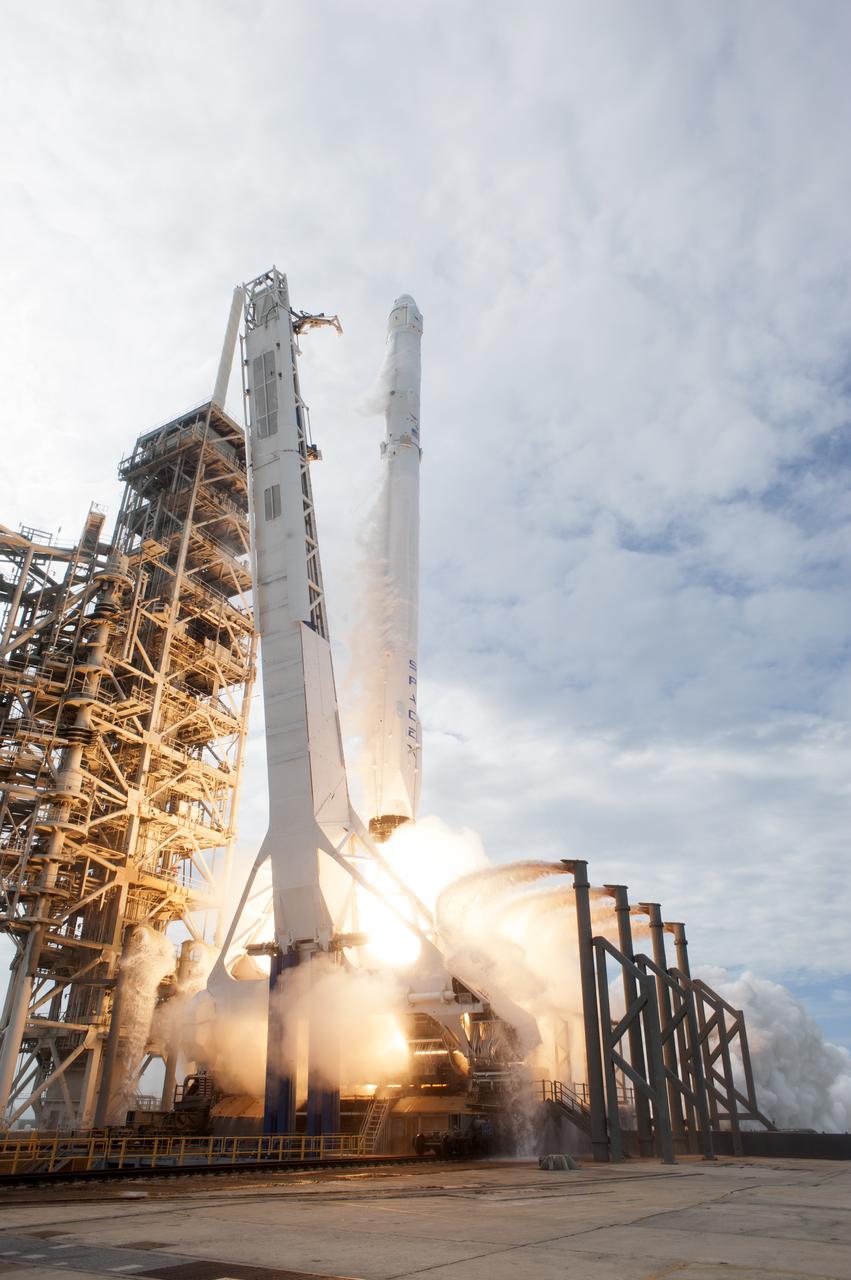
A SpaceX Falcon 9 rocket lifts off from Launch Complex 39A at NASA's Kenney Space Center in Florida, the company's 11th commercial resupply services mission to the International Space Station. Liftoff was at 5:07 p.m. EDT from the historic launch site now operated by SpaceX under a property agreement with NASA. The Dragon spacecraft will deliver 6,000 pounds of supplies, such as the Neutron star Interior Composition Explorer, or NICER, designed to study the extraordinary physics of these stars, providing insights into their nature and behavior.
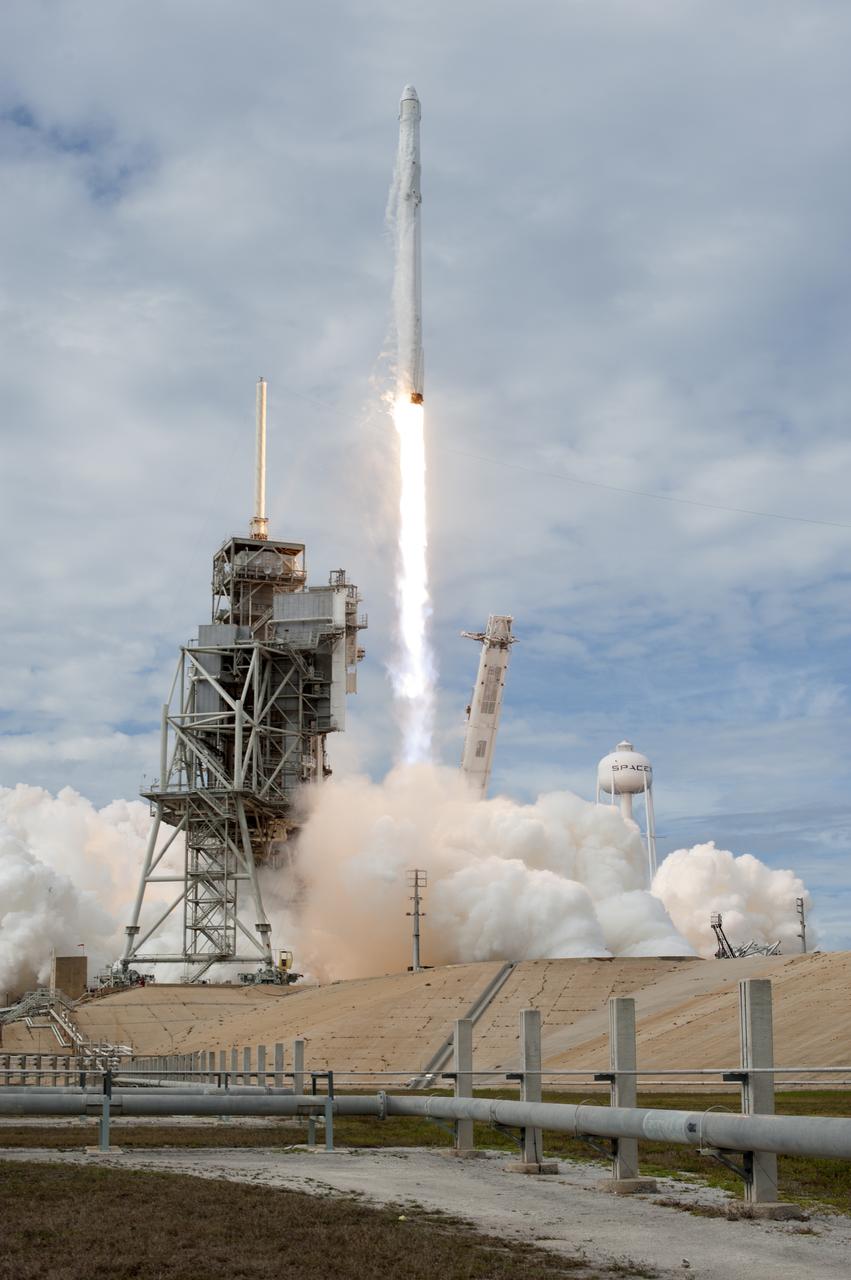
A SpaceX Falcon 9 rocket lifts off from Launch Complex 39A at NASA's Kenney Space Center in Florida, the company's 11th commercial resupply services mission to the International Space Station. Liftoff was at 5:07 p.m. EDT from the historic launch site now operated by SpaceX under a property agreement with NASA. The Dragon spacecraft will deliver 6,000 pounds of supplies, such as the Neutron star Interior Composition Explorer, or NICER, designed to study the extraordinary physics of these stars, providing insights into their nature and behavior.

A SpaceX Falcon 9 rocket lifts off from Launch Complex 39A at NASA's Kenney Space Center in Florida, the company's 11th commercial resupply services mission to the International Space Station. Liftoff was at 5:07 p.m. EDT from the historic launch site now operated by SpaceX under a property agreement with NASA. The Dragon spacecraft will deliver 6,000 pounds of supplies, such as the Neutron star Interior Composition Explorer, or NICER, designed to study the extraordinary physics of these stars, providing insights into their nature and behavior.
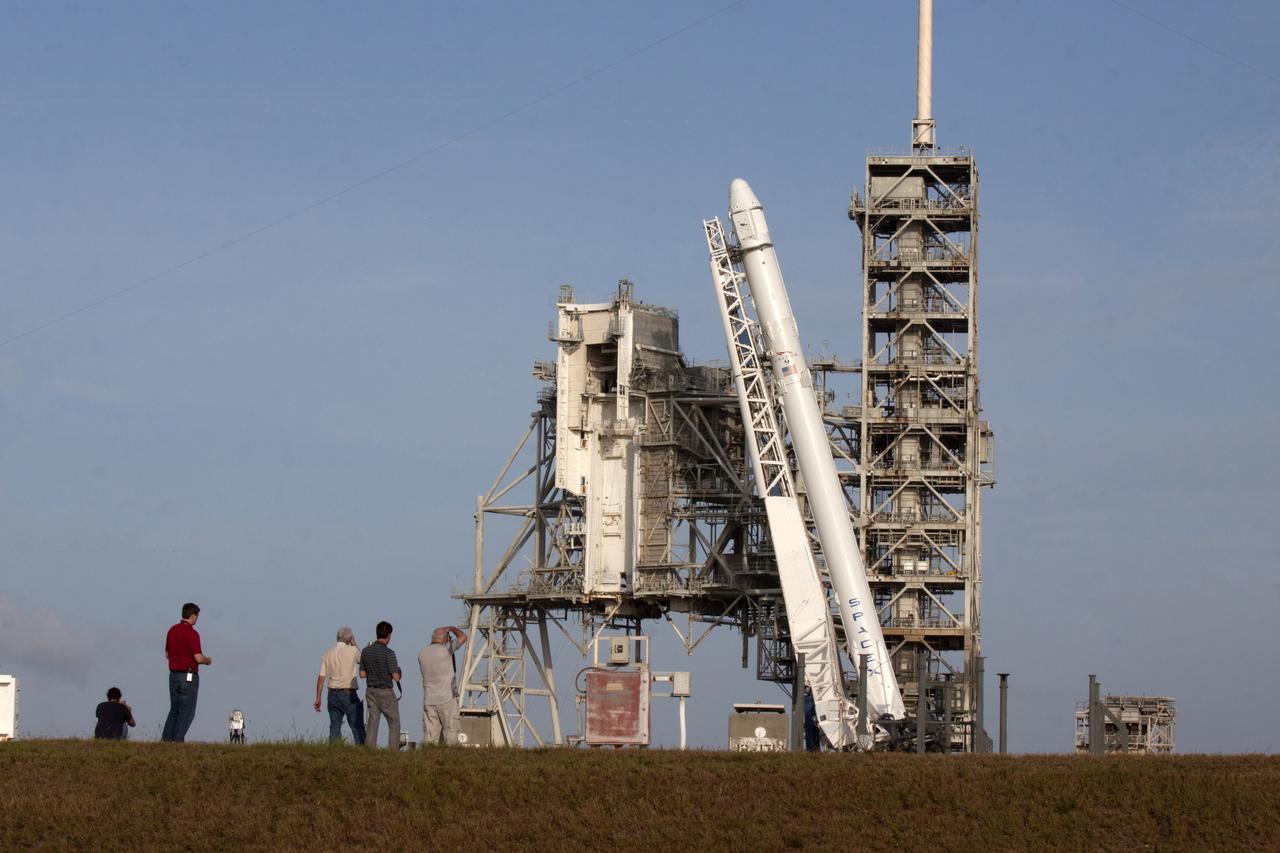
As a Falcon 9 rocket is raised into positon for liftoff at the Kennedy Space Center's Launch Complex 39A. The rocket will boost a Dragon resupply spacecraft to the International Space Station. Liftoff is scheduled for 5:55 p.m. EDT. On its 11th commercial resupply services mission to the space station, Dragon will bring up 6,000 pounds of supplies, such as the Neutron star Interior Composition Explorer, or NICER, instrument to study the extraordinary physics of neutron stars.
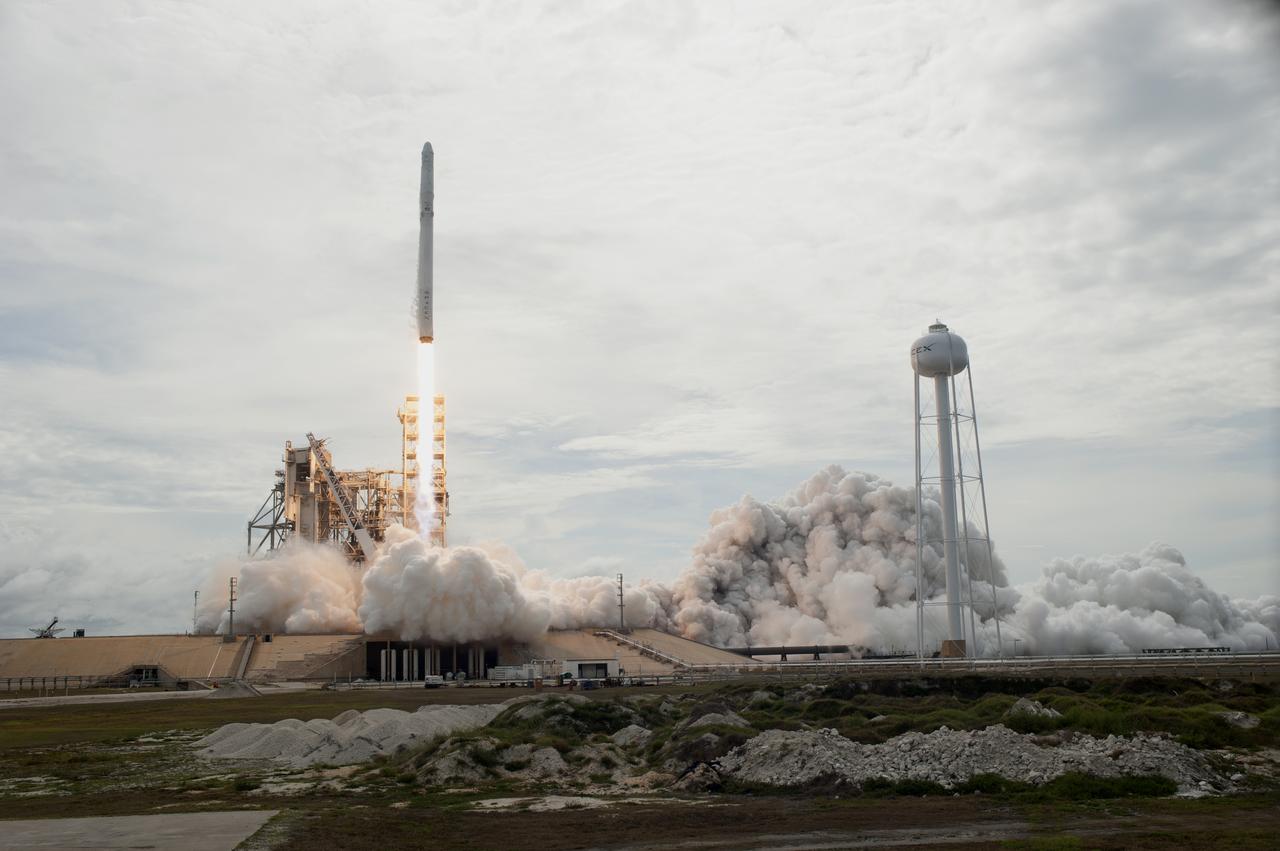
A SpaceX Falcon 9 rocket lifts off from Launch Complex 39A at NASA's Kenney Space Center in Florida, the company's 11th commercial resupply services mission to the International Space Station. Liftoff was at 5:07 p.m. EDT from the historic launch site now operated by SpaceX under a property agreement with NASA. The Dragon spacecraft will deliver 6,000 pounds of supplies, such as the Neutron star Interior Composition Explorer, or NICER, designed to study the extraordinary physics of these stars, providing insights into their nature and behavior.
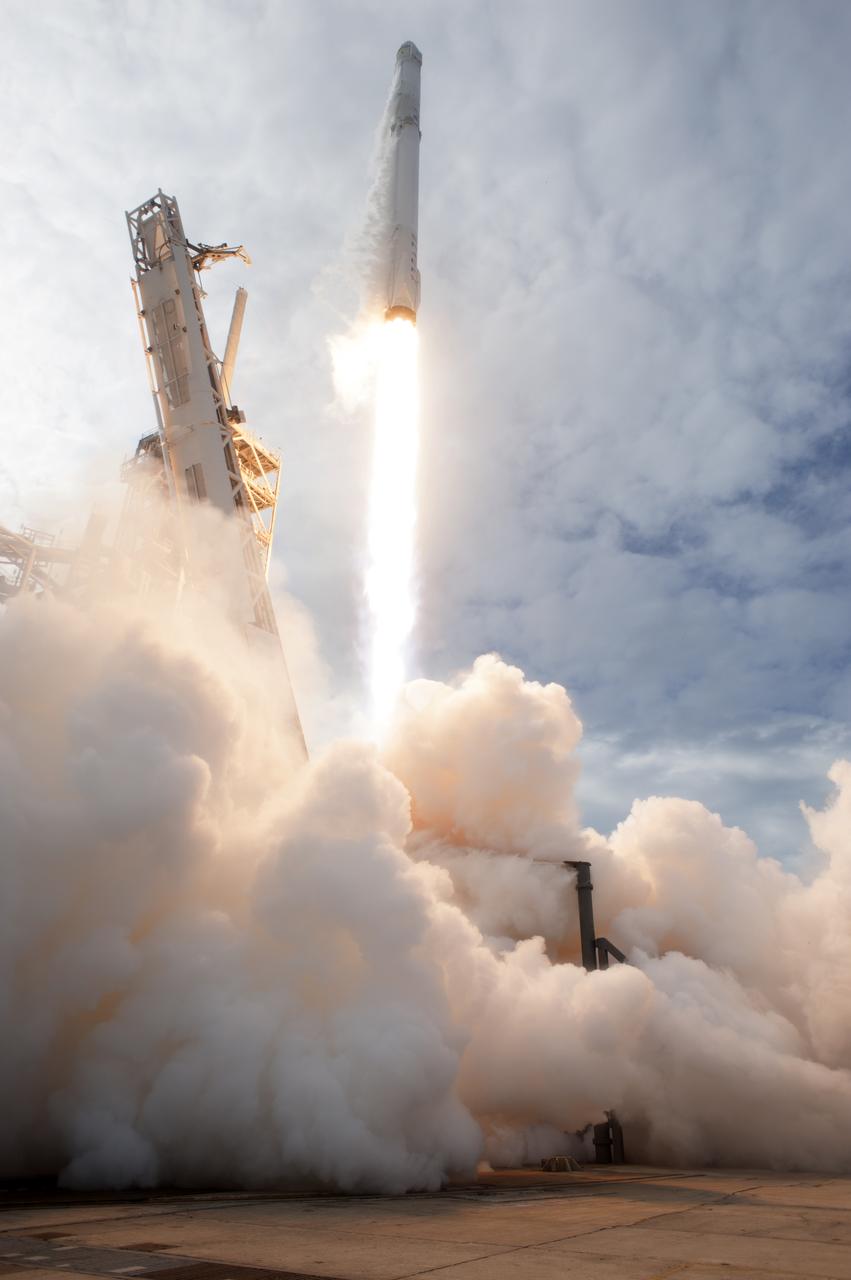
A SpaceX Falcon 9 rocket lifts off from Launch Complex 39A at NASA's Kenney Space Center in Florida, the company's 11th commercial resupply services mission to the International Space Station. Liftoff was at 5:07 p.m. EDT from the historic launch site now operated by SpaceX under a property agreement with NASA. The Dragon spacecraft will deliver 6,000 pounds of supplies, such as the Neutron star Interior Composition Explorer, or NICER, designed to study the extraordinary physics of these stars, providing insights into their nature and behavior.
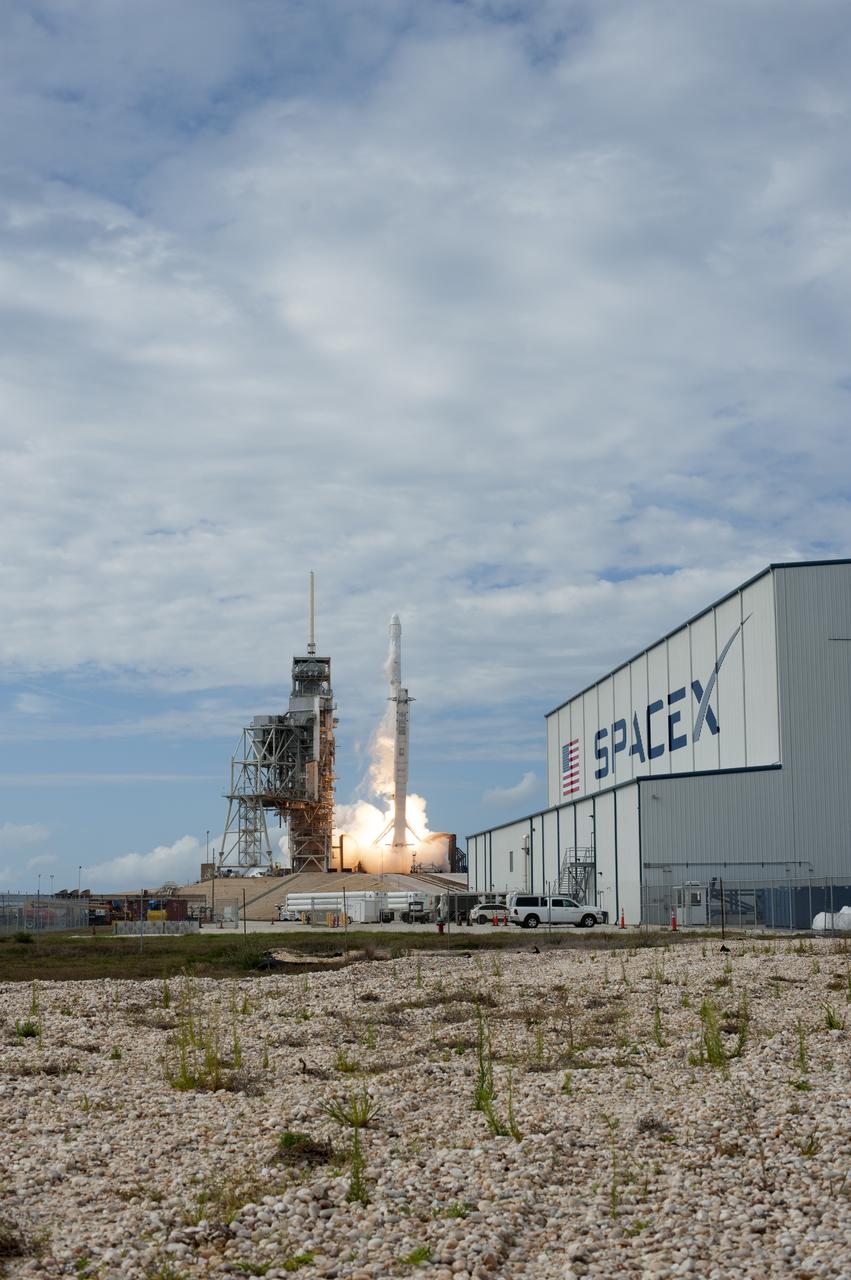
A SpaceX Falcon 9 rocket lifts off from Launch Complex 39A at NASA's Kenney Space Center in Florida, the company's 11th commercial resupply services mission to the International Space Station. Liftoff was at 5:07 p.m. EDT from the historic launch site now operated by SpaceX under a property agreement with NASA. The Dragon spacecraft will deliver 6,000 pounds of supplies, such as the Neutron star Interior Composition Explorer, or NICER, designed to study the extraordinary physics of these stars, providing insights into their nature and behavior.
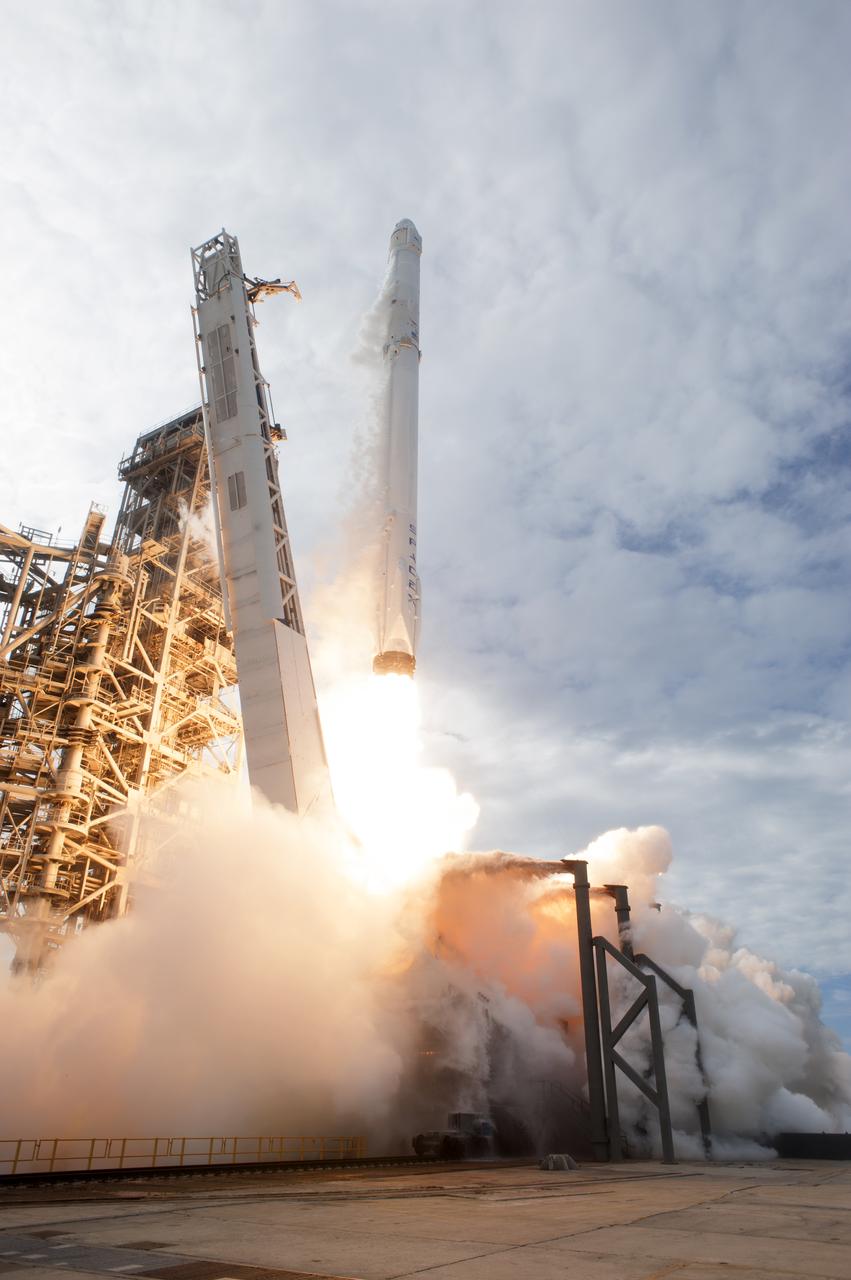
A SpaceX Falcon 9 rocket lifts off from Launch Complex 39A at NASA's Kenney Space Center in Florida, the company's 11th commercial resupply services mission to the International Space Station. Liftoff was at 5:07 p.m. EDT from the historic launch site now operated by SpaceX under a property agreement with NASA. The Dragon spacecraft will deliver 6,000 pounds of supplies, such as the Neutron star Interior Composition Explorer, or NICER, designed to study the extraordinary physics of these stars, providing insights into their nature and behavior.
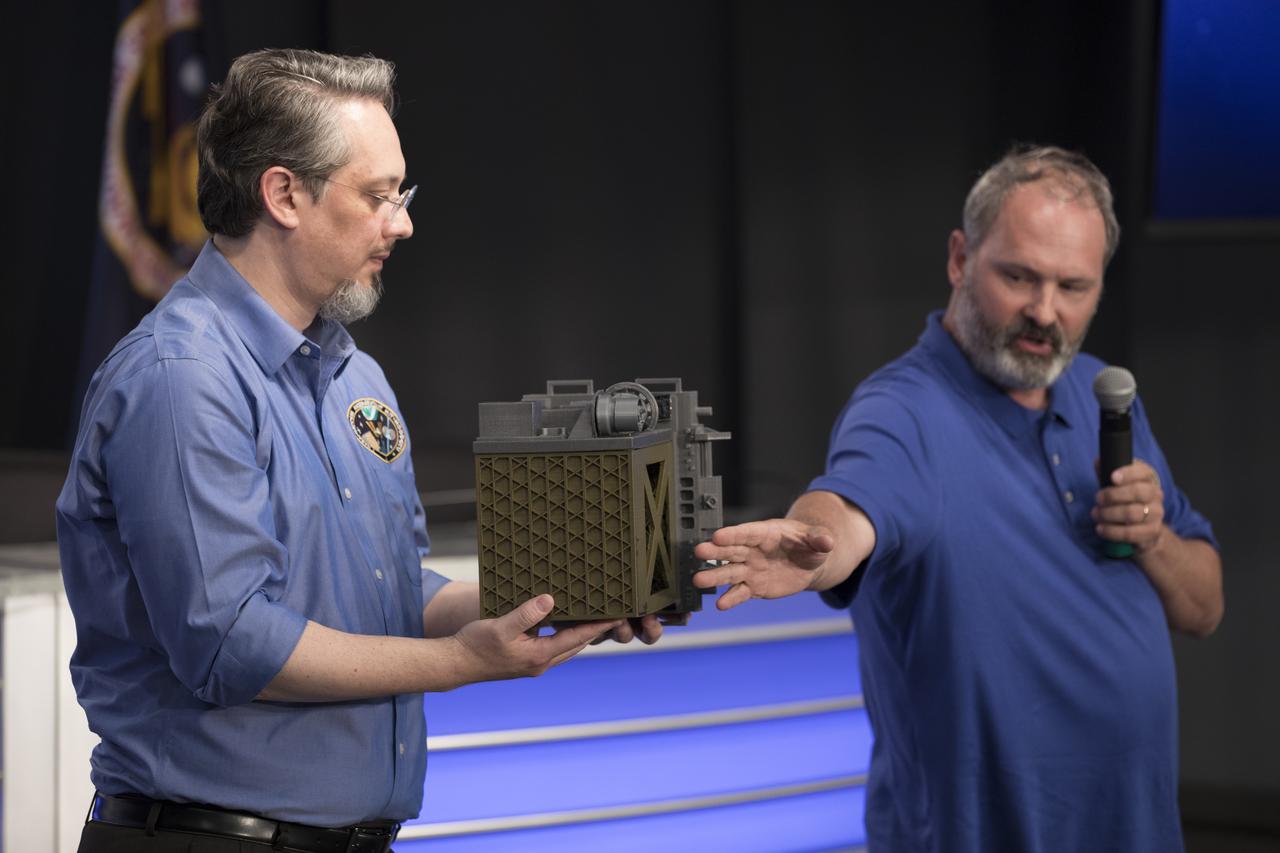
Jason Mitchell, project manager for the Station Explorer for X-ray Timing and Navigation Technology, or SEXTANT, instrument, left, and Keith Gendreau, principle investigator for the Neutron star Interior Composition Explorer, or NICER, speak to members of social media in the Kennedy Space Center’s Press Site auditorium. The briefing focused on the purpose of their experiments and instruments to be delivered to the International Space Station on SpaceX CRS-11. A Dragon spacecraft is scheduled to be launched from Kennedy’s Launch Complex 39A on June 1 atop a SpaceX Falcon 9 rocket on the company's 11th Commercial Resupply Services mission to the space station.