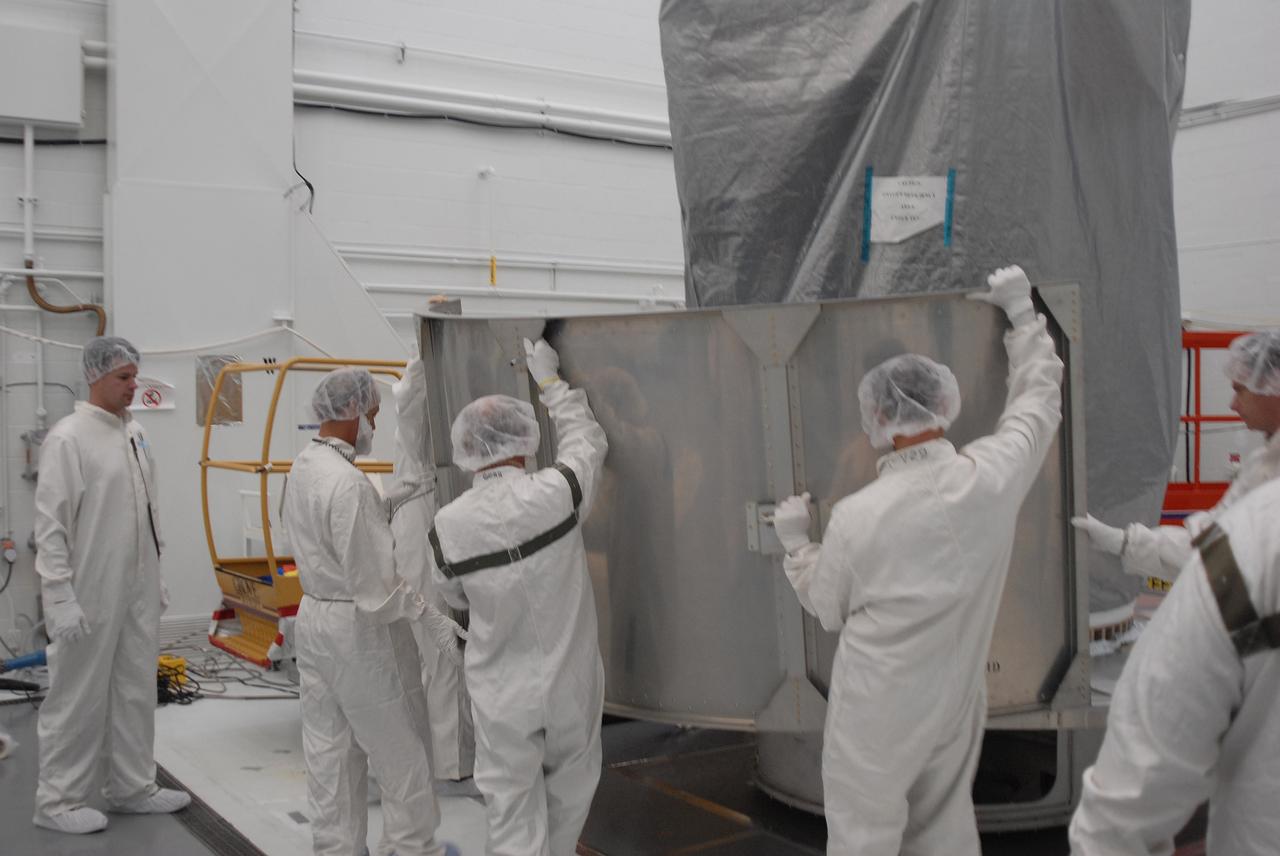
VANDENBERG AIR FORCE BASE, Calif. -- In Bldg. 1610 at Vandenberg Air Force Base in California, workers place the first of the lower segments of a transportation canister around the NOAA-N Prime spacecraft. NOAA-N Prime is the latest polar-orbiting operational environmental weather satellite developed by NASA for the National Oceanic and Atmospheric Administration. The satellite is scheduled to launch Feb. 4 aboard a Delta II rocket from Vandenberg Air Force Base. Photo credit: NASA/ Daniel Liberotti, VAFB
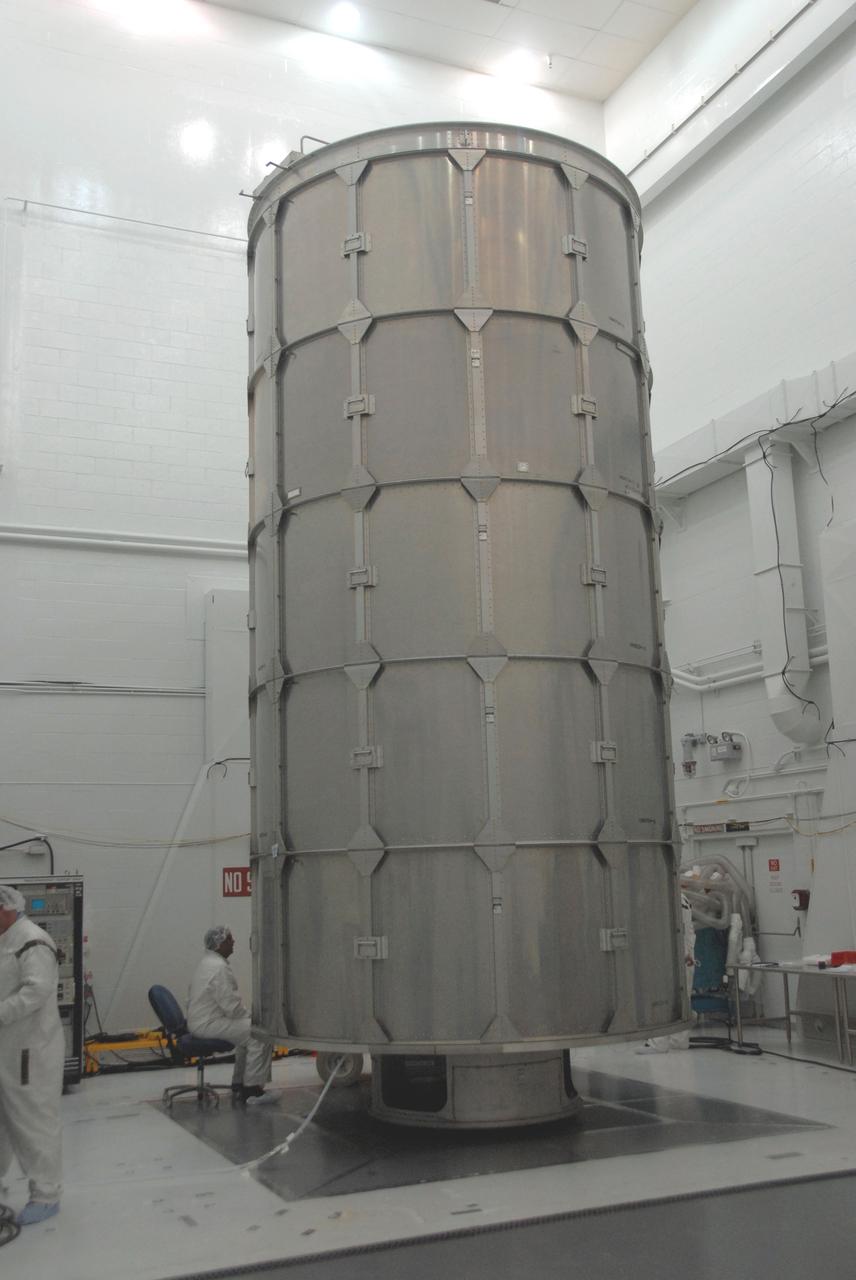
VANDENBERG AIR FORCE BASE, Calif. -- A transportation canister surrounds the NOAA-N Prime spacecraft in Bldg. 1610 at Vandenberg Air Force Base in California. The spacecraft will be moved to a transporter. NOAA-N Prime is the latest polar-orbiting operational environmental weather satellite developed by NASA for the National Oceanic and Atmospheric Administration. The satellite is scheduled to launch Feb. 4 aboard a Delta II rocket from Vandenberg Air Force Base. Photo credit: NASA/ Daniel Liberotti, VAFB
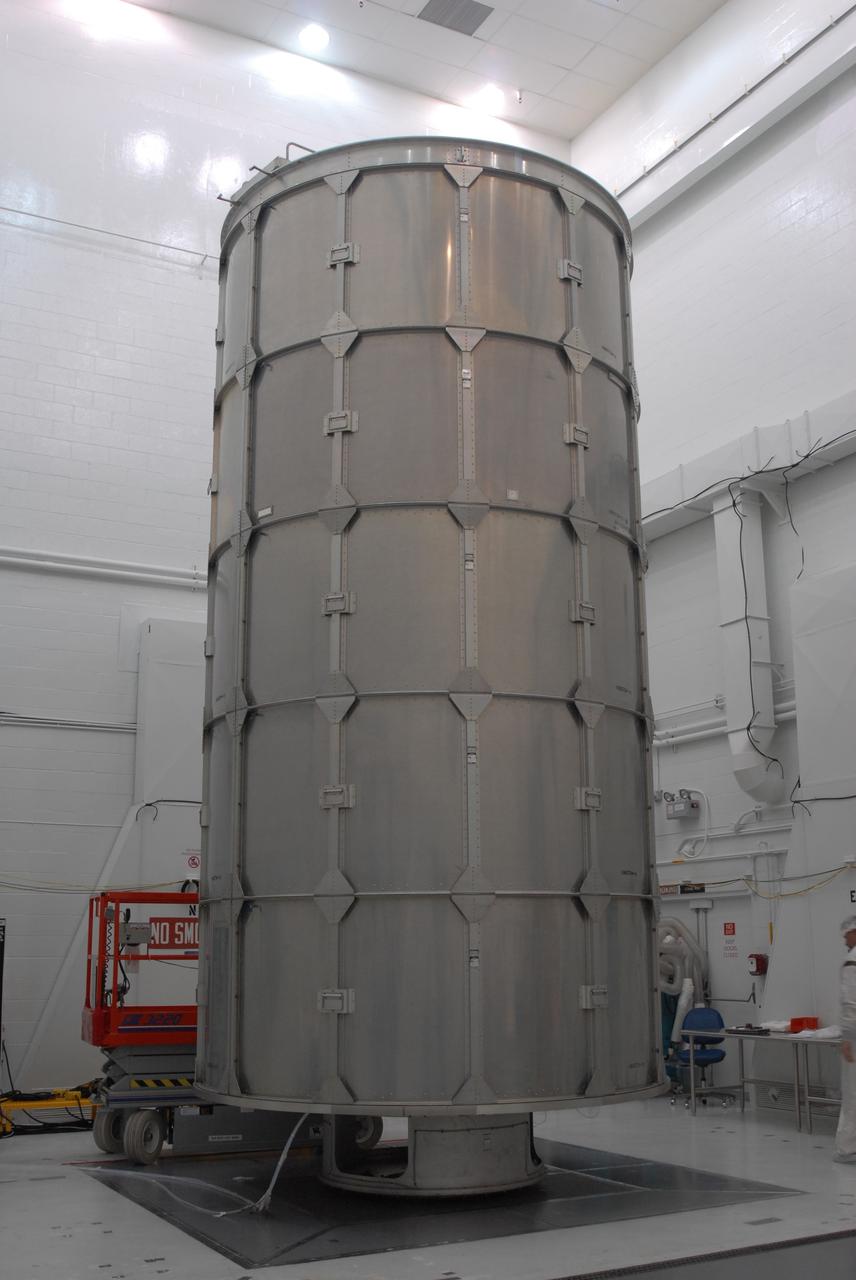
VANDENBERG AIR FORCE BASE, Calif. -- In Bldg. 1610 at Vandenberg Air Force Base in California, the NOAA-N Prime spacecraft is encased inside a transportation canister. NOAA-N Prime is the latest polar-orbiting operational environmental weather satellite developed by NASA for the National Oceanic and Atmospheric Administration. The satellite is scheduled to launch Feb. 4 aboard a Delta II rocket from Vandenberg Air Force Base. Photo credit: NASA/ Daniel Liberotti, VAFB
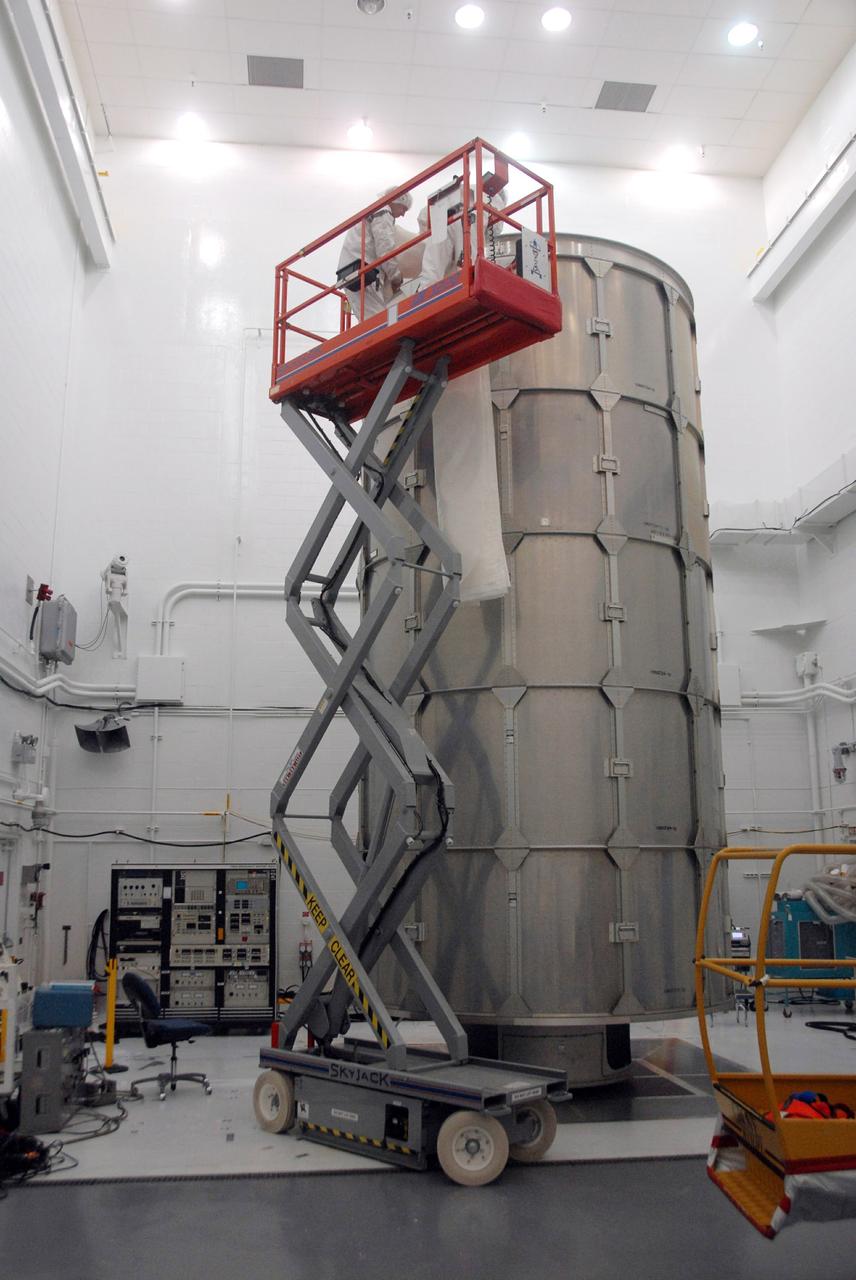
VANDENBERG AIR FORCE BASE, Calif. -- In Bldg. 1610 at Vandenberg Air Force Base in California, workers begin attaching a protective cover over the transportation cover of the NOAA-N Prime spacecraft. The spacecraft will be moved to a transporter. NOAA-N Prime is the latest polar-orbiting operational environmental weather satellite developed by NASA for the National Oceanic and Atmospheric Administration. The satellite is scheduled to launch Feb. 4 aboard a Delta II rocket from Vandenberg Air Force Base. Photo credit: NASA/ Daniel Liberotti, VAFB
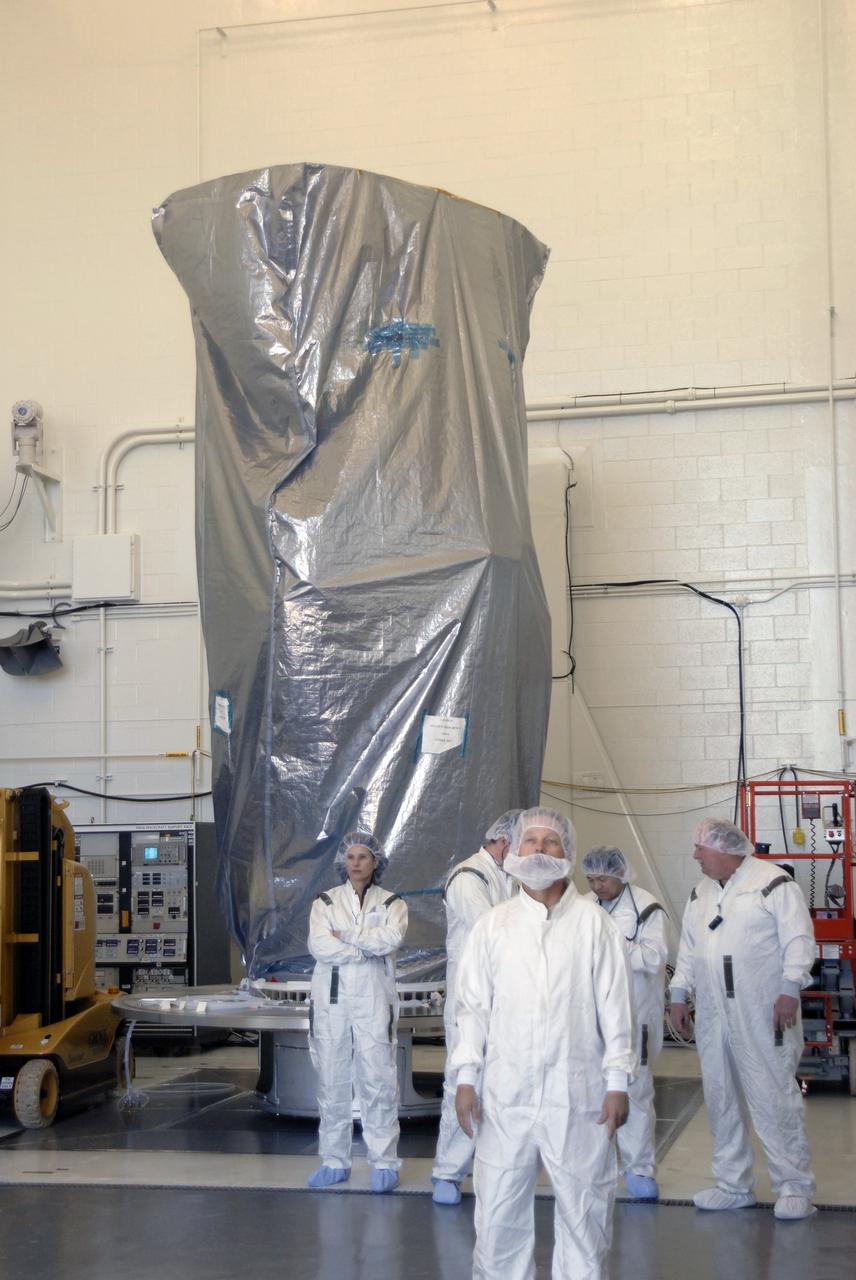
VANDENBERG AIR FORCE BASE, Calif. -- In Bldg. 1610 at Vandenberg Air Force Base in California, the NOAA-N Prime spacecraft is waiting for a transportation canister to be placed around it. NOAA-N Prime is the latest polar-orbiting operational environmental weather satellite developed by NASA for the National Oceanic and Atmospheric Administration. The satellite is scheduled to launch Feb. 4 aboard a Delta II rocket from Vandenberg Air Force Base. Photo credit: NASA/ Daniel Liberotti, VAFB
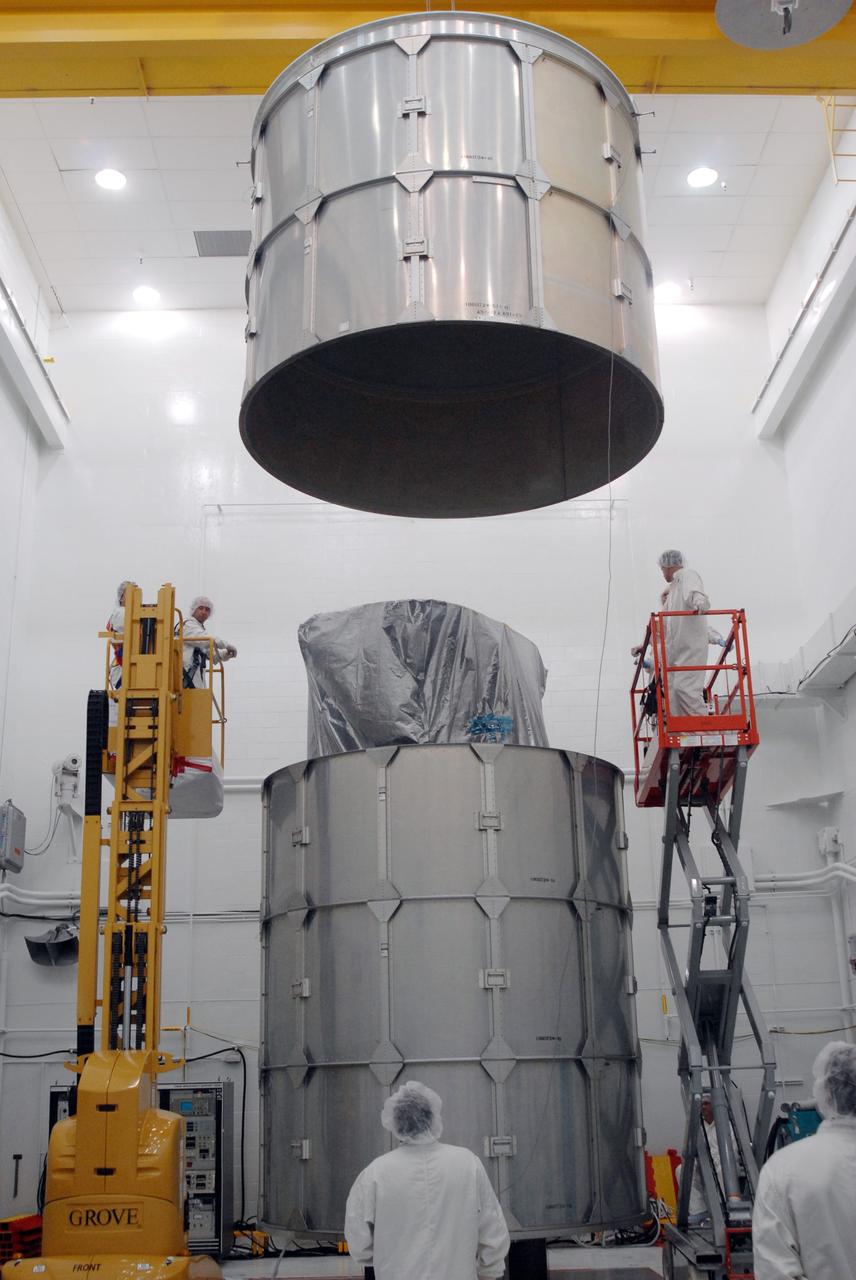
VANDENBERG AIR FORCE BASE, Calif. -- In Bldg. 1610 at Vandenberg Air Force Base in California, a transportation canister is being placed around the NOAA-N Prime spacecraft. NOAA-N Prime is the latest polar-orbiting operational environmental weather satellite developed by NASA for the National Oceanic and Atmospheric Administration. The satellite is scheduled to launch Feb. 4 aboard a Delta II rocket from Vandenberg Air Force Base. Photo credit: NASA/ Daniel Liberotti, VAFB
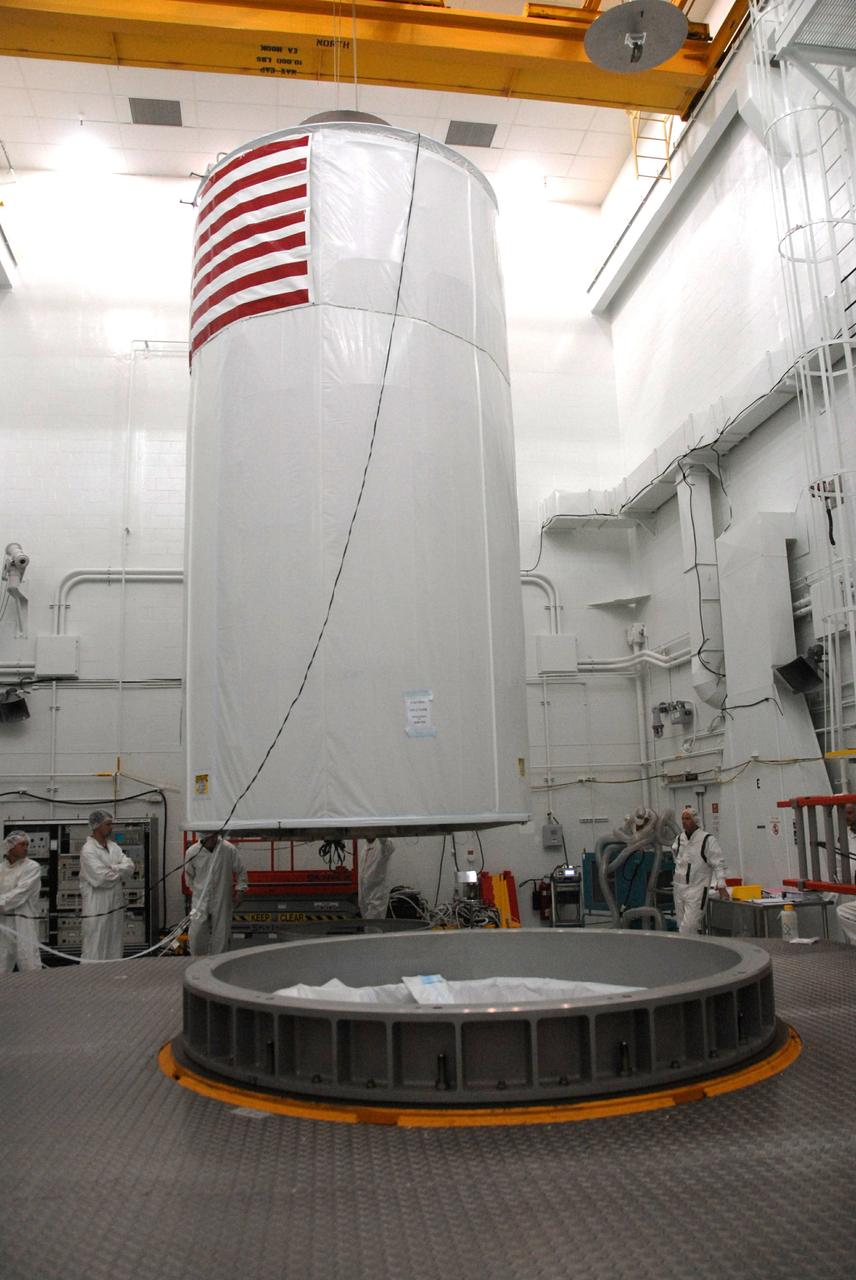
VANDENBERG AIR FORCE BASE, Calif. -- In Bldg. 1610 at Vandenberg Air Force Base in California, the covered NOAA-N Prime spacecraft is lifted off its stand. It will be moved to a transporter. NOAA-N Prime is the latest polar-orbiting operational environmental weather satellite developed by NASA for the National Oceanic and Atmospheric Administration. The satellite is scheduled to launch Feb. 4 aboard a Delta II rocket from Vandenberg Air Force Base. Photo credit: NASA/ Daniel Liberotti, VAFB
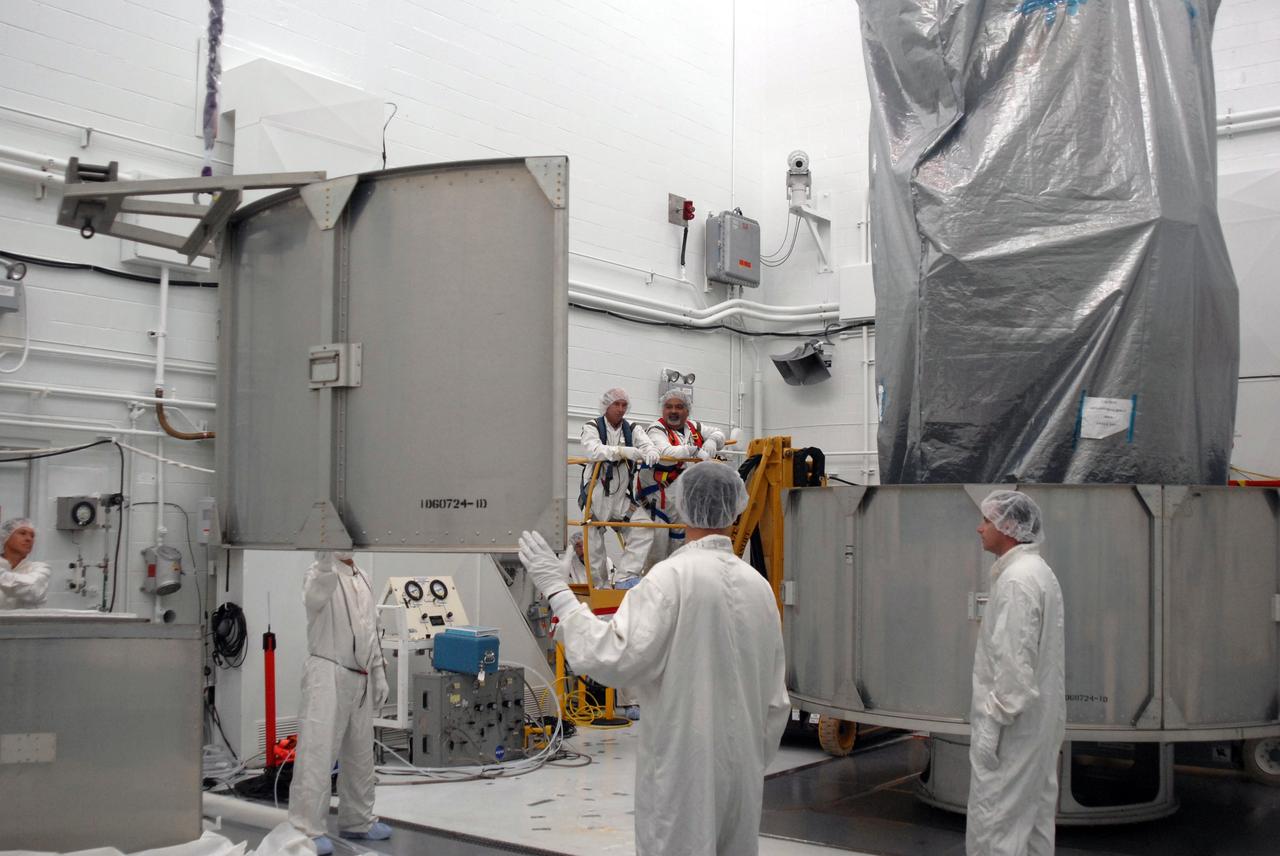
VANDENBERG AIR FORCE BASE, Calif. -- In Bldg. 1610 at Vandenberg Air Force Base in California, workers help guide a second-row segment of a transportation canister toward the NOAA-N Prime spacecraft for installation. NOAA-N Prime is the latest polar-orbiting operational environmental weather satellite developed by NASA for the National Oceanic and Atmospheric Administration. The satellite is scheduled to launch Feb. 4 aboard a Delta II rocket from Vandenberg Air Force Base. Photo credit: NASA/ Daniel Liberotti, VAFB
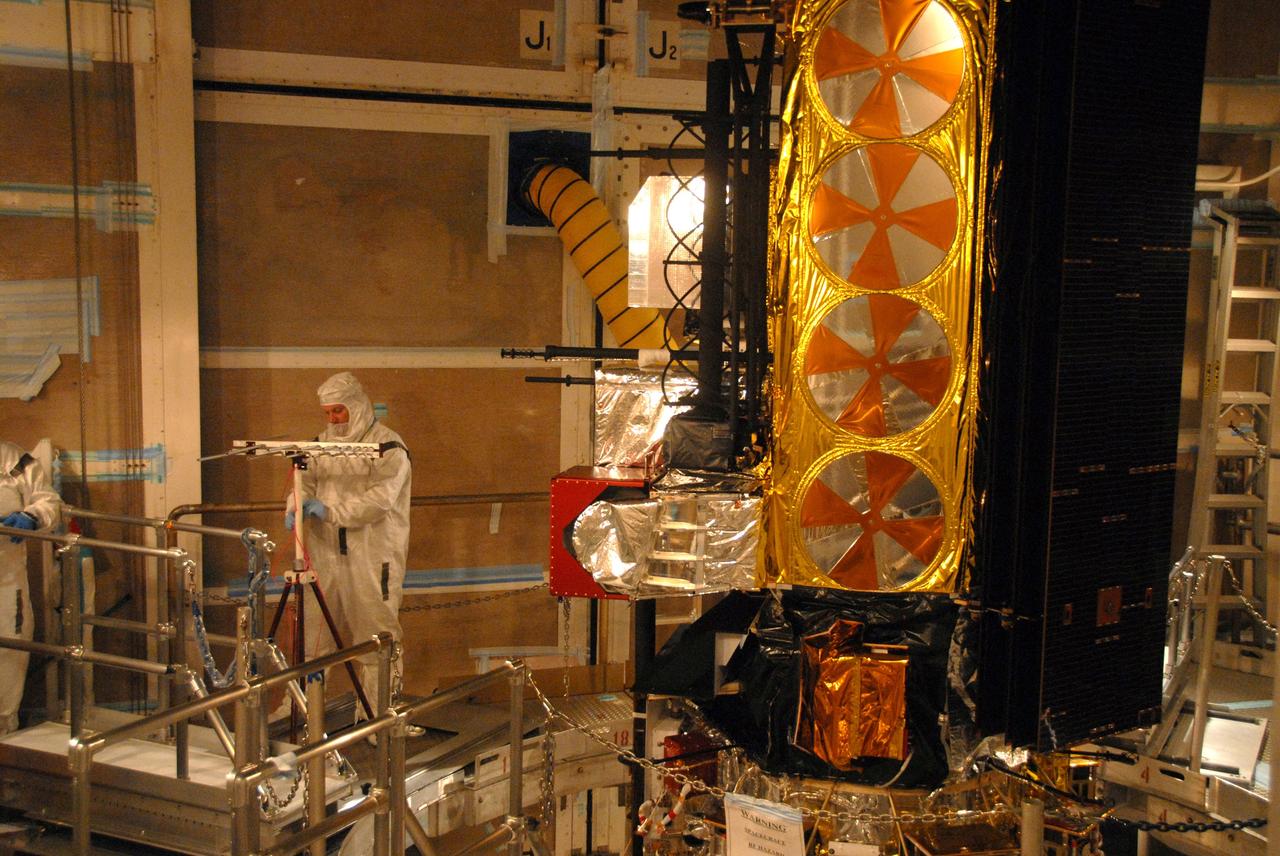
VANDENBERG AIR FORCE BASE, Calif. -- At Space Launch Complex 2 at Vandenberg Air Force Base in California, the NOAA-N Prime spacecraft is set up for an RF and other tests. NOAA-N Prime is the latest polar-orbiting operational environmental weather satellite developed by NASA for the National Oceanic and Atmospheric Administration. The satellite is scheduled to launch Feb. 4 aboard a Delta II rocket from Vandenberg Air Force Base. Photo credit: NASA/ Daniel Liberotti, VAFB
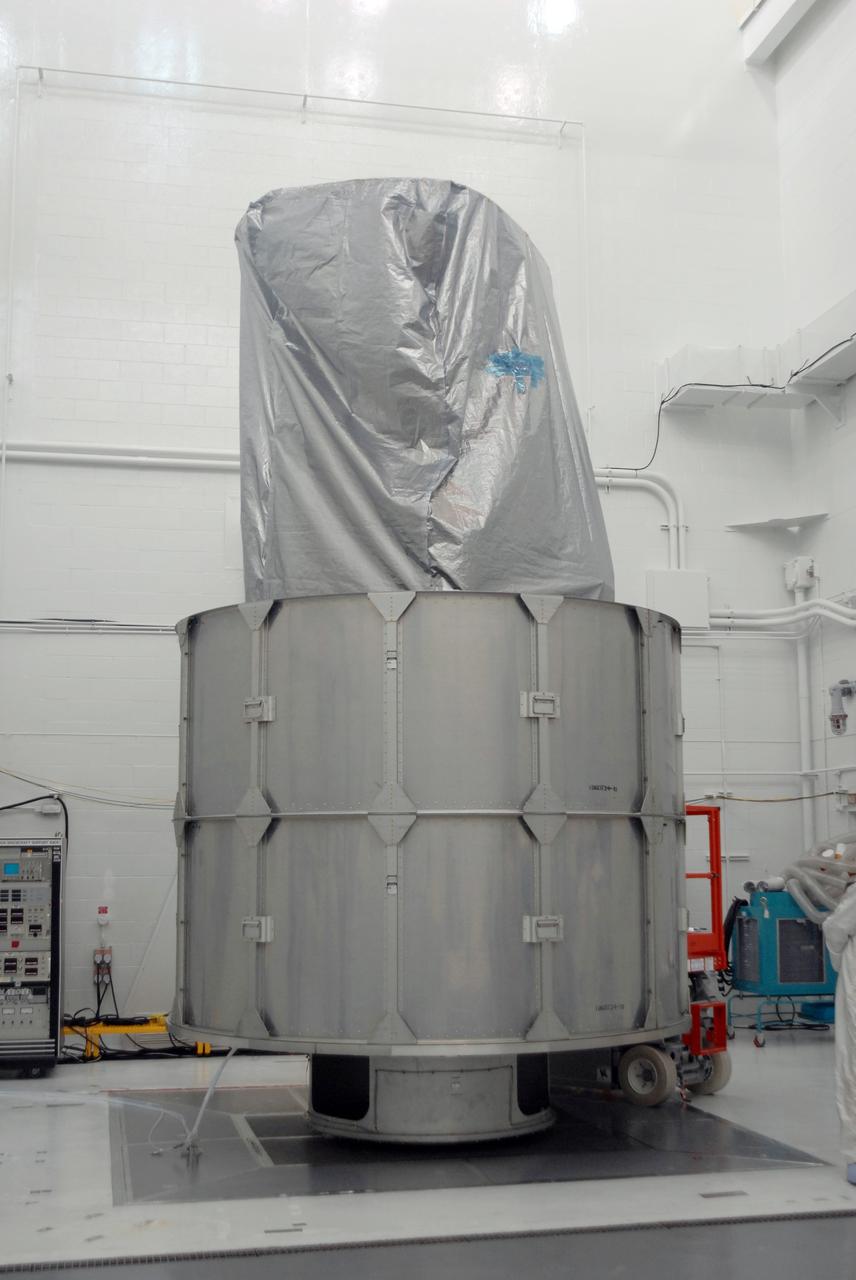
VANDENBERG AIR FORCE BASE, Calif. -- In Bldg. 1610 at Vandenberg Air Force Base in California, two rows of the transportation canister are installed around the NOAA-N Prime spacecraft. NOAA-N Prime is the latest polar-orbiting operational environmental weather satellite developed by NASA for the National Oceanic and Atmospheric Administration. The satellite is scheduled to launch Feb. 4 aboard a Delta II rocket from Vandenberg Air Force Base. Photo credit: NASA/ Daniel Liberotti, VAFB
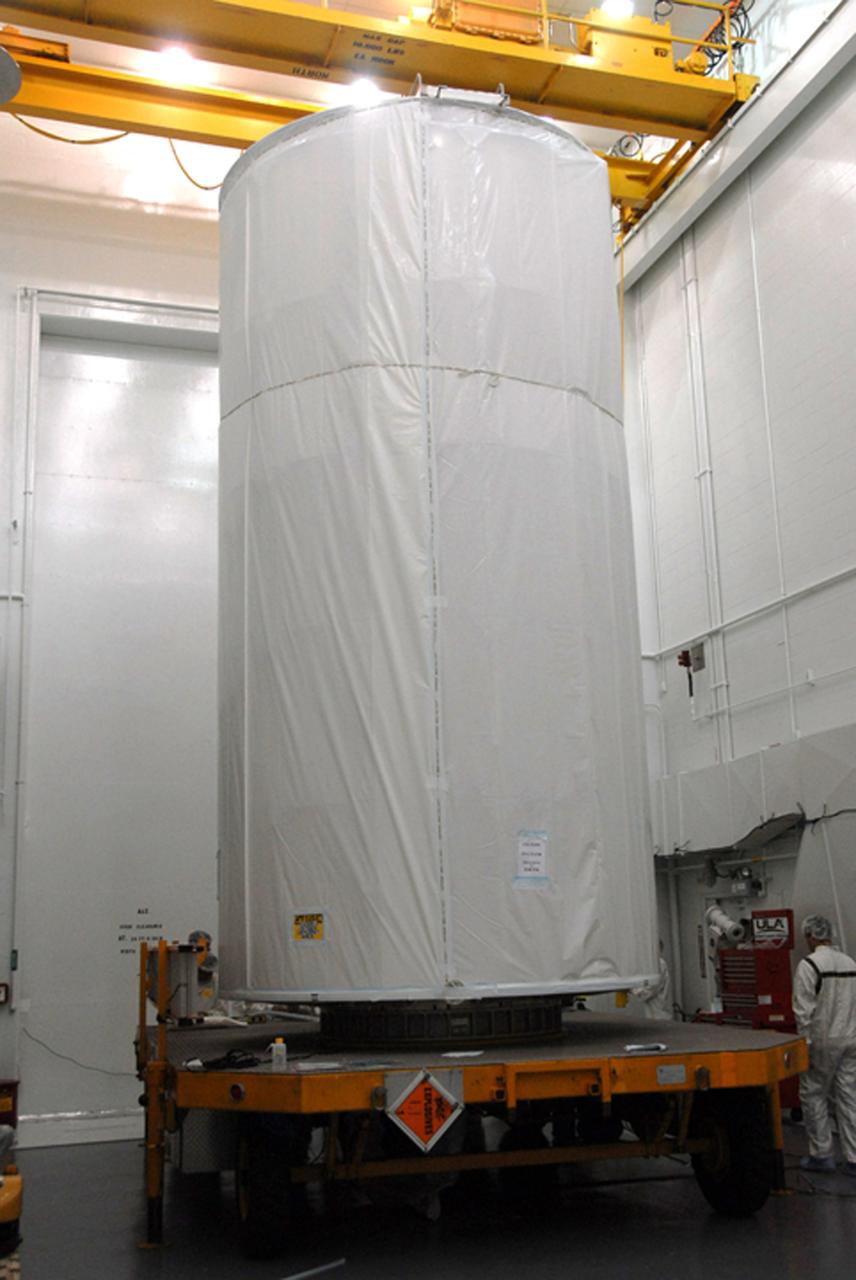
VANDENBERG AIR FORCE BASE, Calif. -- In Bldg. 1610 at Vandenberg Air Force Base in California, the covered NOAA-N Prime spacecraft is lowered onto a transporter. NOAA-N Prime is the latest polar-orbiting operational environmental weather satellite developed by NASA for the National Oceanic and Atmospheric Administration. The satellite is scheduled to launch Feb. 4 aboard a Delta II rocket from Vandenberg Air Force Base. Photo credit: NASA/ Daniel Liberotti, VAFB
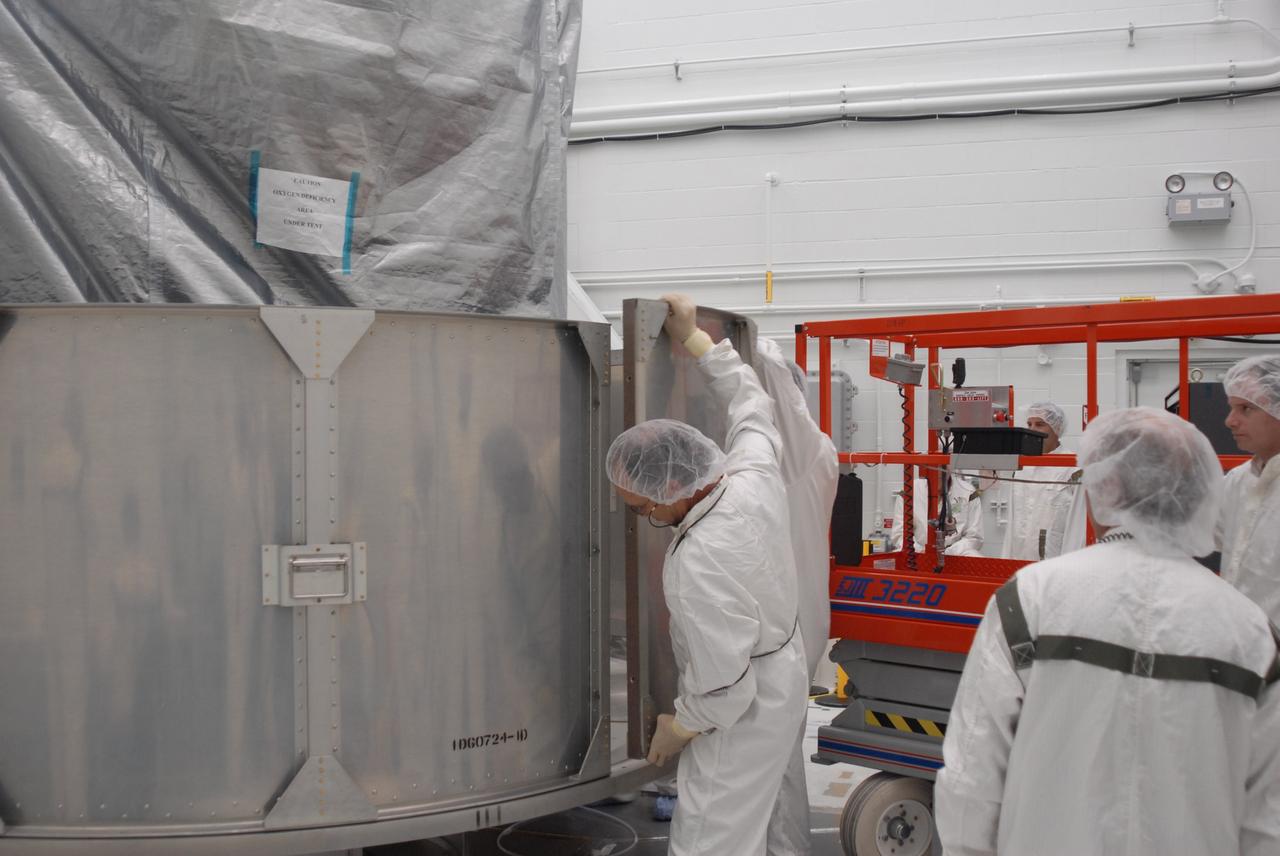
VANDENBERG AIR FORCE BASE, Calif. -- In Bldg. 1610 at Vandenberg Air Force Base in California, workers place another lower segment of a transportation canister around the NOAA-N Prime spacecraft. NOAA-N Prime is the latest polar-orbiting operational environmental weather satellite developed by NASA for the National Oceanic and Atmospheric Administration. The satellite is scheduled to launch Feb. 4 aboard a Delta II rocket from Vandenberg Air Force Base. Photo credit: NASA/ Daniel Liberotti, VAFB
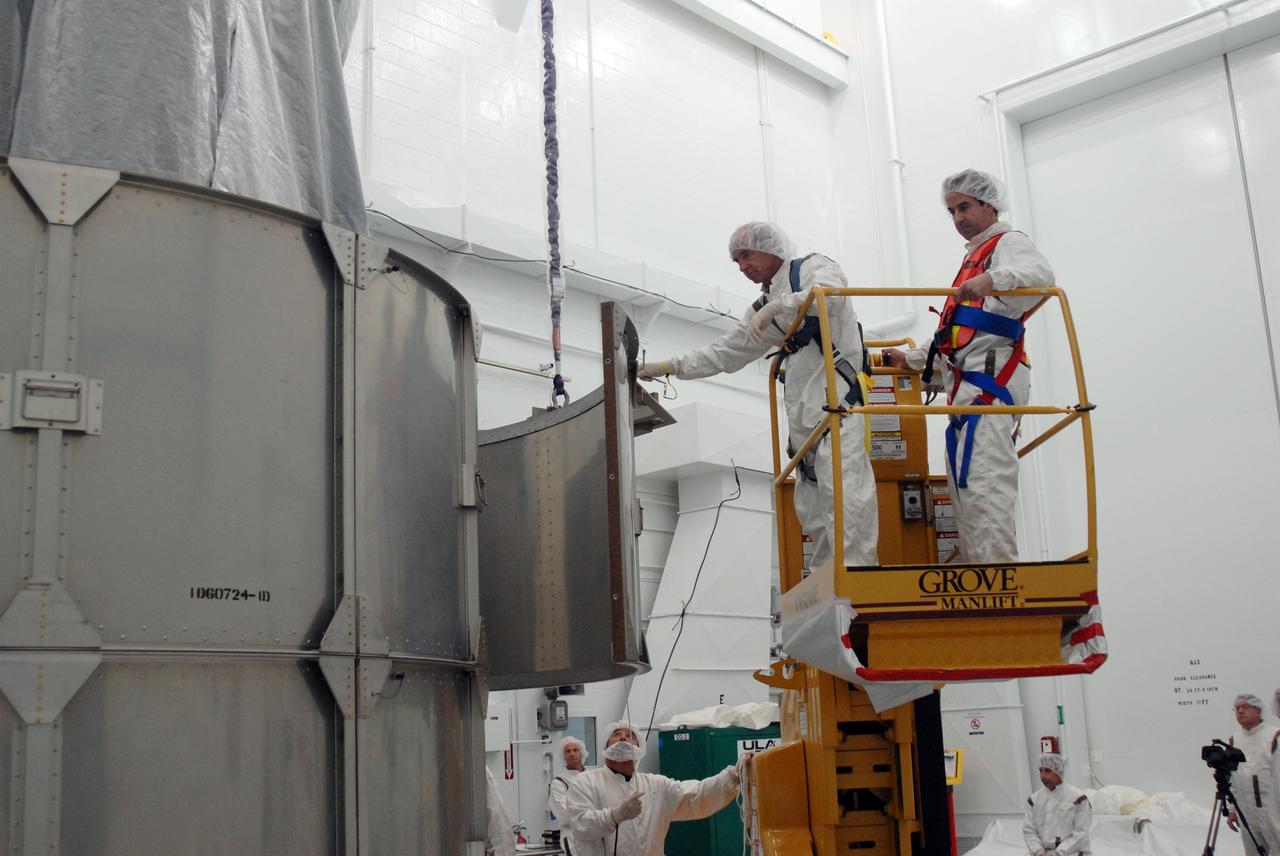
VANDENBERG AIR FORCE BASE, Calif. -- In Bldg. 1610 at Vandenberg Air Force Base in California, workers guide an upper segment of the transportation canister toward the NOAA-N Prime spacecraft. NOAA-N Prime is the latest polar-orbiting operational environmental weather satellite developed by NASA for the National Oceanic and Atmospheric Administration. The satellite is scheduled to launch Feb. 4 aboard a Delta II rocket from Vandenberg Air Force Base. Photo credit: NASA/ Daniel Liberotti, VAFB
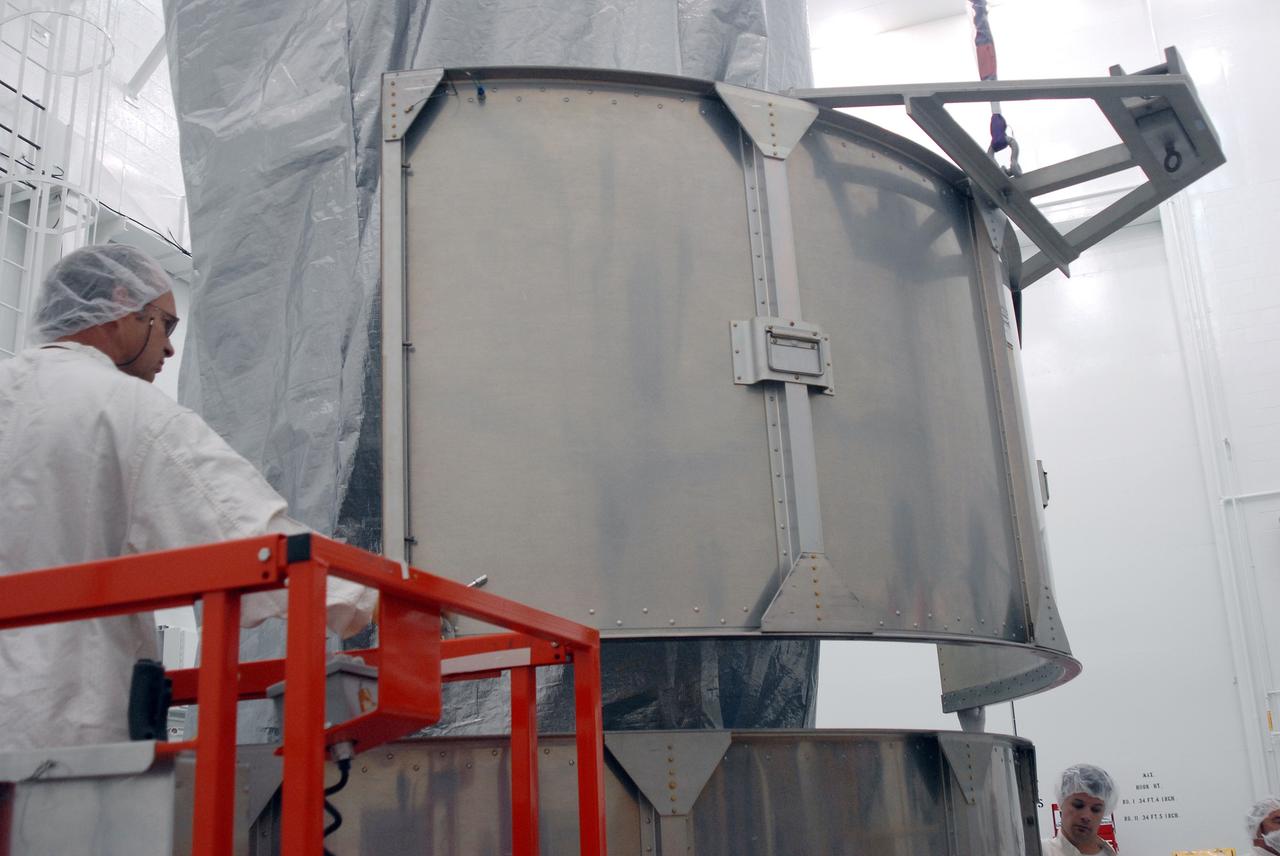
VANDENBERG AIR FORCE BASE, Calif. -- In Bldg. 1610 at Vandenberg Air Force Base in California, a second-row segment of a transportation canister is put in place for installation around the NOAA-N Prime spacecraft. NOAA-N Prime is the latest polar-orbiting operational environmental weather satellite developed by NASA for the National Oceanic and Atmospheric Administration. The satellite is scheduled to launch Feb. 4 aboard a Delta II rocket from Vandenberg Air Force Base. Photo credit: NASA/ Daniel Liberotti, VAFB
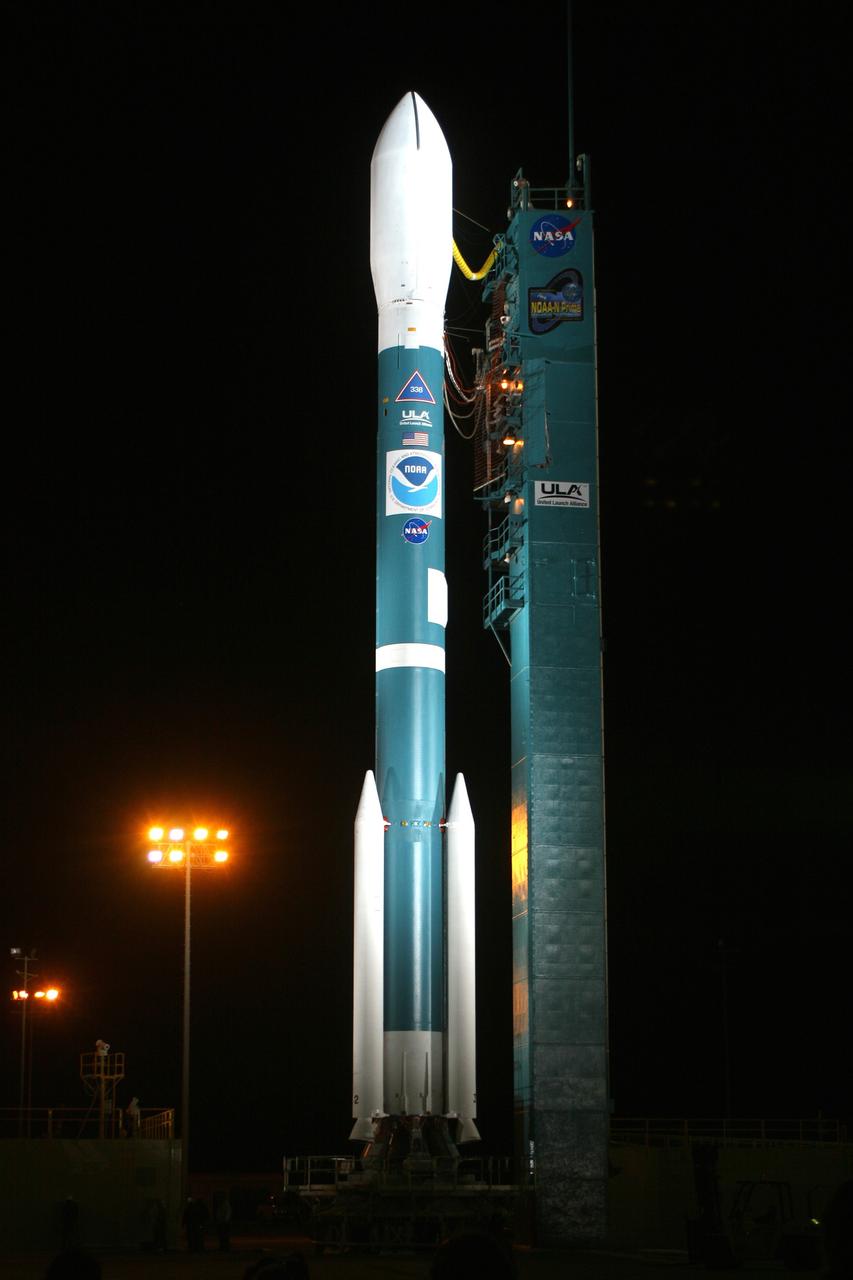
VANDENBERG AIR FORCE BASE, Calif. -- The mobile service tower moves away from the Delta II rocket with NASA's NOAA-N Prime satellite aboard on the Space Launch Complex 2 at Vandenberg Air Force Base in California. The launch of the NOAA-N Prime weather satellite was scrubbed at 5 a.m. EST Feb. 3 when a launch pad gaseous nitrogen pressurization system failed. This system maintains pressurization and purges to various systems of the Delta II rocket prior to launch. Immediate repair to this system was being taken. The next launch attempt will be no earlier than 5:22 a.m. EST Feb. 5, weather permitting. NOAA-N Prime is the latest polar-orbiting operational environmental weather satellite developed by NASA for the National Oceanic and Atmospheric Administration. Photo credit: NASA/Carleton Bailie, VAFB-ULA
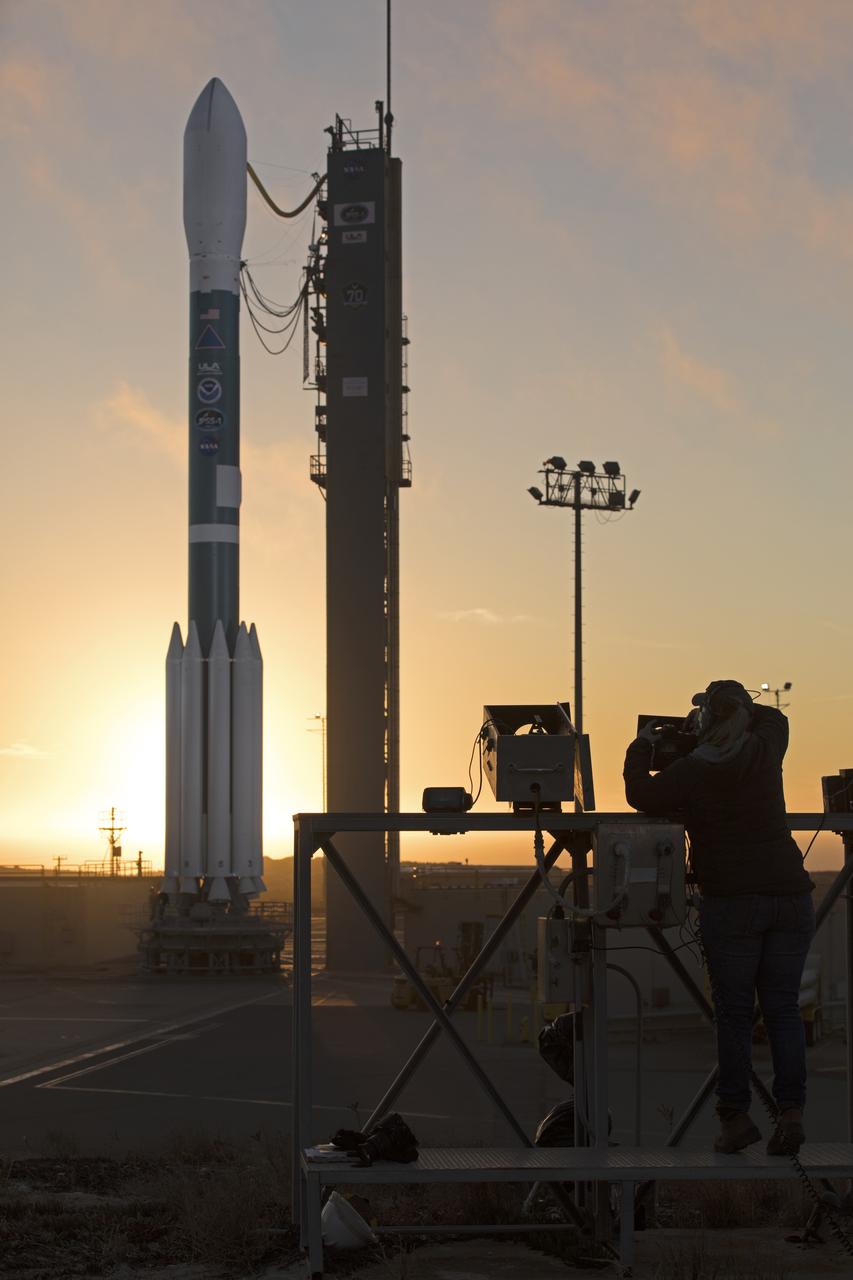
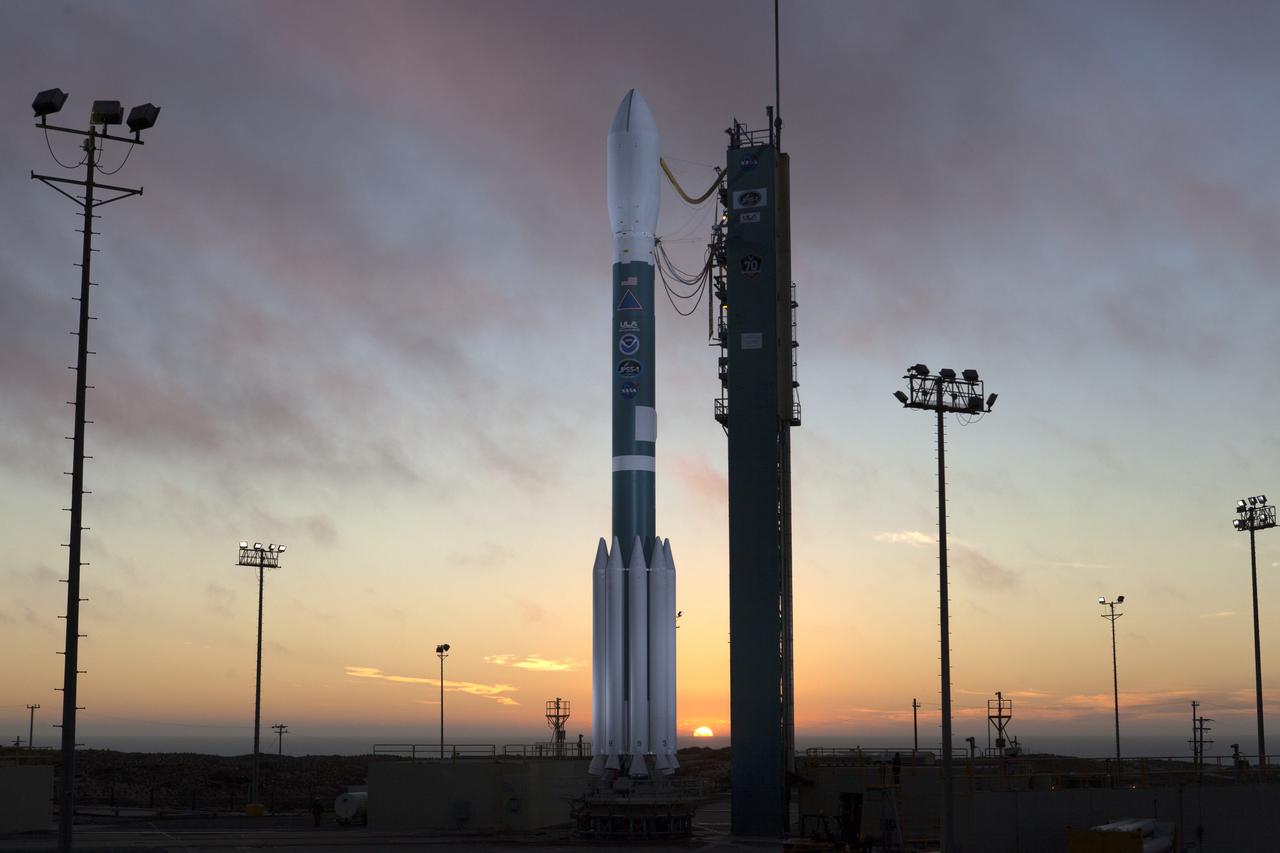
At Vandenberg Air Force Base in California, the gantry rolls back at Space Launch Complex 2 in preparation for the liftoff of the Joint Polar Satellite System-1, or JPSS-1, spacecraft. The United Launch Alliance Delta II rocket now is poised to boost the satellite to a polar orbit. Built by Ball Aerospace and Technologies Corp. of Boulder, Colorado, JPSS is the first in a series four next-generation environmental satellites in a collaborative program between NOAA and NASA. The satellite is scheduled to liftoff at 1:47 a.m. PST (4:47 a.m. EST), on Nov. 14, 2017.
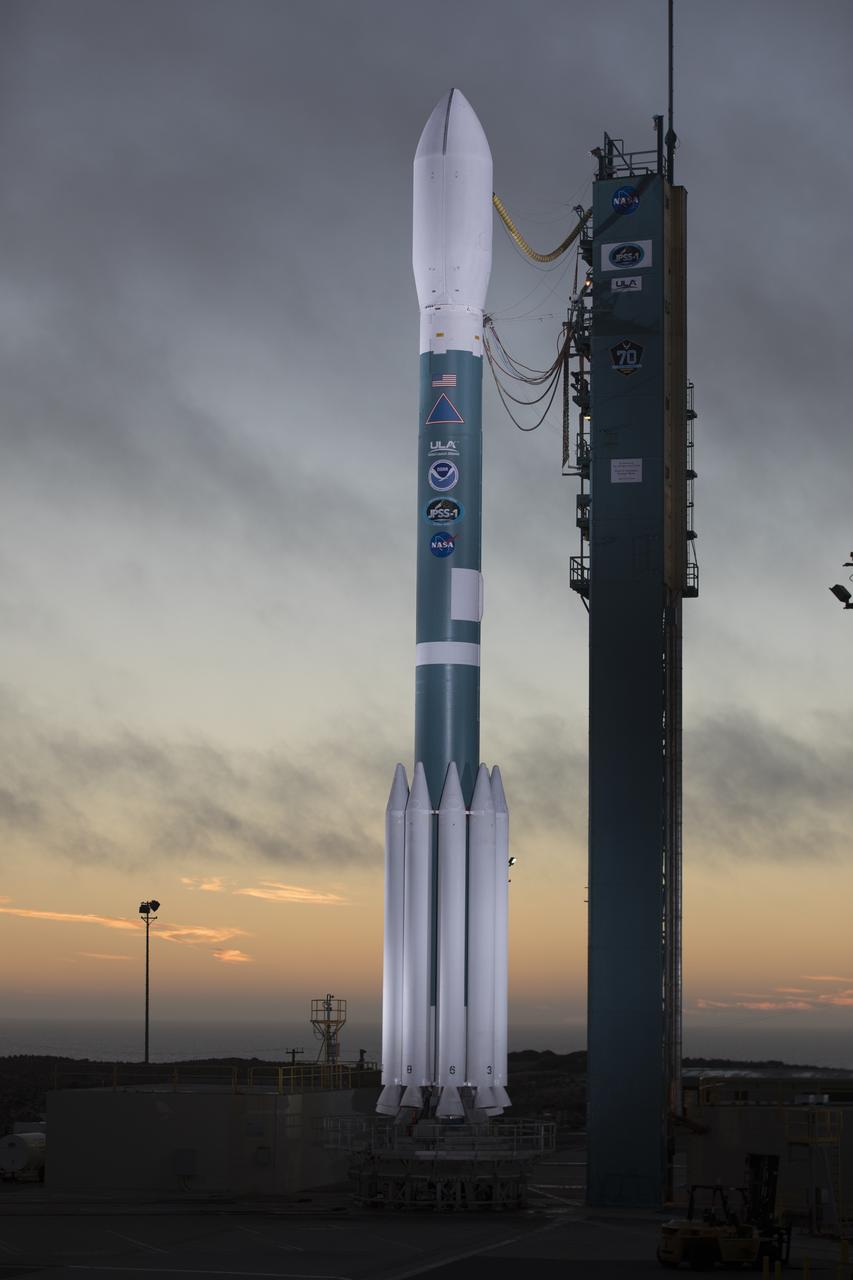
At Vandenberg Air Force Base in California, the gantry rolls back at Space Launch Complex 2 in preparation for the liftoff of the Joint Polar Satellite System-1, or JPSS-1, spacecraft. The United Launch Alliance Delta II rocket now is poised to boost the satellite to a polar orbit. Built by Ball Aerospace and Technologies Corp. of Boulder, Colorado, JPSS is the first in a series four next-generation environmental satellites in a collaborative program between NOAA and NASA. The satellite is scheduled to liftoff at 1:47 a.m. PST (4:47 a.m. EST), on Nov. 14, 2017.
At Vandenberg Air Force Base in California, the gantry rolls back at Space Launch Complex 2 in preparation for the liftoff of the Joint Polar Satellite System-1, or JPSS-1, spacecraft. The United Launch Alliance Delta II rocket now is poised to boost the satellite to a polar orbit. Built by Ball Aerospace and Technologies Corp. of Boulder, Colorado, JPSS is the first in a series four next-generation environmental satellites in a collaborative program between NOAA and NASA. The satellite is scheduled to liftoff at 1:47 a.m. PST (4:47 a.m. EST), on Nov. 14, 2017.

At Vandenberg Air Force Base in California, the gantry rolls back at Space Launch Complex 2 in preparation for the liftoff of the Joint Polar Satellite System-1, or JPSS-1, spacecraft. The United Launch Alliance Delta II rocket now is poised to boost the satellite to a polar orbit. Built by Ball Aerospace and Technologies Corp. of Boulder, Colorado, JPSS is the first in a series four next-generation environmental satellites in a collaborative program between NOAA and NASA. The satellite is scheduled to liftoff at 1:47 a.m. PST (4:47 a.m. EST), on Nov. 14, 2017.
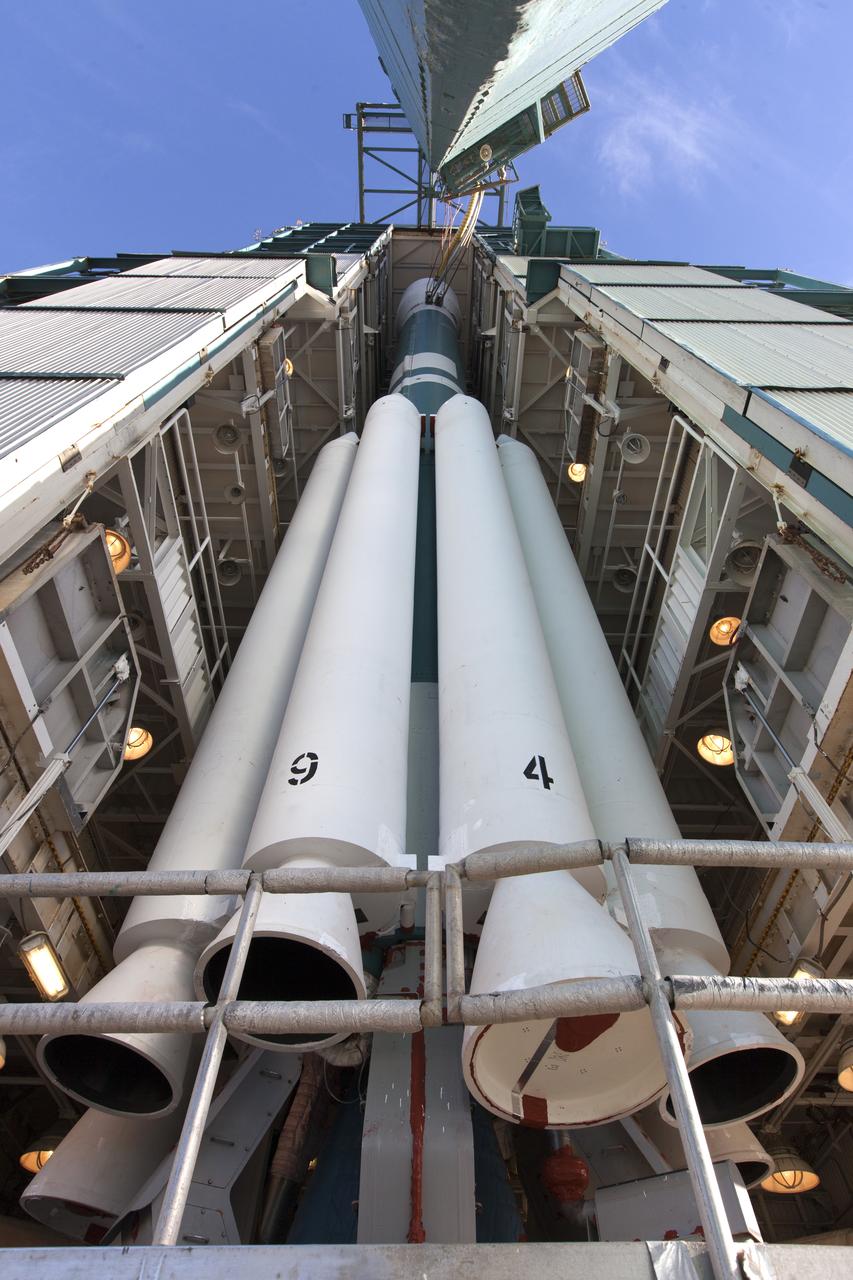
At Vandenberg Air Force Base in California, the gantry rolls back at Space Launch Complex 2 in preparation for the liftoff of the Joint Polar Satellite System-1, or JPSS-1, spacecraft. The United Launch Alliance Delta II rocket now is poised to boost the satellite to a polar orbit. Built by Ball Aerospace and Technologies Corp. of Boulder, Colorado, JPSS is the first in a series four next-generation environmental satellites in a collaborative program between NOAA and NASA. The satellite is scheduled to liftoff at 1:47 a.m. PST (4:47 a.m. EST), on Nov. 14, 2017.
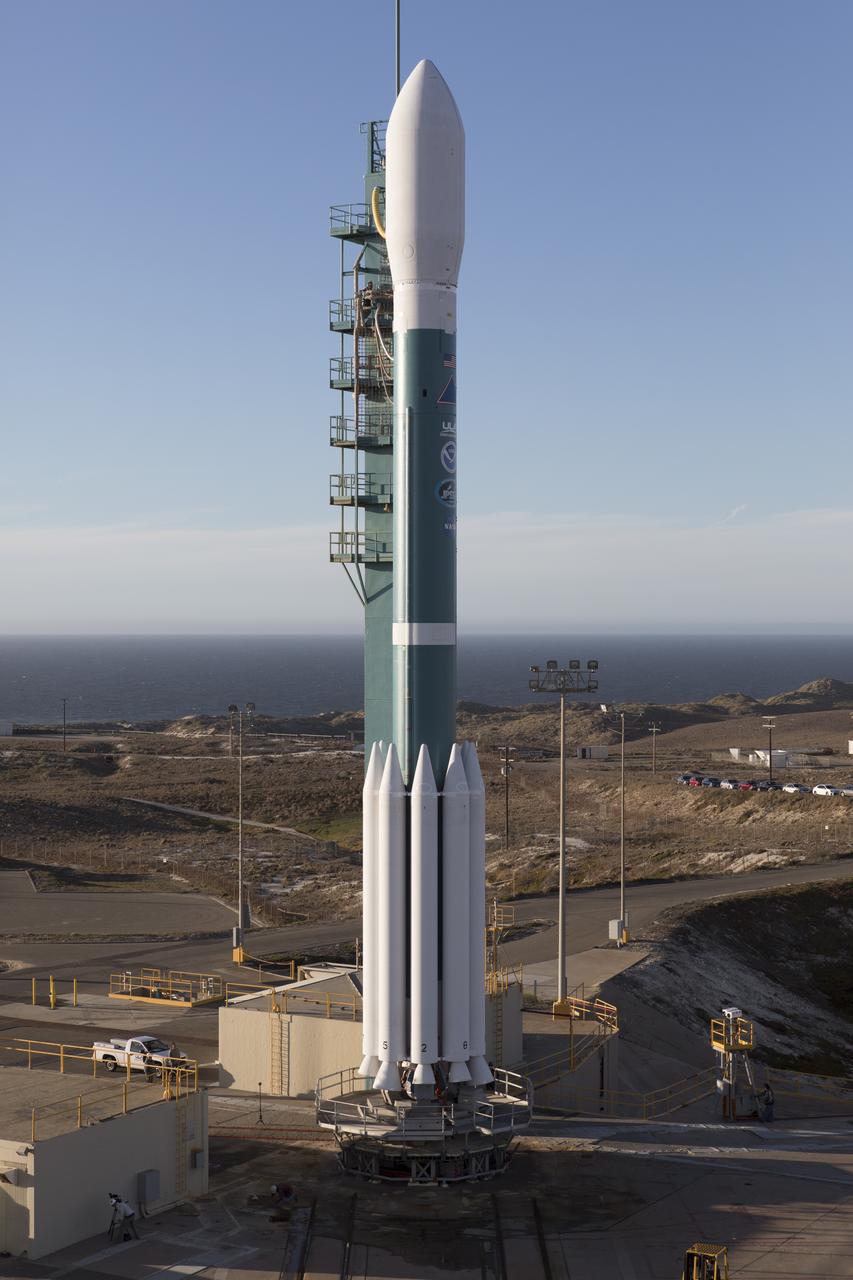
At Vandenberg Air Force Base in California, the gantry rolls back at Space Launch Complex 2 in preparation for the liftoff of the Joint Polar Satellite System-1, or JPSS-1, spacecraft. The United Launch Alliance Delta II rocket now is poised to boost the satellite to a polar orbit. Built by Ball Aerospace and Technologies Corp. of Boulder, Colorado, JPSS is the first in a series four next-generation environmental satellites in a collaborative program between NOAA and NASA. The satellite is scheduled to liftoff at 1:47 a.m. PST (4:47 a.m. EST), on Nov. 14, 2017.
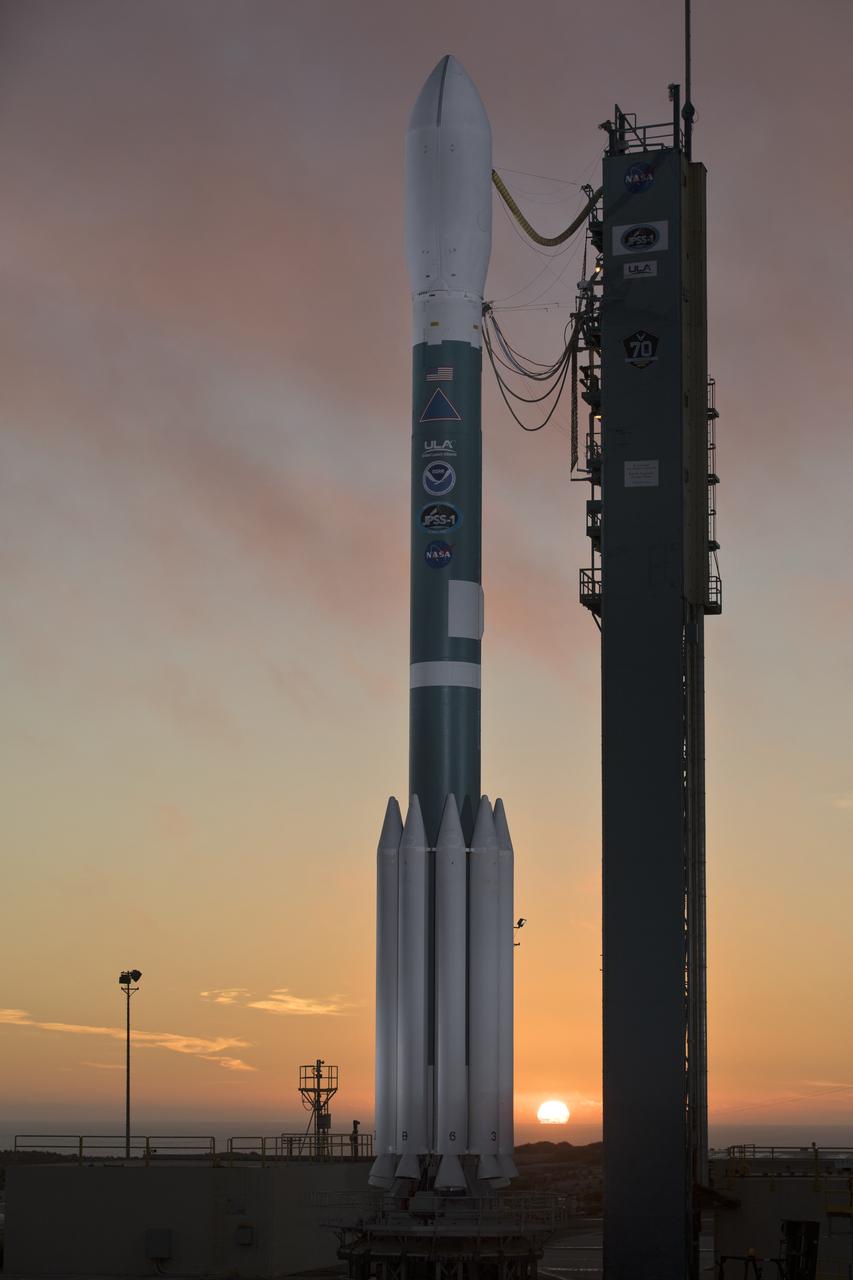
At Vandenberg Air Force Base in California, the gantry rolls back at Space Launch Complex 2 in preparation for the liftoff of the Joint Polar Satellite System-1, or JPSS-1, spacecraft. The United Launch Alliance Delta II rocket now is poised to boost the satellite to a polar orbit. Built by Ball Aerospace and Technologies Corp. of Boulder, Colorado, JPSS is the first in a series four next-generation environmental satellites in a collaborative program between NOAA and NASA. The satellite is scheduled to liftoff at 1:47 a.m. PST (4:47 a.m. EST), on Nov. 14, 2017.
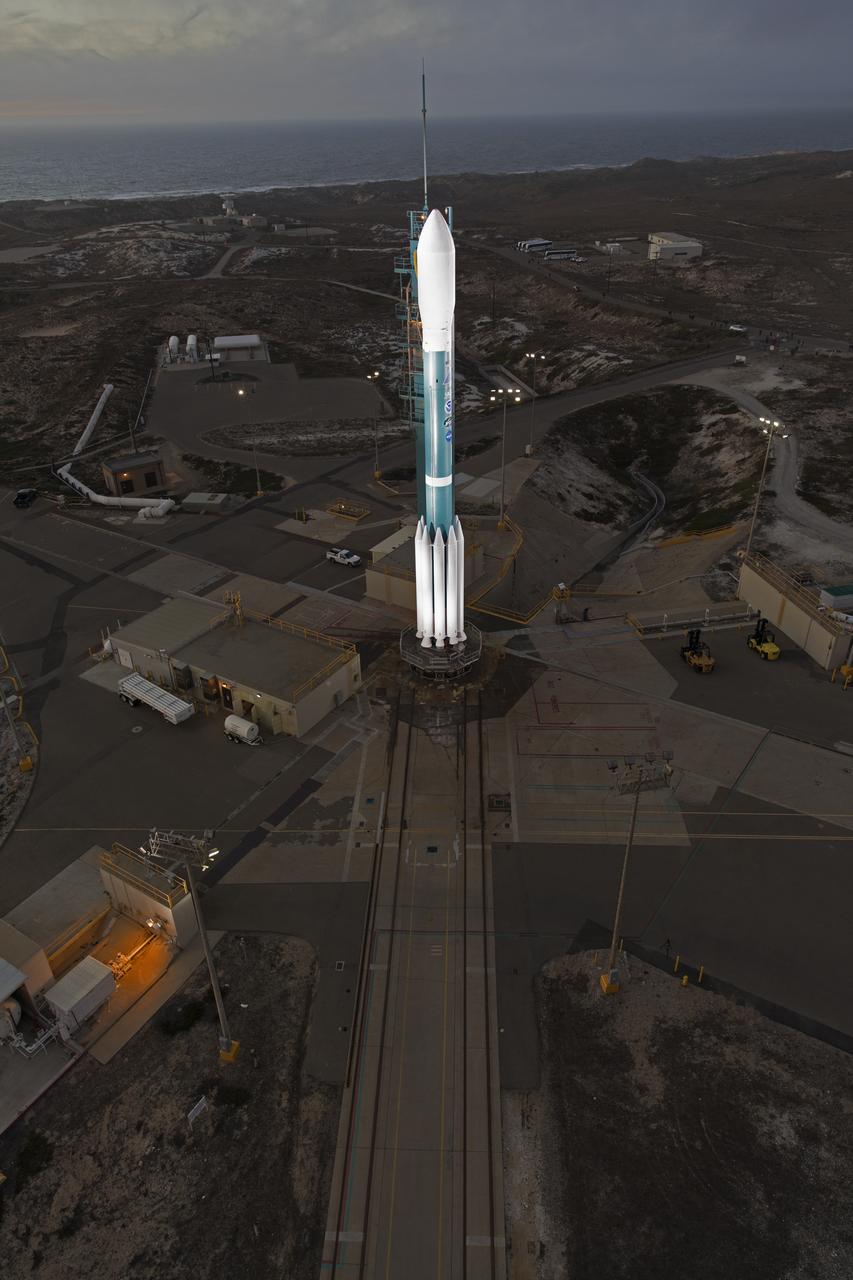
At Vandenberg Air Force Base in California, the gantry rolls back at Space Launch Complex 2 in preparation for the liftoff of the Joint Polar Satellite System-1, or JPSS-1, spacecraft. The United Launch Alliance Delta II rocket now is poised to boost the satellite to a polar orbit. Built by Ball Aerospace and Technologies Corp. of Boulder, Colorado, JPSS is the first in a series four next-generation environmental satellites in a collaborative program between NOAA and NASA. The satellite is scheduled to liftoff at 1:47 a.m. PST (4:47 a.m. EST), on Nov. 14, 2017.
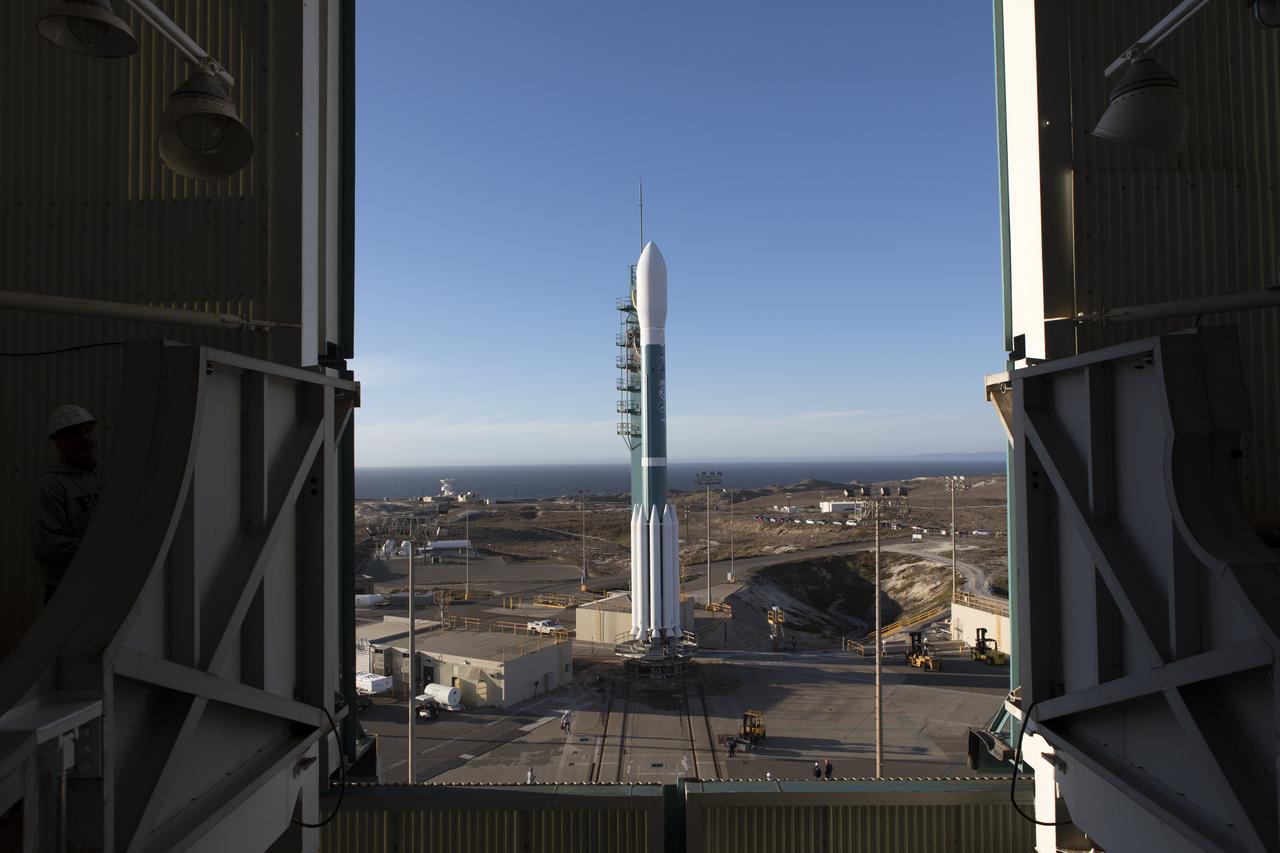
At Vandenberg Air Force Base in California, the gantry rolls back at Space Launch Complex 2 in preparation for the liftoff of the Joint Polar Satellite System-1, or JPSS-1, spacecraft. The United Launch Alliance Delta II rocket now is poised to boost the satellite to a polar orbit. Built by Ball Aerospace and Technologies Corp. of Boulder, Colorado, JPSS is the first in a series four next-generation environmental satellites in a collaborative program between NOAA and NASA. The satellite is scheduled to liftoff at 1:47 a.m. PST (4:47 a.m. EST), on Nov. 14, 2017.
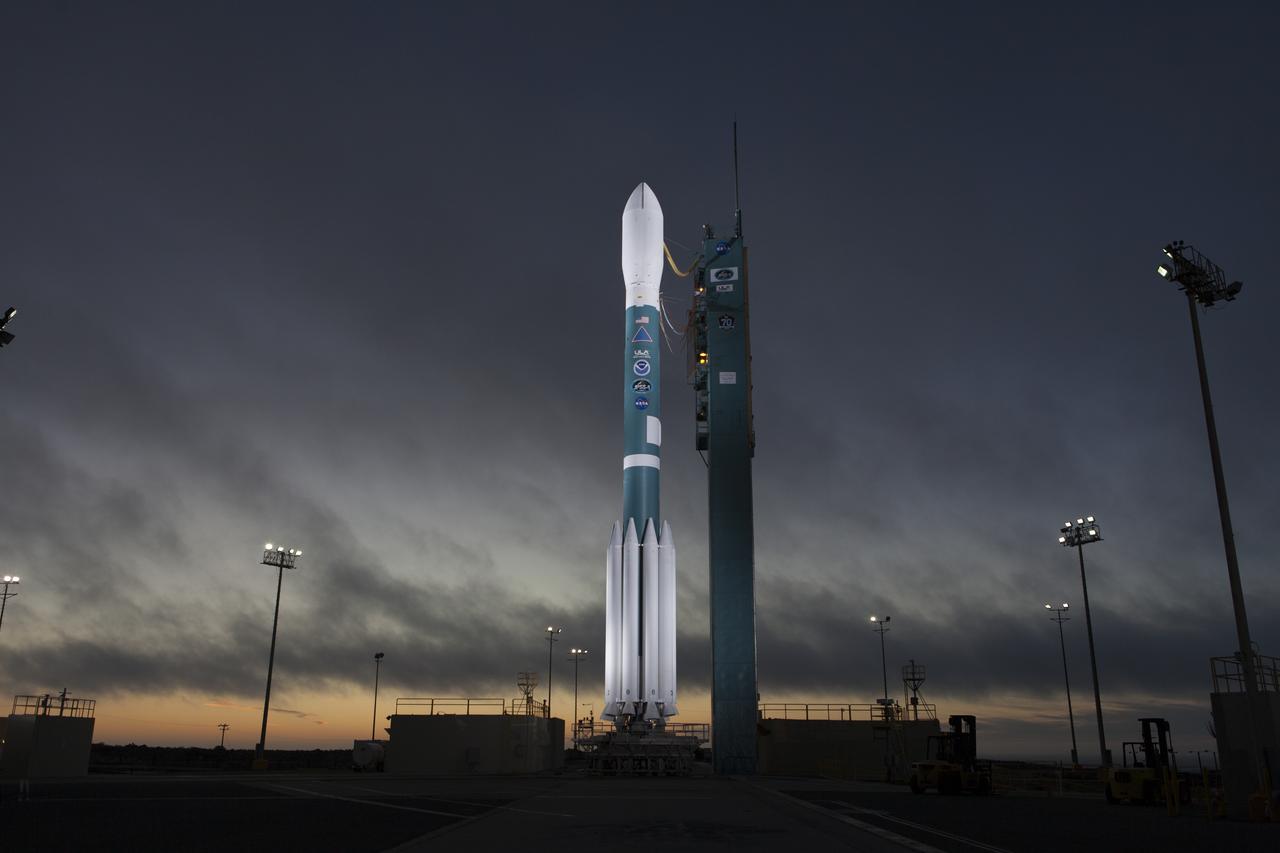
At Vandenberg Air Force Base in California, the gantry rolls back at Space Launch Complex 2 in preparation for the liftoff of the Joint Polar Satellite System-1, or JPSS-1, spacecraft. The United Launch Alliance Delta II rocket now is poised to boost the satellite to a polar orbit. Built by Ball Aerospace and Technologies Corp. of Boulder, Colorado, JPSS is the first in a series four next-generation environmental satellites in a collaborative program between NOAA and NASA. The satellite is scheduled to liftoff at 1:47 a.m. PST (4:47 a.m. EST), on Nov. 14, 2017.
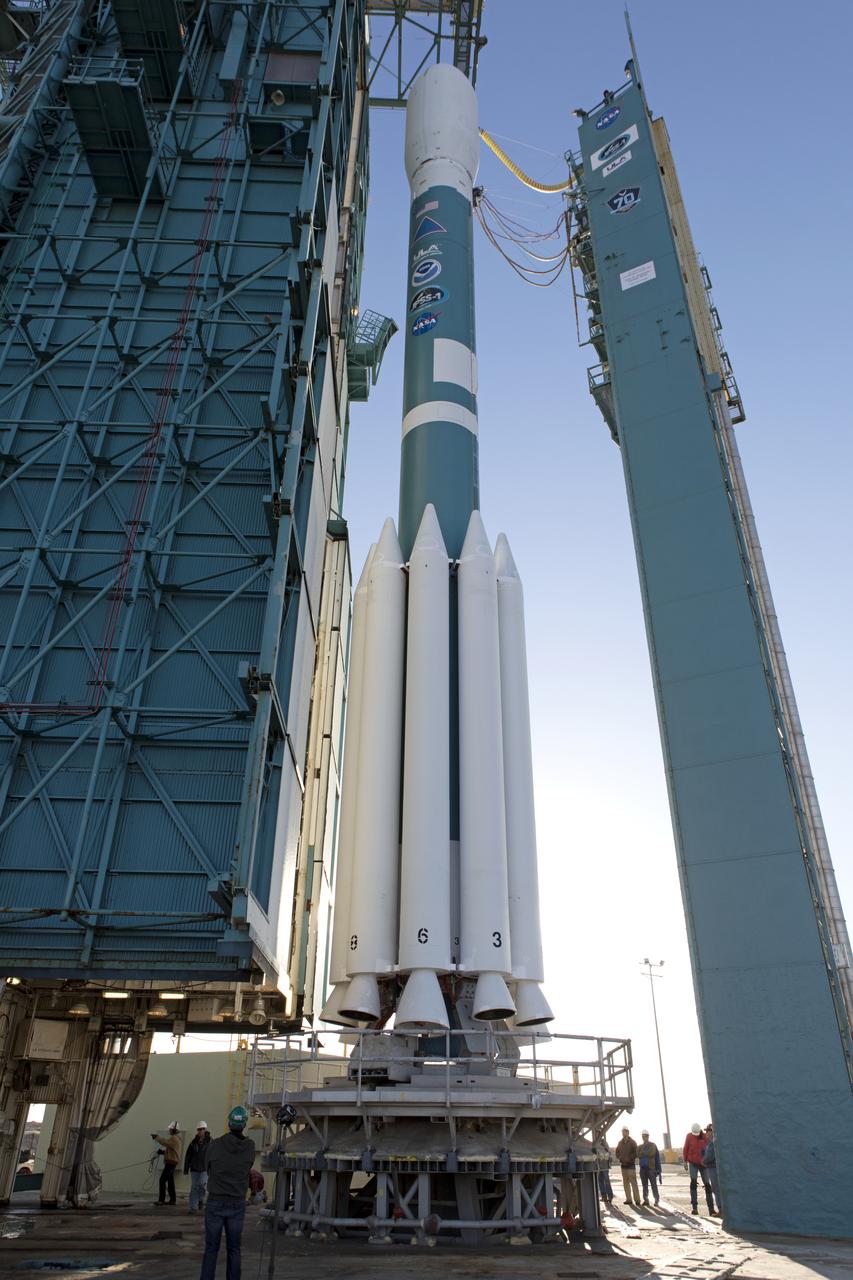
At Vandenberg Air Force Base in California, the gantry rolls back at Space Launch Complex 2 in preparation for the liftoff of the Joint Polar Satellite System-1, or JPSS-1, spacecraft. The United Launch Alliance Delta II rocket now is poised to boost the satellite to a polar orbit. Built by Ball Aerospace and Technologies Corp. of Boulder, Colorado, JPSS is the first in a series four next-generation environmental satellites in a collaborative program between NOAA and NASA. The satellite is scheduled to liftoff at 1:47 a.m. PST (4:47 a.m. EST), on Nov. 14, 2017.
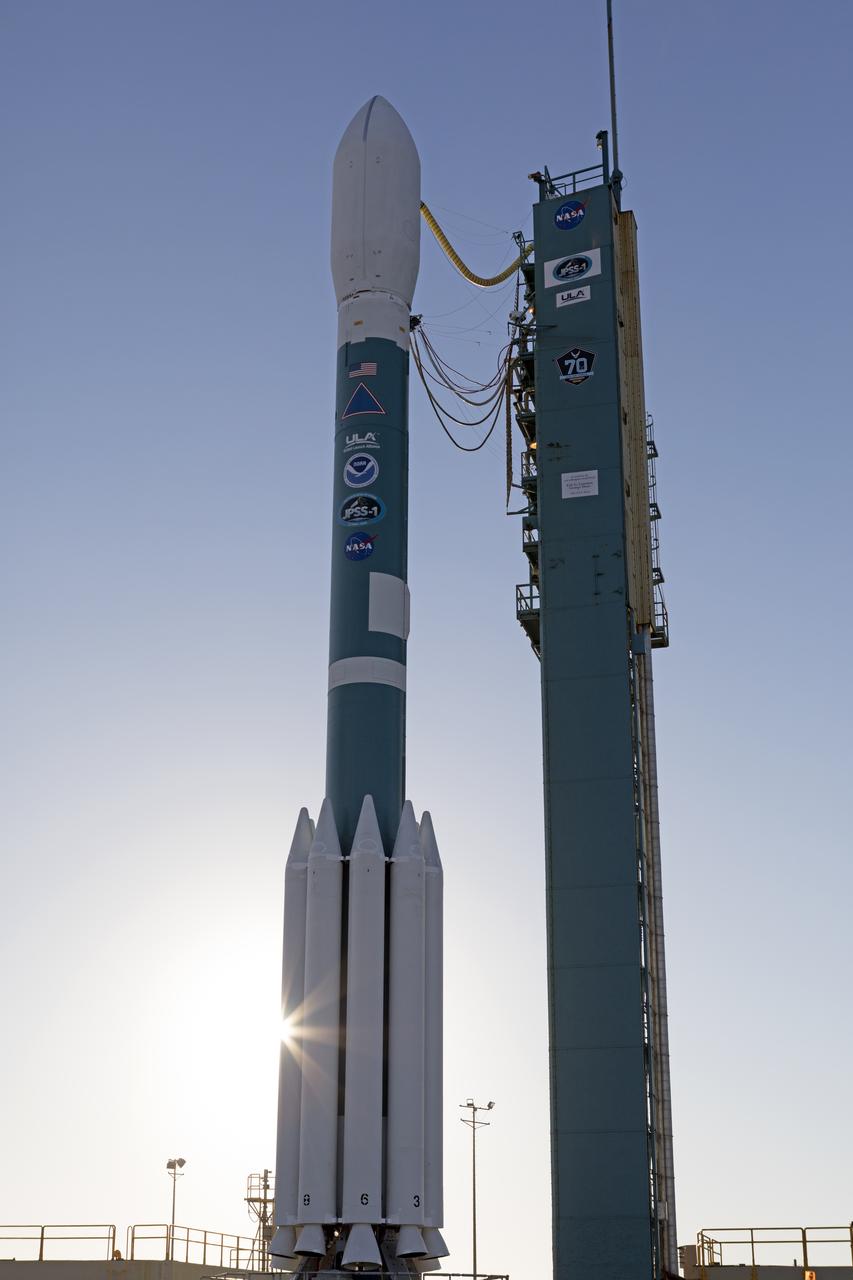
At Vandenberg Air Force Base in California, the gantry rolls back at Space Launch Complex 2 in preparation for the liftoff of the Joint Polar Satellite System-1, or JPSS-1, spacecraft. The United Launch Alliance Delta II rocket now is poised to boost the satellite to a polar orbit. Built by Ball Aerospace and Technologies Corp. of Boulder, Colorado, JPSS is the first in a series four next-generation environmental satellites in a collaborative program between NOAA and NASA. The satellite is scheduled to liftoff at 1:47 a.m. PST (4:47 a.m. EST), on Nov. 14, 2017.
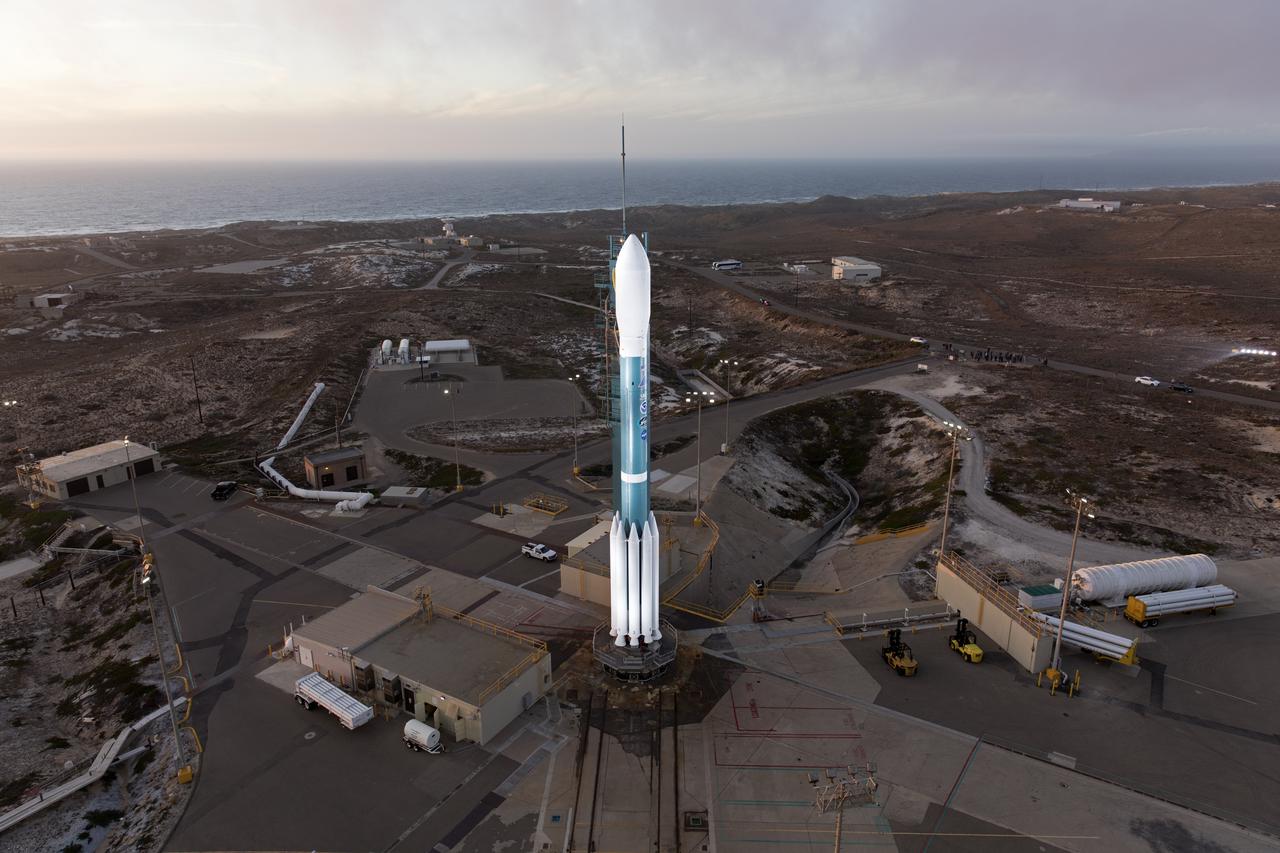
At Vandenberg Air Force Base in California, the gantry rolls back at Space Launch Complex 2 in preparation for the liftoff of the Joint Polar Satellite System-1, or JPSS-1, spacecraft. The United Launch Alliance Delta II rocket now is poised to boost the satellite to a polar orbit. Built by Ball Aerospace and Technologies Corp. of Boulder, Colorado, JPSS is the first in a series four next-generation environmental satellites in a collaborative program between NOAA and NASA. The satellite is scheduled to liftoff at 1:47 a.m. PST (4:47 a.m. EST), on Nov. 14, 2017.
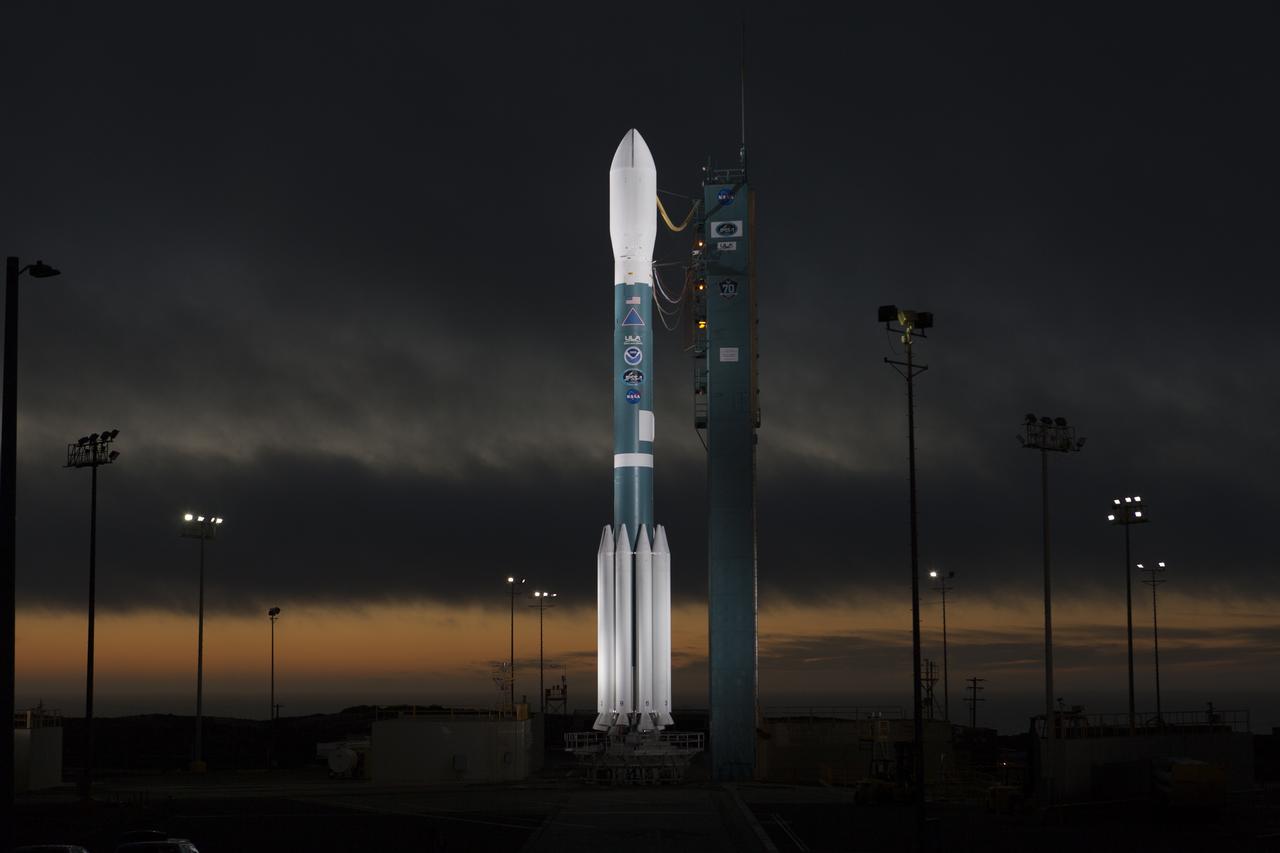
At Vandenberg Air Force Base in California, the gantry rolls back at Space Launch Complex 2 in preparation for the liftoff of the Joint Polar Satellite System-1, or JPSS-1, spacecraft. The United Launch Alliance Delta II rocket now is poised to boost the satellite to a polar orbit. Built by Ball Aerospace and Technologies Corp. of Boulder, Colorado, JPSS is the first in a series four next-generation environmental satellites in a collaborative program between NOAA and NASA. The satellite is scheduled to liftoff at 1:47 a.m. PST (4:47 a.m. EST), on Nov. 14, 2017.
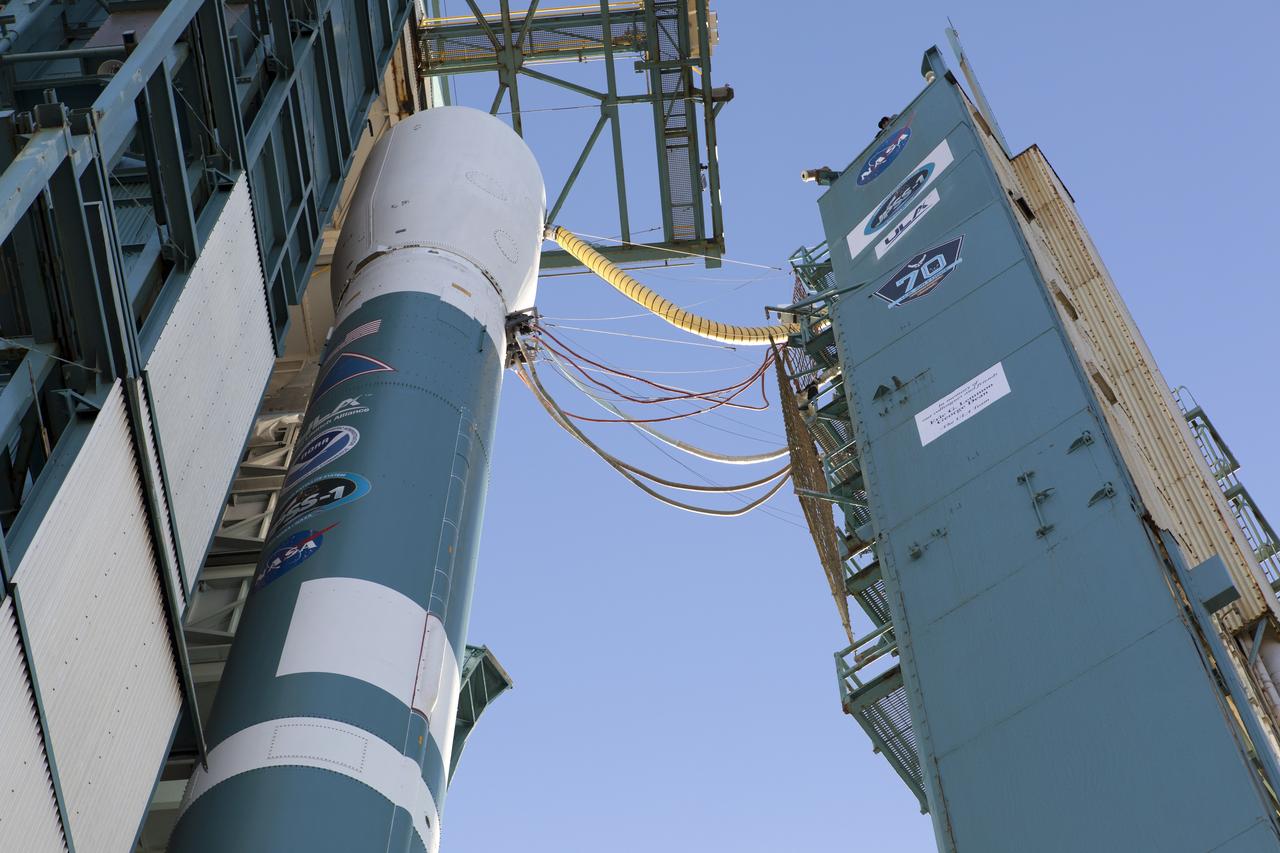
At Vandenberg Air Force Base in California, the gantry rolls back at Space Launch Complex 2 in preparation for the liftoff of the Joint Polar Satellite System-1, or JPSS-1, spacecraft. The United Launch Alliance Delta II rocket now is poised to boost the satellite to a polar orbit. Built by Ball Aerospace and Technologies Corp. of Boulder, Colorado, JPSS is the first in a series four next-generation environmental satellites in a collaborative program between NOAA and NASA. The satellite is scheduled to liftoff at 1:47 a.m. PST (4:47 a.m. EST), on Nov. 14, 2017.
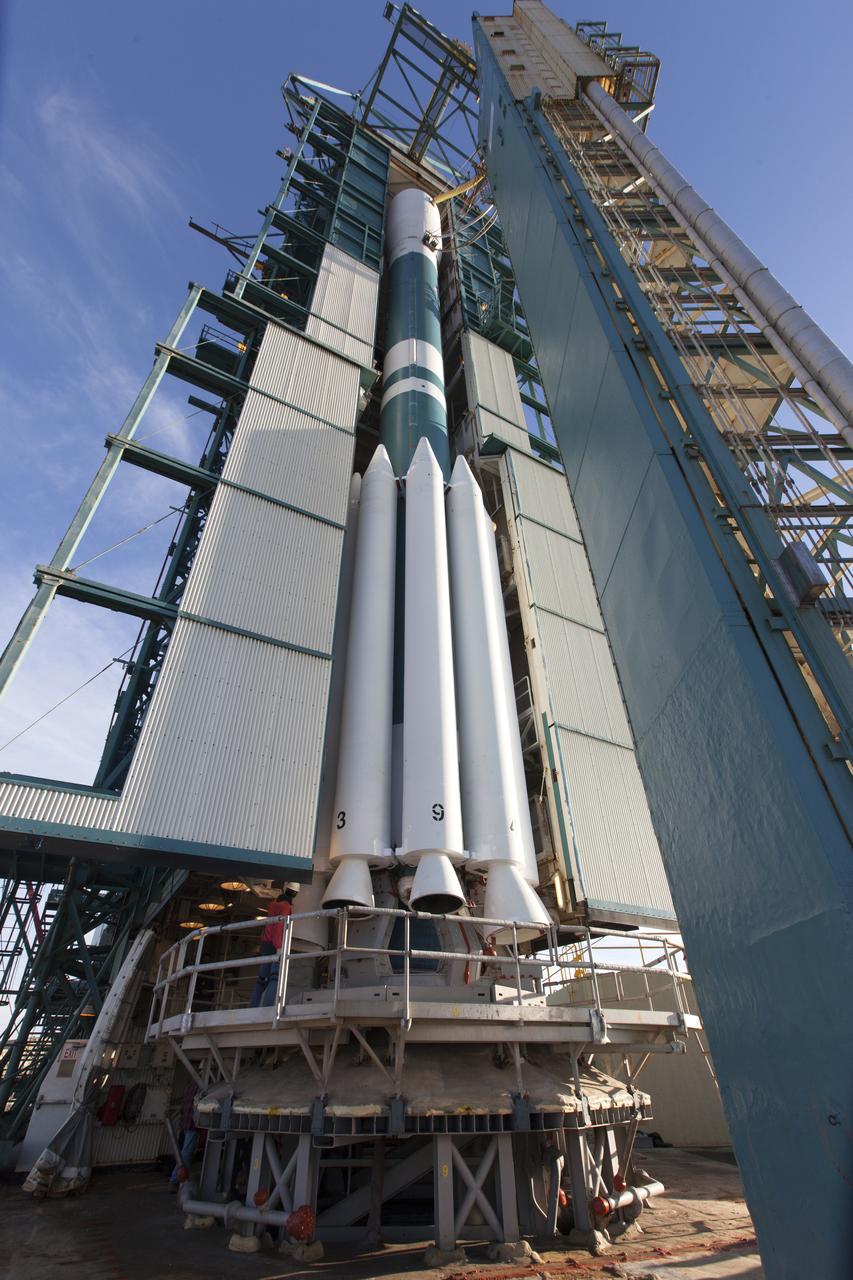
At Vandenberg Air Force Base in California, the gantry rolls back at Space Launch Complex 2 in preparation for the liftoff of the Joint Polar Satellite System-1, or JPSS-1, spacecraft. The United Launch Alliance Delta II rocket now is poised to boost the satellite to a polar orbit. Built by Ball Aerospace and Technologies Corp. of Boulder, Colorado, JPSS is the first in a series four next-generation environmental satellites in a collaborative program between NOAA and NASA. The satellite is scheduled to liftoff at 1:47 a.m. PST (4:47 a.m. EST), on Nov. 14, 2017.
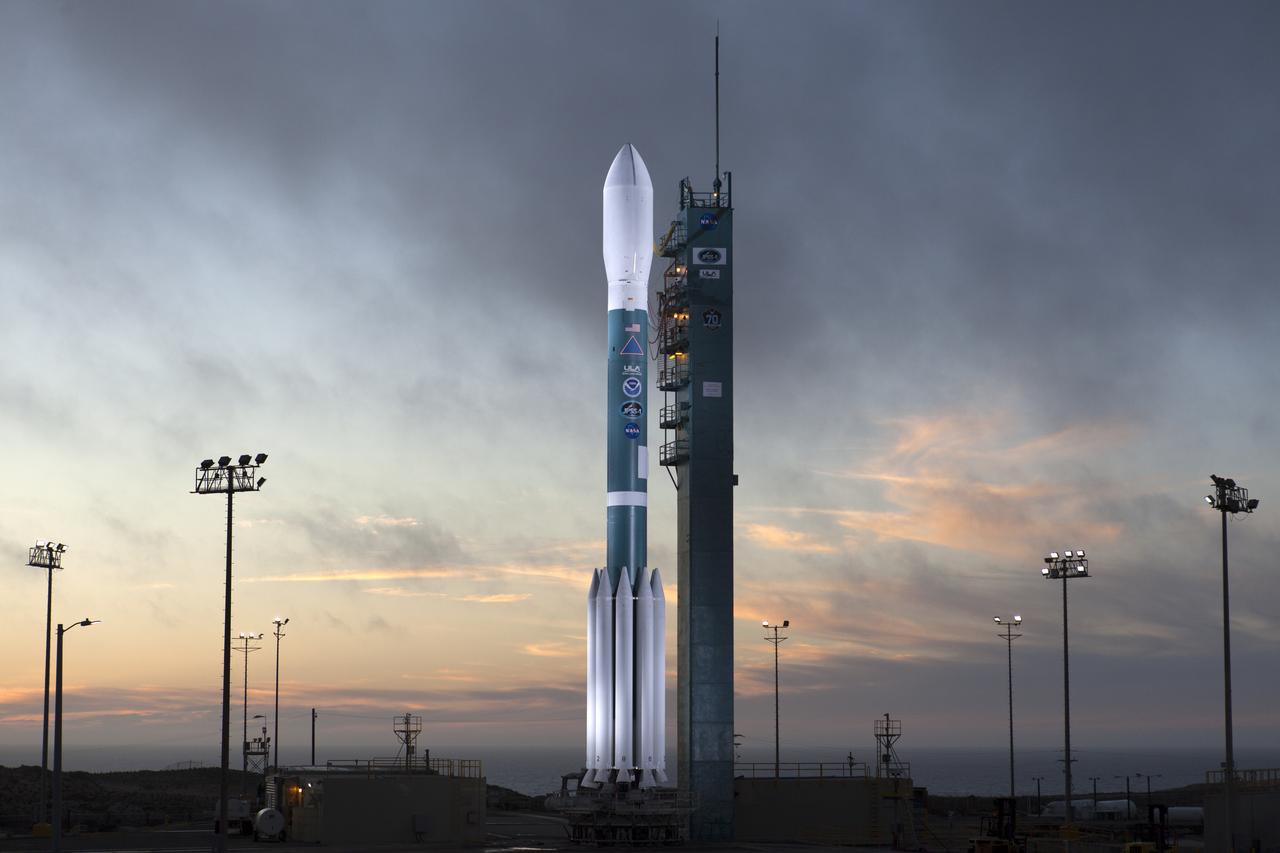
At Vandenberg Air Force Base in California, the gantry rolls back at Space Launch Complex 2 in preparation for the liftoff of the Joint Polar Satellite System-1, or JPSS-1, spacecraft. The United Launch Alliance Delta II rocket now is poised to boost the satellite to a polar orbit. Built by Ball Aerospace and Technologies Corp. of Boulder, Colorado, JPSS is the first in a series four next-generation environmental satellites in a collaborative program between NOAA and NASA. The satellite is scheduled to liftoff at 1:47 a.m. PST (4:47 a.m. EST), on Nov. 14, 2017.
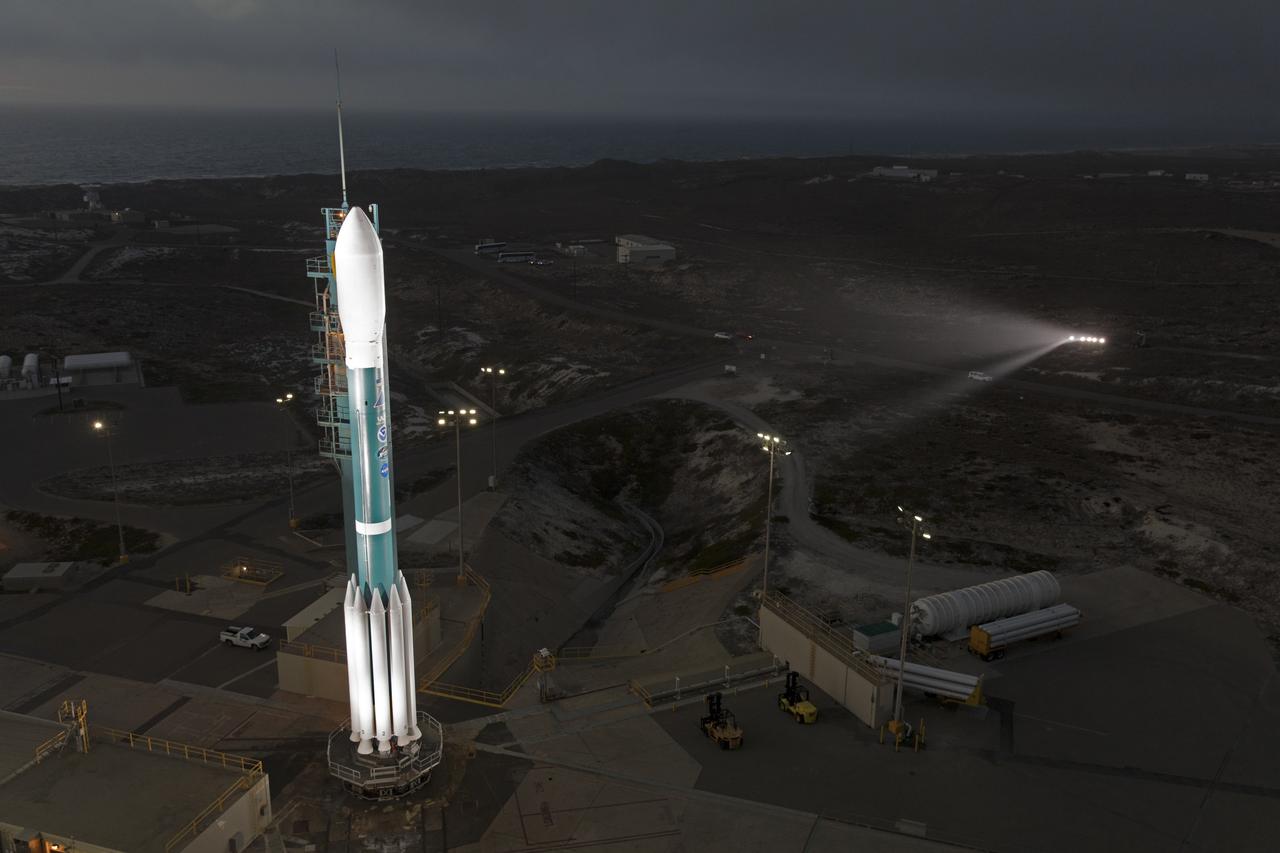
At Vandenberg Air Force Base in California, the gantry rolls back at Space Launch Complex 2 in preparation for the liftoff of the Joint Polar Satellite System-1, or JPSS-1, spacecraft. The United Launch Alliance Delta II rocket now is poised to boost the satellite to a polar orbit. Built by Ball Aerospace and Technologies Corp. of Boulder, Colorado, JPSS is the first in a series four next-generation environmental satellites in a collaborative program between NOAA and NASA. The satellite is scheduled to liftoff at 1:47 a.m. PST (4:47 a.m. EST), on Nov. 14, 2017.
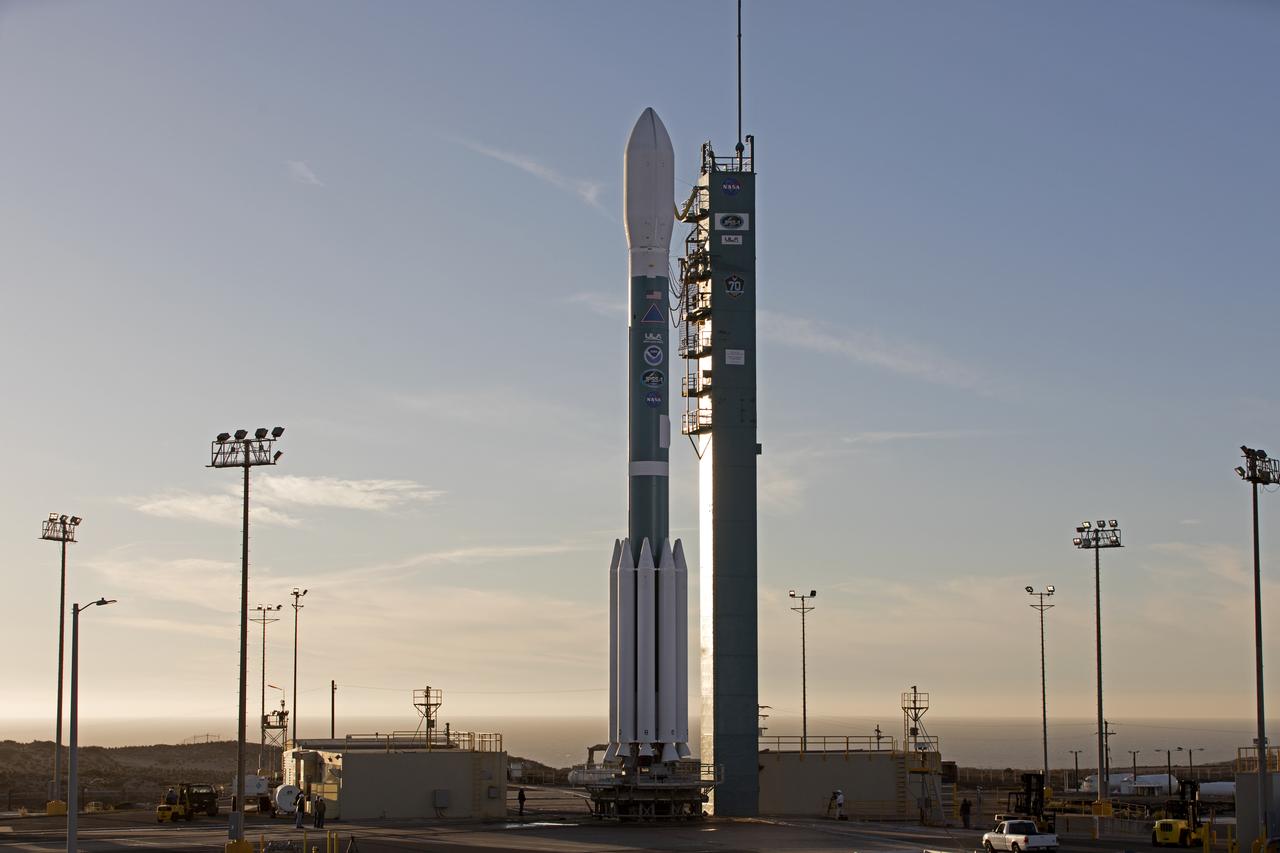
At Vandenberg Air Force Base in California, the gantry rolls back at Space Launch Complex 2 in preparation for the liftoff of the Joint Polar Satellite System-1, or JPSS-1, spacecraft. The United Launch Alliance Delta II rocket now is poised to boost the satellite to a polar orbit. Built by Ball Aerospace and Technologies Corp. of Boulder, Colorado, JPSS is the first in a series four next-generation environmental satellites in a collaborative program between NOAA and NASA. The satellite is scheduled to liftoff at 1:47 a.m. PST (4:47 a.m. EST), on Nov. 14, 2017.
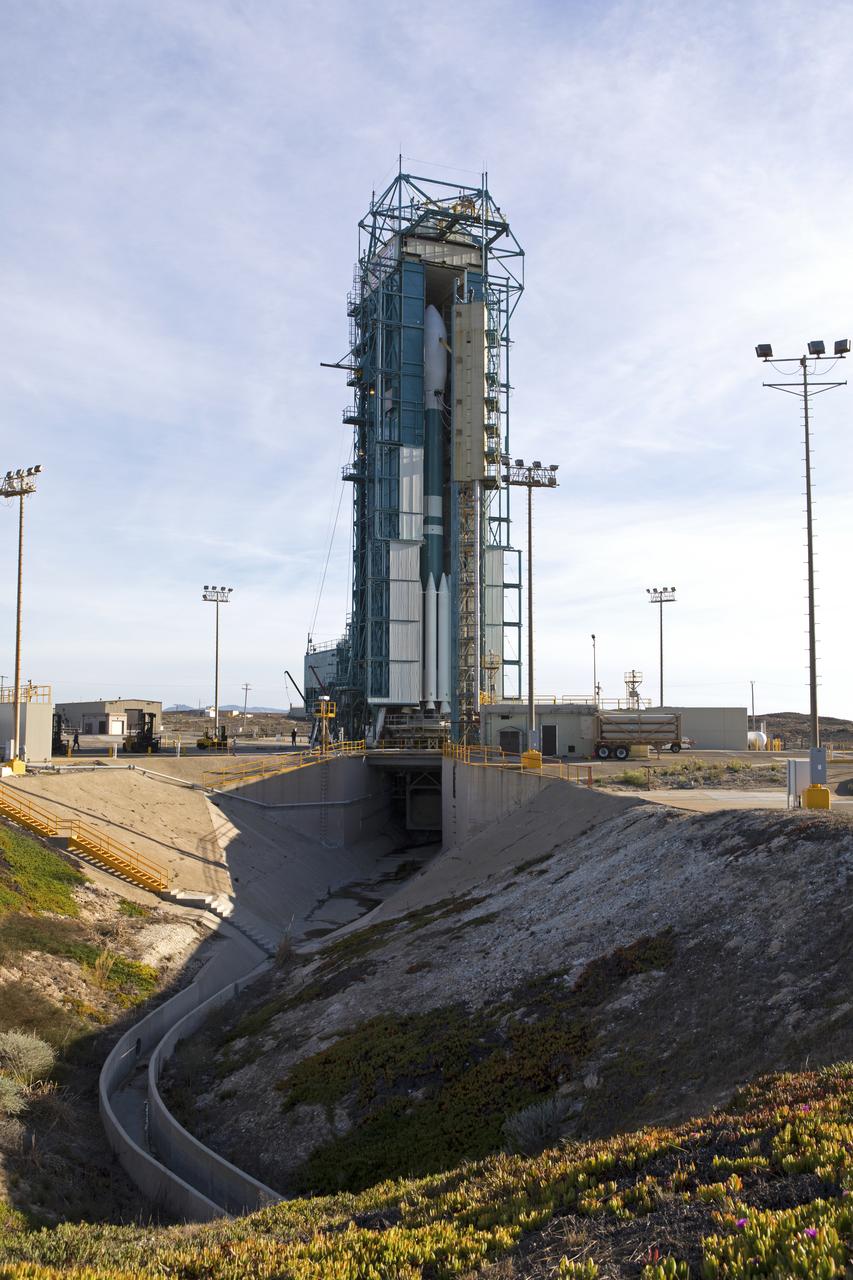
At Vandenberg Air Force Base in California, the gantry rolls back at Space Launch Complex 2 in preparation for the liftoff of the Joint Polar Satellite System-1, or JPSS-1, spacecraft. The United Launch Alliance Delta II rocket now is poised to boost the satellite to a polar orbit. Built by Ball Aerospace and Technologies Corp. of Boulder, Colorado, JPSS is the first in a series four next-generation environmental satellites in a collaborative program between NOAA and NASA. The satellite is scheduled to liftoff at 1:47 a.m. PST (4:47 a.m. EST), on Nov. 14, 2017.
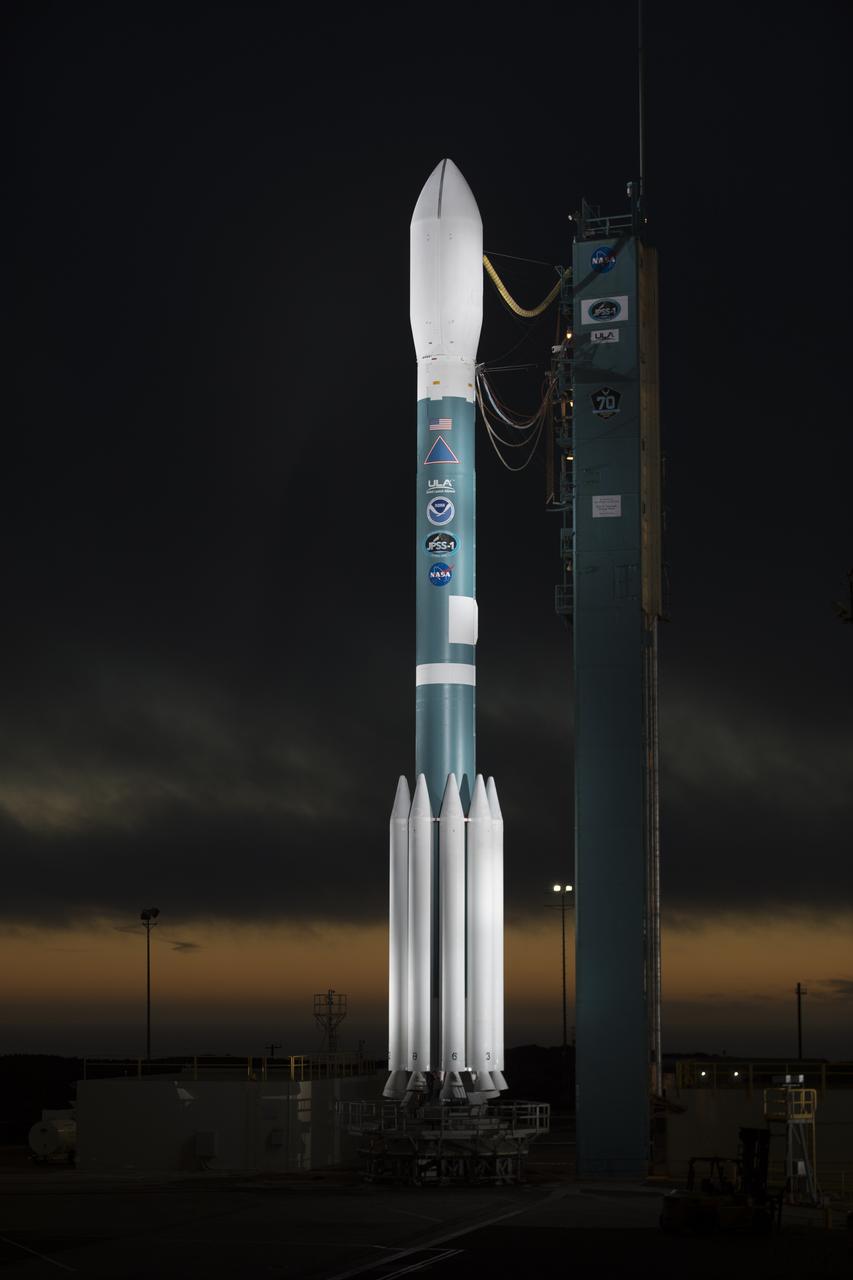
At Vandenberg Air Force Base in California, the gantry rolls back at Space Launch Complex 2 in preparation for the liftoff of the Joint Polar Satellite System-1, or JPSS-1, spacecraft. The United Launch Alliance Delta II rocket now is poised to boost the satellite to a polar orbit. Built by Ball Aerospace and Technologies Corp. of Boulder, Colorado, JPSS is the first in a series four next-generation environmental satellites in a collaborative program between NOAA and NASA. The satellite is scheduled to liftoff at 1:47 a.m. PST (4:47 a.m. EST), on Nov. 14, 2017.

At Vandenberg Air Force Base in California, the gantry rolls back at Space Launch Complex 2 in preparation for the liftoff of the Joint Polar Satellite System-1, or JPSS-1, spacecraft. The United Launch Alliance Delta II rocket now is poised to boost the satellite to a polar orbit. Built by Ball Aerospace and Technologies Corp. of Boulder, Colorado, JPSS is the first in a series four next-generation environmental satellites in a collaborative program between NOAA and NASA. The satellite is scheduled to liftoff at 1:47 a.m. PST (4:47 a.m. EST), on Nov. 14, 2017.