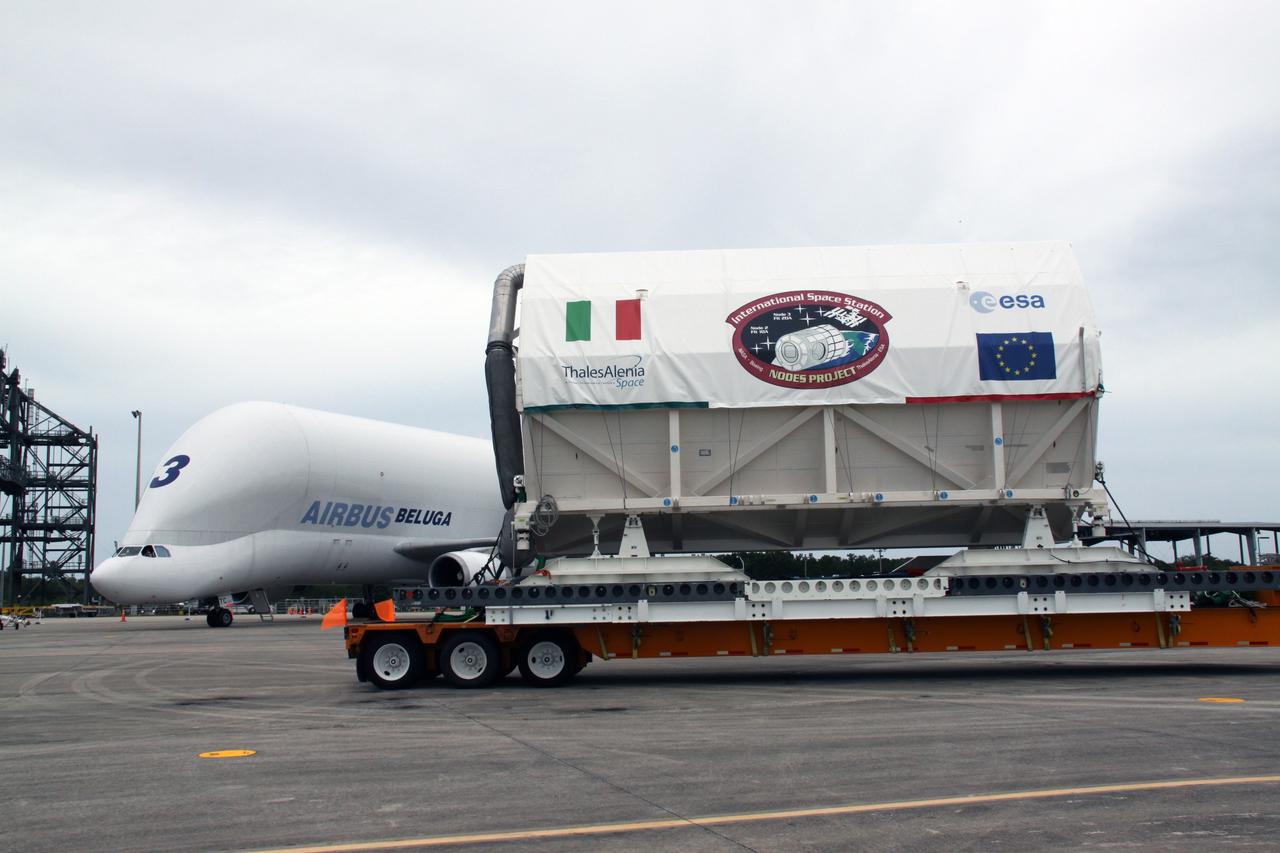
CAPE CANAVERAL, Fla. – At NASA's Kennedy Space Center in Florida, the flatbed trailer leaves the Shuttle Landing Facility with the Node 3 module. The module will be delivered to the Space Station Processing Facility. Named Tranquility, the module will be delivered to the International Space Station on the STS-130 mission. Tranquility will eventually house the life support equipment necessary for the space station's permanent crew of six. It will also accommodate the European Space Agency's Cupola observation module, a seven-window, dome-shaped structure. Tranquility is targeted for launch aboard space shuttle Endeavour in February 2010. Photo credit: NASA/Jack Pfaller
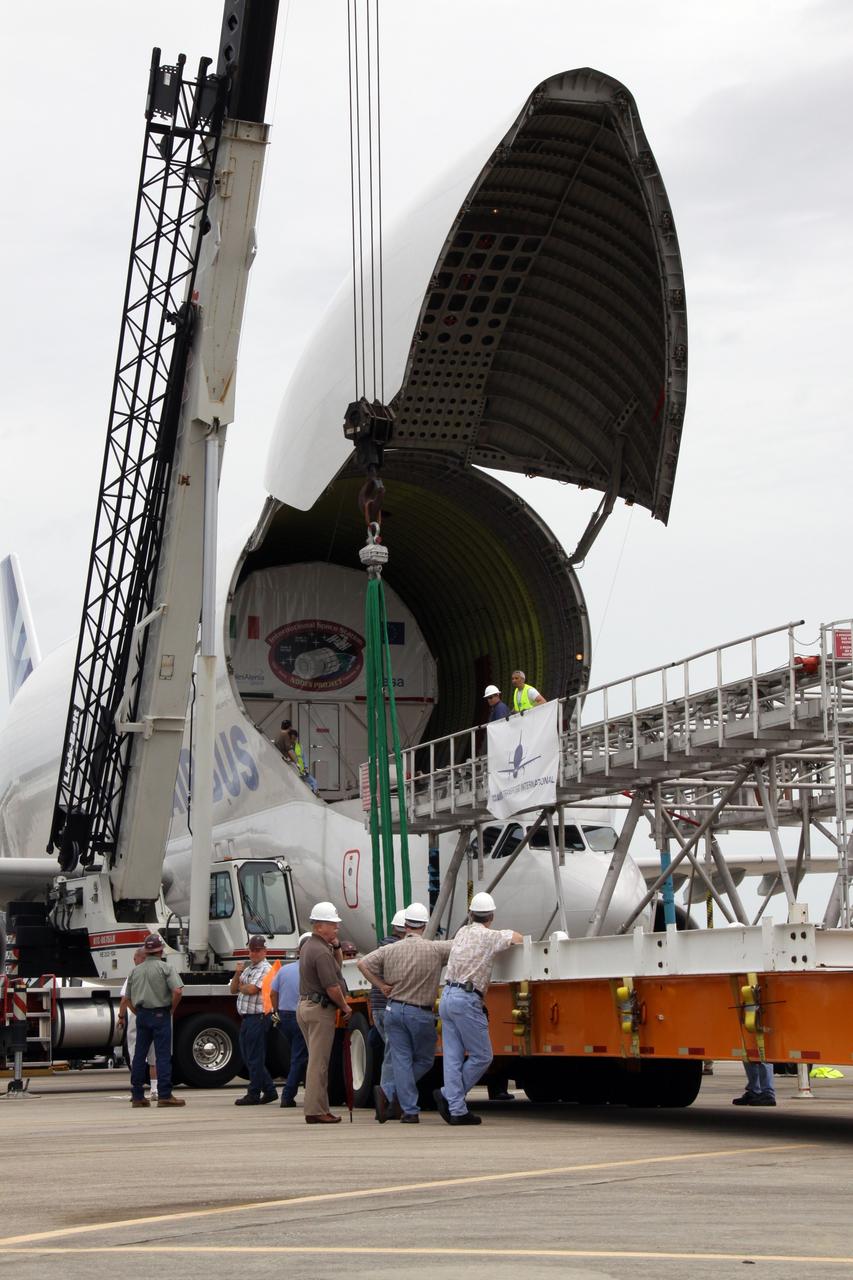
CAPE CANAVERAL, Fla. – On the Shuttle Landing Facility at NASA's Kennedy Space Center in Florida, the Node 3 module is being unloaded from the Beluga Airbus. Named Tranquility, the module will be delivered to the International Space Station on the STS-130 mission. Tranquility will eventually house the life support equipment necessary for the space station's permanent crew of six. It will also accommodate the European Space Agency's Cupola observation module, a seven-window, dome-shaped structure. Tranquility is targeted for launch aboard space shuttle Endeavour in February 2010. Photo credit: NASA/Jack Pfaller
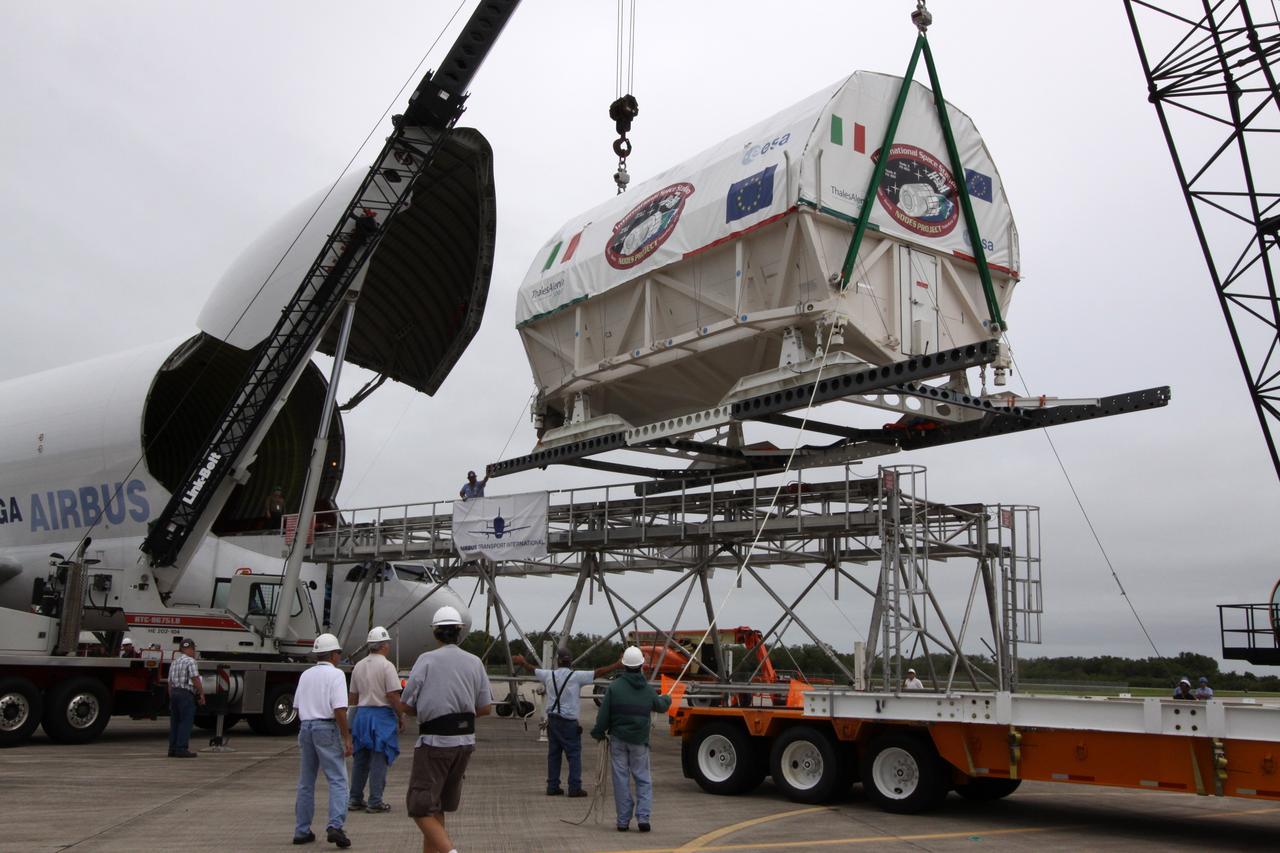
CAPE CANAVERAL, Fla. – On the Shuttle Landing Facility at NASA's Kennedy Space Center in Florida, a crane lifts the Node 3 module toward the flatbed that will transport it to the Space Station Processing Facility. Named Tranquility, the module will be delivered to the International Space Station on the STS-130 mission. Tranquility will eventually house the life support equipment necessary for the space station's permanent crew of six. It will also accommodate the European Space Agency's Cupola observation module, a seven-window, dome-shaped structure. Tranquility is targeted for launch aboard space shuttle Endeavour in February 2010. Photo credit: NASA/Jack Pfaller

CAPE CANAVERAL, Fla. – On the Shuttle Landing Facility at NASA's Kennedy Space Center in Florida, a crane lowers the Node 3 module onto the flatbed that will transport it to the Space Station Processing Facility. Named Tranquility, the module will be delivered to the International Space Station on the STS-130 mission. Tranquility will eventually house the life support equipment necessary for the space station's permanent crew of six. It will also accommodate the European Space Agency's Cupola observation module, a seven-window, dome-shaped structure. Tranquility is targeted for launch aboard space shuttle Endeavour in February 2010. Photo credit: NASA/Jack Pfaller
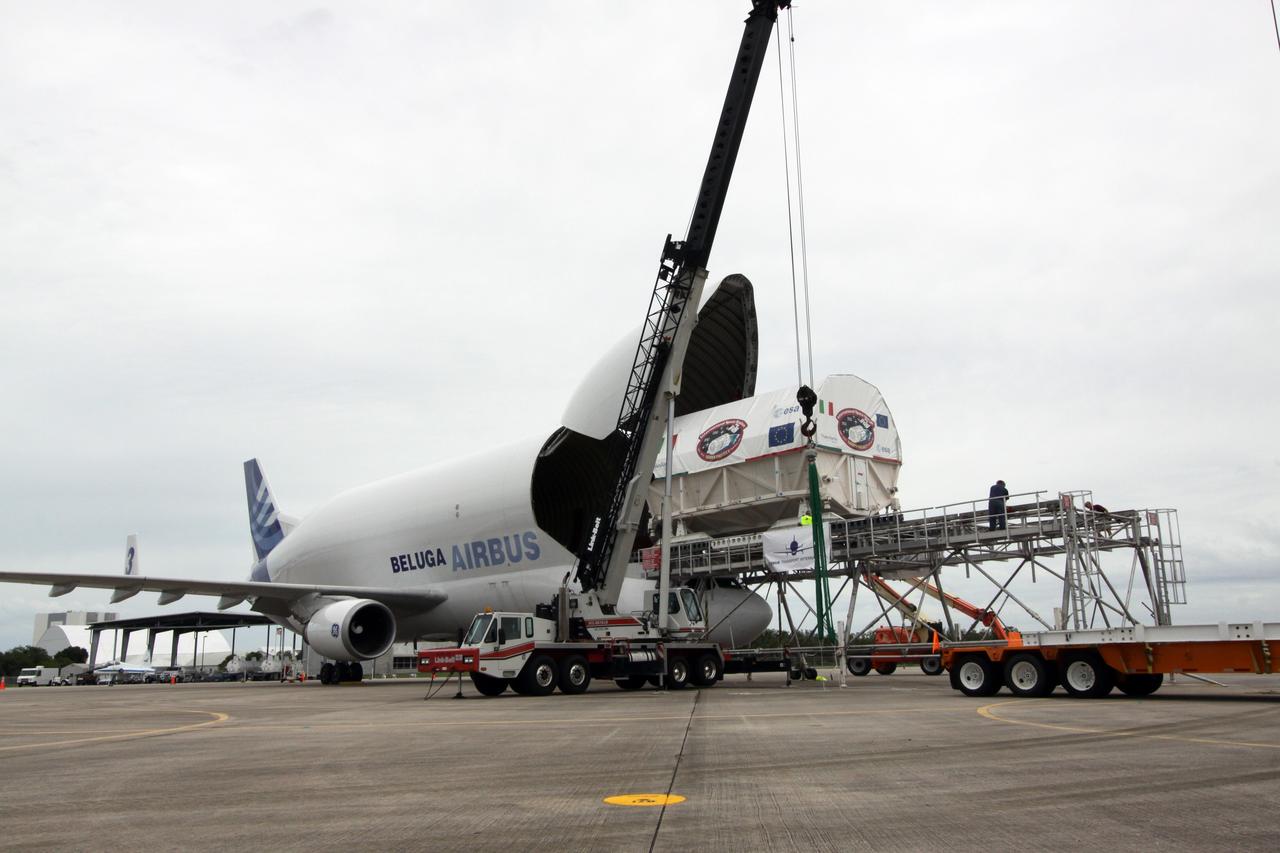
CAPE CANAVERAL, Fla. – On the Shuttle Landing Facility at NASA's Kennedy Space Center in Florida, a crane is ready to be attached to the Node 3 module when it moves clear of the Beluga Airbus. The crane will lift the module onto a flatbed for transport to the Space Station Processing Facility. Named Tranquility, the module will be delivered to the International Space Station on the STS-130 mission. Tranquility will eventually house the life support equipment necessary for the space station's permanent crew of six. It will also accommodate the European Space Agency's Cupola observation module, a seven-window, dome-shaped structure. Tranquility is targeted for launch aboard space shuttle Endeavour in February 2010. Photo credit: NASA/Jack Pfaller
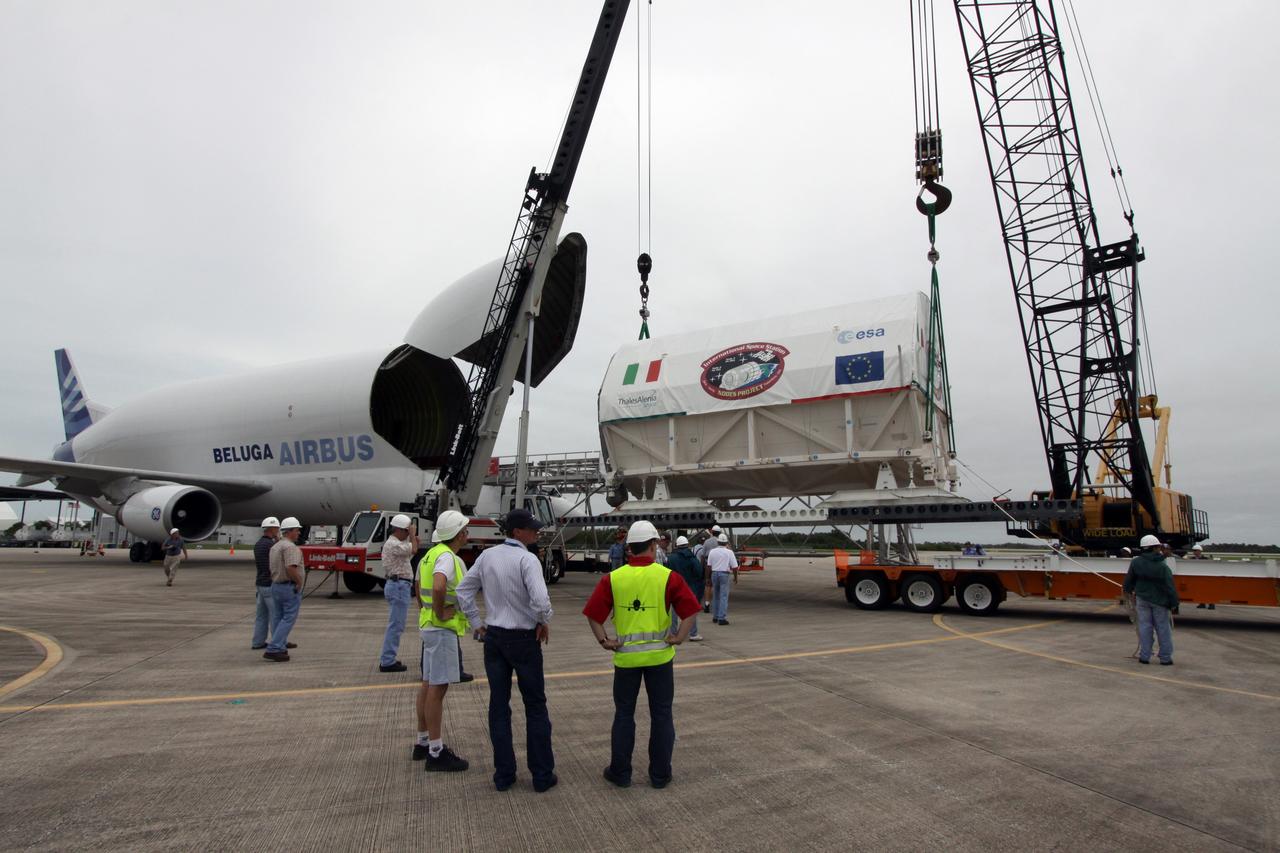
CAPE CANAVERAL, Fla. – On the Shuttle Landing Facility at NASA's Kennedy Space Center in Florida, a crane lifts the Node 3 module toward the flatbed that will transport it to the Space Station Processing Facility. Named Tranquility, the module will be delivered to the International Space Station on the STS-130 mission. Tranquility will eventually house the life support equipment necessary for the space station's permanent crew of six. It will also accommodate the European Space Agency's Cupola observation module, a seven-window, dome-shaped structure. Tranquility is targeted for launch aboard space shuttle Endeavour in February 2010. Photo credit: NASA/Jack Pfaller
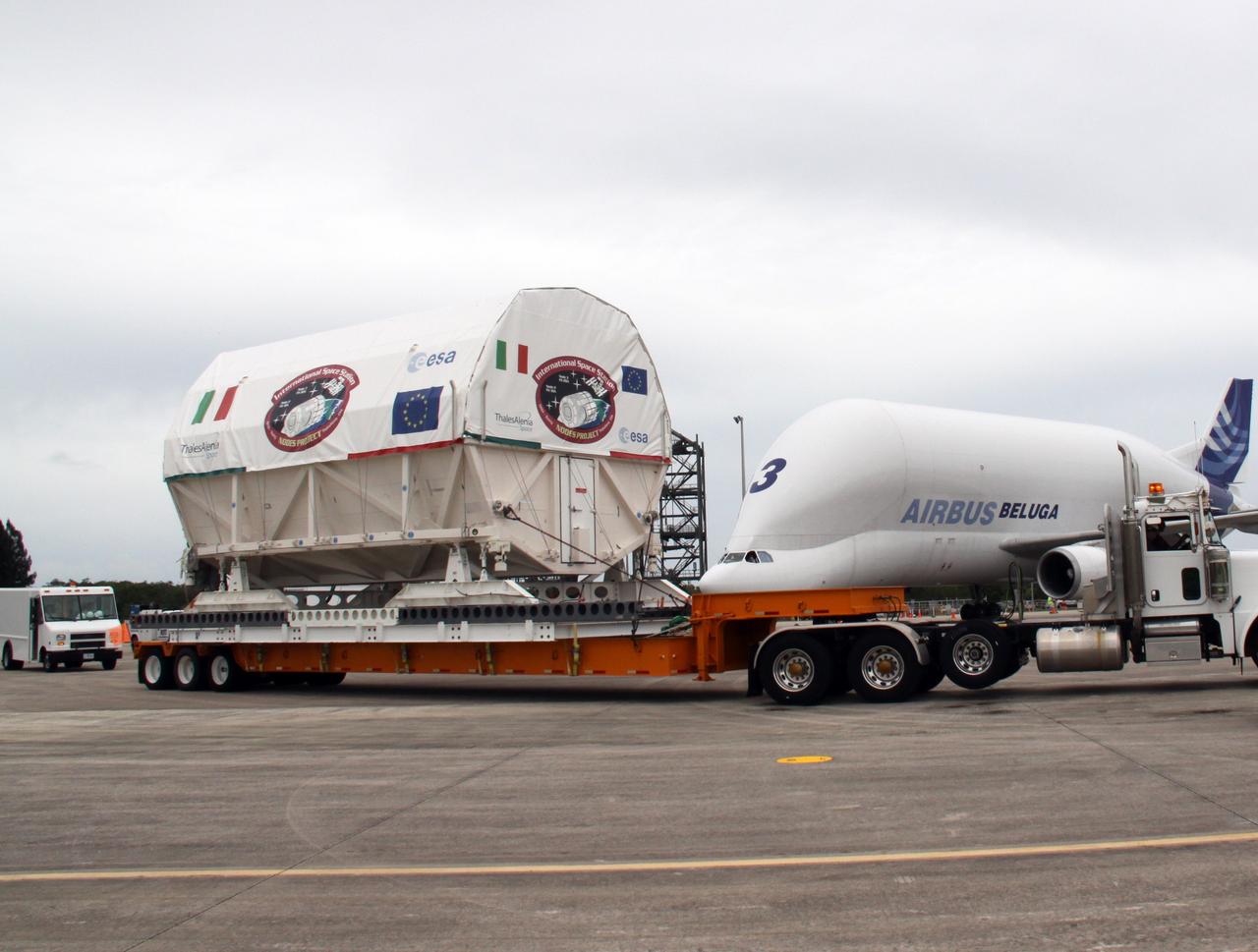
CAPE CANAVERAL, Fla. – On the Shuttle Landing Facility at NASA's Kennedy Space Center in Florida, the Node 3 module is secure on the flatbed for its trip to the Space Station Processing Facility. Named Tranquility, the module will be delivered to the International Space Station on the STS-130 mission. Tranquility will eventually house the life support equipment necessary for the space station's permanent crew of six. It will also accommodate the European Space Agency's Cupola observation module, a seven-window, dome-shaped structure. Tranquility is targeted for launch aboard space shuttle Endeavour in February 2010. Photo credit: NASA/Jack Pfaller
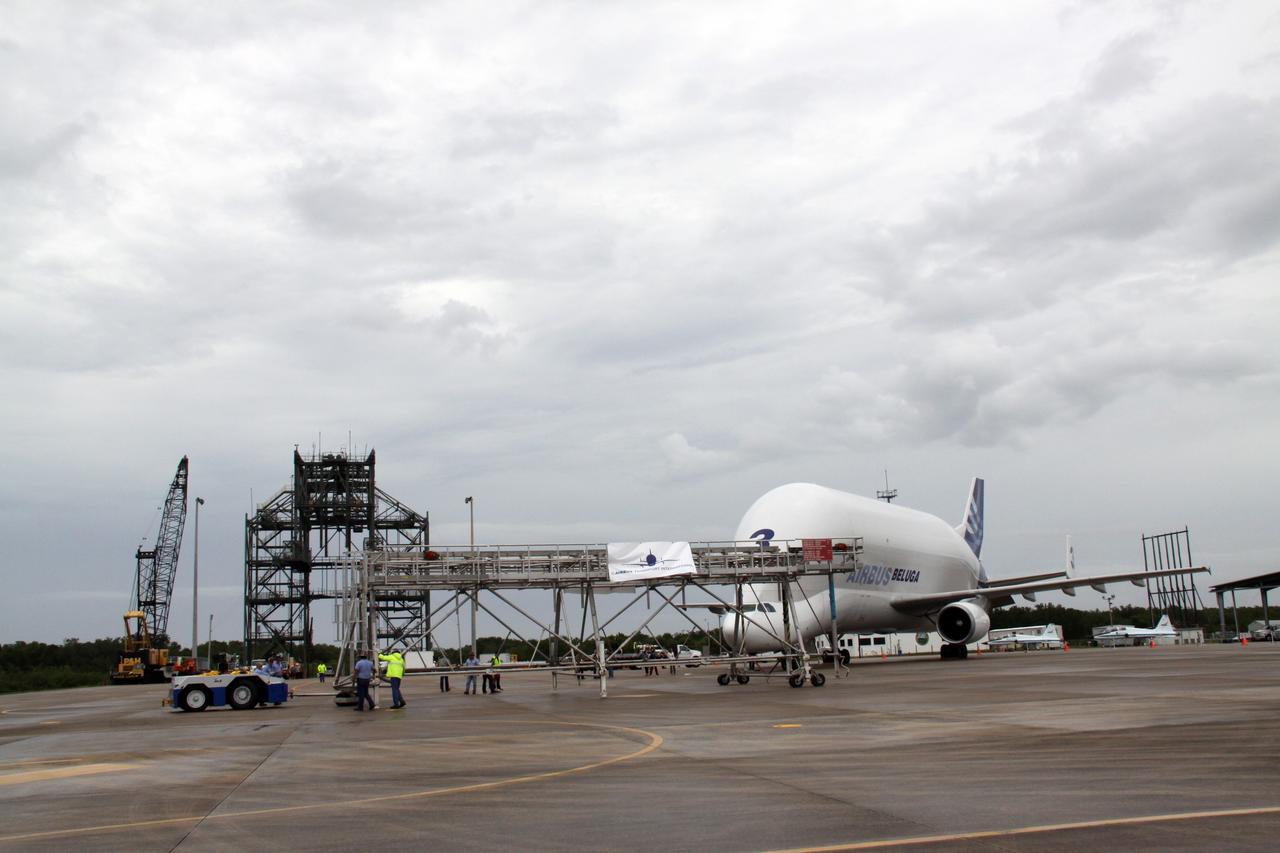
CAPE CANAVERAL, Fla. – On the Shuttle landing Facility at NASA's Kennedy Space Center in Florida, workers move equipment toward the Beluga Airbus for the offloading of the Node 3 module. Named Tranquility, the module will be delivered to the International Space Station on the STS-130 mission. Tranquility will eventually house the life support equipment necessary for the space station's permanent crew of six. It will also accommodate the European Space Agency's Cupola observation module, a seven-window, dome-shaped structure. Tranquility is targeted for launch aboard space shuttle Endeavour in February 2010. Photo credit: NASA/Jack Pfaller
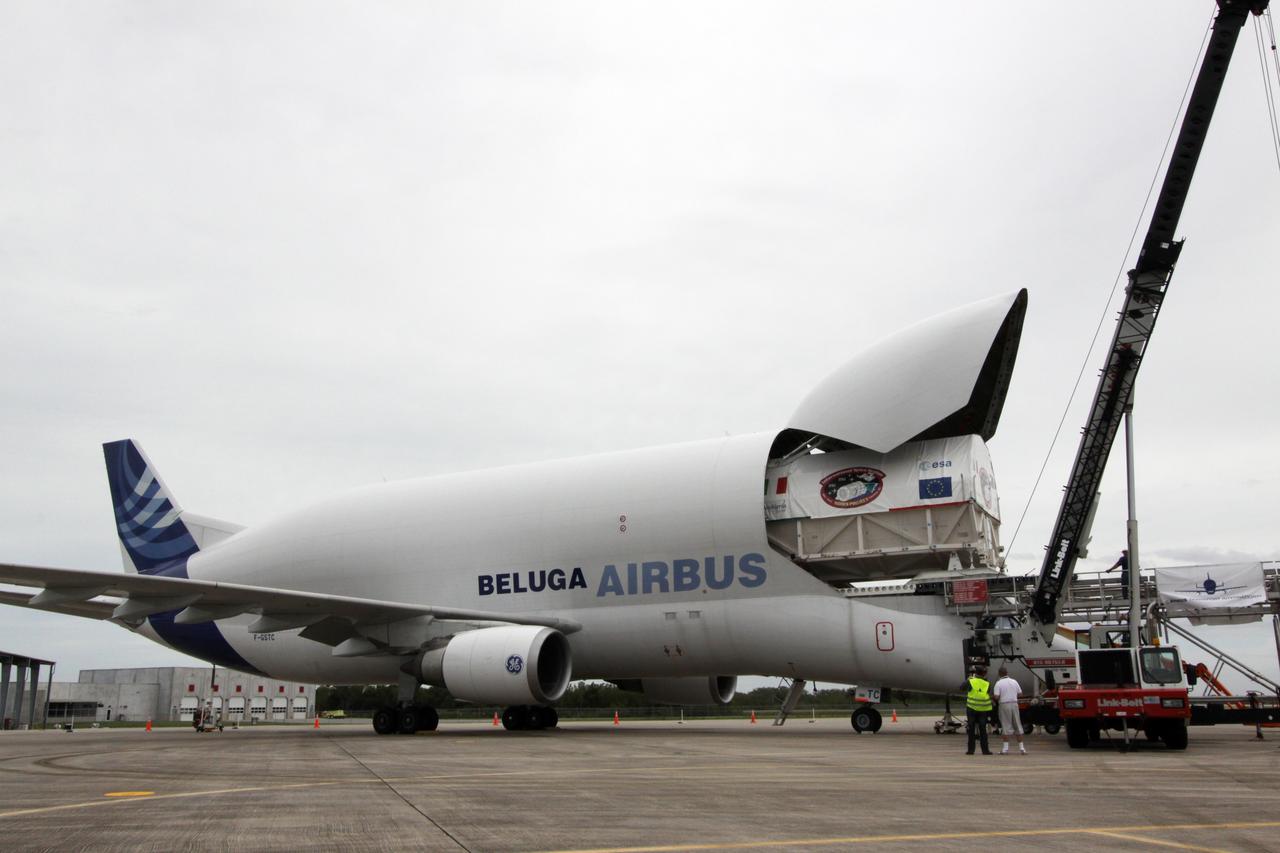
CAPE CANAVERAL, Fla. – On the Shuttle Landing Facility at NASA's Kennedy Space Center in Florida, the Node 3 module moves out of the Beluga Airbus. Named Tranquility, the module will be delivered to the International Space Station on the STS-130 mission. Tranquility will eventually house the life support equipment necessary for the space station's permanent crew of six. It will also accommodate the European Space Agency's Cupola observation module, a seven-window, dome-shaped structure. Tranquility is targeted for launch aboard space shuttle Endeavour in February 2010. Photo credit: NASA/Jack Pfaller
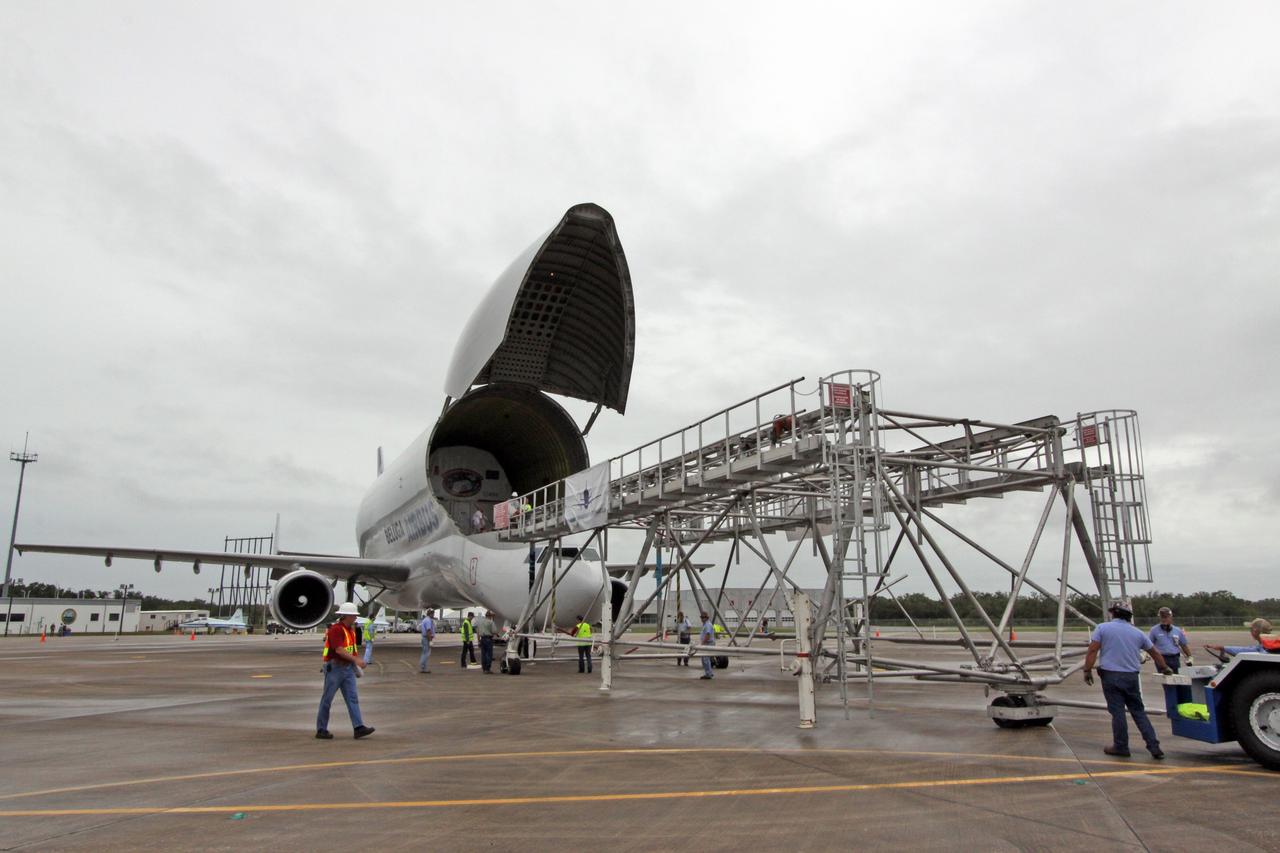
CAPE CANAVERAL, Fla. – On the Shuttle Landing Facility at NASA's Kennedy Space Center in Florida, the offload equipment is moved close to the open nose of the Beluga Airbus. Inside the airbus is the Node 3 module that will be delivered to the International Space Station on the STS-130 mission. Tranquility will eventually house the life support equipment necessary for the space station's permanent crew of six. It will also accommodate the European Space Agency's Cupola observation module, a seven-window, dome-shaped structure. Tranquility is targeted for launch aboard space shuttle Endeavour in February 2010. Photo credit: NASA/Jack Pfaller
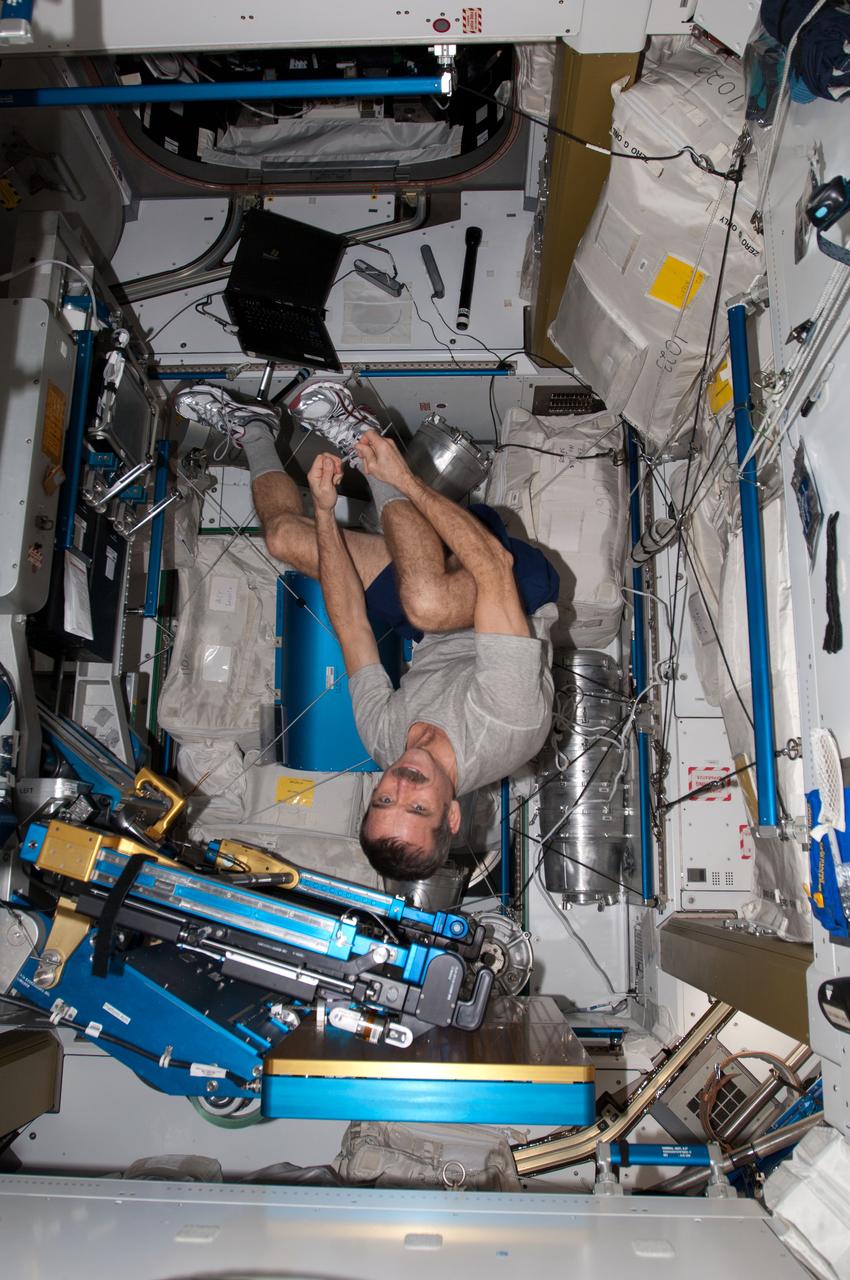
View of Canadian Space Agency (CSA) Chris Hadfield,Expedition 34 Flight Engineer (FE),putting on tennis shoes,in the Node 3.
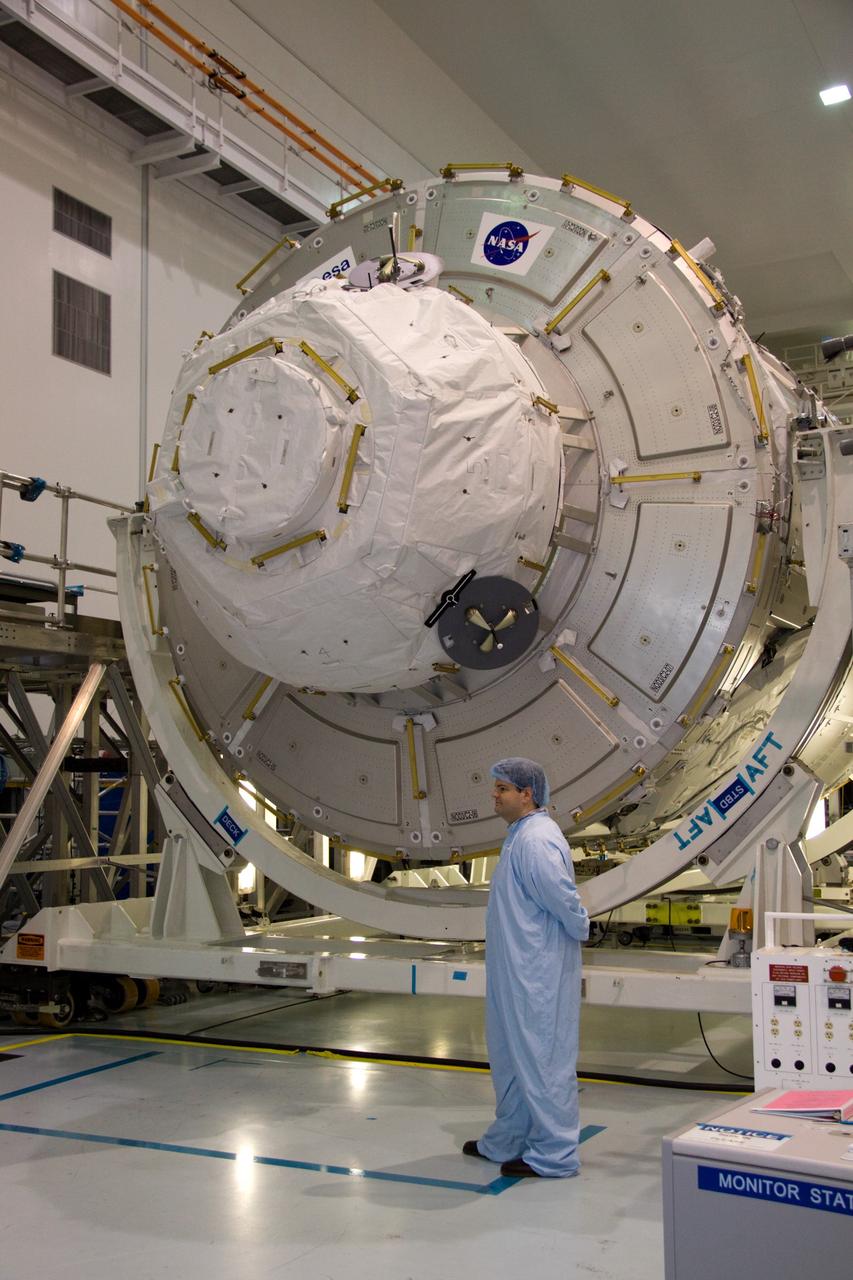
CAPE CANAVERAL, Fla. – A technician dressed in clean room gear, typically called a "bunny suit," stands by the International Space Station's Node 3, named Tranquility, in the Space Station Processing Facility at NASA's Kennedy Space Center in Florida, during a media event. The primary payload for the STS-130 mission, Tranquility is a pressurized module that will provide room for many of the space station's life support systems. Attached to one end of Tranquility is a cupola, a unique work area with six windows on its sides and one on top. The cupola resembles a circular bay window and will provide a vastly improved view of the station's exterior. The multi-directional view will allow the crew to monitor spacewalks and docking operations, as well as provide a spectacular view of Earth and other celestial objects. The module was built in Turin, Italy, by Thales Alenia Space for the European Space Agency. Space shuttle Endeavour's STS-130 mission is targeted for launch in early February 2010. For information on the STS-130 mission and crew, visit http://www.nasa.gov/mission_pages/shuttle/shuttlemissions/sts130/index.html. Photo credit: NASA/Jack Pfaller
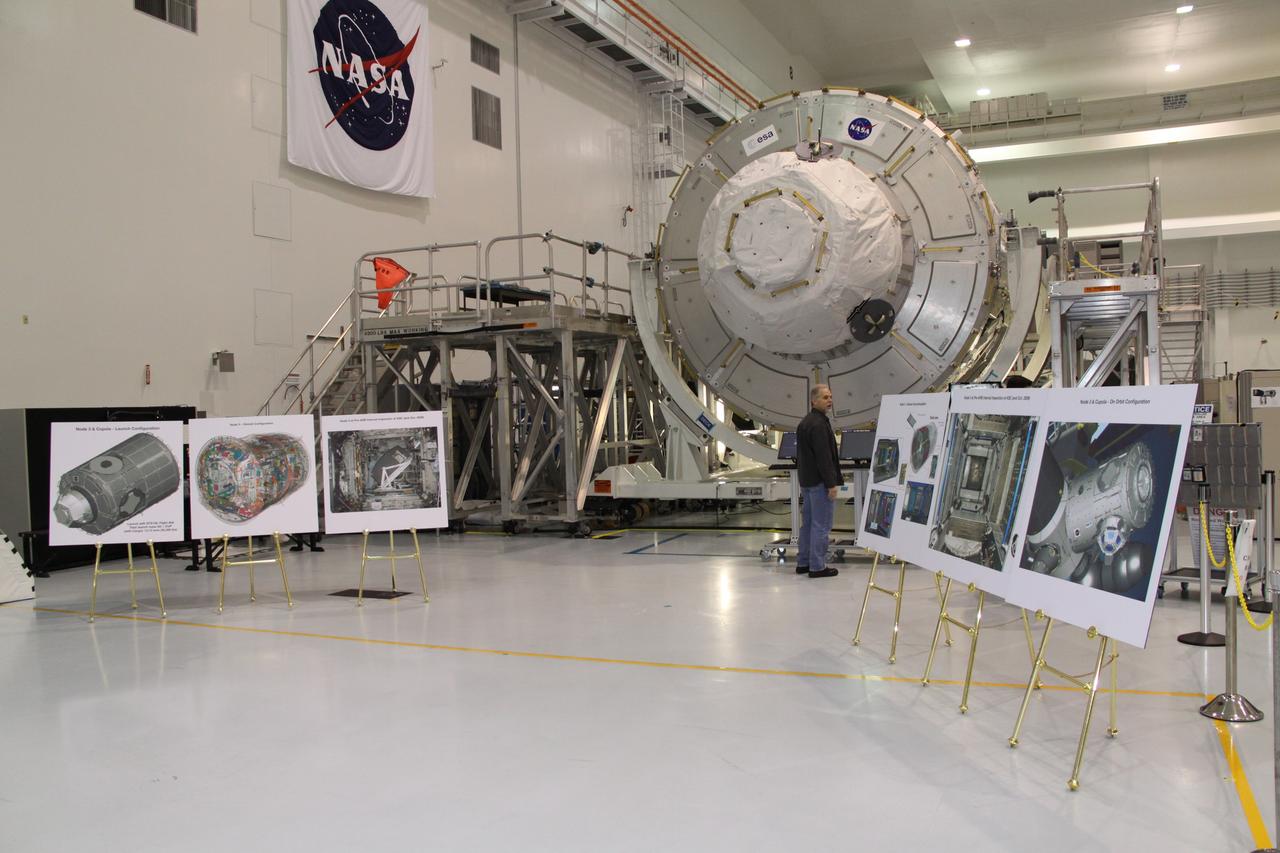
CAPE CANAVERAL, Fla. – In the Space Station Processing Facility at NASA's Kennedy Space Center in Florida, the International Space Station's Node 3, named Tranquility is on display for the media. The primary payload for the STS-130 mission, Tranquility is a pressurized module that will provide room for many of the space station's life support systems. Attached to one end of Tranquility is a cupola, a unique work area with six windows on its sides and one on top. The cupola resembles a circular bay window and will provide a vastly improved view of the station's exterior. The multi-directional view will allow the crew to monitor spacewalks and docking operations, as well as provide a spectacular view of Earth and other celestial objects. The module was built in Turin, Italy, by Thales Alenia Space for the European Space Agency. Space shuttle Endeavour's STS-130 mission is targeted for launch in early February 2010. For information on the STS-130 mission and crew, visit http://www.nasa.gov/mission_pages/shuttle/shuttlemissions/sts130/index.html. Photo credit: NASA/Jack Pfaller
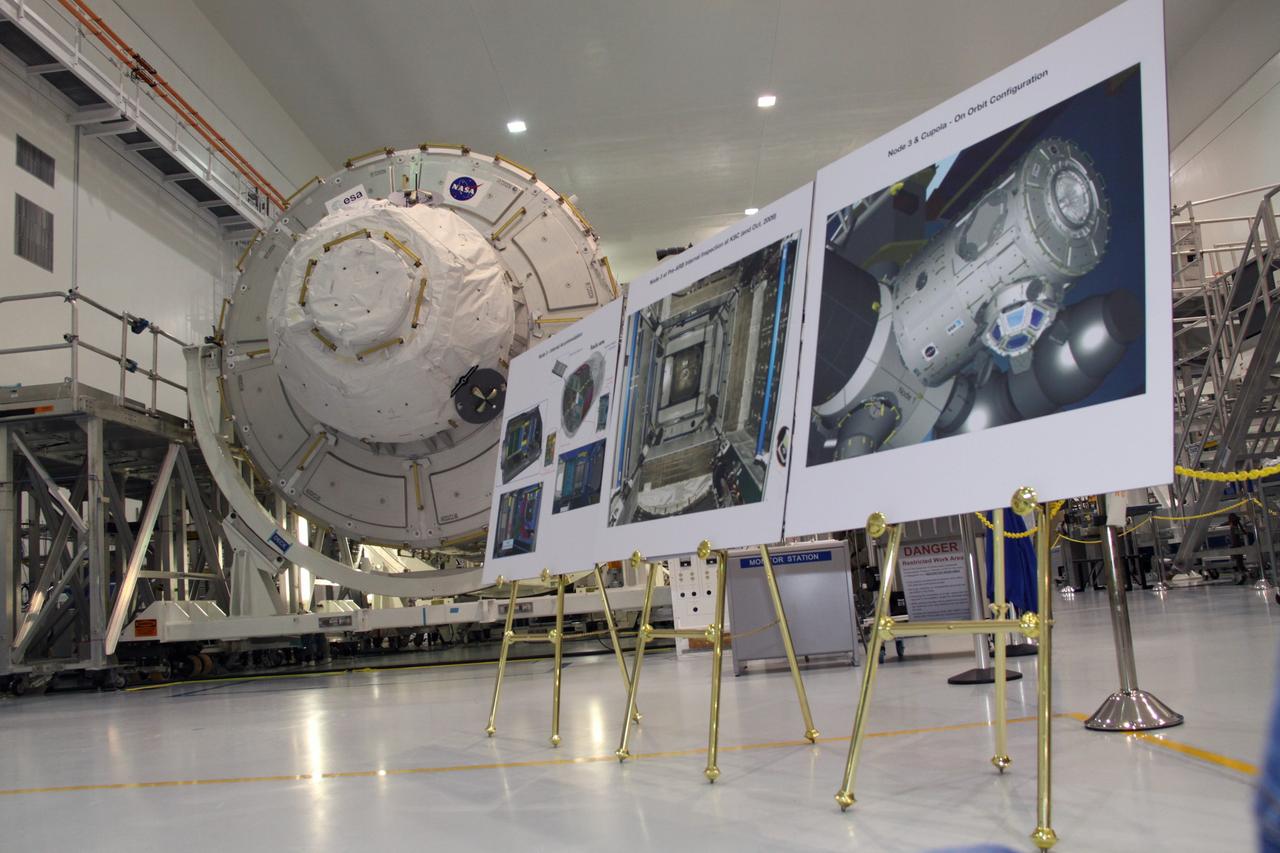
CAPE CANAVERAL, Fla. – In the Space Station Processing Facility at NASA's Kennedy Space Center in Florida, posters display the configuration of the Node 3, named Tranquility as it will appear once installed to the International Space Station. The primary payload for the STS-130 mission, Tranquility is a pressurized module that will provide room for many of the space station's life support systems. Attached to one end of Tranquility is a cupola, a unique work area with six windows on its sides and one on top. The cupola resembles a circular bay window and will provide a vastly improved view of the station's exterior. The multi-directional view will allow the crew to monitor spacewalks and docking operations, as well as provide a spectacular view of Earth and other celestial objects. The module was built in Turin, Italy, by Thales Alenia Space for the European Space Agency. Space shuttle Endeavour's STS-130 mission is targeted for launch in early February 2010. For information on the STS-130 mission and crew, visit http://www.nasa.gov/mission_pages/shuttle/shuttlemissions/sts130/index.html. Photo credit: NASA/Jack Pfaller
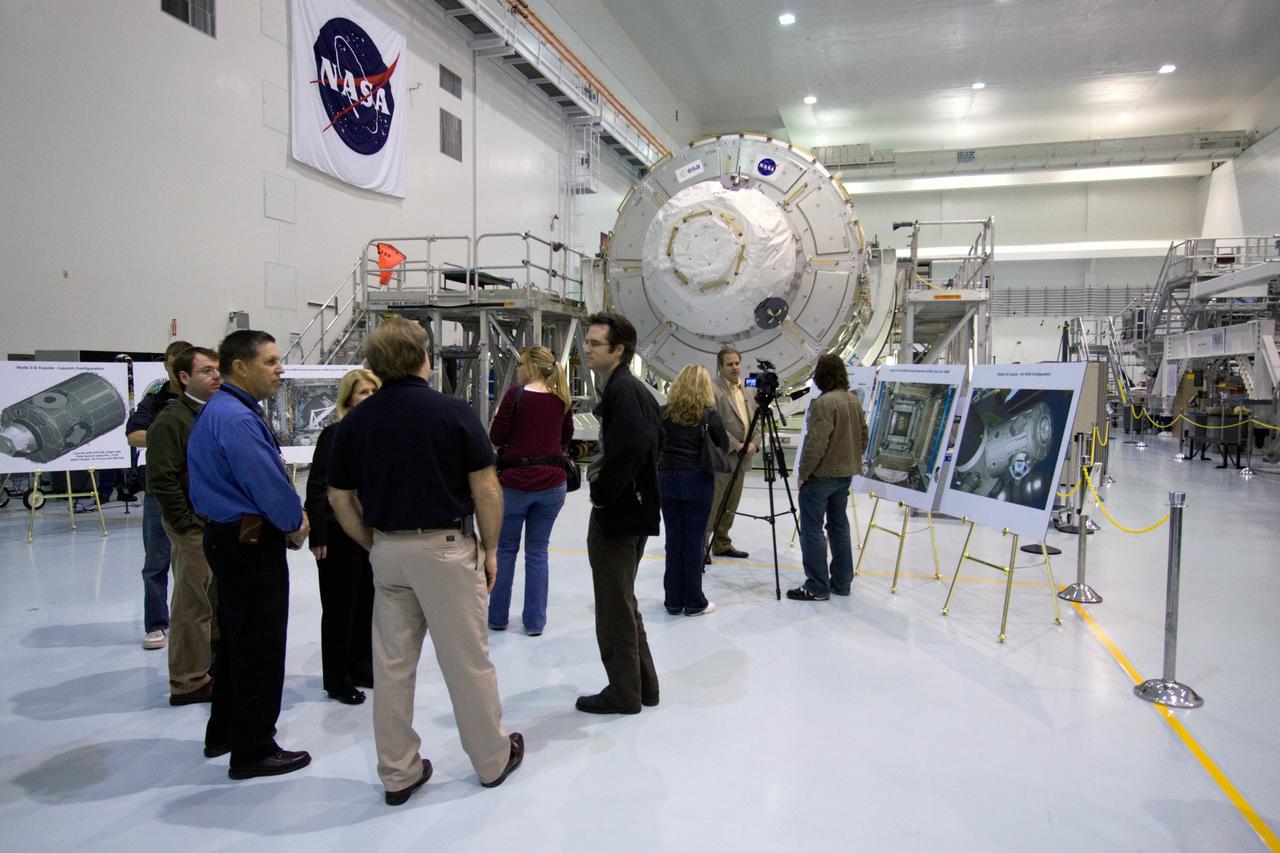
CAPE CANAVERAL, Fla. – In the Space Station Processing Facility at NASA's Kennedy Space Center in Florida, media representatives gather to view the International Space Station's Node 3, named Tranquility. The primary payload for the STS-130 mission, Tranquility is a pressurized module that will provide room for many of the space station's life support systems. Attached to one end of Tranquility is a cupola, a unique work area with six windows on its sides and one on top. The cupola resembles a circular bay window and will provide a vastly improved view of the station's exterior. The multi-directional view will allow the crew to monitor spacewalks and docking operations, as well as provide a spectacular view of Earth and other celestial objects. The module was built in Turin, Italy, by Thales Alenia Space for the European Space Agency. Space shuttle Endeavour's STS-130 mission is targeted for launch in early February 2010. For information on the STS-130 mission and crew, visit http://www.nasa.gov/mission_pages/shuttle/shuttlemissions/sts130/index.html. Photo credit: NASA/Jack Pfaller
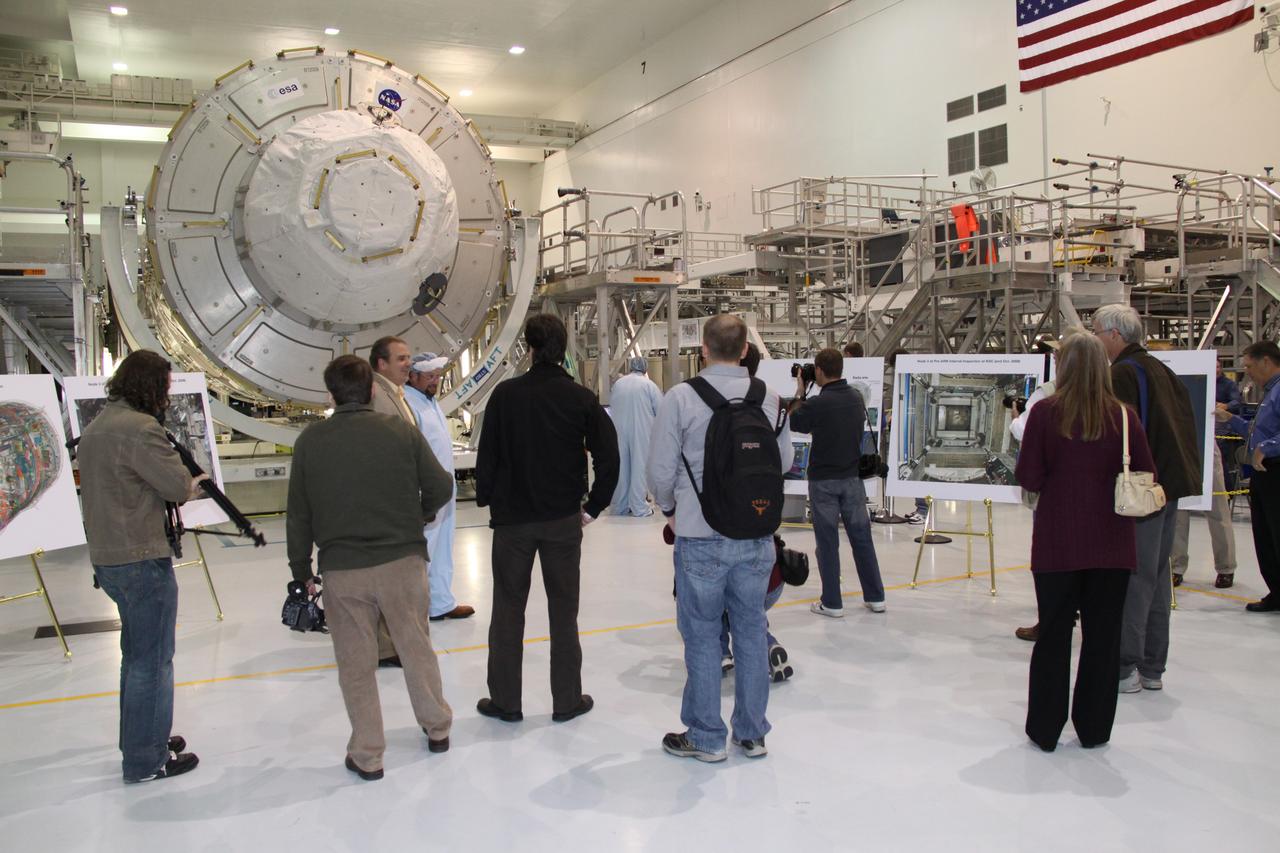
CAPE CANAVERAL, Fla. – In the Space Station Processing Facility at NASA's Kennedy Space Center in Florida, media representatives view the International Space Station's Node 3, named Tranquility. The primary payload for the STS-130 mission, Tranquility is a pressurized module that will provide room for many of the space station's life support systems. Attached to one end of Tranquility is a cupola, a unique work area with six windows on its sides and one on top. The cupola resembles a circular bay window and will provide a vastly improved view of the station's exterior. The multi-directional view will allow the crew to monitor spacewalks and docking operations, as well as provide a spectacular view of Earth and other celestial objects. The module was built in Turin, Italy, by Thales Alenia Space for the European Space Agency. Space shuttle Endeavour's STS-130 mission is targeted for launch in early February 2010. For information on the STS-130 mission and crew, visit http://www.nasa.gov/mission_pages/shuttle/shuttlemissions/sts130/index.html. Photo credit: NASA/Jack Pfaller
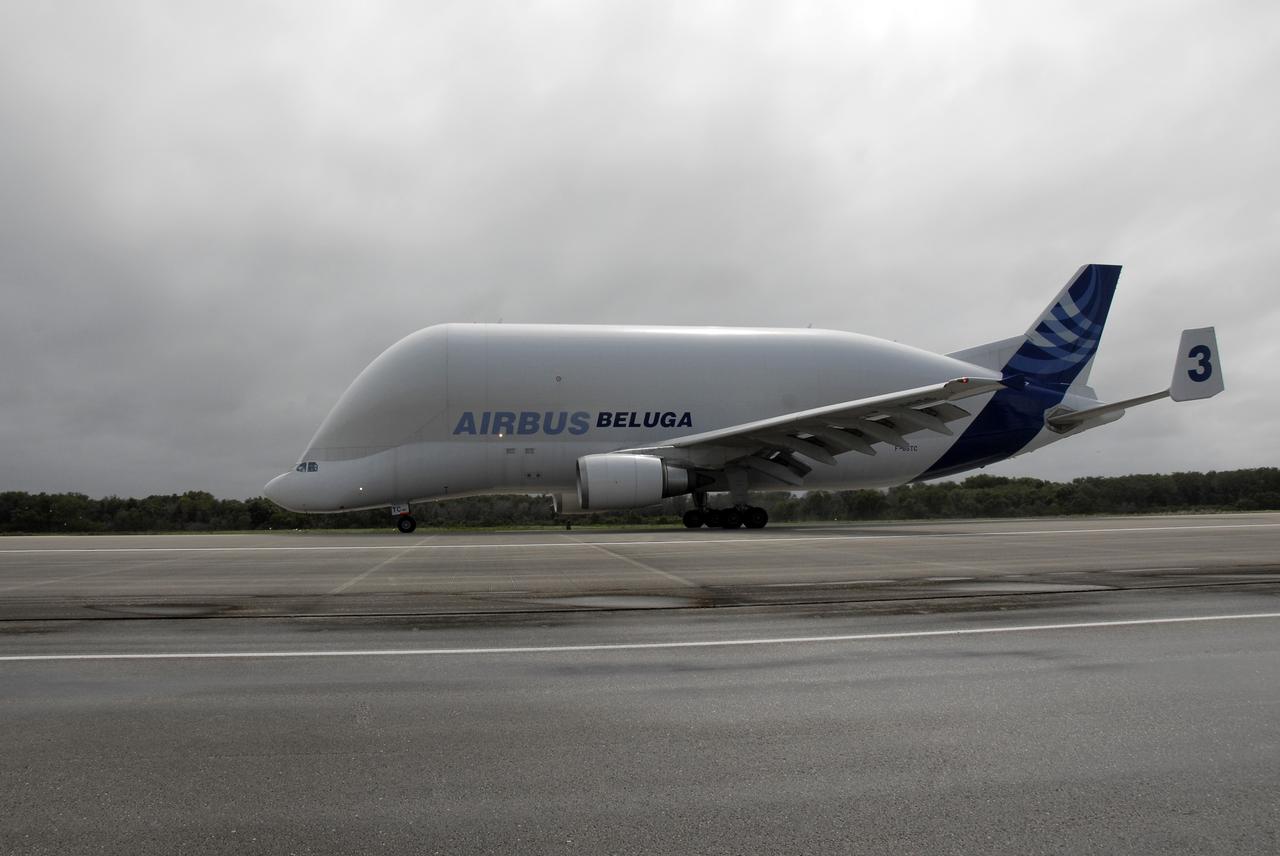
CAPE CANAVERAL, Fla. – A Beluga Airbus lands at NASA Kennedy Space Center's Shuttle Landing Facility carrying the newest module for the International Space Station, the Tranquility Node 3. Tranquility will eventually house the life support equipment necessary for the International Space Station's permanent crew of six. It will also accommodate the European Space Agency's Cupola observation module, a seven window dome-shaped structure. Tranquility is the payload on the STS-130 mission, targeted for launch in February 2010. Photo credit: NASA/Kim Shiflett
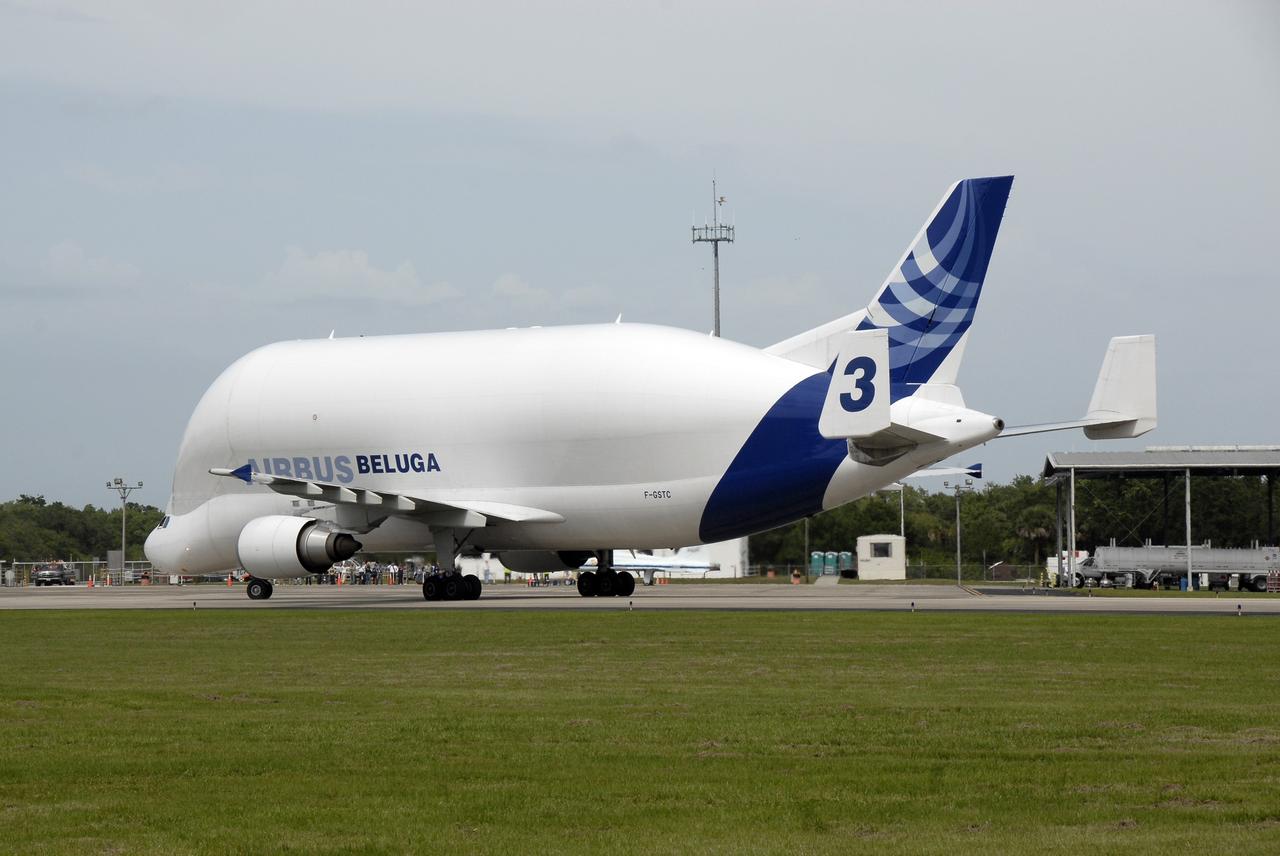
CAPE CANAVERAL, Fla. – A Beluga Airbus taxis on the runway at NASA Kennedy Space Center's Shuttle Landing Facility. The aircraft carries the newest module for the International Space Station, the Tranquility Node 3. Tranquility will eventually house the life support equipment necessary for the International Space Station's permanent crew of six. It will also accommodate the European Space Agency's Cupola observation module, a seven window dome-shaped structure. Tranquility is the payload on the STS-130 mission, targeted for launch in February 2010. Photo credit: NASA/Kim Shiflett
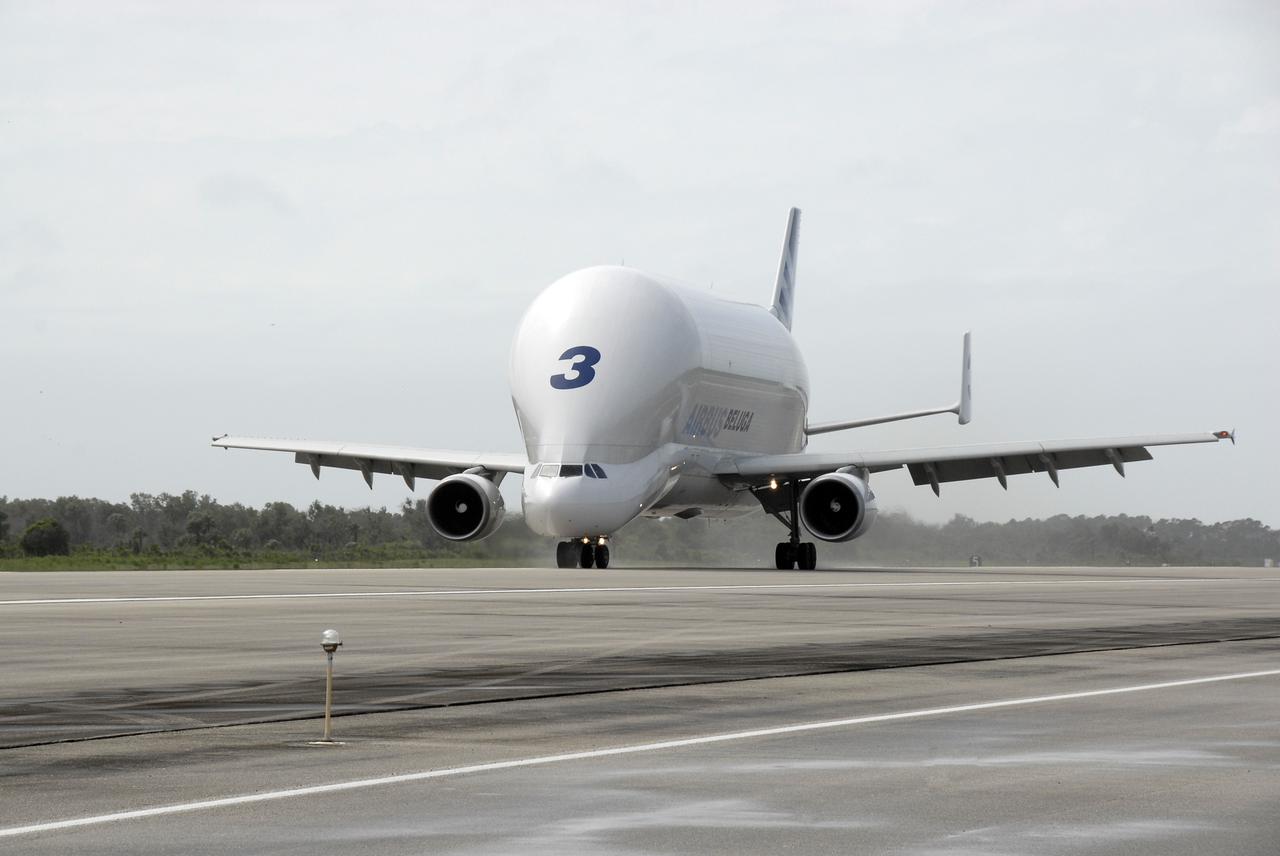
CAPE CANAVERAL, Fla. – The newest module for the International Space Station, the Tranquility Node 3 arrives at NASA Kennedy Space Center's Shuttle Landing Facility aboard a Beluga Airbus. Tranquility will eventually house the life support equipment necessary for the International Space Station's permanent crew of six. It will also accommodate the European Space Agency's Cupola observation module, a seven window dome-shaped structure. Tranquility is the payload on the STS-130 mission, targeted for launch in February 2010. Photo credit: NASA/Kim Shiflett
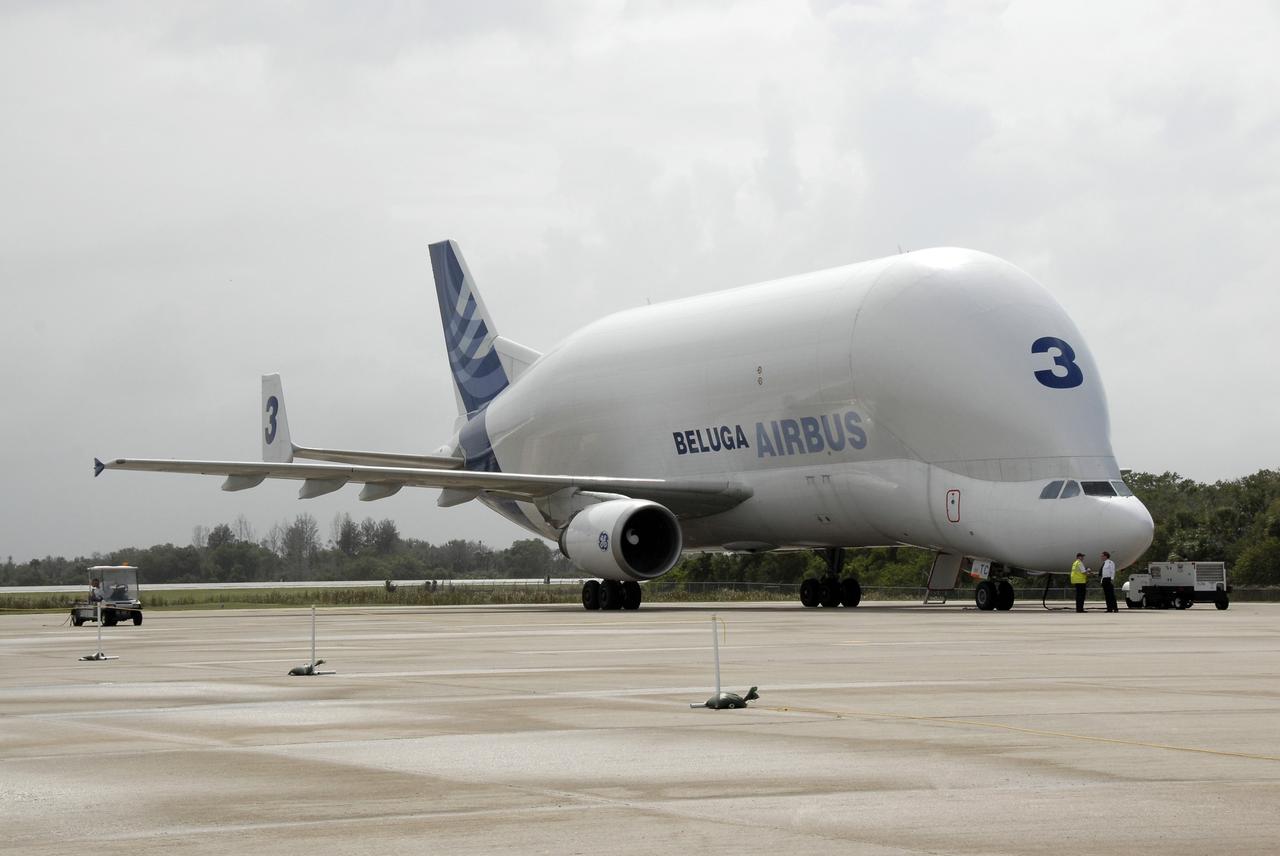
CAPE CANAVERAL, Fla. – A Beluga Airbus parks at NASA Kennedy Space Center's Shuttle Landing Facility. The aircraft carries the newest module for the International Space Station, the Tranquility Node 3. Tranquility will eventually house the life support equipment necessary for the International Space Station's permanent crew of six. It will also accommodate the European Space Agency's Cupola observation module, a seven window dome-shaped structure. Tranquility is the payload on the STS-130 mission, targeted for launch in February 2010. Photo credit: NASA/Kim Shiflett
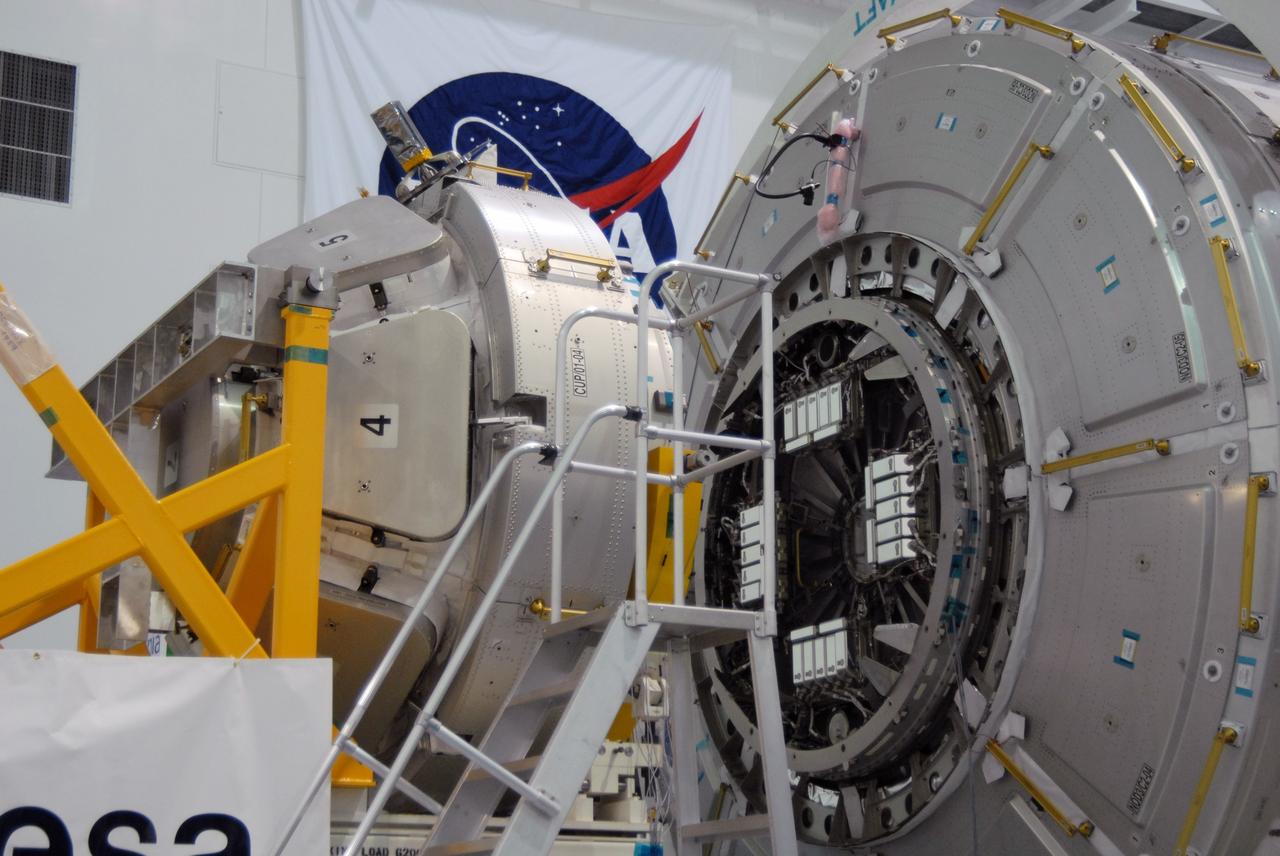
CAPE CANAVERAL, Fla. – In the Space Station Processing Facility at NASA's Kennedy Space Center in Florida, NASA's Cupola module, at left, is being aligned with the Tranquility module, at right, for assembly. Cupola and Tranquility are the payload for space shuttle Endeavour's STS-130 mission to the International Space Station. The module was built for the European Space Agency by Alenia Spazio in Turin, Italy. When attached to the Tranquility Node 3 module, Cupola will resemble a circular bay window that will provide a vastly improved view of the station's exterior. Just under 10 feet in diameter, the module will accommodate two crew members and portable workstations that can control station and robotic activities. The multi-directional view will allow the crew to monitor spacewalks and docking operations, as well as provide a spectacular view of Earth and other celestial objects. Endeavour is targeted to launch Feb. 4, 2010. Photo credit: NASA/Jim Grossmann
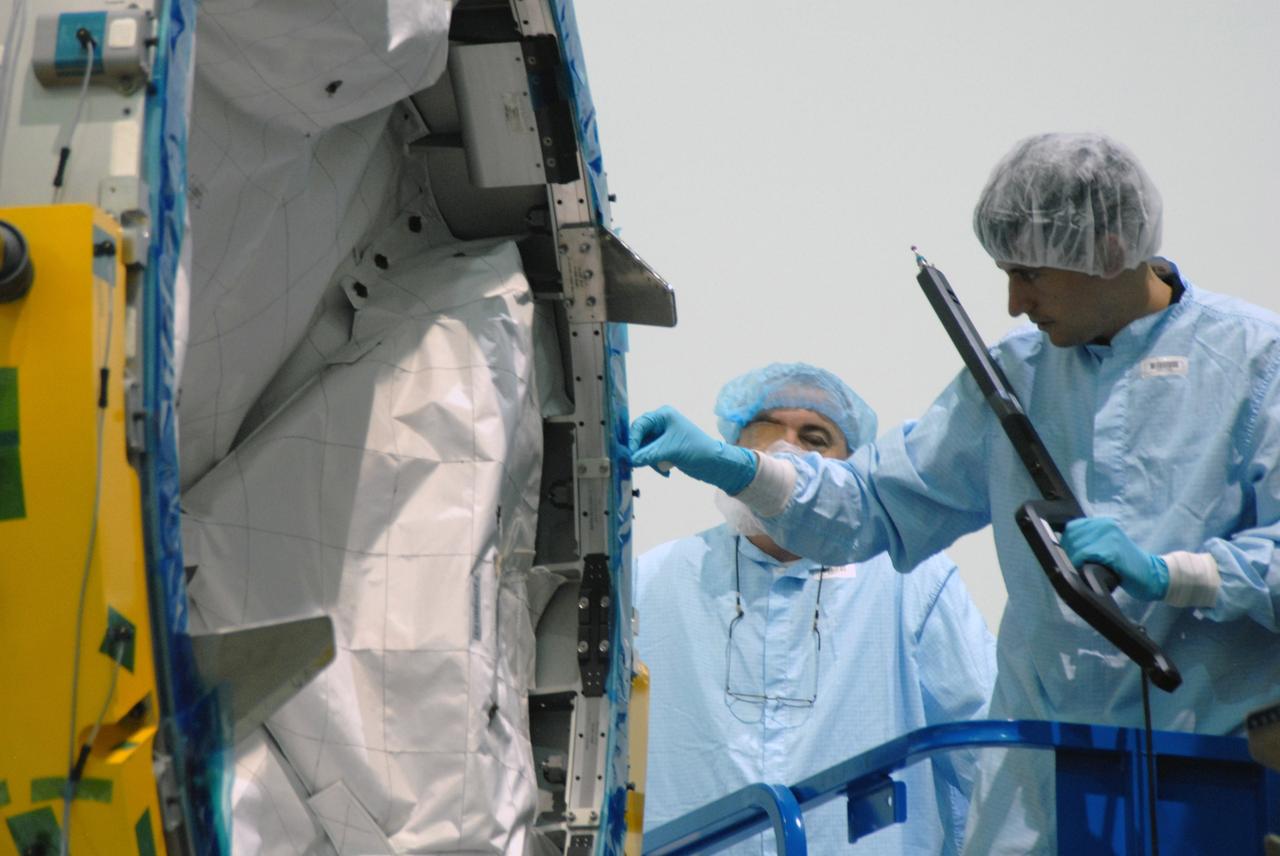
CAPE CANAVERAL, Fla. – In the Space Station Processing Facility at NASA's Kennedy Space Center in Florida, workers take measurements of the Cupola module being aligned with the Tranquility module for assembly. Cupola and Tranquility are the payload for space shuttle Endeavour's STS-130 mission to the International Space Station. The module was built for the European Space Agency by Alenia Spazio in Turin, Italy. When attached to the Tranquility Node 3 module, Cupola will resemble a circular bay window that will provide a vastly improved view of the station's exterior. Just under 10 feet in diameter, the module will accommodate two crew members and portable workstations that can control station and robotic activities. The multi-directional view will allow the crew to monitor spacewalks and docking operations, as well as provide a spectacular view of Earth and other celestial objects. Endeavour is targeted to launch Feb. 4, 2010. Photo credit: NASA/Jim Grossmann
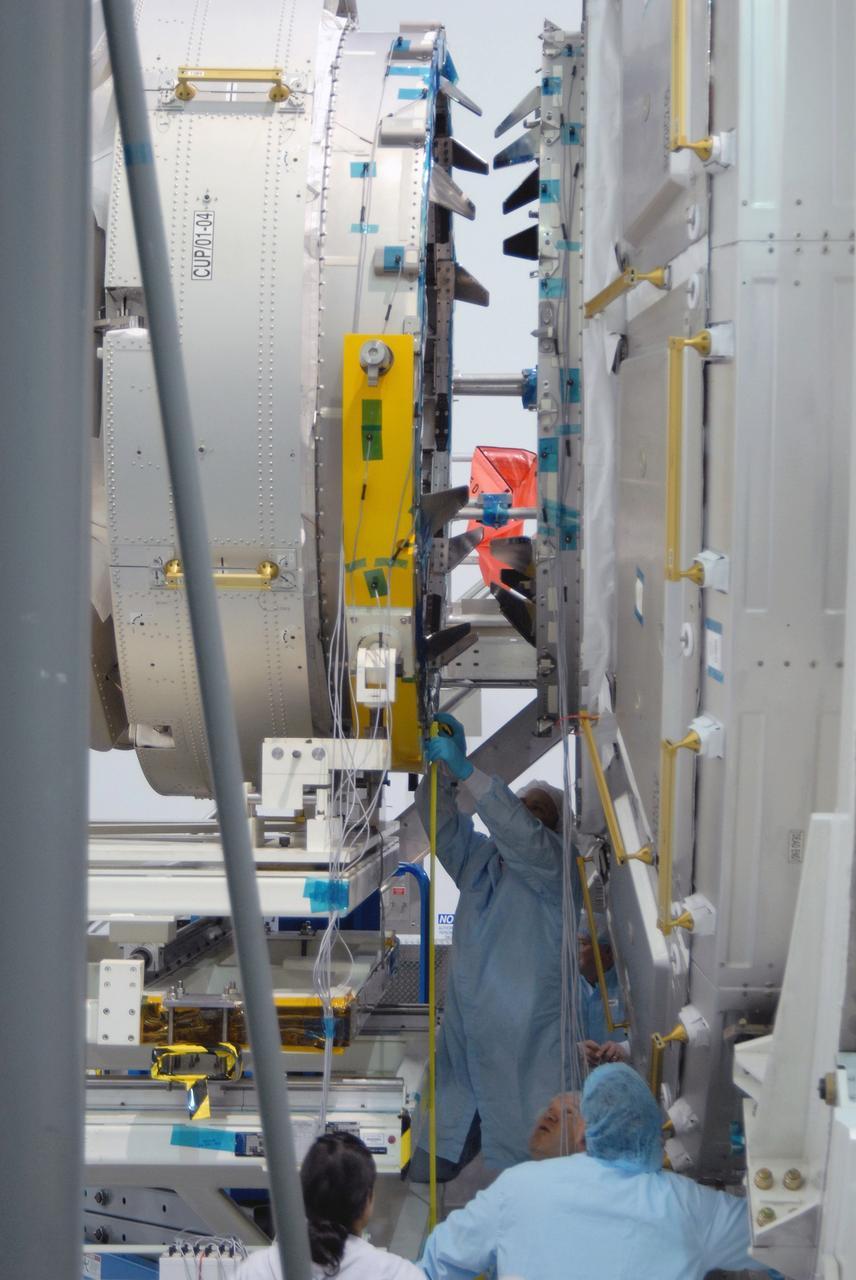
CAPE CANAVERAL, Fla. – In the Space Station Processing Facility at NASA's Kennedy Space Center in Florida, a worker checks the alignment of the Cupola module, at left, with the Tranquility module, at right. Cupola and Tranquility are the payload for space shuttle Endeavour's STS-130 mission to the International Space Station. The module was built for the European Space Agency by Alenia Spazio in Turin, Italy. When attached to the Tranquility Node 3 module, Cupola will resemble a circular bay window that will provide a vastly improved view of the station's exterior. Just under 10 feet in diameter, the module will accommodate two crew members and portable workstations that can control station and robotic activities. The multi-directional view will allow the crew to monitor spacewalks and docking operations, as well as provide a spectacular view of Earth and other celestial objects. Endeavour is targeted to launch Feb. 4, 2010. Photo credit: NASA/Jim Grossmann
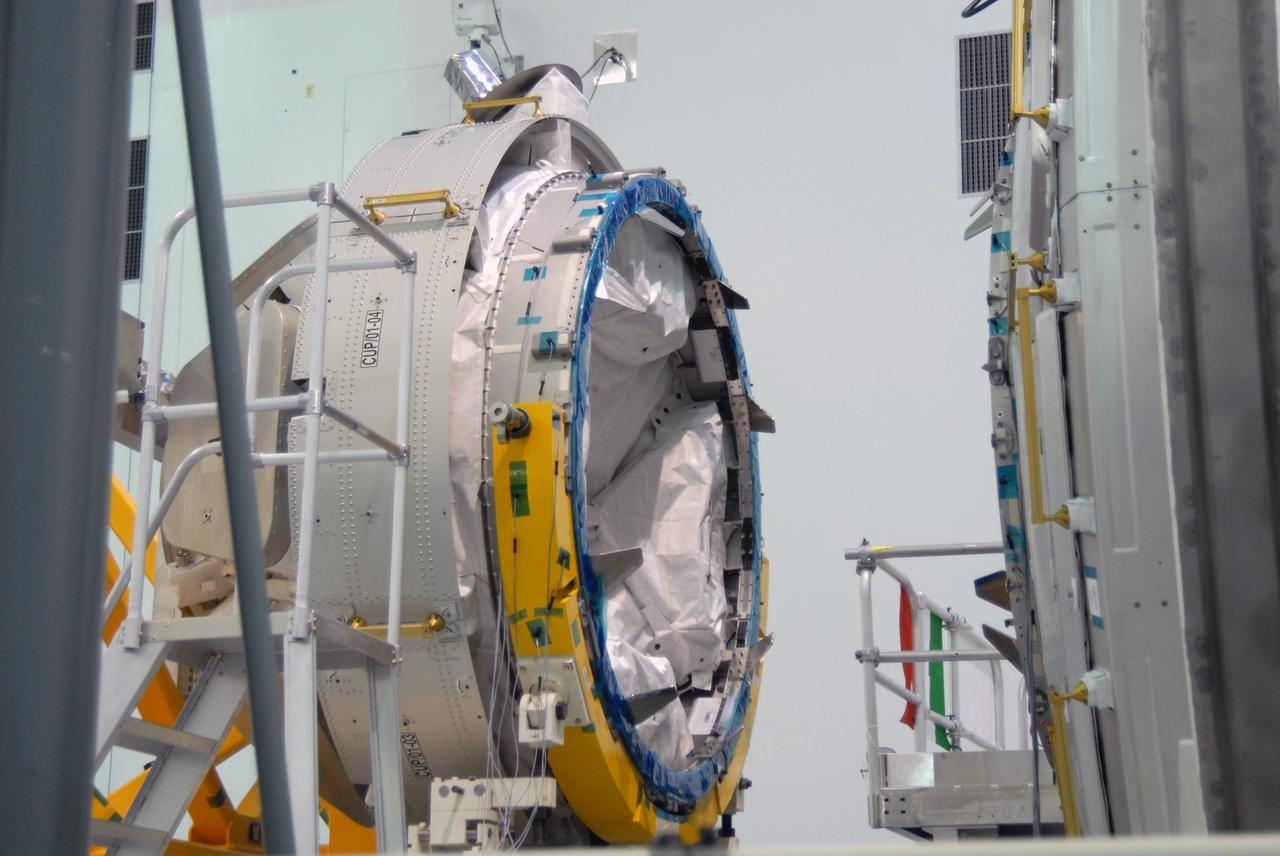
CAPE CANAVERAL, Fla. – In the Space Station Processing Facility at NASA's Kennedy Space Center in Florida, NASA's Cupola module, at left, is being aligned with the Tranquility module, at right, for assembly. Cupola and Tranquility are the payload for space shuttle Endeavour's STS-130 mission to the International Space Station. The module was built for the European Space Agency by Alenia Spazio in Turin, Italy. When attached to the Tranquility Node 3 module, Cupola will resemble a circular bay window that will provide a vastly improved view of the station's exterior. Just under 10 feet in diameter, the module will accommodate two crew members and portable workstations that can control station and robotic activities. The multi-directional view will allow the crew to monitor spacewalks and docking operations, as well as provide a spectacular view of Earth and other celestial objects. Endeavour is targeted to launch Feb. 4, 2010. Photo credit: NASA/Jim Grossmann
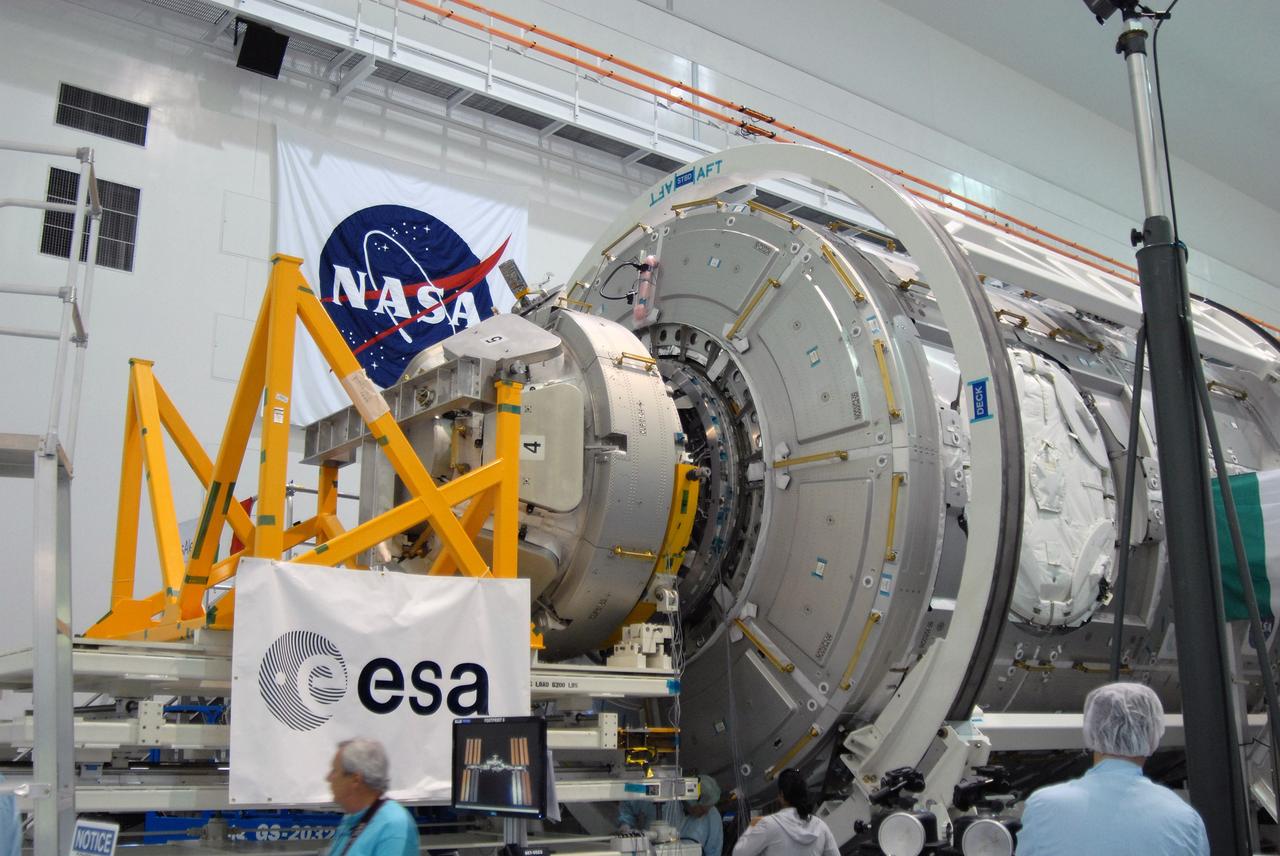
CAPE CANAVERAL, Fla. – On the stand in the Space Station Processing Facility at NASA's Kennedy Space Center in Florida, NASA's Cupola module, at left, is being aligned with the Tranquility module, at right, for assembly. Cupola and Tranquility are the payload for space shuttle Endeavour's STS-130 mission to the International Space Station. The module was built for the European Space Agency by Alenia Spazio in Turin, Italy. When attached to the Tranquility Node 3 module, Cupola will resemble a circular bay window that will provide a vastly improved view of the station's exterior. Just under 10 feet in diameter, the module will accommodate two crew members and portable workstations that can control station and robotic activities. The multi-directional view will allow the crew to monitor spacewalks and docking operations, as well as provide a spectacular view of Earth and other celestial objects. Endeavour is targeted to launch Feb. 4, 2010. Photo credit: NASA/Jim Grossmann
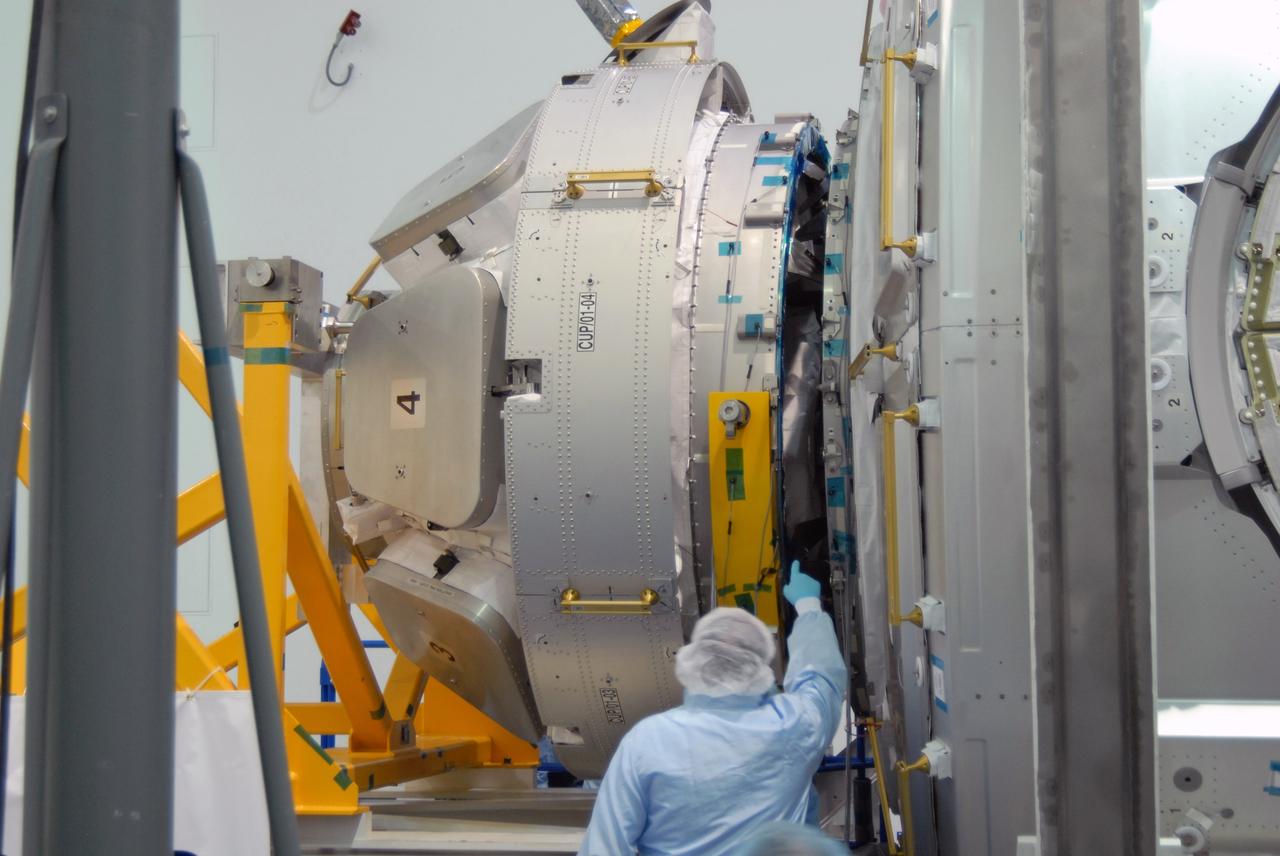
CAPE CANAVERAL, Fla. – In the Space Station Processing Facility at NASA's Kennedy Space Center in Florida, a worker checks the alignment of the Cupola module, at left, with the Tranquility module, at right. Cupola and Tranquility are the payload for space shuttle Endeavour's STS-130 mission to the International Space Station. The module was built for the European Space Agency by Alenia Spazio in Turin, Italy. When attached to the Tranquility Node 3 module, Cupola will resemble a circular bay window that will provide a vastly improved view of the station's exterior. Just under 10 feet in diameter, the module will accommodate two crew members and portable workstations that can control station and robotic activities. The multi-directional view will allow the crew to monitor spacewalks and docking operations, as well as provide a spectacular view of Earth and other celestial objects. Endeavour is targeted to launch Feb. 4, 2010. Photo credit: NASA/Jim Grossmann
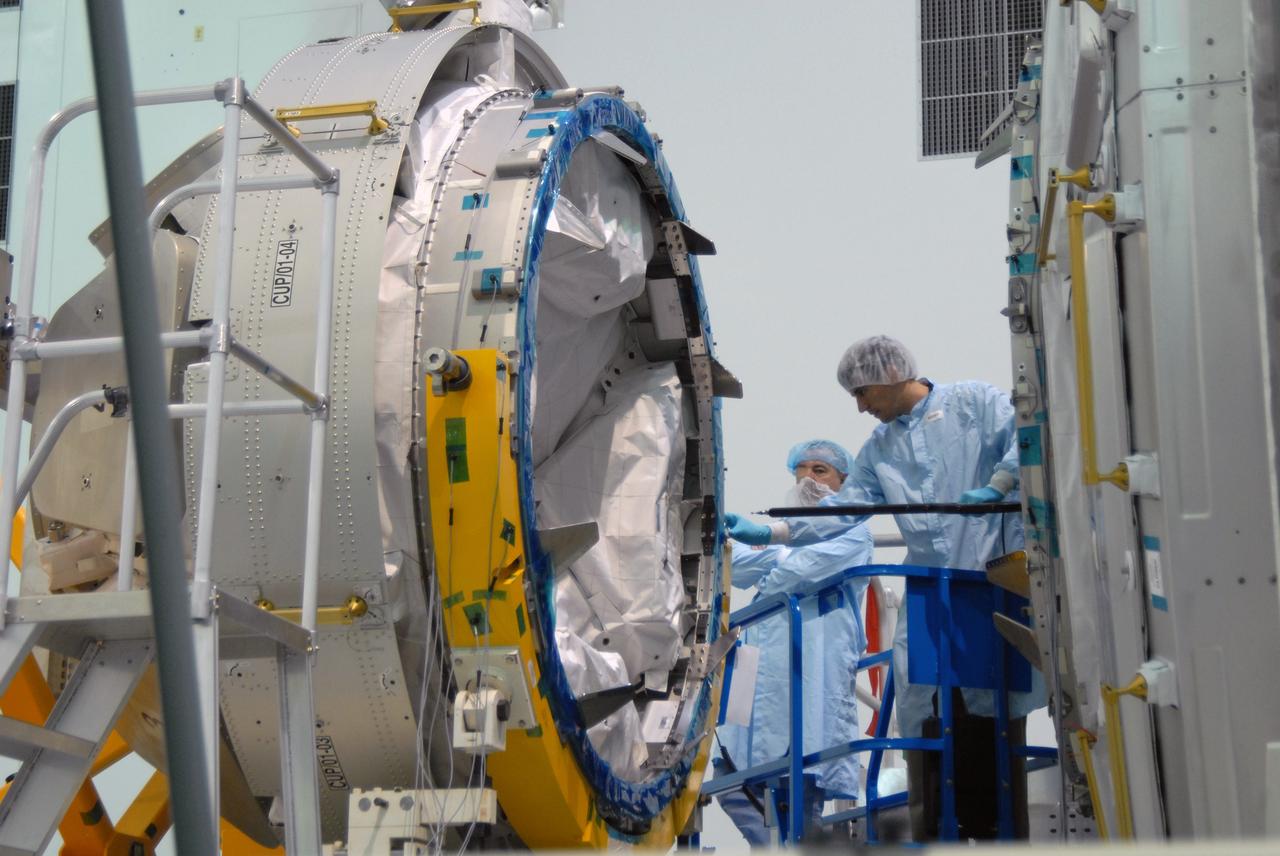
CAPE CANAVERAL, Fla. – In the Space Station Processing Facility at NASA's Kennedy Space Center in Florida, workers check the Cupola module, at left, being aligned with the Tranquility module, at right, for assembly. Cupola and Tranquility are the payload for space shuttle Endeavour's STS-130 mission to the International Space Station. The module was built for the European Space Agency by Alenia Spazio in Turin, Italy. When attached to the Tranquility Node 3 module, Cupola will resemble a circular bay window that will provide a vastly improved view of the station's exterior. Just under 10 feet in diameter, the module will accommodate two crew members and portable workstations that can control station and robotic activities. The multi-directional view will allow the crew to monitor spacewalks and docking operations, as well as provide a spectacular view of Earth and other celestial objects. Endeavour is targeted to launch Feb. 4, 2010. Photo credit: NASA/Jim Grossmann
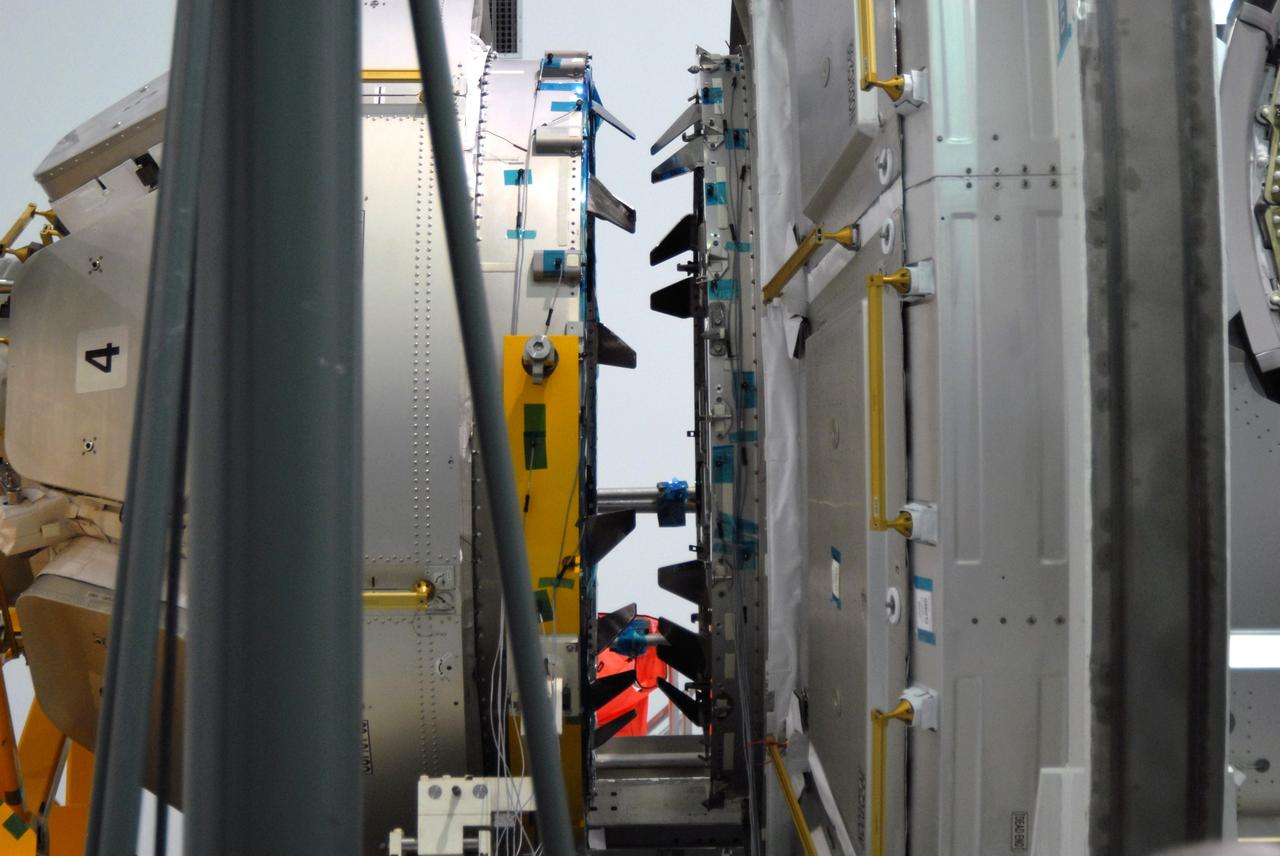
CAPE CANAVERAL, Fla. – In the Space Station Processing Facility at NASA's Kennedy Space Center in Florida, NASA's Cupola module, at left, aligns with the Tranquility module, at right. Cupola and Tranquility are the payload for space shuttle Endeavour's STS-130 mission to the International Space Station. The module was built for the European Space Agency by Alenia Spazio in Turin, Italy. When attached to the Tranquility Node 3 module, Cupola will resemble a circular bay window that will provide a vastly improved view of the station's exterior. Just under 10 feet in diameter, the module will accommodate two crew members and portable workstations that can control station and robotic activities. The multi-directional view will allow the crew to monitor spacewalks and docking operations, as well as provide a spectacular view of Earth and other celestial objects. Endeavour is targeted to launch Feb. 4, 2010. Photo credit: NASA/Jim Grossmann
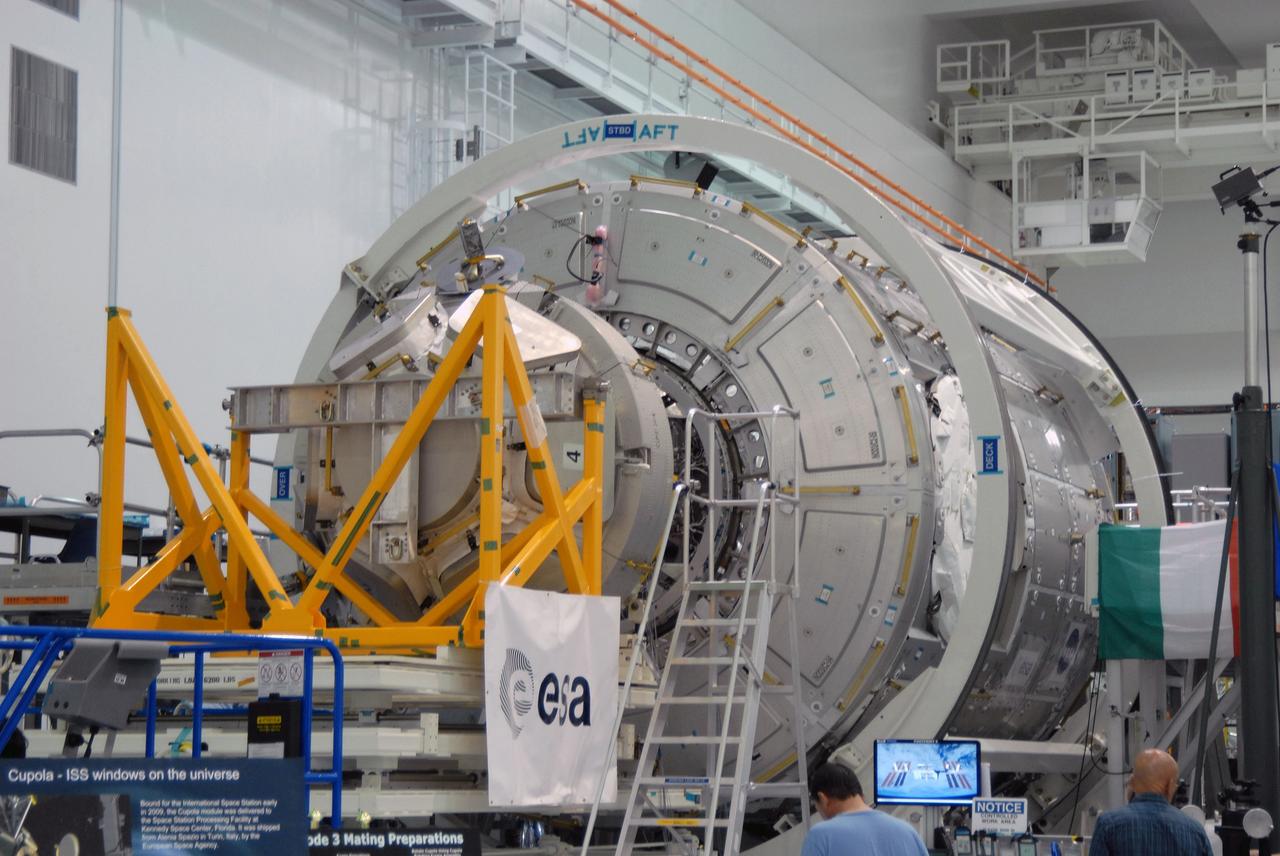
CAPE CANAVERAL, Fla. – In the Space Station Processing Facility at NASA's Kennedy Space Center in Florida, NASA's Cupola module is being aligned with the Tranquility module for assembly. Cupola and Tranquility are the payload for space shuttle Endeavour's STS-130 mission to the International Space Station. The module was built for the European Space Agency by Alenia Spazio in Turin, Italy. When attached to the Tranquility Node 3 module, Cupola will resemble a circular bay window that will provide a vastly improved view of the station's exterior. Just under 10 feet in diameter, the module will accommodate two crew members and portable workstations that can control station and robotic activities. The multi-directional view will allow the crew to monitor spacewalks and docking operations, as well as provide a spectacular view of Earth and other celestial objects. Endeavour is targeted to launch Feb. 4, 2010. Photo credit: NASA/Jim Grossmann
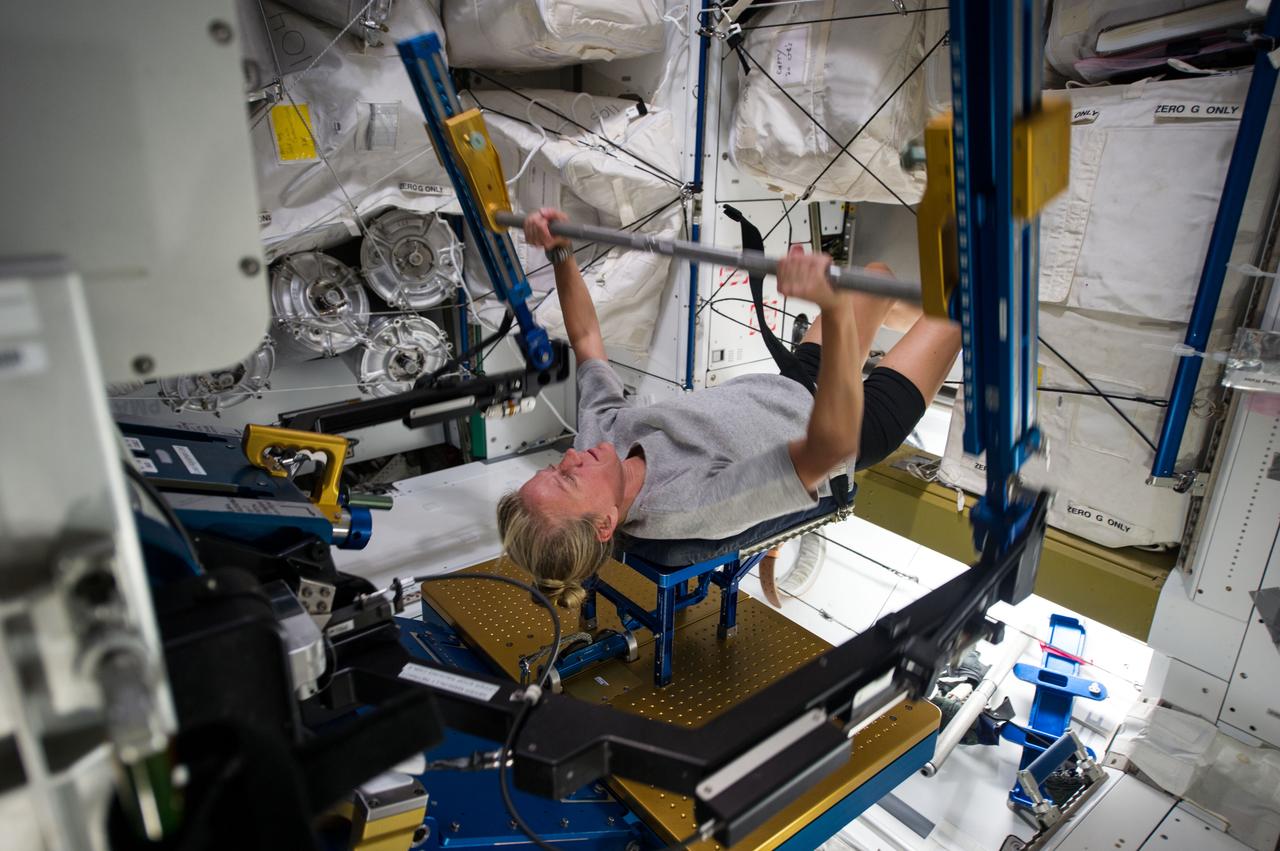
ISS036-E-005939 (3 June 2013) --- NASA astronaut Karen Nyberg, Expedition 36 flight engineer, gets a workout on the Advanced Resistive Exercise Device (ARED) in the Tranquility node of the International Space Station.
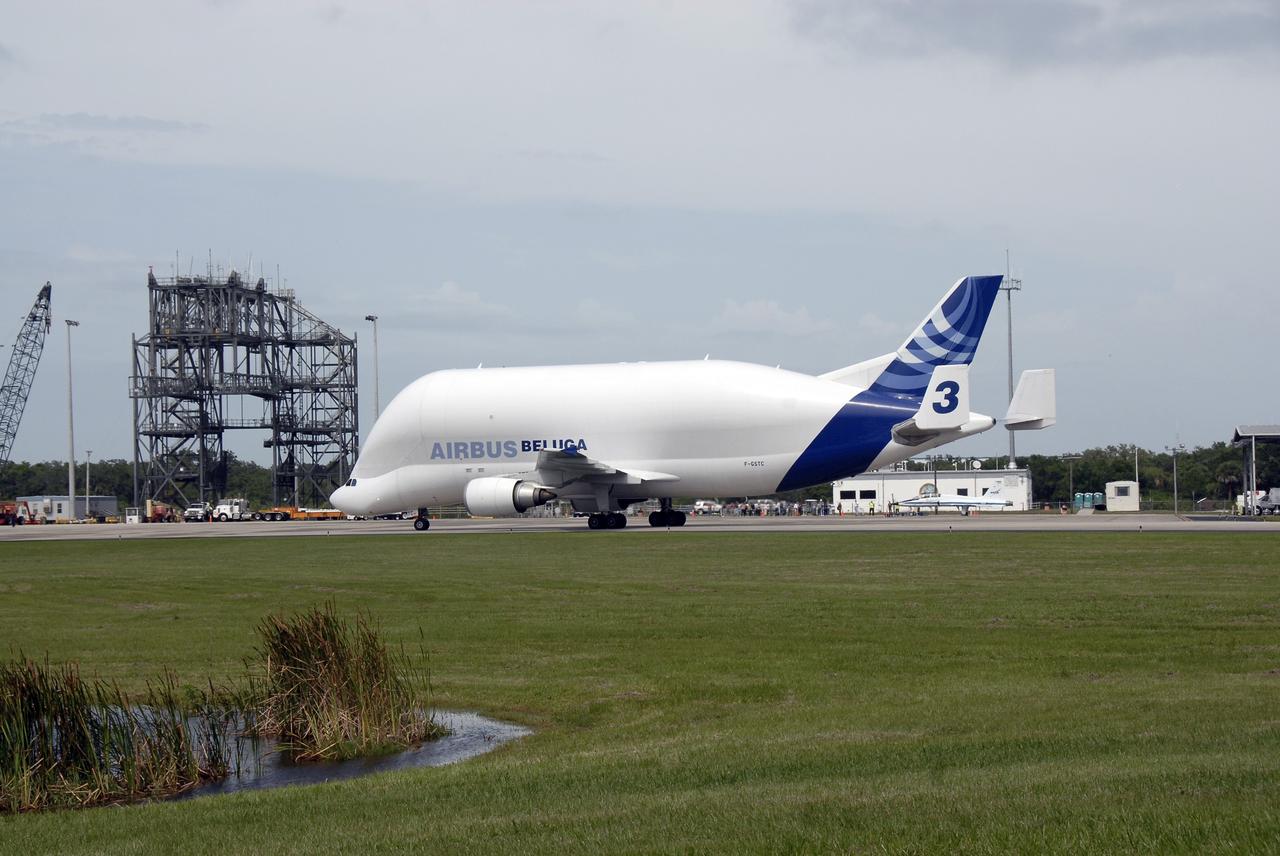
CAPE CANAVERAL, Fla. – A Beluga Airbus taxis near the mate/demate device at NASA Kennedy Space Center's Shuttle Landing Facility. The aircraft carries the newest module for the International Space Station, the Tranquility Node 3. Tranquility will eventually house the life support equipment necessary for the International Space Station's permanent crew of six. It will also accommodate the European Space Agency's Cupola observation module, a seven window dome-shaped structure. Tranquility is the payload on the STS-130 mission, targeted for launch in February 2010. Photo credit: NASA/Kim Shiflett
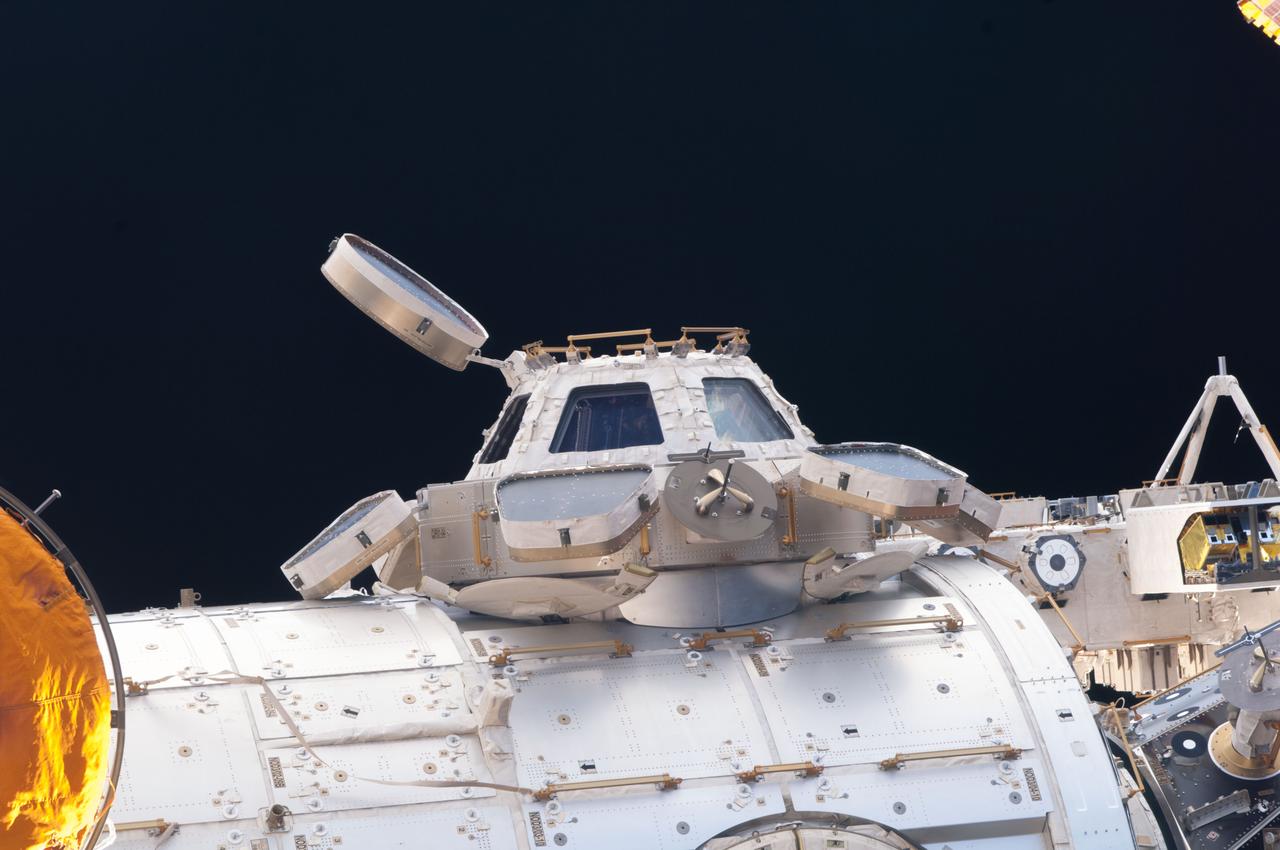
Survey view of portions of the Cupola Module, Tranquility Node 3, and Pressurized Mating Adapter 3 (PMA-3). Image was taken through a window in the Russian segment of the ISS during Expedition 35.
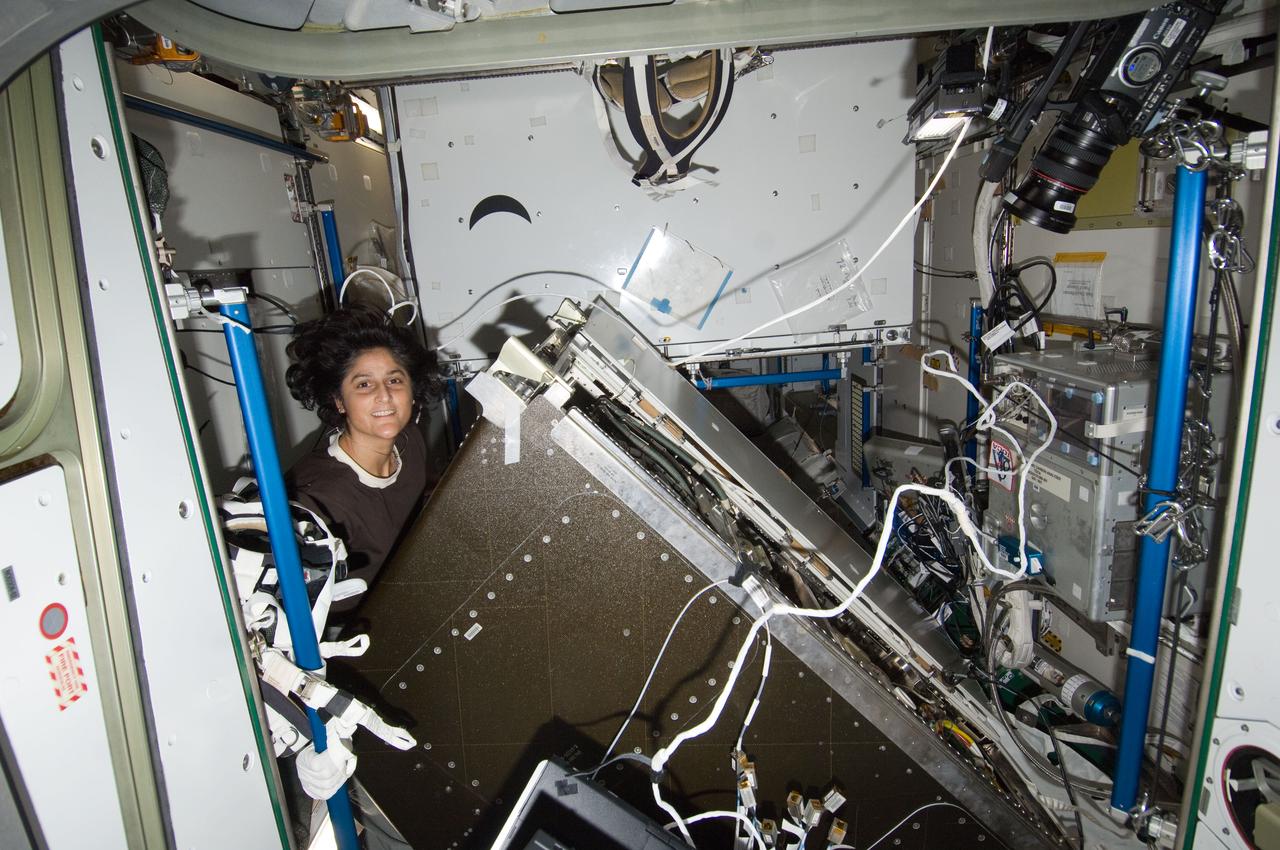
ISS033-E-009199 (3 Oct. 2012) --- NASA astronaut Sunita Williams, Expedition 33 commander, conducts the continuing preventive inspection and cleaning of accessible Atmosphere Revitalization (AR) system bacteria filters in the Tranquility node of the International Space Station.
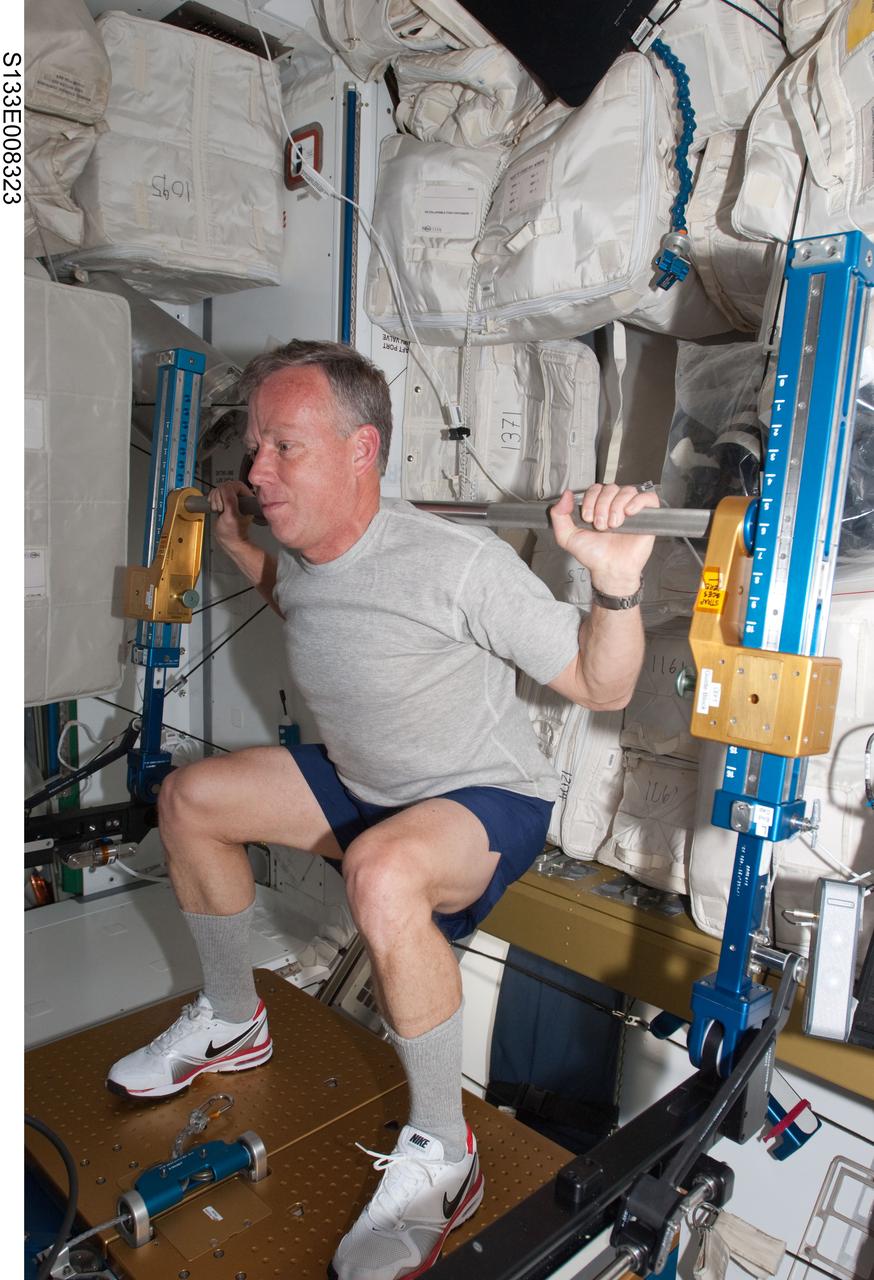
S133-E-008323 (3 March 2011) --- NASA astronaut Steve Lindsey, STS-133 commander, exercises using the advanced Resistive Exercise Device (aRED) in the Tranquility node of the International Space Station while space shuttle Discovery remains docked with the station. Photo credit: NASA or National Aeronautics and Space Administration

ISS030-E-210788 (3 April 2012) --- European Space Agency astronaut Andre Kuipers, Expedition 30 flight engineer, works with the advanced Resistive Exercise Device (aRED) in the Tranquility node of the International Space Station.
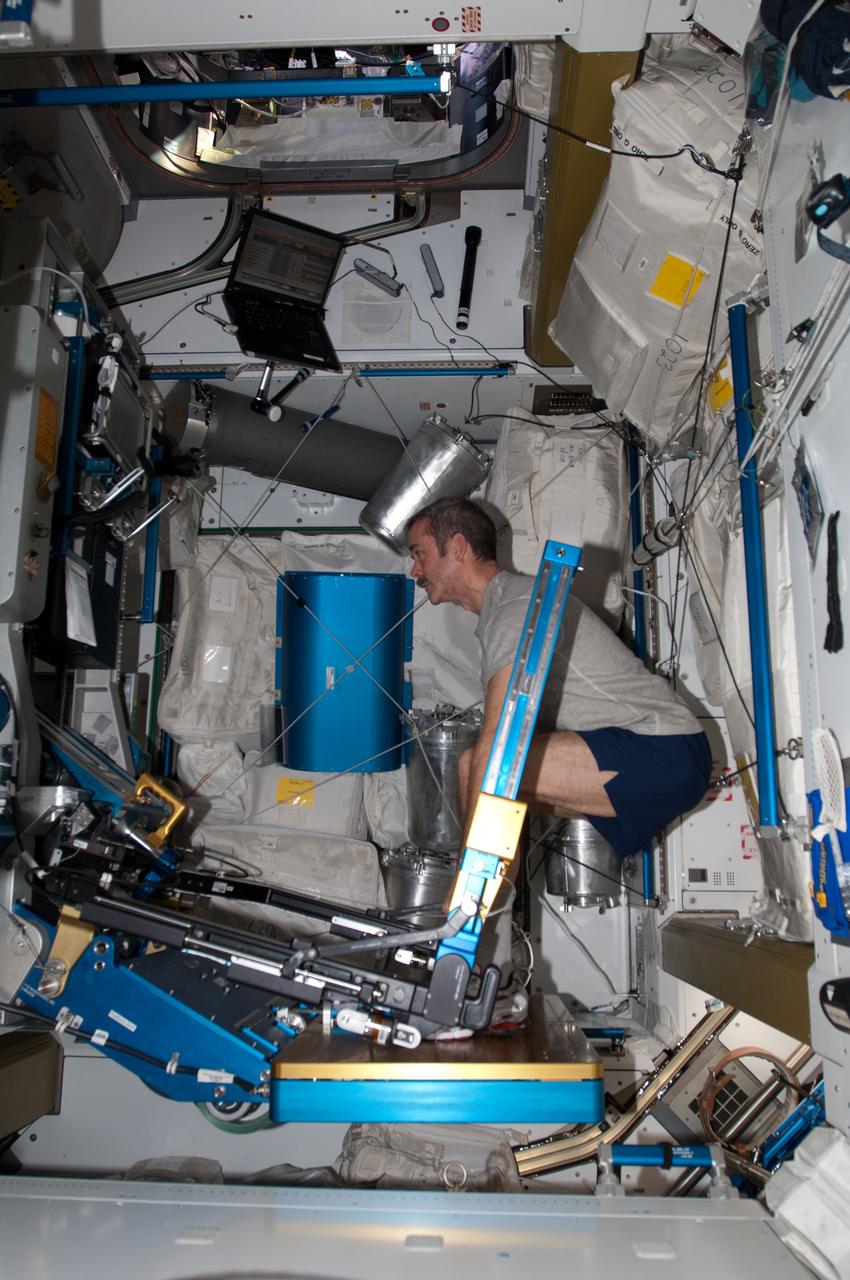
View of Canadian Space Agency (CSA) Chris Hadfield,Expedition 34 Flight Engineer (FE),exercising on the Advanced Resistive Exercise Device (ARED),in the Node 3. Photo was taken during Expedition 34.
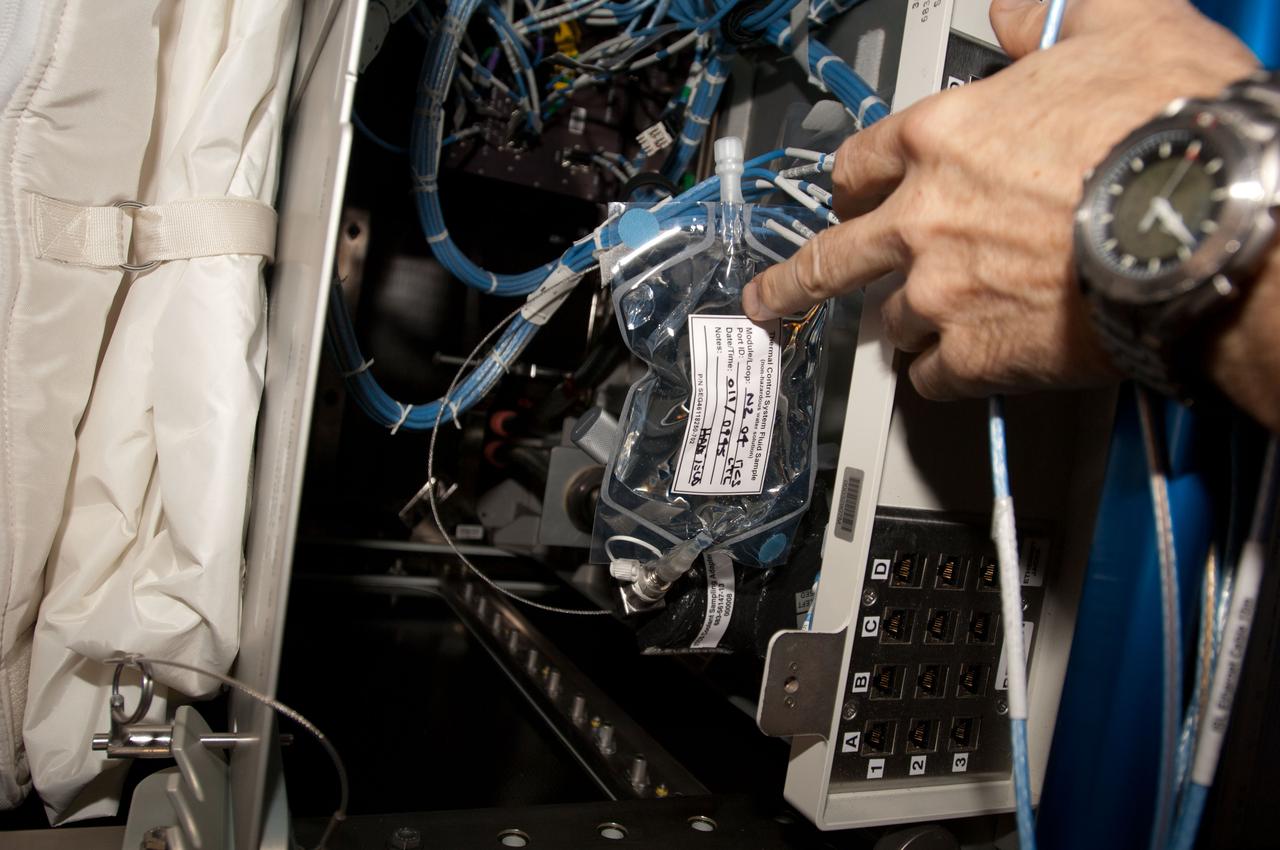
View during Internal Thermal Control System (ITCS) - Measuring valve parameters in the Node 3. Photo was taken during Expedition 34.
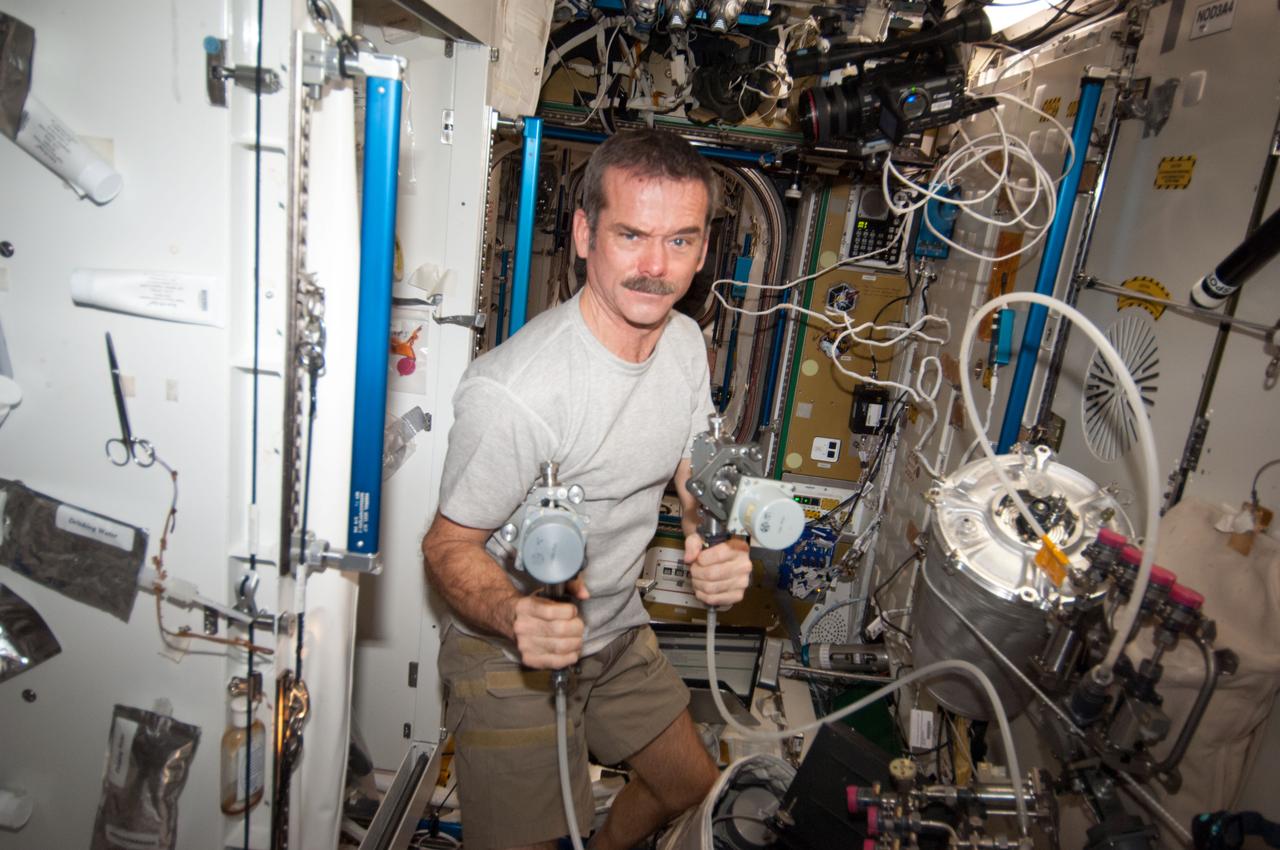
View of Canadian Space Agency (CSA) Chris Hadfield, Expedition 34 Flight Engineer (FE), during Waste and Hygiene Compartment (WHC) routine annual maintenance, in the Node 3. Photo was taken during Expedition 34.
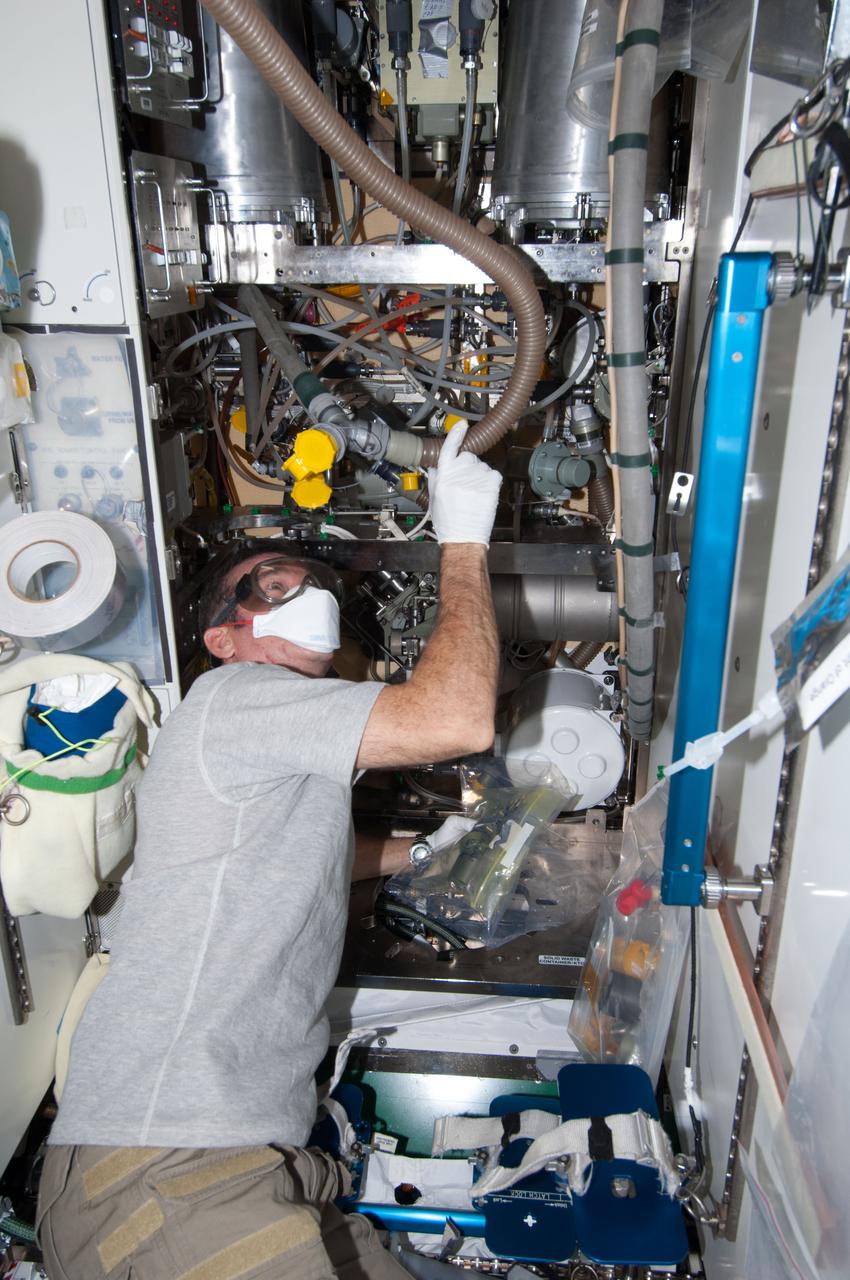
View of Canadian Space Agency (CSA) Chris Hadfield,Expedition 34 Flight Engineer (FE),performing Waste and Hygiene Compartment (WHC) overhaul,in the Node 3. Photo was taken during Expedition 34.
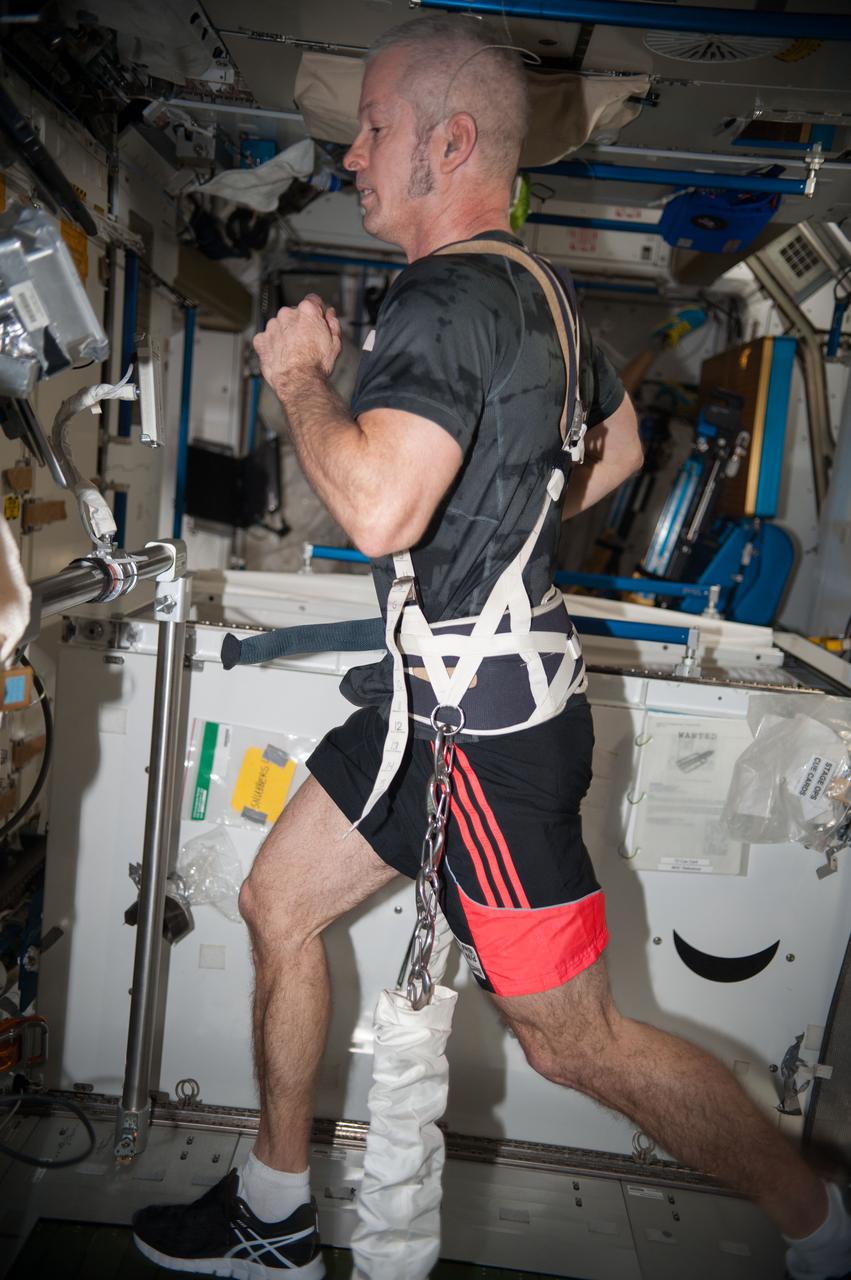
iss040e074772 (7/24/2014) --- NASA astronaut Steve Swanson exercises on the Combined Operational Load Bearing External Resistance Treadmill (COLBERT) in the Tranquility Node 3 module of the International Space Station (ISS). Photo is part of IVA clothing study. The Intravehicular Activity Clothing Study (IVA Clothing Study) dresses crewmembers in commercially available lightweight clothes that have been designed to resist odors.
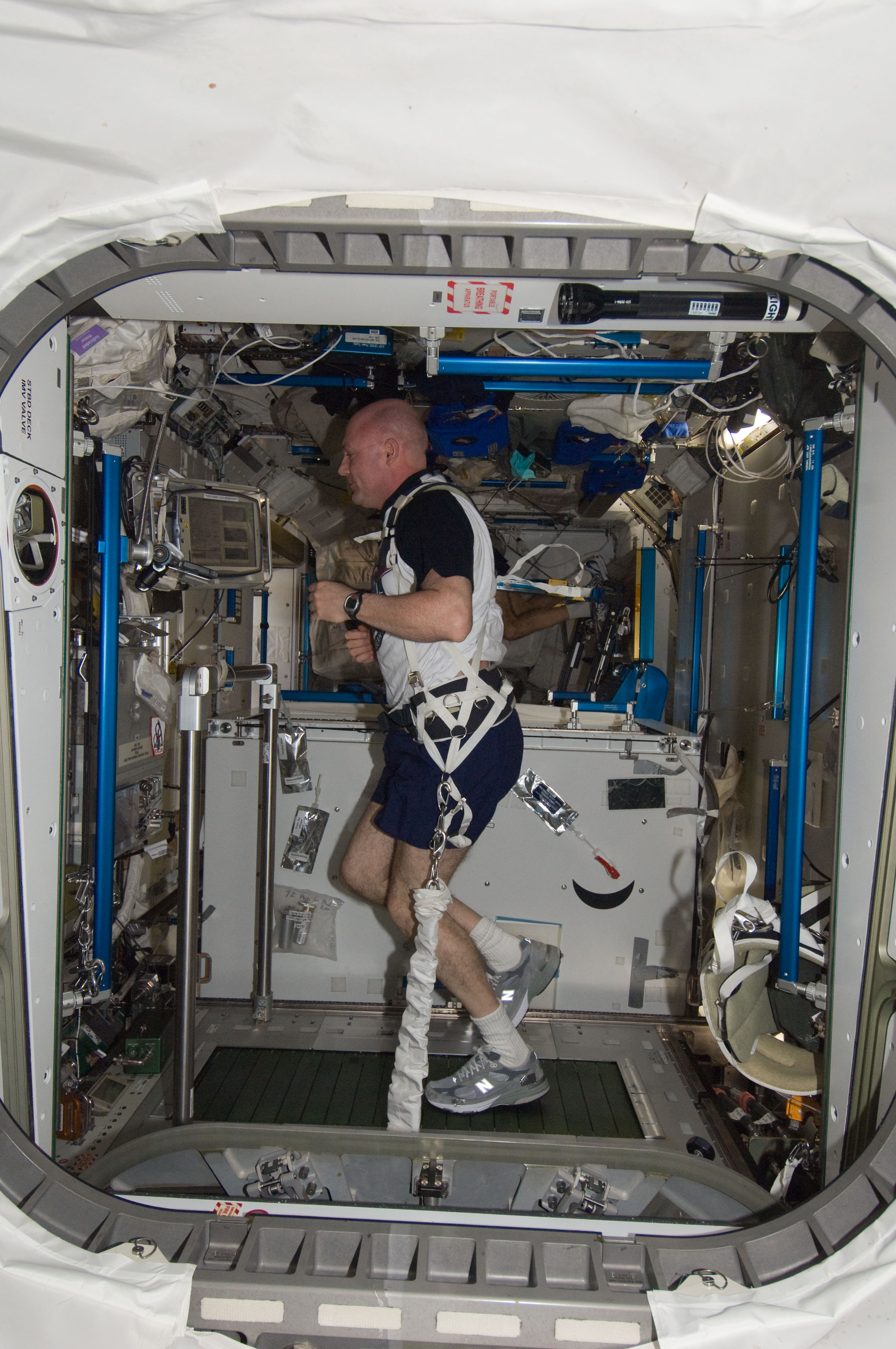
ISS030-E-210742 (3 April 2012) --- European Space Agency astronaut Andre Kuipers, Expedition 30 flight engineer, equipped with a bungee harness, exercises on the Combined Operational Load Bearing External Resistance Treadmill (COLBERT) in the Tranquility node of the International Space Station.
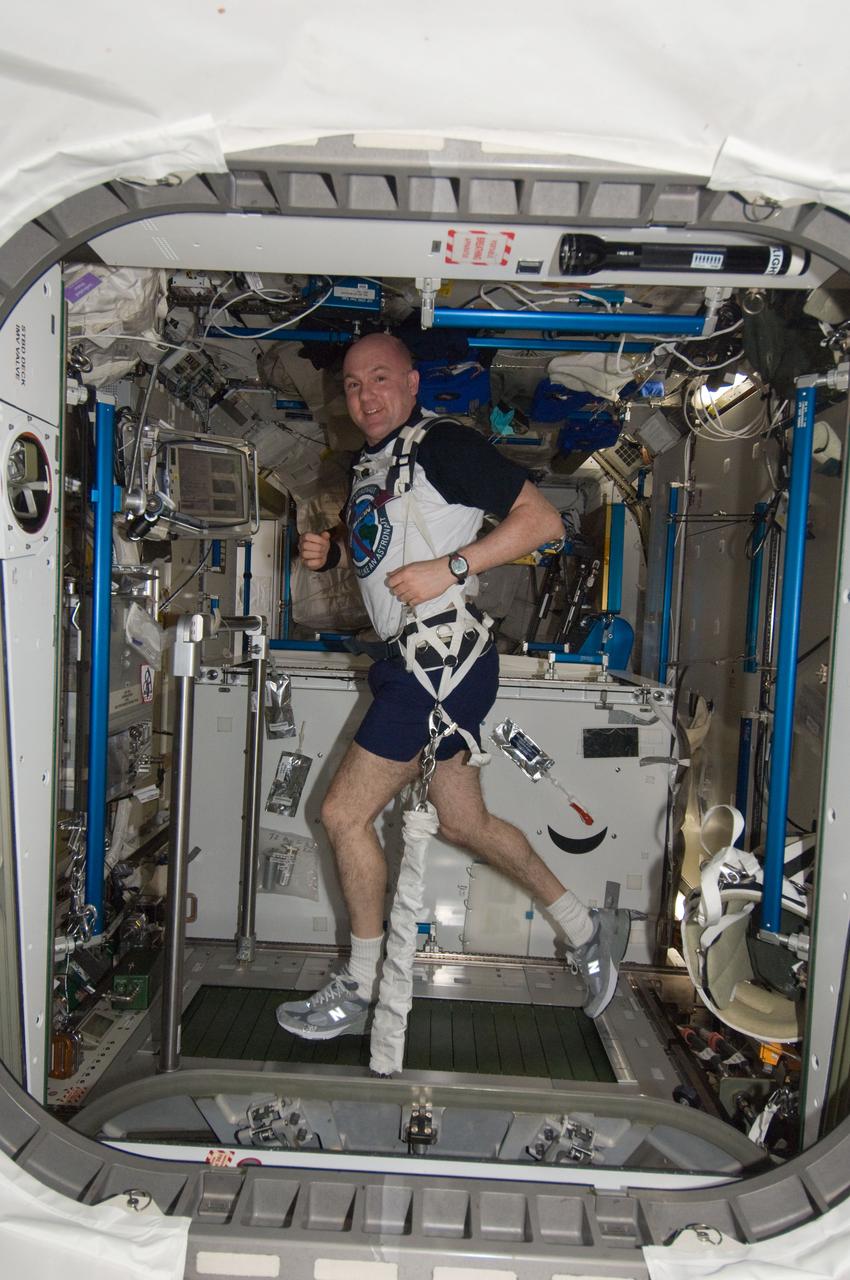
ISS030-E-210743 (3 April 2012) --- European Space Agency astronaut Andre Kuipers, Expedition 30 flight engineer, equipped with a bungee harness, exercises on the Combined Operational Load Bearing External Resistance Treadmill (COLBERT) in the Tranquility node of the International Space Station.
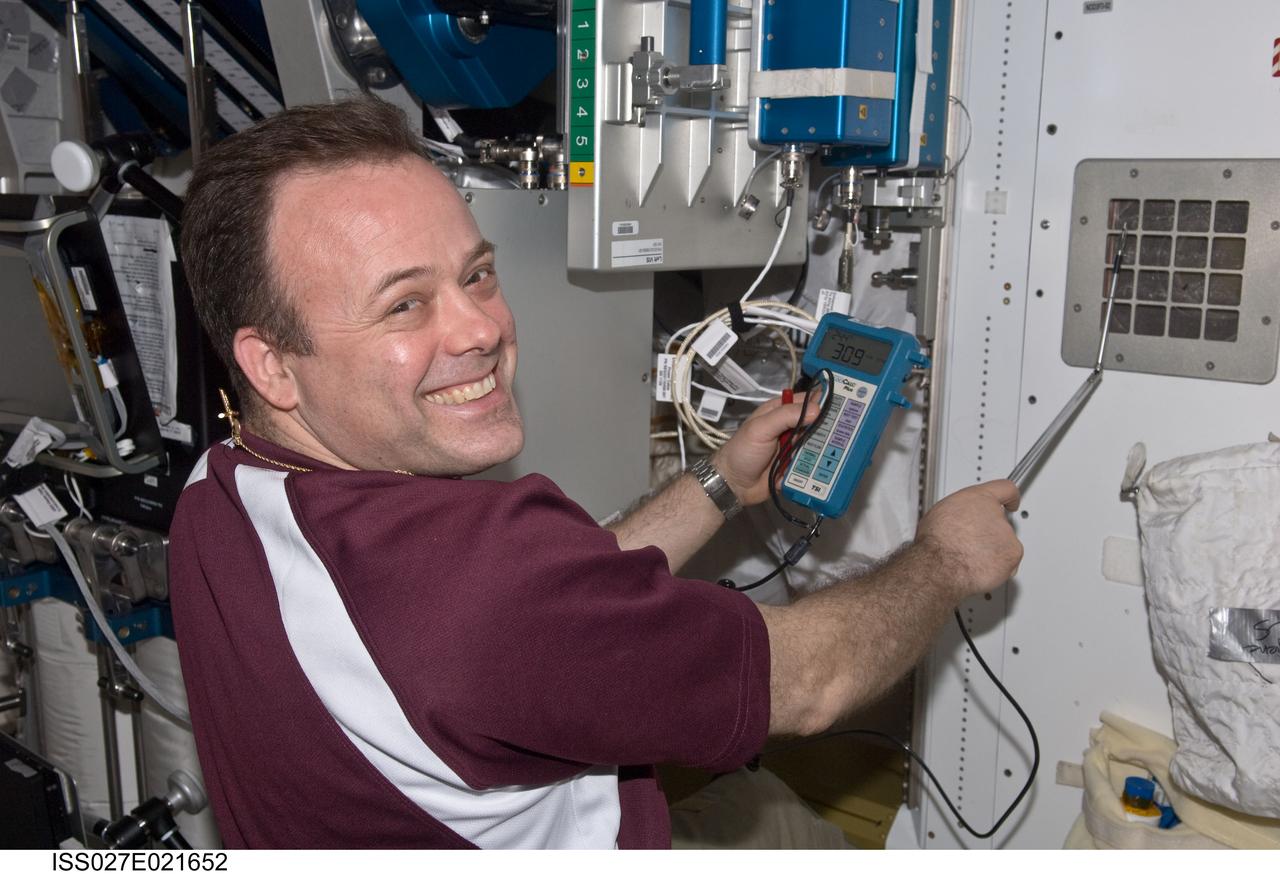
ISS027-E-021652 (4 May 2011) --- NASA astronaut Ron Garan, Expedition 27 flight engineer, uses a portable ventilation test instrument to take intermodular ventilation (IMV) flow measurements in Tranquility (Node 3) aboard the International Space Station.

S133-E-008319 (3 March 2011) --- NASA astronaut Michael Barratt (foreground), STS-133 mission specialist; and Scott Kelly, Expedition 26 commander, perform maintenance on the Carbon Dioxide Removal Assembly (CDRA) in the Air Revitalization 2 (AR2) rack in the Tranquility node of the International Space Station while space shuttle Discovery remains docked with the station. Photo credit: NASA or National Aeronautics and Space Administration
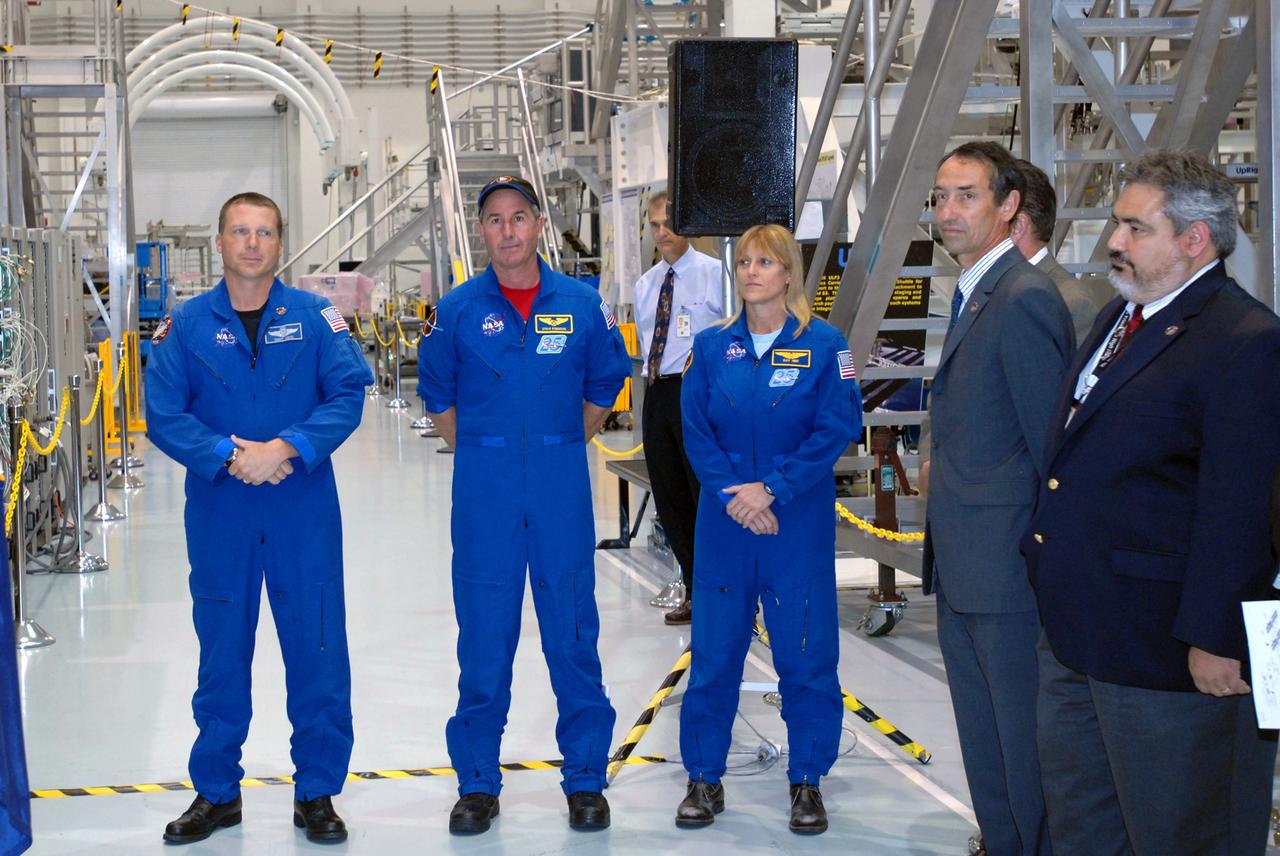
CAPE CANAVERAL, Fla. – During a media event in the Space Station Processing Facility at NASA's Kennedy Space Center in Florida to showcase the newest section of the International Space Station, the Tranquility node, astronauts who will deliver the node on the STS-130 mission were available for questions. From left are Pilot Terry Virts and Mission Specialists Stephen Robinson and Kathryn Hire. At right are other guests, Philippe Deloo, ISS Nodes project manager with the European Space Agency, and Rafael Garcia, ISS Nodes and Express Logistics Carrier project manager with NASA's Johnson Space Center. Managers from NASA, the European Space Agency, Thales Alenia Space and Boeing -- the organizations involved in building and processing the module for flight -- were available for a question-and-answer session during the event. Tranquility is a pressurized module that will provide room for many of the station's life support systems. Photo credit: NASA/Jim Grossmann
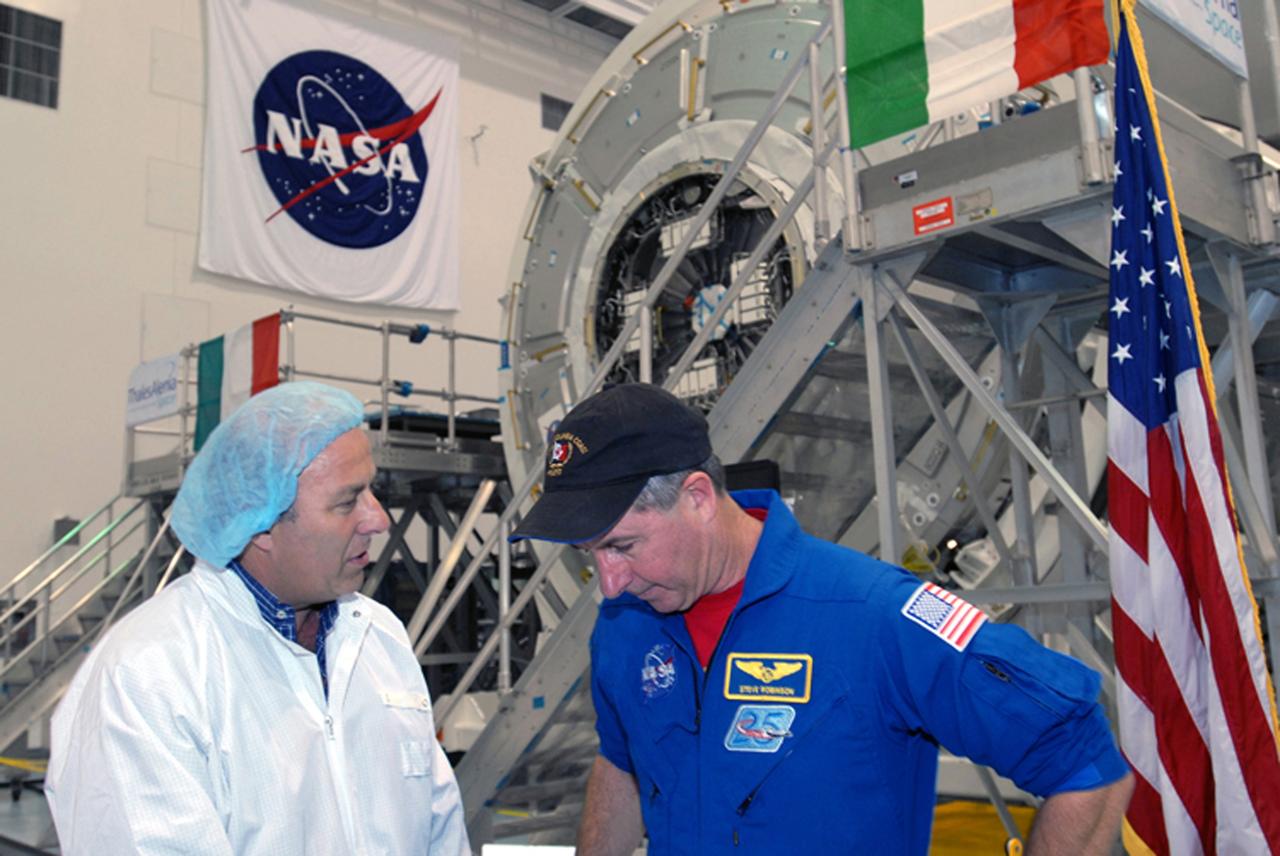
CAPE CANAVERAL, Fla. – During a media event in the Space Station Processing Facility at NASA's Kennedy Space Center in Florida to showcase the newest section of the International Space Station, the Tranquility node, astronaut Stephen Robinson talks with Giuseppe Mancuso from Thales Alenia Space Italy. Robinson is a mission specialist on the STS-130 mission that will deliver Tranquility to the space station. Managers from NASA, the European Space Agency, Thales Alenia Space and Boeing -- the organizations involved in building and processing the module for flight -- were available for a question-and-answer session during the event. Tranquility is a pressurized module that will provide room for many of the station's life support systems. Photo credit: NASA/Jim Grossmann
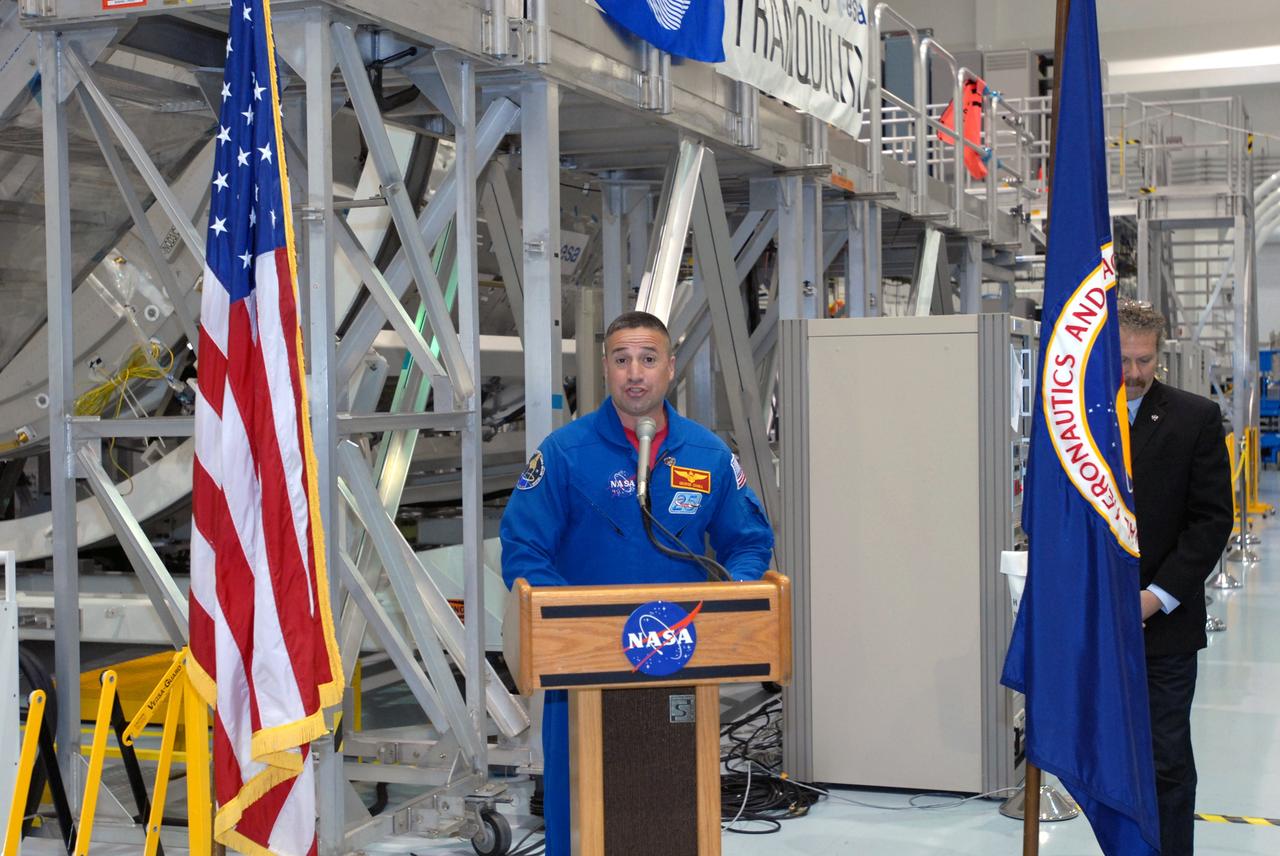
CAPE CANAVERAL, Fla. – During a media event at NASA's Kennedy Space Center in Florida to showcase the newest section of the International Space Station, the Tranquility node, STS-130 Commander George Zamka speaks to the media and guests. Tranquility will be delivered to the station during space shuttle Endeavour's STS-130 mission, targeted for launch in February 2010. At right is Russell Romanella, director of the ISS and Spacecraft Processing Directorate. Managers from NASA, the European Space Agency, Thales Alenia Space and Boeing -- the organizations involved in building and processing the module for flight -- were available for a question-and-answer session during the event. Tranquility is a pressurized module that will provide room for many of the station's life support systems. Photo credit: NASA/Jim Grossmann
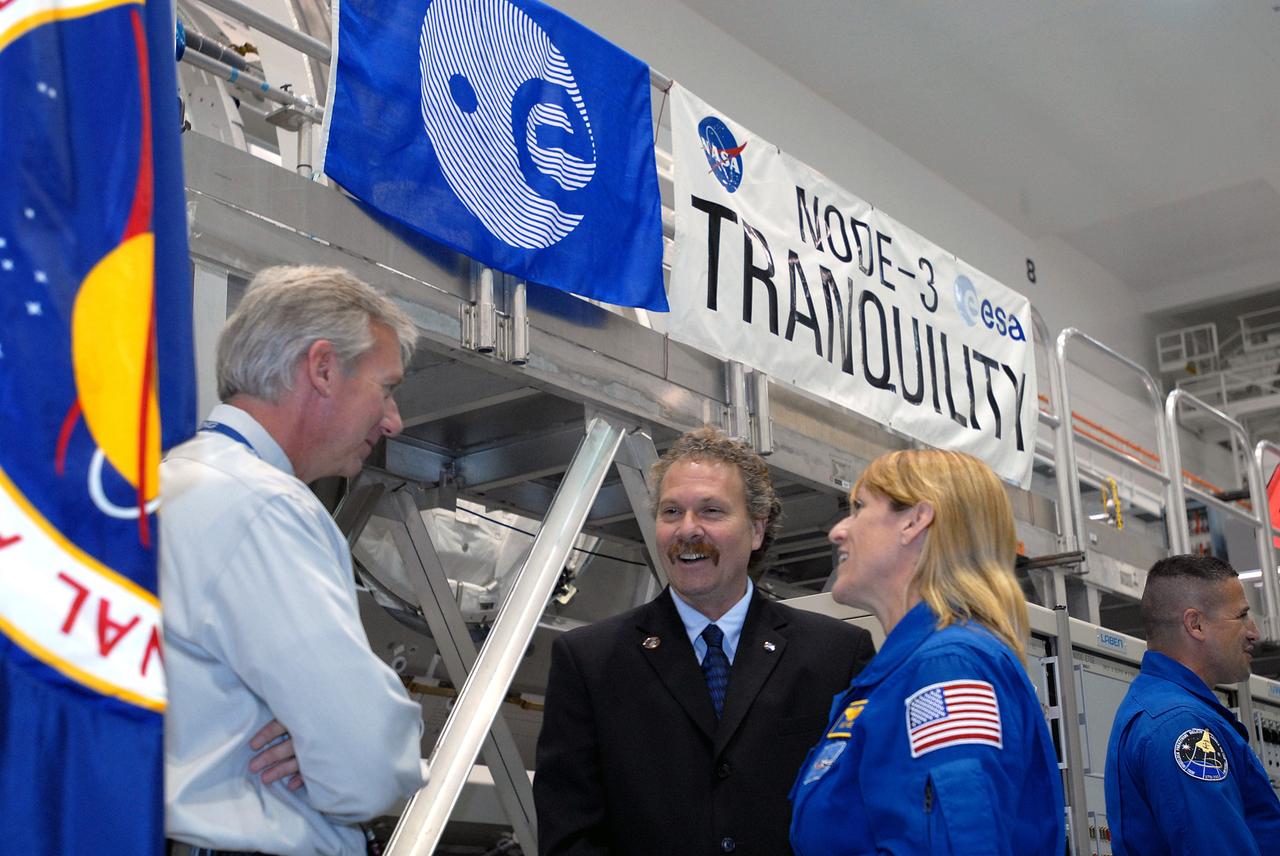
CAPE CANAVERAL, Fla. – – During a media event in the Space Station Processing Facility at NASA's Kennedy Space Center in Florida to showcase the newest section of the International Space Station, the Tranquility node, astronaut Kay Hire and Director of the ISS and Spacecraft Processing Directorate Russell Romanella (center) talk with Mark Jager, program manager, with Checkout Assembly and Payload Processing Services at The Boeing Company. At far right is astronaut George Zamka, who is commander for the STS-130 mission that will deliver Tranquility to the space station. Managers from NASA, the European Space Agency, Thales Alenia Space and Boeing -- the organizations involved in building and processing the module for flight -- were available for a question-and-answer session during the event. Tranquility is a pressurized module that will provide room for many of the station's life support systems. Photo credit: NASA/Jim Grossmann
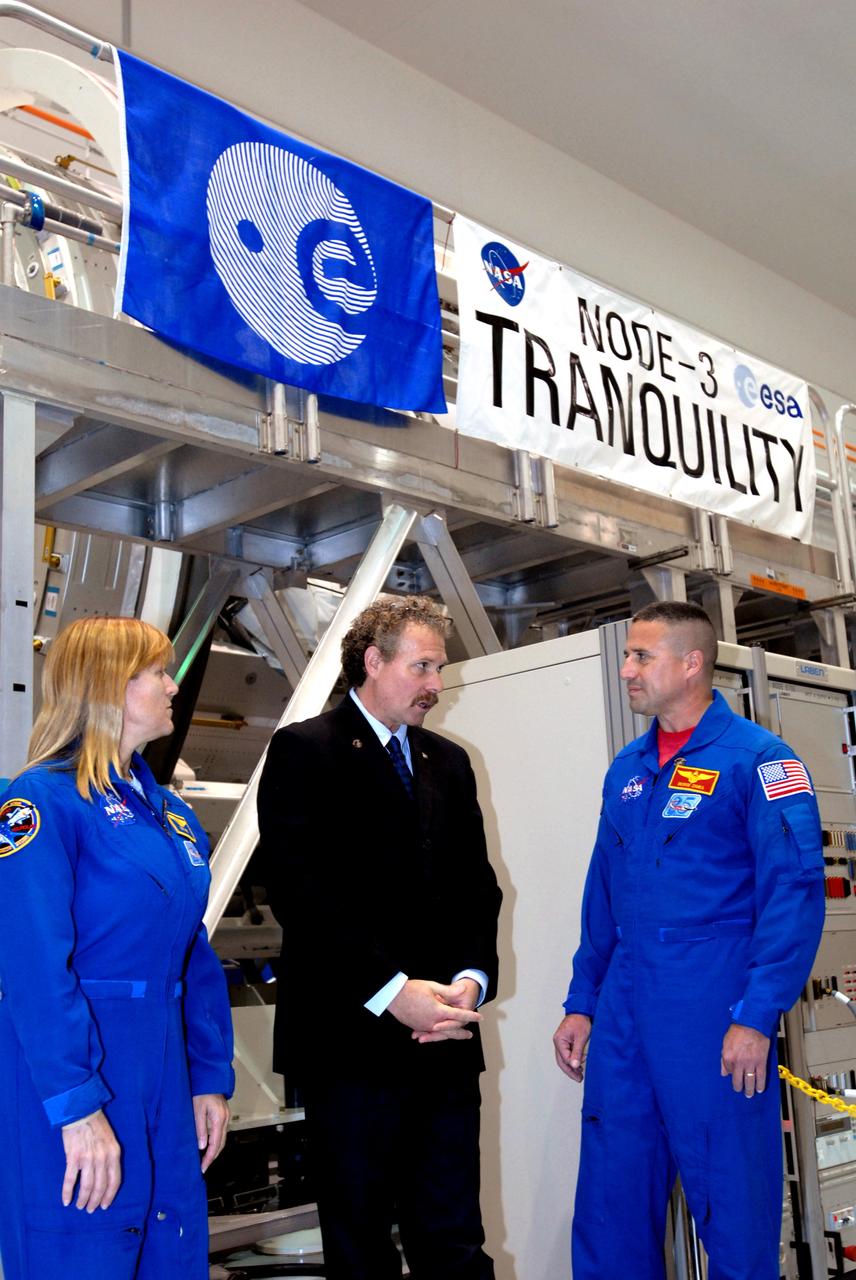
CAPE CANAVERAL, Fla. – – During a media event in the Space Station Processing Facility at NASA's Kennedy Space Center in Florida to showcase the newest section of the International Space Station, the Tranquility node, Director of the ISS and Spacecraft Processing Directorate Russell Romanella (center) talks with two of the astronauts who will deliver Tranquility to the space station on the STS-130 mission, Mission Specialist Kay Hire and Commander George Zamka. Managers from NASA, the European Space Agency, Thales Alenia Space and Boeing -- the organizations involved in building and processing the module for flight -- were available for a question-and-answer session during the event. Tranquility is a pressurized module that will provide room for many of the station's life support systems. Photo credit: NASA/Jim Grossmann
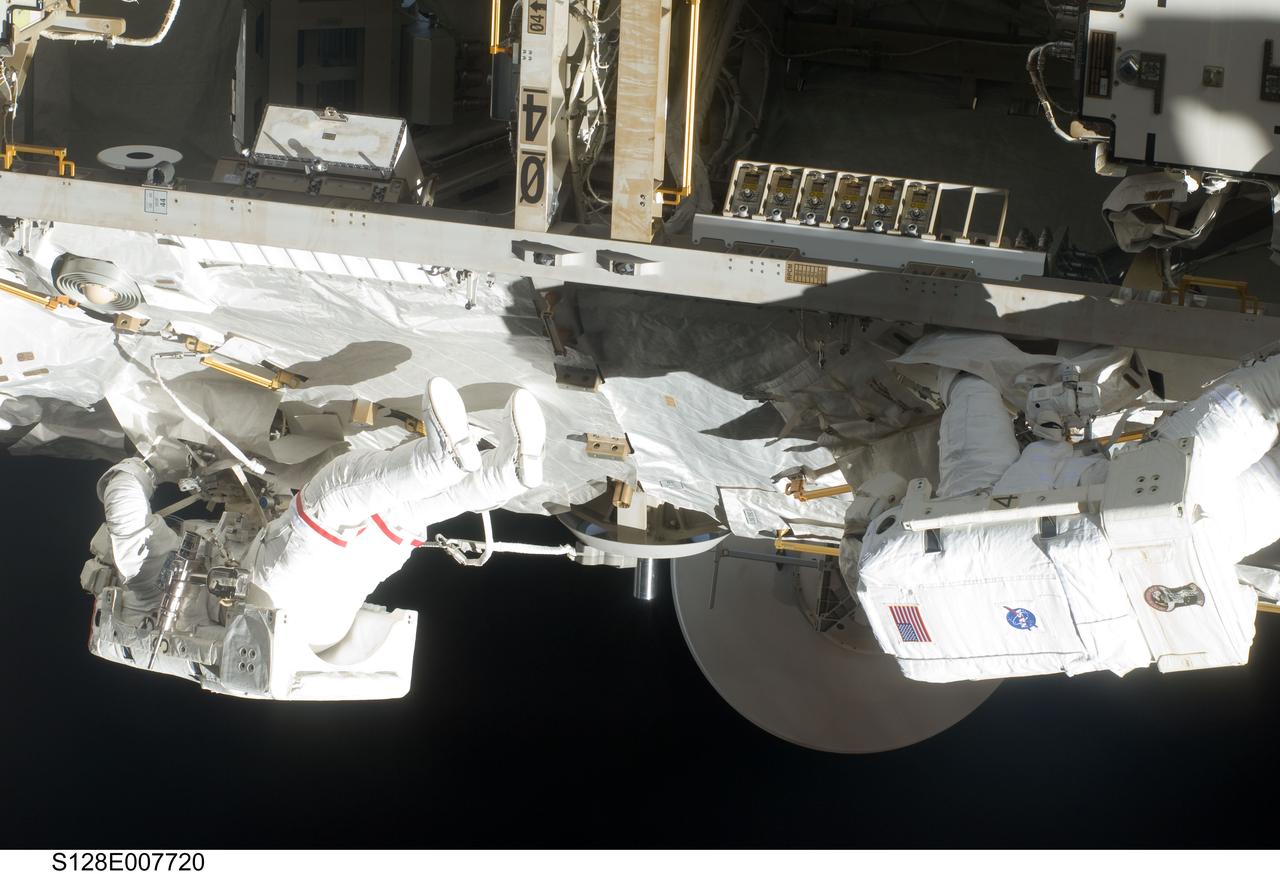
S128-E-007720 (5 Sept. 2009) --- NASA astronaut John “Danny” Olivas (left) and European Space Agency astronaut Christer Fuglesang, both STS-128 mission specialists, participate in the mission's third and final session of extravehicular activity (EVA) as construction and maintenance continue on the International Space Station. During the seven-hour, one-minute spacewalk, Olivas and Fuglesang deployed the Payload Attachment System (PAS), replaced the Rate Gyro Assembly #2, installed two GPS antennae and did some work to prepare for the installation of Node 3 next year. During connection of one of two sets of avionics cables for Node 3, one of the connectors could not be mated. This cable and connector were wrapped in a protective sleeve and safed. All other cables were mated successfully.
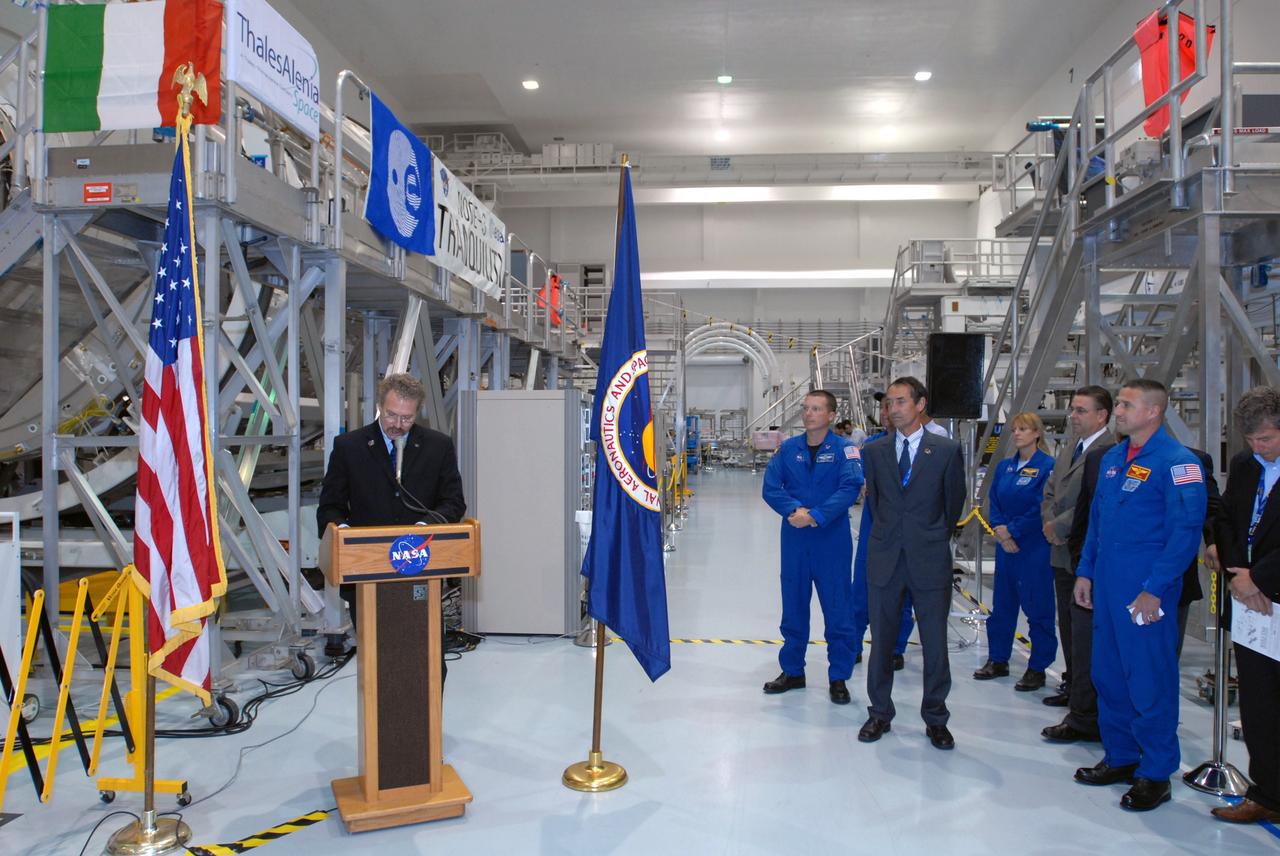
CAPE CANAVERAL, Fla. – – Russell Romanella, director of the ISS and Spacecraft Processing Directorate at NASA's Kennedy Space Center, addresses the media and guests who were provided an opportunity to see the newest section of the International Space Station, the Tranquility node, in the Space Station Processing Facility. c At right are the astronauts who will be on the mission: Pilot Terry Virts, Mission Specialists Stephen Robinson and Kathryn Hire, and Commander George Zamka. In front of Robinson is Philippe DeLoos, ISS Nodes project manager with the European Space Agency. Managers from NASA, the European Space Agency, Thales Alenia Space and Boeing -- the organizations involved in building and processing the module for flight -- were available for a question-and-answer session during the event. Tranquility is a pressurized module that will provide room for many of the station's life support systems. Photo credit: NASA/Jim Grossmann
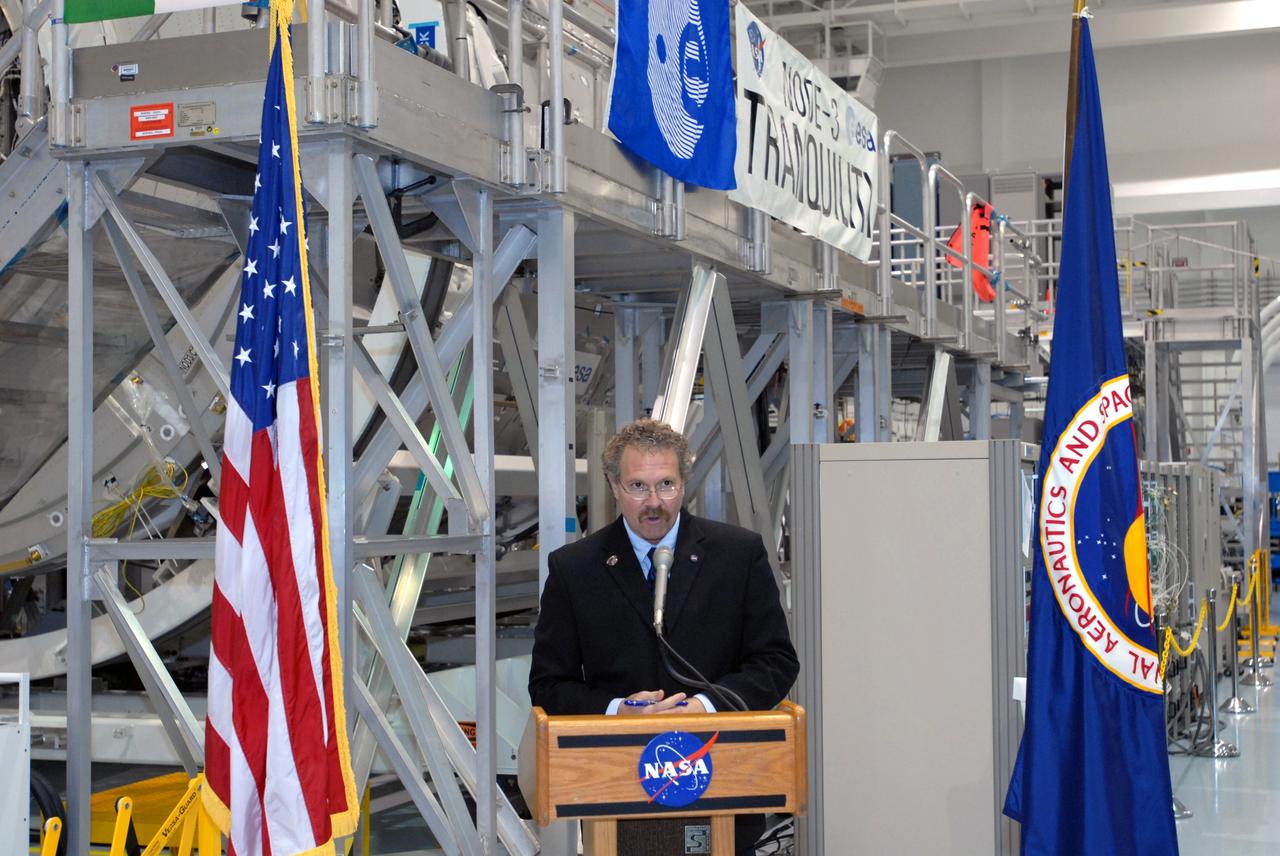
CAPE CANAVERAL, Fla. – Russell Romanella, director of the ISS and Spacecraft Processing Directorate at NASA's Kennedy Space Center, addresses the media who were provided an opportunity to see the newest section of the International Space Station, the Tranquility node, in the Space Station Processing Facility. Tranquility is a pressurized module that will provide room for many of the station's life support systems. Managers from NASA, the European Space Agency, Thales Alenia Space and Boeing -- the organizations involved in building and processing the module for flight -- were available for a question-and-answer session during the event. Tranquility will be delivered to the station during space shuttle Endeavour's STS-130 mission, targeted for launch in February 2010. Photo credit: NASA/Jim Grossmann
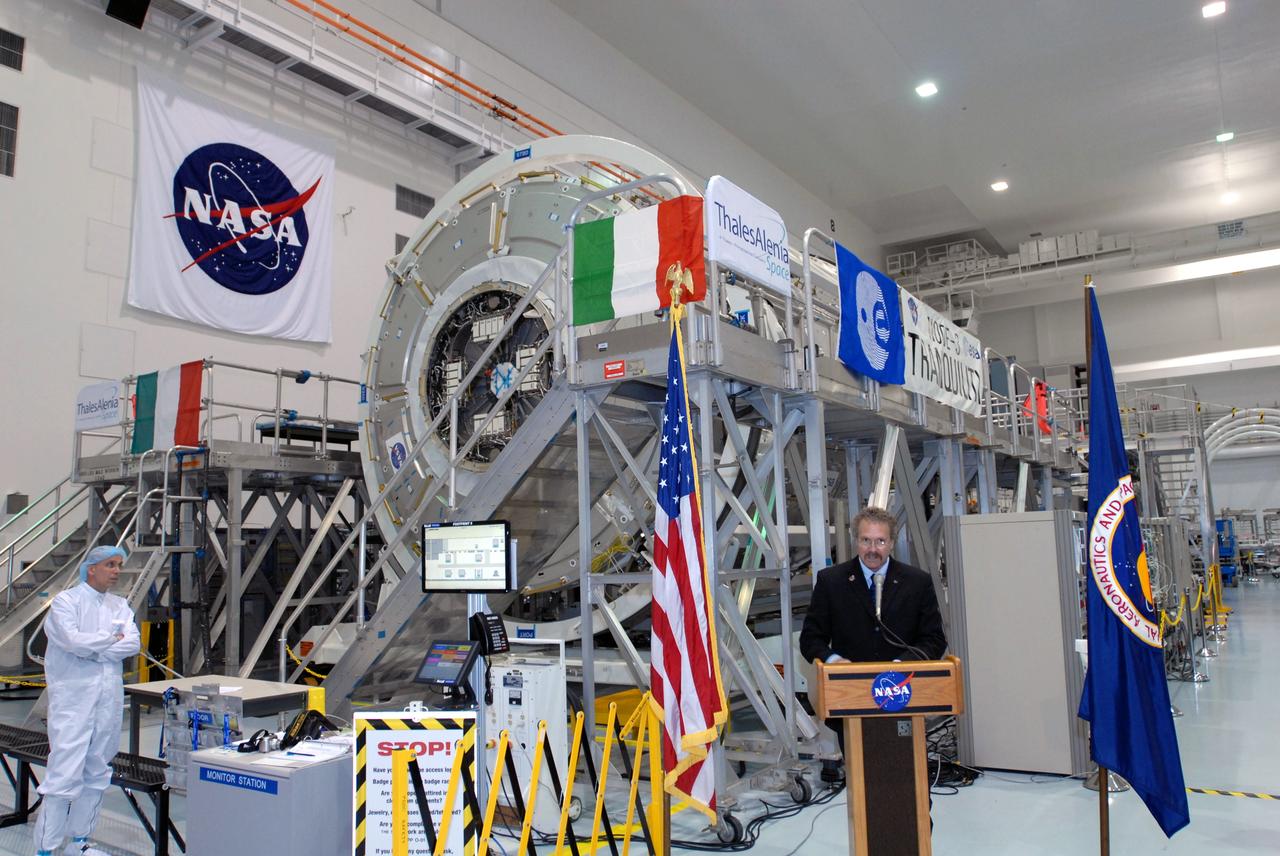
CAPE CANAVERAL, Fla. – Russell Romanella, director of the ISS and Spacecraft Processing Directorate at NASA's Kennedy Space Center, addresses the media who were provided an opportunity to see the newest section of the International Space Station, the Tranquility node, in the Space Station Processing Facility. Tranquility is a pressurized module that will provide room for many of the station's life support systems. Managers from NASA, the European Space Agency, Thales Alenia Space and Boeing -- the organizations involved in building and processing the module for flight -- were available for a question-and-answer session during the event. Tranquility will be delivered to the station during space shuttle Endeavour's STS-130 mission, targeted for launch in February 2010. Photo credit: NASA/Jim Grossmann
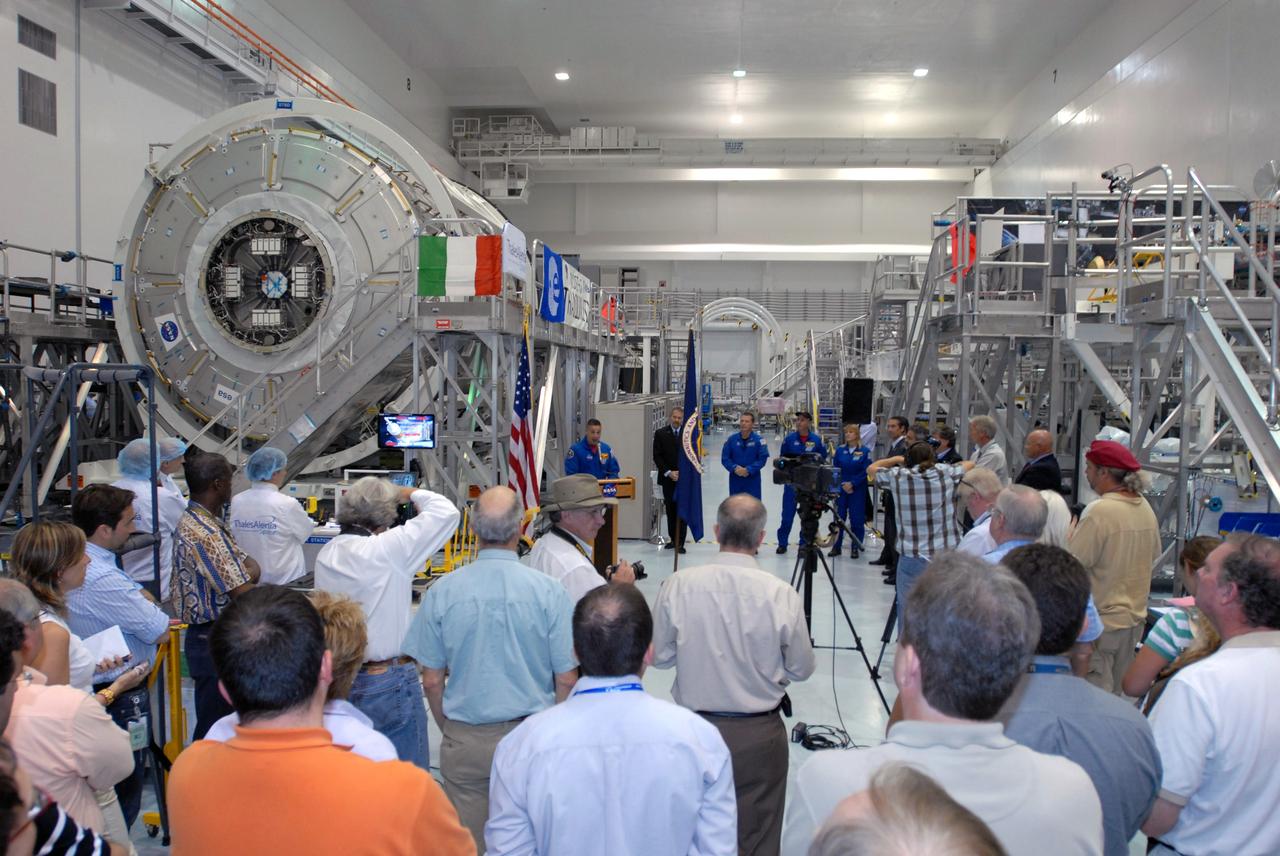
CAPE CANAVERAL, Fla. – During a media event at NASA's Kennedy Space Center in Florida to showcase the newest section of the International Space Station, the Tranquility node, STS-130 Commander George Zamka speaks to the media and guests. Tranquility will be delivered to the station during space shuttle Endeavour's STS-130 mission, targeted for launch in February 2010. Others present at right of Zamka are Russ Romanella, director of the ISS and Payload Processing Directorate, STS-130 Pilot Terry Virts and Mission Specialists Stephen Robinson and Kathryn Hire, Philippe Deloo, ISS Nodes project manager with the European Space Agency, and Rafael Garcia, ISS Nodes and Express Logistics Carrier project manager with NASA's Johnson Space Center. Managers from NASA, the European Space Agency, Thales Alenia Space and Boeing -- the organizations involved in building and processing the module for flight -- were available for a question-and-answer session during the event. Tranquility will be delivered to the station during space shuttle Endeavour's STS-130 mission, targeted for launch in February 2010. Photo credit: NASA/Jim Grossmann

JSC2006-E-43516 (October 2006) --- Computer-generated artist's rendering of the International Space Station after flight 20A. U.S. Orbiter delivers and installs Node 3 with Cupola. Pressurized Mating Adapter-3 (PMA-3) is relocated from Unity node nadir to Node 2 nadir beforehand. The Cupola is relocated to the forward port of Node 3 after the flight; and PMA- 3 is relocated to the axial port of Node 3 after the flight.
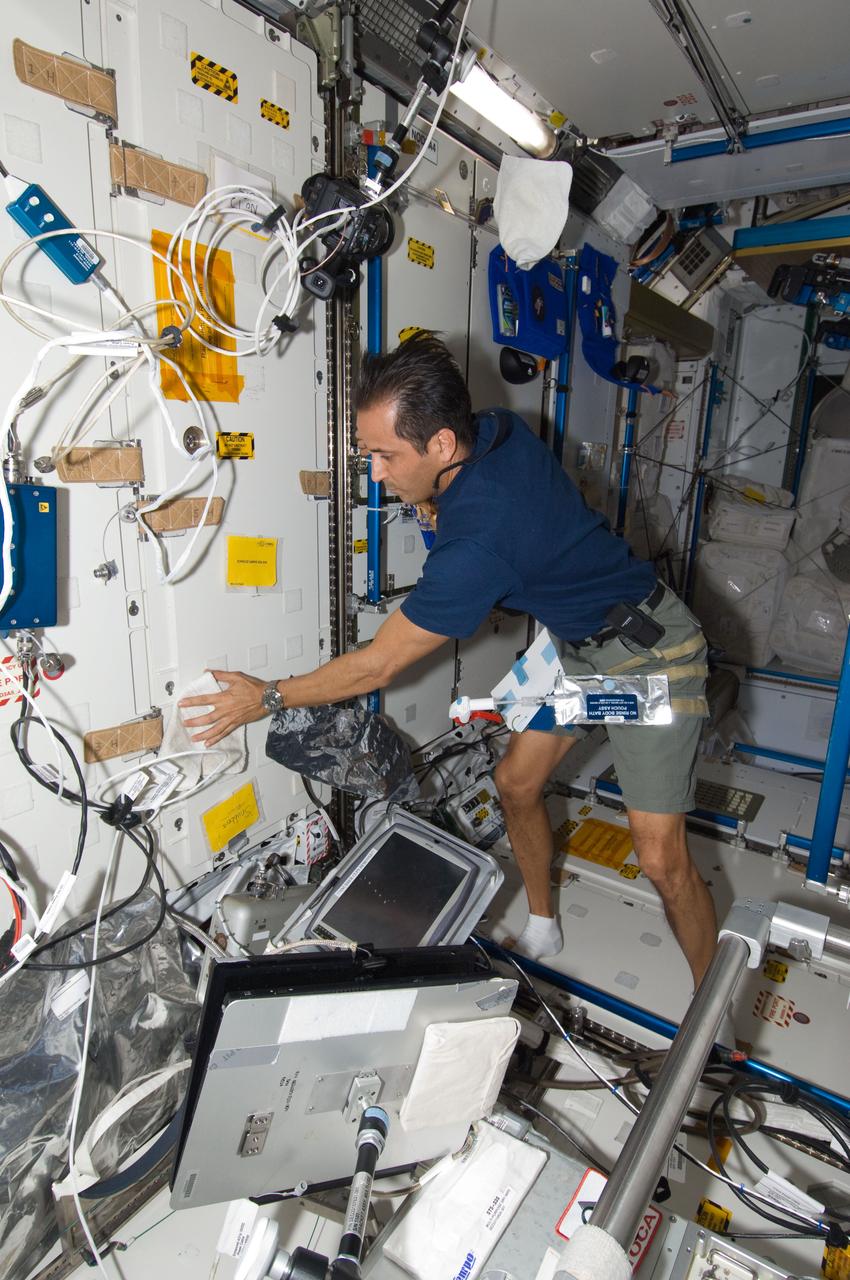
ISS031-E-095918 (8 June 2012) --- NASA astronaut Joe Acaba, Expedition 31 flight engineer, cleans surface areas in the Tranquility node of the International Space Station.
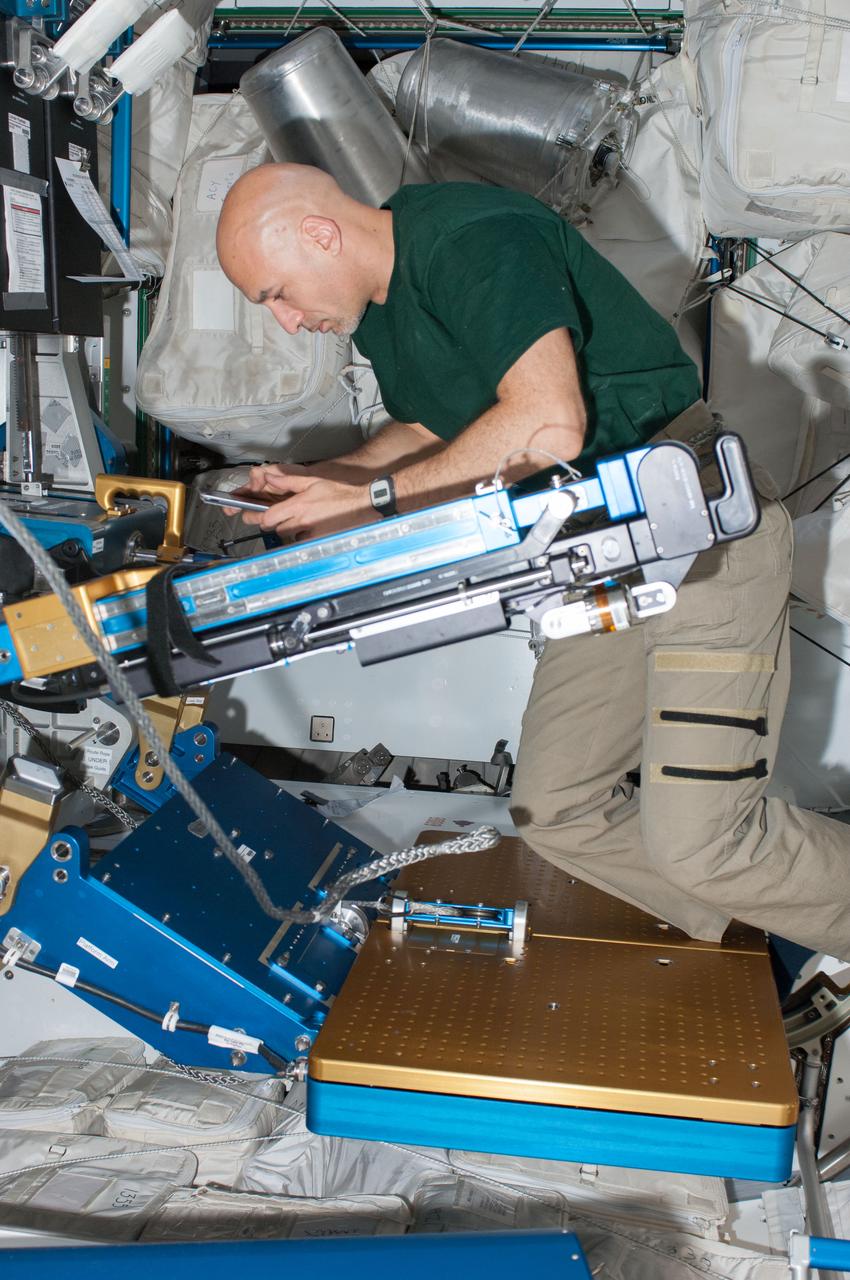
ISS036-E-008912 (17 June 2013) --- European Space Agency astronaut Luca Parmitano, Expedition 36 flight engineer, performs in-flight maintenance on the advanced Resistive Exercise Device (aRED) in the Tranquility node of the International Space Station.

ISS040-E-006091 (31 May 2014) --- NASA astronaut Reid Wiseman, Expedition 40 flight engineer, equipped with a bungee harness, exercises on the Combined Operational Load Bearing External Resistance Treadmill (COLBERT) in the Tranquility node of the International Space Station.
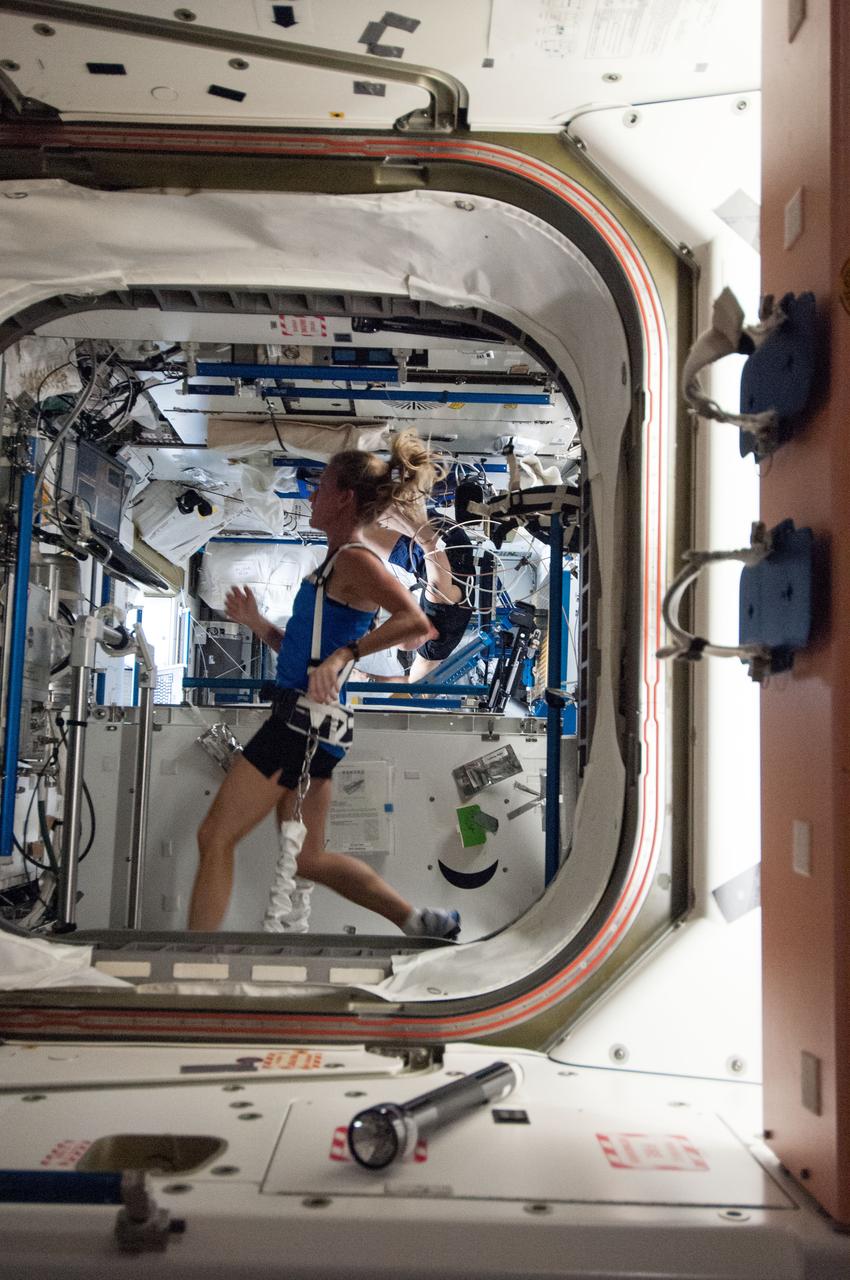
ISS036-E-022476 (22 July 2013) --- NASA astronaut Karen Nyberg, Expedition 36 flight engineer, equipped with a bungee harness, exercises on the Combined Operational Load Bearing External Resistance Treadmill (COLBERT) in the Tranquility node of the International Space Station.

ISS040-E-086609 (2 Aug. 2014) --- NASA astronaut Steve Swanson, Expedition 40 commander, equipped with a bungee harness, exercises on the Combined Operational Load Bearing External Resistance Treadmill (COLBERT) in the Tranquility node of the International Space Station.
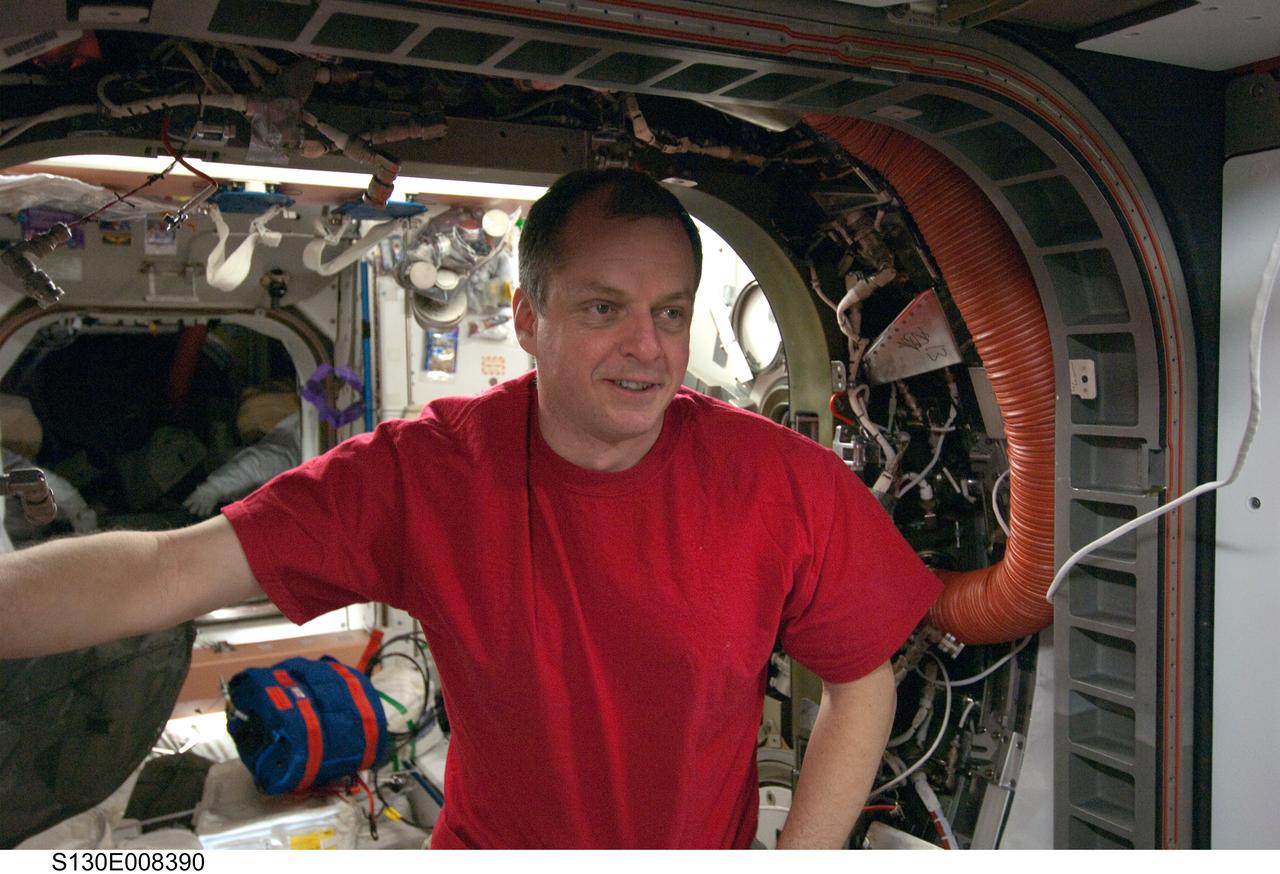
S130-E-008390 (15 Feb. 2010) --- NASA astronaut T.J. Creamer, Expedition 22 flight engineer, is pictured in the vestibule between the Unity and Tranquility nodes of the International Space Station while space shuttle Endeavour (STS-130) remains docked with the station.
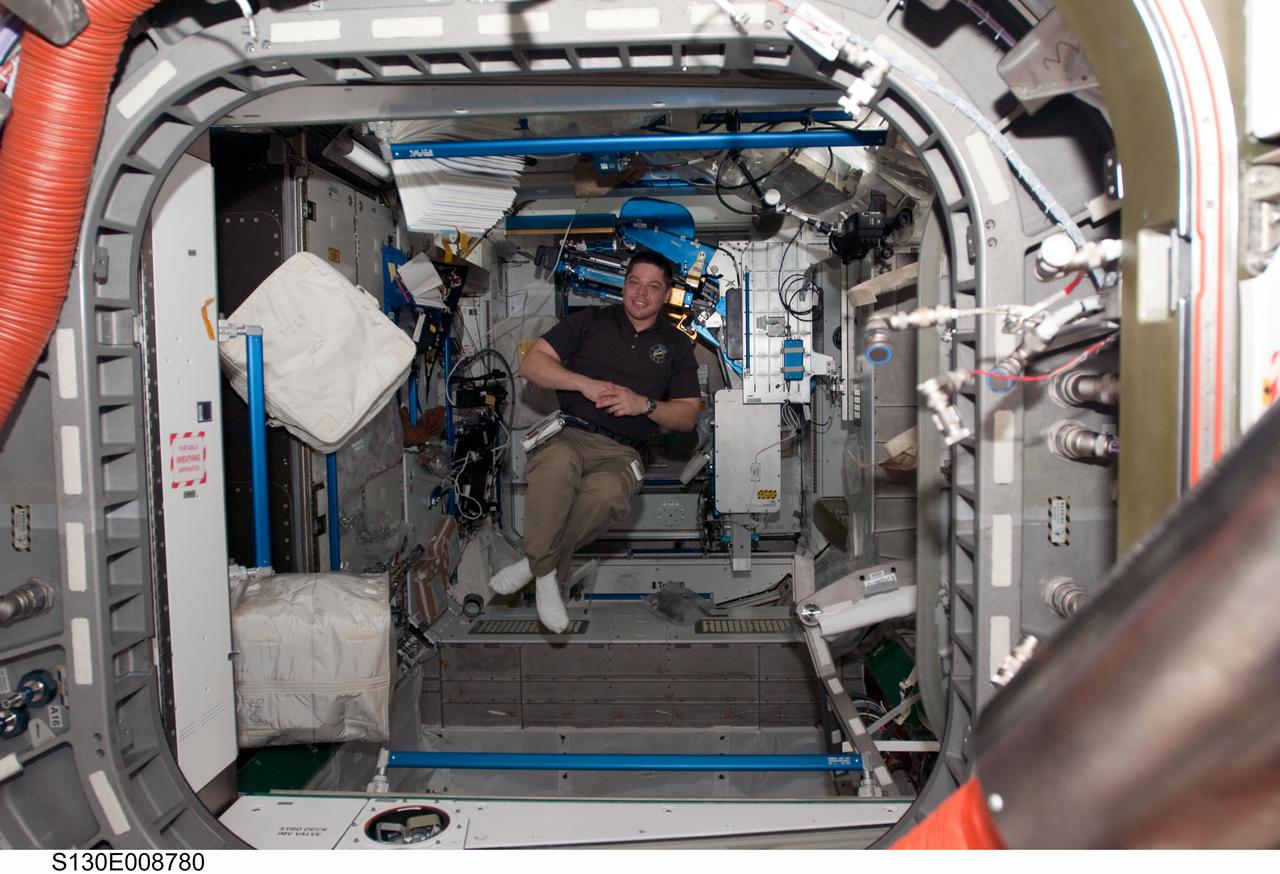
S130-E-008780 (16 Feb. 2010) --- NASA astronaut Robert Behnken, STS-130 mission specialist, poses for a photo while floating freely in the Tranquility node of the International Space Station while space shuttle Endeavour remains docked with the station.
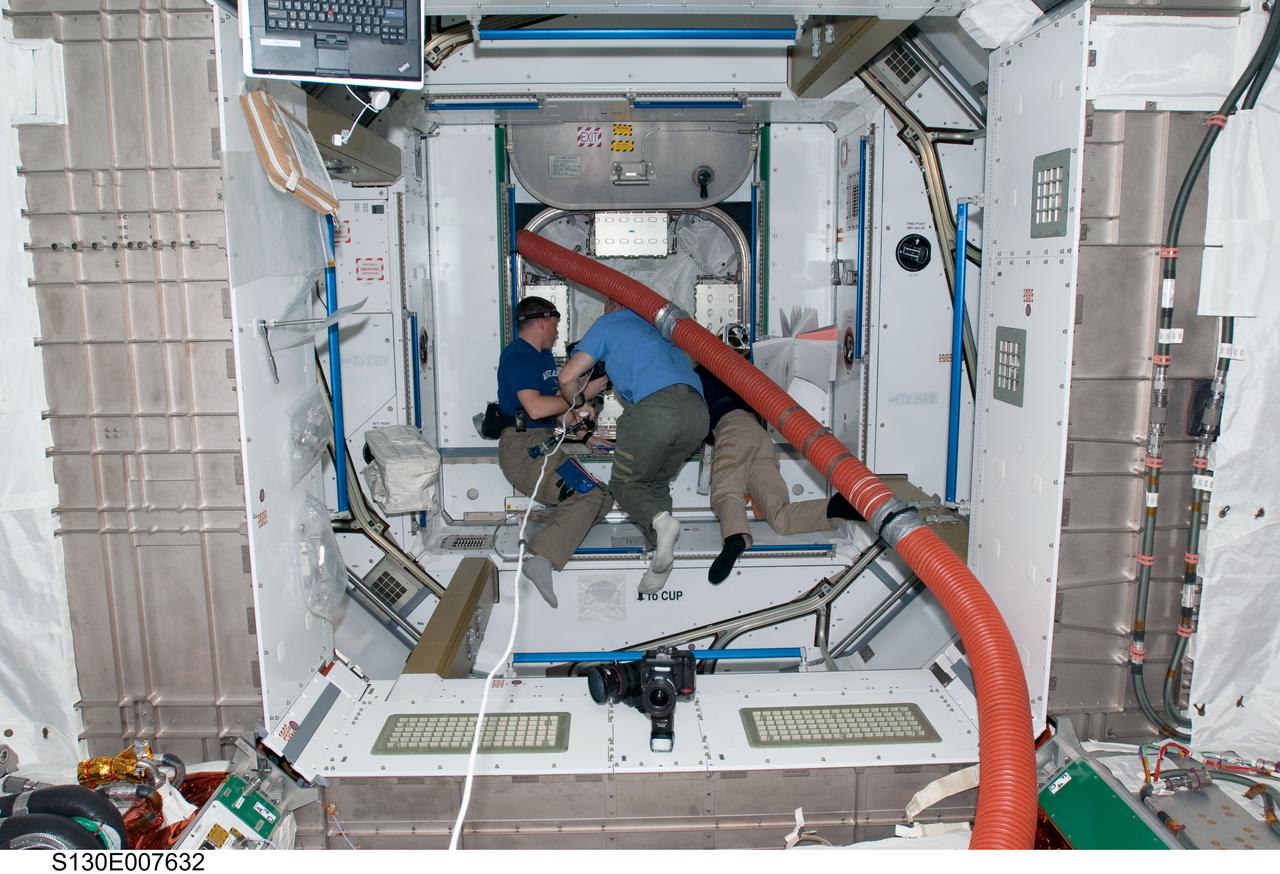
S130-E-007632 (13 Feb. 2010) --- NASA astronauts Jeffrey Williams (center), Expedition 22 commander; Terry Virts (left), STS-130 pilot; and Nicholas Patrick, STS-130 mission specialist, work in the newly-installed Tranquility node of the International Space Station while space shuttle Endeavour remains docked with the station.
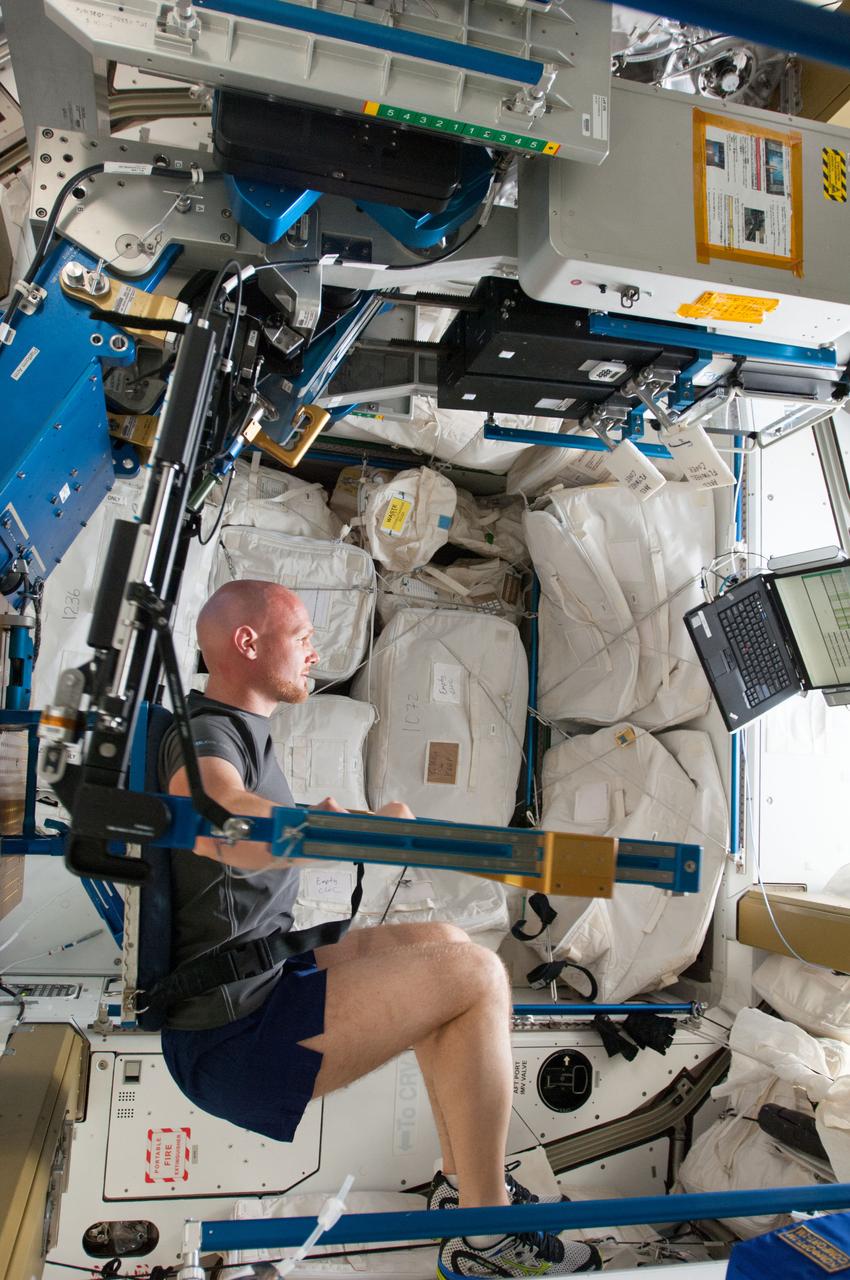
ISS040-E-006102 (31 May 2014) --- European Space Agency astronaut Alexander Gerst, Expedition 40 flight engineer, gets a workout on the advanced Resistive Exercise Device (aRED) in the Tranquility node of the International Space Station.
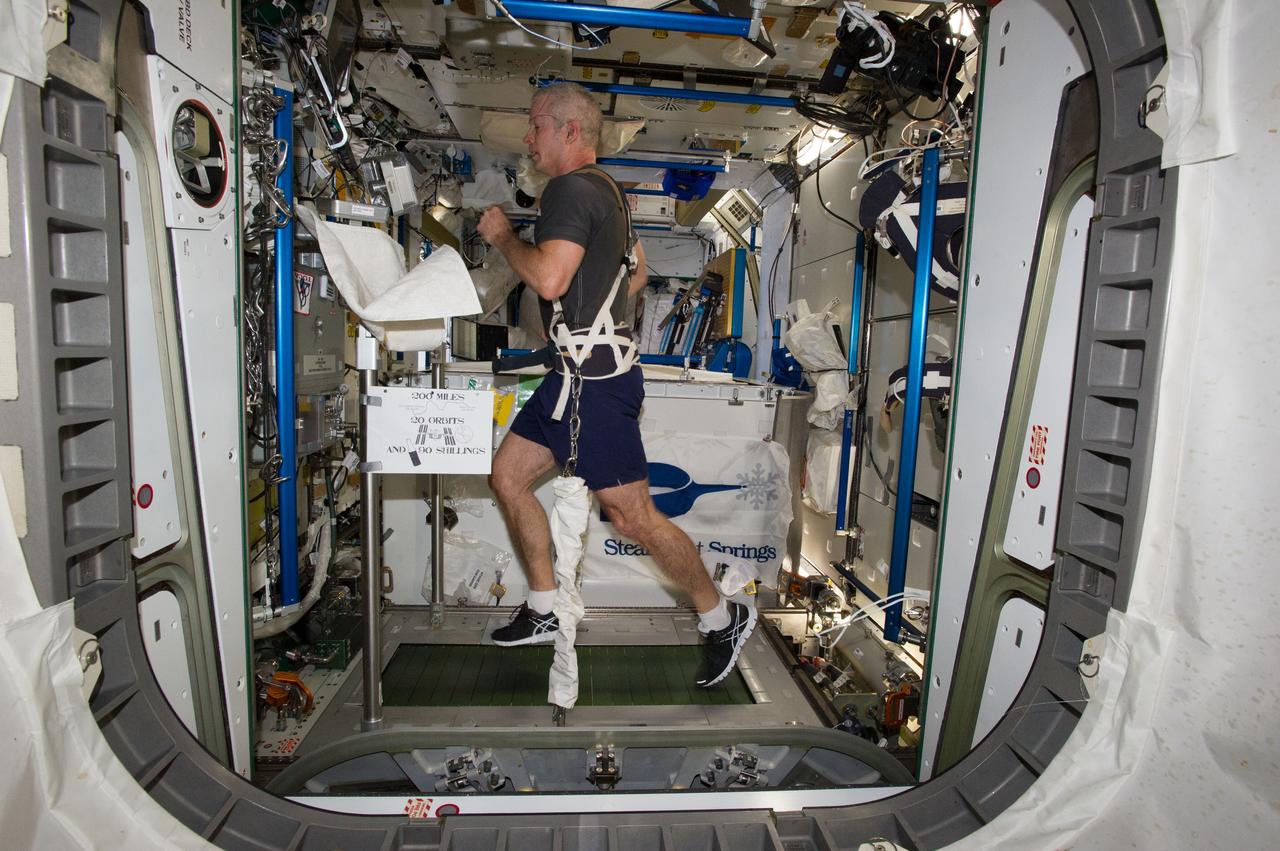
ISS040-E-086619 (2 Aug. 2014) --- NASA astronaut Steve Swanson, Expedition 40 commander, equipped with a bungee harness, exercises on the Combined Operational Load Bearing External Resistance Treadmill (COLBERT) in the Tranquility node of the International Space Station.
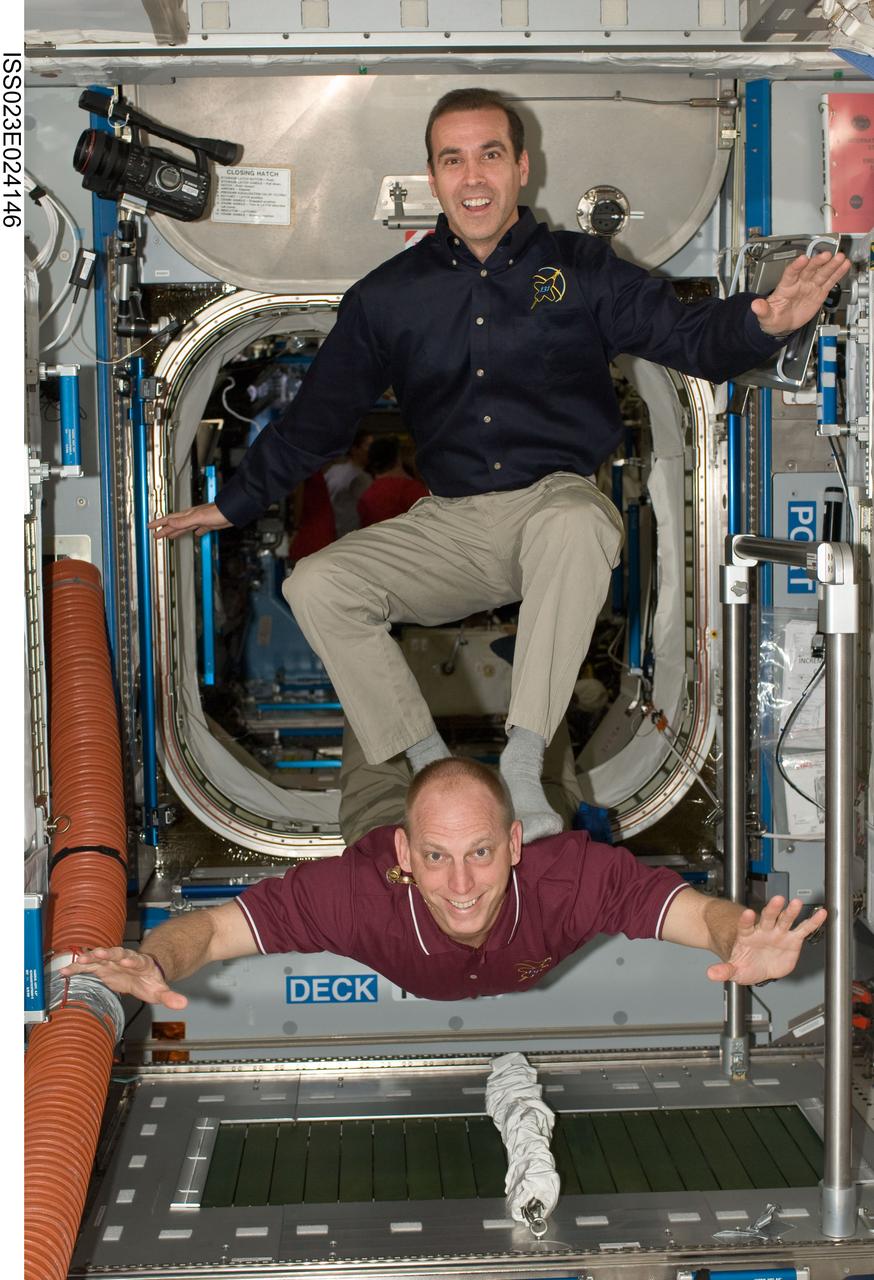
ISS023-E-024146 (16 April 2010) --- NASA astronauts Rick Mastracchio (top) and Clayton Anderson, both STS-131 mission specialists, pose for a photo near the Combined Operational Load Bearing External Resistance Treadmill (COLBERT) in the Harmony node of the International Space Station while space shuttle Discovery remains docked with the station.
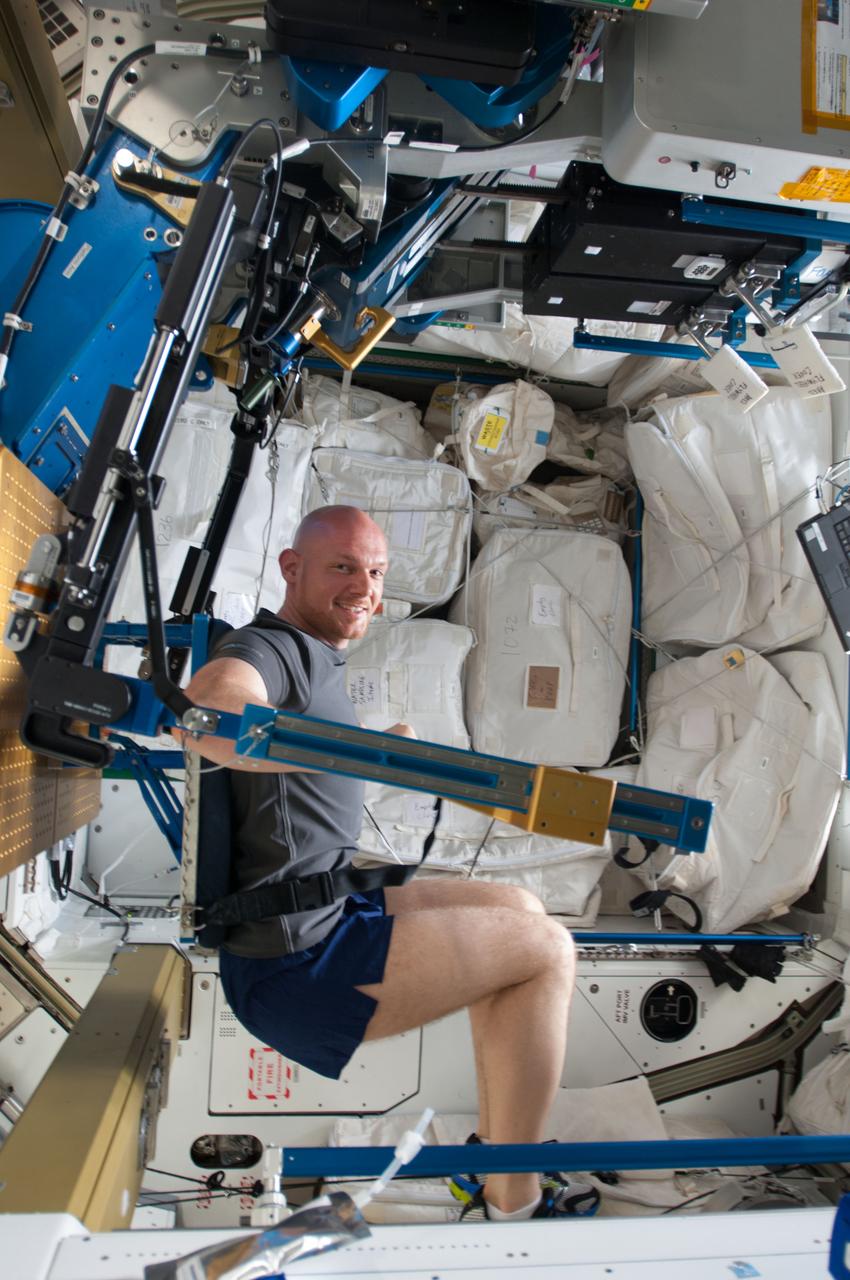
ISS040-E-006099 (30 May 2014) --- European Space Agency astronaut Alexander Gerst, Expedition 40 flight engineer, gets a workout on the advanced Resistive Exercise Device (aRED) in the Tranquility node of the International Space Station.
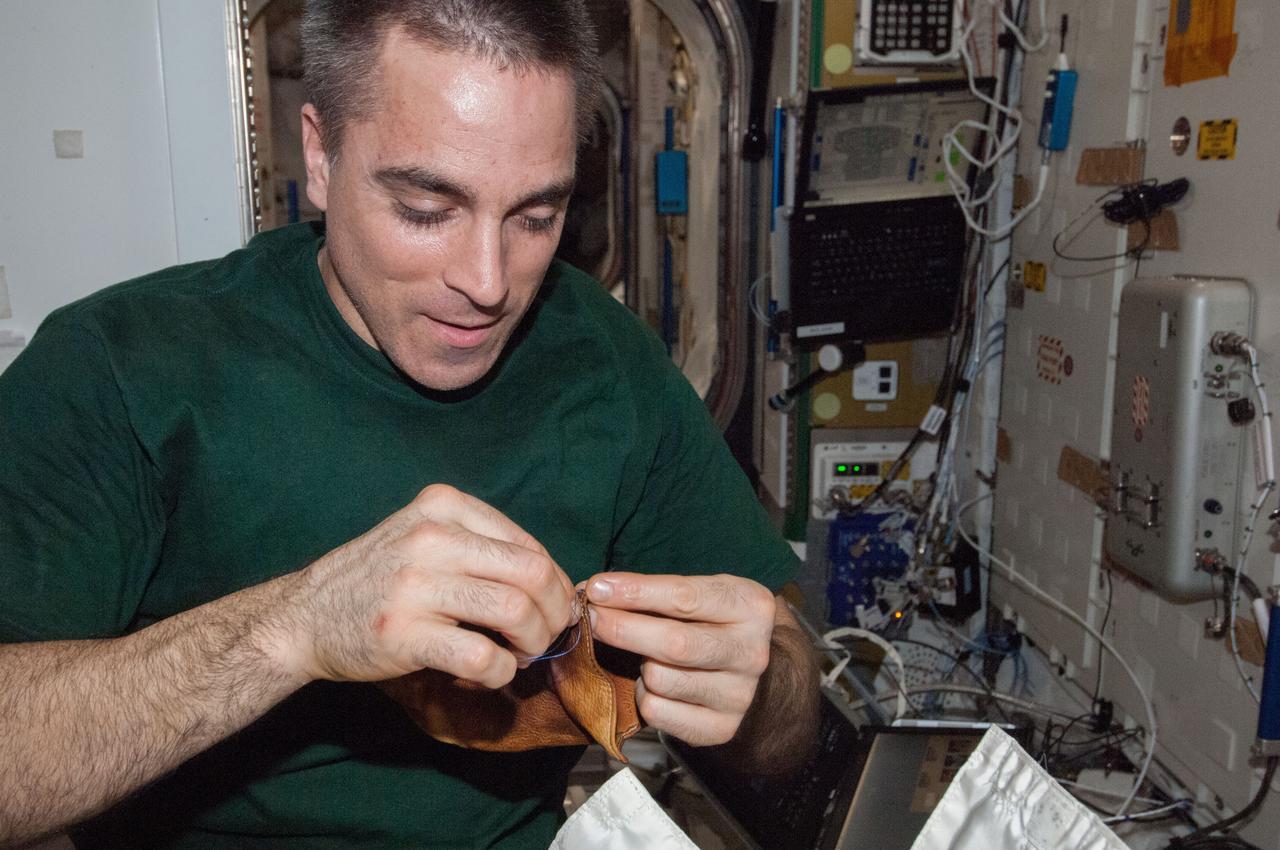
ISS036-E-021862 (21 July 2013) --- NASA astronaut Chris Cassidy, Expedition 36 flight engineer, uses a sewing kit to repair a glove in the Tranquility node of the International Space Station.
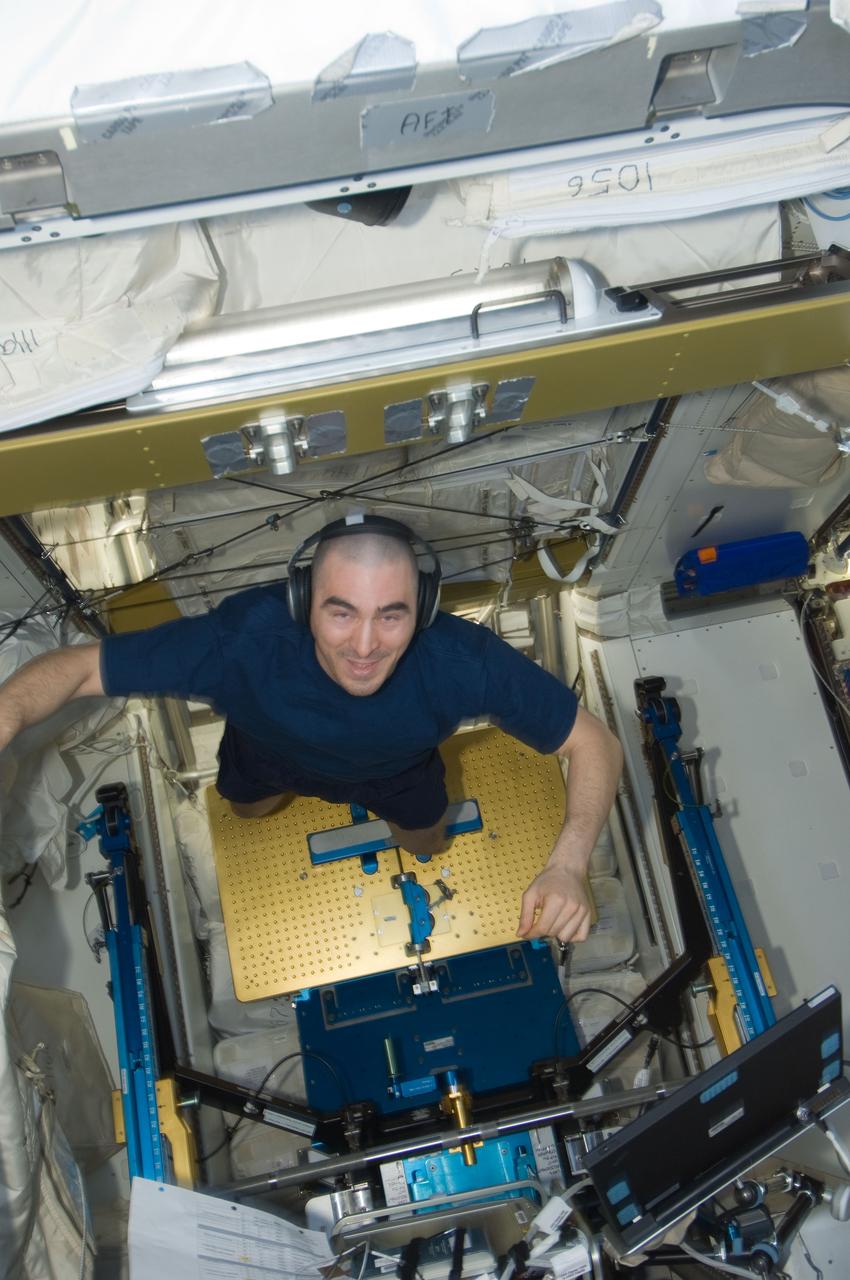
ISS030-E-032246 (2 Jan. 2012) --- Russian cosmonaut Anatoly Ivanishin, Expedition 30 flight engineer, is pictured near the advanced Resistive Exercise Device (aRED) in the Tranquility node of the International Space Station.
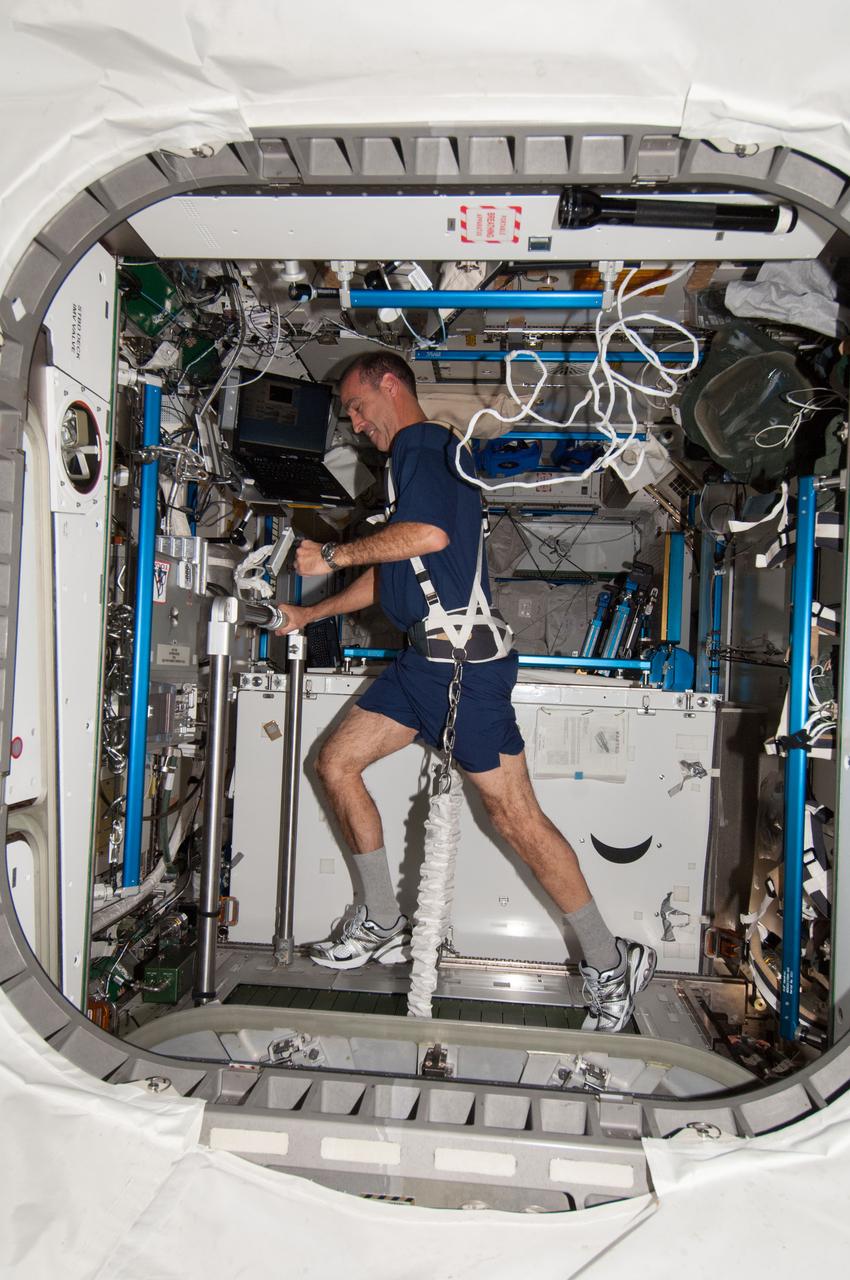
ISS037-E-028165 (9 Nov. 2013) --- NASA astronaut Rick Mastracchio, Expedition 38 flight engineer, equipped with a bungee harness, exercises on the Combined Operational Load Bearing External Resistance Treadmill (COLBERT) in the Tranquility node of the International Space Station.
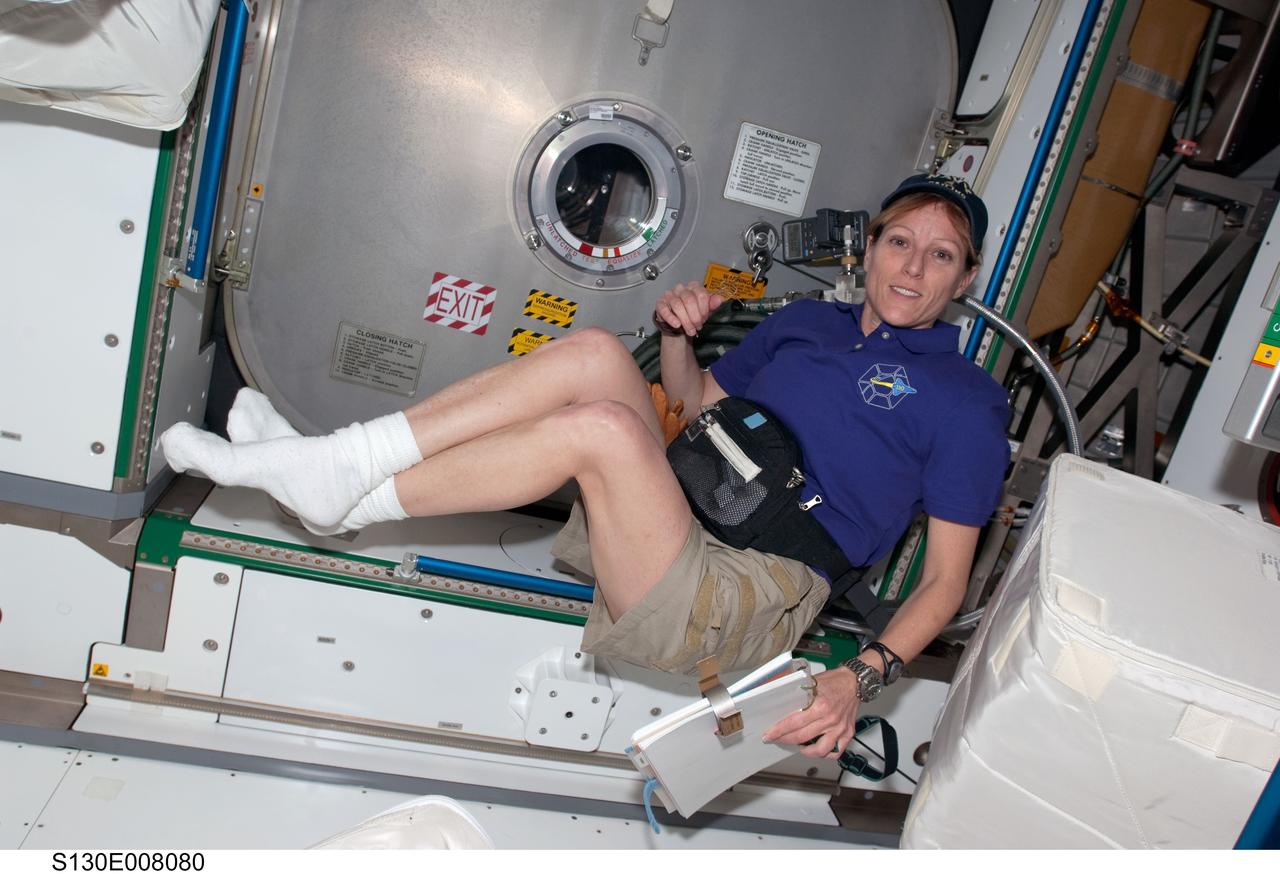
S130-E-008080 (15 Feb. 2010) --- NASA astronaut Kathryn Hire, STS-130 mission specialist, is pictured floating freely in the newly-installed Tranquility node of the International Space Station while space shuttle Endeavour remains docked with the station.
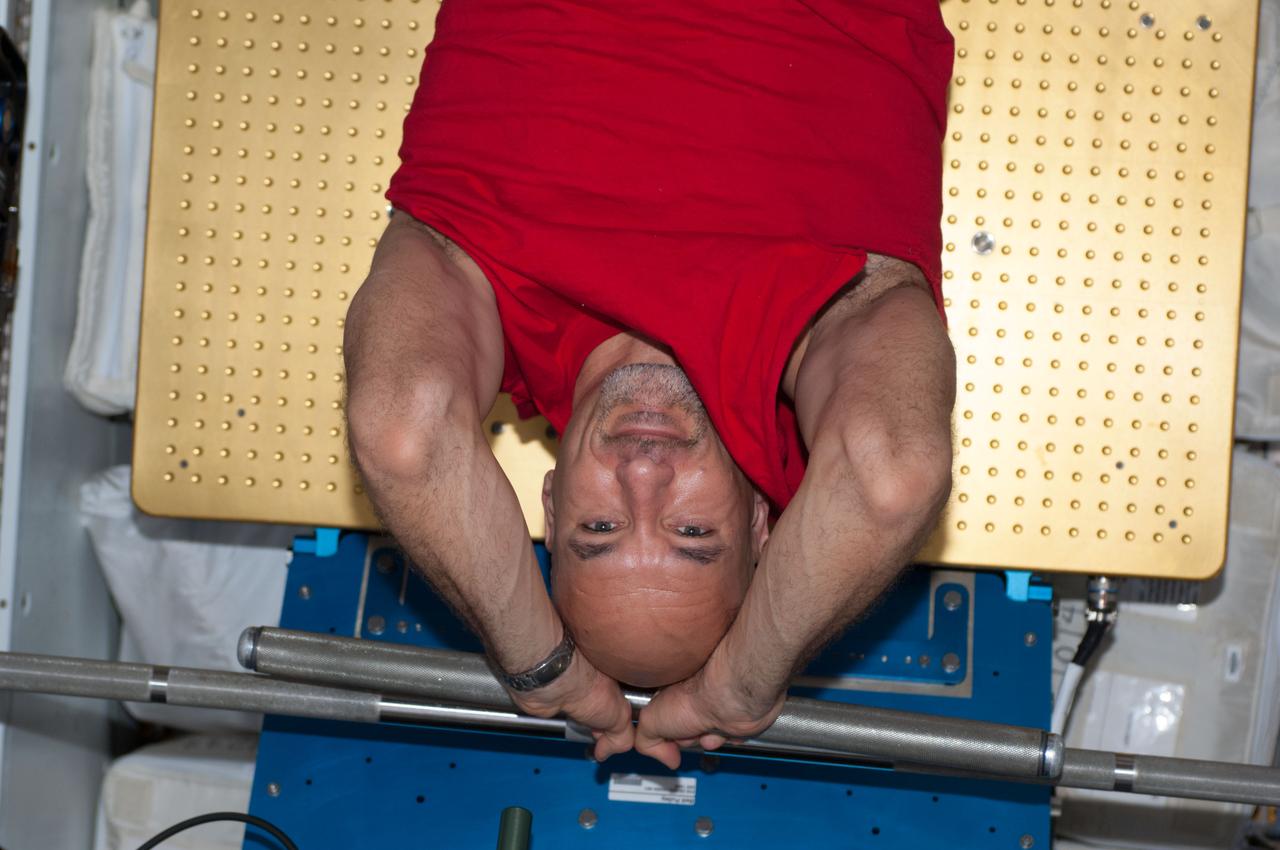
ISS036-E-006586 (6 June 2013) --- European Space Agency astronaut Luca Parmitano, Expedition 36 flight engineer, gets a workout on the Advanced Resistive Exercise Device (ARED) in the Tranquility node of the International Space Station.
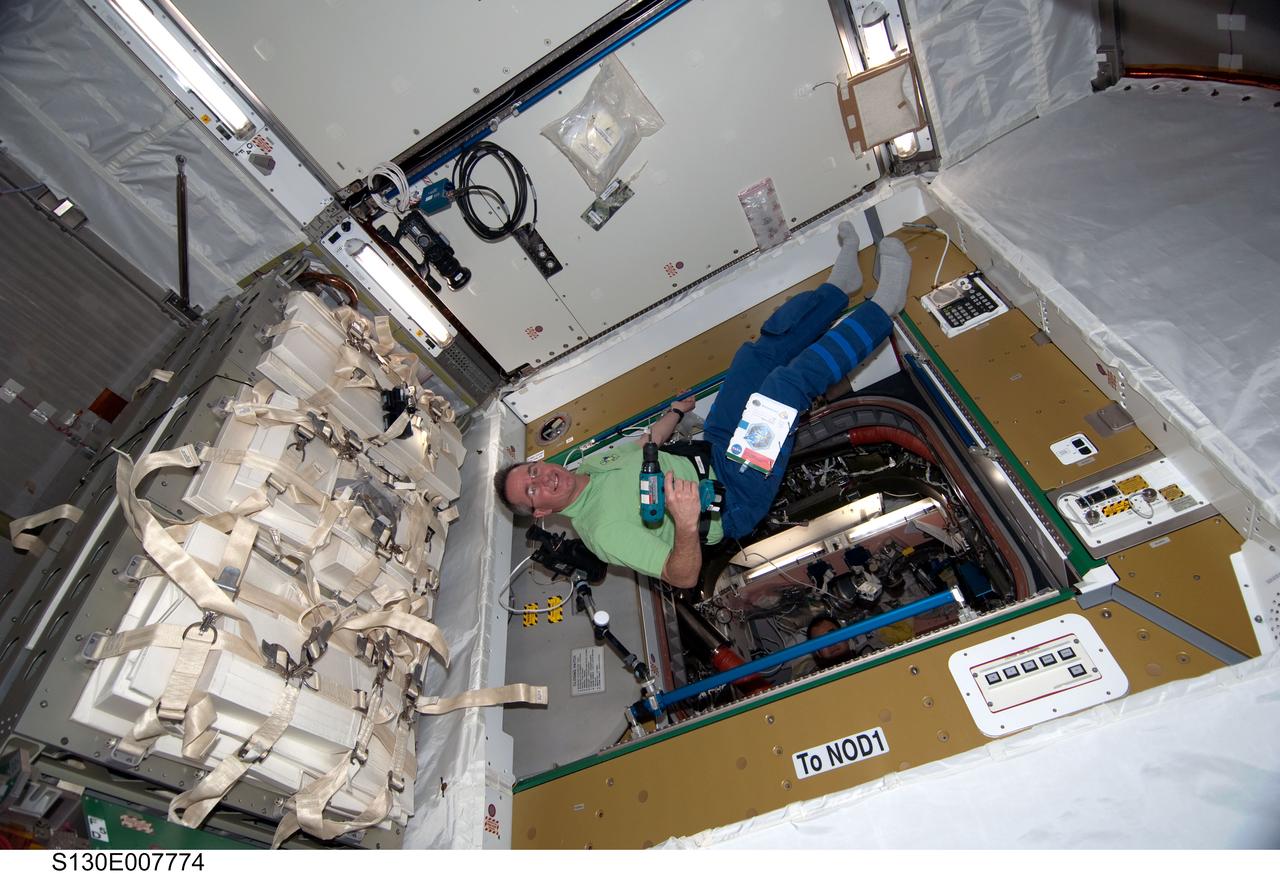
S130-E-007774 (14 Feb. 2010) --- NASA astronaut Stephen Robinson, STS-130 mission specialist, holds a drill while floating freely in the newly-installed Tranquility node of the International Space Station while space shuttle Endeavour remains docked with the station.
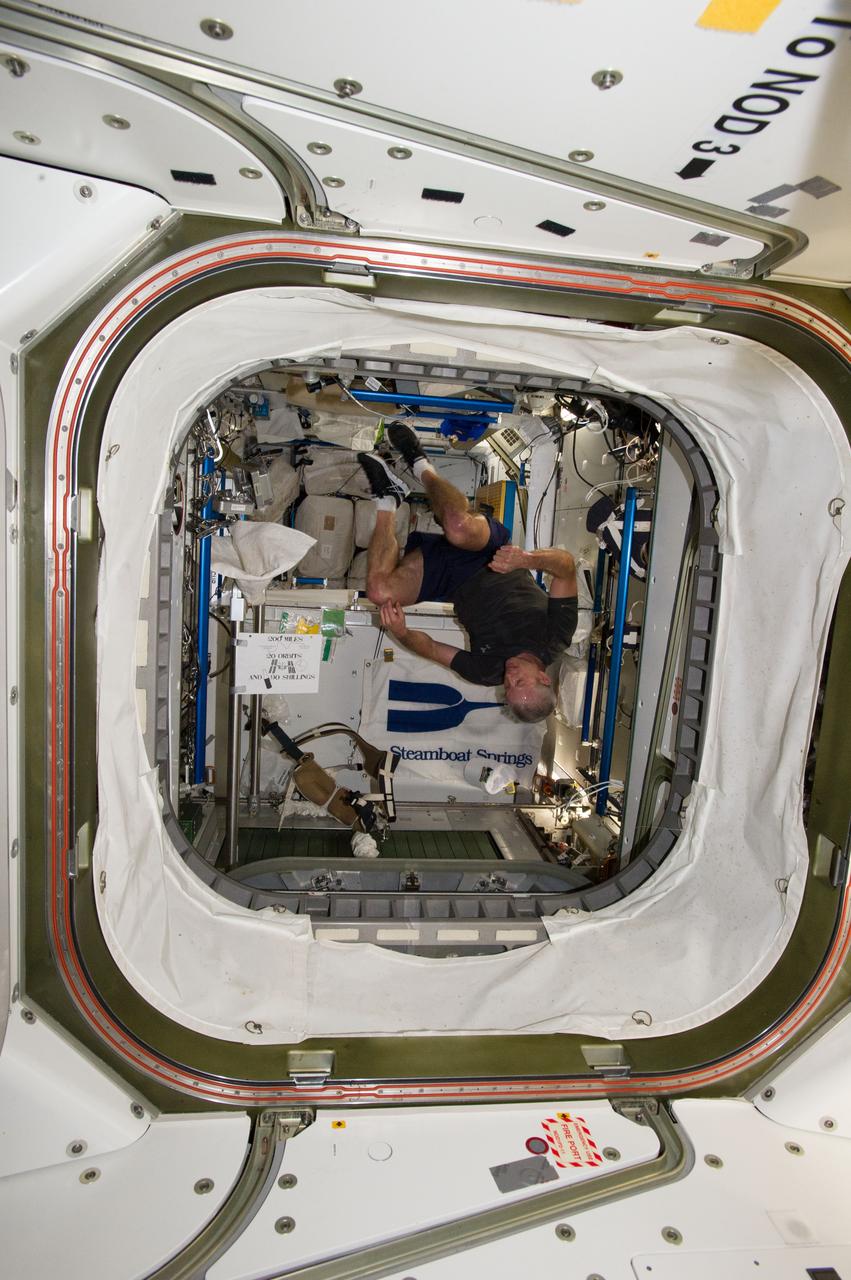
ISS040-E-086642 (2 Aug. 2014) --- NASA astronaut Steve Swanson, Expedition 40 commander, floats freely near the Combined Operational Load Bearing External Resistance Treadmill (COLBERT) in the Tranquility node of the International Space Station.
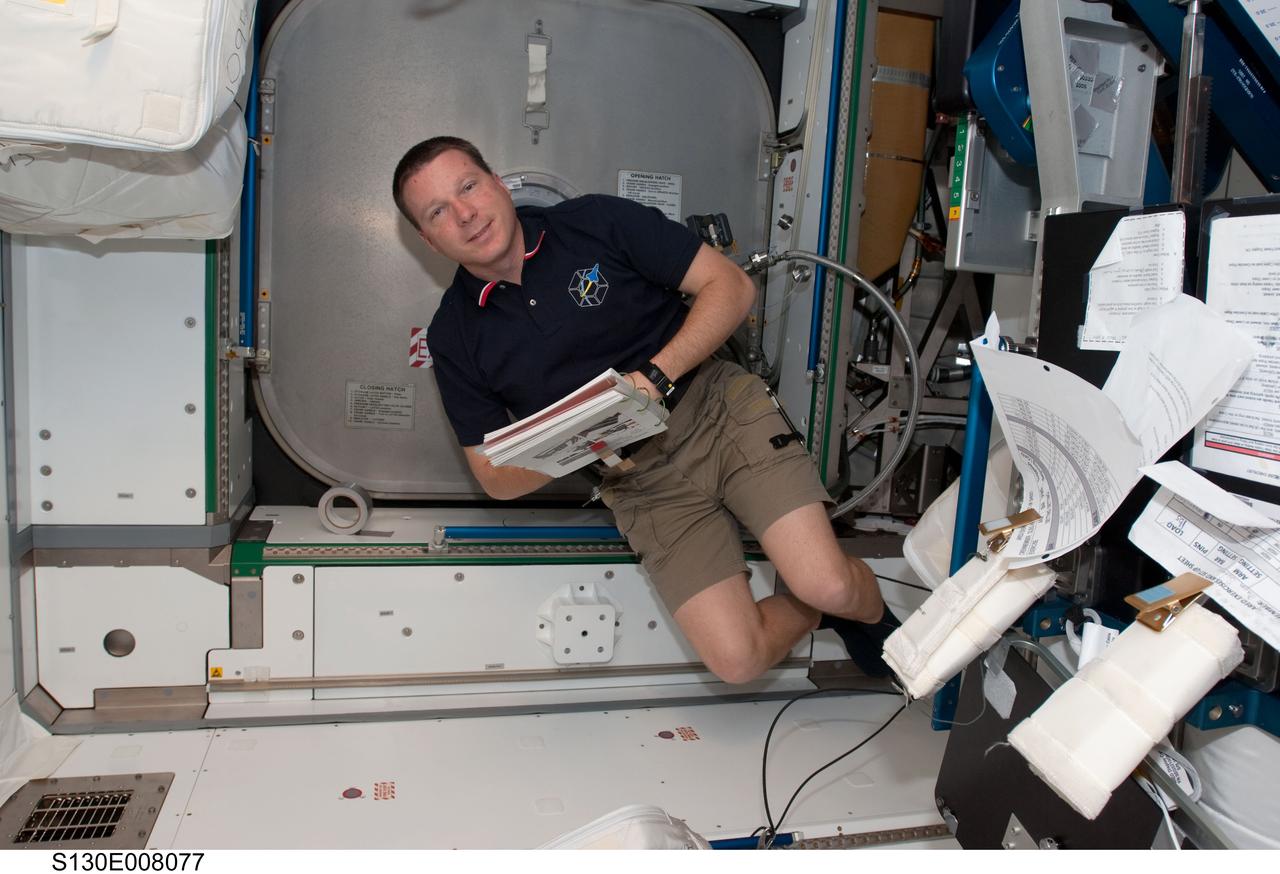
S130-E-008077 (15 Feb. 2010) --- NASA astronaut Terry Virts, STS-130 pilot, is pictured floating freely in the newly-installed Tranquility node of the International Space Station while space shuttle Endeavour remains docked with the station.
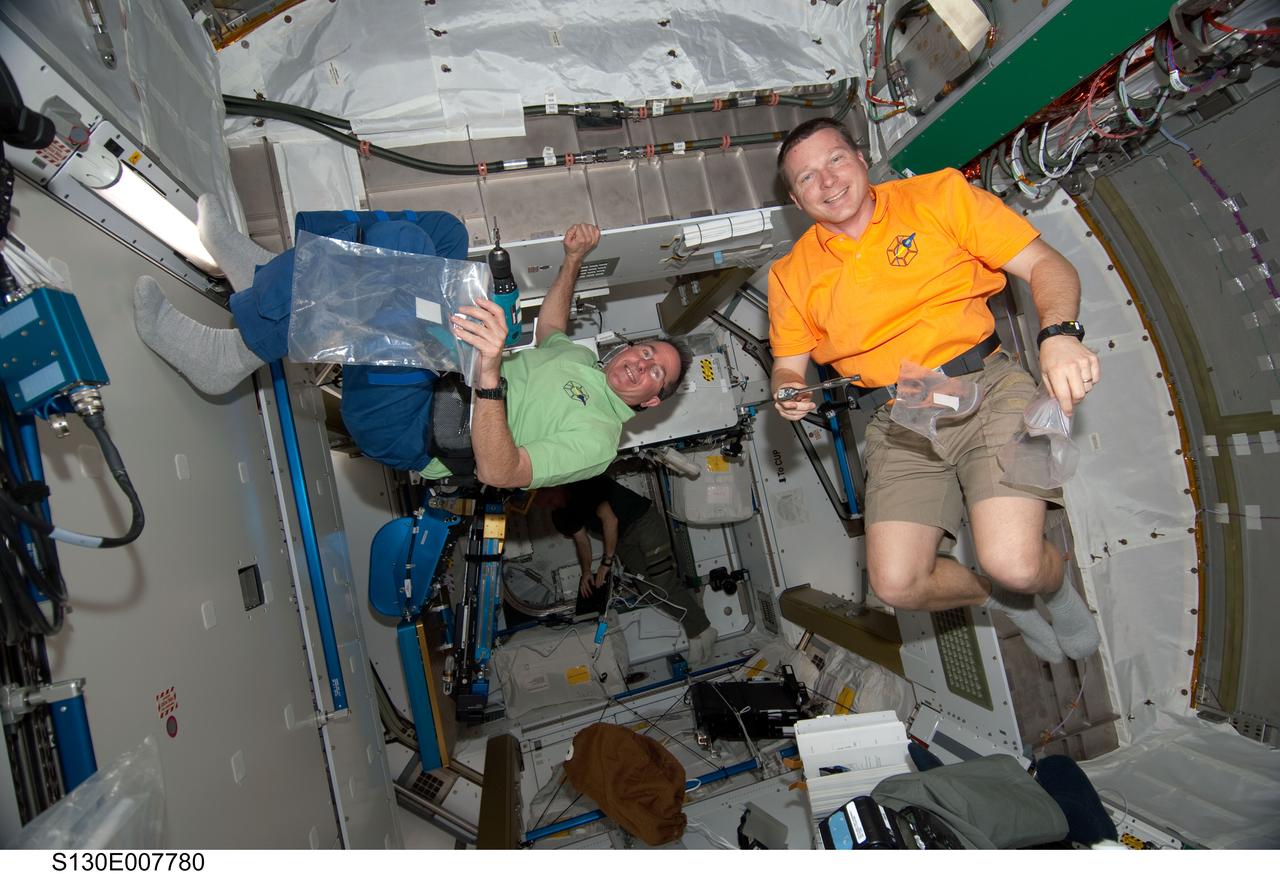
S130-E-007780 (14 Feb. 2010) --- NASA astronauts Terry Virts (right), STS-130 pilot; and Stephen Robinson, mission specialist, are pictured in the newly-installed Tranquility node of the International Space Station while space shuttle Endeavour remains docked with the station.
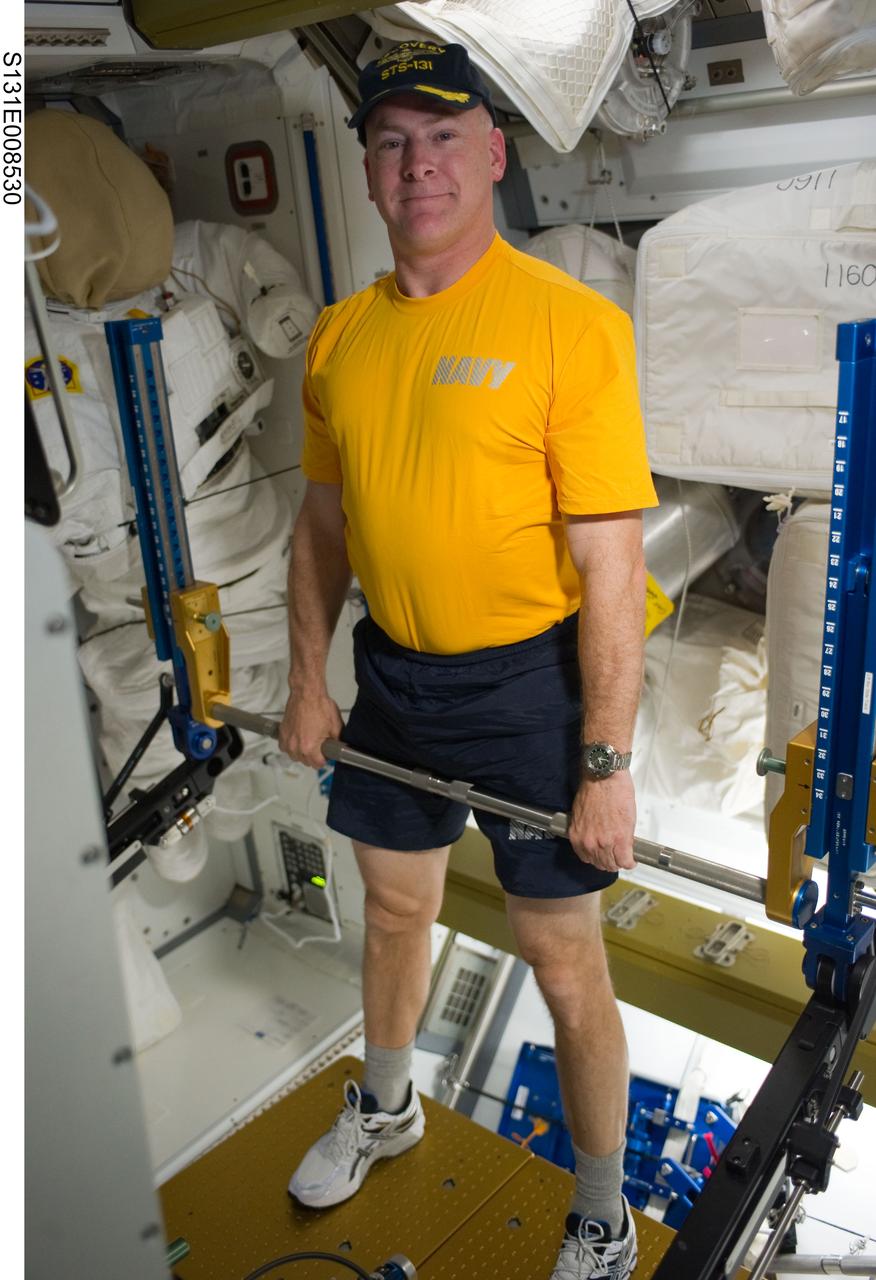
S131-E-008530 (10 April 2010) --- NASA astronaut Alan Poindexter, STS-131 commander, exercises using the advanced Resistive Exercise Device (aRED) in the Tranquility node of the International Space Station while space shuttle Discovery remains docked with the station.
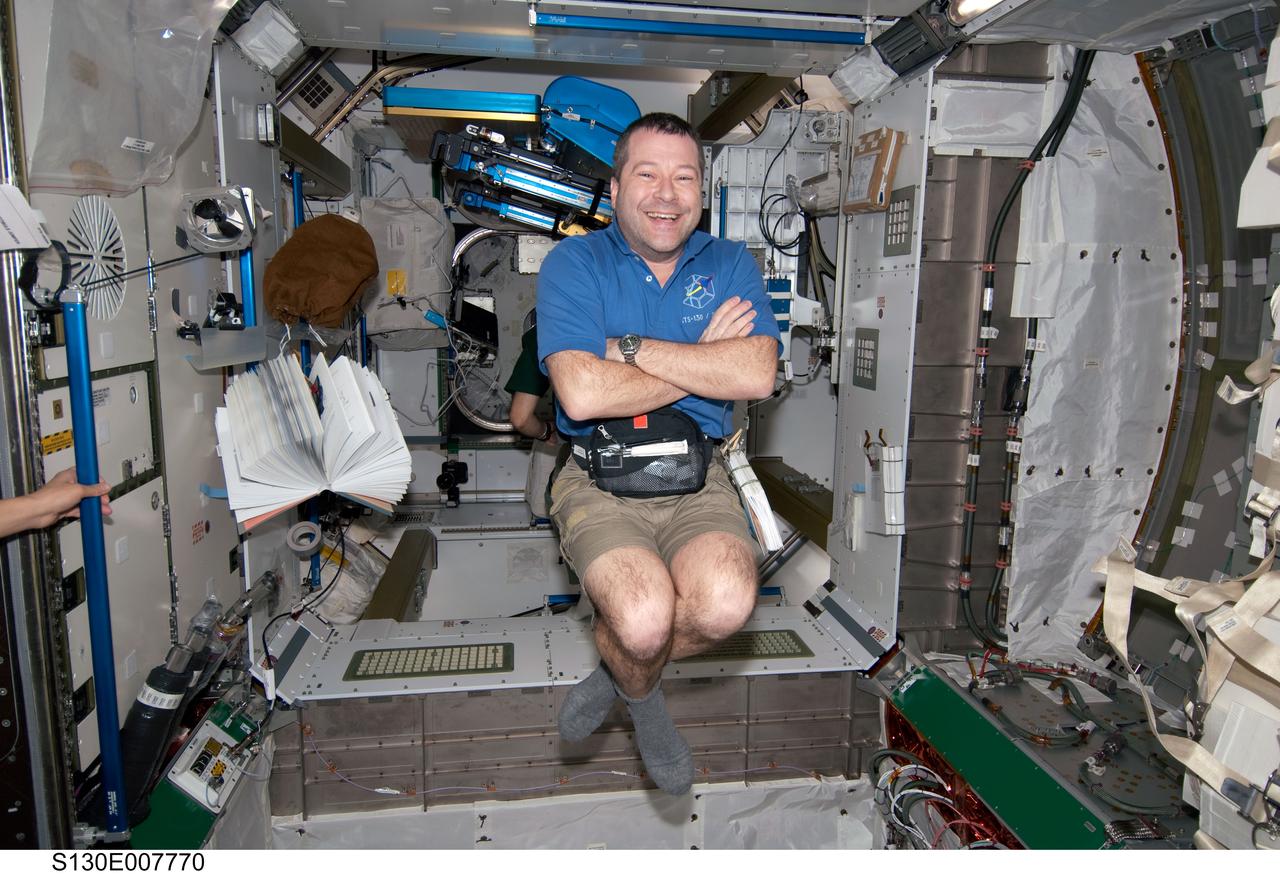
S130-E-007770 (14 Feb. 2010) --- NASA astronaut Nicholas Patrick, STS-130 mission specialist, smiles for a photo while floating freely in the newly-installed Tranquility node of the International Space Station while space shuttle Endeavour remains docked with the station.
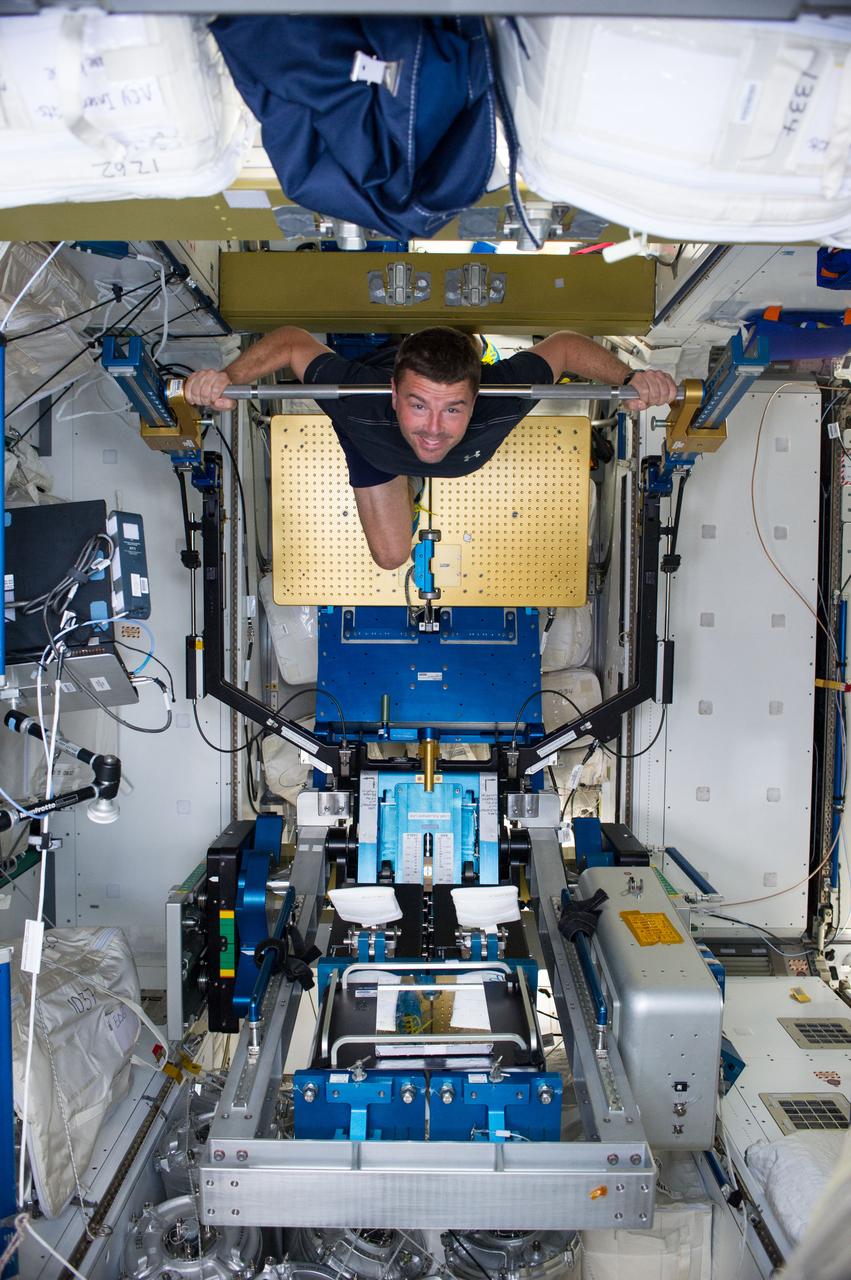
ISS040-E-006343 (1 June 2014) --- NASA astronaut Reid Wiseman, Expedition 40 flight engineer, gets a workout on the advanced Resistive Exercise Device (aRED) in the Tranquility node of the International Space Station.
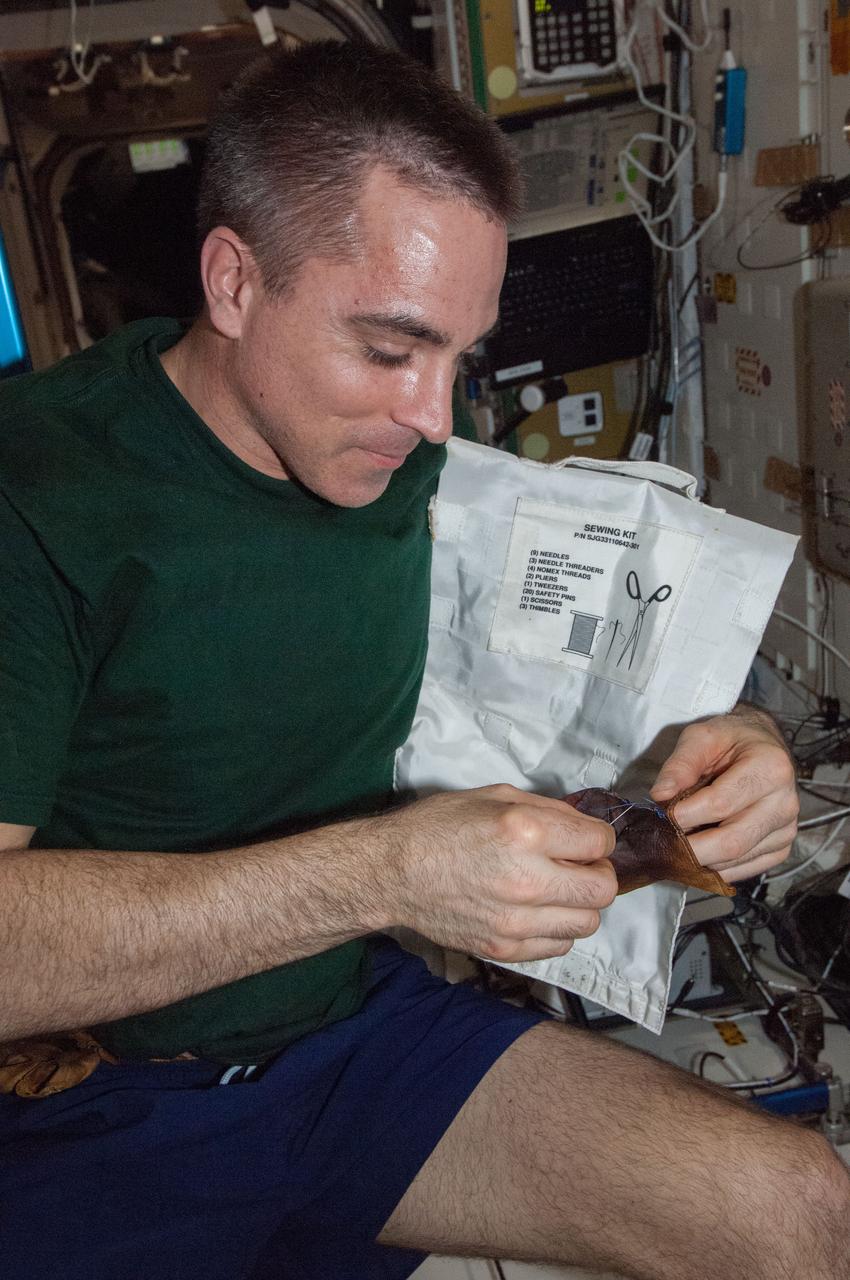
ISS036-E-021856 (21 July 2013) --- NASA astronaut Chris Cassidy, Expedition 36 flight engineer, uses a sewing kit to repair a glove in the Tranquility node of the International Space Station.
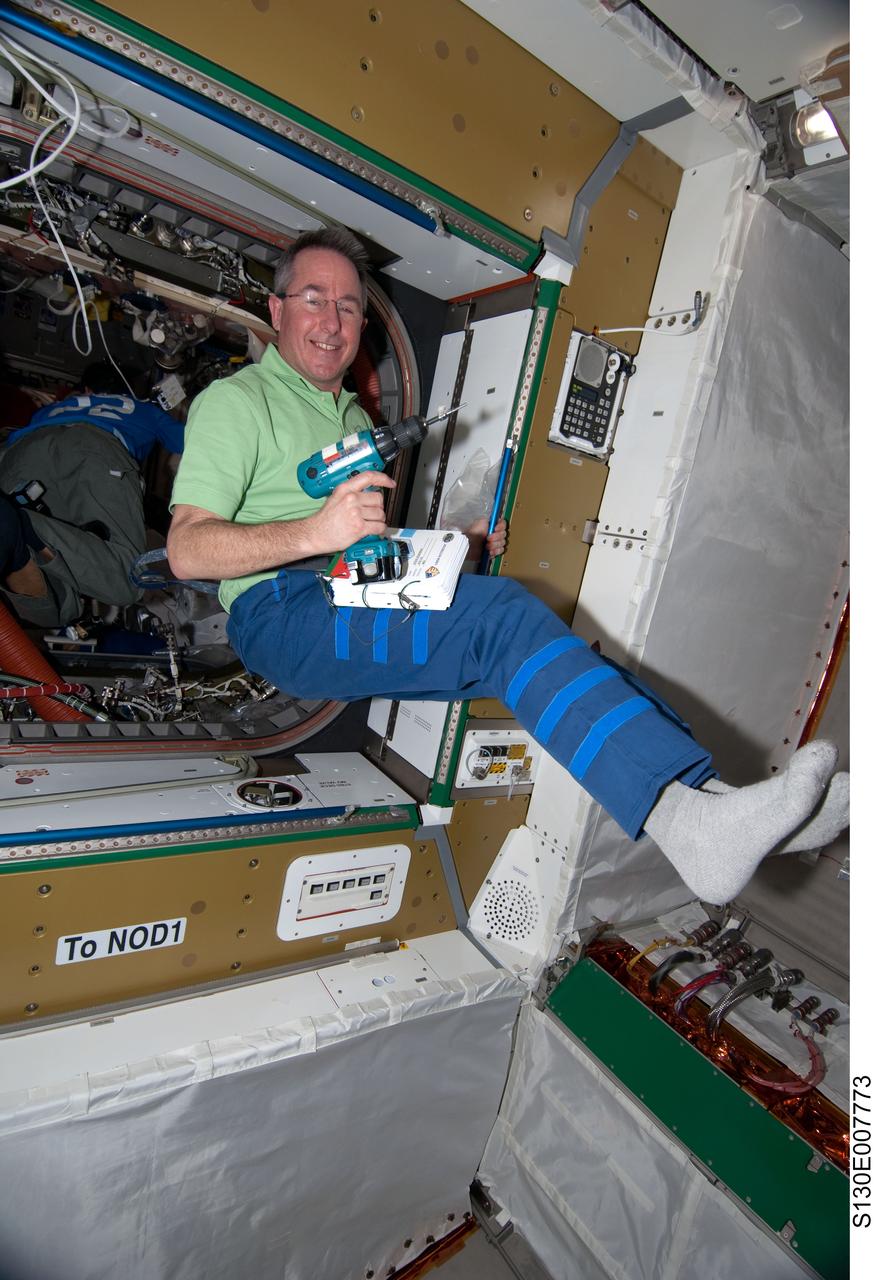
S130-E-007773 (14 Feb. 2010) --- NASA astronaut Stephen Robinson, STS-130 mission specialist, holds a drill while floating freely in the newly-installed Tranquility node of the International Space Station while space shuttle Endeavour remains docked with the station.
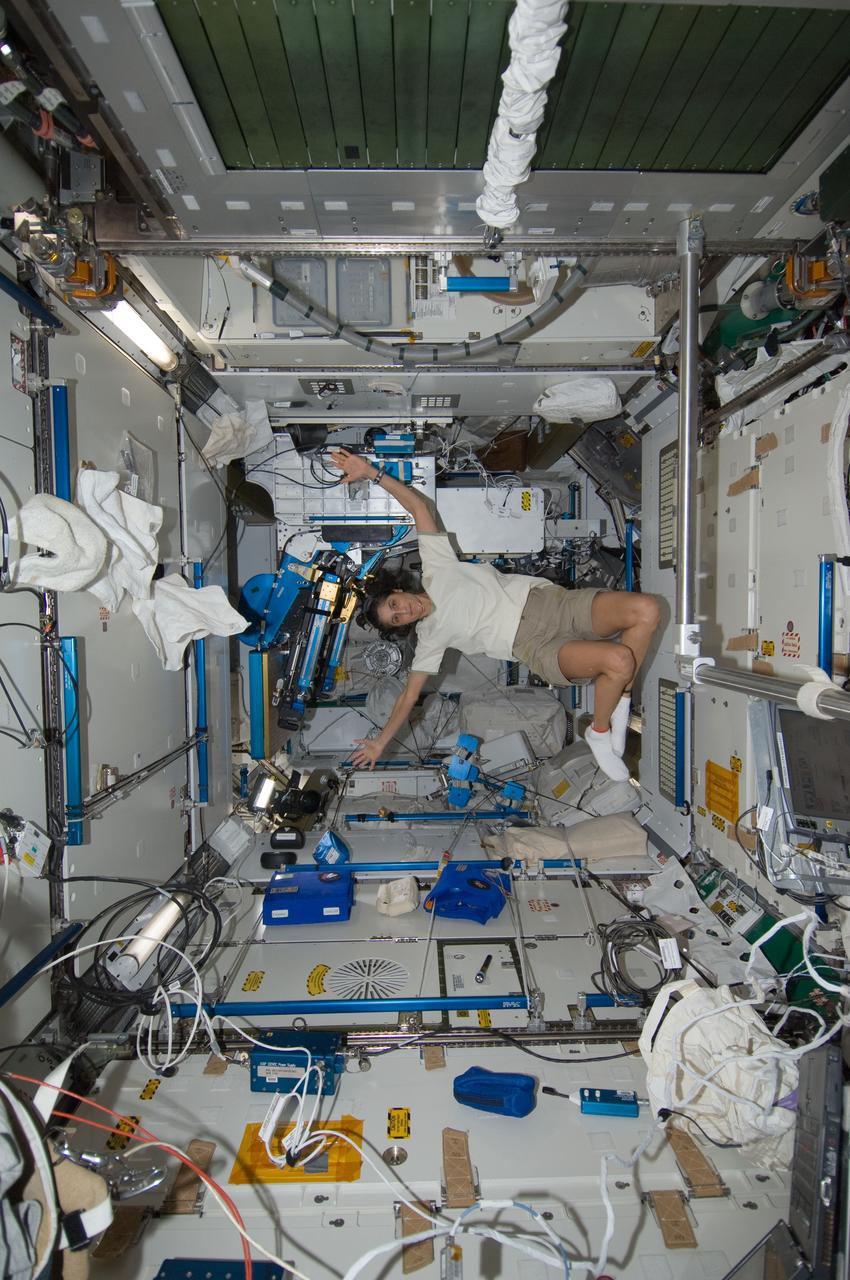
ISS033-E-011665 (14 Oct. 2012) --- NASA astronaut Sunita Williams, Expedition 33 commander, is pictured floating freely in the Tranquility node of the International Space Station.
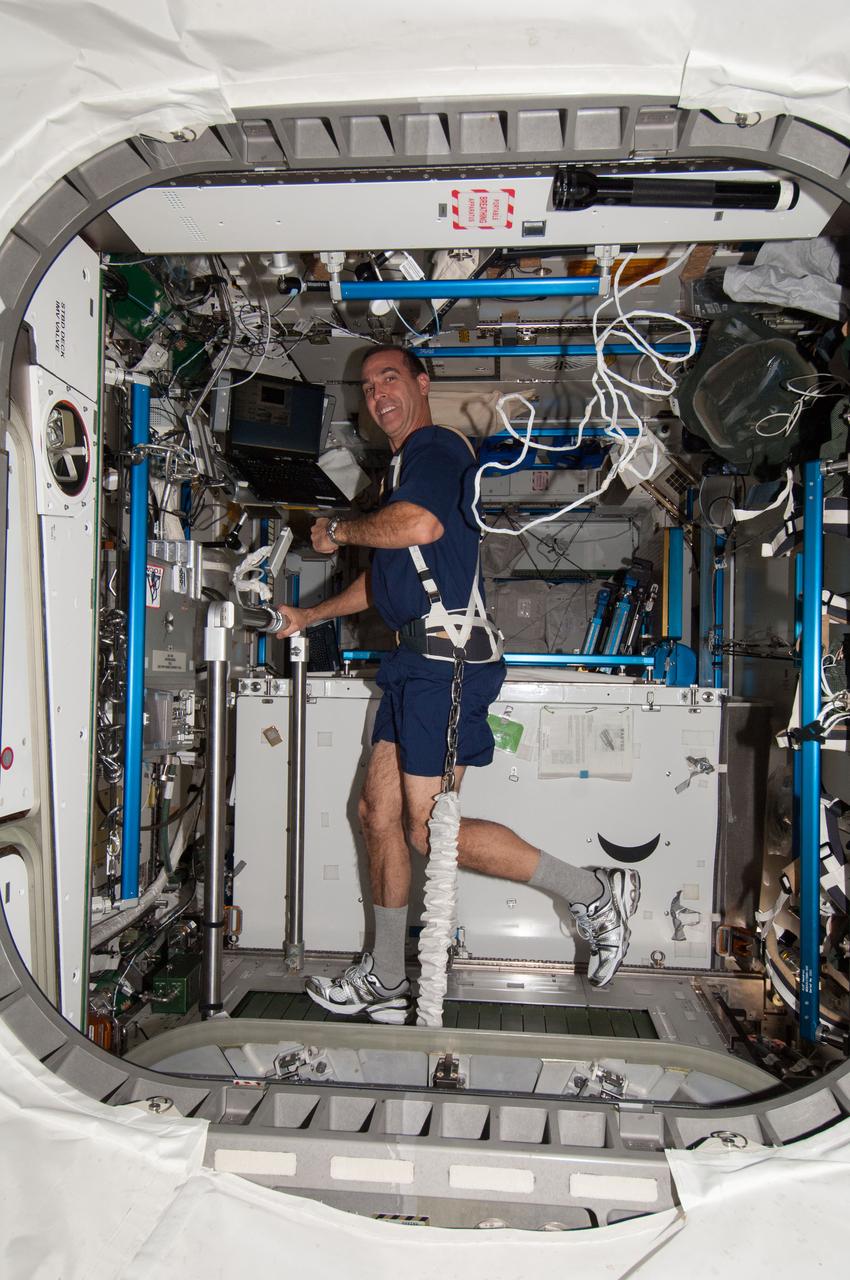
ISS037-E-028164 (9 Nov. 2013) --- NASA astronaut Rick Mastracchio, Expedition 38 flight engineer, equipped with a bungee harness, exercises on the Combined Operational Load Bearing External Resistance Treadmill (COLBERT) in the Tranquility node of the International Space Station.
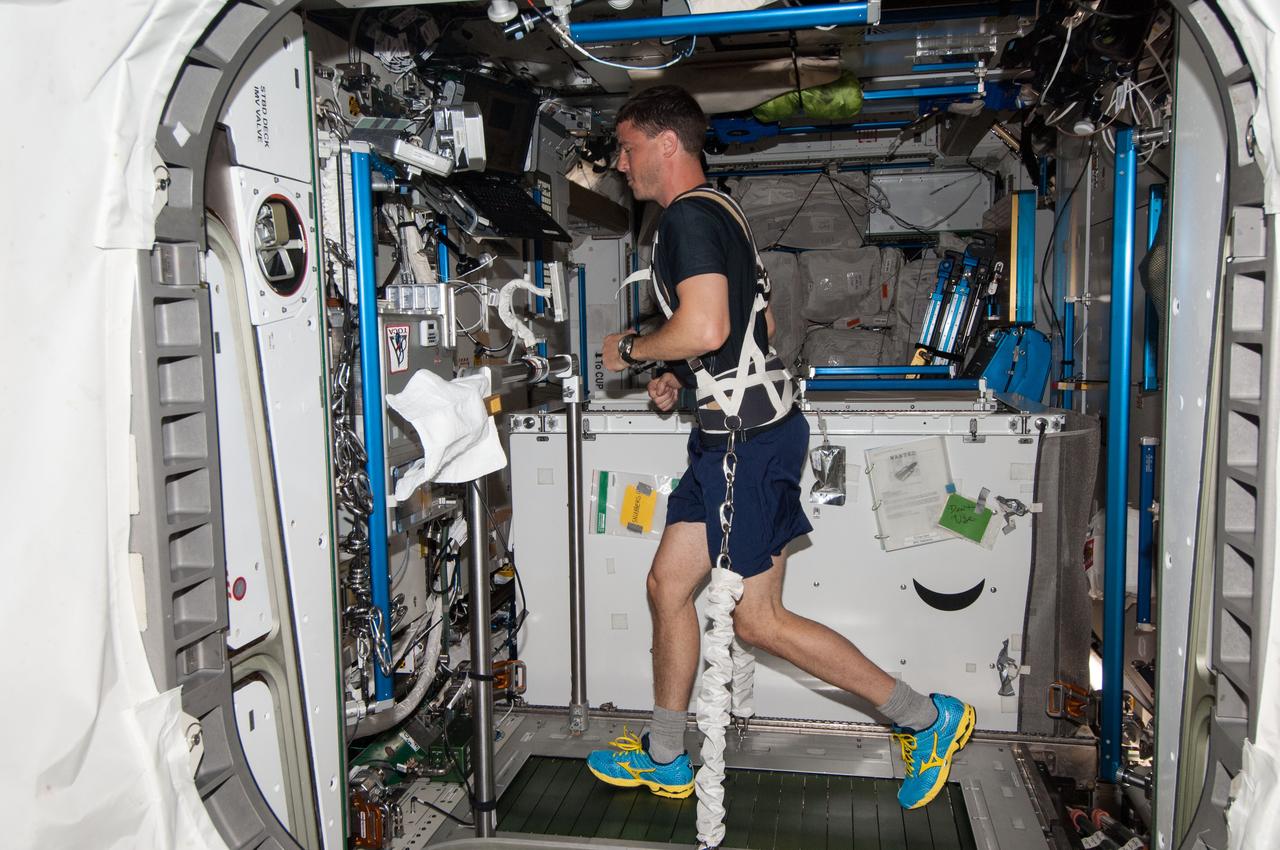
ISS040-E-006087 (31 May 2014) --- NASA astronaut Reid Wiseman, Expedition 40 flight engineer, equipped with a bungee harness, exercises on the Combined Operational Load Bearing External Resistance Treadmill (COLBERT) in the Tranquility node of the International Space Station.
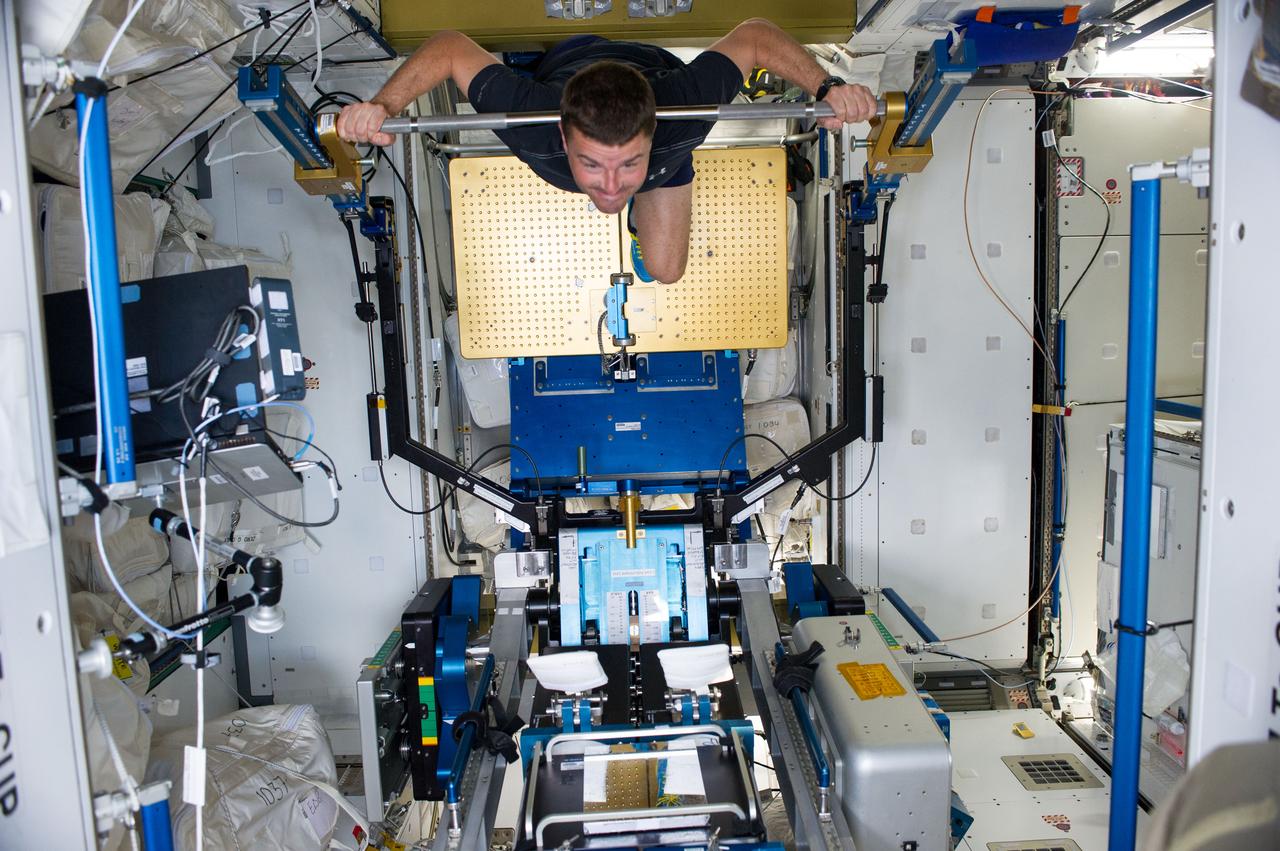
ISS040-E-006339 (1 June 2014) --- NASA astronaut Reid Wiseman, Expedition 40 flight engineer, gets a workout on the advanced Resistive Exercise Device (aRED) in the Tranquility node of the International Space Station.
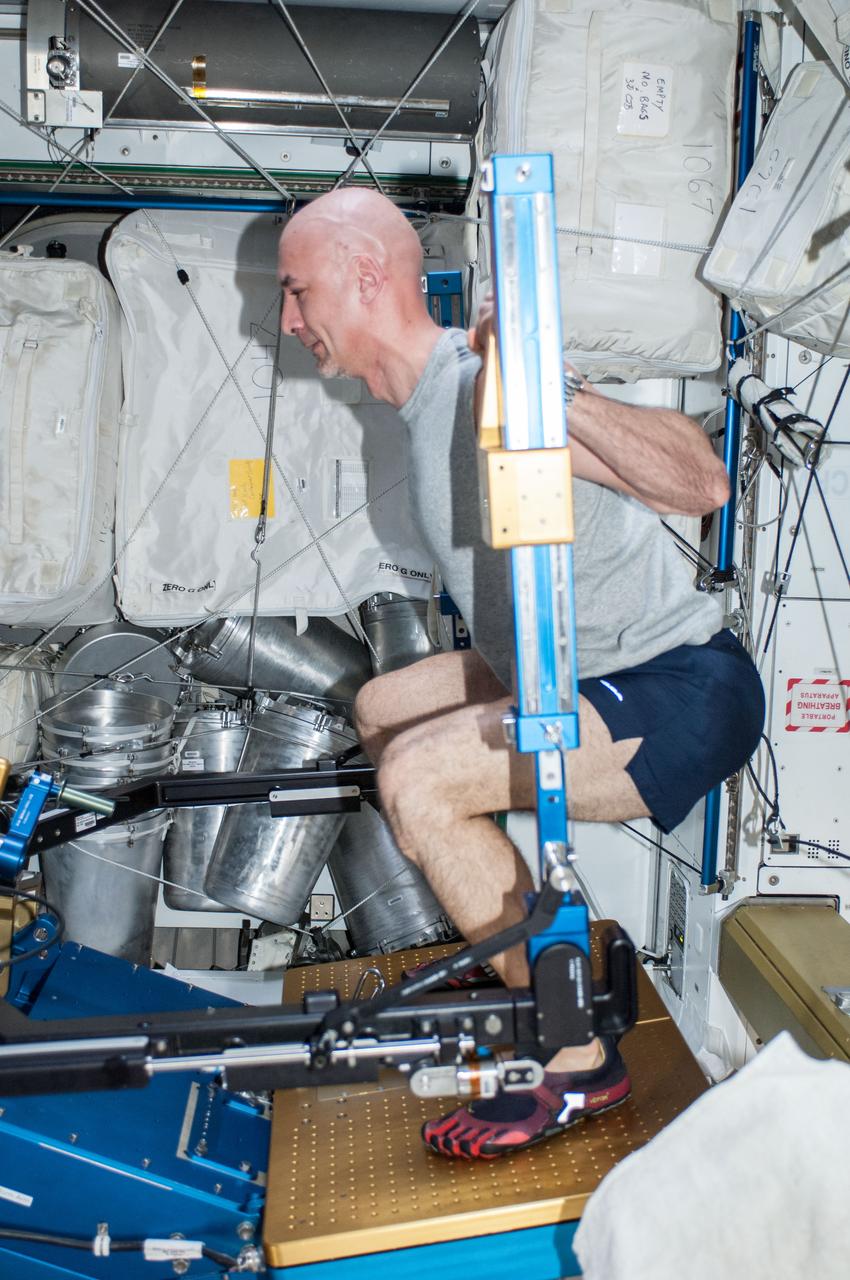
ISS036-E-036830 (24 Aug. 2013) --- European Space Agency astronaut Luca Parmitano, Expedition 36 flight engineer, gets a workout on the advanced Resistive Exercise Device (aRED) in the Tranquility node of the International Space Station.
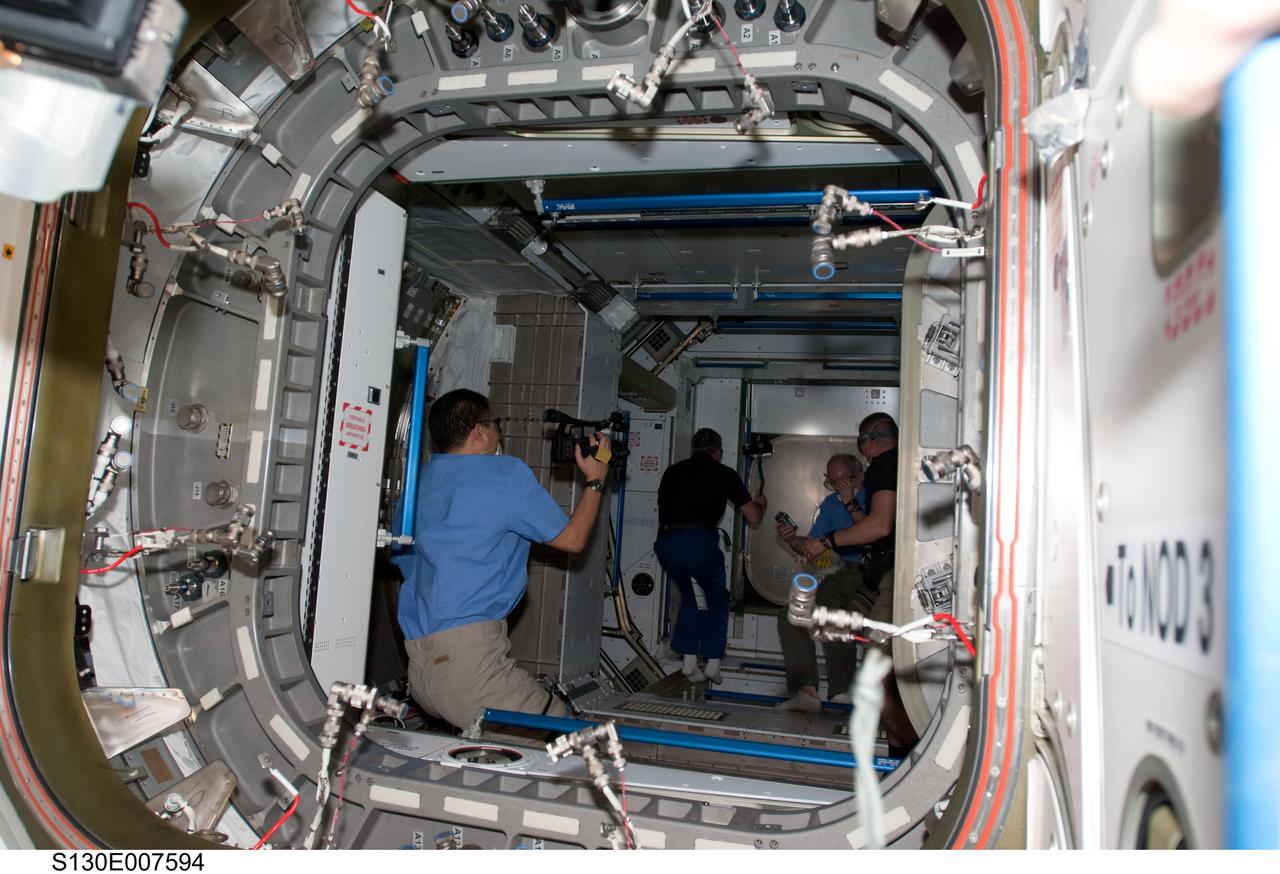
S130-E-007594 (13 Feb. 2010) --- Japan Aerospace Exploration Agency (JAXA) astronaut Soichi Noguchi, Expedition 22 flight engineer, uses a video camera in the newly-installed Tranquility node of the International Space Station while space shuttle Endeavour remains docked with the station. NASA astronauts George Zamka (right), STS-130 commander; Jeffrey Williams (center), Expedition 22 commander; and Stephen Robinson, STS-130 mission specialist, are visible in the background.
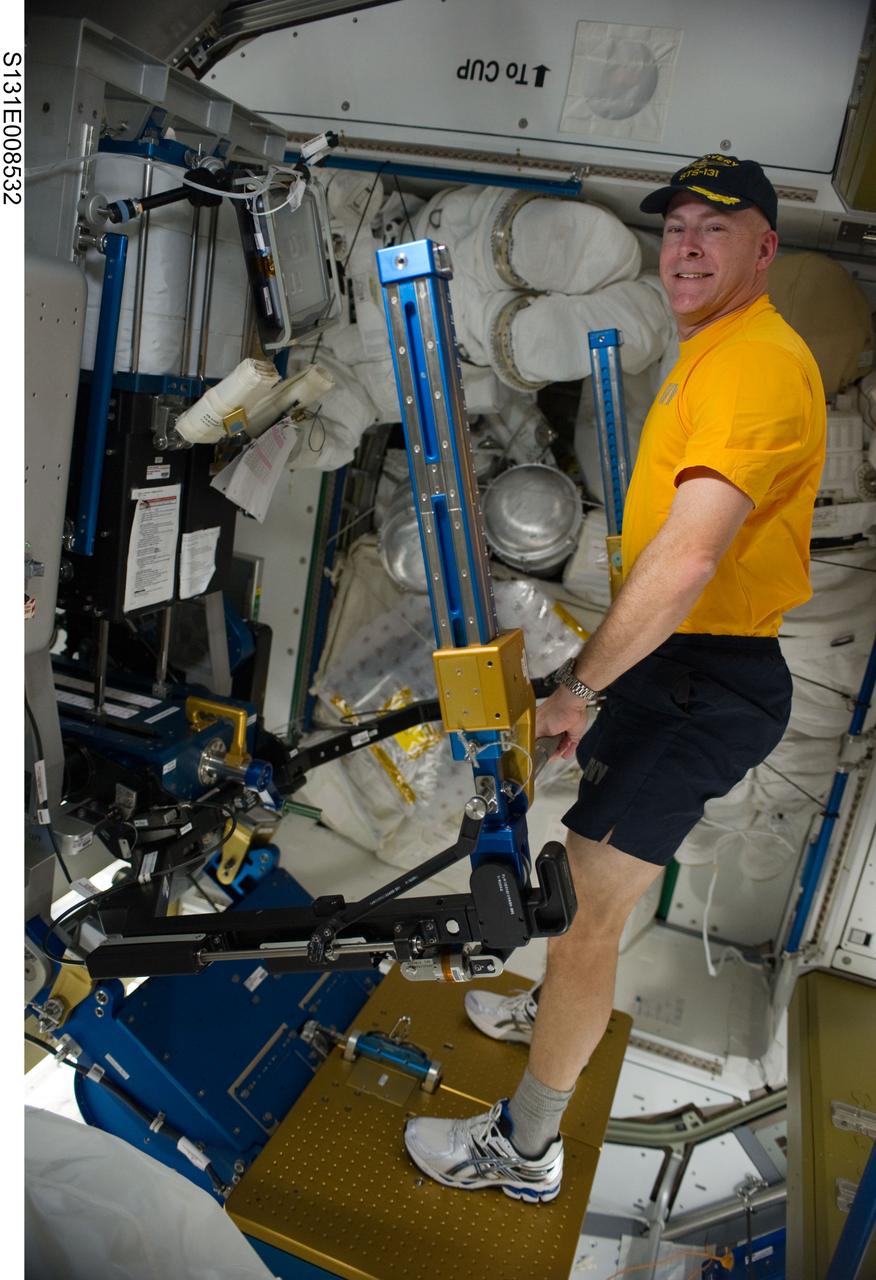
S131-E-008532 (10 April 2010) --- NASA astronaut Alan Poindexter, STS-131 commander, exercises using the advanced Resistive Exercise Device (aRED) in the Tranquility node of the International Space Station while space shuttle Discovery remains docked with the station.
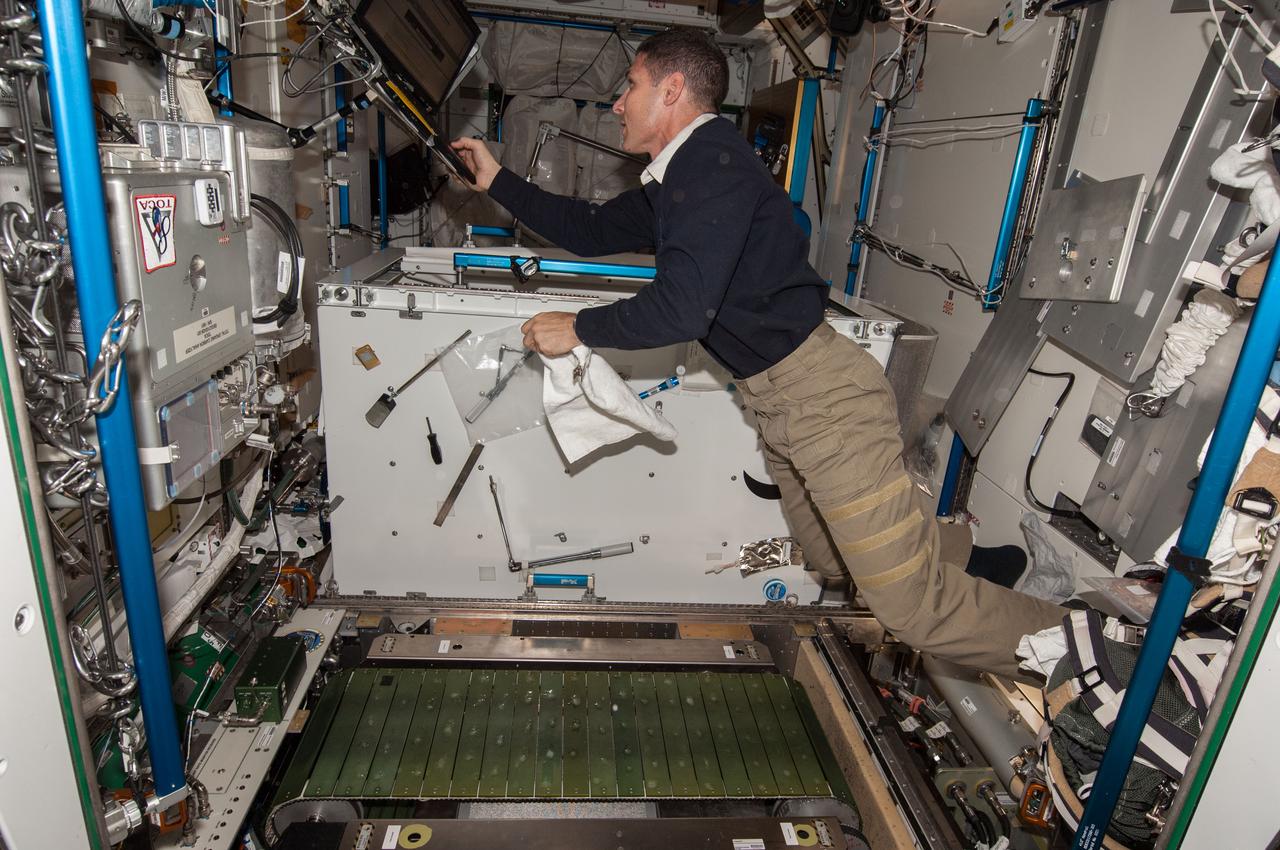
ISS037-E-026920 (4 Nov. 2013) --- NASA astronaut Michael Hopkins, Expedition 37 flight engineer, enters data in a computer near the Combined Operational Load Bearing External Resistance Treadmill (COLBERT) in the Tranquility node of the International Space Station.
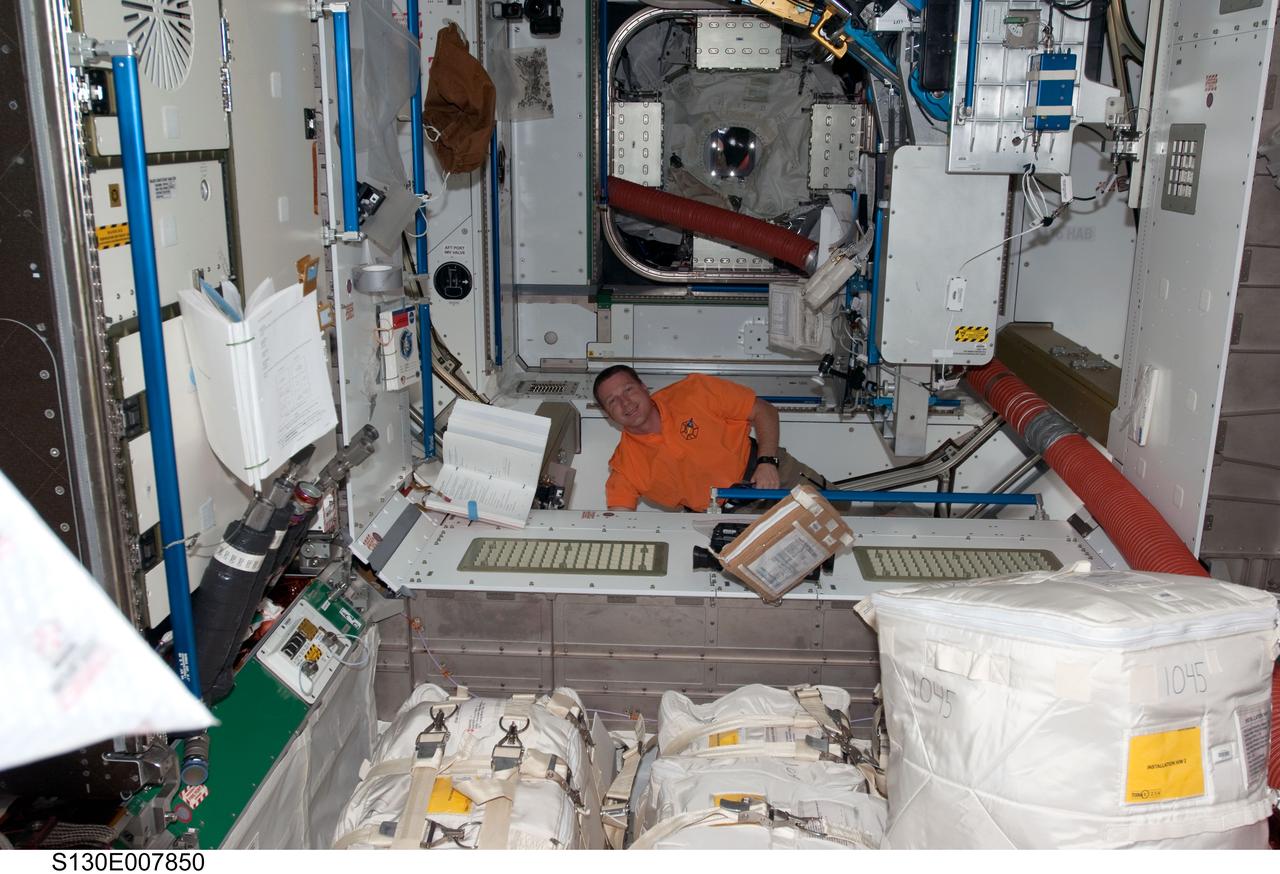
S130-E-007850 (14 Feb. 2010) --- NASA astronaut Terry Virts, STS-130 pilot, works in the newly-installed Tranquility node of the International Space Station while space shuttle Endeavour remains docked with the station.
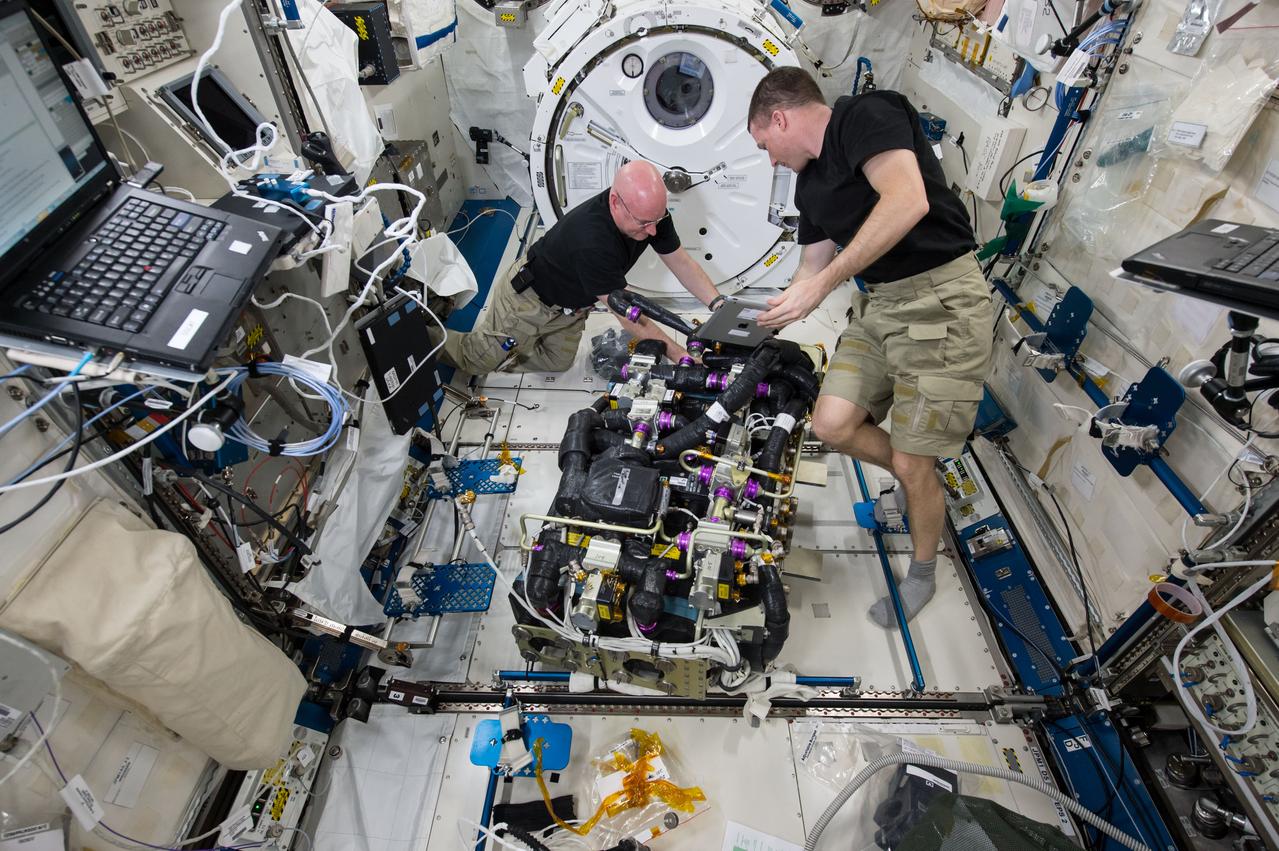
ISS043E181459 (05/07/2015) – NASA astronauts Scott Kelly (left) and Terry Virts (right) work on a Carbon Dioxide Removal Assembly (CDRA) inside the station’s Japanese Experiment Module. The CDRA system works to remove carbon dioxide from the cabin air, allowing for an environmentally safe crew cabin.
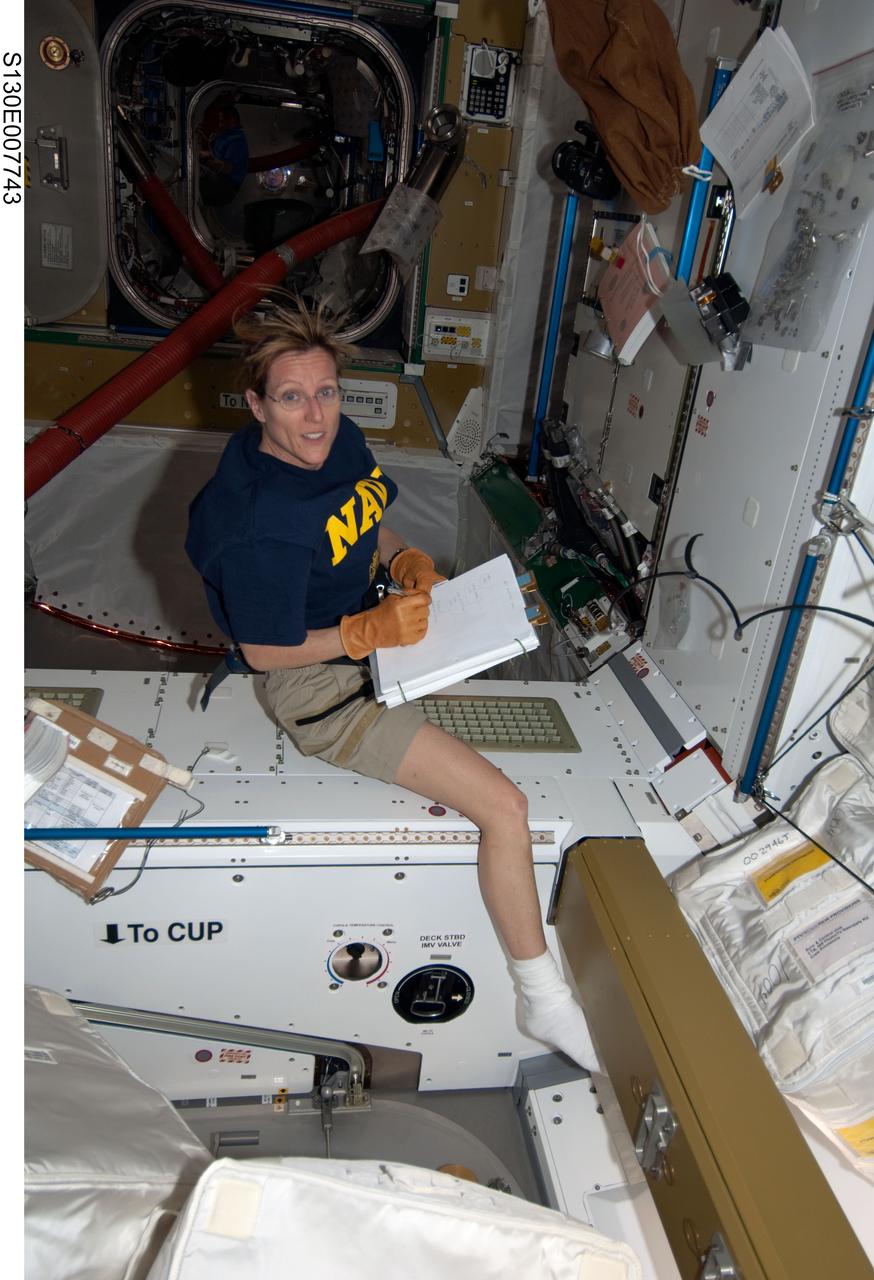
S130-E-007743 (14 Feb. 2010) --- NASA astronaut Kathryn Hire, STS-130 mission specialist, works in the newly-installed Tranquility node of the International Space Station while space shuttle Endeavour remains docked with the station.
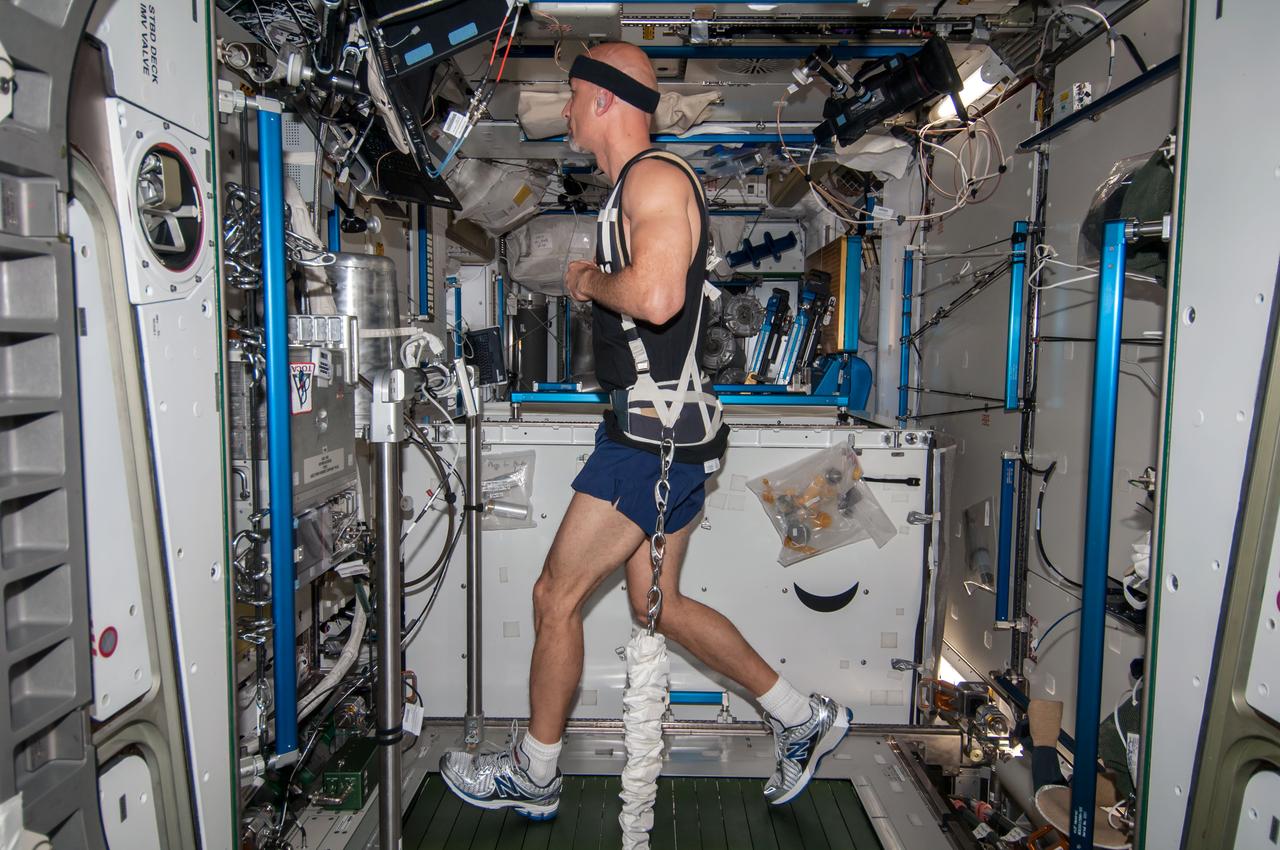
ISS036-E-005384 (2 June 2013) --- In the Tranquility node of the Earth-orbiting International Space Station, European Space Agency astronaut Luca Parmitano exercises on the Combined Operational Load Bearing External Resistance Treadmill (COLBERT), technically named the Treadmill 2 and abbreviated as T2. It is a treadmill for use on board the orbital outpost and is designed to allow astronauts to run without vibrating delicate microgravity science experiments in adjacent labs. It was derived from the treadmill that was originally taken to the station. COLBERT/T2 uses a different kind of vibration-suppression system than the original. Parmitano has been on board the orbital outpost for about three days and will continue his stay into November.
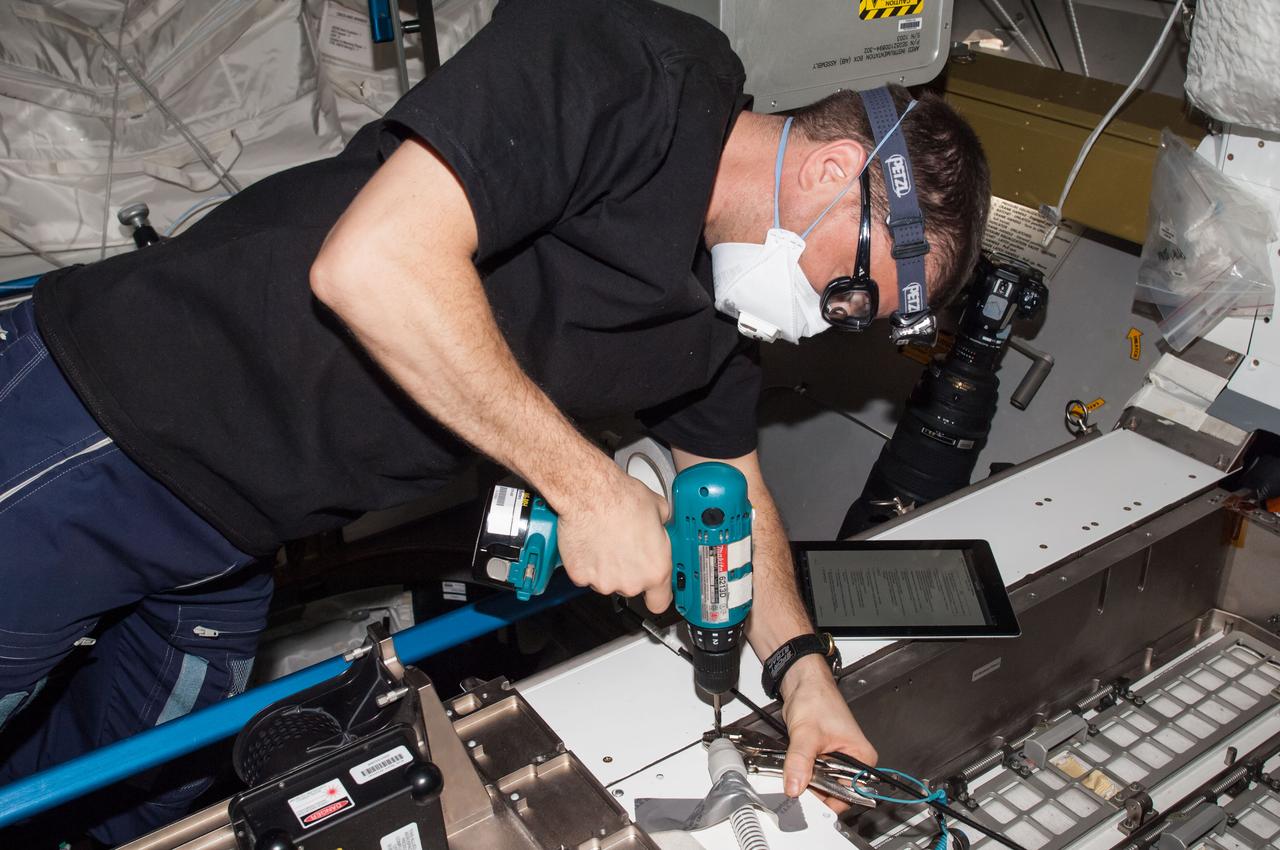
ISS040-E-099850 (18 Aug. 2014) --- NASA astronaut Reid Wiseman, Expedition 40 crew member, performs routine in-flight maintenance in the Tranquility node of the International Space Station.
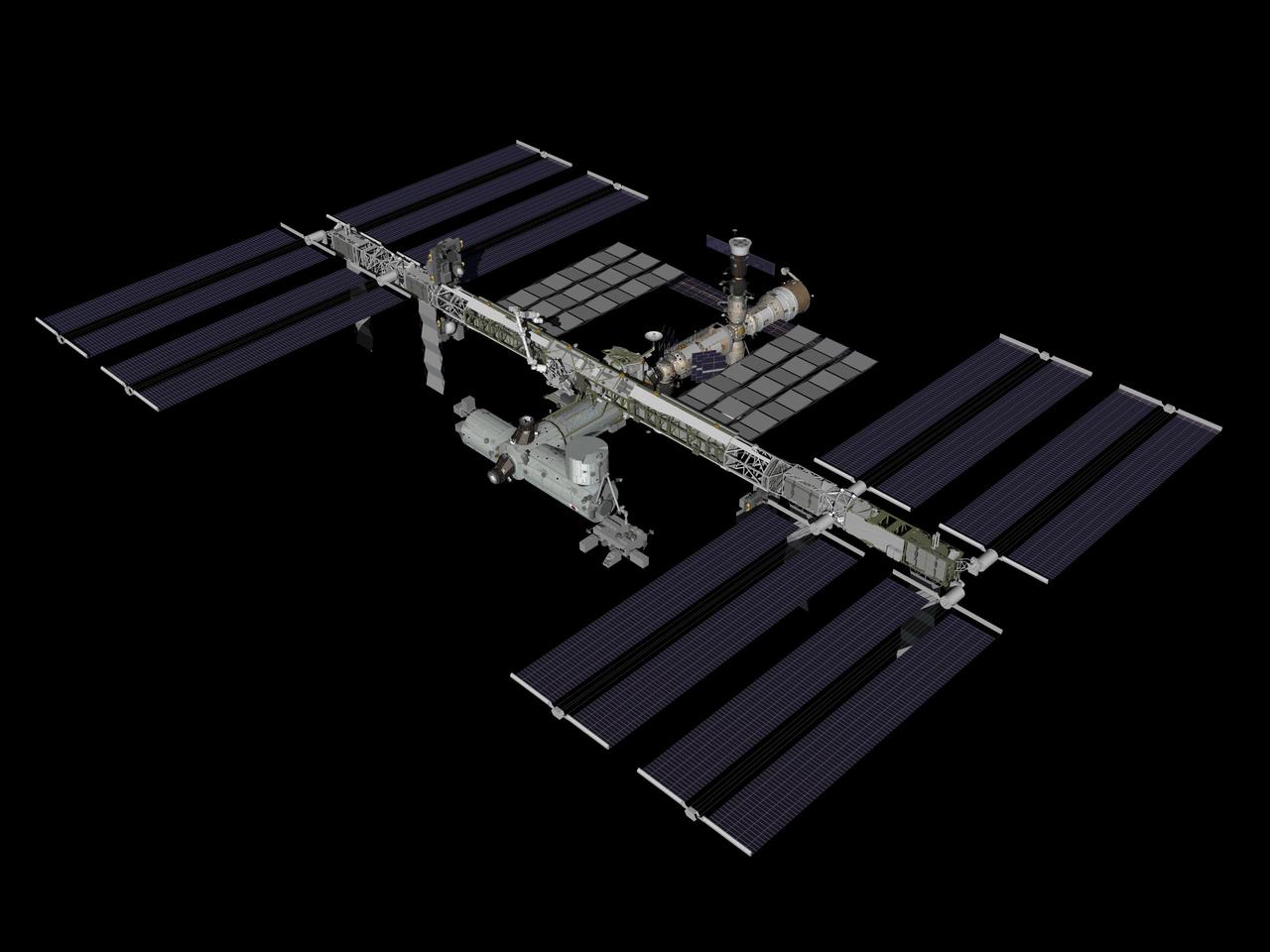
JSC2010-E-008593 (January 2010) --- Computer-generated artist?s rendering of the International Space Station as of Jan. 23, 2010. Pressurized Mating Adapter 3 (PMA-3) is relocated from the Unity node port to the Harmony node zenith port to allow for the arrival of the Tranquility module (Node 3). Soyuz 20 (TMA-16) is docked to the Poisk Mini-Research Module 2 (MRM2). Soyuz 21 (TMA-17) is linked to the Zarya nadir port and Progress 35 resupply vehicle remains docked to the Pirs Docking Compartment.

KENNEDY SPACE CENTER, FLA. -- Node 1, the first U.S. element for the International Space Station, and attached Pressurized Mating Adapter-1 (PMA-1) continue with prelaunch preparation activities at KSC's Space Station Processing Facility. Node 1 is a connecting passageway to the living and working areas of the space station. The node and PMA-1 are being removed from the element rotation stand, or test stand, where they underwent an interim weight and center of gravity determination. (The final determination is planned to be performed prior to transporting Node 1 to the launch pad.) Now the node is being moved to the Shuttle payload transportation canister, where the doors will be closed for a two-week leak check. PMAs -2 and -3 can be seen against the right wall, with PMA-3 at the far right. Node 1 is scheduled to fly on STS-88
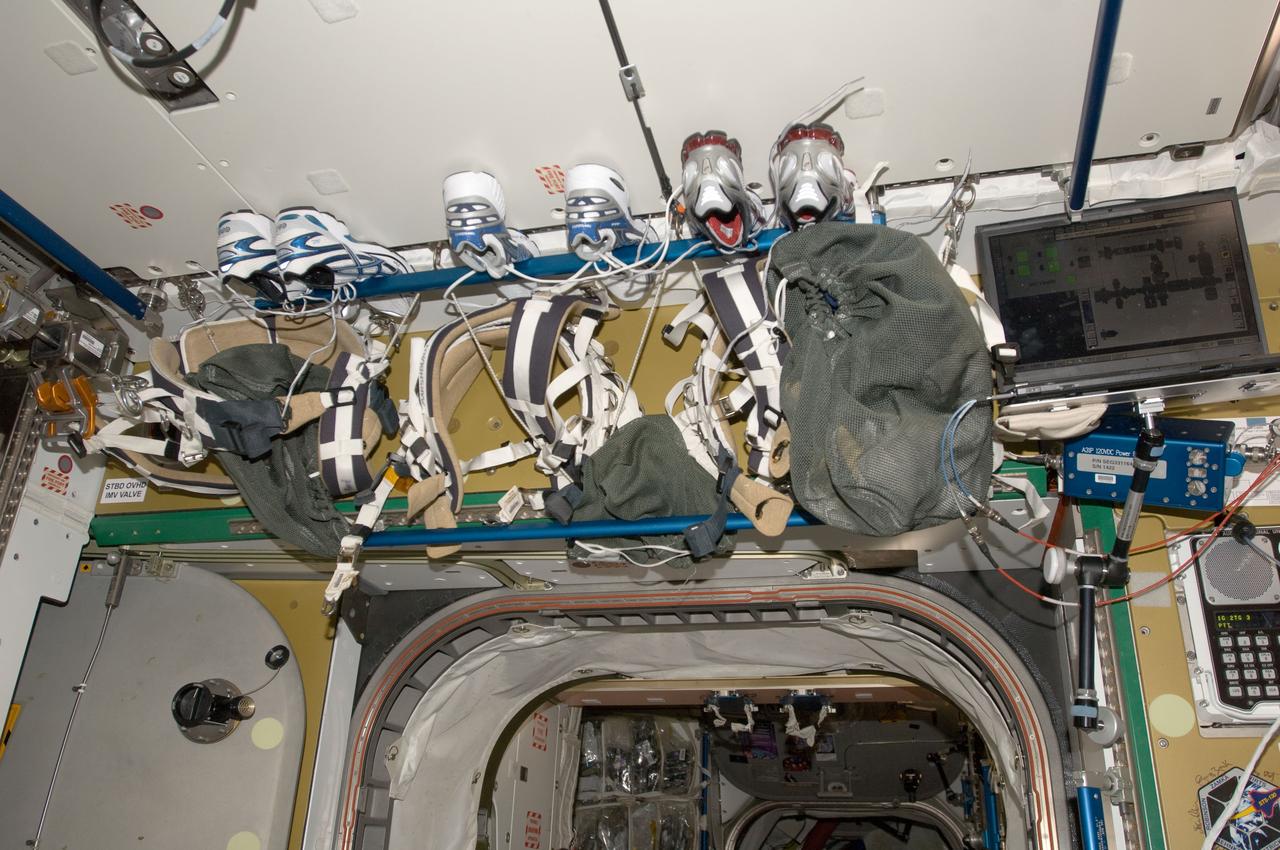
View of Avionics Rack 2 Closeout Panel with tennis shoes,in the Node 3. Photo was taken during Expedition 34.
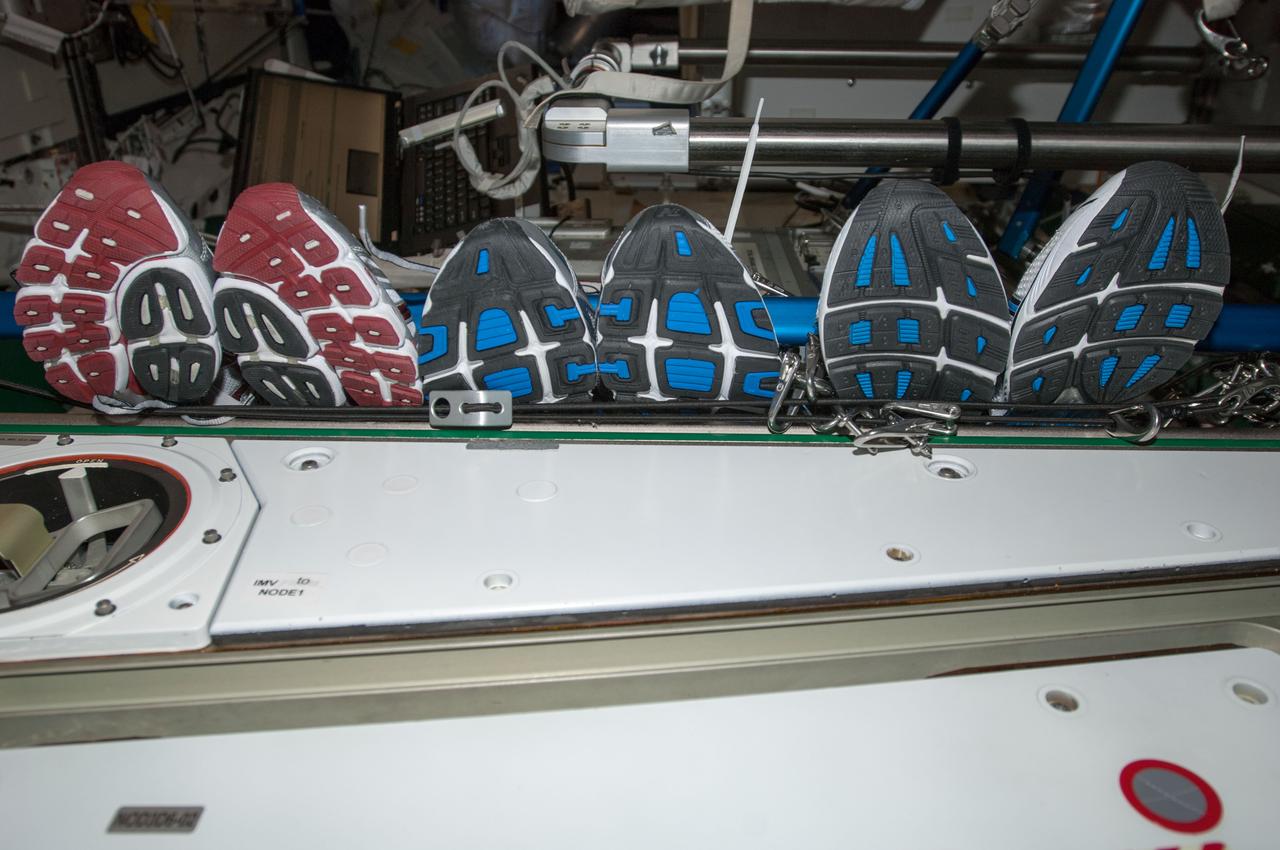
View of stowed tennis shoes,in the Node 3. Photo was taken during Expedition 34.
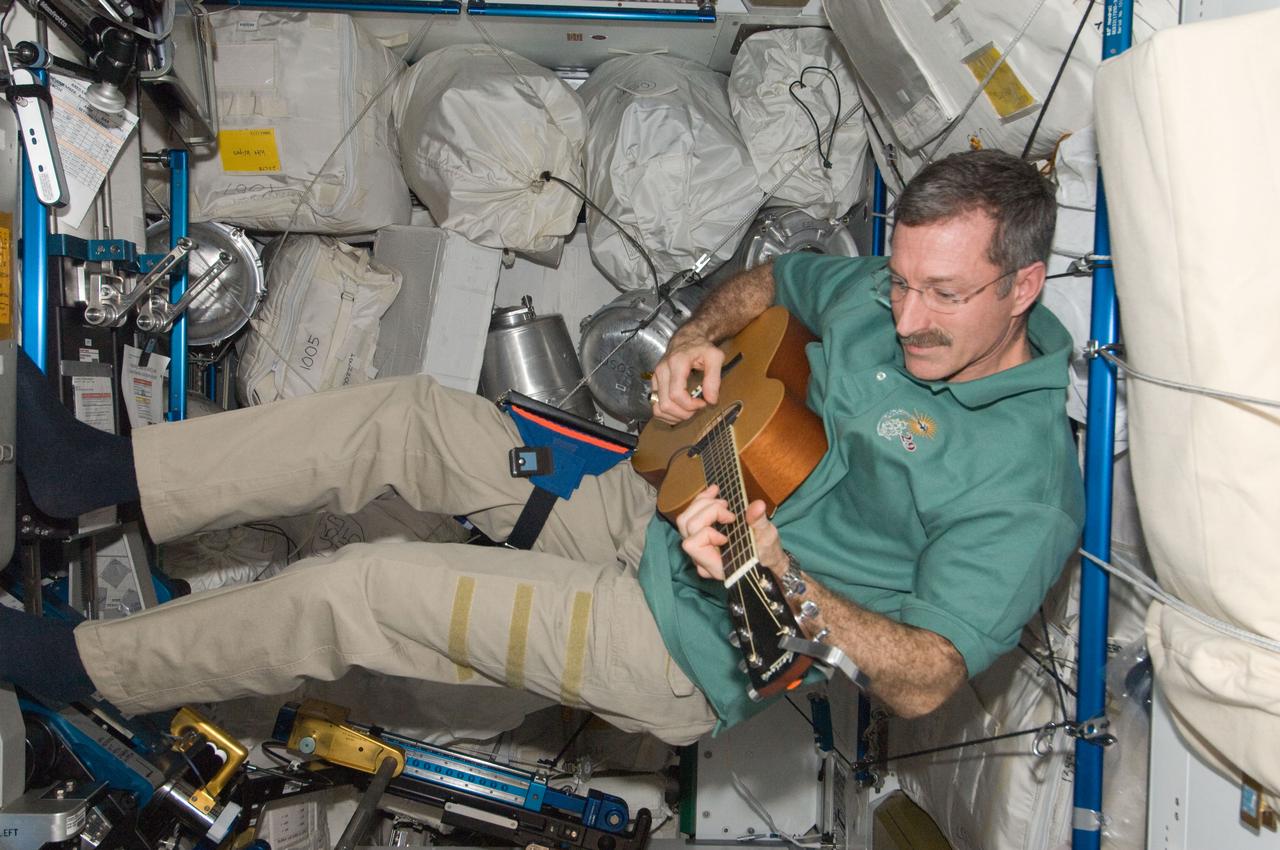
ISS030-E-161703 (16 March 2012) --- NASA astronaut Dan Burbank, Expedition 30 commander, plays a guitar in the Tranquility node of the International Space Station.
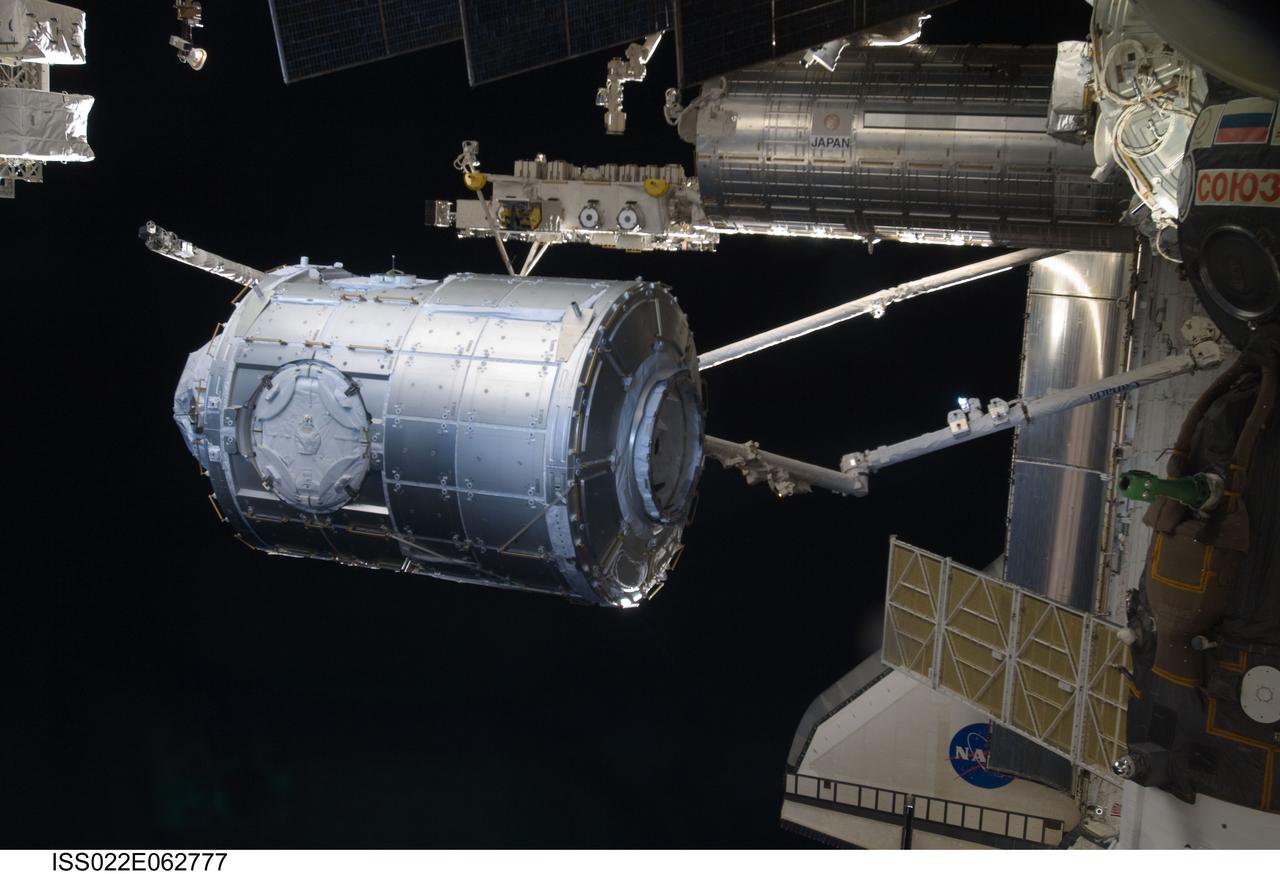
ISS022-E-062777 (11 Feb. 2010) --- In the grasp of the station?s Canadarm2, the Tranquility module is transferred from its stowage position in space shuttle Endeavour?s (STS-130) payload bay to position it on the port side of the Unity node of the International Space Station. Tranquility was locked in place with 16 remotely-controlled bolts.