
NOAA Administrator, Vice Admiral Conrad C. Lautenbacher, Jr., U.S. Navy (Ret.), is seen on a television monitor as he testifies before the House Committee on Science and Technology regarding the future of the National Polar-orbiting Operational Environmental Satellite System (NPOESS) and results of the Nunn-McCurdy review of NOAA’s weather satellite program, Thursday, June 8, 2006, at the Rayburn House Office Building in Washington. Photo Credit: (NASA/Bill Ingalls)

NASA Administrator Michael Griffin, testifies before the House Committee on Science and Technology regarding the future of the National Polar-orbiting Operational Environmental Satellite System (NPOESS) and results of the Nunn-McCurdy review of NOAA’s weather satellite program, Thursday, June 8, 2006, at the Rayburn House Office Building in Washington. Photo Credit: (NASA/Bill Ingalls)

NOAA Administrator, Vice Admiral Conrad C. Lautenbacher, Jr., U.S. Navy (Ret.), testifies before the House Committee on Science and Technology regarding the future of the National Polar-orbiting Operational Environmental Satellite System (NPOESS) and results of the Nunn-McCurdy review of NOAA’s weather satellite program, Thursday, June 8, 2006, at the Rayburn House Office Building in Washington. Photo Credit: (NASA/Bill Ingalls)

NOAA Administrator, Vice Admiral Conrad C. Lautenbacher, Jr., U.S. Navy (Ret.), left, NASA Administrator Michael Griffin and Under Secretary of the Air Force Dr. Ronald Sega, right, testify before the House Committee on Science and Technology regarding the future of the National Polar-orbiting Operational Environmental Satellite System (NPOESS) and results of the Nunn-McCurdy review of NOAA’s weather satellite program, Thursday, June 8, 2006, at the Rayburn House Office Building in Washington. Photo Credit: (NASA/Bill Ingalls)

NOAA Administrator, Vice Admiral Conrad C. Lautenbacher, Jr., U.S. Navy (Ret.), left, NASA Administrator Michael Griffin and Under Secretary of the Air Force Dr. Ronald Sega, right, testify before the House Committee on Science and Technology regarding the future of the National Polar-orbiting Operational Environmental Satellite System (NPOESS) and results of the Nunn-McCurdy review of NOAA’s weather satellite program, Thursday, June 8, 2006, at the Rayburn House Office Building in Washington. Photo Credit: (NASA/Bill Ingalls)

NASA Administrator Michael Griffin, left, testifies before the House Committee on Science and Technology regarding the future of the National Polar-orbiting Operational Environmental Satellite System (NPOESS) and results of the Nunn-McCurdy review of NOAA’s weather satellite program, as Under Secretary of the Air Force Dr. Ronald Sega looks on, Thursday, June 8, 2006, at the Rayburn House Office Building in Washington. Photo Credit: (NASA/Bill Ingalls)

Under Secretary of the Air Force Dr. Ronald Sega, right, testifies before the House Committee on Science and Technology regarding the future of the National Polar-orbiting Operational Environmental Satellite System (NPOESS) and results of the Nunn-McCurdy review of NOAA’s weather satellite program as NASA Administrator Michael Griffin, left, looks at a television monitor, Thursday, June 8, 2006, at the Rayburn House Office Building in Washington. Photo Credit: (NASA/Bill Ingalls)

NOAA Administrator, Vice Admiral Conrad C. Lautenbacher, Jr., U.S. Navy (Ret.), left, NASA Administrator Michael Griffin and Under Secretary of the Air Force Dr. Ronald Sega, right, testify before the House Committee on Science and Technology regarding the future of the National Polar-orbiting Operational Environmental Satellite System (NPOESS) and results of the Nunn-McCurdy review of NOAA’s weather satellite program, Thursday, June 8, 2006, at the Rayburn House Office Building in Washington. Photo Credit: (NASA/Bill Ingalls)

NOAA Administrator, Vice Admiral Conrad C. Lautenbacher, Jr., U.S. Navy (Ret.), left, NASA Administrator Michael Griffin and Under Secretary of the Air Force Dr. Ronald Sega, right, testify before the House Committee on Science and Technology regarding the future of the National Polar-orbiting Operational Environmental Satellite System (NPOESS) and results of the Nunn-McCurdy review of NOAA’s weather satellite program, Thursday, June 8, 2006, at the Rayburn House Office Building in Washington. Photo Credit: (NASA/Bill Ingalls)

Chairman of the House Committee on Science and Technology U.S. Rep. Sherwood Boehlert, R-N.Y., left, shakes hands with NASA Administrator Michael Griffin prior to a hearing on the future of the National Polar-orbiting Operational Environmental Satellite System (NPOESS) and results of the Nunn-McCurdy review of NOAA’s weather satellite program, Thursday, June 8, 2006, at the Rayburn House Office Building in Washington. Photo Credit: (NASA/Bill Ingalls)

Under Secretary of the Air Force Dr. Ronald Sega, testifies before the House Committee on Science and Technology regarding the future of the National Polar-orbiting Operational Environmental Satellite System (NPOESS) and results of the Nunn-McCurdy review of NOAA’s weather satellite program, Thursday, June 8, 2006, at the Rayburn House Office Building in Washington. Photo Credit: (NASA/Bill Ingalls)

Under Secretary of the Air Force Dr. Ronald Sega, testifies before the House Committee on Science and Technology regarding the future of the National Polar-orbiting Operational Environmental Satellite System (NPOESS) and results of the Nunn-McCurdy review of NOAA’s weather satellite program, Thursday, June 8, 2006, at the Rayburn House Office Building in Washington. Photo Credit: (NASA/Bill Ingalls)

Under Secretary of the Air Force Dr. Ronald Sega, testifies before the House Committee on Science and Technology regarding the future of the National Polar-orbiting Operational Environmental Satellite System (NPOESS) and results of the Nunn-McCurdy review of NOAA’s weather satellite program, Thursday, June 8, 2006, at the Rayburn House Office Building in Washington. Photo Credit: (NASA/Bill Ingalls)

U.S. Rep. Bart Gordon, D-Tenn., questions witnesses during a hearing on the future of the National Polar-orbiting Operational Environmental Satellite System (NPOESS) and results of the Nunn-McCurdy review of NOAA’s weather satellite program, Thursday, June 8, 2006, at the Rayburn House Office Building in Washington. Photo Credit: (NASA/Bill Ingalls)

Chairman of the House Committee on Science and Technology U.S. Rep. Sherwood Boehlert, R-N.Y., questions witnesses during a hearing on the future of the National Polar-orbiting Operational Environmental Satellite System (NPOESS) and results of the Nunn-McCurdy review of NOAA’s weather satellite program, Thursday, June 8, 2006, at the Rayburn House Office Building in Washington. Photo Credit: (NASA/Bill Ingalls)
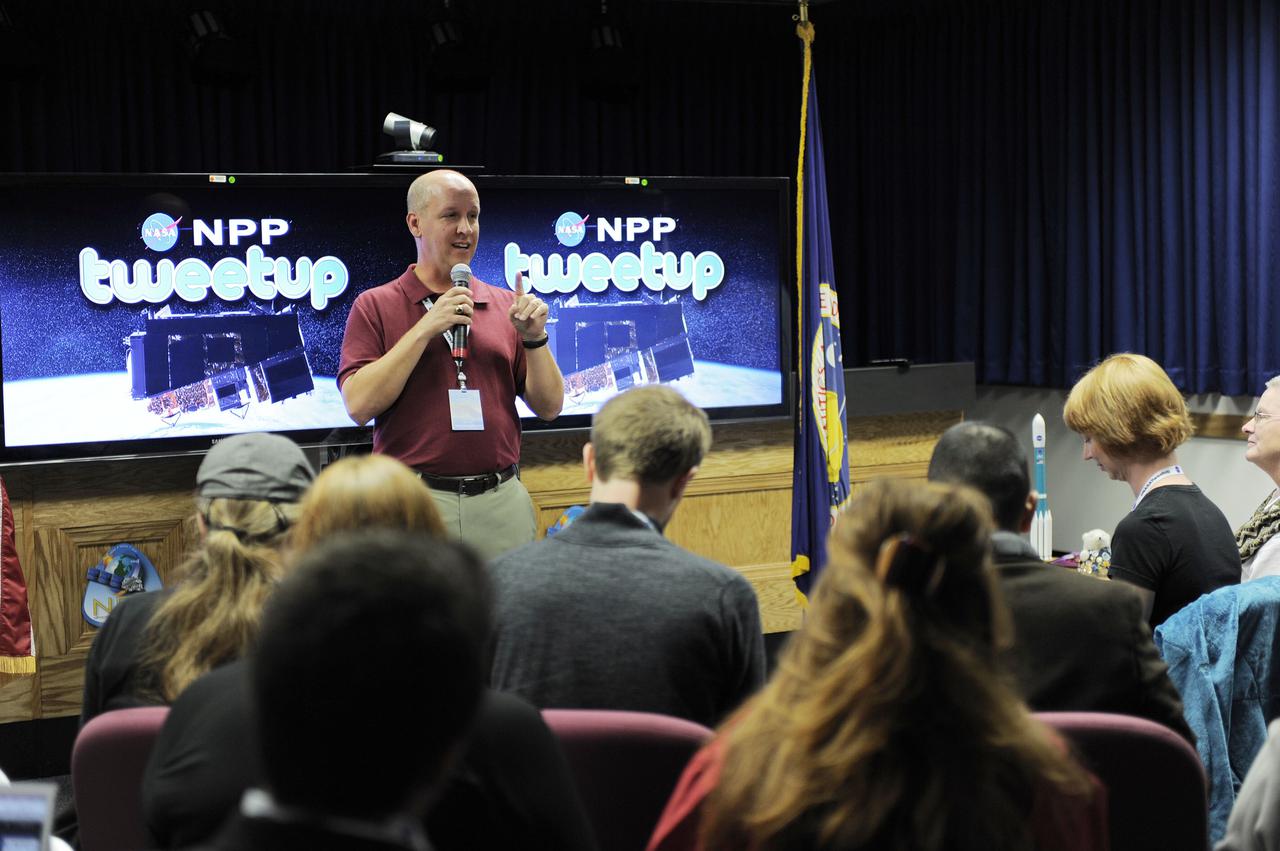
VANDENBERG AIR FORCE BASE, Calif. – A speaker talks with a group of Tweetup participants at Vandenberg Air Force Base in California during prelaunch activities for NASA’s National Polar-orbiting Operational Environmental Satellite System Preparatory Project (NPP) spacecraft mission. The tweeters will share their experiences with followers through the social networking site Twitter. NPP represents a critical first step in building the next-generation of Earth-observing satellites. NPP will carry the first of the new sensors developed for this satellite fleet, now known as the Joint Polar Satellite System (JPSS) to be launched in 2016. NPP is the bridge between NASA's Earth Observing System (EOS) satellites and the forthcoming series of JPSS satellites. The mission will test key technologies and instruments for the JPSS missions. NPP is targeted to launch Oct. 28 from Space Launch Complex-2 aboard a United Launch Alliance Delta II rocket. For more information, visit http:__www.nasa.gov_NPP. Photo credit: NASA_Kim Shiflett

VANDENBERG AIR FORCE BASE, Calif. -- The second stage of a United Launch Alliance Delta II that will carry NASA's National Polar-orbiting Operational Environmental Satellite System Preparatory Project (NPP) satellite into space is on its way from NASA Hangar 836 to Space Launch Complex-2 at Vandenberg Air Force Base in California. NPP will be positioned 512 miles above the Earth's surface and will orbit about 16 times each day to observe nearly the entire globe. The NPP mission for NASA and the National Oceanic and Atmospheric Administration (NOAA) is to measure Earth's atmospheric and sea surface temperatures, humidity sounding, land and ocean biological activity, and cloud and aerosol properties. For more information, visit www.nasa.gov/NPP. Photo credit: NASA/VAFB
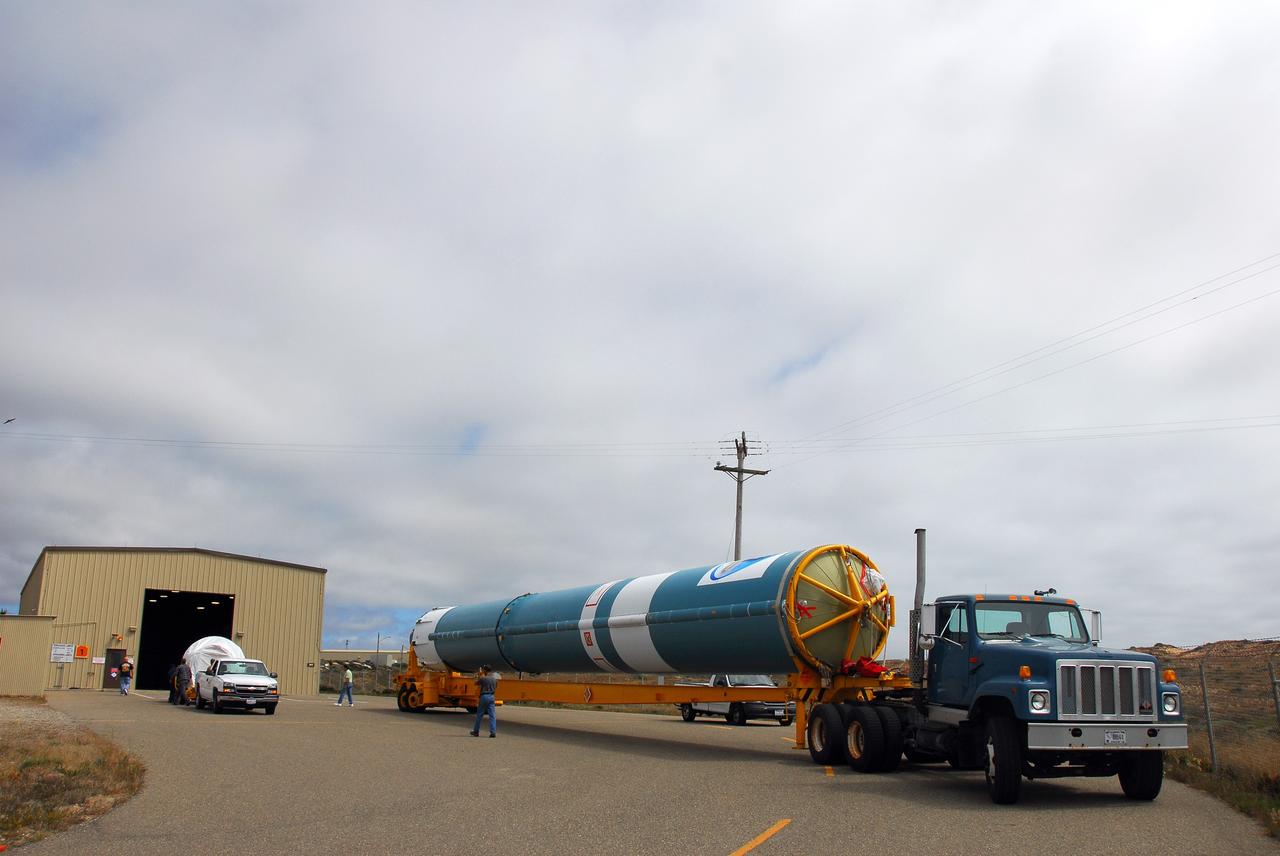
VANDENBERG AIR FORCE BASE, Calif. -- The second stage of a United Launch Alliance Delta II that will carry NASA's National Polar-orbiting Operational Environmental Satellite System Preparatory Project (NPP) satellite into space arrives at the United Launch Alliance Delta Mission Checkout Facility at Space Launch Complex-2 on Vandenberg Air Force Base in California. NPP will be positioned 512 miles above the Earth's surface and will orbit about 16 times each day to observe nearly the entire globe. The NPP mission for NASA and the National Oceanic and Atmospheric Administration (NOAA) is to measure Earth's atmospheric and sea surface temperatures, humidity sounding, land and ocean biological activity, and cloud and aerosol properties. For more information, visit www.nasa.gov/NPP. Photo credit: NASA/VAFB
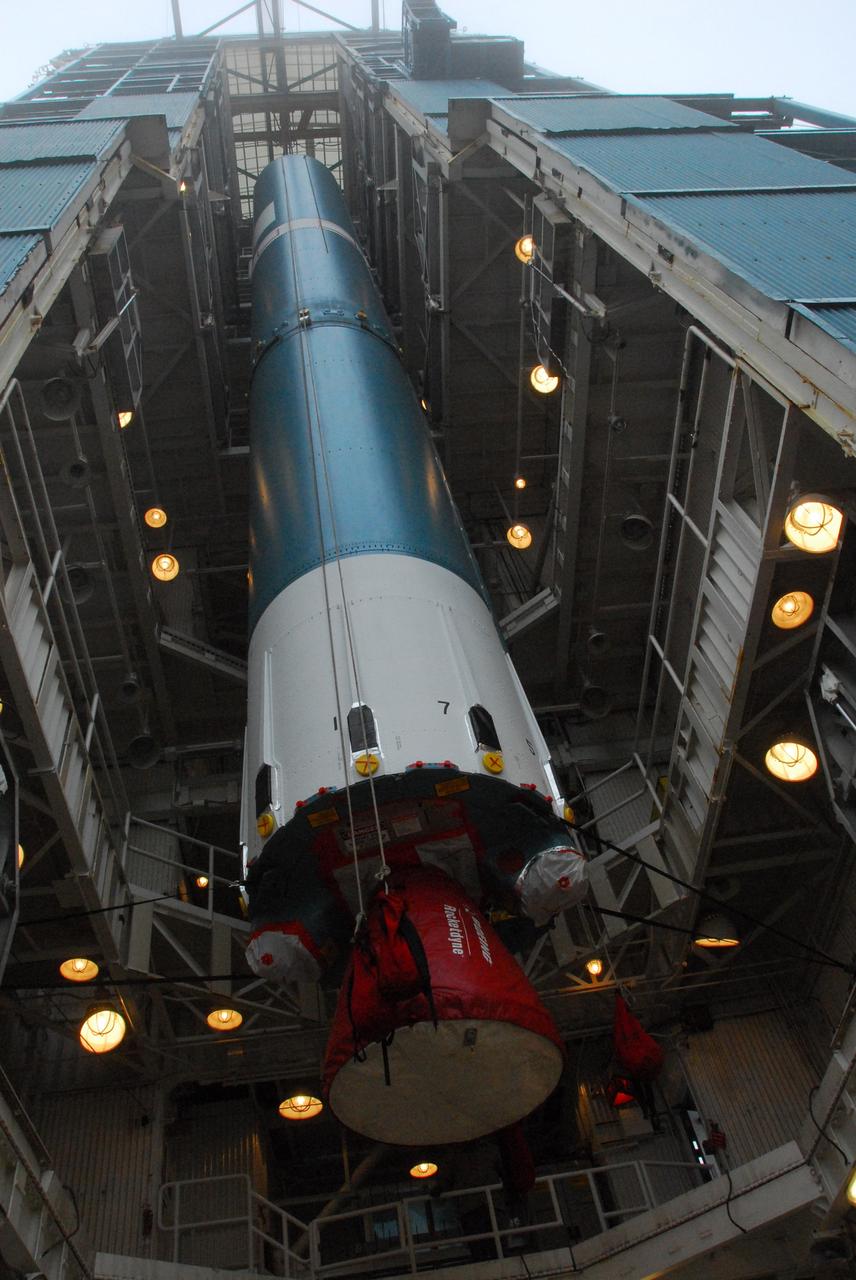
VANDENBERG AIR FORCE BASE, Calif. -- The first stage of a United Launch Alliance Delta II is hoisted into place at NASA's Space Launch Complex-2 on Vandenberg Air Force Base in California. The rocket will carry NASA's National Polar-orbiting Operational Environmental Satellite System Preparatory Project (NPP) satellite into space. NPP will be positioned 512 miles above the Earth's surface and will orbit about 16 times each day to observe nearly the entire globe. The NPP mission for NASA and the National Oceanic and Atmospheric Administration (NOAA) is to measure Earth's atmospheric and sea surface temperatures, humidity sounding, land and ocean biological activity, and cloud and aerosol properties. For more information, visit www.nasa.gov/NPP. Photo credit: NASA/VAFB, Mark Mackley
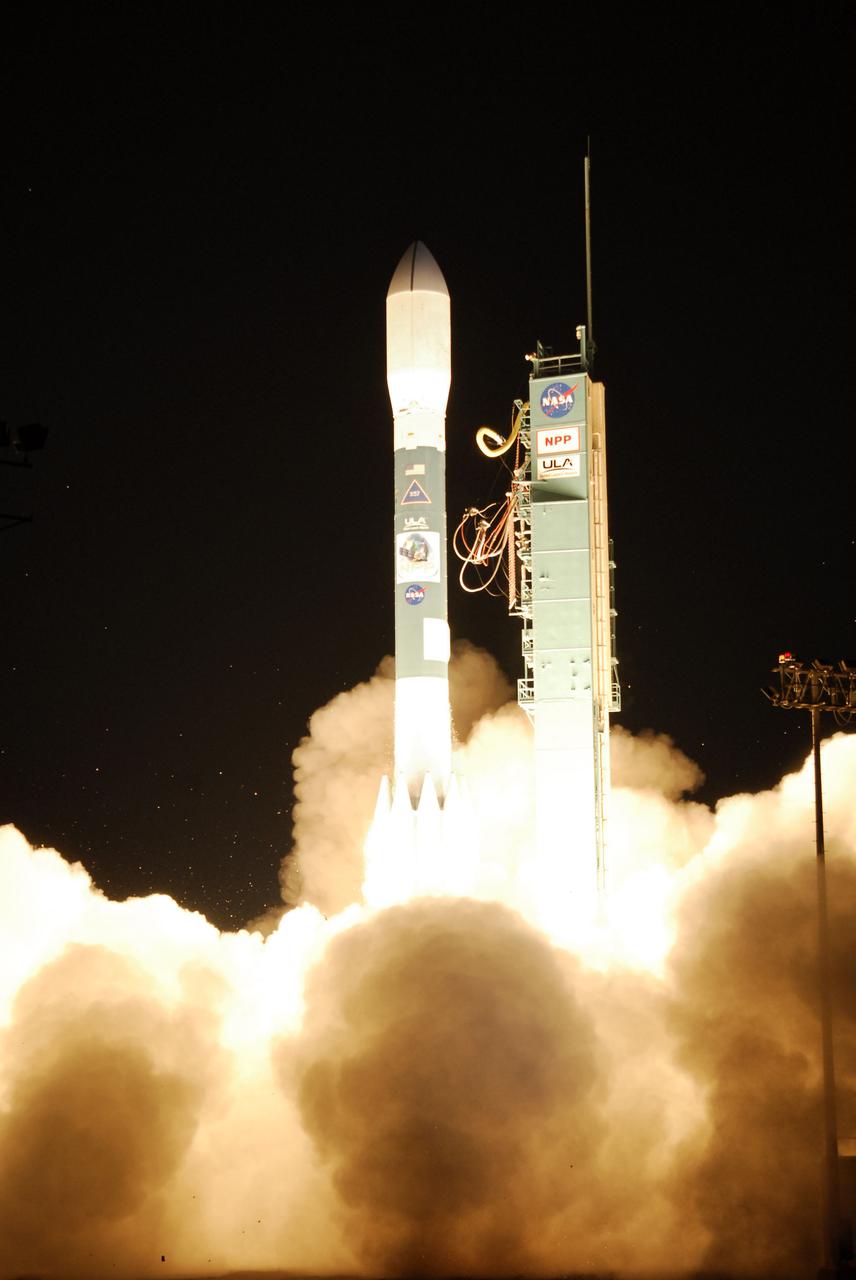
VANDENBERG AIR FORCE BASE, Calif. -- At Space Launch Complex-2 on Vandenberg Air Force Base in California, an exhaust cloud builds around the United Launch Alliance Delta II rocket carrying NASA's National Polar-orbiting Operational Environmental Satellite System Preparatory Project (NPP) into space. Liftoff was at 2:48 a.m. PDT. NPP represents a critical first step in building the next-generation of Earth-observing satellites. NPP will carry the first of the new sensors developed for this satellite fleet, now known as the Joint Polar Satellite System (JPSS) to be launched in 2016. NPP is the bridge between NASA's Earth Observing System (EOS) satellites and the forthcoming series of JPSS satellites. The mission will test key technologies and instruments for the JPSS missions. For more information, visit http:__www.nasa.gov_NPP. Photo credit: NASA_Kim Shiflett
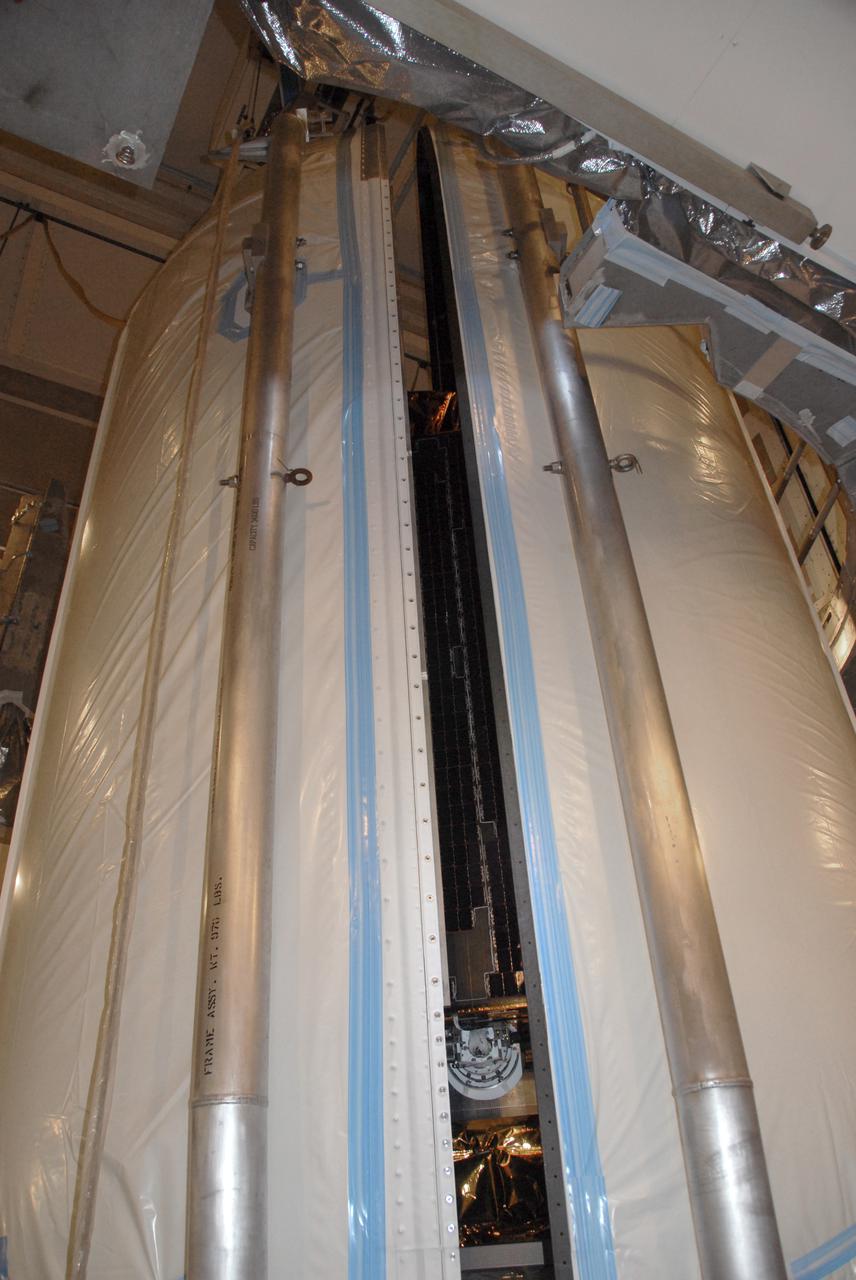
VANDENBERG AIR FORCE BASE, Calif. – At Vandenberg Air Force Base's Space Launch Complex-2 in California, encapsulation of NASA’s National Polar-orbiting Operational Environmental Satellite System Preparatory Project (NPP) spacecraft into the clamshell-shaped Delta payload fairing is almost complete. The fairing will protect the spacecraft from the impact of aerodynamic pressure and heating during ascent and will be jettisoned once the spacecraft is outside the Earth's atmosphere. NPP represents a critical first step in building the next-generation of Earth-observing satellites. NPP will carry the first of the new sensors developed for this satellite fleet, now known as the Joint Polar Satellite System (JPSS) to be launched in 2016. NPP is the bridge between NASA's Earth Observing System (EOS) satellites and the forthcoming series of JPSS satellites. The mission will test key technologies and instruments for the JPSS missions. NPP is targeted to launch Oct. 28 from Space Launch Complex-2 aboard a United Launch Alliance Delta II rocket. For more information, visit http:__www.nasa.gov_NPP. Photo credit: NASA_Mark P. Mackley, VAFB
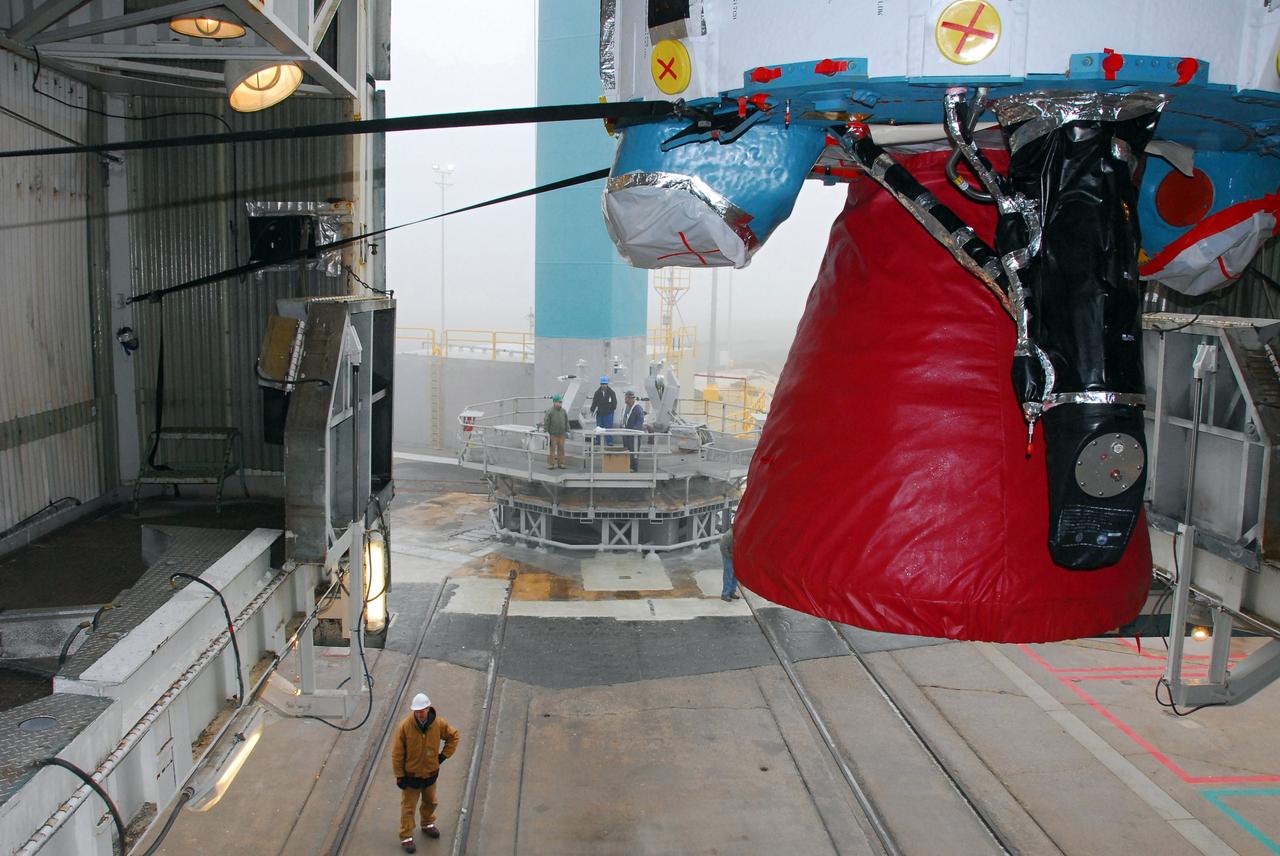
VANDENBERG AIR FORCE BASE, Calif. -- The first stage of a United Launch Alliance Delta II is hoisted into place at NASA's Space Launch Complex-2 on Vandenberg Air Force Base in California. Seen here in red is the Rocketdyne engine that will help loft the rocket off the pad. The rocket will carry NASA's National Polar-orbiting Operational Environmental Satellite System Preparatory Project (NPP) satellite into space. NPP will be positioned 512 miles above the Earth's surface and will orbit about 16 times each day to observe nearly the entire globe. The NPP mission for NASA and the National Oceanic and Atmospheric Administration (NOAA) is to measure Earth's atmospheric and sea surface temperatures, humidity sounding, land and ocean biological activity, and cloud and aerosol properties. For more information, visit www.nasa.gov/NPP. Photo credit: NASA/VAFB, Mark Mackley
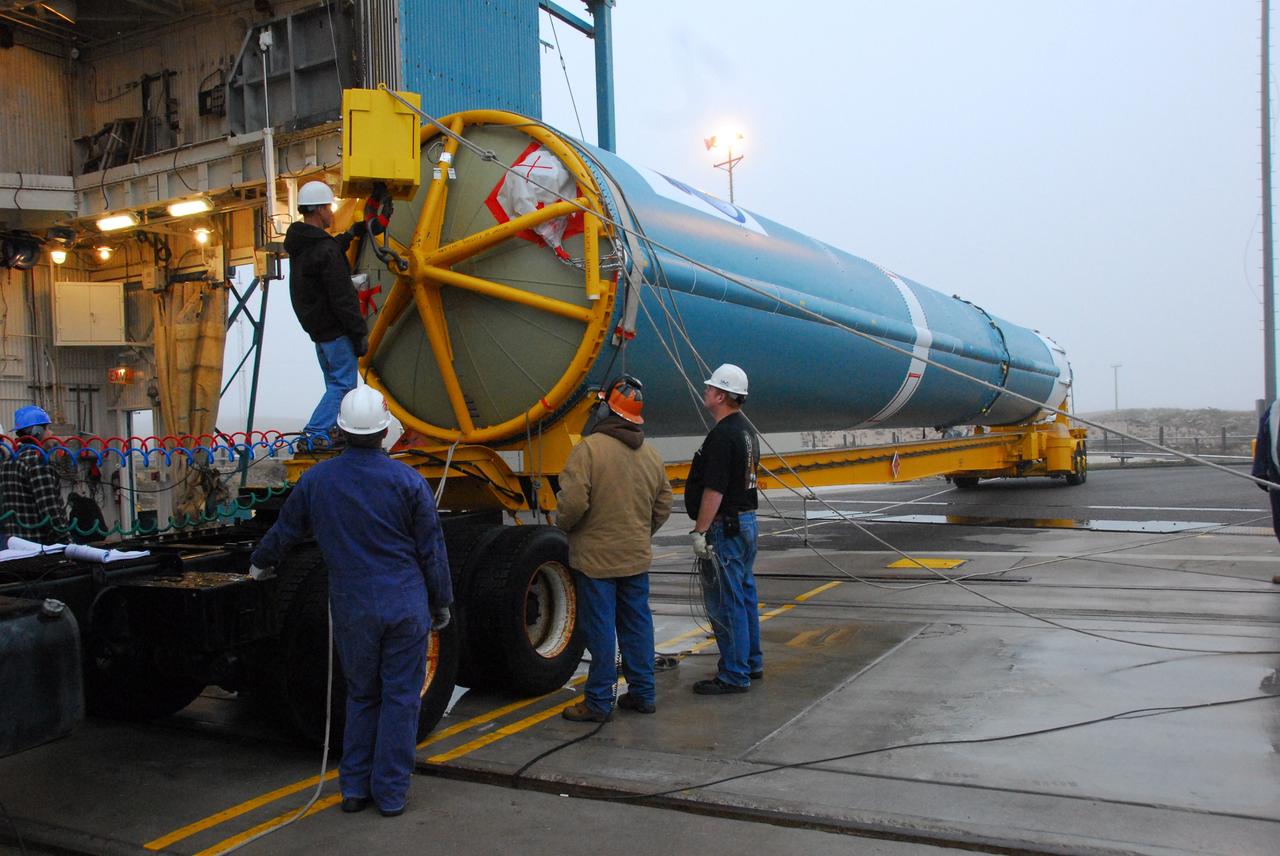
VANDENBERG AIR FORCE BASE, Calif. -- At NASA's Space Launch Complex-2 on Vandenberg Air Force Base in California, workers prepare to lift the first stage of a United Launch Alliance Delta II that will carry NASA's National Polar-orbiting Operational Environmental Satellite System Preparatory Project (NPP) satellite into space. NPP will be positioned 512 miles above the Earth's surface and will orbit about 16 times each day to observe nearly the entire globe. The NPP mission for NASA and the National Oceanic and Atmospheric Administration (NOAA) is to measure Earth's atmospheric and sea surface temperatures, humidity sounding, land and ocean biological activity, and cloud and aerosol properties. For more information, visit www.nasa.gov/NPP. Photo credit: NASA/VAFB, Mark Mackley
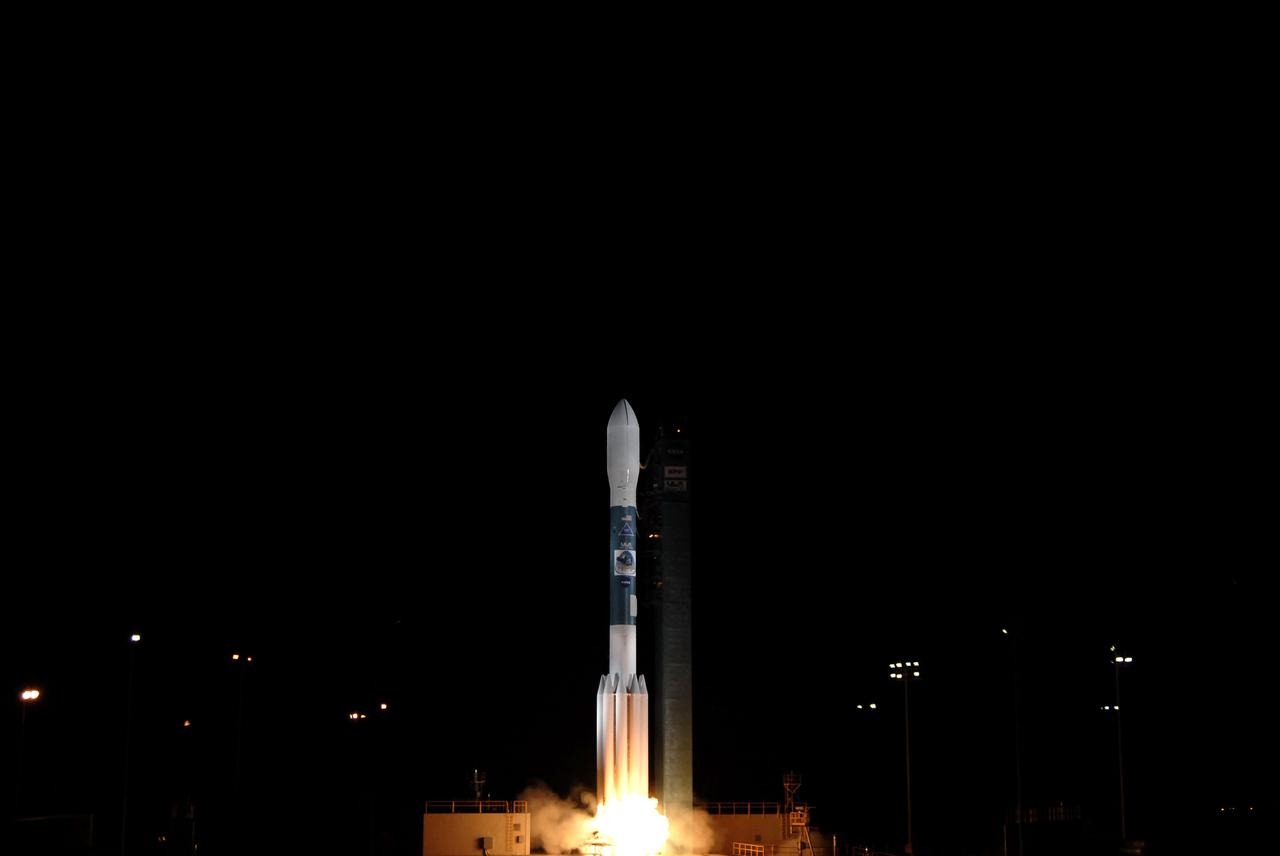
VANDENBERG AIR FORCE BASE, Calif. -- At Space Launch Complex-2 on Vandenberg Air Force Base in California, the engines ignite beneath the United Launch Alliance Delta II rocket carrying NASA's National Polar-orbiting Operational Environmental Satellite System Preparatory Project (NPP) into space. Liftoff was at 2:48 a.m. PDT. NPP represents a critical first step in building the next-generation of Earth-observing satellites. NPP will carry the first of the new sensors developed for this satellite fleet, now known as the Joint Polar Satellite System (JPSS) to be launched in 2016. NPP is the bridge between NASA's Earth Observing System (EOS) satellites and the forthcoming series of JPSS satellites. The mission will test key technologies and instruments for the JPSS missions. For more information, visit http:__www.nasa.gov_NPP. Photo credit: NASA_Kim Shiflett
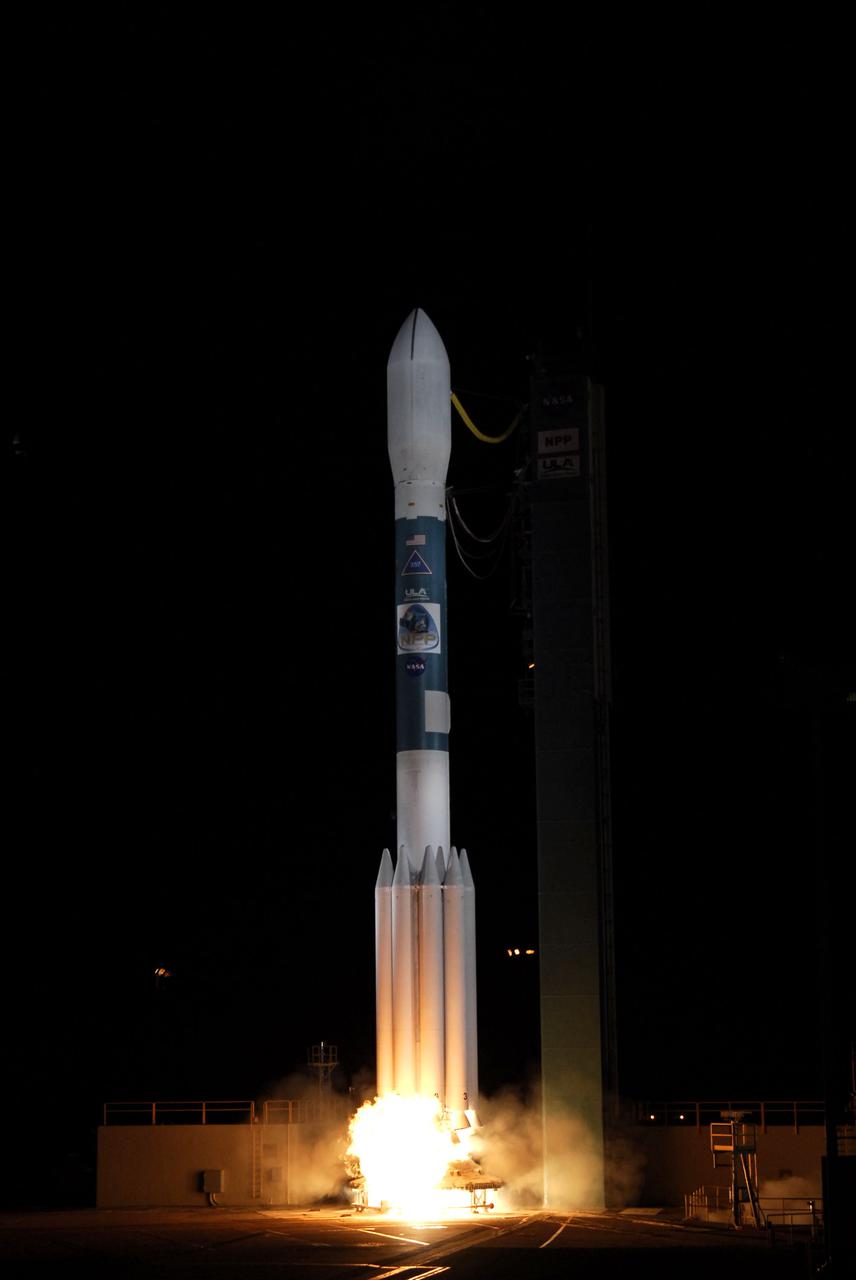
VANDENBERG AIR FORCE BASE, Calif. -- The ground begins to rumble at Space Launch Complex-2 on Vandenberg Air Force Base in California as the engines ignite beneath the United Launch Alliance Delta II rocket carrying NASA's National Polar-orbiting Operational Environmental Satellite System Preparatory Project (NPP) into space. Liftoff was at 2:48 a.m. PDT. NPP represents a critical first step in building the next-generation of Earth-observing satellites. NPP will carry the first of the new sensors developed for this satellite fleet, now known as the Joint Polar Satellite System (JPSS) to be launched in 2016. NPP is the bridge between NASA's Earth Observing System (EOS) satellites and the forthcoming series of JPSS satellites. The mission will test key technologies and instruments for the JPSS missions. For more information, visit http:__www.nasa.gov_NPP. Photo credit: NASA_Kim Shiflett
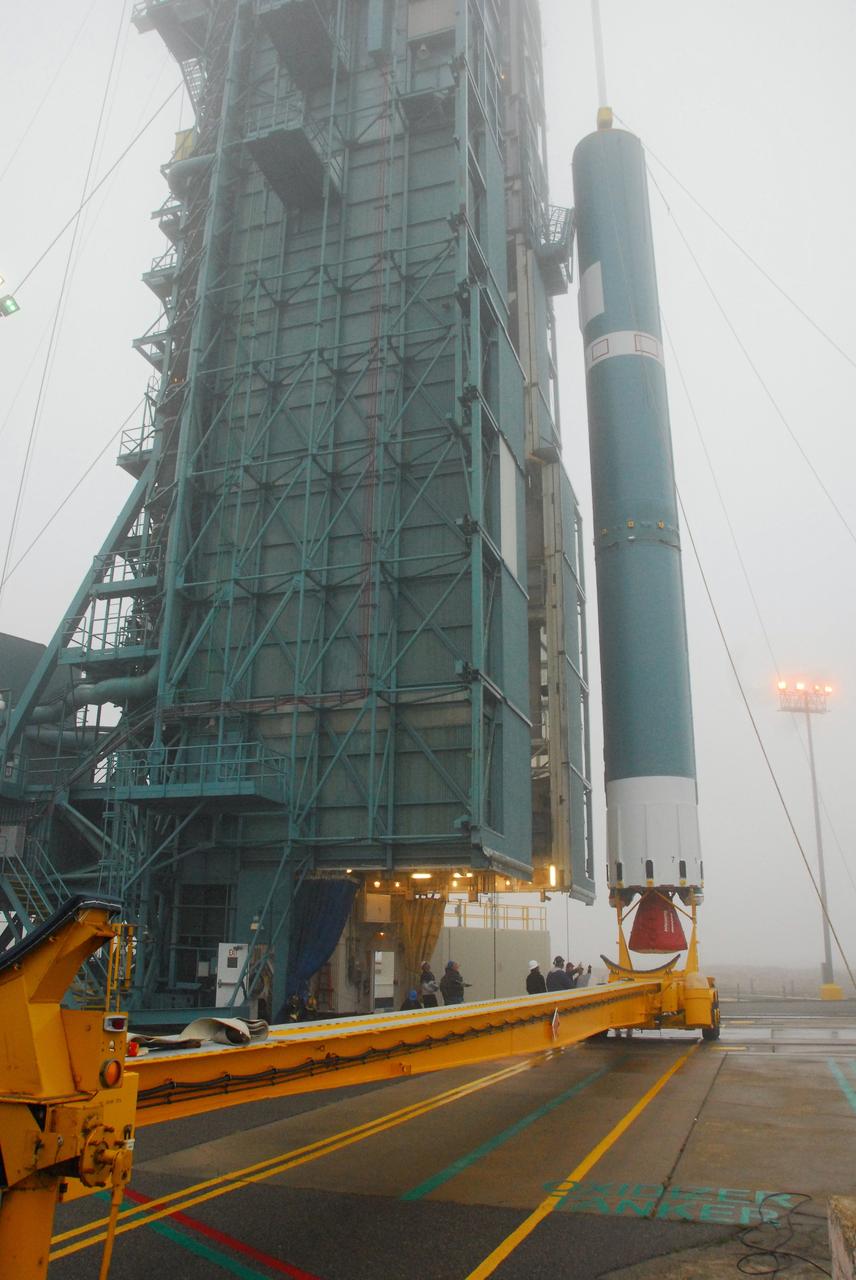
VANDENBERG AIR FORCE BASE, Calif. -- The first stage of a United Launch Alliance Delta II is lifted at NASA's Space Launch Complex-2 on Vandenberg Air Force Base in California. The rocket will carry NASA's National Polar-orbiting Operational Environmental Satellite System Preparatory Project (NPP) satellite into space. NPP will be positioned 512 miles above the Earth's surface and will orbit about 16 times each day to observe nearly the entire globe. The NPP mission for NASA and the National Oceanic and Atmospheric Administration (NOAA) is to measure Earth's atmospheric and sea surface temperatures, humidity sounding, land and ocean biological activity, and cloud and aerosol properties. For more information, visit www.nasa.gov/NPP. Photo credit: NASA/VAFB, Mark Mackley
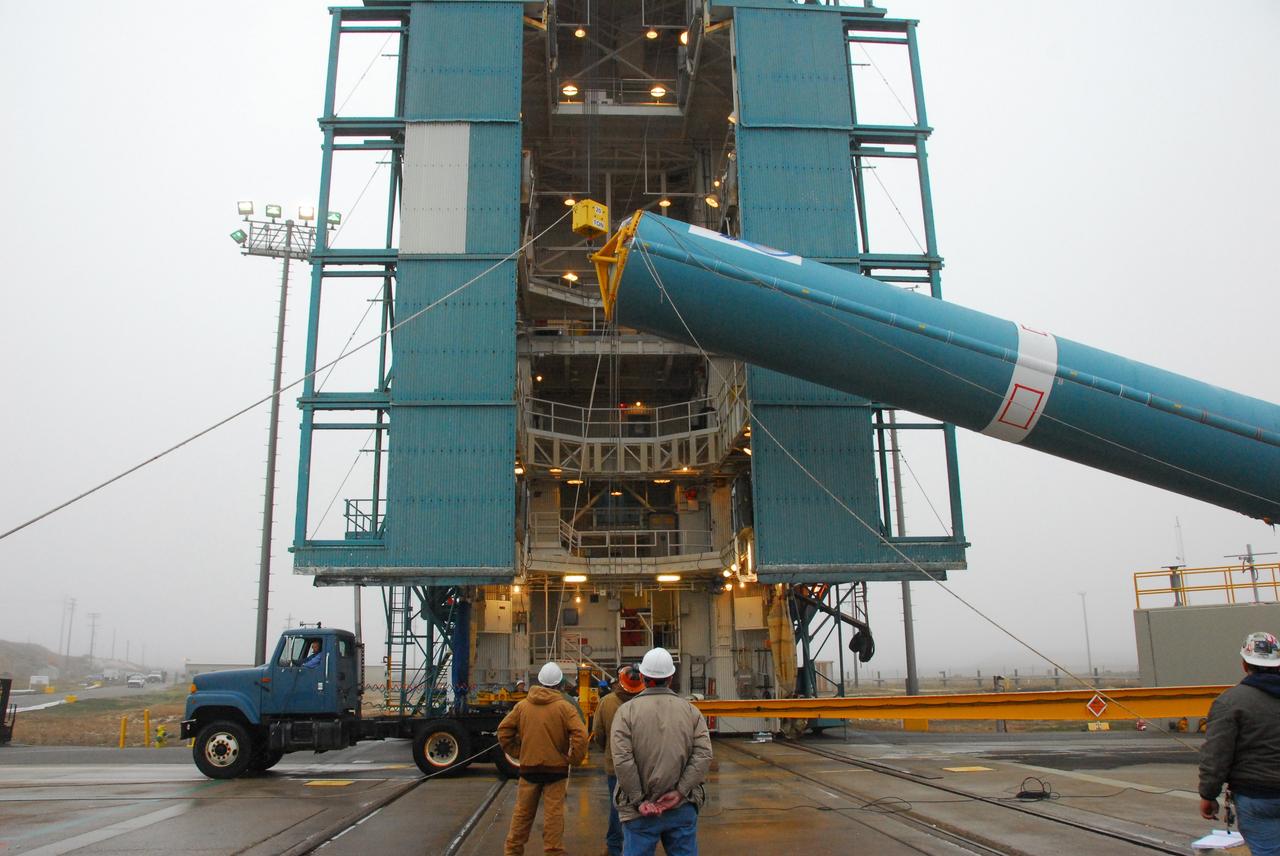
VANDENBERG AIR FORCE BASE, Calif. -- The first stage of a United Launch Alliance Delta II is lifted at NASA's Space Launch Complex-2 on Vandenberg Air Force Base in California. The rocket will carry NASA's National Polar-orbiting Operational Environmental Satellite System Preparatory Project (NPP) satellite into space. NPP will be positioned 512 miles above the Earth's surface and will orbit about 16 times each day to observe nearly the entire globe. The NPP mission for NASA and the National Oceanic and Atmospheric Administration (NOAA) is to measure Earth's atmospheric and sea surface temperatures, humidity sounding, land and ocean biological activity, and cloud and aerosol properties. For more information, visit www.nasa.gov/NPP. Photo credit: NASA/VAFB, Mark Mackley
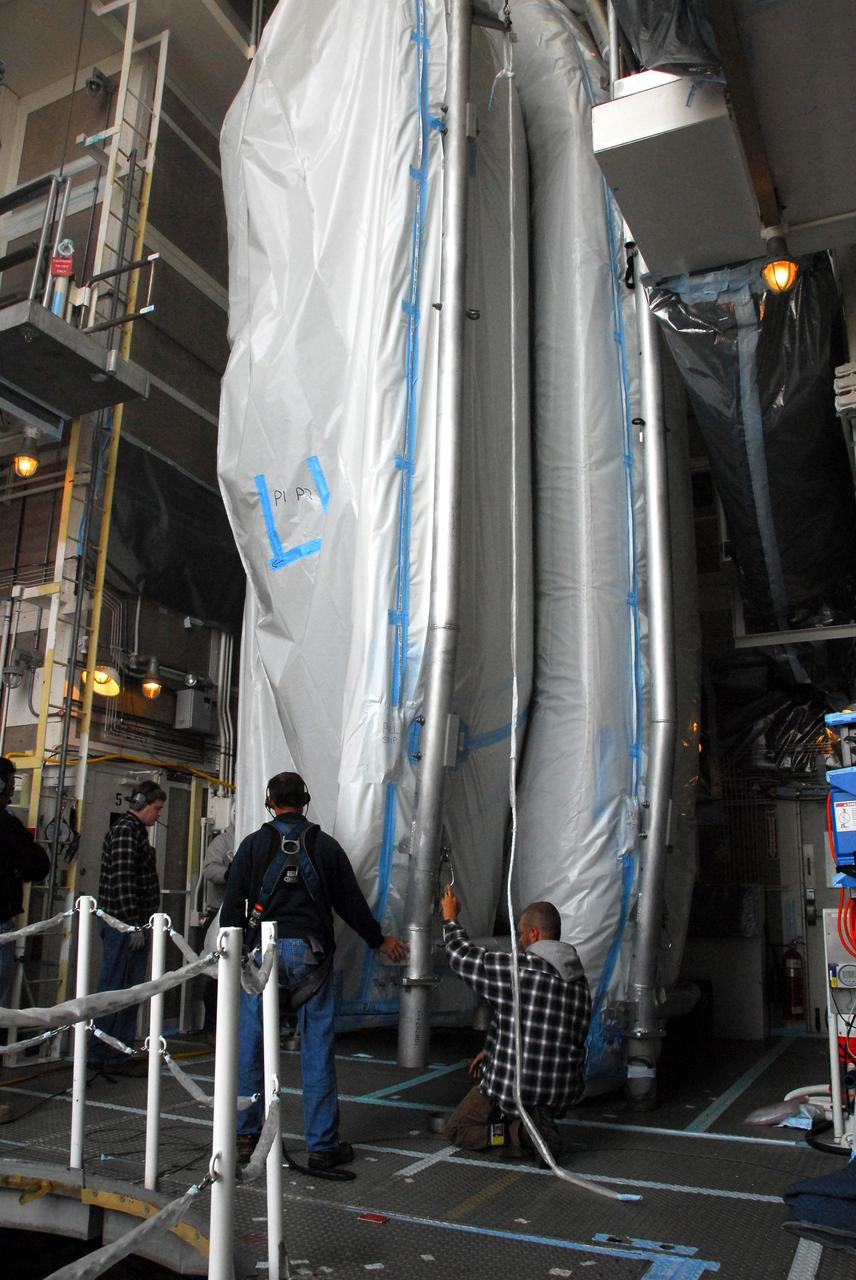
VANDENBERG AIR FORCE BASE, Calif. -- On Level 5 of Space Launch Complex-2 at Vandenberg Air Force Base in California, workers secure the payload fairing that will protect NASA's National Polar-orbiting Operational Environmental Satellite System Preparatory Project (NPP) satellite as it launches aboard a United Launch Alliance Delta II. NPP will be positioned 512 miles above the Earth's surface and will orbit about 16 times each day to observe nearly the entire globe. The NPP mission for NASA and the National Oceanic and Atmospheric Administration (NOAA) is to measure Earth's atmospheric and sea surface temperatures, humidity sounding, land and ocean biological activity, and cloud and aerosol properties. For more information, visit www.nasa.gov/NPP. Photo credit: NASA/VAFB, Roy Allison
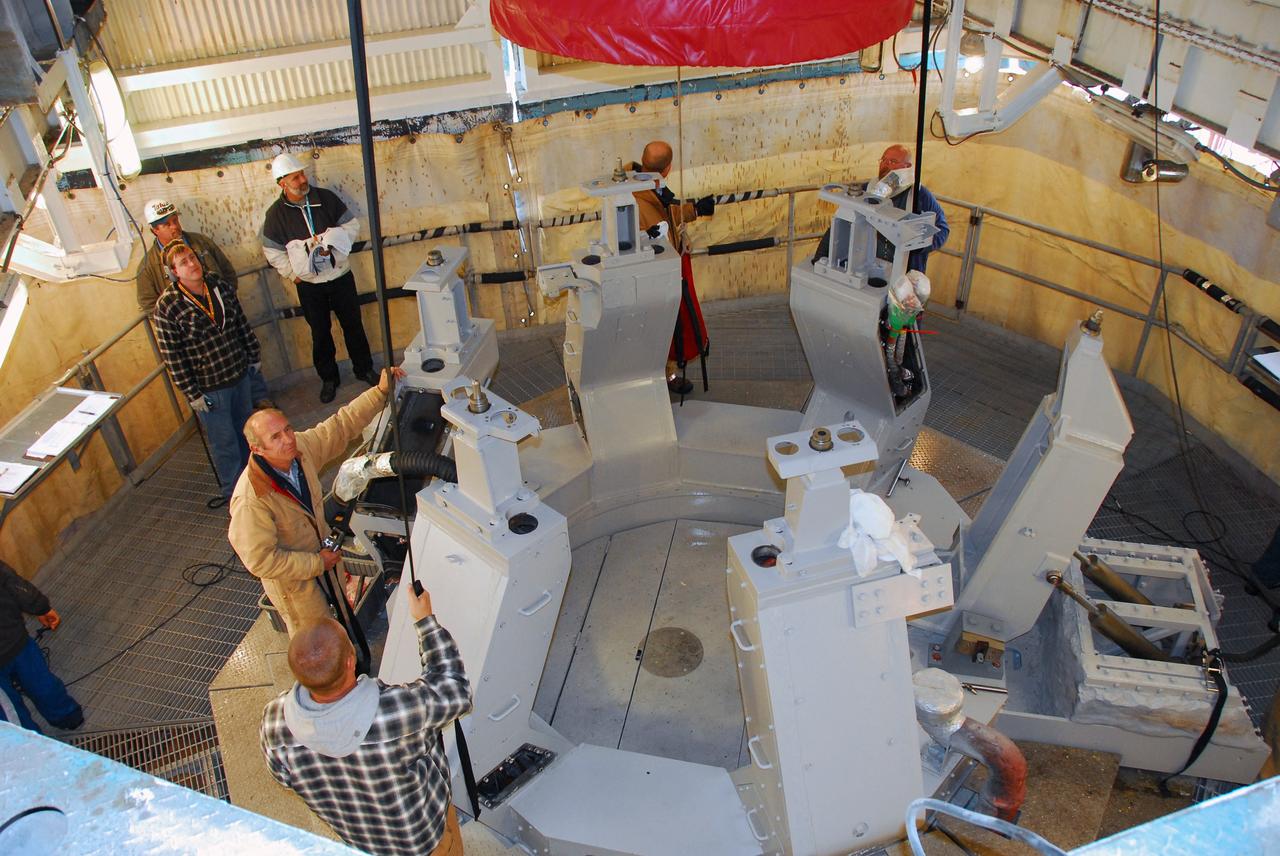
VANDENBERG AIR FORCE BASE, Calif. -- The first stage of a United Launch Alliance Delta II is lowered into place at NASA's Space Launch Complex-2 on Vandenberg Air Force Base in California. Seen here in red is the Rocketdyne engine that will help loft the rocket off the pad. The rocket will carry NASA's National Polar-orbiting Operational Environmental Satellite System Preparatory Project (NPP) satellite into space. NPP will be positioned 512 miles above the Earth's surface and will orbit about 16 times each day to observe nearly the entire globe. The NPP mission for NASA and the National Oceanic and Atmospheric Administration (NOAA) is to measure Earth's atmospheric and sea surface temperatures, humidity sounding, land and ocean biological activity, and cloud and aerosol properties. For more information, visit www.nasa.gov/NPP. Photo credit: NASA/VAFB, Mark Mackley

VANDENBERG AIR FORCE BASE, Calif. – A speaker talks with a group of Tweetup participants at Vandenberg Air Force Base in California during prelaunch activities for NASA’s National Polar-orbiting Operational Environmental Satellite System Preparatory Project (NPP) spacecraft mission. The tweeters will share their experiences with followers through the social networking site Twitter. NPP represents a critical first step in building the next-generation of Earth-observing satellites. NPP will carry the first of the new sensors developed for this satellite fleet, now known as the Joint Polar Satellite System (JPSS) to be launched in 2016. NPP is the bridge between NASA's Earth Observing System (EOS) satellites and the forthcoming series of JPSS satellites. The mission will test key technologies and instruments for the JPSS missions. NPP is targeted to launch Oct. 28 from Space Launch Complex-2 aboard a United Launch Alliance Delta II rocket. For more information, visit http:__www.nasa.gov_NPP. Photo credit: NASA_Kim Shiflett
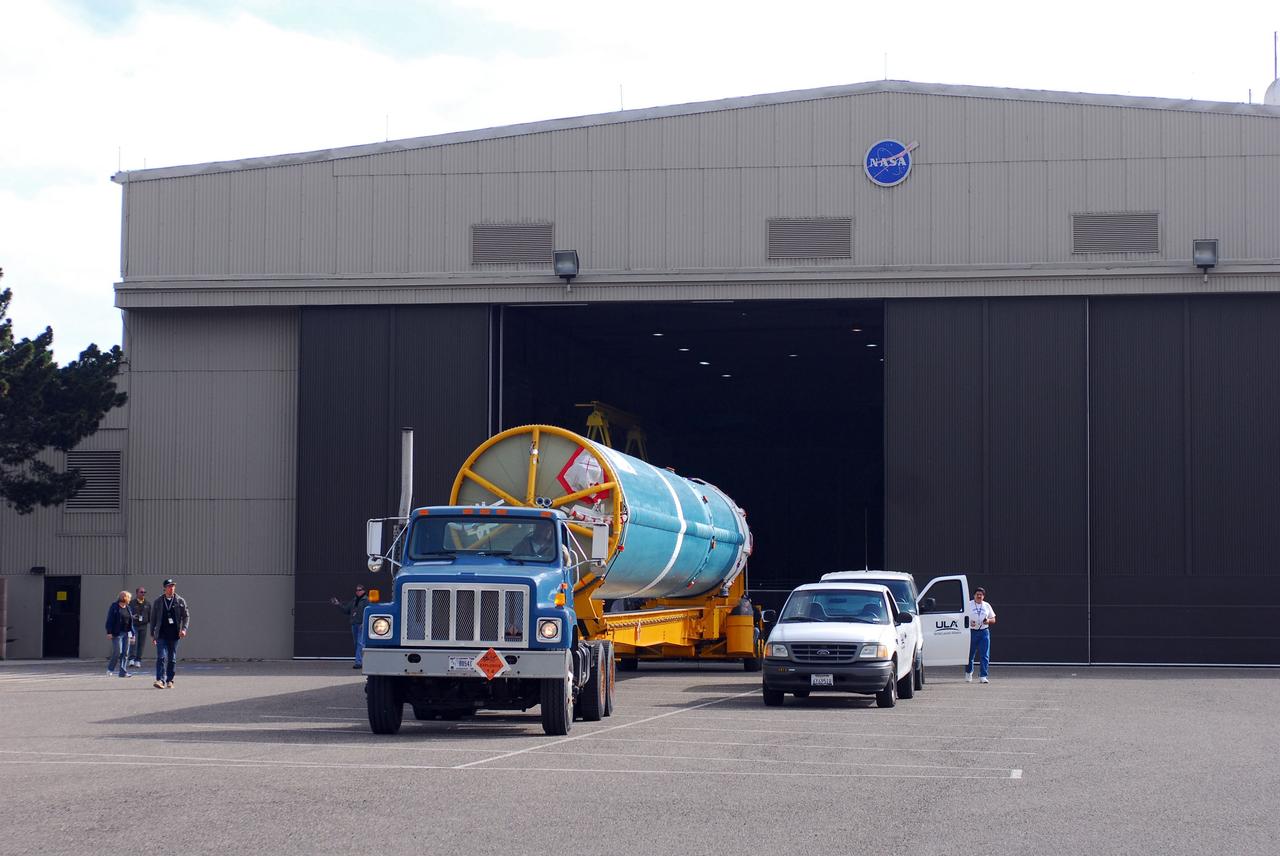
VANDENBERG AIR FORCE BASE, Calif. -- At Vandenberg Air Force Base in California, the first stage of a United Launch Alliance Delta II that will carry the National Polar-orbiting Operational Environmental Satellite System Preparatory Project (NPP) satellite into space is on its way from NASA Hangar 836 to NASA's Launch Complex-2. The vehicle then will undergo initial testing at the United Launch Alliance Delta Mission Checkout Facility. NPP will be positioned 512 miles above the Earth's surface and will orbit about 16 times each day to observe nearly the entire globe. The NPP mission for NASA and the National Oceanic and Atmospheric Administration (NOAA) is to measure Earth's atmospheric and sea surface temperatures, humidity sounding, land and ocean biological activity, and cloud and aerosol properties. For more information, visit www.nasa.gov/NPP. Photo credit: NASA/VAFB
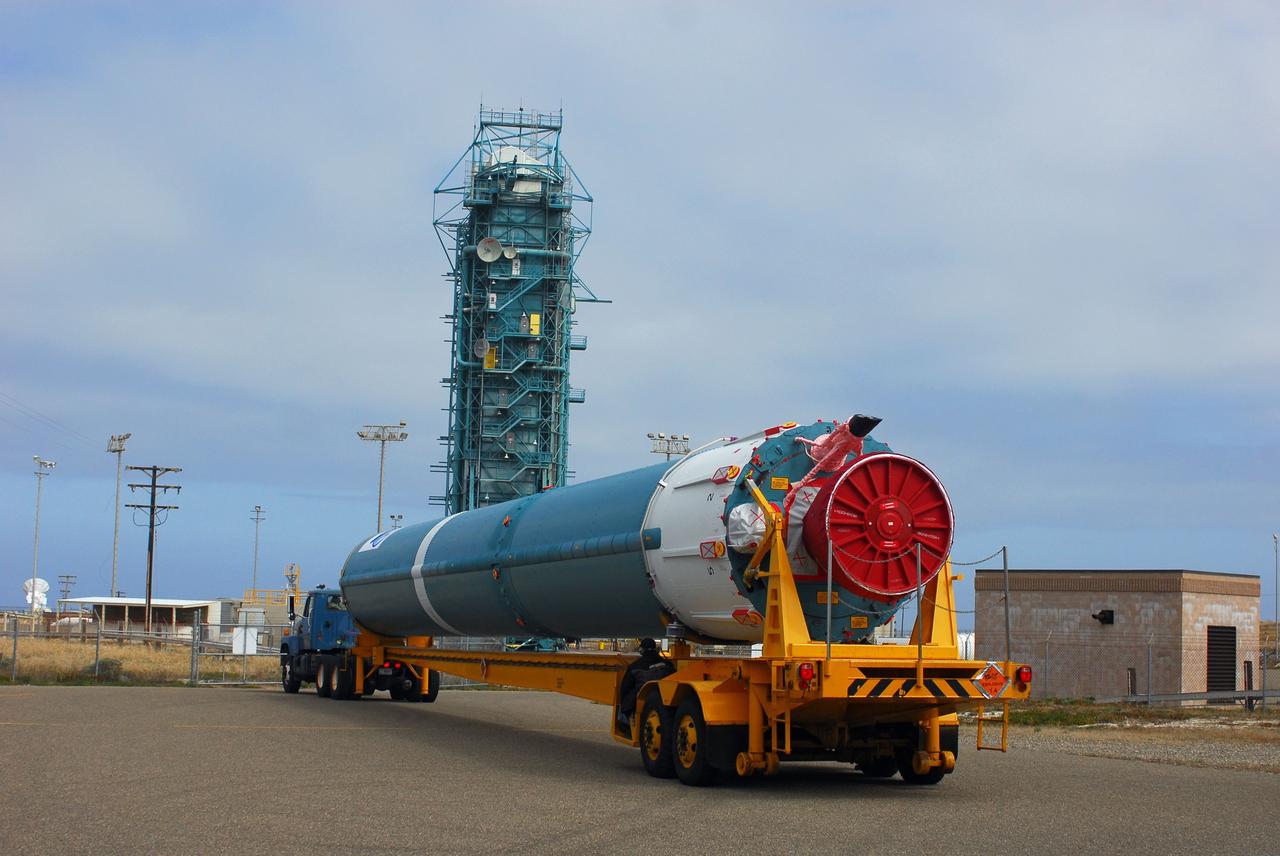
VANDENBERG AIR FORCE BASE, Calif. -- At Vandenberg Air Force Base in California, the first stage of a United Launch Alliance Delta II that will carry the National Polar-orbiting Operational Environmental Satellite System Preparatory Project (NPP) satellite into space has arrived at NASA's Launch Complex-2. The vehicle will undergo initial testing at the United Launch Alliance Delta Mission Checkout Facility. NPP will be positioned 512 miles above the Earth's surface and will orbit about 16 times each day to observe nearly the entire globe. The NPP mission for NASA and the National Oceanic and Atmospheric Administration (NOAA) is to measure Earth's atmospheric and sea surface temperatures, humidity sounding, land and ocean biological activity, and cloud and aerosol properties. For more information, visit www.nasa.gov/NPP. Photo credit: NASA/VAFB
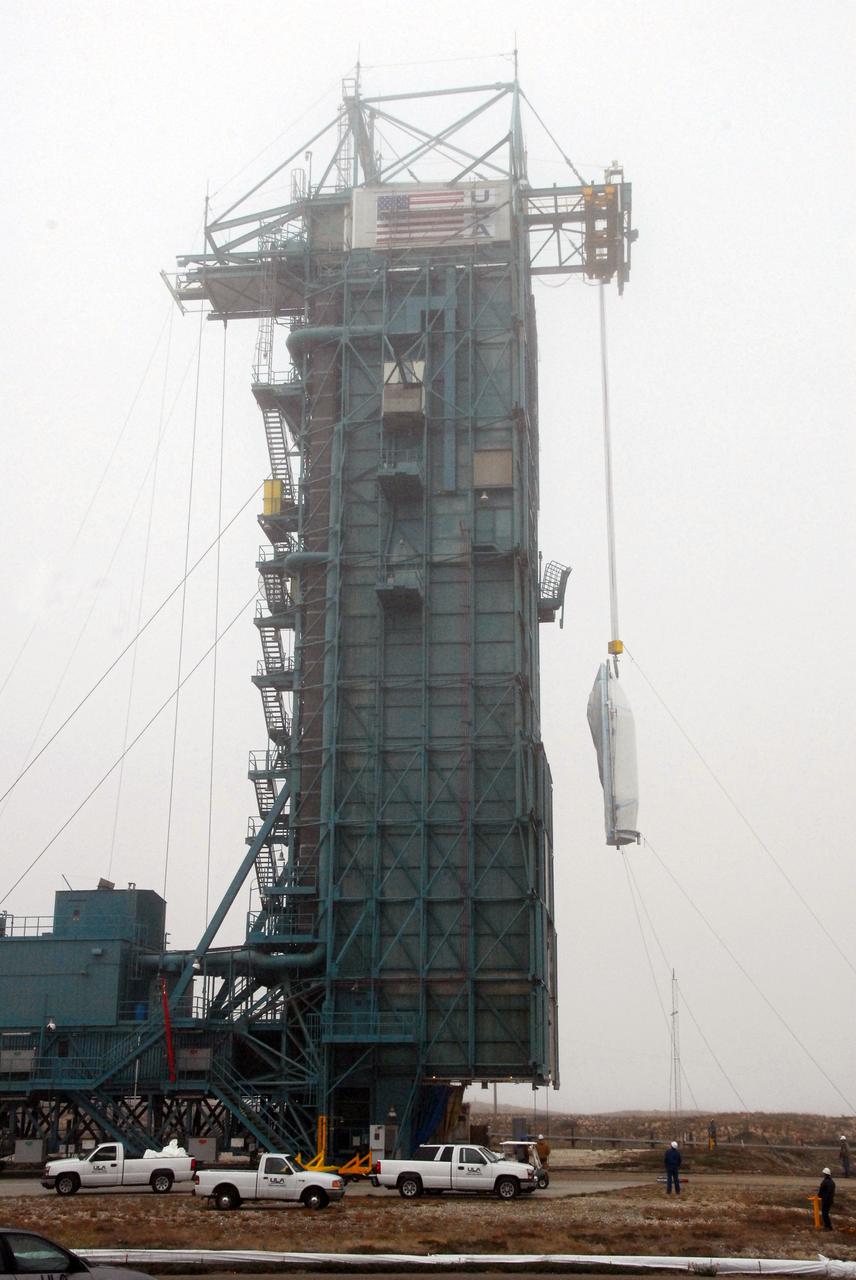
VANDENBERG AIR FORCE BASE, Calif. -- The payload fairing that will protect NASA's National Polar-orbiting Operational Environmental Satellite System Preparatory Project (NPP) satellite as it launches aboard a United Launch Alliance Delta II is lifted to Level 5 of Space Launch Complex-2 at Vandenberg Air Force Base in California. NPP will be positioned 512 miles above the Earth's surface and will orbit about 16 times each day to observe nearly the entire globe. The NPP mission for NASA and the National Oceanic and Atmospheric Administration (NOAA) is to measure Earth's atmospheric and sea surface temperatures, humidity sounding, land and ocean biological activity, and cloud and aerosol properties. For more information, visit www.nasa.gov/NPP. Photo credit: NASA/VAFB, Roy Allison
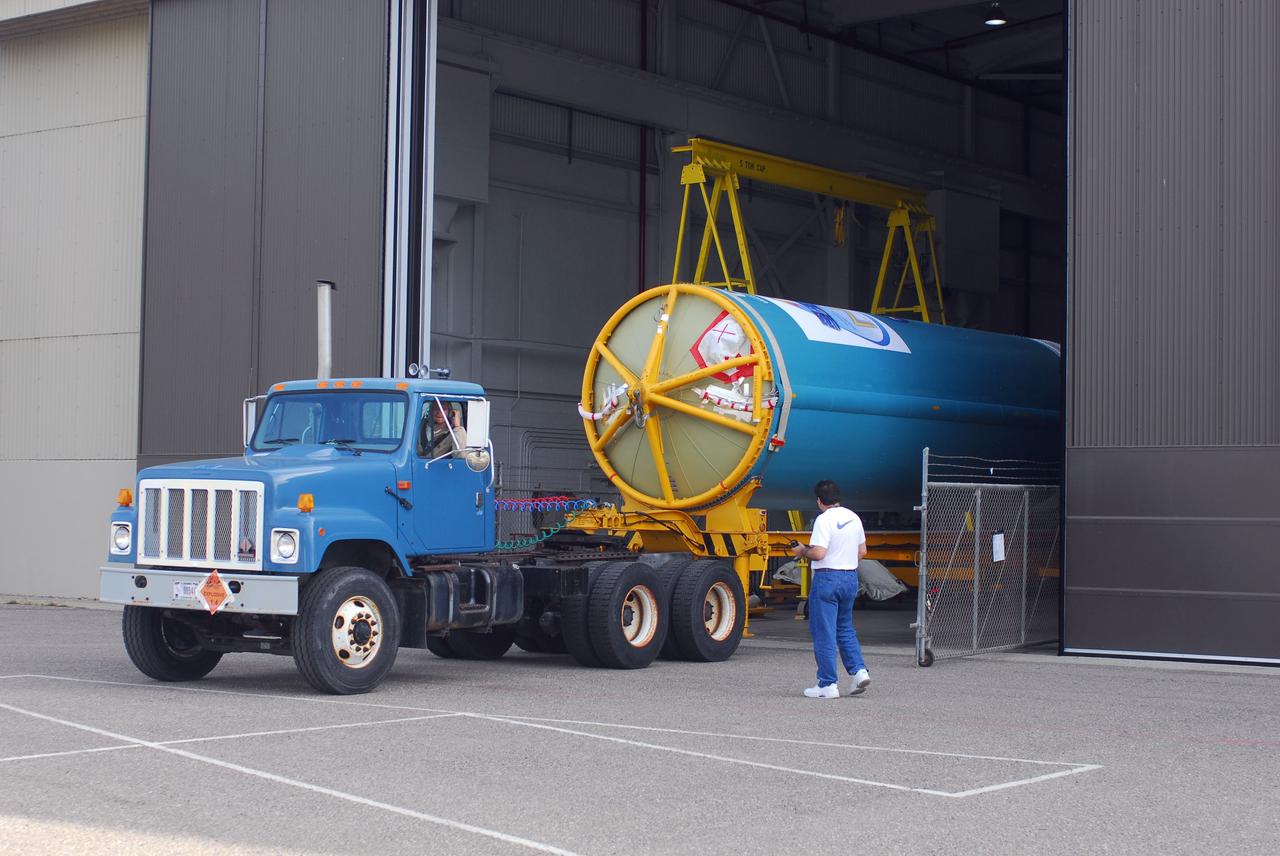
VANDENBERG AIR FORCE BASE, Calif. -- At Vandenberg Air Force Base in California, the first stage of a United Launch Alliance Delta II that will carry the National Polar-orbiting Operational Environmental Satellite System Preparatory Project (NPP) satellite into space is on its way from NASA Hangar 836 to NASA's Launch Complex-2. The vehicle then will undergo initial testing at the United Launch Alliance Delta Mission Checkout Facility. NPP will be positioned 512 miles above the Earth's surface and will orbit about 16 times each day to observe nearly the entire globe. The NPP mission for NASA and the National Oceanic and Atmospheric Administration (NOAA) is to measure Earth's atmospheric and sea surface temperatures, humidity sounding, land and ocean biological activity, and cloud and aerosol properties. For more information, visit www.nasa.gov/NPP. Photo credit: NASA/VAFB
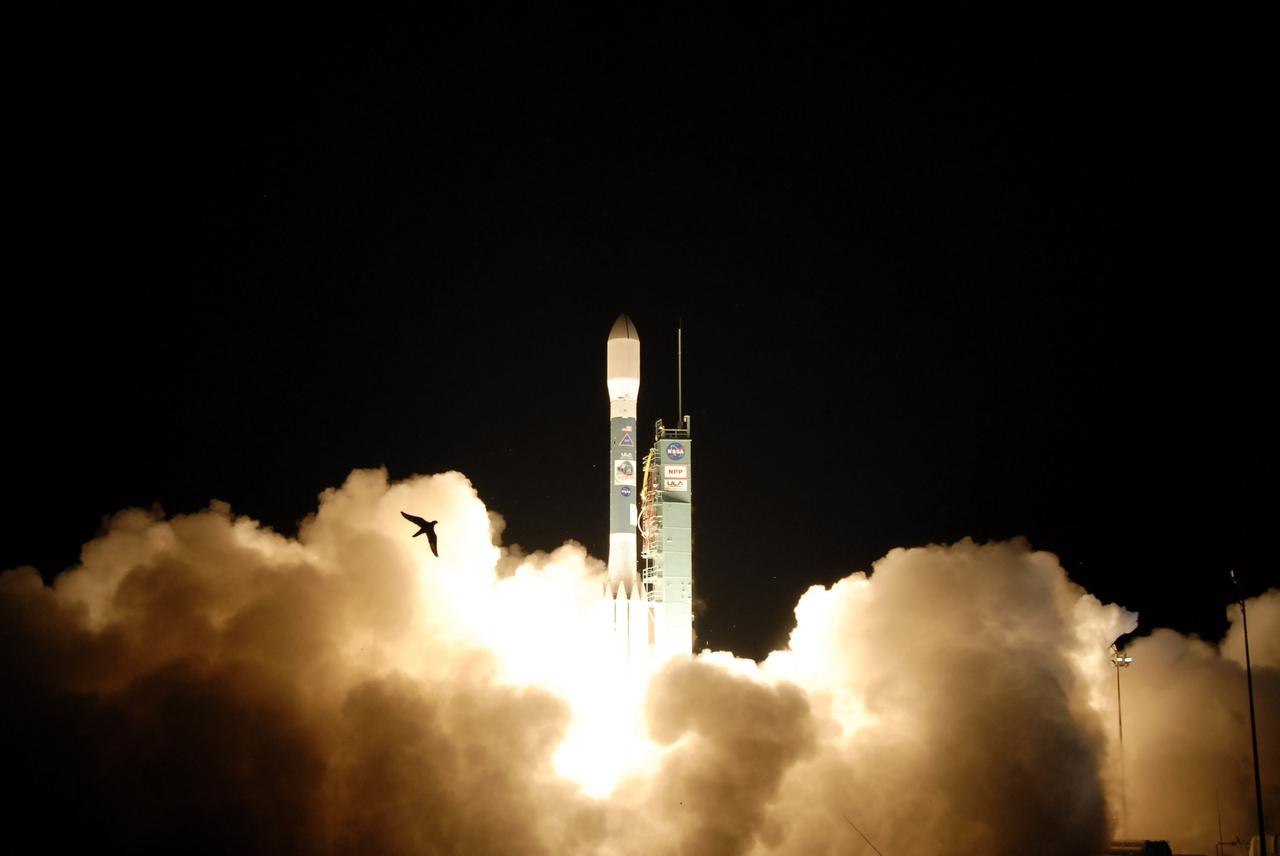
VANDENBERG AIR FORCE BASE, Calif. -- A bird soars away from Space Launch Complex-2 on Vandenberg Air Force Base in California as the United Launch Alliance Delta II rocket carrying NASA's National Polar-orbiting Operational Environmental Satellite System Preparatory Project (NPP) lifts off the pad. Launch was at 2:48 a.m. PDT. NPP represents a critical first step in building the next-generation of Earth-observing satellites. NPP will carry the first of the new sensors developed for this satellite fleet, now known as the Joint Polar Satellite System (JPSS) to be launched in 2016. NPP is the bridge between NASA's Earth Observing System (EOS) satellites and the forthcoming series of JPSS satellites. The mission will test key technologies and instruments for the JPSS missions. For more information, visit http:__www.nasa.gov_NPP. Photo credit: NASA_Kim Shiflett
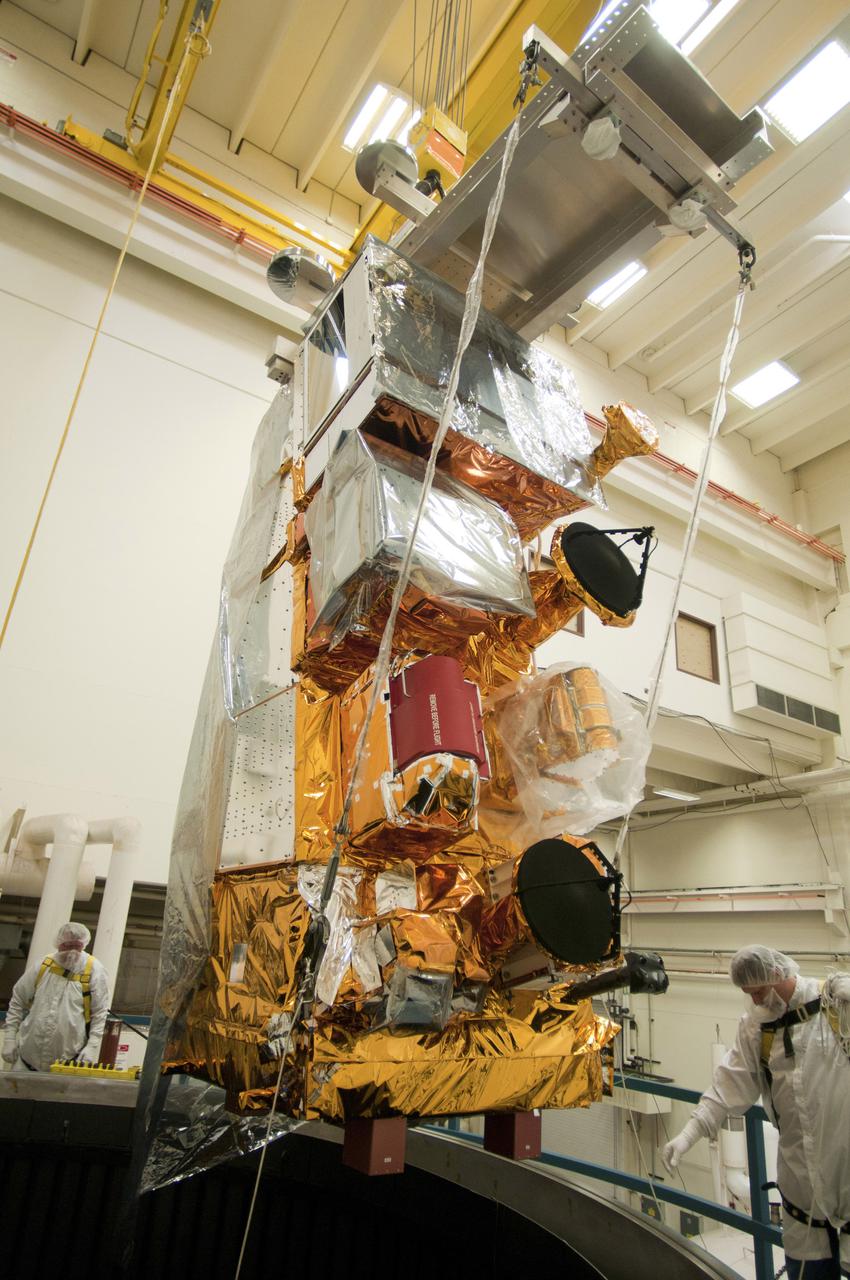
BALL AEROSPACE, Boulder, Colo. – In a cleanroom at Ball Aerospace and Technologies Corp., NASA's National Polar-orbiting Operational Environmental Satellite System Preparatory Project (NPP) satellite, with all systems integrated, is being lowered by technicians into a thermal vacuum chamber for testing. A United Launch Alliance Delta II rocket will carry NPP into space. NPP represents a critical first step in building the next-generation of Earth-observing satellites. NPP will carry the first of the new sensors developed for this satellite fleet, now known as the Joint Polar Satellite System (JPSS) to be launched in 2016. NPP is the bridge between NASA's Earth Observing System (EOS) satellites and the forthcoming series of JPSS satellites. The mission will test key technologies and instruments for the JPSS missions. NPP is targeted to launch Oct. 27. For more information, visit http:__www.nasa.gov_NPP. Photo credit: Ball Aerospace
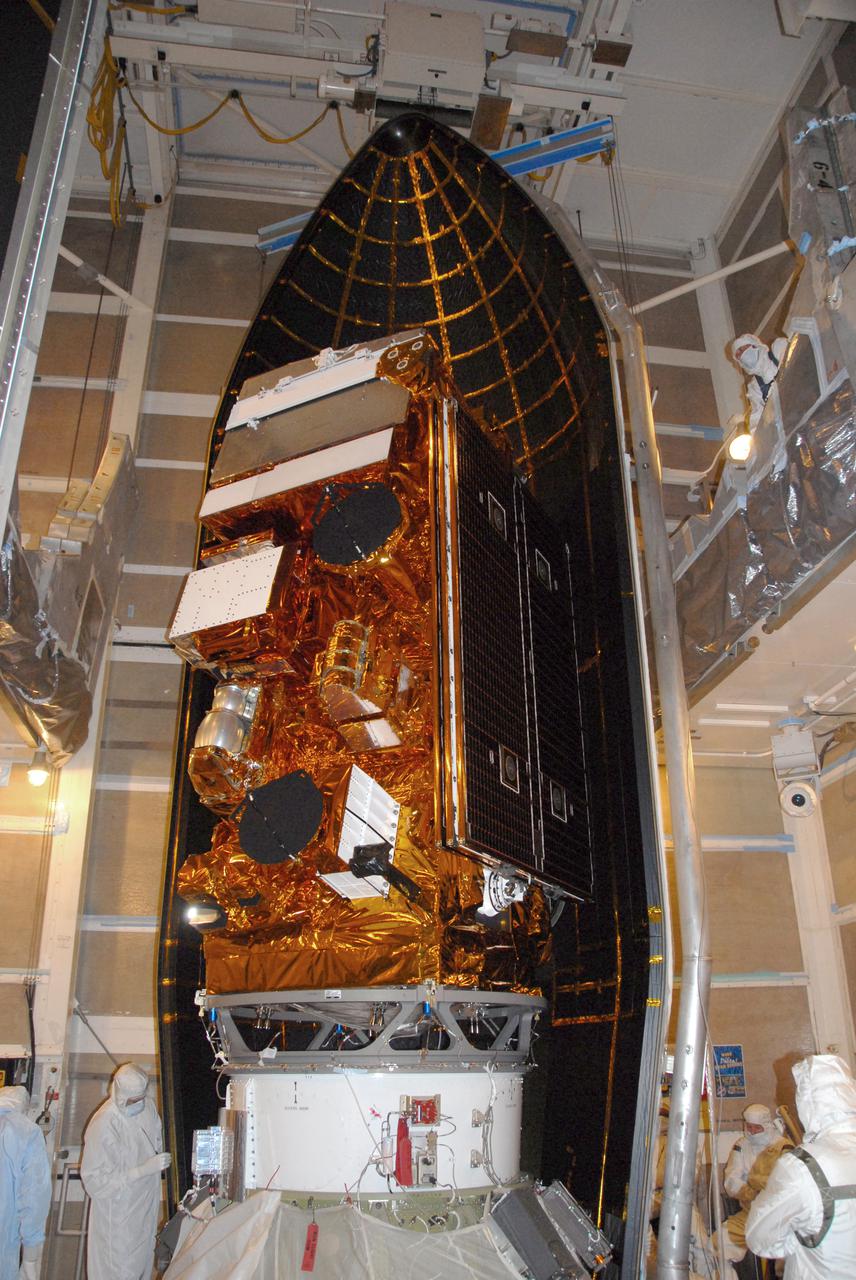
VANDENBERG AIR FORCE BASE, Calif. – At Vandenberg Air Force Base's Space Launch Complex-2 in California, technicians monitor the movement of a section of the clamshell-shaped Delta payload fairing as it encloses NASA’s National Polar-orbiting Operational Environmental Satellite System Preparatory Project (NPP) spacecraft. The fairing will protect the spacecraft from the impact of aerodynamic pressure and heating during ascent and will be jettisoned once the spacecraft is outside the Earth's atmosphere. NPP represents a critical first step in building the next-generation of Earth-observing satellites. NPP will carry the first of the new sensors developed for this satellite fleet, now known as the Joint Polar Satellite System (JPSS) to be launched in 2016. NPP is the bridge between NASA's Earth Observing System (EOS) satellites and the forthcoming series of JPSS satellites. The mission will test key technologies and instruments for the JPSS missions. NPP is targeted to launch Oct. 28 from Space Launch Complex-2 aboard a United Launch Alliance Delta II rocket. For more information, visit http:__www.nasa.gov_NPP. Photo credit: NASA_Mark P. Mackley, VAFB
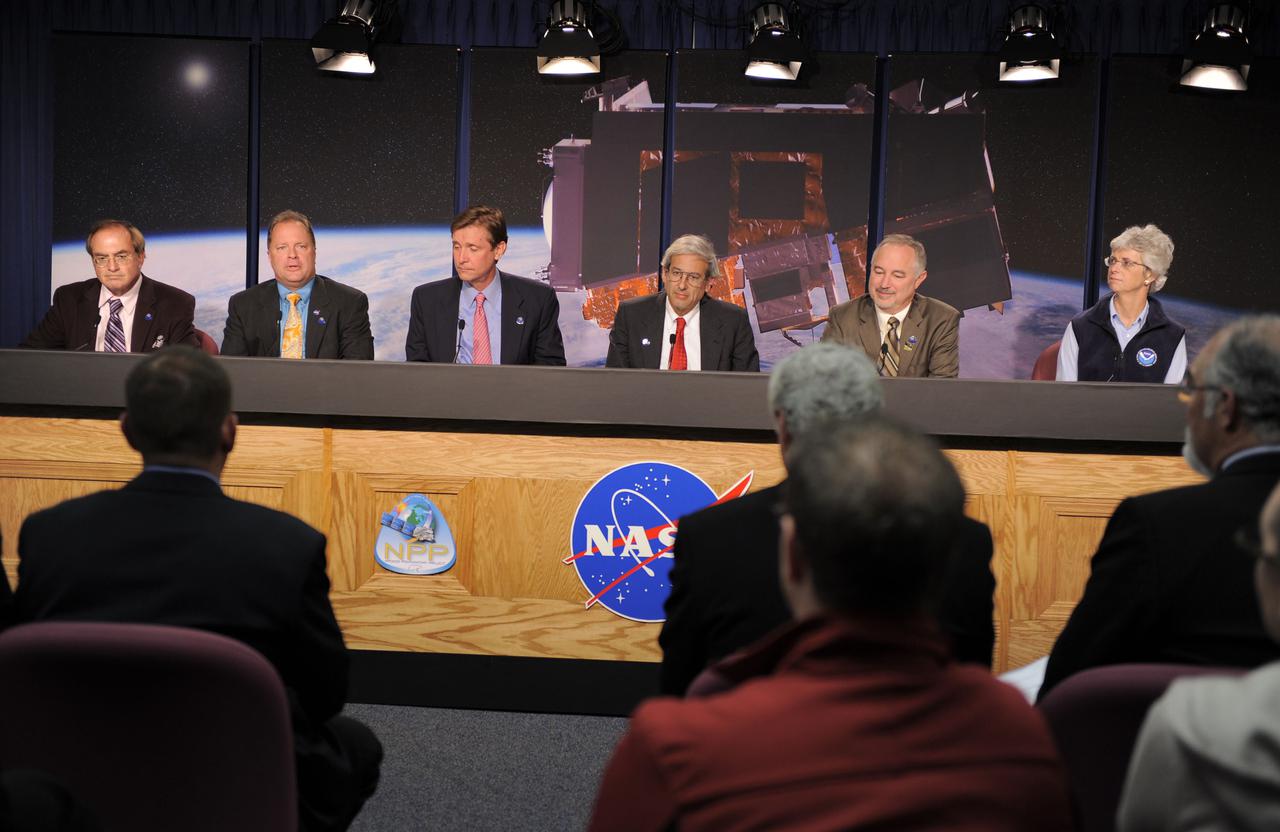
VANDENBERG AIR FORCE BASE, Calif. -- At Vandenberg Air Force Base in California, NASA and NOAA managers participate in a news briefing following the successful launch of NASA's National Polar-orbiting Operational Environmental Satellite System Preparatory Project (NPP) aboard a United Launch Alliance Delta II rocket. From left are George Diller, NASA Public Affairs; Ken Schwer, NPP project manager, NASA's Goddard Space Flight Center; Jim Gleason, NPP project scientist, NASA's Goddard Space Flight Center; Mike Frielich, director, NASA Earth Science Division; Charles Gay, acting associate administrator, NASA Mission Directorate; and Mary Glackin, deputy undersecretary for Operations, National Oceanic and Atmospheric Administration. Launch was at 2:48 a.m. PDT. NPP represents a critical first step in building the next-generation of Earth-observing satellites. NPP will carry the first of the new sensors developed for this satellite fleet, now known as the Joint Polar Satellite System (JPSS) to be launched in 2016. NPP is the bridge between NASA's Earth Observing System (EOS) satellites and the forthcoming series of JPSS satellites. The mission will test key technologies and instruments for the JPSS missions. For more information, visit http:__www.nasa.gov_NPP. Photo credit: NASA_Kim Shiflett
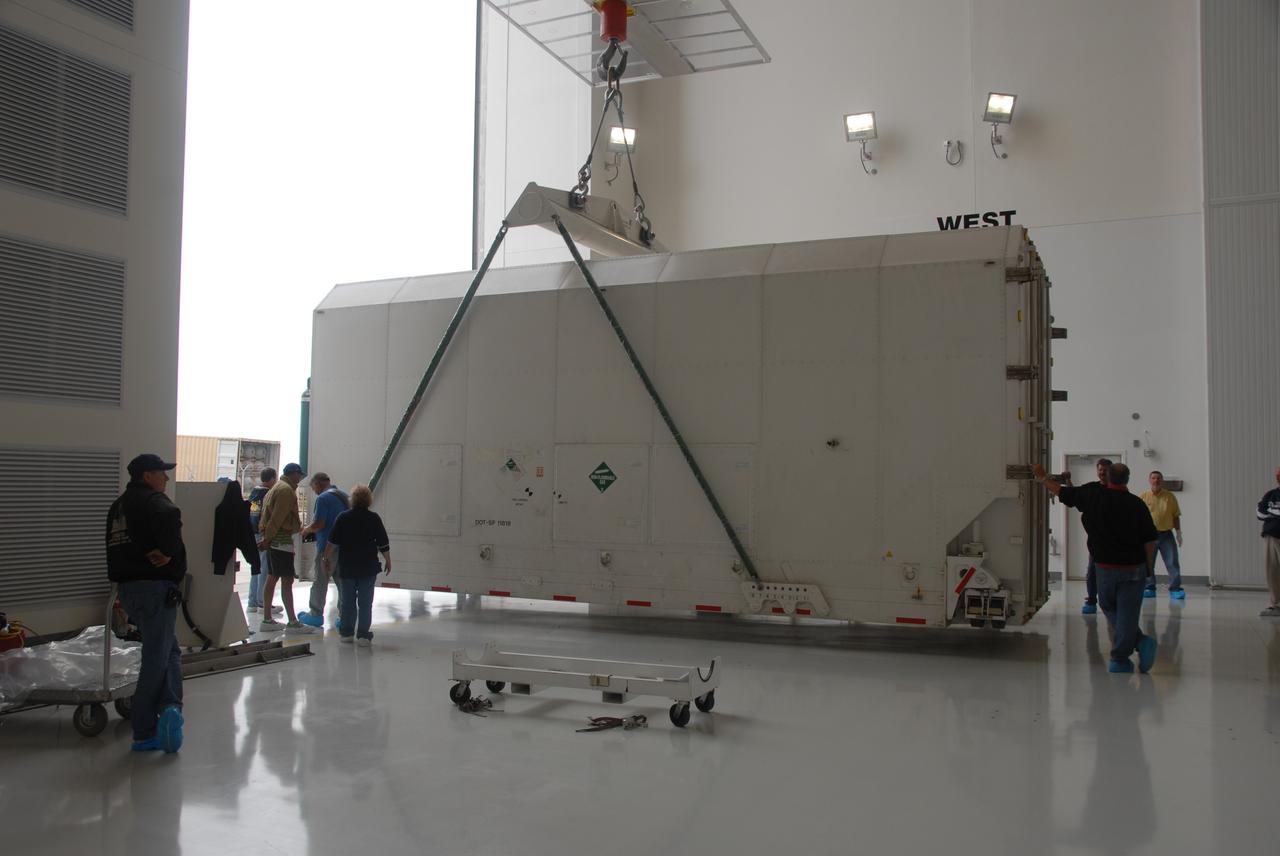
VANDENBERG AIR FORCE BASE, Calif. – In the Astrotech Payload Processing Facility at Vandenberg Air Force Base in California, technicians monitor the progress as a crane begins to lift the container holding NASA’s National Polar-orbiting Operational Environmental Satellite System Preparatory Project (NPP). NPP represents a critical first step in building the next-generation of Earth-observing satellites. NPP will carry the first of the new sensors dev eloped for this satellite fleet, now known as the Joint Polar Satellite System (JPSS), to be launched in 2016. NPP is the bridge between NASA’s Earth Observing System (EOS) satellites and the forthcoming series of JPSS satellites. The mission will test key technologies and instruments for the JPSS missions. NPP is targeted to launch Oct. 25 from Space Launch Complex-2 aboard a United Launch Alliance Delta II rocket. For more information, visit http://www.nasa.gov/NPP. Photo credit: NASA/30th Communications Squadron, VAFB
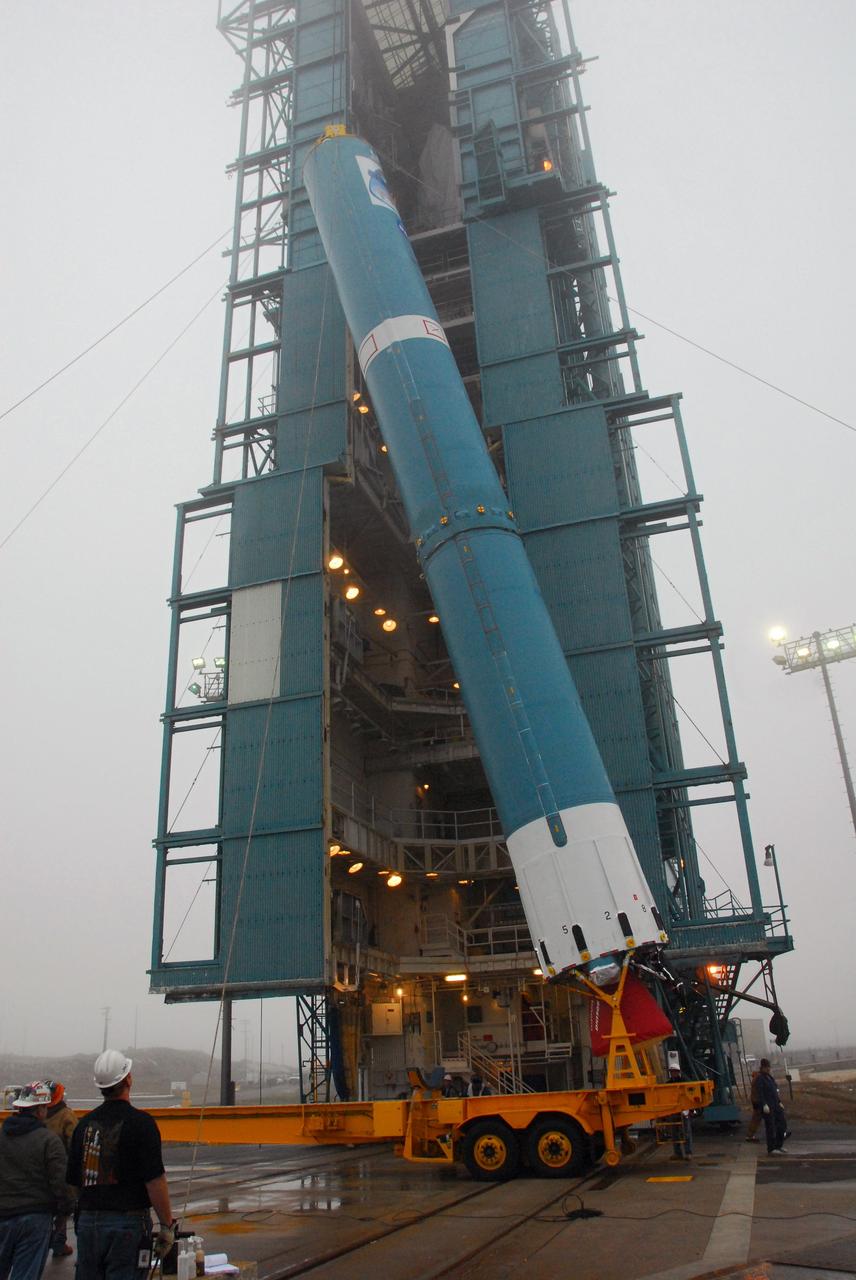
VANDENBERG AIR FORCE BASE, Calif. -- The first stage of a United Launch Alliance Delta II is lifted at NASA's Space Launch Complex-2 on Vandenberg Air Force Base in California. The rocket will carry NASA's National Polar-orbiting Operational Environmental Satellite System Preparatory Project (NPP) satellite into space. NPP will be positioned 512 miles above the Earth's surface and will orbit about 16 times each day to observe nearly the entire globe. The NPP mission for NASA and the National Oceanic and Atmospheric Administration (NOAA) is to measure Earth's atmospheric and sea surface temperatures, humidity sounding, land and ocean biological activity, and cloud and aerosol properties. For more information, visit www.nasa.gov/NPP. Photo credit: NASA/VAFB, Mark Mackley
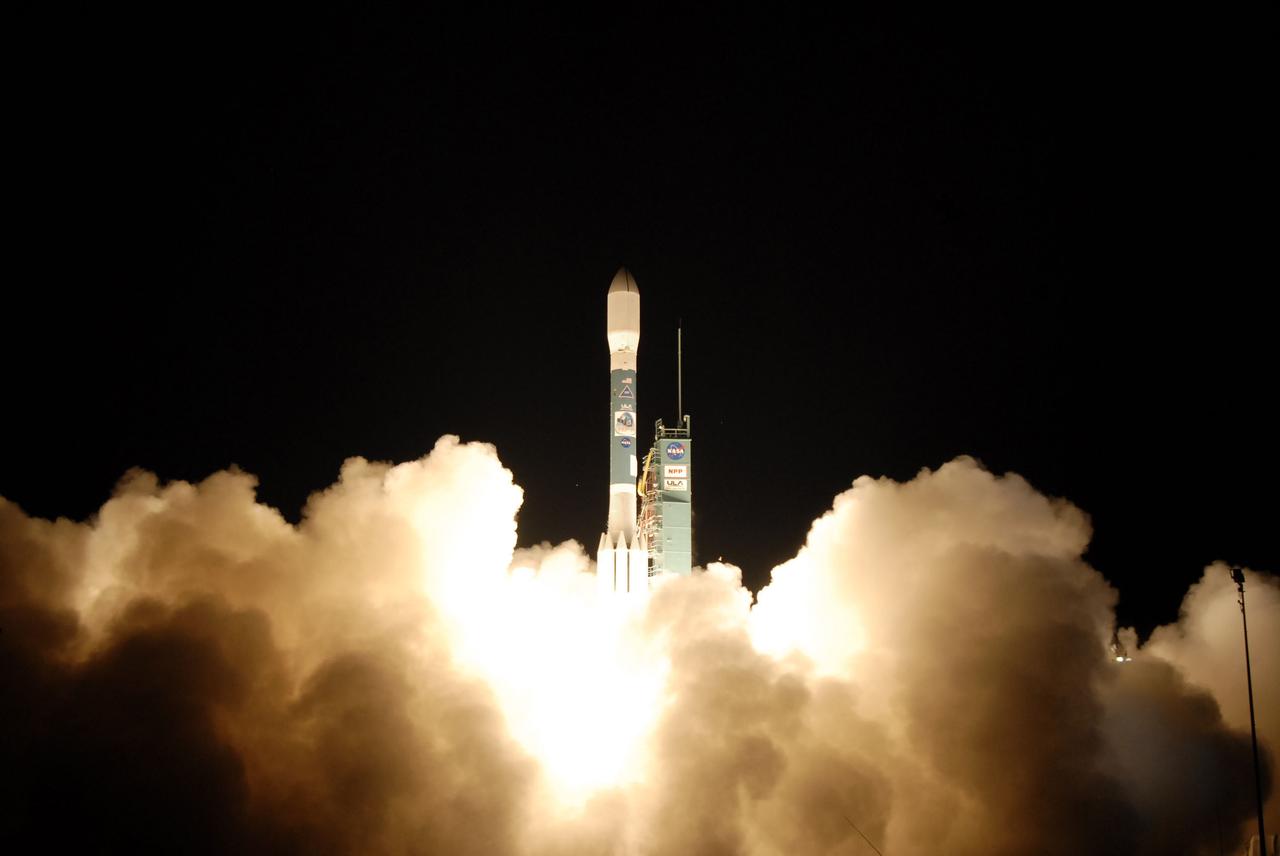
VANDENBERG AIR FORCE BASE, Calif. -- NASA's National Polar-orbiting Operational Environmental Satellite System Preparatory Project (NPP) roars off Space Launch Complex-2 at Vandenberg Air Force Base in California. Liftoff was at 2:48 a.m. PDT aboard a United Launch Alliance Delta II rocket. NPP represents a critical first step in building the next-generation of Earth-observing satellites. NPP will carry the first of the new sensors developed for this satellite fleet, now known as the Joint Polar Satellite System (JPSS) to be launched in 2016. NPP is the bridge between NASA's Earth Observing System (EOS) satellites and the forthcoming series of JPSS satellites. The mission will test key technologies and instruments for the JPSS missions. For more information, visit http:__www.nasa.gov_NPP. Photo credit: NASA_Kim Shiflett
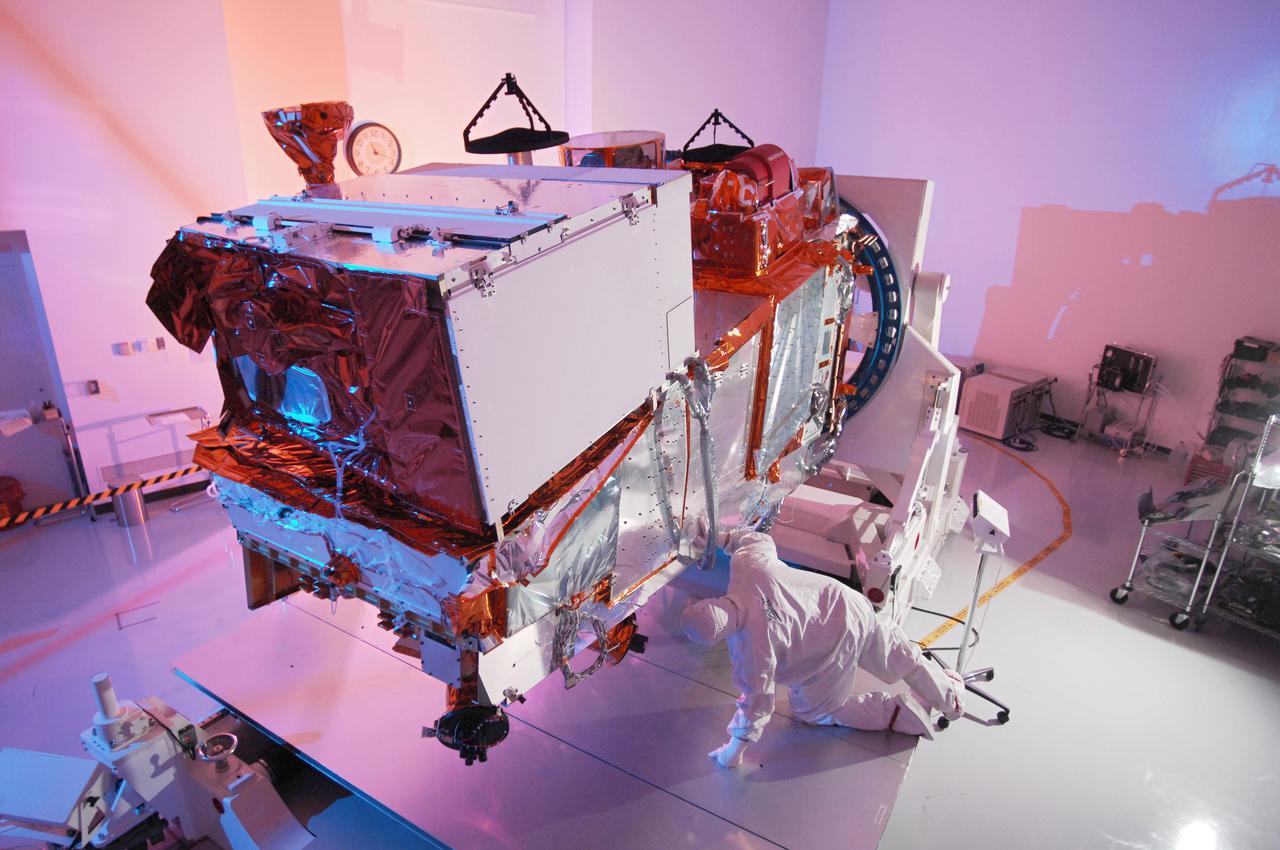
BALL AEROSPACE, Boulder, Colo. – In a cleanroom at Vandenberg Air Force Base in California, Ball Aerospace and Technologies Corp. technicians begin integration of the medium resolution Visible Infrared Imaging Radiometer Suite VIIRS into NASA’s National Polar-orbiting Operational Environmental Satellite System Preparatory Project NPP satellite. NPP is carrying five instruments on board, the biggest being VIIRS which will provide highly detailed imagery of clouds, vegetation, snow cover, dust storms, sea surface temperature and other environmental phenomena. A United Launch Alliance Delta II rocket will carry NPP into space. NPP represents a critical first step in building the next-generation of Earth-observing satellites. NPP will carry the first of the new sensors developed for this satellite fleet, now known as the Joint Polar Satellite System JPSS to be launched in 2016. NPP is the bridge between NASA's Earth Observing System EOS satellites and the forthcoming series of JPSS satellites. The mission will test key technologies and instruments for the JPSS missions. NPP is targeted to launch Oct. 27. For more information, visit http:__www.nasa.gov_NPP. Photo credit: Ball Aerospace
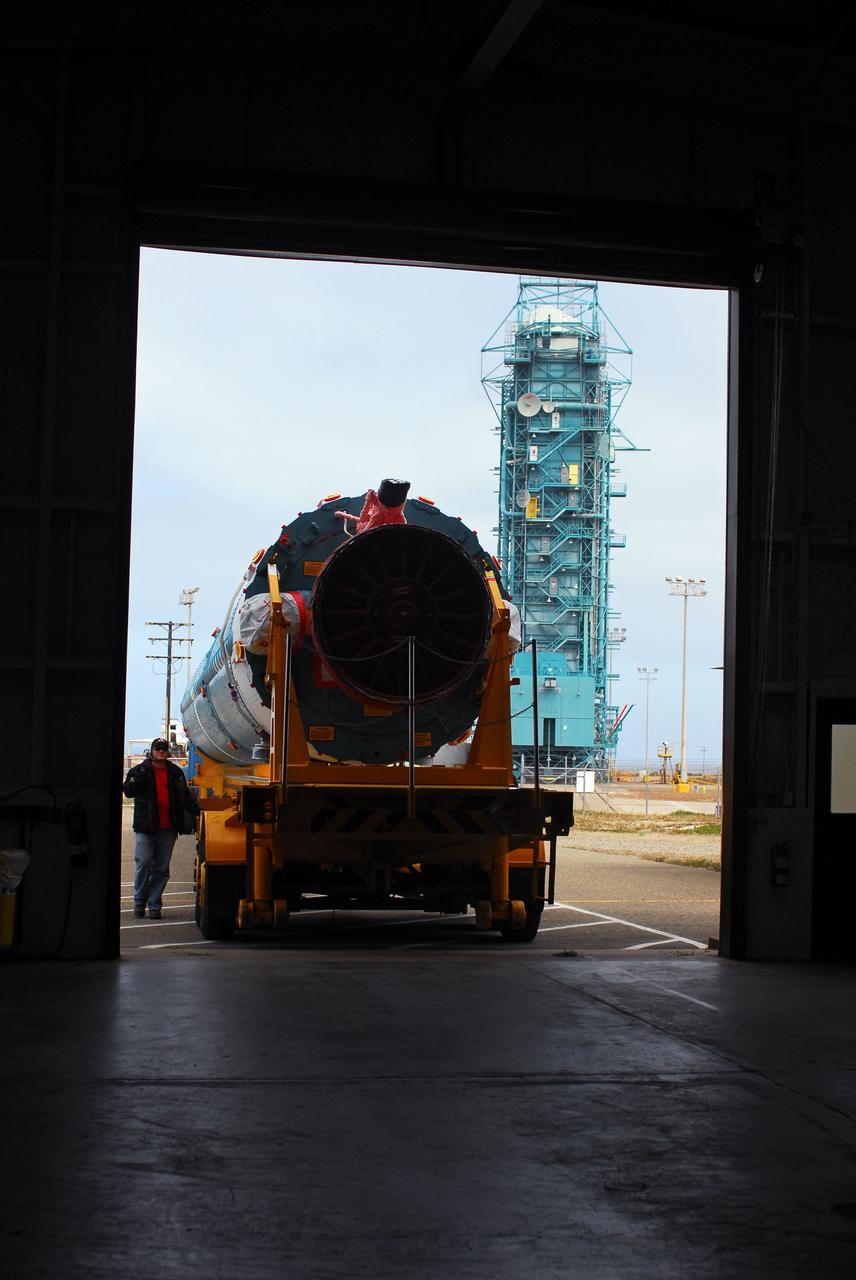
VANDENBERG AIR FORCE BASE, Calif. -- At Vandenberg Air Force Base in California, the first stage of a United Launch Alliance Delta II that will carry the National Polar-orbiting Operational Environmental Satellite System Preparatory Project (NPP) satellite into space has arrived at NASA's Launch Complex-2. The vehicle will undergo initial testing at the United Launch Alliance Delta Mission Checkout Facility. NPP will be positioned 512 miles above the Earth's surface and will orbit about 16 times each day to observe nearly the entire globe. The NPP mission for NASA and the National Oceanic and Atmospheric Administration (NOAA) is to measure Earth's atmospheric and sea surface temperatures, humidity sounding, land and ocean biological activity, and cloud and aerosol properties. For more information, visit www.nasa.gov/NPP. Photo credit: NASA/VAFB
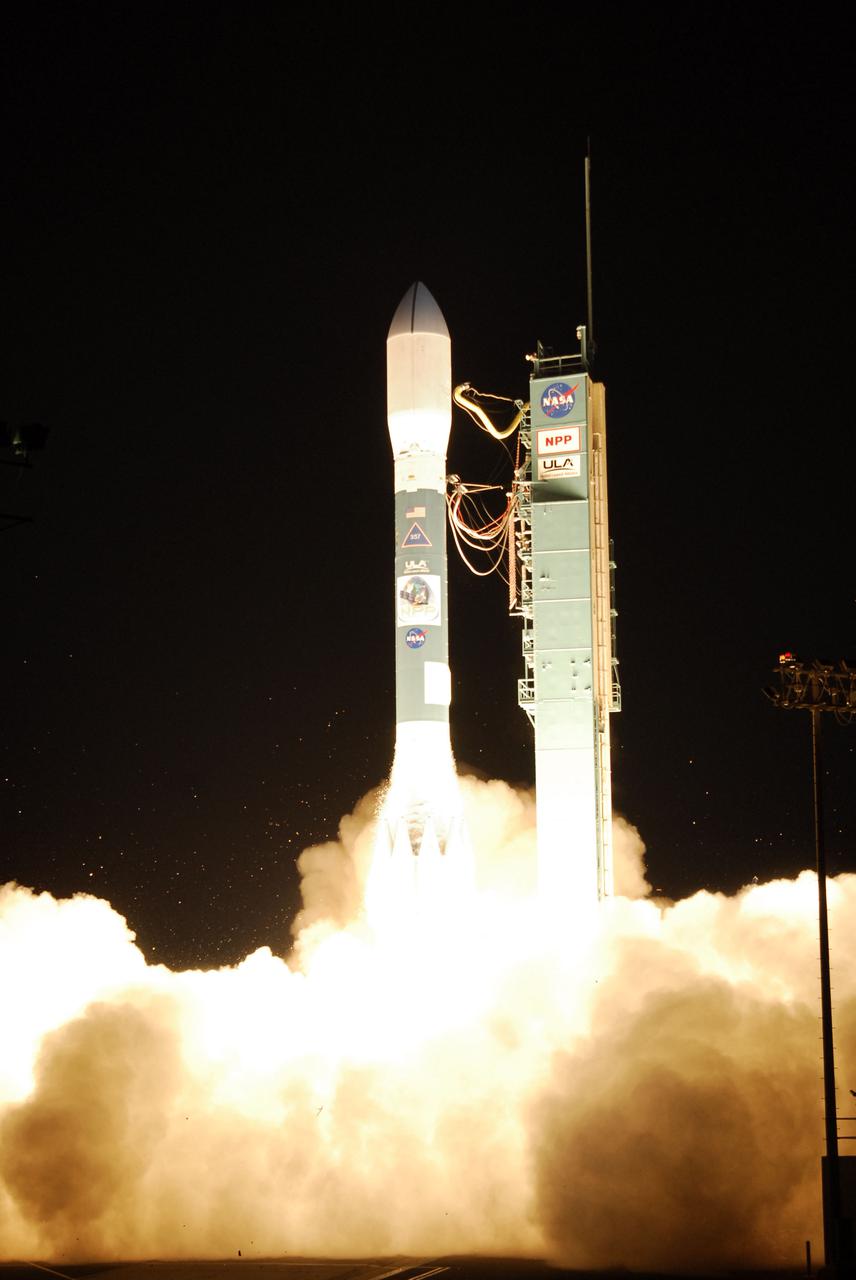
VANDENBERG AIR FORCE BASE, Calif. -- At Space Launch Complex-2 on Vandenberg Air Force Base in California, the United Launch Alliance Delta II rocket carrying NASA's National Polar-orbiting Operational Environmental Satellite System Preparatory Project (NPP) is illuminated by the brilliance of its engines' ignition. Liftoff was at 2:48 a.m. PDT. NPP represents a critical first step in building the next-generation of Earth-observing satellites. NPP will carry the first of the new sensors developed for this satellite fleet, now known as the Joint Polar Satellite System (JPSS) to be launched in 2016. NPP is the bridge between NASA's Earth Observing System (EOS) satellites and the forthcoming series of JPSS satellites. The mission will test key technologies and instruments for the JPSS missions. For more information, visit http:__www.nasa.gov_NPP. Photo credit: NASA_Kim Shiflett
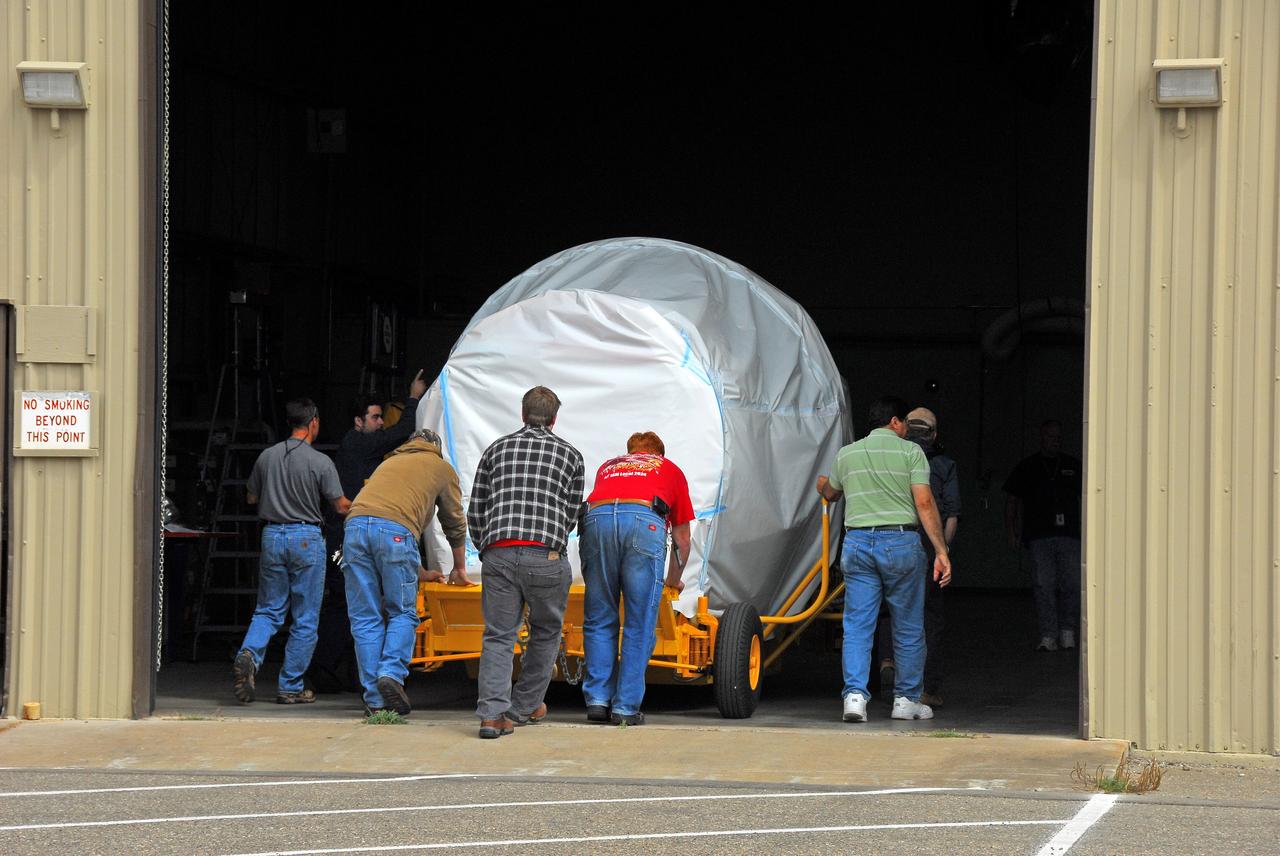
VANDENBERG AIR FORCE BASE, Calif. -- The second stage of a United Launch Alliance Delta II that will carry NASA's National Polar-orbiting Operational Environmental Satellite System Preparatory Project (NPP) satellite into space arrives at the United Launch Alliance Delta Mission Checkout Facility at Space Launch Complex-2 on Vandenberg Air Force Base in California. NPP will be positioned 512 miles above the Earth's surface and will orbit about 16 times each day to observe nearly the entire globe. The NPP mission for NASA and the National Oceanic and Atmospheric Administration (NOAA) is to measure Earth's atmospheric and sea surface temperatures, humidity sounding, land and ocean biological activity, and cloud and aerosol properties. For more information, visit www.nasa.gov/NPP. Photo credit: NASA/VAFB
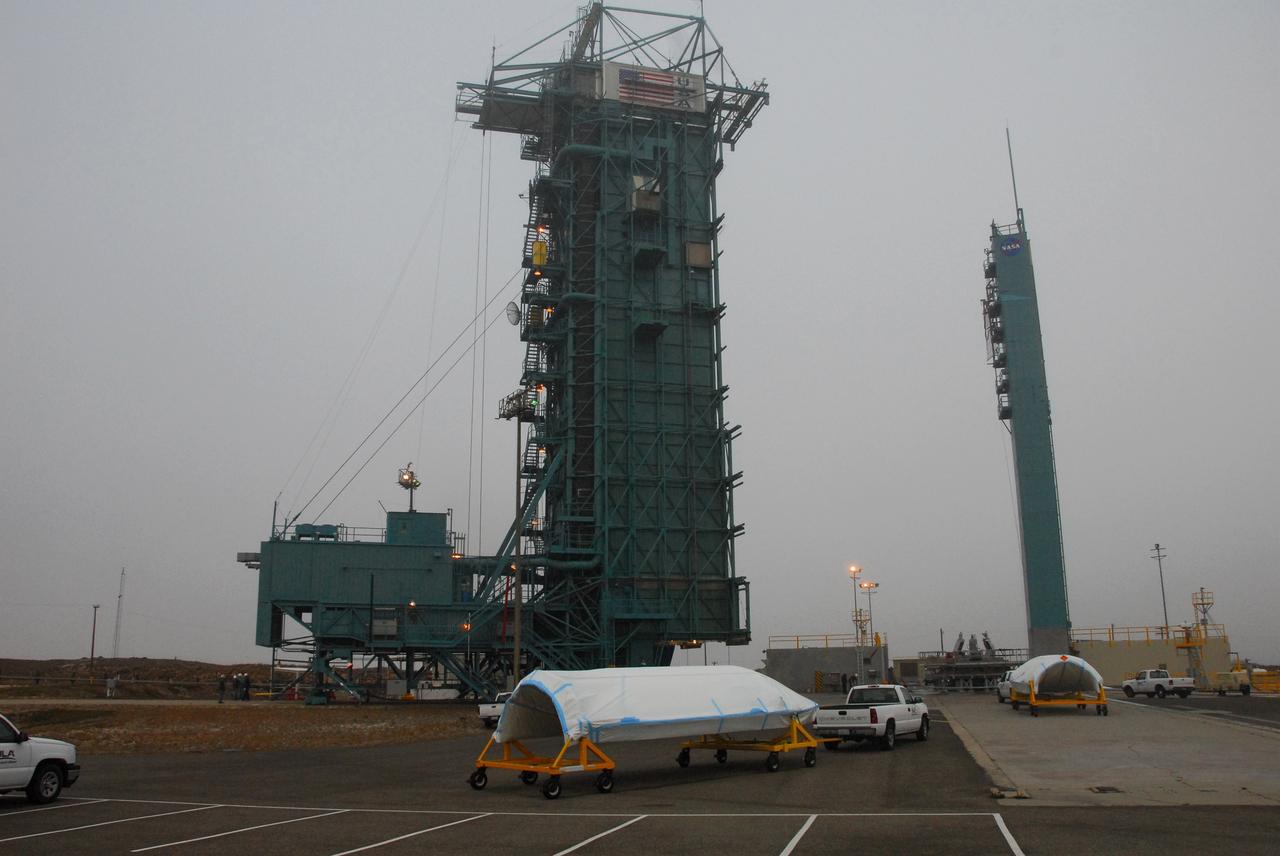
VANDENBERG AIR FORCE BASE, Calif. -- The payload fairing that will protect NASA's National Polar-orbiting Operational Environmental Satellite System Preparatory Project (NPP) satellite as it launches aboard a United Launch Alliance Delta II is ready to be lifted to Level 5 of Space Launch Complex-2 at Vandenberg Air Force Base in California. NPP will be positioned 512 miles above the Earth's surface and will orbit about 16 times each day to observe nearly the entire globe. The NPP mission for NASA and the National Oceanic and Atmospheric Administration (NOAA) is to measure Earth's atmospheric and sea surface temperatures, humidity sounding, land and ocean biological activity, and cloud and aerosol properties. For more information, visit www.nasa.gov/NPP. Photo credit: NASA/VAFB, Roy Allison
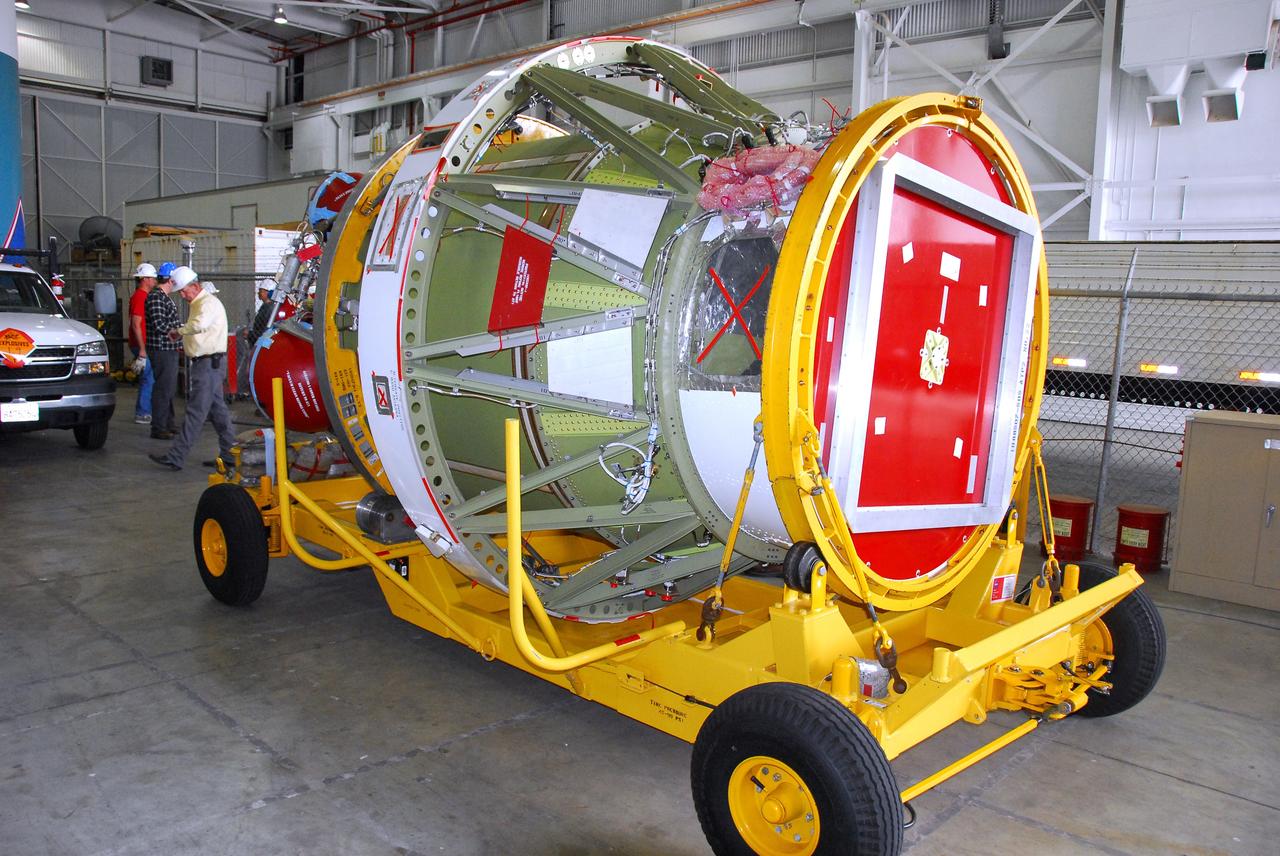
VANDENBERG AIR FORCE BASE, Calif. -- The second stage of a United Launch Alliance Delta II that will carry NASA's National Polar-orbiting Operational Environmental Satellite System Preparatory Project (NPP) satellite into space is prepared for its move from NASA Hangar 836 to Space Launch Complex-2 at Vandenberg Air Force Base in California. NPP will be positioned 512 miles above the Earth's surface and will orbit about 16 times each day to observe nearly the entire globe. The NPP mission for NASA and the National Oceanic and Atmospheric Administration (NOAA) is to measure Earth's atmospheric and sea surface temperatures, humidity sounding, land and ocean biological activity, and cloud and aerosol properties. For more information, visit www.nasa.gov/NPP. Photo credit: NASA/VAFB
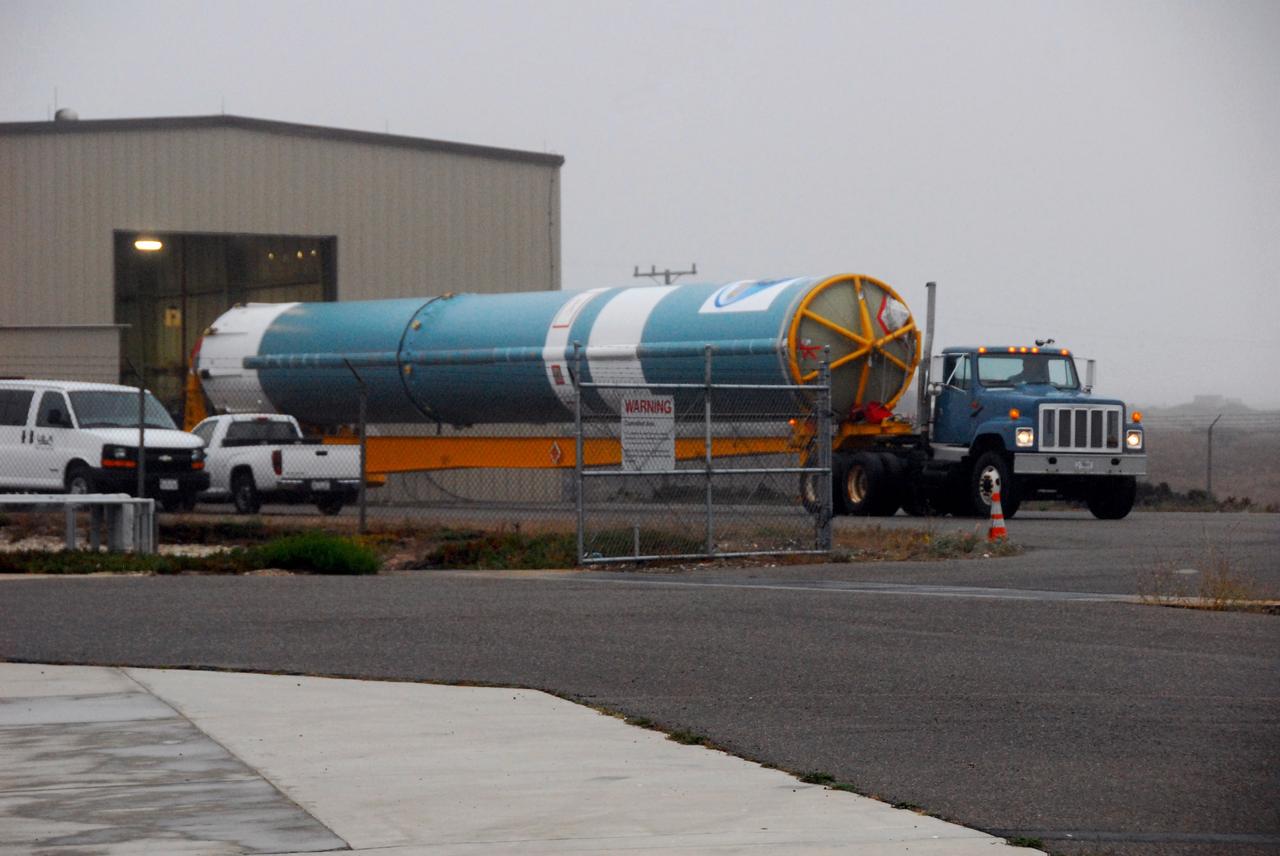
VANDENBERG AIR FORCE BASE, Calif. -- The first stage of a United Launch Alliance Delta II that will carry NASA's National Polar-orbiting Operational Environmental Satellite System Preparatory Project (NPP) satellite into space is on its way from NASA Hangar 836 to NASA's Space Launch Complex-2 at Vandenberg Air Force Base in California. NPP will be positioned 512 miles above the Earth's surface and will orbit about 16 times each day to observe nearly the entire globe. The NPP mission for NASA and the National Oceanic and Atmospheric Administration (NOAA) is to measure Earth's atmospheric and sea surface temperatures, humidity sounding, land and ocean biological activity, and cloud and aerosol properties. For more information, visit www.nasa.gov/NPP. Photo credit: NASA/VAFB, Mark Mackley
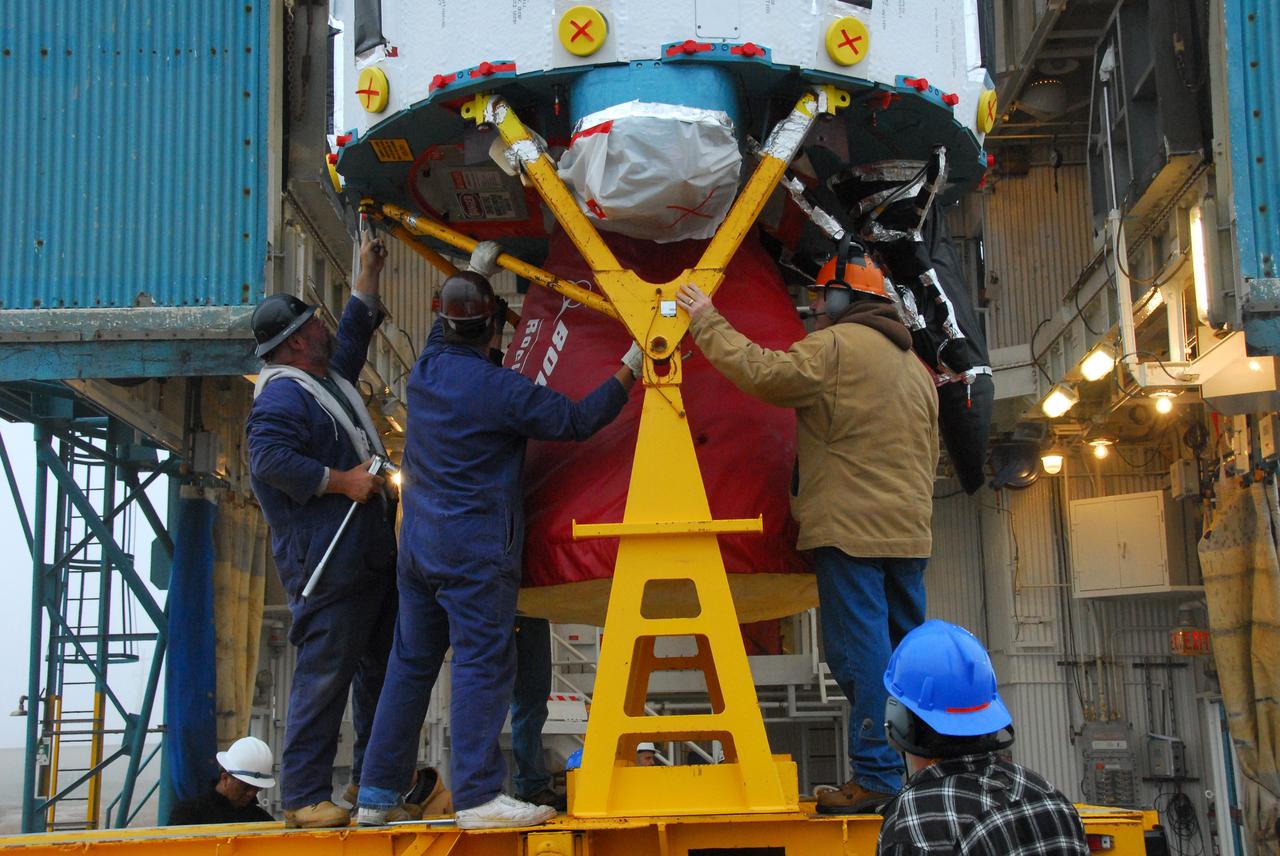
VANDENBERG AIR FORCE BASE, Calif. -- At NASA's Space Launch Complex-2 on Vandenberg Air Force Base in California, workers secure the Rocketdyne engine in the first stage of a United Launch Alliance Delta II. The rocket will carry NASA's National Polar-orbiting Operational Environmental Satellite System Preparatory Project (NPP) satellite into space. NPP will be positioned 512 miles above the Earth's surface and will orbit about 16 times each day to observe nearly the entire globe. The NPP mission for NASA and the National Oceanic and Atmospheric Administration (NOAA) is to measure Earth's atmospheric and sea surface temperatures, humidity sounding, land and ocean biological activity, and cloud and aerosol properties. For more information, visit www.nasa.gov/NPP. Photo credit: NASA/VAFB, Mark Mackley

VANDENBERG AIR FORCE BASE, Calif. -- The second stage of a United Launch Alliance Delta II that will carry NASA's National Polar-orbiting Operational Environmental Satellite System Preparatory Project (NPP) satellite into space is prepared for its move from NASA Hangar 836 to Space Launch Complex-2 at Vandenberg Air Force Base in California. NPP will be positioned 512 miles above the Earth's surface and will orbit about 16 times each day to observe nearly the entire globe. The NPP mission for NASA and the National Oceanic and Atmospheric Administration (NOAA) is to measure Earth's atmospheric and sea surface temperatures, humidity sounding, land and ocean biological activity, and cloud and aerosol properties. For more information, visit www.nasa.gov/NPP. Photo credit: NASA/VAFB
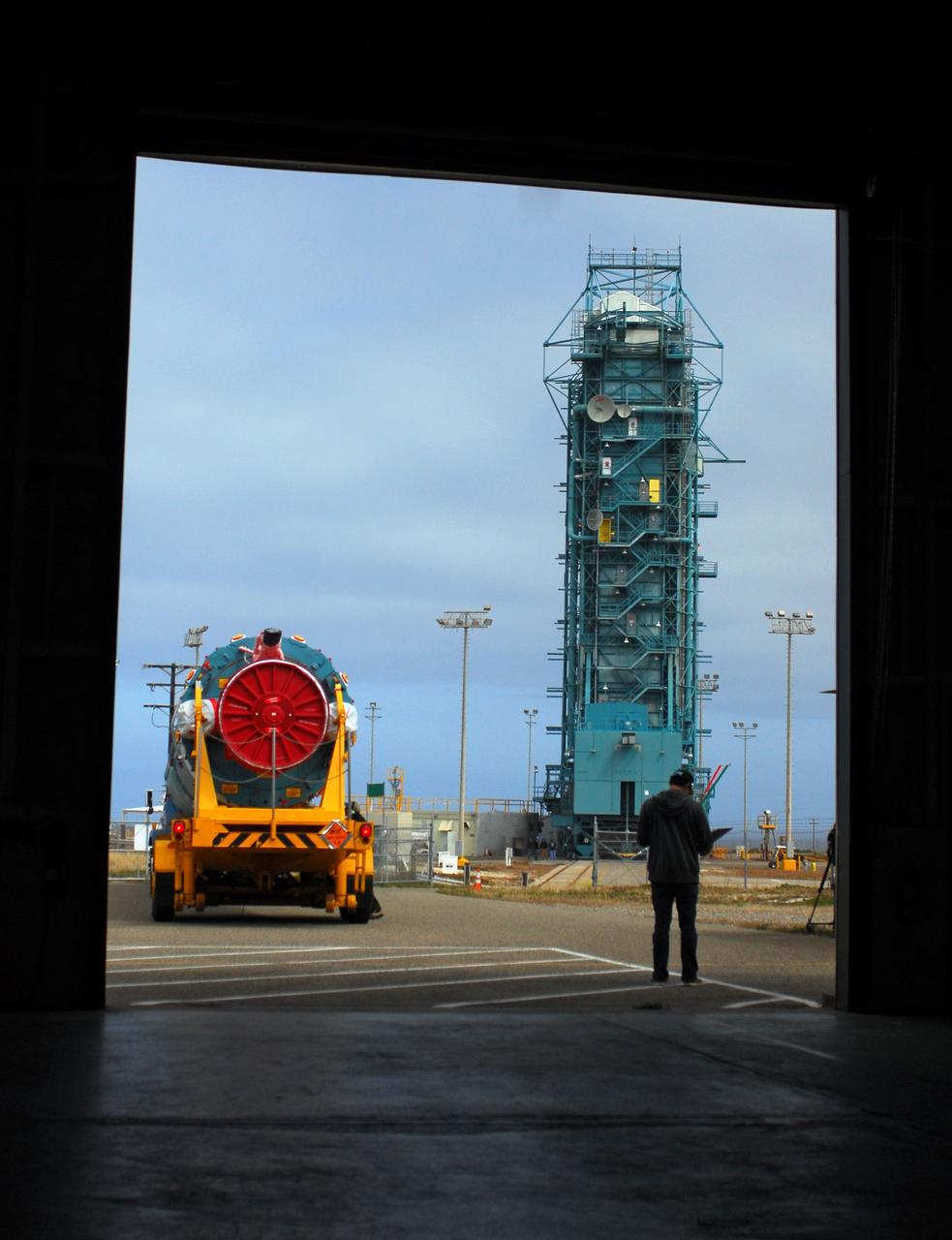
VANDENBERG AIR FORCE BASE, Calif. -- At Vandenberg Air Force Base in California, the first stage of a United Launch Alliance Delta II that will carry the National Polar-orbiting Operational Environmental Satellite System Preparatory Project (NPP) satellite into space has arrived at NASA's Launch Complex-2. The vehicle will undergo initial testing at the United Launch Alliance Delta Mission Checkout Facility. NPP will be positioned 512 miles above the Earth's surface and will orbit about 16 times each day to observe nearly the entire globe. The NPP mission for NASA and the National Oceanic and Atmospheric Administration (NOAA) is to measure Earth's atmospheric and sea surface temperatures, humidity sounding, land and ocean biological activity, and cloud and aerosol properties. For more information, visit www.nasa.gov/NPP. Photo credit: NASA/VAFB
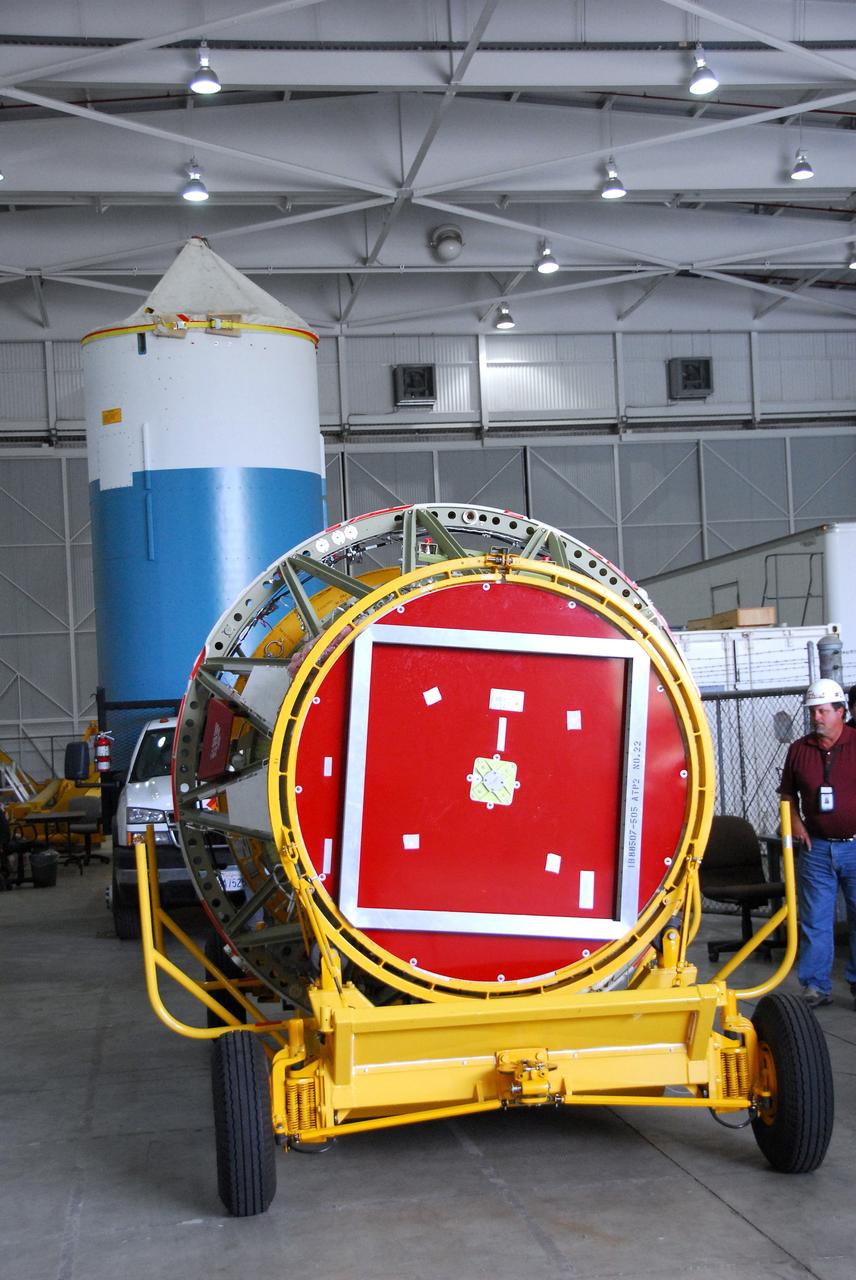
VANDENBERG AIR FORCE BASE, Calif. -- The second stage of a United Launch Alliance Delta II that will carry NASA's National Polar-orbiting Operational Environmental Satellite System Preparatory Project (NPP) satellite into space is prepared for its move from NASA Hangar 836 to Space Launch Complex-2 at Vandenberg Air Force Base in California. NPP will be positioned 512 miles above the Earth's surface and will orbit about 16 times each day to observe nearly the entire globe. The NPP mission for NASA and the National Oceanic and Atmospheric Administration (NOAA) is to measure Earth's atmospheric and sea surface temperatures, humidity sounding, land and ocean biological activity, and cloud and aerosol properties. For more information, visit www.nasa.gov/NPP. Photo credit: NASA/VAFB
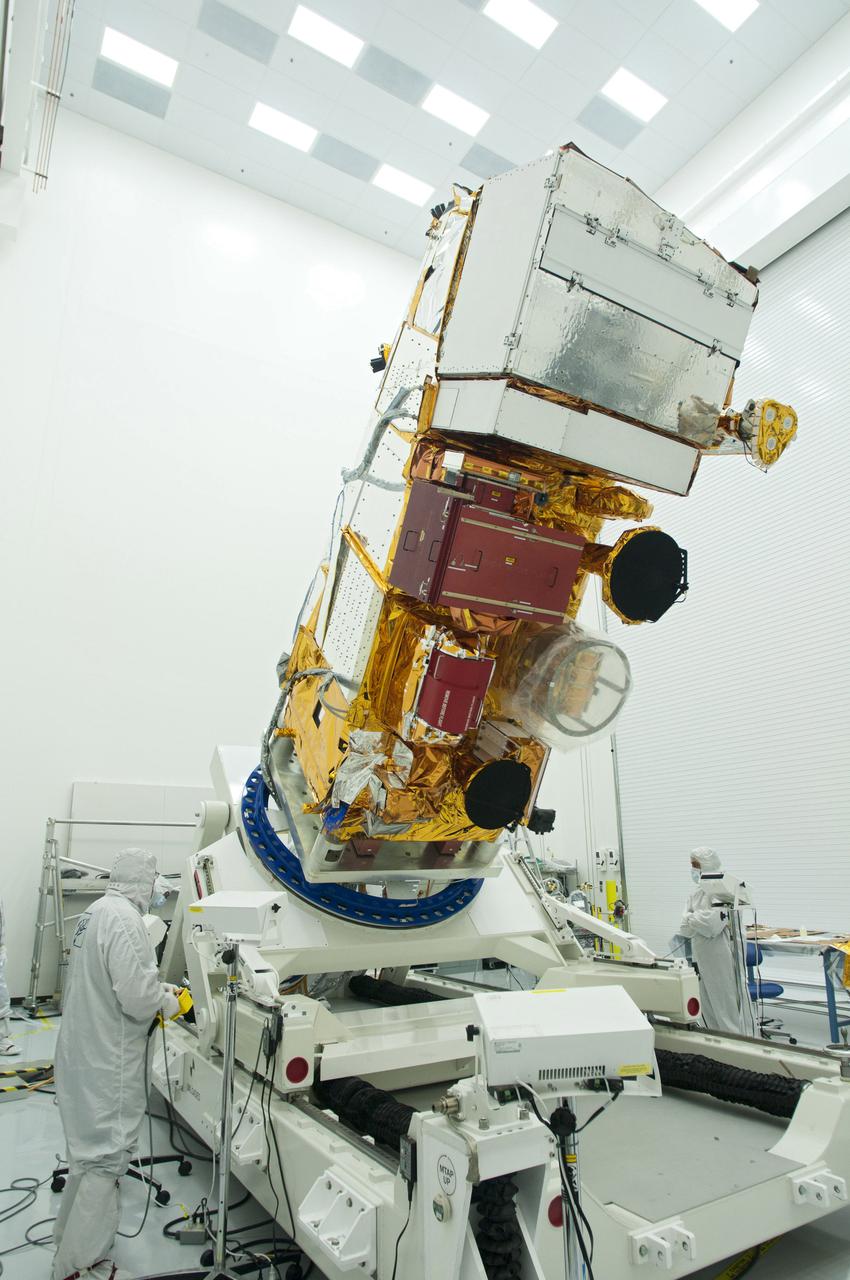
BALL AEROSPACE, Boulder, Colo. – In a cleanroom at Ball Aerospace and Technologies Corp., technicians inspect NASA's National Polar-orbiting Operational Environmental Satellite System Preparatory Project NPP satellite following electromagnetic compatibility testing. A United Launch Alliance Delta II rocket will carry NPP into space. NPP represents a critical first step in building the next-generation of Earth-observing satellites. NPP will carry the first of the new sensors developed for this satellite fleet, now known as the Joint Polar Satellite System JPSS to be launched in 2016. NPP is the bridge between NASA's Earth Observing System EOS satellites and the forthcoming series of JPSS satellites. The mission will test key technologies and instruments for the JPSS missions. NPP is targeted to launch Oct. 27. For more information, visit http:__www.nasa.gov_NPP. Photo credit: Ball Aerospace

VANDENBERG AIR FORCE BASE, Calif. -- The second stage of a United Launch Alliance Delta II that will carry NASA's National Polar-orbiting Operational Environmental Satellite System Preparatory Project (NPP) satellite into space is prepared for its move from NASA Hangar 836 to Space Launch Complex-2 at Vandenberg Air Force Base in California. NPP will be positioned 512 miles above the Earth's surface and will orbit about 16 times each day to observe nearly the entire globe. The NPP mission for NASA and the National Oceanic and Atmospheric Administration (NOAA) is to measure Earth's atmospheric and sea surface temperatures, humidity sounding, land and ocean biological activity, and cloud and aerosol properties. For more information, visit www.nasa.gov/NPP. Photo credit: NASA/VAFB
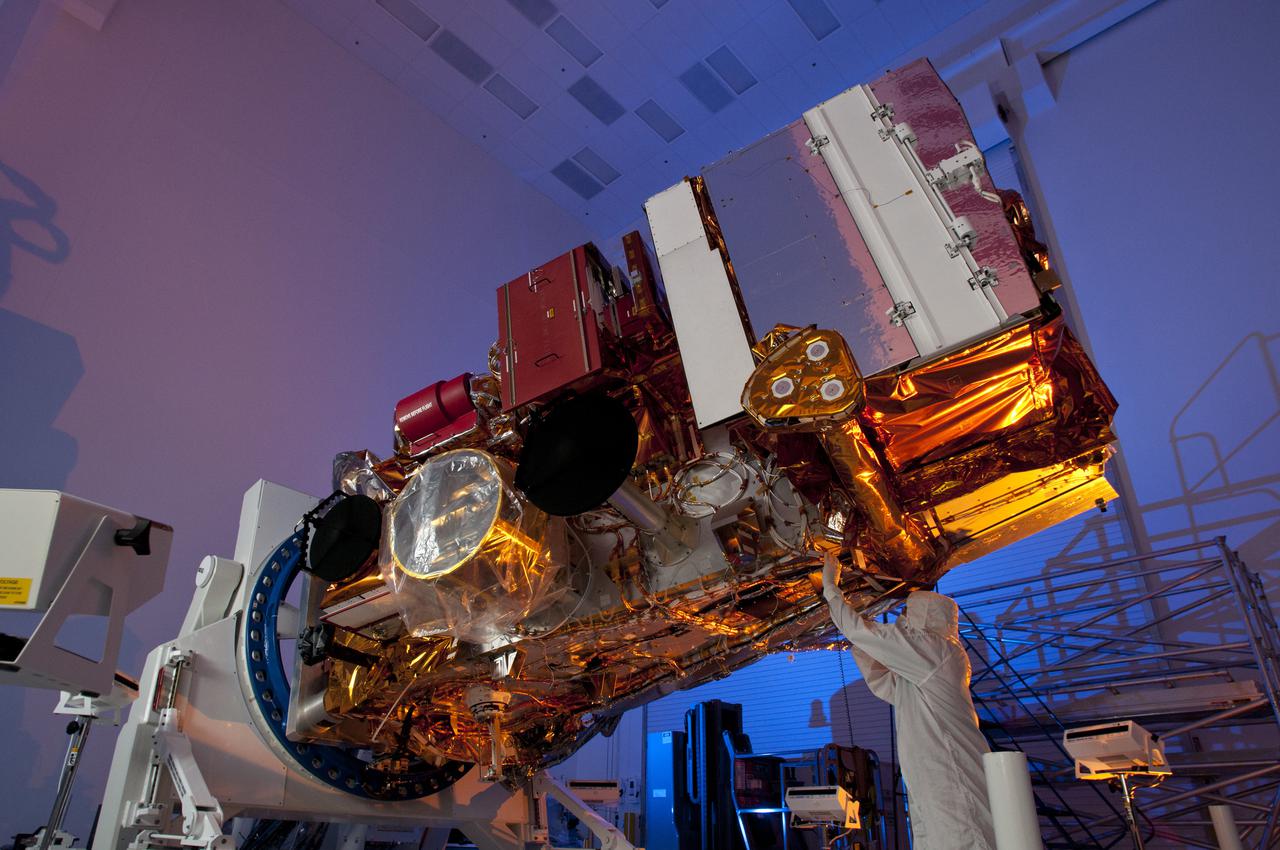
BALL AEROSPACE, Boulder, Colo. – In a Ball Aerospace and Technologies Corp. cleanroom in Boulder, Colo., technicians have completed integration and performance testing of the Cross-track Infrared Sounder CrIS that will fly aboard NASA's National Polar-orbiting Operational Environmental Satellite System Preparatory Project NPP satellite. CrIS will produce high-resolution, three-dimensional temperature, pressure, and moisture profiles which will be used to enhance weather forecasting models for short and long-term weather forecasting. A United Launch Alliance Delta II rocket will carry NPP into space. NPP represents a critical first step in building the next-generation of Earth-observing satellites. NPP will carry the first of the new sensors developed for this satellite fleet, now known as the Joint Polar Satellite System JPSS to be launched in 2016. NPP is the bridge between NASA's Earth Observing System EOS satellites and the forthcoming series of JPSS satellites. The mission will test key technologies and instruments for the JPSS missions. NPP is targeted to launch Oct. 27. For more information, visit http:__www.nasa.gov_NPP. Photo credit: Ball Aerospace
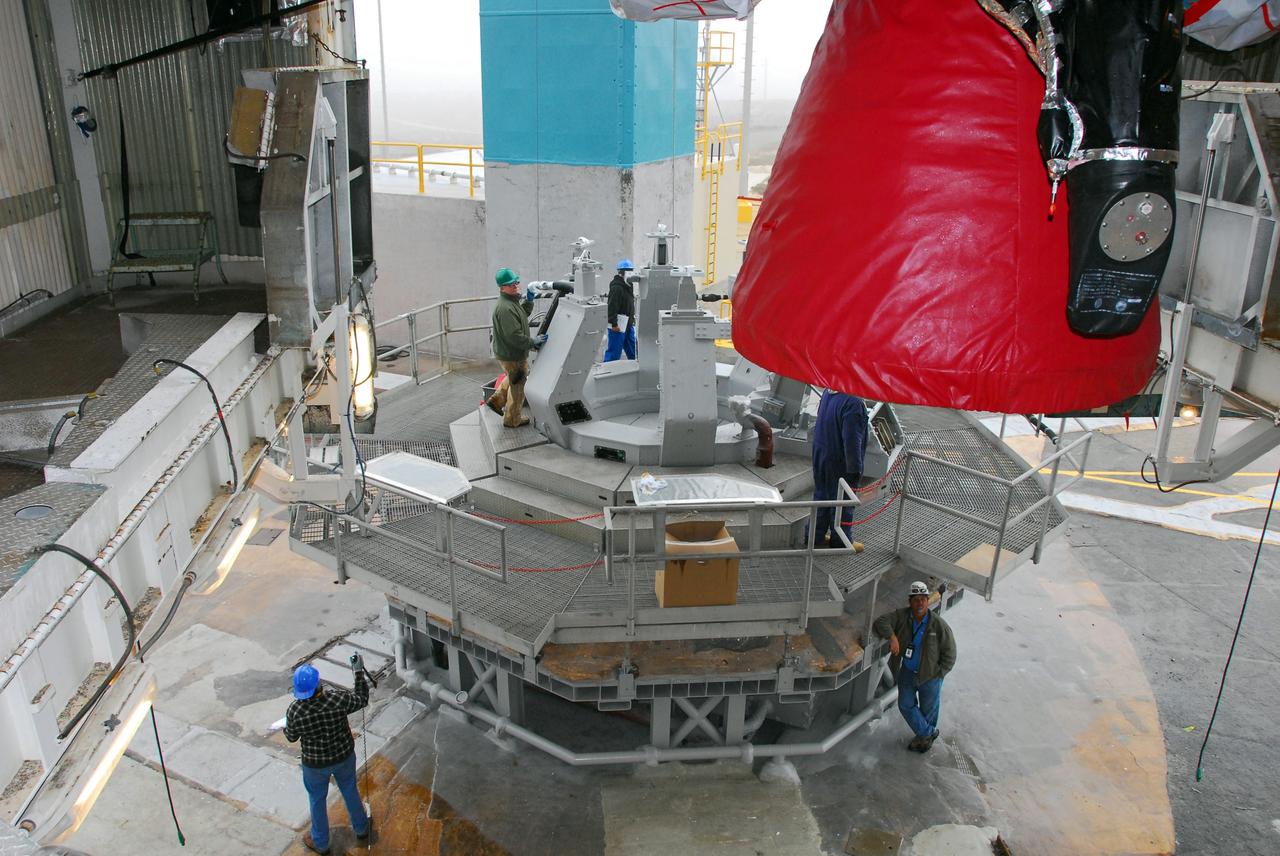
VANDENBERG AIR FORCE BASE, Calif. -- The first stage of a United Launch Alliance Delta II is hoisted into place at NASA's Space Launch Complex-2 on Vandenberg Air Force Base in California. Seen here in red is the Rocketdyne engine that will help loft the rocket off the pad. The rocket will carry NASA's National Polar-orbiting Operational Environmental Satellite System Preparatory Project (NPP) satellite into space. NPP will be positioned 512 miles above the Earth's surface and will orbit about 16 times each day to observe nearly the entire globe. The NPP mission for NASA and the National Oceanic and Atmospheric Administration (NOAA) is to measure Earth's atmospheric and sea surface temperatures, humidity sounding, land and ocean biological activity, and cloud and aerosol properties. For more information, visit www.nasa.gov/NPP. Photo credit: NASA/VAFB, Mark Mackley
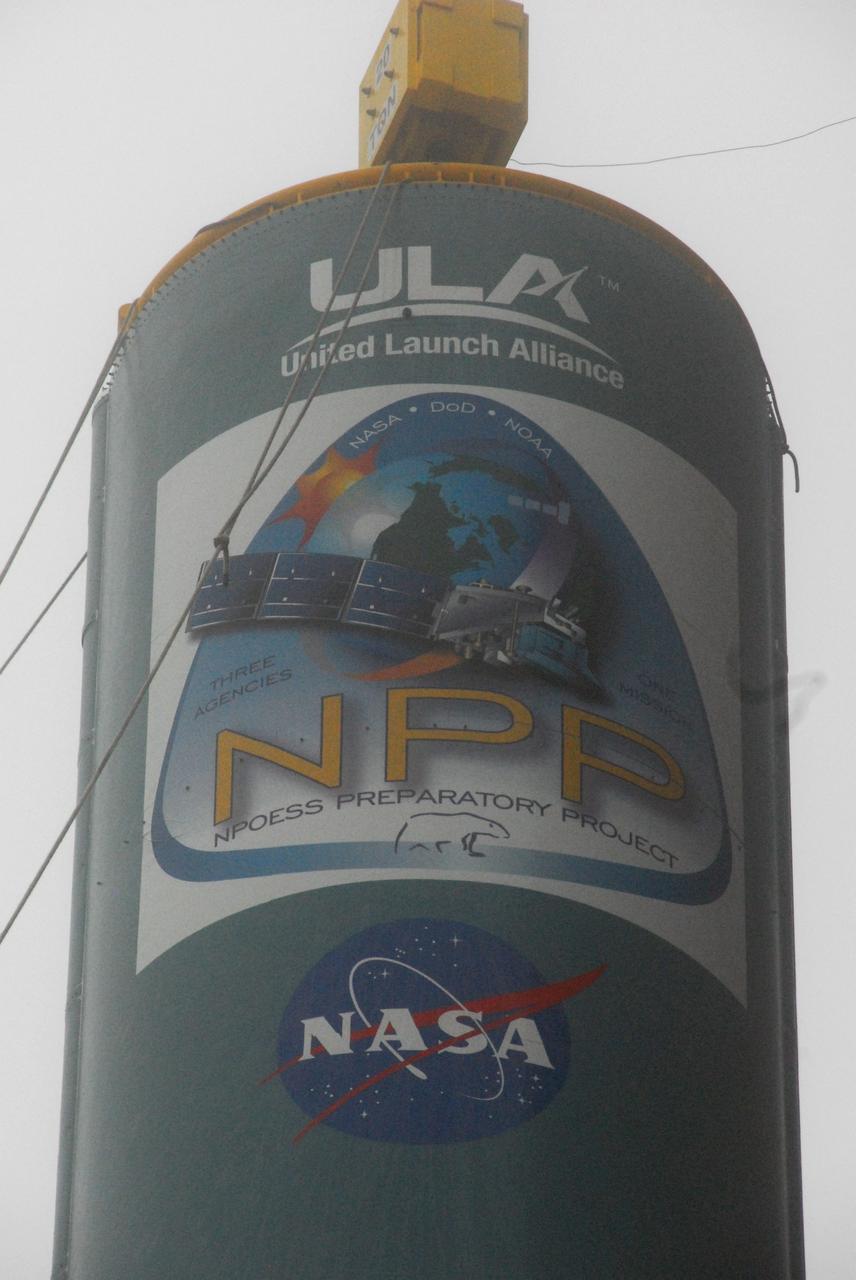
VANDENBERG AIR FORCE BASE, Calif. -- The tip-top of a United Launch Alliance Delta II first stage is visible as it is lifted at NASA's Space Launch Complex-2 on Vandenberg Air Force Base in California. The rocket will carry NASA's National Polar-orbiting Operational Environmental Satellite System Preparatory Project (NPP) satellite into space. NPP will be positioned 512 miles above the Earth's surface and will orbit about 16 times each day to observe nearly the entire globe. The NPP mission for NASA and the National Oceanic and Atmospheric Administration (NOAA) is to measure Earth's atmospheric and sea surface temperatures, humidity sounding, land and ocean biological activity, and cloud and aerosol properties. For more information, visit www.nasa.gov/NPP. Photo credit: NASA/VAFB, Mark Mackley
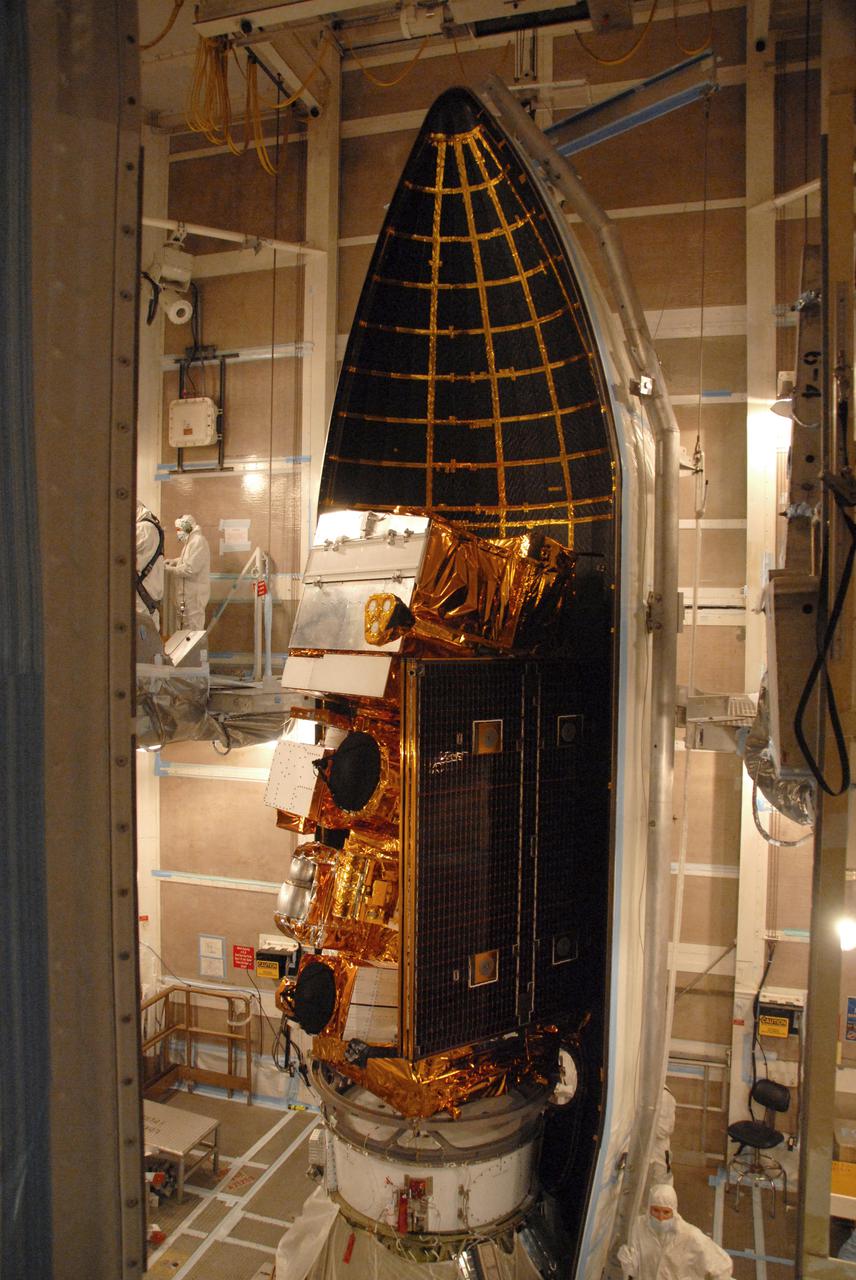
VANDENBERG AIR FORCE BASE, Calif. – At Vandenberg Air Force Base's Space Launch Complex-2 in California, technicians monitor the movement of a section of the clamshell-shaped Delta payload fairing as it encloses NASA’s National Polar-orbiting Operational Environmental Satellite System Preparatory Project (NPP) spacecraft. The fairing will protect the spacecraft from the impact of aerodynamic pressure and heating during ascent and will be jettisoned once the spacecraft is outside the Earth's atmosphere. NPP represents a critical first step in building the next-generation of Earth-observing satellites. NPP will carry the first of the new sensors developed for this satellite fleet, now known as the Joint Polar Satellite System (JPSS) to be launched in 2016. NPP is the bridge between NASA's Earth Observing System (EOS) satellites and the forthcoming series of JPSS satellites. The mission will test key technologies and instruments for the JPSS missions. NPP is targeted to launch Oct. 28 from Space Launch Complex-2 aboard a United Launch Alliance Delta II rocket. For more information, visit http:__www.nasa.gov_NPP. Photo credit: NASA_Mark P. Mackley, VAFB
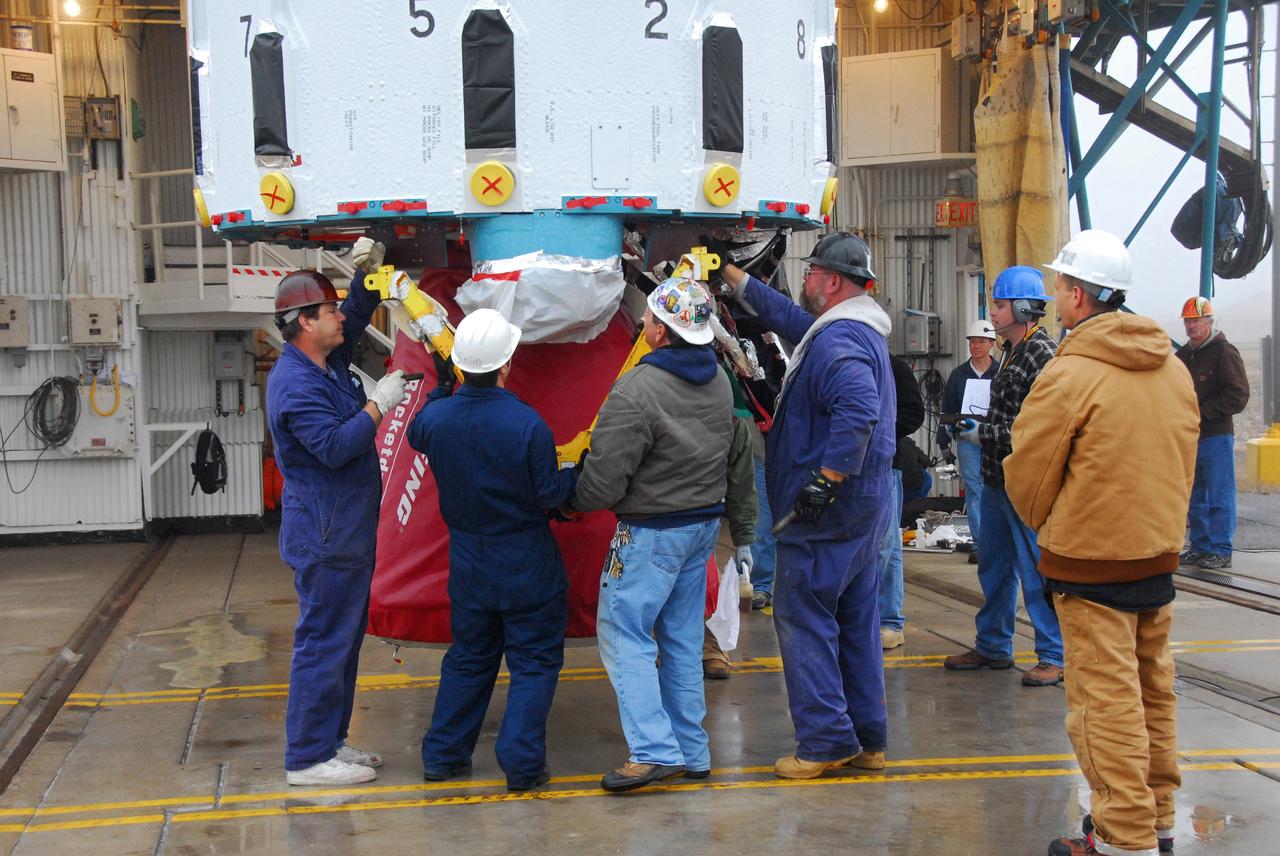
VANDENBERG AIR FORCE BASE, Calif. -- At NASA's Space Launch Complex-2 on Vandenberg Air Force Base in California, workers secure the Rocketdyne engine in the first stage of a United Launch Alliance Delta II. The rocket will carry NASA's National Polar-orbiting Operational Environmental Satellite System Preparatory Project (NPP) satellite into space. NPP will be positioned 512 miles above the Earth's surface and will orbit about 16 times each day to observe nearly the entire globe. The NPP mission for NASA and the National Oceanic and Atmospheric Administration (NOAA) is to measure Earth's atmospheric and sea surface temperatures, humidity sounding, land and ocean biological activity, and cloud and aerosol properties. For more information, visit www.nasa.gov/NPP. Photo credit: NASA/VAFB, Mark Mackley
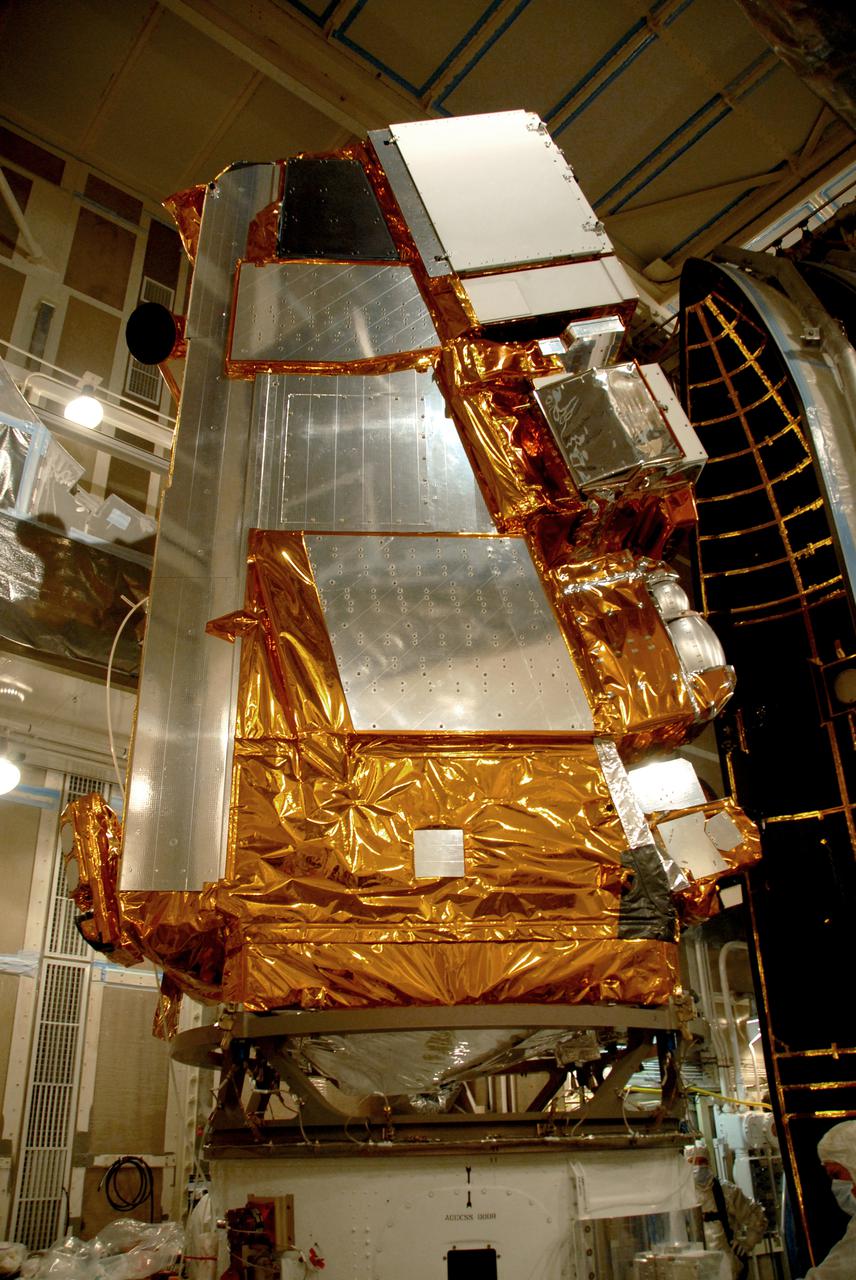
VANDENBERG AIR FORCE BASE, Calif. – At Vandenberg Air Force Base's Space Launch Complex-2 in California, preparations are under way to enclose NASA’s National Polar-orbiting Operational Environmental Satellite System Preparatory Project (NPP) spacecraft into clamshell-shaped the Delta payload fairing. The fairing will protect the spacecraft from the impact of aerodynamic pressure and heating during ascent and will be jettisoned once the spacecraft is outside the Earth's atmosphere. NPP represents a critical first step in building the next-generation of Earth-observing satellites. NPP will carry the first of the new sensors developed for this satellite fleet, now known as the Joint Polar Satellite System (JPSS) to be launched in 2016. NPP is the bridge between NASA's Earth Observing System (EOS) satellites and the forthcoming series of JPSS satellites. The mission will test key technologies and instruments for the JPSS missions. NPP is targeted to launch Oct. 28 from Space Launch Complex-2 aboard a United Launch Alliance Delta II rocket. For more information, visit http:__www.nasa.gov_NPP. Photo credit: NASA_Mark P. Mackley, VAFB
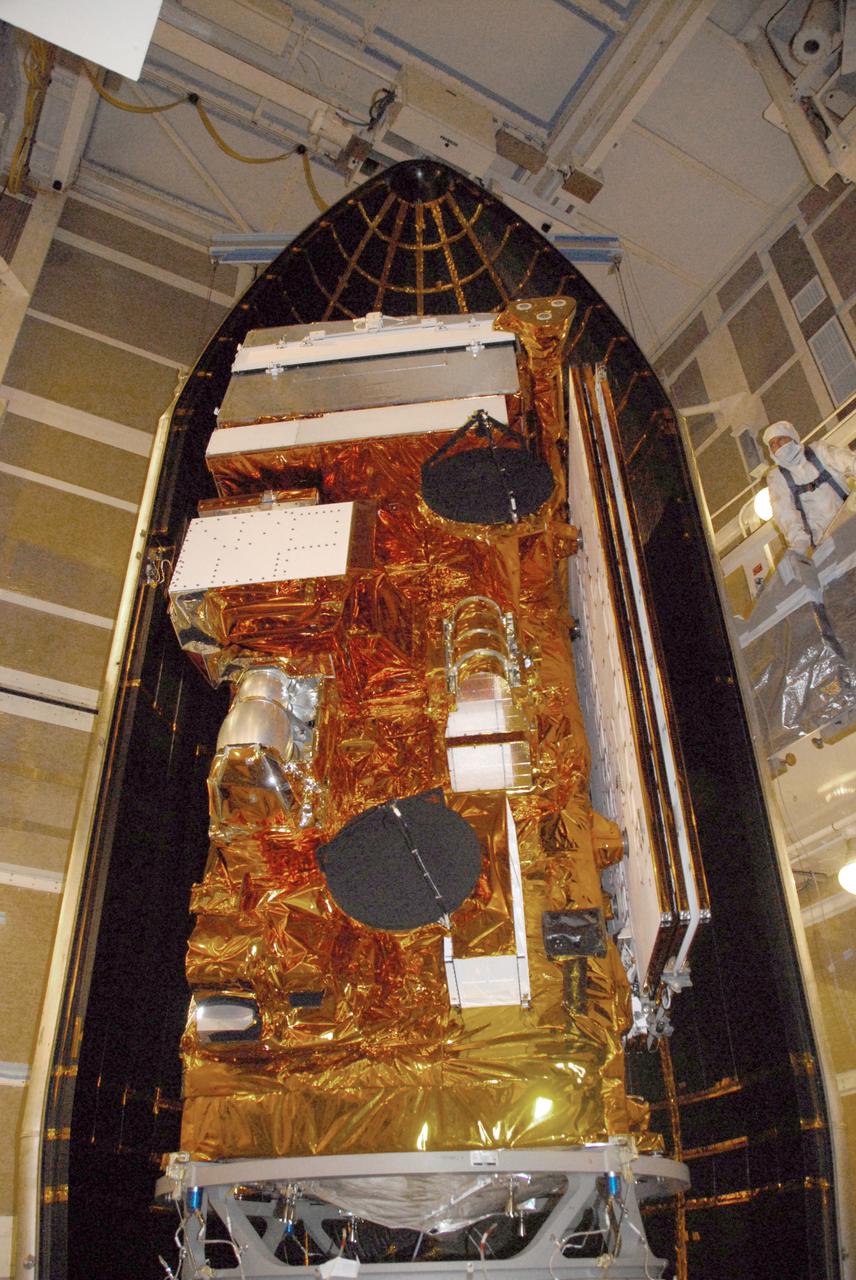
VANDENBERG AIR FORCE BASE, Calif. – At Vandenberg Air Force Base's Space Launch Complex-2 in California, technicians monitor the movement of a section of the clamshell-shaped Delta payload fairing as it encloses NASA’s National Polar-orbiting Operational Environmental Satellite System Preparatory Project (NPP) spacecraft. The fairing will protect the spacecraft from the impact of aerodynamic pressure and heating during ascent and will be jettisoned once the spacecraft is outside the Earth's atmosphere. NPP represents a critical first step in building the next-generation of Earth-observing satellites. NPP will carry the first of the new sensors developed for this satellite fleet, now known as the Joint Polar Satellite System (JPSS) to be launched in 2016. NPP is the bridge between NASA's Earth Observing System (EOS) satellites and the forthcoming series of JPSS satellites. The mission will test key technologies and instruments for the JPSS missions. NPP is targeted to launch Oct. 28 from Space Launch Complex-2 aboard a United Launch Alliance Delta II rocket. For more information, visit http:__www.nasa.gov_NPP. Photo credit: NASA_Mark P. Mackley, VAFB
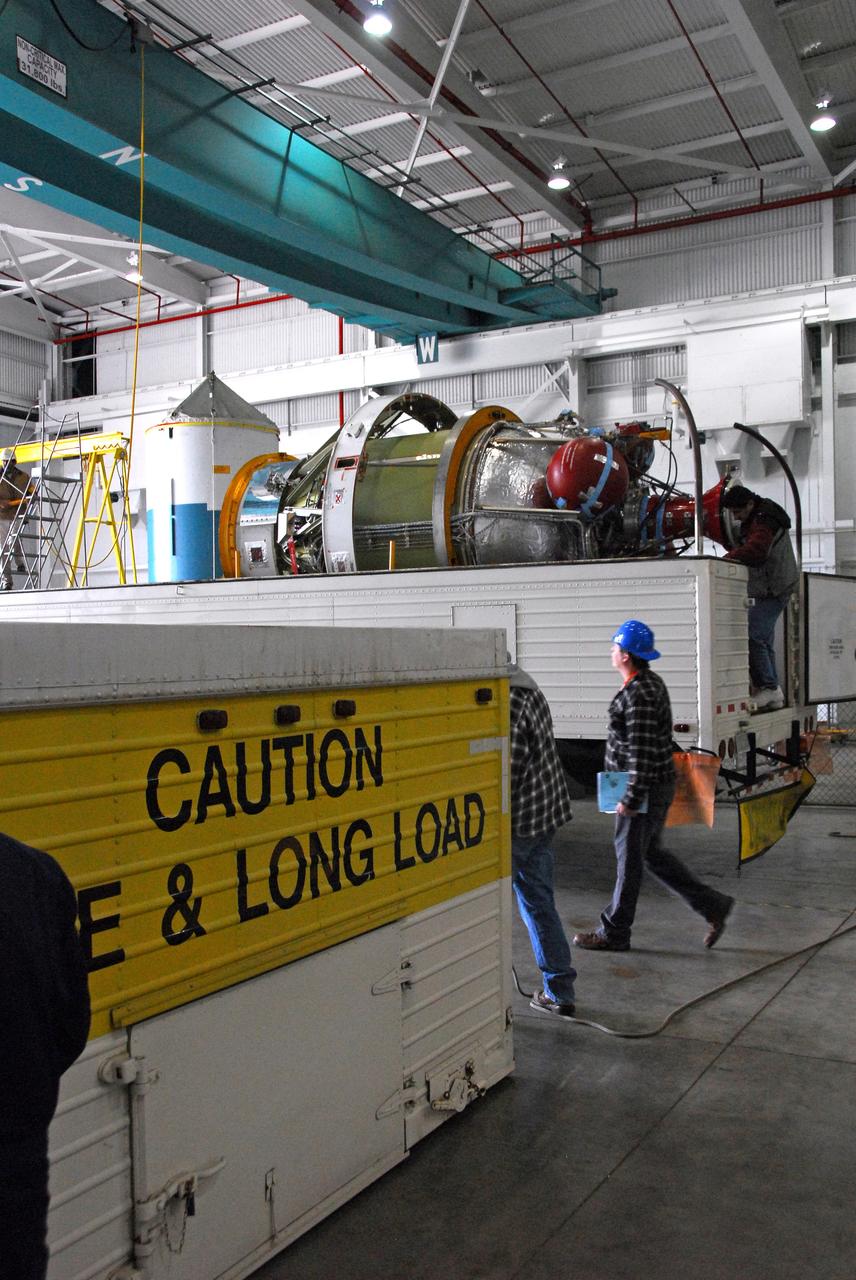
VANDENBERG AIR FORCE BASE, Calif. -- The second stage of a United Launch Alliance Delta II that will carry NASA's National Polar-orbiting Operational Environmental Satellite System Preparatory Project (NPP) satellite into space is prepared for its move from NASA Hangar 836 to Space Launch Complex-2 at Vandenberg Air Force Base in California. NPP will be positioned 512 miles above the Earth's surface and will orbit about 16 times each day to observe nearly the entire globe. The NPP mission for NASA and the National Oceanic and Atmospheric Administration (NOAA) is to measure Earth's atmospheric and sea surface temperatures, humidity sounding, land and ocean biological activity, and cloud and aerosol properties. For more information, visit www.nasa.gov/NPP. Photo credit: NASA/VAFB
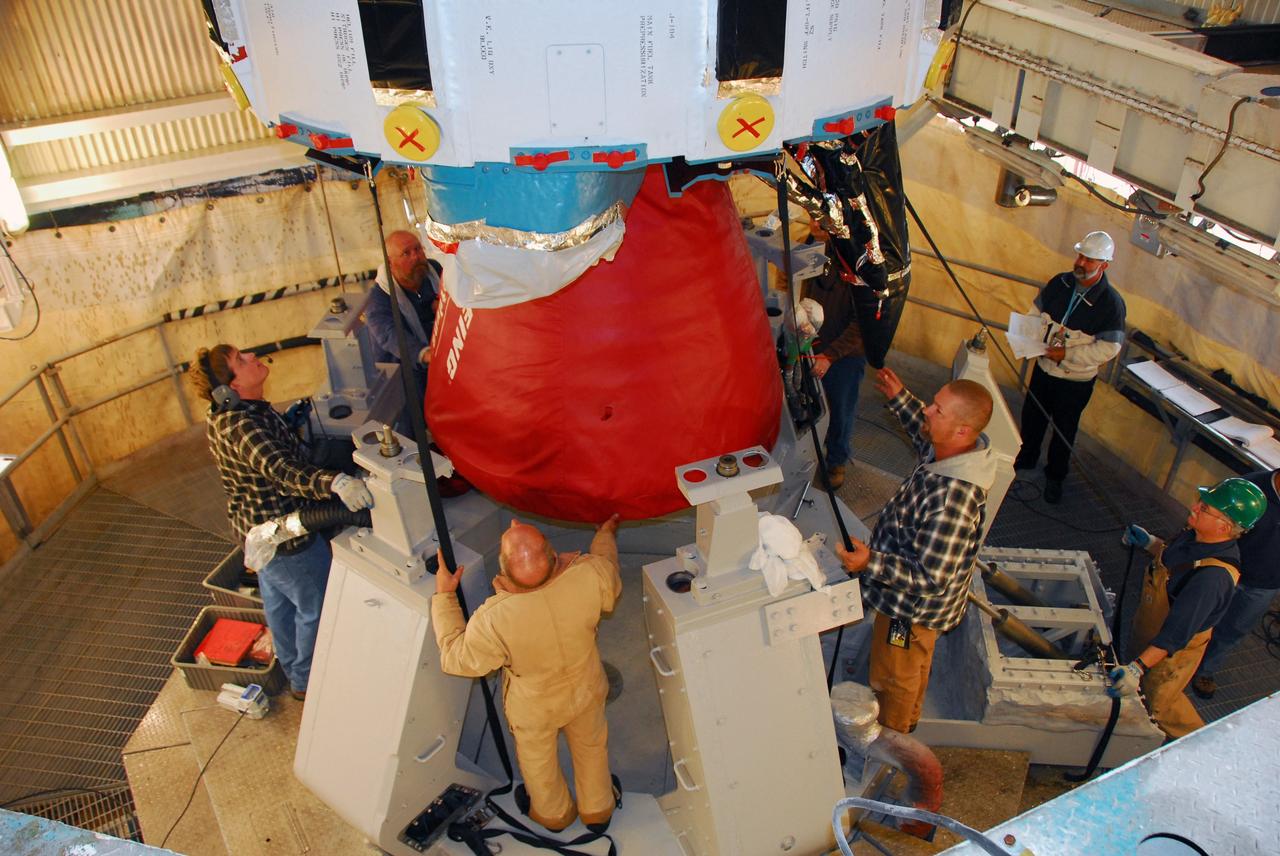
VANDENBERG AIR FORCE BASE, Calif. -- The first stage of a United Launch Alliance Delta II is lowered into place at NASA's Space Launch Complex-2 on Vandenberg Air Force Base in California. Seen here in red is the Rocketdyne engine that will help loft the rocket off the pad. The rocket will carry NASA's National Polar-orbiting Operational Environmental Satellite System Preparatory Project (NPP) satellite into space. NPP will be positioned 512 miles above the Earth's surface and will orbit about 16 times each day to observe nearly the entire globe. The NPP mission for NASA and the National Oceanic and Atmospheric Administration (NOAA) is to measure Earth's atmospheric and sea surface temperatures, humidity sounding, land and ocean biological activity, and cloud and aerosol properties. For more information, visit www.nasa.gov/NPP. Photo credit: NASA/VAFB, Mark Mackley
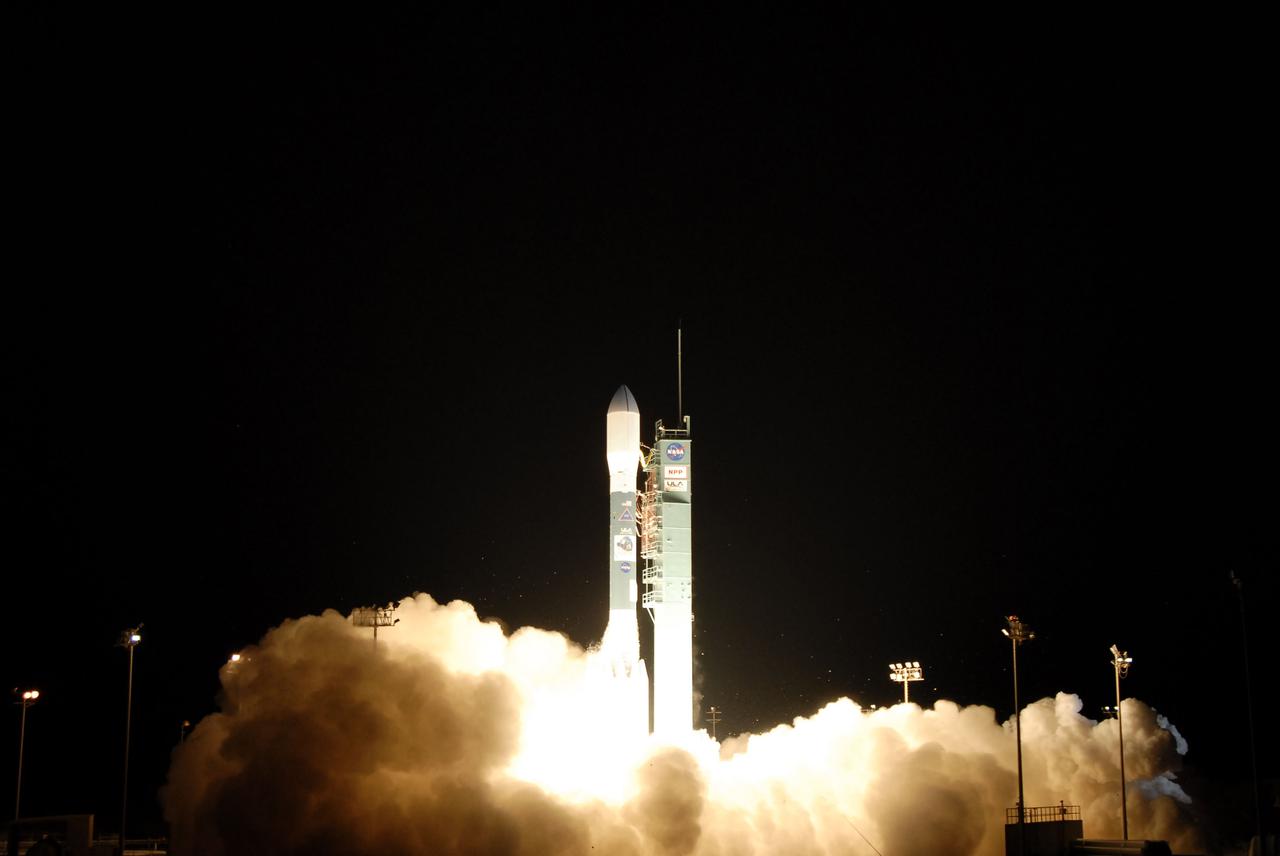
VANDENBERG AIR FORCE BASE, Calif. -- At Space Launch Complex-2 on Vandenberg Air Force Base in California, an exhaust cloud forms around the United Launch Alliance Delta II rocket carrying NASA's National Polar-orbiting Operational Environmental Satellite System Preparatory Project (NPP) into space. Liftoff was at 2:48 a.m. PDT. NPP represents a critical first step in building the next-generation of Earth-observing satellites. NPP will carry the first of the new sensors developed for this satellite fleet, now known as the Joint Polar Satellite System (JPSS) to be launched in 2016. NPP is the bridge between NASA's Earth Observing System (EOS) satellites and the forthcoming series of JPSS satellites. The mission will test key technologies and instruments for the JPSS missions. For more information, visit http:__www.nasa.gov_NPP. Photo credit: NASA_Kim Shiflett
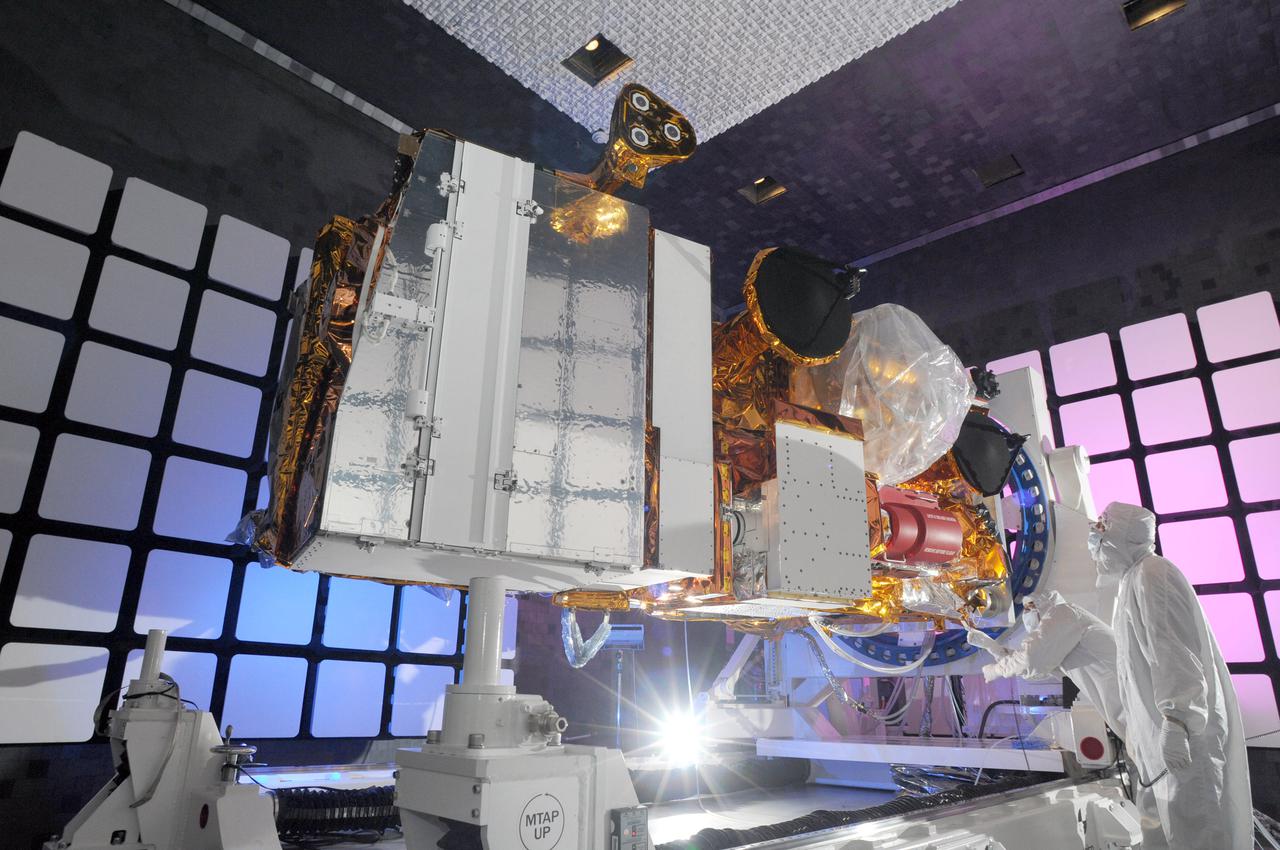
BALL AEROSPACE, Boulder, Colo. – In a Ball Aerospace and Technologies Corp. cleanroom in Boulder, Colo., NASA's National Polar-orbiting Operational Environmental Satellite System Preparatory Project NPP satellite is undergoing Electromagnetic Interference_Electromagnetic Compatibility EMI_EMC testing. A United Launch Alliance Delta II rocket will carry NPP into space. NPP represents a critical first step in building the next-generation of Earth-observing satellites. NPP will carry the first of the new sensors developed for this satellite fleet, now known as the Joint Polar Satellite System JPSS to be launched in 2016. NPP is the bridge between NASA's Earth Observing System EOS satellites and the forthcoming series of JPSS satellites. The mission will test key technologies and instruments for the JPSS missions. NPP is targeted to launch Oct. 27. For more information, visit http:__www.nasa.gov_NPP. Photo credit: Ball Aerospace
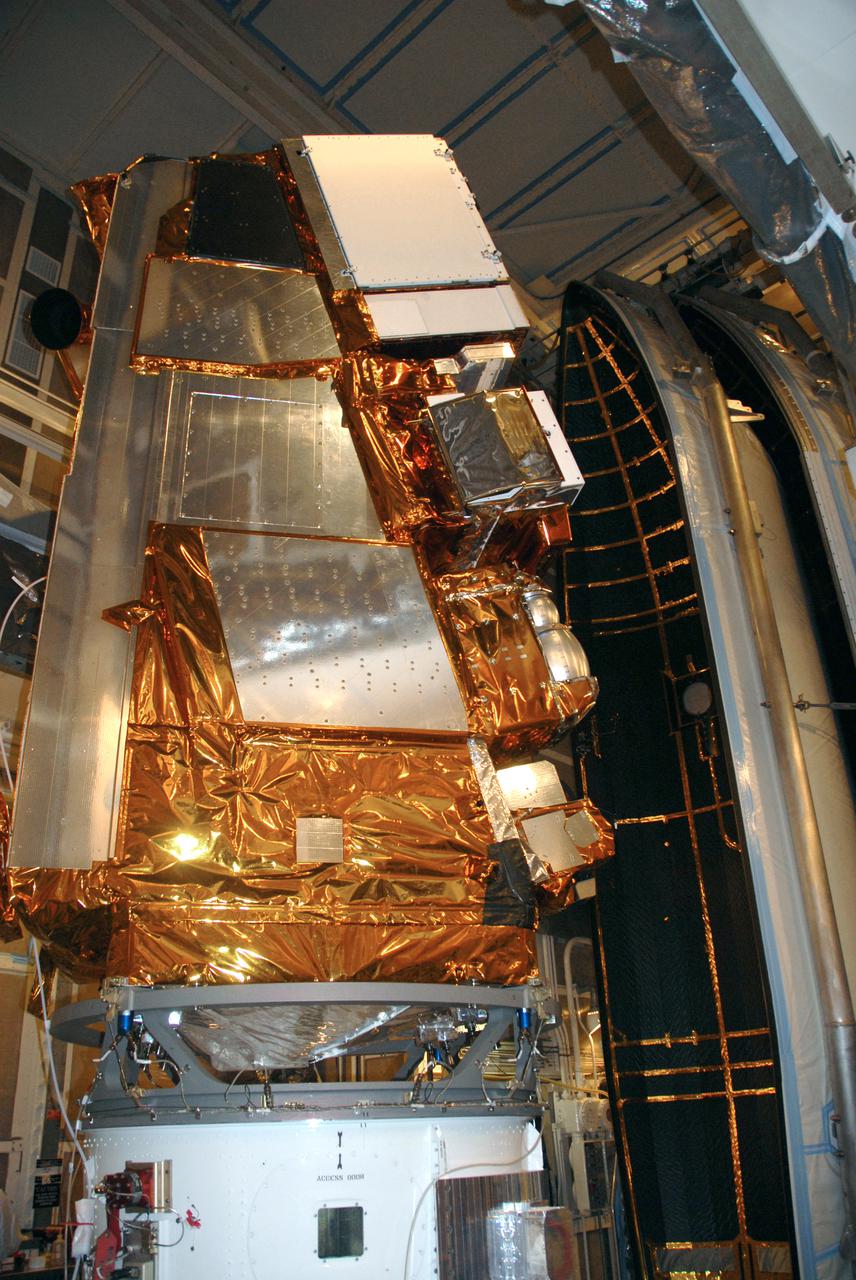
VANDENBERG AIR FORCE BASE, Calif. – At Vandenberg Air Force Base's Space Launch Complex-2 in California, preparations are under way to enclose NASA’s National Polar-orbiting Operational Environmental Satellite System Preparatory Project (NPP) spacecraft into the clamshell-shaped Delta payload fairing. The fairing will protect the spacecraft from the impact of aerodynamic pressure and heating during ascent and will be jettisoned once the spacecraft is outside the Earth's atmosphere. NPP represents a critical first step in building the next-generation of Earth-observing satellites. NPP will carry the first of the new sensors developed for this satellite fleet, now known as the Joint Polar Satellite System (JPSS) to be launched in 2016. NPP is the bridge between NASA's Earth Observing System (EOS) satellites and the forthcoming series of JPSS satellites. The mission will test key technologies and instruments for the JPSS missions. NPP is targeted to launch Oct. 28 from Space Launch Complex-2 aboard a United Launch Alliance Delta II rocket. For more information, visit http:__www.nasa.gov_NPP. Photo credit: NASA_Mark P. Mackley, VAFB
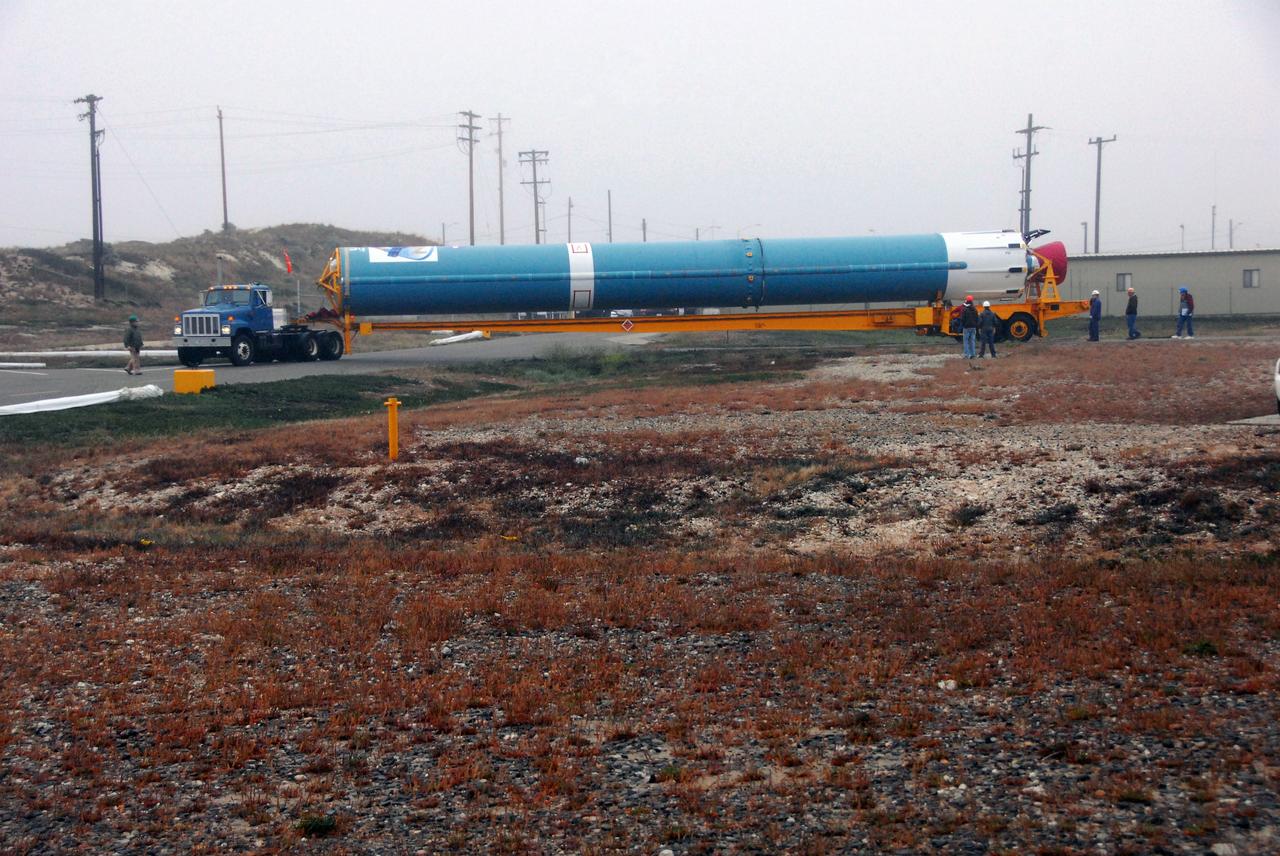
VANDENBERG AIR FORCE BASE, Calif. -- The first stage of a United Launch Alliance Delta II that will carry NASA's National Polar-orbiting Operational Environmental Satellite System Preparatory Project (NPP) satellite into space is on its way from NASA Hangar 836 to NASA's Space Launch Complex-2 at Vandenberg Air Force Base in California. NPP will be positioned 512 miles above the Earth's surface and will orbit about 16 times each day to observe nearly the entire globe. The NPP mission for NASA and the National Oceanic and Atmospheric Administration (NOAA) is to measure Earth's atmospheric and sea surface temperatures, humidity sounding, land and ocean biological activity, and cloud and aerosol properties. For more information, visit www.nasa.gov/NPP. Photo credit: NASA/VAFB, Mark Mackley

VANDENBERG AIR FORCE BASE, Calif. – A speaker talks with a group of Tweetup participants at Vandenberg Air Force Base in California during prelaunch activities for NASA’s National Polar-orbiting Operational Environmental Satellite System Preparatory Project (NPP) spacecraft mission. The tweeters will share their experiences with followers through the social networking site Twitter. NPP represents a critical first step in building the next-generation of Earth-observing satellites. NPP will carry the first of the new sensors developed for this satellite fleet, now known as the Joint Polar Satellite System (JPSS) to be launched in 2016. NPP is the bridge between NASA's Earth Observing System (EOS) satellites and the forthcoming series of JPSS satellites. The mission will test key technologies and instruments for the JPSS missions. NPP is targeted to launch Oct. 28 from Space Launch Complex-2 aboard a United Launch Alliance Delta II rocket. For more information, visit http:__www.nasa.gov_NPP. Photo credit: NASA_Kim Shiflett
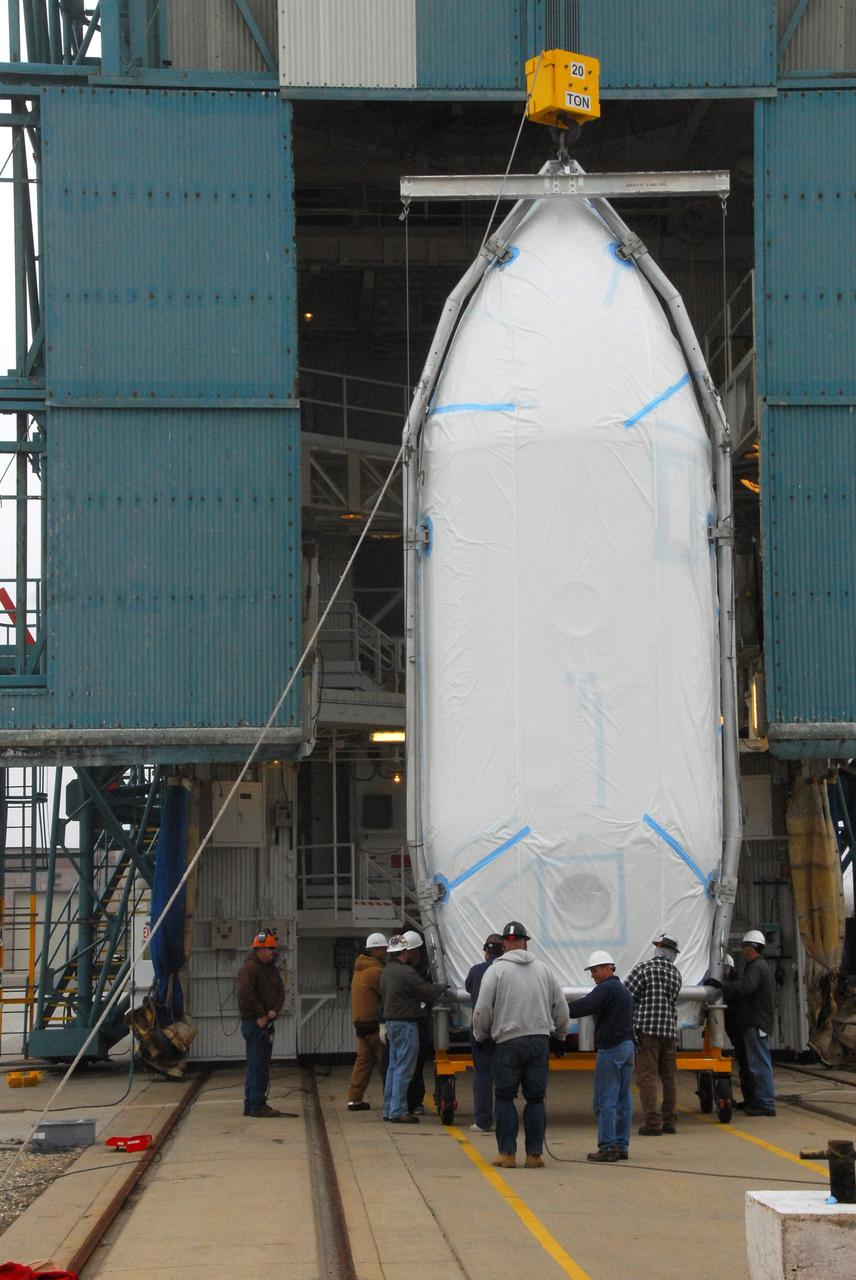
VANDENBERG AIR FORCE BASE, Calif. -- The payload fairing that will protect NASA's National Polar-orbiting Operational Environmental Satellite System Preparatory Project (NPP) satellite as it launches aboard a United Launch Alliance Delta II begins its lift to Level 5 of Space Launch Complex-2 at Vandenberg Air Force Base in California. NPP will be positioned 512 miles above the Earth's surface and will orbit about 16 times each day to observe nearly the entire globe. The NPP mission for NASA and the National Oceanic and Atmospheric Administration (NOAA) is to measure Earth's atmospheric and sea surface temperatures, humidity sounding, land and ocean biological activity, and cloud and aerosol properties. For more information, visit www.nasa.gov/NPP. Photo credit: NASA/VAFB, Roy Allison
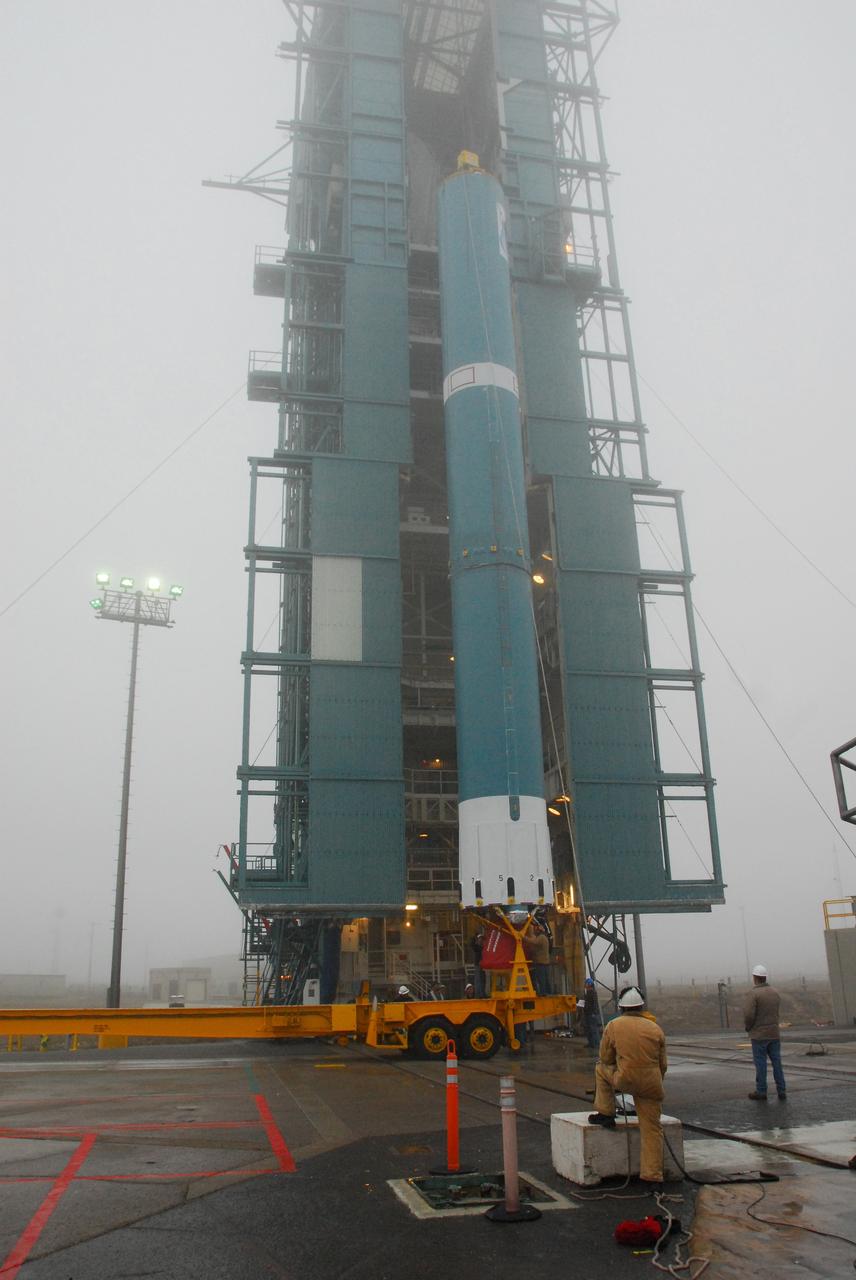
VANDENBERG AIR FORCE BASE, Calif. -- The first stage of a United Launch Alliance Delta II is lifted at NASA's Space Launch Complex-2 on Vandenberg Air Force Base in California. The rocket will carry NASA's National Polar-orbiting Operational Environmental Satellite System Preparatory Project (NPP) satellite into space. NPP will be positioned 512 miles above the Earth's surface and will orbit about 16 times each day to observe nearly the entire globe. The NPP mission for NASA and the National Oceanic and Atmospheric Administration (NOAA) is to measure Earth's atmospheric and sea surface temperatures, humidity sounding, land and ocean biological activity, and cloud and aerosol properties. For more information, visit www.nasa.gov/NPP. Photo credit: NASA/VAFB, Mark Mackley
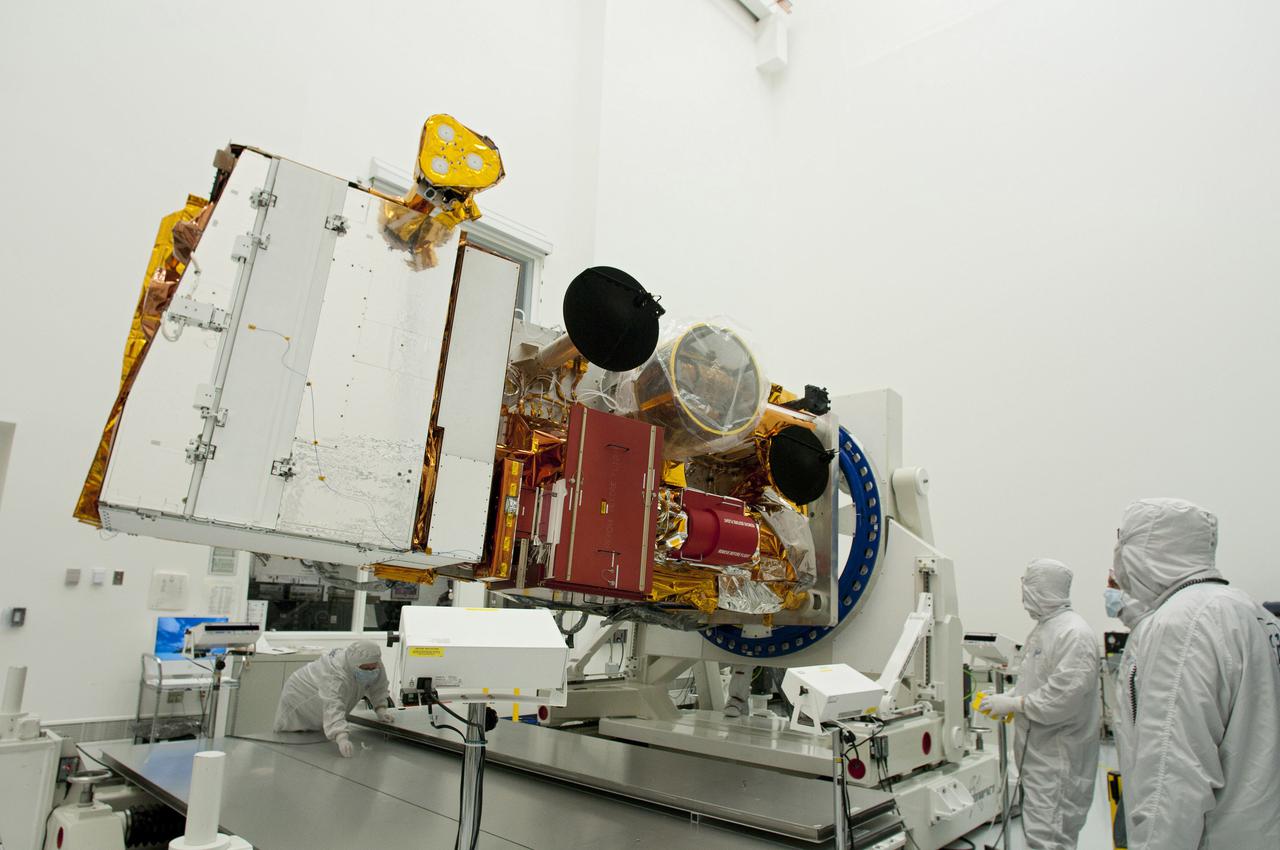
BALL AEROSPACE, Boulder, Colo. – In the Ball Aerospace and Technologies Corp. Production and Test Facility in Boulder, Colo., NASA's National Polar-orbiting Operational Environmental Satellite System Preparatory Project NPP satellite undergoes inspection by technicians after successfully completing end-to-end electromagnetic compatibility testing. A United Launch Alliance Delta II rocket will carry NPP into space. NPP represents a critical first step in building the next-generation of Earth-observing satellites. NPP will carry the first of the new sensors developed for this satellite fleet, now known as the Joint Polar Satellite System JPSS to be launched in 2016. NPP is the bridge between NASA's Earth Observing System EOS satellites and the forthcoming series of JPSS satellites. The mission will test key technologies and instruments for the JPSS missions. NPP is targeted to launch Oct. 27. For more information, visit http:__www.nasa.gov_NPP. Photo credit: Ball Aerospace
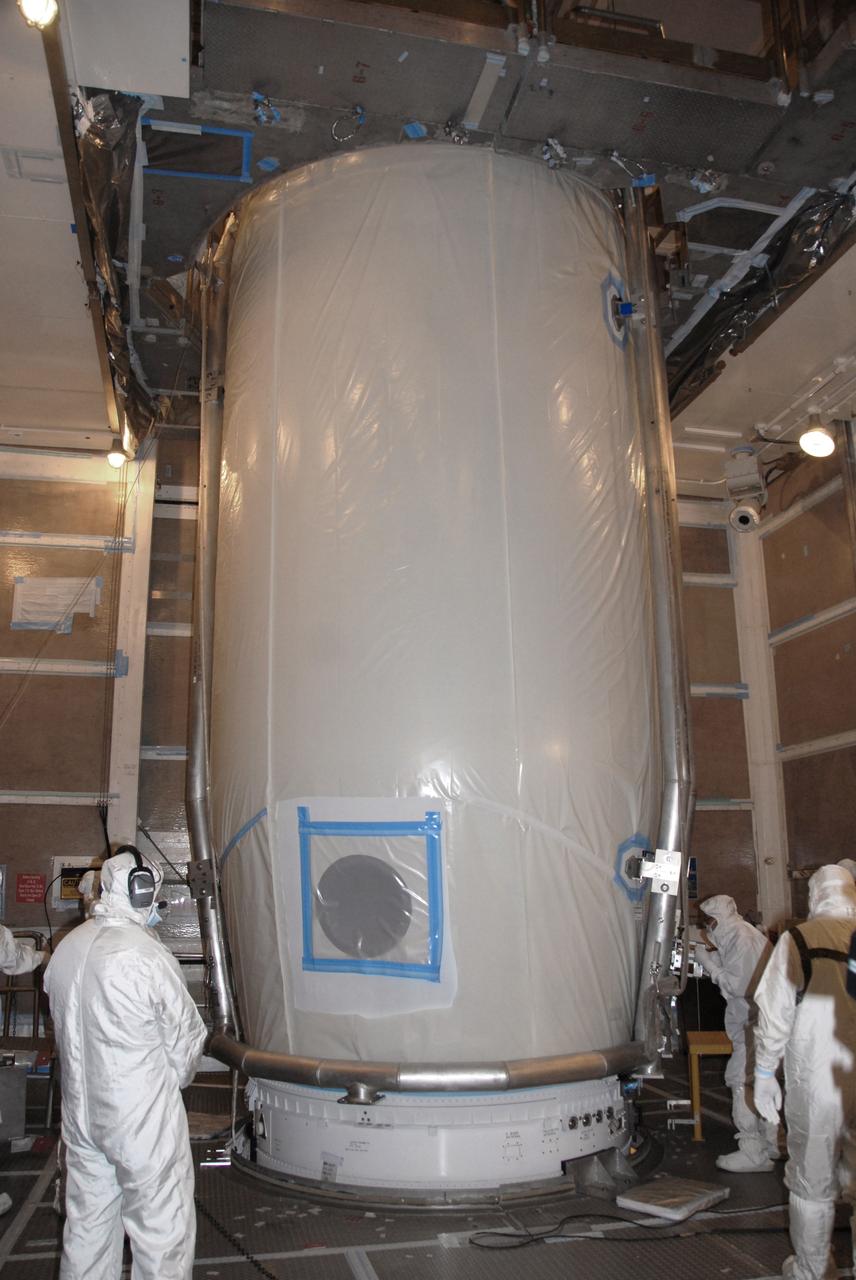
VANDENBERG AIR FORCE BASE, Calif. – At Vandenberg Air Force Base's Space Launch Complex-2 in California, technicians make final inspections of the clamshell-shaped Delta payload fairing for NASA’s National Polar-orbiting Operational Environmental Satellite System Preparatory Project (NPP) spacecraft after encapsulation. The fairing will protect the spacecraft from the impact of aerodynamic pressure and heating during ascent and will be jettisoned once the spacecraft is outside the Earth's atmosphere. NPP represents a critical first step in building the next-generation of Earth-observing satellites. NPP will carry the first of the new sensors developed for this satellite fleet, now known as the Joint Polar Satellite System (JPSS) to be launched in 2016. NPP is the bridge between NASA's Earth Observing System (EOS) satellites and the forthcoming series of JPSS satellites. The mission will test key technologies and instruments for the JPSS missions. NPP is targeted to launch Oct. 28 from Space Launch Complex-2 aboard a United Launch Alliance Delta II rocket. For more information, visit http://www.nasa.gov/NPP. Photo credit: NASA/Mark P. Mackley, VAFB
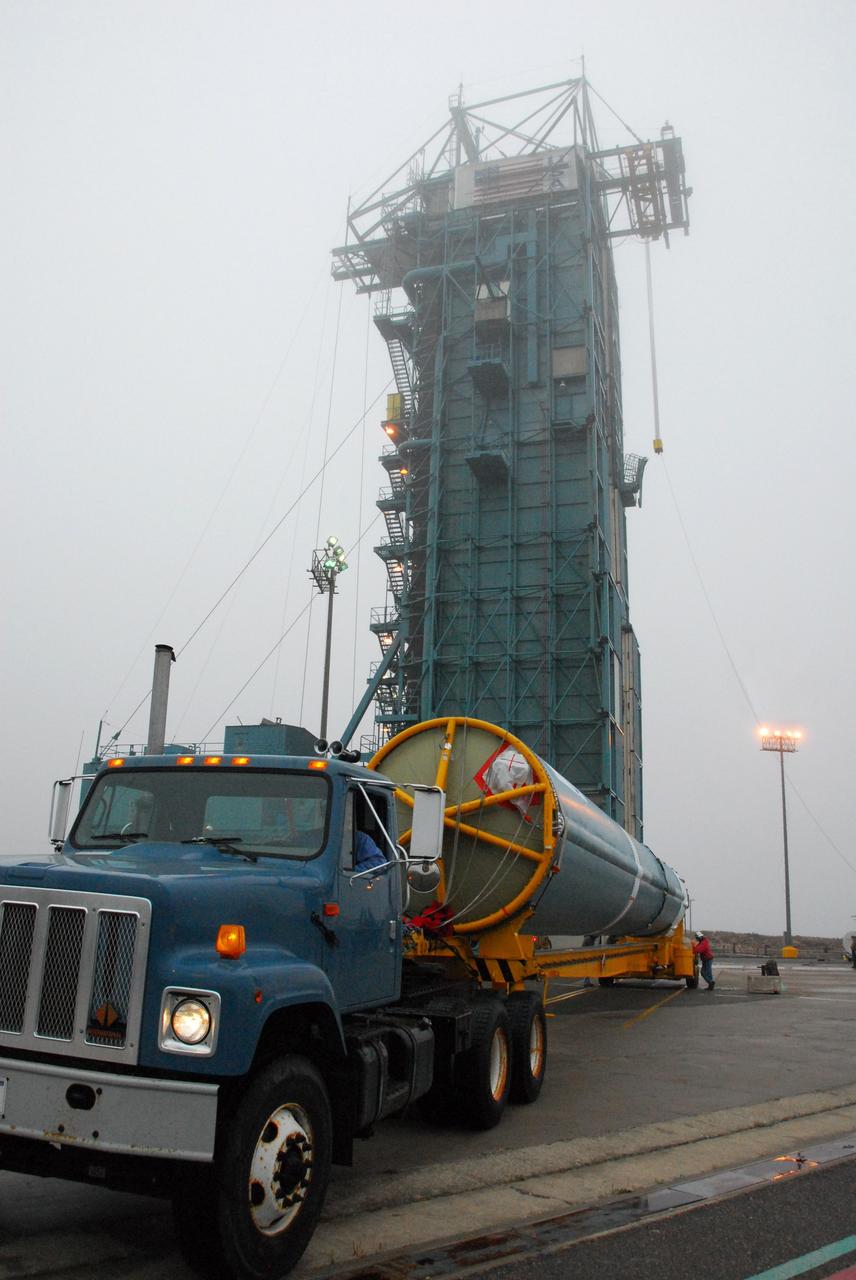
VANDENBERG AIR FORCE BASE, Calif. -- The first stage of a United Launch Alliance Delta II that will carry NASA's National Polar-orbiting Operational Environmental Satellite System Preparatory Project (NPP) satellite into space arrives at NASA's Space Launch Complex-2 on Vandenberg Air Force Base in California. NPP will be positioned 512 miles above the Earth's surface and will orbit about 16 times each day to observe nearly the entire globe. The NPP mission for NASA and the National Oceanic and Atmospheric Administration (NOAA) is to measure Earth's atmospheric and sea surface temperatures, humidity sounding, land and ocean biological activity, and cloud and aerosol properties. For more information, visit www.nasa.gov/NPP. Photo credit: NASA/VAFB, Mark Mackley
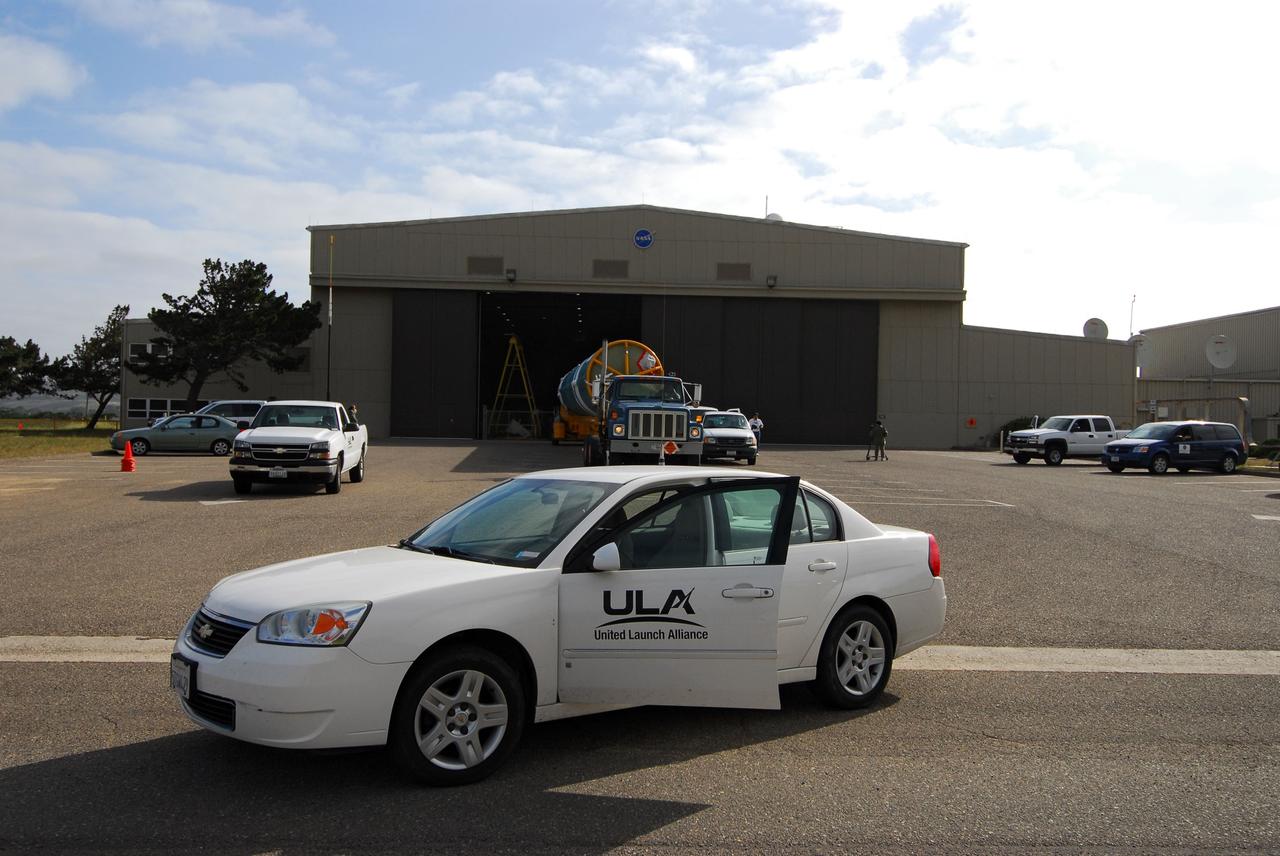
VANDENBERG AIR FORCE BASE, Calif. -- At Vandenberg Air Force Base in California, the first stage of a United Launch Alliance Delta II that will carry the National Polar-orbiting Operational Environmental Satellite System Preparatory Project (NPP) satellite into space has arrived at NASA's Launch Complex-2. The vehicle will undergo initial testing at the United Launch Alliance Delta Mission Checkout Facility. NPP will be positioned 512 miles above the Earth's surface and will orbit about 16 times each day to observe nearly the entire globe. The NPP mission for NASA and the National Oceanic and Atmospheric Administration (NOAA) is to measure Earth's atmospheric and sea surface temperatures, humidity sounding, land and ocean biological activity, and cloud and aerosol properties. For more information, visit www.nasa.gov/NPP. Photo credit: NASA/VAFB
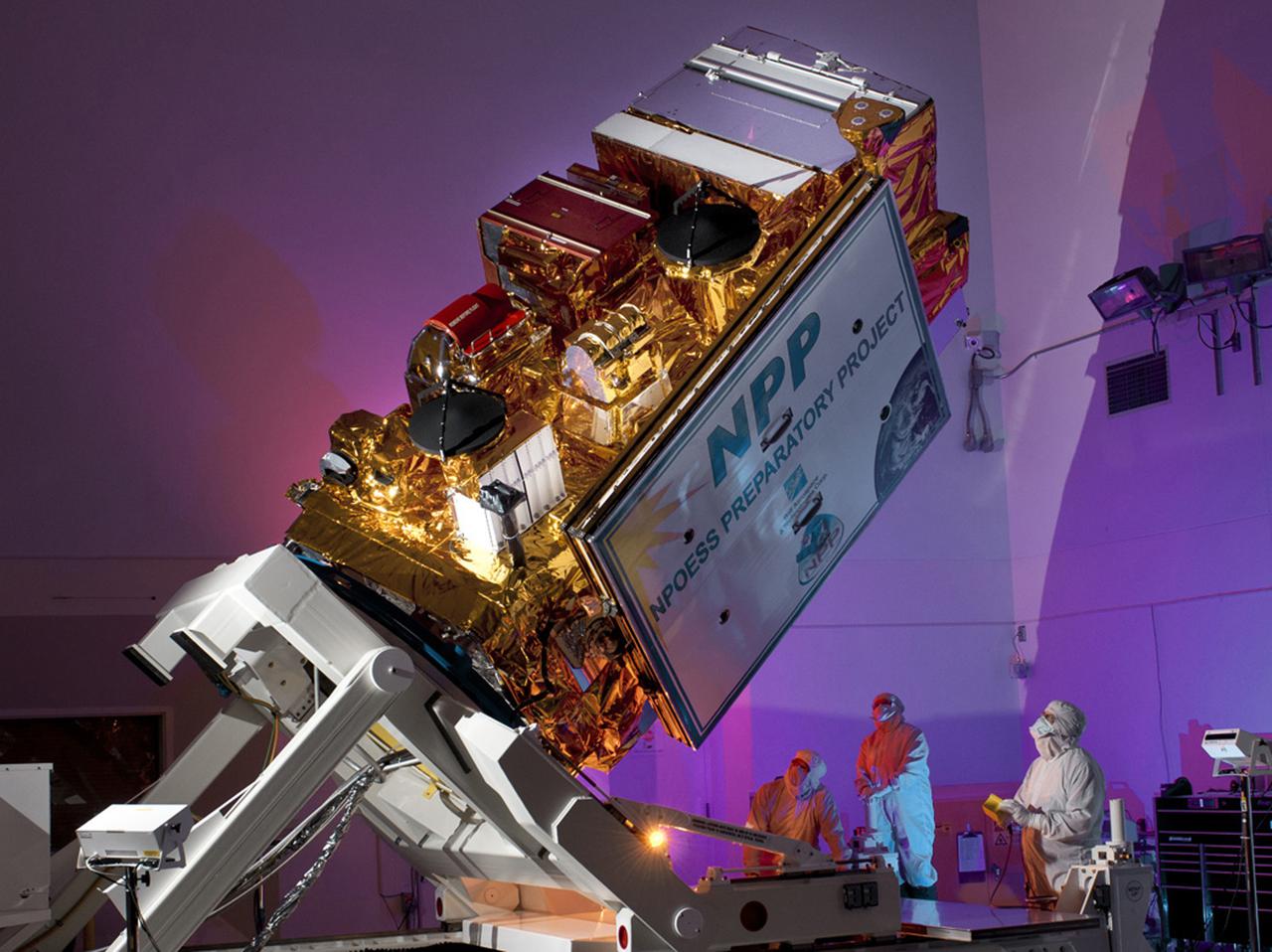
VANDENBERG AIR FORCE BASE, Calif. -- In a clean room at Vandenberg Air Force Base in California, Ball Aerospace and Technologies Corp., technicians perform final testing on NASA’s National Polar-orbiting Operational Environmental Satellite System Preparatory Project (NPP) satellite. A United Launch Alliance Delta II rocket will carry NPP into space. NPP represents a critical first step in building the next-generation of Earth-observing satellites. NPP will carry the first of the new sensors developed for this satellite fleet, now known as the Joint Polar Satellite System (JPSS) to be launched in 2016. NPP is the bridge between NASA's Earth Observing System (EOS) satellites and the forthcoming series of JPSS satellites. The mission will test key technologies and instruments for the JPSS missions. NPP is targeted to launch Oct. 27. For more information, visit http:__www.nasa.gov_NPP. Photo credit: Ball Aerospace
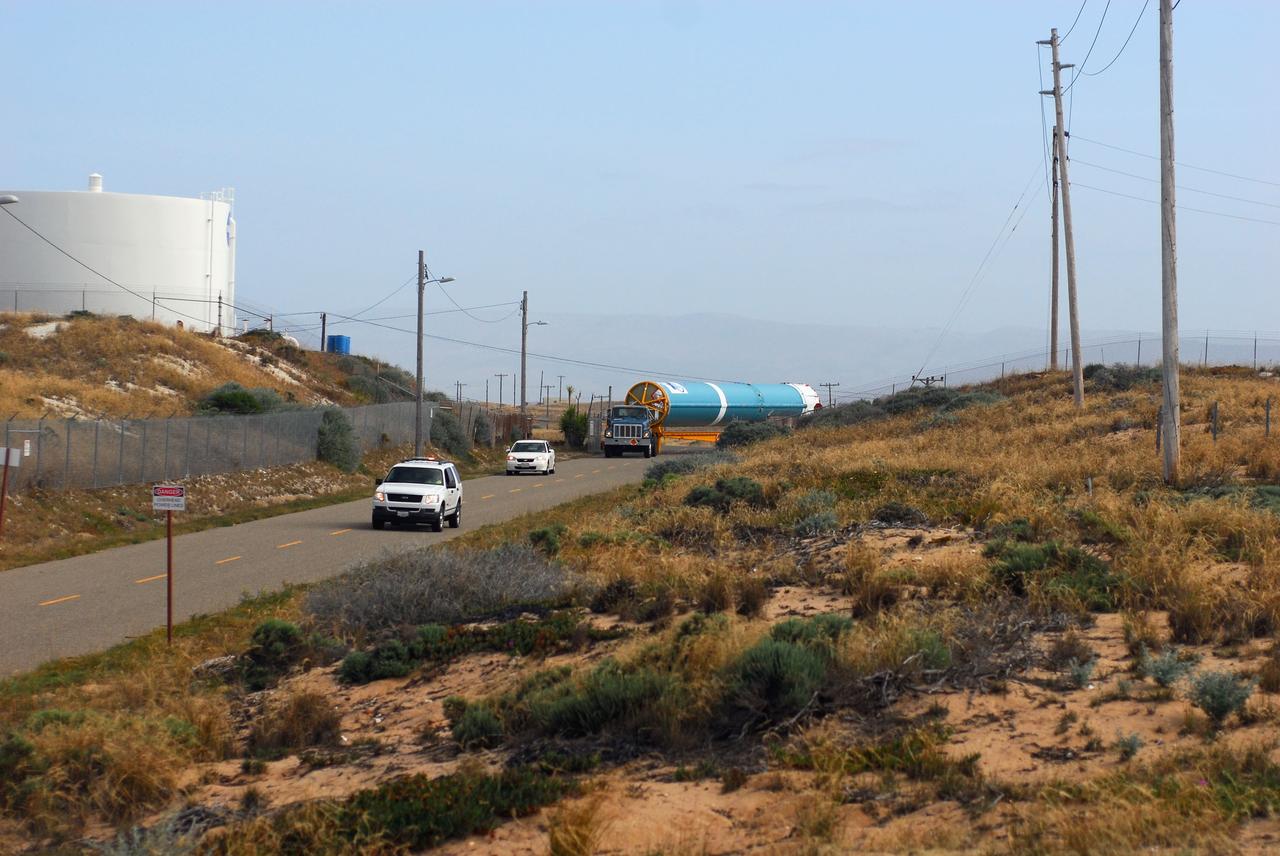
VANDENBERG AIR FORCE BASE, Calif. -- At Vandenberg Air Force Base in California, the first stage of a United Launch Alliance Delta II that will carry the National Polar-orbiting Operational Environmental Satellite System Preparatory Project (NPP) satellite into space is on its way from NASA Hangar 836 to NASA's Launch Complex-2. The vehicle then will undergo initial testing at the United Launch Alliance Delta Mission Checkout Facility. NPP will be positioned 512 miles above the Earth's surface and will orbit about 16 times each day to observe nearly the entire globe. The NPP mission for NASA and the National Oceanic and Atmospheric Administration (NOAA) is to measure Earth's atmospheric and sea surface temperatures, humidity sounding, land and ocean biological activity, and cloud and aerosol properties. For more information, visit www.nasa.gov/NPP. Photo credit: NASA/VAFB
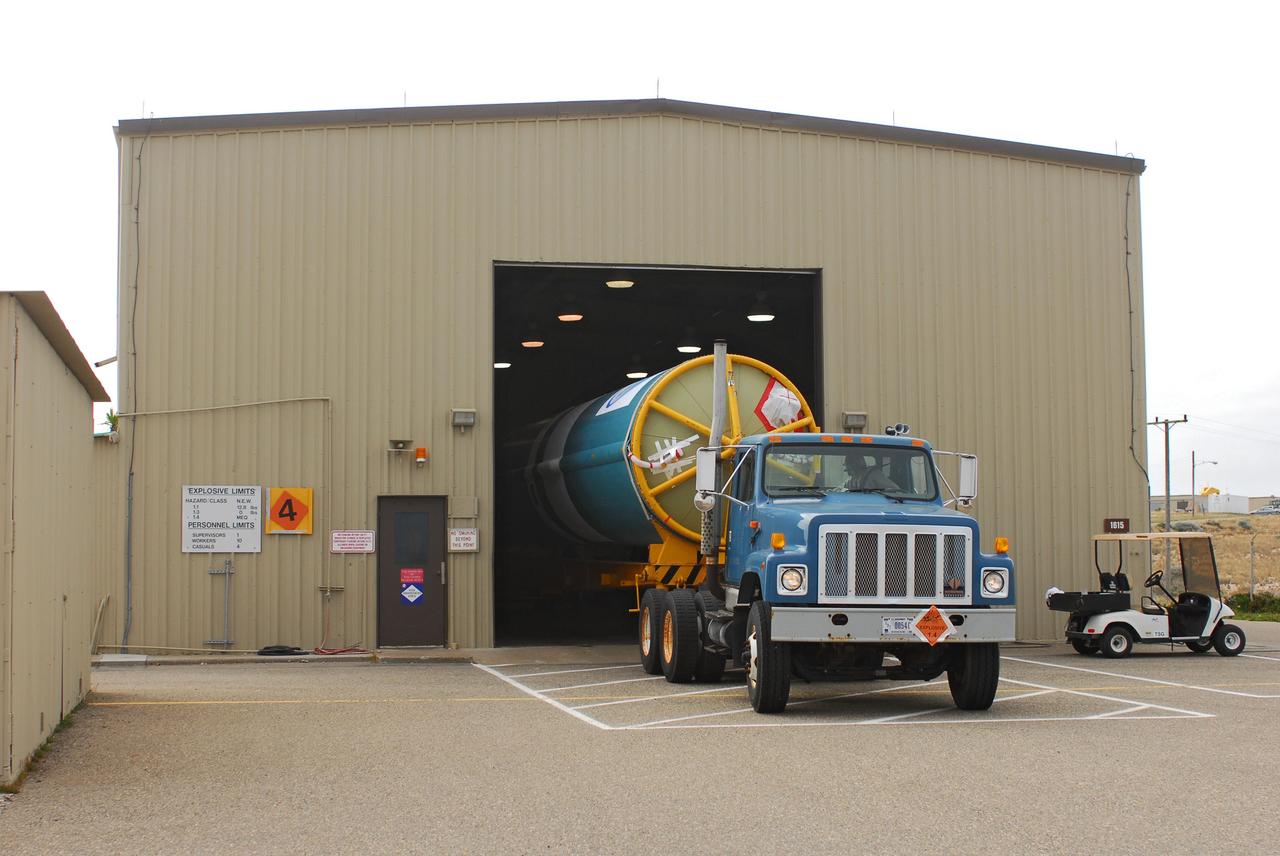
VANDENBERG AIR FORCE BASE, Calif. -- At Vandenberg Air Force Base in California, the first stage of a United Launch Alliance Delta II that will carry the National Polar-orbiting Operational Environmental Satellite System Preparatory Project (NPP) satellite into space has arrived at NASA's Launch Complex-2. The vehicle will undergo initial testing at the United Launch Alliance Delta Mission Checkout Facility. NPP will be positioned 512 miles above the Earth's surface and will orbit about 16 times each day to observe nearly the entire globe. The NPP mission for NASA and the National Oceanic and Atmospheric Administration (NOAA) is to measure Earth's atmospheric and sea surface temperatures, humidity sounding, land and ocean biological activity, and cloud and aerosol properties. For more information, visit www.nasa.gov/NPP. Photo credit: NASA/VAFB
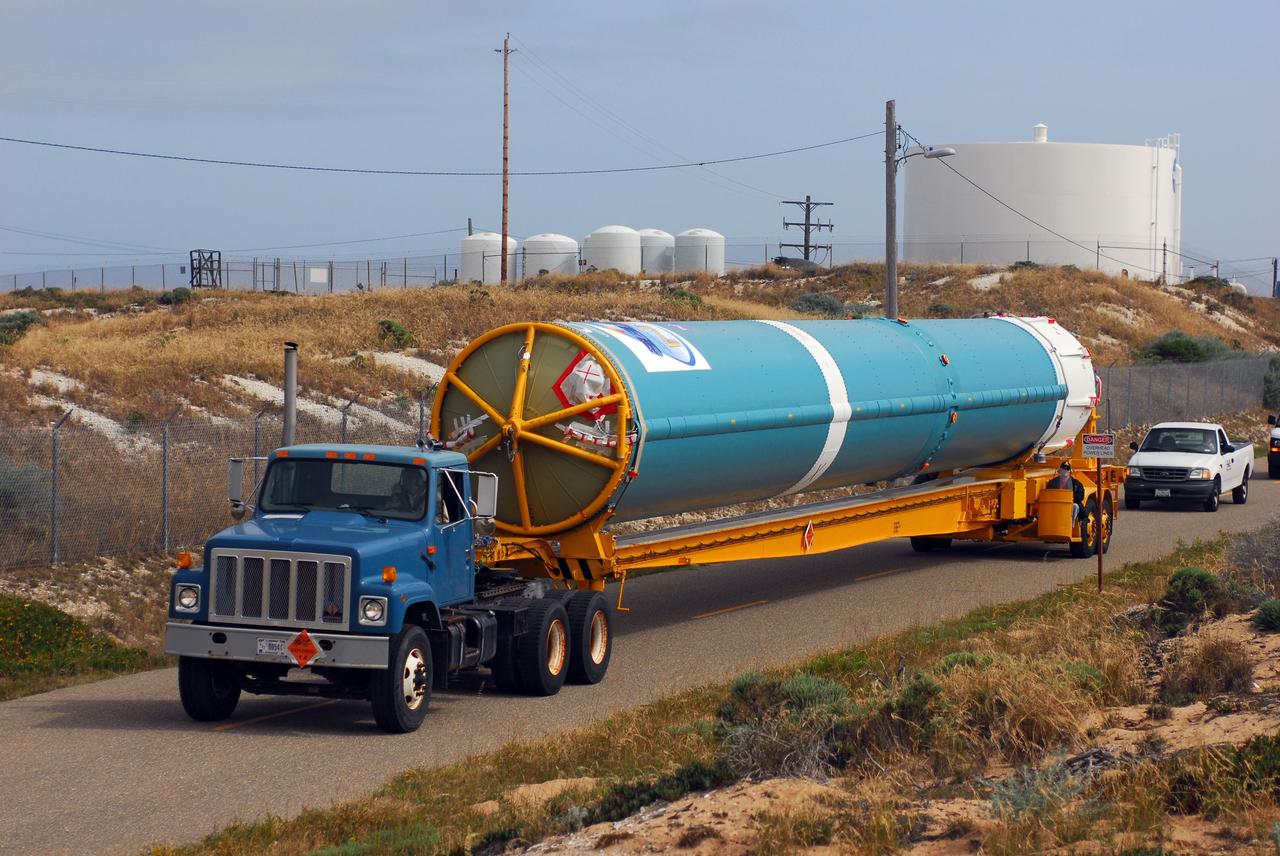
VANDENBERG AIR FORCE BASE, Calif. -- At Vandenberg Air Force Base in California, the first stage of a United Launch Alliance Delta II that will carry the National Polar-orbiting Operational Environmental Satellite System Preparatory Project (NPP) satellite into space is on its way from NASA Hangar 836 to NASA's Launch Complex-2. The vehicle then will undergo initial testing at the United Launch Alliance Delta Mission Checkout Facility. NPP will be positioned 512 miles above the Earth's surface and will orbit about 16 times each day to observe nearly the entire globe. The NPP mission for NASA and the National Oceanic and Atmospheric Administration (NOAA) is to measure Earth's atmospheric and sea surface temperatures, humidity sounding, land and ocean biological activity, and cloud and aerosol properties. For more information, visit www.nasa.gov/NPP. Photo credit: NASA/VAFB
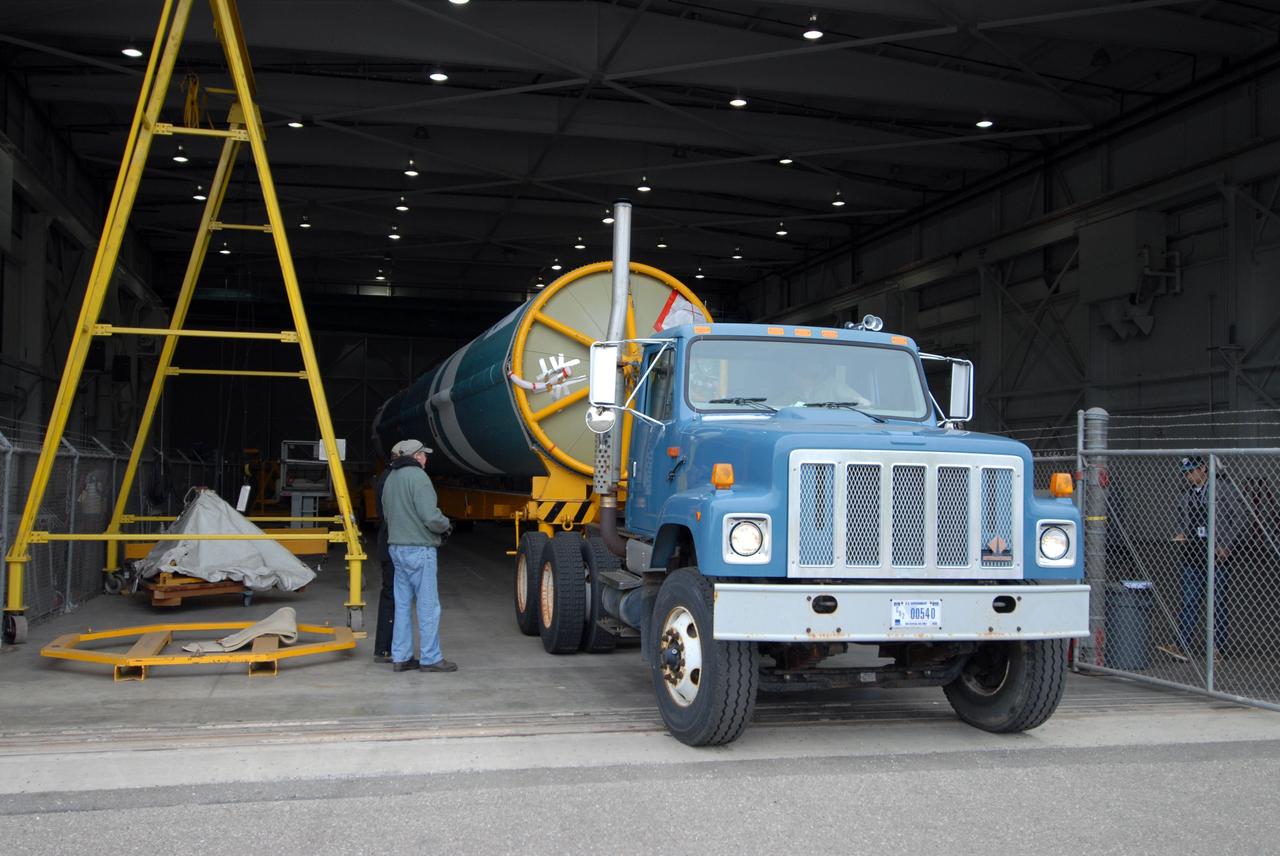
VANDENBERG AIR FORCE BASE, Calif. -- At Vandenberg Air Force Base in California, the first stage of a United Launch Alliance Delta II that will carry the National Polar-orbiting Operational Environmental Satellite System Preparatory Project (NPP) satellite into space is on its way from NASA Hangar 836 to NASA's Launch Complex-2. The vehicle then will undergo initial testing at the United Launch Alliance Delta Mission Checkout Facility. NPP will be positioned 512 miles above the Earth's surface and will orbit about 16 times each day to observe nearly the entire globe. The NPP mission for NASA and the National Oceanic and Atmospheric Administration (NOAA) is to measure Earth's atmospheric and sea surface temperatures, humidity sounding, land and ocean biological activity, and cloud and aerosol properties. For more information, visit www.nasa.gov/NPP. Photo credit: NASA/VAFB
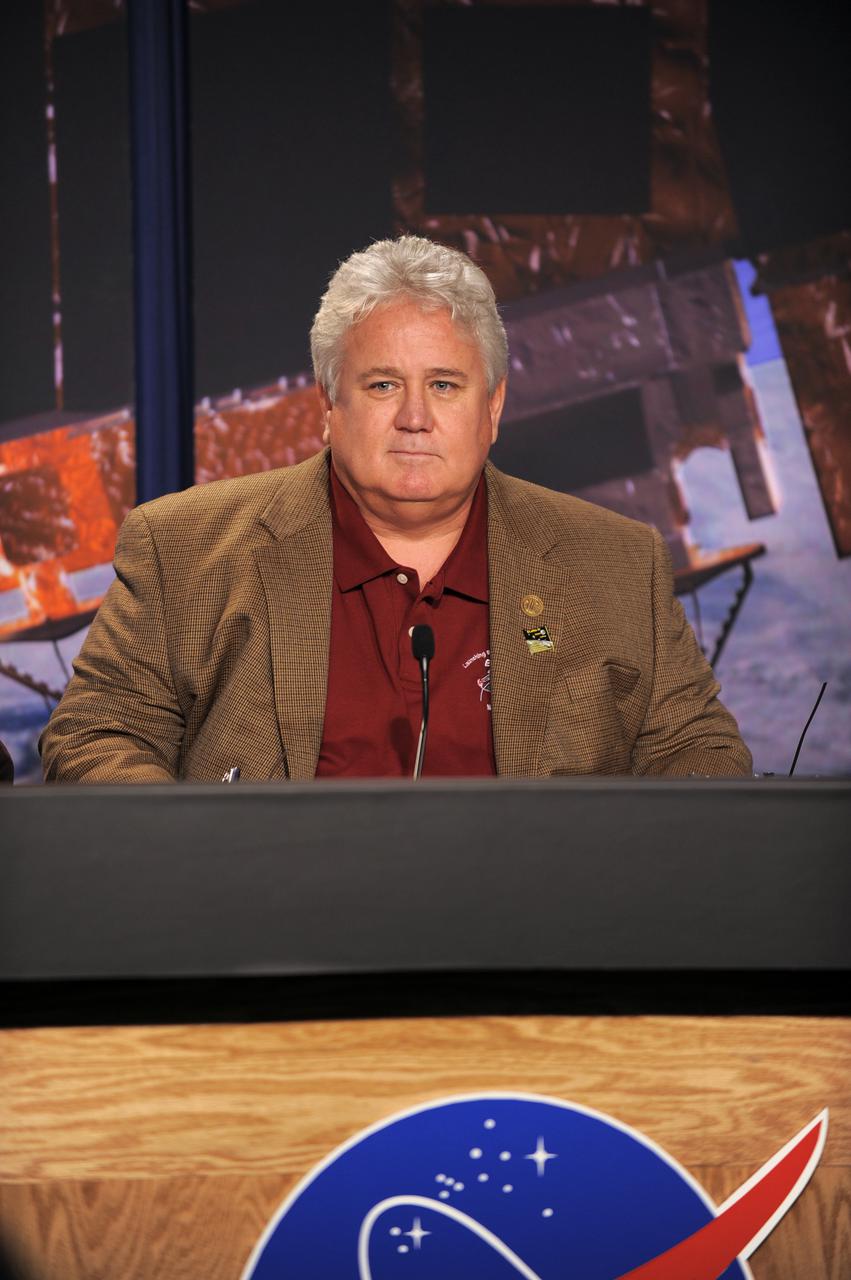
VANDENBERG AIR FORCE BASE, Calif. -- Garrett Skrobot, ELaNa mission manager, NASA Launch Services Program, Kennedy Space Center, Fla., participates in the prelaunch ELaNa briefing at Vandenberg Air Force Base, Calif. The five small 'CubeSat' research payloads that will be carried aboard the Delta II rocket during the NPP launch are the third in a series of NASA Educational Launch of Nanosatellite missions, known as ELaNa missions. Photo credit: NASA_VAFB
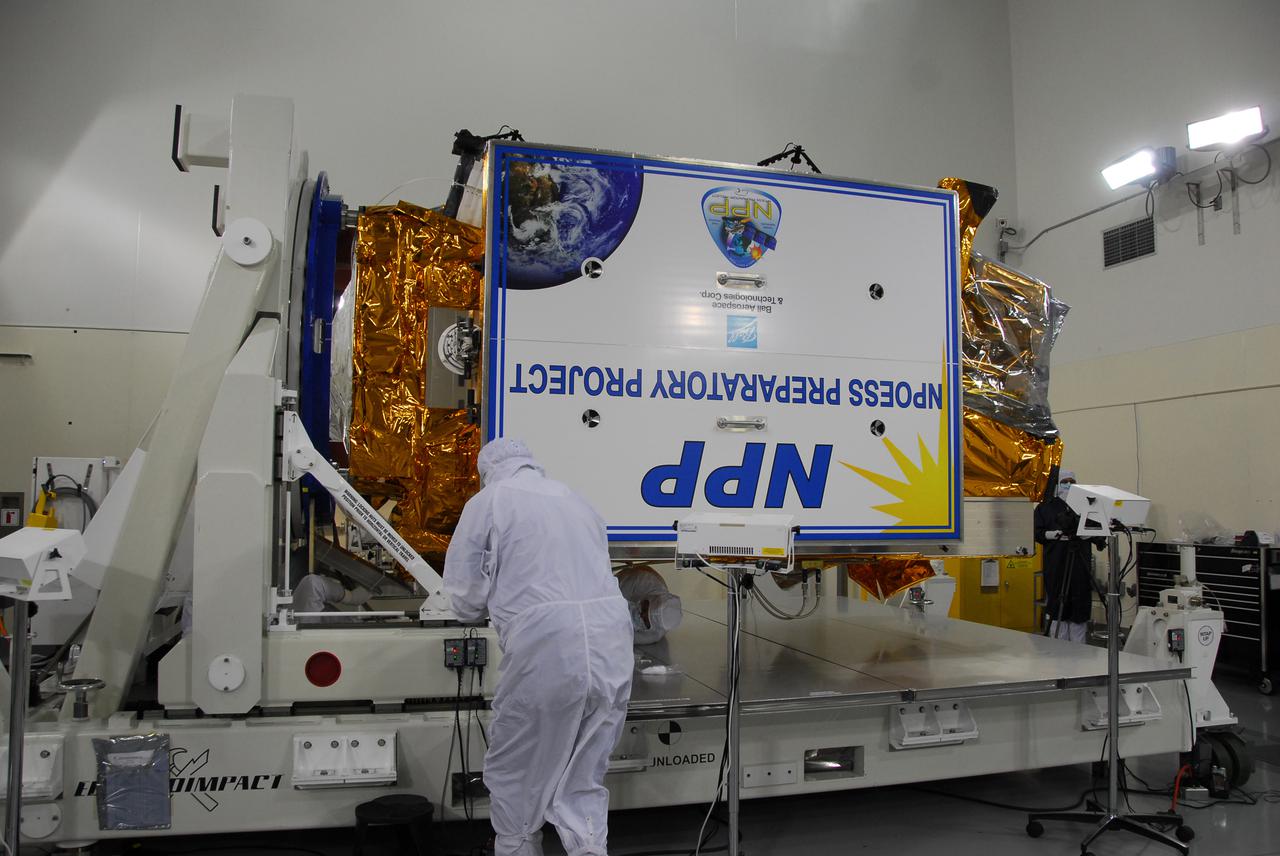
In a clean room inside the Astrotech Payload Processing Facility at Vandenberg Air Force Base in California, a Ball Aerospace technician positions NASA’s National Polar-orbiting Operational Environmental Satellite System Preparatory Project (NPP) before testing. NPP represents a critical first step in building the next-generation of Earth-observing satellites. NPP will carry the first of the new sensors developed for this satellite fleet, now known as the Joint Polar Satellite System (JPSS), to be launched in 2016. NPP is the bridge between NASA's Earth Observing System (EOS) satellites and the forthcoming series of JPSS satellites. The mission will test key technologies and instruments for the JPSS missions. NPP is targeted to launch Oct. 28 from Space Launch Complex-2 aboard a United Launch Alliance Delta II rocket. For more information, visit http:__www.nasa.gov_NPP. Photo credit: NASA_Aaron Taubman, 30th Communications Squadron, VAFB
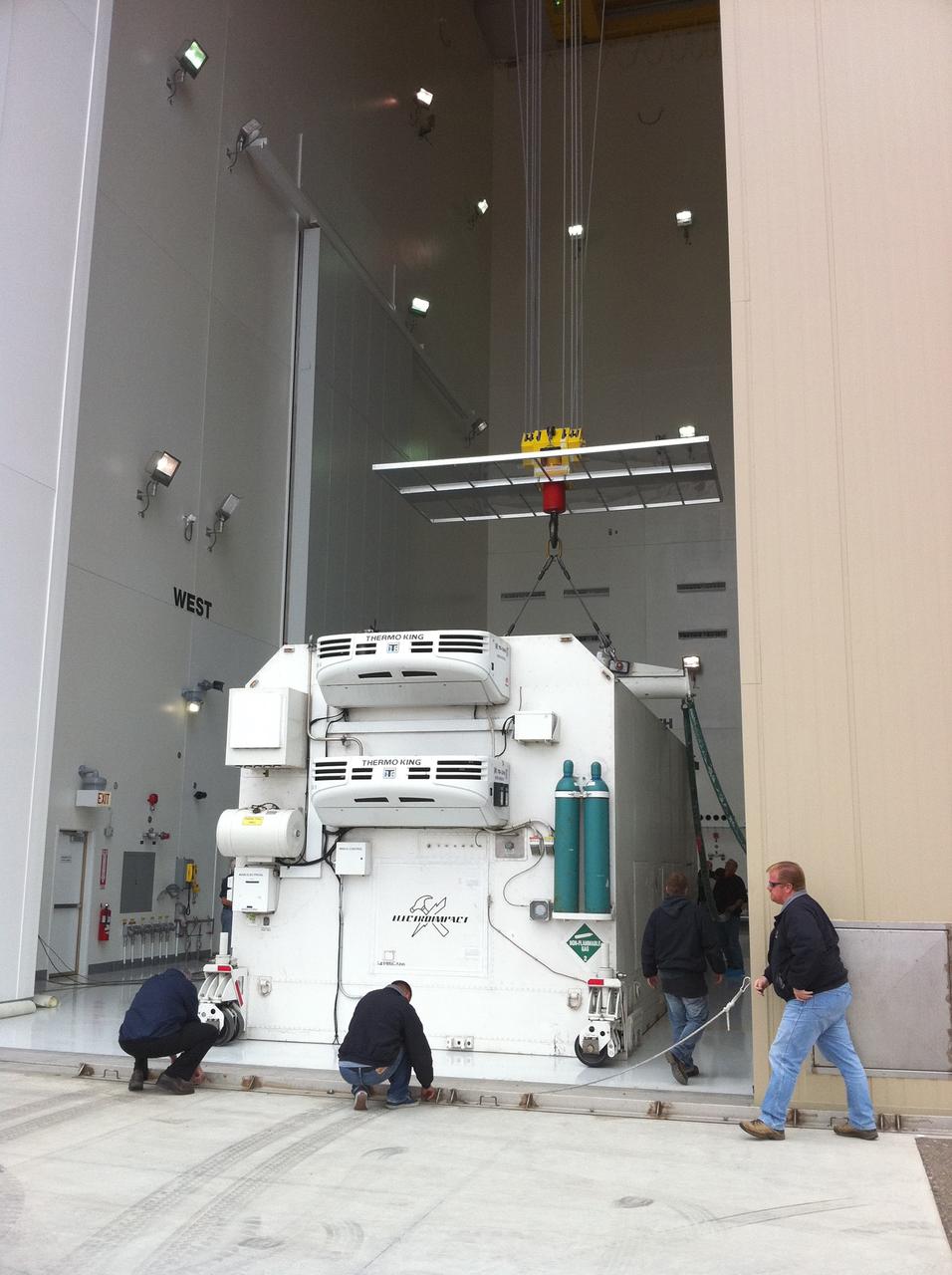
VANDENBERG AIR FORCE BASE, Calif. -- The environmentally controlled transportation container holding NASA's National Polar-orbiting Operational Environmental Satellite System Preparatory Project (NPP) satellite comes to rest on the floor of the Astrotech payload processing facility on Vandenberg Air Force Base in California. NPP represents a critical first step in building the next-generation of Earth-observing satellites. NPP will carry the first of the new sensors developed for this satellite fleet, now known as the Joint Polar Satellite System (JPSS), to be launched in 2016. NPP is the bridge between NASA's Earth Observing System (EOS) satellites and the forthcoming series of JPSS satellites. The mission will test key technologies and instruments for the JPSS missions. NPP is targeted to launch Oct. 25 from Space Launch Complex-2 aboard a United Launch Alliance Delta II rocket. For more information, visit http://www.nasa.gov/NPP. Photo credit: NASA/Jerry Nagy, VAFB
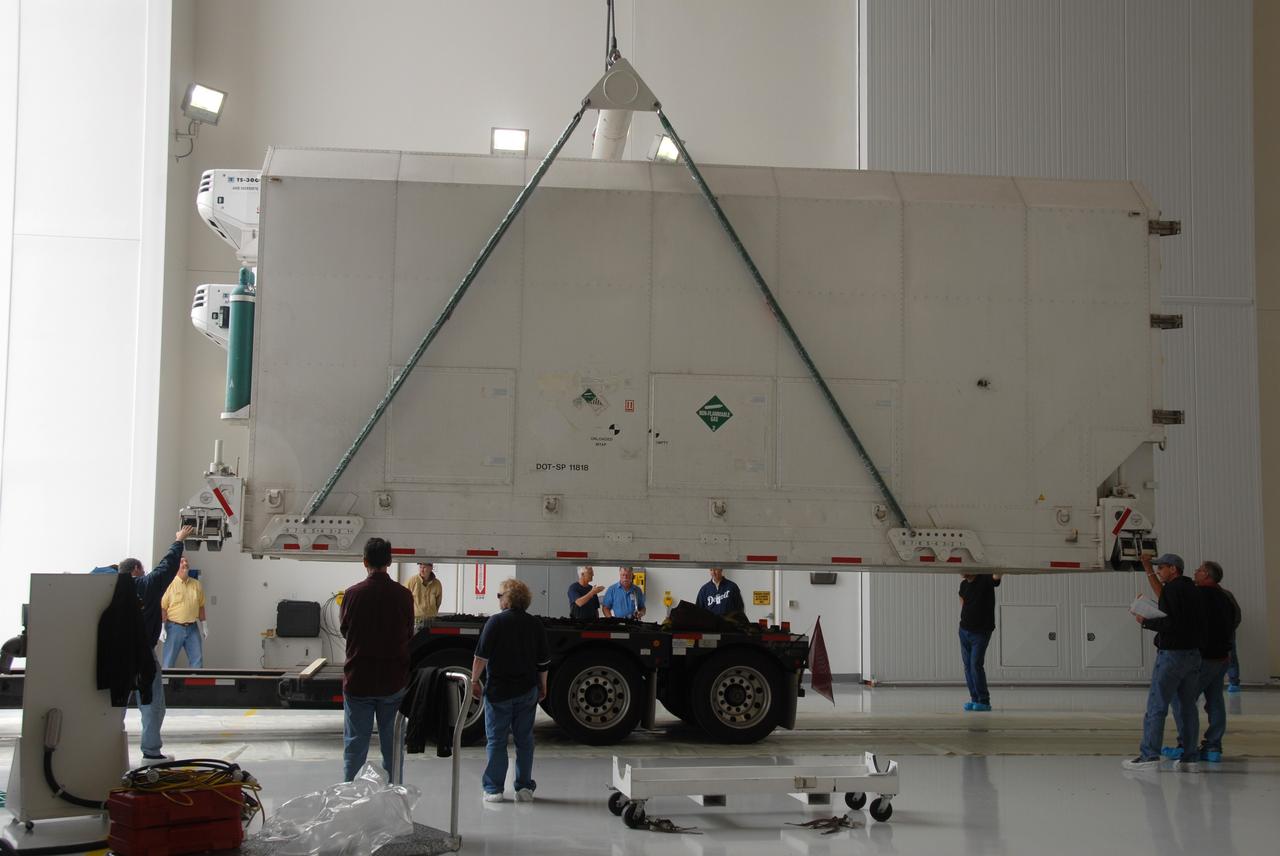
VANDENBERG AIR FORCE BASE, Calif. – In the Astrotech Payload Processing Facility at Vandenberg Air Force Base in California, technicians monitor the progress as a crane begins to lift the container holding NASA’s National Polar-orbiting Operational Environmental Satellite System Preparatory Project (NPP). NPP represents a critical first step in building the next-generation of Earth-observing satellites. NPP will carry the first of the new sensors developed for this satellite fleet, now known as the Joint Polar Satellite System (JPSS), to be launched in 2016. NPP is the bridge between NASA’s Earth Observing System (EOS) satellites and the forthcoming series of JPSS satellites. The mission will test key technologies and instruments for the JPSS missions. NPP is targeted to launch Oct. 25 from Space Launch Complex-2 aboard a United Launch Alliance Delta II rocket. For more information, visit http://www.nasa.gov/NPP. Photo credit: NASA/30th Communications Squadron, VAFB
VANDENBERG AIR FORCE BASE, Calif. – In a clean room inside the Astrotech Payload Processing Facility at Vandenberg Air Force Base in California, a technician performs a torque bolt stress test on NASA’s National Polar-orbiting Operational Environmental Satellite System Preparatory Project (NPP). Technicians will perform many tests and checkouts on the satellite system to prepare it for launch. NPP represents a critical first step in building the next-generation of Earth-observing satellites. NPP will carry the first of the new sensors developed for this satellite fleet, now known as the Joint Polar Satellite System (JPSS), to be launched in 2016. NPP is the bridge between NASA’s Earth Observing System (EOS) satellites and the forthcoming series of JPSS satellites. The mission will test key technologies and instruments for the JPSS missions. NPP is targeted to launch Oct. 25 from Space Launch Complex-2 aboard a United Launch Alliance Delta II rocket. For more information, visit http://www.nasa.gov/NPP. Photo credit: NASA/30th Communications Squadron, VAFB
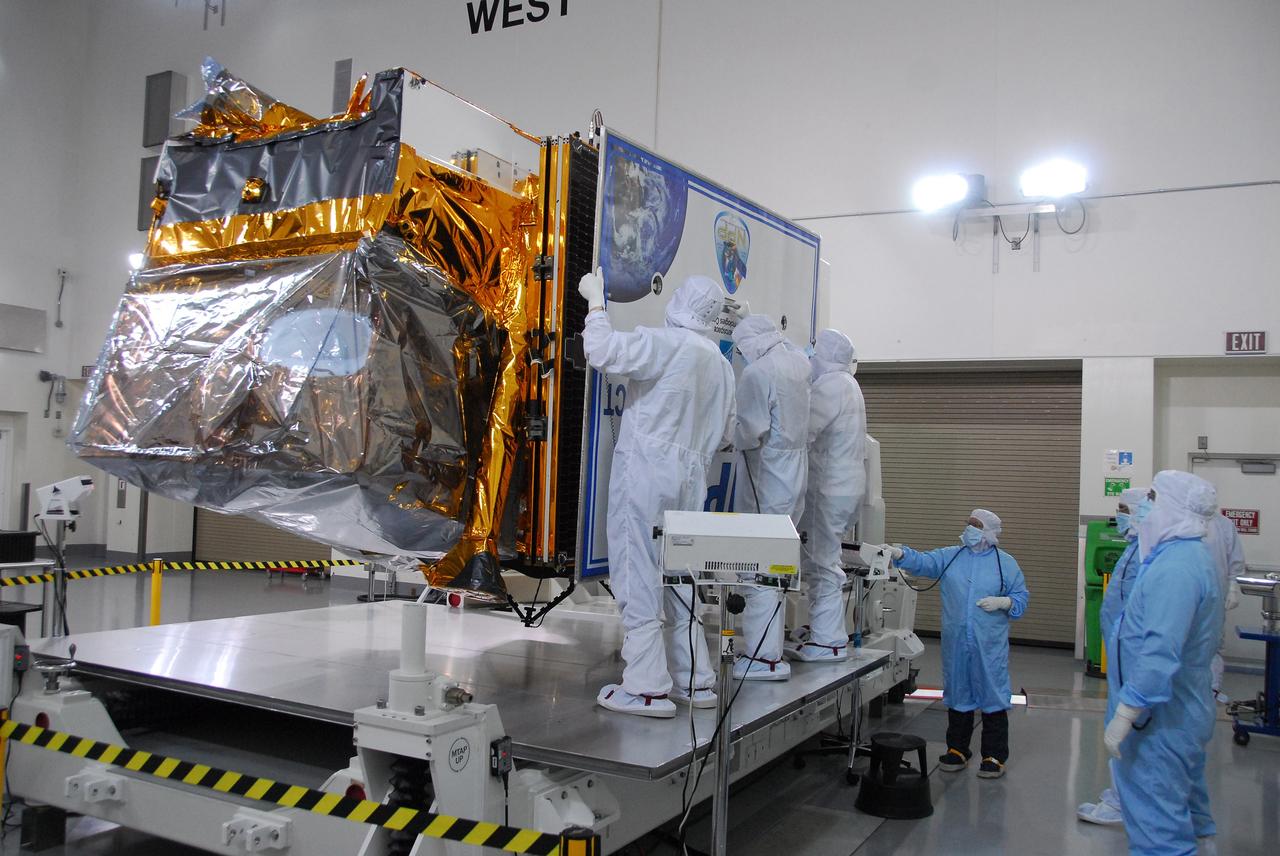
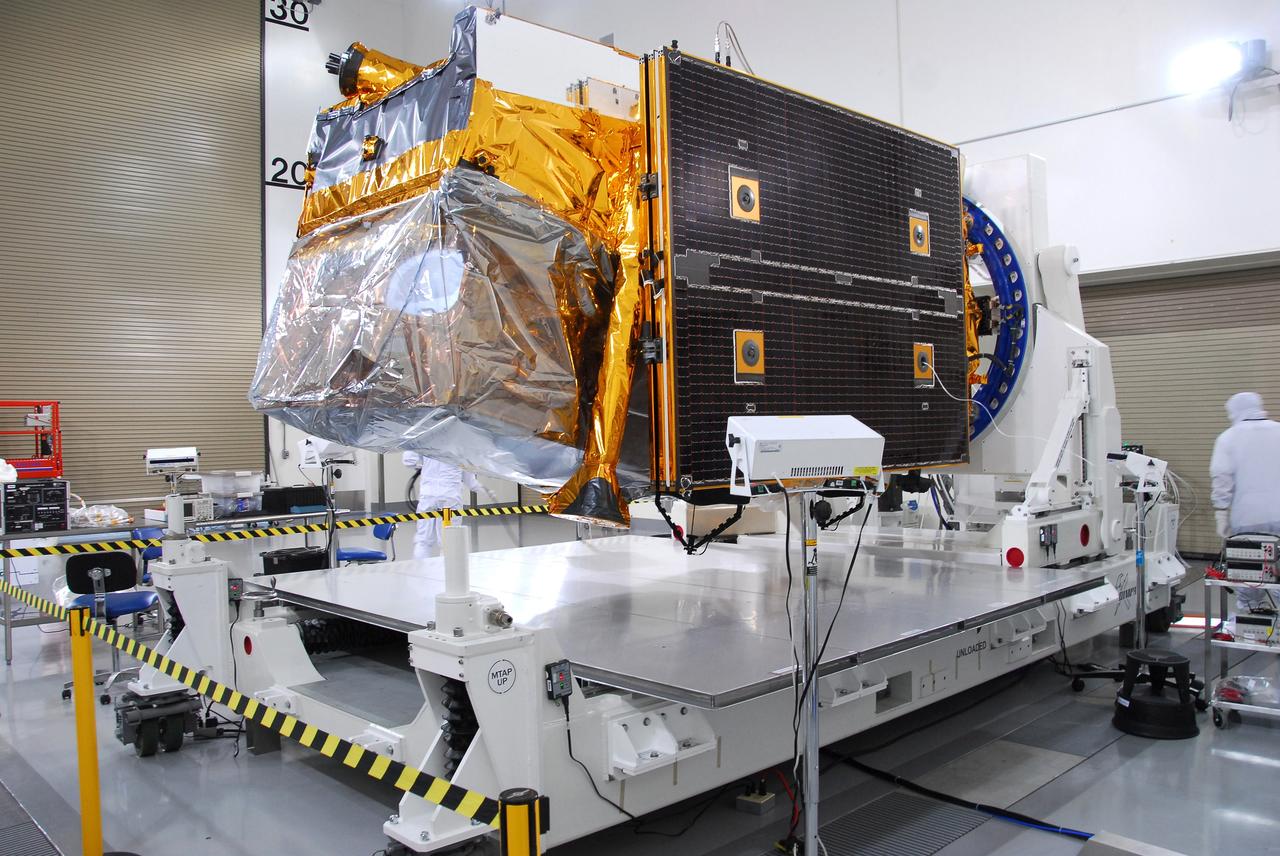
VANDENBERG AIR FORCE BASE, Calif. – NASA’s National Polar-orbiting Operational Environmental Satellite System Preparatory Project (NPP) is positioned on a test platform in a clean room inside the Astrotech Payload Processing Facility at Vandenberg Air Force Base in California, awaiting a solar array frangible bolt pre-load verification test. NPP represents a critical first step in building the next-generation of Earth-observing satellites. NPP will carry the first of the new sensors developed for this satellite fleet, now known as the Joint Polar Satellite System (JPSS), to be launched in 2016. NPP is the bridge between NASA’s Earth Observing System (EOS) satellites and the forthcoming series of JPSS satellites. The mission will test key technologies and instruments for the JPSS missions. NPP is targeted to launch Oct. 25 from Space Launch Complex-2 aboard a United Launch Alliance Delta II rocket. For more information, visit http://www.nasa.gov/NPP. Photo credit: NASA/30th Communications Squadron, VAFB
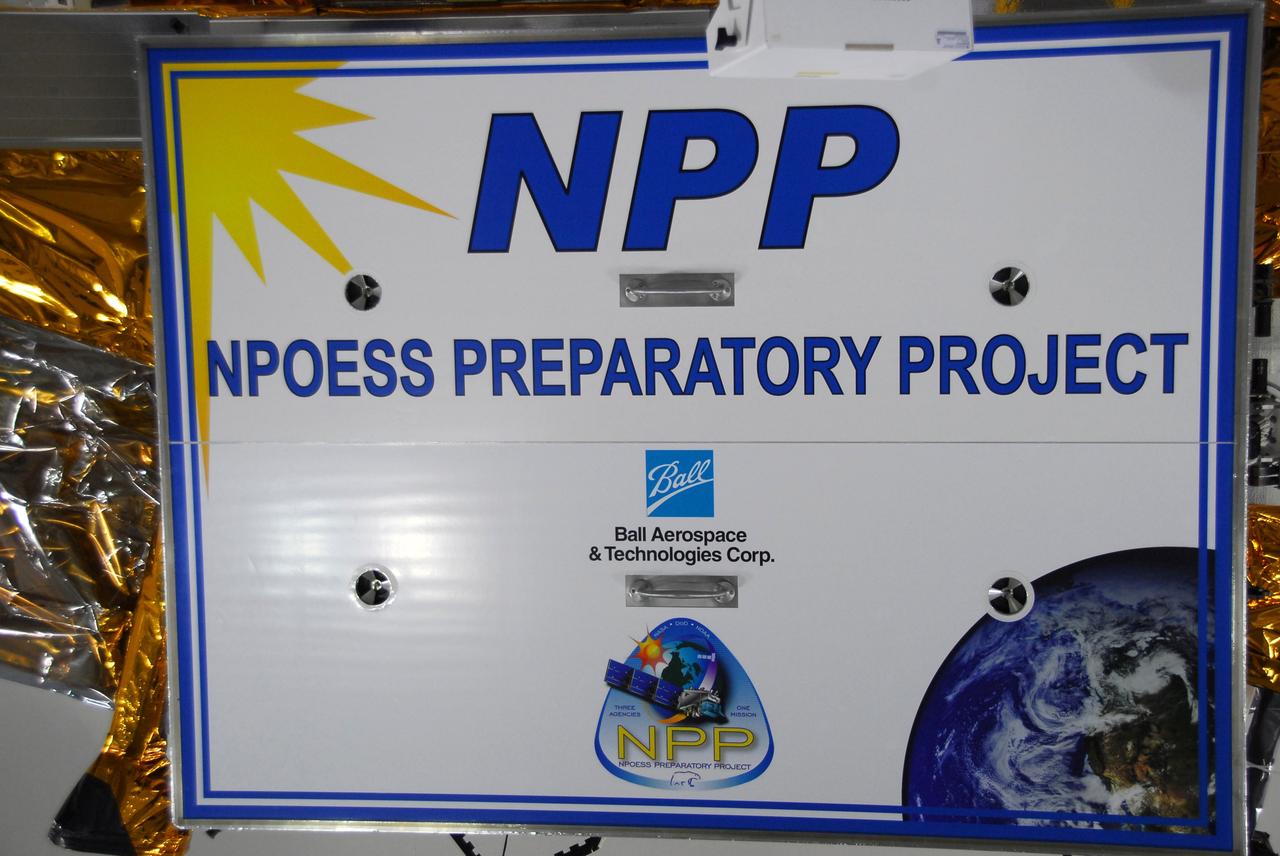
VANDENBERG AIR FORCE BASE, Calif. – In a clean room inside the Astrotech Payload Processing Facility at Vandenberg Air Force Base in California, a large sign is placed on the test stand holding NASA’s National Polar-orbiting Operational Environmental Satellite System Preparatory Project (NPP). The satellite system is awaiting test and checkout procedures to prepare it for launch. NPP represents a critical first step in building the next-generation of Earth-observing satellites. NPP will carry the first of the new sensors developed for this satellite fleet, now known as the Joint Polar Satellite System (JPSS), to be launched in 2016. NPP is the bridge between NASA’s Earth Observing System (EOS) satellites and the forthcoming series of JPSS satellites. The mission will test key technologies and instruments for the JPSS missions. NPP is targeted to launch Oct. 25 from Space Launch Complex-2 aboard a United Launch Alliance Delta II rocket. For more information, visit http://www.nasa.gov/NPP. Photo credit: NASA/30th Communications Squadron, VAFB
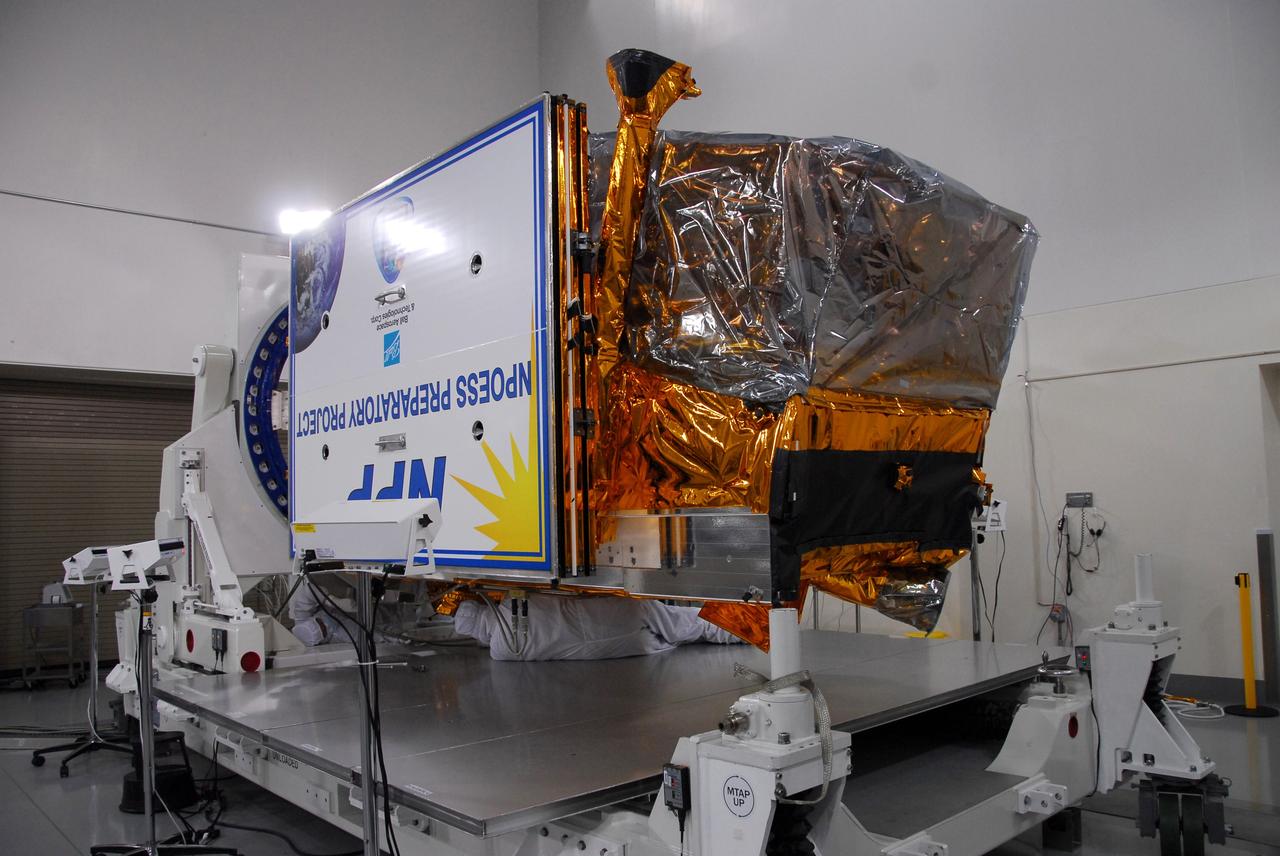
VANDENBERG AIR FORCE BASE, Calif. – NASA’s National Polar-orbiting Operational Environmental Satellite System Preparatory Project (NPP) is positioned on a test platform in a clean room inside the Astrotech Payload Processing Facility at Vandenberg Air Force Base in California. NPP represents a critical first step in building the next-generation of Earth-observing satellites. NPP will carry the first of the new sensors developed for this satellite fleet, now known as the Joint Polar Satellite System (JPSS), to be launched in 2016. NPP is the bridge between NASA’s Earth Observing System (EOS) satellites and the forthcoming series of JPSS satellites. The mission will test key technologies and instruments for the JPSS missions. NPP is targeted to launch Oct. 25 from Space Launch Complex-2 aboard a United Launch Alliance Delta II rocket. For more information, visit http://www.nasa.gov/NPP. Photo credit: NASA/30th Communications Squadron, VAFB
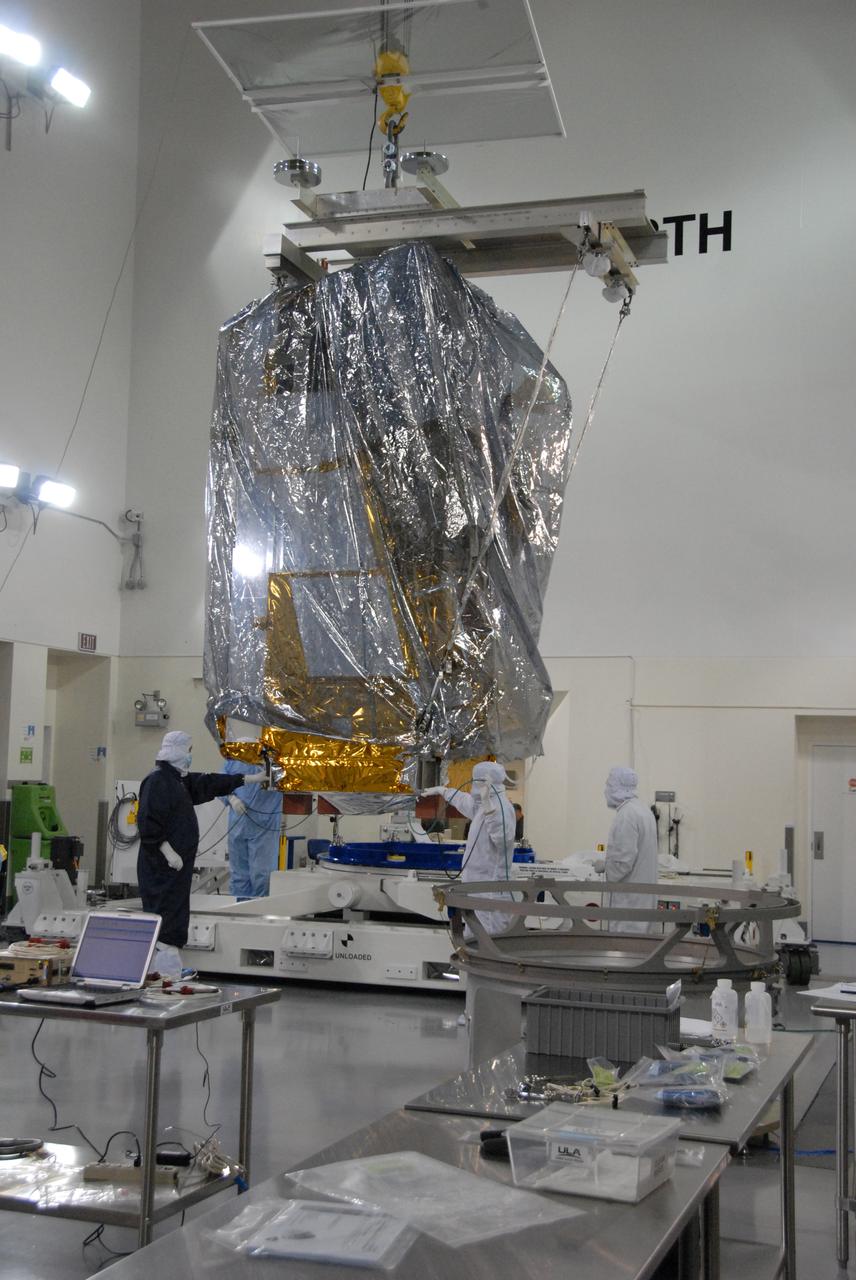
In a clean room inside the Astrotech Payload Processing Facility at Vandenberg Air Force Base in California, Ball Aerospace technicians prepare to attach NASA’s National Polar-orbiting Operational Environmental Satellite System Preparatory Project (NPP) spacecraft to a payload adapter. NPP represents a critical first step in building the next-generation of Earth-observing satellites. NPP will carry the first of the new sensors developed for this satellite fleet, now known as the Joint Polar Satellite System (JPSS), to be launched in 2016. NPP is the bridge between NASA's Earth Observing System (EOS) satellites and the forthcoming series of JPSS satellites. The mission will test key technologies and instruments for the JPSS missions. NPP is targeted to launch Oct. 28 from Space Launch Complex-2 aboard a United Launch Alliance Delta II rocket. For more information, visit http:__www.nasa.gov_NPP. Photo credit: NASA_Roy Allison, VAFB
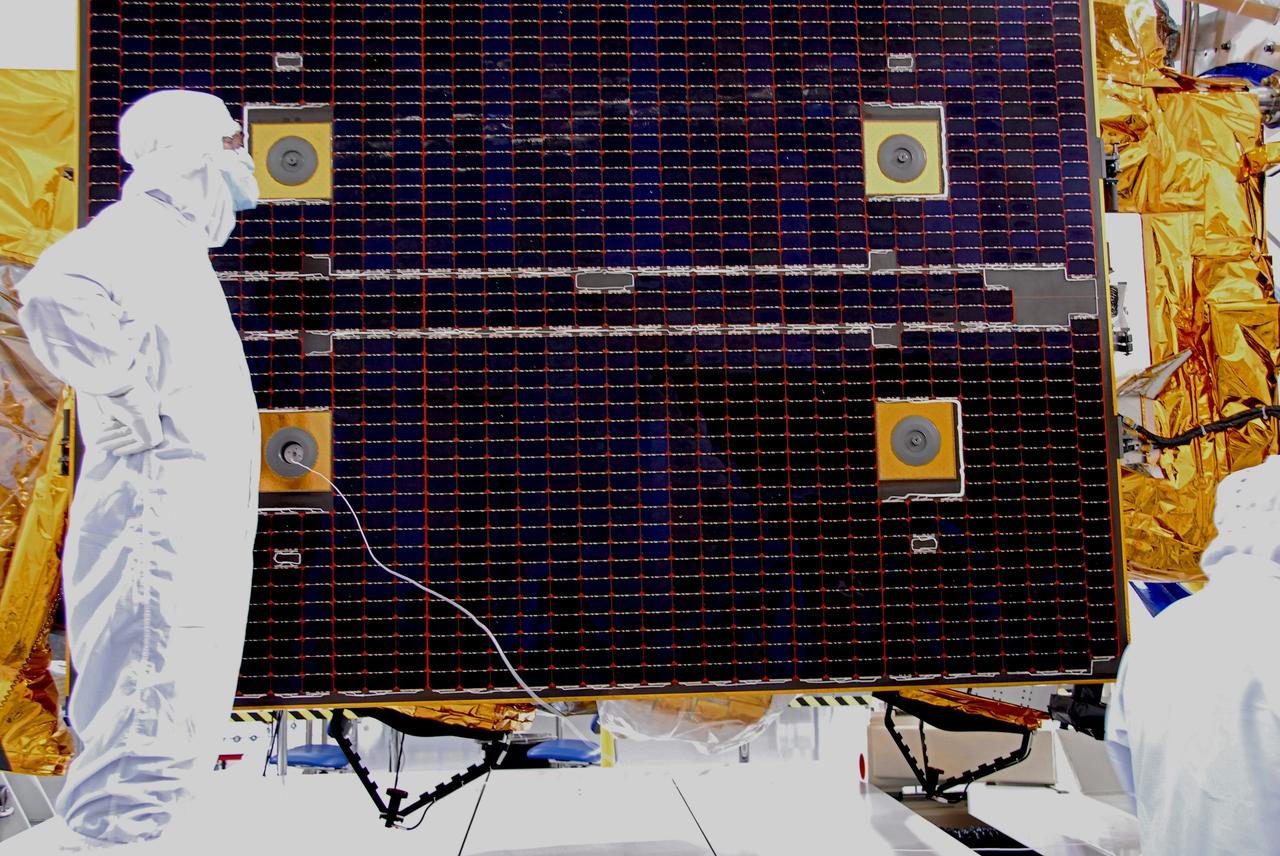
VANDENBERG AIR FORCE BASE, Calif. – In a clean room inside the Astrotech Payload Processing Facility at Vandenberg Air Force Base in California, technicians perform a torque bolt stress test on NASA’s National Polar-orbiting Operational Environmental Satellite System Preparatory Project (NPP). Technicians will perform many tests and checkouts on the satellite system to prepare it for launch. NPP represents a critical first step in building the next-generation of Earth-observing satellites. NPP will carry the first of the new sensors developed for this satellite fleet, now known as the Joint Polar Satellite System (JPSS), to be launched in 2016. NPP is the bridge between NASA’s Earth Observing System (EOS) satellites and the forthcoming series of JPSS satellites. The mission will test key technologies and instruments for the JPSS missions. NPP is targeted to launch Oct. 25 from Space Launch Complex-2 aboard a United Launch Alliance Delta II rocket. For more information, visit http://www.nasa.gov/NPP. Photo credit: NASA/30th Communications Squadron, VAFB
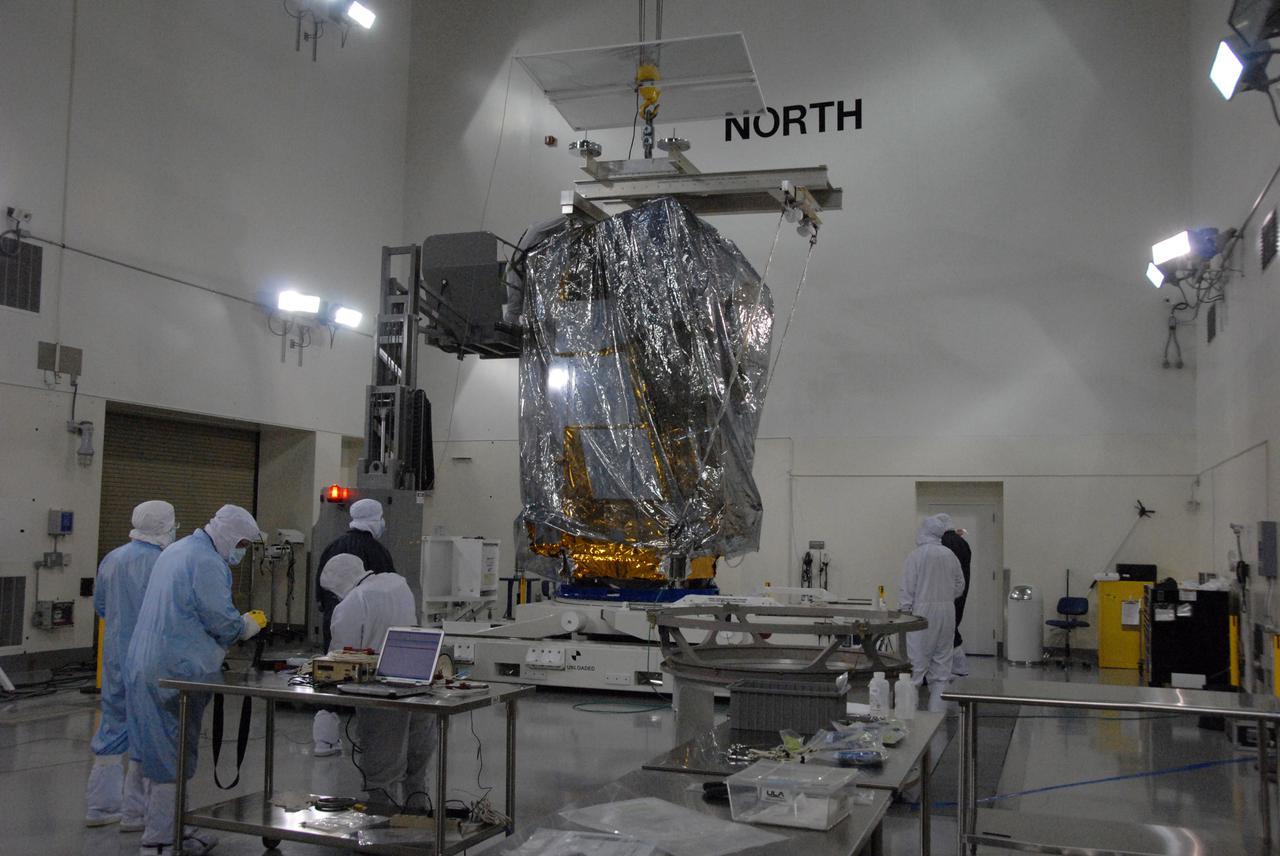
In a clean room inside the Astrotech Payload Processing Facility at Vandenberg Air Force Base in California, Ball Aerospace technicians prepare to attach NASA’s National Polar-orbiting Operational Environmental Satellite System Preparatory Project (NPP) spacecraft to a payload adapter. NPP represents a critical first step in building the next-generation of Earth-observing satellites. NPP will carry the first of the new sensors developed for this satellite fleet, now known as the Joint Polar Satellite System (JPSS), to be launched in 2016. NPP is the bridge between NASA's Earth Observing System (EOS) satellites and the forthcoming series of JPSS satellites. The mission will test key technologies and instruments for the JPSS missions. NPP is targeted to launch Oct. 28 from Space Launch Complex-2 aboard a United Launch Alliance Delta II rocket. For more information, visit http:__www.nasa.gov_NPP. Photo credit: NASA_Roy Allison, VAFB
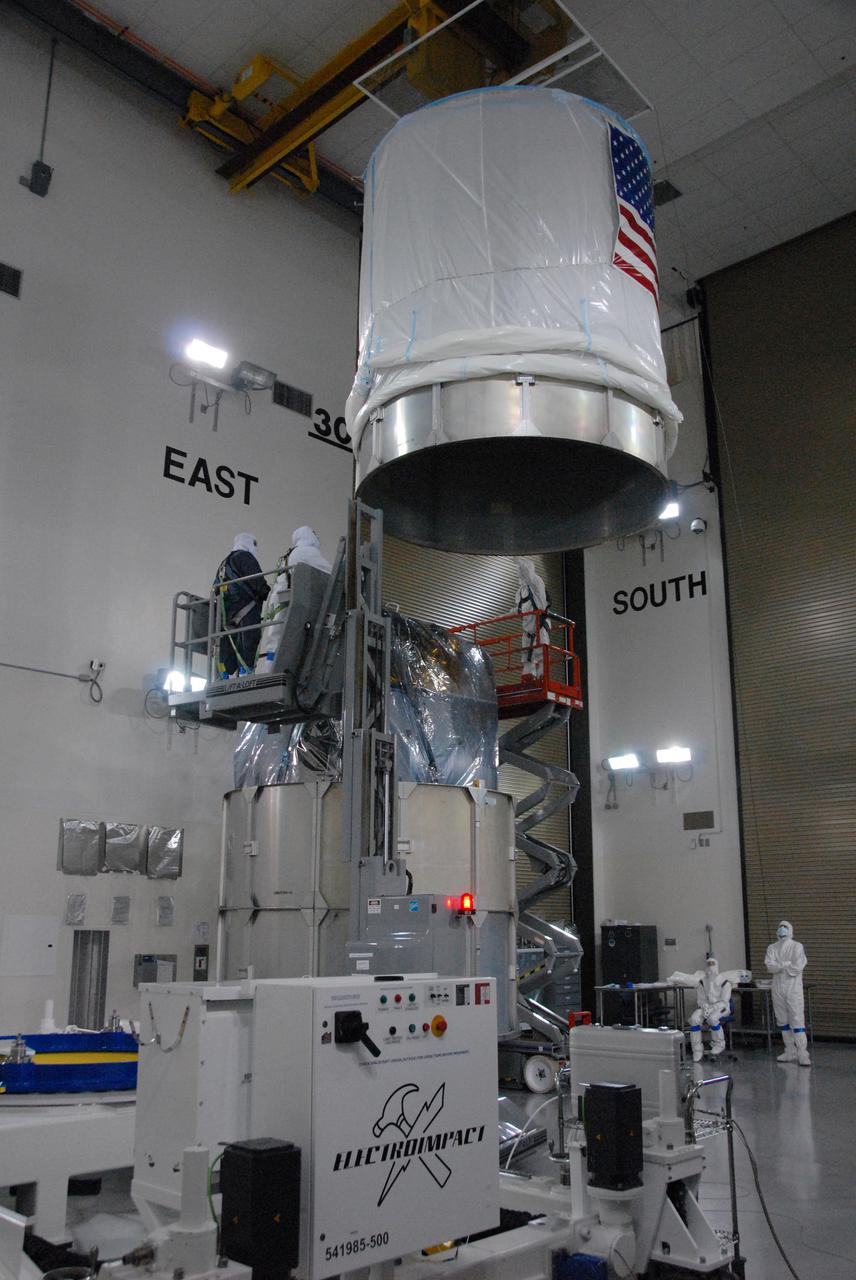
In a clean room inside the Astrotech Payload Processing Facility at Vandenberg Air Force Base in California, Ball Aerospace technicians install NASA’s National Polar-orbiting Operational Environmental Satellite System Preparatory Project (NPP) spacecraft in a payload transportation canister for its trip to the launch pad. NPP represents a critical first step in building the next-generation of Earth-observing satellites. NPP will carry the first of the new sensors developed for this satellite fleet, now known as the Joint Polar Satellite System (JPSS), to be launched in 2016. NPP is the bridge between NASA's Earth Observing System (EOS) satellites and the forthcoming series of JPSS satellites. The mission will test key technologies and instruments for the JPSS missions. NPP is targeted to launch Oct. 28 from Space Launch Complex-2 aboard a United Launch Alliance Delta II rocket. For more information, visit http:__www.nasa.gov_NPP. Photo credit: NASA_Roy Allison, VAFB
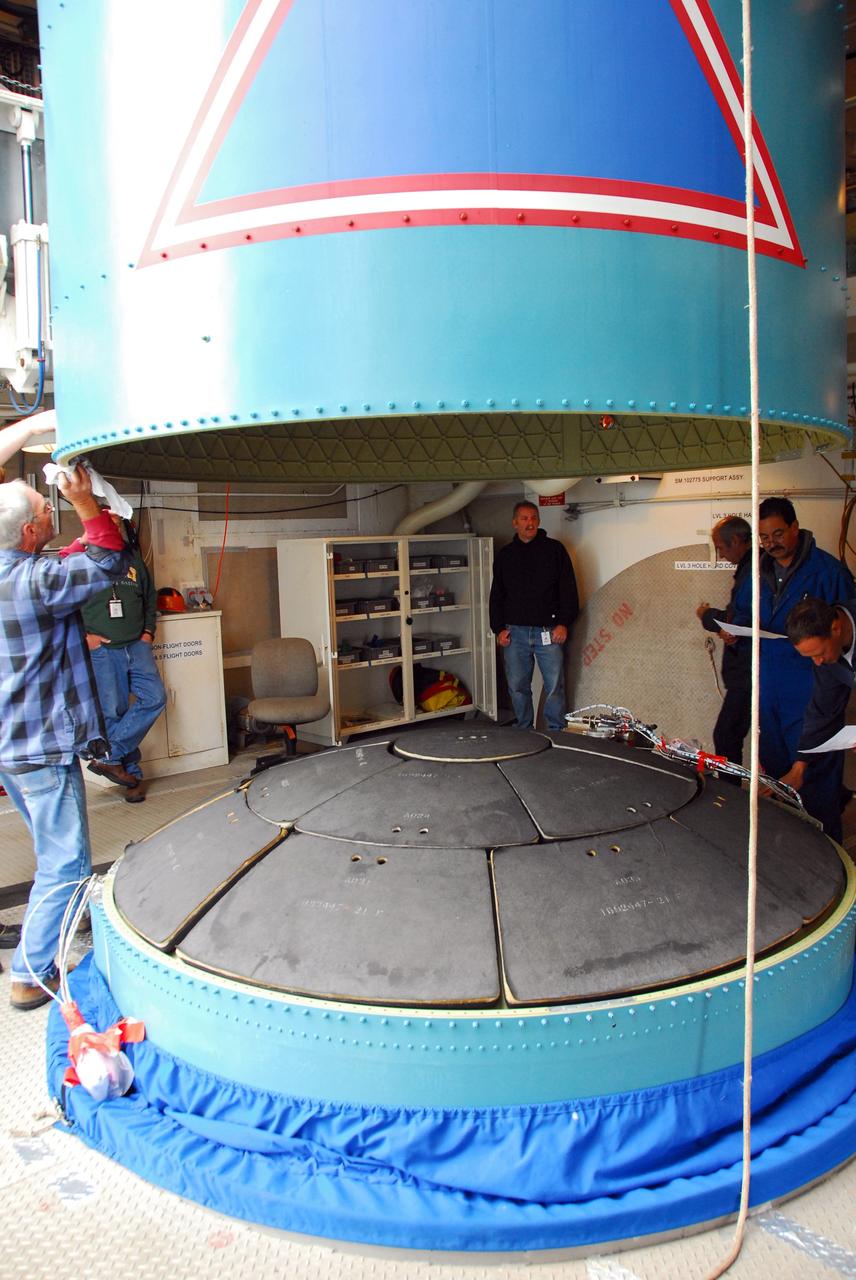
VANDENBERG AIR FORCE BASE, Calif. -- At NASA's Space Launch Complex-2 on Vandenberg Air Force Base in California, the interstage of the United Launch Alliance Delta II that will carry NASA's National Polar-orbiting Operational Environmental Satellite System Preparatory Project (NPP) satellite into space is lowered toward the rocket's first stage. The interstage provides an interface between the launch vehicle's first and second stages. NPP represents a critical first step in building the next-generation of Earth-observing satellites. NPP will carry the first of the new sensors developed for this satellite fleet, now known as the Joint Polar Satellite System (JPSS) to be launched in 2016. NPP is the bridge between NASA's Earth Observing System (EOS) satellites and the forthcoming series of JPSS satellites. The mission will test key technologies and instruments for the JPSS missions. For more information, visit http://www.nasa.gov/NPP. Photo credit: NASA/VAFB, Rudy Bledsoe

VANDENBERG AIR FORCE BASE, Calif. – In the Astrotech Payload Processing Facility at Vandenberg Air Force Base in California, technicians remove the lifting crane and harnesses from the container holding NASA’s National Polar-orbiting Operational Environmental Satellite System Preparatory Project (NPP). NPP represents a critical first step in building the next-generation of Earth-observing satellites. NPP will carry the first of the new sensors developed for this satellite fleet, now known as the Joint Polar Satellite System (JPSS), to be launched in 2016. NPP is the bridge between NASA’s Earth Observing System (EOS) satellites and the forthcoming series of JPSS satellites. The mission will test key technologies and instruments for the JPSS missions. NPP is targeted to launch Oct. 25 from Space Launch Complex-2 aboard a United Launch Alliance Delta II rocket. For more information, visit http://www.nasa.gov/NPP. Photo credit: NASA/30th Communications Squadron, VAFB
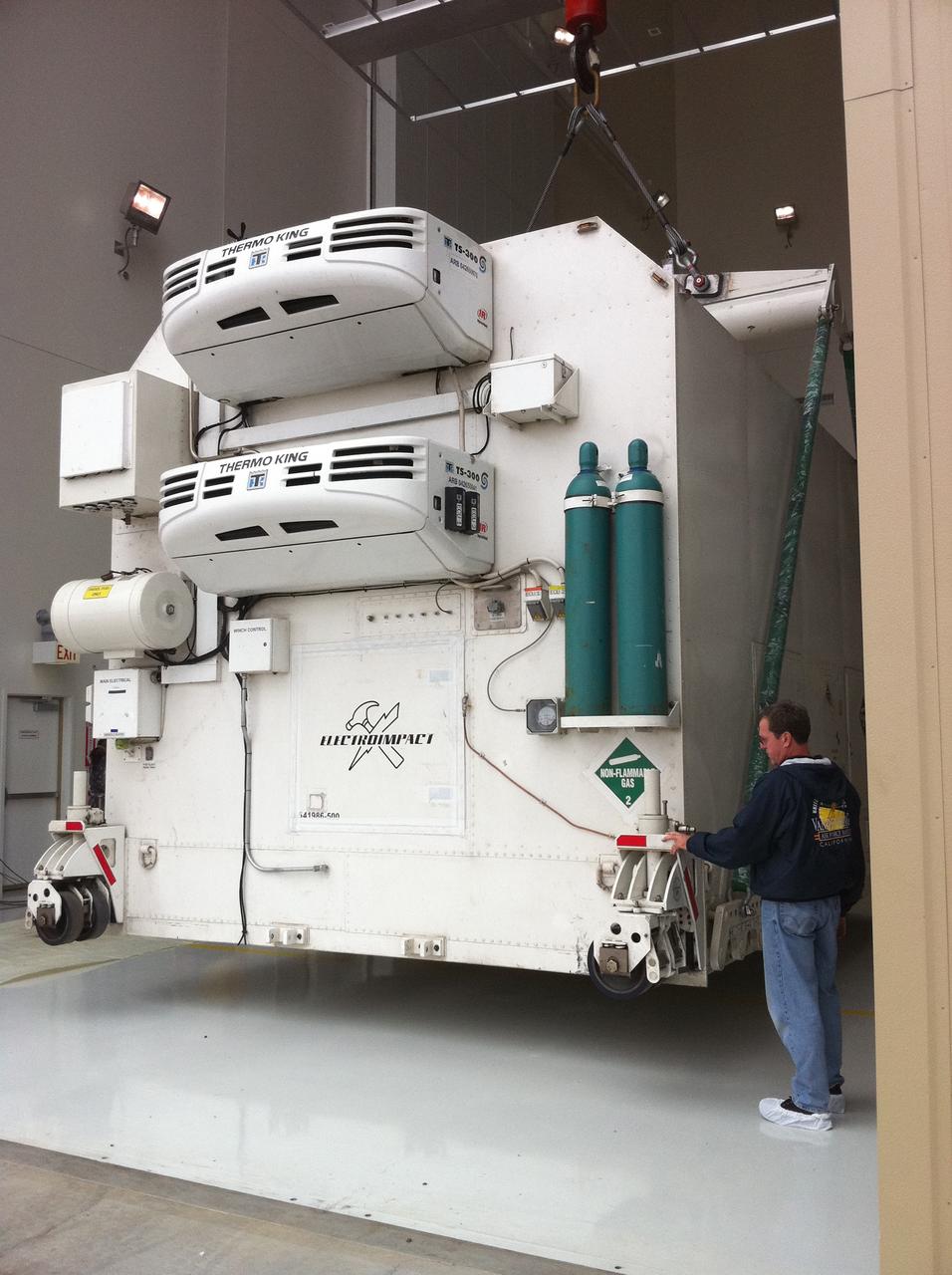
VANDENBERG AIR FORCE BASE, Calif. -- The environmentally controlled transportation container holding NASA's National Polar-orbiting Operational Environmental Satellite System Preparatory Project (NPP) satellite is lifted from its delivery truck at the Astrotech payload processing facility on Vandenberg Air Force Base in California. NPP represents a critical first step in building the next-generation of Earth-observing satellites. NPP will carry the first of the new sensors developed for this satellite fleet, now known as the Joint Polar Satellite System (JPSS), to be launched in 2016. NPP is the bridge between NASA's Earth Observing System (EOS) satellites and the forthcoming series of JPSS satellites. The mission will test key technologies and instruments for the JPSS missions. NPP is targeted to launch Oct. 25 from Space Launch Complex-2 aboard a United Launch Alliance Delta II rocket. For more information, visit http://www.nasa.gov/NPP. Photo credit: NASA/Jerry Nagy, VAFB
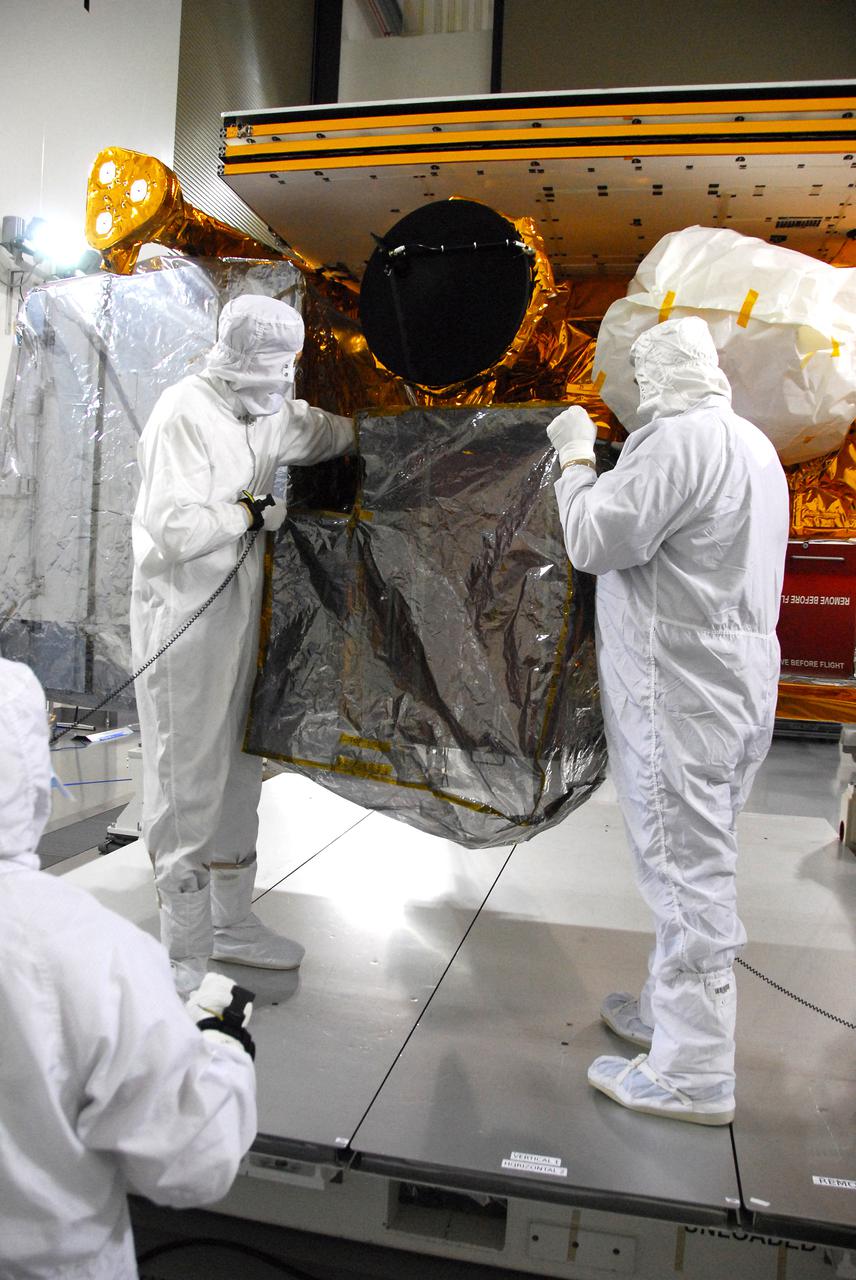
In a clean room inside the Astrotech Payload Processing Facility at Vandenberg Air Force Base in California, Ball Aerospace technicians conduct a final cleaning and inspection of the Cross-track Infrared Sounder (CrIS) on NASA’s National Polar-orbiting Operational Environmental Satellite System Preparatory Project (NPP) spacecraft. NPP represents a critical first step in building the next-generation of Earth-observing satellites. NPP will carry the first of the new sensors developed for this satellite fleet, now known as the Joint Polar Satellite System (JPSS), to be launched in 2016. NPP is the bridge between NASA's Earth Observing System (EOS) satellites and the forthcoming series of JPSS satellites. The mission will test key technologies and instruments for the JPSS missions. NPP is targeted to launch Oct. 28 from Space Launch Complex-2 aboard a United Launch Alliance Delta II rocket. For more information, visit http:__www.nasa.gov_NPP. Photo credit: NASA_VAFB
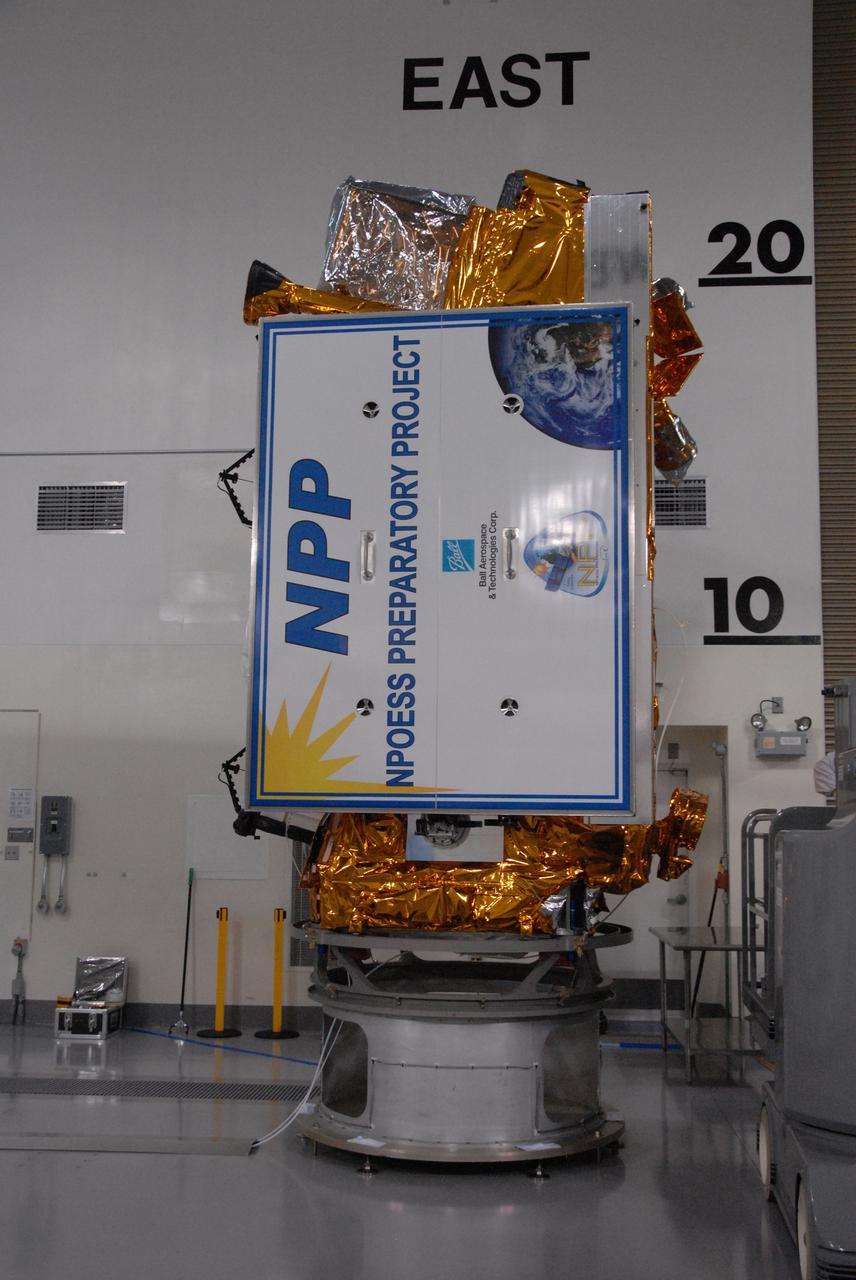
In a clean room inside the Astrotech Payload Processing Facility at Vandenberg Air Force Base in California, Ball Aerospace NASA’s National Polar-orbiting Operational Environmental Satellite System Preparatory Project (NPP) spacecraft has been attached to a payload adapter. NPP represents a critical first step in building the next-generation of Earth-observing satellites. NPP will carry the first of the new sensors developed for this satellite fleet, now known as the Joint Polar Satellite System (JPSS), to be launched in 2016. NPP is the bridge between NASA's Earth Observing System (EOS) satellites and the forthcoming series of JPSS satellites. The mission will test key technologies and instruments for the JPSS missions. NPP is targeted to launch Oct. 28 from Space Launch Complex-2 aboard a United Launch Alliance Delta II rocket. For more information, visit http:__www.nasa.gov_NPP. Photo credit: NASA_Roy Allison, VAFB
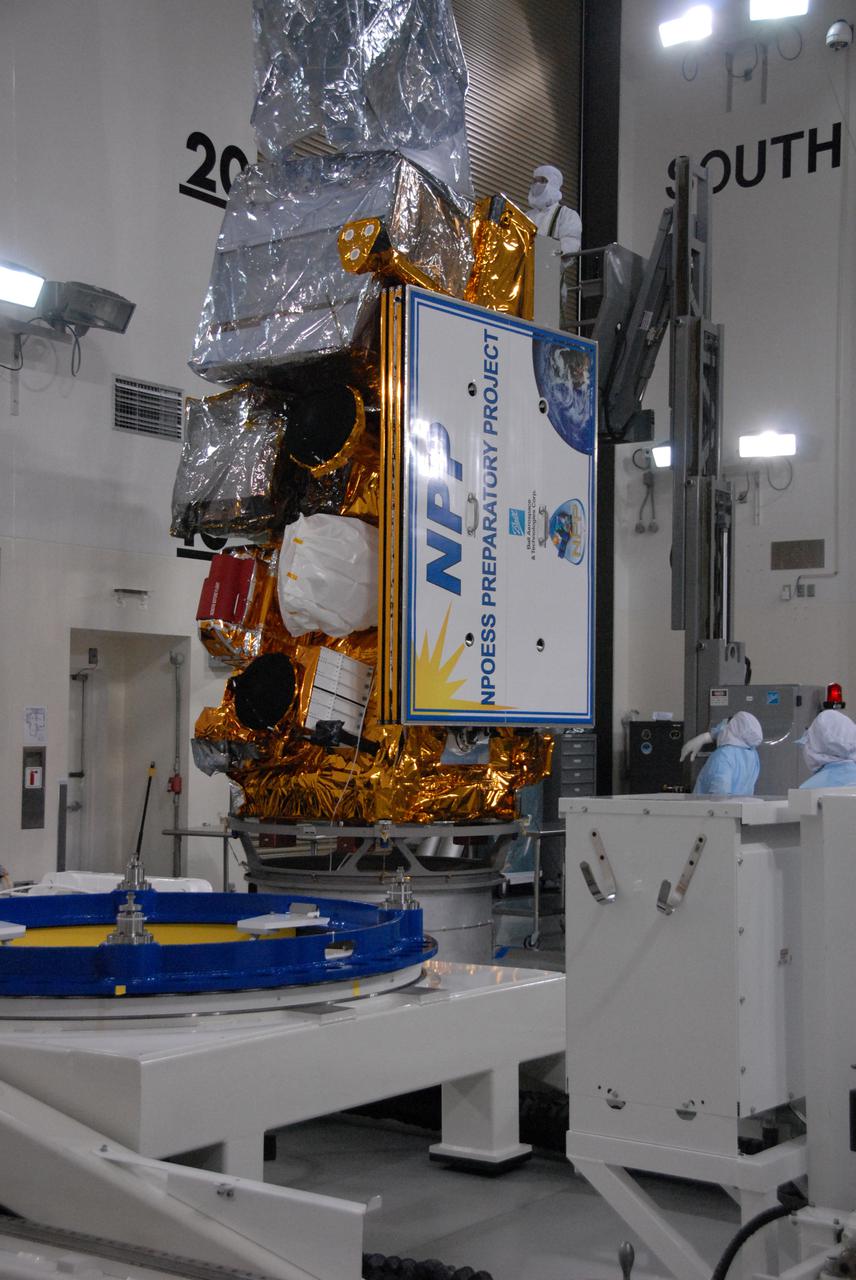
In a clean room inside the Astrotech Payload Processing Facility at Vandenberg Air Force Base in California, Ball Aerospace technicians attach NASA’s National Polar-orbiting Operational Environmental Satellite System Preparatory Project (NPP) spacecraft to a payload adapter. NPP represents a critical first step in building the next-generation of Earth-observing satellites. NPP will carry the first of the new sensors developed for this satellite fleet, now known as the Joint Polar Satellite System (JPSS), to be launched in 2016. NPP is the bridge between NASA's Earth Observing System (EOS) satellites and the forthcoming series of JPSS satellites. The mission will test key technologies and instruments for the JPSS missions. NPP is targeted to launch Oct. 28 from Space Launch Complex-2 aboard a United Launch Alliance Delta II rocket. For more information, visit http:__www.nasa.gov_NPP. Photo credit: NASA_Roy Allison, VAFB
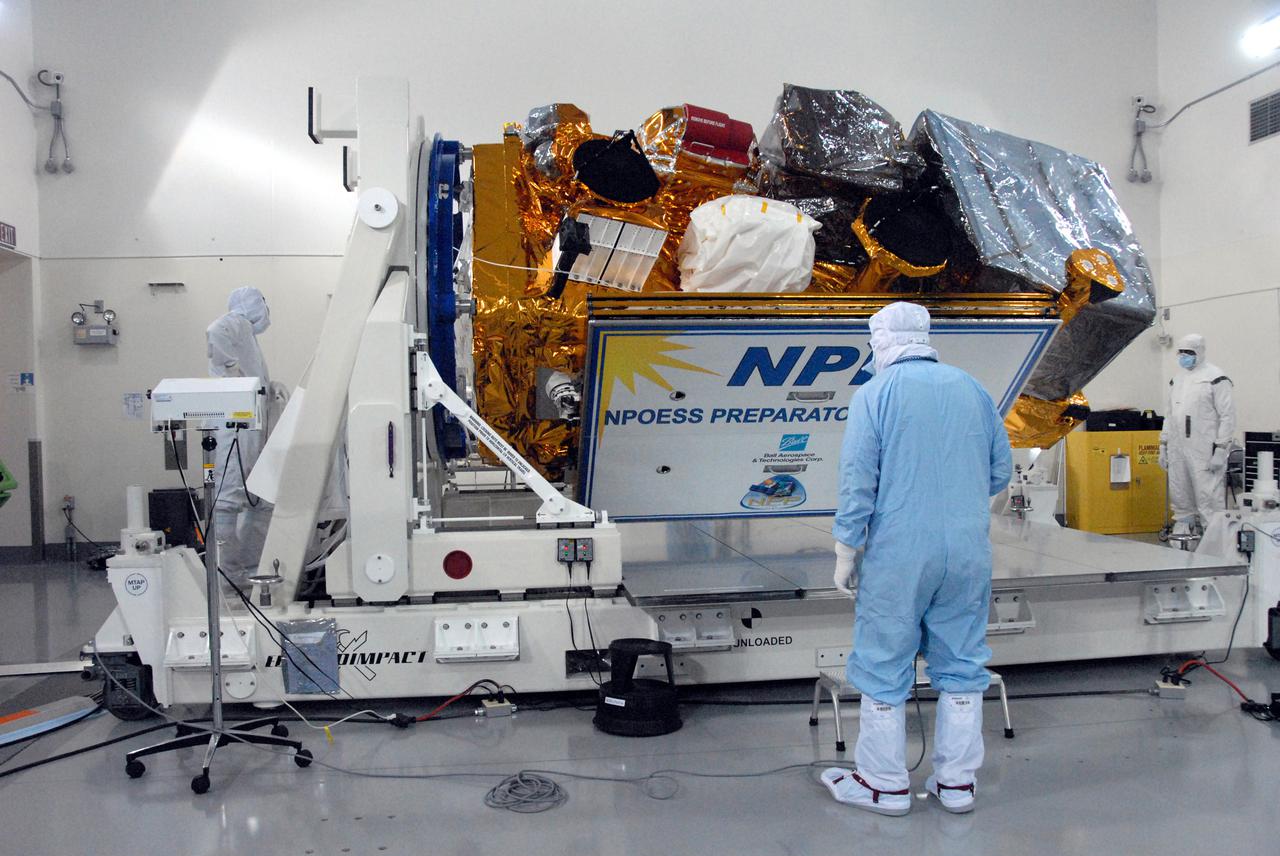
In a clean room inside the Astrotech Payload Processing Facility at Vandenberg Air Force Base in California, a Ball Aerospace technician closes out NASA’s National Polar-orbiting Operational Environmental Satellite System Preparatory Project (NPP) before preparing it for transport to the launch pad. NPP represents a critical first step in building the next-generation of Earth-observing satellites. NPP will carry the first of the new sensors developed for this satellite fleet, now known as the Joint Polar Satellite System (JPSS), to be launched in 2016. NPP is the bridge between NASA's Earth Observing System (EOS) satellites and the forthcoming series of JPSS satellites. The mission will test key technologies and instruments for the JPSS missions. NPP is targeted to launch Oct. 28 from Space Launch Complex-2 aboard a United Launch Alliance Delta II rocket. For more information, visit http:__www.nasa.gov_NPP. Photo credit: NASA_Dan Kokoska, VAFB
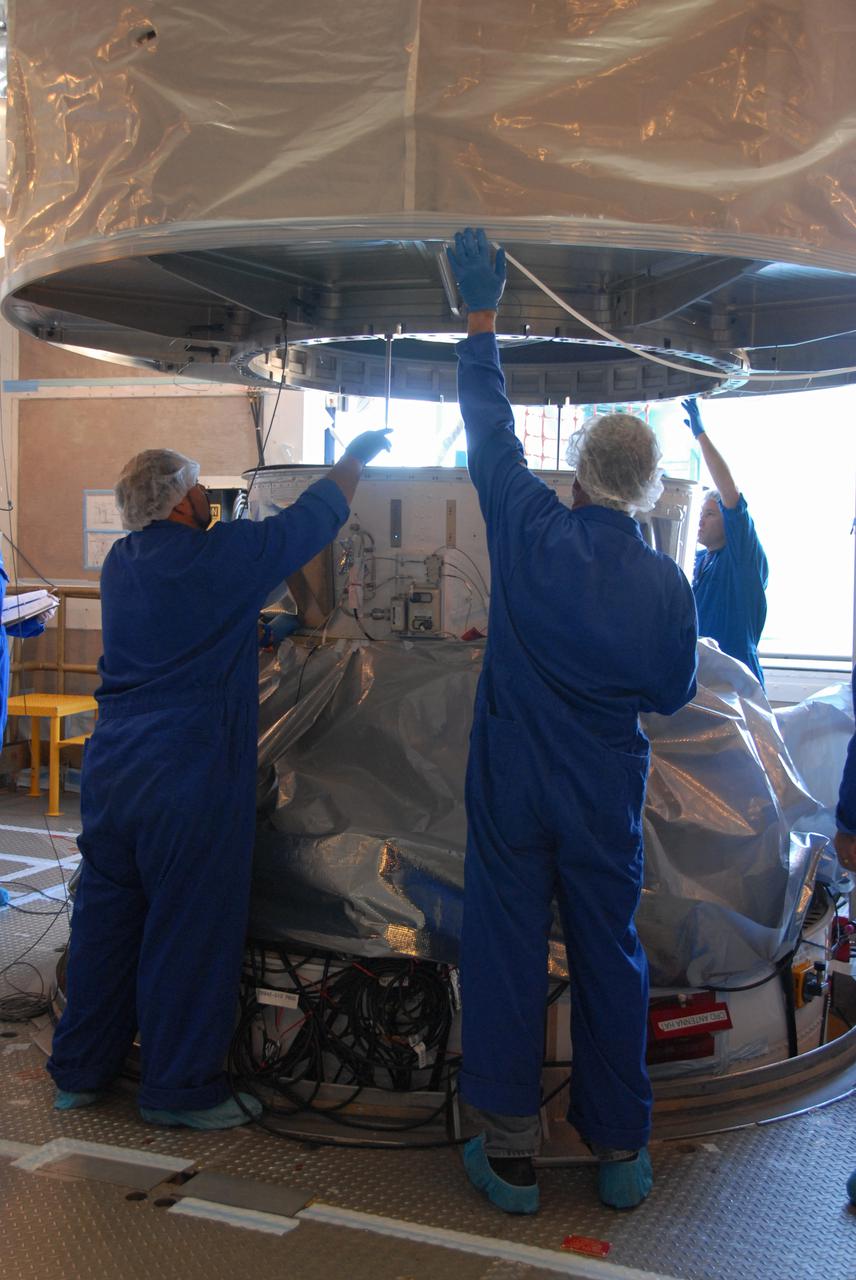
Workers atop Vandenberg Air Force Base's Space Launch Complex-2 prepare to secure the payload transportation canister containing NASA’s National Polar-orbiting Operational Environmental Satellite System Preparatory Project (NPP) spacecraft. NPP represents a critical first step in building the next-generation of Earth-observing satellites. NPP will carry the first of the new sensors developed for this satellite fleet, now known as the Joint Polar Satellite System (JPSS), to be launched in 2016. NPP is the bridge between NASA's Earth Observing System (EOS) satellites and the forthcoming series of JPSS satellites. The mission will test key technologies and instruments for the JPSS missions. NPP is targeted to launch Oct. 28 from Space Launch Complex-2 aboard a United Launch Alliance Delta II rocket. For more information, visit http:__www.nasa.gov_NPP. Photo credit: NASA_Mark P. Mackley, VAFB
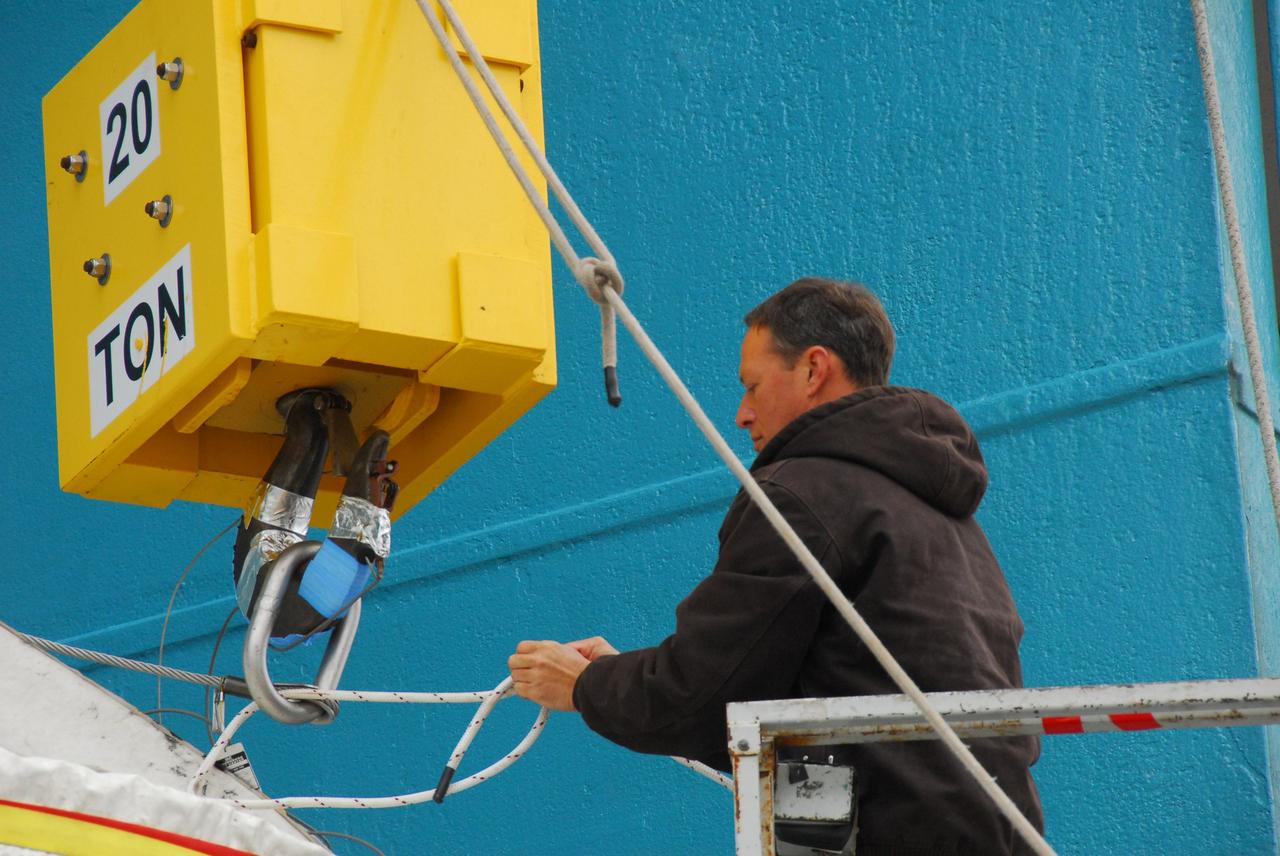
VANDENBERG AIR FORCE BASE, Calif. -- At NASA's Space Launch Complex-2 on Vandenberg Air Force Base in California, a spacecraft technician secures the interstage of the United Launch Alliance Delta II that will carry NASA's National Polar-orbiting Operational Environmental Satellite System Preparatory Project (NPP) satellite into space to a lifting device. The interstage provides an interface between the launch vehicle's first and second stages. NPP represents a critical first step in building the next-generation of Earth-observing satellites. NPP will carry the first of the new sensors developed for this satellite fleet, now known as the Joint Polar Satellite System (JPSS) to be launched in 2016. NPP is the bridge between NASA's Earth Observing System (EOS) satellites and the forthcoming series of JPSS satellites. The mission will test key technologies and instruments for the JPSS missions. For more information, visit http://www.nasa.gov/NPP. Photo credit: NASA/VAFB, Rudy Bledsoe