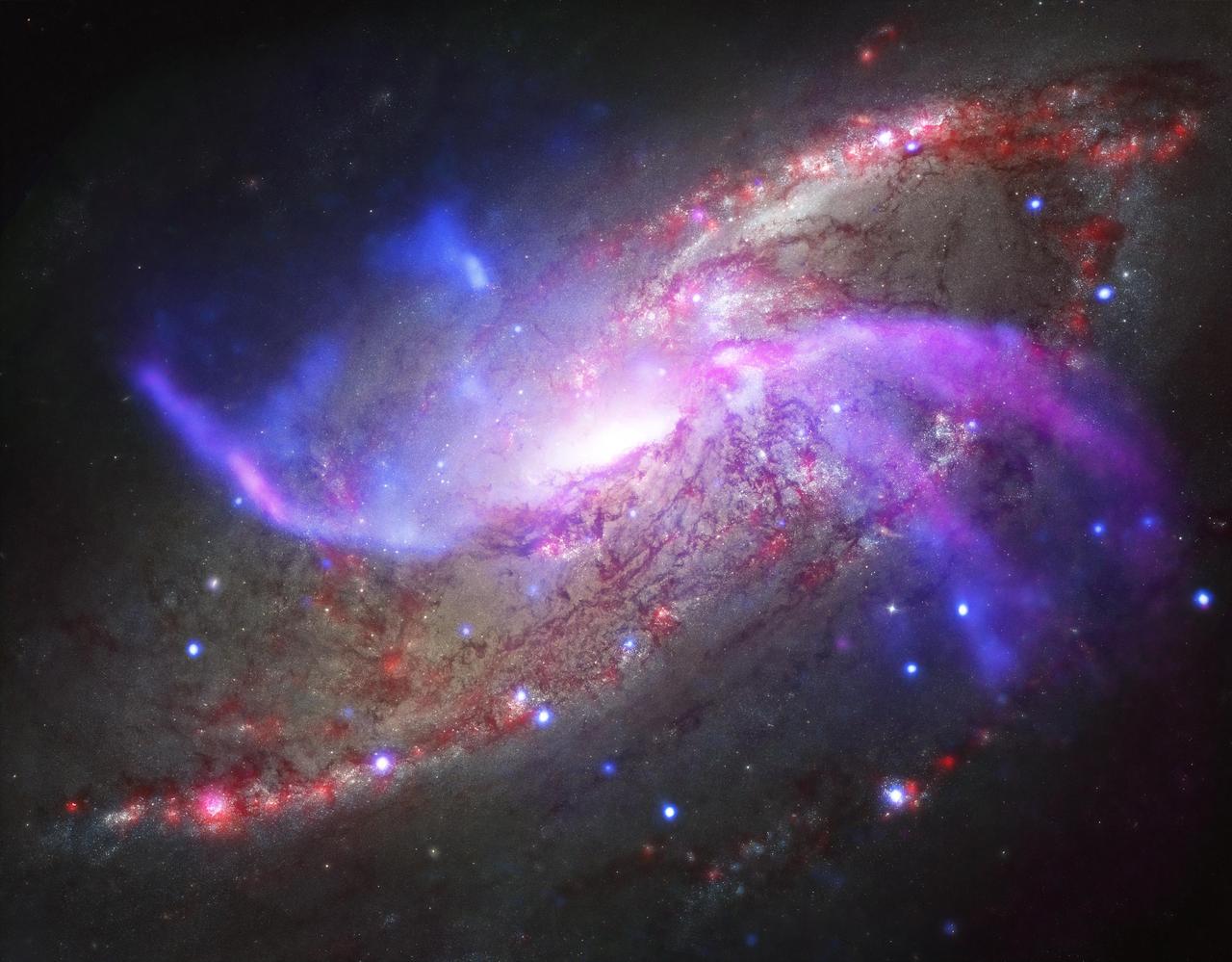
Anomalous arms are seen in this composite image of NGC 4258 from NASA Chandra X-ray Observator, NSF Karl Jansky Very Large Array, NASA Hubble Space Telescope and Spitzer Space Telescope.
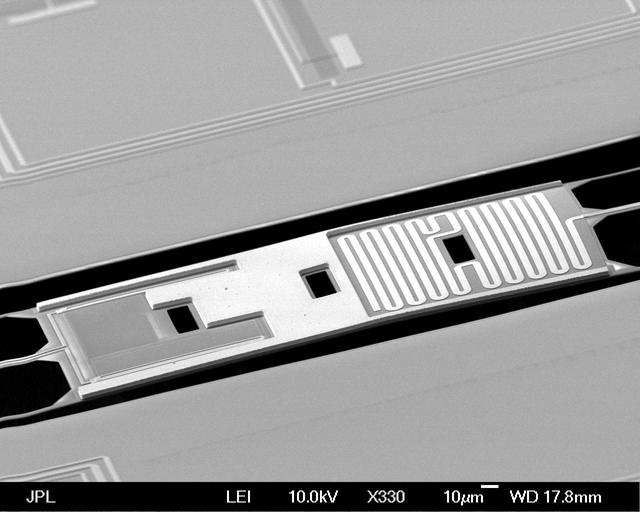
This image shows one of the NASA detectors from the BICEP2 project, developed in collaboration with the NSF. The sensors were used to make the first detection of gravitational waves in the ancient background light from the early universe.

Dr. Phoebe Cohen, Professor of Geosciences, Williams College, speaks on a panel at the “Ancient Earth, Alien Earths” Event at NASA Headquarters in Washington, DC Wednesday, August 20, 2014. The event was sponsored by NASA, the National Science Foundation (NSF), and the Smithsonian Institution and was moderated by Dr. David H. Grinspoon, Senior Scientist at the Planetary Science Institute. Six scientists discussed how research on early Earth could help guide our search for habitable planets orbiting other stars. Photo Credit: (NASA/Aubrey Gemignani)

Dr. Christopher House, Professor of Geosciences, Pennsylvania State University, speaks on a panel at the “Ancient Earth, Alien Earths” Event at NASA Headquarters in Washington, DC Wednesday, August 20, 2014. The event was sponsored by NASA, the National Science Foundation (NSF), and the Smithsonian Institution and was moderated by Dr. David H. Grinspoon, Senior Scientist at the Planetary Science Institute. Six scientists discussed how research on early Earth could help guide our search for habitable planets orbiting other stars. Photo Credit: (NASA/Aubrey Gemignani)

Dr. Dawn Sumner, Professor of Geology, UC Davis, speaks on a panel at the “Ancient Earth, Alien Earths” Event at NASA Headquarters in Washington, DC Wednesday, August 20, 2014. The event was sponsored by NASA, the National Science Foundation (NSF), and the Smithsonian Institution and was moderated by Dr. David H. Grinspoon, Senior Scientist at the Planetary Science Institute. Six scientists discussed how research on early Earth could help guide our search for habitable planets orbiting other stars. Photo Credit: (NASA/Aubrey Gemignani)

An audience member asks the panelists a question at the “Ancient Earth, Alien Earths” Event at NASA Headquarters in Washington, DC Wednesday, August 20, 2014. The event was sponsored by NASA, the National Science Foundation (NSF), and the Smithsonian Institution and was moderated by Dr. David H. Grinspoon, Senior Scientist at the Planetary Science Institute. Six scientists discussed how research on early Earth could help guide our search for habitable planets orbiting other stars. Photo Credit: (NASA/Aubrey Gemignani)

Dr. Timothy Lyons, Professor of Biogeochemistry, UC Riverside, speaks on a panel at the “Ancient Earth, Alien Earths” Event at NASA Headquarters in Washington, DC Wednesday, August 20, 2014. The event was sponsored by NASA, the National Science Foundation (NSF), and the Smithsonian Institution and was moderated by Dr. David H. Grinspoon, Senior Scientist at the Planetary Science Institute. Six scientists discussed how research on early Earth could help guide our search for habitable planets orbiting other stars. Photo Credit: (NASA/Aubrey Gemignani)
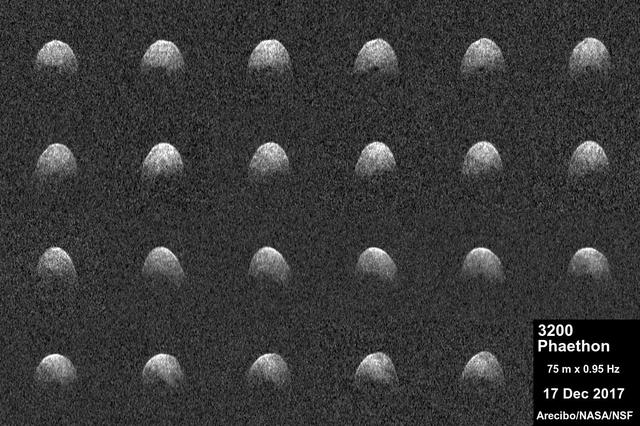
These radar images of near-Earth asteroid 3200 Phaethon were generated by astronomers at the National Science Foundation's Arecibo Observatory on Dec. 17, 2017. Observations of Phaethon were conducted at Arecibo from Dec.15 through 19, 2017. At time of closest approach on Dec. 16 at 3 p.m. PST (6 p.m. EST, 11 p.m. UTC) the asteroid was about 6.4 million miles (10.3 million kilometers) away, or about 27 times the distance from Earth to the moon. The encounter is the closest the object will come to Earth until 2093. An animation is available at https://photojournal.jpl.nasa.gov/catalog/PIA22185

Dr. David H. Grinspoon, Senior Scientist, Planetary Science Institute, moderates a panel at the “Ancient Earth, Alien Earths” Event at NASA Headquarters in Washington, DC Wednesday, August 20, 2014. The event was sponsored by NASA, the National Science Foundation (NSF), and the Smithsonian Institution and highlighted how research on early Earth could help guide our search for habitable planets orbiting other stars. Photo Credit: (NASA/Aubrey Gemignani)
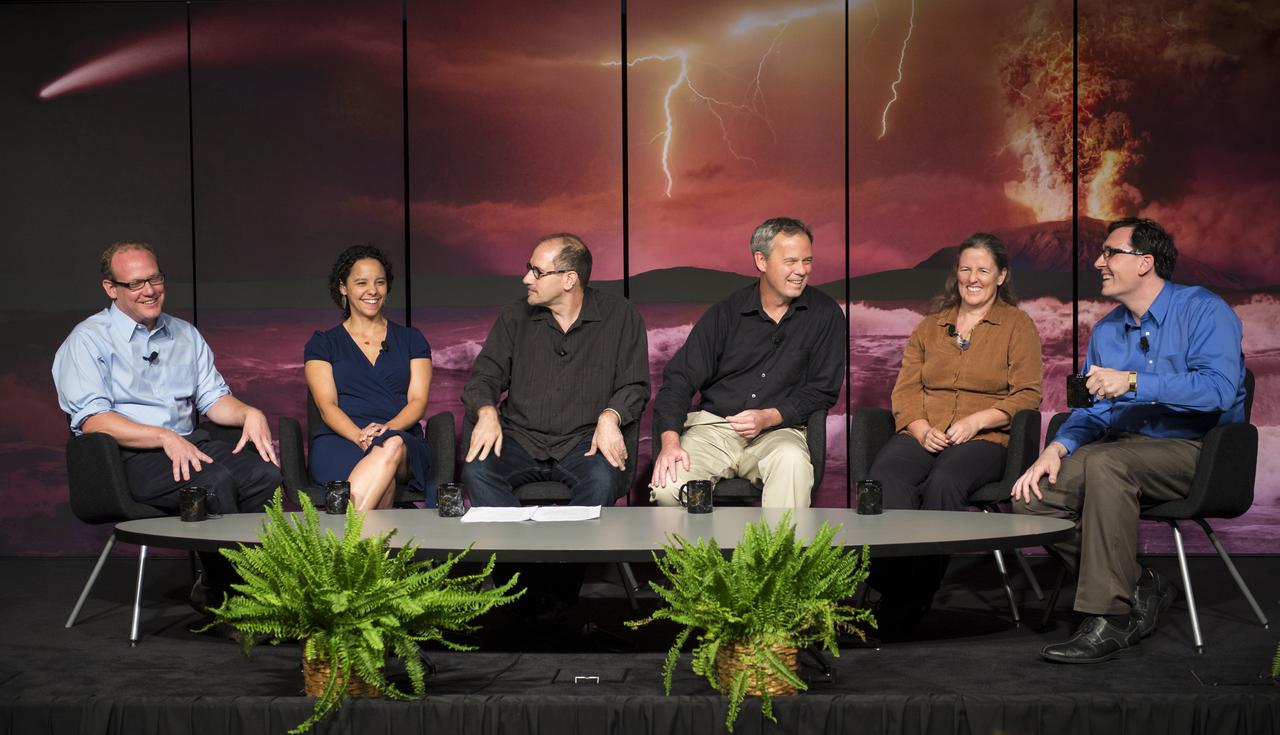
Panelists discuss how research on early Earth could help guide our search for habitable planets orbiting other stars at the “Ancient Earth, Alien Earths” Event at NASA Headquarters in Washington, DC Wednesday, August 20, 2014. The event was sponsored by NASA, the National Science Foundation (NSF), and the Smithsonian Institution and was moderated by Dr. David H. Grinspoon, Senior Scientist at the Planetary Science Institute. Photo Credit: (NASA/Aubrey Gemignani)

Panelists pose for a group photo at the “Ancient Earth, Alien Earths” Event at NASA Headquarters in Washington, DC Wednesday, August 20, 2014. The event was sponsored by NASA, the National Science Foundation (NSF), and the Smithsonian Institution and highlighted how research on early Earth could help guide our search for habitable planets orbiting other stars. Photo Credit: (NASA/Aubrey Gemignani)
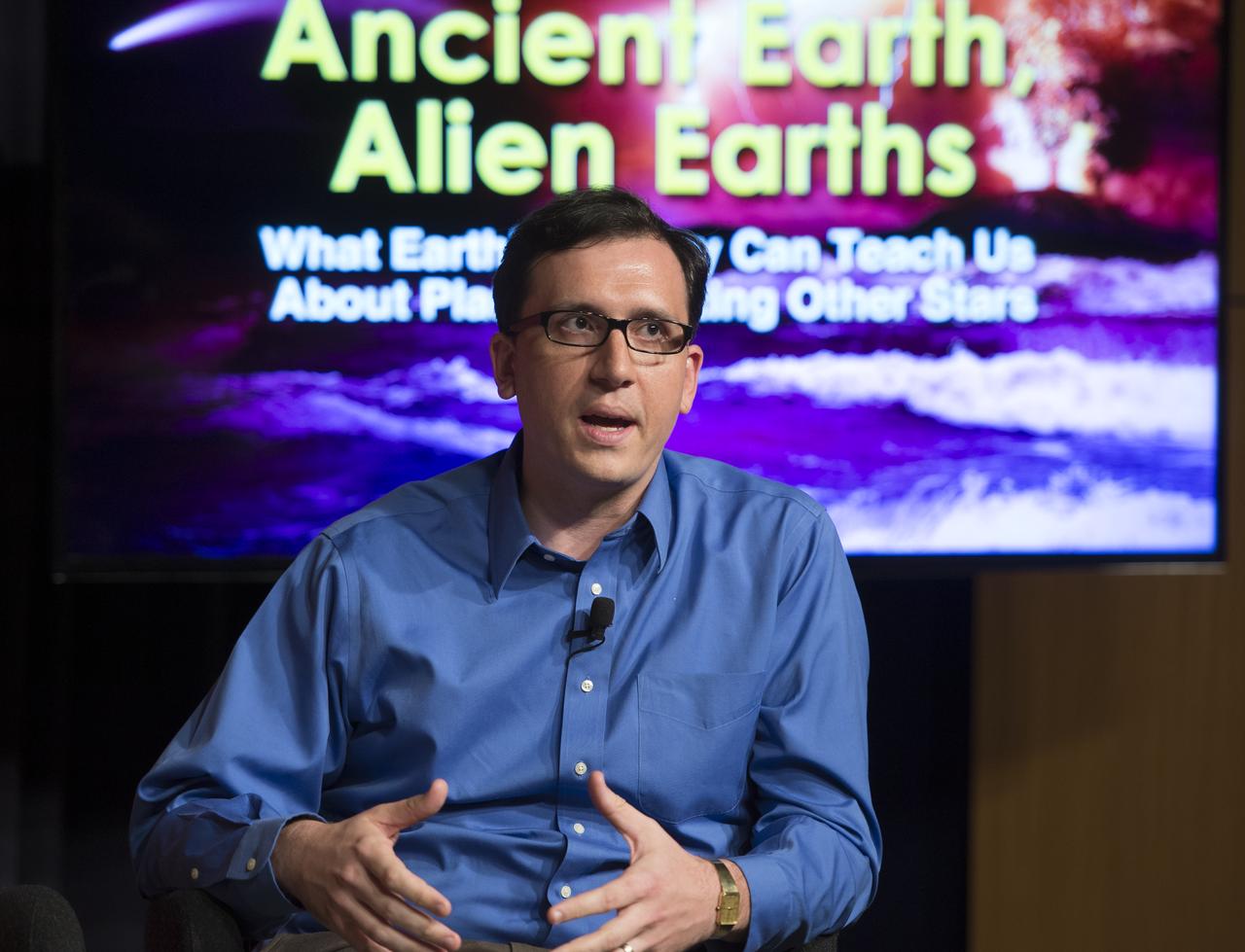
Dr. Shawn Domagal-Goldman, Research Space Scientist, NASA Goddard Space Flight Center, speaks on a panel at the “Ancient Earth, Alien Earths” Event at NASA Headquarters in Washington, DC Wednesday, August 20, 2014. The event was sponsored by NASA, the National Science Foundation (NSF), and the Smithsonian Institution and was moderated by Dr. David H. Grinspoon, Senior Scientist at the Planetary Science Institute. Six scientists discussed how research on early Earth could help guide our search for habitable planets orbiting other stars. Photo Credit: (NASA/Aubrey Gemignani)
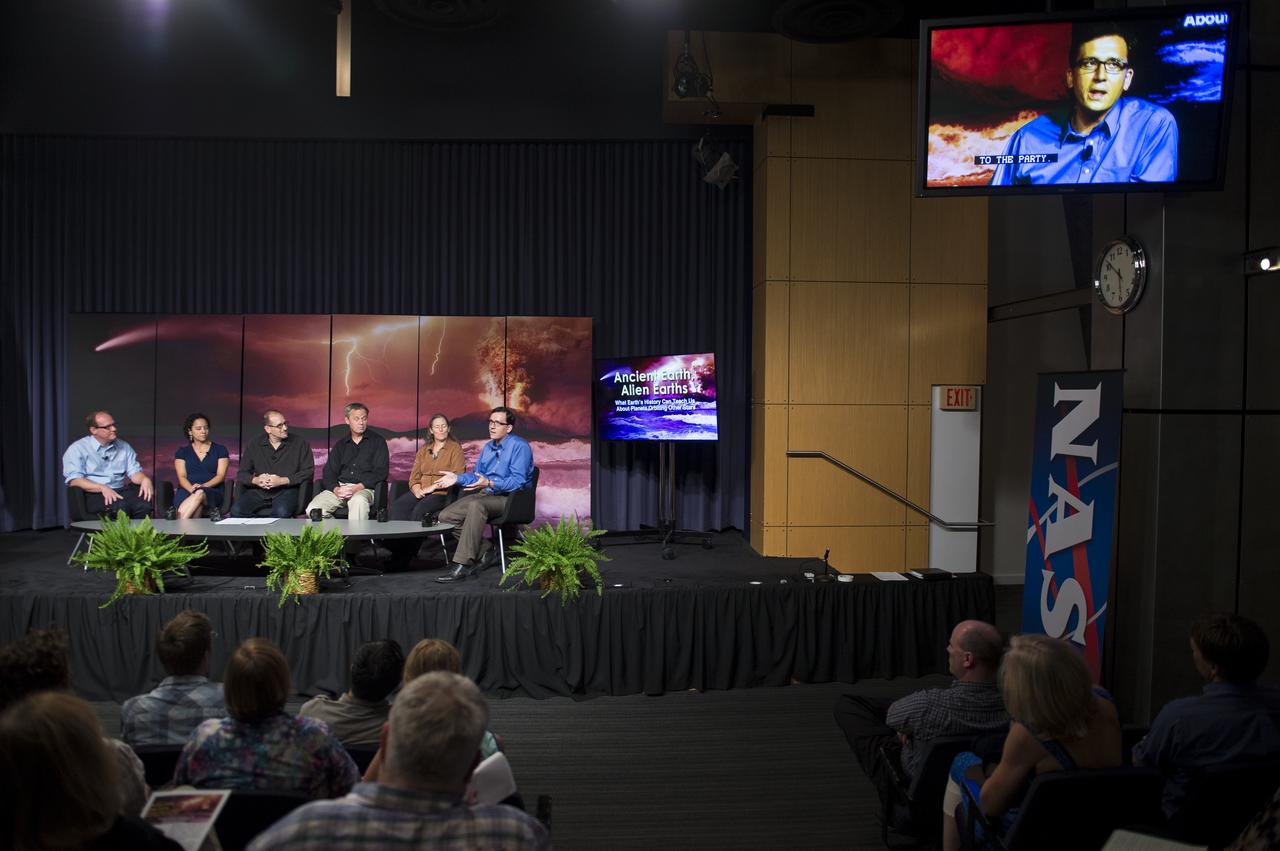
Dr. Shawn Domagal-Goldman, Research Space Scientist, NASA Goddard Space Flight Center, speaks on a panel at the “Ancient Earth, Alien Earths” Event at NASA Headquarters in Washington, DC Wednesday, August 20, 2014. The event was sponsored by NASA, the National Science Foundation (NSF), and the Smithsonian Institution and was moderated by Dr. David H. Grinspoon, Senior Scientist at the Planetary Science Institute. Six scientists discussed how research on early Earth could help guide our search for habitable planets orbiting other stars. Photo Credit: (NASA/Aubrey Gemignani)
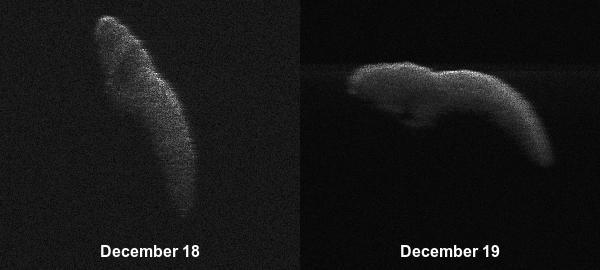
These two radar images of near-Earth asteroid 2003 SD220 were obtained on Dec. 18 and 19 by coordinating observations with the Arecibo Observatory's 1,000-foot (305-meter) antenna in Puerto Rico and the National Science Foundation's (NSF) 330-foot (100-meter) Green Bank Telescope in West Virginia. The radar images reveal the asteroid is at least one mile (1.6 kilometers) long. https://photojournal.jpl.nasa.gov/catalog/PIA22969

Astronomers combined observations from three different observatories (Atacama Large Millimeter/submillimeter Array, red; Hubble, green; Chandra X-ray Observatory, blue) to produce this colorful, multiwavelength image of the intricate remains of Supernova 1987A. Credits: NASA, ESA, and A. Angelich (NRAO/AUI/NSF)
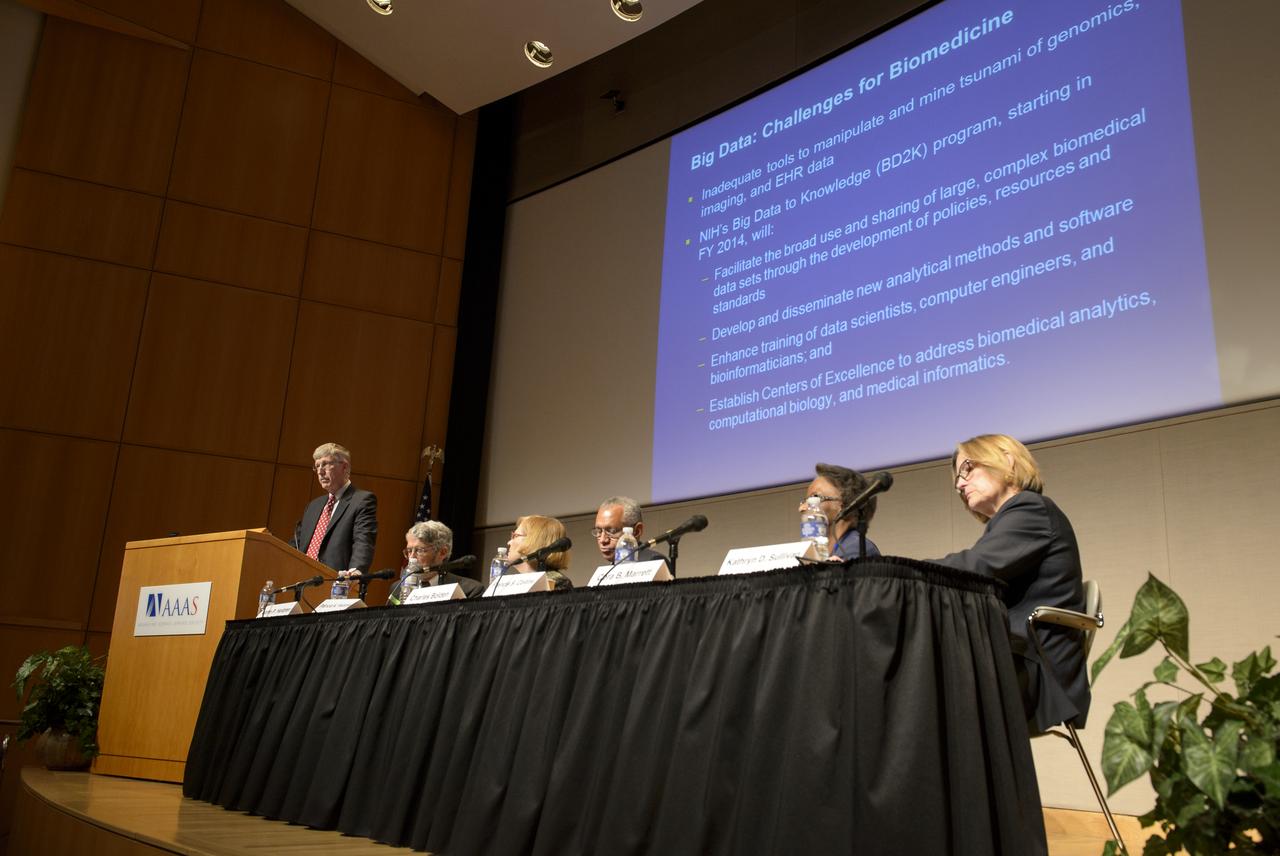
Director of the National Institutes of Health (NIH) Francis S. Collins, M.D., Ph.D., delivers remarks during a White House Office of Science and Technology Policy (OSTP) Fiscal Year 2014 budget briefing held with with Dr. John P. Holdren, Director of OSTP, Patricia Falcone of OSTP, Charlie Bolden from NASA, Cora Marrett from NSF, and Kathryn Sullivan from NOAA, at the American Association for the Advancement of Science (AAAS) on Wednesday, April 10, 2013 in Washington. Photo Credit: (NASA/Bill Ingalls)
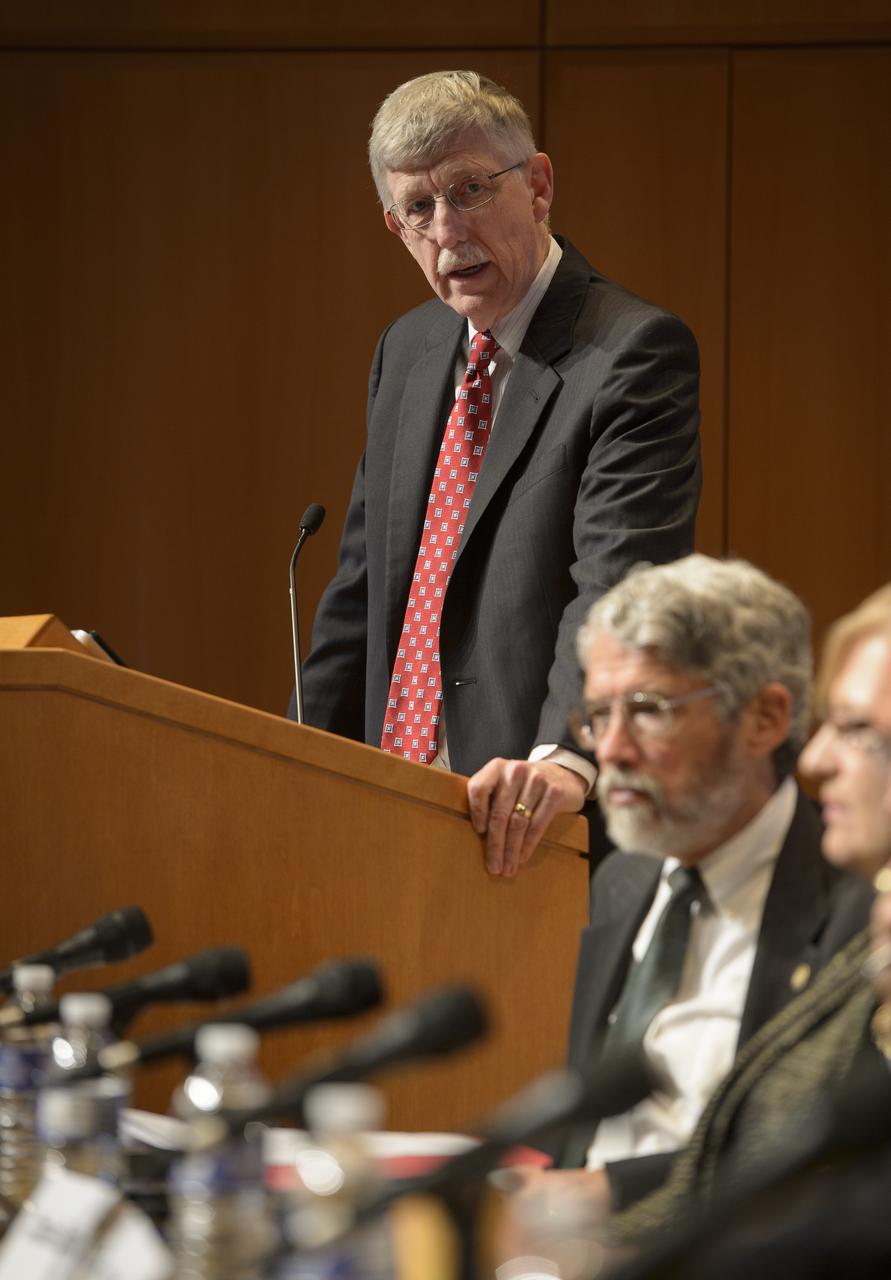
Director of the National Institutes of Health (NIH) Francis S. Collins, M.D., Ph.D., delivers remarks during a White House Office of Science and Technology Policy (OSTP) Fiscal Year 2014 budget briefing held with with Dr. John P. Holdren, Director of OSTP, Patricia Falcone of OSTP, Charlie Bolden from NASA, Cora Marrett from NSF, and Kathryn Sullivan from NOAA, at the American Association for the Advancement of Science (AAAS) on Wednesday, April 10, 2013 in Washington. Photo Credit: (NASA/Bill Ingalls)
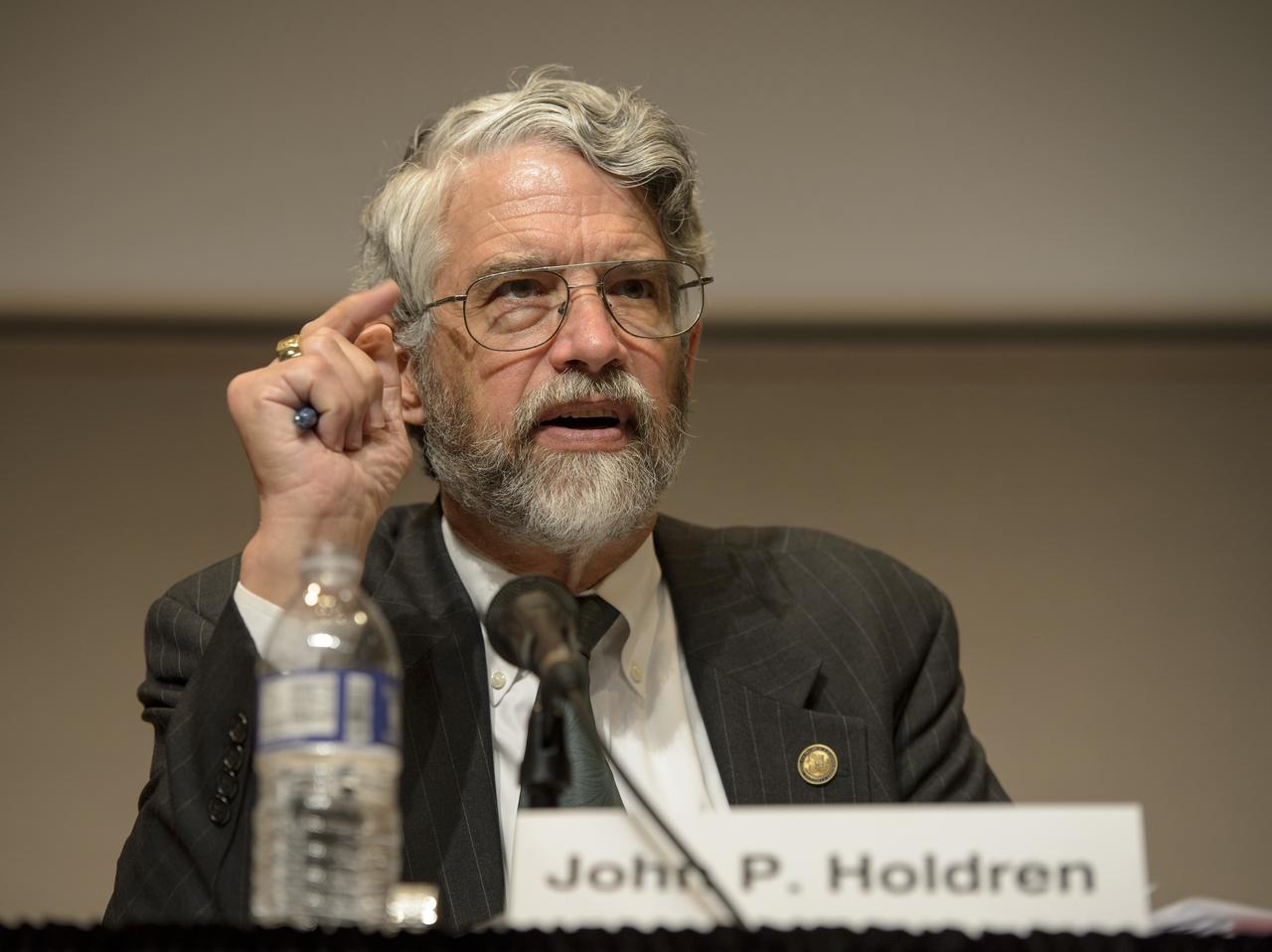
Dr. John P. Holdren, Assistant to the President for Science and Technology, Director of the White House Office of Science and Technology Policy, speaks during a Fiscal Year 2014 budget briefing held with Patricia Falcone of OSTP, Charlie Bolden from NASA, Francis Collins from NIH, Cora Marrett from NSF, and Kathryn Sullivan from NOAA, at the American Association for the Advancement of Science (AAAS) on Wednesday, April 10, 2013 in Washington. Photo Credit: (NASA/Bill Ingalls)
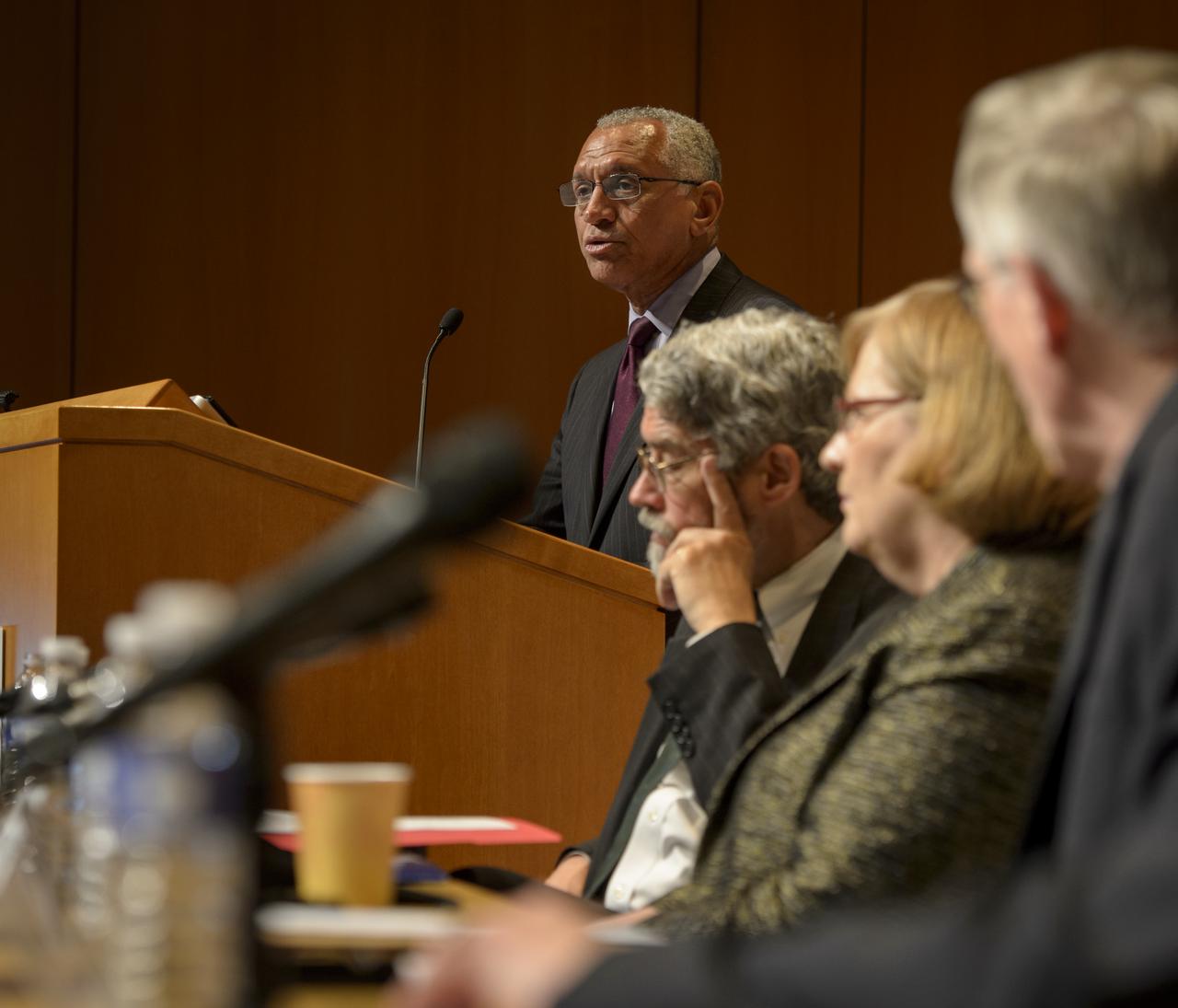
NASA Administrator Charlie Bolden, delivers remarks during a White House Office of Science and Technology Policy (OSTP) Fiscal Year 2014 budget briefing held with with Dr. John P. Holdren, Director of OSTP, Patricia Falcone of OSTP, Francis Collins from NIH, Cora Marrett from NSF, and Kathryn Sullivan from NOAA, at the American Association for the Advancement of Science (AAAS) on Wednesday, April 10, 2013 in Washington. Photo Credit: (NASA/Bill Ingalls)
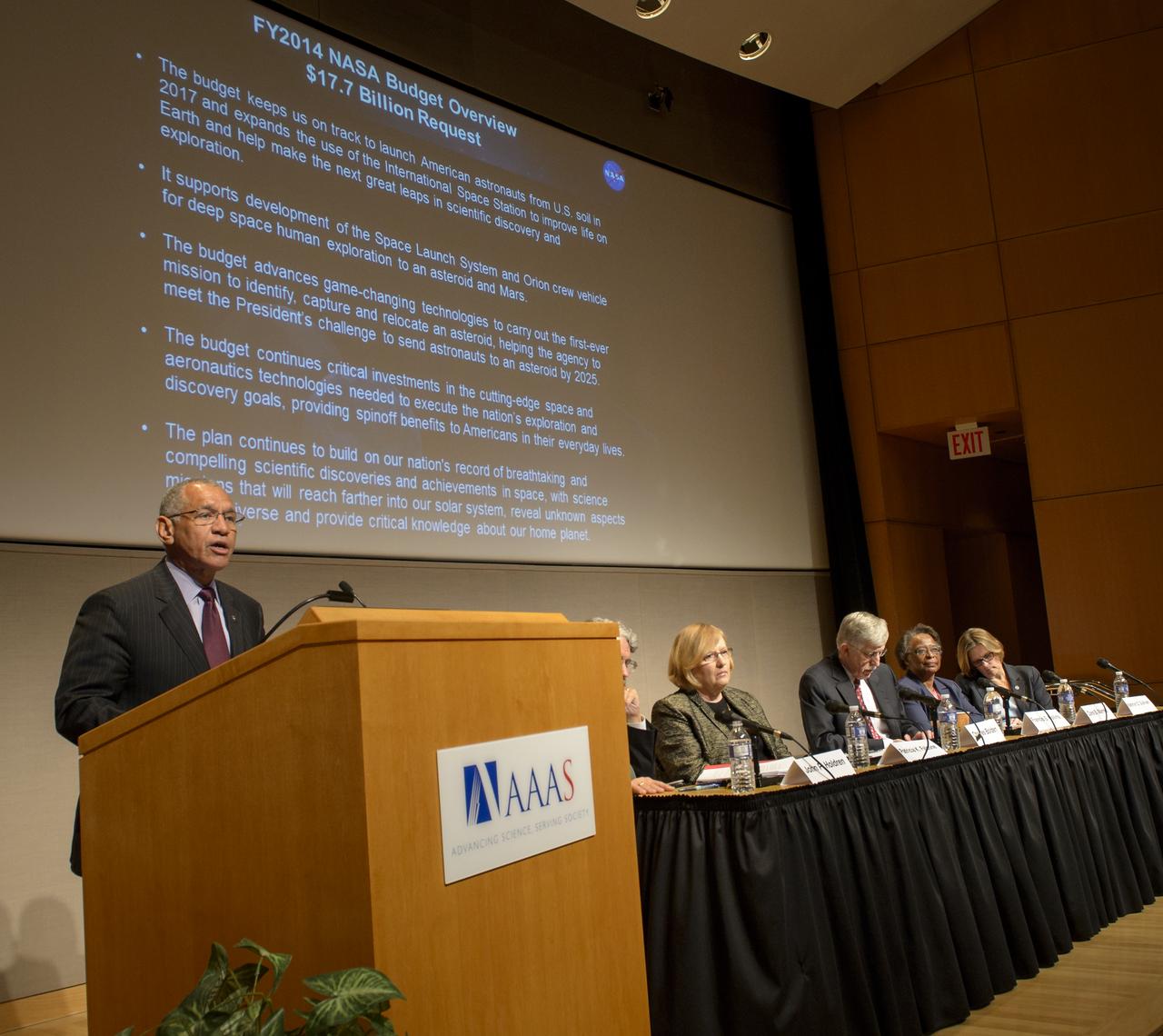
NASA Administrator Charlie Bolden, delivers remarks during a White House Office of Science and Technology Policy (OSTP) Fiscal Year 2014 budget briefing held with with Dr. John P. Holdren, Director of OSTP, Patricia Falcone of OSTP, Francis Collins from NIH, Cora Marrett from NSF, and Kathryn Sullivan from NOAA, at the American Association for the Advancement of Science (AAAS) on Wednesday, April 10, 2013 in Washington. Photo Credit: (NASA/Bill Ingalls)
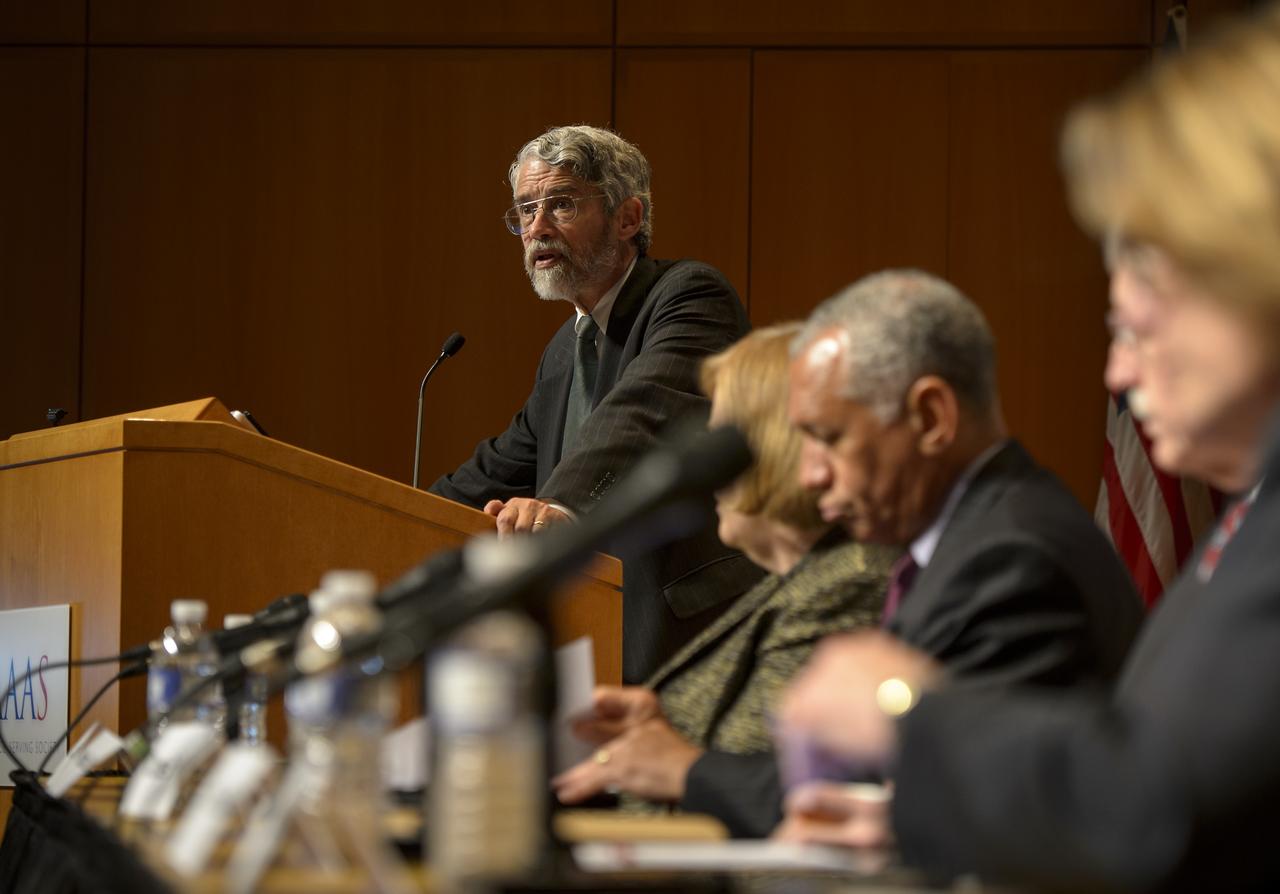
Dr. John P. Holdren, Assistant to the President for Science and Technology, Director of the White House Office of Science and Technology Policy, speaks during a Fiscal Year 2014 budget briefing held with Patricia Falcone of OSTP, Charlie Bolden from NASA, Francis Collins from NIH, Cora Marrett from NSF, and Kathryn Sullivan from NOAA, at the American Association for the Advancement of Science (AAAS) on Wednesday, April 10, 2013 in Washington. Photo Credit: (NASA/Bill Ingalls)
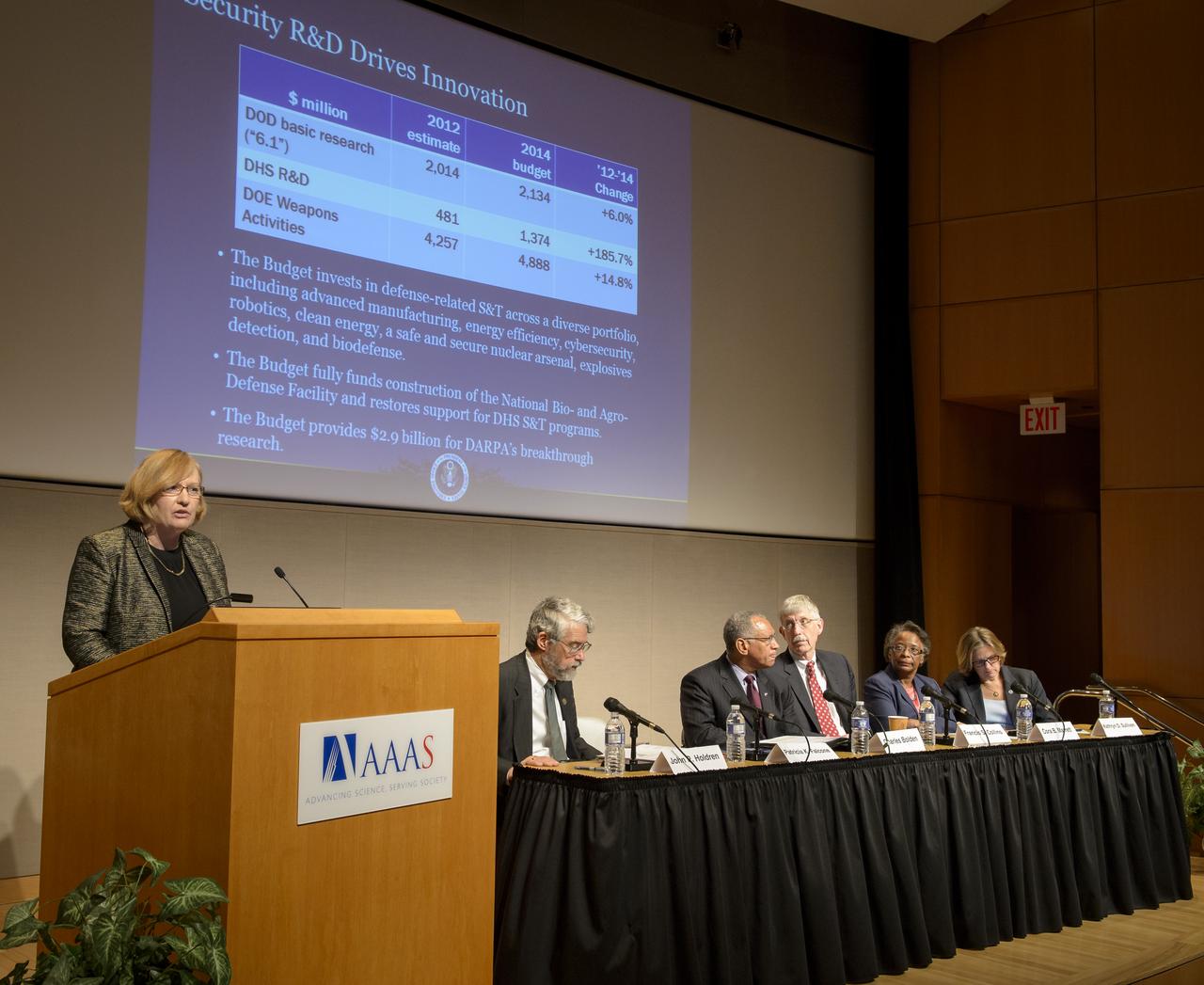
Patricia Falcone, Associate Director, National Security and International Affairs Division, White House Office of Science and Technology Policy, delivers remarks during a Fiscal Year 2014 budget briefing with Dr. John P. Holdren, Director of OSTP, Charlie Bolden from NASA, Francis Collins from NIH, Cora Marrett from NSF, and Kathryn Sullivan from NOAA, at the American Association for the Advancement of Science (AAAS) on Wednesday, April 10, 2013 in Washington. Photo Credit: (NASA/Bill Ingalls)
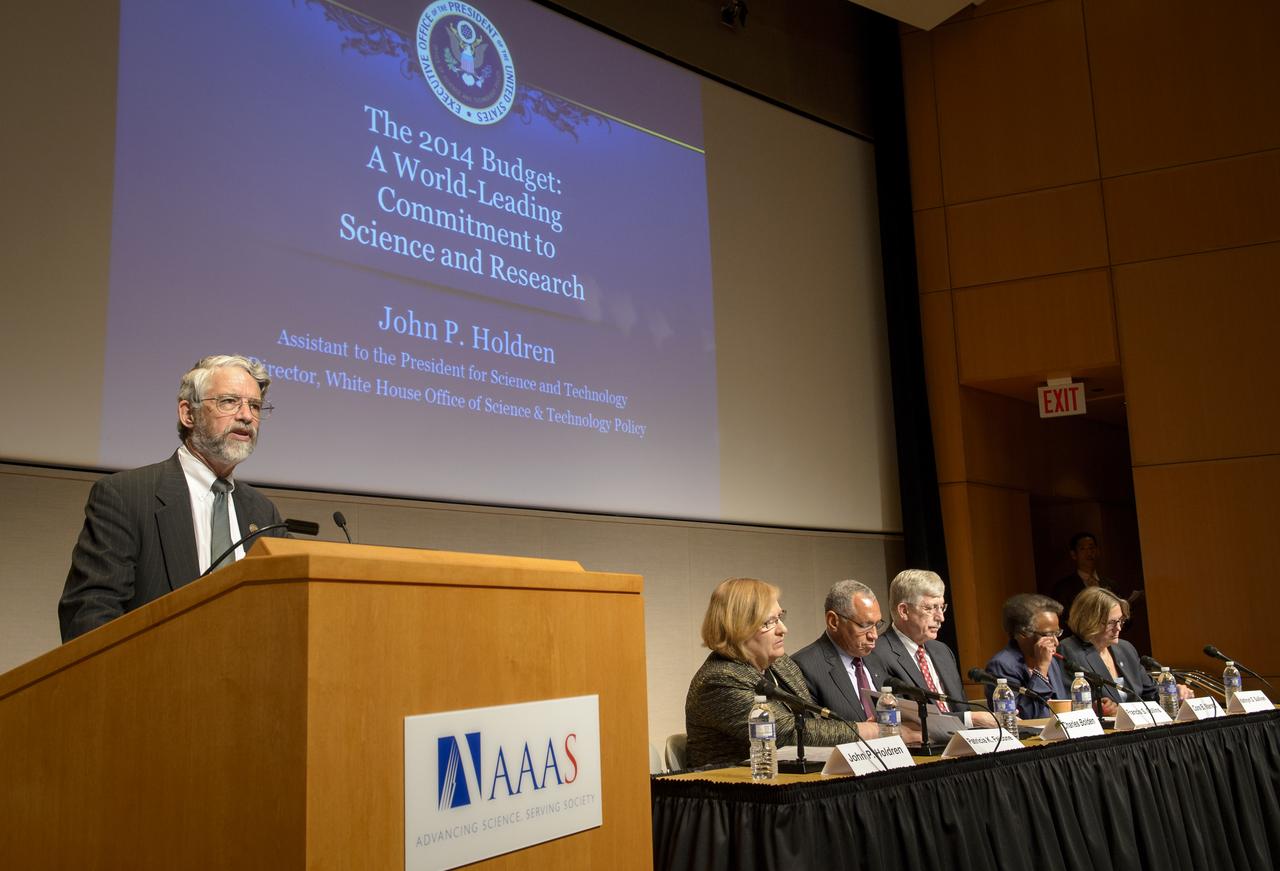
Dr. John P. Holdren, Assistant to the President for Science and Technology, Director of the White House Office of Science and Technology Policy, speaks during a Fiscal Year 2014 budget briefing held with Patricia Falcone of OSTP, Charlie Bolden from NASA, Francis Collins from NIH, Cora Marrett from NSF, and Kathryn Sullivan from NOAA, at the American Association for the Advancement of Science (AAAS) on Wednesday, April 10, 2013 in Washington. Photo Credit: (NASA/Bill Ingalls)
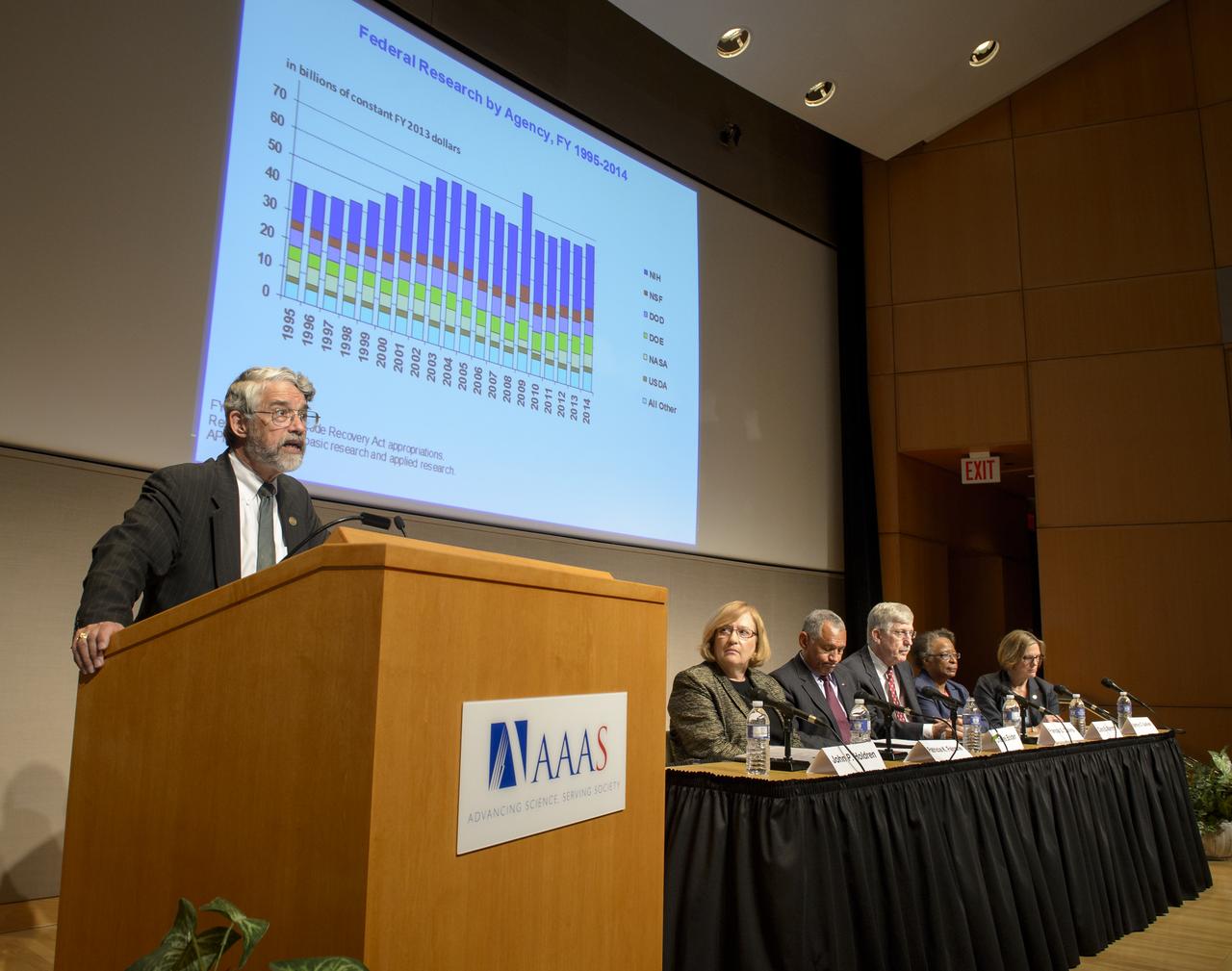
Dr. John P. Holdren, Assistant to the President for Science and Technology, Director of the White House Office of Science and Technology Policy, speaks during a Fiscal Year 2014 budget briefing held with Patricia Falcone of OSTP, Charlie Bolden from NASA, Francis Collins from NIH, Cora Marrett from NSF, and Kathryn Sullivan from NOAA, at the American Association for the Advancement of Science (AAAS) on Wednesday, April 10, 2013 in Washington. Photo Credit: (NASA/Bill Ingalls)

NASA image release April 22, 2010 Object Names: Carina Nebula, NGC 3372 Image Type: Astronomical Credit: NASA/N. Smith (University of California, Berkeley) and NOAO/AURA/NSF To read learn more about this image go to: <a href="http://www.nasa.gov/mission_pages/hubble/science/hubble20th-img.html" rel="nofollow">www.nasa.gov/mission_pages/hubble/science/hubble20th-img....</a> <b><a href="http://www.nasa.gov/centers/goddard/home/index.html" rel="nofollow">NASA Goddard Space Flight Center</a></b> is home to the nation's largest organization of combined scientists, engineers and technologists that build spacecraft, instruments and new technology to study the Earth, the sun, our solar system, and the universe.
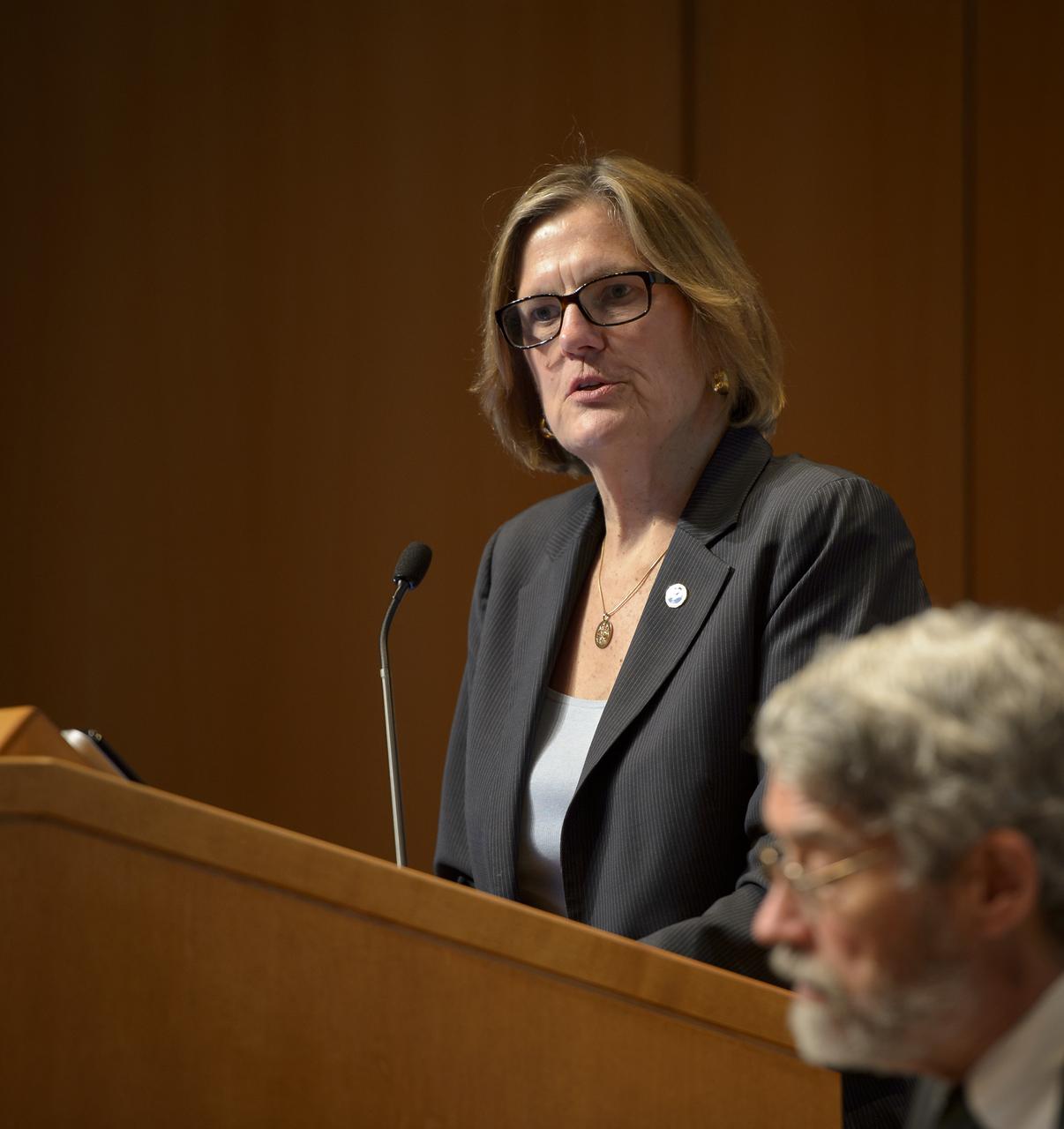
Dr. Kathryn D. Sullivan, Acting Under Secretary of Commerce for Oceans and Atmosphere and Acting NOAA Administrator, delivers remarks during a White House Office of Science and Technology Policy (OSTP) Fiscal Year 2014 budget briefing held with with Dr. John P. Holdren, Director of OSTP, Patricia Falcone of OSTP, Charlie Bolden from NASA, Francis Collins from NIH, and Cora Marrett from NSF, at the American Association for the Advancement of Science (AAAS) on Wednesday, April 10, 2013 in Washington. Photo Credit: (NASA/Bill Ingalls)
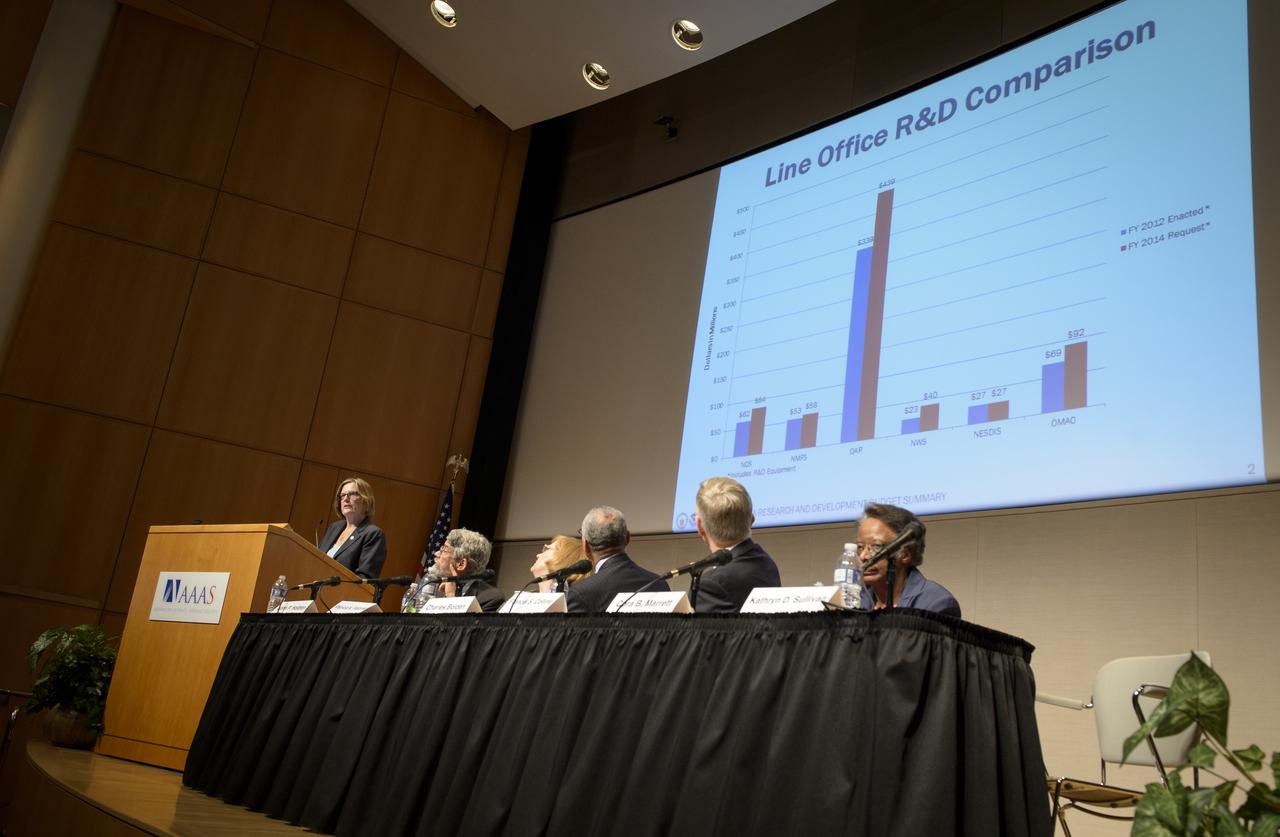
Dr. Kathryn D. Sullivan, Acting Under Secretary of Commerce for Oceans and Atmosphere and Acting NOAA Administrator, delivers remarks during a White House Office of Science and Technology Policy (OSTP) Fiscal Year 2014 budget briefing held with with Dr. John P. Holdren, Director of OSTP, Patricia Falcone of OSTP, Charlie Bolden from NASA, Francis Collins from NIH, and Cora Marrett from NSF, at the American Association for the Advancement of Science (AAAS) on Wednesday, April 10, 2013 in Washington. Photo Credit: (NASA/Bill Ingalls)

Astronomers have produced a highly detailed image of the Crab Nebula, by combining data from telescopes spanning nearly the entire breadth of the electromagnetic spectrum, from radio waves seen by the Karl G. Jansky Very Large Array (VLA) to the powerful X-ray glow as seen by the orbiting Chandra X-ray Observatory. And, in between that range of wavelengths, the Hubble Space Telescope's crisp visible-light view, and the infrared perspective of the Spitzer Space Telescope. This composite image of the Crab Nebula, a supernova remnant, was assembled by combining data from five telescopes spanning nearly the entire breadth of the electromagnetic spectrum: the Very Large Array, the Spitzer Space Telescope, the Hubble Space Telescope, the XMM-Newton Observatory, and the Chandra X-ray Observatory. Credits: NASA, ESA, NRAO/AUI/NSF and G. Dubner (University of Buenos Aires) #nasagoddard #space #science
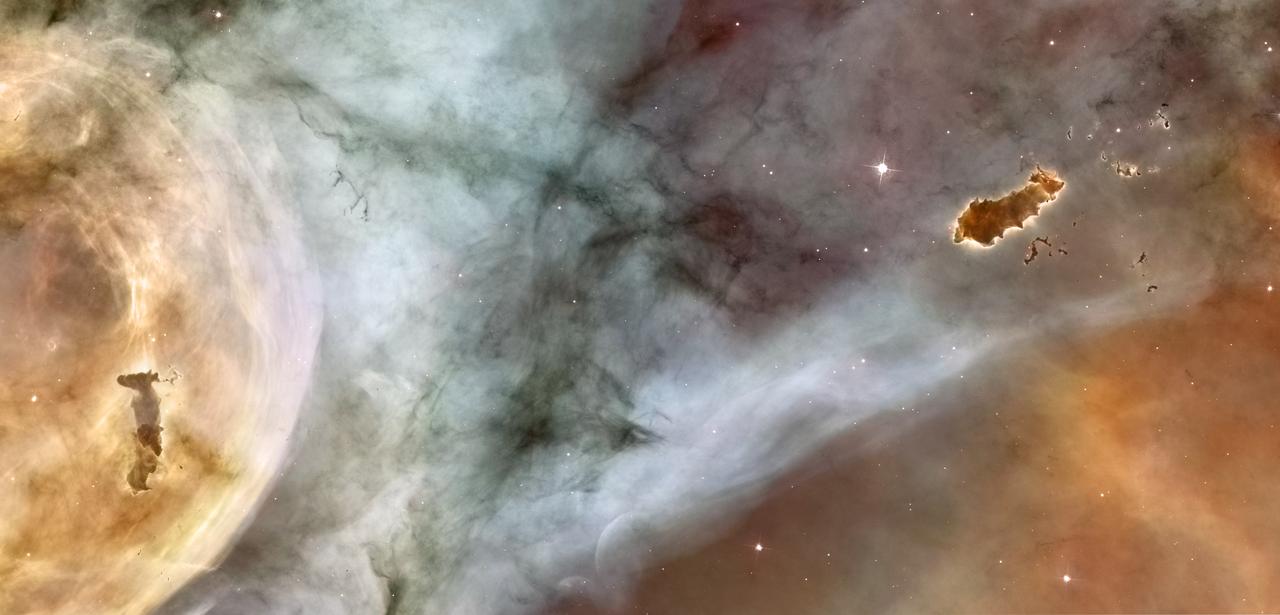
Carina Nebula Details: The Caterpillar Credit for Hubble Image: NASA, ESA, N. Smith (University of California, Berkeley), and The Hubble Heritage Team (STScI/AURA) Credit for CTIO Image: N. Smith (University of California, Berkeley) and NOAO/AURA/NSF The Hubble Space Telescope is a project of international cooperation between NASA and the European Space Agency. NASA's Goddard Space Flight Center manages the telescope. The Space Telescope Science Institute conducts Hubble science operations. Goddard is responsible for HST project management, including mission and science operations, servicing missions, and all associated development activities. To learn more about the Hubble Space Telescope go here: <a href="http://www.nasa.gov/mission_pages/hubble/main/index.html" rel="nofollow">www.nasa.gov/mission_pages/hubble/main/index.html</a>

This composite image shows a hot spot in Jupiter's atmosphere. In the image on the left, taken on Sept. 16, 2020, by the Gemini North telescope on the island of Hawaii, the hot spot appears bright in the infrared at a wavelength of 5 microns. In the inset image on the right, taken by Juno's JunoCam visible-light imager, also on Sept. 16 during Juno's 29th perijove pass, the hot spot appears dark. Scientists have known of Jupiter's hot spots for a long time. On Dec. 7, 1995, the Galileo probe likely descended into a similar hot spot. To the naked eye, Jupiter's hot spots appear as dark, cloud-free areas in Jupiter's equatorial belt, but at infrared wavelengths, which are invisible to the human eye, they are extremely bright, revealing the warm, deep atmosphere below the clouds. High-resolution images of hot spots such as these are key both to understanding the role of storms and waves in Jupiter's atmosphere. Citizen scientist Brian Swift processed the images to enhance the color and contrast, with further processing by Tom Momary to map the JunoCam image to the Gemini data. The international Gemini North telescope is a 26.6-foot-diameter (8.1-meter-diameter) optical/infrared telescope optimized for infrared observations, and is managed for the NSF by the Association of Universities for Research in Astronomy (AURA). https://photojournal.jpl.nasa.gov/catalog/PIA24299

SCI2012_0003: SOFIA mid-infrared image of the planetary nebula Minkowski 2-9 (M2-9), also known as the Butterfly Nebula, compared with a visual-wavelength Hubble Space Telescope image at the same scale and orientation. The nebula is composed of two lobes of gas & dust expelled from a dying star with about the mass of our Sun that is seen at the center of the lobes. The HST image shows mostly ionized gas in the lobes whereas the SOFIA image shows mostly solid grains condensing in the gas. The SOFIA data were obtained during SOFIA's Early Science program in 2011 by a Guest Investigator team led by Michael Werner of Caltech/JPL using the FORCAST camera (P.I.Terry Herter, Cornell University). Credit: SOFIA image, RGB = 37, 24, 20 microns; NASA/DLR/USRA/DSI/FORCAST team/M. Werner et al./A. Helton, J. Rho; HST image: NASA/ESA/NSF/AURA/Hubble Heritage Team/STScI/B. Balick, V. Icke, G. Mellema
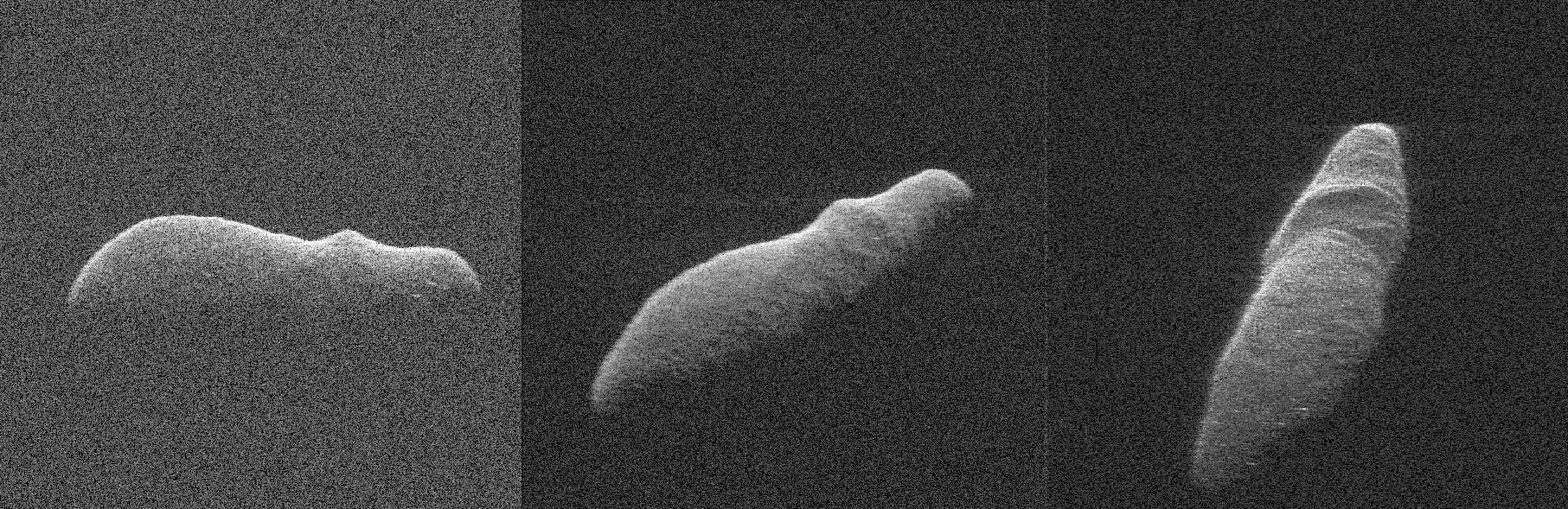
These three radar images of near-Earth asteroid 2003 SD220 were obtained on Dec. 15-17, by coordinating observations with NASA's 230-foot (70-meter) antenna at the Goldstone Deep Space Communications Complex in California and the National Science Foundation's (NSF) 330-foot (100-meter) Green Bank Telescope in West Virginia. The radar image on the left was obtained on Dec. 15 when asteroid 2003 SD220 was 2.8 million miles (4.5 million kilometers) from Earth. The radar image in the middle was generated from data collected on Dec. 16 when the asteroid was 2.5 million miles (4.0 million kilometers) from Earth. The image on the right was obtained on Dec. 17 when 2003 SD220 was 2.2 million miles (3.6 million kilometers) from Earth. The spatial resolution on the images is as fine as 12 feet (3.7 meters) per pixel. The radar images reveal the asteroid is at least one mile (1.6 kilometers) long. Asteroid 2003 SD220 was discovered on Sept. 29, 2003, by astronomers at the Lowell Observatory Near-Earth-Object Search (LONEOS) in Flagstaff, Arizona -- an early Near-Earth Object (NEO) survey project supported by NASA that is no longer in operation. The asteroid will fly safely past Earth on Saturday, Dec. 22, 2018, at a distance of about 1.8 million miles (2.9 million kilometers). This will be the asteroid's closest approach in more than 400 years and the closest until 2070, when the asteroid will safely fly by slightly closer. https://photojournal.jpl.nasa.gov/catalog/PIA22970
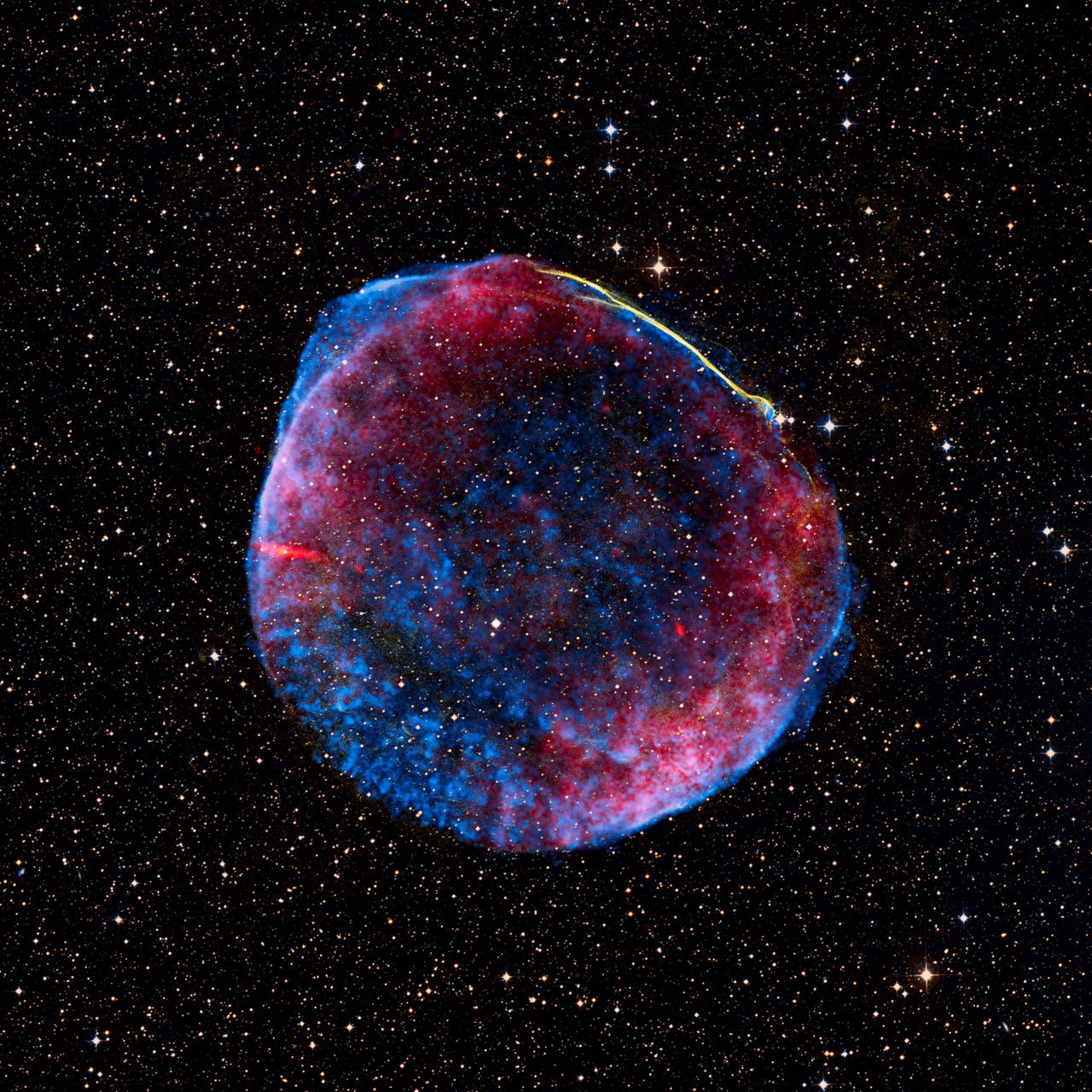
Release date: July 1, 2008 This image is a composite of visible (or optical), radio, and X-ray data of the full shell of the supernova remnant from SN 1006. The radio data show much of the extent that the X-ray image shows. In contrast, only a small linear filament in the northwest corner of the shell is visible in the optical data. The object has an angular size of roughly 30 arcminutes (0.5 degree, or about the size of the full moon), and a physical size of 60 light-years (18 parsecs) based on its distance of nearly 7,000 light-years. The small green box along the bright filament at the top of the image corresponds to the dimensions of the Hubble release image. The optical data was obtained at the University of Michigan's 0.9-meter Curtis Schmidt telescope at the National Science Foundation's Cerro Tololo Inter-American Observatory (CTIO) near La Serena, Chile. H-alpha, continuum-subtracted data were provided by F. Winkler (Middlebury COllege) et al. The X-ray data were acquired from the Chandra X-ray Observatory's AXAF CCD Imaging Spectrometer (ACIS) at 0.5-3keV, and were provided by J. Hughes (Rutgers University) et al. The radio data, supplied by K. Dyer (NRAO, Socorro) et al., were a composite from the National Radio Astronomy Observatory's Very Large Array (NRAO/VLA) in Socorro, New Mexico, along with the Green Bank Telescope (GBT) in Green Bank, West Virginia. Data of the supernova remnant were blended on a visible-light stellar background created using the Digitized Sky Survey's Anglo-Australian Observatory (AAO2) blue and red plates. Photo Credit: NASA, ESA, and Z. Levay (STScI) Science Credit: Radio: NRAO/AUI/NSF GBT+VLA 1.4 GHz mosaic (Dyer, Maddalena and Cornwell, NRAO); X-ray: NASA/CXC/Rutgers/G. Cassam-Chenai and J. Hughes et al.; Optical: F.Winkler/Middlebury College and NOAO/AURA/NSF; and DSS To learn more about the Hubble Space Telescope go here: <a href="http://www.nasa.gov/mission_pages/hubble/main/index.html" rel="nofollow">www.nasa.gov/mission_pages/hubble/main/index.html</a> <b><a href="http://www.nasa.gov/centers/goddard/home/index.html" rel="nofollow">NASA Goddard Space Flight Center</a></b> is home to the nation's largest organization of combined scientists, engineers and technologists that build spacecraft, instruments and new technology to study the Earth, the sun, our solar system, and the universe. <b>Follow us on <a href="http://twitter.com/NASAGoddardPix" rel="nofollow">Twitter</a></b> <b>Join us on <a href="http://www.facebook.com/pages/Greenbelt-MD/NASA-Goddard/395013845897?ref=tsd" rel="nofollow">Facebook</a><b> </b></b>

Carina Nebula Details: Great Clouds Credit for Hubble Image: NASA, ESA, N. Smith (University of California, Berkeley), and The Hubble Heritage Team (STScI/AURA) Credit for CTIO Image: N. Smith (University of California, Berkeley) and NOAO/AURA/NSF The Hubble Space Telescope is a project of international cooperation between NASA and the European Space Agency. NASA's Goddard Space Flight Center manages the telescope. The Space Telescope Science Institute conducts Hubble science operations. Goddard is responsible for HST project management, including mission and science operations, servicing missions, and all associated development activities. To learn more about the Hubble Space Telescope go here: <a href="http://www.nasa.gov/mission_pages/hubble/main/index.html" rel="nofollow">www.nasa.gov/mission_pages/hubble/main/index.html</a> <b><a href="http://www.nasa.gov/centers/goddard/home/index.html" rel="nofollow">NASA Goddard Space Flight Center</a></b> is home to the nation's largest organization of combined scientists, engineers and technologists that build spacecraft, instruments and new technology to study the Earth, the sun, our solar system, and the universe. <b>Follow us on <a href="http://twitter.com/NASA_GoddardPix" rel="nofollow">Twitter</a></b> <b>Join us on <a href="http://www.facebook.com/pages/Greenbelt-MD/NASA-Goddard/395013845897?ref=tsd" rel="nofollow">Facebook</a><b> </b></b>
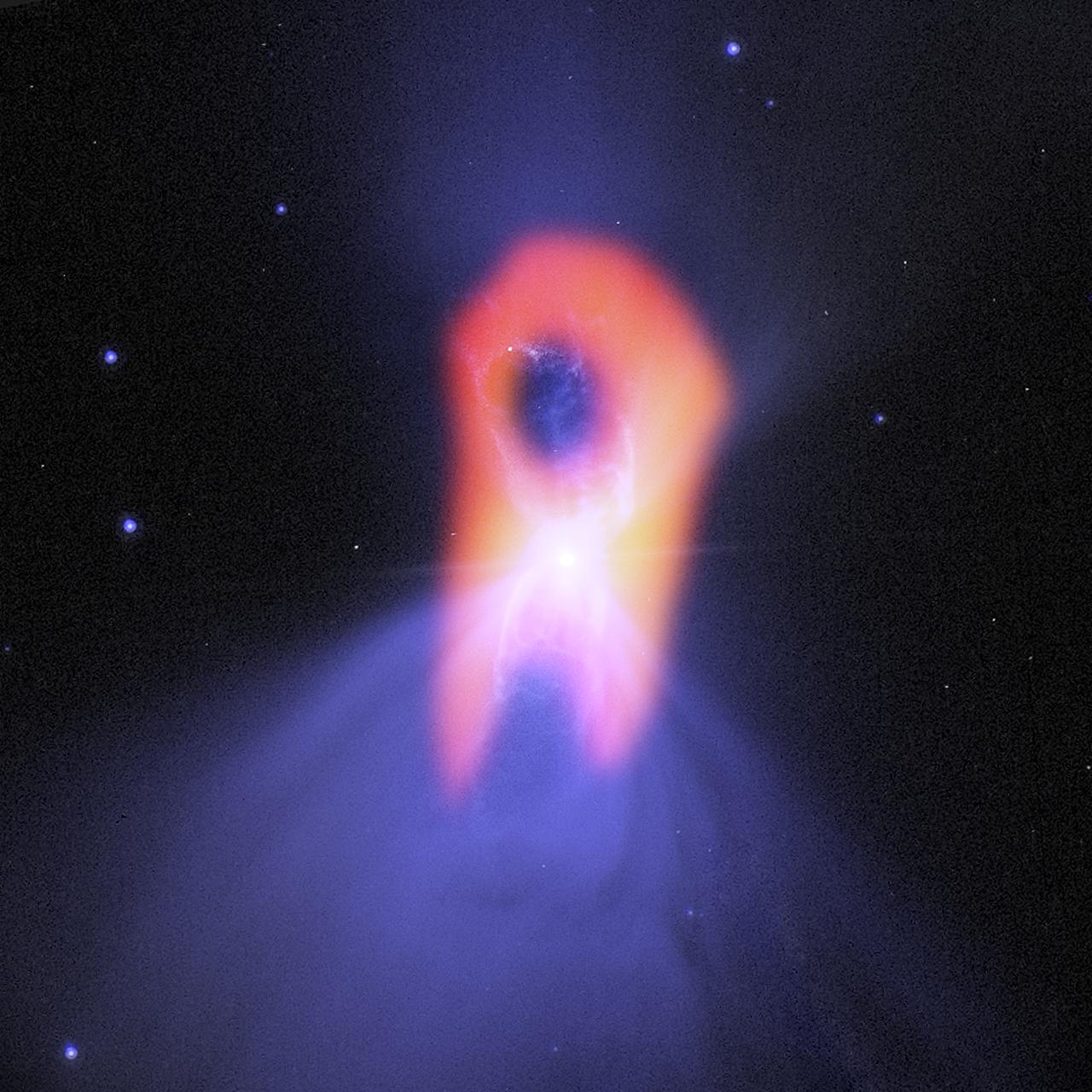
The Boomerang nebula, called the "coldest place in the universe," reveals its true shape to the Atacama Large Millimeter/submillimeter Array (ALMA) telescope. The background blue structure, as seen in visible light by NASA's Hubble Space Telescope, shows a classic double-lobe shape with a very narrow central region. ALMA’s resolution and ability to see the cold gas molecules reveals the nebula’s more elongated shape, as seen in red. Image credit: NRAO/AUI/NSF/NASA/STScI/JPL-Caltech Read more about this image from NASA's Jet Propulsion Laboratory (JPL) here: <a href="http://1.usa.gov/17o22Rz" rel="nofollow">1.usa.gov/17o22Rz</a> <b><a href="http://www.nasa.gov/audience/formedia/features/MP_Photo_Guidelines.html" rel="nofollow">NASA image use policy.</a></b> <b><a href="http://www.nasa.gov/centers/goddard/home/index.html" rel="nofollow">NASA Goddard Space Flight Center</a></b> enables NASA’s mission through four scientific endeavors: Earth Science, Heliophysics, Solar System Exploration, and Astrophysics. Goddard plays a leading role in NASA’s accomplishments by contributing compelling scientific knowledge to advance the Agency’s mission. <b>Follow us on <a href="http://twitter.com/NASA_GoddardPix" rel="nofollow">Twitter</a></b> <b>Like us on <a href="http://www.facebook.com/pages/Greenbelt-MD/NASA-Goddard/395013845897?ref=tsd" rel="nofollow">Facebook</a></b> <b>Find us on <a href="http://instagram.com/nasagoddard?vm=grid" rel="nofollow">Instagram</a></b>
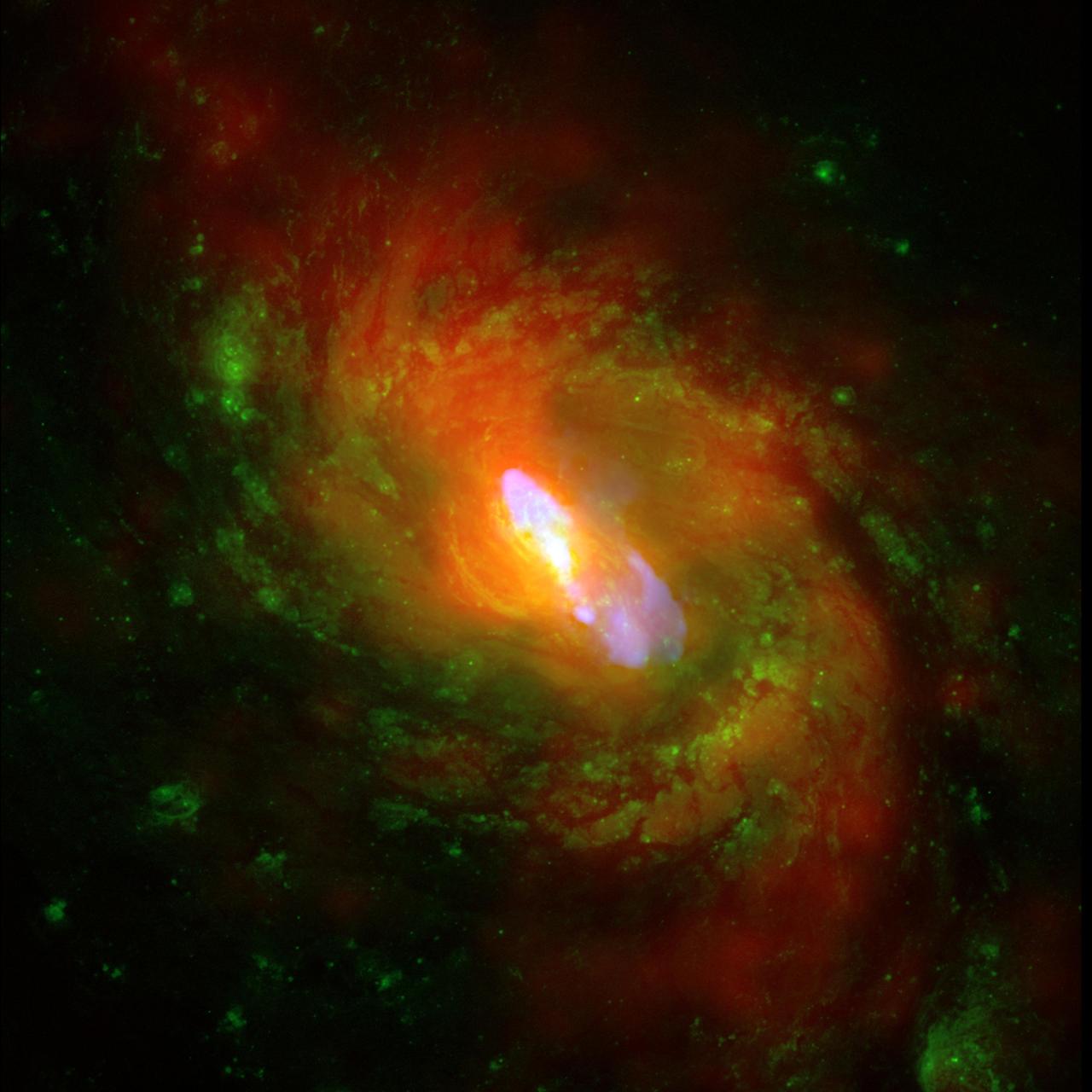
Observation Date: 1 pointing on Dec 4, 2000 and 9 pointings between Nov 18 and Dec 5, 2008. Distance Estimate: About 50 million light years away. This is a composite image of NGC 1068, one of the nearest and brightest galaxies containing a rapidly growing supermassive black hole. The X-ray images and spectra obtained using Chandra's High Energy Transmission Grating Spectrometer show that a strong wind is being driven away from the center of NGC 1068 at a rate of about a million miles per hour. This wind is likely generated as surrounding gas is accelerated and heated as it swirls toward the black hole. A portion of the gas is pulled into the black hole, but some of it is blown away. High energy X-rays produced by the gas near the black hole heat the ouflowing gas, causing it to glow at lower X-ray energies. X-ray data from the Chandra X-ray Observatory are shown in red, optical data from the Hubble Space Telescope in green and radio data from the Very Large Array in blue. The spiral structure of NGC 1068 is shown by the X-ray and optical data, and a jet powered by the central supermassive black hole is shown by the radio data. This Chandra study is much deeper than previous X-ray observations. Using this data, researchers believe that each year several times the mass of our sun is being deposited out to large distances, about 3,000 light years from the black hole. The wind likely carries enough energy to heat the surrounding gas and suppress extra star formation. These results help explain how a supermassive black hole can alter the evolution of its host galaxy. It has long been suspected that material blown away from a black hole can affect its environment, but a key question has been whether such "black hole blowback" typically delivers enough power to have a significant impact. NGC 1068 is located about 50 million light years from Earth and contains a supermassive black hole about twice as massive as the one in the middle of the Milky Way Galaxy. Image Credit: X-ray (NASA/CXC/ MIT/C.Canizares, D.Evans et al), Optical (NASA/STScI), Radio (NSF/ NRAO/VLA)
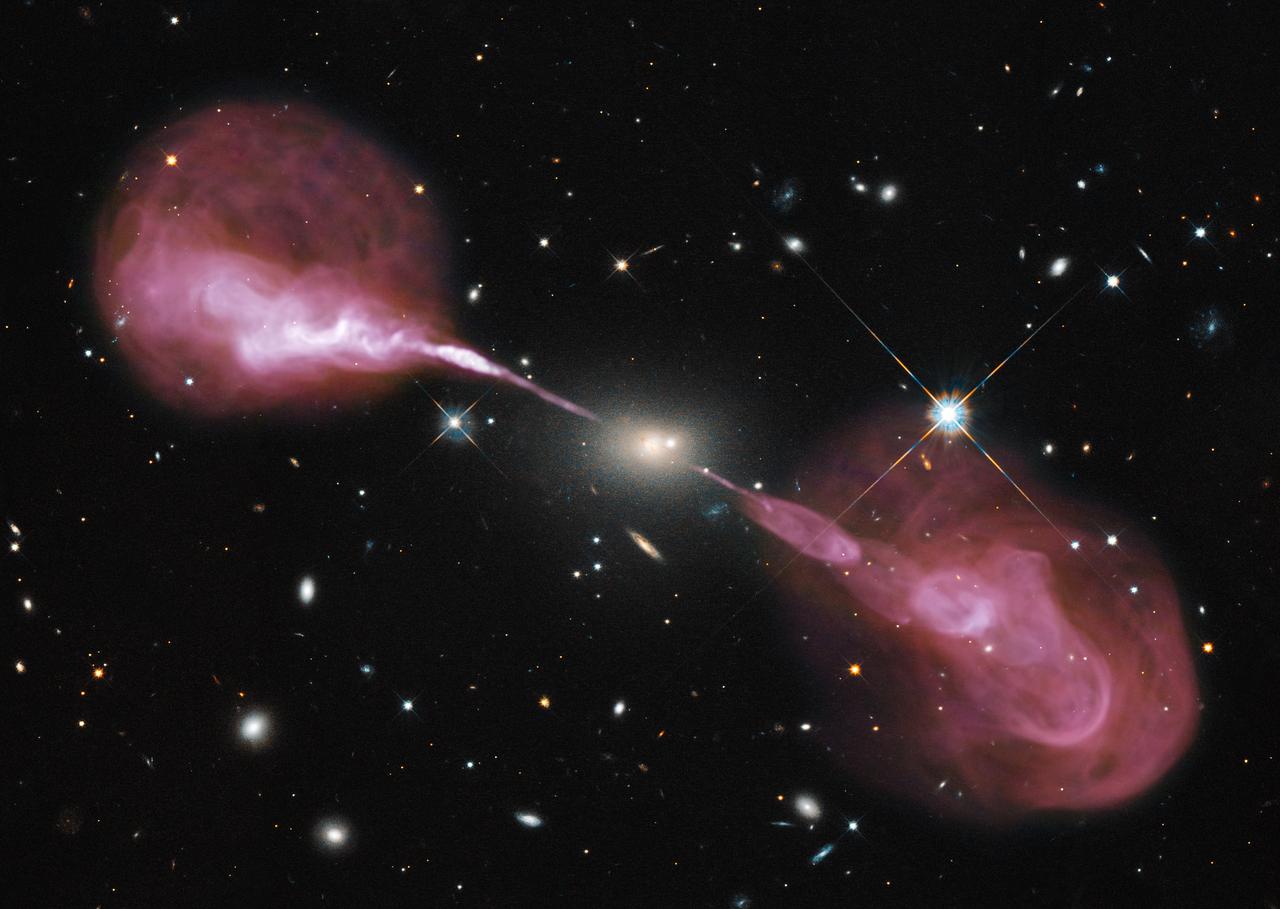
Spectacular jets powered by the gravitational energy of a super massive black hole in the core of the elliptical galaxy Hercules A illustrate the combined imaging power of two of astronomy's cutting-edge tools, the Hubble Space Telescope's Wide Field Camera 3, and the recently upgraded Karl G. Jansky Very Large Array (VLA) radio telescope in New Mexico. <b>To view a video of this go to: <a href="http://bit.ly/Ue2ypS" rel="nofollow">bit.ly/Ue2ypS</a> </b> Some two billion light-years away, the yellowish elliptical galaxy in the center of the image appears quite ordinary as seen by Hubble in visible wavelengths of light. The galaxy is roughly 1,000 times more massive than the Milky Way and harbors a 2.5-billion-solar-mass central black hole that is 1,000 times more massive than the black hole in the Milky Way. But the innocuous-looking galaxy, also known as 3C 348, has long been known as the brightest radio-emitting object in the constellation Hercules. Emitting nearly a billion times more power in radio wavelengths than our Sun, the galaxy is one of the brightest extragalactic radio sources in the entire sky. Credit: NASA, ESA, S. Baum and C. O'Dea (RIT), R. Perley and W. Cotton (NRAO/AUI/NSF), and the Hubble Heritage Team (STScI/AURA) To read more about this image go to: <a href="http://1.usa.gov/Yu7uvX" rel="nofollow">1.usa.gov/Yu7uvX</a> <b><a href="http://www.nasa.gov/audience/formedia/features/MP_Photo_Guidelines.html" rel="nofollow">NASA image use policy.</a></b> <b><a href="http://www.nasa.gov/centers/goddard/home/index.html" rel="nofollow">NASA Goddard Space Flight Center</a></b> enables NASA’s mission through four scientific endeavors: Earth Science, Heliophysics, Solar System Exploration, and Astrophysics. Goddard plays a leading role in NASA’s accomplishments by contributing compelling scientific knowledge to advance the Agency’s mission. <b>Follow us on <a href="http://twitter.com/NASA_GoddardPix" rel="nofollow">Twitter</a></b> <b>Like us on <a href="http://www.facebook.com/pages/Greenbelt-MD/NASA-Goddard/395013845897?ref=tsd" rel="nofollow">Facebook</a></b> <b>Find us on <a href="http://instagram.com/nasagoddard?vm=grid" rel="nofollow">Instagram</a></b>
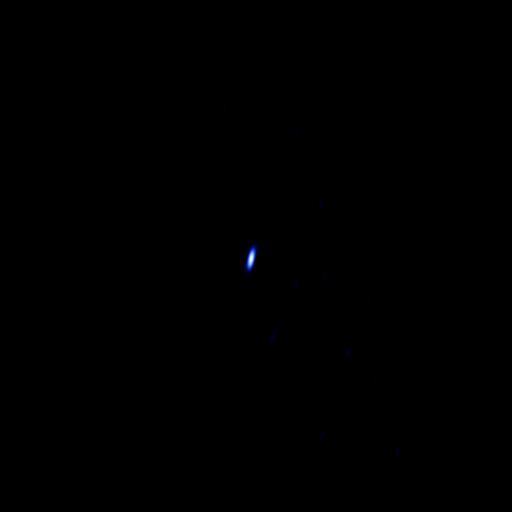
Radio telescopes cannot see Voyager 1 in visible light, but rather see the spacecraft signal in radio light. This image of Voyager 1 signal on Feb. 21, 2013. At the time, Voyager 1 was 11.5 billion miles 18.5 billion kilometers away.
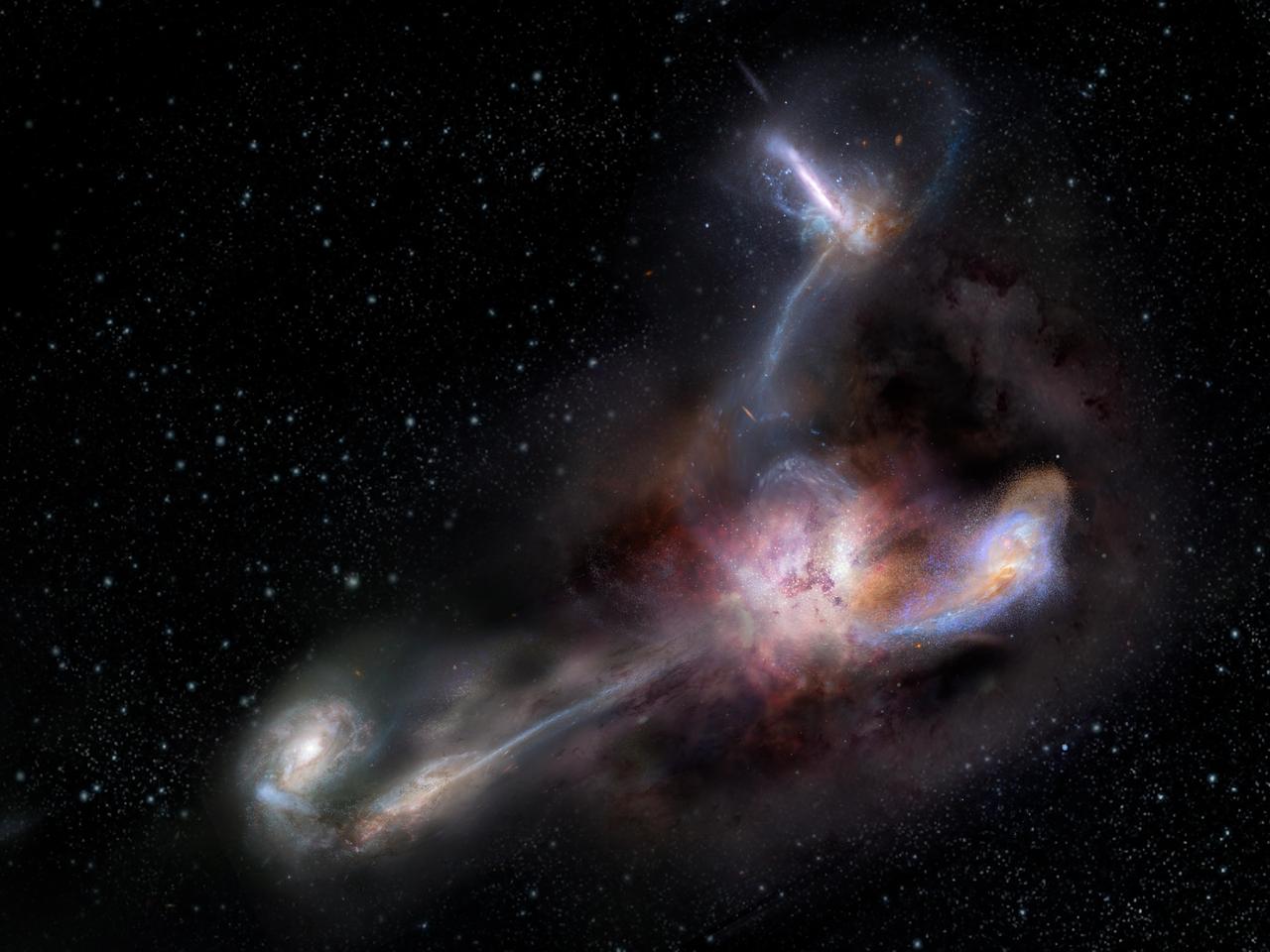
This artist's impression shows galaxy WISE J224607.55-052634.9 (W2246-0526 for short), the most luminous galaxy ever discovered. A new study using data from the Atacama Large Millimeter/submillimeter Array (ALMA) shows that W2246-0526 is syphoning dust and other material from three of its smaller galactic neighbors. https://photojournal.jpl.nasa.gov/catalog/PIA22358
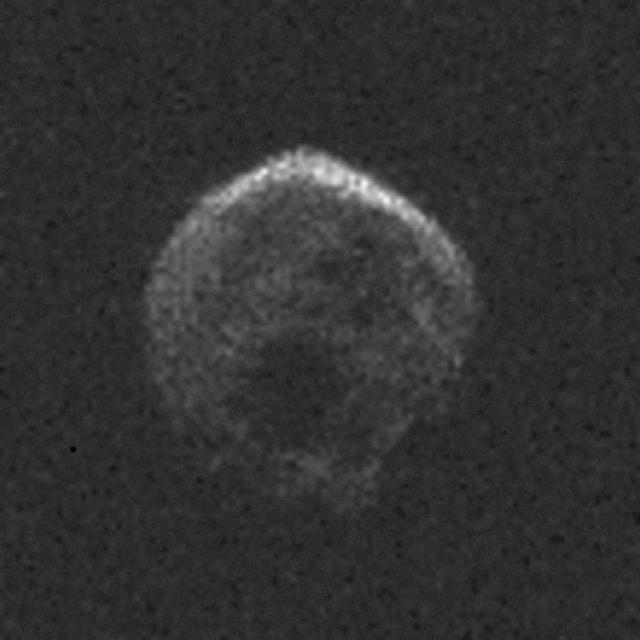
This partial frame from an animation was generated using radar data collected by the National Science Foundation 1,000-foot 305-meter Arecibo Observatory in Puerto Rico.
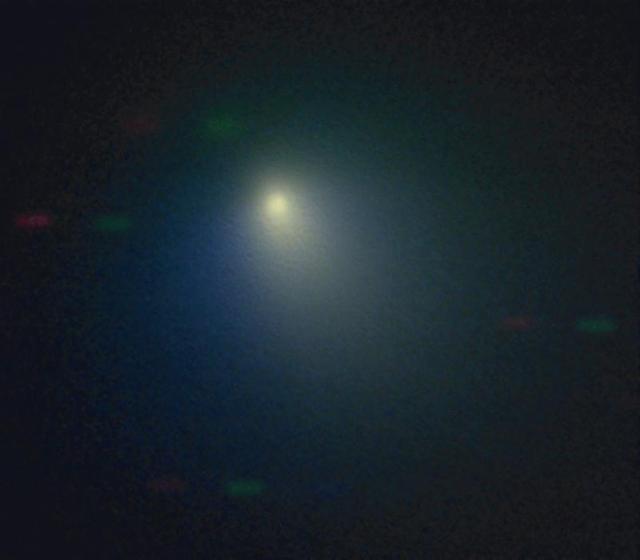
he Kitt Peak National Observatory 2.1-meter telescope observed comet Tempel 1 on April 11, 2005, when the comet was near its closest approach to the Earth. A pinkish dust jet is visible to the southwest, with the broader neutral gas coma surrounding it.

An artist's concept of a tidal disruption event (TDE) that happens when a star passes fatally close to a supermassive black hole, which reacts by launching a relativistic jet. https://photojournal.jpl.nasa.gov/catalog/PIA22355

These first radar images of 2015 TB145 from the National Science Foundation 1,000-foot 305-meter Arecibo Observatory in Puerto Rico, indicate the near-Earth object is spherical in shape and approximately 2,000 feet 600 meters in diameter. The radar images were taken on Oct. 30, 2015, and the image resolution is 25 feet (7.5 meters) per pixel. The celestial object is more than likely a dead comet that has shed its volatiles after numerous passes around the sun. http://photojournal.jpl.nasa.gov/catalog/PIA20040

An image of the galaxy Arp299B, which is undergoing a merging process with Arp299A (the galaxy to the left), captured by NASA's Hubble space telescope. The inset features an artist's illustration of a tidal disruption event (TDE), which occurs when a star passes fatally close to a supermassive black hole. A TDE was recently observed near the center of Arp299B. https://photojournal.jpl.nasa.gov/catalog/PIA22356
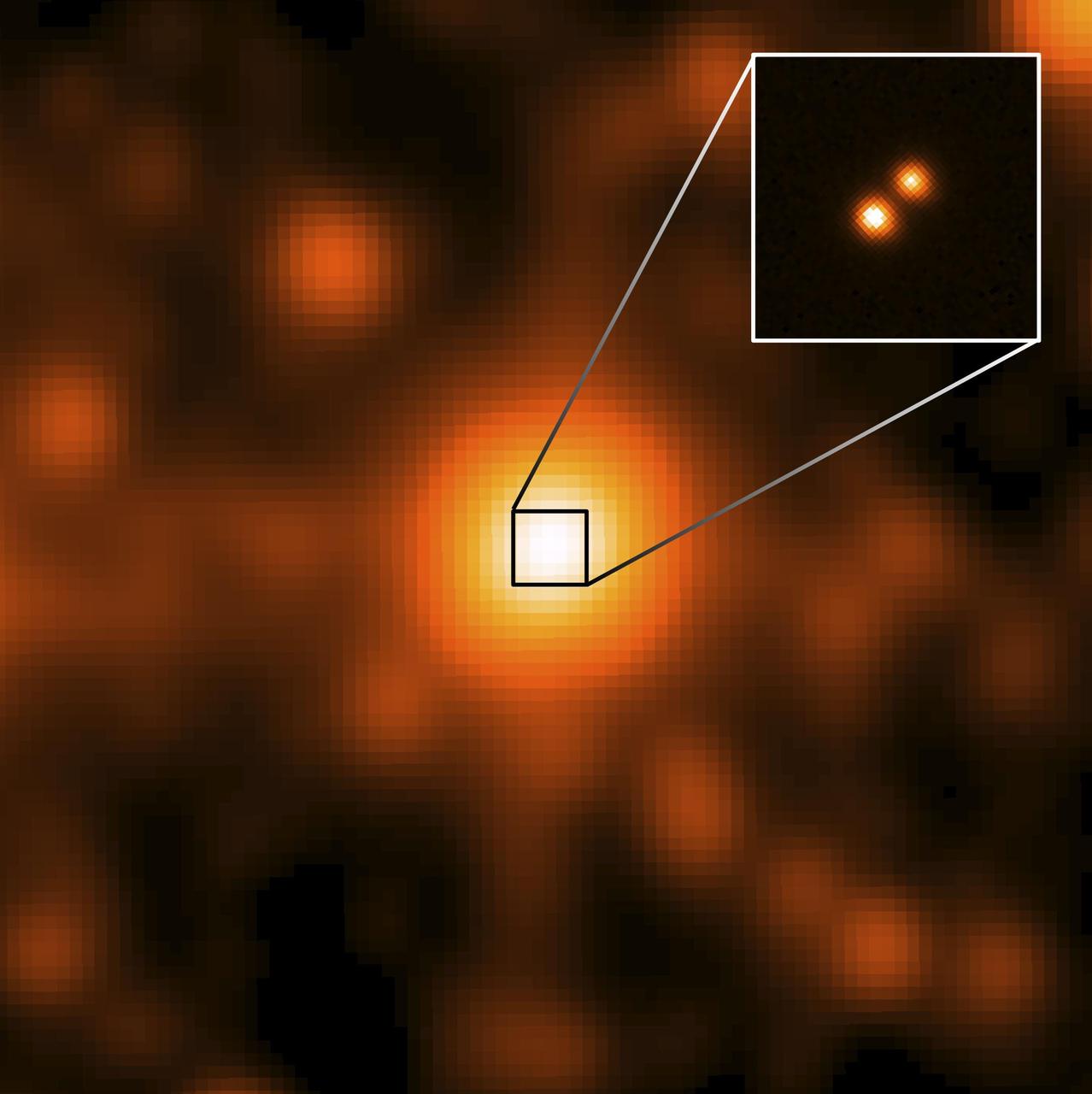
WISE J104915.57-531906, center of the larger image, was taken by the NASA WISE. This is the closest star system discovered since 1916, and the third closest to our sun. It is 6.5 light-years away.
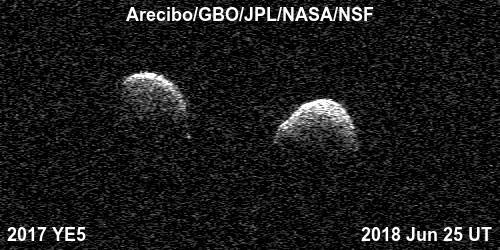
Bi-static radar images of the binary asteroid 2017 YE5 from the Arecibo Observatory and the Green Bank Observatory on June 25. The observations show that the asteroid consists of two separate objects in orbit around each other. A movie is available at https://photojournal.jpl.nasa.gov/catalog/PIA22559
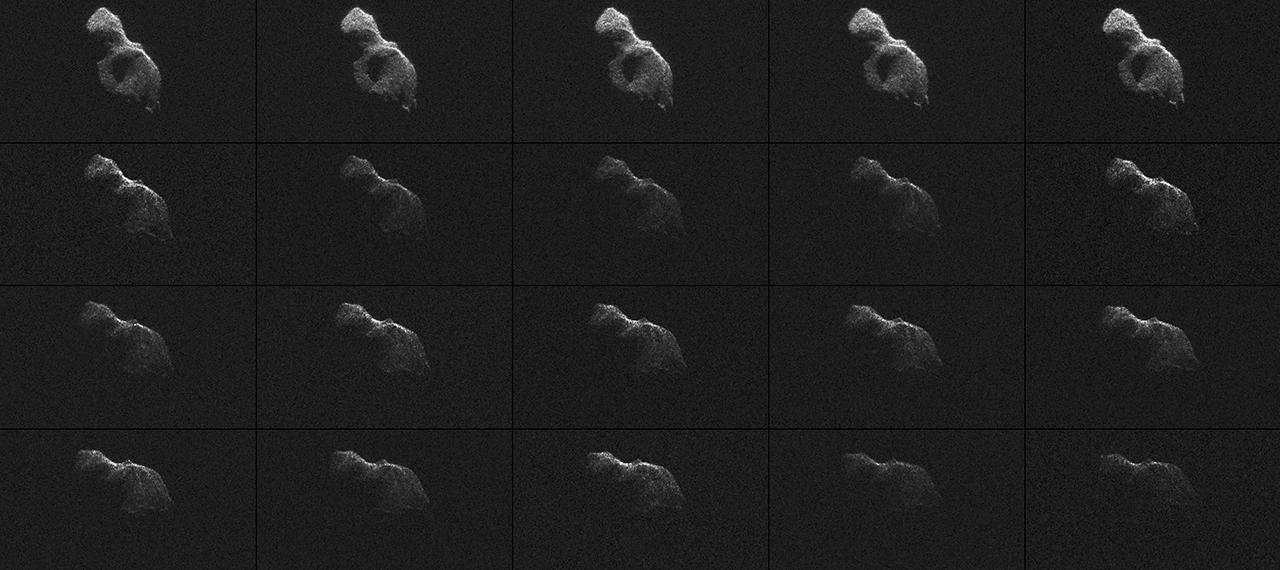
NASA scientists used Earth-based radar to produce these sharp views -- an image montage and a movie sequence -- of the asteroid designated 2014 HQ124 on June 8, 2014.
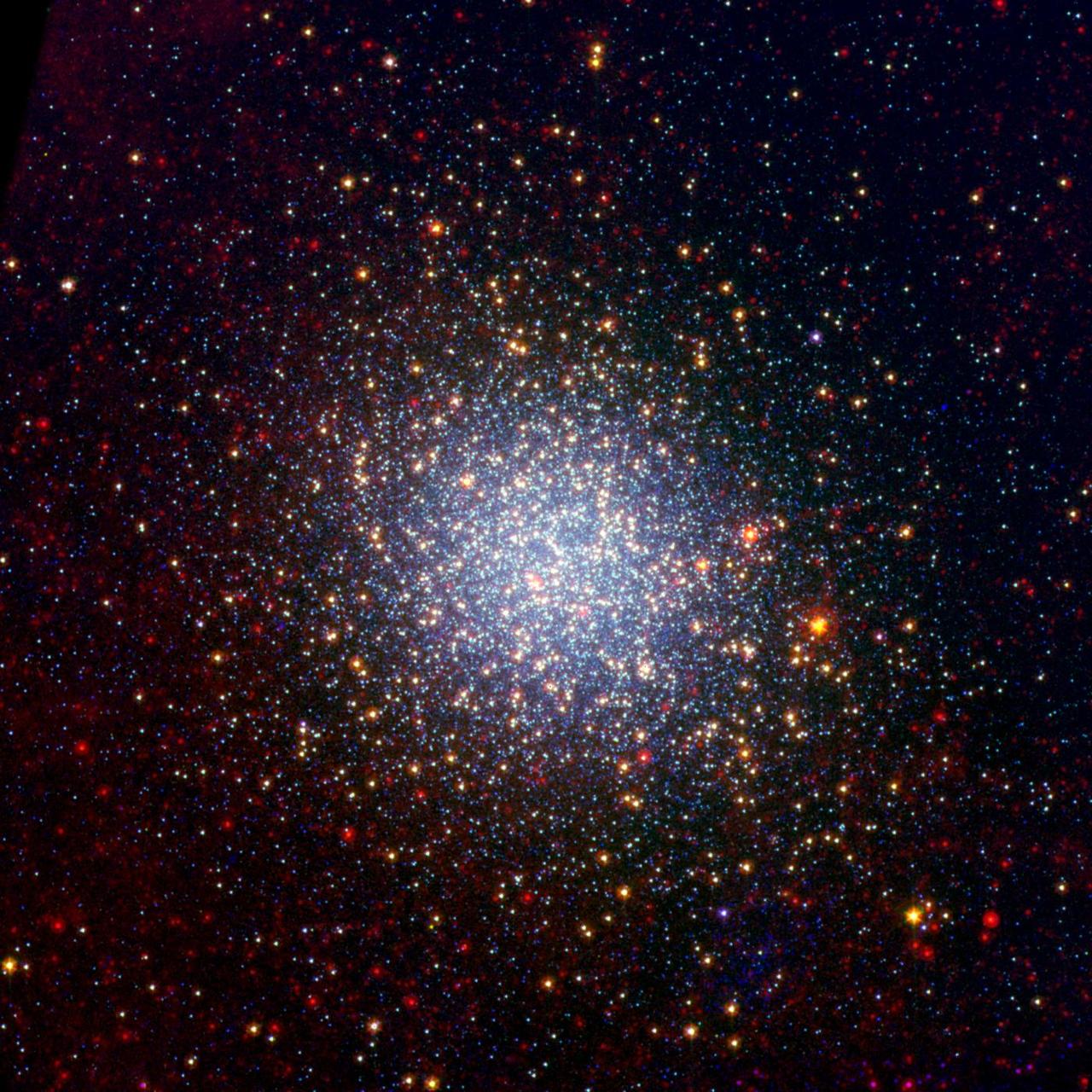
A cluster brimming with millions of stars glistens like an iridescent opal in this image from NASA Spitzer Space Telescope. Called Omega Centauri, the sparkling orb of stars is like a miniature galaxy.

The third closest star system to the sun, called WISE J104915.57-531906, center of large image, which was taken by NASA WISE. It appeared to be a single object, but a sharper image from Gemini Observatory, revealed that it was binary star system.
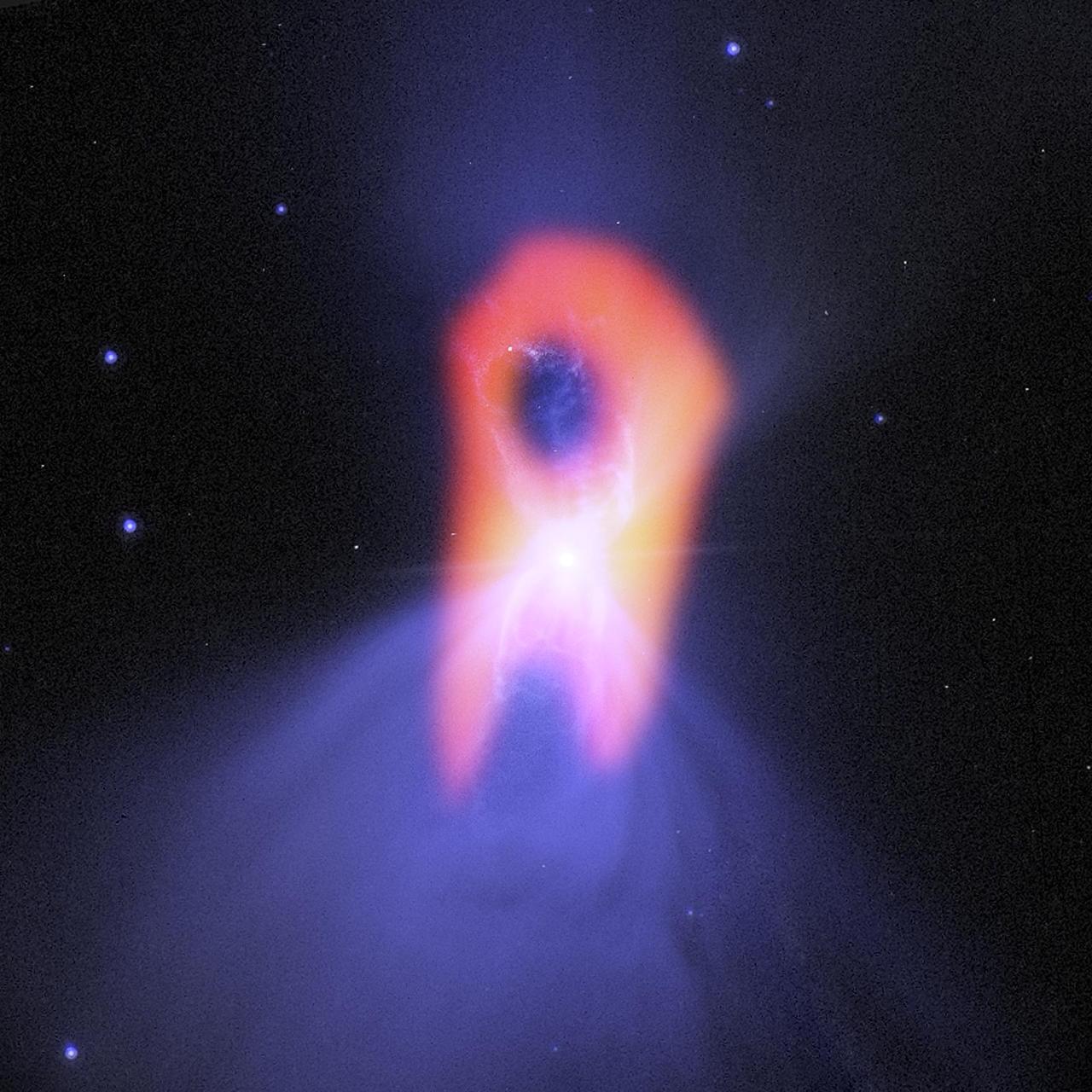
The Boomerang nebula, called the coldest place in the universe, reveals its true shape to the Atacama Large Millimeter/submillimeter Array ALMA telescope. The background blue structure, is seen in visible light by NASA Hubble Space Telescope.
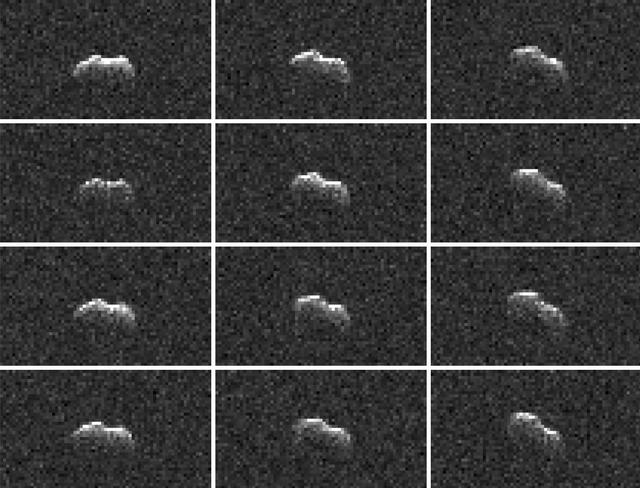
On March 21, 2021, the large asteroid 2001 FO32 made a close approach with our planet, passing at a distance of about 1.25 million miles (2 million kilometers) — or 5 1/4 times the distance from Earth to the Moon. While there was no risk of the near-Earth asteroid colliding with Earth as its orbit is very well known, scientists at NASA's Jet Propulsion Laboratory in Southern California took the opportunity to capture these radar images of the asteroid as it tumbled past. Using NASA's 34-meter (111.5-feet) Deep Space Station 13 (DSS-13) radio antenna at the Deep Space Network's Goldstone Deep Space Communication Complex near Barstow, California, radio signals were transmitted to 2001 FO32. The signals then bounced off the surface of the asteroid and were received by the 100-meter (328-feet) Green Bank Telescope in West Virginia. Such radar observations can offer additional insight into the asteroid's orbit, provide a better estimate of its dimensions and rotation rate, and help glimpse surface features (like large boulders or craters). Other radar observations were carried out by scientists using the 34-meter DSS-43 antenna at the Deep Space Network's Canberra Deep Space Communication Complex in Australia. Along with the Commonwealth Scientific and Industrial Research Organisation's Australia Telescope Compact Array near Narrabri in New South Wales, both antennas worked together to track 2001 FO32. Asteroid 2001 FO32 was discovered in March 2001 by the Lincoln Near-Earth Asteroid Research (LINEAR) program in Socorro, New Mexico, and had been estimated, based on optical measurements, to be roughly 3,000 feet (1 kilometer) wide. In more recent follow-up observations by NEOWISE, 2001 FO32 appears to be faint when observed in infrared wavelengths, which suggests the object is likely less than 1 kilometer in diameter. Analysis by the NEOWISE team shows that it is between 1,300 to 2,230 feet (440 to 680 meters) wide. Further analysis of data from the radar campaign will better refine the size of the asteroid and increase the precision of its orbital calculations. For more information about 2001 FO32 and observing campaign, read: https://www.jpl.nasa.gov/news/asteroid-2001-fo32-will-safely-pass-by-earth-march-21 https://photojournal.jpl.nasa.gov/catalog/PIA24561
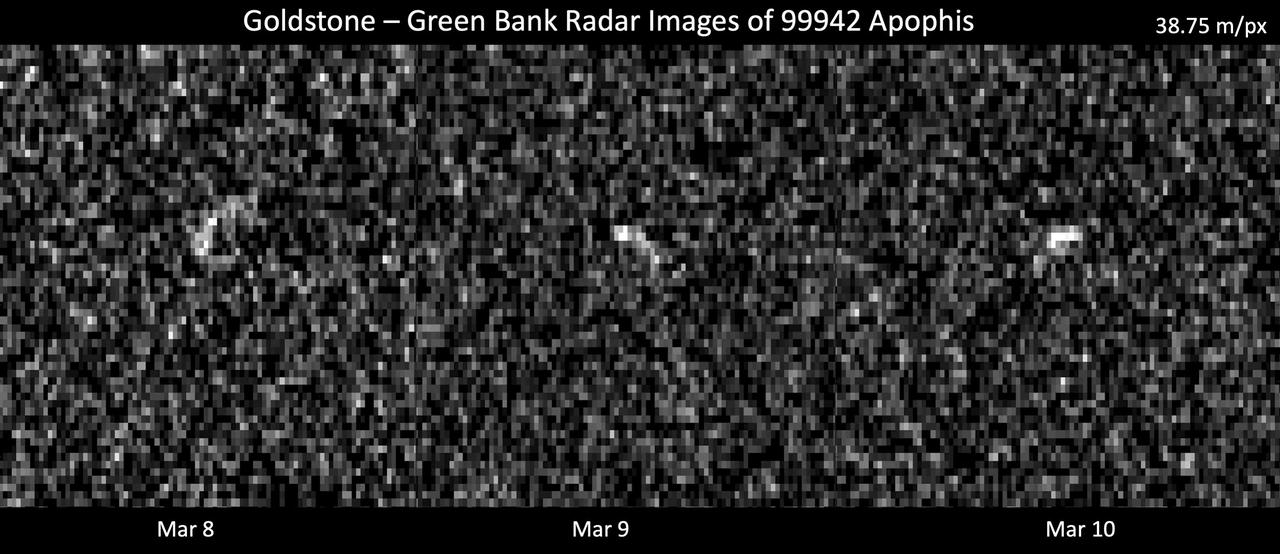
These images represent radar observations of asteroid 99942 Apophis on March 8, 9, and 10, 2021, as it made its last close approach before its 2029 Earth encounter that will see the object pass our planet by less than 20,000 miles (32,000 kilometers). The 70-meter radio antenna at the Deep Space Network's Goldstone Deep Space Communications Complex near Barstow, California, and the 100-meter Green Bank Telescope in West Virginia used radar to precisely track Apophis' motion. At the time of these observations, Apophis was about 10.6 million miles (17 million kilometers) from Earth, and each pixel has a resolution of 127 feet (38.75 meters). These observations helped scientists of the Center for Near Earth Object Studies (CNEOS), managed by NASA's Jet Propulsion Laboratory, precisely determine the 1,100-feet-wide (340-meter-wide) asteroid's orbit around the Sun, ruling out any Earth impact threat for the next hundred years or more. As a result of these observations, Apophis was removed from the Sentry Impact Risk Table. The radar team will continue to analyze these observations to determine more information about Apophis' size, shape, and rate of spin. Relying on optical telescopes and ground-based radar to help characterize every near-Earth object's orbit to improve long-term hazard assessments, CNEOS computes high-precision orbits in support of NASA's Planetary Defense Coordination Office. https://photojournal.jpl.nasa.gov/catalog/PIA24168

Asteroid 1998 WT24 left in December 2001, right on December 11, 2015 taken by NASA the 230-foot 70-meter DSS-14 antenna at Goldstone, California.
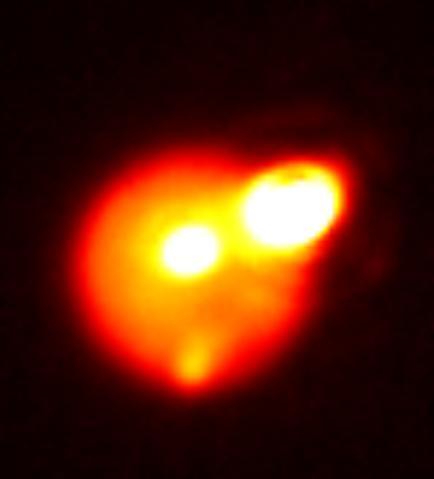
This Aug. 29, 2013, outburst on Io was among the largest ever observed on the most volcanically active body in the solar system. The infrared was image taken by Gemini North telescope.
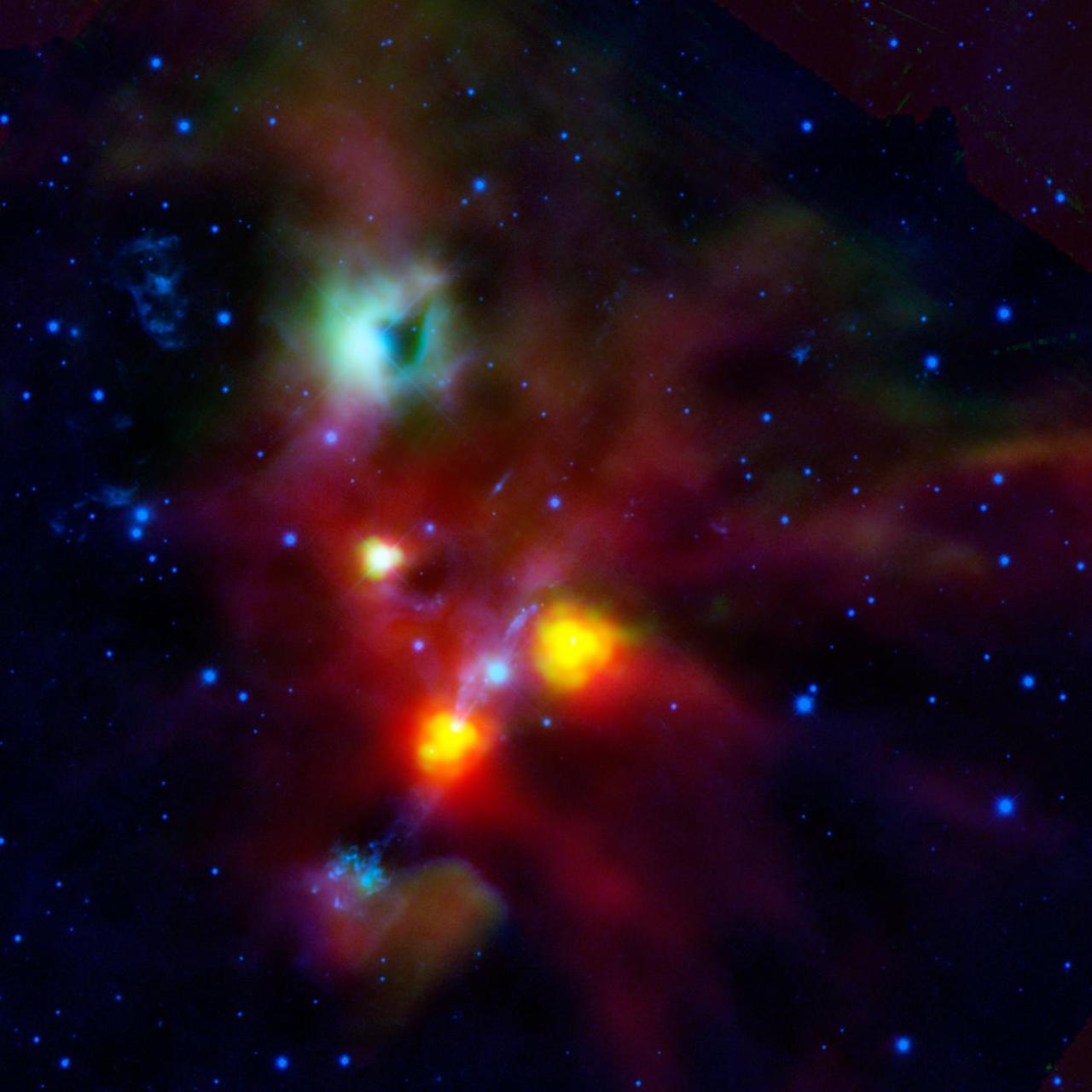
The dark hole seen in the green cloud at the top of this image, captured by ESA Herschel Telescope, was likely carved out by multiple jets and blasts of radiation.
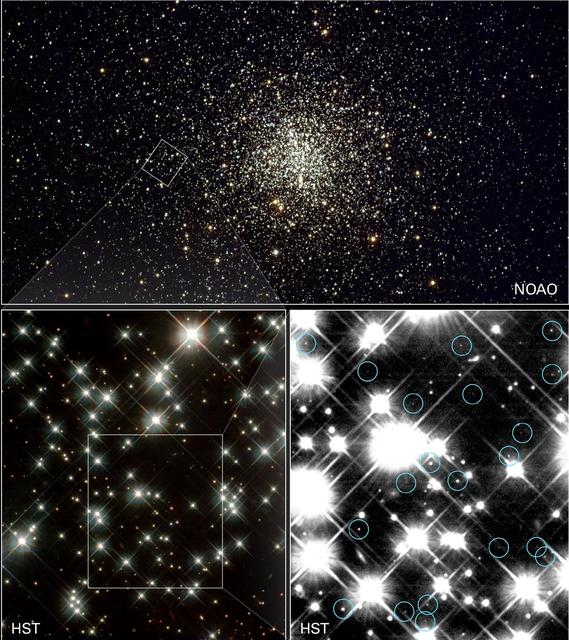
Peering deep inside a cluster of several hundred thousand stars, NASA Hubble Space Telescope has uncovered the oldest burned-out stars in our Milky Way Galaxy, giving astronomers a fresh reading on the age of the universe.
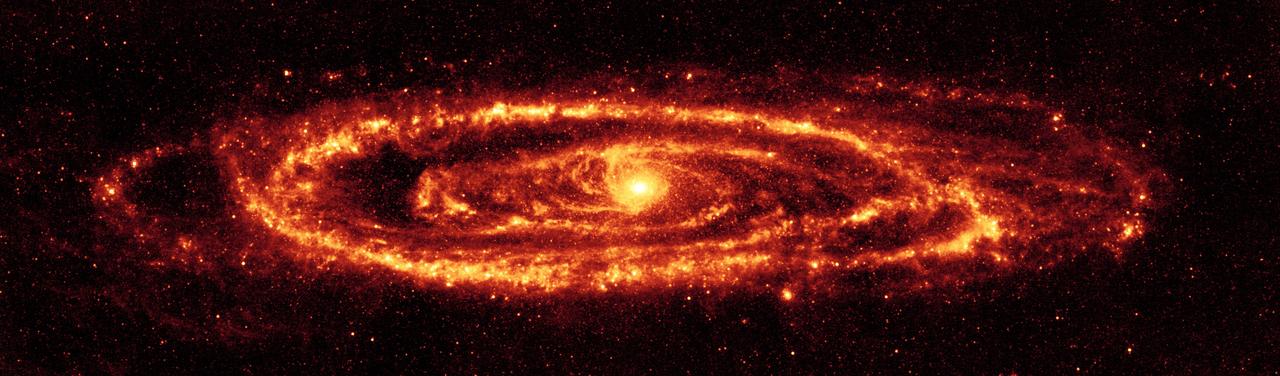
NASA Spitzer Space Telescope has captured this stunning infrared view of the famous galaxy Messier 31, also known as Andromeda.

These false-color image taken by NASA Spitzer Space Telescope shows the South Pillar region of the star-forming region called the Carina Nebula.
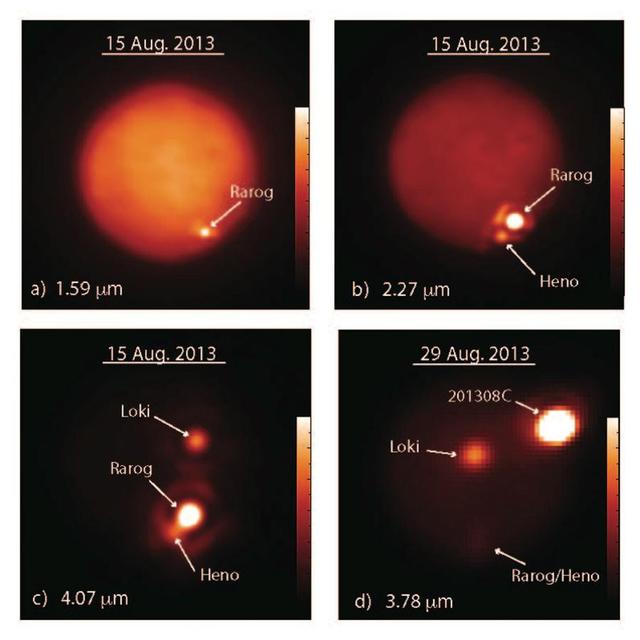
These images show Jupiter moon Io obtained at different infrared wavelengths with the W. M. Keck Observatory 10-meter Keck II telescope on Aug. 15, 2013 a-c, and the Gemini North telescope on Aug. 29, 2013 d.
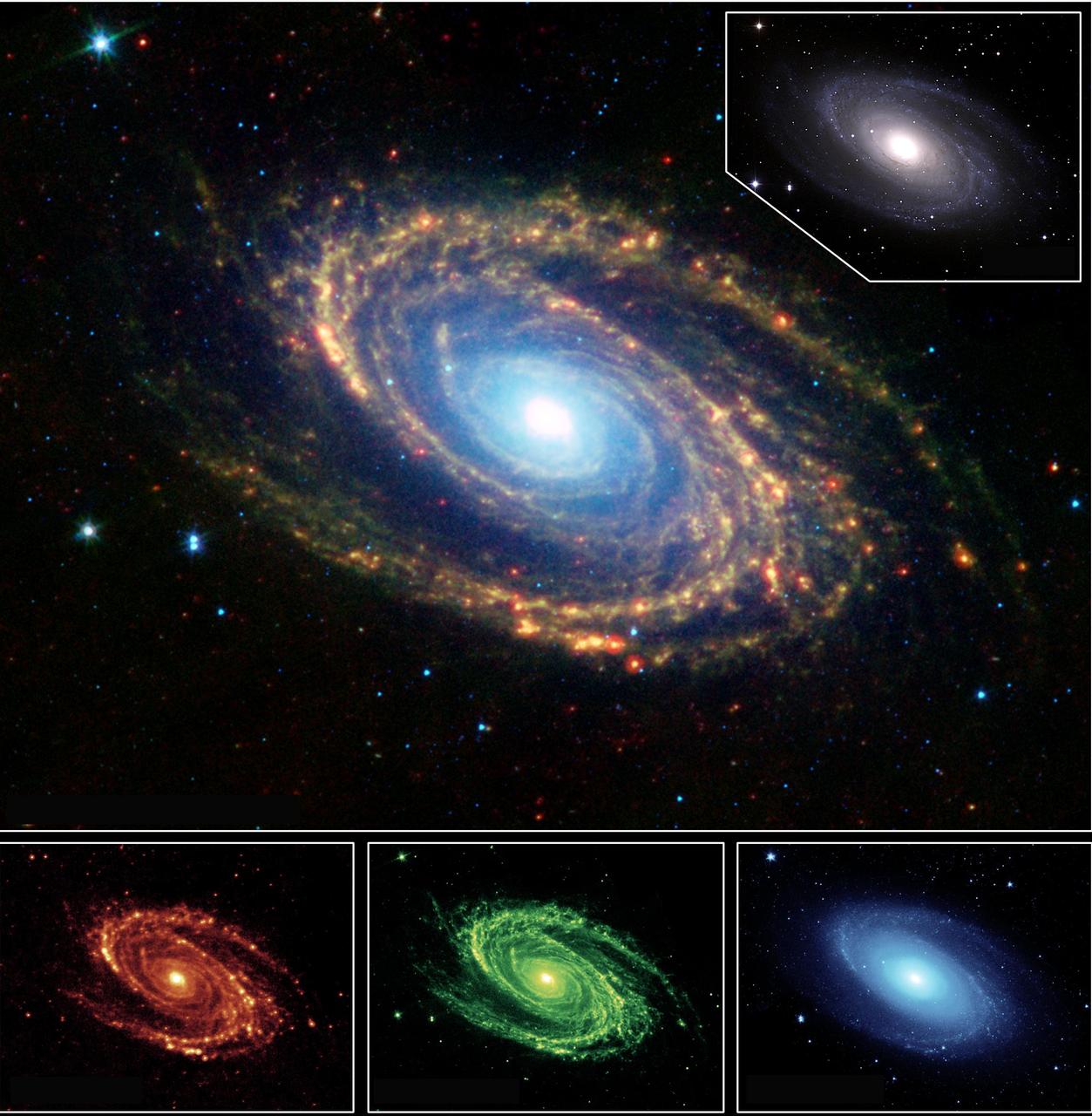
The magnificent spiral arms of the nearby galaxy Messier 81 are highlighted in this image from NASA Spitzer Space Telescope.

Jupiter's banded appearance is created by the cloud-forming "weather layer." In this composite image, the image on the left show's Jupiter's thermal energy being emitted in infrared light, with dark cloudy bands appearing as silhouettes against Jupiter's thermal glow. The image on the right shows Jupiter's appearance in visible light, with white cloudy "zones" and the relatively cloud-free "belts" appearing as red-brown colors. The composite was created using infrared data collected by the Gemini North telescope (left) and a visible-light image taken by NASA's Hubble Space Telescope. Both images were created from data captured on Jan. 11, 2017. https://photojournal.jpl.nasa.gov/catalog/PIA24818
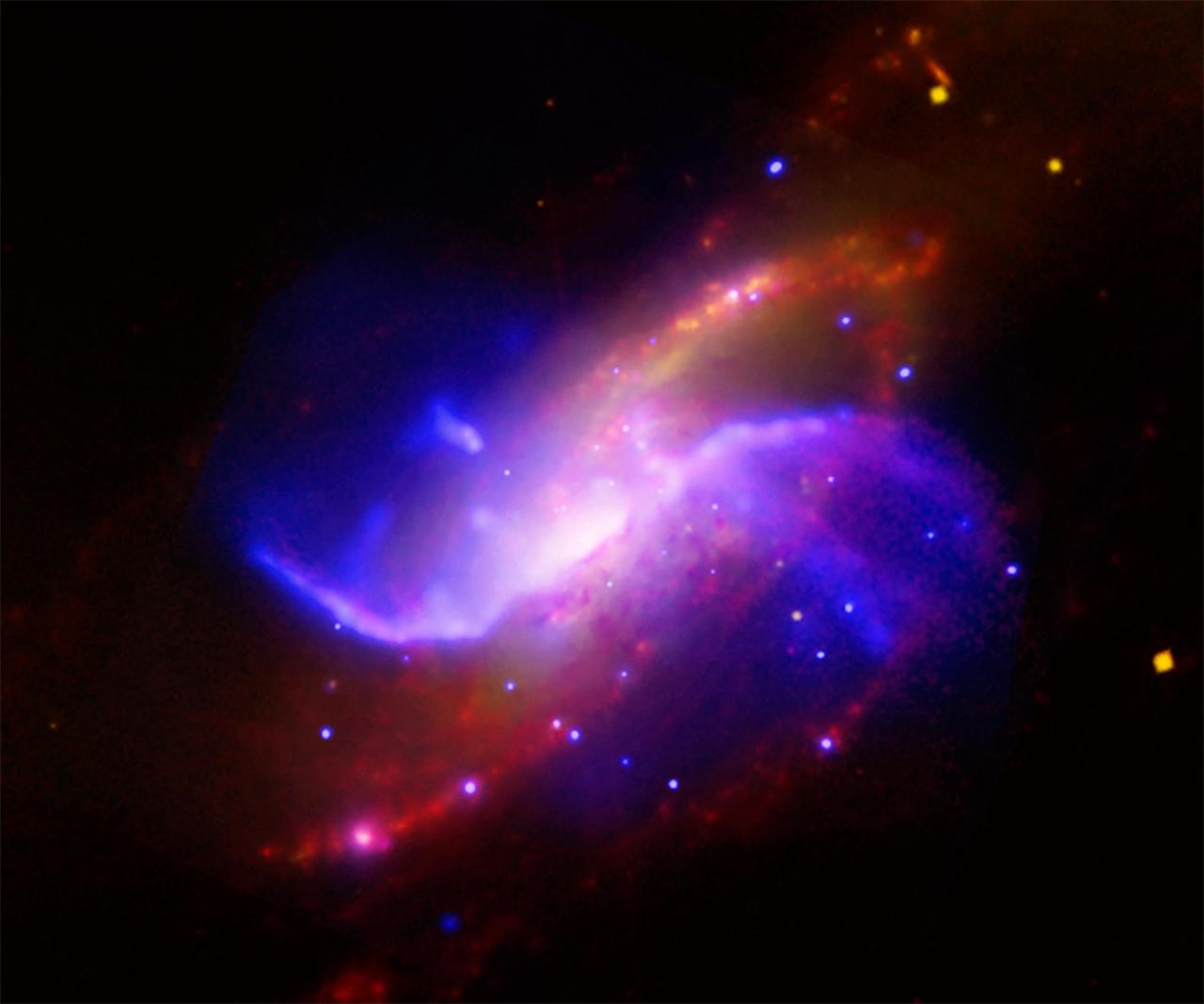
This composite image is of spiral galaxy M106 NGC 4258; optical data from the Digitized Sky Survey is yellow, radio data from the Very Large Array is purple, X-ray data from Chandra is blue, and infrared data from the Spitzer Space Telescope is red.

In the summer of the year 1054 AD, Chinese astronomers saw a new "guest star," that appeared six times brighter than Venus. So bright in fact, it could be seen during the daytime for several months. This "guest star" was forgotten about until 700 years later with the advent of telescopes. Astronomers saw a tentacle-like nebula in the place of the vanished star and called it the Crab Nebula. Today we know it as the expanding gaseous remnant from a star that self-detonated as a supernova, briefly shining as brightly as 400 million suns. The explosion took place 6,500 light-years away. If the blast had instead happened 50 light-years away it would have irradiated Earth, wiping out most life forms. In the late 1960s astronomers discovered the crushed heart of the doomed star, an ultra-dense neutron star that is a dynamo of intense magnetic field and radiation energizing the nebula. Astronomers therefore need to study the Crab Nebula across a broad range of electromagnetic radiation, from X-rays to radio waves. This image combines data from five different telescopes: the VLA (radio) in red; Spitzer Space Telescope (infrared) in yellow; Hubble Space Telescope (visible) in green; XMM-Newton (ultraviolet) in blue; and Chandra X-ray Observatory (X-ray) in purple. More images and an animation are available at https://photojournal.jpl.nasa.gov/catalog/PIA21474