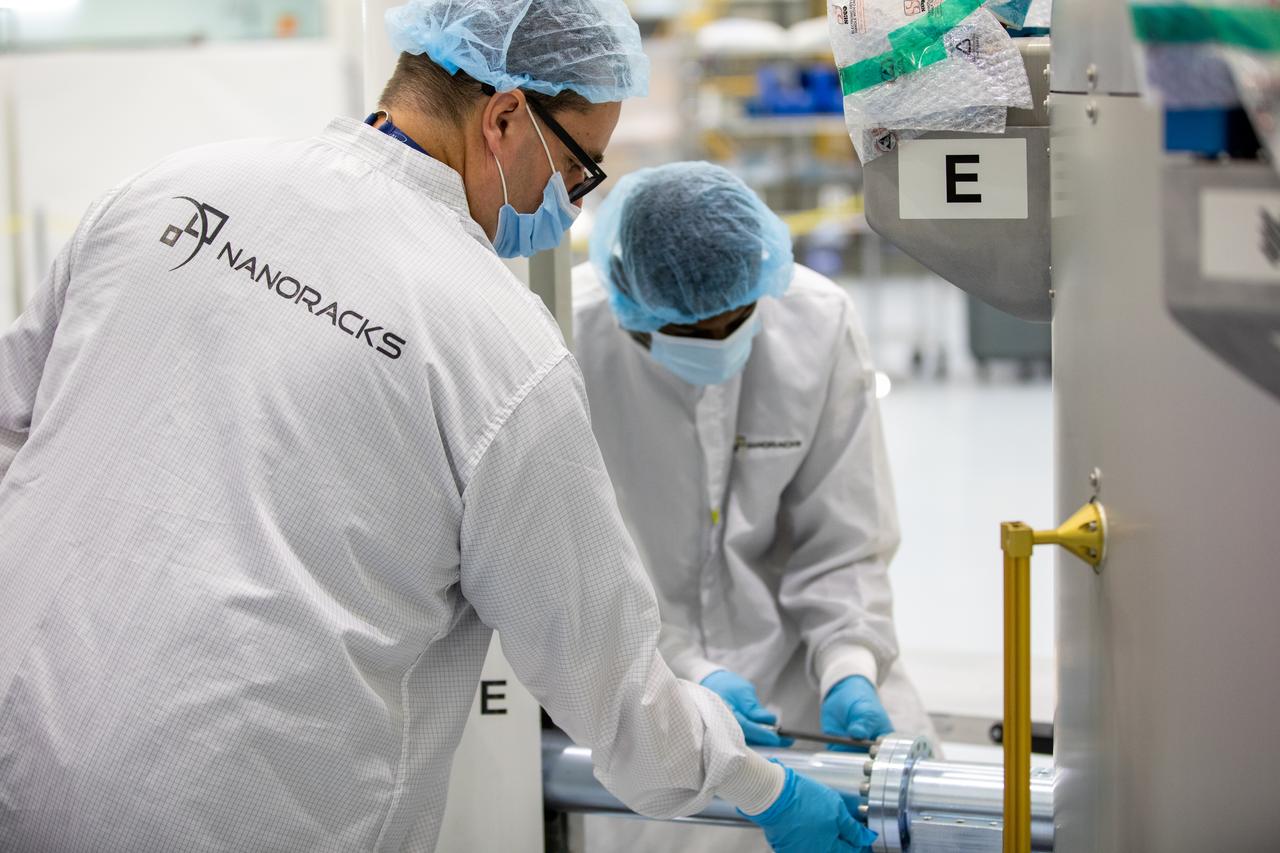
Nanoracks technicians work on the Nanoracks Bishop Airlock inside the Space Station Processing Facility at NASA's Kennedy Space Center in Florida on Sept. 29, 2020. The next-generation Nanoracks payload facility is being prepared for its flight to the International Space Station on SpaceX’s 21st commercial resupply services mission (CRS-21) to the International Space Station. The Bishop Airlock is the first commercially funded airlock for the space station. It will provide payload hosting, robotics testing, satellite deployment, serve as an outside toolbox for station crew spacewalks, and more. CRS-21 is scheduled to launch on a SpaceX Falcon 9 rocket no earlier than November from Launch Complex 39A at Kennedy Space Center.
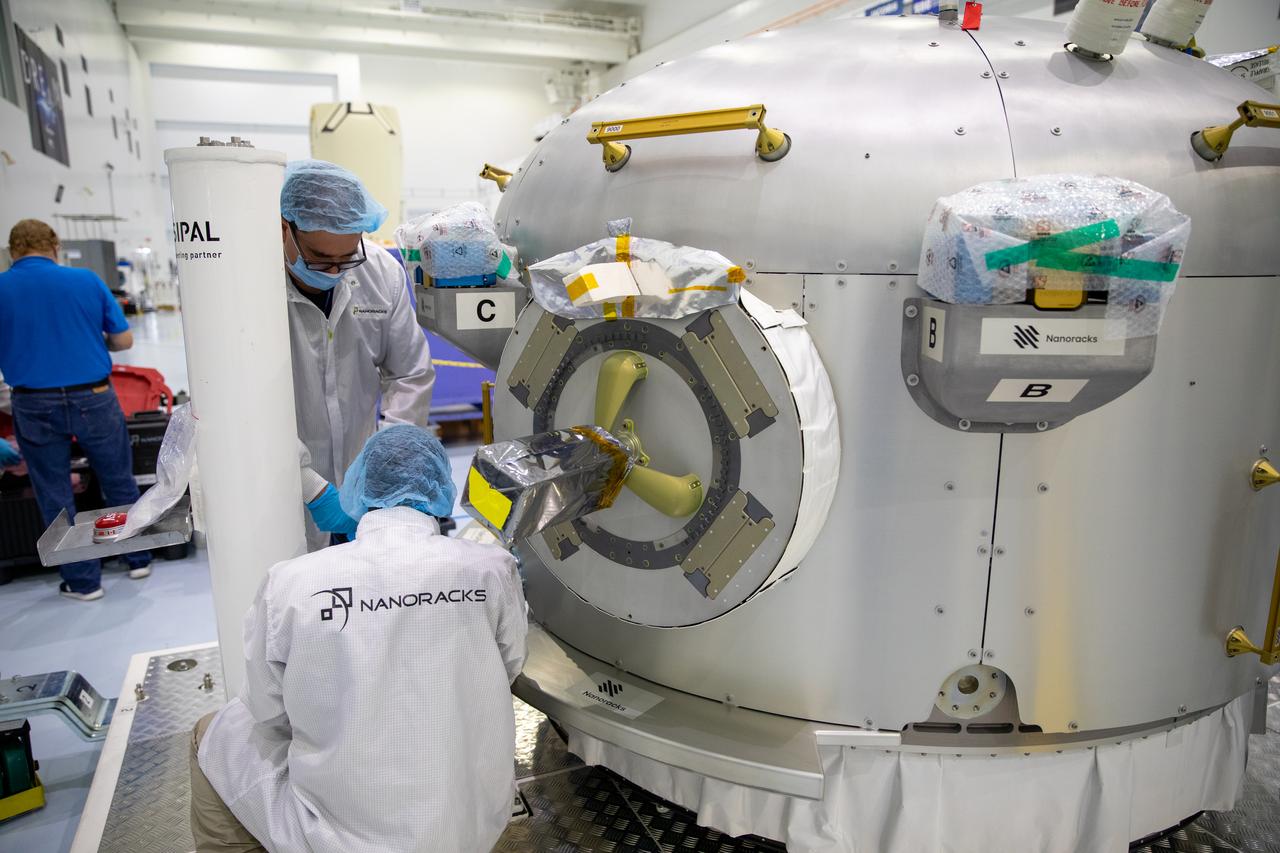
Nanoracks technicians work on the NanoRacks Bishop Airlock inside the Space Station Processing Facility at NASA's Kennedy Space Center in Florida on Sept. 29, 2020. The next-generation Nanoracks payload facility is being prepared for its flight to the International Space Station on SpaceX’s 21st commercial resupply services mission (CRS-21) to the International Space Station. The Bishop Airlock is the first commercially funded airlock for the space station. It will provide payload hosting, robotics testing, satellite deployment, serve as an outside toolbox for station crew spacewalks, and more. CRS-21 is scheduled to launch on a SpaceX Falcon 9 rocket no earlier than November from Launch Complex 39A at Kennedy Space Center.
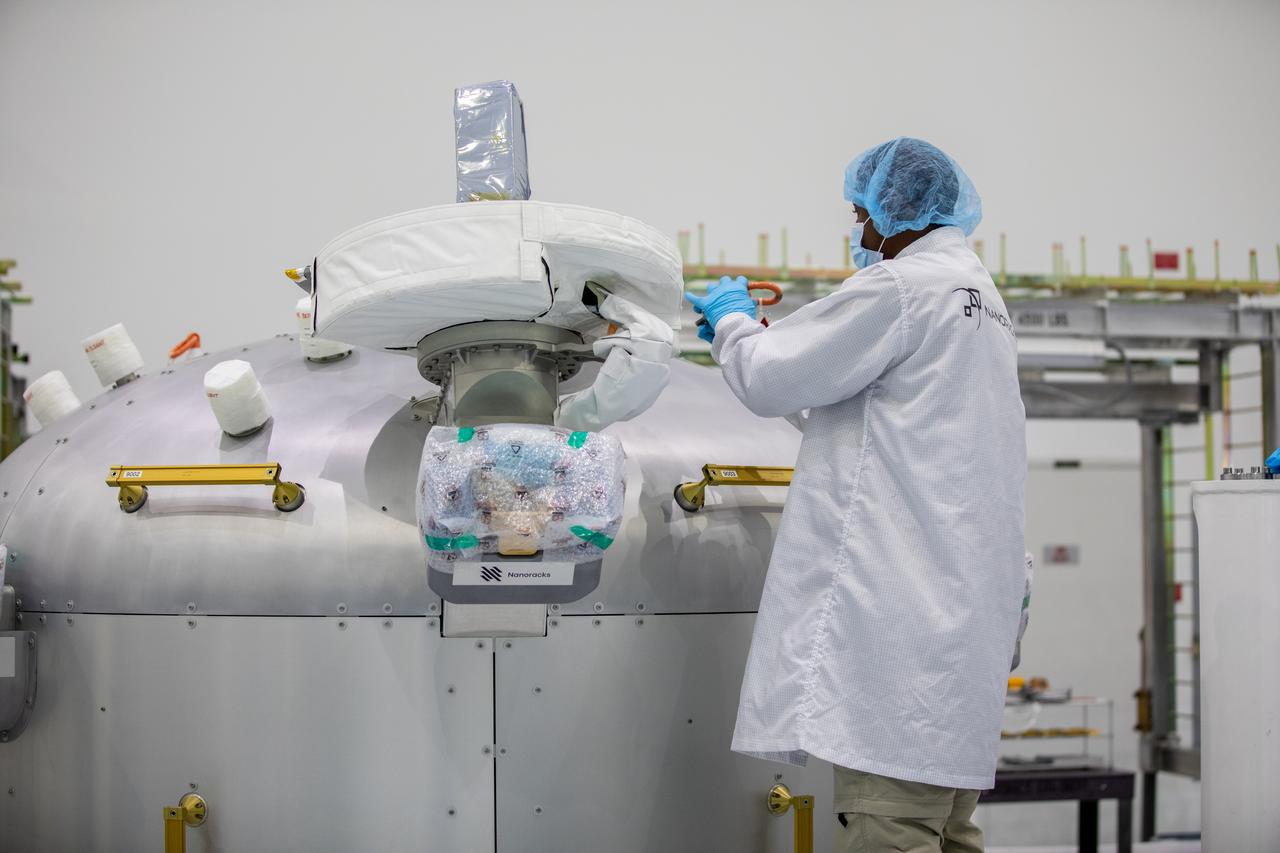
A Nanoracks technician works on the Nanoracks Bishop Airlock inside the Space Station Processing Facility at NASA's Kennedy Space Center in Florida on Sept. 29, 2020. The next-generation Nanoracks payload facility is being prepared for its flight to the International Space Station on SpaceX’s 21st commercial resupply services mission (CRS-21) to the International Space Station. The Bishop Airlock is the first commercially funded airlock for the space station. It will provide payload hosting, robotics testing, satellite deployment, and serve as an outside toolbox for station crew spacewalks, and more. CRS-21 is scheduled to launch on a SpaceX Falcon 9 rocket no earlier than November from Launch Complex 39A at Kennedy Space Center.
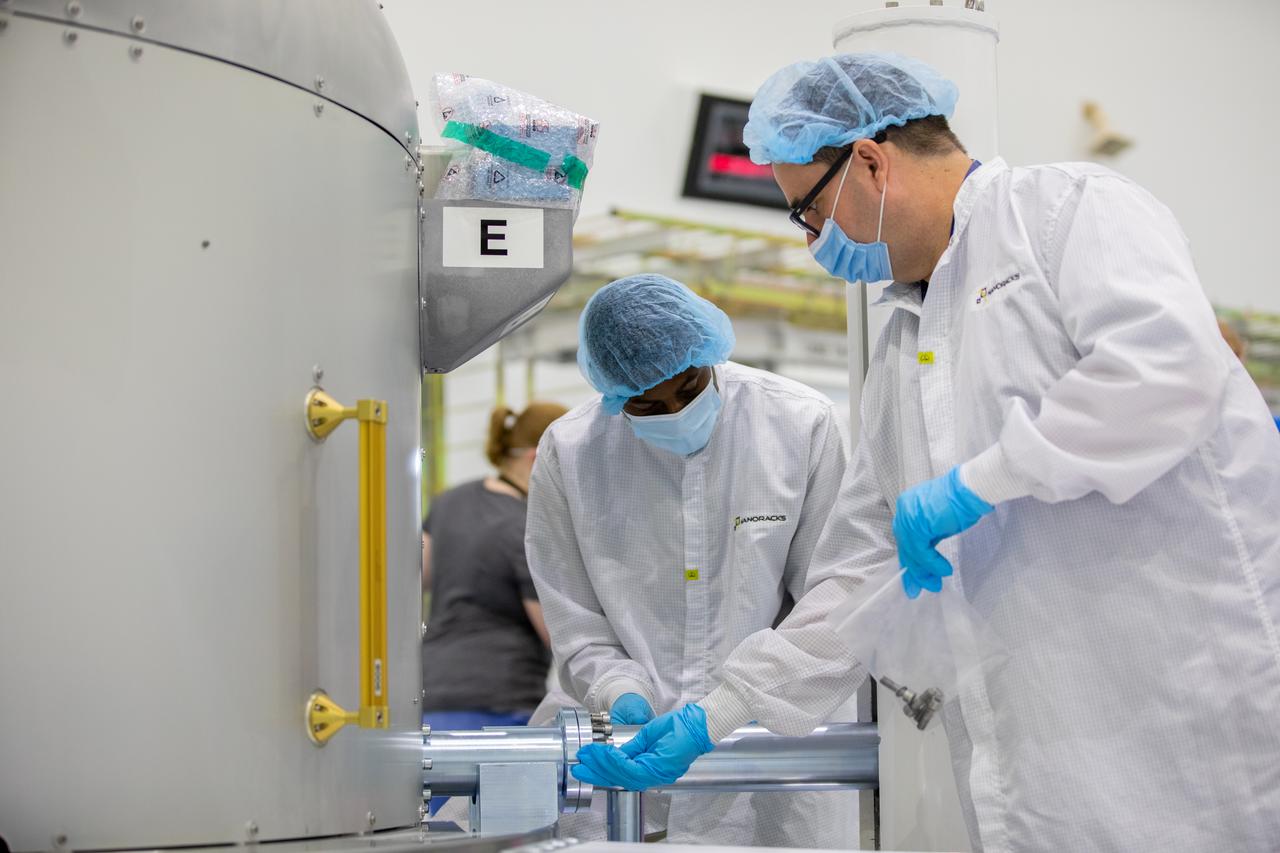
Nanoracks technicians work on the NanoRacks Bishop Airlock inside the Space Station Processing Facility at NASA's Kennedy Space Center in Florida on Sept. 29, 2020. The next-generation Nanoracks payload facility is being prepared for its flight to the International Space Station on SpaceX’s 21st commercial resupply services mission (CRS-21) to the International Space Station. The Bishop Airlock is the first commercially funded airlock for the space station. It will provide payload hosting, robotics testing, satellite deployment, serve as an outside toolbox for station crew spacewalks, and more. CRS-21 is scheduled to launch on a SpaceX Falcon 9 rocket no earlier than November from Launch Complex 39A at Kennedy Space Center.
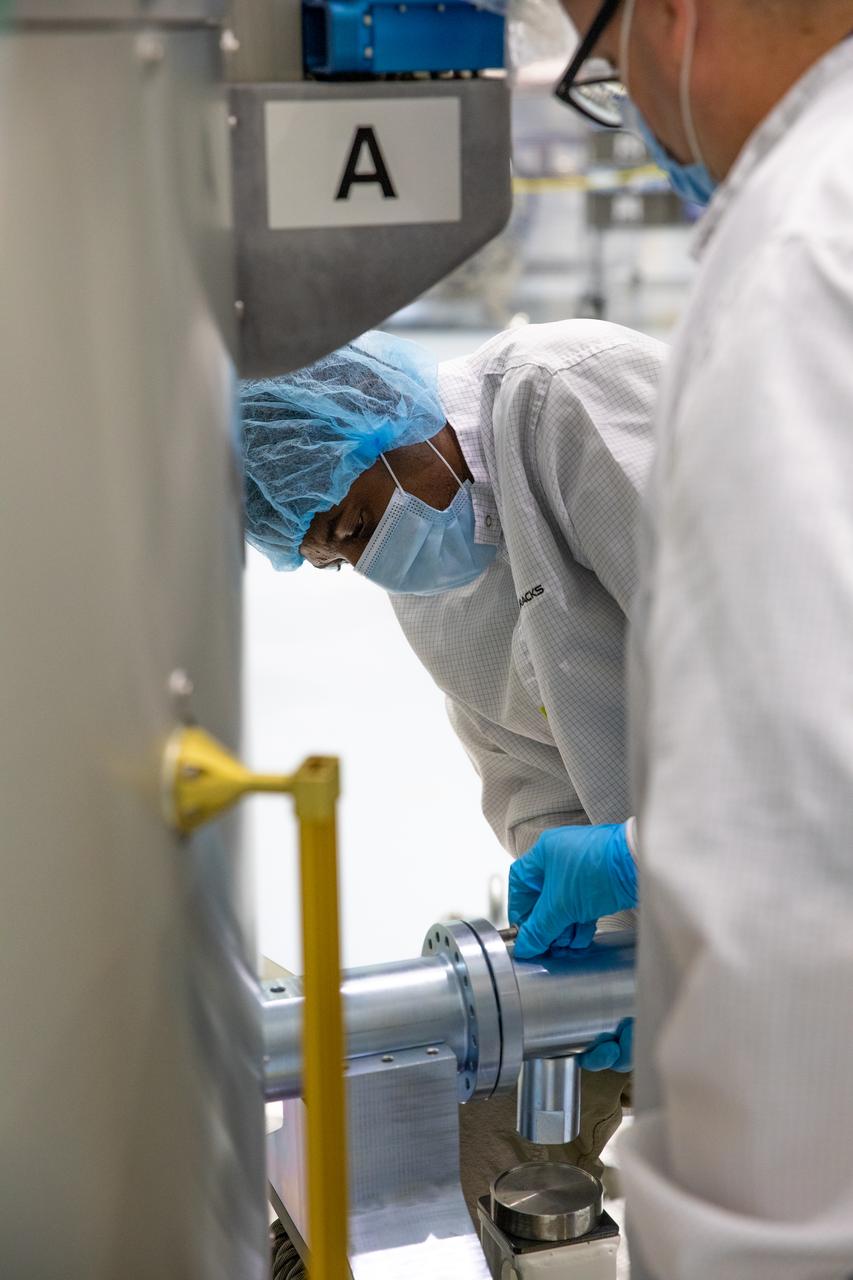
Nanoracks technicians work on the NanoRacks Bishop Airlock inside the Space Station Processing Facility at NASA's Kennedy Space Center in Florida on Sept. 29, 2020. The next-generation Nanoracks payload facility is being prepared for its flight to the International Space Station on SpaceX’s 21st commercial resupply services mission (CRS-21) to the International Space Station. The Bishop Airlock is the first commercially funded airlock for the space station. It will provide payload hosting, robotics testing, satellite deployment, serve as an outside toolbox for station crew spacewalks, and more. CRS-21 is scheduled to launch on a SpaceX Falcon 9 rocket no earlier than November from Launch Complex 39A at Kennedy Space Center.
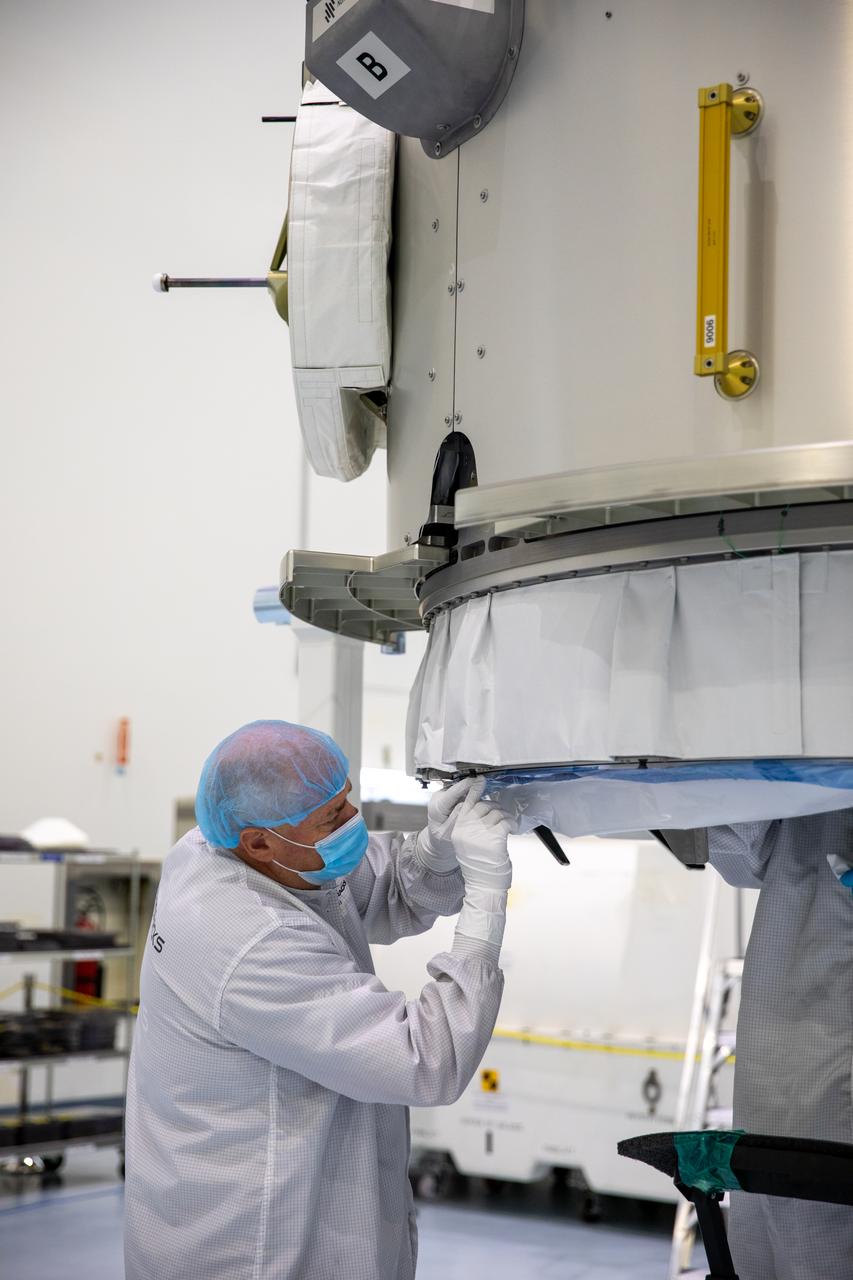
A Nanoracks technician works on the NanoRacks Bishop Airlock inside the Space Station Processing Facility at NASA's Kennedy Space Center in Florida on Oct. 7, 2020. The next-generation Nanoracks payload facility is being prepared for its flight to the International Space Station on SpaceX’s 21st commercial resupply services to the space station. It will provide payload hosting, robotics testing, satellite deployment, serve as an outside toolbox for station crew spacewalks, and more. CRS-21 is scheduled to launch on a SpaceX Falcon 9 from Kennedy’s Launch Complex 39A.
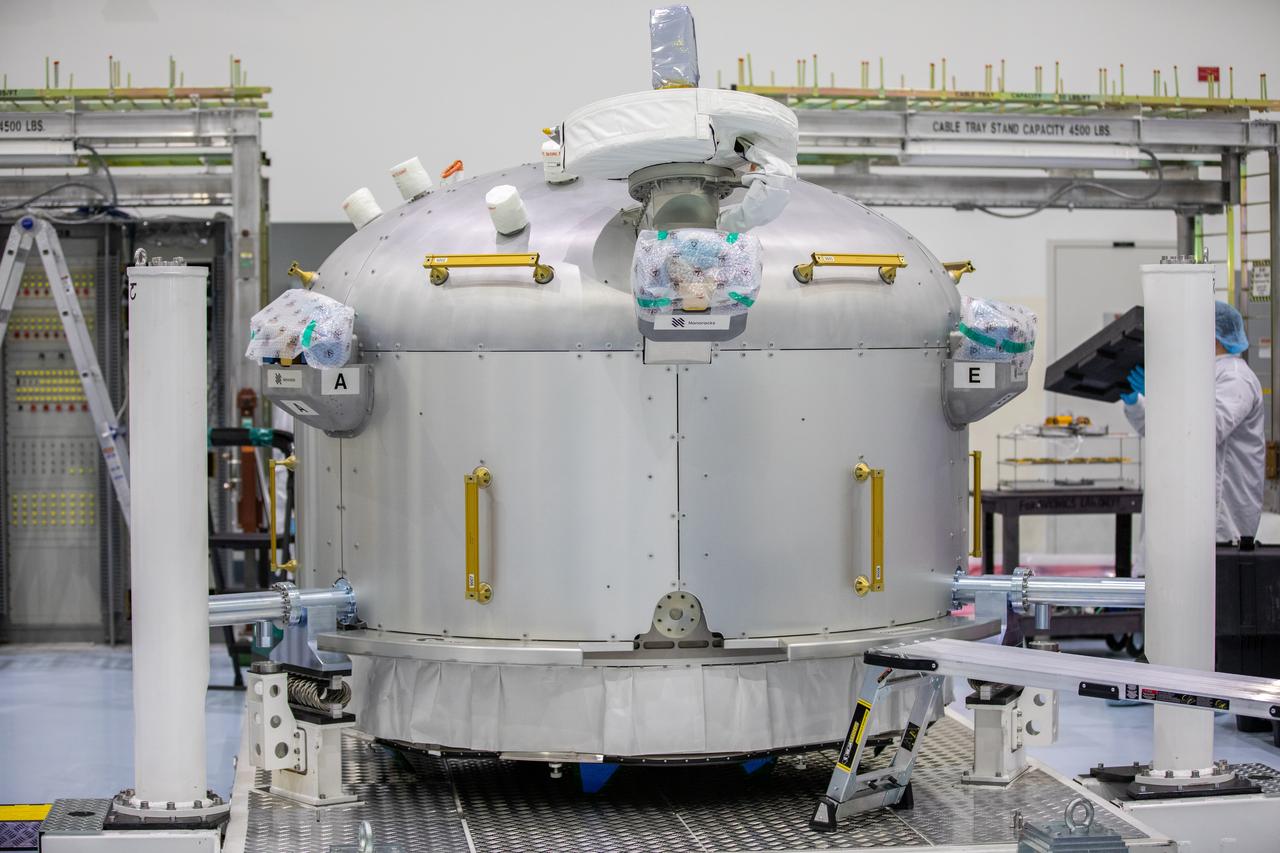
The Nanoracks Bishop Airlock is in view inside the Space Station Processing Facility at NASA's Kennedy Space Center in Florida on Sept. 29, 2020. The next-generation Nanoracks payload facility is being prepared for its flight to the International Space Station on SpaceX’s 21st commercial resupply services mission (CRS-21) to the International Space Station. The Bishop Airlock is the first commercially funded airlock for the space station. It will provide payload hosting, robotics testing, satellite deployment, serve as an outside toolbox for station crew spacewalks, and more. CRS-21 is scheduled to launch on a SpaceX Falcon 9 rocket no earlier than November from Launch Complex 39A at Kennedy Space Center.
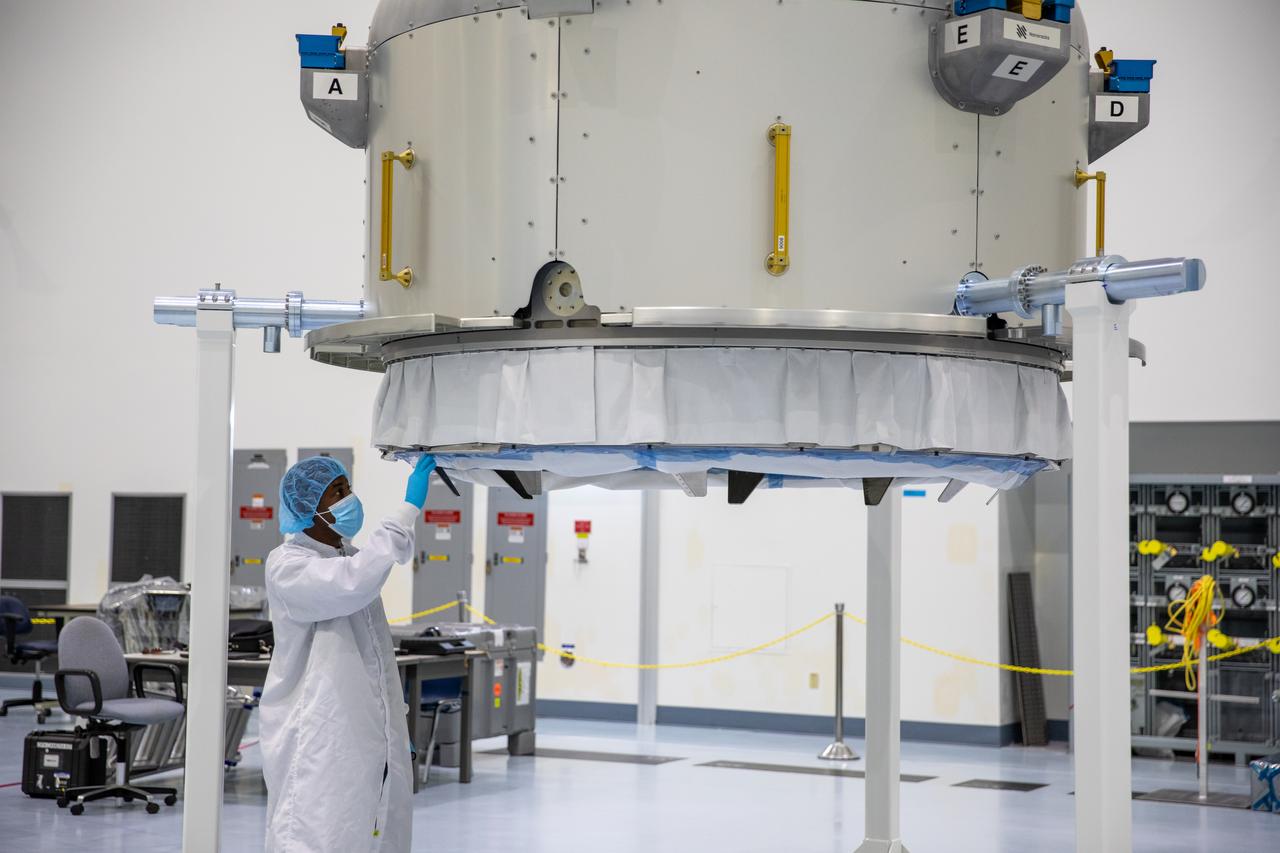
A Nanoracks technician works on the Nanoracks Bishop Airlock inside the Space Station Processing Facility at NASA's Kennedy Space Center in Florida on Oct. 7, 2020. The next-generation Nanoracks payload facility is being prepared for its flight to the International Space Station on SpaceX’s 21st commercial resupply services mission (CRS-21) to the International Space Station. The Bishop Airlock is the first commercially funded airlock for the space station. It will provide payload hosting, robotics testing, satellite deployment, and serve as an outside toolbox for station crew spacewalks, and more. CRS-21 is scheduled to launch on a SpaceX Falcon 9 from Kennedy’s Launch Complex 39A.
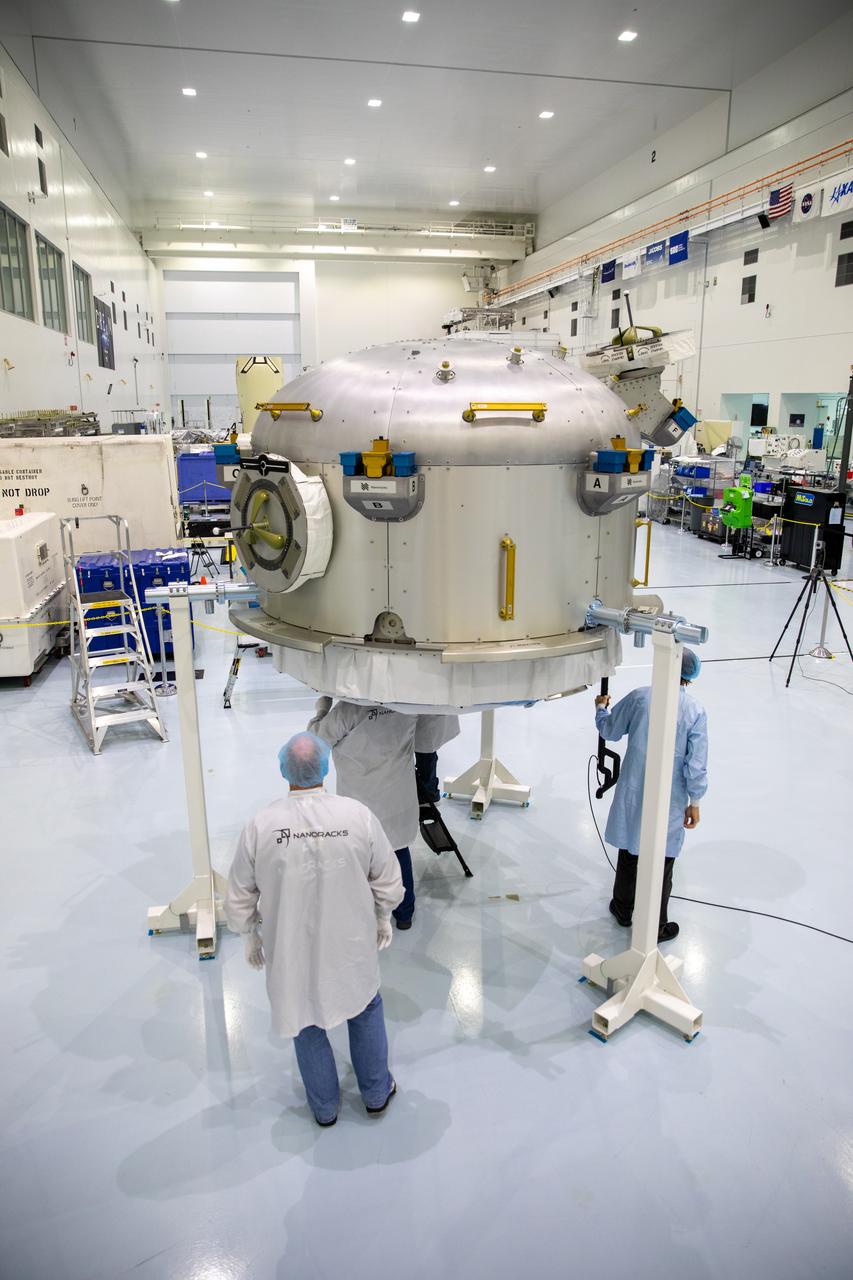
Nanoracks technicians work on the Nanoracks Bishop Airlock inside the Space Station Processing Facility at NASA's Kennedy Space Center in Florida on Oct. 7, 2020. The next-generation Nanoracks payload facility is being prepared for its flight to the International Space Station on SpaceX’s 21st commercial resupply services mission (CRS-21) to the International Space Station. The Bishop Airlock is the first commercially funded airlock for the space station. It will provide payload hosting, robotics testing, satellite deployment, serve as an outside toolbox for station crew spacewalks, and more. CRS-21 is scheduled to launch on a SpaceX Falcon 9 from Kennedy’s Launch Complex 39A.
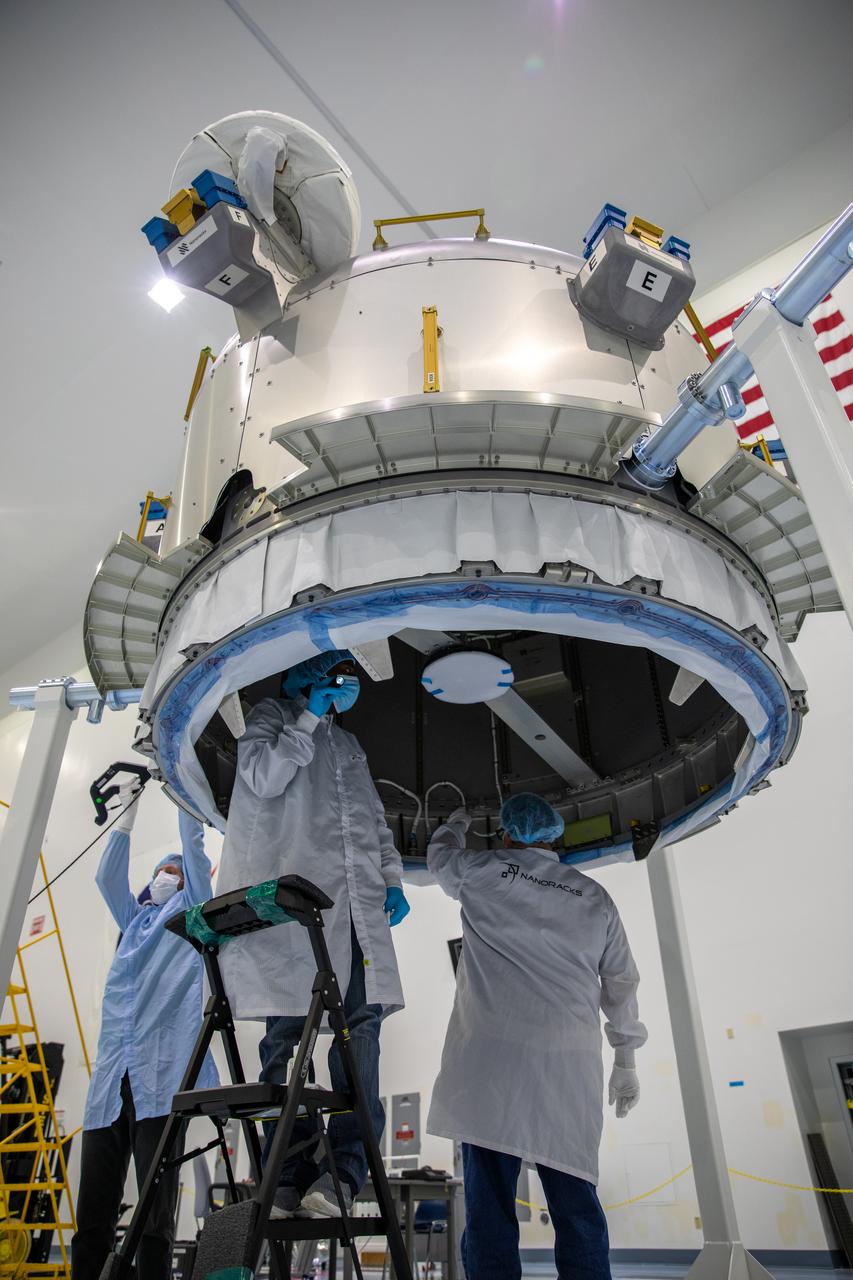
Nanoracks technicians work on the NanoRacks Bishop Airlock inside the Space Station Processing Facility at NASA's Kennedy Space Center in Florida on Oct. 7, 2020. The next-generation Nanoracks payload facility is being prepared for its flight to the International Space Station on SpaceX’s 21st commercial resupply services mission (CRS-21) to the International Space Station. The Bishop Airlock is the first commercially funded airlock for the space station. It will provide payload hosting, robotics testing, satellite deployment, serve as an outside toolbox for station crew spacewalks, and more. CRS-21 is scheduled to launch on a SpaceX Falcon 9 from Kennedy’s Launch Complex 39A.
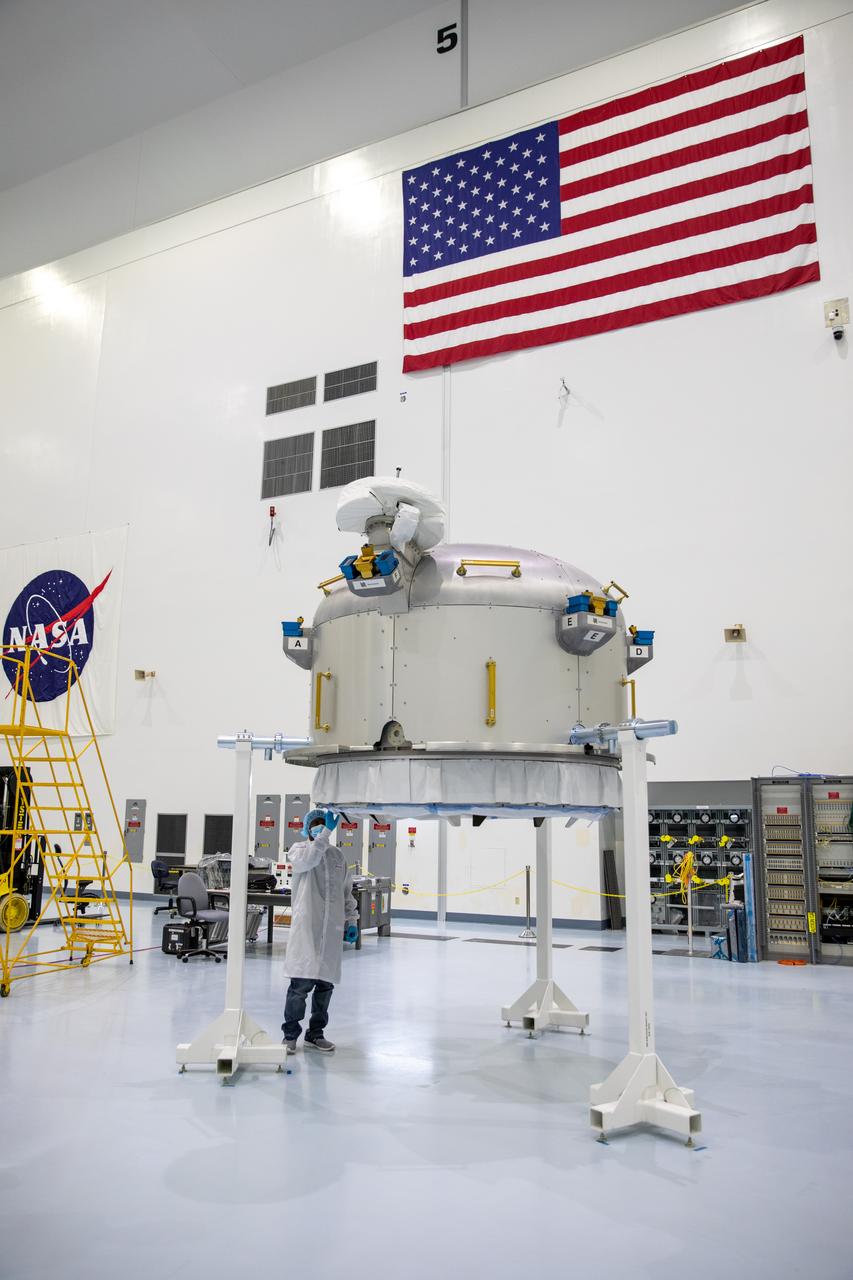
A Nanoracks technician works on the Nanoracks Bishop Airlock inside the Space Station Processing Facility at NASA's Kennedy Space Center in Florida on Oct. 7, 2020. The next-generation Nanoracks payload facility is being prepared for its flight to the International Space Station on SpaceX’s 21st commercial resupply services mission (CRS-21) to the International Space Station. The Bishop Airlock is the first commercially funded airlock for the space station. It will provide payload hosting, robotics testing, satellite deployment, serve as an outside toolbox for station crew spacewalks, and more. CRS-21 is scheduled to launch on a SpaceX Falcon 9 from Kennedy’s Launch Complex 39A.
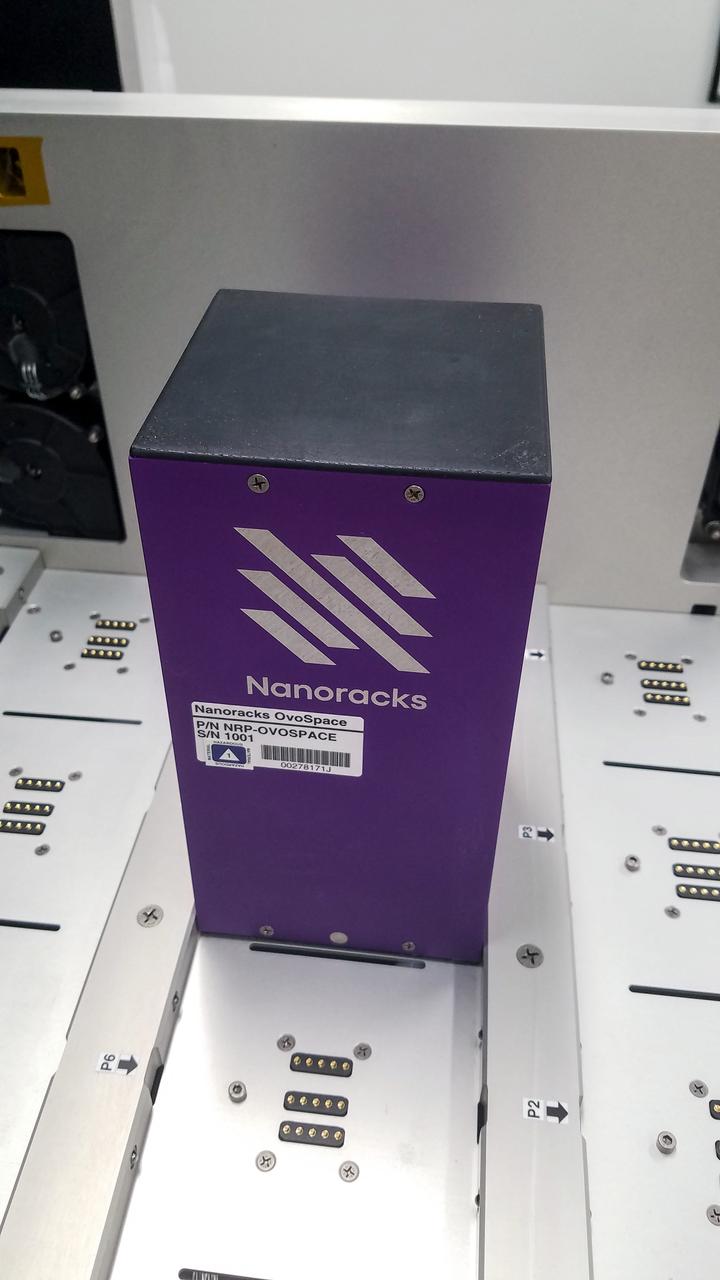
jsc2022e072966 (8/12/2022) --- A view of the OVOSPACE payload during a functional test. The science of the payload resides within the Nanoracks purple aluminum chassis. This chassis provides an interface to the Nanoracks Nanode platform. Nanode provides payloads with power and data throughout their time in space. Image courtesy of Nanoracks LLC.
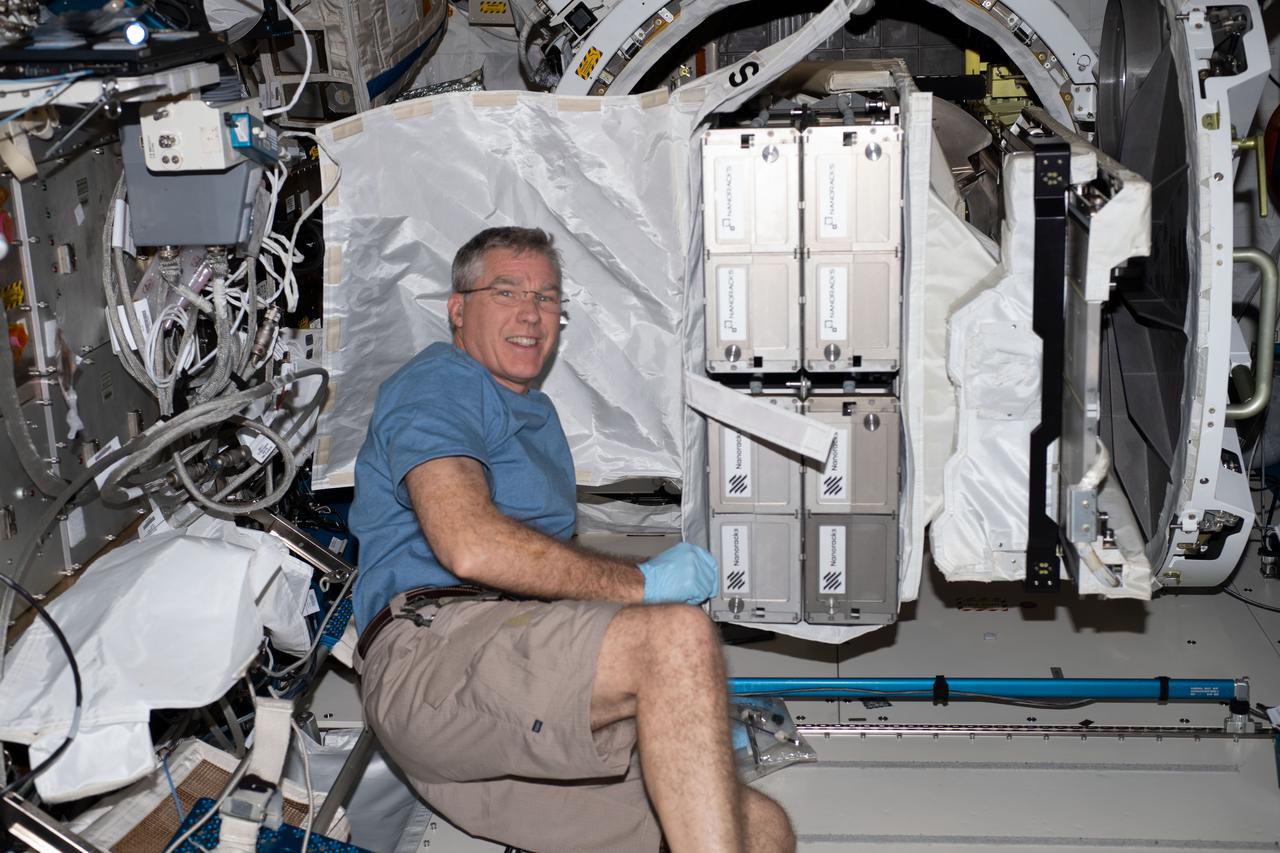
iss069e025742 (June 28, 2023) --- NASA astronaut and Expedition 69 Flight Engineer Stephen Bowen with CubeSats to be deployed from the space station for the 26th NanoRacks CubeSat Deployer (NRCSD-26) mission. The satellites included Nanoracks-RADSAT-SK, which tests a radiation detection system; Nanoracks-SC-ODIN that captures data on dust in storms in Argentina and Namibia; Nanoracks-ESSENCE, to monitor solar storms, arctic ice, permafrost thaw, and forests in the Canadian Arctic region; Nanoracks-Iris, an observation of space weathering of geological samples; and Nanoracks-Ukpik-1, which uses a VR camera to capture 360-degree images and video of Northern Canada.
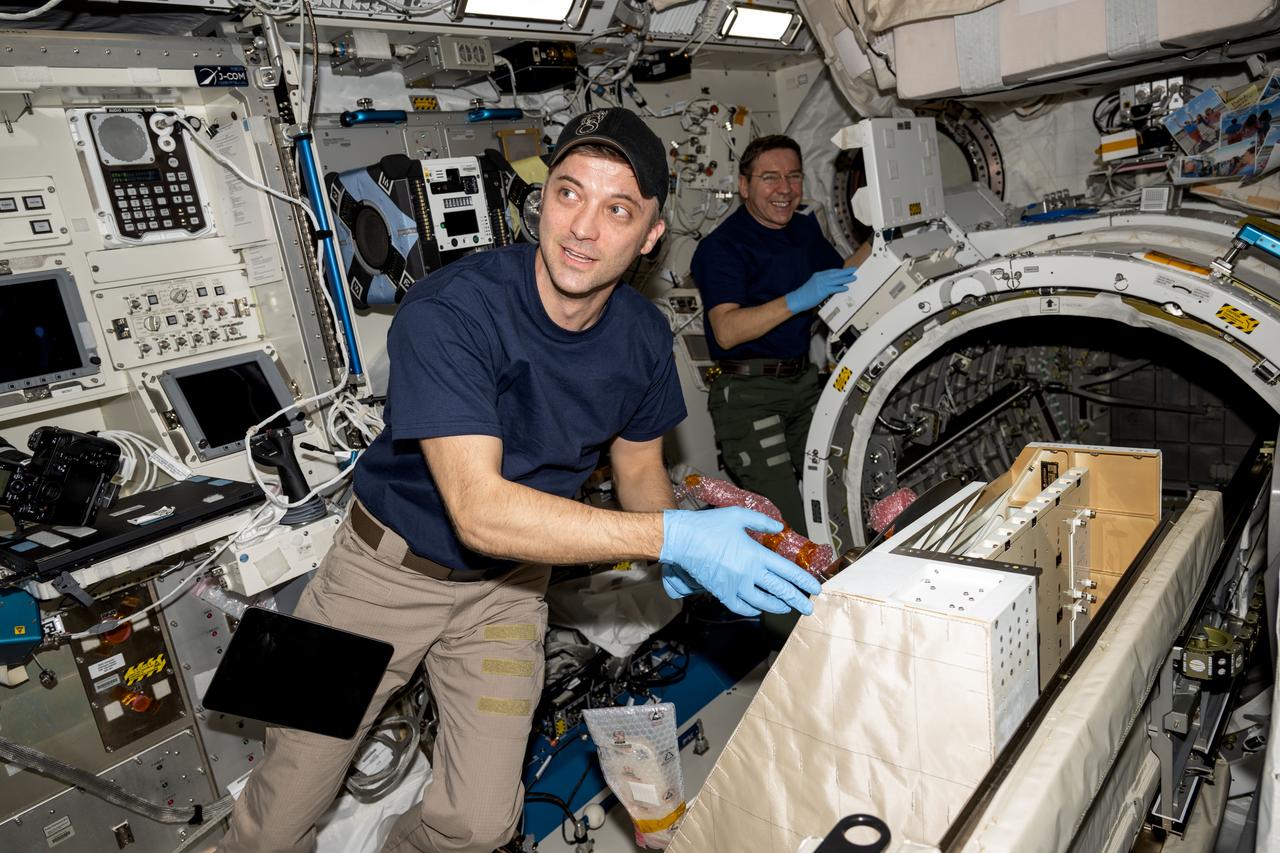
iss071e403564 (July 22, 2024) --- (From left) NASA astronauts Matthew Dominick and Mike Barratt, both Expedition 71 Flight Engineers, install the NanoRacks external platform inside the Kibo laboratory module's airlock. The platform from NanoRacks can host a variety of payloads placed outside the International Space Station and exposed to the external space environment for science experiments, technology demonstrations, and more.
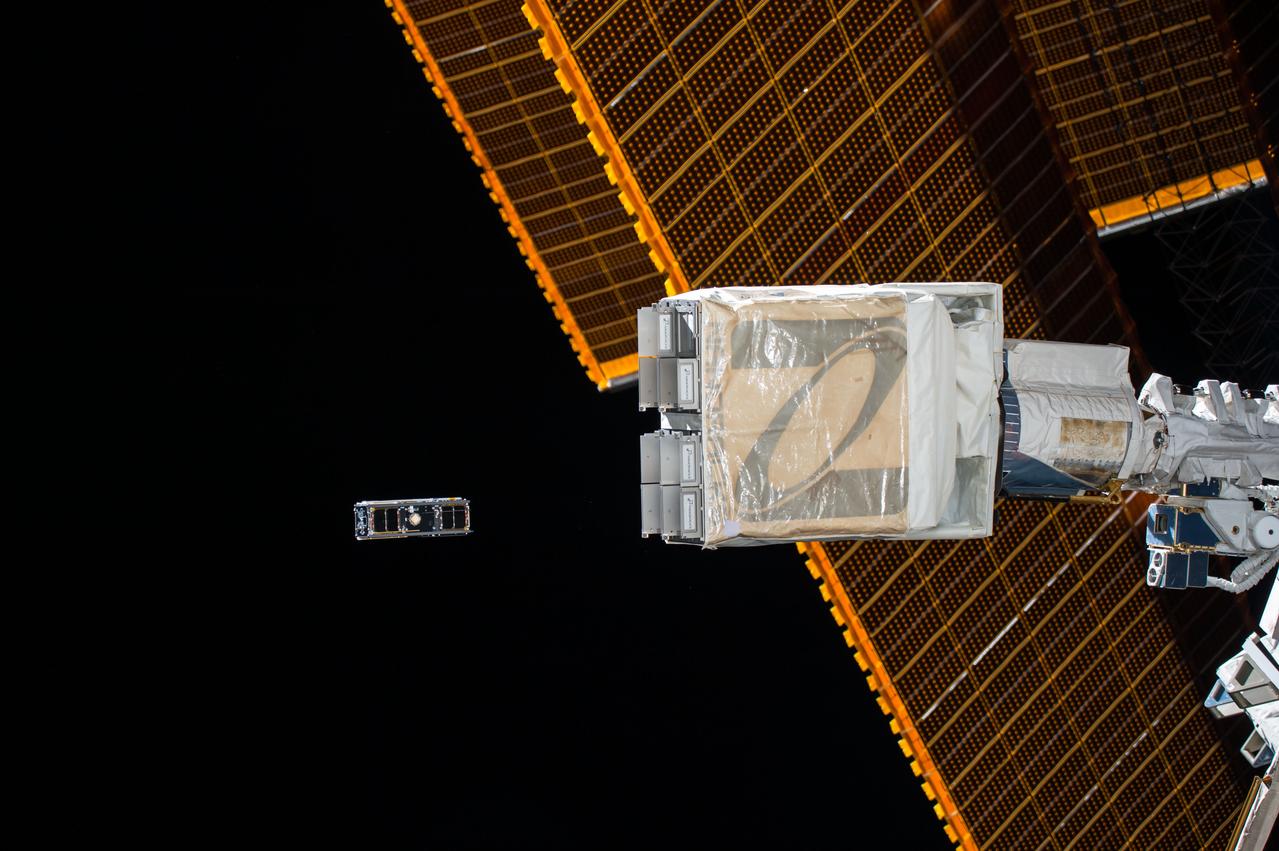
iss051e049985 )5/26/2017) --- A view of the NanoRacks CubeSat Deployer (NRCSD) 12 during the release of ExAlta-1, part of the NanoRacks-QB50 group of CubeSats. The NanoRacks CubeSat Deployer is a stackable, modular, ground loaded launch case. Each NanoRacks CubeSat Deployer accommodates up to 6.5U and eight launch cases are stacked for each JEM Airlock opening.
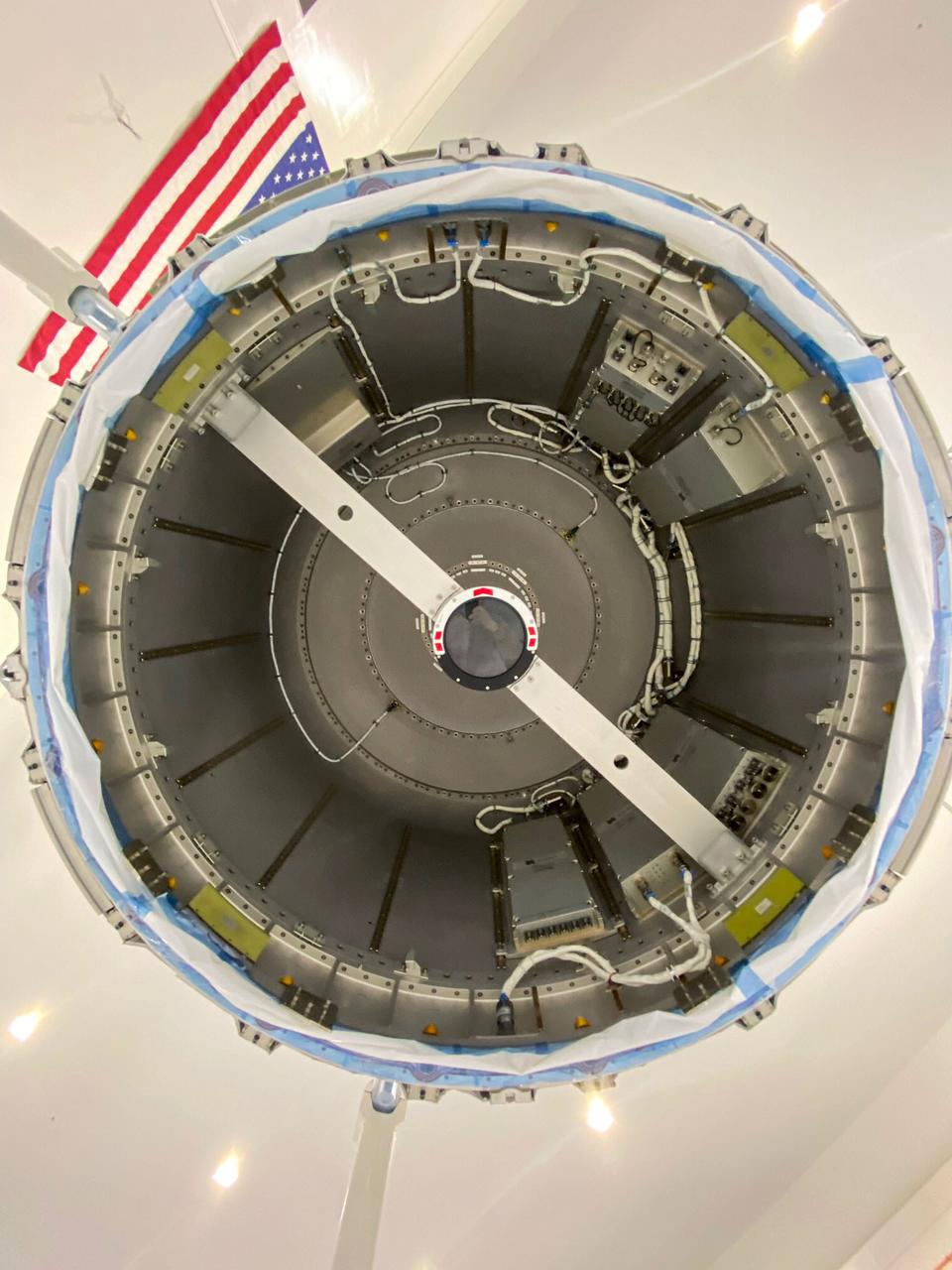
jsc2020e044492 (10/6/2020) —- A preflight view of the Nanoracks Airlock. The Nanoracks Bishop Airlock (Nanoracks Airlock) is the first-ever commercially owned and operated airlock on the International Space Station. It provides a variety of capabilities including jettisoning of payloads such as Cubesats, deployment of external payloads, support for small exterior payloads and locker-sized internal payloads, recovery of external on-orbit replaceable units (ORUs), and the ability to move hardware outside in support of extravehicular activities (EVAs). It is approximately five times larger than the Japanense Experiment Module (JEM) Airlock so it can accommodate more and larger payloads. The Airlock’s capabilities support many different types of scientific investigations.
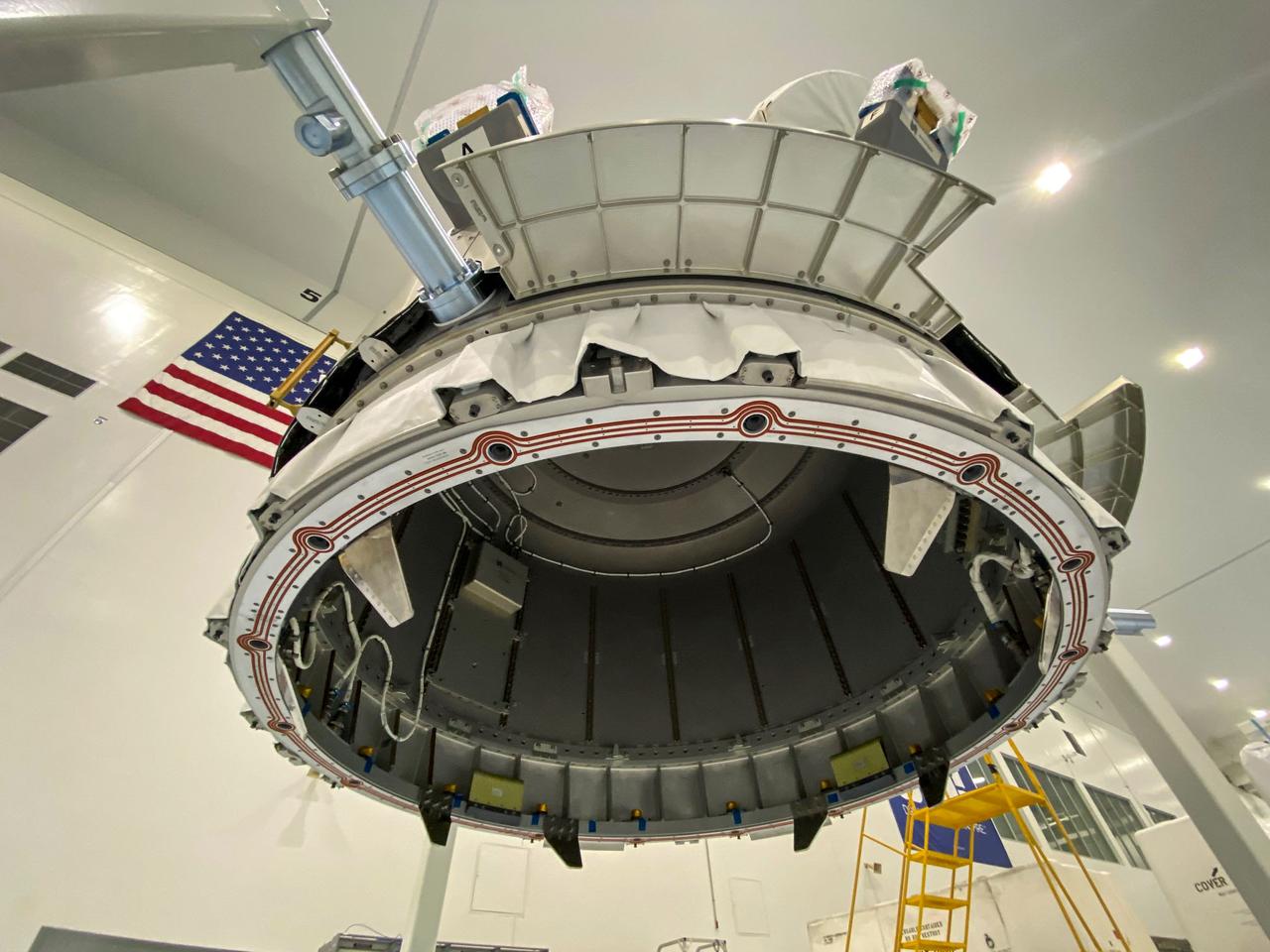
jsc2020e044494 (10/1/2020) --- A preflight view of the Nanoracks Airlock. The Nanoracks Bishop Airlock (Nanoracks Airlock) is the first-ever commercially owned and operated airlock on the International Space Station. It provides a variety of capabilities including jettisoning of payloads such as Cubesats, deployment of external payloads, support for small exterior payloads and locker-sized internal payloads, recovery of external on-orbit replaceable units (ORUs), and the ability to move hardware outside in support of extravehicular activities (EVAs). It is approximately five times larger than the Japanense Experiment Module (JEM) Airlock so it can accommodate more and larger payloads. The Airlock’s capabilities support many different types of scientific investigations.
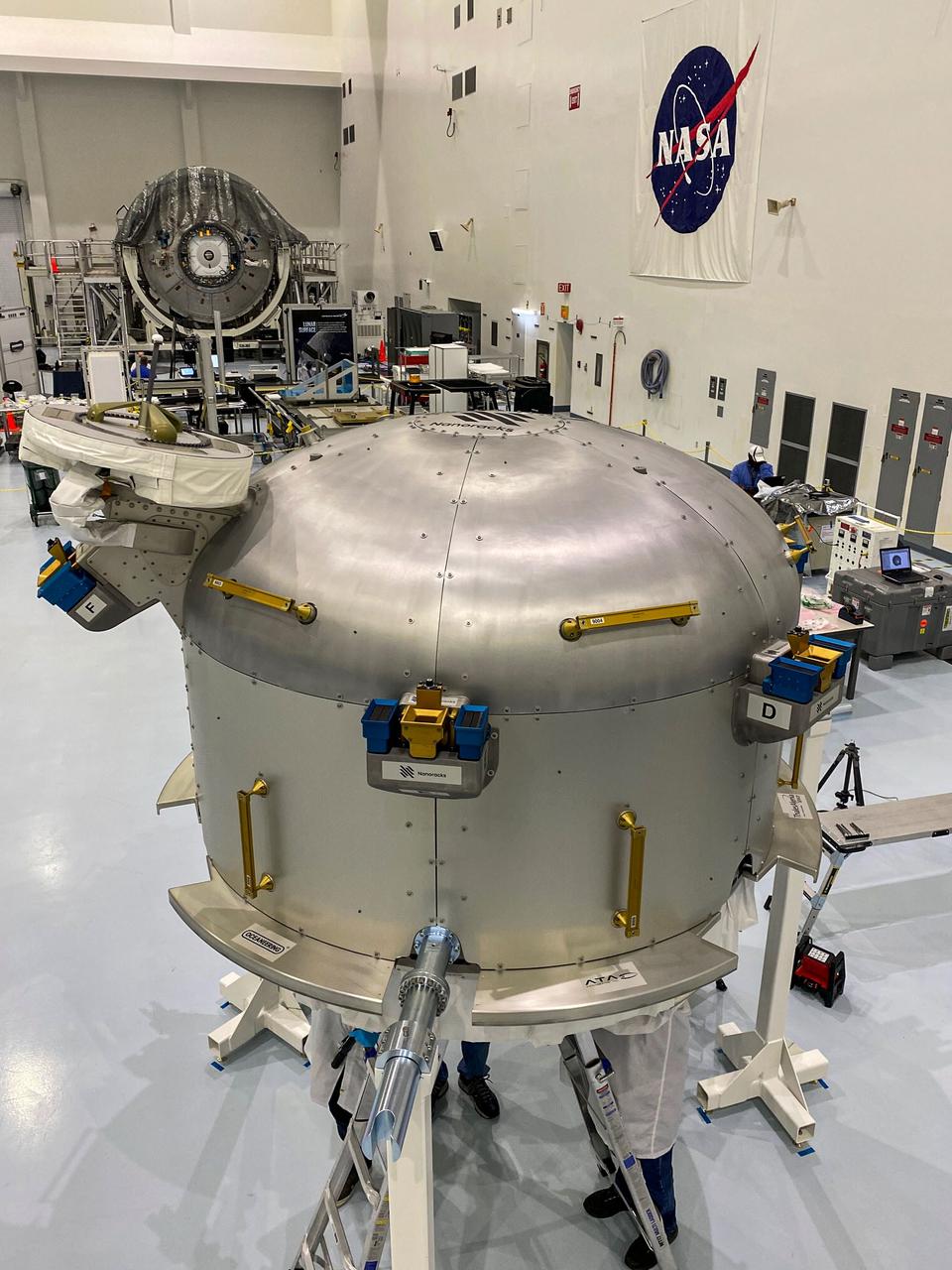
jsc2020e044491 (10/5/2020) —- A preflight view of the Nanoracks Airlock. The Nanoracks Bishop Airlock (Nanoracks Airlock) is the first-ever commercially owned and operated airlock on the International Space Station. It provides a variety of capabilities including jettisoning of payloads such as Cubesats, deployment of external payloads, support for small exterior payloads and locker-sized internal payloads, recovery of external on-orbit replaceable units (ORUs), and the ability to move hardware outside in support of extravehicular activities (EVAs). It is approximately five times larger than the Japanense Experiment Module (JEM) Airlock so it can accommodate more and larger payloads. The Airlock’s capabilities support many different types of scientific investigations.
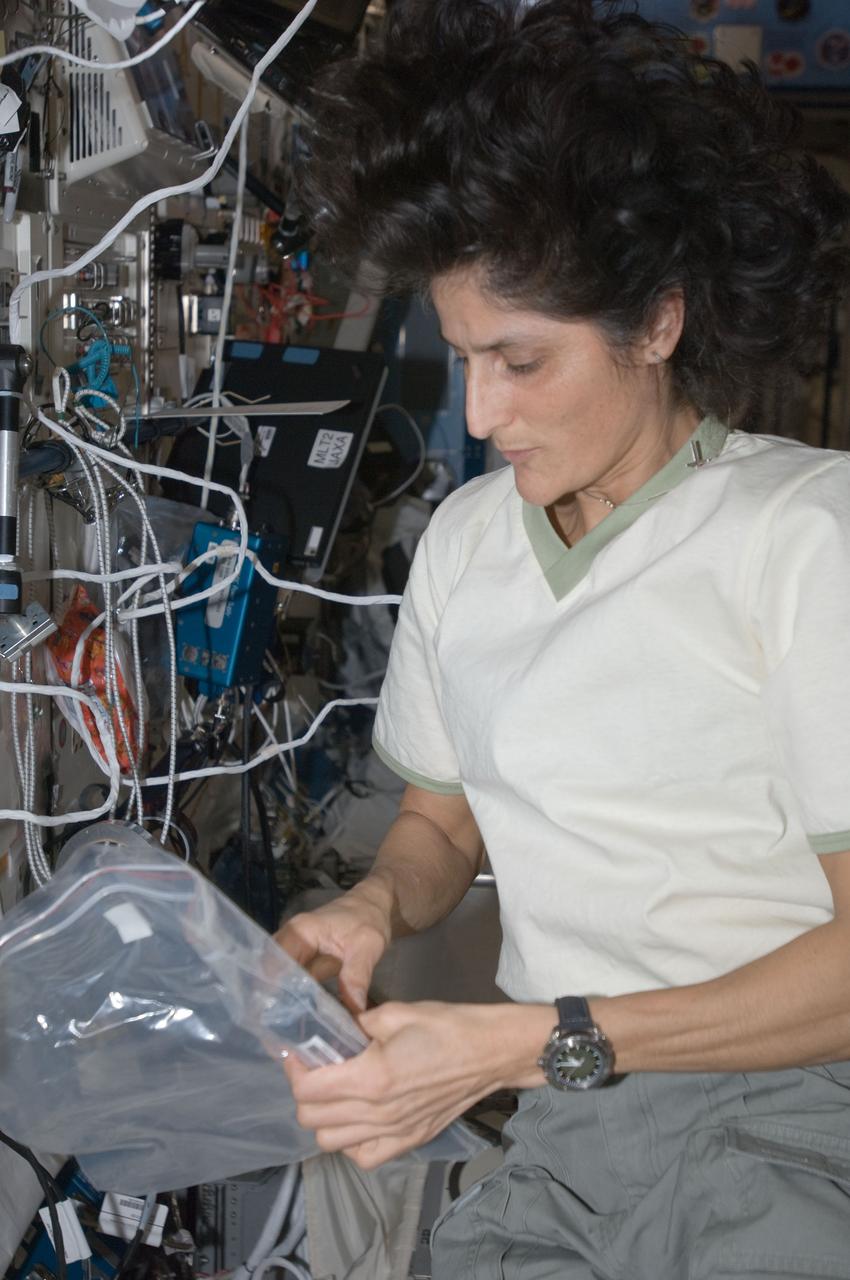
ISS033-E-011684 (12 Oct. 2012) --- NASA astronaut Sunita Williams, Expedition 33 commander, holds a plastic storage bag as she prepares to service the NanoRacks Module 9 payload in the Kibo laboratory of the International Space Station.
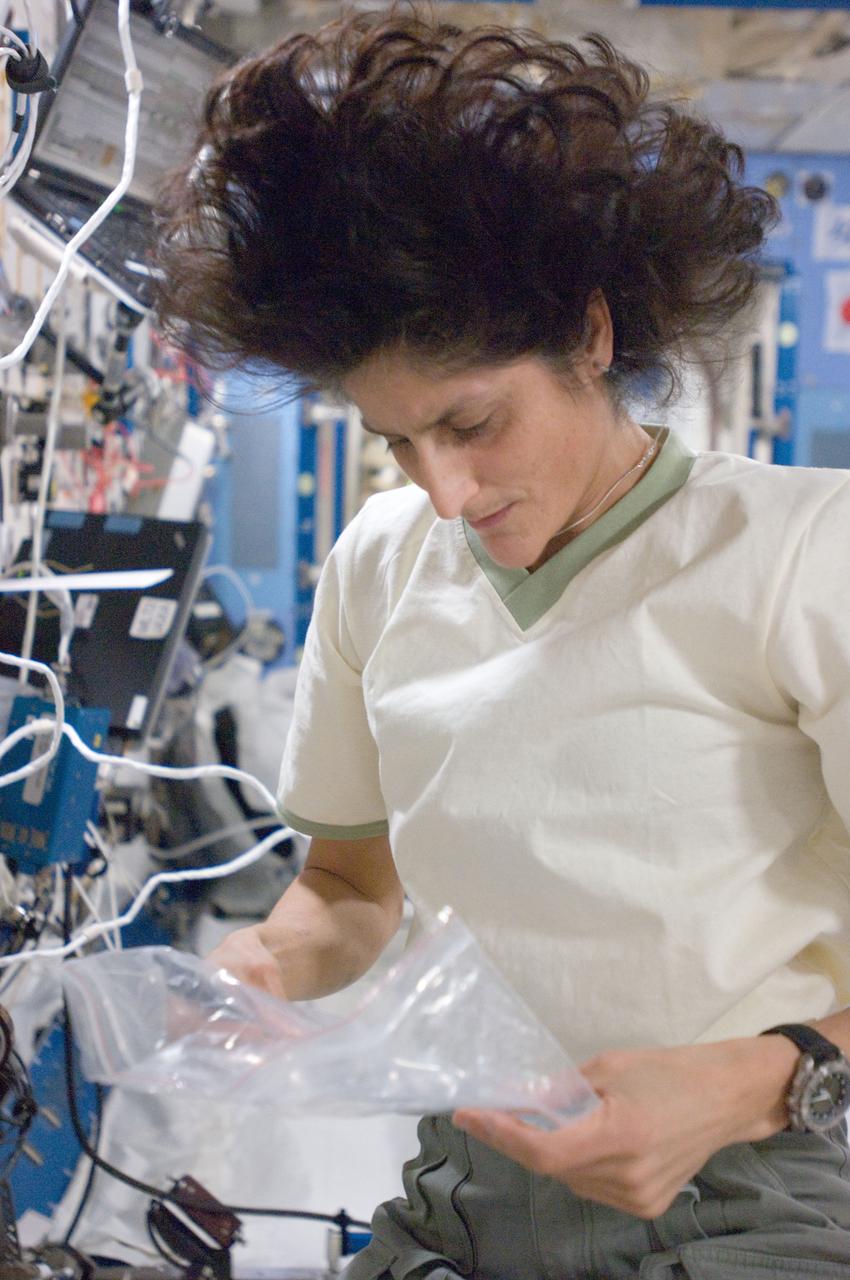
ISS033-E-011683 (12 Oct. 2012) --- NASA astronaut Sunita Williams, Expedition 33 commander, holds a plastic storage bag as she prepares to service the NanoRacks Module 9 payload in the Kibo laboratory of the International Space Station.
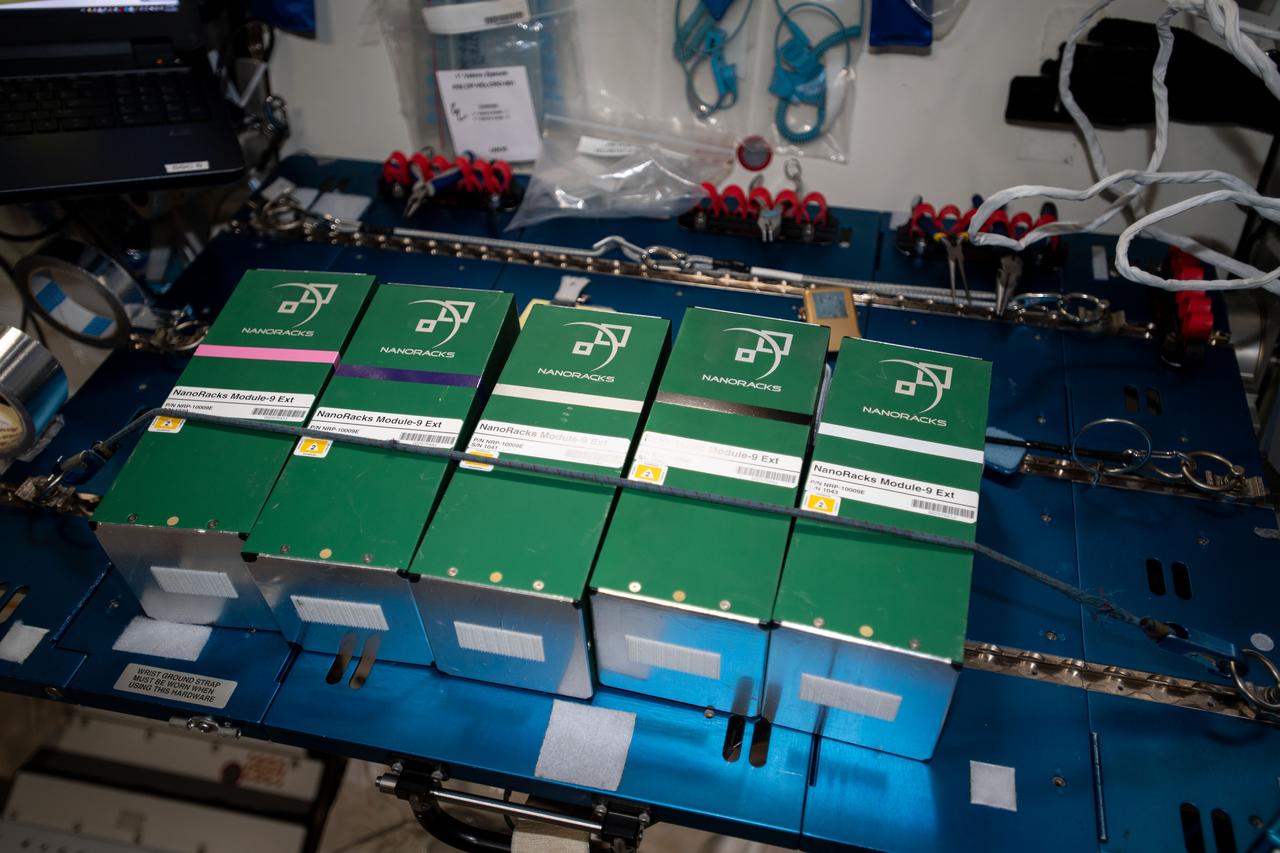
iss060e035405 (8/13/2019) --- A view the NanoRacks-NCESSE-Gemini NanoRacks-National Center for Earth and Space Science-Gemini (SSEP Mission 13) - Part of NanoRacks Module-9 Ext. aboard the International Space Station (ISS). The experiments range from examinations of water filtration and purification to synthetic soil production, rust formation, antibiotic effectiveness, growth and development of microacquatic organisms, and growth of plant, fungi, and bacteria. Each was chosen from more than 3,000 entries submitted by more than 23,000 U.S., Canadian, and Brazilian students. The experiments use NanoRacks MixStix, miniature laboratories activated by space station crew and eventually returned to the student teams on Earth for analysis.
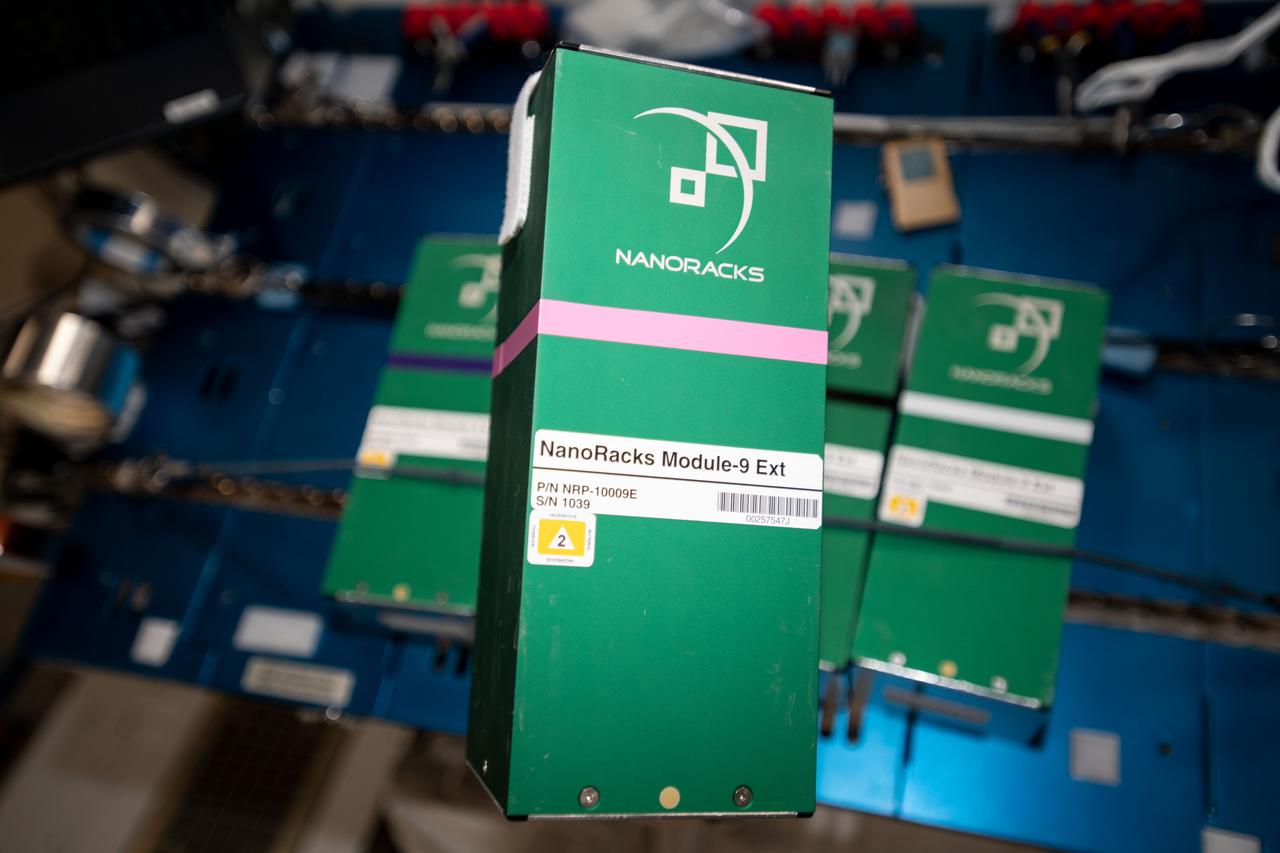
iss060e035407 (8/13/2019) --- A view the NanoRacks-NCESSE-Gemini NanoRacks-National Center for Earth and Space Science-Gemini (SSEP Mission 13) - Part of NanoRacks Module-9 Ext. The experiments range from examinations of water filtration and purification to synthetic soil production, rust formation, antibiotic effectiveness, growth and development of microacquatic organisms, and growth of plant, fungi, and bacteria. Each was chosen from more than 3,000 entries submitted by more than 23,000 U.S., Canadian, and Brazilian students. The experiments use NanoRacks MixStix, miniature laboratories activated by space station crew and eventually returned to the student teams on Earth for analysis.
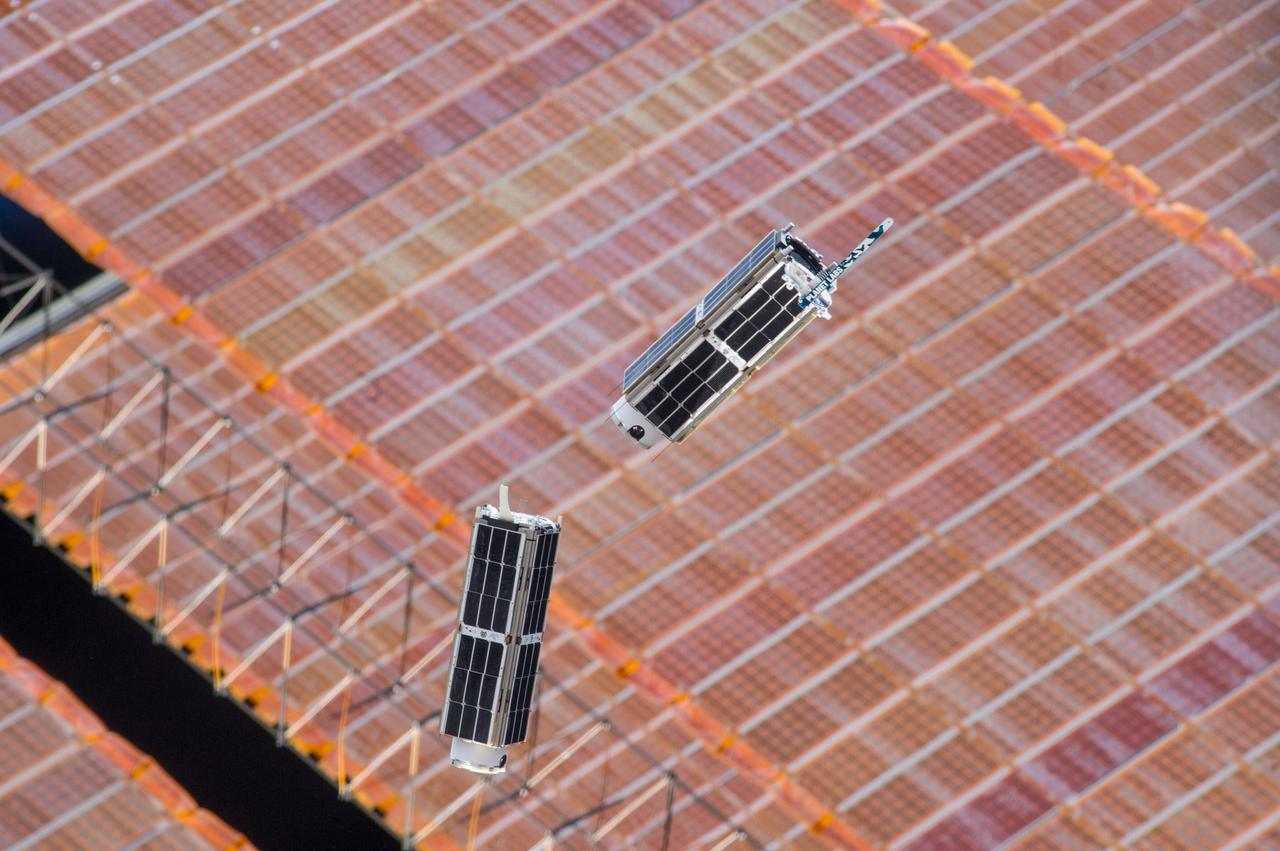
ISS038-E-047232 (14 Feb. 2014) --- A set of NanoRacks CubeSats is photographed by an Expedition 38 crew member after the deployment by the NanoRacks Launcher attached to the end of the Japanese robotic arm. The CubeSats program contains a variety of experiments such as Earth observations and advanced electronics testing. International Space Station solar array panels provide the backdrop for the scene.
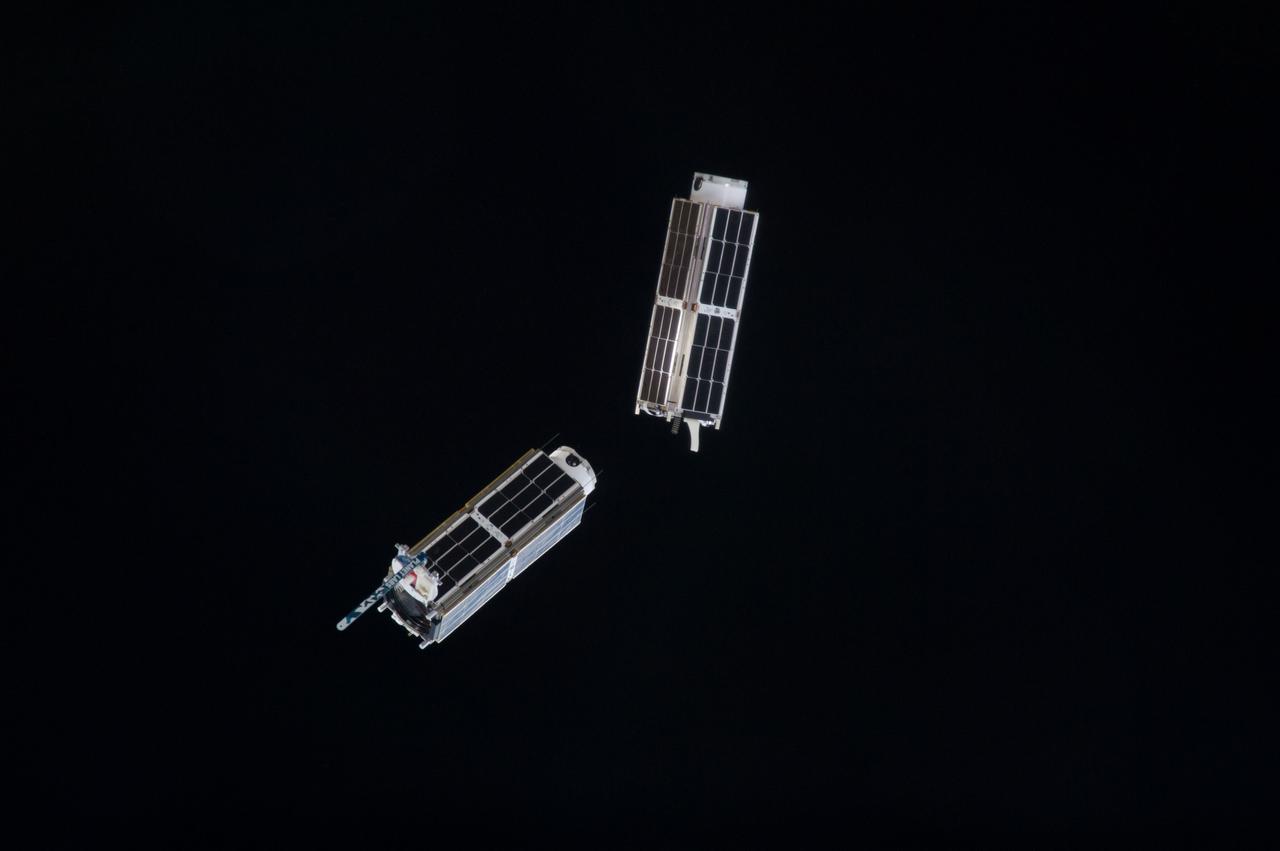
ISS038-E-046579 (13 Feb. 2014) --- A set of NanoRacks CubeSats is photographed by an Expedition 38 crew member after the deployment by the NanoRacks Launcher attached to the end of the Japanese robotic arm. The CubeSats program contains a variety of experiments such as Earth observations and advanced electronics testing.
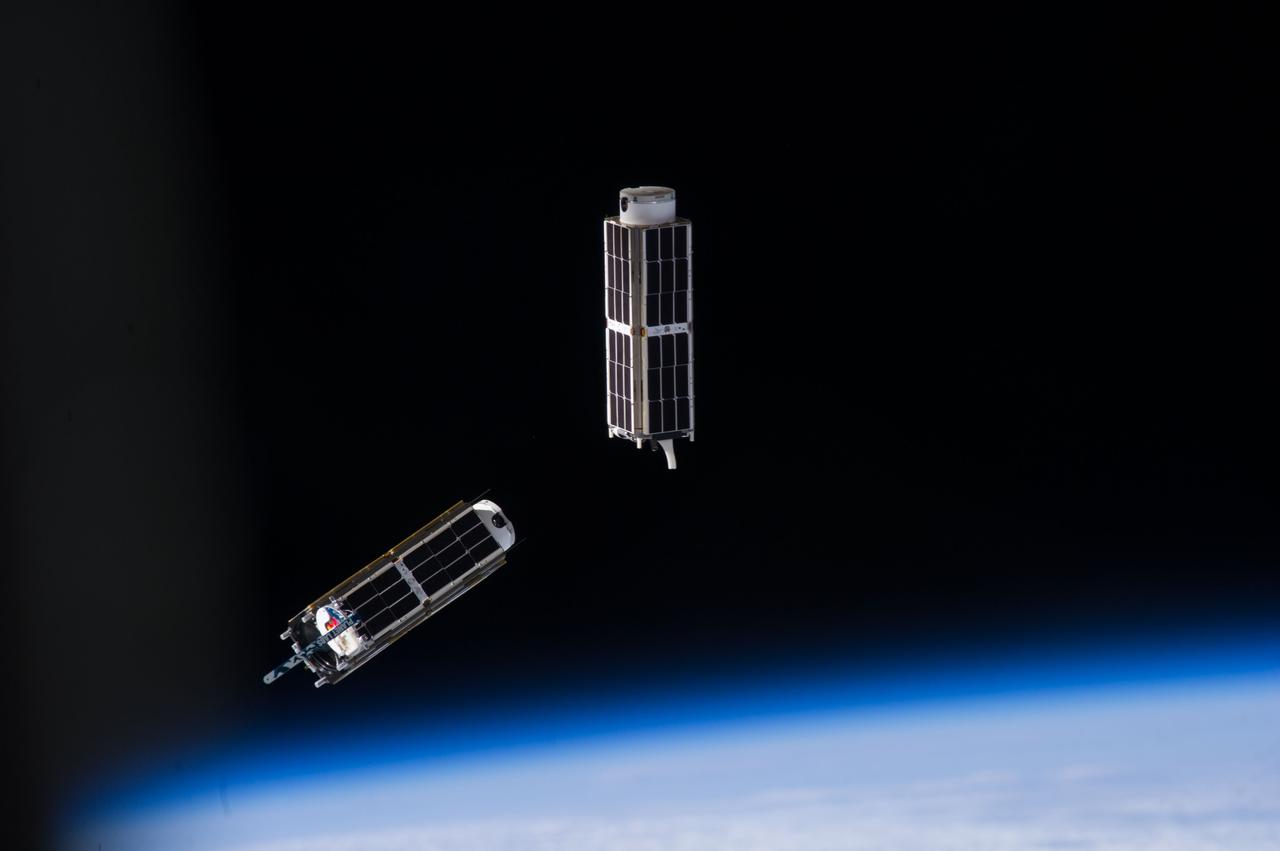
ISS038-E-046586 (13 Feb. 2014) --- A set of NanoRacks CubeSats is photographed by an Expedition 38 crew member after the deployment by the NanoRacks Launcher attached to the end of the Japanese robotic arm. The CubeSats program contains a variety of experiments such as Earth observations and advanced electronics testing.
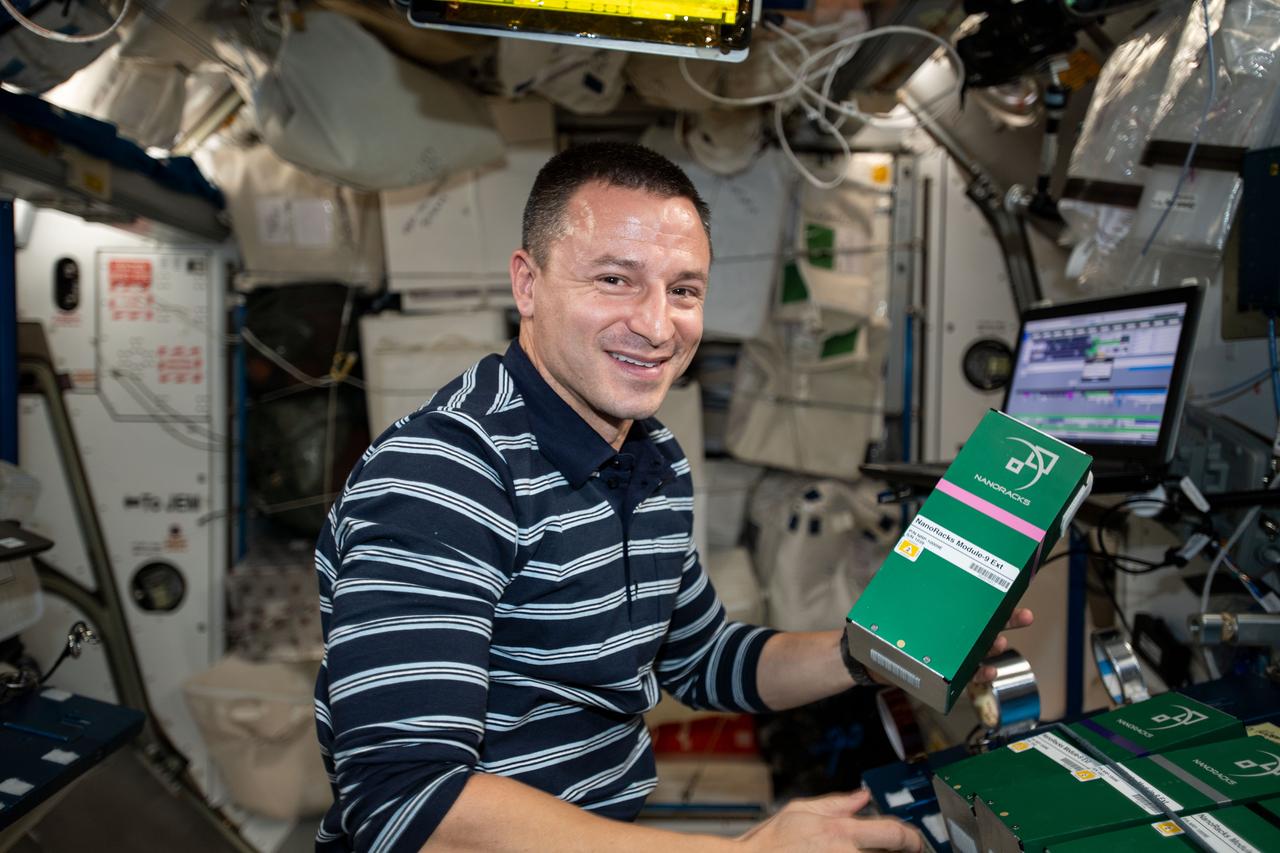
iss060e035409 (8/13/2019) --- A view of NASA astronaut Drew Morgan during the deactivation and/or shaking designated mixture tubes of NanoRacks-NCESSE-Gemini NanoRacks-National Center for Earth and Space Science-Gemini (SSEP Mission 13) - Part of NanoRacks Module-9 Ext. aboard the International Space Station (ISS). The experiments range from examinations of water filtration and purification to synthetic soil production, rust formation, antibiotic effectiveness, growth and development of microacquatic organisms, and growth of plant, fungi, and bacteria. Each was chosen from more than 3,000 entries submitted by more than 23,000 U.S., Canadian, and Brazilian students. The experiments use NanoRacks MixStix, miniature laboratories activated by space station crew and eventually returned to the student teams on Earth for analysis.
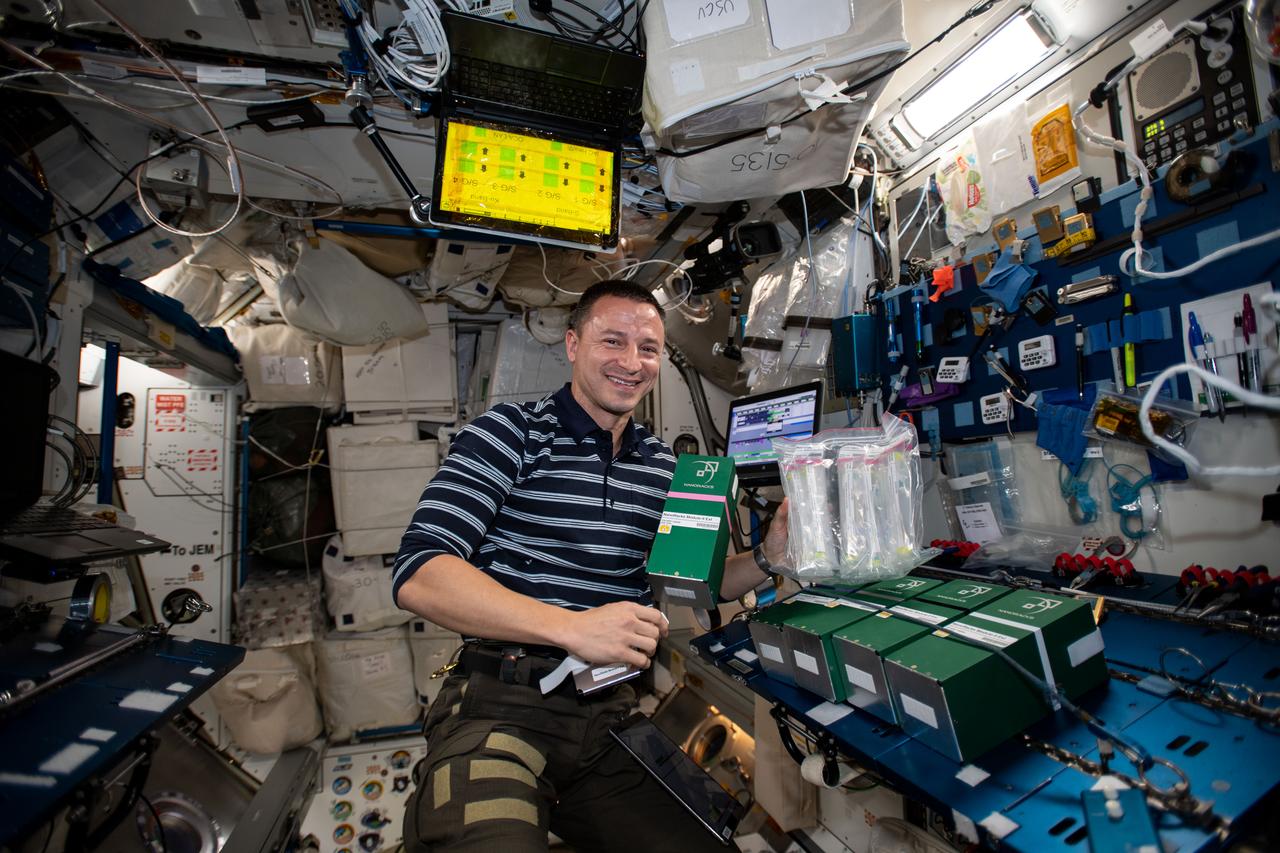
iss060e035415 8/13/2019) --- A view of NASA astronaut Drew Morgan during the deactivation and/or shaking designated mixture tubes of NanoRacks-NCESSE-Gemini NanoRacks-National Center for Earth and Space Science-Gemini (SSEP Mission 13) - Part of NanoRacks Module-9 Ext. aboard the International Space Station (ISS). The experiments range from examinations of water filtration and purification to synthetic soil production, rust formation, antibiotic effectiveness, growth and development of microacquatic organisms, and growth of plant, fungi, and bacteria. Each was chosen from more than 3,000 entries submitted by more than 23,000 U.S., Canadian, and Brazilian students. The experiments use NanoRacks MixStix, miniature laboratories activated by space station crew and eventually returned to the student teams on Earth for analysis.
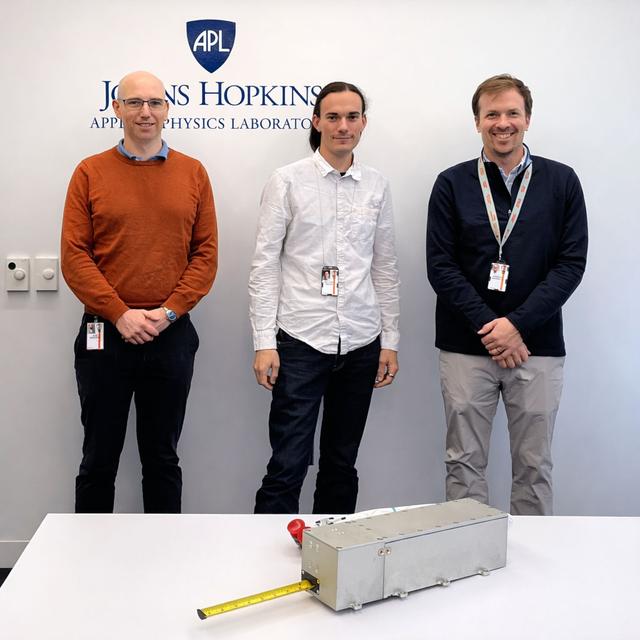
jsc2026e014327 (March 23, 2026) --- The research team as part of the Nanoracks-ITSI investigation, from left: Alex Chartier (PI), Matt Bailey (engineer), Greg Merboth (engineer). This investigation aims to measure radio signals that have passed through the ionosphere in order to quantify the effects of atmospheric dynamics on propagation. Earth’s ionosphere is highly variable due to forcing by the lower atmosphere, the aurora, meteors, and the Sun among other factors. This variability has important effects on radio propagation, and accurate characterization may support efforts to mitigate its effects on technology such as radar. Credit: Johns Hopkins Applied Physics Laboratory.
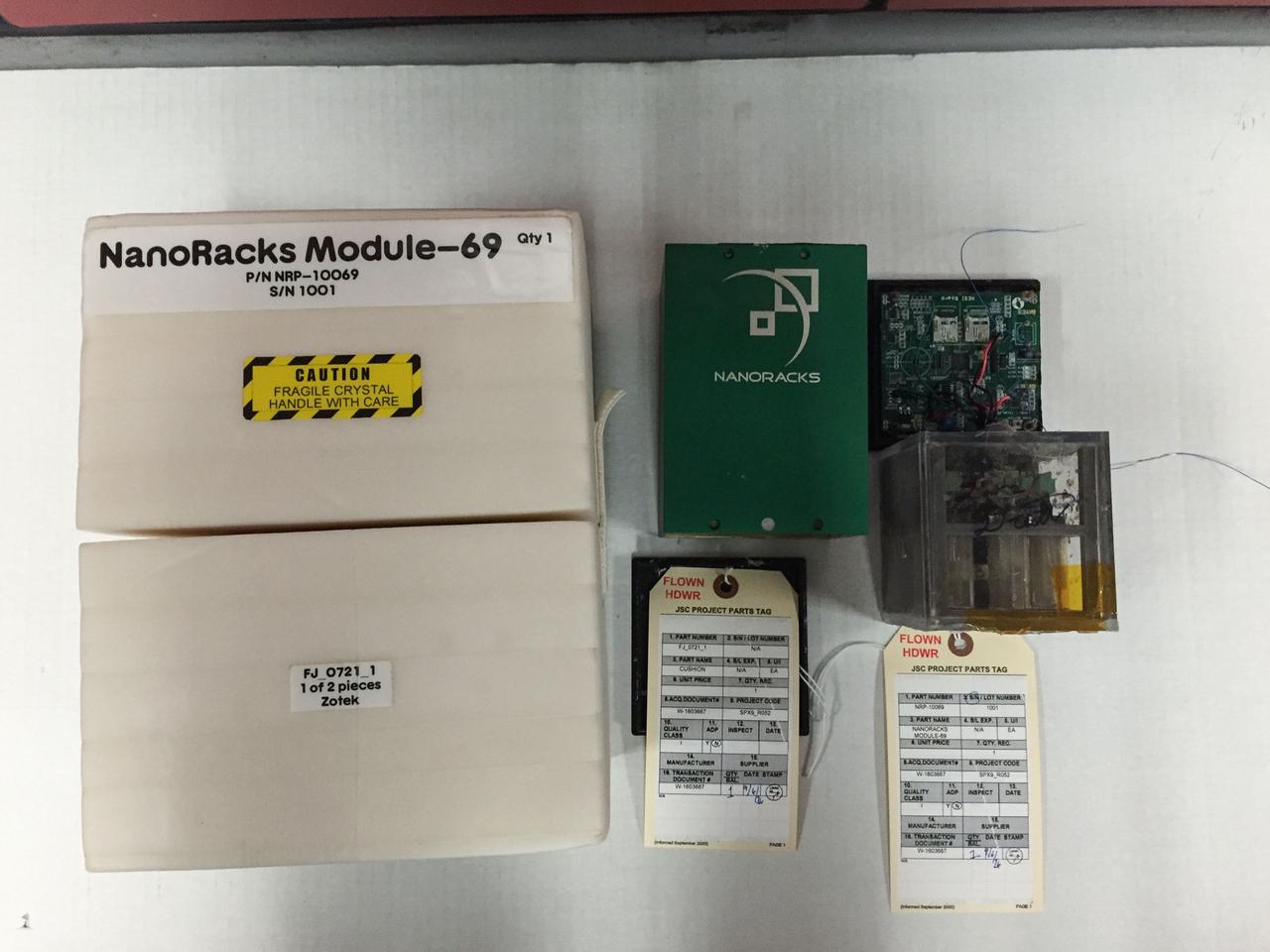
jsc2025e044835 (9/8/2016) --- Contents flown for the NanoRacks-Crystallization Of Silver Nitrate in Microgravity On a Silver Cathode (NanoRacks-COSMOS). This investigation assesses the 3D structure of silver nitrate crystals formed by electrolysis in microgravity. Image courtesy of Dave Schlichting.
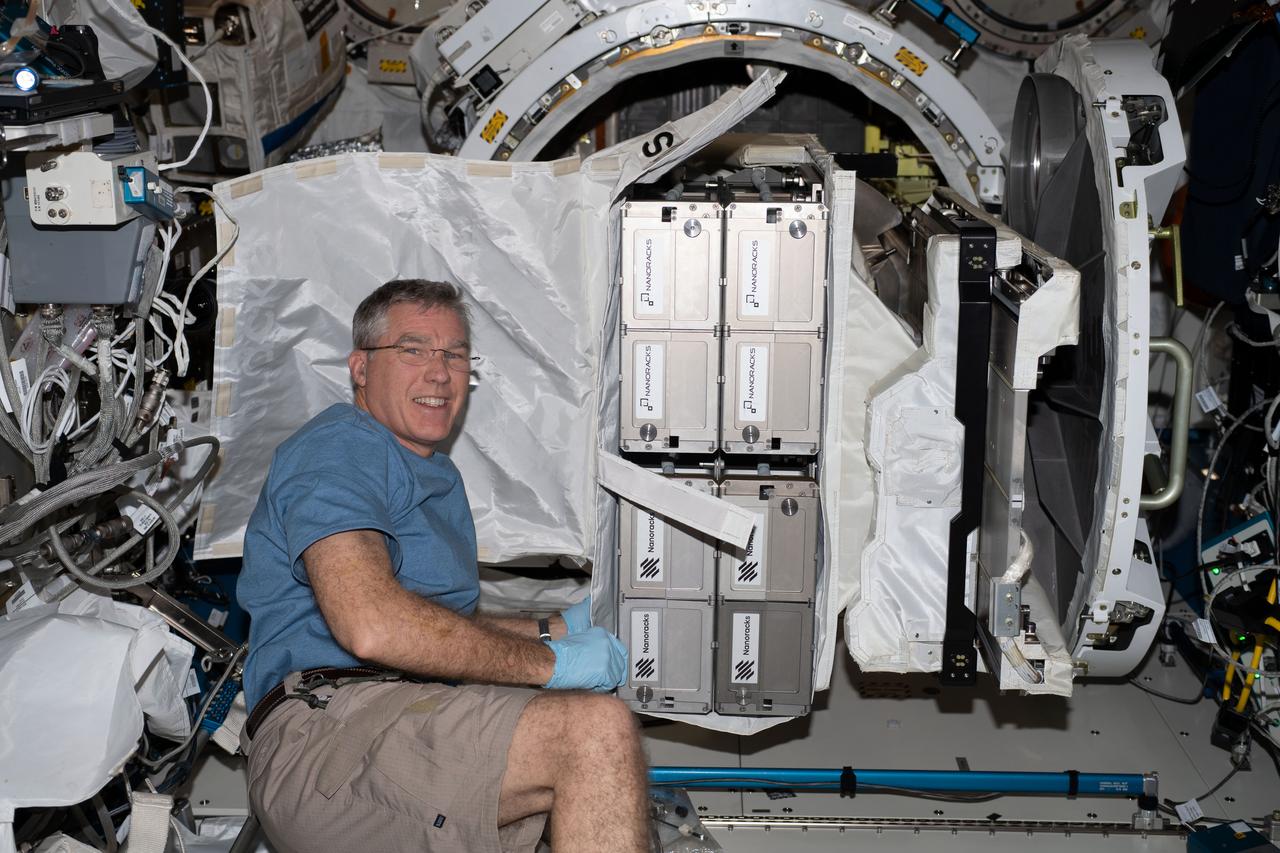
iss069e025743 (June 28, 2023) --- NASA astronaut and Expedition 69 Flight Engineer Stephen Bowen installs the NanoRacks CubeSat Deployer into the Kibo laboratory module's airlock.
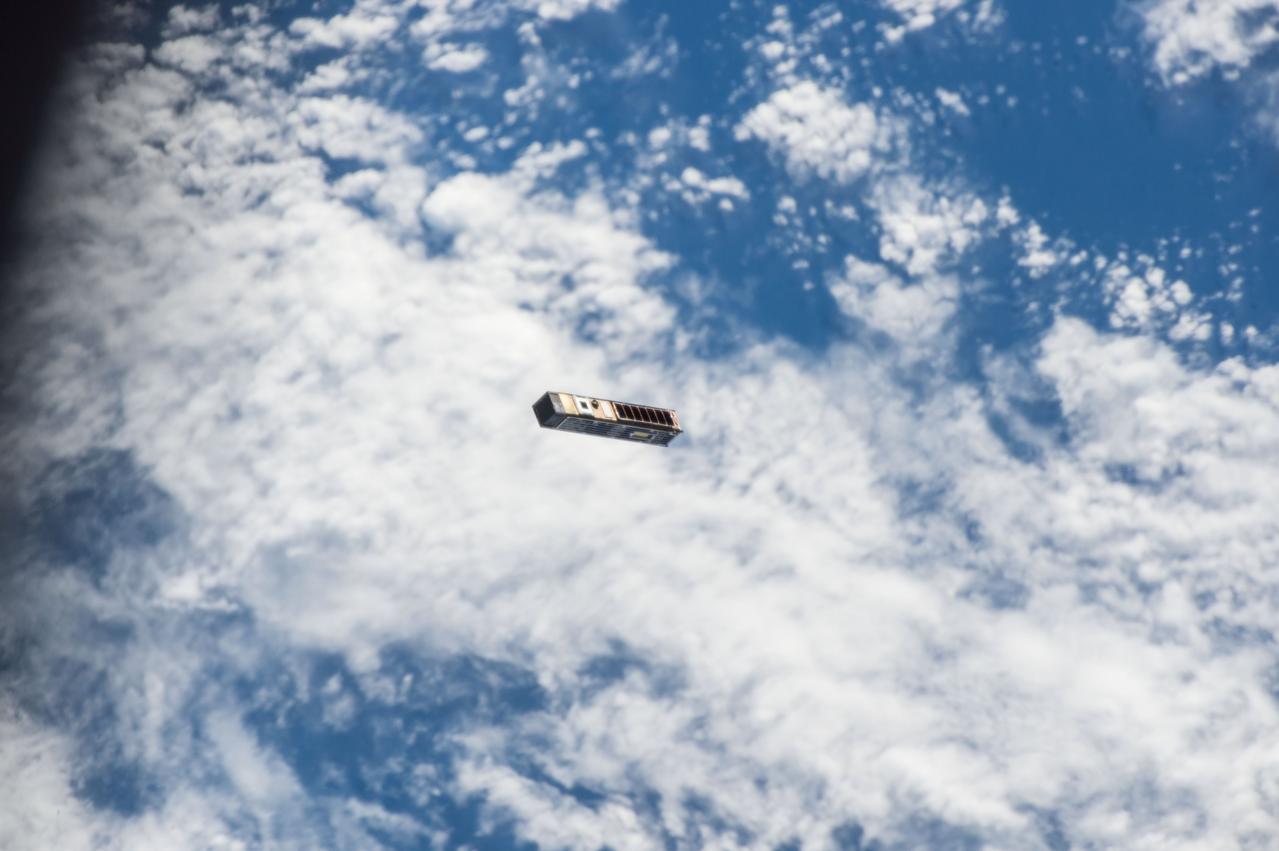
iss051e044839 (5/17/2017) -- The NanoRacks CubeSat Deployer "ejects" the Spacecraft for High Accuracy Radar Calibrationa (SHARC) microsatellite into orbit from the International Space Station.
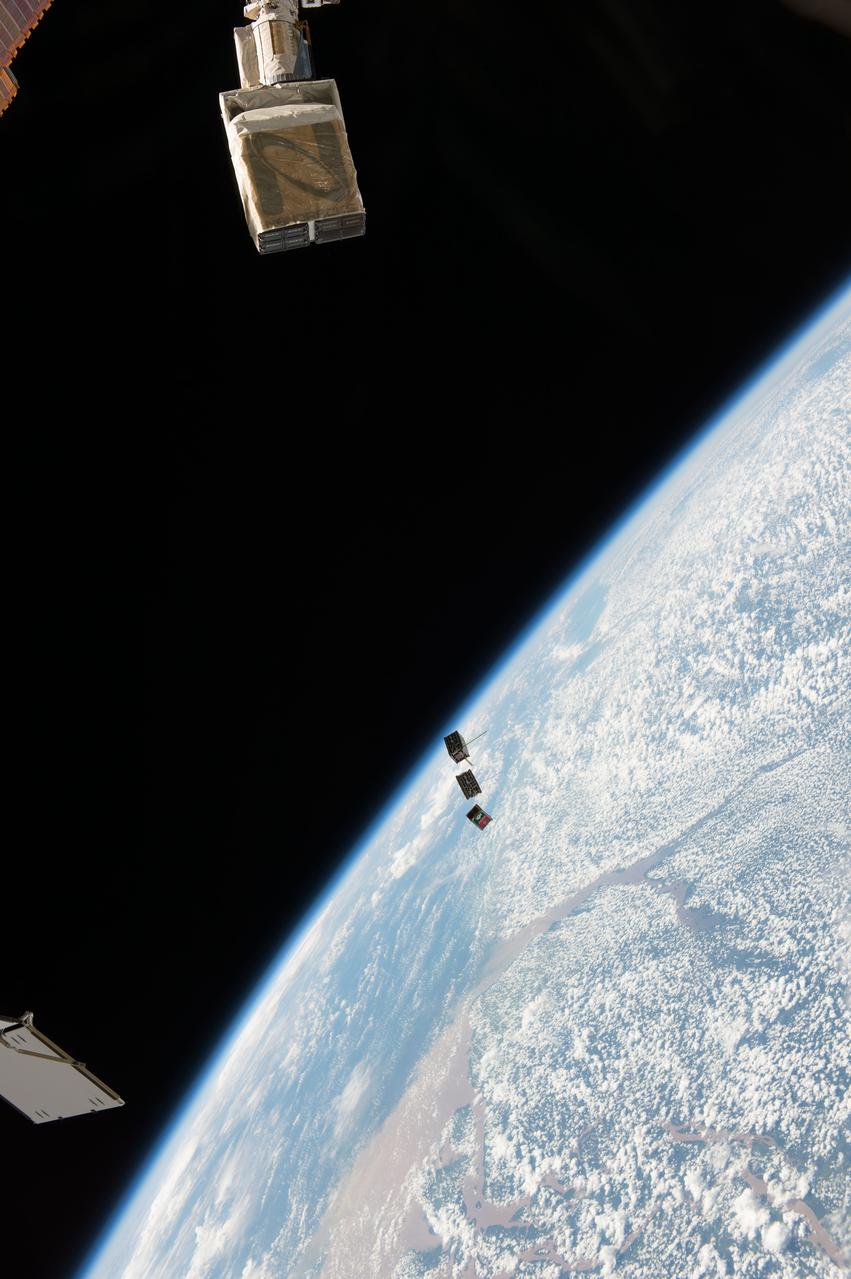
iss047e120450 (5/16/2016) --- Photographic documentation of NanoRacks CubeSat Deployer Number 8 Deployment Operations. The tiny four-inch and about three-pound cube satellite named St. Thomas More School Cathedral Satellite-1 (STMSat-1) is delivered by a resupply rocket to the International Space Station (ISS) where it is deployed by an ISS NanoRacks launcher into its own orbit to capture images and transmit them back to the schools around the world for research and teaching purposes in math and science.
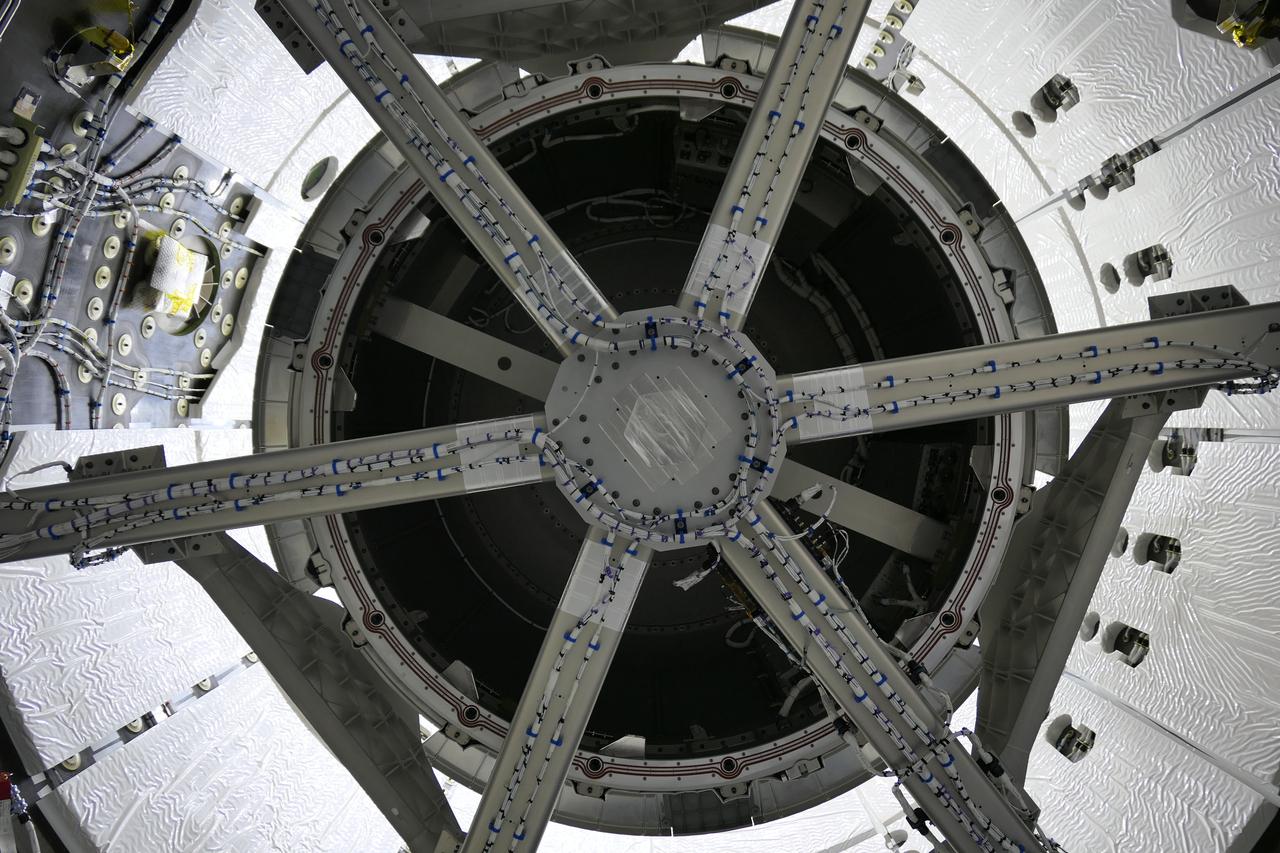
The Nanoracks Bishop Airlock is packed in the Dragon spacecraft’s trunk on Oct. 12, 2020, inside SpaceX’s processing facility at NASA’s Kennedy Space Center in Florida for its ride to the International Space Station aboard the company’s 21st Commercial Resupply Services (CRS-21) mission. The first commercially funded airlock for the orbiting laboratory, it will provide payload hosting, robotics testing, satellite deployment, serve as an outside toolbox for station crew spacewalks, and more. CRS-21 is scheduled to launch on a SpaceX Falcon 9 from Kennedy’s Launch Complex 39A.

The Nanoracks Bishop Airlock is packed in the Dragon spacecraft’s trunk on Oct. 12, 2020, inside SpaceX’s processing facility at NASA’s Kennedy Space Center in Florida for its ride to the International Space Station aboard the company’s 21st Commercial Resupply Services (CRS-21) mission. The first commercially funded airlock for the orbiting laboratory, it will provide payload hosting, robotics testing, satellite deployment, serve as an outside toolbox for station crew spacewalks, and more. CRS-21 is scheduled to launch on a SpaceX Falcon 9 from Kennedy’s Launch Complex 39A.
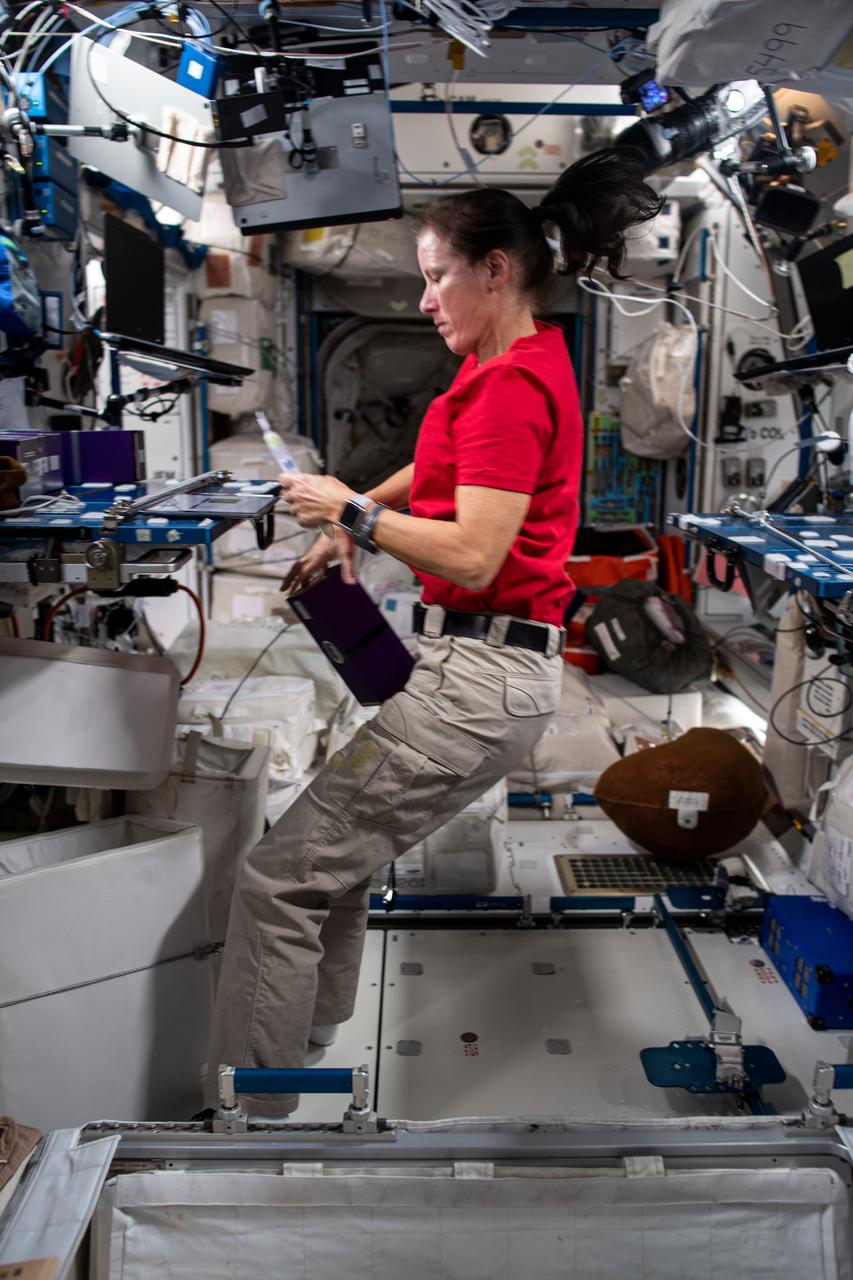
iss064e010970 (12/8/2020) --- NASA astronaut Shannon Walker conducts activation operations (OPS) for a Nanoracks-National Center for Earth and Space Science Education-Apollo-SSEP Mission 14 to ISS (Nanoracks-NCESSE-Apollo) experiment Mixture Tube, part of Nanoracks Module-9. The photo was taken in the Harmony Node 2 module aboard the International Space Station (ISS).
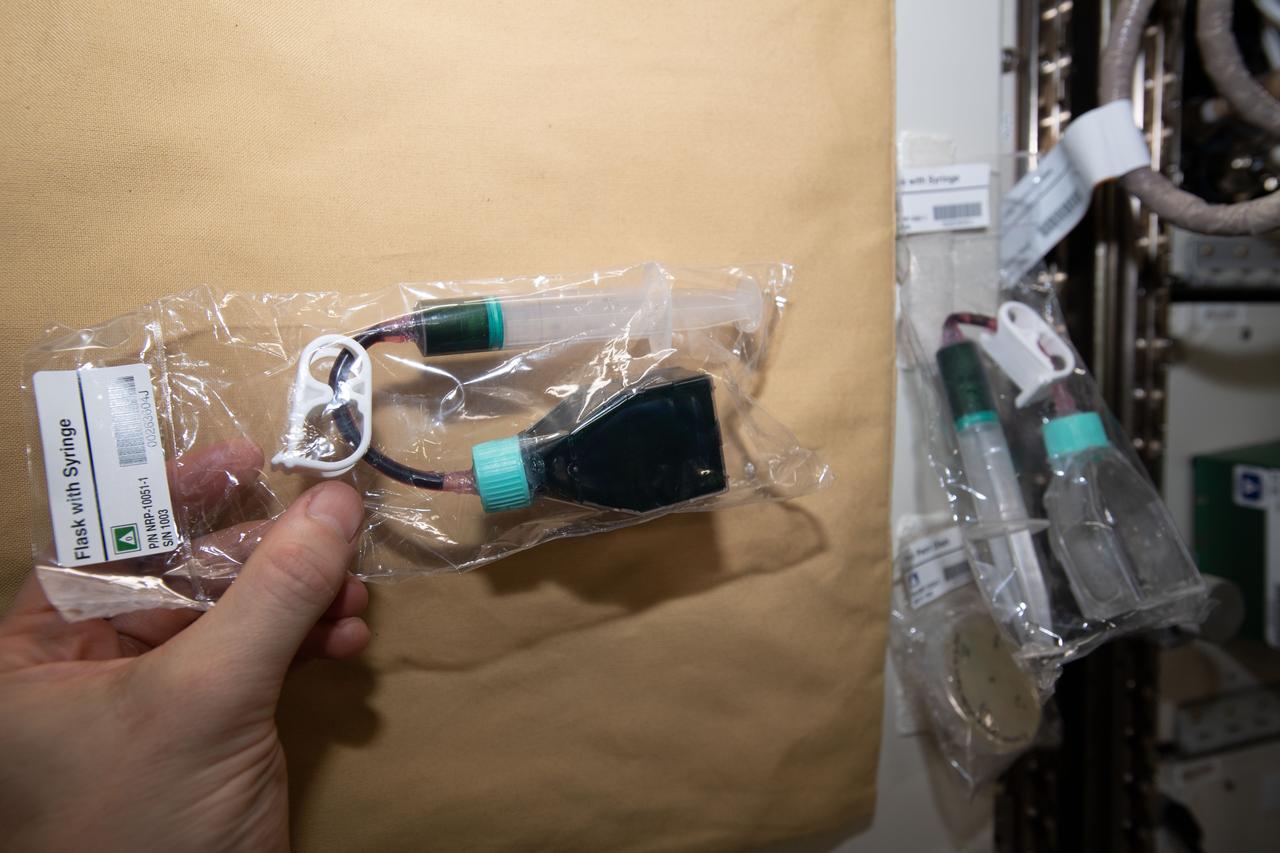
iss062e087547 (3/11/2020) --- A View of the ISSET-Nanoracks-Mission Discovery 4 investigation aboard the International Space Station (ISS). The Degradation of vitamin C in microgravity sub-investigation studies the effects of microgravity on the breakdown of Vitamin C.
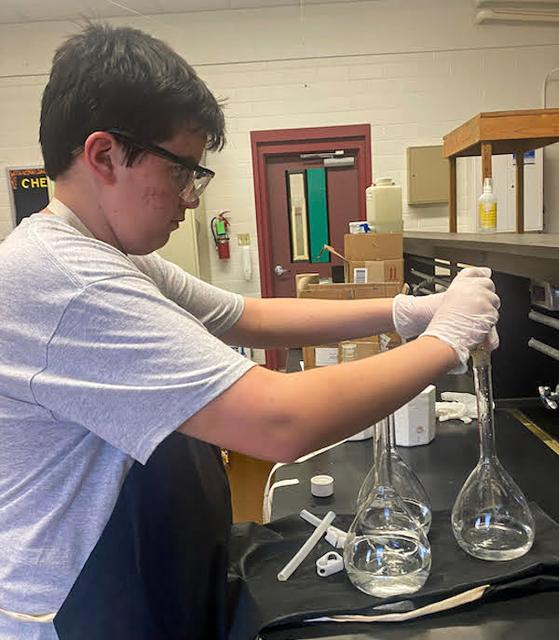
jsc2023e065200 (10/19/2023) --- Student researcher Sam Dondapati work on his experiment, Growth of Spirulina in Microgravity, which will be included in the Nanoracks-National Center for Earth and Space Science Education-Orbiter-Student Spaceflight Experiments Program Mission 17 to ISS (Nanoracks-NCESSE-Orbiter-SSEP).

jsc2023e065203 (10/19/2023) --- Lynbrook High School student researchers Jack and Aiden work on their experiment on the Wine cap mushroom , which will be included in the Nanoracks-National Center for Earth and Space Science Education-Orbiter-Student Spaceflight Experiments Program Mission 17 to ISS (Nanoracks-NCESSE-Orbiter-SSEP).
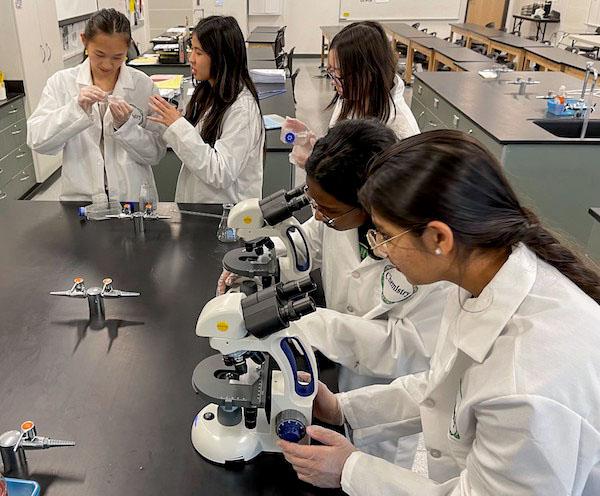
jsc2024e067106 (10/15/2024) --- Nematodes to the Rescue! - Space worms as an integral component of space agriculture is part of the Nanoracks-National Center for Earth and Space Science Education-Surveyor-Student Spaceflight Experiments Program Mission 18 to the ISS (Nanoracks-NCESSE-Surveyor-SSEP). Image courtesy of Canyons School District.
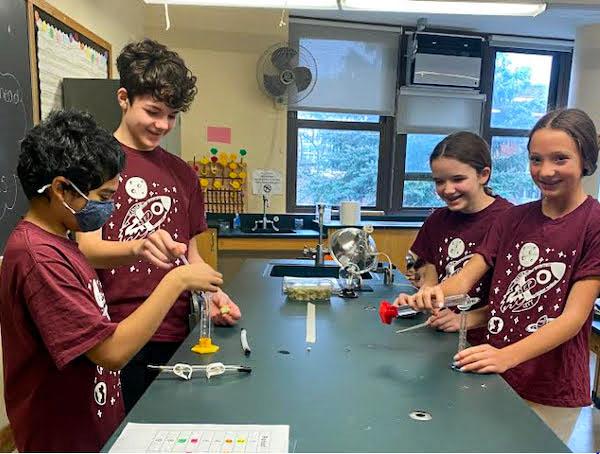
jsc2023e065191 (10/19/2023) --- Garden City Middle School student researchers work on their dill seed germination experiment, which will be included in the Nanoracks-National Center for Earth and Space Science Education-Orbiter-Student Spaceflight Experiments Program Mission 17 to ISS (Nanoracks-NCESSE-Orbiter-SSEP).
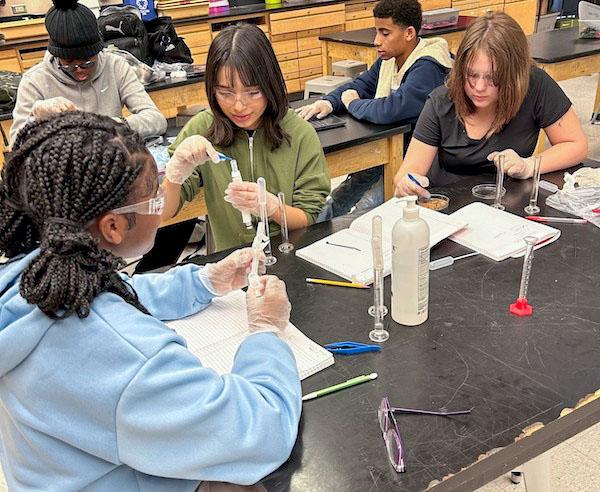
jsc2024e066522 (10/7/2024) --- Moreno Valley Unified School District students explore the effects of microgravity on a popular leafy green. Their experiment, The Effects of Microgravity on Arugula, is part of the Nanoracks-National Center for Earth and Space Science Education-Surveyor-Student Spaceflight Experiments Program Mission 18 to ISS (Nanoracks-NCESSE-Surveyor-SSEP).
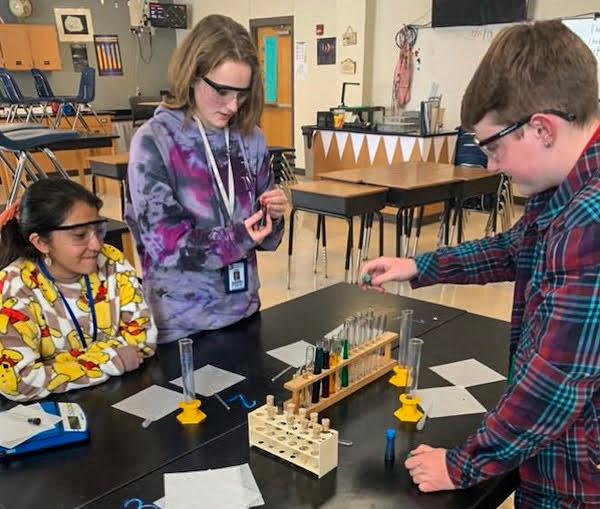
jsc2023e065182 (10/19/2023) --- Student researchers work on their Basil Germination experiment, which will be included in the Nanoracks-National Center for Earth and Space Science Education-Orbiter-Student Spaceflight Experiments Program Mission 17 to ISS (Nanoracks-NCESSE-Orbiter-SSEP).
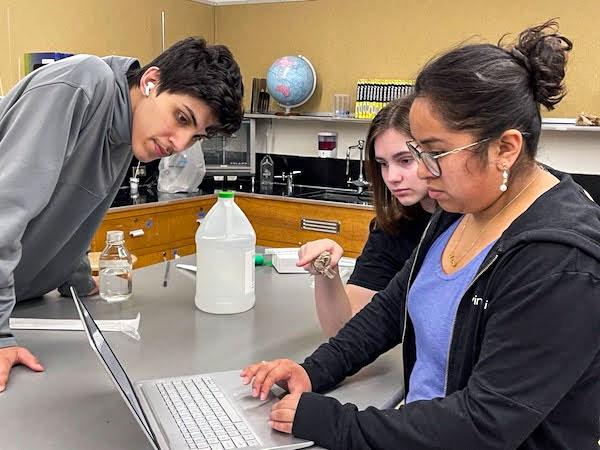
jsc2023e065192 (1/23/2023) --- Student researchers from Gervais, OR work on their experiment, Patulin Growth in Space, which will be included in the Nanoracks-National Center for Earth and Space Science Education-Orbiter-Student Spaceflight Experiments Program Mission 17 to ISS (Nanoracks-NCESSE-Orbiter-SSEP).
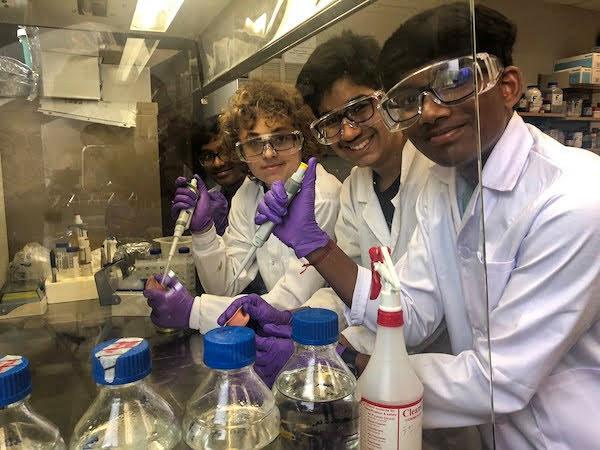
jsc2023e065209 (10/19/2023) --- Student researchers Rishik Yellu, Yatharth Kakkad, Felix Ratner and Rugan Suresh work on their experiment, which will be included in the Nanoracks-National Center for Earth and Space Science Education-Orbiter-Student Spaceflight Experiments Program Mission 17 to ISS (Nanoracks-NCESSE-Orbiter-SSEP).
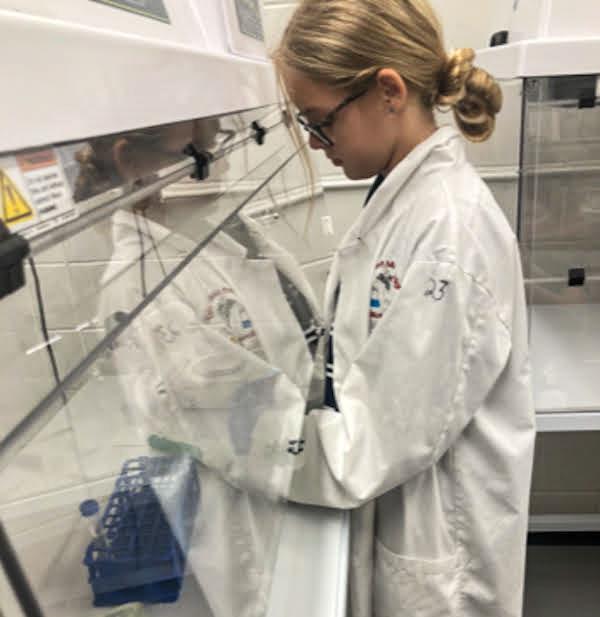
jsc2023e065208 (10/19/2023) --- Student researcher Collins works on their E. choli experiment, which will be included in the Nanoracks-National Center for Earth and Space Science Education-Orbiter-Student Spaceflight Experiments Program Mission 17 to ISS (Nanoracks-NCESSE-Orbiter-SSEP).
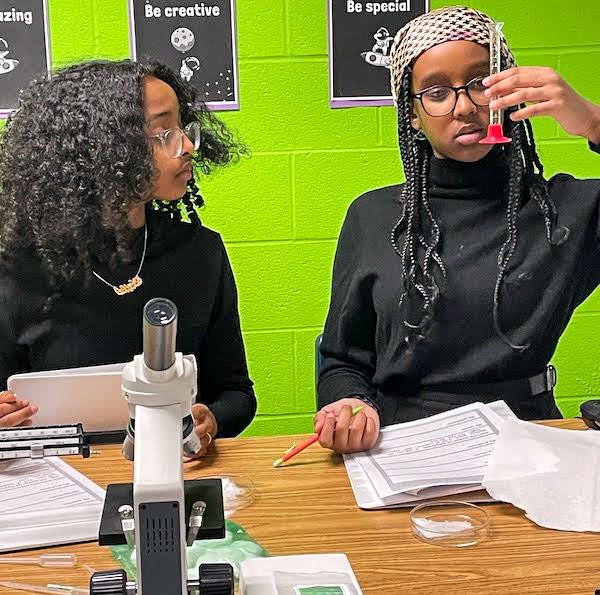
jsc2023e065211 (1/19/2023) --- Harmon Middle School student researchers work on their experiment, Bamboo Growth in Microgravity, which will be included in the Nanoracks-National Center for Earth and Space Science Education-Orbiter-Student Spaceflight Experiments Program Mission 17 to ISS (Nanoracks-NCESSE-Orbiter-SSEP).
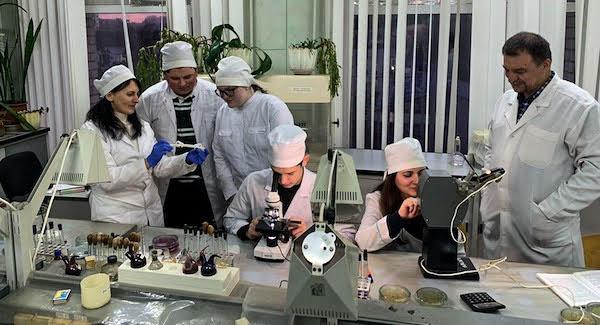
jsc2023e065217 (10/19/2023) --- Student researchers in Ukarine work on their experiment, which will be included in the Nanoracks-National Center for Earth and Space Science Education-Orbiter-Student Spaceflight Experiments Program Mission 17 to ISS (Nanoracks-NCESSE-Orbiter-SSEP).
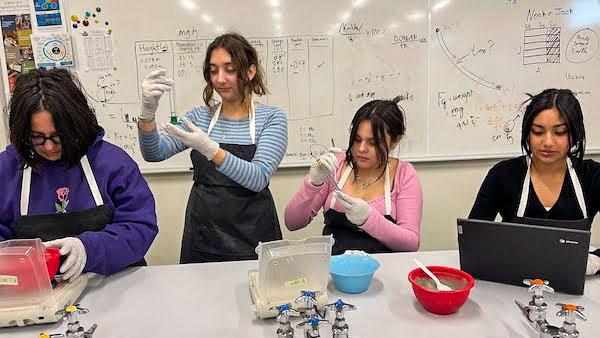
jsc2023e065206 (1/26/2023) --- Canyon Spring student researchers work on their experiment, which will be included in the Nanoracks-National Center for Earth and Space Science Education-Orbiter-Student Spaceflight Experiments Program Mission 17 to ISS (Nanoracks-NCESSE-Orbiter-SSEP).
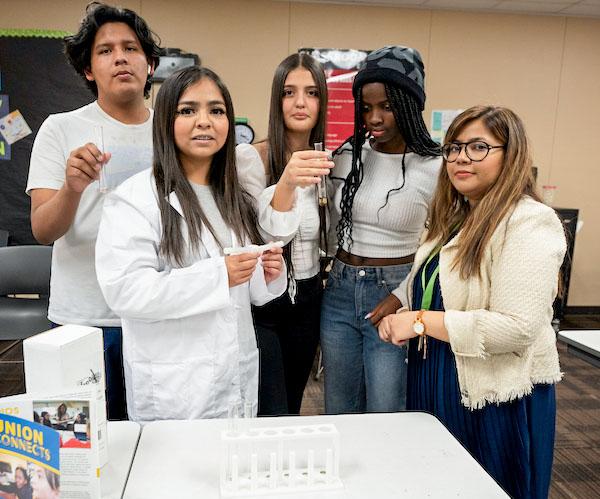
jsc2024e066519 (10/7/2024) --- The Comets set up the test tubes for the final trial of their experiment, Effects of Microgravity on Arabidopsis thaliana Seed Germination. Their experiment is part of the Nanoracks-National Center for Earth and Space Science Education-Surveyor-Student Spaceflight Experiments Program Mission 18 to ISS (Nanoracks-NCESSE-Surveyor-SSEP).
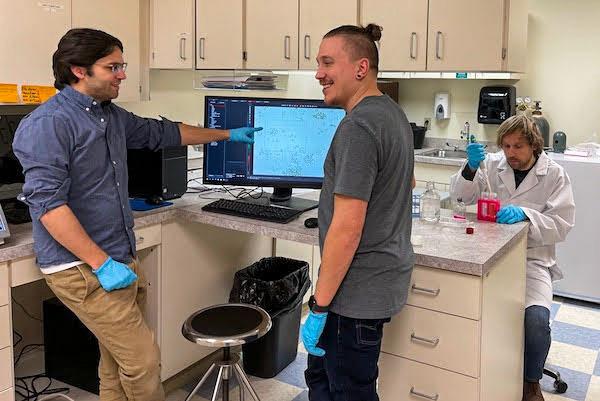
jsc2023e065212 (2/1/2023) --- Student researchers Daniel Roth and Jason Gomes work on their experiment, The Effect(s) of Microgravity on the Dormant State of Cancer Cells, which will be included in the Nanoracks-National Center for Earth and Space Science Education-Orbiter-Student Spaceflight Experiments Program Mission 17 to ISS (Nanoracks-NCESSE-Orbiter-SSEP).
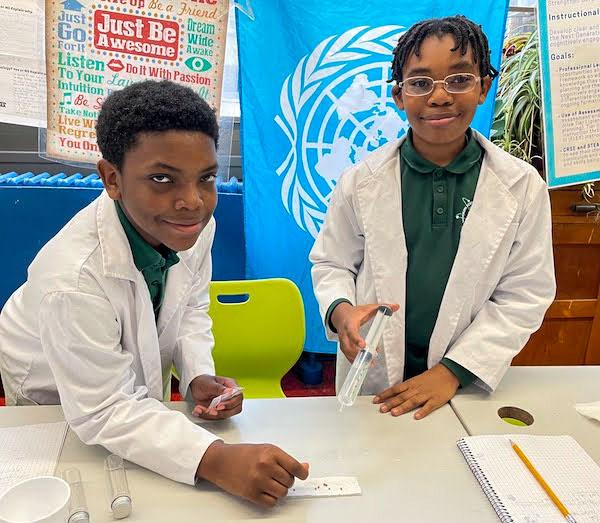
jsc2023e065183 (1/13/2023) --- Rundell Swan and Tristan Cole work on their experiment, What are the effects of microgravity on the germination of raphanus sativus (radish seeds), which will be included in the Nanoracks-National Center for Earth and Space Science Education-Orbiter-Student Spaceflight Experiments Program Mission 17 to ISS (Nanoracks-NCESSE-Orbiter-SSEP).
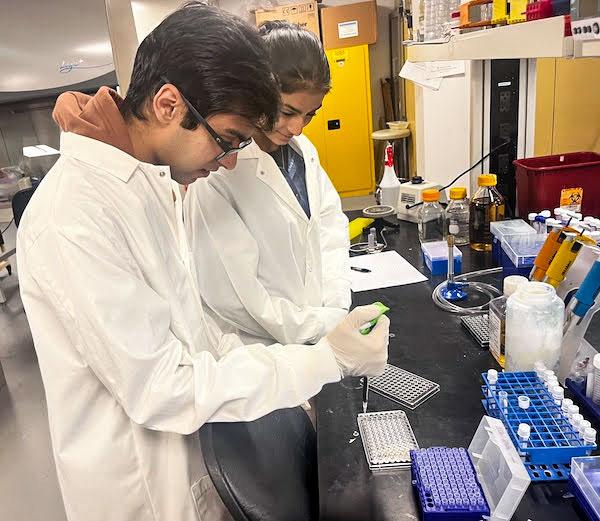
jsc2023e065219 (2/3/2023) --- Student researchers work on their experiment, The Effect of Microgravity on Telomerase Activity and Efficiency in Saccharomyces cerevisiae, which will be included in the Nanoracks-National Center for Earth and Space Science Education-Orbiter-Student Spaceflight Experiments Program Mission 17 to ISS (Nanoracks-NCESSE-Orbiter-SSEP).
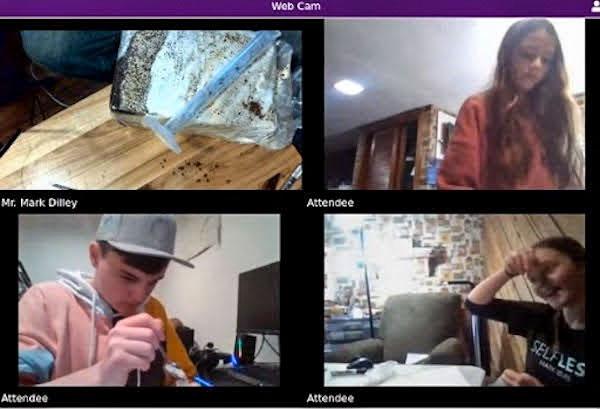
jsc2023e065197 (10/19/2023) --- iForward Public Online Charter School student researchers work on their experiment on Germination of Pleurotus ostreatus Spores, which will be included in the Nanoracks-National Center for Earth and Space Science Education-Orbiter-Student Spaceflight Experiments Program Mission 17 to ISS (Nanoracks-NCESSE-Orbiter-SSEP).
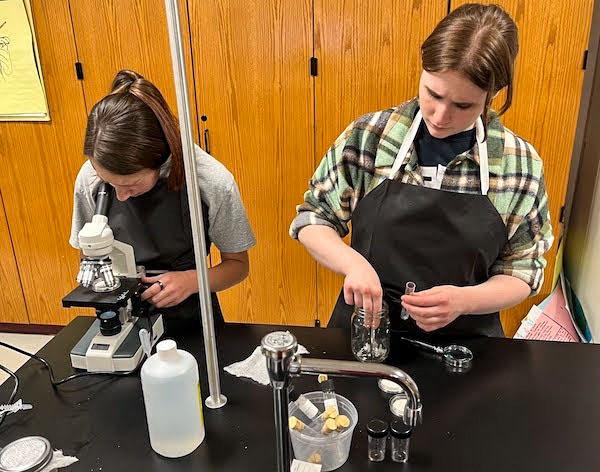
jsc2023e065207 (1/5/2023) --- Student researchers work on their experiment, The Effects of Microgravity on the Reproduction Cycle of Drosophila melanogaster, which will be included in the Nanoracks-National Center for Earth and Space Science Education-Orbiter-Student Spaceflight Experiments Program Mission 17 to ISS (Nanoracks-NCESSE-Orbiter-SSEP).
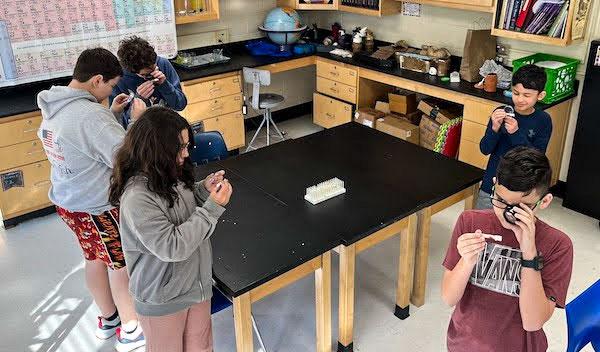
jsc2023e065202 (10/19/2023) --- Student researchers work on their experiment, How Does Microgravity Affect the Germination of Oyster Mushroom Spawns (Pleurotus Ostreatus), which will be included in the Nanoracks-National Center for Earth and Space Science Education-Orbiter-Student Spaceflight Experiments Program Mission 17 to ISS (Nanoracks-NCESSE-Orbiter-SSEP).
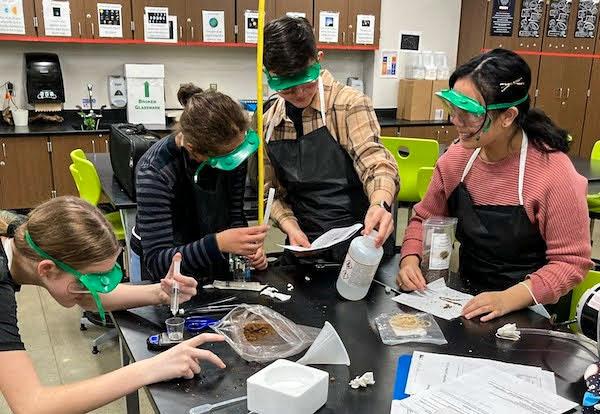
jsc2023e065214 (2/7/2023) --- Eighth grade student researchers work on their experiment, Microgreen Growth in Microgravity Environment, which will be included in the Nanoracks-National Center for Earth and Space Science Education-Orbiter-Student Spaceflight Experiments Program Mission 17 to ISS (Nanoracks-NCESSE-Orbiter-SSEP).
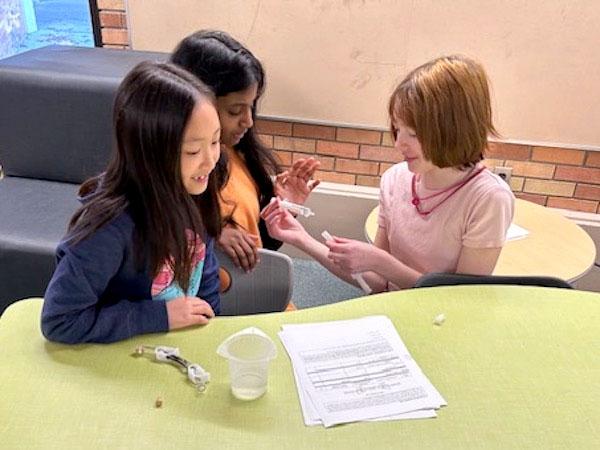
jsc2024e066530 (10/4/2024) --- Creek Valley Elementary School students prepare their experiment, Does Gravity Affect the Germination Growth of Raspberry Seeds, for space. Their experiment is part of the Nanoracks-National Center for Earth and Space Science Education-Surveyor-Student Spaceflight Experiments Program Mission 18 to ISS (Nanoracks-NCESSE-Surveyor-SSEP).
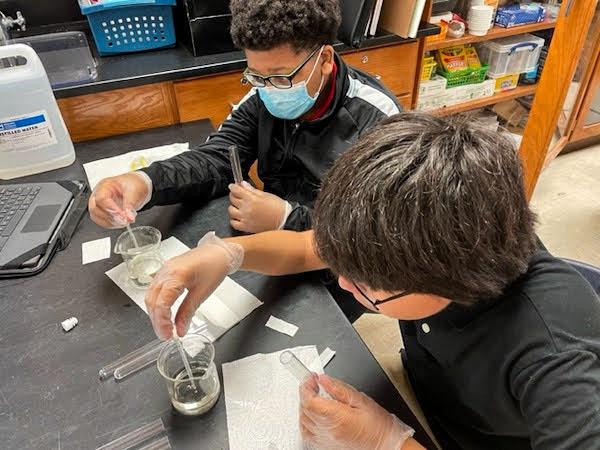
jsc2023e065199 (1/26/2023) --- Mundy's Mill Middle School student researchers work on their experiment, Germination of Mentha spicata in Microgravity, which will be included in the Nanoracks-National Center for Earth and Space Science Education-Orbiter-Student Spaceflight Experiments Program Mission 17 to ISS (Nanoracks-NCESSE-Orbiter-SSEP).
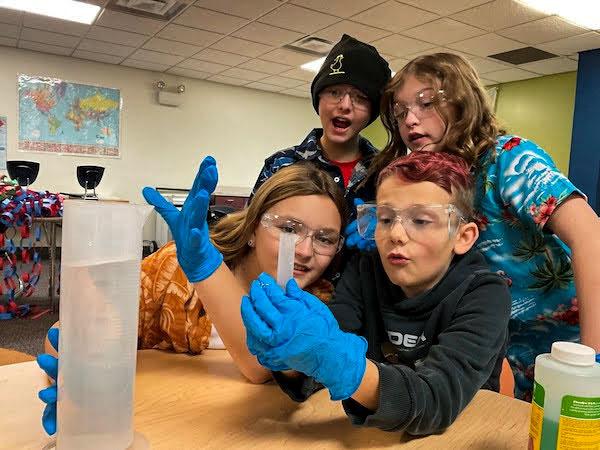
jsc2023e065184 (10/19/2023) --- Student researchers work on their experiment on chamomile seed germination, which will be included in the Nanoracks-National Center for Earth and Space Science Education-Orbiter-Student Spaceflight Experiments Program Mission 17 to ISS (Nanoracks-NCESSE-Orbiter-SSEP).
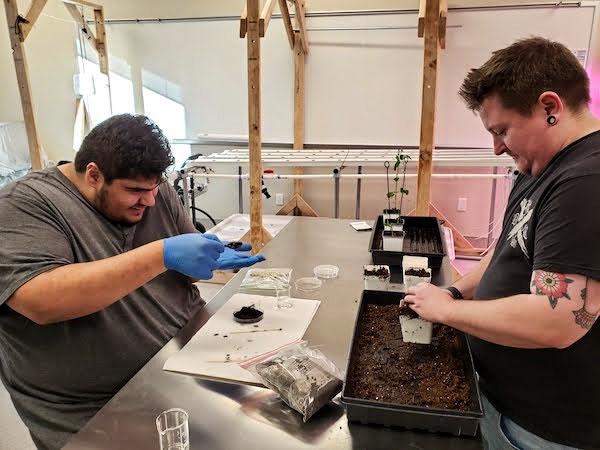
jsc2023e065205 (1/26/2023) --- Collin College student researchers Henry Elmendorf and Stefano Sacripanti work on their experiment, which will be included in the Nanoracks-National Center for Earth and Space Science Education-Orbiter-Student Spaceflight Experiments Program Mission 17 to ISS (Nanoracks-NCESSE-Orbiter-SSEP).
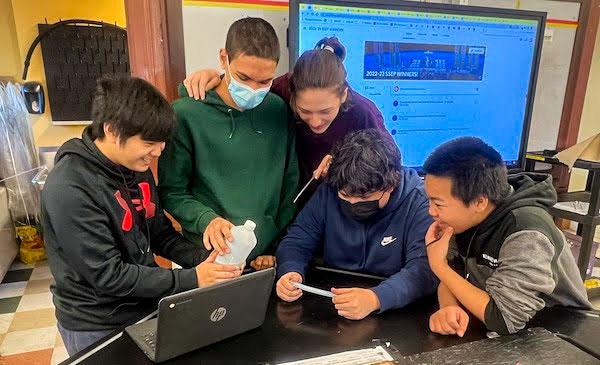
jsc2023e065181 (10/19/2023) --- Student researchers work on their experiment, which will be included in the Nanoracks-National Center for Earth and Space Science Education-Orbiter-Student Spaceflight Experiments Program Mission 17 to ISS (Nanoracks-NCESSE-Orbiter-SSEP).
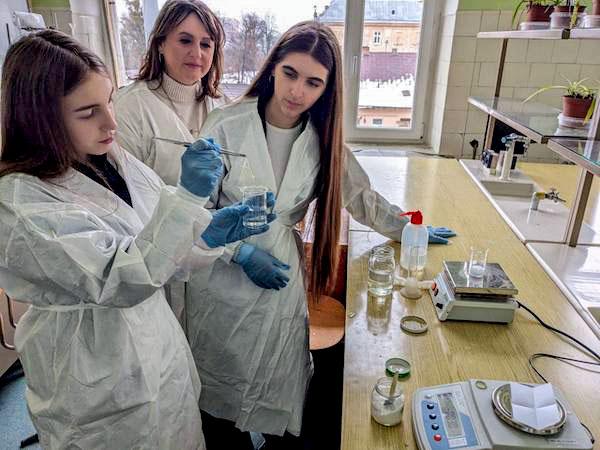
jsc2024e066517 (10/4/2024) --- Young researchers work on their experiment, Production of Biomedical Purpose Hydrogels in Microgravity, part of the Nanoracks-National Center for Earth and Space Science Education-Surveyor-Student Spaceflight Experiments Program Mission 18 to ISS (Nanoracks-NCESSE-Surveyor-SSEP).
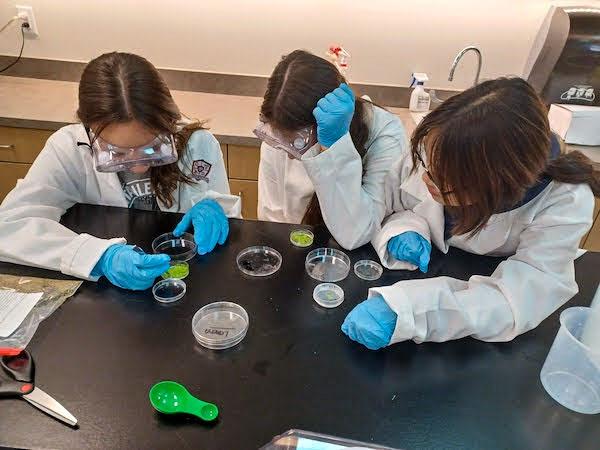
jsc2023e065201 (1/12/2023) --- Pinecrest St. Rose student researchers work on their experiment, Wolffia in Microgravity, which will be included in the Nanoracks-National Center for Earth and Space Science Education-Orbiter-Student Spaceflight Experiments Program Mission 17 to ISS (Nanoracks-NCESSE-Orbiter-SSEP).
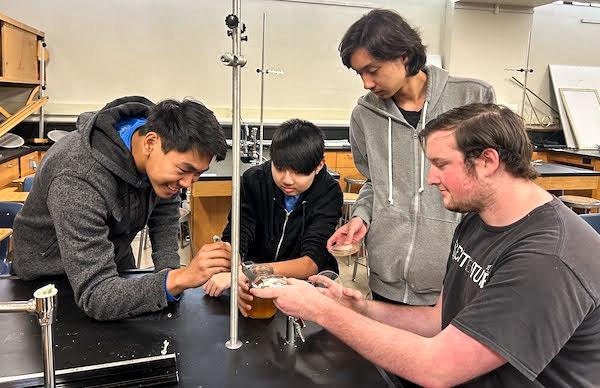
jsc2023e065193 (10/19/2023) --- Glendora High School’s M17 student researchers work on their Mushroom Leather Proposal experiment, which will be included in the Nanoracks-National Center for Earth and Space Science Education-Orbiter-Student Spaceflight Experiments Program Mission 17 to ISS (Nanoracks-NCESSE-Orbiter-SSEP).
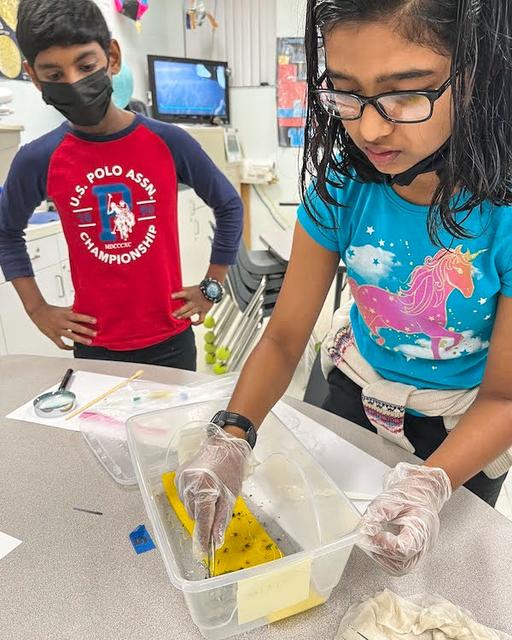
jsc2023e065196 (10/26/2023) --- Student researchers Lonappan John and Aadrita Roywork on their experiment, The Changes of Nutritional and Germination values of Sesame Microgreens in Microgravity, which will be included in the Nanoracks-National Center for Earth and Space Science Education-Orbiter-Student Spaceflight Experiments Program Mission 17 to ISS (Nanoracks-NCESSE-Orbiter-SSEP).
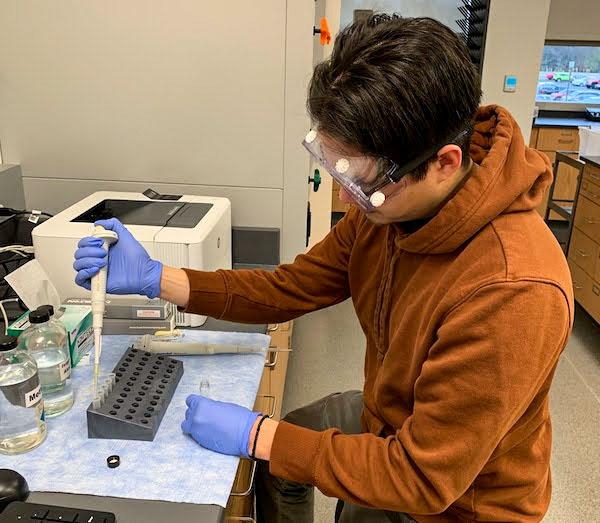
sc2023e065194 (1/20/2023) --- A student researcher works on their The Effects of Microgravity on Cholesterol Lowering Activity by Lactobacillus acidophilus, which will be included in the Nanoracks-National Center for Earth and Space Science Education-Orbiter-Student Spaceflight Experiments Program Mission 17 to ISS (Nanoracks-NCESSE-Orbiter-SSEP).
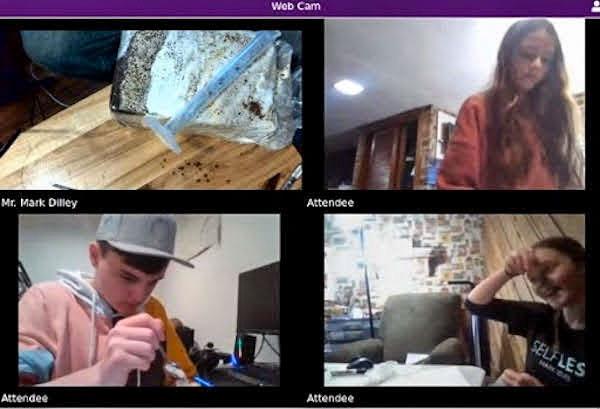
jsc2023e065198 (10/19/2023) --- iForward Public Online Charter School student researchers work on their experiment on Germination of Pleurotus ostreatus Spores, which will be included in the Nanoracks-National Center for Earth and Space Science Education-Orbiter-Student Spaceflight Experiments Program Mission 17 to ISS (Nanoracks-NCESSE-Orbiter-SSEP).
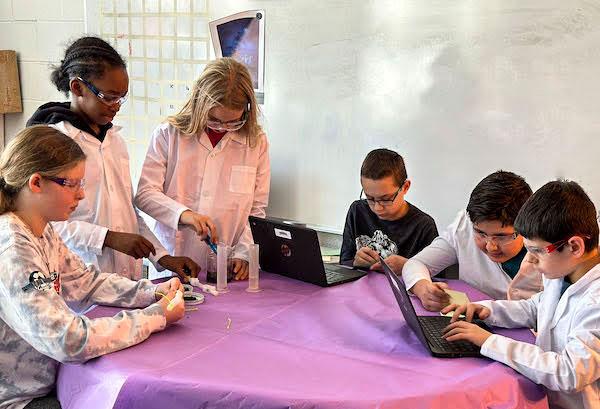
jsc2023e06522 (3/3/2023) --- Fifth grade student researchers from Walker-Winter Elementary School work on their experiment, Mushroom Germination in Microgravity, which will be included in the Nanoracks-National Center for Earth and Space Science Education-Orbiter-Student Spaceflight Experiments Program Mission 17 to ISS (Nanoracks-NCESSE-Orbiter-SSEP).
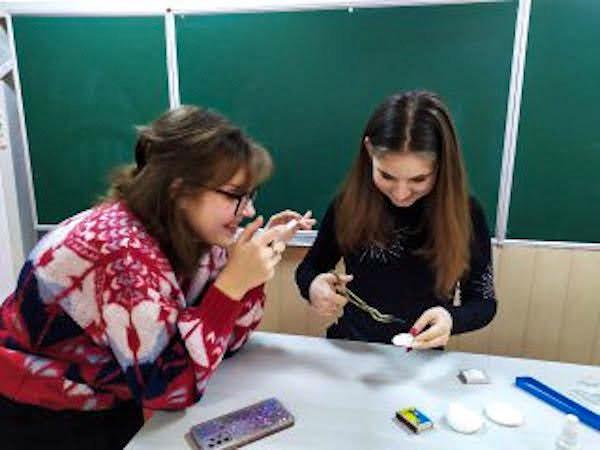
jsc2023e065218 (10/19/2023) --- Student researchers in Ukarine work on their experiment, which will be included in the Nanoracks-National Center for Earth and Space Science Education-Orbiter-Student Spaceflight Experiments Program Mission 17 to ISS (Nanoracks-NCESSE-Orbiter-SSEP).
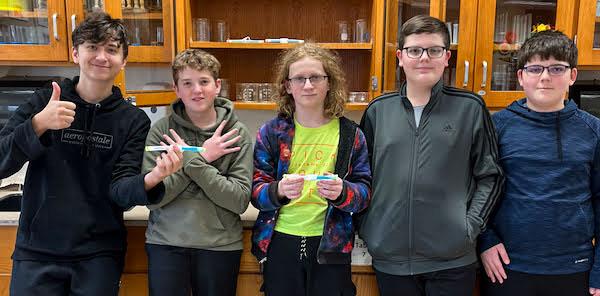
jsc2023e065190 (19/19/2023) --- Iroquois SSEP student researchers work on their crystallization experiment, which will be included in the Nanoracks-National Center for Earth and Space Science Education-Orbiter-Student Spaceflight Experiments Program Mission 17 to ISS (Nanoracks-NCESSE-Orbiter-SSEP).
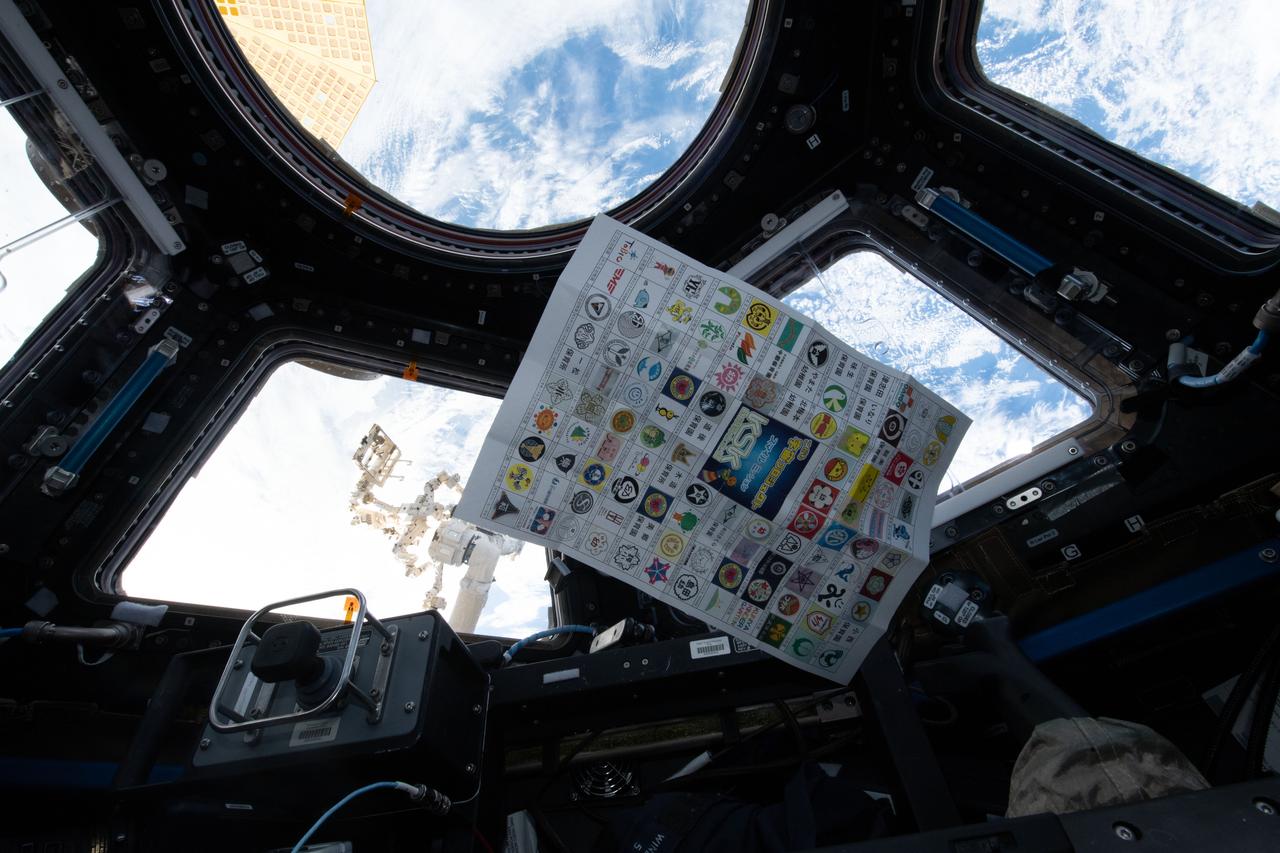
iss057e122120 ( 12/10/2018) --- A view of items from the NanoRacks-Lagrange investigation floating in front of the windows in the Cupola module aboard the International Space Station (ISS). NanoRacks-Lagrange seeks to increase interest in space. For this investigation, student photos and printed logos sheets are launched to the International Space Station (ISS) with a message card. Additionally, plant seeds are flown to the ISS. The students plant the seeds once they return to Earth and compare them to plants grown from regular seeds. Students are able to touch and feel close to space through this experiment.
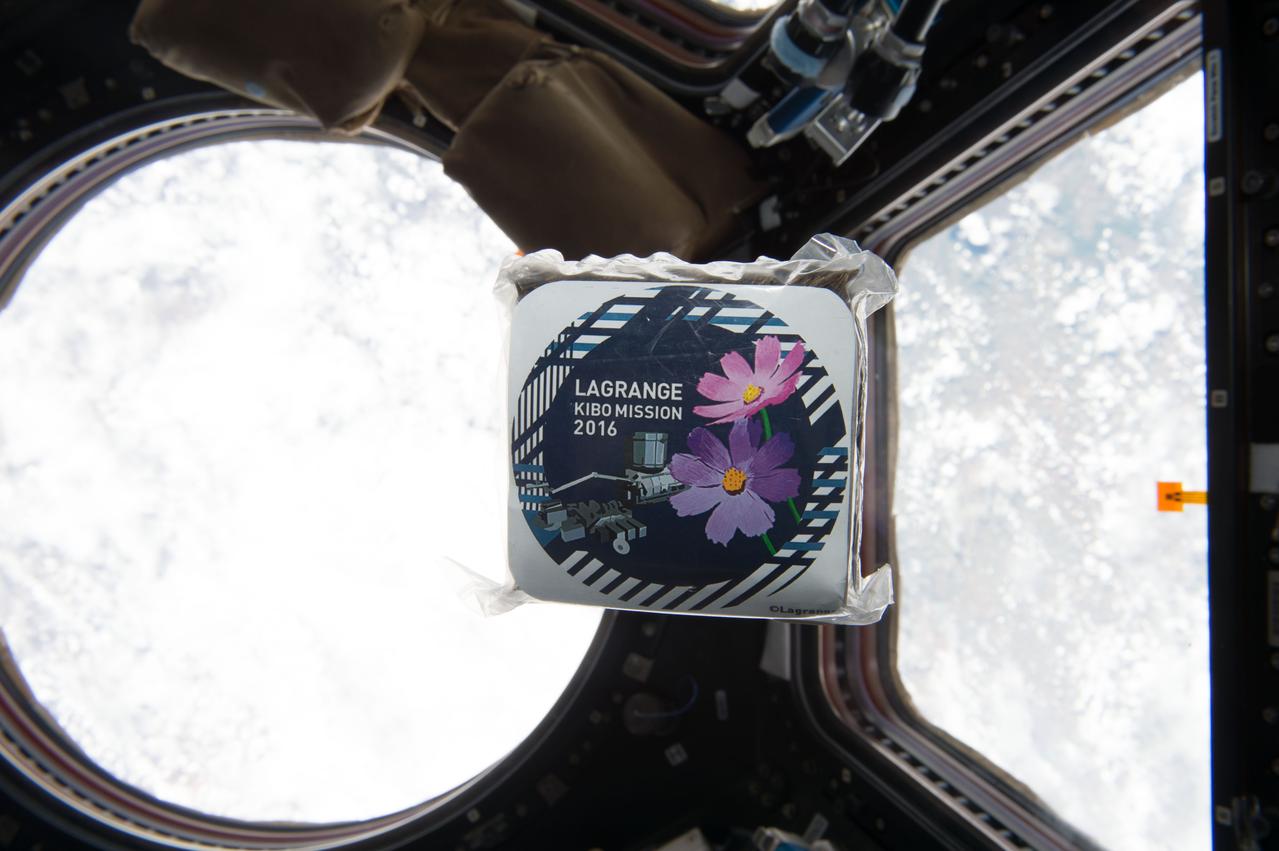
iss052e009464 (6/29/2017) --- A view of items from the NanoRacks-Lagrange investigation floating in front of the windows in the Cupola module aboard the International Space Station (ISS). NanoRacks-Lagrange seeks to increase interest in space. For this investigation, student photos and printed logos sheets are launched to the International Space Station (ISS) with a message card. Additionally, plant seeds are flown to the ISS. The students plant the seeds once they return to Earth and compare them to plants grown from regular seeds. Students are able to touch and feel close to space through this experiment.
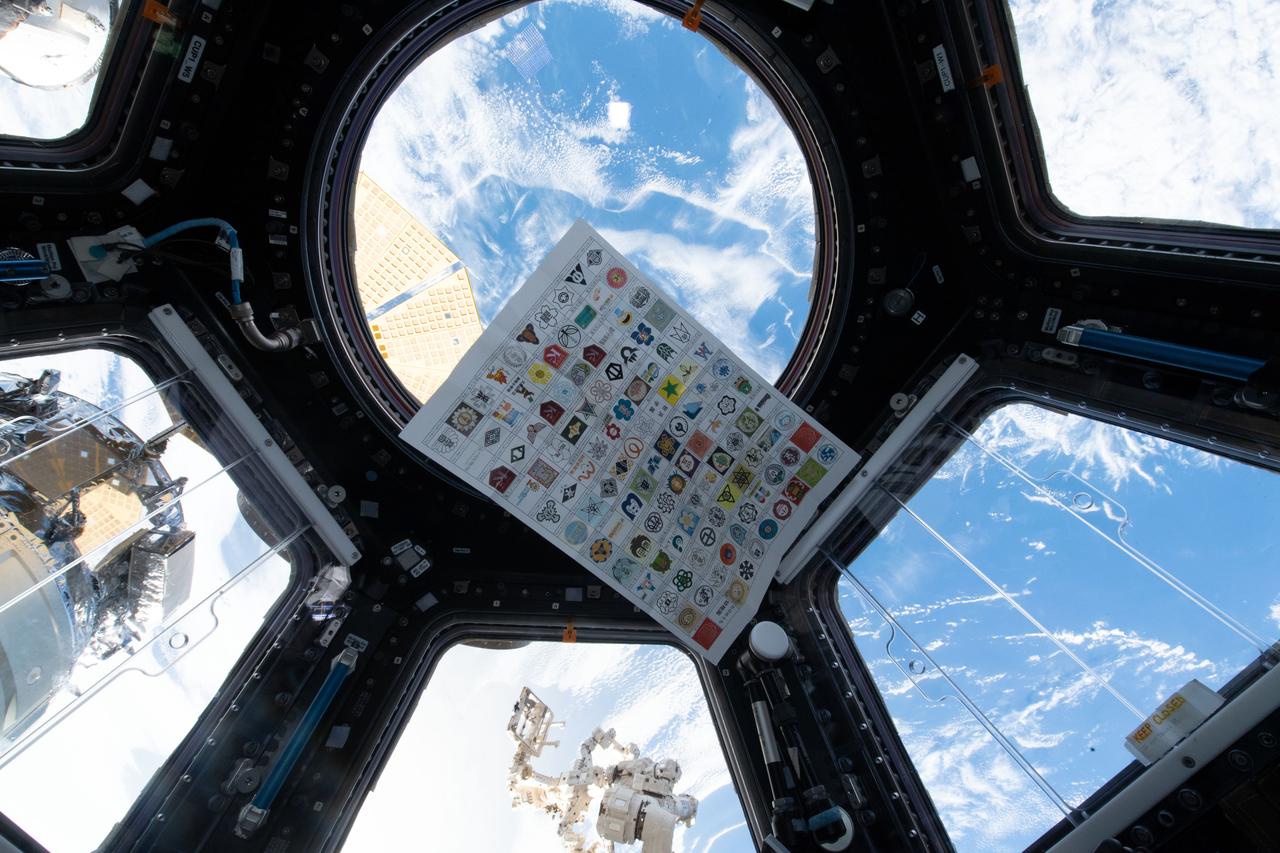
iss057e122134 (12/10/2018) --- A view of items from the NanoRacks-Lagrange investigation floating in front of the windows in the Cupola module aboard the International Space Station (ISS). NanoRacks-Lagrange seeks to increase interest in space. For this investigation, student photos and printed logos sheets are launched to the International Space Station (ISS) with a message card. Additionally, plant seeds are flown to the ISS. The students plant the seeds once they return to Earth and compare them to plants grown from regular seeds. Students are able to touch and feel close to space through this experiment.
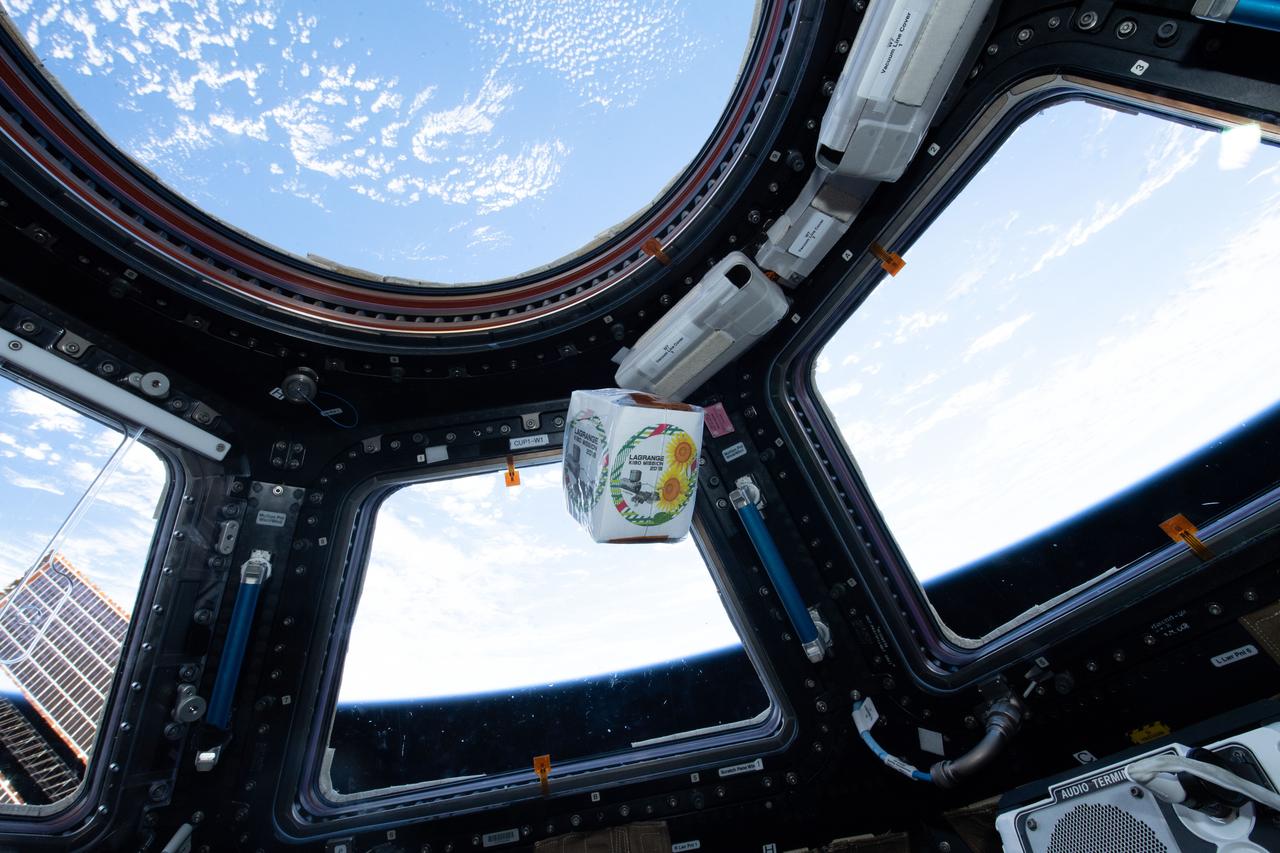
iss057e122164 ( 12/10/2018) --- A view of items from the NanoRacks-Lagrange investigation floating in front of the windows in the Cupola module aboard the International Space Station (ISS). NanoRacks-Lagrange seeks to increase interest in space. For this investigation, student photos and printed logos sheets are launched to the International Space Station (ISS) with a message card. Additionally, plant seeds are flown to the ISS. The students plant the seeds once they return to Earth and compare them to plants grown from regular seeds. Students are able to touch and feel close to space through this experiment.
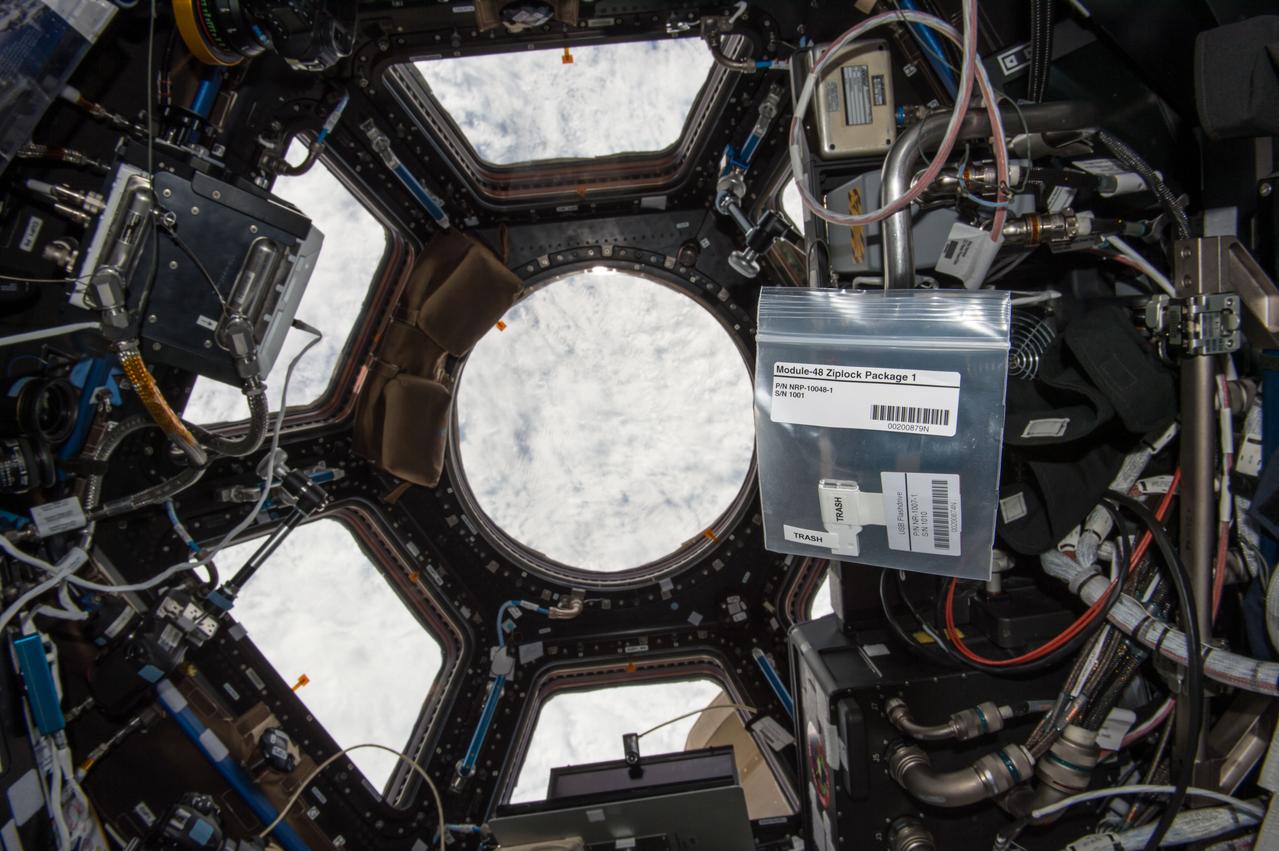
iss042e182203 (1/27/2017) --- A view of items from the NanoRacks-Lagrange investigation floating in front of the windows in the Cupola module aboard the International Space Station (ISS). NanoRacks-Lagrange seeks to increase interest in space. For this investigation, student photos and printed logos sheets are launched to the International Space Station (ISS) with a message card. Additionally, plant seeds are flown to the ISS. The students plant the seeds once they return to Earth and compare them to plants grown from regular seeds. Students are able to touch and feel close to space through this experiment.

iss057e122125 ( 12/10/2018) --- A view of items from the NanoRacks-Lagrange investigation floating in front of the windows in the Cupola module aboard the International Space Station (ISS). NanoRacks-Lagrange seeks to increase interest in space. For this investigation, student photos and printed logos sheets are launched to the International Space Station (ISS) with a message card. Additionally, plant seeds are flown to the ISS. The students plant the seeds once they return to Earth and compare them to plants grown from regular seeds. Students are able to touch and feel close to space through this experiment.
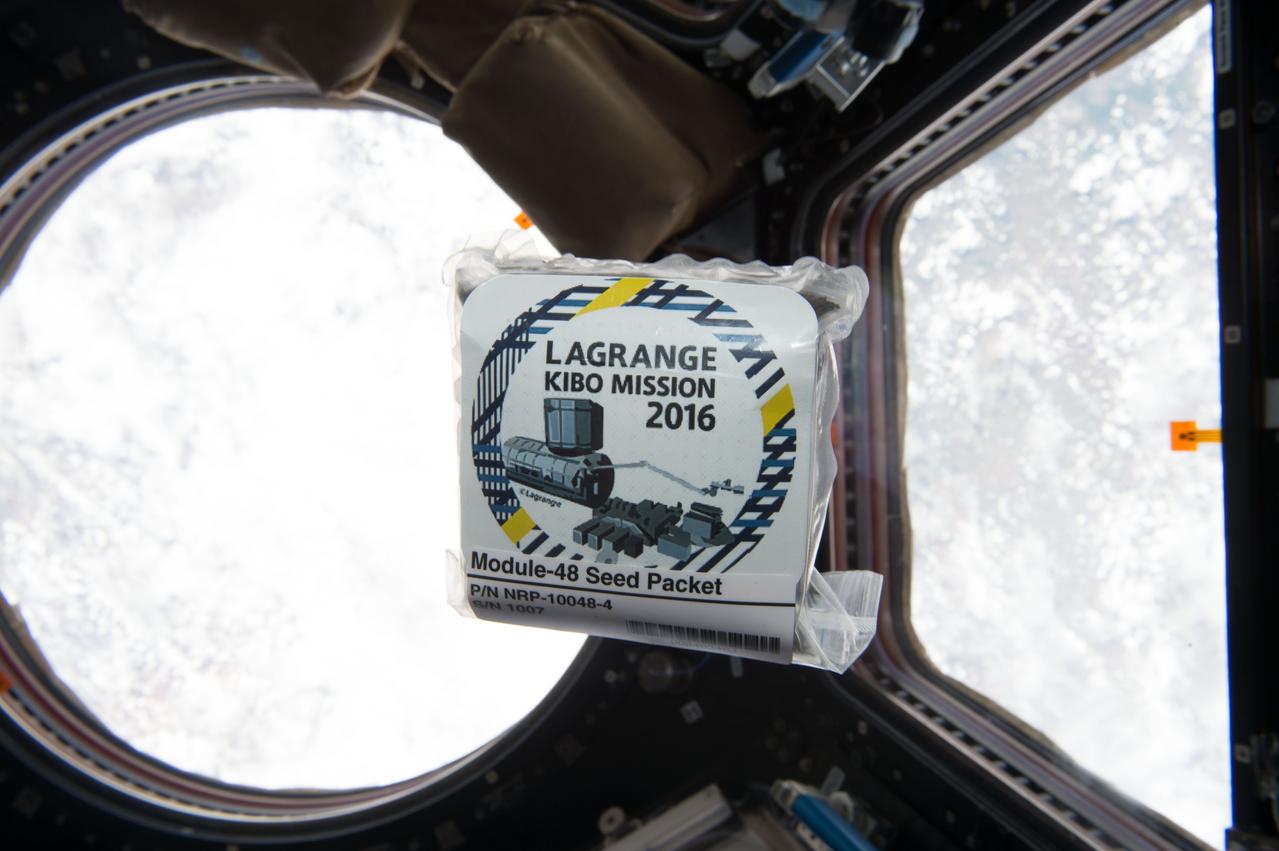
iss052e009465 (6/29/2017) --- A view of items from the NanoRacks-Lagrange investigation floating in front of the windows in the Cupola module aboard the International Space Station (ISS). NanoRacks-Lagrange seeks to increase interest in space. For this investigation, student photos and printed logos sheets are launched to the International Space Station (ISS) with a message card. Additionally, plant seeds are flown to the ISS. The students plant the seeds once they return to Earth and compare them to plants grown from regular seeds. Students are able to touch and feel close to space through this experiment.
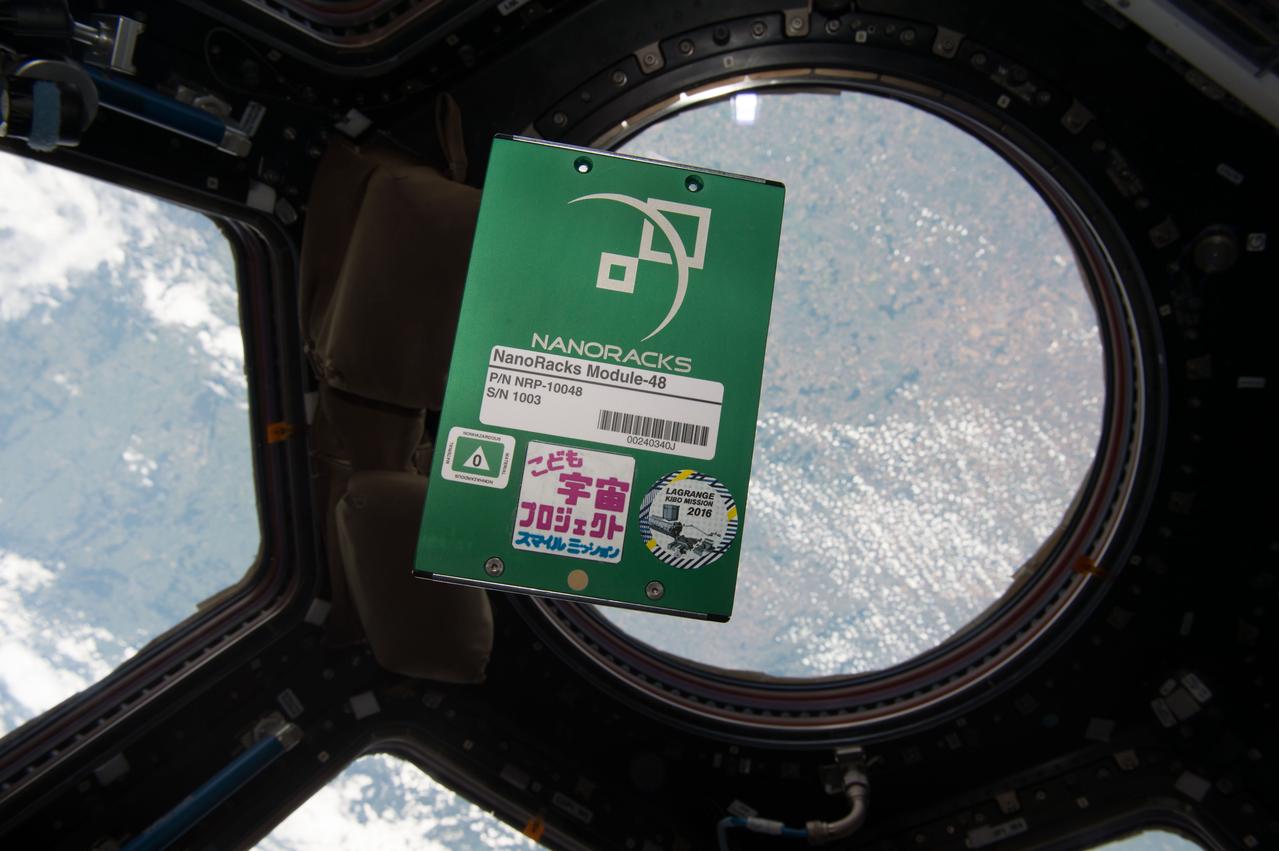
iss052e009450 (6/29/2017) --- A view of items from the NanoRacks-Lagrange investigation floating in front of the windows in the Cupola module aboard the International Space Station (ISS). NanoRacks-Lagrange seeks to increase interest in space. For this investigation, student photos and printed logos sheets are launched to the International Space Station (ISS) with a message card. Additionally, plant seeds are flown to the ISS. The students plant the seeds once they return to Earth and compare them to plants grown from regular seeds. Students are able to touch and feel close to space through this experiment.
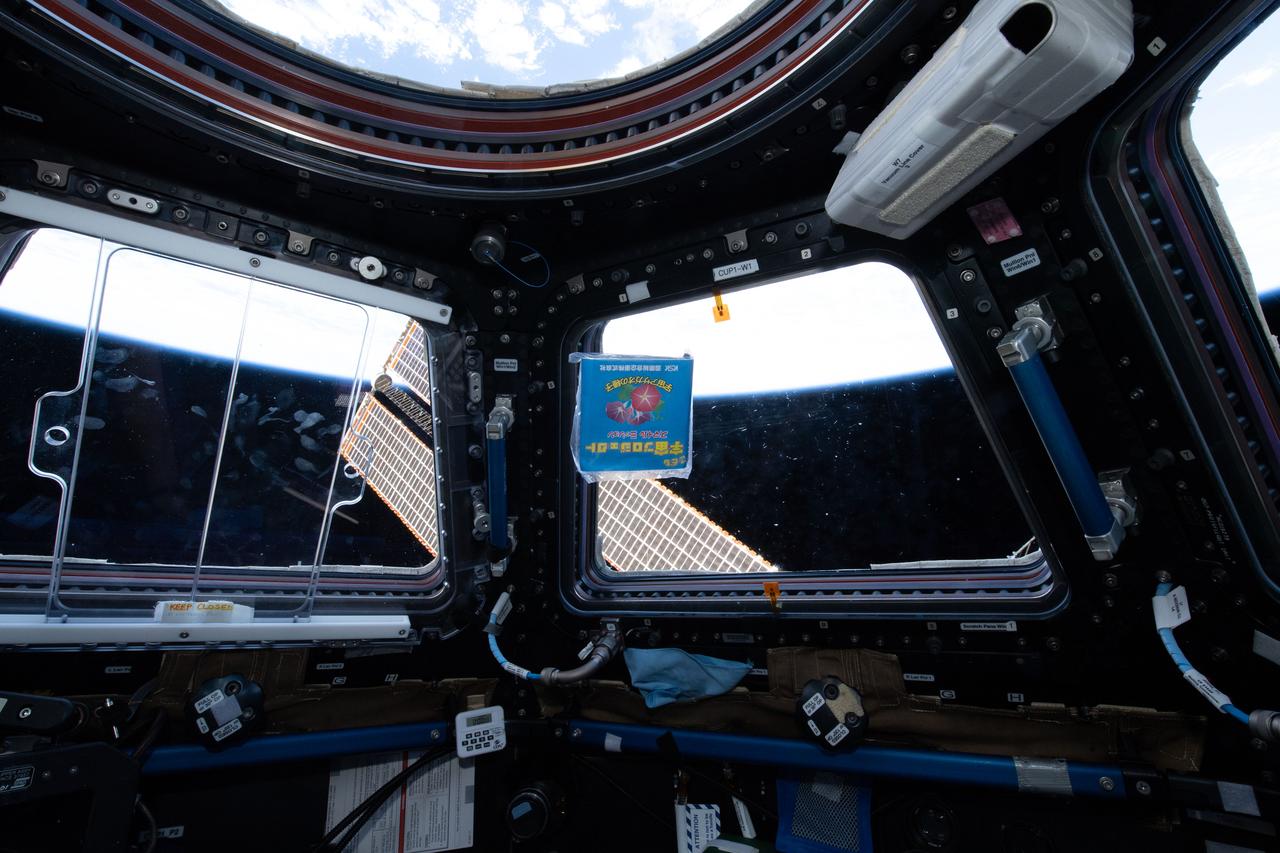
iss057e122169 912/10/2018) --- A view of items from the NanoRacks-Lagrange investigation floating in front of the windows in the Cupola module aboard the International Space Station (ISS). NanoRacks-Lagrange seeks to increase interest in space. For this investigation, student photos and printed logos sheets are launched to the International Space Station (ISS) with a message card. Additionally, plant seeds are flown to the ISS. The students plant the seeds once they return to Earth and compare them to plants grown from regular seeds. Students are able to touch and feel close to space through this experiment.
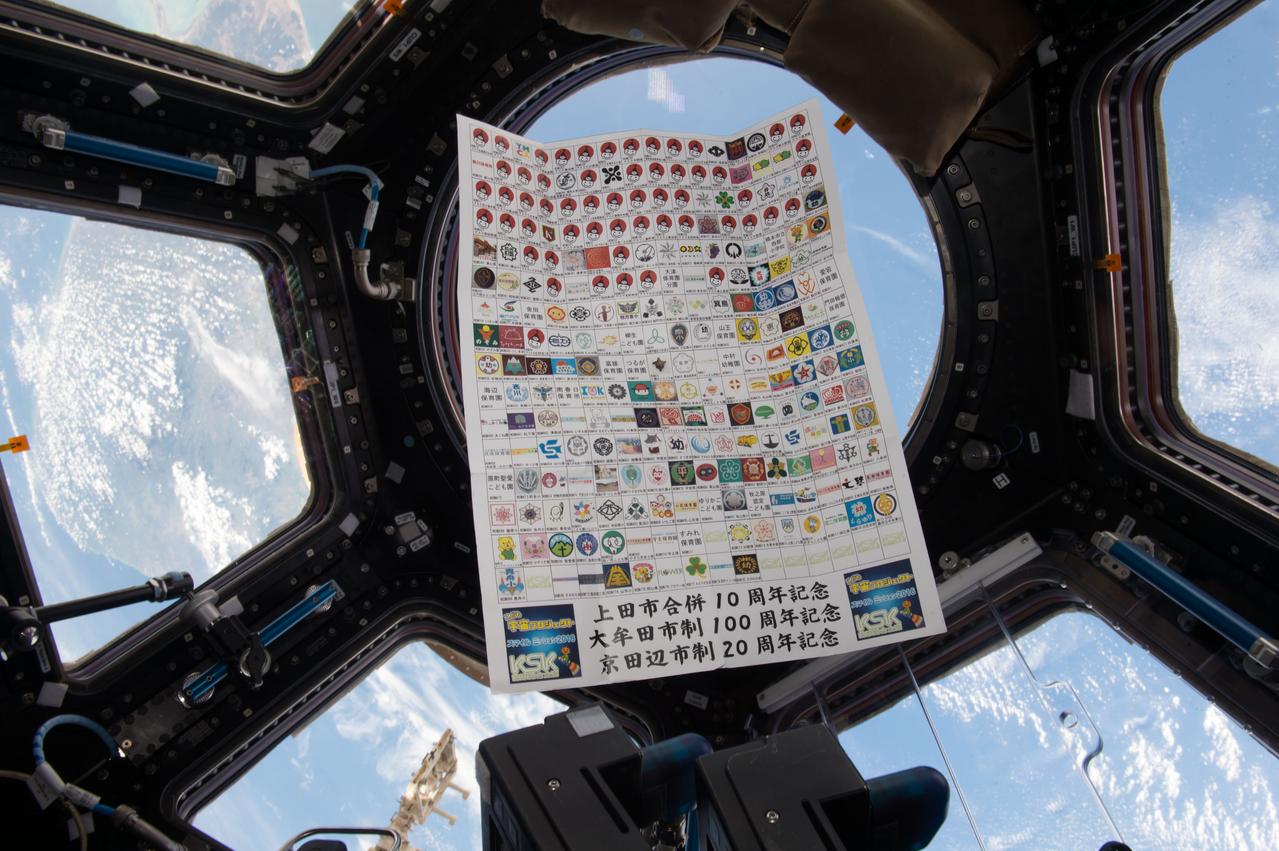
iss052e009477 (6/29/2017) --- A view of items from the NanoRacks-Lagrange investigation floating in front of the windows in the Cupola module aboard the International Space Station (ISS). NanoRacks-Lagrange seeks to increase interest in space. For this investigation, student photos and printed logos sheets are launched to the International Space Station (ISS) with a message card. Additionally, plant seeds are flown to the ISS. The students plant the seeds once they return to Earth and compare them to plants grown from regular seeds. Students are able to touch and feel close to space through this experiment.
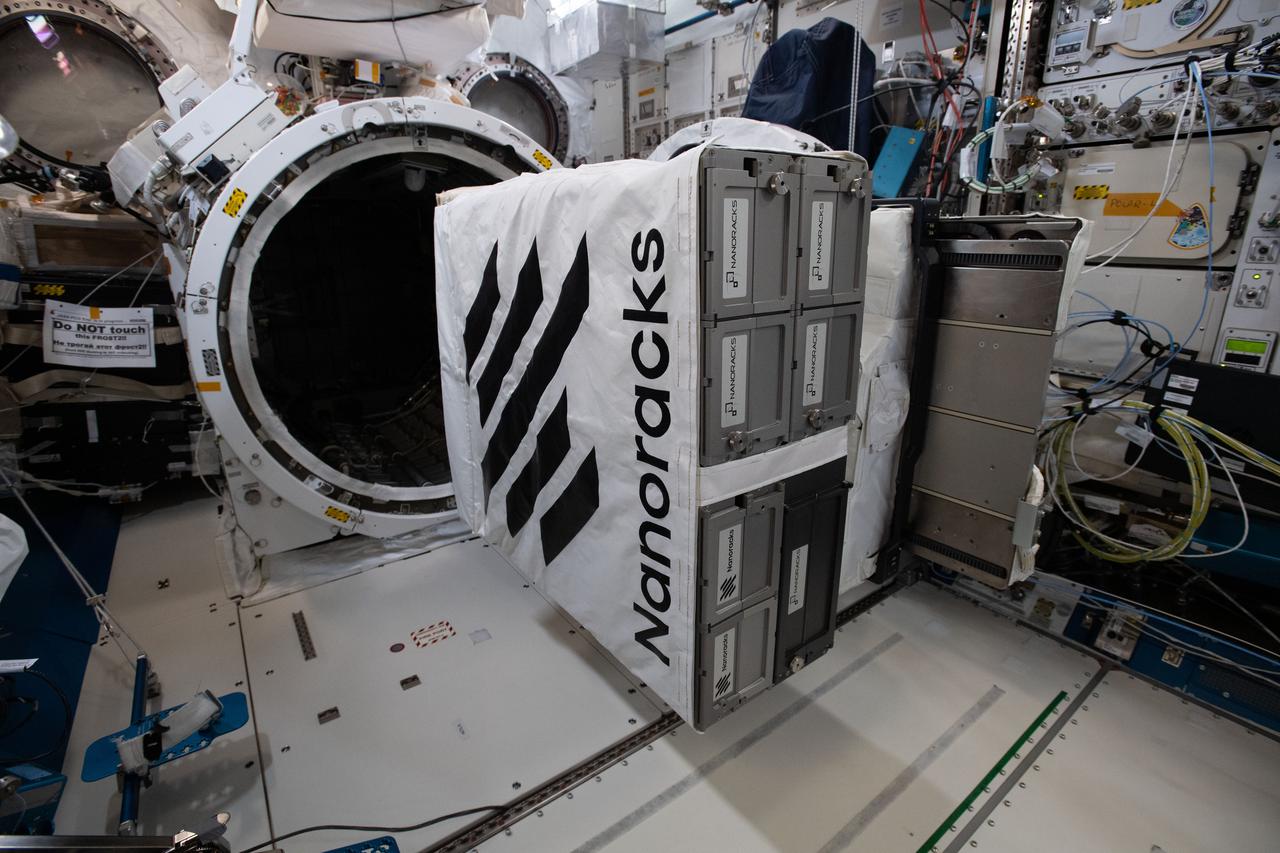
iss065e444435 (10/11/2021) --- A view of NanoRacks CubeSat Deployers hardware on the MPEP (Multipurpose Experiment Platform) aboard the International Space Station (ISS).
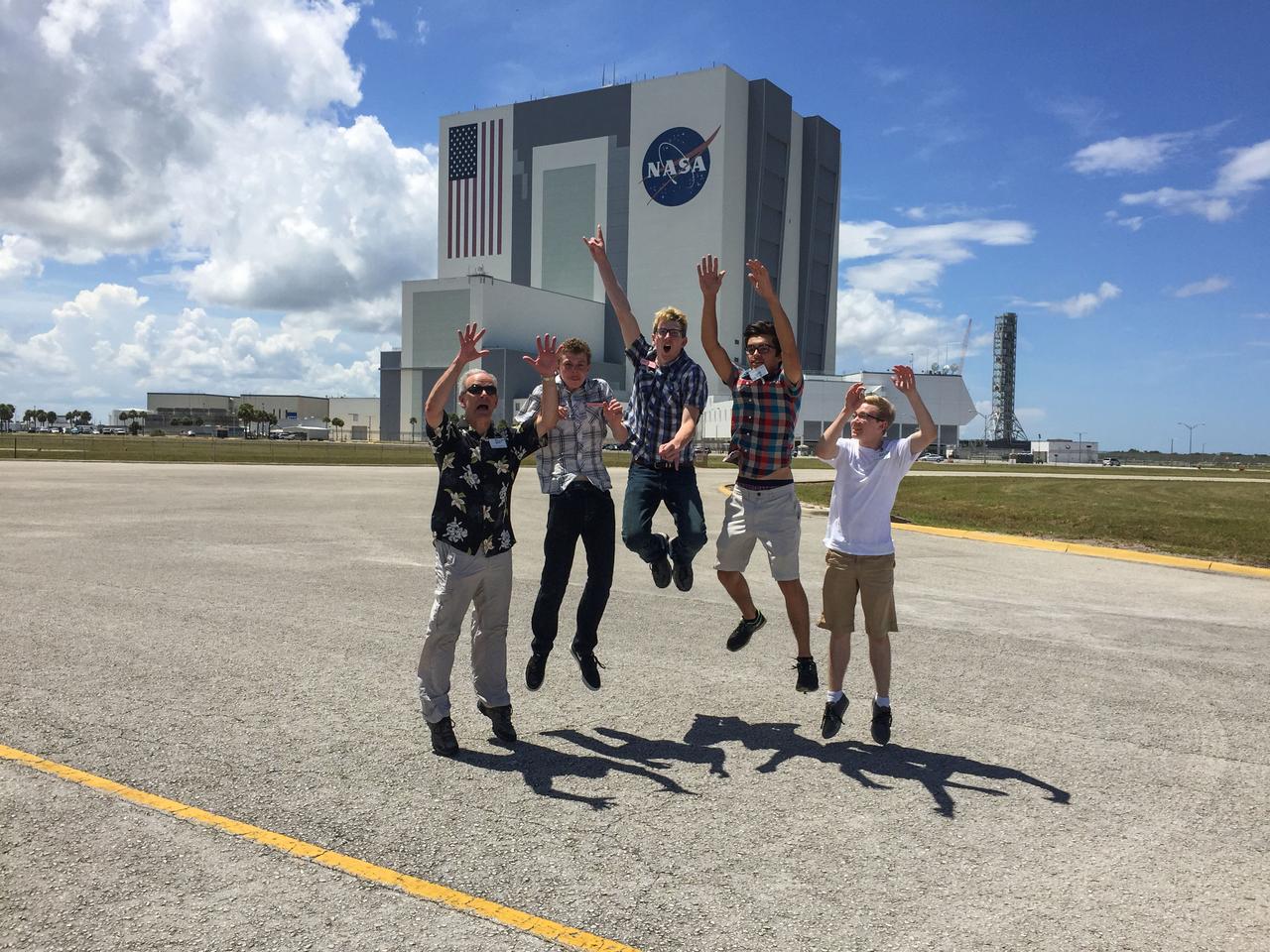
jsc2025e044834 (7/16/2016) --- The NanoRacks-Crystallization Of Silver Nitrate in Microgravity On a Silver Cathode (NanoRacks-COSMOS) research team from Eaglecrest High School in Centennial, Colorado is photographed at Kennedy Space Center on July 18, 2016. This investigation assesses the 3D structure of silver nitrate crystals formed by electrolysis in microgravity. From Left: Dave Schlichting, Gavin Morgenneg, Scott Crowner, Lars Drieth, Ben Sheffer. Image courtesy of Dave Schlichting.
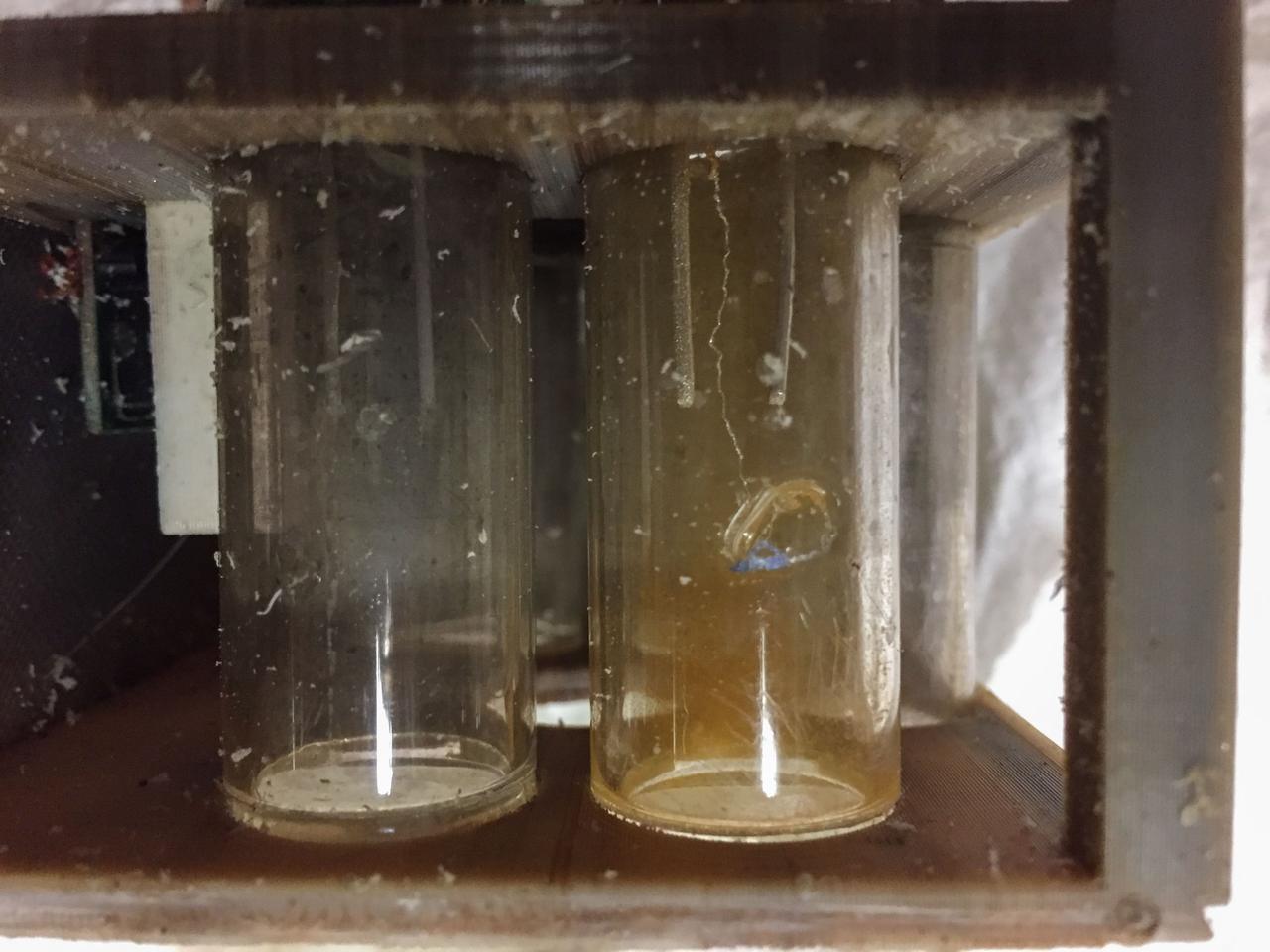
jsc2025e044836 (9/29/2016) --- Silver nitrate crystals grown in microgravity as part of NanoRacks-Crystallization Of Silver Nitrate in Microgravity On a Silver Cathode (NanoRacks-COSMOS). This investigation is designed to assess the 3D structure of silver nitrate crystals formed by electrolysis in microgravity. Results benefit the development of nanoscale electronics, which could be used in spacecraft and instruments on future space missions. Image courtesy of Dave Schlichting.
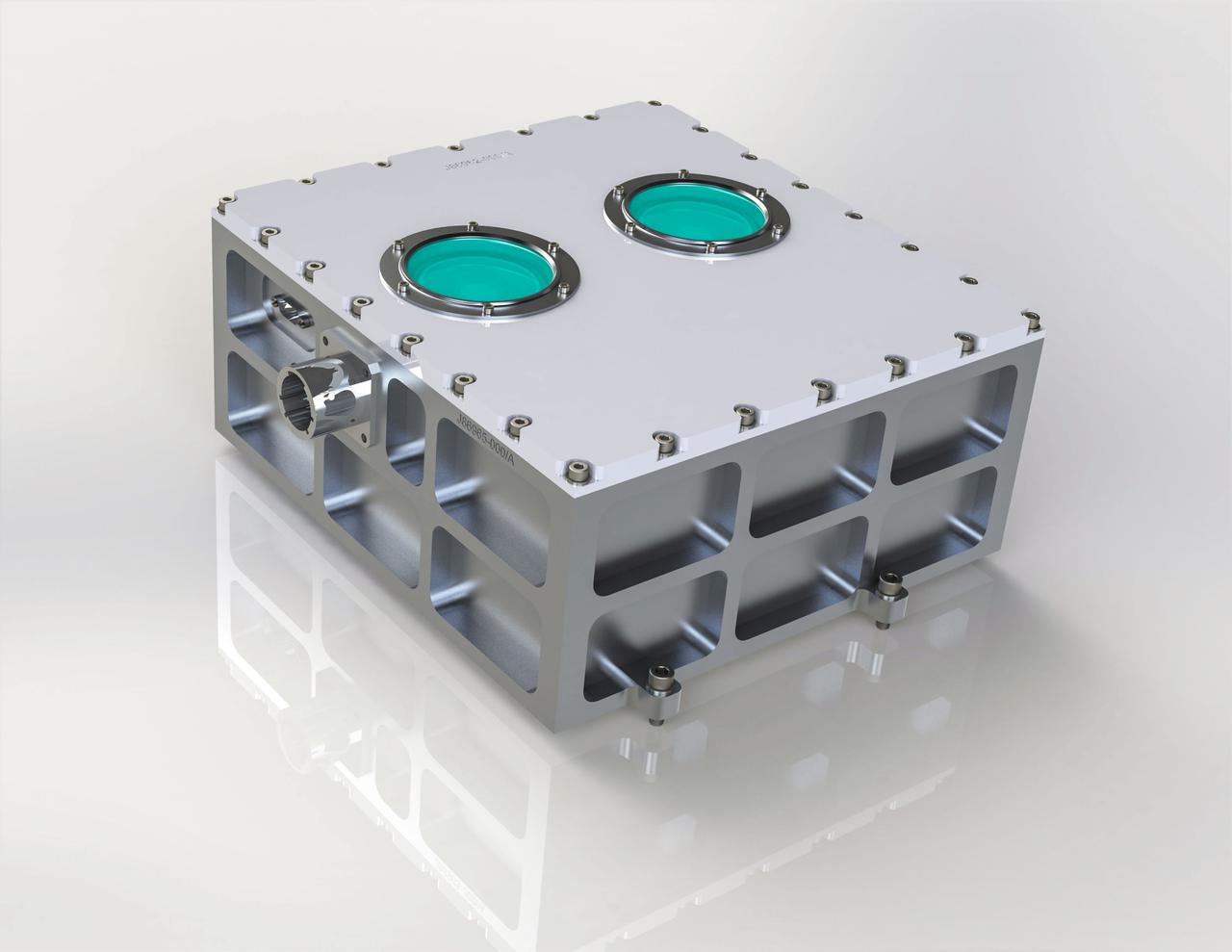
jsc2022e031221 (4/26/2022) --- An external view of the LEONIDAS payload displaying the NREP interface connection and viewing windows for the standard optical sensor and event based sensor. LEO-TM N-REP ISS Demonstration Advanced Sensor (Nanoracks-LEONIDAS) explores design of low-Earth orbit satellites to perform portions of the Department of Energy mission. The investigation collects data on various backgrounds (local time of day, glint, clouds, etc.) to support development of a machine learning algorithm. Imagery courtesy of Sandia National Laboratory.

jsc2024e065170 (10/3/2024) --- The Nanolab Astrobeat Principal Investigator Dr. Leonardo Barilaro poses with the Nanoracks team in Houston, Texas. Image courtesy of Dr. Leonardo Barilaro, The Malta College of Arts, Science & Technology..
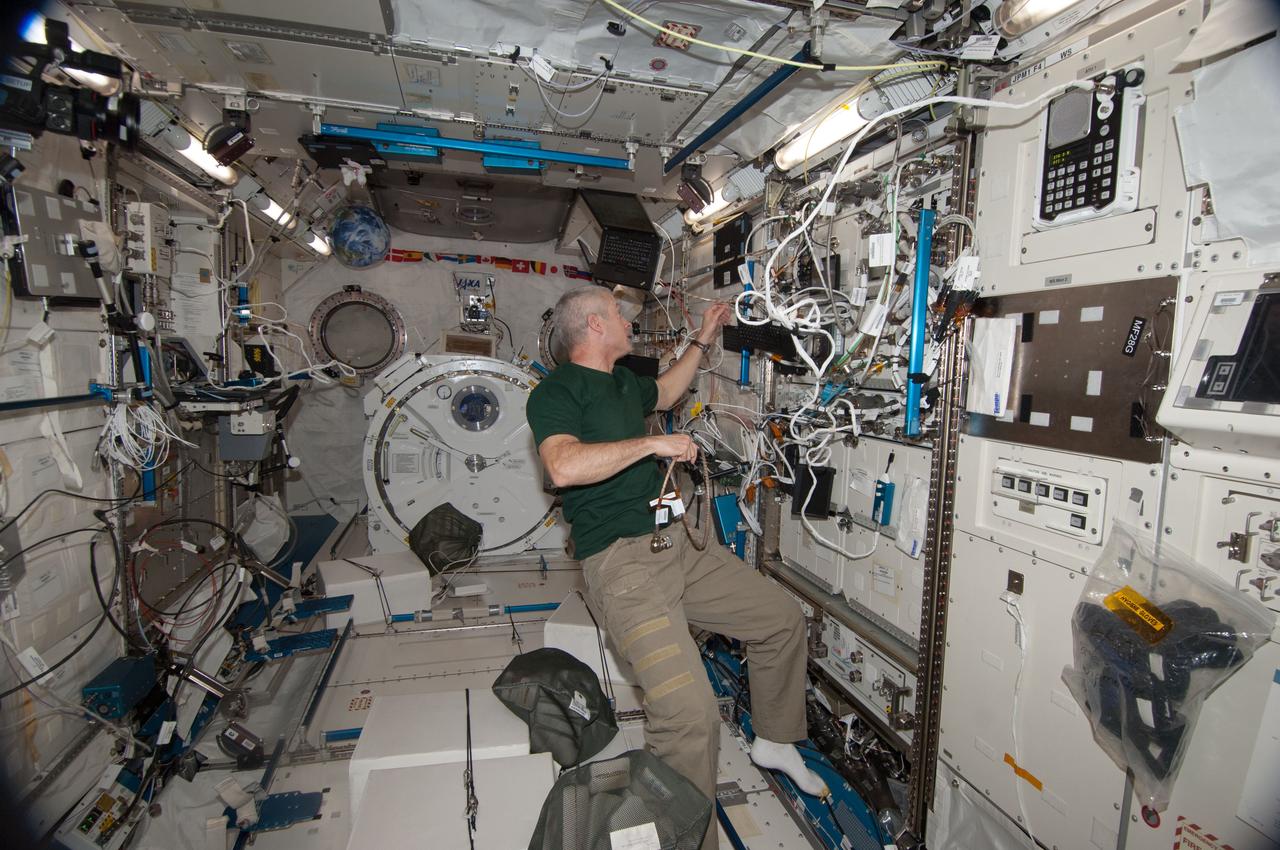
ISS039-E-015596 (25 April 2014) --- NASA astronaut Steve Swanson, Expedition 39 flight engineer, works with NanoRacks hardware in the Kibo laboratory of the Japan Aerospace Exploration Agency.
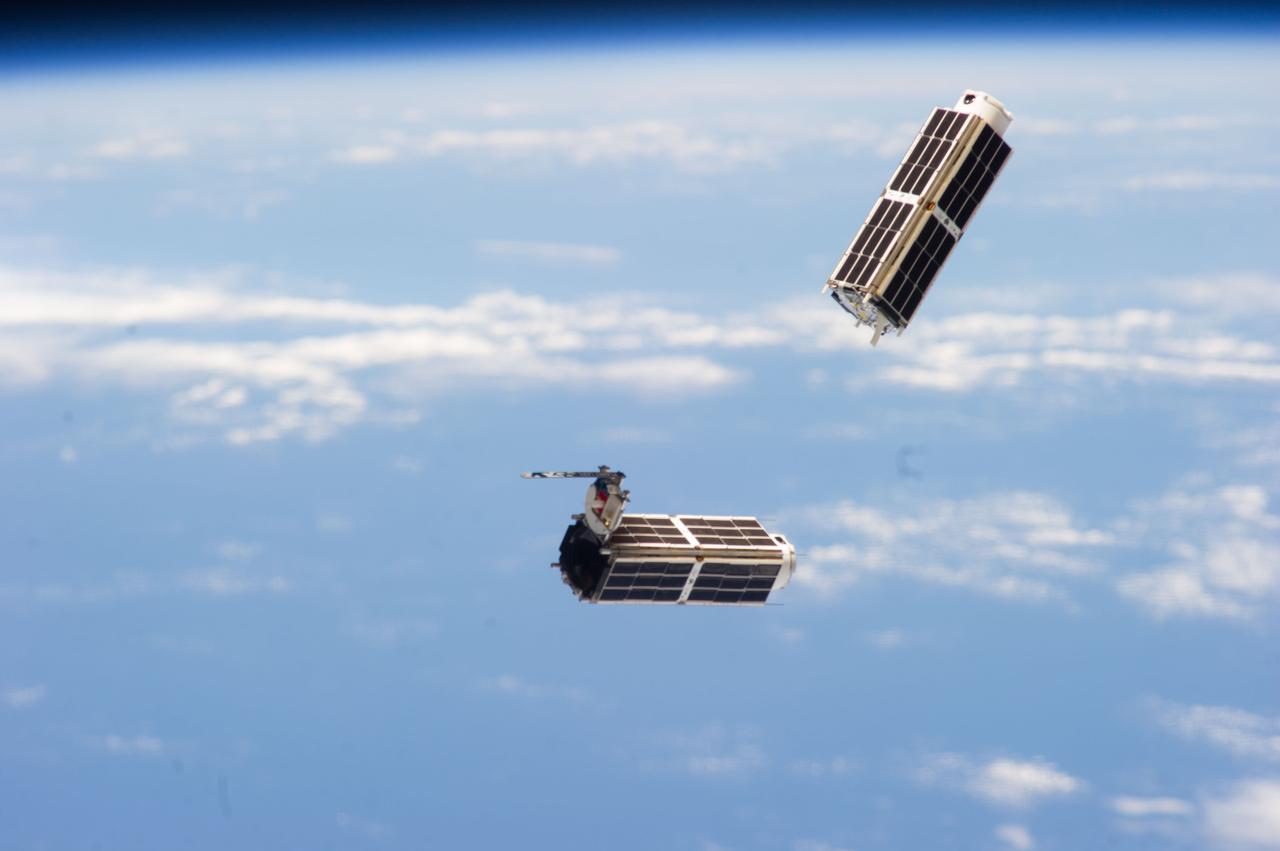
ISS038-E-044916 (11 Feb. 2014) --- A set of NanoRacks CubeSats is photographed by an Expedition 38 crew member after the deployment by the Small Satellite Orbital Deployer (SSOD). The CubeSats program contains a variety of experiments such as Earth observations and advanced electronics testing.
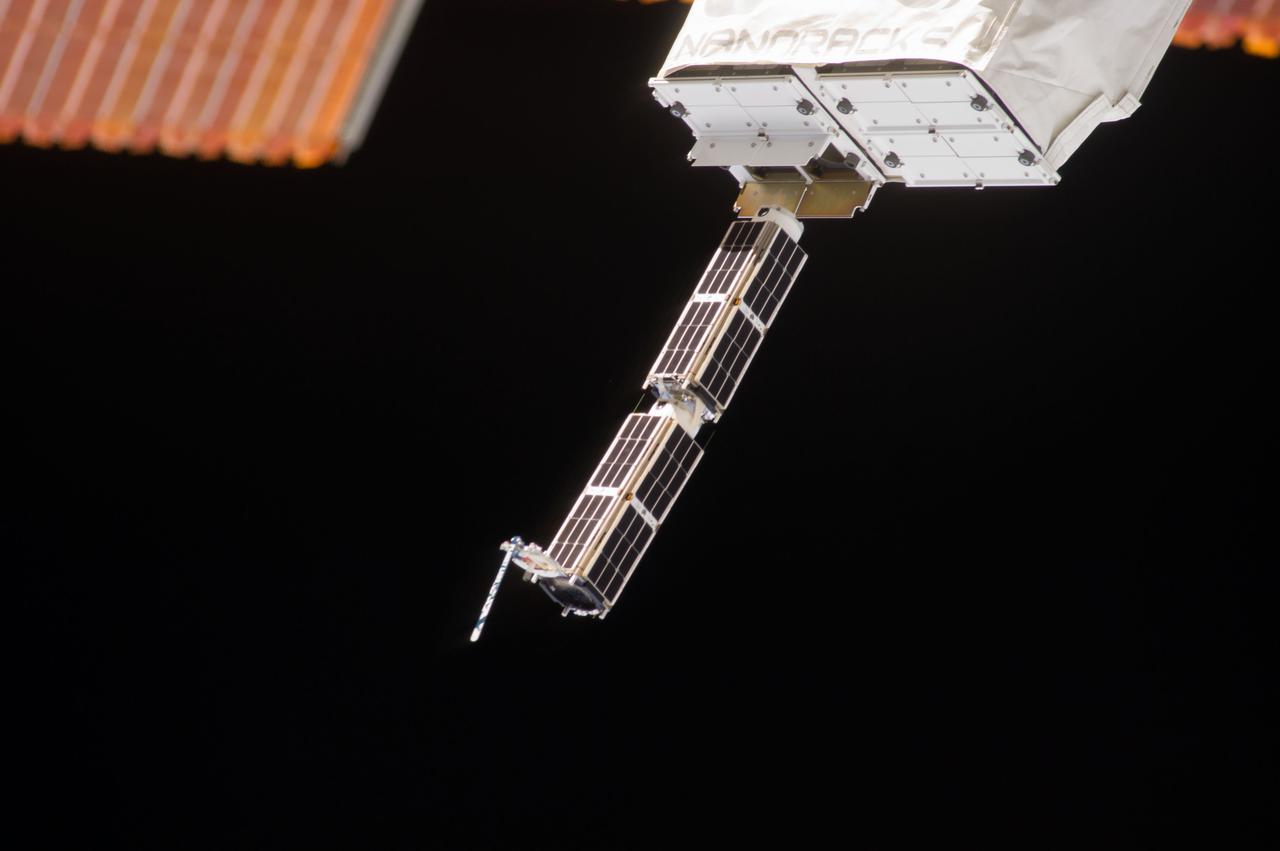
ISS038-E-044889 (11 Feb. 2014) --- The Small Satellite Orbital Deployer (SSOD), in the grasp of the Kibo laboratory robotic arm, is photographed by an Expedition 38 crew member on the International Space Station as it deploys a set of NanoRacks CubeSats. The CubeSats program contains a variety of experiments such as Earth observations and advanced electronics testing.
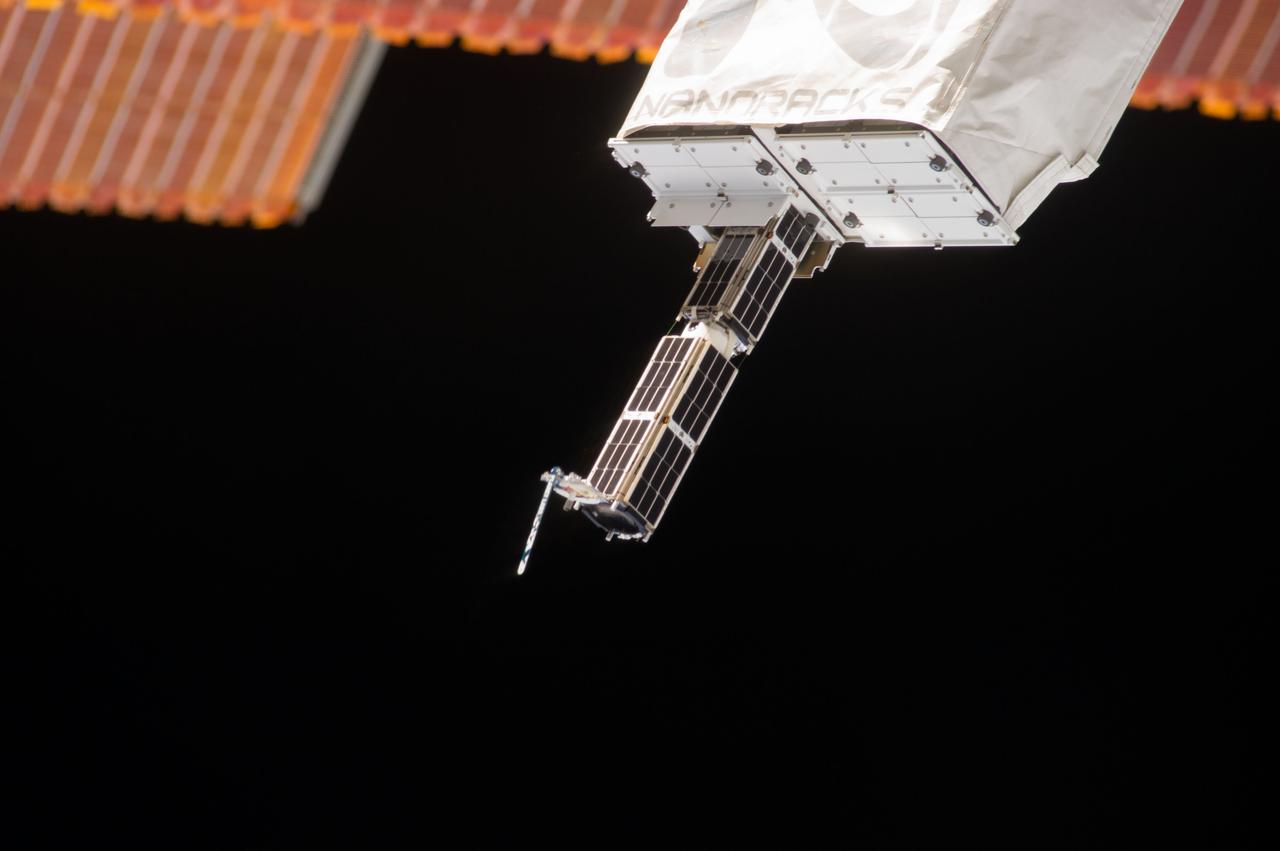
ISS038-E-044887 (11 Feb. 2014) --- The Small Satellite Orbital Deployer (SSOD), in the grasp of the Kibo laboratory robotic arm, is photographed by an Expedition 38 crew member on the International Space Station as it deploys a set of NanoRacks CubeSats. The CubeSats program contains a variety of experiments such as Earth observations and advanced electronics testing.
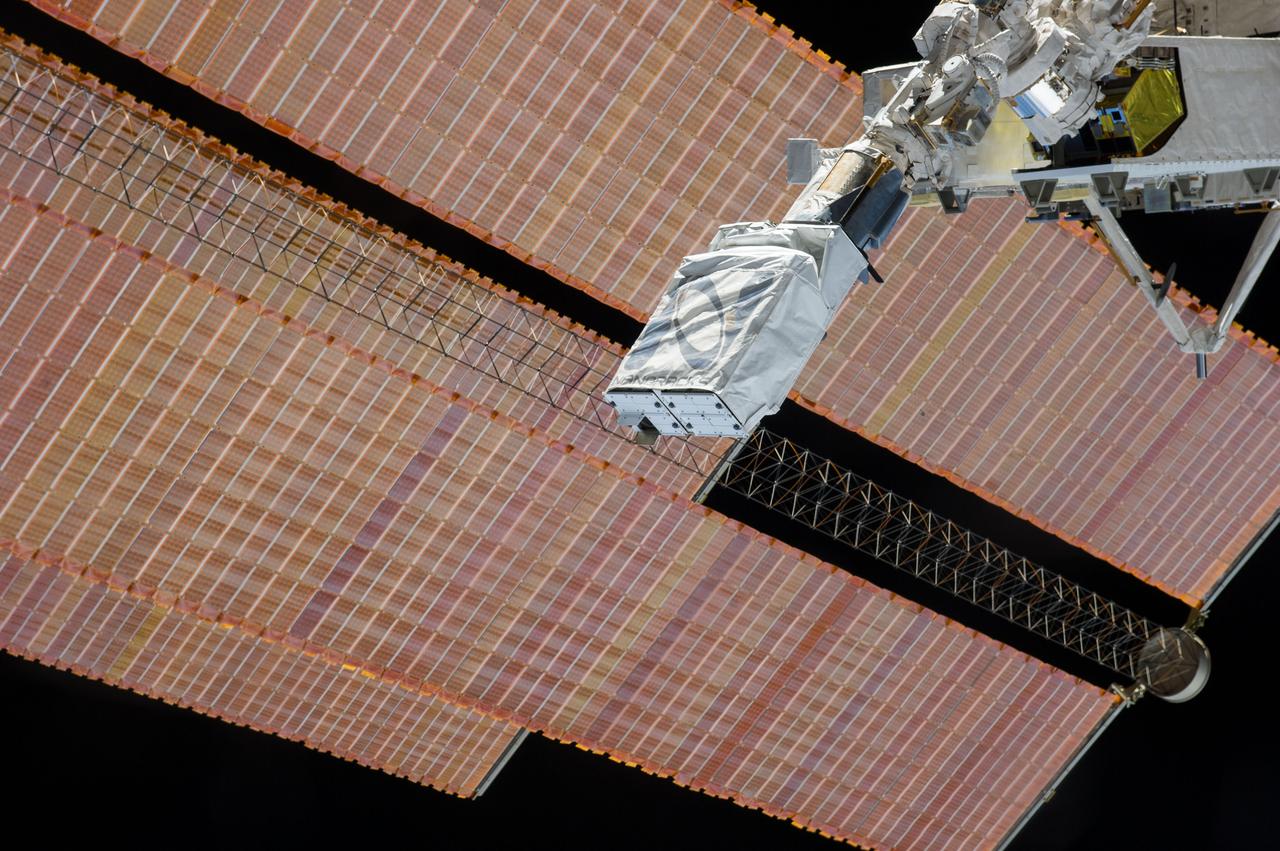
ISS038-E-044994 (11 Feb. 2014) --- The Small Satellite Orbital Deployer (SSOD), in the grasp of the Kibo laboratory robotic arm, is photographed by an Expedition 38 crew member on the International Space Station prior to the deployment of a set of NanoRacks CubeSats. The CubeSats program contains a variety of experiments such as Earth observations and advanced electronics testing.
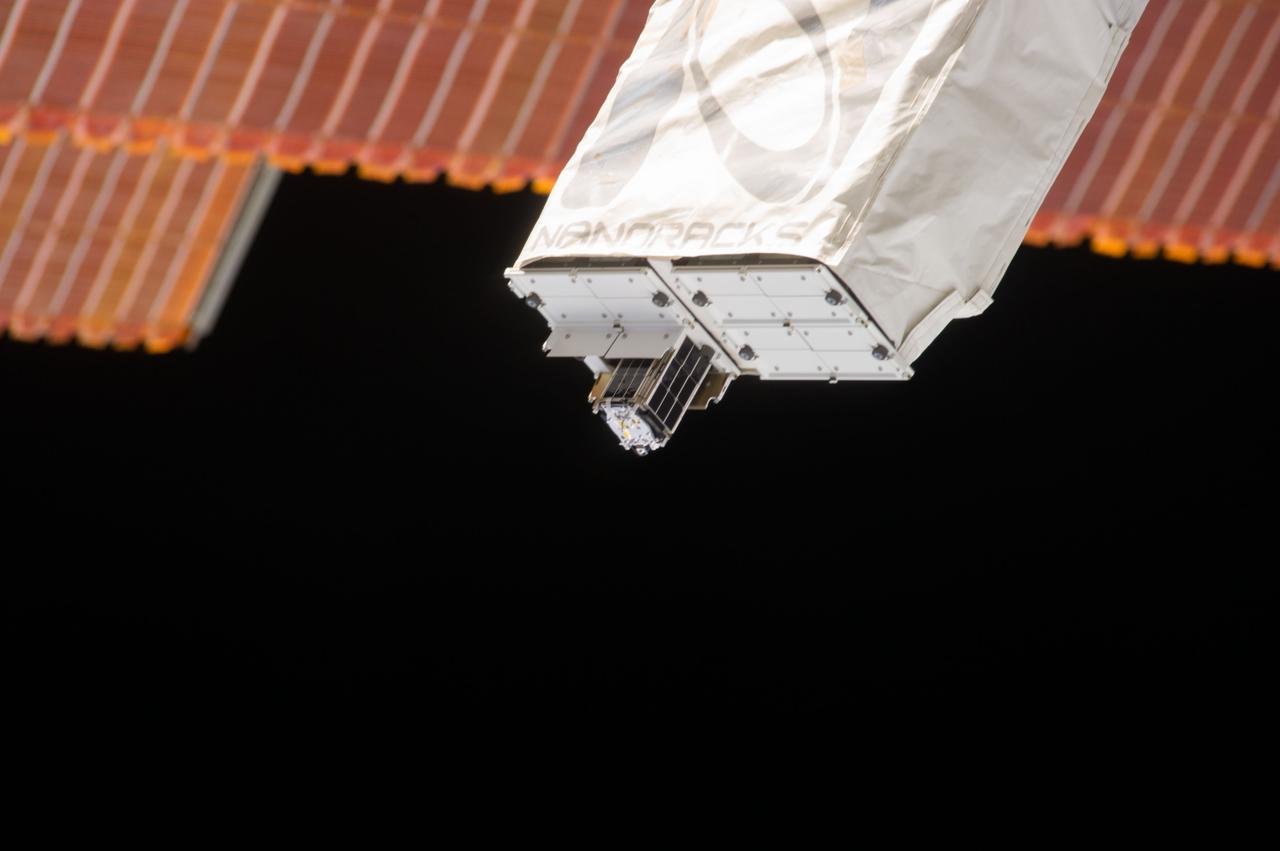
ISS038-E-044883 (11 Feb. 2014) --- The Small Satellite Orbital Deployer (SSOD), in the grasp of the Kibo laboratory robotic arm, is photographed by an Expedition 38 crew member on the International Space Station as it begins the deployment of a set of NanoRacks CubeSats. The CubeSats program contains a variety of experiments such as Earth observations and advanced electronics testing.
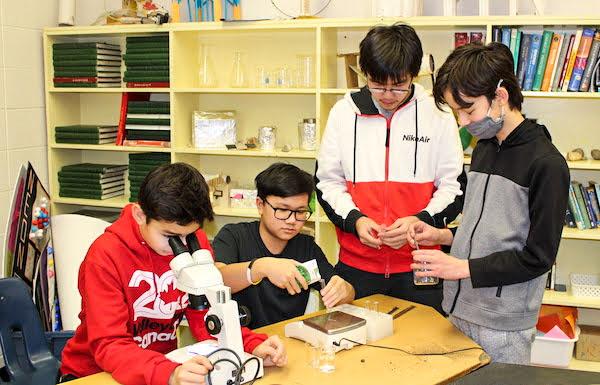
jsc2023e065189 (1/24/2023) --- Student researchers ( left to right: Scott Erskine, Marcus Li, XiaoLin Liu and Samuel Cullen) work on their experiment examining the Effects of Microgravity on the Statoliths and Statocyst Cells in Lepidium sativum (Garden Cress), which will be included in the Nanoracks-National Center for Earth and Space Science Education-Orbiter-Student Spaceflight Experiments Program Mission 17 to ISS (Nanoracks-NCESSE-Orbiter-SSEP).
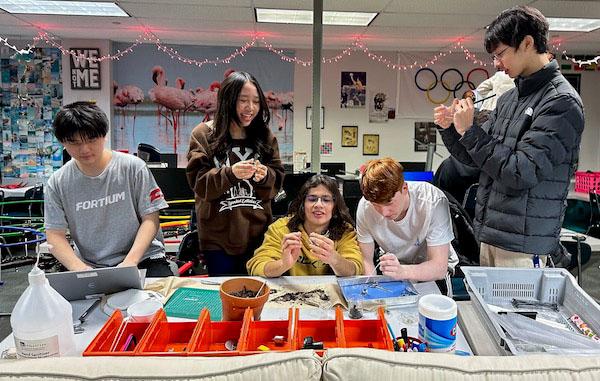
jsc2024e067098 (10/15/2024) --- James Martin High School students Kaleb Kim, Camilo Henao, Grant Hester, Ethan Chen and Sophia Lin Ochoa streamline germination parameters for their experiment, Germination of Pisum sativum in Microgravity. Their experimen is part of the Nanoracks-National Center for Earth and Space Science Education-Surveyor-Student Spaceflight Experiments Program Mission 18 to ISS (Nanoracks-NCESSE-Surveyor-SSEP).
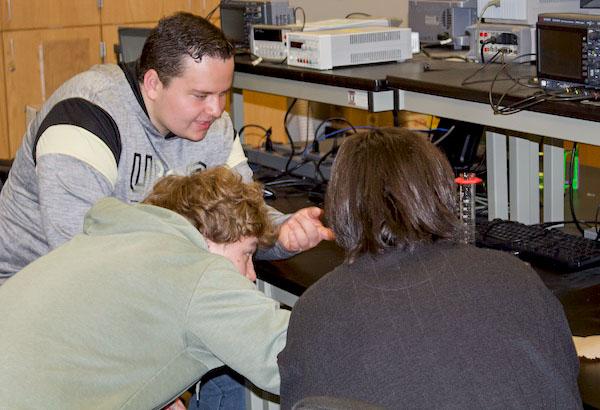
jsc2024e066523 (1/6/2024) --- Colorado Springs students Noah Grebe, Luke Davis, and Blake MacDonald observe crystal growth.Their experiment, Calcium Sulfate Crystal Growth in Microgravity, is part of the Nanoracks-National Center for Earth and Space Science Education-Surveyor-Student Spaceflight Experiments Program Mission 18 to ISS (Nanoracks-NCESSE-Surveyor-SSEP).
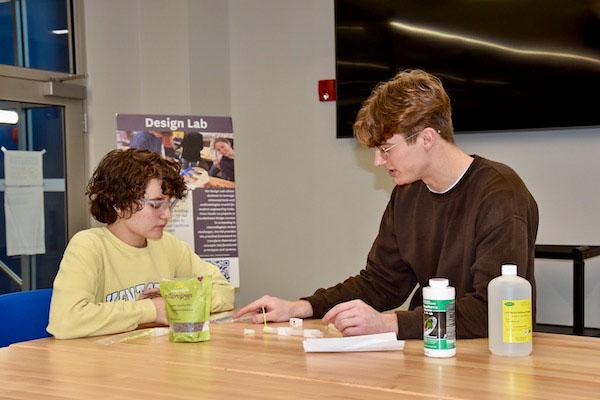
jsc2024e067094 (1/14/2024) --- Kent State University’s co-principal investigators, Mackenzie Guy and Jonathan King from the College of Aeronautics and Engineering, develop their experiment in the Design Lab located in the Aeronautics and Engineering Building. Their experiment, The Effects of Microgravity on Pisum sativum Roots, is part of the Nanoracks-National Center for Earth and Space Science Education-Surveyor-Student Spaceflight Experiments Program Mission 18 to ISS (Nanoracks-NCESSE-Surveyor-SSEP).
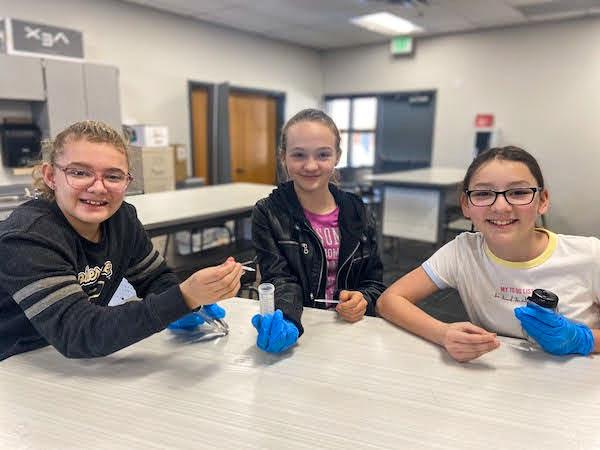
jsc2023e065210 (1/24/2023) --- Fifth grade students from Pendergast School District work on their experiment, which will be included in the Nanoracks-National Center for Earth and Space Science Education-Orbiter-Student Spaceflight Experiments Program Mission 17 to ISS (Nanoracks-NCESSE-Orbiter-SSEP). Pictured left to right: Brynn Smith, Sophia Ketring, and Zoey Harrold.
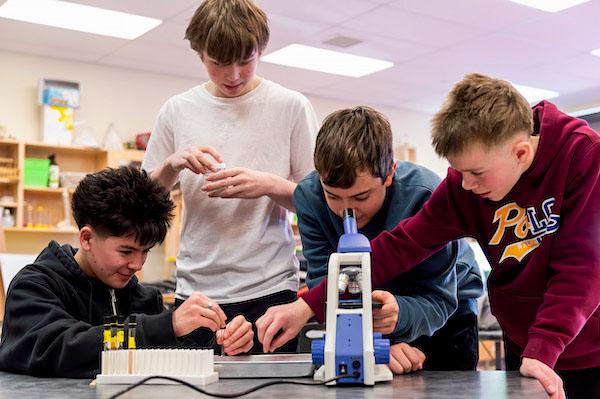
jsc2024e066514 (1/19/2024) --- The flight team from Michael Strembitsky School conducts trials on Dugesia flatworms to examine their ability to regenerate and reproduce in microgravity. Their experiment, The Effect of Microgravity on Reproduction of Dugesia tigrina, is part of the Nanoracks-National Center for Earth and Space Science Education-Surveyor-Student Spaceflight Experiments Program Mission 18 to ISS (Nanoracks-NCESSE-Surveyor-SSEP).
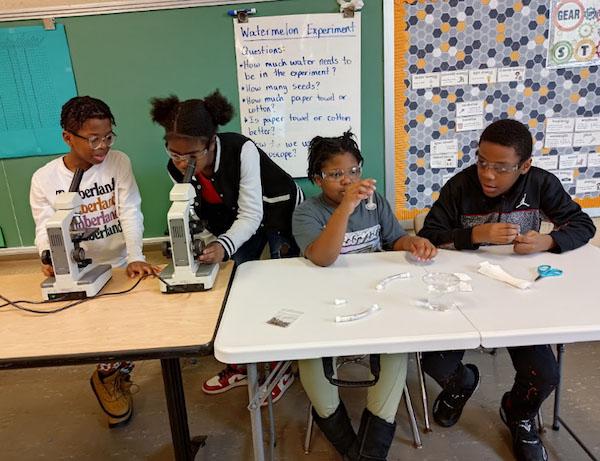
jsc2024e066529 (10/7/2024) --- The Pepper Elementary student team utilizes microscopy to investigate Citrullus lanatus (watermelon) seeds while preparing sample experiments to continue research.Their experiment, How Watermelon Germinates in Space Versus on Earth, is part of the Nanoracks-National Center for Earth and Space Science Education-Surveyor-Student Spaceflight Experiments Program Mission 18 to ISS (Nanoracks-NCESSE-Surveyor-SSEP).
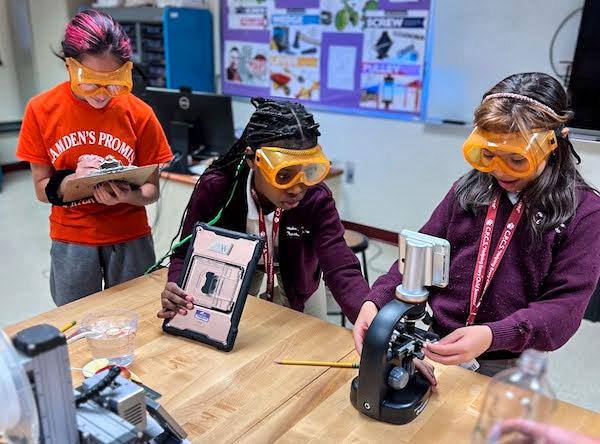
jsc2023e065186 (10/19/2023) --- Student researchers Inari Toledo (left), Sahara Miller (middle), and Siany Lee (right) work on their experiment on how microgravity effects mold growth, which will be included in the Nanoracks-National Center for Earth and Space Science Education-Orbiter-Student Spaceflight Experiments Program Mission 17 to ISS (Nanoracks-NCESSE-Orbiter-SSEP).
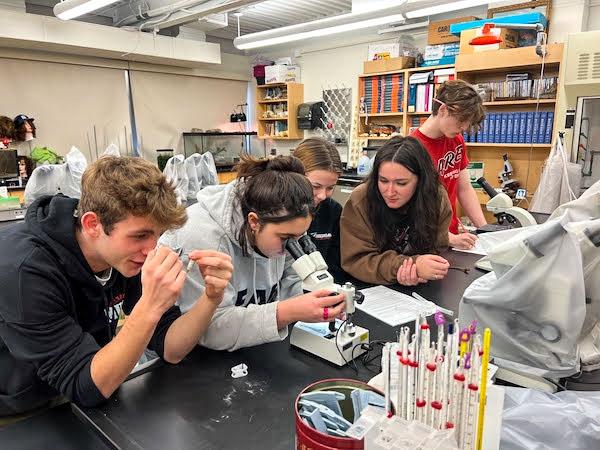
jsc2023e065213 (10/19/2023) --- Student researchers work on their experiment, Examining Artemia salina Hatching in the Presence of Microgravity, which will be included in the Nanoracks-National Center for Earth and Space Science Education-Orbiter-Student Spaceflight Experiments Program Mission 17 to ISS (Nanoracks-NCESSE-Orbiter-SSEP). Pictured from left to right: Raphael Senterfit-Sanjuan, Zola Campisi, Avis Roszco, Jessica Amato and Tucker Sheehan.