
The Nasdaq MarketSite tower displays a congratulatory message to NASA as the agency announces a five-part plan to open the International Space Station to expanded commercial and marketing activities and private astronaut missions to the station and enable additional commercial destinations in low-Earth orbit, Friday, June 7, 2019 at Nasdaq MarketSite in New York City. NASA will continue to maintain human presence and research in low-Earth orbit, and the long-term goal is to achieve a robust economy from which NASA can purchase services at a lower cost. Photo Credit: (NASA/Bill Ingalls)

NASA announces the agency’s five-part plan to open the International Space Station to expanded commercial and marketing activities and private astronaut missions to the station and enable additional commercial destinations in low-Earth orbit, Friday, June 7, 2019 at the Nasdaq MarketSite in New York City. NASA will continue to maintain human presence and research in low-Earth orbit, and the long-term goal is to achieve a robust economy from which NASA can purchase services at a lower cost. Photo Credit: (NASA/Bill Ingalls)

A Mars 2020 message is seen on the video board of the Nasdaq MarketSite after NASA's Perseverance rover landed on the surface of Mars, Thursday, Feb. 18, 2021 in New York City. A key objective for Perseverance’s mission on Mars is astrobiology, including the search for signs of ancient microbial life. The rover will characterize the planet’s geology and past climate, pave the way for human exploration of the Red Planet, and be the first mission to collect and cache Martian rock and regolith. Photo Credit: (NASA/Emma Howells)
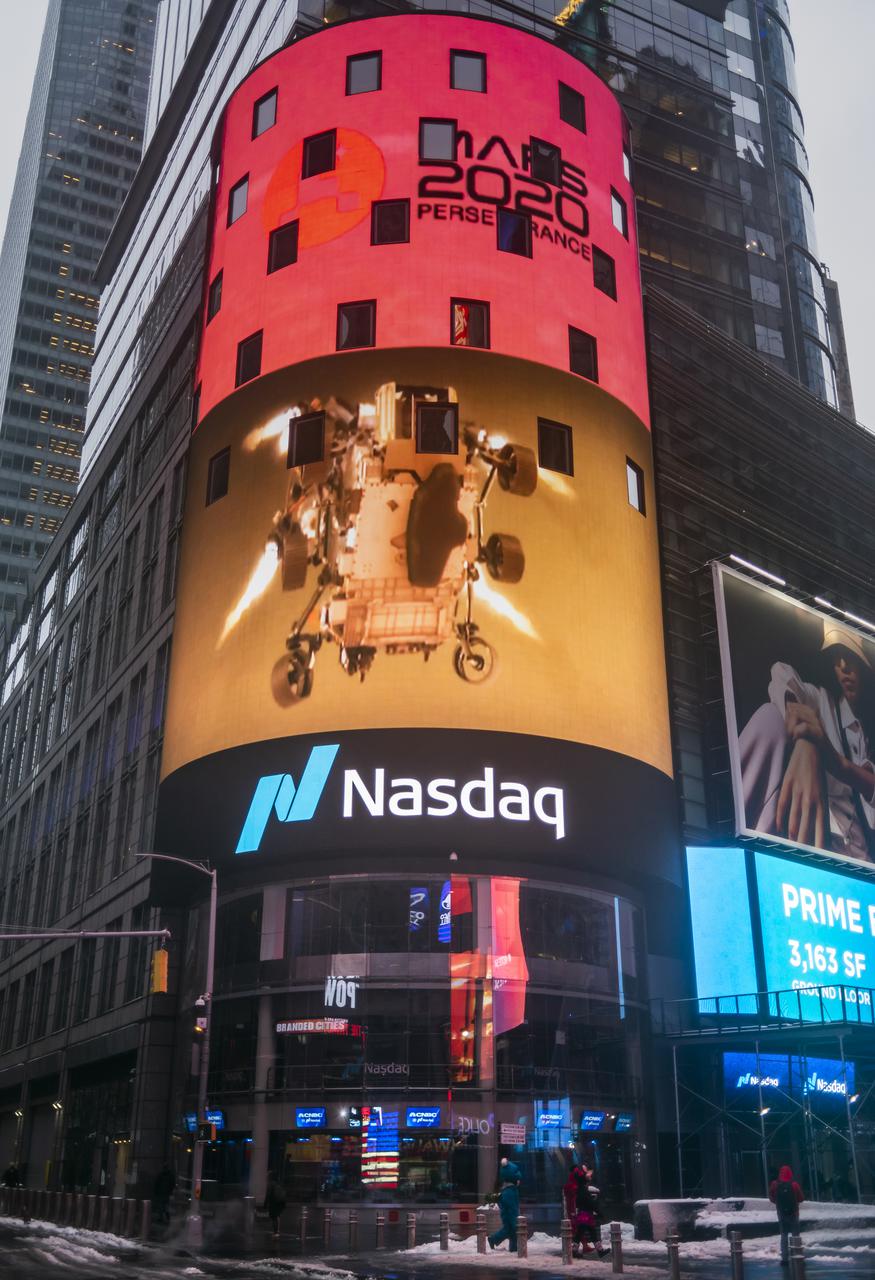
A Mars 2020 message is seen on the video board of the Nasdaq MarketSite after NASA's Perseverance rover landed on the surface of Mars, Thursday, Feb. 18, 2021 in New York City. A key objective for Perseverance’s mission on Mars is astrobiology, including the search for signs of ancient microbial life. The rover will characterize the planet’s geology and past climate, pave the way for human exploration of the Red Planet, and be the first mission to collect and cache Martian rock and regolith. Photo Credit: (NASA/Emma Howells)
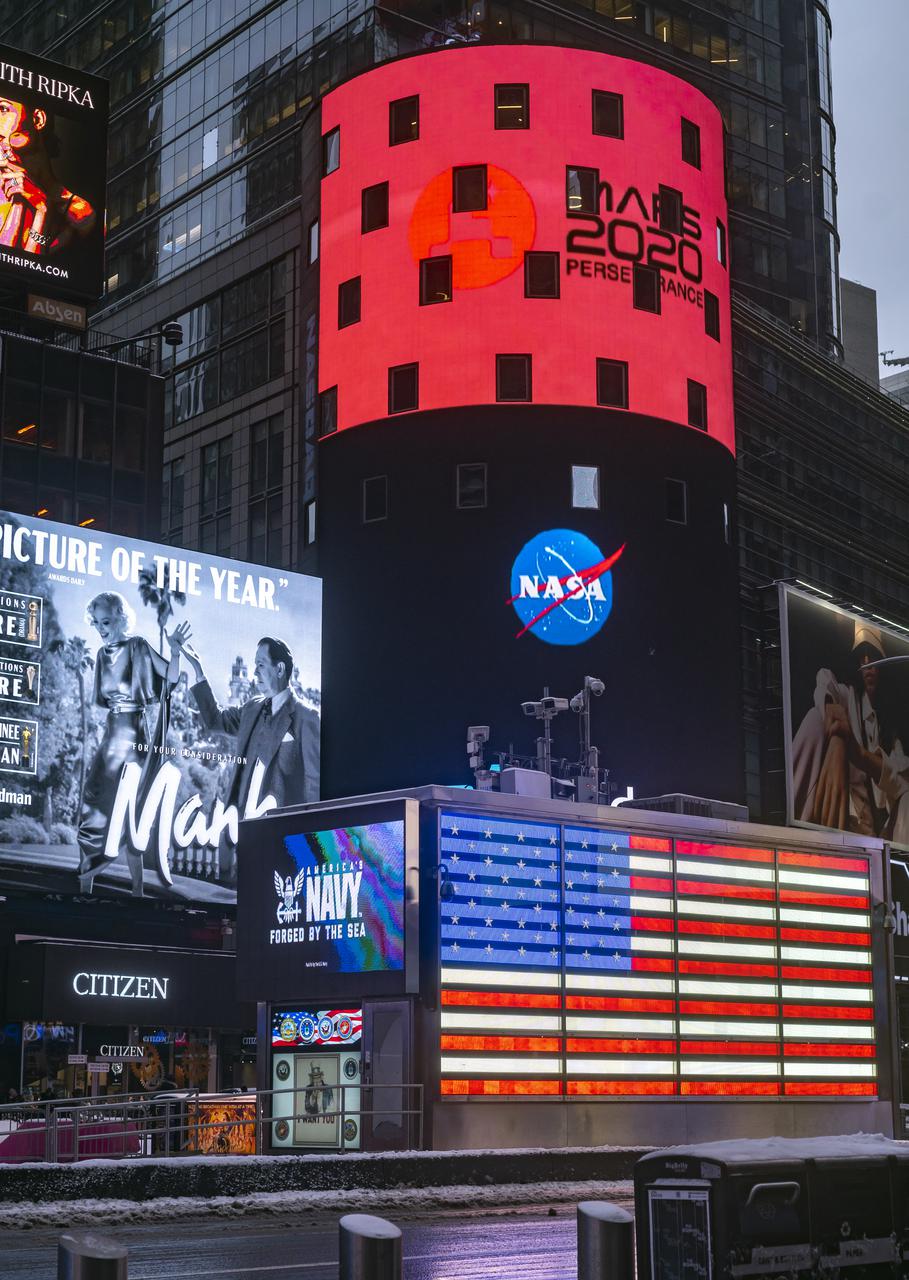
A Mars 2020 message is seen on the video board of the Nasdaq MarketSite after NASA's Perseverance rover landed on the surface of Mars, Thursday, Feb. 18, 2021 in New York City. A key objective for Perseverance’s mission on Mars is astrobiology, including the search for signs of ancient microbial life. The rover will characterize the planet’s geology and past climate, pave the way for human exploration of the Red Planet, and be the first mission to collect and cache Martian rock and regolith. Photo Credit: (NASA/Emma Howells)

NASA Chief Financial Officer Jeff DeWit gives remarks during a briefing where NASA announced the agency’s five-part plan to open the International Space Station to expanded commercial and marketing activities and private astronaut missions to the station and enable additional commercial destinations in low-Earth orbit, Friday, June 7, 2019 at the Nasdaq MarketSite in New York City. NASA will continue to maintain human presence and research in low-Earth orbit, and the long-term goal is to achieve a robust economy from which NASA can purchase services at a lower cost. Photo Credit: (NASA/Bill Ingalls)

NASA Associate Administrator for the Human Exploration and Operations Directorate William Gerstenmaier gives remarks during a briefing where NASA announced the agency’s five-part plan to open the International Space Station to expanded commercial and marketing activities and private astronaut missions to the station and enable additional commercial destinations in low-Earth orbit, Friday, June 7, 2019 at the Nasdaq MarketSite in New York City. NASA will continue to maintain human presence and research in low-Earth orbit, and the long-term goal is to achieve a robust economy from which NASA can purchase services at a lower cost. Photo Credit: (NASA/Bill Ingalls)

NASA Public Affairs Officer Stephanie Schierholz moderates a briefing where NASA announced the agency’s five-part plan to open the International Space Station to expanded commercial and marketing activities and private astronaut missions to the station and enable additional commercial destinations in low-Earth orbit, Friday, June 7, 2019 at the Nasdaq MarketSite in New York City. NASA will continue to maintain human presence and research in low-Earth orbit, and the long-term goal is to achieve a robust economy from which NASA can purchase services at a lower cost. Photo Credit: (NASA/Bill Ingalls)

NASA International Space Station Deputy Director Robyn Gatens answers questions during a briefing where NASA announced the agency’s five-part plan to open the International Space Station to expanded commercial and marketing activities and private astronaut missions to the station and enable additional commercial destinations in low-Earth orbit, Friday, June 7, 2019 at the Nasdaq MarketSite in New York City. NASA will continue to maintain human presence and research in low-Earth orbit, and the long-term goal is to achieve a robust economy from which NASA can purchase services at a lower cost. Photo Credit: (NASA/Bill Ingalls)

A Nasdaq moderator, center, talks with NASA Director of Commercial Spaceflight Development Phil McAlister, left, ISS National Lab Vice President and Chief Operating Officer Ken Shields, NASA Advisory Council Regulatory and Policy Committee Chair Mike Gold, and NASA Deputy Chief Financial Officer for Integration Doug Comstock, right, during a live social media event shortly after NASA announced a five-part plan to open the International Space Station to expanded commercial and marketing activities and private astronaut missions to the station and enable additional commercial destinations in low-Earth orbit, Friday, June 7, 2019 at the Nasdaq MarketSite in New York City. NASA will continue to maintain human presence and research in low-Earth orbit, and the long-term goal is to achieve a robust economy from which NASA can purchase services at a lower cost. Photo Credit: (NASA/Bill Ingalls)

A Nasdaq moderator, center, talks with NanoRacks CEO Jeff Manber, left, NASA Manager of the International Space Station Research Office Marybeth Edeen, AlphaSpace Founder and Chairman Stephanie Murphy, and Made in Space Vice President of Advanced Programs and Concepts Justin Kugler, right, during a live social media event shortly after NASA announced a five-part plan to open the International Space Station to expanded commercial and marketing activities and private astronaut missions to the station and enable additional commercial destinations in low-Earth orbit, Friday, June 7, 2019 at the Nasdaq MarketSite in New York City. NASA will continue to maintain human presence and research in low-Earth orbit, and the long-term goal is to achieve a robust economy from which NASA can purchase services at a lower cost. Photo Credit: (NASA/Bill Ingalls)

A Nasdaq moderator, center, talks with NASA Director of Commercial Spaceflight Development Phil McAlister, left, ISS National Lab Vice President and Chief Operating Officer Ken Shields, NASA Advisory Council Regulatory and Policy Committee Chair Mike Gold, and NASA Deputy Chief Financial Officer for Integration Doug Comstock, right, during a live social media event shortly after NASA announced a five-part plan to open the International Space Station to expanded commercial and marketing activities and private astronaut missions to the station and enable additional commercial destinations in low-Earth orbit, Friday, June 7, 2019 at the Nasdaq MarketSite in New York City. NASA will continue to maintain human presence and research in low-Earth orbit, and the long-term goal is to achieve a robust economy from which NASA can purchase services at a lower cost. Photo Credit: (NASA/Bill Ingalls)
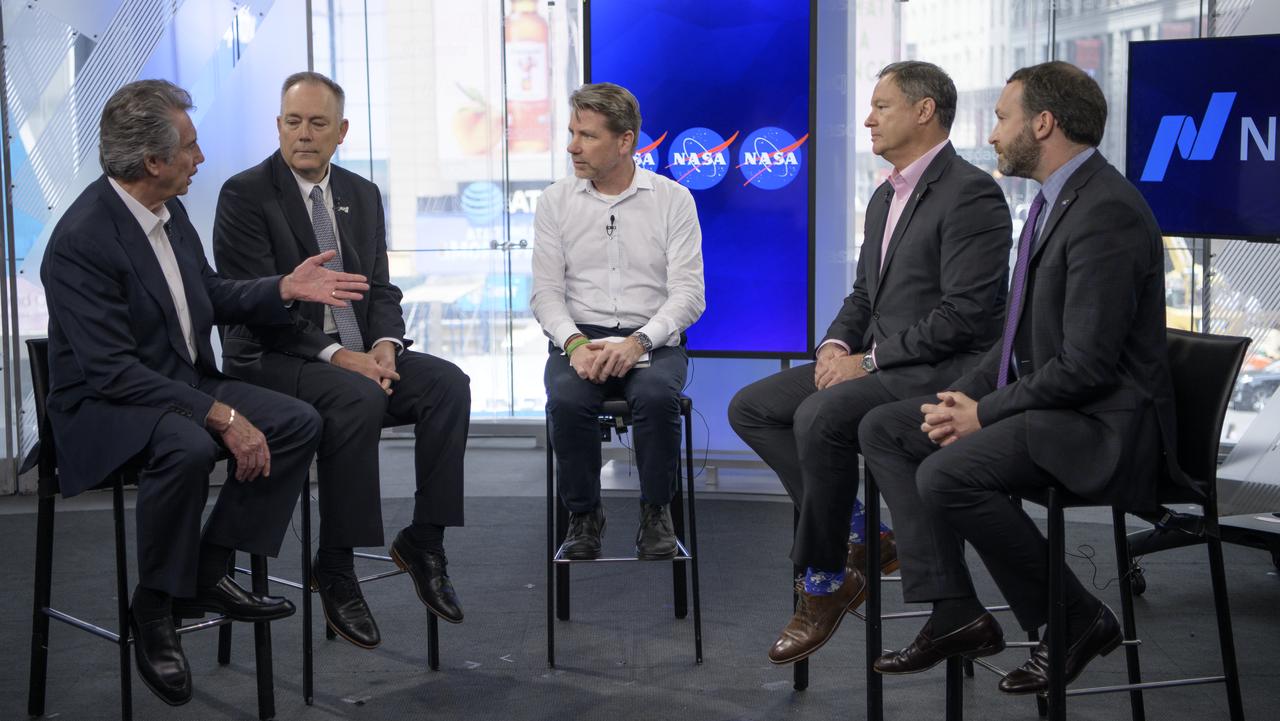
A Nasdaq moderator, center, talks with Bigelow Aerospace, LLC Founder and President Robert Bigelow, left, Boeing Global Sales and Marketing, Space Exploration, Kevin Foley, Axiom Vice President of Business Development Michael Lopez-Alegria, and NASA Senior Economic Advisor Alex MacDonald, right, during a live social media event shortly after NASA announced a five-part plan to open the International Space Station to expanded commercial and marketing activities and private astronaut missions to the station and enable additional commercial destinations in low-Earth orbit, Friday, June 7, 2019 at the Nasdaq MarketSite in New York City. NASA will continue to maintain human presence and research in low-Earth orbit, and the long-term goal is to achieve a robust economy from which NASA can purchase services at a lower cost. Photo Credit: (NASA/Bill Ingalls)

NASA astronaut Christina Koch onboard the International Space Station gives remarks in a video during a briefing where NASA announced the agency’s five-part plan to open the International Space Station to expanded commercial and marketing activities and private astronaut missions to the station and enable additional commercial destinations in low-Earth orbit, Friday, June 7, 2019 at the Nasdaq MarketSite in New York City. NASA will continue to maintain human presence and research in low-Earth orbit, and the long-term goal is to achieve a robust economy from which NASA can purchase services at a lower cost. Photo Credit: (NASA/Bill Ingalls)
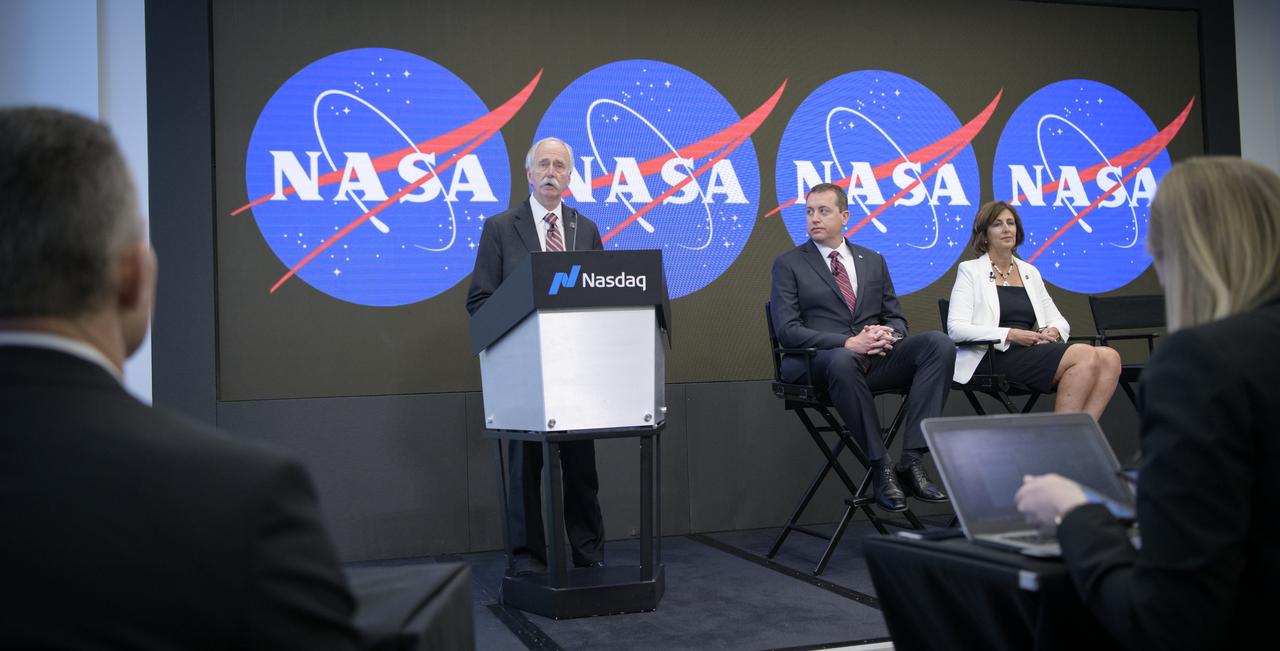
NASA Associate Administrator for the Human Exploration and Operations Directorate William Gerstenmaier, left, NASA Chief Financial Officer Jeff DeWit, center, and NASA International Space Station Deputy Director Robyn Gatens announce the agency’s five-part plan to open the International Space Station to expanded commercial and marketing activities and private astronaut missions to the station and enable additional commercial destinations in low-Earth orbit, Friday, June 7, 2019 at the Nasdaq MarketSite in New York City. NASA will continue to maintain human presence and research in low-Earth orbit, and the long-term goal is to achieve a robust economy from which NASA can purchase services at a lower cost. Photo Credit: (NASA/Bill Ingalls)
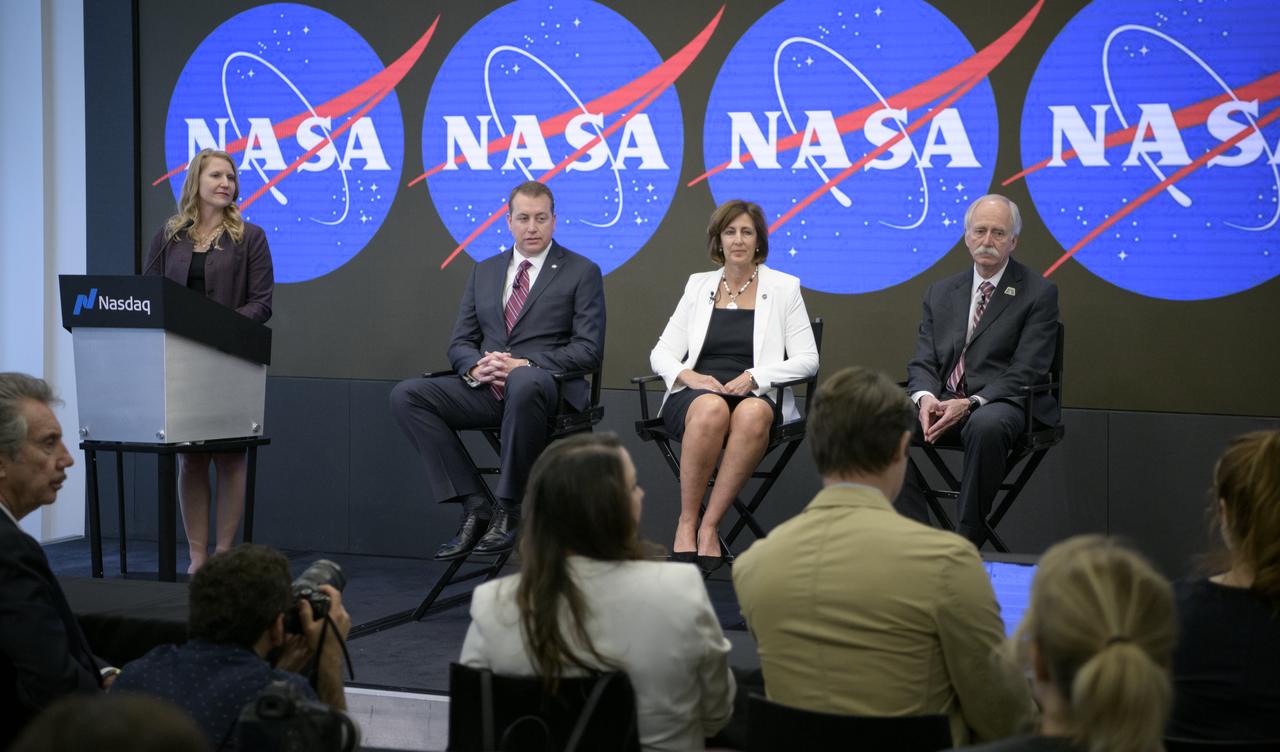
NASA Public Affairs Officer Stephanie Schierholz, standing left, moderates a media briefing with NASA Chief Financial Officer Jeff DeWit, left, NASA International Space Station Deputy Director Robyn Gatens, center, and NASA Associate Administrator for the Human Exploration and Operations Directorate William Gerstenmaier where they announced the agency’s five-part plan to open the International Space Station to expanded commercial and marketing activities and private astronaut missions to the station and enable additional commercial destinations in low-Earth orbit, Friday, June 7, 2019 at the Nasdaq MarketSite in New York City. NASA will continue to maintain human presence and research in low-Earth orbit, and the long-term goal is to achieve a robust economy from which NASA can purchase services at a lower cost. Photo Credit: (NASA/Bill Ingalls)

NASA Deputy Associate Administrator Melanie Saunders and former NASA astronaut Mike Massimino ring the closing bell of the Nasdaq after the NASA's InSight lander successfully touched down on the surface of Mars, Monday, Nov. 26, 2018 at the Nasdaq MarketSite in New York City. The lander sent a signal affirming a completed landing sequence at approximately 3 p.m. EST (noon PST) after touching down on the western side of a flat, smooth expanse of lava called Elysium Planitila. InSight, short for Interior Exploration using Seismic Investigations, Geodesy and Heat Transport, is a Mars lander designed to study the "inner space" of Mars: its crust, mantle, and core. Photo Credit: (NASA/Joel Kowsky)
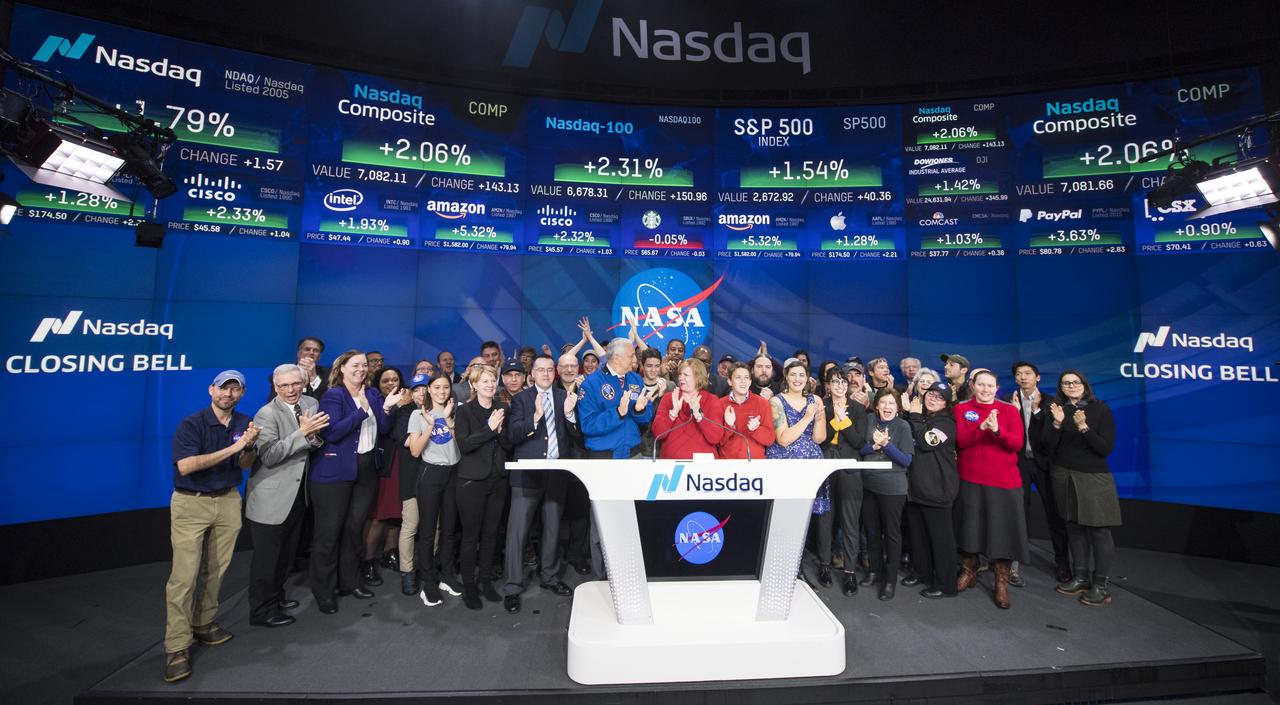
NASA Deputy Associate Administrator Melanie Saunders and former NASA astronaut Mike Massimino ring the closing bell of the Nasdaq after the NASA's InSight lander successfully touched down on the surface of Mars, Monday, Nov. 26, 2018 at the Nasdaq MarketSite in New York City. The lander sent a signal affirming a completed landing sequence at approximately 3 p.m. EST (noon PST) after touching down on the western side of a flat, smooth expanse of lava called Elysium Planitila. InSight, short for Interior Exploration using Seismic Investigations, Geodesy and Heat Transport, is a Mars lander designed to study the "inner space" of Mars: its crust, mantle, and core. Photo Credit: (NASA/Joel Kowsky)
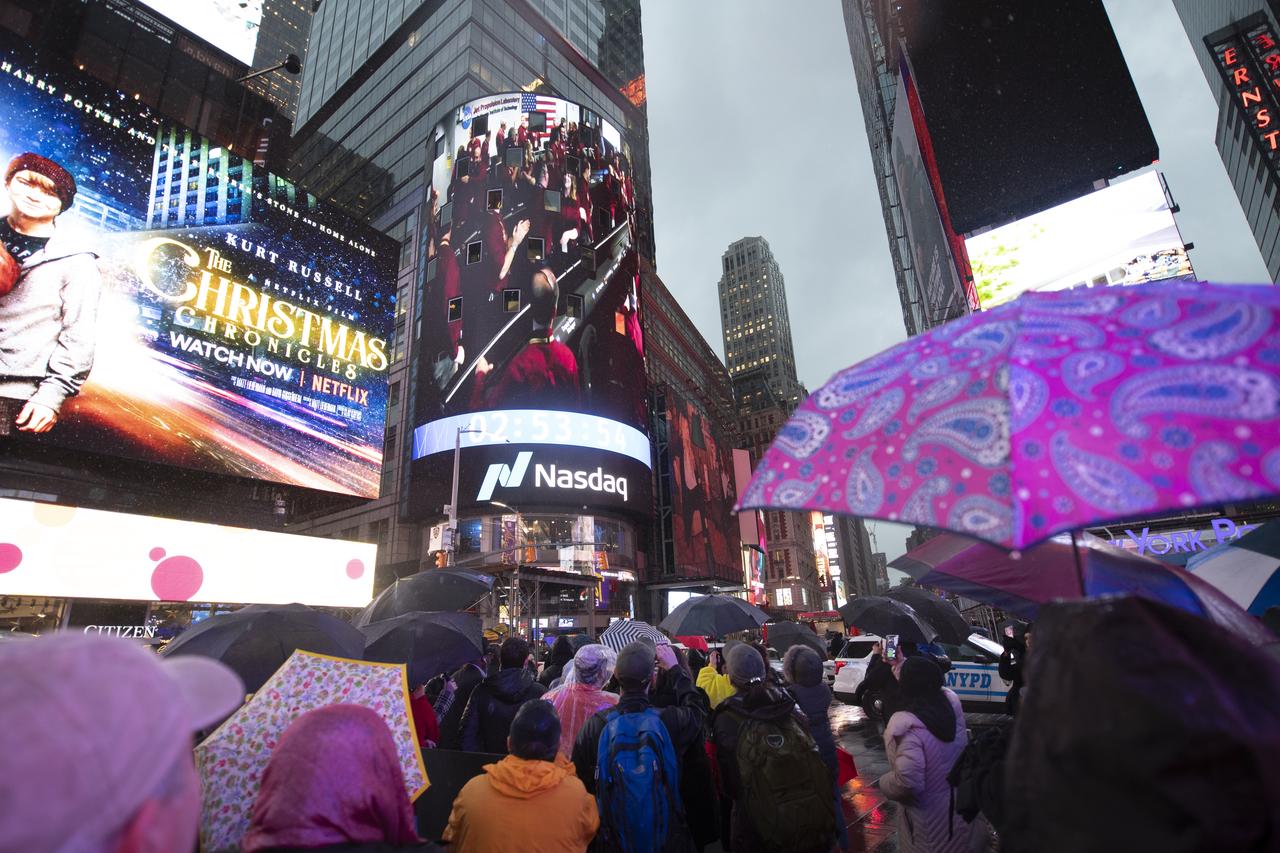
Spectators in Times Square watch the video board of the Nasdaq MarketSite showing the live NASA TV broadcast as NASA InSight team members celebrate inside the Mission Support Area of NASA's Jet Propulsion Laboratory after receiving confirmation the lander successfully touched down on the surface of Mars, Monday, Nov. 26, 2018 in Times Square in New York City. The lander sent a signal affirming a completed landing sequence at approximately 3 p.m. EST (noon PST) after touching down on the western side of a flat, smooth expanse of lava called Elysium Planitila. InSight, short for Interior Exploration using Seismic Investigations, Geodesy and Heat Transport, is a Mars lander designed to study the "inner space" of Mars: its crust, mantle, and core. Photo Credit: (NASA/Joel Kowsky)

The live NASA TV broadcast from inside the Mission Support Area of NASA's Jet Propulsion Laboratory is seen on the video board of the Nasdaq MarketSite as NASA's InSight lander begins its descent towards the surface of Mars, Monday, Nov. 26, 2018 in Times Square in New York City. The lander sent a signal affirming a completed landing sequence at approximately 3 p.m. EST (noon PST) after touching down on the western side of a flat, smooth expanse of lava called Elysium Planitila. InSight, short for Interior Exploration using Seismic Investigations, Geodesy and Heat Transport, is a Mars lander designed to study the "inner space" of Mars: its crust, mantle, and core. Photo Credit: (NASA/Joel Kowsky)
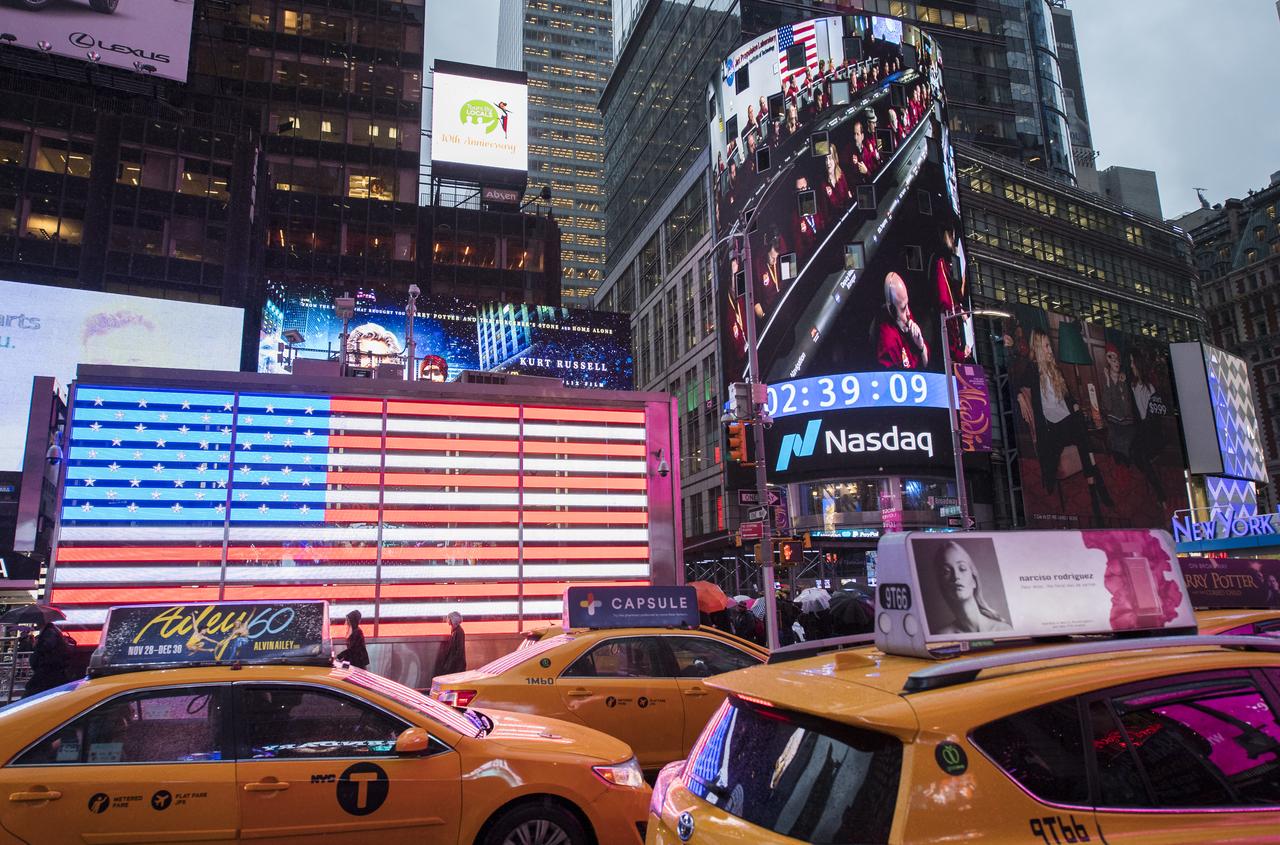
The live NASA TV broadcast from inside the Mission Support Area of NASA's Jet Propulsion Laboratory is seen on the video board of the Nasdaq MarketSite as NASA's InSight lander begins its descent towards the surface of Mars, Monday, Nov. 26, 2018 in Times Square in New York City. The lander sent a signal affirming a completed landing sequence at approximately 3 p.m. EST (noon PST) after touching down on the western side of a flat, smooth expanse of lava called Elysium Planitila. InSight, short for Interior Exploration using Seismic Investigations, Geodesy and Heat Transport, is a Mars lander designed to study the "inner space" of Mars: its crust, mantle, and core. Photo Credit: (NASA/Joel Kowsky)

NASA’s Artemis II mission specialist Christina Koch is seen on the Nasdaq building in New York’s Times Square soon after ringing the closing bell of the Nasdaq market session, with fellow crewmembers; CSA (Canadian Space Agency) astronaut Jeremy Hansen, mission specialist; and NASA astronauts Reid Wiseman, commander; and Victor Glover, pilot, Thursday, April 30, 2026. NASA’s Artemis II mission took Wiseman, Glover, Koch, and Hansen on a nearly 10-day journey around the Moon and back to Earth earlier in April 2026. Photo Credit: (NASA/Bill Ingalls)

Nasdaq Chair and Chief Executive Officer Adena T. Friedman, left, and NASA’s Artemis II crewmembers: CSA (Canadian Space Agency) astronaut Jeremy Hansen, mission specialist; NASA astronauts Christina Koch, mission specialist; Victor Glover, pilot; and Reid Wiseman, commander, right, ring the closing bell of the Nasdaq market session, Thursday, April 30, 2026. NASA’s Artemis II mission took Wiseman, Glover, Koch, and Hansen on a nearly 10-day journey around the Moon and back to Earth earlier in April, 2026. Photo Credit: (NASA/Bill Ingalls)

Imagery from NASA’s Artemis II mission is seen on the Nasdaq building in New York’s Times Square after NASA’s Artemis II crewmembers: NASA astronauts Christina Koch, mission specialist; Reid Wiseman, commander; Victor Glover, pilot, mission specialist, and CSA (Canadian Space Agency) astronaut Jeremy Hansen, rang the closing bell Thursday, April 30, 2026. NASA’s Artemis II mission took Wiseman, Glover, Koch, and Hansen on a nearly 10-day journey around the Moon and back to Earth earlier in April 2026. Photo Credit: (NASA/Bill Ingalls)

NASA’s Artemis II mission specialist, CSA (Canadian Space Agency) astronaut Jeremy Hansen, is seen on the Nasdaq building in New York’s Times Square soon after ringing the closing bell of the Nasdaq market session, with fellow crewmembers; NASA astronauts Christina Koch, mission specialist; Reid Wiseman, commander; and Victor Glover, pilot, Thursday, April 30, 2026. NASA’s Artemis II mission took Wiseman, Glover, Koch, and Hansen on a nearly 10-day journey around the Moon and back to Earth earlier in April 2026. Photo Credit: (NASA/Bill Ingalls)

NASA’s Artemis II crewmembers: CSA (Canadian Space Agency) astronaut Jeremy Hansen, mission specialist; left, NASA astronauts Victor Glover, pilot; Christina Koch, mission specialist; and Reid Wiseman, commander, right, watch a replay of them ringing the closing bell of the Nasdaq market session, Thursday, April 30, 2026, in Times Square, New York. NASA’s Artemis II mission took Wiseman, Glover, Koch, and Hansen on a nearly 10-day journey around the Moon and back to Earth earlier in April 2026. Photo Credit: (NASA/Bill Ingalls)

NASA’s Artemis II pilot Victor Glover, poses for a photograph in Times Square, New York, soon after ringing the closing bell of the Nasdaq market session, with fellow crewmembers; CSA (Canadian Space Agency) astronaut Jeremy Hansen, mission specialist; and NASA astronauts Reid Wiseman, commander; Christina Koch, mission specialist, Thursday, April 30, 2026. NASA’s Artemis II mission took Wiseman, Glover, Koch, and Hansen on a nearly 10-day journey around the Moon and back to Earth earlier in April 2026. Photo Credit: (NASA/Bill Ingalls)

NASA’s Artemis II mission specialist, CSA (Canadian Space Agency) astronaut Jeremy Hansen, poses for a photograph in Times Square, New York, soon after ringing the closing bell of the Nasdaq market session, with fellow crewmembers; NASA astronauts Christina Koch, mission specialist; Reid Wiseman, commander; and Victor Glover, pilot, Thursday, April 30, 2026. NASA’s Artemis II mission took Wiseman, Glover, Koch, and Hansen on a nearly 10-day journey around the Moon and back to Earth earlier in April 2026. Photo Credit: (NASA/Bill Ingalls)

NASA’s Artemis II crewmembers: CSA (Canadian Space Agency) astronaut Jeremy Hansen, mission specialist; left, NASA astronauts Reid Wiseman, commander; Christina Koch, mission specialist, and Victor Glover, pilot, right, pose for a group photograph at the Times Square Skywalk, Thursday, April 30, 2026 in New York, NY. The Artemis II crew was in New York for a number of postflight events. NASA’s Artemis II mission took Wiseman, Glover, Koch, and Hansen on a nearly 10-day journey around the Moon and back to Earth earlier in April 2026. Photo Credit: (NASA/Bill Ingalls)

Nasdaq Chair and Chief Executive Officer Adena T. Friedman, left, and NASA’s Artemis II crewmembers: CSA (Canadian Space Agency) astronaut Jeremy Hansen, mission specialist; NASA astronauts Christina Koch, mission specialist; Victor Glover, pilot; and Reid Wiseman, commander, right, celebrate after ringing the closing bell of the Nasdaq market session, Thursday, April 30, 2026, in New York, NY. NASA’s Artemis II mission took Wiseman, Glover, Koch, and Hansen on a nearly 10-day journey around the Moon and back to Earth earlier in April 2026. Photo Credit: (NASA/Bill Ingalls)

Imagery from NASA’s Artemis II mission is seen on the Nasdaq building in New York’s Times Square after NASA’s Artemis II crewmembers: NASA astronauts Christina Koch, mission specialist; Reid Wiseman, commander; Victor Glover, pilot, mission specialist, and CSA (Canadian Space Agency) astronaut Jeremy Hansen, rang the closing bell Thursday, April 30, 2026. NASA’s Artemis II mission took Wiseman, Glover, Koch, and Hansen on a nearly 10-day journey around the Moon and back to Earth earlier in April 2026. Photo Credit: (NASA/Bill Ingalls)

NASA’s Artemis II crewmembers: CSA (Canadian Space Agency) astronaut Jeremy Hansen, mission specialist; left, NASA astronauts Reid Wiseman, commander; Christina Koch, mission specialist, and Victor Glover, pilot, right, pose for a group photograph at the Times Square Skywalk, Thursday, April 30, 2026 in New York, NY. The Artemis II crew was in New York for a number of postflight events. NASA’s Artemis II mission took Wiseman, Glover, Koch, and Hansen on a nearly 10-day journey around the Moon and back to Earth earlier in April 2026. Photo Credit: (NASA/Bill Ingalls)

NASA’s Artemis II commander Reid Wiseman, holds ‘Rise’ the zero gravity indicator, up for a photograph in Times Square, New York, after ringing the closing bell of the Nasdaq market session, with fellow crewmembers; CSA (Canadian Space Agency) astronaut Jeremy Hansen, mission specialist; and NASA astronauts Victor Glover, pilot; Christina Koch, mission specialist, Thursday, April 30, 2026. NASA’s Artemis II mission took Wiseman, Glover, Koch, and Hansen on a nearly 10-day journey around the Moon and back to Earth earlier in April 2026. Photo Credit: (NASA/Bill Ingalls)

NASA’s Artemis II pilot Victor Glover, reacts as his fellow crewmembers sing happy birthday to him in Times Square, New York, shortly after ringing the closing bell of the Nasdaq market session, with fellow crewmembers; CSA (Canadian Space Agency) astronaut Jeremy Hansen, mission specialist; and NASA astronauts Reid Wiseman, commander; Christina Koch, mission specialist, Thursday, April 30, 2026. NASA’s Artemis II mission took Wiseman, Glover, Koch, and Hansen on a nearly 10-day journey around the Moon and back to Earth earlier in April 2026. Photo Credit: (NASA/Bill Ingalls)

NASA’s Artemis II crewmembers: CSA (Canadian Space Agency) astronaut Jeremy Hansen, mission specialist; left, NASA astronauts Reid Wiseman, commander; Christina Koch, mission specialist, and Victor Glover, pilot, right, pose for a group photograph at the Times Square Skywalk, Thursday, April 30, 2026 in New York, NY. The Artemis II crew was in New York for a number of postflight events. NASA’s Artemis II mission took Wiseman, Glover, Koch, and Hansen on a nearly 10-day journey around the Moon and back to Earth earlier in April 2026. Photo Credit: (NASA/Bill Ingalls)

Video of the Artemis II launch is seen on a large display in New York’s Times Square, Thursday, April 30, 2026. NASA’s Artemis II crewmembers: NASA astronauts Reid Wiseman, commander; Christina Koch, mission specialist, Victor Glover, pilot; and CSA (Canadian Space Agency) astronaut Jeremy Hansen, mission specialist are in New York for a number of postflight events. NASA’s Artemis II mission took Wiseman, Glover, Koch, and Hansen on a nearly 10-day journey around the Moon and back to Earth earlier in April 2026. Photo Credit: (NASA/Bill Ingalls)

NASA Administrator Jared Isaacman, left, NASA’s Artemis II crewmembers: CSA (Canadian Space Agency) astronaut Jeremy Hansen, mission specialist; NASA astronauts Reid Wiseman, commander; Christina Koch, mission specialist, and Victor Glover, pilot, right, pose for a group photograph at the Times Square Skywalk, Thursday, April 30, 2026 in New York, NY. The Artemis II crew was in New York for a number of postflight events. NASA’s Artemis II mission took Wiseman, Glover, Koch, and Hansen on a nearly 10-day journey around the Moon and back to Earth earlier in April 2026. Photo Credit: (NASA/Bill Ingalls)

NASA’s Artemis II crewmembers: NASA astronauts Reid Wiseman, commander; left, Christina Koch, mission specialist; Victor Glover, pilot; and CSA (Canadian Space Agency) astronaut Jeremy Hansen, mission specialist, right, watch a replay of them ringing the closing bell of the Nasdaq market session, Thursday, April 30, 2026, in Times Square, New York. NASA’s Artemis II mission took Wiseman, Glover, Koch, and Hansen on a nearly 10-day journey around the Moon and back to Earth earlier in April 2026. Photo Credit: (NASA/Bill Ingalls)

NASA’s Artemis II commander Reid Wiseman, poses for a photograph, in Times Square, New York, while holding ‘Rise’ the zero gravity indicator, soon after ringing the closing bell of the Nasdaq market session, with fellow crewmembers; CSA (Canadian Space Agency) astronaut Jeremy Hansen, mission specialist; and NASA astronauts Victor Glover, pilot; Christina Koch, mission specialist, Thursday, April 30, 2026. NASA’s Artemis II mission took Wiseman, Glover, Koch, and Hansen on a nearly 10-day journey around the Moon and back to Earth earlier in April 2026. Photo Credit: (NASA/Bill Ingalls)

Imagery from NASA’s Artemis II mission is seen on the Nasdaq building in New York’s Times Square after NASA’s Artemis II crewmembers: NASA astronauts Christina Koch, mission specialist; Reid Wiseman, commander; Victor Glover, pilot, mission specialist, and CSA (Canadian Space Agency) astronaut Jeremy Hansen, rang the closing bell Thursday, April 30, 2026. NASA’s Artemis II mission took Wiseman, Glover, Koch, and Hansen on a nearly 10-day journey around the Moon and back to Earth earlier in April 2026. Photo Credit: (NASA/Bill Ingalls)

Video of the Artemis II splashdown is seen on the Nasdaq building in New York’s Times Square, Thursday, April 30, 2026. NASA’s Artemis II crewmembers: NASA astronauts Reid Wiseman, commander; Christina Koch, mission specialist, Victor Glover, pilot; and CSA (Canadian Space Agency) astronaut Jeremy Hansen, mission specialist closed the Nasdaq trading session. NASA’s Artemis II mission took Wiseman, Glover, Koch, and Hansen on a nearly 10-day journey around the Moon and back to Earth earlier in April 2026. Photo Credit: (NASA/Bill Ingalls)

NASA’s Artemis II crewmembers: CSA (Canadian Space Agency) astronaut Jeremy Hansen, mission specialist; left, NASA astronauts Reid Wiseman, commander; Christina Koch, mission specialist, and Victor Glover, pilot, right, look at Times Square from the Times Square Skywalk, Thursday, April 30, 2026 in New York, NY. The Artemis II crew was in New York for a number of postflight events. NASA’s Artemis II mission took Wiseman, Glover, Koch, and Hansen on a nearly 10-day journey around the Moon and back to Earth earlier in April 2026. Photo Credit: (NASA/Bill Ingalls)

A large display at the Times Square Skywalk shows NASA’s Artemis II crewmembers: CSA (Canadian Space Agency) astronaut Jeremy Hansen, mission specialist; NASA astronauts Victor Glover, pilot; Reid Wiseman, commander; and Christina Koch, mission specialist, right, Thursday, April 30, 2026 in New York, NY. The Artemis II crew was in New York for postflight events. NASA’s Artemis II mission took Wiseman, Glover, Koch, and Hansen on a nearly 10-day journey around the Moon and back to Earth earlier in April 2026. Photo Credit: (NASA/Bill Ingalls)

NASA’s Artemis II pilot Victor Glover, is seen on the Nasdaq building in New York’s Times Square soon after ringing the closing bell of the Nasdaq market session, with fellow crewmembers; CSA (Canadian Space Agency) astronaut Jeremy Hansen, mission specialist; and NASA astronauts Reid Wiseman, commander; Christina Koch, mission specialist, Thursday, April 30, 2026. NASA’s Artemis II mission took Wiseman, Glover, Koch, and Hansen on a nearly 10-day journey around the Moon and back to Earth earlier in April 2026. Photo Credit: (NASA/Bill Ingalls)

NASA’s Artemis II crewmembers: NASA astronauts Reid Wiseman, commander, left, and Christina Koch, mission specialist, look at Times Square from the Times Square Skywalk, Thursday, April 30, 2026 in New York, NY. The Artemis II crew was in New York for a number of postflight events. NASA’s Artemis II mission took Wiseman, Victor Glover, Koch, and Jeremy Hansen on a nearly 10-day journey around the Moon and back to Earth earlier in April 2026. Photo Credit: (NASA/Bill Ingalls)

Imagery from NASA’s Artemis II mission is seen on the Nasdaq building in New York’s Times Square after NASA’s Artemis II crewmembers: NASA astronauts Christina Koch, mission specialist; Reid Wiseman, commander; Victor Glover, pilot, mission specialist, and CSA (Canadian Space Agency) astronaut Jeremy Hansen, rang the closing bell Thursday, April 30, 2026. NASA’s Artemis II mission took Wiseman, Glover, Koch, and Hansen on a nearly 10-day journey around the Moon and back to Earth earlier in April 2026. Photo Credit: (NASA/Bill Ingalls)

NASA’s Artemis II pilot Victor Glover, center, reacts while seeing a special recognition of his 50th birthday by the Nasdaq in Times Square, New York, after ringing the closing bell of the Nasdaq market session, with fellow crewmembers; CSA (Canadian Space Agency) astronaut Jeremy Hansen, mission specialist; and NASA astronauts Reid Wiseman, commander; Christina Koch, mission specialist, Thursday, April 30, 2026. NASA’s Artemis II mission took Wiseman, Glover, Koch, and Hansen on a nearly 10-day journey around the Moon and back to Earth earlier in April 2026. Photo Credit: (NASA/Bill Ingalls)

NASA’s Artemis II mission specialist Christina Koch poses for a photograph in Times Square, New York, soon after ringing the closing bell of the Nasdaq market session, with fellow crewmembers; CSA (Canadian Space Agency) astronaut Jeremy Hansen, mission specialist; and NASA astronauts Reid Wiseman, commander; and Victor Glover, pilot, Thursday, April 30, 2026. NASA’s Artemis II mission took Wiseman, Glover, Koch, and Hansen on a nearly 10-day journey around the Moon and back to Earth earlier in April 2026. Photo Credit: (NASA/Bill Ingalls)

NASA’s Artemis II crewmembers: CSA (Canadian Space Agency) astronaut Jeremy Hansen, mission specialist; left, NASA astronauts Victor Glover, pilot; Christina Koch, mission specialist; and Reid Wiseman, commander, right, pose for a photograph after ringing the closing bell of the Nasdaq market session, Thursday, April 30, 2026, in Times Square, New York. NASA’s Artemis II mission took Wiseman, Glover, Koch, and Hansen on a nearly 10-day journey around the Moon and back to Earth earlier in April 2026. Photo Credit: (NASA/Bill Ingalls)

NASA’s Artemis II commander Reid Wiseman, is seen on the Nasdaq building in New York’s Times Square soon after ringing the closing bell of the Nasdaq market session with fellow crewmembers; CSA (Canadian Space Agency) astronaut Jeremy Hansen, mission specialist; and NASA astronauts Victor Glover, pilot; Christina Koch, mission specialist, Thursday, April 30, 2026. NASA’s Artemis II mission took Wiseman, Glover, Koch, and Hansen on a nearly 10-day journey around the Moon and back to Earth earlier in April 2026. Photo Credit: (NASA/Bill Ingalls)

Imagery from NASA’s Artemis II mission is seen on the Nasdaq building in New York’s Times Square after NASA’s Artemis II crewmembers: NASA astronauts Christina Koch, mission specialist; Reid Wiseman, commander; Victor Glover, pilot, mission specialist, and CSA (Canadian Space Agency) astronaut Jeremy Hansen, rang the closing bell Thursday, April 30, 2026. NASA’s Artemis II mission took Wiseman, Glover, Koch, and Hansen on a nearly 10-day journey around the Moon and back to Earth earlier in April 2026. Photo Credit: (NASA/Bill Ingalls)