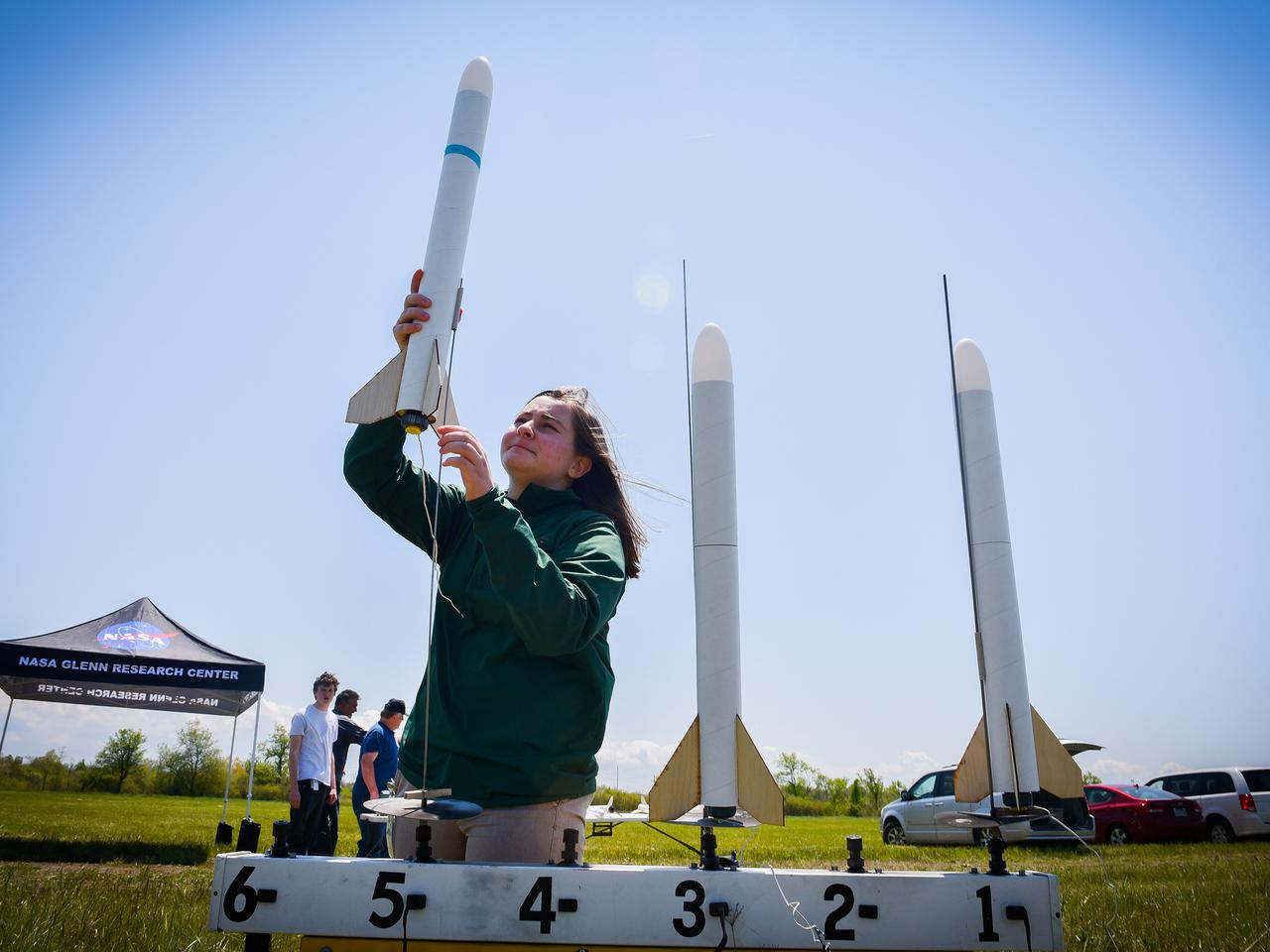
Activities at National Lab Day held at NASA Plum Brook Station in Sandusky, OH.
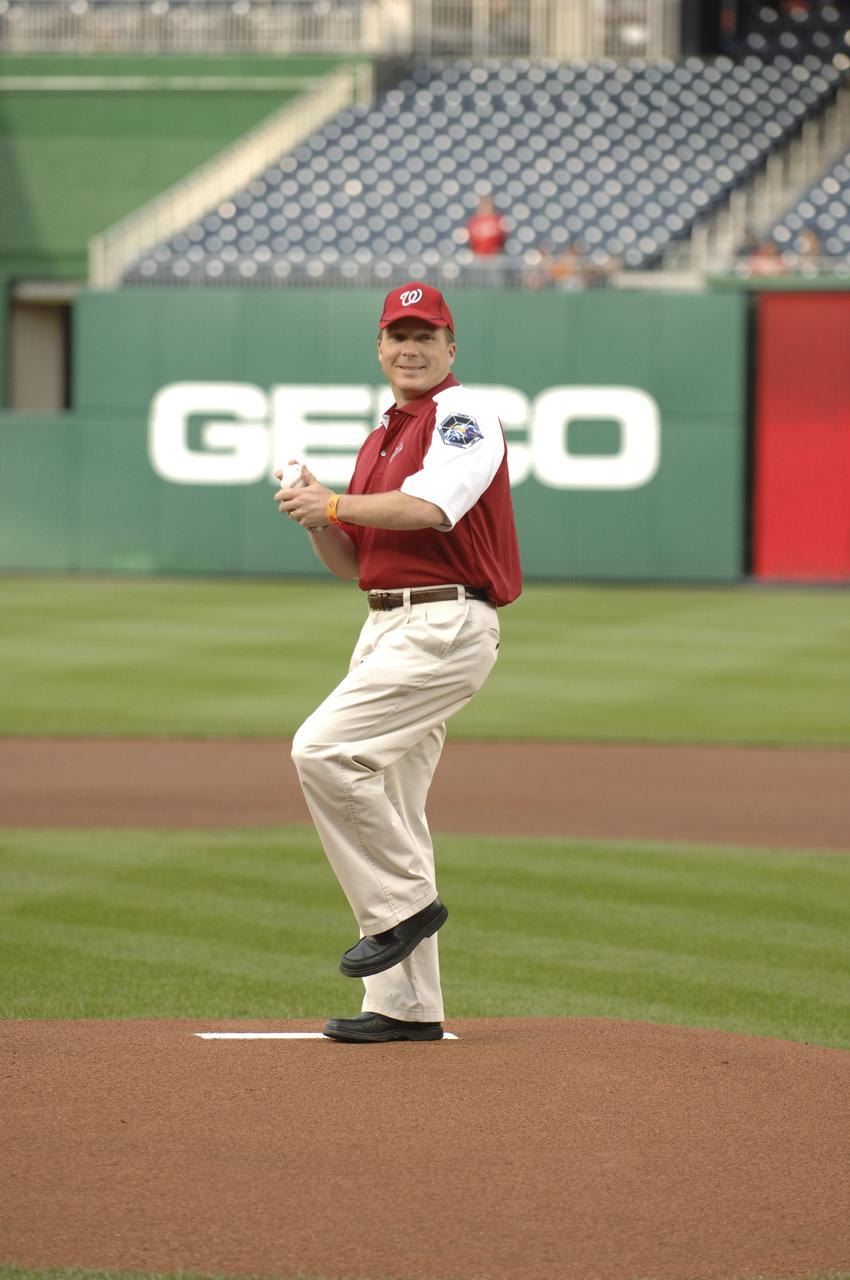
NASA STS-130 Pilot Terry Virts throws the opening pitch at Nationals Park on Tuesday, April 20, 2010, in Washington. Photo Credit: (Courtesy of the Washington Nationals)
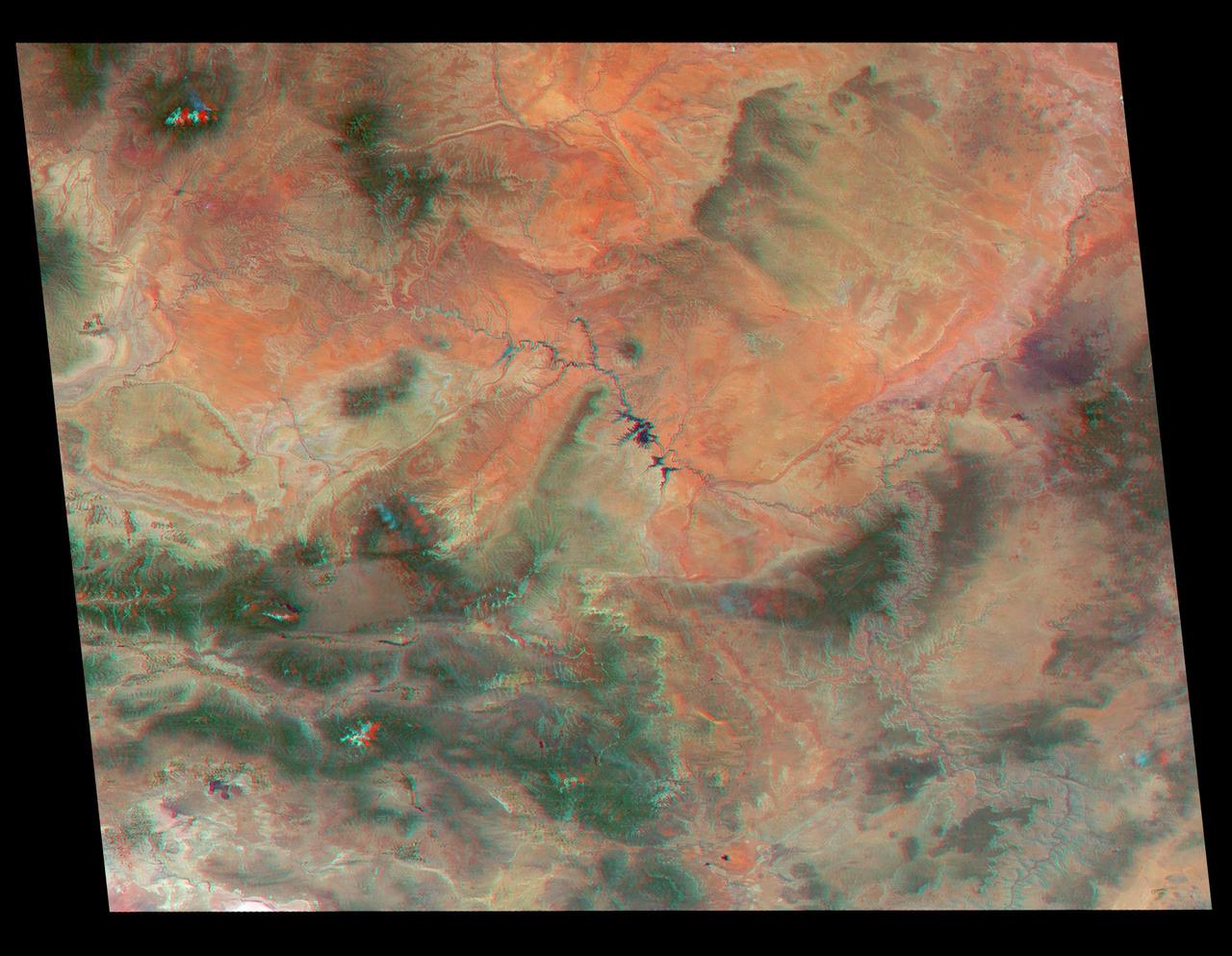
Just in time for the U.S. National Park Service's Centennial celebration on Aug. 25, NASA's Multiangle Imaging SpectroRadiometer (MISR) instrument aboard NASA's Terra satellite is releasing four new anaglyphs that showcase 33 of our nation's national parks, monuments, historical sites and recreation areas in glorious 3D. Shown in the annotated image are Walnut Canyon National Monument, Sunset Crater Volcano National Monument, Wupatki National Monument, Grand Canyon National Park, Pipe Spring National Monument, Zion National Park, Cedar Breaks National Monument, Bryce Canyon National Park, Capitol Reef National Park, Navajo National Monument, Glen Canyon National Recreation Area, Natural Bridges National Monument, Canyonlands National Park, and Arches National Park. MISR views Earth with nine cameras pointed at different angles, giving it the unique capability to produce anaglyphs, stereoscopic images that allow the viewer to experience the landscape in three dimensions. The anaglyphs were made by combining data from MISR's vertical-viewing and 46-degree forward-pointing camera. You will need red-blue glasses in order to experience the 3D effect; ensure you place the red lens over your left eye. The images have been rotated so that north is to the left in order to enable 3D viewing because the Terra satellite flies from north to south. All of the images are 235 miles (378 kilometers) from west to east. These data were acquired June 18, 2016, Orbit 87774. http://photojournal.jpl.nasa.gov/catalog/PIA20889
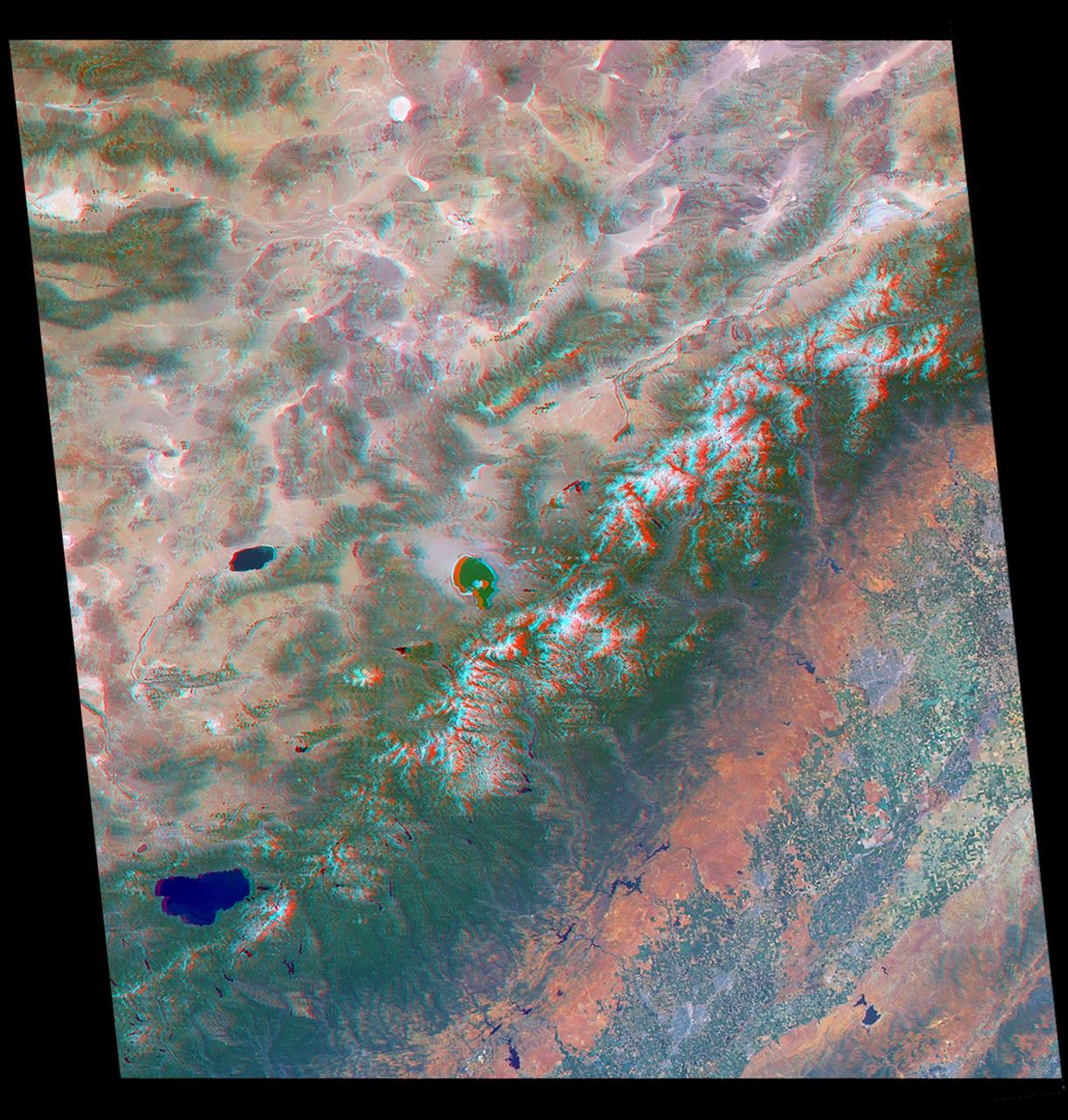
Just in time for the U.S. National Park Service's Centennial celebration on Aug. 25, NASA's Multiangle Imaging SpectroRadiometer (MISR) instrument aboard NASA's Terra satellite is releasing four new anaglyphs that showcase 33 of our nation's national parks, monuments, historical sites and recreation areas in glorious 3D. Shown in the annotated image are Sequoia National Park, Kings Canyon National Park, Manzanar National Historic Site, Devils Postpile National Monument, Yosemite National Park, and parts of Death Valley National Park. MISR views Earth with nine cameras pointed at different angles, giving it the unique capability to produce anaglyphs, stereoscopic images that allow the viewer to experience the landscape in three dimensions. The anaglyphs were made by combining data from MISR's vertical-viewing and 46-degree forward-pointing camera. You will need red-blue glasses in order to experience the 3D effect; ensure you place the red lens over your left eye. The images have been rotated so that north is to the left in order to enable 3D viewing because the Terra satellite flies from north to south. All of the images are 235 miles (378 kilometers) from west to east. These data were acquired July 7, 2016, Orbit 88051. http://photojournal.jpl.nasa.gov/catalog/PIA20892

Just in time for the U.S. National Park Service's Centennial celebration on Aug. 25, NASA's Multiangle Imaging SpectroRadiometer (MISR) instrument aboard NASA's Terra satellite is releasing four new anaglyphs that showcase 33 of our nation's national parks, monuments, historical sites and recreation areas in glorious 3D. Shown in the annotated image are Lewis and Clark National Historic Park, Mt. Rainier National Park, Olympic National Park, Ebey's Landing National Historical Reserve, San Juan Island National Historic Park, North Cascades National Park, Lake Chelan National Recreation Area, and Ross Lake National Recreation Area (also Mt. St. Helens National Volcanic Monument, administered by the U.S. Forest Service) MISR views Earth with nine cameras pointed at different angles, giving it the unique capability to produce anaglyphs, stereoscopic images that allow the viewer to experience the landscape in three dimensions. The anaglyphs were made by combining data from MISR's vertical-viewing and 46-degree forward-pointing camera. You will need red-blue glasses in order to experience the 3D effect; ensure you place the red lens over your left eye. The images have been rotated so that north is to the left in order to enable 3D viewing because the Terra satellite flies from north to south. All of the images are 235 miles (378 kilometers) from west to east. These data were acquired May 12, 2012, Orbit 65960. http://photojournal.jpl.nasa.gov/catalog/PIA20891

Grounds teams prepare the field before the start of a baseball game between the Pittsburgh Pirates and the Washington Nationals, Saturday, July 4, 2026, at Nationals Park in Washington. NASA’s Artemis II mission crew; NASA astronauts Reid Wiseman, commander; Victor Glover, pilot; Christina Koch, mission specialist; and CSA (Canadian Space Agency) astronaut Jeremy Hansen, mission specialist threw the ceremonial opening pitch. Photo Credit: (NASA/Bill Ingalls)
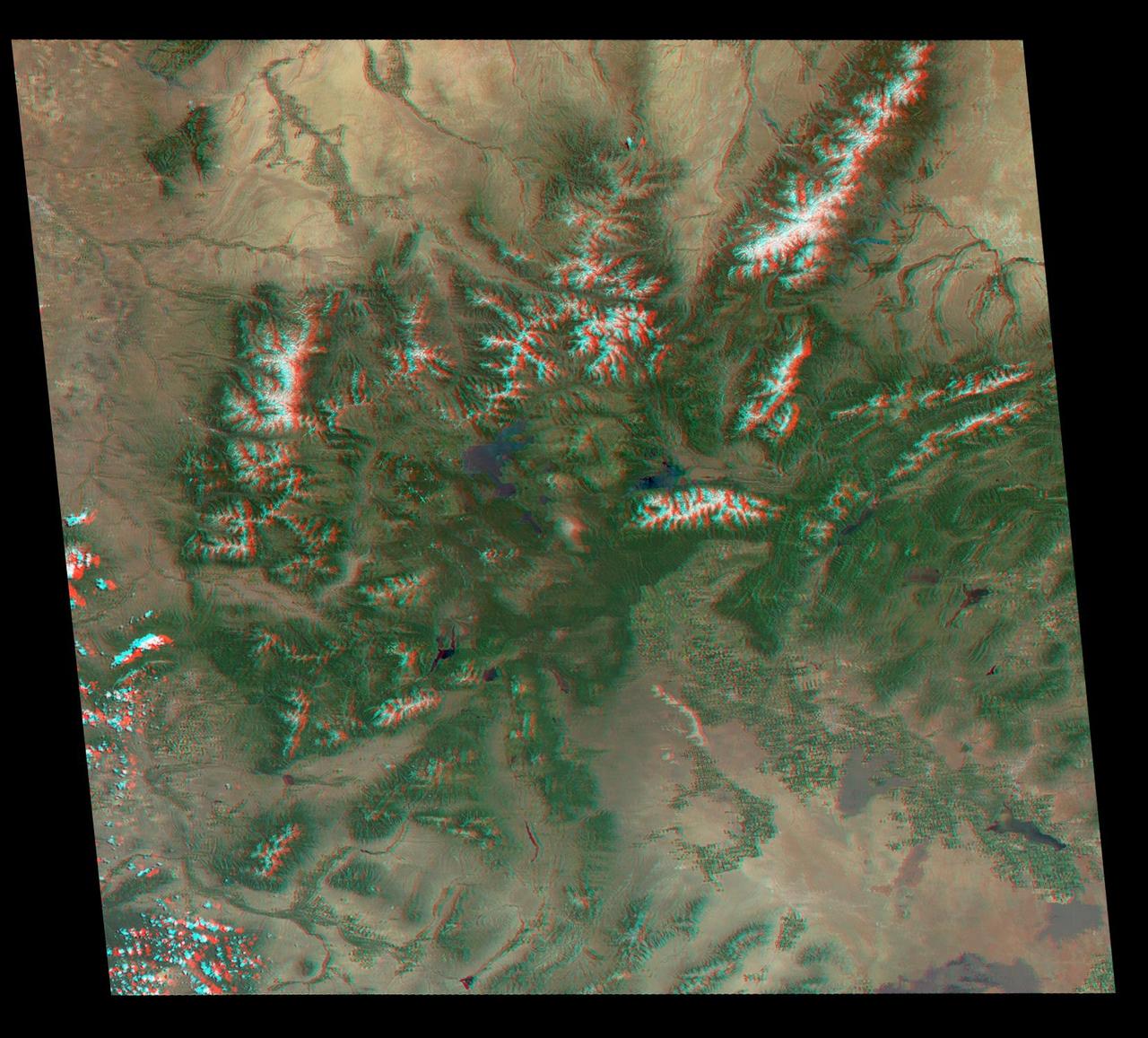
Just in time for the U.S. National Park Service's Centennial celebration on Aug. 25, NASA's Multiangle Imaging SpectroRadiometer (MISR) instrument aboard NASA's Terra satellite is releasing four new anaglyphs that showcase 33 of our nation's national parks, monuments, historical sites and recreation areas in glorious 3D. Shown in the annotated image are Grand Teton National Park, John D. Rockefeller Memorial Parkway, Yellowstone National Park, and parts of Craters of the Moon National Monument. MISR views Earth with nine cameras pointed at different angles, giving it the unique capability to produce anaglyphs, stereoscopic images that allow the viewer to experience the landscape in three dimensions. The anaglyphs were made by combining data from MISR's vertical-viewing and 46-degree forward-pointing camera. You will need red-blue glasses in order to experience the 3D effect; ensure you place the red lens over your left eye. The images have been rotated so that north is to the left in order to enable 3D viewing because the Terra satellite flies from north to south. All of the images are 235 miles (378 kilometers) from west to east. These data were acquired June 25, 2016, Orbit 87876. http://photojournal.jpl.nasa.gov/catalog/PIA20890

NASA STS-130 Pilot Terry Virts, center, is interviewed by Washington Nationals radio broadcasters Charlie Slowes, right, and David Jageler on Tuesday, April 20, 2010, in Washington. Photo Credit: (NASA/Carla Cioffi)

NASA STS-130 Pilot Terry Virts, right, is interviewed by Mid-Atlantic Sports Network (MASN) reporter Debbie Taylor at Nationals Park Tuesday, April 20, 2010, in Washington. Photo Credit: (NASA/Carla Cioffi)
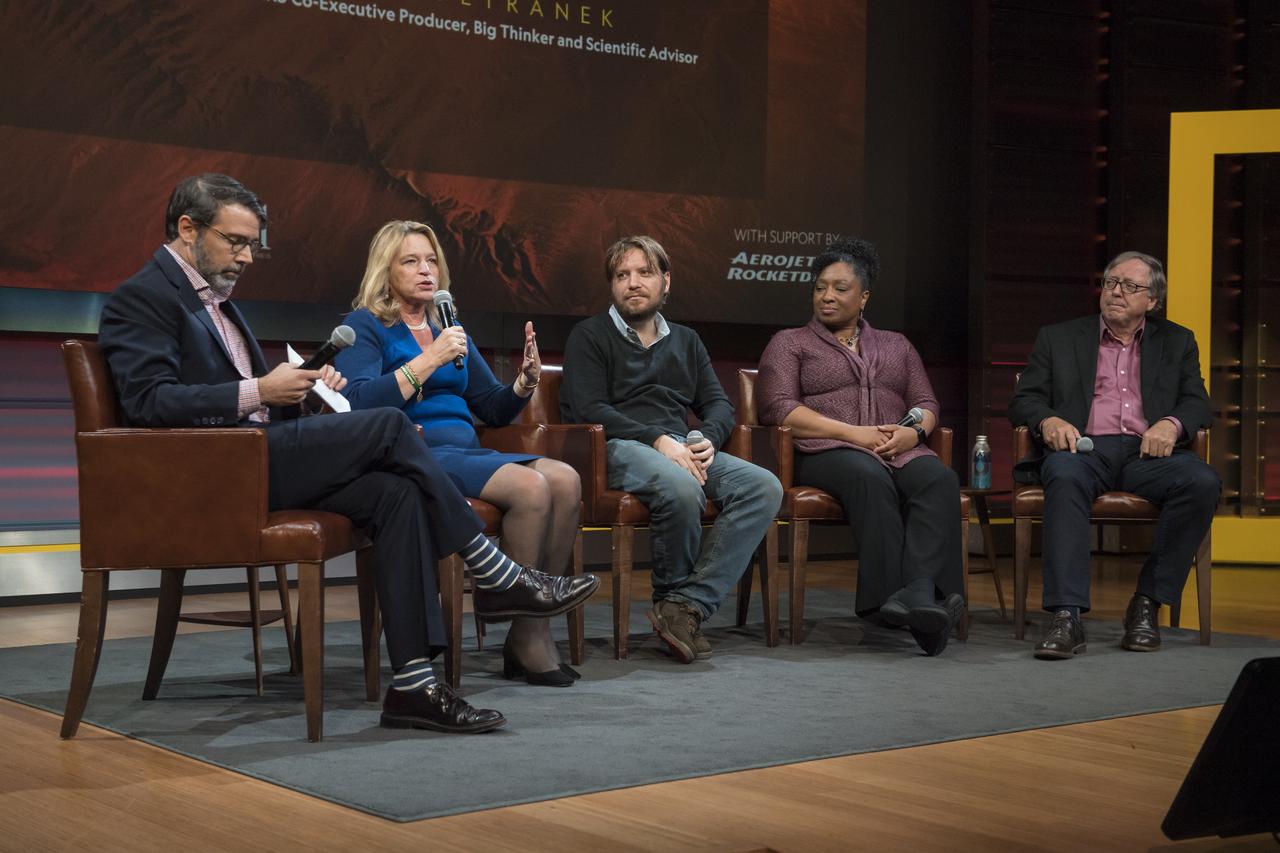
Ellen Stofan, director, Smithsonian National Air and Space Museum, speaks on a panel after a showing of the Project Mars Competition's short films and the Mars series, Monday, November 5, 2018 at National Geographic Society Headquarters in Washington. Photo Credit: (NASA/Aubrey Gemignani)

Ellen Stofan, director, Smithsonian National Air and Space Museum, speaks on a panel after a showing of the Project Mars Competition's short films and the Mars series, Monday, November 5, 2018 at National Geographic Society Headquarters in Washington. Photo Credit: (NASA/Aubrey Gemignani)
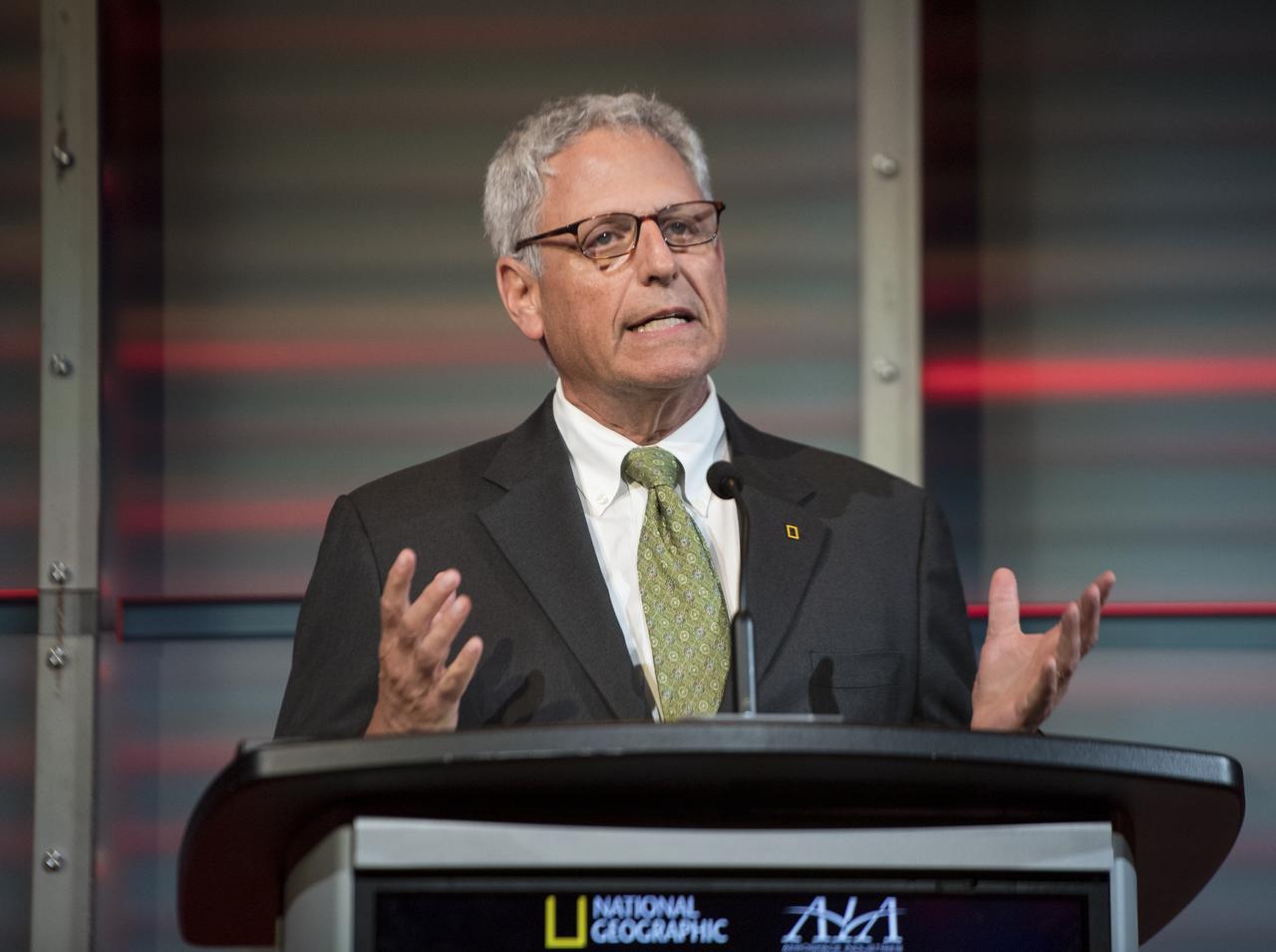
Gary Knell, CEO, National Geographic Partners speaks before a showing of the Project Mars Competition's short films winners and the Mars series, Monday, November 5, 2018 at National Geographic Society Headquarters in Washington. Photo Credit: (NASA/Aubrey Gemignani)
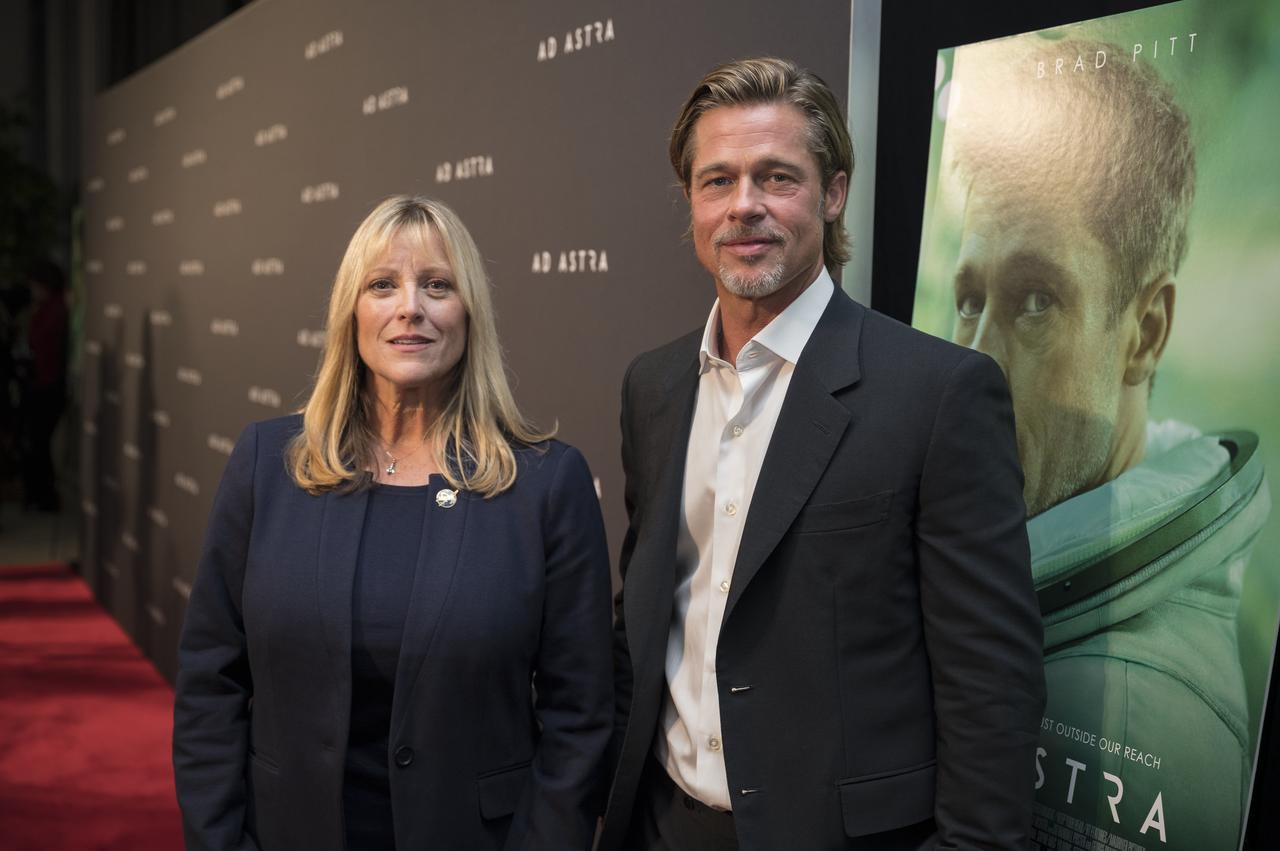
Former NASA astronaut Kay Hire poses for a photo with actor Brad Pitt, at a screening of the film "Ad Astra" at National Geographic Society, Monday, September 16, 2019 in Washington. The film stars Pitt, Tommy Lee Jones, Ruth Negga, Liv Tyler, and Donald Sutherland. Pitt stars as astronaut Roy McBride who travels deep into the solar system in hopes of solving a mystery that threatens life on Earth. Photo Credit: (NASA/Aubrey Gemignani)
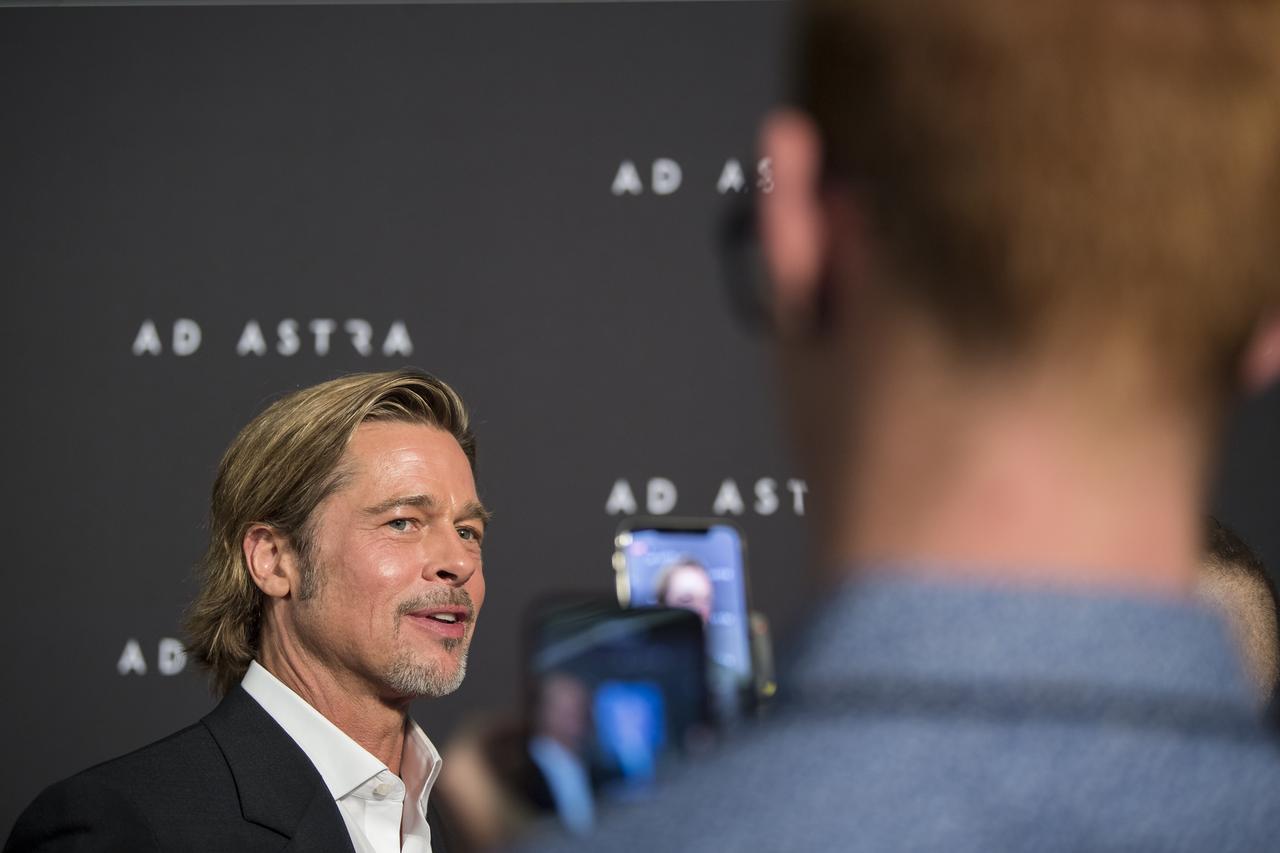
Actor Brad Pitt arrives on the red carpet for a screening of the film "Ad Astra" at National Geographic Society, Monday, September 16, 2019 in Washington. The film was produced, co-written, and directed by James Gray and stars Pitt, Tommy Lee Jones, Ruth Negga, Liv Tyler, and Donald Sutherland. Pitt stars as astronaut Roy McBride who travels deep into the solar system in hopes of solving a mystery that threatens life on Earth. Photo Credit: (NASA/Aubrey Gemignani)

NASA Administrator Jim Bridenstine, arrives on the red carpet at a screening of the film "Ad Astra" at National Geographic Society, Monday, September 16, 2019 in Washington. The film stars Tommy Lee Jones, Brad Pitt, Ruth Negga, Liv Tyler, and Donald Sutherland. Pitt stars as astronaut Roy McBride who travels deep into the solar system in hopes of solving a mystery that threatens life on Earth. Photo Credit: (NASA/Aubrey Gemignani)
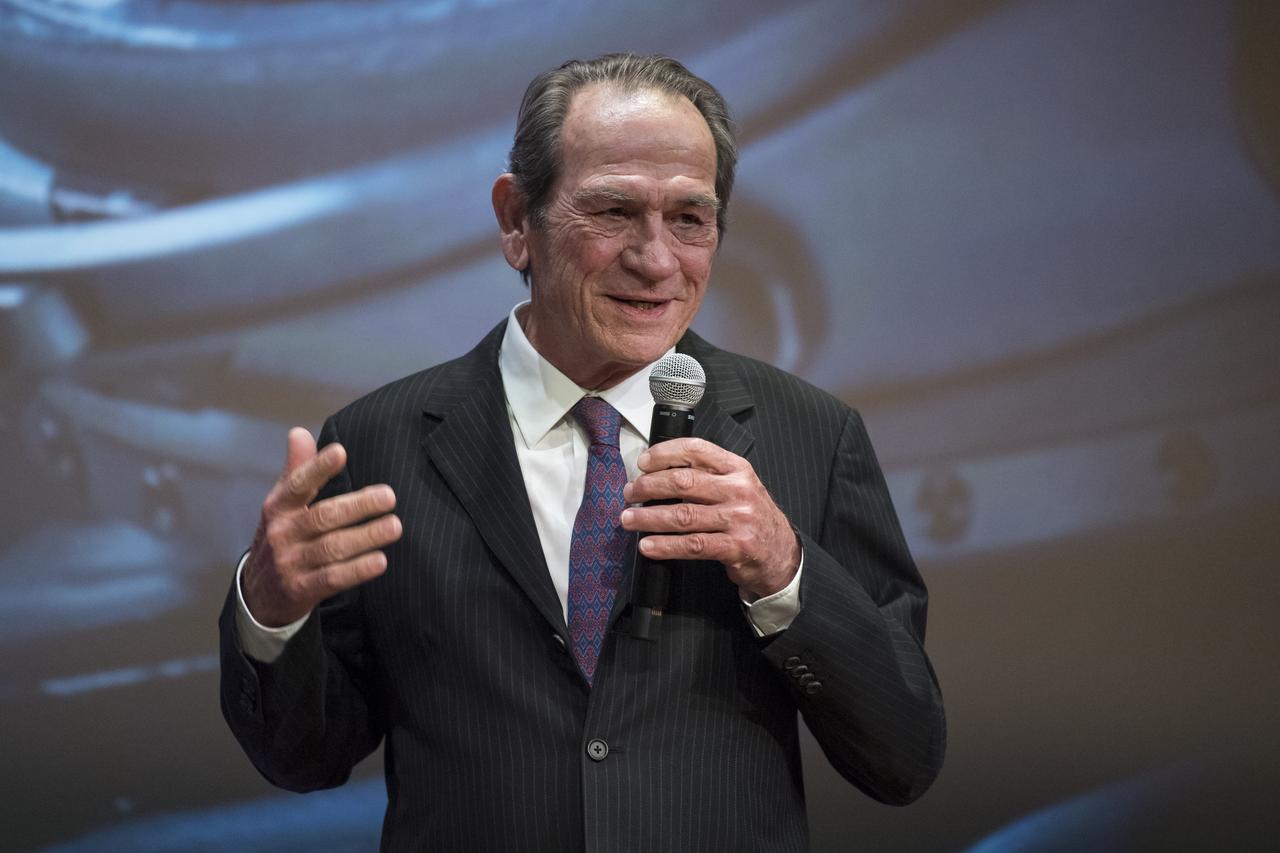
Actor Tommy Lee Jones speaks before a screening of the film "Ad Astra" at National Geographic Society, Monday, September 16, 2019 in Washington. The film was produced, co-written, and directed by James Gray and stars Jones, Brad Pitt, Ruth Negga, Liv Tyler, and Donald Sutherland. Pitt stars as astronaut Roy McBride who travels deep into the solar system in hopes of solving a mystery that threatens life on Earth. Photo Credit: (NASA/Aubrey Gemignani)
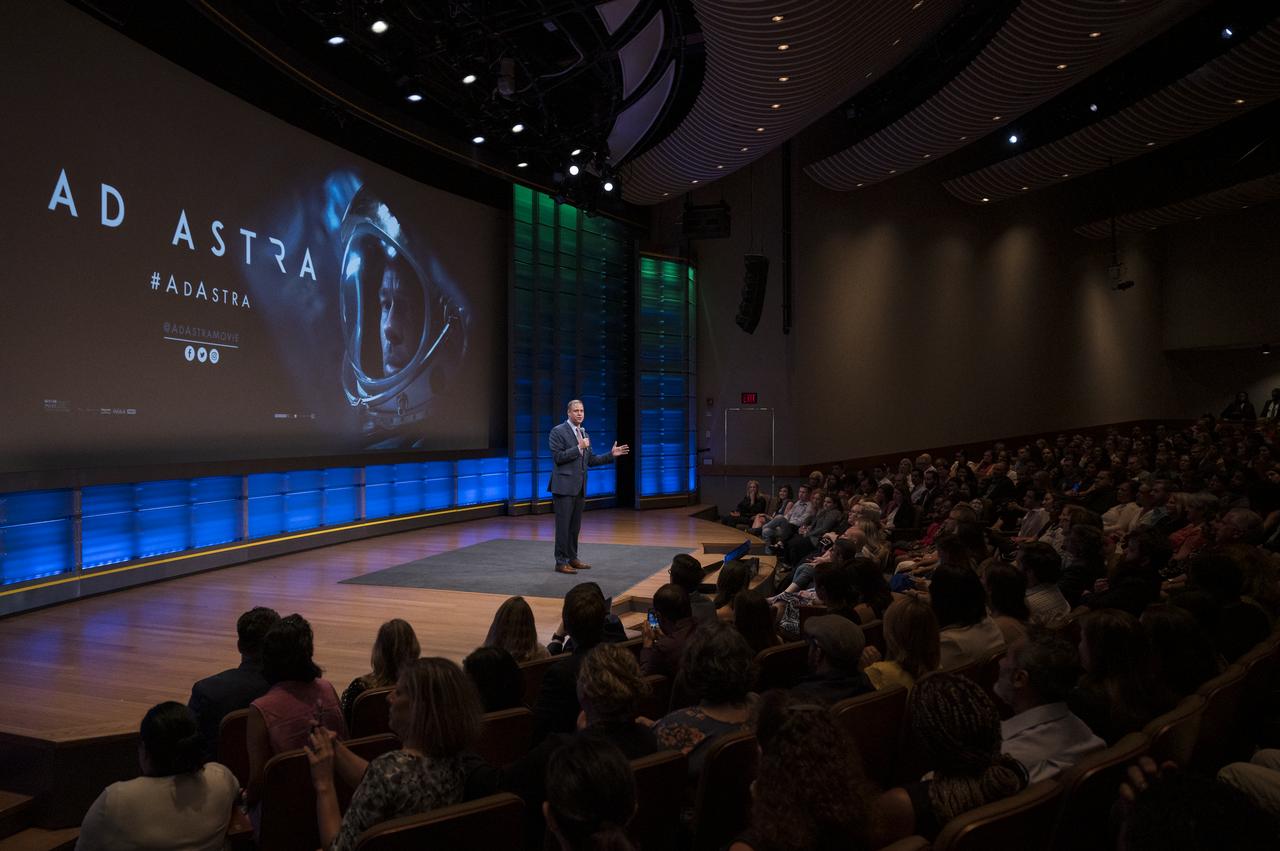
NASA Administrator Jim Bridenstine speaks before a screening of "Ad Astra" at National Geographic Society, Monday, September 16, 2019 in Washington. The film stars Tommy Lee Jones, Brad Pitt, Ruth Negga, Liv Tyler, and Donald Sutherland. Pitt stars as astronaut Roy McBride who travels deep into the solar system in hopes of solving a mystery that threatens life on Earth. Photo Credit: (NASA/Aubrey Gemignani)
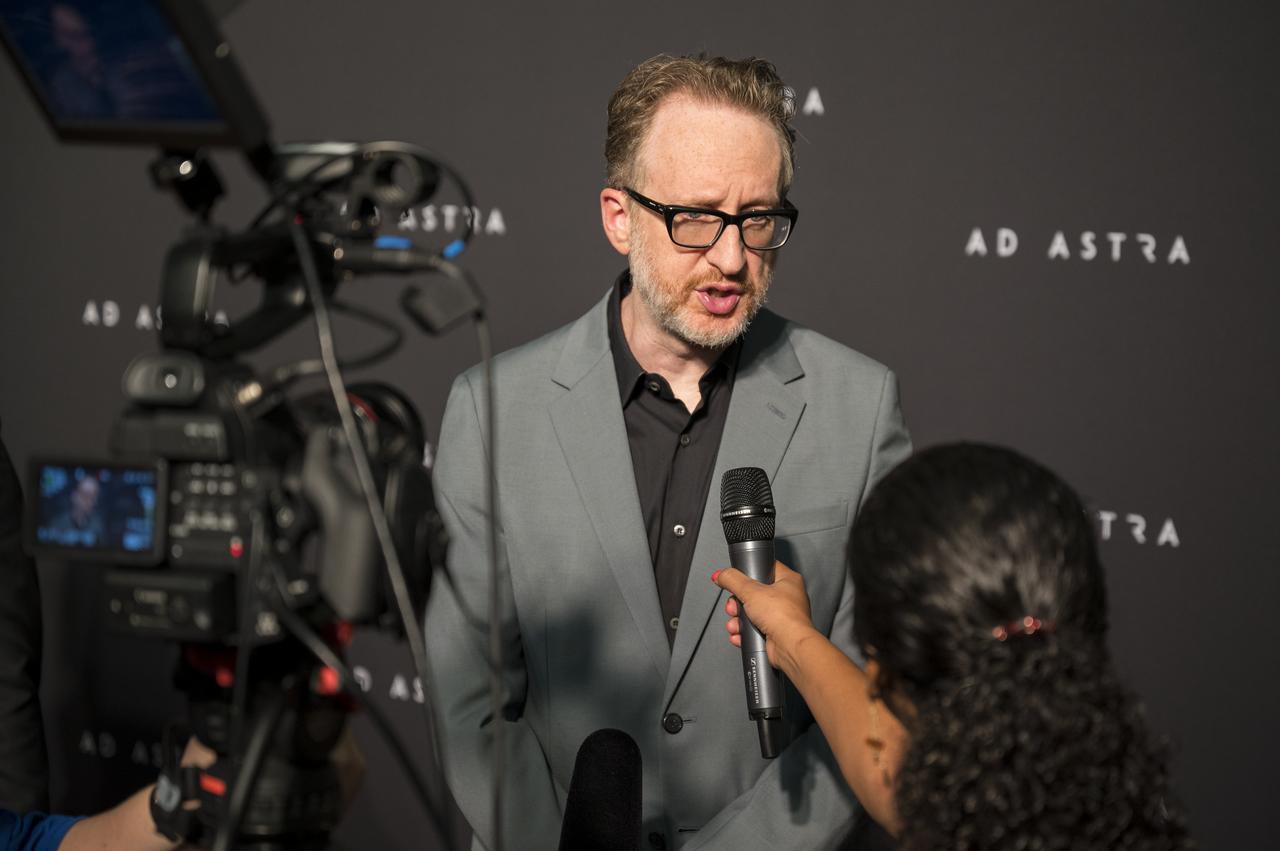
Producer, co-writer, and director James Gray is interviewed by NASA television on the red carpet during a screening of the film "Ad Astra" at National Geographic Society, Monday, September 16, 2019 in Washington. The film stars Tommy Lee Jones, Brad Pitt, Ruth Negga, Liv Tyler, and Donald Sutherland. Pitt stars as astronaut Roy McBride who travels deep into the solar system in hopes of solving a mystery that threatens life on Earth. Photo Credit: (NASA/Aubrey Gemignani)

Actor Brad Pitt speaks before a screening of the film "Ad Astra" at National Geographic Society, Monday, September 16, 2019 in Washington. The film was produced, co-written, and directed by James Gray and stars Pitt, Tommy Lee Jones, Ruth Negga, Liv Tyler, and Donald Sutherland. Pitt stars as astronaut Roy McBride who travels deep into the solar system in hopes of solving a mystery that threatens life on Earth. Photo Credit: (NASA/Aubrey Gemignani)
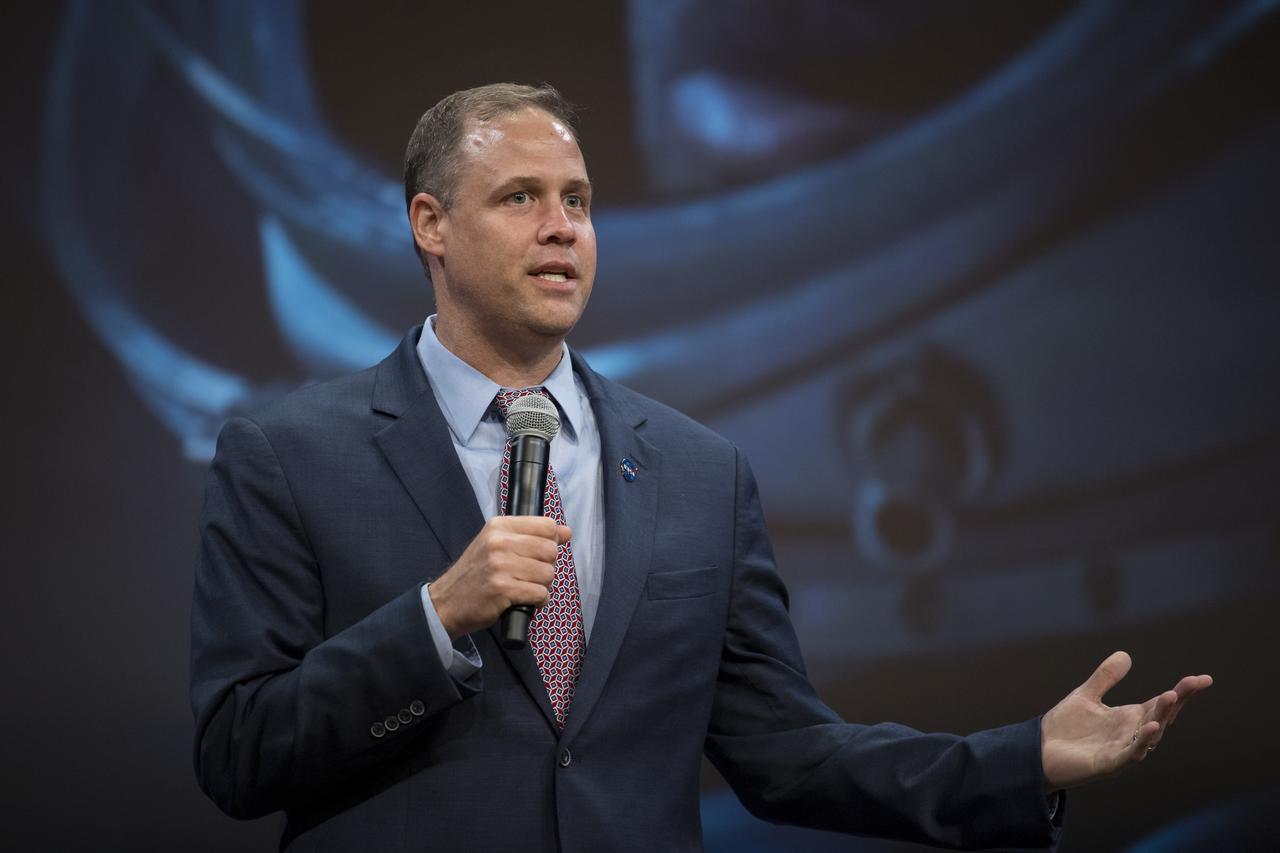
NASA Administrator Jim Bridenstine speaks before a screening of "Ad Astra" at National Geographic Society, Monday, September 16, 2019 in Washington. The film stars Tommy Lee Jones, Brad Pitt, Ruth Negga, Liv Tyler, and Donald Sutherland. Pitt stars as astronaut Roy McBride who travels deep into the solar system in hopes of solving a mystery that threatens life on Earth. Photo Credit: (NASA/Aubrey Gemignani)
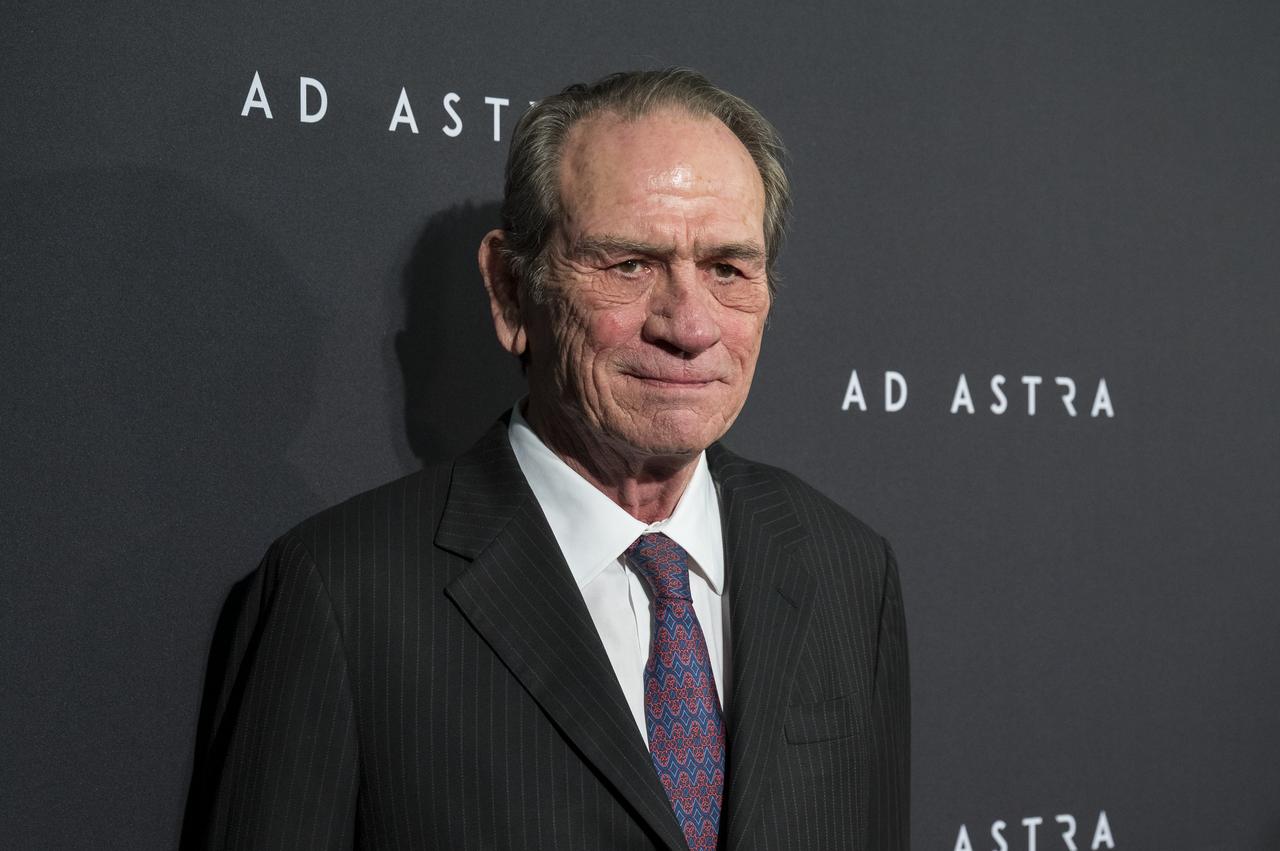
Actor Tommy Lee Jones arrives on the red carpet for a screening of the film "Ad Astra" at National Geographic Society, Monday, September 16, 2019 in Washington. The film was produced, co-written, and directed by James Gray and stars Jones, Brad Pitt, Ruth Negga, Liv Tyler, and Donald Sutherland. Pitt stars as astronaut Roy McBride who travels deep into the solar system in hopes of solving a mystery that threatens life on Earth. Photo Credit: (NASA/Aubrey Gemignani)
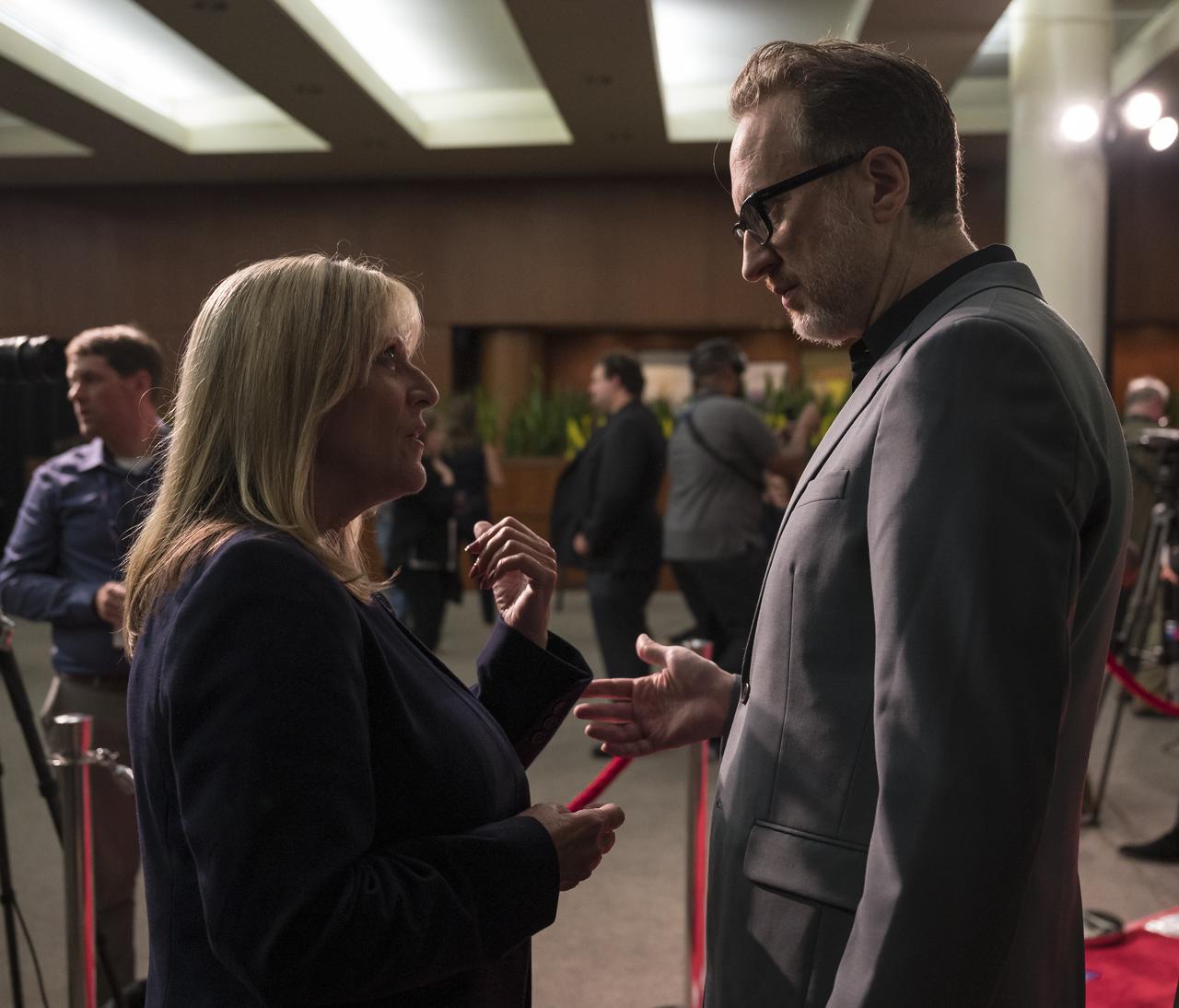
Former NASA astronaut Kay Hire, left, speaks with film producer, co-writer, and director James Gray at a screening of "Ad Astra" at National Geographic Society, Monday, September 16, 2019 in Washington. It stars Tommy Lee Jones, Brad Pitt, Ruth Negga, Liv Tyler, and Donald Sutherland. Pitt stars as astronaut Roy McBride who travels deep into the solar system in hopes of solving a mystery that threatens life on Earth. Photo Credit: (NASA/Aubrey Gemignani)
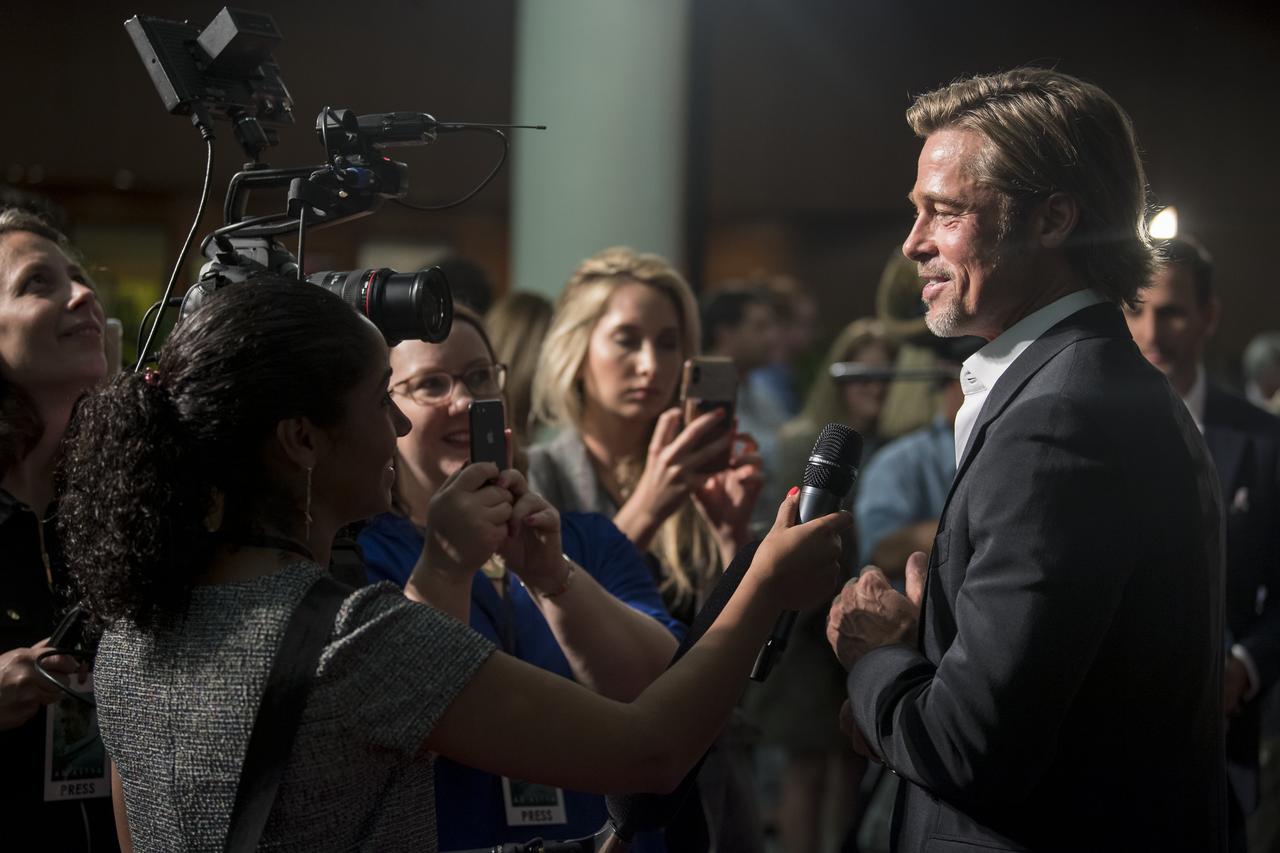
Actor Brad Pitt is interviewed by NASA television on the red carpet during a screening of the film "Ad Astra" at National Geographic Society, Monday, September 16, 2019 in Washington. The film was produced, co-written, and directed by James Gray and stars Pitt, Tommy Lee Jones, Ruth Negga, Liv Tyler, and Donald Sutherland. Pitt stars as astronaut Roy McBride who travels deep into the solar system in hopes of solving a mystery that threatens life on Earth. Photo Credit: (NASA/Aubrey Gemignani)
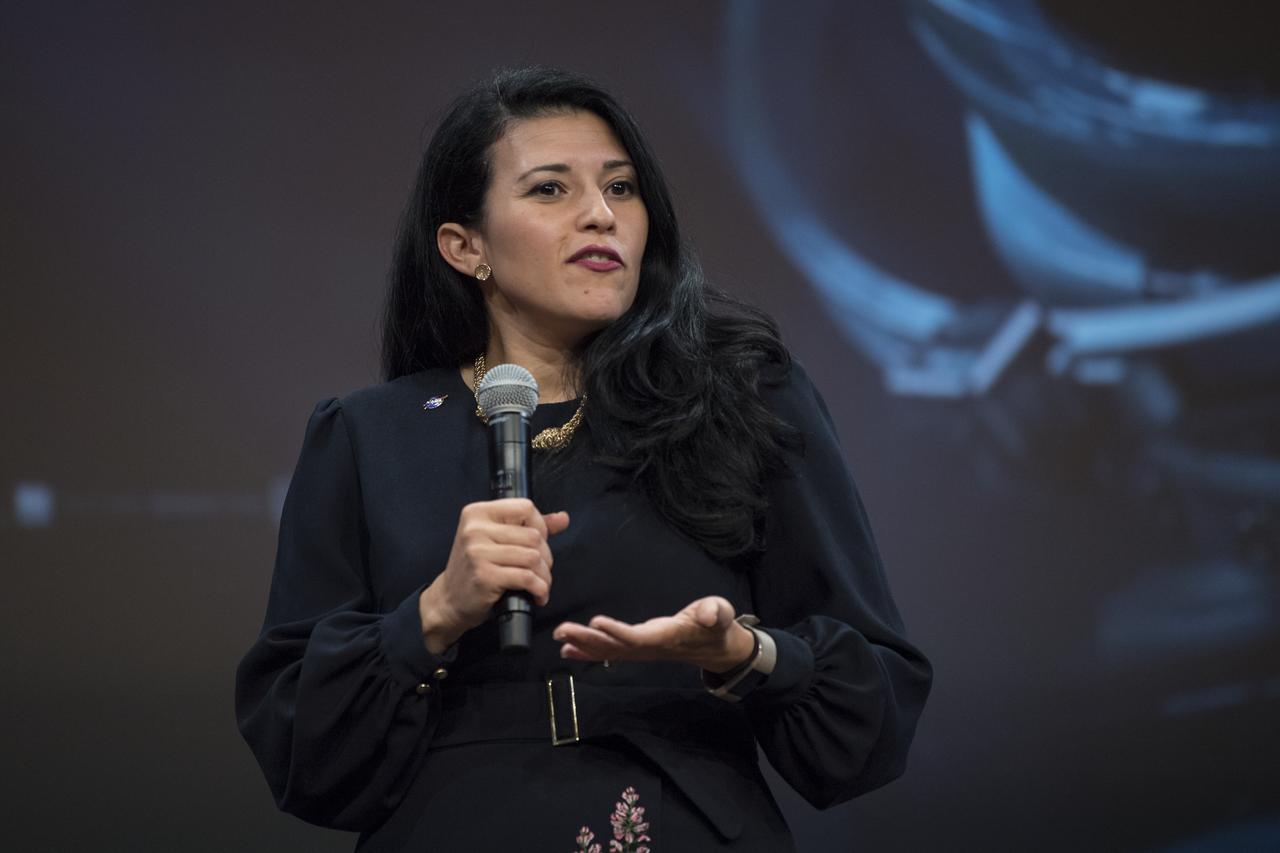
NASA Associate Administrator, Office of Communications, Bettina Inclán, introduces the cast of the film “Ad Astra” before a screening at National Geographic Society, Monday, September 16, 2019 in Washington. The film stars Tommy Lee Jones, Brad Pitt, Ruth Negga, Liv Tyler, and Donald Sutherland. Pitt stars as astronaut Roy McBride who travels deep into the solar system in hopes of solving a mystery that threatens life on Earth. Photo Credit: (NASA/Aubrey Gemignani)
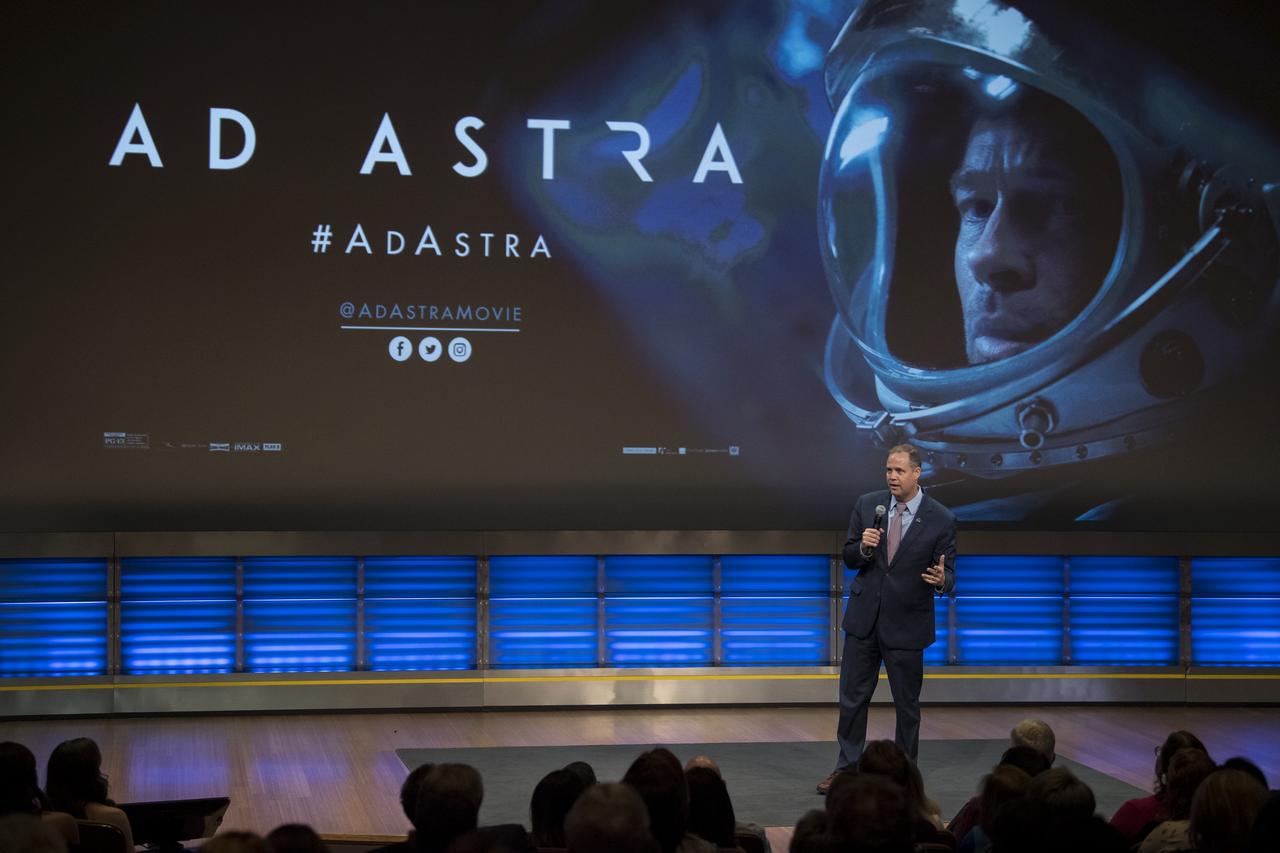
NASA Administrator Jim Bridenstine speaks before a screening of "Ad Astra" at National Geographic Society, Monday, September 16, 2019 in Washington. The film stars Tommy Lee Jones, Brad Pitt, Ruth Negga, Liv Tyler, and Donald Sutherland. Pitt stars as astronaut Roy McBride who travels deep into the solar system in hopes of solving a mystery that threatens life on Earth. Photo Credit: (NASA/Aubrey Gemignani)
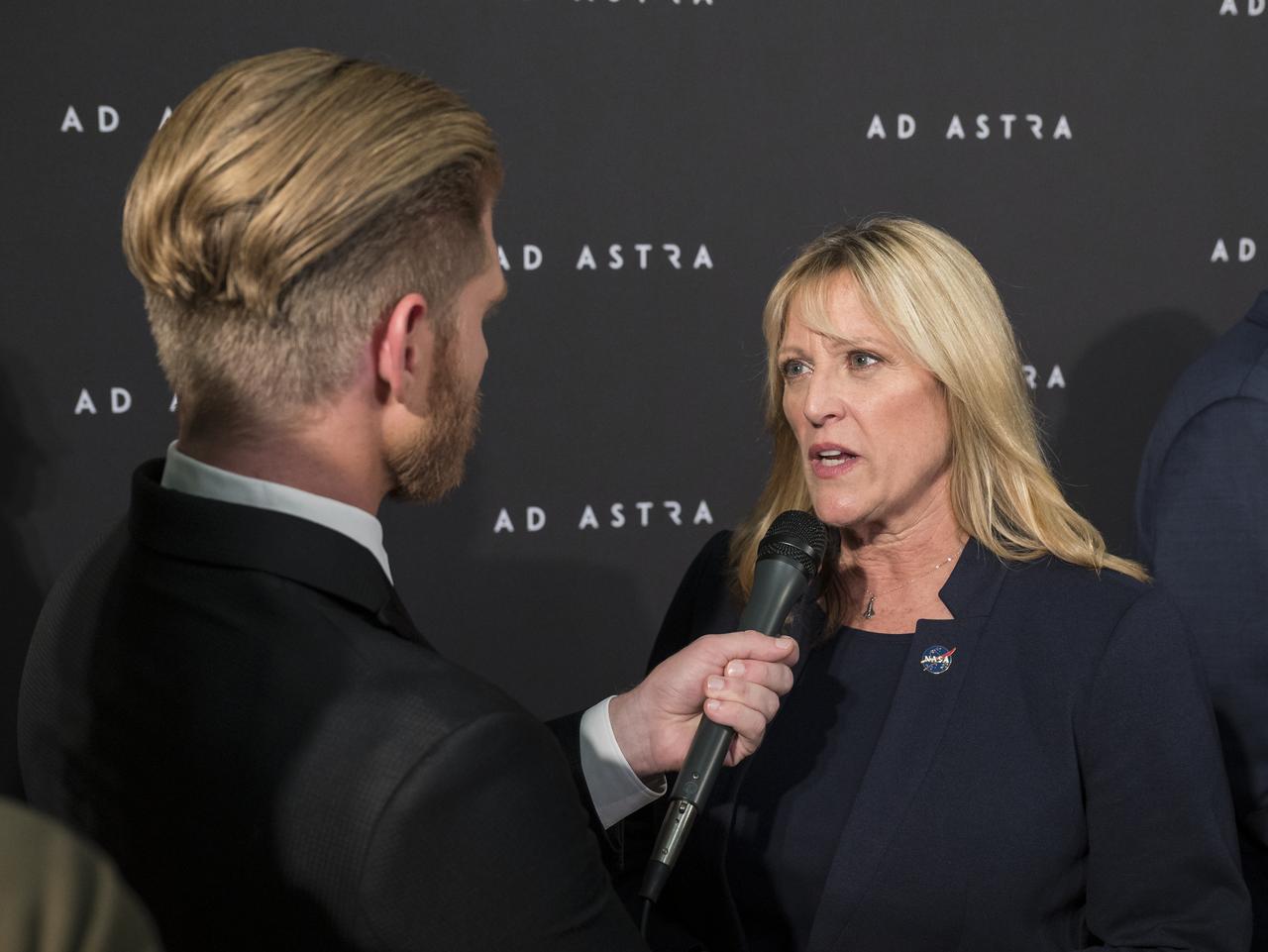
Former NASA astronaut Kay Hire is interviewed on the red carpet during a screening of the film "Ad Astra" at National Geographic Society, Monday, September 16, 2019 in Washington. The film was produced, co-written, and directed by James Gray and stars Brad Pitt, Tommy Lee Jones, Ruth Negga, Liv Tyler, and Donald Sutherland. Pitt stars as astronaut Roy McBride who travels deep into the solar system in hopes of solving a mystery that threatens life on Earth. Photo Credit: (NASA/Aubrey Gemignani)

Actor Brad Pitt is interviewed by Entertainment Tonight after arriving on the red carpet for a screening of the film "Ad Astra" at National Geographic Society, Monday, September 16, 2019 in Washington. The film stars Pitt, Tommy Lee Jones, Ruth Negga, Liv Tyler, and Donald Sutherland. Pitt stars as astronaut Roy McBride who travels deep into the solar system in hopes of solving a mystery that threatens life on Earth. Photo Credit: (NASA/Aubrey Gemignani)
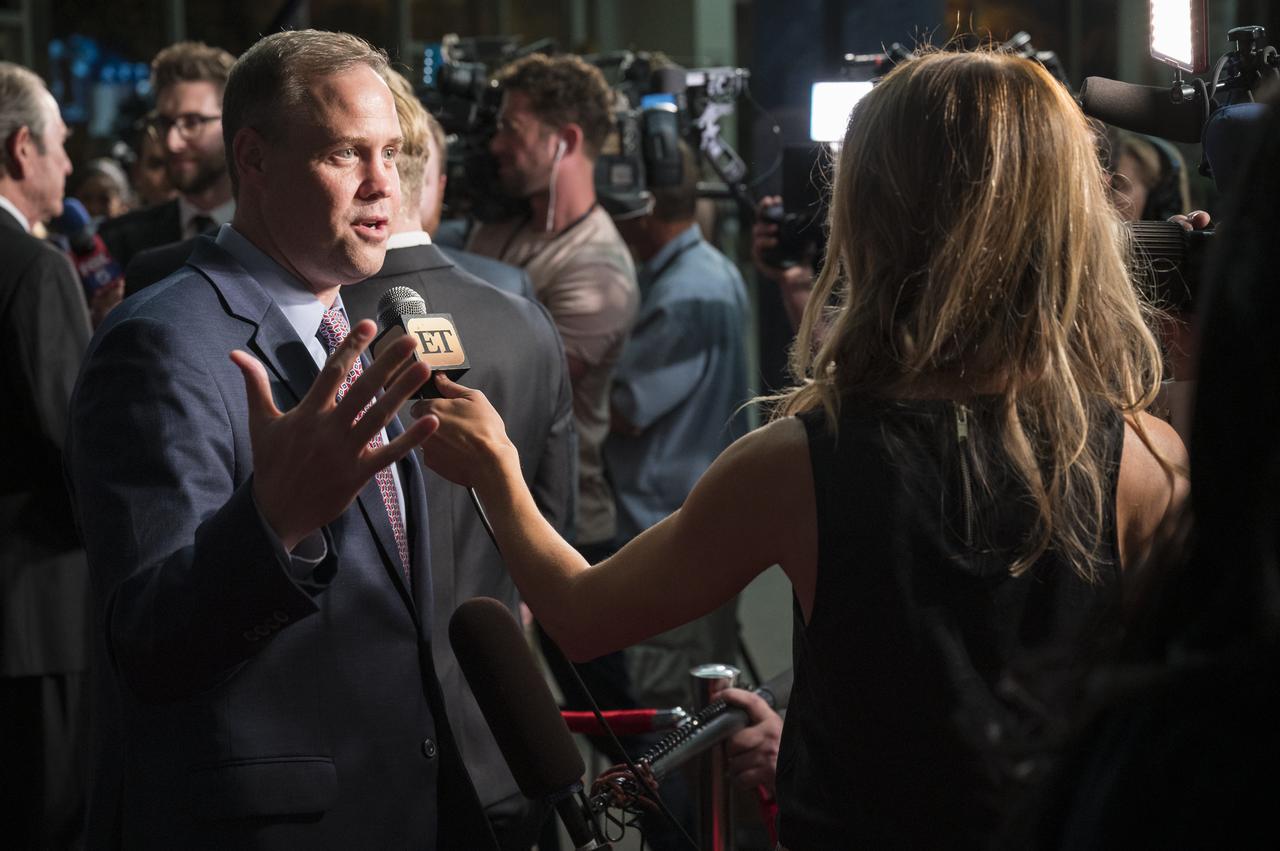
NASA Administrator Jim Bridenstine is interviewed by Entertainment Tonight after arriving on the red carpet for a screening of the film "Ad Astra" at National Geographic Society, Monday, September 16, 2019 in Washington. The film stars Pitt, Tommy Lee Jones, Ruth Negga, Liv Tyler, and Donald Sutherland. Pitt stars as astronaut Roy McBride who travels deep into the solar system in hopes of solving a mystery that threatens life on Earth. Photo Credit: (NASA/Aubrey Gemignani)

Producer, co-writer, and director James Gray speaks before a screening of the film "Ad Astra" at National Geographic Society, Monday, September 16, 2019 in Washington. The film stars Tommy Lee Jones, Brad Pitt, Ruth Negga, Liv Tyler, and Donald Sutherland. Pitt stars as astronaut Roy McBride who travels deep into the solar system in hopes of solving a mystery that threatens life on Earth. Photo Credit: (NASA/Aubrey Gemignani)
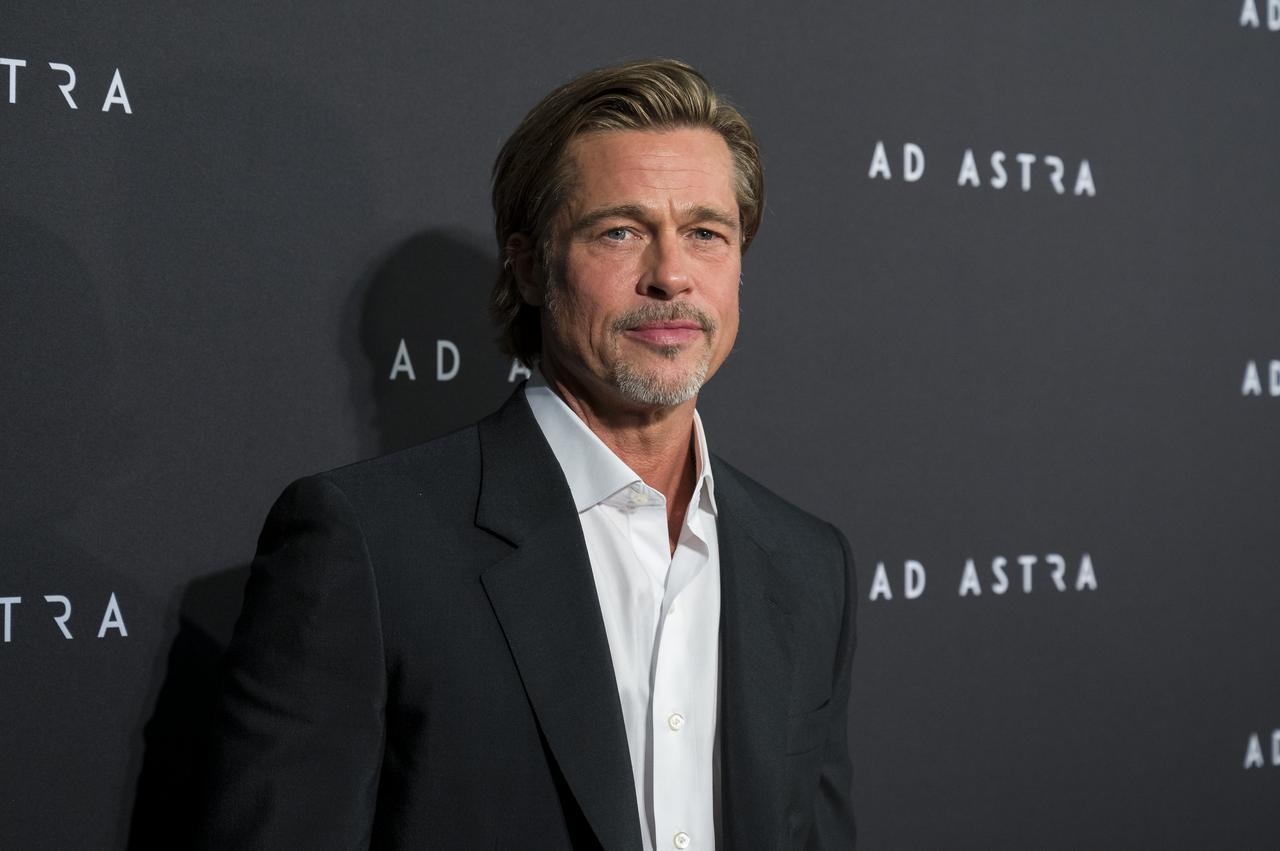
Actor Brad Pitt arrives on the red carpet for a screening of the film "Ad Astra" at National Geographic Society, Monday, September 16, 2019 in Washington. The film was produced, co-written, and directed by James Gray and stars Pitt, Tommy Lee Jones, Ruth Negga, Liv Tyler, and Donald Sutherland. Pitt stars as astronaut Roy McBride who travels deep into the solar system in hopes of solving a mystery that threatens life on Earth. Photo Credit: (NASA/Aubrey Gemignani)
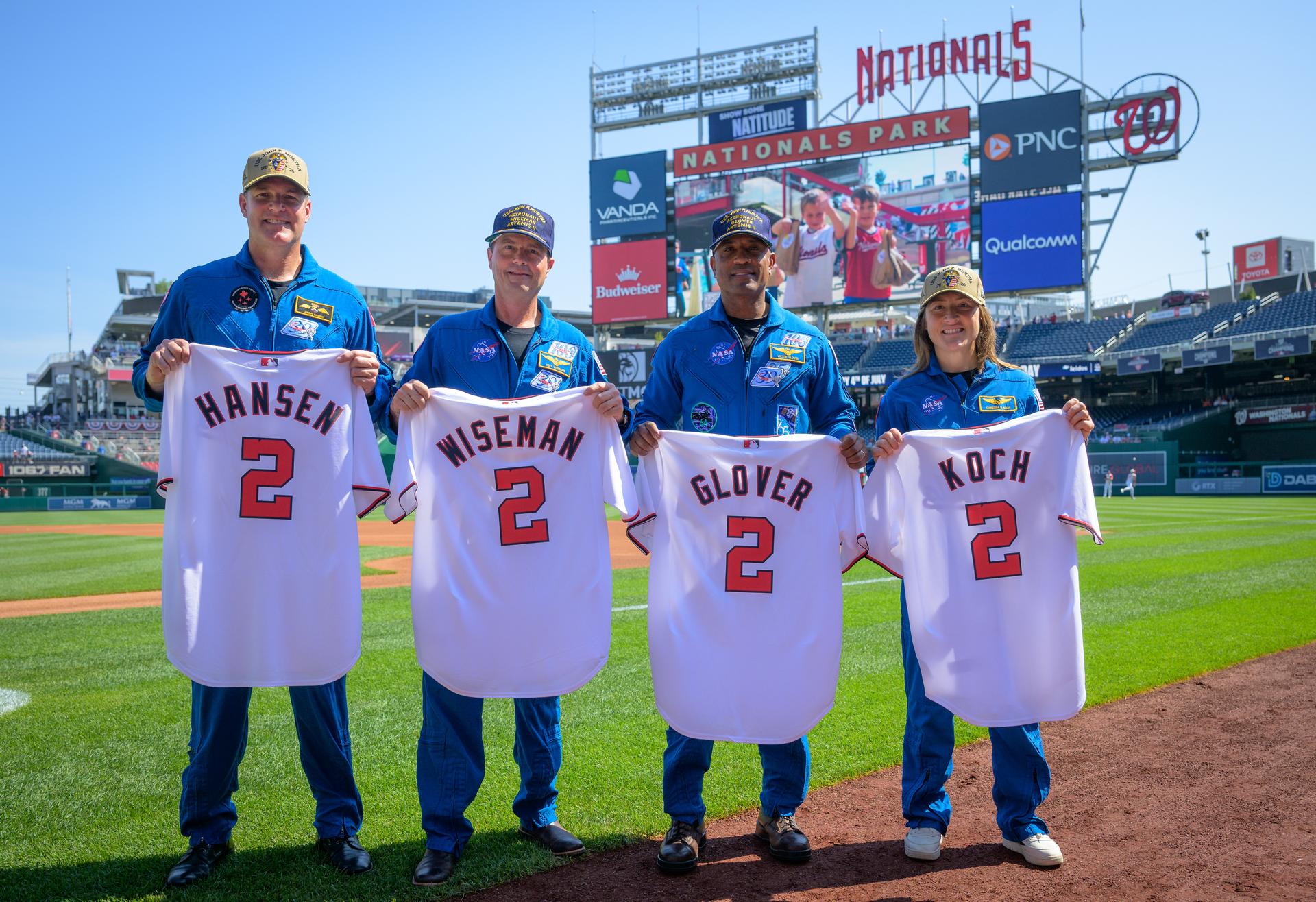
Artemis II astronauts; CSA (Canadian Space Agency) astronaut Jeremy Hansen, mission specialist, left, NASA astronauts Reid Wiseman, commander; Victor Glover, pilot; and Christina Koch, mission specialist, right, pose for a photograph with Nationals jerseys before the start of a baseball game between the Pittsburgh Pirates and the Washington Nationals, Saturday, July 4, 2026, at Nationals Park in Washington. NASA’s Artemis II mission took Wiseman, Glover, Koch, and Hansen on a nearly 10-day journey around the Moon and back to Earth in April 2026. Photo Credit: (NASA/Bill Ingalls)
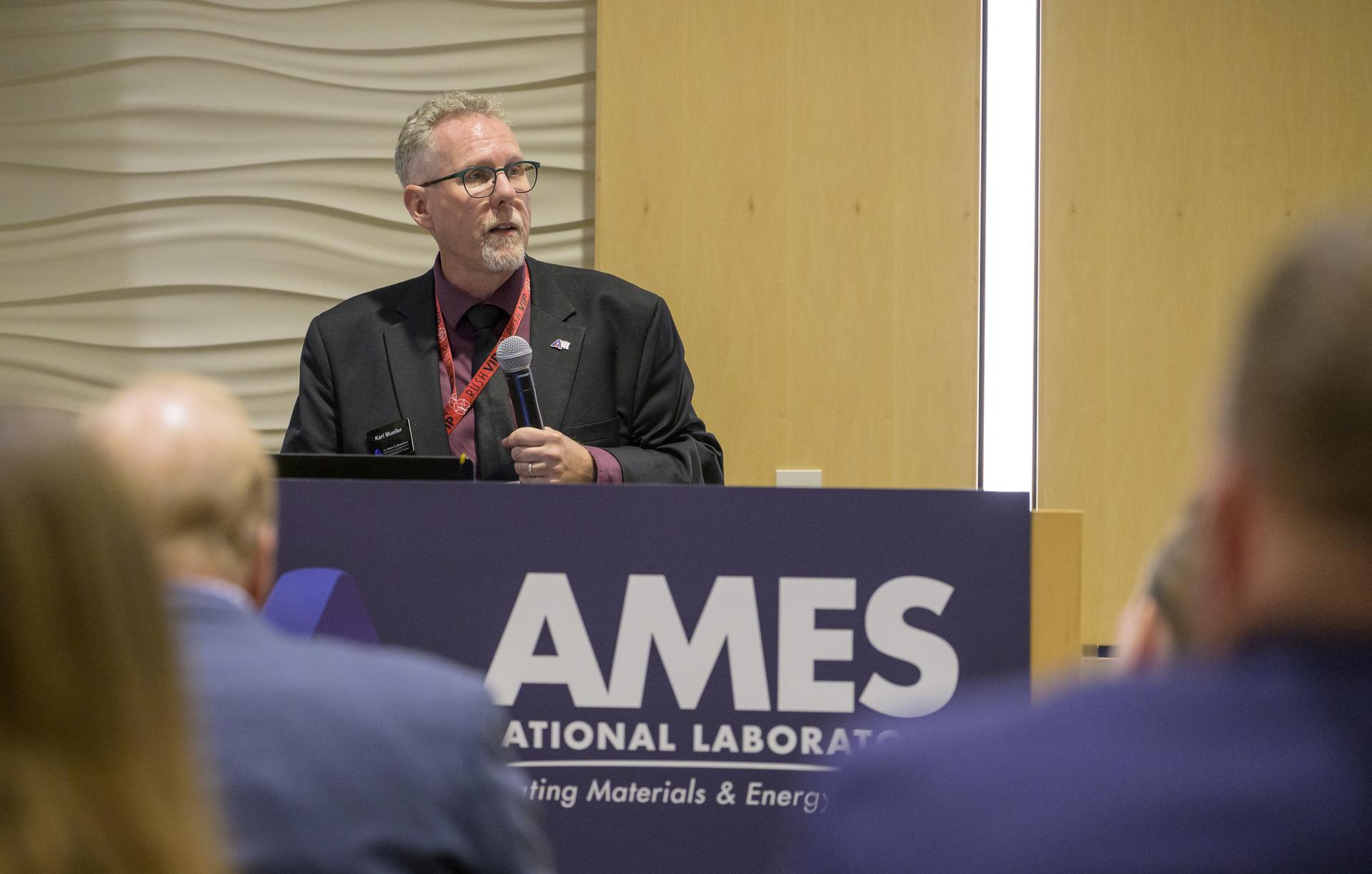
Dr. Karl Mueller, Director, Ames National Laboratory, welcomes NASA Administrator Jared Isaacman to the lab, Tuesday, Sept. 8, 2026, on the campus of Iowa State University in Ames, Iowa. Photo Credit: (NASA/Bill Ingalls)
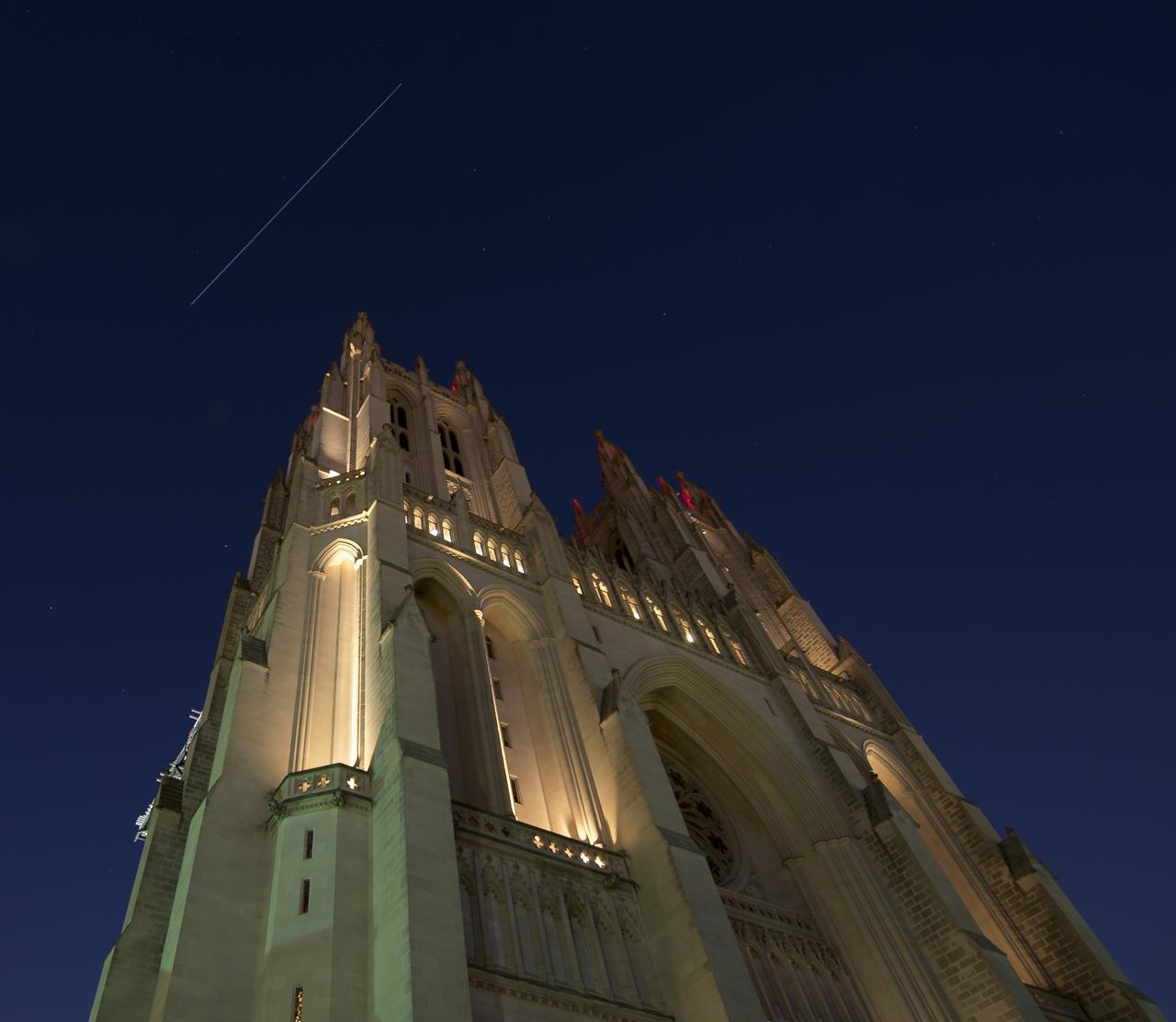
The International Space Station is seen in this twenty-second exposure as it flies over the Washington National Cathedral, Wednesday, Nov. 29, 2017. Onboard are NASA astronauts Joe Acaba, Mark Vande Hei, and Randy Bresnik; Russian cosmonauts Alexander Misurkin and Sergey Ryanzansky; and ESA astronaut Paolo Nespoli. Photo Credit: (NASA/Bill Ingalls)
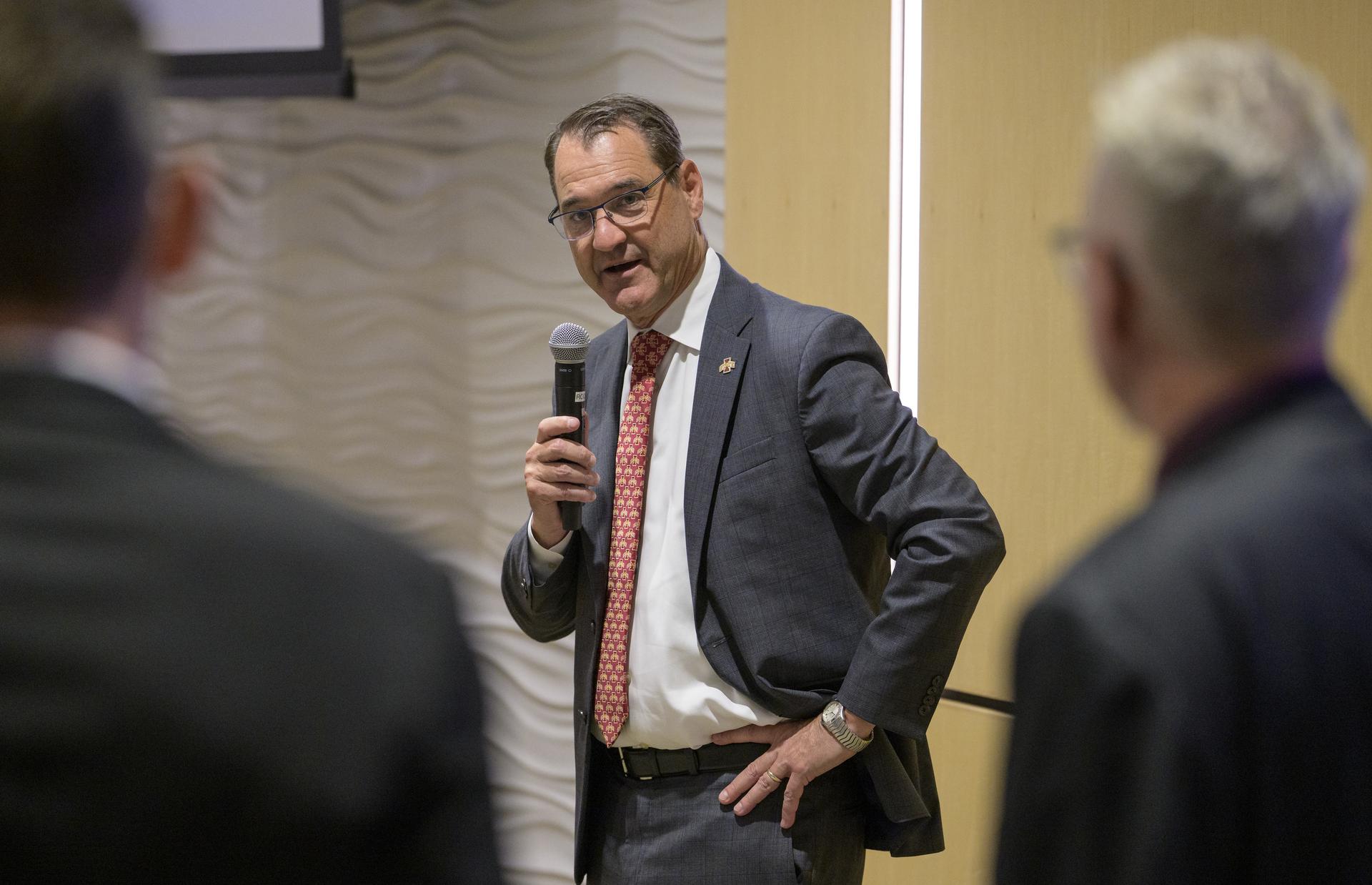
David Cook, President, Iowa State University welcomes NASA Administrator Jared Isaacman to the Ames National Laboratory, Tuesday, Sept. 8, 2026, on the campus of Iowa State University in Ames, Iowa. Photo Credit: (NASA/Bill Ingalls)

Gary Knell, President and CEO of National Geographic Society, gives opening remarks at an event to celebrate the 40th Anniversary of the launch of the Voyager 1 and 2 missions, Tuesday, September 5, 2017 at National Geographic Society Headquarters in Washington. Voyager 1 was launched September 5, 1977, with a mission to study Jupiter and Saturn, but now the twin Voyager spacecrafts are on a journey into interstellar space to search for the heliopause, a region never reached by any other spacecraft. Photo Credit: (NASA/Aubrey Gemignani)
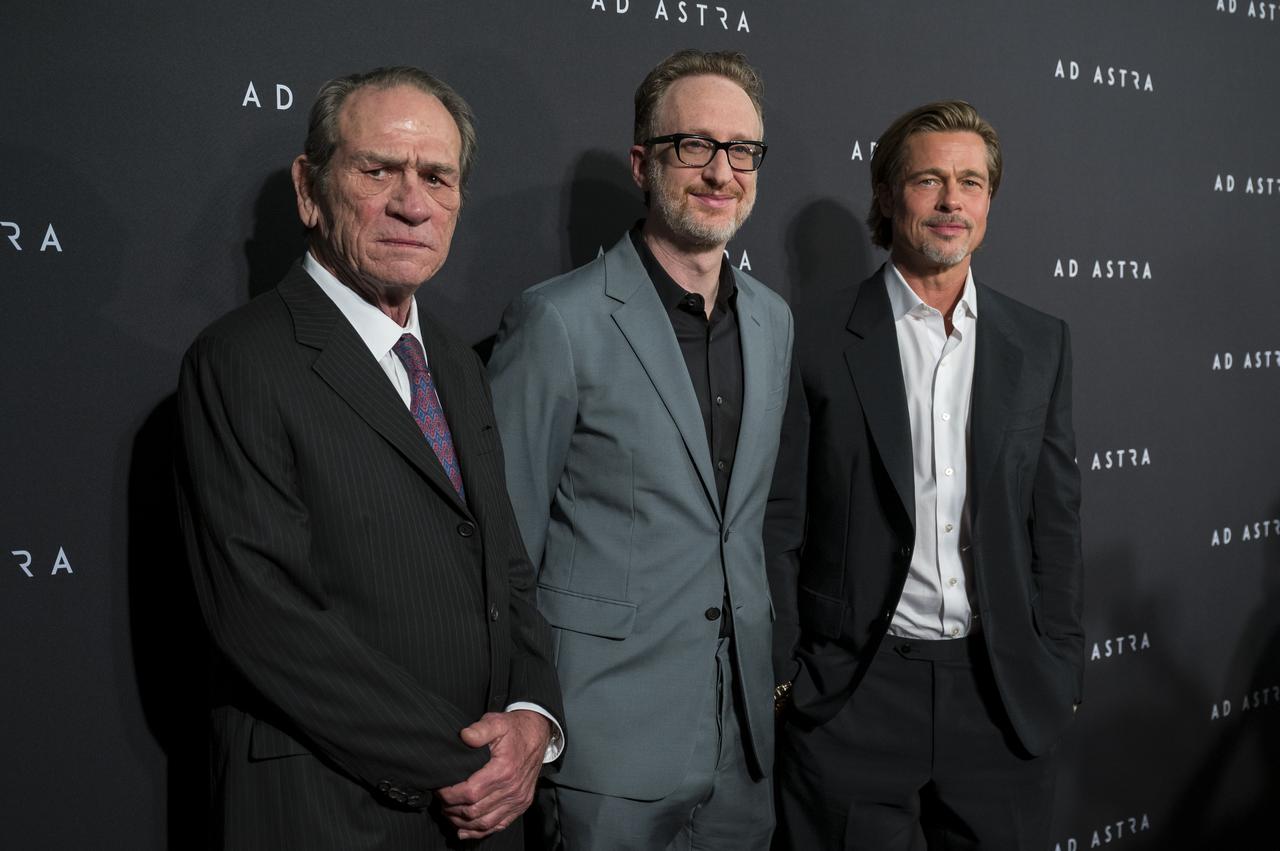
From left to right, actor Tommy Lee Jones, film producer, co-writer, and director James Gray, and actor Brad Pitt arrive on the red carpet for a screening of the film "Ad Astra" at National Geographic Society, Monday, September 16, 2019 in Washington. The film stars Pitt, Jones, Ruth Negga, Liv Tyler, and Donald Sutherland. Pitt stars as astronaut Roy McBride who travels deep into the solar system in hopes of solving a mystery that threatens life on Earth. Photo Credit: (NASA/Aubrey Gemignani)
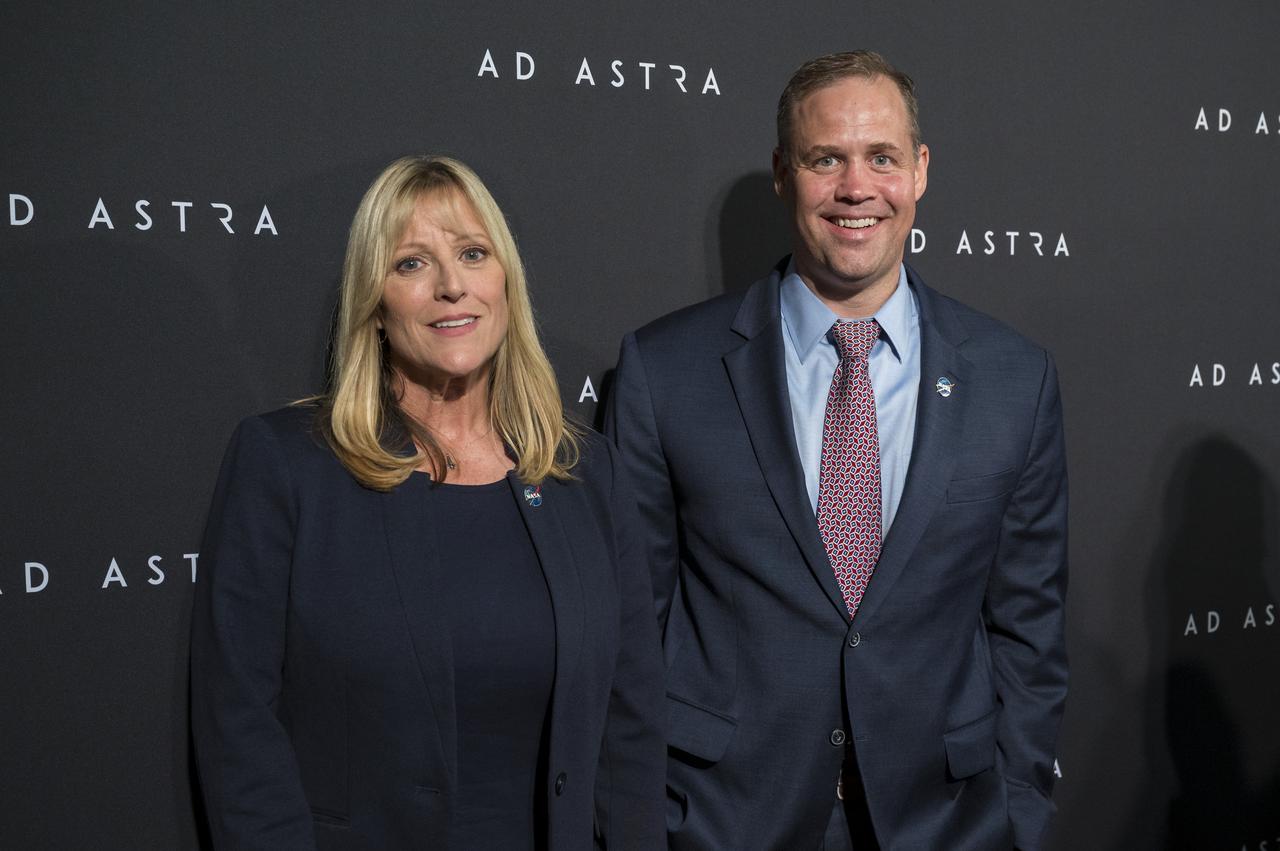
Former NASA astronaut Kay Hire and NASA Administrator Jim Bridenstine pose for a photo on the red carpet during a screening of the film "Ad Astra" at National Geographic Society, Monday, September 16, 2019 in Washington. The film was produced, co-written, and directed by James Gray and stars Jones, Brad Pitt, Ruth Negga, Liv Tyler, and Donald Sutherland. Pitt stars as astronaut Roy McBride who travels deep into the solar system in hopes of solving a mystery that threatens life on Earth. Photo Credit: (NASA/Aubrey Gemignani)
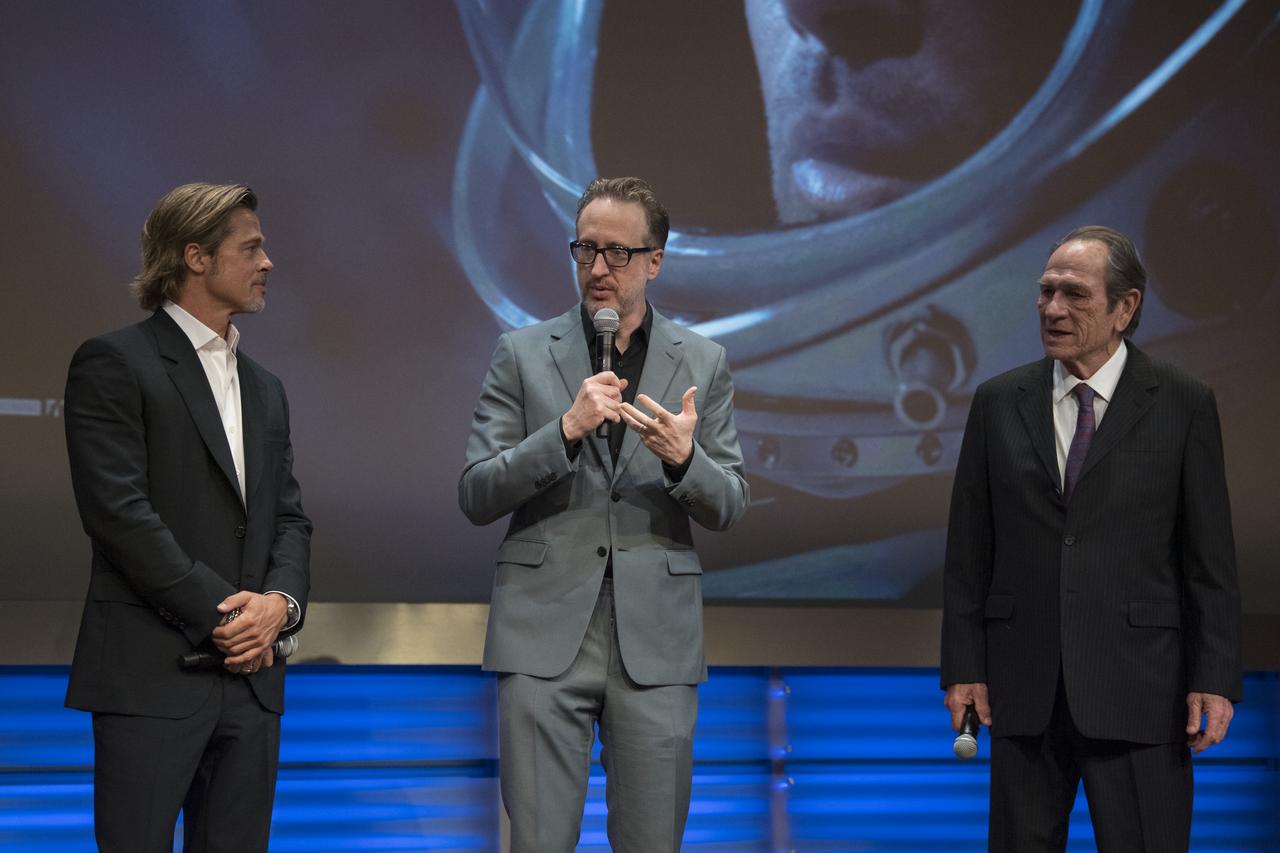
From left to right, actor Brad Pitt, producer, co-writer, and director James Gray, and actor Tommy Lee Jones are seen on stage before a screening of their film "Ad Astra" at National Geographic Society, Monday, September 16, 2019 in Washington. The film stars Pitt, Jones, Ruth Negga, Liv Tyler, and Donald Sutherland. Pitt stars as astronaut Roy McBride who travels deep into the solar system in hopes of solving a mystery that threatens life on Earth. Photo Credit: (NASA/Aubrey Gemignani)

NASA astronaut Reid Wiseman, commander; left, CSA (Canadian Space Agency) astronaut Jeremy Hansen, mission specialist; Christina Koch, mission specialist; and Victor Glover, pilot, right, along with members of the Jr. Nats Kids Club, are seen as they give the call to “play ball” at the beginning of a baseball game between the Pittsburgh Pirates and the Washington Nationals, Saturday, July 4, 2026, at Nationals Park in Washington. NASA’s Artemis II mission took Wiseman, Glover, Koch, and Hansen on a nearly 10-day journey around the Moon and back to Earth in April 2026. Photo Credit: (NASA/Bill Ingalls)

Artemis II astronauts: CSA (Canadian Space Agency) astronaut Jeremy Hansen, mission specialist, left, NASA astronauts Christina Koch, mission specialist; Victor Glover, pilot; and Reid Wiseman, commander, right, celebrate as they throw the ceremonial first pitches before the start of a baseball game between the Pittsburgh Pirates and the Washington Nationals, Saturday, July 4, 2026, at Nationals Park in Washington. NASA’s Artemis II mission took Wiseman, Glover, Koch, and Hansen on a nearly 10-day journey around the Moon and back to Earth in April 2026. Photo Credit: (NASA/Bill Ingalls)
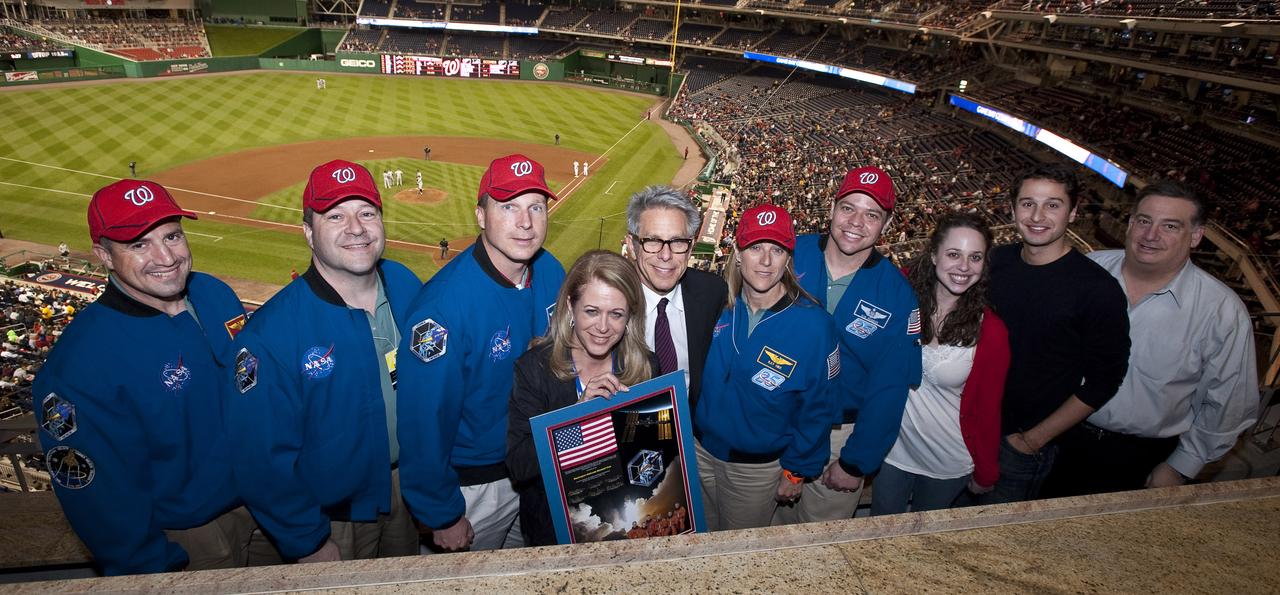
The crew of STS-130 present the principal owner of the Washington Nationals, Debra Lerner Cohen (holding montage) with a montage of their mission, Tuesday, April 20, 2010 at Nationals Park in Washington. From left are seen Commander George Zamka, Mission Specialist Nicholas Patrick, Pilot Terry Virts, Debra Lerner Cohen, Edward Cohen, Mission Specialist Kathryn Hire, Mission Specialist Robert Behnken, Lauren Lerner, Jacob Lerner and Alan Gottlieb. Photo Credit: (NASA/Carla Cioffi)

Eric Fanning, AIA President and CEO speaks before a showing of the Project Mars Competition's short films winners and the Mars series, Monday, November 5, 2018 at National Geographic Society Headquarters in Washington. Photo Credit: (NASA/Aubrey Gemignani)

Chris Davenport, Washington Post space reporter, moderates a panel after a showing of the Project Mars Competition's short films and the Mars series, Monday, November 5, 2018 at National Geographic Society Headquarters in Washington. Photo Credit: (NASA/Aubrey Gemignani)

A guest uses some virtual reality viewers before a showing of the Project Mars Competition's short films winners and the Mars series, Monday, November 5, 2018 at National Geographic Society Headquarters in Washington. Photo Credit: (NASA/Aubrey Gemignani)
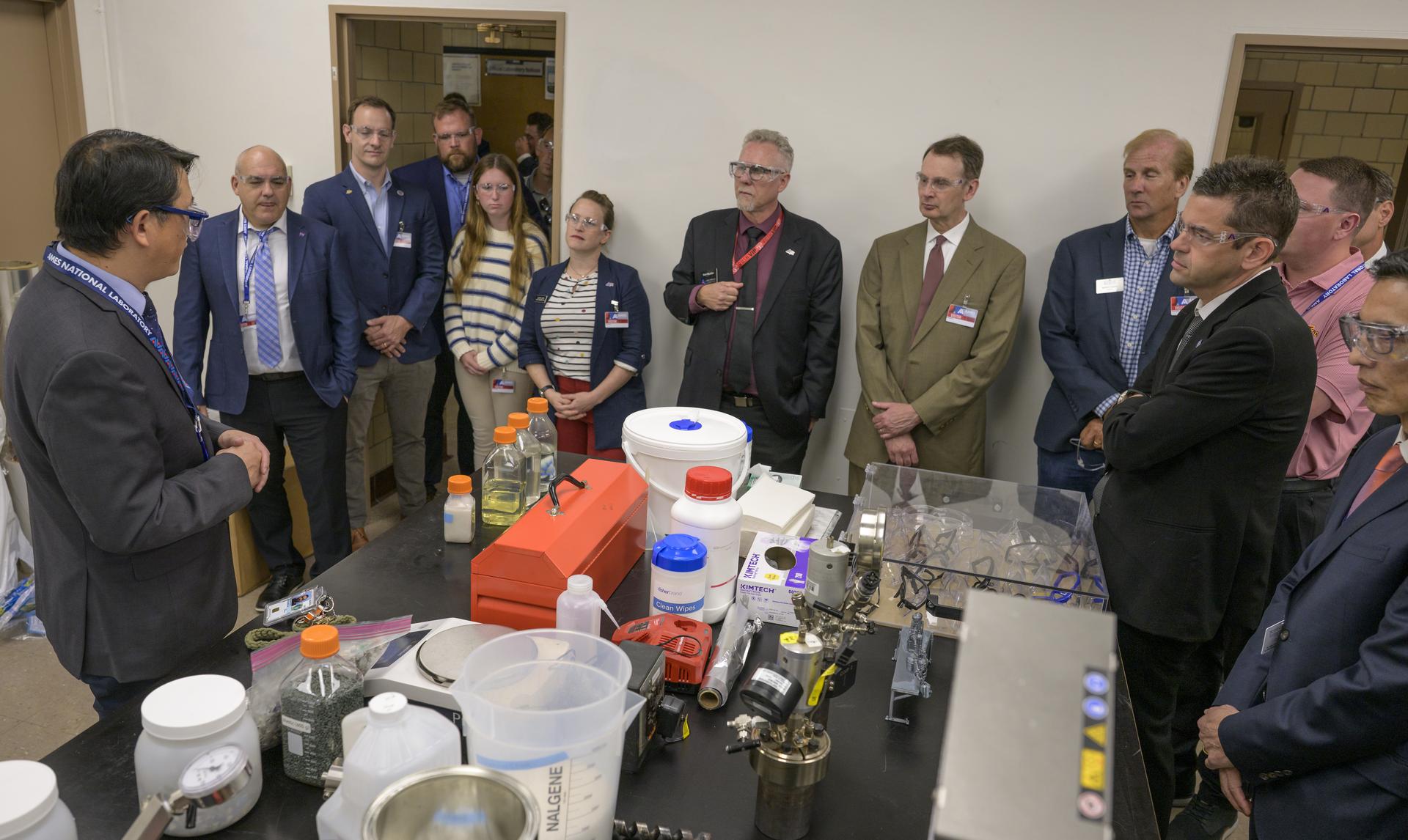
NASA Administrator Jared Isaacman, right, listens to Wenyu Huang, Scientist, Ames National Laboratory, left, as he tours the facility, Tuesday, Sept. 8, 2026, on the campus of Iowa State University in Ames, Iowa. Photo Credit: (NASA/Bill Ingalls)

A guest uses some virtual reality viewers before a showing of the Project Mars Competition's short films winners and the Mars series, Monday, November 5, 2018 at National Geographic Society Headquarters in Washington. Photo Credit: (NASA/Aubrey Gemignani)
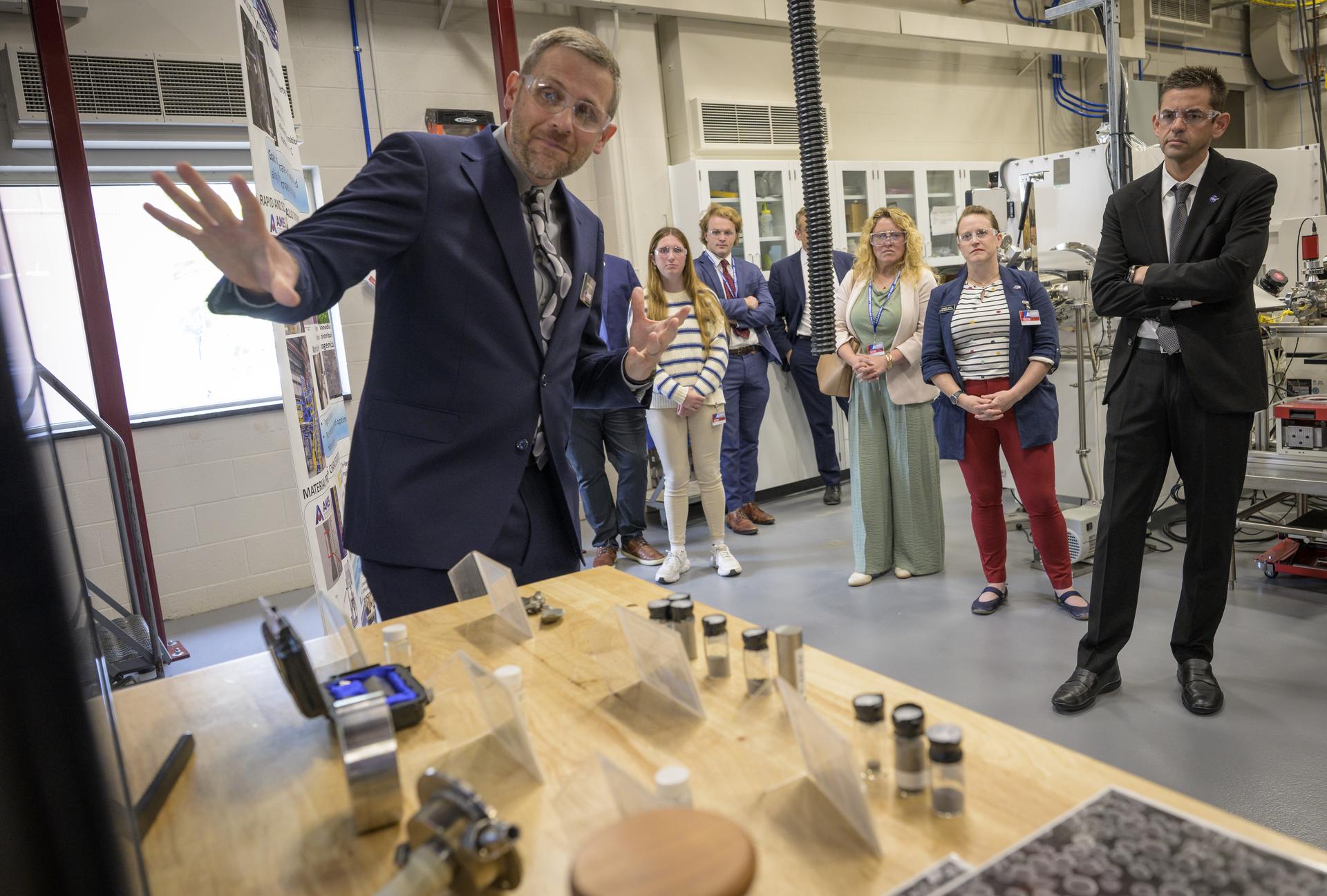
NASA Administrator Jared Isaacman, right, listens to Jordan Tiarks, Scientist, Ames National Laboratory, left, as he tours the lab, Tuesday, Sept. 8, 2026, on the campus of Iowa State University in Ames, Iowa. Photo Credit: (NASA/Bill Ingalls)

Gareth Edwards, film director, Rogue One: A Star Wars Story, speaks on a panel after a showing of the Project Mars Competition's short films and the Mars series, Monday, November 5, 2018 at National Geographic Society Headquarters in Washington. Photo Credit: (NASA/Aubrey Gemignani)

Dr. Stephen Petranek, MARS scientific advisor and co-executive producer speaks on a panel after a showing of the Project Mars Competition's short films and the Mars series, Monday, November 5, 2018 at National Geographic Society Headquarters in Washington. Photo Credit: (NASA/Aubrey Gemignani)

Christyl Johnson, deputy director for technology and research investments, NASA Goddard Space Flight Center, second from right, speaks on a panel after a showing of the Project Mars Competition's short films and the Mars series, Monday, November 5, 2018 at National Geographic Society Headquarters in Washington. Photo Credit: (NASA/Aubrey Gemignani)
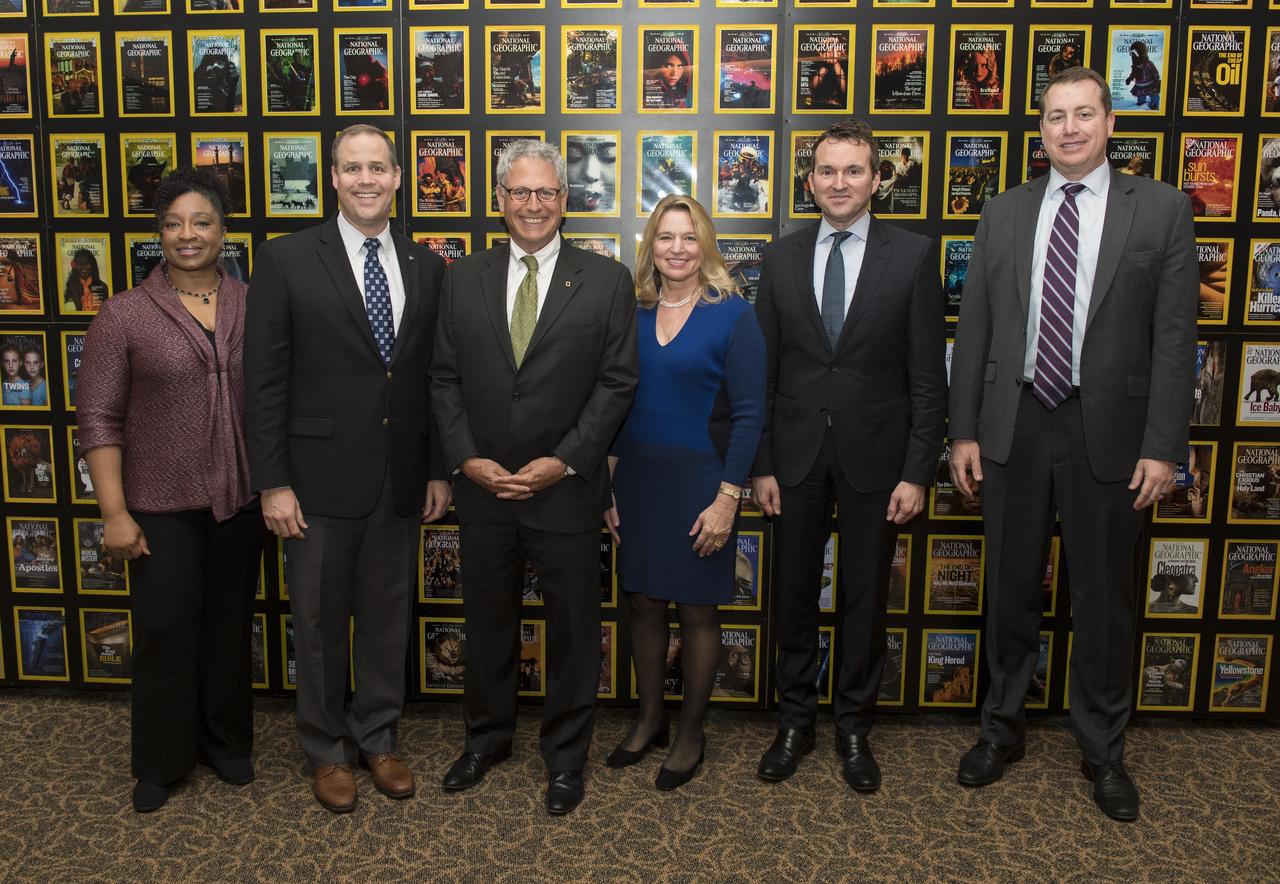
From left to right, Christyl Johnson, deputy director for technology and research investments, NASA Goddard Space Flight Center; NASA Administrator Jim Bridenstine; Gary Knell, CEO, National Geographic Partners; Ellen Stofan, director, Smithsonian's National Air and Space Museum; Eric Fanning, AIA President and CEO; and Jeff DeWitt, NASA Chief Financial Officer, pose for a photo before a showing of the Project Mars Competition's short films winners and the Mars series, Monday, November 5, 2018 at National Geographic Society Headquarters in Washington. Photo Credit: (NASA/Aubrey Gemignani)
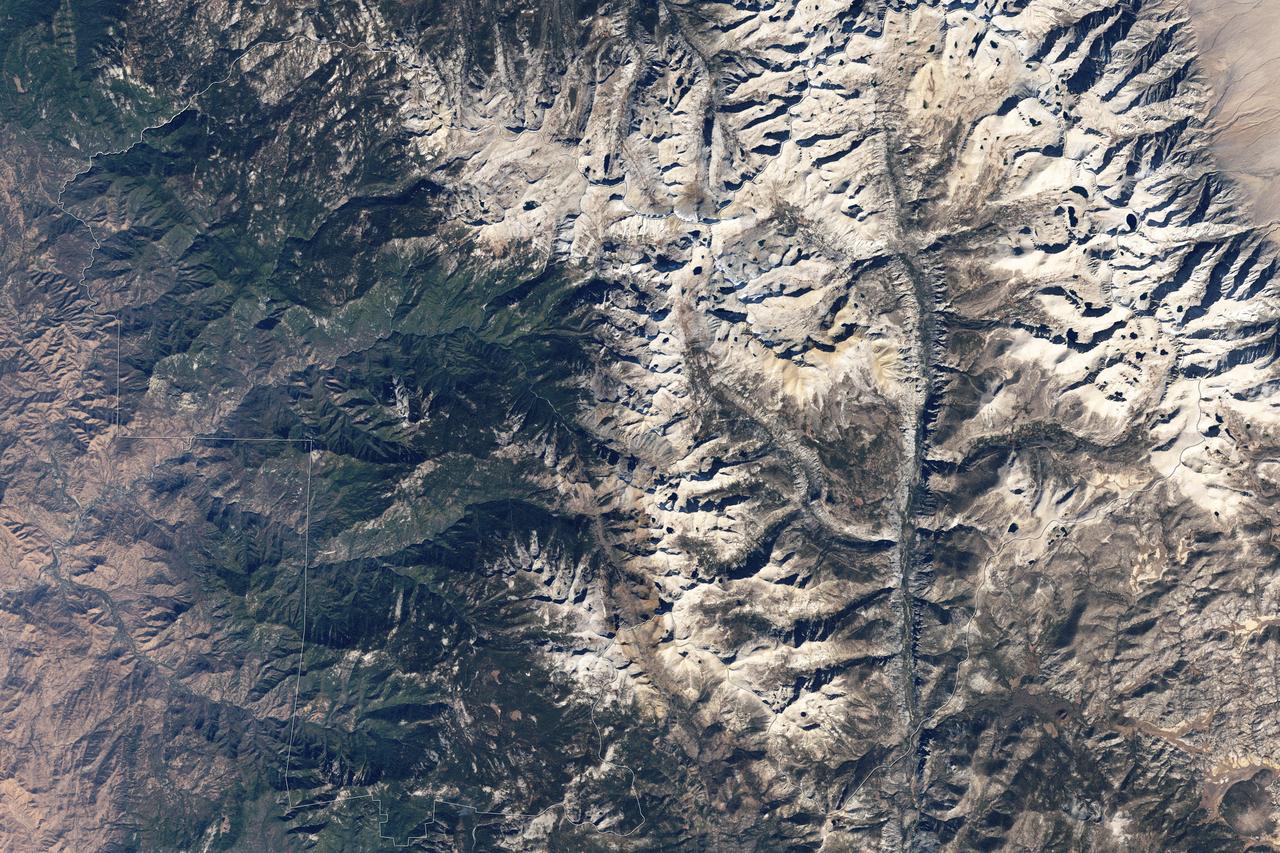
Naked peaks, sheltered valleys, snowfields, towering trees, and alpine meadows make up the varied landscape of Sequoia National Park in California. Established as a National Park by Congress on September 25, 1890, Sequoia National Park is the second-oldest U.S. National Park, after Yellowstone. This national park borders Kings Canyon National Park. The Thematic Mapper sensor on NASA’s Landsat 5 satellite captured this true-color image of Sequoia National Park, outlined in white, on October 22, 2008. Sunlight illuminates southern slopes, leaving northern faces in shadow in this autumn image. In the west, deep green conifers carpet most of the land. These forested mountains are home to the park’s most famous giant sequoia trees. Sequoia National Park sits at the southern end of the Sierra Nevada mountains. Terrain alternates between extremes, from peaks such as Mt. Whitney—the highest peak in the contiguous United States—to deep caverns. The rivers and lakes in this region are part of a watershed valuable not only to the plants and animals of the park, but also to farms and cities in California’s Central Valley. Read more: <a href="http://go.nasa.gov/2bzGOXr" rel="nofollow">go.nasa.gov/2bzGOXr</a> Credit: NASA/Landsat5 <b><a href="http://www.nasa.gov/audience/formedia/features/MP_Photo_Guidelines.html" rel="nofollow">NASA image use policy.</a></b> <b><a href="http://www.nasa.gov/centers/goddard/home/index.html" rel="nofollow">NASA Goddard Space Flight Center</a></b> enables NASA’s mission through four scientific endeavors: Earth Science, Heliophysics, Solar System Exploration, and Astrophysics. Goddard plays a leading role in NASA’s accomplishments by contributing compelling scientific knowledge to advance the Agency’s mission. <b>Follow us on <a href="http://twitter.com/NASAGoddardPix" rel="nofollow">Twitter</a></b> <b>Like us on <a href="http://www.facebook.com/pages/Greenbelt-MD/NASA-Goddard/395013845897?ref=tsd" rel="nofollow">Facebook</a></b> <b>Find us on <a href="http://instagrid.me/nasagoddard/?vm=grid" rel="nofollow">Instagram</a></b>
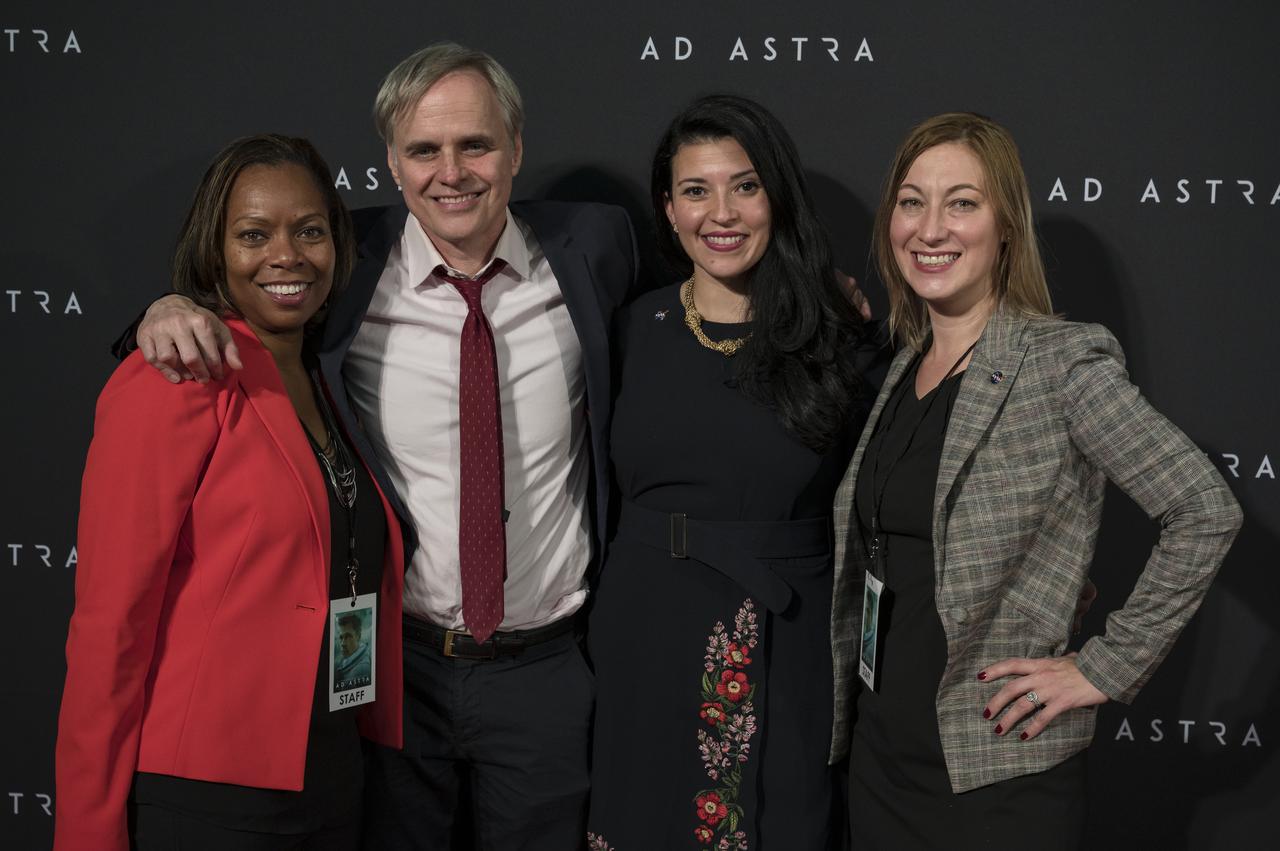
NASA staff, from left to right, Cindy Steele, Bert Ulrich, Bettina Inclán, and Cheryl Warner pose for a photo on the red carpet during a screening of the film "Ad Astra" at National Geographic Society, Monday, September 16, 2019 in Washington. The film was produced, co-written, and directed by James Gray and stars Pitt, Tommy Lee Jones, Ruth Negga, Liv Tyler, and Donald Sutherland. Pitt stars as astronaut Roy McBride who travels deep into the solar system in hopes of solving a mystery that threatens life on Earth. Photo Credit: (NASA/Aubrey Gemignani)
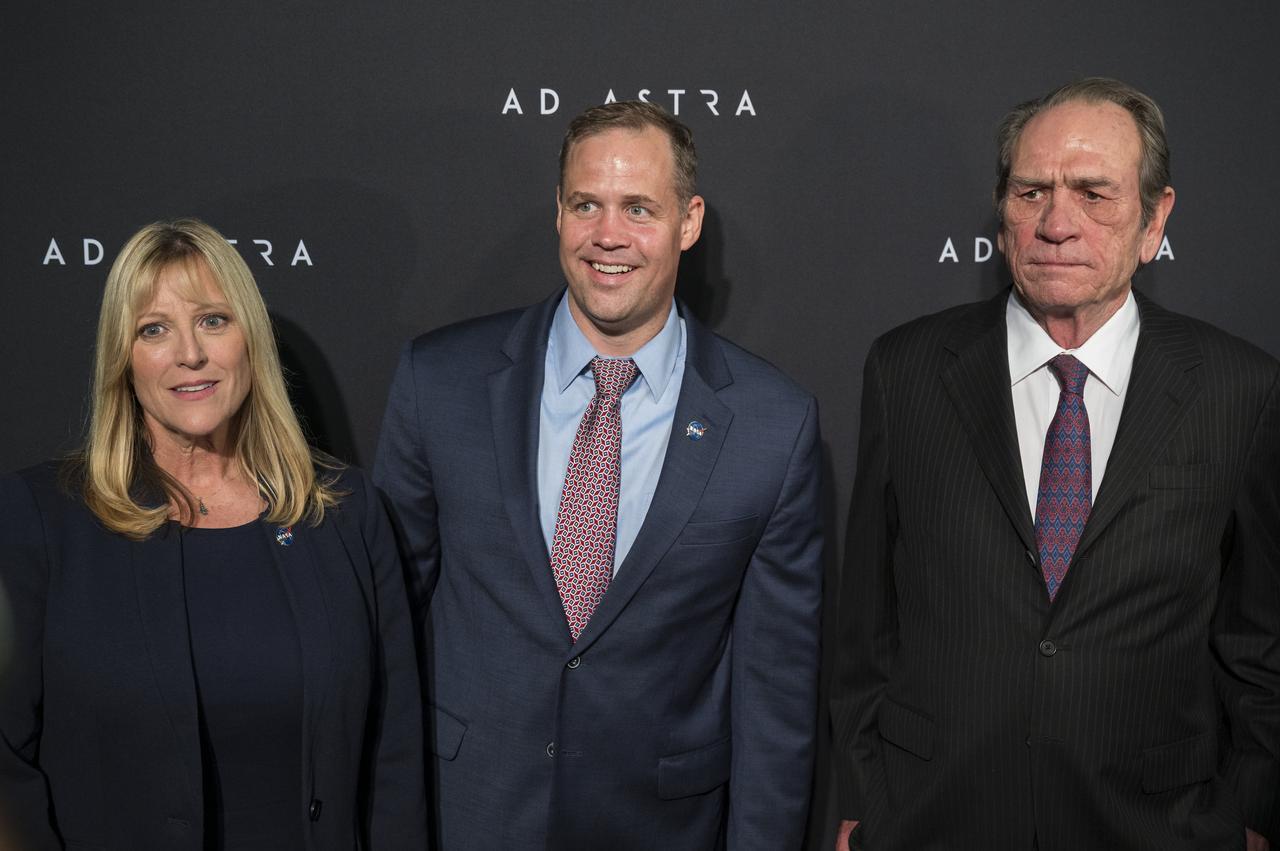
From left to right, former NASA astronaut Kay Hire, NASA Administrator Jim Bridenstine, and actor Tommy Lee Jones arrive on the red carpet for a screening of the film "Ad Astra" at National Geographic Society, Monday, September 16, 2019 in Washington. The film was produced, co-written, and directed by James Gray and stars Jones, Brad Pitt, Ruth Negga, Liv Tyler, and Donald Sutherland. Pitt stars as astronaut Roy McBride who travels deep into the solar system in hopes of solving a mystery that threatens life on Earth. Photo Credit: (NASA/Aubrey Gemignani)

From left to right, actor Brad Pitt, NASA Administrator Jim Bridenstine, film producer, co-writer, and director James Gray, and actor Tommy Lee Jones are seen in the green room before a screening of the film "Ad Astra" at National Geographic Society, Monday, September 16, 2019 in Washington. The film stars Pitt, Jones, Ruth Negga, Liv Tyler, and Donald Sutherland. Pitt stars as astronaut Roy McBride who travels deep into the solar system in hopes of solving a mystery that threatens life on Earth. Photo Credit: (NASA/Aubrey Gemignani)
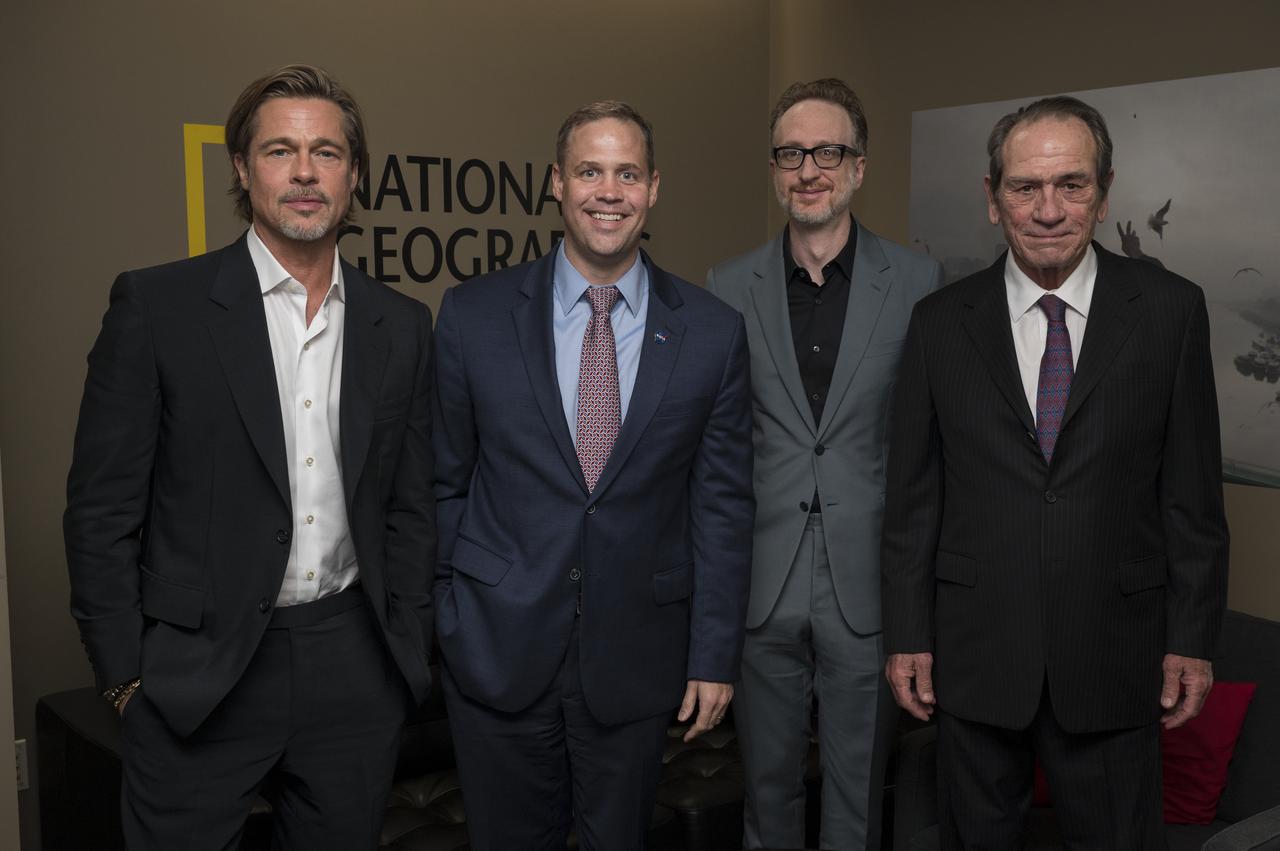
From left to right, actor Brad Pitt, NASA Administrator Jim Bridenstine, film producer, co-writer, and director James Gray, and actor Tommy Lee Jones pose for a photo in the green room before a screening of the film "Ad Astra" at National Geographic Society, Monday, September 16, 2019 in Washington. The film stars Pitt, Jones, Ruth Negga, Liv Tyler, and Donald Sutherland. Pitt stars as astronaut Roy McBride who travels deep into the solar system in hopes of solving a mystery that threatens life on Earth. Photo Credit: (NASA/Aubrey Gemignani)
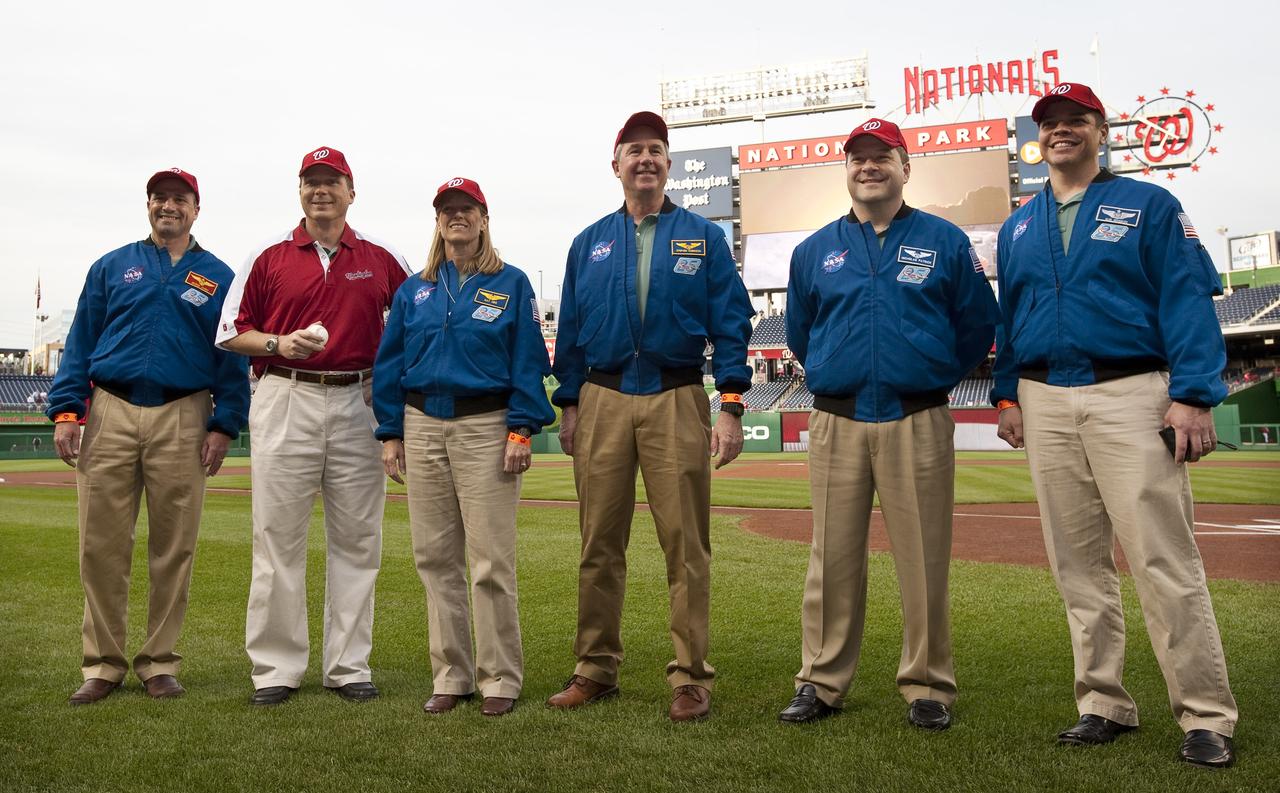
NASA STS-130 crew Commander George Zamka, far left, Pilot Terry Virts, Mission Specialists Kathryn Hire, Stephen Robinson, Nicholas Patrick and Robert Behnken, far right, pose for pictures on the field at Nationals Park, Tuesday, April 20, 2010, in Washington. Photo Credit: (NASA/Carla Cioffi)
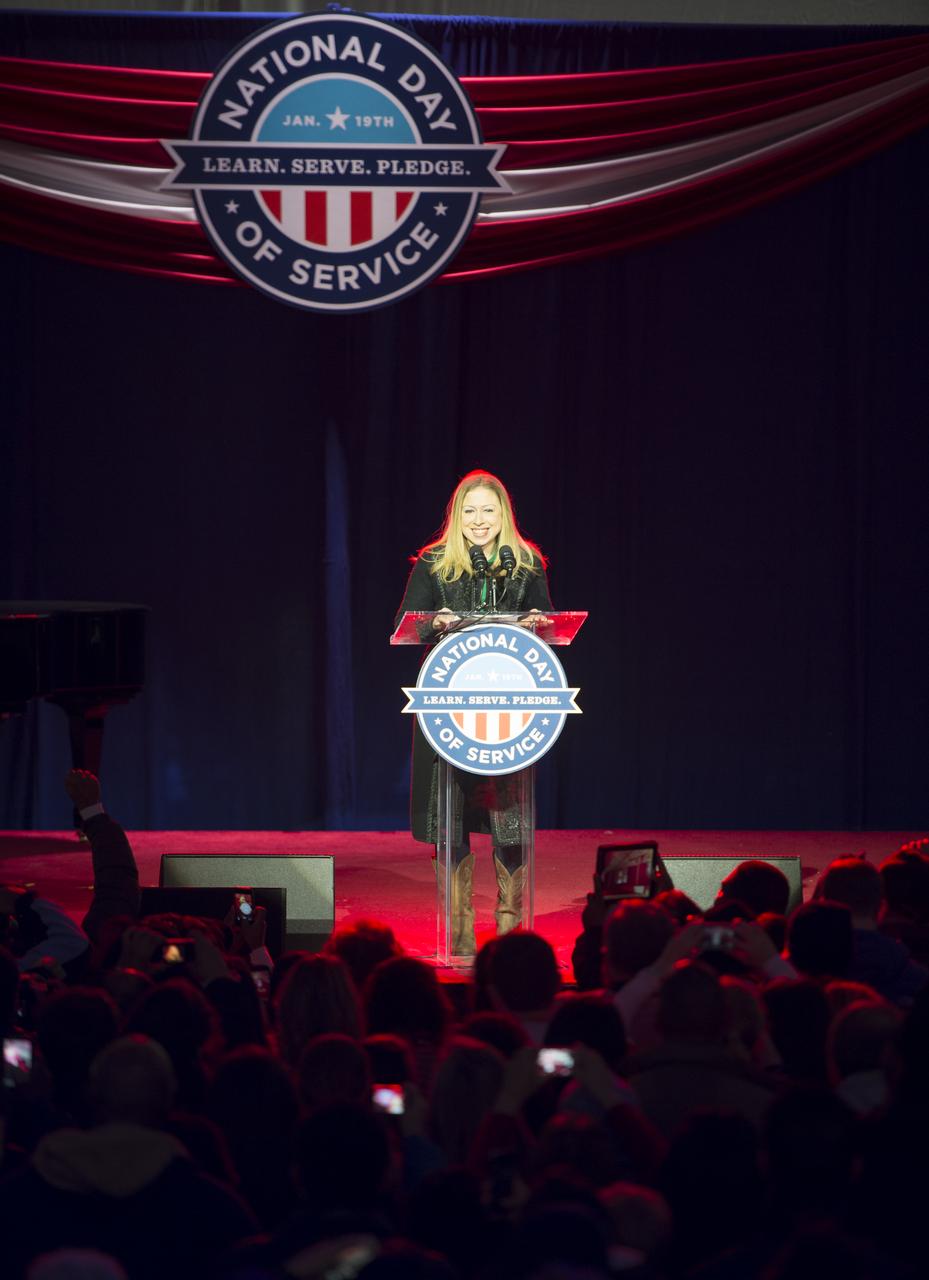
Former first daughter Chelsea Clinton kicks off the National Day of Service on the National Mall, Saturday, January 19, 2013, in Washington. She urged Americans to get involved in service projects in their communities. Clinton will serve as honorary chair of the 2013 National Day of Service. Photo Credit: (NASA/Carla Cioffi)
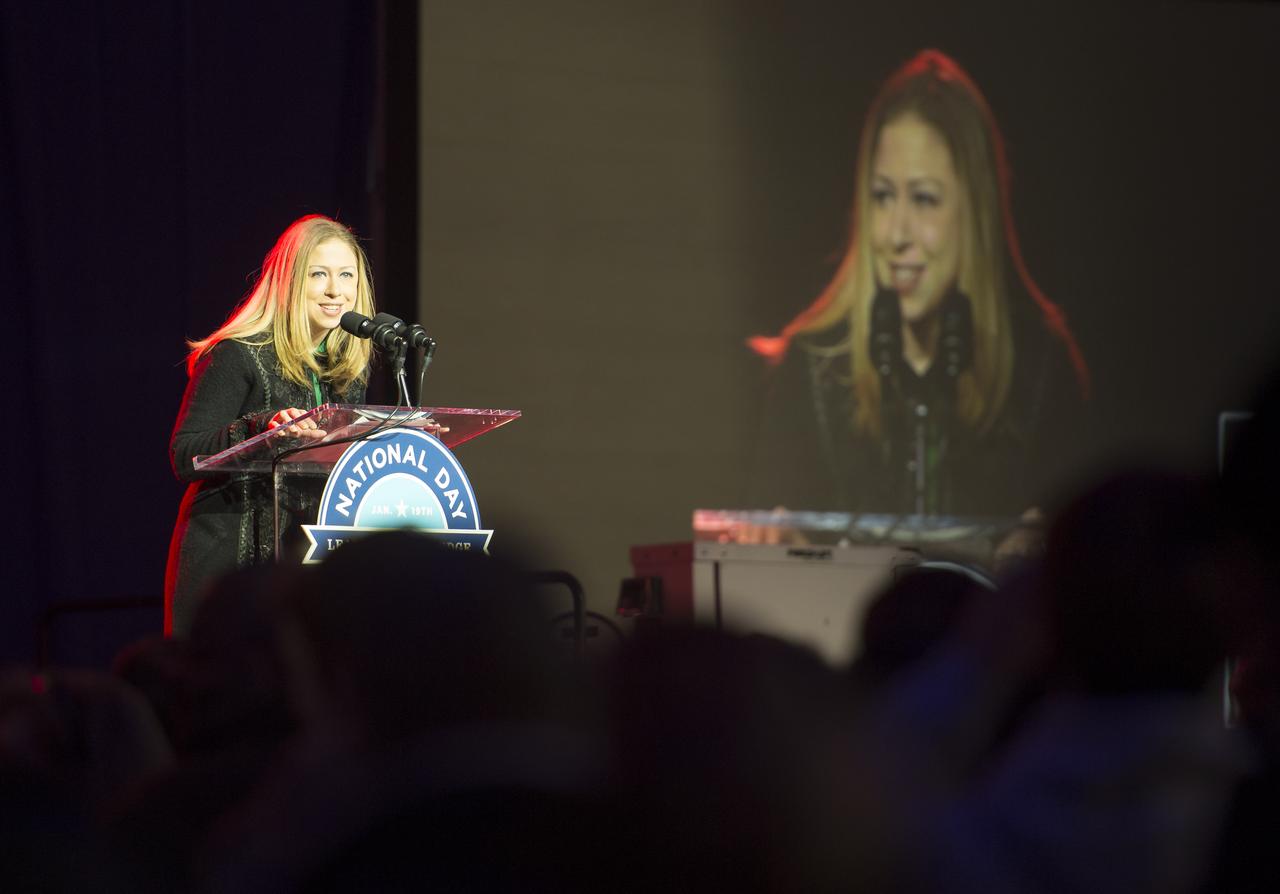
Former first daughter Chelsea Clinton kicks off the National Day of Service on the National Mall, Saturday, January 19, 2013, in Washington. She urged Americans to get involved in service projects in their communities. Clinton will serve as honorary chair of the 2013 National Day of Service. Photo Credit: (NASA/Carla Cioffi)
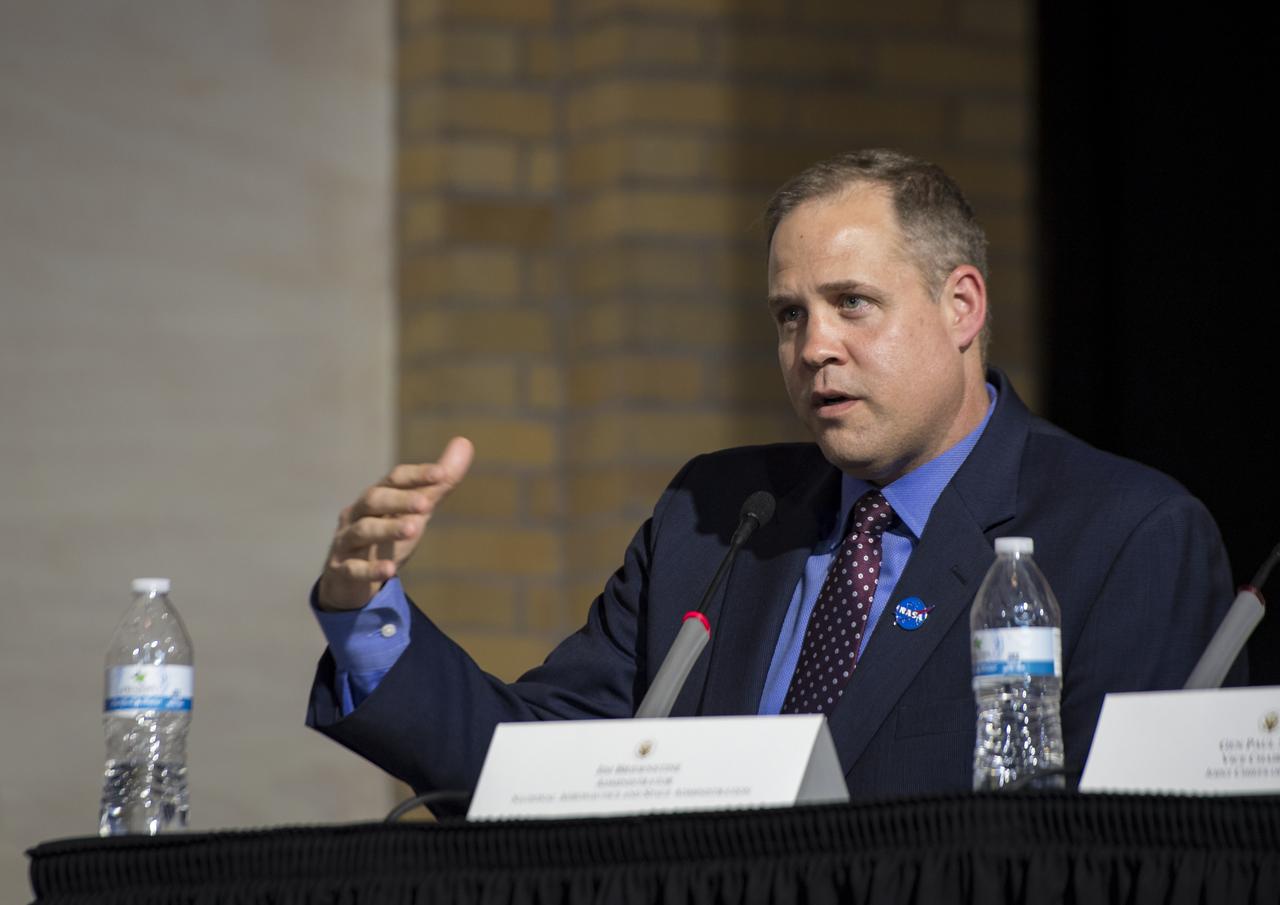
NASA Administrator Jim Bridenstine asks panelists a question during the National Space Council meeting titled, Moon, Mars, and Worlds Beyond, Winning the Next Frontier, Tuesday, Oct. 23, 2018 at the National War College at Fort Lesley J. McNair in Washington. Chaired by the Vice President, the council's role is to advise the President regarding national space policy and strategy, and review the nation's long-range goals for space activities.Photo Credit: (NASA/Aubrey Gemignani)
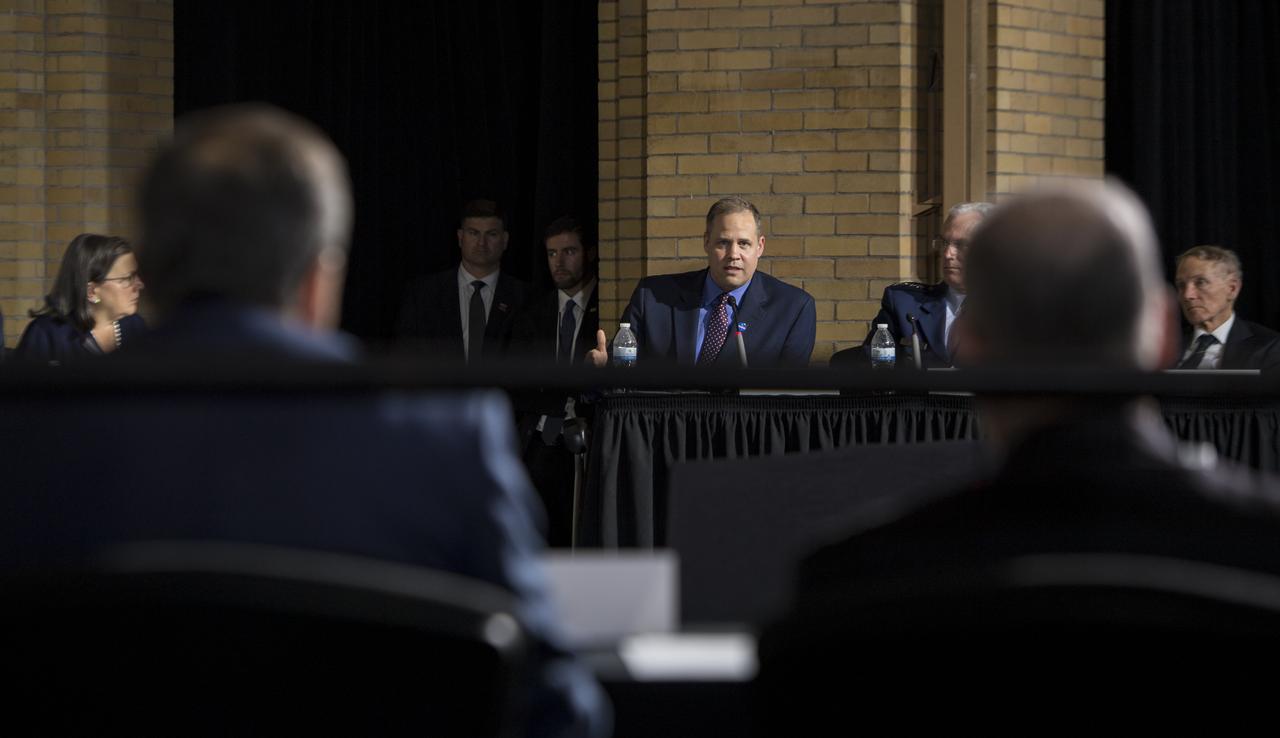
NASA Administrator Jim Bridenstine asks panelists a question during the National Space Council meeting titled, Moon, Mars, and Worlds Beyond, Winning the Next Frontier, Tuesday, Oct. 23, 2018 at the National War College at Fort Lesley J. McNair in Washington. Chaired by the Vice President, the council's role is to advise the President regarding national space policy and strategy, and review the nation's long-range goals for space activities.Photo Credit: (NASA/Aubrey Gemignani)
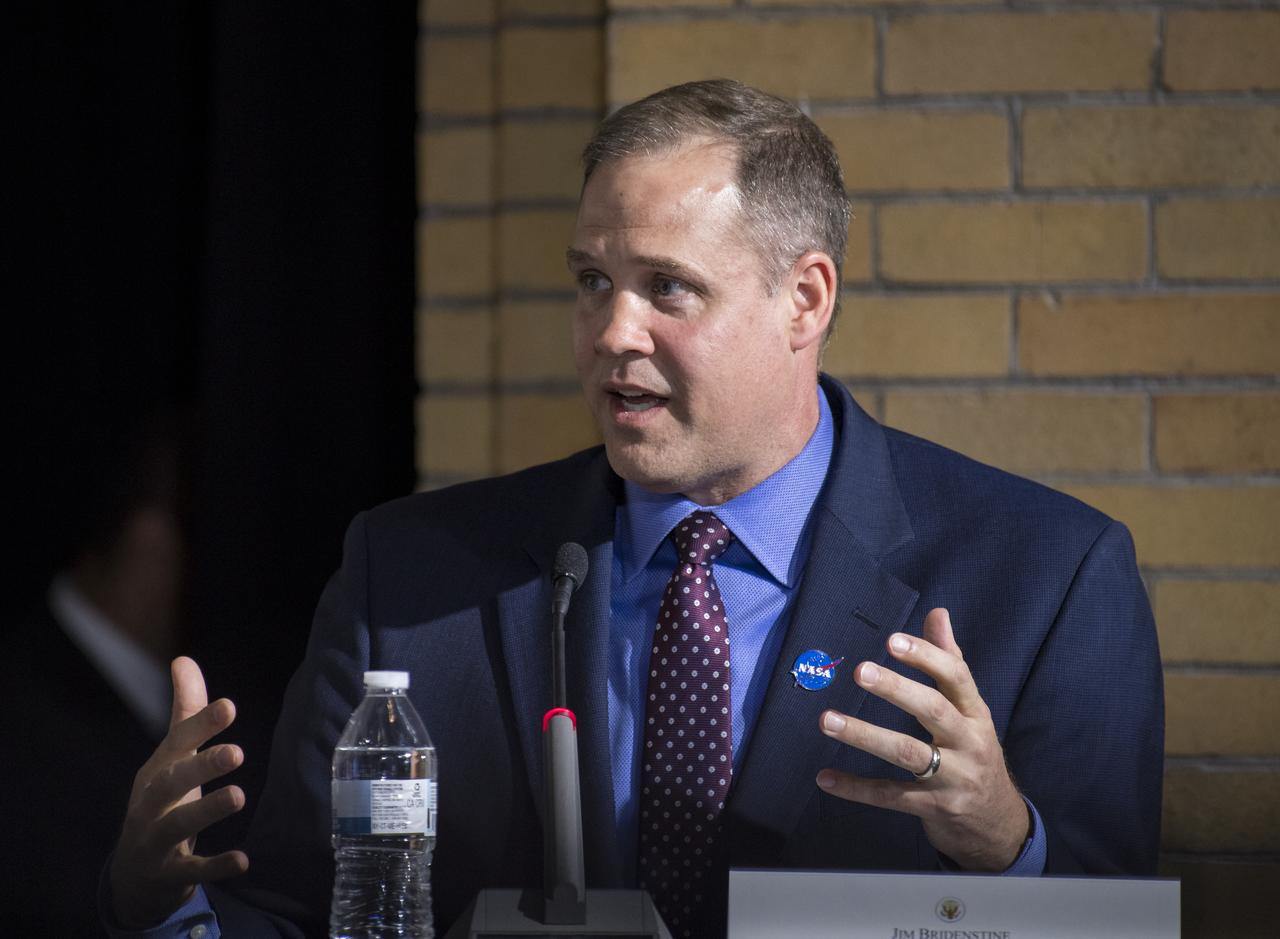
NASA Administrator Jim Bridenstine speaks during the National Space Council meeting titled, Moon, Mars, and Worlds Beyond, Winning the Next Frontier, Tuesday, Oct. 23, 2018 at the National War College at Fort Lesley J. McNair in Washington. Chaired by the Vice President, the council's role is to advise the President regarding national space policy and strategy, and review the nation's long-range goals for space activities.Photo Credit: (NASA/Aubrey Gemignani)
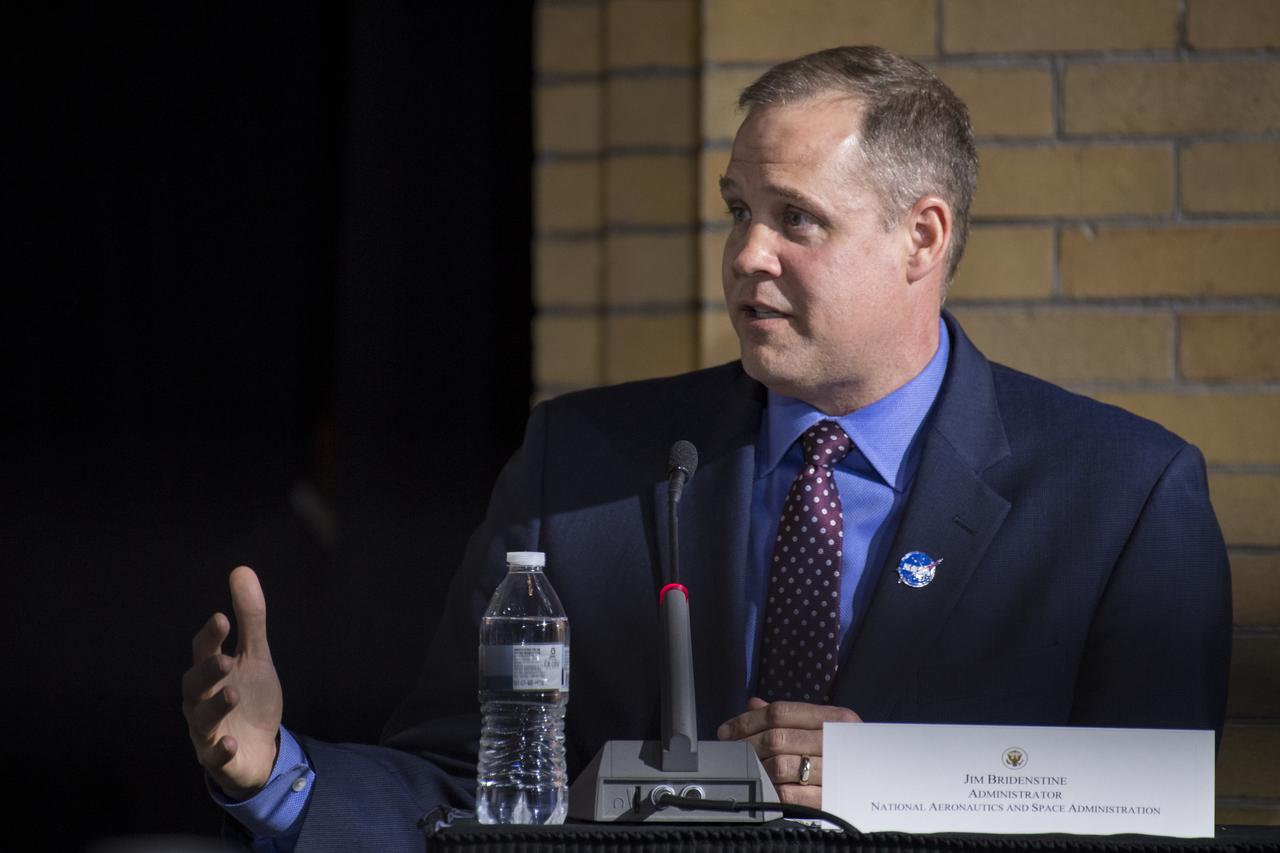
NASA Administrator Jim Bridenstine speaks during the National Space Council meeting titled, Moon, Mars, and Worlds Beyond, Winning the Next Frontier, Tuesday, Oct. 23, 2018 at the National War College at Fort Lesley J. McNair in Washington. Chaired by the Vice President, the council's role is to advise the President regarding national space policy and strategy, and review the nation's long-range goals for space activities.Photo Credit: (NASA/Aubrey Gemignani)
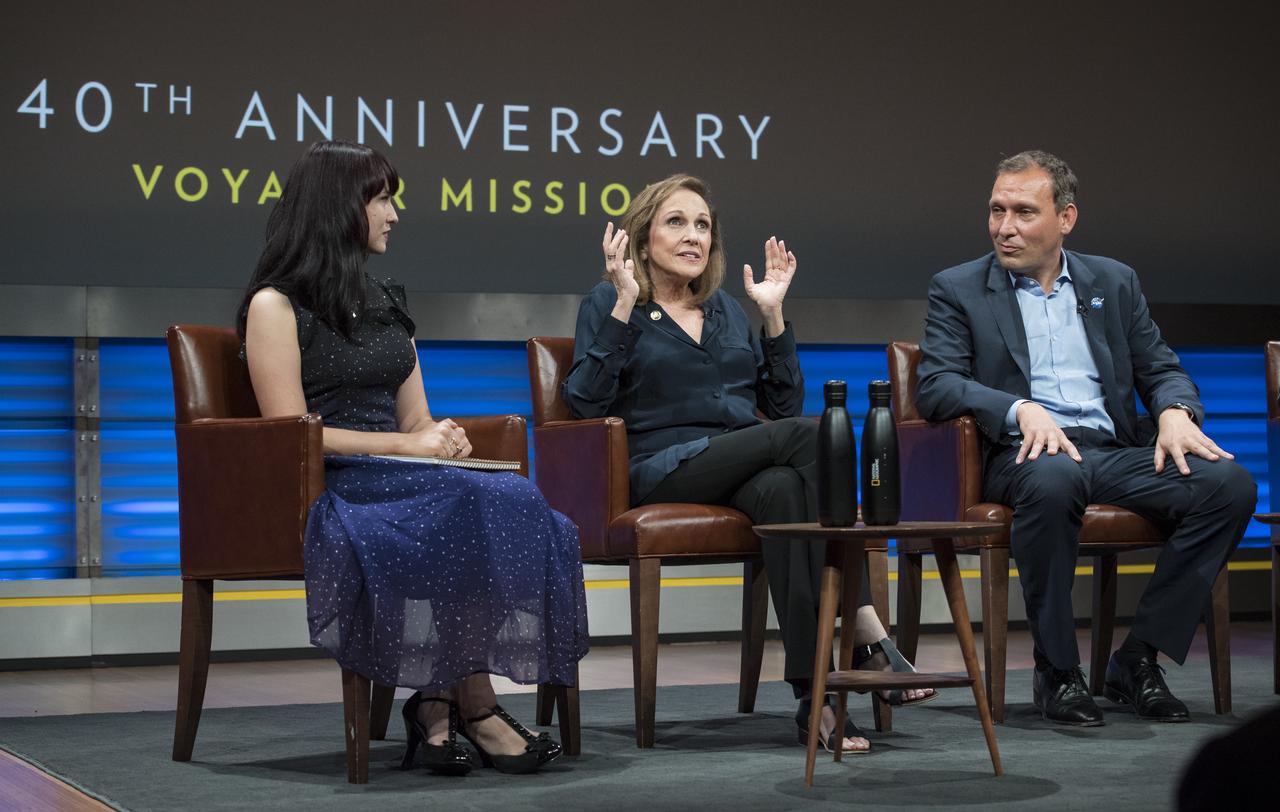
Ann Druyan, writer/producer and golden record visionary, speaks on a panel with moderator Victoria Jaggard, National Geographic Magazine science editor, left, Thomas Zurbuchen, associate administrator for NASA's Science Mission Directorate, right; and Ed Stone, Voyager project scientist, not pictured, at an event to celebrate the 40th Anniversary of the launch of the Voyager 1 and 2 missions, Tuesday, September 5, 2017 at National Geographic Society Headquarters in Washington. Voyager 1 was launched September 5, 1977, with a mission to study Jupiter and Saturn, but now the twin Voyager spacecrafts are on a journey into interstellar space to search for the heliopause, a region never reached by any other spacecraft. Photo Credit: (NASA/Aubrey Gemignani)
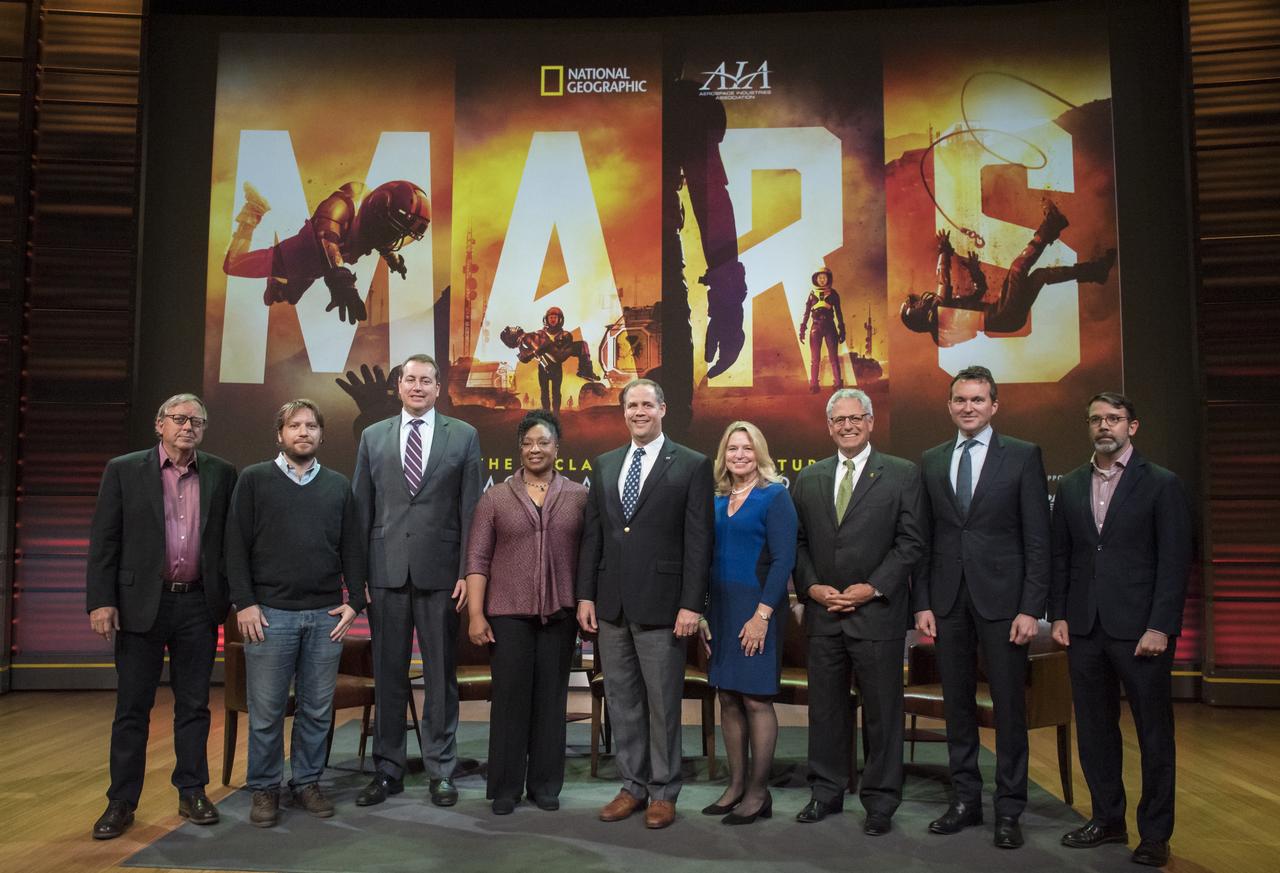
From left to right, Dr. Stephen Petranek, MARS scientific advisor and co-executive producer; Gareth Edwards, film director, Rogue One: A Star Wars Story; Jeff DeWitt, NASA chief financial officer; Christyl Johnson, deputy director for technology and research investments, NASA Goddard Space Flight Center; NASA Administrator Jim Bridenstine; Ellen Stofan, director, Smithsonian's National Air and Space Museum; Gary Knell, CEO, National Geographic Partners; Eric Fanning, AIA President and CEO; and Chris Davenport, Washington Post space reporter, pose for a photo before a showing of the Project Mars Competition's short films winners and the Mars series, Monday, November 5, 2018 at National Geographic Society Headquarters in Washington. Photo Credit: (NASA/Aubrey Gemignani)
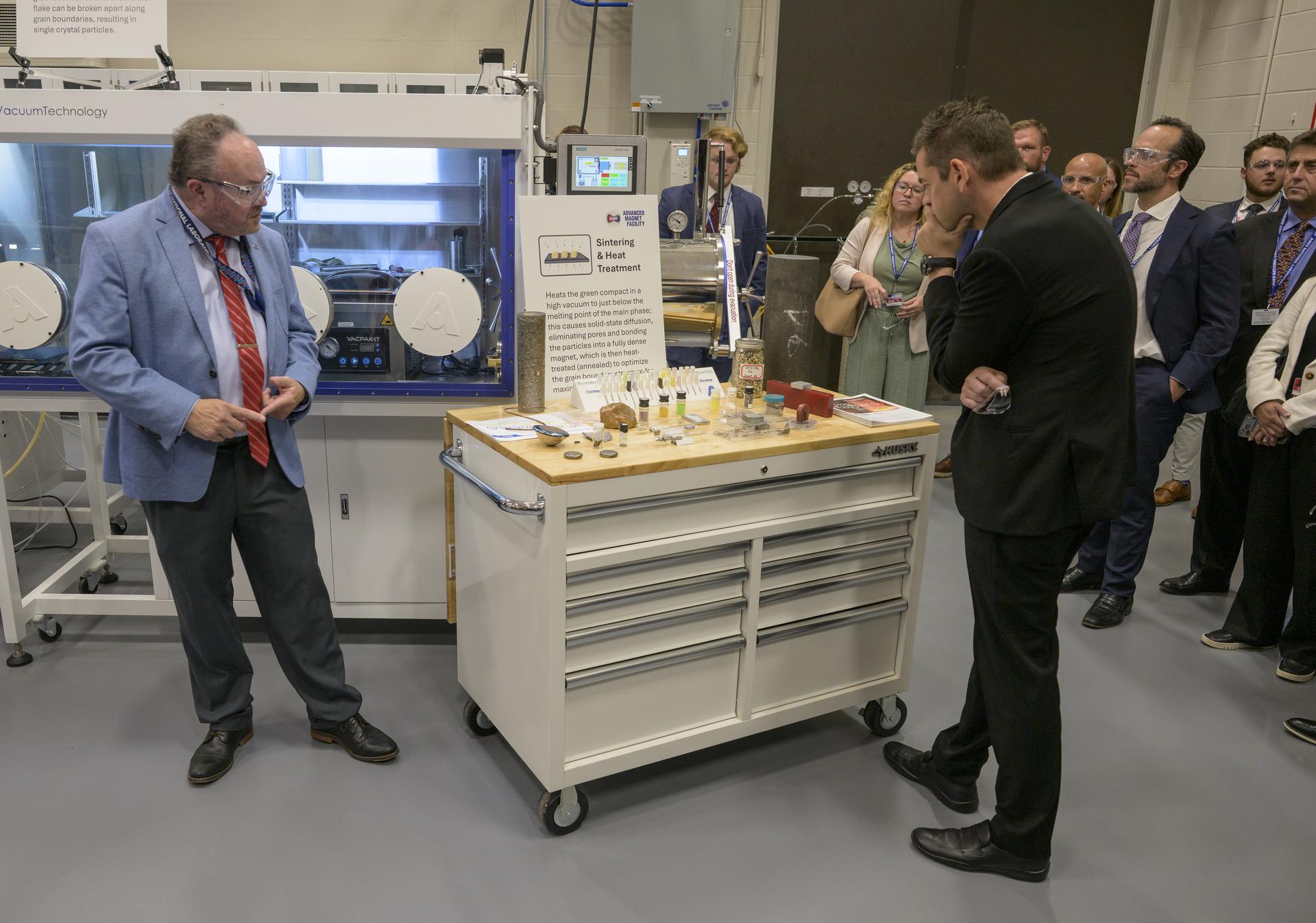
NASA Administrator Jared Isaacman, right, listens to James Morris, Chief Research Officer, Ames National Laboratory, left, as he tours the facility, Tuesday, Sept. 8, 2026, on the campus of Iowa State University in Ames, Iowa. Photo Credit: (NASA/Bill Ingalls)

NASA Administrator Jim Bridenstine gives keynote remarks before a showing of the Project Mars Competition's short films and the Mars series, Monday, November 5, 2018 at National Geographic Society Headquarters in Washington. Photo Credit: (NASA/Aubrey Gemignani)
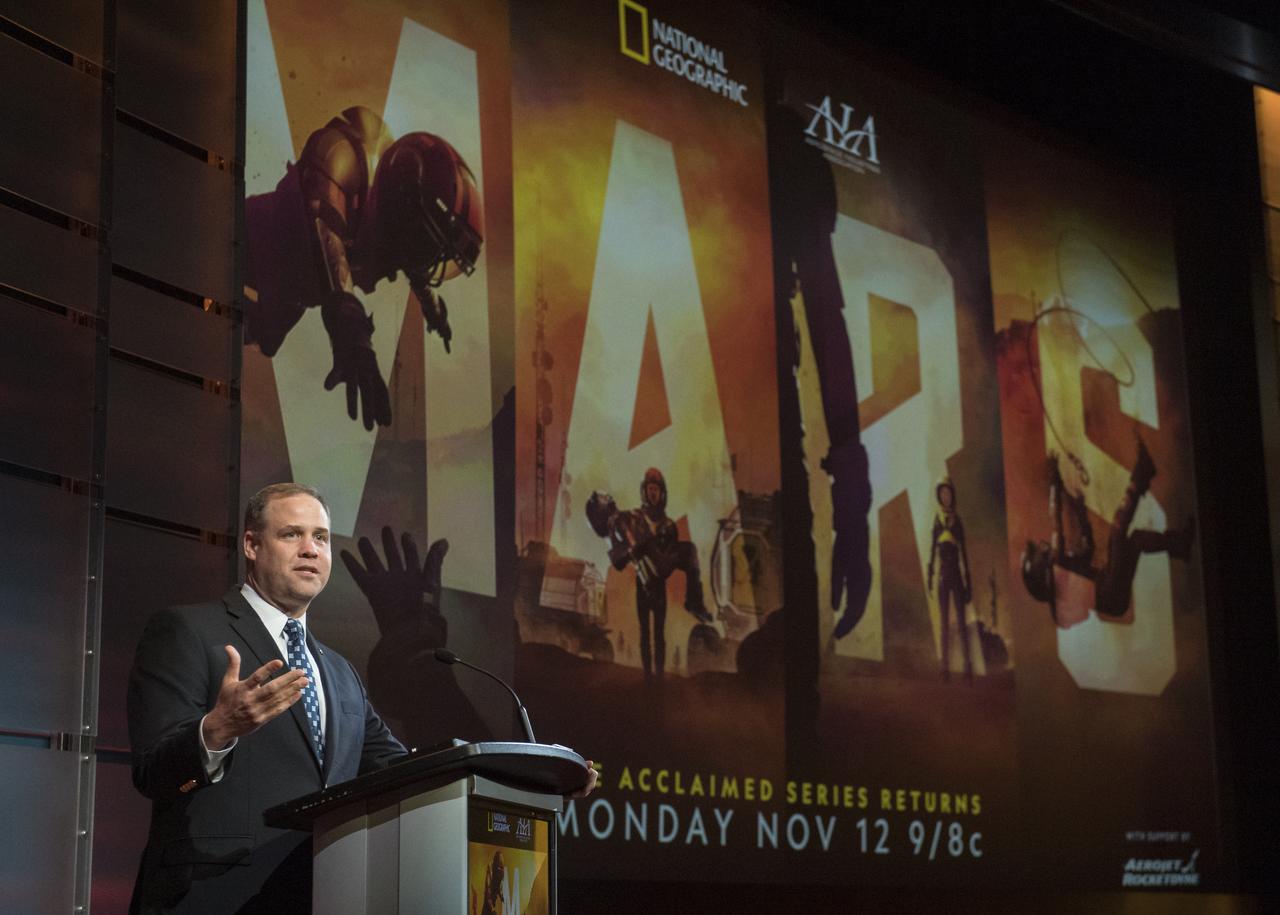
NASA Administrator Jim Bridenstine gives keynote remarks before a showing of the Project Mars Competition's short films and the Mars series, Monday, November 5, 2018 at National Geographic Society Headquarters in Washington. Photo Credit: (NASA/Aubrey Gemignani)
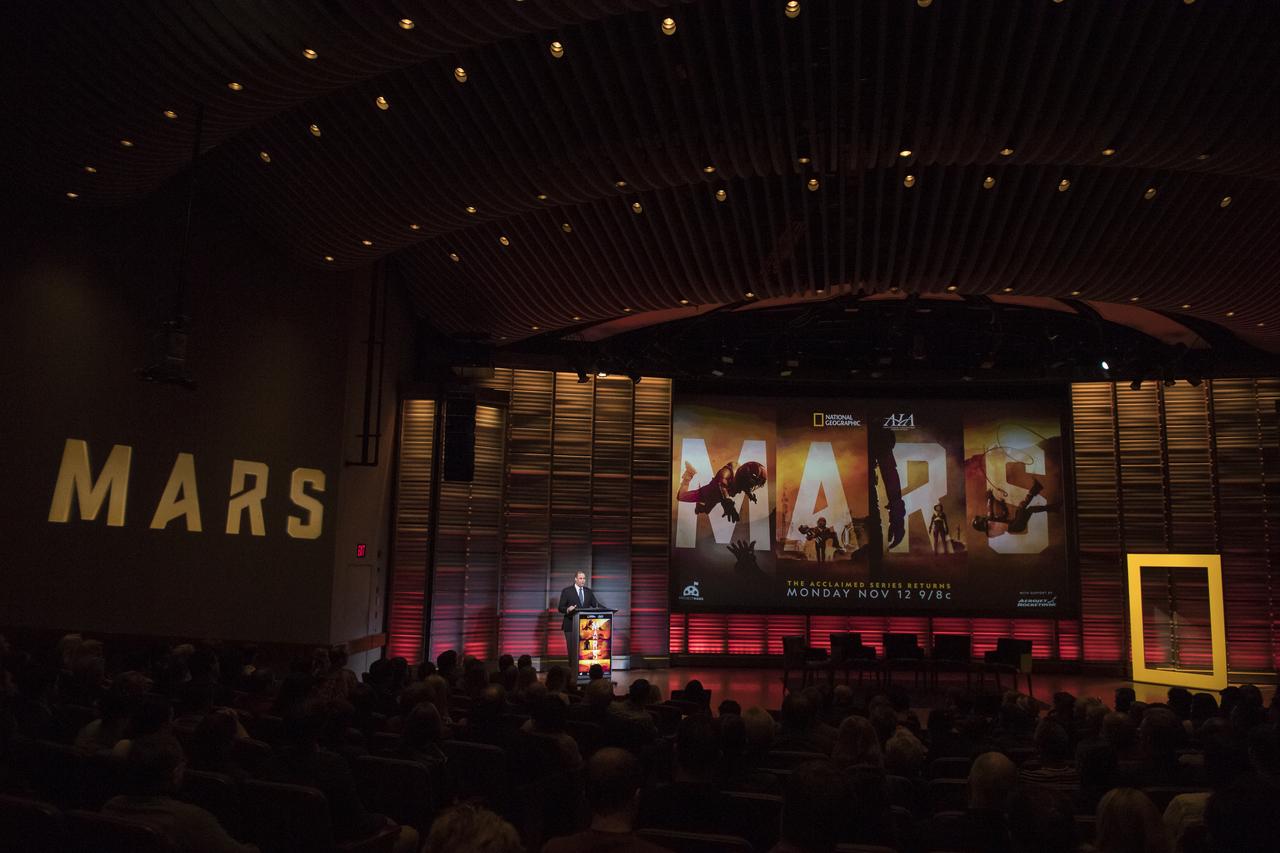
NASA Administrator Jim Bridenstine gives keynote remarks before a showing of the Project Mars Competition's short films and the Mars series, Monday, November 5, 2018 at National Geographic Society Headquarters in Washington. Photo Credit: (NASA/Aubrey Gemignani)
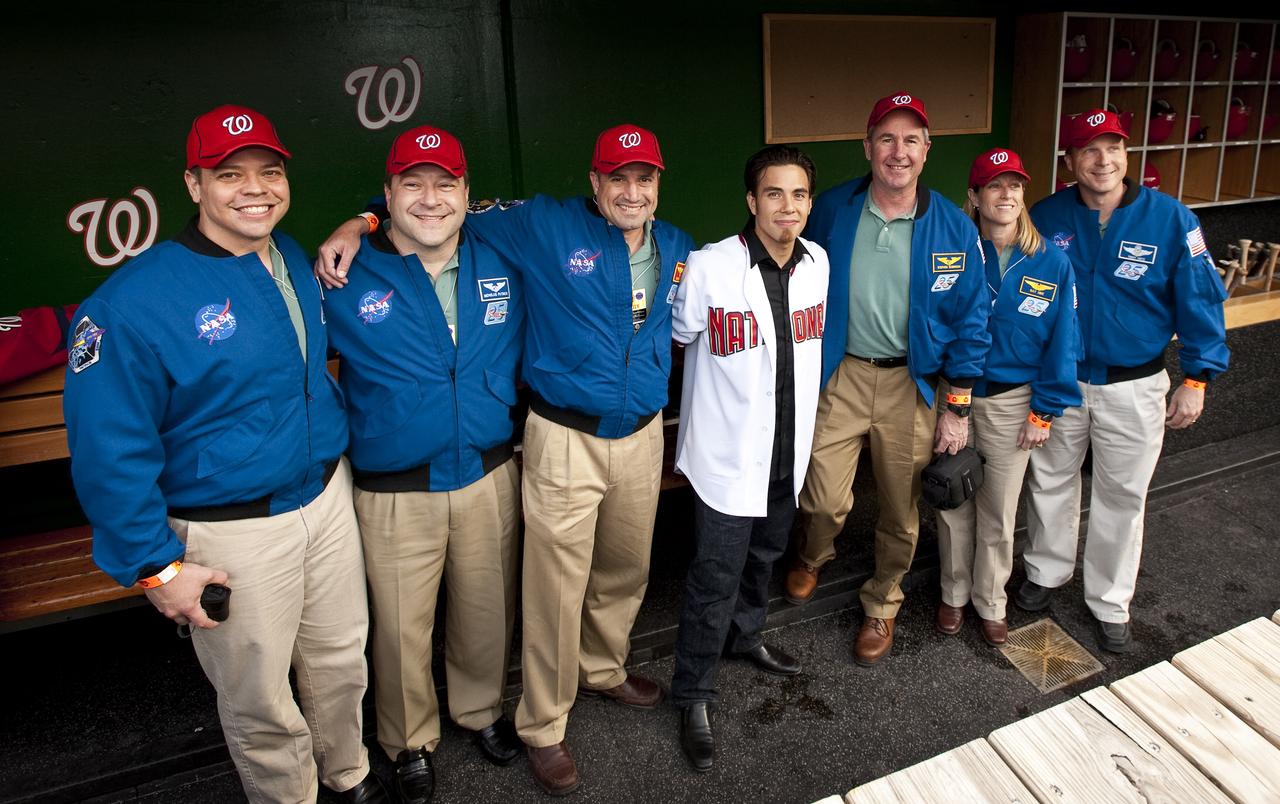
NASA STS-130 crew pose with Winter Olympics medalist Apolo Ohno, center, at Nationals Park, Tuesday, April 20, 2010, in Washington. Pictured from left are STS-130 Mission Specialist Robert Benhken, Mission Specialist Nicholas Patrick, Commander George Zamka, Apolo Ohno, Mission Specialist Stephen Robinson, Mission Specialist Kathryn Hire and Pilot Terry Virts. Photo Credit: (NASA/Carla Cioffi)
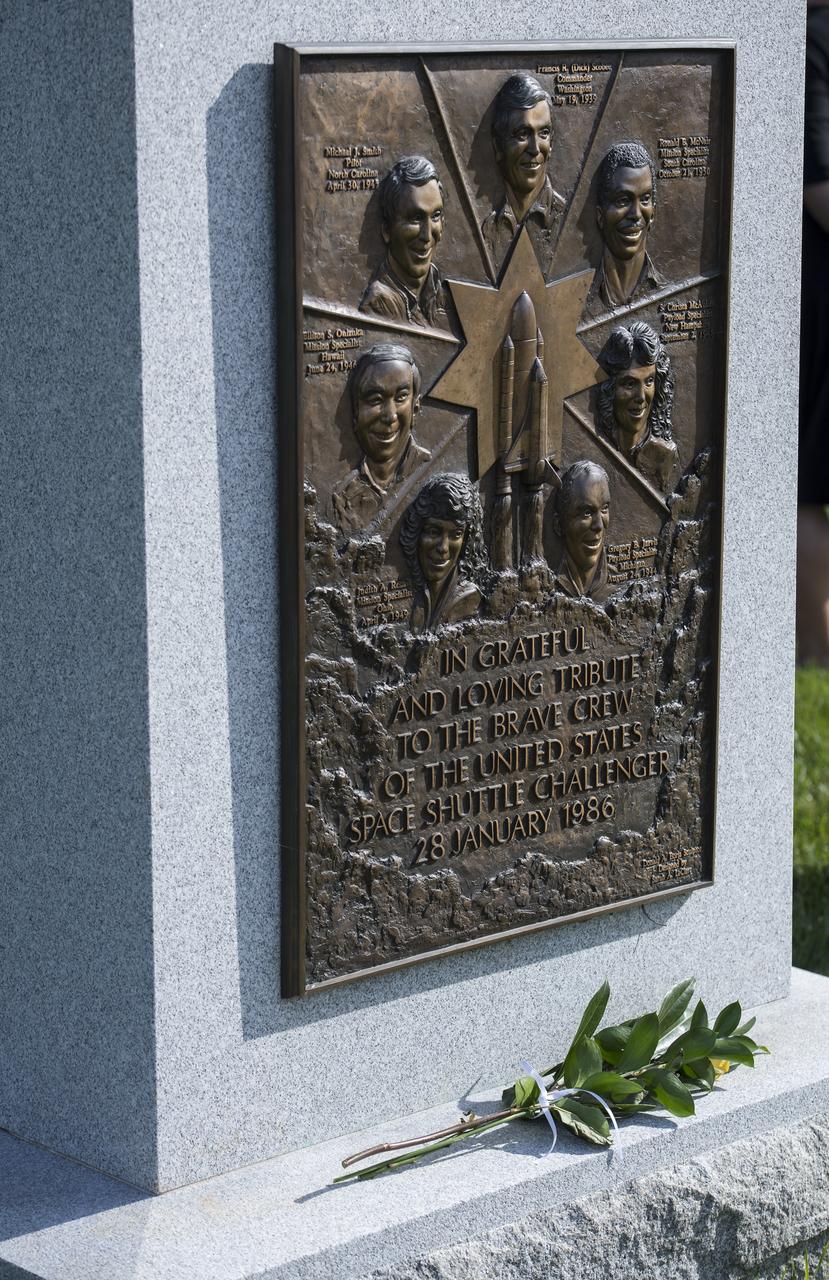
The Space Shuttle Challenger Memorial is seen just after NASA astronaut Joe Acaba placed a flower there, Friday, June 15, 2018 at Arlington National Cemetery in Arlington, Va. Photo Credit: (NASA/Aubrey Gemignani)
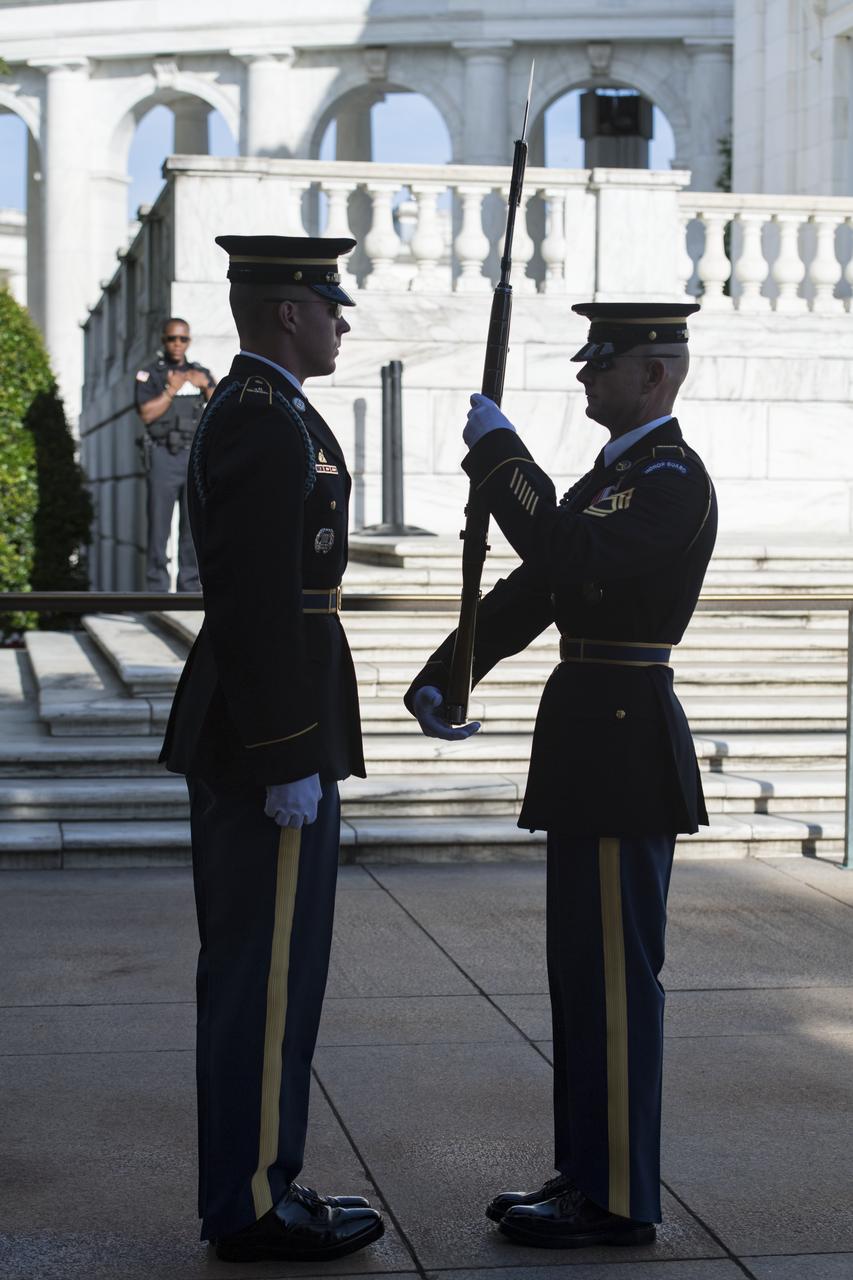
NASA astronauts Mark Vande Hei and Joe Acaba attend the changing of the guards at the Tomb of the Unknown soldier, Friday, June 15, 2018 at Arlington National Cemetery in Arlington, Va. Photo Credit: (NASA/Aubrey Gemignani)

Musician Ben Folds performs at the the National Day of Service on the National Mall, Saturday, January 19, 2013, in Washington. NASA along with other federal agencies set up along the Mall as part of events surrounding the inauguration of President Barack Obama. Photo Credit: (NASA/Carla Cioffi)

Actress Eva Longoria, Co-Chair of the Presidential Inaugural Committee, speaks at the National Day of Service on the National Mall, Saturday, January 19, 2013, in Washington. NASA along with other federal agencies set up along the Mall as part of events surrounding the inauguration of President Barack Obama. Photo Credit: (NASA/Carla Cioffi)
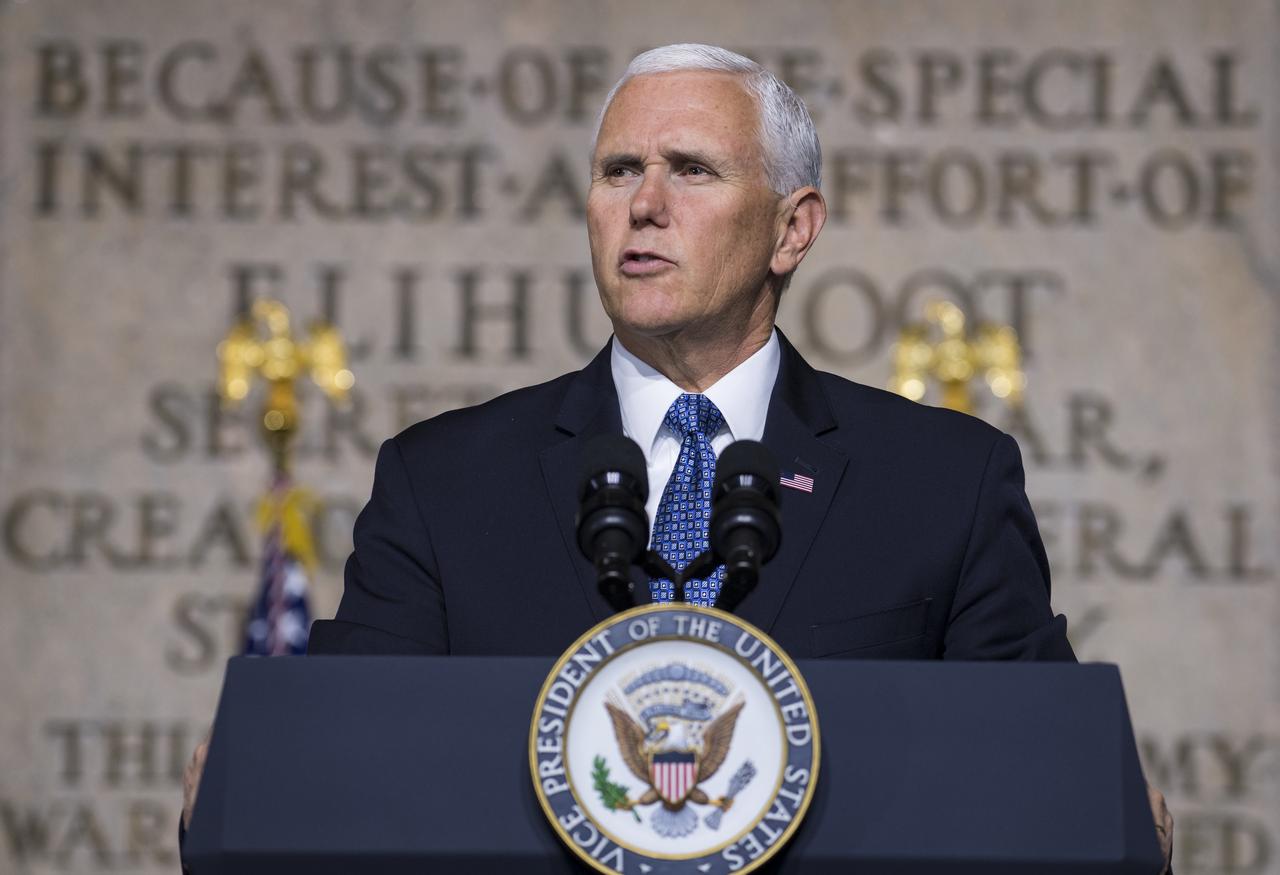
Vice President Mike Pence delivers opening remarks during the National Space Council meeting titled, Moon, Mars, and Worlds Beyond, Winning the Next Frontier, Tuesday, Oct. 23, 2018 at the National War College at Fort Lesley J. McNair in Washington. Chaired by the Vice President, the council's role is to advise the President regarding national space policy and strategy, and review the nation's long-range goals for space activities.Photo Credit: (NASA/Aubrey Gemignani)
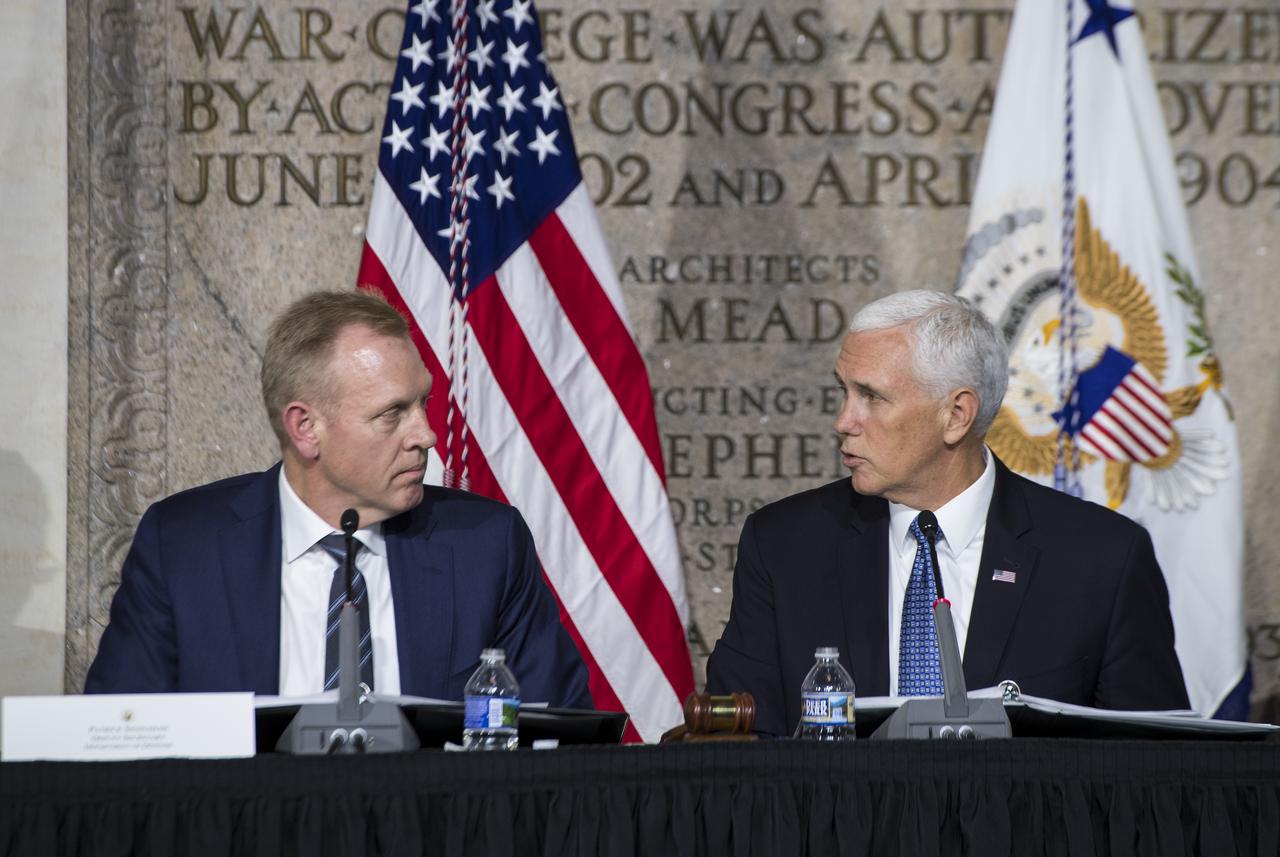
Vice President Mike Pence, right, speaks to Patrick Shanahan, deputy secretary, Department of Defense, during the National Space Council meeting titled, Moon, Mars, and Worlds Beyond, Winning the Next Frontier, Tuesday, Oct. 23, 2018 at the National War College at Fort Lesley J. McNair in Washington. Chaired by the Vice President, the council's role is to advise the President regarding national space policy and strategy, and review the nation's long-range goals for space activities.Photo Credit: (NASA/Aubrey Gemignani)
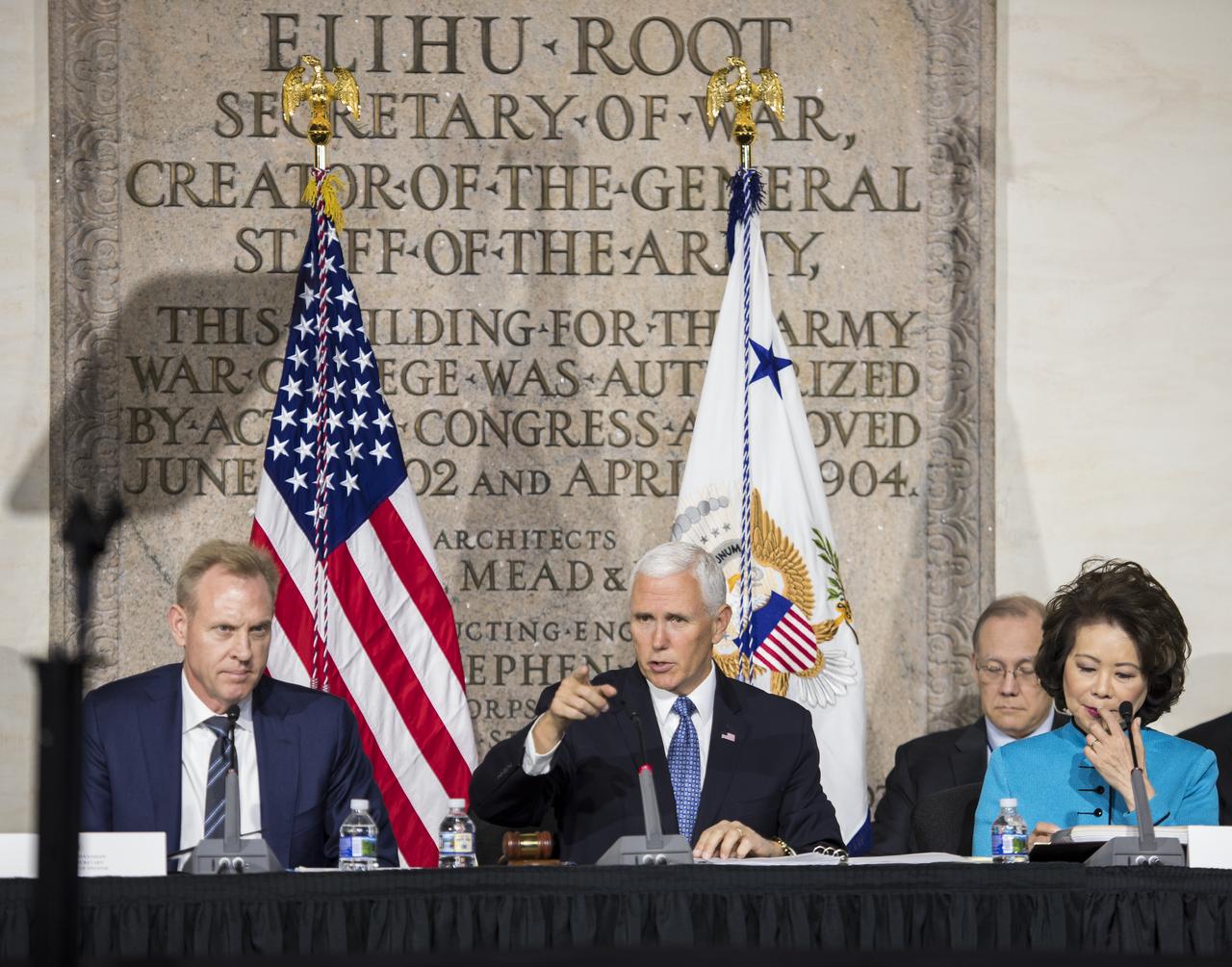
Vice President Mike Pence, center, speaks during the National Space Council meeting titled, Moon, Mars, and Worlds Beyond, Winning the Next Frontier, Tuesday, Oct. 23, 2018 at the National War College at Fort Lesley J. McNair in Washington. Chaired by the Vice President, the council's role is to advise the President regarding national space policy and strategy, and review the nation's long-range goals for space activities.Photo Credit: (NASA/Aubrey Gemignani)
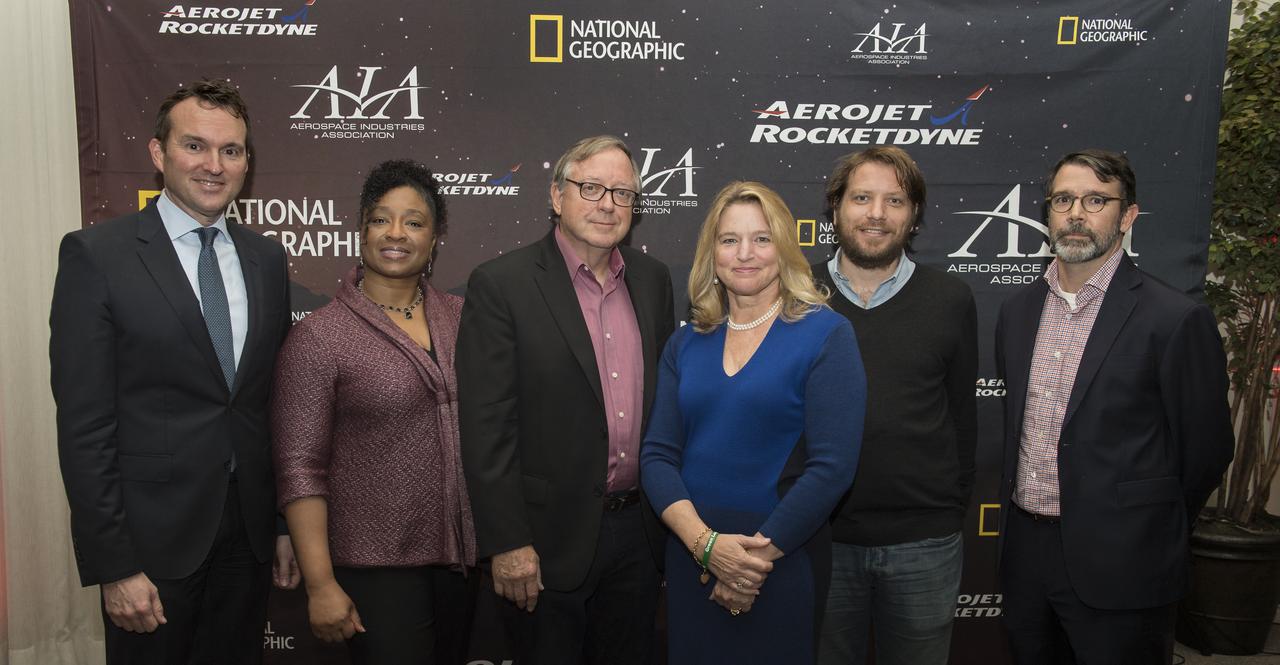
From left to right, Eric Fanning, AIA President and CEO; Christyl Johnson, deputy director for technology and research investments, NASA Goddard Space Flight Center; Dr. Stephen Petranek, MARS scientific advisor and co-executive producer; Ellen Stofan, director, Smithsonian's National Air and Space Museum; Gareth Edwards, film director, Rogue One: A Star Wars Story; and Chris Davenport, Washington Post space reporter pose for a photo before a showing of the Project Mars Competition's short films winners and the Mars series, Monday, November 5, 2018 at National Geographic Society Headquarters in Washington. Photo Credit: (NASA/Aubrey Gemignani)
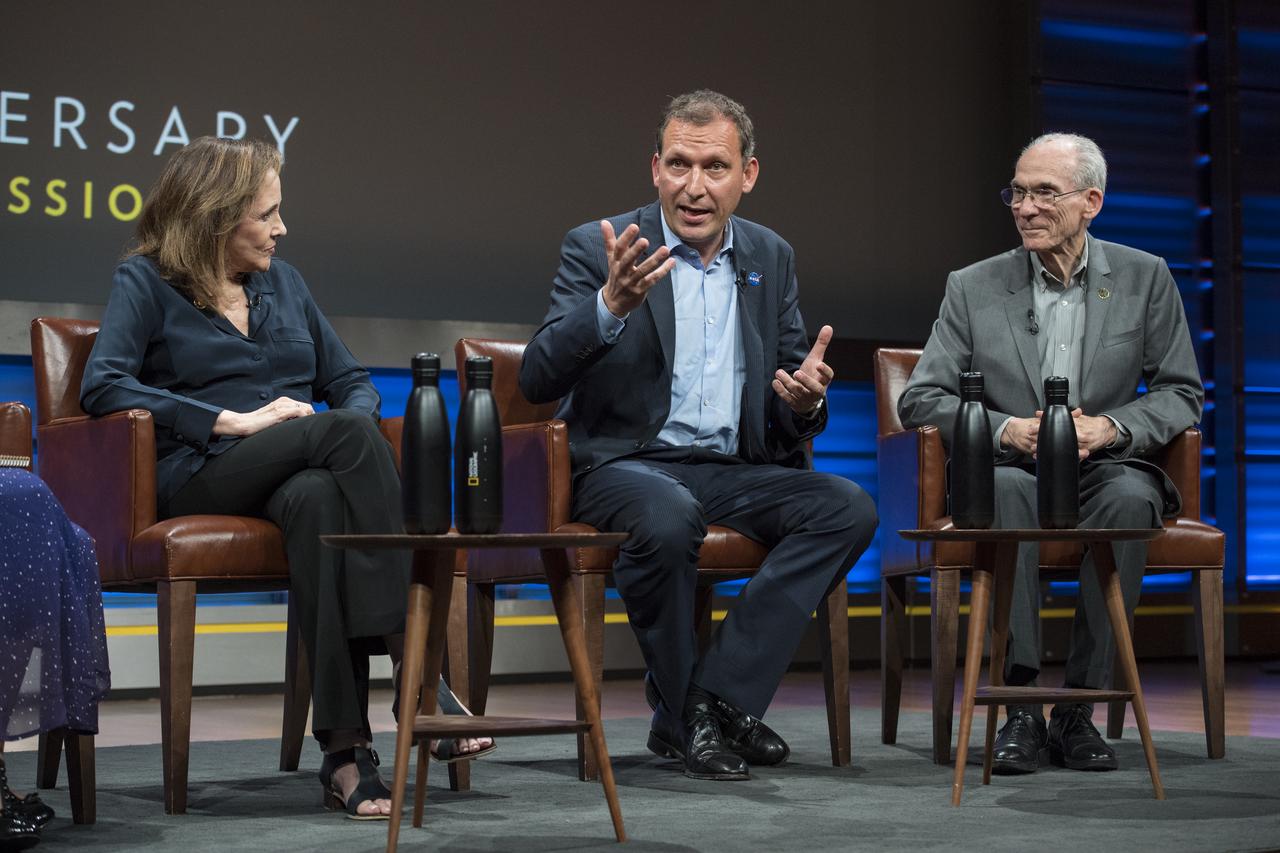
Thomas Zurbuchen, NASA associate administrator, Science Mission Directorate, speaks on a panel at an event to celebrate the 40th Anniversary of the launch of the Voyager 1 and 2 missions, Tuesday, September 5, 2017 at National Geographic Society Headquarters in Washington. Voyager 1 was launched September 5, 1977, with a mission to study Jupiter and Saturn, but now the twin Voyager spacecrafts are on a journey into interstellar space to search for the heliopause, a region never reached by any other spacecraft. Photo Credit: (NASA/Aubrey Gemignani)

Ann Druyan, writer/producer and golden record visionary, speaks on a panel at an event to celebrate the 40th Anniversary of the launch of the Voyager 1 and 2 missions, Tuesday, September 5, 2017 at National Geographic Society Headquarters in Washington. Voyager 1 was launched September 5, 1977, with a mission to study Jupiter and Saturn, but now the twin Voyager spacecrafts are on a journey into interstellar space to search for the heliopause, a region never reached by any other spacecraft. Photo Credit: (NASA/Aubrey Gemignani)
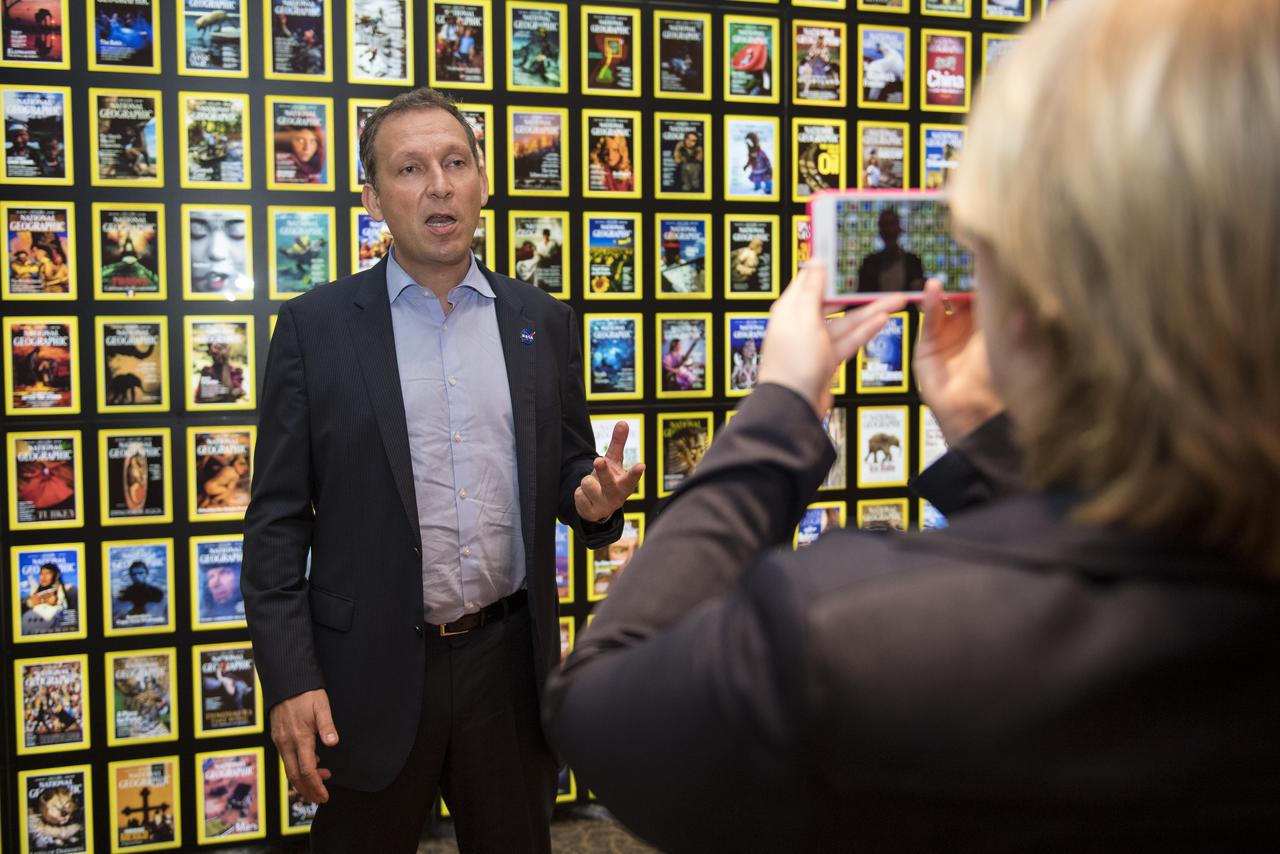
Thomas Zurbuchen, NASA associate administrator, Science Mission Directorate, is interviewed prior to serving on a panel at an event to celebrate the 40th Anniversary of the launch of the Voyager 1 and 2 missions, Tuesday, September 5, 2017 at National Geographic Society Headquarters in Washington. Voyager 1 was launched September 5, 1977, with a mission to study Jupiter and Saturn, but now the twin Voyager spacecrafts are on a journey into interstellar space to search for the heliopause, a region never reached by any other spacecraft. Photo Credit: (NASA/Aubrey Gemignani)

From left to right, NASA staff, Cindy Steele, Bert Ulrich, and Cheryl Warner, "Ad Astra" producer, co-writer, and director James Gray, former NASA astronaut Kay Hire, and NASA Associate Administrator for the Office of Communications, Bettina Inclán, pose for a photo on the red carpet during a screening of the film "Ad Astra" at National Geographic Society, Monday, September 16, 2019 in Washington. The film was produced, co-written, and directed by James Gray and stars Pitt, Tommy Lee Jones, Ruth Negga, Liv Tyler, and Donald Sutherland. Pitt stars as astronaut Roy McBride who travels deep into the solar system in hopes of solving a mystery that threatens life on Earth. Photo Credit: (NASA/Aubrey Gemignani)

NASA astronauts Joe Acaba, second from left, and Mark Vande Hei, right, visit the gravesite of former astronaut and U.S. Senator John Glenn, Friday, June 15, 2018 at the Arlington National Cemetery in Arlington, Va. Photo Credit: (NASA/Aubrey Gemignani)
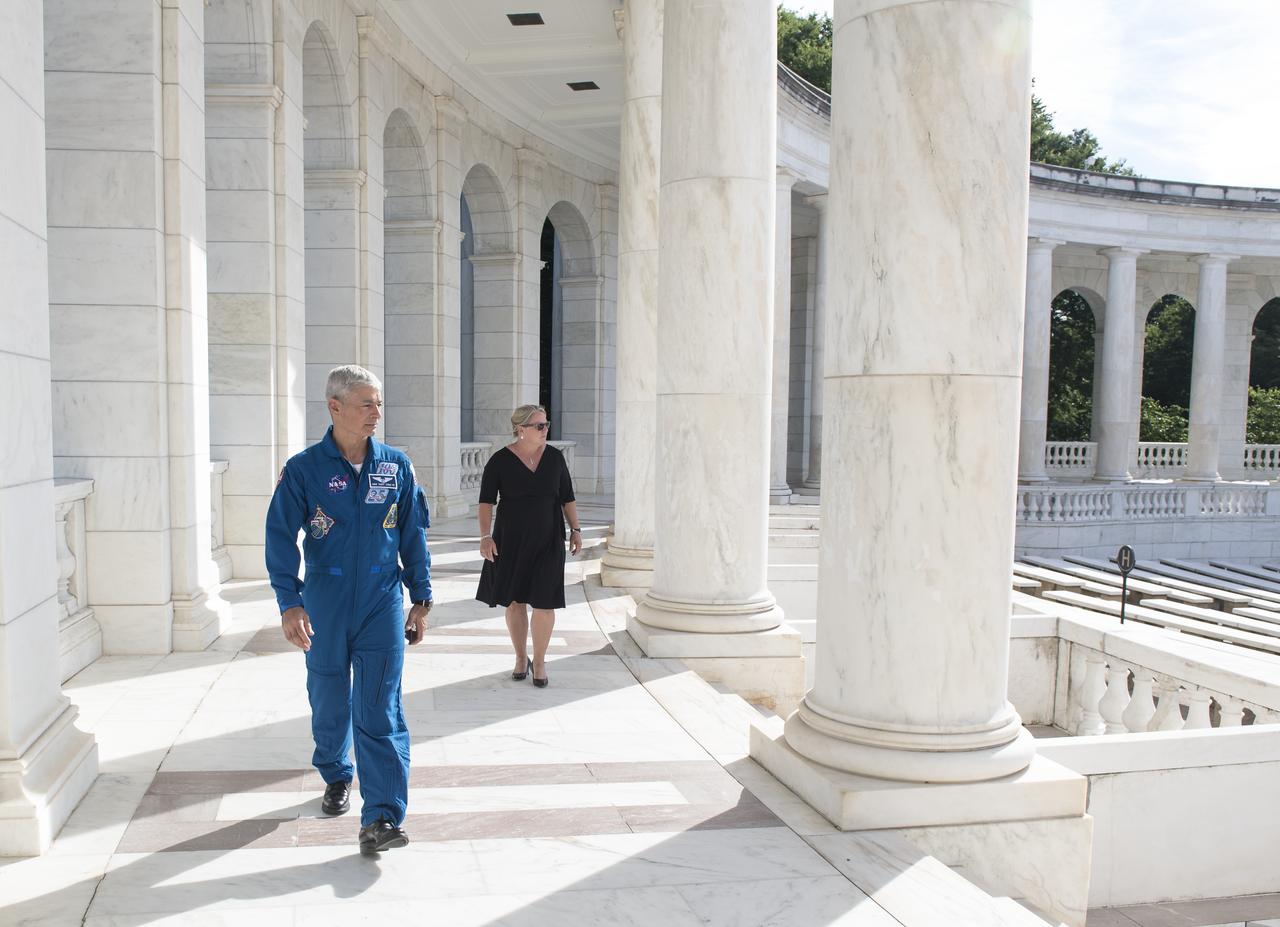
NASA astronaut Mark Vande Hei, left, and his wife Julie walk through the amphitheater at Arlington National Cemetery, Friday, June 15, 2018 in Arlington, Va. Photo Credit: (NASA/Aubrey Gemignani)
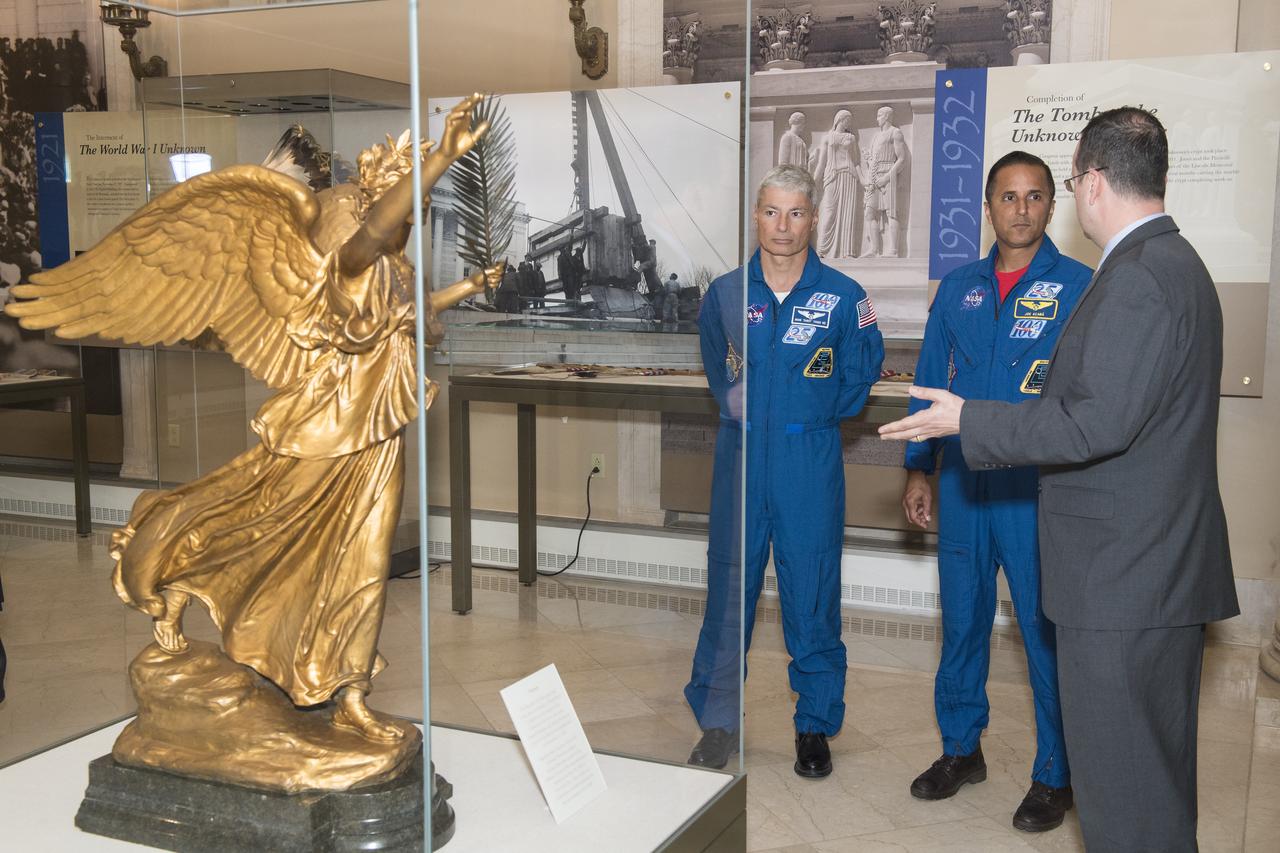
NASA astronauts Mark Vande Hei, left, and Joe Acaba, center, tour the museum at the Tomb of the Unknowns, Friday, June 15, 2018 at Arlington National Cemetery in Arlington, Va. Photo Credit: (NASA/Aubrey Gemignani)

NASA astronauts Mark Vande Hei, left, and Joe Acaba, center, meet with the Honor Guard at the Tomb of the Unknowns, Friday, June 15, 2018 at the Arlington National Cemetery in Arlington, Va. Photo Credit: (NASA/Aubrey Gemignani)
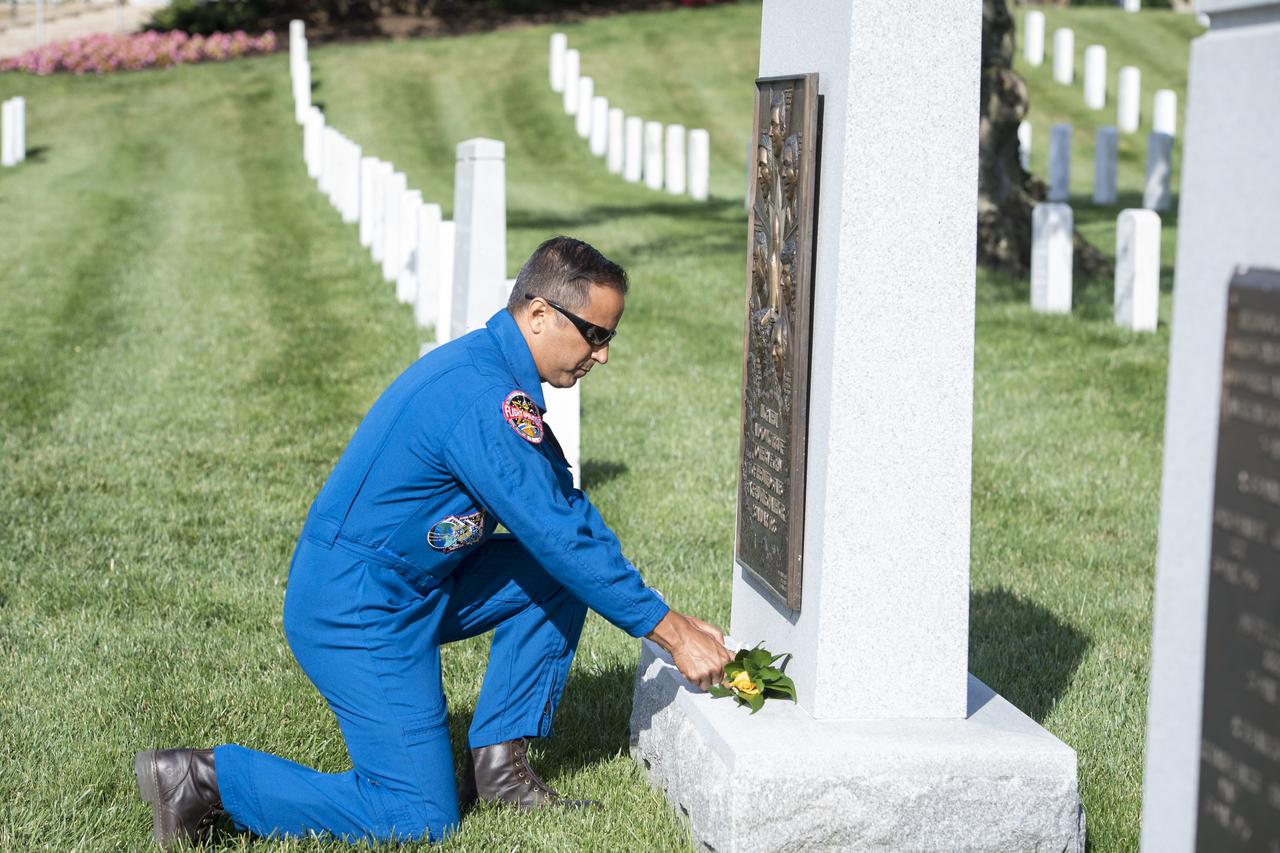
NASA astronaut Joe Acaba places a flower at the Space Shuttle Challenger Memorial, Friday, June 15, 2018 at Arlington National Cemetery in Arlington, Va. Photo Credit: (NASA/Aubrey Gemignani)
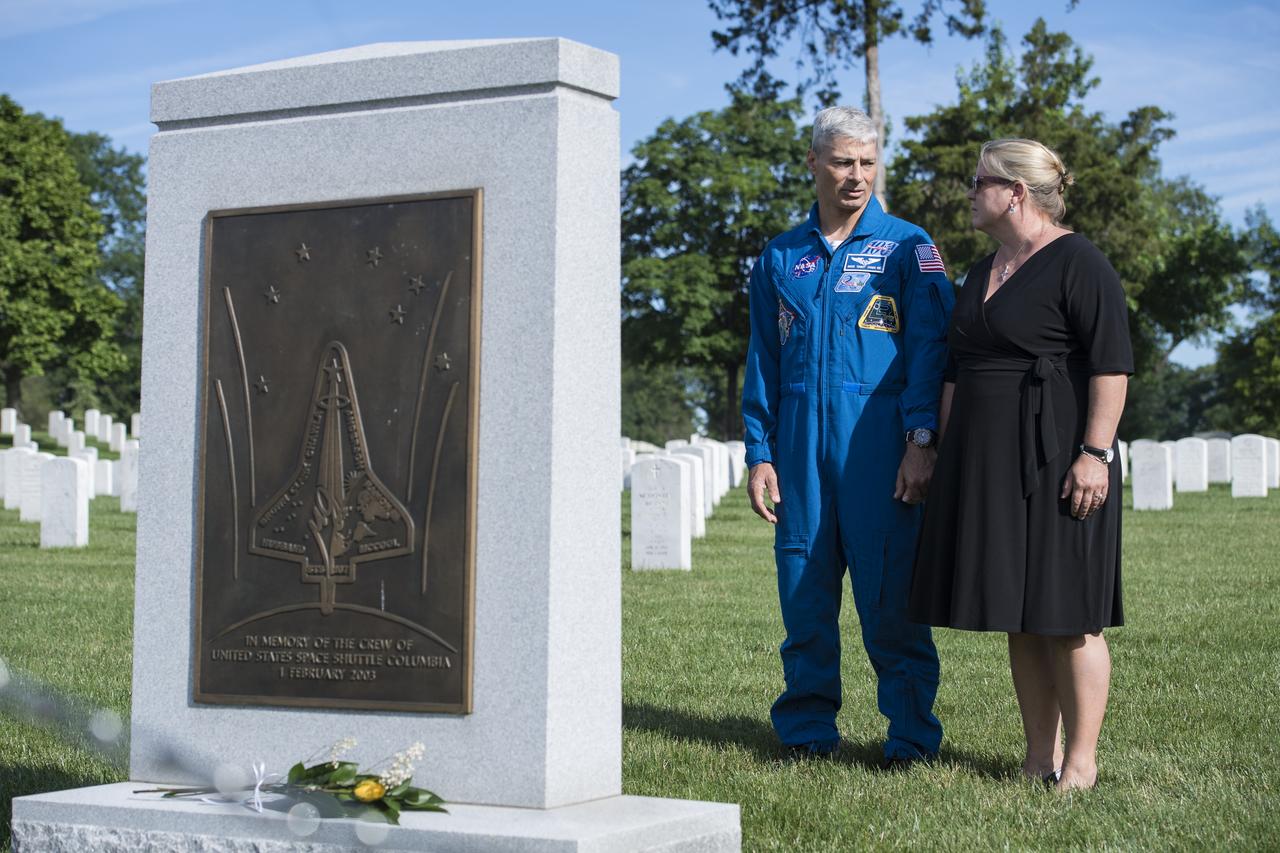
NASA astronaut Mark Vande Hei, left, and his wife Julie visit the Space Shuttle Columbia memorial, Friday, June 15, 2018 at Arlington National Cemetery in Arlington, Va. Photo Credit: (NASA/Aubrey Gemignani)

NASA astronaut Mark Vande Hei places a flower at the Space Shuttle Columbia Memorial, Friday, June 15, 2018 at Arlington National Cemetery in Arlington, Va. Photo Credit: (NASA/Aubrey Gemignani)
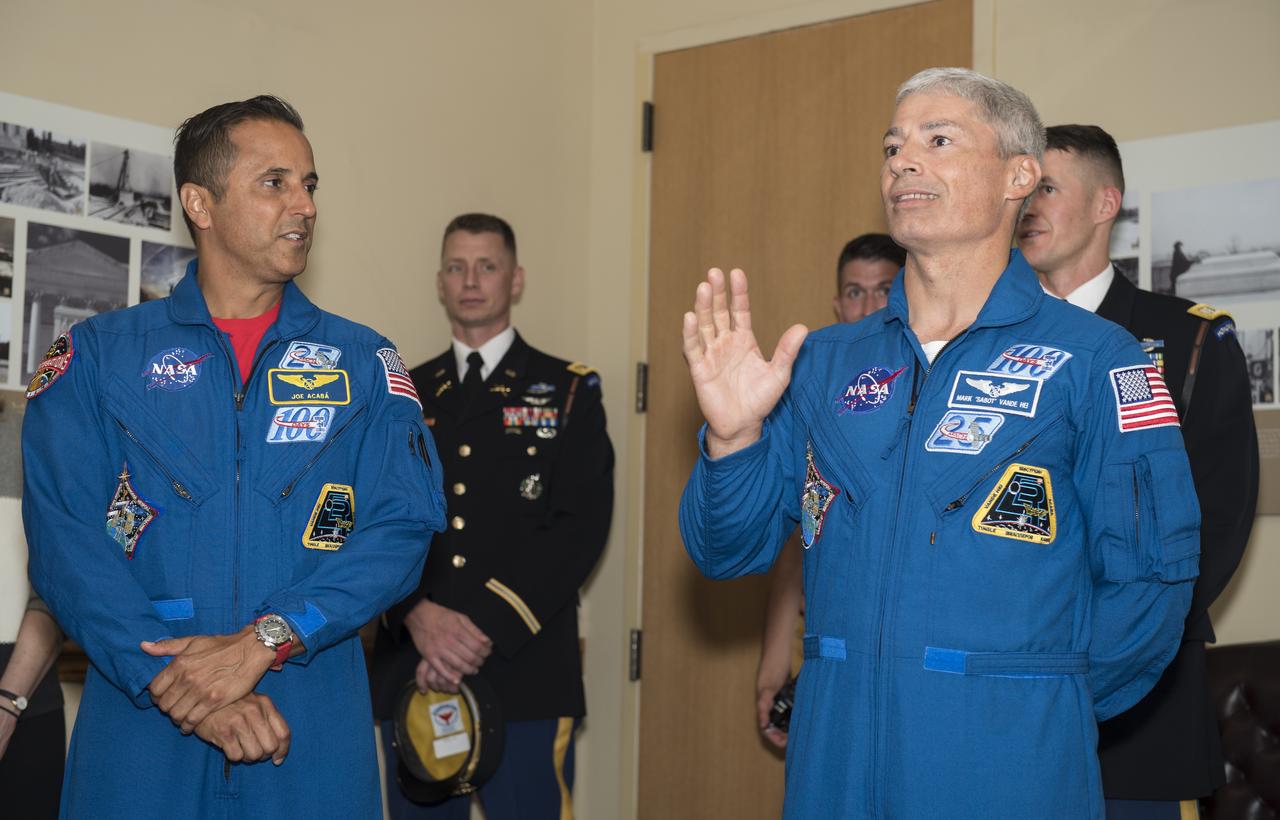
NASA astronauts Joe Acaba, left, and Mark Vande Hei, right, meet with the Honor Guard at the Tomb of the Unknowns, Friday, June 15, 2018 at the Arlington National Cemetery in Arlington, Va. Photo Credit: (NASA/Aubrey Gemignani)
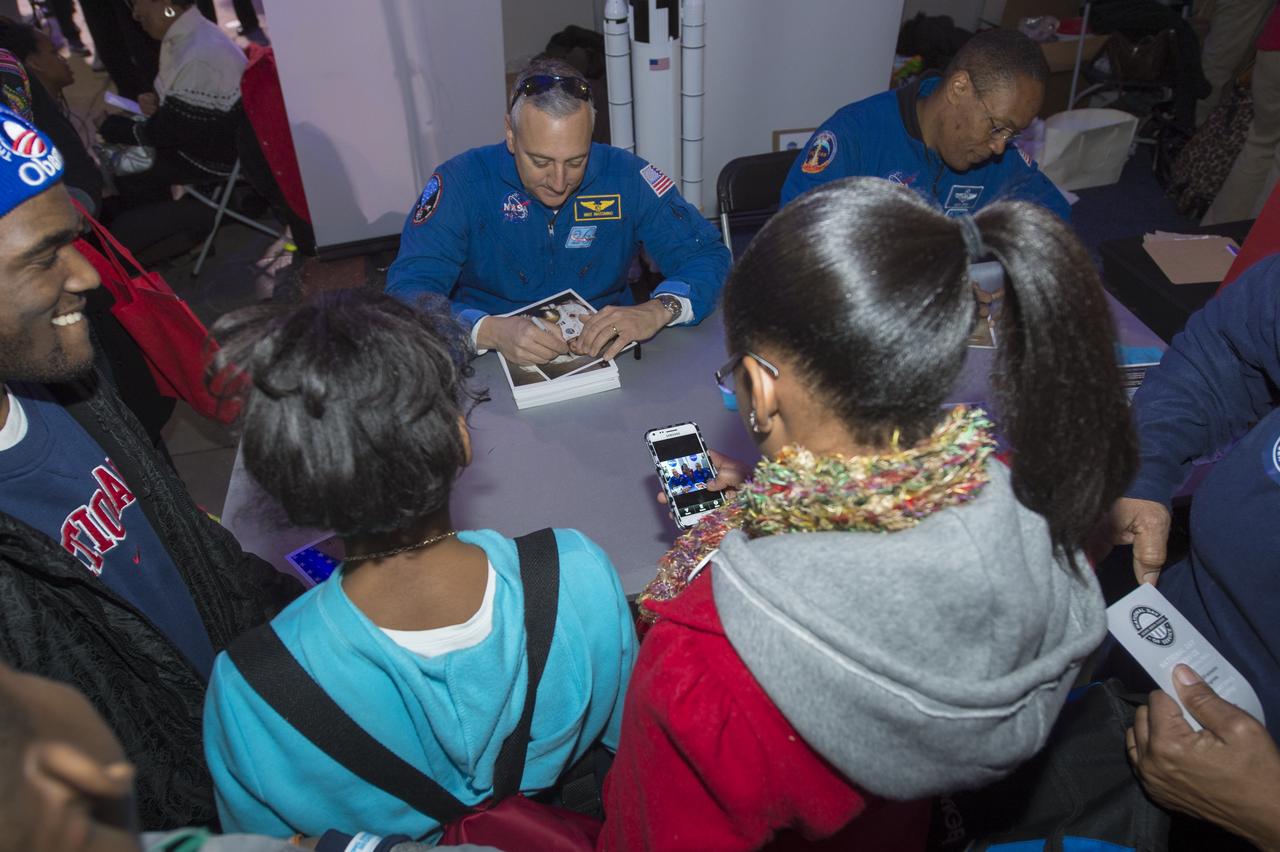
Astronauts Mike Massimino, top center, and Alvin Drew, top right, sign autographs at the NASA booth set up on the National Mall as part of the National Day of Service, Saturday, January 19, 2013, in Washington. NASA along with other federal agencies set up along the Mall as part of events surrounding the inauguration of President Barack Obama. Photo Credit: (NASA/Carla Cioffi)
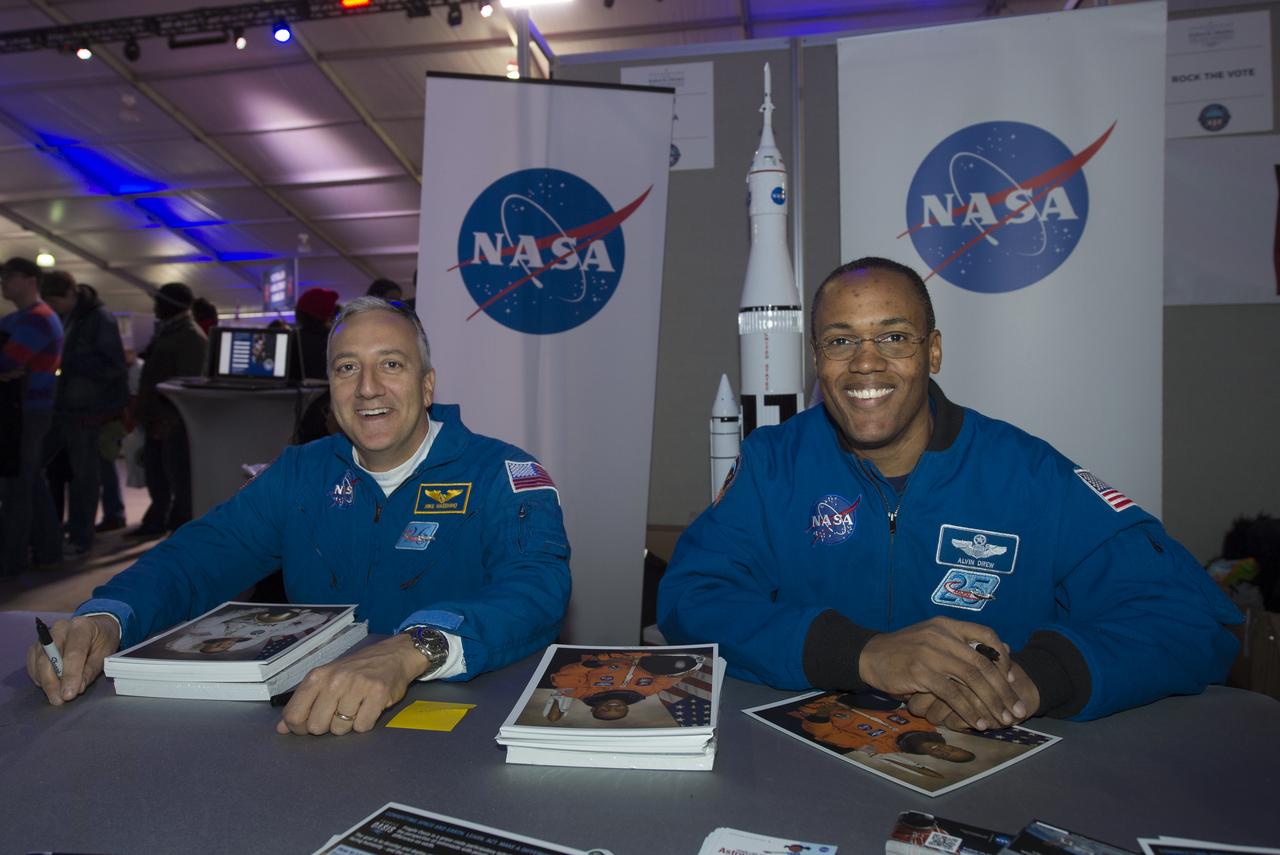
Astronauts Mike Massimino, left, and Alvin Drew pose for the camera at the NASA booth set up on the National Mall as part of the National Day of Service, Saturday, January 19, 2013, in Washington. NASA along with other federal agencies set up along the Mall as part of events surrounding the inauguration of President Barack Obama. Photo Credit: (NASA/Carla Cioffi)
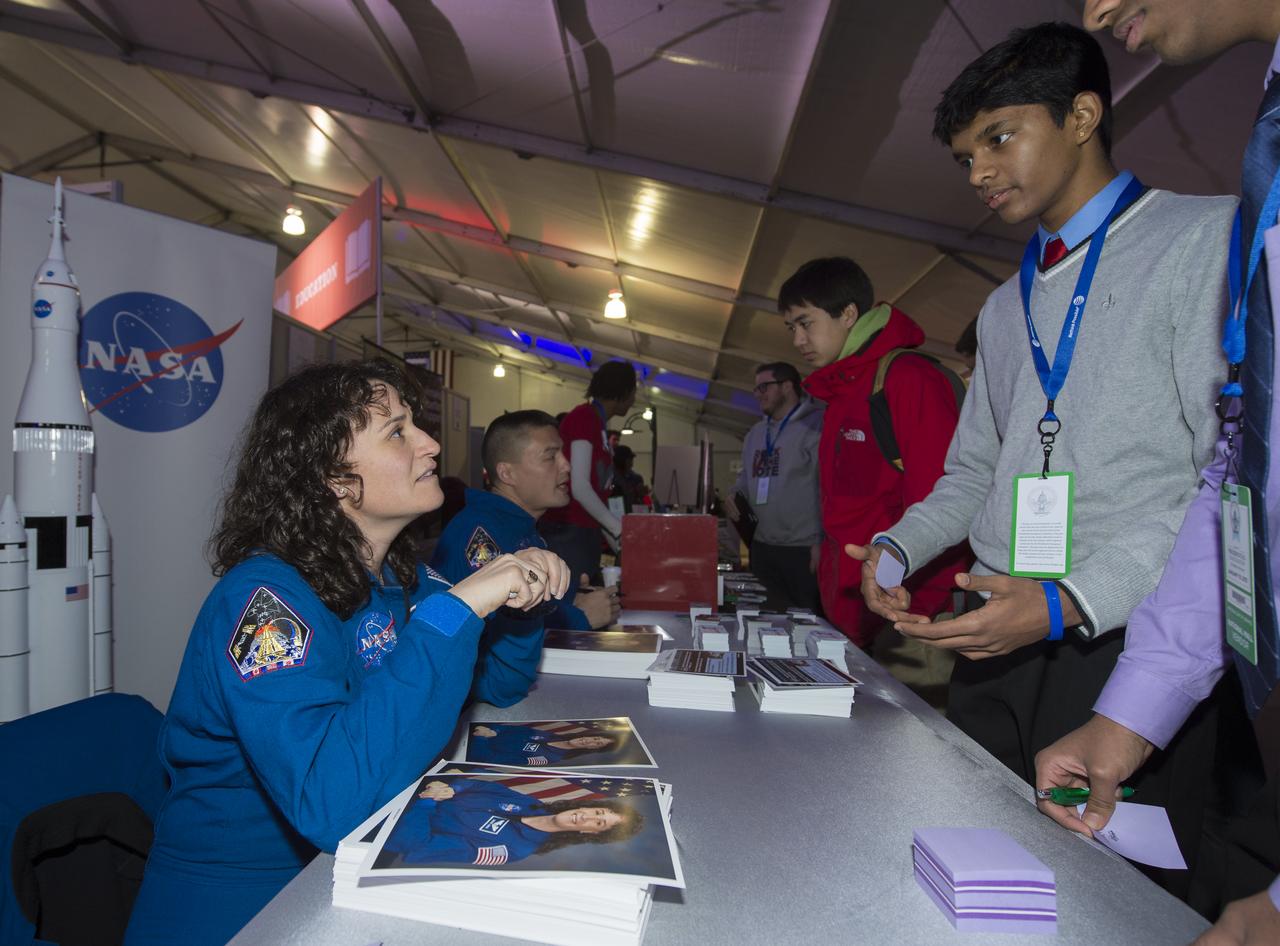
As part of the National Day of Service people visit the NASA booth set up on the National Mall, Saturday, January 19, 2013, in Washington. Astronaut Serena Auñon, left, is seen talking to a member of the public. NASA along with other federal agencies set up along the Mall as part of events surrounding the inauguration of President Barack Obama. Photo Credit: (NASA/Carla Cioffi)
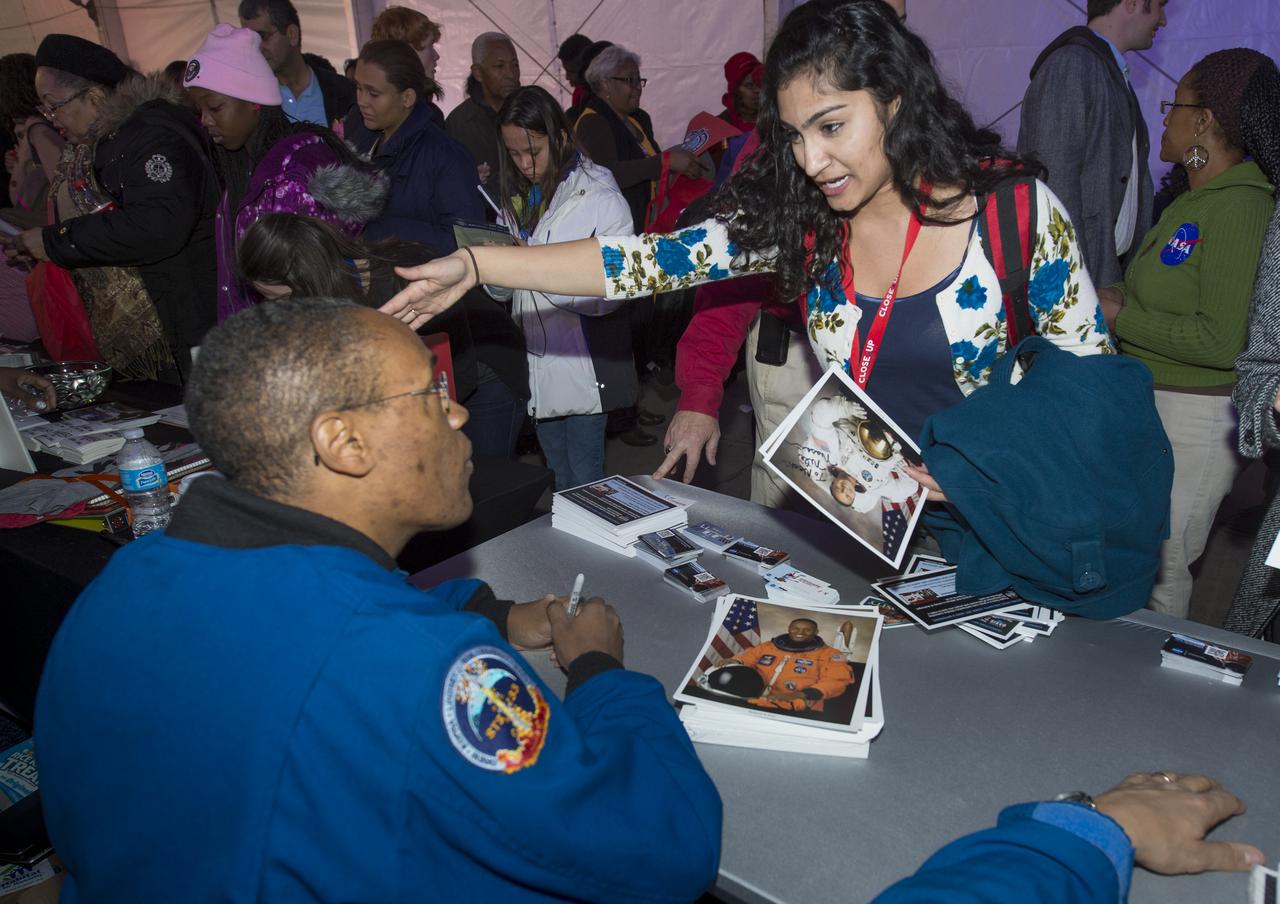
NASA Astronaut Alvin Drew, left, signs autographs at the NASA booth set up on the National Mall as part of the National Day of Service, Saturday, January 19, 2013, in Washington. NASA along with other federal agencies set up along the Mall as part of events surrounding the inauguration of President Barack Obama. Photo Credit: (NASA/Carla Cioffi)
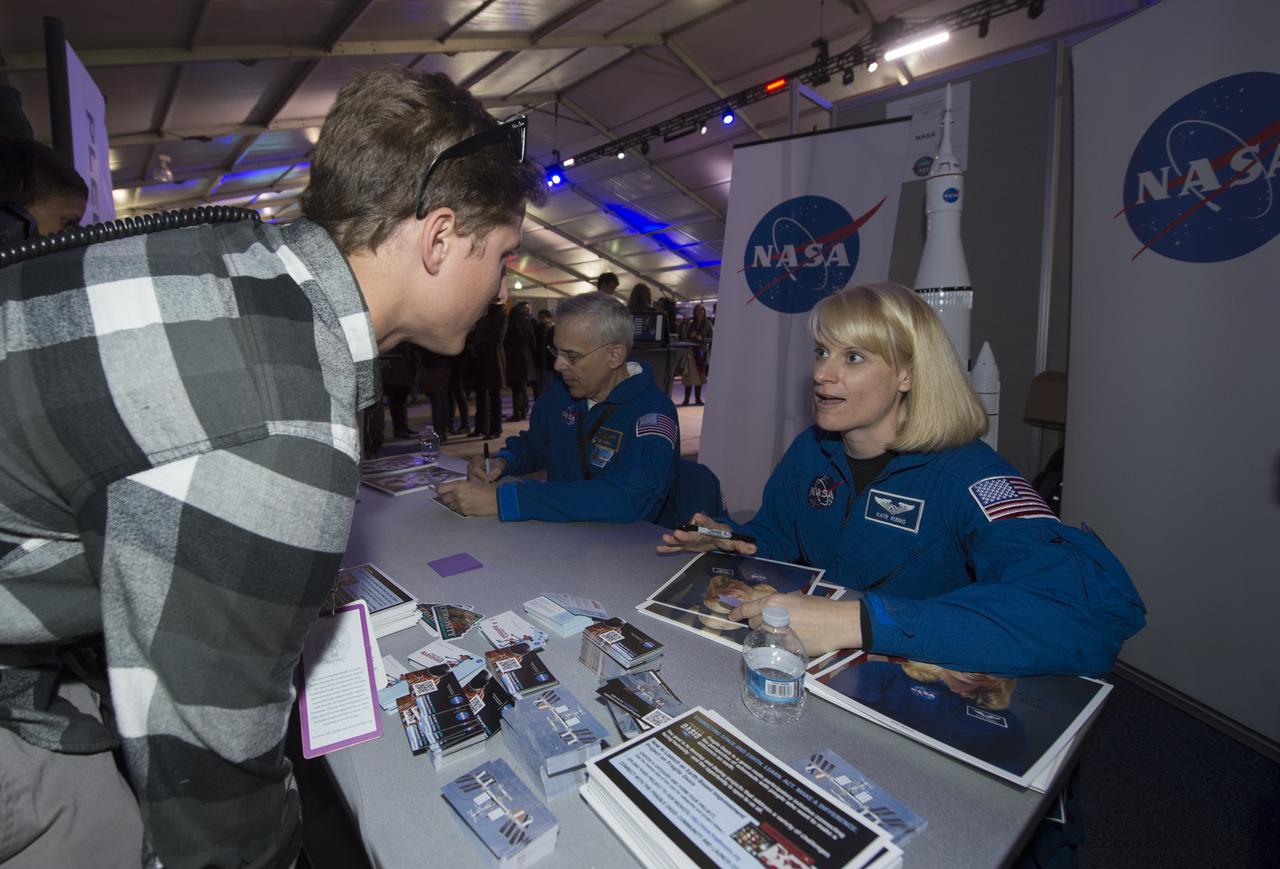
NASA Astronaut Kate Rubins signs autographs at the NASA booth set up on the National Mall as part of the National Day of Service, Saturday, January 19, 2013, in Washington. NASA along with other federal agencies set up along the Mall as part of events surrounding the inauguration of President Barack Obama. Photo Credit: (NASA/Carla Cioffi)
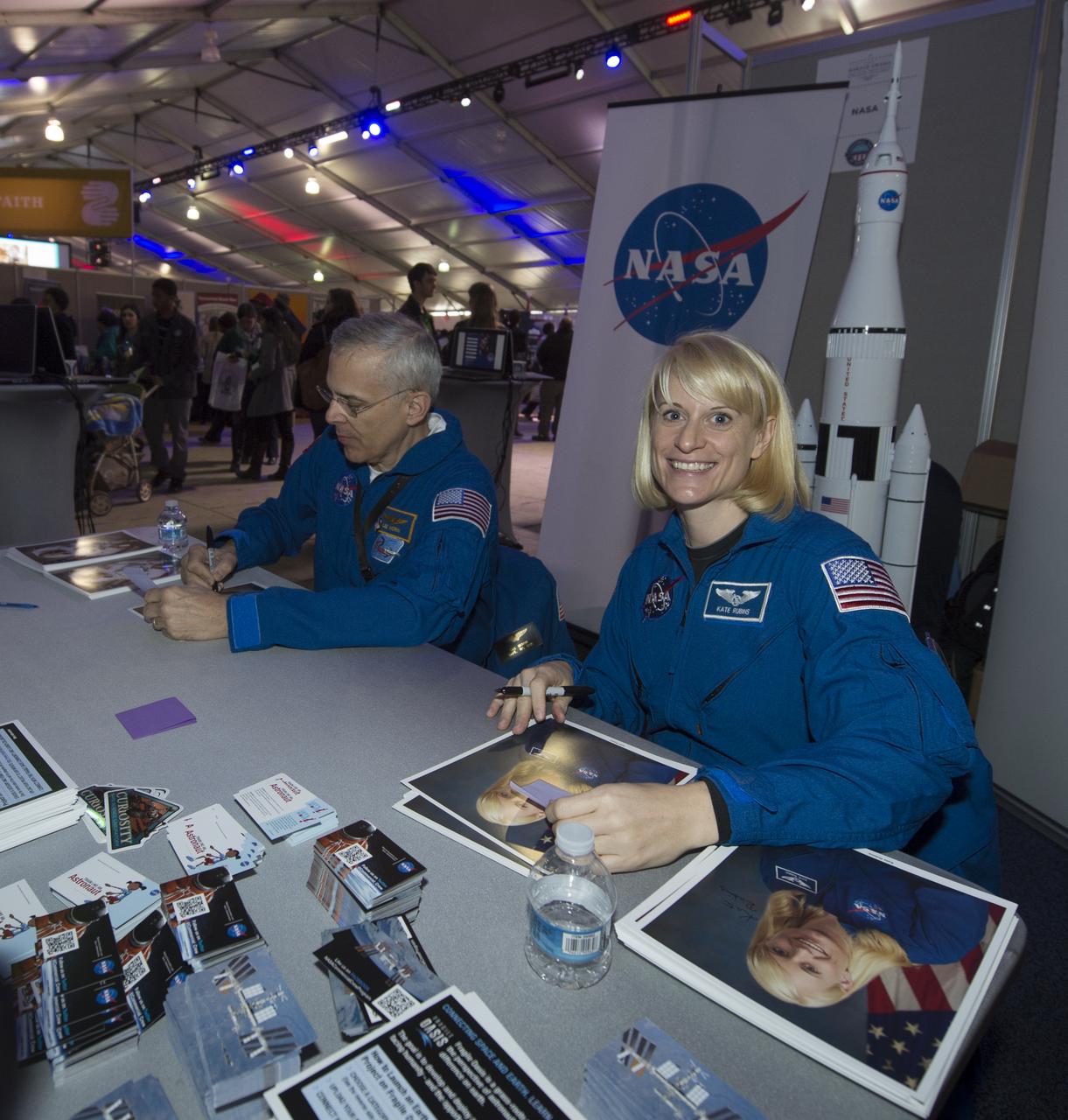
NASA Astronaut Kate Rubins smiles for the camera while signing autographs at the NASA booth set up on the National Mall as part of the National Day of Service, Saturday, January 19, 2013, in Washington. NASA along with other federal agencies set up along the Mall as part of events surrounding the inauguration of President Barack Obama. Photo Credit: (NASA/Carla Cioffi)
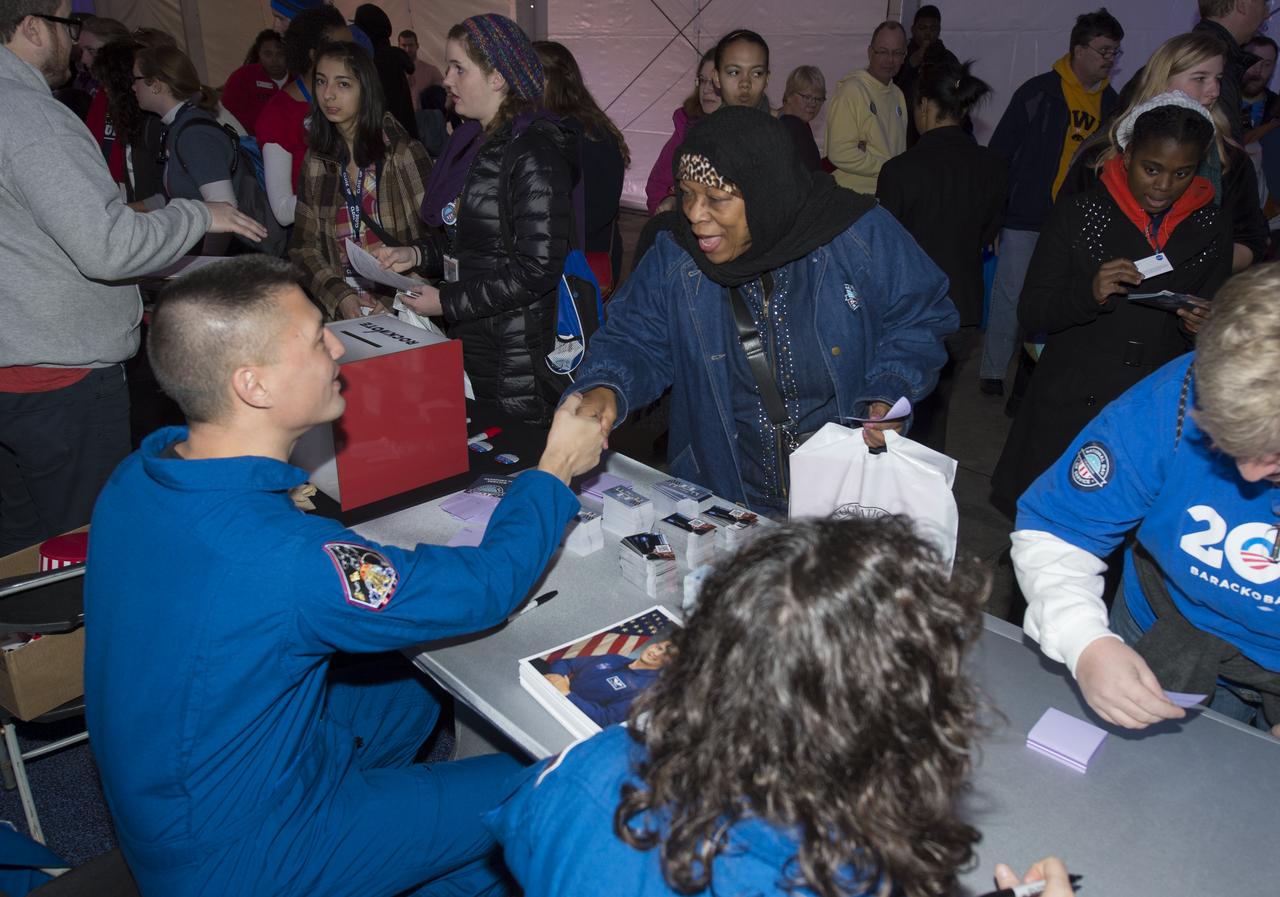
As part of the National Day of Service people visit the NASA booth set up on the National Mall, Saturday, January 19, 2013, in Washington. Astronaut Kjell Lindgren, left, is seen talking to a member of the public. NASA along with other federal agencies set up along the Mall as part of events surrounding the inauguration of President Barack Obama. Photo Credit: (NASA/Carla Cioffi)
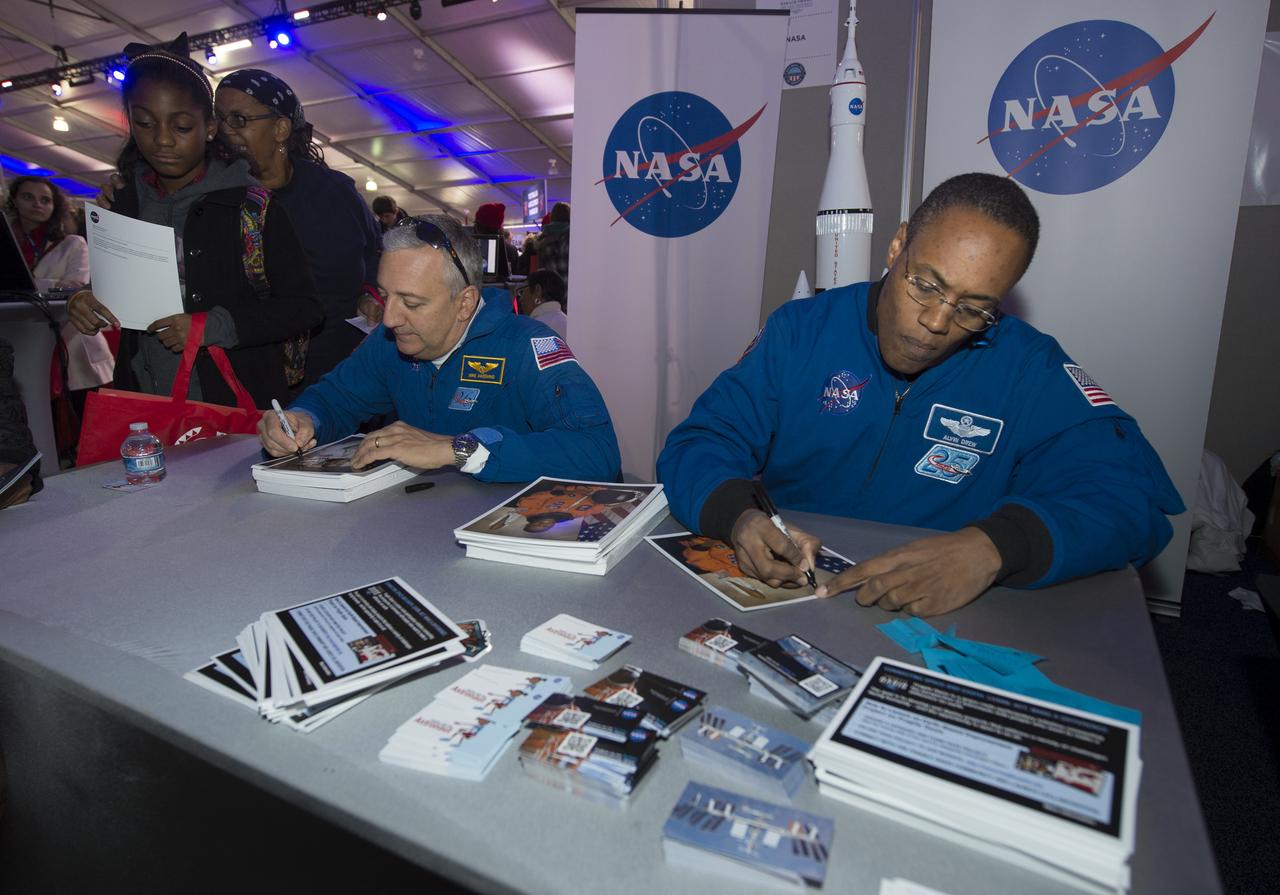
Astronauts Mike Massimino, left, and Alvin Drew sign autographs at the NASA booth set up on the National Mall as part of the National Day of Service, Saturday, January 19, 2013, in Washington. NASA along with other federal agencies set up along the Mall as part of events surrounding the inauguration of President Barack Obama. Photo Credit: (NASA/Carla Cioffi)
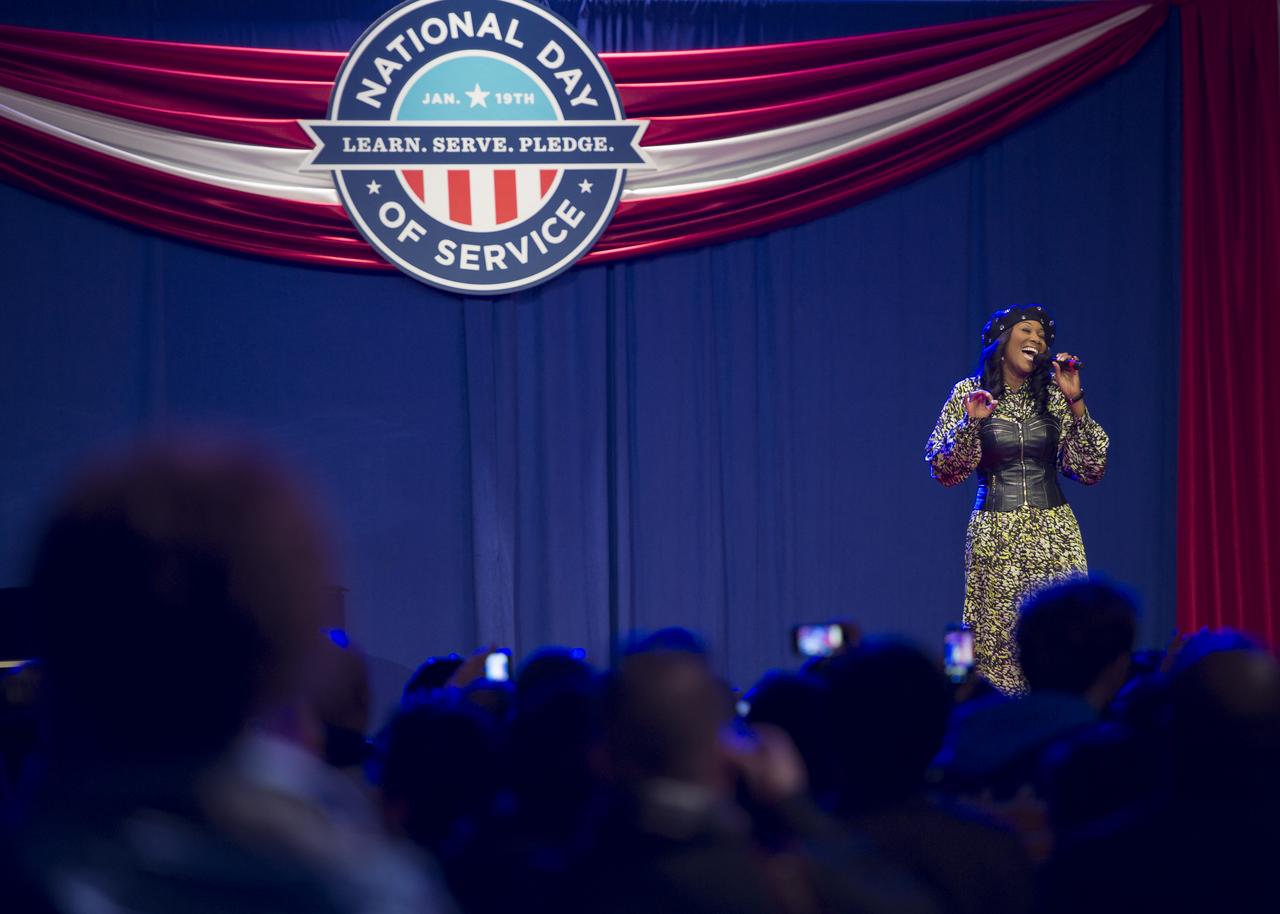
American gospel singer Yolanda Adams, known as the first lady of modern gospel, sings at the the National Day of Service on the National Mall, Saturday, January 19, 2013, in Washington. NASA along with other federal agencies set up along the Mall as part of events surrounding the inauguration of President Barack Obama. Photo Credit: (NASA/Carla Cioffi)
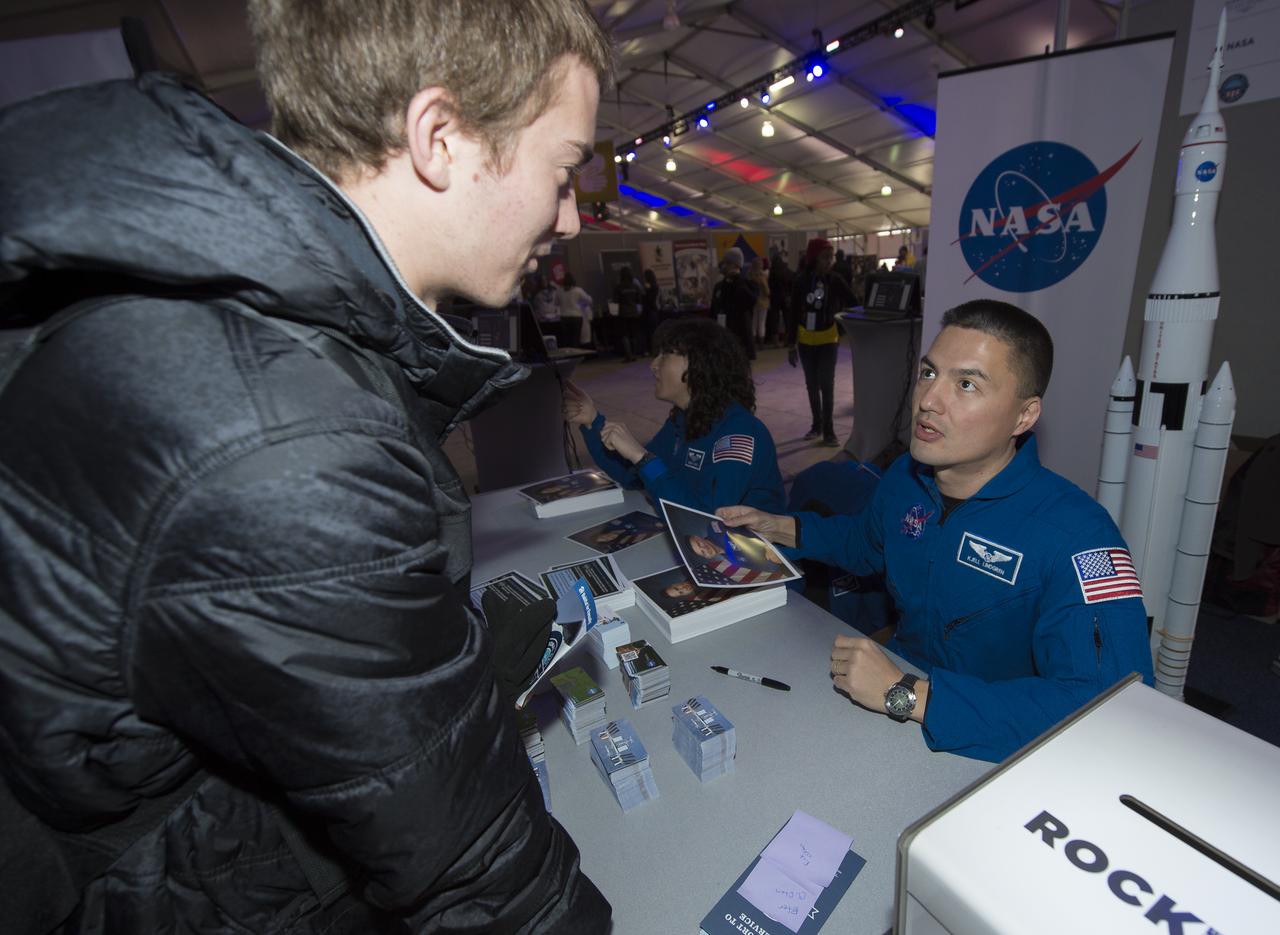
As part of the National Day of Service people visit the NASA booth set up on the National Mall, Saturday, January 19, 2013, in Washington. Astronaut Kjell Lindgren, right, is seen talking to a member of the public. NASA along with other federal agencies set up along the Mall as part of events surrounding the inauguration of President Barack Obama. Photo Credit: (NASA/Carla Cioffi)