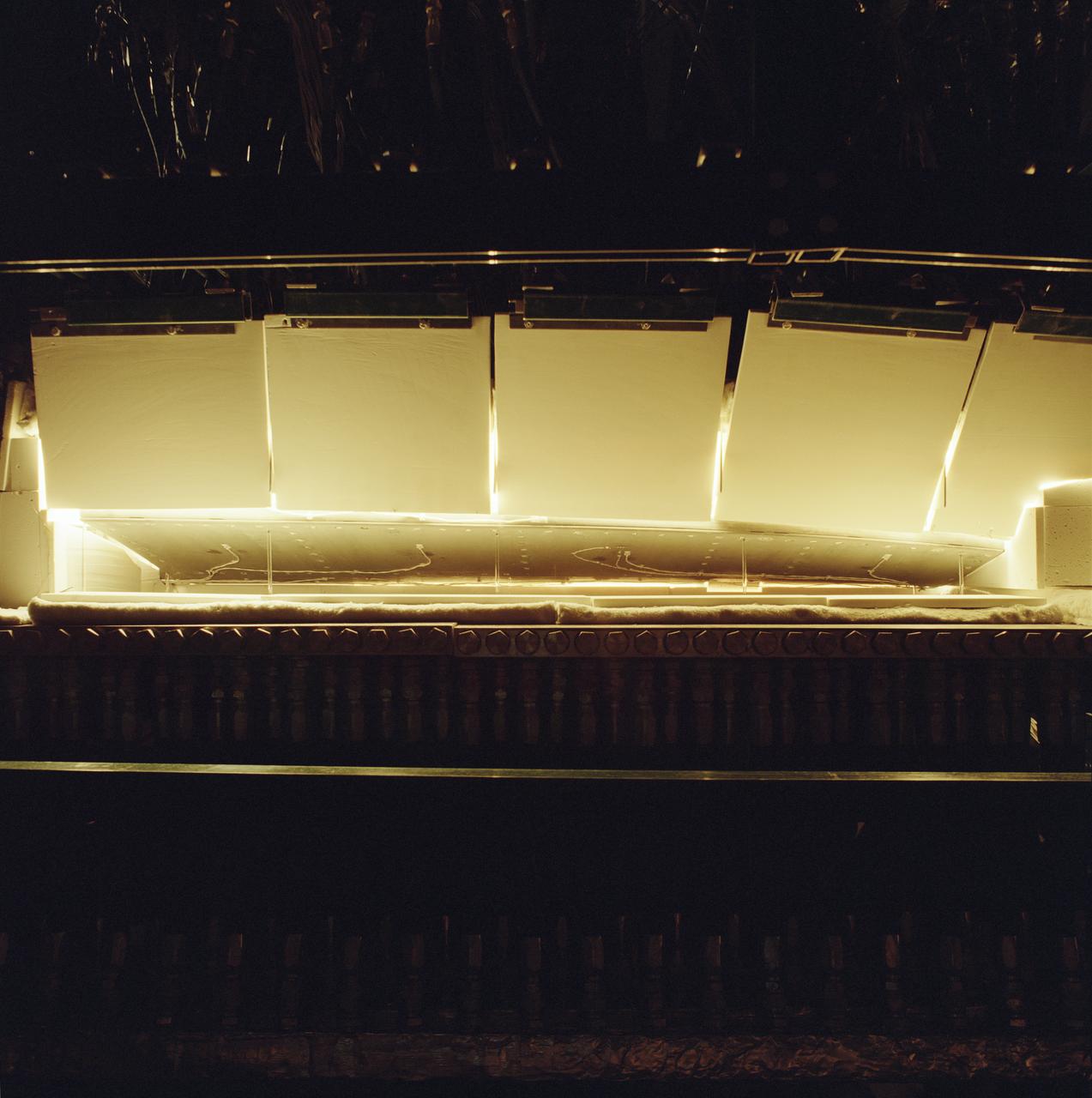
The X-37 advanced technology demonstrator flaperon unit was one of the first ever thermal and mechanical qualification tests of a carbon-carbon control surface designed for space flight. The test also featured extensive use of high-temperature fiber optic strain sensors. Peak temperatures reached 2,500 degrees Fahrenheit.
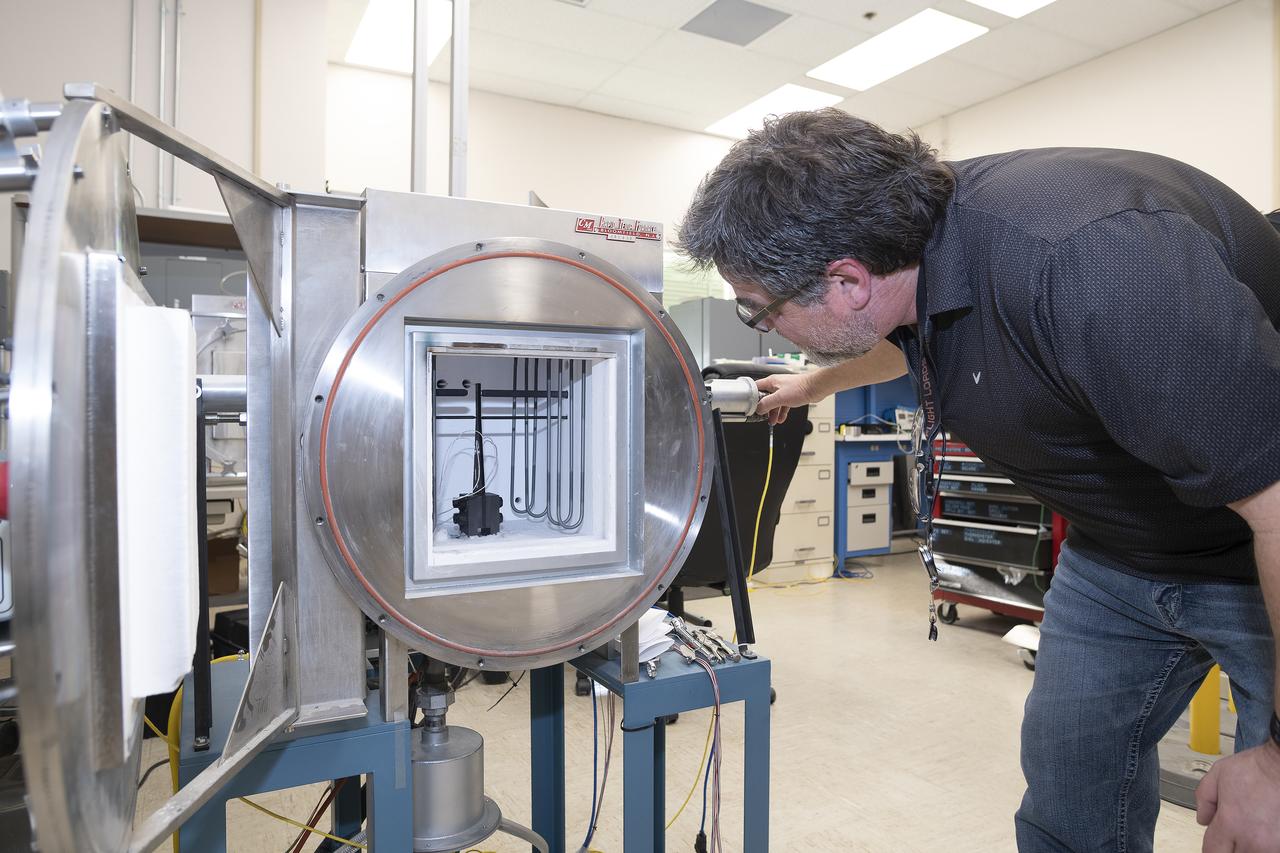
Anthony piazza, a researcher at NASA’s Armstrong Flight Research center in Edwards, California, works with high-temperature strain sensors. This test article is a bending load bar, which enables high-temperature optical strain sensor research up to 1,800 degrees Fahrenheit.
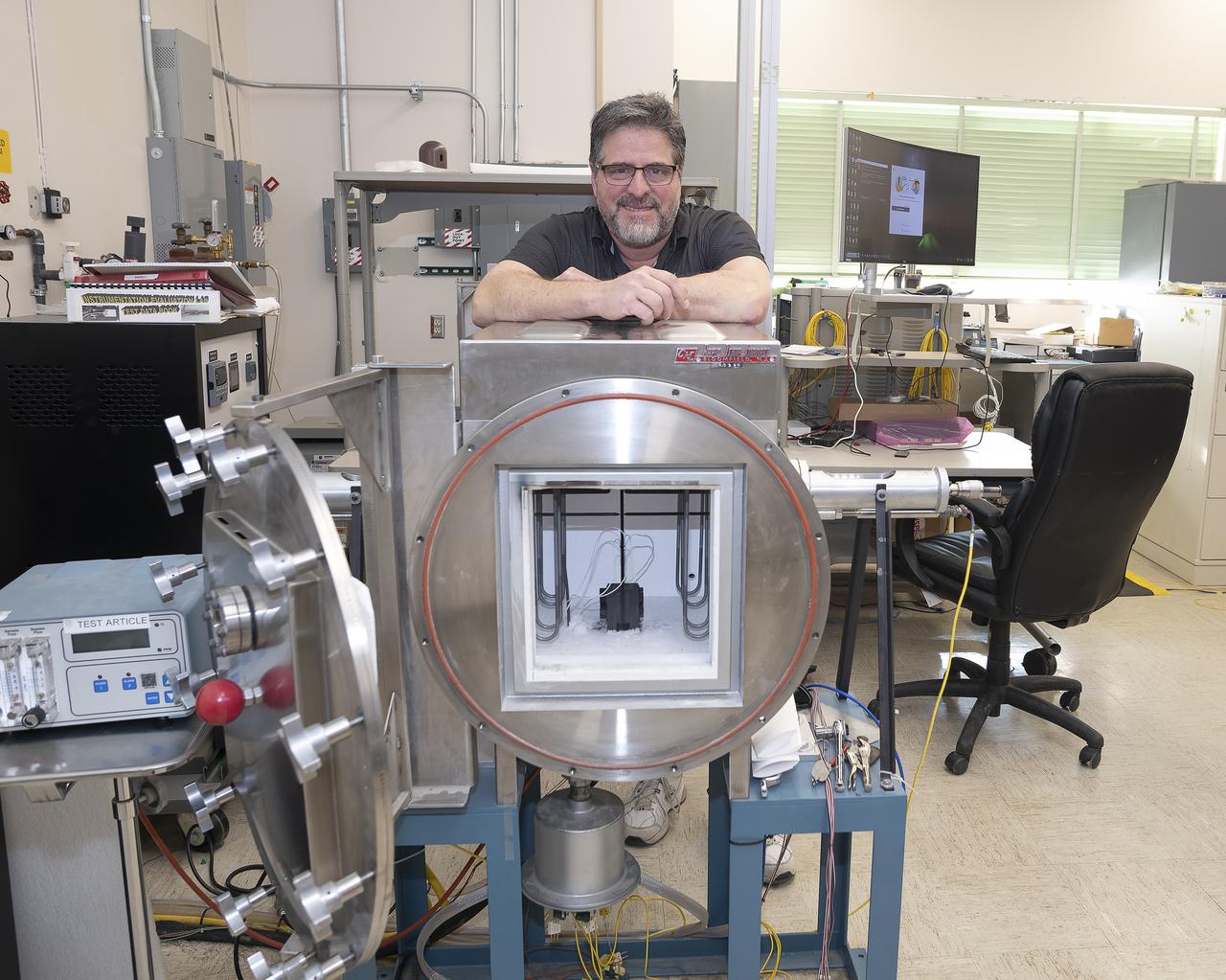
Anthony piazza, a researcher at NASA’s Armstrong Flight Research center in Edwards, California, works with high-temperature strain sensors. This test article is a bending load bar, which enables high-temperature optical strain sensor research up to 1,800 degrees Fahrenheit.