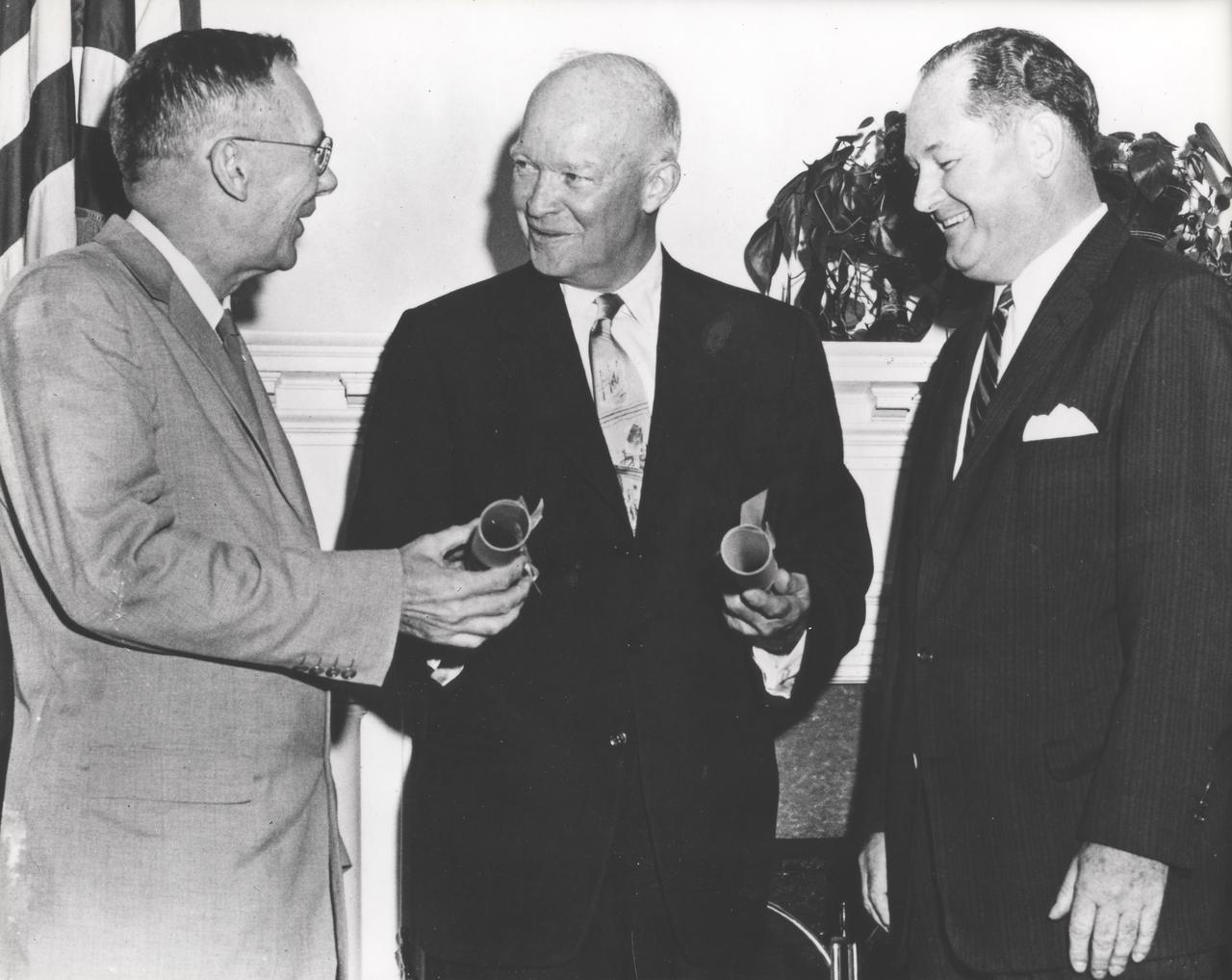
The National Aeronautics and Space Administration (NASA) was created on October 1, 1958, to perform civilian research related to space flight and aeronautics. President Eisenhower commissioned Dr. T. Keith Glennan, right, as the first administrator for NASA and Dr. Hugh L. Dryden as deputy administrator.
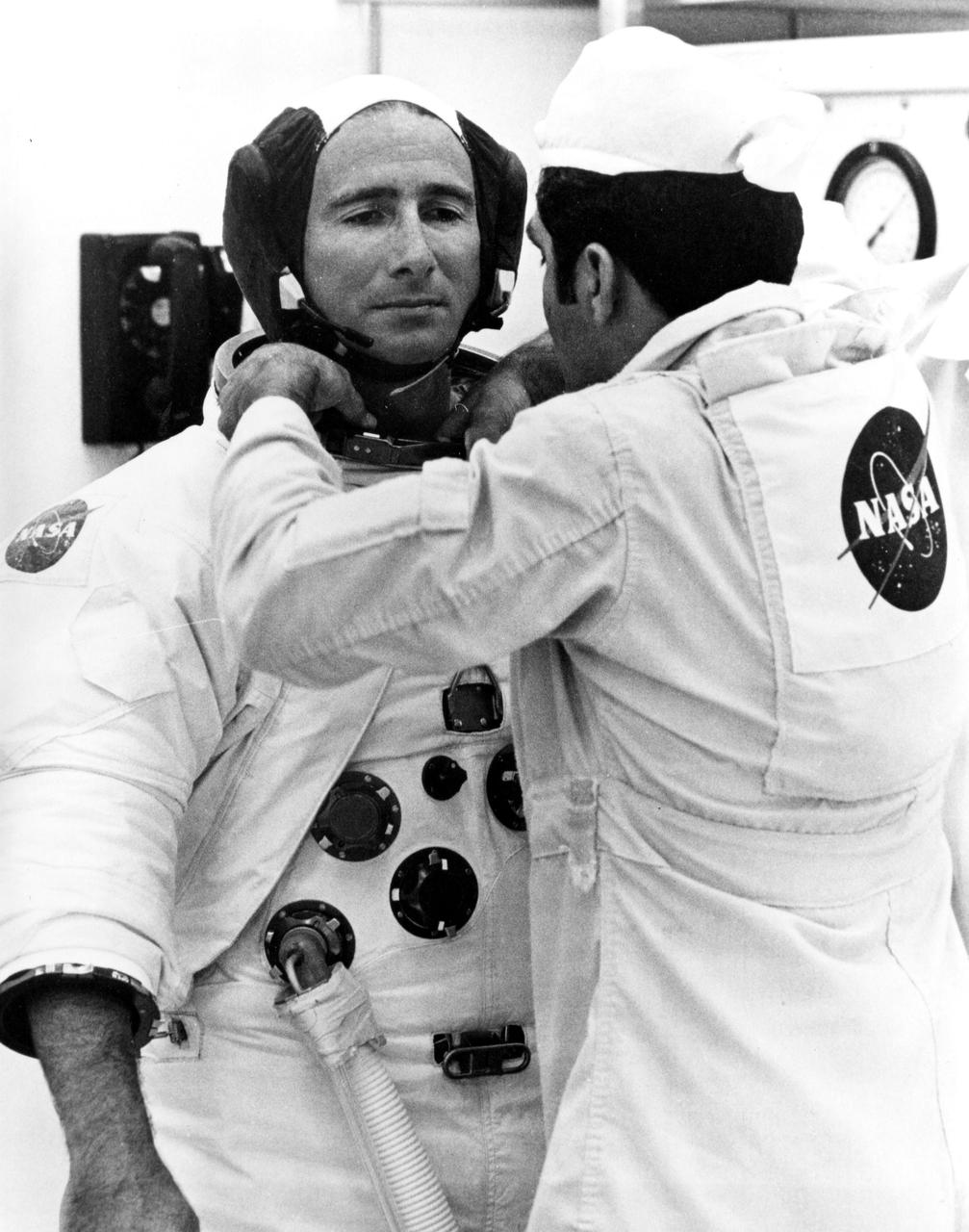
KENNEDY SPACE CENTER, FLA. -- A technician adjusts the spacesuit of Apollo 15 Lunar Module Pilot James B. Irwin prior to his launch to the Moon today with astronauts David R. Scott and Alfred N. Worden. The National Aeronautics and Space Administration directs the Apollo program.
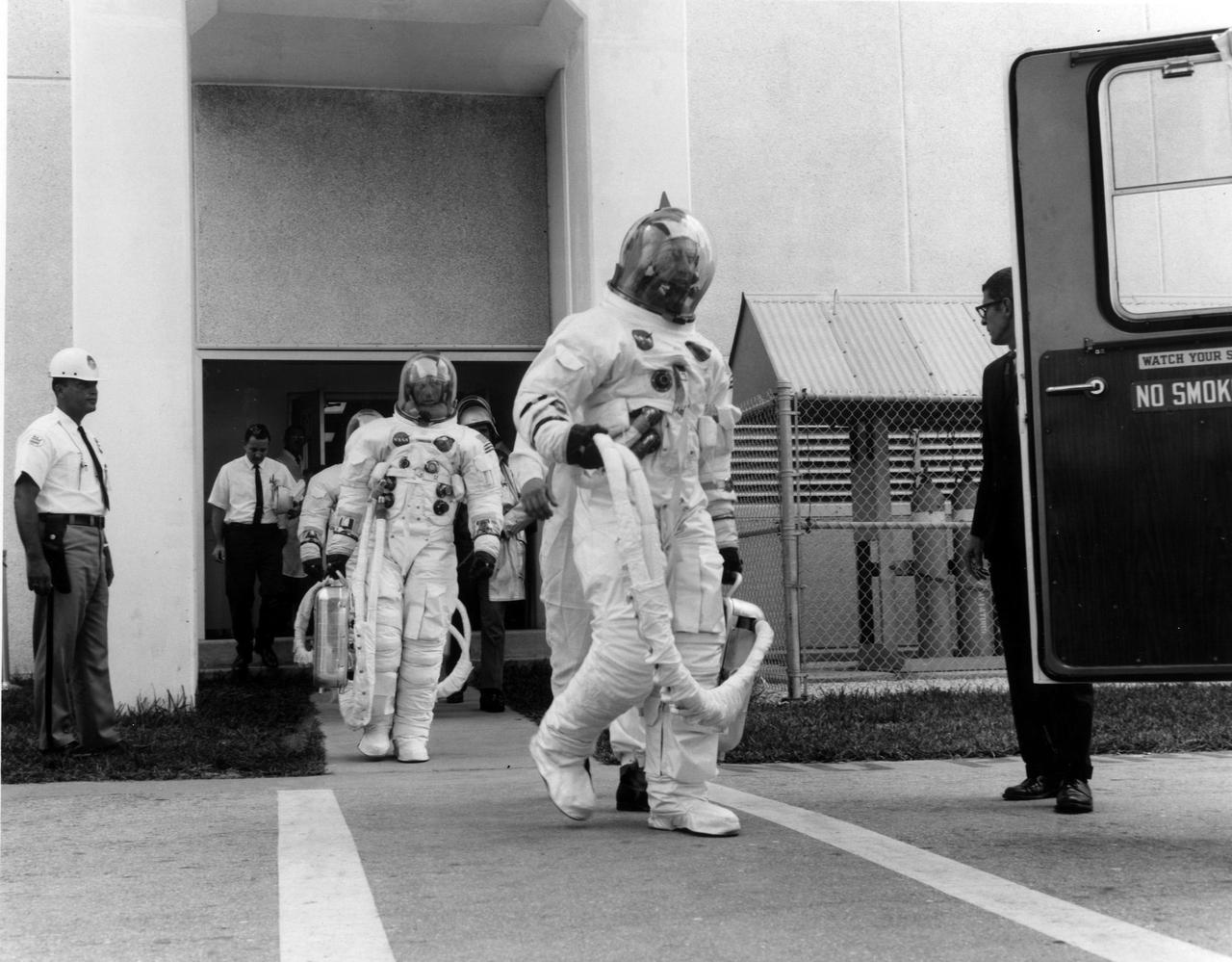
KENNEDY SPACE CENTER, FLA. -- Apollo 7 prime crew members, front to back, Donn F. Eisele, Walter M. Schirra Jr. and Walter Cunningham, leave the Kennedy Space Center's Manned Spacecraft Operations Building for a 20-minute ride in a transfer van to Cape Kennedy's Launch Complex 34, where they participated in a Space Vehicle Emergency Egress Test. The trio will pilot the National Aeronautics and Space Administration's first manned Apollo mission.
![KENNEDY SPACE CENTER, FLA. -- Astronaut Virgil I. Grissom prepares to enter the Liberty Bell 7 spacecraft prior to his successful 5,310 mph space ride. He reached an altitude of 118 statute miles. This was the second man-in-space [flight] for the U.S. in its series of suborbital flights by the National Aeronautics and Space Administration. (NASA Photo)](https://images-assets.nasa.gov/image/61-mr4-76/61-mr4-76~medium.jpg)
KENNEDY SPACE CENTER, FLA. -- Astronaut Virgil I. Grissom prepares to enter the Liberty Bell 7 spacecraft prior to his successful 5,310 mph space ride. He reached an altitude of 118 statute miles. This was the second man-in-space [flight] for the U.S. in its series of suborbital flights by the National Aeronautics and Space Administration. (NASA Photo)
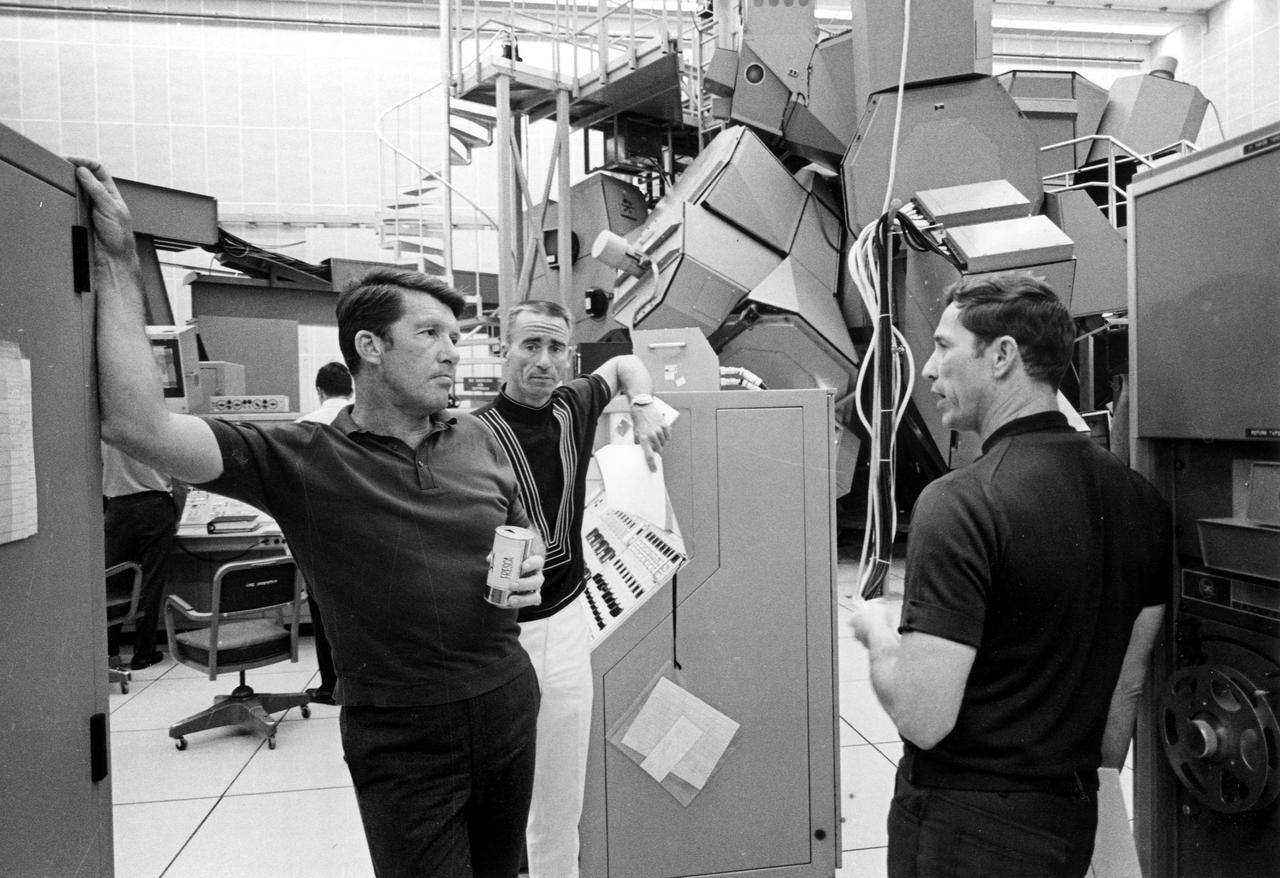
KENNEDY SPACE CENTER, FLA. -- Apollo 7 astronauts, left to right, Walter Schirra, Walter Cunningham and Donn Eisele pause during a practice mission yesterday within Kennedy Space Center's Flight Crew Training Building. The trio spent several hours in the Apollo mission simulator, rear, in preparation for their upcoming mission. The National Aeronautics and Space Administration's first manned Apollo flight is scheduled to begin no earlier than Oct. 11, 1968.

KENNEDY SPACE CENTER, FLA. - Official portrait of NASA Administrator Michael Griffin. Nominated by President George W. Bush and confirmed by the United States Senate, Griffin began his duties as the 11th Administrator of the National Aeronautics and Space Administration on April 14, 2005. As Administrator, he leads the NASA team and manages its resources as NASA seeks to advance The U.S. Vision for Space Exploration.
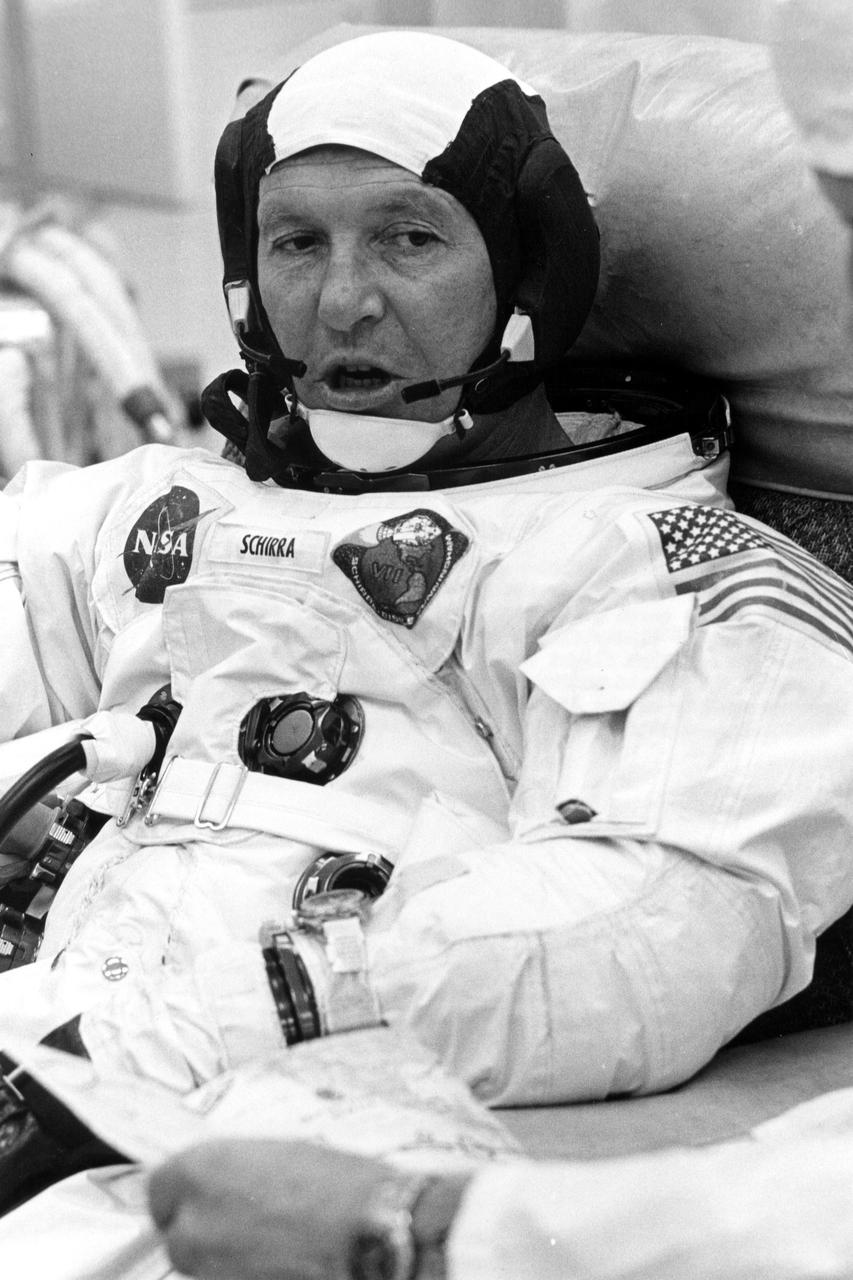
KENNEDY SPACE CENTER, FLA. -- Astsronaut Walter M. Schirra Jr. relaxes prior to boarding the Apollo 7 spacecraft, which rocketed into Earth orbit from Cape Kennedy this morning. Purpose of the 11-day flight is to qualify the Apollo spacecraft for a future flight to the moon. Other Apollo 7 pilots are Donn Eisele and Walter Cunningham. This is the first manned mission of the Apollo series. It is conducted by the National Aeronautics and Space Administration.

KENNEDY SPACE CENTER, FLA. -- Astronaut Donn F. Eisele adjusts communications carrier prior to the start of an 11-day Earth orbital mission in the Apollo 7 spacecraft. The communications carrier contains microphones and earphones. Flying with Eisele aboard Apollo 7 are astronauts Walter M. Schirra Jr. and Walter Cunningham. Purpose of the flight, conducted by the National Aeronautics and Space Administration, is to qualify the Apollo spacecraft for a future flight to the moon.
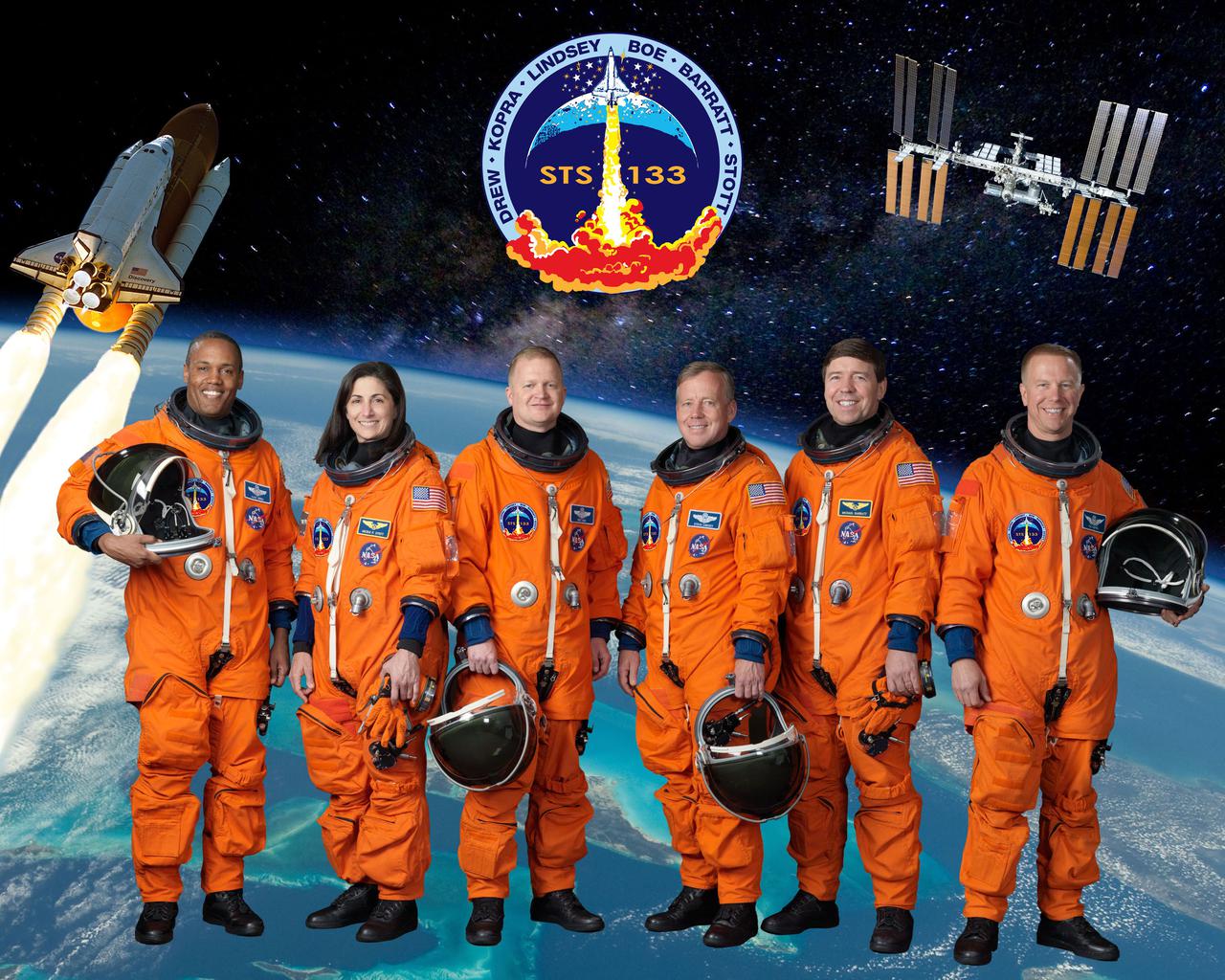
JOHNSON SPACE CENTER, Houston - STS133-S-002 ---- Attired in training versions of their shuttle launch and entry suits, these six astronauts take a break from training to pose for the STS-133 crew portrait. Pictured are NASA astronauts Steve Lindsey (center right) and Eric Boe (center left), commander and pilot, respectively; along with astronauts (from the left) Alvin Drew, Nicole Stott, Michael Barratt and Tim Kopra, all mission specialists. Photo credit: NASA or National Aeronautics and Space Administration
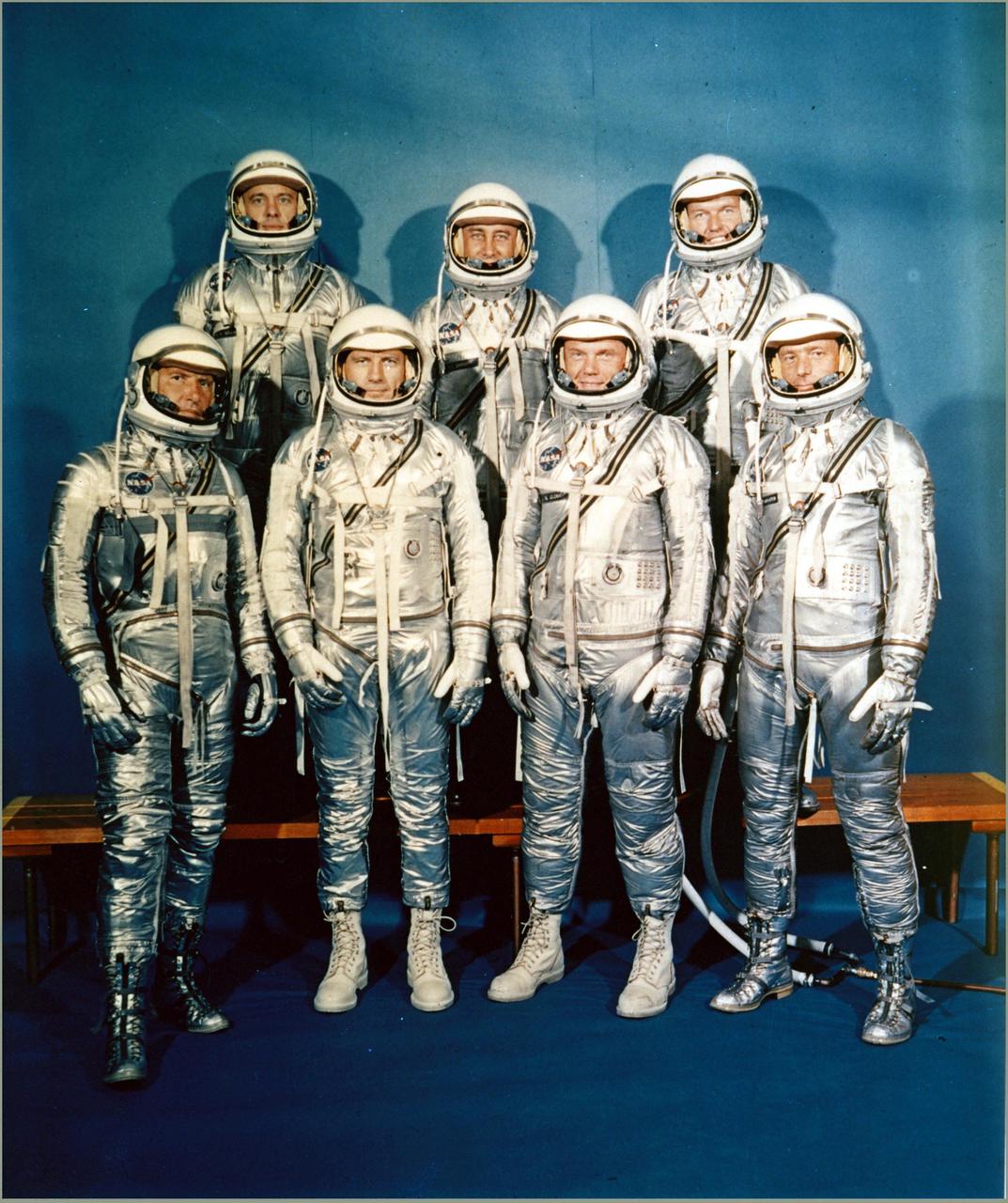
MANNED SPACECRAFT CENTER, HOUSTON, TX. -- FIRST ASTRONAUT TEAM -- Project Mercury Astronauts, whose selection was announced on April 9, 1959, only six months after the National Aeronautics and Space Administration was formally established on Oct. 1, 1958, included: front row, left to right, Walter H. Schirra Jr., Donald K. Slayton, John H. Glenn Jr., and Scott Carpenter back row, Alan B. Shepard Jr., Virgil I. 'Gus' Grissom, and L. Gordon Cooper.
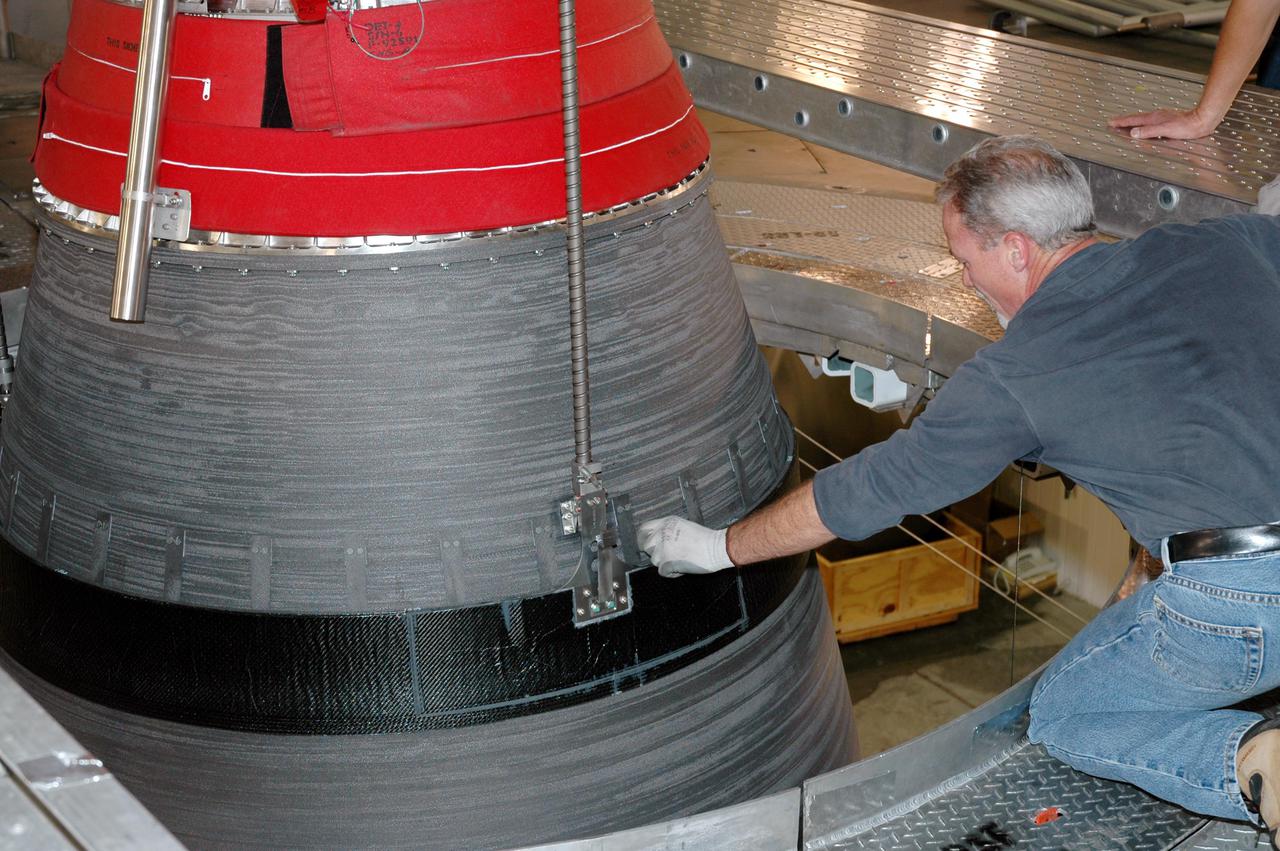
KENNEDY SPACE CENTER, FLA. - At the Delta Operations Center on Cape Canaveral Air Force Station, Fla., a technician closely checks the spacing as the Boeing Delta IV second stage nozzle extension is moved into place for testing. The Delta IV is the launch vehicle for the GOES-N satellite. The Delta IV is the launch vehicle for GOES-N satellite. Geostationary Operational Environmental Satellites (GOES) are sponsored by the National Aeronautics and Space Administration (NASA) and the National Oceanic and Atmospheric Administration (NOAA). GOES-N is the first in the next series of GOES satellites, N-P. The multi-mission GOES series N-P will be a vital contributor to weather, solar and space operations and science. The GOES N-P series will aid activities ranging from severe storm warnings to resource management and advances in science. GOES-N is scheduled to launch May 4 from Cape Canaveral Air Force Station, Fla.
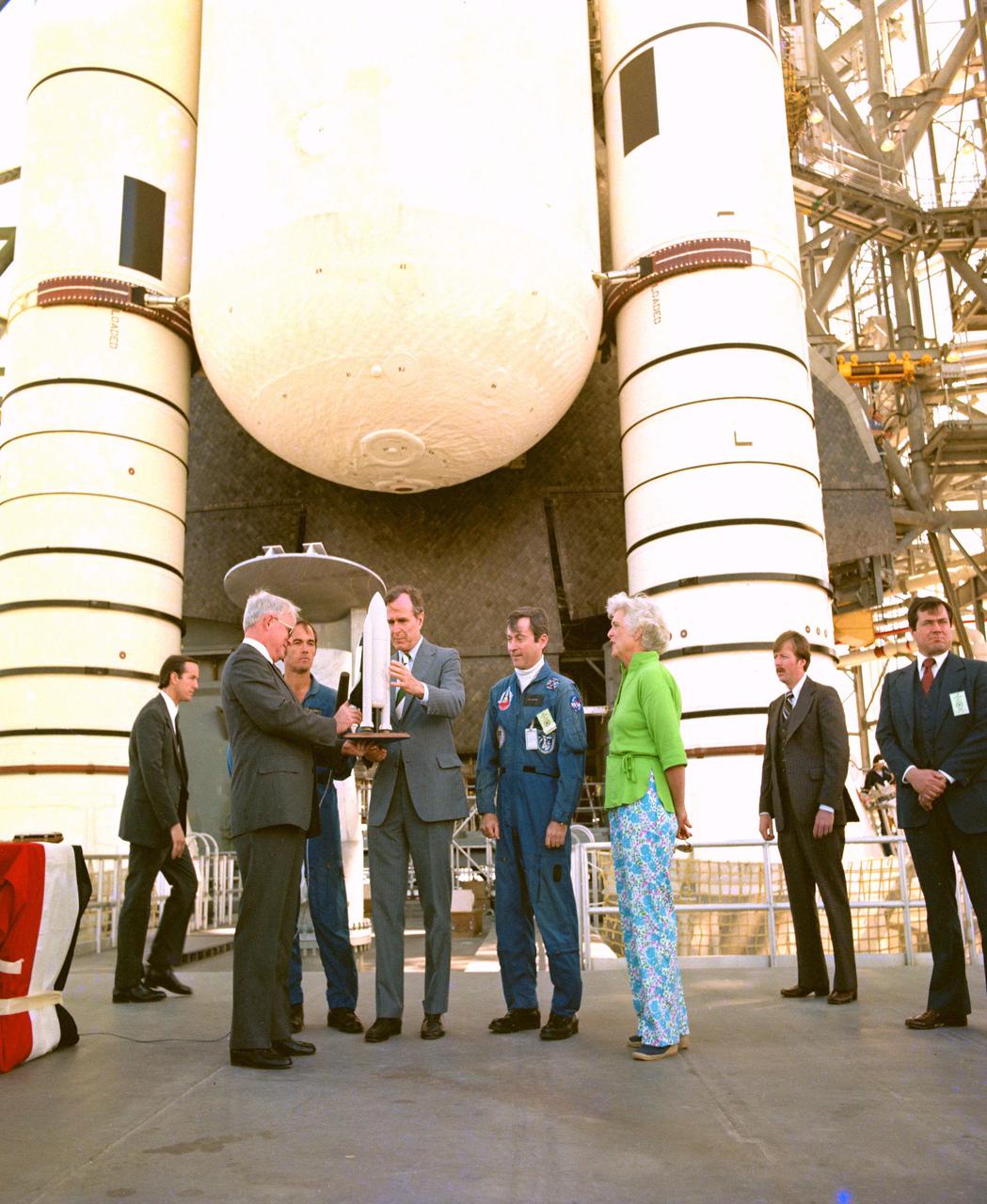
KENNEDY SPACE CENTER, FLA. -- Vice President George H. W. Bush, center, flanked by astronauts Robert L. Crippen on his right and John W. Young on his left, receives a model of the Space Shuttle from Dr. Alan M. Lovelace, acting administrator of the National Aeronautics and Space Administration. At far right is Mrs. Bush, who accompanied the vice president on his whirlwind tour of the Shuttle vehicle and launch facilities. In the background are the aft portions of the orbiter, external tank and solid rocket boosters. The Shuttle, America's first reusable space transportation system, is scheduled to make its maiden voyage into space no sooner than the week of April 7.
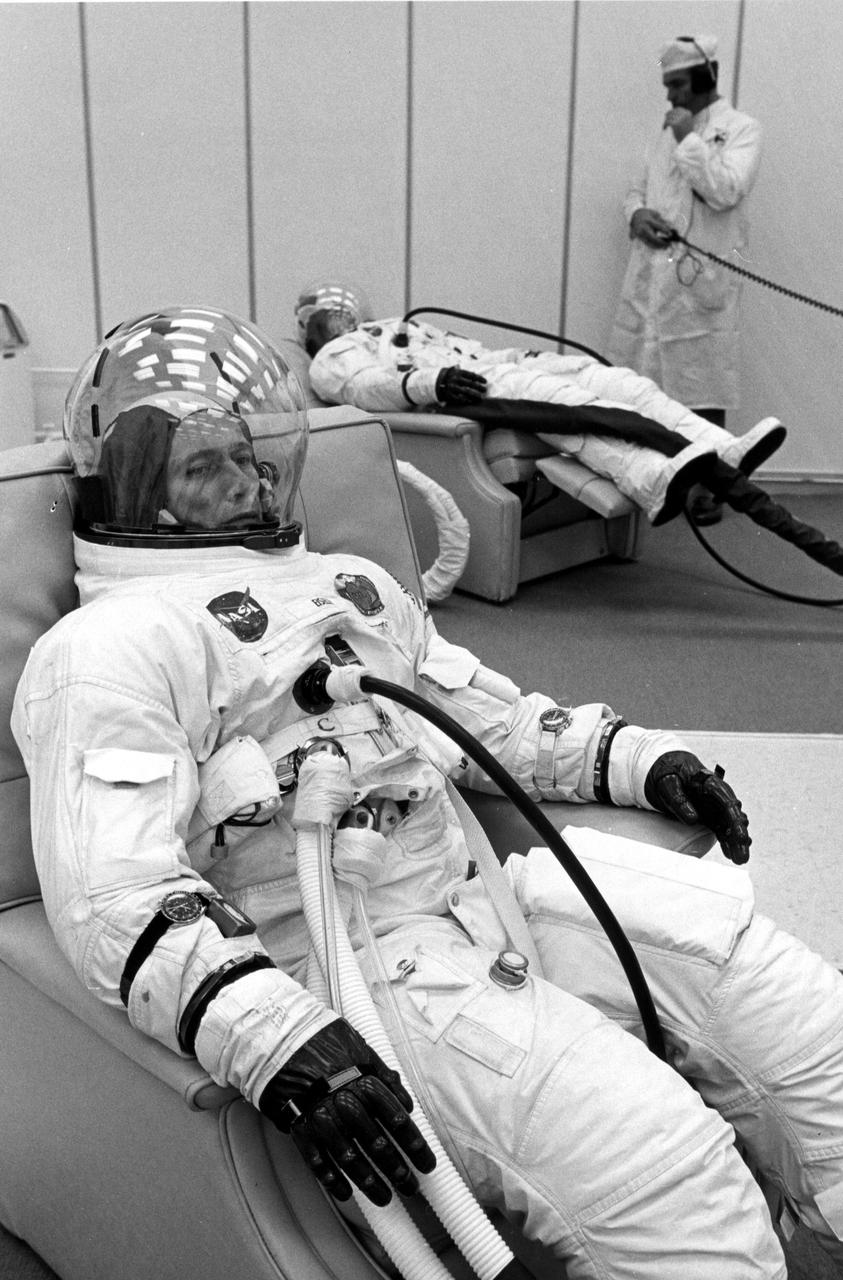
KENNEDY SPACE CENTER, FLA. -- Apollo 7 astronauts Donn F. Eisele, foreground, and Walter Cunningham, rear, undergo spacesuit checks today prior to their Earth orbital mission with Walter M. Schirra Jr., not shown. The three space pilots lifted off atop a Saturn 1B space vehicle from Cape Kennedy's Launch Complex 34 at 11:03 a.m. EDT, Oct. 11, 1968. The National Aeronautics and Space Administration's first manned Apollo flight is designed to verify spacecraft systems for future lunar voyages.
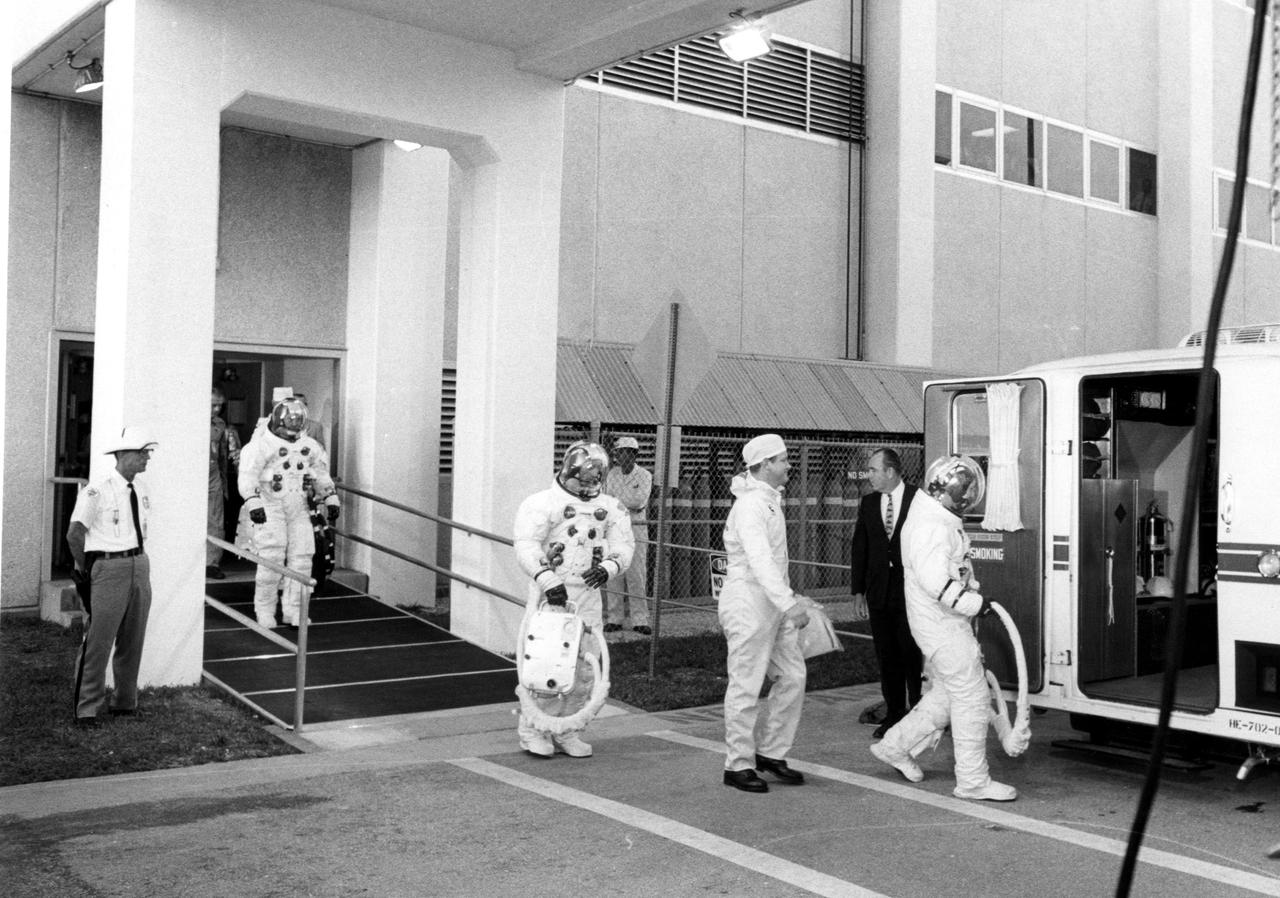
KENNEDY SPACE CENTER, FLA. -- Apollo 7 astronauts enter transfer van, which transported them to Cape Kennedy's Launch Complex 34 and their Saturn IB space vehicle that lifted off at 11:03 a.m. EDT, Oct. 11, 1968. First to enter the transfer van was Donn F. Eisele, command module pilot, followed by Walter Cunningham, lunar module pilot, and Walter M. Schirra Jr., Apollo 7 commander. The space pilots are scheduled to orbit the Earth 11 days, gathering information for future lunar voyages directed by the National Aeronautics and Space Administration.
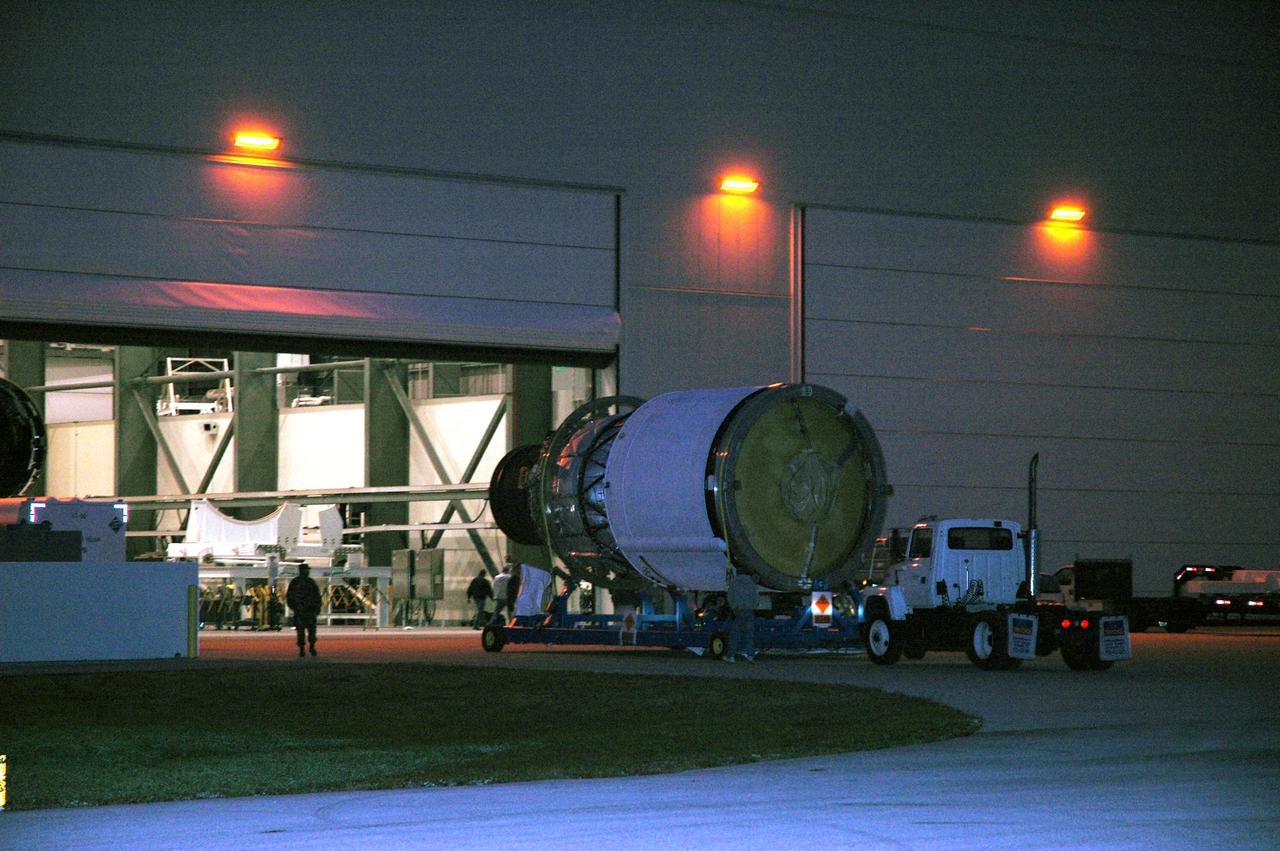
KENNEDY SPACE CENTER, FLA. - On its transporter, the Boeing Delta IV second stage is moved into the Horizontal Integration Facility (HIF) for further processing. It was transferred from the Delta Operations Center in Cape Canaveral, Fla. The Delta IV is the launch vehicle for the GOES-N satellite. Geostationary Operational Environmental Satellites (GOES) are sponsored by the National Aeronautics and Space Administration (NASA) and the National Oceanic and Atmospheric Administration (NOAA). GOES-N is the first in the next series of GOES satellites, N-P. The multi-mission GOES series N-P will be a vital contributor to weather, solar and space operations and science. The GOES N-P series will aid activities ranging from severe storm warnings to resource management and advances in science. GOES-N is scheduled to launch May 4 from Cape Canaveral Air Force Station, Fla.
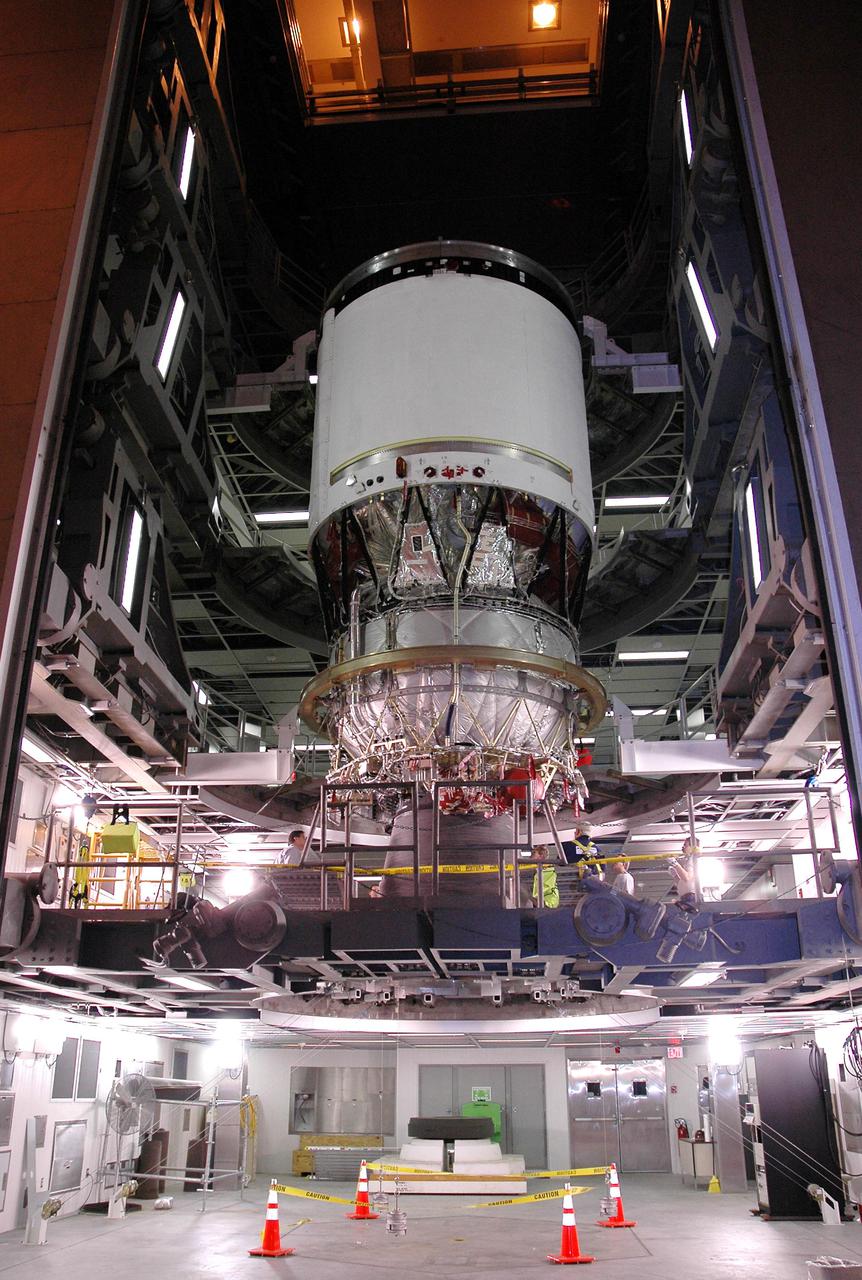
KENNEDY SPACE CENTER, FLA. - At the Delta Operations Center in Cape Canaveral, Fla., the Boeing Delta IV second stage is going to be prepared for a transfer to the Horizontal Integration Facility for further processing. The element is going to be transferred to the Horizontal Integration Facility for further processing. The Delta IV is the launch vehicle for the GOES-N satellite. Geostationary Operational Environmental Satellites (GOES) are sponsored by the National Aeronautics and Space Administration (NASA) and the National Oceanic and Atmospheric Administration (NOAA). GOES-N is the first in the next series of GOES satellites, N-P. The multi-mission GOES series N-P will be a vital contributor to weather, solar and space operations and science. The GOES N-P series will aid activities ranging from severe storm warnings to resource management and advances in science. GOES-N is scheduled to launch May 4 from Cape Canaveral Air Force Station, Fla.
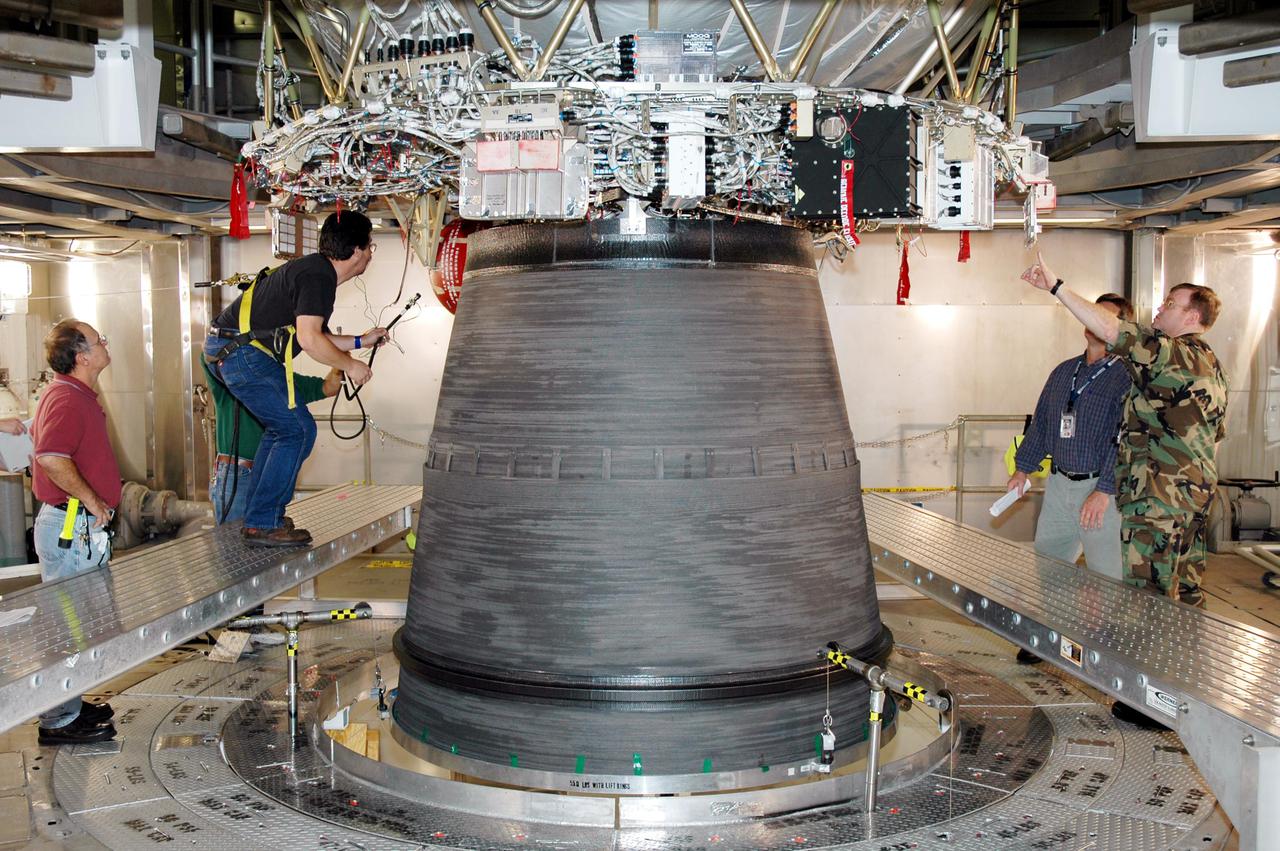
KENNEDY SPACE CENTER, FLA. - At the Delta Operations Center on Cape Canaveral Air Force Station, Fla., workers prepare for the Boeing Delta IV second stage nozzle extension test. The Delta IV is the launch vehicle for GOES-N satellite. Geostationary Operational Environmental Satellites (GOES) are sponsored by the National Aeronautics and Space Administration (NASA) and the National Oceanic and Atmospheric Administration (NOAA). GOES-N is the first in the next series of GOES satellites, N-P. The multi-mission GOES series N-P will be a vital contributor to weather, solar and space operations and science. The GOES N-P series will aid activities ranging from severe storm warnings to resource management and advances in science. GOES-N is scheduled to launch May 4 from Cape Canaveral Air Force Station, Fla.
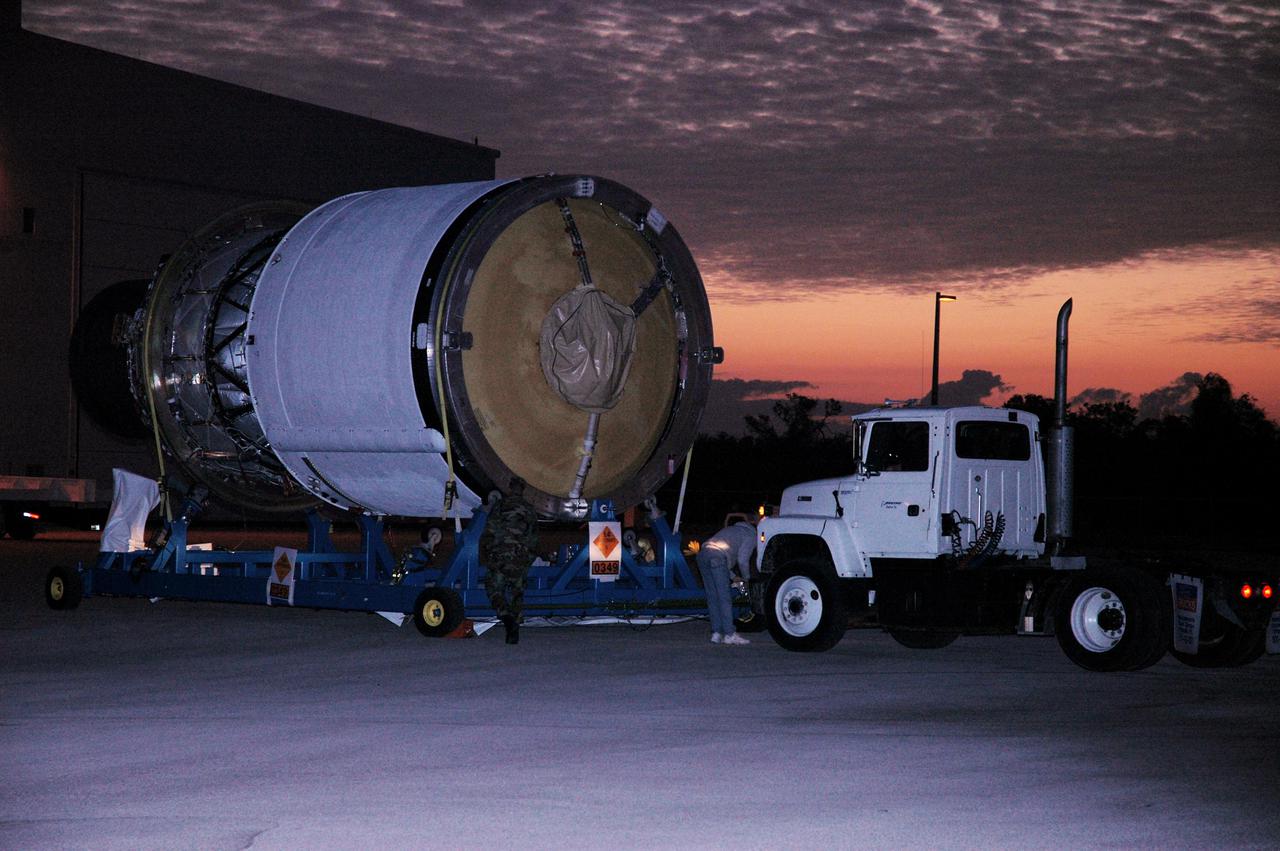
KENNEDY SPACE CENTER, FLA. - As dawn breaks, the Boeing Delta IV second stage arrives at the Horizontal Integration Facility (HIF) for further processing. It was moved from the Delta Operations Center in Cape Canaveral, Fla. The Delta IV is the launch vehicle for the GOES-N satellite. Geostationary Operational Environmental Satellites (GOES) are sponsored by the National Aeronautics and Space Administration (NASA) and the National Oceanic and Atmospheric Administration (NOAA). GOES-N is the first in the next series of GOES satellites, N-P. The multi-mission GOES series N-P will be a vital contributor to weather, solar and space operations and science. The GOES N-P series will aid activities ranging from severe storm warnings to resource management and advances in science. GOES-N is scheduled to launch May 4 from Cape Canaveral Air Force Station, Fla.
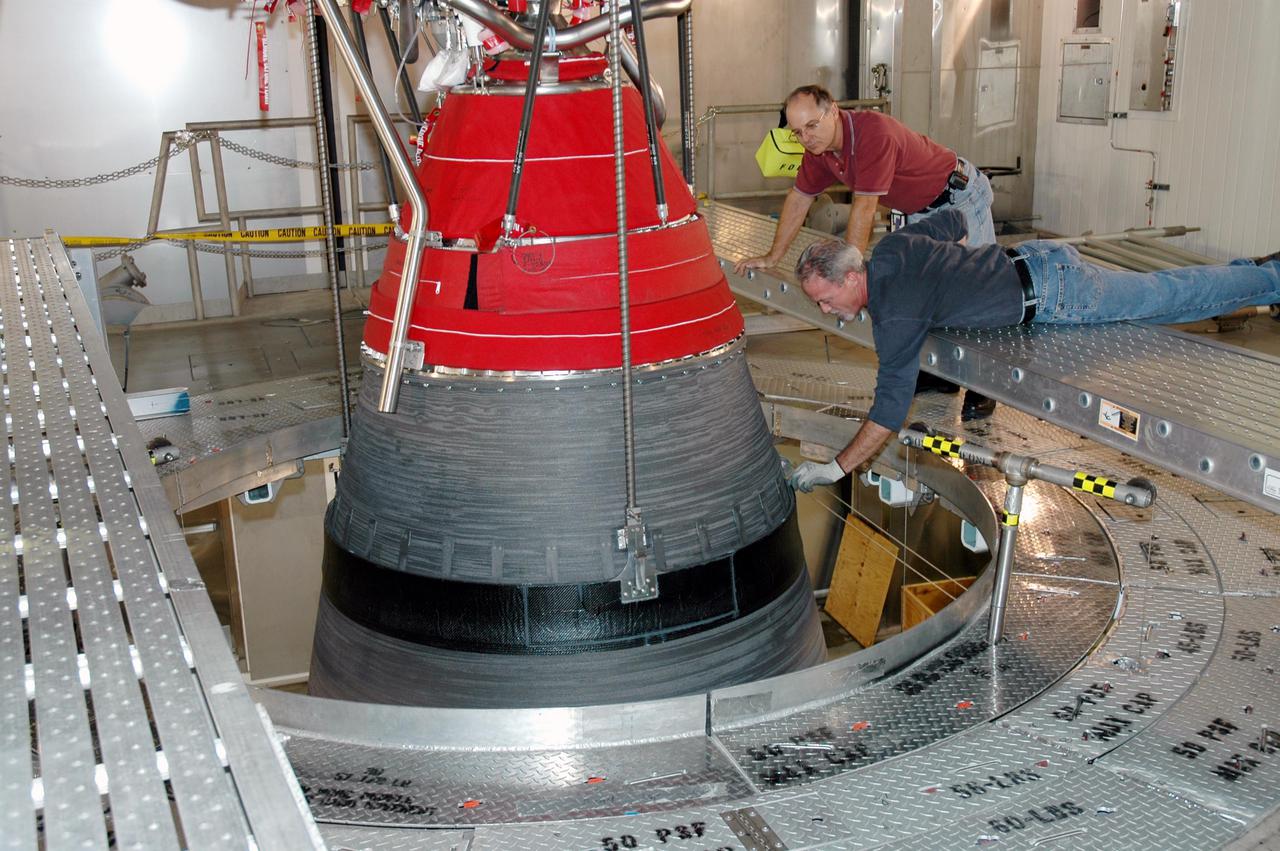
KENNEDY SPACE CENTER, FLA. - At the Delta Operations Center on Cape Canaveral Air Force Station, Fla., the Boeing Delta IV second stage nozzle extension is moved into place for testing. The Delta IV is the launch vehicle for the GOES-N satellite. The Delta IV is the launch vehicle for GOES-N satellite. Geostationary Operational Environmental Satellites (GOES) are sponsored by the National Aeronautics and Space Administration (NASA) and the National Oceanic and Atmospheric Administration (NOAA). GOES-N is the first in the next series of GOES satellites, N-P. The multi-mission GOES series N-P will be a vital contributor to weather, solar and space operations and science. The GOES N-P series will aid activities ranging from severe storm warnings to resource management and advances in science. GOES-N is scheduled to launch May 4 from Cape Canaveral Air Force Station, Fla.
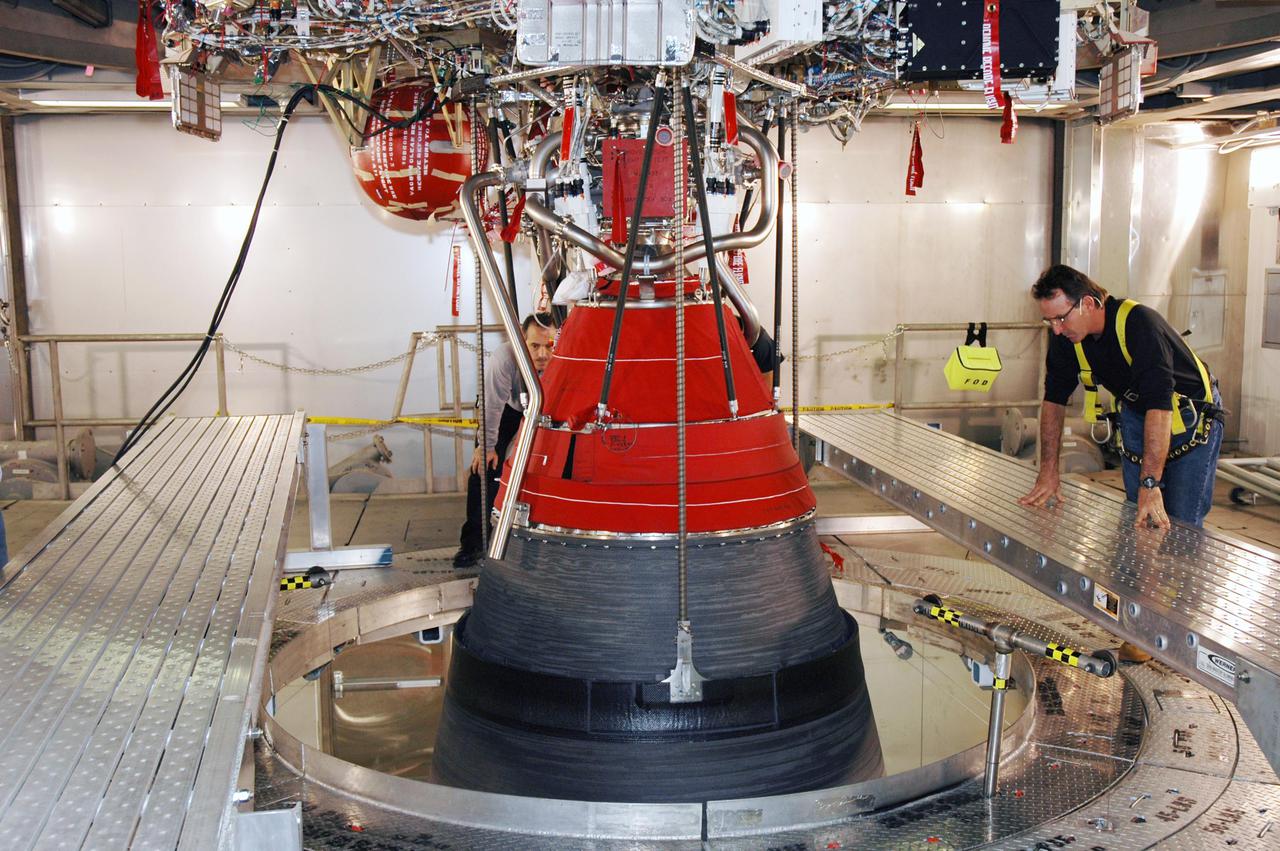
KENNEDY SPACE CENTER, FLA. - At the Delta Operations Center on Cape Canaveral Air Force Station, Fla., a technician monitors the Boeing Delta IV second stage nozzle extension during testing. The Delta IV is the launch vehicle for the GOES-N satellite. The Delta IV is the launch vehicle for GOES-N satellite. Geostationary Operational Environmental Satellites (GOES) are sponsored by the National Aeronautics and Space Administration (NASA) and the National Oceanic and Atmospheric Administration (NOAA). GOES-N is the first in the next series of GOES satellites, N-P. The multi-mission GOES series N-P will be a vital contributor to weather, solar and space operations and science. The GOES N-P series will aid activities ranging from severe storm warnings to resource management and advances in science. GOES-N is scheduled to launch May 4 from Cape Canaveral Air Force Station, Fla.

KENNEDY SPACE CENTER, FLA. - At the Delta Operations Center on Cape Canaveral Air Force Station, Fla., Tibor Nagy, a Pratt and Whitney representative, Wendell Perez (back to camera) and Ed Wagner (right) prepare the Delta second stage nozzle for the Boeing Delta IV launch vehicle for installation. The Delta IV is scheduled to launch the GOES-N satellite in May 2005. Geostationary Operational Environmental Satellites are sponsored by the National Aeronautics and Space Administration (NASA) and the National Oceanic and Atmospheric Administration (NOAA). GOES-N is the first in the next series of GOES satellites, N-P. The multimission GOES series N-P will be a vital contributor to weather, solar and space operations and science. The GOES N-P series will aid activities ranging from severe storm warnings to resource management and advances in science.

KENNEDY SPACE CENTER, FLA. - At the Delta Operations Center on Cape Canaveral Air Force Station, Fla., technicians Duane Miller (left) and Ed Wagner (right) help guide the Delta second stage nozzle for a Boeing Delta IV launch vehicle away from its shipping container. The nozzle is being moved to another site on the floor for inspection. The Delta IV is scheduled to launch the GOES-N satellite in May 2005. Geostationary Operational Environmental Satellites are sponsored by the National Aeronautics and Space Administration (NASA) and the National Oceanic and Atmospheric Administration (NOAA). GOES-N is the first in the next series of GOES satellites, N-P. The multimission GOES series N-P will be a vital contributor to weather, solar and space operations and science. The GOES N-P series will aid activities ranging from severe storm warnings to resource management and advances in science.

KENNEDY SPACE CENTER, FLA. - At the Delta Operations Center on Cape Canaveral Air Force Station, Fla., technicians Ed Wagner and Wendell Perez uncrate the Delta second stage nozzle for a Boeing Delta IV launch vehicle. The Delta IV is scheduled to launch the GOES-N satellite in May 2005. Geostationary Operational Environmental Satellites are sponsored by the National Aeronautics and Space Administration (NASA) and the National Oceanic and Atmospheric Administration (NOAA). GOES-N is the first in the next series of GOES satellites, N-P. The multimission GOES series N-P will be a vital contributor to weather, solar and space operations and science. The GOES N-P series will aid activities ranging from severe storm warnings to resource management and advances in science.

KENNEDY SPACE CENTER, FLA. - At the Delta Operations Center on Cape Canaveral Air Force Station, Fla., technicians Duane Miller (left) and Ed Wagner (right) help guide the Delta second stage nozzle for a Boeing Delta IV launch vehicle away from its shipping container. The nozzle is being moved to another site on the floor for inspection. The Delta IV is scheduled to launch the GOES-N satellite in May 2005. Geostationary Operational Environmental Satellites are sponsored by the National Aeronautics and Space Administration (NASA) and the National Oceanic and Atmospheric Administration (NOAA). GOES-N is the first in the next series of GOES satellites, N-P. The multimission GOES series N-P will be a vital contributor to weather, solar and space operations and science. The GOES N-P series will aid activities ranging from severe storm warnings to resource management and advances in science.

KENNEDY SPACE CENTER, FLA. - At the Delta Operations Center on Cape Canaveral Air Force Station, Fla., technician Ed Wagner inspects the Delta second stage nozzle for a Boeing Delta IV launch vehicle after it was uncrated. The Delta IV is scheduled to launch the GOES-N satellite in May 2005. Geostationary Operational Environmental Satellites are sponsored by the National Aeronautics and Space Administration (NASA) and the National Oceanic and Atmospheric Administration (NOAA). GOES-N is the first in the next series of GOES satellites, N-P. The multimission GOES series N-P will be a vital contributor to weather, solar and space operations and science. The GOES N-P series will aid activities ranging from severe storm warnings to resource management and advances in science.
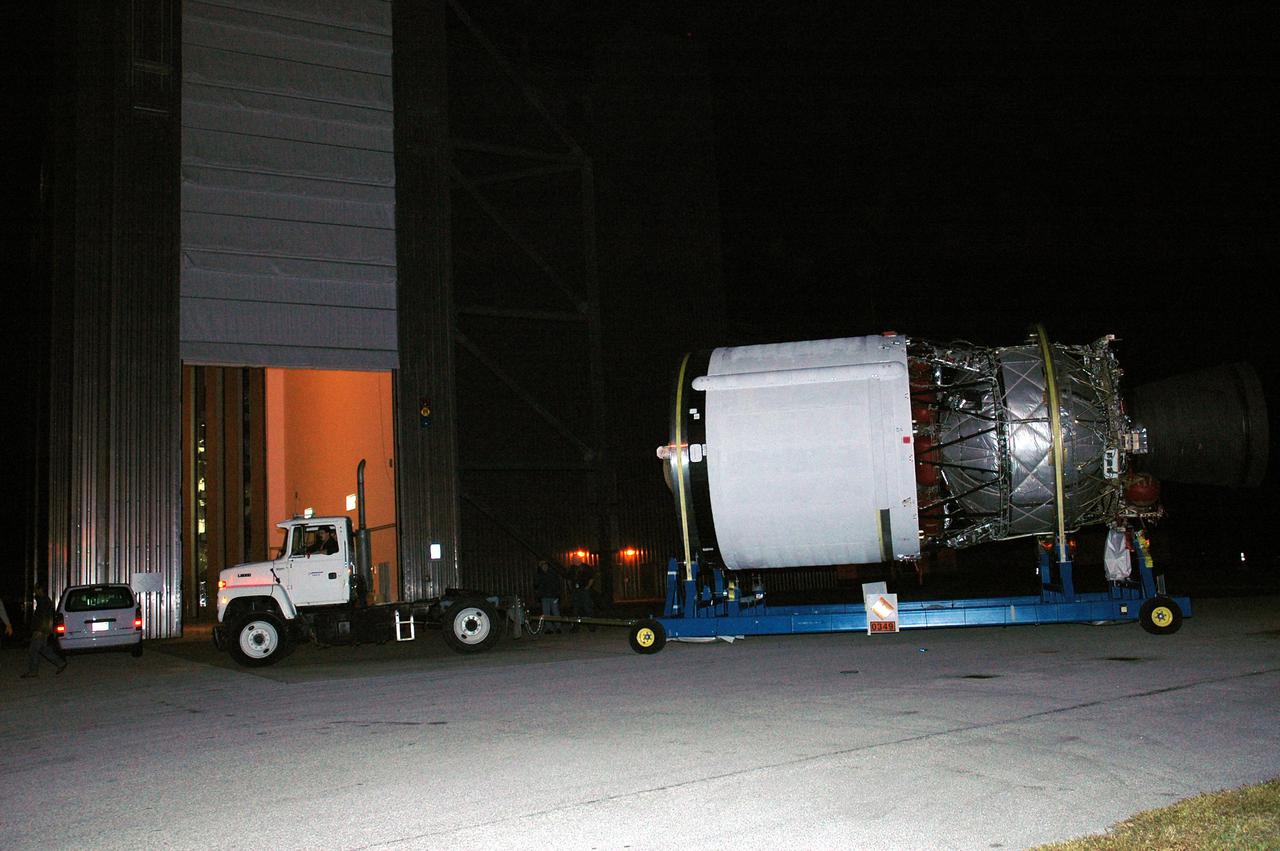
KENNEDY SPACE CENTER, FLA. - In the pre-dawn hours this morning, the Boeing Delta IV second stage leaves the Delta Operations Center in Cape Canaveral, Fla.. It is being moved to the Horizontal Integration Facility (HIF) for further processing. The Delta IV is the launch vehicle for the GOES-N satellite. Geostationary Operational Environmental Satellites (GOES) are sponsored by the National Aeronautics and Space Administration (NASA) and the National Oceanic and Atmospheric Administration (NOAA). GOES-N is the first in the next series of GOES satellites, N-P. The multi-mission GOES series N-P will be a vital contributor to weather, solar and space operations and science. The GOES N-P series will aid activities ranging from severe storm warnings to resource management and advances in science. GOES-N is scheduled to launch May 4 from Cape Canaveral Air Force Station, Fla.

KENNEDY SPACE CENTER, FLA. - At the Delta Operations Center on Cape Canaveral Air Force Station, Fla., Bob McMillan (left), Wendell Perez (back to camera) and Ed Wagner (right) help prepare Delta second stage the nozzle for the Boeing Delta IV launch vehicle for installation. The Delta IV is scheduled to launch the GOES-N satellite in May 2005. Geostationary Operational Environmental Satellites are sponsored by the National Aeronautics and Space Administration (NASA) and the National Oceanic and Atmospheric Administration (NOAA). GOES-N is the first in the next series of GOES satellites, N-P. The multimission GOES series N-P will be a vital contributor to weather, solar and space operations and science. The GOES N-P series will aid activities ranging from severe storm warnings to resource management and advances in science.

KENNEDY SPACE CENTER, FLA. - At the Delta Operations Center on Cape Canaveral Air Force Station, Fla., Tibor Nagy and Bob McMillan, at left, make the initial nozzle inspection of the Delta second stage nozzle for a Boeing Delta IV launch vehicle. The Delta IV is scheduled to launch the GOES-N satellite in May 2005. Geostationary Operational Environmental Satellites are sponsored by the National Aeronautics and Space Administration (NASA) and the National Oceanic and Atmospheric Administration (NOAA). GOES-N is the first in the next series of GOES satellites, N-P. The multimission GOES series N-P will be a vital contributor to weather, solar and space operations and science. The GOES N-P series will aid activities ranging from severe storm warnings to resource management and advances in science.

KENNEDY SPACE CENTER, FLA. - At the Delta Operations Center on Cape Canaveral Air Force Station, Fla., Wendell Perez checks an overhead crane being attached to the Delta second stage nozzle for a Boeing Delta IV launch vehicle. The nozzle is being lifted from its shipping container and moved to another site on the floor for inspection. The Delta IV is scheduled to launch the GOES-N satellite in May 2005. Geostationary Operational Environmental Satellites are sponsored by the National Aeronautics and Space Administration (NASA) and the National Oceanic and Atmospheric Administration (NOAA). GOES-N is the first in the next series of GOES satellites, N-P. The multimission GOES series N-P will be a vital contributor to weather, solar and space operations and science. The GOES N-P series will aid activities ranging from severe storm warnings to resource management and advances in science.
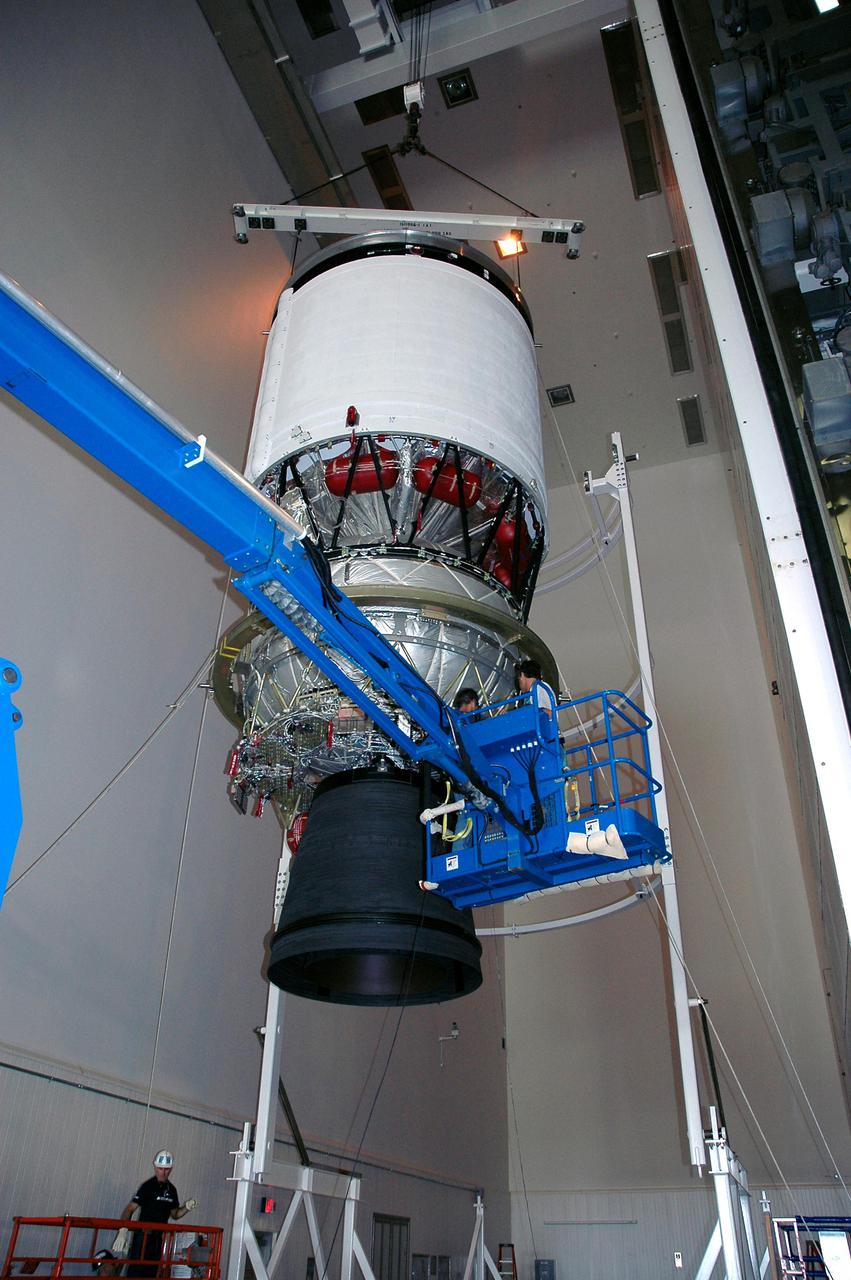
KENNEDY SPACE CENTER, FLA. - At the Delta Operations Center in Cape Canaveral, Fla., the Boeing Delta IV second stage is lifted by an overhead crane. The element is being moved to a transporter for transfer to the Horizontal Integration Facility for further processing. The Delta IV is the launch vehicle for the GOES-N satellite. Geostationary Operational Environmental Satellites (GOES) are sponsored by the National Aeronautics and Space Administration (NASA) and the National Oceanic and Atmospheric Administration (NOAA). GOES-N is the first in the next series of GOES satellites, N-P. The multi-mission GOES series N-P will be a vital contributor to weather, solar and space operations and science. The GOES N-P series will aid activities ranging from severe storm warnings to resource management and advances in science. GOES-N is scheduled to launch May 4 from Cape Canaveral Air Force Station, Fla.
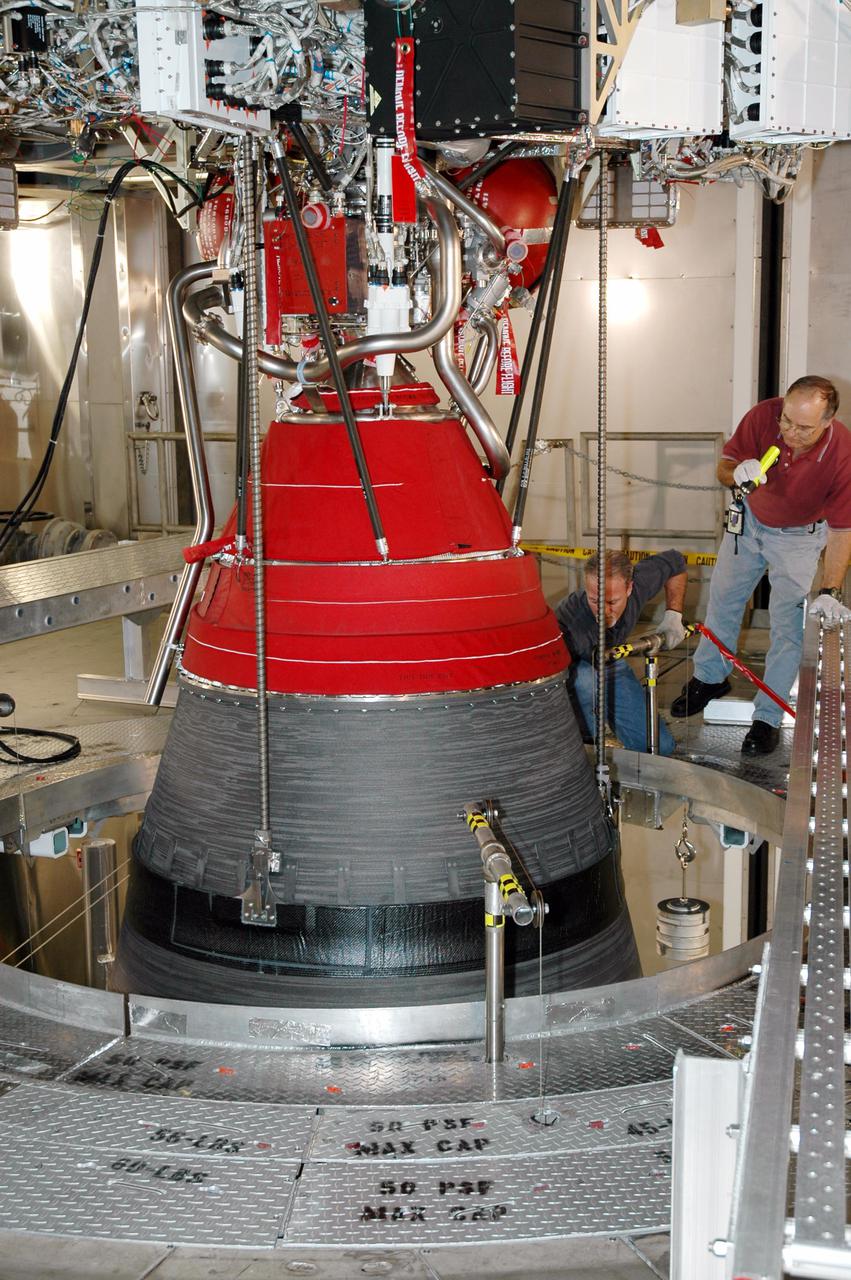
KENNEDY SPACE CENTER, FLA. - At the Delta Operations Center on Cape Canaveral Air Force Station, Fla., a technician monitors the Boeing Delta IV second stage nozzle extension during testing. The Delta IV is the launch vehicle for the GOES-N satellite. The Delta IV is the launch vehicle for GOES-N satellite. Geostationary Operational Environmental Satellites (GOES) are sponsored by the National Aeronautics and Space Administration (NASA) and the National Oceanic and Atmospheric Administration (NOAA). GOES-N is the first in the next series of GOES satellites, N-P. The multi-mission GOES series N-P will be a vital contributor to weather, solar and space operations and science. The GOES N-P series will aid activities ranging from severe storm warnings to resource management and advances in science. GOES-N is scheduled to launch May 4 from Cape Canaveral Air Force Station, Fla.

KENNEDY SPACE CENTER, FLA. - At the Delta Operations Center on Cape Canaveral Air Force Station, Fla., technicians Duane Miller (left) and Ed Wagner (right) release the crane from the Delta second stage nozzle for a Boeing Delta IV launch vehicle to prepare for installation. The Delta IV is scheduled to launch the GOES-N satellite in May 2005. Geostationary Operational Environmental Satellites are sponsored by the National Aeronautics and Space Administration (NASA) and the National Oceanic and Atmospheric Administration (NOAA). GOES-N is the first in the next series of GOES satellites, N-P. The multimission GOES series N-P will be a vital contributor to weather, solar and space operations and science. The GOES N-P series will aid activities ranging from severe storm warnings to resource management and advances in science.
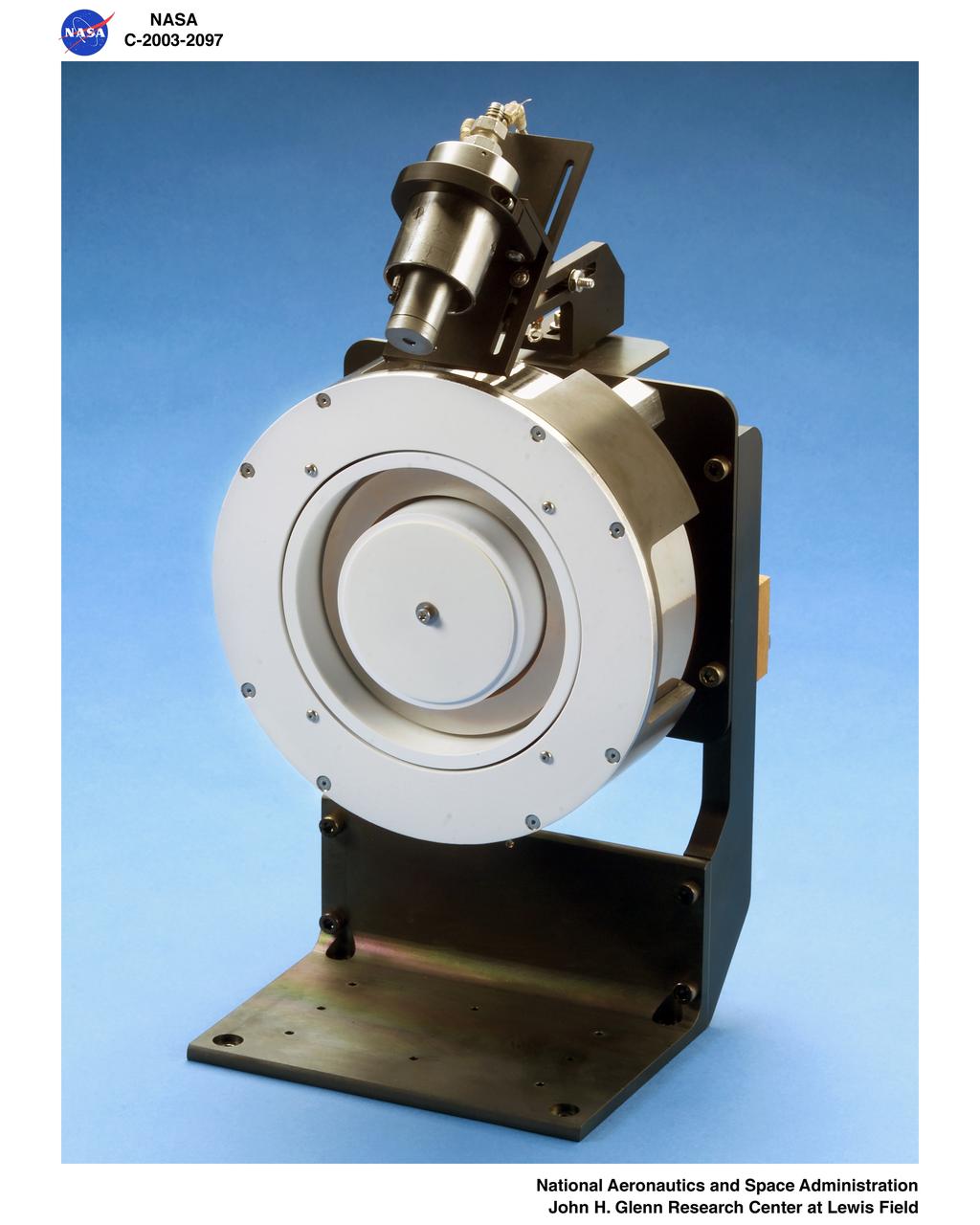
NATIONAL AERONAUTICAL SPACE ADMINISTRATION - 120Mv3 HALL THRUSTER
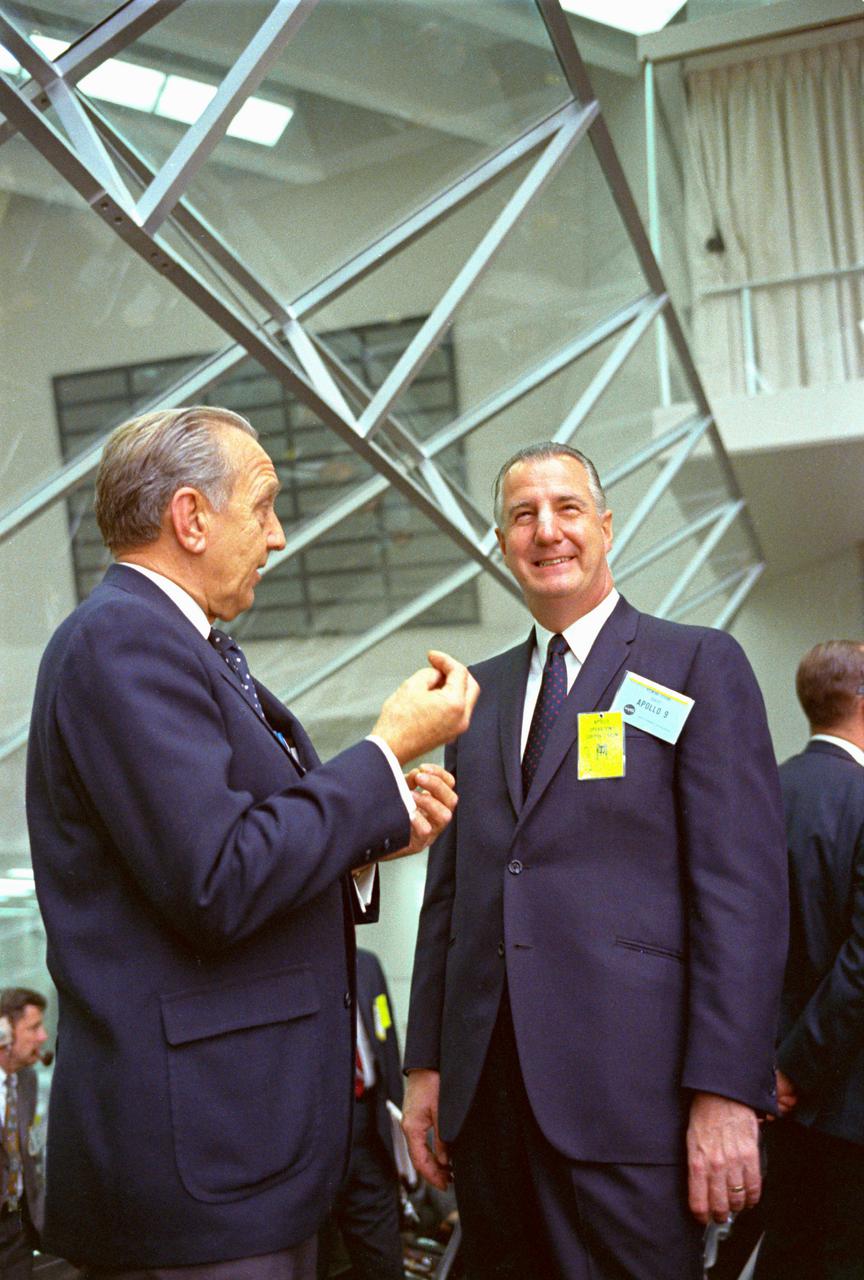
KENNEDY SPACE CENTER, FLA. -- Within the Launch Control Center, Vice President Spiro T. Agnew listens to Dr. Kurt H. Debus, director, Kennedy Space Center, explain highlights of the Apollo Program. The Vice President viewed the launch of Apollo 9 astronauts James A. McDivitt, David R. Scott and Russell L. Schweickart today. They were sent on a planned 10-day Earth orbital flight to put a lunar module spacecraft through extensive tests to qualify it for a possible manned lunar landing later this year. The National Aeronautics and Space Administration directs the Apollo Program.
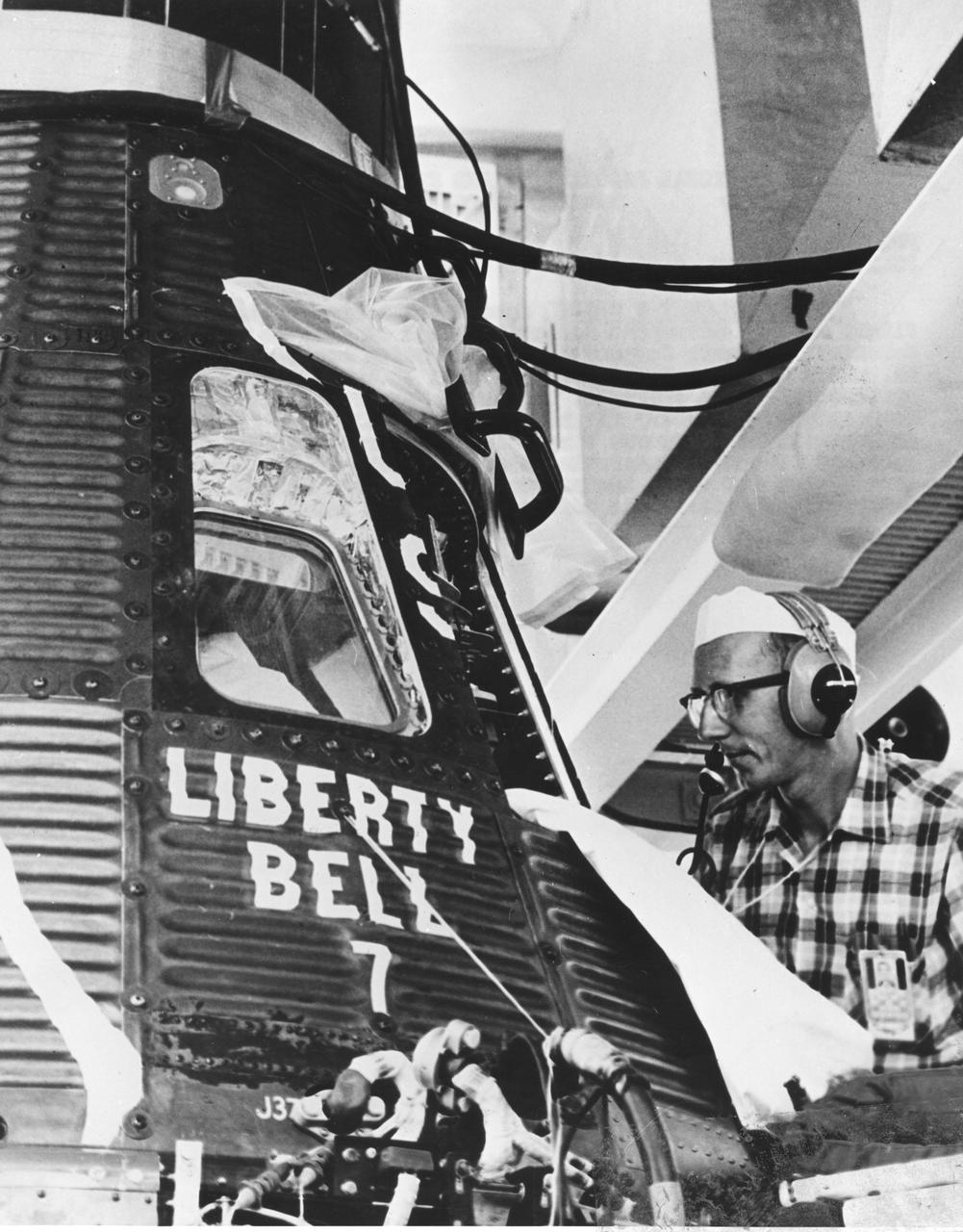
KENNEDY SPACE CENTER, FLA. -- PROJECT MERCURY'S SECOND suborbital astronaut training flight will be attempted during the week of July 16 with McDonnell Aircraft Corporation's production spacecraft number 11, which has been named 'Liberty Bell 7.' The number seven stresses the team effort of the seven Mercury pilots necessary for conducting Mercury flights. Mission pilot for the MR-4 launch will be astronaut Virgil I. 'Gus' Grissom. His spacecraft is seen here undergoing systems checks in the National Aeronautics and Space Administration's Mercury Hangar at Cape Canaveral, Florida, weeks before the planned launch
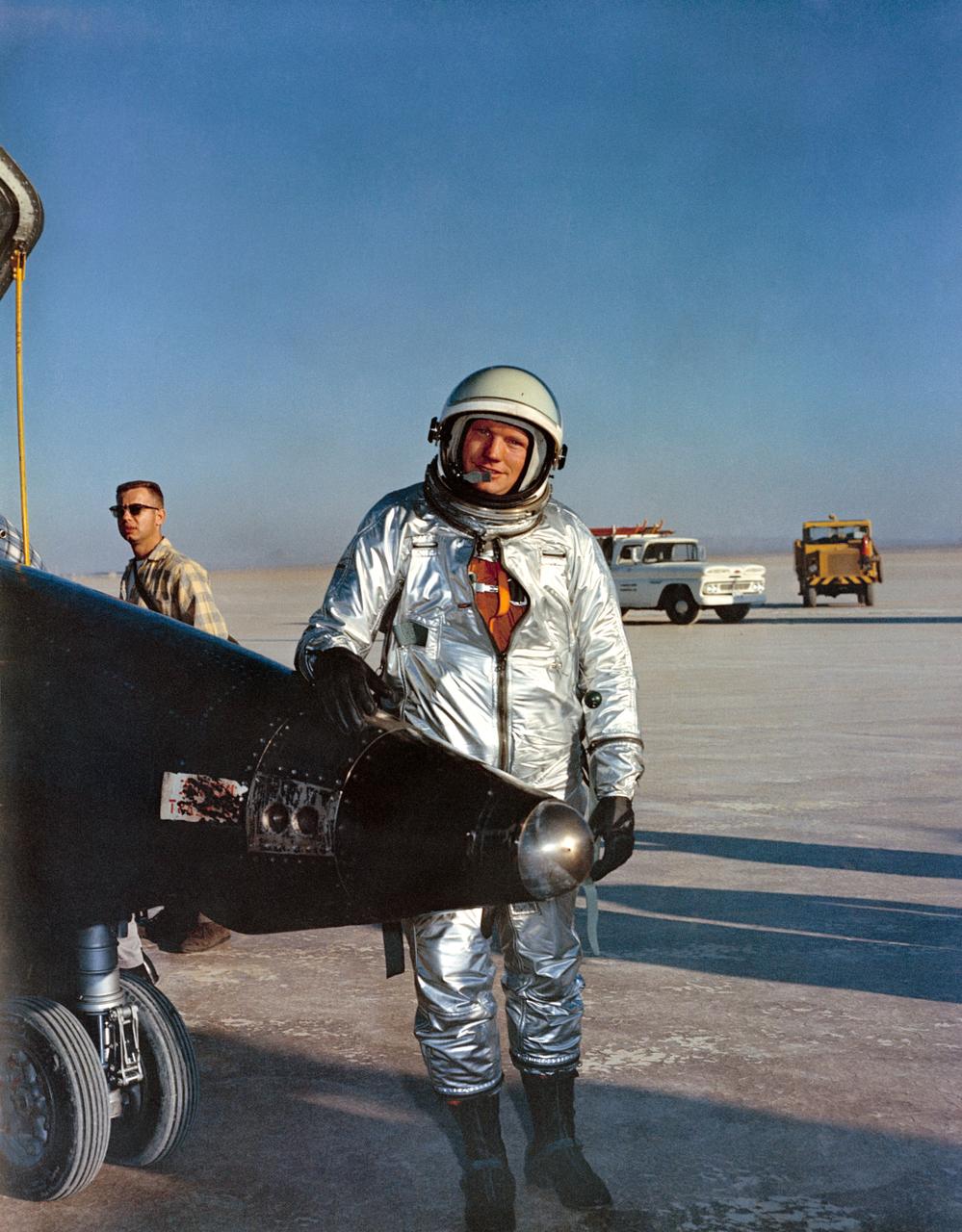
S63-19148 (1963) --- Neil A. Armstrong, a civilian, was a member of the second group of astronauts selected by the National Aeronautics and Space Administration. Armstrong was one of the nine picked in September, 1962. He was an aeronautical research pilot before becoming an astronaut.
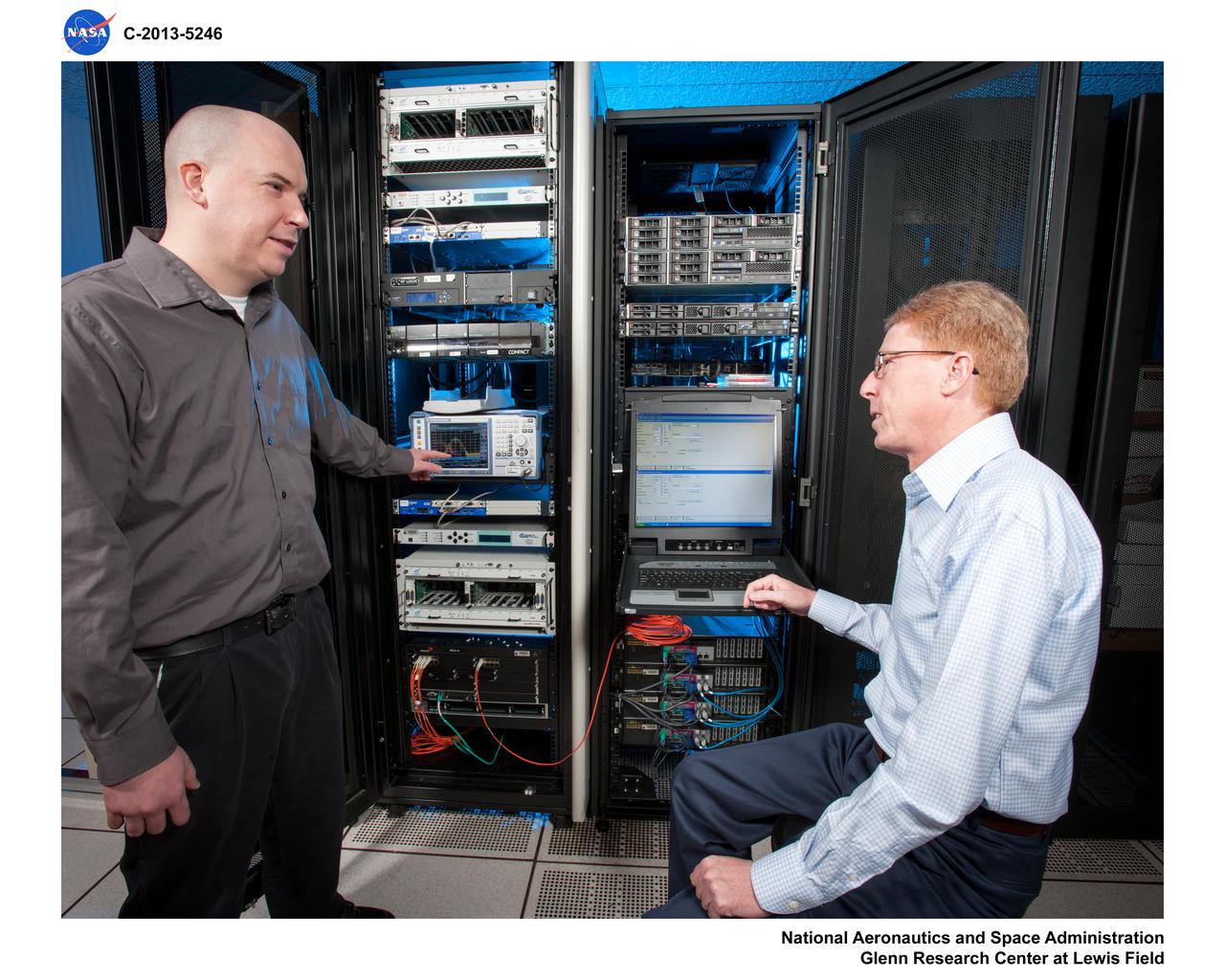
Modeling Simulation and Analysis, National Aeronautics and Space Administration, NASA, Space Communications and Navigation, SCaN, SCENIC Laboratory
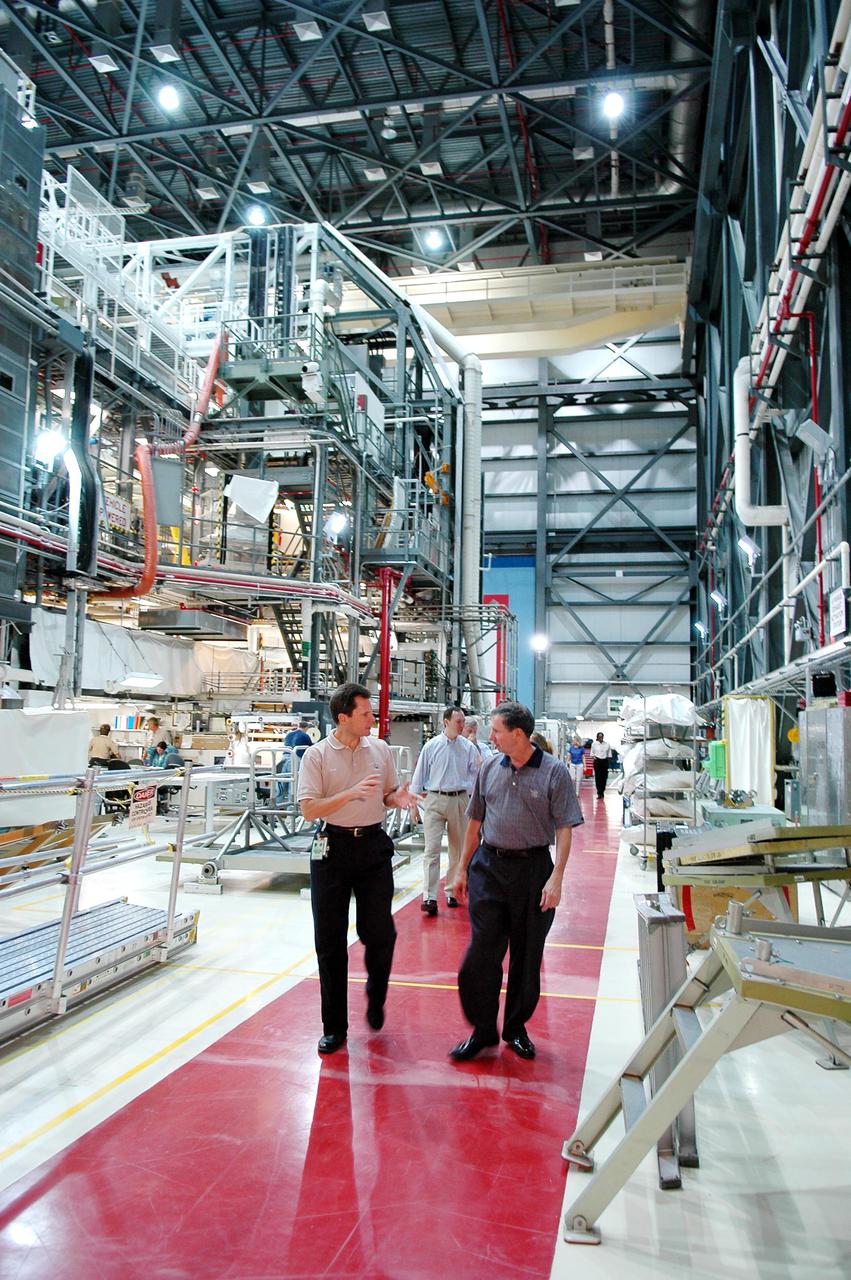
KENNEDY SPACE CENTER, FLA. - Michael Griffin (right), administrator of the National Aeronautics and Space Administration (NASA), tours Orbiter Processing Facility bay 1 with Space Shuttle Atlantis vehicle manager Scott Thurston. Space Shuttle Atlantis is being processed for the second Return to Flight mission, STS-121, in the facility. This is Griffin's first official visit to Kennedy Space Center. Griffin is the 11th administrator of NASA, a role he assumed on April 14, 2005. Griffin was nominated to the position in March while serving as the Space Department head at Johns Hopkins University's Applied Physics Laboratory in Baltimore. A registered professional engineer in Maryland and California, Griffin served as chief engineer at NASA earlier in his career. He holds numerous scientific and technical degrees including a Ph.D. in Aerospace Engineering from the University of Maryland.
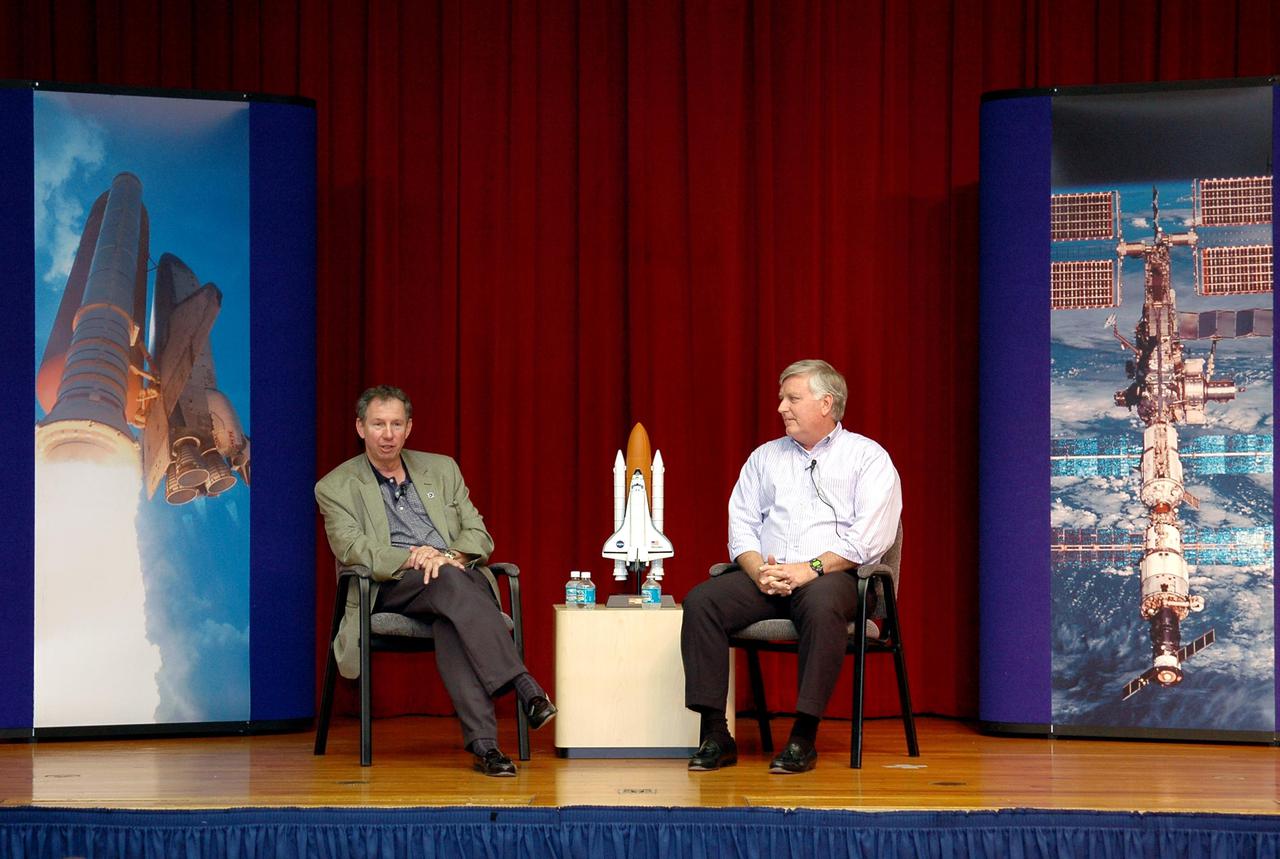
KENNEDY SPACE CENTER, FLA. - Michael Griffin (left), administrator of the National Aeronautics and Space Administration (NASA), and James Kennedy, director of the John F. Kennedy Space Center (KSC), address KSC employees during a Town Hall meeting. The meeting was held in the Training Auditorium and broadcast around the Center to employees not in attendance. This is Griffin's first official visit to Kennedy Space Center. Griffin is the 11th administrator of NASA, a role he assumed on April 14, 2005. Griffin was nominated to the position in March while serving as the Space Department head at Johns Hopkins University's Applied Physics Laboratory in Baltimore. A registered professional engineer in Maryland and California, Griffin served as chief engineer at NASA earlier in his career. He holds numerous scientific and technical degrees including a Ph.D. in Aerospace Engineering from the University of Maryland.
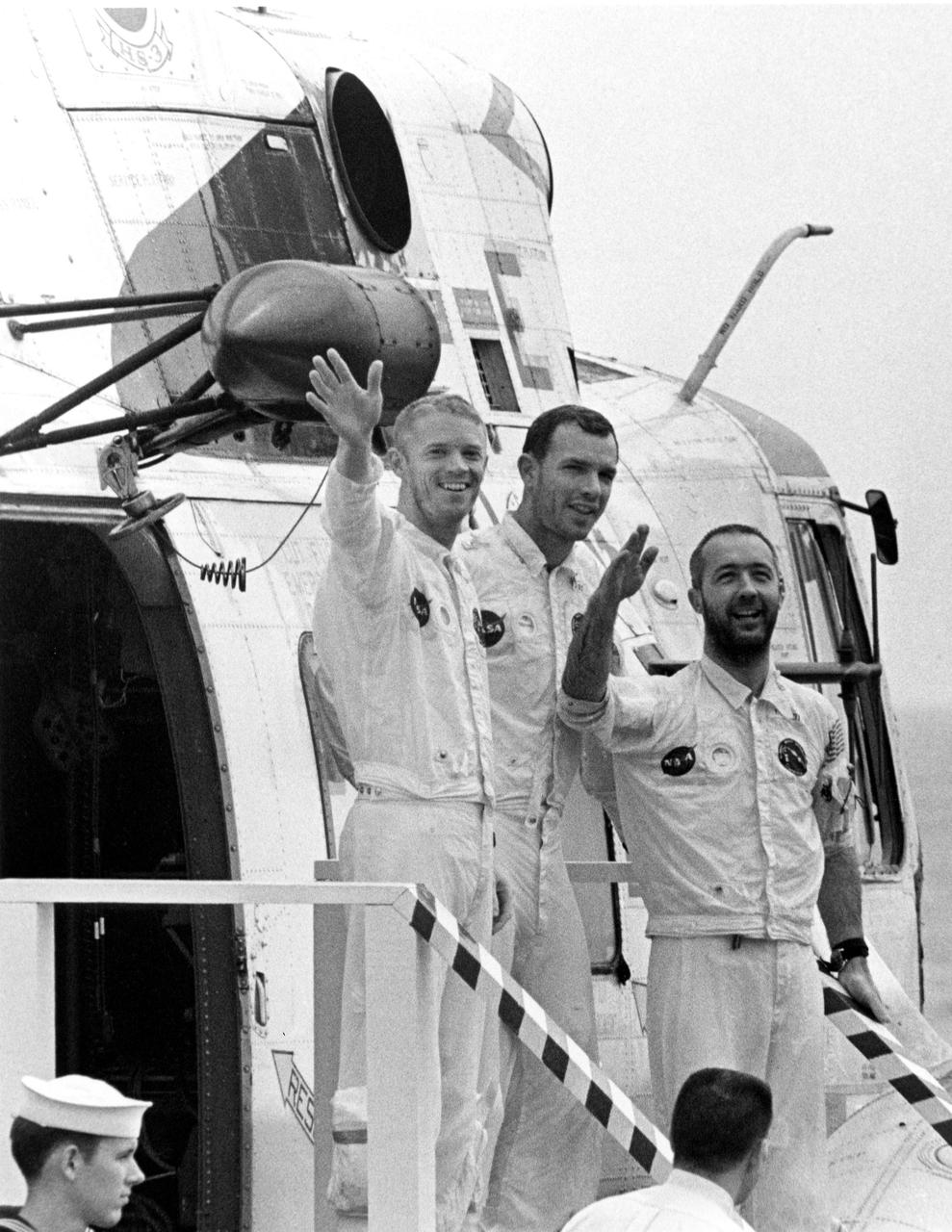
KENNEDY SPACE CENTER, FLA. -- One hour after their Apollo 9 spacecraft splashed down today in the Atlantic Ocean, waving astronauts, left to right, Russell L. Schweickart, David R. Scott and James A. McDivitt, descend stairway on to main deck of the USS Guadalcanal, prime recovery ship. The helicopter flew them from their impact point a short distance to the ship, originally positioned less than five miles from where they splashed down. The 10-day Earth orbital mission proved the feasibility of the lunar module for manned descent to the Moon's surface, scheduled to take place later this year. They wre launched March 3, 1969, from the Kennedy Space Center aboard an Apollo_Saturn V space vehicle. The National Aeronautics and Space Administration directs the Apollo program.
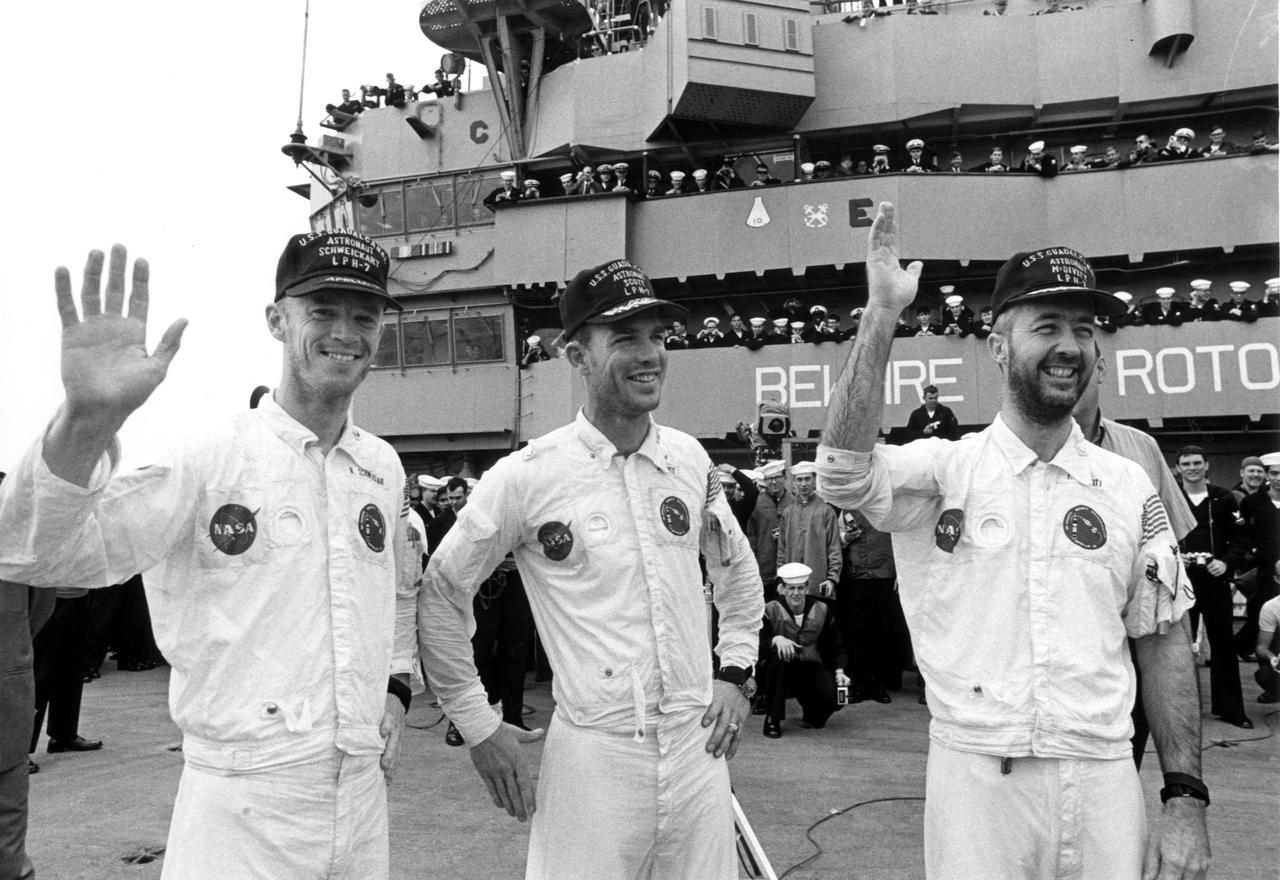
KENNEDY SPACE CENTER, FLA. -- Wearing flight caps presented to them by the crew of the USS Guadalcanal, bearded Apollo 9 astronauts (left to right) Russell L. Schweickart, David R. Scott and James A. McDivitt, wave to well-wishers aboard the recovery ship at the completion of their 10-day Earth orbital mission. Their spacecraft splashed down 780 nautical miles southeast of Cape Kennedy at 12:01 p.m. EST, March 13, 1969. During the textbook mission, the space pilots verified a lunar module spacecraft similar to the one that is to land Americans on the Moon later this year. Their flight began March 3 when they were launched by an Apollo_Saturn V rocket from the Kennedy Space Center. The National Aeronautics and Space Administration directs the Apollo program.
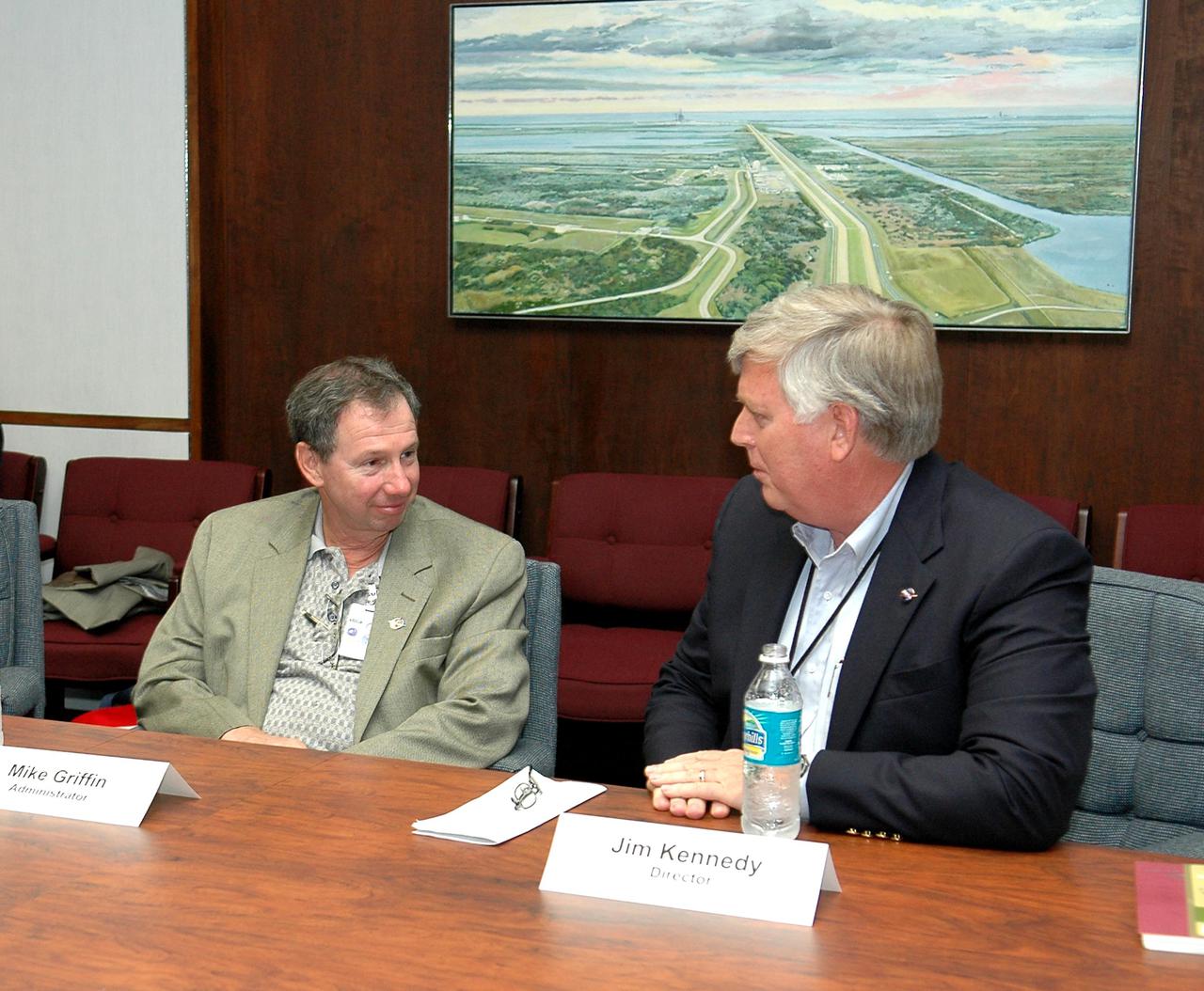
KENNEDY SPACE CENTER, FLA. - Dr. Michael Griffin (left), the new administrator of the National Aeronautics and Space Administration (NASA), meets with James W. Kennedy, the director of the John F. Kennedy Space Center (KSC) in Florida, during Griffin's first official visit to the Center. Griffin is the 11th administrator of NASA, a role he assumed on April 14, 2005. Griffin was nominated to the position in March by President George W. Bush while serving as the Space Department head at Johns Hopkins University's Applied Physics Laboratory in Baltimore. A registered professional engineer in Maryland and California, Griffin served as chief engineer at NASA earlier in his career. He holds numerous scientific and technical degrees including a Ph.D. in Aerospace Engineering from the University of Maryland.
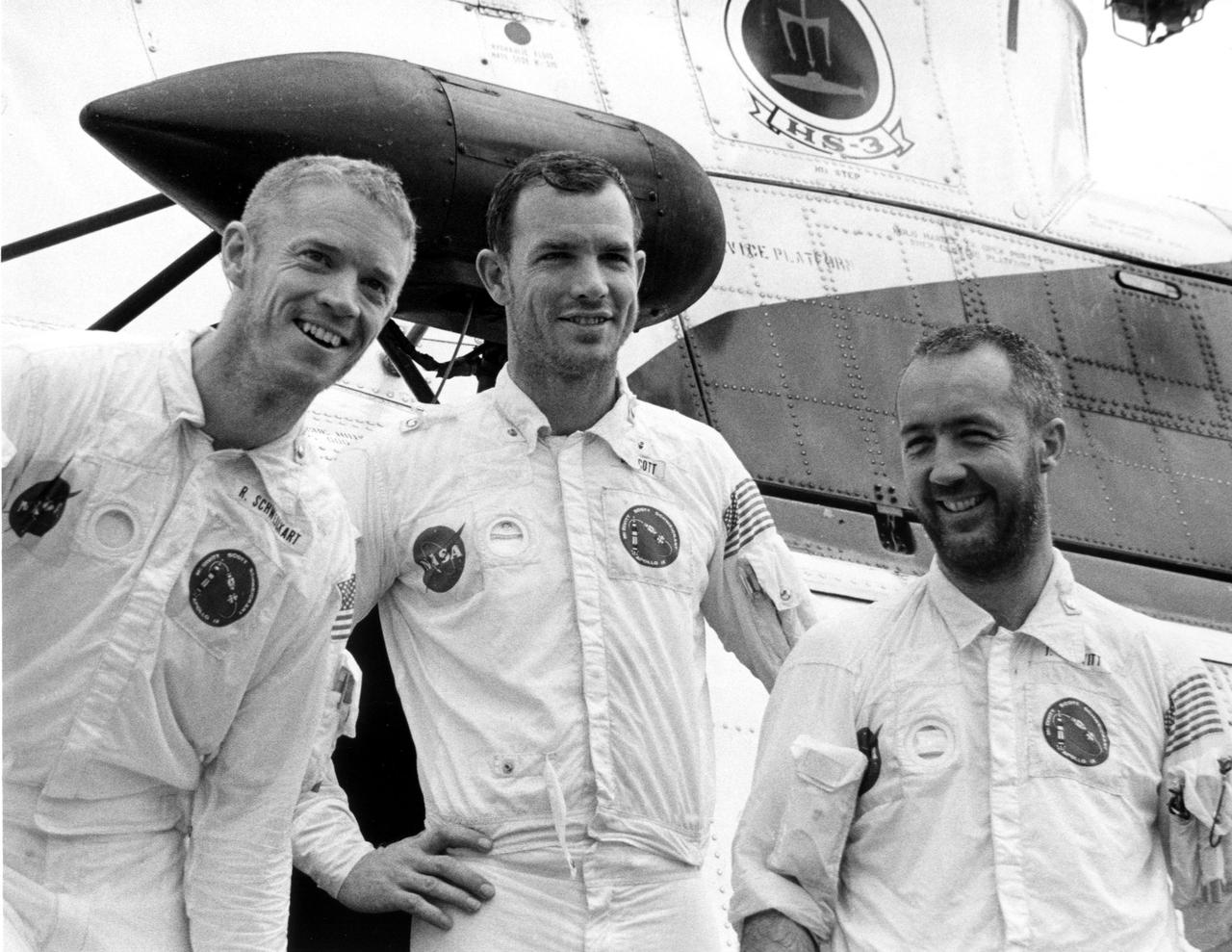
KENNEDY SPACE CENTER, FLA. -- Bearded and smiling, Apollo 9 astronauts, left to right, Russell L. Schweickart, David R. Scott and James A. McDivitt, pause in front of recovery helicopter, which carried them a short distance from their spacecraft's impact point to the USS Guadalcanal, prime recovery ship. They splashed down today less than five miles from the Guadalcanal, 780 nautical miles southeast of Cape Kennedy. The astronauts reentered at the beginning of their 152nd Earth orbit following a textbook flight that verified a lunar module spacecraft. It was similar to the one that is to land Americans on the Moon later this year. They were launched March 3, 1969, from the Kennedy Space Center aboard an Apollo_Saturn V space vehicle. The National Aeronautics and Space Administration directs the Apollo program.
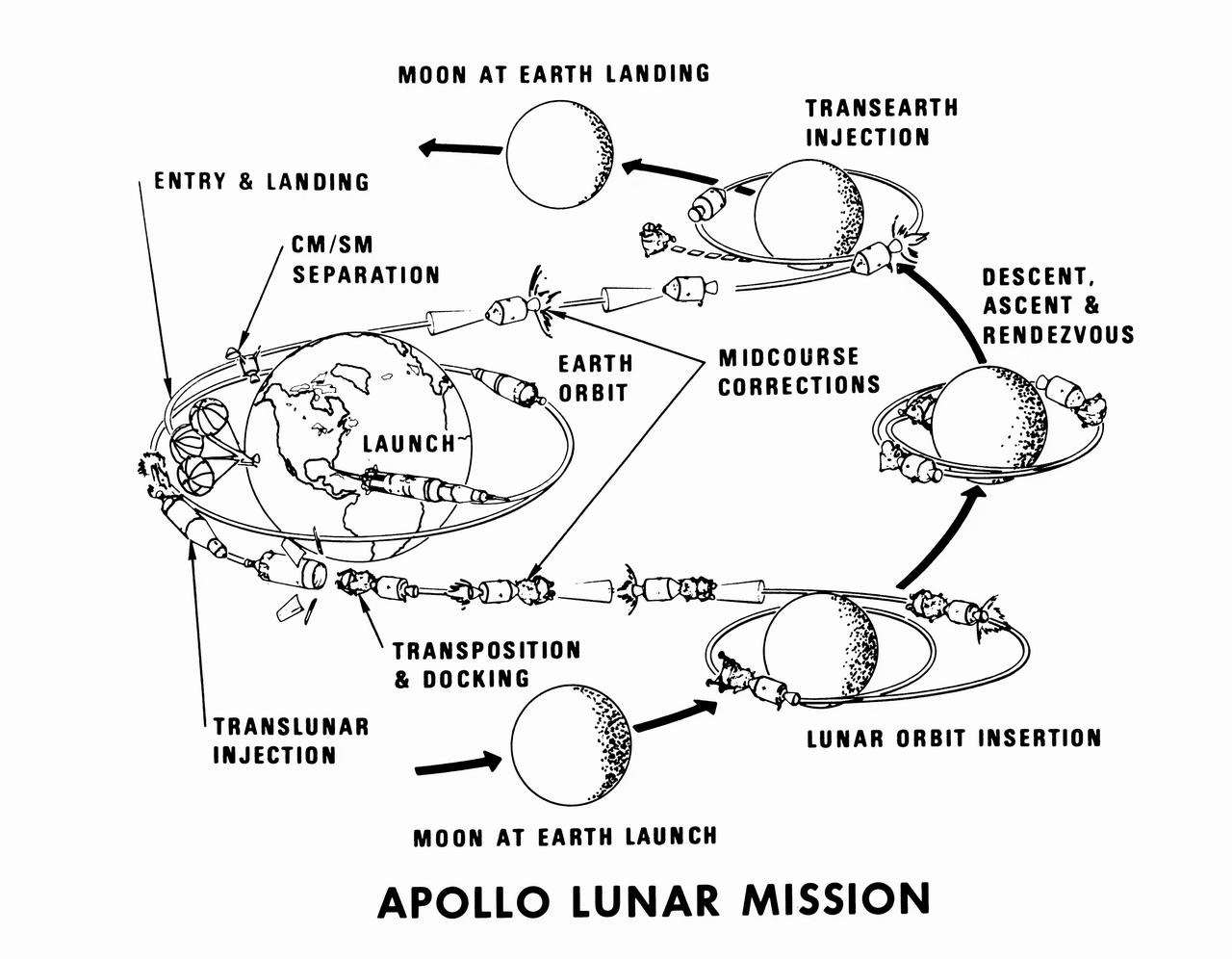
S69-34073 (1969) --- An illustration showing a mission profile of a lunar orbit flight by the National Aeronautics and Space Administration.
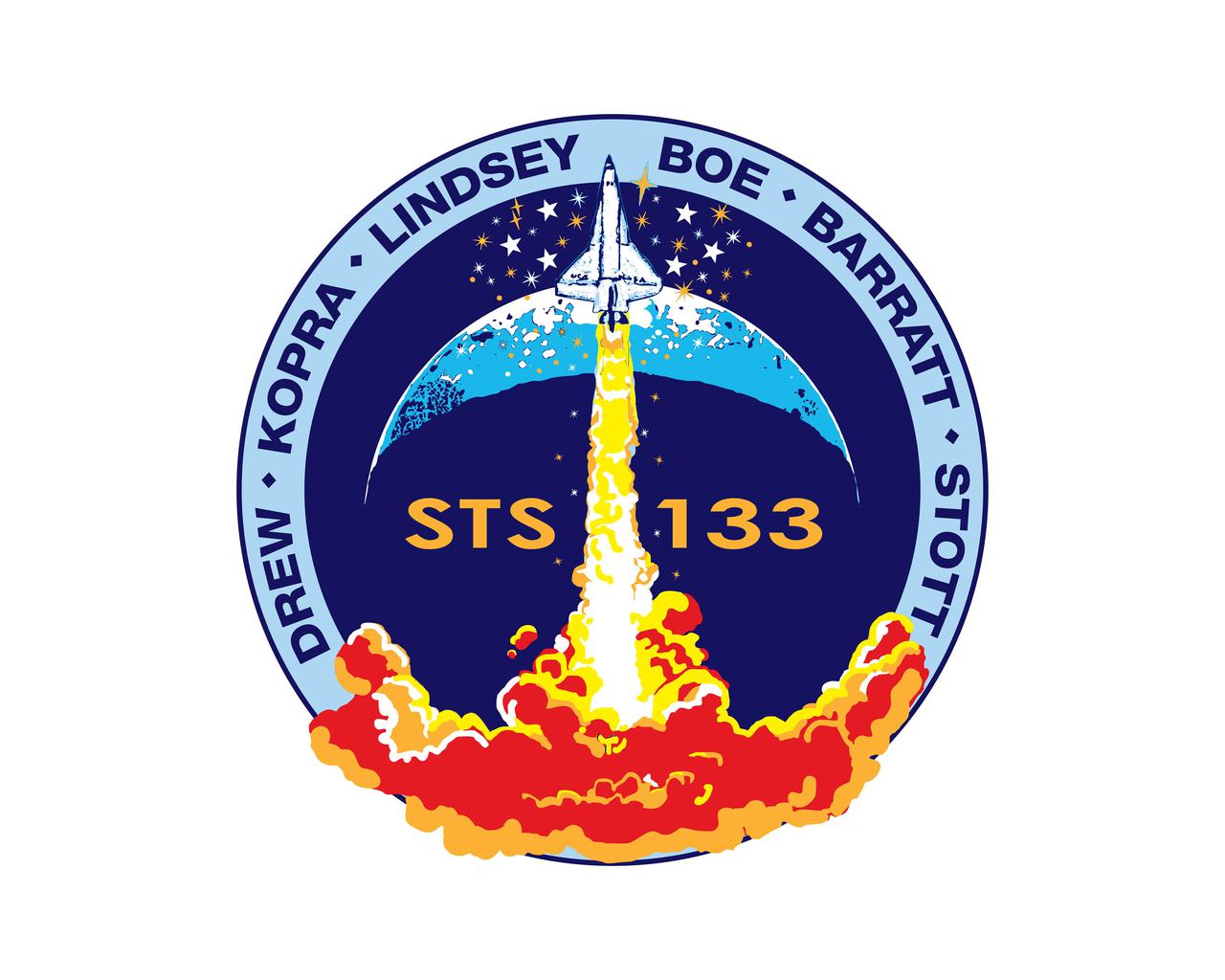
JOHNSON SPACE CENTER, Houston - STS133-S-001 ---- The STS-133 mission patch is based upon sketches from the late artist Robert McCall; they were the final creations of his long and prodigious career. In the foreground, a solitary orbiter ascends into a dark blue sky above a roiling fiery plume. A spray of stars surrounds the orbiter and a top lit crescent forms the background behind the ascent. The mission number, STS-133, is emblazoned on the patch center, and crewmembers' names are listed on a sky-blue border around the scene. The Shuttle Discovery is depicted ascending on a plume of flame as if it is just beginning a mission. However it is just the orbiter, without boosters or an external tank, as it would be at mission's end. This is to signify Discovery's completion of its operational life and the beginning of its new role as a symbol of NASA's and the nation's proud legacy in human spaceflight. The NASA insignia design for shuttle and space station flights is reserved for use by the astronauts and for other official use as the NASA Administrator may authorize. Public availability has been approved only in the form of illustrations by the various news media. When and if there is any change in this policy, which is not anticipated, it will be publicly announced. Photo credit: NASA or National Aeronautics and Space Administration
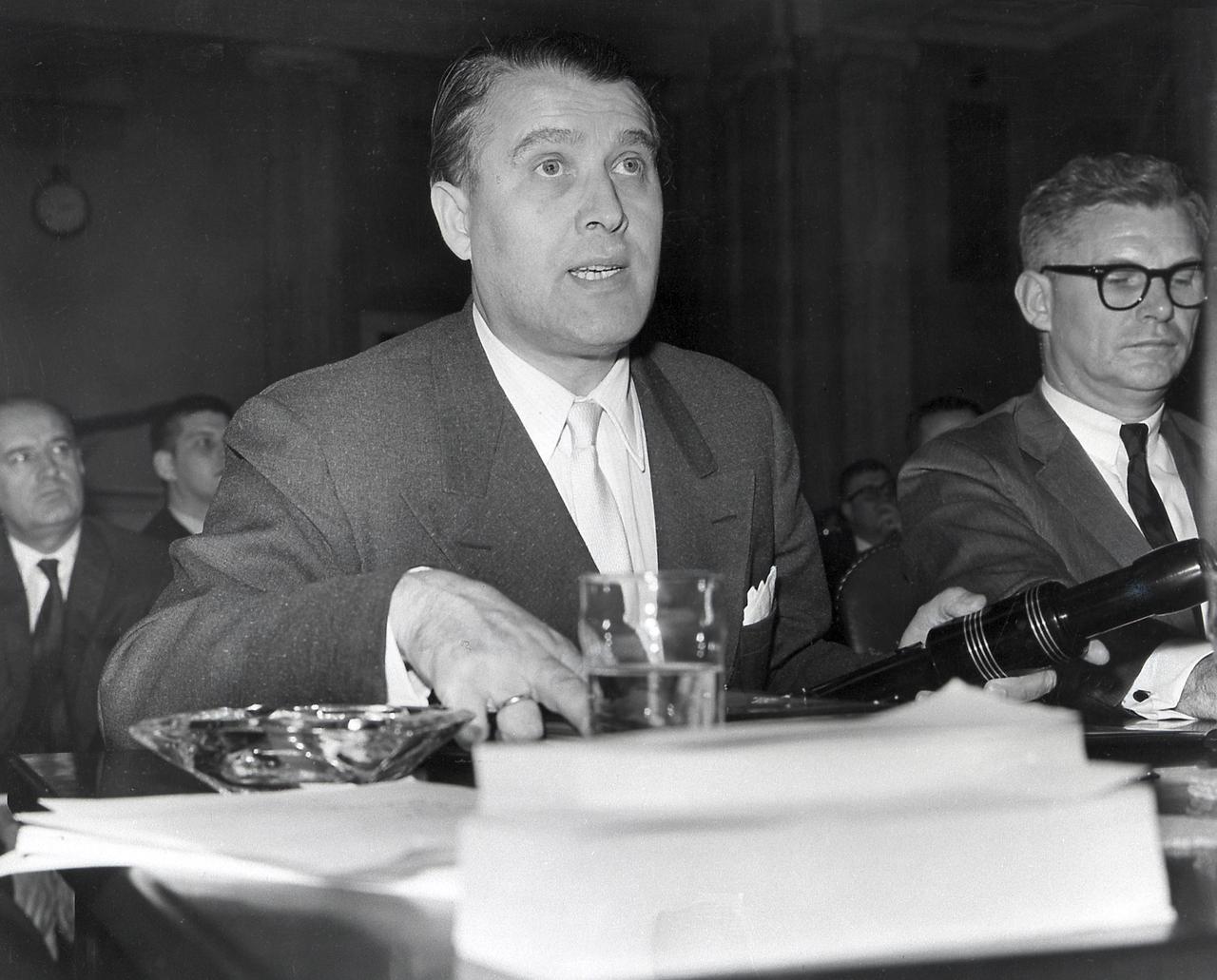
Dr. von Braun, Director of the Marshall Space Flight Center, spoke of the progress in the Saturn Program during his appearance before the Senate Committee on Aeronautical and Space Sciences. He was accompanied by Dr. Robert C. Seamans, Jr., Associate Administrator of the National Aeronautics and Space Administration (NASA).
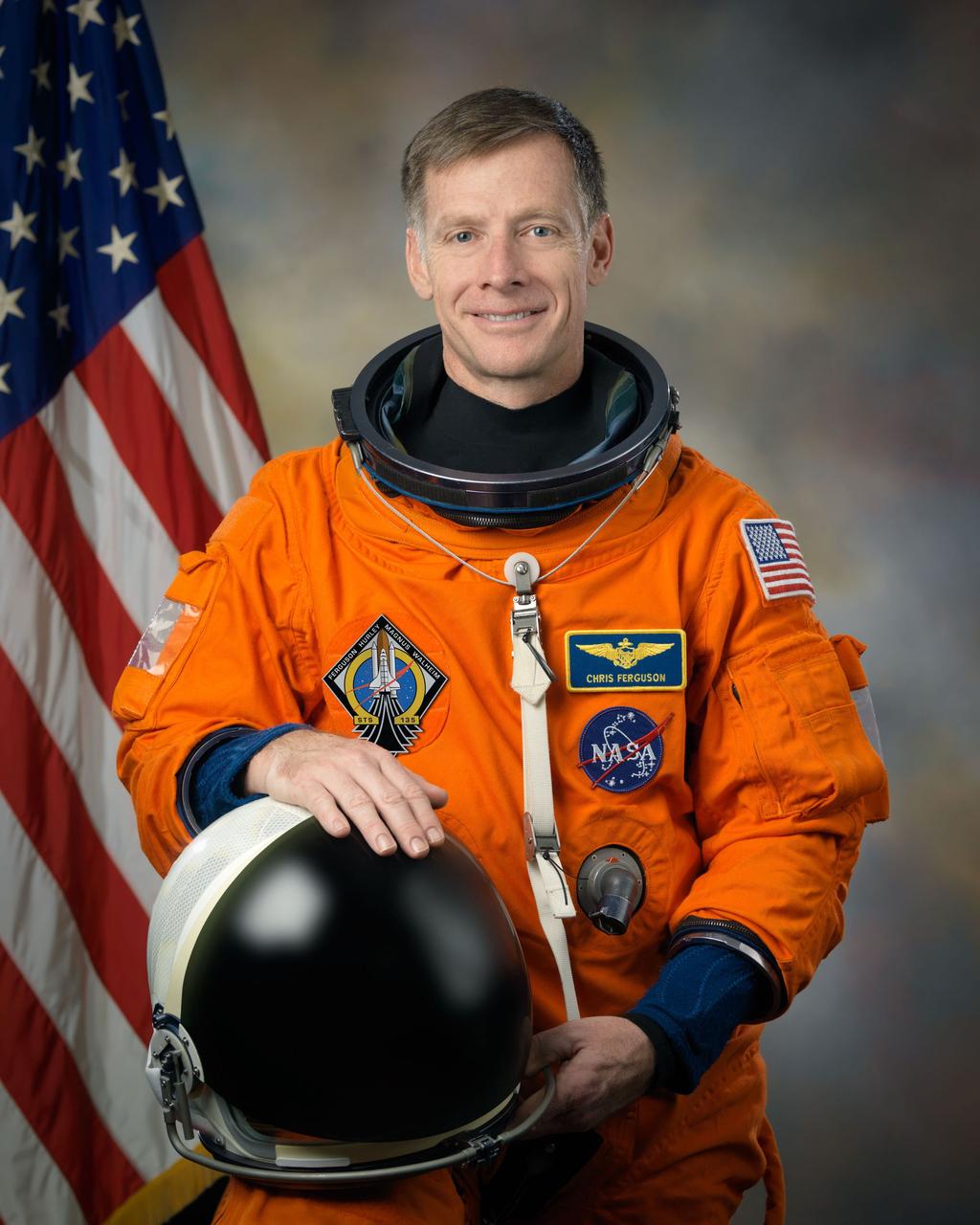
JOHNSON SPACE CENTER, Houston, Texas --- JSC2011-E-026189 --- NASA astronaut Chris Ferguson, commander. Photo credit: NASA or National Aeronautics and Space Administration
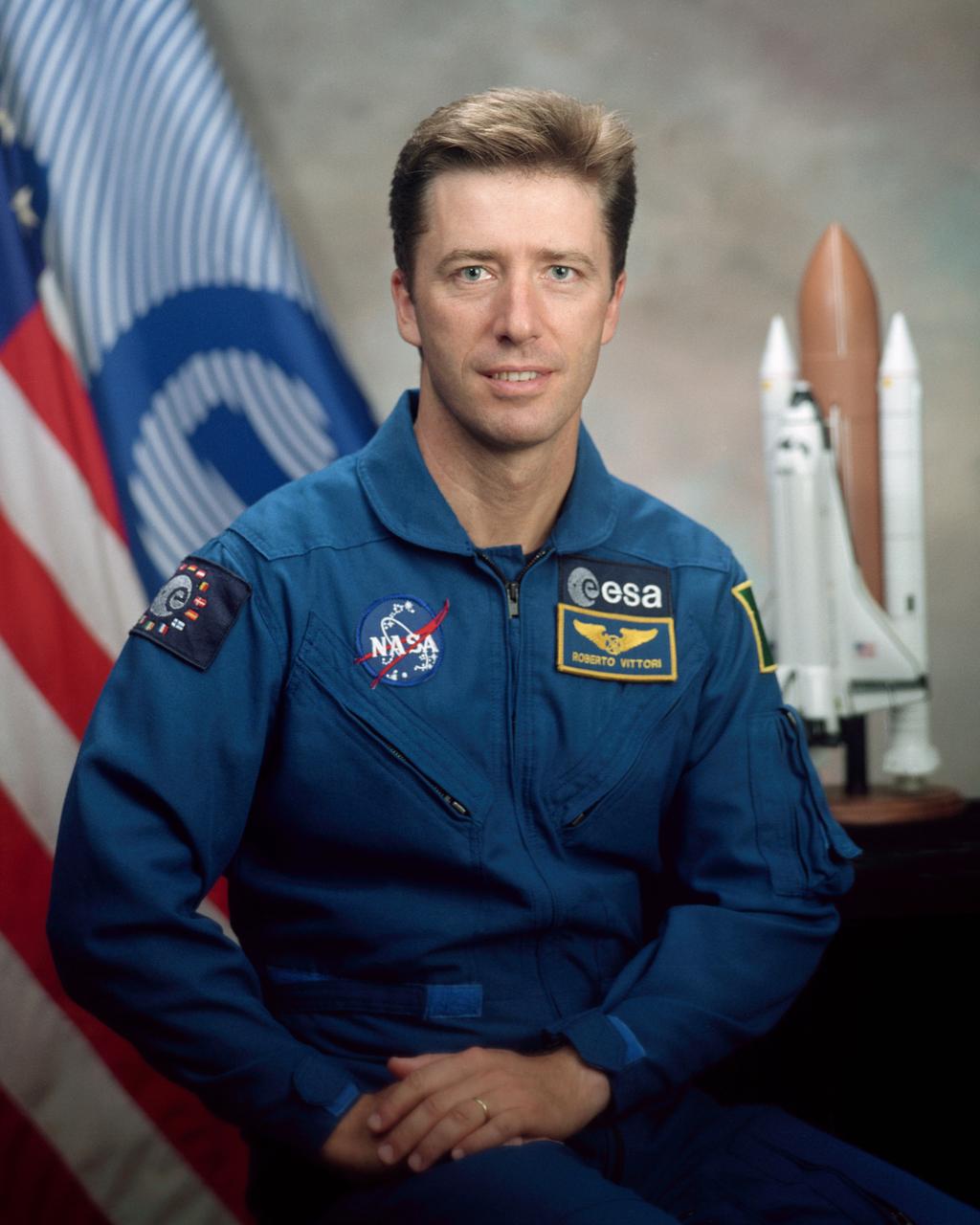
JSC2000-07238 (21 Nov. 2000) --- European Space Agency astronaut Roberto Vittori, mission specialist. Photo credit: NASA or National Aeronautics and Space Administration
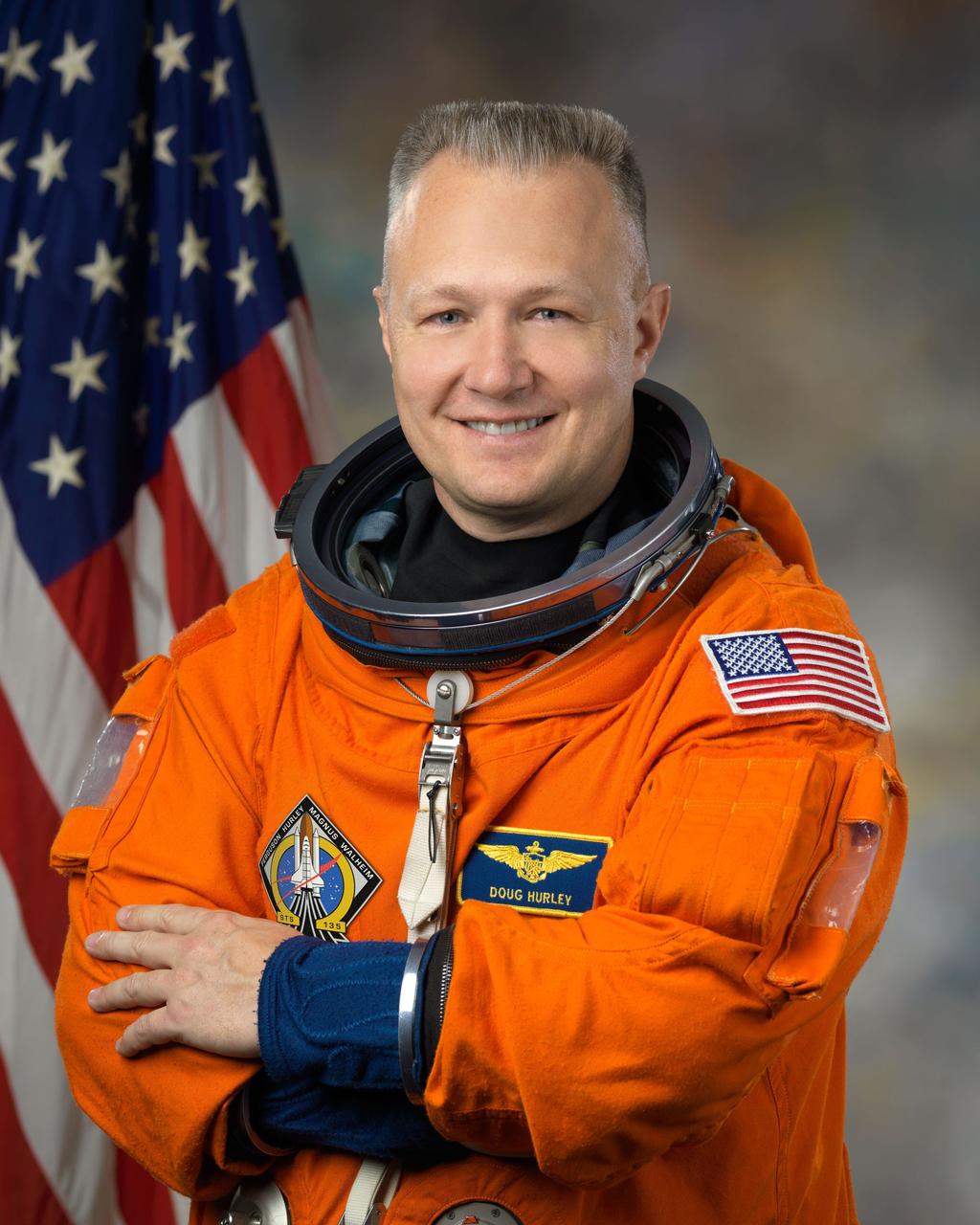
JOHNSON SPACE CENTER, Houston, Texas --- JSC2011-E-026188 --- NASA astronaut Doug Hurley, pilot. Photo credit: NASA or National Aeronautics and Space Administration
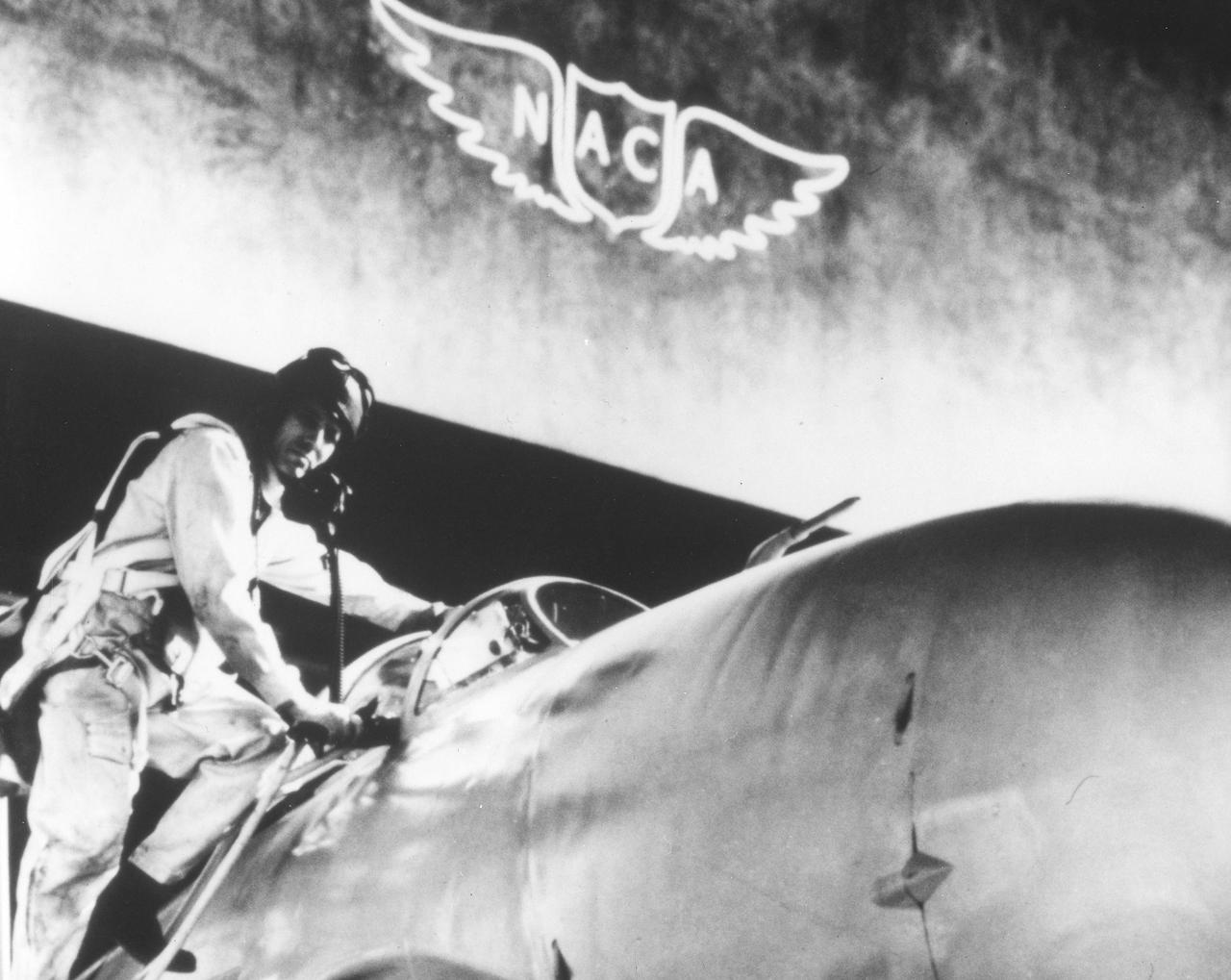
The Marshall Space Flight Center was activated on July 1, 1960 as a part of NASA, which had been established on October 1, 1958 by Congressional passage of the National Aeronautics and Space Act. The nucleus of NASA was the Advisory Committee for Aeronautics later named the National Advisory Committee for Aeronauts (NACA). The NACA was founded in 1915 to study the problems of flight and to recommend practical solutions to basic aircraft design and construction problems. NACA's wind turnels and other research facilities made NACA technical reports the basis for aviation progress for more than 40 years.
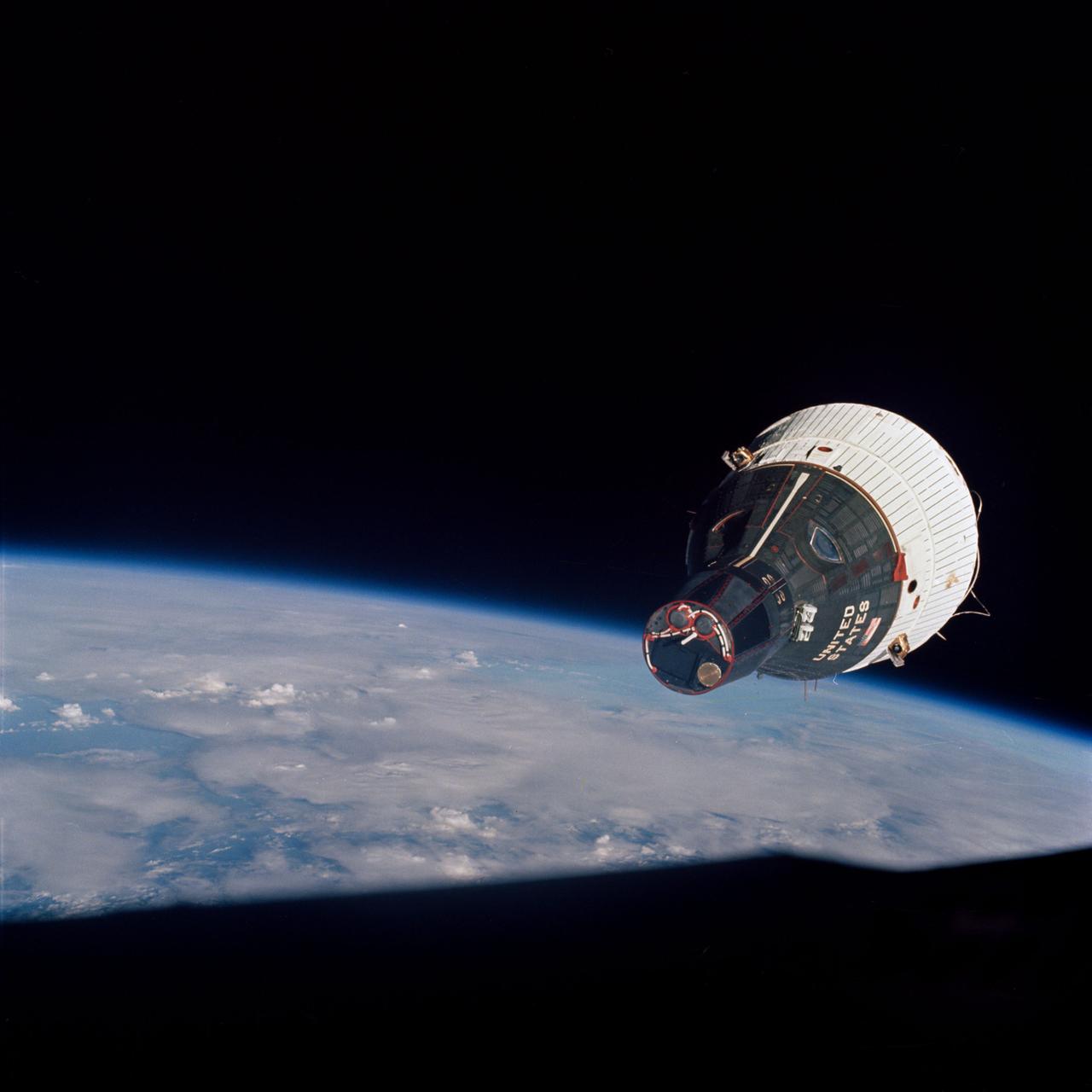
S65-63188 (15 Dec. 1965) --- The National Aeronautics and Space Administration's (NASA) Gemini-7 spacecraft as seen from the Gemini-6 spacecraft during their rendezvous mission in space. The two spacecraft are approximately 43 feet apart. The image was taken with a modified 70mm Hasselblad camera, using Eastman Kodak, Ektachrome (S.O. 217) color film. Photo credit: NASA or National Aeronautics and Space Administration

S65-63189 (15 Dec. 1965) --- The National Aeronautics and Space Administration's (NASA) Gemini-7 spacecraft as seen from the Gemini-6 spacecraft during their rendezvous mission in space. The two spacecraft are approximately 43 feet apart. This image was taken with a modified 70mm Hasselblad camera, using Eastman Kodak, Ektachrome (S.O. 217) color film. Photo credit: NASA or National Aeronautics and Space Administration
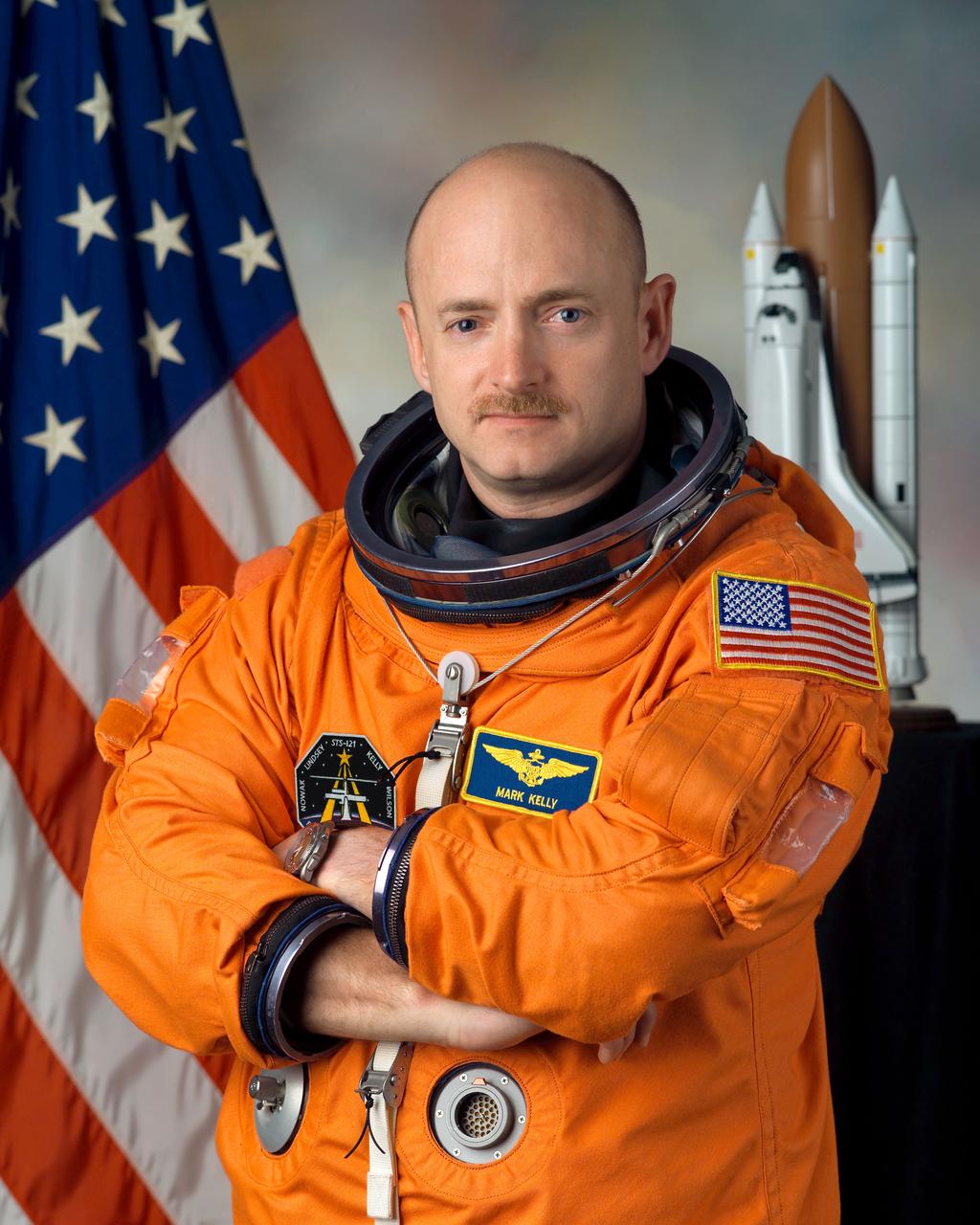
JSC2005-E-20603 (5 Jan. 2005) --- NASA astronaut Mark E. Kelly, commander. Photo credit: NASA or National Aeronautics and Space Administration
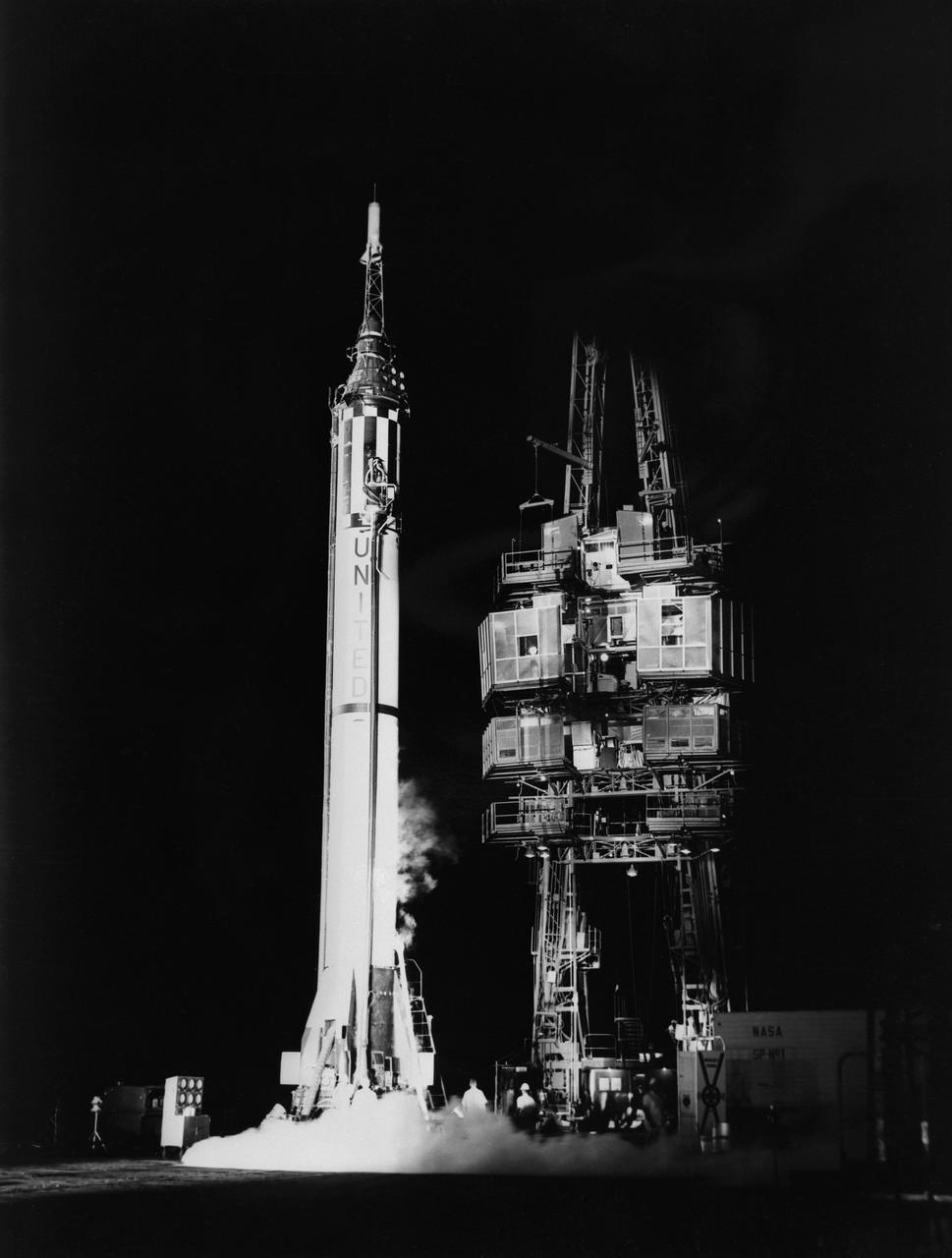
S61-03158 (1961) --- Mercury-Redstone 3 (MR-3) missile standing alone on launch pad. Photo credit: NASA or National Aeronautics and Space Administration

Portrait, Michael Griffin, Administrator, National Aeronautics and Space Administration (NASA). Washington, DC, April 25, 2005. Photo Credit: (NASA/Renee Bouchard)
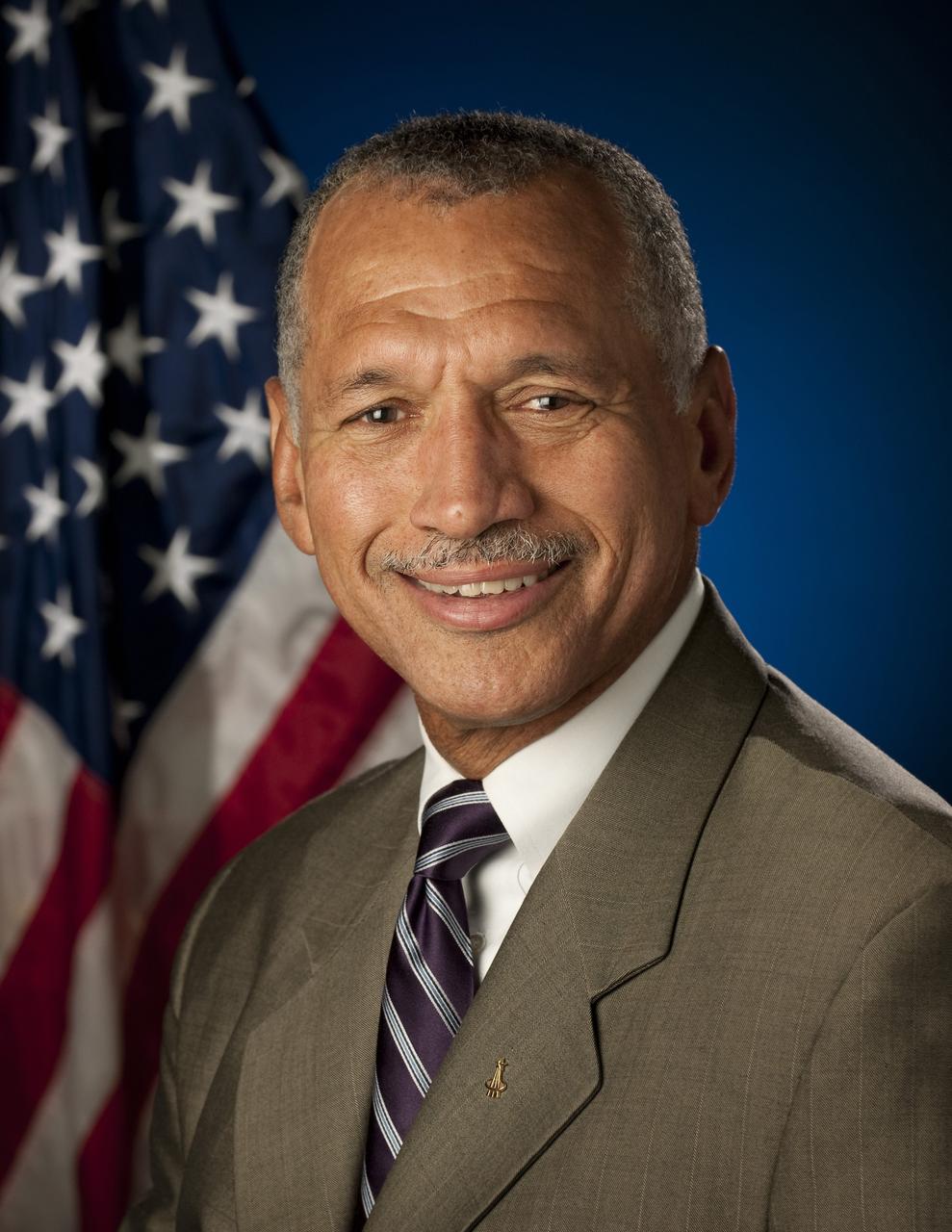
WASHINGTON, D.C. – Portrait, Charles F. Bolden Jr., Administrator, National Aeronautics and Space Administration (NASA). Photo credit: NASA/Bill Ingalls
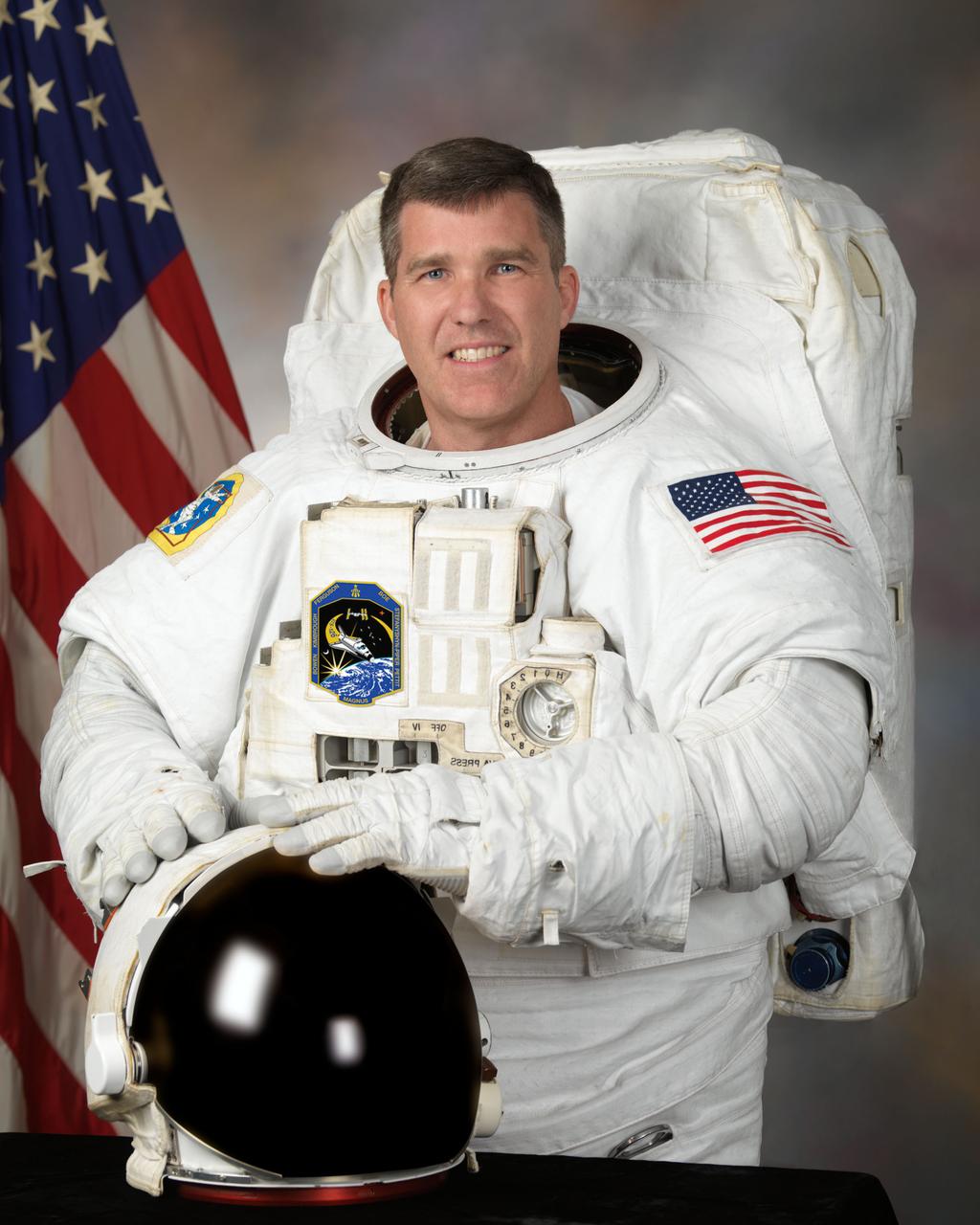
JSC2008-E-039696 (7 April 2008) --- NASA astronaut Stephen G. Bowen, mission specialist. Photo credit: NASA or National Aeronautics and Space Administration
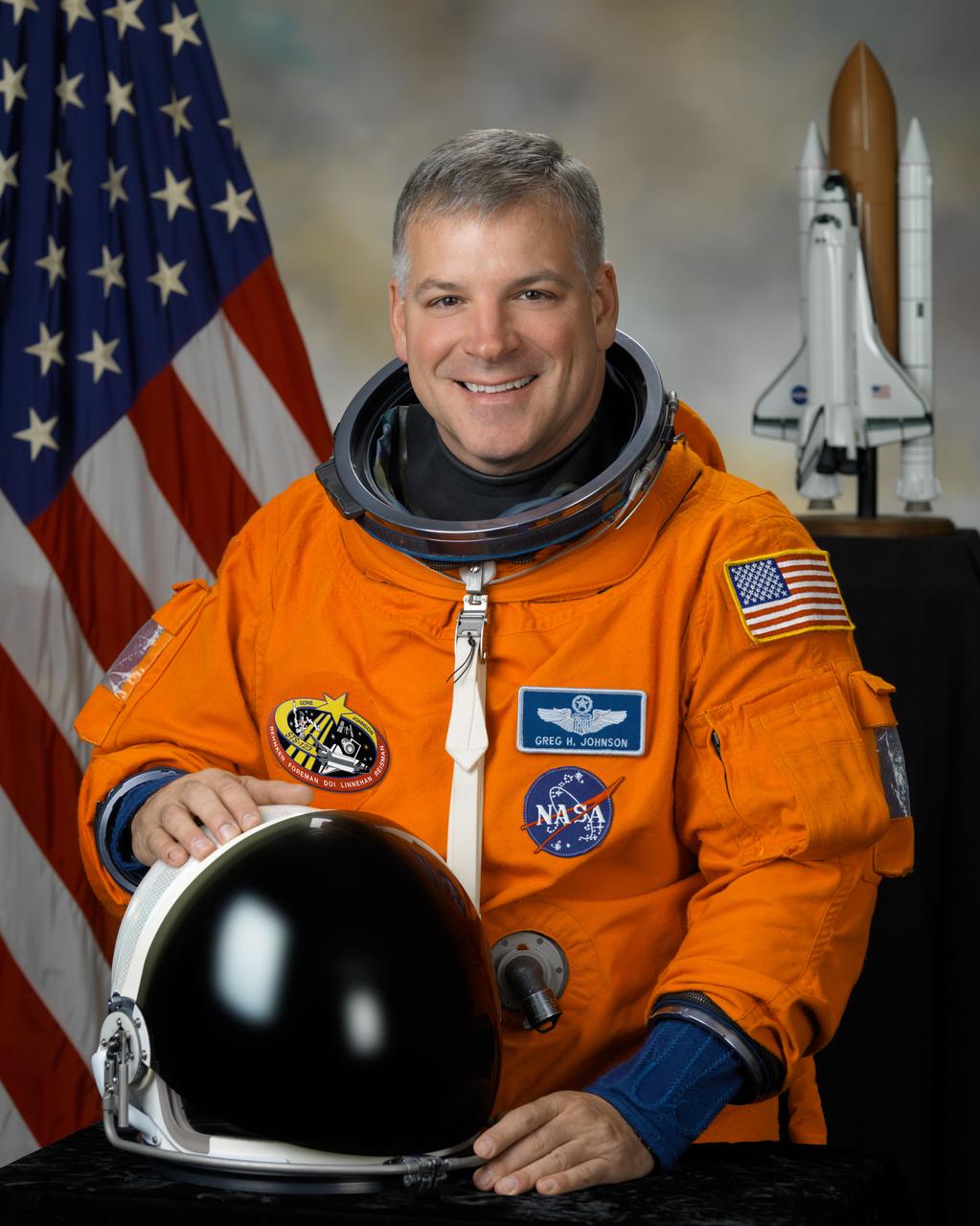
JSC2008-E-000184 (24 Oct. 2007) --- NASA astronaut Gregory H. Johnson, pilot. Photo credit: NASA or National Aeronautics and Space Administration
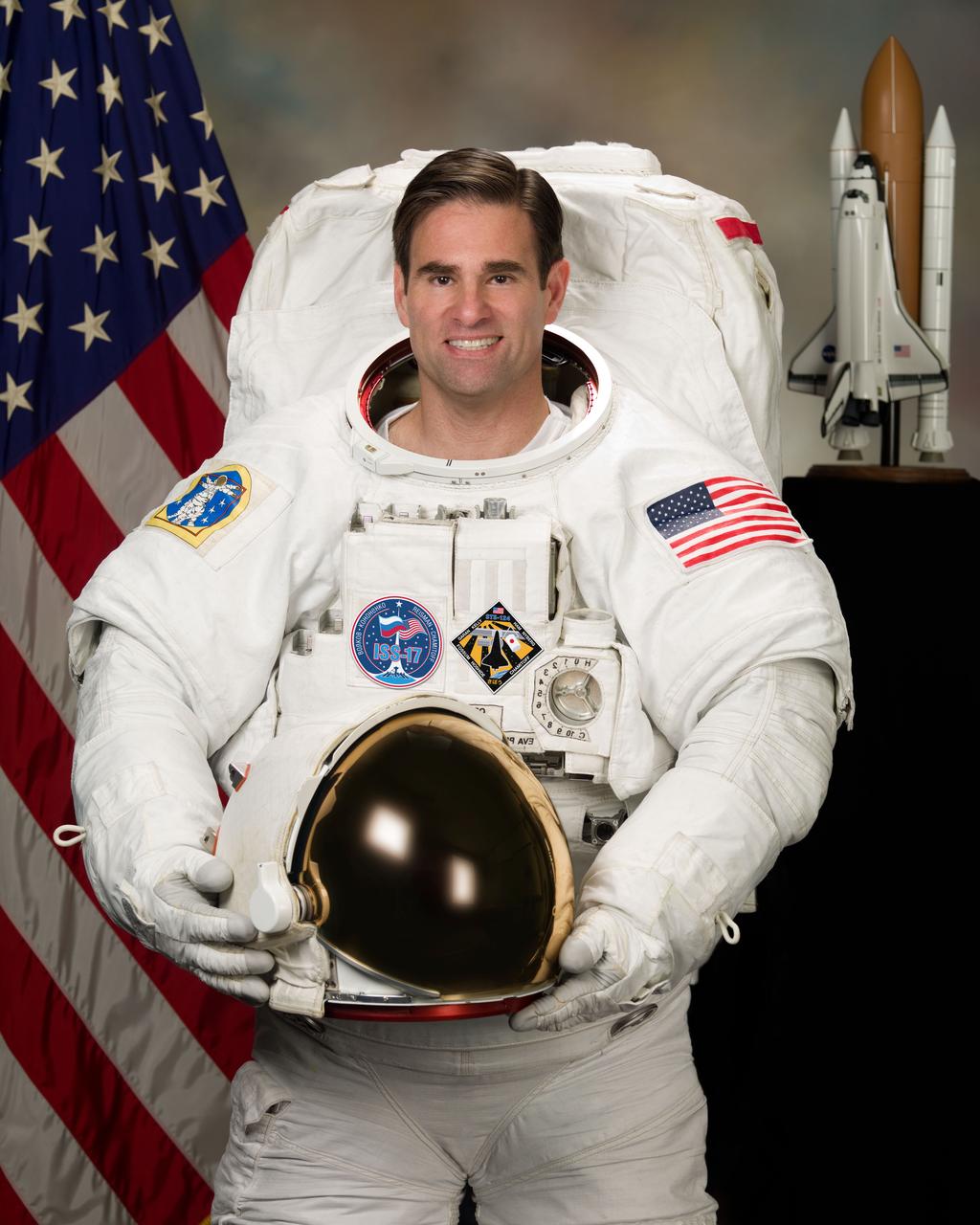
JSC2008-E-001967 (15 Nov. 2007) --- NASA astronaut Gregory E. Chamitoff, mission specialist. Photo credit: NASA or National Aeronautics and Space Administration
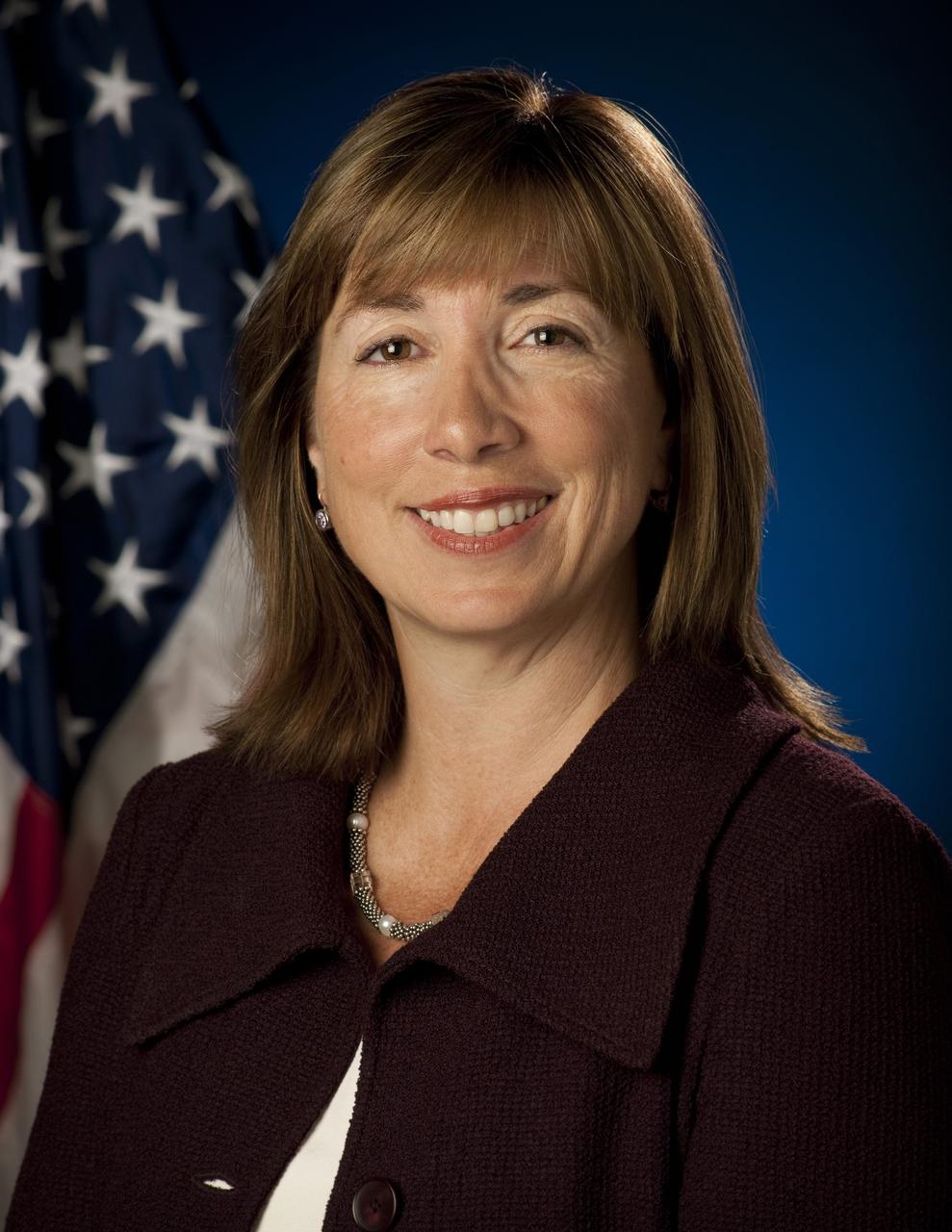
WASHINGTON, D.C. – Portrait, Lori B. Garver, Deputy Administrator, National Aeronautics and Space Administration (NASA). Photo credit: NASA/Bill Ingalls
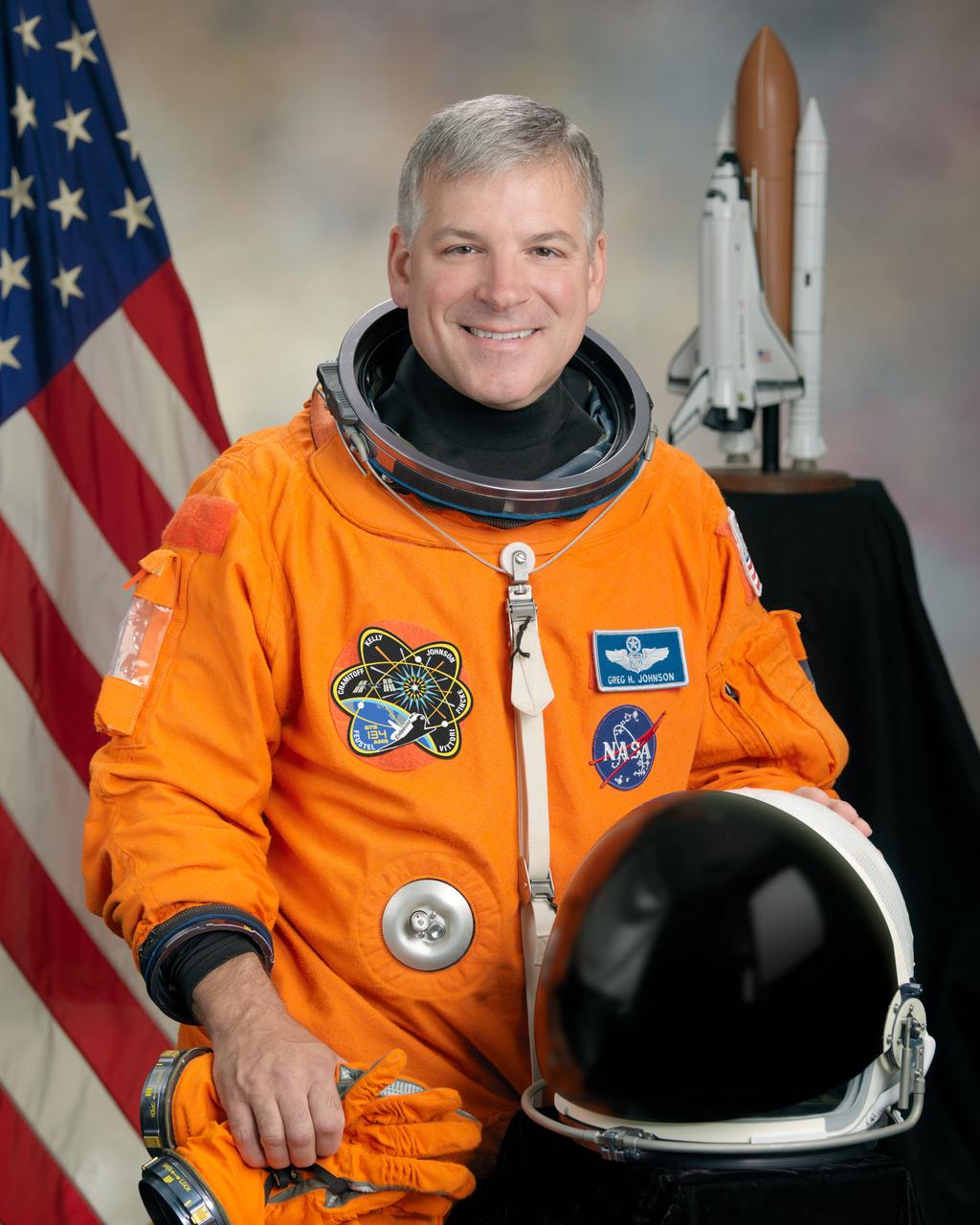
JSC2011-E-017047 (27 July 2010) --- NASA astronaut Gregory H. Johnson, pilot. Photo credit: NASA or National Aeronautics and Space Administration

Portrait, Bobby Braun, Chief Technologist, National Aeronautics and Space Administration (NASA). Washington, DC, May 19, 2010. Photo Credit: (NASA/Bill Ingalls)
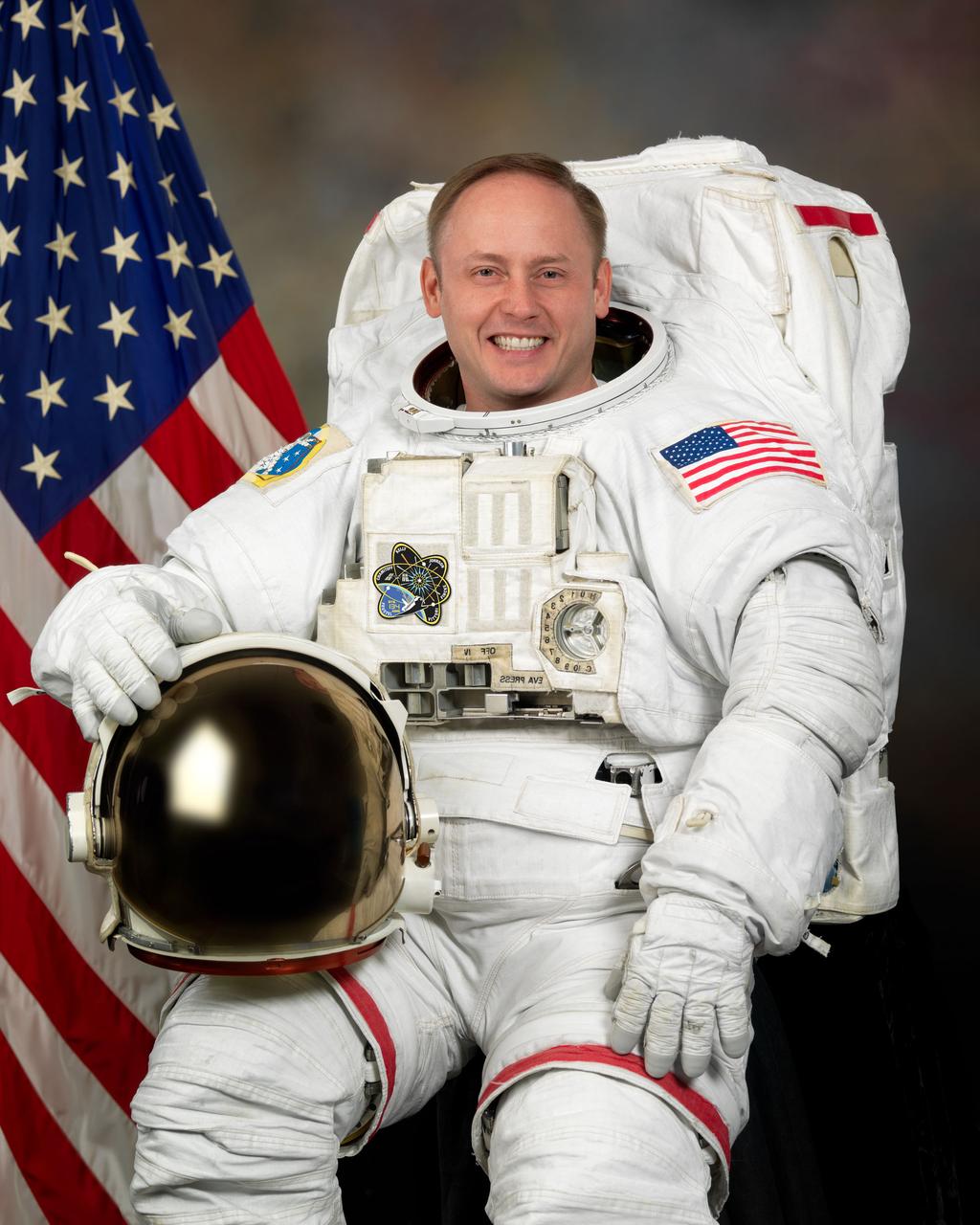
JSC2010-E-094406 (18 Dec. 2009) --- NASA astronaut E. Michael Fincke, mission specialist. Photo credit: NASA or National Aeronautics and Space Administration
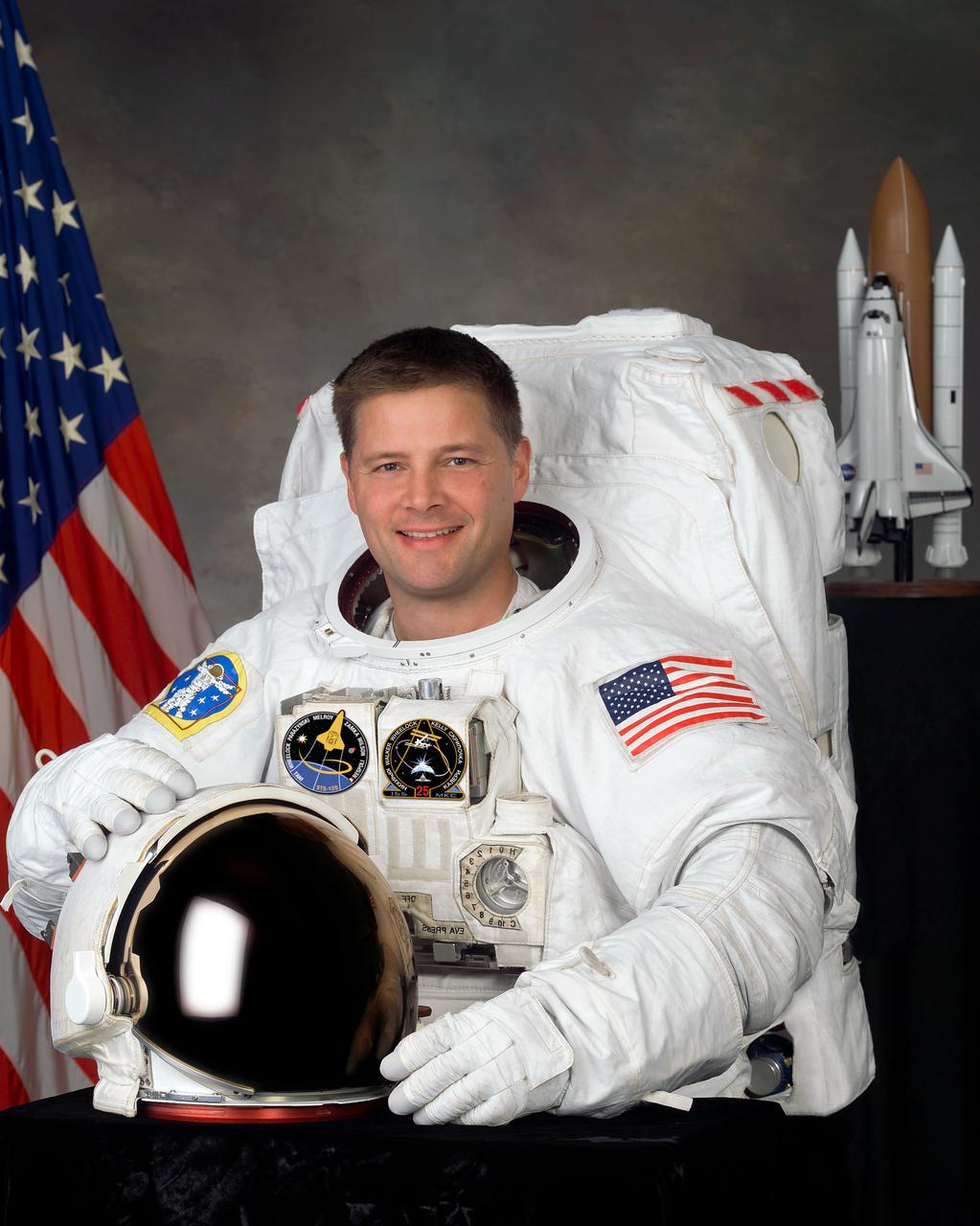
JSC2010-E-132513 (5 Dec. 2006) --- NASA astronaut Douglas H. Wheelock, ISS commander. Photo credit: NASA or National Aeronautics and Space Administration
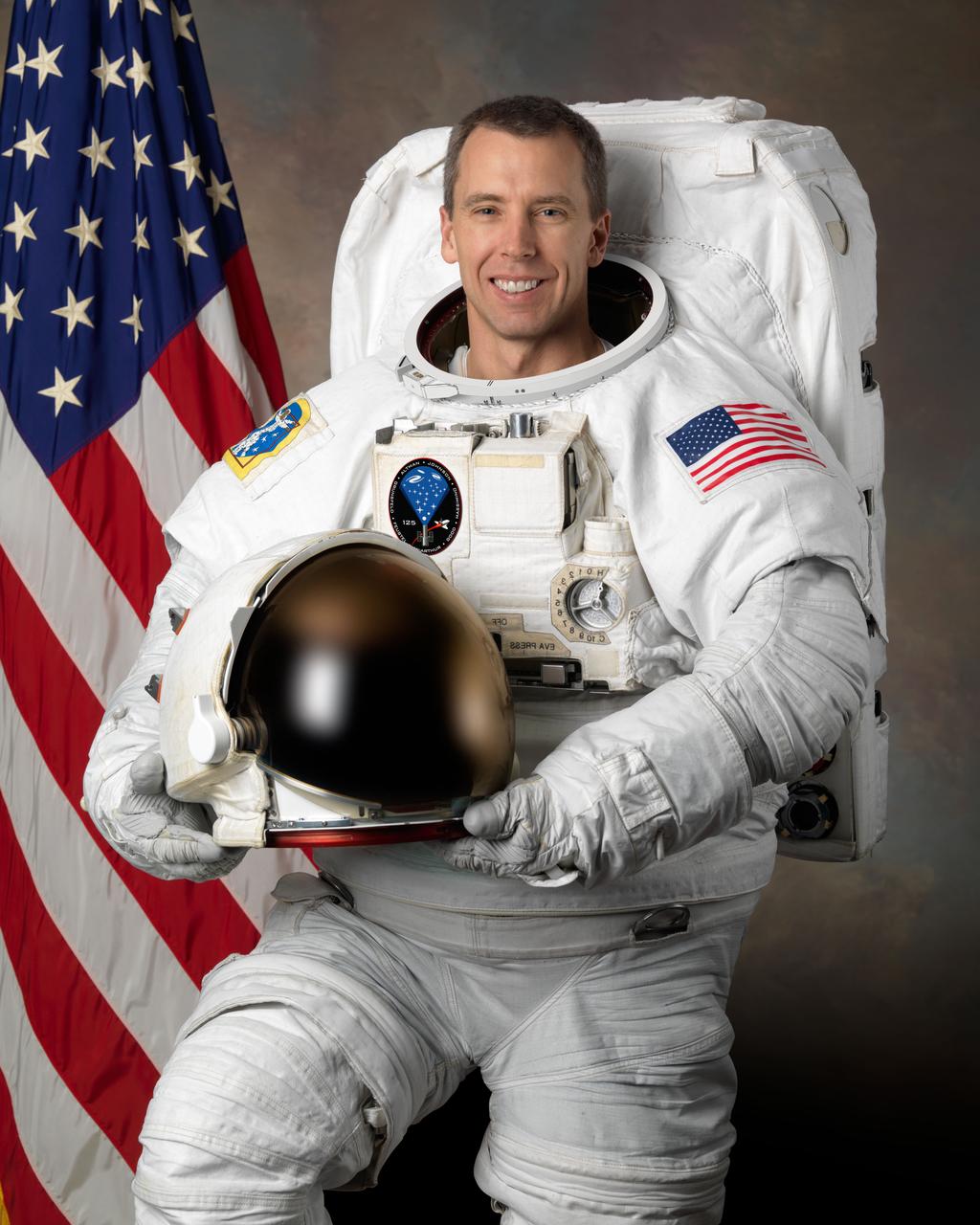
JSC2008-E-010318 (6 Feb. 2008) --- NASA astronaut Andrew J. Feustel, mission specialist. Photo credit: NASA or National Aeronautics and Space Administration
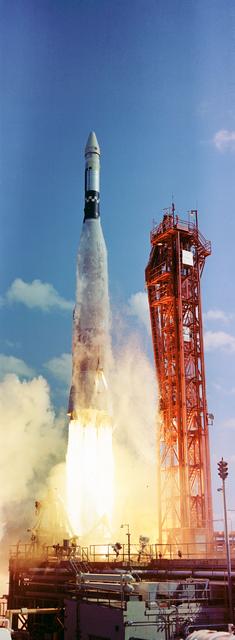
S65-56161 (25 Oct. 1965) --- The National Aeronautics and Space Administration launched an Atlas/Agena vehicle at 10 a.m. (EST) on Oct. 25, 1965, from Pad 14. Intended as a rendezvous target vehicle in the Gemini-6 mission, the Agena failed to achieve orbit, and the Gemini-6 mission was scrubbed. Photo credit: NASA or National Aeronautics and Space Administration
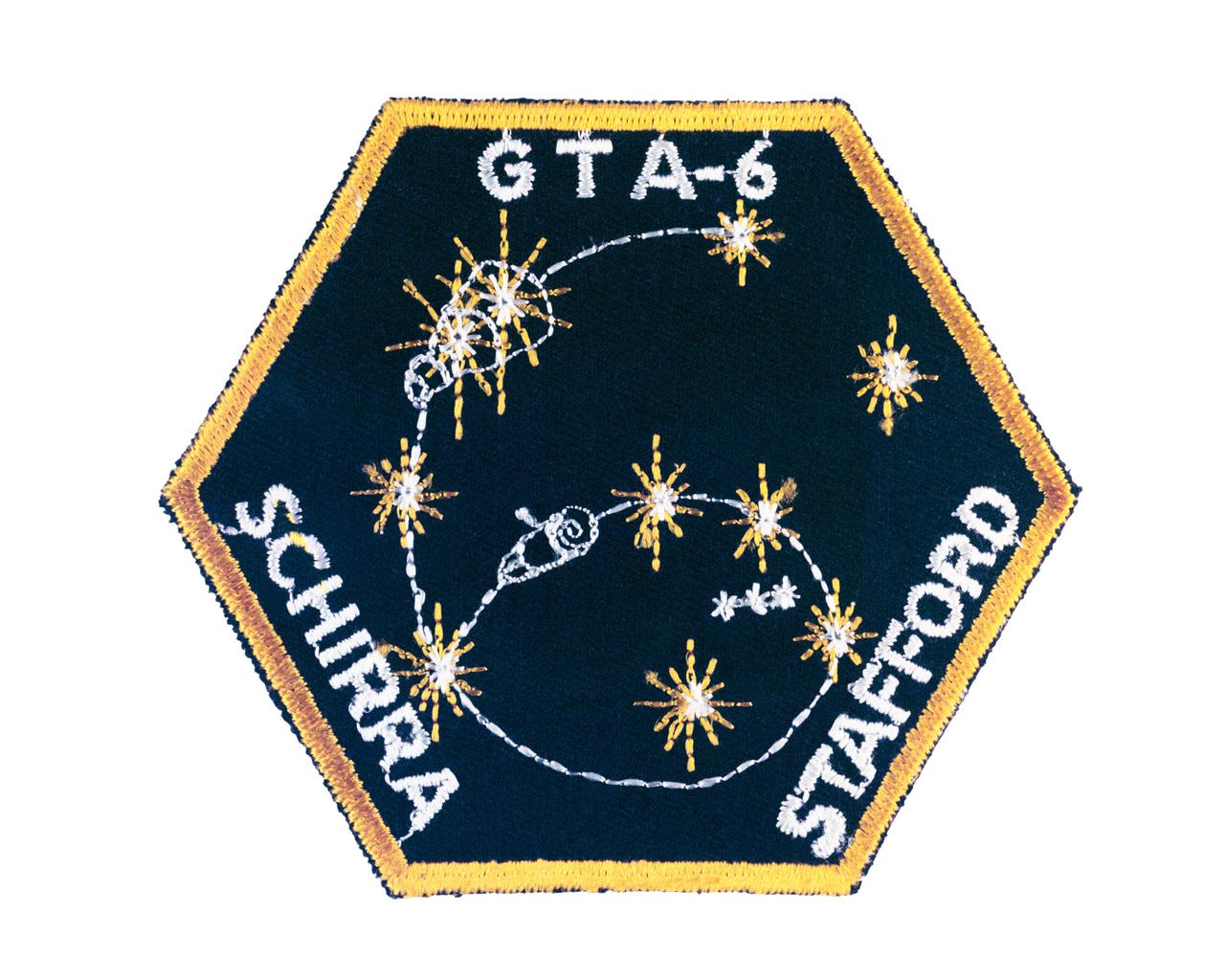
S65-55983 (8 Dec. 1965) --- This hexagonal-shaped insignia is the emblem of the Gemini-6 spaceflight. Astronauts Walter M. Schirra Jr., command pilot; and Thomas P. Stafford, pilot, are the prime crew. The National Aeronautics and Space Administration (NASA) has scheduled Gemini-6 as a two-day mission. Photo credit: NASA or National Aeronautics and Space Administration
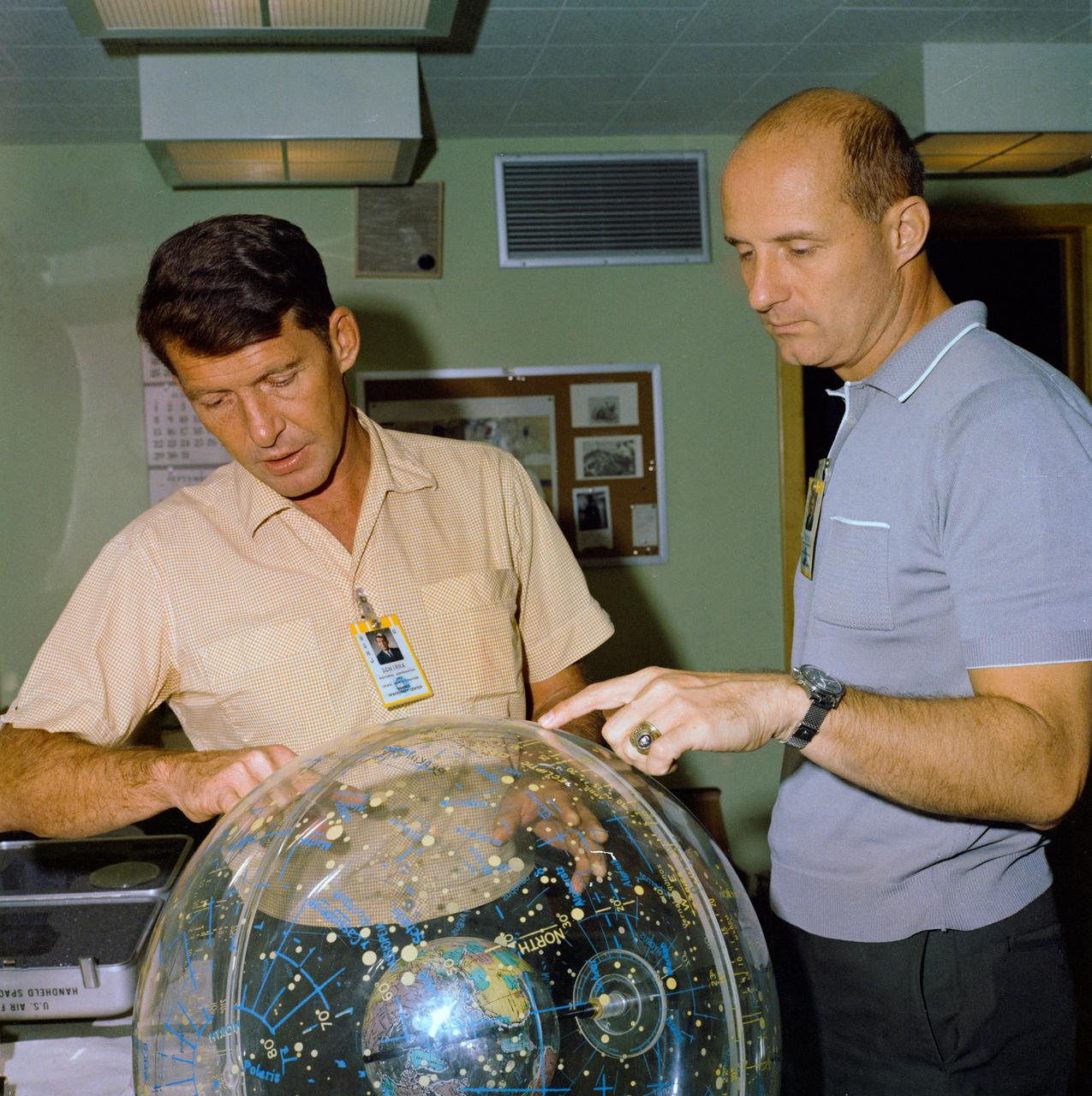
S65-56185 (21 Oct. 1965) --- Gemini-6 astronauts Walter M. Schirra Jr. (left), command pilot; and Thomas P. Stafford, pilot, look at a star globe for celestial pattern recognition for their upcoming flight. The National Aeronautics and Space Administration (NASA) plans a two-day mission for Gemini-6 for the astronauts to develop the ability to rendezvous and dock with an orbiting Agena Target Docking Vehicle. Photo credit: NASA or National Aeronautics and Space Administration
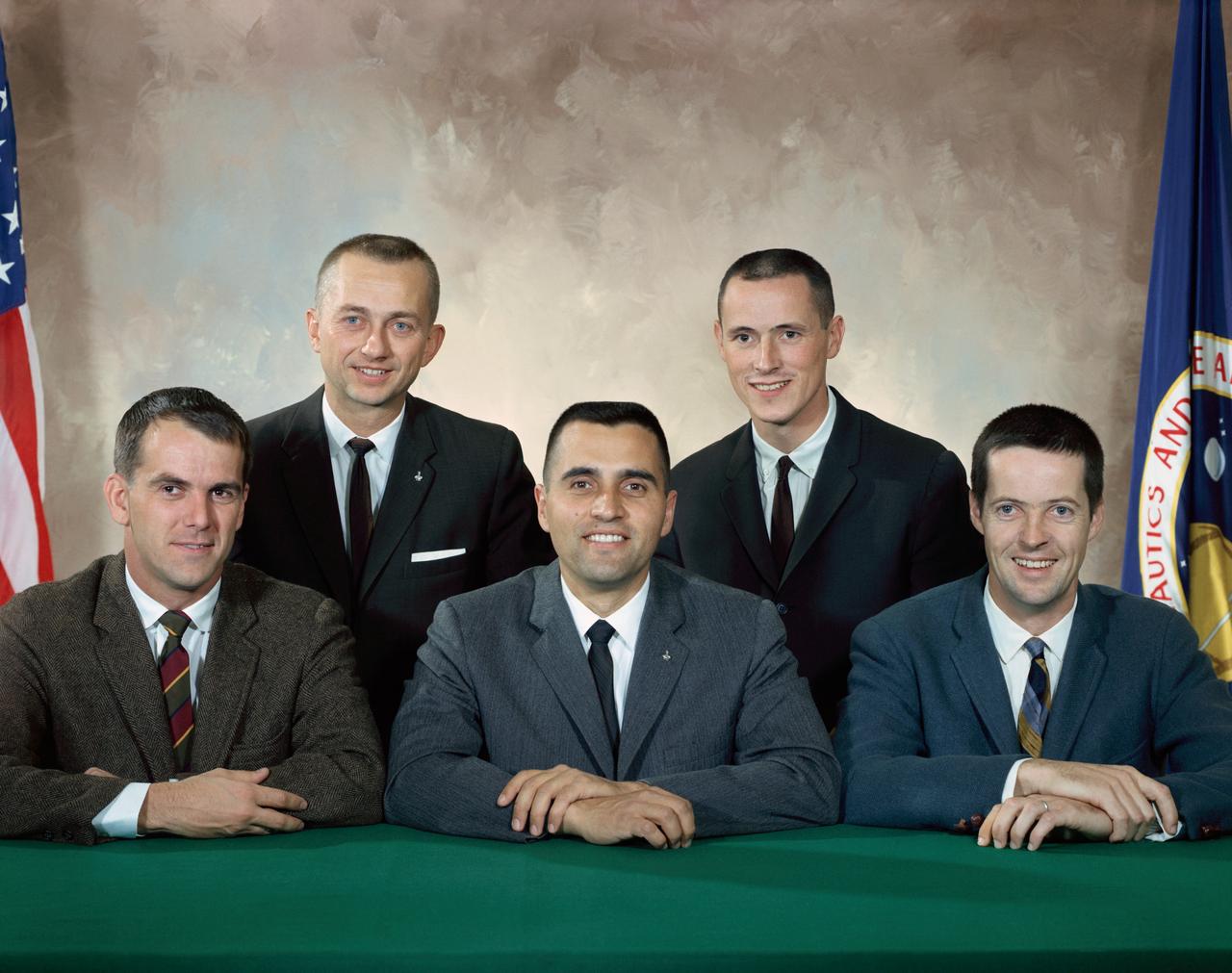
S66-65248 (November 1966) --- Five scientist-astronauts whose selection was announced by the National Aeronautics and Space Administration on June 29, 1969. Front row, left to right, are P. Curtis Michel,(physicist); Harrison H. Schmitt (astrogeologist); and Joseph F. Kerwin (physician). Back row, left to right, are Owen K. Garriott (physicist); and Edward G. Gibson (physicist). Photo credit: NASA or National Aeronautics and Space Administration
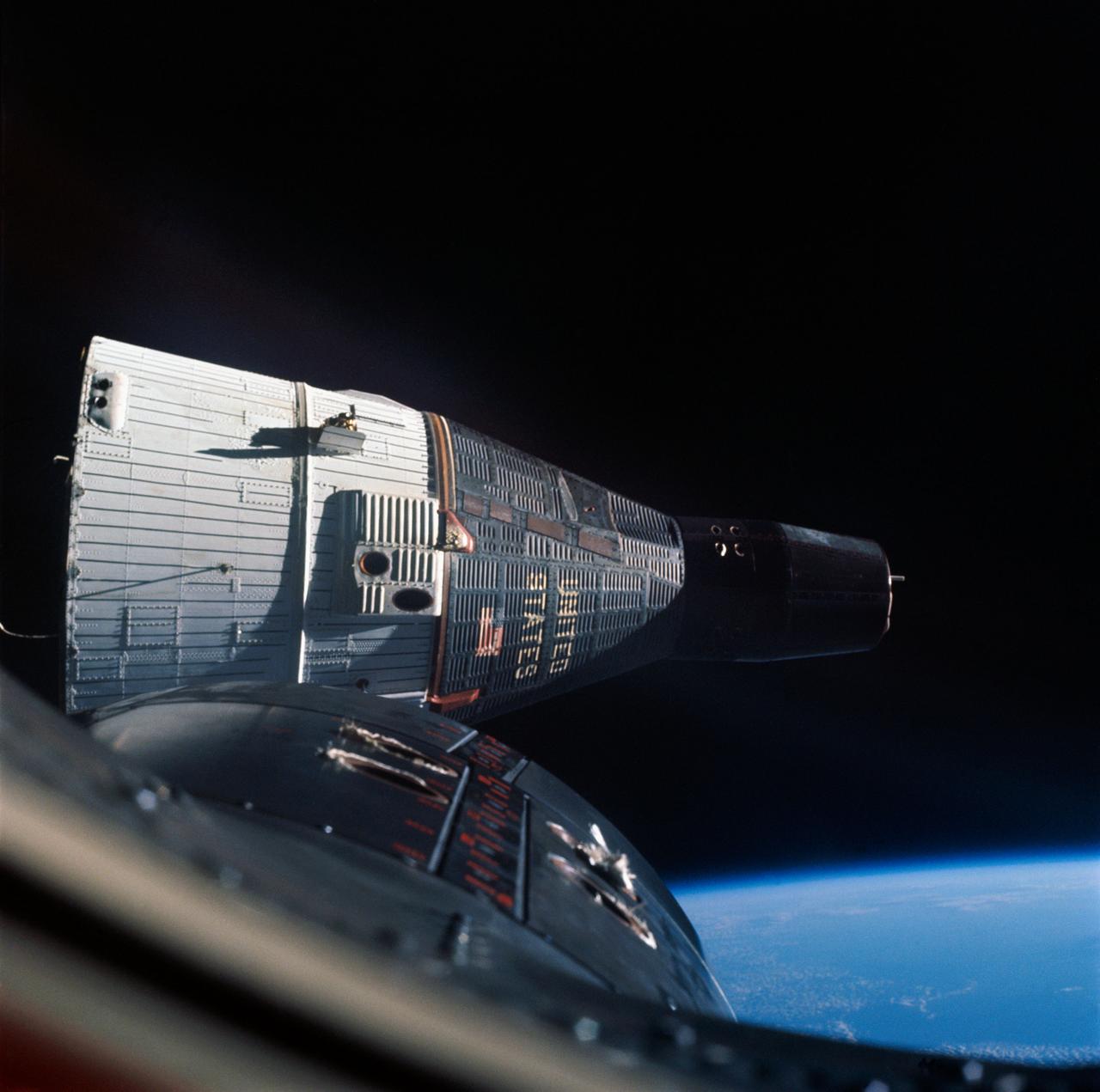
S65-63194 (15 Dec. 1965) --- This photograph of the National Aeronautics and Space Administration's (NASA) Gemini-7 spacecraft was taken through the hatch window of the Gemini-6 spacecraft during rendezvous and station keeping maneuvers at an altitude of approximately 160 miles on Dec. 15, 1965. The photograph was taken with a Hasselblad camera using Kodak SO 217 film with an ASA of 1964. Photo credit: NASA or National Aeronautics and Space Administration
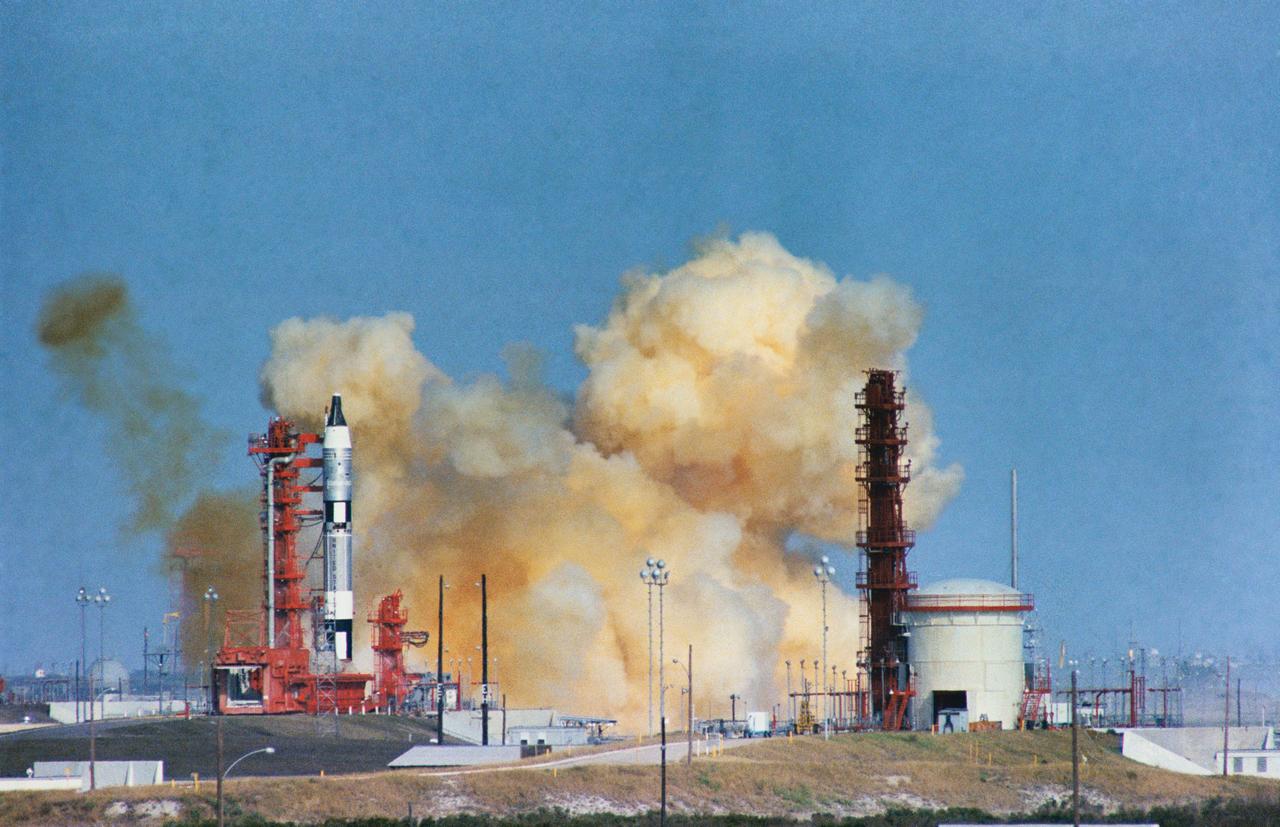
S65-59967 (12 Dec. 1965) --- The National Aeronautics and Space Administration (NASA) attempted to launch Gemini-6 at 9:54 a.m. (EST), Dec. 12, 1965. However, seconds after ignition the first stage engine of the Gemini Launch Vehicle 6 shut down due to a faulty release of a liftoff umbilical plug. Inside the spacecraft were astronauts Walter M. Schirra Jr., command pilot, and Thomas P. Stafford, pilot. Photo credit: NASA or National Aeronautics and Space Administration
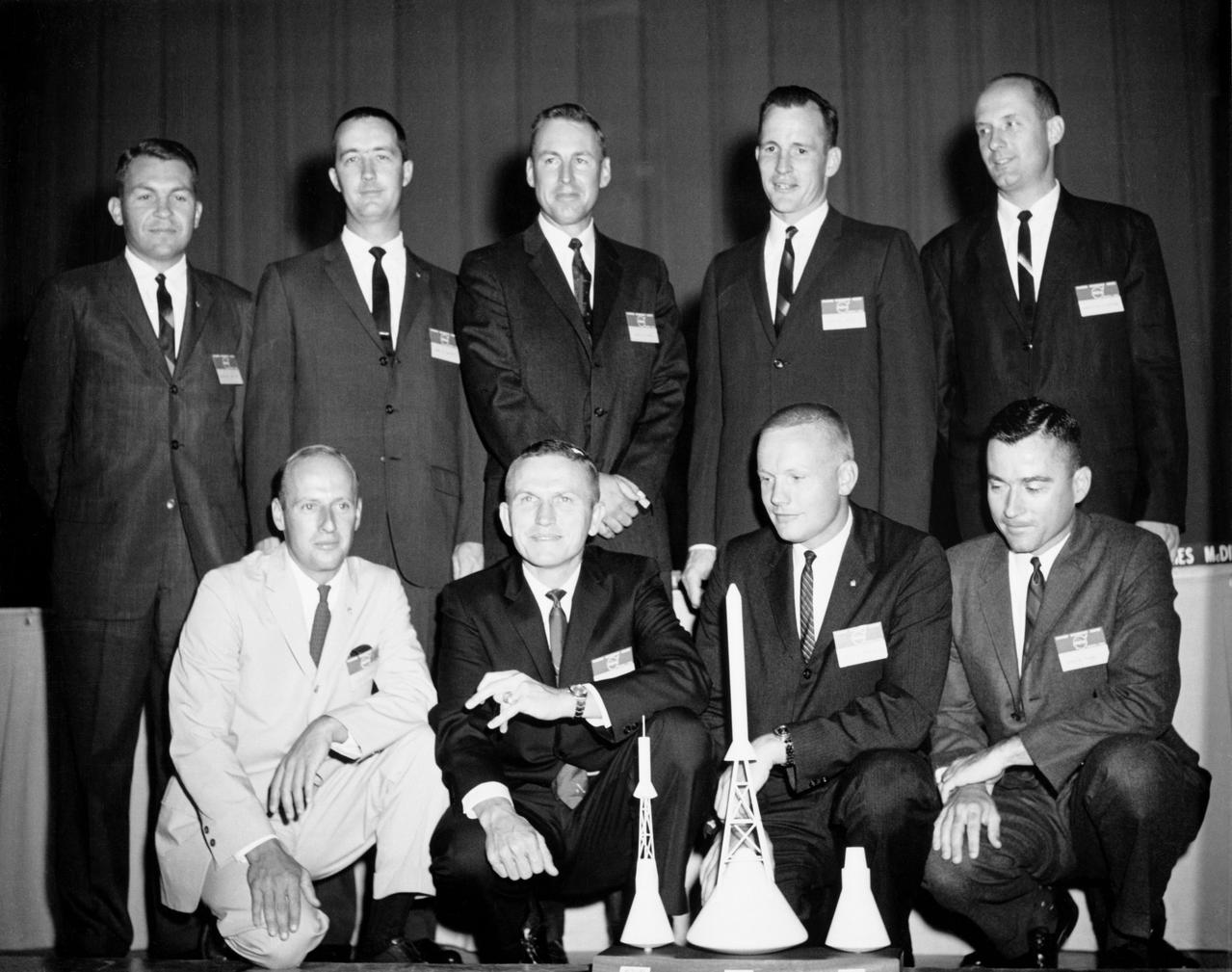
S62-03982 (September 1962) --- New National Aeronautics and Space Administration (NASA) Manned Spacecraft Center (MSC) flight crew personnel. Kneeling (left to right) are astronauts Charles Conrad Jr., Frank Borman, Neil A. Armstrong and John W. Young. Standing (left to right) are astronauts Elliot M. See Jr., James A. McDivitt, James A. Lovell Jr., Edward H. White II, and Thomas P. Stafford. Photo credit: NASA or National Aeronautics and Space Administration
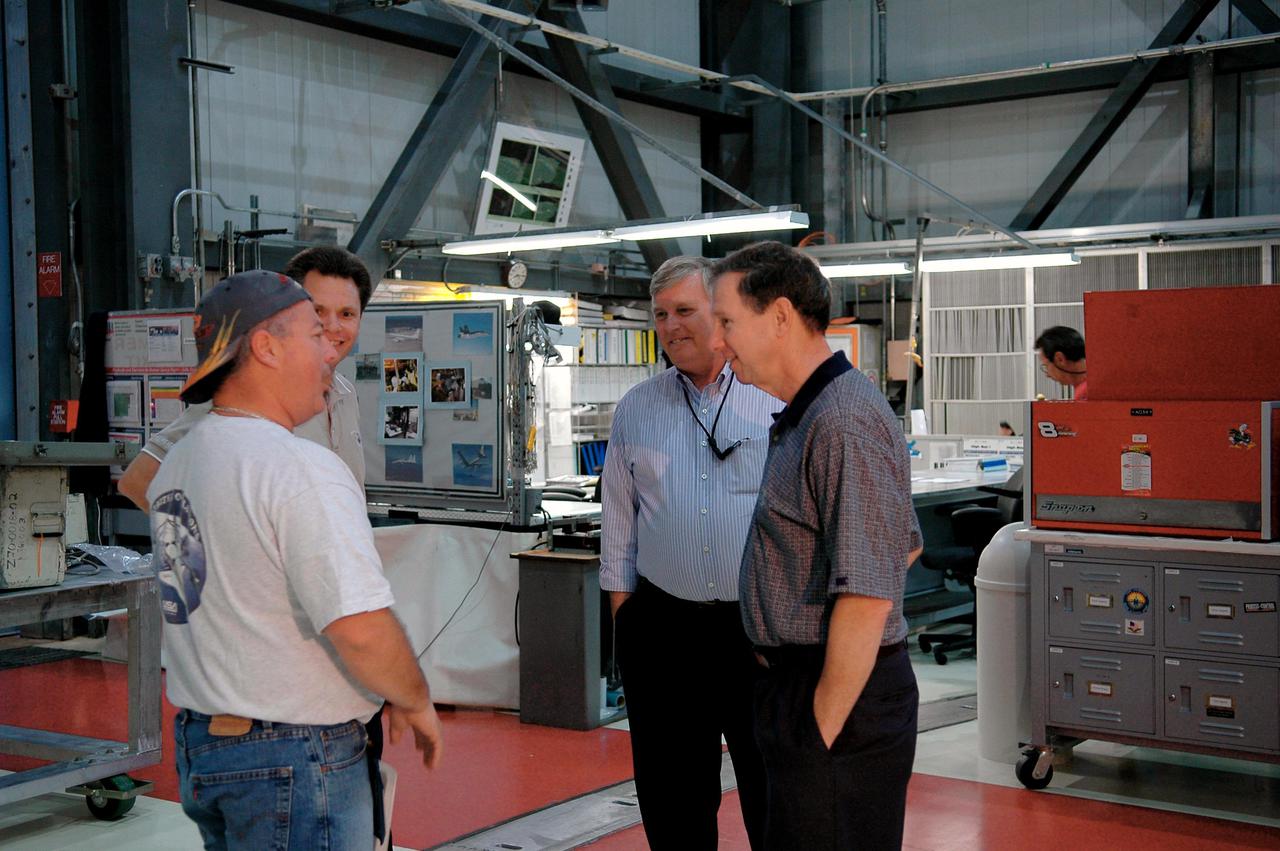
KENNEDY SPACE CENTER, FLA. - Michael Griffin, administrator of the National Aeronautics and Space Administration (NASA), talks to United Space Alliance advanced systems technician Richard Van Wart during a tour of Orbiter Processing Facility bay 1. From left are Van Wart, Space Shuttle Atlantis vehicle manager Scott Thurston, Center Director James Kennedy, and Griffin. Space Shuttle Atlantis is being processed for the second Return to Flight mission, STS-121, in the facility. This is Griffin's first official visit to Kennedy Space Center. Griffin is the 11th administrator of NASA, a role he assumed on April 14, 2005. Griffin was nominated to the position in March while serving as the Space Department head at Johns Hopkins University's Applied Physics Laboratory in Baltimore. A registered professional engineer in Maryland and California, Griffin served as chief engineer at NASA earlier in his career. He holds numerous scientific and technical degrees including a Ph.D. in Aerospace Engineering from the University of Maryland.
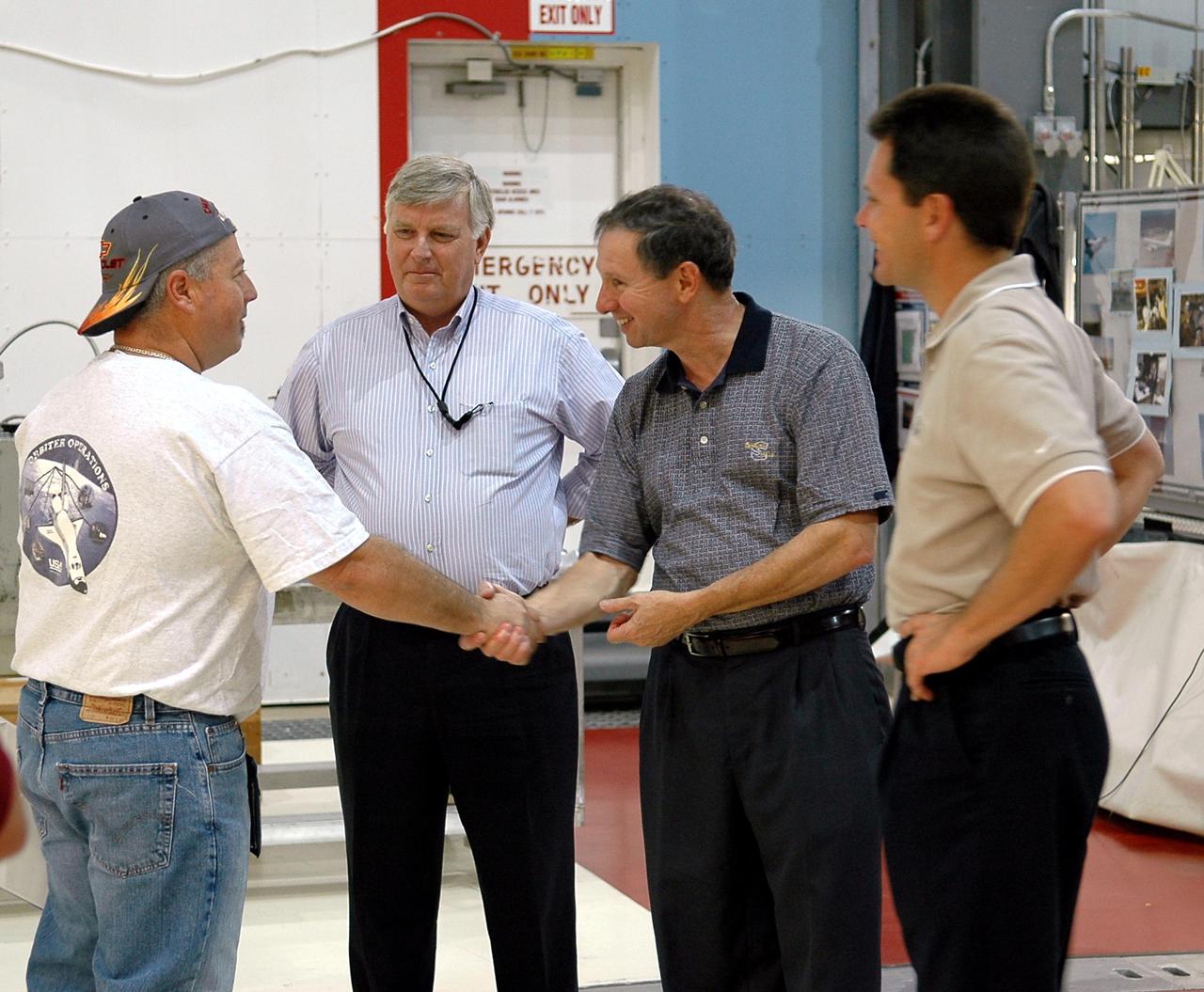
KENNEDY SPACE CENTER, FLA. - Michael Griffin, administrator of the National Aeronautics and Space Administration (NASA), shakes hands with United Space Alliance advanced systems technician Richard Van Wart during a tour of Orbiter Processing Facility bay 1. From left are Van Wart, Center Director James Kennedy, Griffin and Space Shuttle Atlantis vehicle manager Scott Thurston. Space Shuttle Atlantis is being processed for the second Return to Flight mission, STS-121, in the facility. This is Griffin's first official visit to Kennedy Space Center. Griffin is the 11th administrator of NASA, a role he assumed on April 14, 2005. Griffin was nominated to the position in March while serving as the Space Department head at Johns Hopkins University's Applied Physics Laboratory in Baltimore. A registered professional engineer in Maryland and California, Griffin served as chief engineer at NASA earlier in his career. He holds numerous scientific and technical degrees including a Ph.D. in Aerospace Engineering from the University of Maryland.
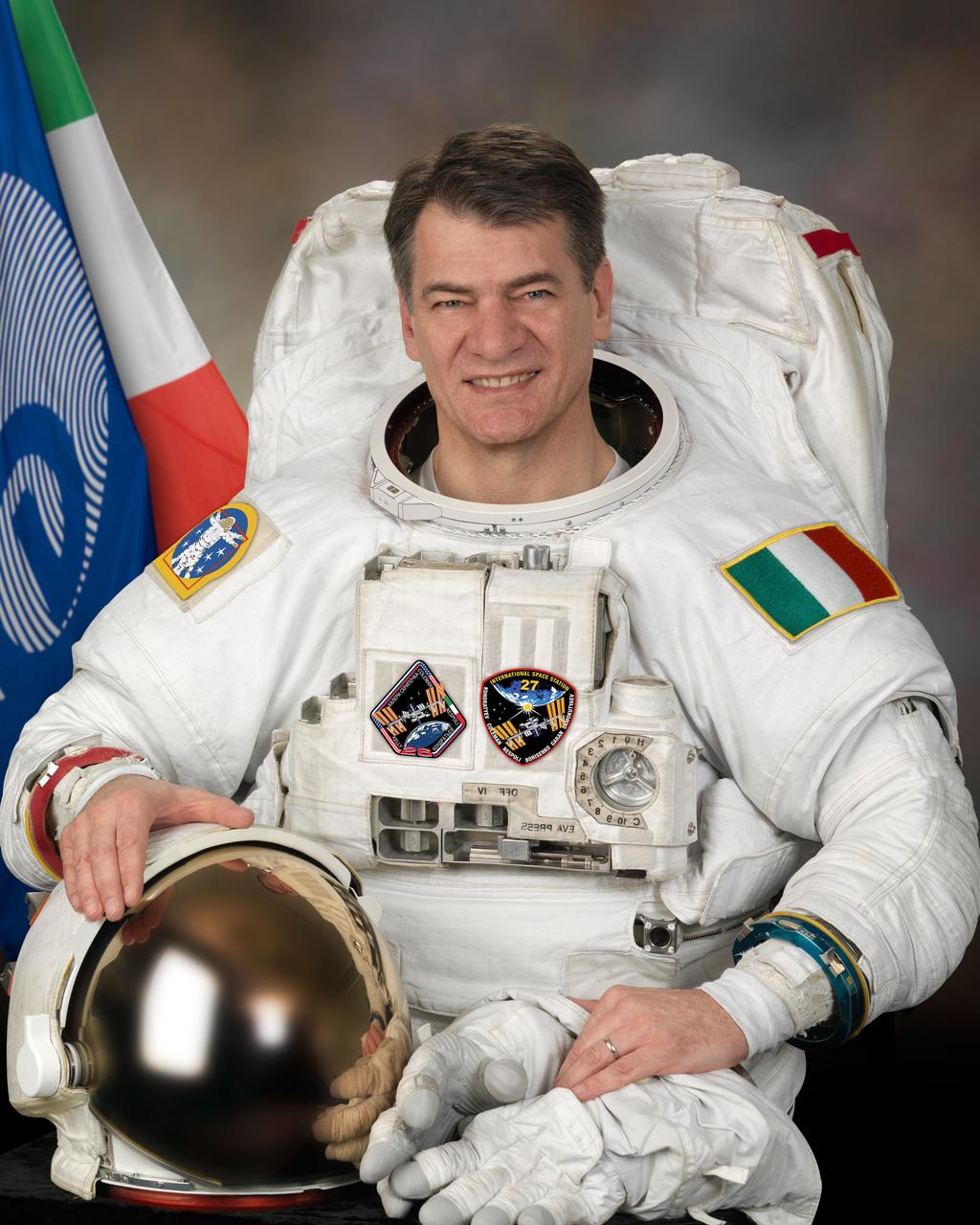
JSC2010-E-045317 (12 Jan. 2010) --- European Space Agency (ESA) astronaut Paolo Nespoli, ISS flight engineer. Photo credit: NASA or National Aeronautics and Space Administration

S65-63171 (15 Dec. 1965) --- The Gemini-7 spacecraft as seen from the Gemini-6 spacecraft during their rendezvous mission in space. Photo credit: NASA or National Aeronautics and Space Administration
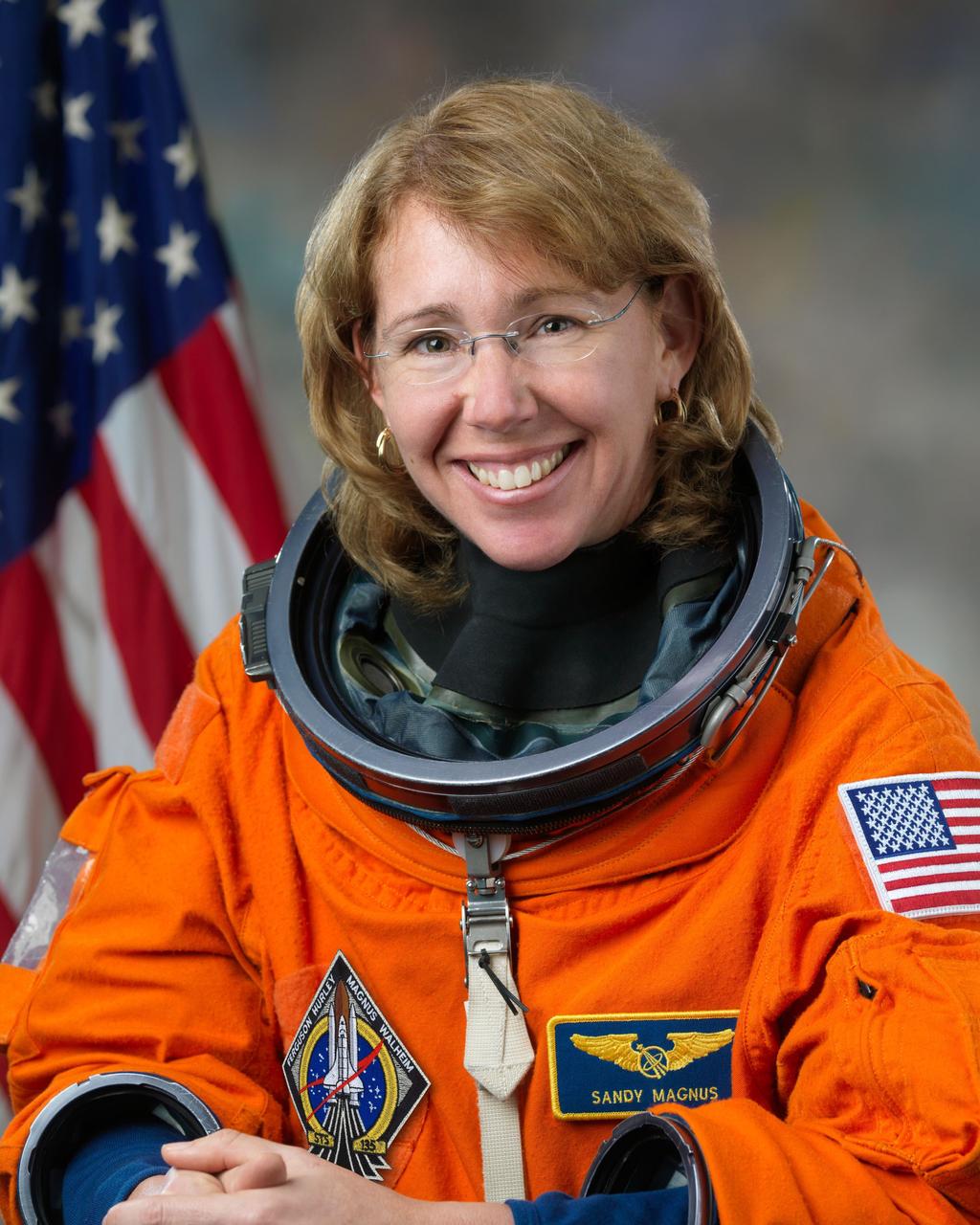
JOHNSON SPACE CENTER, Houston, Texas --- JSC2011-E-039719 --- NASA astronaut Sandy Magnus, mission specialist. Photo credit: NASA or National Aeronautics and Space Administration
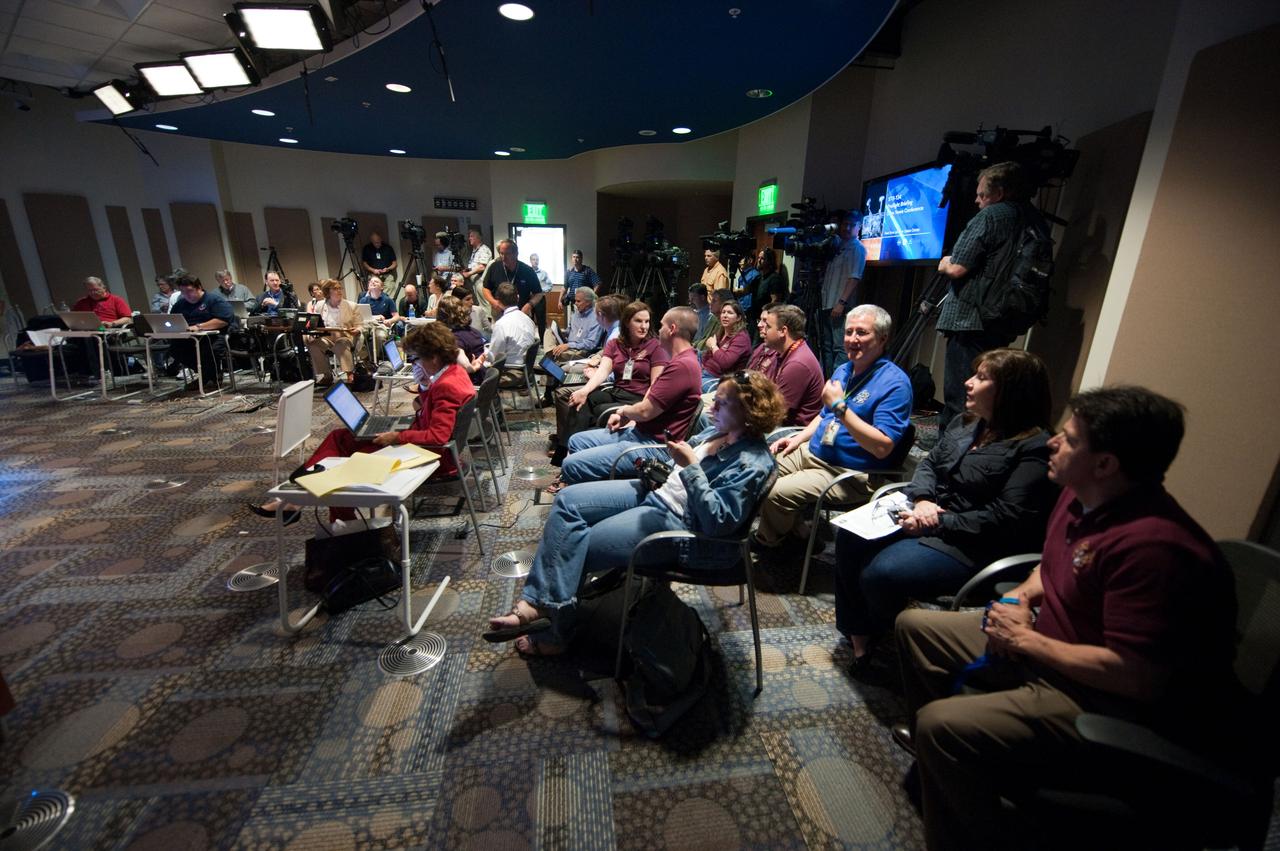
JSC2011-E-028487 (24 March 2011) --- News media representatives are pictured during an STS-134 preflight press conference at NASA's Johnson Space Center. Photo credit: NASA or National Aeronautics and Space Administration
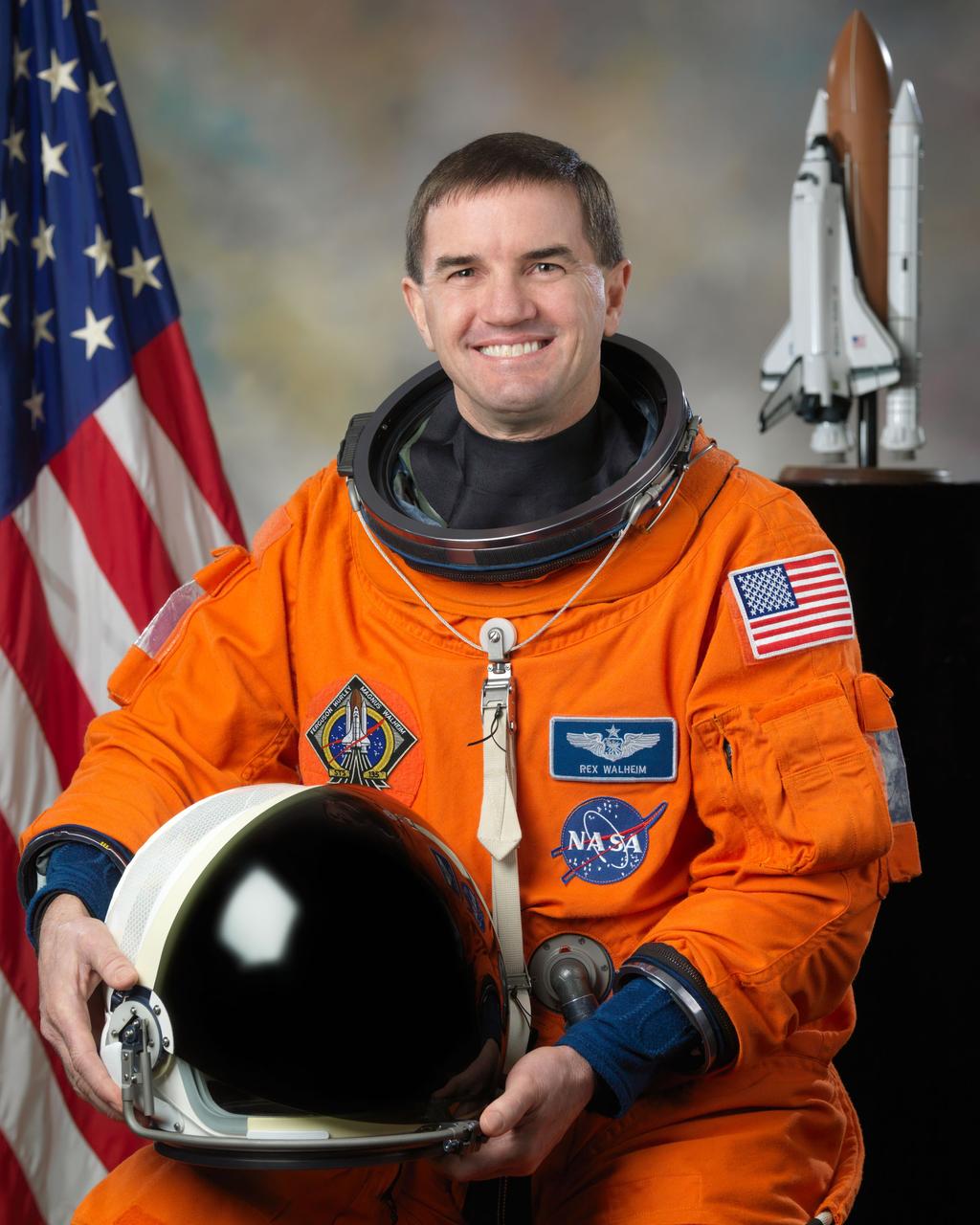
JOHNSON SPACE CENTER, Houston, Texas --- JSC2011-E-036274 --- NASA astronaut Rex Walheim, mission specialist. Photo credit: NASA or National Aeronautics and Space Administration

S65-63198 (15 Dec. 1965) --- The Gemini-7 spacecraft as seen from the Gemini-6 spacecraft during their rendezvous mission in space. They are approximately 39 feet apart. Photo credit: NASA or National Aeronautics and Space Administration
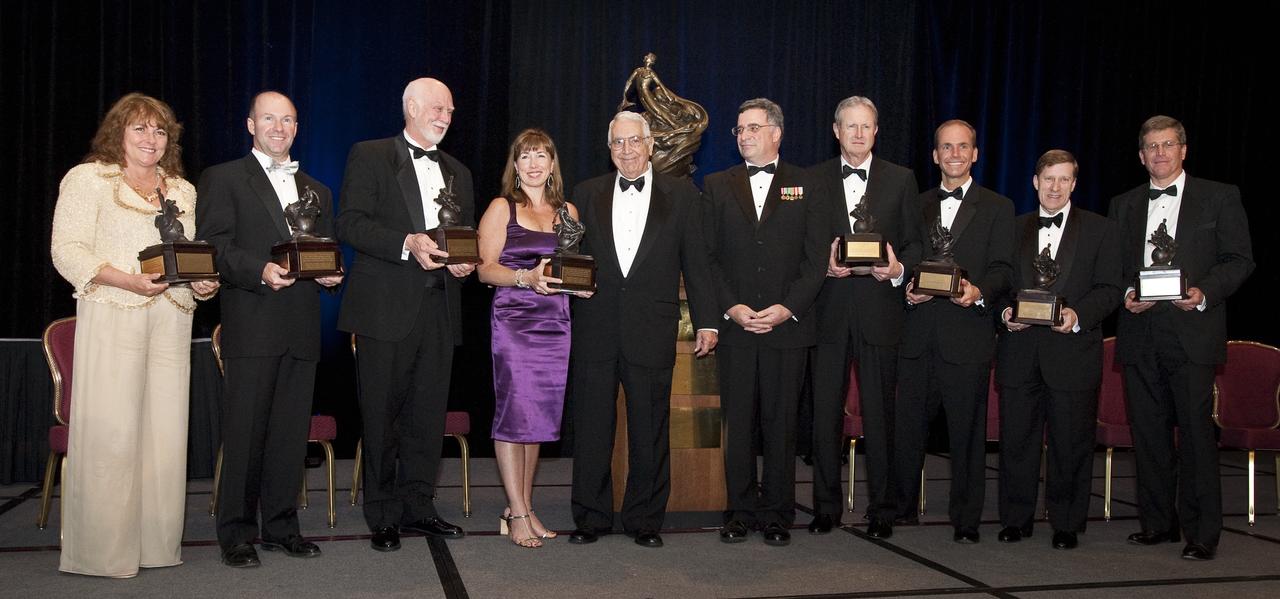
NASA and the International Space Station (ISS) team is selected as the recipient of the 2009 Robert J. Collier Trophy on Thursday, May 13, 2010, in Arlington, VA. Lori Garver, fourth from left, Deputy Administrator of NASA accepts the Collier Trophy on behalf of NASA. The ISS Team nomination consisted NASA, The Boeing Company, Draper Laboratory, Honeywell, Lockheed Martin Corporation, United Space Alliance, and United Technologies/Hamilton Sunstrand. Seen from left are: Virginia Barnes, President and CEO, United Space Alliance; Alain Bellemare, President, United Technologies/Hamilton Sunstrand; James Crocker, VP and GM, Sensing & Exploration, Lockheed Martin; Lori Garver; Wayne Boyne, Chairman, National Aeronautic Association; Jonathan Gaffney, President, National Aeronautic Association; Jim Albaugh, Executive VP of The Boeing Company, President and CEO of Boeing Commercial Airplanes; Dennis Muilenberg, Executive Vice President, The Boeing Company, President and CEO, Boeing Defense, Space and Security; James Shields, President and CEO, Draper Laboratory and Dave Douglas, Vice President, Space, Missiles and Munitions, Honeywell. Photo Credit: (NASA/Carla Cioffi)
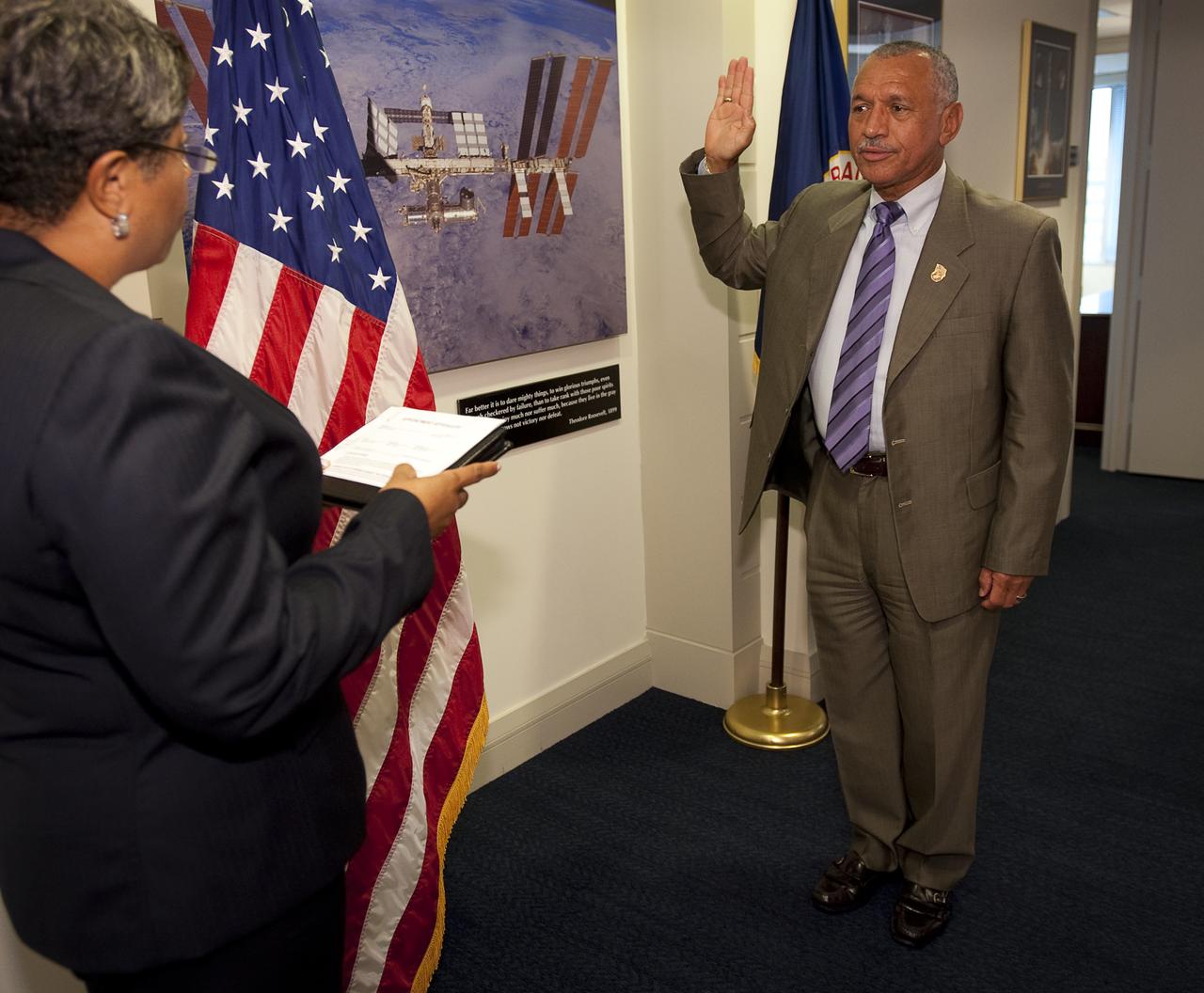
Charles F. Bolden Jr. is sworn in as 12th Administrator of the National Aeronautics and Space Administration at NASA Headquarters, Friday, July 17, 2009, in Washington. Photo Credit: (NASA/Bill Ingalls)
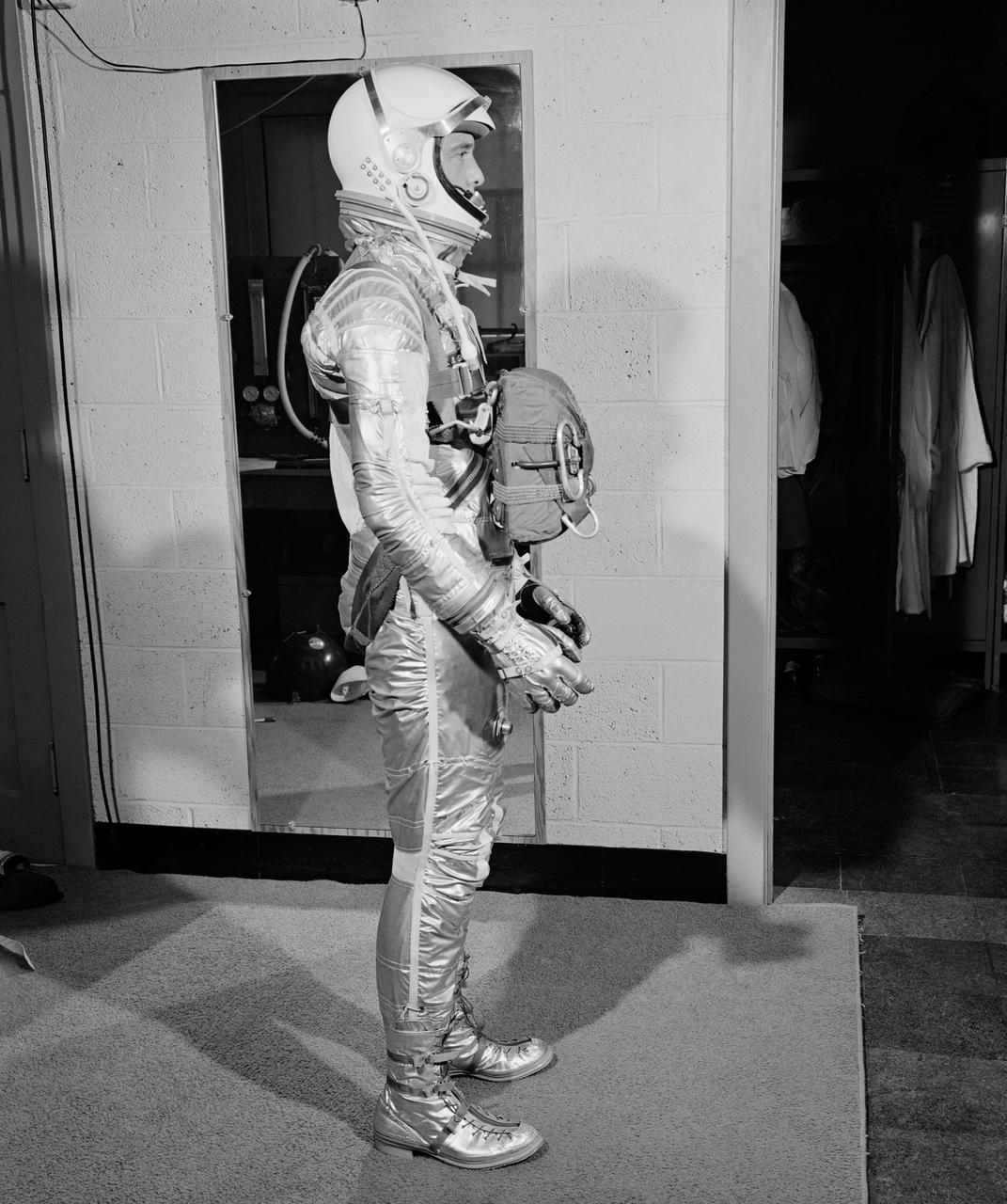
G60-02665 (1960) --- Astronaut Alan B. Shepard Jr., Mercury-Redstone 3 (MR-3) pilot, wearing pressure suit with body parachute. Photo credit: NASA or National Aeronautics and Space Administration
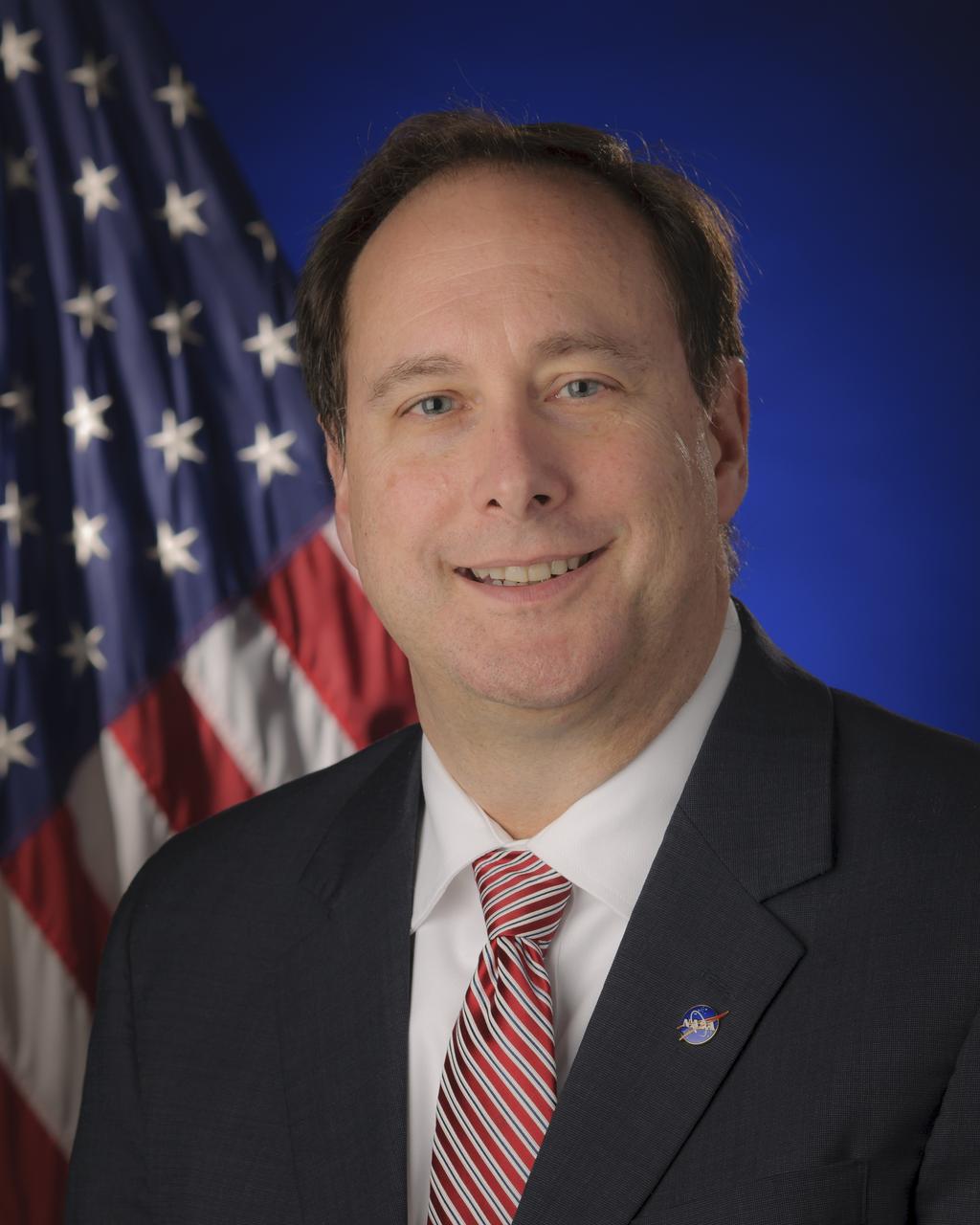
Portrait, Robert M. Lightfoot Jr., Acting Administrator, National Aeronautics and Space Administration (NASA), Monday, Jan. 23, 2017 at NASA Headquarters in Washington. Photo Credit: (NASA/Bill Ingalls)

Charles F. Bolden, Jr. enters the NASA Administrator's office to start his first day as the 12th administrator of the National Aeronautics and Space Administration, Friday, July 17, 2009 in Washington. Photo Credit: (NASA/Bill Ingalls)
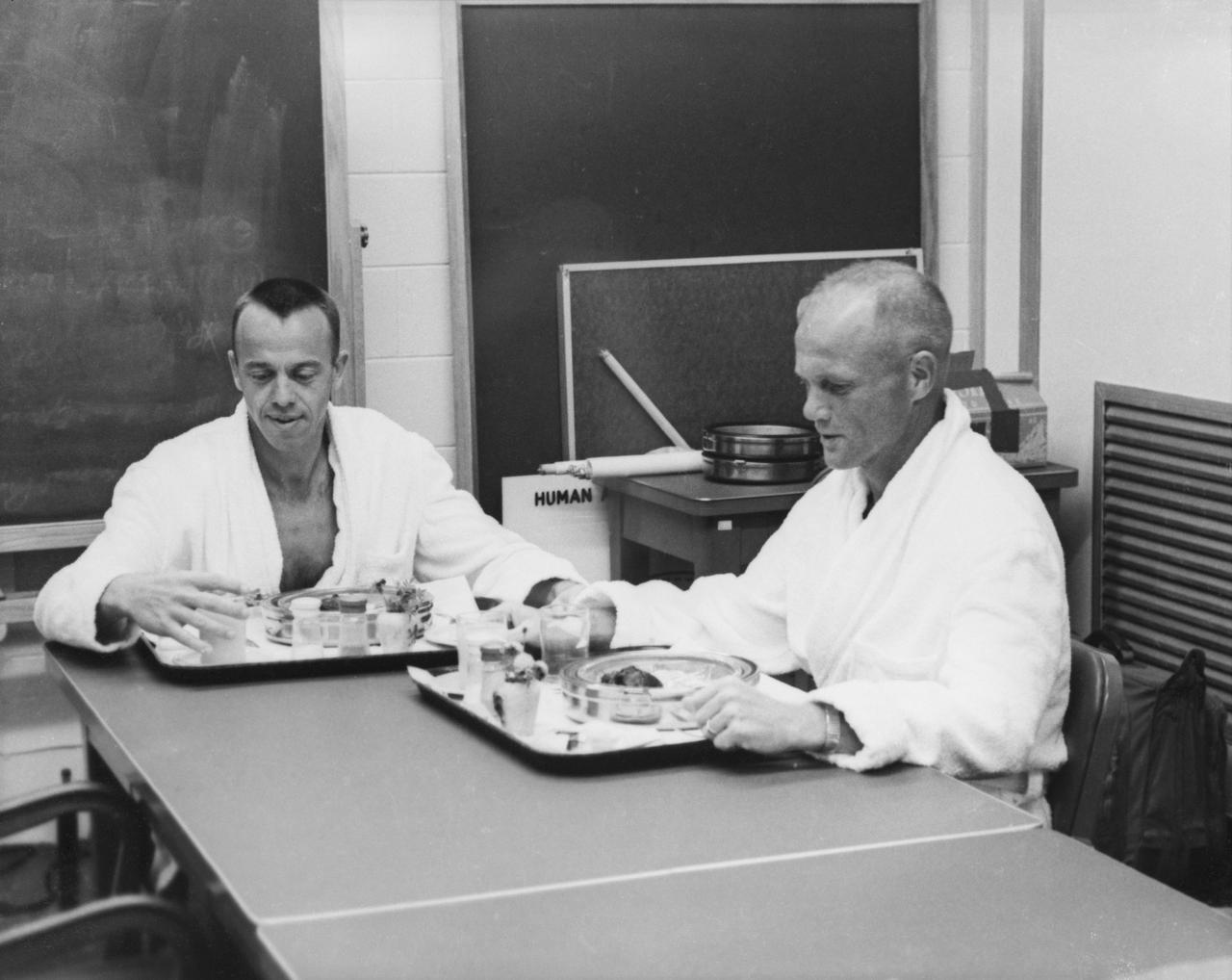
S61-02735 (5 May 1961) --- Astronauts Alan Shepard and John Glenn at breakfast before Shepard's Mercury-Redstone 3 (MR-3) spaceflight. Photo credit: NASA or National Aeronautics and Space Administration
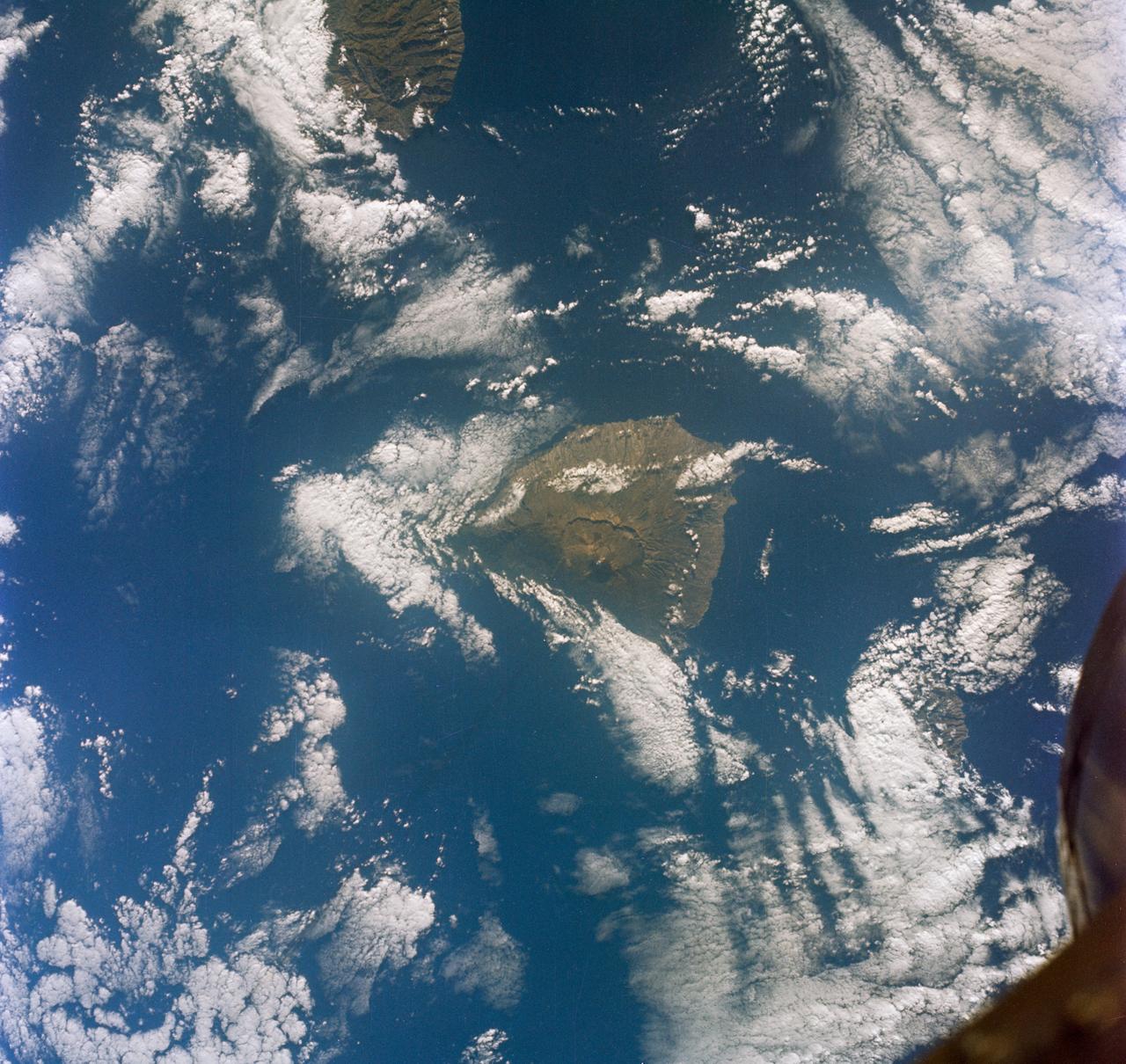
S65-63150 (16 Dec. 1965) --- Eddies in stratocumulus clouds over the Canary Islands as seen from the Gemini-6 spacecraft during its 14th revolution of Earth. Photo credit: NASA or National Aeronautics and Space Administration
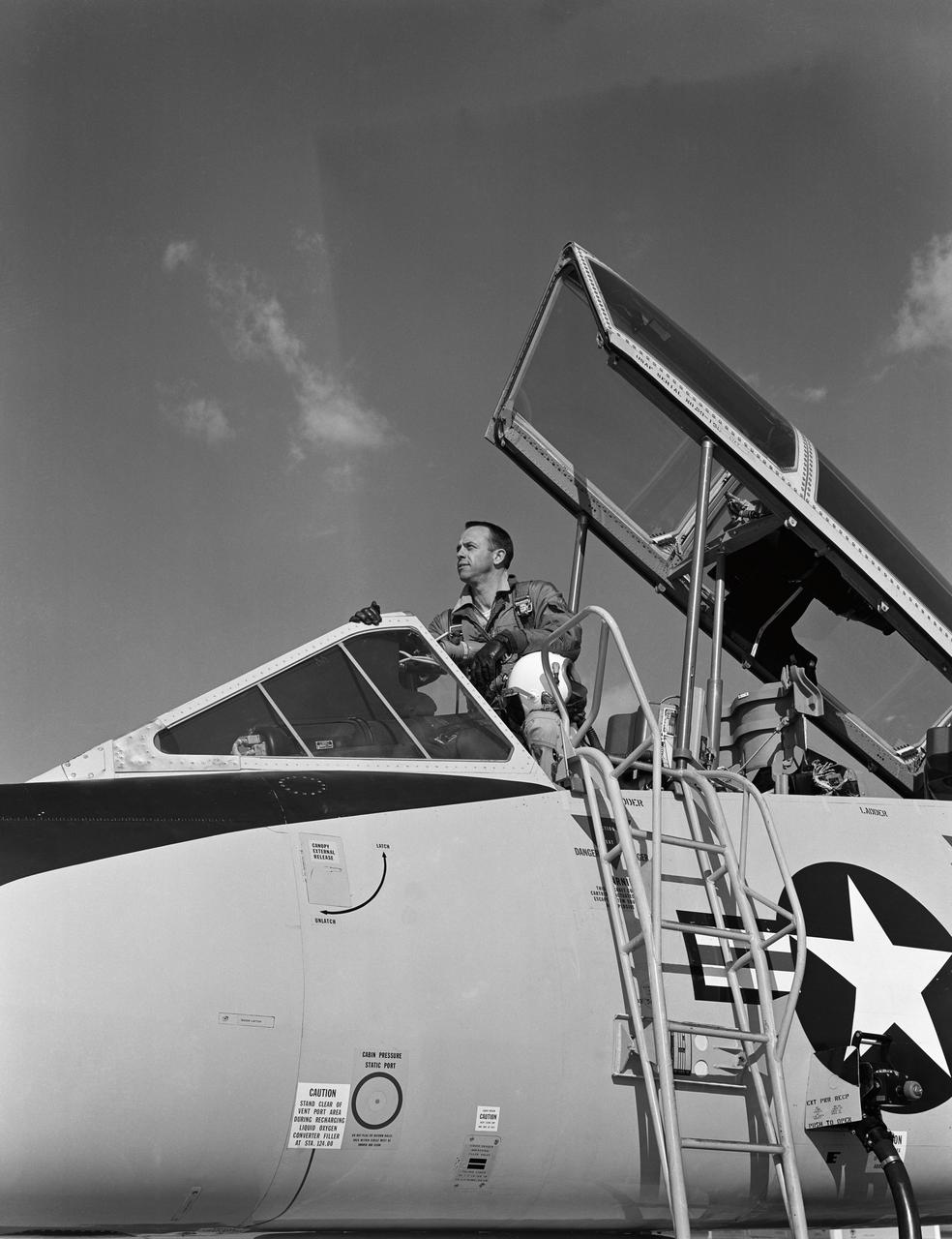
M61-00012 (20 Jan. 1961) --- Astronaut Alan B. Shepard Jr. pictured on the flight line climbing aboard a F-106 aircraft. Photo credit: NASA or National Aeronautics and Space Administration
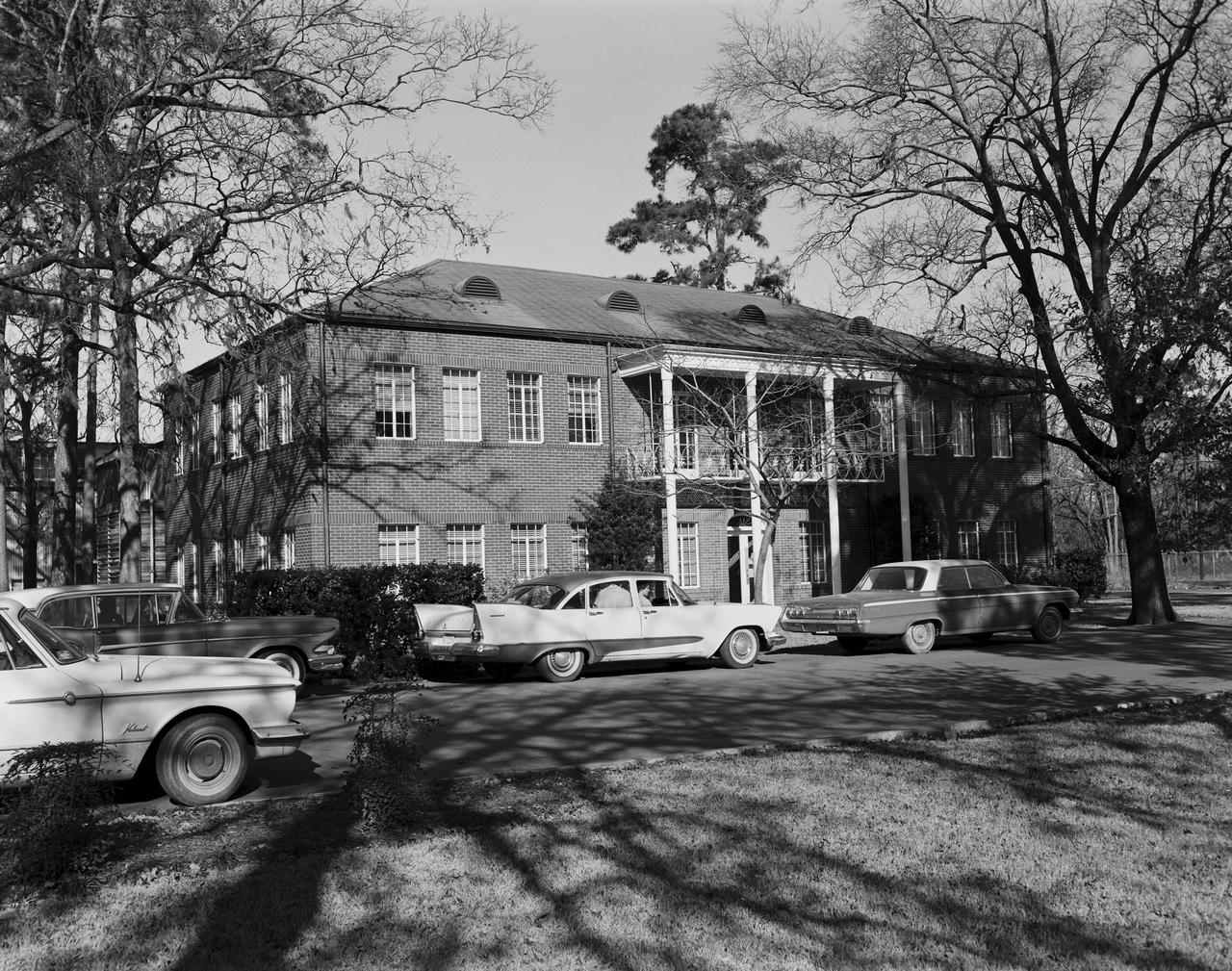
S62-00518 (1962) --- Exterior view of the Lane Wells Building, rented to the National Aeronautics and Space Administration as part of the temporary quarters for the Houston Manned Spacecraft Center (MSC). Photo credit: NASA
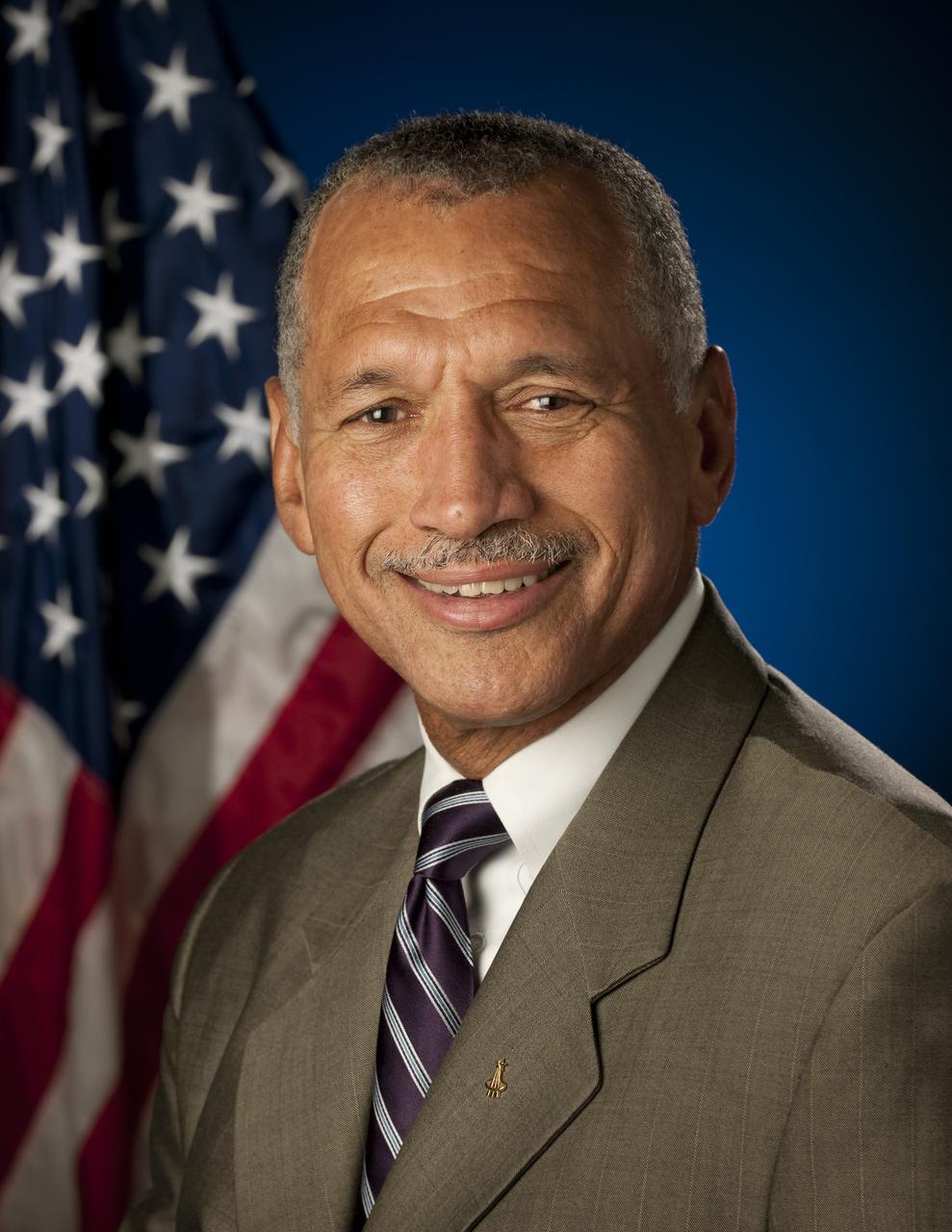
Portrait, Charles F. Bolden, Jr., Administrator, National Aeronautics and Space Administration (NASA). Washington, DC, July 29, 2009. Photo Credit: (NASA/Bill Ingalls)
![JSC2011-E-017048 (27 July 2010) --- NASA astronaut Gregory H. Johnson, pilot. Photo credit: NASA or National Aeronautics and Space Administration [alternate portrait]](https://images-assets.nasa.gov/image/jsc2011e017048/jsc2011e017048~medium.jpg)
JSC2011-E-017048 (27 July 2010) --- NASA astronaut Gregory H. Johnson, pilot. Photo credit: NASA or National Aeronautics and Space Administration [alternate portrait]
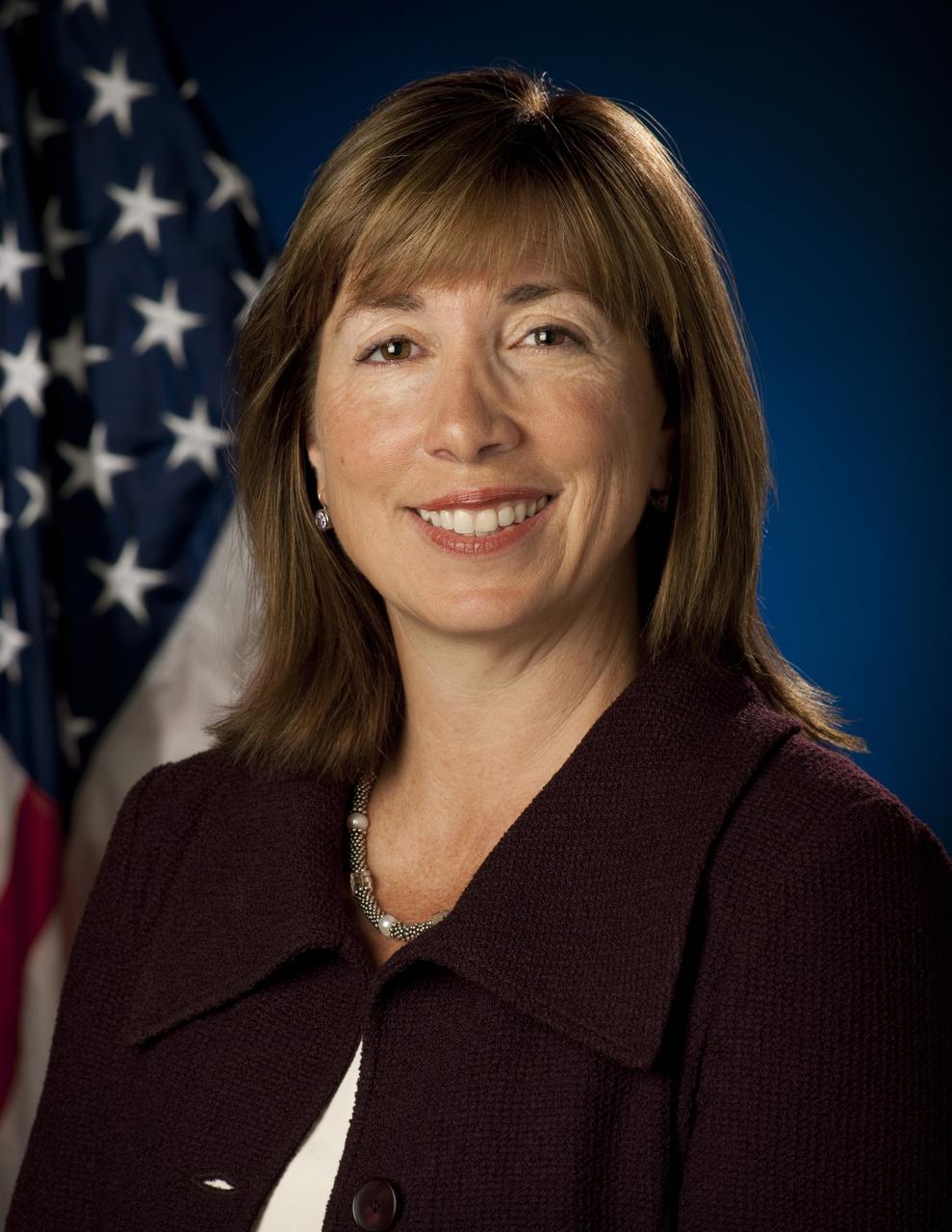
Portrait, Lori B. Garver, Deputy Administrator, National Aeronautics and Space Administration (NASA). Washington, DC, August 5, 2009. Photo Credit: (NASA/Bill Ingalls)
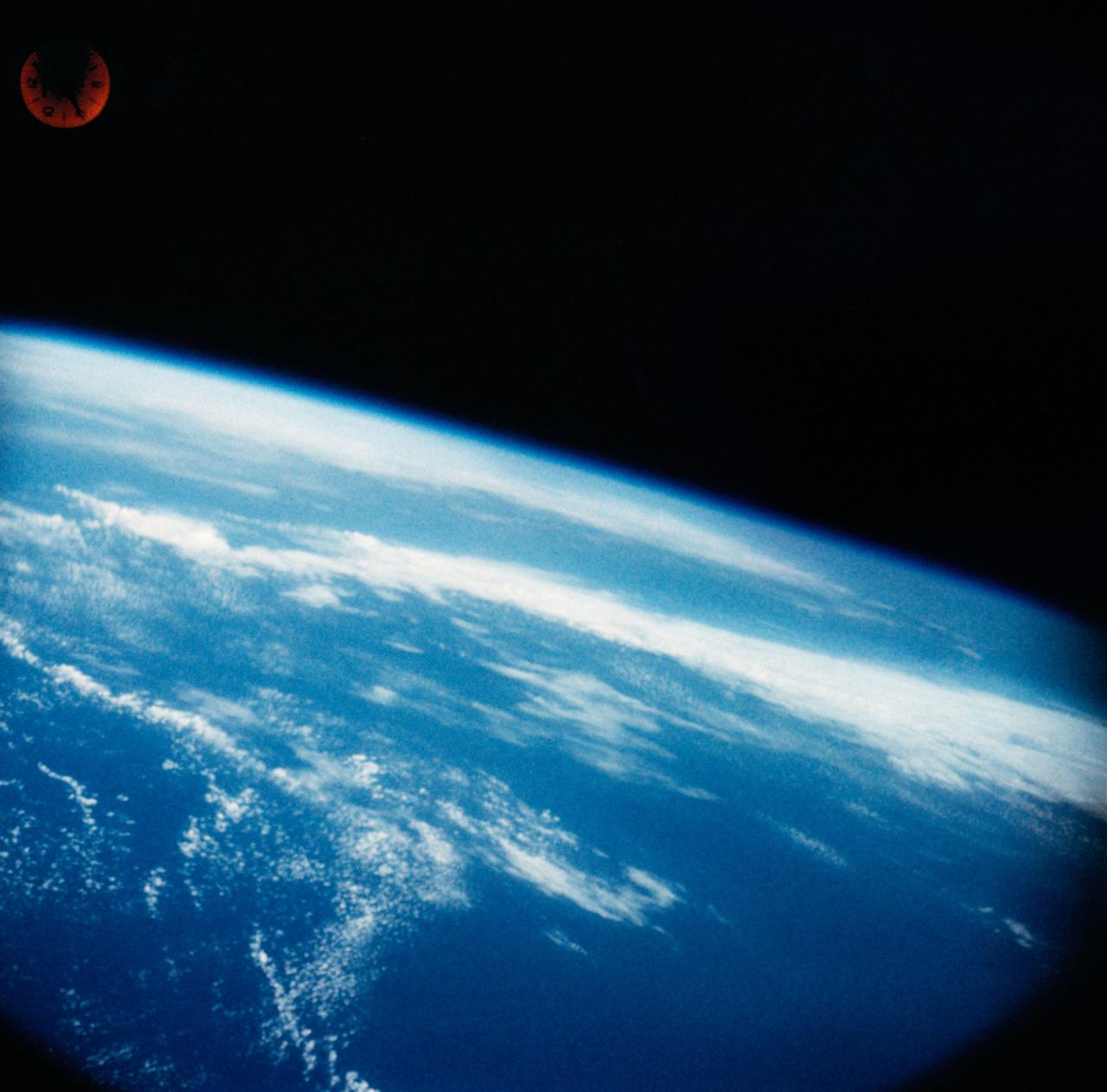
S61-01918 (5 May 1961) --- Mercury-Redstone 3 (MR-3) spaceflight Earth observations of a cloudy Earth surface. Photo credit: NASA or National Aeronautics and Space Administration
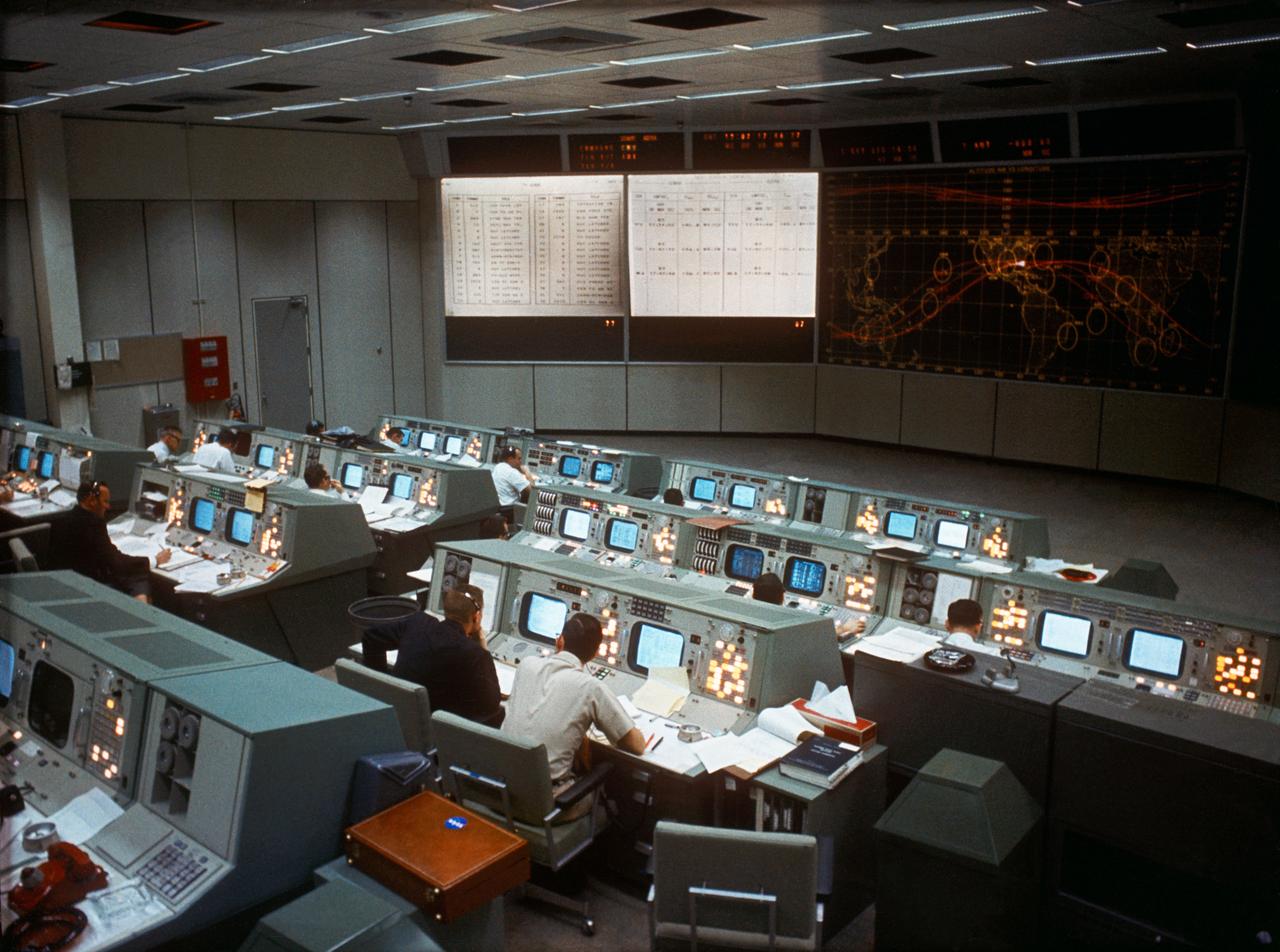
S65-60037 (7 Dec. 1965) --- An overall view of the Manned Spacecraft Center's Mission Control Center, during the National Aeronautics and Space Administration's Gemini-7 spaceflight. Photo credit: NASA
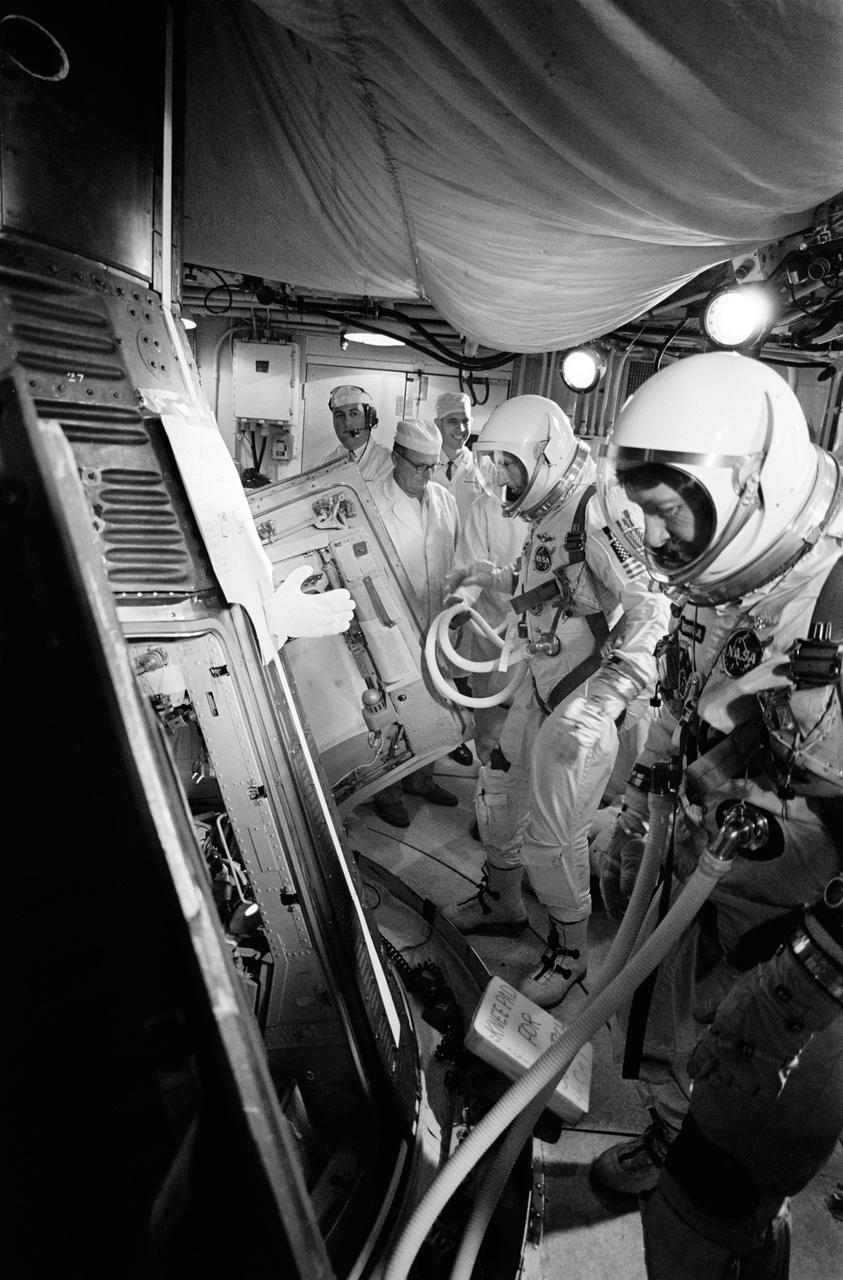
S65-66744 (15 Dec. 1965) --- Insertion of astronauts Walter M. Schirra Jr. (foreground) and Thomas P. Stafford into Gemini-6 spacecraft prior to launch. Photo credit: NASA or National Aeronautics and Space Administration
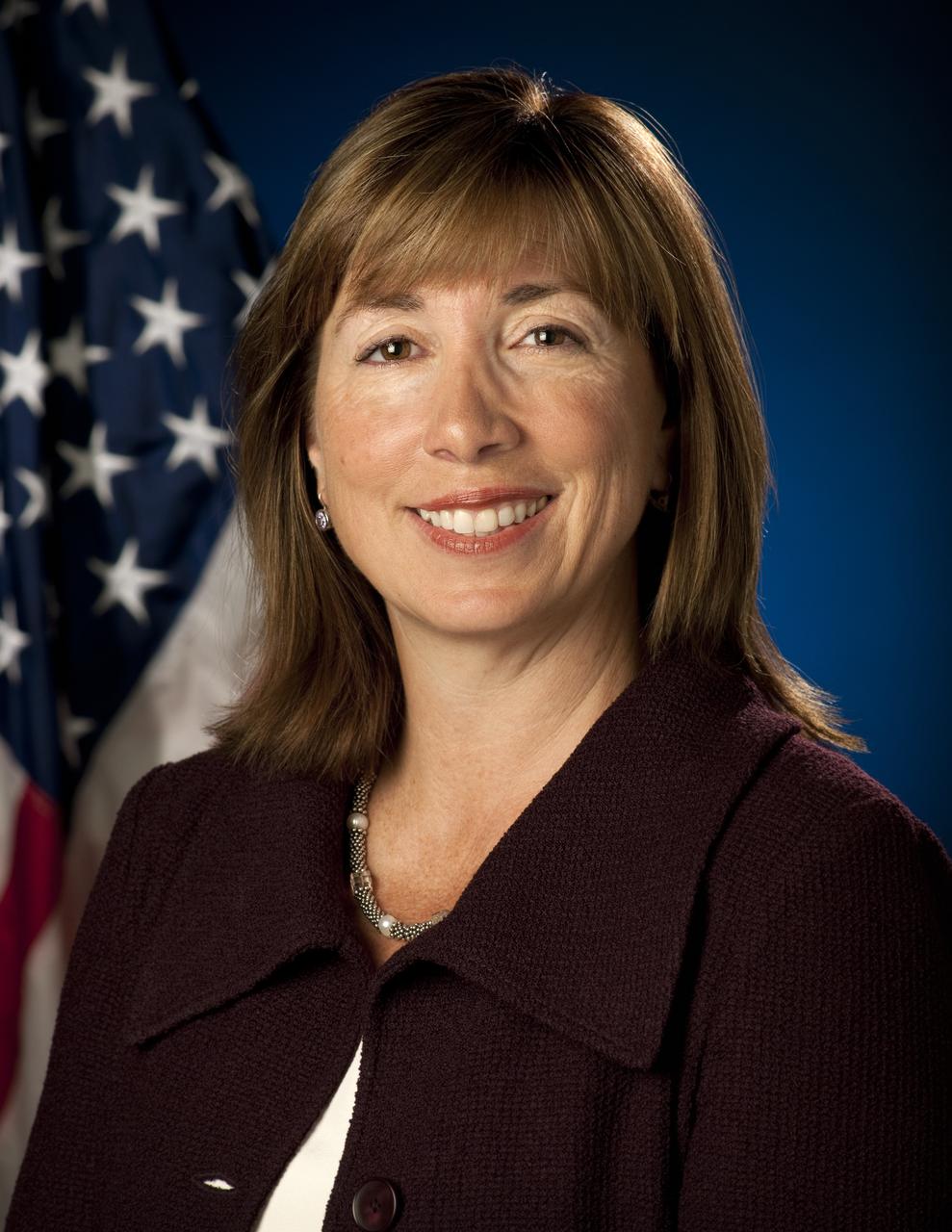
Portrait, Lori B. Garver, Deputy Administrator, National Aeronautics and Space Administration (NASA). Washington, DC, August 5, 2009. Photo Credit: (NASA/Bill Ingalls)
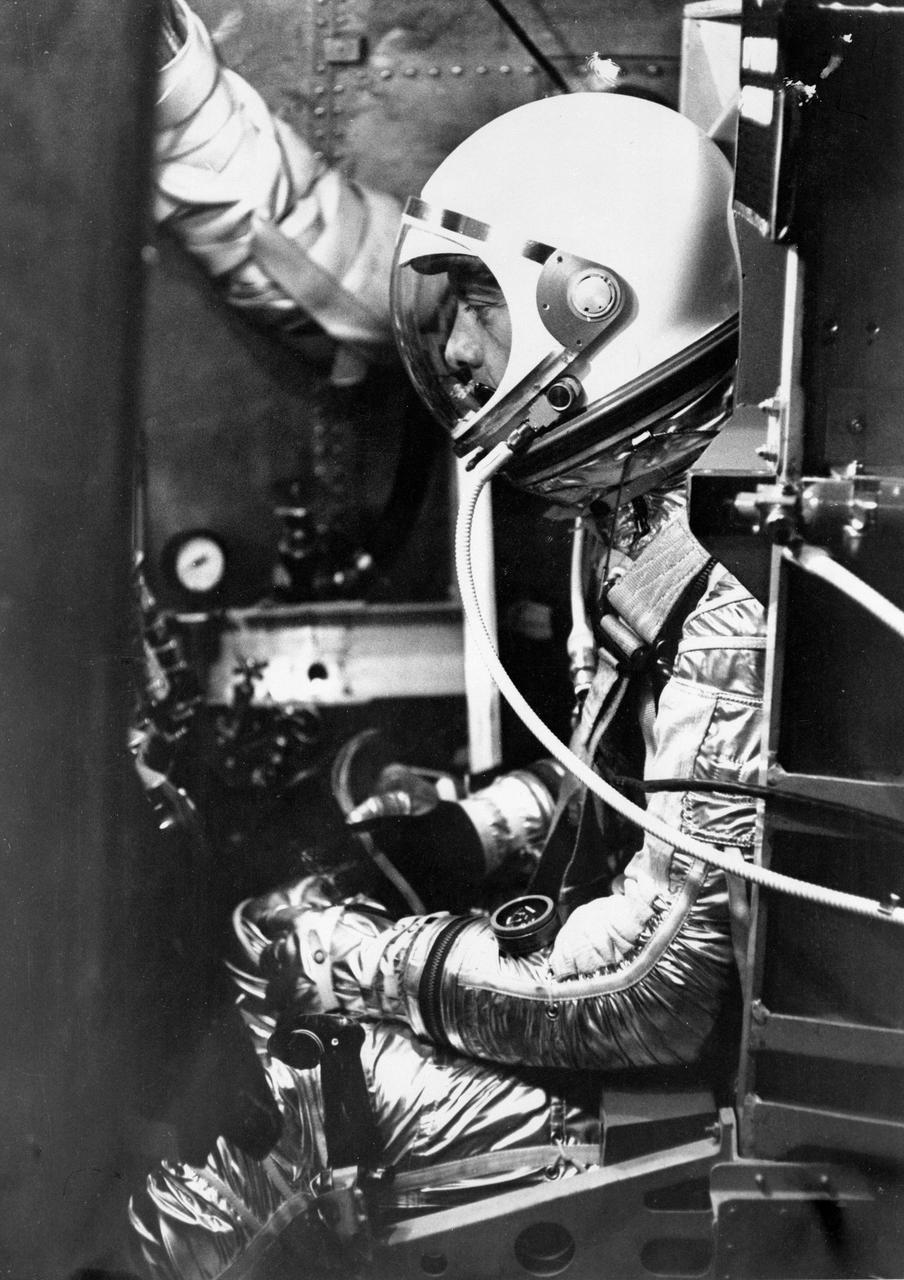
G60-02402 (1960) --- Astronaut Alan B. Shepard Jr. prepares for testing in a capsule of the U.S. Navy's centrifuge at Johnsville, Pennsylvania. Photo credit: NASA or National Aeronautics and Space Administration
![JSC2011-E-017046 (27 July 2010) --- NASA astronaut Gregory H. Johnson, pilot. Photo credit: NASA or National Aeronautics and Space Administration [alternate portrait]](https://images-assets.nasa.gov/image/jsc2011e017046/jsc2011e017046~medium.jpg)
JSC2011-E-017046 (27 July 2010) --- NASA astronaut Gregory H. Johnson, pilot. Photo credit: NASA or National Aeronautics and Space Administration [alternate portrait]
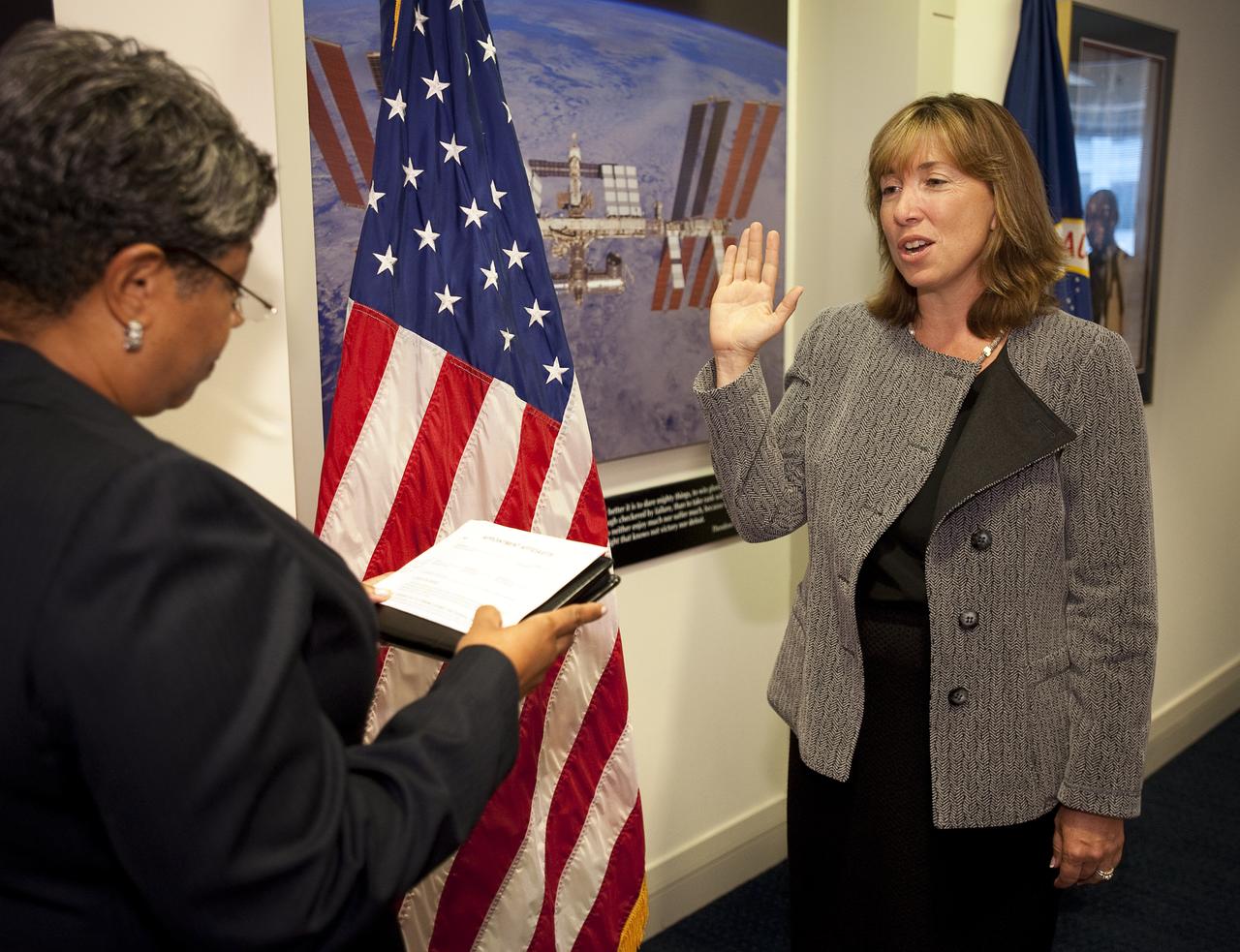
Lori B. Garver is sworn in as Deputy Administrator of the National Aeronautics and Space Administration at NASA Headquarters, Friday, July 17, 2009 in Washington. Photo Credit: (NASA/Bill Ingalls)
![JSC2011-E-017045 (27 July 2010) --- NASA astronaut Gregory H. Johnson, pilot. Photo credit: NASA or National Aeronautics and Space Administration [alternate portrait]](https://images-assets.nasa.gov/image/jsc2011e017045/jsc2011e017045~medium.jpg)
JSC2011-E-017045 (27 July 2010) --- NASA astronaut Gregory H. Johnson, pilot. Photo credit: NASA or National Aeronautics and Space Administration [alternate portrait]