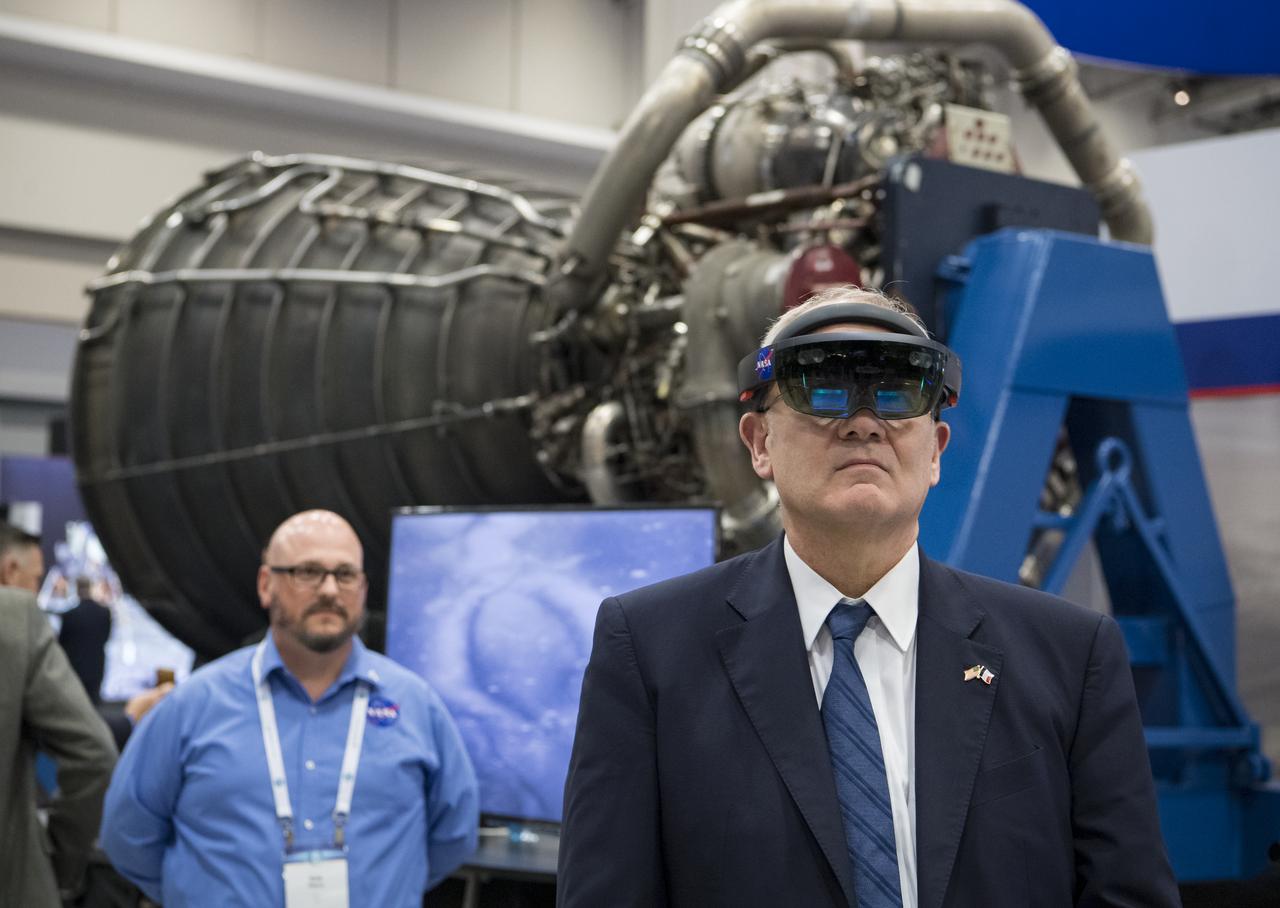
Jean-Yves Le Gall, president of the French space agency, National Centre for Space Studies (CNES), tries virtual reality viewers at the NASA exhibit during the 70th International Astronautical Congress, Wednesday, Oct. 23, 2019, at the Walter E. Washington Convention Center in Washington. Photo credit: (NASA/Aubrey Gemignani)
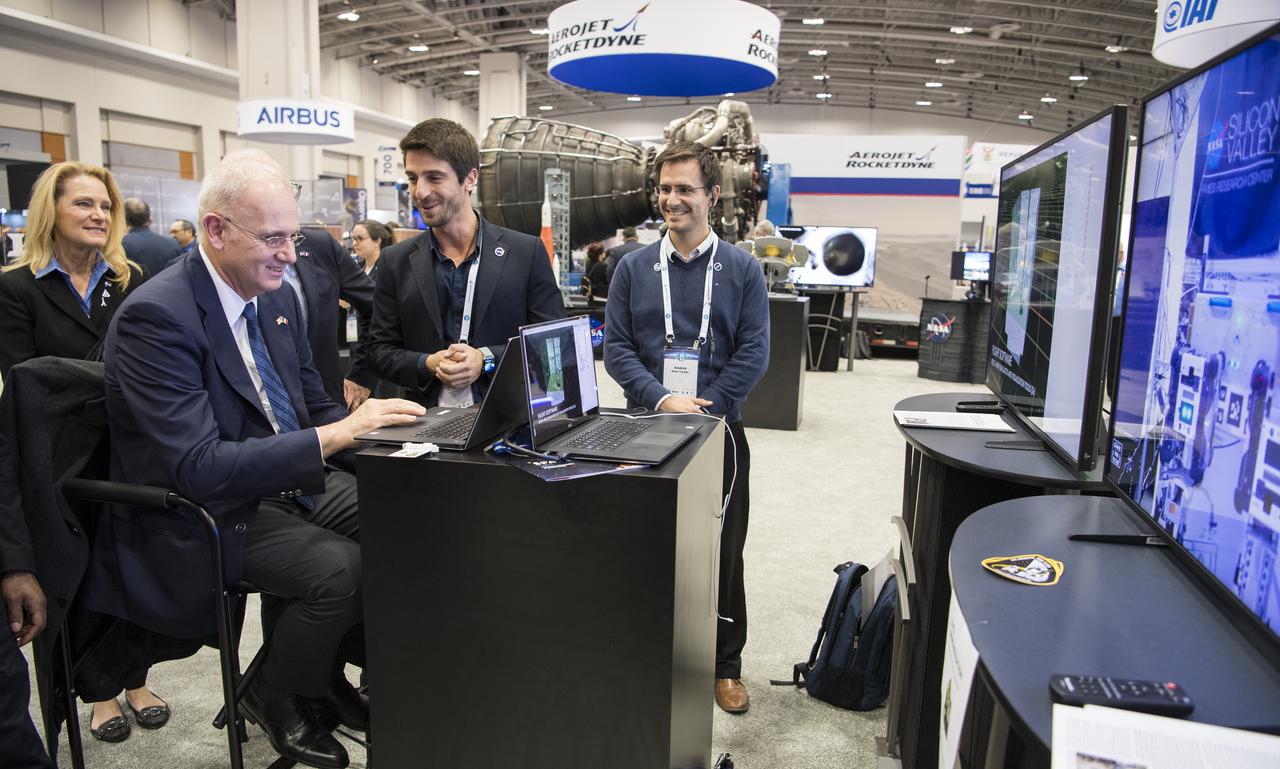
Jean-Yves Le Gall, president of the French space agency, National Centre for Space Studies (CNES), tests a robotic arm at the NASA exhibit during the 70th International Astronautical Congress, Wednesday, Oct. 23, 2019, at the Walter E. Washington Convention Center in Washington. Photo credit: (NASA/Aubrey Gemignani)
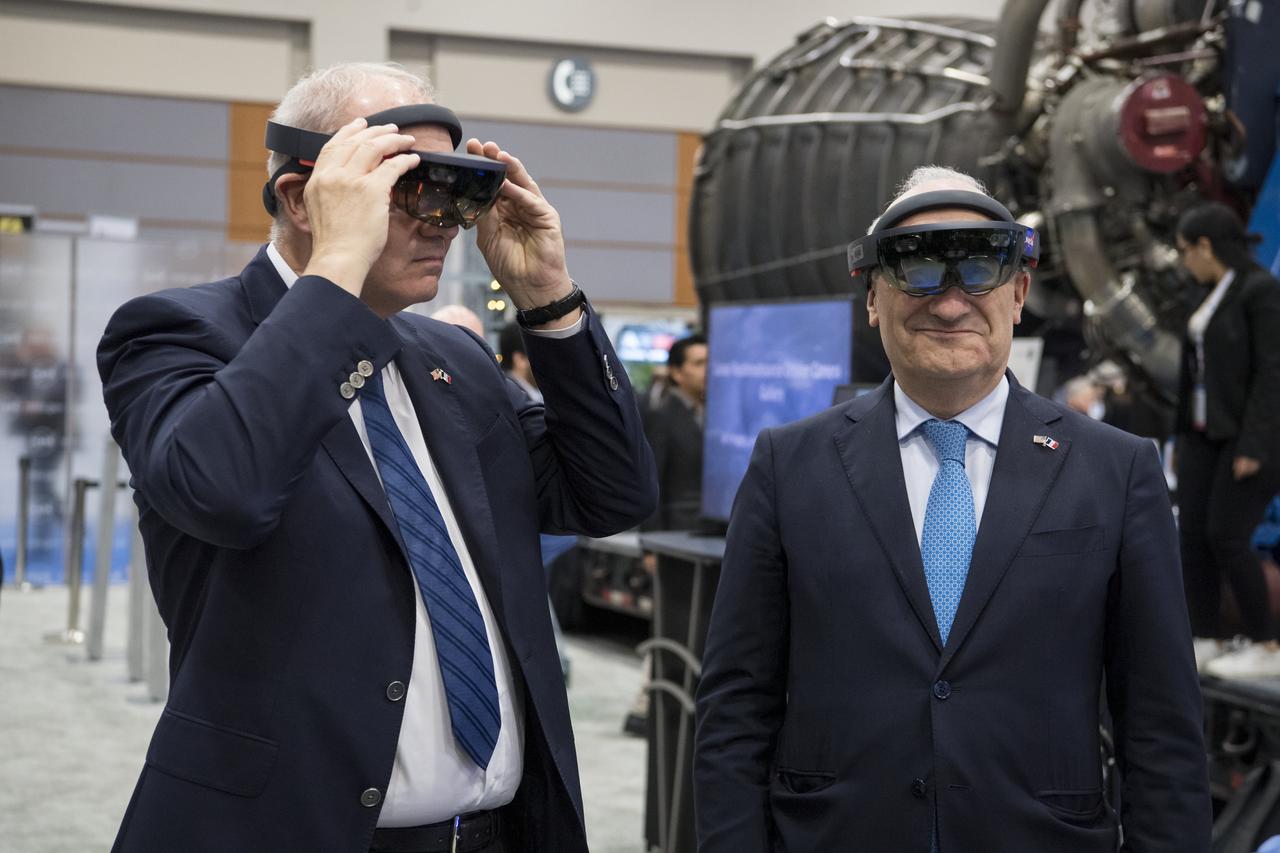
Philippe Étienne, French Ambassador to the U.S., right, and Jean-Yves Le Gall, president of the French space agency, National Centre for Space Studies (CNES), left, try virtual reality viewers at the NASA exhibit during the 70th International Astronautical Congress, Wednesday, Oct. 23, 2019, at the Walter E. Washington Convention Center in Washington. Photo credit: (NASA/Aubrey Gemignani)
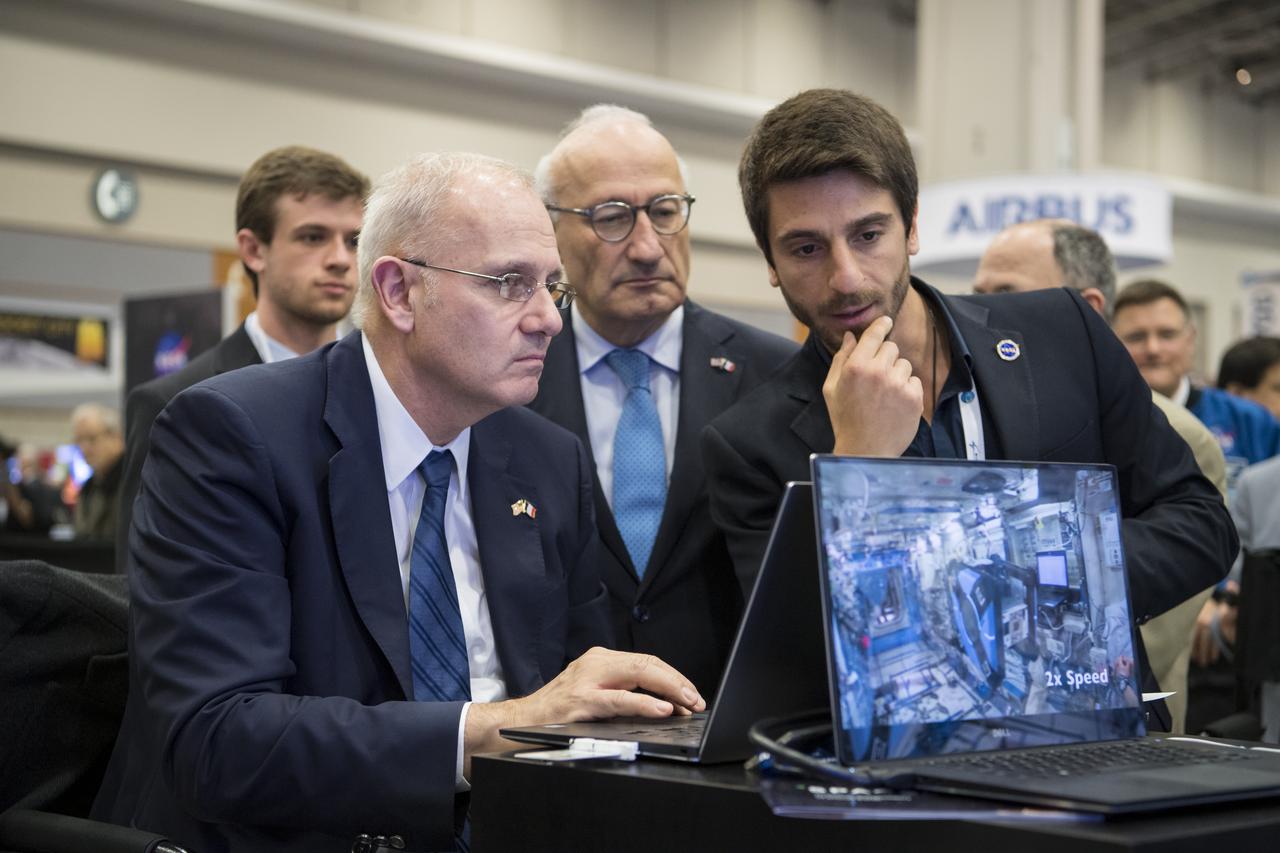
Jean-Yves Le Gall, president of the French space agency, National Centre for Space Studies (CNES), tests a robotic arm at the NASA exhibit, while Philippe Étienne, French Ambassador to the U.S., center, watches, during the 70th International Astronautical Congress, Wednesday, Oct. 23, 2019, at the Walter E. Washington Convention Center in Washington. Photo credit: (NASA/Aubrey Gemignani).
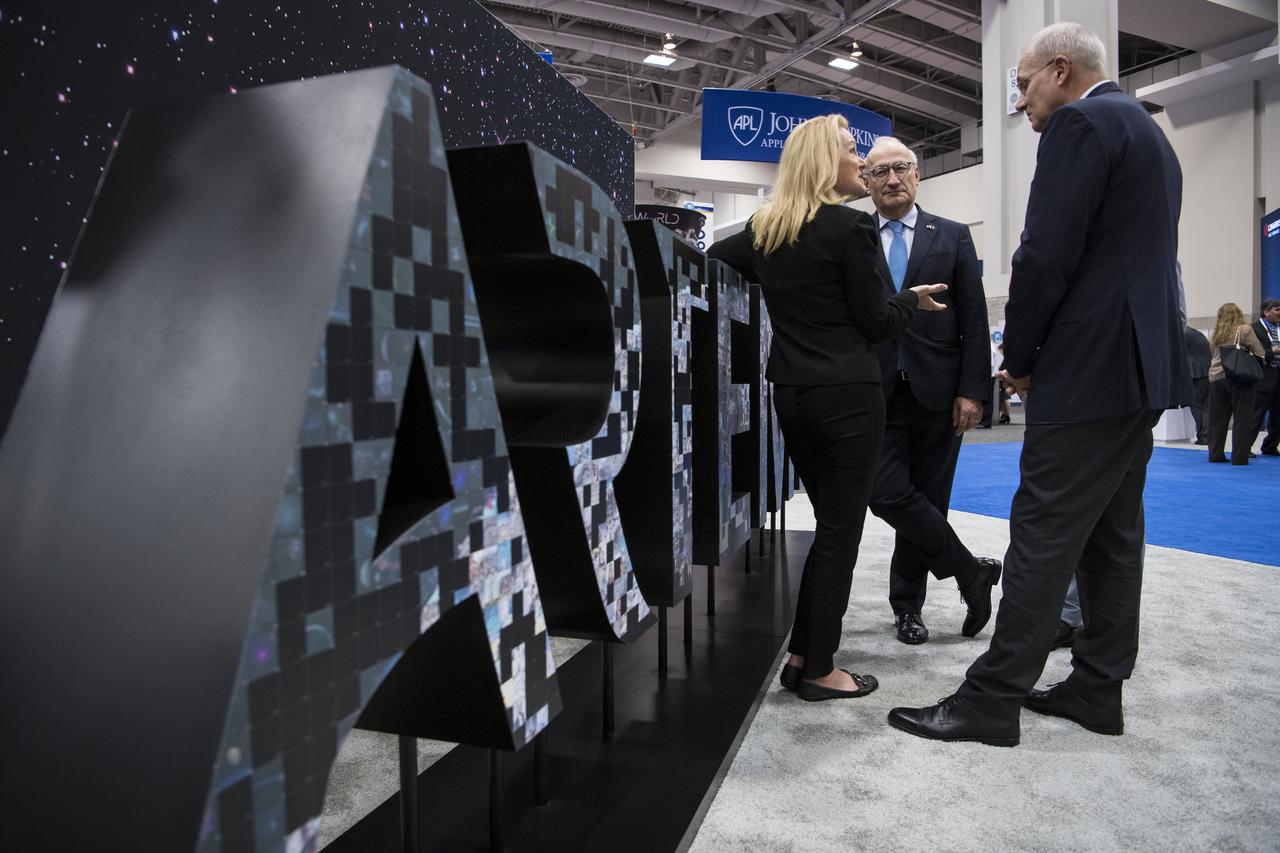
Philippe Étienne, French Ambassador to the U.S., center, and Jean-Yves Le Gall, president of the French space agency, National Centre for Space Studies (CNES), right, are seen talking to NASA Chief of Staff Janet Karika at the NASA exhibit during the 70th International Astronautical Congress, Wednesday, Oct. 23, 2019, at the Walter E. Washington Convention Center in Washington. Photo credit: (NASA/Aubrey Gemignani)
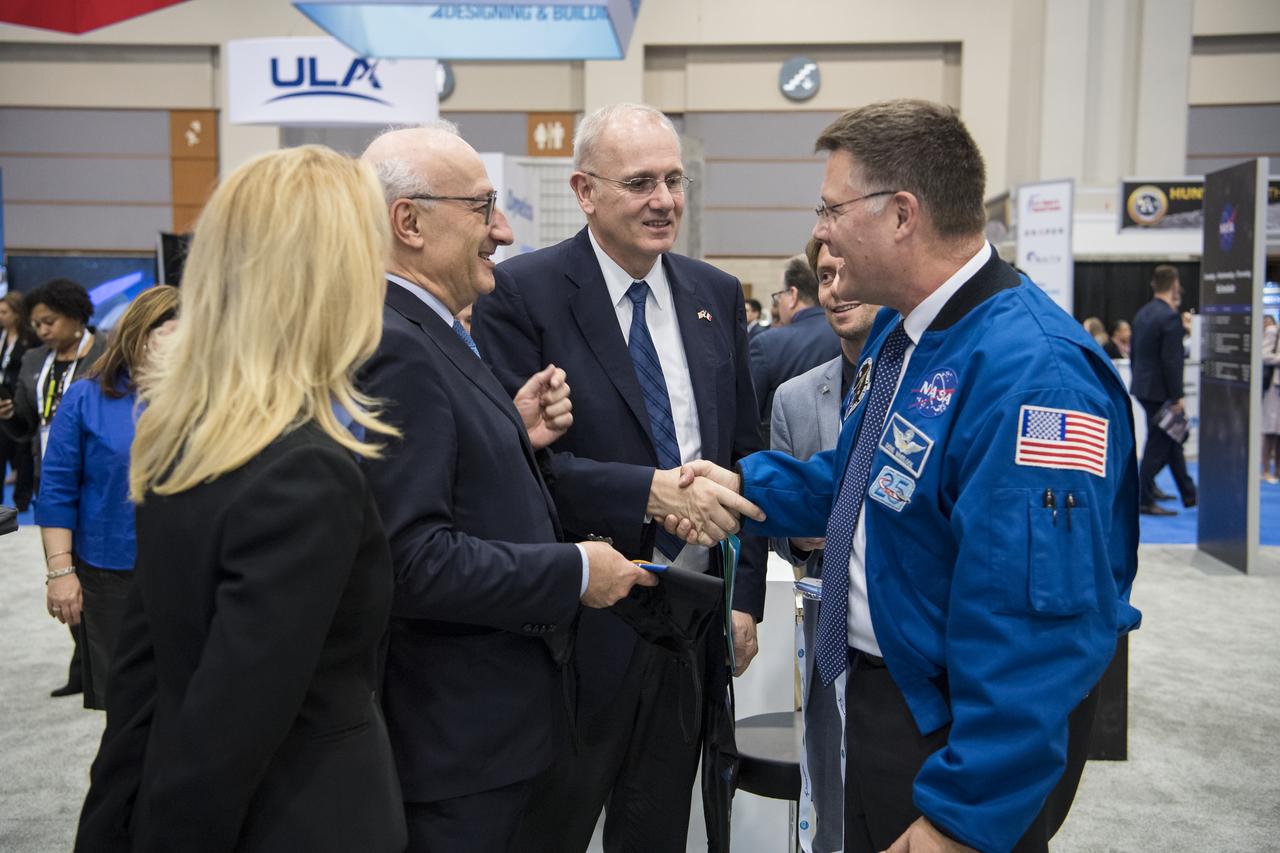
Jean-Yves Le Gall, president of the French space agency, National Centre for Space Studies (CNES), center, shakes hands with NASA astronaut Doug Wheelock after he and Philippe Étienne, French Ambassador to the U.S., second from left, visited the NASA exhibit during the 70th International Astronautical Congress, Wednesday, Oct. 23, 2019, at the Walter E. Washington Convention Center in Washington. Photo credit: (NASA/Aubrey Gemignani)
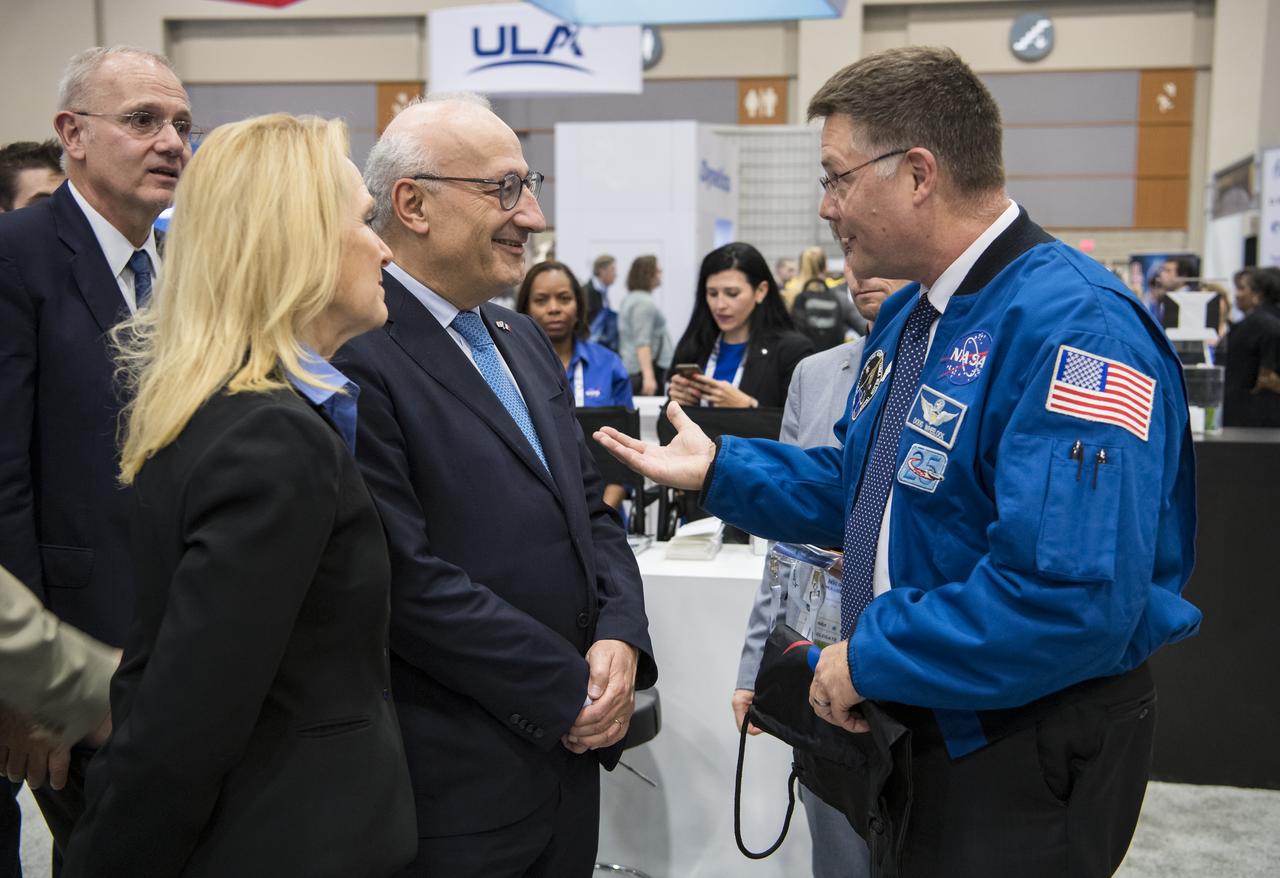
Philippe Étienne, French Ambassador to the U.S., center, and Jean-Yves Le Gall, president of the French space agency, National Centre for Space Studies (CNES), left, speak to NASA astronaut Doug Wheelock at the NASA exhibit during the 70th International Astronautical Congress, Wednesday, Oct. 23, 2019, at the Walter E. Washington Convention Center in Washington. Photo credit: (NASA/Aubrey Gemignani)
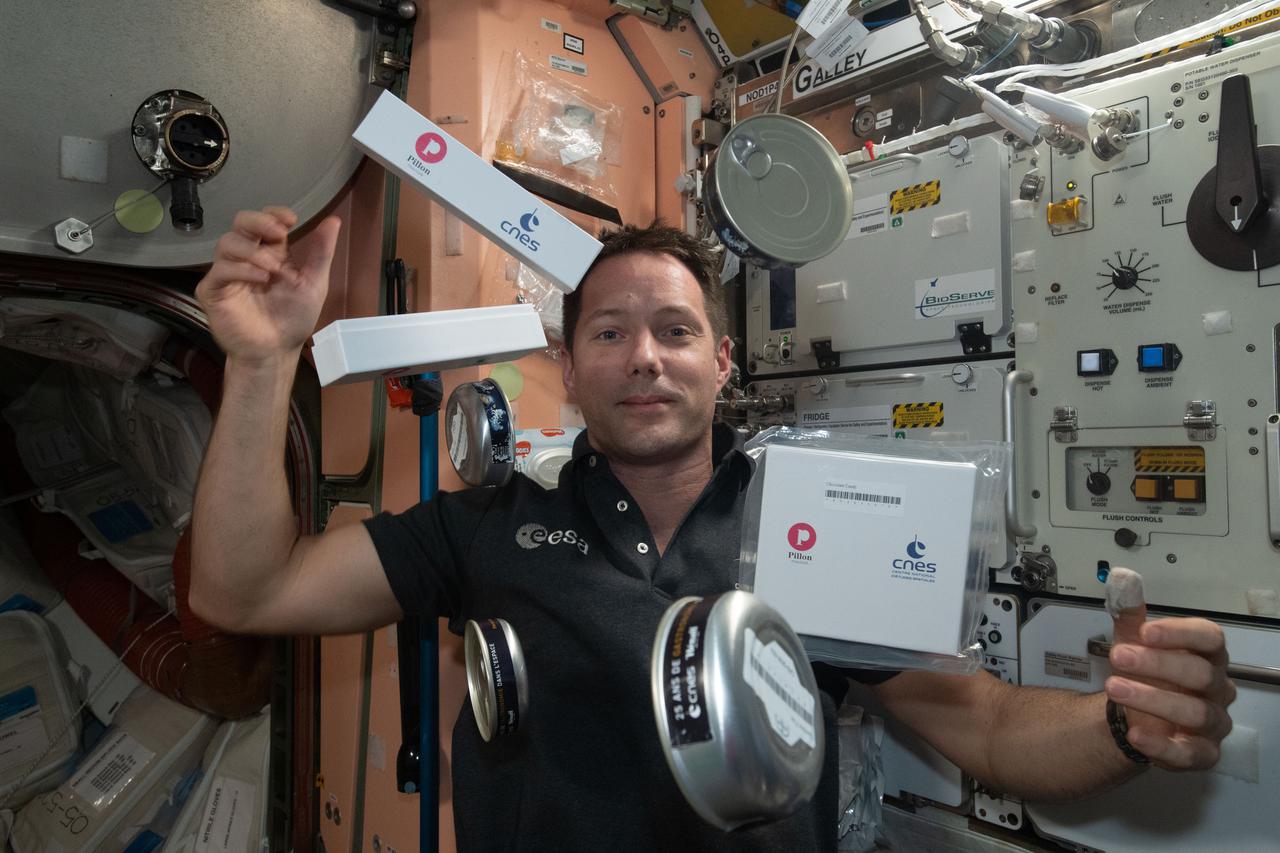
iss065e281904 (Aug. 18, 2021) --- Flight Engineer Thomas Pesquet of ESA (European Space Agency) seemingly juggles food and snack containers from CNES, France's National Centre for Space Studies.
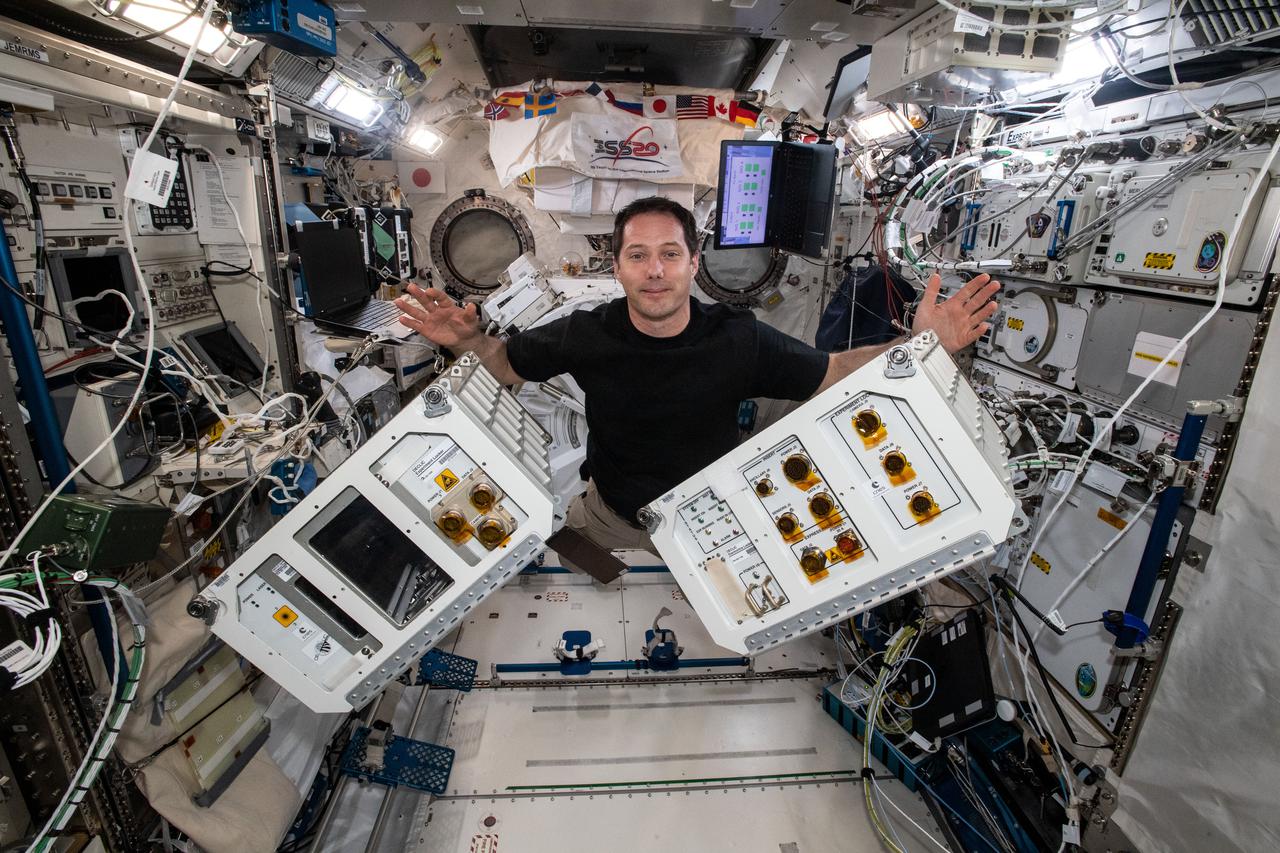
iss065e442803 (10/7/2021) --- European Space Agency (ESA) astronaut Thomas Pesquet gathers fluid physics and materials research hardware inside the International Space Station's Kibo laboratory module. Device for the Study of Critical Liquids and Crystallization (DECLIC) is a multi-user facility developed by the agency Centre National d’Etudes Spatiales (French Space Agency, CNES) and flown in collaboration with NASA. It is designed to support experiments in the fields of fluid physics and materials science. Special inserts allow researchers to study both ambient temperature critical point fluids and high temperature super-critical fluids. Another class of insert studies the dynamics and morphology of the fronts that form as a liquid material solidifies.
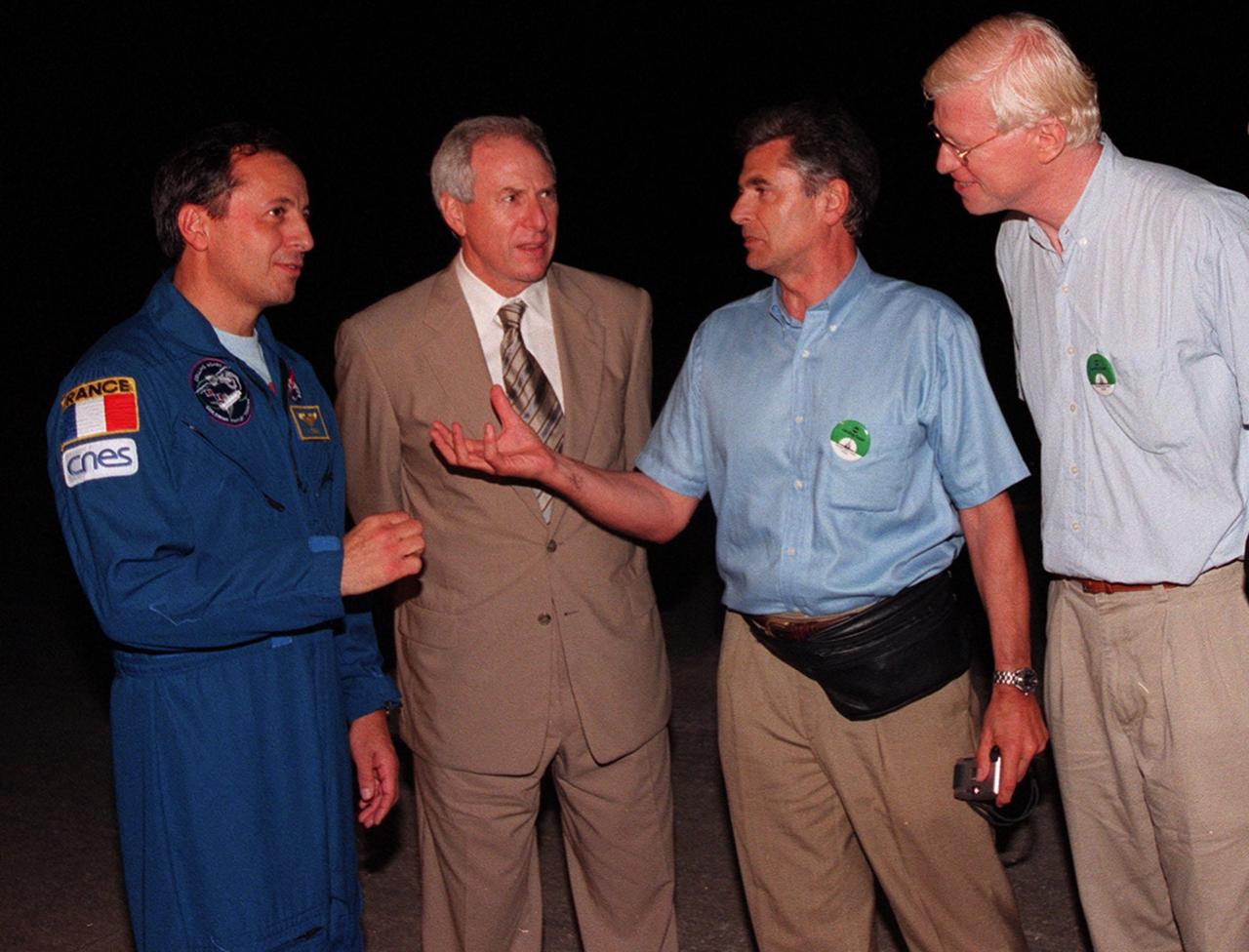
At the Shuttle Landing Facility (from left to right), STS-93 Mission Specialist Michel Tognini of France, representing the Centre National d'Etudes Spatiales (CNES), and NASA Administrator Daniel Goldin talk with Jacques Ratie, Astronaut Director, CNES, and Serge Plattard, International Relations, CNES. Landing occurred on runway 33 with main gear touchdown at 11:20:35 p.m. EDT on July 27. The mission's primary objective was to deploy the Chandra X-ray Observatory, which will allow scientists from around the world to study some of the most distant, powerful and dynamic objects in the universe. This was the 95th flight in the Space Shuttle program and the 26th for Columbia. The landing was the 19th consecutive Shuttle landing in Florida and the 12th night landing in Shuttle program history. On this mission, Eileen Collins became the first woman to serve as a Shuttle commander
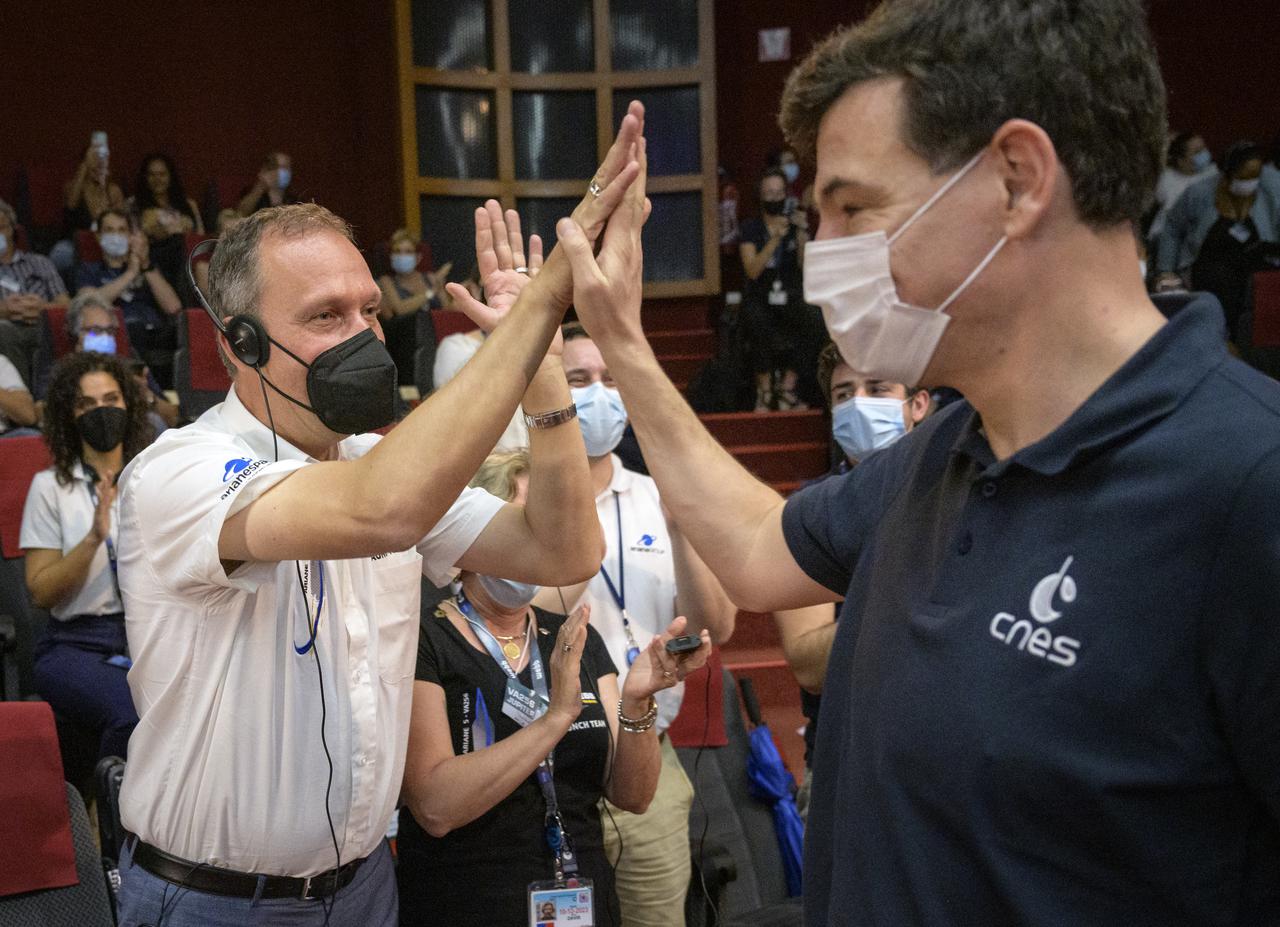
NASA Associate Administrator for the Science Mission Directorate Thomas Zurbuchen, left, and Centre National d’Etudes Spatiales (CNES) Chairman and CEO Philippe Baptiste, celebrate after hearing confirmation that the James Webb Space Telescope successfully deployed it’s solar arrays and the telescope had positive power, Saturday, Dec. 25, 2021, in the Jupiter Hall of the Guiana Space Centre in Kourou, French Guiana. The James Webb Space Telescope (sometimes called JWST or Webb) is a large infrared telescope with a 21.3 foot (6.5 meter) primary mirror. The observatory will study every phase of cosmic history—from within our solar system to the most distant observable galaxies in the early universe. Photo Credit: (NASA/Bill Ingalls)
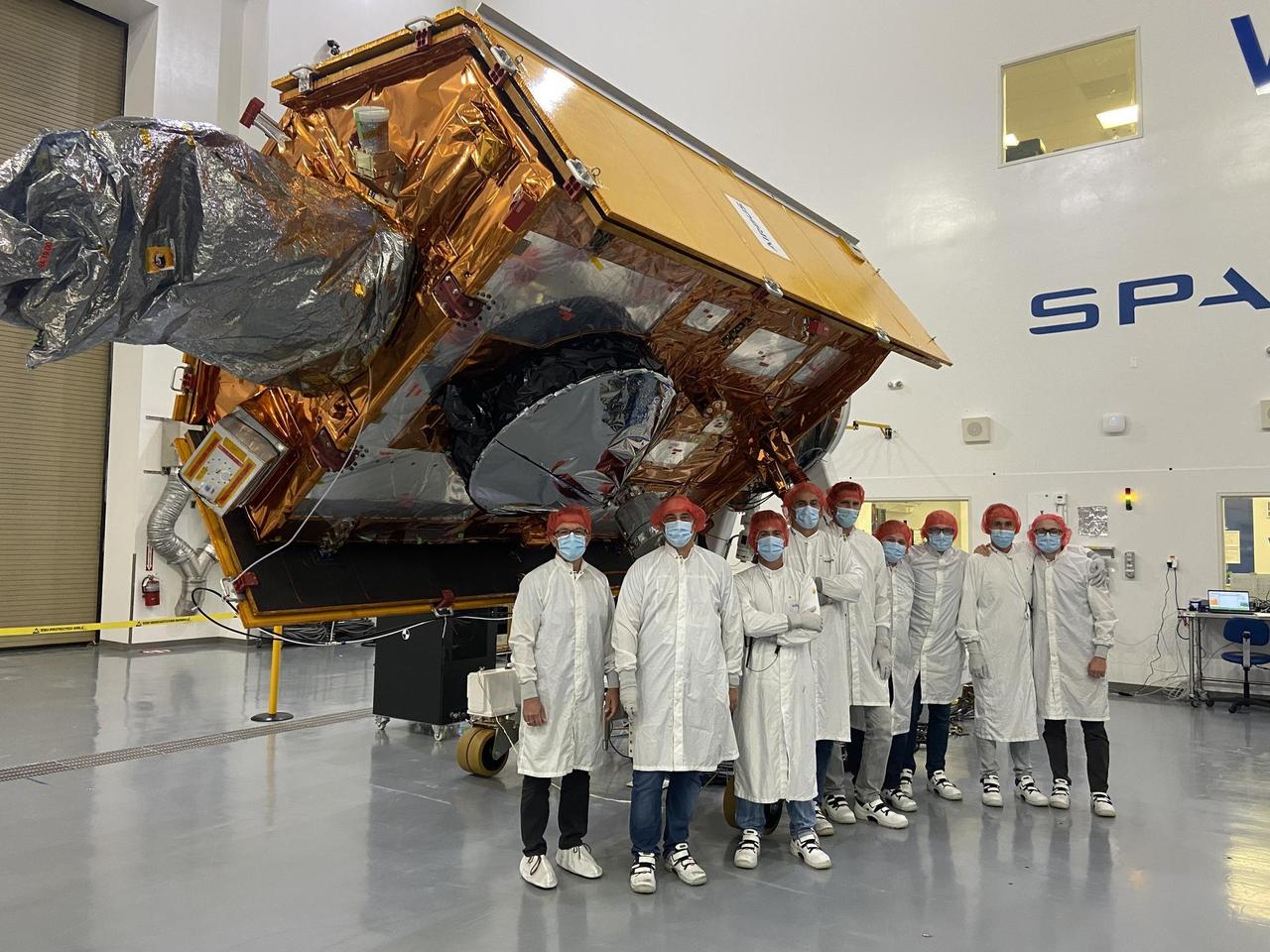
The Sentinel-6 Michael Freilich satellite undergoes final preparations in a clean room at Vandenberg Air Force Base in California for an early November launch. The satellite is named after Dr. Michael Freilich, the former director of NASA's Earth Science Division and an instrumental figure in advancing ocean observations from space. Sentinel-6 Michael Freilich is one of two identical spacecraft that compose the Sentinel-6/Jason-CS (Continuity of Service) mission developed in partnership with ESA (the European Space Agency). Other partners include the National Oceanic and Atmospheric Administration (NOAA), the intergovernmental European Organisation for the Exploitation of Meteorological Satellites (EUMETSAT), and France's National Centre for Space Studies (CNES). ESA is developing the new Sentinel family of missions to support the operational needs of the European Union's Copernicus program, the EU's Earth observation program managed by the European Commission. The spacecraft's twin, Sentinel-6B, will launch in 2025. https://photojournal.jpl.nasa.gov/catalog/PIA24131
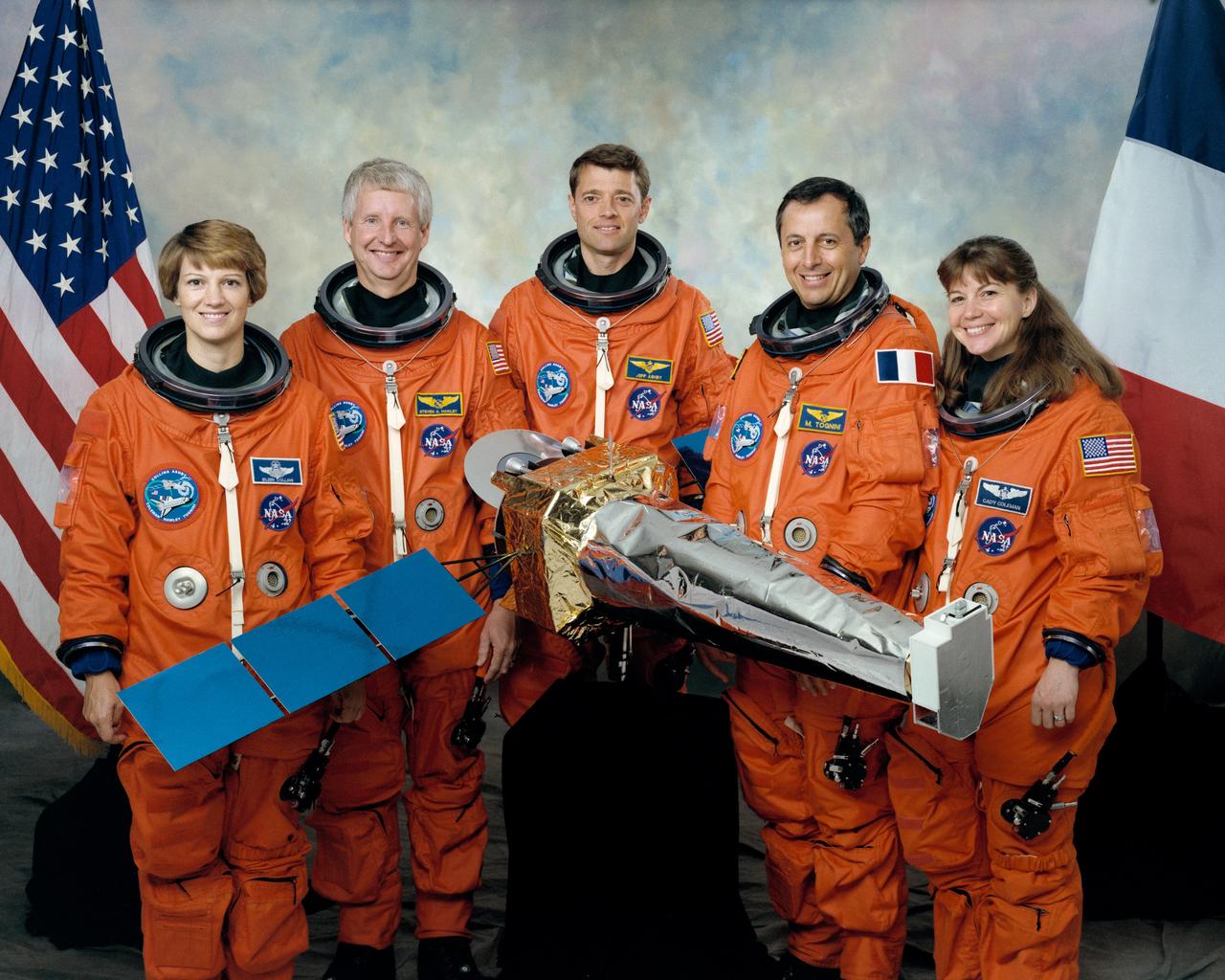
STS093-S-002 (September 1998) --- The five astronauts assigned to fly aboard the Space Shuttle Columbia early next year for the STS-93 mission pose with a small model of their primary payload-the Advanced X-ray Astrophysics Facility (AXAF). From the left are astronauts Eileen M. Collins, mission commander; Steven A. Hawley, mission specialist; Jeffrey S. Ashby, pilot; Michel Tognini and Catherine G. Coleman, both mission specialists. Tognini represents France's Centre National d'Etudes Spatiales (CNES). The scheduled five-day mission will feature the deployment of AXAF, which will enable scientists to conduct comprehensive studies of exotic phenomena in the universe. Among bodies studied will be exploding stars, quasars and black holes.
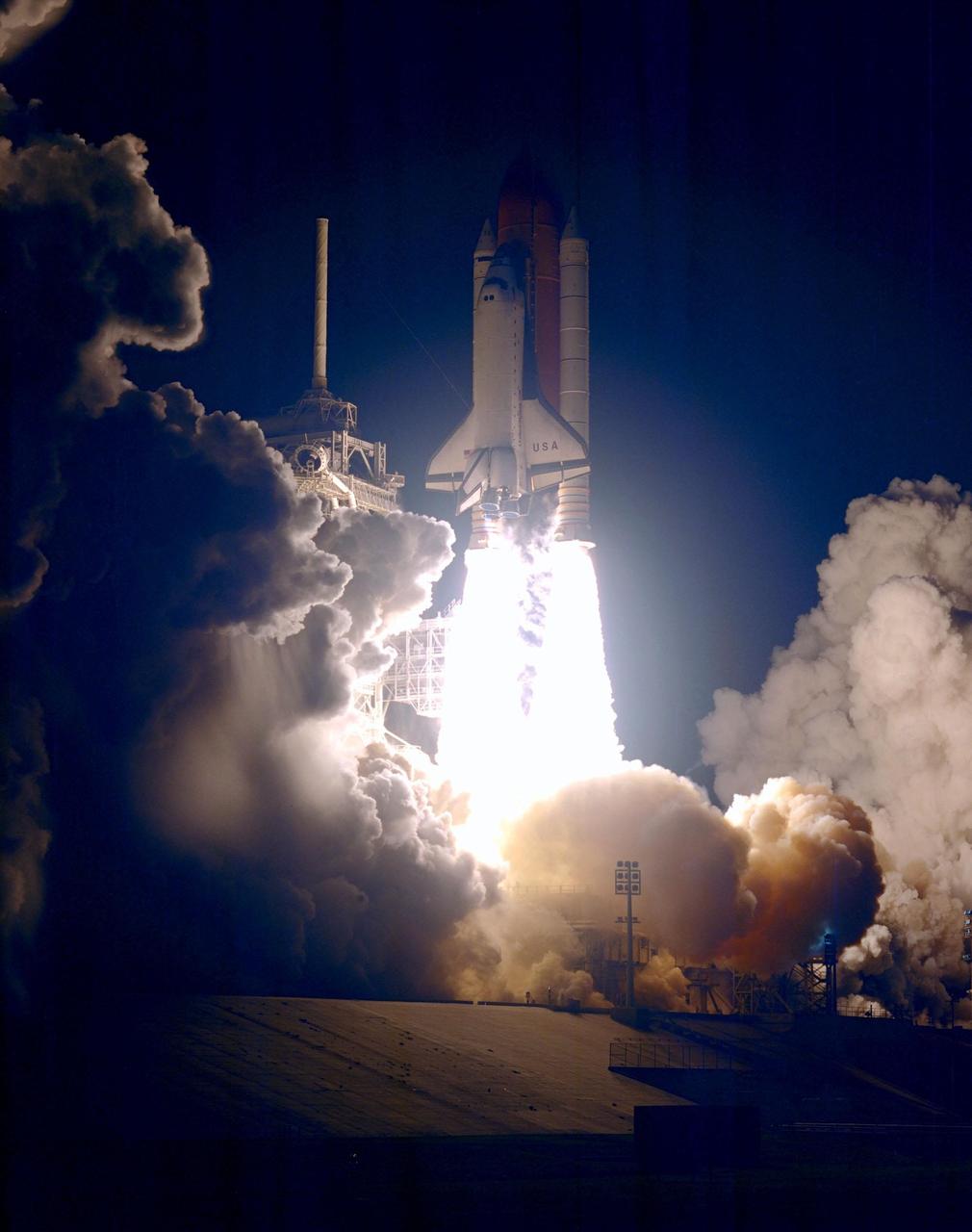
KENNEDY SPACE CENTER, FLA. -- Billowing clouds of smoke and steam rise with the roaring Space Shuttle Columbia as it launches into the night sky on mission STS-93. After two unsuccessful attempts on previous nights, liftoff occurred at 12:31 a.m. EDT. STS-93 is a five-day mission primarily to release the Chandra X-ray Observatory, which will allow scientists from around the world to study some of the most distant, powerful and dynamic objects in the universe. The crew numbers five: Commander Eileen M. Collins, Pilot Jeffrey S. Ashby, and Mission Specialists Steven A. Hawley (Ph.D.), Catherine G. Coleman (Ph.D.) and Michel Tognini of France, with the Centre National d'Etudes Spatiales (CNES). Collins is the first woman to serve as commander of a Space Shuttle. The target landing date is July 27, 1999, at 11:20 p.m. EDT
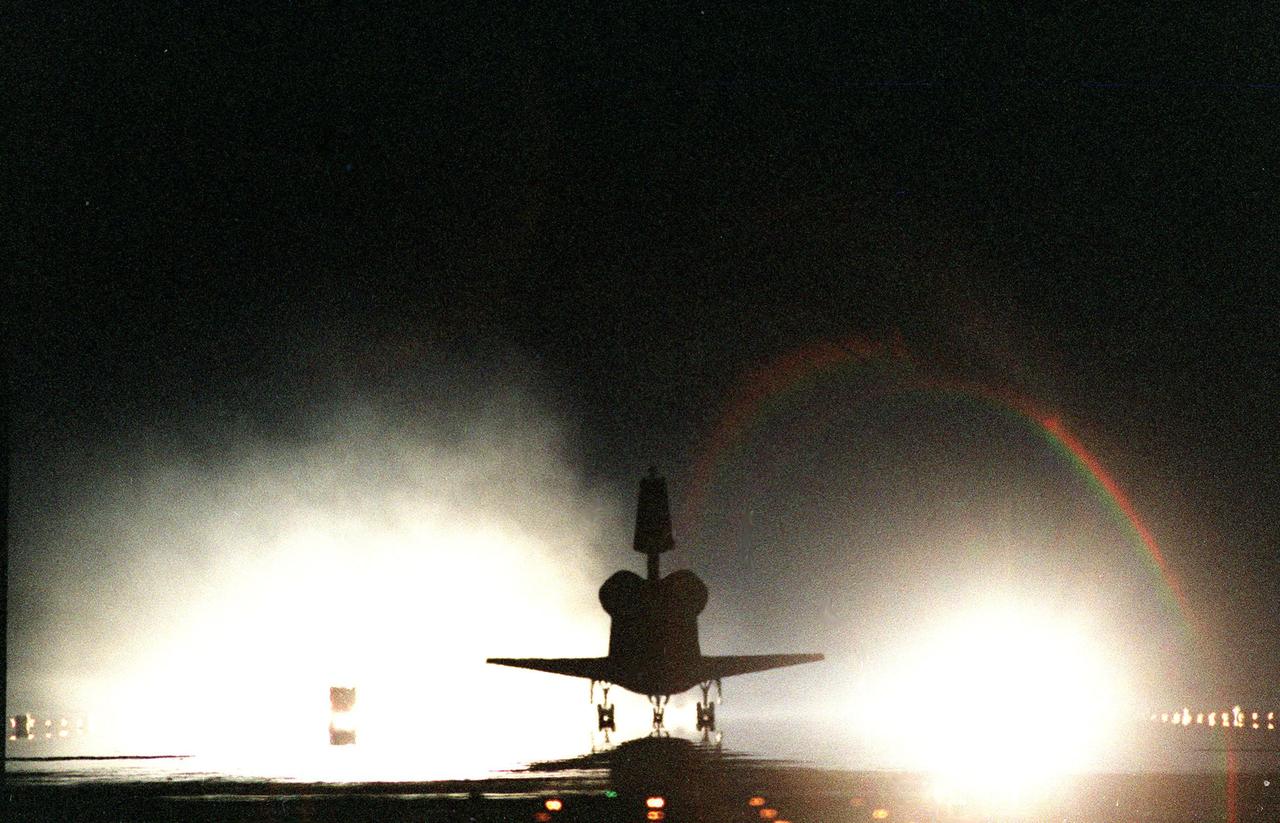
KENNEDY SPACE CENTER, Fla. -- The Space Shuttle orbiter Columbia touches down on runway 33 at the Shuttle Landing Facility after a successful mission of nearly five days and 1.8 million miles. Main gear touchdown was at 11:20:35 p.m. EDT on July 27. Aboard are the STS-93 crew members: Commander Eileen M. Collins, Pilot Jeffrey S. Ashby, and Mission Specialists Steven A. Hawley (Ph.D.), Catherine G. Coleman (Ph.D.) and Michel Tognini of France, with the Centre National d'Etudes Spatiales (CNES). The mission's primary objective was to deploy the Chandra X-ray Observatory, which will allow scientists from around the world to study some of the most distant, powerful and dynamic objects in the universe. This was the 95th flight in the Space Shuttle program and the 26th for Columbia. The landing was the 19th consecutive Shuttle landing in Florida and the 12th night landing in Shuttle program history
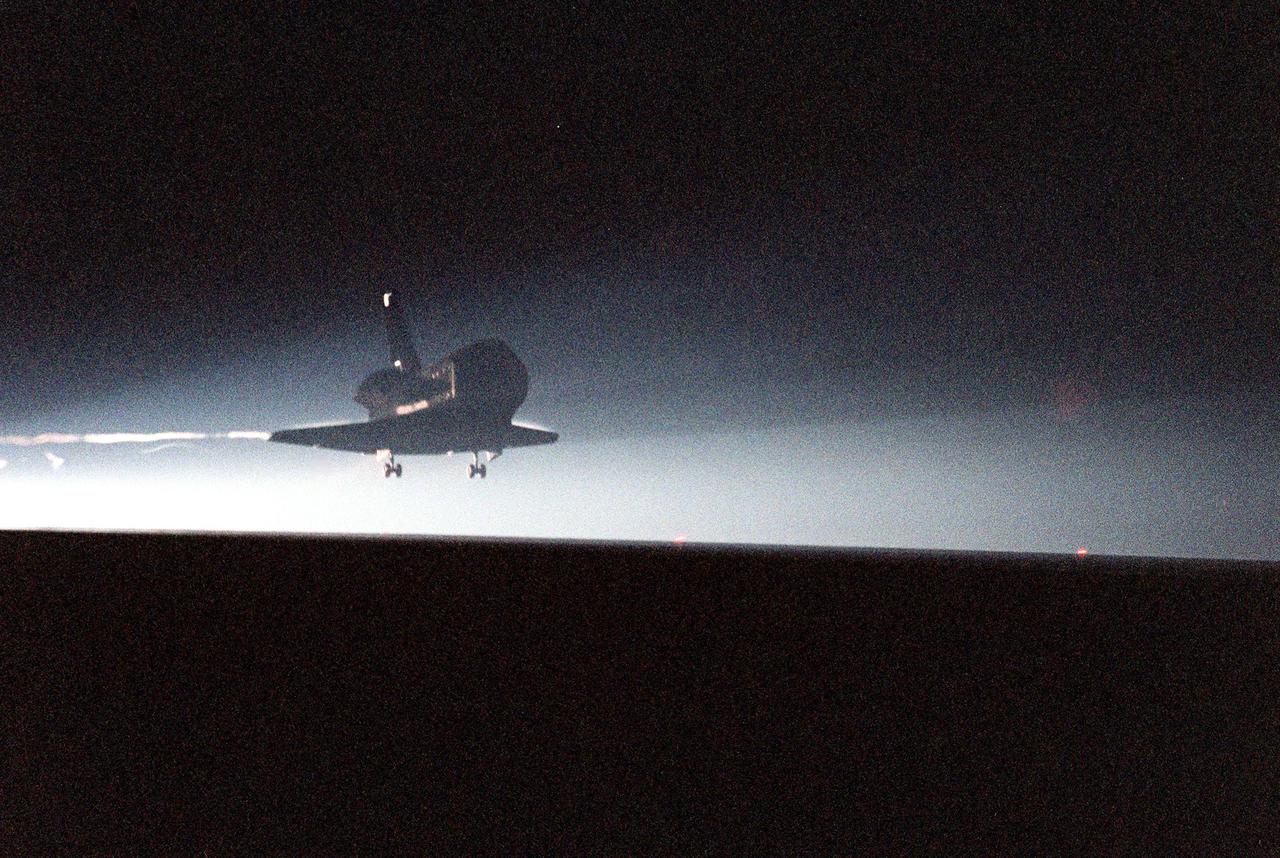
KENNEDY SPACE CENTER, Fla. -- The Space Shuttle orbiter Columbia swoops out of the darkness onto runway 33 at the Shuttle Landing Facility after a successful mission of nearly five days and 1.8 million miles. Main gear touchdown was at 11:20:35 p.m. EDT on July 27. Aboard are the STS-93 crew members: Commander Eileen M. Collins, Pilot Jeffrey S. Ashby, and Mission Specialists Steven A. Hawley (Ph.D.), Catherine G. Coleman (Ph.D.) and Michel Tognini of France, with the Centre National d'Etudes Spatiales (CNES). The mission's primary objective was to deploy the Chandra X-ray Observatory, which will allow scientists from around the world to study some of the most distant, powerful and dynamic objects in the universe. This was the 95th flight in the Space Shuttle program and the 26th for Columbia. The landing was the 19th consecutive Shuttle landing in Florida and the 12th night landing in Shuttle program history
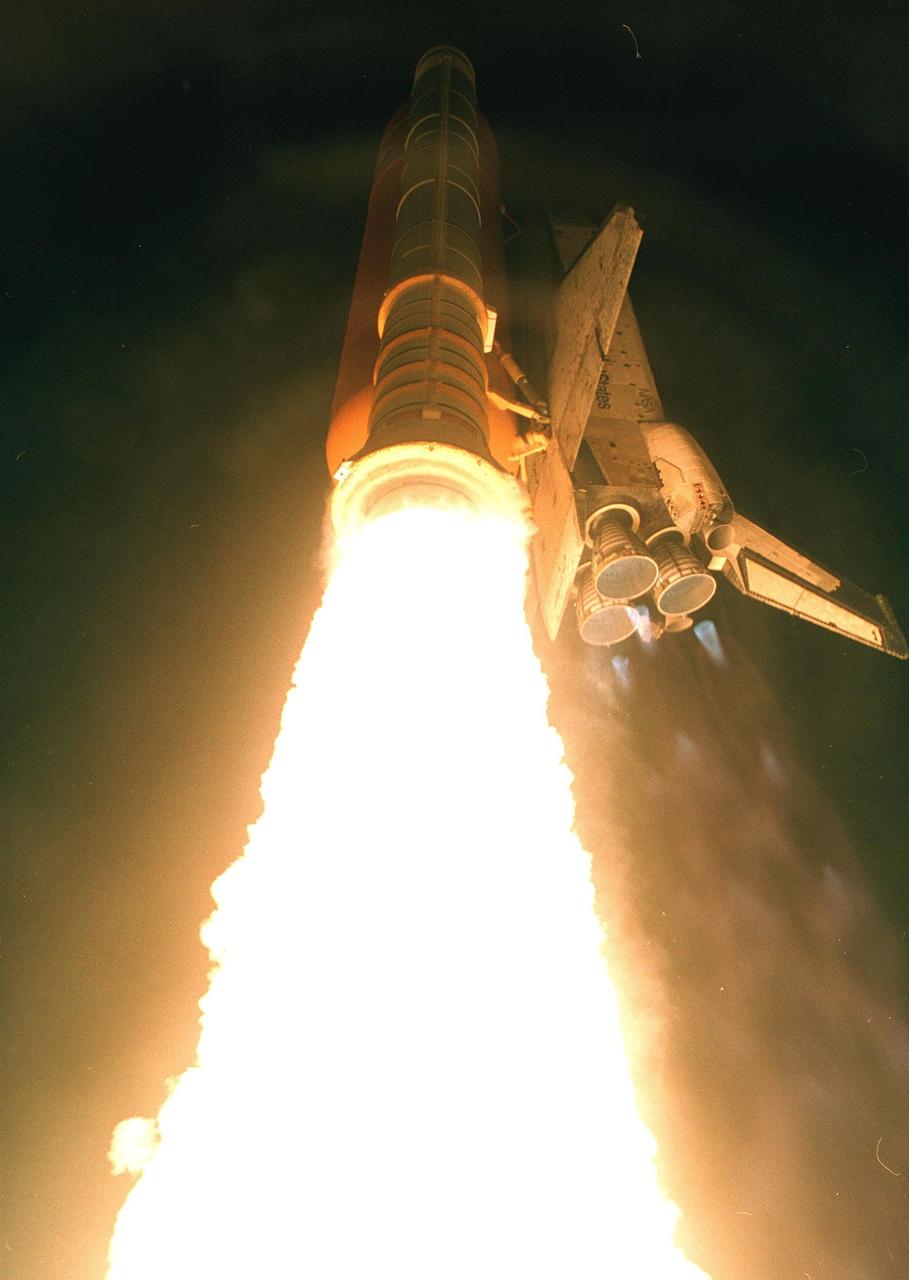
KENNEDY SPACE CENTER, FLA. -- Flaming exhaust spews from beneath one of the two solid rocket boosters on Space Shuttle Columbia as it roars into the night sky on mission STS-93. After two unsuccessful attempts on previous nights, liftoff occurred at 12:31 a.m. EDT. STS-93 is a five-day mission primarily to release the Chandra X-ray Observatory, which will allow scientists from around the world to study some of the most distant, powerful and dynamic objects in the universe. The crew numbers five: Commander Eileen M. Collins, Pilot Jeffrey S. Ashby, and Mission Specialists Steven A. Hawley (Ph.D.), Catherine G. Coleman (Ph.D.) and Michel Tognini of France, with the Centre National d'Etudes Spatiales (CNES). Collins is the first woman to serve as commander of a Space Shuttle. The target landing date is July 27, 1999, at 11:20 p.m. EDT
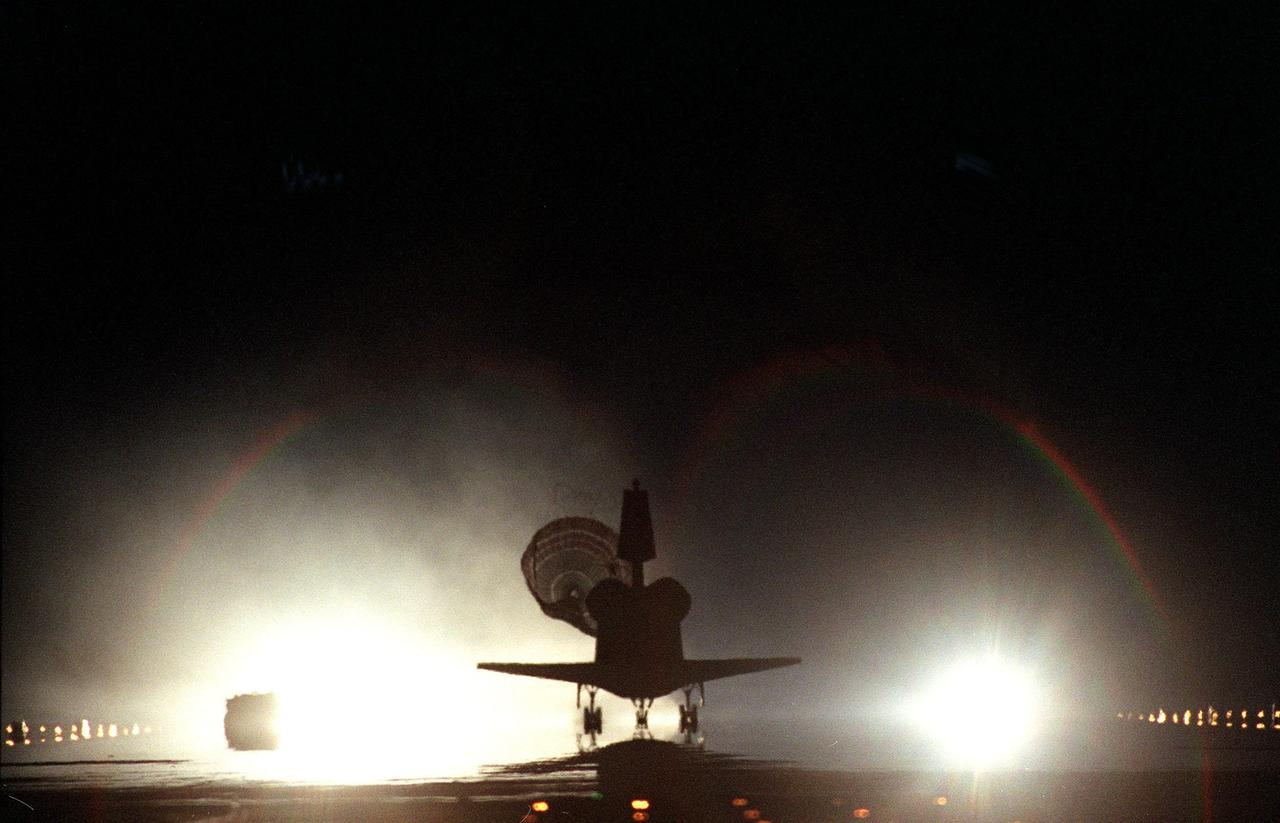
KENNEDY SPACE CENTER, Fla. -- The Space Shuttle orbiter Columbia, with its drag chute deployed, touches down on runway 33 at the Shuttle Landing Facility after a successful mission of nearly five days and 1.8 million miles. Main gear touchdown was at 11:20:35 p.m. EDT on July 27. Aboard are the STS-93 crew members: Commander Eileen M. Collins, Pilot Jeffrey S. Ashby, and Mission Specialists Steven A. Hawley (Ph.D.), Catherine G. Coleman (Ph.D.) and Michel Tognini of France, with the Centre National d'Etudes Spatiales (CNES). The mission's primary objective was to deploy the Chandra X-ray Observatory, which will allow scientists from around the world to study some of the most distant, powerful and dynamic objects in the universe. This was the 95th flight in the Space Shuttle program and the 26th for Columbia. The landing was the 19th consecutive Shuttle landing in Florida and the 12th night landing in Shuttle program history
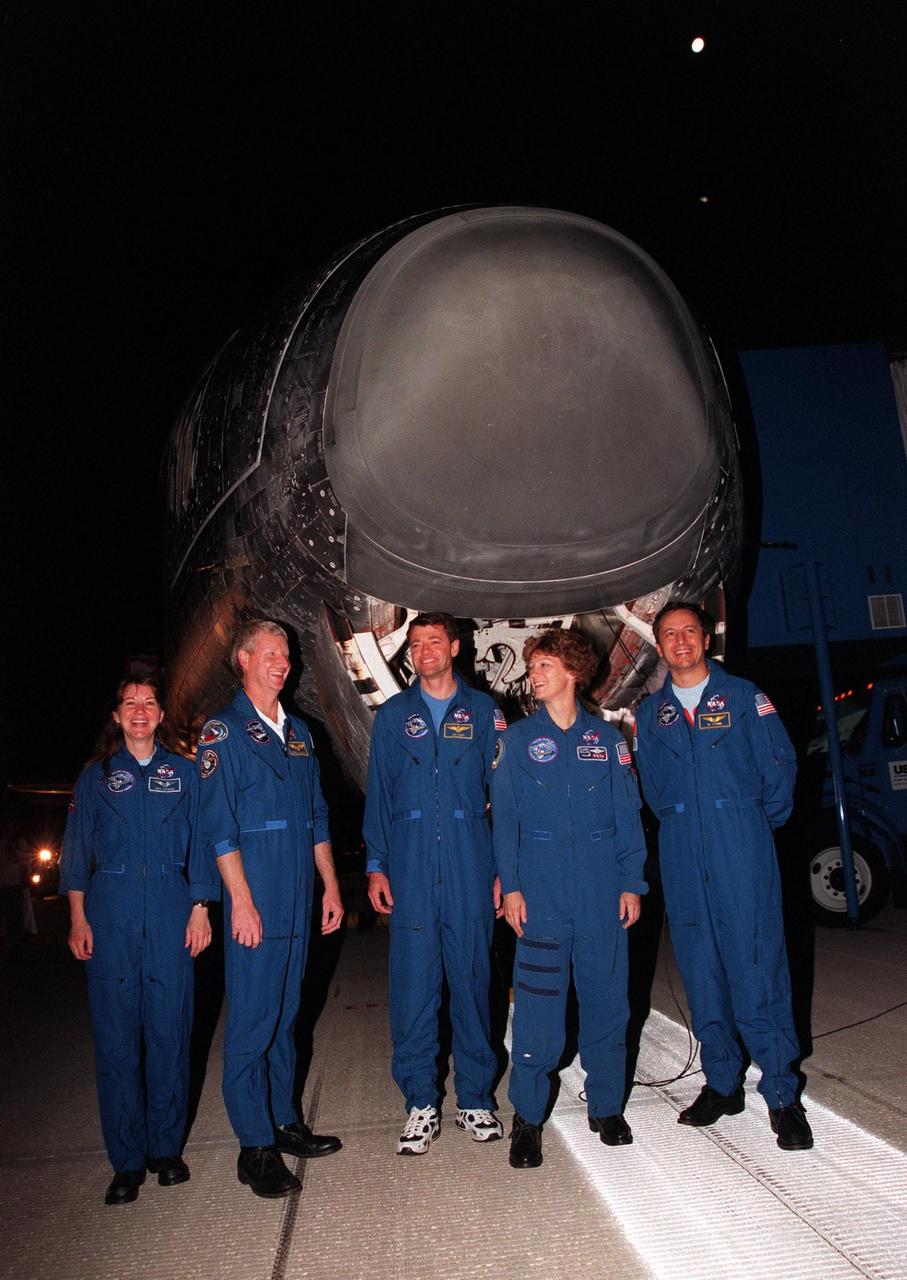
KENNEDY SPACE CENTER, FLA. -- The STS-93 crew pose in front of the Space Shuttle orbiter Columbia following their landing on runway 33 at the Shuttle Landing Facility. Main gear touchdown occurred at 11:20:35 p.m. EDT on July 27. From left to right, they are Mission Specialists Catherine G. Coleman (Ph.D.) and Steven A. Hawley (Ph.D.), Pilot Jeffrey S. Ashby, Commander Eileen Collins, and Mission Specialist Michel Tognini of France, with the Centre National d'Etudes Spatiales (CNES). The mission's primary objective was to deploy the Chandra X-ray Observatory, which will allow scientists from around the world to study some of the most distant, powerful and dynamic objects in the universe. This was the 95th flight in the Space Shuttle program and the 26th for Columbia. The landing was the 19th consecutive Shuttle landing in Florida and the 12th night landing in Shuttle program history. On this mission, Collins became the first woman to serve as a Shuttle commander
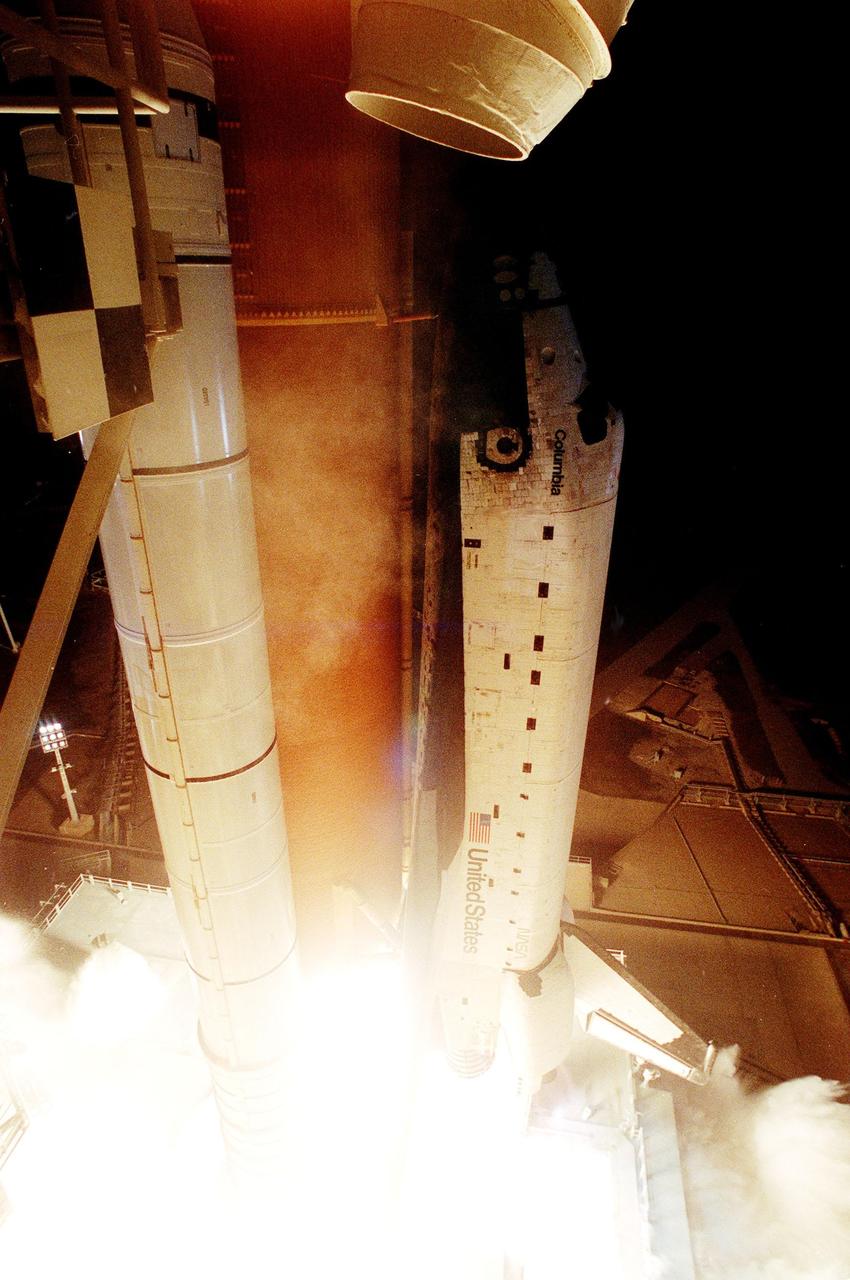
KENNEDY SPACE CENTER, FLA. -- In a burst of light and flames, Space Shuttle Columbia lifts off from Launch Pad 39-B at 12:31 a.m. EDT. STS-93 is a five-day mission primarily to release the Chandra X-ray Observatory, which will allow scientists from around the world to study some of the most distant, powerful and dynamic objects in the universe. The crew numbers five: Commander Eileen M. Collins, Pilot Jeffrey S. Ashby, and Mission Specialists Steven A. Hawley (Ph.D.), Catherine G. Coleman (Ph.D.) and Michel Tognini of France, with the Centre National d'Etudes Spatiales (CNES). Collins is the first woman to serve as commander of a Shuttle mission. The target landing date is July 27, 1999, at 11:20 p.m. EDT
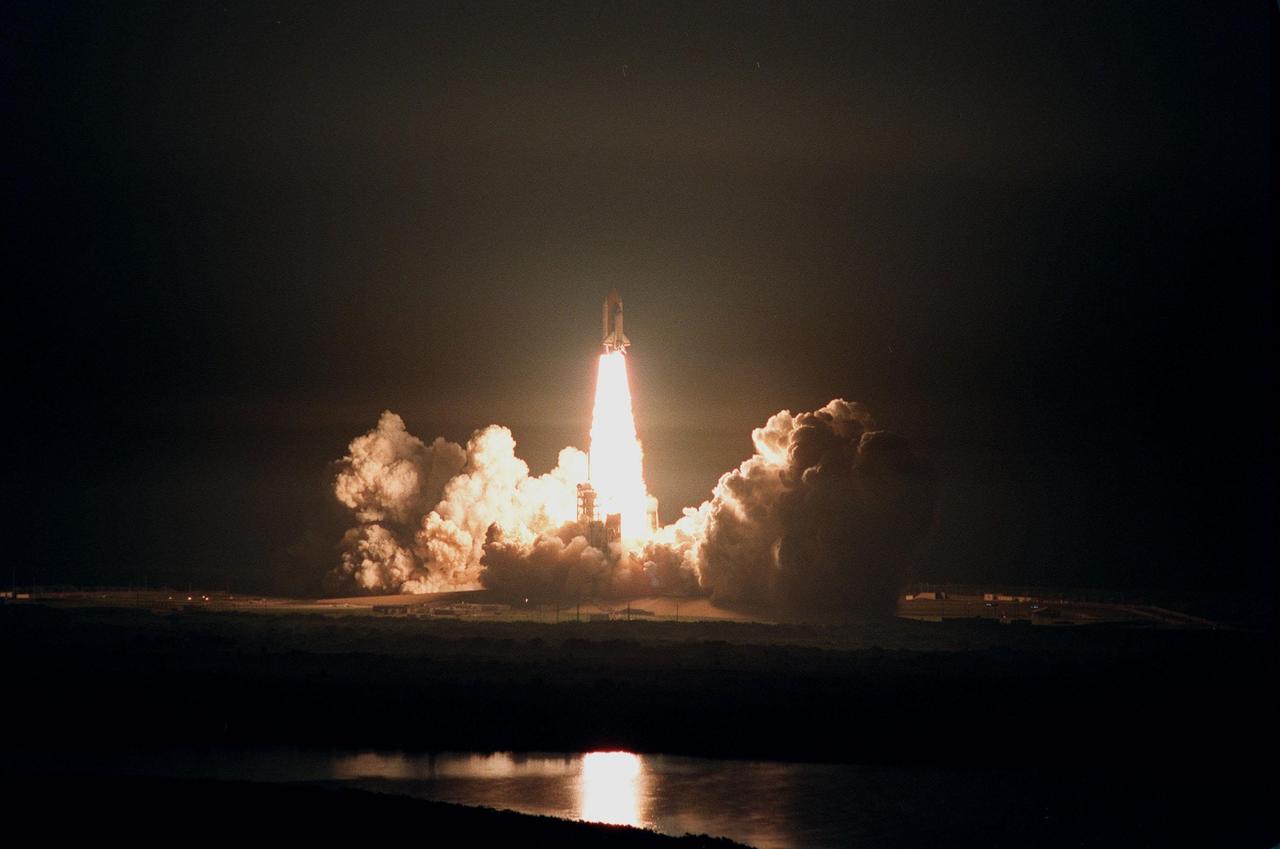
KENNEDY SPACE CENTER, FLA. -- The fiery launch of Space Shuttle Columbia is reflected in the water near the Launch Complex . After two unsuccessful attempts on previous nights, liftoff occurred at 12:31 a.m. EDT. STS-93 is a five-day mission primarily to release the Chandra X-ray Observatory, which will allow scientists from around the world to study some of the most distant, powerful and dynamic objects in the universe. The crew numbers five: Commander Eileen M. Collins, Pilot Jeffrey S. Ashby, and Mission Specialists Steven A. Hawley (Ph.D.), Catherine G. Coleman (Ph.D.) and Michel Tognini of France, with the Centre National d'Etudes Spatiales (CNES). The target landing date is July 27, 1999, at 11:20 p.m. EDT
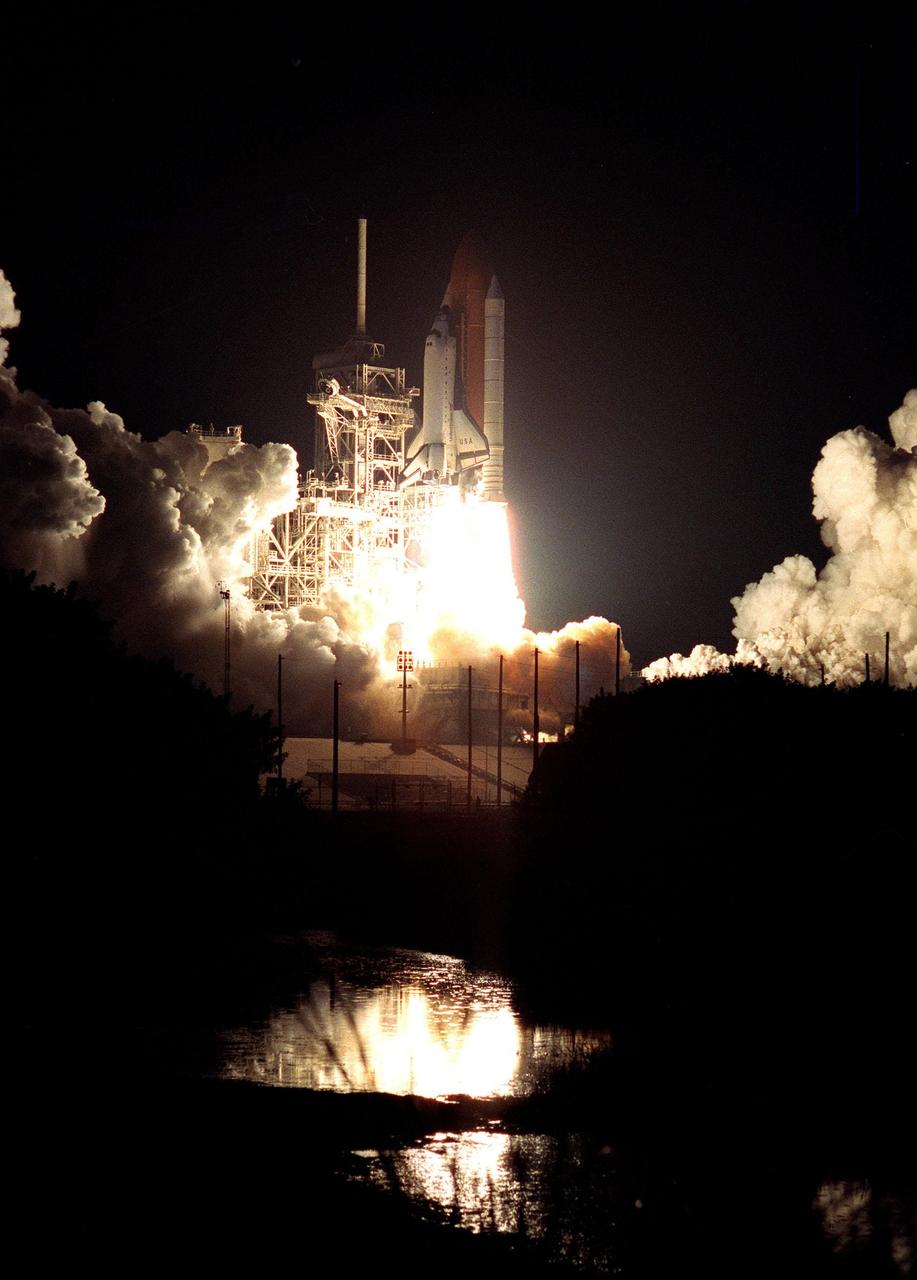
KENNEDY SPACE CENTER, FLA. -- Space Shuttle Columbia changes night into day as it roars into the sky after a successful liftoff from launch Pad 39-B on mission STS-93. Liftoff occurred at 12:31 a.m. EDT. STS-93 is a five-day mission primarily to release the Chandra X-ray Observatory, which will allow scientists from around the world to study some of the most distant, powerful and dynamic objects in the universe. The crew numbers five: Commander Eileen M. Collins, Pilot Jeffrey S. Ashby, and Mission Specialists Steven A. Hawley (Ph.D.), Catherine G. Coleman (Ph.D.) and Michel Tognini of France, with the Centre National d'Etudes Spatiales (CNES). Collins is the first woman to serve as commander of a Shuttle mission. The target landing date is July 27, 1999, at 11:20 p.m. EDT
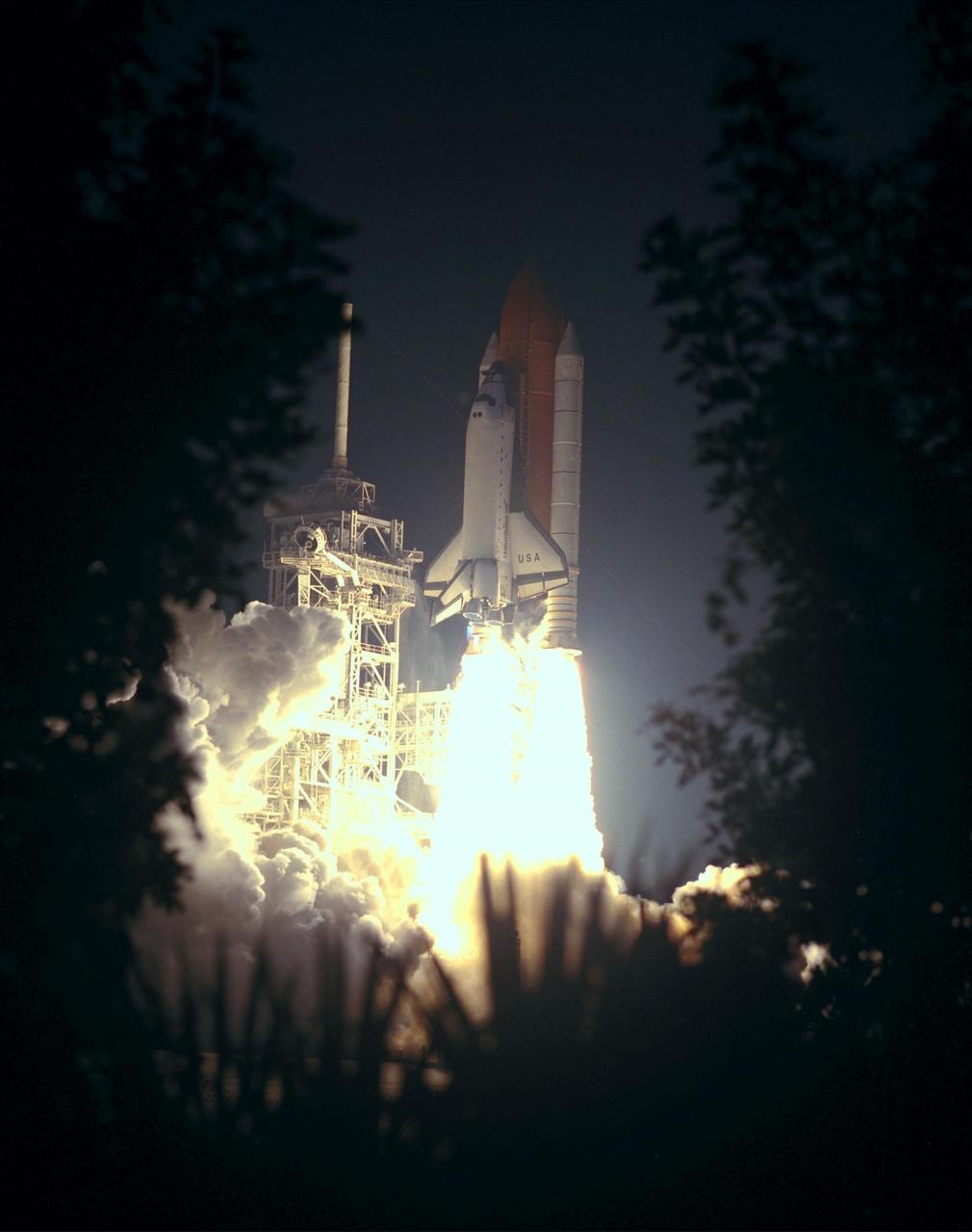
KENNEDY SPACE CENTER, FLA. -- Shrubbery and palmettos frame the fiery launch of Space Shuttle Columbia at 12:31 a.m. EDT. STS-93 is a five-day mission primarily to release the Chandra X-ray Observatory, which will allow scientists from around the world to study some of the most distant, powerful and dynamic objects in the universe. The crew numbers five: Commander Eileen M. Collins, Pilot Jeffrey S. Ashby, and Mission Specialists Steven A. Hawley (Ph.D.), Catherine G. Coleman (Ph.D.) and Michel Tognini of France, with the Centre National d'Etudes Spatiales (CNES). Collins is the first woman to serve as commander of a Shuttle mission. The target landing date is July 27, 1999, at 11:20 p.m. EDT
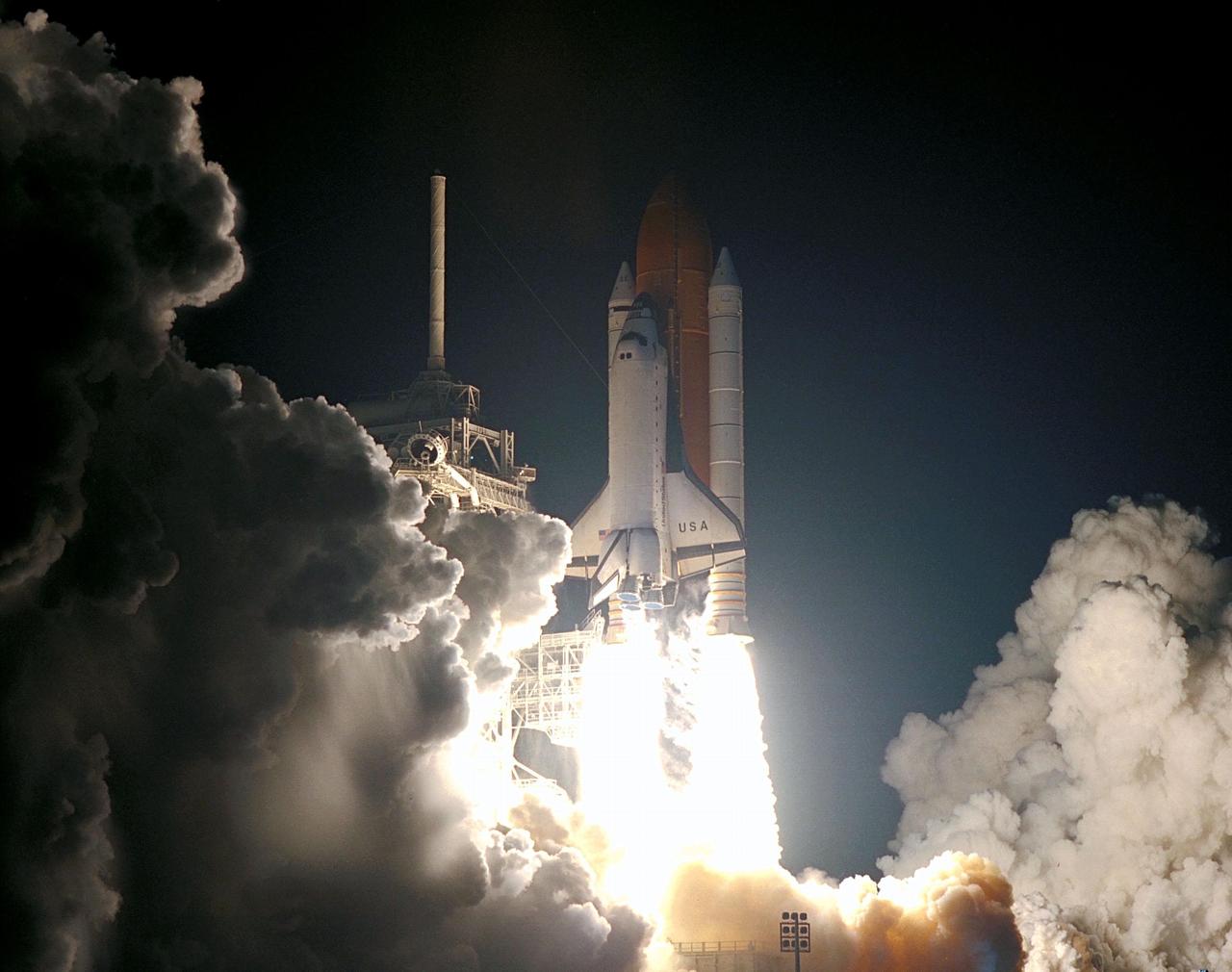
KENNEDY SPACE CENTER, FLA. -- The fiery launch of Space Shuttle Columbia lights up the night sky as it lifts off from Launch Pad 39-B on mission STS-93. Liftoff occurred at 12:31 a.m. EDT. STS-93 is a five-day mission primarily to release the Chandra X-ray Observatory, which will allow scientists from around the world to study some of the most distant, powerful and dynamic objects in the universe. The crew numbers five: Commander Eileen M. Collins, Pilot Jeffrey S. Ashby, and Mission Specialists Steven A. Hawley (Ph.D.), Catherine G. Coleman (Ph.D.) and Michel Tognini of France, with the Centre National d'Etudes Spatiales (CNES). Collins is the first woman to serve as commander of a Shuttle mission. The target landing date is July 27, 1999, at 11:20 p.m. EDT
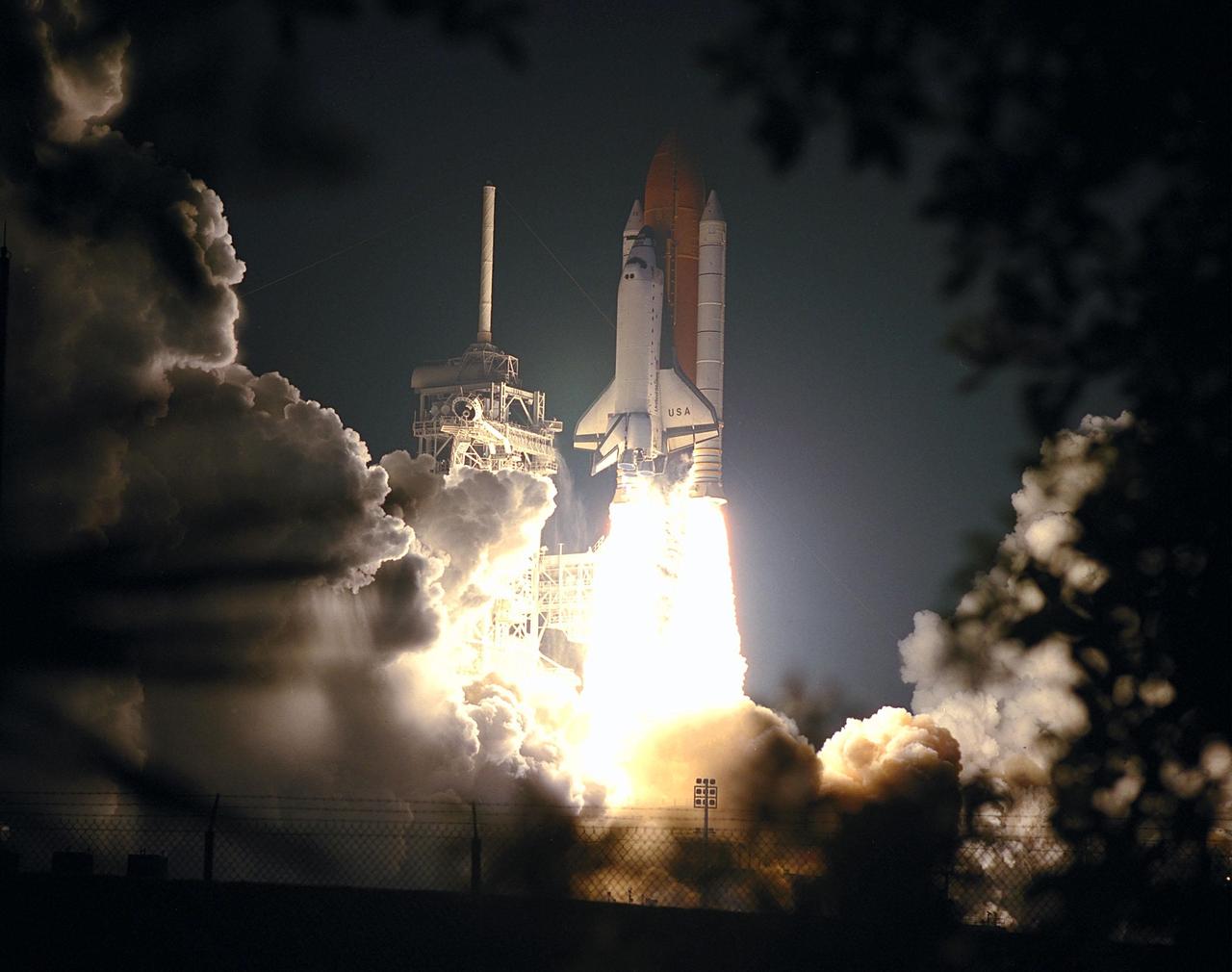
KENNEDY SPACE CENTER, FLA. -- The fiery launch of Space Shuttle Columbia lights up the night sky on its successful liftoff from Launch Pad 39-B on mission STS-93. Liftoff occurred at 12:31 a.m. EDT. STS-93 is a five-day mission primarily to release the Chandra X-ray Observatory, which will allow scientists from around the world to study some of the most distant, powerful and dynamic objects in the universe. The crew numbers five: Commander Eileen M. Collins, Pilot Jeffrey S. Ashby, and Mission Specialists Steven A. Hawley (Ph.D.), Catherine G. Coleman (Ph.D.) and Michel Tognini of France, with the Centre National d'Etudes Spatiales (CNES). Collins is the first woman to serve as commander of a Shuttle mission. The target landing date is July 27, 1999, at 11:20 p.m. EDT
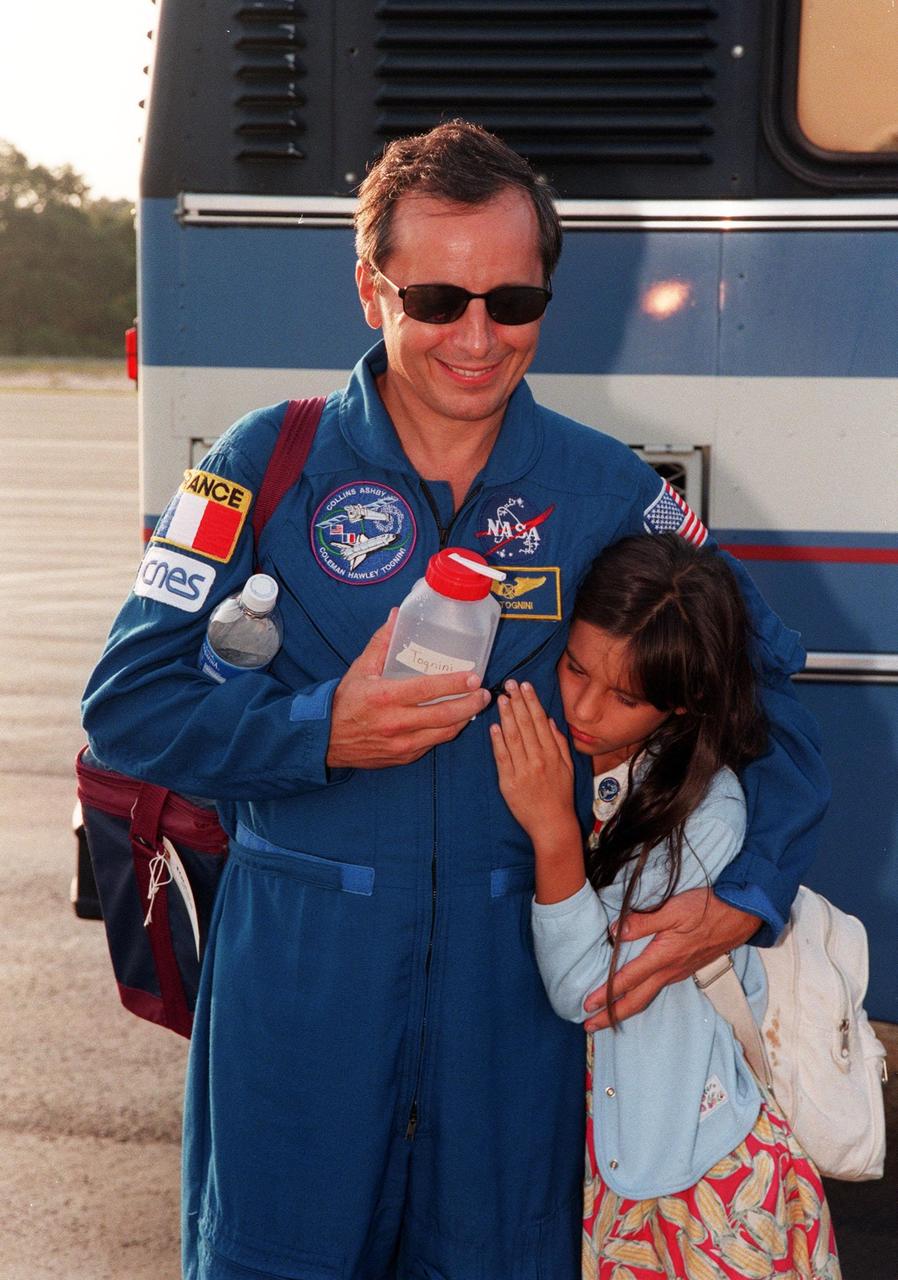
At the Skid Strip at the Cape Canaveral Air Station, Mission Specialist Michel Tognini of France, representing the Centre National d'Etudes Spatiales (CNES), and his daughter Tatinana prepare to board an aircraft for their return flight to Houston following the completion of the STS-93 Space Shuttle mission. Landing occurred on runway 33 at KSC's Shuttle Landing Facility on July 27 with main gear touchdown at 11:20:35 p.m. EDT. The mission's primary objective was to deploy the Chandra X-ray Observatory, which will allow scientists from around the world to study some of the most distant, powerful and dynamic objects in the universe. This was the 95th flight in the Space Shuttle program and the 26th for Columbia. The landing was the 19th consecutive Shuttle landing in Florida and the 12th night landing in Shuttle program history. On this mission, Eileen Collins became the first woman to serve as a Shuttle commander
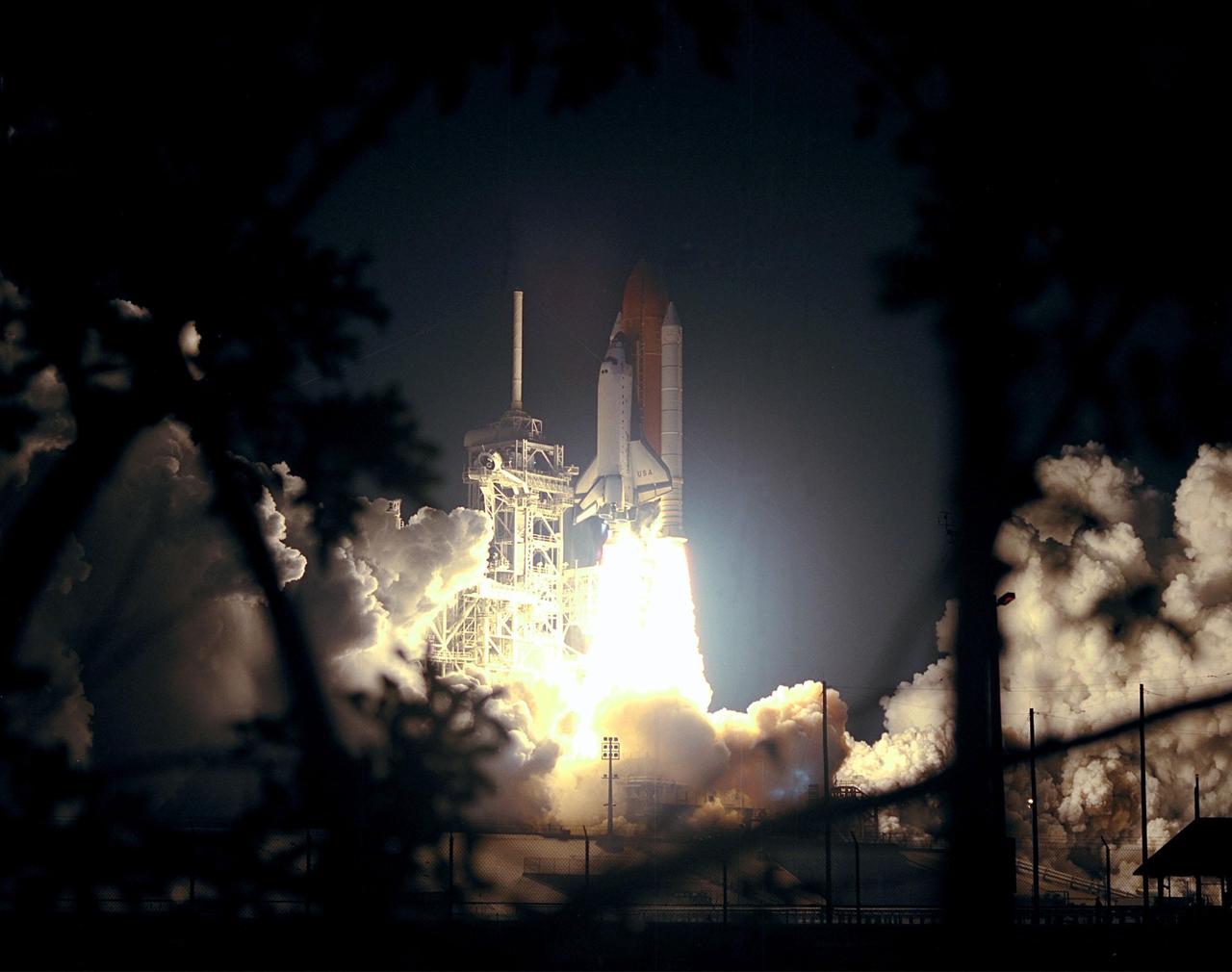
KENNEDY SPACE CENTER, FLA. -- The fiery launch of Space Shuttle Columbia casts ghost-like shadows on the clouds of smoke and steam surrounding it. Liftoff occurred at 12:31 a.m. EDT. STS-93 is a five-day mission primarily to release the Chandra X-ray Observatory, which will allow scientists from around the world to study some of the most distant, powerful and dynamic objects in the universe. The crew numbers five: Commander Eileen M. Collins, Pilot Jeffrey S. Ashby, and Mission Specialists Steven A. Hawley (Ph.D.), Catherine G. Coleman (Ph.D.) and Michel Tognini of France, with the Centre National d'Etudes Spatiales (CNES). Collins is the first woman to serve as commander of a Shuttle mission. The target landing date is July 27, 1999, at 11:20 p.m. EDT
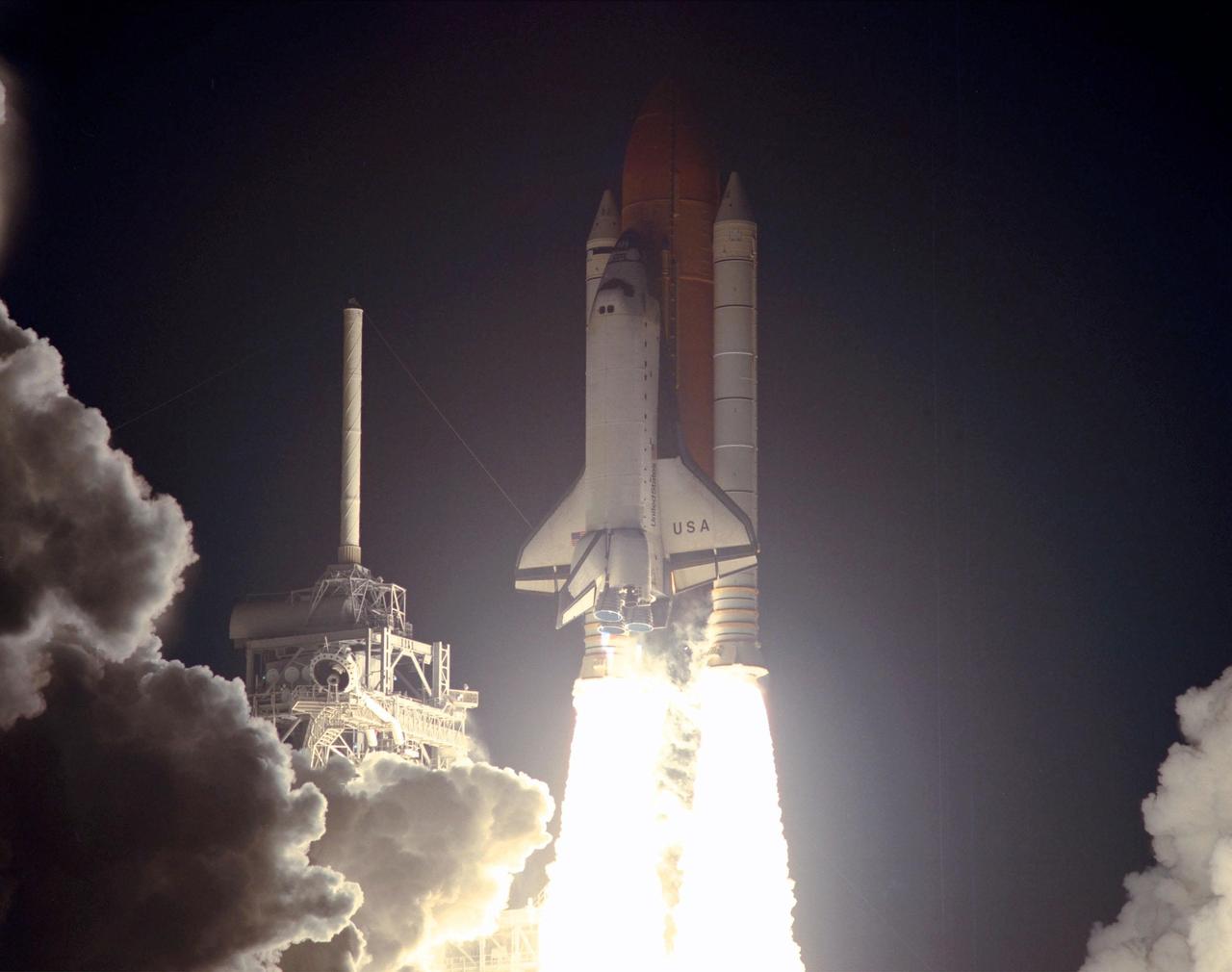
KENNEDY SPACE CENTER, FLA. -- Space Shuttle Columbia changes night into day as it roars into the sky after a successful liftoff from launch Pad 39-B on mission STS-93. Liftoff occurred at 12:31 a.m. EDT. STS-93 is a five-day mission primarily to release the Chandra X-ray Observatory, which will allow scientists from around the world to study some of the most distant, powerful and dynamic objects in the universe. The crew numbers five: Commander Eileen M. Collins, Pilot Jeffrey S. Ashby, and Mission Specialists Steven A. Hawley (Ph.D.), Catherine G. Coleman (Ph.D.) and Michel Tognini of France, with the Centre National d'Etudes Spatiales (CNES). Collins is the first woman to serve as commander of a Shuttle mission. The target landing date is July 27, 1999, at 11:20 p.m. EDT
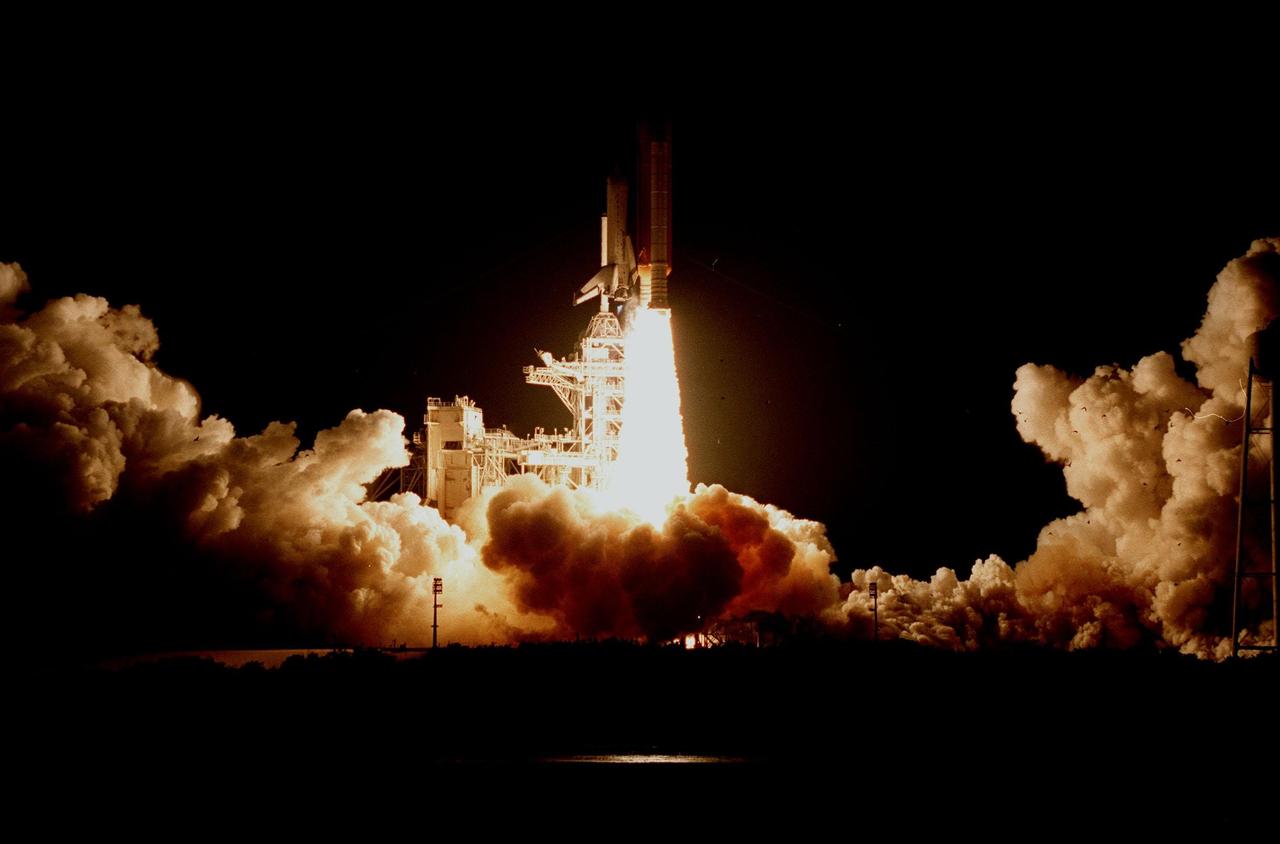
KENNEDY SPACE CENTER, FLA. -- The fiery launch of Space Shuttle Columbia lights up the night sky on its successful liftoff from Launch Pad 39-B on mission STS-93. Liftoff occurred at 12:31 a.m. EDT. STS-93 is a five-day mission primarily to release the Chandra X-ray Observatory, which will allow scientists from around the world to study some of the most distant, powerful and dynamic objects in the universe. The crew numbers five: Commander Eileen M. Collins, Pilot Jeffrey S. Ashby, and Mission Specialists Steven A. Hawley (Ph.D.), Catherine G. Coleman (Ph.D.) and Michel Tognini of France, with the Centre National d'Etudes Spatiales (CNES). Collins is the first woman to serve as commander of a Shuttle mission. The target landing date is July 27, 1999, at 11:20 p.m. EDT
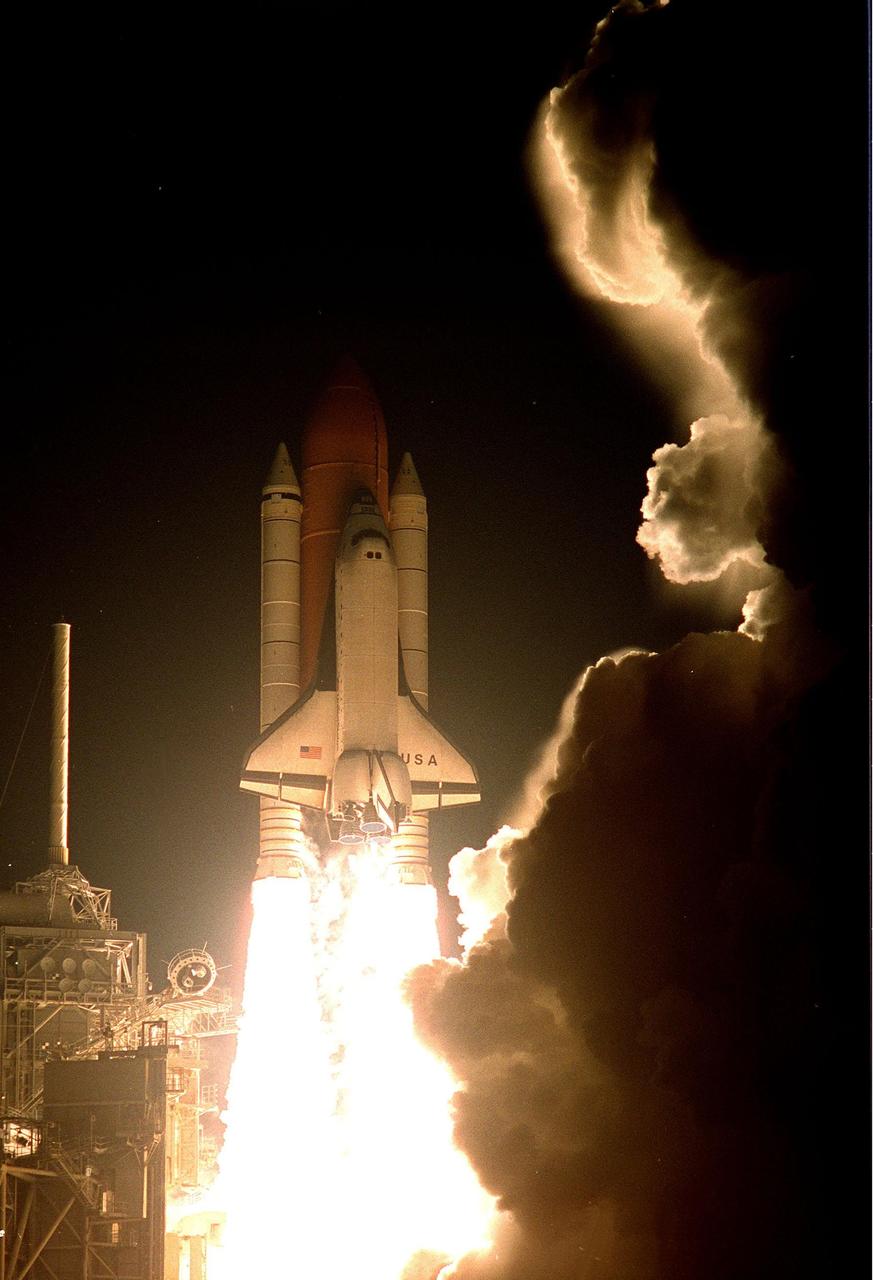
KENNEDY SPACE CENTER, FLA. -- Clouds of smoke and steam spiral away from Space Shuttle Columbia as it shoots through the night sky on its successful liftoff from Launch Pad 39-B on mission STS-93. After two unsuccessful attempts on previous nights, liftoff occurred at 12:31 a.m. EDT. STS-93 is a five-day mission primarily to release the Chandra X-ray Observatory, which will allow scientists from around the world to study some of the most distant, powerful and dynamic objects in the universe. The crew numbers five: Commander Eileen M. Collins, Pilot Jeffrey S. Ashby, and Mission Specialists Steven A. Hawley (Ph.D.), Catherine G. Coleman (Ph.D.) and Michel Tognini of France, with the Centre National d'Etudes Spatiales (CNES). The target landing date is July 27, 1999, at 11:20 p.m. EDT
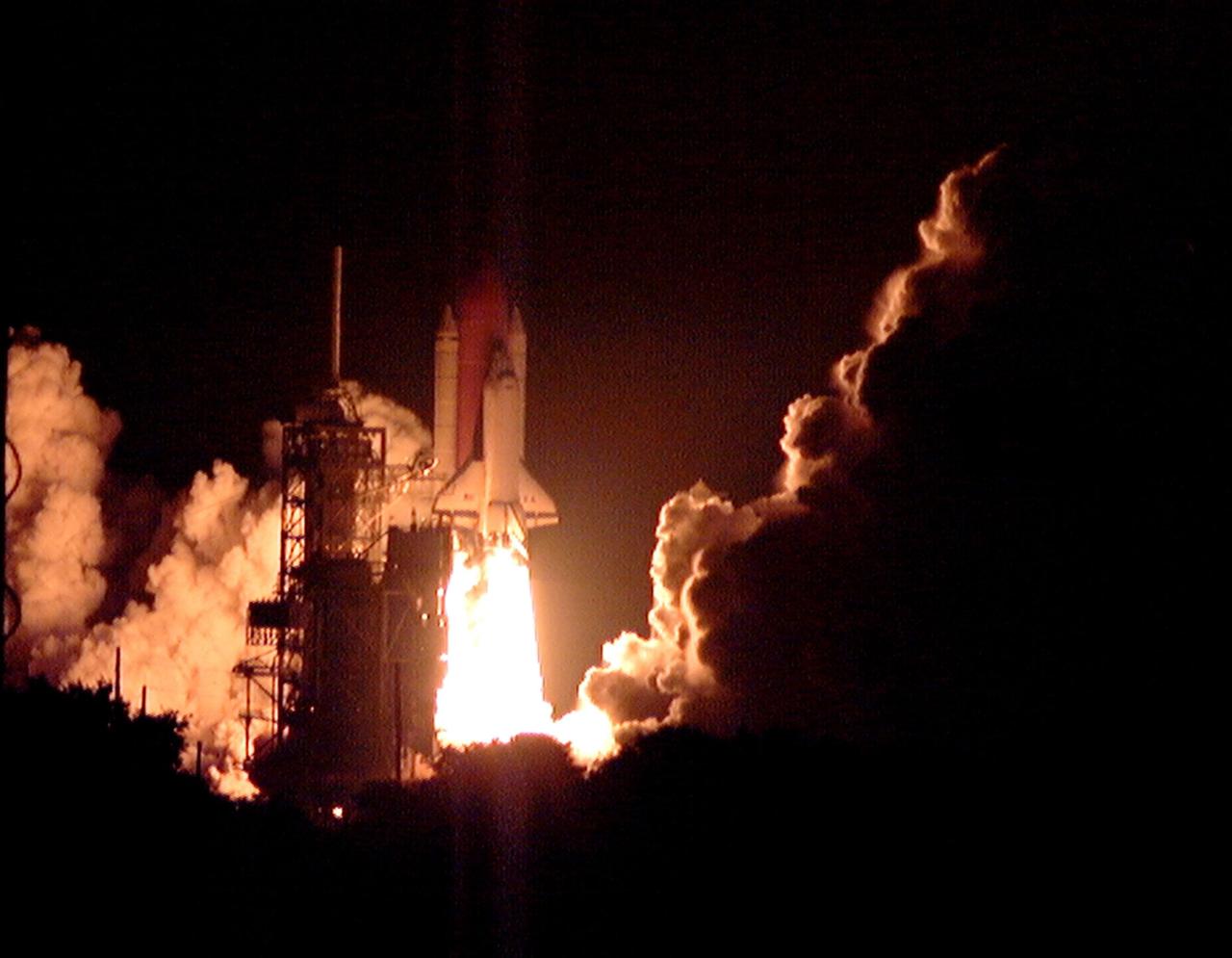
Space Shuttle Columbia gushes a stream of fire whose light fills the black sky on its successful liftoff from Launch Pad 39-B on mission STS-93. Liftoff occurred at 12:31 a.m. EDT. STS-93 is a five-day mission primarily to release the Chandra X-ray Observatory, which will allow scientists from around the world to study some of the most distant, powerful and dynamic objects in the universe. The crew numbers five: Commander Eileen M. Collins, Pilot Jeffrey S. Ashby, and Mission Specialists Stephen A. Hawley (Ph.D.), Catherine G. Coleman (Ph.D.) and Michel Tognini of France, with the Centre National d'Etudes Spatiales (CNES). Collins is the first woman to serve as commander of a Shuttle mission. The target landing date is July 27, 1999, at 11:20 p.m. EDT

For the third time, in the Operations and Checkout Building, STS-93 Commander Eileen M. Collins tries on her helmet with her launch and entry suit. After Space Shuttle Columbia's July 20 and 22 launch attempts were scrubbed, the launch was again rescheduled for Friday, July 23, at 12:24 a.m. EDT. STS-93 is a five-day mission primarily to release the Chandra X-ray Observatory, which will allow scientists from around the world to study some of the most distant, powerful and dynamic objects in the universe. The STS-93 crew numbers five: Commander Collins, Pilot Jeffrey S. Ashby, and Mission Specialists Steven A. Hawley (Ph.D.), Catherine G. Coleman (Ph.D.) and Michel Tognini of France, with the Centre National d'Etudes Spatiales (CNES). Collins is the first woman to serve as commander of a shuttle mission
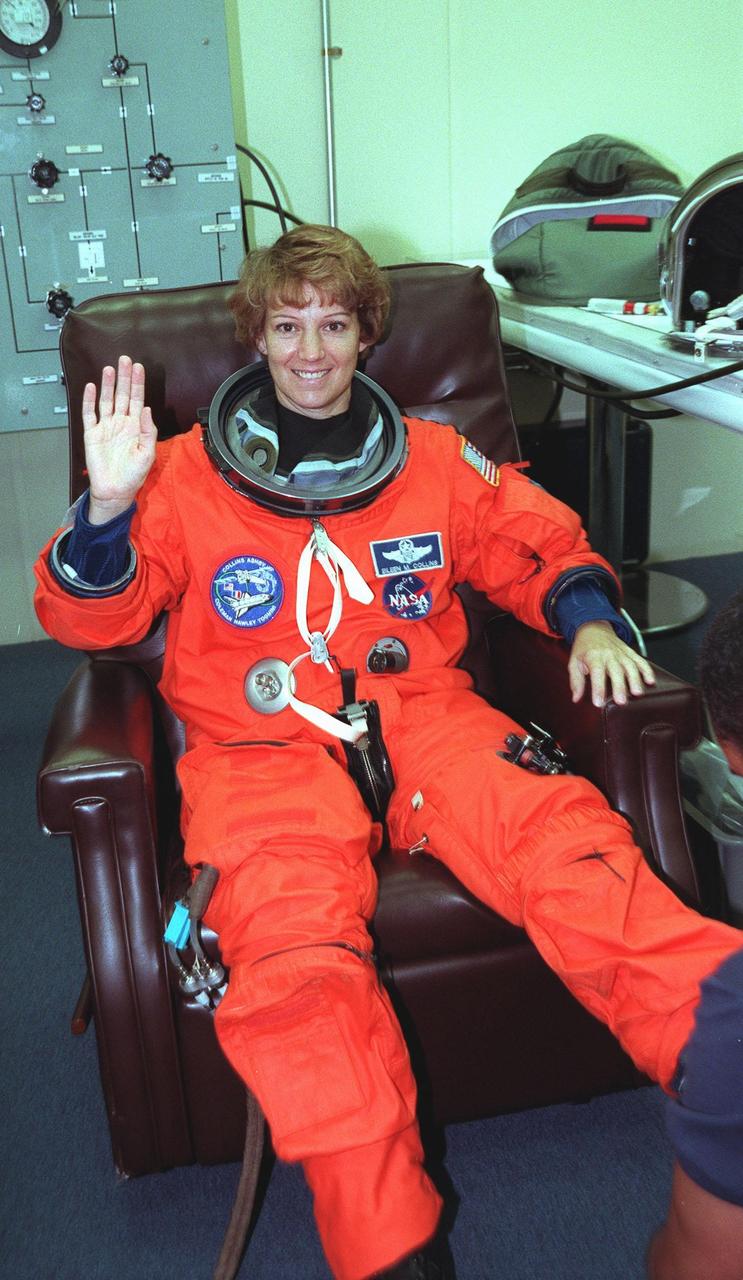
During the third launch preparations in the Operations and Checkout Building, STS-93 Commander Eileen M. Collins waves while having her launch and entry suit checked. After Space Shuttle Columbia's July 20 and 22 launch attempts were scrubbed, the launch was again rescheduled for Friday, July 23, at 12:24 a.m. EDT. STS-93 is a five-day mission primarily to release the Chandra X-ray Observatory, which will allow scientists from around the world to study some of the most distant, powerful and dynamic objects in the universe. The STS-93 crew numbers five: Commander Collins, Pilot Jeffrey S. Ashby, and Mission Specialists Steven A. Hawley (Ph.D.), Catherine G. Coleman (Ph.D.) and Michel Tognini of France, with the Centre National d'Etudes Spatiales (CNES). Collins is the first woman to serve as commander of a shuttle mission
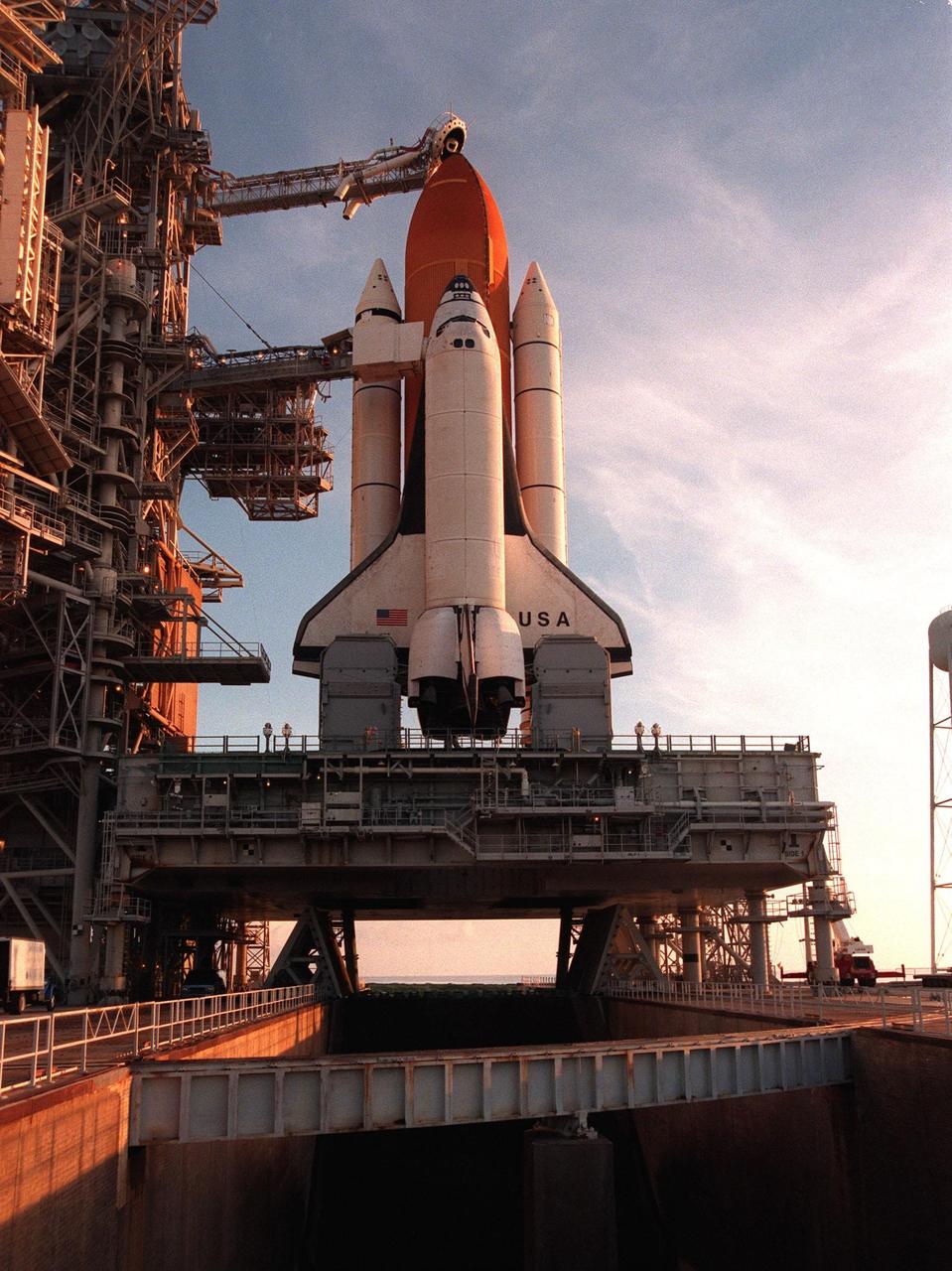
Space Shuttle Columbia, sitting on its mobile launcher platform, is framed against the early morning sky after the rollback of the Rotating Service Structure on Launch Pad 39-B. Columbia waits for the launch of mission STS-93 July 20 at 12:36 a.m. EDT. The primary payload of STS-93 is the Chandra X-ray Observatory, which will allow scientists from around the world to study some of the most distant, powerful and dynamic objects in the universe. The new telescope is 20 to 50 times more sensitive than any previous X-ray telescope and is expected unlock the secrets of supernovae, quasars and black holes. The STS-93 crew numbers five: Commander Eileen M. Collins, Pilot Jeffrey S. Ashby, and Mission Specialists Steven A. Hawley (Ph.D.), Catherine G. Coleman (Ph.D.) and Michel Tognini of France, with the Centre National d'Etudes Spatiales (CNES). Collins is the first woman to serve as commander of a shuttle mission
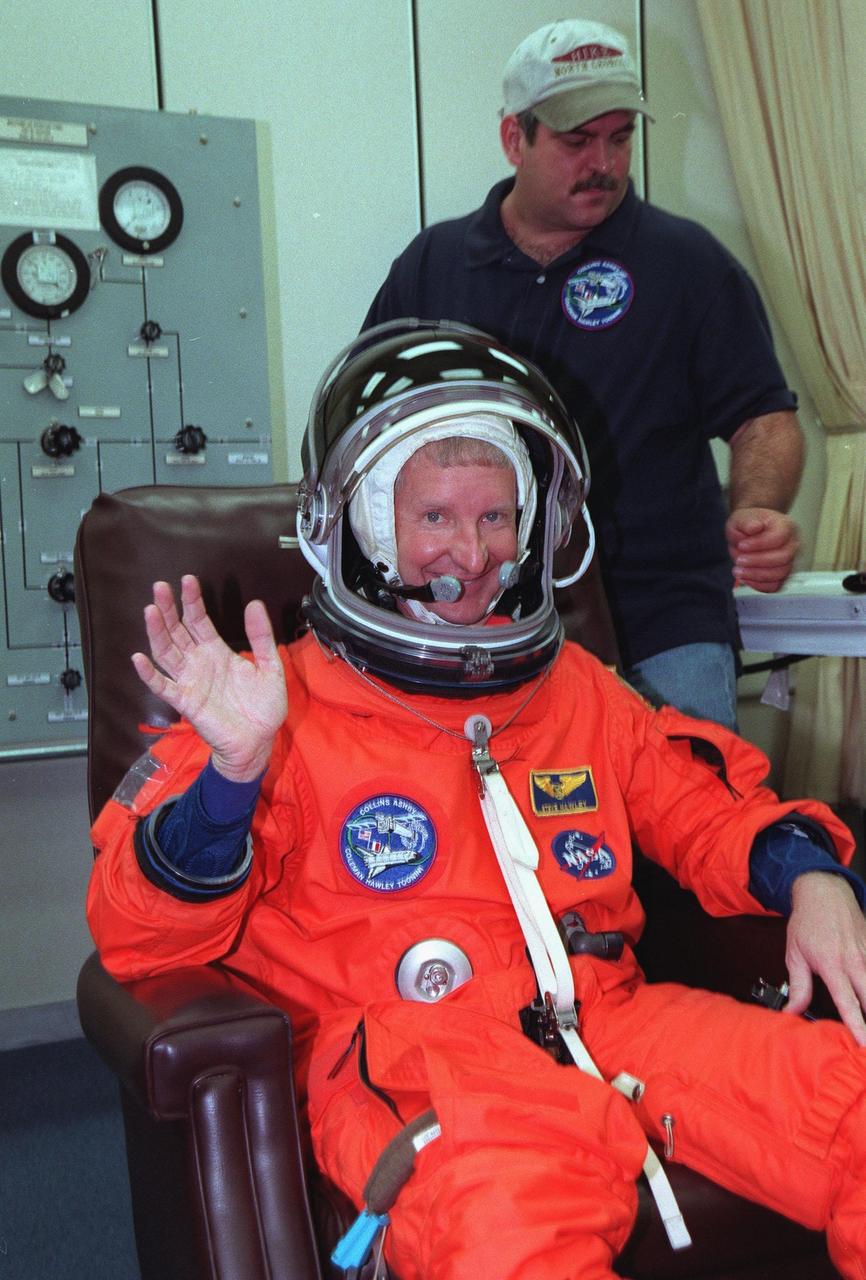
For the third time, during final launch preparations in the Operations and Checkout Building, STS-93 Mission Specialist Steven A. Hawley (Ph.D.) waves after donning his launch and entry suit. After Space Shuttle Columbia's July 20 and 22 launch attempts were scrubbed, the launch was again rescheduled for Friday, July 23, at 12:24 a.m. EDT. STS-93 is a five-day mission primarily to release the Chandra X-ray Observatory, which will allow scientists from around the world to study some of the most distant, powerful and dynamic objects in the universe. The STS-93 crew numbers five: Commander Eileen M. Collins, Pilot Jeffrey S. Ashby, and Mission Specialists Hawley, Catherine G. Coleman (Ph.D.) and Michel Tognini of France, with the Centre National d'Etudes Spatiales (CNES). Collins is the first woman to serve as commander of a shuttle mission
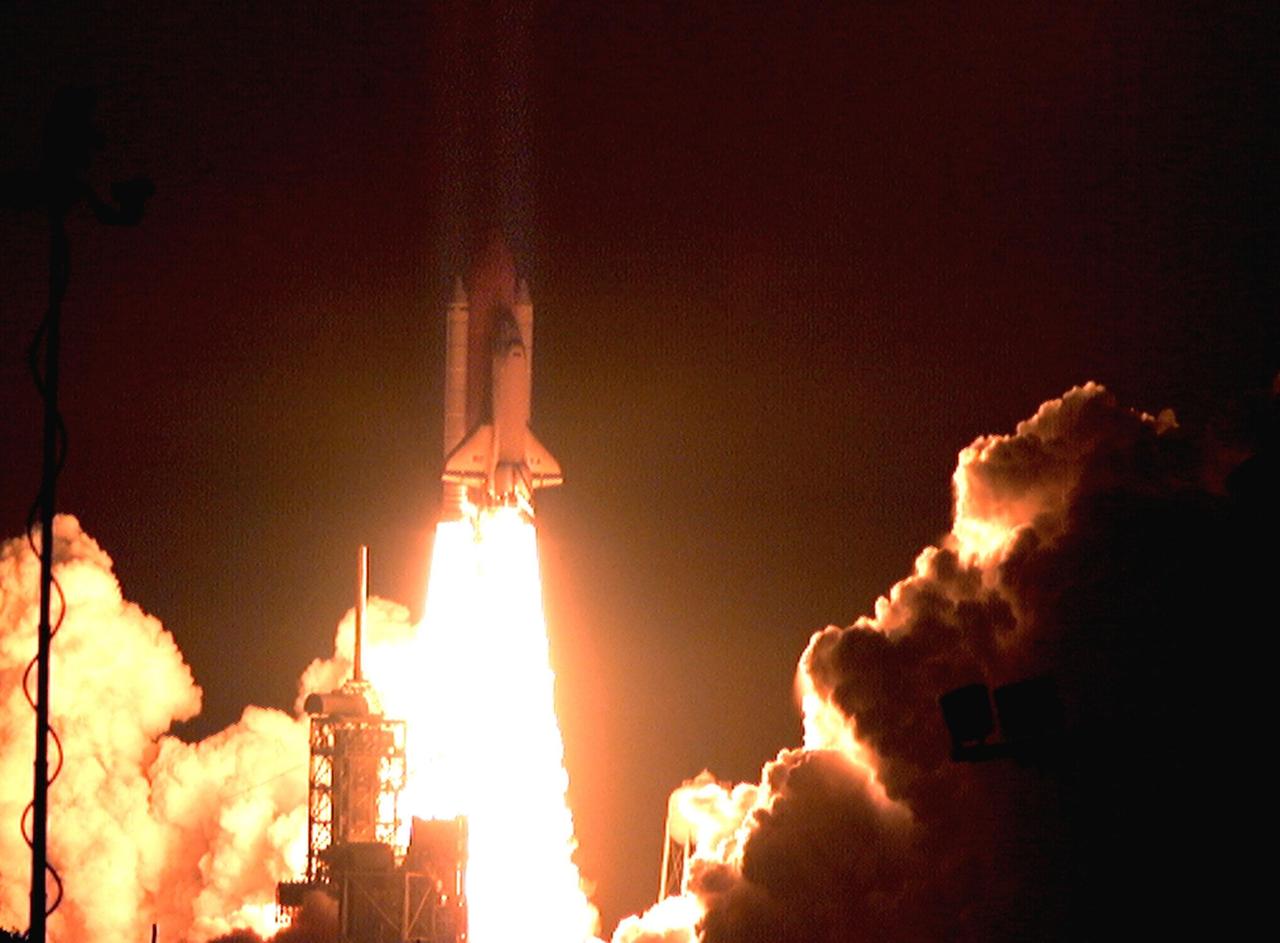
With a stream of fire chasing it, Space Shuttle Columbia shoots through the night sky on its successful liftoff from Launch Pad 39-B on mission STS-93. Liftoff occurred at 12:31 a.m. EDT. STS-93 is a five-day mission primarily to release the Chandra X-ray Observatory, which will allow scientists from around the world to study some of the most distant, powerful and dynamic objects in the universe. The crew numbers five: Commander Eileen M. Collins, Pilot Jeffrey S. Ashby, and Mission Specialists Stephen A. Hawley (Ph.D.), Catherine G. Coleman (Ph.D.) and Michel Tognini of France, with the Centre National d'Etudes Spatiales (CNES). Collins is the first woman to serve as commander of a Shuttle mission. The target landing date is July 27, 1999, at 11:20 p.m. EDT
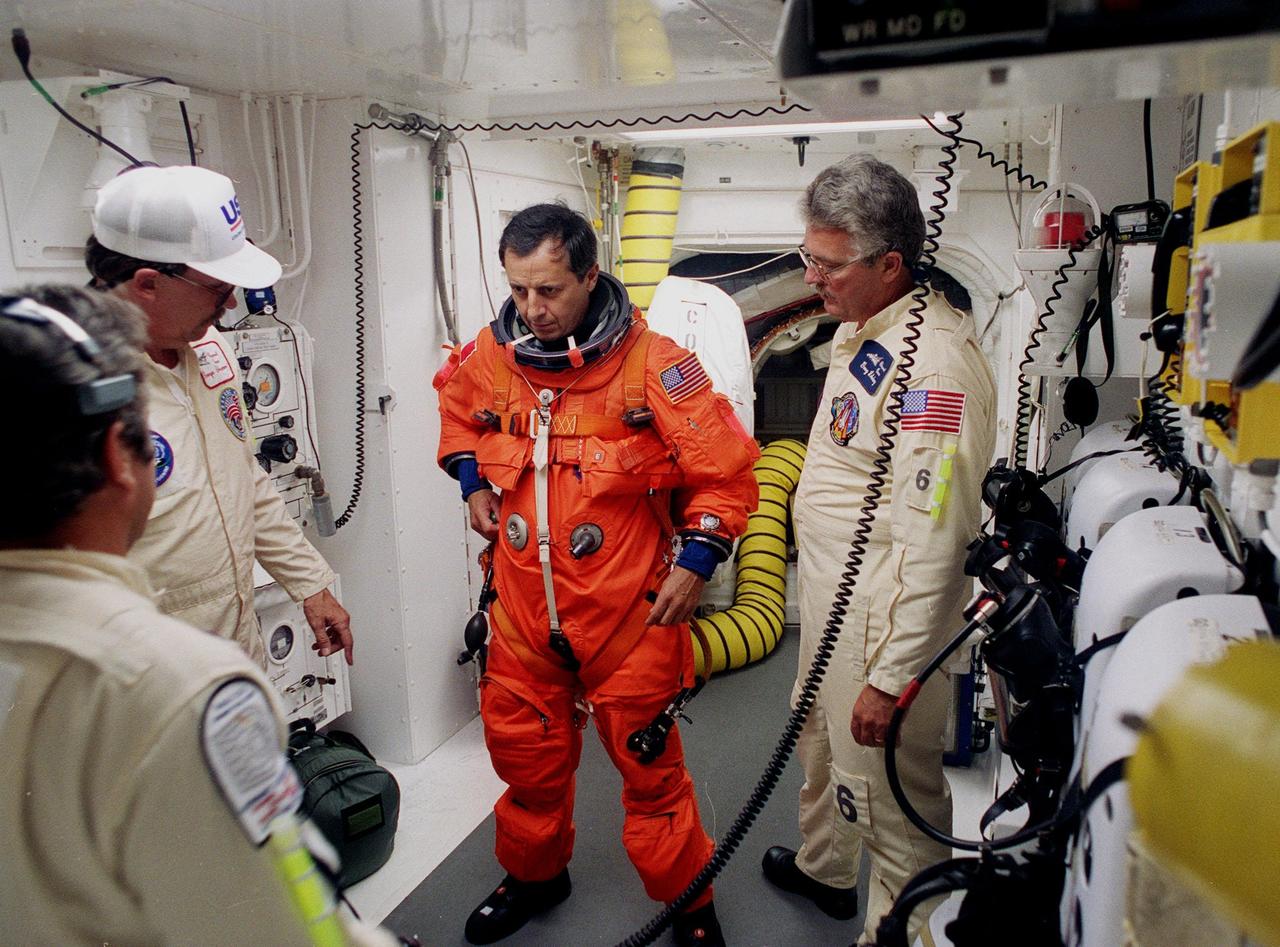
STS-93 Mission Specialist Michel Tognini of France is checked out by white room closeout crew members before entering the orbiter Columbia. Tognini is with the Centre National d'Etudes Spatiales (CNES). The white room is an environmental chamber at the end of the orbiter access arm that provides entry to the orbiter crew compartment. STS-93 is a five-day mission primarily to release the Chandra X-ray Observatory, which will allow scientists from around the world to study some of the most distant, powerful and dynamic objects in the universe. After Space Shuttle Columbia's July 20 and 22 launch attempts were scrubbed, the launch was again rescheduled for Friday, July 23, at 12:24 a.m. EDT. The target landing date is July 27 at 11:20 p.m. EDT
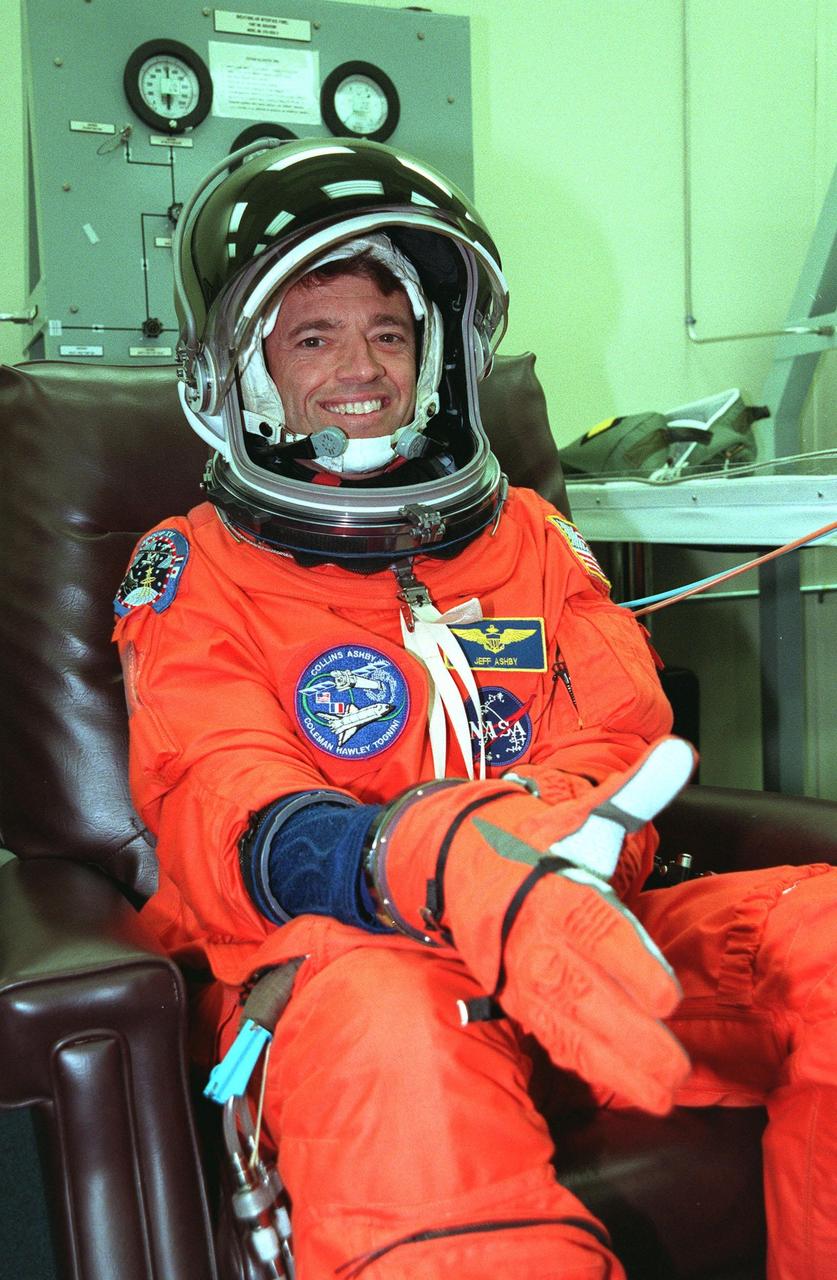
In the Operations and Checkout Building during final launch preparations for the third time, STS-93 Pilot Jeffrey S. Ashby pulls on his glove, part of his launch and entry suit. After Space Shuttle Columbia's July 20 and 22 launch attempts were scrubbed, the launch was again rescheduled for Friday, July 23, at 12:24 a.m. EDT. STS-93 is a five-day mission primarily to release the Chandra X-ray Observatory, which will allow scientists from around the world to study some of the most distant, powerful and dynamic objects in the universe. The STS-93 crew numbers five: Commander Eileen Collins, Ashby, and Mission Specialists Steven A. Hawley (Ph.D.), Catherine G. Coleman (Ph.D.) and Michel Tognini of France, with the Centre National d'Etudes Spatiales (CNES). Collins is the first woman to serve as commander of a shuttle mission
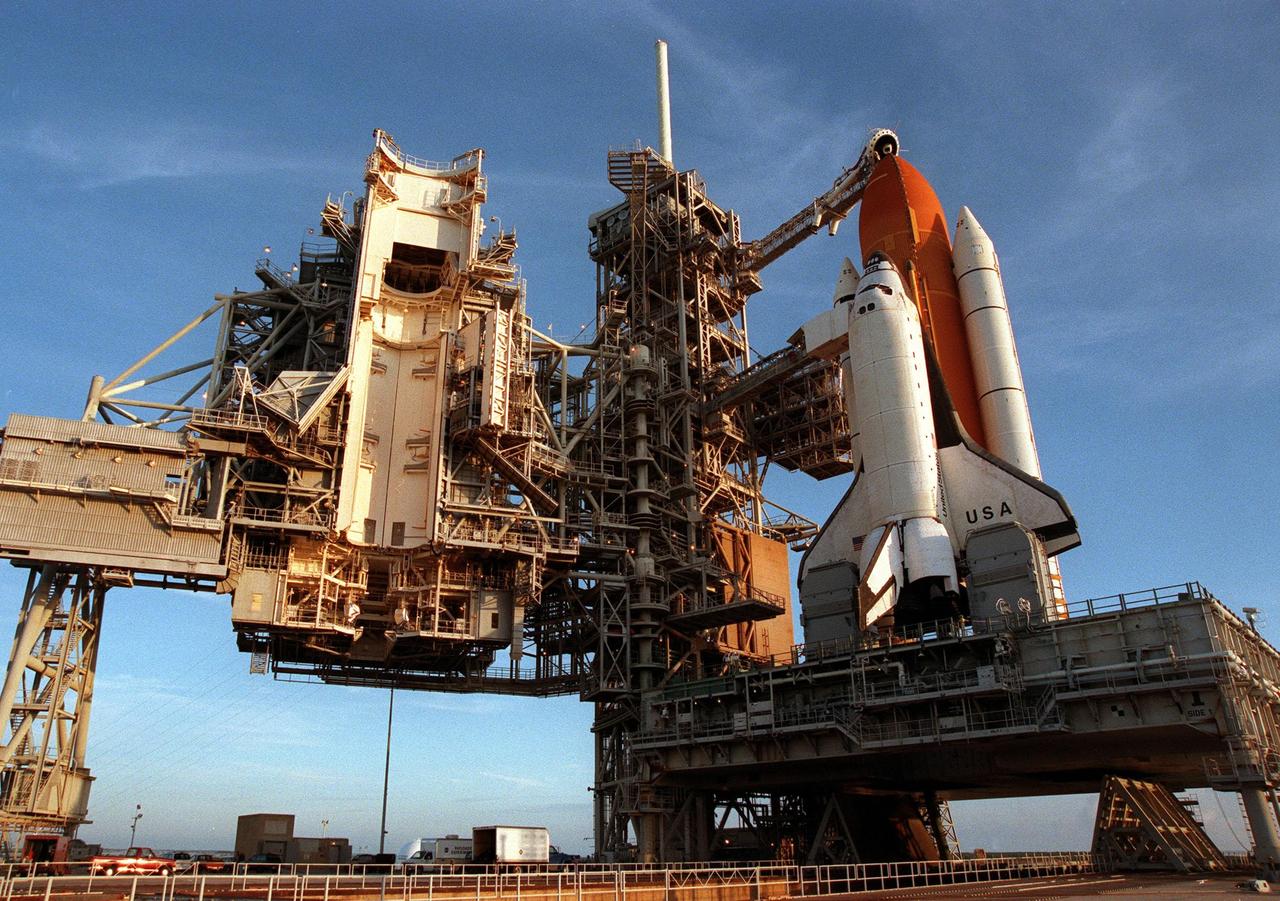
The rollback of the Rotating Service Structure on launch Pad 39-B reveals Space Shuttle Columbia on its mobile launcher platform, waiting for the launch of mission STS-93 on July 20 at 12:36 a.m. EDT. The primary payload of STS-93 is the Chandra X-ray Observatory, which will allow scientists from around the world to study some of the most distant, powerful and dynamic objects in the universe. The new telescope is 20 to 50 times more sensitive than any previous X-ray telescope and is expected unlock the secrets of supernovae, quasars and black holes. The STS-93 crew numbers five: Commander Eileen M. Collins, Pilot Jeffrey S. Ashby, and Mission Specialists Steven A. Hawley (Ph.D.), Catherine G. Coleman (Ph.D.) and Michel Tognini of France, with the Centre National d'Etudes Spatiales (CNES). Collins is the first woman to serve as commander of a shuttle mission
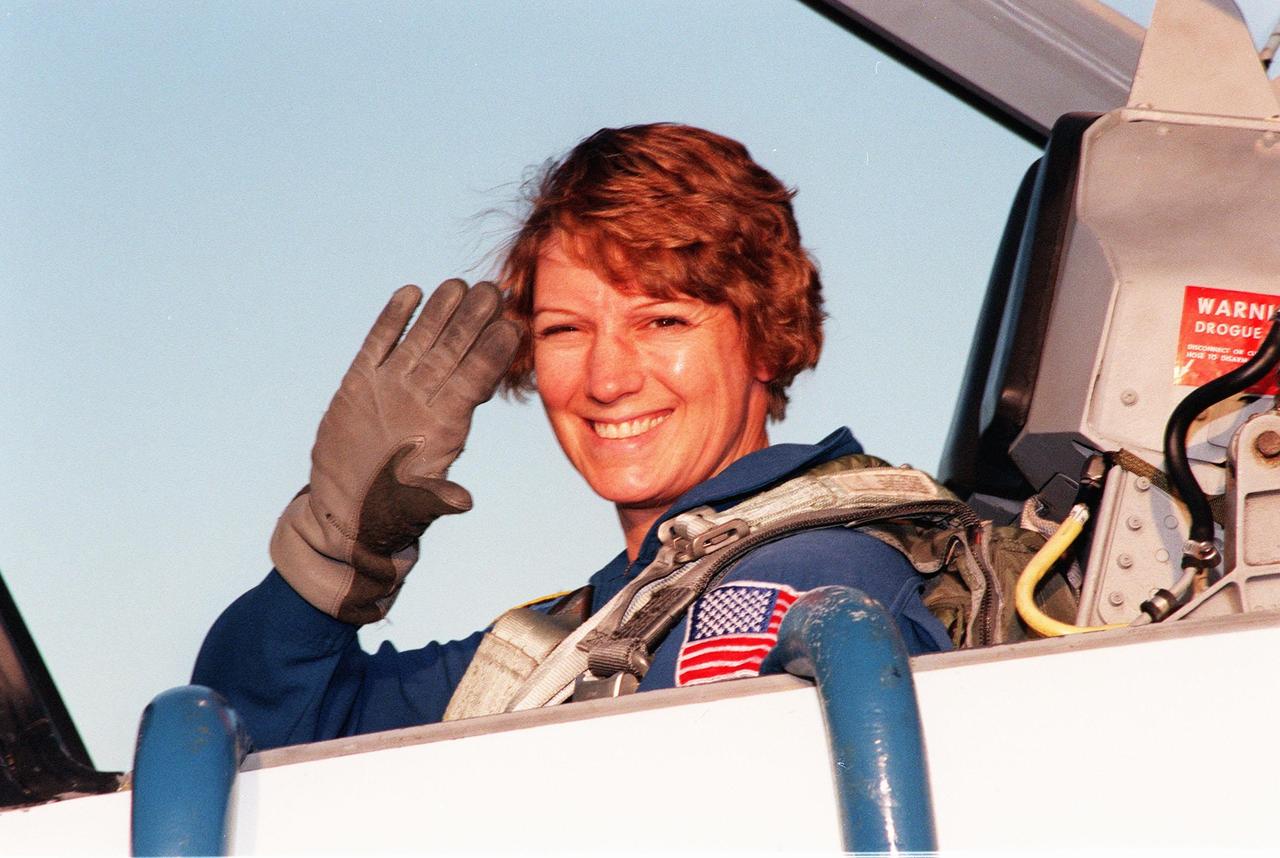
STS-93 Commander Eileen Collins waves to spectators after landing at Kennedy Space Center's Shuttle Landing Facility (SLF) aboard a T-38 jet aircraft. She and other crew members Pilot Jeffrey S. Ashby and Mission Specialists Steven A. Hawley (Ph.D.), Catherine G. "Cady" Coleman (Ph.D.) and Michel Tognini of France, with the Centre National d'Etudes Spatiales (CNES), are arriving for pre-launch activities. Collins is the first woman to serve as mission commander. This is her third Shuttle flight. The primary mission of STS-93 is the release of the Chandra X-ray Observatory, which will allow scientists from around the world to study some of the most distant, powerful and dynamic objects in the universe. The new telescope is 20 to 50 times more sensitive than any previous X-ray telescope and is expected to unlock the secrets of supernovae, quasars and black holes
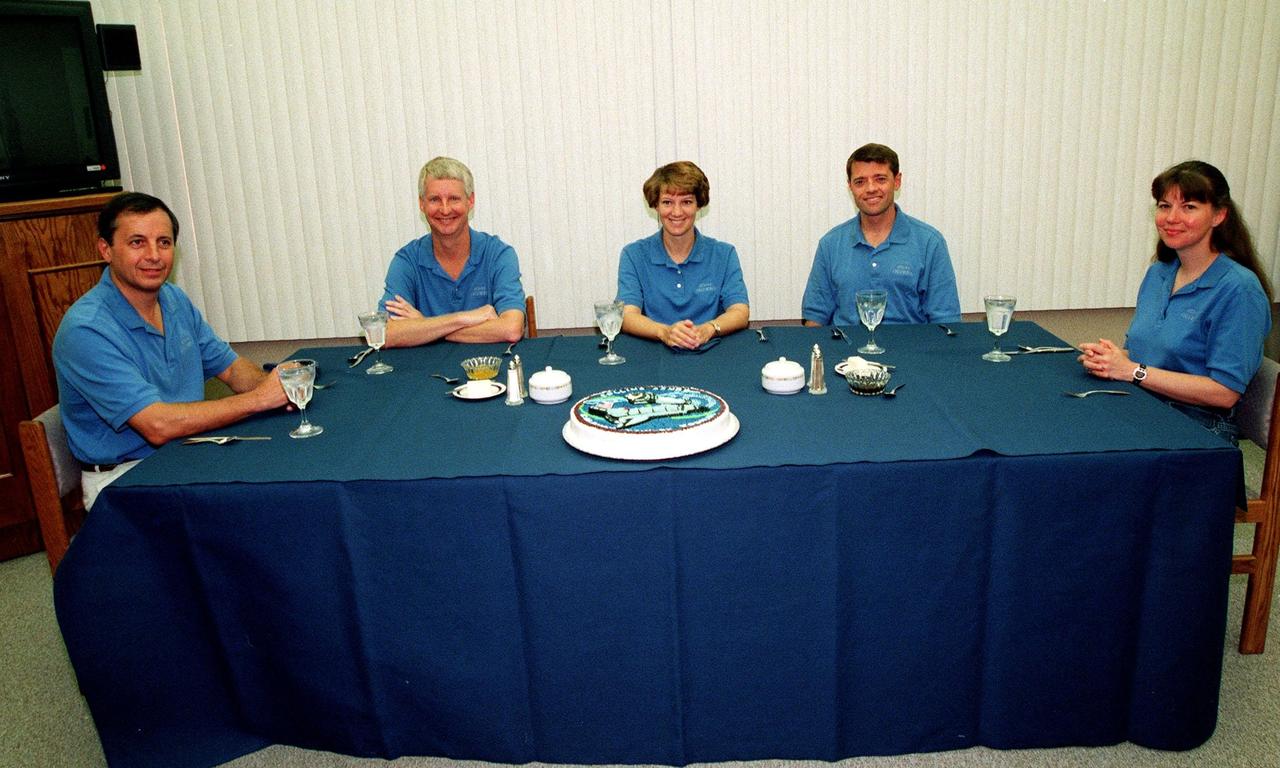
The STS-93 crew gathers for breakfast in the Operations and Checkout Building before suiting up for launch. Space Shuttle Columbia is due to launch Tuesday, July 20, at 12:36 a.m. EDT. Seated from left are Mission Specialists Michel Tognini, of France, who represents the Centre National d'Etudes Spatiales (CNES), and Steven A. Hawley (Ph.D.), Commander Eileen M. Collins, Pilot Jeffrey S. Ashby, and Mission Specialist Catherine G. Coleman (Ph.D.). STS-93 is a five-day mission primarily to release the Chandra X-ray Observatory, which will allow scientists from around the world to study some of the most distant, powerful and dynamic objects in the universe. The new telescope is 20 to 50 times more sensitive than any previous X-ray telescope and is expected unlock the secrets of supernovae, quasars and black holes. Collins is the first woman to serve as commander of a Shuttle mission
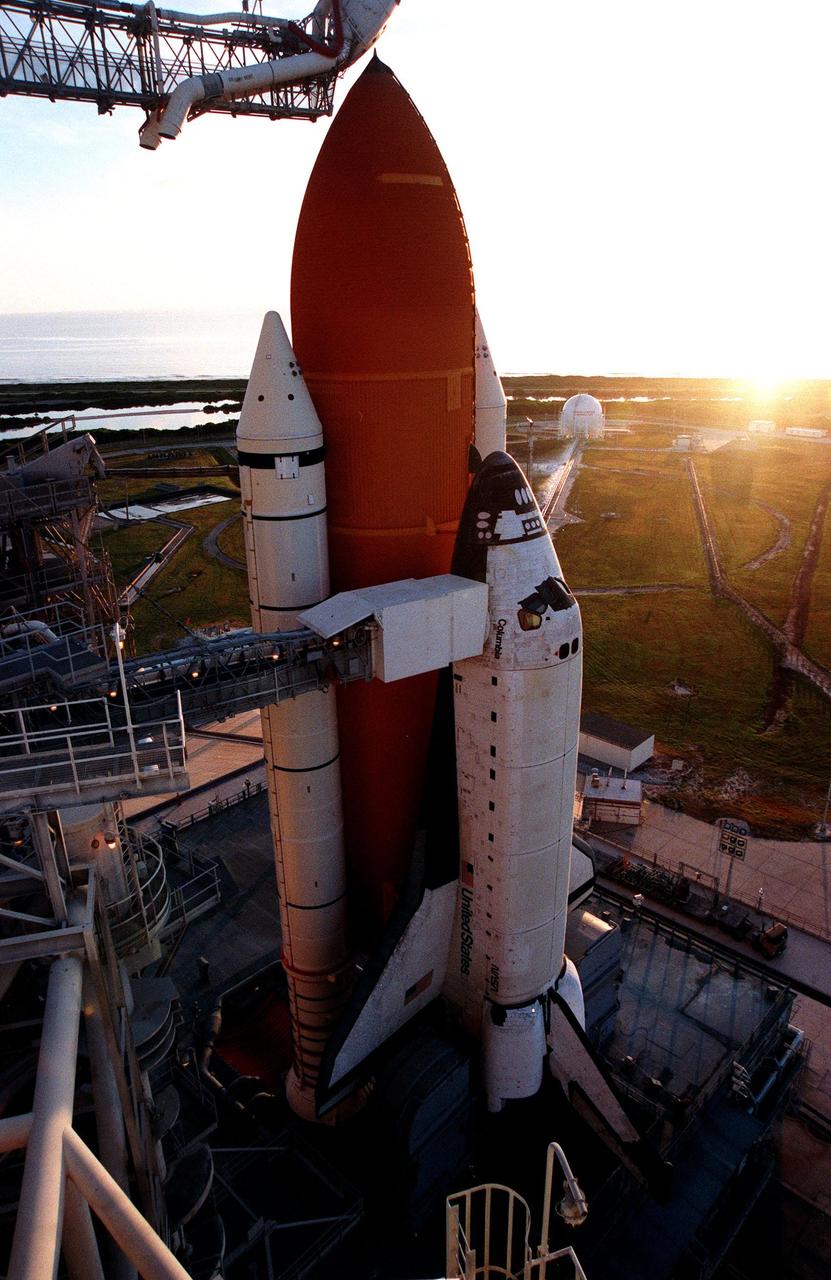
Space Shuttle Columbia catches the rising sun after the rollback of the Rotating Service Structure on Launch Pad 39-B. Columbia waits for the launch of mission STS-93 July 20 at 12:36 a.m. EDT. The primary payload of STS-93 is the Chandra X-ray Observatory, which will allow scientists from around the world to study some of the most distant, powerful and dynamic objects in the universe. The new telescope is 20 to 50 times more sensitive than any previous X-ray telescope and is expected unlock the secrets of supernovae, quasars and black holes. The STS-93 crew numbers five: Commander Eileen M. Collins, Pilot Jeffrey S. Ashby, and Mission Specialists Steven A. Hawley (Ph.D.), Catherine G. Coleman (Ph.D.) and Michel Tognini of France, with the Centre National d'Etudes Spatiales (CNES). Collins is the first woman to serve as commander of a shuttle mission
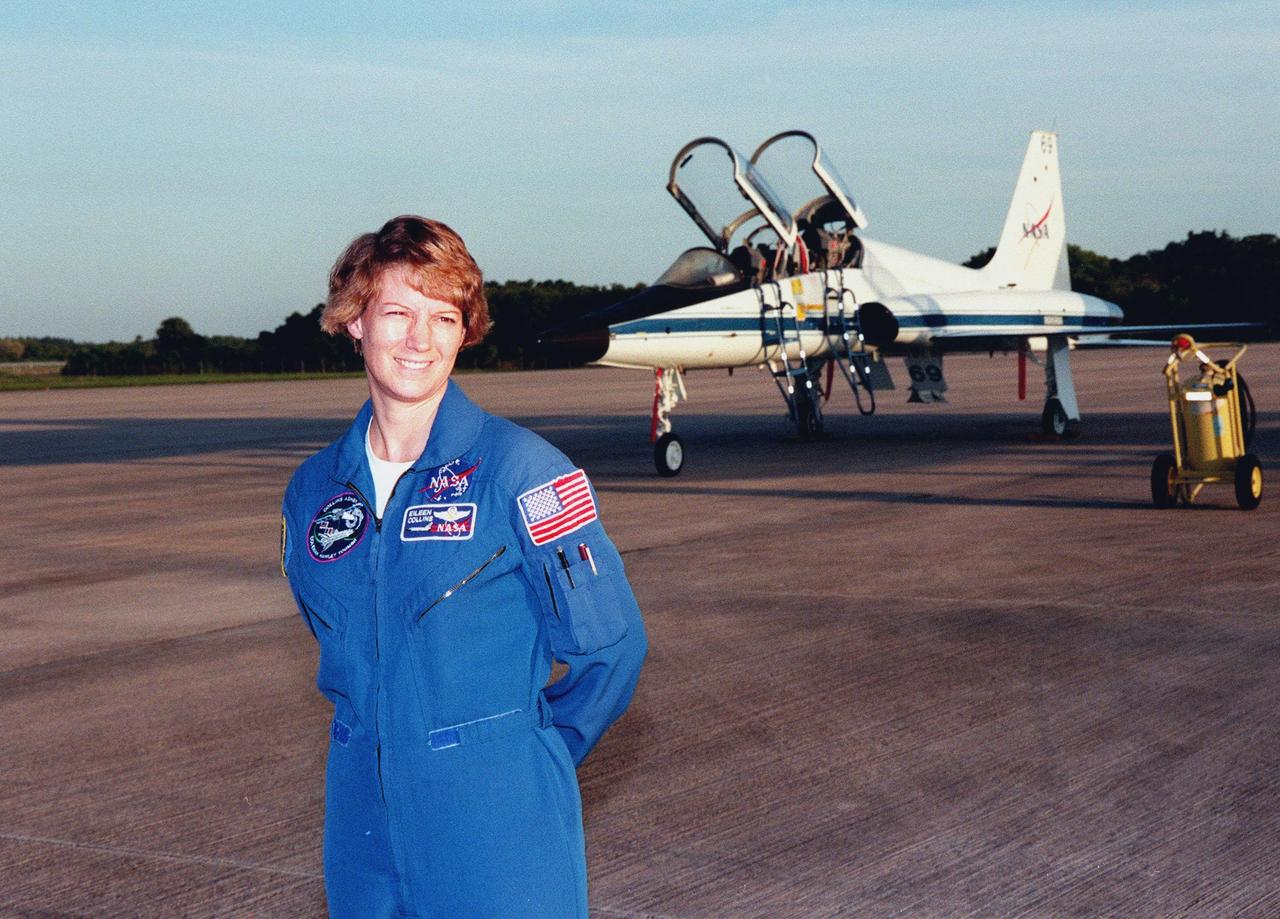
STS-93 Commander Eileen Collins poses for photographers in the early morning sun after landing at Kennedy Space Center's Shuttle Landing Facility (SLF) aboard a T-38 jet aircraft (background). She and other crew members Pilot Jeffrey S. Ashby and Mission Specialists Steven A. Hawley (Ph.D.), Catherine G. "Cady" Coleman (Ph.D.) and Michel Tognini of France, with the Centre National d'Etudes Spatiales (CNES), are arriving for pre-launch activities. Collins is the first woman to serve as mission commander. This is her third Shuttle flight. The primary mission of STS-93 is the release of the Chandra X-ray Observatory, which will allow scientists from around the world to study some of the most distant, powerful and dynamic objects in the universe. The new telescope is 20 to 50 times more sensitive than any previous X-ray telescope and is expected to unlock the secrets of supernovae, quasars and black holes
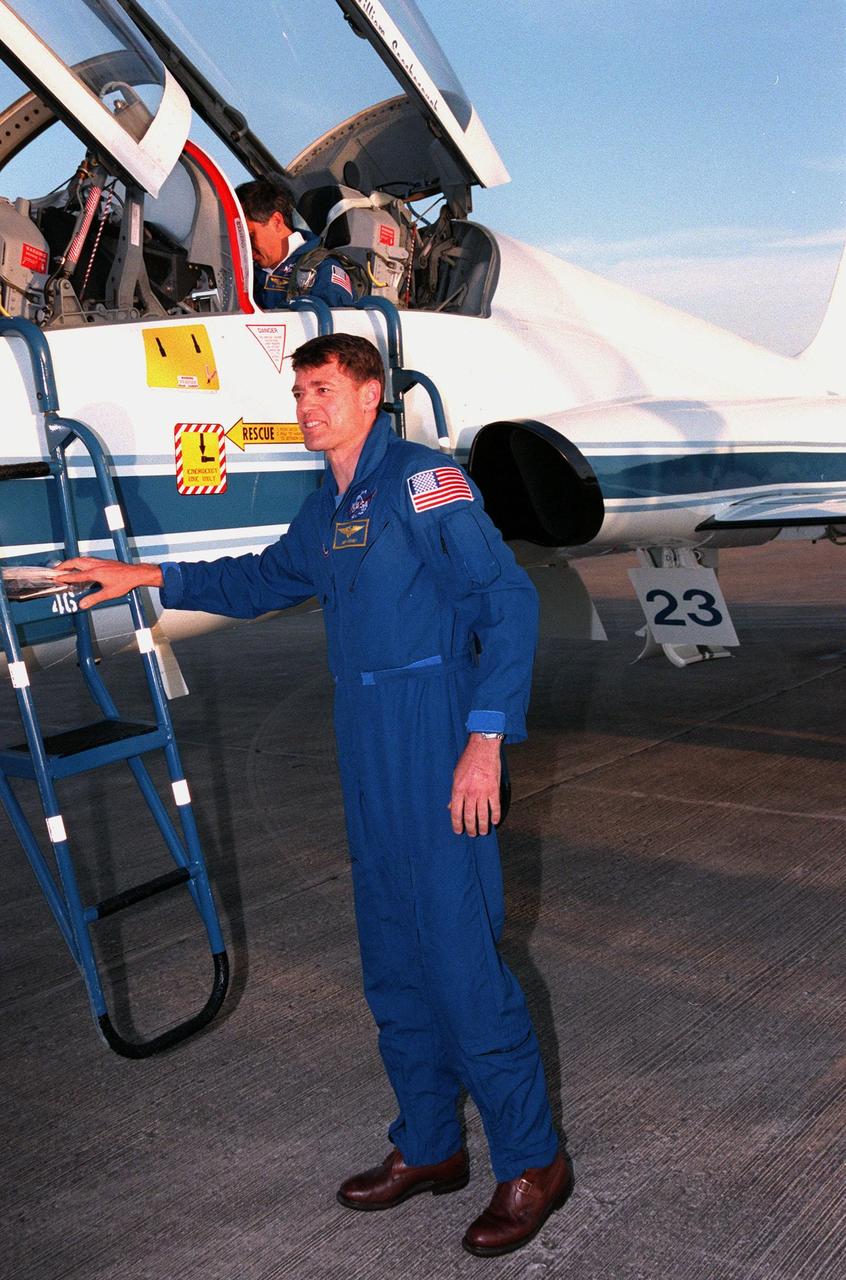
STS-93 Pilot Jeffrey S. Ashby lands at Kennedy Space Center's Shuttle Landing Facility (SLF) aboard a T-38 jet aircraft. He and other crew members Commander Eileen Collins and Mission Specialists Steven A. Hawley (Ph.D.), Catherine G. "Cady" Coleman (Ph.D.) and Michel Tognini of France, with the Centre National d'Etudes Spatiales (CNES), are arriving for pre-launch activities. STS-93 is Ashby's inaugural Shuttle flight. The primary mission of STS-93 is the release of the Chandra X-ray Observatory, which will allow scientists from around the world to study some of the most distant, powerful and dynamic objects in the universe. The new telescope is 20 to 50 times more sensitive than any previous X-ray telescope and is expected to unlock the secrets of supernovae, quasars and black holes
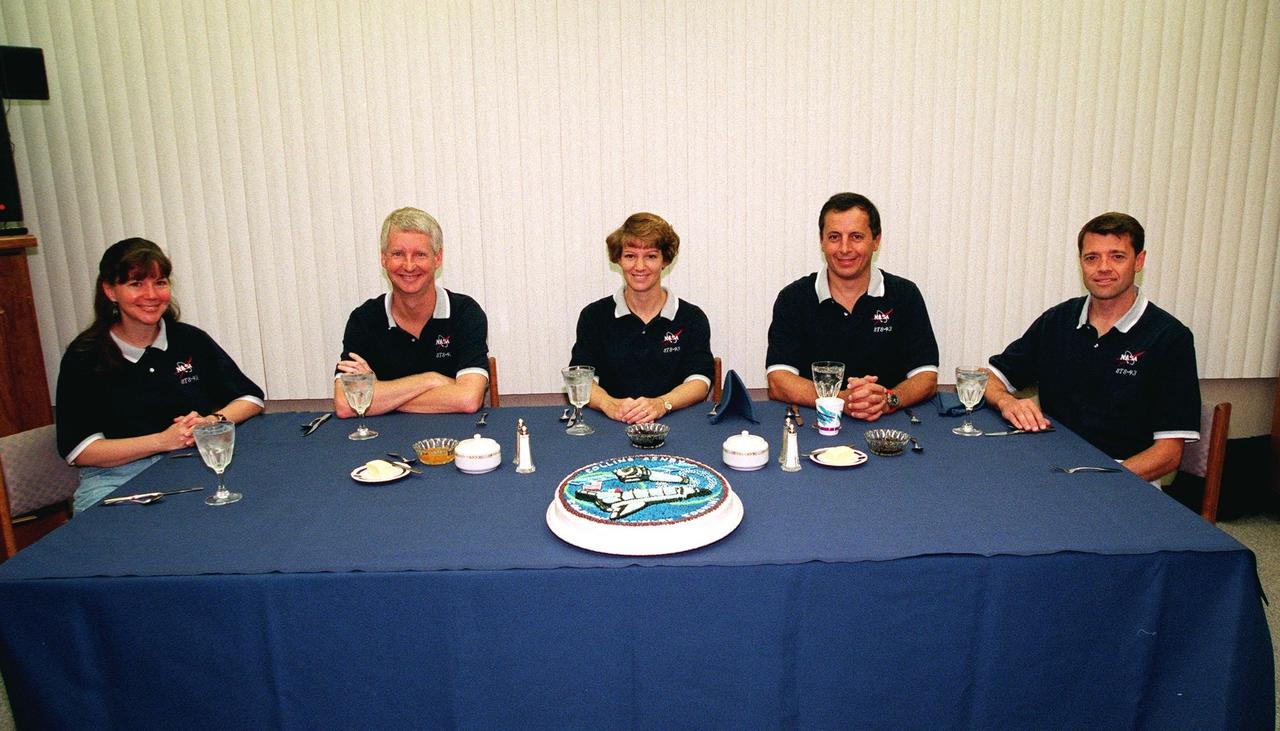
The STS-93 crew gathers a third time for a pre-launch breakfast in the Operations and Checkout Building before suiting up for launch. After Space Shuttle Columbia's July 22 launch attempt was scrubbed due to the weather, the launch was rescheduled for Friday, July 23, at 12:24 a.m. EDT. Seated from left are Mission Specialists Catherine G. Coleman (Ph.D.) and Steven A. Hawley (Ph.D.); Commander Eileen M. Collins; Mission Specialist Michel Tognini, of France, who represents the Centre National d'Etudes Spatiales (CNES); and Pilot Jeffrey S. Ashby. STS-93 is a five-day mission primarily to release the Chandra X-ray Observatory, which will allow scientists from around the world to study some of the most distant, powerful and dynamic objects in the universe. Collins is the first woman to serve as commander of a Shuttle mission. The target landing date is July 27, 1999, at 11:20 p.m. EDT
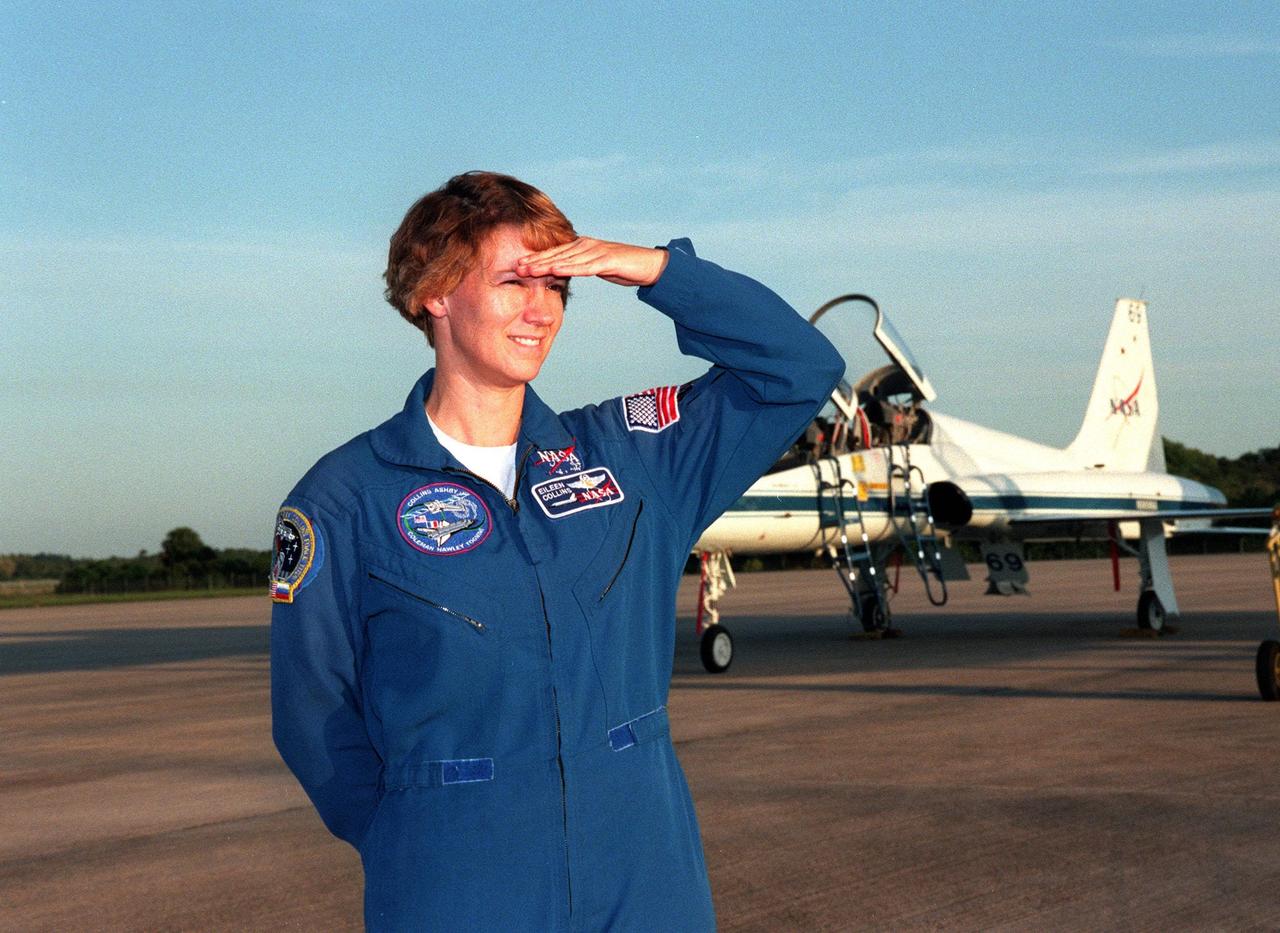
STS-93 Commander Eileen Collins peers into the eastern early morning sky after landing at Kennedy Space Center's Shuttle Landing Facility (SLF) aboard a T-38 jet aircraft (background). She and other crew members Pilot Jeffrey S. Ashby and Mission Specialists Steven A. Hawley (Ph.D.), Catherine G. "Cady" Coleman (Ph.D.) and Michel Tognini of France, with the Centre National d'Etudes Spatiales (CNES), are arriving for pre-launch activities. Collins is the first woman to serve as mission commander. This is her third Shuttle flight. The primary mission of STS-93 is the release of the Chandra X-ray Observatory, which will allow scientists from around the world to study some of the most distant, powerful and dynamic objects in the universe. The new telescope is 20 to 50 times more sensitive than any previous X-ray telescope and is expected to unlock the secrets of supernovae, quasars and black holes
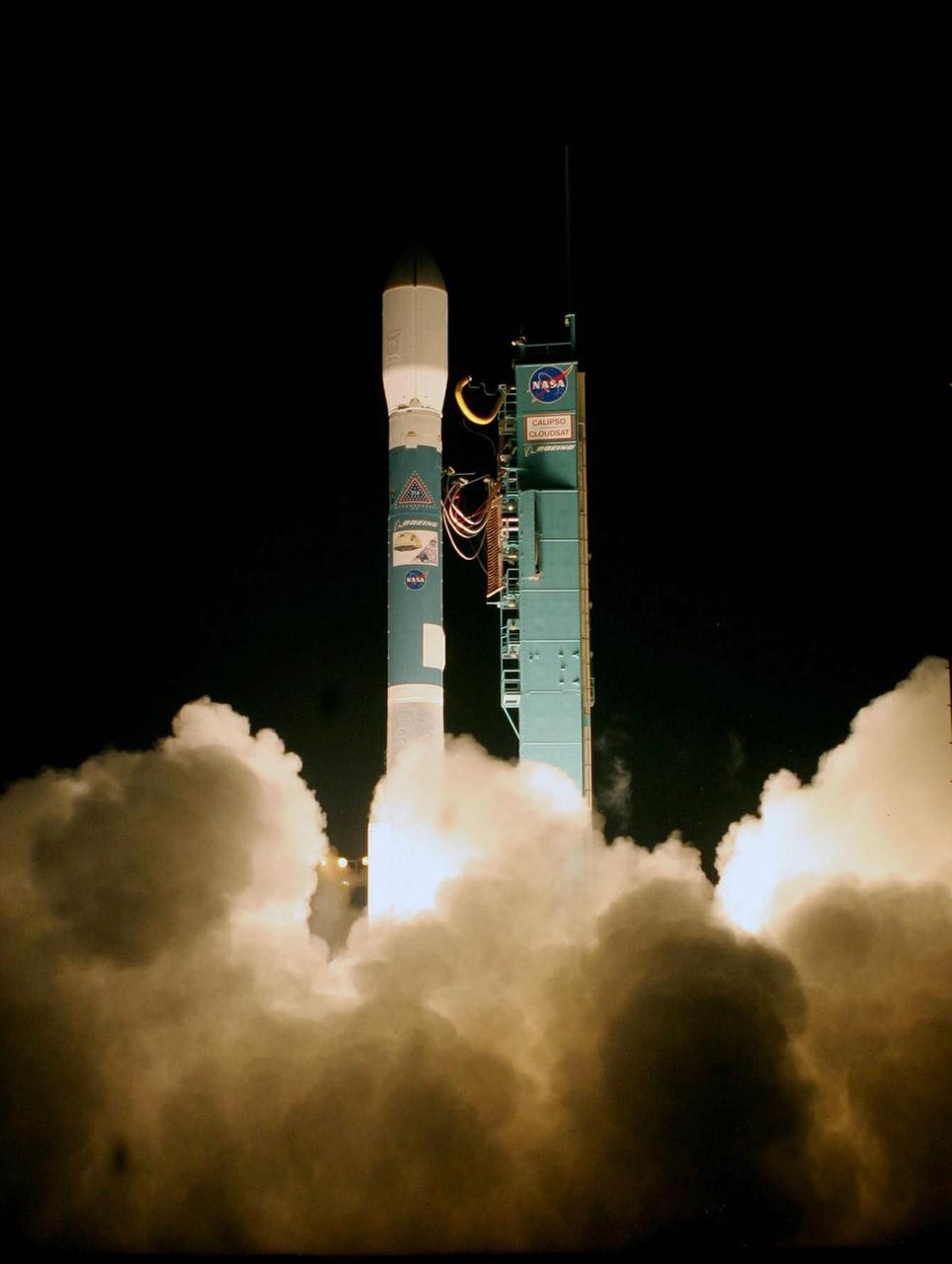
VANDENBERG AIR FORCE BASE, CALIF. - CloudSat and CALIPSO ¯ Cloud-Aerosol Lidar and Infrared Pathfinder Satellite Observations ¯ thunders skyward after launch at approximately 6:02 a.m. EDT atop a Boeing Delta II rocket. The two satellites will eventually circle approximately 438 miles above Earth in a sun-synchronous polar orbit, which means they will always cross the equator at the same local time. Their technologies will enable scientists to study how clouds and aerosols form, evolve and interact. CloudSat is managed by NASA's Jet Propulsion Laboratory, in Pasadena, Calif. JPL developed the radar instrument with hardware contributions from the Canadian Space Agency. CALIPSO is collaboration between NASA and France's Centre National d'Etudes Spatiales (CNES). Langley Research Center, in Hampton, Va., is leading the CALIPSO mission and providing overall project management, systems engineering, and payload mission operations. Photo credit: Boeing/Thom Baur
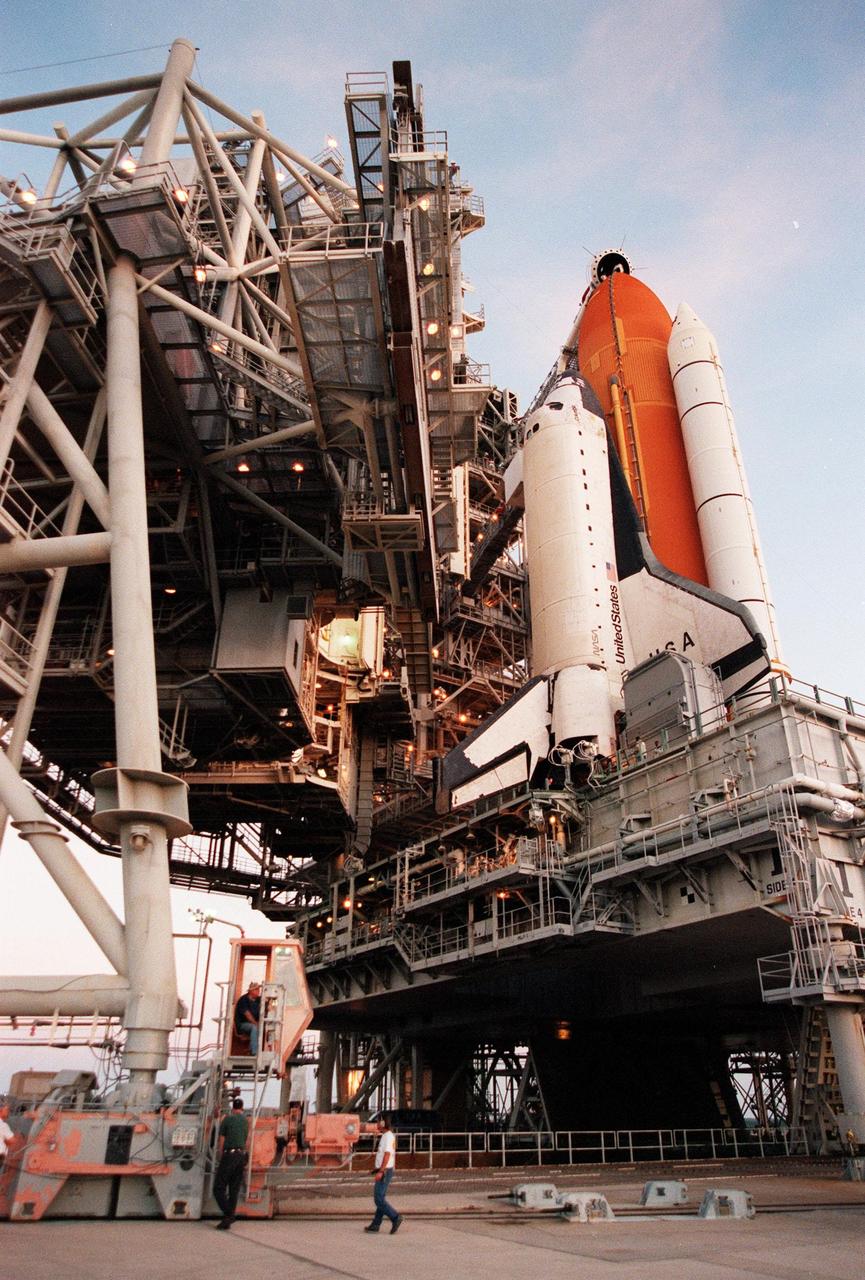
The Rotating Service Structure is rolled back from Space Shuttle Columbia on Launch Pad 39-B, in preparation for launch of mission STS-93 July 20 at 12:36 a.m. EDT. The primary payload of STS-93 is the Chandra X-ray Observatory, which will allow scientists from around the world to study some of the most distant, powerful and dynamic objects in the universe. The new telescope is 20 to 50 times more sensitive than any previous X-ray telescope and is expected unlock the secrets of supernovae, quasars and black holes. The STS-93 crew numbers five: Commander Eileen M. Collins, Pilot Jeffrey S. Ashby, and Mission Specialists Steven A. Hawley (Ph.D.), Catherine G. Coleman (Ph.D.) and Michel Tognini of France, with the Centre National d'Etudes Spatiales (CNES). Collins is the first woman to serve as commander of a shuttle mission

For the third time, in the Operations and Checkout Building, STS-93 Mission Specialist Michel Tognini of France, who represents the Centre National d'Etudes Spatiales (CNES), waves after donning his launch and entry suit during final launch preparations. After Space Shuttle Columbia's July 20 and 22 launch attempts were scrubbed, the launch was again rescheduled for Friday, July 23, at 12:24 a.m. EDT. STS-93 is a five-day mission primarily to release the Chandra X-ray Observatory, which will allow scientists from around the world to study some of the most distant, powerful and dynamic objects in the universe. The STS-93 crew numbers five: Commander Eileen M. Collins, Pilot Jeffrey S. Ashby, and Mission Specialists Steven A. Hawley (Ph.D.), Catherine G. Coleman (Ph.D.) and Tognini. Collins is the first woman to serve as commander of a shuttle mission
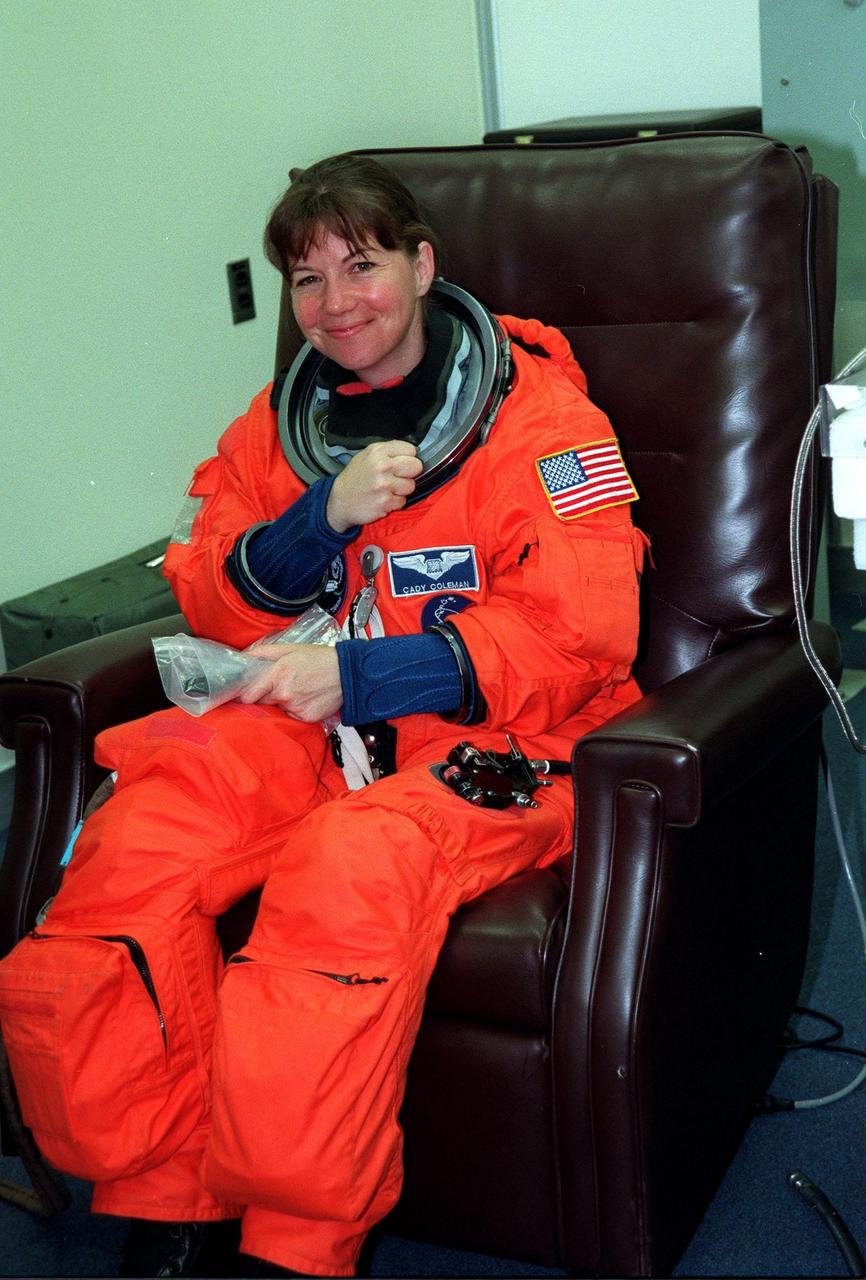
For the third time, during final launch preparations in the Operations and Checkout Building, STS-93 Mission Specialist Catherine G. Coleman (Ph.D.) dons her launch and entry suit. After Space Shuttle Columbia's July 20 and 22 launch attempts were scrubbed, the launch was again rescheduled for Friday, July 23, at 12:24 a.m. EDT. STS-93 is a five-day mission primarily to release the Chandra X-ray Observatory, which will allow scientists from around the world to study some of the most distant, powerful and dynamic objects in the universe. The STS-93 crew numbers five: Commander Eileen M. Collins, Pilot Jeffrey S. Ashby, and Mission Specialists Steven A. Hawley (Ph.D.), Coleman, and Michel Tognini of France, with the Centre National d'Etudes Spatiales (CNES). Collins is the first woman to serve as commander of a shuttle mission
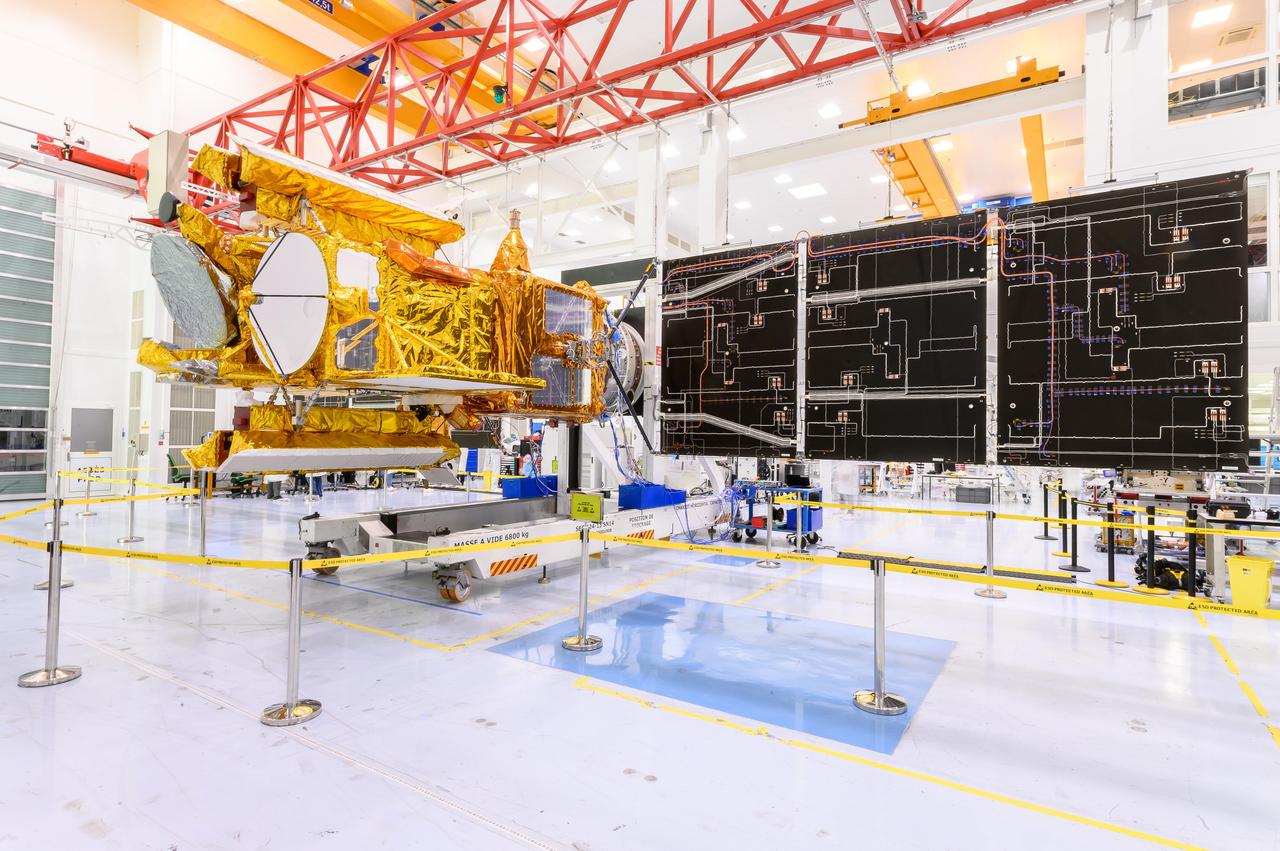
The solar panels on the Surface Water and Ocean Topography (SWOT) satellite unfold as part of a test in January 2022 at a Thales Alenia Space manufacturing facility near Cannes, France. The SWOT mission is being jointly led by NASA and the French space agency Centre National d'Études Spatiales (CNES), with contributions from the Canadian Space Agency and the United Kingdom Space Agency. Many of SWOT's radar instruments were built at NASA's Jet Propulsion Laboratory in Southern California before being transported to France, where Thales Alenia is assembling the full satellite. Following a series of tests, SWOT will be transported to Vandenberg Space Force Base in Southern California for launch in November 2022. In orbit, SWOT will collect information of unprecedented detail on sea-level height, which will help scientists study the role of ocean currents in moderating climate change, as well as the elevations of fresh water bodies, which will enable researchers for the first time to take inventory of the planet's rivers, lakes, reservoirs, and other surface water. https://photojournal.jpl.nasa.gov/catalog/PIA25147
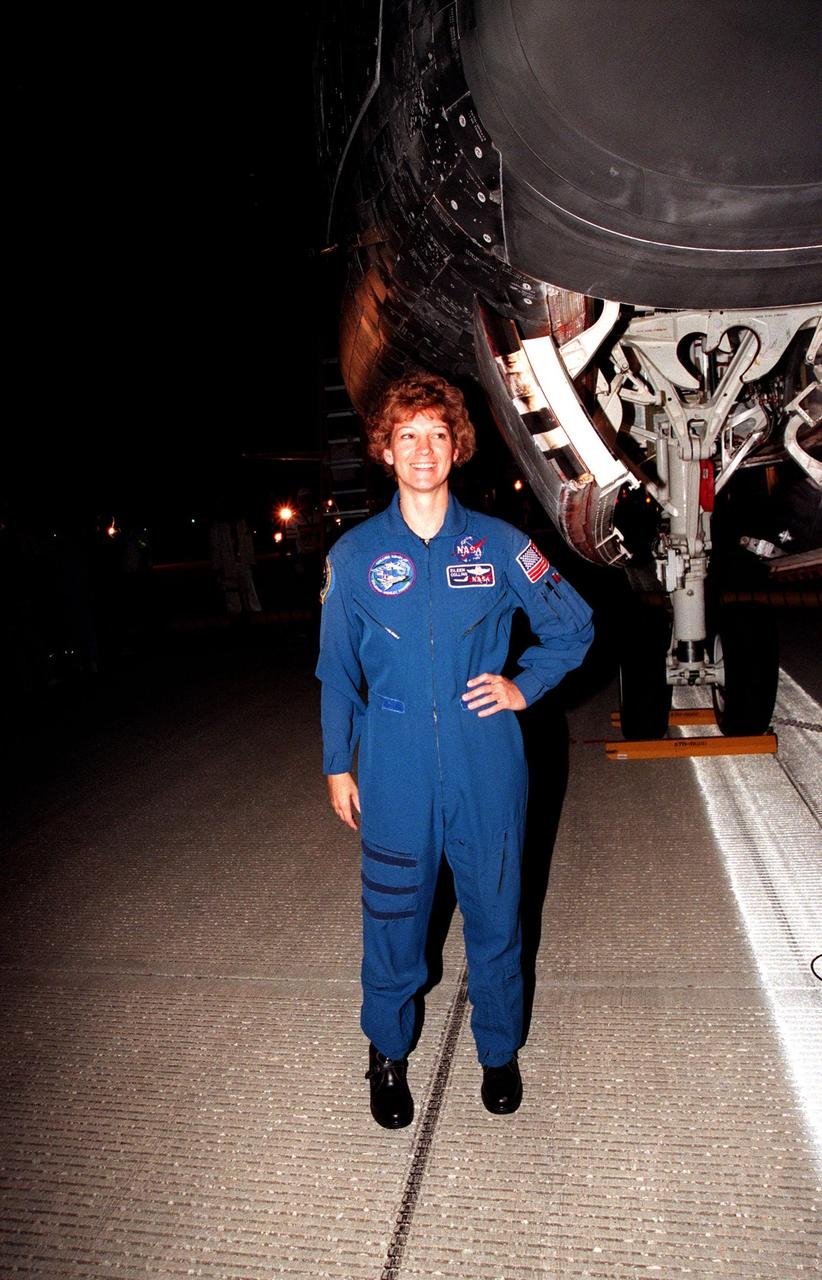
KENNEDY SPACE CENTER, FLA. -- STS-93 Commander Eileen Collins poses in front of the Space Shuttle orbiter Columbia following her textbook landing on runway 33 at the Shuttle Landing Facility. Main gear touchdown occurred at 11:20:35 p.m. EDT on July 27. On this mission, Collins became the first woman to serve as a Shuttle commander. Also on board were her fellow STS-93 crew members: Pilot Jeffrey S. Ashby and Mission Specialists Steven A. Hawley (Ph.D.), Catherine G. Coleman (Ph.D.) and Michel Tognini of France, with the Centre National d'Etudes Spatiales (CNES). The mission's primary objective was to deploy the Chandra X-ray Observatory, which will allow scientists from around the world to study some of the most distant, powerful and dynamic objects in the universe. This was the 95th flight in the Space Shuttle program and the 26th for Columbia. The landing was the 19th consecutive Shuttle landing in Florida and the 12th night landing in Shuttle program history
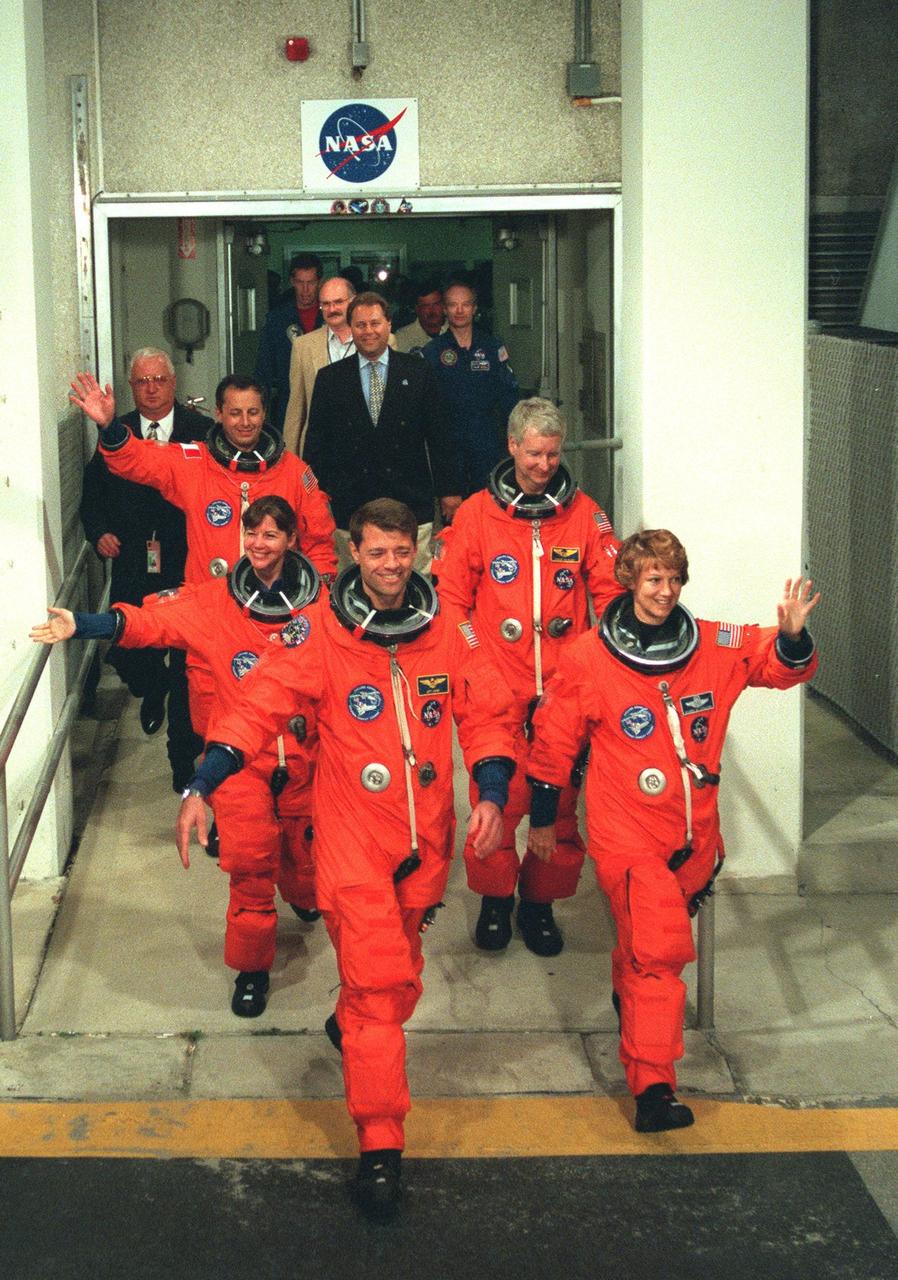
The STS-93 crew wave to onlookers as they walk out of the Operations and Checkout Building for the second time enroute to Launch Pad 39-B and liftoff of Space Shuttle Columbia. After Space Shuttle Columbia's July 20 launch attempt was scrubbed at the T-7 second mark in the countdown, the launch was rescheduled for Thursday, July 22, at 12:28 a.m. EDT. The target landing date is July 26, 1999, at 11:24 p.m. EDT. In their orange launch and entry suits, they are (starting at rear, left to right) Mission Specialists Michel Tognini of France, who represents the Centre National d'Etudes Spatiales (CNES), and Catherine G. Coleman (Ph.D.); Pilot Jeffrey S. Ashby; Mission Specialist Steven A. Hawley (Ph.D.); and Commander Eileen M. Collins. STS-93 is a five-day mission primarily to release the Chandra X-ray Observatory, which will allow scientists from around the world to study some of the most distant, powerful and dynamic objects in the universe. The new telescope is 20 to 50 times more sensitive than any previous X-ray telescope and is expected unlock the secrets of supernovae, quasars and black holes. Collins is the first woman to serve as commander of a Shuttle mission
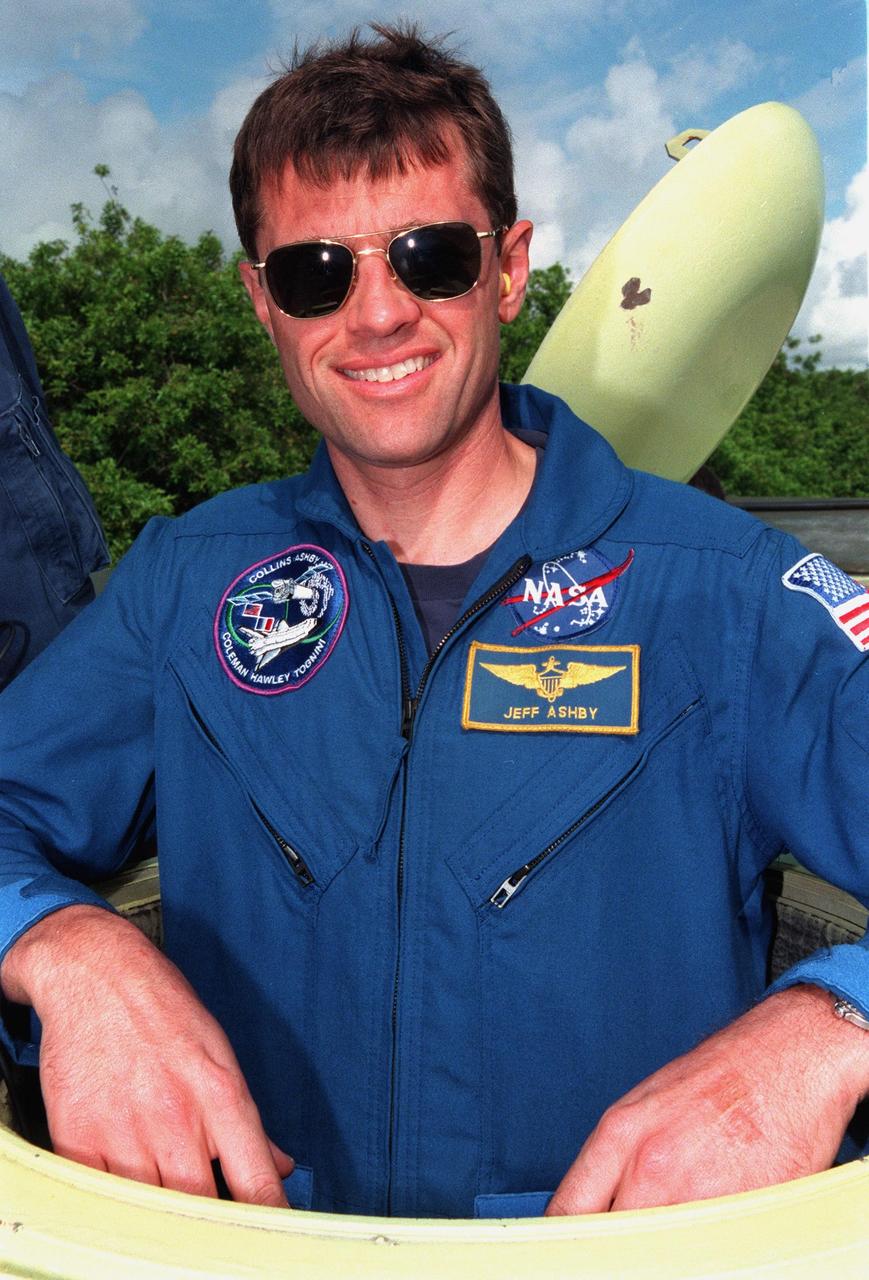
STS-93 Pilot Jeffrey S. Ashby pauses for the photographer before climbing into an M-113 armored personnel carrier at the launch pad to take part in emergency egress training. In preparation for their mission, the STS-93 crew are participating in Terminal Countdown Demonstration Test activities that also include a launch-day dress rehearsal culminating with a simulated main engine cut-off. Others in the crew are Commander Eileen M. Collins and Mission Specialists Steven A. Hawley (Ph.D.), Catherine G. Coleman (Ph.D.), and Michel Tognini of France, who represents the Centre National d'Etudes Spatiales (CNES). Collins is the first woman to serve as a mission commander. The primary mission of STS-93 is the release of the Chandra X-ray Observatory, which will allow scientists from around the world to obtain unprecedented X-ray images of exotic environments in space to help understand the structure and evolution of the universe. Chandra is expected to provide unique and crucial information on the nature of objects ranging from comets in our solar system to quasars at the edge of the observable universe. Since X-rays are absorbed by the Earth's atmosphere, space-based observatories are necessary to study these phenomena and allow scientists to analyze some of the greatest mysteries of the universe. The targeted launch date for STS-93 is no earlier than July 20 at 12:36 a.m. EDT from Launch Pad 39B
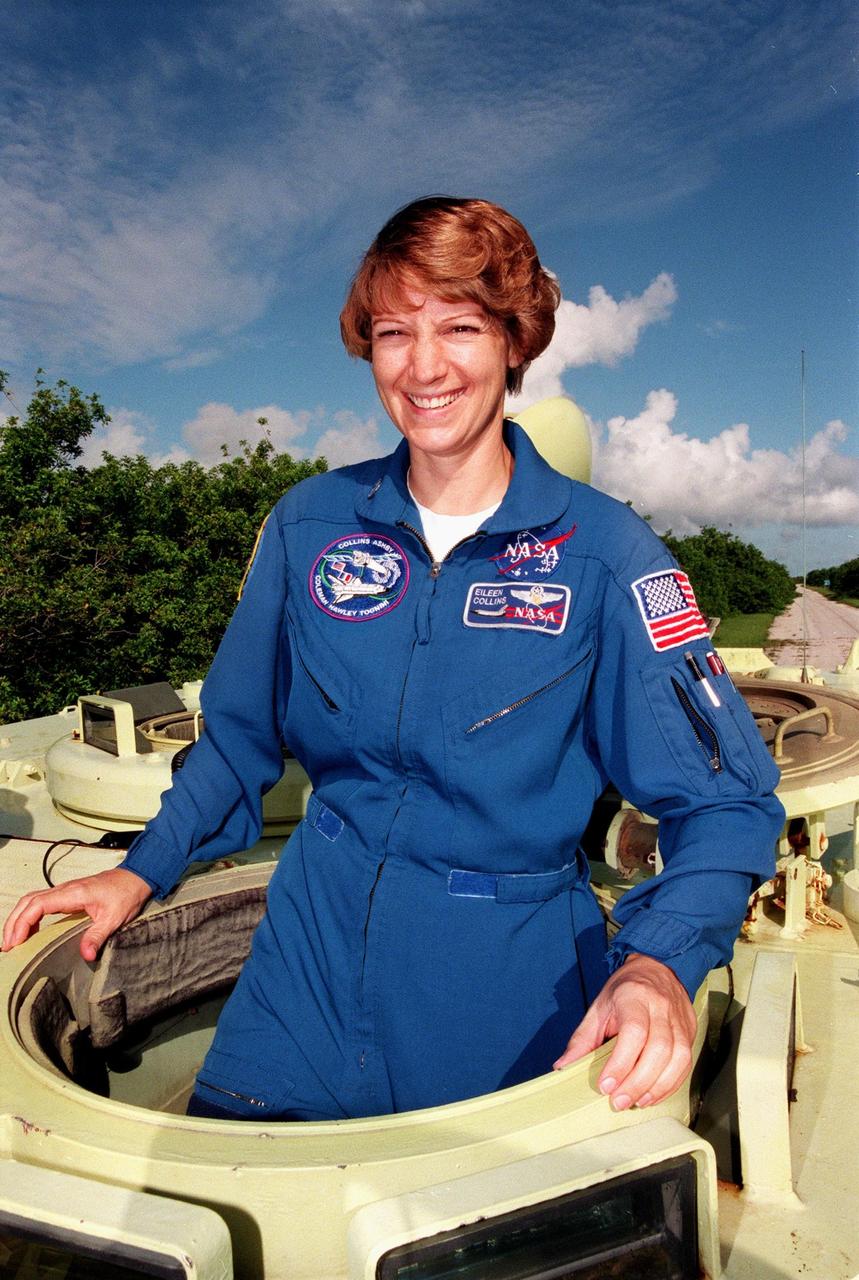
STS-93 Commander Eileen M. Collins climbs into an M-113 armored personnel carrier at the launch pad to take part in emergency egress training. Collins is the first woman to serve as mission commander. In preparation for their mission, the STS-93 crew are participating in Terminal Countdown Demonstration Test activities that also include a launch-day dress rehearsal culminating with a simulated main engine cut-off. Others in the crew are Pilot Jeffrey S. Ashby and Mission Specialists Steven A. Hawley (Ph.D.), Catherine G. Coleman (Ph.D.), and Michel Tognini of France, who represents the Centre National d'Etudes Spatiales (CNES). The primary mission of STS-93 is the release of the Chandra X-ray Observatory, which will allow scientists from around the world to obtain unprecedented X-ray images of exotic environments in space to help understand the structure and evolution of the universe. Chandra is expected to provide unique and crucial information on the nature of objects ranging from comets in our solar system to quasars at the edge of the observable universe. Since X-rays are absorbed by the Earth's atmosphere, space-based observatories are necessary to study these phenomena and allow scientists to analyze some of the greatest mysteries of the universe. The targeted launch date for STS-93 is no earlier than July 20 at 12:36 a.m. EDT from Launch Pad 39B
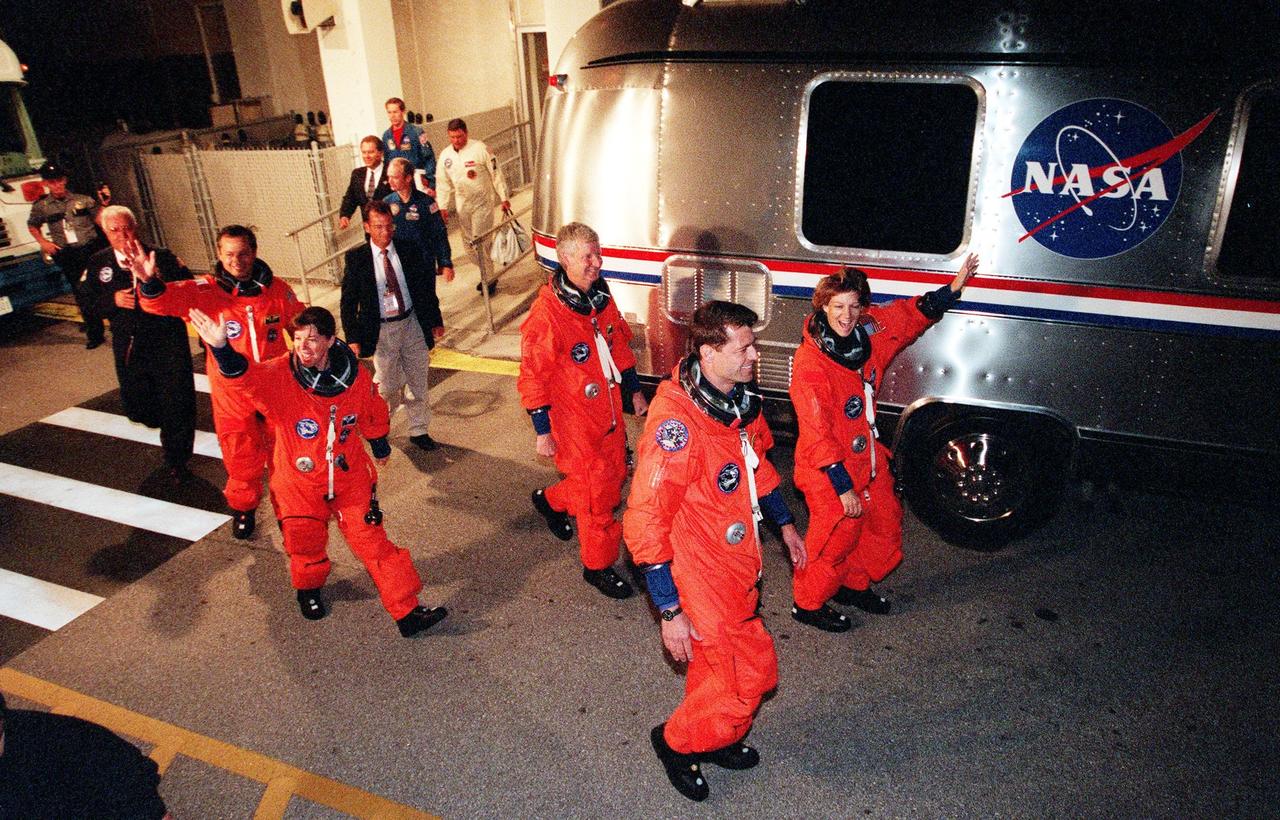
The STS-93 crew wave and cheer as they head for the "Astrovan" a third time to take them to Launch Pad 39-B and liftoff of Space Shuttle Columbia. In their orange launch and entry suits, they are (starting at rear, left to right) Mission Specialists Michel Tognini of France, who represents the Centre National d'Etudes Spatiales (CNES), Catherine G. Coleman (Ph.D.), and Steven A. Hawley (Ph.D.); Pilot Jeffrey S. Ashby; and Commander Eileen M. Collins. After Space Shuttle Columbia's July 20 and 22 launch attempts were scrubbed, the launch was again rescheduled for Friday, July 23, at 12:24 a.m. EDT. The target landing date is July 27 at 11:20 p.m. EDT. STS-93 is a five-day mission primarily to release the Chandra X-ray Observatory, which will allow scientists from around the world to study some of the most distant, powerful and dynamic objects in the universe. Collins is the first woman to serve as commander of a Shuttle mission
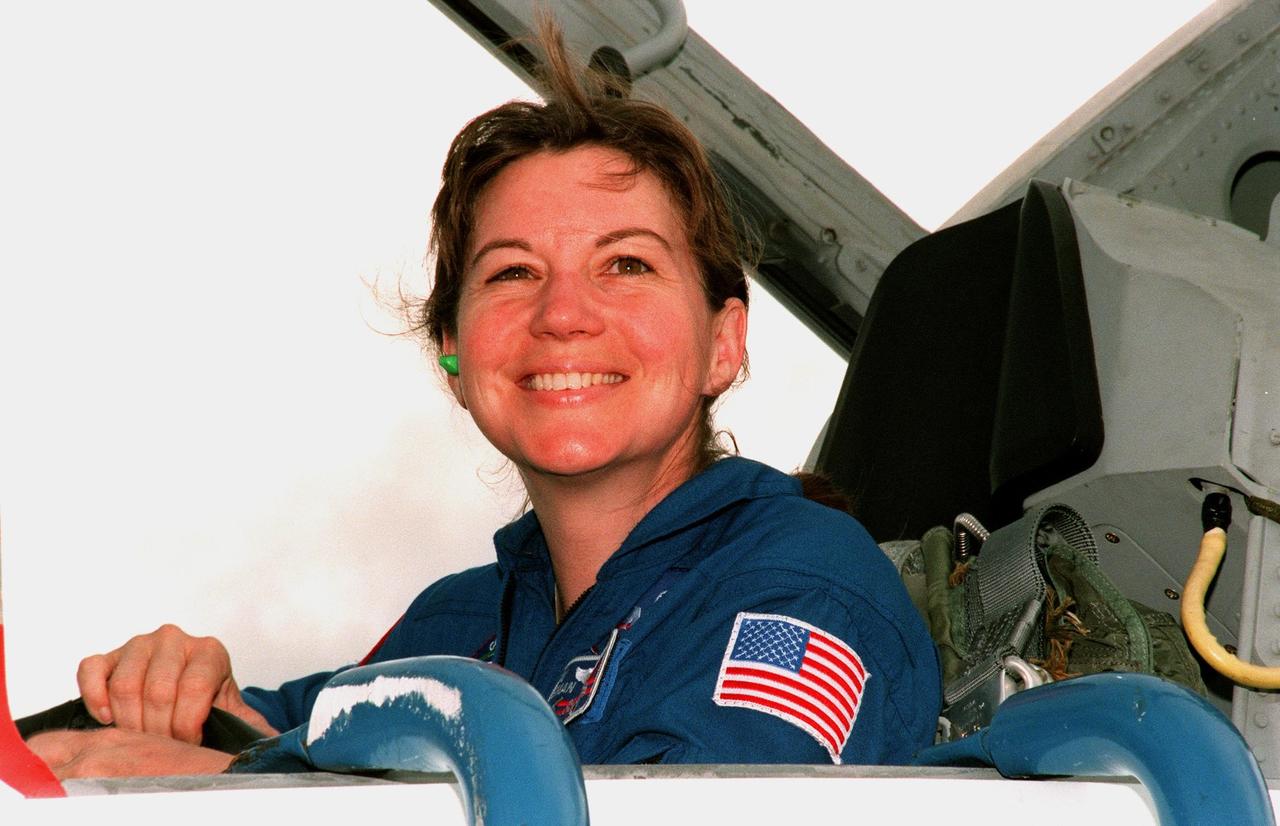
STS-93 Mission Specialist Catherine G. Coleman (Ph.D.) grins on her arrival at KSC's Shuttle Landing Facility aboard a T-38 jet to participate in Terminal Countdown Demonstration Tests (TCDT) this week. TCDT activities familiarize the crew with the mission, provide training in emergency exit from the orbiter and launch pad, and include a launch-day dress rehearsal culminating with a simulated main engine cut-off. Joining Coleman are Commander Eileen M. Collins, Pilot Jeffrey S. Ashby and Mission Specialists Steven A. Hawley (Ph.D.) and Michel Tognini of France, who is with the Centre National d'Etudes Spatiales (CNES). Collins is the first woman to serve as mission commander. The primary mission of STS-93 is the release of the Chandra X-ray Observatory, which will allow scientists from around the world to obtain unprecedented X-ray images of exotic environments in space to help understand the structure and evolution of the universe. Chandra is expected to provide unique and crucial information on the nature of objects ranging from comets in our solar system to quasars at the edge of the observable universe. Since X-rays are absorbed by the Earth's atmosphere, space-based observatories are necessary to study these phenomena and allow scientists to analyze some of the greatest mysteries of the universe
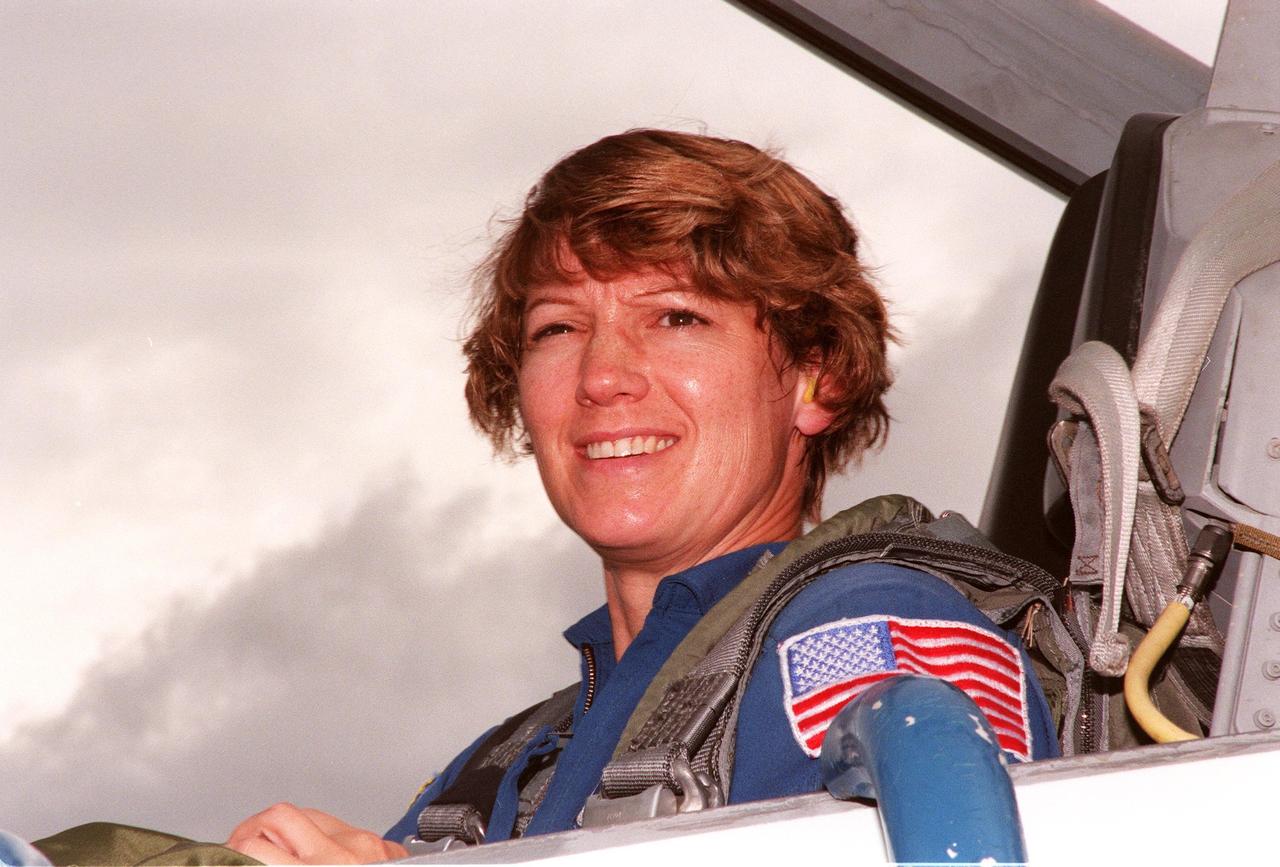
STS-93 Commander Eileen M. Collins smiles on her arrival at KSC's Shuttle Landing Facility aboard a T-38 jet aircraft to participate in Terminal Countdown Demonstration Tests (TCDT) this week. TCDT activities familiarize the crew with the mission, provide training in emergency exit from the orbiter and launch pad, and include a launch-day dress rehearsal culminating with a simulated main engine cut-off. Joining Collins are Pilot Jeffrey S. Ashby and Mission Specialists Steven A. Hawley (Ph.D.), Catherine G. Coleman (Ph.D.) and Michel Tognini of France, with the Centre National d'Etudes Spatiales (CNES). Collins is the first woman to serve as mission commander. The primary mission of STS-93 is the release of the Chandra X-ray Observatory, which will allow scientists from around the world to obtain unprecedented X-ray images of exotic environments in space to help understand the structure and evolution of the universe. Chandra is expected to provide unique and crucial information on the nature of objects ranging from comets in our solar system to quasars at the edge of the observable universe. Since X-rays are absorbed by the Earth's atmosphere, space-based observatories are necessary to study these phenomena and allow scientists to analyze some of the greatest mysteries of the universe

STS-93 Mission Specialist Steven A. Hawley (Ph.D.) grins as he steps down from a T-38 jet aircraft after landing at KSC's Shuttle Landing Facility. The STS-93 crew are at KSC to participate in Terminal Countdown Demonstration Tests (TCDT) this week. TCDT activities familiarize the crew with the mission, provide training in emergency exit from the orbiter and launch pad, and include a launch-day dress rehearsal culminating with a simulated main engine cut-off. Joining Hawley are Commander Eileen M. Collins, Pilot Jeffrey S. Ashby, and Mission Specialists Catherine G. Coleman (Ph.D.) and Michel Tognini of France, with the Centre National d'Etudes Spatiales (CNES). Collins is the first woman to serve as mission commander. The primary mission of STS-93 is the release of the Chandra X-ray Observatory, which will allow scientists from around the world to obtain unprecedented X-ray images of exotic environments in space to help understand the structure and evolution of the universe. Chandra is expected to provide unique and crucial information on the nature of objects ranging from comets in our solar system to quasars at the edge of the observable universe. Since X-rays are absorbed by the Earth's atmosphere, space-based observatories are necessary to study these phenomena and allow scientists to analyze some of the greatest mysteries of the universe
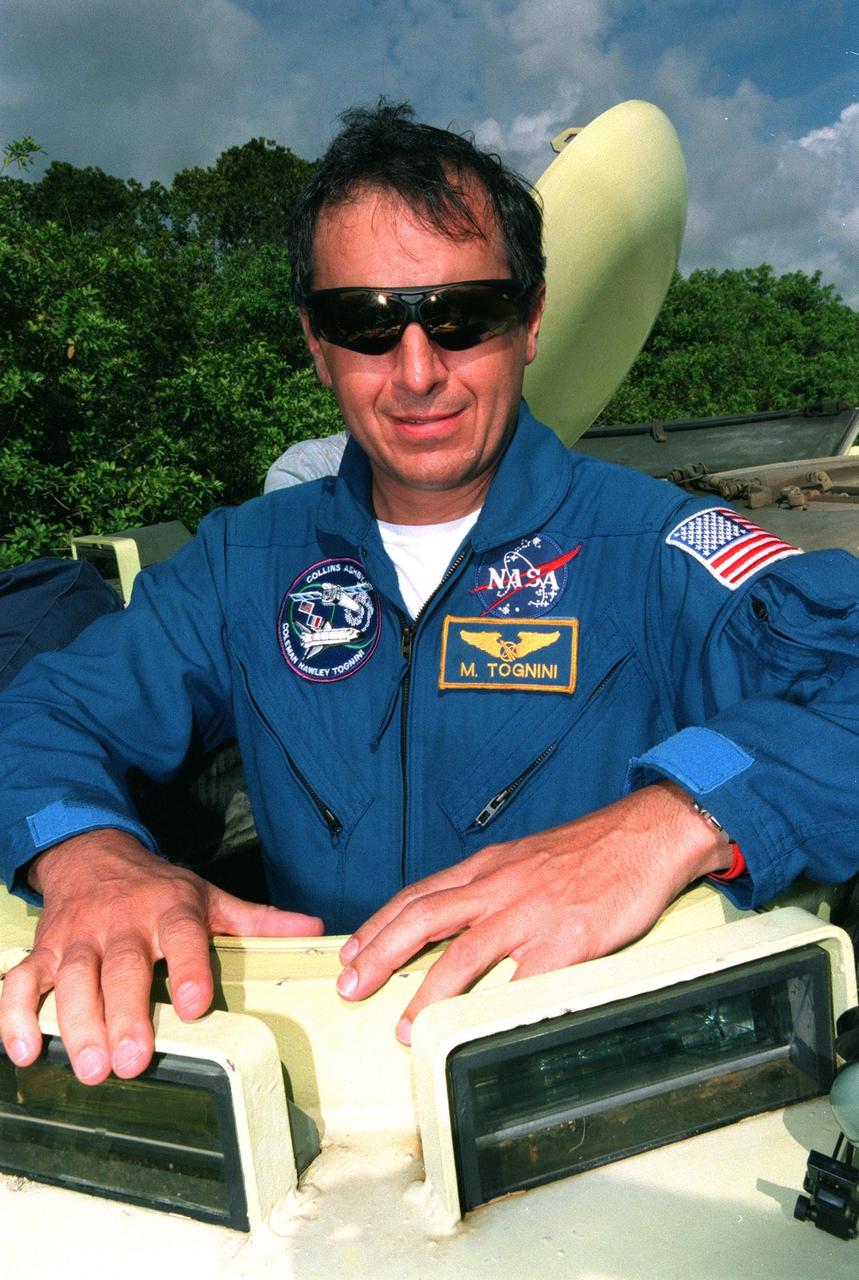
STS-93 Michel Tognini of France, who represents the Centre National d'Etudes Spatiales (CNES), pauses for the photographer before climbing into an M-113 armored personnel carrier at the launch pad to take part in emergency egress training. In preparation for their mission, the STS-93 crew are participating in Terminal Countdown Demonstration Test activities that also include a launch-day dress rehearsal culminating with a simulated main engine cut-off. Others in the crew are Commander Eileen M. Collins, Pilot Jeffrey S. Ashby, and Mission Specialists Steven A. Hawley (Ph.D.) and Catherine G. Coleman (Ph.D.). Collins is the first woman to serve as a mission commander. The primary mission of STS-93 is the release of the Chandra X-ray Observatory, which will allow scientists from around the world to obtain unprecedented X-ray images of exotic environments in space to help understand the structure and evolution of the universe. Chandra is expected to provide unique and crucial information on the nature of objects ranging from comets in our solar system to quasars at the edge of the observable universe. Since X-rays are absorbed by the Earth's atmosphere, space-based observatories are necessary to study these phenomena and allow scientists to analyze some of the greatest mysteries of the universe. The targeted launch date for STS-93 is no earlier than July 20 at 12:36 a.m. EDT from Launch Pad 39B
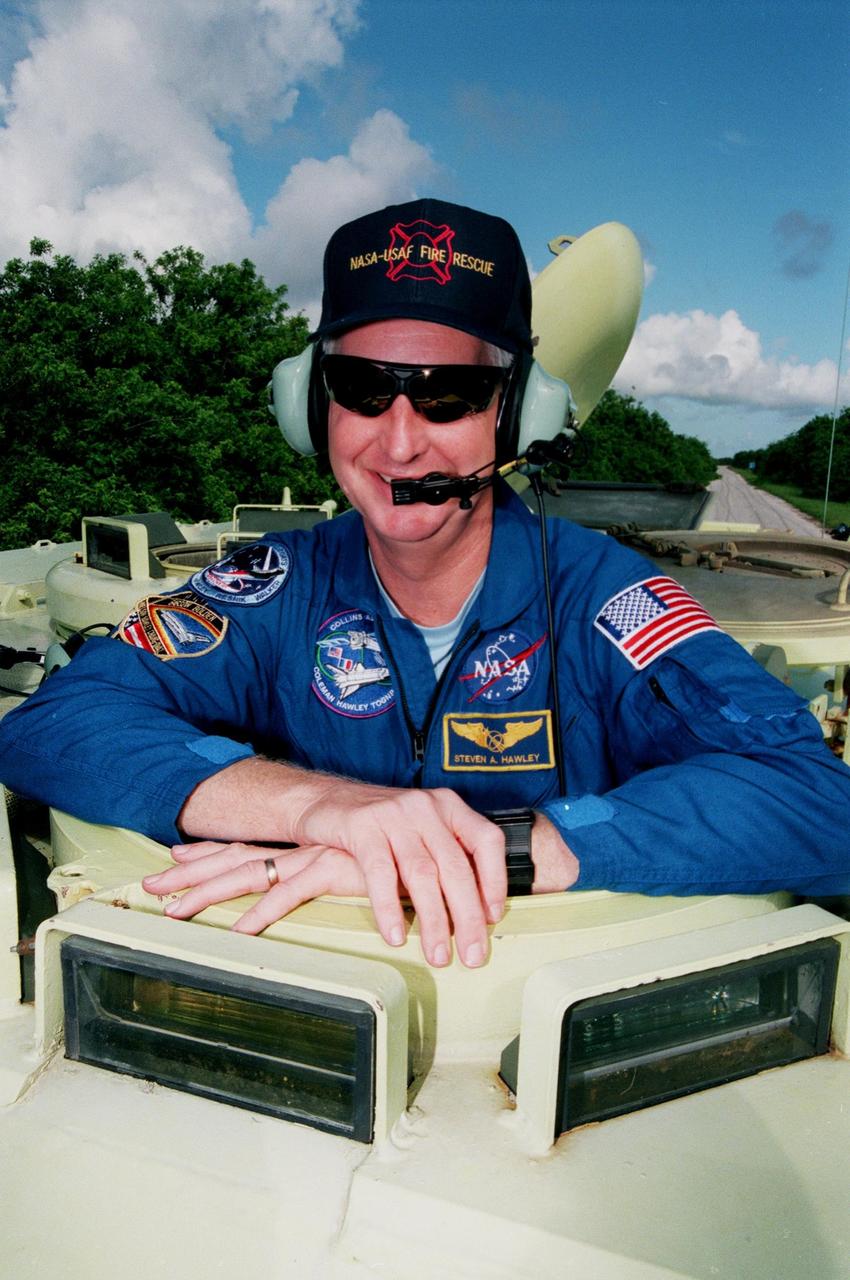
STS-93 Mission Specialist Steven A. Hawley (Ph.D.) smiles for the photographer before climbing into an M-113 armored personnel carrier at the launch pad to take part in emergency egress training. In preparation for their mission, the STS-93 crew are participating in Terminal Countdown Demonstration Test activities that also include a launch-day dress rehearsal culminating with a simulated main engine cut-off. Others in the crew are Commander Eileen M. Collins, Pilot Jeffrey S. Ashby, and Mission Specialists Catherine G. Coleman (Ph.D.) and Michel Tognini of France, who represents the Centre National d'Etudes Spatiales (CNES). Collins is the first woman to serve as a mission commander. The primary mission of STS-93 is the release of the Chandra X-ray Observatory, which will allow scientists from around the world to obtain unprecedented X-ray images of exotic environments in space to help understand the structure and evolution of the universe. Chandra is expected to provide unique and crucial information on the nature of objects ranging from comets in our solar system to quasars at the edge of the observable universe. Since X-rays are absorbed by the Earth's atmosphere, space-based observatories are necessary to study these phenomena and allow scientists to analyze some of the greatest mysteries of the universe. The targeted launch date for STS-93 is no earlier than July 20 at 12:36 a.m. EDT from Launch Pad 39B
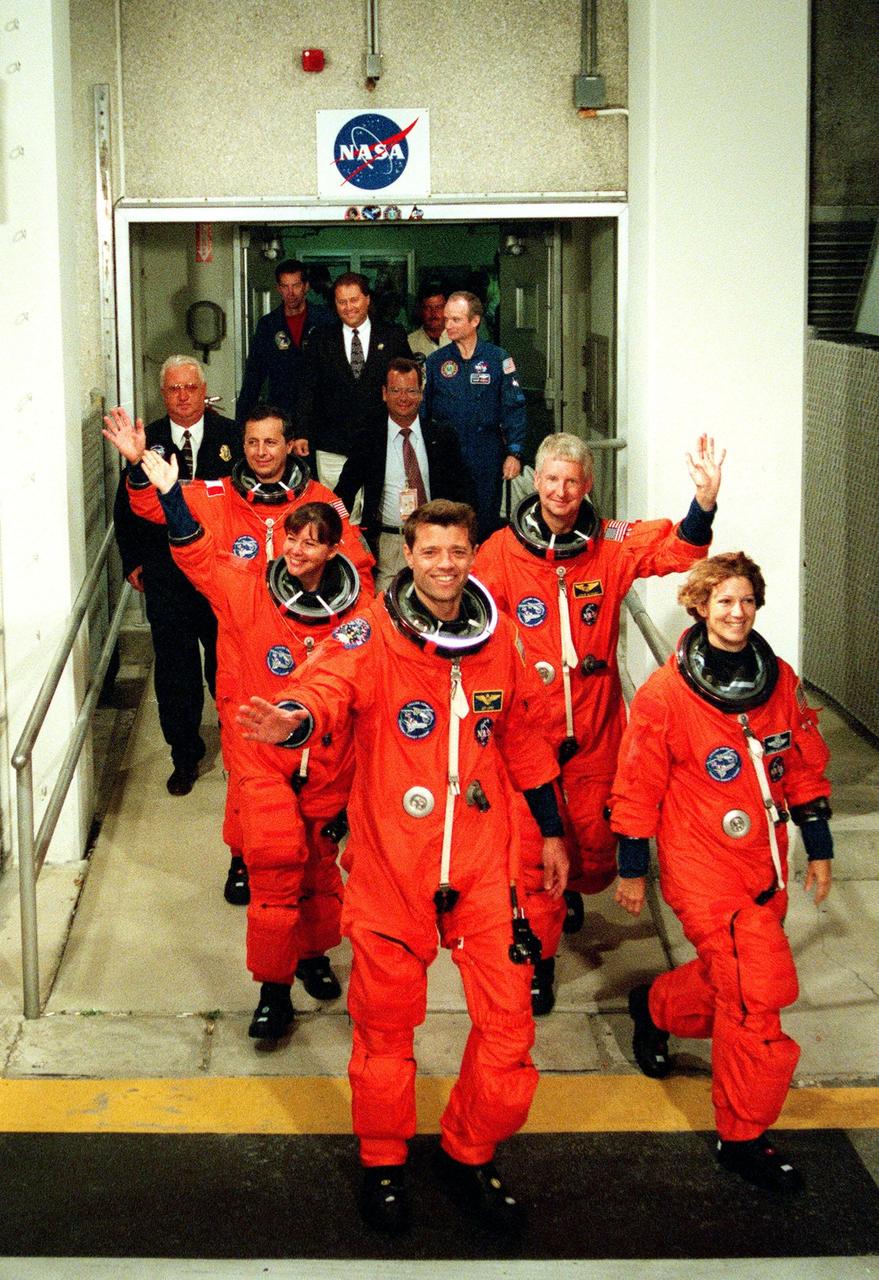
The STS-93 crew wave and smile at onlookers as they walk out of the Operations and Checkout Building for the third time enroute to Launch Pad 39-B and liftoff of Space Shuttle Columbia. After Space Shuttle Columbia's July 20 and 22 launch attempts were scrubbed, the launch was again rescheduled for Friday, July 23, at 12:24 a.m. EDT. The target landing date is July 27, 1999, at 11:20 p.m. EDT. In their orange launch and entry suits, they are (starting at rear, left to right) Mission Specialists Michel Tognini of France, who represents the Centre National d'Etudes Spatiales (CNES), and Catherine G. Coleman (Ph.D.); Pilot Jeffrey S. Ashby; Mission Specialist Steven A. Hawley (Ph.D.); and Commander Eileen M. Collins. STS-93 is a five-day mission primarily to release the Chandra X-ray Observatory, which will allow scientists from around the world to study some of the most distant, powerful and dynamic objects in the universe. Collins is the first woman to serve as commander of a Shuttle mission
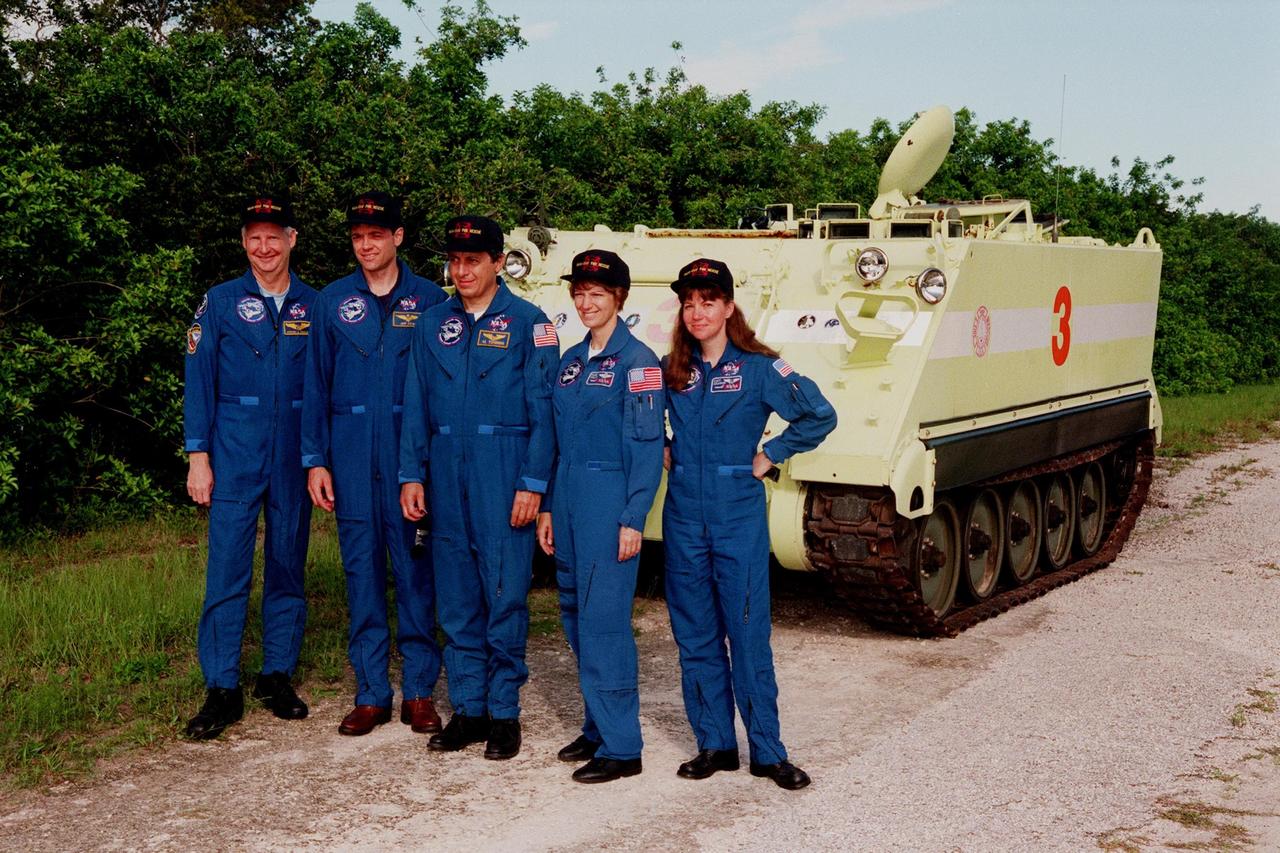
The STS-93 crew pose in front of an M-113, an armored personnel carrier, which they will use for emergency egress training from the launch pad. From left are Mission Specialist Steven A. Hawley (Ph.D.), Pilot Jeffrey S. Ashby, Mission Specialist Michel Tognini of France, Commander Eileen M. Collins and Mission Specialist Catherine G. Coleman (Ph.D.). Collins is the first woman to serve as mission commander. Tognini represents the Centre National d'Etudes Spatiales (CNES). TCDT activities familiarize the crew with the mission, provide training in emergency exit from the orbiter and launch pad, and include a launch-day dress rehearsal culminating with a simulated main engine cut-off. The primary mission of STS-93 is the release of the Chandra X-ray Observatory, which will allow scientists from around the world to obtain unprecedented X-ray images of exotic environments in space to help understand the structure and evolution of the universe. Chandra is expected to provide unique and crucial information on the nature of objects ranging from comets in our solar system to quasars at the edge of the observable universe. Since X-rays are absorbed by the Earth's atmosphere, space-based observatories are necessary to study these phenomena and allow scientists to analyze some of the greatest mysteries of the universe. The targeted launch date for STS-93 is no earlier than July 20 at 12:36 a.m. EDT from Launch Pad 39B
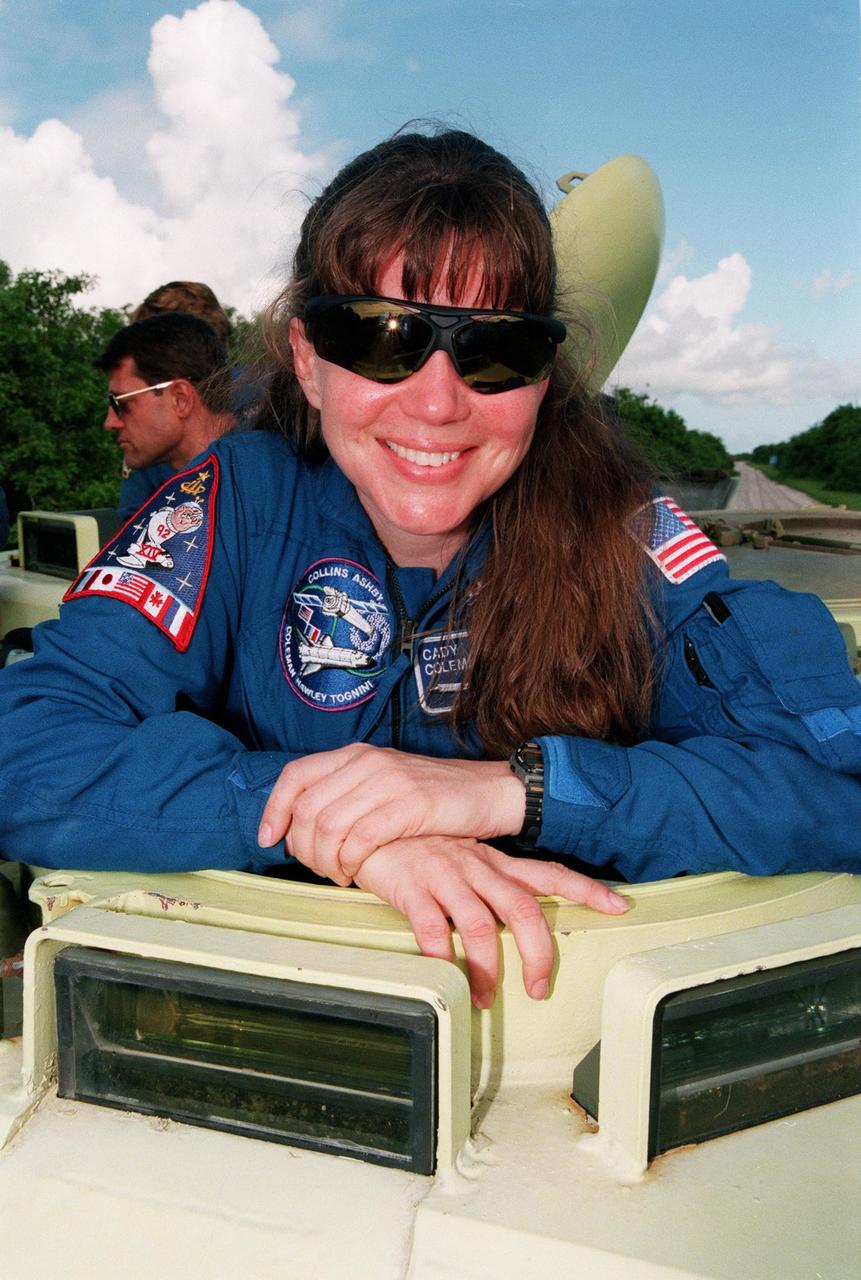
STS-93 Mission Specialist Catherine G. Coleman (Ph.D.) smiles for the photographer before climbing into an M-113 armored personnel carrier at the launch pad to take part in emergency egress training. In preparation for their mission, the STS-93 crew are participating in Terminal Countdown Demonstration Test activities that also include a launch-day dress rehearsal culminating with a simulated main engine cut-off. Others in the crew are Commander Eileen M. Collins, Pilot Jeffrey S. Ashby, and Mission Specialists Steven A. Hawley (Ph.D.) and Michel Tognini of France, who represents the Centre National d'Etudes Spatiales (CNES). Collins is the first woman to serve as a mission commander. The primary mission of STS-93 is the release of the Chandra X-ray Observatory, which will allow scientists from around the world to obtain unprecedented X-ray images of exotic environments in space to help understand the structure and evolution of the universe. Chandra is expected to provide unique and crucial information on the nature of objects ranging from comets in our solar system to quasars at the edge of the observable universe. Since X-rays are absorbed by the Earth's atmosphere, space-based observatories are necessary to study these phenomena and allow scientists to analyze some of the greatest mysteries of the universe. The targeted launch date for STS-93 is no earlier than July 20 at 12:36 a.m. EDT from Launch Pad 39B
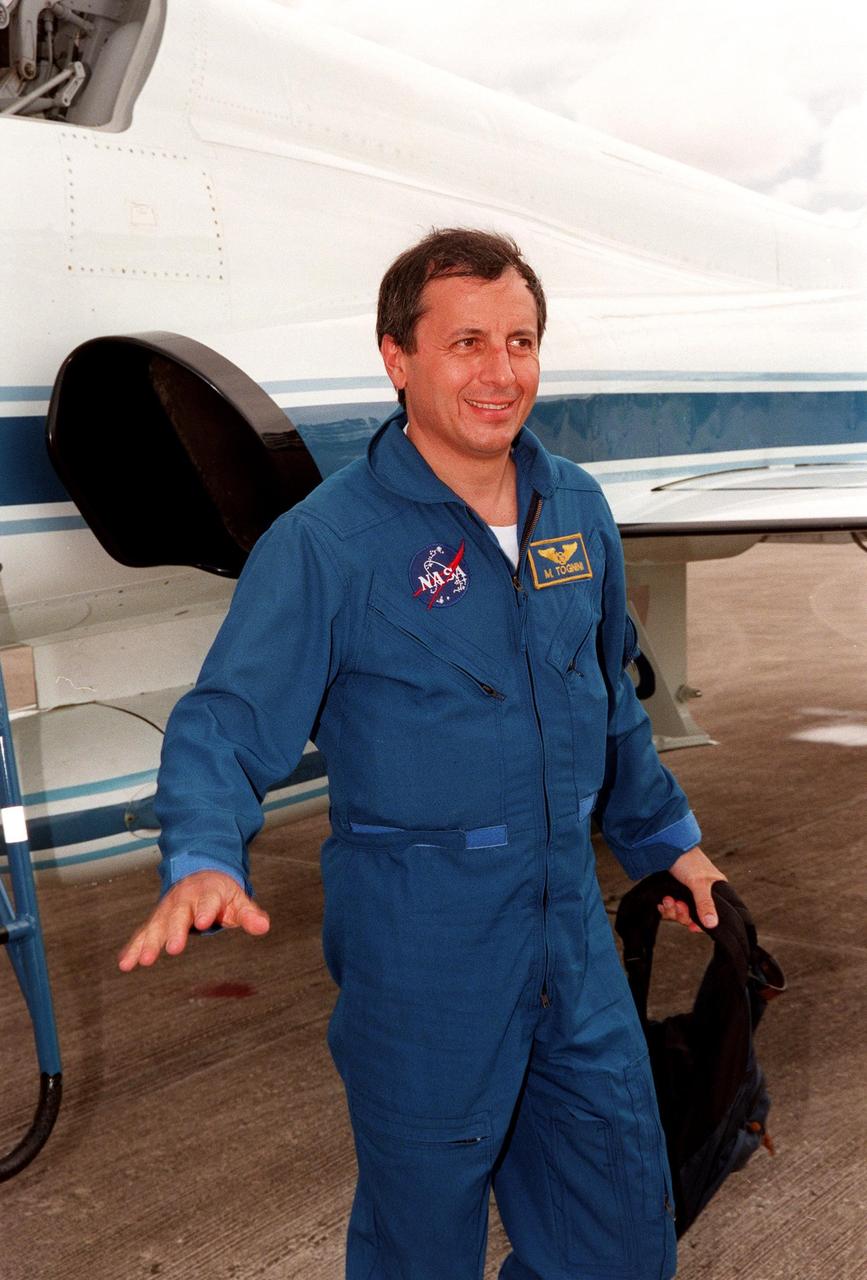
STS-93 Michel Tognini of France arrives at KSC's Shuttle Landing Facility to participate in Terminal Countdown Demonstration Tests (TCDT) this week. TCDT activities familiarize the crew with the mission, provide training in emergency exit from the orbiter and launch pad, and include a launch-day dress rehearsal culminating with a simulated main engine cut-off. Joining Tognini are Commander Eileen M. Collins, Pilot Jeffrey S. Ashby, and Mission Specialists Catherine G. Coleman (Ph.D.) and Steven A. Hawley (Ph.D.). Tognini represents the Centre National d'Etudes Spatiales (CNES). Collins is the first woman to serve as mission commander. The primary mission of STS-93 is the release of the Chandra X-ray Observatory, which will allow scientists from around the world to obtain unprecedented X-ray images of exotic environments in space to help understand the structure and evolution of the universe. Chandra is expected to provide unique and crucial information on the nature of objects ranging from comets in our solar system to quasars at the edge of the observable universe. Since X-rays are absorbed by the Earth's atmosphere, space-based observatories are necessary to study these phenomena and allow scientists to analyze some of the greatest mysteries of the universe
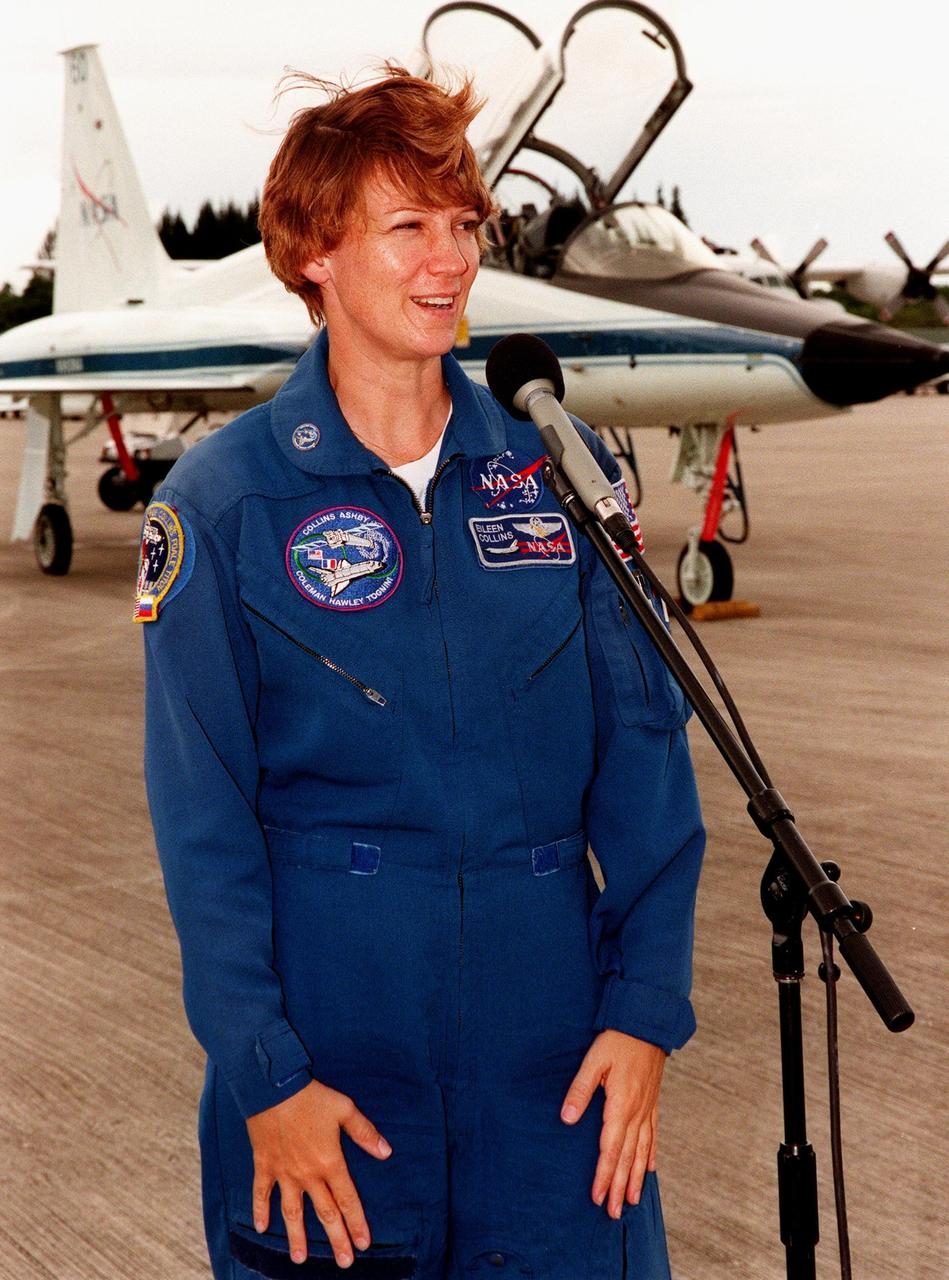
STS-93 Commander Eileen M. Collins talks to the media after arriving at KSC's Shuttle Landing Facility to participate in Terminal Countdown Demonstration Tests (TCDT) this week. TCDT activities familiarize the crew with the mission, provide training in emergency exit from the orbiter and launch pad, and include a launch-day dress rehearsal culminating with a simulated main engine cut-off. Collins is the first woman to serve as mission commander. Joining Collins are Pilot Jeffrey S. Ashby and Mission Specialists Steven A. Hawley (Ph.D.), Catherine G. Coleman (Ph.D.) and Michel Tognini of France, with the Centre National d'Etudes Spatiales (CNES). The primary mission of STS-93 is the release of the Chandra X-ray Observatory, which will allow scientists from around the world to obtain unprecedented X-ray images of exotic environments in space to help understand the structure and evolution of the universe. Chandra is expected to provide unique and crucial information on the nature of objects ranging from comets in our solar system to quasars at the edge of the observable universe. Since X-rays are absorbed by the Earth's atmosphere, space-based observatories are necessary to study these phenomena and allow scientists to analyze some of the greatest mysteries of the universe
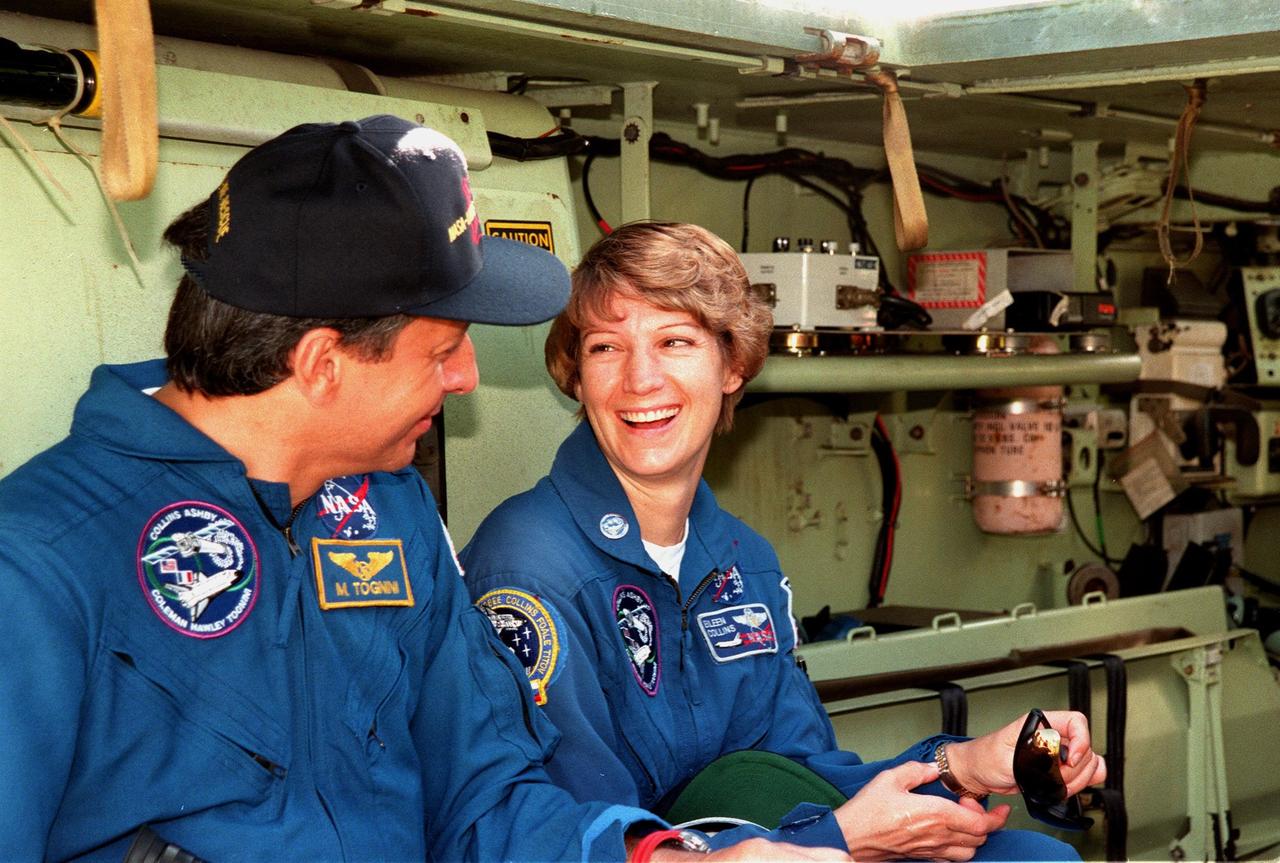
During emergency egress training inside an M-113 armored personnel carrier at the launch pad, Mission Specialist Michel Tognini of France and Commander Eileen M. Collins share a light moment. In preparation for their mission, the STS-93 crew are participating in Terminal Countdown Demonstration Test activities that also include a launch-day dress rehearsal culminating with a simulated main engine cut-off. Also at KSC are Pilot Jeffrey S. Ashby and Mission Specialists Steven A. Hawley (Ph.D.), and Catherine G. Coleman (Ph.D.). Collins is the first woman to serve as mission commander. Tognini represents the Centre National d'Etudes Spatiales (CNES). The primary mission of STS-93 is the release of the Chandra X-ray Observatory, which will allow scientists from around the world to obtain unprecedented X-ray images of exotic environments in space to help understand the structure and evolution of the universe. Chandra is expected to provide unique and crucial information on the nature of objects ranging from comets in our solar system to quasars at the edge of the observable universe. Since X-rays are absorbed by the Earth's atmosphere, space-based observatories are necessary to study these phenomena and allow scientists to analyze some of the greatest mysteries of the universe. The targeted launch date for STS-93 is no earlier than July 20 at 12:36 a.m. EDT from Launch Pad 39B
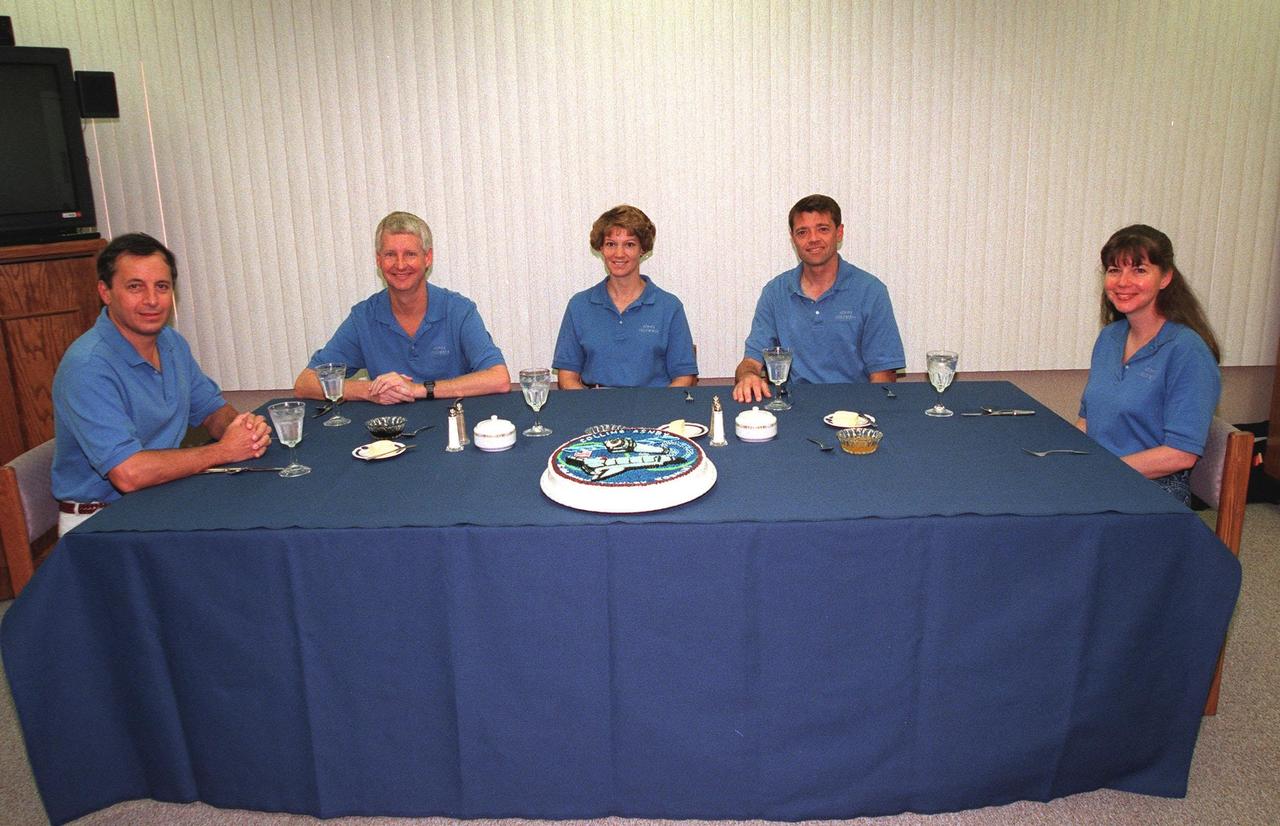
The STS-93 crew gathers a second time for a pre-launch breakfast in the Operations and Checkout Building before suiting up for launch. After Space Shuttle Columbia's July 20 launch attempt was scrubbed at the T-7 second mark in the countdown, the launch was rescheduled for Thursday, July 22, at 12:28 a.m. EDT. Seated from left are Mission Specialists Michel Tognini, of France, who represents the Centre National d'Etudes Spatiales (CNES), and Steven A. Hawley (Ph.D.), Commander Eileen M. Collins, Pilot Jeffrey S. Ashby, and Mission Specialist Catherine G. Coleman (Ph.D.). STS-93 is a five-day mission primarily to release the Chandra X-ray Observatory, which will allow scientists from around the world to study some of the most distant, powerful and dynamic objects in the universe. The new telescope is 20 to 50 times more sensitive than any previous X-ray telescope and is expected unlock the secrets of supernovae, quasars and black holes. Collins is the first woman to serve as commander of a Shuttle mission. The target landing date is July 26, 1999, at 11:24 p.m. EDT
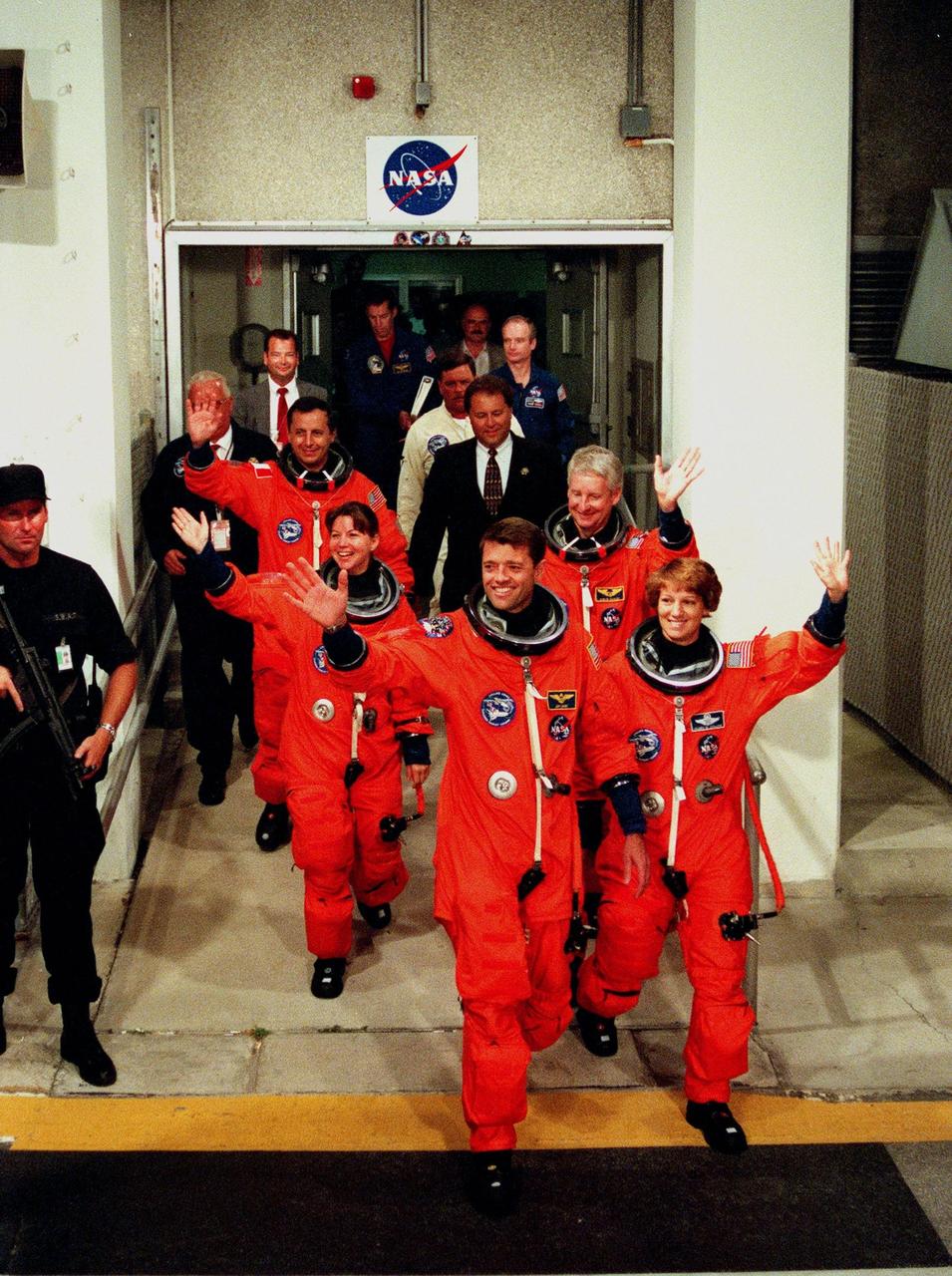
The STS-93 crew wave to onlookers as they walk out of the Operations and Checkout Building enroute to Launch Pad 39-B and liftoff of Space Shuttle Columbia. In their orange launch and entry suits, they are (starting at rear, left to right) Mission Specialists Michel Tognini of France, who represents the Centre National d'Etudes Spatiales (CNES), and Catherine G. Coleman (Ph.D.); Pilot Jeffrey S. Ashby; Mission Specialist Stephen A. Hawley (Ph.D.); and Commander Eileen M. Collins. STS-93 is a five-day mission primarily to release the Chandra X-ray Observatory, which will allow scientists from around the world to study some of the most distant, powerful and dynamic objects in the universe. The new telescope is 20 to 50 times more sensitive than any previous X-ray telescope and is expected unlock the secrets of supernovae, quasars and black holes. Collins is the first woman to serve as commander of a Shuttle mission. STS-93 is scheduled to lift off at 12:36 a.m. EDT July 20. The target landing date is July 24 at 11:31 p.m. EDT
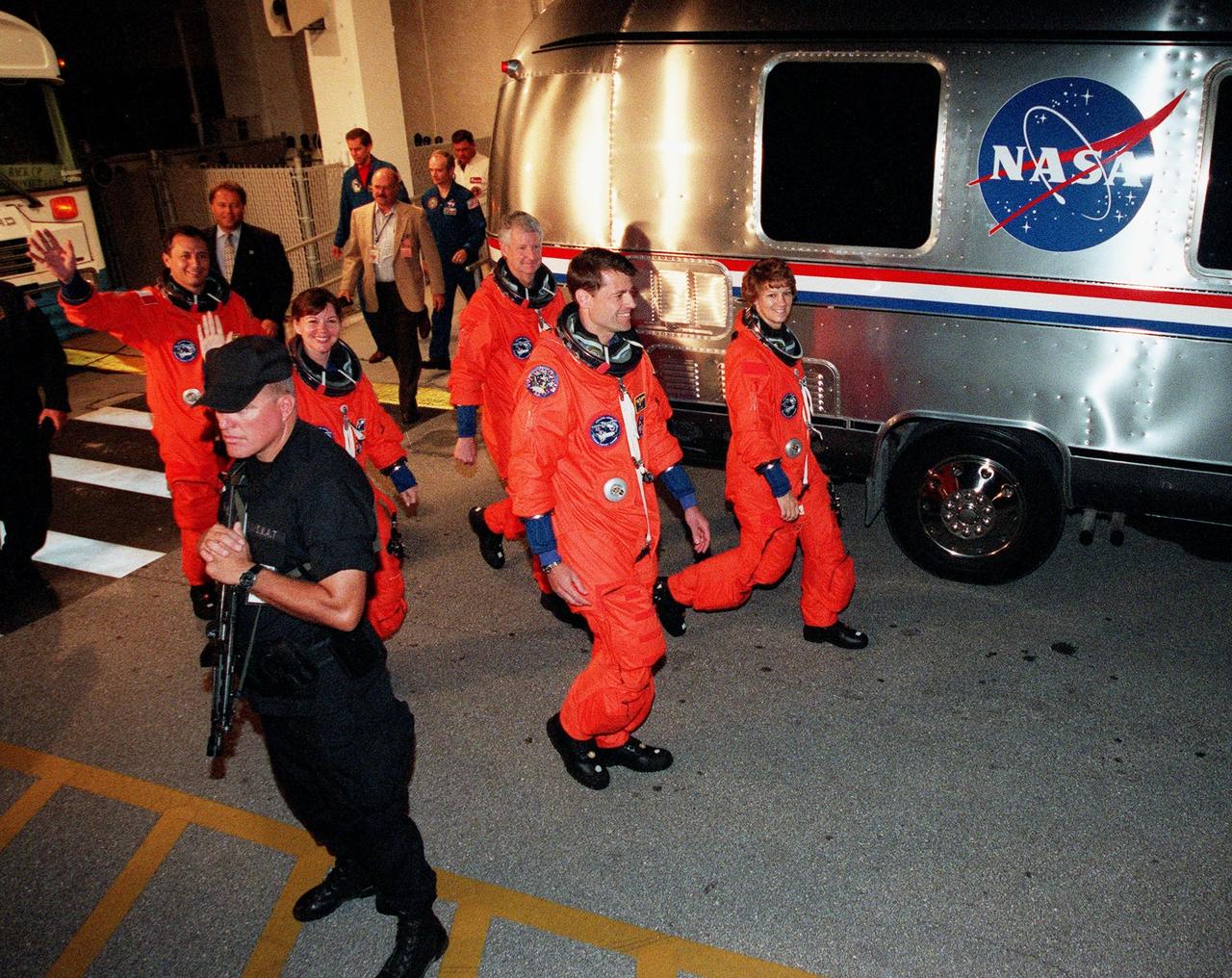
Flanked by security, the STS-93 crew wave to onlookers as they head for the "Astrovan" a second time to take them to Launch Pad 39-B and liftoff of Space Shuttle Columbia. After the July 20 launch attempt was scrubbed at the T-7 second mark in the countdown, the launch was rescheduled for Thursday, July 22, at 12:28 a.m. EDT. The target landing date is July 26, 1999, at 11:24 p.m. EDT. In their orange launch and entry suits, they are (starting at rear, left to right) Mission Specialists Michel Tognini of France, who represents the Centre National d'Etudes Spatiales (CNES), Catherine G. Coleman (Ph.D.), and Steven A. Hawley (Ph.D.); Pilot Jeffrey S. Ashby; and Commander Eileen M. Collins. STS-93 is a five-day mission primarily to release the Chandra X-ray Observatory, which will allow scientists from around the world to study some of the most distant, powerful and dynamic objects in the universe. The new telescope is 20 to 50 times more sensitive than any previous X-ray telescope and is expected unlock the secrets of supernovae, quasars and black holes. Collins is the first woman to serve as commander of a Shuttle mission
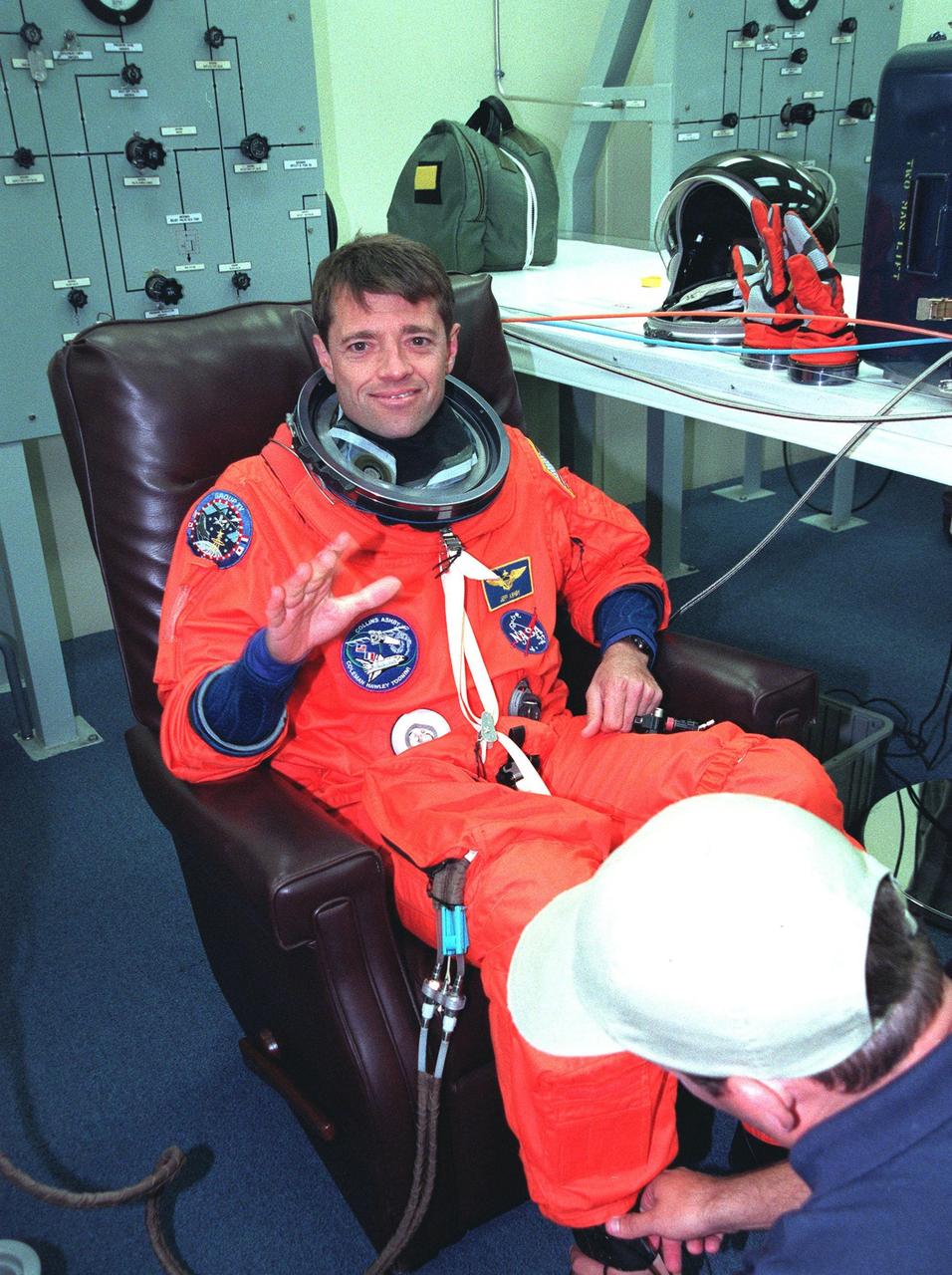
In the Operations and Checkout Building during final launch preparations for the second time, STS-93 Pilot Jeffrey S. Ashby waves after donning his launch and entry suit while a suit tech adjusts his boot. After Space Shuttle Columbia's July 20 launch attempt was scrubbed at the T-7 second mark in the countdown, the launch was rescheduled for Thursday, July 22, at 12:28 a.m. EDT. The target landing date is July 26, 1999, at 11:24 p.m. EDT. STS-93 is a five-day mission primarily to release the Chandra X-ray Observatory, which will allow scientists from around the world to study some of the most distant, powerful and dynamic objects in the universe. The new telescope is 20 to 50 times more sensitive than any previous X-ray telescope and is expected unlock the secrets of supernovae, quasars and black holes. The STS-93 crew numbers five: Commander Eileen M. Collins, Ashby, and Mission Specialists Stephen A. Hawley (Ph.D.), Catherine G. Coleman (Ph.D.) and Michel Tognini of France, with the Centre National d'Etudes Spatiales (CNES). Collins is the first woman to serve as commander of a shuttle mission
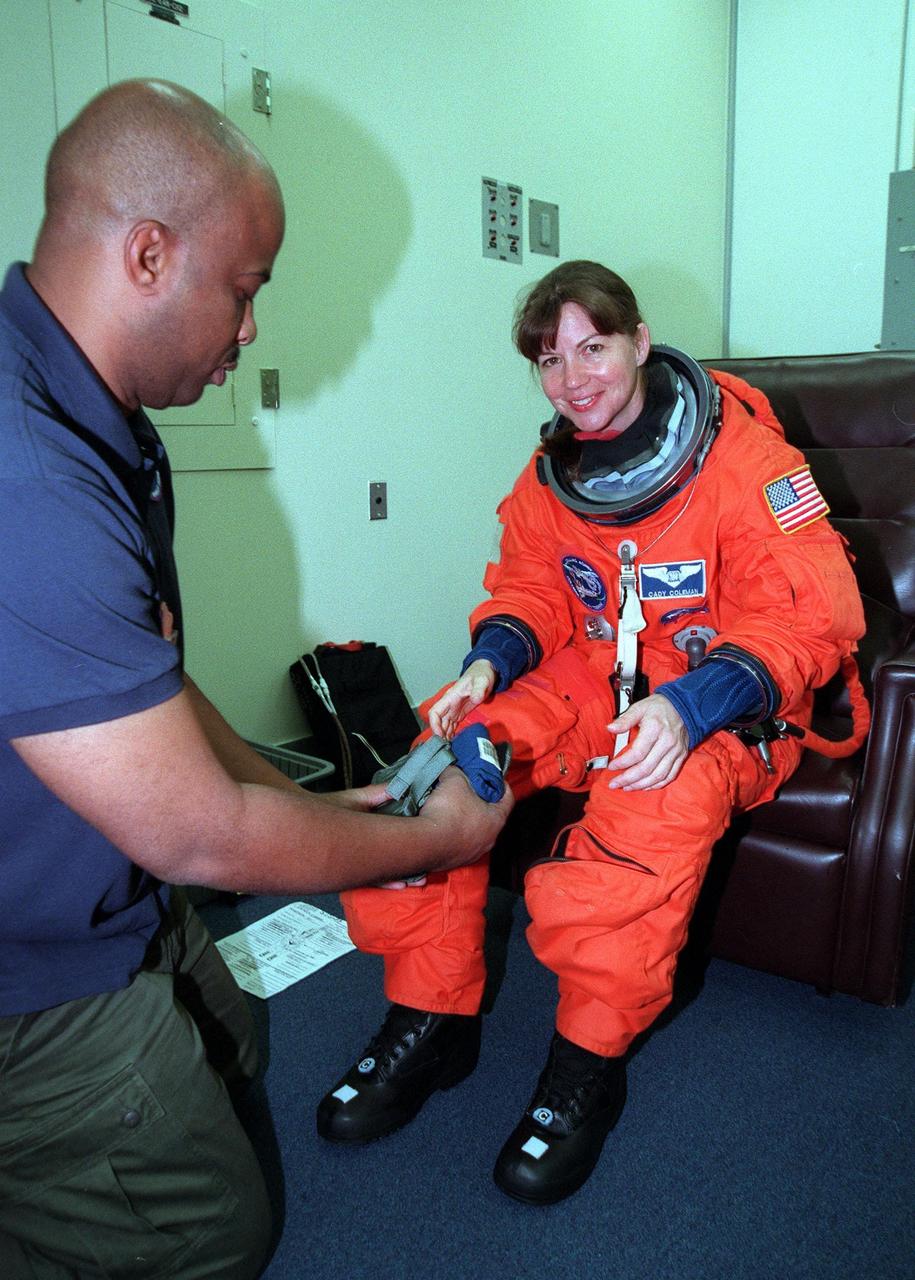
During final launch preparations in the Operations and Checkout Building, STS-93 Mission Specialist Catherine G. Coleman (Ph.D.) gets help with her launch and entry suit from a suit tech. After Space Shuttle Columbia's July 20 launch attempt was scrubbed at the T-7 second mark in the countdown, the launch was rescheduled for Thursday, July 22, at 12:28 a.m. EDT. The target landing date is July 26, 1999, at 11:24 p.m. EDT. STS-93 is a five-day mission primarily to release the Chandra X-ray Observatory, which will allow scientists from around the world to study some of the most distant, powerful and dynamic objects in the universe. The new telescope is 20 to 50 times more sensitive than any previous X-ray telescope and is expected unlock the secrets of supernovae, quasars and black holes. The STS-93 crew numbers five: Commander Eileen M. Collins, Pilot Jeffrey S. Ashby, and Mission Specialists Stephen A. Hawley (Ph.D.), Coleman and Michel Tognini of France, who represents the Centre National d'Etudes Spatiales (CNES). Collins is the first woman to serve as commander of a shuttle mission
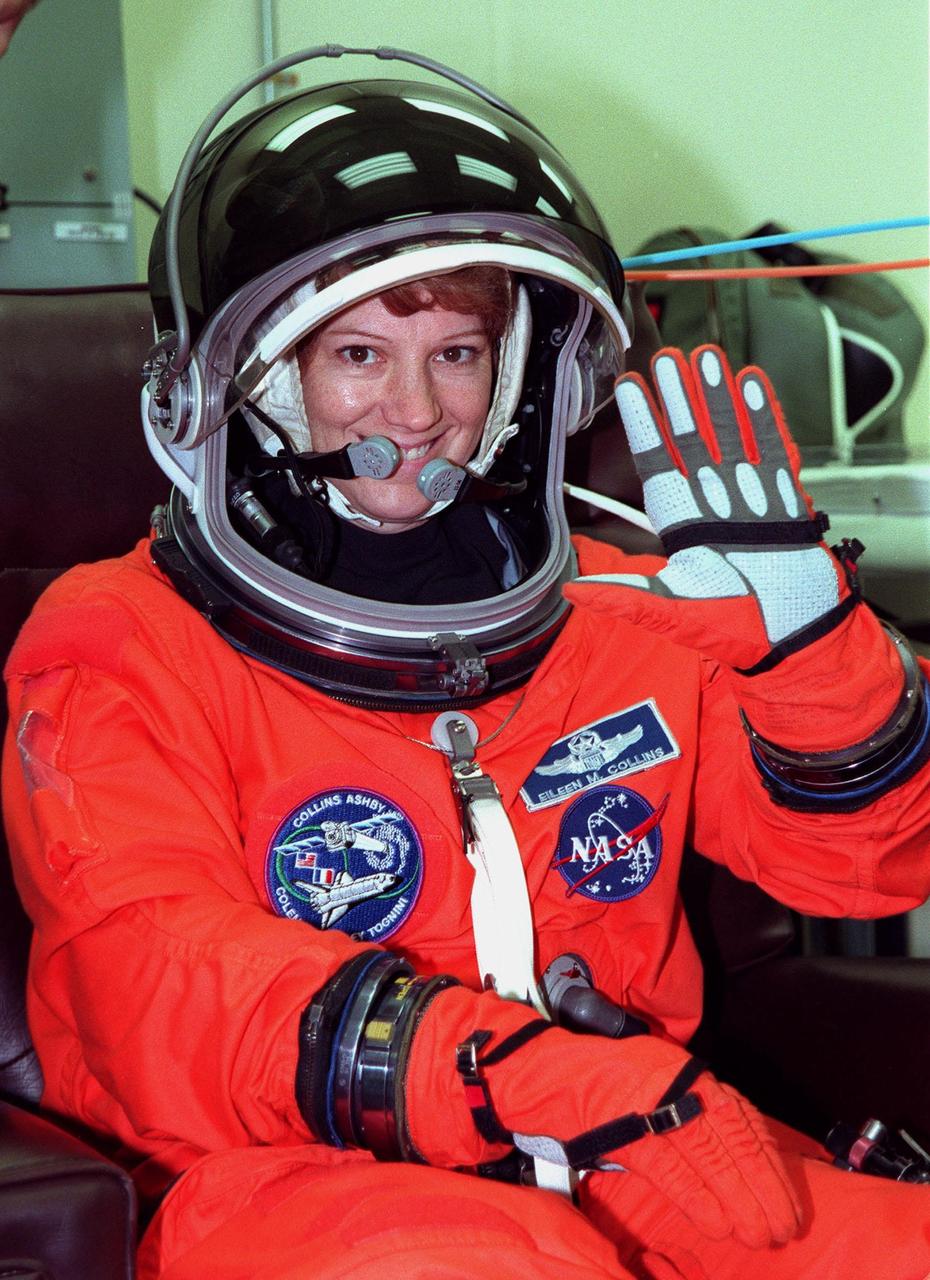
During final launch preparations in the Operations and Checkout Building, STS-93 Commander Eileen M. Collins waves after donning her launch and entry suit. After Space Shuttle Columbia's July 20 launch attempt was scrubbed at the T-7 second mark in the countdown, the launch was rescheduled for Thursday, July 22, at 12:28 a.m. EDT. The target landing date is July 26, 1999, at 11:24 p.m. EDT. STS-93 is a five-day mission primarily to release the Chandra X-ray Observatory, which will allow scientists from around the world to study some of the most distant, powerful and dynamic objects in the universe. The new telescope is 20 to 50 times more sensitive than any previous X-ray telescope and is expected unlock the secrets of supernovae, quasars and black holes. The STS-93 crew numbers five: Commander Collins, Pilot Jeffrey S. Ashby, and Mission Specialists Stephen A. Hawley (Ph.D.), Catherine G. Coleman (Ph.D.) and Michel Tognini of France, with the Centre National d'Etudes Spatiales (CNES). Collins is the first woman to serve as commander of a shuttle mission
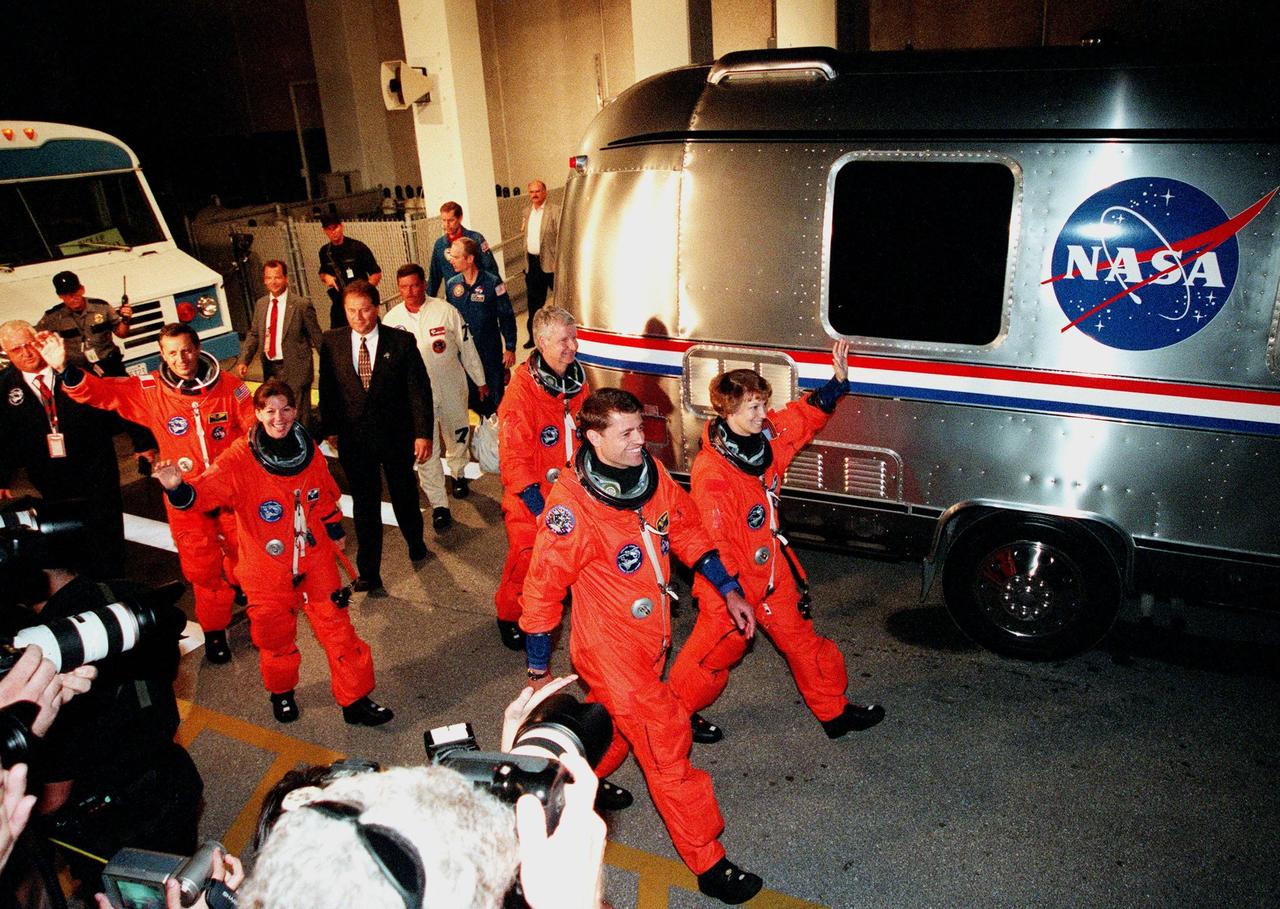
The STS-93 crew wave to onlookers as they walk to the "Astrovan," which will transport them to Launch Pad 39-B and liftoff of Space Shuttle Columbia. In their orange launch and entry suits, they are (starting at rear, left to right) Mission Specialists Michel Tognini of France, who represents the Centre National d'Etudes Spatiales (CNES), Catherine G. Coleman (Ph.D.), and Mission Specialist Stephen A. Hawley (Ph.D.); Pilot Jeffrey S. Ashby; and Commander Eileen M. Collins. STS-93 is a five-day mission primarily to release the Chandra X-ray Observatory, which will allow scientists from around the world to study some of the most distant, powerful and dynamic objects in the universe. The new telescope is 20 to 50 times more sensitive than any previous X-ray telescope and is expected unlock the secrets of supernovae, quasars and black holes. Collins is the first woman to serve as commander of a Shuttle mission. STS-93 is scheduled to lift off at 12:36 a.m. EDT July 20. The target landing date is July 24 at 11:31 p.m. EDT
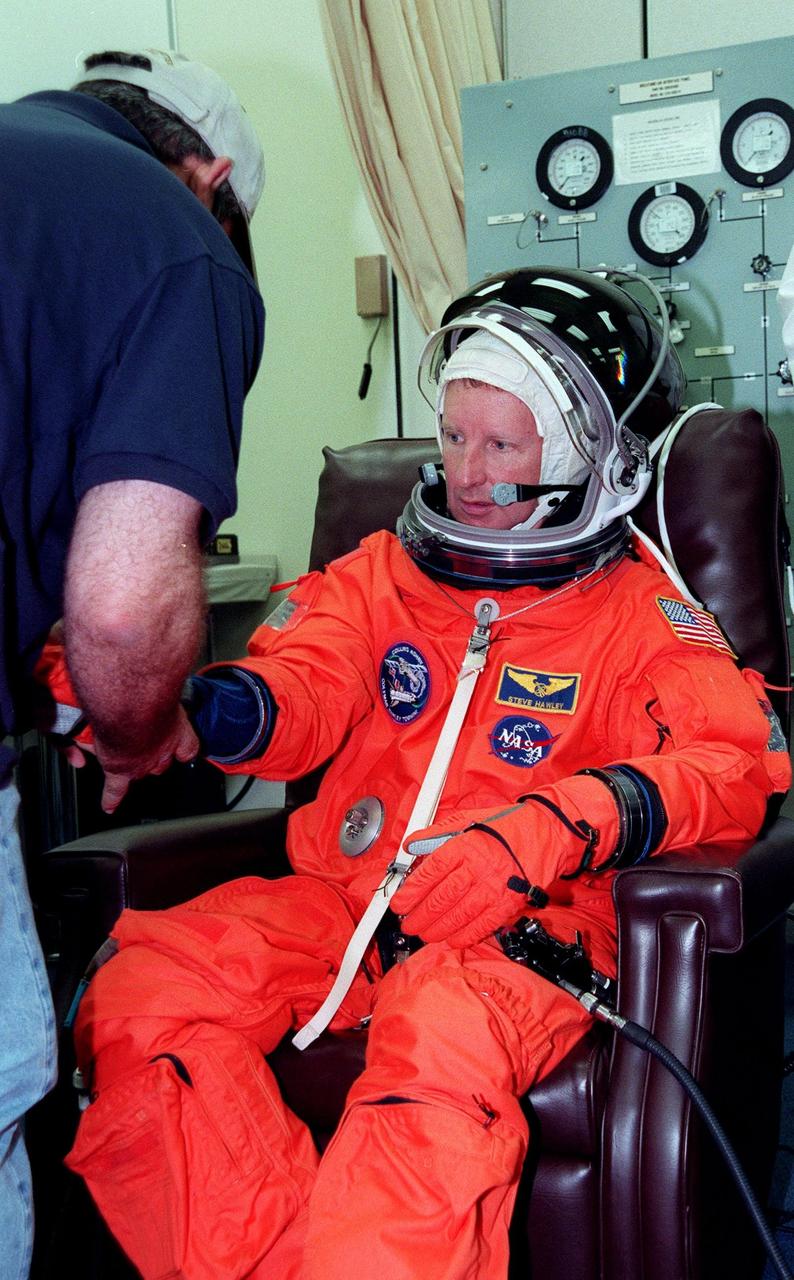
During final launch preparations in the Operations and Checkout Building, STS-93 Mission Specialist Steven A. Hawley (Ph.D.)gets help donning his launch and entry suit from a suit tech. After Space Shuttle Columbia's July 20 launch attempt was scrubbed at the T-7 second mark in the countdown, the launch was rescheduled for Thursday, July 22, at 12:28 a.m. EDT. The target landing date is July 26, 1999, at 11:24 p.m. EDT. STS-93 is a five-day mission primarily to release the Chandra X-ray Observatory, which will allow scientists from around the world to study some of the most distant, powerful and dynamic objects in the universe. The new telescope is 20 to 50 times more sensitive than any previous X-ray telescope and is expected unlock the secrets of supernovae, quasars and black holes. The STS-93 crew numbers five: Commander Eileen M. Collins, Pilot Jeffrey S. Ashby, and Mission Specialists Hawley, Catherine G. Coleman (Ph.D.) and Michel Tognini of France, with the Centre National d'Etudes Spatiales (CNES). Collins is the first woman to serve as commander of a shuttle mission
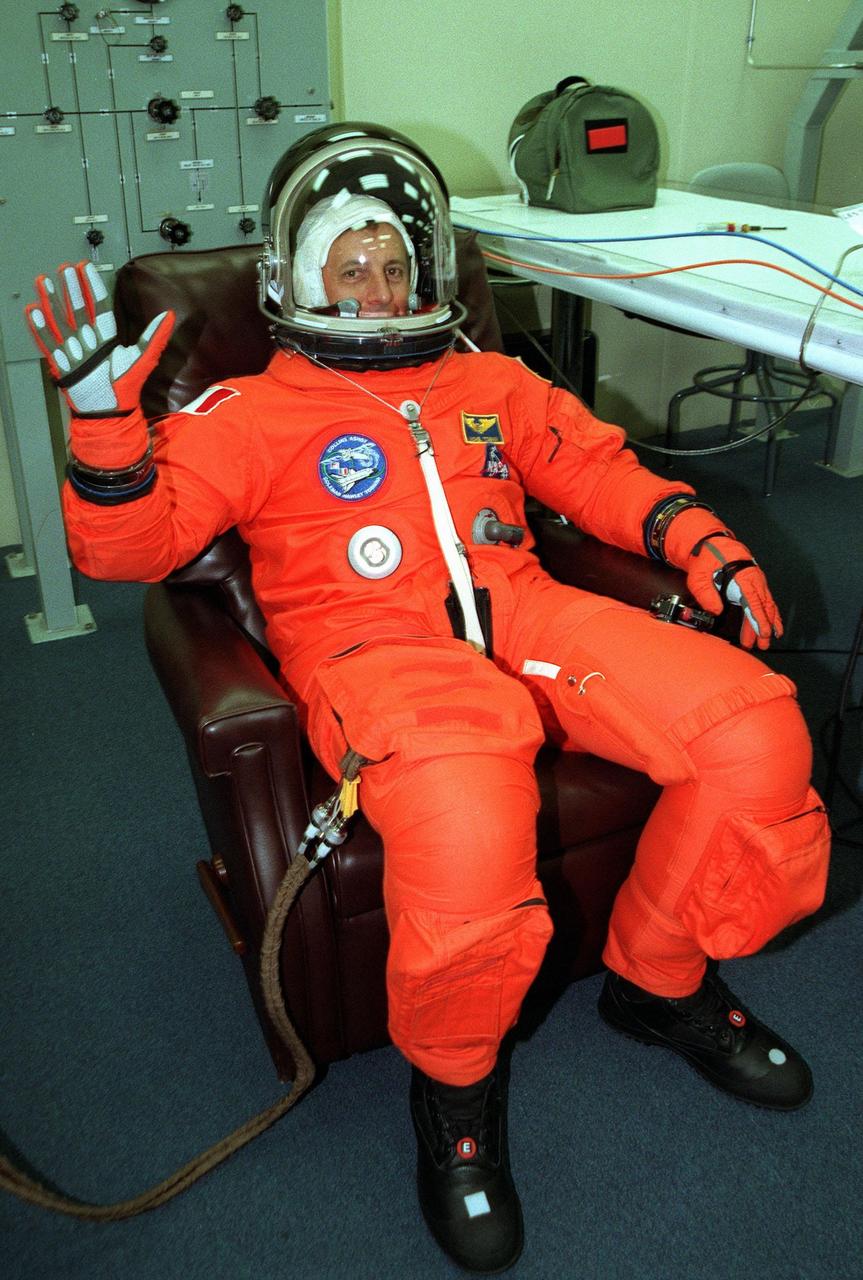
In the Operations and Checkout Building, STS-93 Mission Specialist Michel Tognini of France, who represents the Centre National d'Etudes Spatiales (CNES), waves after donning his launch and entry suit during final launch preparations for the second time. After Space Shuttle Columbia's July 20 launch attempt was scrubbed at the T-7 second mark in the countdown, the launch was rescheduled for Thursday, July 22, at 12:28 a.m. EDT. The target landing date is July 26, 1999, at 11:24 p.m. EDT. STS-93 is a five-day mission primarily to release the Chandra X-ray Observatory, which will allow scientists from around the world to study some of the most distant, powerful and dynamic objects in the universe. The new telescope is 20 to 50 times more sensitive than any previous X-ray telescope and is expected unlock the secrets of supernovae, quasars and black holes. The STS-93 crew numbers five: Commander Eileen M. Collins, Pilot Jeffrey S. Ashby, and Mission Specialists Stephen A. Hawley (Ph.D.), Catherine G. Coleman (Ph.D.) and Tognini. Collins is the first woman to serve as commander of a shuttle mission
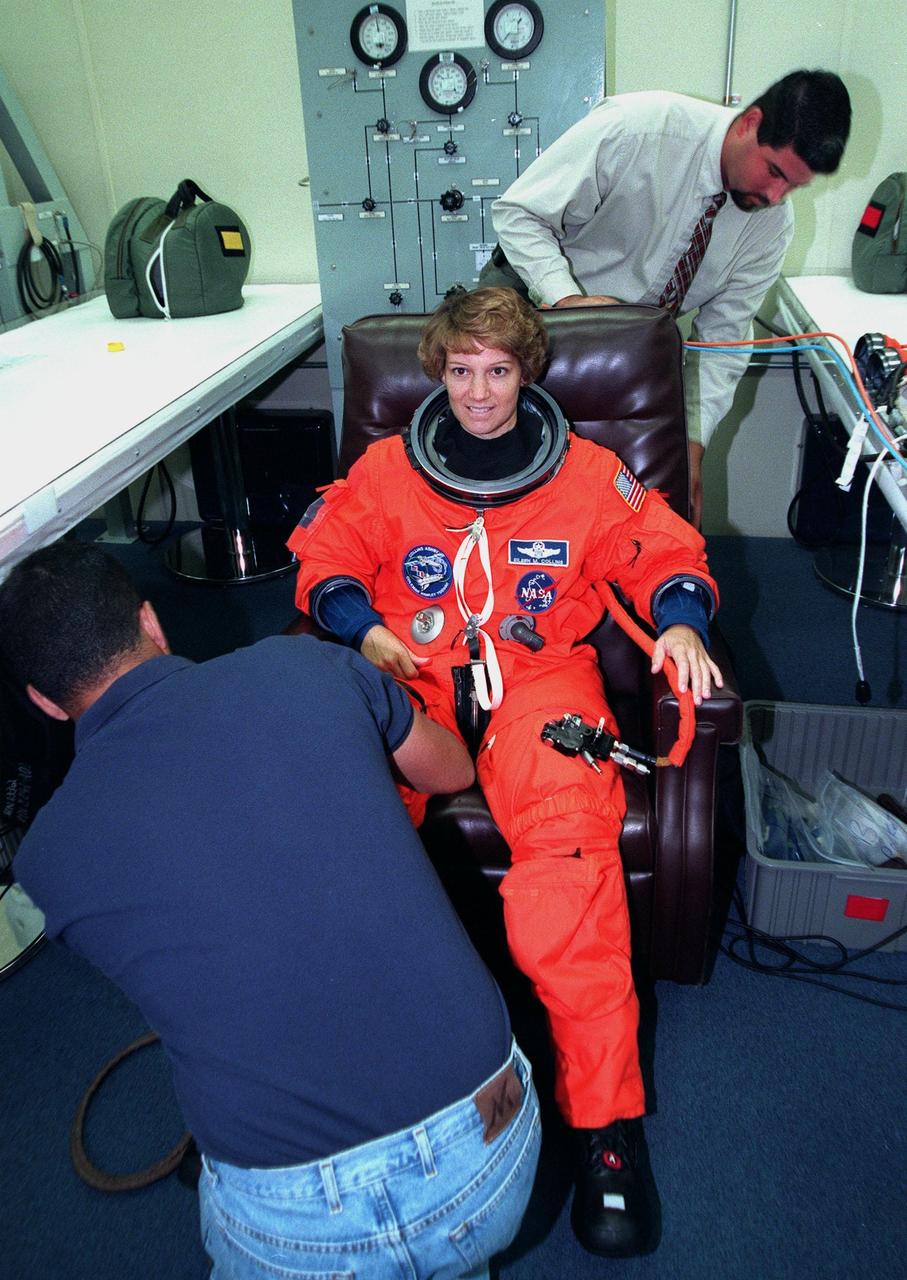
In the Operations and Checkout Building, STS-93 Commander Eileen M. Collins gets help donning her launch and entry suit. After Space Shuttle Columbia's July 20 launch attempt was scrubbed at the T-7 second mark in the countdown, the launch was rescheduled for Thursday, July 22, at 12:28 a.m. EDT. The target landing date is July 26, 1999, at 11:24 p.m. EDT. STS-93 is a five-day mission primarily to release the Chandra X-ray Observatory, which will allow scientists from around the world to study some of the most distant, powerful and dynamic objects in the universe. The new telescope is 20 to 50 times more sensitive than any previous X-ray telescope and is expected unlock the secrets of supernovae, quasars and black holes. The STS-93 crew numbers five: Commander Collins, Pilot Jeffrey S. Ashby, and Mission Specialists Stephen A. Hawley (Ph.D.), Catherine G. Coleman (Ph.D.) and Michel Tognini of France, with the Centre National d'Etudes Spatiales (CNES). Collins is the first woman to serve as commander of a shuttle mission
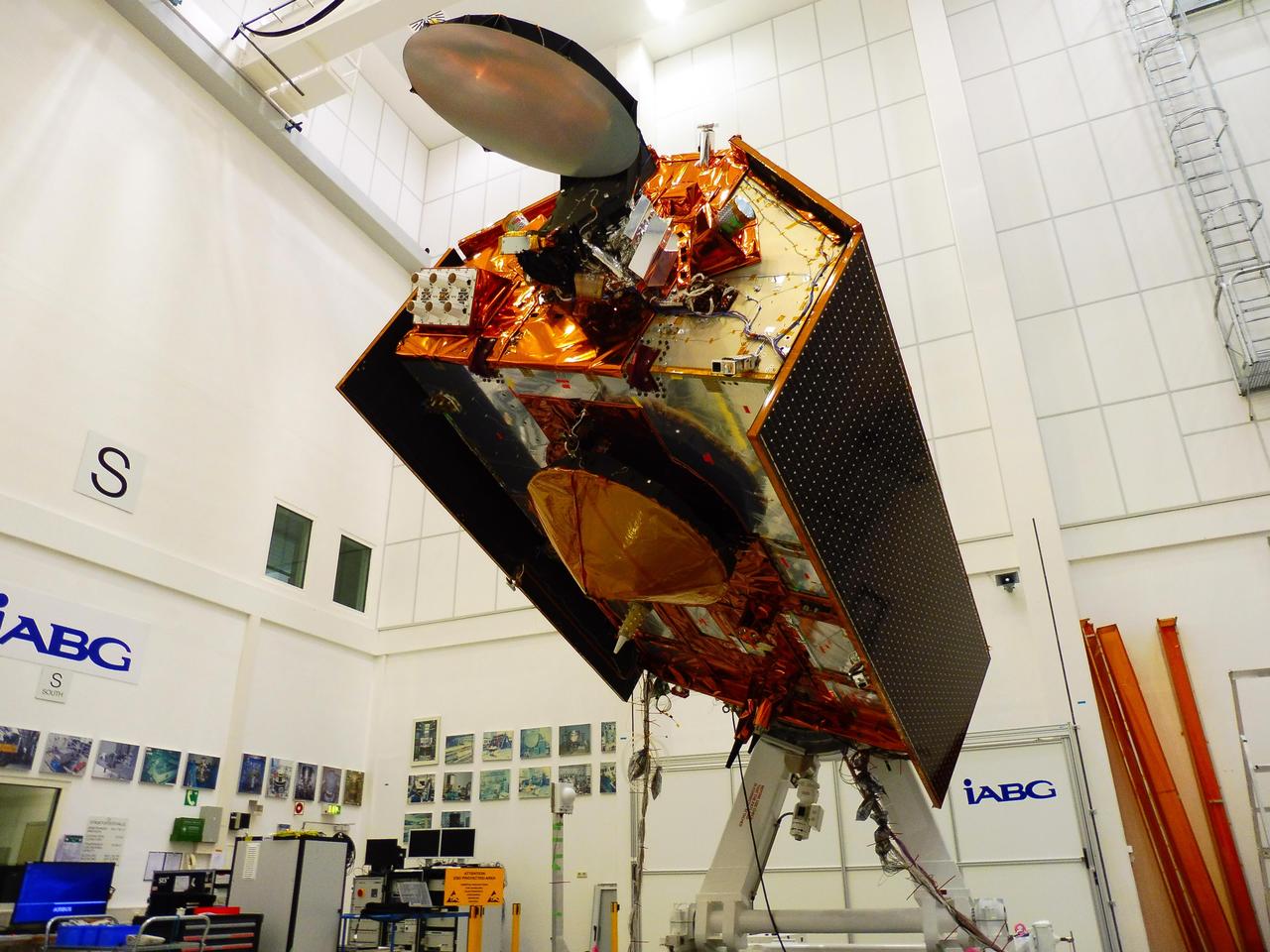
The Sentinel-6A spacecraft sits in its clean room in Germany's IABG space test center. The satellite is being prepared for a scheduled launch in November 2020 from Vandenberg Air Force Base in California. The spacecraft is part of Sentinel-6/Jason-CS, a 10-year mission by U.S and European agencies that will continue to study rising sea levels. The mission consists of two identical satellites, Sentinel-6A and Sentinel-6B, launching five years apart and follows in the footsteps of four other joint U.S.-European satellite missions — TOPEX/Poseidon and Jason-1, Ocean Surface Topography/Jason-2, and Jason-3 — that over the past three decades have documented Earth's oceans rising by an average of 0.1 inches (3 millimeters) per year. Sentinel-6/Jason-CS will study not just sea level change but also changes in ocean circulation, climate variability such as El Niño and La Niña, and weather patterns, including hurricanes and storms. It is being jointly developed by the European Space Agency (ESA), the European Organisation for the Exploitation of Meteorological Satellite (EUMETSAT), NASA and the National Oceanic and Atmospheric Administration (NOAA) with funding support from the European Commission and support from France's National Centre for Space Studies (CNES). NASA's contributions to the Sentinel-6 mission are science instrument payloads for the two Sentinel-6 satellites, launch services for those satellites, ground systems supporting the science instruments operations and support for the international Ocean Surface Topography Science Team. https://photojournal.jpl.nasa.gov/catalog/PIA23549
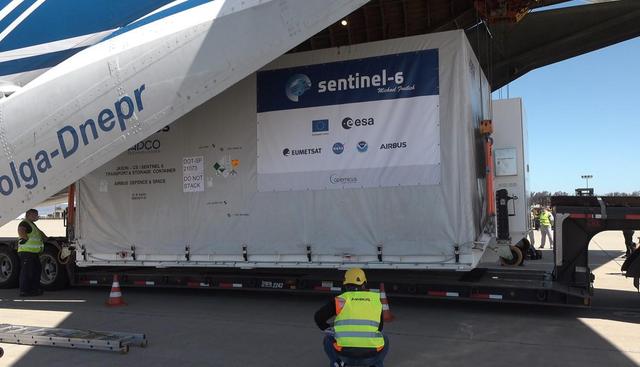
A shipping container containing the Sentinel-6 Michael Freilich satellite is removed from an Antonov 124 aircraft at Vandenberg Air Force Base in California on Sept. 24, 2020. The flight arrived at around 10:40 a.m. PDT (1:40 p.m. EDT) after a two-day journey from an IABG engineering facility near Munich, Germany. The ocean-monitoring satellite will undergo prelaunch tests before its scheduled launch on Nov. 10, 2020. Sentinel-6 Michael Freilich will begin a five-and-a-half-year mission to collect sea surface height measurements down to the centimeter for 90% of the world's oceans. The satellite is named after Dr. Michael Freilich, the former director of NASA's Earth Science Division and an instrumental figure in advancing ocean observations from space. Sentinel-6 Michael Freilich is one of two identical spacecraft that compose the Sentinel-6/Jason-CS (Continuity of Service) mission developed in partnership with ESA (the European Space Agency). ESA is developing the new Sentinel family of missions specifically to support the operational needs of the European Union's Copernicus program, the EU's Earth observation program managed by the European Commission. The spacecraft's twin, Sentinel-6B, will launch in 2025. Sentinel-6/Jason-CS is being jointly developed by ESA, the European Organisation for the Exploitation of Meteorological Satellites (EUMETSAT), NASA, and the National Oceanic and Atmospheric Administration, with funding support from the European Commission and technical support from France's National Centre for Space Studies (CNES). NASA JPL is contributing three science instruments for each Sentinel-6 satellite: the Advanced Microwave Radiometer, the Global Navigation Satellite System - Radio Occultation, and the Laser Retroreflector Array. NASA is also contributing launch services, ground systems supporting operation of the NASA science instruments, the science data processors for two of these instruments, and support for the international Ocean Surface Topography Science Team. https://photojournal.jpl.nasa.gov/catalog/PIA24103
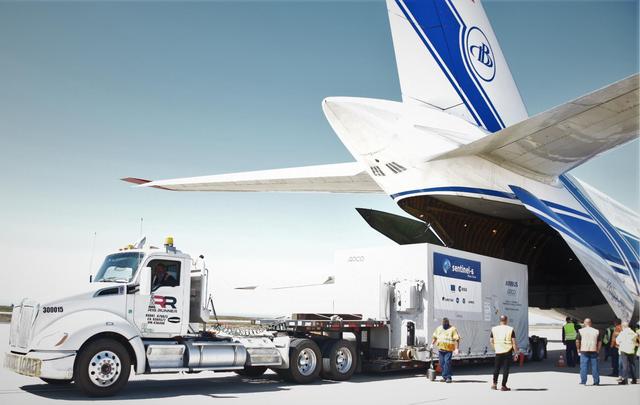
A shipping container containing the Sentinel-6 Michael Freilich satellite is transported on a truck to the SpaceX payload processing facility at Vandenberg Air Force Base after arriving in California on Sept. 24, 2020. An Antonov aircraft carrying the spacecraft arrived at around 10:40 a.m. PDT (1:40 p.m. EDT) after a two-day journey from an IABG engineering facility near Munich, Germany. The ocean-monitoring satellite will undergo prelaunch tests before its scheduled launch on Nov. 10, 2020. Sentinel-6 Michael Freilich will begin a five-and-a-half-year mission to collect sea surface height measurements down to the centimeter for 90% of the world's oceans. The satellite is named after Dr. Michael Freilich, the former director of NASA's Earth Science Division and an instrumental figure in advancing ocean observations from space. Sentinel-6 Michael Freilich is one of two identical spacecraft that compose the Sentinel-6/Jason-CS (Continuity of Service) mission developed in partnership with ESA (the European Space Agency). ESA is developing the new Sentinel family of missions to support the operational needs of the European Union's Copernicus program, the EU's Earth observation program managed by the European Commission. The spacecraft's twin, Sentinel-6B, will launch in 2025. Sentinel-6/Jason-CS is being jointly developed by ESA, the European Organisation for the Exploitation of Meteorological Satellites (EUMETSAT), NASA, and the National Oceanic and Atmospheric Administration, with funding support from the European Commission and technical support from France's National Centre for Space Studies (CNES). JPL, a division of Caltech in Pasadena, is contributing three science instruments for each Sentinel-6 satellite: the Advanced Microwave Radiometer, the Global Navigation Satellite System - Radio Occultation, and the Laser Retroreflector Array. NASA is also contributing launch services, ground systems supporting operation of the NASA science instruments, the science data processors for two of these instruments, and support for the international Ocean Surface Topography Science Team. https://photojournal.jpl.nasa.gov/catalog/PIA24104
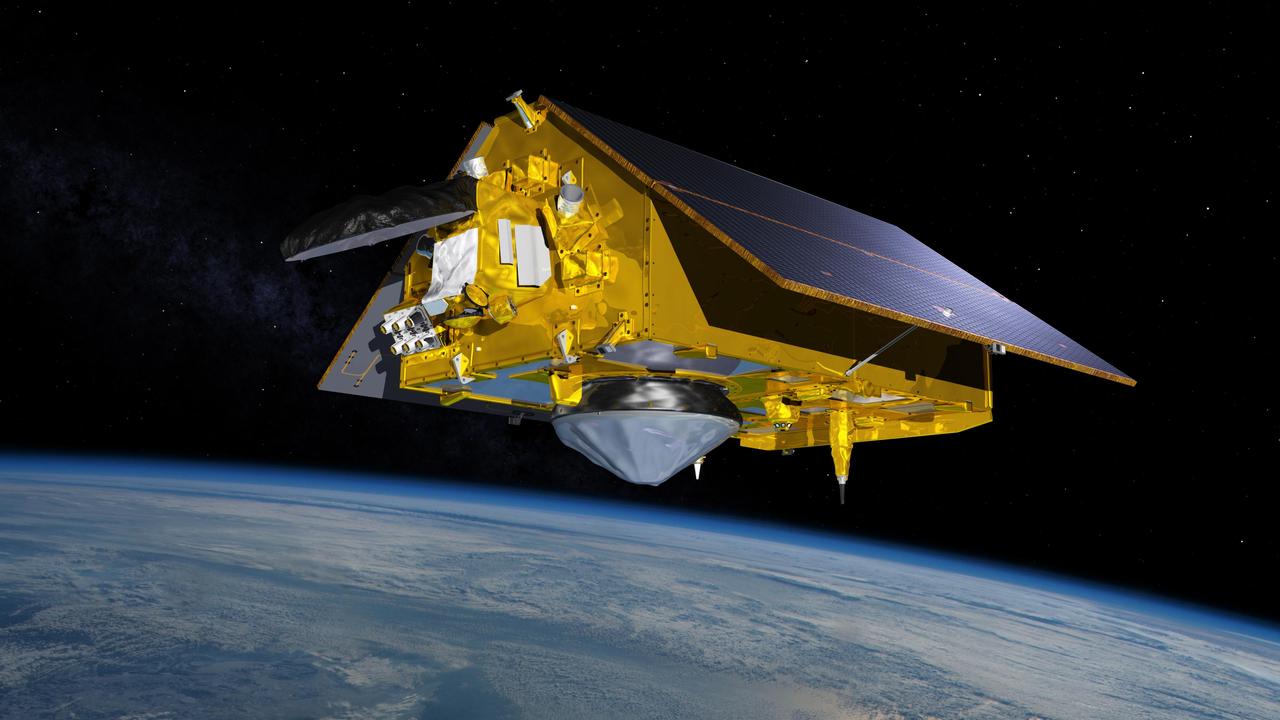
This illustration shows the Sentinel-6 Michael Freilich spacecraft in orbit above Earth with its deployable solar panels extended. As the world's latest ocean-monitoring satellite, it will collect the most accurate data yet on global sea level and how our oceans are rising in response to climate change. The mission will also collect precise data of atmospheric temperature and humidity that will help improve weather forecasts and climate models. Sentinel-6 Michael Freilich extends the near-30-year record of satellite measurements of sea level that was initiated by the U.S.-European TOPEX/Poseidon mission in 1992 and continued with the Jason-1, 2, and 3 series of sea level observation satellites. Launched in 2016, Jason-3 is currently providing data. The satellite is named after Dr. Michael Freilich, the former director of NASA's Earth Science Division and an instrumental figure in advancing ocean observations from space. Sentinel-6 Michael Freilich is one of two identical spacecraft that compose the Sentinel-6/Jason-CS (Continuity of Service) mission developed in partnership with ESA (the European Space Agency). Other partners include the National Oceanic and Atmospheric Administration (NOAA), the intergovernmental European Organisation for the Exploitation of Meteorological Satellites (EUMETSAT), and France's National Centre for Space Studies (CNES). ESA is developing the new Sentinel family of missions to support the operational needs of the European Union's Copernicus program, the EU's Earth observation program managed by the European Commission. The spacecraft's twin, Sentinel-6B, will launch in 2025. https://photojournal.jpl.nasa.gov/catalog/PIA24105
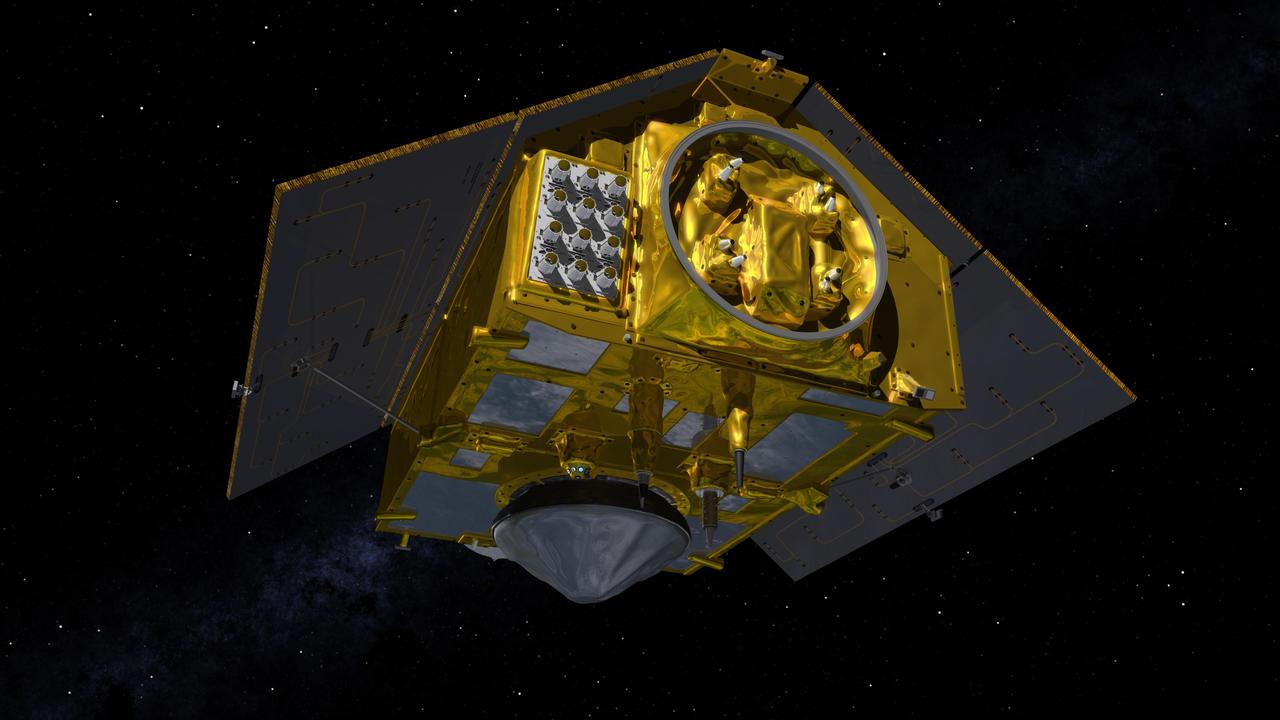
This illustration shows the rear of the Sentinel-6 Michael Freilich spacecraft in orbit above Earth with its deployable solar panels extended. As the world's latest ocean-monitoring satellite, it is launching on Nov. 10, 2020, to collect the most accurate data yet on global sea level and how our oceans are rising in response to climate change. The mission will also collect precise data of atmospheric temperature and humidity that will help improve weather forecasts and climate models. The conelike instrument on the bottom (Earth-facing side) of the spacecraft is the satellite's Poseidon-4 radar altimeter. When used with the Advanced Microwave Radiometer (AMR-C) attached to the front of the spacecraft, both instruments will be used to make precise measurements of sea surface height. The gray rectangle with 12 cones attached at the rear-left of the spacecraft is part of the Global Navigation Satellite System - Radio Occultation (GNSS-RO) instrument. Sentinel-6 Michael Freilich extends the near-30-year record of satellite measurements of sea level initiated by the U.S.-European TOPEX/Poseidon mission in 1992 and that continued with the Jason-1, 2, and 3 series of sea level observation satellites. Launched in 2016, Jason-3 is currently providing data. The satellite is named after Dr. Michael Freilich, the former director of NASA's Earth Science Division and an instrumental figure in advancing ocean observations from space. Sentinel-6 Michael Freilich is one of two identical spacecraft that compose the Sentinel-6/Jason-CS (Continuity of Service) mission developed in partnership with ESA (the European Space Agency). Other partners include the National Oceanic and Atmospheric Administration (NOAA), the intergovernmental European Organisation for the Exploitation of Meteorological Satellites (EUMETSAT), and France's National Centre for Space Studies (CNES). ESA is developing the new Sentinel family of missions to support the operational needs of the European Union's Copernicus program, the EU's Earth observation program managed by the European Commission. The spacecraft's twin, Sentinel-6B, will launch in 2025. https://photojournal.jpl.nasa.gov/catalog/PIA24107
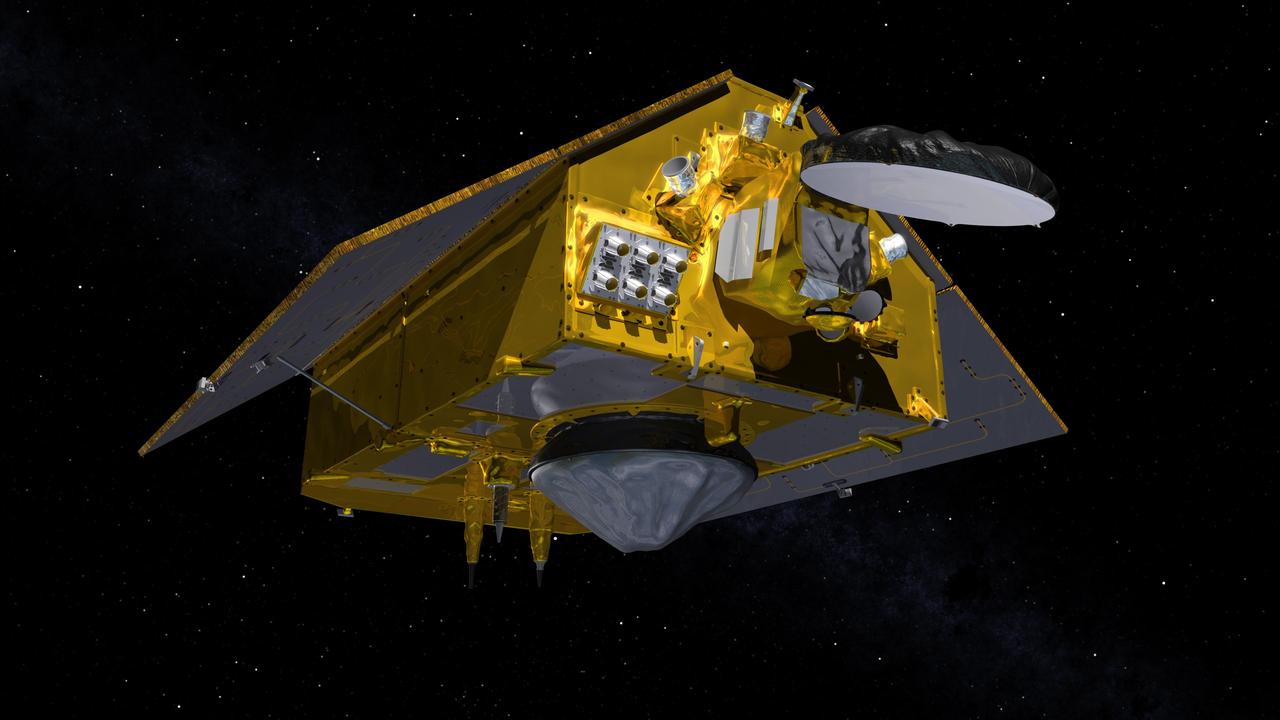
This illustration shows the front of the Sentinel-6 Michael Freilich spacecraft in orbit above Earth with its deployable solar panels extended. As the world's latest ocean-monitoring satellite, it is launching on Nov. 10, 2020, to collect the most accurate data yet on global sea level and how our oceans are rising in response to climate change. The mission will also collect precise data of atmospheric temperature and humidity that will help improve weather forecasts and climate models. The conelike instrument on the bottom (Earth-facing side) of the spacecraft is the satellite's Poseidon-4 radar altimeter. The disklike instrument at the front of the spacecraft is the Advanced Microwave Radiometer (AMR-C). Both instruments will be used together to measure ocean surface height. The gray rectangle with six cones attached at the front-left of the spacecraft is part of the Global Navigation Satellite System - Radio Occultation (GNSS-RO) instrument. Sentinel-6 Michael Freilich extends the near-30-year record of satellite measurements of sea level initiated by the U.S.-European TOPEX/Poseidon mission in 1992 and that continued with the Jason-1, 2, and 3 series of sea level observation satellites. Launched in 2016, Jason-3 is currently providing data. The satellite is named after Dr. Michael Freilich, the former director of NASA's Earth Science Division and an instrumental figure in advancing ocean observations from space. Sentinel-6 Michael Freilich is one of two identical spacecraft that compose the Sentinel-6/Jason-CS (Continuity of Service) mission developed in partnership with ESA (the European Space Agency). Other partners include the National Oceanic and Atmospheric Administration (NOAA), the intergovernmental European Organisation for the Exploitation of Meteorological Satellites (EUMETSAT), and France's National Centre for Space Studies (CNES). ESA is developing the new Sentinel family of missions to support the operational needs of the European Union's Copernicus program, the EU's Earth observation program managed by the European Commission. The spacecraft's twin, Sentinel-6B, will launch in 2025. https://photojournal.jpl.nasa.gov/catalog/PIA24106
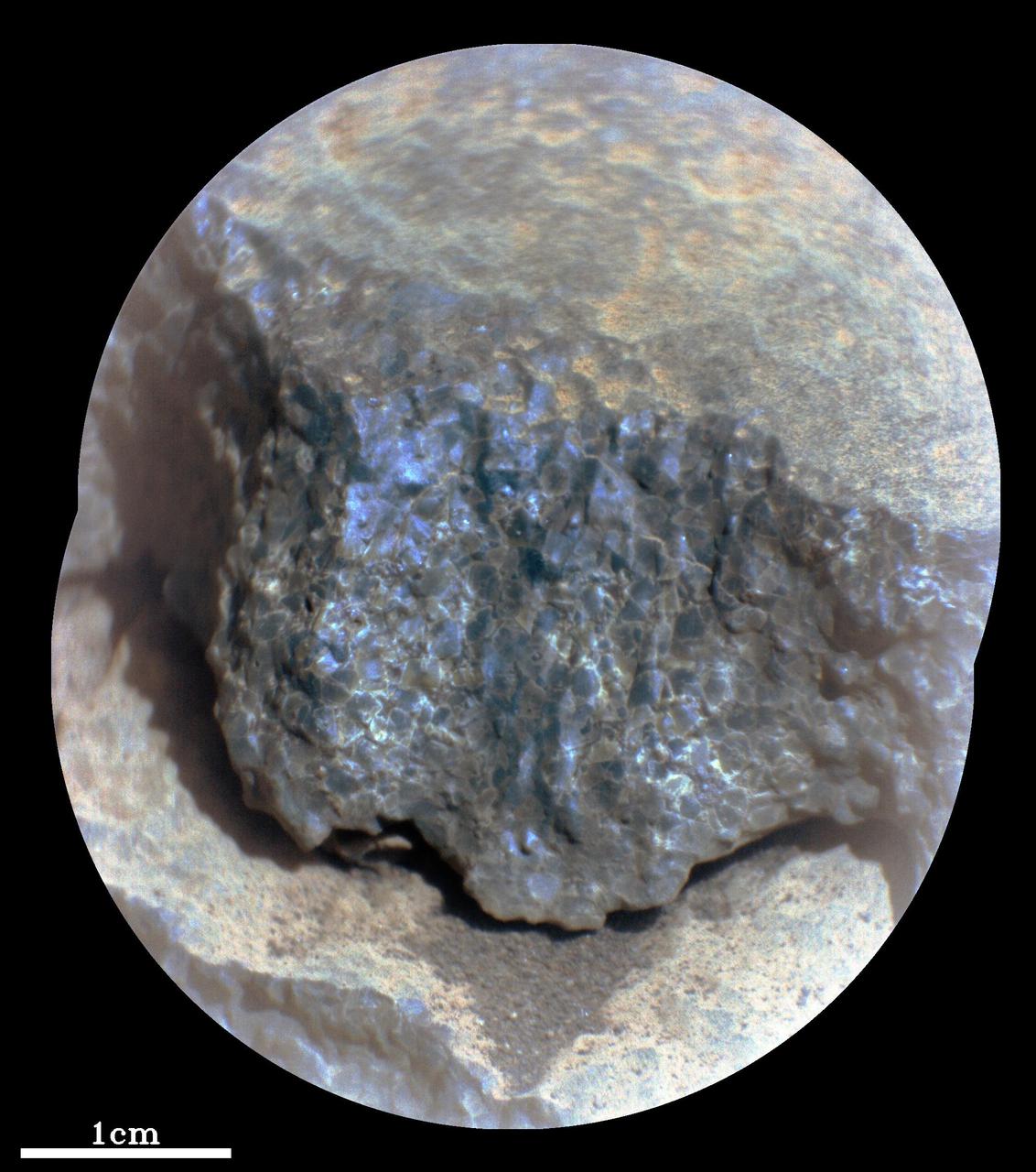
This enhanced-color close-up of a rock target called "Cine" was captured by the SuperCam instrument aboard NASA's Perseverance Mars rover on Sept. 17, 2021, the 206th Martian day, or sol, of rover's mission. SuperCam’s Remote Microscopic Imager took two images that were later combined to form this close-up. The target is 92 inches (2 meters) away, seen from the rover's mast. The image shows a rock layer made up of tightly packed millimeter-size gray, angular grains, or crystals. The image on the right shows a detail of the grain/crystal texture. The composition of this rock target was investigated with SuperCam's laser and spectrometer, along with the Mastcam-Z camera. Using these instruments, scientists can study the chemical composition of rocks from a distance. Analysis of "Cine" showed that it is rich in the mineral olivine. After the image was taken, the mission’s science team debated whether the rock is igneous (volcanic) or consists of fine sedimentary grains of igneous material that were cemented together in a watery environment. SuperCam is led by Los Alamos National Laboratory in New Mexico, where the instrument's body unit was developed. That part of the instrument includes several spectrometers as well as control electronics and software. The mast unit, including the Remote Microscopic Imager used for these images, was developed and built by several laboratories of the CNRS (the French research center) and French universities under the contracting authority of Centre National d'Etudes Spatiales (CNES), the French space agency. A key objective for Perseverance's mission on Mars is astrobiology, including the search for signs of ancient microbial life. The rover will characterize the planet's geology and past climate, pave the way for human exploration of the Red Planet, and be the first mission to collect and cache Martian rock and regolith (broken rock and dust). Subsequent NASA missions, in cooperation with ESA (European Space Agency), would send spacecraft to Mars to collect these sealed samples from the surface and return them to Earth for in-depth analysis. The Mars 2020 Perseverance mission is part of NASA's Moon to Mars exploration approach, which includes Artemis missions to the Moon that will help prepare for human exploration of the Red Planet. https://photojournal.jpl.nasa.gov/catalog/PIA24936
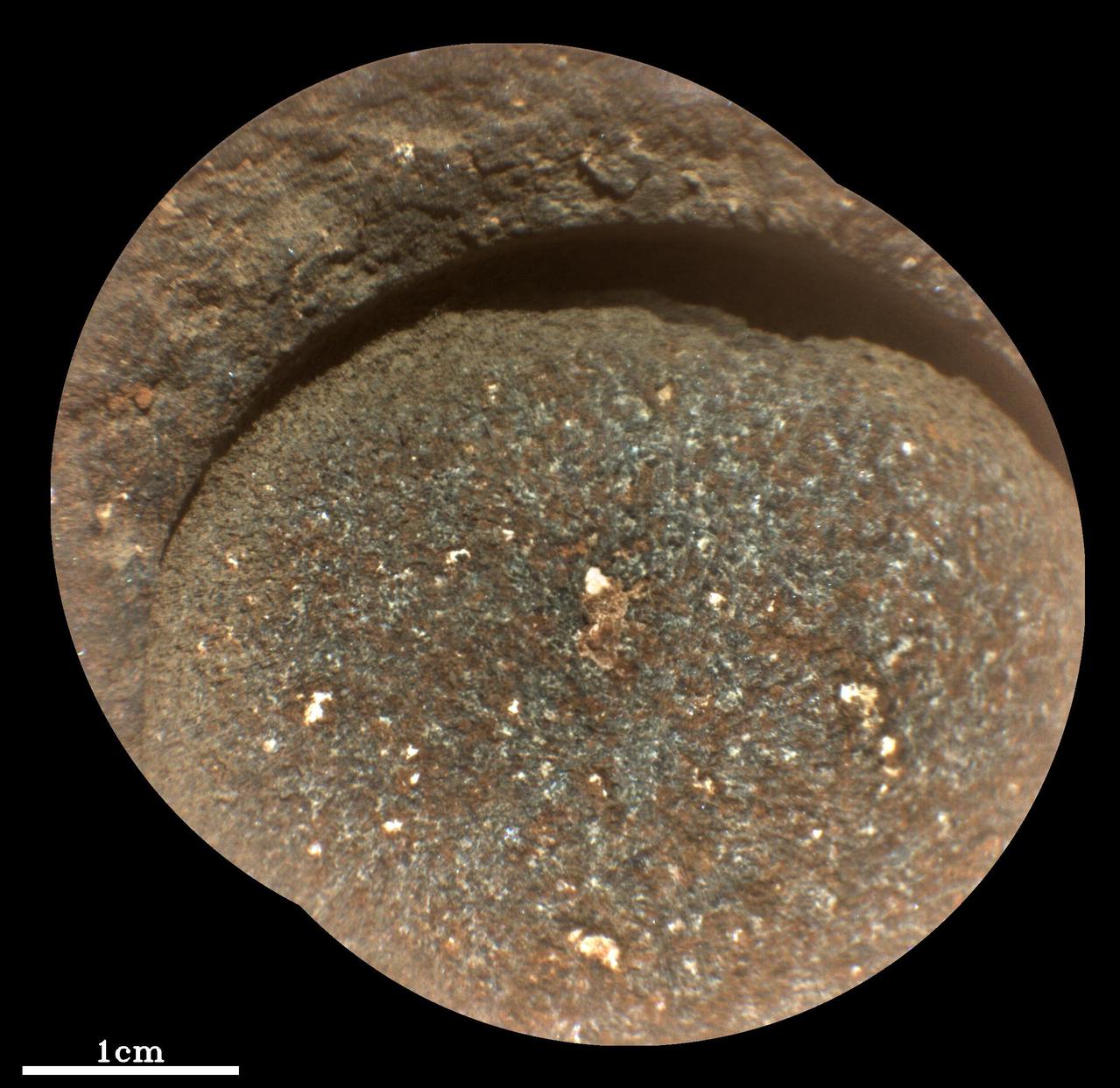
NASA's Perseverance Mars rover used its abrasion tool to grind down the rock surface at this target, nicknamed "Bellegarde," on Aug. 29, 2021, the 188th Martian day, or sol, of the mission. The abraded patch is 0.4 inches (5 centimeters) in diameter. The mission has nicknamed the rock itself "Rochette" and acquired its first two core samples from it. The rover abrades rocks using a tool on its robotic arm before drilling them in order to clear away dust and weathering rinds, allowing other instruments to study the rocks and determine if scientists want to grab a sample of them. This close-up image was produced by Perseverance's SuperCam instrument in natural color, as it would appear under daytime lighting conditions. Besides imagery, SuperCam has a rock-vaporizing laser and spectrometer. By studying a rock's vapor after each laser zap, scientists can study the chemical composition of rocks from a distance. Perseverance landed in Mars' Jezero Crater on Feb. 18, 2021, and has been exploring the floor of the crater since. At the time these images were taken, Perseverance was in an area nicknamed the "Crater Floor Fractured Rough" area. SuperCam is led by Los Alamos National Laboratory in New Mexico, where the instrument's Body Unit was developed. That part of the instrument includes several spectrometers as well as control electronics and software. The Mast Unit, including the Remote Microscopic Imager used for these images, was developed and built by several laboratories of the CNRS (the French research center) and French universities under the contracting authority of Centre National d'Etudes Spatiales (CNES, the French space agency). A key objective for Perseverance's mission on Mars is astrobiology, including the search for signs of ancient microbial life. The rover will characterize the planet's geology and past climate, pave the way for human exploration of the Red Planet, and be the first mission to collect and cache Martian rock and regolith (broken rock and dust). Subsequent NASA missions, in cooperation with ESA (European Space Agency), would send spacecraft to Mars to collect these sealed samples from the surface and return them to Earth for in-depth analysis. The Mars 2020 Perseverance mission is part of NASA's Moon to Mars exploration approach, which includes Artemis missions to the Moon that will help prepare for human exploration of the Red Planet. https://photojournal.jpl.nasa.gov/catalog/PIA24768
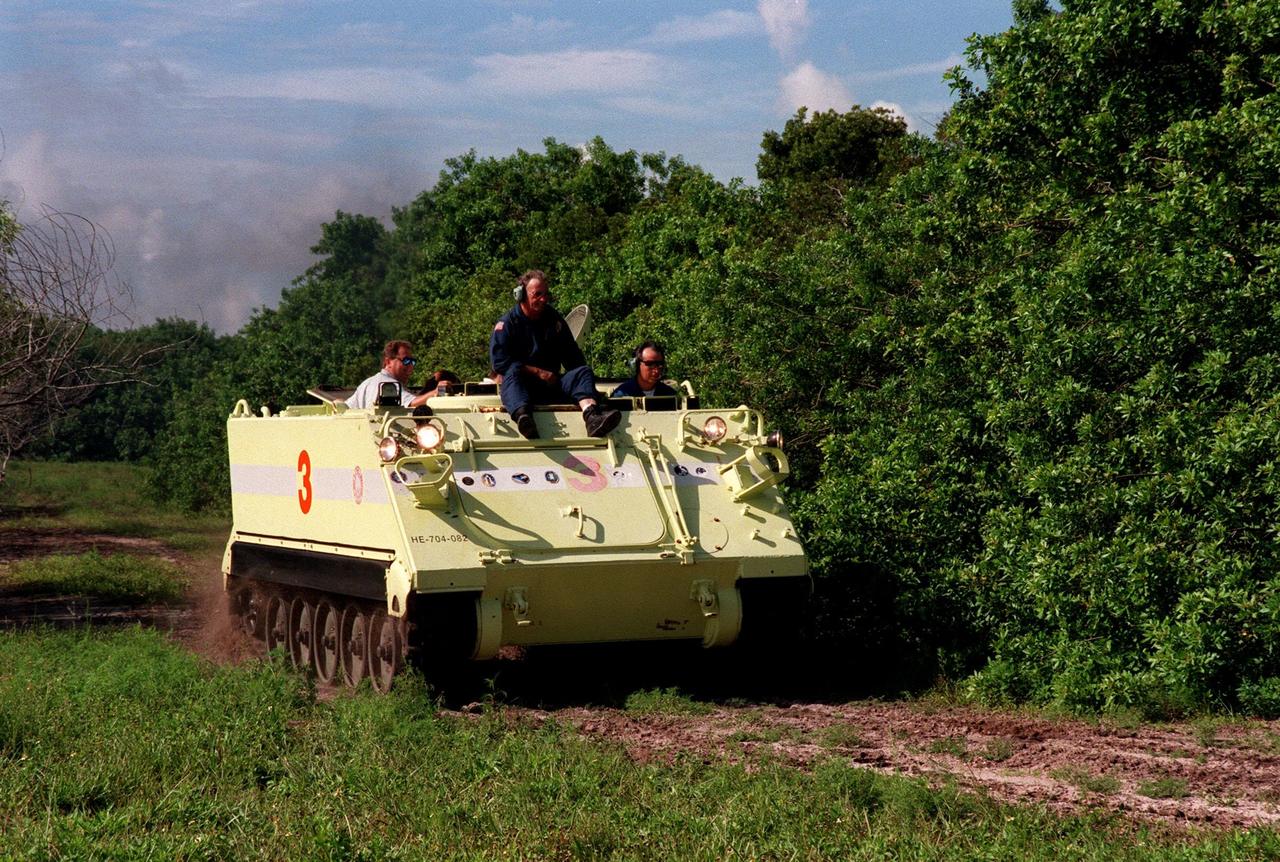
Under the watchful eyes of KSC Fire Department trainer Capt. George Hoggard (seated on the front), STS-93 Mission Specialist Michel Tognini of France (right) drives the M-113 armored personnel carrier during emergency egress training at the launch pad. Tognini represents the Centre National d'Etudes Spatiales (CNES). At the far left is Roland Nedelkovich, with the Vehicle Integration Test Team, JSC. In preparation for their mission, the STS-93 crew are participating in Terminal Countdown Demonstration Test activities that also include a launch-day dress rehearsal culminating with a simulated main engine cut-off. Others in the crew participating are Commander Eileen M. Collins, Pilot Jeffrey S. Ashby, and Mission Specialists Steven A. Hawley (Ph.D.) and Catherine G. Coleman (Ph.D.) Collins is the first woman to serve as a Shuttle commander. The primary mission of STS-93 is the release of the Chandra X-ray Observatory, which will allow scientists from around the world to obtain unprecedented X-ray images of exotic environments in space to help understand the structure and evolution of the universe. Chandra is expected to provide unique and crucial information on the nature of objects ranging from comets in our solar system to quasars at the edge of the observable universe. Since X-rays are absorbed by the Earth's atmosphere, space-based observatories are necessary to study these phenomena and allow scientists to analyze some of the greatest mysteries of the universe. The targeted launch date for STS-93 is no earlier than July 20 at 12:36 a.m. EDT from Launch Pad 39B
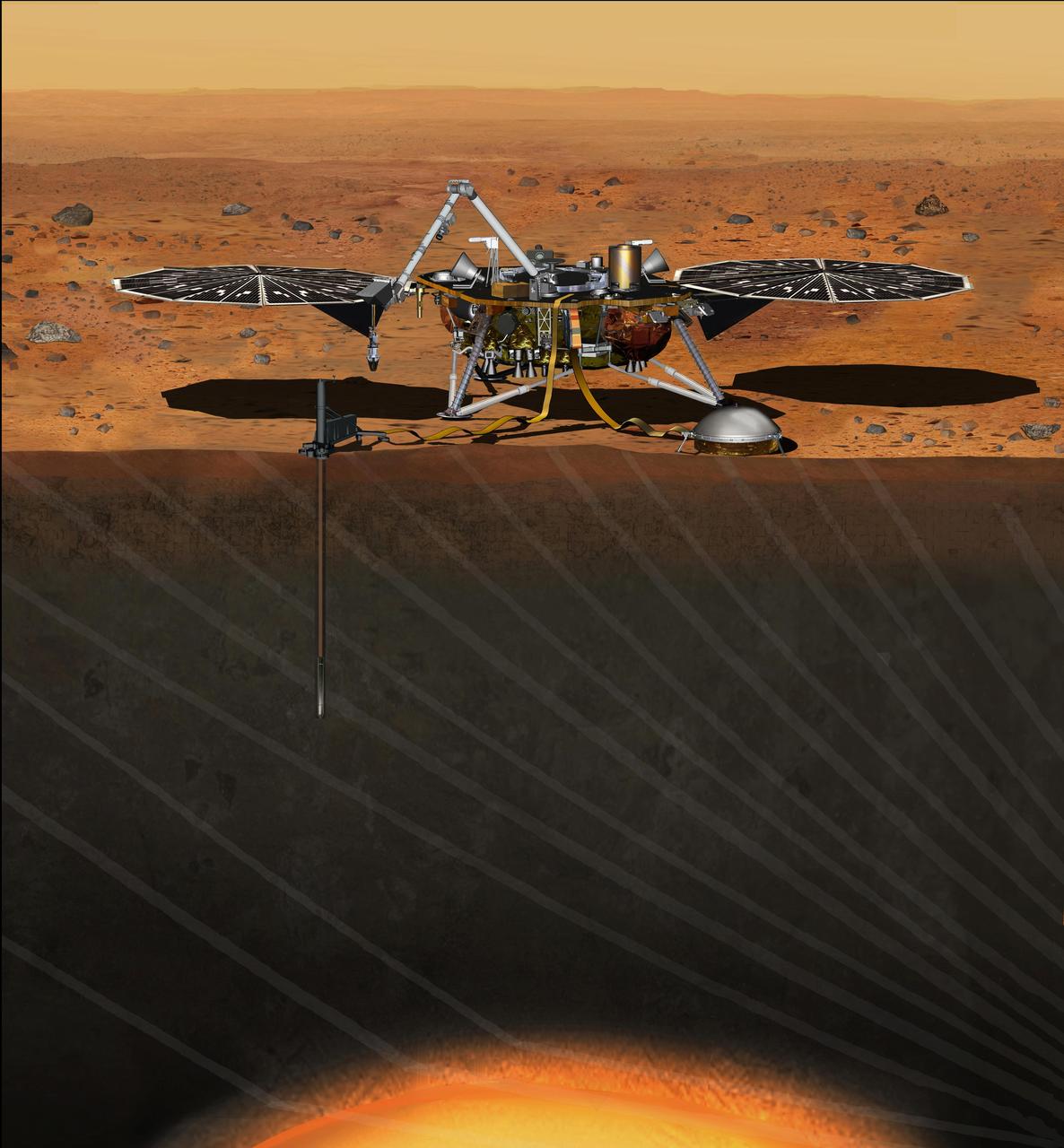
This artist's concept depicts the stationary NASA Mars lander known by the acronym InSight at work studying the interior of Mars. The InSight mission (for Interior Exploration using Seismic Investigations, Geodesy and Heat Transport) is scheduled to launch in March 2016 and land on Mars six months later. It will investigate processes that formed and shaped Mars and will help scientists better understand the evolution of our inner solar system's rocky planets, including Earth. InSight will deploy two instruments to the ground using a robotic arm: a seismometer (contributed by the French space agency Centre National d'Etudes Spatiales, or CNES) to measure the microscopic ground motions from distant marsquakes, providing detailed information about the interior structure of Mars; and a heat-flow probe (contributed by the German Aerospace Center, or DLR) designed to hammer itself 3 to 5 meters (about 16 feet) deep and monitor heat coming from the planet's interior. The mission will also track the lander's radio to measure wobbles in the planet's rotation that relate to the size of its core and will include a camera and a suite of environmental sensors to monitor the weather and variations in the magnetic field. Lockheed Martin Space Systems, Denver, is building the spacecraft. Note: After thorough examination, NASA managers have decided to suspend the planned March 2016 launch of the Interior Exploration using Seismic Investigations Geodesy and Heat Transport (InSight) mission. The decision follows unsuccessful attempts to repair a leak in a section of the prime instrument in the science payload. http://photojournal.jpl.nasa.gov/catalog/PIA17358
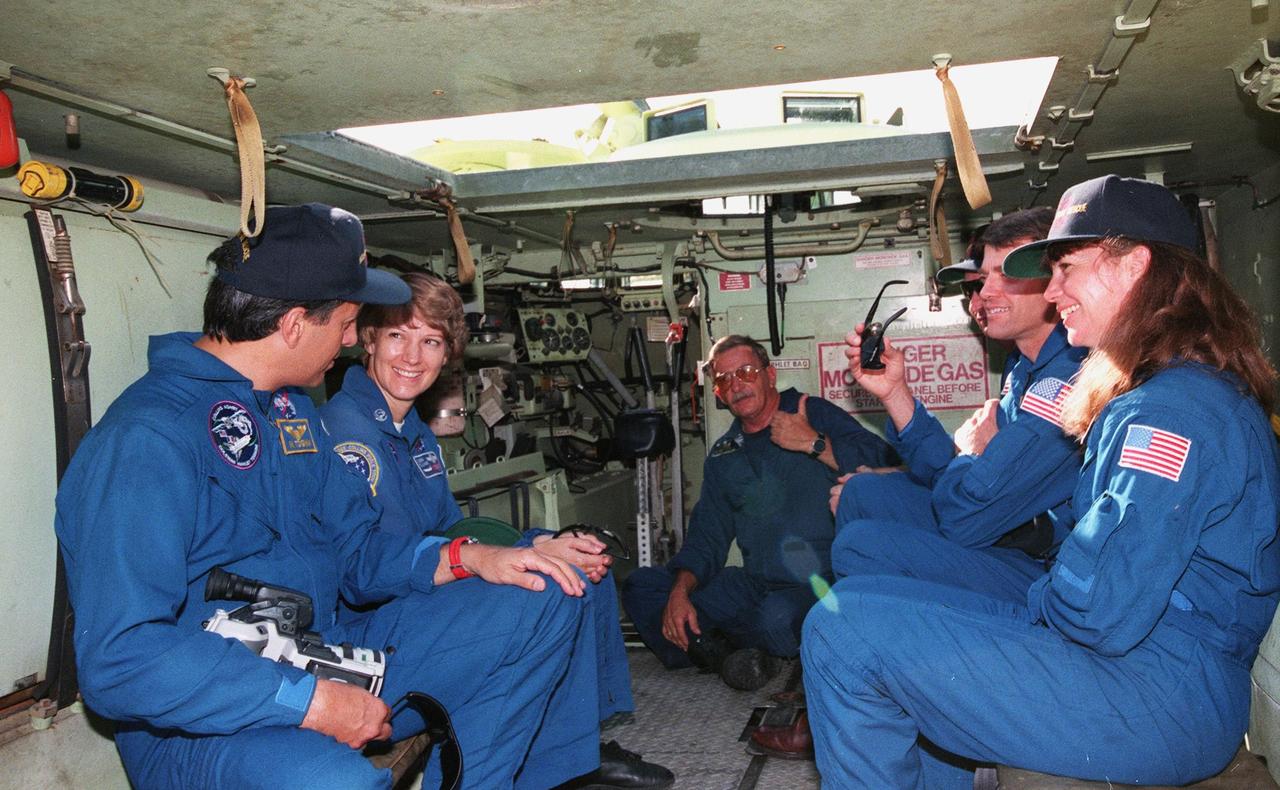
Inside an M-113 armored personnel carrier at the launch pad, the STS-93 crew take part in emergency egress training under the watchful eyes of Capt. George Hoggard (center), trainer with the KSC Fire Department. From left are Mission Specialist Michel Tognini of France, Commander Eileen M. Collins, Hoggard, Mission Specialist Steven A. Hawley (Ph.D.), Pilot Jeffrey S. Ashby, and Mission Specialist Catherine G. Coleman (Ph.D.). Collins is the first woman to serve as mission commander. Tognini represents the Centre National d'Etudes Spatiales (CNES). The training is part of Terminal Countdown Demonstration Test activities that also include a launch-day dress rehearsal culminating with a simulated main engine cut-off. The primary mission of STS-93 is the release of the Chandra X-ray Observatory, which will allow scientists from around the world to obtain unprecedented X-ray images of exotic environments in space to help understand the structure and evolution of the universe. Chandra is expected to provide unique and crucial information on the nature of objects ranging from comets in our solar system to quasars at the edge of the observable universe. Since X-rays are absorbed by the Earth's atmosphere, space-based observatories are necessary to study these phenomena and allow scientists to analyze some of the greatest mysteries of the universe. The targeted launch date for STS-93 is no earlier than July 20 at 12:36 a.m. EDT from Launch Pad 39B
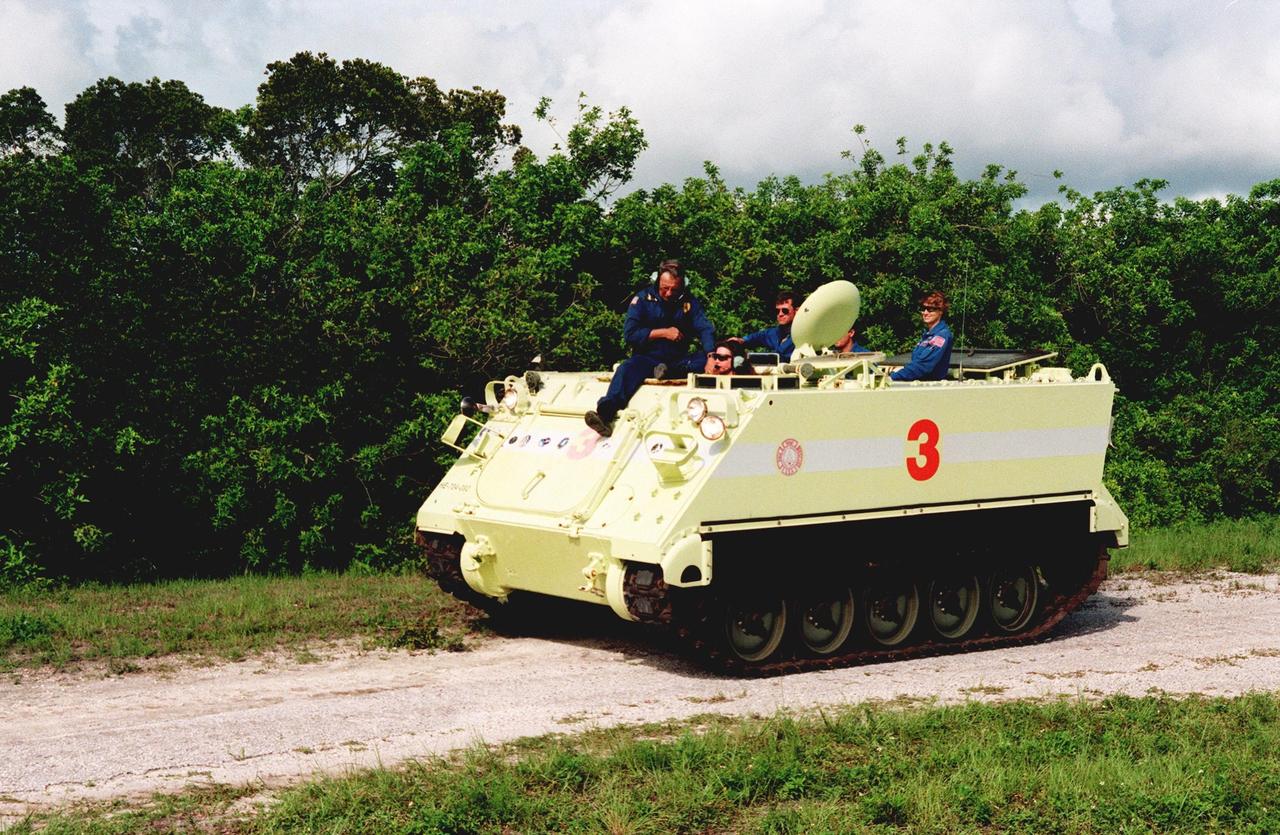
Under the watchful eyes of Capt. George Hoggard (left), trainer with the KSC Fire Department, STS-93 Mission Specialist Catherine G. Coleman (Ph.D.) drives the M-113 armored personnel carrier during emergency egress training at the launch pad. Behind her is Pilot Jeffrey S. Ashby and Commander Eileen M. Collins. In preparation for their mission, the STS-93 crew are participating in Terminal Countdown Demonstration Test activities that also include a launch-day dress rehearsal culminating with a simulated main engine cut-off. Others in the crew participating are Mission Specialists Steven A. Hawley (Ph.D.) and Michel Tognini of France, who represents the Centre National d'Etudes Spatiales (CNES). Collins is the first woman to serve as a mission commander. The primary mission of STS-93 is the release of the Chandra X-ray Observatory, which will allow scientists from around the world to obtain unprecedented X-ray images of exotic environments in space to help understand the structure and evolution of the universe. Chandra is expected to provide unique and crucial information on the nature of objects ranging from comets in our solar system to quasars at the edge of the observable universe. Since X-rays are absorbed by the Earth's atmosphere, space-based observatories are necessary to study these phenomena and allow scientists to analyze some of the greatest mysteries of the universe. The targeted launch date for STS-93 is no earlier than July 20 at 12:36 a.m. EDT from Launch Pad 39B

This animation, created in 2012, shows the increasing clarity and detail of measurements of sea height made by successive satellite altimeters launched by NASA and other agencies over the past four decades, concluding with data at the resolution possible with the Surface Water and Ocean Topography (SWOT) satellite, expected to launch in December 2022. Each new spacecraft has been able to obtain higher-resolution observations than its predecessors. Sea height is key to understanding how much, and how fast, the oceans are rising in a warming climate. The animation starts with Seasat, launched in 1978 as one of the NASA's earliest Earth-observing satellites, then moves to Geosat, a U.S. Navy spacecraft launched in 1985, and on to ERS-1, TOPEX/Poseidon, ERS-2, Jason-1, Envisat, and Jason-2. Since the end of the time period shown in the animation, subsequent satellites have continued measuring sea height, creating an ongoing, decadeslong record. In March 2022, Sentinel-6 Michael Freilich, a joint U.S.-European mission, became the official reference satellite for global sea level measurements. SWOT will be latest spacecraft to observe ocean heights from Earth orbit. Its measurements will provide unprecedented insights into the activity of small-scale currents and their impact on climate change. Researchers believe small-scale currents, which are less than 60 miles (100 kilometers) in size, have a significant influence on the ocean's ability to absorb atmospheric heat and carbon and thereby moderate global temperature change. To measure these currents, SWOT will employ the Ka-band Radar Interferometer (KaRIn), a new technology developed at NASA's Jet Propulsion Laboratory in Southern California that will offer even greater spatial resolution than previous instruments that studied the ocean. SWOT will survey the water in Earth's lakes, rivers, reservoirs, and the ocean. The satellite will cover the planet's surface twice every 21 days and has a prime mission of three years. It was jointly developed by NASA and France's Centre National d'Études Spatiales (CNES), with contributions from the Canadian Space Agency (CSA) and the UK Space Agency. JPL, a division of Caltech in Southern California, manages the U.S. portion of the mission for NASA. Animation available at https://photojournal.jpl.nasa.gov/catalog/PIA25561
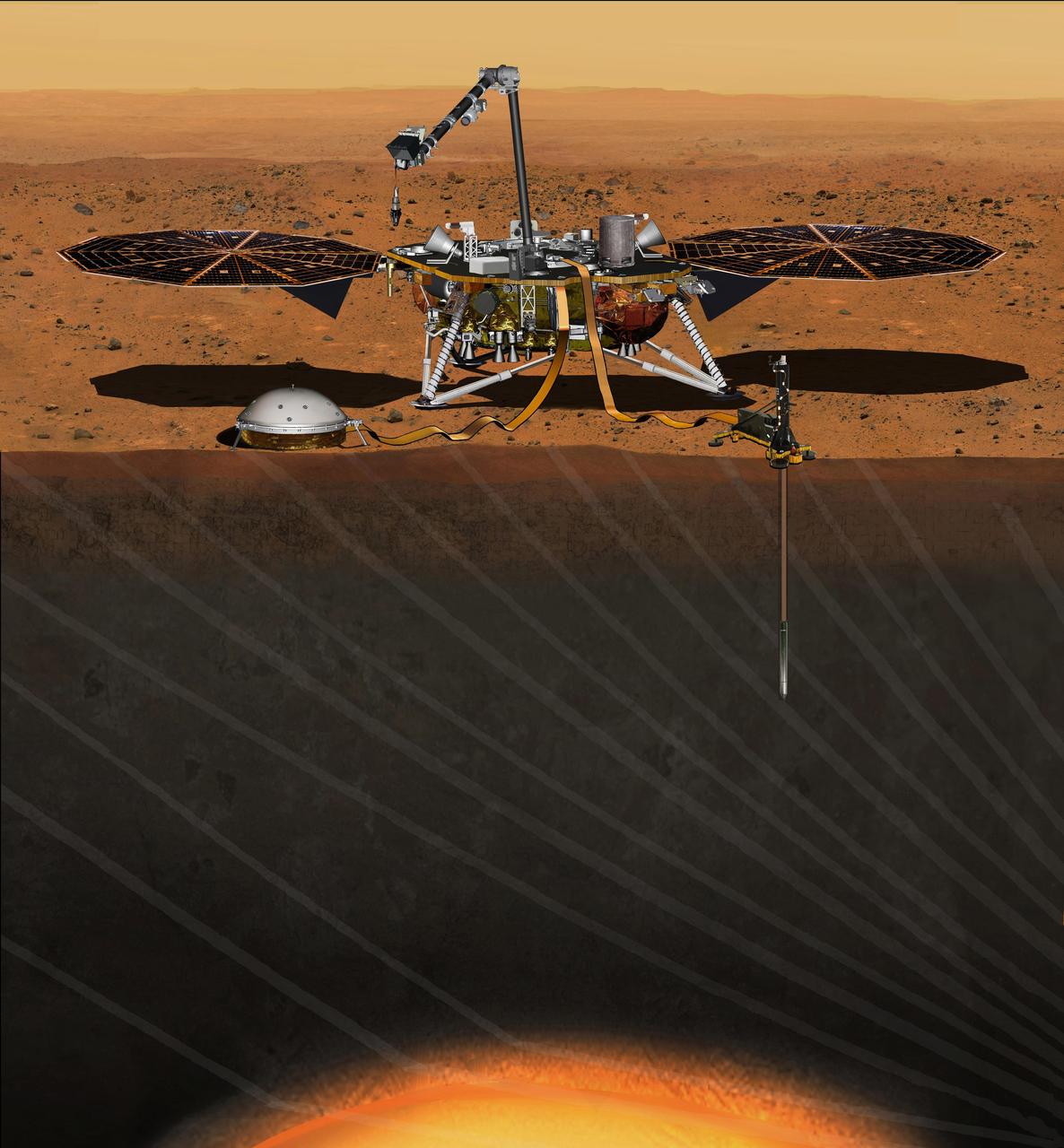
This artist's concept from August 2015 depicts NASA's InSight Mars lander fully deployed for studying the deep interior of Mars. This illustration updates the correct placement and look of Insight's main instruments. For an earlier artist rendition, see PIA17358. InSight, short for Interior Exploration using Seismic Investigations, Geodesy and Heat Transport, will investigate processes that formed and shaped Mars. Its findings will improve understanding about the evolution of our inner solar system's rocky planets, including Earth. The lander will be the first mission to permanently deploy instruments directly onto Martian ground using a robotic arm. The two instruments to be placed into a work area in front of the lander are a seismometer (contributed by the French space agency Centre National d'Études Spatiales, or CNES) to measure the microscopic ground motions from distant marsquakes providing information about the interior structure of Mars, and a heat-flow probe (contributed by the German Aerospace Center, or DLR) designed to hammer itself 3 to 5 meters (about 16 feet) deep and monitor heat coming from the planet's interior. The mission will also track the lander's radio to measure wobbles in the planet's rotation that relate to the size of its core and a suite of environmental sensors to monitor the weather and variations in the magnetic field. Two cameras will aid in instrument deployment and monitoring the local environment. Note: After thorough examination, NASA managers have decided to suspend the planned March 2016 launch of the Interior Exploration using Seismic Investigations Geodesy and Heat Transport (InSight) mission. The decision follows unsuccessful attempts to repair a leak in a section of the prime instrument in the science payload. http://photojournal.jpl.nasa.gov/catalog/PIA19811
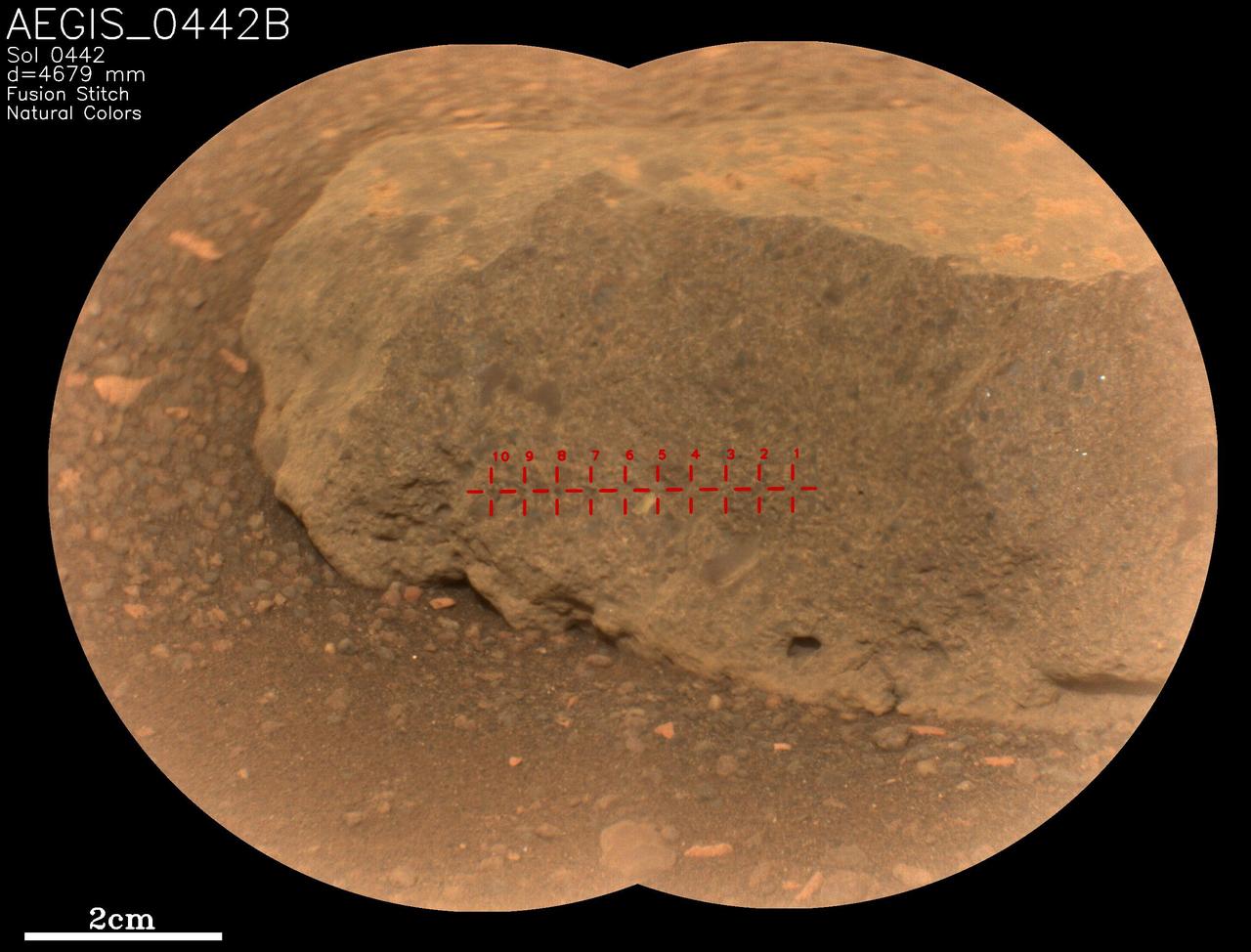
On May 18, 2022, NASA's Perseverance Mars rover used an artificial intelligence software called Autonomous Exploration for Gathering Increased Science (AEGIS) to select and target the rock seen in close-up here. It's one of two rocks that the AI for the first time helped Perseverance study without direction from the mission's team back on Earth. AEGIS was developed by NASA's Jet Propulsion Laboratory in Southern California – which also built Perseverance – to collect data on rocks and other Martian features that the rover discovers while driving. AEGIS is used in conjunction with Perseverance's SuperCam laser instrument, directing the laser to zap certain features that scientists have commanded the rover to look for. SuperCam used its Remote Micro-Imager (RMI) camera to take two images of this target, which were stitched together into the main picture seen here. The rock target, which was about 16 feet (5 meters) away from the rover, is named "AEGIS_0442B," referring to the Martian day, or sol, it was targeted (Sol 442) and that it was the second rock ("B") targeted by AEGIS on that sol. The red crosshairs seen across the rock target indicate each place AEGIS directed the laser to zap. SuperCam is led by Los Alamos National Laboratory in New Mexico, where the instrument's body unit was developed. That part of the instrument includes several spectrometers as well as control electronics and software. The mast unit, including RMI, was developed and built by several laboratories of the CNRS (the French research center) and French universities under the contracting authority of Centre National d'Études Spatiales (CNES), the French space agency. A key objective for Perseverance's mission on Mars is astrobiology, including the search for signs of ancient microbial life. The rover will characterize the planet's geology and past climate, pave the way for human exploration of the Red Planet, and be the first mission to collect and cache Martian rock and regolith (broken rock and dust). Subsequent NASA missions, in cooperation with ESA (European Space Agency), would send spacecraft to Mars to collect these sealed samples from the surface and return them to Earth for in-depth analysis. The Mars 2020 Perseverance mission is part of NASA's Moon to Mars exploration approach, which includes Artemis missions to the Moon that will help prepare for human exploration of the Red Planet. https://photojournal.jpl.nasa.gov/catalog/PIA25289