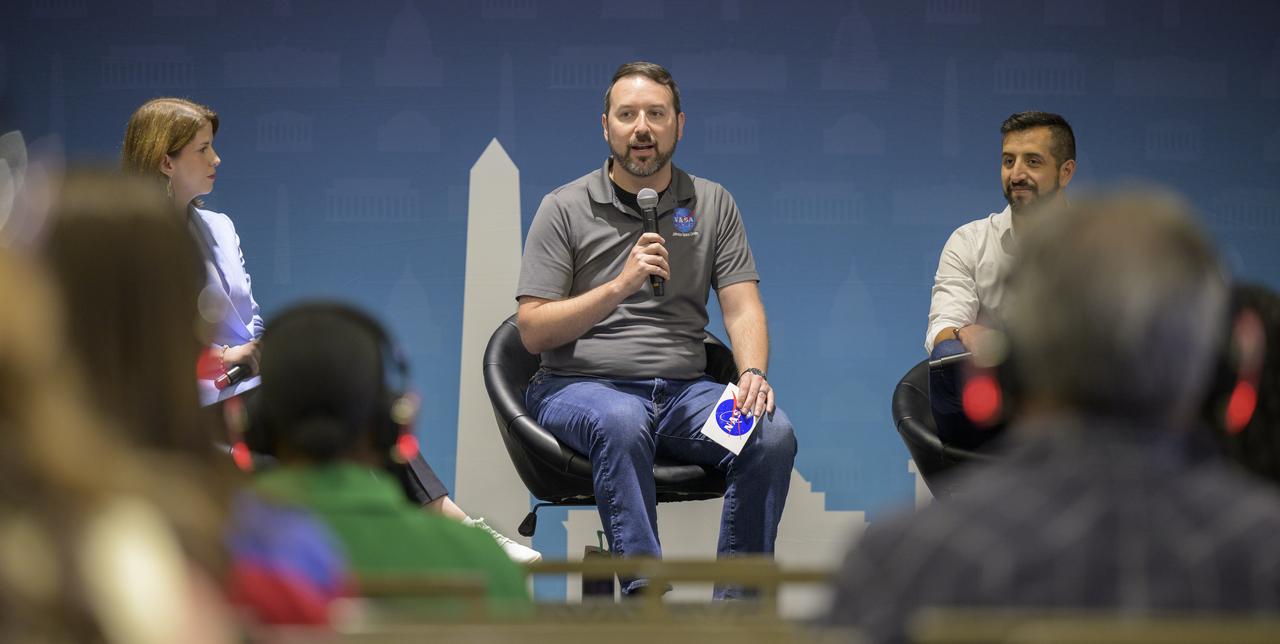
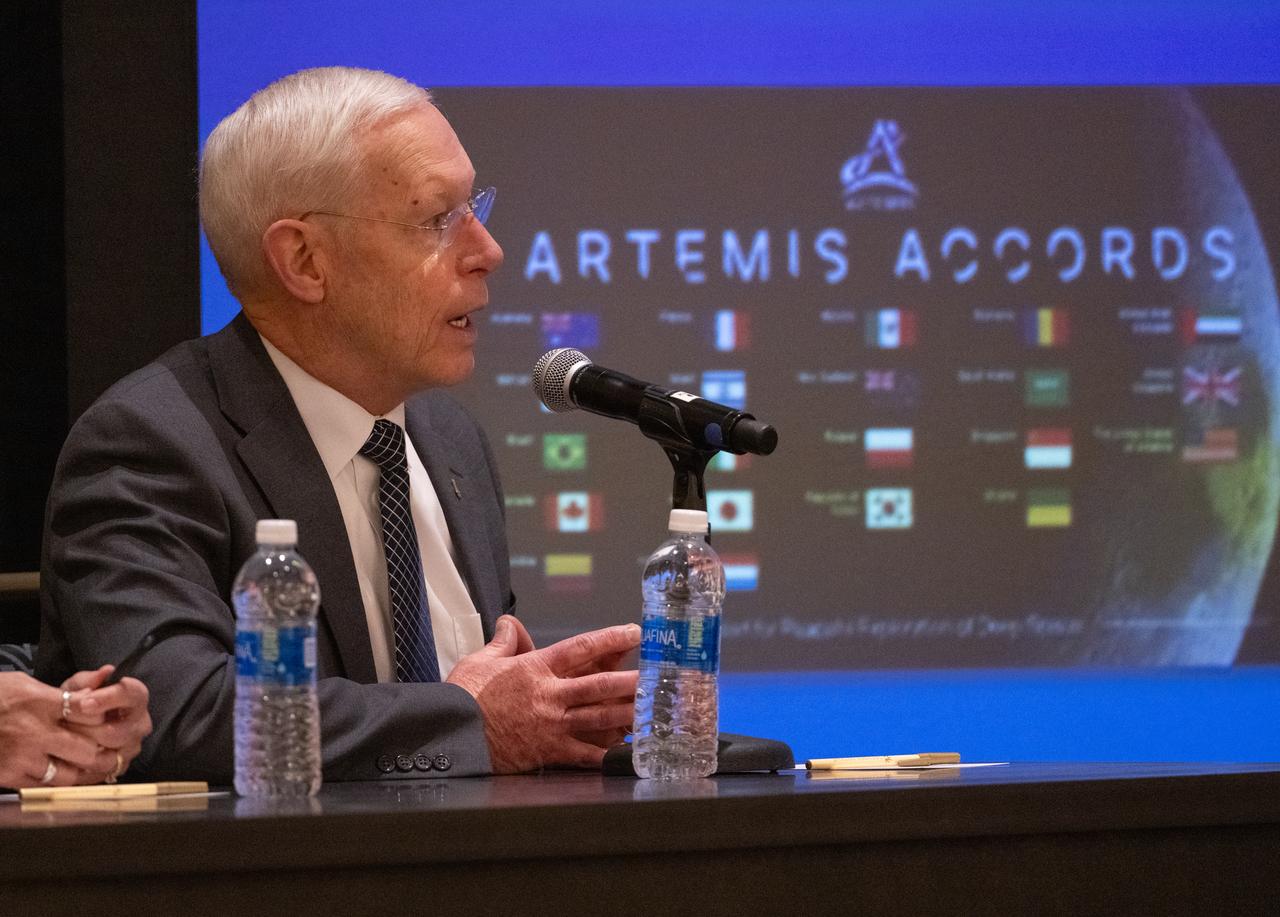
NASA participates in the Podcast Movement conference, Tuesday, Aug. 20, 2024, at the Gaylord National Resort and Convention Center in National Harbor, Md. During the event, NASA hosted a panel entitled, "Eclipses, Moon Missions, and Climate Change: How NASA Reaches Curious Listeners." Photo Credit: (NASA/Bill Ingalls)
NASA Participates in the Podcast Movement
NASA participates in the Podcast Movement conference, Tuesday, Aug. 20, 2024, at the Gaylord National Resort and Convention Center in National Harbor, Md. During the event, NASA hosted a panel entitled, "Eclipses, Moon Missions, and Climate Change: How NASA Reaches Curious Listeners." Photo Credit: (NASA/Bill Ingalls)
NASA Participates in the Podcast Movement
NASA participates in the Podcast Movement conference, Tuesday, Aug. 20, 2024, at the Gaylord National Resort and Convention Center in National Harbor, Md. During the event, NASA hosted a panel entitled, "Eclipses, Moon Missions, and Climate Change: How NASA Reaches Curious Listeners." Photo Credit: (NASA/Bill Ingalls)
NASA Participates in the Podcast Movement
NASA participates in the Podcast Movement conference, Tuesday, Aug. 20, 2024, at the Gaylord National Resort and Convention Center in National Harbor, Md. During the event, NASA hosted a panel entitled, "Eclipses, Moon Missions, and Climate Change: How NASA Reaches Curious Listeners." Photo Credit: (NASA/Bill Ingalls)
NASA Participates in the Podcast Movement
NASA participates in the Podcast Movement conference, Tuesday, Aug. 20, 2024, at the Gaylord National Resort and Convention Center in National Harbor, Md. During the event, NASA hosted a panel entitled, "Eclipses, Moon Missions, and Climate Change: How NASA Reaches Curious Listeners." Photo Credit: (NASA/Bill Ingalls)
NASA Participates in the Podcast Movement
NASA participates in the Podcast Movement conference, Tuesday, Aug. 20, 2024, at the Gaylord National Resort and Convention Center in National Harbor, Md. During the event, NASA hosted a panel entitled, "Eclipses, Moon Missions, and Climate Change: How NASA Reaches Curious Listeners." Photo Credit: (NASA/Bill Ingalls)
NASA Participates in the Podcast Movement
NASA Audio Lead Katie Konans is seen during a Podcast Movement, NASA hosted a panel entitled, "Eclipses, Moon Missions, and Climate Change: How NASA Reaches Curious Listeners", Tuesday, Aug. 20, 2024, at the Gaylord National Resort and Convention Center in National Harbor, Md. Photo Credit: (NASA/Bill Ingalls)
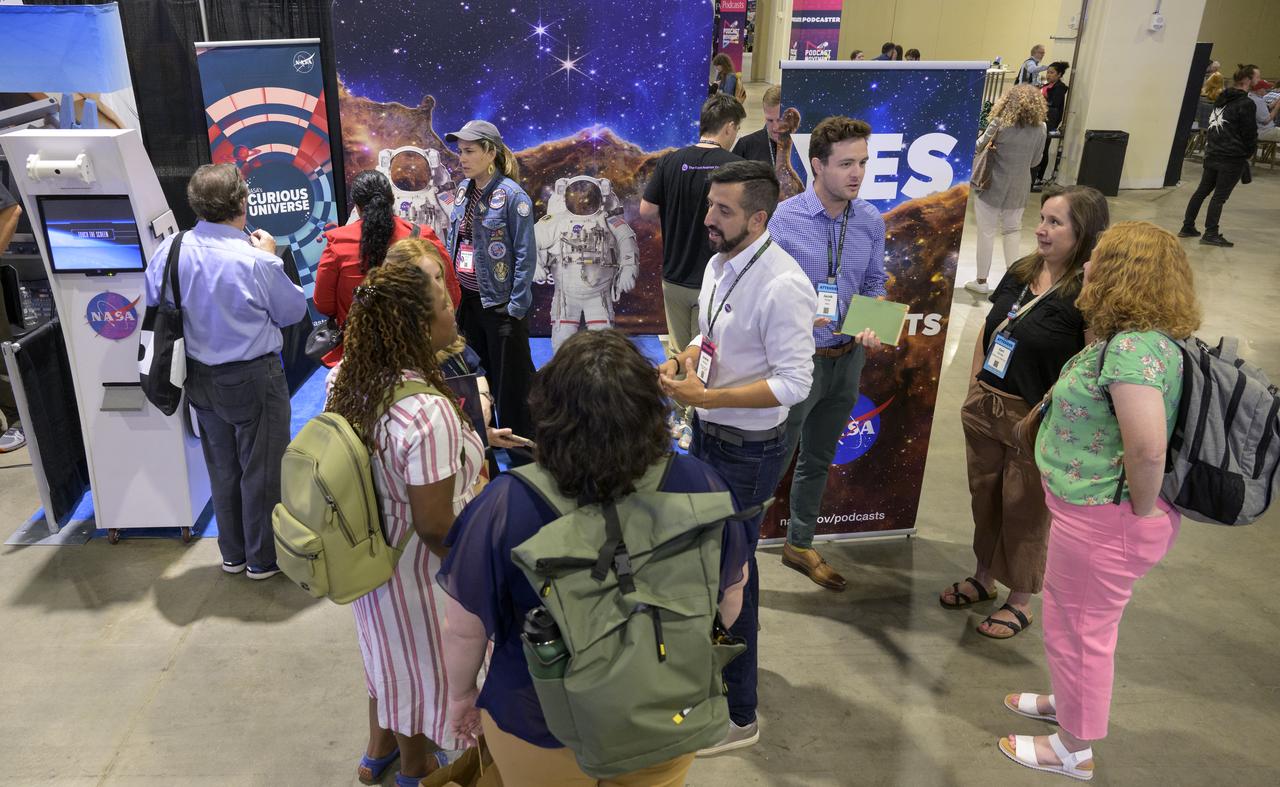
NASA Participates in the Podcast Movement
NASA Audio Engineer Manny Cooper is seen during a Podcast Movement, NASA hosted a panel entitled, "Eclipses, Moon Missions, and Climate Change: How NASA Reaches Curious Listeners", Tuesday, Aug. 20, 2024, at the Gaylord National Resort and Convention Center in National Harbor, Md. Photo Credit: (NASA/Bill Ingalls)
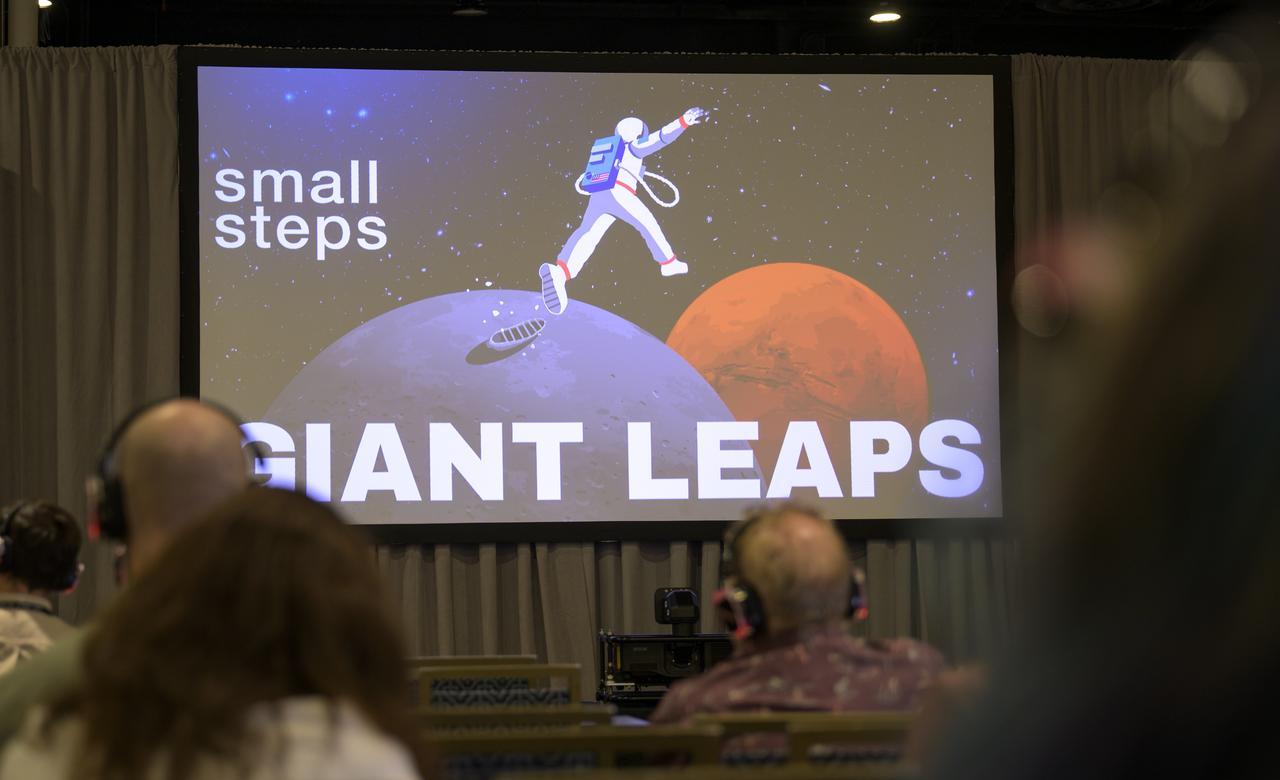
NASA Participates in the Podcast Movement
NASA Audio Lead Katie Konans is seen during a Podcast Movement, NASA hosted a panel entitled, "Eclipses, Moon Missions, and Climate Change: How NASA Reaches Curious Listeners", Tuesday, Aug. 20, 2024, at the Gaylord National Resort and Convention Center in National Harbor, Md. Photo Credit: (NASA/Bill Ingalls)
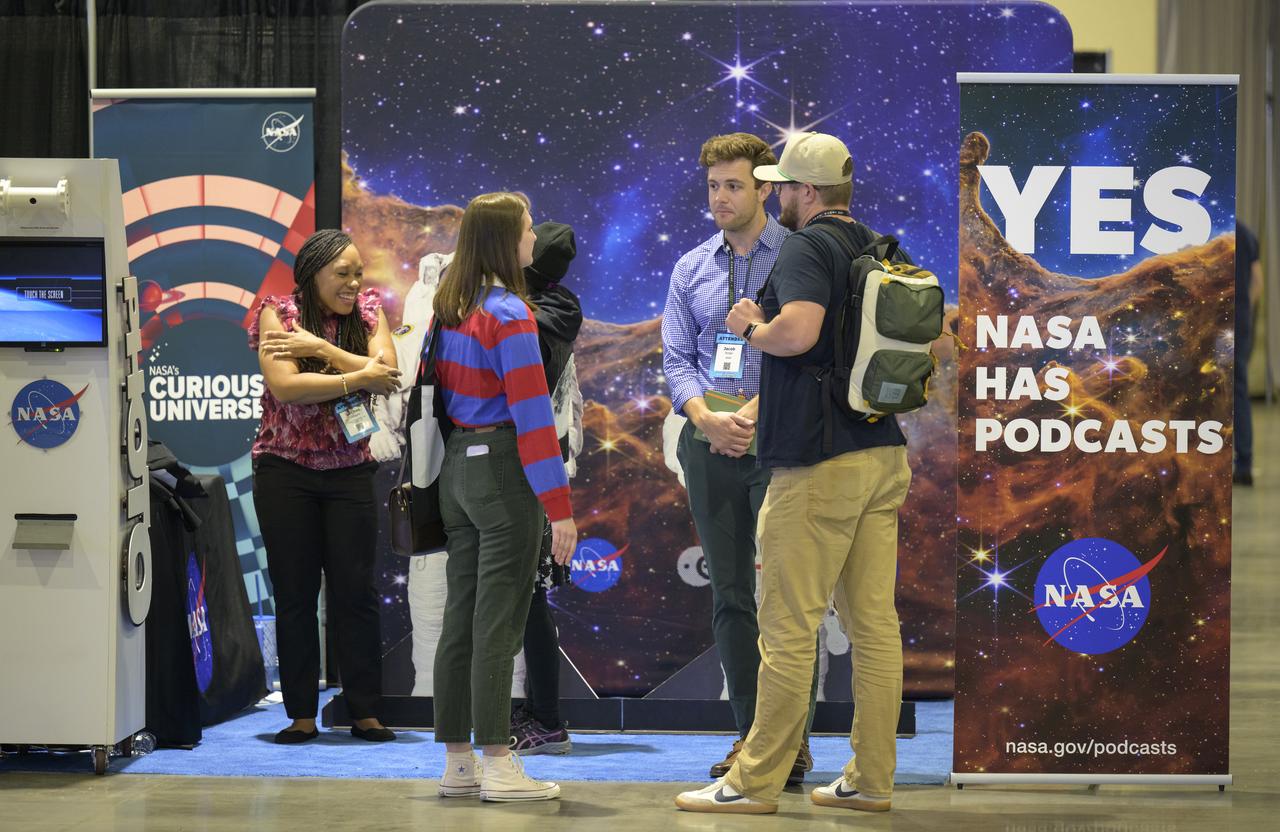
NASA Participates in the Podcast Movement
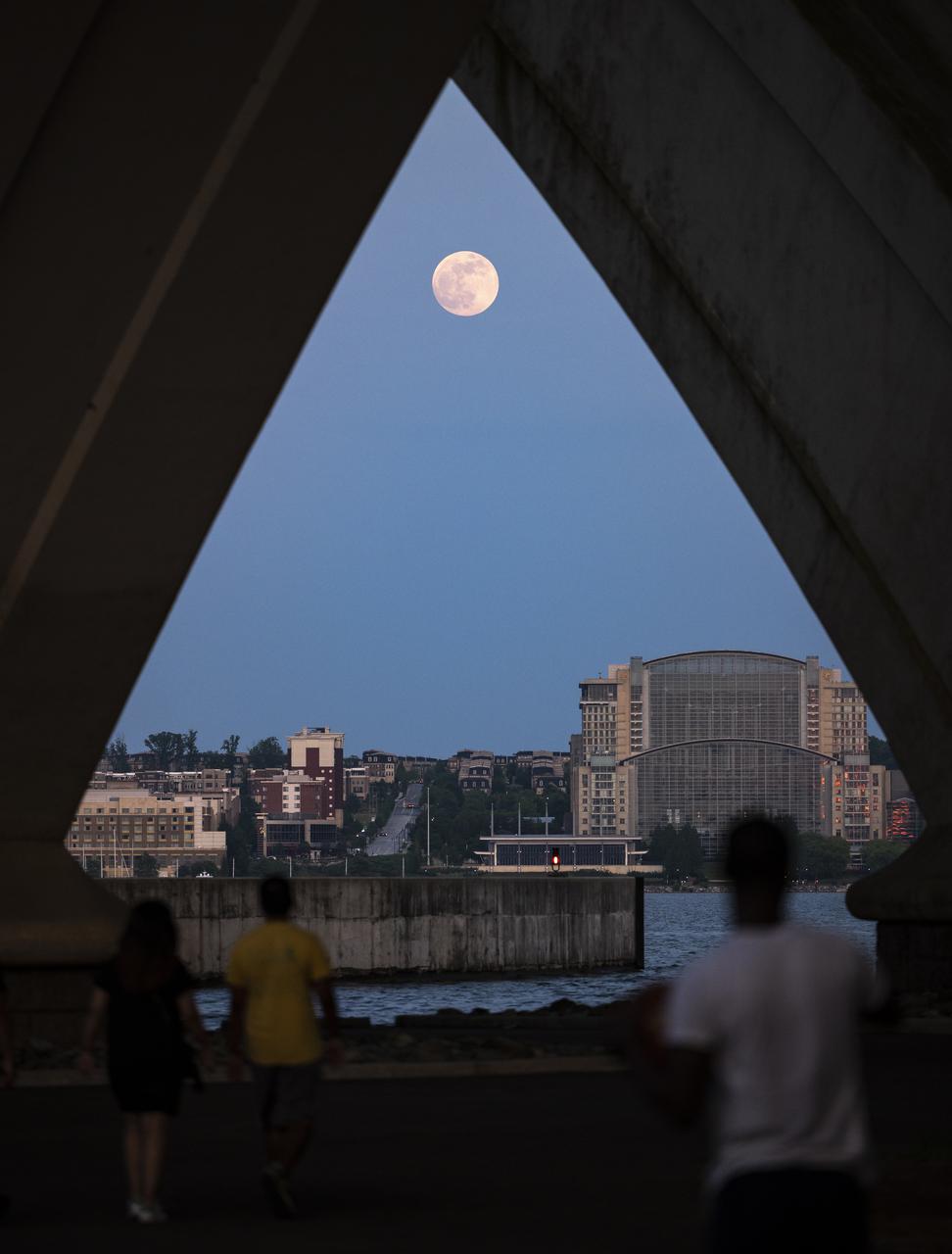
A nearly full moon rises over National Harbor in Fort Washington, Maryland, Tuesday, May 25, 2021, as seen from Alexandria, Virginia. Photo Credit: (NASA/Bill Ingalls)
Moonrise
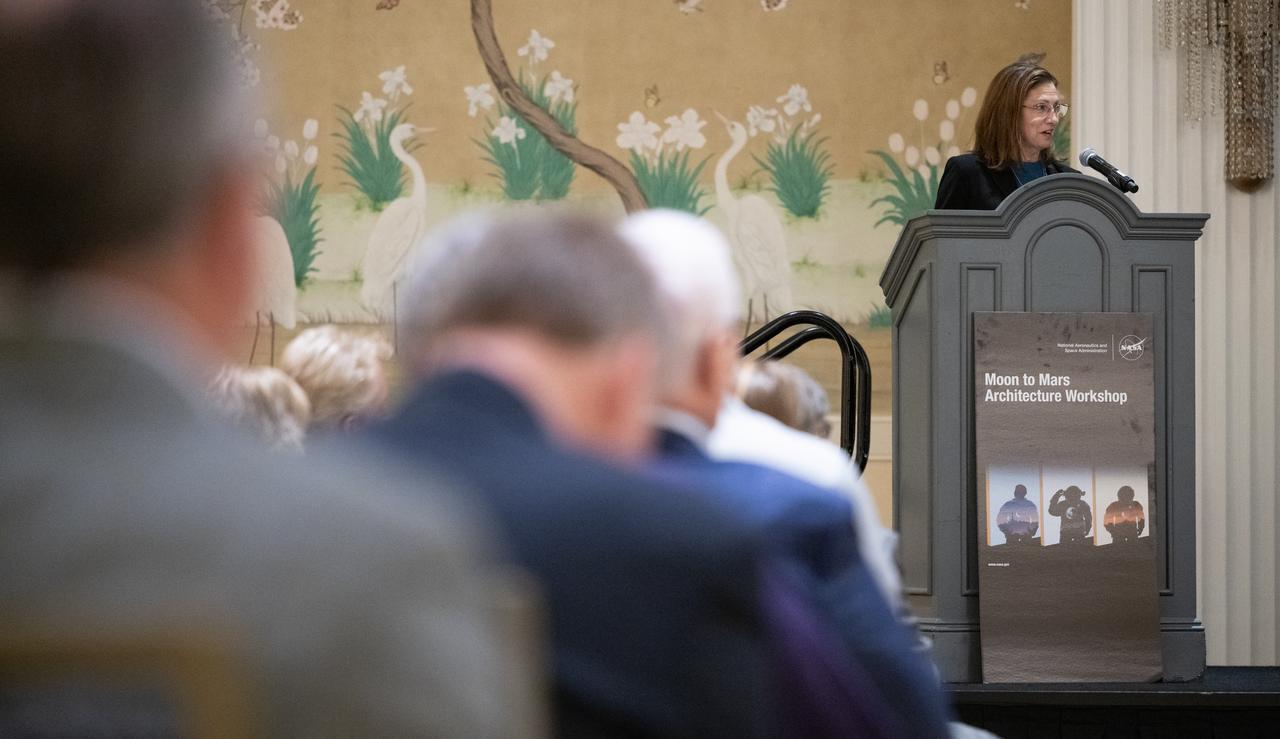
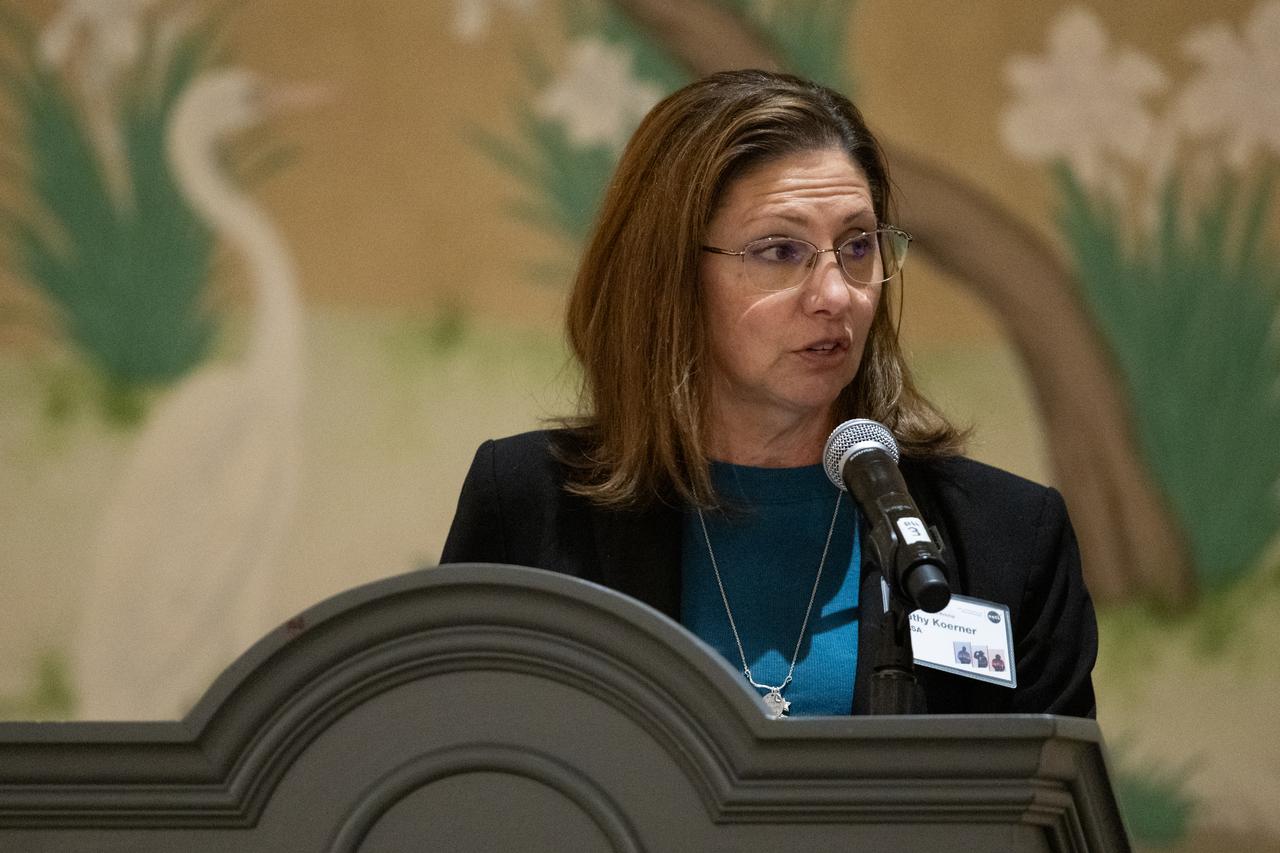
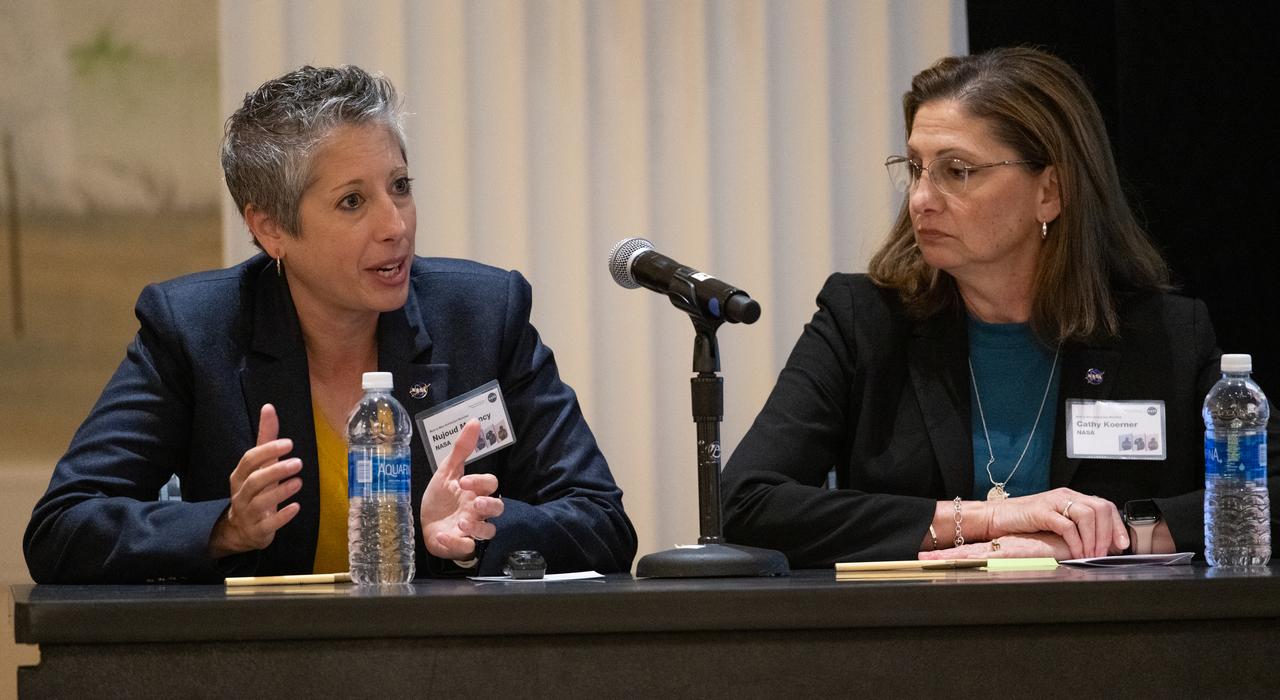
Catherine Koerner, deputy associate administrator for NASA's Exploration Systems Development Mission Directorate, speaks during NASA’s Moon to Mars Architecture Workshop, Tuesday, June 27, 2023, at the Gaylord National Resort and Convention Center in National Harbor, Md. Following the release of the 2022 Architecture Concept Review, NASA is conducting the workshop to engage the broader space community and collect feedback from U.S. industry and academia to inform the Moon to Mars mission architecture and operational delivery. Photo Credit: (NASA/Joel Kowsky)
NASA’s Moon to Mars Architecture Workshop
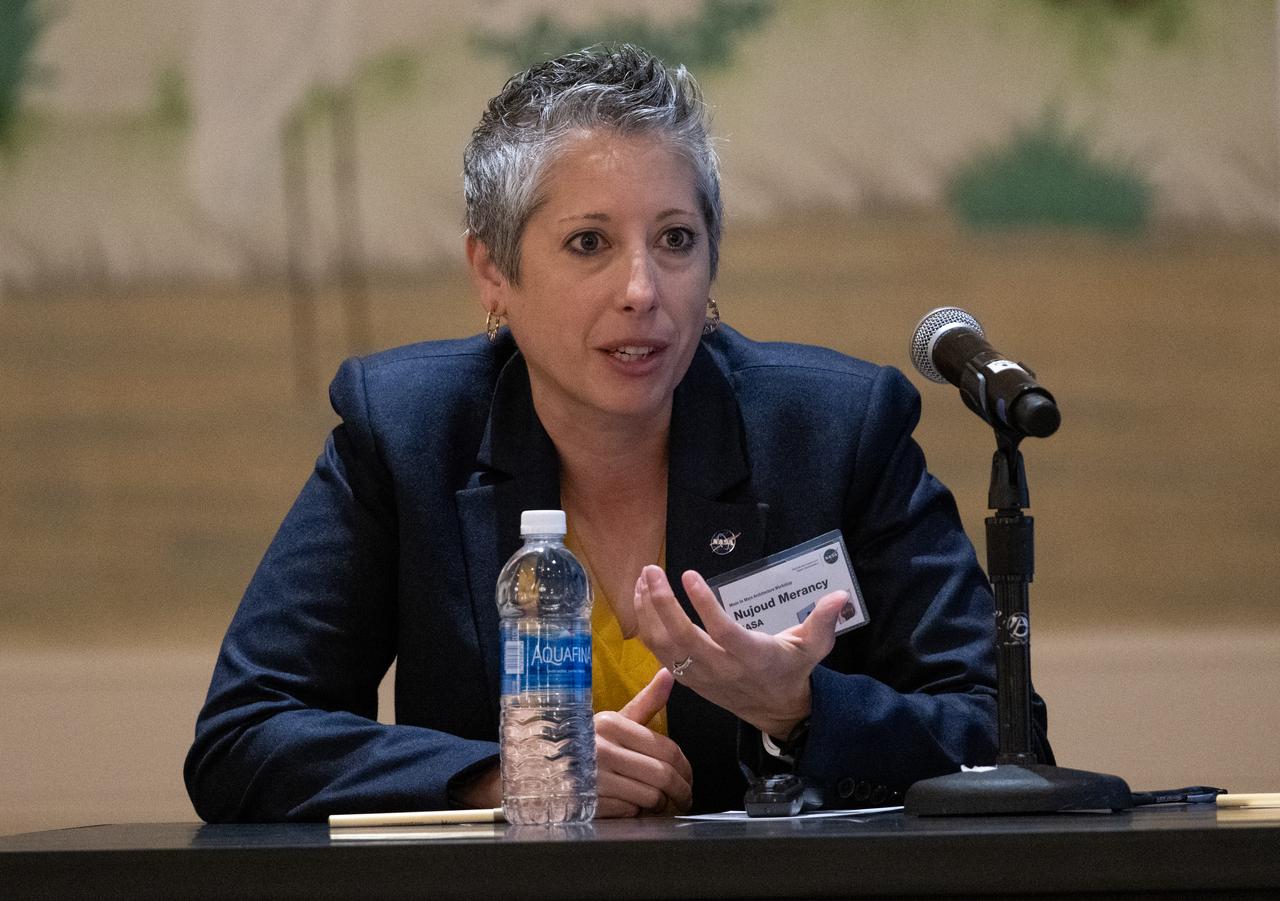
Nujoud Merancy, architecture lead for NASA's Exploration Systems Development Mission Directorate, speaks during NASA’s Moon to Mars Architecture Workshop, Tuesday, June 27, 2023, at the Gaylord National Resort and Convention Center in National Harbor, Md. Following the release of the 2022 Architecture Concept Review, NASA is conducting the workshop to engage the broader space community and collect feedback from U.S. industry and academia to inform the Moon to Mars mission architecture and operational delivery. Photo Credit: (NASA/Joel Kowsky)
NASA’s Moon to Mars Architecture Workshop
Attendees of NASA’s Moon to Mars Architecture Workshop pose for a group picture, Tuesday, June 27, 2023, at the Gaylord National Resort and Convention Center in National Harbor, Md. Following the release of the 2022 Architecture Concept Review, NASA is conducting the workshop to engage the broader space community and collect feedback from U.S. industry and academia to inform the Moon to Mars mission architecture and operational delivery. Photo Credit: (NASA/Joel Kowsky)
NASA’s Moon to Mars Architecture Workshop
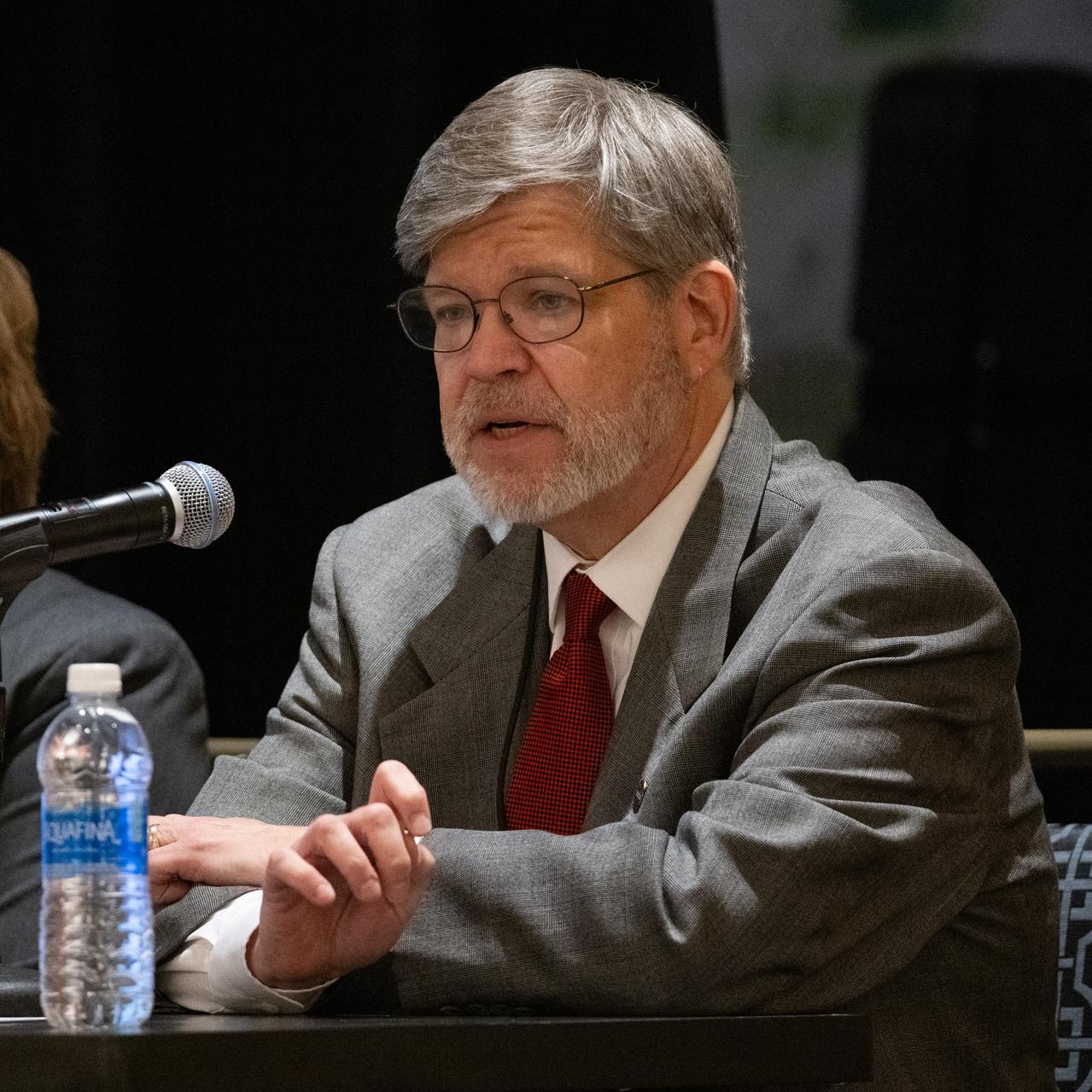
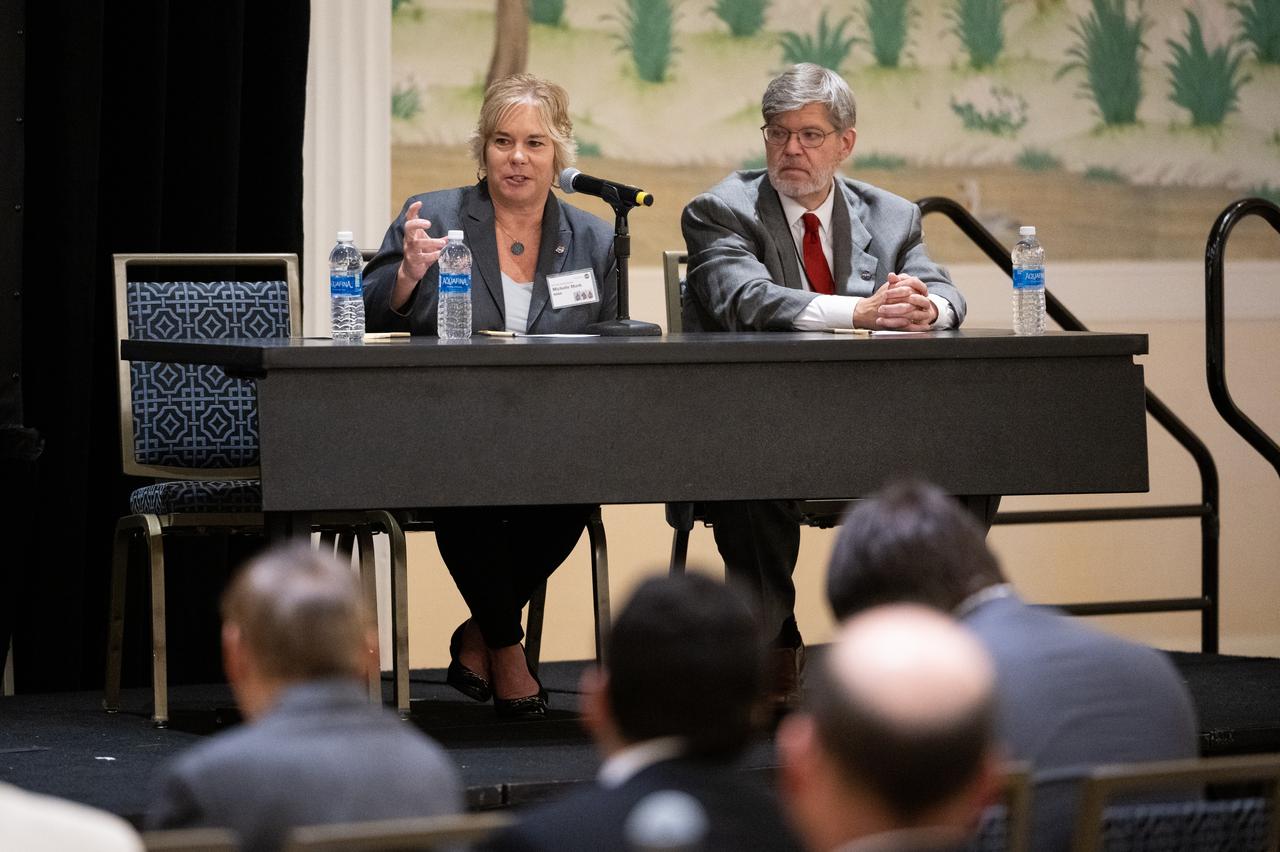
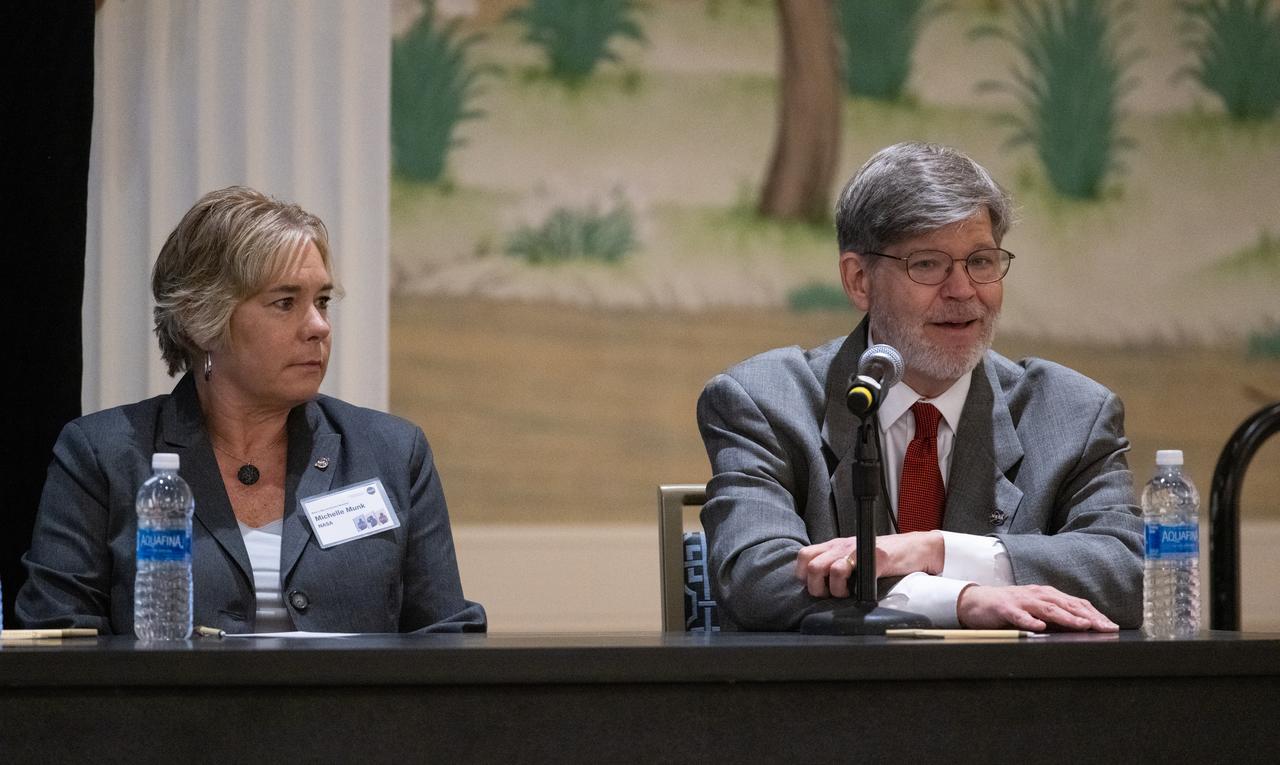
Joel Kearns, deputy associate administrator for Exploration in NASA's Science Mission Directorate, speaks during NASA’s Moon to Mars Architecture Workshop, Tuesday, June 27, 2023, at the Gaylord National Resort and Convention Center in National Harbor, Md. Following the release of the 2022 Architecture Concept Review, NASA is conducting the workshop to engage the broader space community and collect feedback from U.S. industry and academia to inform the Moon to Mars mission architecture and operational delivery. Photo Credit: (NASA/Joel Kowsky)
NASA’s Moon to Mars Architecture Workshop
NASA Multimedia Producer and Host of Houston, We Have a Podcast Dane Turner, is seen during a Podcast Movement, NASA hosted a panel entitled, "Eclipses, Moon Missions, and Climate Change: How NASA Reaches Curious Listeners", Tuesday, Aug. 20, 2024, at the Gaylord National Resort and Convention Center in National Harbor, Md. Photo Credit: (NASA/Bill Ingalls)

NASA Participates in the Podcast Movement
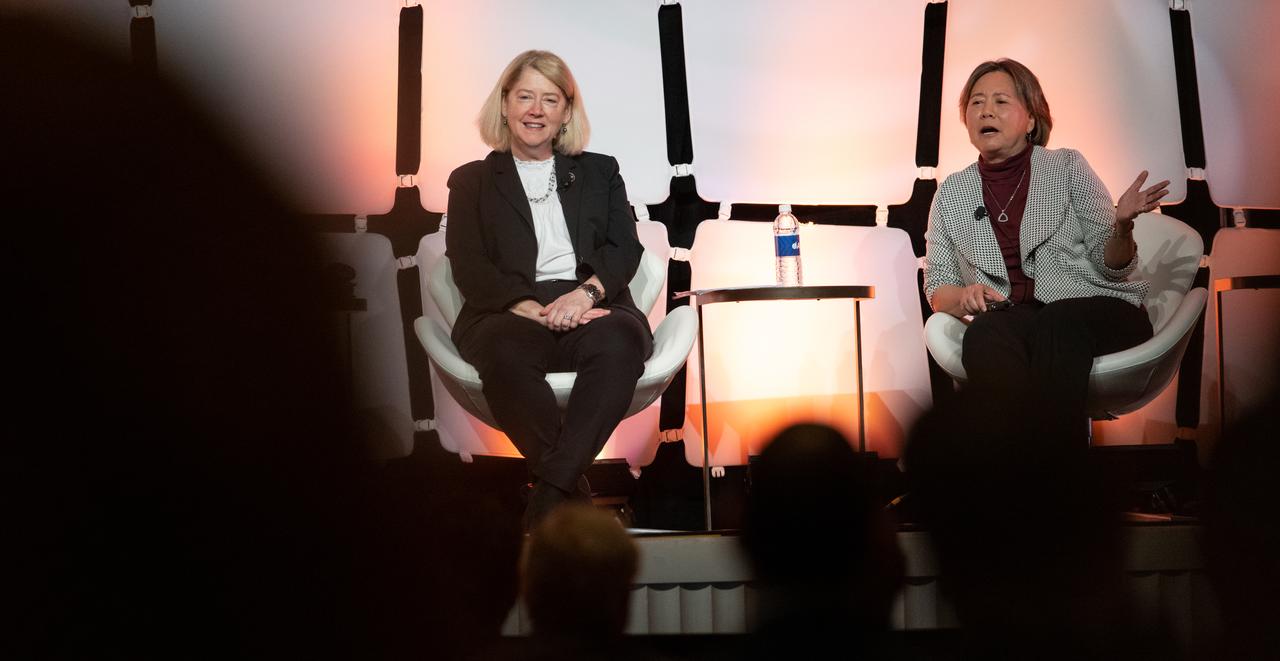
NASA Astrophysicist and Host of NASA's Curious Universe podcast Padi Boyd is seen during a Podcast Movement, NASA hosted a panel entitled, "Eclipses, Moon Missions, and Climate Change: How NASA Reaches Curious Listeners", Tuesday, Aug. 20, 2024, at the Gaylord National Resort and Convention Center in National Harbor, Md. Photo Credit: (NASA/Bill Ingalls)
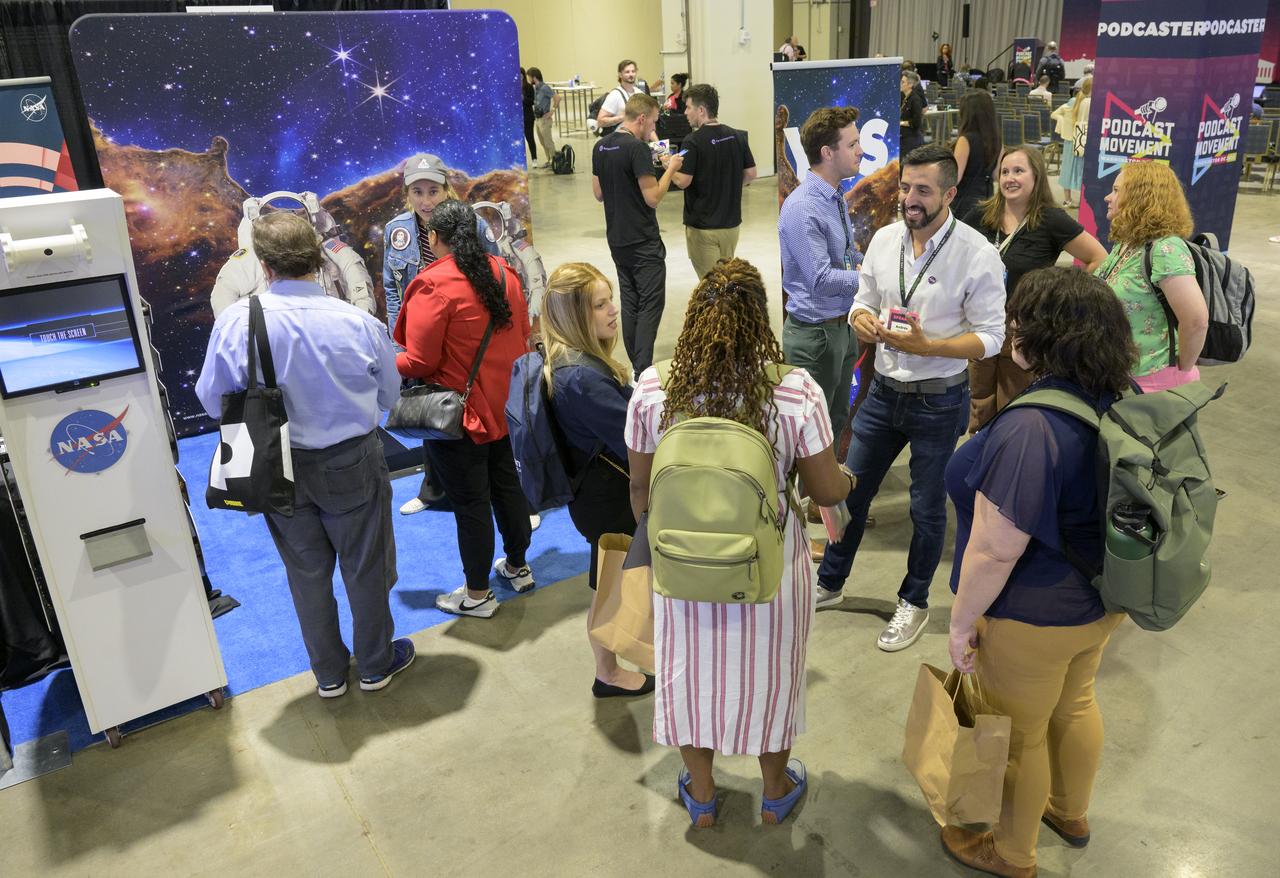
NASA Participates in the Podcast Movement
Patrick Forrester, special advisor in NASA's Space Operations Mission Directorate, speaks during NASA’s Moon to Mars Architecture Workshop, Tuesday, June 27, 2023, at the Gaylord National Resort and Convention Center in National Harbor, Md. Following the release of the 2022 Architecture Concept Review, NASA is conducting the workshop to engage the broader space community and collect feedback from U.S. industry and academia to inform the Moon to Mars mission architecture and operational delivery. Photo Credit: (NASA/Joel Kowsky)
NASA’s Moon to Mars Architecture Workshop
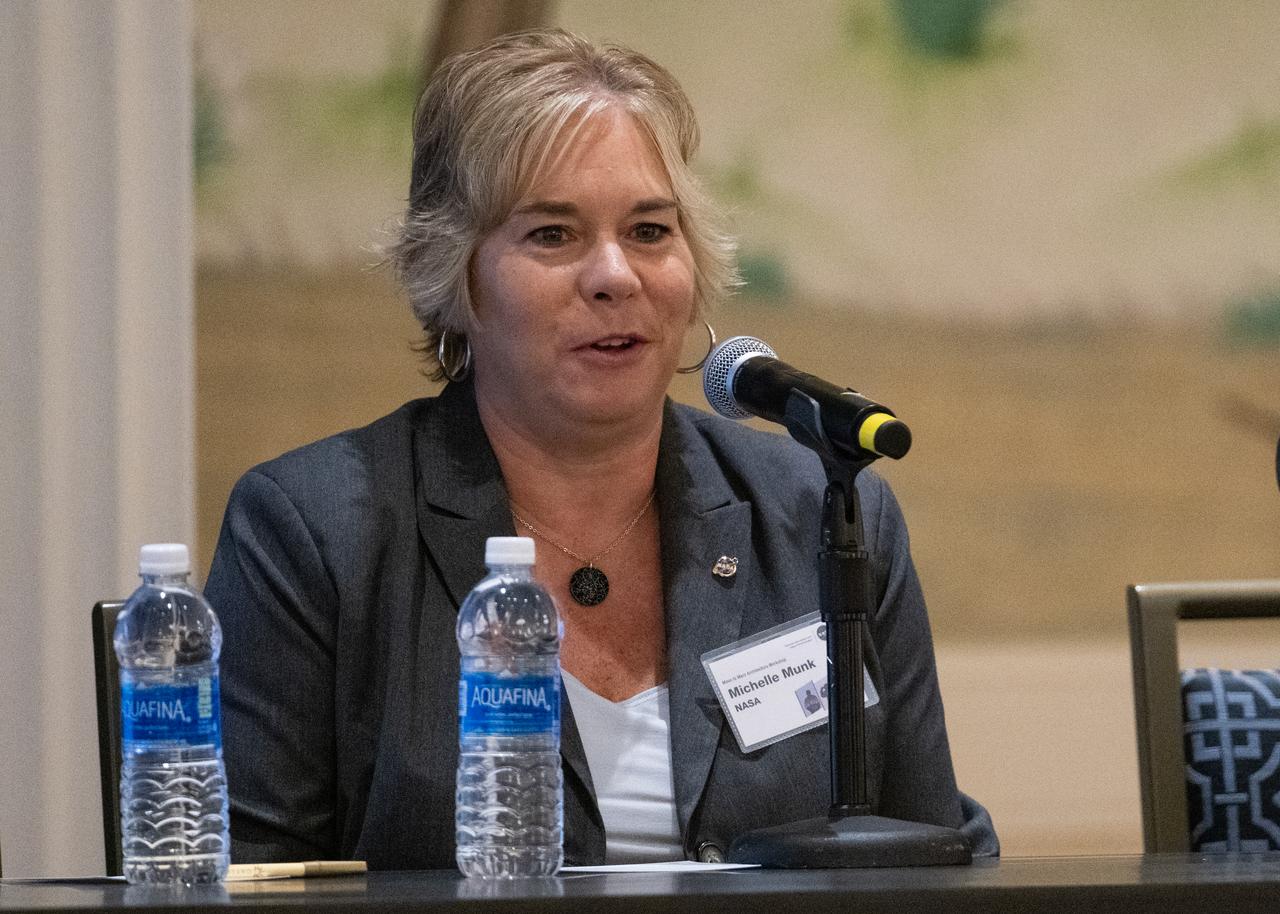
Michelle Munk, chief architect for NASA’s Space Technology Mission Directorate, speaks during NASA’s Moon to Mars Architecture Workshop, Tuesday, June 27, 2023, at the Gaylord National Resort and Convention Center in National Harbor, Md. Following the release of the 2022 Architecture Concept Review, NASA is conducting the workshop to engage the broader space community and collect feedback from U.S. industry and academia to inform the Moon to Mars mission architecture and operational delivery. Photo Credit: (NASA/Joel Kowsky)
NASA’s Moon to Mars Architecture Workshop
NASA Writer and Host of the Small Steps, Giant Leaps podcast Andrés Almeida is seen during a Podcast Movement, NASA hosted a panel entitled, "Eclipses, Moon Missions, and Climate Change: How NASA Reaches Curious Listeners", Tuesday, Aug. 20, 2024, at the Gaylord National Resort and Convention Center in National Harbor, Md. Photo Credit: (NASA/Bill Ingalls)
NASA Participates in the Podcast Movement
Catherine Koerner, deputy associate administrator for NASA's Exploration Systems Development Mission Directorate, speaks during NASA’s Moon to Mars Architecture Workshop, Tuesday, June 27, 2023, at the Gaylord National Resort and Convention Center in National Harbor, Md. Following the release of the 2022 Architecture Concept Review, NASA is conducting the workshop to engage the broader space community and collect feedback from U.S. industry and academia to inform the Moon to Mars mission architecture and operational delivery. Photo Credit: (NASA/Joel Kowsky)
NASA’s Moon to Mars Architecture Workshop
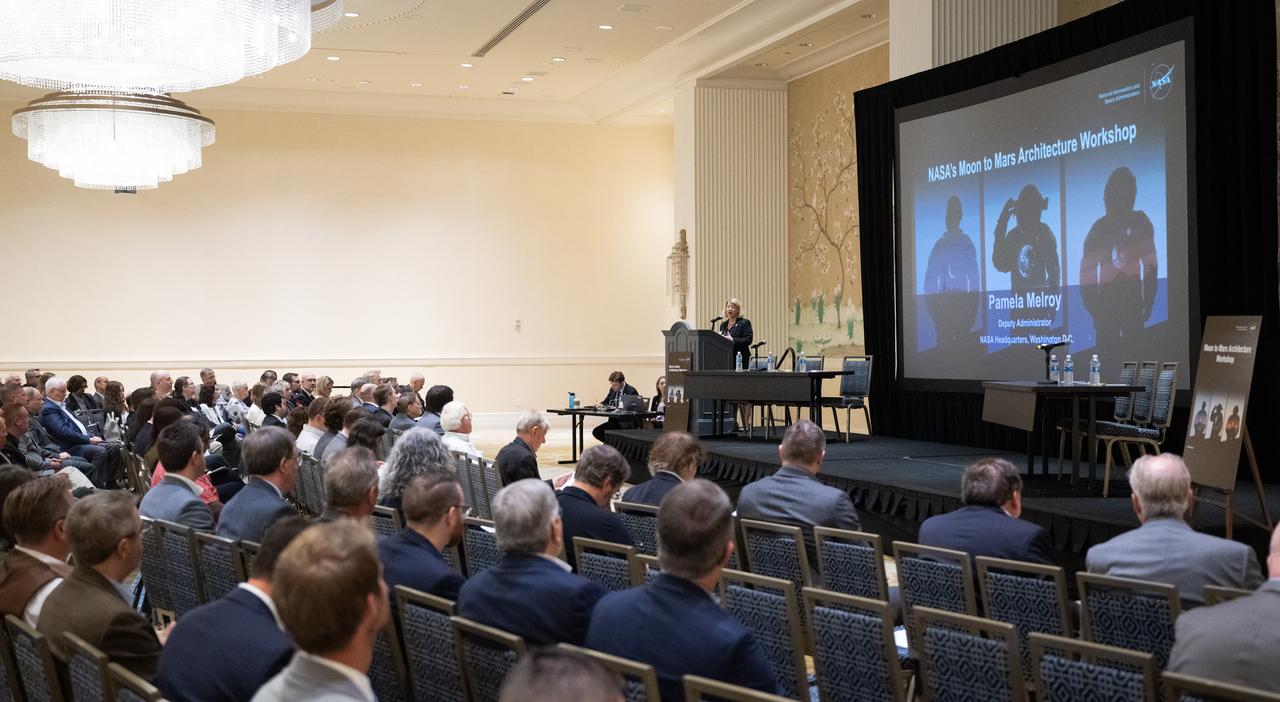
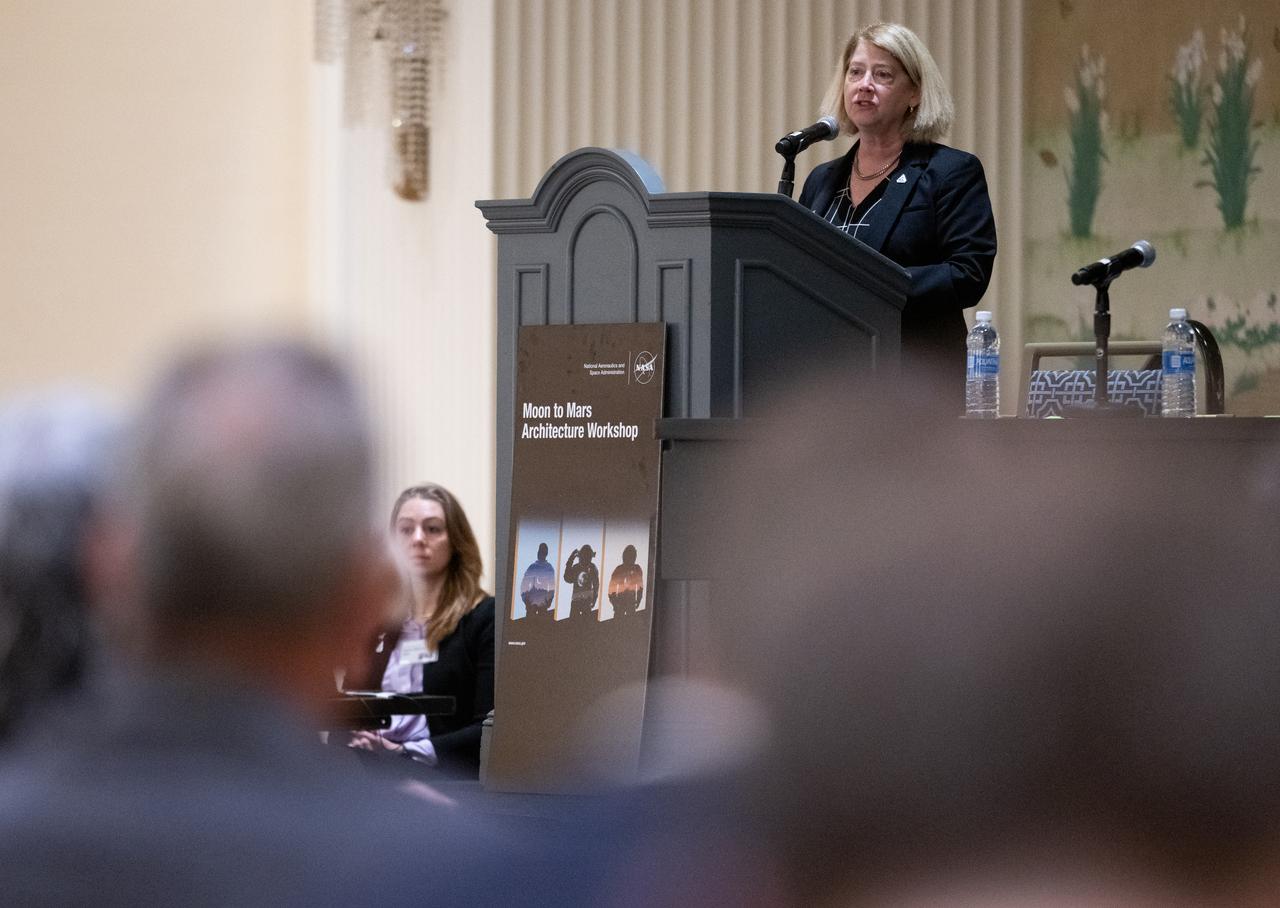
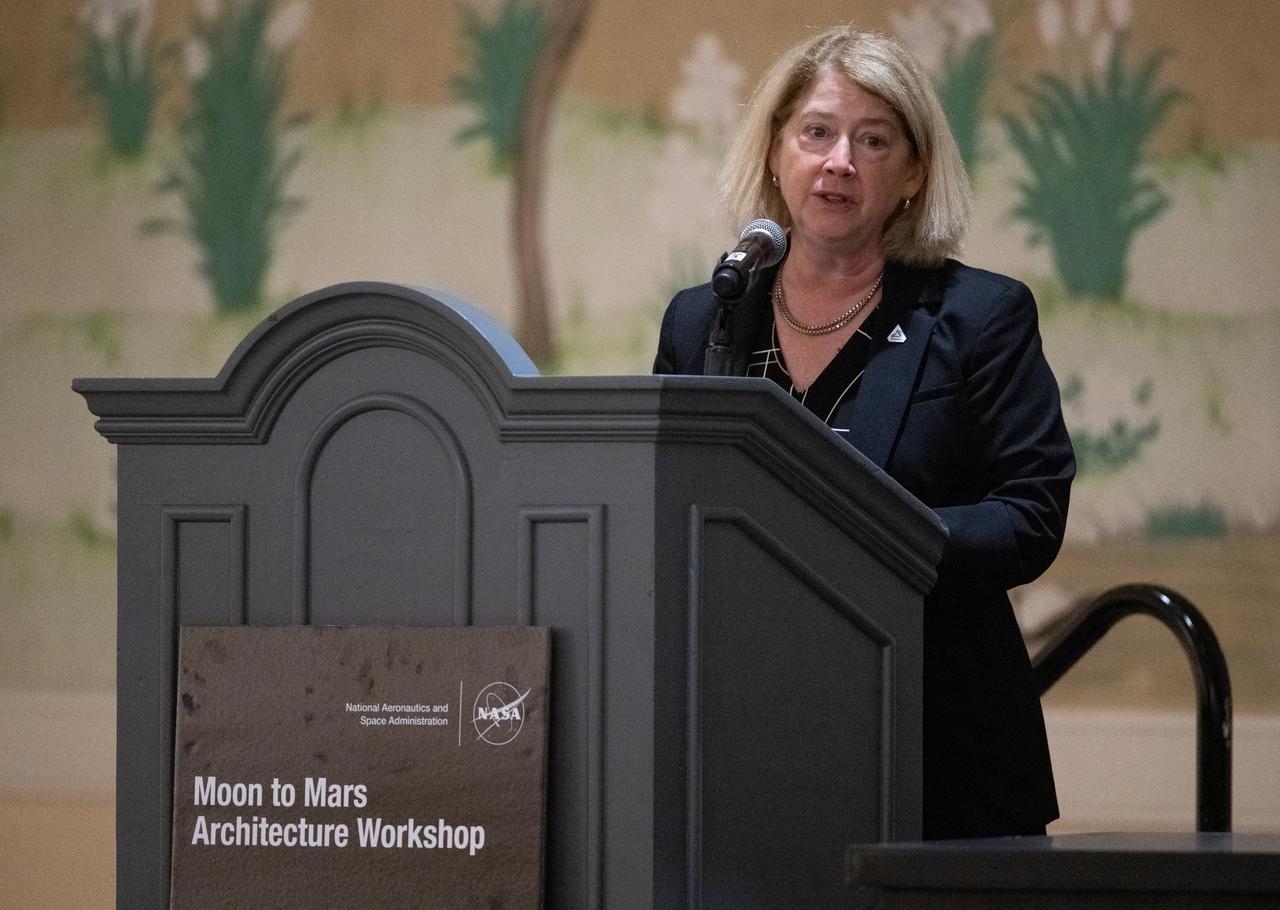
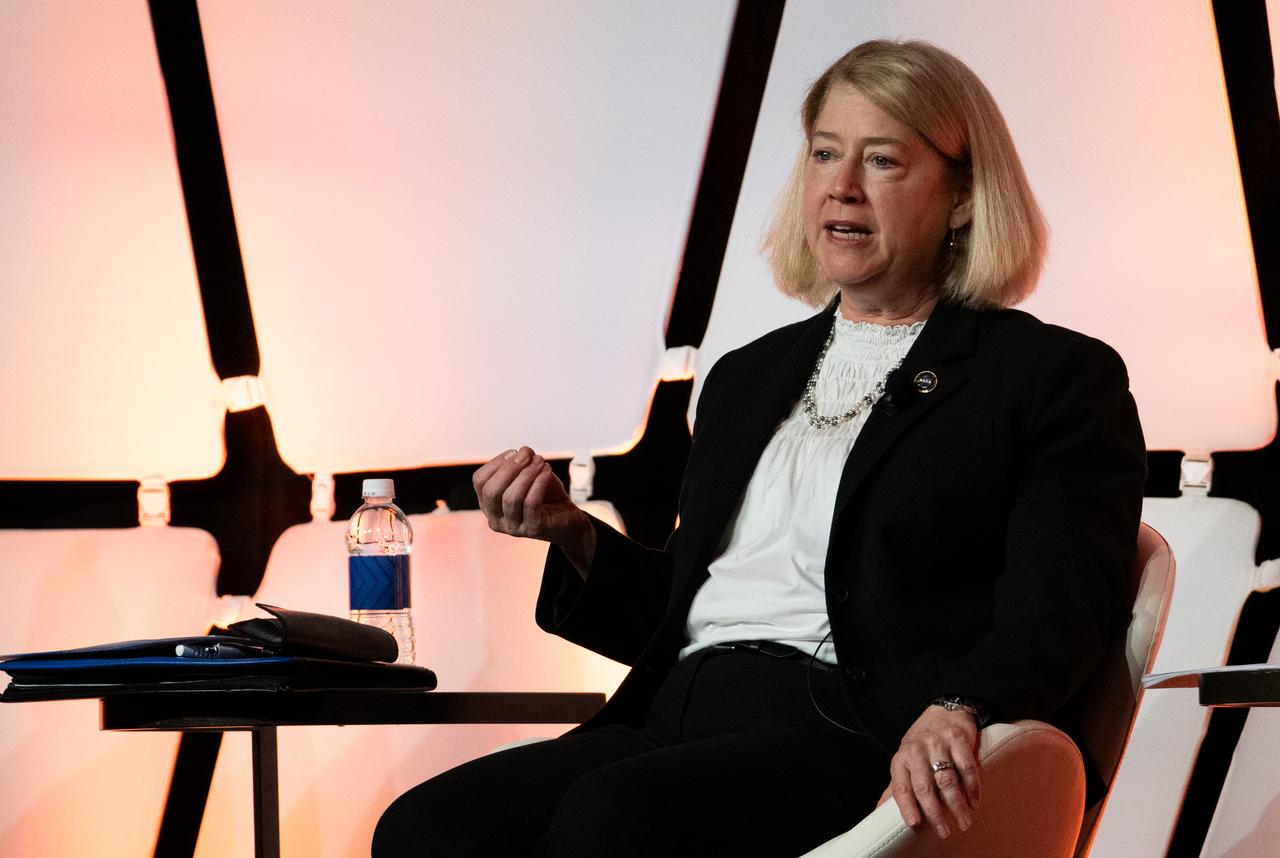
NASA Deputy Administrator Pam Melroy delivers opening remarks during NASA’s Moon to Mars Architecture Workshop, Tuesday, June 27, 2023, at the Gaylord National Resort and Convention Center in National Harbor, Md. Following the release of the 2022 Architecture Concept Review, NASA is conducting the workshop to engage the broader space community and collect feedback from U.S. industry and academia to inform the Moon to Mars mission architecture and operational delivery. Photo Credit: (NASA/Joel Kowsky)
NASA’s Moon to Mars Architecture Workshop
NASA Deputy Administrator Pam Melroy delivers opening remarks during NASA’s Moon to Mars Architecture Workshop, Tuesday, June 27, 2023, at the Gaylord National Resort and Convention Center in National Harbor, Md. Following the release of the 2022 Architecture Concept Review, NASA is conducting the workshop to engage the broader space community and collect feedback from U.S. industry and academia to inform the Moon to Mars mission architecture and operational delivery. Photo Credit: (NASA/Joel Kowsky)
NASA’s Moon to Mars Architecture Workshop
NASA Deputy Administrator Pam Melroy delivers opening remarks during NASA’s Moon to Mars Architecture Workshop, Tuesday, June 27, 2023, at the Gaylord National Resort and Convention Center in National Harbor, Md. Following the release of the 2022 Architecture Concept Review, NASA is conducting the workshop to engage the broader space community and collect feedback from U.S. industry and academia to inform the Moon to Mars mission architecture and operational delivery. Photo Credit: (NASA/Joel Kowsky)
NASA’s Moon to Mars Architecture Workshop
Michelle Munk, chief architect for NASA’s Space Technology Mission Directorate, left, answers a question alongside Joel Kearns, deputy associate administrator for Exploration in NASA's Science Mission Directorate, during NASA’s Moon to Mars Architecture Workshop, Tuesday, June 27, 2023, at the Gaylord National Resort and Convention Center in National Harbor, Md. Following the release of the 2022 Architecture Concept Review, NASA is conducting the workshop to engage the broader space community and collect feedback from U.S. industry and academia to inform the Moon to Mars mission architecture and operational delivery. Photo Credit: (NASA/Joel Kowsky)
NASA’s Moon to Mars Architecture Workshop
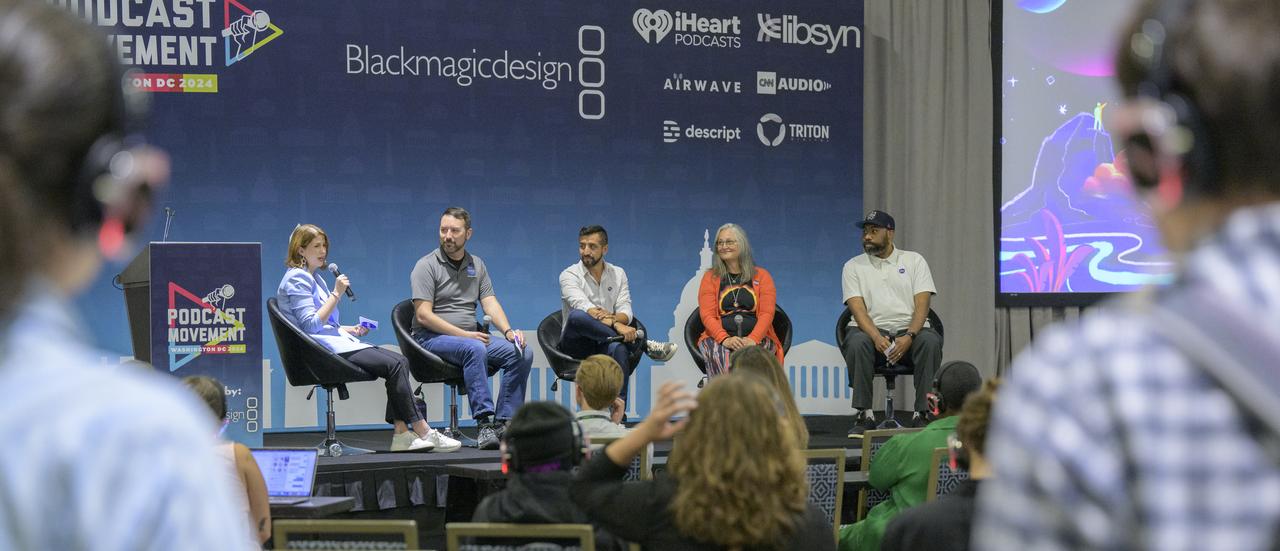
NASA Audio Lead Katie Konans, left, NASA Multimedia Producer and Host of Houston, We Have a Podcast Dane Turner, NASA Writer and Host of the Small Steps, Giant Leaps podcast Andrés Almeida, NASA Astrophysicist and Host of NASA's Curious Universe podcast Padi Boyd, and NASA Audio Engineer Manny Cooper, right, are seen during a Podcast Movement, NASA hosted a panel entitled, "Eclipses, Moon Missions, and Climate Change: How NASA Reaches Curious Listeners", Tuesday, Aug. 20, 2024, at the Gaylord National Resort and Convention Center in National Harbor, Md. Photo Credit: (NASA/Bill Ingalls)

NASA Participates in the Podcast Movement
Michelle Munk, chief architect for NASA’s Space Technology Mission Directorate, left, and Joel Kearns, deputy associate administrator for Exploration in NASA's Science Mission Directorate, are seen during NASA’s Moon to Mars Architecture Workshop, Tuesday, June 27, 2023, at the Gaylord National Resort and Convention Center in National Harbor, Md. Following the release of the 2022 Architecture Concept Review, NASA is conducting the workshop to engage the broader space community and collect feedback from U.S. industry and academia to inform the Moon to Mars mission architecture and operational delivery. Photo Credit: (NASA/Joel Kowsky)
NASA’s Moon to Mars Architecture Workshop
NASA Audio Lead Katie Konans, left, NASA Multimedia Producer and Host of Houston, We Have a Podcast Dane Turner, NASA Writer and Host of the Small Steps, Giant Leaps podcast Andrés Almeida, NASA Astrophysicist and Host of NASA's Curious Universe podcast Padi Boyd, and NASA Audio Engineer Manny Cooper, right, are seen during a Podcast Movement, NASA hosted a panel entitled, "Eclipses, Moon Missions, and Climate Change: How NASA Reaches Curious Listeners", Tuesday, Aug. 20, 2024, at the Gaylord National Resort and Convention Center in National Harbor, Md. Photo Credit: (NASA/Bill Ingalls)

NASA Participates in the Podcast Movement
Nujoud Merancy, architecture lead for NASA's Exploration Systems Development Mission Directorate, left, and Catherine Koerner, deputy associate administrator for NASA's Exploration Systems Development Mission Directorate, are seen during NASA’s Moon to Mars Architecture Workshop, Tuesday, June 27, 2023, at the Gaylord National Resort and Convention Center in National Harbor, Md. Following the release of the 2022 Architecture Concept Review, NASA is conducting the workshop to engage the broader space community and collect feedback from U.S. industry and academia to inform the Moon to Mars mission architecture and operational delivery. Photo Credit: (NASA/Joel Kowsky)
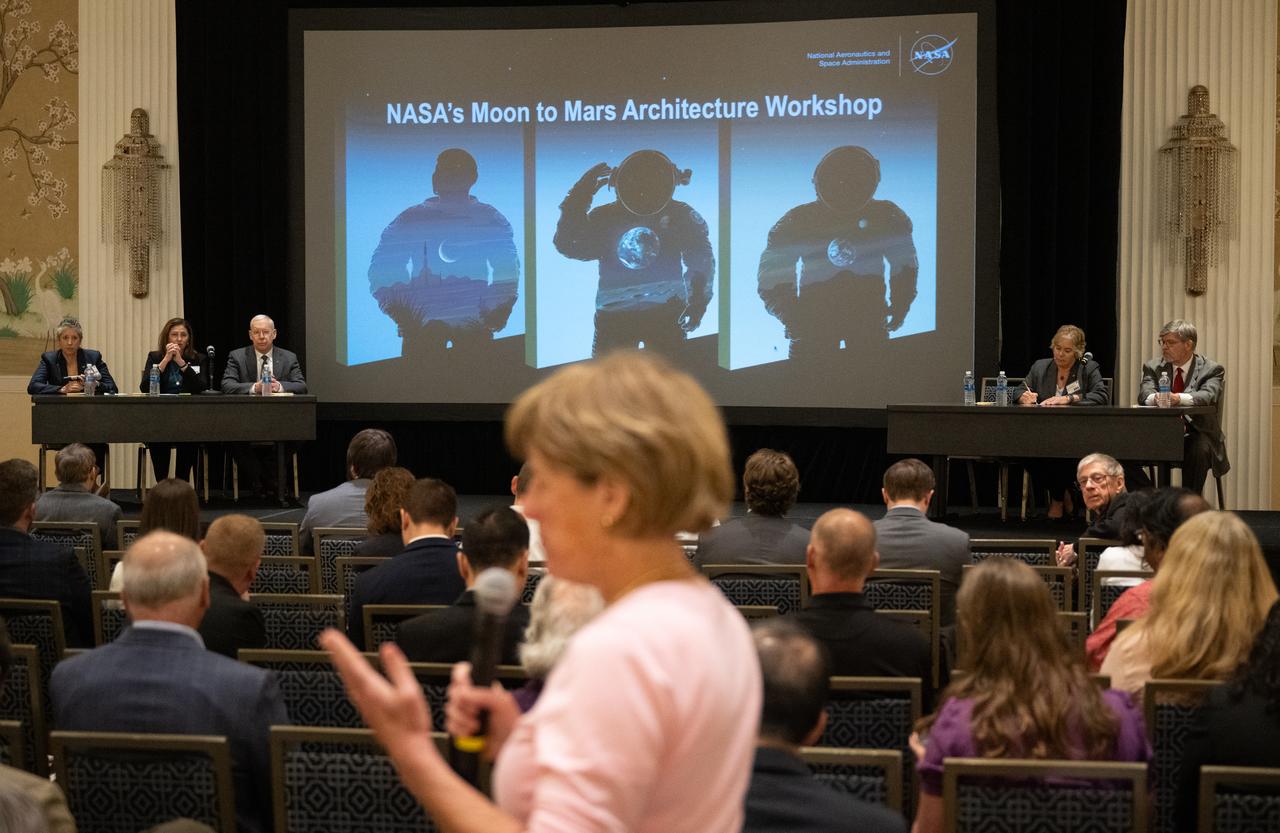
NASA’s Moon to Mars Architecture Workshop
Nujoud Merancy, architecture lead for NASA's Exploration Systems Development Mission Directorate, left, and Catherine Koerner, deputy associate administrator for NASA's Exploration Systems Development Mission Directorate, are seen during NASA’s Moon to Mars Architecture Workshop, Tuesday, June 27, 2023, at the Gaylord National Resort and Convention Center in National Harbor, Md. Following the release of the 2022 Architecture Concept Review, NASA is conducting the workshop to engage the broader space community and collect feedback from U.S. industry and academia to inform the Moon to Mars mission architecture and operational delivery. Photo Credit: (NASA/Joel Kowsky)
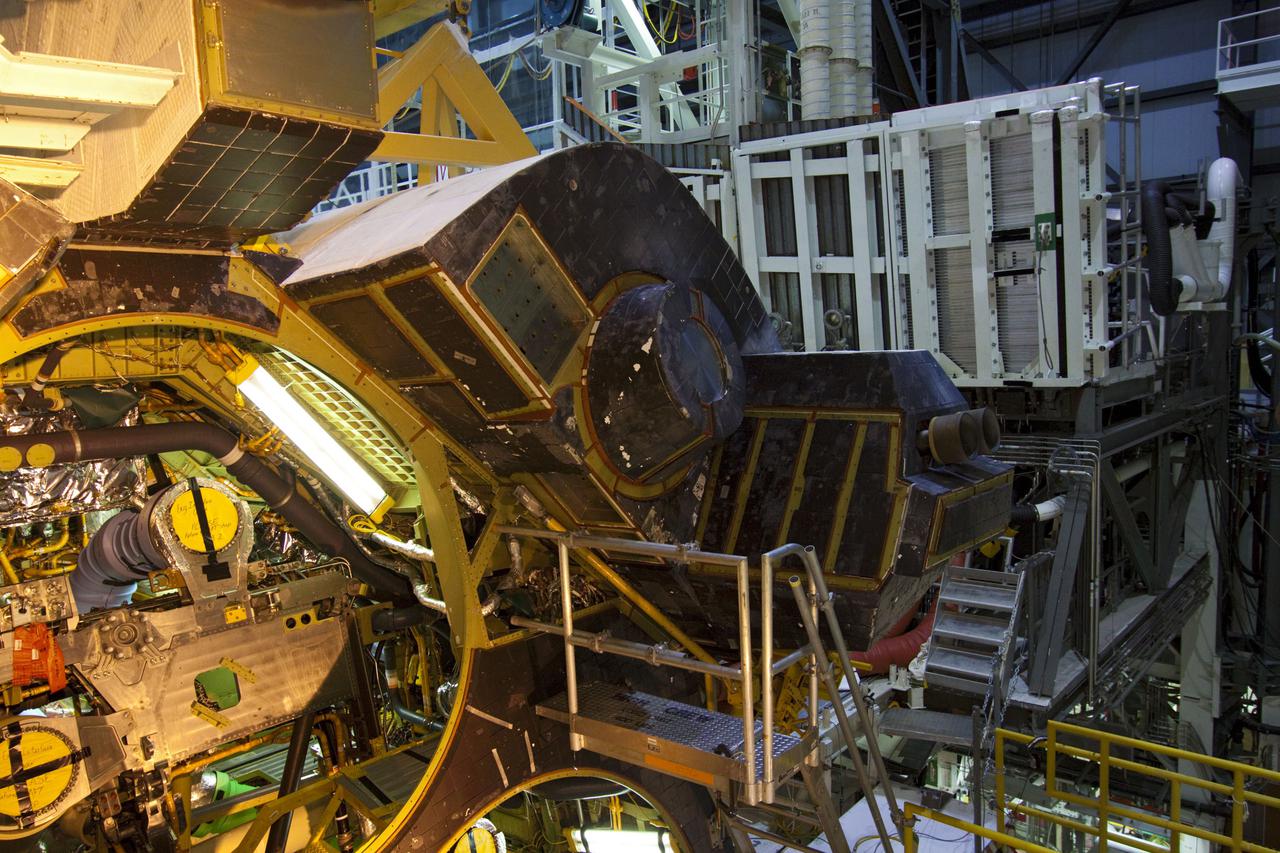
NASA’s Moon to Mars Architecture Workshop
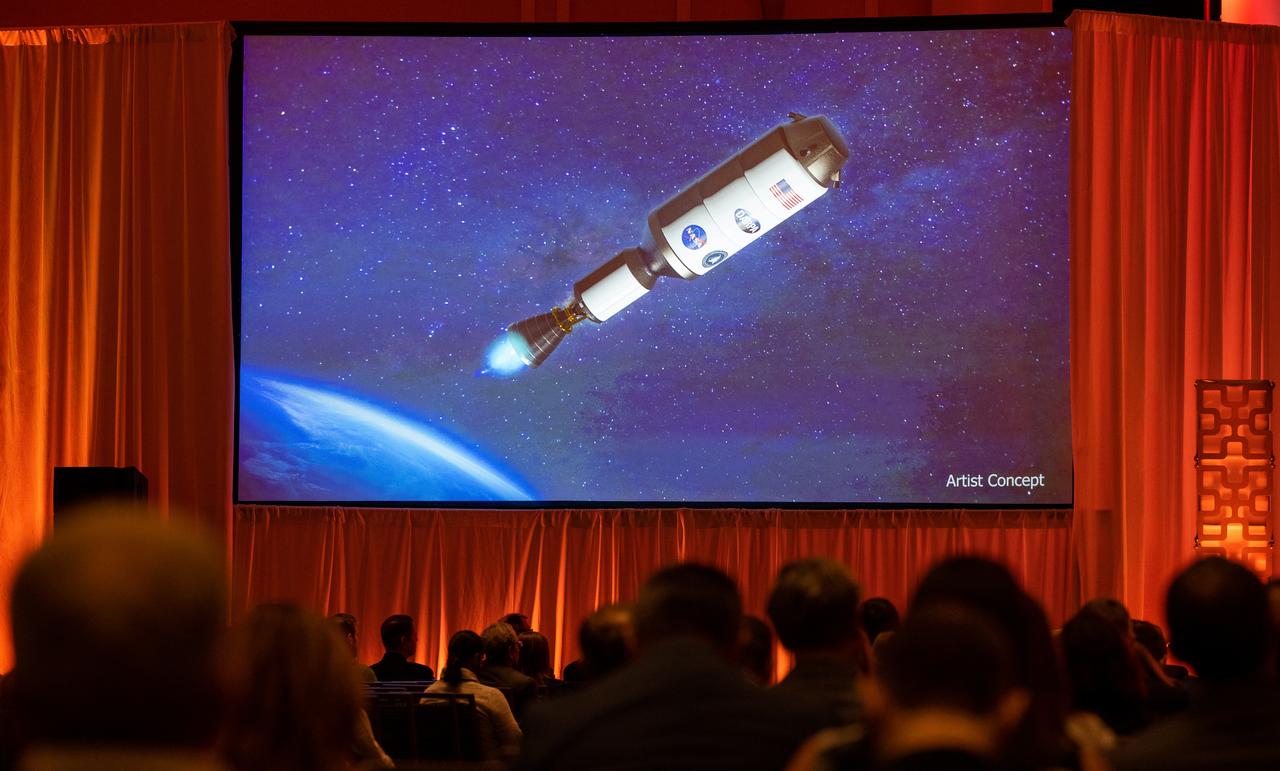
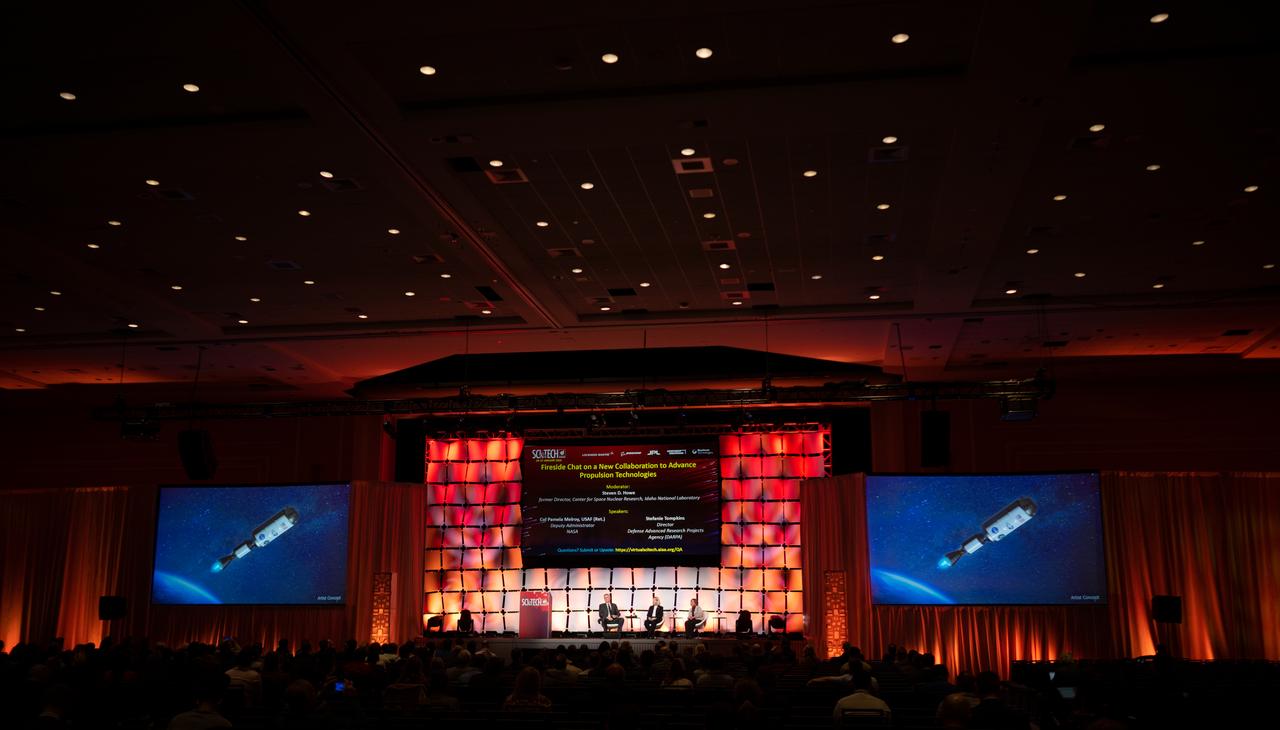
An artists concept of the Demonstration Rocket for Agile Cislunar Operations, or DRACO, spacecraft is seen on a screen during a fireside chat announcing a new collaboration on nuclear thermal propulsion at the American Institute of Aeronautics and Astronautics SciTech Forum, Tuesday, Jan. 24, 2023, at the Gaylord National Resort and Convention Center in National Harbor, Md. NASA and the Defense Advanced Research Projects Agency (DARPA) will partner on the Demonstration Rocket for Agile Cislunar Operations, or DRACO, project to develop and demonstrate in-space a nuclear thermal engine. Photo Credit: (NASA/Joel Kowsky)
NASA and DARPA Collaboration on Rocket Propulsion Technology Ann
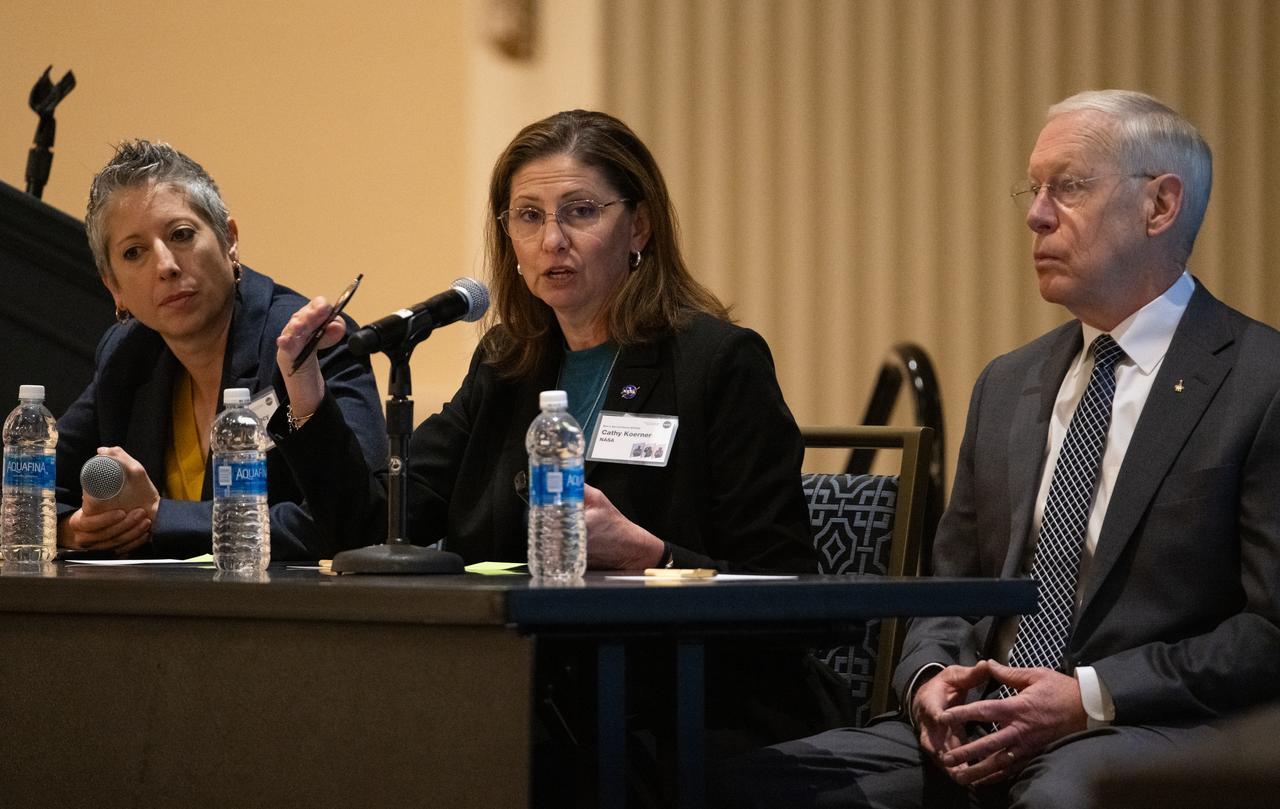
Catherine Koerner, deputy associate administrator for NASA's Exploration Systems Development Mission Directorate, center, is seen alongside Nujoud Merancy, architecture lead for NASA's Exploration Systems Development Mission Directorate, left, and Patrick Forrester, special advisor in NASA's Space Operations Mission Directorate, right, during NASA’s Moon to Mars Architecture Workshop, Tuesday, June 27, 2023, at the Gaylord National Resort and Convention Center in National Harbor, Md. Following the release of the 2022 Architecture Concept Review, NASA is conducting the workshop to engage the broader space community and collect feedback from U.S. industry and academia to inform the Moon to Mars mission architecture and operational delivery. Photo Credit: (NASA/Joel Kowsky)
NASA’s Moon to Mars Architecture Workshop
Catherine Koerner, deputy associate administrator for NASA's Exploration Systems Development Mission Directorate, center, is seen alongside Nujoud Merancy, architecture lead for NASA's Exploration Systems Development Mission Directorate, left, and Patrick Forrester, special advisor in NASA's Space Operations Mission Directorate, right, during NASA’s Moon to Mars Architecture Workshop, Tuesday, June 27, 2023, at the Gaylord National Resort and Convention Center in National Harbor, Md. Following the release of the 2022 Architecture Concept Review, NASA is conducting the workshop to engage the broader space community and collect feedback from U.S. industry and academia to inform the Moon to Mars mission architecture and operational delivery. Photo Credit: (NASA/Joel Kowsky)
NASA’s Moon to Mars Architecture Workshop
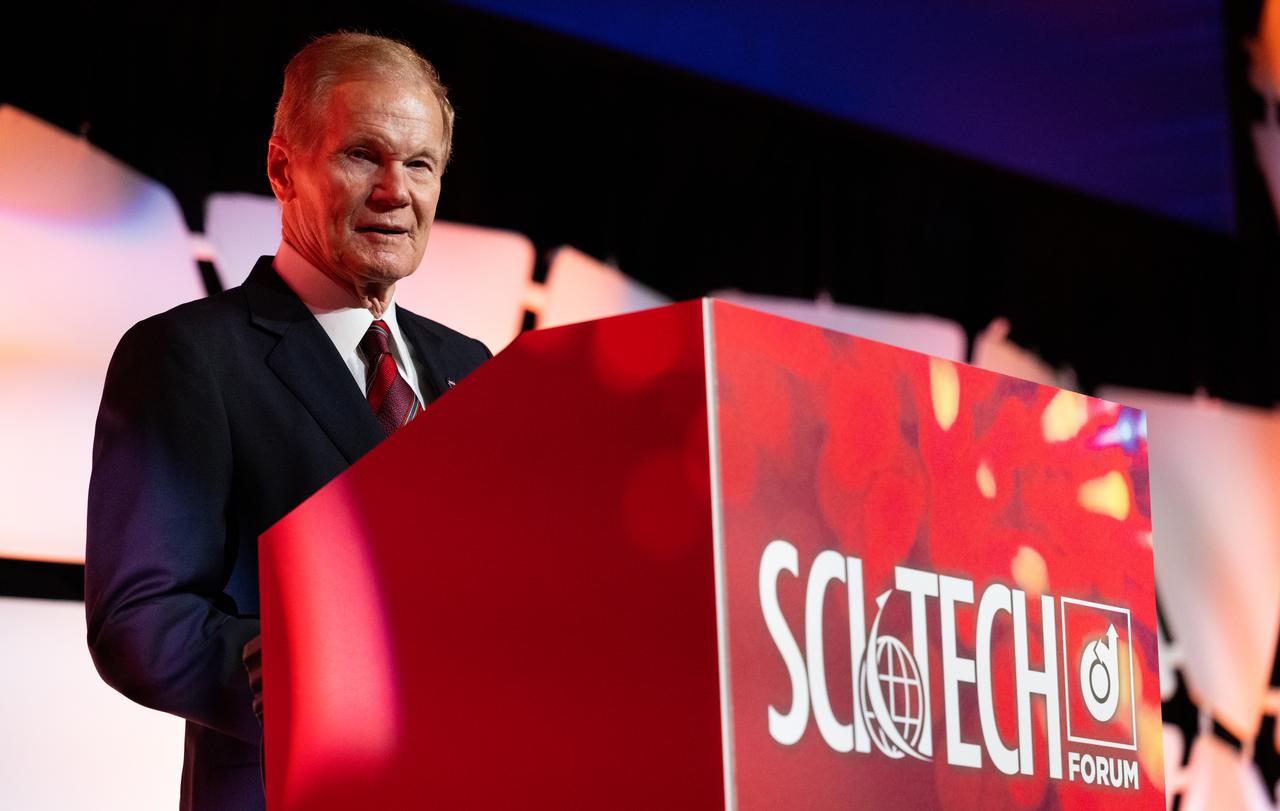
NASA Administrator Bill Nelson delivers opening remarks during a fireside chat announcing a new collaboration on nuclear thermal propulsion at the American Institute of Aeronautics and Astronautics SciTech Forum, Tuesday, Jan. 24, 2023, at the Gaylord National Resort and Convention Center in National Harbor, Md. NASA and the Defense Advanced Research Projects Agency (DARPA) will partner on the Demonstration Rocket for Agile Cislunar Operations, or DRACO, project to develop and demonstrate in-space a nuclear thermal engine. Photo Credit: (NASA/Joel Kowsky)
NASA and DARPA Collaboration on Rocket Propulsion Technology Ann
Stefanie Tompkins, director of the Defense Advance Research Projects Agency (DARPA), is seen during a fireside chat announcing a new collaboration on nuclear thermal propulsion at the American Institute of Aeronautics and Astronautics SciTech Forum, Tuesday, Jan. 24, 2023, at the Gaylord National Resort and Convention Center in National Harbor, Md. NASA and the Defense Advanced Research Projects Agency (DARPA) will partner on the Demonstration Rocket for Agile Cislunar Operations, or DRACO, project to develop and demonstrate in-space a nuclear thermal engine. Photo Credit: (NASA/Joel Kowsky)
NASA and DARPA Collaboration on Rocket Propulsion Technology Ann
NASA Deputy Administrator Pam Melroy answers a question during a fireside chat announcing a new collaboration on nuclear thermal propulsion at the American Institute of Aeronautics and Astronautics SciTech Forum, Tuesday, Jan. 24, 2023, at the Gaylord National Resort and Convention Center in National Harbor, Md. NASA and the Defense Advanced Research Projects Agency (DARPA) will partner on the Demonstration Rocket for Agile Cislunar Operations, or DRACO, project to develop and demonstrate in-space a nuclear thermal engine. Photo Credit: (NASA/Joel Kowsky)
NASA and DARPA Collaboration on Rocket Propulsion Technology Ann
Steve Howe, former director of the Center for Space Nuclear Research at the Idaho National Laboratory, left, NASA Deputy Administrator Pam Melroy, center, and Stefanie Tompkins, director of the Defense Advance Research Projects Agency (DARPA), right, are seen during a fireside chat announcing a new collaboration on nuclear thermal propulsion at the American Institute of Aeronautics and Astronautics SciTech Forum, Tuesday, Jan. 24, 2023, at the Gaylord National Resort and Convention Center in National Harbor, Md. NASA and the Defense Advanced Research Projects Agency (DARPA) will partner on the Demonstration Rocket for Agile Cislunar Operations, or DRACO, project to develop and demonstrate in-space a nuclear thermal engine. Photo Credit: (NASA/Joel Kowsky)
NASA and DARPA Collaboration on Rocket Propulsion Technology Ann
Steve Howe, former director of the Center for Space Nuclear Research at the Idaho National Laboratory, left, NASA Deputy Administrator Pam Melroy, center, and Stefanie Tompkins, director of the Defense Advance Research Projects Agency (DARPA), right, are seen during a fireside chat announcing a new collaboration on nuclear thermal propulsion at the American Institute of Aeronautics and Astronautics SciTech Forum, Tuesday, Jan. 24, 2023, at the Gaylord National Resort and Convention Center in National Harbor, Md. NASA and the Defense Advanced Research Projects Agency (DARPA) will partner on the Demonstration Rocket for Agile Cislunar Operations, or DRACO, project to develop and demonstrate in-space a nuclear thermal engine. Photo Credit: (NASA/Joel Kowsky)
NASA and DARPA Collaboration on Rocket Propulsion Technology Ann
Steve Howe, former director of the Center for Space Nuclear Research at the Idaho National Laboratory, left, NASA Deputy Administrator Pam Melroy, center, and Stefanie Tompkins, director of the Defense Advance Research Projects Agency (DARPA), right, are seen during a fireside chat announcing a new collaboration on nuclear thermal propulsion at the American Institute of Aeronautics and Astronautics SciTech Forum, Tuesday, Jan. 24, 2023, at the Gaylord National Resort and Convention Center in National Harbor, Md. NASA and the Defense Advanced Research Projects Agency (DARPA) will partner on the Demonstration Rocket for Agile Cislunar Operations, or DRACO, project to develop and demonstrate in-space a nuclear thermal engine. Photo Credit: (NASA/Joel Kowsky)
NASA and DARPA Collaboration on Rocket Propulsion Technology Ann
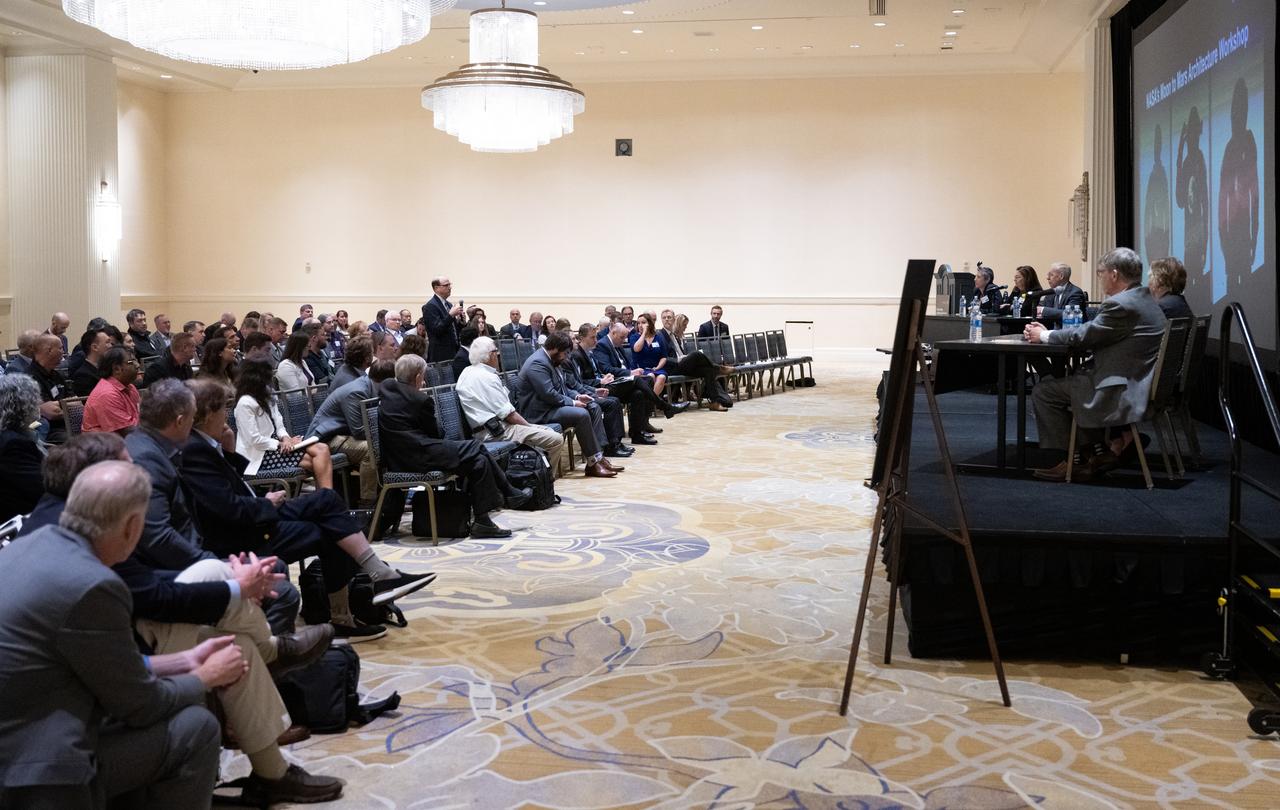
Nujoud Merancy, architecture lead for NASA's Exploration Systems Development Mission Directorate, Catherine Koerner, deputy associate administrator for NASA's Exploration Systems Development Mission Directorate, Patrick Forrester, special advisor in NASA's Space Operations Mission Directorate, Michelle Munk, chief architect for NASA’s Space Technology Mission Directorate, and Joel Kearns, deputy associate administrator for Exploration in NASA's Science Mission Directorate, listen to a question during NASA’s Moon to Mars Architecture Workshop, Tuesday, June 27, 2023, at the Gaylord National Resort and Convention Center in National Harbor, Md. Following the release of the 2022 Architecture Concept Review, NASA is conducting the workshop to engage the broader space community and collect feedback from U.S. industry and academia to inform the Moon to Mars mission architecture and operational delivery. Photo Credit: (NASA/Joel Kowsky)
NASA’s Moon to Mars Architecture Workshop
Nujoud Merancy, architecture lead for NASA's Exploration Systems Development Mission Directorate, Catherine Koerner, deputy associate administrator for NASA's Exploration Systems Development Mission Directorate, Patrick Forrester, special advisor in NASA's Space Operations Mission Directorate, Michelle Munk, chief architect for NASA’s Space Technology Mission Directorate, and Joel Kearns, deputy associate administrator for Exploration in NASA's Science Mission Directorate, listen to a question during NASA’s Moon to Mars Architecture Workshop, Tuesday, June 27, 2023, at the Gaylord National Resort and Convention Center in National Harbor, Md. Following the release of the 2022 Architecture Concept Review, NASA is conducting the workshop to engage the broader space community and collect feedback from U.S. industry and academia to inform the Moon to Mars mission architecture and operational delivery. Photo Credit: (NASA/Joel Kowsky)
NASA’s Moon to Mars Architecture Workshop
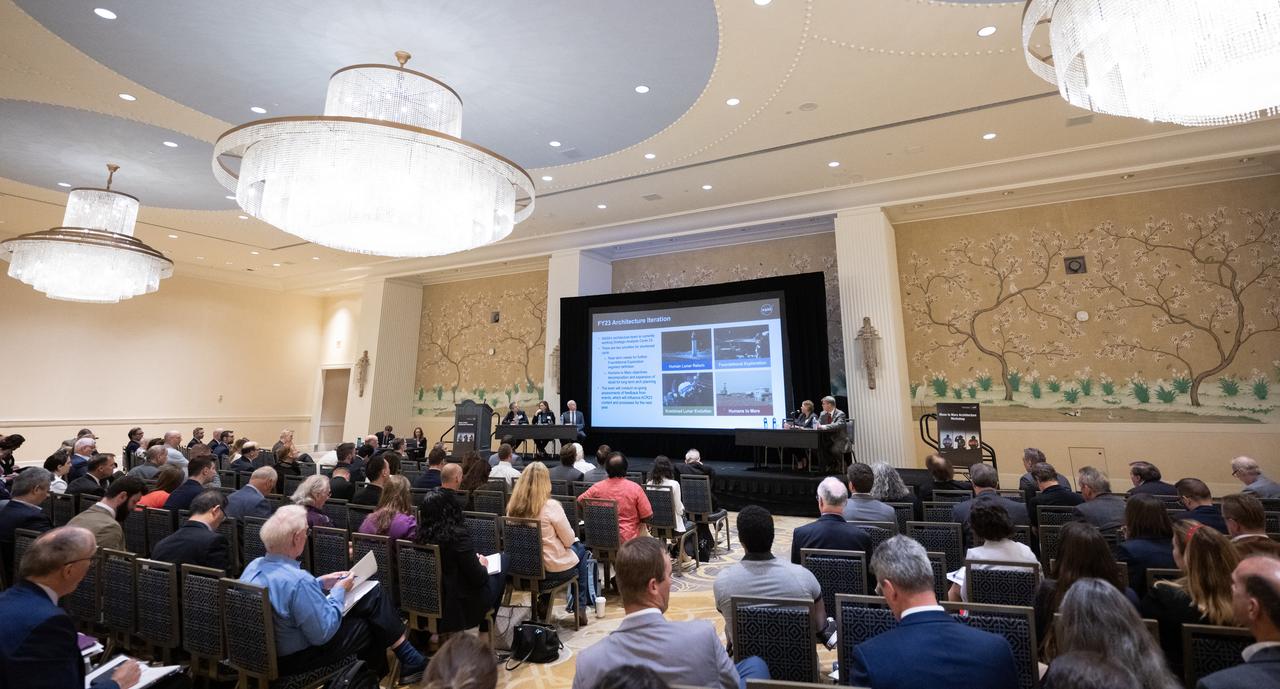
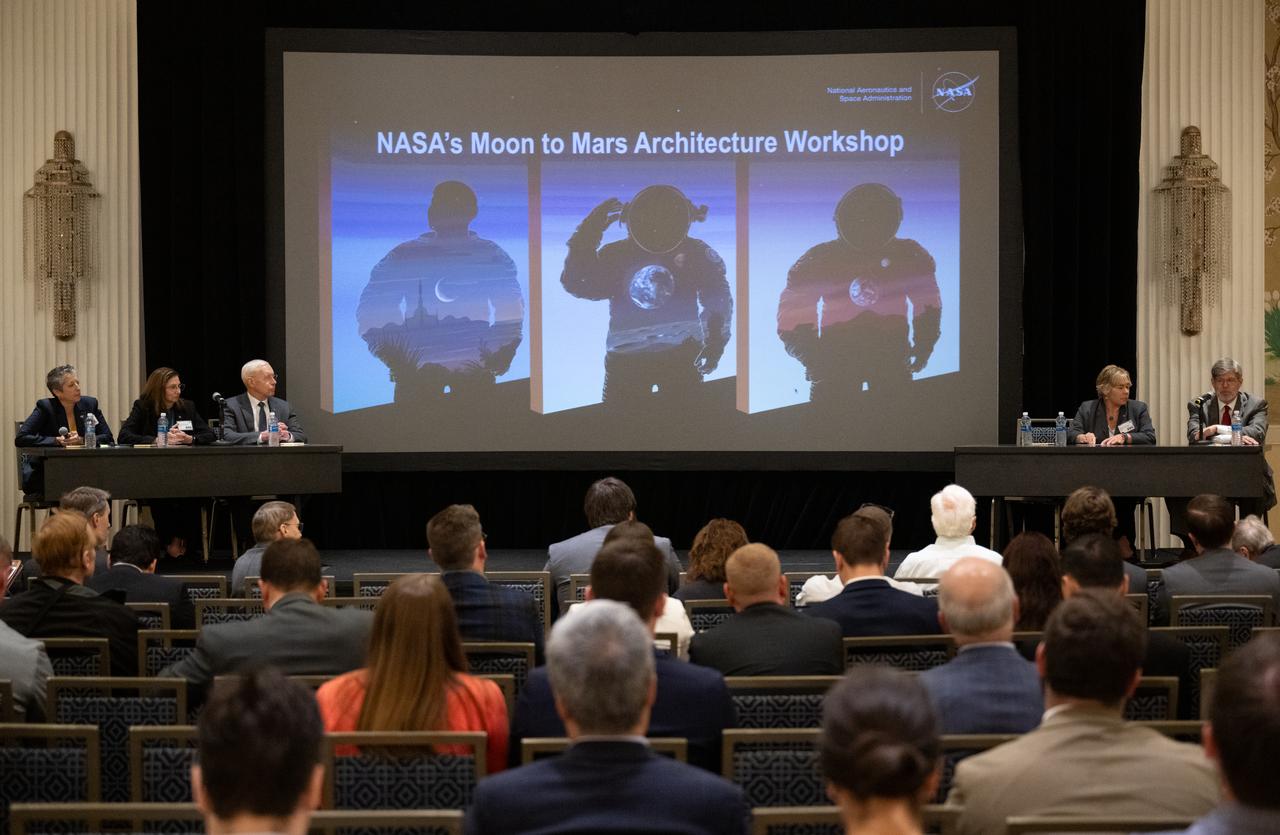
Nujoud Merancy, architecture lead for NASA's Exploration Systems Development Mission Directorate, Catherine Koerner, deputy associate administrator for NASA's Exploration Systems Development Mission Directorate, Patrick Forrester, special advisor in NASA's Space Operations Mission Directorate, Michelle Munk, chief architect for NASA’s Space Technology Mission Directorate, and Joel Kearns, deputy associate administrator for Exploration in NASA's Science Mission Directorate, are seen on stage during NASA’s Moon to Mars Architecture Workshop, Tuesday, June 27, 2023, at the Gaylord National Resort and Convention Center in National Harbor, Md. Following the release of the 2022 Architecture Concept Review, NASA is conducting the workshop to engage the broader space community and collect feedback from U.S. industry and academia to inform the Moon to Mars mission architecture and operational delivery. Photo Credit: (NASA/Joel Kowsky)
NASA’s Moon to Mars Architecture Workshop
Nujoud Merancy, architecture lead for NASA's Exploration Systems Development Mission Directorate, Catherine Koerner, deputy associate administrator for NASA's Exploration Systems Development Mission Directorate, Patrick Forrester, special advisor in NASA's Space Operations Mission Directorate, Michelle Munk, chief architect for NASA’s Space Technology Mission Directorate, and Joel Kearns, deputy associate administrator for Exploration in NASA's Science Mission Directorate, are seen on stage during NASA’s Moon to Mars Architecture Workshop, Tuesday, June 27, 2023, at the Gaylord National Resort and Convention Center in National Harbor, Md. Following the release of the 2022 Architecture Concept Review, NASA is conducting the workshop to engage the broader space community and collect feedback from U.S. industry and academia to inform the Moon to Mars mission architecture and operational delivery. Photo Credit: (NASA/Joel Kowsky)
NASA’s Moon to Mars Architecture Workshop
NASA Deputy Administrator Pam Melroy, left, and Stefanie Tompkins, director of the Defense Advance Research Projects Agency (DARPA), right, are seen during a fireside chat announcing a new collaboration on nuclear thermal propulsion at the American Institute of Aeronautics and Astronautics SciTech Forum, Tuesday, Jan. 24, 2023, at the Gaylord National Resort and Convention Center in National Harbor, Md. NASA and the Defense Advanced Research Projects Agency (DARPA) will partner on the Demonstration Rocket for Agile Cislunar Operations, or DRACO, project to develop and demonstrate in-space a nuclear thermal engine. Photo Credit: (NASA/Joel Kowsky)
NASA and DARPA Collaboration on Rocket Propulsion Technology Ann
NASA Deputy Administrator Pam Melroy, left, and Stefanie Tompkins, director of the Defense Advance Research Projects Agency (DARPA), right, are seen during a fireside chat announcing a new collaboration on nuclear thermal propulsion at the American Institute of Aeronautics and Astronautics SciTech Forum, Tuesday, Jan. 24, 2023, at the Gaylord National Resort and Convention Center in National Harbor, Md. NASA and the Defense Advanced Research Projects Agency (DARPA) will partner on the Demonstration Rocket for Agile Cislunar Operations, or DRACO, project to develop and demonstrate in-space a nuclear thermal engine. Photo Credit: (NASA/Joel Kowsky)
NASA and DARPA Collaboration on Rocket Propulsion Technology Ann
NASA Deputy Administrator Pam Melroy, left, and Stefanie Tompkins, director of the Defense Advance Research Projects Agency (DARPA), right, are seen during a fireside chat announcing a new collaboration on nuclear thermal propulsion at the American Institute of Aeronautics and Astronautics SciTech Forum, Tuesday, Jan. 24, 2023, at the Gaylord National Resort and Convention Center in National Harbor, Md. NASA and the Defense Advanced Research Projects Agency (DARPA) will partner on the Demonstration Rocket for Agile Cislunar Operations, or DRACO, project to develop and demonstrate in-space a nuclear thermal engine. Photo Credit: (NASA/Joel Kowsky)
NASA and DARPA Collaboration on Rocket Propulsion Technology Ann
An artists concept of the Demonstration Rocket for Agile Cislunar Operations, or DRACO, spacecraft is seen on a screen as Steve Howe, former director of the Center for Space Nuclear Research at the Idaho National Laboratory, left, NASA Deputy Administrator Pam Melroy, center, and Stefanie Tompkins, director of the Defense Advance Research Projects Agency (DARPA), right, participate in a fireside chat announcing a new collaboration on nuclear thermal propulsion at the American Institute of Aeronautics and Astronautics SciTech Forum, Tuesday, Jan. 24, 2023, at the Gaylord National Resort and Convention Center in National Harbor, Md. NASA and the Defense Advanced Research Projects Agency (DARPA) will partner on the Demonstration Rocket for Agile Cislunar Operations, or DRACO, project to develop and demonstrate in-space a nuclear thermal engine. Photo Credit: (NASA/Joel Kowsky)
NASA and DARPA Collaboration on Rocket Propulsion Technology Ann
Stefanie Tompkins, director of the Defense Advance Research Projects Agency (DARPA), right, answers a question alongside Steve Howe, former director of the Center for Space Nuclear Research at the Idaho National Laboratory, left, NASA Deputy Administrator Pam Melroy, center, during a fireside chat announcing a new collaboration on nuclear thermal propulsion at the American Institute of Aeronautics and Astronautics SciTech Forum, Tuesday, Jan. 24, 2023, at the Gaylord National Resort and Convention Center in National Harbor, Md. NASA and the Defense Advanced Research Projects Agency (DARPA) will partner on the Demonstration Rocket for Agile Cislunar Operations, or DRACO, project to develop and demonstrate in-space a nuclear thermal engine. Photo Credit: (NASA/Joel Kowsky)
NASA and DARPA Collaboration on Rocket Propulsion Technology Ann
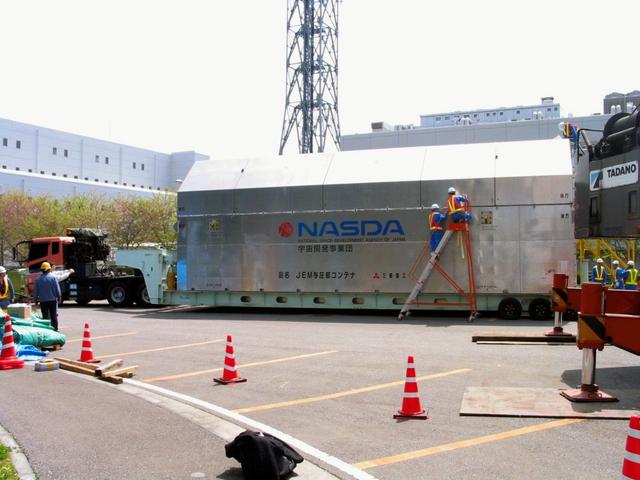
JSC2003-E-34751 (22 April 2003) --- A convoy transports the Kibo Pressurized Module, Japan's primary contribution to the International Space Station, from the National Space Development Agency of Japan's Tsukuba Space Center to be loaded onto a barge bound for Yokohama Harbor, where it was loaded on a container ship bound for Port Canaveral, Florida. Kibo is planned to arrive at the Kennedy Space Center for module integration tests with Node 2 and pre-launch processing in early June.  Photo Credit: NASA
JEM hardware delivery
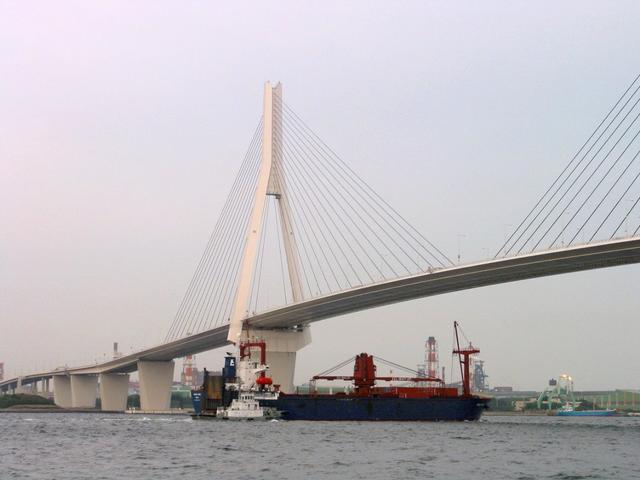
JSC2003-E-34750 (2 May 2003) --- A container transport ship carrying is shown departing Yokohama Harbor, Yokohama, Japan, bound for the Port Canaveral, Florida. The Kibo Pressurized Module, built by National Space Development Agency (NASDA), is expected to arrive at the Kennedy Space Center for module integration tests with Node 2 and pre-launch processing in early June.  Photo Credit: NASA
JEM hardware delivery
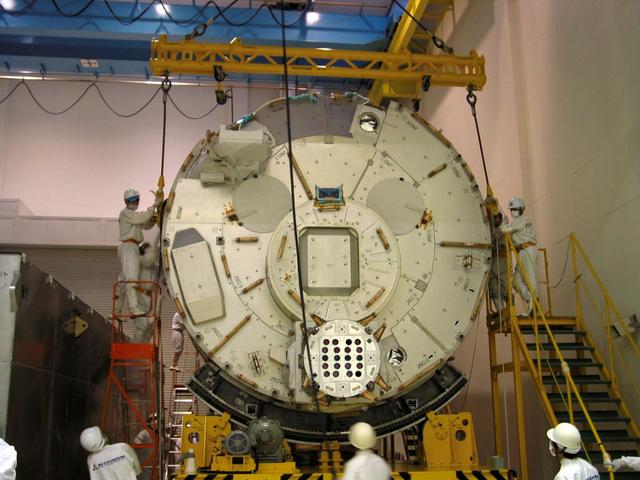
JSC2003-E-34755 (16 April 2003) --- Workers at Japan's Tsukuba Space Center are shown preparing the Japanese Experiment Module (JEM), Kibo, for lifting and packaging into an environmentally controlled shipping container for its transportation to Yokohama Harbor, where it was loaded on a container ship bound for Port Canaveral, Florida. The Kibo Pressurized Module, built by the National Space Development Agency of Japan (NASDA), is expected to arrive at the Kennedy Space Center for module integration tests with Node 2 and pre-launch processing in early June. Photo Credit: NASA
JEM hardware delivery
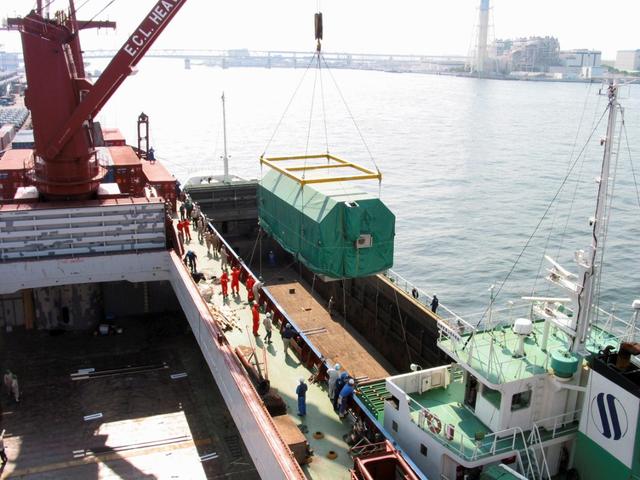
JSC2003-E-34748 (2 May 2003) --- The Pressurized Module of the Japanese Experiment Module (JEM), Kibo, Japan's primary contribution to the International Space Station, is transferred from a barge to a container transport ship at Yokohama Harbor, Yokohama, Japan. The Kibo module, built by the National Space Development Agency of Japan (NASDA), is expected to arrive at the Kennedy Space Center for integration tests with Node 2 and pre-launch processing in early June.  Photo Credit: NASA
JEM hardware delivery
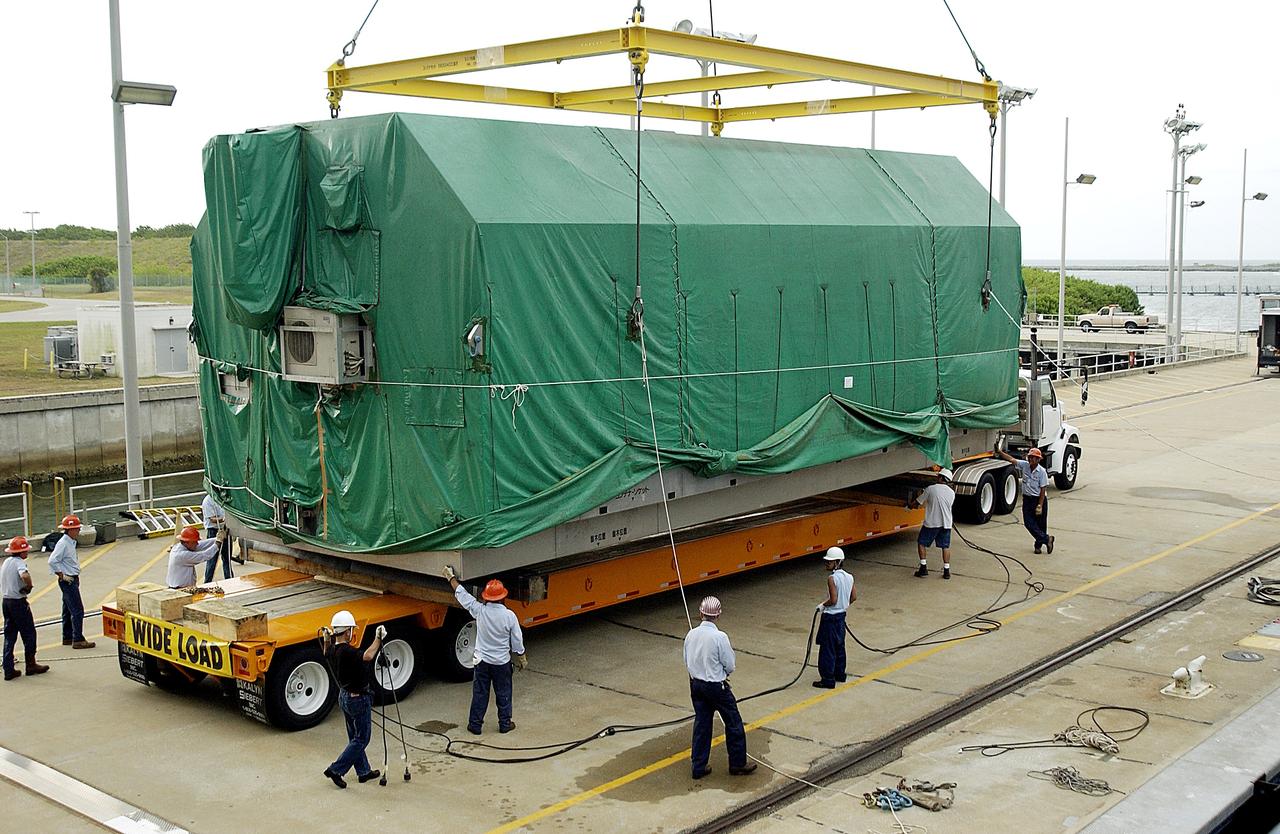
KENNEDY SPACE CENTER, FLA. - At Port Canaveral, the Pressurized Module of the Japanese Experiment Module (JEM) is lowered onto a truck bed for transfer to KSC’s Space Station Processing Facility.  The container transport ship carrying JEM departed May 2 from Yokohama Harbor in Japan for the voyage to the United States. The National Space Development Agency of Japan (NASDA) developed the laboratory at the Tsukuba Space Center near Tokyo. The Pressurized Module is the first element of the JEM, named "Kibo" (Hope), to be delivered to KSC. The JEM is Japan's primary contribution to the Station. It will enhance the unique research capabilities of the orbiting complex by providing an additional environment for astronauts to conduct science experiments.  The JEM also includes an exposed facility (platform) for space environment experiments, a robotic manipulator system, and two logistics modules. The various JEM components will be  assembled in space over the course of three Shuttle missions.
KENNEDY SPACE CENTER, FLA. - At Port Canaveral, the Pressurized Module of the Japanese Experiment Module (JEM) is lowered onto a truck bed for transfer to KSC’s Space Station Processing Facility. The container transport ship carrying JEM departed May 2 from Yokohama Harbor in Japan for the voyage to the United States. The National Space Development Agency of Japan (NASDA) developed the laboratory at the Tsukuba Space Center near Tokyo. The Pressurized Module is the first element of the JEM, named "Kibo" (Hope), to be delivered to KSC. The JEM is Japan's primary contribution to the Station. It will enhance the unique research capabilities of the orbiting complex by providing an additional environment for astronauts to conduct science experiments. The JEM also includes an exposed facility (platform) for space environment experiments, a robotic manipulator system, and two logistics modules. The various JEM components will be assembled in space over the course of three Shuttle missions.
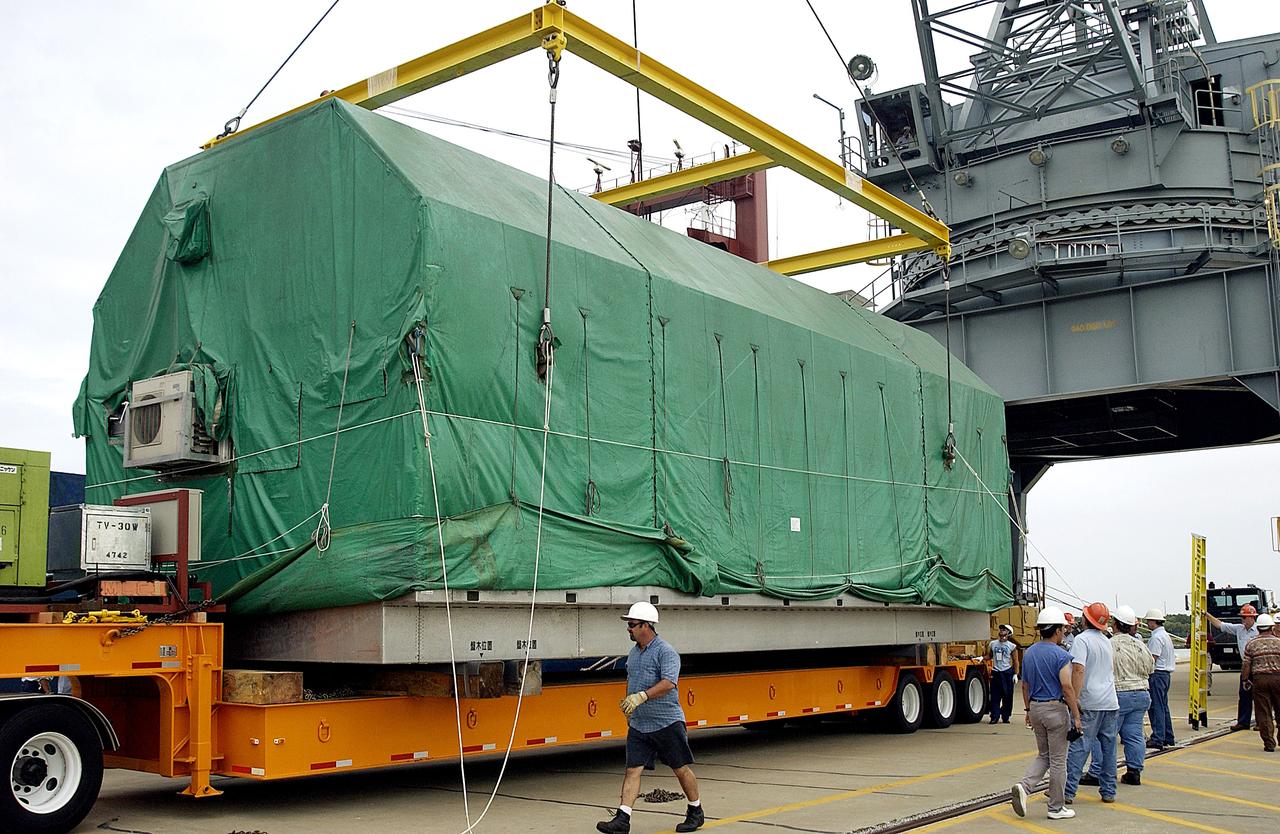
KENNEDY SPACE CENTER, FLA. - At Port Canaveral, workers release the overhead crane that lifted the Pressurized Module of the Japanese Experiment Module (JEM) from the ship onto the truck bed.  The container transport ship carrying JEM departed May 2 from Yokohama Harbor in Japan for the voyage to the United States. The National Space Development Agency of Japan (NASDA) developed the laboratory at the Tsukuba Space Center near Tokyo. The Pressurized Module is the first element of the JEM, named "Kibo" (Hope), to be delivered to KSC, and will be transferred to KSC’s Space Station Processing Facility.  The JEM is Japan's primary contribution to the Station. It will enhance the unique research capabilities of the orbiting complex by providing an additional environment for astronauts to conduct science experiments.  The JEM also includes an exposed facility (platform) for space environment experiments, a robotic manipulator system, and two logistics modules. The various JEM components will be  assembled in space over the course of three Shuttle missions.
KENNEDY SPACE CENTER, FLA. - At Port Canaveral, workers release the overhead crane that lifted the Pressurized Module of the Japanese Experiment Module (JEM) from the ship onto the truck bed. The container transport ship carrying JEM departed May 2 from Yokohama Harbor in Japan for the voyage to the United States. The National Space Development Agency of Japan (NASDA) developed the laboratory at the Tsukuba Space Center near Tokyo. The Pressurized Module is the first element of the JEM, named "Kibo" (Hope), to be delivered to KSC, and will be transferred to KSC’s Space Station Processing Facility. The JEM is Japan's primary contribution to the Station. It will enhance the unique research capabilities of the orbiting complex by providing an additional environment for astronauts to conduct science experiments. The JEM also includes an exposed facility (platform) for space environment experiments, a robotic manipulator system, and two logistics modules. The various JEM components will be assembled in space over the course of three Shuttle missions.
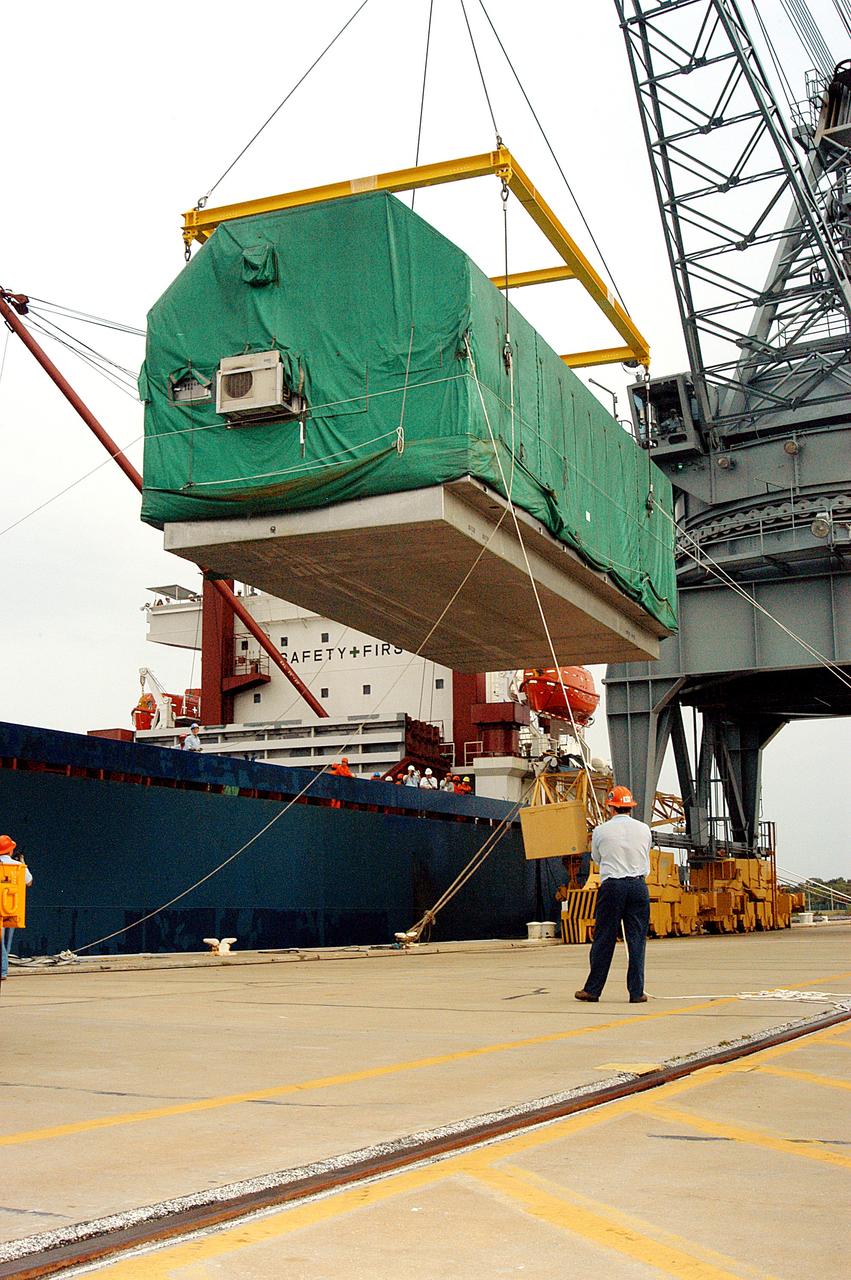
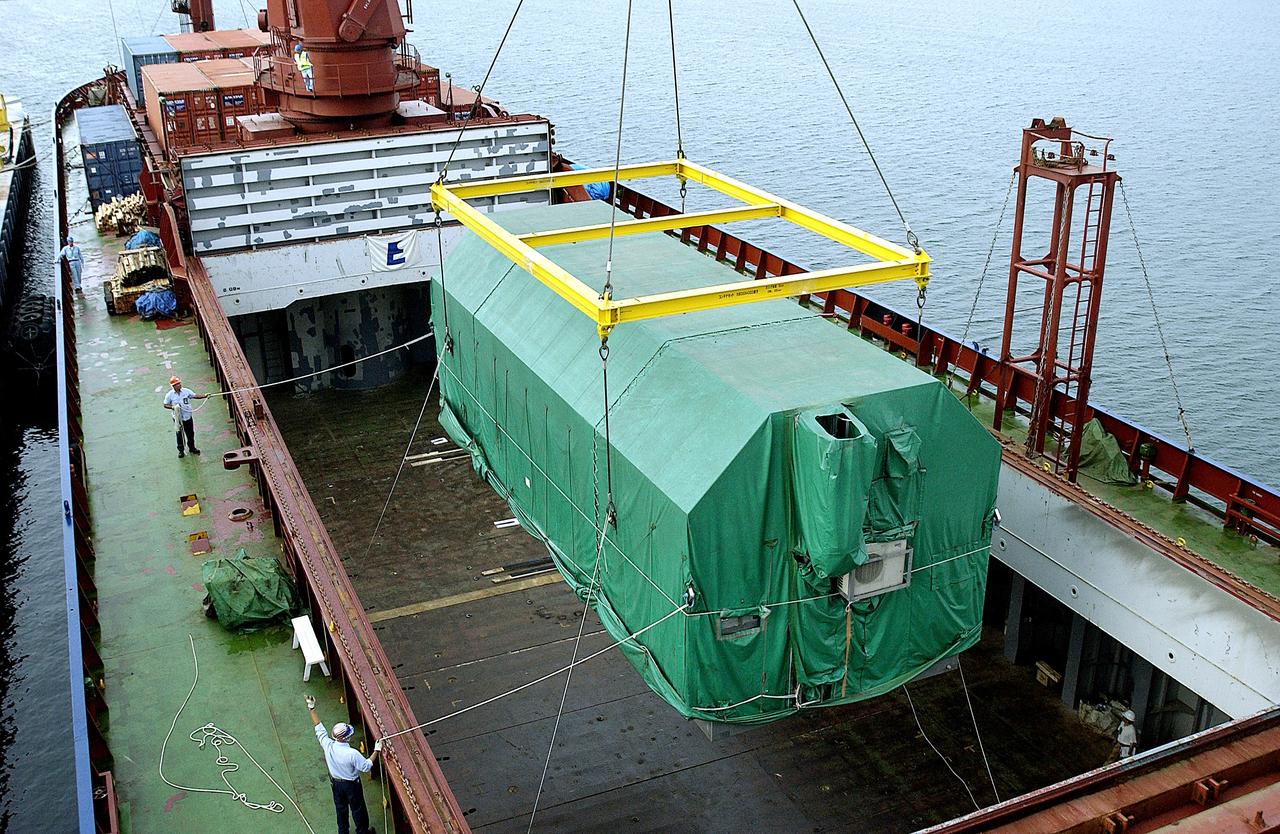
KENNEDY SPACE CENTER, FLA. - At Port Canaveral, the Pressurized Module of the Japanese Experiment Module (JEM) is lifted out of the ship’s cargo hold.  It will be loaded onto the truck bed in the background for transfer to KSC’s Space Station Processing Facility.  The container transport ship carrying JEM departed May 2 from Yokohama Harbor in Japan for the voyage to the United States. The National Space Development Agency of Japan (NASDA) developed the laboratory at the Tsukuba Space Center near Tokyo. The Pressurized Module is the first element of the JEM, named "Kibo" (Hope), to be delivered to KSC. The JEM is Japan's primary contribution to the Station. It will enhance the unique research capabilities of the orbiting complex by providing an additional environment for astronauts to conduct science experiments.  The JEM also includes an exposed facility (platform) for space environment experiments, a robotic manipulator system, and two logistics modules. The various JEM components will be  assembled in space over the course of three Shuttle missions.
KENNEDY SPACE CENTER, FLA. - At Port Canaveral, the Pressurized Module of the Japanese Experiment Module (JEM) is lifted out of the ship’s cargo hold. It will be loaded onto the truck bed in the background for transfer to KSC’s Space Station Processing Facility. The container transport ship carrying JEM departed May 2 from Yokohama Harbor in Japan for the voyage to the United States. The National Space Development Agency of Japan (NASDA) developed the laboratory at the Tsukuba Space Center near Tokyo. The Pressurized Module is the first element of the JEM, named "Kibo" (Hope), to be delivered to KSC. The JEM is Japan's primary contribution to the Station. It will enhance the unique research capabilities of the orbiting complex by providing an additional environment for astronauts to conduct science experiments. The JEM also includes an exposed facility (platform) for space environment experiments, a robotic manipulator system, and two logistics modules. The various JEM components will be assembled in space over the course of three Shuttle missions.
KENNEDY SPACE CENTER, FLA. - At Port Canaveral, the overhead crane that lifted the Pressurized Module of the Japanese Experiment Module (JEM) from the ship onto the truck bed is released.  The container transport ship carrying JEM departed May 2 from Yokohama Harbor in Japan for the voyage to the United States. The National Space Development Agency of Japan (NASDA) developed the laboratory at the Tsukuba Space Center near Tokyo. The Pressurized Module is the first element of the JEM, named "Kibo" (Hope), to be delivered to KSC, and will be transferred to KSC’s Space Station Processing Facility.  The JEM is Japan's primary contribution to the Station. It will enhance the unique research capabilities of the orbiting complex by providing an additional environment for astronauts to conduct science experiments.  The JEM also includes an exposed facility (platform) for space environment experiments, a robotic manipulator system, and two logistics modules. The various JEM components will be  assembled in space over the course of three Shuttle missions.
KENNEDY SPACE CENTER, FLA. - At Port Canaveral, the overhead crane that lifted the Pressurized Module of the Japanese Experiment Module (JEM) from the ship onto the truck bed is released. The container transport ship carrying JEM departed May 2 from Yokohama Harbor in Japan for the voyage to the United States. The National Space Development Agency of Japan (NASDA) developed the laboratory at the Tsukuba Space Center near Tokyo. The Pressurized Module is the first element of the JEM, named "Kibo" (Hope), to be delivered to KSC, and will be transferred to KSC’s Space Station Processing Facility. The JEM is Japan's primary contribution to the Station. It will enhance the unique research capabilities of the orbiting complex by providing an additional environment for astronauts to conduct science experiments. The JEM also includes an exposed facility (platform) for space environment experiments, a robotic manipulator system, and two logistics modules. The various JEM components will be assembled in space over the course of three Shuttle missions.
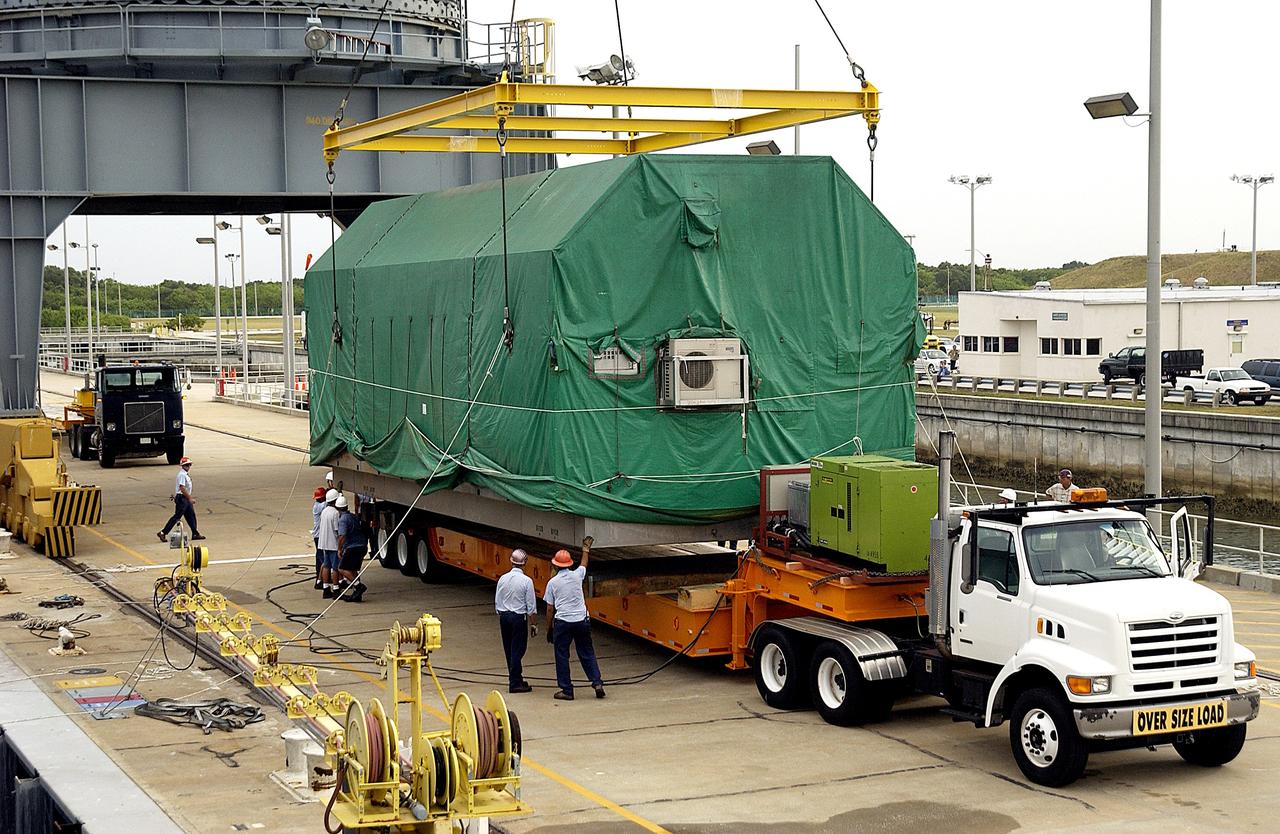
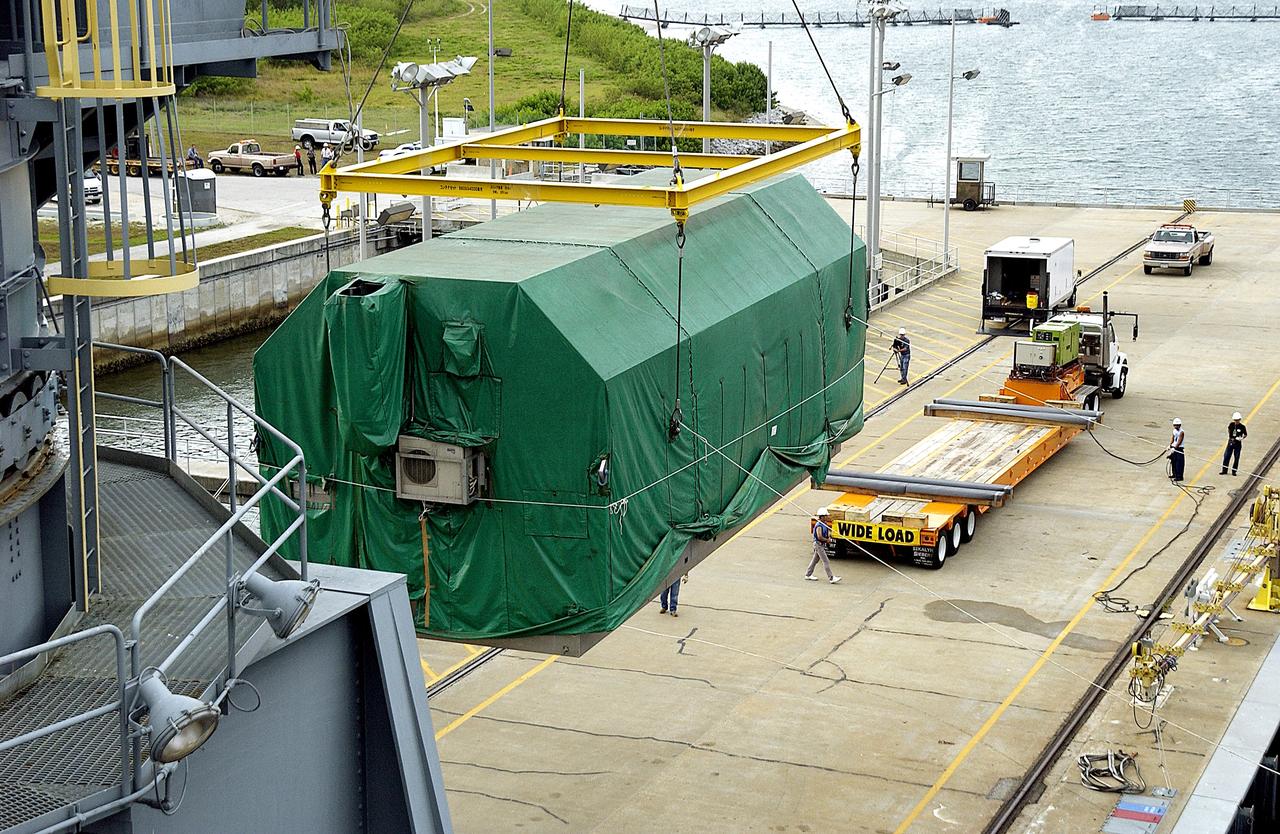
KENNEDY SPACE CENTER, FLA. - At Port Canaveral, the Pressurized Module of the Japanese Experiment Module (JEM) is suspended over the dock, waiting for a truck that will transfer it to KSC’s Space Station Processing Facility. The container transport ship carrying JEM departed May 2 from Yokohama Harbor in Japan for the voyage to the United States. The National Space Development Agency of Japan (NASDA) developed the laboratory at the Tsukuba Space Center near Tokyo.  The Pressurized Module is the first element of the JEM, named "Kibo" (Hope), to be delivered to KSC. The JEM is Japan's primary contribution to the Station. It will enhance the unique research capabilities of the orbiting complex by providing an additional environment for astronauts to conduct science experiments.  The JEM also includes an exposed facility (platform) for space environment experiments, a robotic manipulator system, and two logistics modules. The various JEM components will be  assembled in space over the course of three Shuttle missions.
KENNEDY SPACE CENTER, FLA. - At Port Canaveral, the Pressurized Module of the Japanese Experiment Module (JEM) is suspended over the dock, waiting for a truck that will transfer it to KSC’s Space Station Processing Facility. The container transport ship carrying JEM departed May 2 from Yokohama Harbor in Japan for the voyage to the United States. The National Space Development Agency of Japan (NASDA) developed the laboratory at the Tsukuba Space Center near Tokyo. The Pressurized Module is the first element of the JEM, named "Kibo" (Hope), to be delivered to KSC. The JEM is Japan's primary contribution to the Station. It will enhance the unique research capabilities of the orbiting complex by providing an additional environment for astronauts to conduct science experiments. The JEM also includes an exposed facility (platform) for space environment experiments, a robotic manipulator system, and two logistics modules. The various JEM components will be assembled in space over the course of three Shuttle missions.
KENNEDY SPACE CENTER, FLA. - At Port Canaveral, the Pressurized Module of the Japanese Experiment Module (JEM) is swung away from the ship. The container transport ship carrying JEM departed May 2 from Yokohama Harbor in Japan for the voyage to the United States. The National Space Development Agency of Japan (NASDA) developed the laboratory at the Tsukuba Space Center near Tokyo.  The module will be loaded onto a truck bed and transferred to KSC’s Space Station Processing Facility.  The Pressurized Module is the first element of the JEM, named "Kibo" (Hope), to be delivered to KSC. The JEM is Japan's primary contribution to the Station. It will enhance the unique research capabilities of the orbiting complex by providing an additional environment for astronauts to conduct science experiments.  The JEM also includes an exposed facility (platform) for space environment experiments, a robotic manipulator system, and two logistics modules. The various JEM components will be  assembled in space over the course of three Shuttle missions.
KENNEDY SPACE CENTER, FLA. - At Port Canaveral, the Pressurized Module of the Japanese Experiment Module (JEM) is swung away from the ship. The container transport ship carrying JEM departed May 2 from Yokohama Harbor in Japan for the voyage to the United States. The National Space Development Agency of Japan (NASDA) developed the laboratory at the Tsukuba Space Center near Tokyo. The module will be loaded onto a truck bed and transferred to KSC’s Space Station Processing Facility. The Pressurized Module is the first element of the JEM, named "Kibo" (Hope), to be delivered to KSC. The JEM is Japan's primary contribution to the Station. It will enhance the unique research capabilities of the orbiting complex by providing an additional environment for astronauts to conduct science experiments. The JEM also includes an exposed facility (platform) for space environment experiments, a robotic manipulator system, and two logistics modules. The various JEM components will be assembled in space over the course of three Shuttle missions.
KENNEDY SPACE CENTER, FLA. - At Port Canaveral, the Pressurized Module of the Japanese Experiment Module (JEM) is lifted out of the ship’s cargo hold.  The container transport ship carrying JEM departed May 2 from Yokohama Harbor in Japan for the voyage to the United States. The National Space Development Agency of Japan (NASDA) developed the laboratory at the Tsukuba Space Center near Tokyo. The Pressurized Module is the first element of the JEM, named "Kibo" (Hope), to be delivered to KSC. The JEM is Japan's primary contribution to the Station. It will enhance the unique research capabilities of the orbiting complex by providing an additional environment for astronauts to conduct science experiments.  The JEM also includes an exposed facility (platform) for space environment experiments, a robotic manipulator system, and two logistics modules. The various JEM components will be  assembled in space over the course of three Shuttle missions.
KENNEDY SPACE CENTER, FLA. - At Port Canaveral, the Pressurized Module of the Japanese Experiment Module (JEM) is lifted out of the ship’s cargo hold. The container transport ship carrying JEM departed May 2 from Yokohama Harbor in Japan for the voyage to the United States. The National Space Development Agency of Japan (NASDA) developed the laboratory at the Tsukuba Space Center near Tokyo. The Pressurized Module is the first element of the JEM, named "Kibo" (Hope), to be delivered to KSC. The JEM is Japan's primary contribution to the Station. It will enhance the unique research capabilities of the orbiting complex by providing an additional environment for astronauts to conduct science experiments. The JEM also includes an exposed facility (platform) for space environment experiments, a robotic manipulator system, and two logistics modules. The various JEM components will be assembled in space over the course of three Shuttle missions.
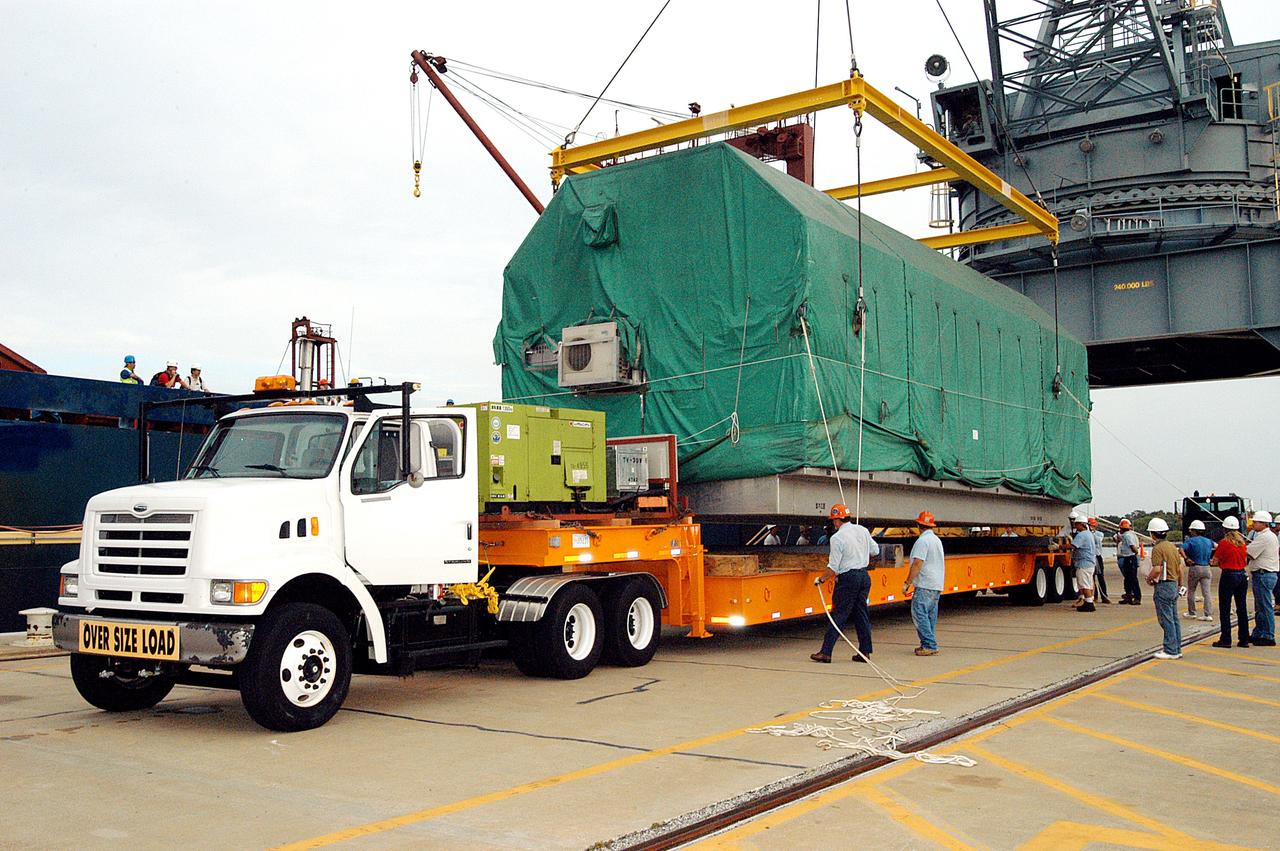
KENNEDY SPACE CENTER, FLA. -  At Port Canaveral, the Pressurized Module of the Japanese Experiment Module (JEM) is lowered onto a truck bed.  The container transport ship carrying JEM departed May 2 from Yokohama Harbor in Japan for the voyage to the United States. The National Space Development Agency of Japan (NASDA) developed the laboratory at the Tsukuba Space Center near Tokyo. The Pressurized Module is the first element of the JEM, named "Kibo" (Hope), to be delivered to KSC and will be transferred to the Space Station Processing Facility. The JEM is Japan's primary contribution to the Station. It will enhance the unique research capabilities of the orbiting complex by providing an additional environment for astronauts to conduct science experiments.  The JEM also includes an exposed facility (platform) for space environment experiments, a robotic manipulator system, and two logistics modules. The various JEM components will be  assembled in space over the course of three Shuttle missions.
KENNEDY SPACE CENTER, FLA. - At Port Canaveral, the Pressurized Module of the Japanese Experiment Module (JEM) is lowered onto a truck bed. The container transport ship carrying JEM departed May 2 from Yokohama Harbor in Japan for the voyage to the United States. The National Space Development Agency of Japan (NASDA) developed the laboratory at the Tsukuba Space Center near Tokyo. The Pressurized Module is the first element of the JEM, named "Kibo" (Hope), to be delivered to KSC and will be transferred to the Space Station Processing Facility. The JEM is Japan's primary contribution to the Station. It will enhance the unique research capabilities of the orbiting complex by providing an additional environment for astronauts to conduct science experiments. The JEM also includes an exposed facility (platform) for space environment experiments, a robotic manipulator system, and two logistics modules. The various JEM components will be assembled in space over the course of three Shuttle missions.
KENNEDY SPACE CENTER, FLA. - At Port Canaveral, the Pressurized Module of the Japanese Experiment Module (JEM) is settled on a truck bed for transfer to KSC’s Space Station Processing Facility.  The container transport ship carrying JEM departed May 2 from Yokohama Harbor in Japan for the voyage to the United States. The National Space Development Agency of Japan (NASDA) developed the laboratory at the Tsukuba Space Center near Tokyo. The Pressurized Module is the first element of the JEM, named "Kibo" (Hope), to be delivered to KSC. The JEM is Japan's primary contribution to the Station. It will enhance the unique research capabilities of the orbiting complex by providing an additional environment for astronauts to conduct science experiments.  The JEM also includes an exposed facility (platform) for space environment experiments, a robotic manipulator system, and two logistics modules. The various JEM components will be  assembled in space over the course of three Shuttle missions.
KENNEDY SPACE CENTER, FLA. - At Port Canaveral, the Pressurized Module of the Japanese Experiment Module (JEM) is settled on a truck bed for transfer to KSC’s Space Station Processing Facility. The container transport ship carrying JEM departed May 2 from Yokohama Harbor in Japan for the voyage to the United States. The National Space Development Agency of Japan (NASDA) developed the laboratory at the Tsukuba Space Center near Tokyo. The Pressurized Module is the first element of the JEM, named "Kibo" (Hope), to be delivered to KSC. The JEM is Japan's primary contribution to the Station. It will enhance the unique research capabilities of the orbiting complex by providing an additional environment for astronauts to conduct science experiments. The JEM also includes an exposed facility (platform) for space environment experiments, a robotic manipulator system, and two logistics modules. The various JEM components will be assembled in space over the course of three Shuttle missions.
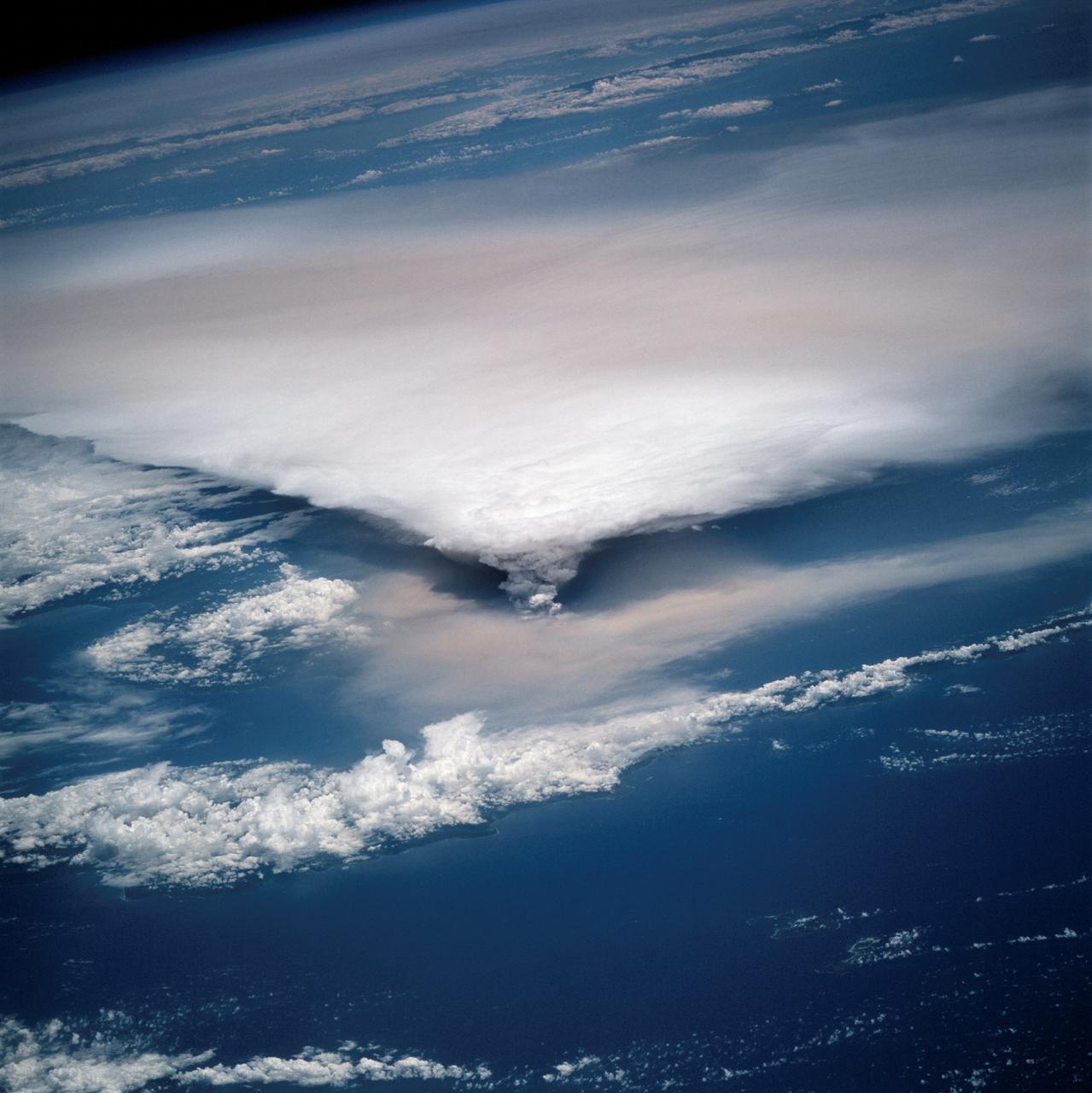
STS064-116-064 (20 Sept. 1994) --- Near the end of the mission, the crew aboard space shuttle Discovery was able to document the beginning of the second day of activity of the Rabaul volcano, on the east end of New Britain. On the morning of Sept. 19, 1994, two volcanic cones on the opposite sides of the 6-kilometer sea crater had begun to erupt with very little warning. Discovery flew just east of the eruption roughly 24 hours after it started and near the peak of its activity.  New Ireland, the cloud-covered area in the foreground, lies just east of Rabaul harbor. The eruption, which sent a plume up to over 60,000 feet into the atmosphere, caused over 50,000 people to evacuate the area. Because winds were light at the time of the eruption, most of the ash was deposited in a region within 20 kilometers of the eruption zone. This photo shows the large white billowing eruption plume is carried in a westerly direction by the weak prevailing winds. At the base of the eruption column is a layer of yellow-brown ash being distributed by lower level winds. A sharp boundary moving outward from the center of the eruption in the lower cloud is a pulse of laterally-moving ash which results from a volcanic explosion. Geologists theorize that the large white column and the lower gray cloud are likely from the two main vents on each side of the harbor. The bay and harbor of Rabaul are covered with a layer of ash, possibly partly infilled with volcanic material. Matupit Island and the airport runway have disappeared into the bay. More than a meter of ash has fallen upon the city of Rabaul. Up to five vents were reported to have erupted at once, including the two cones Vulcan and Tavurvur, which are opposites of the harbor as well as new vents below the bay. Half of the Vulcan cone has collapsed into the sea. The extra day in space due to bad weather at the landing site afforded the crew the opportunity for both still and video coverage of the event. Photo credit: NASA or National Aeronautics and Space Administration
New Guinea volcano (Rabaul) as seen from STS-64
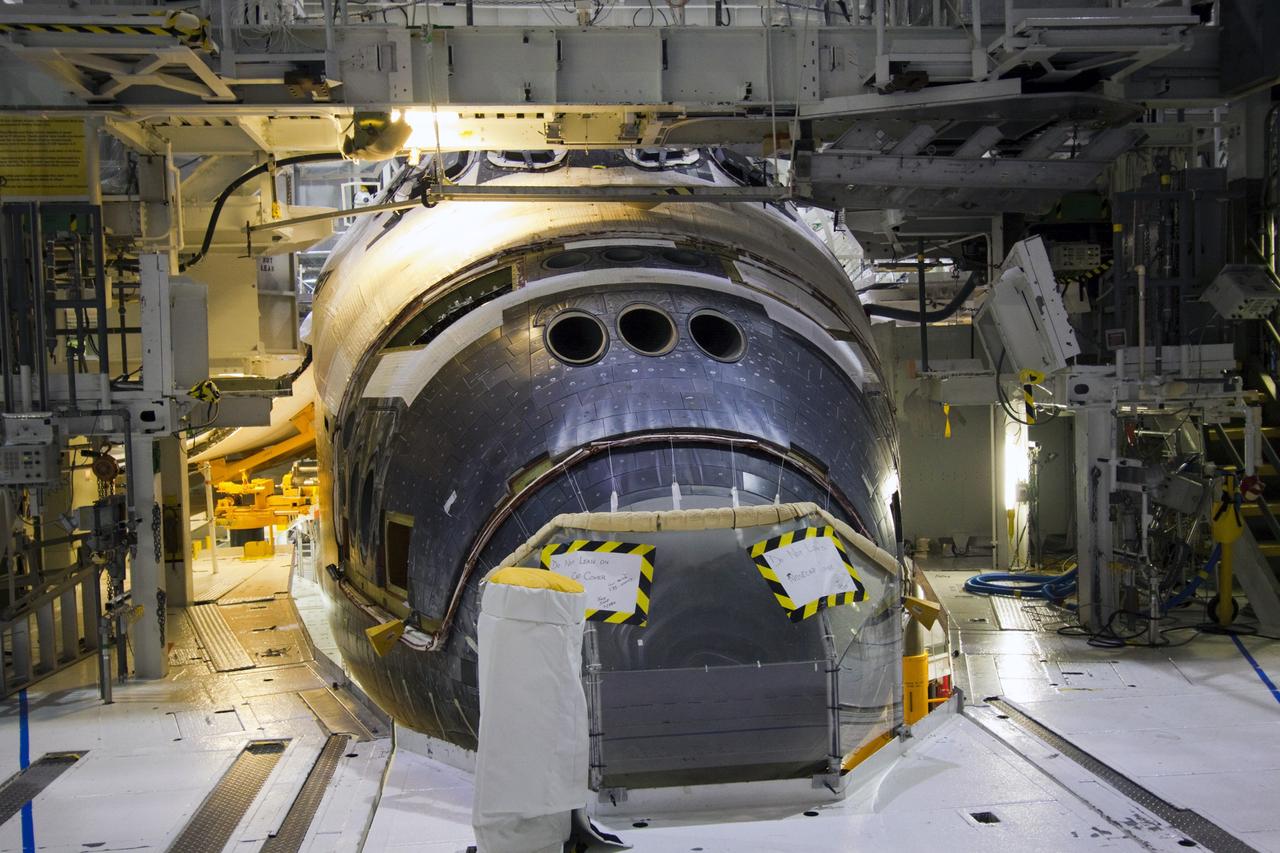
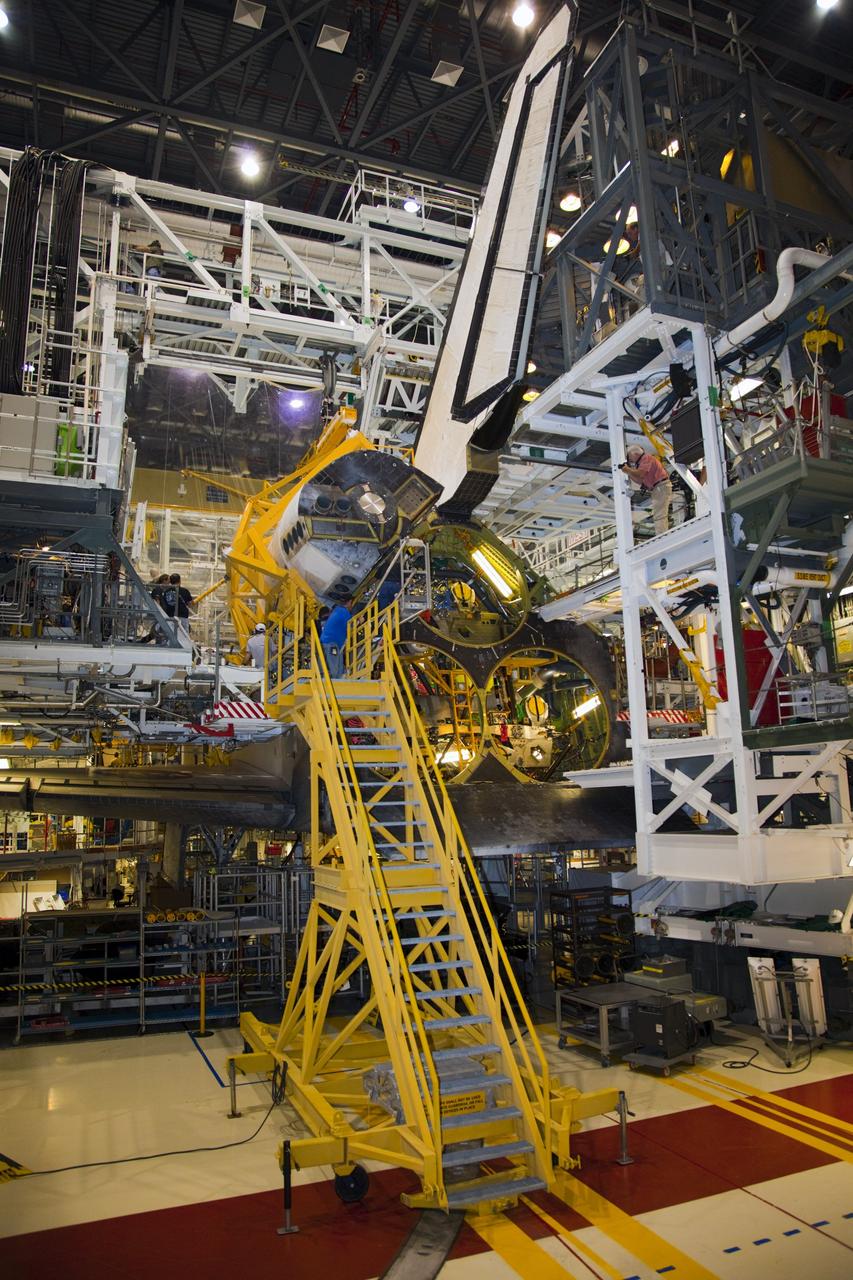
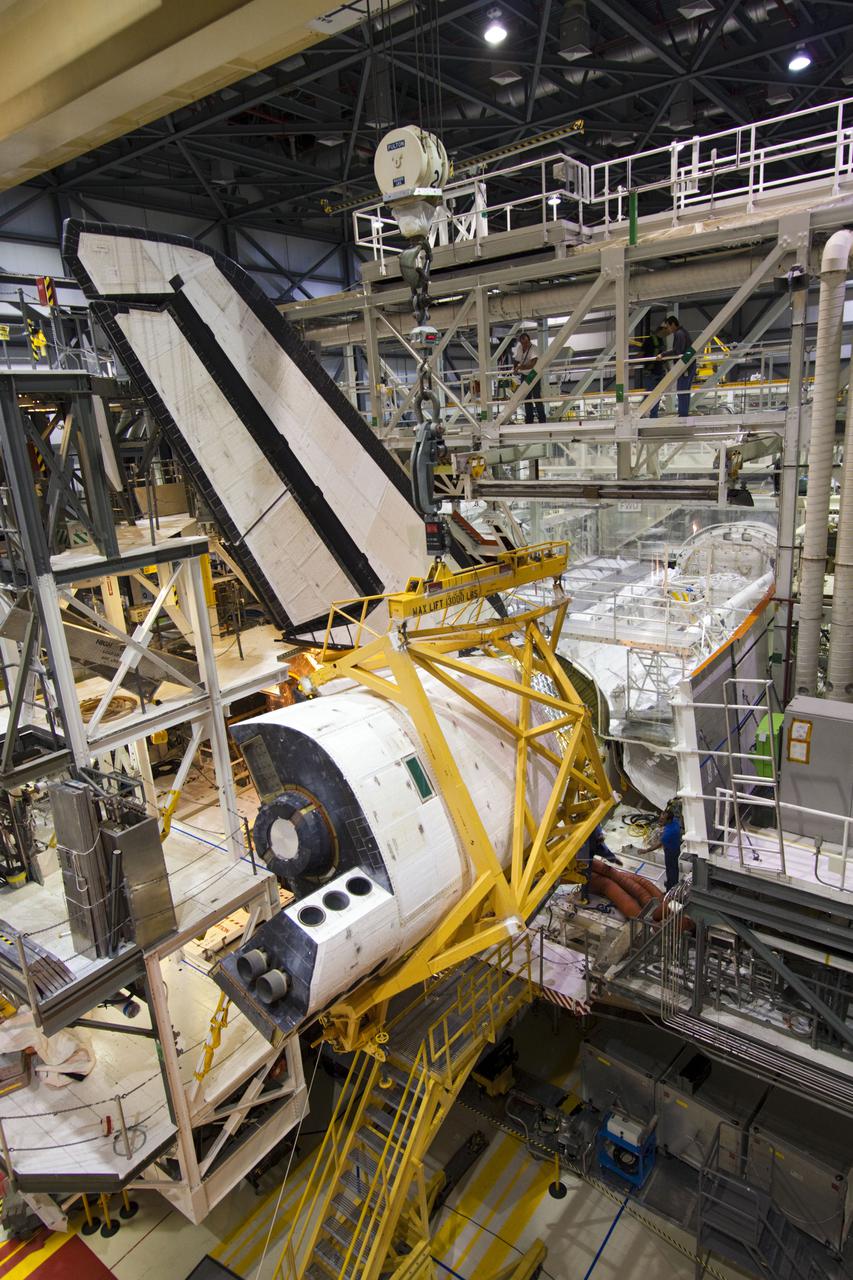
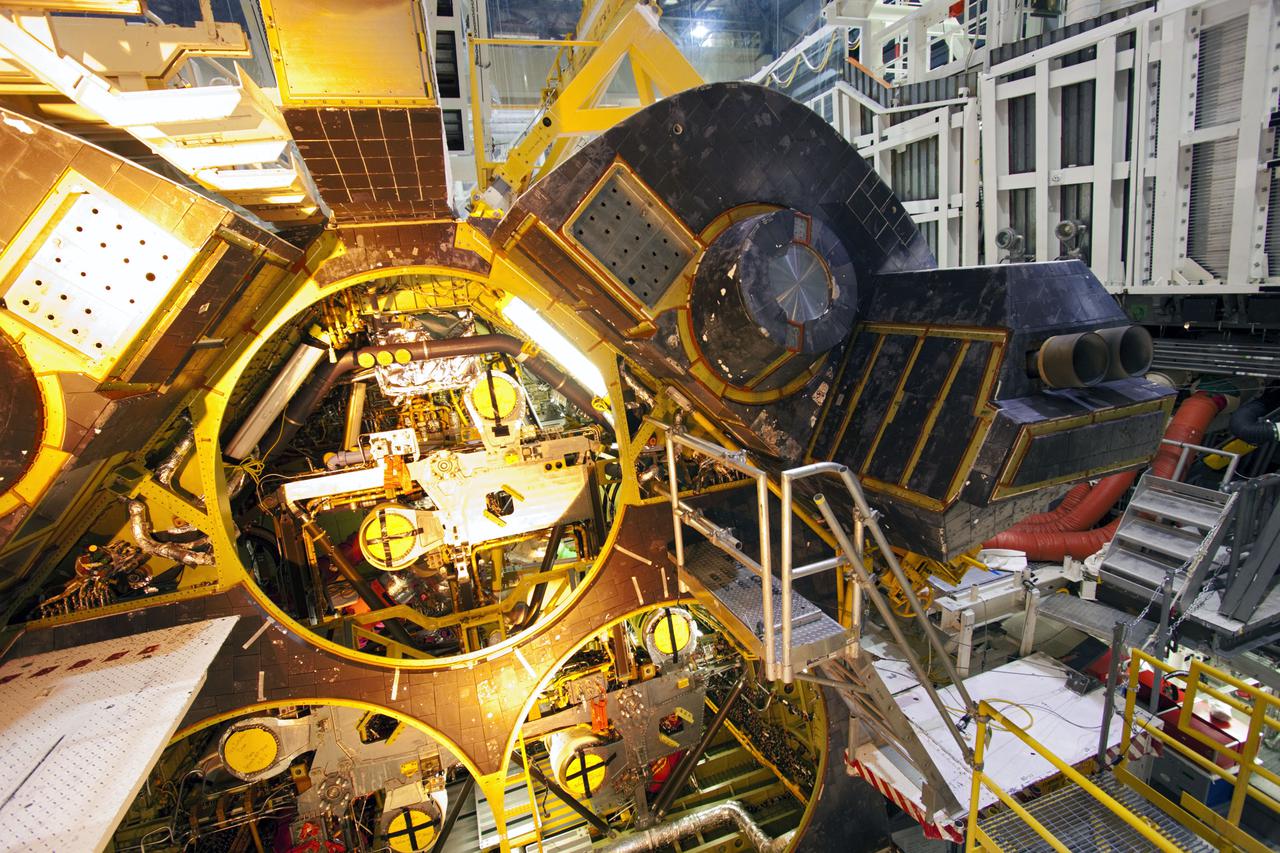
CAPE CANAVERAL, Fla. -- Inside Orbiter Processing Facility-1 at NASA’s Kennedy Space Center in Florida, technicians assist with the installation of the forward reaction control system (FRCS) on space shuttle Discovery.    The FRCS was returned from White Sands Space Harbor in New Mexico where it underwent a complete deservicing and cleaning. The work is part of the Space Shuttle Program’s transition and retirement processing of shuttle Discovery. Discovery is being prepared for display at Smithsonian’s National Air and Space Museum, Steven F. Udvar-Hazy Center in Chantilly, Va. For more information, visit http://www.nasa.gov/shuttle.  Photo credit: NASA/Jim Grossmann
KSC-2011-7677
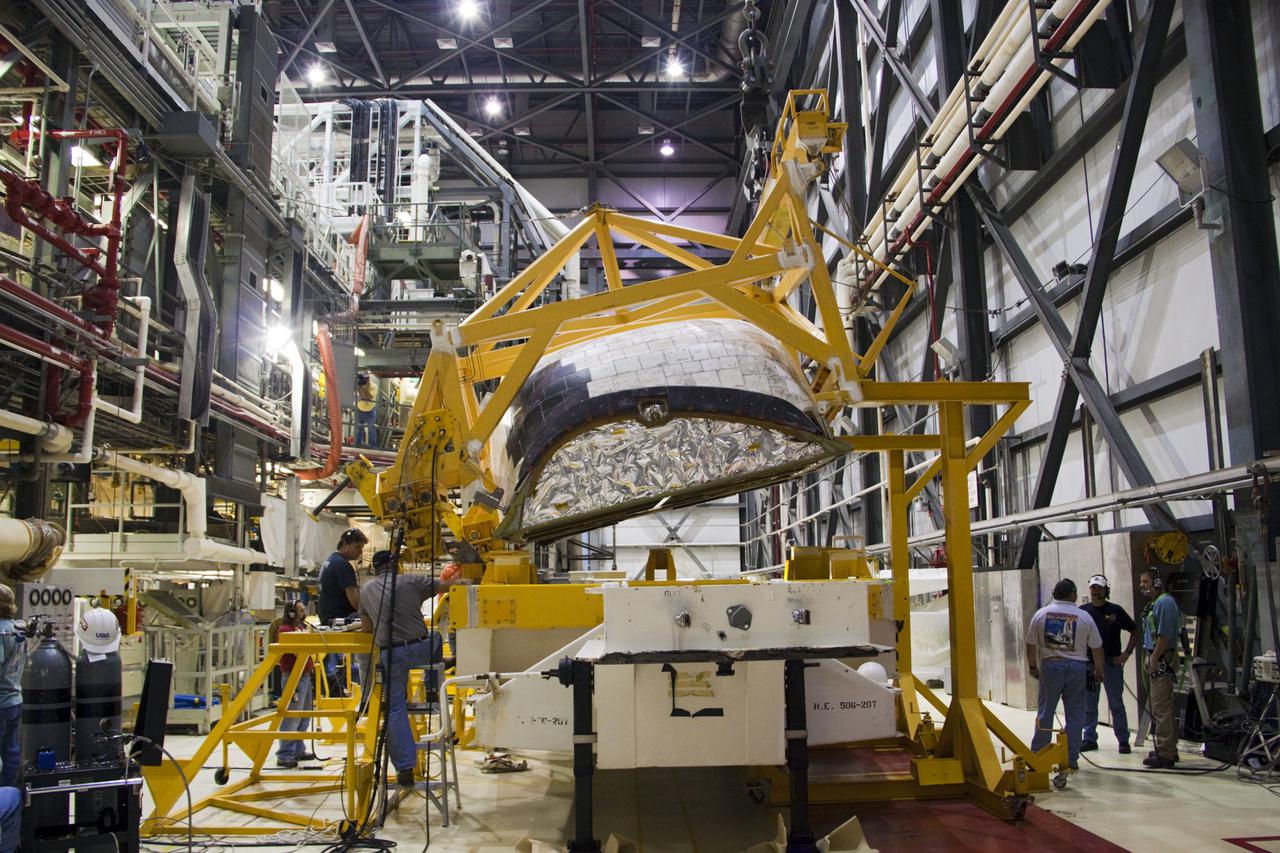
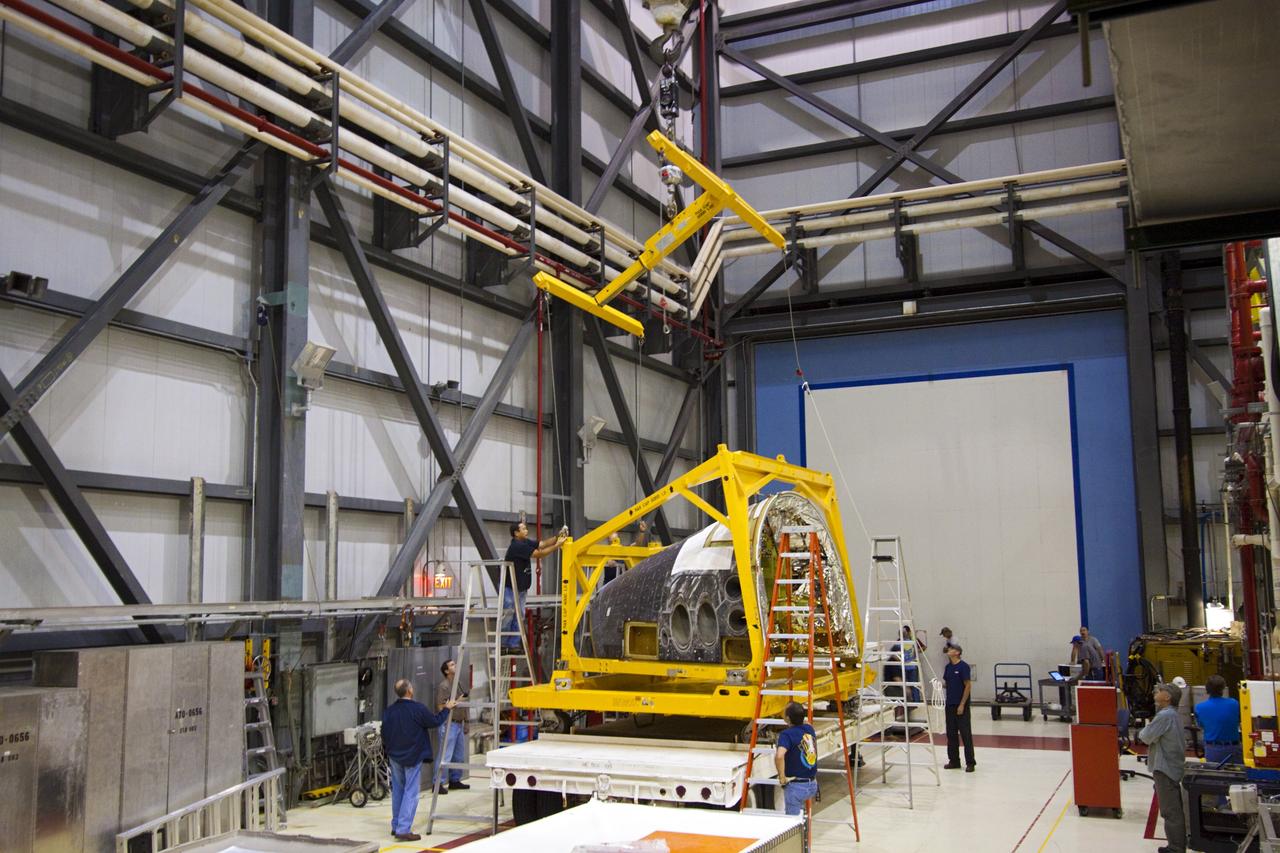
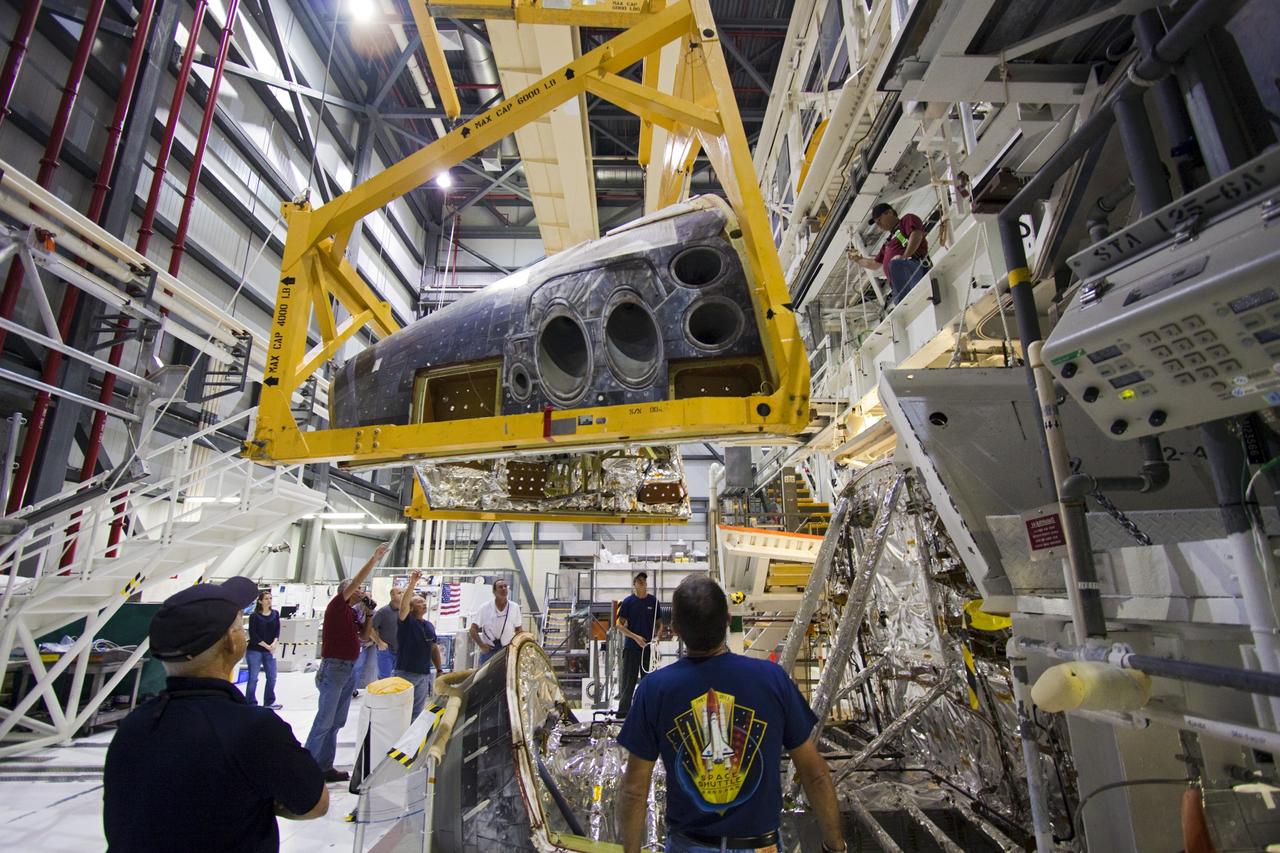
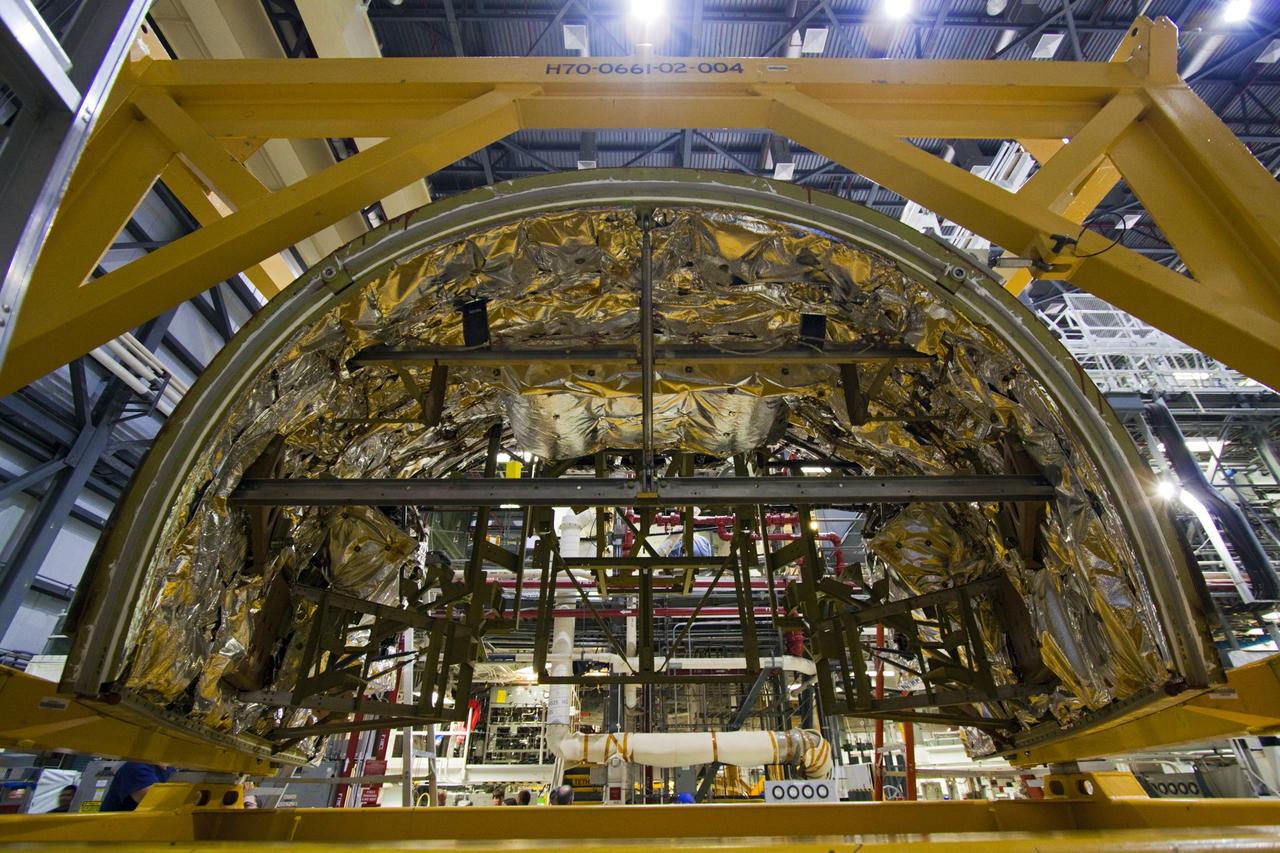
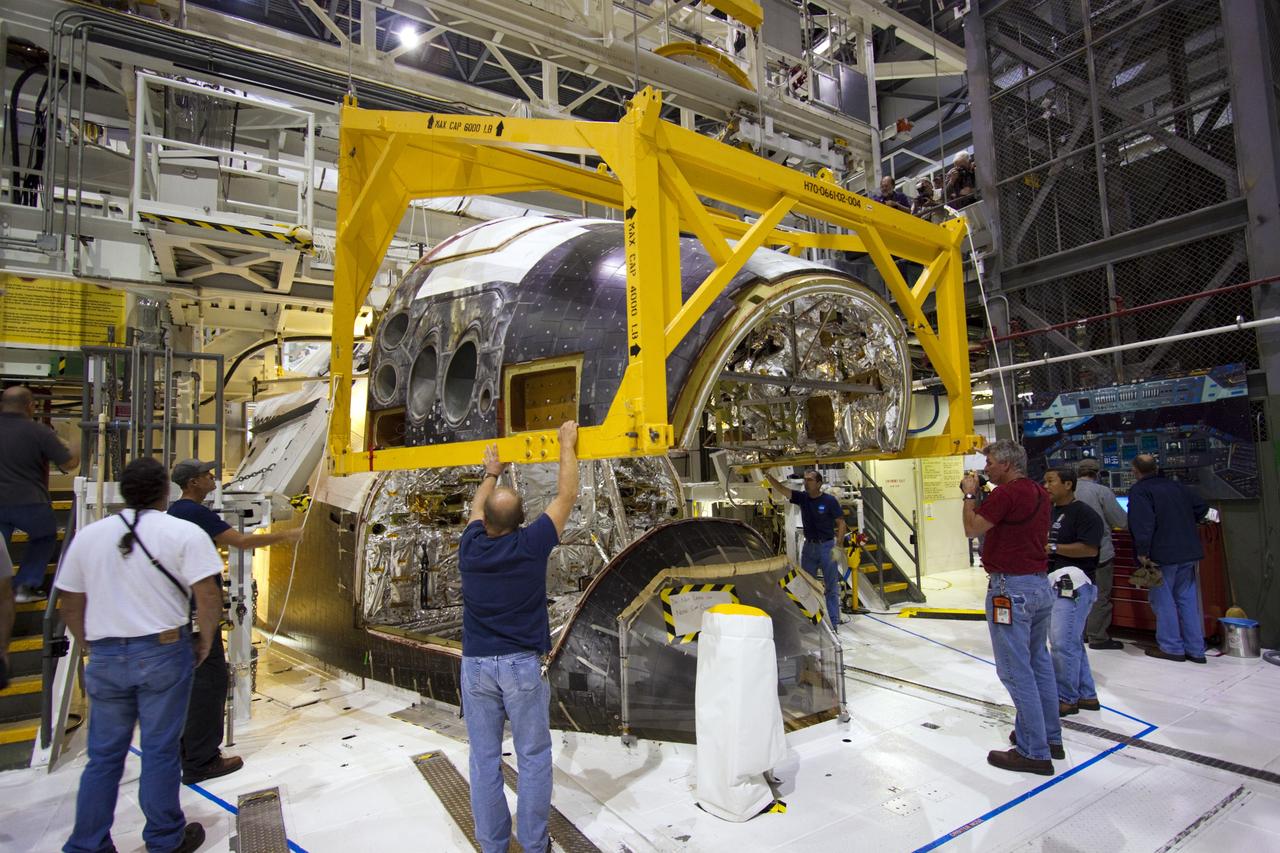
CAPE CANAVERAL, Fla. – At NASA’s Kennedy Space Center in Florida, a crane is lowered toward an orbital maneuvering system (OMS) pod that awaits installation on space shuttle Discovery in Orbiter Processing Facility-1.    The OMS pod was returned from White Sands Space Harbor in New Mexico where it underwent a complete deservicing and cleaning. The work is part of the Space Shuttle Program’s transition and retirement processing of space shuttle Discovery. The shuttle will go to the Smithsonian’s National Air and Space Museum, Steven F. Udvar-Hazy Center in Chantilly, Va., in April 2012. For more information, visit http://www.nasa.gov/shuttle.  Photo credit: NASA/Frankie Martin
KSC-2011-7374
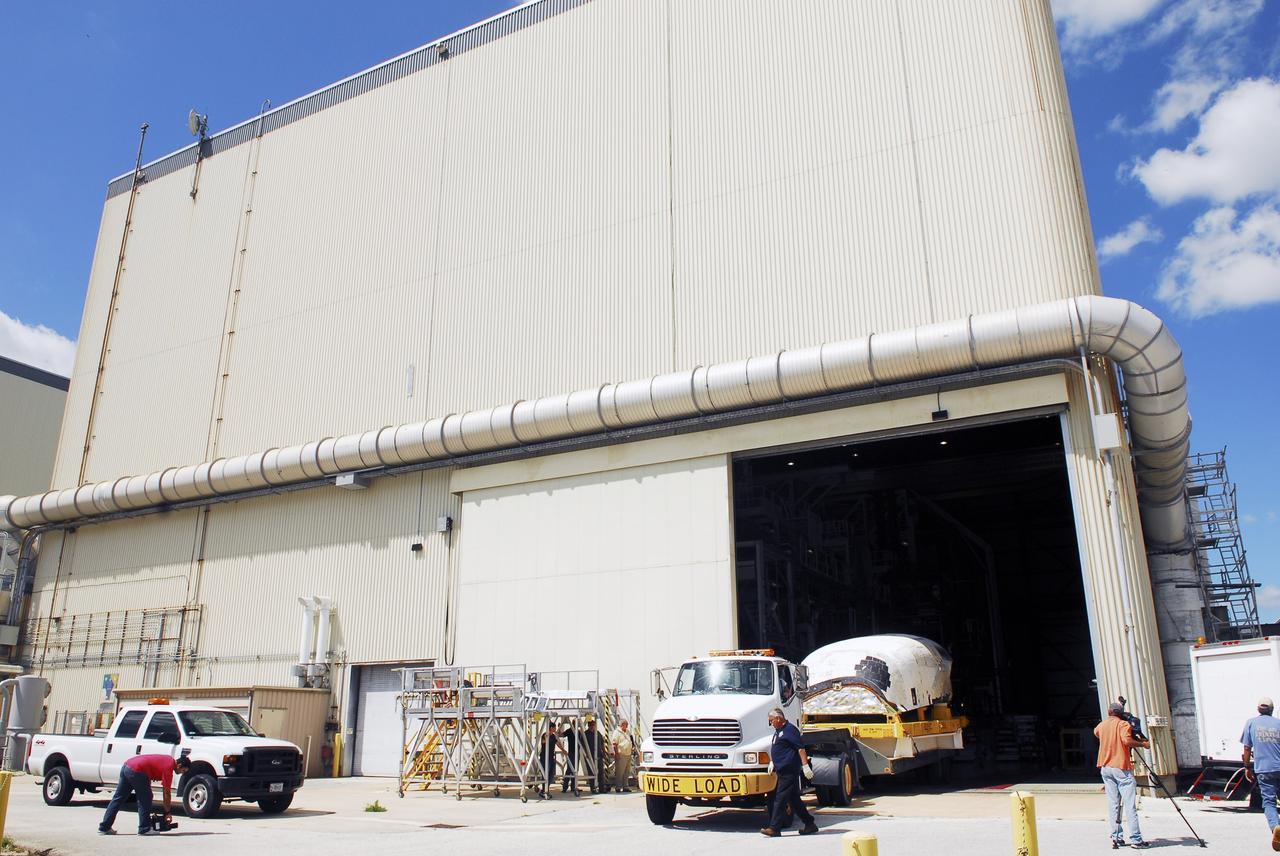
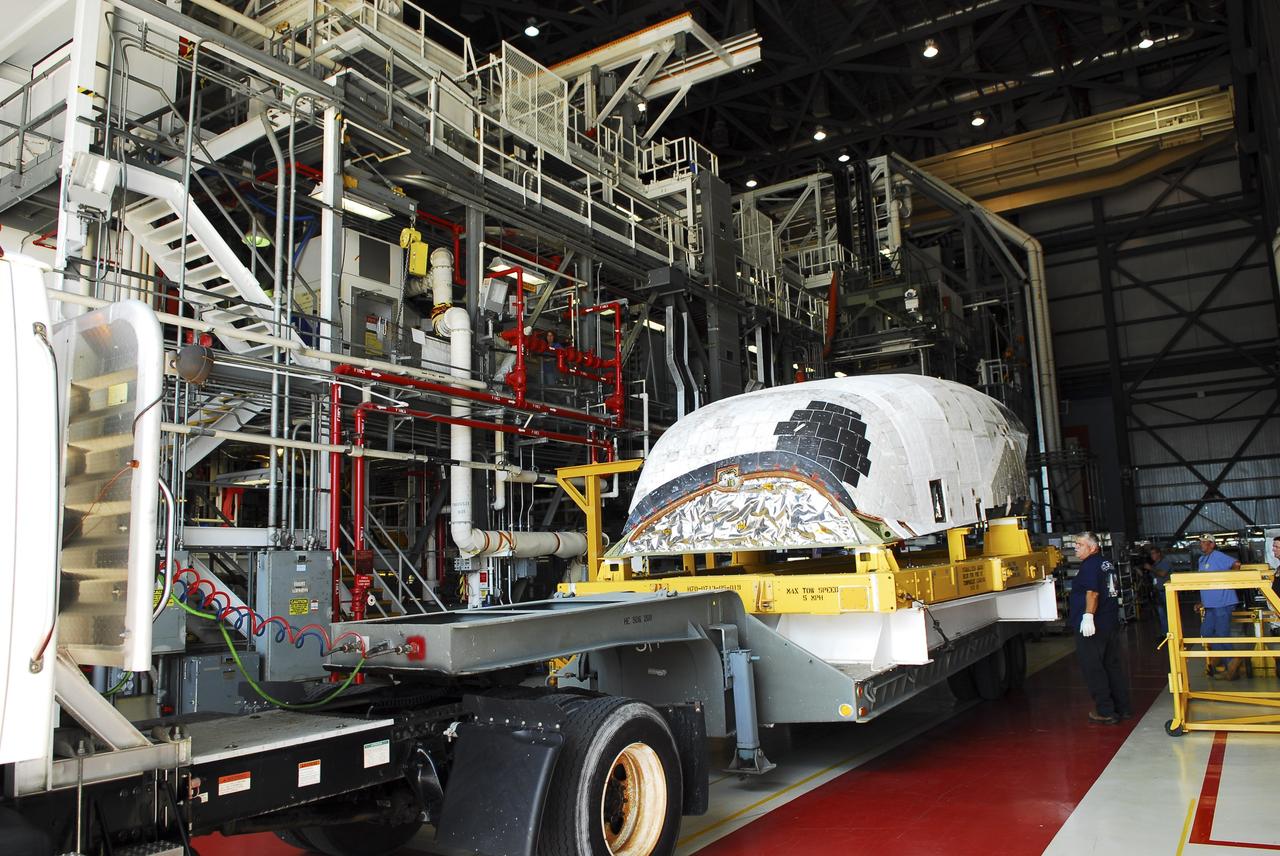
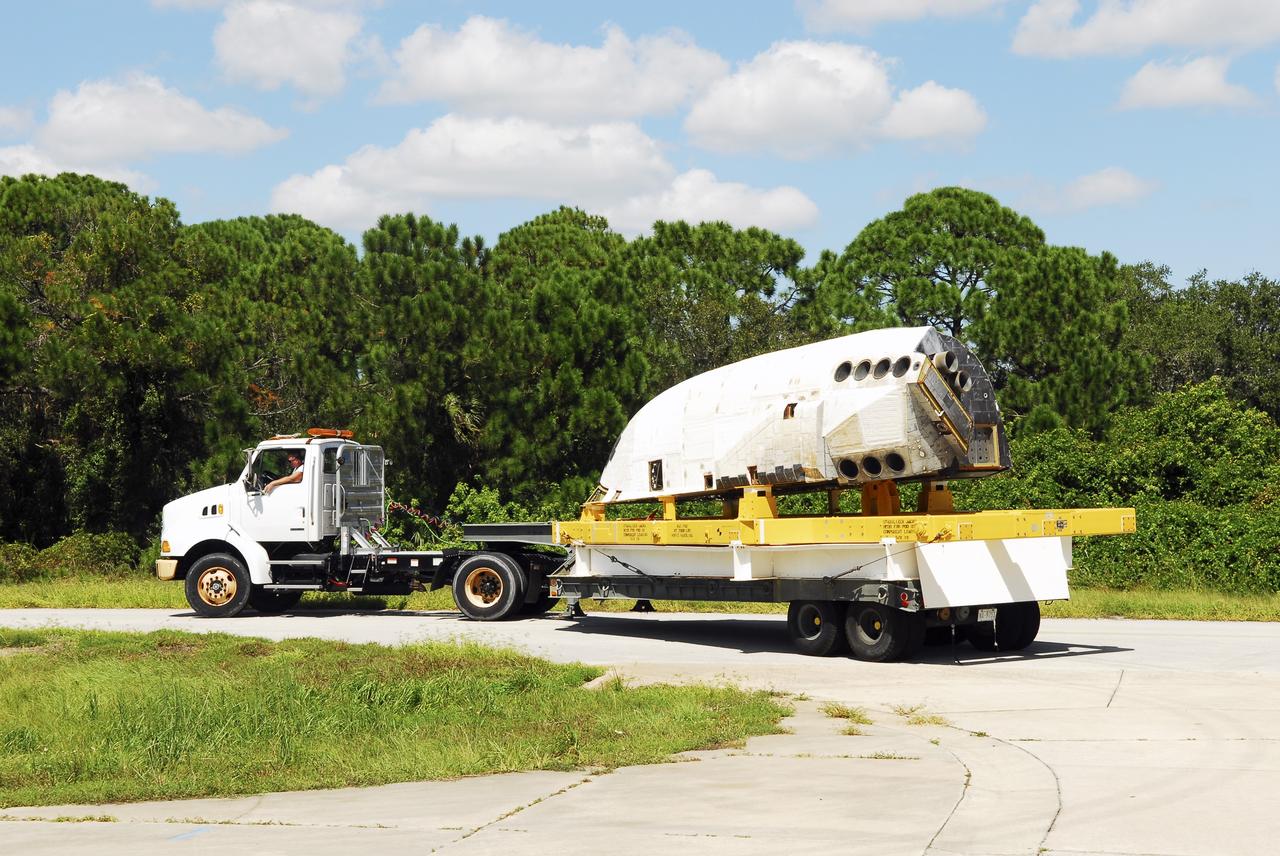
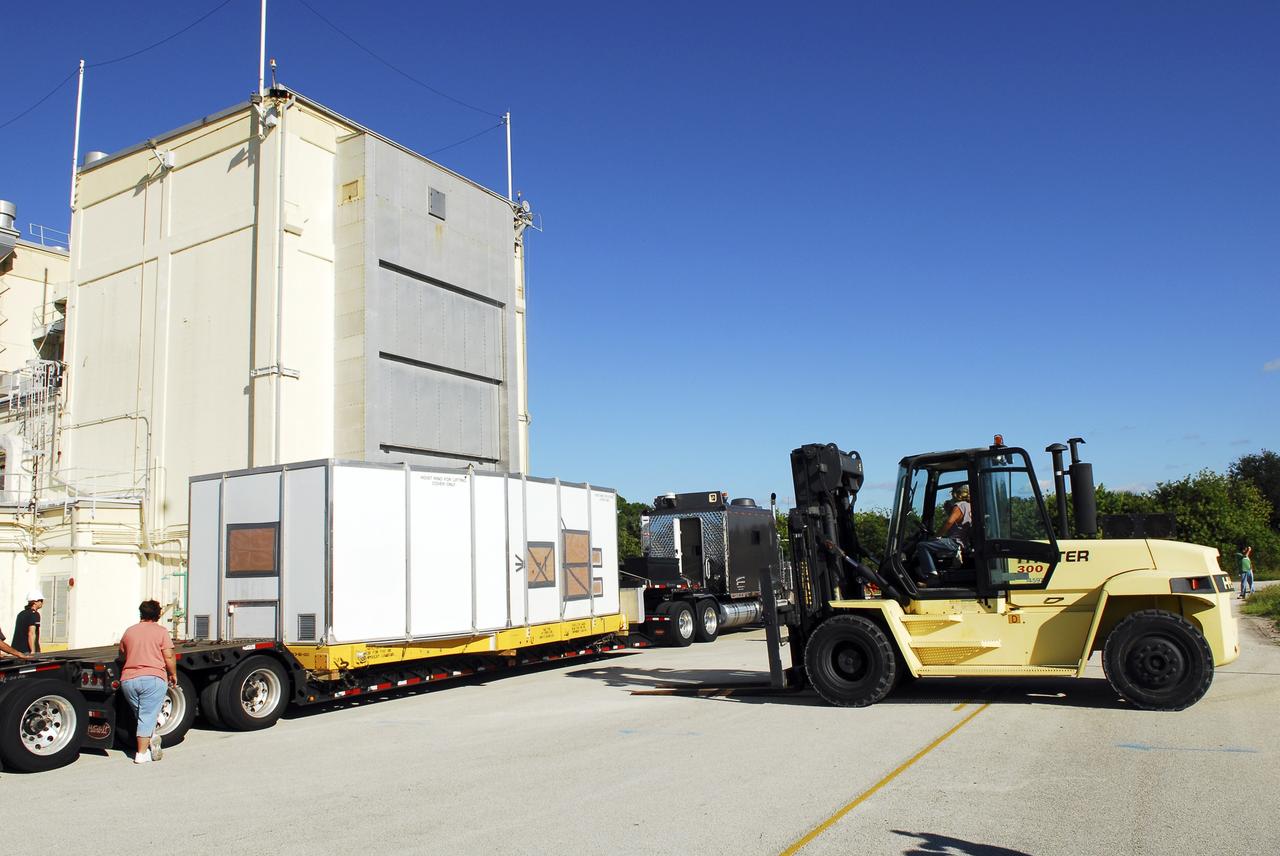
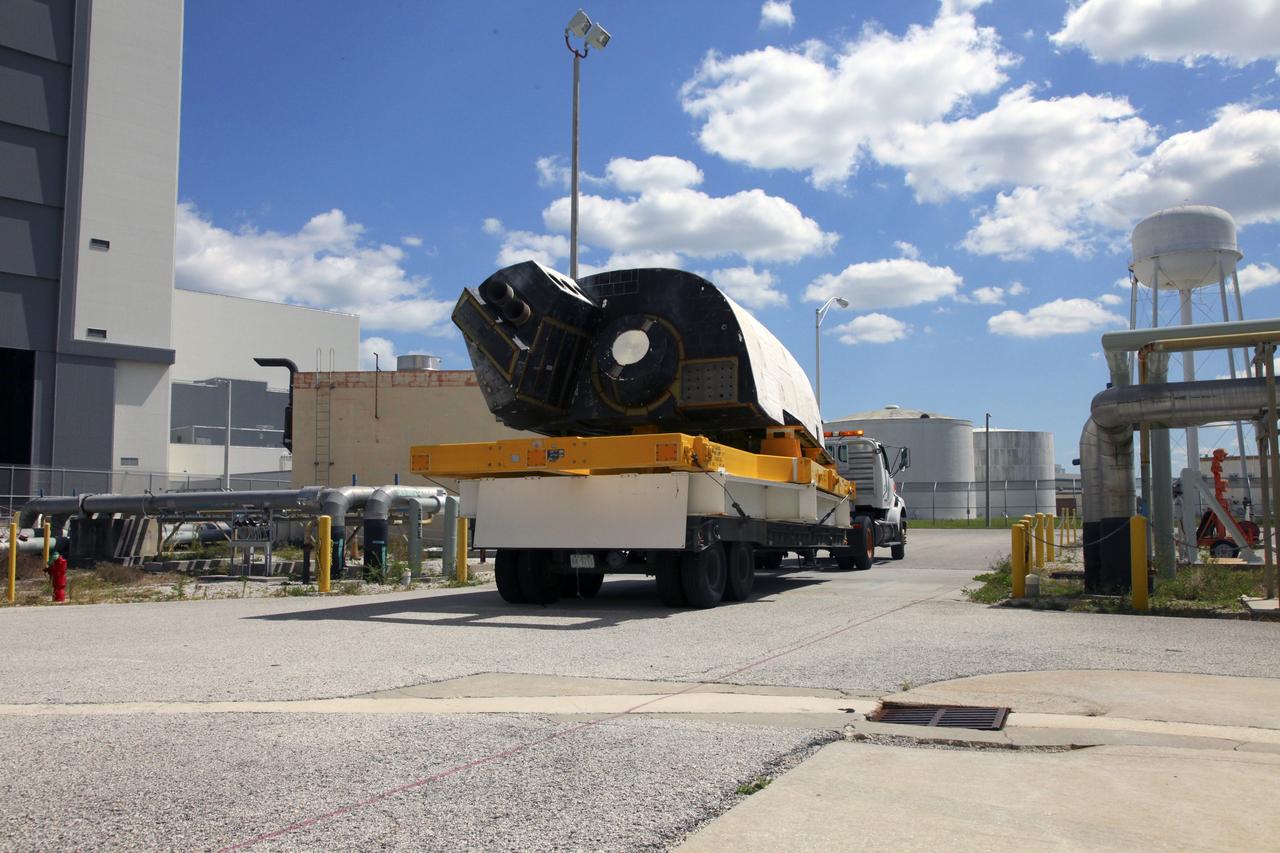
CAPE CANAVERAL, Fla. – At NASA’s Kennedy Space Center in Florida, a truck transports space shuttle Discovery's orbital maneuvering system (OMS) pod from the Hypergol Maintenance Facility to the Orbiter Processing Facility (OPF). The OMS has been returned from White Sands Space Harbor in New Mexico where it underwent a complete deservicing and cleaning.        The work is part of the Space Shuttle Program’s transition and retirement processing of space shuttle Discovery. The shuttle will go to the Smithsonian's National Air and Space Museum, Steven F. Udvar-Hazy Center in Chantilly, Va. For more information, visit http://www.nasa.gov/shuttle. Photo credit: NASA/Jim Grossmann
KSC-2011-7240
CAPE CANAVERAL, Fla. – In Orbiter Processing Facility-1 at NASA’s Kennedy Space Center in Florida, technicians monitor the progress as a crane is used to carry an orbital maneuvering system (OMS) pod that will be installed on space shuttle Discovery.    The OMS pod was returned from White Sands Space Harbor in New Mexico where it underwent a complete deservicing and cleaning. The work is part of the Space Shuttle Program’s transition and retirement processing of space shuttle Discovery. The shuttle will go to the Smithsonian’s National Air and Space Museum, Steven F. Udvar-Hazy Center in Chantilly, Va., in April 2012. For more information, visit http://www.nasa.gov/shuttle.  Photo credit: NASA/Frankie Martin
KSC-2011-7379
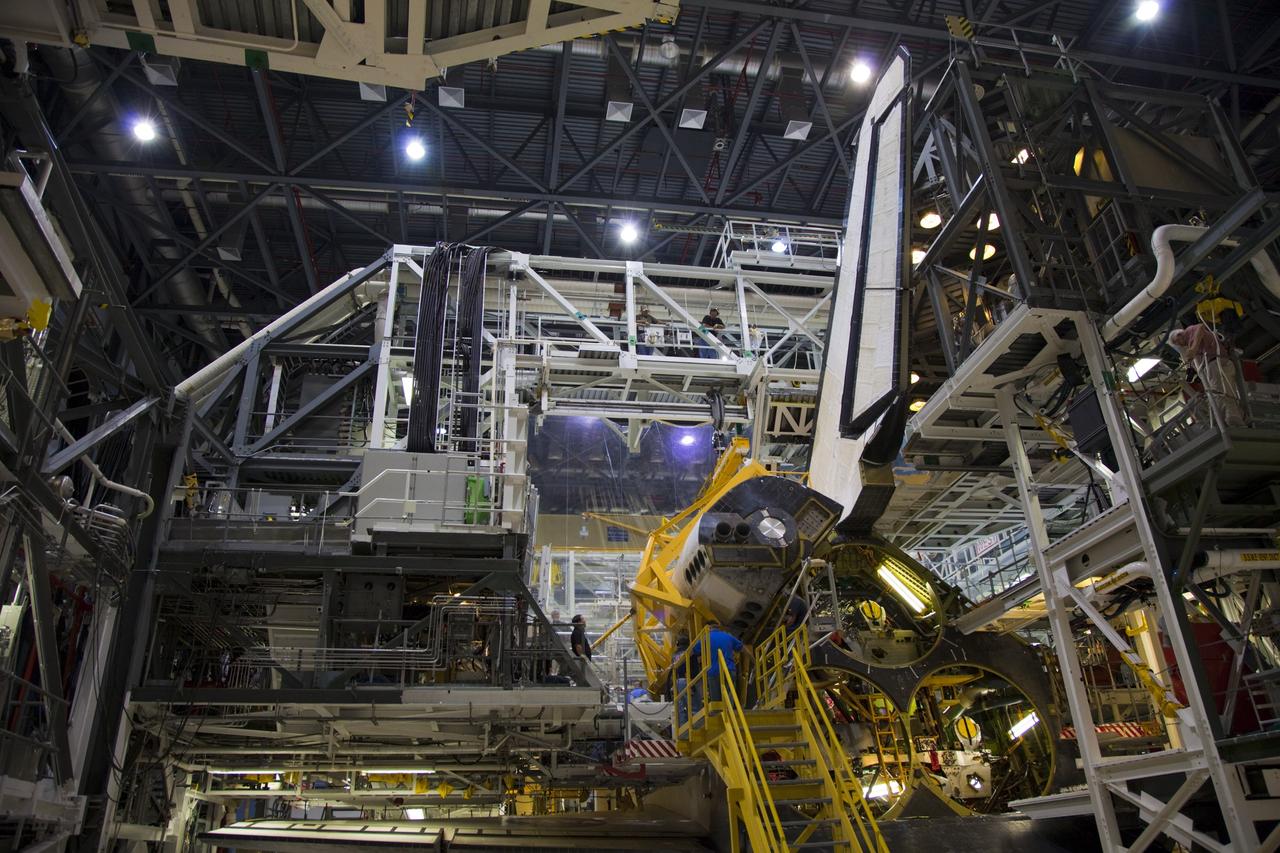
CAPE CANAVERAL, Fla. – Inside Orbiter Processing Facility-1 at NASA’s Kennedy Space Center in Florida, a crane moves the right orbital maneuvering system (OMS) pod closer for installation on space shuttle Discovery.   The OMS pods were returned from White Sands Space Harbor in New Mexico where they underwent a complete deservicing and cleaning. The work is part of the Space Shuttle Program’s transition and retirement processing of shuttle Discovery. Discovery is being prepared for display at Smithsonian’s National Air and Space Museum, Steven F. Udvar-Hazy Center in Chantilly, Va. For more information, visit http:__www.nasa.gov_shuttle.  Photo credit: NASA_Jim Grossmann
KSC-2011-7568
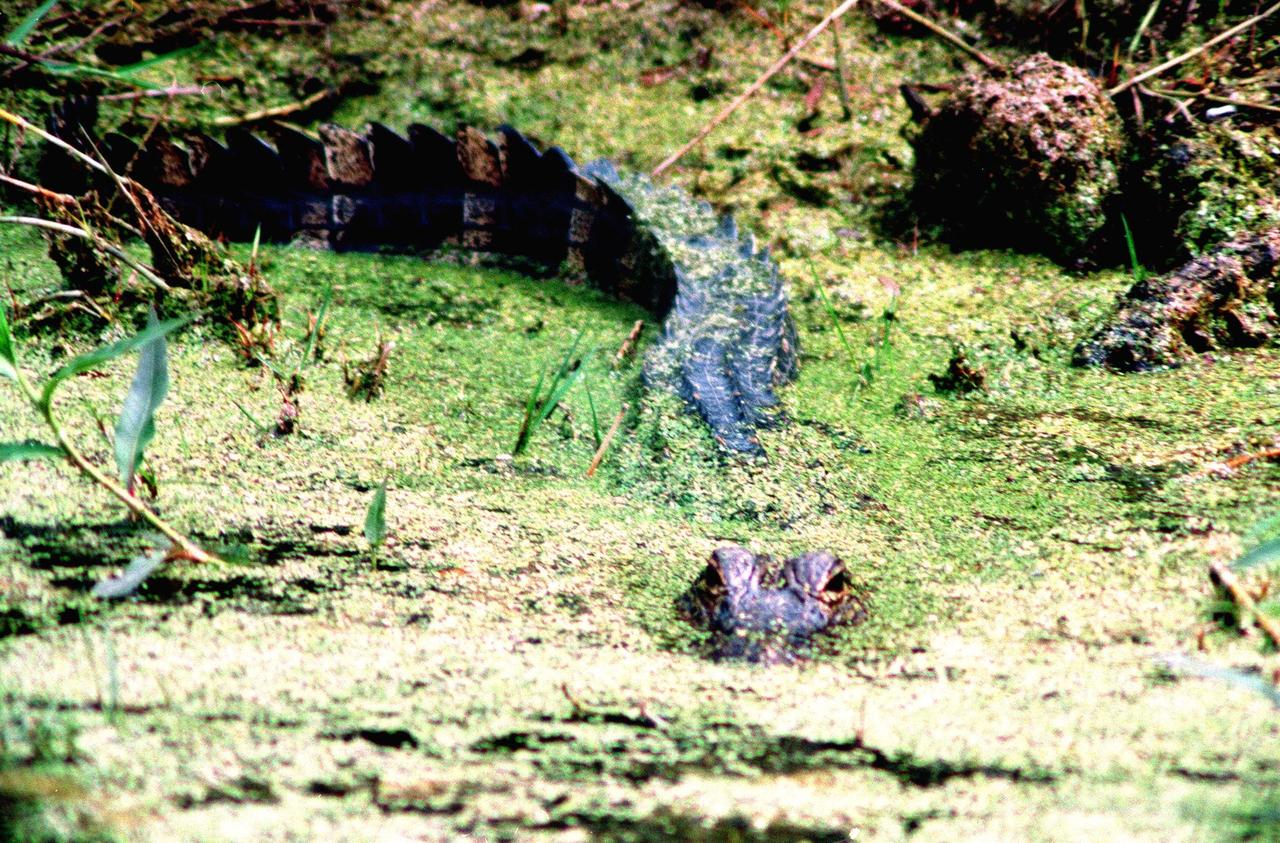
KENNEDY SPACE CENTER, FLA. -- An alligator lurks in the murky, mossy waters of the Merritt Island National Wildlife Refuge at Kennedy Space Center. Its tail surfaces behind him, looking like a log in the water. The wildlife refuge harbors nearly 5,000 American alligators, some of which can be seen in the canals and ponds around KSC. The refuge is also habitat for more than 310 species of birds, 25 mammals, 117 fishes and 65 amphibians and reptiles. The open water provides wintering areas for 23 species of migratory waterfowl and a year-round home for great blue herons, great egrets, wood storks, cormorants, brown pelicans and other species of marsh and shore birds
KSC-99wl09
JSC2003-E-34757 (16 April 2003) --- The Kibo Japanese Experiment Module's (JEM) Pressurized Module, a science laboratory bound for the International Space Station, is lowered into an environmentally controlled shipping container, in preparation for shipment to the Kennedy Space Center where it will be prepared for launch aboard the Space Shuttle. A container transport ship carrying Kibo left Yokohama Harbor, Japan, May 2, 2003, bound for Port Canaveral, Florida. The Kibo laboratory, built by the National Space Development Agency of Japan (NASDA), is expected to arrive at the Kennedy Space Center for module integration tests with Node 2 and pre-launch processing in early June. Photo Credit: NASA
JEM hardware delivery
CAPE CANAVERAL, Fla. – At NASA’s Kennedy Space Center in Florida, an orbital maneuvering system (OMS) pod awaits installation on space shuttle Discovery in Orbiter Processing Facility-1.    The OMS pod was returned from White Sands Space Harbor in New Mexico where it underwent a complete deservicing and cleaning. The work is part of the Space Shuttle Program’s transition and retirement processing of space shuttle Discovery. The shuttle will go to the Smithsonian’s National Air and Space Museum, Steven F. Udvar-Hazy Center in Chantilly, Va., in April 2012. For more information, visit http://www.nasa.gov/shuttle.  Photo credit: NASA/Frankie Martin
KSC-2011-7373
CAPE CANAVERAL, Fla. – At NASA’s Kennedy Space Center in Florida, a crane is lowered toward an orbital maneuvering system (OMS) pod that awaits installation on space shuttle Discovery in Orbiter Processing Facility-1.    The OMS pod was returned from White Sands Space Harbor in New Mexico where it underwent a complete deservicing and cleaning. The work is part of the Space Shuttle Program’s transition and retirement processing of space shuttle Discovery. The shuttle will go to the Smithsonian’s National Air and Space Museum, Steven F. Udvar-Hazy Center in Chantilly, Va., in April 2012. For more information, visit http://www.nasa.gov/shuttle.  Photo credit: NASA/Frankie Martin
KSC-2011-7375
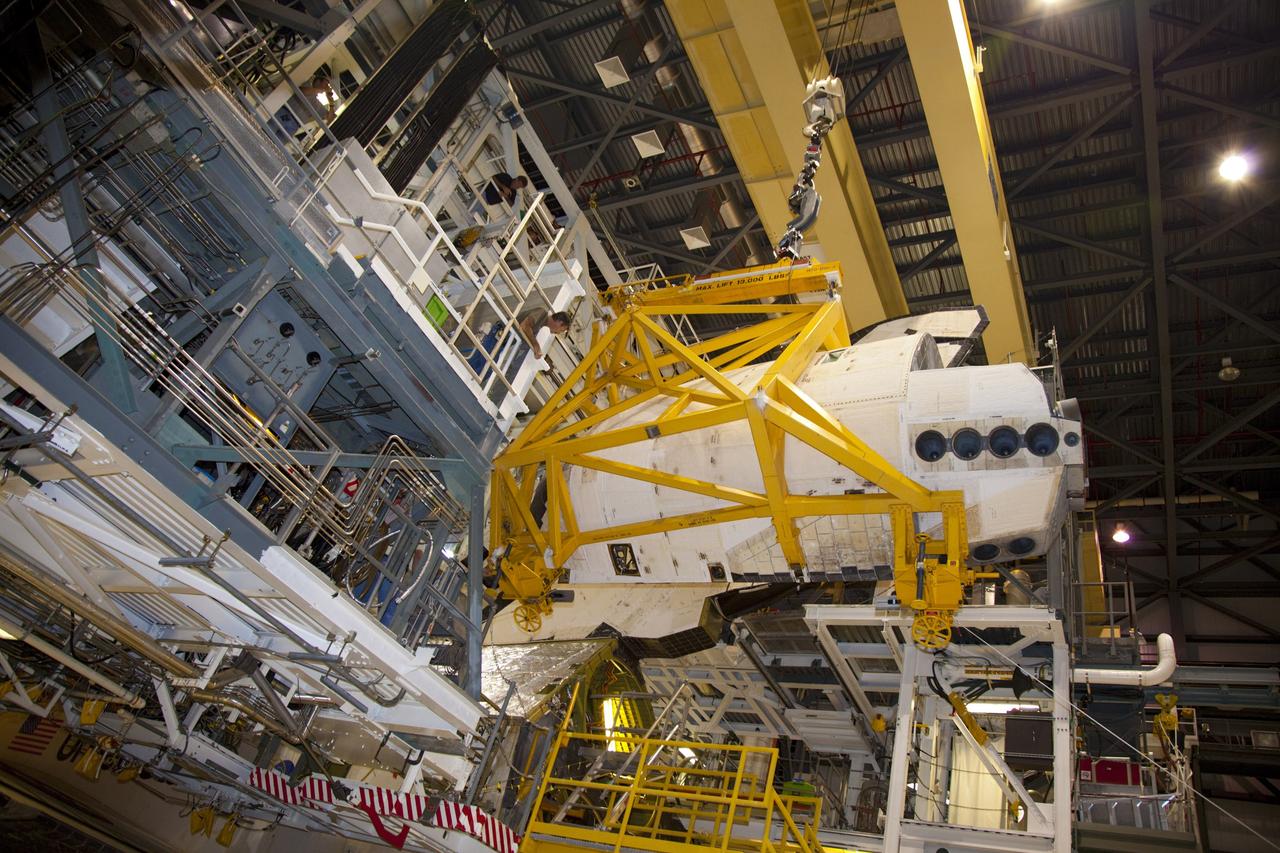
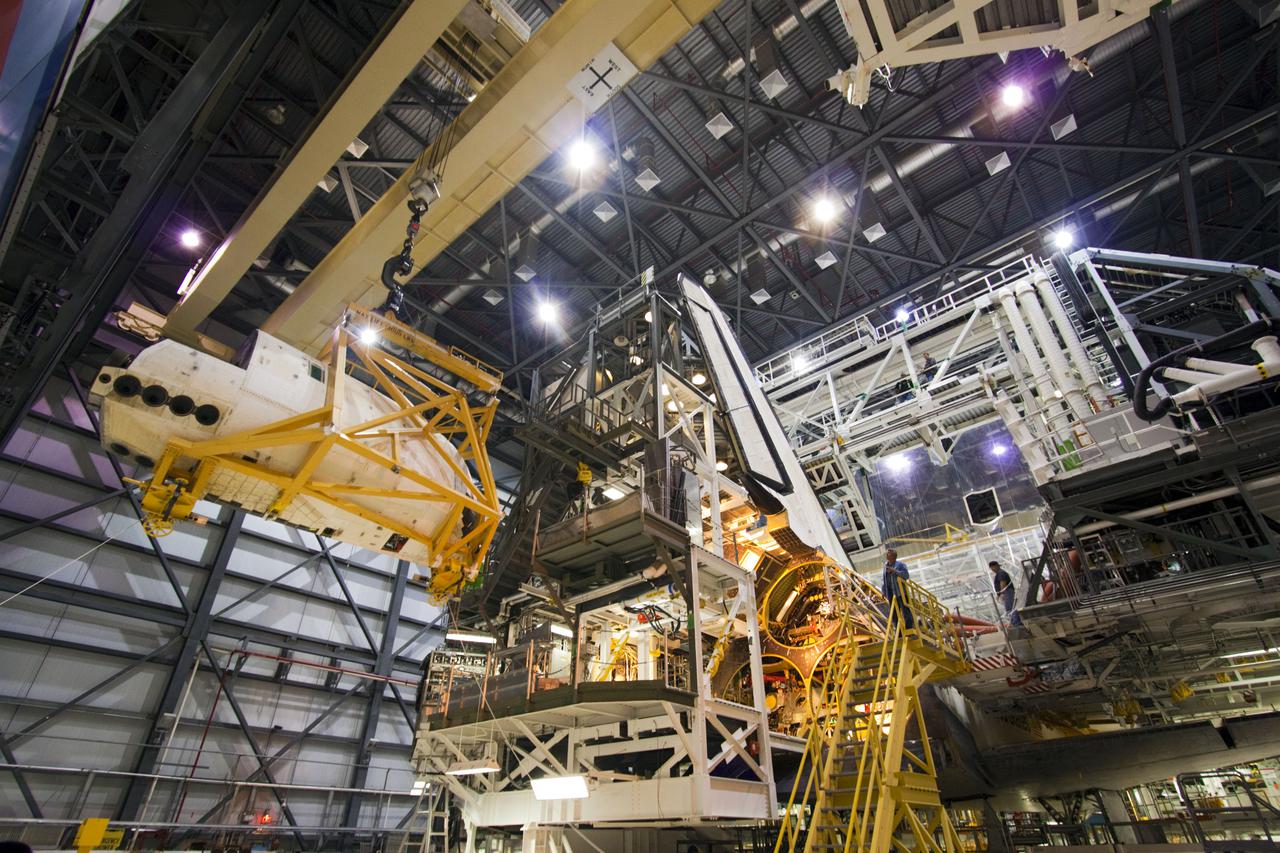
CAPE CANAVERAL, Fla. – In Orbiter Processing Facility-1 at NASA’s Kennedy Space Center in Florida, a crane transports an orbital maneuvering system (OMS) pod closer to space shuttle Discovery. The OMS pod will be installed on Discovery.      The OMS pod was returned from White Sands Space Harbor in New Mexico where it underwent a complete deservicing and cleaning. The work is part of the Space Shuttle Program’s transition and retirement processing of space shuttle Discovery. The shuttle will go to the Smithsonian’s National Air and Space Museum, Steven F. Udvar-Hazy Center in Chantilly, Va., in April 2012. For more information, visit http://www.nasa.gov/shuttle.  Photo credit: NASA/Frankie Martin
KSC-2011-7382
CAPE CANAVERAL, Fla. – In Orbiter Processing Facility-1 at NASA’s Kennedy Space Center in Florida, a crane carries an orbital maneuvering system (OMS) pod that will be installed on space shuttle Discovery.      The OMS pod was returned from White Sands Space Harbor in New Mexico where it underwent a complete deservicing and cleaning. The work is part of the Space Shuttle Program’s transition and retirement processing of space shuttle Discovery. The shuttle will go to the Smithsonian’s National Air and Space Museum, Steven F. Udvar-Hazy Center in Chantilly, Va., in April 2012. For more information, visit http://www.nasa.gov/shuttle.  Photo credit: NASA/Frankie Martin
KSC-2011-7380
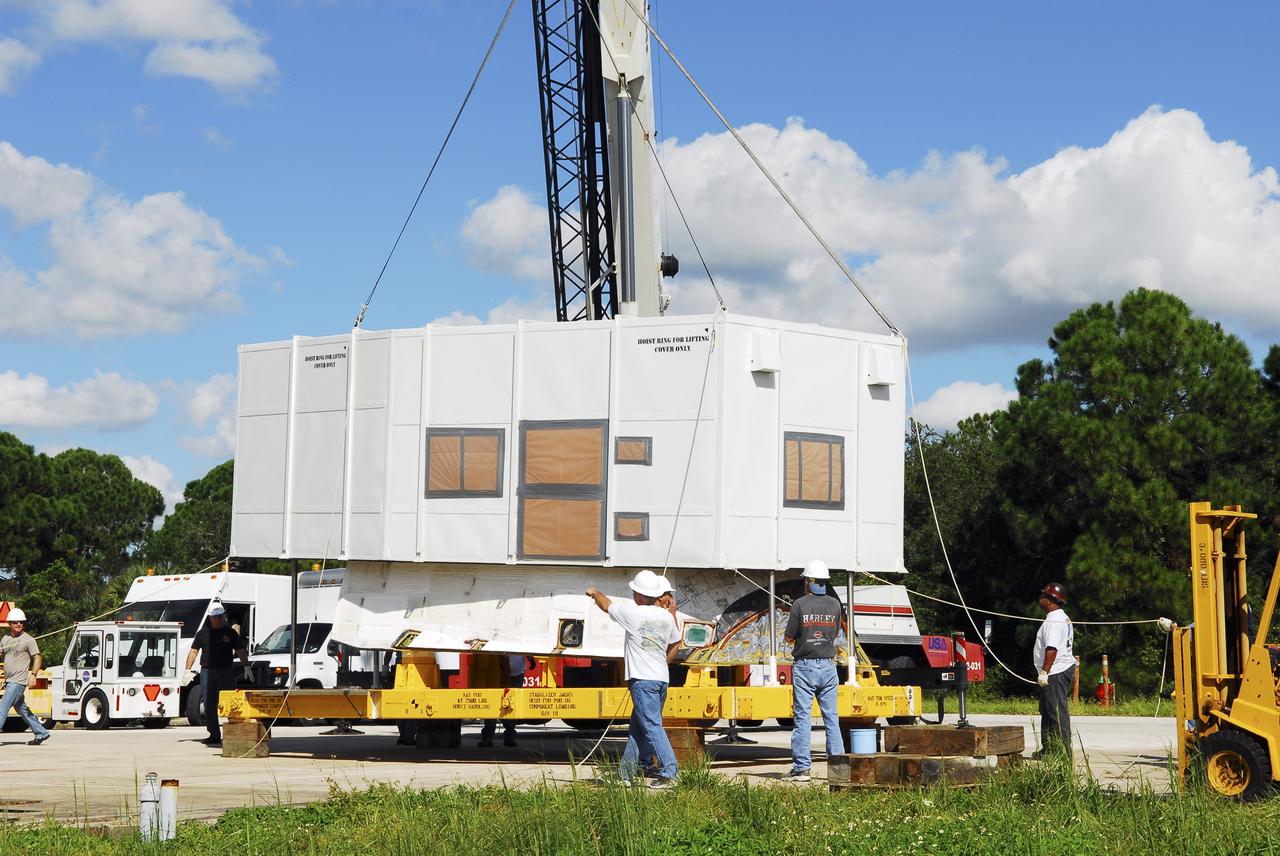
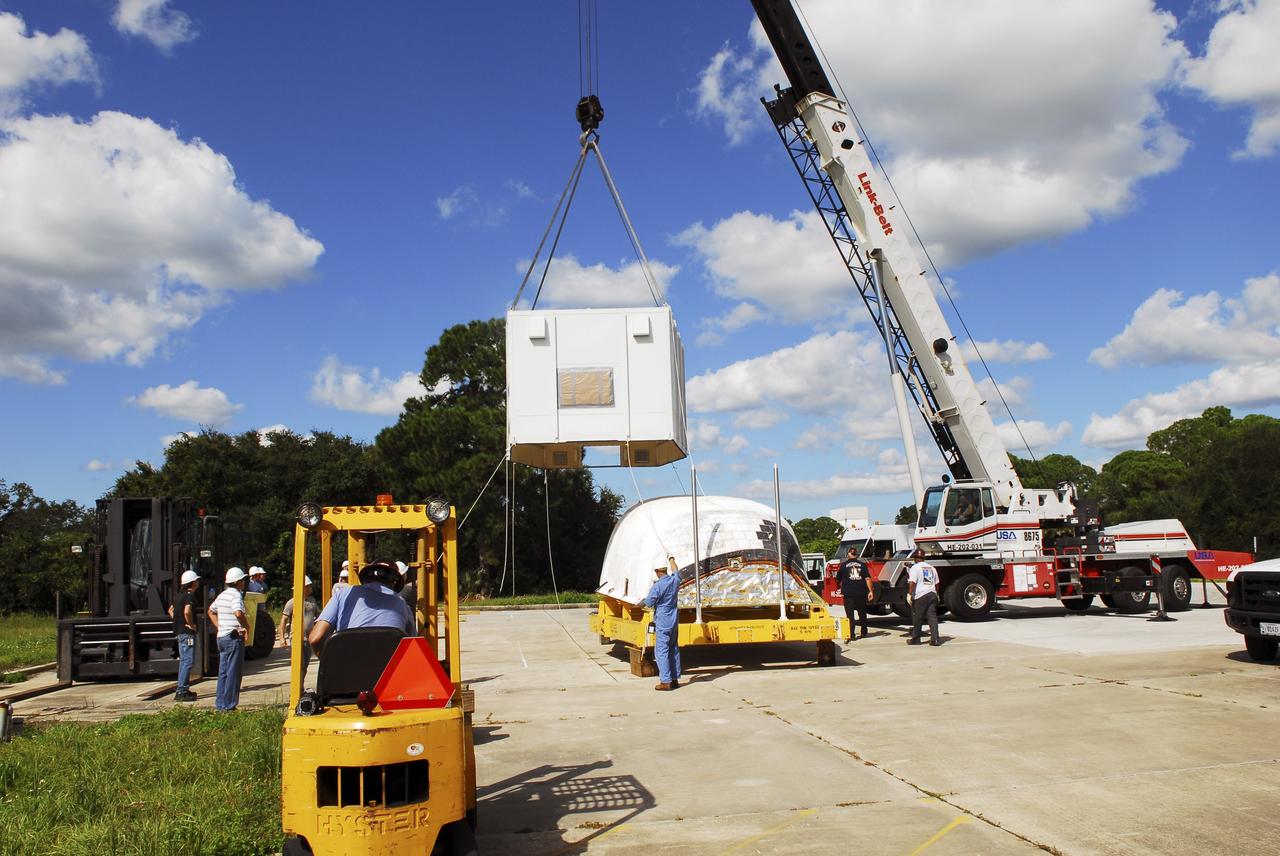
CAPE CANAVERAL, Fla. – Workers outside the Hypergol Maintenance Facility at NASA’s Kennedy Space Center in Florida use a crane to lift the shipping container off of space shuttle Discovery's orbital maneuvering system (OMS) pod. The OMS has been returned from White Sands Space Harbor in New Mexico where it underwent a complete deservicing and cleaning.        The work is part of the Space Shuttle Program’s transition and retirement processing of space shuttle Discovery. The shuttle will go to the Smithsonian's National Air and Space Museum, Steven F. Udvar-Hazy Center in Chantilly, Va. For more information, visit http://www.nasa.gov/shuttle. Photo credit: NASA/Jim Grossmann
KSC-2011-7239
CAPE CANAVERAL, Fla. – – Inside Orbiter Processing Facility-1 at NASA’s Kennedy Space Center in Florida, a crane is used to lift a sling holding one of two orbital maneuvering system (OMS) pods that will be re-installed on space shuttle Discovery.   The OMS pods were returned from White Sands Space Harbor in New Mexico where they underwent a complete deservicing and cleaning. The work is part of the Space Shuttle Program’s transition and retirement processing of shuttle Discovery. Discovery is being prepared for display at Smithsonian’s National Air and Space Museum, Steven F. Udvar-Hazy Center in Chantilly, Va. For more information, visit http:__www.nasa.gov_shuttle.  Photo credit: NASA_Jim Grossmann
KSC-2011-7566
CAPE CANAVERAL, Fla. – Inside Orbiter Processing Facility-1 at NASA’s Kennedy Space Center in Florida, technicians monitor the progress as a crane moves the right orbital maneuvering system (OMS) pod closer for installation on space shuttle Discovery.  The OMS pods were returned from White Sands Space Harbor in New Mexico where they underwent a complete deservicing and cleaning. The work is part of the Space Shuttle Program’s transition and retirement processing of shuttle Discovery. Discovery is being prepared for display at Smithsonian’s National Air and Space Museum, Steven F. Udvar-Hazy Center in Chantilly, Va. For more information, visit http:__www.nasa.gov_shuttle.  Photo credit: NASA_Jim Grossmann
KSC-2011-7569
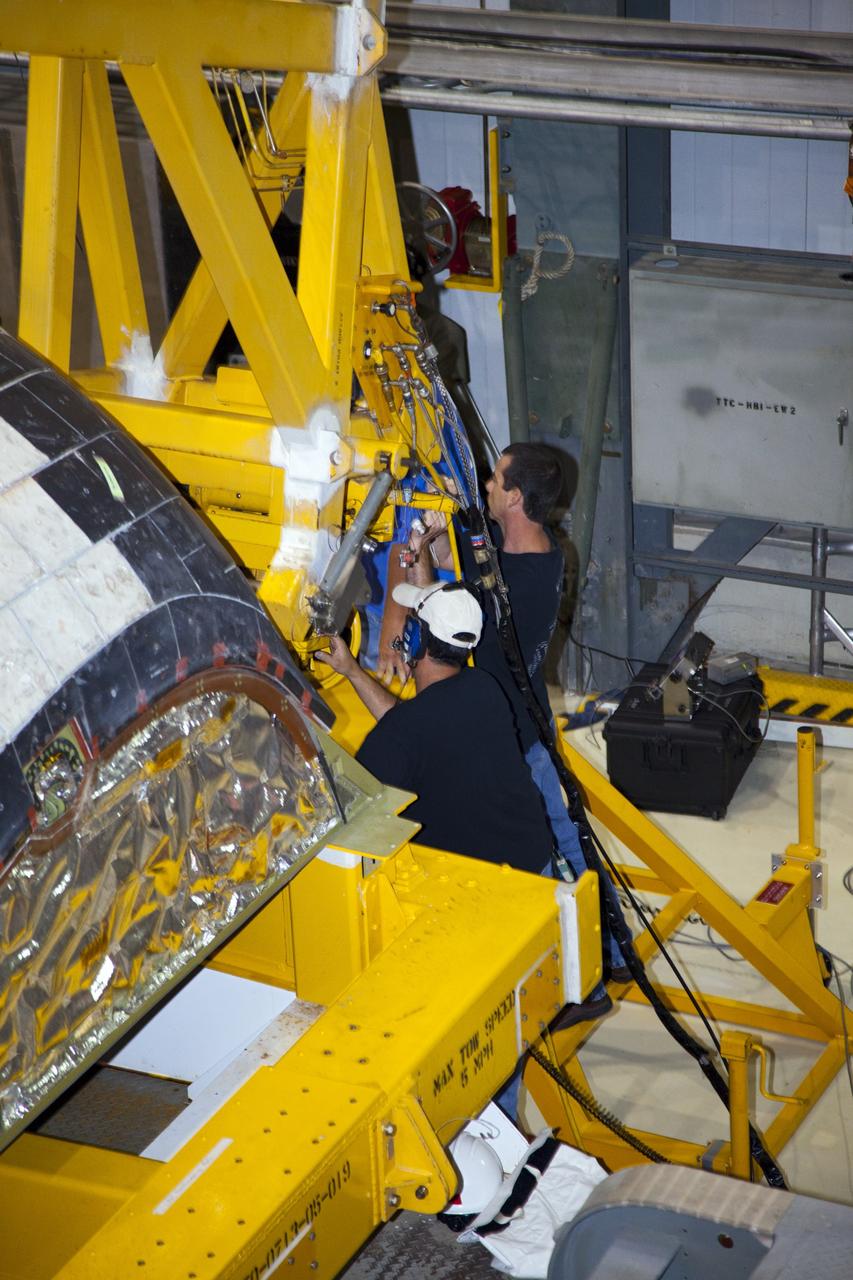
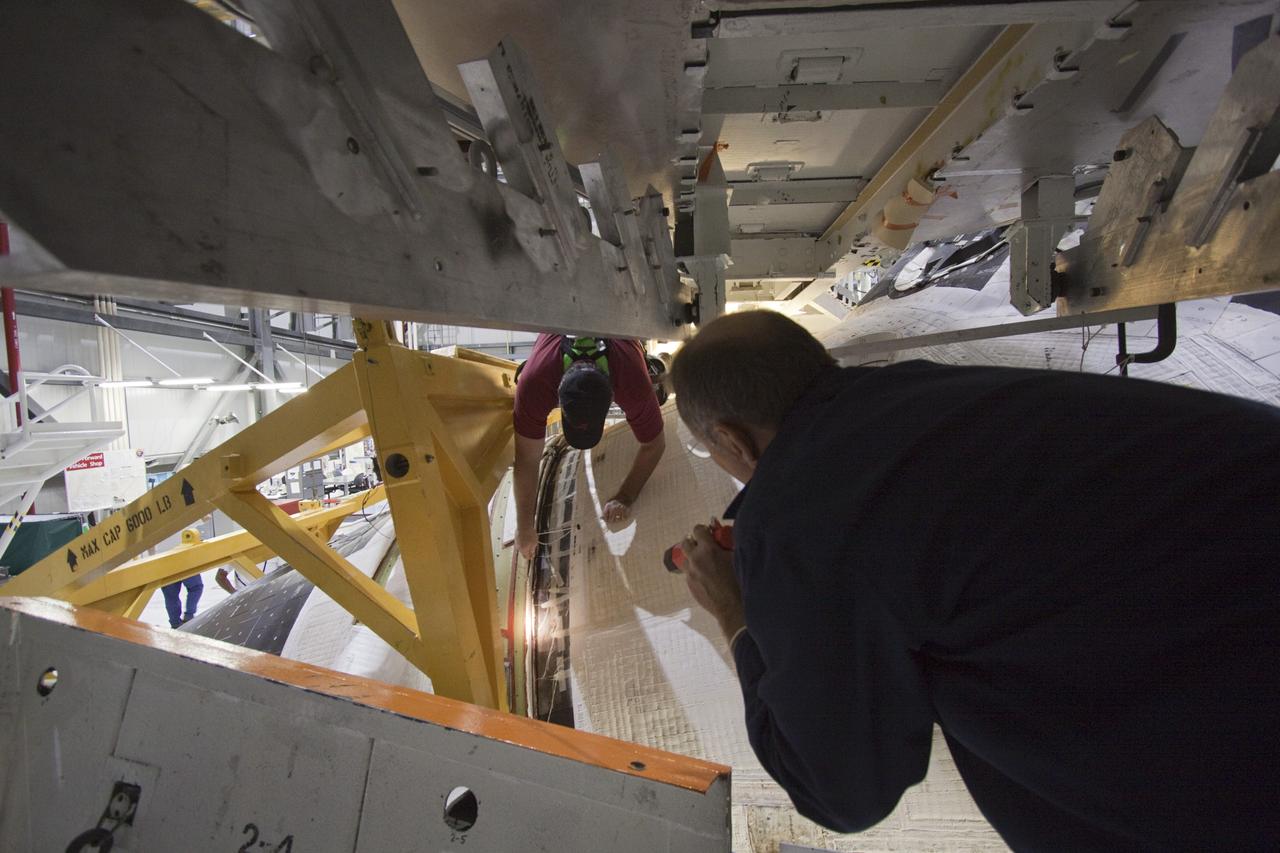
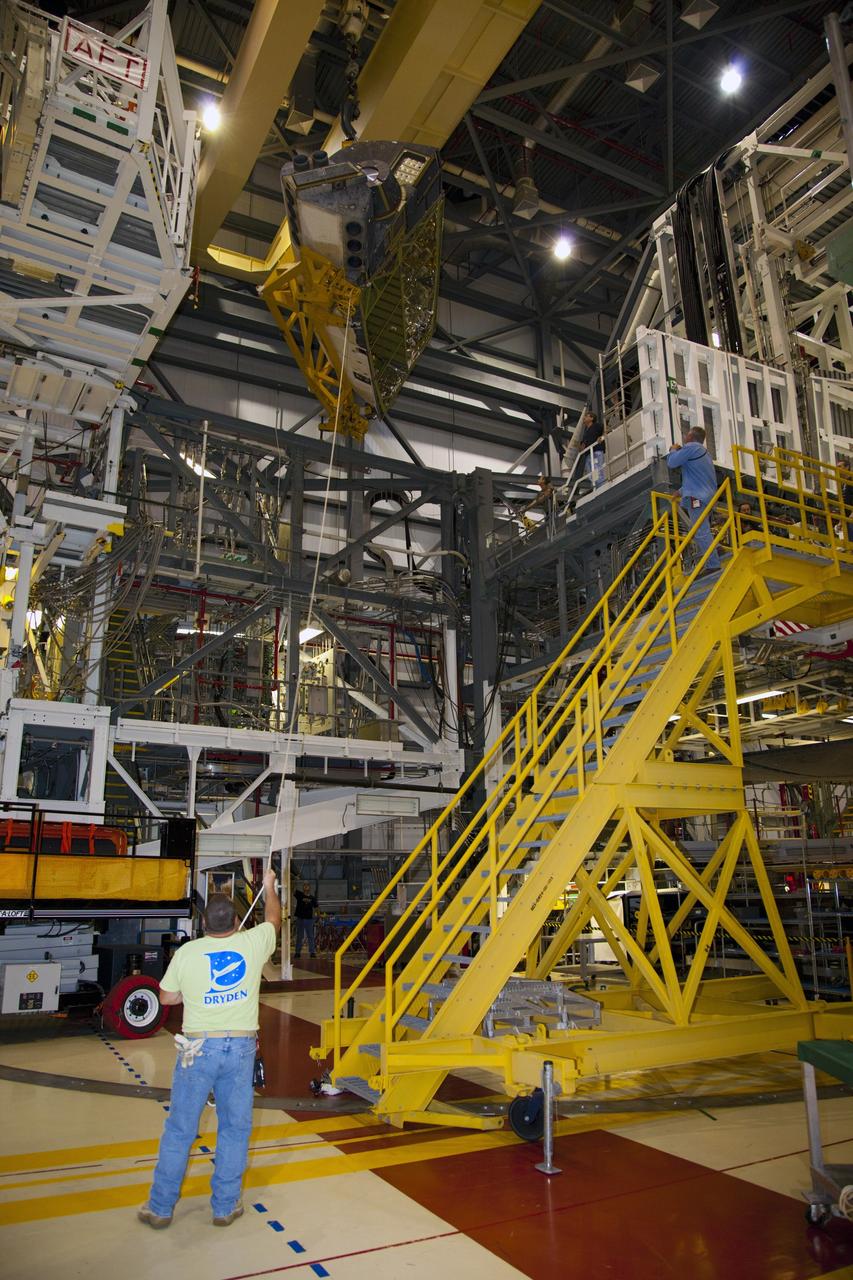
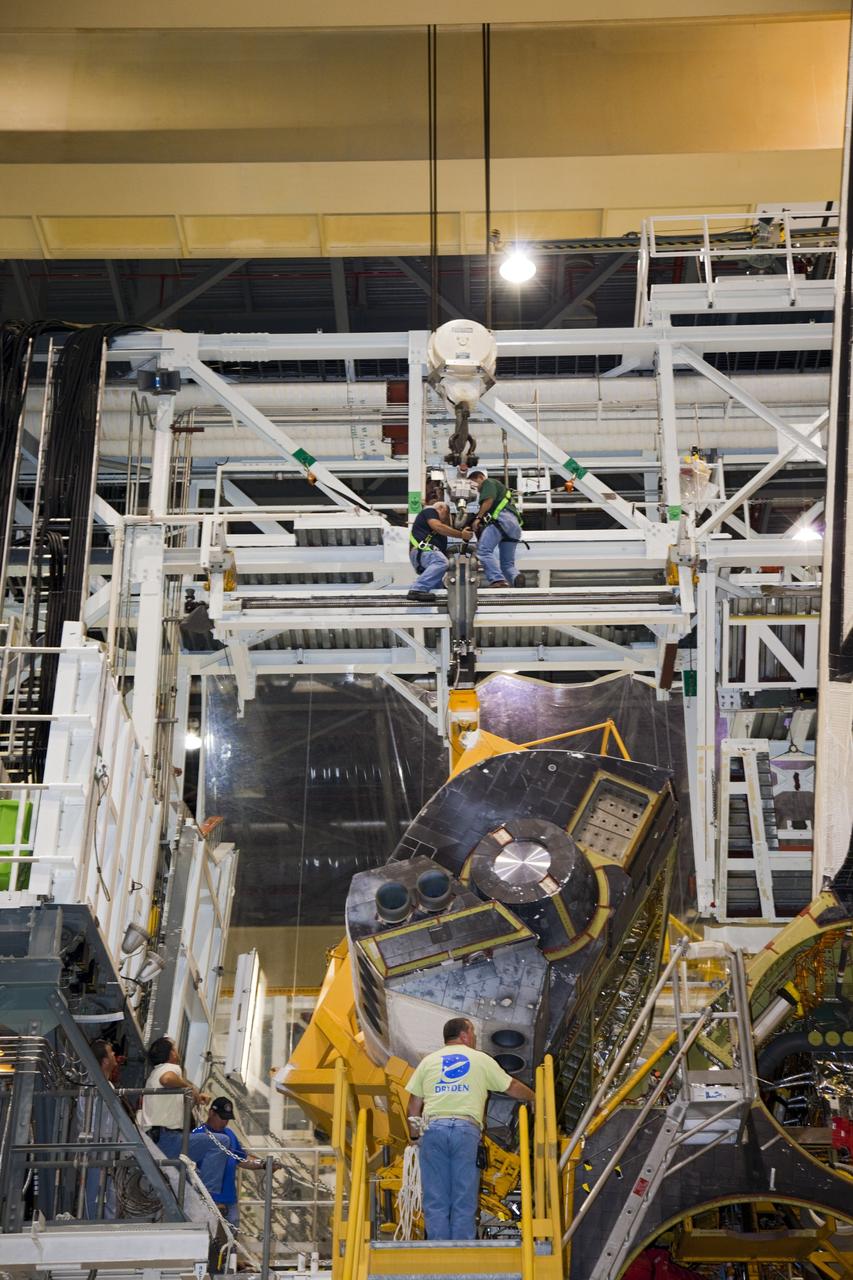
CAPE CANAVERAL, Fla. – In Orbiter Processing Facility-1 at NASA’s Kennedy Space Center in Florida, technicians assist as a crane lowers an orbital maneuvering system (OMS) pod for installation on space shuttle Discovery.    The OMS pod was returned from White Sands Space Harbor in New Mexico where it underwent a complete deservicing and cleaning. The work is part of the Space Shuttle Program’s transition and retirement processing of space shuttle Discovery. The shuttle will go to the Smithsonian’s National Air and Space Museum, Steven F. Udvar-Hazy Center in Chantilly, Va., in April 2012. For more information, visit http://www.nasa.gov/shuttle.  Photo credit: NASA/Frankie Martin
KSC-2011-7387
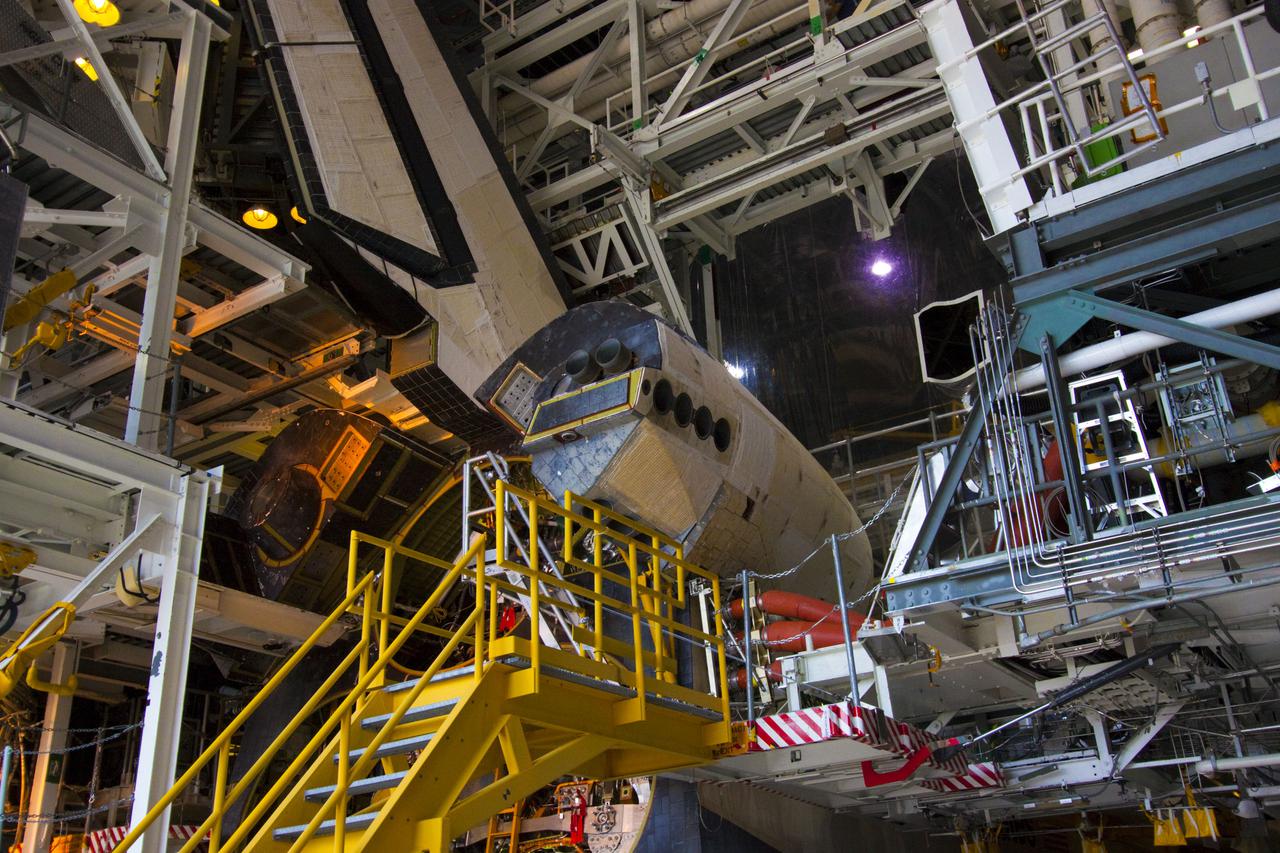
CAPE CANAVERAL, Fla. – Inside Orbiter Processing Facility-1 at NASA’s Kennedy Space Center in Florida, the right orbital maneuvering system (OMS) pod is being installed on space shuttle Discovery.  The OMS pods were returned from White Sands Space Harbor in New Mexico where they underwent a complete deservicing and cleaning. The work is part of the Space Shuttle Program’s transition and retirement processing of shuttle Discovery. Discovery is being prepared for display at Smithsonian’s National Air and Space Museum, Steven F. Udvar-Hazy Center in Chantilly, Va. For more information, visit http:__www.nasa.gov_shuttle.  Photo credit: NASA_Jim Grossmann
KSC-2011-7592
CAPE CANAVERAL, Fla. – Workers outside the Hypergol Maintenance Facility at NASA’s Kennedy Space Center in Florida use a crane to lift the shipping container off of space shuttle Discovery's orbital maneuvering system (OMS) pod. The OMS has been returned from White Sands Space Harbor in New Mexico where it underwent a complete deservicing and cleaning.        The work is part of the Space Shuttle Program’s transition and retirement processing of space shuttle Discovery. The shuttle will go to the Smithsonian's National Air and Space Museum, Steven F. Udvar-Hazy Center in Chantilly, Va. For more information, visit http://www.nasa.gov/shuttle. Photo credit: NASA/Jim Grossmann
KSC-2011-7238
JSC2003-E-34752 (16 April 2003) --- Workers at Japan's Tsukuba Space Center are shown removing support structures from the Pressurized Module of the Japanese Experiment Module (JEM), Kibo, before it was packaged into an environmentally controlled shipping container and loaded onto a barge bound for Yokohama Harbor, where it was then loaded on a container ship bound for Port Canaveral, Florida. The Kibo module, built by the National Space Development Agency of Japan (NASDA), is expected to arrive at the Kennedy Space Center for module integration tests with Node 2 and pre-launch processing in early June.  Photo Credit: NASA
JEM hardware delivery
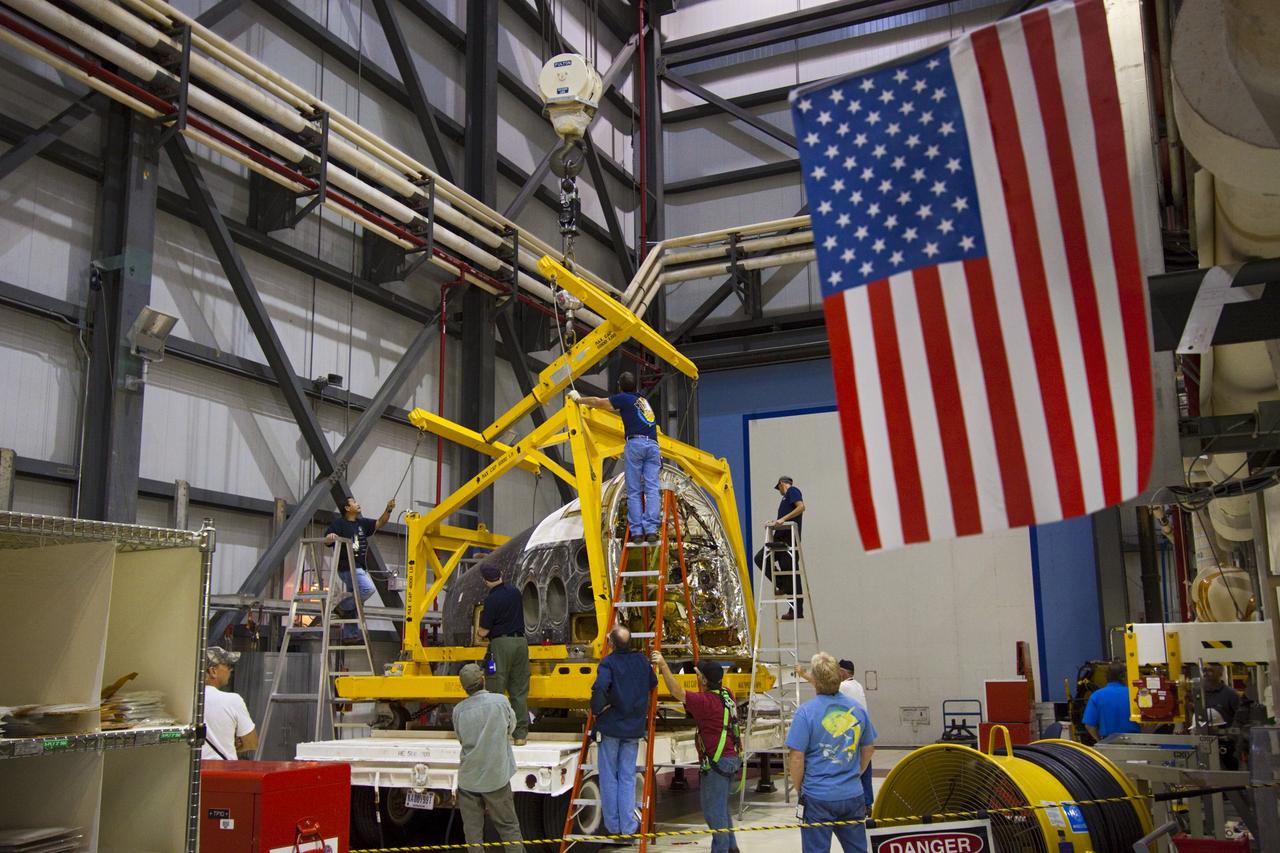
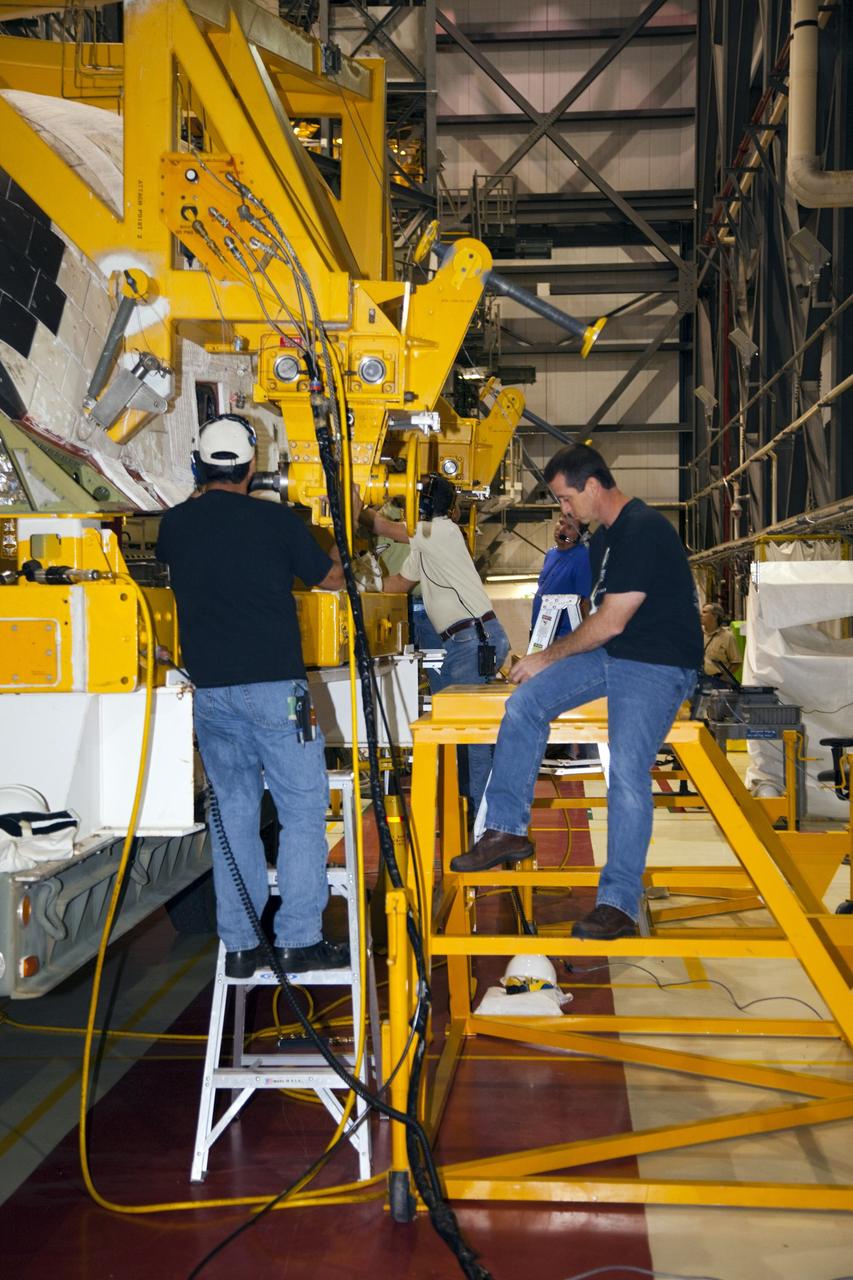
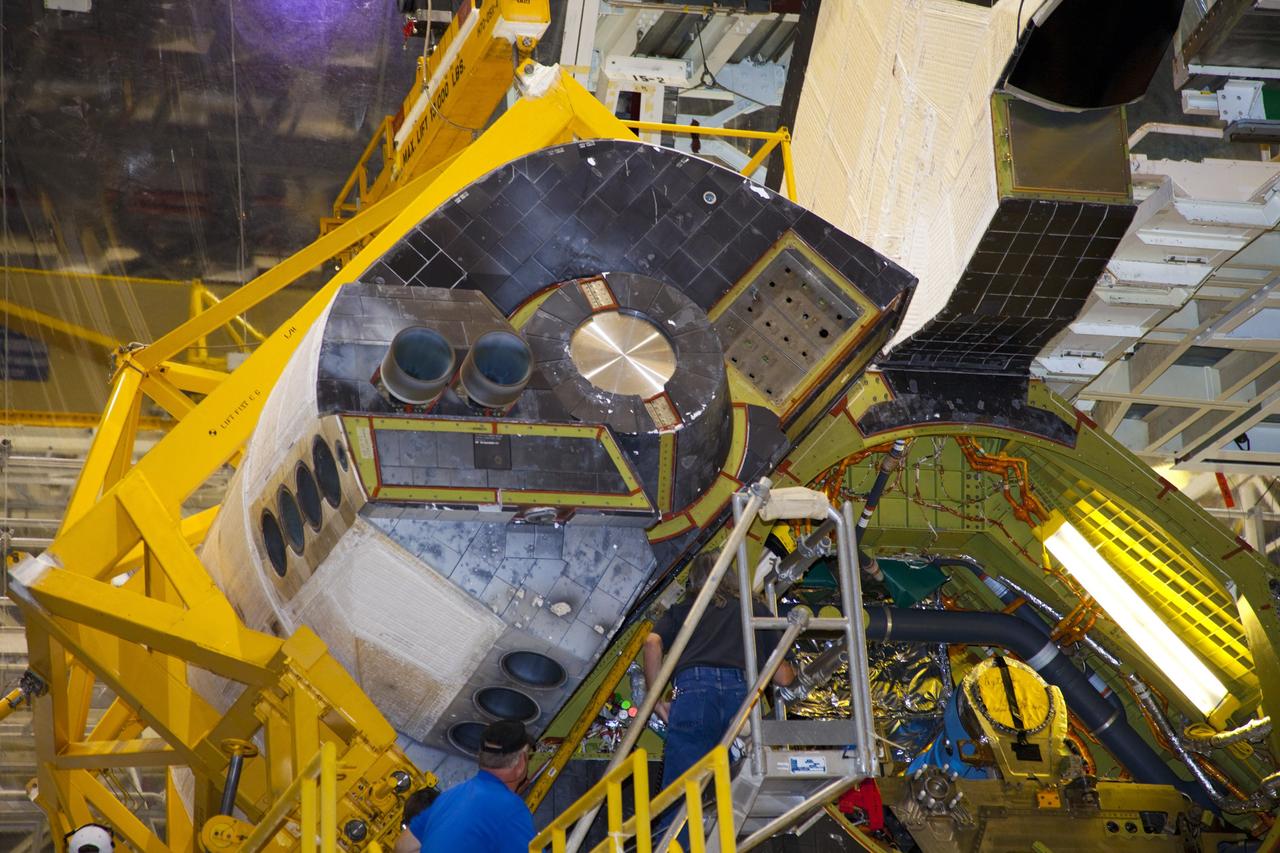
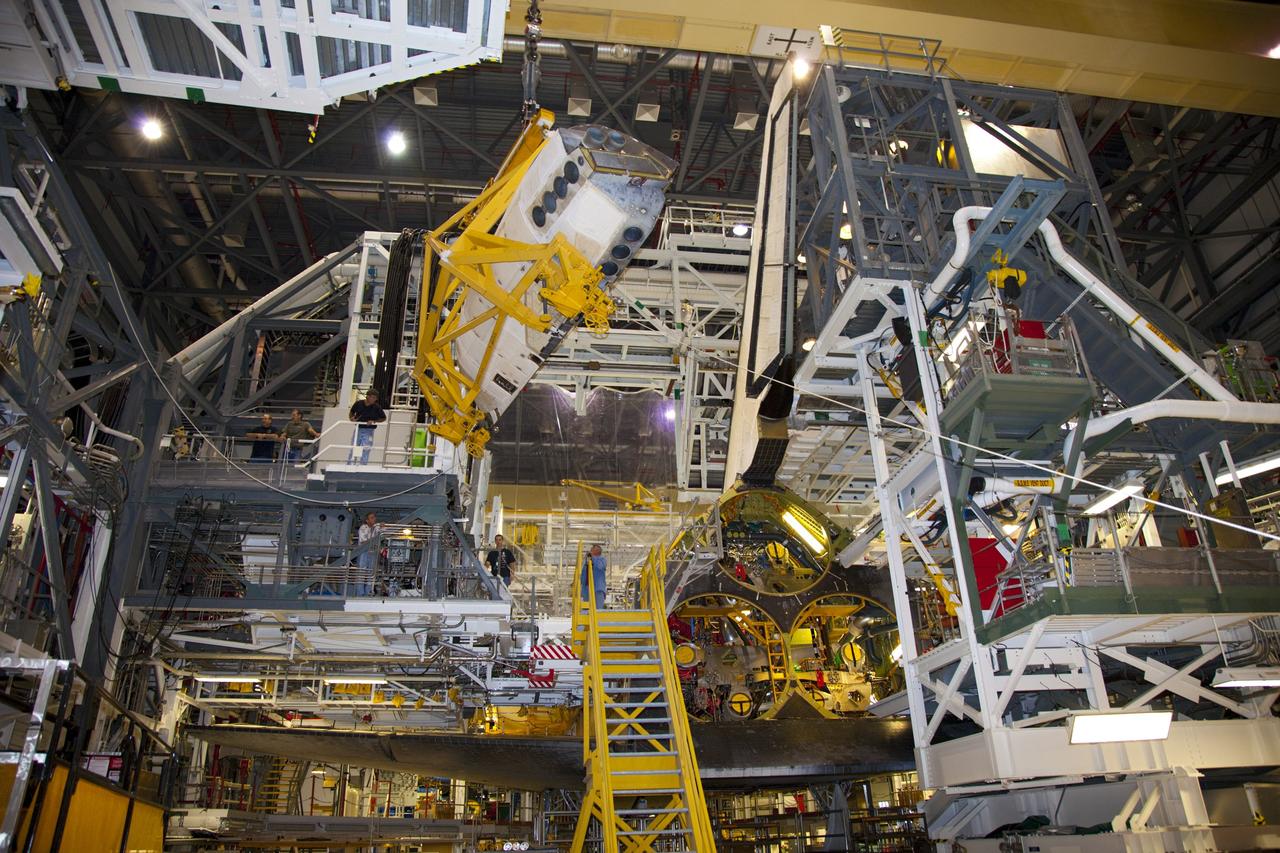
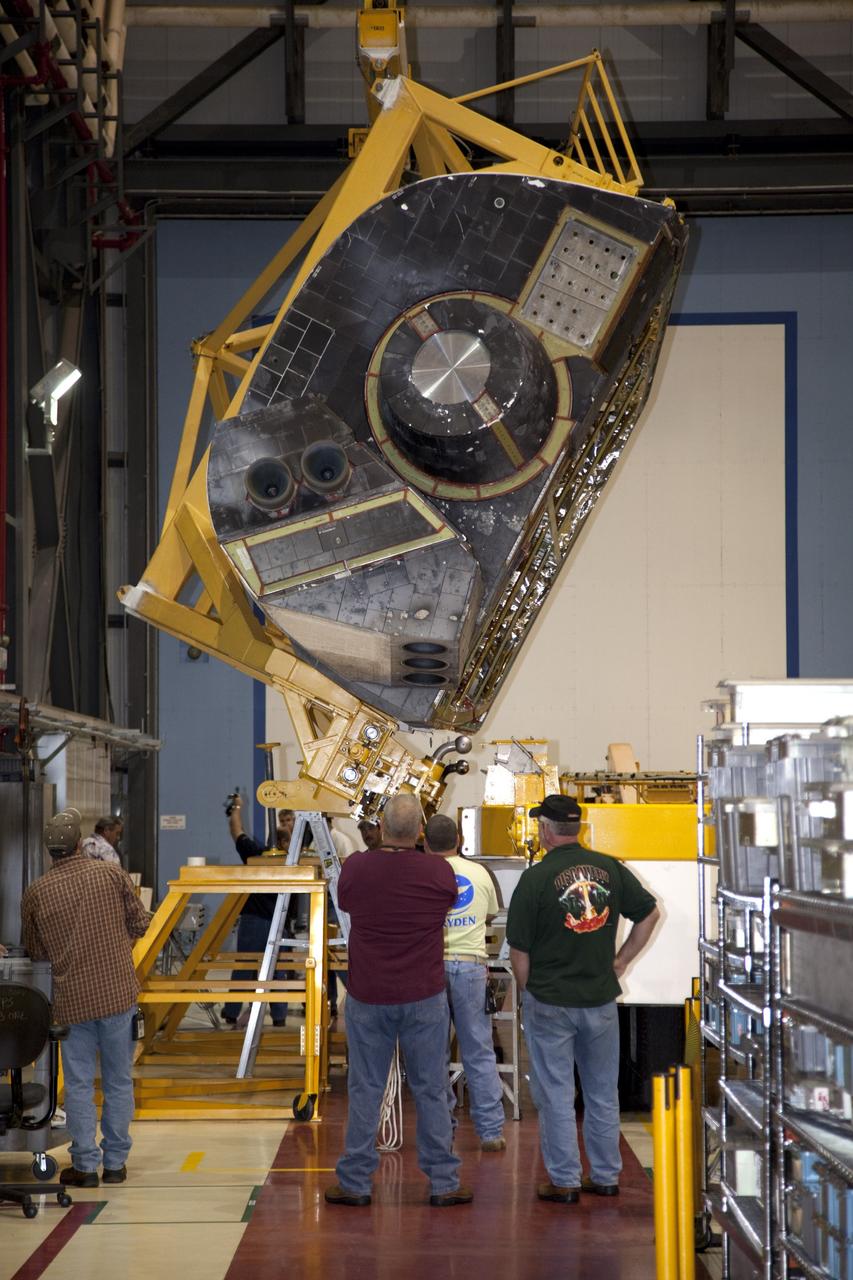
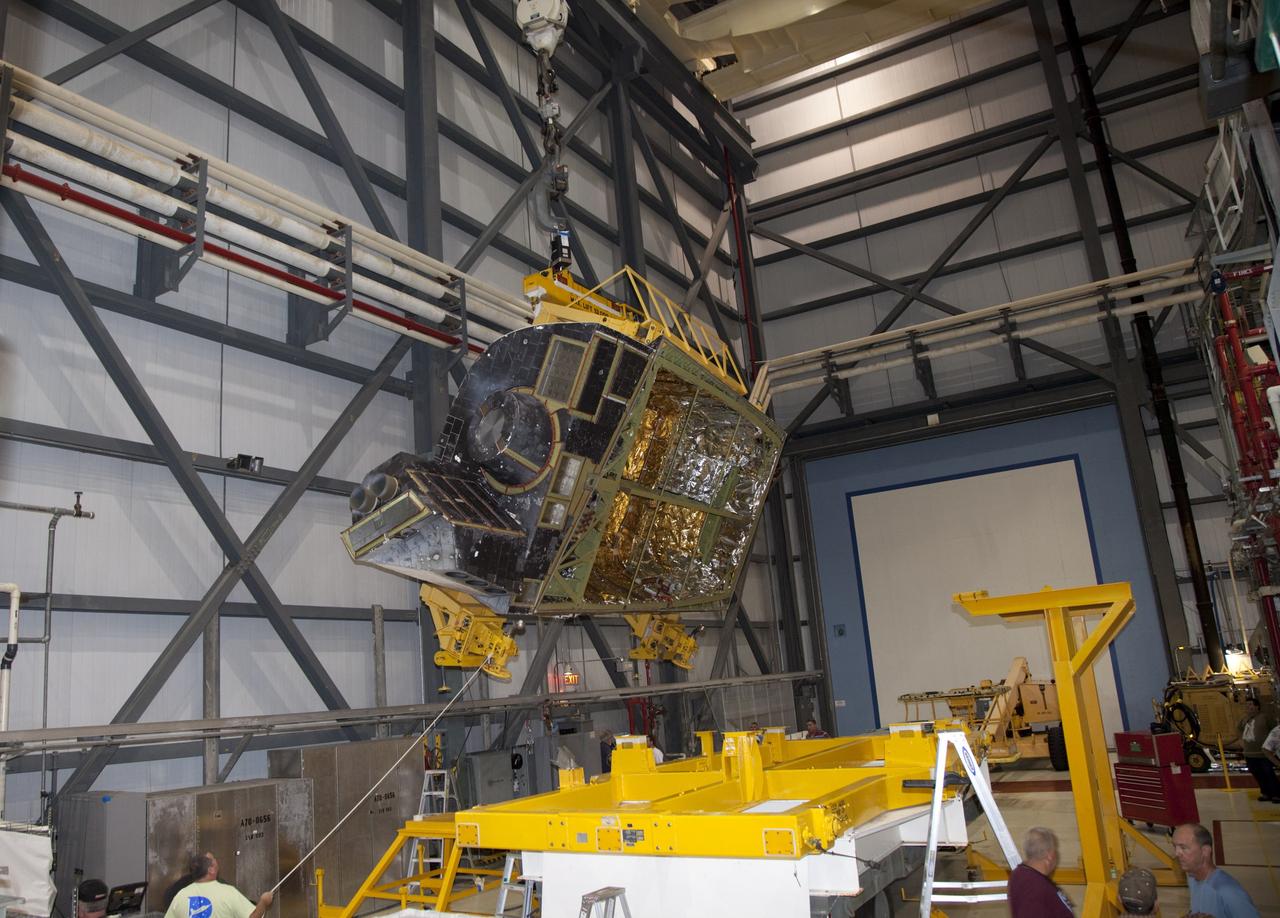
CAPE CANAVERAL, Fla. -- Inside Orbiter Processing Facility-1 at NASA’s Kennedy Space Center in Florida, technicians monitor the progress as a large crane carries the forward reaction control system (FRCS) close for installation on space shuttle Discovery.    The FRCS was returned from White Sands Space Harbor in New Mexico where it underwent a complete deservicing and cleaning. The work is part of the Space Shuttle Program’s transition and retirement processing of shuttle Discovery. Discovery is being prepared for display at Smithsonian’s National Air and Space Museum, Steven F. Udvar-Hazy Center in Chantilly, Va. For more information, visit http://www.nasa.gov/shuttle.  Photo credit: NASA/Jim Grossmann
KSC-2011-7675
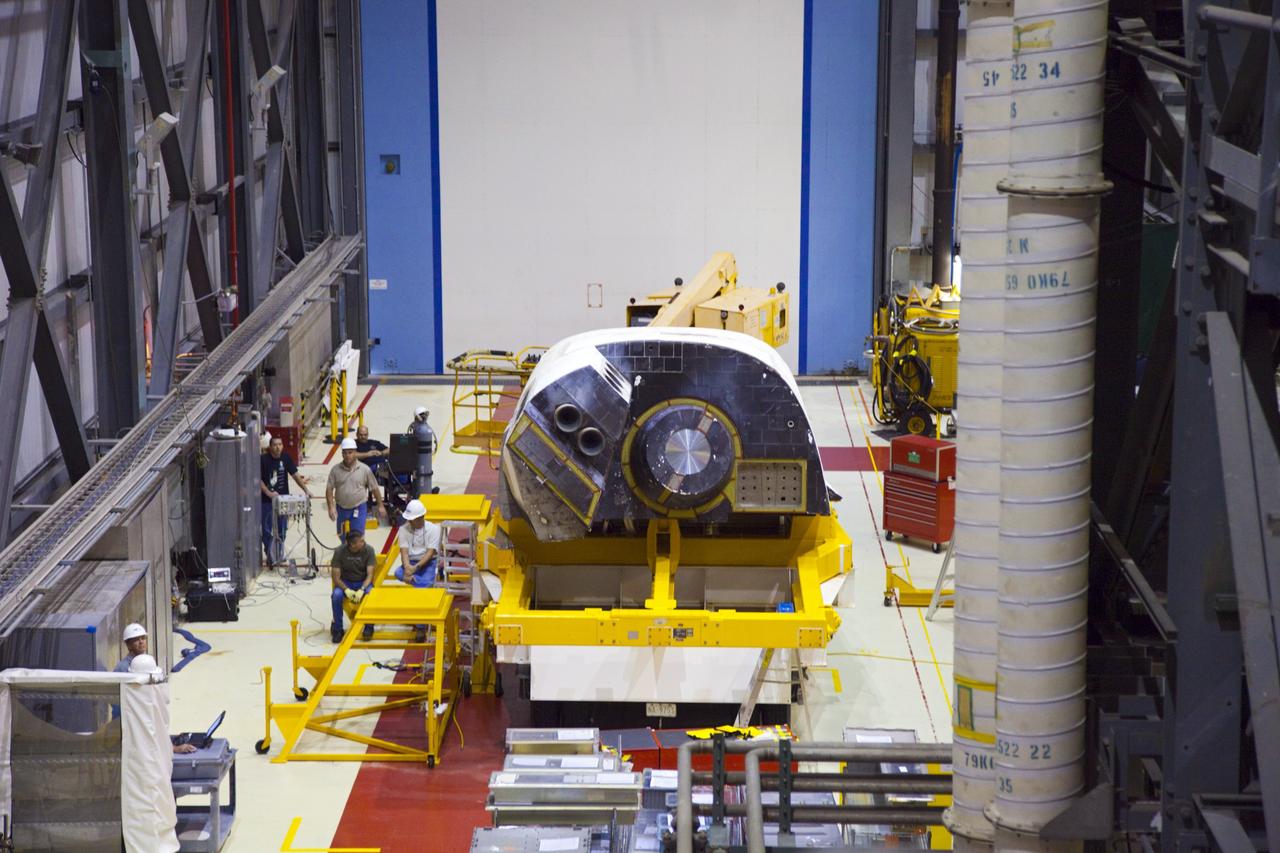
CAPE CANAVERAL, Fla. -- Inside Orbiter Processing Facility-1 at NASA’s Kennedy Space Center in Florida, technicians ready the forward reaction control system (FRCS) for installation on space shuttle Discovery.    The FRCS was returned from White Sands Space Harbor in New Mexico where it underwent a complete deservicing and cleaning. The work is part of the Space Shuttle Program’s transition and retirement processing of shuttle Discovery. Discovery is being prepared for display at Smithsonian’s National Air and Space Museum, Steven F. Udvar-Hazy Center in Chantilly, Va. For more information, visit http://www.nasa.gov/shuttle.  Photo credit: NASA/Jim Grossmann
KSC-2011-7673
CAPE CANAVERAL, Fla. -- Inside Orbiter Processing Facility-1 at NASA’s Kennedy Space Center in Florida, technicians ready the forward reaction control system (FRCS) for installation on space shuttle Discovery.    The FRCS was returned from White Sands Space Harbor in New Mexico where it underwent a complete deservicing and cleaning. The work is part of the Space Shuttle Program’s transition and retirement processing of shuttle Discovery. Discovery is being prepared for display at Smithsonian’s National Air and Space Museum, Steven F. Udvar-Hazy Center in Chantilly, Va. For more information, visit http://www.nasa.gov/shuttle.  Photo credit: NASA/Jim Grossmann
KSC-2011-7672
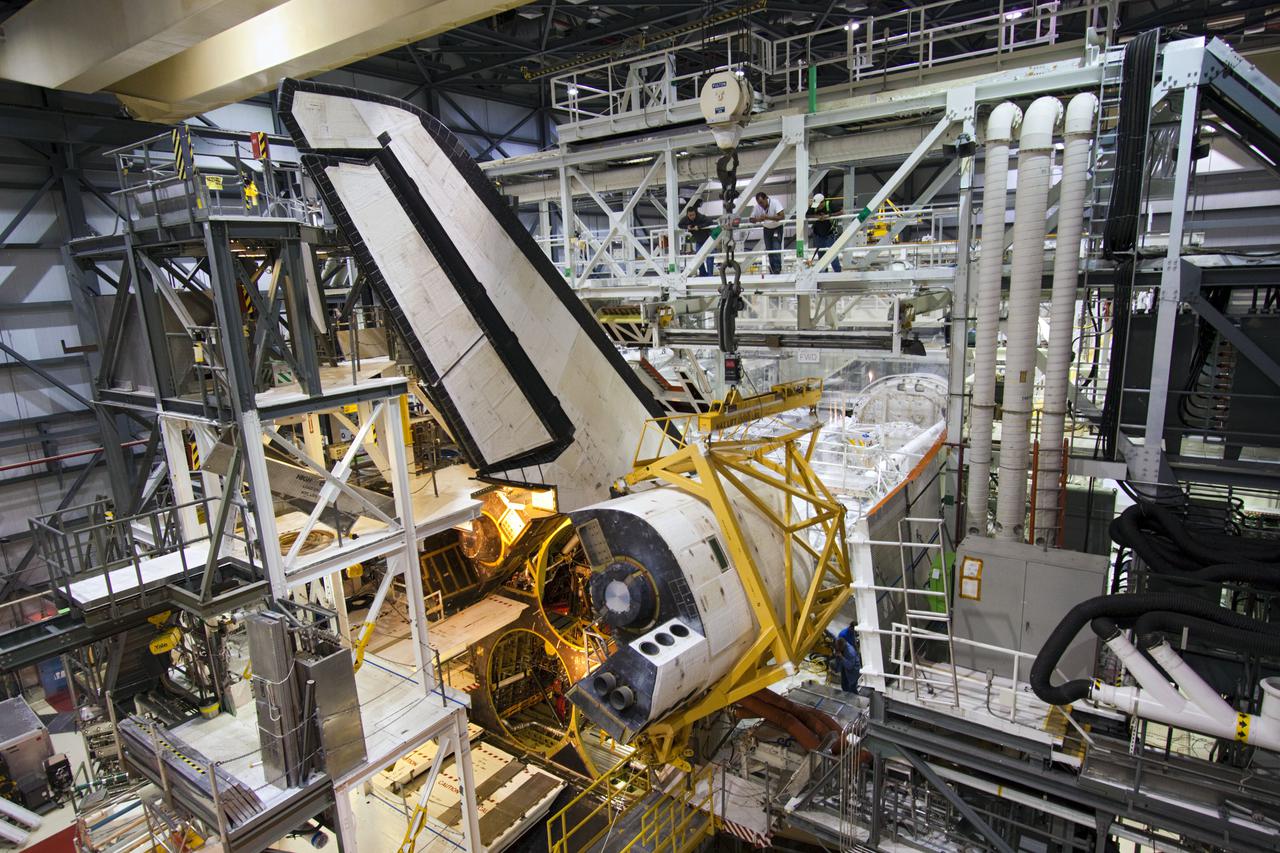
CAPE CANAVERAL, Fla. -- Inside Orbiter Processing Facility-1 at NASA’s Kennedy Space Center in Florida, the forward reaction control system (FRCS) is installed on space shuttle Discovery.    The FRCS was returned from White Sands Space Harbor in New Mexico where it underwent a complete deservicing and cleaning. The work is part of the Space Shuttle Program’s transition and retirement processing of shuttle Discovery. Discovery is being prepared for display at Smithsonian’s National Air and Space Museum, Steven F. Udvar-Hazy Center in Chantilly, Va. For more information, visit http://www.nasa.gov/shuttle.  Photo credit: NASA/Jim Grossmann
KSC-2011-7679
CAPE CANAVERAL, Fla. – In Orbiter Processing Facility-1 at NASA’s Kennedy Space Center in Florida, technicians assist as a crane is lowered toward an orbital maneuvering system (OMS) pod that will be installed on space shuttle Discovery.    The OMS pod was returned from White Sands Space Harbor in New Mexico where it underwent a complete deservicing and cleaning. The work is part of the Space Shuttle Program’s transition and retirement processing of space shuttle Discovery. The shuttle will go to the Smithsonian’s National Air and Space Museum, Steven F. Udvar-Hazy Center in Chantilly, Va., in April 2012. For more information, visit http://www.nasa.gov/shuttle.  Photo credit: NASA/Frankie Martin
KSC-2011-7376
CAPE CANAVERAL, Fla. – In Orbiter Processing Facility-1 at NASA’s Kennedy Space Center in Florida, a crane carries an orbital maneuvering system (OMS) pod closer to space shuttle Discovery. The OMS pod will be installed on Discovery.     The OMS pod was returned from White Sands Space Harbor in New Mexico where it underwent a complete deservicing and cleaning. The work is part of the Space Shuttle Program’s transition and retirement processing of space shuttle Discovery. The shuttle will go to the Smithsonian’s National Air and Space Museum, Steven F. Udvar-Hazy Center in Chantilly, Va., in April 2012. For more information, visit http://www.nasa.gov/shuttle.  Photo credit: NASA/Frankie Martin
KSC-2011-7384
CAPE CANAVERAL, Fla. – Inside Orbiter Processing Facility-1 at NASA’s Kennedy Space Center in Florida, the right orbital maneuvering system (OMS) pod is installed on space shuttle Discovery.  The OMS pods were returned from White Sands Space Harbor in New Mexico where they underwent a complete deservicing and cleaning. The work is part of the Space Shuttle Program’s transition and retirement processing of shuttle Discovery. Discovery is being prepared for display at Smithsonian’s National Air and Space Museum, Steven F. Udvar-Hazy Center in Chantilly, Va. For more information, visit http:__www.nasa.gov_shuttle.  Photo credit: NASA_Jim Grossmann
KSC-2011-7593
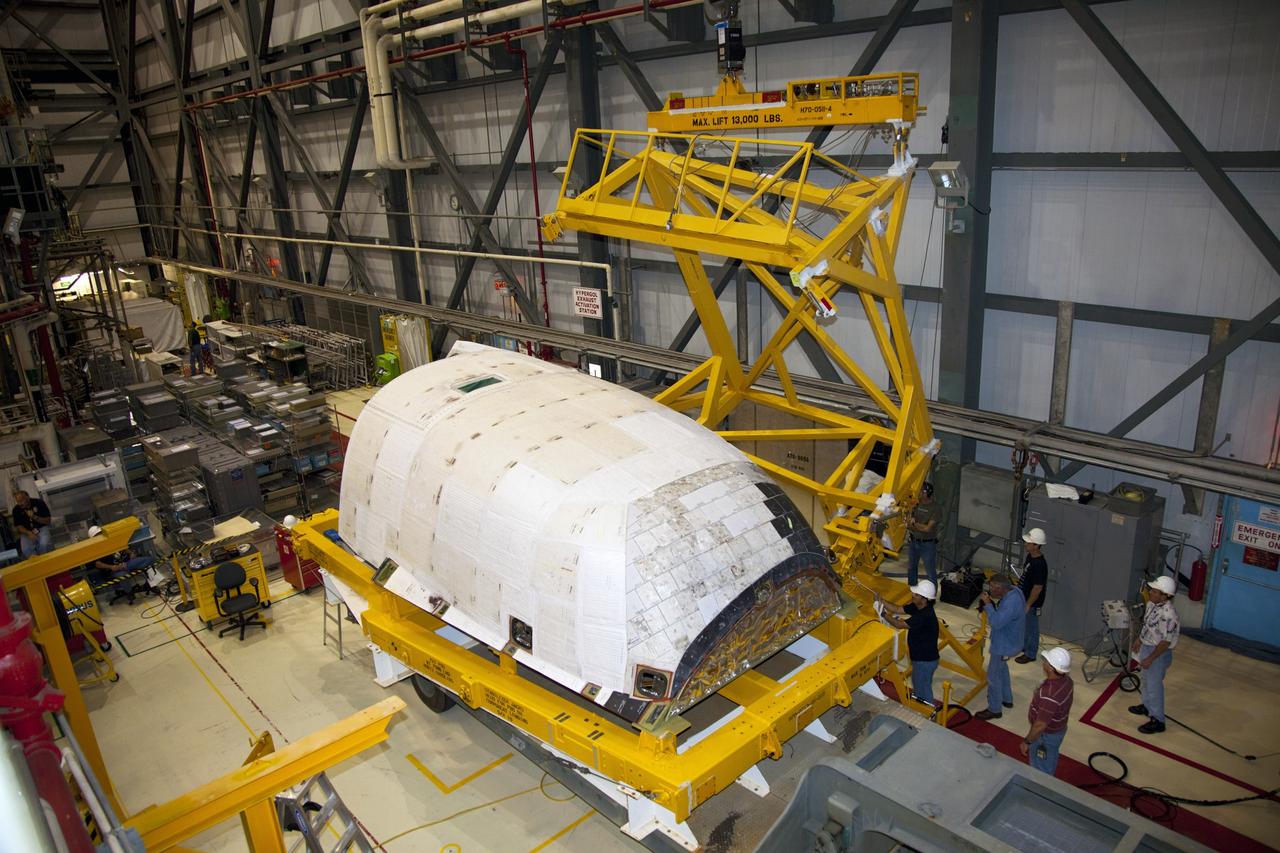
CAPE CANAVERAL, Fla. -- Inside Orbiter Processing Facility-1 at NASA’s Kennedy Space Center in Florida, the forward reaction control system (FRCS) is being moved by crane for installation on space shuttle Discovery.    The FRCS was returned from White Sands Space Harbor in New Mexico where it underwent a complete deservicing and cleaning. The work is part of the Space Shuttle Program’s transition and retirement processing of shuttle Discovery. Discovery is being prepared for display at Smithsonian’s National Air and Space Museum, Steven F. Udvar-Hazy Center in Chantilly, Va. For more information, visit http://www.nasa.gov/shuttle.  Photo credit: NASA/Jim Grossmann
KSC-2011-7671
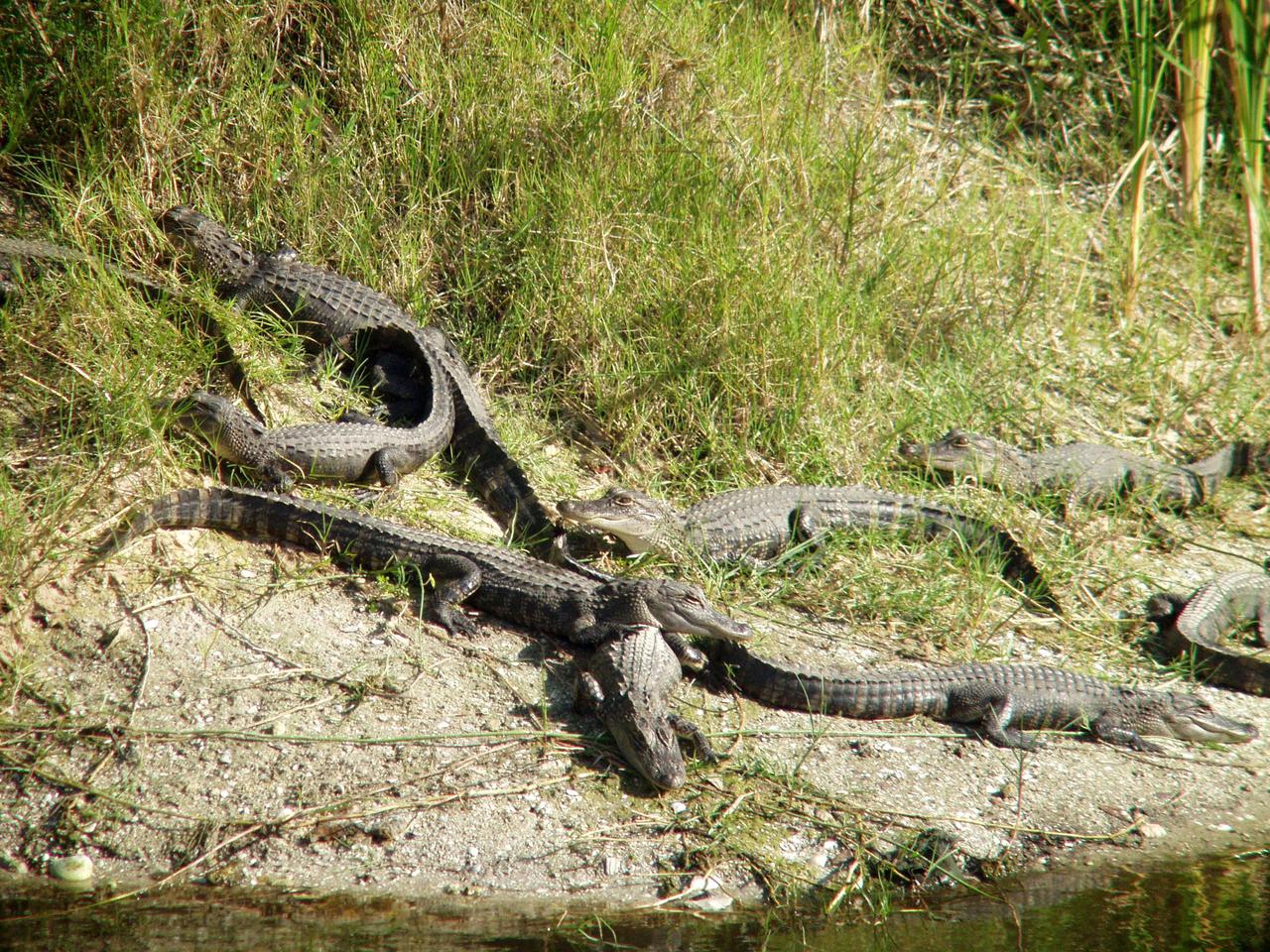
KENNEDY SPACE CENTER, FLA. --  Young alligators share grassy space beside a body of water on KSC.   The Center shares a boundary with the Merritt Island National Wildlife Refuge, which harbors nearly 5,000 American alligators.  Some of those gators can be seen in the canals and ponds around KSC.  The refuge is also habitat for more than 310 species of birds, 25 mammals, 117 fishes and 65 amphibians and reptiles.  The open water provides wintering areas for 23 species of migratory waterfowl and a year-round home for great blue herons, great egrets, wood storks, cormorants, brown pelicans and other species of marsh and shore birds.
KSC-02PD-0772
CAPE CANAVERAL, Fla. -- Inside Orbiter Processing Facility-1 at NASA’s Kennedy Space Center in Florida, technicians assist with the installation of the forward reaction control system (FRCS) on space shuttle Discovery.    The FRCS was returned from White Sands Space Harbor in New Mexico where it underwent a complete deservicing and cleaning. The work is part of the Space Shuttle Program’s transition and retirement processing of shuttle Discovery. Discovery is being prepared for display at Smithsonian’s National Air and Space Museum, Steven F. Udvar-Hazy Center in Chantilly, Va. For more information, visit http://www.nasa.gov/shuttle.  Photo credit: NASA/Jim Grossmann
KSC-2011-7678
CAPE CANAVERAL, Fla. – At NASA’s Kennedy Space Center in Florida, a truck positions space shuttle Discovery's orbital maneuvering system (OMS) pod into Orbiter Processing Facility-1 (OPF). The OMS has been returned from White Sands Space Harbor in New Mexico where it underwent a complete deservicing and cleaning.          The work is part of the Space Shuttle Program’s transition and retirement processing of space shuttle Discovery. The shuttle will go to the Smithsonian's National Air and Space Museum, Steven F. Udvar-Hazy Center in Chantilly, Va. For more information, visit http://www.nasa.gov/shuttle. Photo credit: NASA/Jim Grossmann
KSC-2011-7242
CAPE CANAVERAL, Fla. – In Orbiter Processing Facility-1 at NASA’s Kennedy Space Center in Florida, technicians monitor the progress as a crane is used to carry an orbital maneuvering system (OMS) pod that will be installed on space shuttle Discovery.      The OMS pod was returned from White Sands Space Harbor in New Mexico where it underwent a complete deservicing and cleaning. The work is part of the Space Shuttle Program’s transition and retirement processing of space shuttle Discovery. The shuttle will go to the Smithsonian’s National Air and Space Museum, Steven F. Udvar-Hazy Center in Chantilly, Va., in April 2012. For more information, visit http://www.nasa.gov/shuttle.  Photo credit: NASA/Frankie Martin
KSC-2011-7378
CAPE CANAVERAL, Fla. – Inside Orbiter Processing Facility-1 at NASA’s Kennedy Space Center in Florida, the right orbital maneuvering system (OMS) pod is being installed on space shuttle Discovery.  The OMS pods were returned from White Sands Space Harbor in New Mexico where they underwent a complete deservicing and cleaning. The work is part of the Space Shuttle Program’s transition and retirement processing of shuttle Discovery. Discovery is being prepared for display at Smithsonian’s National Air and Space Museum, Steven F. Udvar-Hazy Center in Chantilly, Va. For more information, visit http:__www.nasa.gov_shuttle.  Photo credit: NASA_Jim Grossmann
KSC-2011-7591
CAPE CANAVERAL, Fla. – In Orbiter Processing Facility-1 at NASA’s Kennedy Space Center in Florida, a crane carries an orbital maneuvering system (OMS) pod closer to space shuttle Discovery. The OMS pod will be installed on Discovery.     The OMS pod was returned from White Sands Space Harbor in New Mexico where it underwent a complete deservicing and cleaning. The work is part of the Space Shuttle Program’s transition and retirement processing of space shuttle Discovery. The shuttle will go to the Smithsonian’s National Air and Space Museum, Steven F. Udvar-Hazy Center in Chantilly, Va., in April 2012. For more information, visit http://www.nasa.gov/shuttle.  Photo credit: NASA/Frankie Martin
KSC-2011-7383
CAPE CANAVERAL, Fla. – In Orbiter Processing Facility-1 at NASA’s Kennedy Space Center in Florida, technicians assist as a crane lowers an orbital maneuvering system (OMS) pod for installation on space shuttle Discovery.      The OMS pod was returned from White Sands Space Harbor in New Mexico where it underwent a complete deservicing and cleaning. The work is part of the Space Shuttle Program’s transition and retirement processing of space shuttle Discovery. The shuttle will go to the Smithsonian’s National Air and Space Museum, Steven F. Udvar-Hazy Center in Chantilly, Va., in April 2012. For more information, visit http://www.nasa.gov/shuttle.  Photo credit: NASA/Frankie Martin
KSC-2011-7390
CAPE CANAVERAL, Fla. – In Orbiter Processing Facility-1 at NASA’s Kennedy Space Center in Florida, a crane lowers an orbital maneuvering system (OMS) pod closer for installation on space shuttle Discovery.     The OMS pod was returned from White Sands Space Harbor in New Mexico where it underwent a complete deservicing and cleaning. The work is part of the Space Shuttle Program’s transition and retirement processing of space shuttle Discovery. The shuttle will go to the Smithsonian’s National Air and Space Museum, Steven F. Udvar-Hazy Center in Chantilly, Va., in April 2012. For more information, visit http://www.nasa.gov/shuttle.  Photo credit: NASA/Frankie Martin
KSC-2011-7385
CAPE CANAVERAL, Fla. -- Inside Orbiter Processing Facility-1 at NASA’s Kennedy Space Center in Florida, technicians monitor the progress as a large crane lowers the forward reaction control system (FRCS) for installation on space shuttle Discovery.    The FRCS was returned from White Sands Space Harbor in New Mexico where it underwent a complete deservicing and cleaning. The work is part of the Space Shuttle Program’s transition and retirement processing of shuttle Discovery. Discovery is being prepared for display at Smithsonian’s National Air and Space Museum, Steven F. Udvar-Hazy Center in Chantilly, Va. For more information, visit http://www.nasa.gov/shuttle.  Photo credit: NASA/Jim Grossmann
KSC-2011-7676
CAPE CANAVERAL, Fla. – At NASA’s Kennedy Space Center in Florida, a truck transports space shuttle Discovery's orbital maneuvering system (OMS) pod to the Orbiter Processing Facility (OPF). The OMS has been returned from White Sands Space Harbor in New Mexico where it underwent a complete deservicing and cleaning.        The work is part of the Space Shuttle Program’s transition and retirement processing of space shuttle Discovery. The shuttle will go to the Smithsonian's National Air and Space Museum, Steven F. Udvar-Hazy Center in Chantilly, Va. For more information, visit http://www.nasa.gov/shuttle. Photo credit: NASA/Frankie Martin
KSC-2011-7243
CAPE CANAVERAL, Fla. – In Orbiter Processing Facility-1 at NASA’s Kennedy Space Center in Florida, a technician monitors the progress as a crane is used to carry an orbital maneuvering system (OMS) pod that will be installed on space shuttle Discovery.    The OMS pod was returned from White Sands Space Harbor in New Mexico where it underwent a complete deservicing and cleaning. The work is part of the Space Shuttle Program’s transition and retirement processing of space shuttle Discovery. The shuttle will go to the Smithsonian’s National Air and Space Museum, Steven F. Udvar-Hazy Center in Chantilly, Va., in April 2012. For more information, visit http://www.nasa.gov/shuttle.  Photo credit: NASA/Frankie Martin
KSC-2011-7381
CAPE CANAVERAL, Fla. – In Orbiter Processing Facility-1 at NASA’s Kennedy Space Center in Florida, technicians monitor the progress as a crane lowers an orbital maneuvering system (OMS) pod closer for installation on space shuttle Discovery.      The OMS pod was returned from White Sands Space Harbor in New Mexico where it underwent a complete deservicing and cleaning. The work is part of the Space Shuttle Program’s transition and retirement processing of space shuttle Discovery. The shuttle will go to the Smithsonian’s National Air and Space Museum, Steven F. Udvar-Hazy Center in Chantilly, Va., in April 2012. For more information, visit http://www.nasa.gov/shuttle.  Photo credit: NASA/Frankie Martin
KSC-2011-7386
CAPE CANAVERAL, Fla. – At NASA’s Kennedy Space Center in Florida, a truck backs space shuttle Discovery's orbital maneuvering system (OMS) pod into Orbiter Processing Facility-1 (OPF). The OMS has been returned from White Sands Space Harbor in New Mexico where it underwent a complete deservicing and cleaning.         The work is part of the Space Shuttle Program’s transition and retirement processing of space shuttle Discovery. The shuttle will go to the Smithsonian's National Air and Space Museum, Steven F. Udvar-Hazy Center in Chantilly, Va. For more information, visit http://www.nasa.gov/shuttle. Photo credit: NASA/Jim Grossmann
KSC-2011-7241