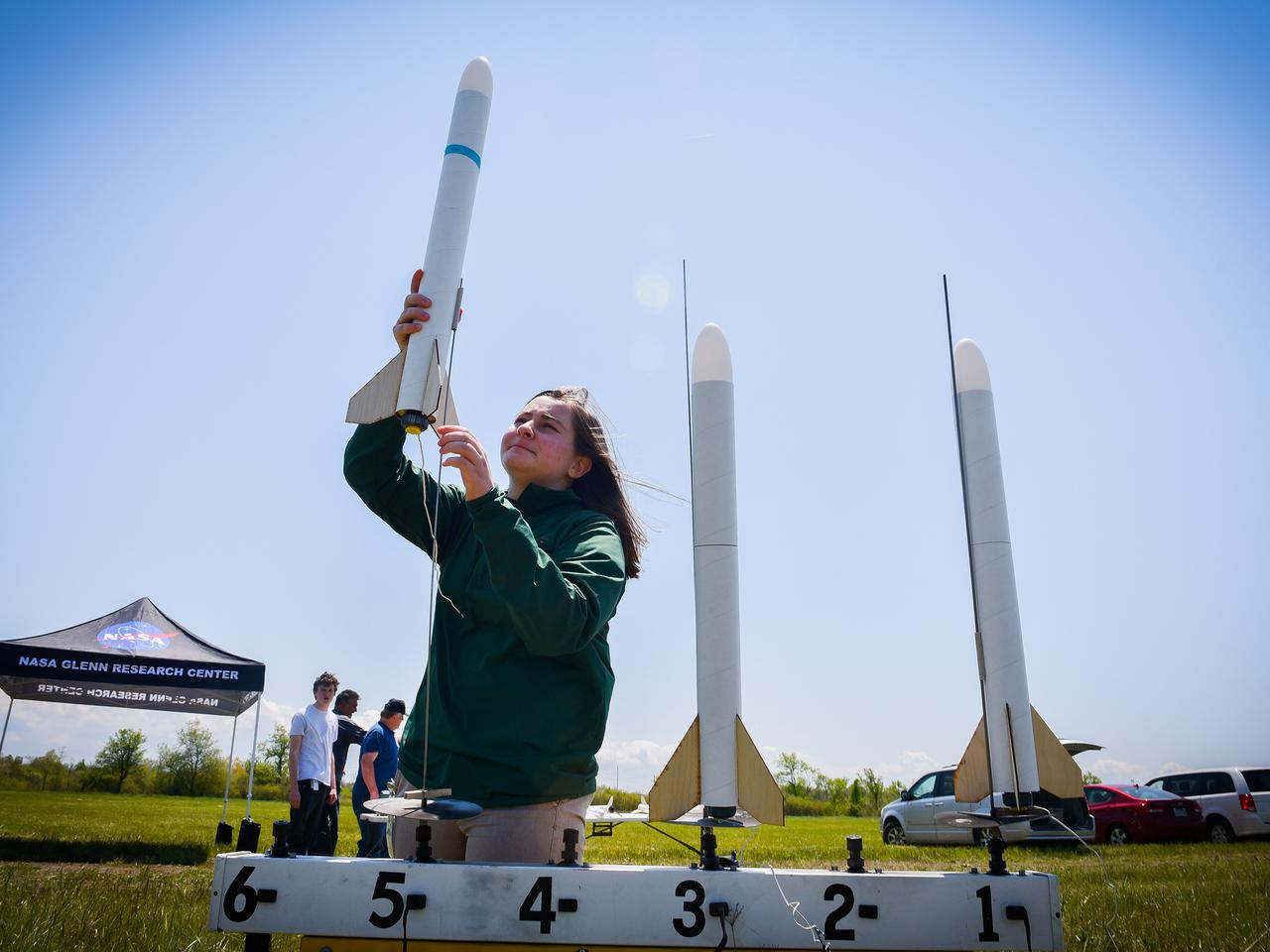
Activities at National Lab Day held at NASA Plum Brook Station in Sandusky, OH.
National Lab Day
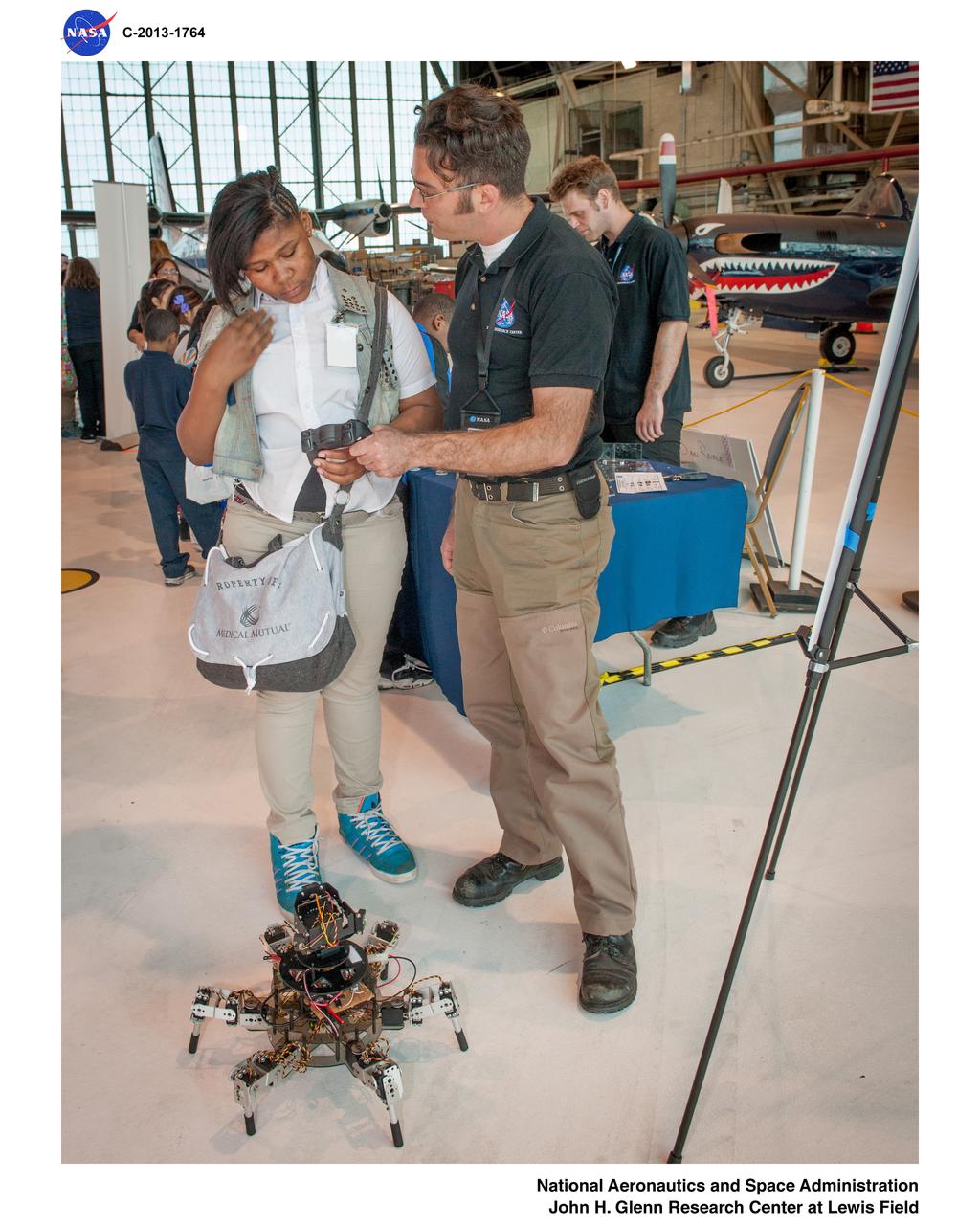
National Lab Day 2013
National Lab Day
National Lab Day
National Lab Day
National Lab Day
National Lab Day
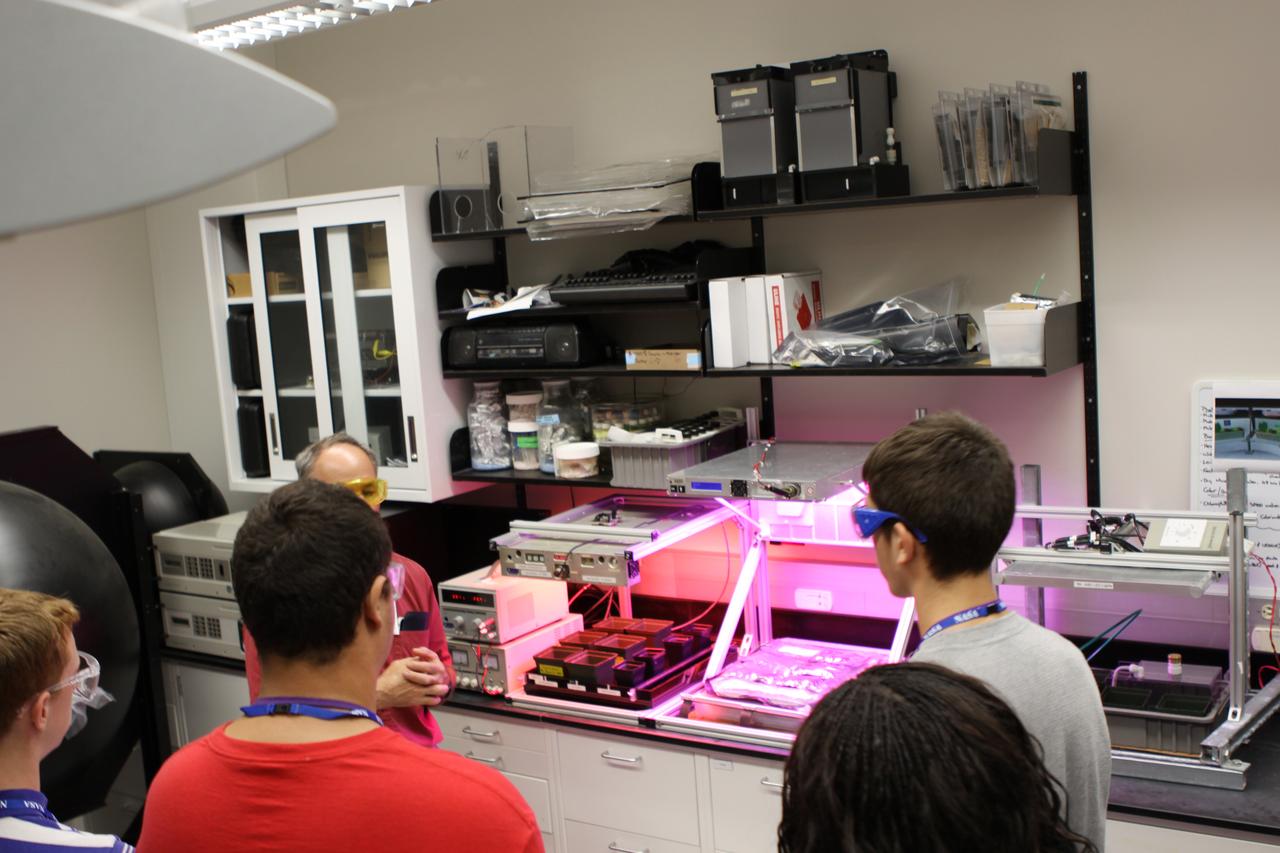
National Lab Day
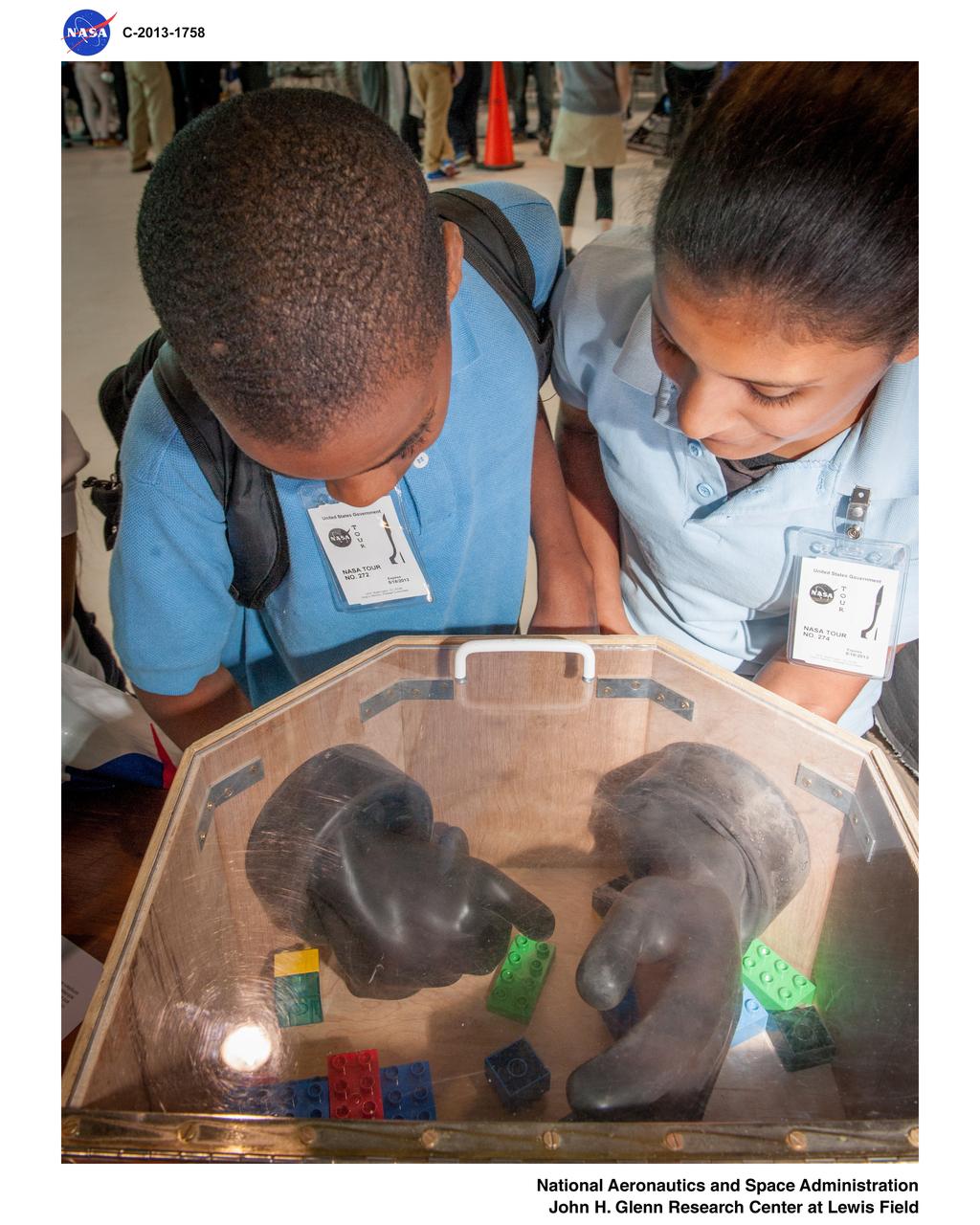
National Lab Day 2013
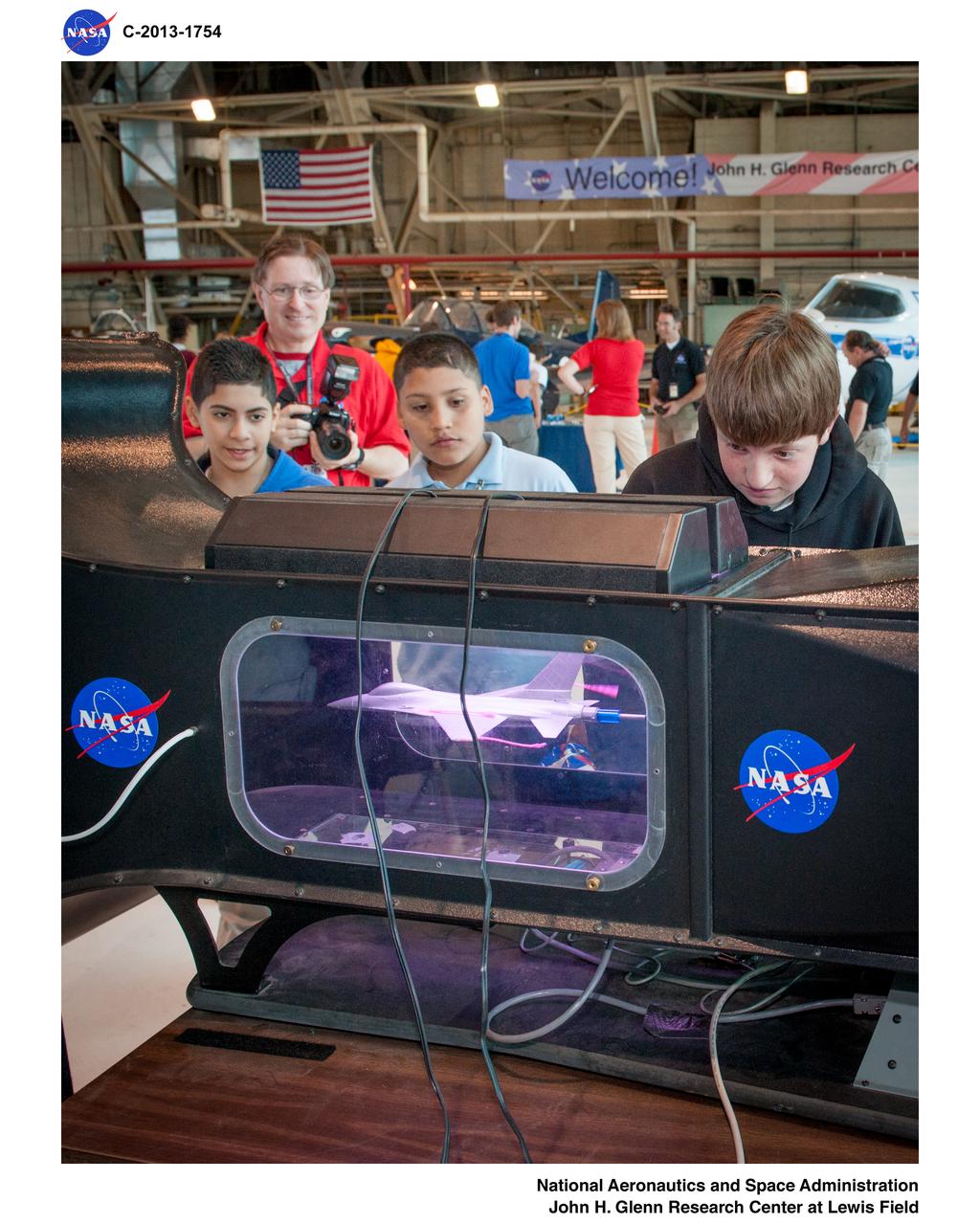
National Lab Day 2013
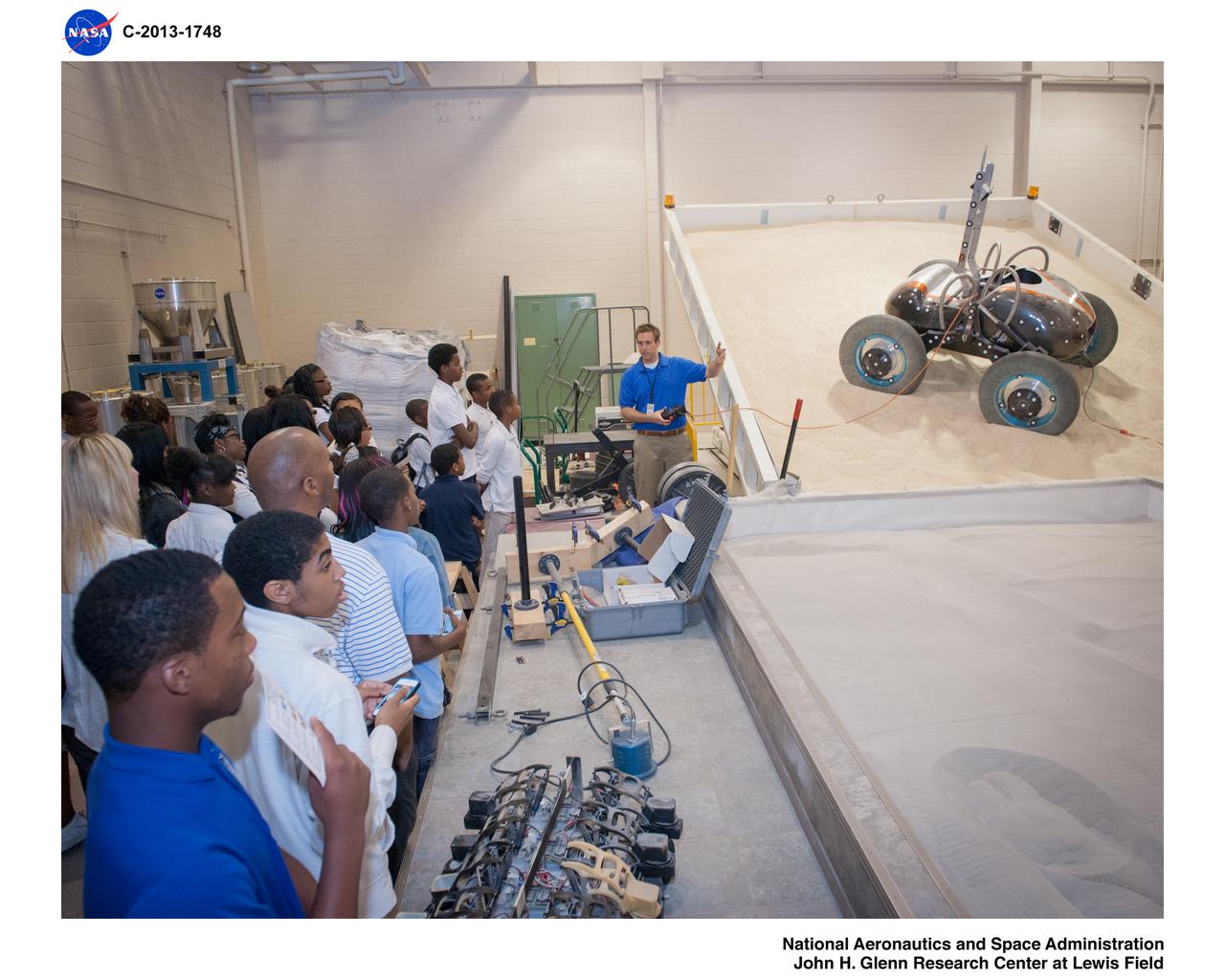
National Lab Day 2013
National Lab Day
National Lab Day
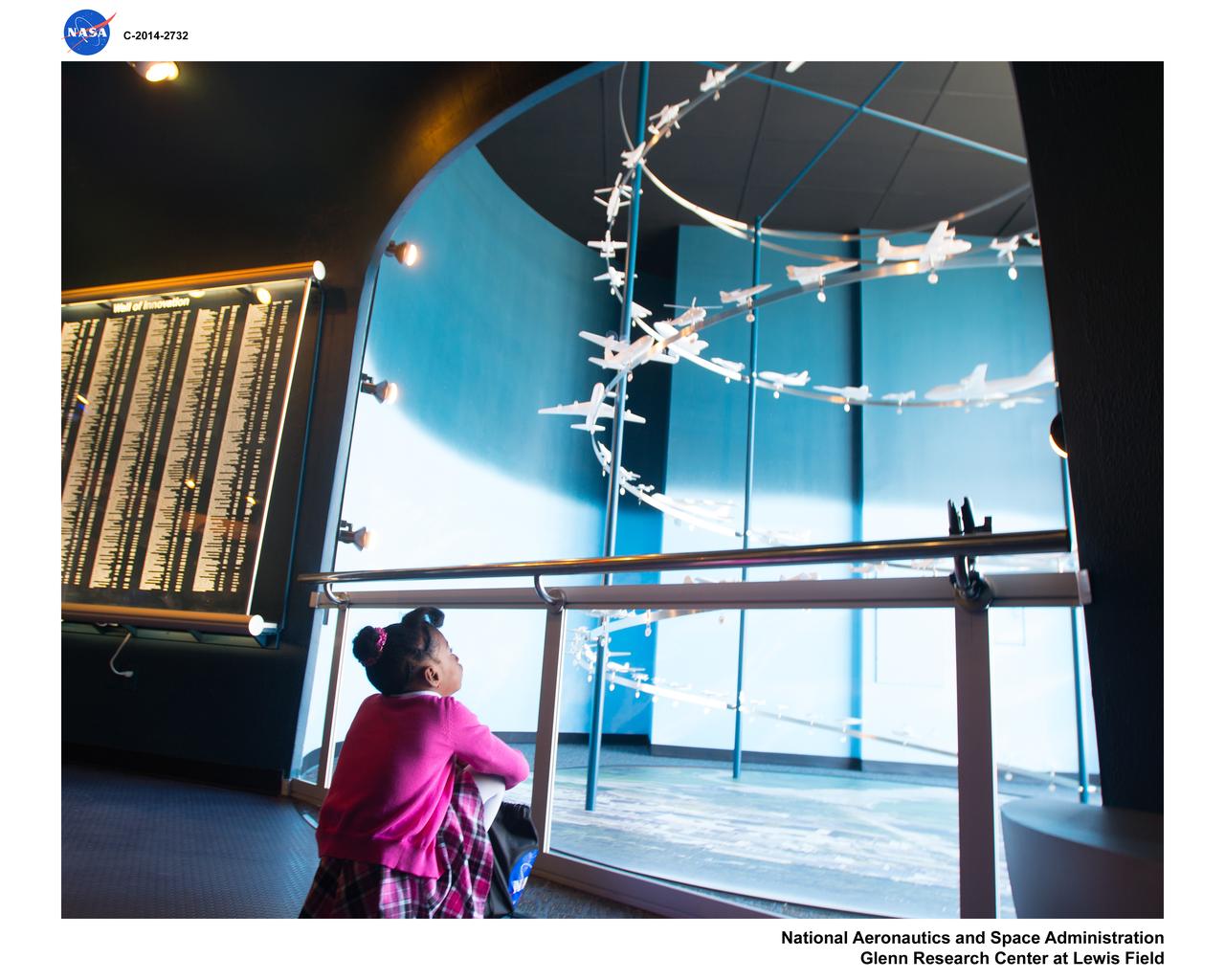
National Lab Day Event - 2014
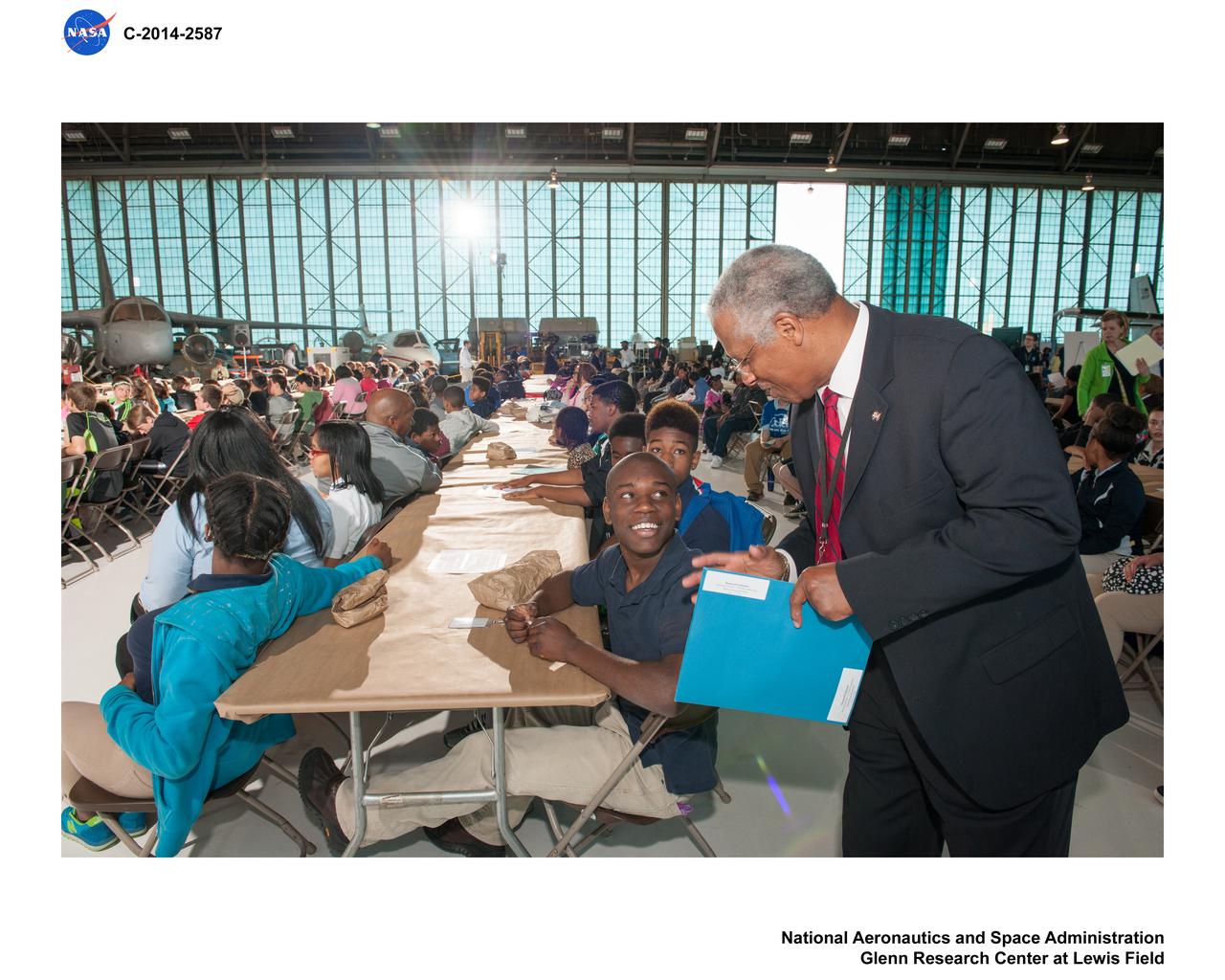
National Lab Day Event - 2014
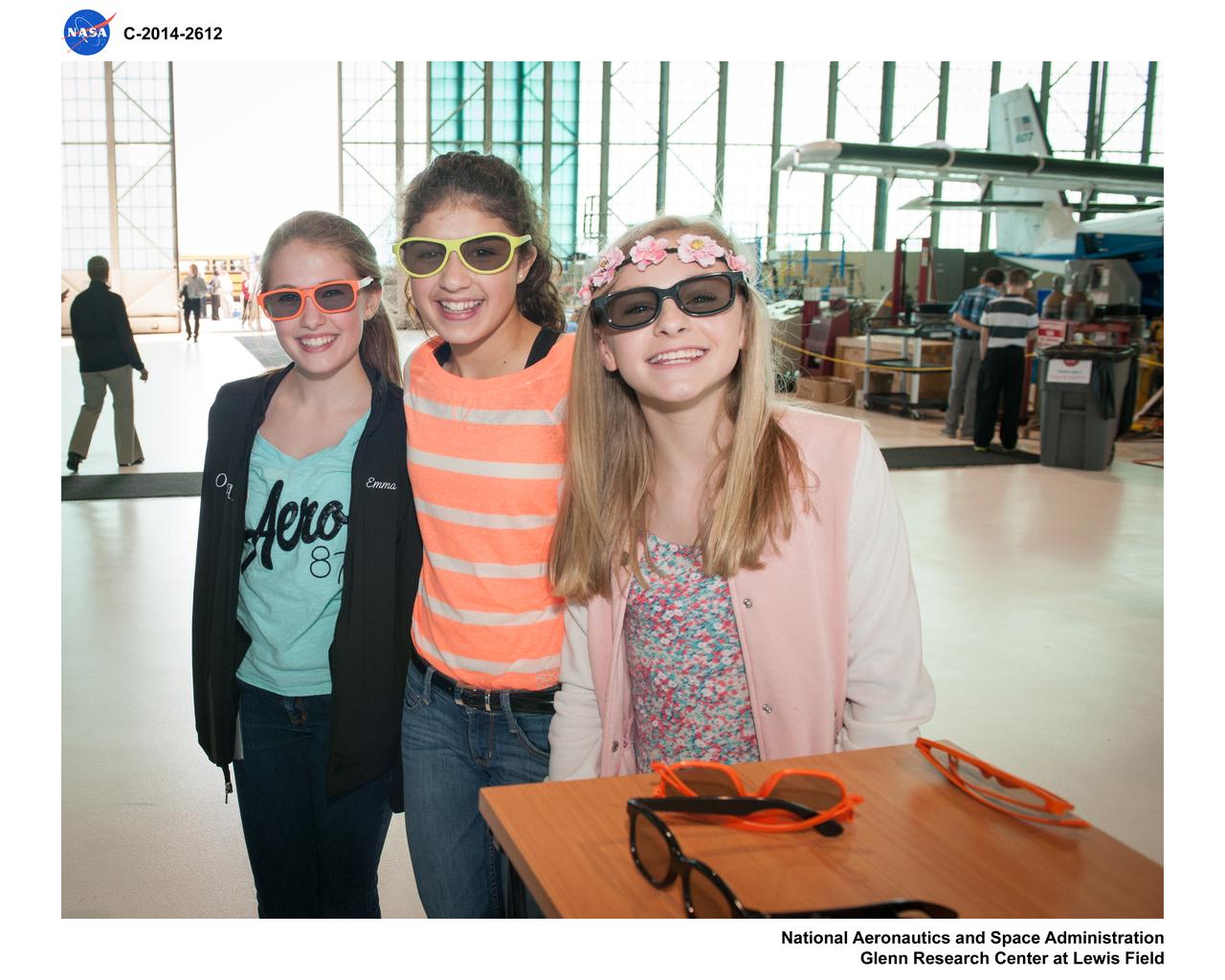
National Lab Day Event - 2014
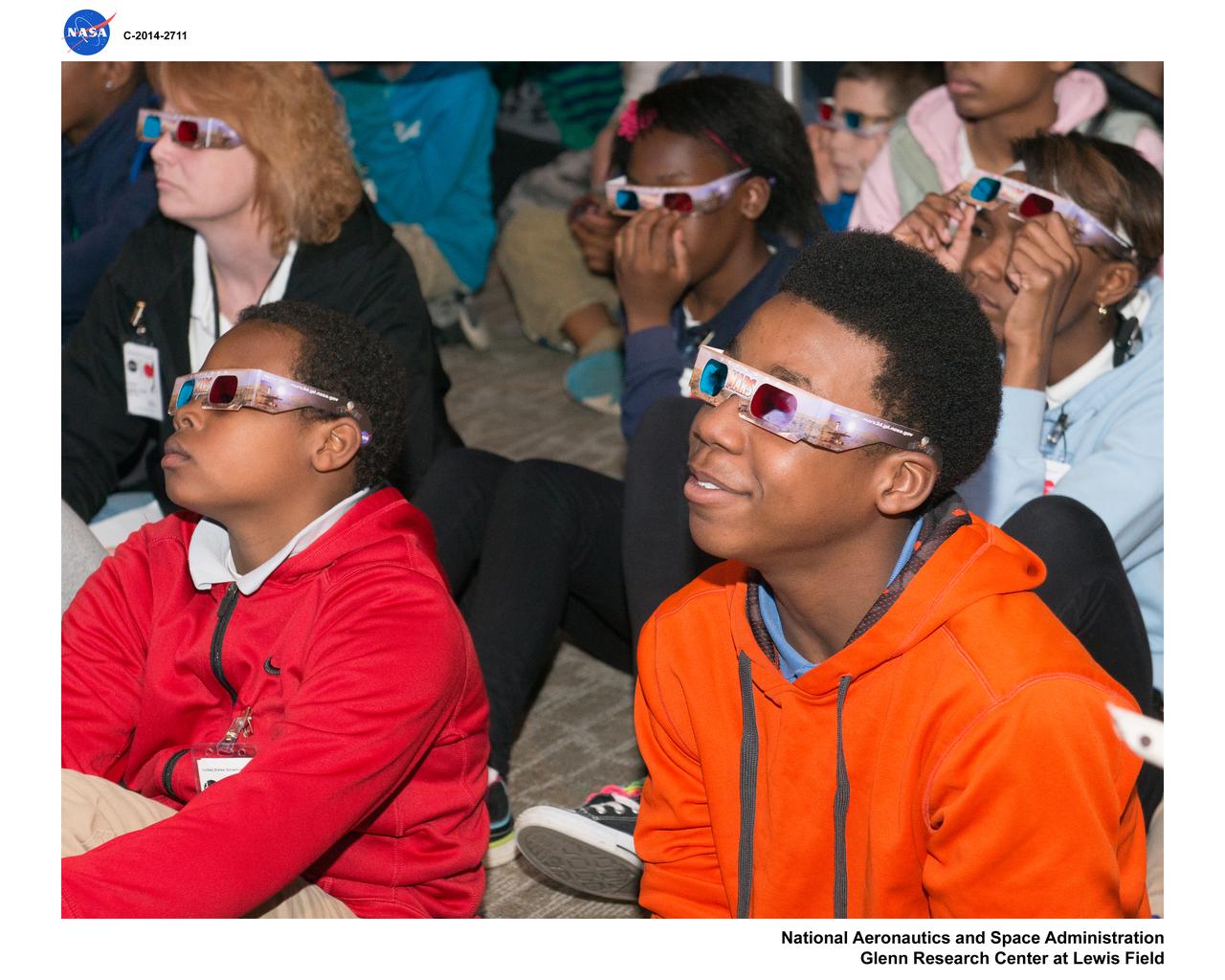
National Lab Day Event - 2014
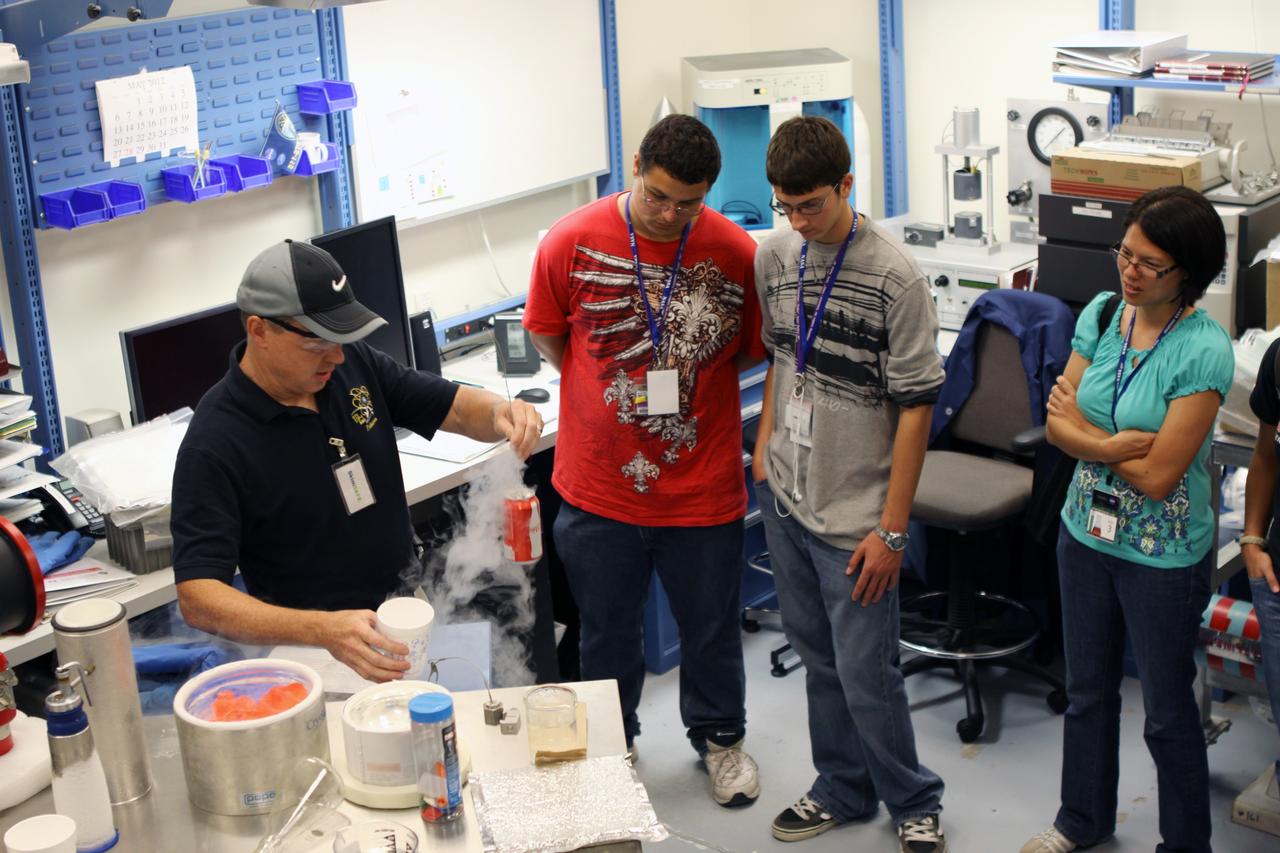
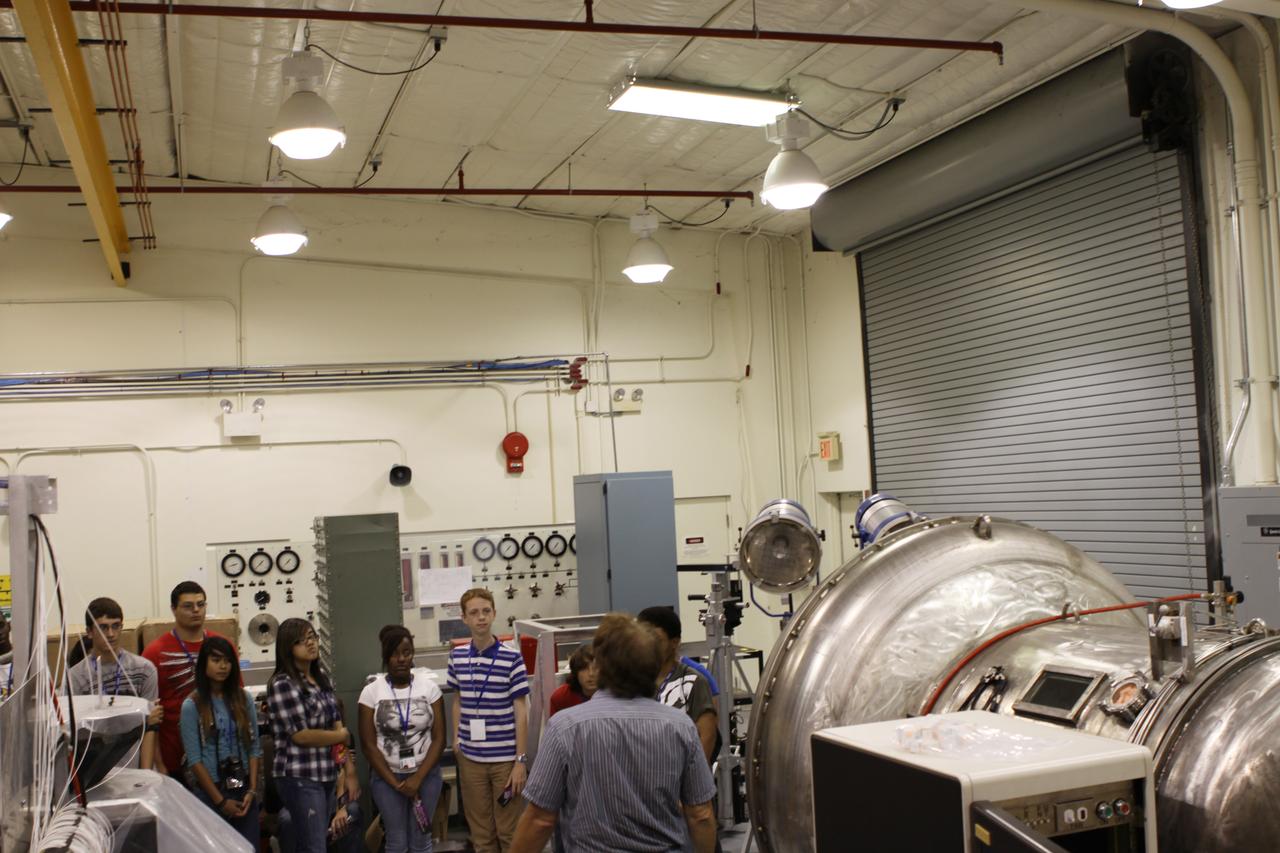
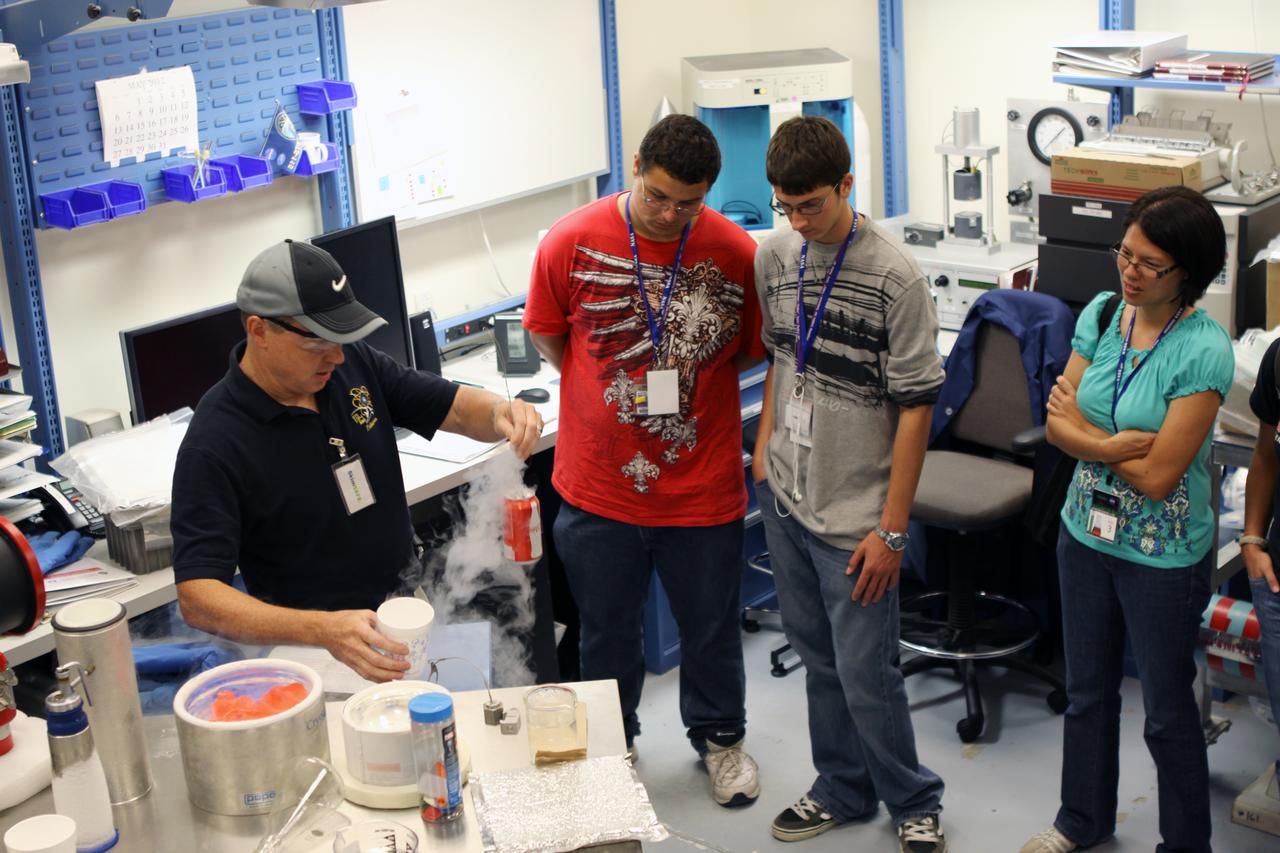
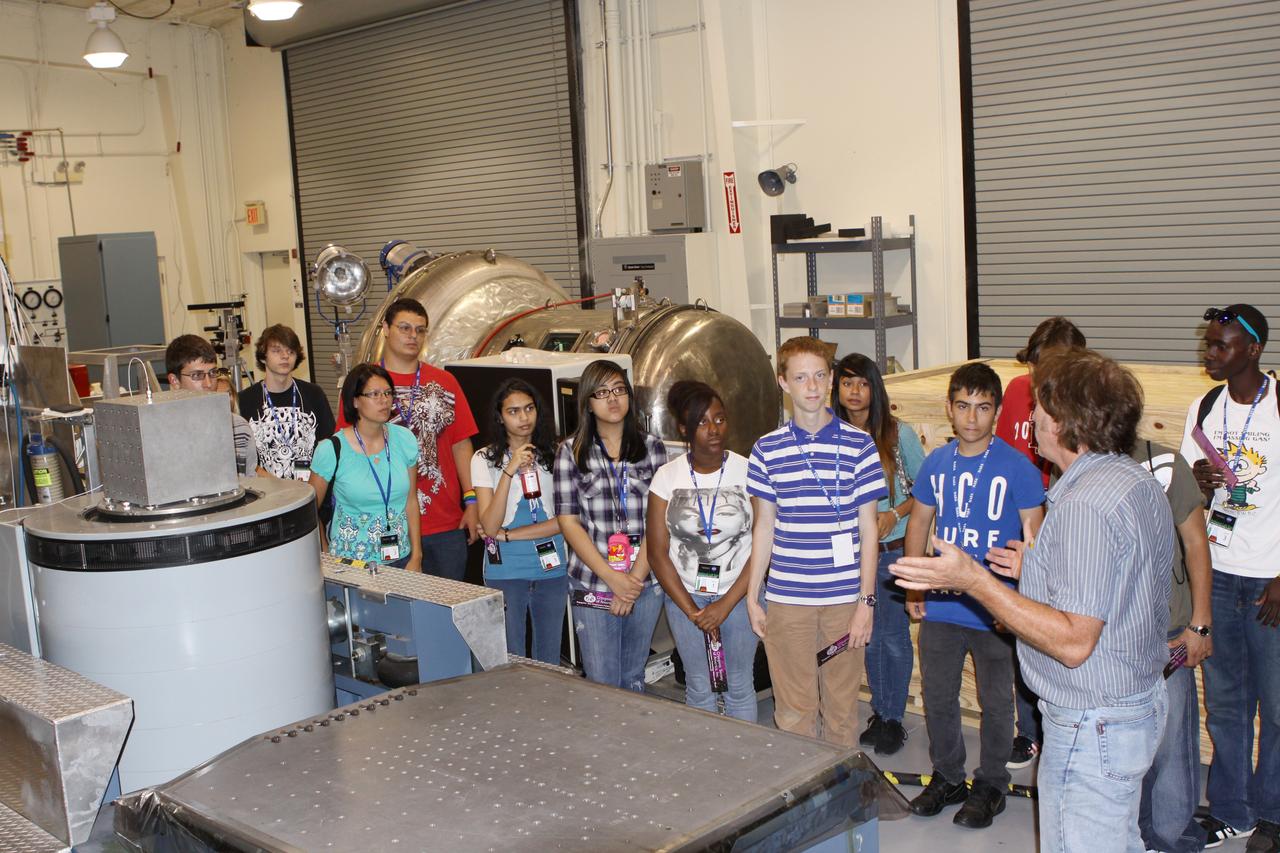
CAPE CANAVERAL, Fla. – Students view a demonstration by Dr. James Fesmire inside the cryogenics lab in the Operations and Checkout Building. The 26 honor students in chemistry and biology and their teachers got a chance to visit a number of high-tech labs at Kennedy Space Center as part of an effort to encourage students in the areas of science, technology, engineering and math. The tenth and eleventh grade students from Terry Parker High School in Jacksonville, Fla., visited a number of vastly different labs during their one-day tour. The group's visit to Kennedy was hosted by the Education Office as part of a nationwide effort by the National Lab Network to help introduce the nation's students to science careers. Photo credit: NASA/Jim Grossmann

Cape Canaveral, Fla. -- Students listen intently as a laboratory technician describes a project that's being researched in Kennedy’s Space Life Sciences Laboratory (SLSL). High-school students from two Orlando, Fla., schools travelled to NASA’s Kennedy Space Center in Florida to participate in National Lab Day activities. During the event, about 80 students, toured various facilities and engaged in educational hands-on activities. National Lab Day is a partnership between federal agencies, foundations, professional societies and organizations devoted to promoting science, technology, engineering and math, or STEM, hands-on discovery-based laboratory experiences for students. Photo Credit: NASA/Frankie Martin
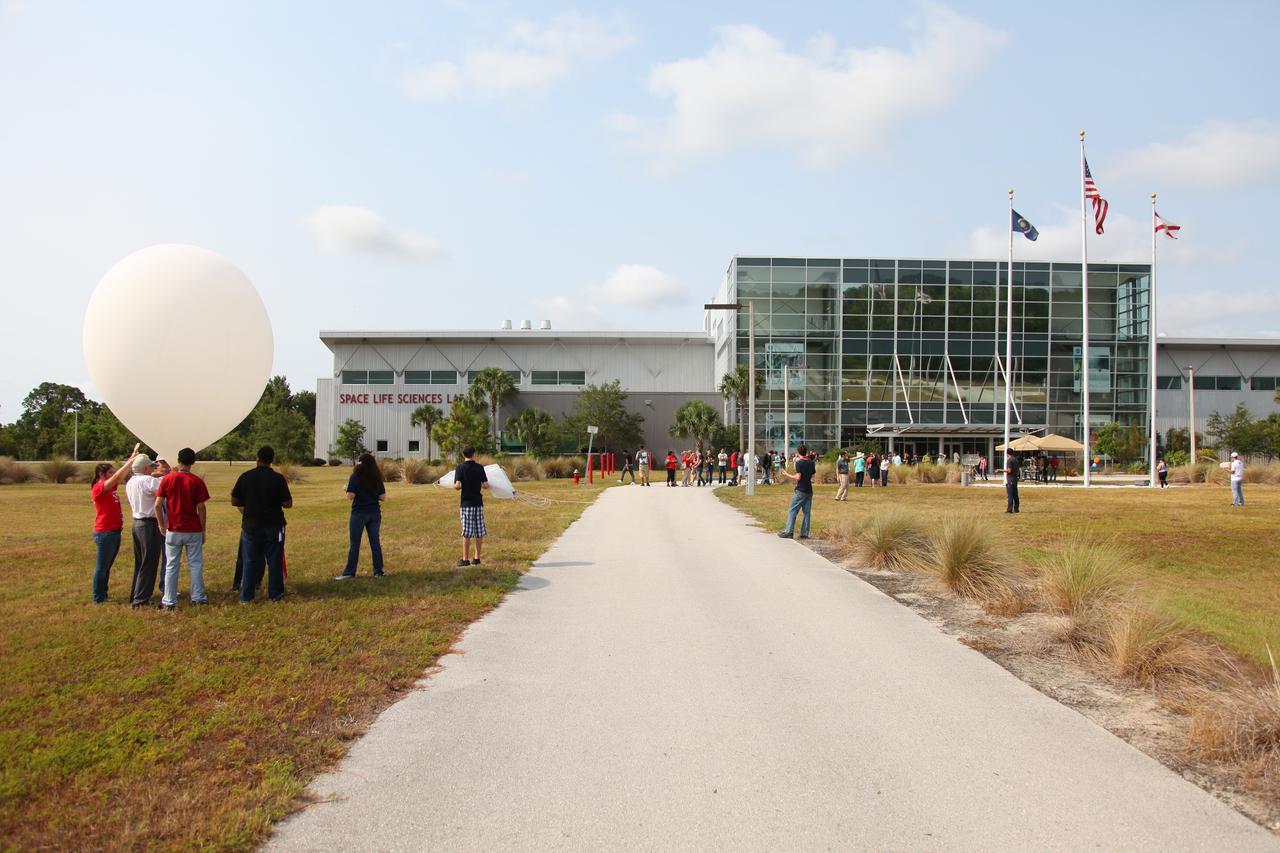
Cape Canaveral, Fla. -- Students participate in a high-altitude balloon experiment that's being conducted on the grounds of Kennedy’s Space Life Sciences Laboratory (SLSL). High-school students from two Orlando, Fla., schools travelled to NASA’s Kennedy Space Center in Florida to participate in National Lab Day activities. During the event, about 80 students, toured various facilities and engaged in educational hands-on activities. National Lab Day is a partnership between federal agencies, foundations, professional societies and organizations devoted to promoting science, technology, engineering and math, or STEM, hands-on discovery-based laboratory experiences for students. Photo Credit: NASA/Frankie Martin
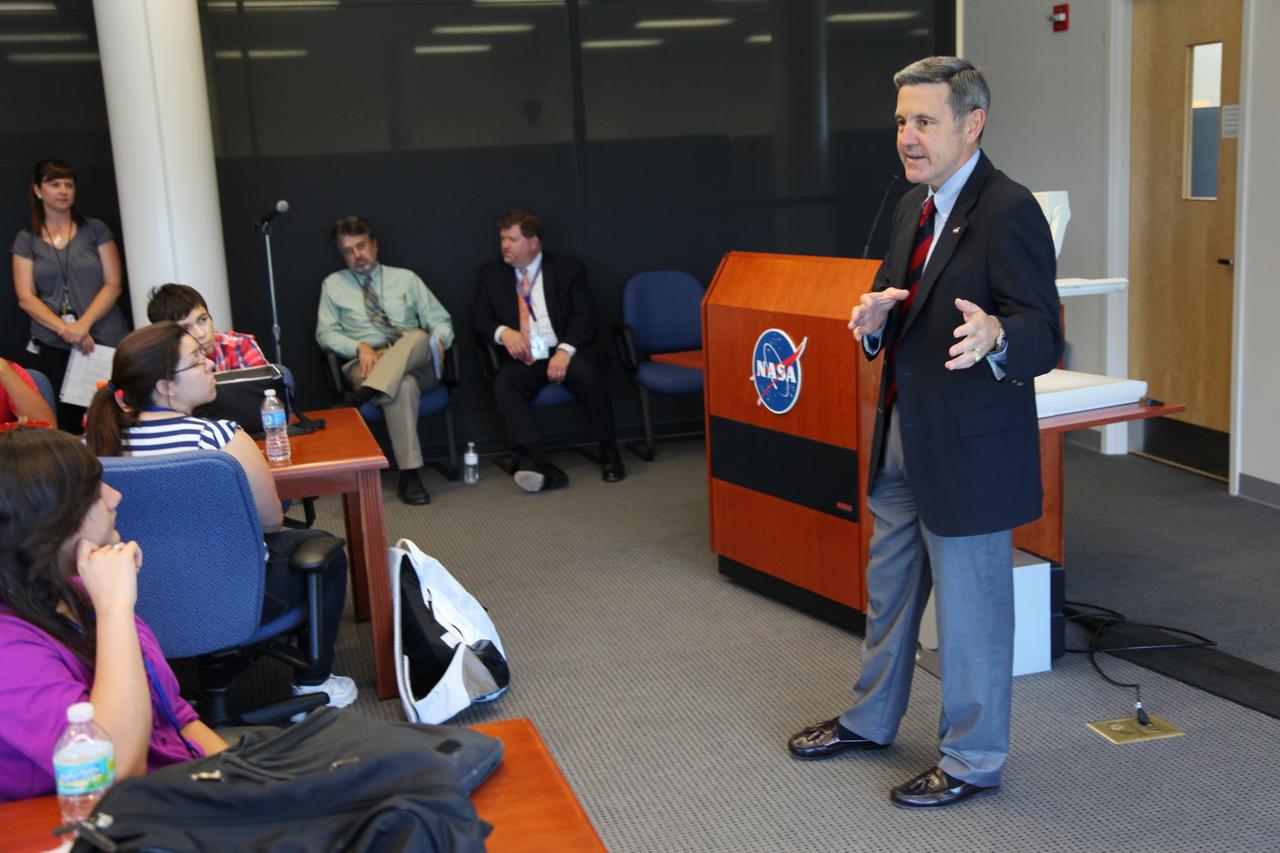
Cape Canaveral, Fla. -- Kennedy Center Director Bob Cabana speaks to the students after they participated in hands-on projects in Kennedy’s Space Life Sciences Laboratory (SLSL). High-school students from two Orlando, Fla., schools travelled to NASA’s Kennedy Space Center in Florida to participate in National Lab Day activities. During the event, about 80 students, toured various facilities and engaged in educational hands-on activities. National Lab Day is a partnership between federal agencies, foundations, professional societies and organizations devoted to promoting science, technology, engineering and math, or STEM, hands-on discovery-based laboratory experiences for students. Photo Credit: NASA/Frankie Martin
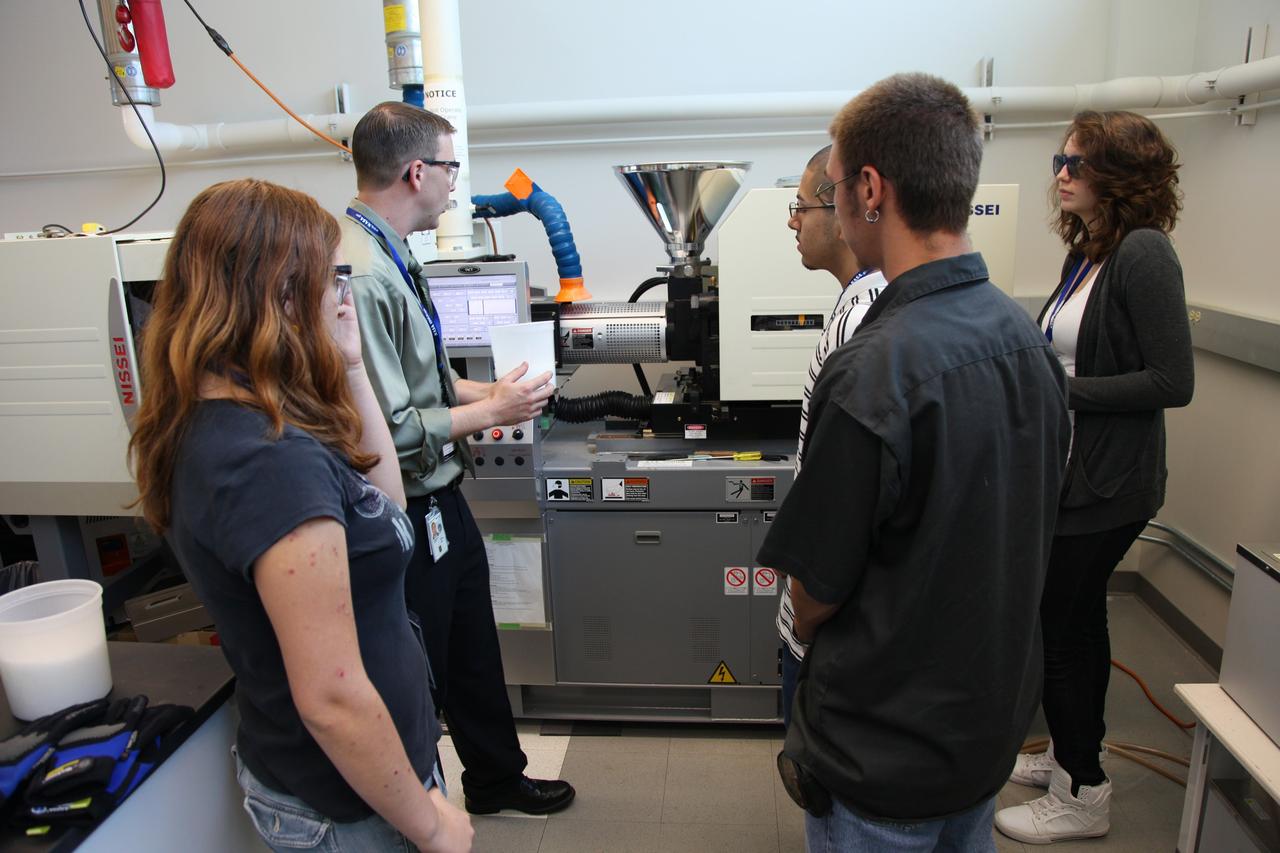
Cape Canaveral, Fla. -- Students listen intently as a laboratory technician describes the experiment being conducted in Kennedy’s Space Life Sciences Laboratory (SLSL). High-school students from two Orlando, Fla., schools travelled to NASA’s Kennedy Space Center in Florida to participate in National Lab Day activities. During the event, about 80 students, toured various facilities and engaged in educational hands-on activities. National Lab Day is a partnership between federal agencies, foundations, professional societies and organizations devoted to promoting science, technology, engineering and math, or STEM, hands-on discovery-based laboratory experiences for students. Photo Credit: NASA/Frankie Martin
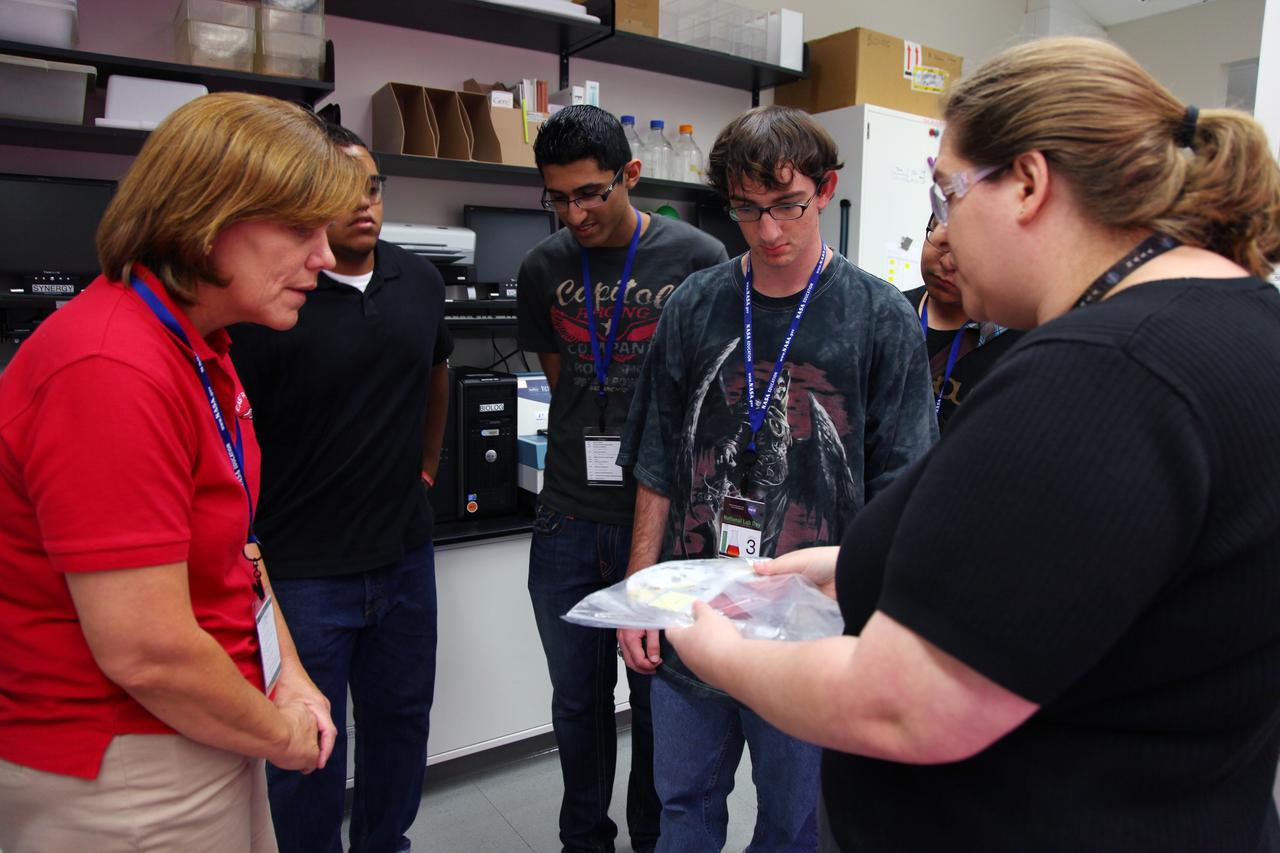
Cape Canaveral, Fla. -- Students listen intently as a laboratory technician describes a project that's being researched in Kennedy’s Space Life Sciences Laboratory (SLSL). High-school students from two Orlando, Fla., schools travelled to NASA’s Kennedy Space Center in Florida to participate in National Lab Day activities. During the event, about 80 students, toured various facilities and engaged in educational hands-on activities. National Lab Day is a partnership between federal agencies, foundations, professional societies and organizations devoted to promoting science, technology, engineering and math, or STEM, hands-on discovery-based laboratory experiences for students. Photo Credit: NASA/Frankie Martin

Cape Canaveral, Fla. -- Students participate in a high-altitude balloon experiment that's being conducted on the grounds of Kennedy’s Space Life Sciences Laboratory (SLSL). High-school students from two Orlando, Fla., schools travelled to NASA’s Kennedy Space Center in Florida to participate in National Lab Day activities. During the event, about 80 students, toured various facilities and engaged in educational hands-on activities. National Lab Day is a partnership between federal agencies, foundations, professional societies and organizations devoted to promoting science, technology, engineering and math, or STEM, hands-on discovery-based laboratory experiences for students. Photo Credit: NASA/Frankie Martin
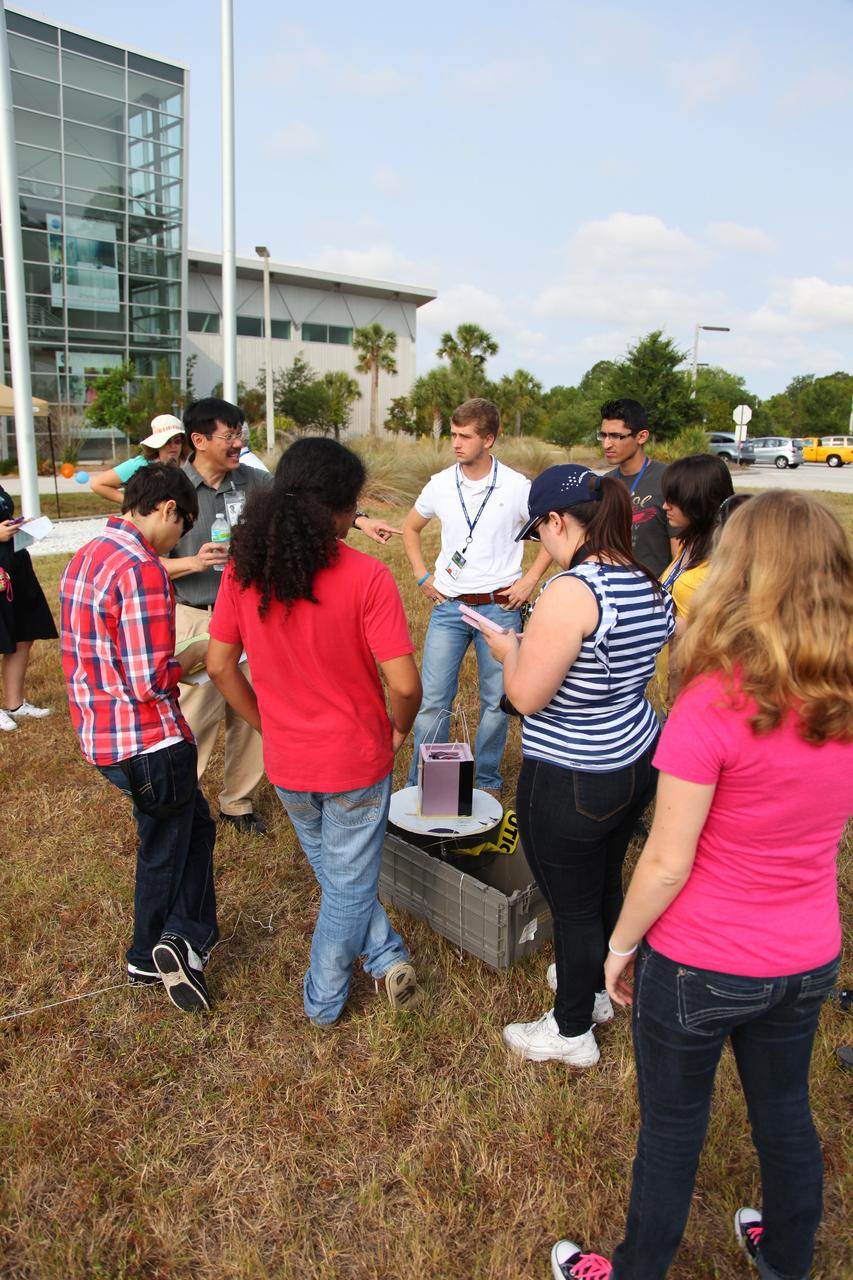
Cape Canaveral, Fla. -- Students listen intently as a laboratory technician describes the high-altitude balloon experiment that's being conducted on the grounds of Kennedy’s Space Life Sciences Laboratory (SLSL). High-school students from two Orlando, Fla., schools travelled to NASA’s Kennedy Space Center in Florida to participate in National Lab Day activities. During the event, about 80 students, toured various facilities and engaged in educational hands-on activities. National Lab Day is a partnership between federal agencies, foundations, professional societies and organizations devoted to promoting science, technology, engineering and math, or STEM, hands-on discovery-based laboratory experiences for students. Photo Credit: NASA/Frankie Martin
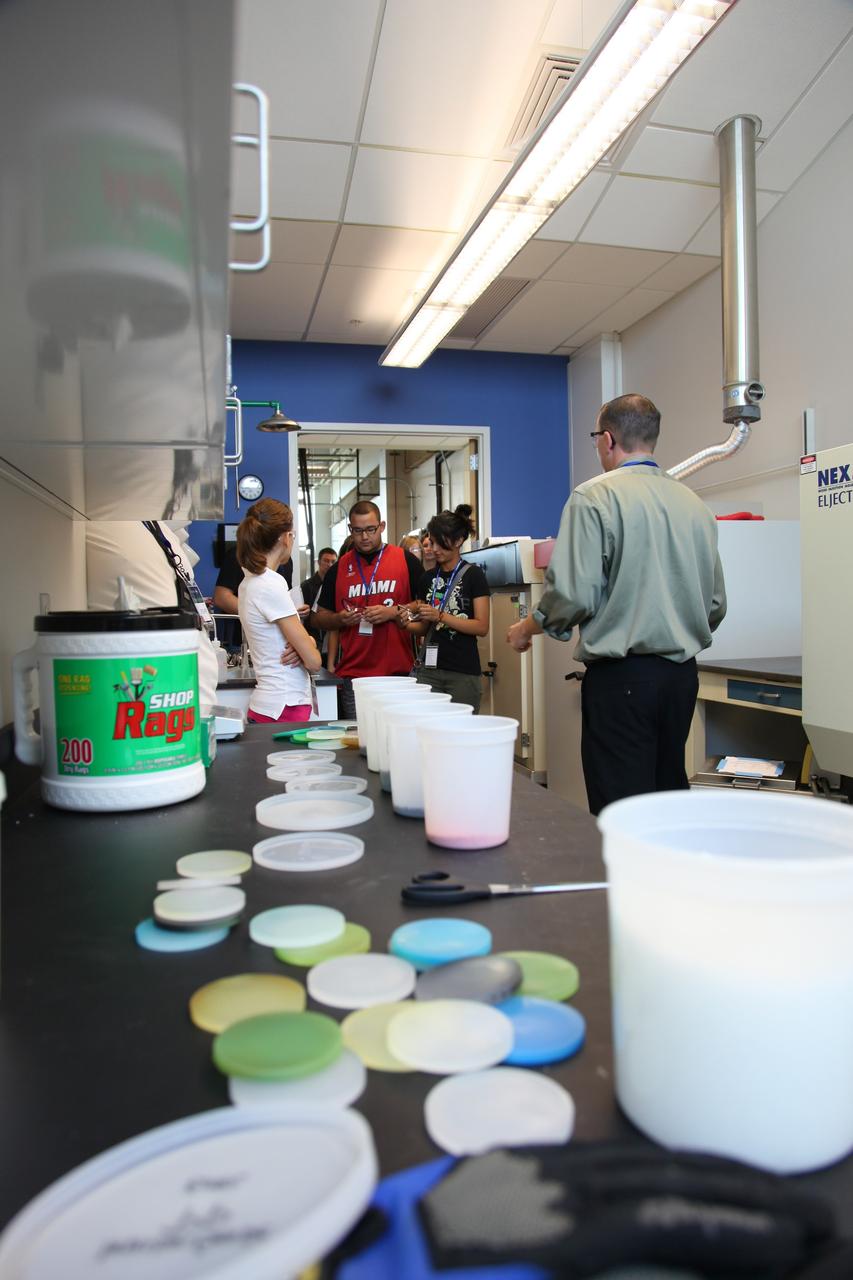
Cape Canaveral, Fla. -- Students participate in a hands-on activity as a laboratory technician looks on in Kennedy’s Space Life Sciences Laboratory (SLSL). High-school students from two Orlando, Fla., schools travelled to NASA’s Kennedy Space Center in Florida to participate in National Lab Day activities. During the event, about 80 students, toured various facilities and engaged in educational hands-on activities. National Lab Day is a partnership between federal agencies, foundations, professional societies and organizations devoted to promoting science, technology, engineering and math, or STEM, hands-on discovery-based laboratory experiences for students. Photo Credit: NASA/Frankie Martin
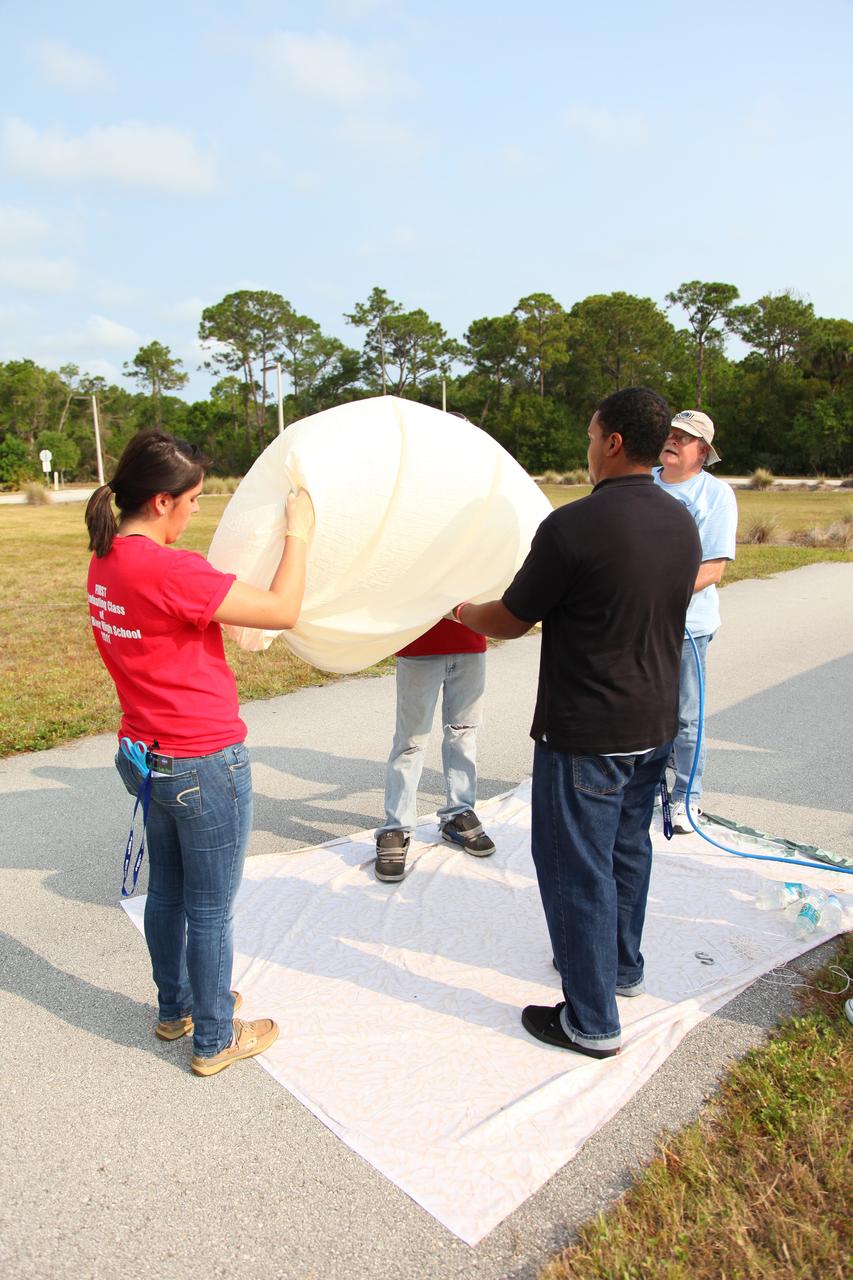
Cape Canaveral, Fla. -- Students participate in a high-altitude balloon experiment that's being conducted on the grounds of Kennedy’s Space Life Sciences Laboratory (SLSL). High-school students from two Orlando, Fla., schools travelled to NASA’s Kennedy Space Center in Florida to participate in National Lab Day activities. During the event, about 80 students, toured various facilities and engaged in educational hands-on activities. National Lab Day is a partnership between federal agencies, foundations, professional societies and organizations devoted to promoting science, technology, engineering and math, or STEM, hands-on discovery-based laboratory experiences for students. Photo Credit: NASA/Frankie Martin
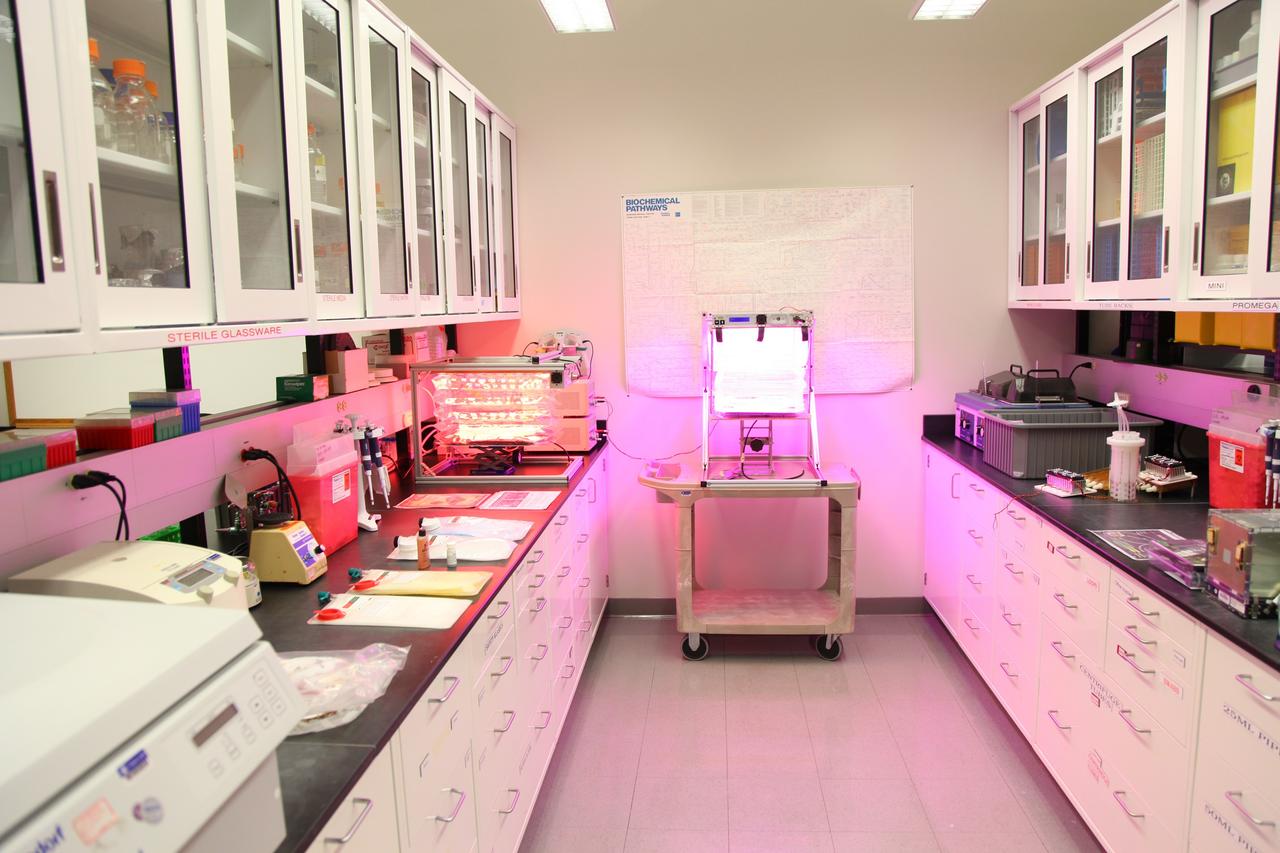
Cape Canaveral, Fla. -- A research laboratory is prepared for students to perform hands-on activities in Kennedy’s Space Life Sciences Laboratory (SLSL). High-school students from two Orlando, Fla., schools travelled to NASA’s Kennedy Space Center in Florida to participate in National Lab Day activities. During the event, about 80 students, toured various facilities and engaged in educational hands-on activities. National Lab Day is a partnership between federal agencies, foundations, professional societies and organizations devoted to promoting science, technology, engineering and math, or STEM, hands-on discovery-based laboratory experiences for students. Photo Credit: NASA/Frankie Martin
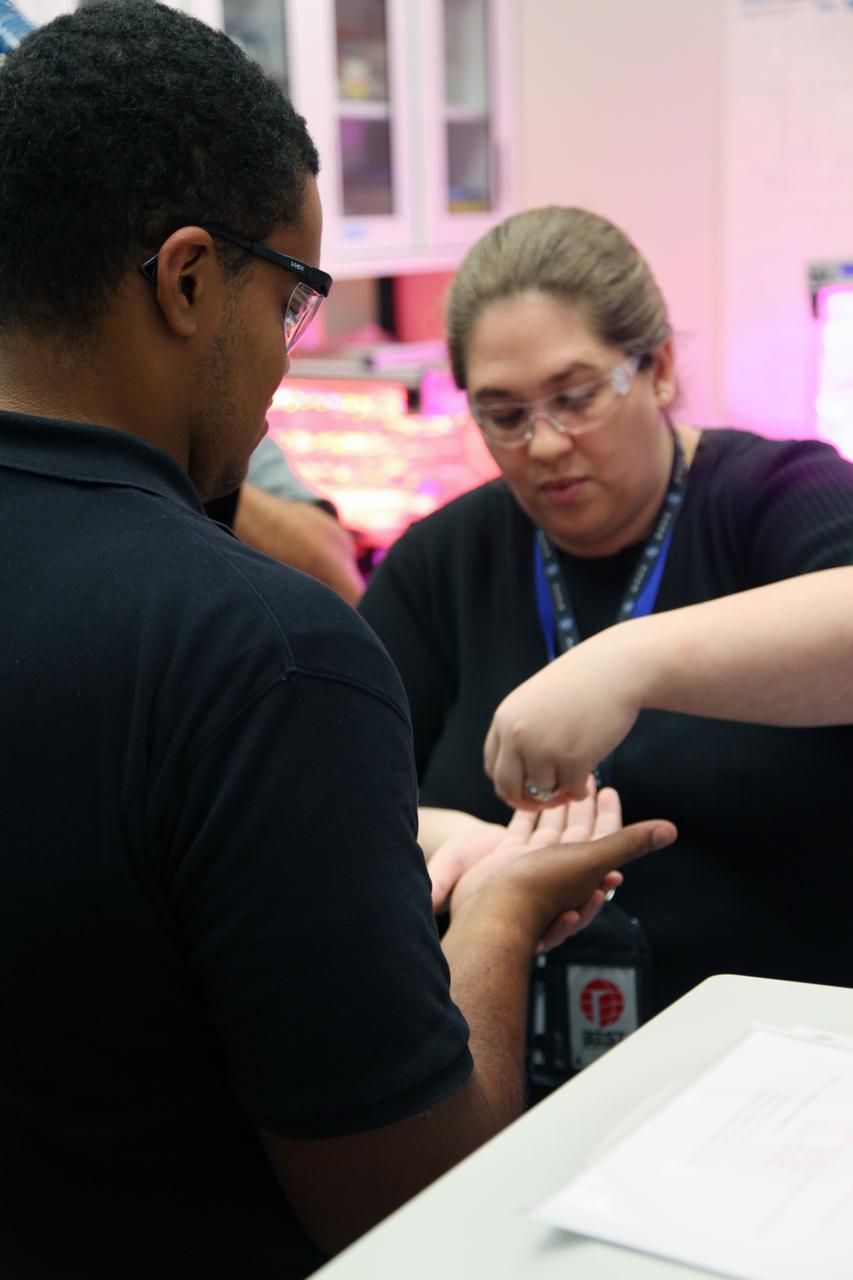
Cape Canaveral, Fla. -- A student participates in a hands-on activity as a laboratory technician assists in Kennedy’s Space Life Sciences Laboratory (SLSL). High-school students from two Orlando, Fla., schools travelled to NASA’s Kennedy Space Center in Florida to participate in National Lab Day activities. During the event, about 80 students, toured various facilities and engaged in educational hands-on activities. National Lab Day is a partnership between federal agencies, foundations, professional societies and organizations devoted to promoting science, technology, engineering and math, or STEM, hands-on discovery-based laboratory experiences for students. Photo Credit: NASA/Frankie Martin
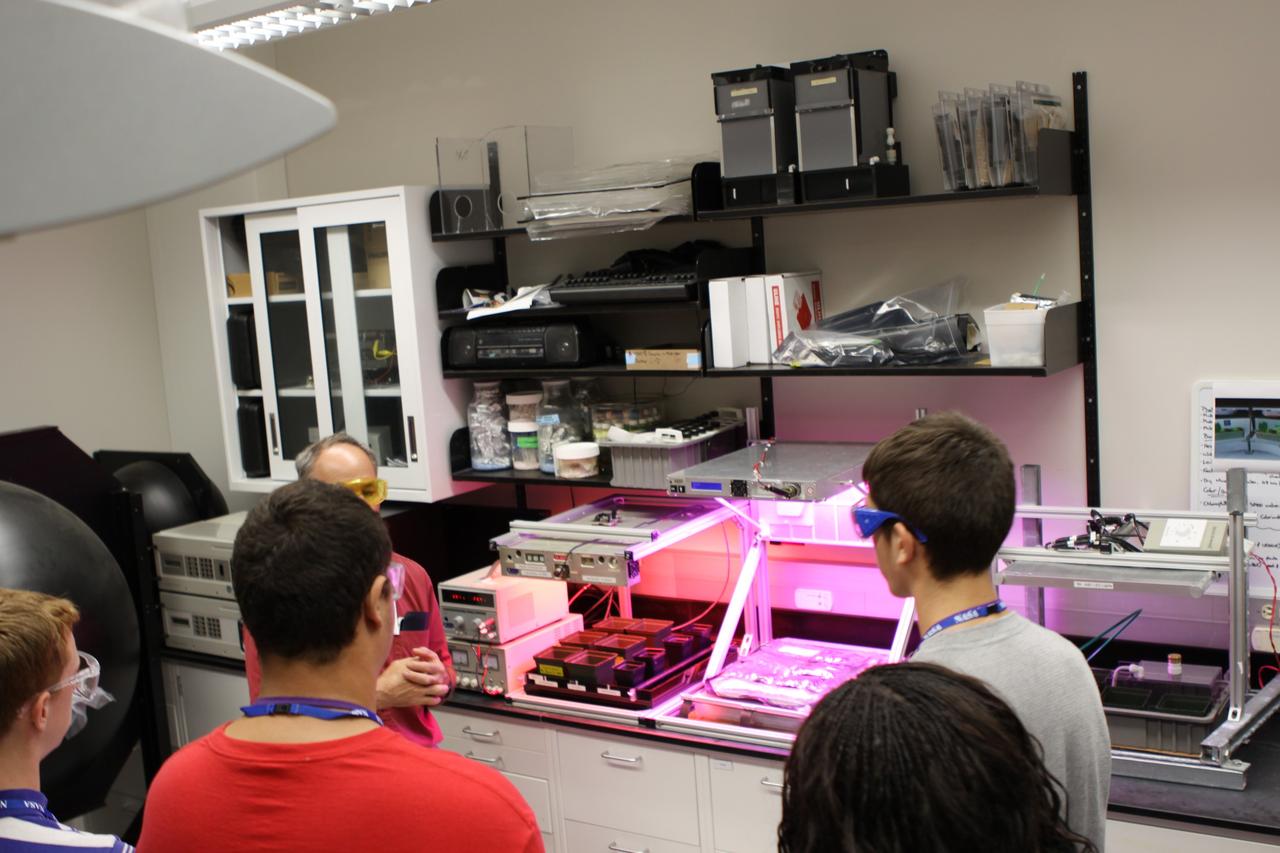
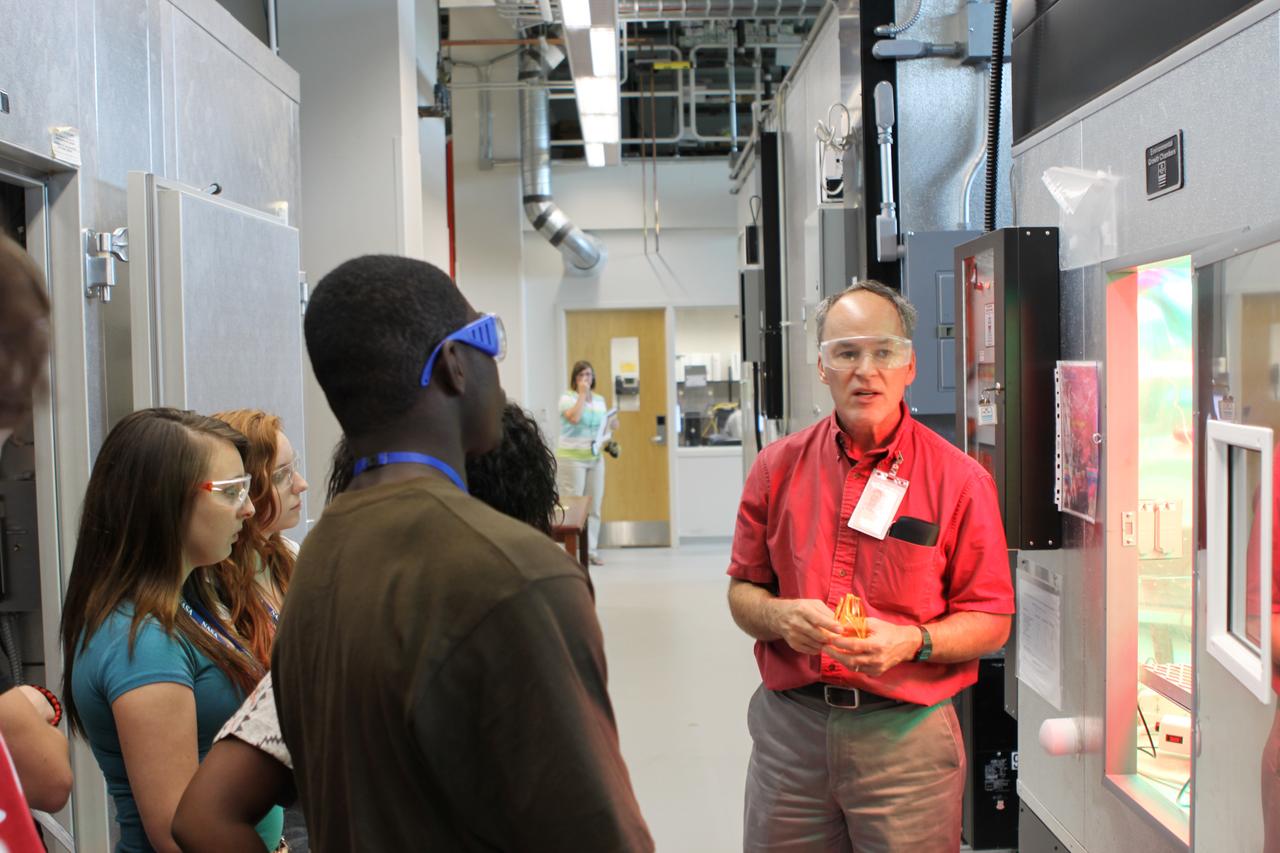
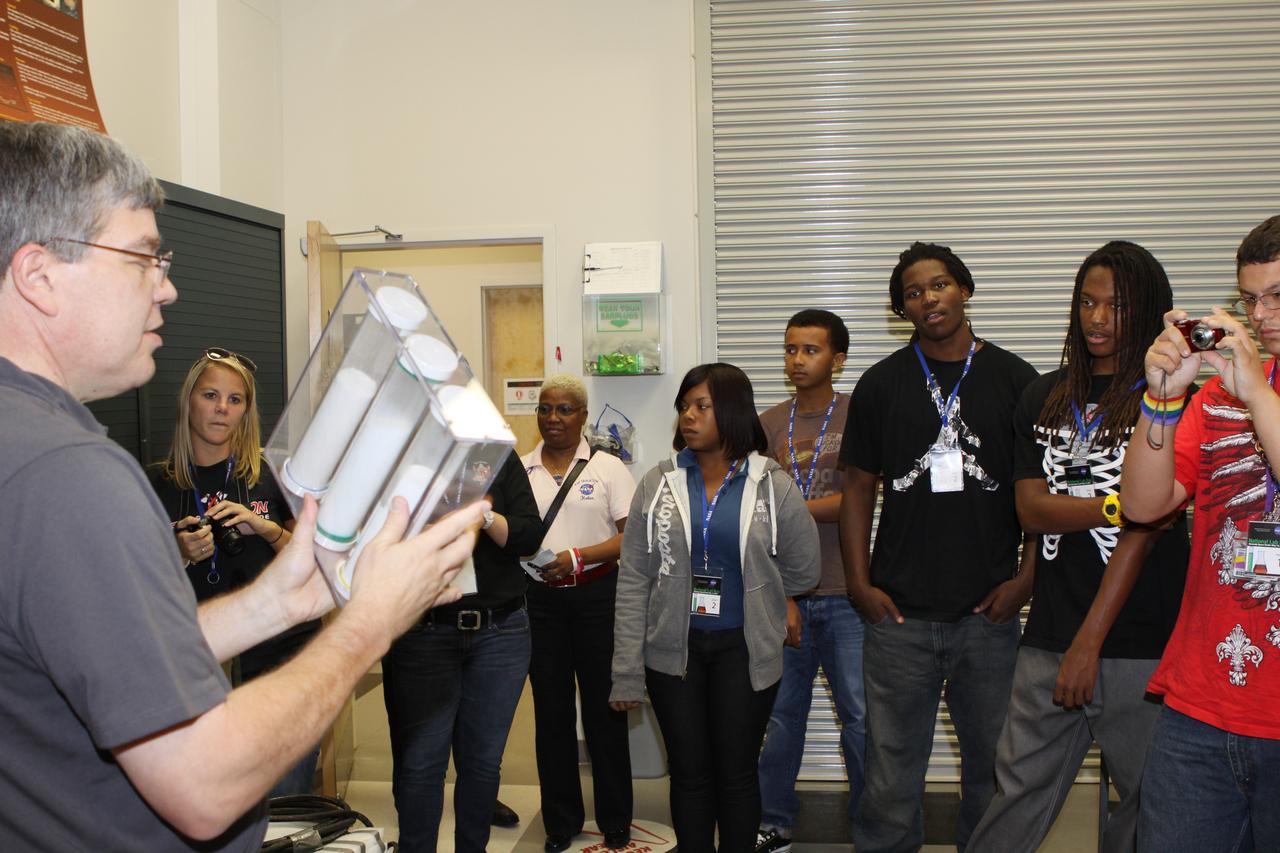
CAPE CANAVERAL, Fla. – Dr. Ray Wheeler explains a system for growing salad crops in space to students in the Life Support and Habitation Systems Lab at the Space Life Sciences Lab facility. The 26 honor students in chemistry and biology and their teachers got a chance to visit a number of high-tech labs at Kennedy Space Center as part of an effort to encourage students in the areas of science, technology, engineering and math. The tenth and eleventh grade students from Terry Parker High School in Jacksonville, Fla., visited a number of vastly different labs during their one-day tour. The group's visit to Kennedy was hosted by the Education Office as part of a nationwide effort by the National Lab Network to help introduce the nation's students to science careers. Photo credit: NASA/Jim Grossmann
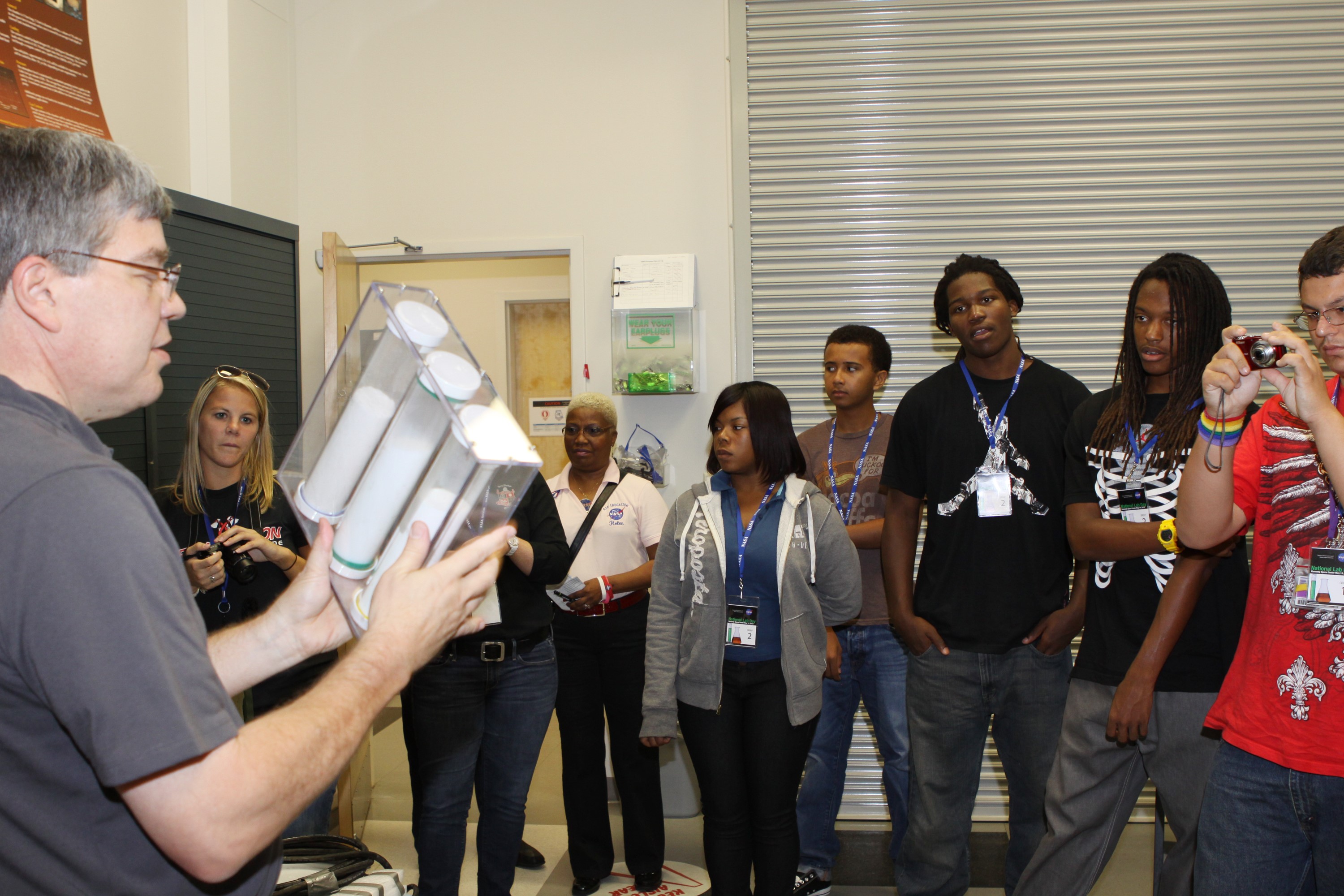
CAPE CANAVERAL, Fla. – Dr. Phil Metzger demonstrates an experiment to study the physics of granular materials to students in the Granular Physics and Regolith Operations Lab at the Space Life Sciences Lab facility. The 26 honor students in chemistry and biology and their teachers got a chance to visit a number of high-tech labs at Kennedy Space Center as part of an effort to encourage students in the areas of science, technology, engineering and math. The tenth and eleventh grade students from Terry Parker High School in Jacksonville, Fla., visited a number of vastly different labs during their one-day tour. The group's visit to Kennedy was hosted by the Education Office as part of a nationwide effort by the National Lab Network to help introduce the nation's students to science careers. Photo credit: NASA/Jim Grossmann
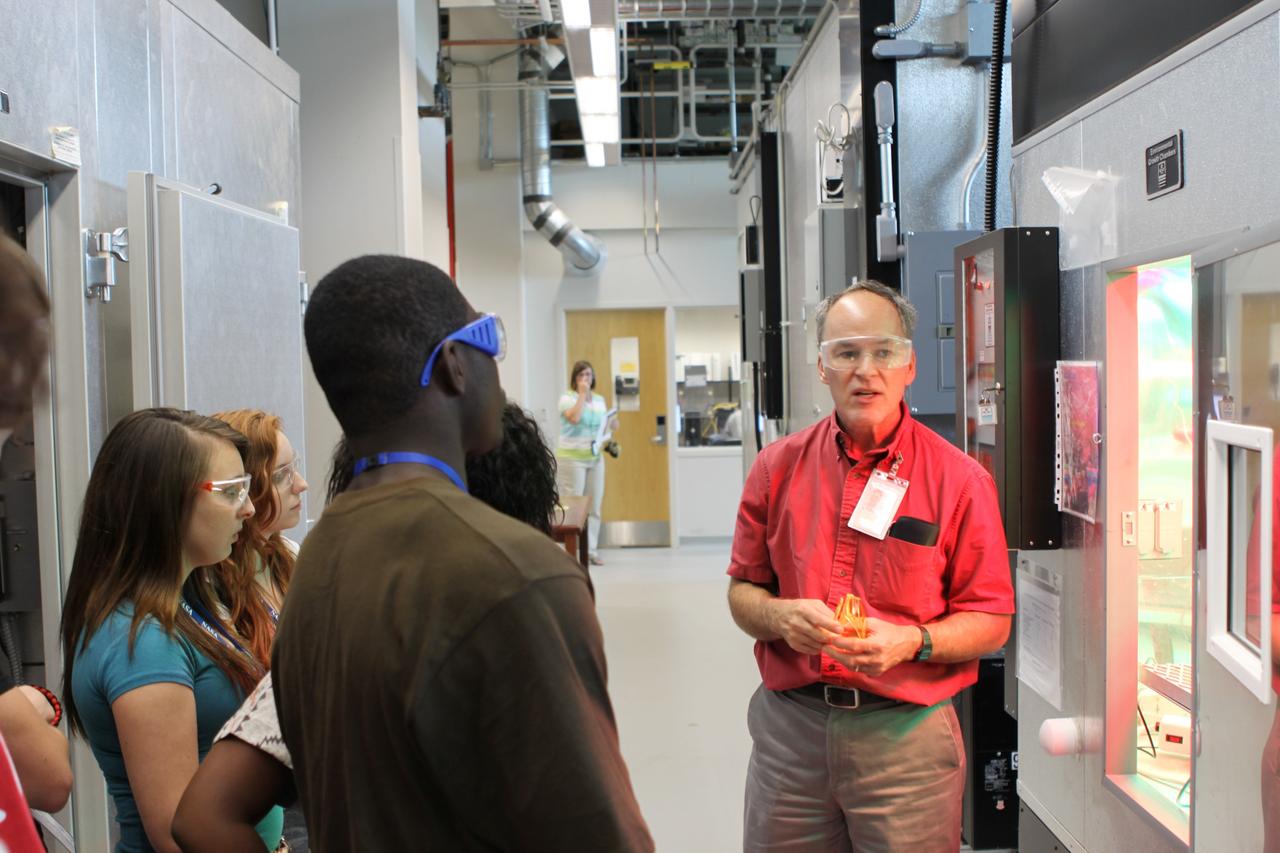
CAPE CANAVERAL, Fla. – Dr. Ray Wheeler explains a plant growth chamber to students in the Life Support and Habitation Systems Lab at the Space Life Sciences Lab facility. The 26 honor students in chemistry and biology and their teachers got a chance to visit a number of high-tech labs at Kennedy Space Center as part of an effort to encourage students in the areas of science, technology, engineering and math. The tenth and eleventh grade students from Terry Parker High School in Jacksonville, Fla., visited a number of vastly different labs during their one-day tour. The group's visit to Kennedy was hosted by the Education Office as part of a nationwide effort by the National Lab Network to help introduce the nation's students to science careers. Photo credit: NASA/Jim Grossmann
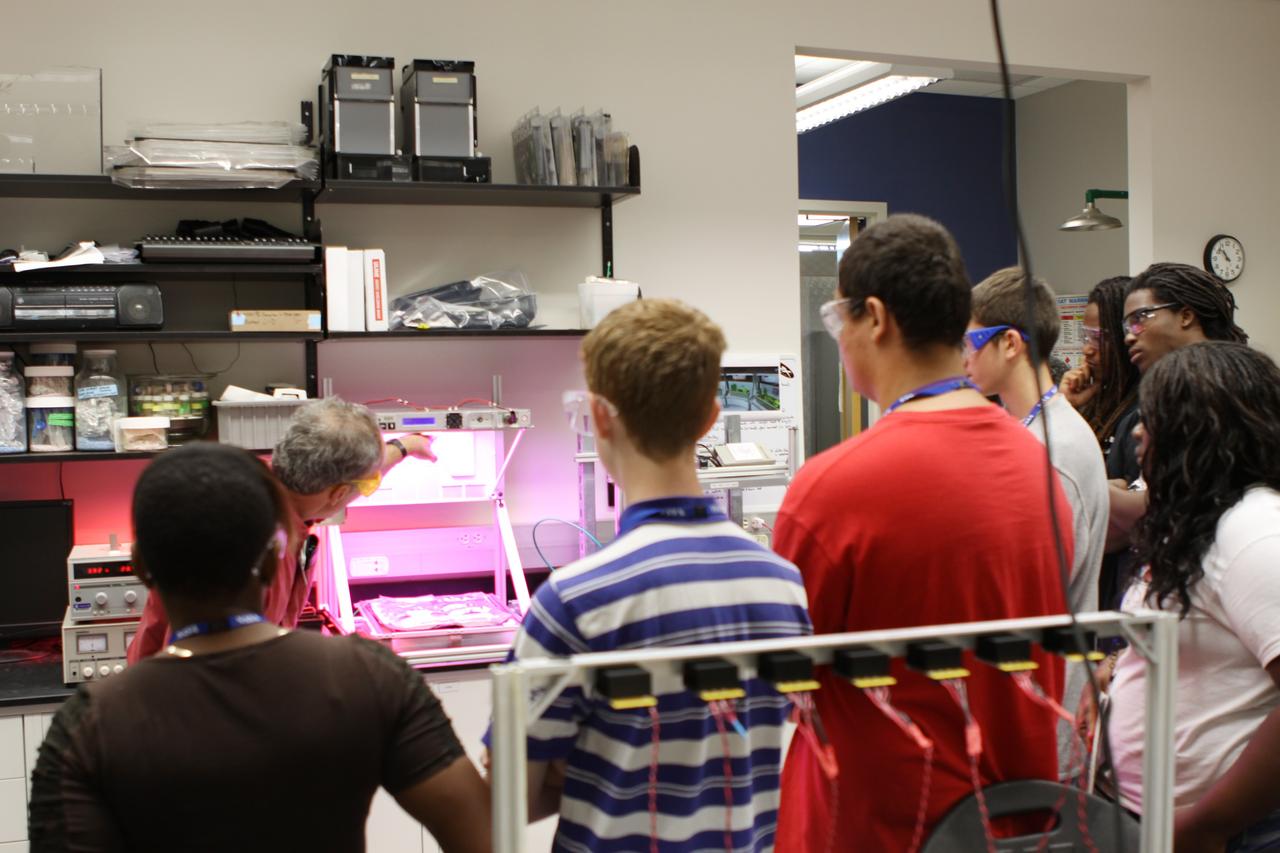
CAPE CANAVERAL, Fla. – Dr. Ray Wheeler explains a system for growing salad crops in space to students in the Life Support and Habitation Systems Lab at the Space Life Sciences Lab facility. The 26 honor students in chemistry and biology and their teachers got a chance to visit a number of high-tech labs at Kennedy Space Center as part of an effort to encourage students in the areas of science, technology, engineering and math. The tenth and eleventh grade students from Terry Parker High School in Jacksonville, Fla., visited a number of vastly different labs during their one-day tour. The group's visit to Kennedy was hosted by the Education Office as part of a nationwide effort by the National Lab Network to help introduce the nation's students to science careers. Photo credit: NASA/Jim Grossmann
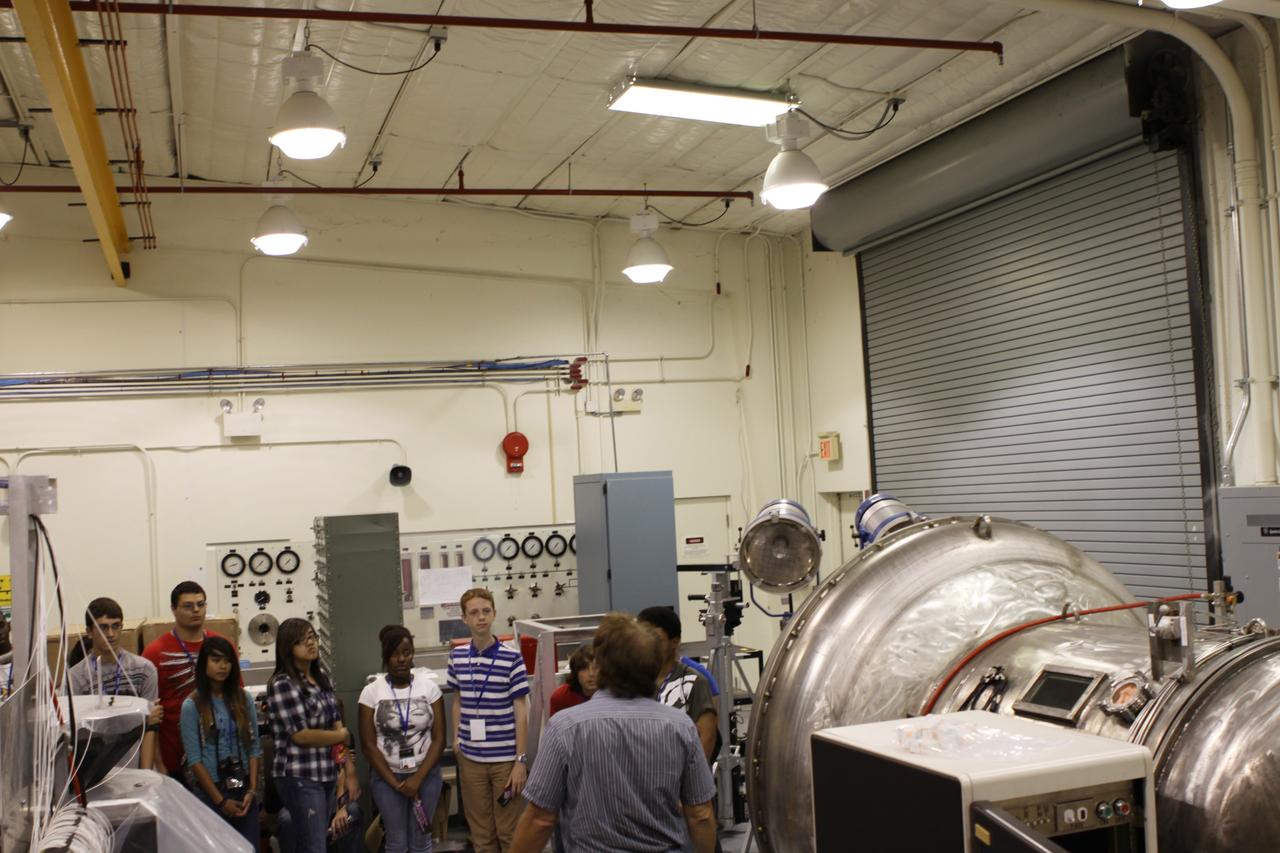
CAPE CANAVERAL, Fla. – Inside the Operations and Checkout Building, Rudy Werlink gives students a first-hand look at the workings of the sound testing area of cryogenics lab. The 26 honor students in chemistry and biology and their teachers got a chance to visit a number of high-tech labs at Kennedy Space Center as part of an effort to encourage students in the areas of science, technology, engineering and math. The tenth and eleventh grade students from Terry Parker High School in Jacksonville, Fla., visited a number of vastly different labs during their one-day tour. The group's visit to Kennedy was hosted by the Education Office as part of a nationwide effort by the National Lab Network to help introduce the nation's students to science careers. Photo credit: NASA/Jim Grossmann
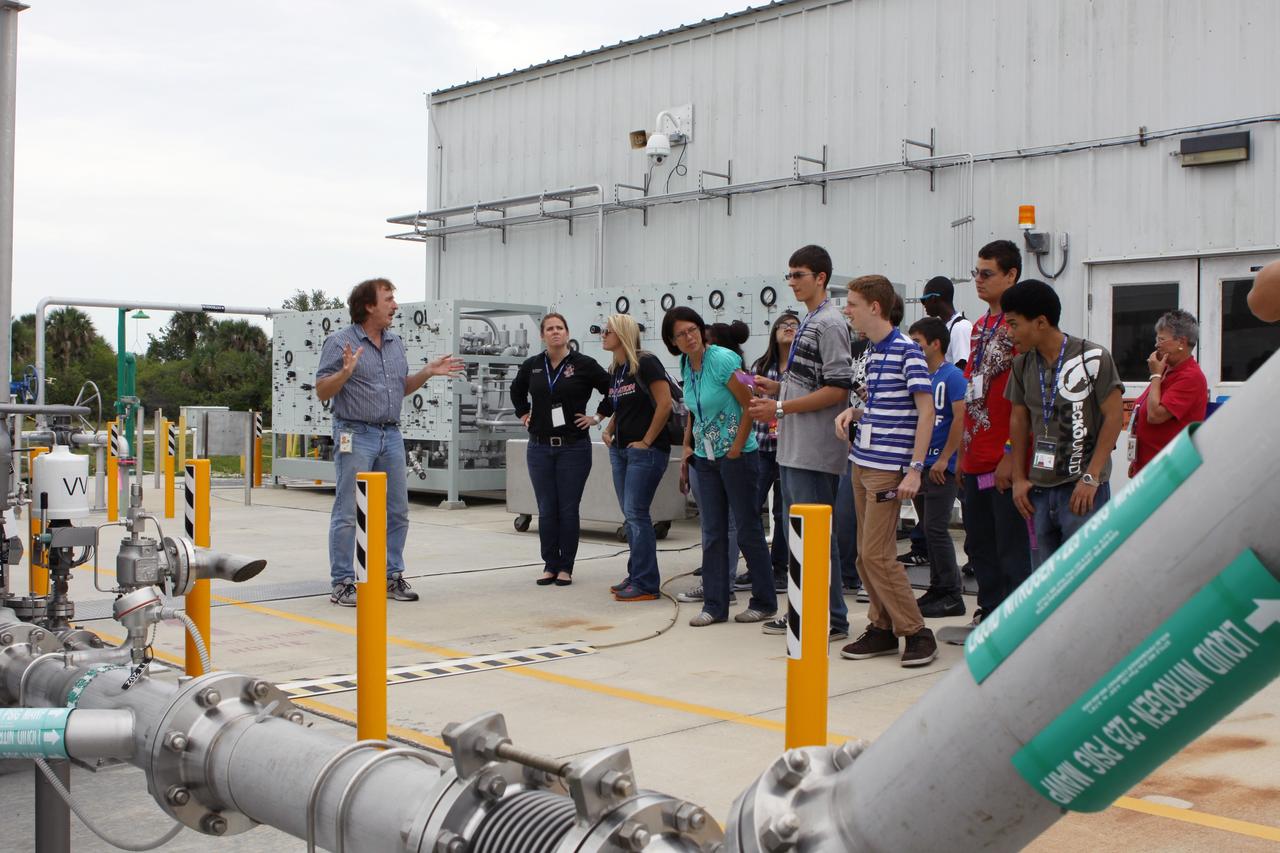
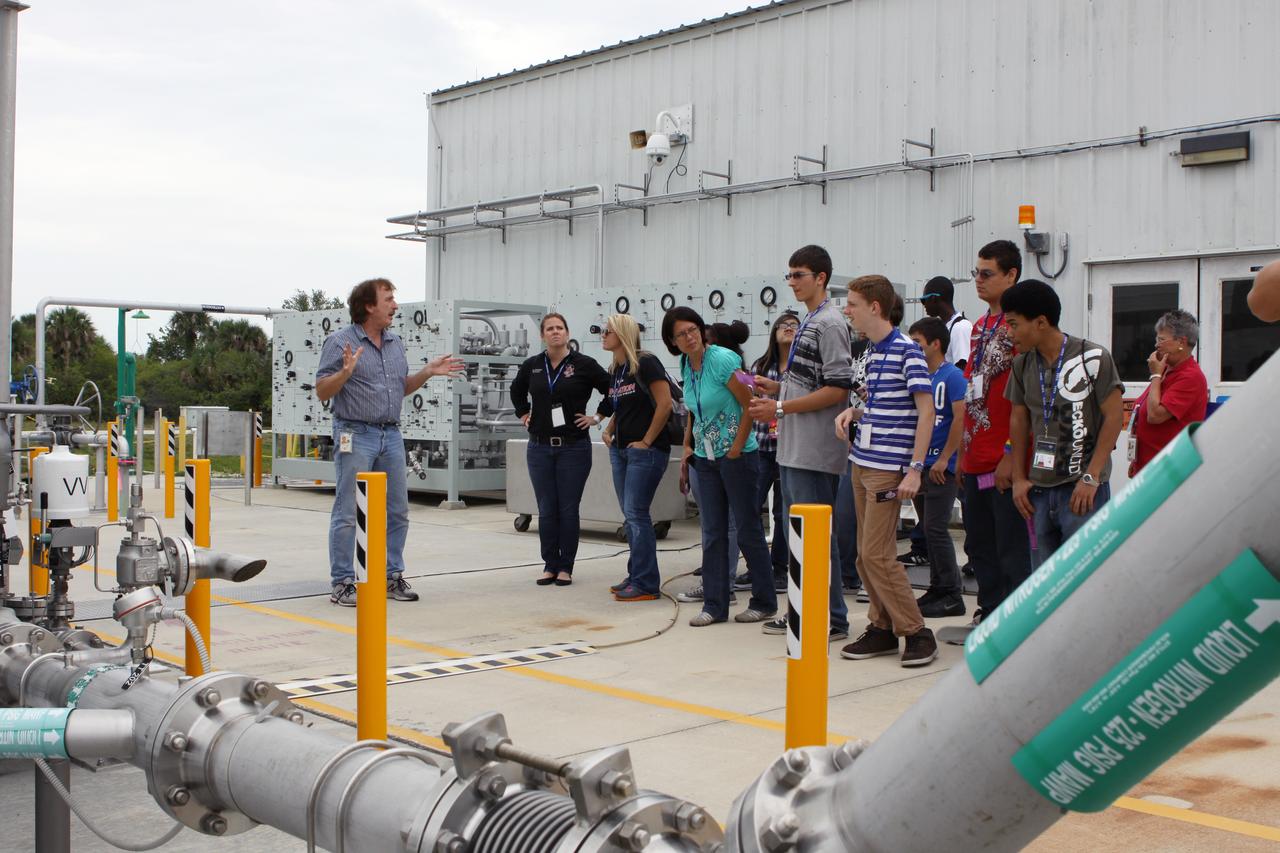
CAPE CANAVERAL, Fla. – Outside the Operations and Checkout Building, Rudy Werlink gives students a first-hand look at the workings of the cryogenics lab. The 26 honor students in chemistry and biology and their teachers got a chance to visit a number of high-tech labs at Kennedy Space Center as part of an effort to encourage students in the areas of science, technology, engineering and math. The tenth and eleventh grade students from Terry Parker High School in Jacksonville, Fla., visited a number of vastly different labs during their one-day tour. The group's visit to Kennedy was hosted by the Education Office as part of a nationwide effort by the National Lab Network to help introduce the nation's students to science careers. Photo credit: NASA/Jim Grossmann
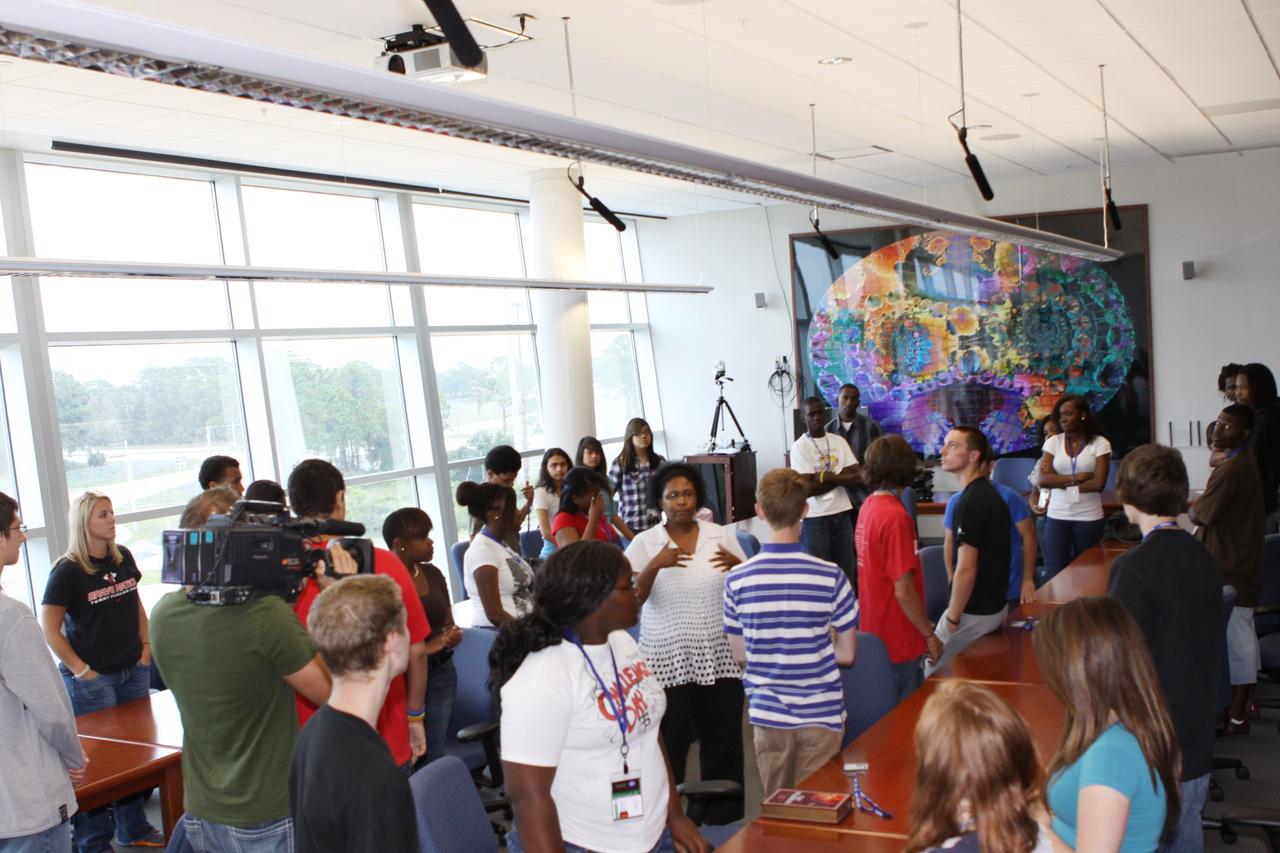
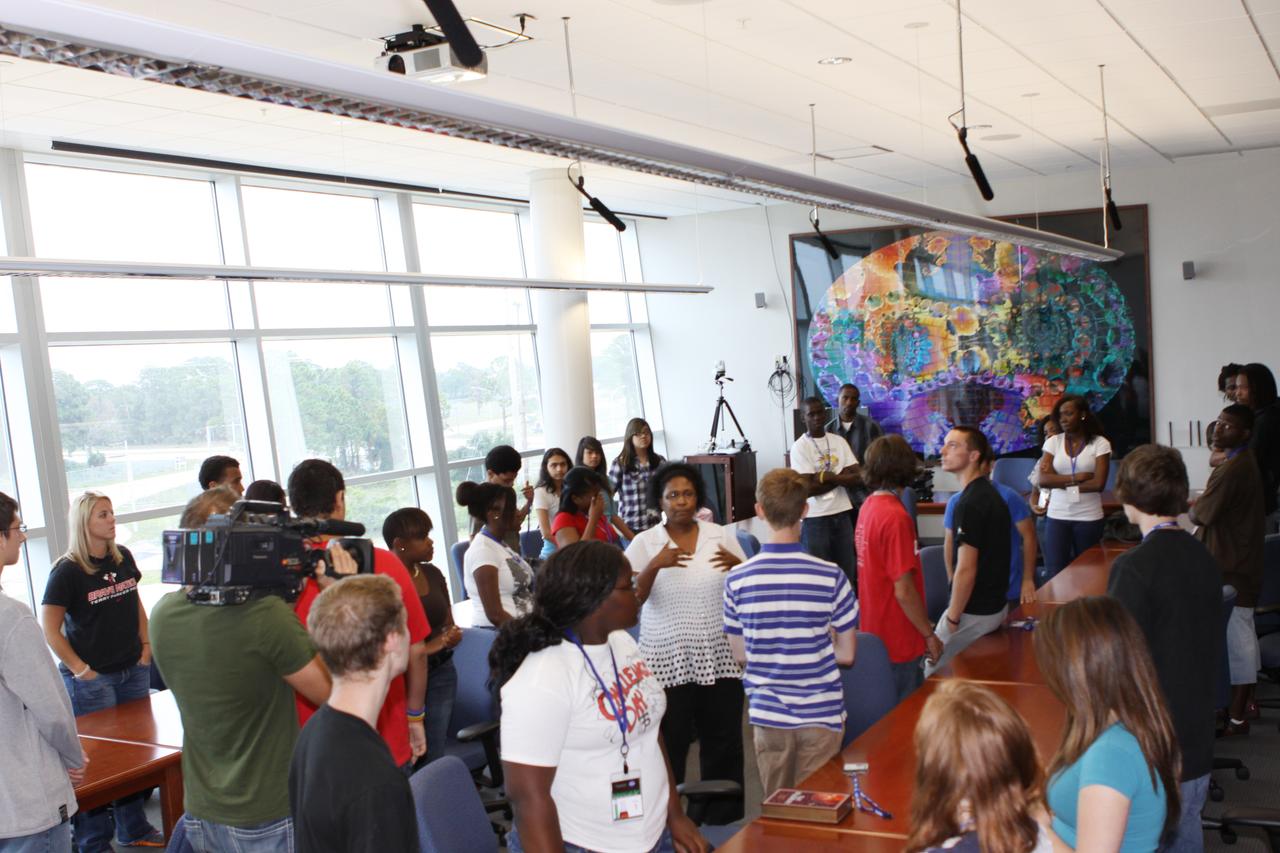
CAPE CANAVERAL, Fla. – Dr. LaNetra C. Tate, center, materials engineer at Kennedy Space Center, is surrounded by students as she welcomes them for their tour of the Space Life Sciences Lab facilities. The 26 honor students in chemistry and biology and their teachers got a chance to visit a number of high-tech labs at Kennedy as part of an effort to encourage students in the areas of science, technology, engineering and math. The tenth and eleventh grade students from Terry Parker High School in Jacksonville, Fla., visited a number of vastly different labs during their one-day tour. The group's visit to Kennedy was hosted by the Education Office as part of a nationwide effort by the National Lab Network to help introduce the nation's students to science careers. Photo credit: NASA/Jim Grossmann
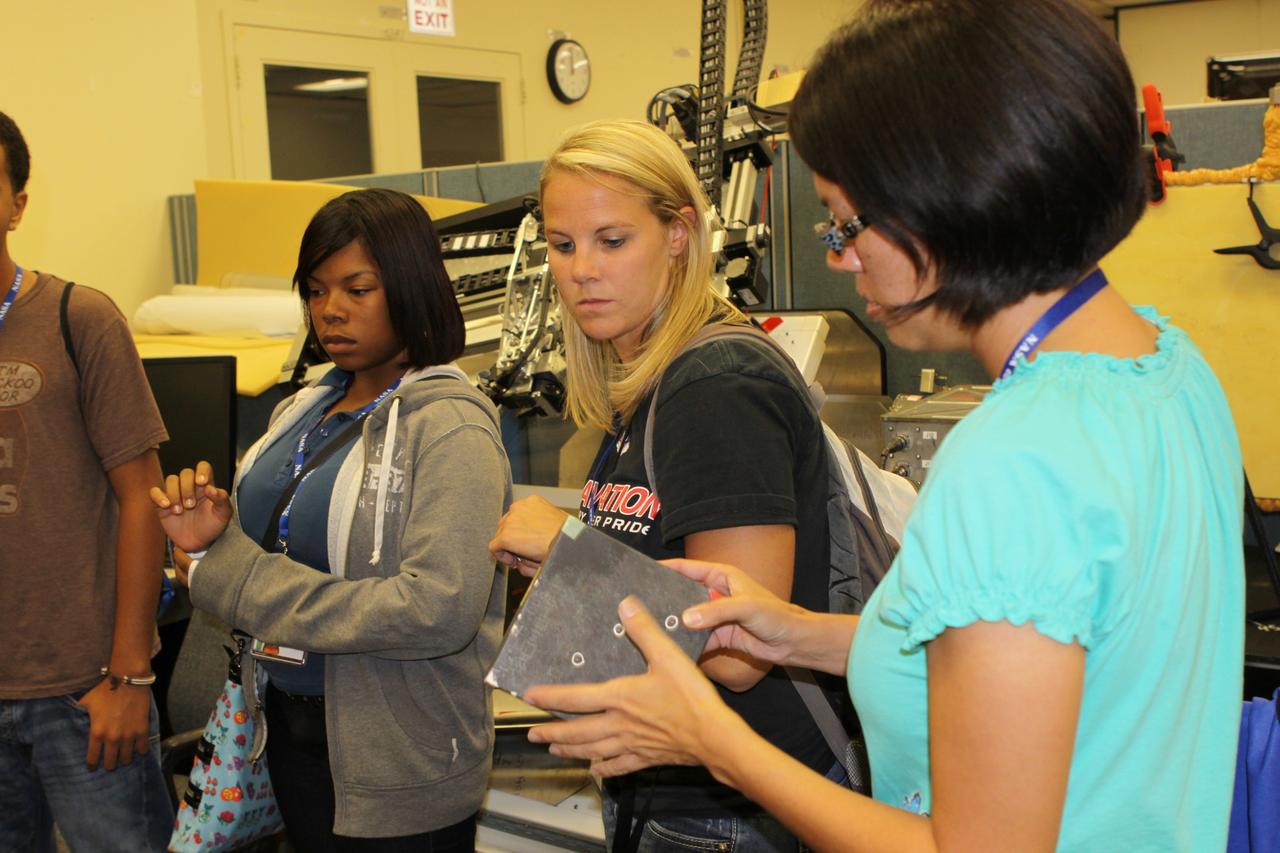
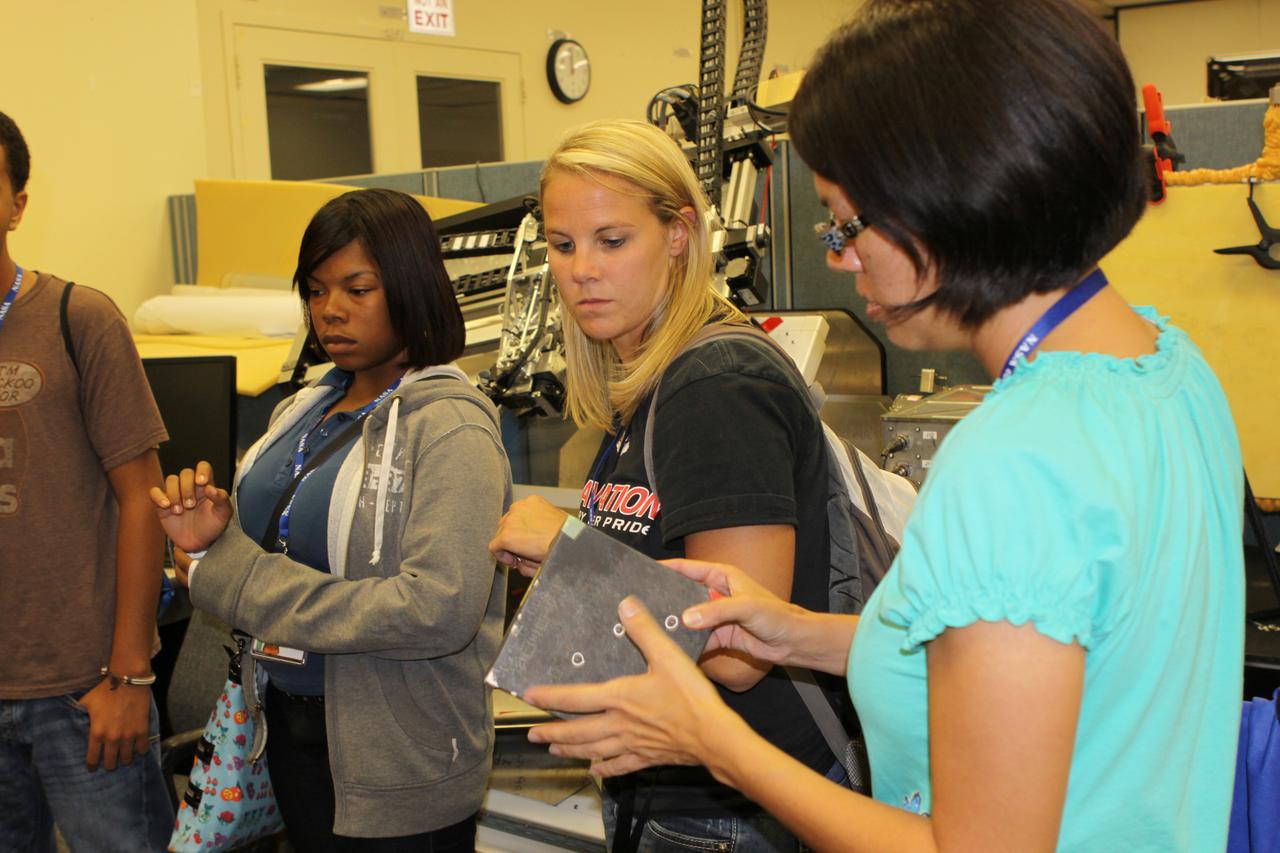
CAPE CANAVERAL, Fla. – Students and their teachers get some hands-on experience inside the applied physics lab in the Operations and Checkout Building. The 26 honor students in chemistry and biology and their teachers got a chance to visit a number of high-tech labs at Kennedy Space Center as part of an effort to encourage students in the areas of science, technology, engineering and math. The tenth and eleventh grade students from Terry Parker High School in Jacksonville, Fla., visited a number of vastly different labs during their one-day tour. The group's visit to Kennedy was hosted by the Education Office as part of a nationwide effort by the National Lab Network to help introduce the nation's students to science careers. Photo credit: NASA/Jim Grossmann

CAPE CANAVERAL, Fla. – Inside the Operations and Checkout Building, Rudy Werlink gives students a first-hand look at the workings of the sound testing area of cryogenics lab. The 26 honor students in chemistry and biology and their teachers got a chance to visit a number of high-tech labs at Kennedy Space Center as part of an effort to encourage students in the areas of science, technology, engineering and math. The tenth and eleventh grade students from Terry Parker High School in Jacksonville, Fla., visited a number of vastly different labs during their one-day tour. The group's visit to Kennedy was hosted by the Education Office as part of a nationwide effort by the National Lab Network to help introduce the nation's students to science careers. Photo credit: NASA/Jim Grossmann
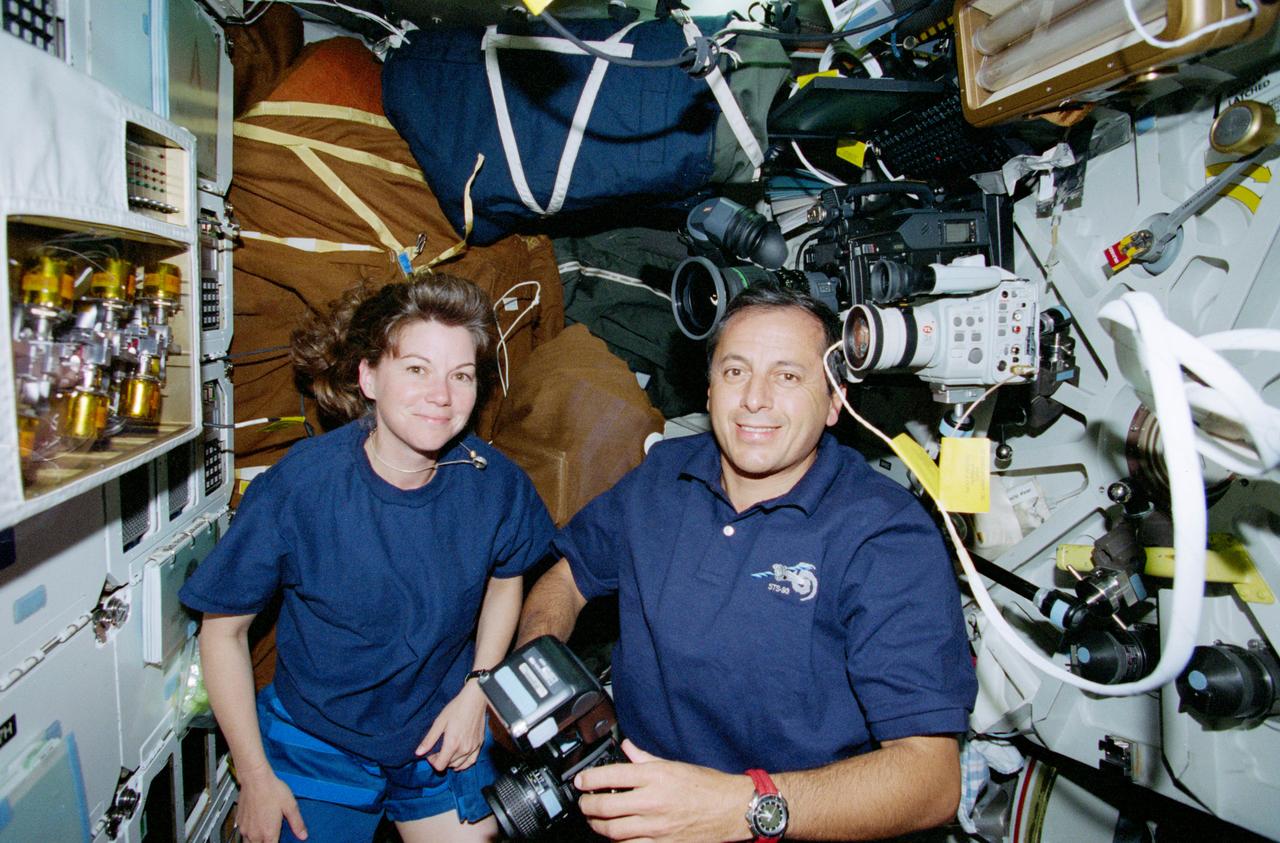
STS093-321-035 (23-27 July 1999) --- Astronauts Catherine G. (Cady) Coleman and Michel Tognini, mission specialists, check out the Lightweight Flexible Solar Array Hinge (LFSAH, upper left) on Columbia's middeck. LFSAH consists of several hinges fabricated from shape-memory alloys and other spacecraft appendages. During the five-day STS-93 flight, the experiment demonstrated the deployment capability of a number of hinge configurations. The experiment is sponsored by the U.S. Air Force Research Lab, Kirtland Air Force Base. Tognini represents the Centre National d'Etudes Spatiales (CNES) of France.
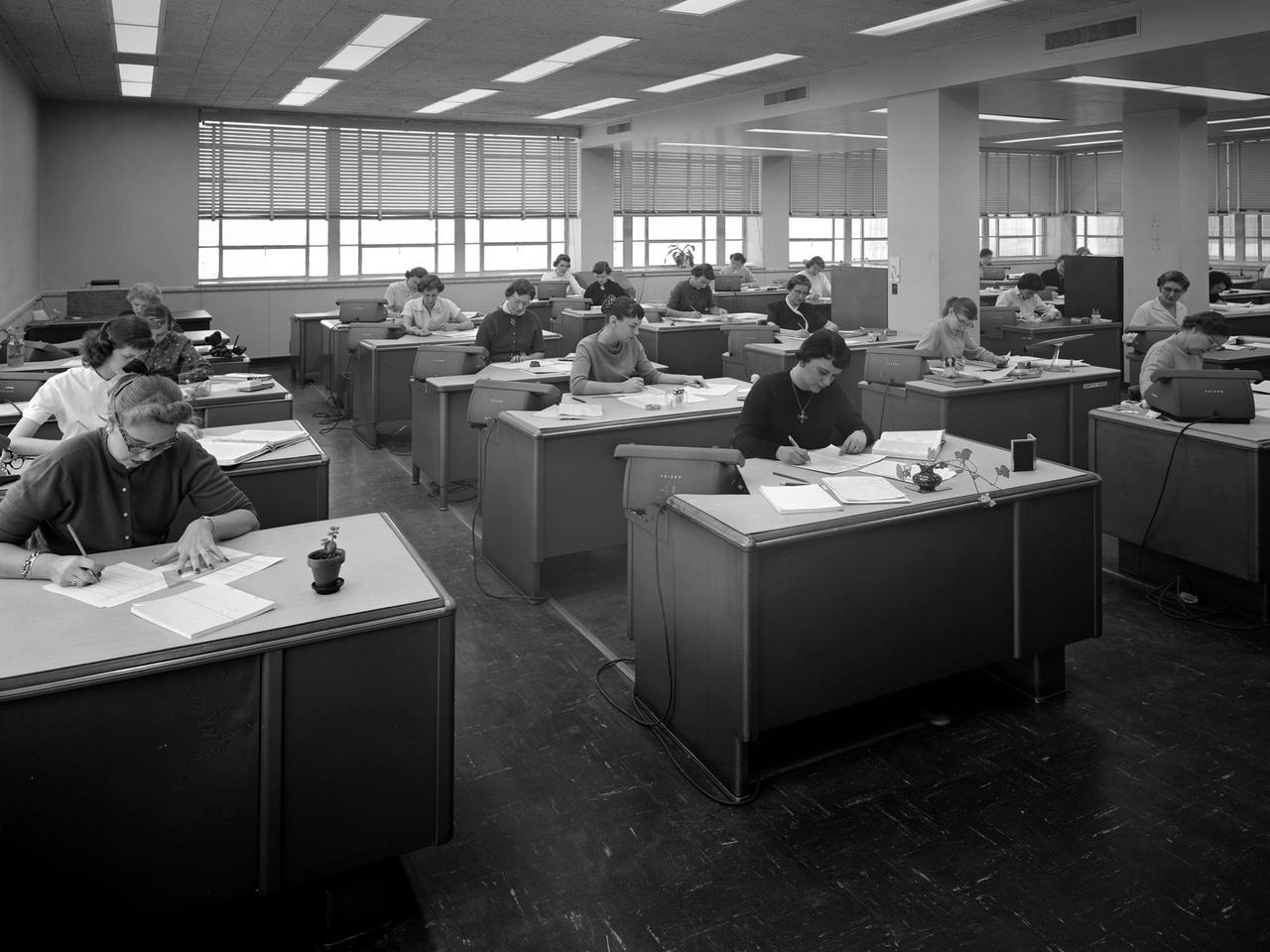
The staff of female computers at work in the 8- by 6-Foot Supersonic Wind Tunnel at the National Advisory Committee for Aeronautics (NACA) Lewis Flight Propulsion Laboratory. The lab’s Computer Section occupied three offices on the second story of the office building at the 8- by 6 facility. The largest office, seen in this photograph, contained approximately 35 women with advanced mathematical skills, a second office housed 20 to 25, and a third 10. Each major test facility at the laboratory had banks of mercury-filled manometer boards which measured pressure levels at various locations inside the facility’s test section. Often, one board consisting of 100 tubes produced a single data point. There could be scores of data points for each test run. Cameras were set up in front of the manometer boards to capture the readings throughout the test. The following day the computers, seen in this photograph, would receive the photographs and plot the data points on a graph. The process often took days. It might be weeks before the researchers received the results of their tests. The Friden adding machines can be seen on some of the desks.
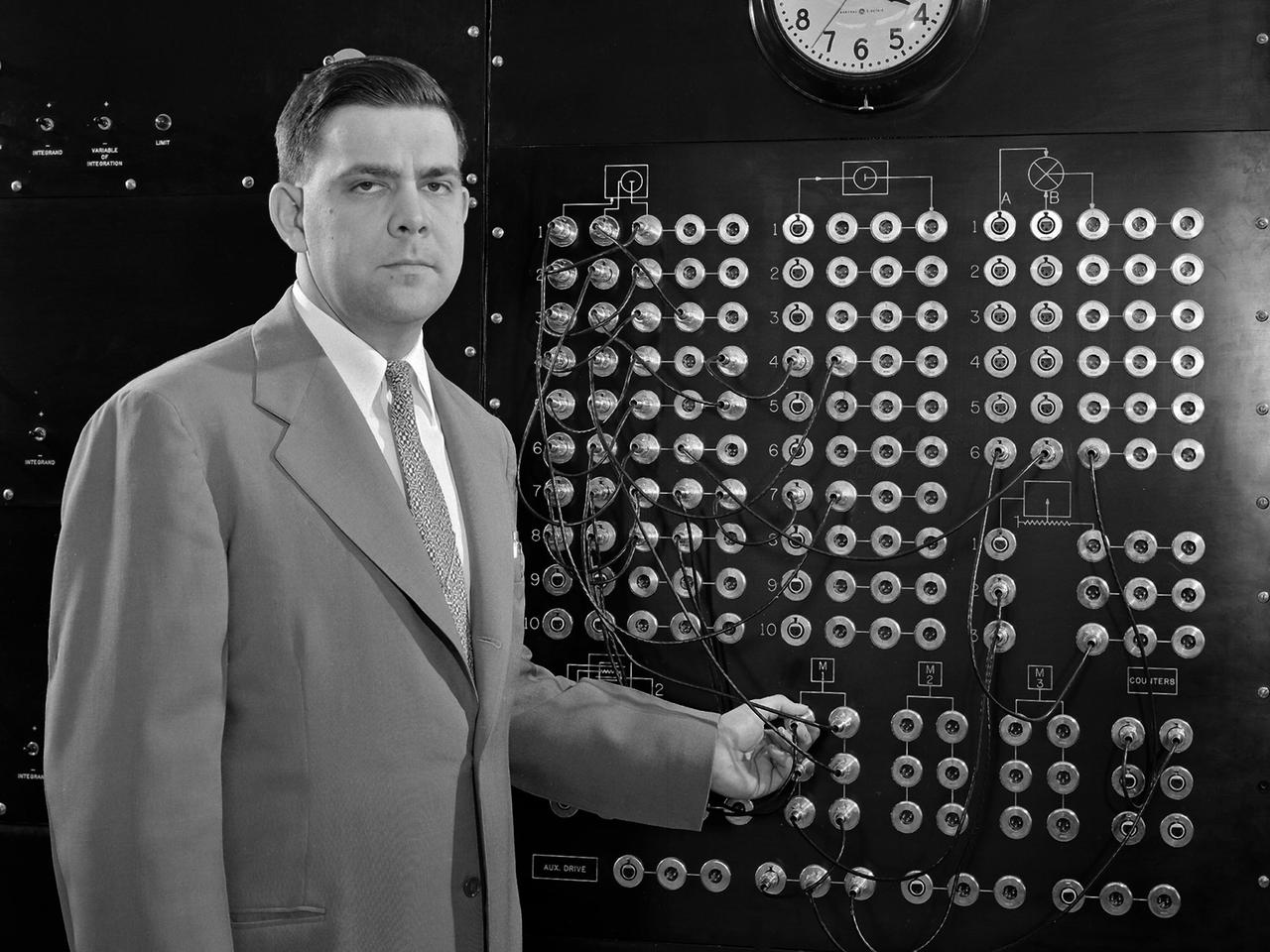
Harry Mergler stands at the control board of a differential analyzer in the new Instrument Research Laboratory at the National Advisory Committee for Aeronautics (NACA) Lewis Flight Propulsion Laboratory. The differential analyzer was a multi-variable analog computation machine devised in 1931 by Massachusetts Institute of Technology researcher and future NACA Committee member Vannevar Bush. The mechanical device could solve computations up to the sixth order, but had to be rewired before each new computation. Mergler modified Bush’s differential analyzer in the late 1940s to calculate droplet trajectories for Lewis’ icing research program. In four days Mergler’s machine could calculate what previously required weeks. NACA Lewis built the Instrument Research Laboratory in 1950 and 1951 to house the large analog computer equipment. The two-story structure also provided offices for the Mechanical Computational Analysis, and Flow Physics sections of the Physics Division. The division had previously operated from the lab’s hangar because of its icing research and flight operations activities. Mergler joined the Instrument Research Section of the Physics Division in 1948 after earning an undergraduate degree in Physics from the Case Institute of Technology. Mergler’s focus was on the synthesis of analog computers with the machine tools used to create compressor and turbine blades for jet engines.
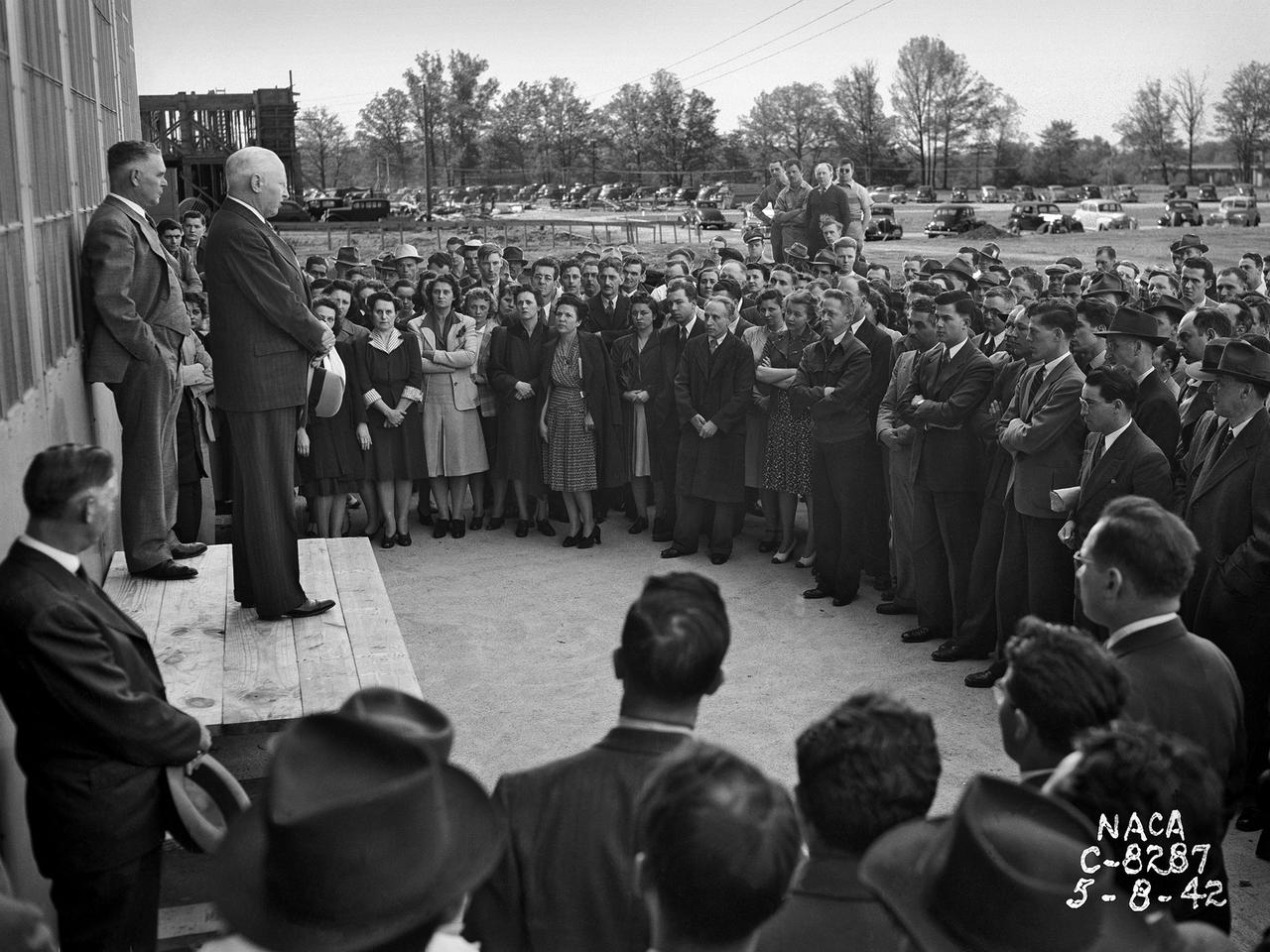
Construction Manager Raymond Sharp and the National Advisory Committee for Aeronautics (NACA) Director of Research George Lewis speak to employees during the May 8, 1942, Initiation of Research ceremony at the Aircraft Engine Research Laboratory. The event marked the first operation of a test facility at the new laboratory. The overall laboratory was still under construction, however, and behind schedule. Lewis traveled from his office in Washington, DC every week to personally assess the progress. Drastic measures were undertaken to accelerate the lab’s construction schedule. The military provided special supplies, contractors were given new agreements and pressured to meet deadlines, and Congress approved additional funds. The effort paid off and much of the laboratory was operational in early 1943. George Lewis managed the NACA’s aeronautical research for over 20 years. Lewis joined the NACA as Executive Officer in 1919, and was named Director of Aeronautical Research in 1924. In this role Lewis served as the liaison between the Executive Committee and the research laboratories. His most important accomplishment may have been the investigative tours of the research facilities in Germany in 1936 and 1939. The visits resulted in the NACA’s physical expansion and the broadening of the scope of its research. Lewis did not take a day of leave between the Pearl Harbor attack and the Armistice. He began suffering health problems in 1945 and was forced to retire two years later. The Aircraft Engine Research Laboratory was renamed the NACA Lewis Flight Propulsion Laboratory in September 1948.