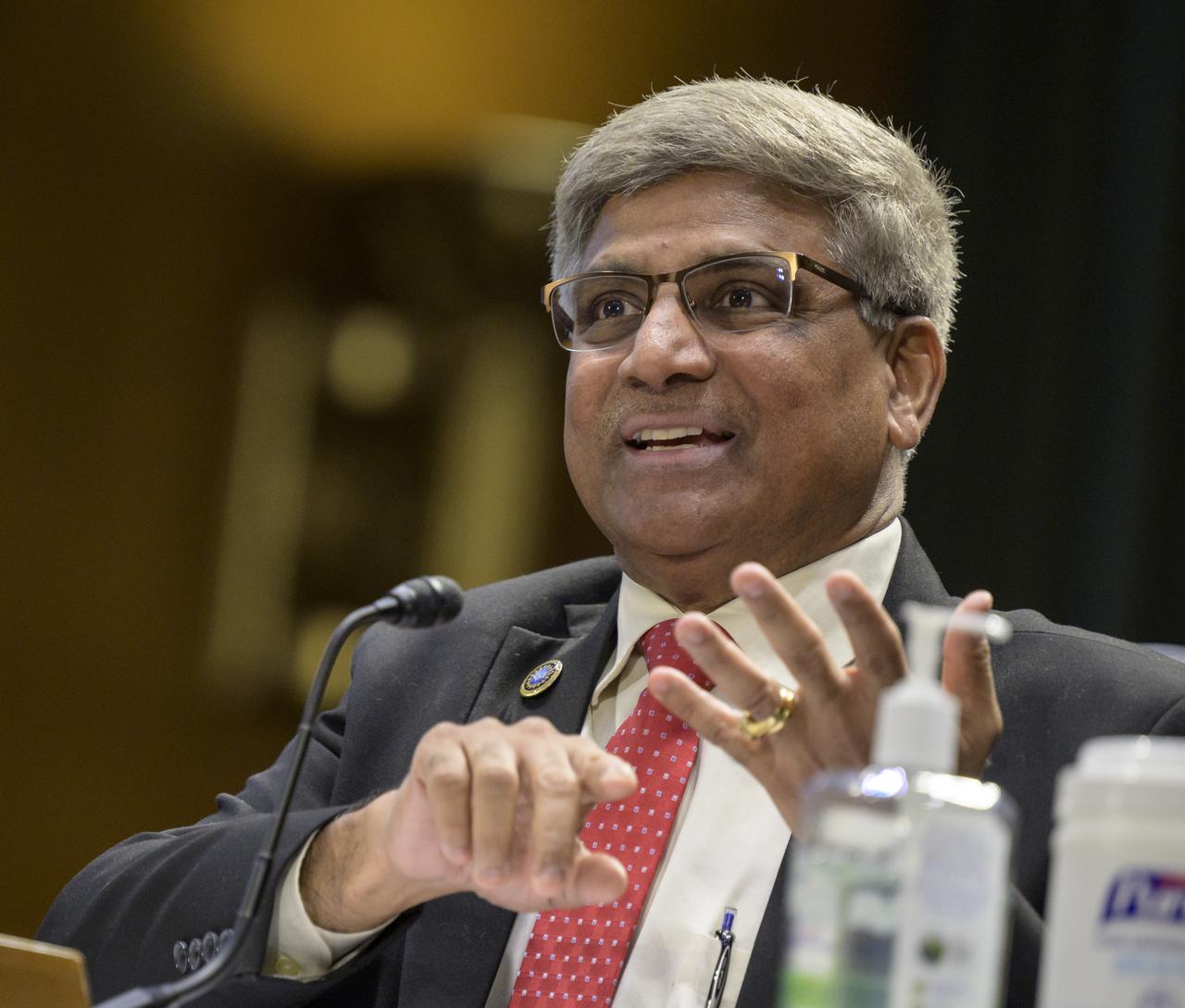
National Science Foundation Director Sethuraman Panchanathan testifies before the Senate Appropriations’ Commerce, Justice, Science, and Related Agencies subcommittee during a budget hearing, Tuesday, May 3, 2022, at the Dirksen Senate Office Building in Washington. Photo Credit: (NASA/Bill Ingalls)
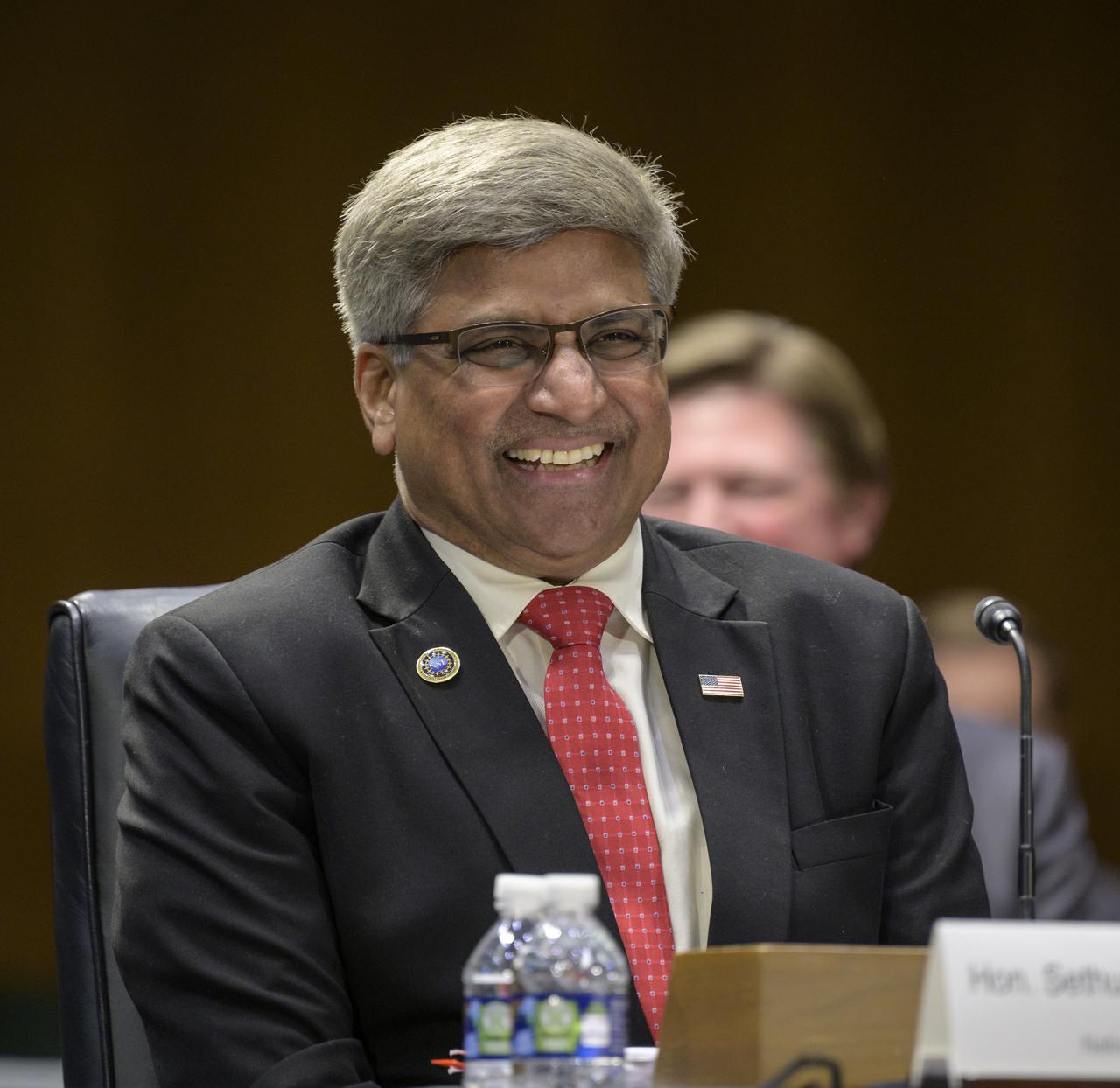
National Science Foundation Director Sethuraman Panchanathan testifies before the Senate Appropriations’ Commerce, Justice, Science, and Related Agencies subcommittee during a budget hearing, Tuesday, May 3, 2022, at the Dirksen Senate Office Building in Washington. Photo Credit: (NASA/Bill Ingalls)
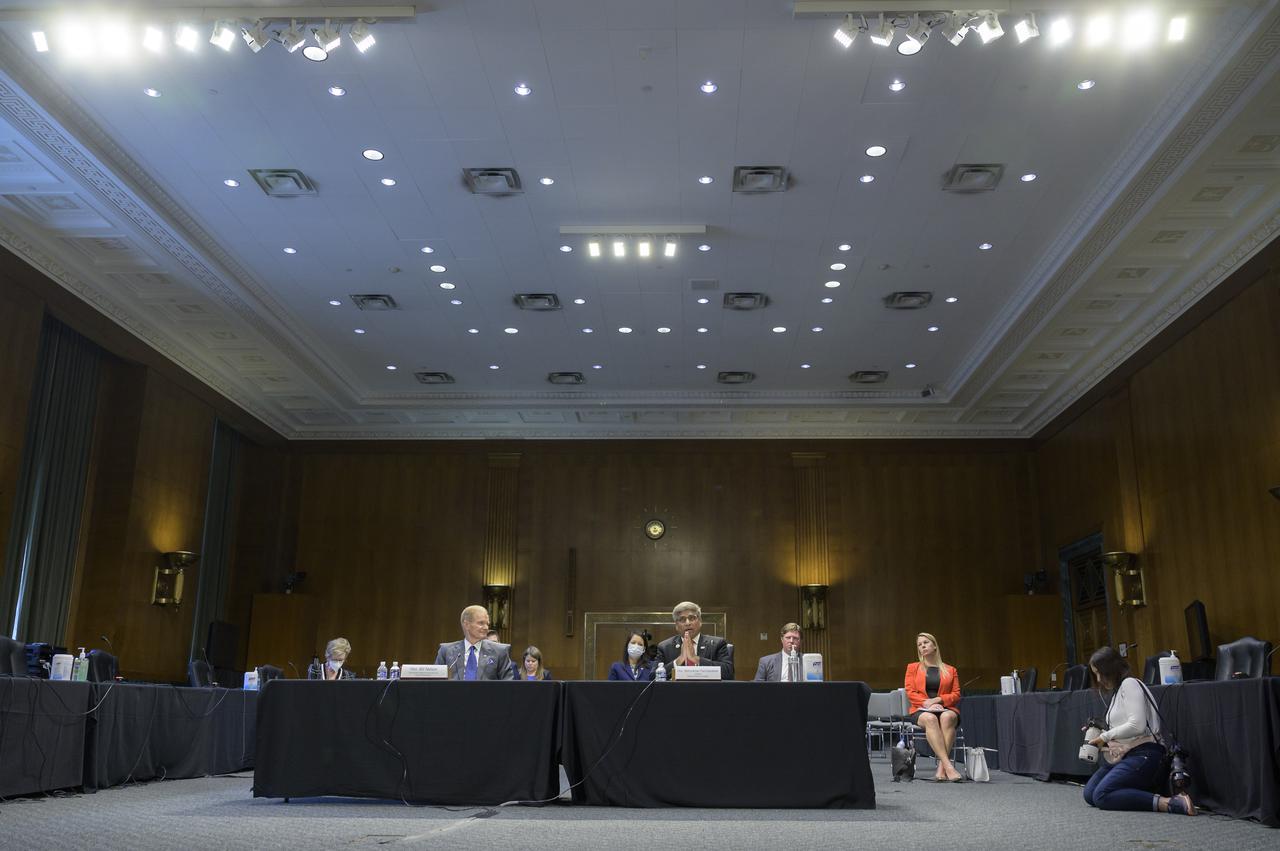
NASA Administrator Bill Nelson, left, and National Science Foundation Director Sethuraman Panchanathan, testify before the Senate Appropriations’ Commerce, Justice, Science, and Related Agencies subcommittee during a budget hearing, Tuesday, May 3, 2022, at the Dirksen Senate Office Building in Washington. Photo Credit: (NASA/Bill Ingalls)
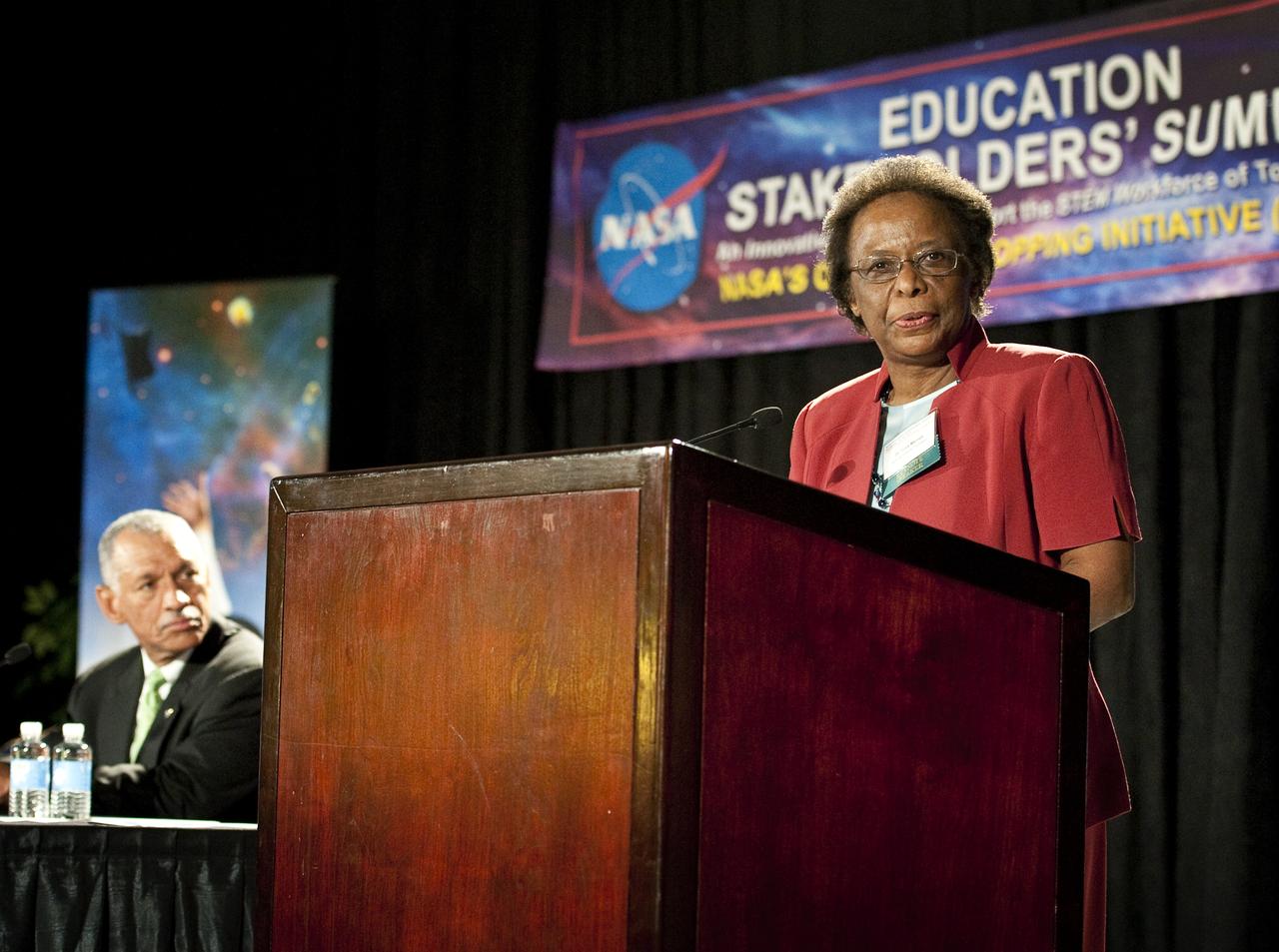
Cora B. Marrett, right, PhD, Acting Director, National Science Foundation gives keynote remarks at the NASA Education Stakeholders’ Summit One Stop Shopping Initiative (OSSI), Monday, Sep. 13, 2010, at the Westfields Marriott Conference Center in Chantilly, VA. (Photo Credit: NASA/Carla Cioffi)
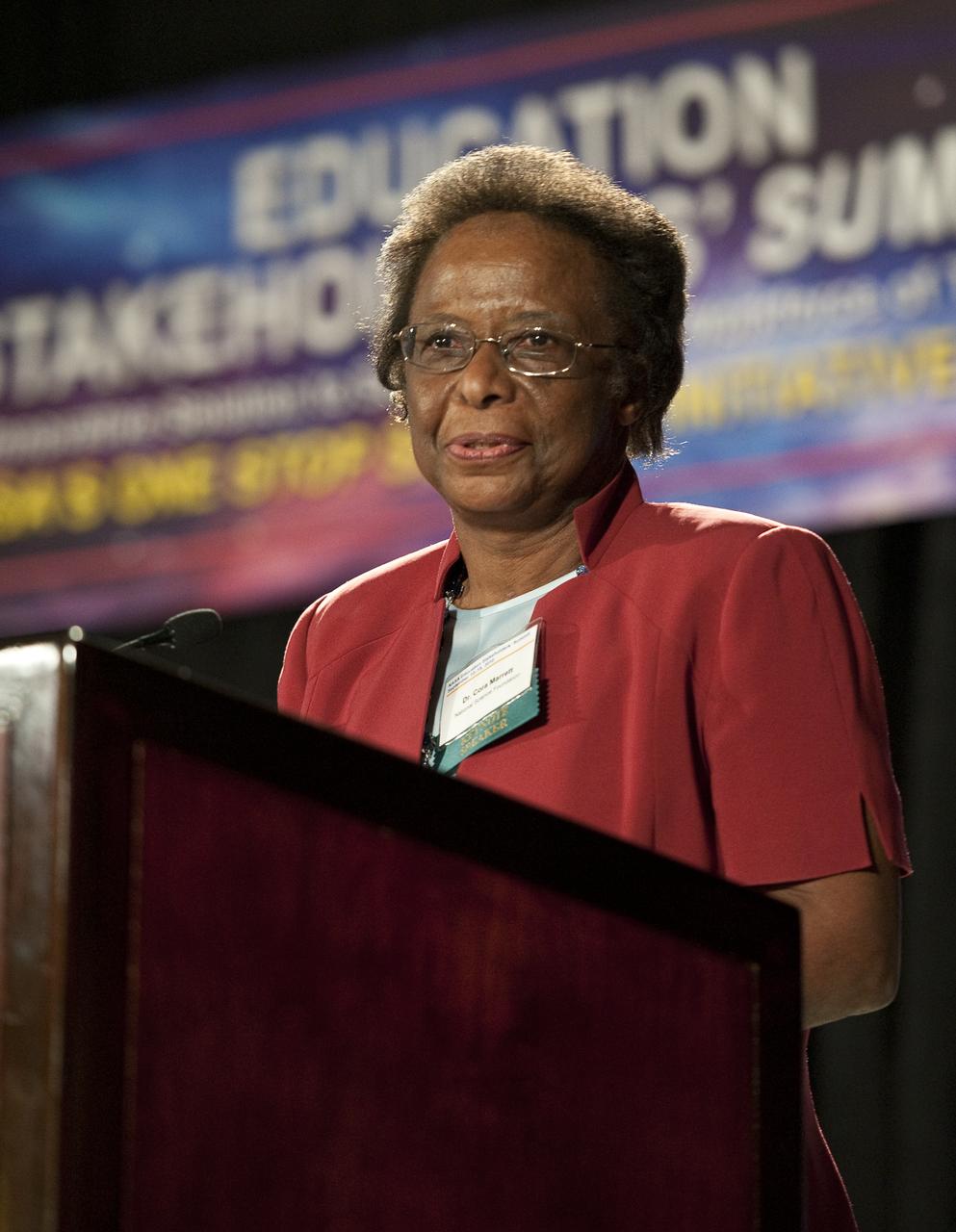
Cora B. Marrett, PhD, Acting Director, National Science Foundation gives keynote remarks at the NASA Education Stakeholders’ Summit One Stop Shopping Initiative (OSSI), Monday, Sep. 13, 2010, at the Westfields Marriott Conference Center in Chantilly, VA. (Photo Credit: NASA/Carla Cioffi)
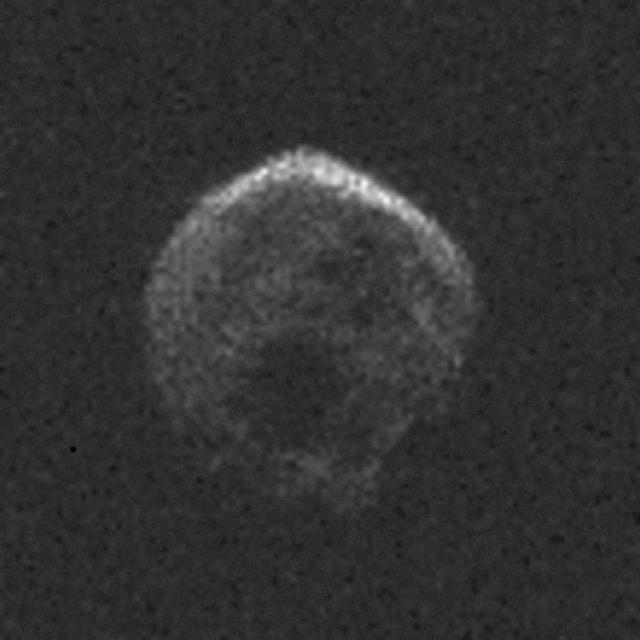
This partial frame from an animation was generated using radar data collected by the National Science Foundation 1,000-foot 305-meter Arecibo Observatory in Puerto Rico.
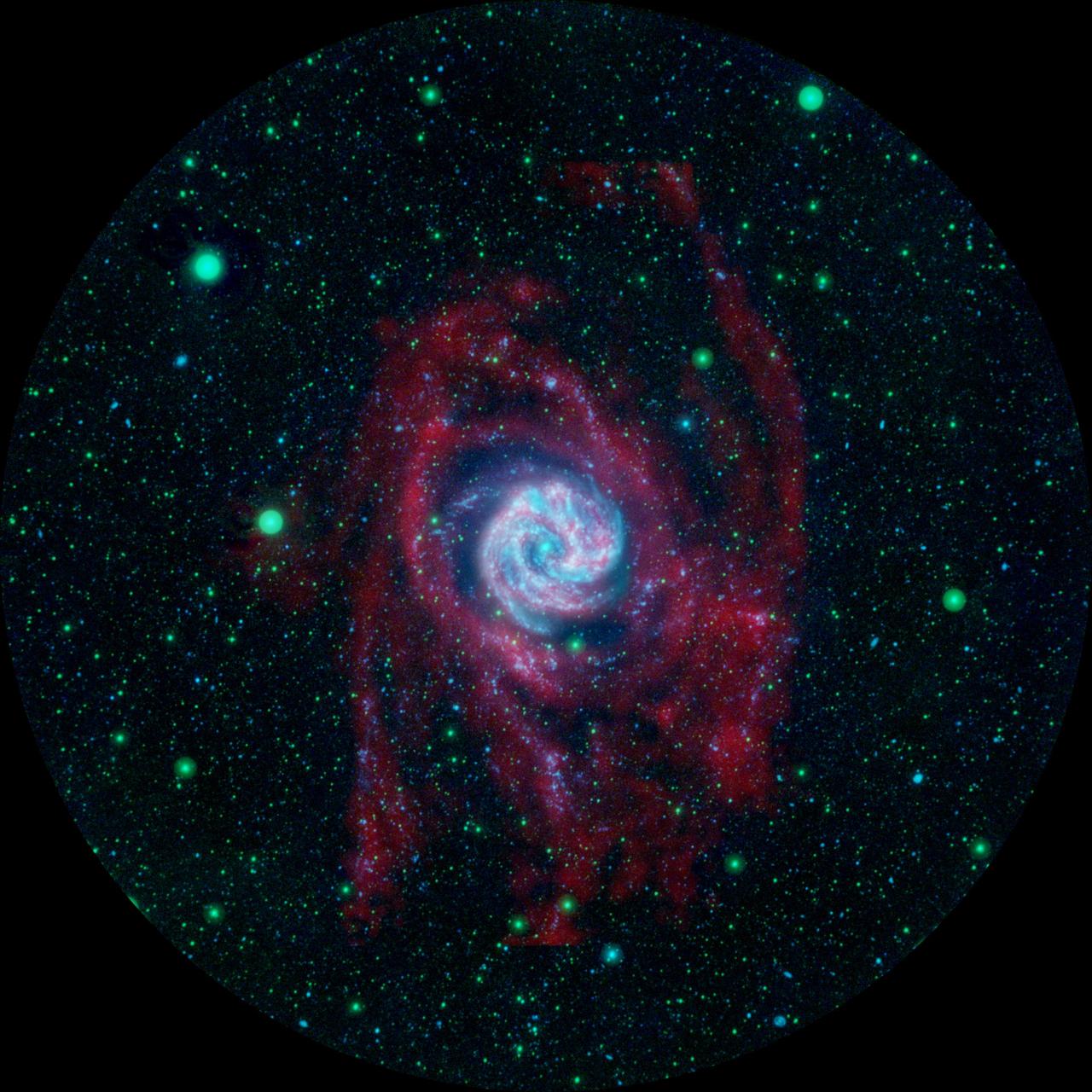
The outlying regions around the Southern Pinwheel galaxy, or M83, are highlighted in this composite image from NASA Galaxy Evolution Explorer and the National Science Foundation Very Large Array in New Mexico.
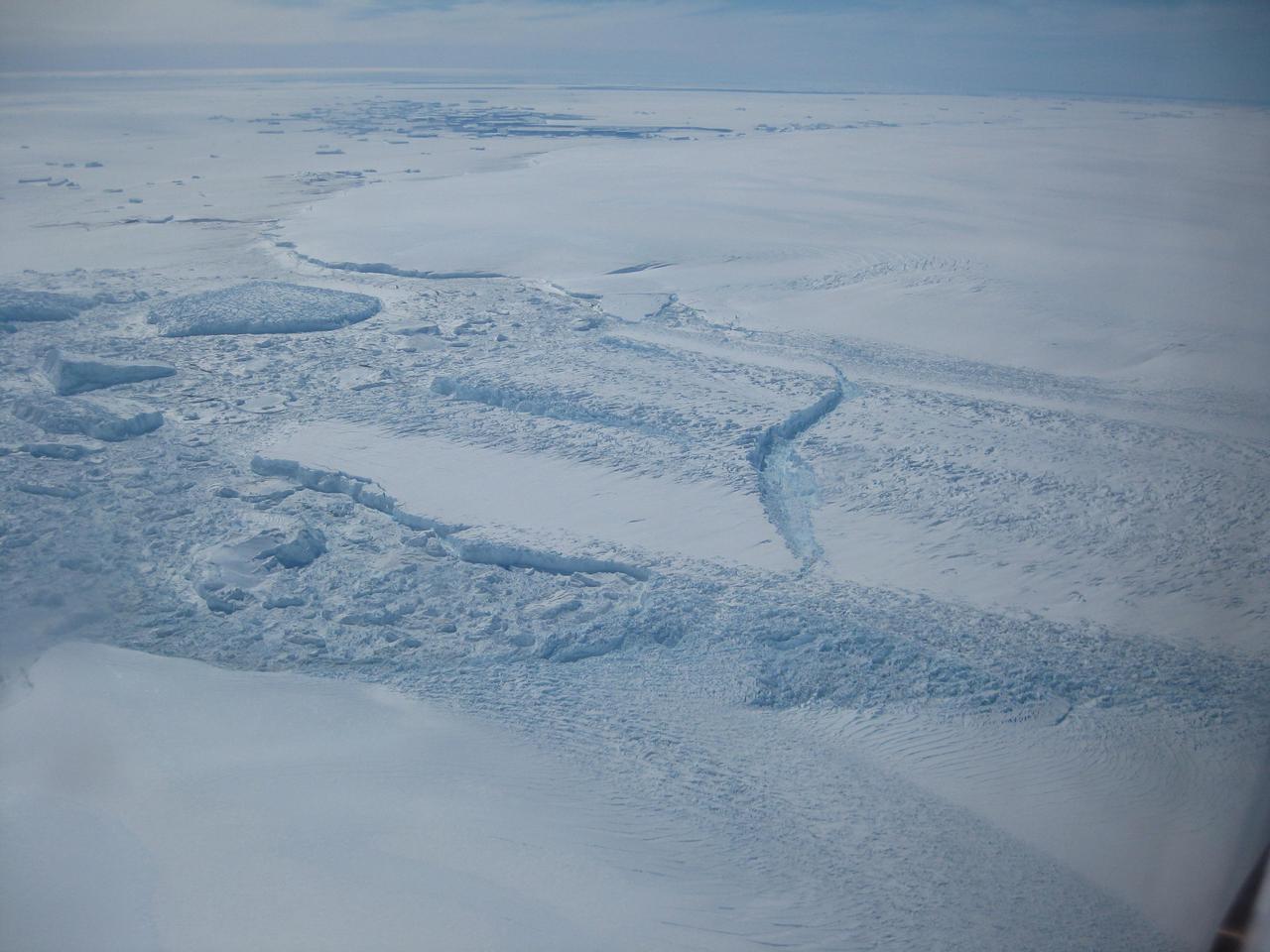
This photo, aken onboard a National Science Foundation/NASA chartered Twin Otter aircraft, shows the ice front of Dibble Ice Shelf, East Antarctica, a significant melt water producer from the Wilkes Land region, East Antarctica.
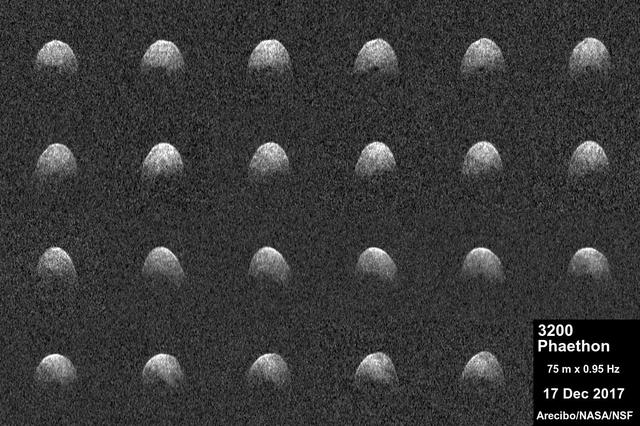
These radar images of near-Earth asteroid 3200 Phaethon were generated by astronomers at the National Science Foundation's Arecibo Observatory on Dec. 17, 2017. Observations of Phaethon were conducted at Arecibo from Dec.15 through 19, 2017. At time of closest approach on Dec. 16 at 3 p.m. PST (6 p.m. EST, 11 p.m. UTC) the asteroid was about 6.4 million miles (10.3 million kilometers) away, or about 27 times the distance from Earth to the moon. The encounter is the closest the object will come to Earth until 2093. An animation is available at https://photojournal.jpl.nasa.gov/catalog/PIA22185

These first radar images of 2015 TB145 from the National Science Foundation 1,000-foot 305-meter Arecibo Observatory in Puerto Rico, indicate the near-Earth object is spherical in shape and approximately 2,000 feet 600 meters in diameter. The radar images were taken on Oct. 30, 2015, and the image resolution is 25 feet (7.5 meters) per pixel. The celestial object is more than likely a dead comet that has shed its volatiles after numerous passes around the sun. http://photojournal.jpl.nasa.gov/catalog/PIA20040
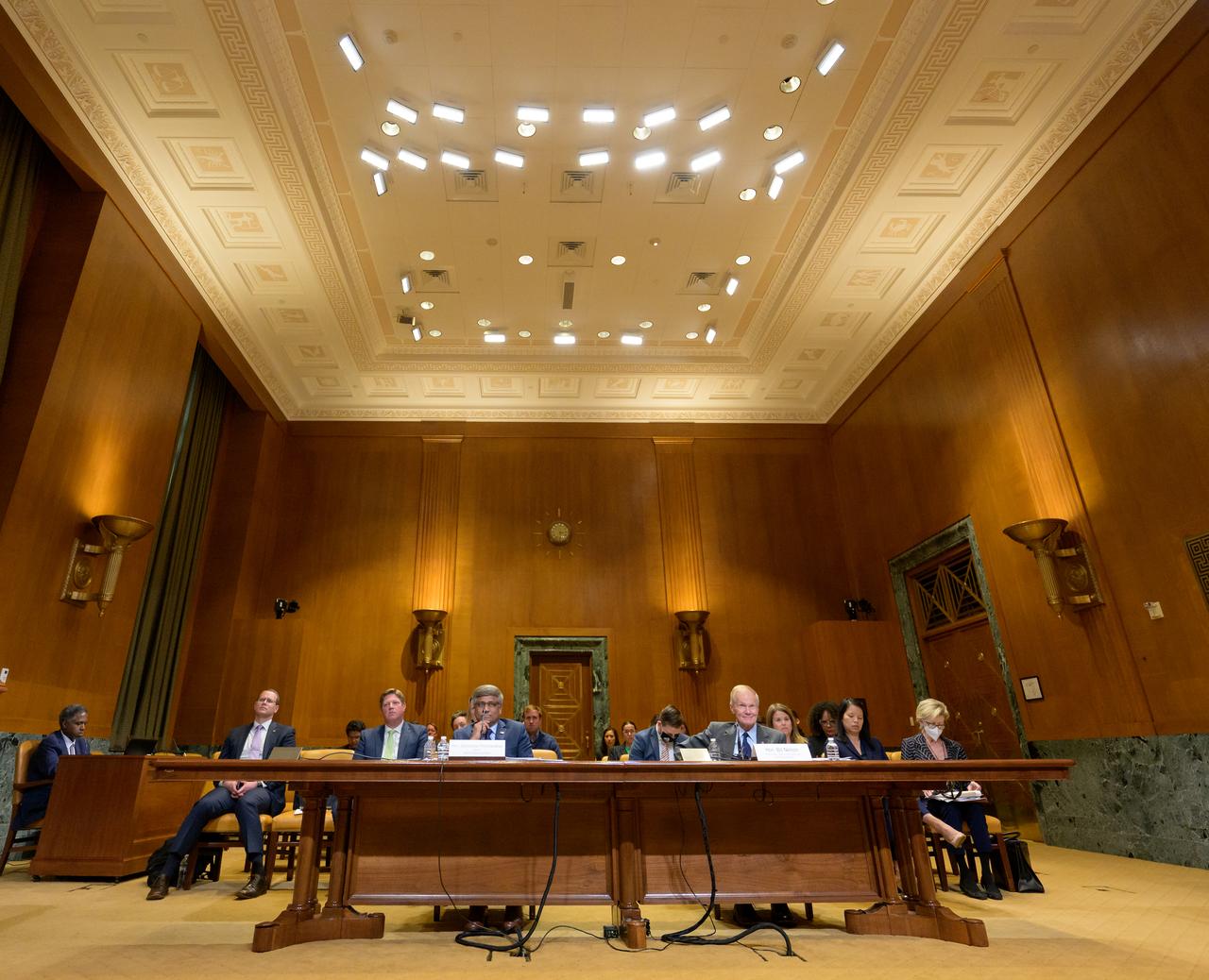
National Science Foundation Director Sethuraman Panchanathan, left, and NASA Administrator Bill Nelson testify before the Senate Appropriations’ Commerce, Justice, Science, and Related Agencies subcommittee during a budget hearing, Tuesday, April 18, 2023, at the Dirksen Senate Office Building in Washington. Photo Credit: (NASA/Bill Ingalls)
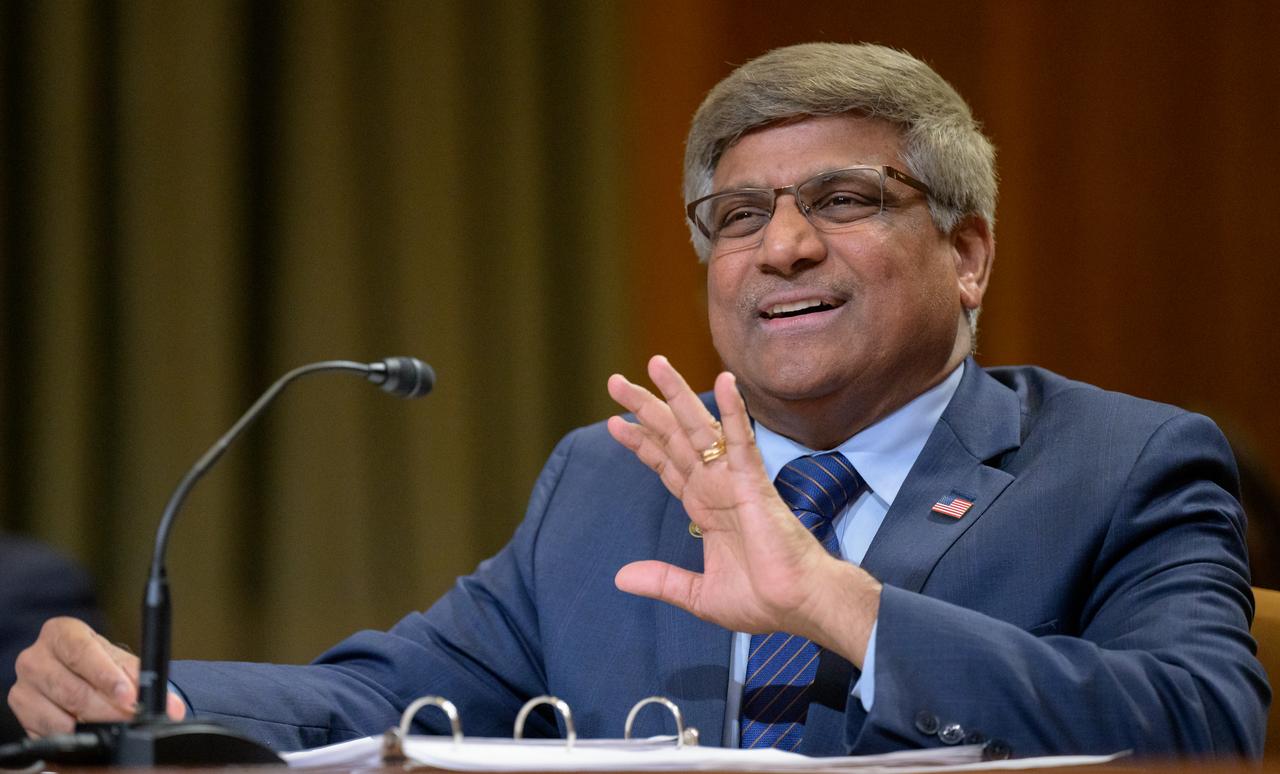
National Science Foundation Director Sethuraman Panchanathan testifies before the Senate Appropriations’ Commerce, Justice, Science, and Related Agencies subcommittee during a budget hearing, Tuesday, April 18, 2023, at the Dirksen Senate Office Building in Washington. Photo Credit: (NASA/Bill Ingalls)

National Science Foundation Director Sethuraman Panchanathan testifies before the Senate Appropriations’ Commerce, Justice, Science, and Related Agencies subcommittee during a fiscal year 2025 budget hearing, Thursday, May 23, 2024, at the Dirksen Senate Office Building in Washington. Photo Credit: (NASA/Bill Ingalls)
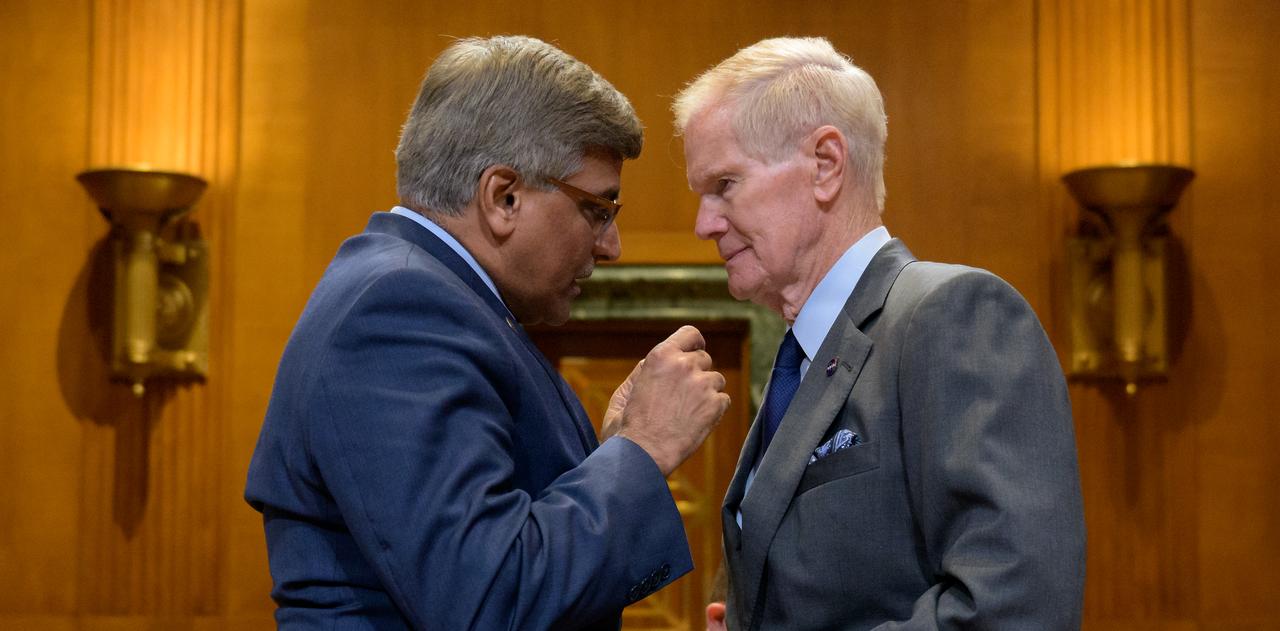
National Science Foundation Director Sethuraman Panchanathan, left, and NASA Administrator Bill Nelson talk at the conclusion of the Senate Appropriations’ Commerce, Justice, Science, and Related Agencies subcommittee budget hearing, Tuesday, April 18, 2023, at the Dirksen Senate Office Building in Washington. Photo Credit: (NASA/Bill Ingalls)

National Science Foundation Director Sethuraman Panchanathan testifies before the Senate Appropriations’ Commerce, Justice, Science, and Related Agencies subcommittee during a fiscal year 2025 budget hearing, Thursday, May 23, 2024, at the Dirksen Senate Office Building in Washington. Photo Credit: (NASA/Bill Ingalls)

National Science Foundation Director Sethuraman Panchanathan testifies before the Senate Appropriations’ Commerce, Justice, Science, and Related Agencies subcommittee during a fiscal year 2025 budget hearing, Thursday, May 23, 2024, at the Dirksen Senate Office Building in Washington. Photo Credit: (NASA/Bill Ingalls)
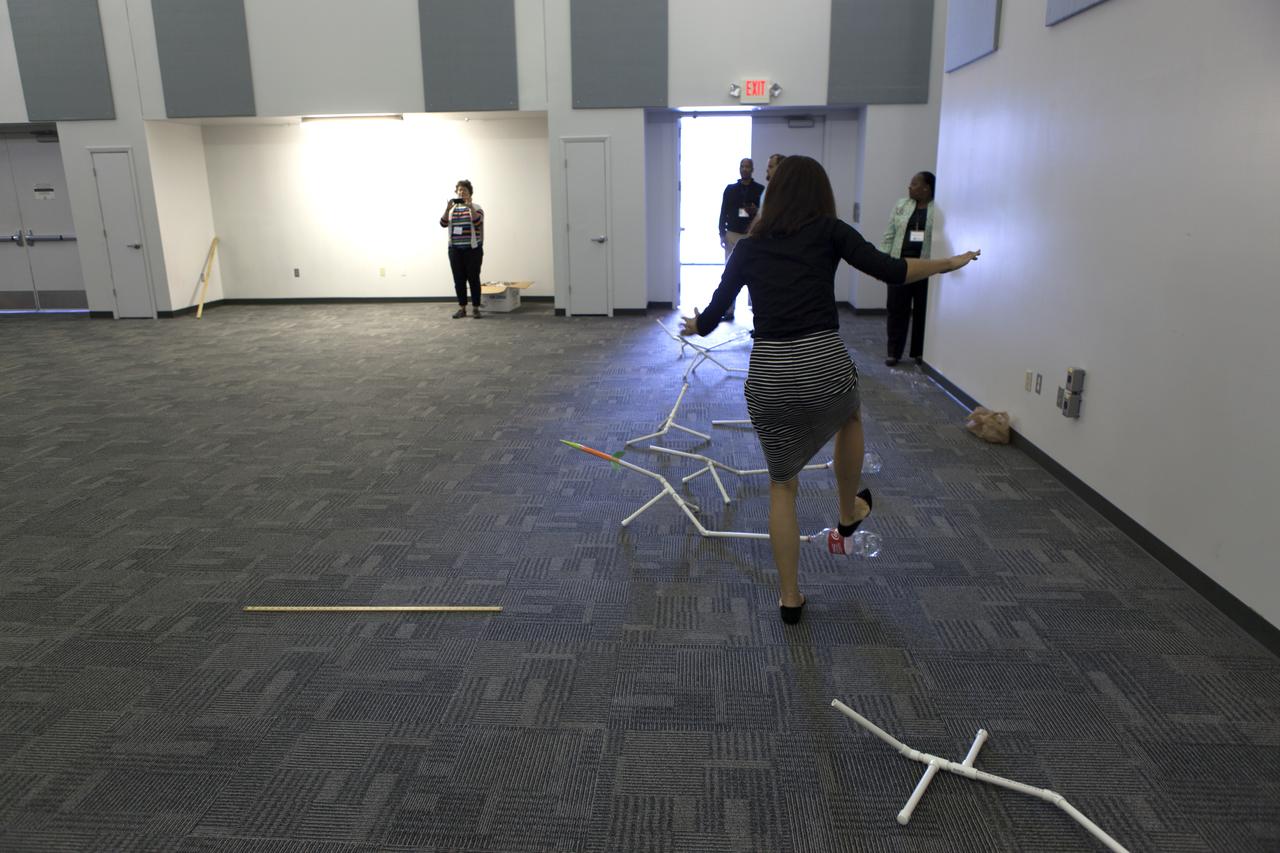
Teachers prepare to demonstrate the projects they built for the Rocketry Engineering Design Challenge during the 2017 GE Foundation High School STEM Integration Conference at the Center for Space Education at NASA's Kennedy Space Center. High school teachers from across the country took part in the week-long conference, which is designed to explore effective ways for teachers, schools and districts from across the country to integrate STEM throughout the curriculum. The conference is a partnership between GE Foundation and the National Science Teachers Association.
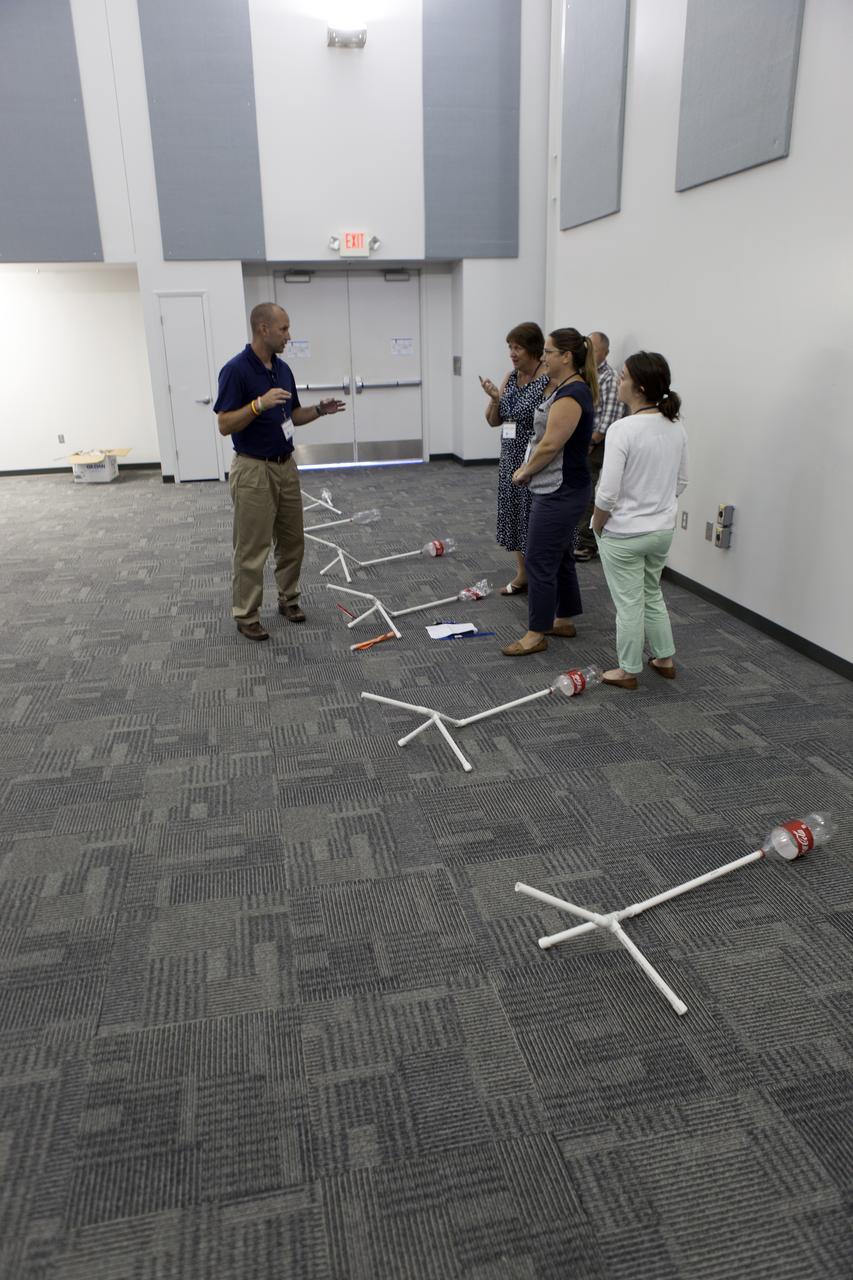
Teachers prepare to demonstrate the projects they built for the Rocketry Engineering Design Challenge during the 2017 GE Foundation High School STEM Integration Conference at the Center for Space Education at NASA's Kennedy Space Center. High school teachers from across the country took part in the week-long conference, which is designed to explore effective ways for teachers, schools and districts from across the country to integrate STEM throughout the curriculum. The conference is a partnership between GE Foundation and the National Science Teachers Association.
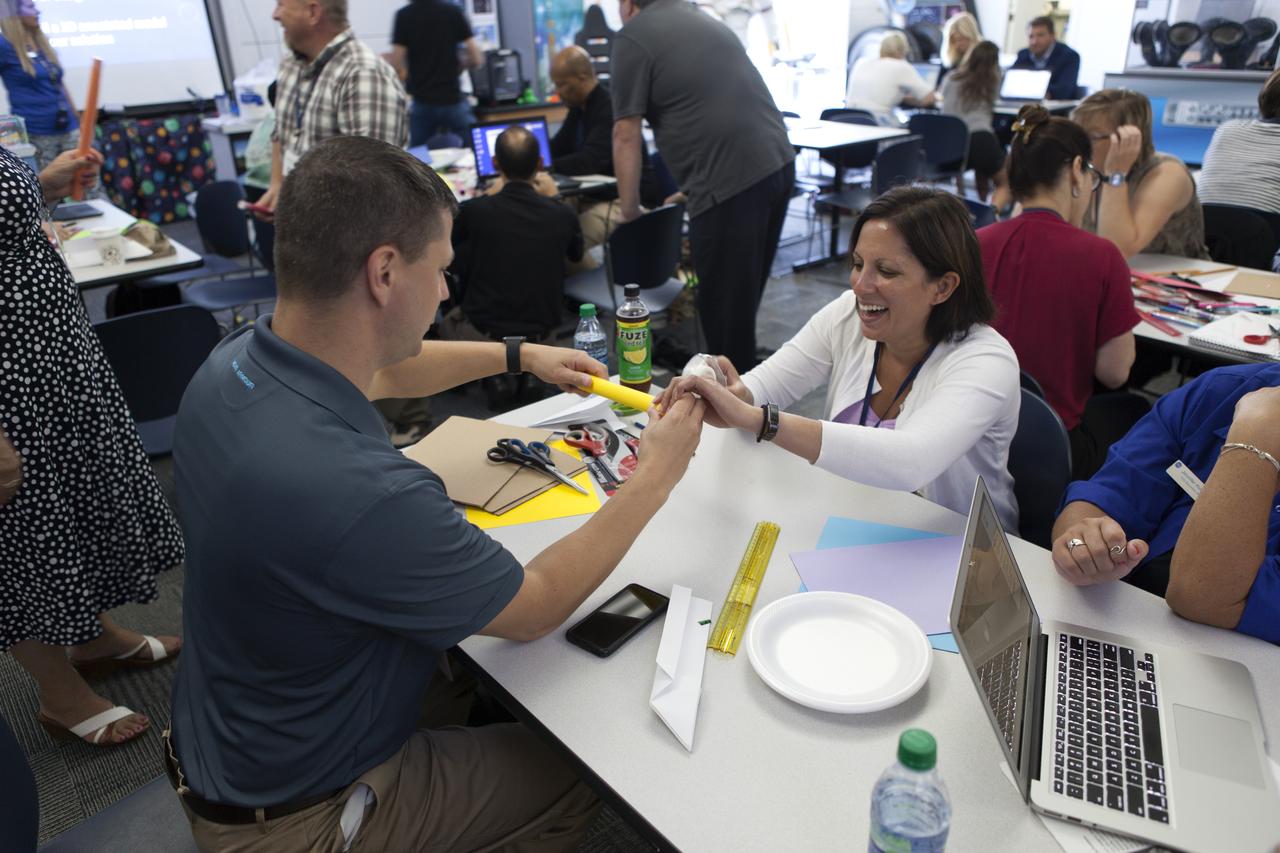
Teachers participate in the Rocketry Engineering Design Challenge during the 2017 GE Foundation High School STEM Integration Conference at the Center for Space Education at NASA's Kennedy Space Center. High school teachers from across the country took part in the week-long conference, which is designed to explore effective ways for teachers, schools and districts from across the country to integrate STEM throughout the curriculum. The conference is a partnership between GE Foundation and the National Science Teachers Association.
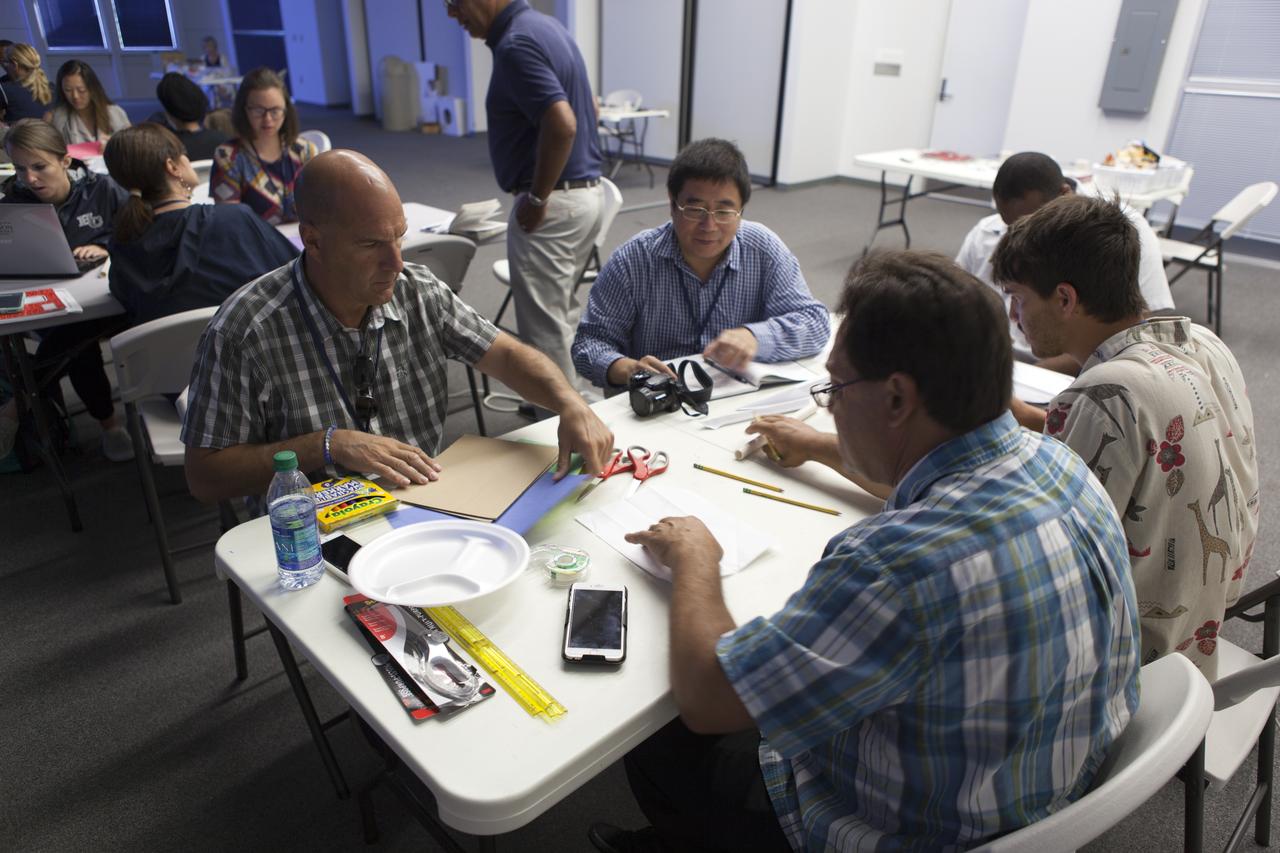
Teachers participate in the Rocketry Engineering Design Challenge during the 2017 GE Foundation High School STEM Integration Conference at the Center for Space Education at NASA's Kennedy Space Center. High school teachers from across the country took part in the week-long conference, which is designed to explore effective ways for teachers, schools and districts from across the country to integrate STEM throughout the curriculum. The conference is a partnership between GE Foundation and the National Science Teachers Association.
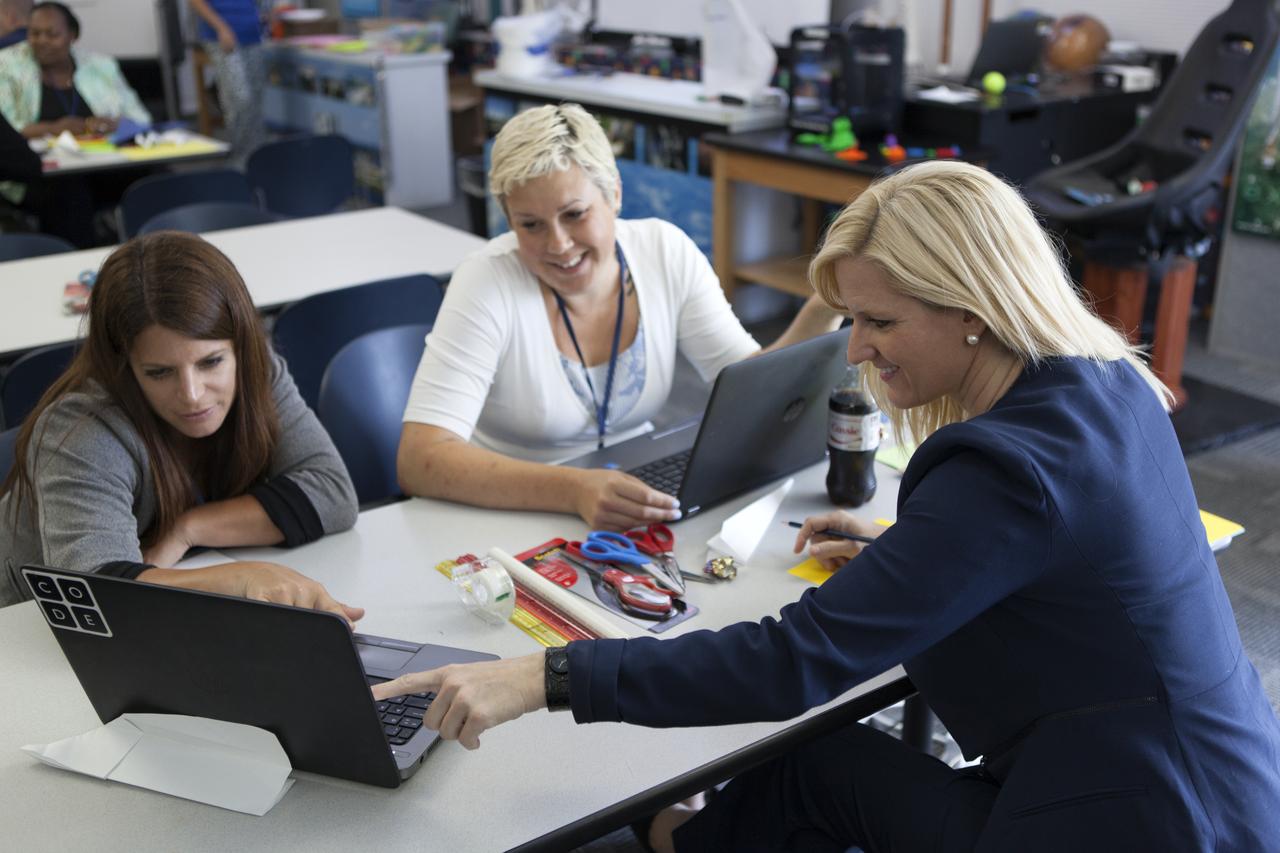
Teachers participate in the Rocketry Engineering Design Challenge during the 2017 GE Foundation High School STEM Integration Conference at the Center for Space Education at NASA's Kennedy Space Center. High school teachers from across the country took part in the week-long conference, which is designed to explore effective ways for teachers, schools and districts from across the country to integrate STEM throughout the curriculum. The conference is a partnership between GE Foundation and the National Science Teachers Association.
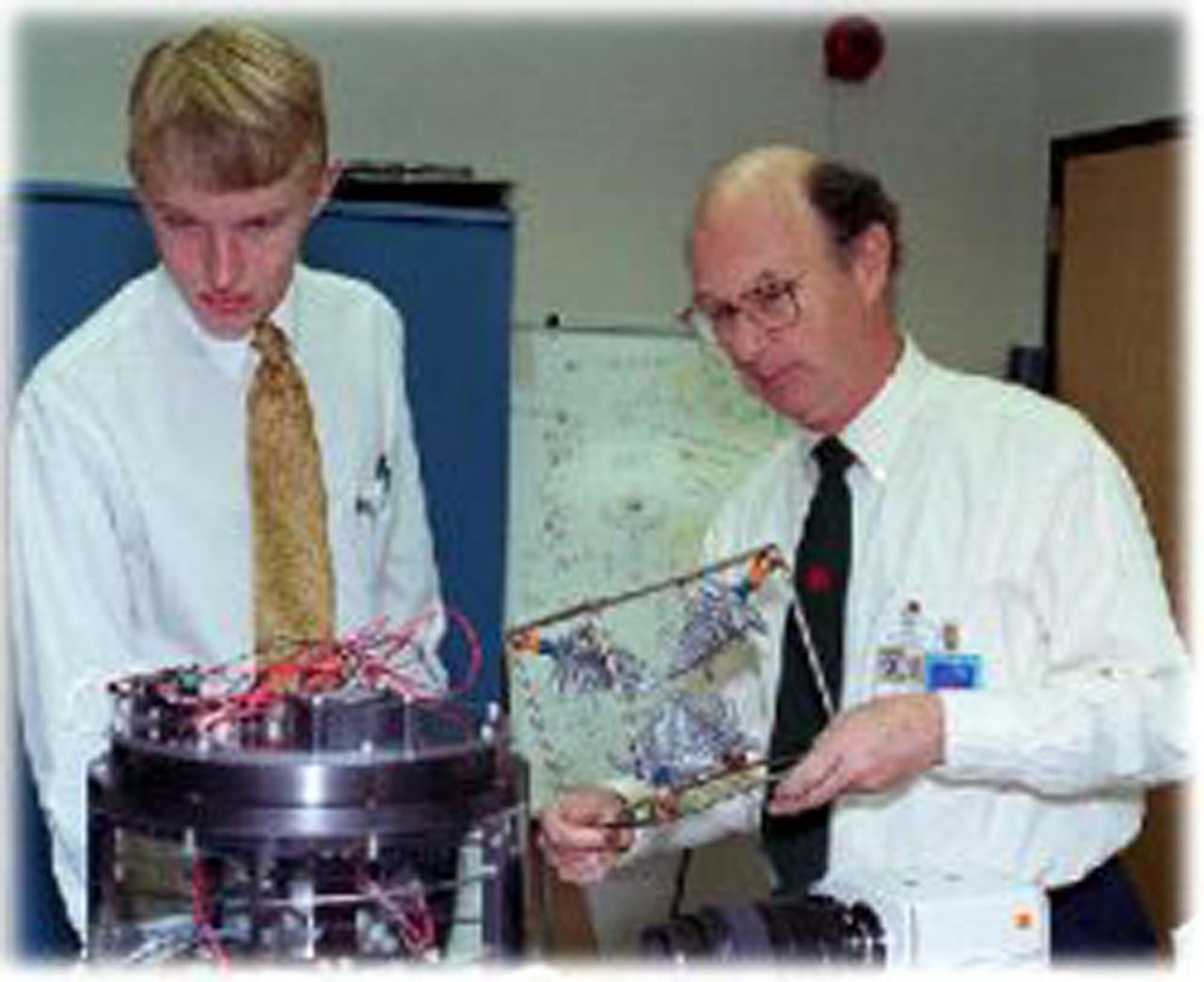
Dr. Donald Gilles, the Discipline Scientist for Materials Science in NASA's Microgravity Materials Science and Applications Department, demonstrates to Carl Dohrman a model of dendrites, the branch-like structures found in many metals and alloys. Dohrman was recently selected by the American Society for Metals International as their 1999 ASM International Foundation National Merit Scholar. The University of Illinois at Urbana-Champaign freshman recently toured NASA's materials science facilities at the Marshall Space Flight Center.

Dr. Phoebe Cohen, Professor of Geosciences, Williams College, speaks on a panel at the “Ancient Earth, Alien Earths” Event at NASA Headquarters in Washington, DC Wednesday, August 20, 2014. The event was sponsored by NASA, the National Science Foundation (NSF), and the Smithsonian Institution and was moderated by Dr. David H. Grinspoon, Senior Scientist at the Planetary Science Institute. Six scientists discussed how research on early Earth could help guide our search for habitable planets orbiting other stars. Photo Credit: (NASA/Aubrey Gemignani)
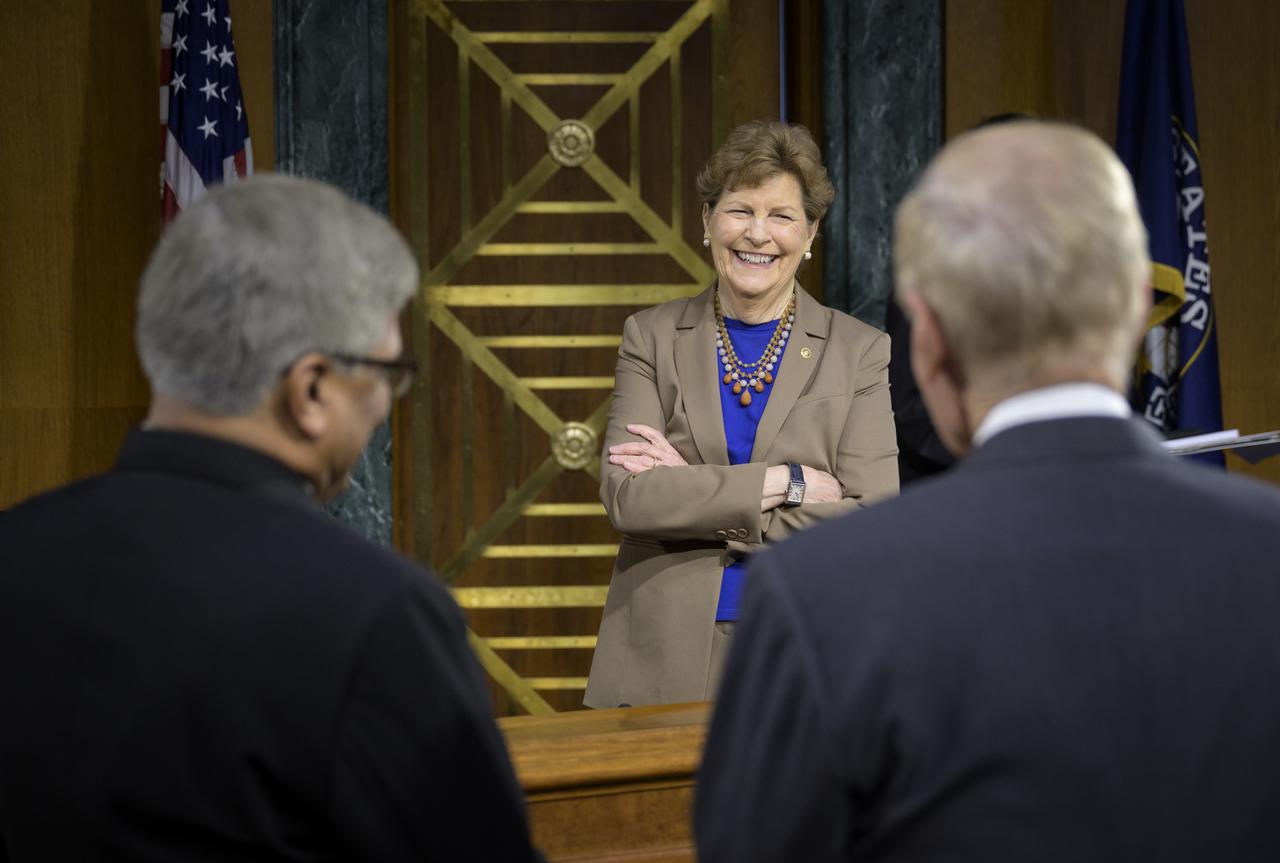
Senator Jeanne Shaheen, D-N.H., Chair Senate Appropriations’ Commerce, Justice, Science, and Related Agencies subcommittee talks with National Science Foundation Director Sethuraman Panchanathan, left, and NASA Administrator Bill Nelson prior to a hearing, Tuesday, May 3, 2022, at the Dirksen Senate Office Building in Washington. Photo Credit: (NASA/Bill Ingalls)

Dr. Christopher House, Professor of Geosciences, Pennsylvania State University, speaks on a panel at the “Ancient Earth, Alien Earths” Event at NASA Headquarters in Washington, DC Wednesday, August 20, 2014. The event was sponsored by NASA, the National Science Foundation (NSF), and the Smithsonian Institution and was moderated by Dr. David H. Grinspoon, Senior Scientist at the Planetary Science Institute. Six scientists discussed how research on early Earth could help guide our search for habitable planets orbiting other stars. Photo Credit: (NASA/Aubrey Gemignani)

Dr. Dawn Sumner, Professor of Geology, UC Davis, speaks on a panel at the “Ancient Earth, Alien Earths” Event at NASA Headquarters in Washington, DC Wednesday, August 20, 2014. The event was sponsored by NASA, the National Science Foundation (NSF), and the Smithsonian Institution and was moderated by Dr. David H. Grinspoon, Senior Scientist at the Planetary Science Institute. Six scientists discussed how research on early Earth could help guide our search for habitable planets orbiting other stars. Photo Credit: (NASA/Aubrey Gemignani)

Dr. David H. Grinspoon, Senior Scientist, Planetary Science Institute, moderates a panel at the “Ancient Earth, Alien Earths” Event at NASA Headquarters in Washington, DC Wednesday, August 20, 2014. The event was sponsored by NASA, the National Science Foundation (NSF), and the Smithsonian Institution and highlighted how research on early Earth could help guide our search for habitable planets orbiting other stars. Photo Credit: (NASA/Aubrey Gemignani)

An audience member asks the panelists a question at the “Ancient Earth, Alien Earths” Event at NASA Headquarters in Washington, DC Wednesday, August 20, 2014. The event was sponsored by NASA, the National Science Foundation (NSF), and the Smithsonian Institution and was moderated by Dr. David H. Grinspoon, Senior Scientist at the Planetary Science Institute. Six scientists discussed how research on early Earth could help guide our search for habitable planets orbiting other stars. Photo Credit: (NASA/Aubrey Gemignani)
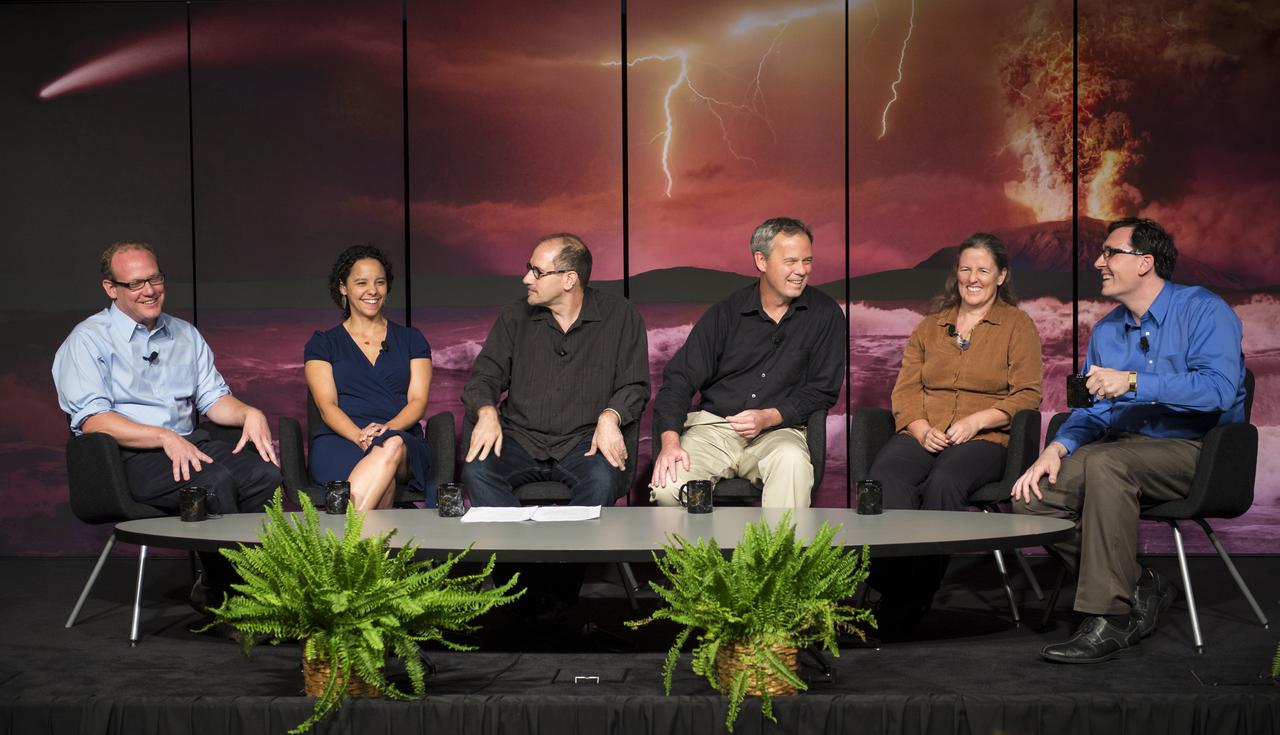
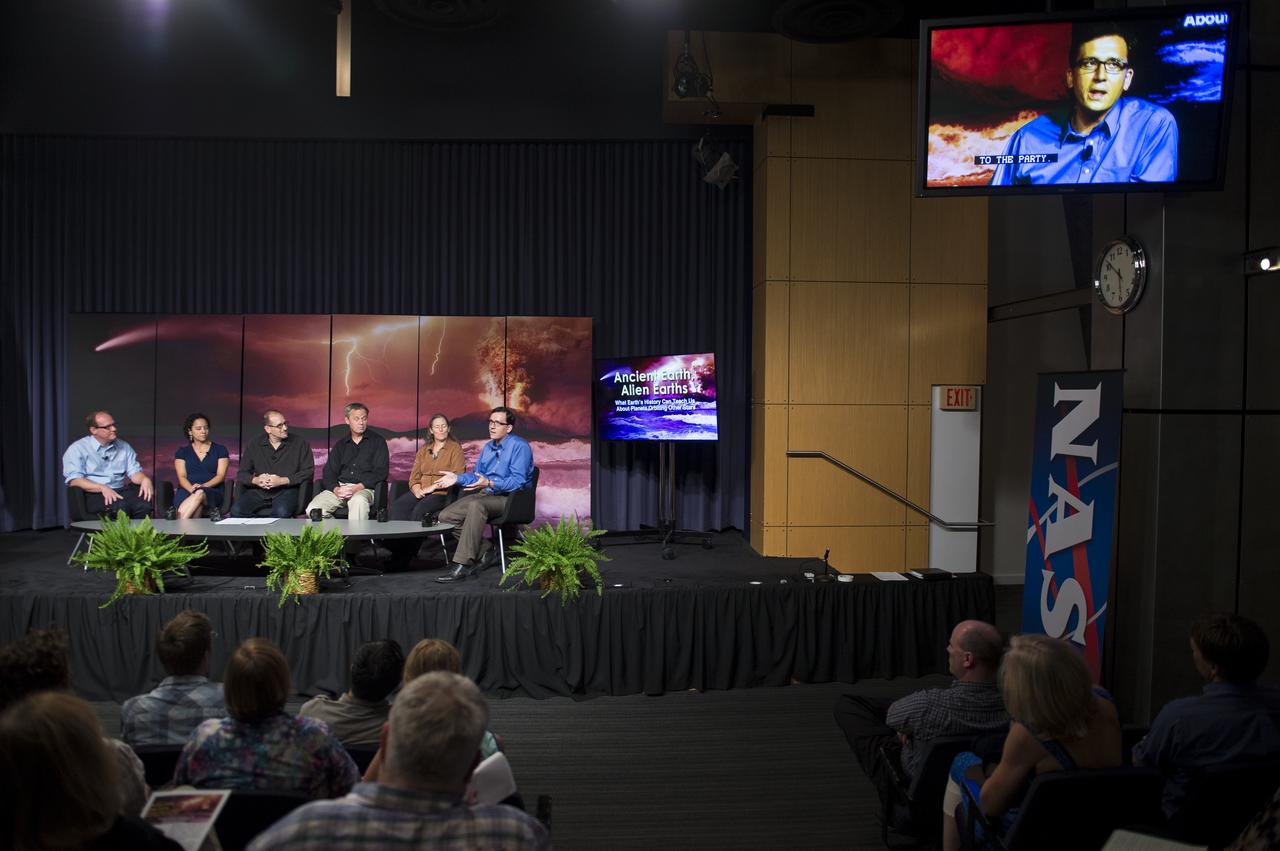
Panelists discuss how research on early Earth could help guide our search for habitable planets orbiting other stars at the “Ancient Earth, Alien Earths” Event at NASA Headquarters in Washington, DC Wednesday, August 20, 2014. The event was sponsored by NASA, the National Science Foundation (NSF), and the Smithsonian Institution and was moderated by Dr. David H. Grinspoon, Senior Scientist at the Planetary Science Institute. Photo Credit: (NASA/Aubrey Gemignani)

Dr. Timothy Lyons, Professor of Biogeochemistry, UC Riverside, speaks on a panel at the “Ancient Earth, Alien Earths” Event at NASA Headquarters in Washington, DC Wednesday, August 20, 2014. The event was sponsored by NASA, the National Science Foundation (NSF), and the Smithsonian Institution and was moderated by Dr. David H. Grinspoon, Senior Scientist at the Planetary Science Institute. Six scientists discussed how research on early Earth could help guide our search for habitable planets orbiting other stars. Photo Credit: (NASA/Aubrey Gemignani)

Cape Canaveral, Fla. -- Students listen intently as a laboratory technician describes a project that's being researched in Kennedy’s Space Life Sciences Laboratory (SLSL). High-school students from two Orlando, Fla., schools travelled to NASA’s Kennedy Space Center in Florida to participate in National Lab Day activities. During the event, about 80 students, toured various facilities and engaged in educational hands-on activities. National Lab Day is a partnership between federal agencies, foundations, professional societies and organizations devoted to promoting science, technology, engineering and math, or STEM, hands-on discovery-based laboratory experiences for students. Photo Credit: NASA/Frankie Martin
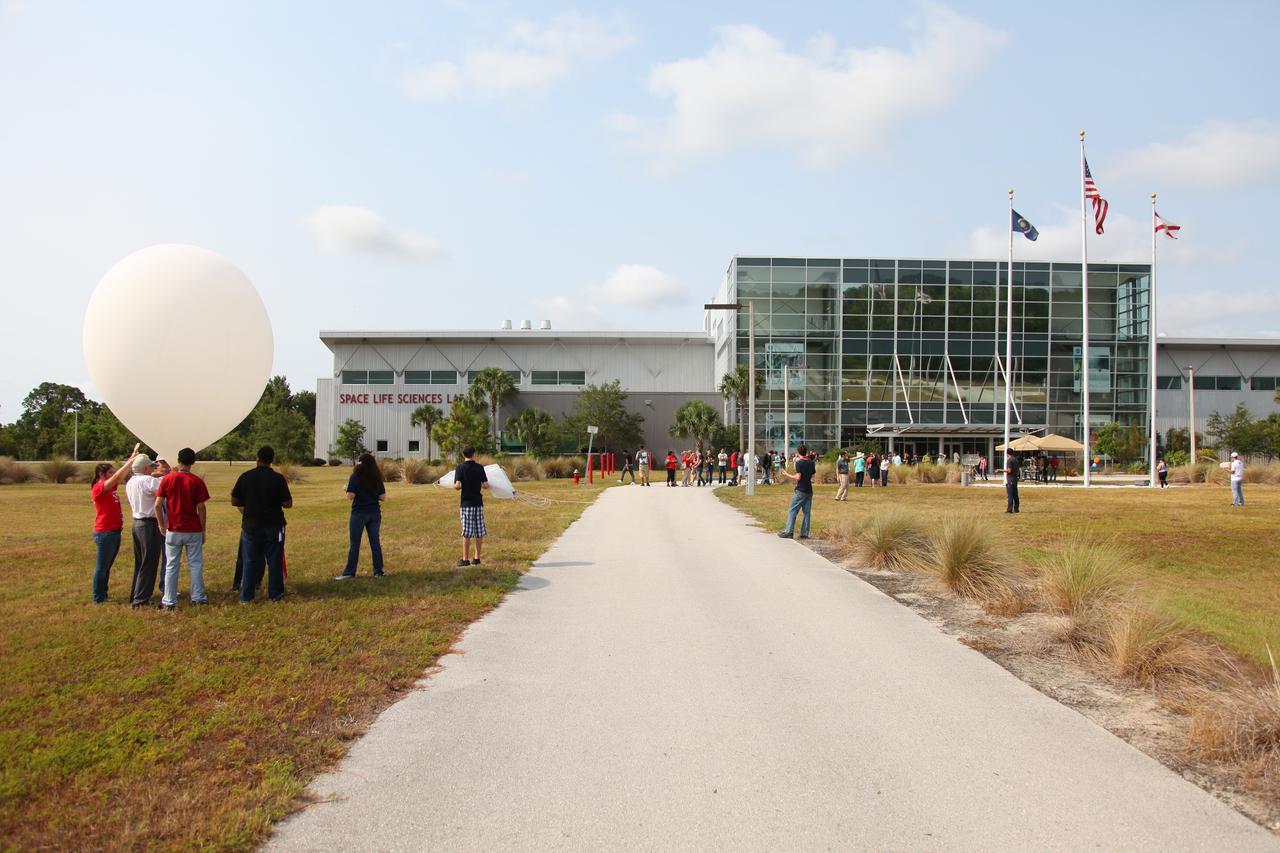
Cape Canaveral, Fla. -- Students participate in a high-altitude balloon experiment that's being conducted on the grounds of Kennedy’s Space Life Sciences Laboratory (SLSL). High-school students from two Orlando, Fla., schools travelled to NASA’s Kennedy Space Center in Florida to participate in National Lab Day activities. During the event, about 80 students, toured various facilities and engaged in educational hands-on activities. National Lab Day is a partnership between federal agencies, foundations, professional societies and organizations devoted to promoting science, technology, engineering and math, or STEM, hands-on discovery-based laboratory experiences for students. Photo Credit: NASA/Frankie Martin
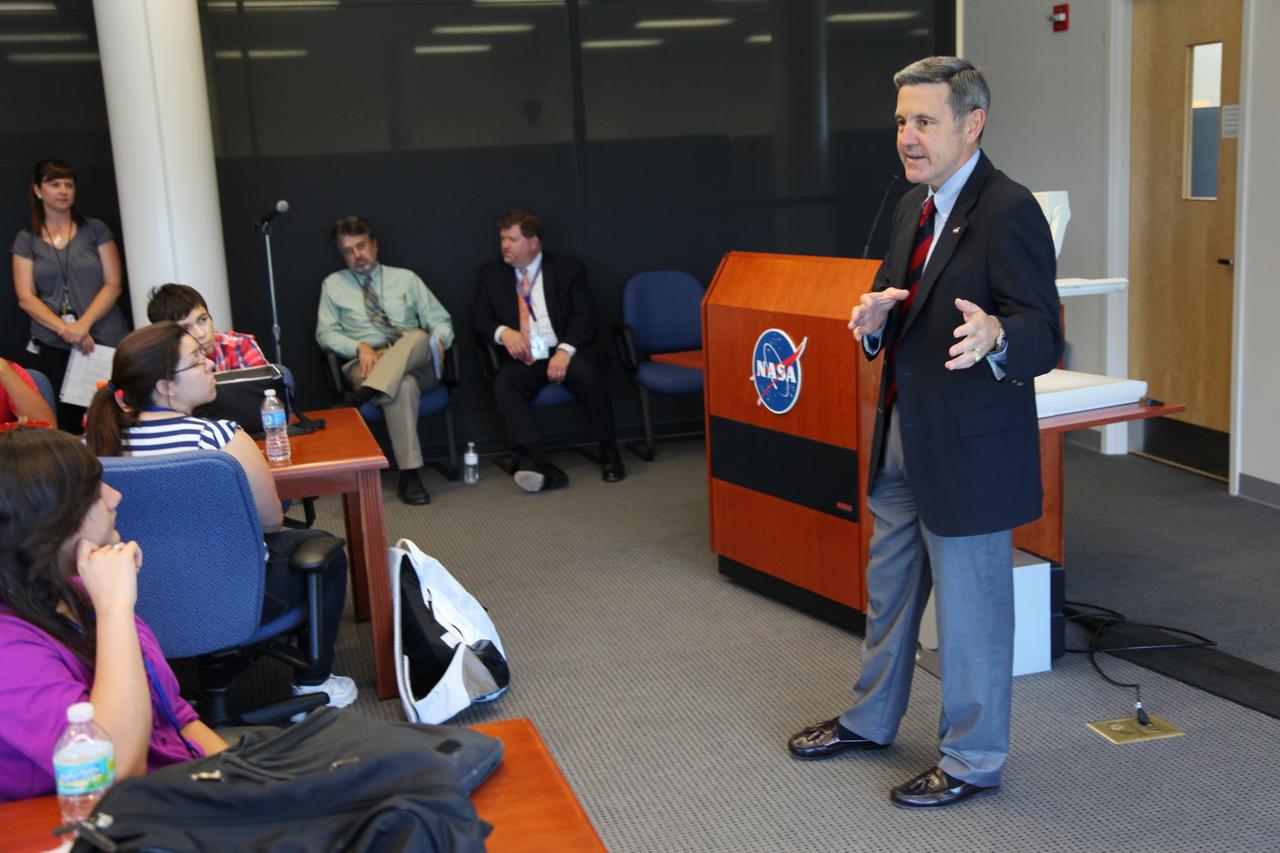
Cape Canaveral, Fla. -- Kennedy Center Director Bob Cabana speaks to the students after they participated in hands-on projects in Kennedy’s Space Life Sciences Laboratory (SLSL). High-school students from two Orlando, Fla., schools travelled to NASA’s Kennedy Space Center in Florida to participate in National Lab Day activities. During the event, about 80 students, toured various facilities and engaged in educational hands-on activities. National Lab Day is a partnership between federal agencies, foundations, professional societies and organizations devoted to promoting science, technology, engineering and math, or STEM, hands-on discovery-based laboratory experiences for students. Photo Credit: NASA/Frankie Martin
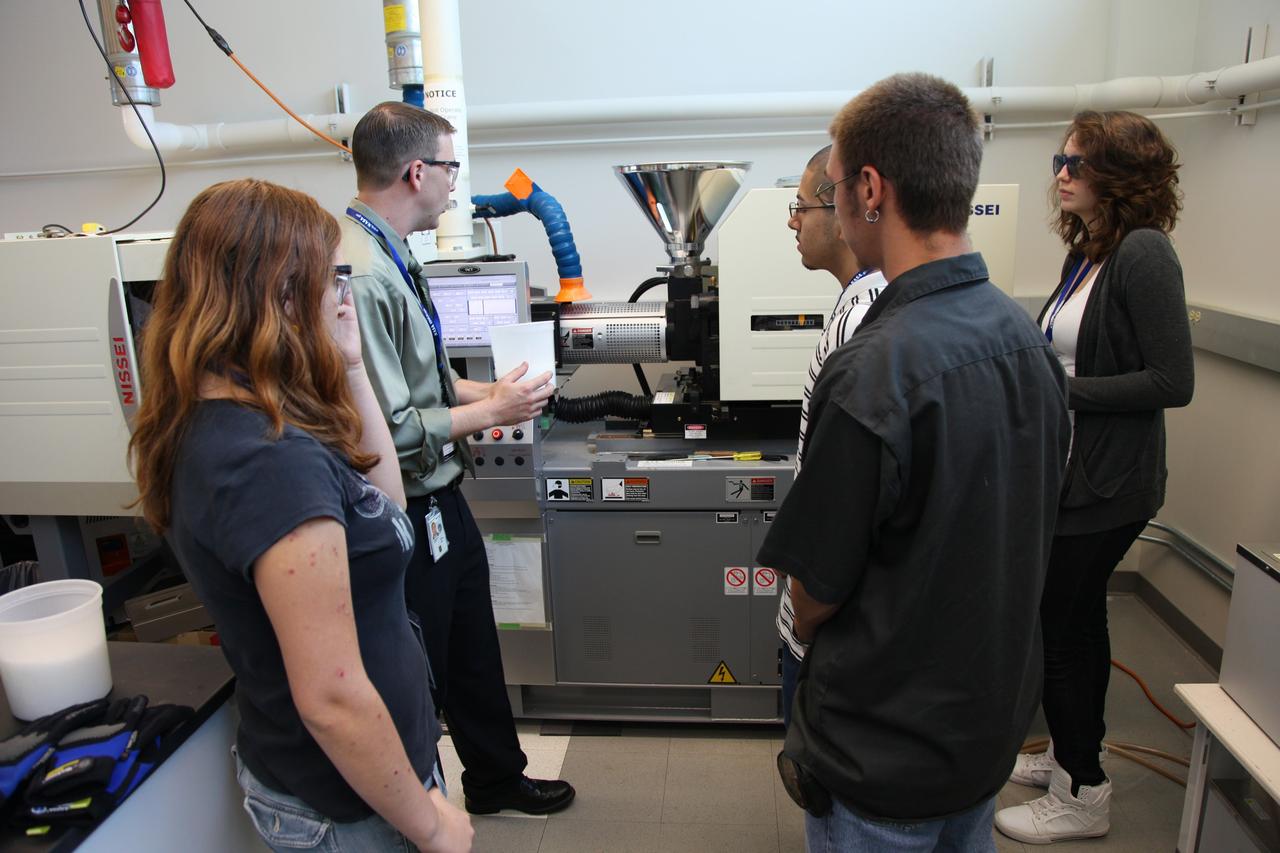
Cape Canaveral, Fla. -- Students listen intently as a laboratory technician describes the experiment being conducted in Kennedy’s Space Life Sciences Laboratory (SLSL). High-school students from two Orlando, Fla., schools travelled to NASA’s Kennedy Space Center in Florida to participate in National Lab Day activities. During the event, about 80 students, toured various facilities and engaged in educational hands-on activities. National Lab Day is a partnership between federal agencies, foundations, professional societies and organizations devoted to promoting science, technology, engineering and math, or STEM, hands-on discovery-based laboratory experiences for students. Photo Credit: NASA/Frankie Martin
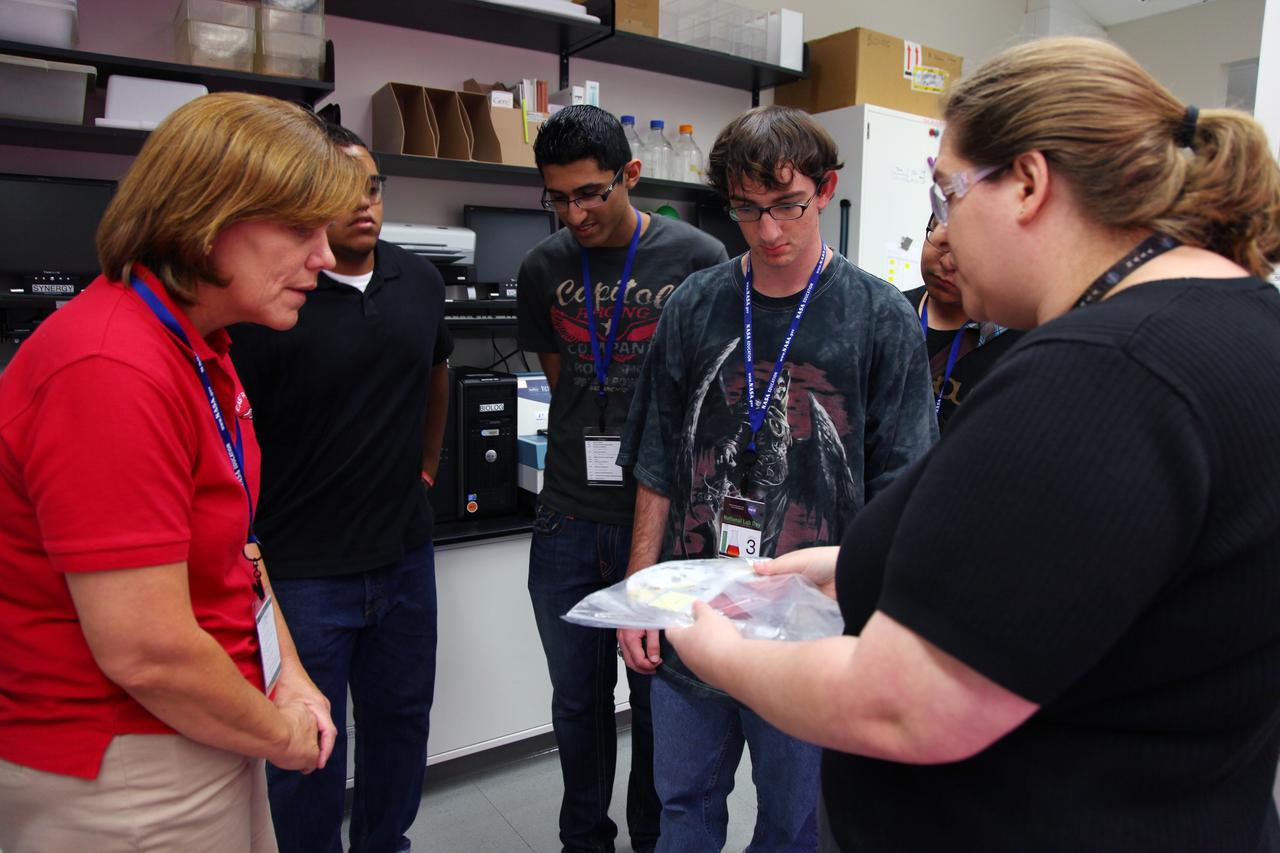
Cape Canaveral, Fla. -- Students listen intently as a laboratory technician describes a project that's being researched in Kennedy’s Space Life Sciences Laboratory (SLSL). High-school students from two Orlando, Fla., schools travelled to NASA’s Kennedy Space Center in Florida to participate in National Lab Day activities. During the event, about 80 students, toured various facilities and engaged in educational hands-on activities. National Lab Day is a partnership between federal agencies, foundations, professional societies and organizations devoted to promoting science, technology, engineering and math, or STEM, hands-on discovery-based laboratory experiences for students. Photo Credit: NASA/Frankie Martin

Cape Canaveral, Fla. -- Students participate in a high-altitude balloon experiment that's being conducted on the grounds of Kennedy’s Space Life Sciences Laboratory (SLSL). High-school students from two Orlando, Fla., schools travelled to NASA’s Kennedy Space Center in Florida to participate in National Lab Day activities. During the event, about 80 students, toured various facilities and engaged in educational hands-on activities. National Lab Day is a partnership between federal agencies, foundations, professional societies and organizations devoted to promoting science, technology, engineering and math, or STEM, hands-on discovery-based laboratory experiences for students. Photo Credit: NASA/Frankie Martin
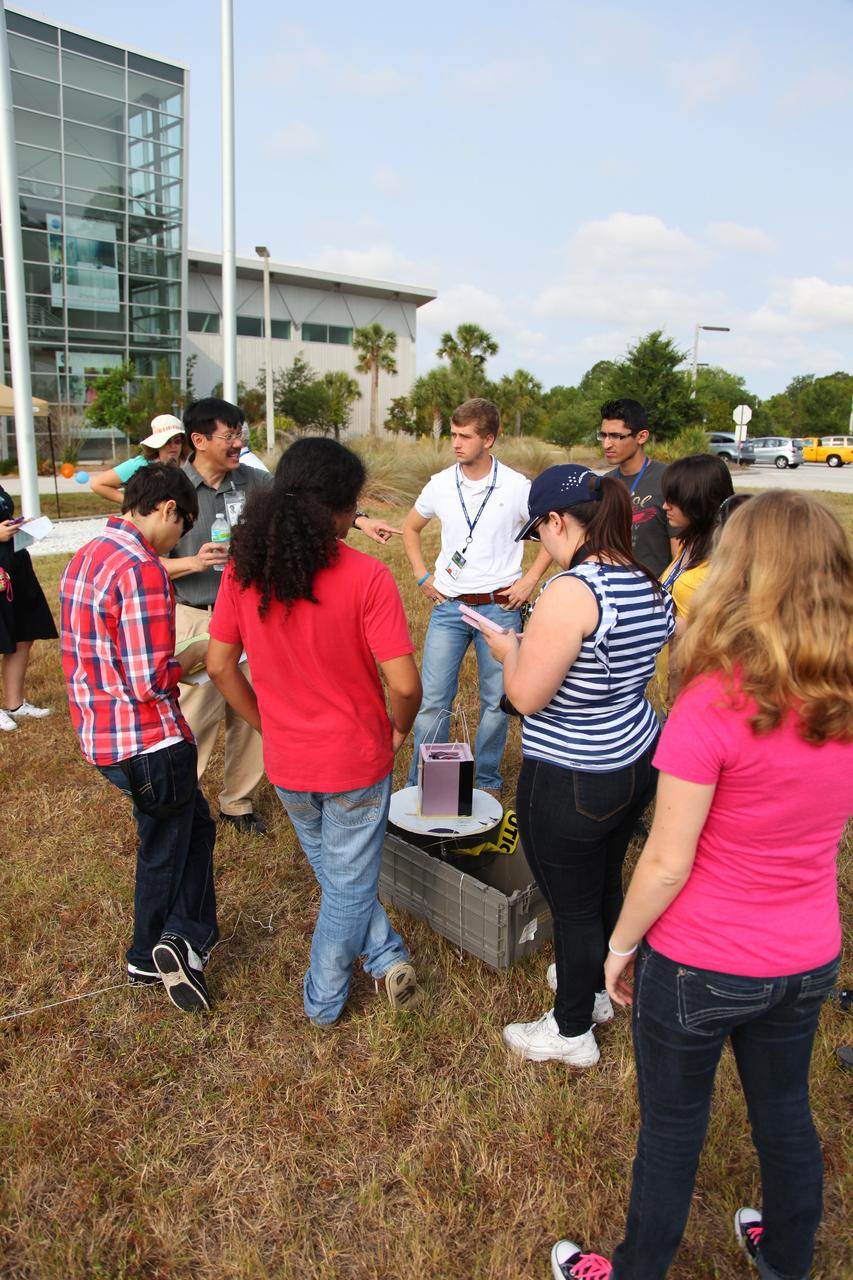
Cape Canaveral, Fla. -- Students listen intently as a laboratory technician describes the high-altitude balloon experiment that's being conducted on the grounds of Kennedy’s Space Life Sciences Laboratory (SLSL). High-school students from two Orlando, Fla., schools travelled to NASA’s Kennedy Space Center in Florida to participate in National Lab Day activities. During the event, about 80 students, toured various facilities and engaged in educational hands-on activities. National Lab Day is a partnership between federal agencies, foundations, professional societies and organizations devoted to promoting science, technology, engineering and math, or STEM, hands-on discovery-based laboratory experiences for students. Photo Credit: NASA/Frankie Martin
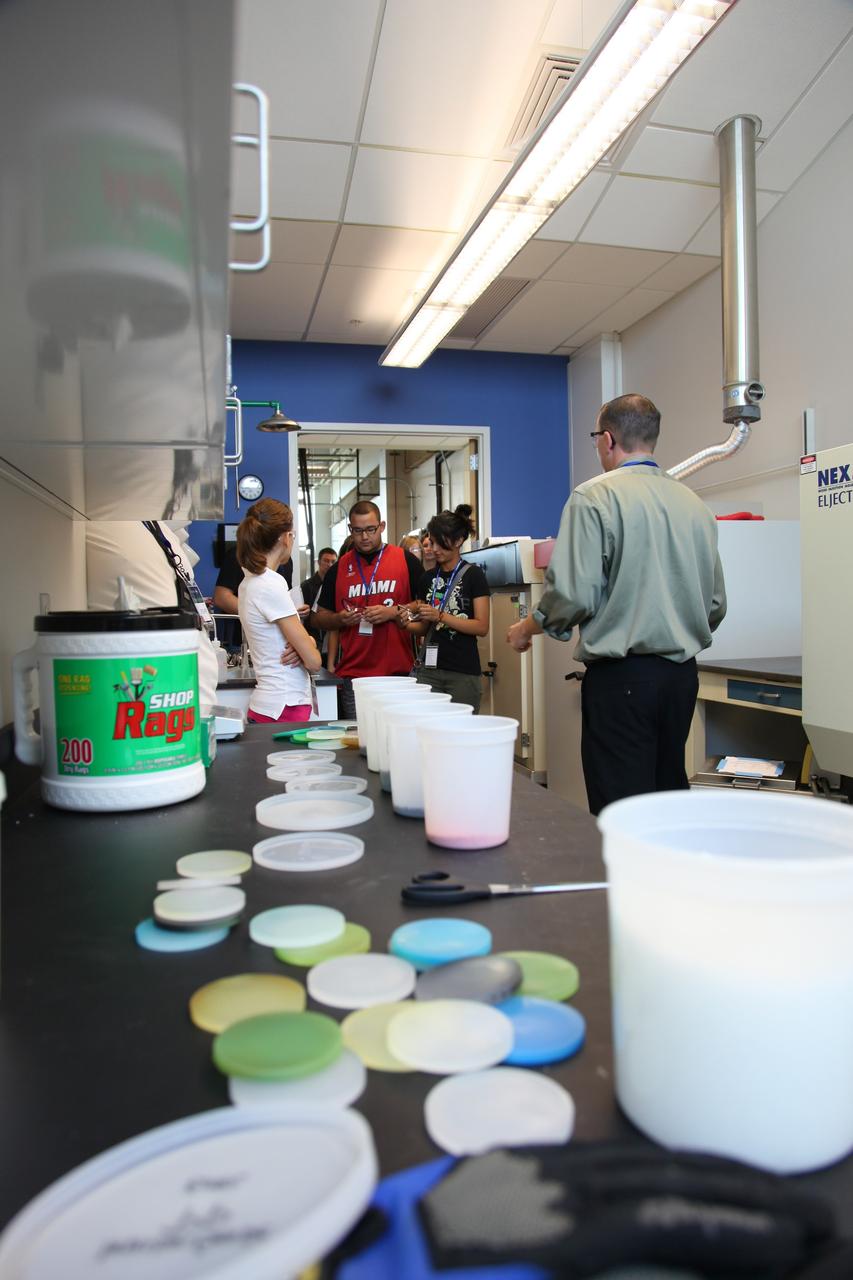
Cape Canaveral, Fla. -- Students participate in a hands-on activity as a laboratory technician looks on in Kennedy’s Space Life Sciences Laboratory (SLSL). High-school students from two Orlando, Fla., schools travelled to NASA’s Kennedy Space Center in Florida to participate in National Lab Day activities. During the event, about 80 students, toured various facilities and engaged in educational hands-on activities. National Lab Day is a partnership between federal agencies, foundations, professional societies and organizations devoted to promoting science, technology, engineering and math, or STEM, hands-on discovery-based laboratory experiences for students. Photo Credit: NASA/Frankie Martin
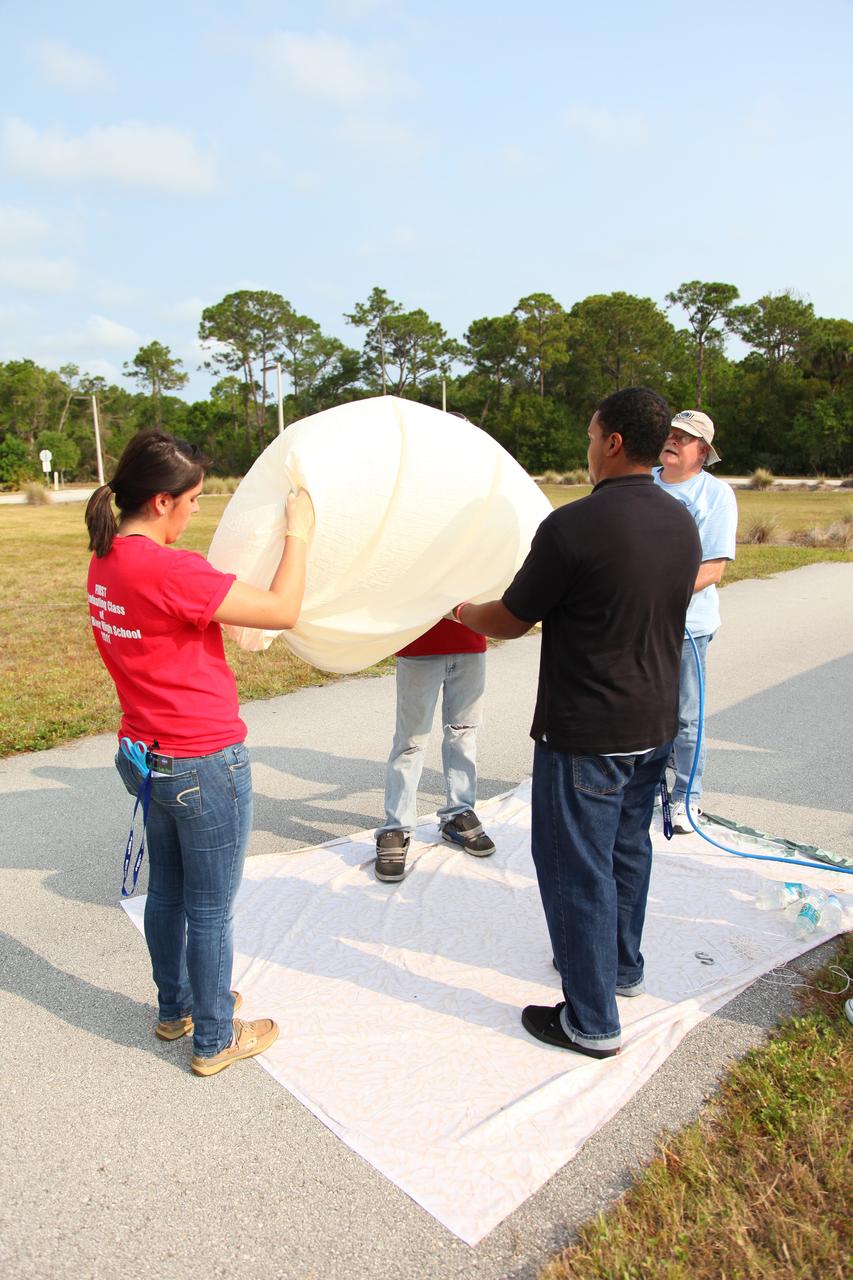
Cape Canaveral, Fla. -- Students participate in a high-altitude balloon experiment that's being conducted on the grounds of Kennedy’s Space Life Sciences Laboratory (SLSL). High-school students from two Orlando, Fla., schools travelled to NASA’s Kennedy Space Center in Florida to participate in National Lab Day activities. During the event, about 80 students, toured various facilities and engaged in educational hands-on activities. National Lab Day is a partnership between federal agencies, foundations, professional societies and organizations devoted to promoting science, technology, engineering and math, or STEM, hands-on discovery-based laboratory experiences for students. Photo Credit: NASA/Frankie Martin
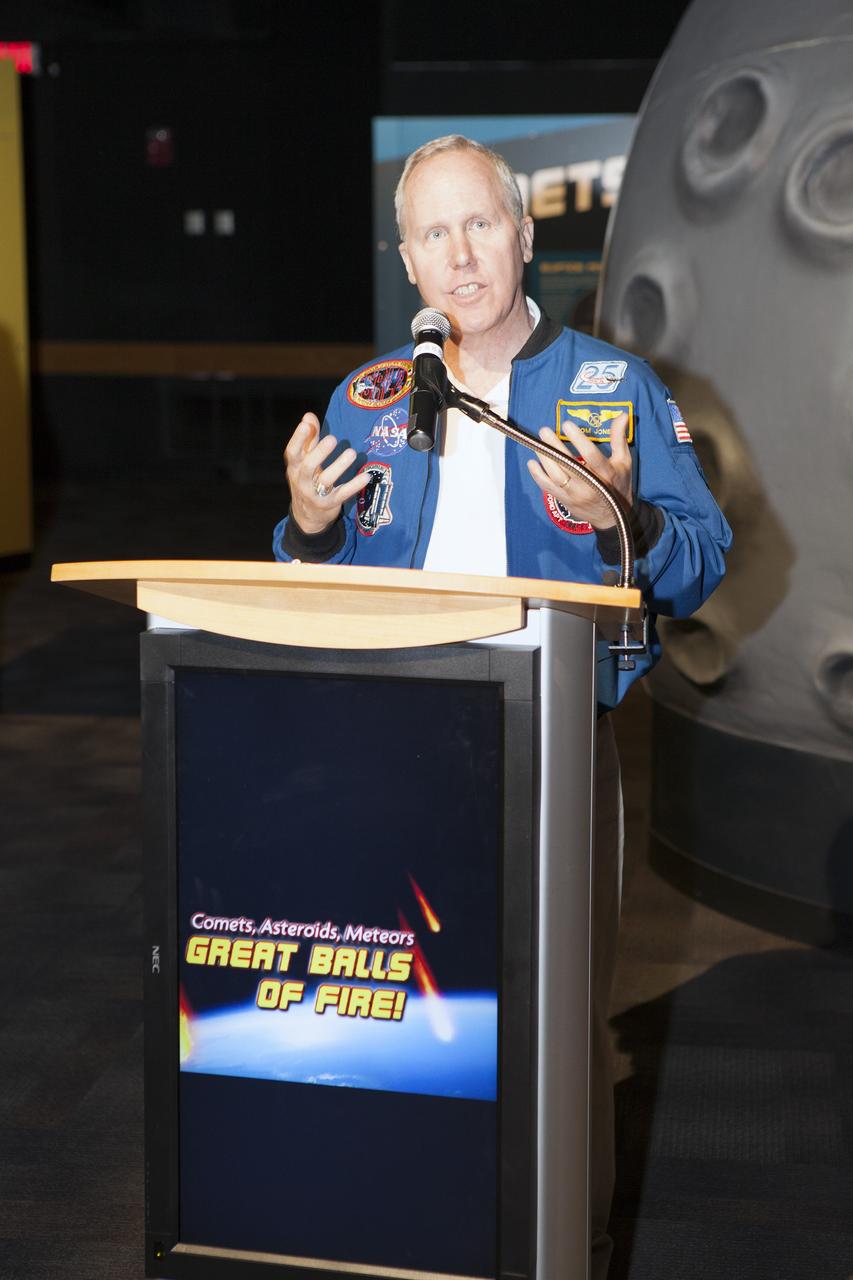
CAPE CANAVERAL, Fla. – Former NASA astronaut Tom Jones welcomes visitors to the grand opening of the Great Balls of Fire exhibit at NASA’s Kennedy Space Center Visitor Complex in Florida. Great Balls of Fire shares the story of the origins of our solar system, asteroids and comets and their possible impacts and risks. The 1,500-square-foot exhibit, located in the East Gallery of the IMAX theatre at the visitor complex, features several interactive displays, real meteorites and replica asteroid models. The exhibit is a production of The Space Science Institute's National Center for Interactive Learning. It is a traveling exhibition that also receives funding from NASA and the National Science Foundation. Photo credit: NASA/Daniel Casper
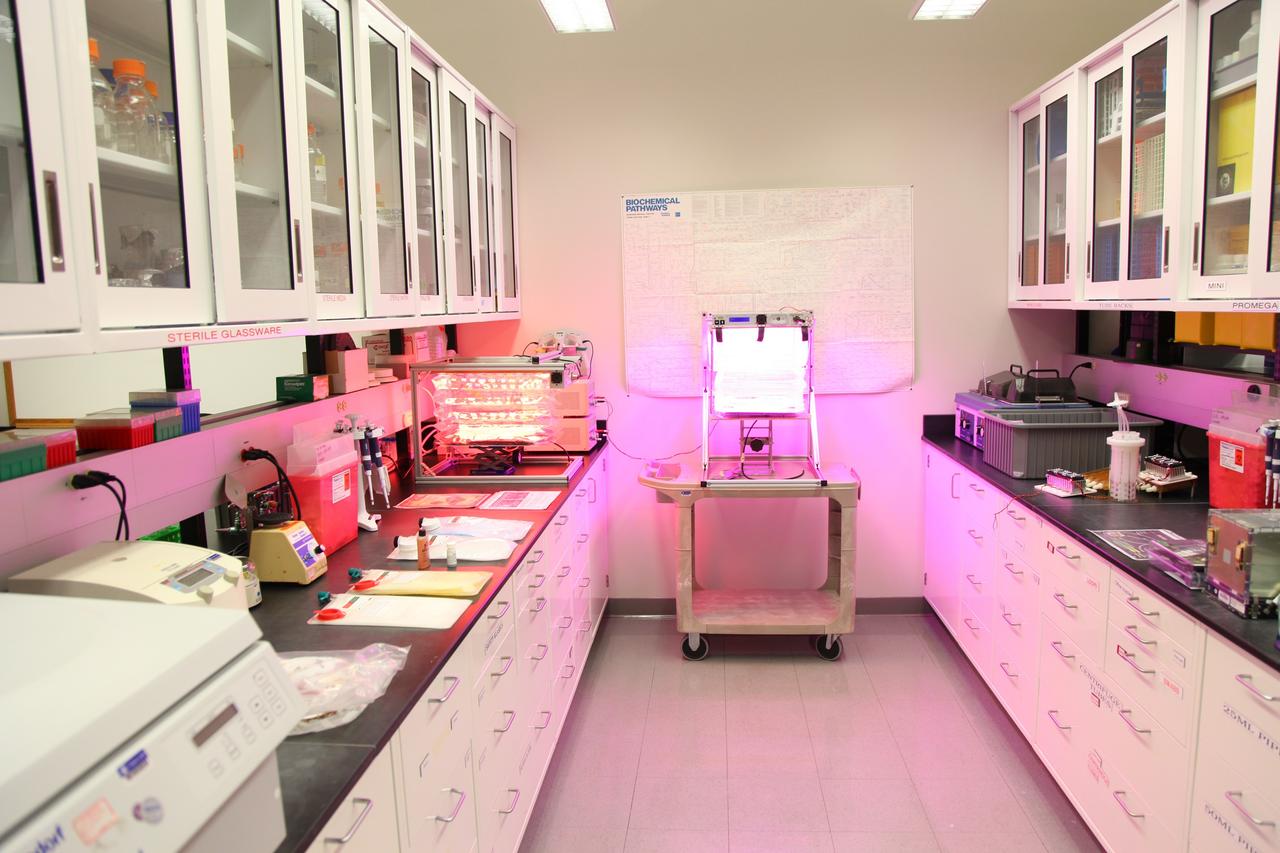
Cape Canaveral, Fla. -- A research laboratory is prepared for students to perform hands-on activities in Kennedy’s Space Life Sciences Laboratory (SLSL). High-school students from two Orlando, Fla., schools travelled to NASA’s Kennedy Space Center in Florida to participate in National Lab Day activities. During the event, about 80 students, toured various facilities and engaged in educational hands-on activities. National Lab Day is a partnership between federal agencies, foundations, professional societies and organizations devoted to promoting science, technology, engineering and math, or STEM, hands-on discovery-based laboratory experiences for students. Photo Credit: NASA/Frankie Martin
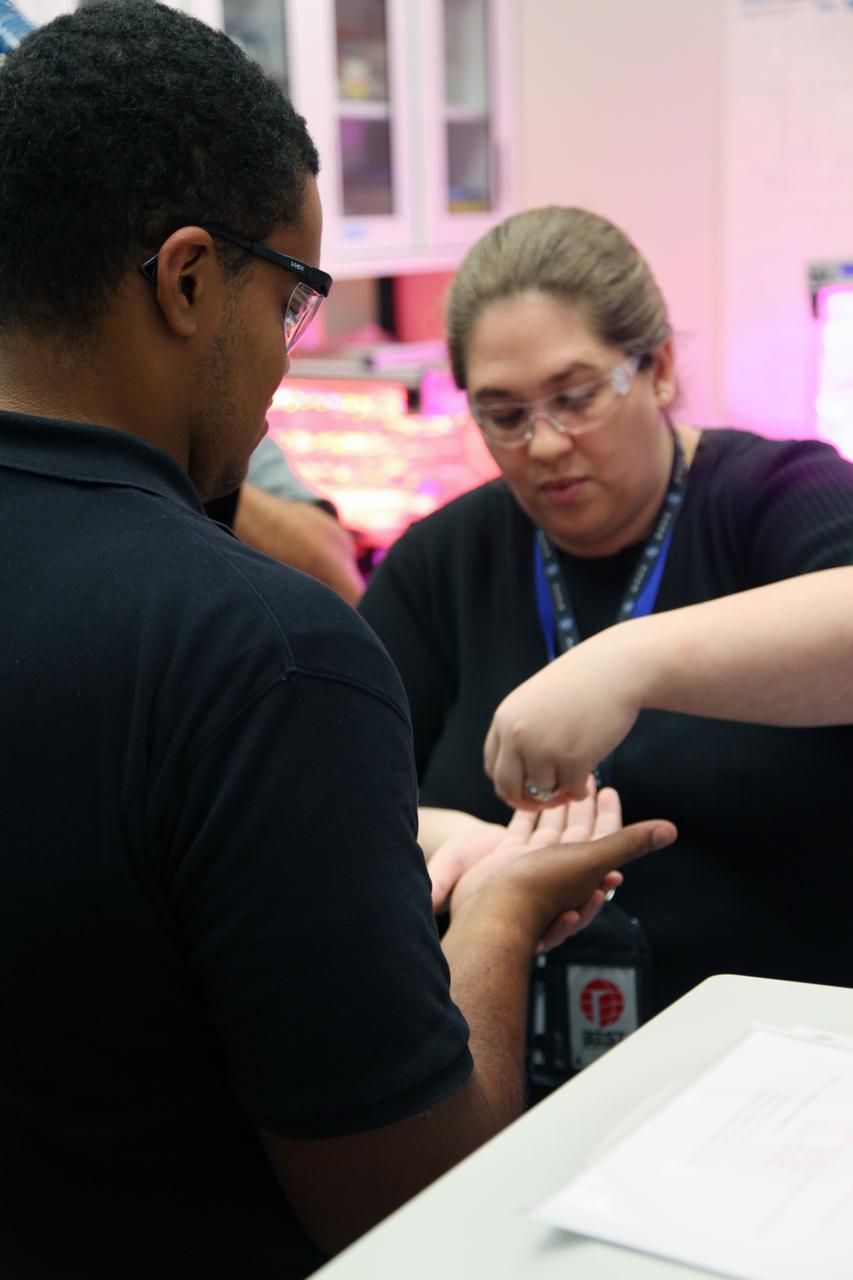
Cape Canaveral, Fla. -- A student participates in a hands-on activity as a laboratory technician assists in Kennedy’s Space Life Sciences Laboratory (SLSL). High-school students from two Orlando, Fla., schools travelled to NASA’s Kennedy Space Center in Florida to participate in National Lab Day activities. During the event, about 80 students, toured various facilities and engaged in educational hands-on activities. National Lab Day is a partnership between federal agencies, foundations, professional societies and organizations devoted to promoting science, technology, engineering and math, or STEM, hands-on discovery-based laboratory experiences for students. Photo Credit: NASA/Frankie Martin
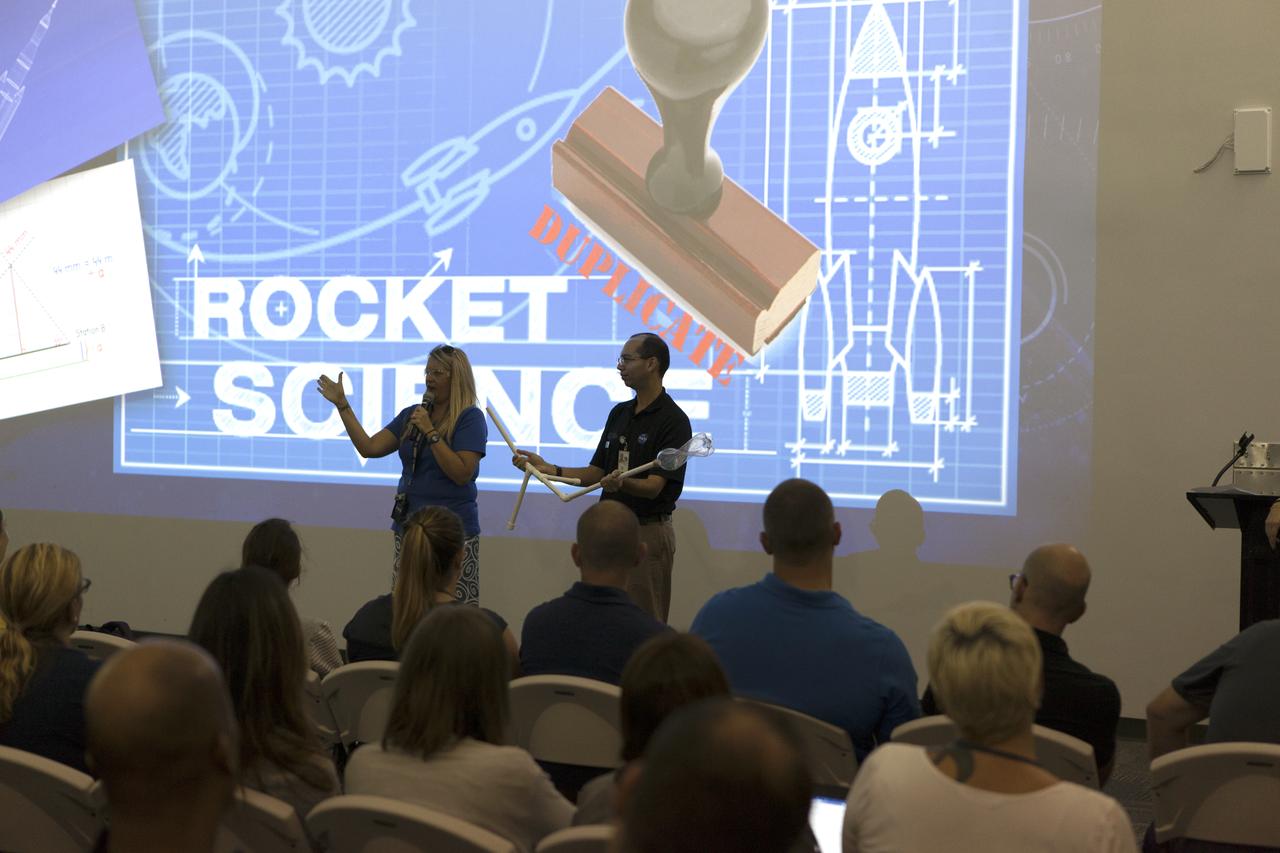
Education Specialists Lynn Dotson, left, of the NASA Public Engagement Center, and Lester Morales, right, of Texas State University's NASA STEM Educator Professional Development Collaborative, explain the Rocketry Engineering Design Challenge to teachers participating in the 2017 GE Foundation High School STEM Integration Conference at the Center for Space Education at NASA's Kennedy Space Center. High school teachers from across the country took part in the week-long conference, which is designed to explore effective ways for teachers, schools and districts from across the country to integrate STEM throughout the curriculum. The conference is a partnership between GE Foundation and the National Science Teachers Association.
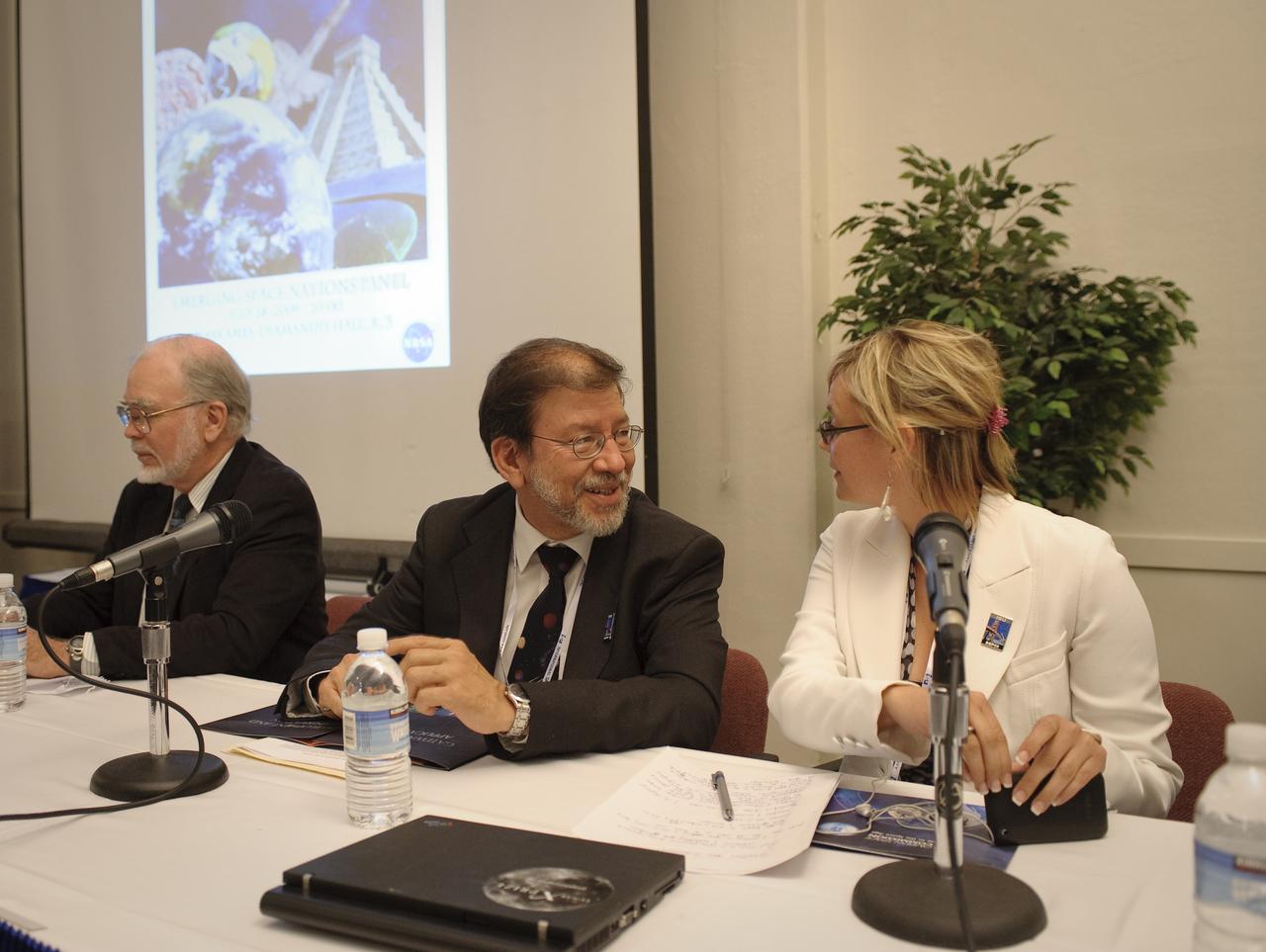
International Space University (ISU) and Singularity University (SU) Emerging Space Nations Panel held at NASA's Ames Research Center 2009 host site. (From let to right) The panel moderator, Ray Williamson, ISU SSP09 distinguished lecturer and exectuive director of the Secure World Foundation and panelsists Sergio Camacho, secretary genreal, Regional Center for Space Science and Tecnology Education fo rLatin America and the Caribbean, and Nicole Jordan, associate liaison for space prizes for the X Prize Foundation, Playa Vista, Calif., prepare before the discussion begins.
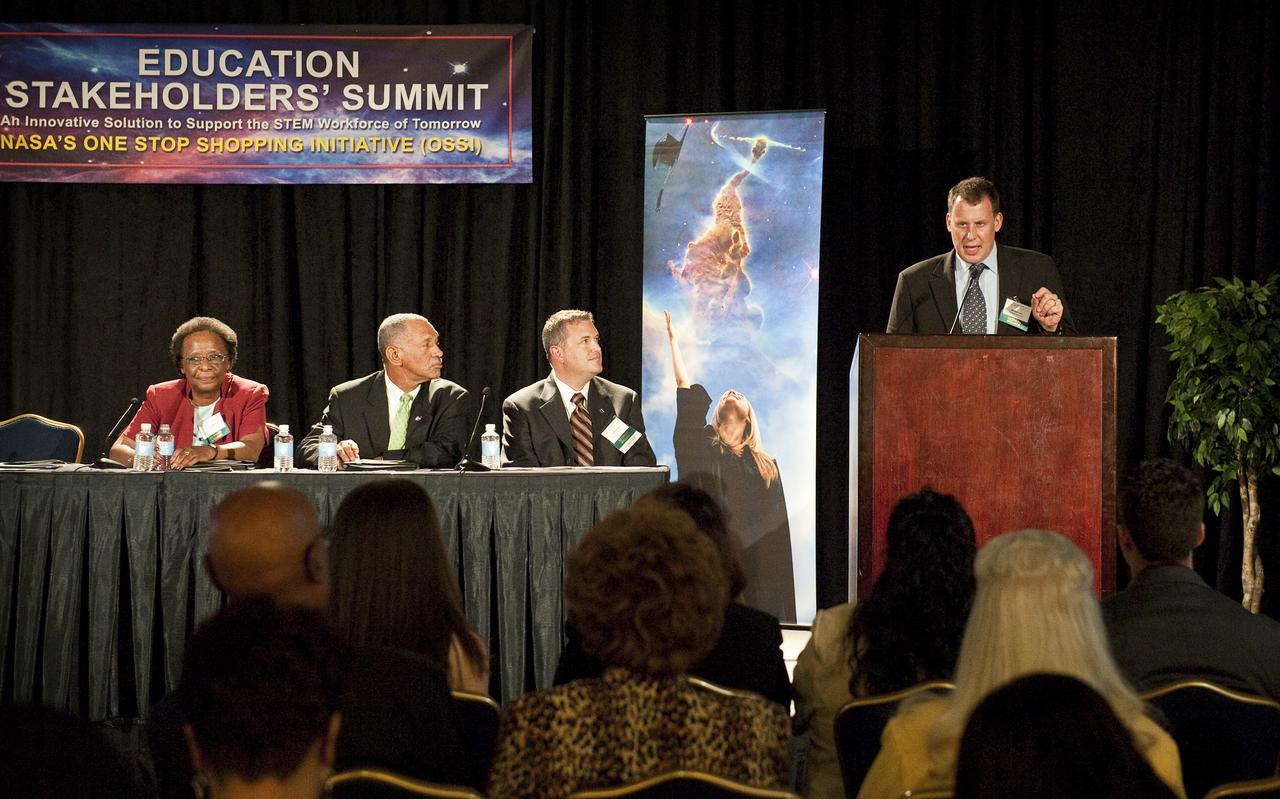
Special Assitant for STEM Education, U. S. Department of Education, Michael Lach, far right, addresses guests at the NASA Education Stakeholders’ Summit One Stop Shopping Initiative (OSSI), Monday, Sep. 13, 2010, at the Westfields Marriott Conference Center in Chantilly, VA. Seated from right are James Stofan, NASA Acting Associate Administrator for Education; Charles Bolden, NASA Administrator; and Cora B. Marrett, Acting Director, National Science Foundation. (Photo Credit: NASA/Carla Cioffi)

NASA Administrator Charles Bolden, left, speaks with Melinda French Gates, of the Bill & Melinda Gates Foundation, right, prior to the start of an event at the National Press Club in Washington, Tuesday, Feb. 23, 2010. NASA is working with Univision Communications Inc. to develop a partnership in support of the Spanish-language media outlet's initiative to improve high school graduation rates, prepare Hispanic students for college, and encourage them to pursue careers in science, technology, engineering and mathematics, or STEM, disciplines. Photo Credit: (NASA/Bill Ingalls)
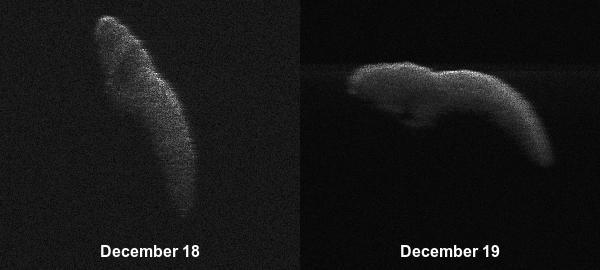
These two radar images of near-Earth asteroid 2003 SD220 were obtained on Dec. 18 and 19 by coordinating observations with the Arecibo Observatory's 1,000-foot (305-meter) antenna in Puerto Rico and the National Science Foundation's (NSF) 330-foot (100-meter) Green Bank Telescope in West Virginia. The radar images reveal the asteroid is at least one mile (1.6 kilometers) long. https://photojournal.jpl.nasa.gov/catalog/PIA22969
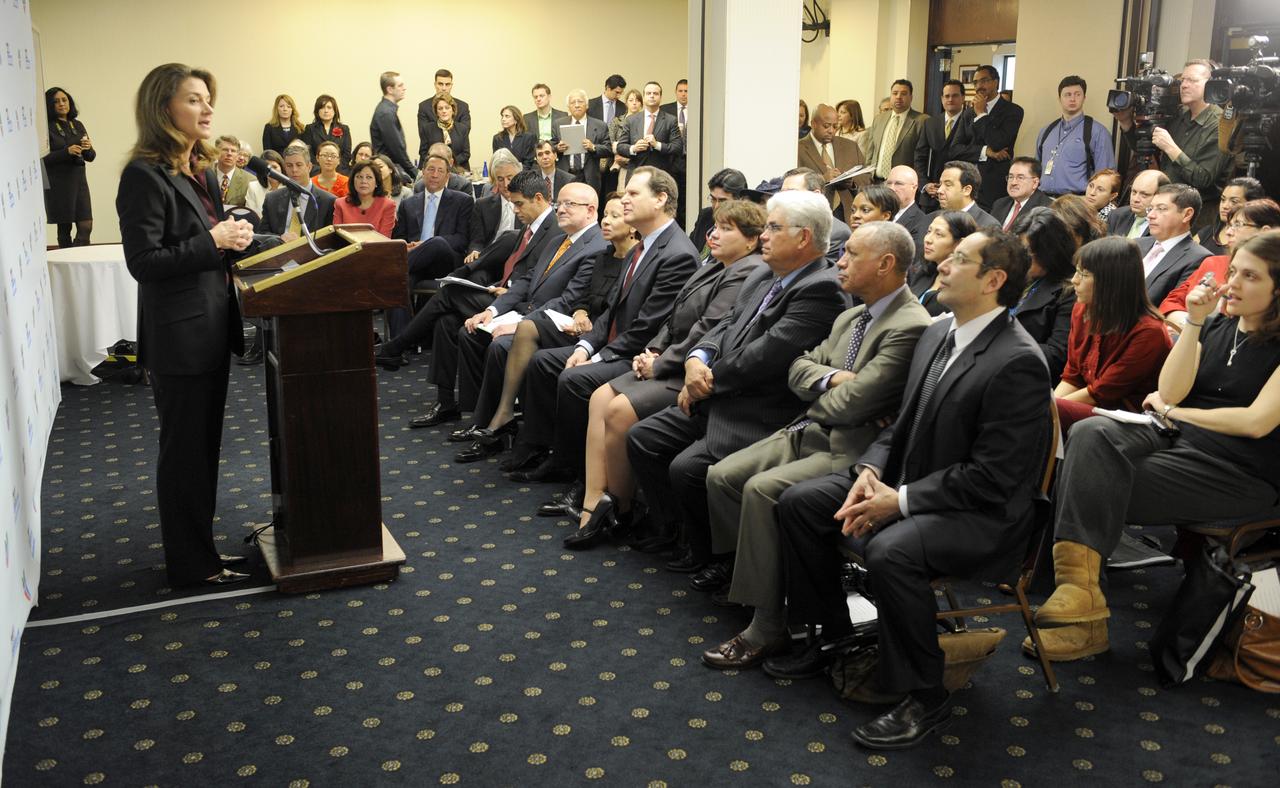
Melinda French Gates, of the Bill & Melinda Gates Foundation speaks at an event at the National Press Club in Washington, Tuesday, Feb. 23, 2010. NASA is working with Univision Communications Inc. to develop a partnership in support of the Spanish-language media outlet's initiative to improve high school graduation rates, prepare Hispanic students for college, and encourage them to pursue careers in science, technology, engineering and mathematics, or STEM, disciplines. Photo Credit: (NASA/Bill Ingalls)
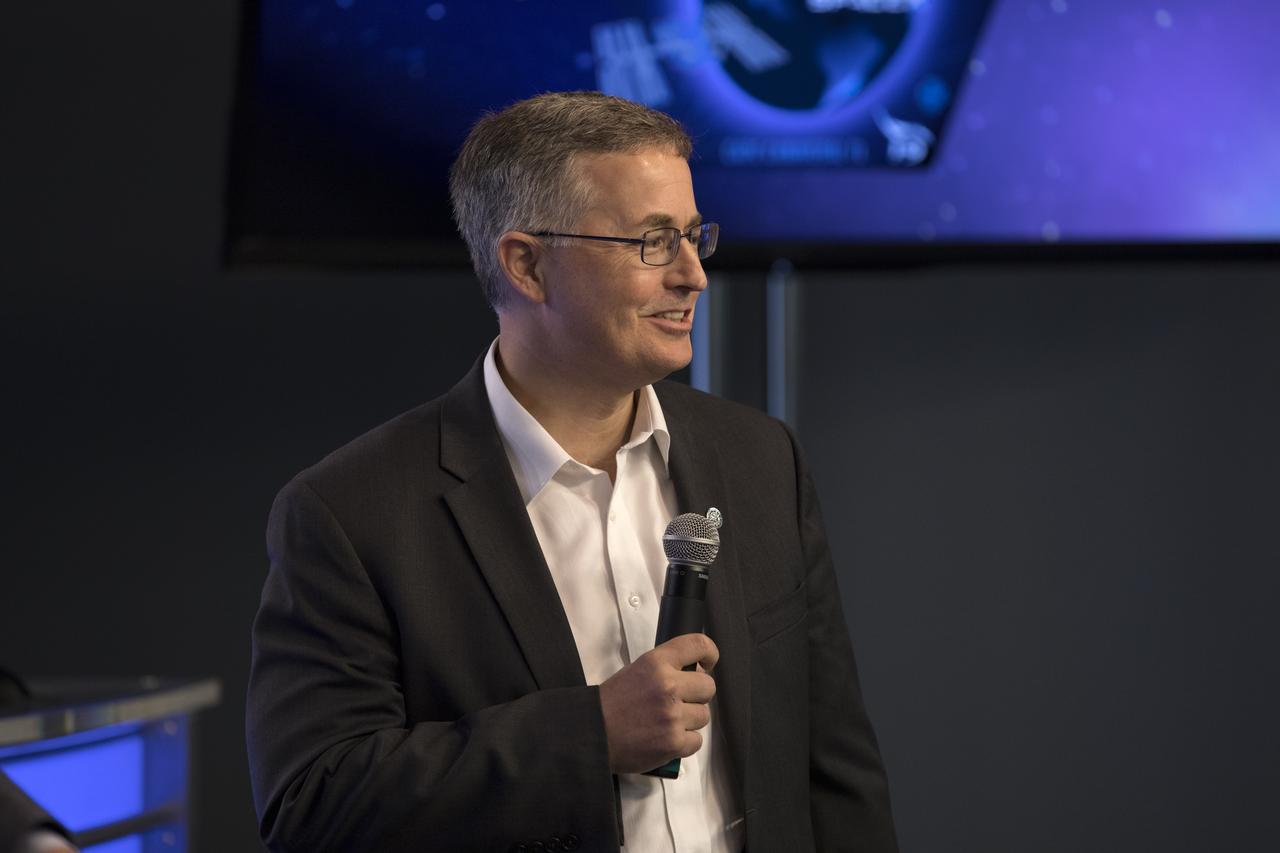
Richard Dickinson, division director, CBET, National Science Foundation, talks to members of the media during a briefing in the Kennedy Space Center’s Press Site auditorium. The briefing focused on research planned for launch to the International Space Station. The scientific materials and supplies will be aboard a SpaceX Dragon spacecraft scheduled for liftoff from Cape Canaveral Air Force Station's Space Launch Complex 40. The SpaceX Falcon 9 rocket will launch the company's 15th Commercial Resupply Services mission to the space station.

Panelists pose for a group photo at the “Ancient Earth, Alien Earths” Event at NASA Headquarters in Washington, DC Wednesday, August 20, 2014. The event was sponsored by NASA, the National Science Foundation (NSF), and the Smithsonian Institution and highlighted how research on early Earth could help guide our search for habitable planets orbiting other stars. Photo Credit: (NASA/Aubrey Gemignani)
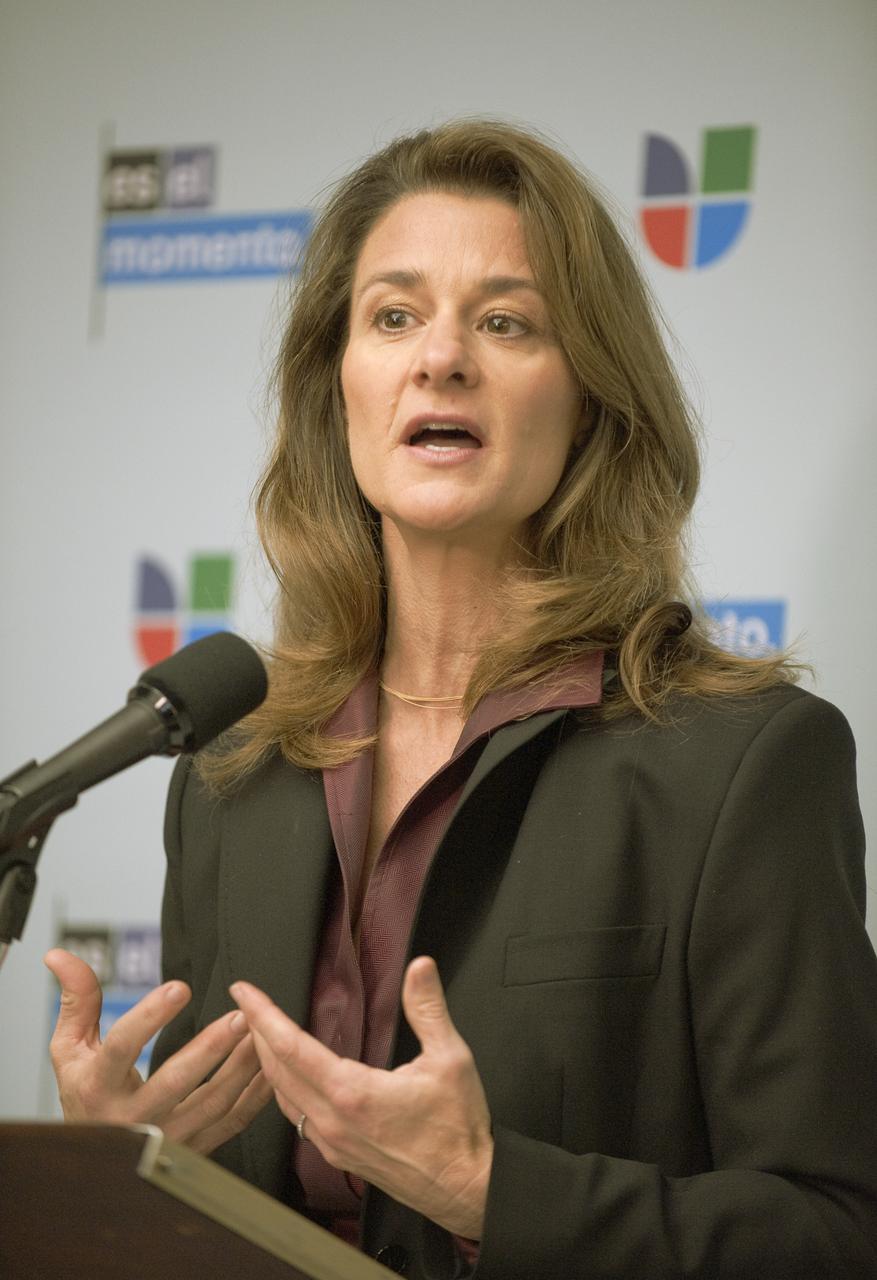
Melinda French Gates, of the Bill & Melinda Gates Foundation, speaks during an event at the National Press Club in Washington, Tuesday, Feb. 23, 2010. NASA is working with Univision Communications Inc. to develop a partnership in support of the Spanish-language media outlet's initiative to improve high school graduation rates, prepare Hispanic students for college, and encourage them to pursue careers in science, technology, engineering and mathematics, or STEM, disciplines. Photo Credit: (NASA/Bill Ingalls)
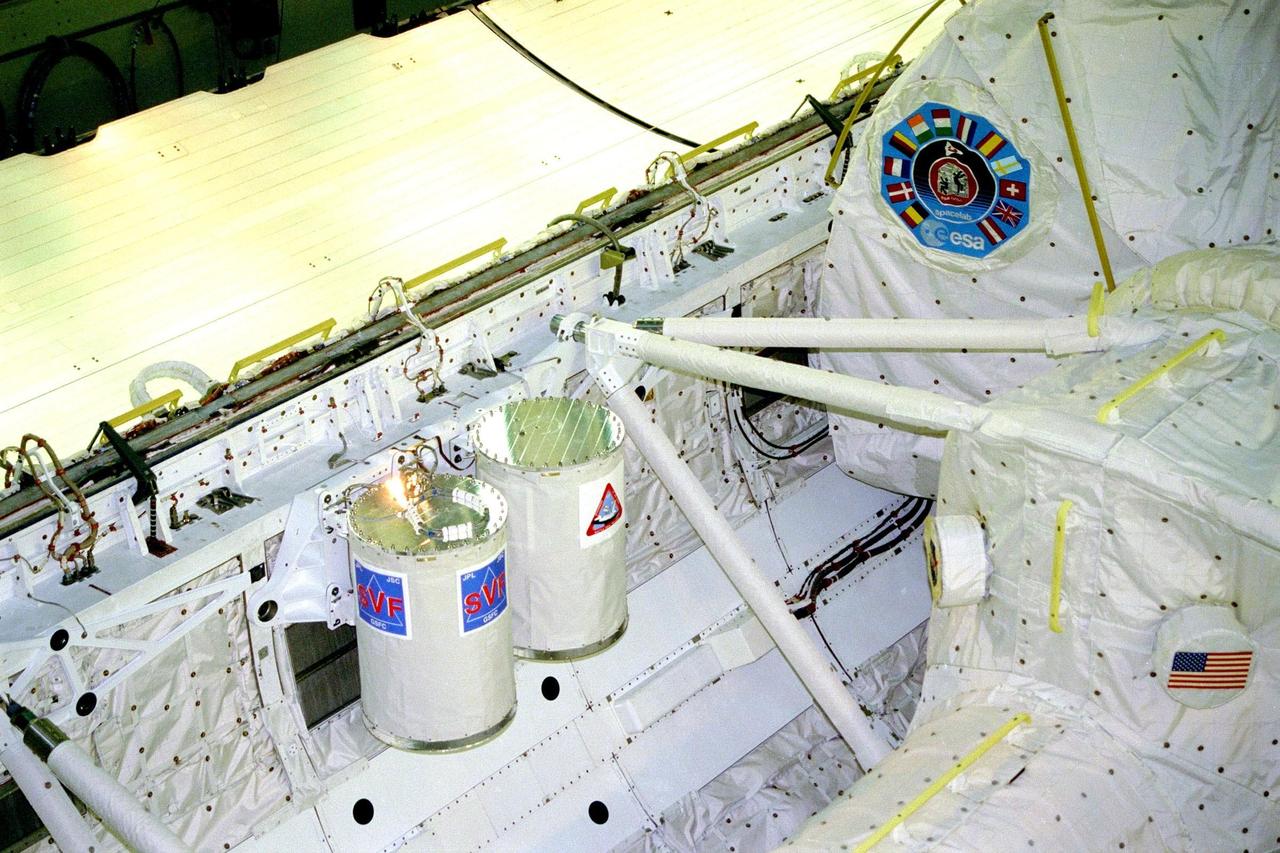
KENNEDY SPACE CENTER, FLA. -- The STS-90 Neurolab payload and two of the four Getaway Specials (GAS) await payload bay door closure in the orbiter Columbia today in Orbiter Processing Facility bay 3. Investigations during the Neurolab mission will focus on the effects of microgravity on the nervous system. The mission is a joint venture of six space agencies and seven U.S. research agencies. Investigator teams from nine countries will conduct 31 studies in the microgravity environment of space. Other agencies participating in this mission include six institutes of the National Institutes of Health, the National Science Foundation, and the Office of Naval Research, as well as the space agencies of Canada, France, Germany, and Japan, and the European Space Agency (ESA)
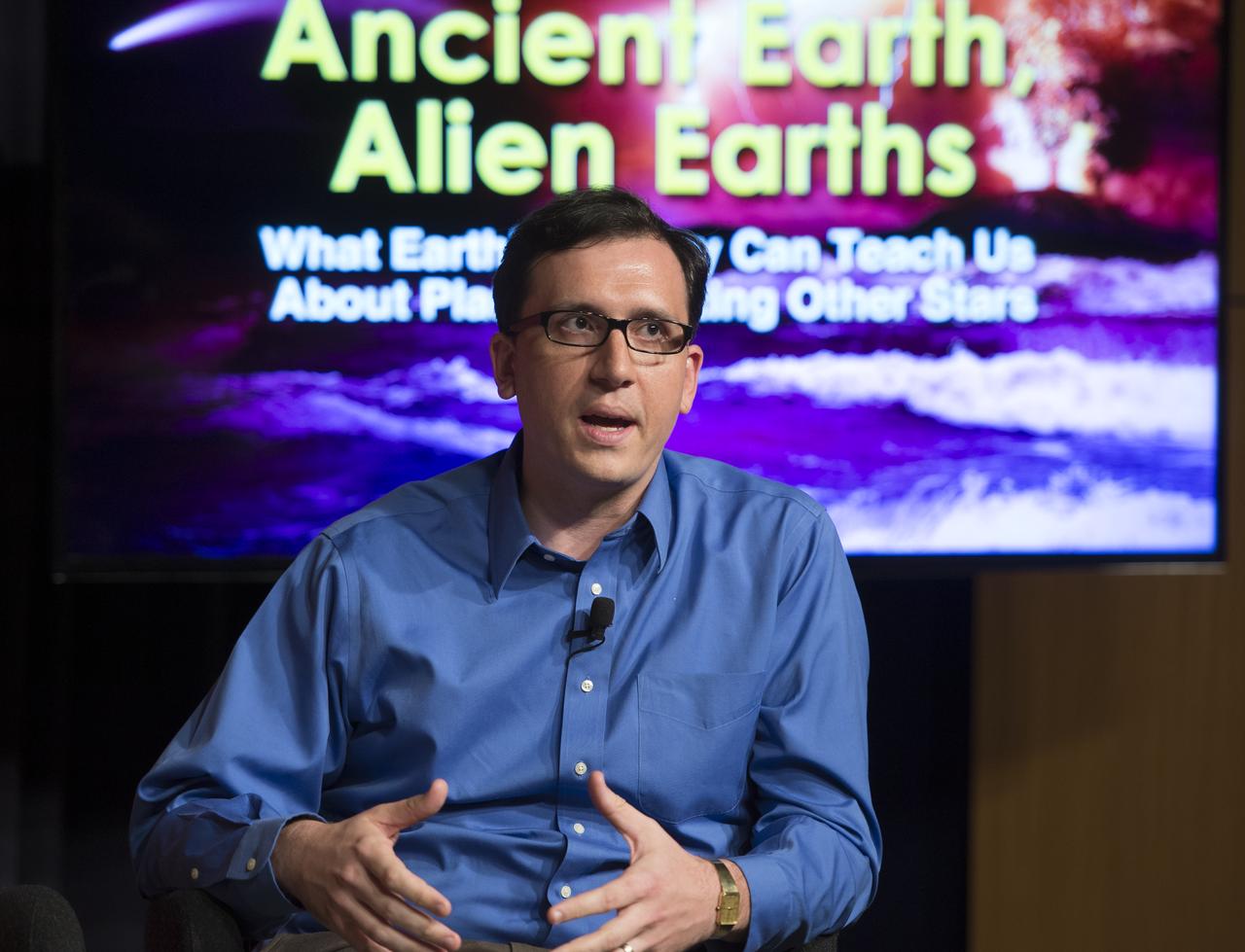
Dr. Shawn Domagal-Goldman, Research Space Scientist, NASA Goddard Space Flight Center, speaks on a panel at the “Ancient Earth, Alien Earths” Event at NASA Headquarters in Washington, DC Wednesday, August 20, 2014. The event was sponsored by NASA, the National Science Foundation (NSF), and the Smithsonian Institution and was moderated by Dr. David H. Grinspoon, Senior Scientist at the Planetary Science Institute. Six scientists discussed how research on early Earth could help guide our search for habitable planets orbiting other stars. Photo Credit: (NASA/Aubrey Gemignani)
Dr. Shawn Domagal-Goldman, Research Space Scientist, NASA Goddard Space Flight Center, speaks on a panel at the “Ancient Earth, Alien Earths” Event at NASA Headquarters in Washington, DC Wednesday, August 20, 2014. The event was sponsored by NASA, the National Science Foundation (NSF), and the Smithsonian Institution and was moderated by Dr. David H. Grinspoon, Senior Scientist at the Planetary Science Institute. Six scientists discussed how research on early Earth could help guide our search for habitable planets orbiting other stars. Photo Credit: (NASA/Aubrey Gemignani)
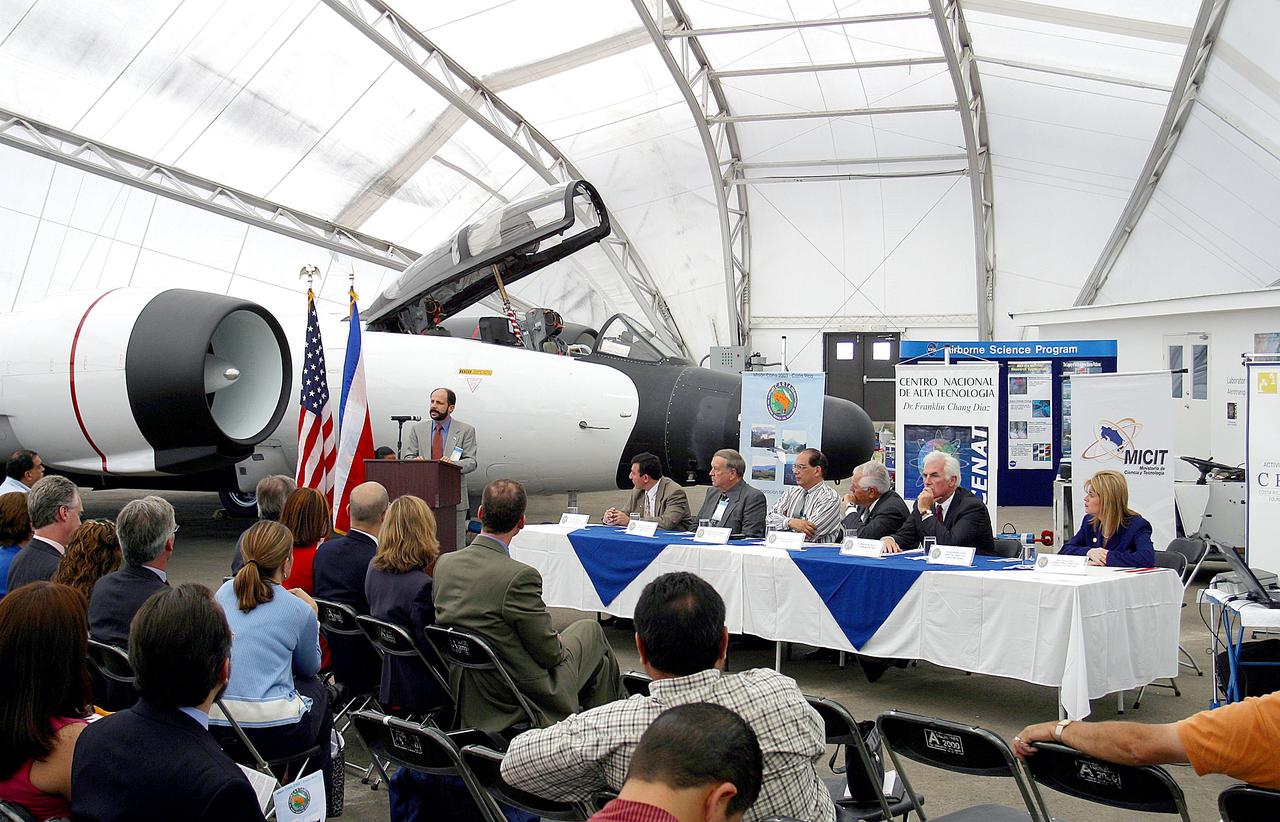
KENNEDY SPACE CENTER, FLA. - At the airport in San Jose, Costa Rica, the NASA hangar is dedicated. The speaker is Hermann Faith, executive director, Costa Rica-USA (CRUSA) Foundation. At the table are (from left) Dr. Jorge Andres Diaz, head scientiest CARTA mission; Gary Shelton, NASA deployment manager; Dr. Pedro Leon, general director, National Center for Advanced Technology (CENAT); Dr. Rogelio Pardo, minister of science and tchnology; John Danilovioch, U.S. ambassador to Costa Rica; and Lic. Vilma Lopez, subdirector, Civil Aviation (DGAC). NASA KSC has been testing its Aircraft-based Volcanic Emission Mass Spectrometer (AVEMS) in flights over the Turrialba volcano and in the crater, sampling and analyzing fresh volcanic gases in their natural chemical state. The AVEMS system has been developed for use in the Space Shuttle program, to detect toxic gas leaks and emissions in the Shuttle’s aft compartment and the crew compartment.

Samantha Thompson of the Smithsonian’s National Air and Space Museum moderates a panel discussion with Lennard Fisk, former associate administrator for NASA Space Science and Applications, John Grunsfeld, former NASA astronaut and former associate administrator for NASA’s Science Mission Directorate, Patrick Crouse, Hubble Space Telescope project manager at NASA’s Goddard Space Flight Center, and Marc Postman, head of the Science Mission office at the Space Telescope Science Institute, about building a foundation for Hubble science during an event titled “Beyond the Deep Field: Hubble’s Legacy and the Future of Cosmic Observation,” Thursday, June 4, 2026, at the Mary W. Jackson NASA Headquarters building in Washington. Photo Credit: (NASA/Joel Kowsky)

Samantha Thompson of the Smithsonian’s National Air and Space Museum, left, moderates a panel discussion with John Grunsfeld, former NASA astronaut and former associate administrator for NASA’s Science Mission Directorate, visible on screen, Marc Postman, head of the Science Mission office at the Space Telescope Science Institute, second from left, Lennard Fisk, former associate administrator for NASA Space Science and Applications, second from right, and Patrick Crouse, Hubble Space Telescope project manager at NASA’s Goddard Space Flight Center, right, about building a foundation for Hubble science during an event titled “Beyond the Deep Field: Hubble’s Legacy and the Future of Cosmic Observation,” Thursday, June 4, 2026, at the Mary W. Jackson NASA Headquarters building in Washington. Photo Credit: (NASA/Joel Kowsky)

Samantha Thompson of the Smithsonian’s National Air and Space Museum, left, moderates a panel discussion with John Grunsfeld, former NASA astronaut and former associate administrator for NASA’s Science Mission Directorate, visible on screen, Marc Postman, head of the Science Mission office at the Space Telescope Science Institute, second from left, Lennard Fisk, former associate administrator for NASA Space Science and Applications, second from right, and Patrick Crouse, Hubble Space Telescope project manager at NASA’s Goddard Space Flight Center, right, about building a foundation for Hubble science during an event titled “Beyond the Deep Field: Hubble’s Legacy and the Future of Cosmic Observation,” Thursday, June 4, 2026, at the Mary W. Jackson NASA Headquarters building in Washington. Photo Credit: (NASA/Joel Kowsky)

Samantha Thompson of the Smithsonian’s National Air and Space Museum, left, moderates a panel discussion with John Grunsfeld, former NASA astronaut and former associate administrator for NASA’s Science Mission Directorate, visible on screen, Marc Postman, head of the Science Mission office at the Space Telescope Science Institute, second from left, Lennard Fisk, former associate administrator for NASA Space Science and Applications, second from right, and Patrick Crouse, Hubble Space Telescope project manager at NASA’s Goddard Space Flight Center, right, about building a foundation for Hubble science during an event titled “Beyond the Deep Field: Hubble’s Legacy and the Future of Cosmic Observation,” Thursday, June 4, 2026, at the Mary W. Jackson NASA Headquarters building in Washington. Photo Credit: (NASA/Joel Kowsky)

CAPE CANAVERAL, Fla. – Former NASA astronaut Tom Jones discusses the characteristics of asteroids and meteors with a young guest during the grand opening of the Great Balls of Fire exhibit at NASA’s Kennedy Space Center Visitor Complex in Florida. Great Balls of Fire shares the story of the origins of our solar system, asteroids and comets and their possible impacts and risks. The 1,500-square-foot exhibit, located in the East Gallery of the IMAX theatre at the visitor complex, features several interactive displays, real meteorites and replica asteroid models. The exhibit is a production of The Space Science Institute's National Center for Interactive Learning. It is a traveling exhibition that also receives funding from NASA and the National Science Foundation. Photo credit: NASA/Daniel Casper
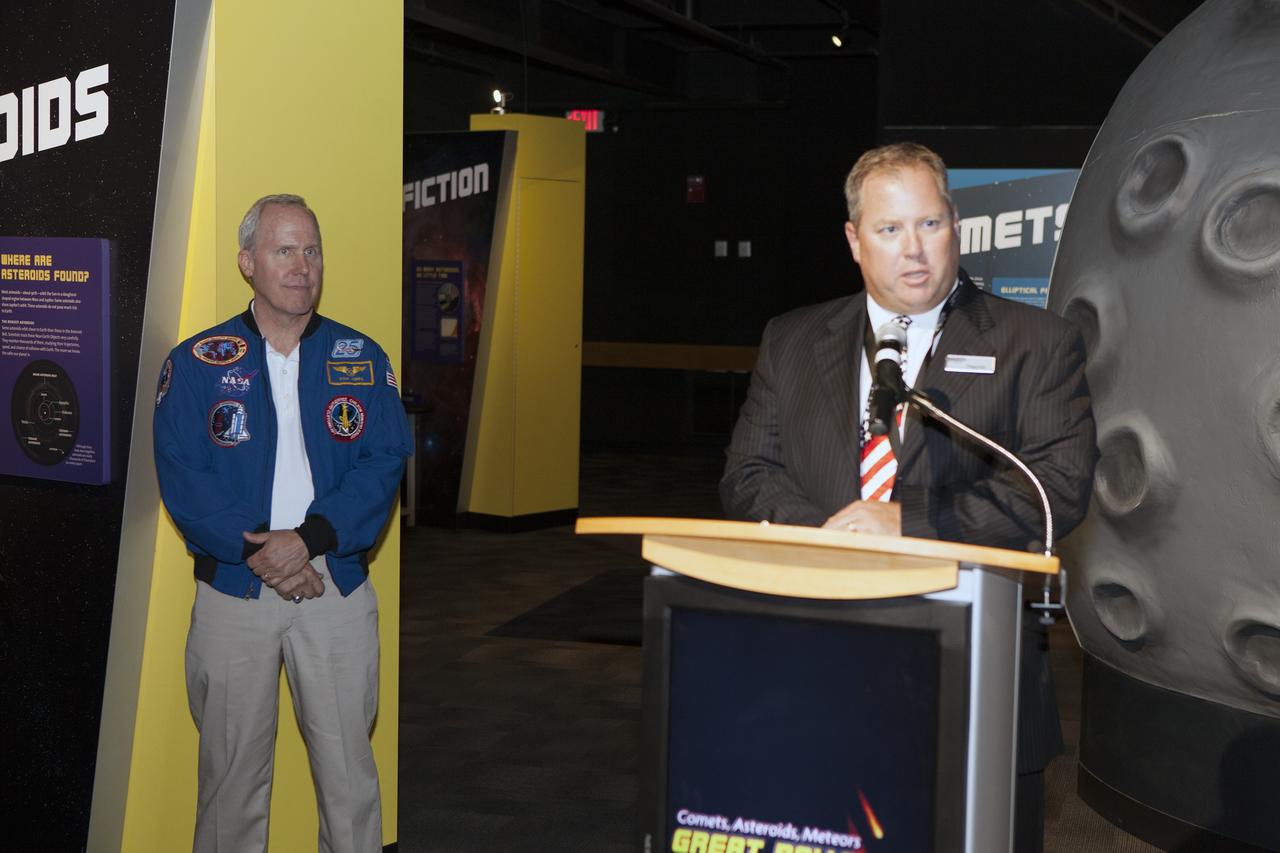
CAPE CANAVERAL, Fla. – Therrin Protze, chief operating officer with Delaware North Parks and Resorts at NASA's Kennedy Space Center Visitor Complex in Florida, welcomes guests to the grand opening of the Great Balls of Fire exhibit. To his left is former NASA astronaut Tom Jones. Great Balls of Fire shares the story of the origins of our solar system, asteroids and comets and their possible impacts and risks. The 1,500-square-foot exhibit, located in the East Gallery of the IMAX theatre at the visitor complex, features several interactive displays, real meteorites and replica asteroid models. The exhibit is a production of The Space Science Institute's National Center for Interactive Learning. It is a traveling exhibition that also receives funding from NASA and the National Science Foundation. Photo credit: NASA/Daniel Casper
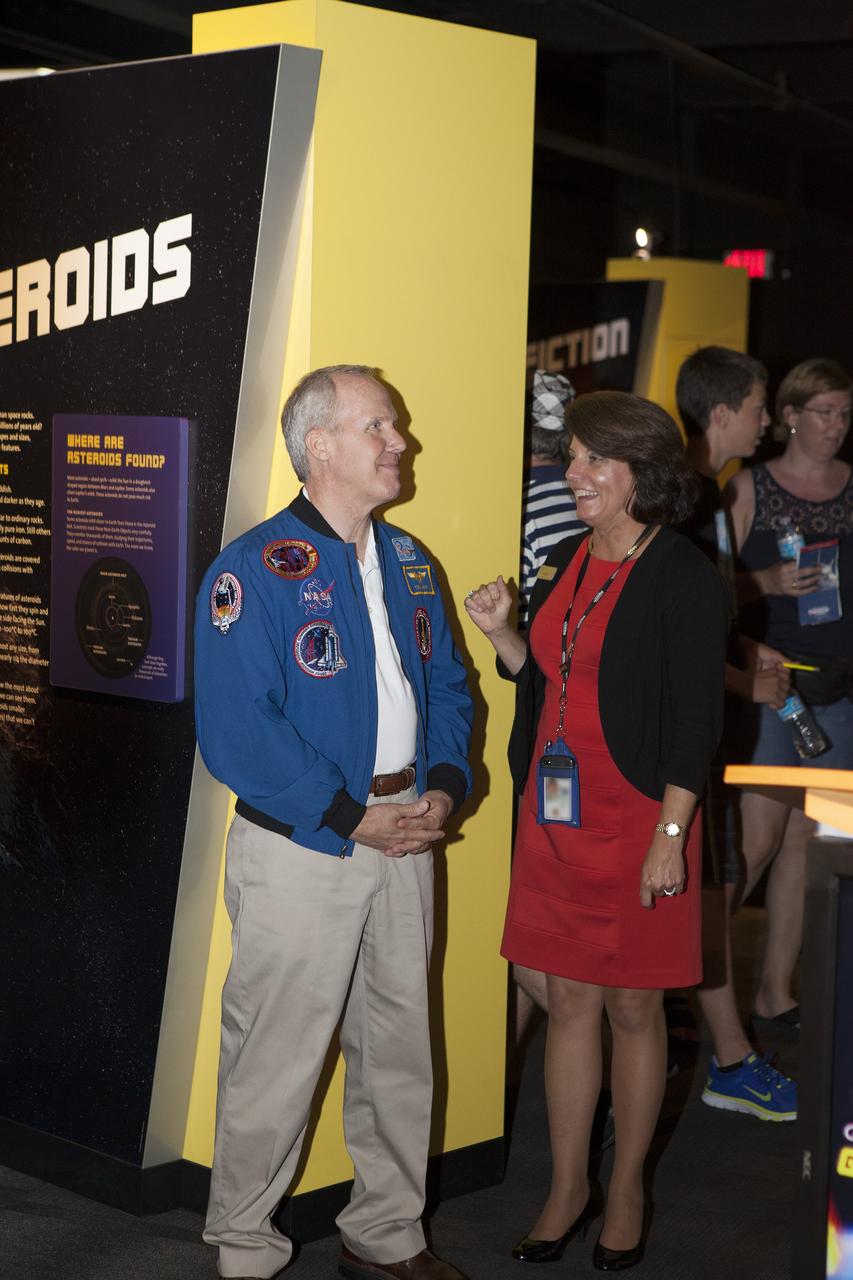
CAPE CANAVERAL, Fla. – Former NASA astronaut Tom Jones, left, joins Andrea Farmer, senior public relations manager with Delaware North Parks and Resorts at NASA Kennedy Space Center Visitor Complex in Florida, for the grand opening of the Great Balls of Fire exhibit. Great Balls of Fire shares the story of the origins of our solar system, asteroids and comets and their possible impacts and risks. The 1,500-square-foot exhibit, located in the East Gallery of the IMAX theatre at the visitor complex, features several interactive displays, real meteorites and replica asteroid models. The exhibit is a production of The Space Science Institute's National Center for Interactive Learning. It is a traveling exhibition that also receives funding from NASA and the National Science Foundation. Photo credit: NASA/Daniel Casper
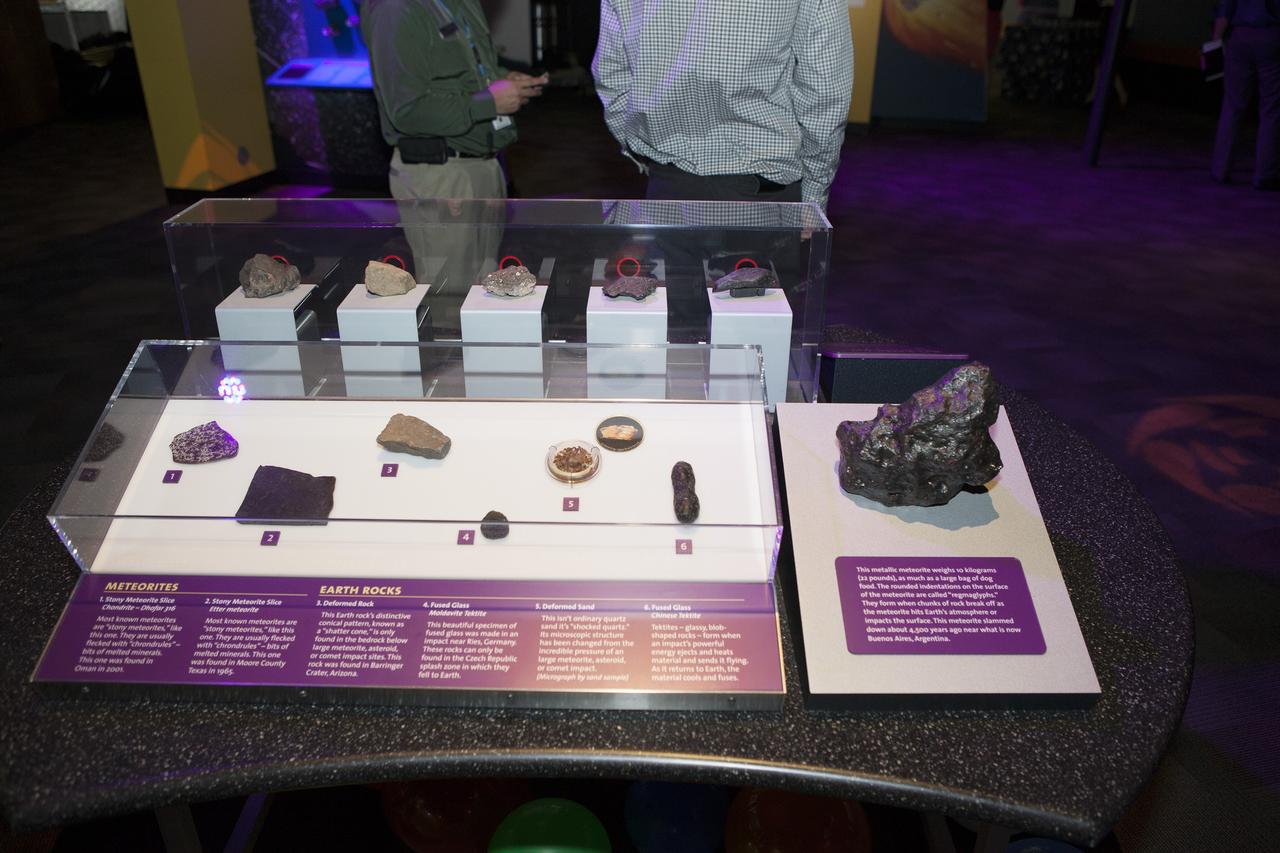
CAPE CANAVERAL, Fla. – Samples of Earth rocks and real meteorites are featured in an interactive display at the new Great Balls of Fire exhibit at NASA’s Kennedy Space Center Visitor Complex in Florida. The grand opening featured remarks by former NASA astronaut Tom Jones, and Therrin Protze, chief operating officer at Delaware North Parks and Resorts at the visitor complex. Great Balls of Fire shares the story of the origins of our solar system, asteroids and comets and their possible impacts and risks. The 1,500-square-foot exhibit, located in the East Gallery of the IMAX theatre at the visitor complex, features several interactive displays, real meteorites and replica asteroid models. The exhibit is a production of The Space Science Institute's National Center for Interactive Learning. It is a traveling exhibition that also receives funding from NASA and the National Science Foundation. Photo credit: NASA/Daniel Casper

CAPE CANAVERAL, Fla. – Former NASA astronaut Tom Jones discusses the characteristics of asteroids and meteors with a young guest during the grand opening of the Great Balls of Fire exhibit at NASA’s Kennedy Space Center Visitor Complex in Florida. Great Balls of Fire shares the story of the origins of our solar system, asteroids and comets and their possible impacts and risks. The 1,500-square-foot exhibit, located in the East Gallery of the IMAX theatre at the visitor complex, features several interactive displays, real meteorites and replica asteroid models. The exhibit is a production of The Space Science Institute's National Center for Interactive Learning. It is a traveling exhibition that also receives funding from NASA and the National Science Foundation. Photo credit: NASA/Daniel Casper
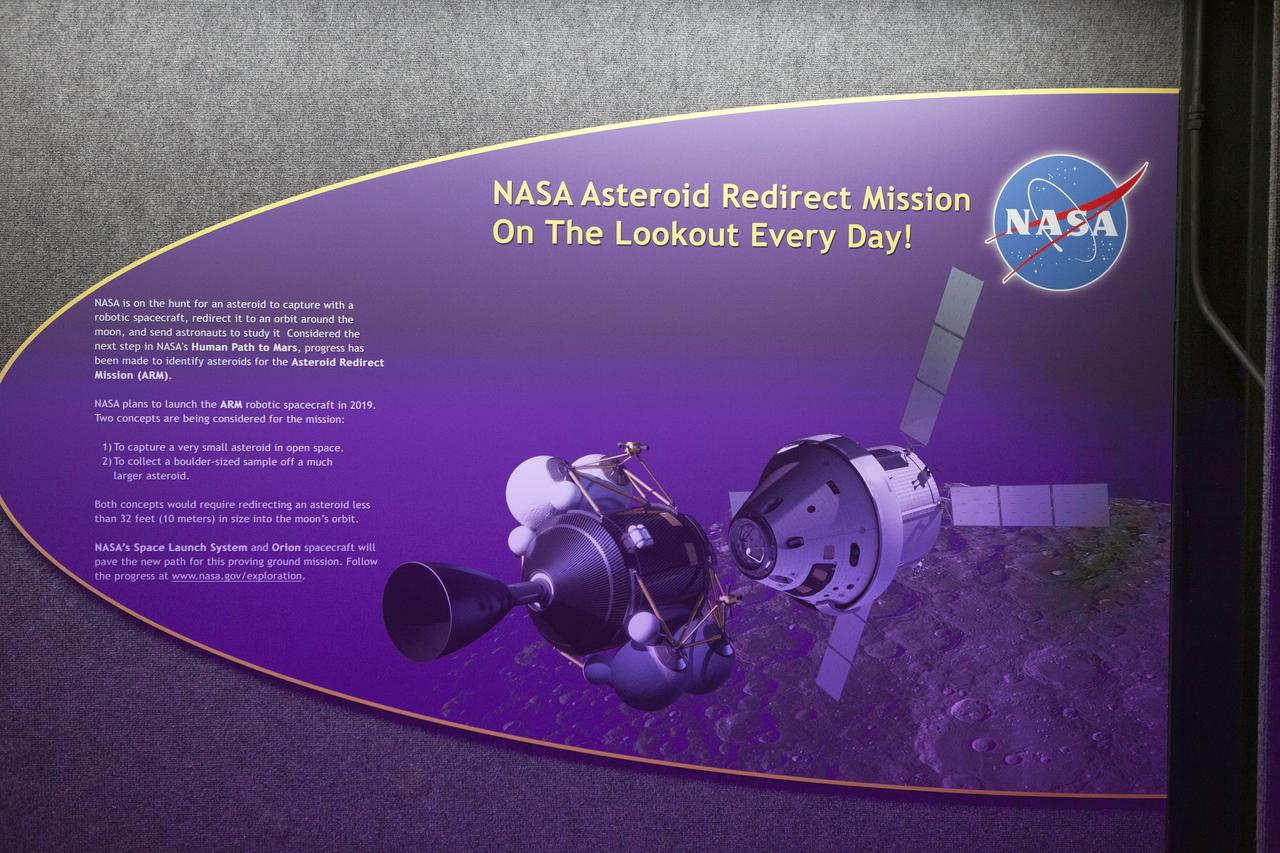
CAPE CANAVERAL, Fla. – The grand opening of the new Great Balls of Fire exhibit was held at NASA’s Kennedy Space Center Visitor Complex in Florida. The grand opening featured remarks by former NASA astronaut Tom Jones, and Therrin Protze, chief operating officer at Delaware North Parks and Resorts at the visitor complex. Informational displays about future NASA exploration missions are featured along the wall of the new exhibit. Great Balls of Fire shares the story of the origins of our solar system, asteroids and comets and their possible impacts and risks. The 1,500-square-foot exhibit, located in the East Gallery of the IMAX theatre at the visitor complex, features several interactive displays, real meteorites and replica asteroid models. The exhibit is a production of The Space Science Institute's National Center for Interactive Learning. It is a traveling exhibition that also receives funding from NASA and the National Science Foundation. Photo credit: NASA/Daniel Casper
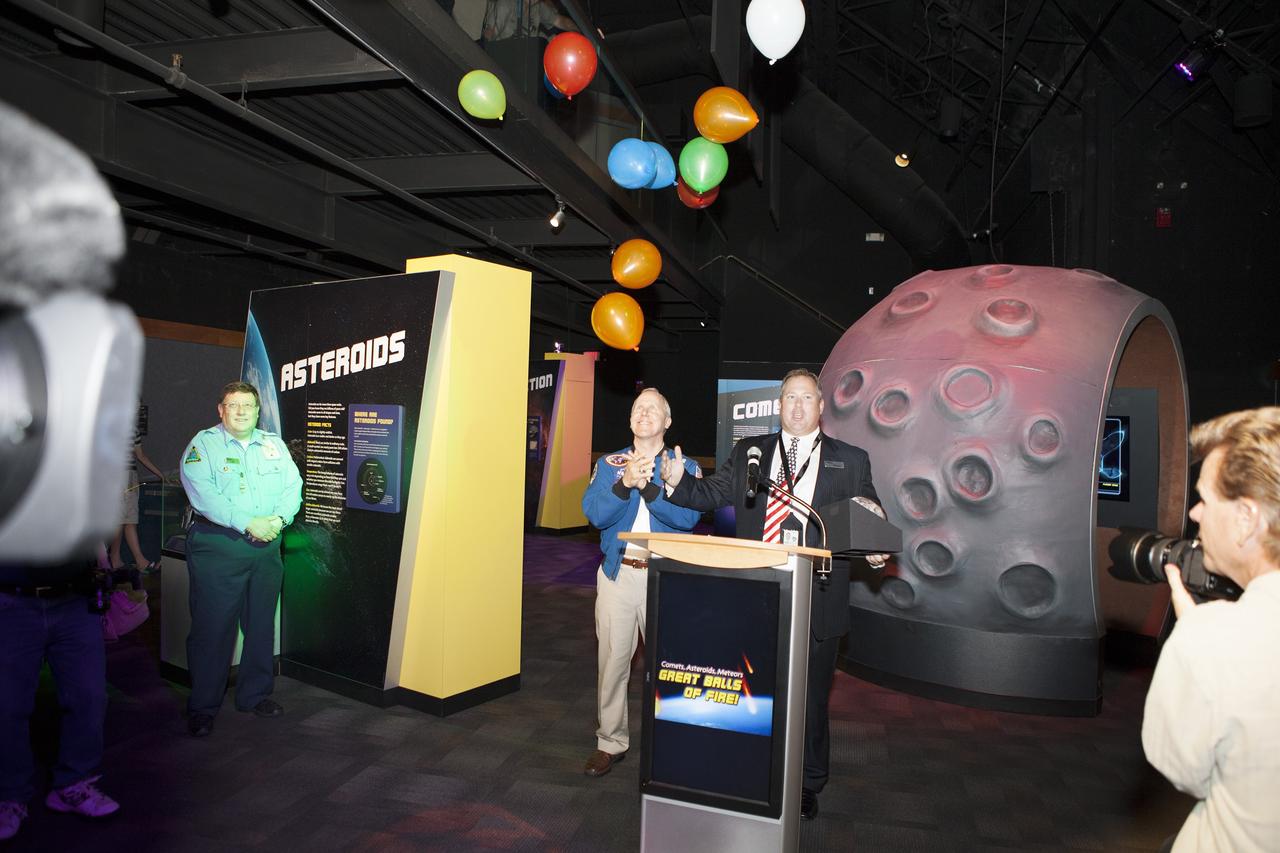
CAPE CANAVERAL, Fla. – Lights flickered and balloons fell as former NASA astronaut Tom Jones, left, and Therrin Protze, chief operating officer of Delaware North Parks and Resorts at NASA’s Kennedy Space Center Visitor Complex in Florida, welcomed guests to the grand opening of the Great Balls of Fire exhibit at the visitor complex. Great Balls of Fire shares the story of the origins of our solar system, asteroids and comets and their possible impacts and risks. The 1,500-square-foot exhibit, located in the East Gallery of the IMAX theatre at the visitor complex, features several interactive displays, real meteorites and replica asteroid models. The exhibit is a production of The Space Science Institute's National Center for Interactive Learning. It is a traveling exhibition that also receives funding from NASA and the National Science Foundation. Photo credit: NASA/Daniel Casper
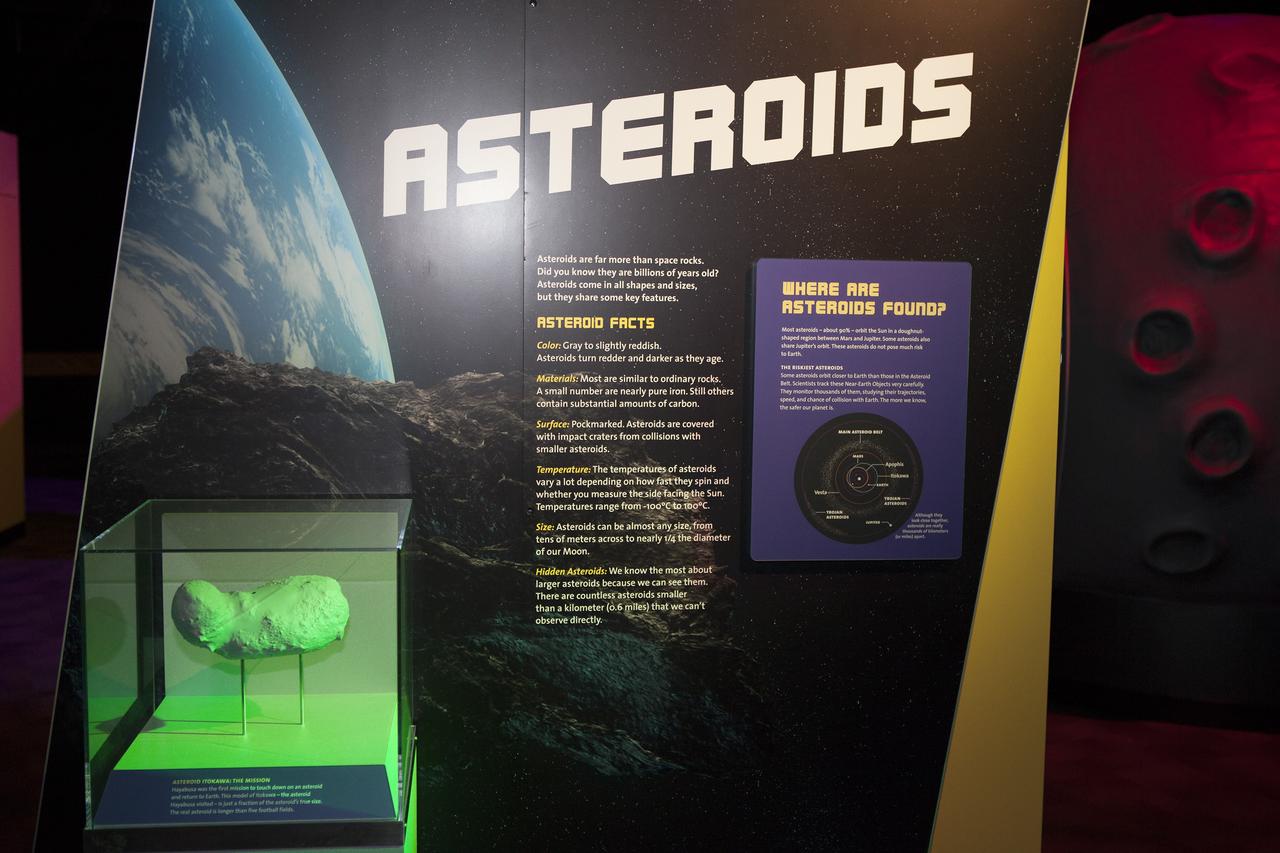
CAPE CANAVERAL, Fla. – A real asteroid is on display at the new Great Balls of Fire exhibit at NASA’s Kennedy Space Center Visitor Complex in Florida. The grand opening of the new attraction featured remarks by former NASA astronaut Tom Jones, and Therrin Protze, chief operating officer at Delaware North Parks and Resorts at the visitor complex. Great Balls of Fire shares the story of the origins of our solar system, asteroids and comets and their possible impacts and risks. The 1,500-square-foot exhibit, located in the East Gallery of the IMAX theatre at the visitor complex, features several interactive displays, real meteorites and replica asteroid models. The exhibit is a production of The Space Science Institute's National Center for Interactive Learning. It is a traveling exhibition that also receives funding from NASA and the National Science Foundation. Photo credit: NASA/Daniel Casper
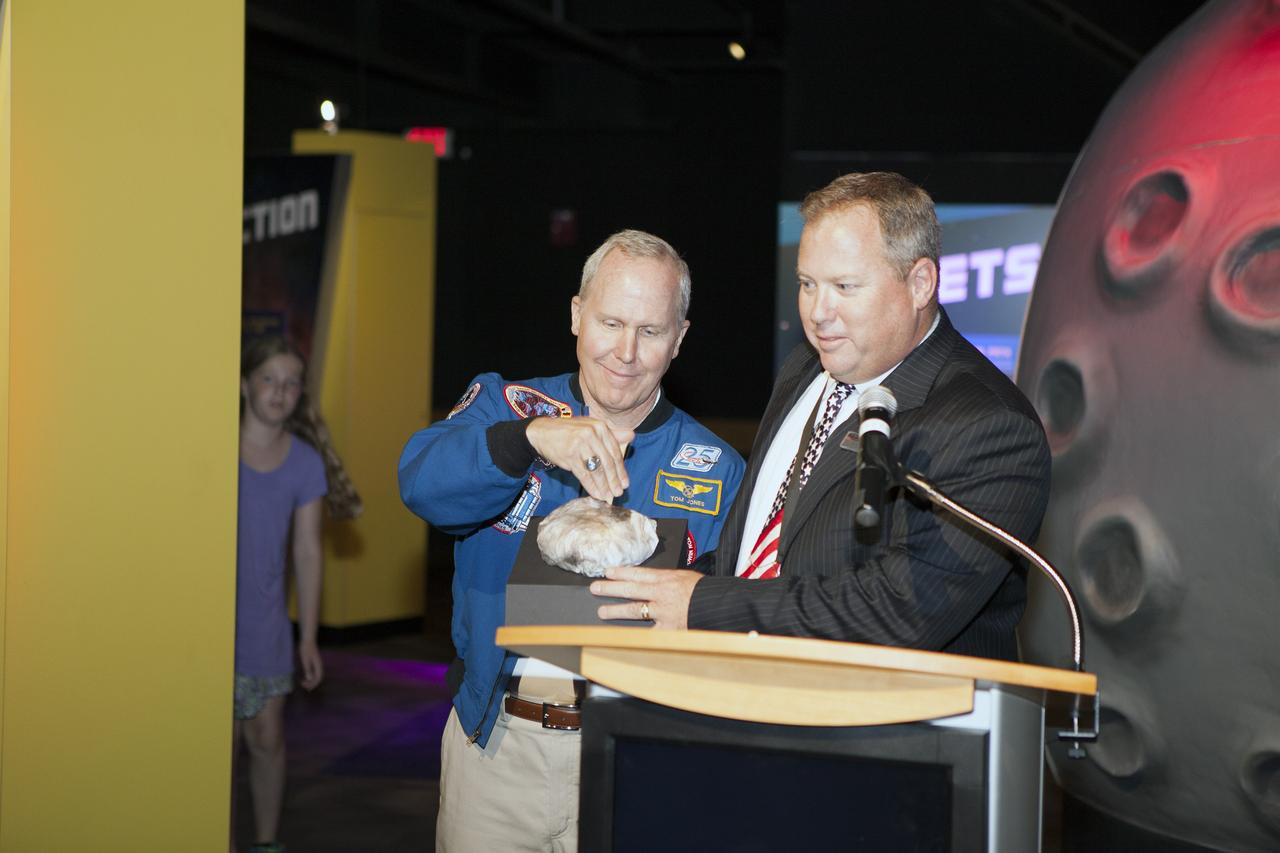
CAPE CANAVERAL, Fla. – Former NASA astronaut Tom Jones, left, presses the button on a simulated model of an asteroid to mark the grand opening of the new Great Balls of Fire exhibit at NASA’s Kennedy Space Center Visitor Complex in Florida. To his right is Therrin Protze, chief operating officer with Delaware North Parks and Resorts at the visitor complex. Great Balls of Fire shares the story of the origins of our solar system, asteroids and comets and their possible impacts and risks. The 1,500-square-foot exhibit, located in the East Gallery of the IMAX theatre at the visitor complex, features several interactive displays, real meteorites and replica asteroid models. The exhibit is a production of The Space Science Institute's National Center for Interactive Learning. It is a traveling exhibition that also receives funding from NASA and the National Science Foundation. Photo credit: NASA/Daniel Casper

CAPE CANAVERAL, Fla. – The grand opening of the new Great Balls of Fire exhibit was held at NASA’s Kennedy Space Center Visitor Complex in Florida. The grand opening featured remarks by former NASA astronaut Tom Jones, and Therrin Protze, chief operating officer at Delaware North Parks and Resorts at the visitor complex. Great Balls of Fire shares the story of the origins of our solar system, asteroids and comets and their possible impacts and risks. The 1,500-square-foot exhibit, located in the East Gallery of the IMAX theatre at the visitor complex, features several interactive displays, real meteorites and replica asteroid models. The exhibit is a production of The Space Science Institute's National Center for Interactive Learning. It is a traveling exhibition that also receives funding from NASA and the National Science Foundation. Photo credit: NASA/Daniel Casper
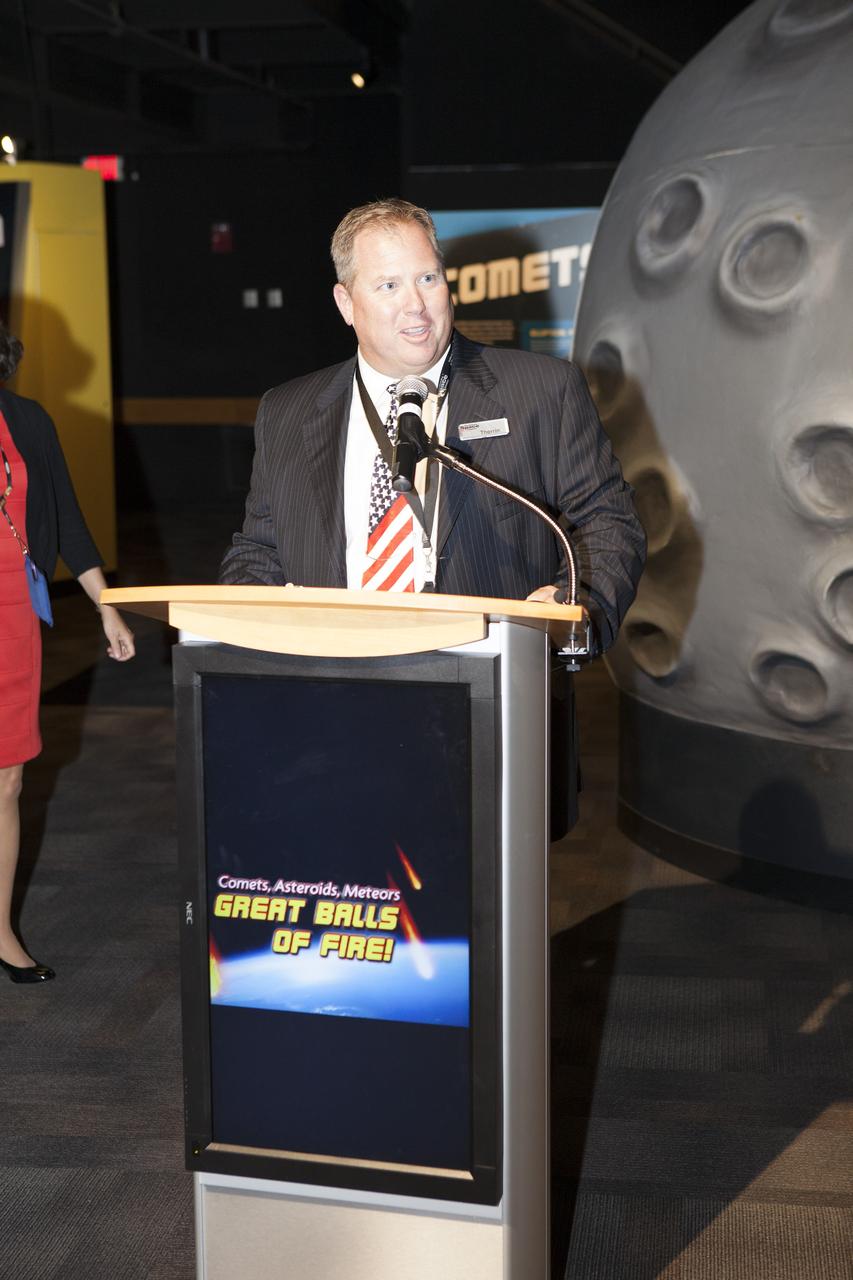
CAPE CANAVERAL, Fla. – Therrin Protze, chief operating officer with Delaware North Parks and Resorts at NASA's Kennedy Space Center Visitor Complex in Florida, welcomes guests to the grand opening of the Great Balls of Fire exhibit. Great Balls of Fire shares the story of the origins of our solar system, asteroids and comets and their possible impacts and risks. The 1,500-square-foot exhibit, located in the East Gallery of the IMAX theatre at the visitor complex, features several interactive displays, real meteorites and replica asteroid models. The exhibit is a production of The Space Science Institute's National Center for Interactive Learning. It is a traveling exhibition that also receives funding from NASA and the National Science Foundation. Photo credit: NASA/Daniel Casper
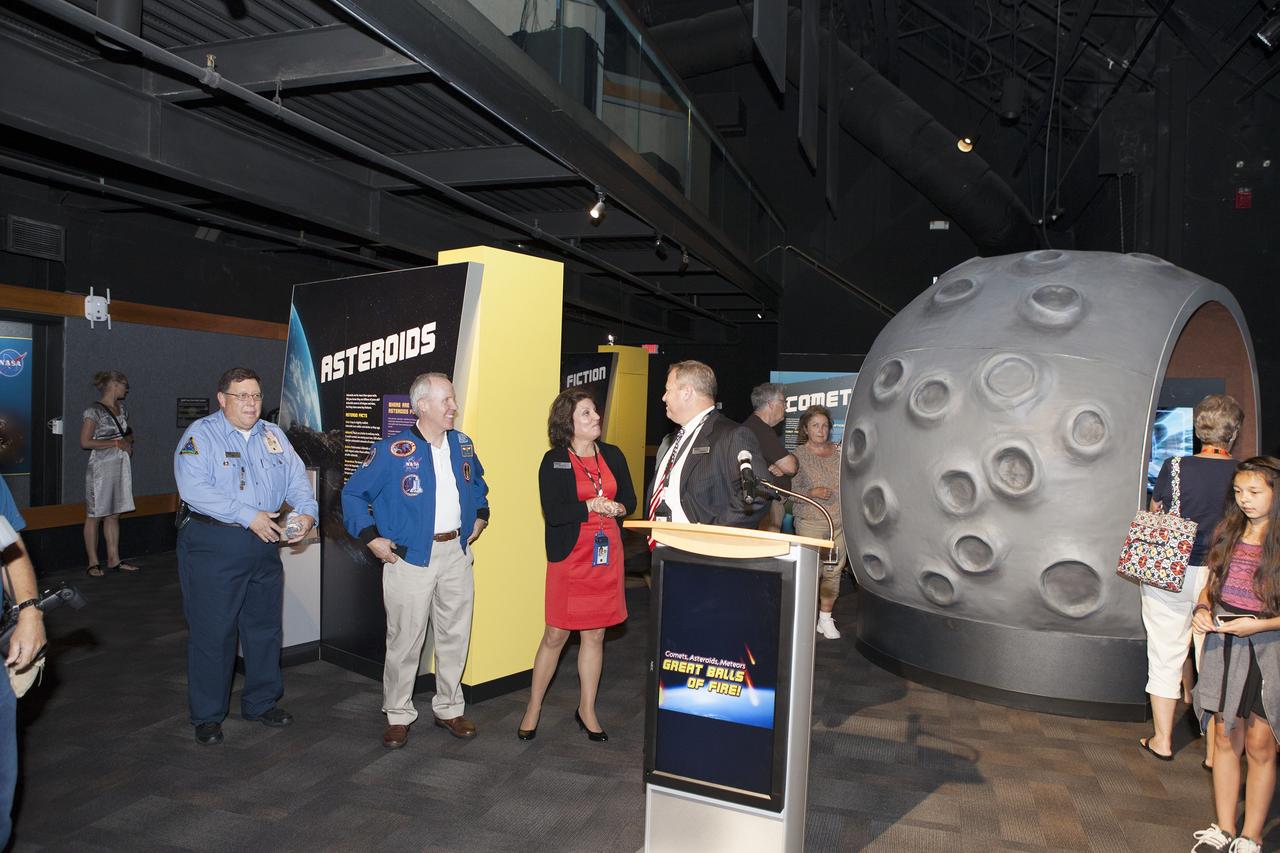
CAPE CANAVERAL, Fla. – Former NASA astronaut Tom Jones, left, joins Andrea Farmer, senior public relations manager, and Therrin Protze, chief operating officer, both with Delaware North Parks and Resorts at NASA's Kennedy Space Center Visitor Complex in Florida, for the grand opening of the Great Balls of Fire exhibit. Great Balls of Fire shares the story of the origins of our solar system, asteroids and comets and their possible impacts and risks. The 1,500-square-foot exhibit, located in the East Gallery of the IMAX theatre at the visitor complex, features several interactive displays, real meteorites and replica asteroid models. The exhibit is a production of The Space Science Institute's National Center for Interactive Learning. It is a traveling exhibition that also receives funding from NASA and the National Science Foundation. Photo credit: NASA/Daniel Casper

Diana Trujillo, NASA Human Spaceflight Director, right, speaks on a panel with, from left to right, moderator Trina Espinoza, Science Communicator, Hispanic Heritage Foundation, Ingrid Padilla, Professor in Environmental and Water Resources Engineering, University of Puerto Rico, Mayaguez (UPRM), and Frank Avila, Deputy Director, Source Operations, National Geospatial-Intelligence Agency (NGA), at a White House Hispanic Heritage month event titled “Soaring Together: Inspiring the Next Generation of Space Leaders” at the Eisenhower Executive Office Building, Monday, Sept. 30, 2024 in Washington. Photo Credit: (NASA/Aubrey Gemignani)
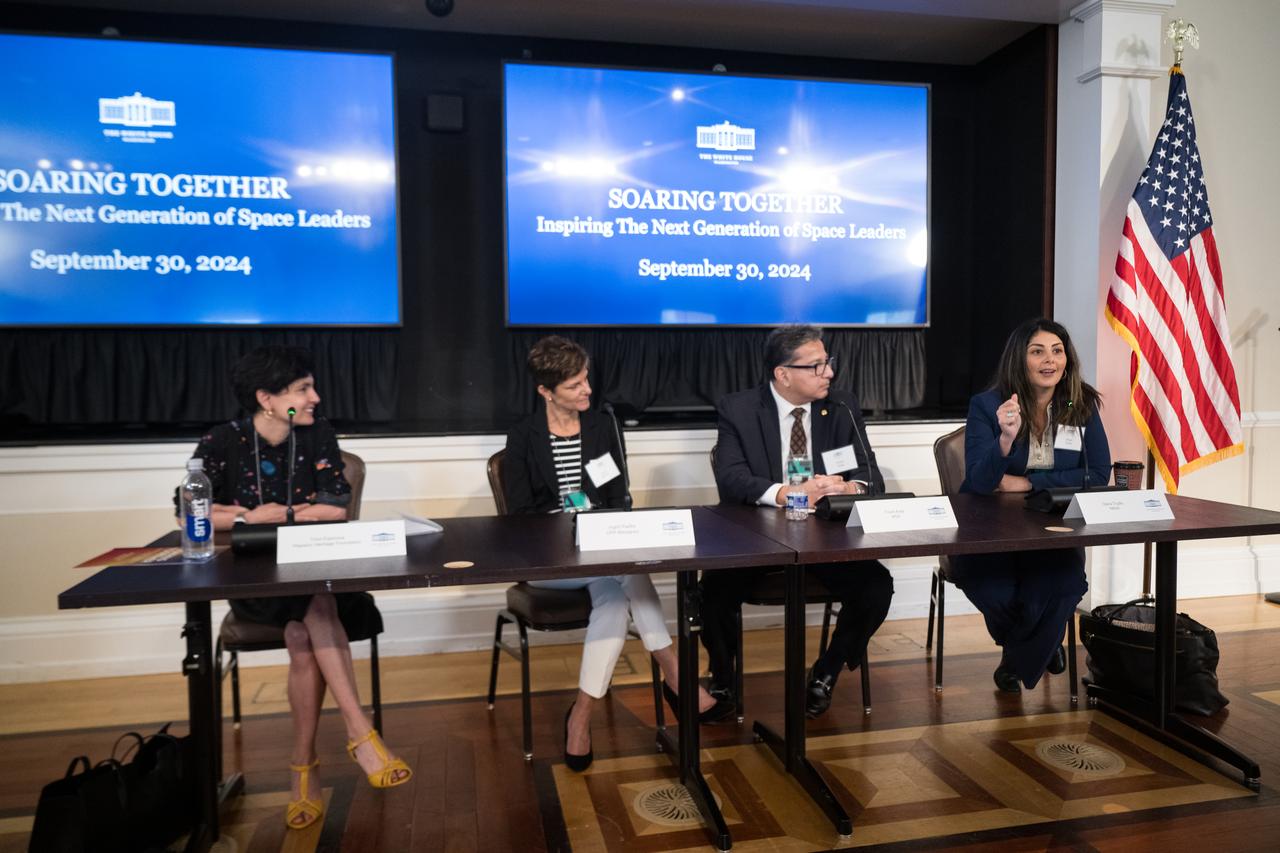
Diana Trujillo, NASA Human Spaceflight Director, speaks on a panel with, from left to right, moderator Trina Espinoza, Science Communicator, Hispanic Heritage Foundation, Ingrid Padilla, Professor in Environmental and Water Resources Engineering, University of Puerto Rico, Mayaguez (UPRM), and Frank Avila, Deputy Director, Source Operations, National Geospatial-Intelligence Agency (NGA), at a White House Hispanic Heritage month event titled “Soaring Together: Inspiring the Next Generation of Space Leaders” at the Eisenhower Executive Office Building, Monday, Sept. 30, 2024 in Washington. Photo Credit: (NASA/Aubrey Gemignani)
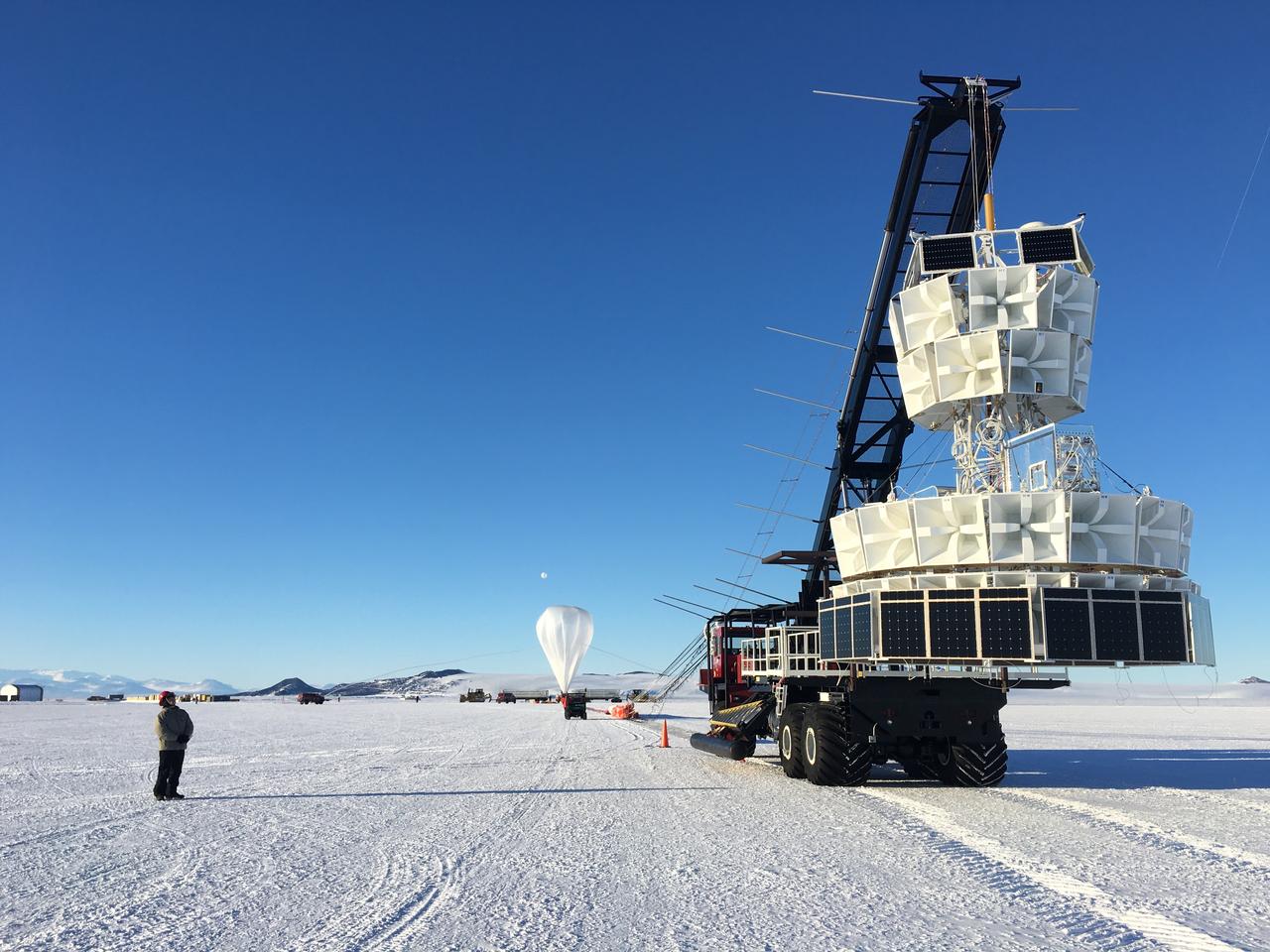
The second of three missions as part of NASA’s Antarctica Long Duration Balloon Flight Campaign was successfully launched at 8:10 a.m. EDT, Dec. 2. The Antarctic Impulsive Transient Antenna (ANITA) from the University of Hawaii at Manoa was launched from Antarctica’s Ross Ice Shelf near McMurdo Station with support from the National Science Foundation’s United States Antarctic Program. Scientists will use ANITA’s instruments to study the reactions in the core of stars and as they explode via the release of neutrinos that travel to Earth and interact with the Antarctica ice. More: <a href="http://go.nasa.gov/2ghR6Le" rel="nofollow">go.nasa.gov/2ghR6Le</a>
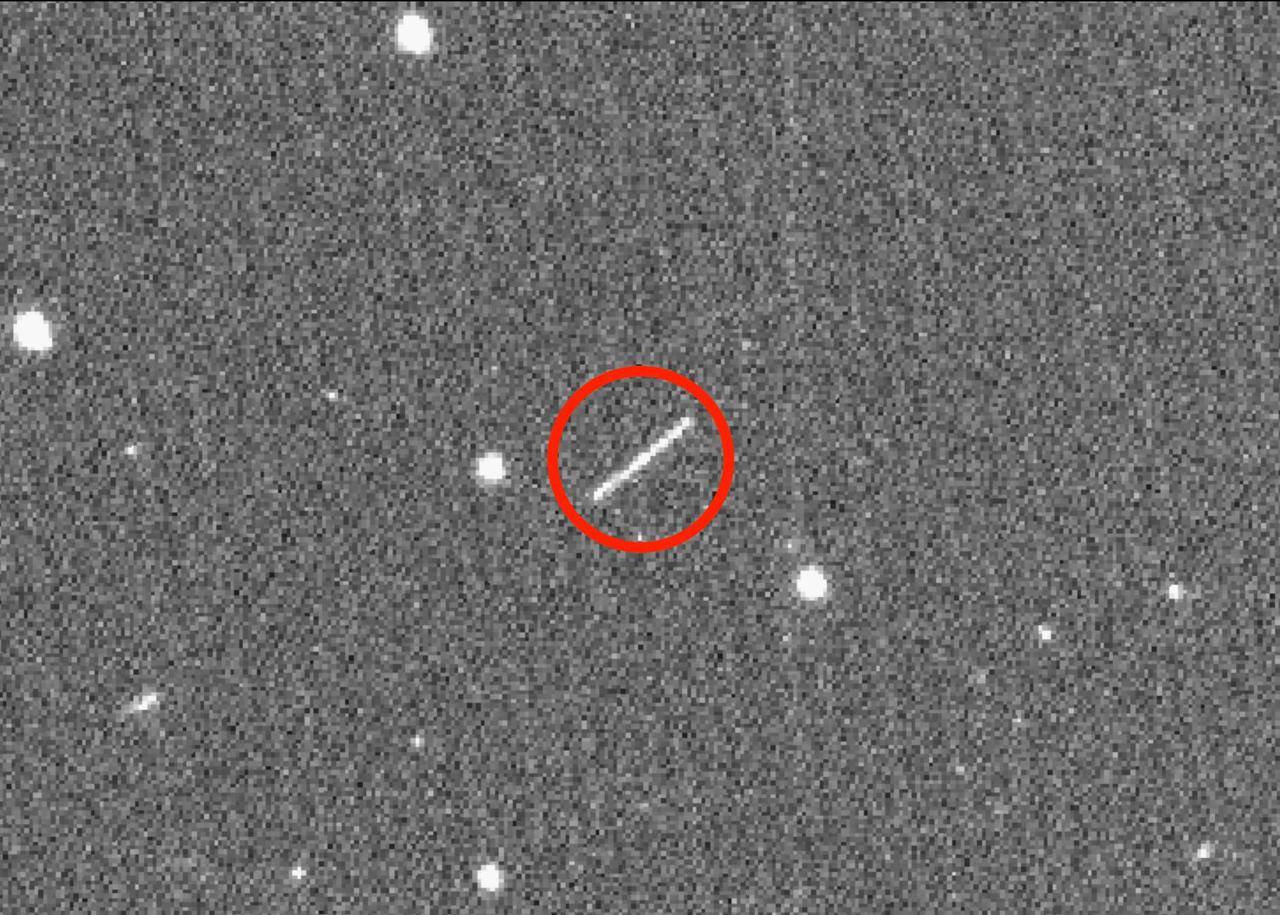
The streak circled in the center of this image is asteroid 2020 QG, which came closer to Earth than any other nonimpacting asteroid on record. It was detected by the Zwicky Transient Facility on Sunday, Aug. 16 at 12:08 a.m. EDT (Saturday, Aug. 15 at 9:08 p.m. PDT). The wide-field camera image of the Zwicky Transient Facility, a sky-scanning survey telescope funded by the National Science Foundation and NASA, and based at Caltech's Palomar Observatory in Southern California. The image was taken six hours after the close approach, as the asteroid was heading away from Earth. https://photojournal.jpl.nasa.gov/catalog/PIA24038
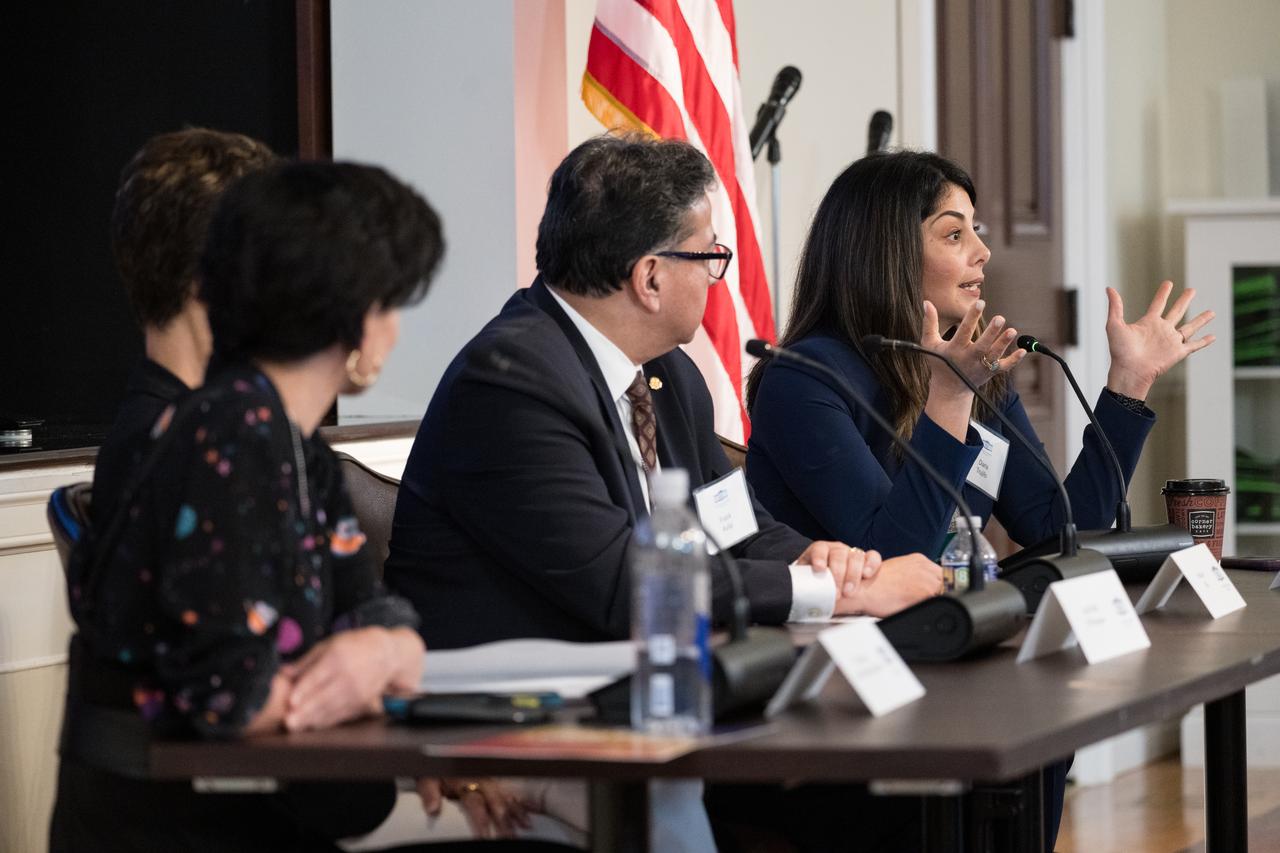
Diana Trujillo, NASA Human Spaceflight Director, right, speaks on a panel with, from left to right, moderator Trina Espinoza, Science Communicator, Hispanic Heritage Foundation, Ingrid Padilla, Professor in Environmental and Water Resources Engineering, University of Puerto Rico, Mayaguez (UPRM), and Frank Avila, Deputy Director, Source Operations, National Geospatial-Intelligence Agency (NGA), at a White House Hispanic Heritage month event titled “Soaring Together: Inspiring the Next Generation of Space Leaders” at the Eisenhower Executive Office Building, Monday, Sept. 30, 2024 in Washington. Photo Credit: (NASA/Aubrey Gemignani)
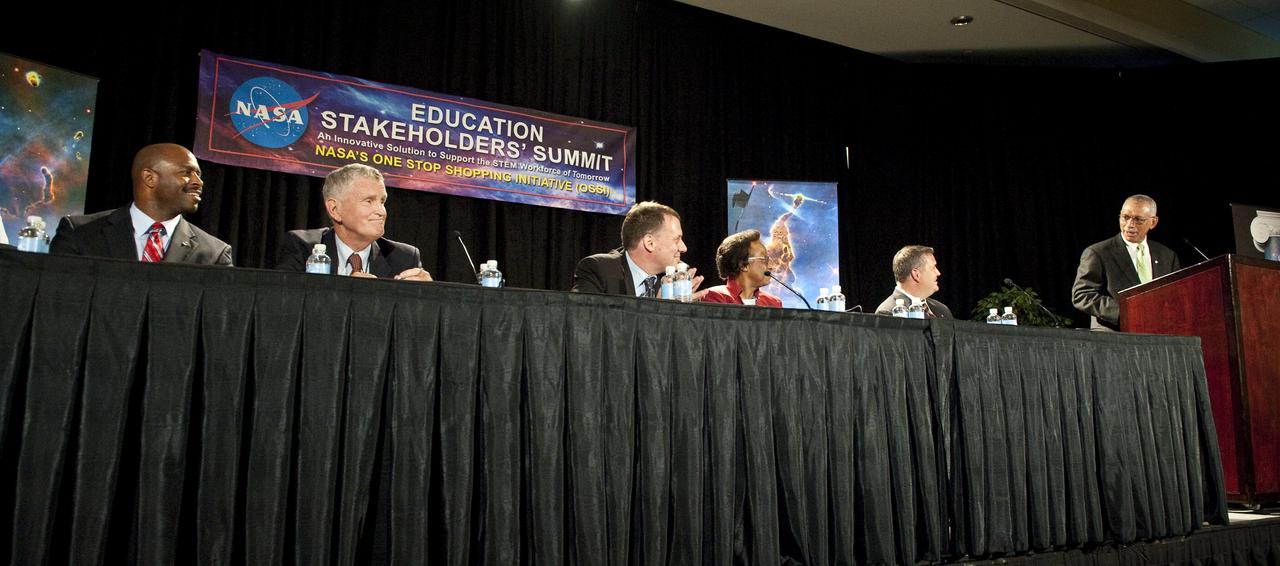
NASA Administrator Charles Bolden, far right, gives keynote remarks at the NASA Education Stakeholders’ Summit One Stop Shopping Initiative (OSSI), Monday, Sep. 13, 2010, at the Westfields Marriott Conference Center in Chantilly, VA. Administrator Bolden is joined on the panel from left to right by Leland Melvin, Education Design Team Co-Chair and NASA Astronaut; William Kelly, Manager, Public Affairs, American Society for Engineering Education; Michael Lach, Special Assistant for STEM Education, U.S. Department of Education; Cora Marrett, Acting Director, National Science Foundation; and James Stofan, NASA Acting Associate Administrator for Education. (Photo Credit: NASA/Carla Cioffi)
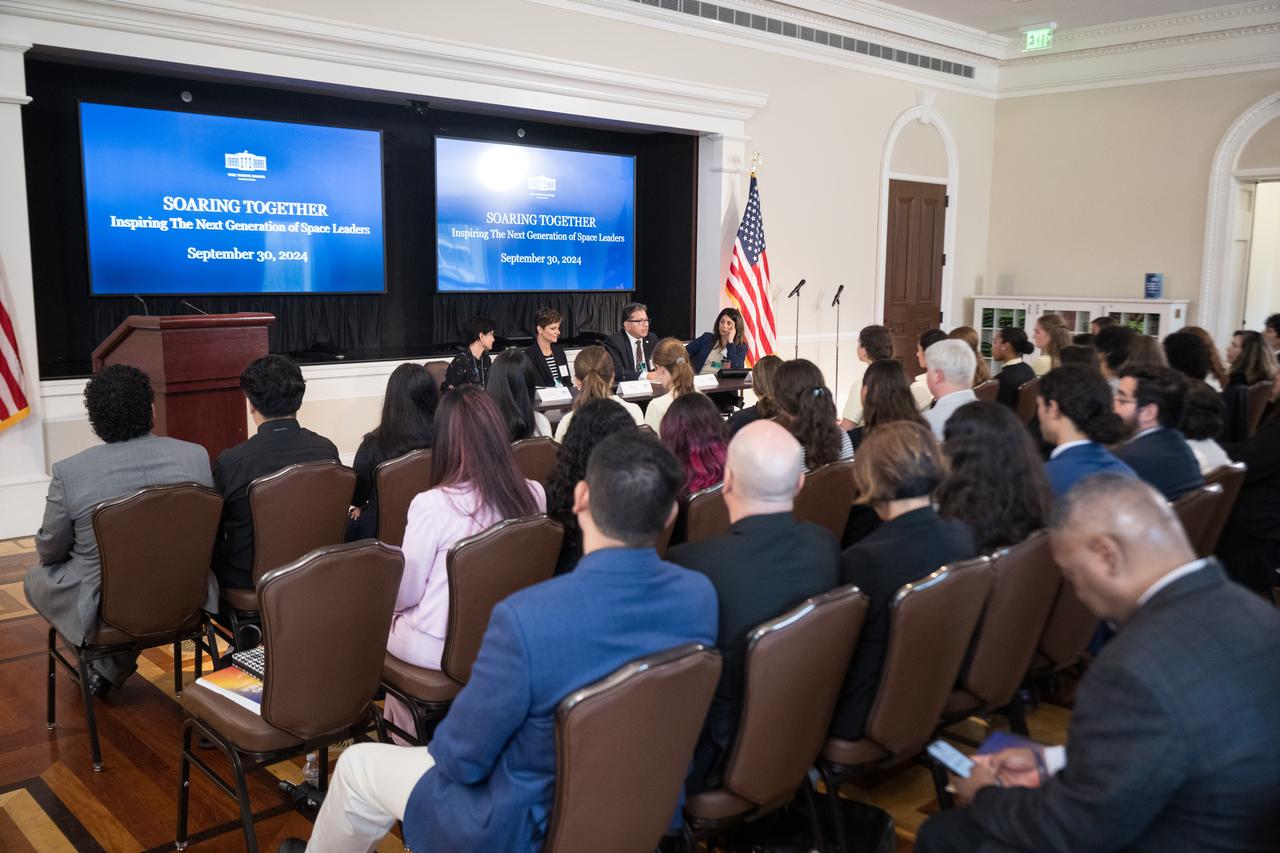
From left to right, moderator Trina Espinoza, Science Communicator, Hispanic Heritage Foundation, Ingrid Padilla, Professor in Environmental and Water Resources Engineering, University of Puerto Rico, Mayaguez (UPRM), Frank Avila, Deputy Director, Source Operations, National Geospatial-Intelligence Agency (NGA), and Diana Trujillo, NASA Human Spaceflight Director, speak on a panel at a White House Hispanic Heritage month event titled “Soaring Together: Inspiring the Next Generation of Space Leaders” at the Eisenhower Executive Office Building, Monday, Sept. 30, 2024 in Washington. Photo Credit: (NASA/Aubrey Gemignani)
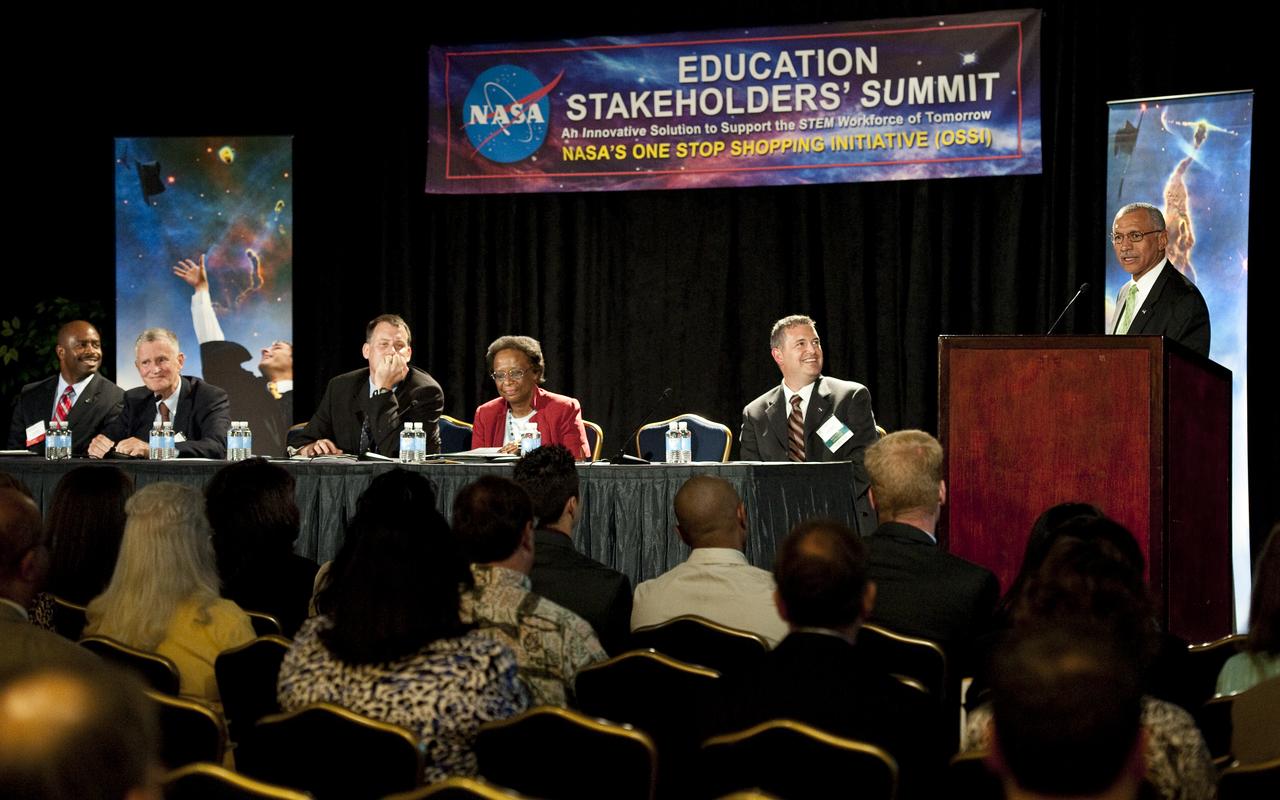
NASA Administrator Charles Bolden, far right, gives keynote remarks at the NASA Education Stakeholders’ Summit One Stop Shopping Initiative (OSSI), Monday, Sep. 13, 2010, at the Westfields Marriott Conference Center in Chantilly, VA. Administrator Bolden is joined on the panel from left to right by Leland Melvin, Education Design Team Co-Chair and NASA Astronaut; William Kelly, Manager, Public Affairs, American Society for Engineering Education; Michael Lach, Special Assistant for STEM Education, U.S. Department of Education; Cora Marrett, Acting Director, National Science Foundation; and James Stofan, NASA Acting Associate Administrator for Education. (Photo Credit: NASA/Carla Cioffi)
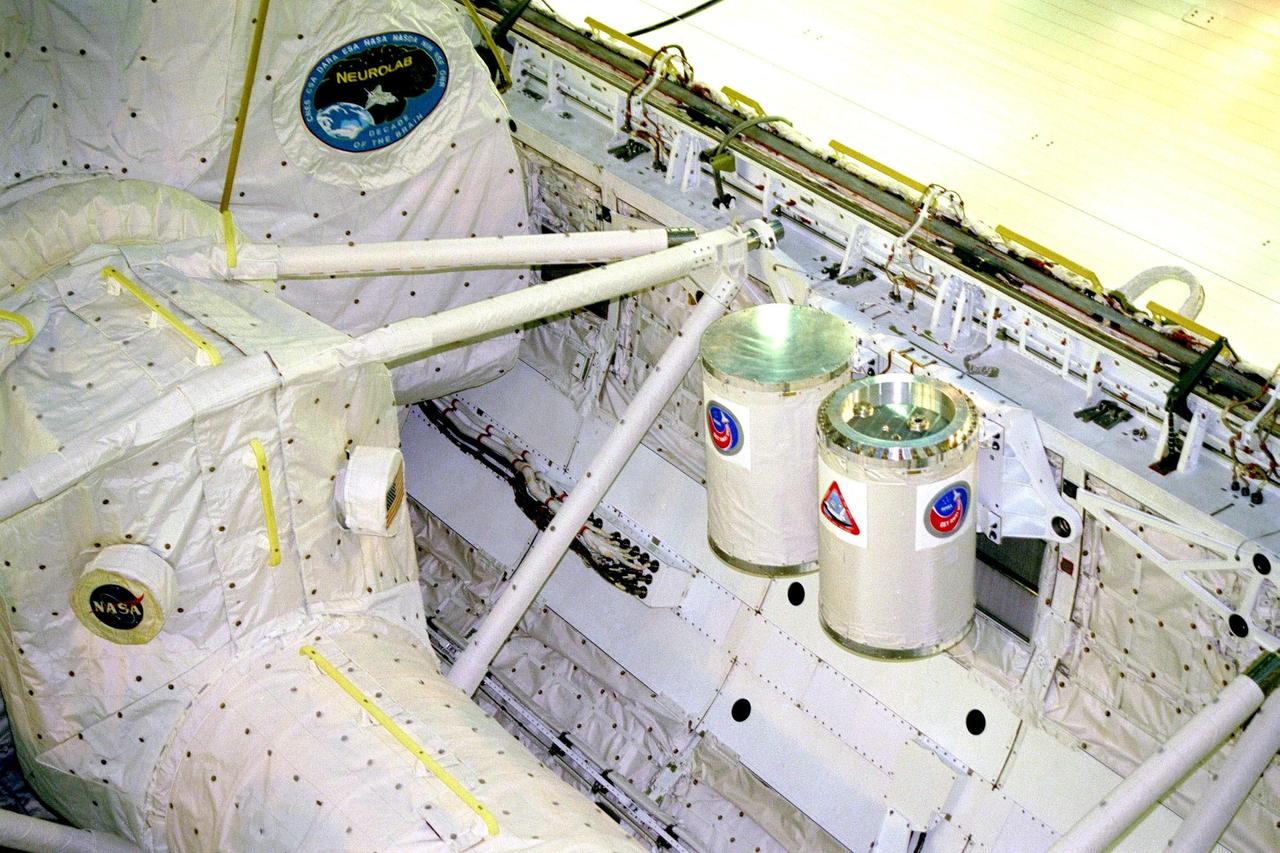
KENNEDY SPACE CENTER, FLA. -- The STS-90 Neurolab payload and two of the four Getaway Specials (GAS) await payload bay door closure in the orbiter Columbia today in Orbiter Processing Facility bay 3. Investigations during the Neurolab mission will focus on the effects of microgravity on the nervous system. The GAS container on the left contains the COLLisions Into Dust Experiment, or COLLIDE, which will study low velocity collisions between space-borne particles in an attempt to better understand planetary ring dynamics. The STS-90 mission is a joint venture of six space agencies and seven U.S. research agencies. Agencies participating in this mission include six institutes of the National Institutes of Health, the National Science Foundation, and the Office of Naval Research, as well as the space agencies of Canada, France, Germany, and Japan, and the European Space Agency (ESA)
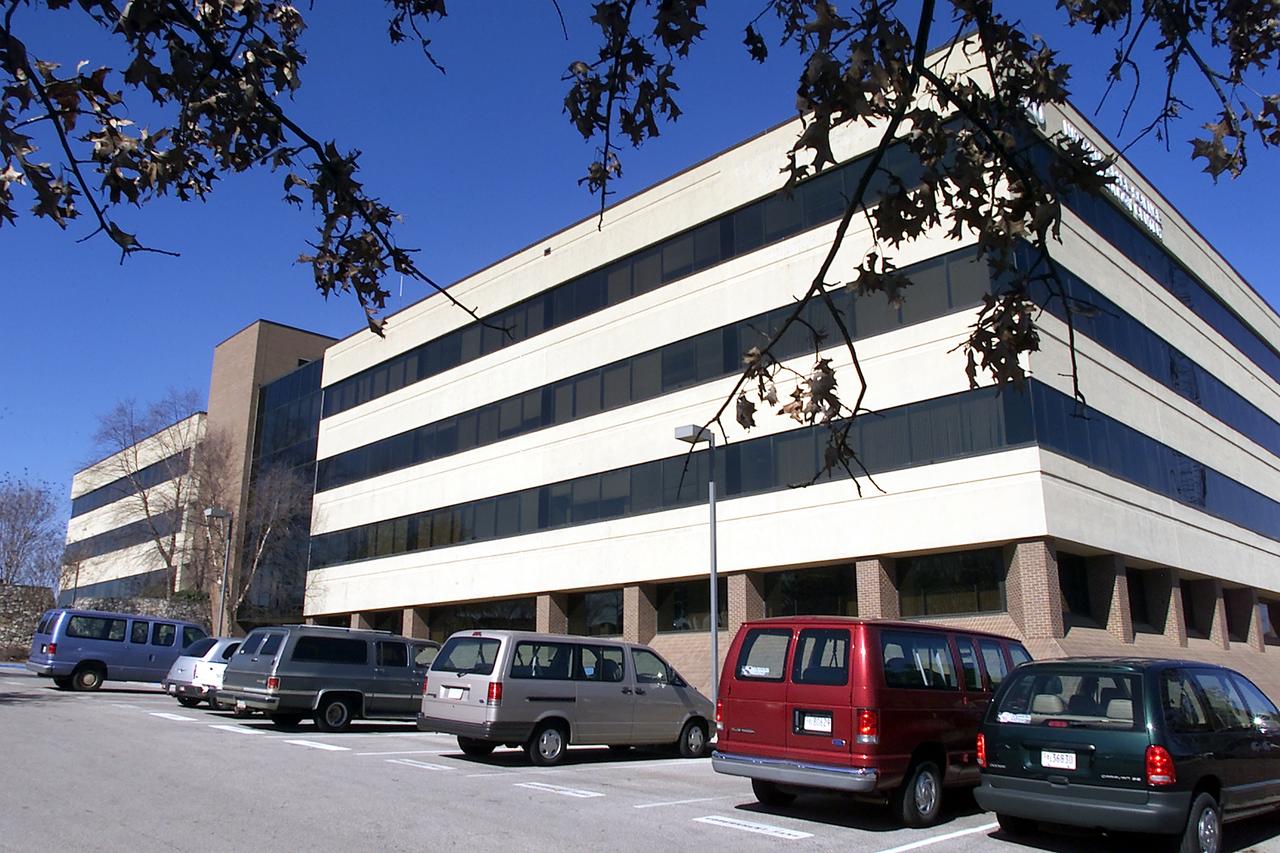
The National Space Science and Technology Center (NSSTC), located in Huntsville, Alabama, is a laboratory for cutting-edge research in selected scientific and engineering disciplines. The major objectives of the NSSTC are to provide multiple fields of expertise coming together to solve solutions to science and technology problems, and gaining recognition as a world-class science research organization. The center, opened in August 2000, focuses on space science, Earth sciences, information technology, optics and energy technology, biotechnology and materials science, and supports NASA's mission of advancing and communicating scientific knowledge using the environment of space for research. In addition to providing basic and applied research, NSSTC, with its student participation, also fosters the next generation of scientists and engineers. NSSTC is a collaborated effort between NASA and the state of Alabama through the Space Science and Technology alliance, a group of six universities including the Universities of Alabama in Huntsville (UAH),Tuscaloosa (UA), and Birmingham (UAB); the University of South Alabama in Mobile (USA); Alabama Agricultural and Mechanical University (AM) in Huntsville; and Auburn University (AU) in Auburn. Participating federal agencies include NASA, Marshall Space Flight Center, the National Oceanic and Atmospheric Administration, the Department of Defense, the National Science Foundation, and the Department of Energy. Industries involved include the Space Science Research Center, the Global Hydrology and Climate Center, the Information Technology Research Center, the Optics and Energy Technology Center, the Propulsion Research Center, the Biotechnology Research Center, and the Materials Science Research Center. An arnex, scheduled for completion by summer 2002, will add an additional 80,000 square feet (7,432 square meters) to NSSTC nearly doubling the size of the core facility. At full capacity, the completed NSSTC will top 200,000 square feet (18,580 square meters) and house approximately 550 employees.
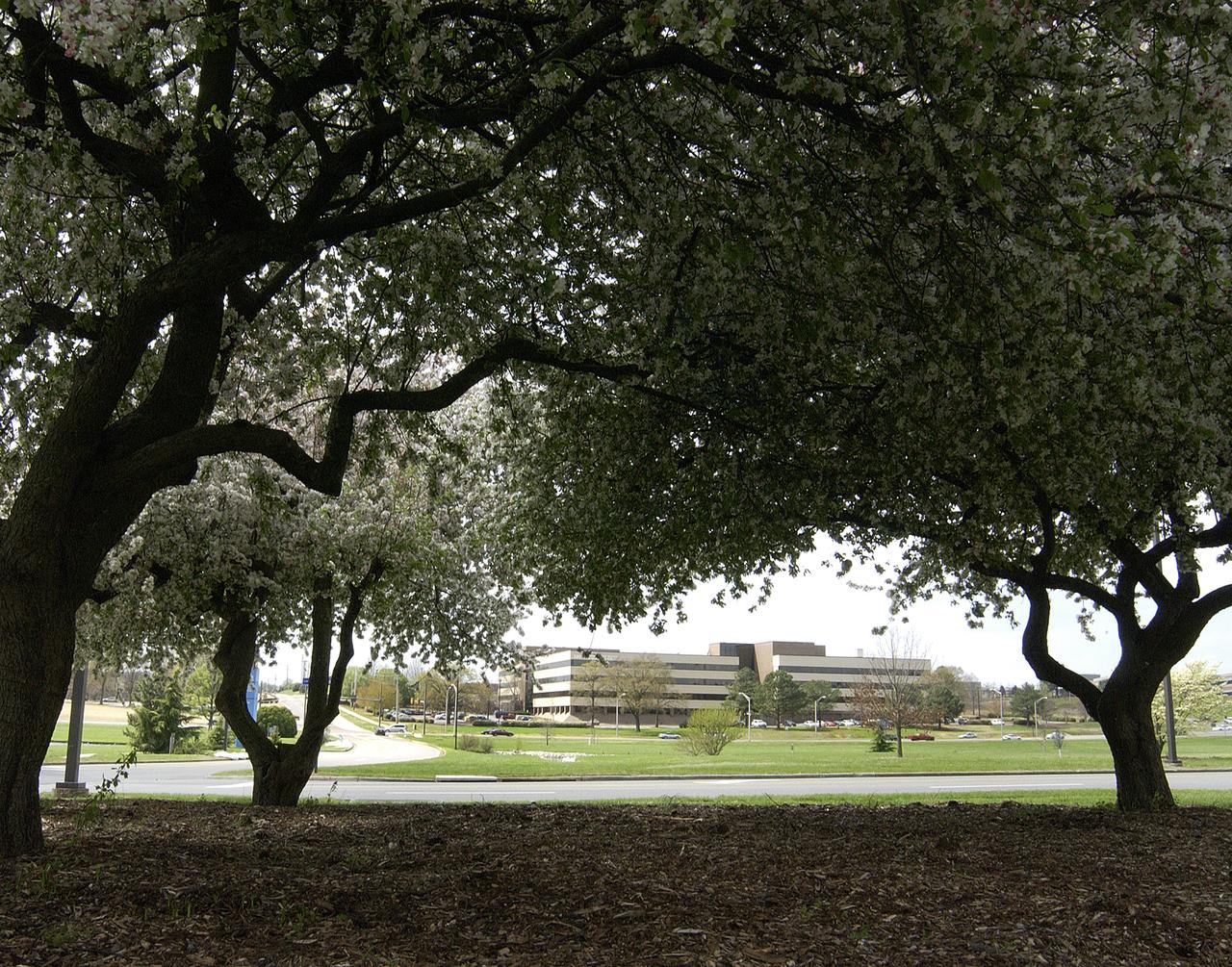
The National Space Science and Technology Center (NSSTC), located in Huntsville, Alabama, is a laboratory for cutting-edge research in selected scientific and engineering disciplines. The major objectives of the NSSTC are to provide multiple fields of expertise coming together to solve solutions to science and technology problems, and gaining recognition as a world-class science research organization. The center, opened in August 2000, focuses on space science, Earth sciences, information technology, optics and energy technology, biotechnology and materials science, and supports NASA's mission of advancing and communicating scientific knowledge using the environment of space for research. In addition to providing basic and applied research, NSSTC, with its student participation, also fosters the next generation of scientists and engineers. NSSTC is a collaborated effort between NASA and the state of Alabama through the Space Science and Technology alliance, a group of six universities including the Universities of Alabama in Huntsville (UAH),Tuscaloosa (UA), and Birmingham (UAB); the University of South Alabama in Mobile (USA);Alabama Agricultural and Mechanical University (AM) in Huntsville; and Auburn University (AU) in Auburn. Participating federal agencies include NASA, Marshall Space Flight Center, the National Oceanic and Atmospheric Administration, the Department of Defense, the National Science Foundation, and the Department of Energy. Industries involved include the Space Science Research Center, the Global Hydrology and Climate Center, the Information Technology Research Center, the Optics and Energy Technology Center, the Propulsion Research Center, the Biotechnology Research Center, and the Materials Science Research Center. This photo shows the completed center with the additional arnex (right of building) that added an additional 80,000 square feet (7,432 square meters) to the already existent NSSTC, nearly doubling the size of the core facility. At full capacity, the NSSTC tops 200,000 square feet (18,580 square meters) and houses approximately 550 employees.
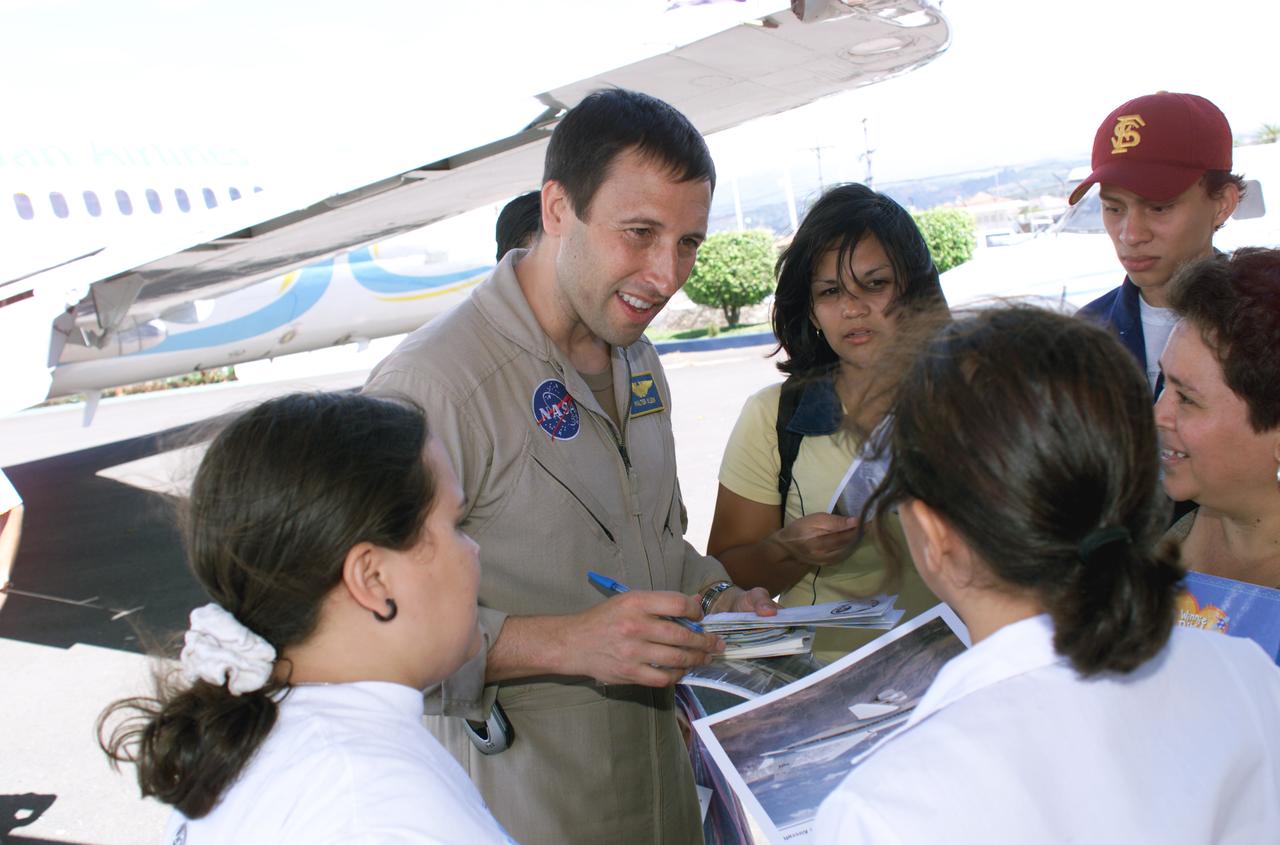
NASA Dryden Mission Manager Walter Klein passes out Airborne Science stickers and lithographs to underprivileged school children that visited the airport on Monday March 8, 2004. In spanish, he explained to them the mission of the DC-8 AirSAR 2004 Mesoamerican campaign in Costa Rica. AirSAR 2004 Mesoamerica is a three-week expedition by an international team of scientists that uses an all-weather imaging tool, called the Airborne Synthetic Aperture Radar (AirSAR) which is located onboard NASA's DC-8 airborne laboratory. Scientists from many parts of the world including NASA's Jet Propulsion Laboratory are combining ground research done in several areas in Central America with NASA's AirSAR technology to improve and expand on the quality of research they are able to conduct. The radar, developed by NASA's Jet Propulsion Laboratory, can penetrate clouds and also collect data at night. Its high-resolution sensors operate at multiple wavelengths and modes, allowing AirSAR to see beneath treetops, through thin sand, and dry snow pack. AirSAR's 2004 campaign is a collaboration of many U.S. and Central American institutions and scientists, including NASA; the National Science Foundation; the Smithsonian Institution; National Geographic; Conservation International; the Organization of Tropical Studies; the Central American Commission for Environment and Development; and the Inter-American Development Bank.
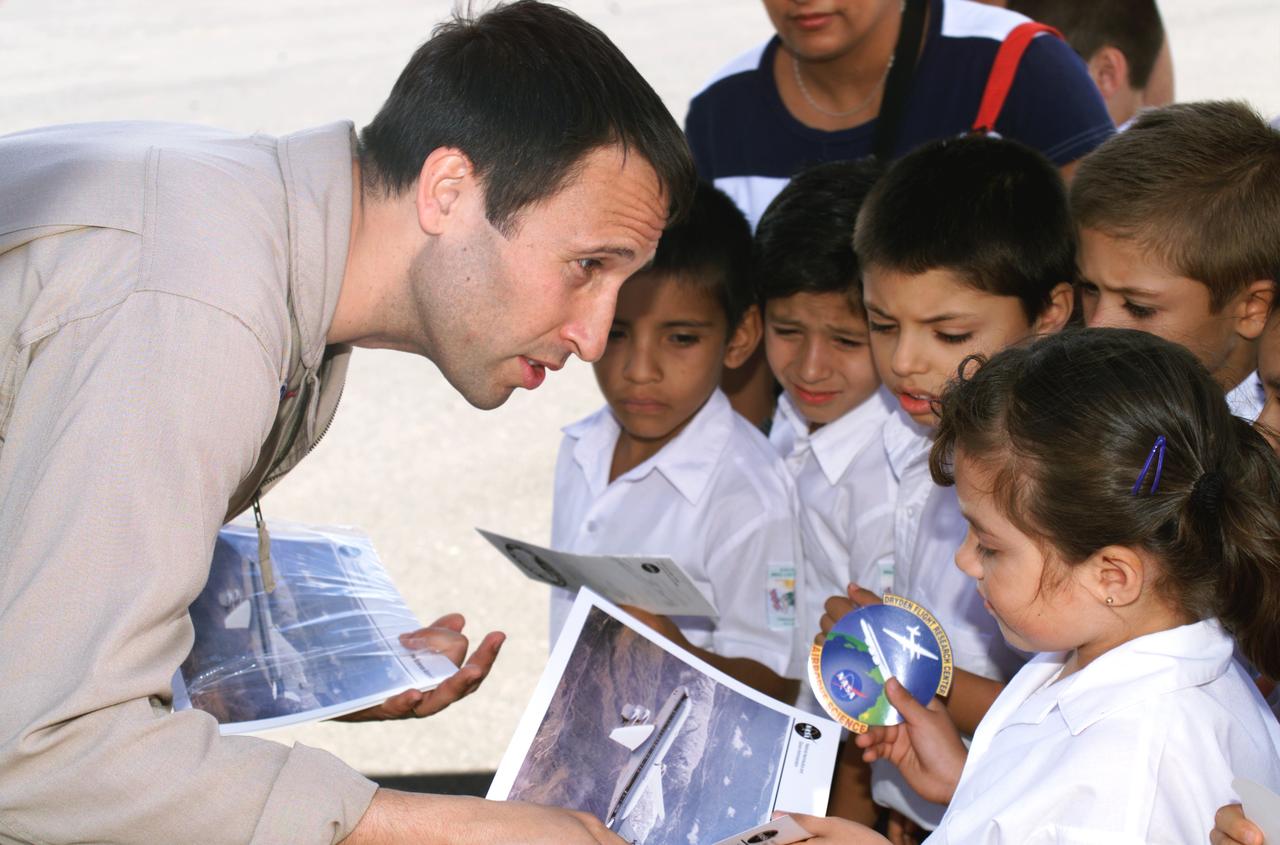
NASA Dryden Mission Manager Walter Klein passes out Airborne Science stickers and lithographs to underprivileged school children that visited the airport on Monday March 8, 2004. In spanish, he explained to them the mission of the DC-8 AirSAR 2004 Mesoamerican campaign in Costa Rica. AirSAR 2004 Mesoamerica is a three-week expedition by an international team of scientists that uses an all-weather imaging tool, called the Airborne Synthetic Aperture Radar (AirSAR) which is located onboard NASA's DC-8 airborne laboratory. Scientists from many parts of the world including NASA's Jet Propulsion Laboratory are combining ground research done in several areas in Central America with NASA's AirSAR technology to improve and expand on the quality of research they are able to conduct. The radar, developed by NASA's Jet Propulsion Laboratory, can penetrate clouds and also collect data at night. Its high-resolution sensors operate at multiple wavelengths and modes, allowing AirSAR to see beneath treetops, through thin sand, and dry snow pack. AirSAR's 2004 campaign is a collaboration of many U.S. and Central American institutions and scientists, including NASA; the National Science Foundation; the Smithsonian Institution; National Geographic; Conservation International; the Organization of Tropical Studies; the Central American Commission for Environment and Development; and the Inter-American Development Bank.
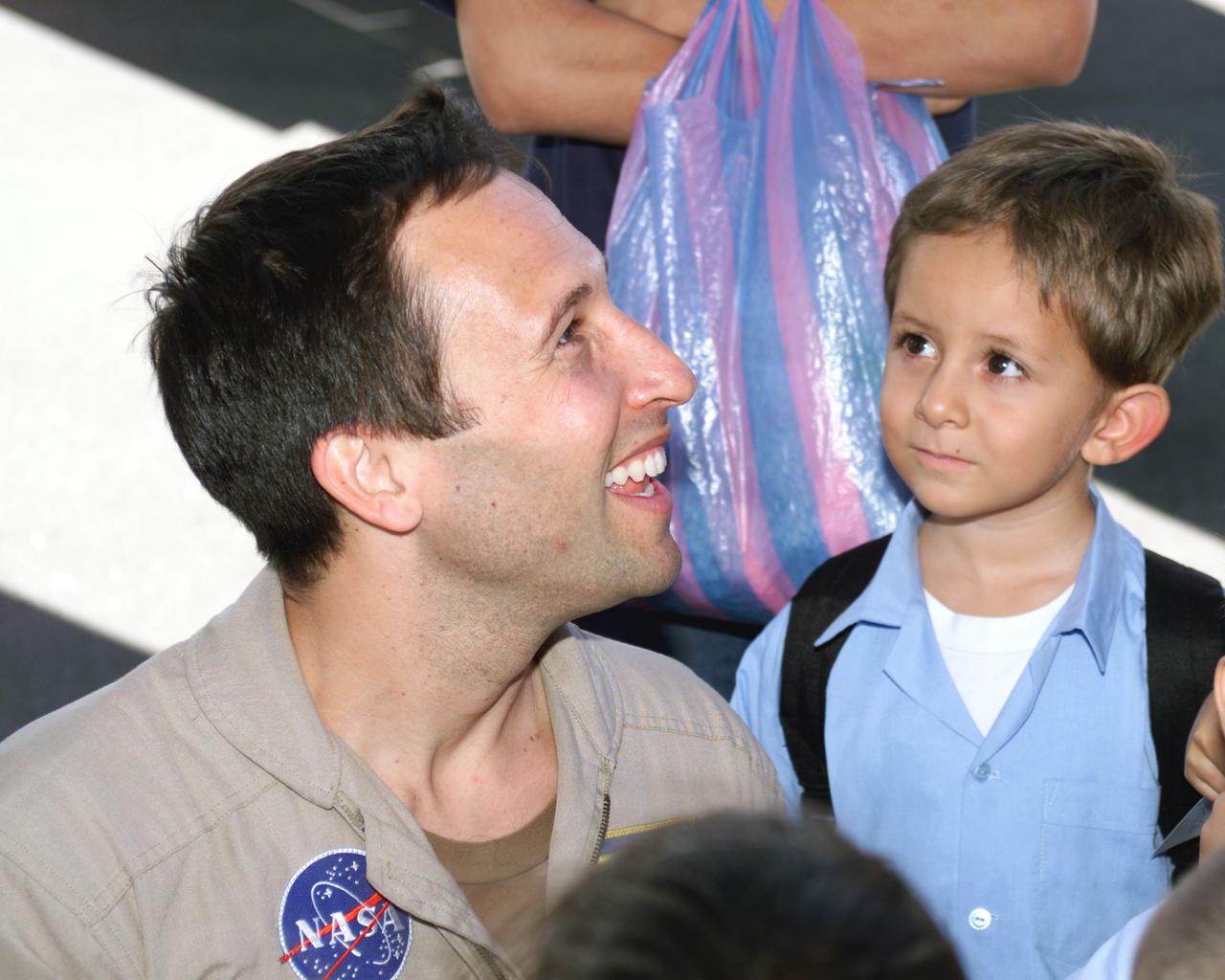
NASA Dryden Mission Manager Walter Klein passes out Airborne Science stickers and lithographs to underprivileged school children that visited the airport on Monday March 8, 2004. In spanish, he explained to them the mission of the DC-8 AirSAR 2004 Mesoamerican campaign in Costa Rica. AirSAR 2004 Mesoamerica is a three-week expedition by an international team of scientists that uses an all-weather imaging tool, called the Airborne Synthetic Aperture Radar (AirSAR) which is located onboard NASA's DC-8 airborne laboratory. Scientists from many parts of the world including NASA's Jet Propulsion Laboratory are combining ground research done in several areas in Central America with NASA's AirSAR technology to improve and expand on the quality of research they are able to conduct. The radar, developed by NASA's Jet Propulsion Laboratory, can penetrate clouds and also collect data at night. Its high-resolution sensors operate at multiple wavelengths and modes, allowing AirSAR to see beneath treetops, through thin sand, and dry snow pack. AirSAR's 2004 campaign is a collaboration of many U.S. and Central American institutions and scientists, including NASA; the National Science Foundation; the Smithsonian Institution; National Geographic; Conservation International; the Organization of Tropical Studies; the Central American Commission for Environment and Development; and the Inter-American Development Bank.
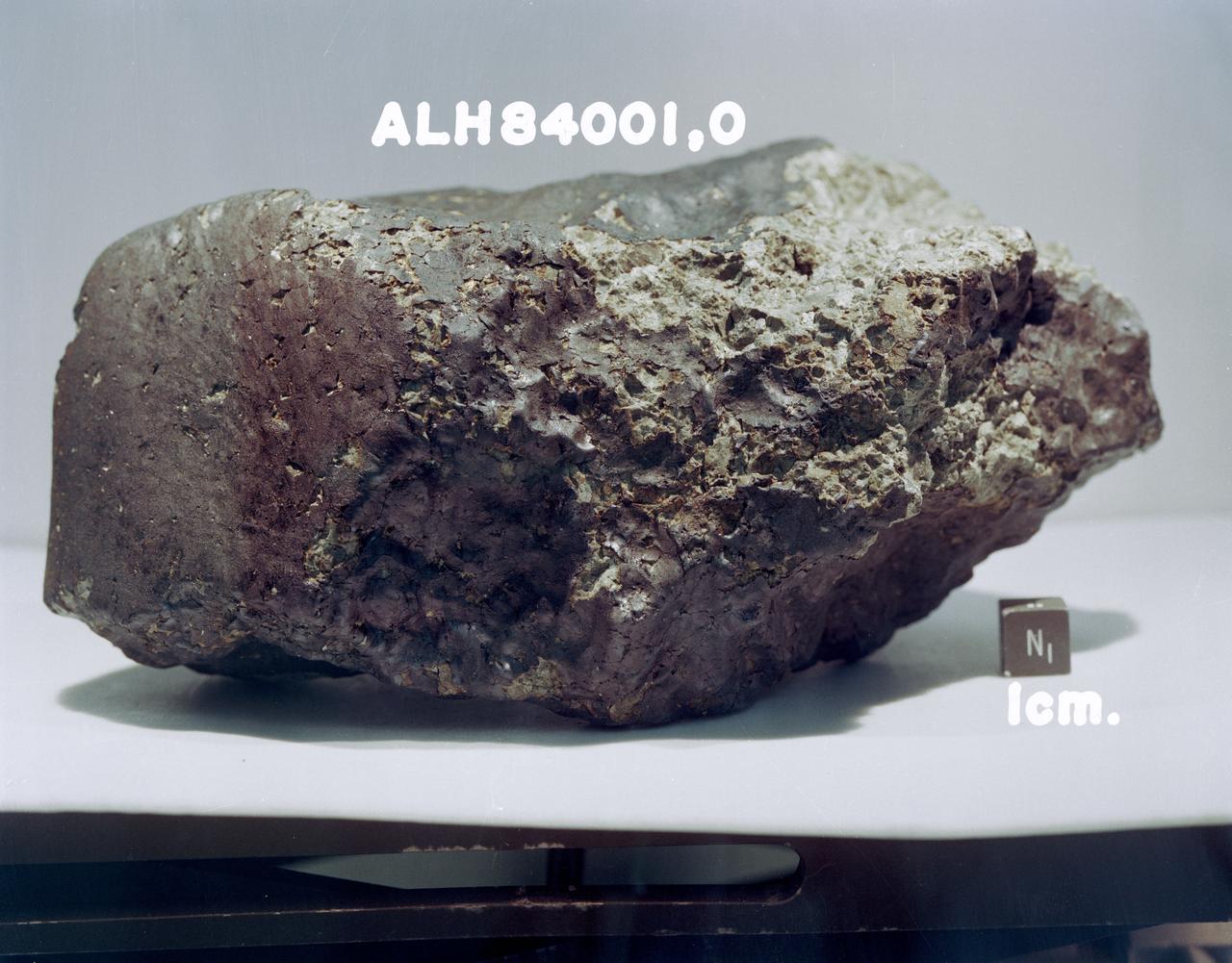
S85-39565 (For release August 1996) --- According to scientists, this 4.5 billion year old rock, labeled meteorite ALH84001, is believed to have once been a part of Mars and to contain fossil evidence that primitive life may have existed on Mars more than 3.6 billion years ago. The rock is a portion of a meteorite that was dislodged from Mars by a huge impact about 16 million years ago and that fell to Earth in Antarctica 13,000 years ago. The meteorite was found in Allan Hills ice field, Antarctica, by an annual expedition of the National Science Foundation?s Antarctic Meteorite Program in 1984. It is preserved for study at the Johnson Space Center?s (JSC) Meteorite Processing Laboratory in Houston, Texas.
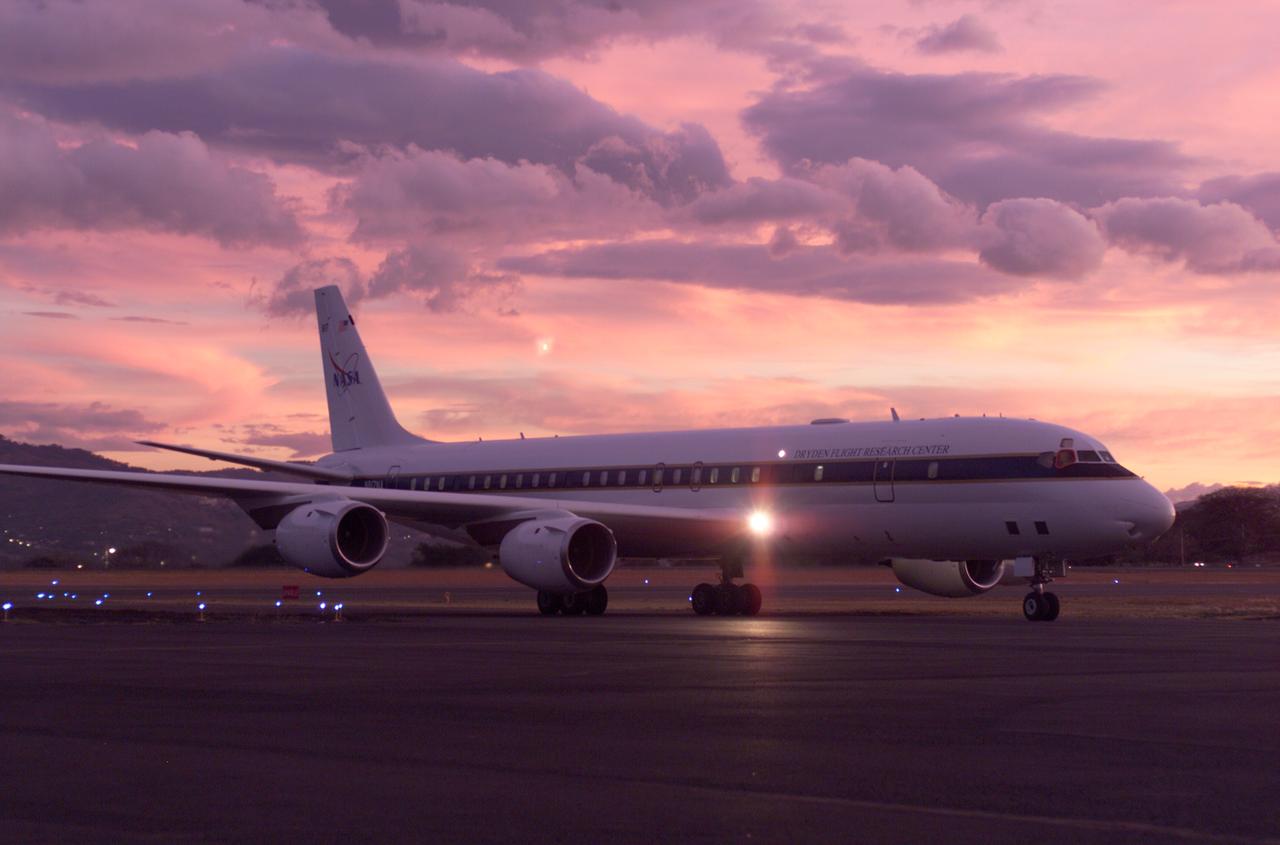
NASA's DC-8 flying laboratory seen at sunset after a flight supporting the AirSAR 2004 Mesoamerica campaign. AirSAR 2004 Mesoamerica is a three-week expedition by an international team of scientists that uses an all-weather imaging tool, called the Airborne Synthetic Aperture Radar (AirSAR) which is located onboard NASA's DC-8 airborne laboratory. Scientists from many parts of the world including NASA's Jet Propulsion Laboratory are combining ground research done in several areas in Central America with NASA's AirSAR technology to improve and expand on the quality of research they are able to conduct. The radar, developed by NASA's Jet Propulsion Laboratory, can penetrate clouds and also collect data at night. Its high-resolution sensors operate at multiple wavelengths and modes, allowing AirSAR to see beneath treetops, through thin sand, and dry snow pack. AirSAR's 2004 campaign is a collaboration of many U.S. and Central American institutions and scientists, including NASA; the National Science Foundation; the Smithsonian Institution; National Geographic; Conservation International; the Organization of Tropical Studies; the Central American Commission for Environment and Development; and the Inter-American Development Bank.
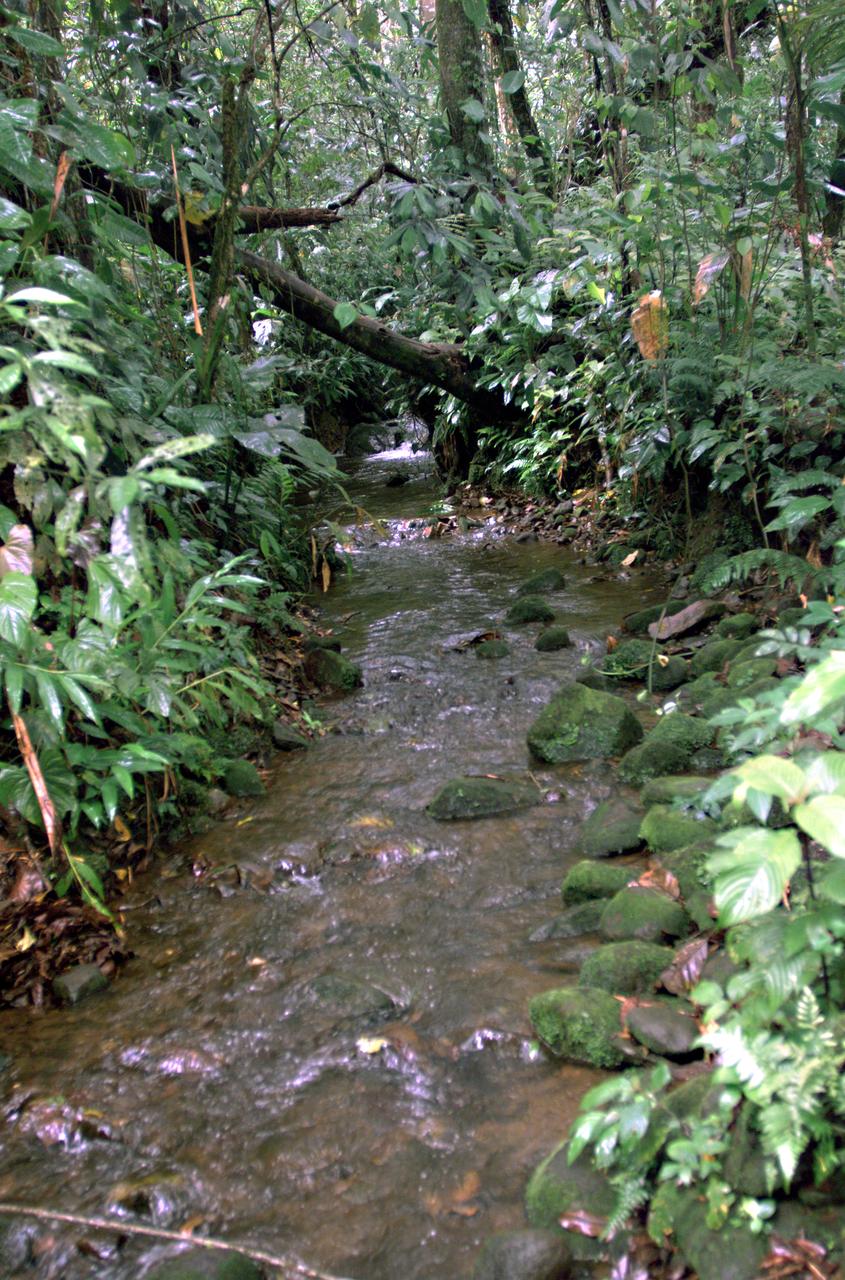
This photograph shows a stream in the La Selva region of the Costa Rican rain forest, taken during NASA's AirSAR 2004 campaign. AirSAR 2004 Mesoamerica is a three-week expedition by an international team of scientists that uses an all-weather imaging tool, called the Airborne Synthetic Aperture Radar (AirSAR) which is located onboard NASA's DC-8 airborne laboratory. Scientists from many parts of the world including NASA's Jet Propulsion Laboratory are combining ground research done in several areas in Central America with NASA's AirSAR technology to improve and expand on the quality of research they are able to conduct. The radar, developed by NASA's Jet Propulsion Laboratory, can penetrate clouds and also collect data at night. Its high-resolution sensors operate at multiple wavelengths and modes, allowing AirSAR to see beneath treetops, through thin sand, and dry snow pack. AirSAR's 2004 campaign is a collaboration of many U.S. and Central American institutions and scientists, including NASA; the National Science Foundation; the Smithsonian Institution; National Geographic; Conservation International; the Organization of Tropical Studies; the Central American Commission for Environment and Development; and the Inter-American Development Bank.
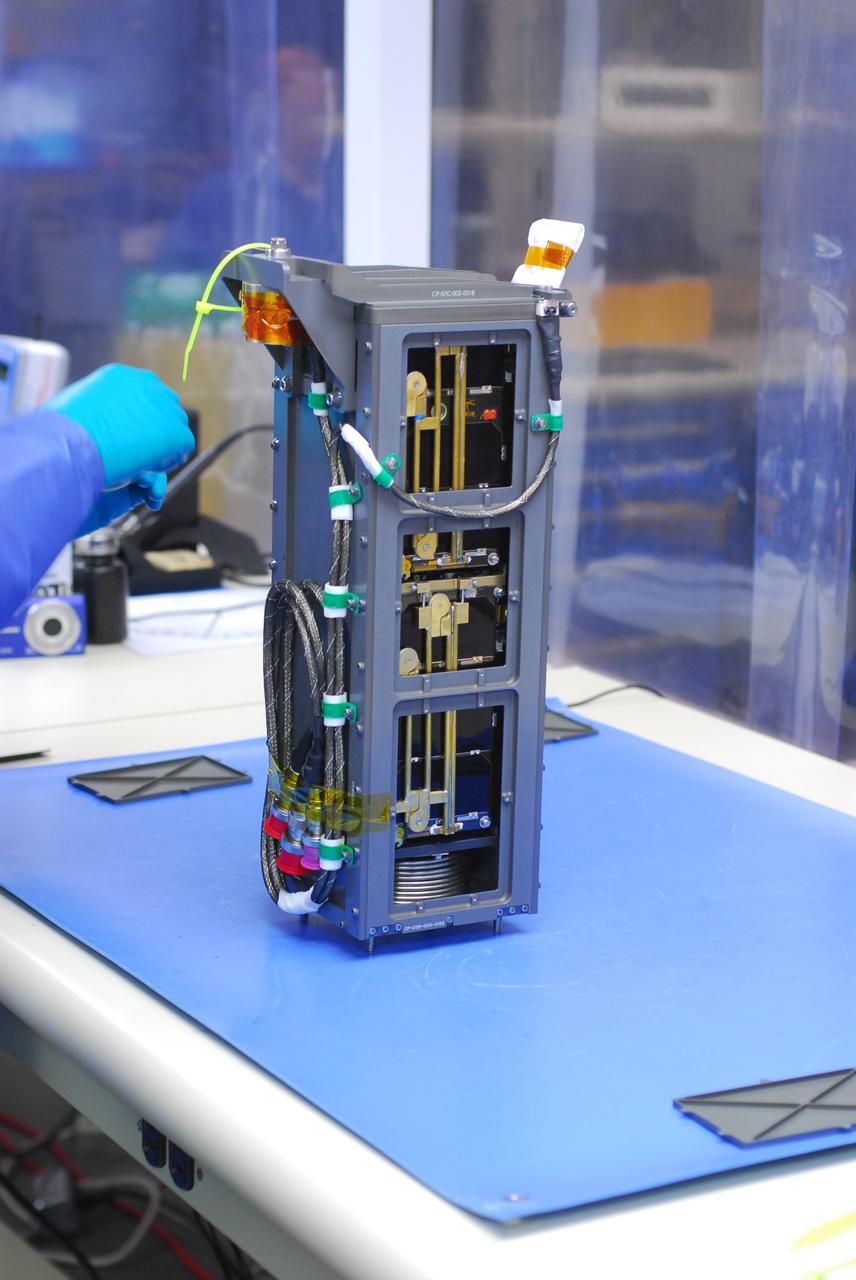
The Dynamic Ionosphere Cubesat Experiment DICE is prepared for launch aboard the Delta II rocket that will carry NASA’s National Polar-orbiting Operational Environmental Satellite System Preparatory Project NPP spacecraft. DICE is a National Science Foundation Project conducted by Utah State University in conjunction with the Atmospheric and Space Technology Research Associates ASTRA. NPP represents a critical first step in building the next-generation of Earth-observing satellites. NPP will carry the first of the new sensors developed for this satellite fleet, now known as the Joint Polar Satellite System JPSS, to be launched in 2016. NPP is the bridge between NASA's Earth Observing System EOS satellites and the forthcoming series of JPSS satellites. The mission will test key technologies and instruments for the JPSS missions. NPP is targeted to launch Oct. 28 from Space Launch Complex-2 aboard a United Launch Alliance Delta II rocket. For more information, visit http://www.nasa.gov/NPP. Photo credit: NASA/VAFB
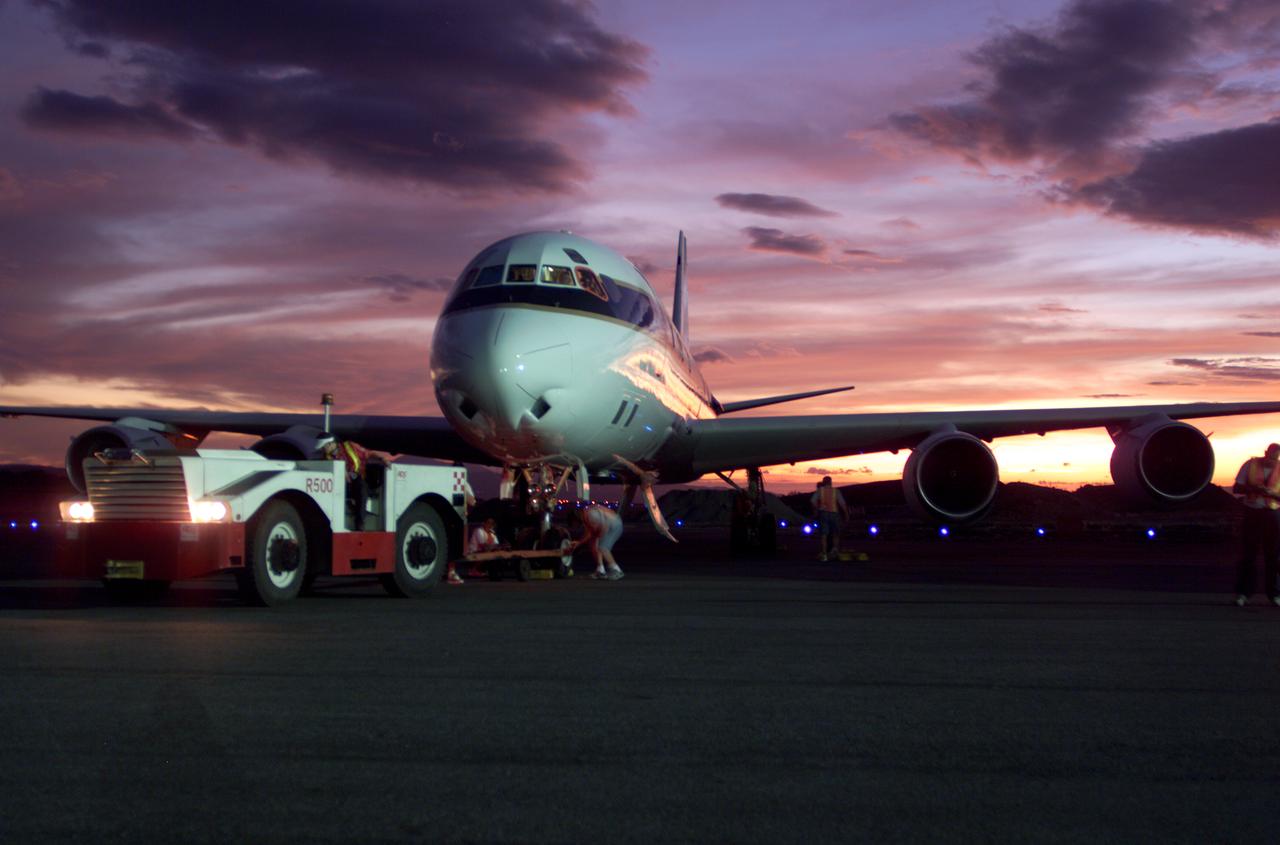
NASA's DC-8 flying laboratory seen at sunset after a flight supporting the AirSAR 2004 Mesoamerica campaign. AirSAR 2004 Mesoamerica is a three-week expedition by an international team of scientists that uses an all-weather imaging tool, called the Airborne Synthetic Aperture Radar (AirSAR) which is located onboard NASA's DC-8 airborne laboratory. Scientists from many parts of the world including NASA's Jet Propulsion Laboratory are combining ground research done in several areas in Central America with NASA's AirSAR technology to improve and expand on the quality of research they are able to conduct. The radar, developed by NASA's Jet Propulsion Laboratory, can penetrate clouds and also collect data at night. Its high-resolution sensors operate at multiple wavelengths and modes, allowing AirSAR to see beneath treetops, through thin sand, and dry snow pack. AirSAR's 2004 campaign is a collaboration of many U.S. and Central American institutions and scientists, including NASA; the National Science Foundation; the Smithsonian Institution; National Geographic; Conservation International; the Organization of Tropical Studies; the Central American Commission for Environment and Development; and the Inter-American Development Bank.
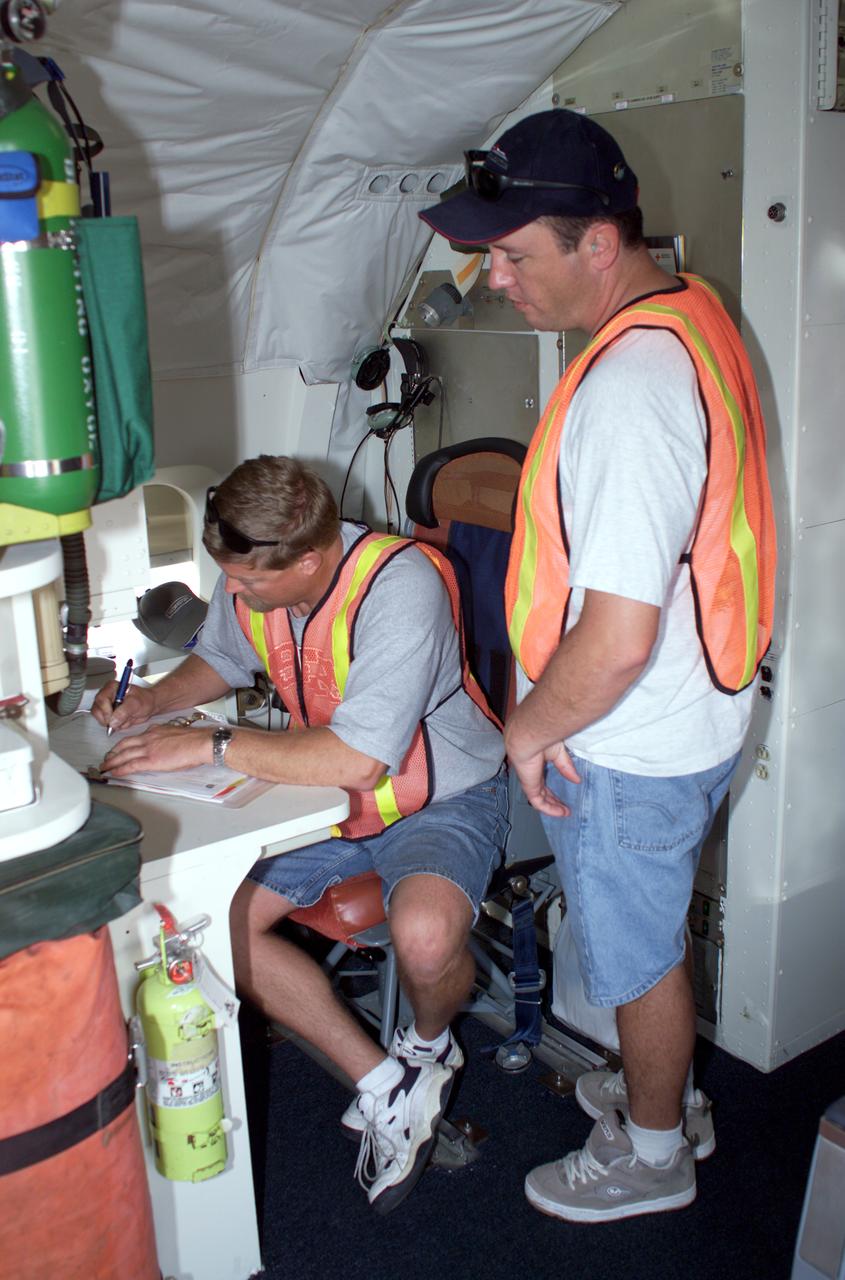
DC-8 Quality Inspector Scott Silver signs documents while Acting Crew Chief Mike Bereda looks on prior to a DC-8 AirSAR flight in Costa Rica. AirSAR 2004 Mesoamerica is a three-week expedition by an international team of scientists that uses an all-weather imaging tool, called the Airborne Synthetic Aperture Radar (AirSAR) which is located onboard NASA's DC-8 airborne laboratory. Scientists from many parts of the world including NASA's Jet Propulsion Laboratory are combining ground research done in several areas in Central America with NASA's AirSAR technology to improve and expand on the quality of research they are able to conduct. The radar, developed by NASA's Jet Propulsion Laboratory, can penetrate clouds and also collect data at night. Its high-resolution sensors operate at multiple wavelengths and modes, allowing AirSAR to see beneath treetops, through thin sand, and dry snow pack. AirSAR's 2004 campaign is a collaboration of many U.S. and Central American institutions and scientists, including NASA; the National Science Foundation; the Smithsonian Institution; National Geographic; Conservation International; the Organization of Tropical Studies; the Central American Commission for Environment and Development; and the Inter-American Development Bank.
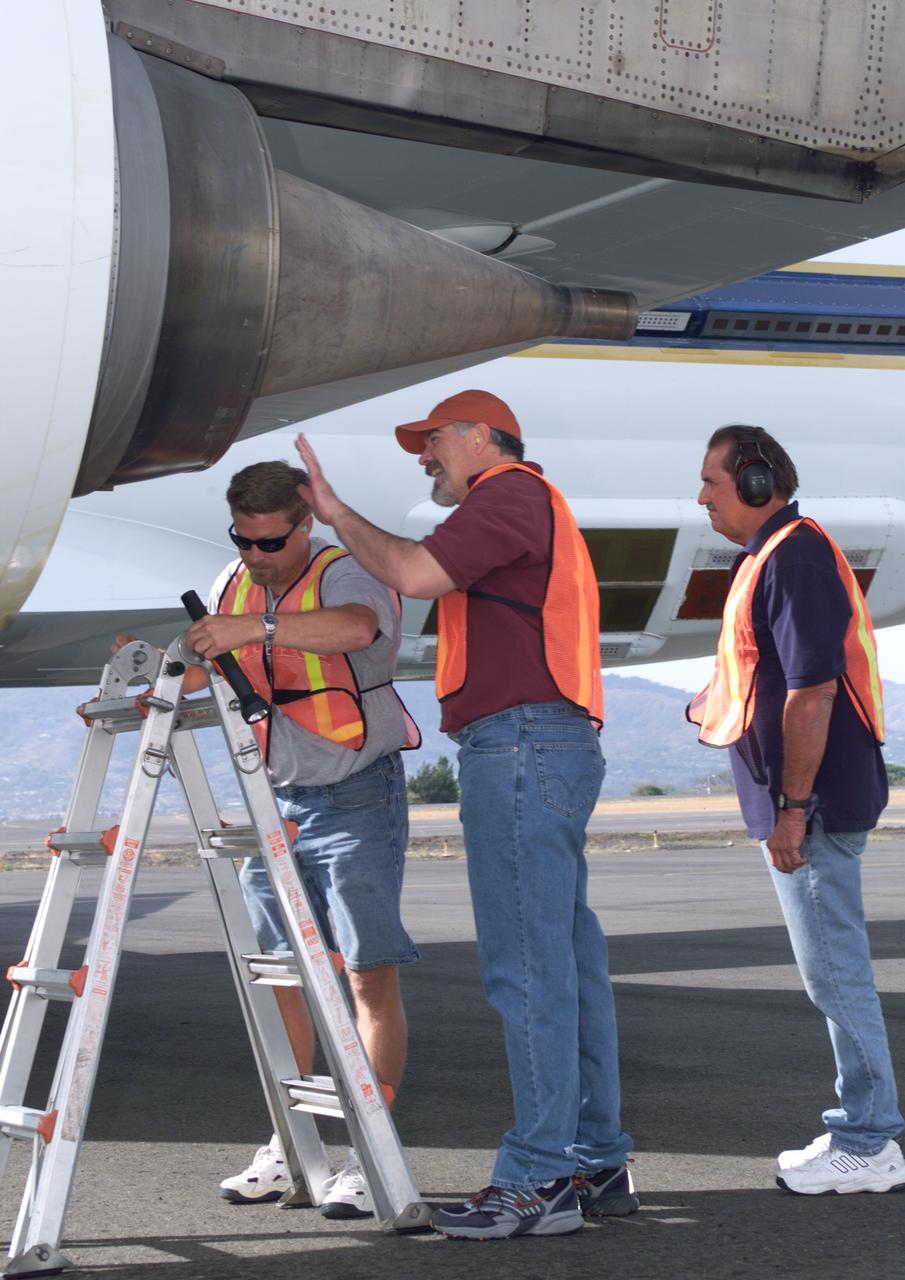
NASA Dryden DC-8 maintenance crew members inspect the aircraft prior to take-off. L-R; Scott Silver, Paul Ristrim and Mike Lakowski. AirSAR 2004 Mesoamerica is a three-week expedition by an international team of scientists that uses an all-weather imaging tool, called the Airborne Synthetic Aperture Radar (AirSAR) which is located onboard NASA's DC-8 airborne laboratory. Scientists from many parts of the world including NASA's Jet Propulsion Laboratory are combining ground research done in several areas in Central America with NASA's AirSAR technology to improve and expand on the quality of research they are able to conduct. The radar, developed by NASA's Jet Propulsion Laboratory, can penetrate clouds and also collect data at night. Its high-resolution sensors operate at multiple wavelengths and modes, allowing AirSAR to see beneath treetops, through thin sand, and dry snow pack. AirSAR's 2004 campaign is a collaboration of many U.S. and Central American institutions and scientists, including NASA; the National Science Foundation; the Smithsonian Institution; National Geographic; Conservation International; the Organization of Tropical Studies; the Central American Commission for Environment and Development; and the Inter-American Development Bank.
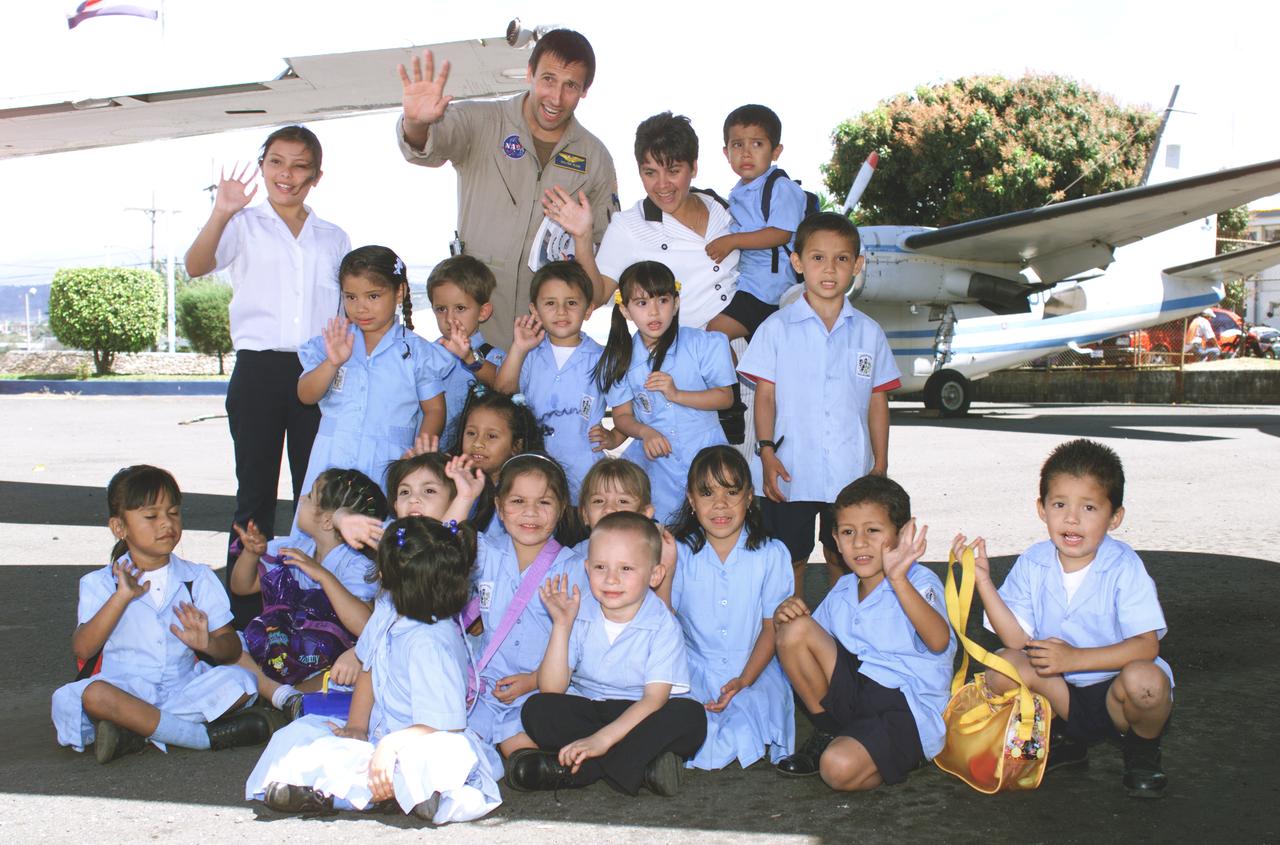
NASA Dryden Mission Manager Walter Klein poses with school children that visited the airport during AirSAR 2004. In spanish, he explained to them the mission of the DC-8 AirSAR 2004 Mesoamerican campaign in Costa Rica. AirSAR 2004 Mesoamerica is a three-week expedition by an international team of scientists that uses an all-weather imaging tool, called the Airborne Synthetic Aperture Radar (AirSAR) which is located onboard NASA's DC-8 airborne laboratory. Scientists from many parts of the world including NASA's Jet Propulsion Laboratory are combining ground research done in several areas in Central America with NASA's AirSAR technology to improve and expand on the quality of research they are able to conduct. The radar, developed by NASA's Jet Propulsion Laboratory, can penetrate clouds and also collect data at night. Its high-resolution sensors operate at multiple wavelengths and modes, allowing AirSAR to see beneath treetops, through thin sand, and dry snow pack. AirSAR's 2004 campaign is a collaboration of many U.S. and Central American institutions and scientists, including NASA; the National Science Foundation; the Smithsonian Institution; National Geographic; Conservation International; the Organization of Tropical Studies; the Central American Commission for Environment and Development; and the Inter-American Development Bank.
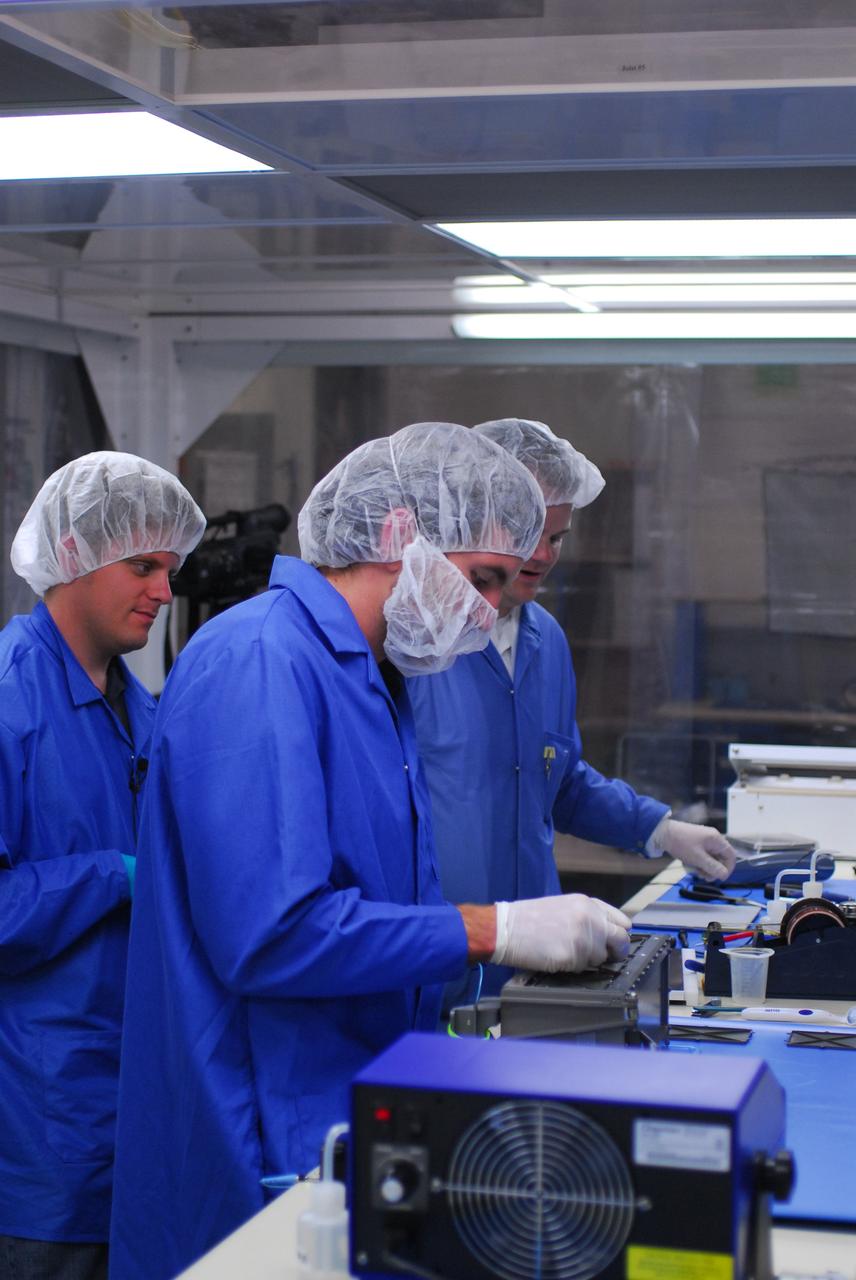
The Dynamic Ionosphere Cubesat Experiment DICE is prepared for launch aboard the Delta II rocket that will carry NASA’s National Polar-orbiting Operational Environmental Satellite System Preparatory Project NPP spacecraft. DICE is a National Science Foundation Project conducted by Utah State University in conjunction with the Atmospheric and Space Technology Research Associates ASTRA. NPP represents a critical first step in building the next-generation of Earth-observing satellites. NPP will carry the first of the new sensors developed for this satellite fleet, now known as the Joint Polar Satellite System JPSS, to be launched in 2016. NPP is the bridge between NASA's Earth Observing System EOS satellites and the forthcoming series of JPSS satellites. The mission will test key technologies and instruments for the JPSS missions. NPP is targeted to launch Oct. 28 from Space Launch Complex-2 aboard a United Launch Alliance Delta II rocket. For more information, visit http://www.nasa.gov/NPP. Photo credit: NASA/VAFB
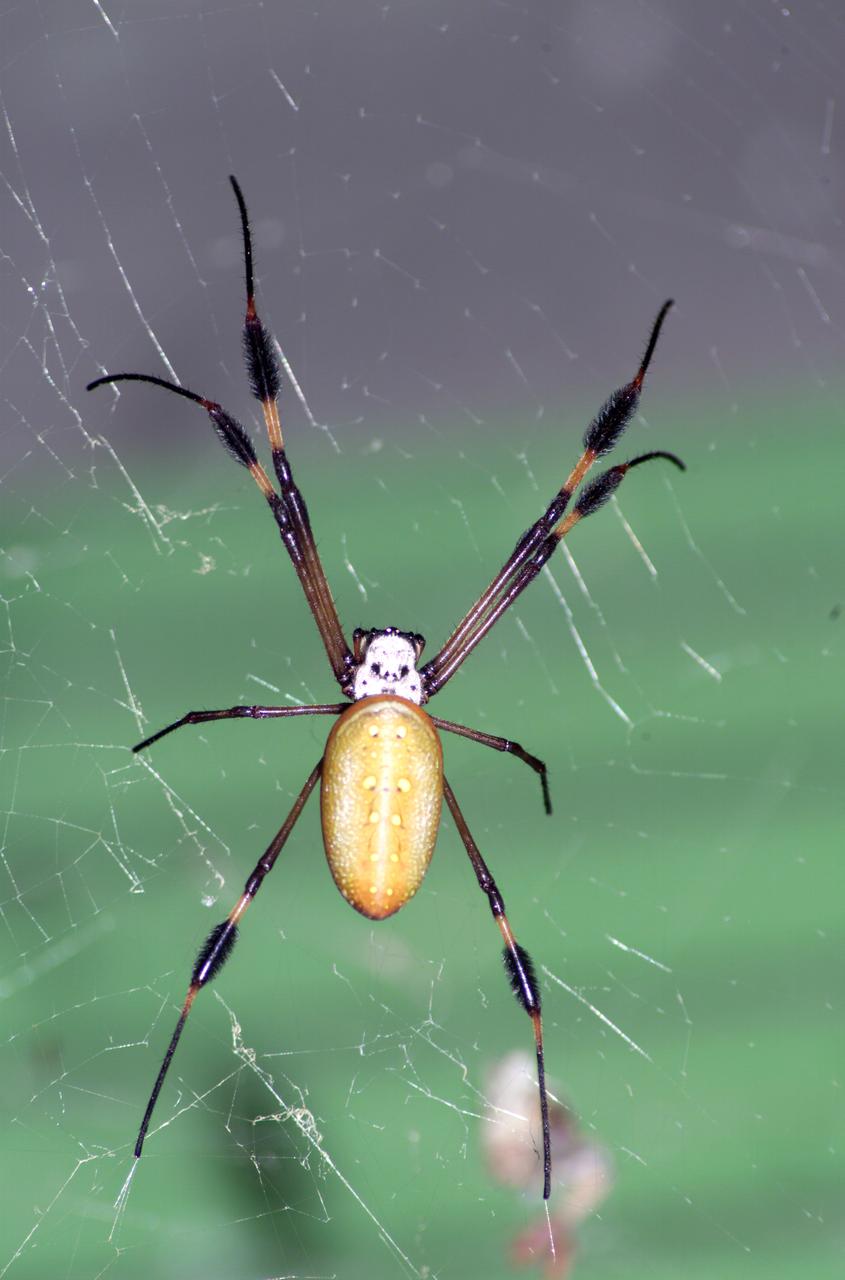
A spider photographed during NASA's AirSAR 2004 Mesoamerica campaign in the La Selva region of the Costa Rican rain forest. AirSAR 2004 Mesoamerica is a three-week expedition by an international team of scientists that uses an all-weather imaging tool, called the Airborne Synthetic Aperture Radar (AirSAR) which is located onboard NASA's DC-8 airborne laboratory. Scientists from many parts of the world including NASA's Jet Propulsion Laboratory are combining ground research done in several areas in Central America with NASA's AirSAR technology to improve and expand on the quality of research they are able to conduct. The radar, developed by NASA's Jet Propulsion Laboratory, can penetrate clouds and also collect data at night. Its high-resolution sensors operate at multiple wavelengths and modes, allowing AirSAR to see beneath treetops, through thin sand, and dry snow pack. AirSAR's 2004 campaign is a collaboration of many U.S. and Central American institutions and scientists, including NASA; the National Science Foundation; the Smithsonian Institution; National Geographic; Conservation International; the Organization of Tropical Studies; the Central American Commission for Environment and Development; and the Inter-American Development Bank.
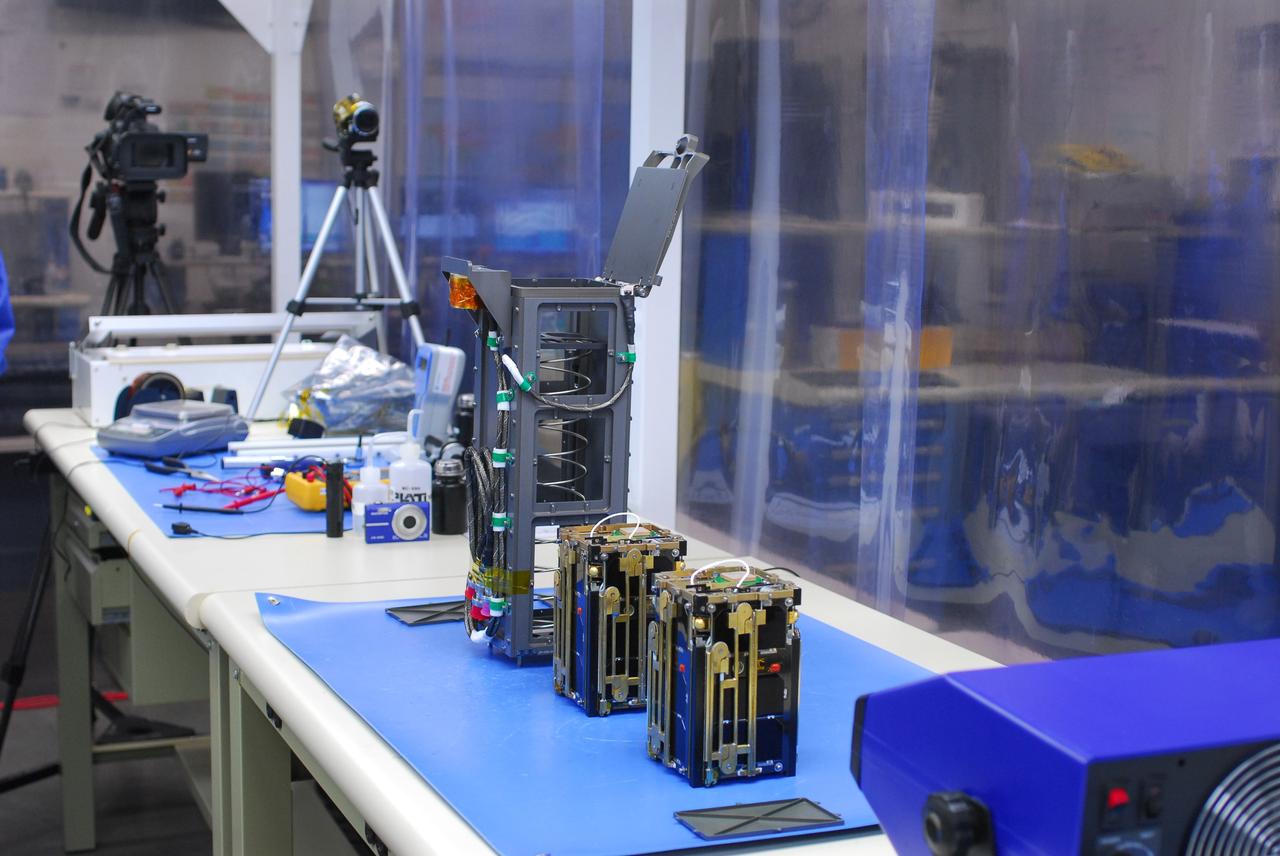
The Dynamic Ionosphere Cubesat Experiment DICE is prepared for launch aboard the Delta II rocket that will carry NASA’s National Polar-orbiting Operational Environmental Satellite System Preparatory Project NPP spacecraft. DICE is a National Science Foundation Project conducted by Utah State University in conjunction with the Atmospheric and Space Technology Research Associates ASTRA. NPP represents a critical first step in building the next-generation of Earth-observing satellites. NPP will carry the first of the new sensors developed for this satellite fleet, now known as the Joint Polar Satellite System JPSS, to be launched in 2016. NPP is the bridge between NASA's Earth Observing System EOS satellites and the forthcoming series of JPSS satellites. The mission will test key technologies and instruments for the JPSS missions. NPP is targeted to launch Oct. 28 from Space Launch Complex-2 aboard a United Launch Alliance Delta II rocket. For more information, visit http://www.nasa.gov/NPP. Photo credit: NASA/VAFB
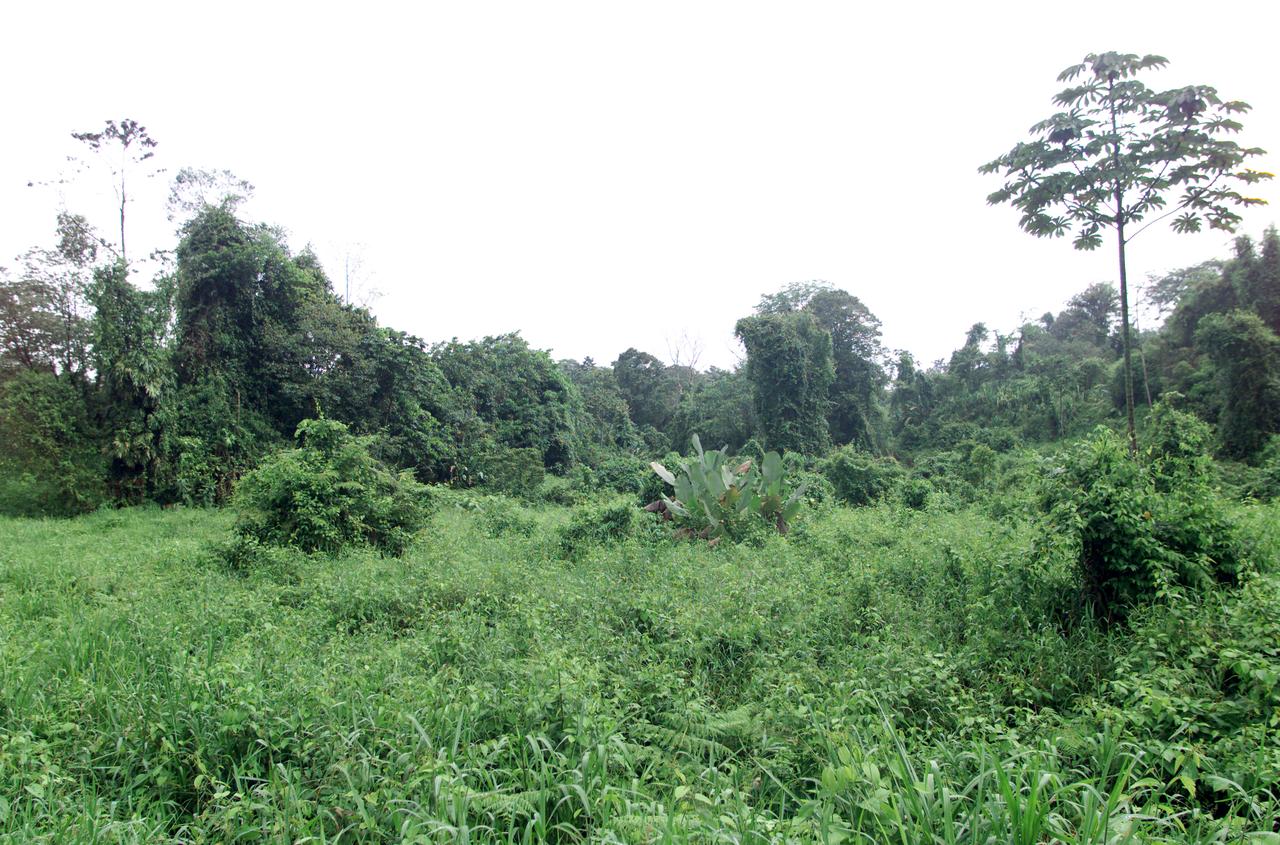
Dense rain forest in the La Selva region of Costa Rica. AirSAR 2004 Mesoamerica is a three-week expedition by an international team of scientists that uses an all-weather imaging tool, called the Airborne Synthetic Aperture Radar (AirSAR) which is located onboard NASA's DC-8 airborne laboratory. Scientists from many parts of the world including NASA's Jet Propulsion Laboratory are combining ground research done in several areas in Central America with NASA's AirSAR technology to improve and expand on the quality of research they are able to conduct. The radar, developed by NASA's Jet Propulsion Laboratory, can penetrate clouds and also collect data at night. Its high-resolution sensors operate at multiple wavelengths and modes, allowing AirSAR to see beneath treetops, through thin sand, and dry snow pack. AirSAR's 2004 campaign is a collaboration of many U.S. and Central American institutions and scientists, including NASA; the National Science Foundation; the Smithsonian Institution; National Geographic; Conservation International; the Organization of Tropical Studies; the Central American Commission for Environment and Development; and the Inter-American Development Bank.
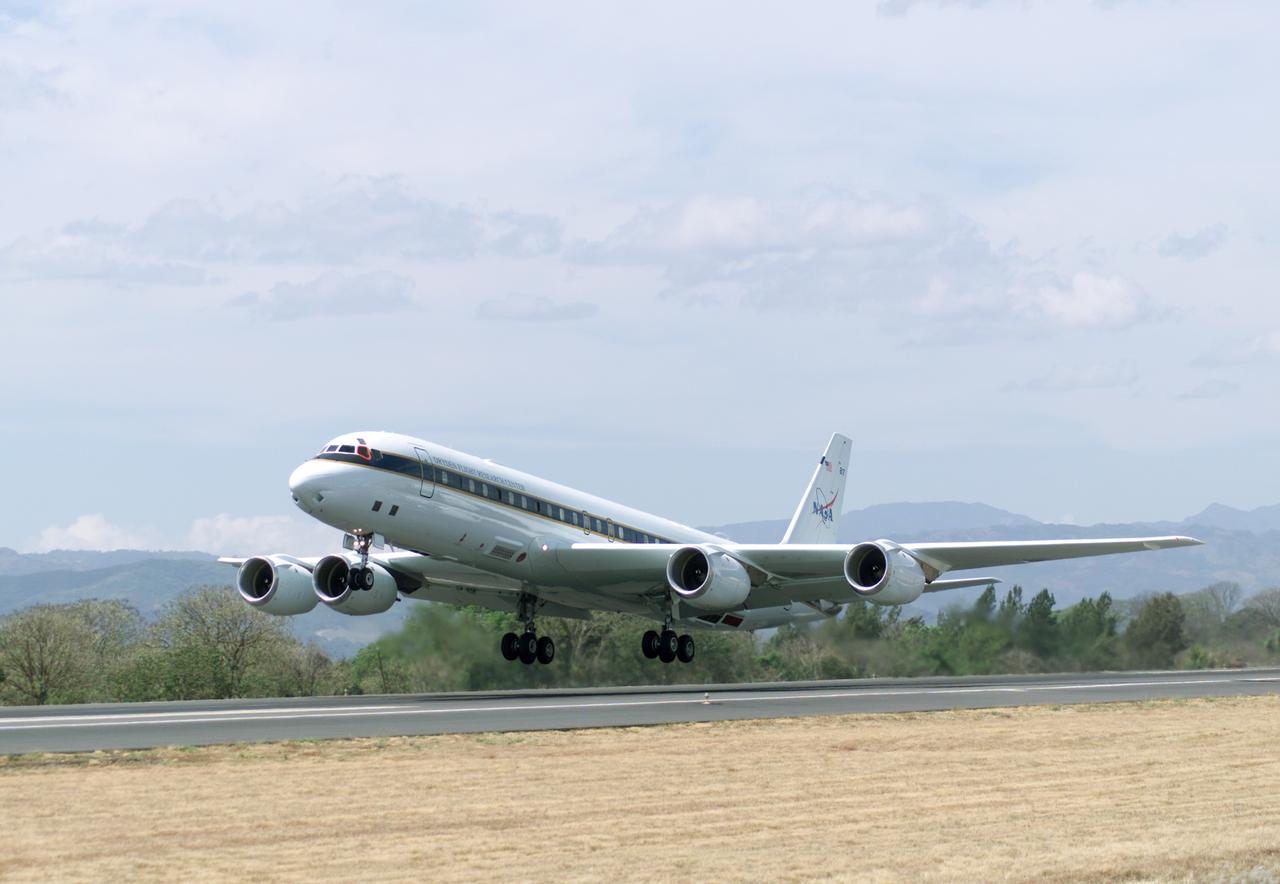
NASA's DC-8 flying laboratory takes off from Juan Santamaria International Airport in San Jose, Costa Rica, on NASA's AirSAR 2004 campaign. AirSAR 2004 Mesoamerica is a three-week expedition by an international team of scientists that uses an all-weather imaging tool, called the Airborne Synthetic Aperture Radar (AirSAR) which is located onboard NASA's DC-8 airborne laboratory. Scientists from many parts of the world including NASA's Jet Propulsion Laboratory are combining ground research done in several areas in Central America with NASA's AirSAR technology to improve and expand on the quality of research they are able to conduct. The radar, developed by NASA's Jet Propulsion Laboratory, can penetrate clouds and also collect data at night. Its high-resolution sensors operate at multiple wavelengths and modes, allowing AirSAR to see beneath treetops, through thin sand, and dry snow pack. AirSAR's 2004 campaign is a collaboration of many U.S. and Central American institutions and scientists, including NASA; the National Science Foundation; the Smithsonian Institution; National Geographic; Conservation International; the Organization of Tropical Studies; the Central American Commission for Environment and Development; and the Inter-American Development Bank.
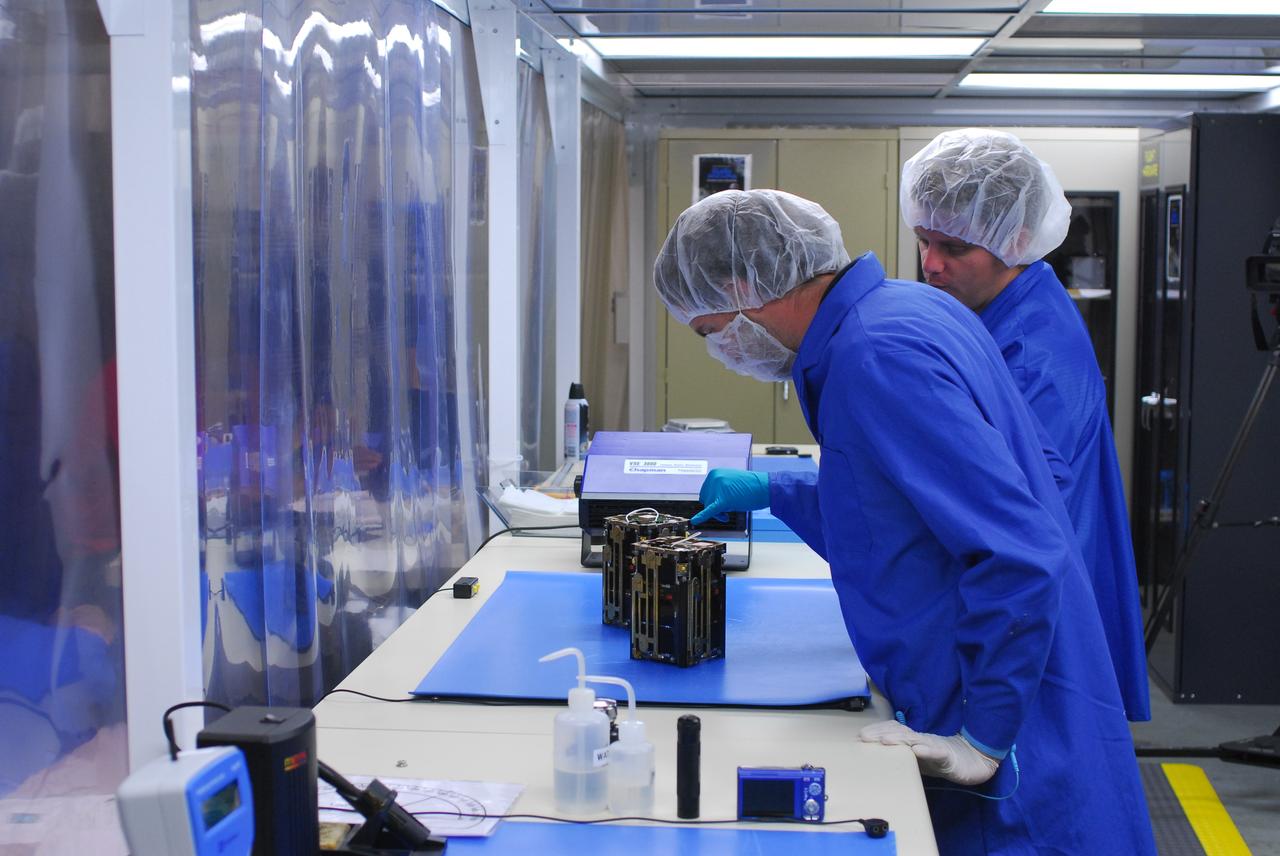
The Dynamic Ionosphere Cubesat Experiment DICE is prepared for launch aboard the Delta II rocket that will carry NASA’s National Polar-orbiting Operational Environmental Satellite System Preparatory Project NPP spacecraft. DICE is a National Science Foundation Project conducted by Utah State University in conjunction with the Atmospheric and Space Technology Research Associates ASTRA. NPP represents a critical first step in building the next-generation of Earth-observing satellites. NPP will carry the first of the new sensors developed for this satellite fleet, now known as the Joint Polar Satellite System JPSS, to be launched in 2016. NPP is the bridge between NASA's Earth Observing System EOS satellites and the forthcoming series of JPSS satellites. The mission will test key technologies and instruments for the JPSS missions. NPP is targeted to launch Oct. 28 from Space Launch Complex-2 aboard a United Launch Alliance Delta II rocket. For more information, visit http://www.nasa.gov/NPP. Photo credit: NASA/VAFB
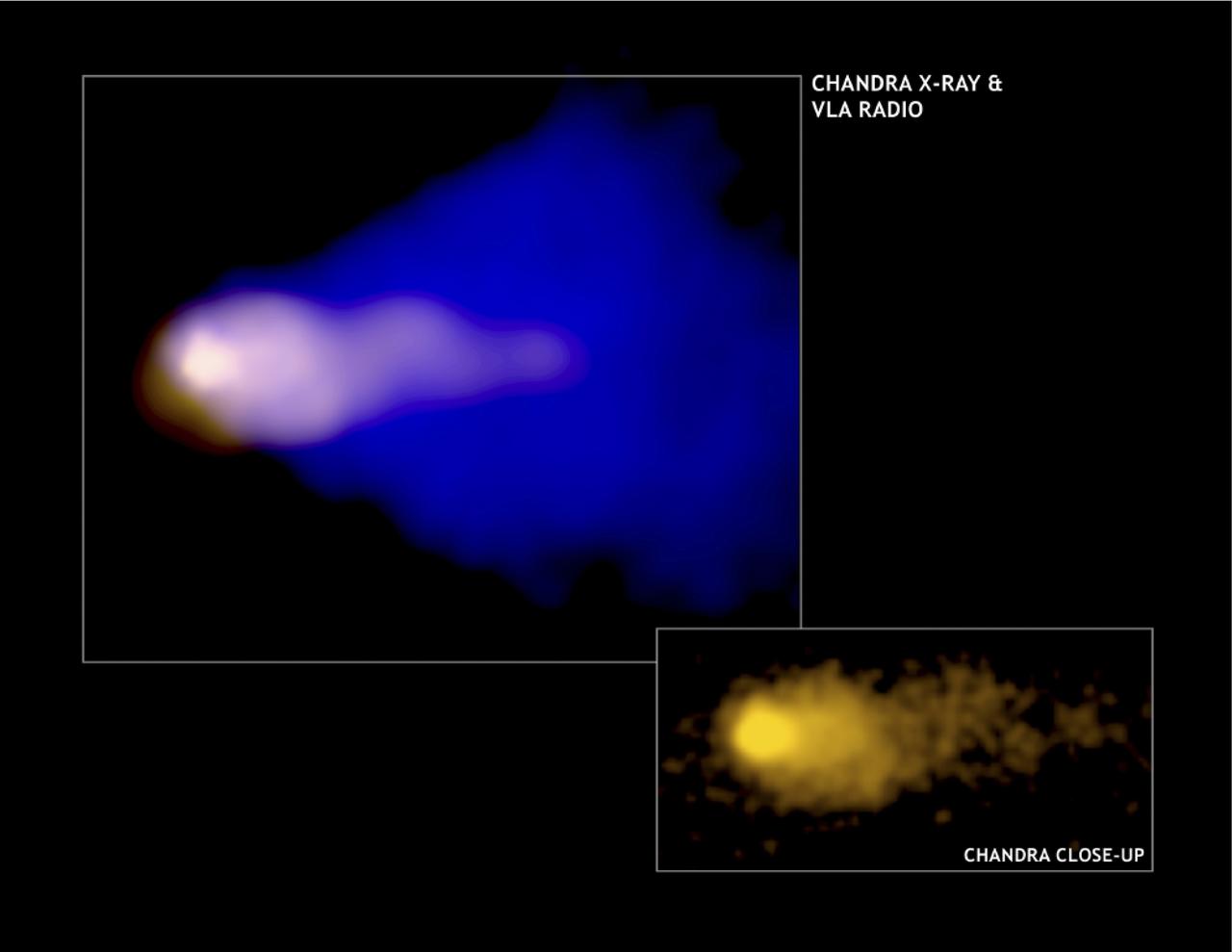
Astronomers have used an x-ray image to make the first detailed study of the behavior of high-energy particles around a fast moving pulsar. This image, from NASA's Chandra X-Ray Observatory (CXO), shows the shock wave created as a pulsar plows supersonically through interstellar space. These results will provide insight into theories for the production of powerful winds of matter and antimatter by pulsars. Chandra's image of the glowing cloud, known as the Mouse, shows a stubby bright column of high-energy particles, about four light years in length, swept back by the pulsar's interaction with interstellar gas. The intense source at the head of the X-ray column is the pulsar, estimated to be moving through space at about 1.3 million miles per hour. A cone-shaped cloud of radio-wave-emitting particles envelopes the x-ray column. The Mouse, a.k.a. G359.23-0.82, was discovered in 1987 by radio astronomers using the National Science Foundation's Very Large Array in New Mexico. G359.23-0.82 gets its name from its appearance in radio images that show a compact snout, a bulbous body, and a remarkable long, narrow, tail that extends for about 55 light years. NASA’s Marshall Space Flight Center in Huntsville, Alabama manages the Chandler program.