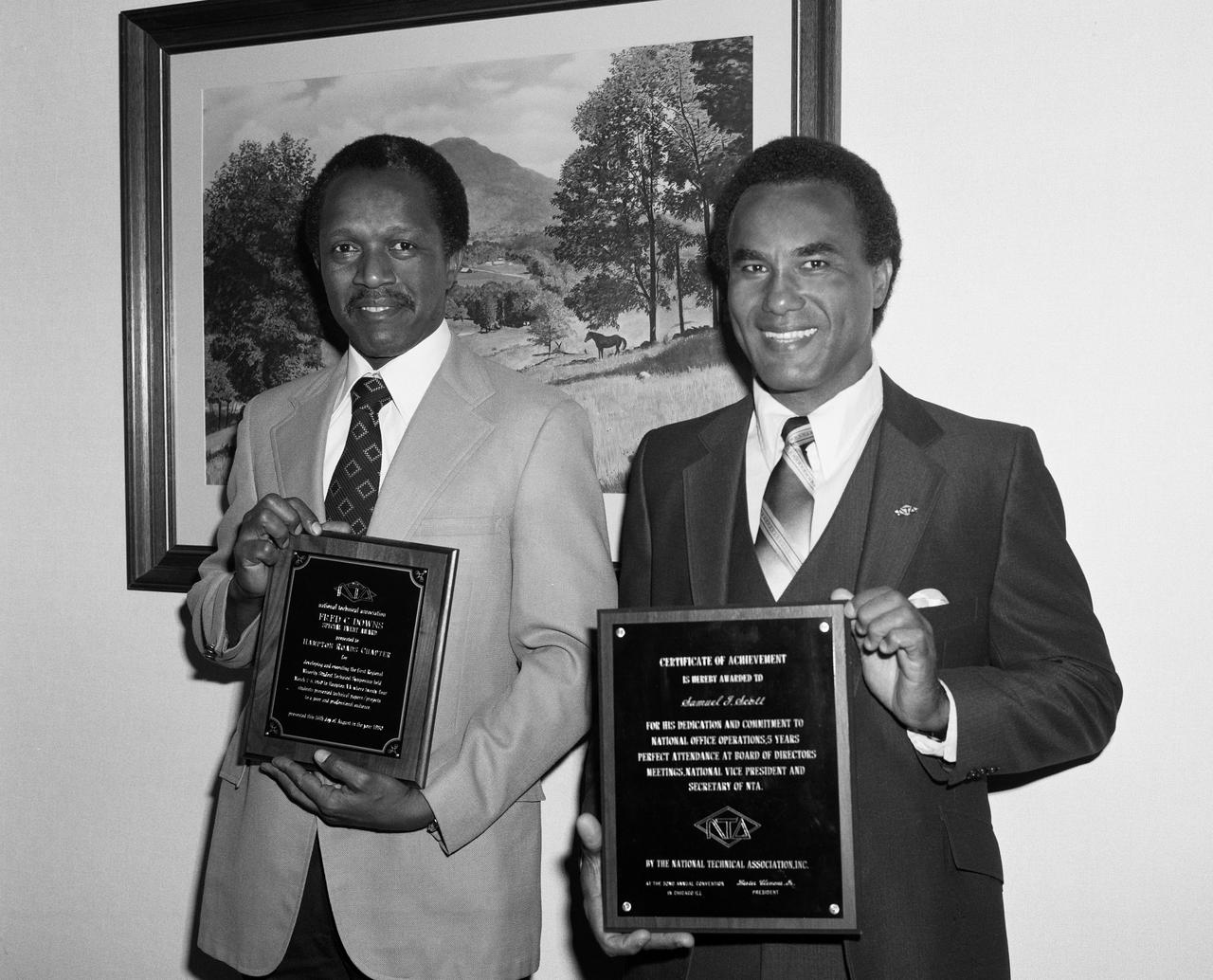
From left to right; Gilbert A. Haynes holding the NTA Fred C. Downs Special Event Award and Samuel J. Scott with award for their participation in the local Hampton Roads Chapter of the (NTA) National Technical Association. The guidance and counseling of minority youth is one of NTA's prime objectives. Formed in 1925, NTA has 15 chapters comprised of architects,engineers, scientists, and educators. NTA activities are directed toward encouraging and assisting public and private institutions in identifying potential minority technical talent.
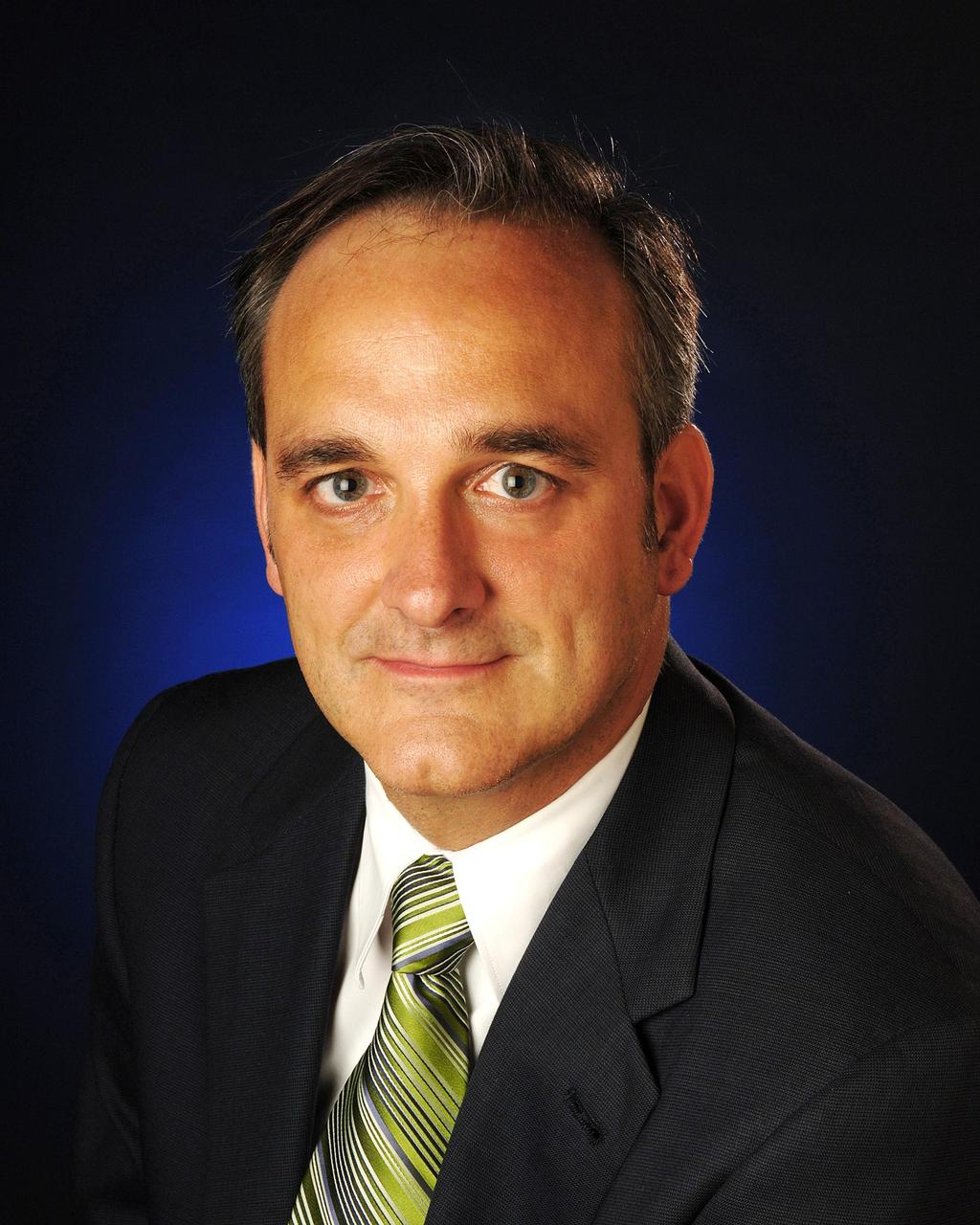
KENNEDY SPACE CENTER, FLA. - Official portrait of Rex Geveden, NASA Associate Administrator. Rex Geveden is the associate administrator of the National Aeronautics and Space Administration. In this position, he is responsible for all technical operations of the Agency. He works directly with the Administrator to develop strategy and policy and has direct oversight of all NASA’s programs and field centers. Photo credit: NASA/Bill Ingalls.
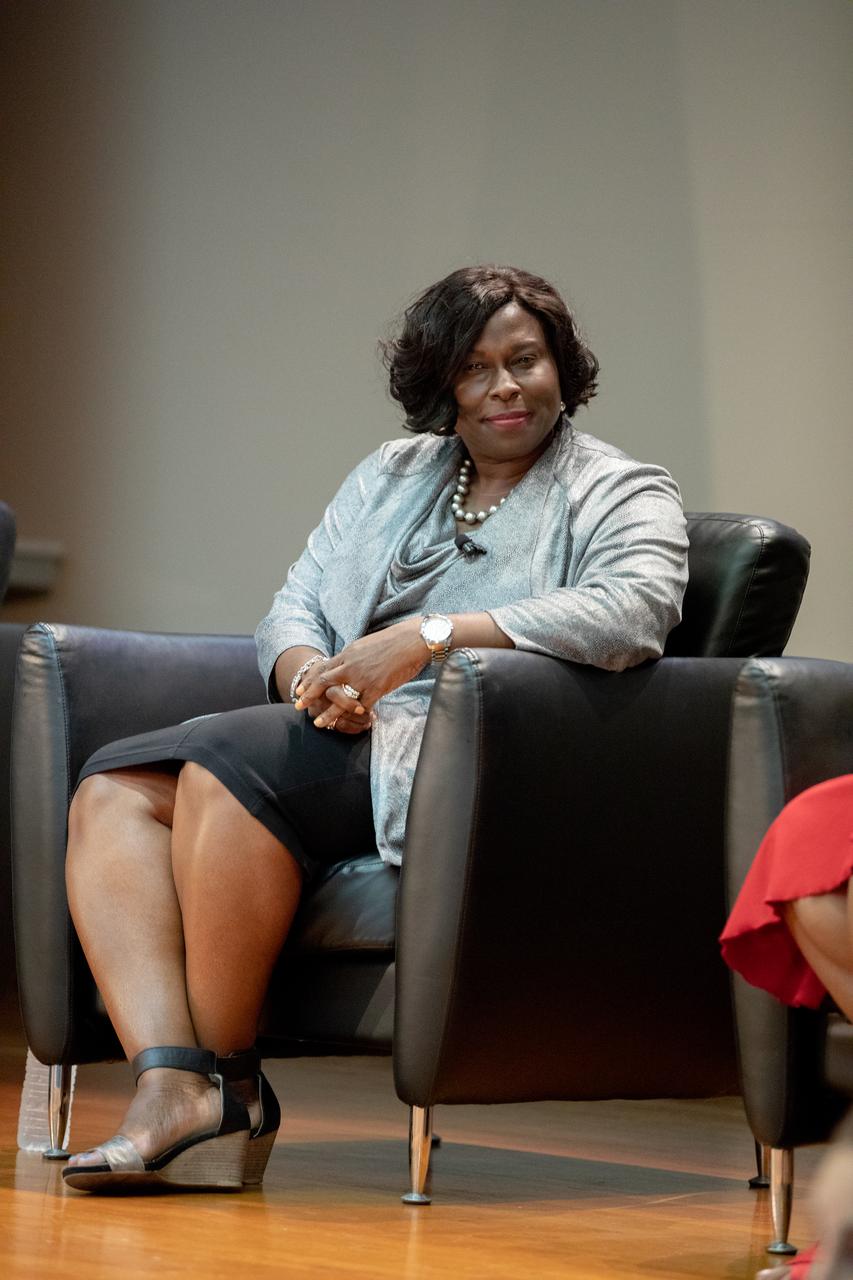
Kim Carter, Exploration Ground Systems associate manager, technical, participates in a panel discussion at NASA’s Kennedy Space Center in Florida on Aug. 28, 2019. Hosted by national radio host Tom Joyner, the discussion focused on the agency’s Moon to Mars plans and was open for all Kennedy employees to attend. Additional participants included former NASA administrator and astronaut Charlie Bolden, former astronaut Winston Scott and Kennedy Chief Technologist Barbara Brown.
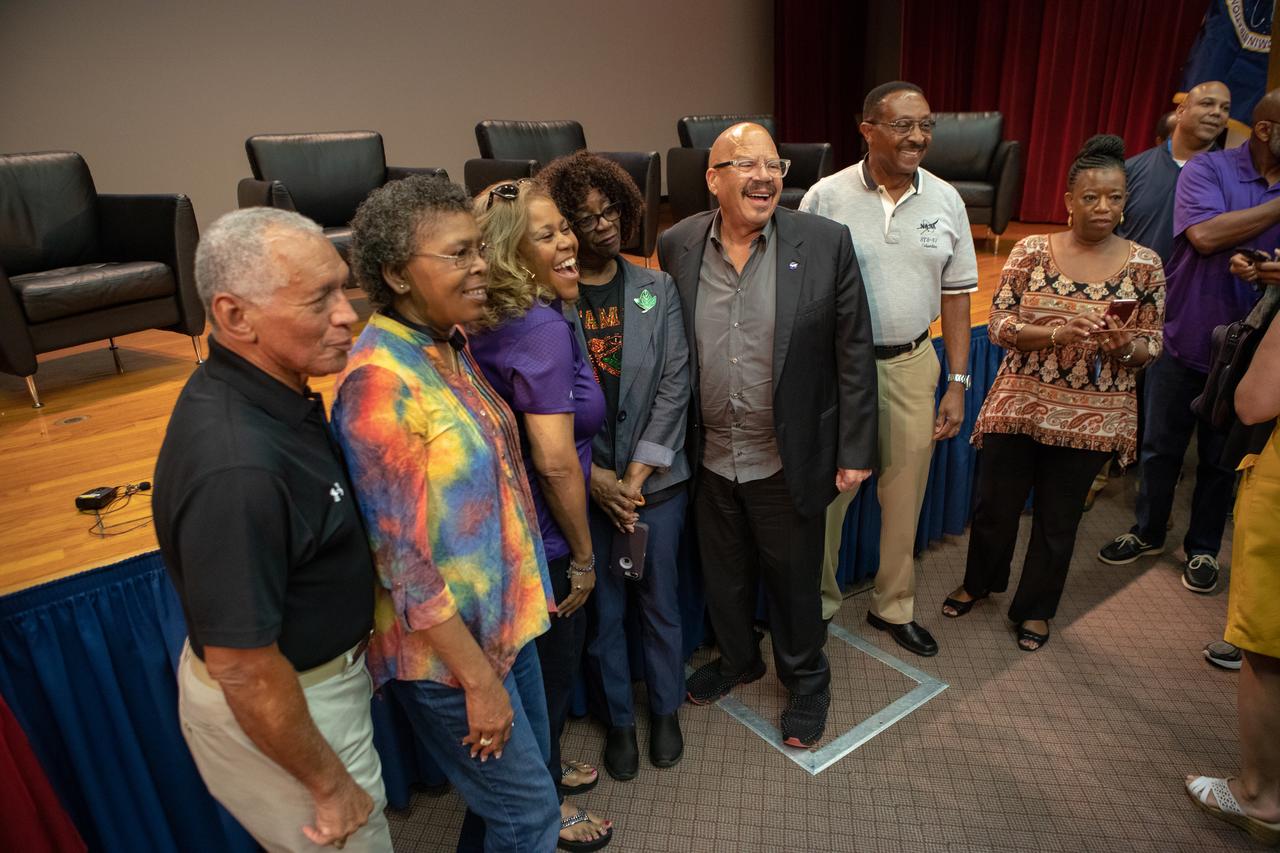
Following a panel discussion at the Kennedy Space Center on Aug. 28, 2019, Kennedy employees pose for a photo with former NASA administrator and panel participant Charlie Bolden, national radio host and panel host Tom Joyner, co-host Sybil Wilkes and former astronaut Winston Scott. The discussion focused on the agency’s Moon to Mars plans and was open for all Kennedy employees to attend. Additional panel participants included Kennedy Chief Technologist Barbara Brown and Exploration Ground Systems Associate Manager, Technical, Kim Carter.
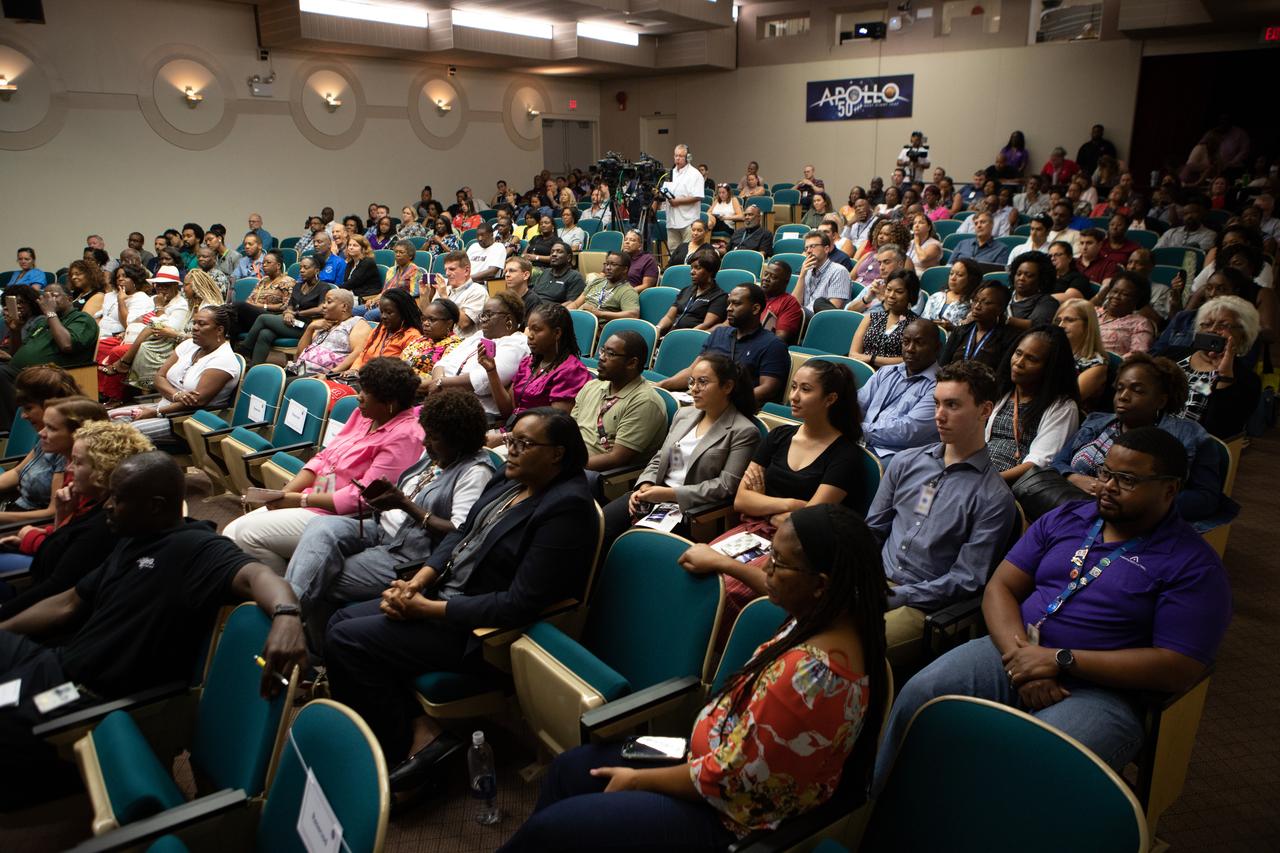
Kennedy Space Center employees attend a panel discussion, hosted by national radio host Tom Joyner, about NASA’s Moon to Mars plans on Aug. 28, 2019. Taking place at the Florida spaceport, panel participants included former NASA administrator and astronaut Charlie Bolden, former astronaut Winston Scott, Kennedy Chief Technologist Barbara Brown and Exploration Ground Systems Associate Manager, Technical, Kim Carter.
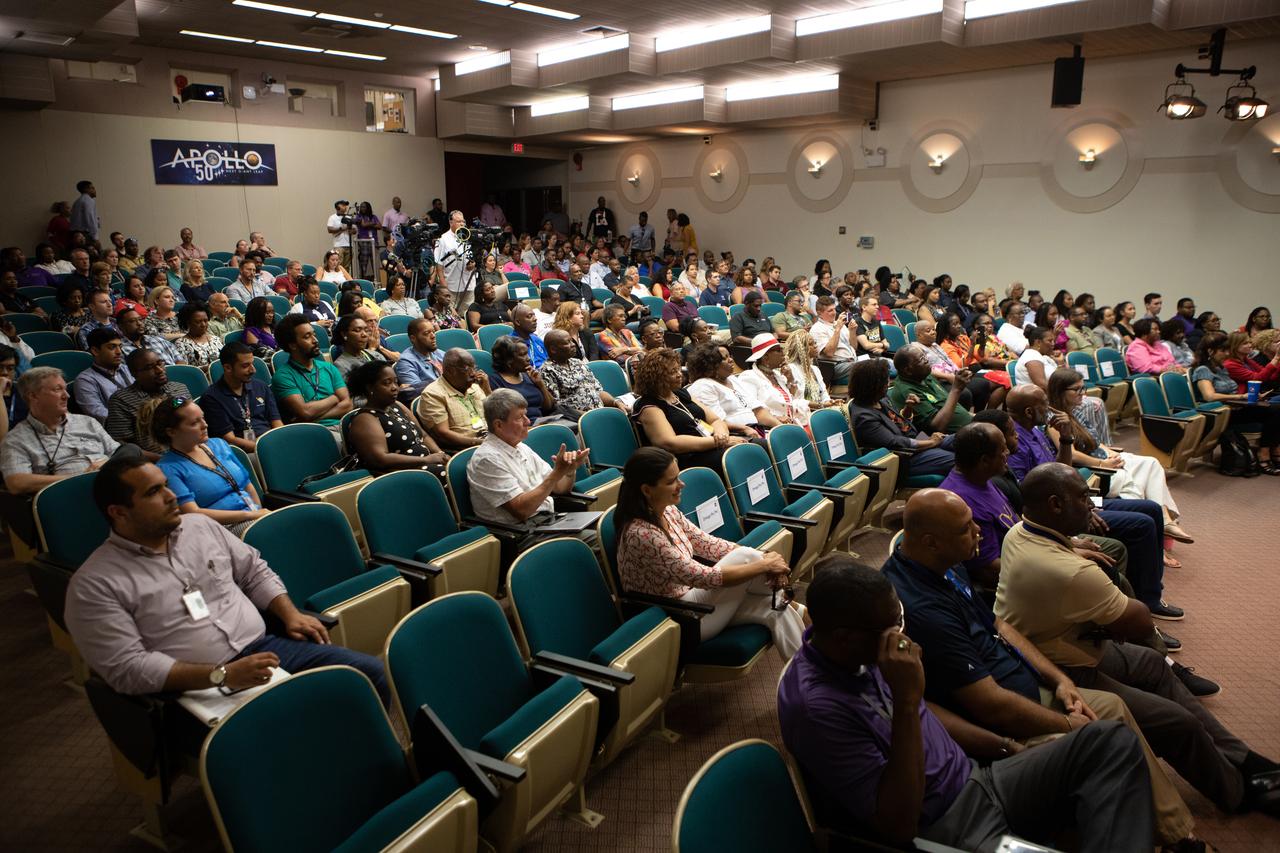
Kennedy Space Center employees attend a panel discussion, hosted by national radio host Tom Joyner, about NASA’s Moon to Mars plans on Aug. 28, 2019. Taking place at the Florida spaceport, panel participants included former NASA administrator and astronaut Charlie Bolden, former astronaut Winston Scott, Kennedy Chief Technologist Barbara Brown and Exploration Ground Systems Associate Manager, Technical, Kim Carter.
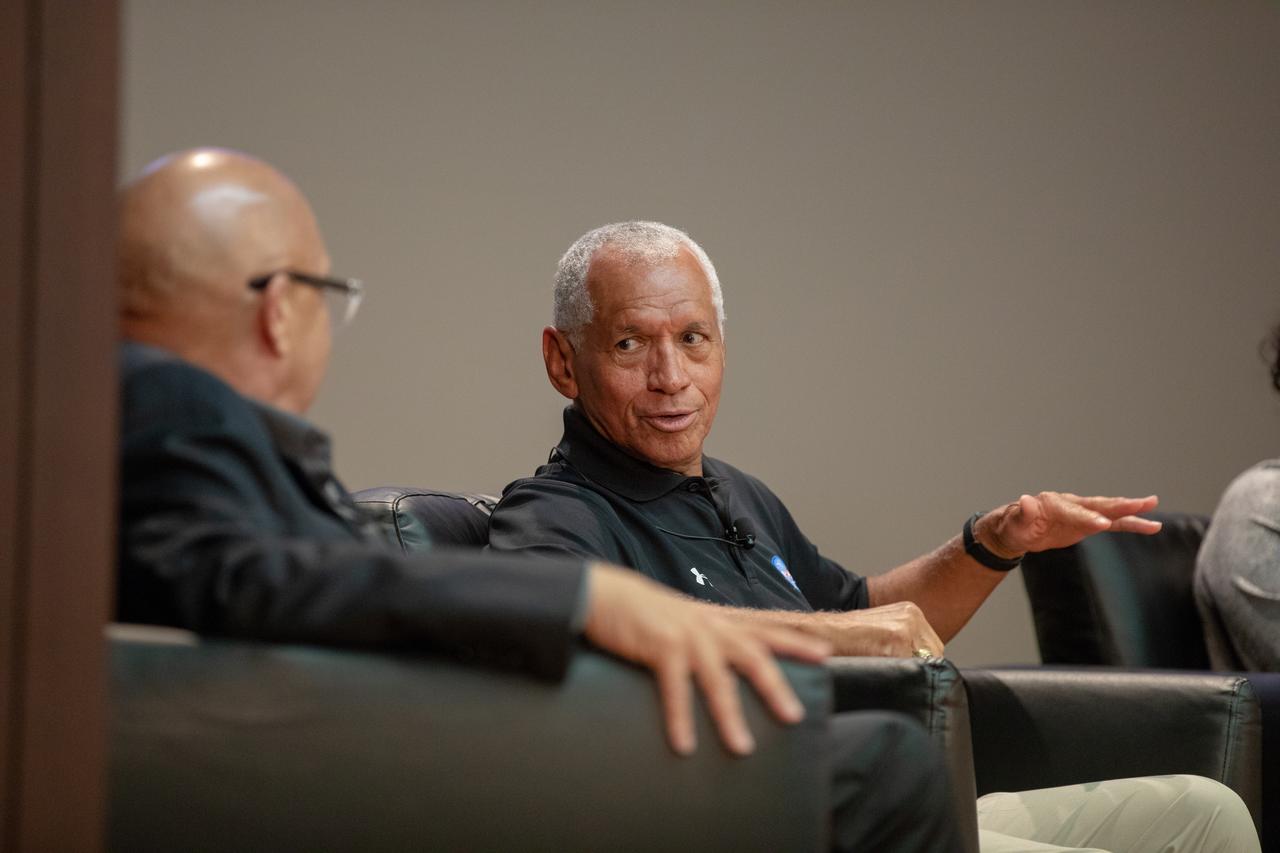
Former NASA administrator and astronaut Charlie Bolden, left, talks to national radio host and panel host Tom Joyner during a panel discussion at NASA’s Kennedy Space Center in Florida on Aug. 28, 2019. The discussion focused on the agency’s Moon to Mars plans and was open for all Kennedy employees to attend. Additional participants included former astronaut Winston Scott, Kennedy Chief Technologist Barbara Brown and Exploration Ground Systems Associate Manager, Technical, Kim Carter.
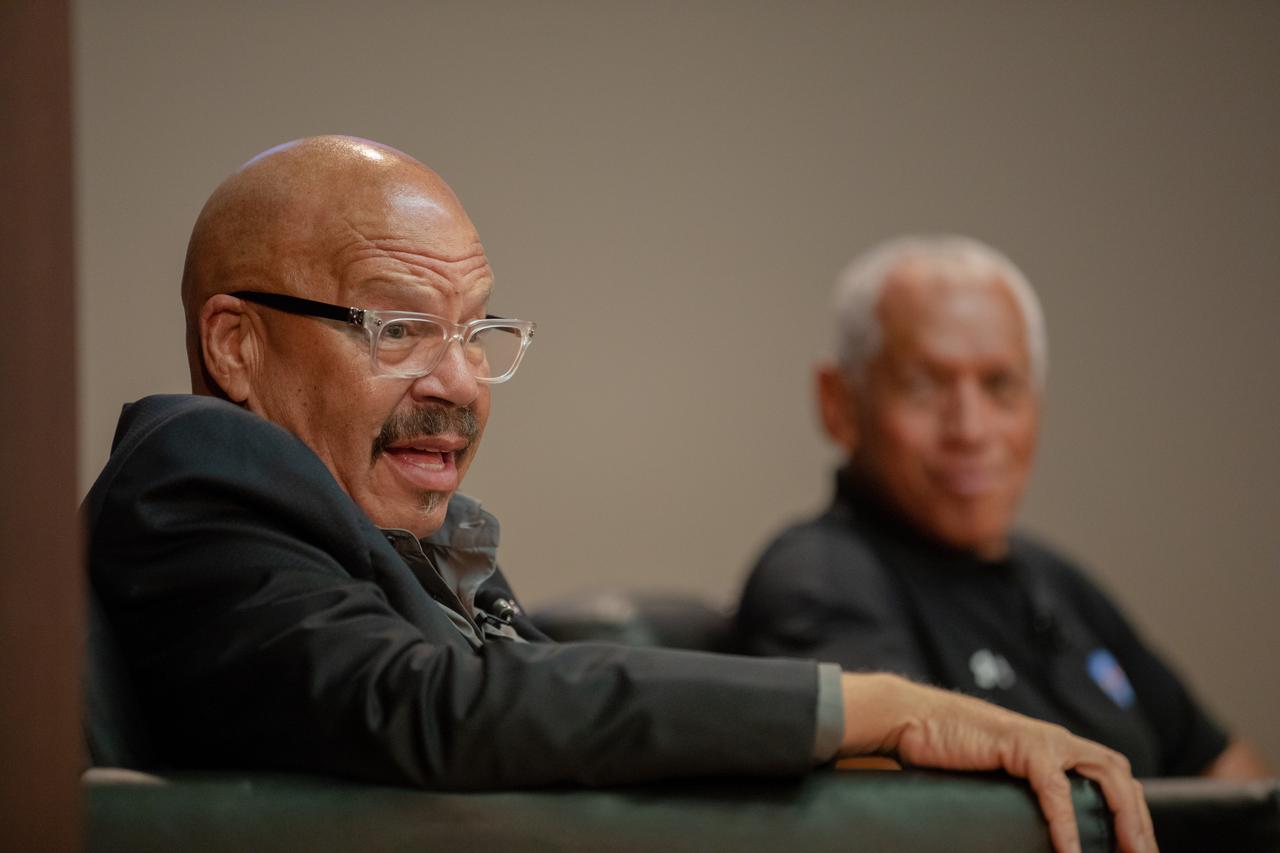
National radio host Tom Joyner hosts a panel discussion at NASA’s Kennedy Space Center in Florida on Aug. 28, 2019, about the agency’s Moon to Mars plans. The discussion was open for all Kennedy employees to attend. In the background, panel participant and former NASA administrator Charlie Bolden can be seen. Additional participants included Kennedy Chief Technologist Barbara Brown and Exploration Ground Systems Associate Manager, Technical, Kim Carter.
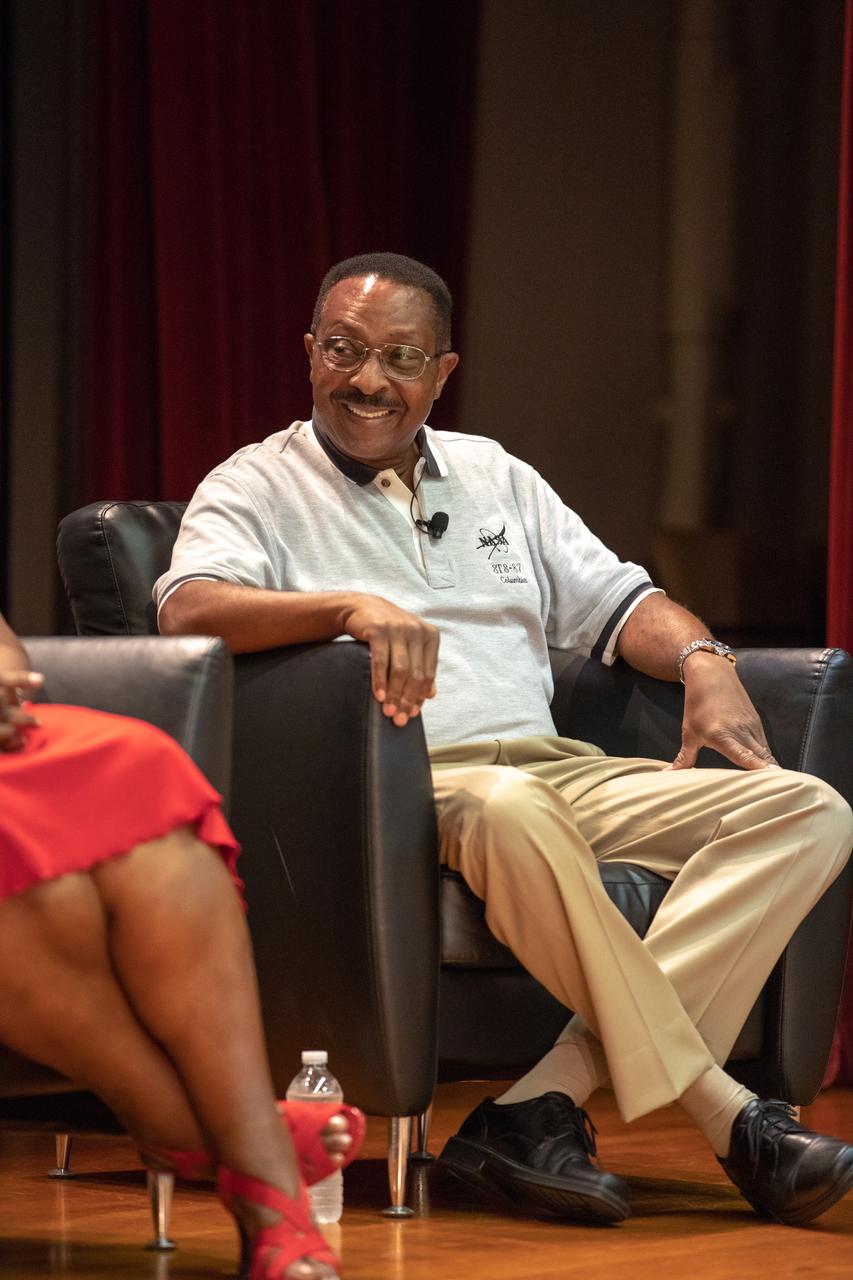
Former NASA astronaut Winston Scott participates in a panel discussion at the Kennedy Space Center in Florida on Aug. 28, 2019. Hosted by national radio host Tom Joyner, the discussion focused on the agency’s Moon to Mars plans and was open for all Kennedy employees to attend. Additional participants included former NASA administrator and astronaut Charlie Bolden, Kennedy Chief Technologist Barbara Brown and Exploration Ground Systems Associate Manager, Technical, Kim Carter.
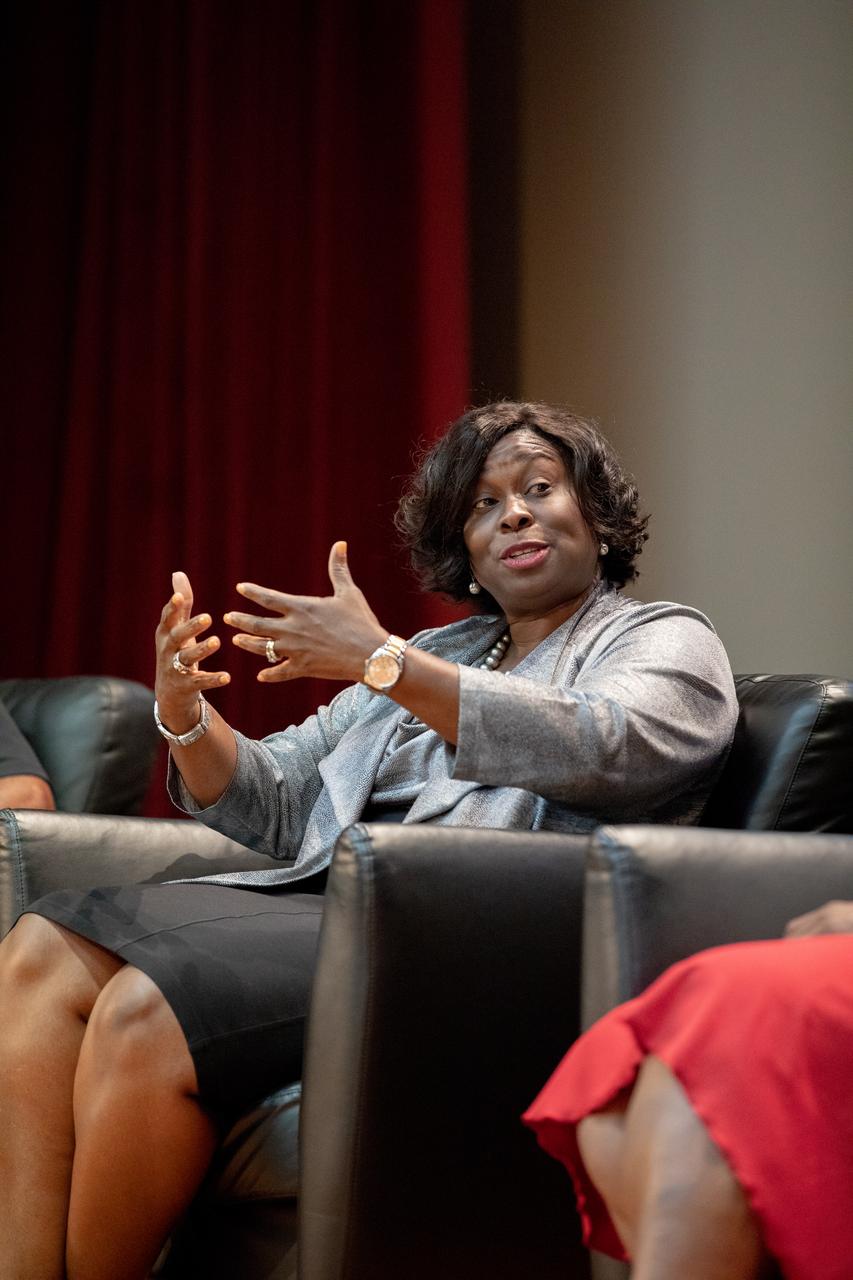
Kim Carter, Exploration Ground Systems associate manager, technical, participates in a panel discussion at NASA’s Kennedy Space Center in Florida on Aug. 28, 2019. Hosted by national radio host Tom Joyner, the discussion focused on the agency’s Moon to Mars plans and was open for all Kennedy employees to attend. Additional participants included former NASA administrator and astronaut Charlie Bolden, former astronaut Winston Scott and Kennedy Chief Technologist Barbara Brown.
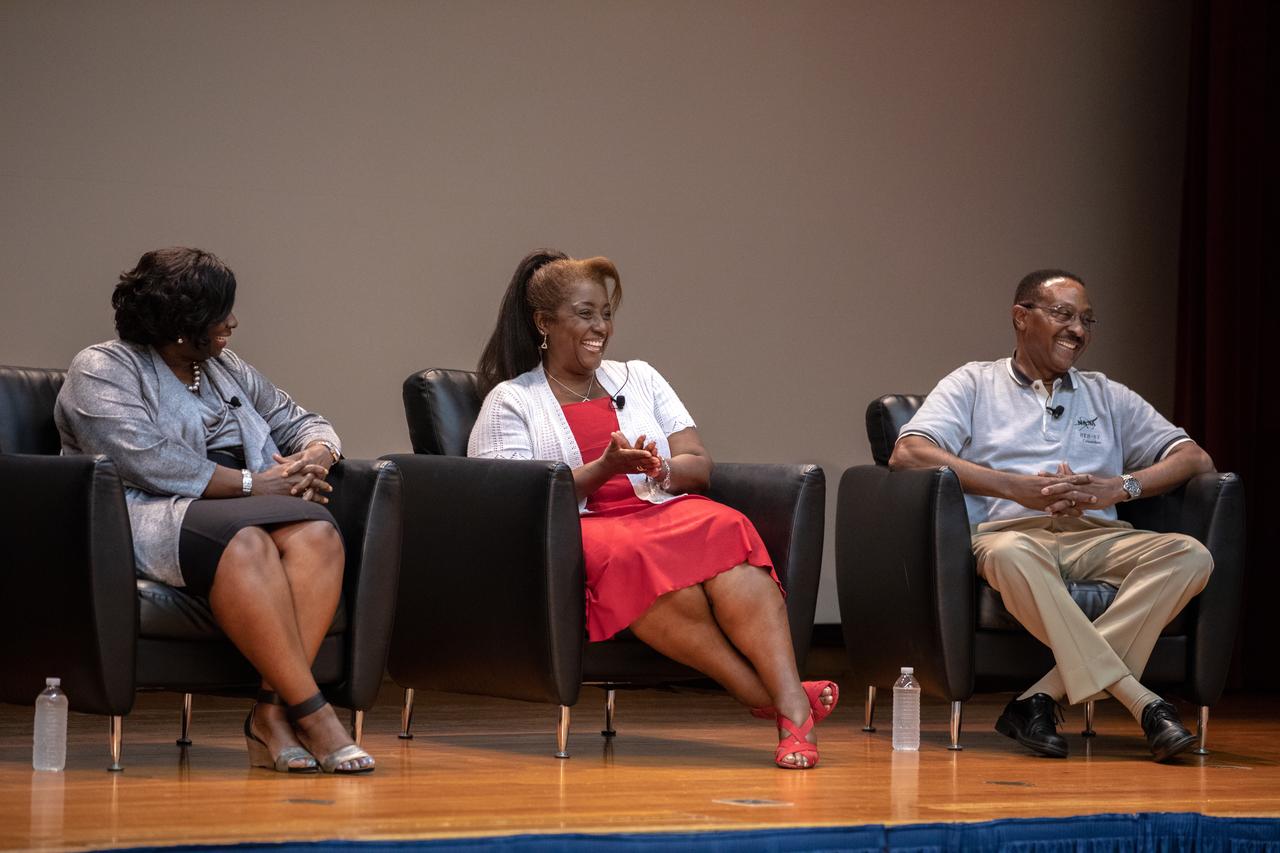
From left, Exploration Ground Systems Associate Manager, Technical, Kim Carter; NASA Kennedy Space Center Chief Technologist Barbara Brown; and former astronaut Winston Scott participate in a panel discussion on Aug. 28, 2019. Hosted at the Florida spaceport by national radio host Tom Joyner, the discussion focused on the agency’s Moon to Mars plans and was open to all Kennedy employees to attend. An additional participant included former NASA administrator and astronaut Charlie Bolden.
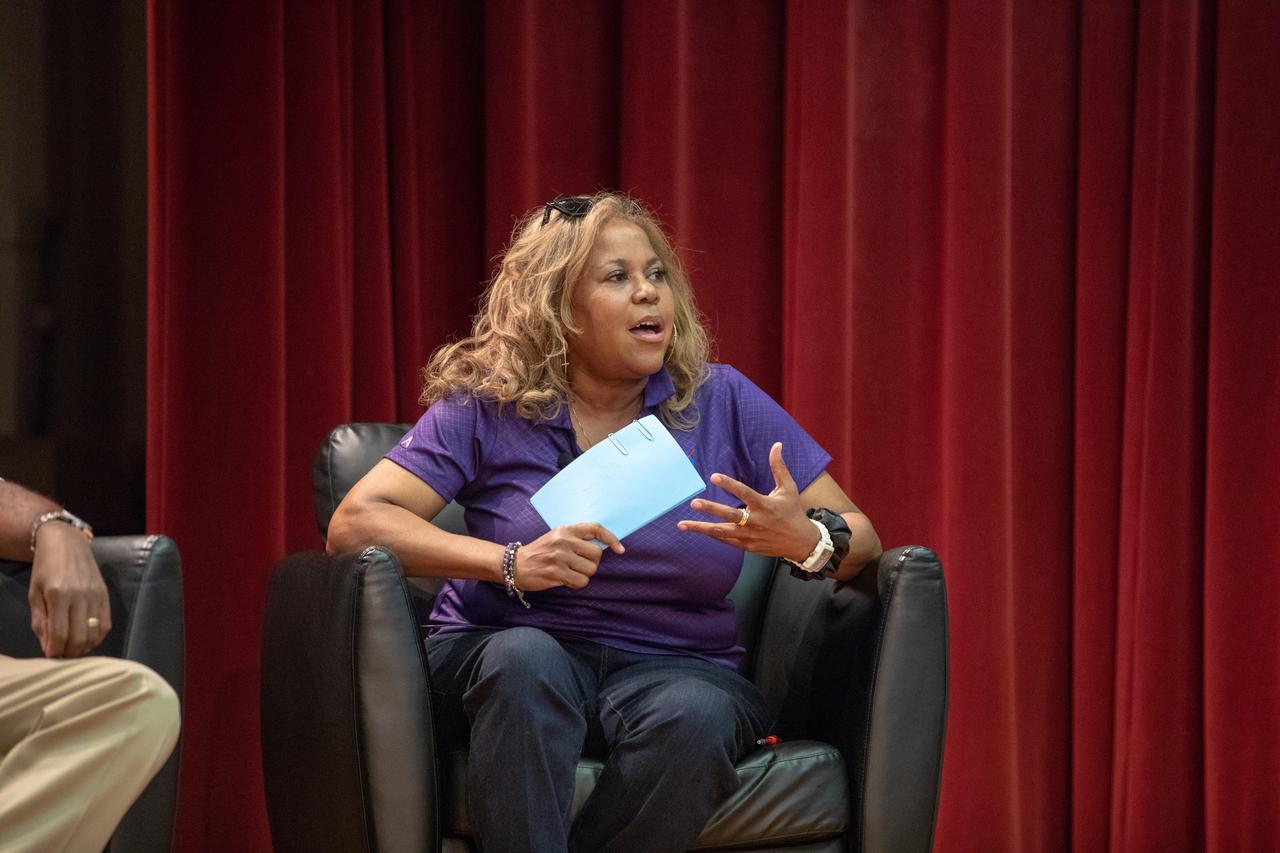
Sybil Wilkes co-hosts a panel discussion at Kennedy Space Center in Florida on Aug. 28, 2019, focusing on NASA’s Moon to Mars plans. Hosted by national radio host Tom Joyner, the discussion was open for all Kennedy employees to attend. Panel participants included former NASA administrator and astronaut Charlie Bolden, former astronaut Winston Scott, Kennedy Chief Technologist Barbara Brown and Exploration Ground Systems Associate Manager, Technical, Kim Carter.
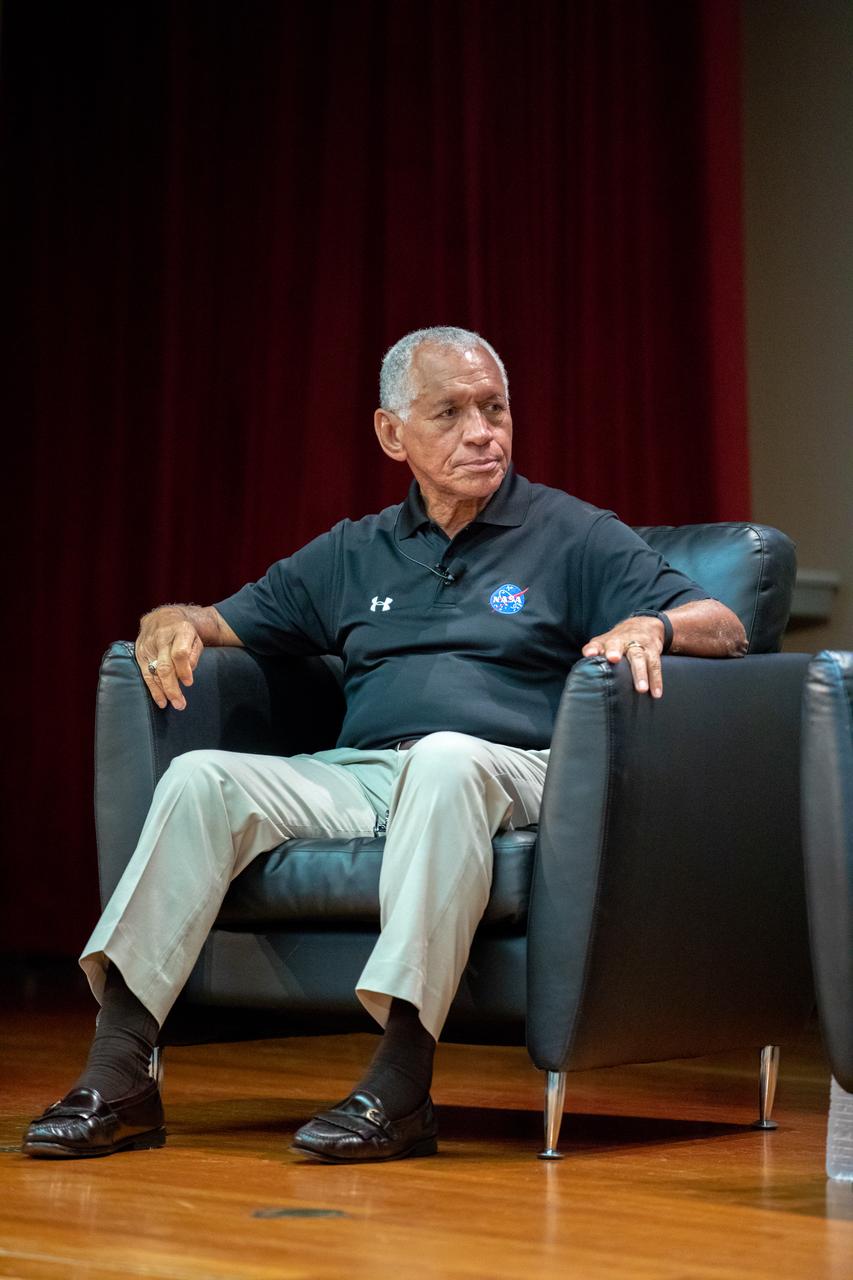
Former NASA administrator and astronaut Charlie Bolden participates in a panel discussion at Kennedy Space Center in Florida on Aug. 28, 2019. Hosted by national radio host Tom Joyner, the discussion focused on the agency’s Moon to Mars plans and was open for all Kennedy employees to attend. Additional participants included former astronaut Winston Scott, Kennedy Chief Technologist Barbara Brown and Exploration Ground Systems Associate Manager, Technical, Kim Carter.
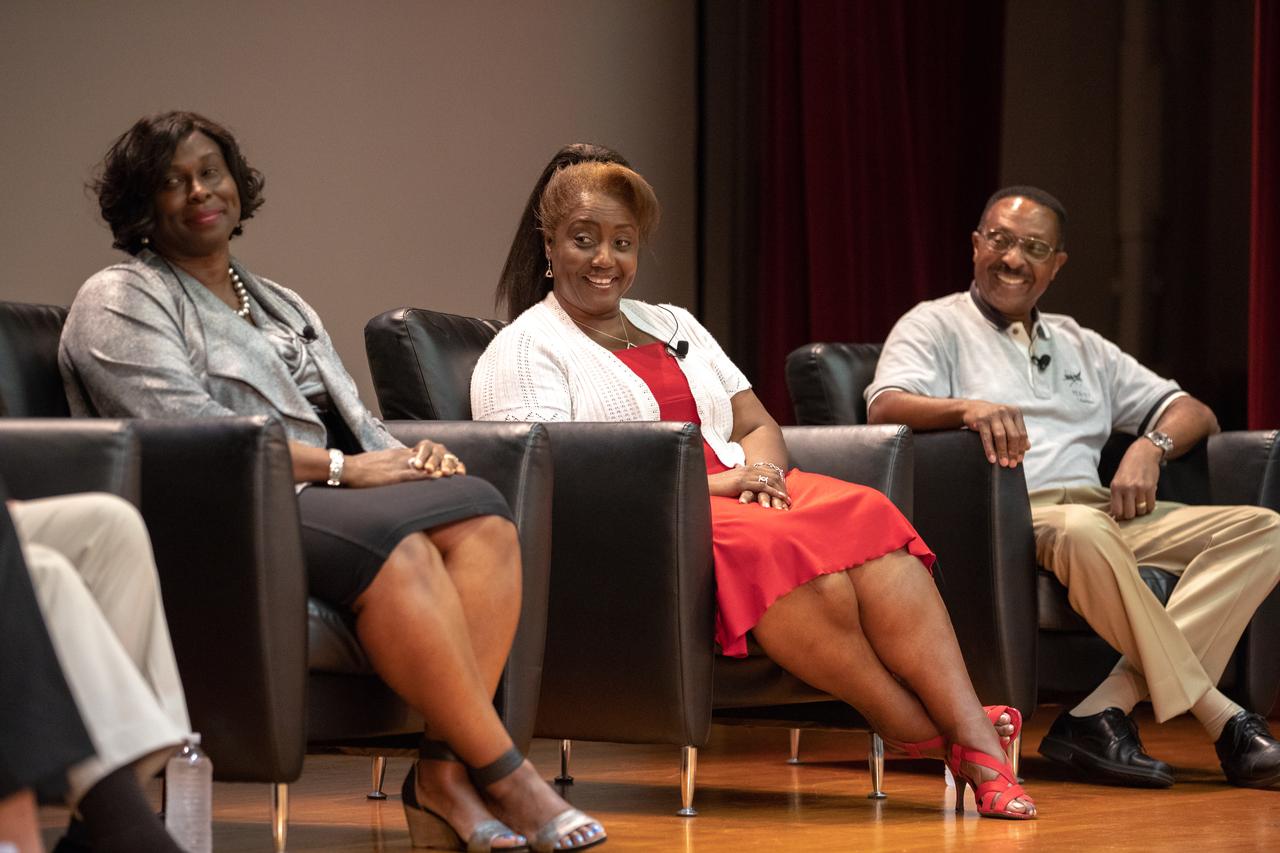
From left, Exploration Ground Systems Associate Manager, Technical, Kim Carter; NASA Kennedy Space Center Chief Technologist Barbara Brown; and former astronaut Winston Scott participate in a panel discussion on Aug. 28, 2019. Hosted by national radio host Tom Joyner at the Florida spaceport, the discussion focused on the agency’s Moon to Mars plans and was open to all Kennedy employees to attend. An additional participant included former NASA administrator and astronaut Charlie Bolden.

A panel discussion regarding NASA’s Moon to Mars plans takes place at Kennedy Space Center in Florida on Aug. 28, 2019. Seated from left, are Tom Joyner, national radio host and panel host; Charlie Bolden, former NASA administrator and astronaut; Kim Carter, Exploration Ground Systems associate manager, technical; Barbara Brown, Kennedy chief technologist; former astronaut Winston Scott; and panel co-host Sybil Wilkes.
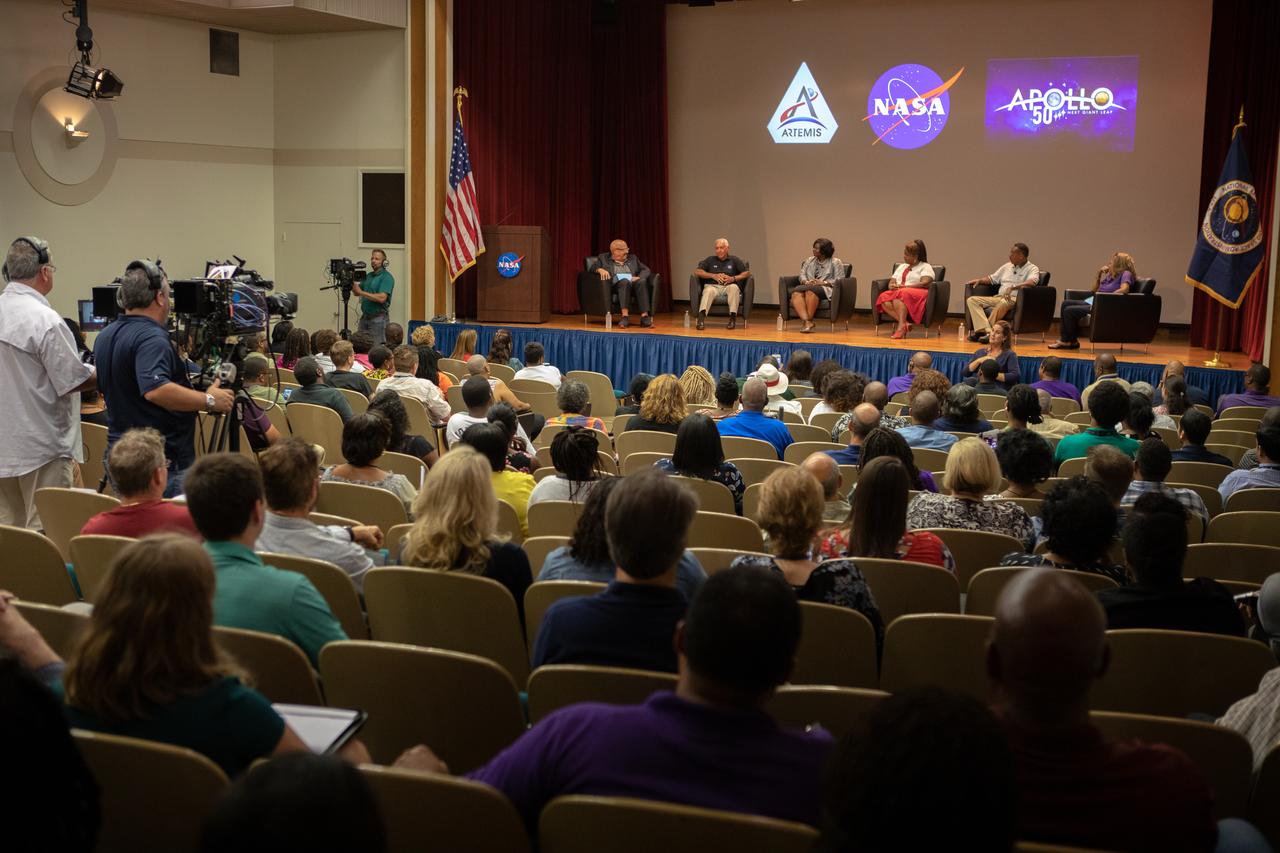
A panel discussion regarding NASA’s Moon to Mars plans takes place at Kennedy Space Center in Florida on Aug. 28, 2019. Seated from left, are Tom Joyner, national radio host and panel host; Charlie Bolden, former NASA administrator and astronaut; Kim Carter, Exploration Ground Systems associate manager, technical; Barbara Brown, Kennedy chief technologist; former astronaut Winston Scott; and panel co-host Sybil Wilkes.
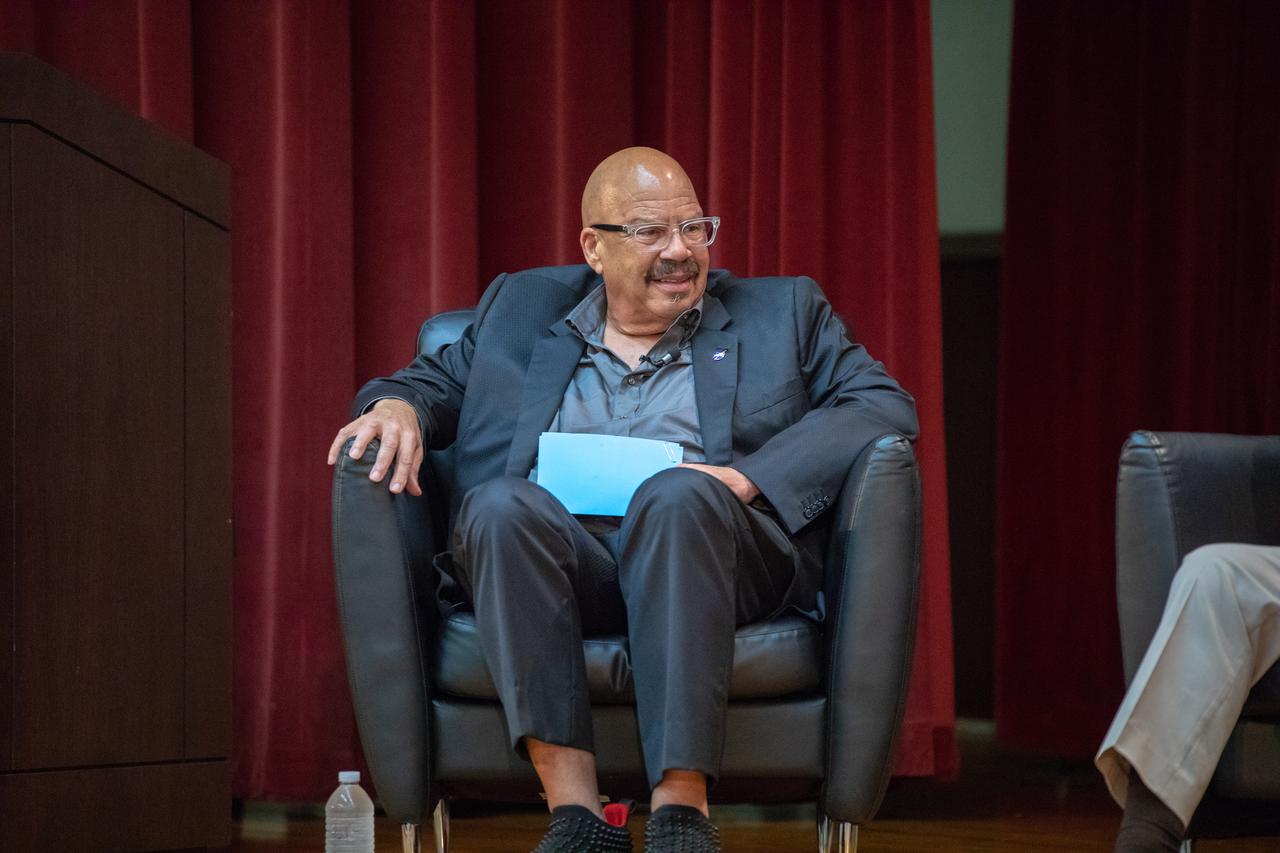
National radio host Tom Joyner hosts a panel discussion at NASA’s Kennedy Space Center in Florida on Aug. 28, 2019, about the agency’s Moon to Mars plans. The discussion was open for all Kennedy employees to attend. The panel included former NASA administrator and astronaut Charlie Bolden, former astronaut Winston Scott, Kennedy Chief Technologist Barbara Brown and Exploration Ground Systems Associate Manager, Technical, Kim Carter.
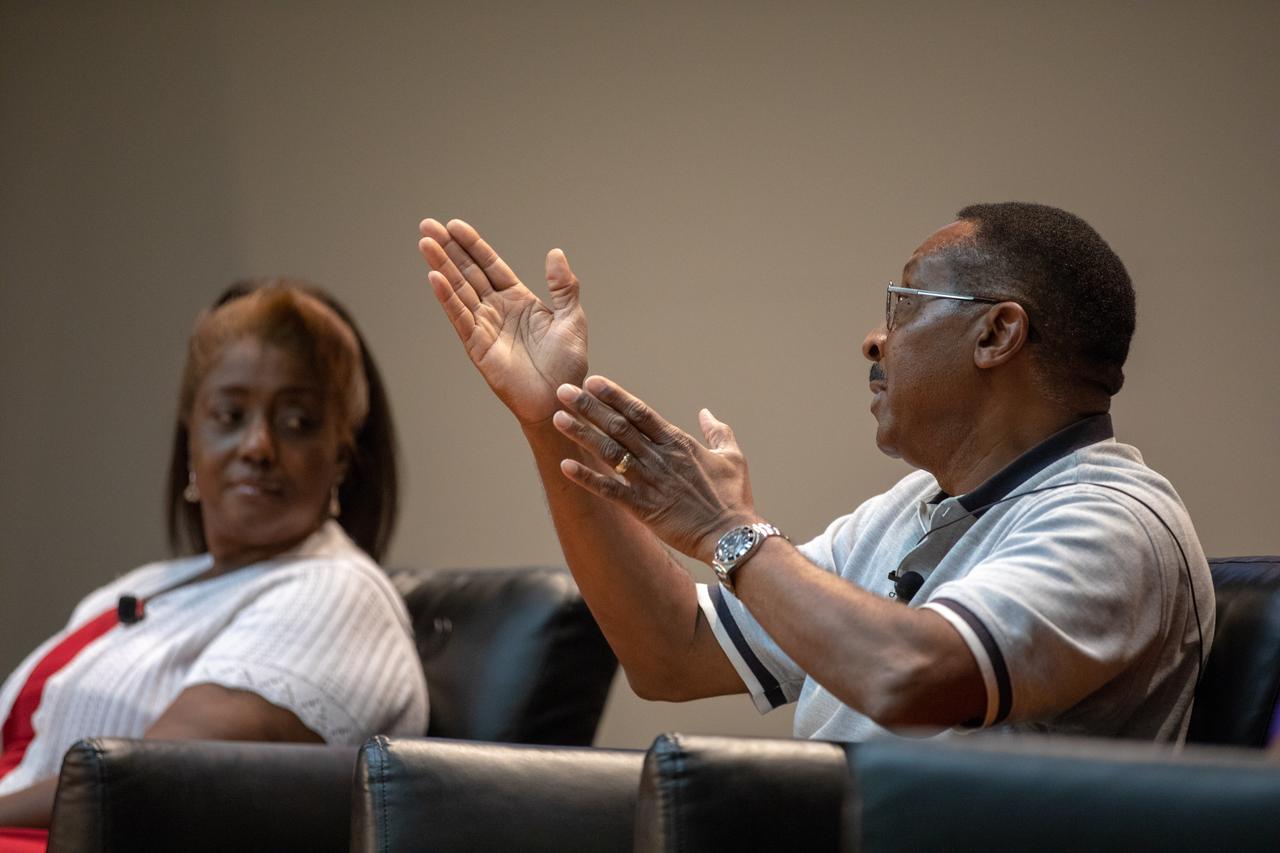
Former NASA astronaut Winston Scott, right, participates in a panel discussion on Aug. 28, 2019, focusing on the agency’s Moon to Mars plans. Hosted at Kennedy Space Center in Florida by national radio host Tom Joyner, the discussion was open for all Kennedy employees to attend. In the background, panel participant and Kennedy Chief Technologist Barbara Brown can be seen. Additional participants included former NASA administrator Charlie Bolden and Exploration Ground Systems Associate Manager, Technical, Kim Carter.
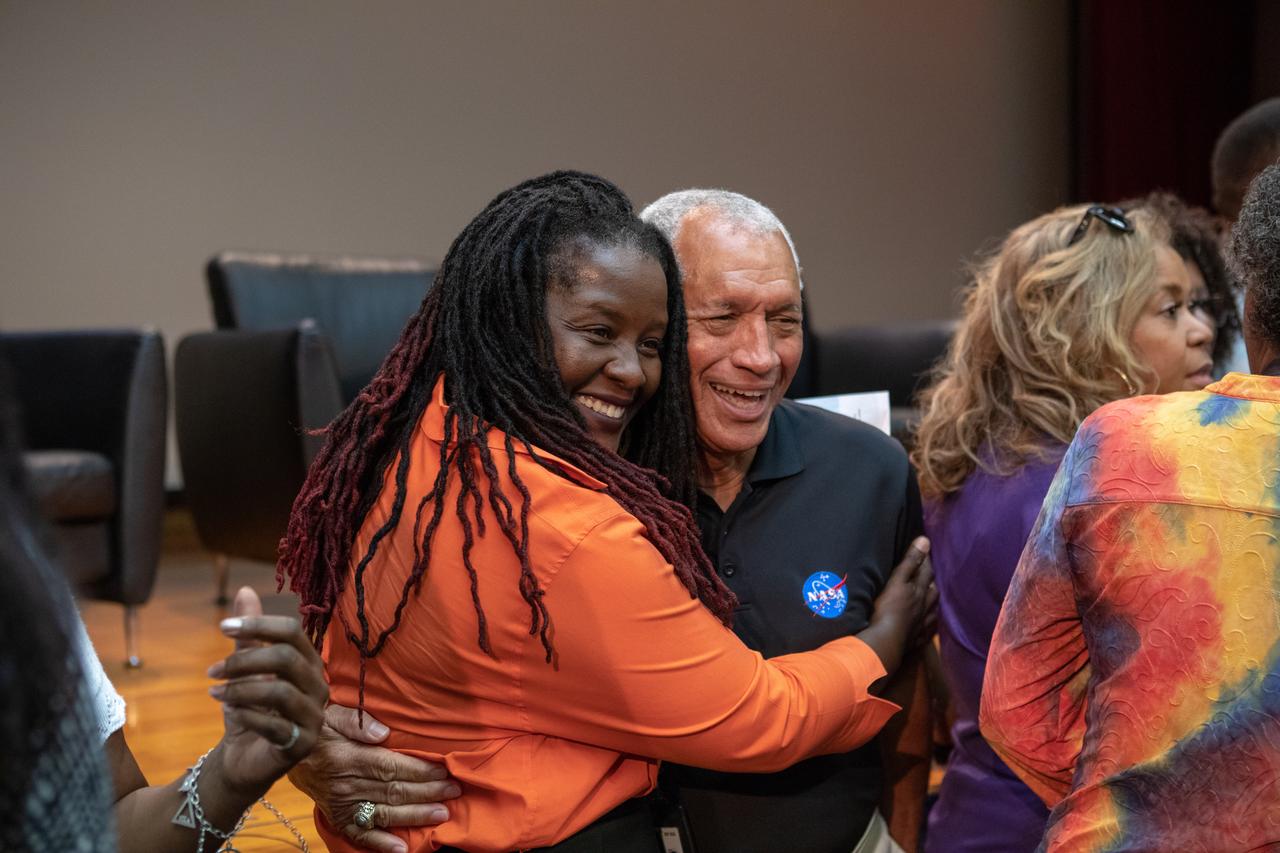
A Kennedy Space Center employee hugs former NASA administrator Charlie Bolden following a panel discussion on Aug. 28, 2019. Hosted at the Florida spaceport by national radio host Tom Joyner, the discussion focused on the agency’s Moon to Mars plans and was open for all Kennedy employees to attend. Additional panel participants included former astronaut Winston Scott, Kennedy Chief Technologist Barbara Brown and Exploration Ground Systems Associate Manager, Technical, Kim Carter.
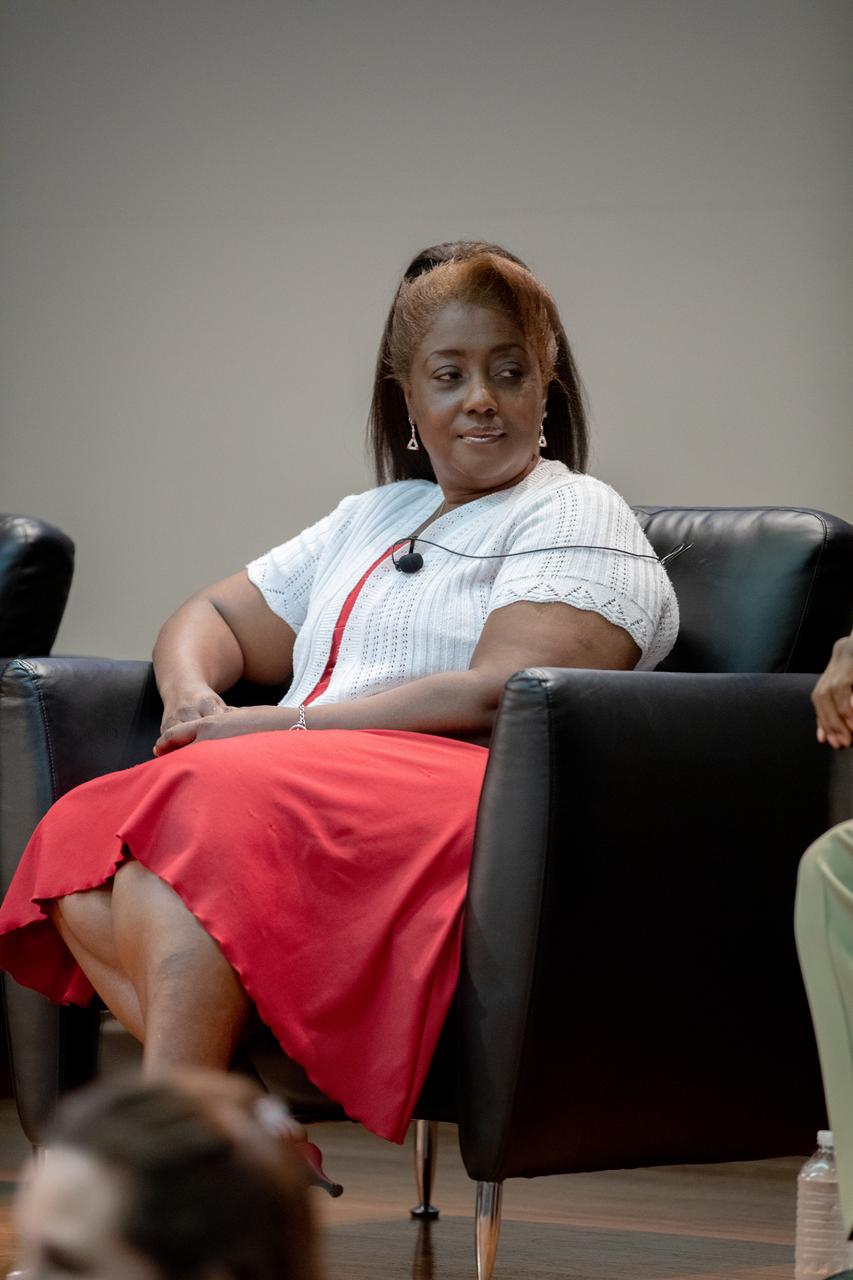
Barbara Brown, NASA Kennedy Space Center’s chief technologist, participates in a panel discussion at the Florida spaceport on Aug. 28, 2019. Hosted by National radio host Tom Joyner, the discussion focused on the agency’s Moon to Mars plans and was open for all Kennedy employees to attend. Additional participants included former NASA administrator and astronaut Charlie Bolden, former astronaut Winston Scott and Exploration Ground Systems Associate Manager, Technical, Kim Carter.
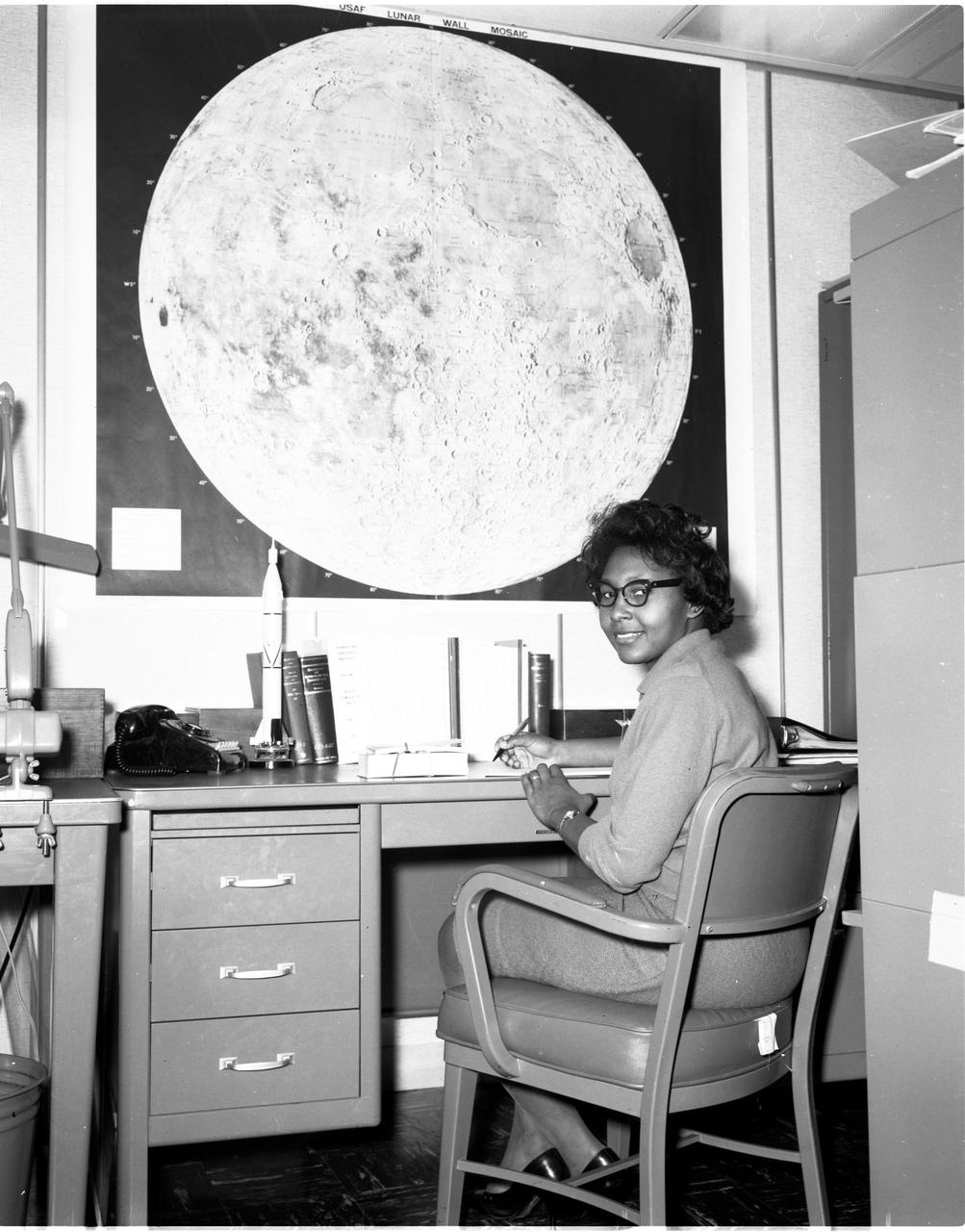
Jeanette Scissum joined NASA’s Marshall Space Flight Center in 1964 after earning bachelor's and master's degrees in mathematics from Alabama A&M University. Scissum published a NASA report in 1967, “Survey of Solar Cycle Prediction Models,” which put forward techniques for improved forecasting of the sunspot cycle. In the mid-1970s she worked as a space scientist in the Space Environment Branch of Marshall’s Space Sciences Laboratory and later led activities in Marshall’s Atmospheric, Magnetospheric, and Plasmas in Space project.In 1975, Scissum wrote an article for the National Technical Association, “Equal Employment Opportunity and the Supervisor – A Counselor’s View,” which argued that many discrimination complaints could be avoided “through adequate and meaningful communication.” Scissum later worked at NASA Headquarters as a computer systems analyst responsible for analyzing and directing NASA management information and technical support systems.
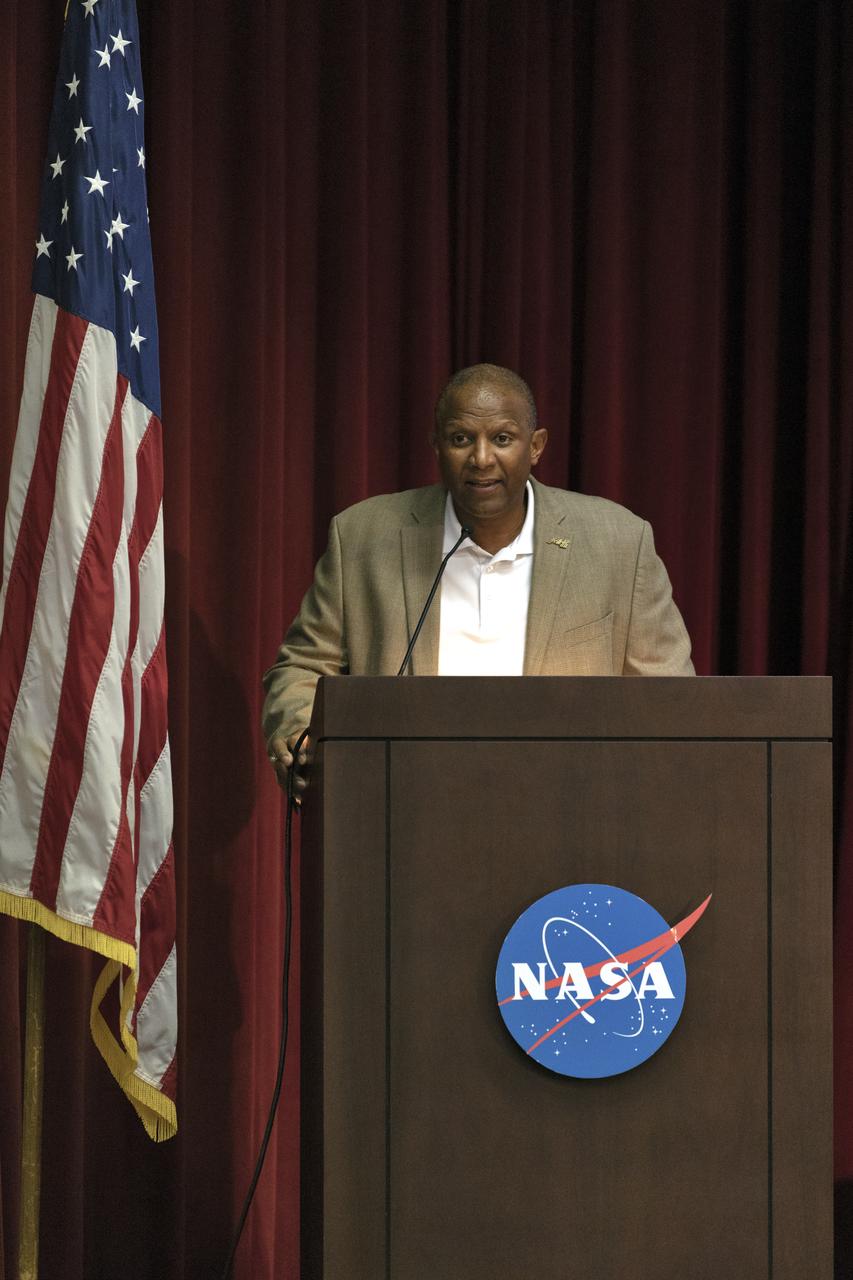
Kelvin Manning, Kennedy Space Center associate director, technical, speaks to NASA civil service and contractor employees and guests in the Florida spaceport’s Training Auditorium on April 12, 2019. Manning delivered opening remarks for “Columbia: The Mission Continues,” an event organized by the Apollo Challenger Columbia Lessons Learned Program (ACCLLP). The event is part of the Space Shuttle Columbia national tour and took place on the 38th anniversary of STS-1, the first orbital spaceflight of NASA’s Space Shuttle Program. The tour launched at Kennedy and will make its way to each of the 10 NASA centers.
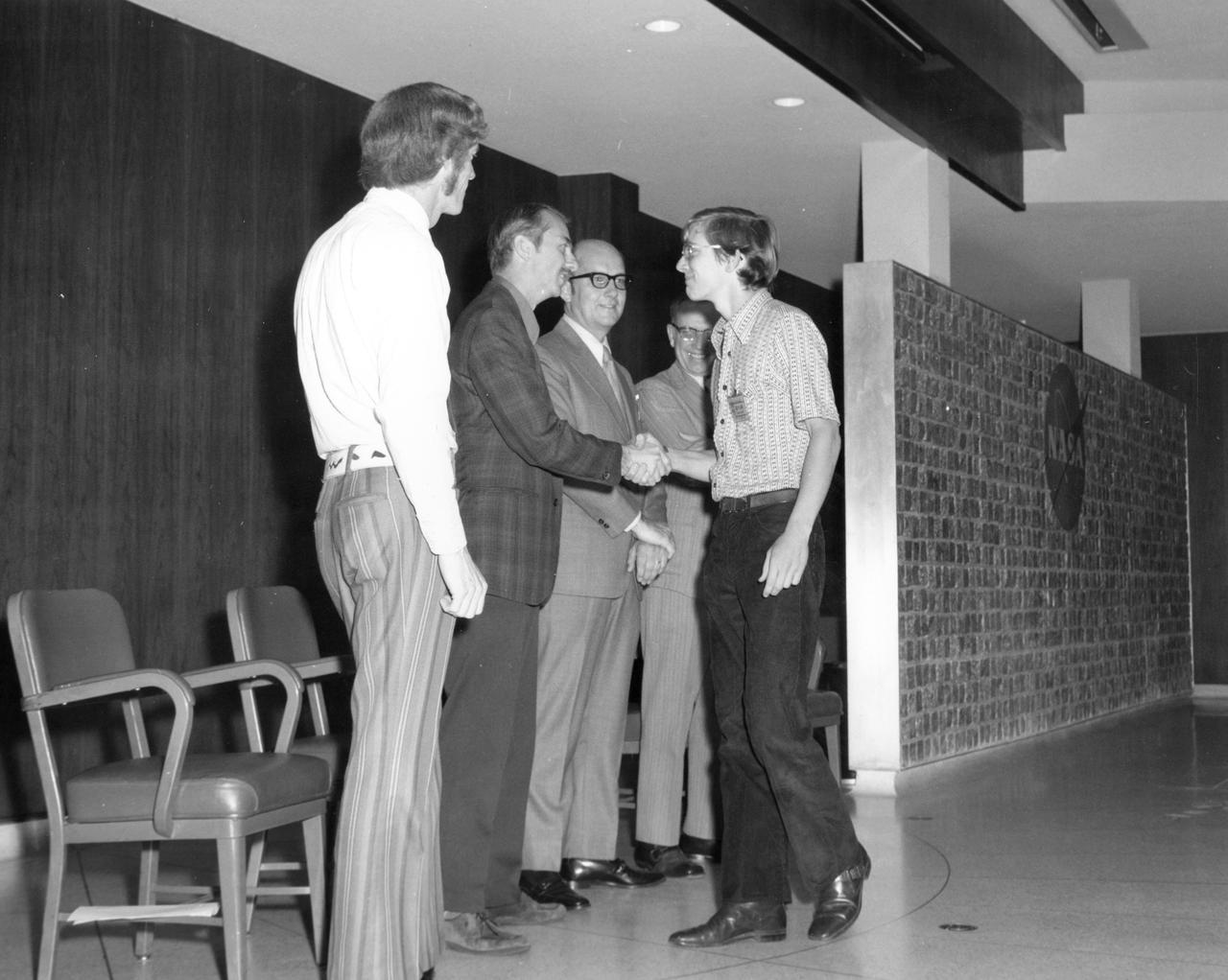
Downey, California high school student, Donald W. Shellack, is greeted by (left to right): Astronauts Russell L. Schweickart, and Owen K. Garriott; Marshall Space Flight Center (MSFC) Skylab Program Manager, Leland Belew; and MSFC Director of Administration and Technical Services, David Newby, during a tour of MSFC. Shellack was among 25 winners of a contest in which some 3,500 high school students proposed experiments for the following year’s Skylab mission. The nationwide scientific competition was sponsored by the National Science Teachers Association and the National Aeronautics and Space Administration (NASA). The winning students, along with their parents and sponsor teachers, visited MSFC where they met with scientists and engineers, participated in design reviews for their experiments, and toured MSFC facilities. Of the 25 students, 6 did not see their experiments conducted on Skylab because the experiments were not compatible with Skylab hardware and timelines. Of the 19 remaining, 11 experiments required the manufacture of additional equipment.

Atlanta, Georgia high school student, Neal W. Shannon, is greeted by (left to right): Astronauts Russell L. Schweickart, and Owen K. Garriott; Marshall Space Flight Center (MSFC) Skylab Program Manager, Leland Belew; and MSFC Director of Administration and Technical Services, David Newby, during a tour of MSFC. Shannon was among 25 winners of a contest in which some 3,500 high school students proposed experiments for the following year’s Skylab mission. The nationwide scientific competition was sponsored by the National Science Teachers Association and the National Aeronautics and Space Administration (NASA). The winning students, along with their parents and sponsor teachers, visited MSFC where they met with scientists and engineers, participated in design reviews for their experiments, and toured MSFC facilities. Of the 25 students, 6 did not see their experiments conducted on Skylab because the experiments were not compatible with Skylab hardware and timelines. Of the 19 remaining, 11 experiments required the manufacture of additional equipment.
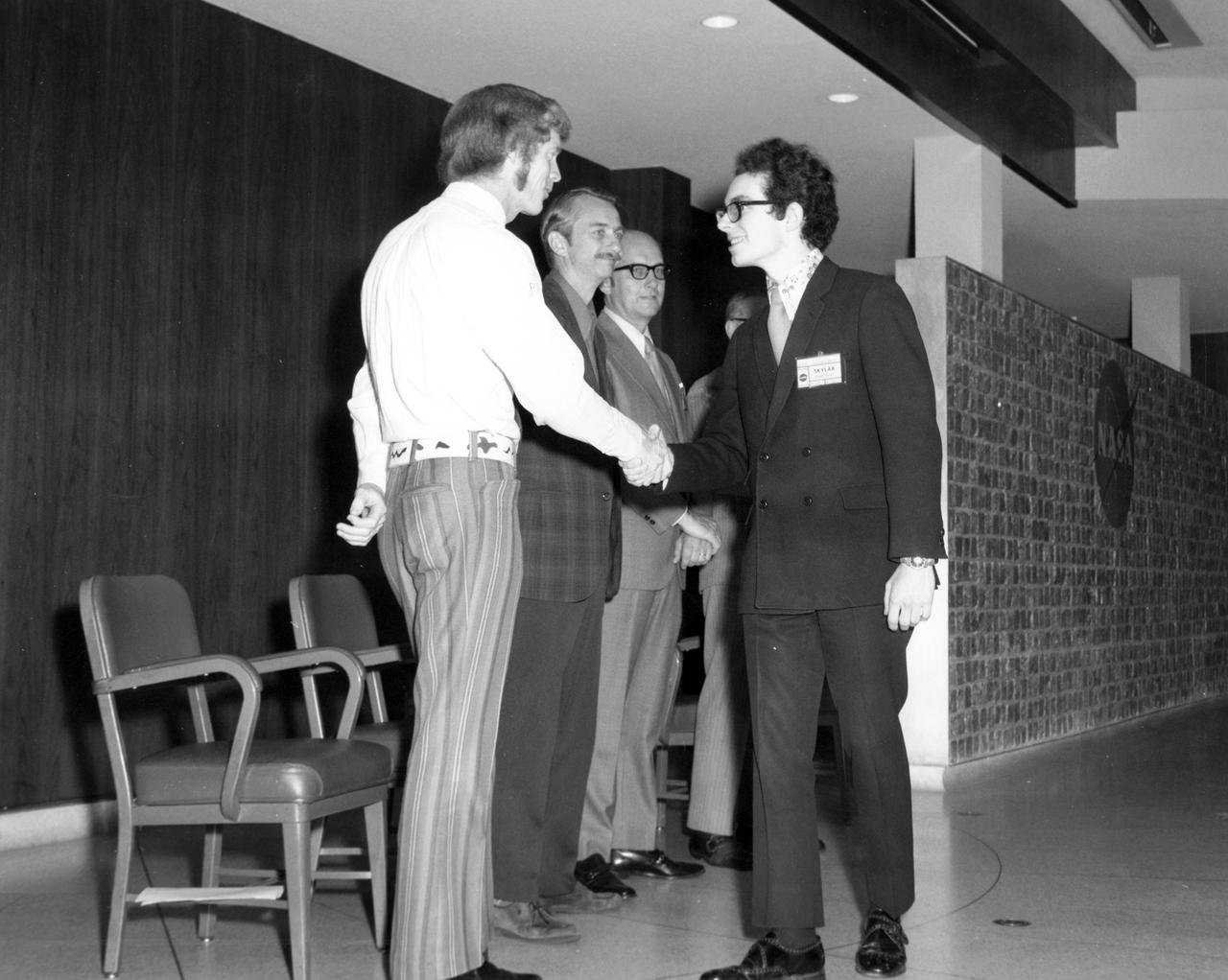
Berkley, Michigan high school student, Kirk M. Sherhart, is greeted by (left to right): Astronauts Russell L. Schweickart, and Owen K. Garriott; Marshall Space Flight Center (MSFC) Skylab Program Manager, Leland Belew; and MSFC Director of Administration and Technical Services, David Newby, during a tour of MSFC. Sherhart was among 25 winners of a contest in which some 3,500 high school students proposed experiments for the following year’s Skylab mission. The nationwide scientific competition was sponsored by the National Science Teachers Association and the National Aeronautics and Space Administration (NASA). The winning students, along with their parents and sponsor teachers, visited MSFC where they met with scientists and engineers, participated in design reviews for their experiments, and toured MSFC facilities. Of the 25 students, 6 did not see their experiments conducted on Skylab because the experiments were not compatible with Skylab hardware and timelines. Of the 19 remaining, 11 experiments required the manufacture of additional equipment.
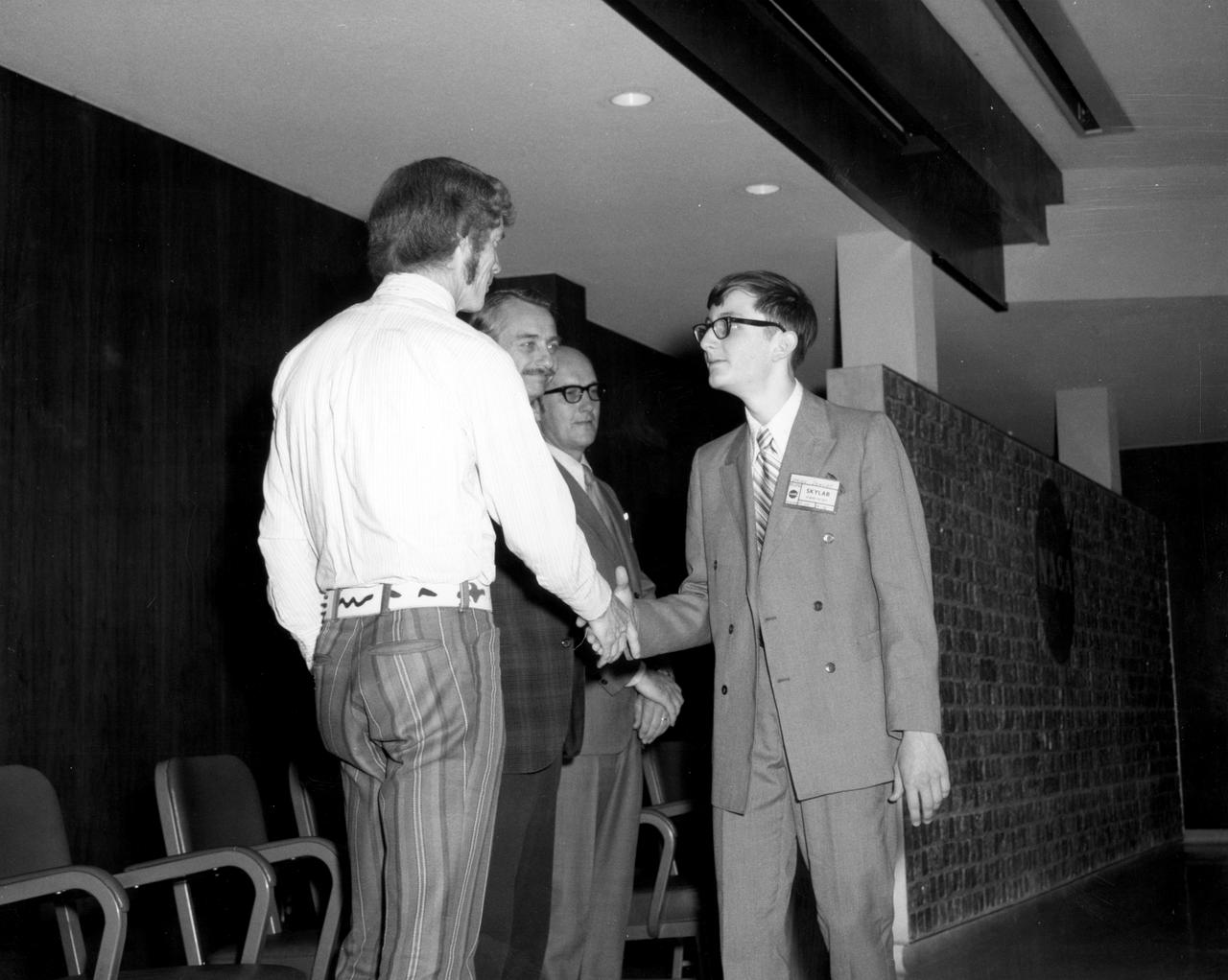
Youngstown, Ohio high school student, W. Brian Dunlap, is greeted by (left to right): Astronauts Russell L. Schweickart, and Owen K. Garriott; Marshall Space Flight Center (MSFC) Skylab Program Manager, Leland Belew; and MSFC Director of Administration and Technical Services, David Newby, during a tour of MSFC. Dunlap was among 25 winners of a contest in which some 3,500 high school students proposed experiments for the following year’s Skylab mission. The nationwide scientific competition was sponsored by the National Science Teachers Association and the National Aeronautics and Space Administration (NASA). The winning students, along with their parents and sponsor teachers, visited MSFC where they met with scientists and engineers, participated in design reviews for their experiments, and toured MSFC facilities. Of the 25 students, 6 did not see their experiments conducted on Skylab because the experiments were not compatible with Skylab hardware and timelines. Of the 19 remaining, 11 experiments required the manufacture of additional equipment.
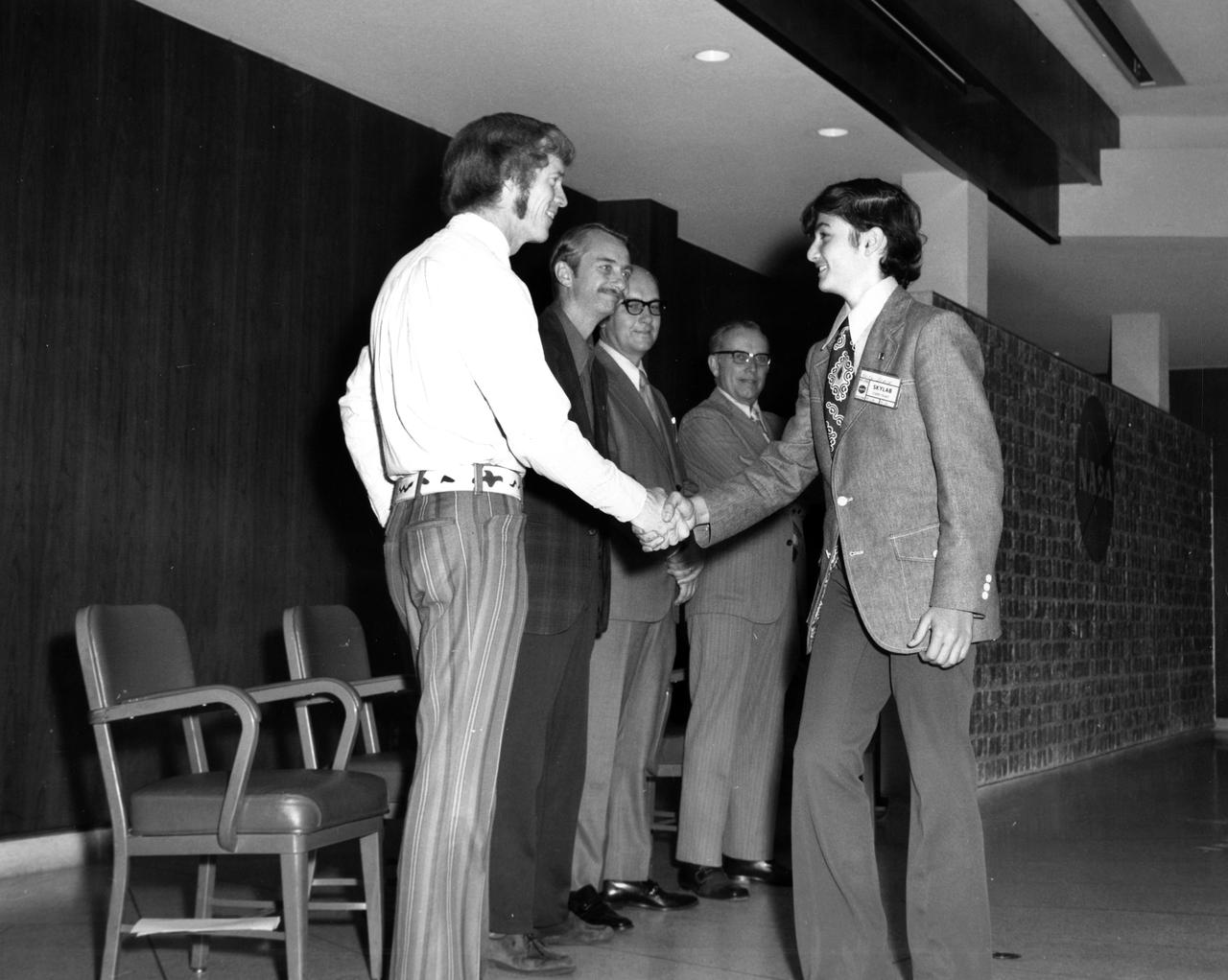
Westbury, New York high school student, Keith L.Stein , is greeted by (left to right): Astronauts Russell L. Schweickart, and Owen K. Garriott; Marshall Space Flight Center (MSFC) Skylab Program Manager, Leland Belew; and MSFC Director of Administration and Technical Services, David Newby, during a tour of MSFC. Stein was among 25 winners of a contest in which some 3,500 high school students proposed experiments for the following year’s Skylab mission. The nationwide scientific competition was sponsored by the National Science Teachers Association and the National Aeronautics and Space Administration (NASA). The winning students, along with their parents and sponsor teachers, visited MSFC where they met with scientists and engineers, participated in design reviews for their experiments, and toured MSFC facilities. Of the 25 students, 6 did not see their experiments conducted on Skylab because the experiments were not compatible with Skylab hardware and timelines. Of the 19 remaining, 11 experiments required the manufacture of additional equipment.
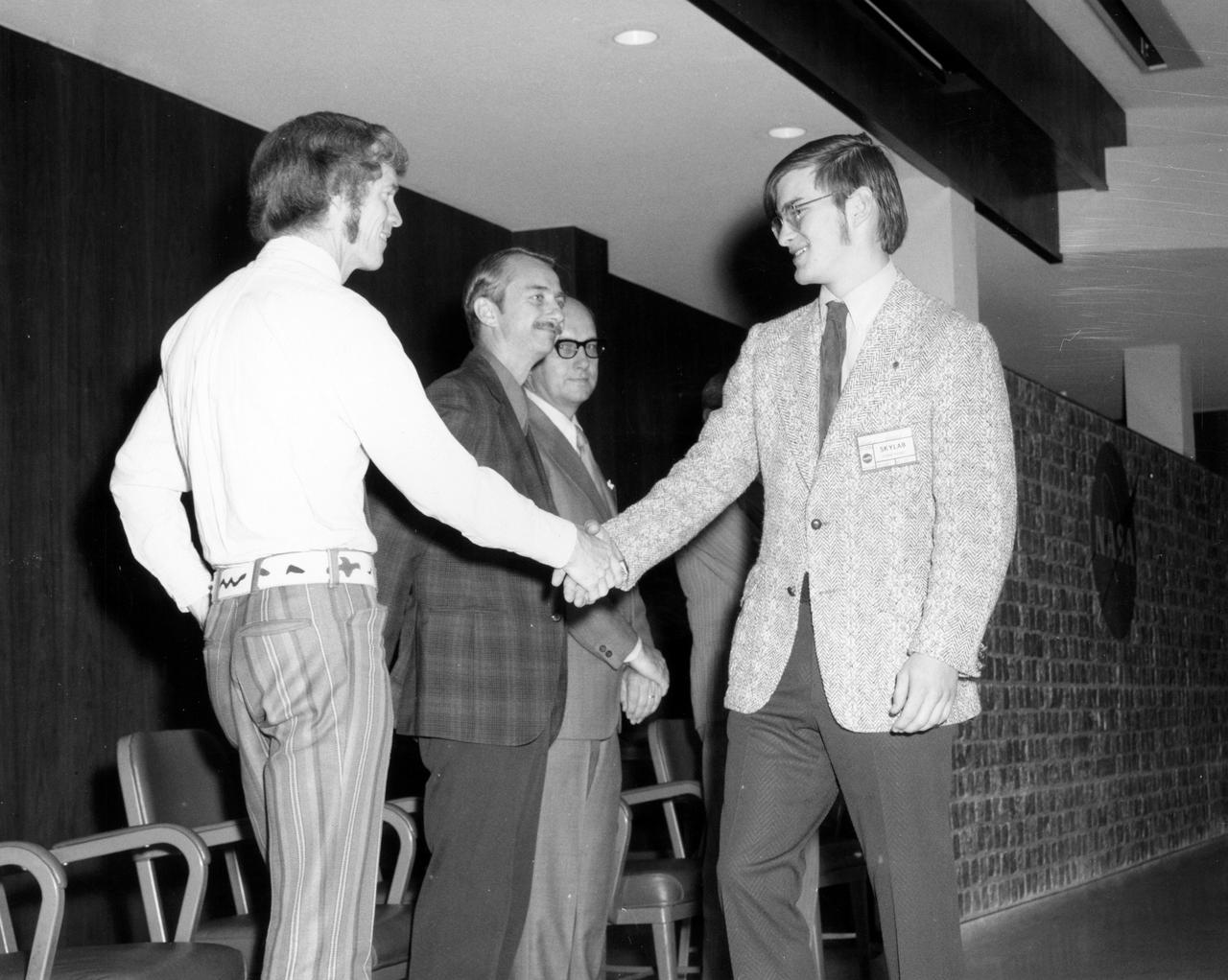
Bayport, New York high school student, James E. Healy, is greeted by (left to right): Astronauts Russell L. Schweickart, and Owen K. Garriott; Marshall Space Flight Center (MSFC) Skylab Program Manager, Leland Belew; and MSFC Director of Administration and Technical Services, David Newby, during a tour of MSFC. Healy was among 25 winners of a contest in which some 3,500 high school students proposed experiments for the following year’s Skylab mission. The nationwide scientific competition was sponsored by the National Science Teachers Association and the National Aeronautics and Space Administration (NASA). The winning students, along with their parents and sponsor teachers, visited MSFC where they met with scientists and engineers, participated in design reviews for their experiments, and toured MSFC facilities. Of the 25 students, 6 did not see their experiments conducted on Skylab because the experiments were not compatible with Skylab hardware and timelines. Of the 19 remaining, 11 experiments required the manufacture of additional equipment.
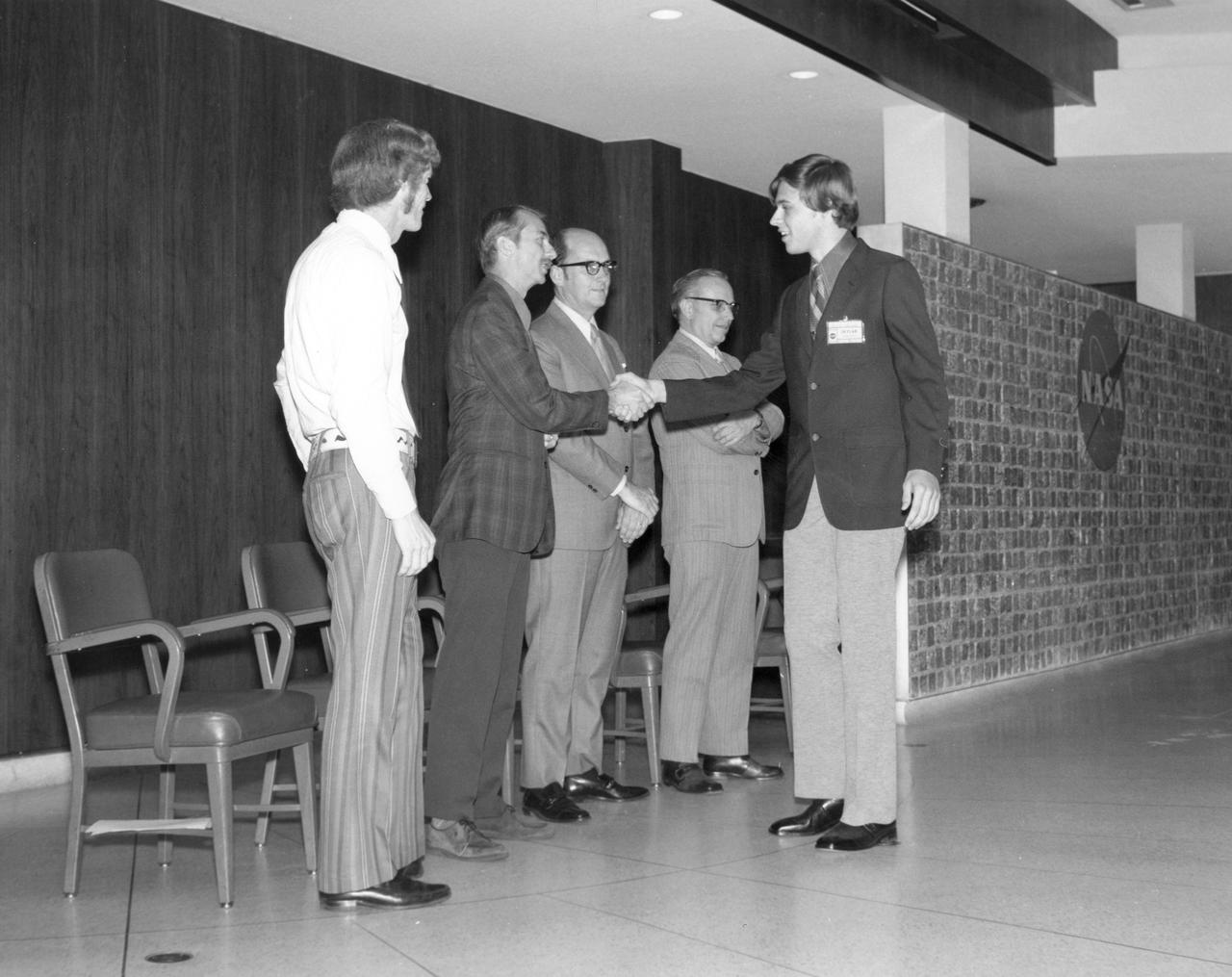
Garland, Texas high school student, Keith D. McGee, is greeted by (left to right): Astronauts Russell L. Schweickart, and Owen K. Garriott; Marshall Space Flight Center (MSFC) Skylab Program Manager, Leland Belew; and MSFC Director of Administration and Technical Services, David Newby, during a tour of MSFC. McGee was among 25 winners of a contest in which some 3,500 high school students proposed experiments for the following year’s Skylab Mission. The nationwide scientific competition was sponsored by the National Science Teachers Association and the National Aeronautics and Space Administration (NASA). The winning students, along with their parents and sponsor teachers, visited MSFC where they met with scientists and engineers, participated in design reviews for their experiments, and toured MSFC facilities. Of the 25 students, 6 did not see their experiments conducted on Skylab because the experiments were not compatible with Skylab hardware and timelines. Of the 19 remaining, 11 experiments required the manufacture of additional equipment.
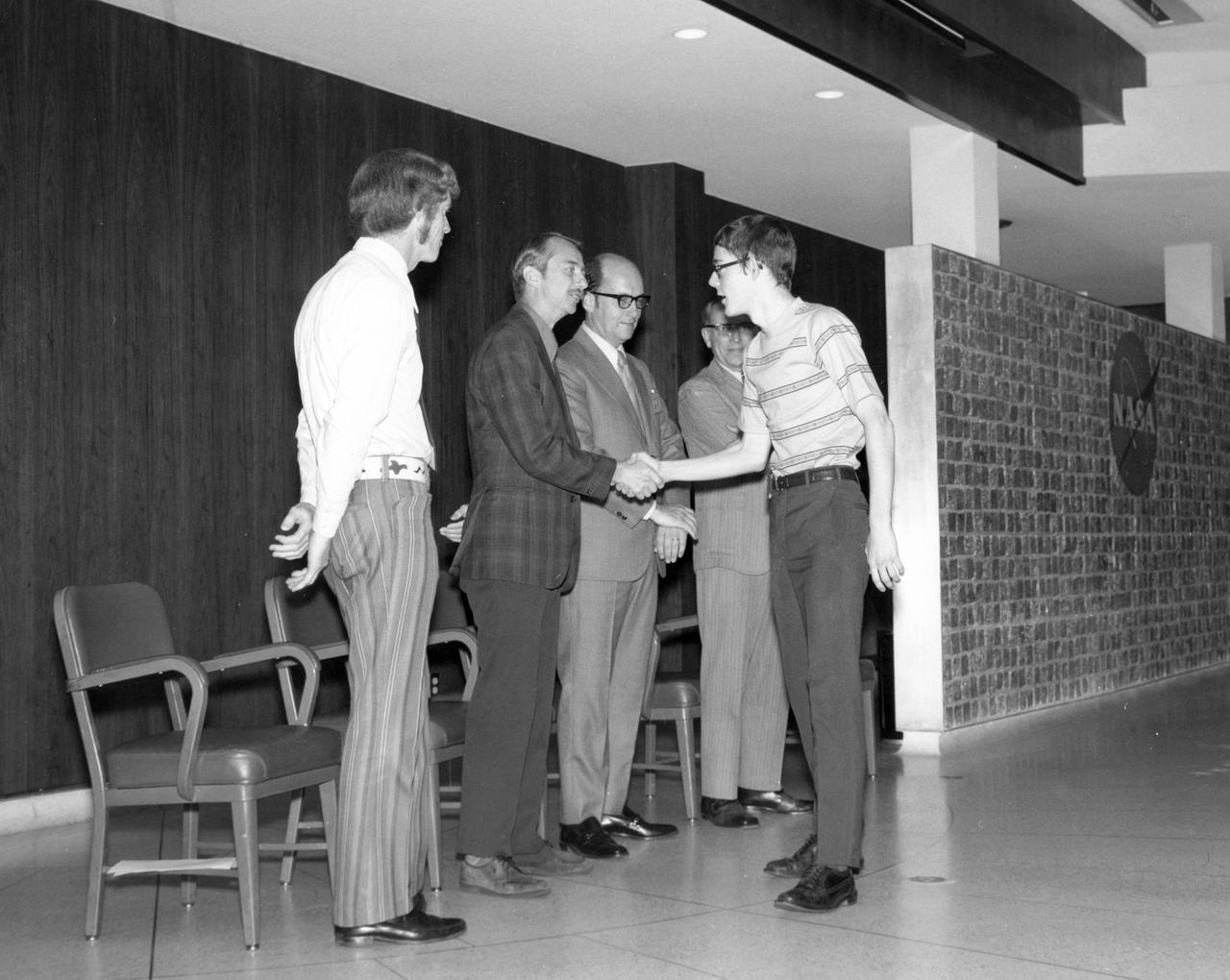
St. Paul, Minnesota high school student, Roger Johnston, is greeted by (left to right): Astronauts Russell L. Schweickart, and Owen K. Garriott; Marshall Space Flight Center (MSFC) Skylab Program Manager, Leland Belew; and MSFC Director of Administration and Technical Services, David Newby, during a tour of MSFC. Johnston was among 25 winners of a contest in which some 3,500 high school students proposed experiments for the following year’s Skylab mission. The nationwide scientific competition was sponsored by the National Science Teachers Association and the National Aeronautics and Space Administration (NASA). The winning students, along with their parents and sponsor teachers, visited MSFC where they met with scientists and engineers, participated in design reviews for their experiments, and toured MSFC facilities. Of the 25 students, 6 did not see their experiments conducted on Skylab because the experiments were not compatible with Skylab hardware and timelines. Of the 19 remaining, 11 experiments required the manufacture of additional equipment.
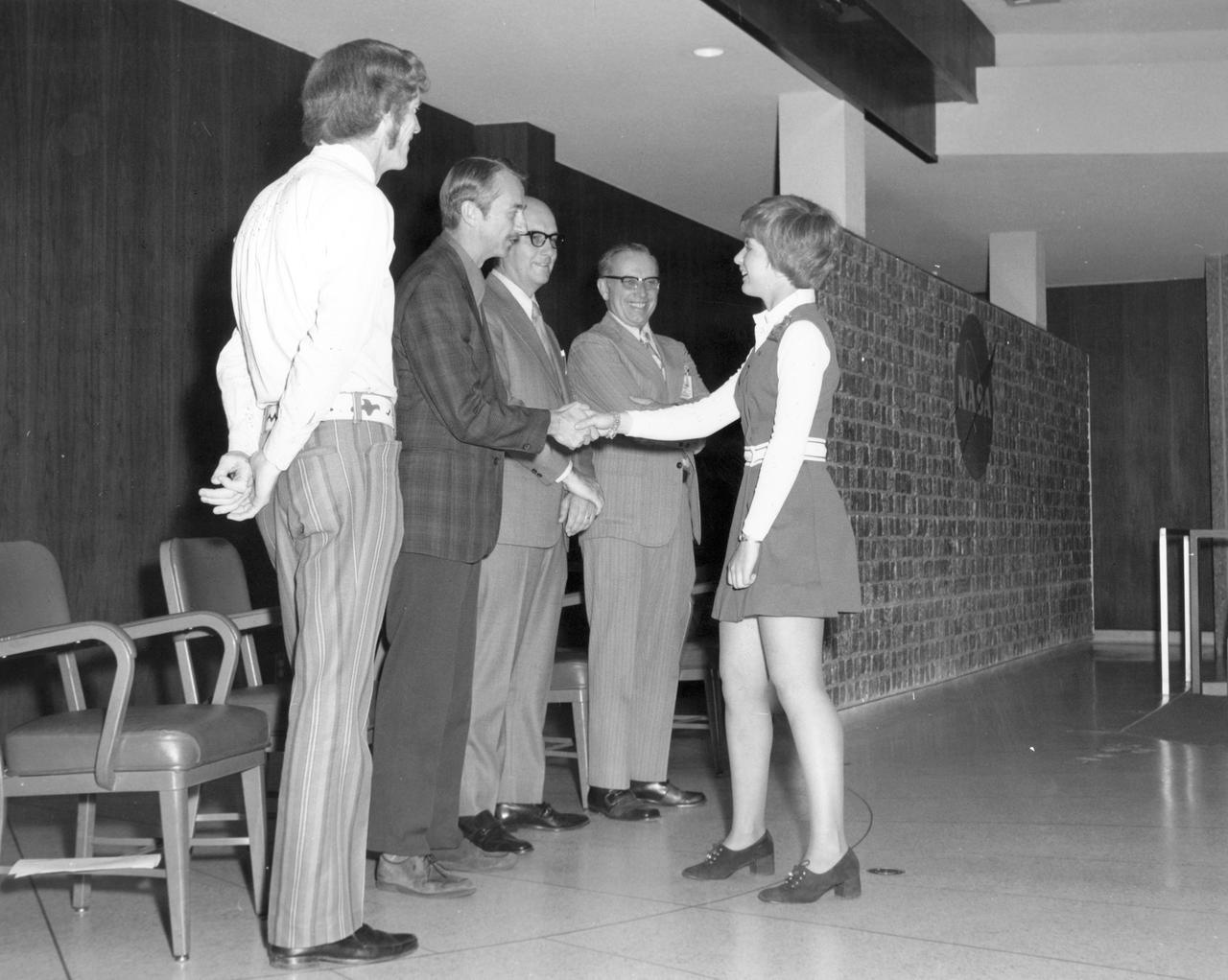
Littleton, Colorado high school student, Cheryl A. Peltz, is greeted by (left to right): Astronauts Russell L. Schweickart, and Owen K. Garriott; Marshall Space Flight Center (MSFC) Skylab Program Manager, Leland Belew; and MSFC Director of Administration and Technical Services, David Newby, during a tour of MSFC. Peltz was among 25 winners of a contest in which some 3,500 high school students proposed experiments for the following year’s Skylab mission. The nationwide scientific competition was sponsored by the National Science Teachers Association and the National Aeronautics and Space Administration (NASA). The winning students, along with their parents and sponsor teachers, visited MSFC where they met with scientists and engineers, participated in design reviews for their experiments, and toured MSFC facilities. Of the 25 students, 6 did not see their experiments conducted on Skylab because the experiments were not compatible with Skylab hardware and timelines. Of the 19 remaining, 11 experiments required the manufacture of additional equipment.
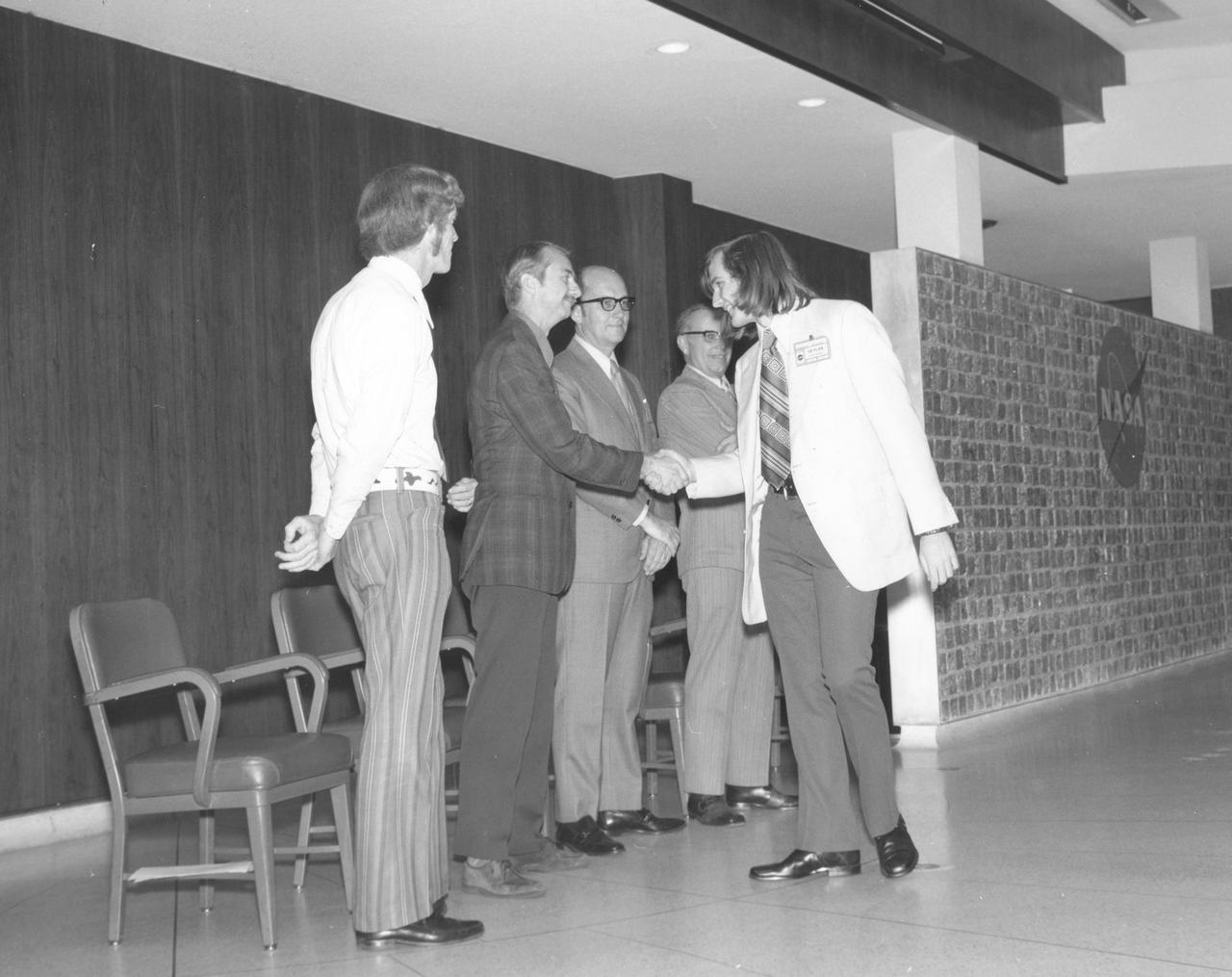
Springfield, Massachusetts high school student, Gregory A. Merkel, is greeted by (left to right): Astronauts Russell L. Schweickart, and Owen K. Garriott; Marshall Space Flight Center (MSFC) Skylab Program Manager, Leland Belew; and MSFC Director of Administration and Technical Services, David Newby, during a tour of MSFC. Merkel was among 25 winners of a contest in which some 3,500 high school students proposed experiments for the following year’s Skylab Mission. The nationwide scientific competition was sponsored by the National Science Teachers Association and the National Aeronautics and Space Administration (NASA). The winning students, along with their parents and sponsor teachers, visited MSFC where they met with scientists and engineers, participated in design reviews for their experiments, and toured MSFC facilities. Of the 25 students, 6 did not see their experiments conducted on Skylab because the experiments were not compatible with Skylab hardware and timelines. Of the 19 remaining, 11 experiments required the manufacture of additional equipment.
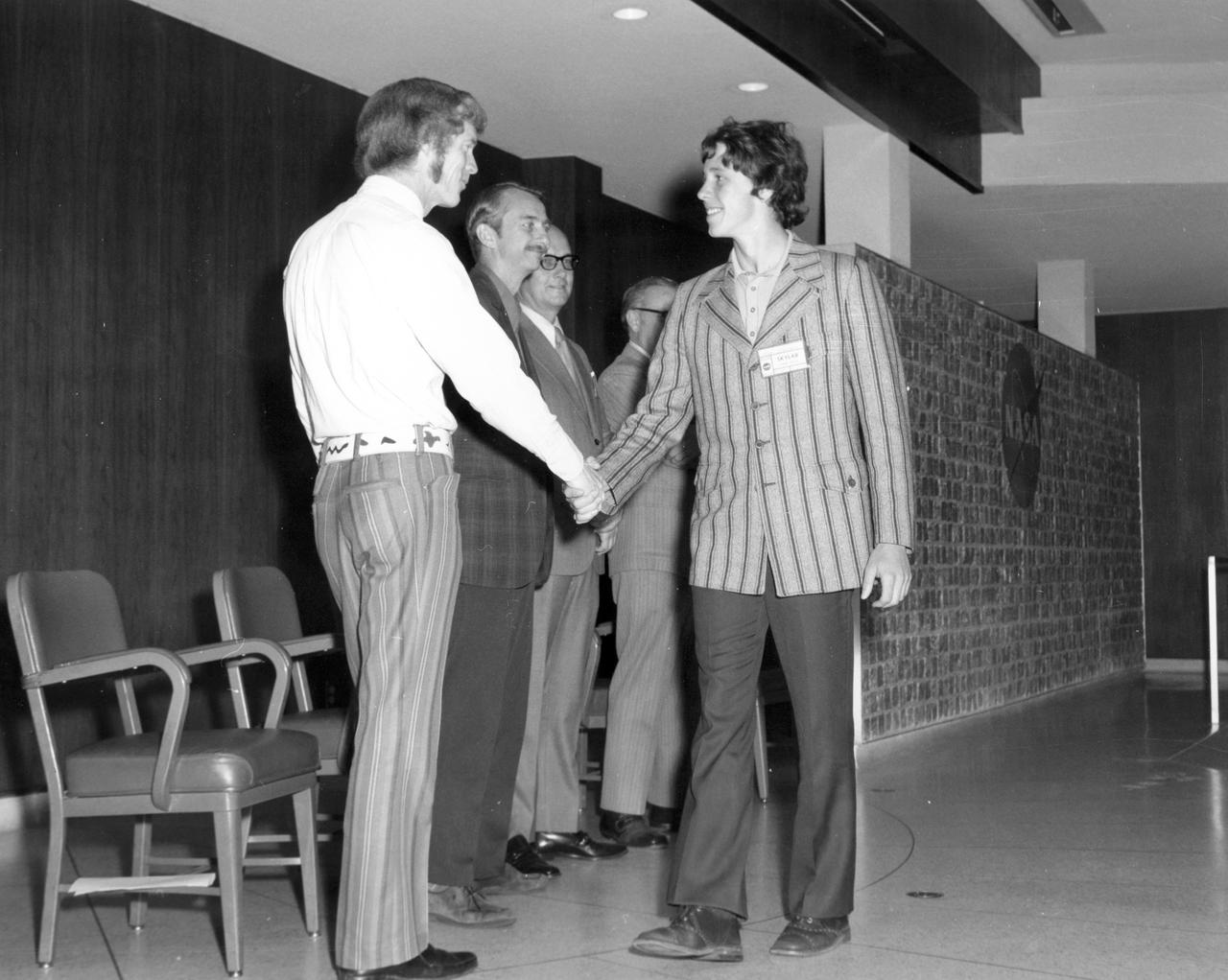
Oshkosh, Wisconsin high school student, Joe B. Zmolek, is greeted by (left to right): Astronauts Russell L. Schweickart, and Owen K. Garriott; Marshall Space Flight Center (MSFC) Skylab Program Manager, Leland Belew; and MSFC Director of Administration and Technical Services, David Newby, during a tour of MSFC. Zmolek was among 25 winners of a contest in which some 3,500 high school students proposed experiments for the following year’s Skylab mission. The nationwide scientific competition was sponsored by the National Science Teachers Association and the National Aeronautics and Space Administration (NASA). The winning students, along with their parents and sponsor teachers, visited MSFC where they met with scientists and engineers, participated in design reviews for their experiments, and toured MSFC facilities. Of the 25 students, 6 did not see their experiments conducted on Skylab because the experiments were not compatible with Skylab hardware and timelines. Of the 19 remaining, 11 experiments required the manufacture of additional equipment.
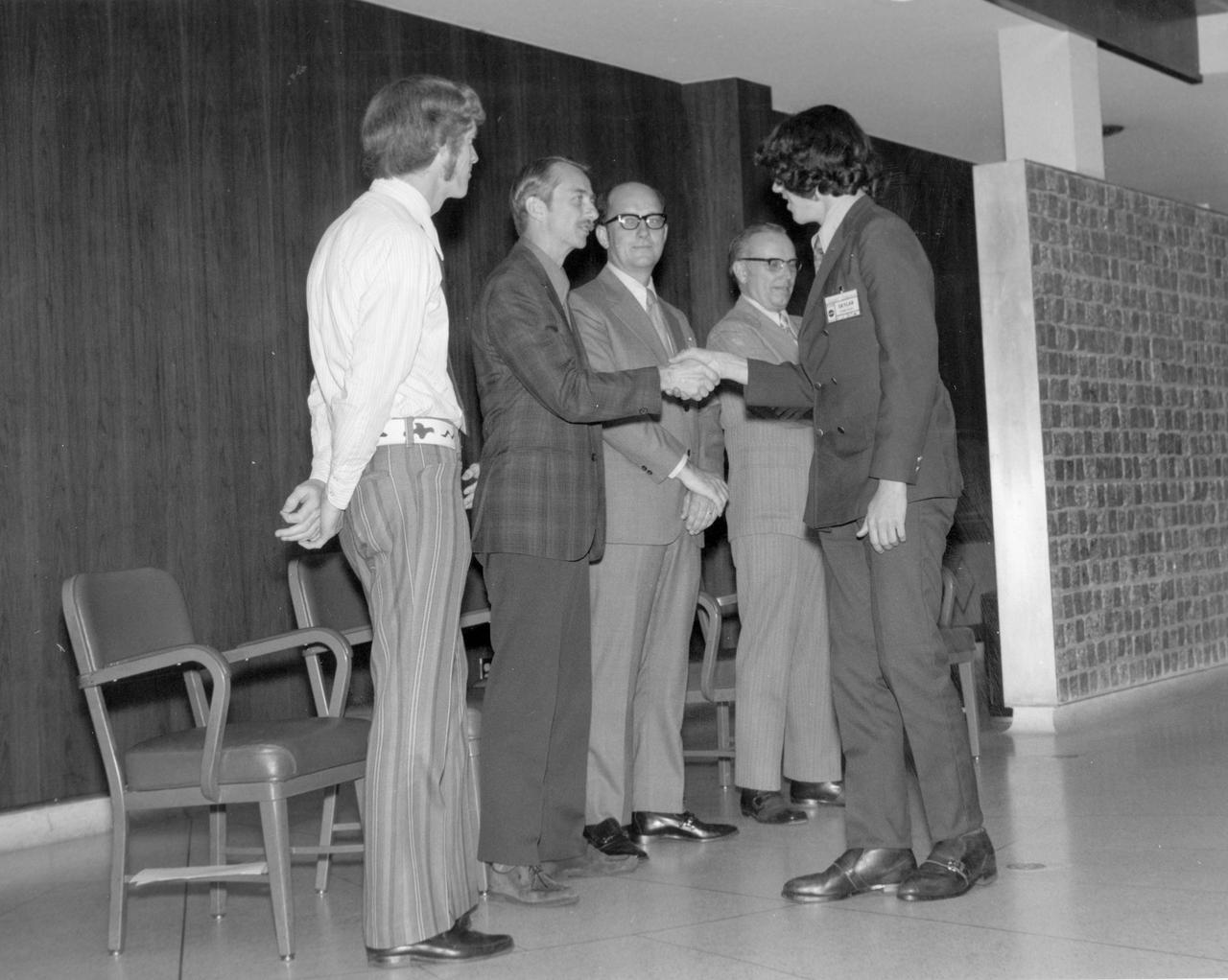
North Rochester, New York high school student, Robert L. Staehle, is greeted by (left to right): Astronauts Russell L. Schweickart, and Owen K. Garriott; Marshall Space Flight Center (MSFC) Skylab Program Manager, Leland Belew; and MSFC Director of Administration and Technical Services, David Newby, during a tour of MSFC. Staehle was among 25 winners of a contest in which some 3,500 high school students proposed experiments for the following year’s Skylab mission. The nationwide scientific competition was sponsored by the National Science Teachers Association and the National Aeronautics and Space Administration (NASA). The winning students, along with their parents and sponsor teachers, visited MSFC where they met with scientists and engineers, participated in design reviews for their experiments, and toured MSFC facilities. Of the 25 students, 6 did not see their experiments conducted on Skylab because the experiments were not compatible with Skylab hardware and timelines. Of the 19 remaining, 11 experiments required the manufacture of additional equipment.
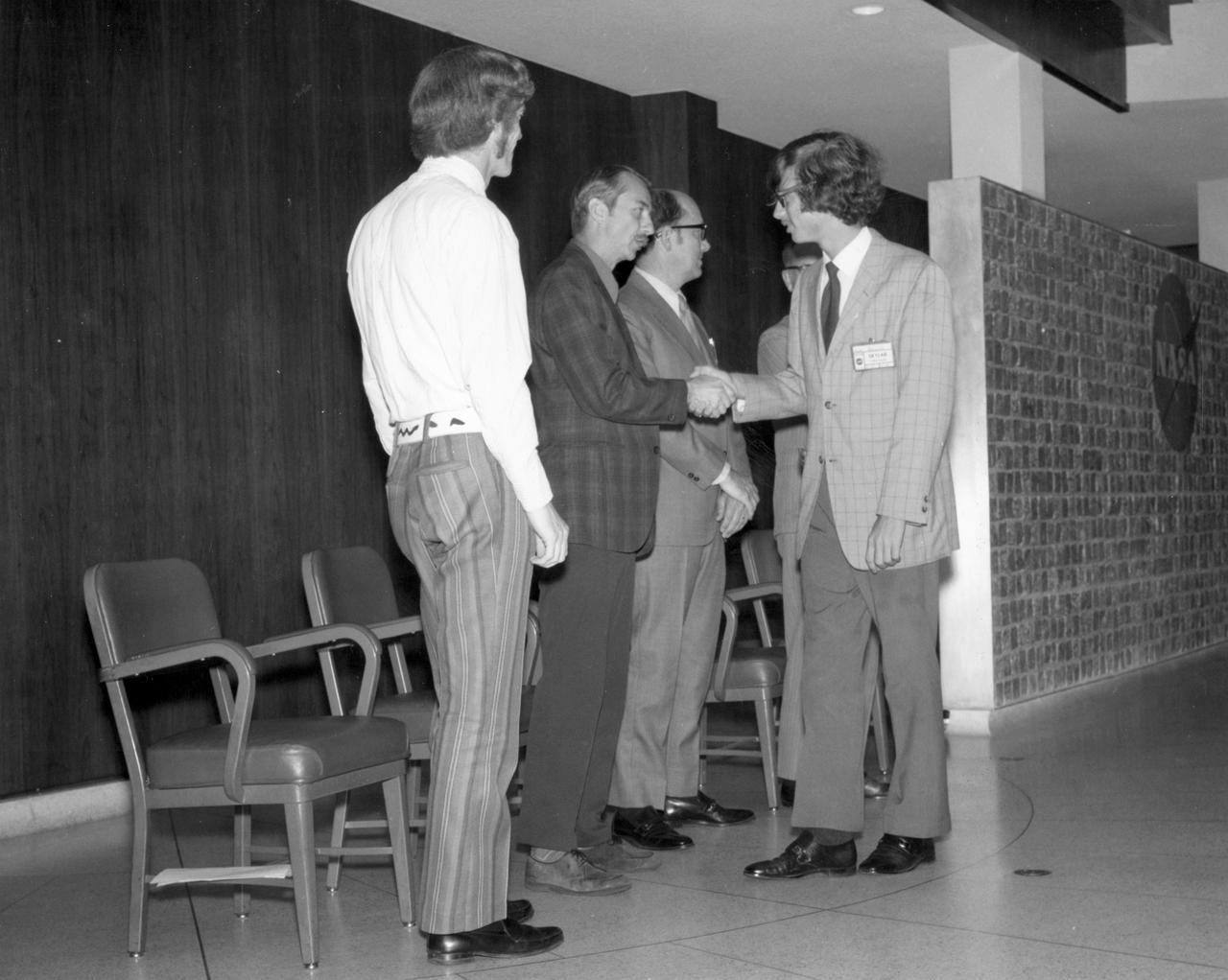
Aiea, Hawaii high school student, John C. Hamilton, is greeted by (left to right): Astronauts Russell L. Schweickart, and Owen K. Garriott; Marshall Space Flight Center (MSFC) Skylab Program Manager, Leland Belew; and MSFC Director of Administration and Technical Services, David Newby, during a tour of MSFC. Hamilton was among 25 winners of a contest in which some 3,500 high school students proposed experiments for the following year’s Skylab mission. The nationwide scientific competition was sponsored by the National Science Teachers Association and the National Aeronautics and Space Administration (NASA). The winning students, along with their parents and sponsor teachers, visited MSFC where they met with scientists and engineers, participated in design reviews for their experiments, and toured MSFC facilities. Of the 25 students, 6 did not see their experiments conducted on Skylab because the experiments were not compatible with Skylab hardware and timelines. Of the 19 remaining, 11 experiments required the manufacture of additional equipment.
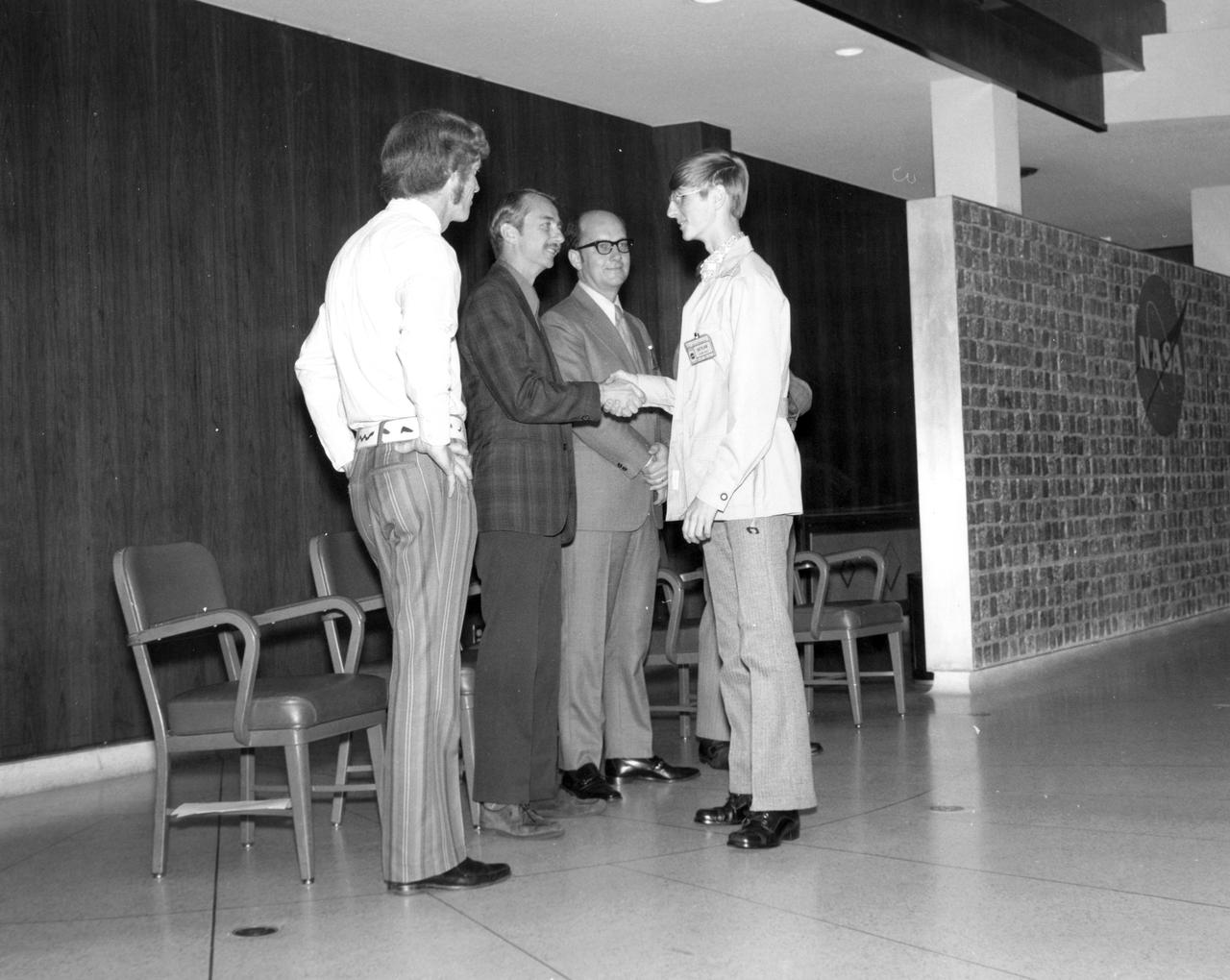
West Point, Nebraska high school student, Joel C. Wordekemper, is greeted by (left to right): Astronauts Russell L. Schweickart, and Owen K. Garriott; Marshall Space Flight Center (MSFC) Skylab Program Manager, Leland Belew; and MSFC Director of Administration and Technical Services, David Newby, during a tour of MSFC. Wordekemper was among 25 winners of a contest in which some 3,500 high school students proposed experiments for the following year’s Skylab mission. The nationwide scientific competition was sponsored by the National Science Teachers Association and the National Aeronautics and Space Administration (NASA). The winning students, along with their parents and sponsor teachers, visited MSFC where they met with scientists and engineers, participated in design reviews for their experiments, and toured MSFC facilities. Of the 25 students, 6 did not see their experiments conducted on Skylab because the experiments were not compatible with Skylab hardware and timelines. Of the 19 remaining, 11 experiments required the manufacture of additional equipment.
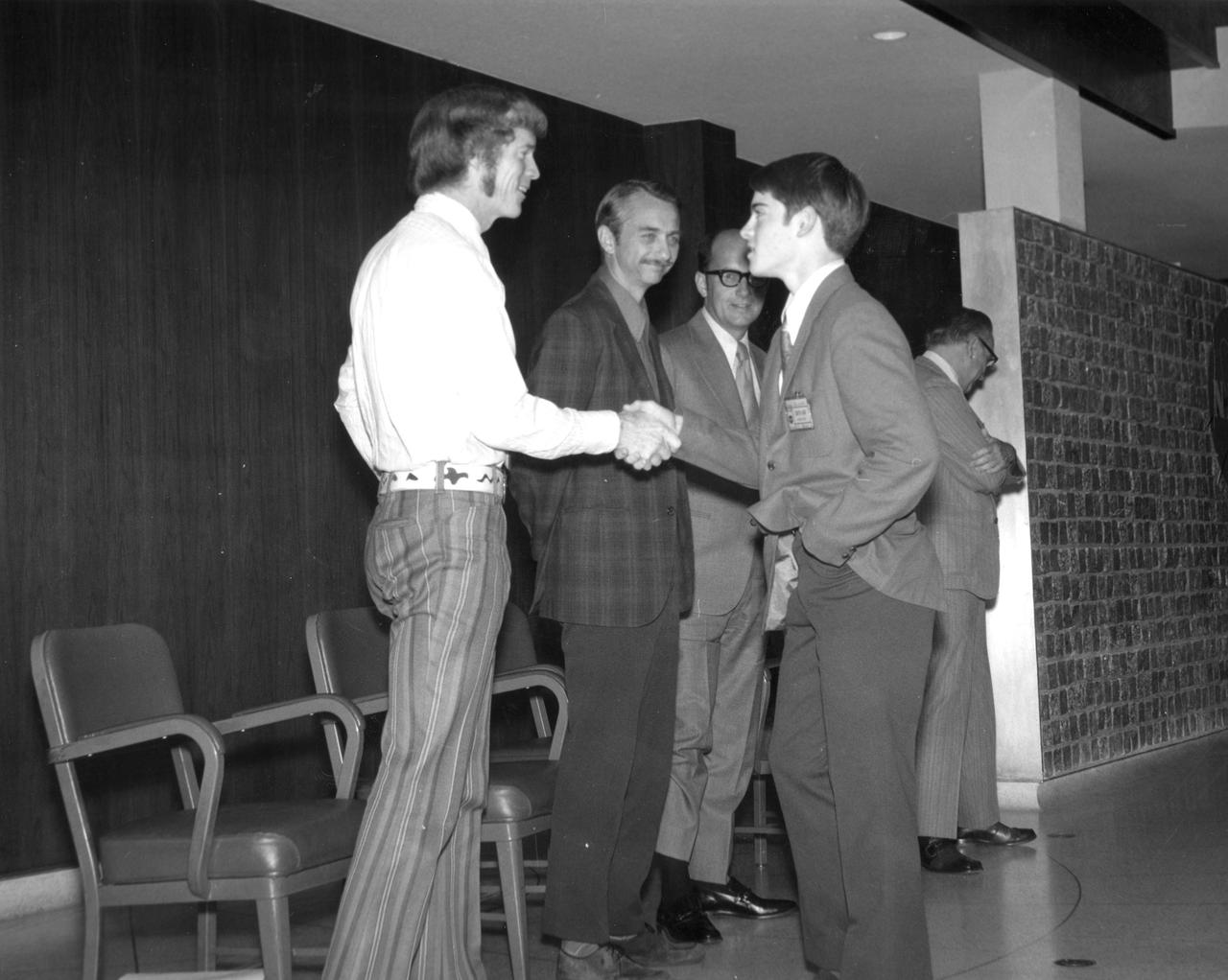
Silverton, Oregon high school student, Daniel C. Bochsler, is greeted by (left to right): Astronauts Russell L. Schweickart, and Owen K. Garriott; Marshall Space Flight Center (MSFC) Skylab Program Manager, Leland Belew; and MSFC Director of Administration and Technical Services, David Newby, during a tour of MSFC. Bochsler was among 25 winners of a contest in which some 3,500 high school students proposed experiments for the following year’s Skylab mission. The nationwide scientific competition was sponsored by the National Science Teachers Association and the National Aeronautics and Space Administration (NASA). The winning students, along with their parents and sponsor teachers, visited MSFC where they met with scientists and engineers, participated in design reviews for their experiments, and toured MSFC facilities. Of the 25 students, 6 did not see their experiments conducted on Skylab because the experiments were not compatible with Skylab hardware and timelines. Of the 19 remaining, 11 experiments required the manufacture of additional equipment.
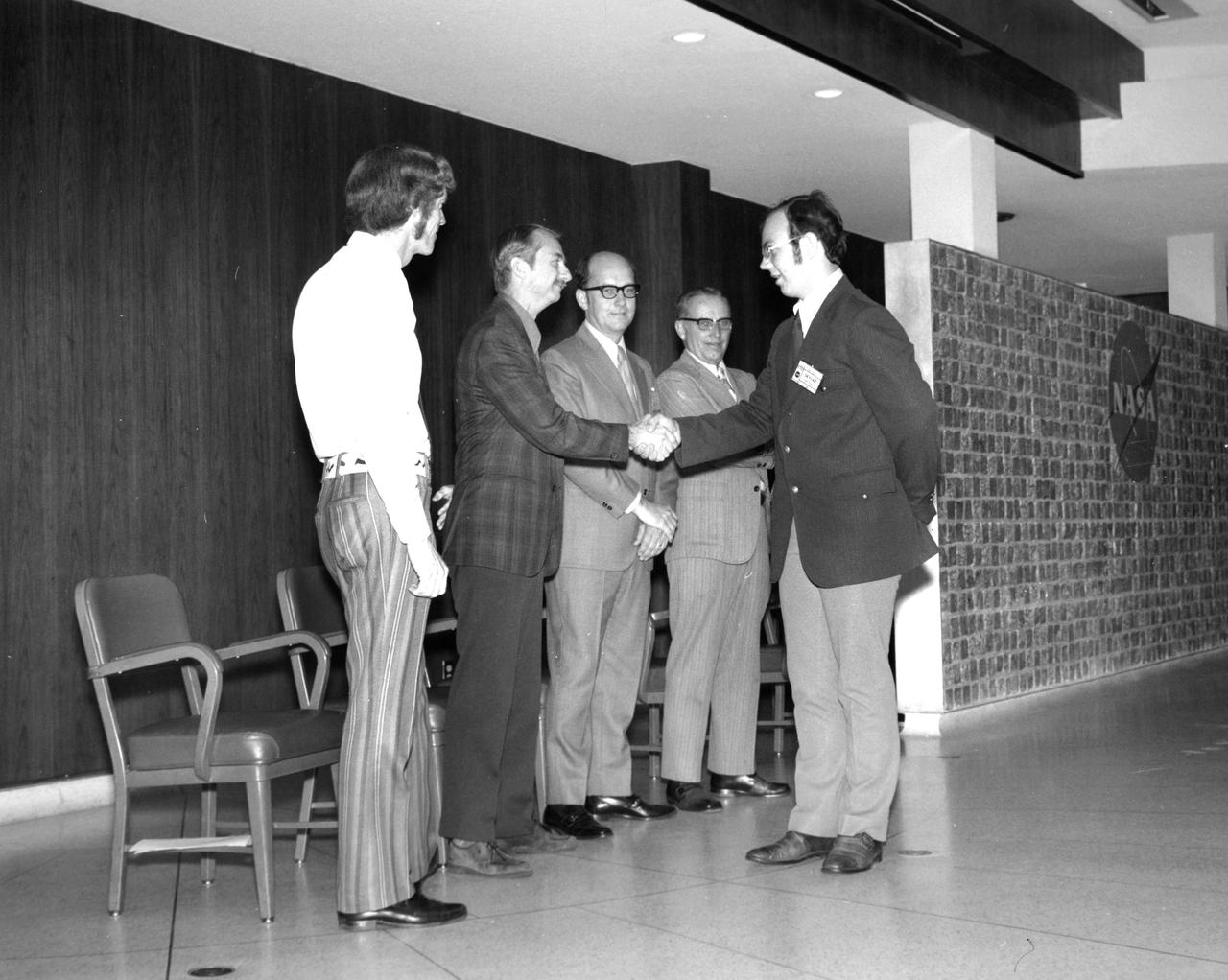
Baton Rouge, Louisiana high school student, Joe W. Reihs, is greeted by (left to right): Astronauts Russell L. Schweickart, and Owen K. Garriott; Marshall Space Flight Center (MSFC) Skylab Program Manager, Leland Belew; and MSFC Director of Administration and Technical Services, David Newby, during a tour of MSFC. Reihs was among 25 winners of a contest in which some 3,500 high school students proposed experiments for the following year’s Skylab mission. The nationwide scientific competition was sponsored by the National Science Teachers Association and the National Aeronautics and Space Administration (NASA). The winning students, along with their parents and sponsor teachers, visited MSFC where they met with scientists and engineers, participated in design reviews for their experiments, and toured MSFC facilities. Of the 25 students, 6 did not see their experiments conducted on Skylab because the experiments were not compatible with Skylab hardware and timelines. Of the 19 remaining, 11 experiments required the manufacture of additional equipment.
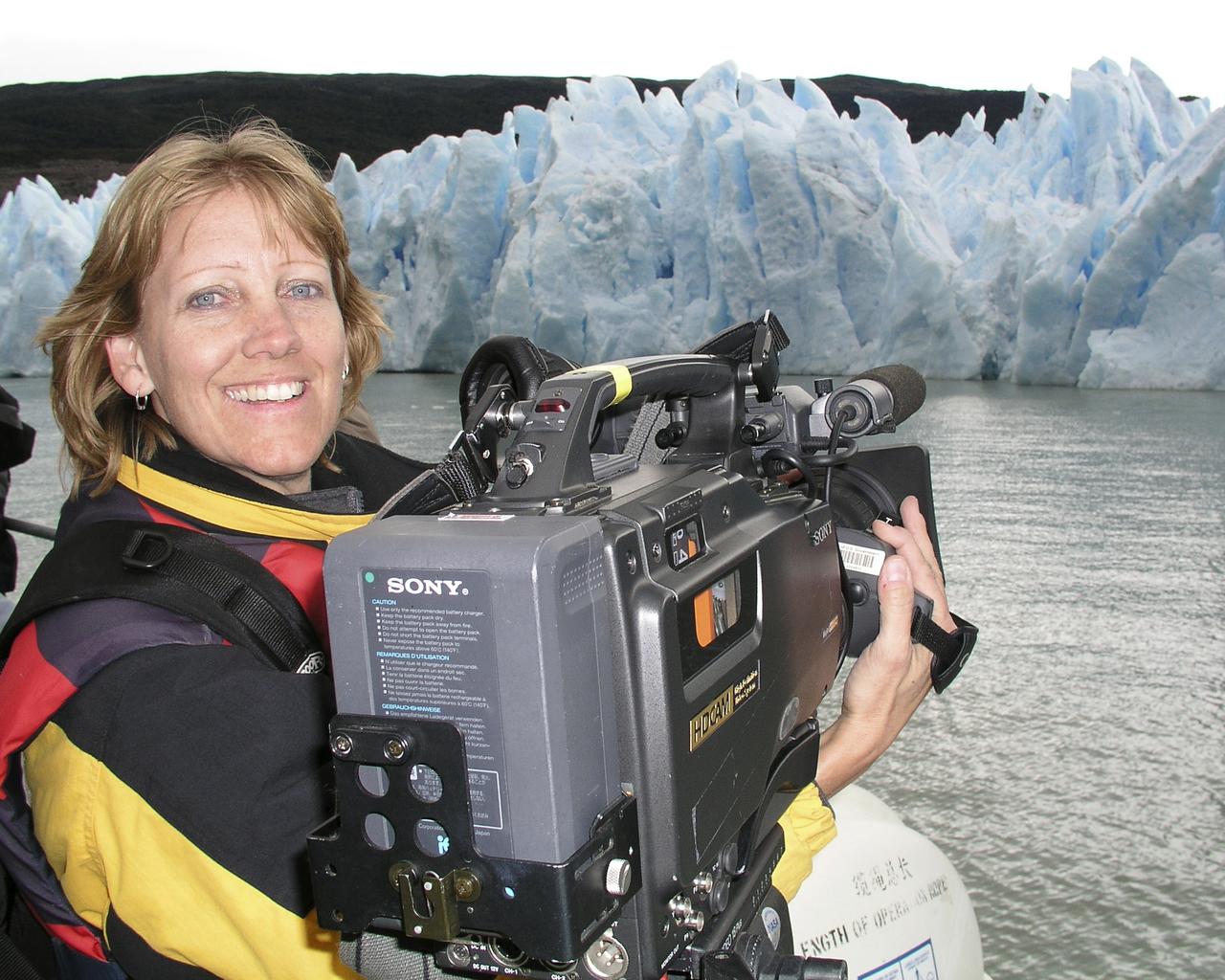
Lori Losey, an employee of Arcata Associates at Dryden, was honored with NASA's 2004 Videographer of the Year award for her work in two of the three categories in the NASA video competition, public affairs and documentation. In the public affairs category, Losey received a first-place citation for her footage of an Earth Science mission that was flown aboard NASA's DC-8 Flying Laboratory in South America last year. Her footage not only depicted the work of the scientists aboard the aircraft and on the ground, but she also obtained spectacular footage of flora and fauna in the mission's target area that helped communicate the environmental research goals of the project. Losey also took first place in the documentation category for her acquisition of technical videography of the X-45A Unmanned Combat Air Vehicle flight tests. The video, shot with a hand-held camera from the rear seat of a NASA F/A-18 mission support aircraft, demonstrated her capabilities in recording precise technical visual data in a very challenging airborne environment. The award was presented to Losey during a NASA reception at the National Association of Broadcasters convention in Las Vegas April 19. A three-judge panel evaluated entries for public affairs, documentation and production videography on professional excellence, technical quality, originality, creativity within restrictions of the project, and applicability to NASA and its mission. Entries consisted of a continuous video sequence or three views of the same subject for a maximum of three minutes duration. Linda Peters, Arcata Associates' Video Systems Supervisor at NASA Dryden, noted, "Lori is a talented videographer who has demonstrated extraordinary abilities with the many opportunities she has received in her career at NASA." Losey's award was the second major NASA video award won by members of the Dryden video team in two years. Steve Parcel took first place in the documentation category last year for his camera and editing
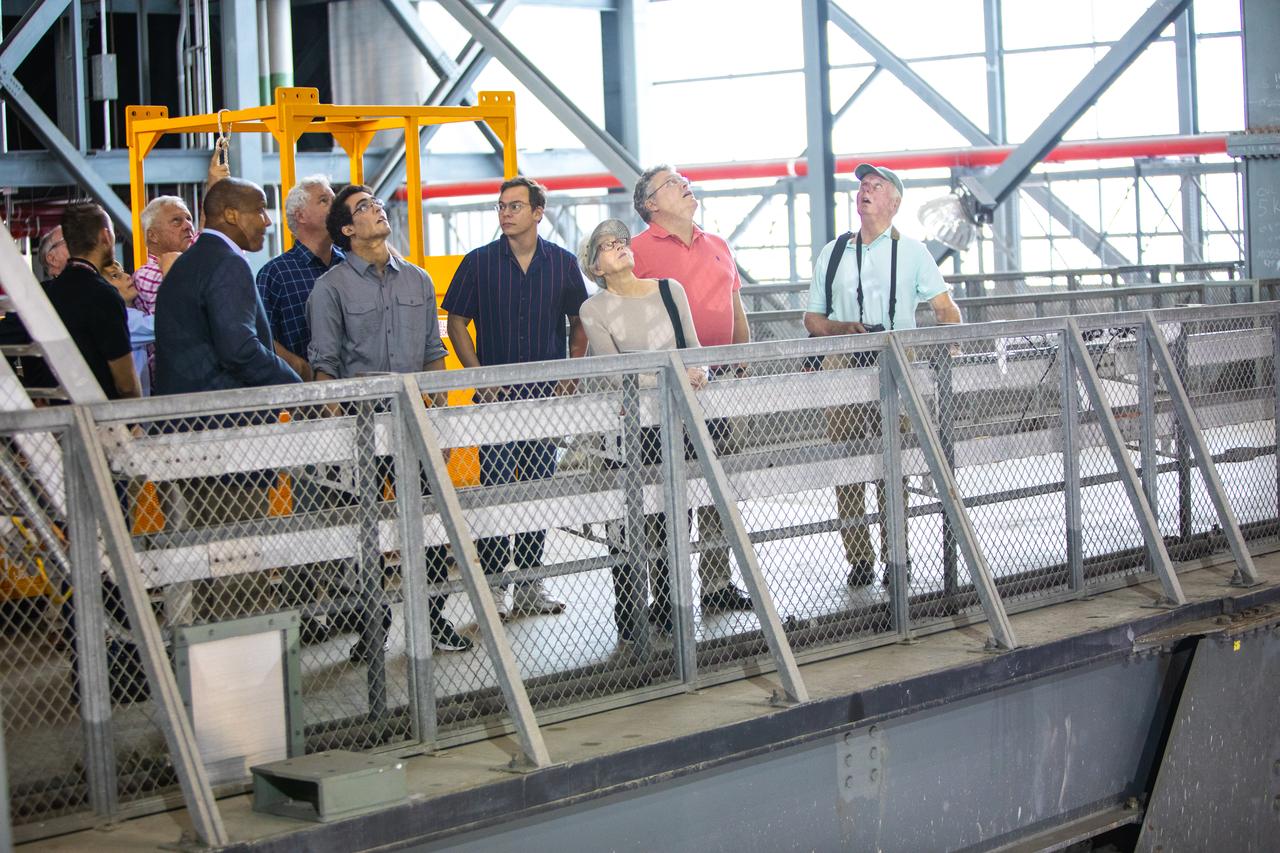
Family members of the original Vehicle Assembly Building (VAB) architect tour the iconic facility on Nov. 22, 2019 at NASA’s Kennedy Space Center in Florida. Among the visitors are Dick Bergmann, far right, original lead designer for the VAB. In view, far left, is Kelvin Manning, Kennedy’s associate director, technical. The Florida Section American Society of Civil Engineers bestowed its National Historic Civil Engineering Landmark award to the facility. The VAB is the first building at Kennedy Space Center to earn this distinction. At the time of its completion, the 129-million-cubic-foot structure was the largest building in the world. Originally designed and built to accommodate the Saturn V/Apollo used in Project Apollo, the VAB was later modified for its role in the Space Shuttle Program.
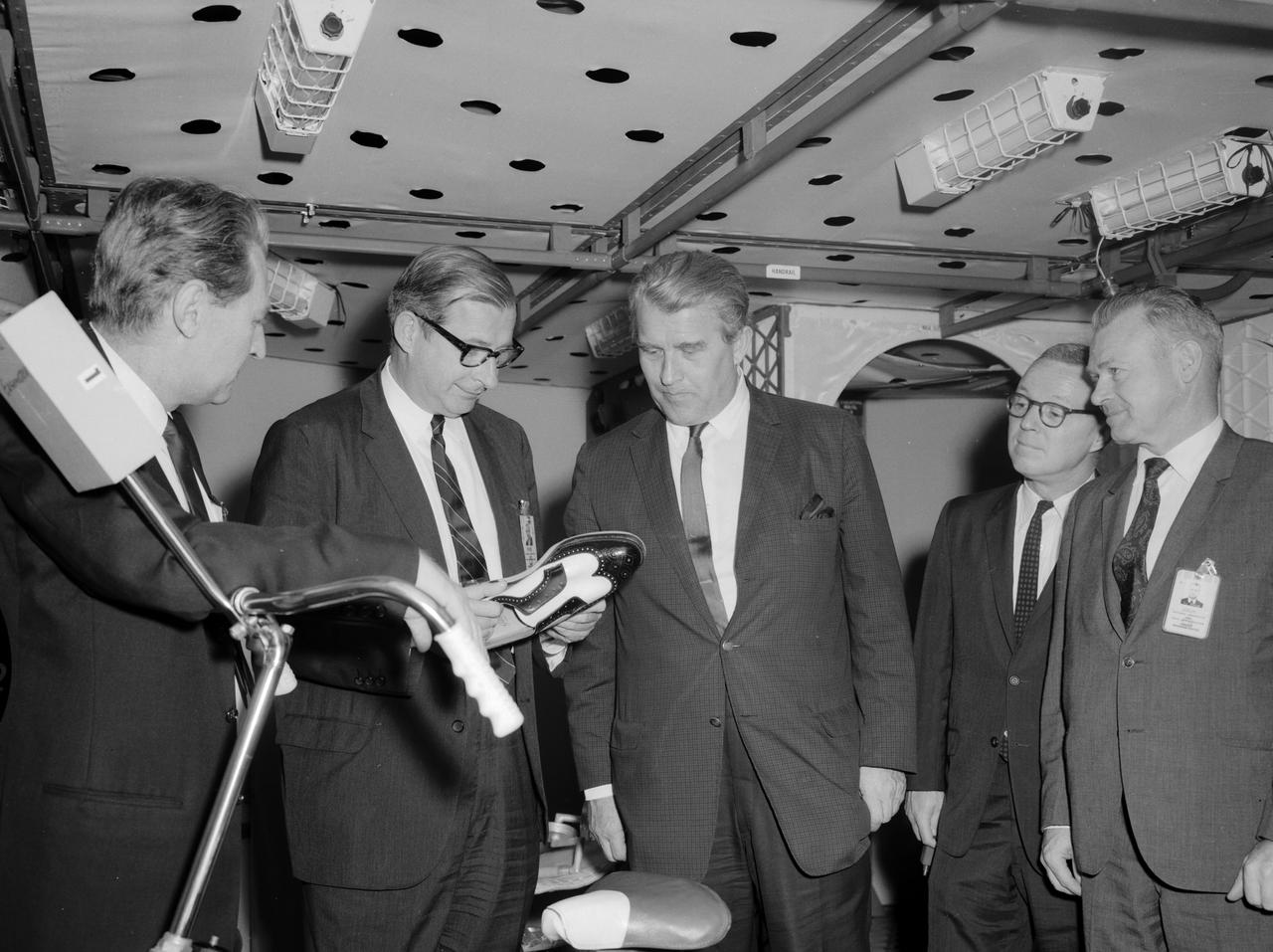
Pictured from the left, in the Saturn I mockup, are: William Brooksbank, Marshall Space Flight Center (MSFC) Propulsion and Vehicle Engineering Laboratory; Dr. Thomas O. Paine, Deputy Administrator of the National Aeronautics and Space Administration (NASA); Dr. Wernher von Braun, MSFC director; Colonel Clare F. Farley, executive officer of the Office of the Administrator; and Charles J. Donlan, newly appointed deputy associate administrator for Manned Space Flight, technical. The party examined an ordinary man’s shoe (held by Paine) outfitted for use in the Saturn I Workshop. The shoe had a unique fastener built into the sole to allow an astronaut to move about the workshop floor and to remain in one position if he desired. Dr. Paine and his party indulged in a two-day tour at the Marshall Space Flight Center getting acquainted with Marshall personnel and programs. It was Paine’s first visit to the center since assuming the NASA post on February 1, 1968.
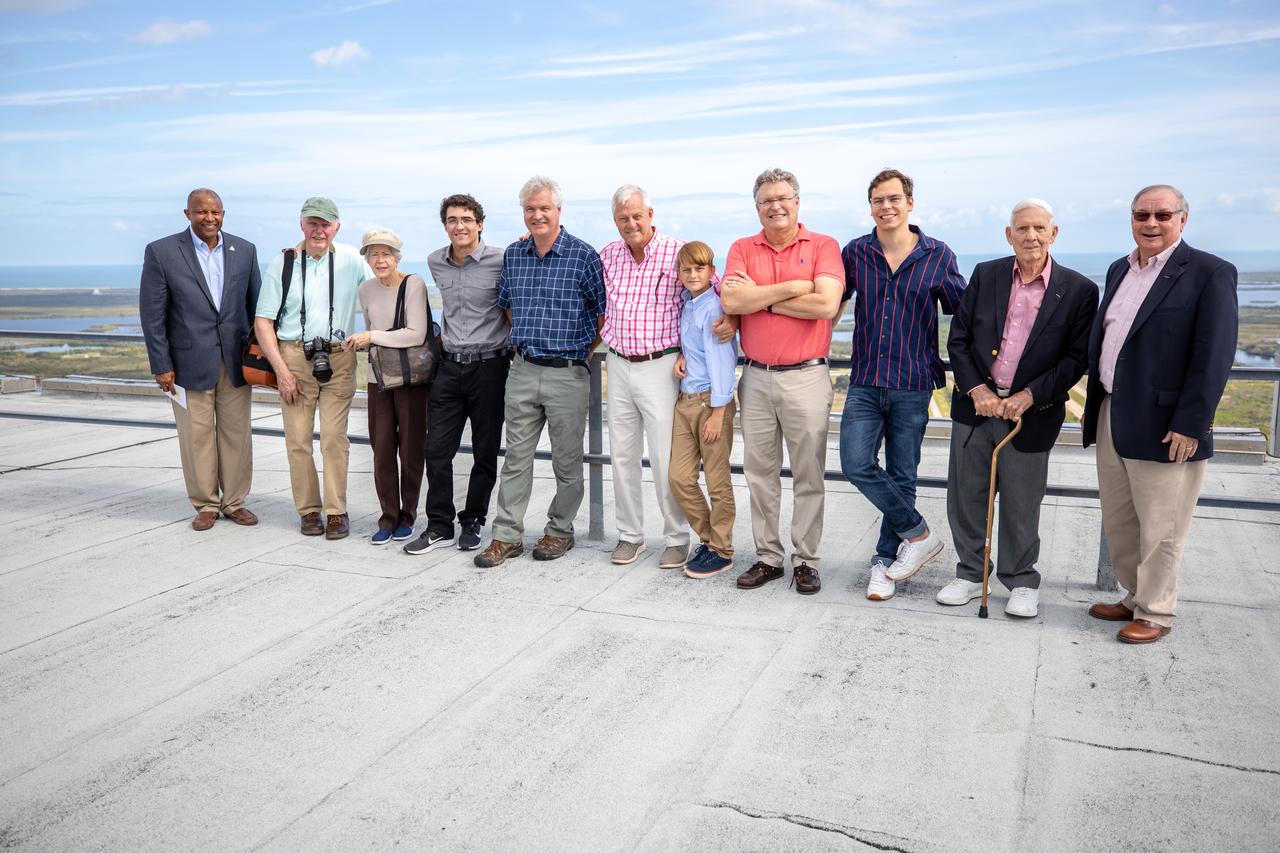
Dick Bergmann, second from left, original lead designer for the Vehicle Assembly Building (VAB), and Phil Moyer, second from right, original project lead, are on the roof of the VAB during a tour of Kennedy Space Center in Florida with descendants of Max Urbahn, the original architect, on Nov. 22, 2019. At far left is Kelvin Manning, Kennedy associate director, technical. The Florida Section American Society of Civil Engineers bestowed its National Historic Civil Engineering Landmark award to the facility. The VAB is the first building at Kennedy Space Center to earn this distinction. At the time of its completion, the 129-million-cubic-foot structure was the largest building in the world. Originally designed and built to accommodate the Saturn V/Apollo used in Project Apollo, the VAB was later modified for its role in the Space Shuttle Program.
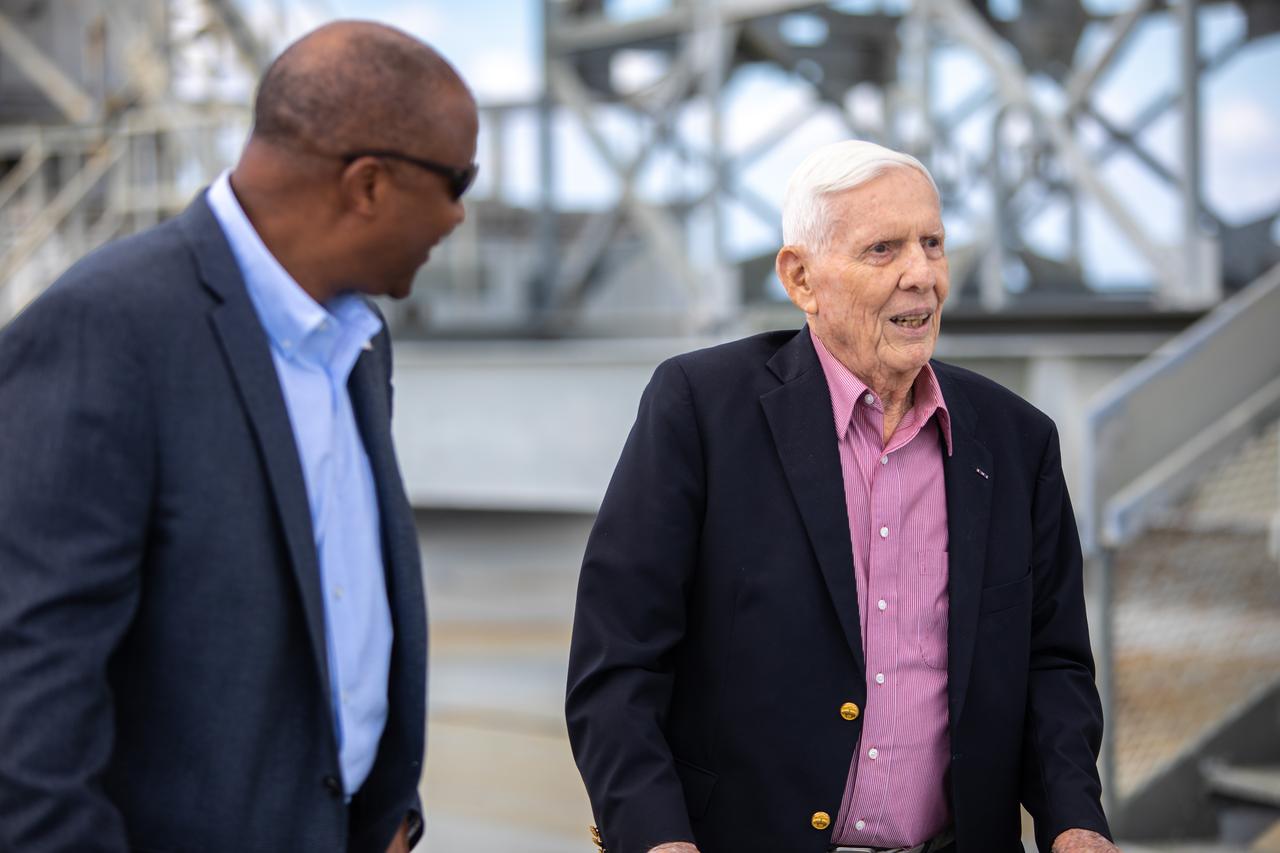
Phil Moyer, at right, original project lead for the Vehicle Assembly Building (VAB), tours the iconic facility on Nov. 22, 2019 at NASA’s Kennedy Space Center in Florida. At left is Kelvin Manning, Kennedy’s associate director, technical. The VAB was recognized with the National Historic Civil Engineering Landmark award by the Florida Section American Society of Civil Engineers during a ceremony on Jan. 10, 2020. The VAB is the first building at Kennedy Space Center to earn this distinction. At the time of its completion, the 129-million-cubic-foot structure was the largest building in the world. Originally designed and built to accommodate the Saturn V/Apollo used in Project Apollo, the VAB was later modified for its role in the Space Shuttle Program.
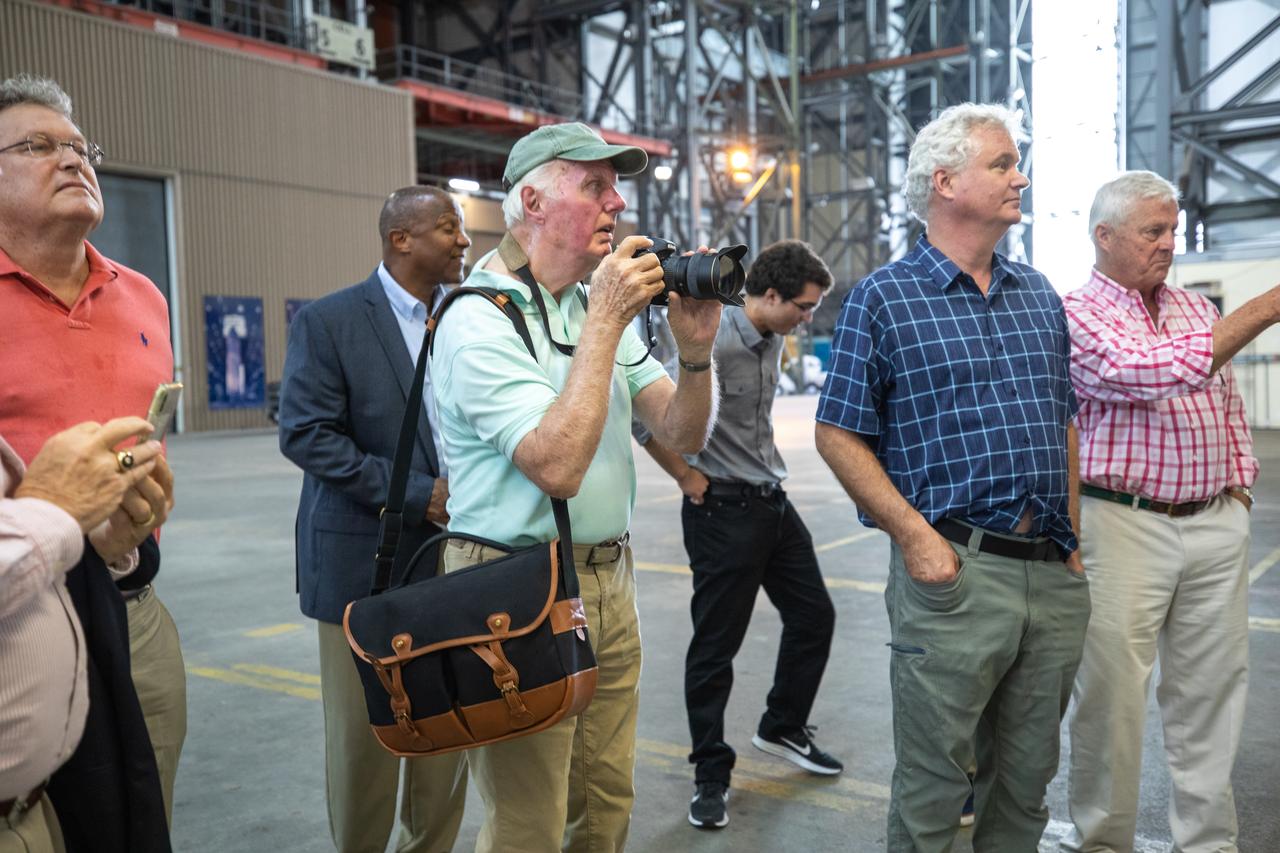
Dick Bergmann, far left in front, original lead designer for the Vehicle Assembly Building (VAB), tours the iconic facility at Kennedy Space Center in Florida with descendants of Max Urbahn, the original architect, on Nov. 22, 2019. Behind Bergmann is Kelvin Manning, Kennedy associate director, technical. The Florida Section American Society of Civil Engineers bestowed its National Historic Civil Engineering Landmark award to the facility. The VAB is the first building at Kennedy Space Center to earn this distinction. At the time of its completion, the 129-million-cubic-foot structure was the largest building in the world. Originally designed and built to accommodate the Saturn V/Apollo used in Project Apollo, the VAB was later modified for its role in the Space Shuttle Program.
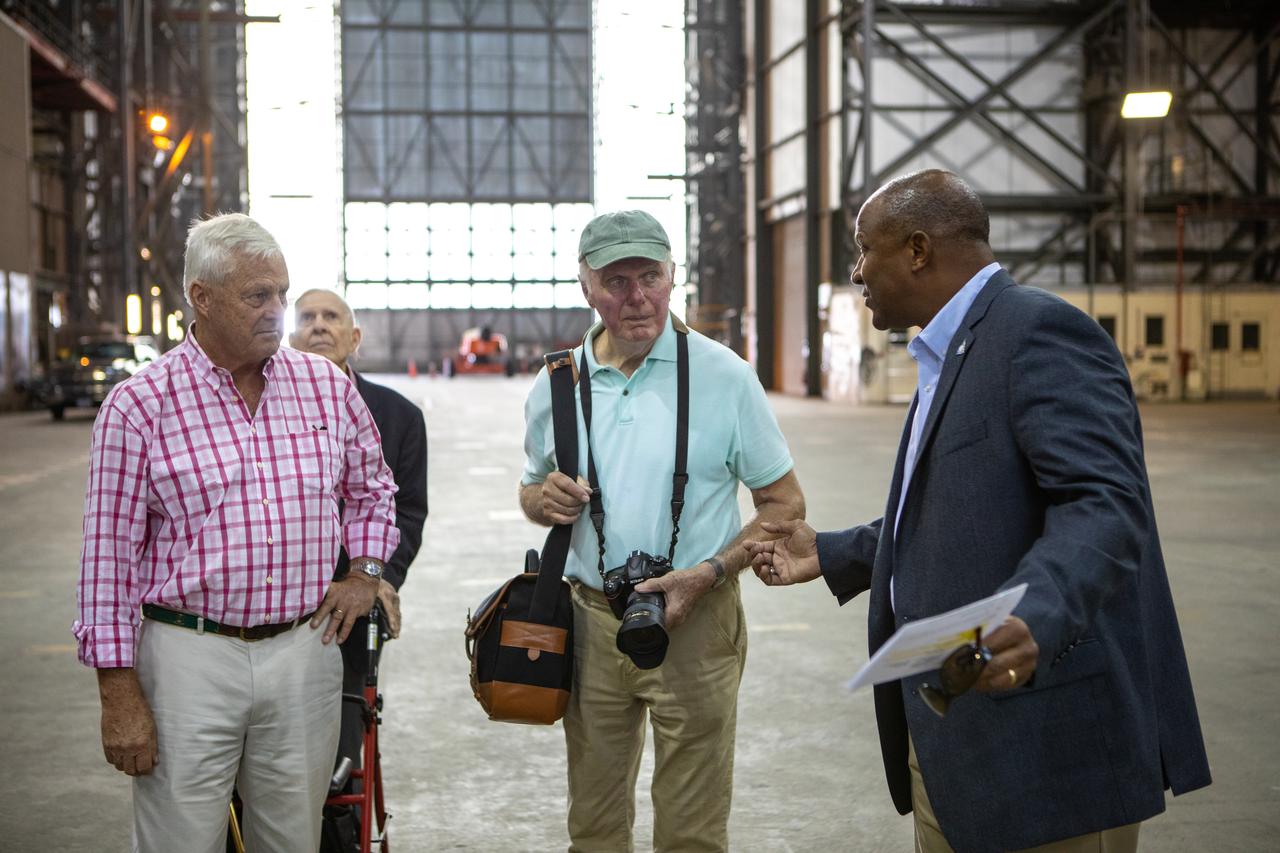
Kelvin Manning, at right, Kennedy Space Center’s associate director, technical, speaks to Dick Bergmann, center, original lead designer for the Vehicle Assembly (VAB), during a tour of the iconic facility on Nov. 22, 2019, at NASA’s Kennedy Space Center in Florida. The VAB was recognized with the National Historic Civil Engineering Landmark award by the Florida Section American Society of Civil Engineers during a ceremony on Jan. 10, 2020. The VAB is the first building at Kennedy to earn this distinction. At the time of its completion, the 129-million-cubic-foot structure was the largest building in the world. Originally designed and built to accommodate the Saturn V/Apollo used in Project Apollo, the VAB was later modified for its role in the Space Shuttle Program.
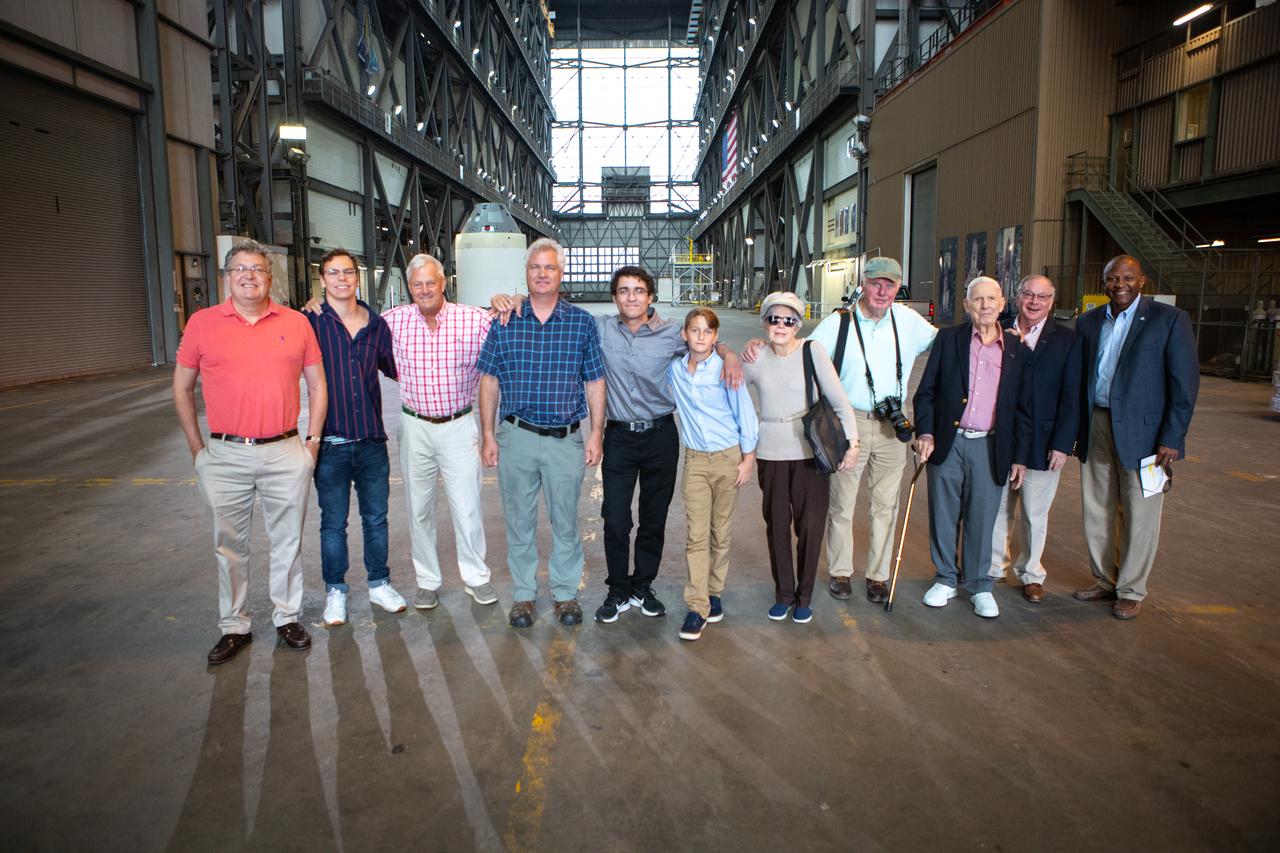
Phil Moyer, third from right, original project lead for the Vehicle Assembly Building (VAB); and Dick Bergmann, fourth from right, original lead designer for the VAB, tour the iconic facility with the families of the original architect on Nov. 22, 2019 at NASA’s Kennedy Space Center in Florida. At far right is Kelvin Manning, Kennedy’s associate director, technical. The Florida Section American Society of Civil Engineers bestowed the historic building with its National Historic Civil Engineering Landmark award during a ceremony on Jan. 10, 2020. The VAB is the first building at Kennedy Space Center to earn this distinction. At the time of its completion, the 129-million-cubic-foot structure was the largest building in the world. Originally designed and built to accommodate the Saturn V/Apollo used in Project Apollo, the VAB was later modified for its role in the Space Shuttle Program.
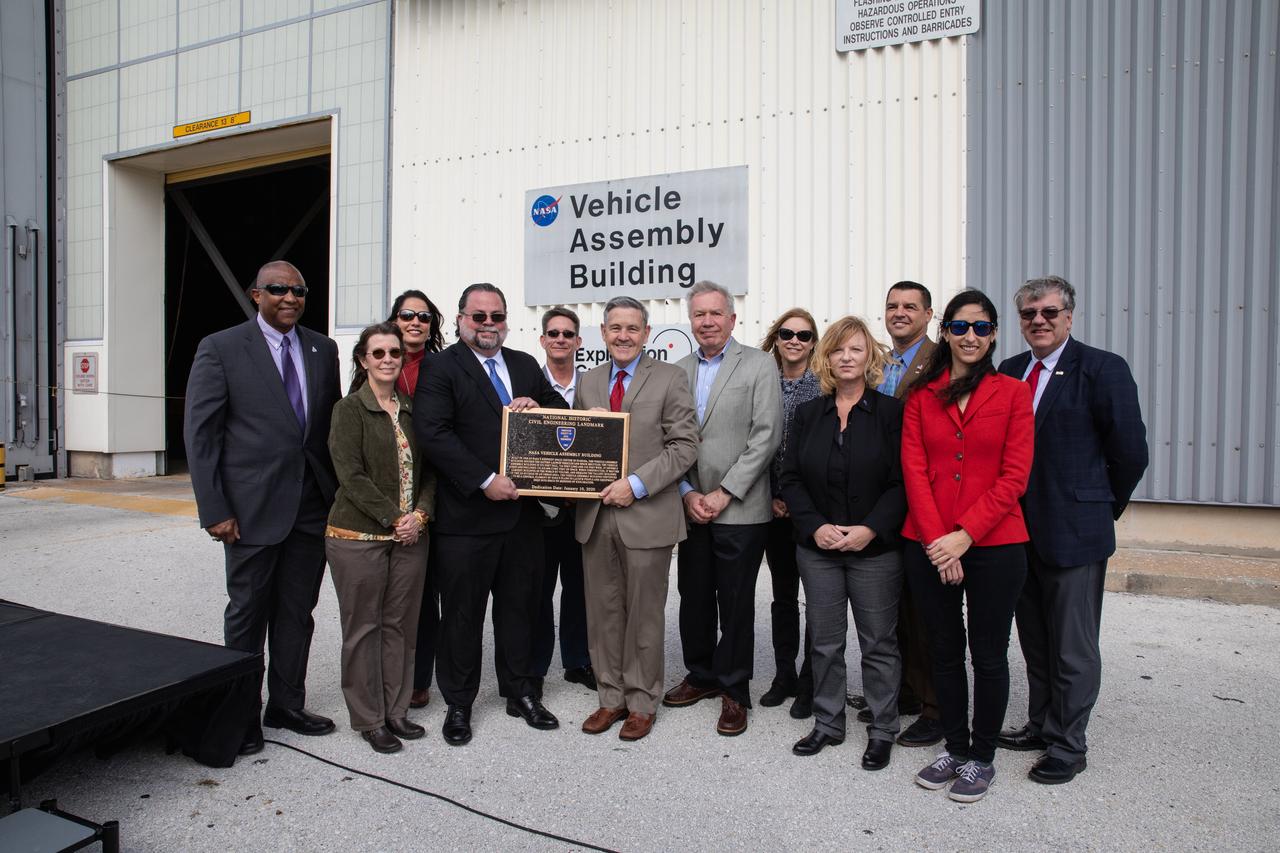
Kennedy Space Center Director Bob Cabana, center, accepts the National Historic Civil Engineering Landmark award from the Florida Section American Society of Civil Engineers (ASCE) for the Vehicle Assembly Building during a ceremony in front of the iconic facility on Jan. 10, 2020. Holding the award with Cabana is Peter Moore, ASCE Region 5 director. At far left is Kelvin Manning, associate director, technical. The ASCE nominated the historic building and bestowed the award. The VAB is the first building at Kennedy Space Center to earn this distinction. At the time of its completion, the 129-million-cubic-foot structure was the largest building in the world. Originally designed and built to accommodate the Saturn V/Apollo used in Project Apollo, the VAB was later modified for its role in the Space Shuttle Program.
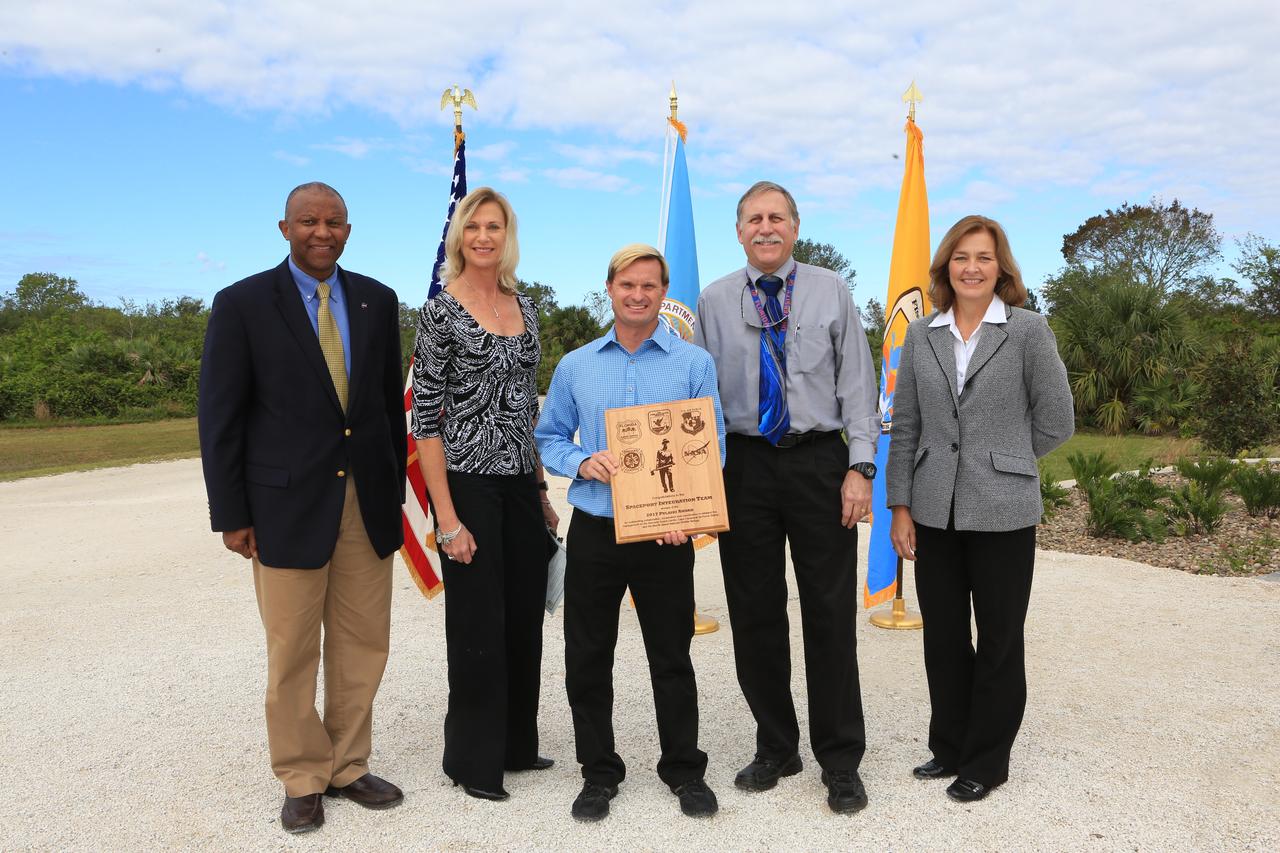
NASA's Kennedy Space Center Associate Director Kelvin Manning, left, and representatives from Kennedy's Spaceport Integration and Services pose for a portrait following a ceremony Nov. 1 on the Merritt Island National Wildlife Refuge in Florida. Next to Manning are, from left, Nancy Bray, director; William Heidtman, Spaceport Integrator; Dan Tweed, deputy director, Technical; and Jean Flowers, chief, Customer Services and Integration Branch. During the joint ceremony, the Spaceport Integration Team and its partners were presented with the prestigious 2017 Pulaski Award and a new memorial marker was dedicated. The multi-agency team includes representatives from NASA's Kennedy Space Center, Cape Canaveral Air Force Station's 45th Space Wing, the Merritt Island National Wildlife Refuge, as well as the Florida Forest Service and Brevard County Fire Rescue. The memorial marker honors two fallen firefighters, Scott Maness and Beau Sauselein, who died fighting a wildfire on space center property in 1981. Held outdoors, the ceremony was attended by 140 guests.
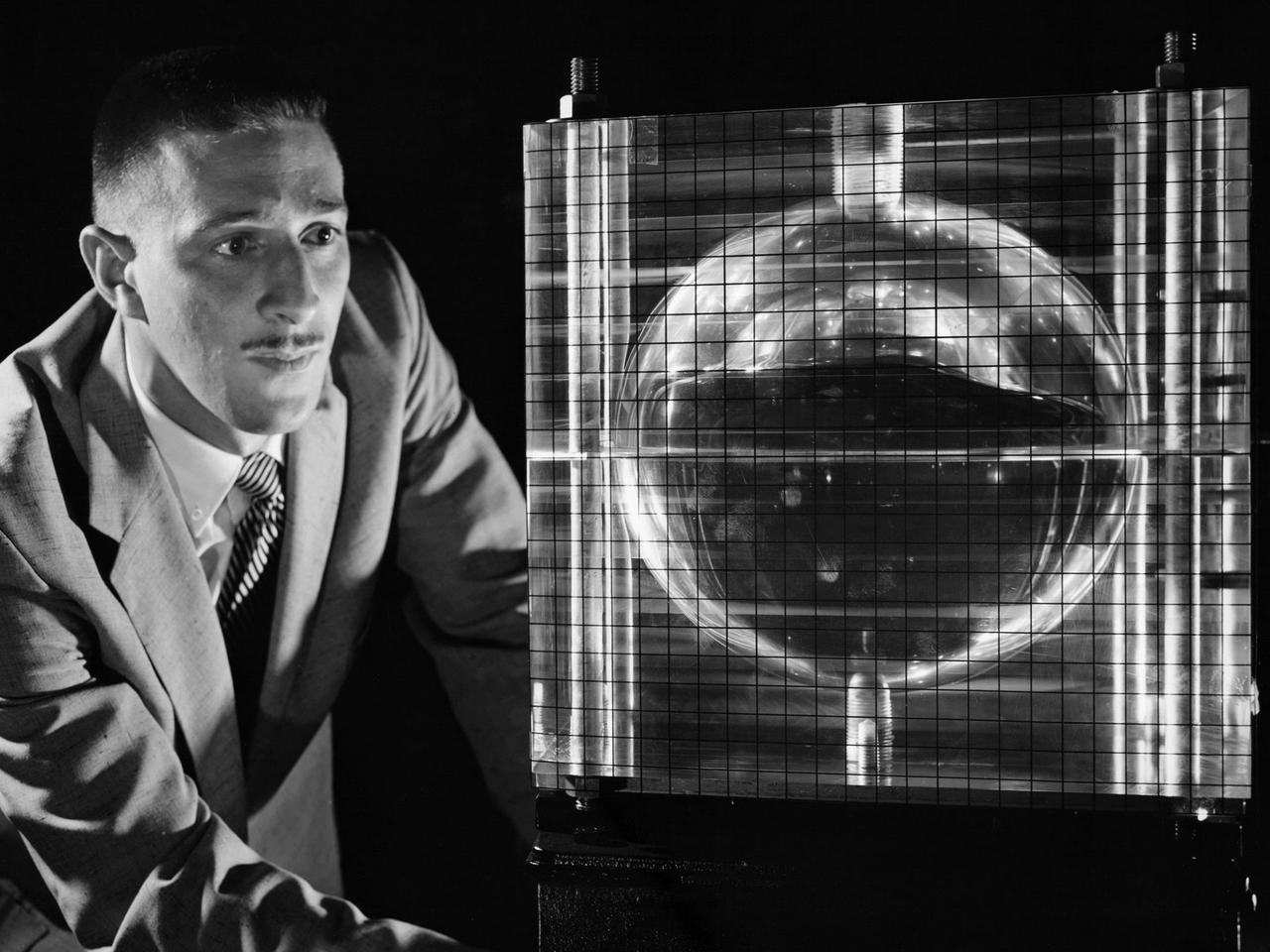
Andy Stofan views a small-scale tank built to study the sloshing characteristics of liquid hydrogen at the National Aeronautics and Space Administration (NASA) Lewis Research Center. Stofan was tasked with the study of propellant motion, or sloshing, in space vehicle propellant tanks. At the time, there was little knowledge of the behavior of fluids in microgravity or the effects of the launch on the propellant’s motion. Sloshing in the tank could alter a spacecraft’s trajectory or move the propellant away from the turbopump. Stofan became an expert and authored numerous technical reports on the subject. Stofan was assigned to the original Centaur Project Office in 1962 as a member of the Propellant Systems Section. Stofan was instrumental in solving a dynamic instability problem on the Centaur vehicle and served as the systems engineer for the development of the Centaur propellant utilization system. The solution was also applied to the upper-stages of Saturn. In 1966, Stofan was named Head of the Propellant Systems Section. Stofan continued rising through the managerial ranks at Lewis. In 1967 he became Project Manager of a test program that successfully demonstrated the use of a pressurization system for the Centaur vehicle; in 1969 the Assistant Project Manager on the Improved Centaur project; in 1970 Manager of the Titan/Centaur Project Office; in 1974 Director of the Launch Vehicles Division. In 1978, Stofan was appointed Deputy Associate Administrator for the Headquarters Office of Space Science. In 1982, he was named Director of Lewis Research Center.
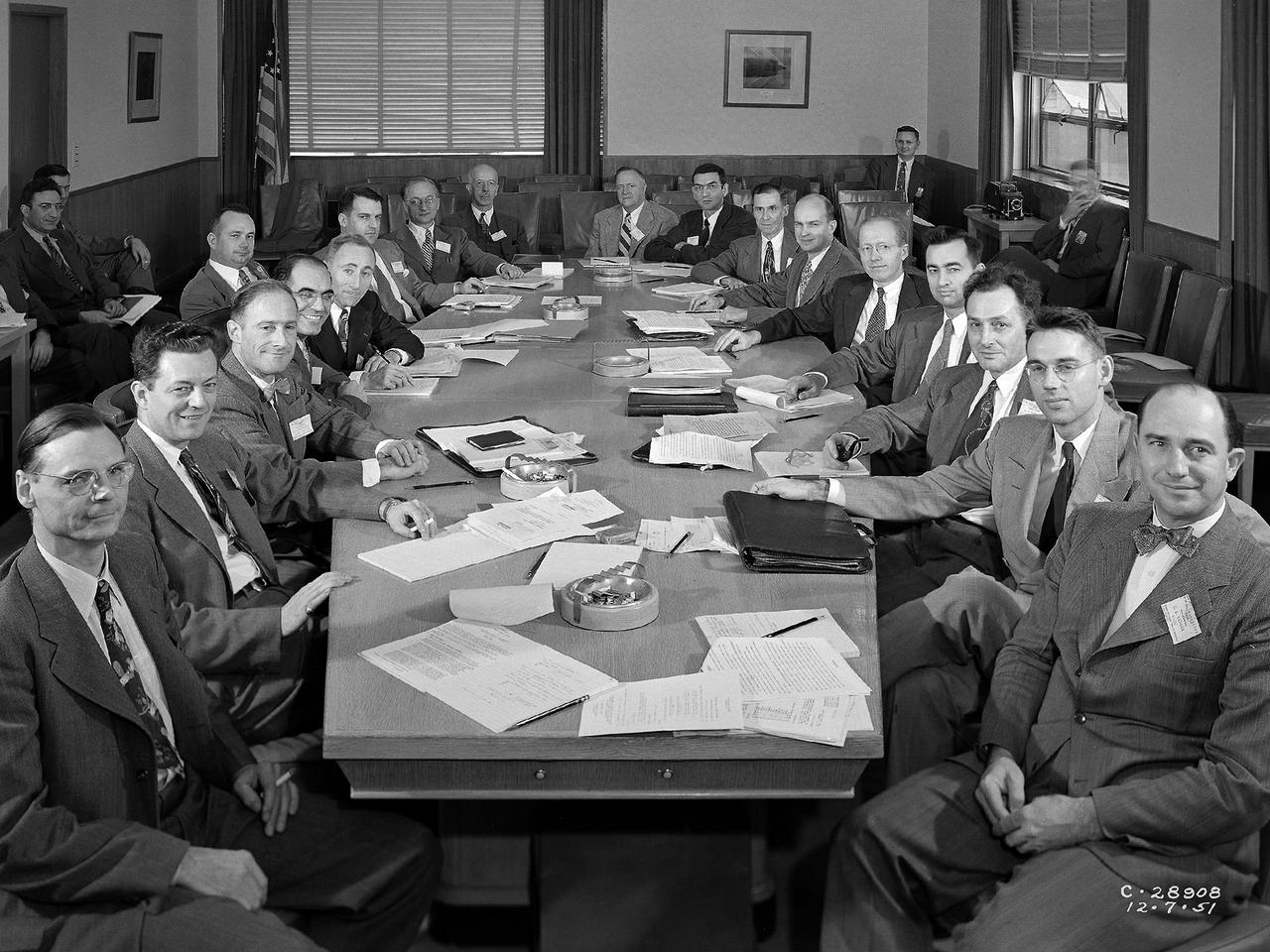
The National Advisory Committee for Aeronautics (NACA) Subcommittee on Combustion holds a meeting at Lewis Flight Propulsion Laboratory in Cleveland, Ohio. The NACA was managed by committees that included members of their own staff along with representatives from industry, the military, other government agencies, and universities. The 17-person Executive Committee was the NACA’s primary administrative body. They met several times a year at the NACA headquarters office in Washington DC to discuss broad issues confronting the US aeronautical community. Jerome Hunsaker, head of the Department of Aeronautical Engineering at the Massachusetts Institute of Technology, served as the NACA chairman from 1941 to 1956. George Lewis was not a member of the Executive Committee but served a key role as the NACA’s Director of Aeronautical Research. The NACA’s organizational chart also included 11 technical committees, several of which had specialized subcommittees. There were over 100 different subcommittees between World War I and 1958. The number of active subcommittees varied over the years. Most existed only for a few years, but some continued for over a decade. The subcommittees met three or four times per year, often at the laboratory most closely associated with the area of research. A team of laboratory researchers presented briefings on their recent activities and plans for the future. The Subcommittee on Combustion existed from 1945 to the NACA’s demise in 1958.
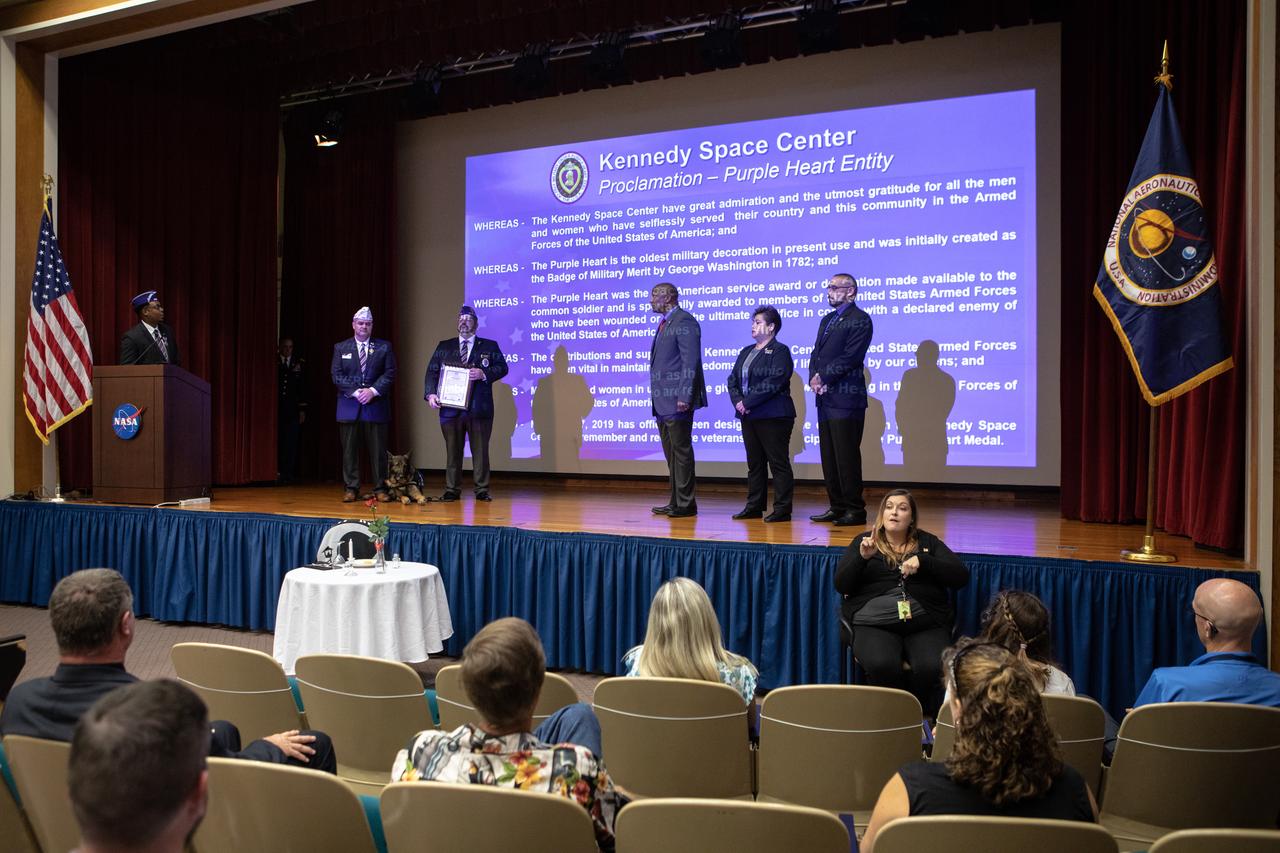
NASA Public Affairs Officer Derrick Matthews (far left) reads a proclamation by the Military Order of the Purple Heart designating Kennedy Space Center a Purple Heart Entity during a Veterans Day observance event in Kennedy’s Training Auditorium in Florida on Nov. 7, 2019. Following the reading, Military Order of the Purple Heart National Adjutant Ernie Rivera (second from left) and Department of Florida Commander Christopher Vedvick presented Kennedy’s Associate Director, Technical, Kelvin Manning (third from right), and the Veterans employee resource group chair Ana Contreras and executive champion Edwin Martinez, with a plaque stating this recognition. Kennedy is the first NASA center to receive this designation for support and services provided to veterans through the spaceport’s Veterans employee resource group. Attendees included Kennedy employees and more than 20 Purple Heart recipients. Following the award presentation, Vedvick, a combat wounded veteran, spoke about his experience serving in the United States Army before retiring, his involvement in the Military Order of the Purple Heart and the purpose of the organization.
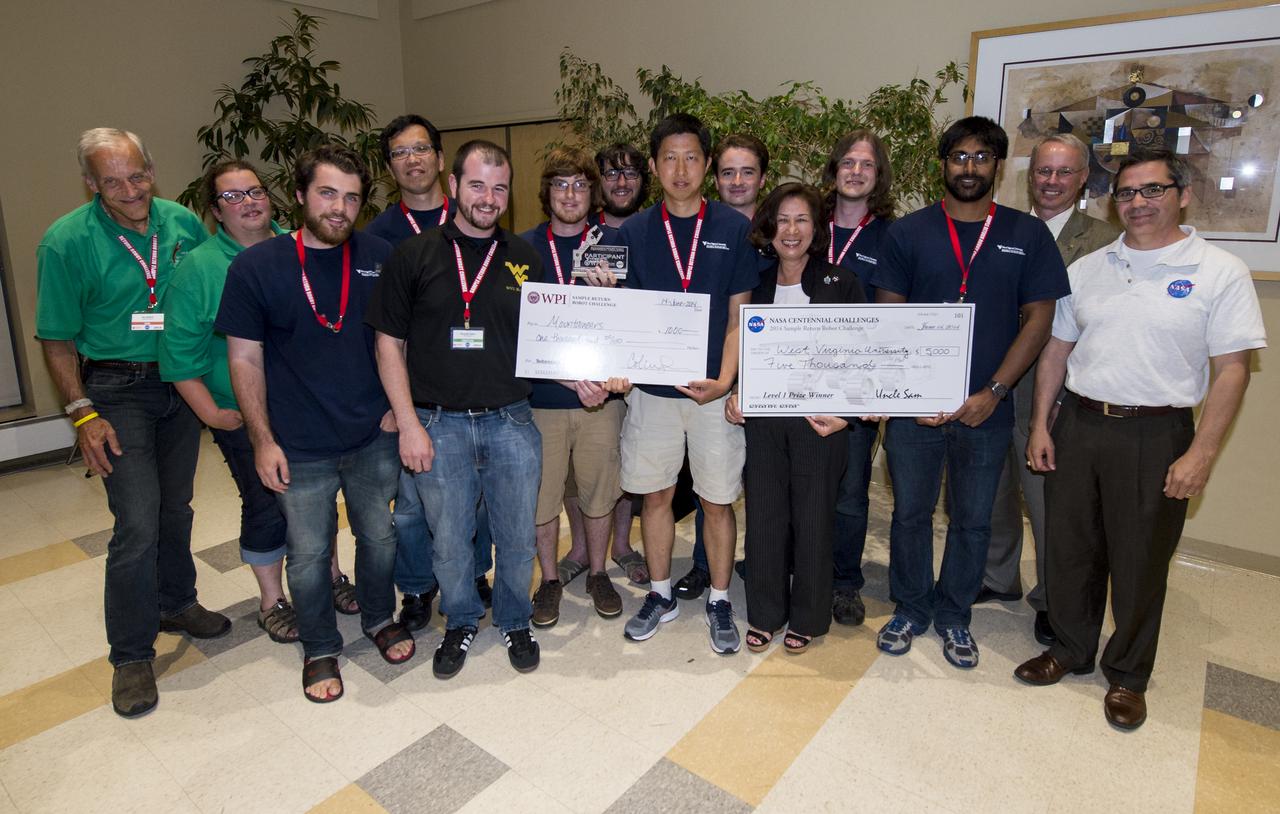
The NASA Centennial Challenges prize, level one, is presented to team Mountaineers for successfully completing level one of the NASA 2014 Sample Return Robot Challenge, from left, Ken Stafford, WPI Challenge technical advisor; Colleen Shaver, WPI Challenge Manager; Ryan Watson, Team Mountaineers; Marvin Cheng, Team Mountaineers; Alexander Hypes, Team Mountaineers; Jarred Strader, Team Mountaineers; Lucas Behrens, Team Mountaineers; Yu Gu, Team Mountaineers; Nick Ohi, Team Mountaineers; Dorothy Rasco, NASA Deputy Associate Administrator for the Space Technology Mission Directorate; Scott Harper, Team Mountaineers; Tanmay Mandal, Team Mountaineers; David Miller, NASA Chief Technologist; Sam Ortega, NASA Program Manager for Centennial Challenges, Saturday, June 14, 2014, at Worcester Polytechnic Institute (WPI) in Worcester, Mass. Team Mountaineers was the only team to complete the level one challenge. During the competition, teams were required to demonstrate autonomous robots that can locate and collect samples from a wide and varied terrain, operating without human control. The objective of this NASA-WPI Centennial Challenge was to encourage innovations in autonomous navigation and robotics technologies. Innovations stemming from the challenge may improve NASA's capability to explore a variety of destinations in space, as well as enhance the nation's robotic technology for use in industries and applications on Earth. Photo Credit: (NASA/Joel Kowsky)