
National Weather Service Director Louis Uccellini and deputy director Mary Erickson hear from Short-term Prediction Research and Transition (SPoRT) team members during a visit Sept. 11 to the National Space Science and Technology Center. Managed by NASA’s Marshall Space Flight Center, SPoRT is a project to transition unique Earth observations and research capabilities to the operational weather community to improve short-term forecasts on a regional scale.

National Weather Service Director Louis Uccellini and deputy director Mary Erickson hear from Short-term Prediction Research and Transition (SPoRT) team members during a visit Sept. 11 to the National Space Science and Technology Center. Managed by NASA’s Marshall Space Flight Center, SPoRT is a project to transition unique Earth observations and research capabilities to the operational weather community to improve short-term forecasts on a regional scale.

National Weather Service Director Louis Uccellini and deputy director Mary Erickson hear from Short-term Prediction Research and Transition (SPoRT) team members during a visit Sept. 11 to the National Space Science and Technology Center. Managed by NASA’s Marshall Space Flight Center, SPoRT is a project to transition unique Earth observations and research capabilities to the operational weather community to improve short-term forecasts on a regional scale.

Officials from NASA, National Oceanic and Atmospheric Administration (NOAA), SpaceX participate in a prelaunch news conference on Monday, June 24, 2024, at NASA’s Kennedy Space Center in Florida for the launch of GOES-U (Geostationary Operational Environmental Satellite U) mission. From left to right, Steve Volz, assistant administrator, NOAA’s Satellite and Information Service; Pam Sullivan, director, GOES-R Program, NOAA; John Gagosian, director, Joint Agency Satellite Division; Denton Gibson, launch director, Launch Services Program, NASA; Julianna Scheiman, director, NASA Science Missions, SpaceX; Brian Cizek, launch weather officer, 45th Weather Squadron, U.S. Space Force

Officials from NASA, National Oceanic and Atmospheric Administration (NOAA), SpaceX participate in a prelaunch news conference on Monday, June 24, 2024, at NASA’s Kennedy Space Center in Florida for the launch of GOES-U (Geostationary Operational Environmental Satellite U) mission. From left to right, Steve Volz, assistant administrator, NOAA’s Satellite and Information Service; Pam Sullivan, director, GOES-R Program, NOAA; John Gagosian, director, Joint Agency Satellite Division; Denton Gibson, launch director, Launch Services Program, NASA; Julianna Scheiman, director, NASA Science Missions, SpaceX; Brian Cizek, launch weather officer, 45th Weather Squadron, U.S. Space Force
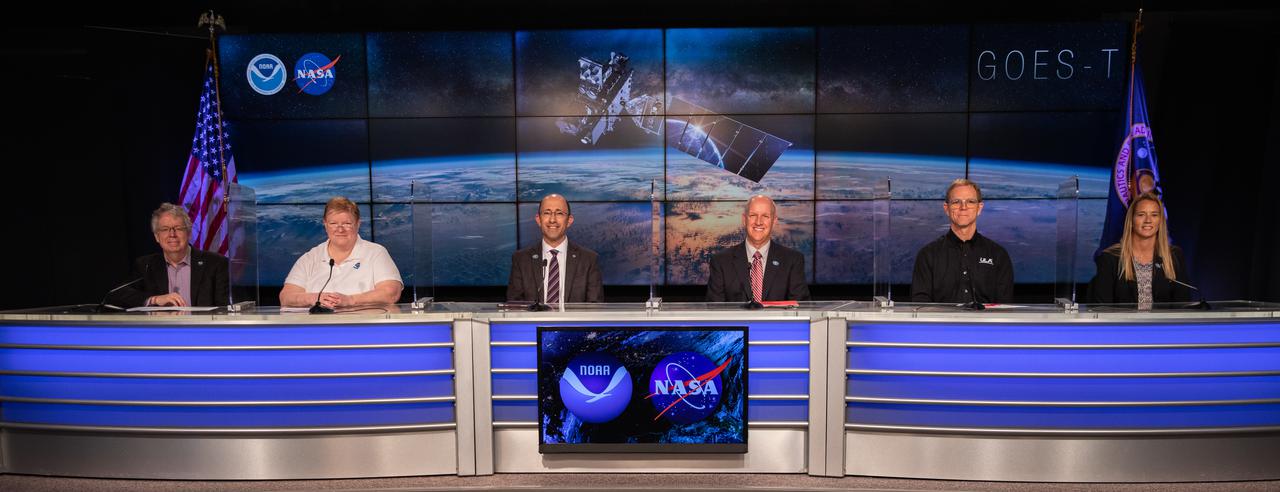
A prelaunch news conference for the National Oceanic and Atmospheric Administration’s (NOAA) Geostationary Operational Environmental Satellite-T (GOES-T) is held on Feb. 26, 2022, at NASA’s Kennedy Space Center in Florida. Participating, from left are Jasmine Hopkins, moderator, NASA Communications; Steve Volz, assistant administrator for Satellite and Information Services, NOAA; Pam Sullivan, director, GOES-R Program, NOAA; John Gagosian, director, Joint Agency Satellite Division, NASA Headquarters Science Mission Directorate; Tim Dunn, launch director, NASA’s Launch Services Program, Kennedy Space Center; Scott Messer, program manager, NASA Launch Services, United Launch Alliance; and Jessica Williams, launch weather officer, 45th Weather Squadron, Space Launch Delta 45. GOES-T is scheduled to lift off on a United Launch Alliance Atlas V 541 rocket from Space Launch Complex 41 at Cape Canaveral Space Force Station in Florida on March 1, 2022, at 4:38 p.m. GOES-T is the third satellite in the GOES-R series that will continue to help meteorologists observe and predict local weather events that affect public safety. The launch is being managed by NASA’s Launch Services Program based at Kennedy Space Center in Florida, America’s multi-user spaceport.
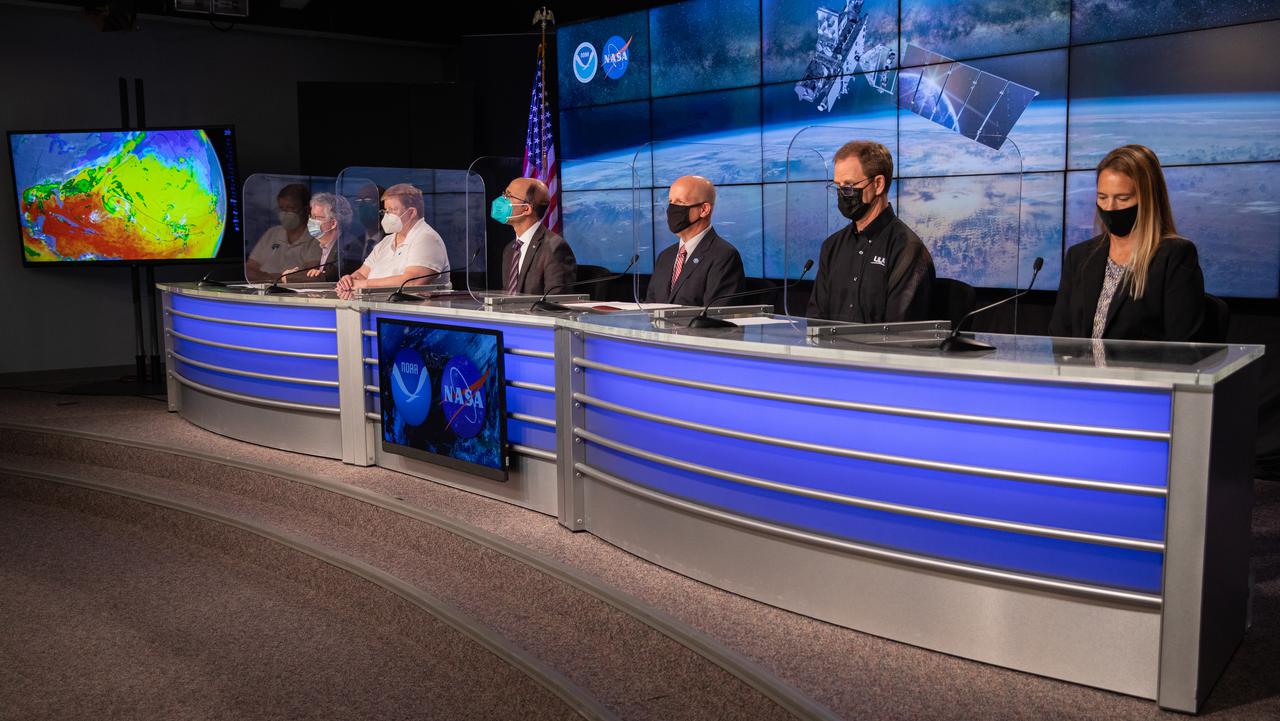
A prelaunch news conference for the National Oceanic and Atmospheric Administration’s (NOAA) Geostationary Operational Environmental Satellite-T (GOES-T) is held on Feb. 26, 2022, at NASA’s Kennedy Space Center in Florida. Participating, from left are Steve Volz, assistant administrator for Satellite and Information Services, NOAA; Pam Sullivan, director, GOES-R Program, NOAA; John Gagosian, director, Joint Agency Satellite Division, NASA Headquarters Science Mission Directorate; Tim Dunn, launch director, NASA’s Launch Services Program, Kennedy Space Center; Scott Messer, program manager, NASA Launch Services, United Launch Alliance; and Jessica Williams, launch weather officer, 45th Weather Squadron, Space Launch Delta 45. GOES-T is scheduled to lift off on a United Launch Alliance Atlas V 541 rocket from Space Launch Complex 41 at Cape Canaveral Space Force Station in Florida on March 1, 2022, at 4:38 p.m. GOES-T is the third satellite in the GOES-R series that will continue to help meteorologists observe and predict local weather events that affect public safety. The launch is being managed by NASA’s Launch Services Program based at Kennedy Space Center in Florida, America’s multi-user spaceport.
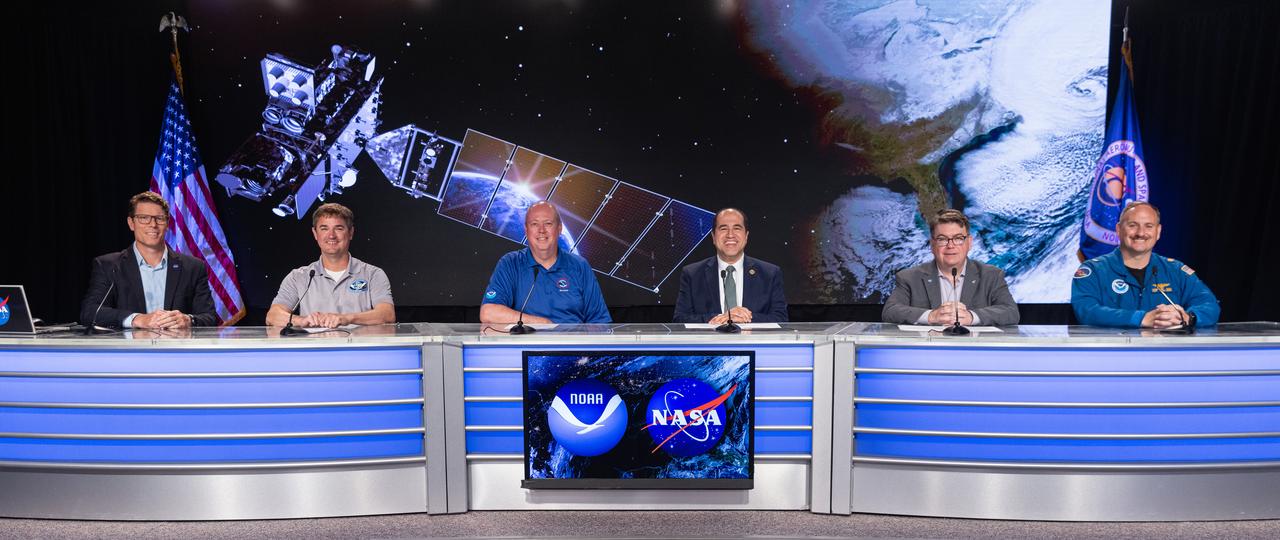
Officials from NASA and National Oceanic and Atmospheric Administration (NOAA) participate in a science briefing on Monday, June 24, 2024, at NASA’s Kennedy Space Center in Florida for the launch of GOES-U (Geostationary Operational Environmental Satellite U) mission. From left to right, Derrol Nail, NASA Communications; Dan Lindsey, chief scientist, GOES-R Program, NOAA; Ken Graham, director, NOAA’s National Weather Service; Elsayed Talaat, director, NOAA’s Office of Space Weather Observations; Charles Webb, deputy director, Joint Agency Satellite Division, NASA; Chris Wood, NOAA Hurricane Hunter pilot. The two-hour launch window opens at 5:16 p.m. EDT Tuesday, June 25, for the satellite’s launch on a SpaceX Falcon Heavy rocket from Launch Complex 39A at NASA’s Kennedy Space Center in Florida.
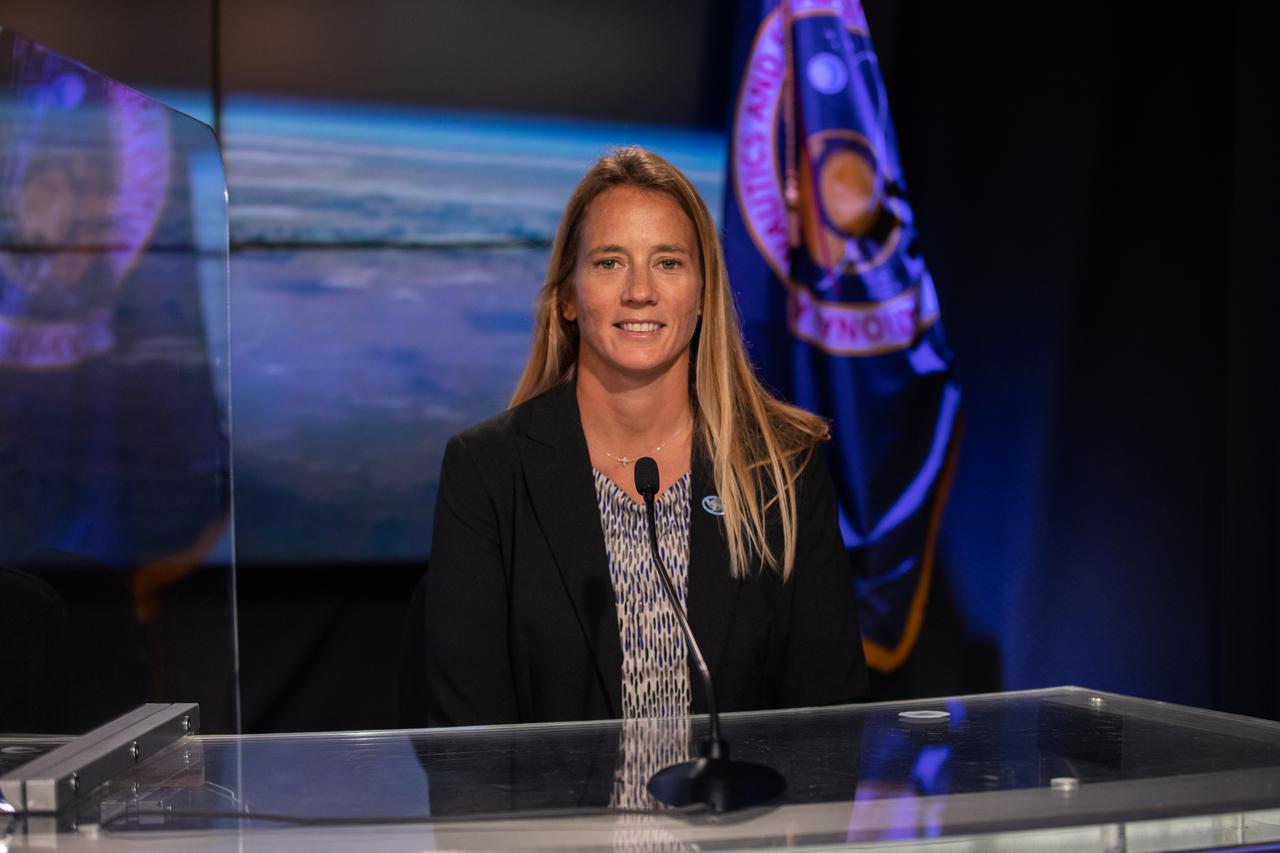
A prelaunch news conference for the National Oceanic and Atmospheric Administration’s (NOAA) Geostationary Operational Environmental Satellite-T (GOES-T) is held on Feb. 26, 2022, at NASA’s Kennedy Space Center in Florida. Jessica Williams, launch weather officer, 45th Weather Squadron, Space Launch Delta 45, answers questions during the news conference. GOES-T is scheduled to lift off on a United Launch Alliance Atlas V 541 rocket from Space Launch Complex 41 at Cape Canaveral Space Force Station in Florida on March 1, 2022, at 4:38 p.m. GOES-T is the third satellite in the GOES-R series that will continue to help meteorologists observe and predict local weather events that affect public safety. The launch is being managed by NASA’s Launch Services Program based at Kennedy Space Center in Florida, America’s multi-user spaceport.

A science briefing for the National Oceanic and Atmospheric Administration’s (NOAA) Geostationary Operational Environmental Satellite-T (GOES-T) is held on Feb. 25, 2022, at NASA’s Kennedy Space Center in Florida. Daniel Gall, Advanced Baseline Imager chief systems engineer, Space and Airborne Systems, L3 Harris Technologies, participates in the briefing. GOES-T is scheduled to lift off on a United Launch Alliance Atlas V 541 rocket from Space Launch Complex 41 at Cape Canaveral Space Force Station in Florida on March 1, 2022, at 4:38 p.m. GOES-T is the third satellite in the GOES-R series that will continue to help meteorologists observe and predict local weather events that affect public safety. The launch is being managed by NASA’s Launch Services Program based at Kennedy Space Center in Florida, America’s multi-user spaceport.

A science briefing for the National Oceanic and Atmospheric Administration’s (NOAA) Geostationary Operational Environmental Satellite-T (GOES-T) is held on Feb. 25, 2022, at NASA’s Kennedy Space Center in Florida. Tylar Greene, NASA Communications, moderates the briefing. GOES-T is scheduled to lift off on a United Launch Alliance Atlas V 541 rocket from Space Launch Complex 41 at Cape Canaveral Space Force Station in Florida on March 1, 2022, at 4:38 p.m. GOES-T is the third satellite in the GOES-R series that will continue to help meteorologists observe and predict local weather events that affect public safety. The launch is being managed by NASA’s Launch Services Program based at Kennedy Space Center in Florida, America’s multi-user spaceport.
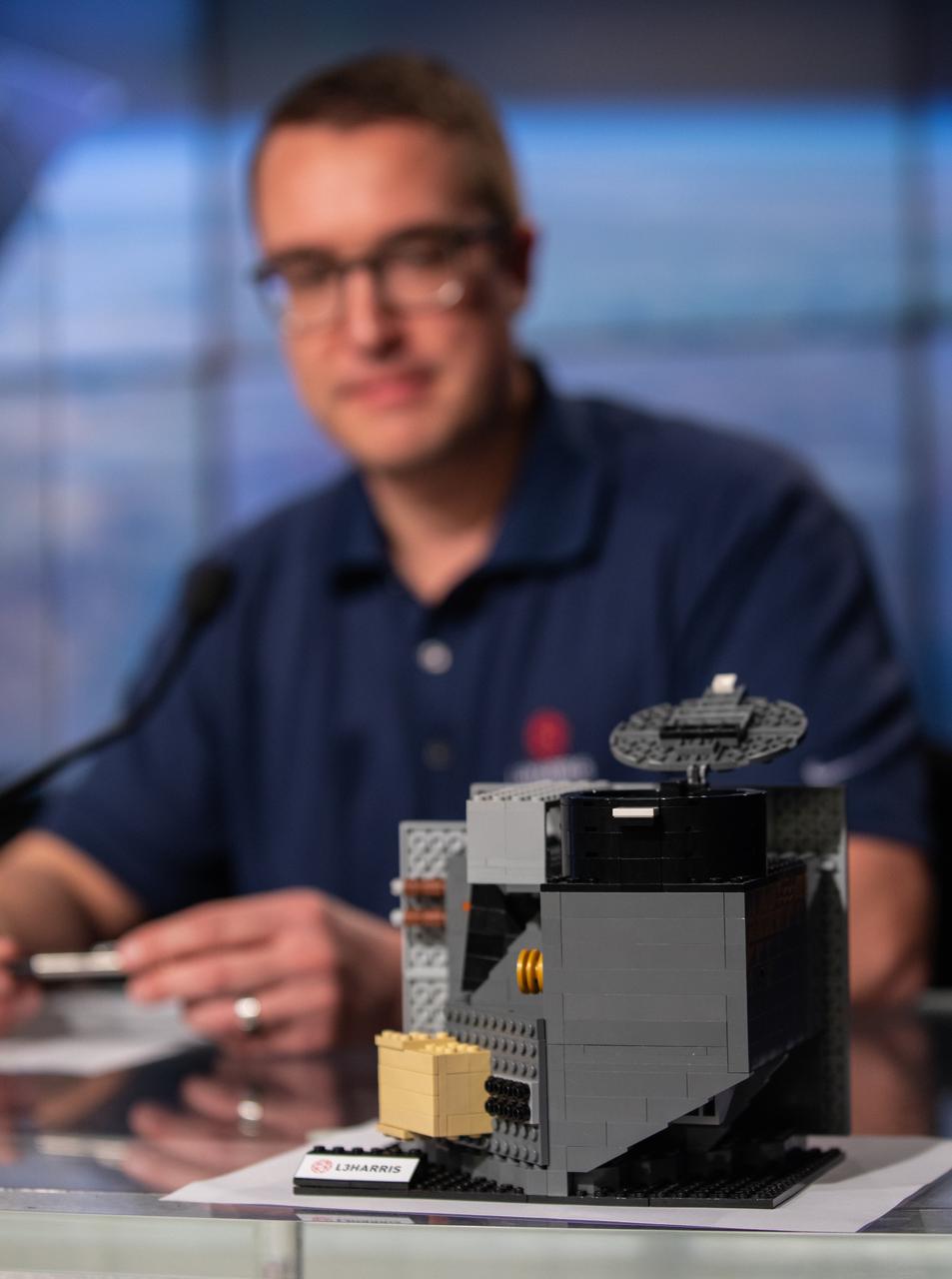
A science briefing for the National Oceanic and Atmospheric Administration’s (NOAA) Geostationary Operational Environmental Satellite-T (GOES-T) is held on Feb. 25, 2022, at NASA’s Kennedy Space Center in Florida. Daniel Gall, Advanced Baseline Imager chief systems engineer, Space and Airborne Systems, L3 Harris Technologies, participates in the briefing. GOES-T is scheduled to lift off on a United Launch Alliance Atlas V 541 rocket from Space Launch Complex 41 at Cape Canaveral Space Force Station in Florida on March 1, 2022, at 4:38 p.m. GOES-T is the third satellite in the GOES-R series that will continue to help meteorologists observe and predict local weather events that affect public safety. The launch is being managed by NASA’s Launch Services Program based at Kennedy Space Center in Florida, America’s multi-user spaceport.
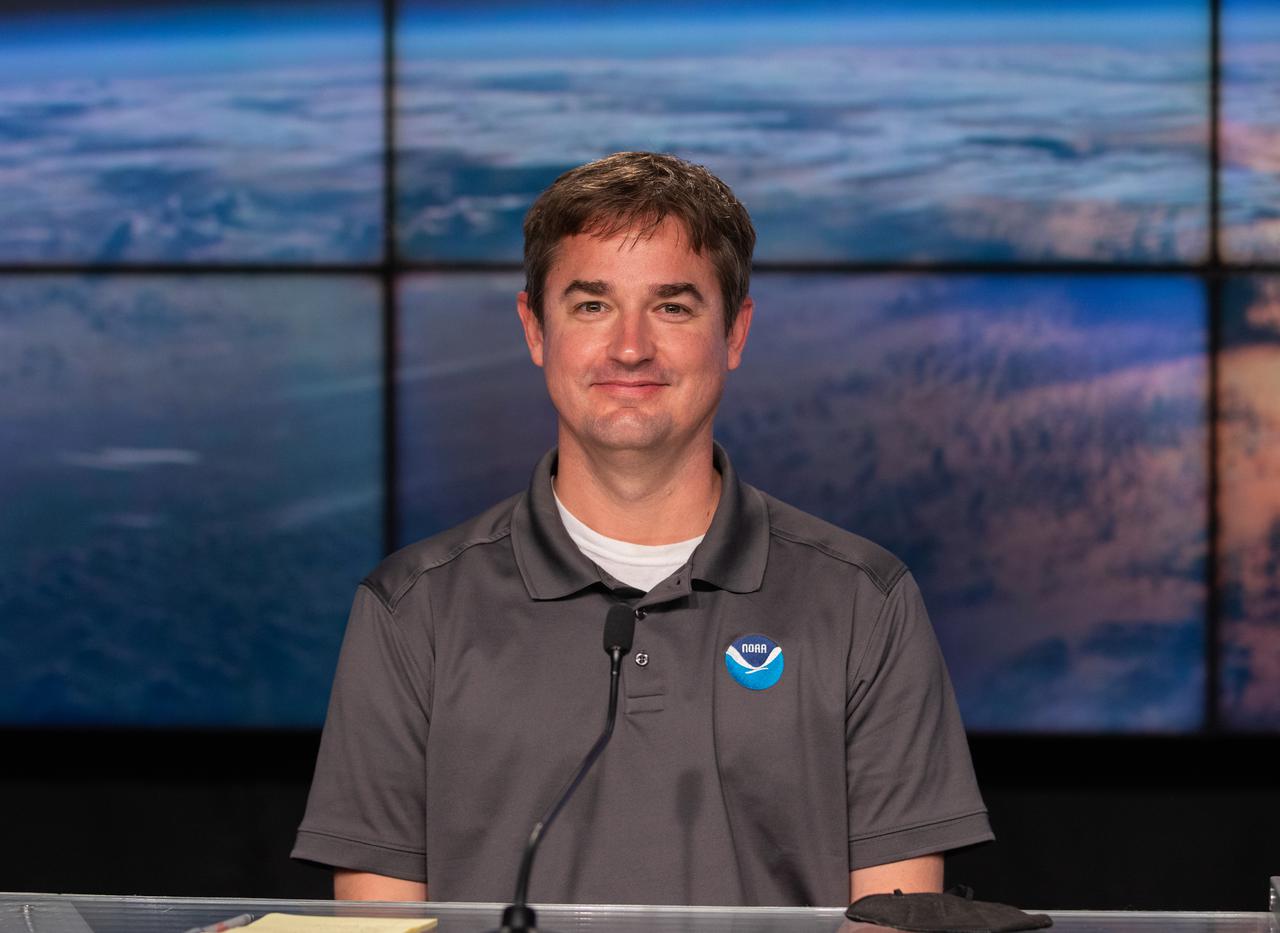
A science briefing for the National Oceanic and Atmospheric Administration’s (NOAA) Geostationary Operational Environmental Satellite-T (GOES-T) is held on Feb. 25, 2022, at NASA’s Kennedy Space Center in Florida. Dr. Dan Lindsey, GOES-R program scientist, NOAA, participates in the briefing. GOES-T is scheduled to lift off on a United Launch Alliance Atlas V 541 rocket from Space Launch Complex 41 at Cape Canaveral Space Force Station in Florida on March 1, 2022, at 4:38 p.m. GOES-T is the third satellite in the GOES-R series that will continue to help meteorologists observe and predict local weather events that affect public safety. The launch is being managed by NASA’s Launch Services Program based at Kennedy Space Center in Florida, America’s multi-user spaceport.
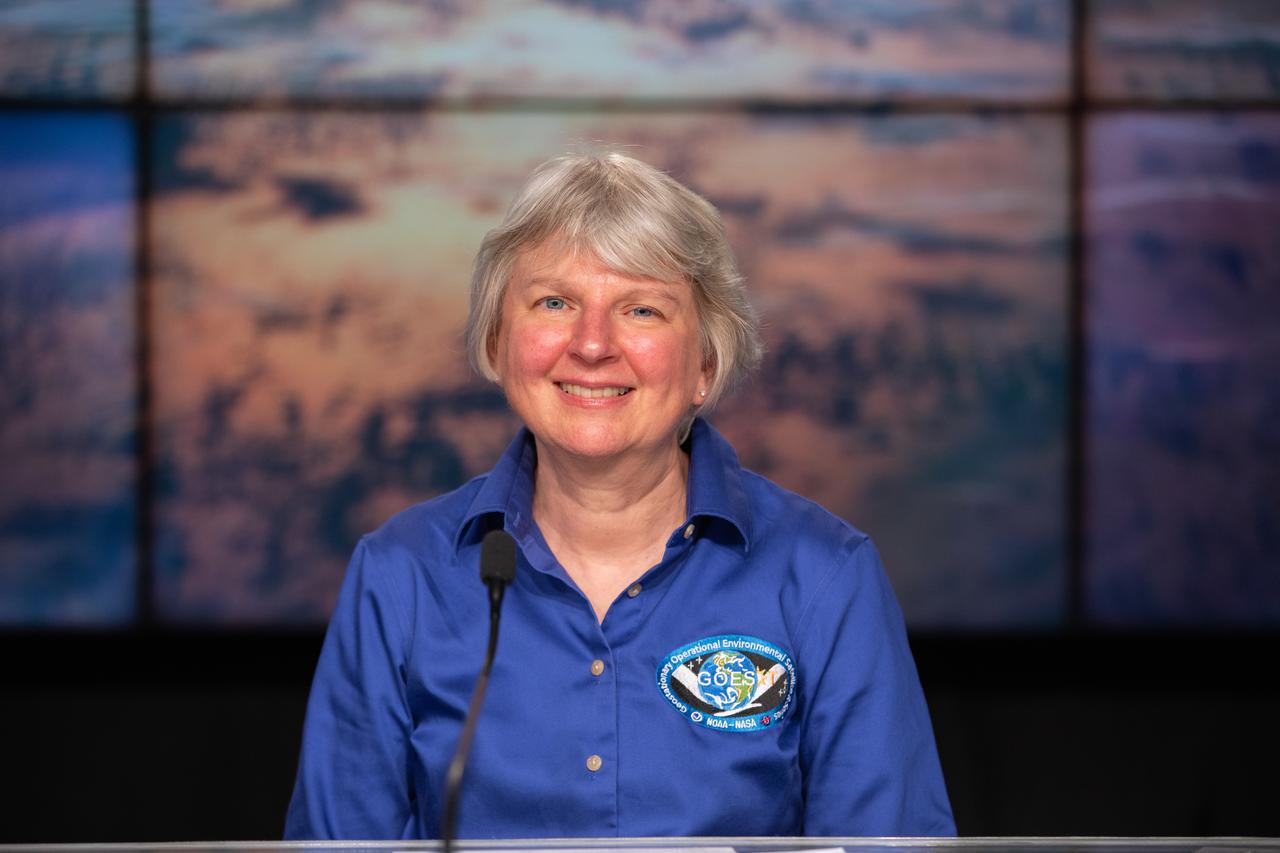
A science briefing for the National Oceanic and Atmospheric Administration’s (NOAA) Geostationary Operational Environmental Satellite-T (GOES-T) is held on Feb. 25, 2022, at NASA’s Kennedy Space Center in Florida. Candace Carlisle, GOES-R flight project manager, NASA’s Goddard Space Flight Center, participates in the briefing. GOES-T is scheduled to lift off on a United Launch Alliance Atlas V 541 rocket from Space Launch Complex 41 at Cape Canaveral Space Force Station in Florida on March 1, 2022, at 4:38 p.m. GOES-T is the third satellite in the GOES-R series that will continue to help meteorologists observe and predict local weather events that affect public safety. The launch is being managed by NASA’s Launch Services Program based at Kennedy Space Center in Florida, America’s multi-user spaceport.

A science briefing for the National Oceanic and Atmospheric Administration’s (NOAA) Geostationary Operational Environmental Satellite-T (GOES-T) is held on Feb. 25, 2022, at NASA’s Kennedy Space Center in Florida. Dr. James “Jim Yoe, chief administrator, Joint Center for Satellite Data Assimilation, participates remotely in the briefing. GOES-T is scheduled to lift off on a United Launch Alliance Atlas V 541 rocket from Space Launch Complex 41 at Cape Canaveral Space Force Station in Florida on March 1, 2022, at 4:38 p.m. GOES-T is the third satellite in the GOES-R series that will continue to help meteorologists observe and predict local weather events that affect public safety. The launch is being managed by NASA’s Launch Services Program based at Kennedy Space Center in Florida, America’s multi-user spaceport.
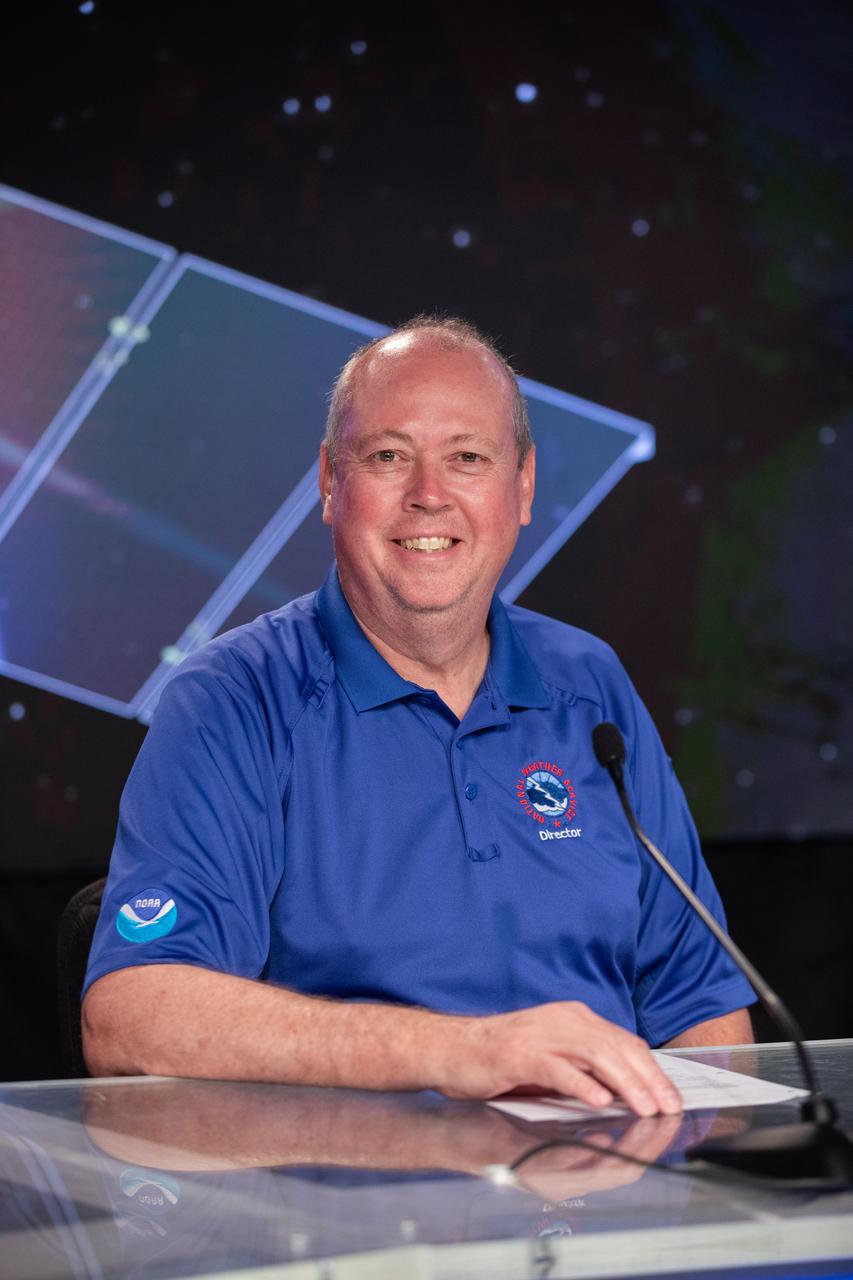
Ken Graham, director, NOAA’s National Weather Service, participates in a science briefing on Monday, June 24, 2024, at NASA’s Kennedy Space Center in Florida to discuss National Oceanic and Atmospheric Administration (NOAA) GOES-U (Geostationary Operational Environmental Satellite U) mission. The GOES-U satellite is the final addition to GOES-R series, which serves a critical role in providing continuous coverage of the Western Hemisphere, including monitoring tropical systems in the eastern Pacific and Atlantic oceans. The two-hour launch window opens at 5:16 p.m. EDT Tuesday, June 25, for the satellite’s launch on a SpaceX Falcon Heavy rocket from Launch Complex 39A at NASA’s Kennedy Space Center in Florida.
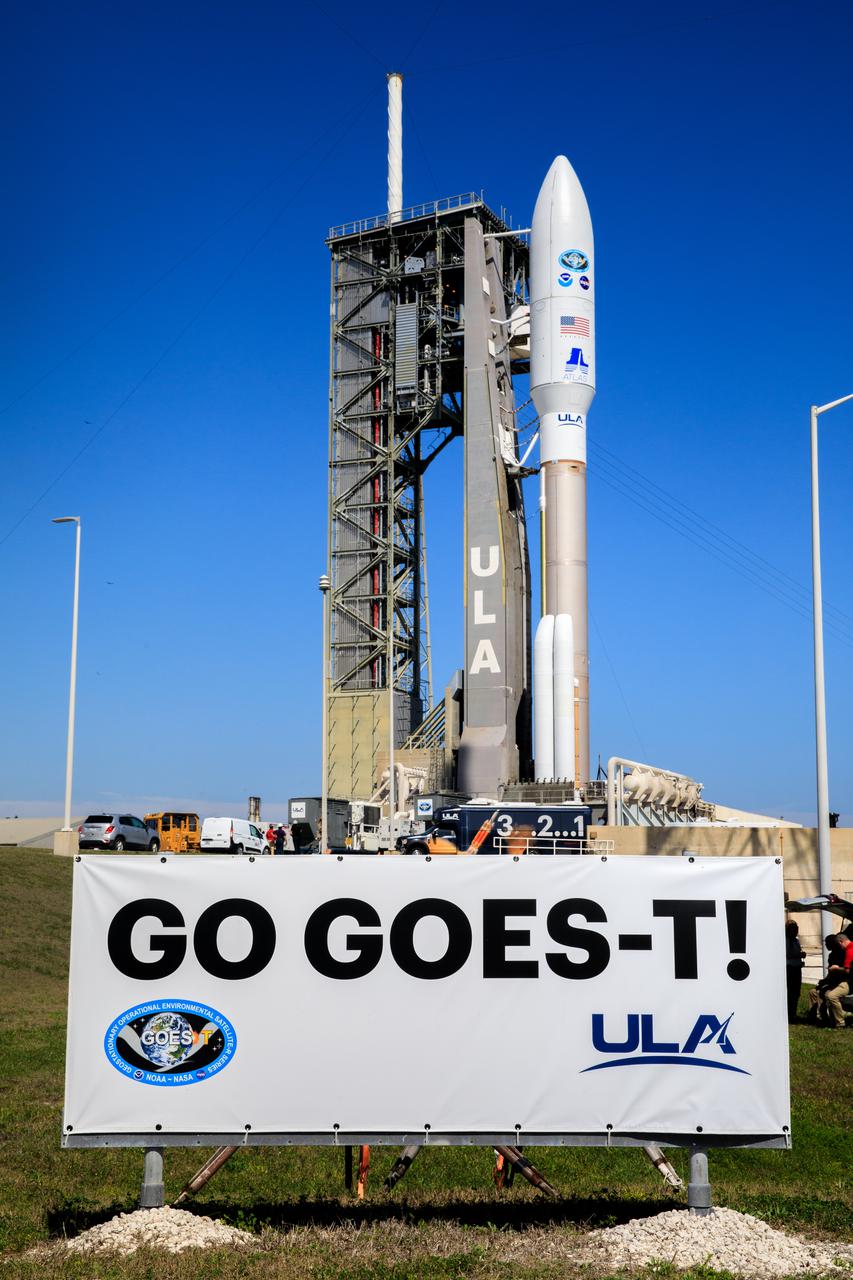
A United Launch Alliance Atlas V 541 rocket carrying the National Oceanic and Atmospheric Administration’s (NOAA) Geostationary Operational Environmental Satellite-T (GOES-T), is secured on the pad at Space Launch Complex 41 at Cape Canaveral Space Force Station in Florida on Feb. 28, 2022. GOES-T will lift off atop the Atlas V from SLC-41 on March 1, 2022, at 4:38 p.m. GOES-T is the third satellite in the GOES-R series that will continue to help meteorologists observe and predict local weather events that affect public safety. GOES-T will be renamed GOES-18 once it reaches geostationary orbit. GOES-18 will go into operational service as GOES West to provide critical data for the U.S. West Coast, Alaska, Hawaii, Mexico, Central America, and the Pacific Ocean. The launch is managed by NASA’s Launch Services Program based at Kennedy Space Center in Florida, America’s multi-user spaceport.
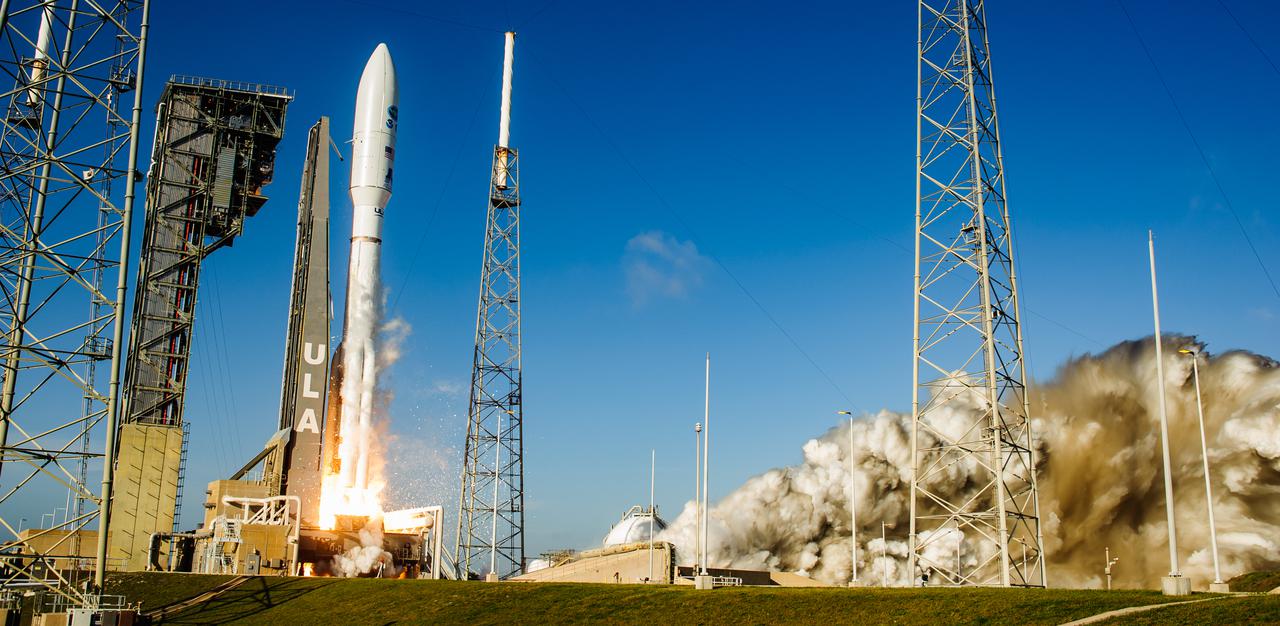
A United Launch Alliance Atlas V 541 rocket, carrying the National Oceanic and Atmospheric Administration’s (NOAA) Geostationary Operational Environmental Satellite-T (GOES-T), lifts off from Space Launch Complex 41 at Cape Canaveral Space Force Station in Florida on March 1, 2022. Liftoff was at 4:38 p.m. EST. GOES-T is the third satellite in the GOES-R series that will continue to help meteorologists observe and predict local weather events that affect public safety. GOES-T will be renamed GOES-18 once it reaches geostationary orbit. GOES-18 will go into operational service as GOES West to provide critical data for the U.S. West Coast, Alaska, Hawaii, Mexico, Central America, and the Pacific Ocean. The launch was managed by NASA’s Launch Services Program based at Kennedy Space Center in Florida, America’s multi-user spaceport.
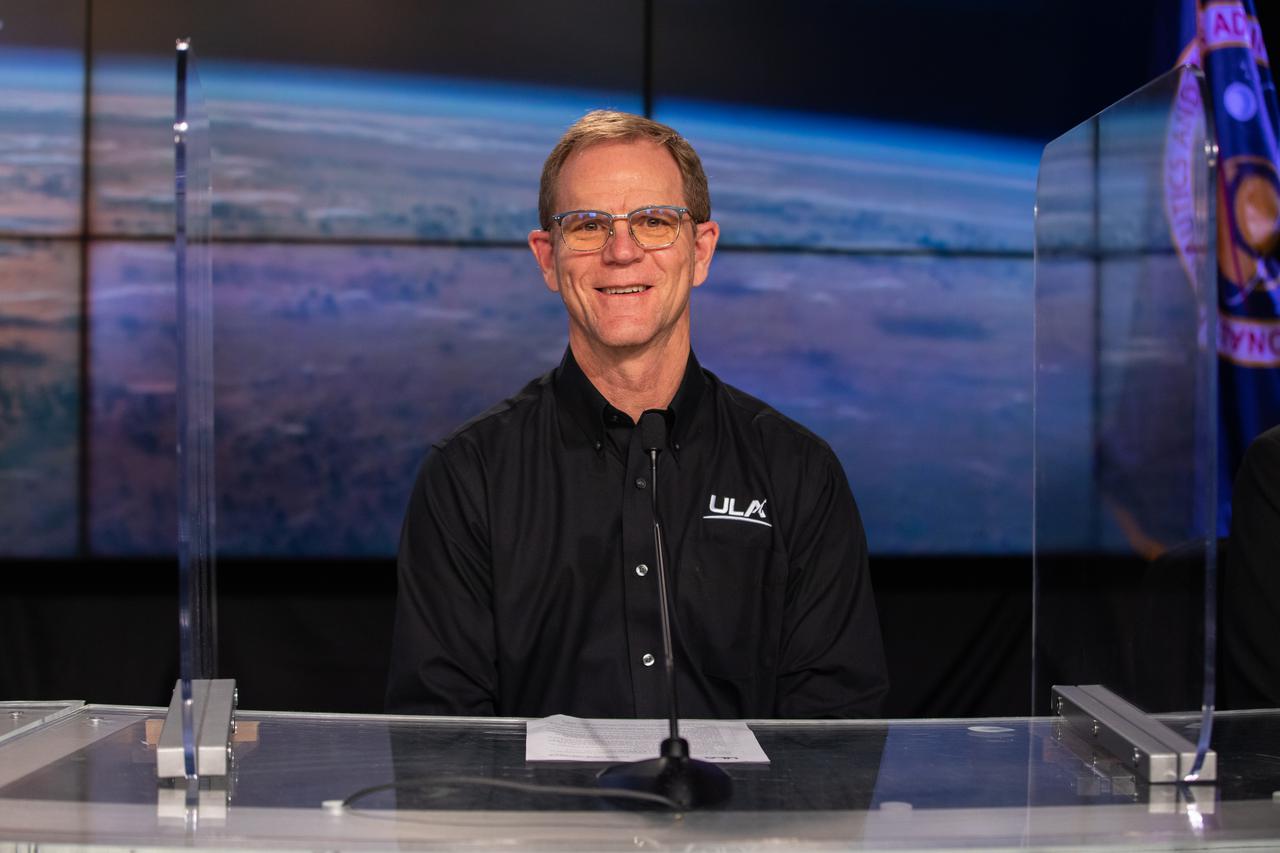
A prelaunch news conference for the National Oceanic and Atmospheric Administration’s (NOAA) Geostationary Operational Environmental Satellite-T (GOES-T) is held on Feb. 26, 2022, at NASA’s Kennedy Space Center in Florida. Scott Messer, program manager, NASA Launch Services, United Launch Alliance, answers questions during the news conference. GOES-T is scheduled to lift off on a United Launch Alliance Atlas V 541 rocket from Space Launch Complex 41 at Cape Canaveral Space Force Station in Florida on March 1, 2022, at 4:38 p.m. GOES-T is the third satellite in the GOES-R series that will continue to help meteorologists observe and predict local weather events that affect public safety. The launch is being managed by NASA’s Launch Services Program based at Kennedy Space Center in Florida, America’s multi-user spaceport.
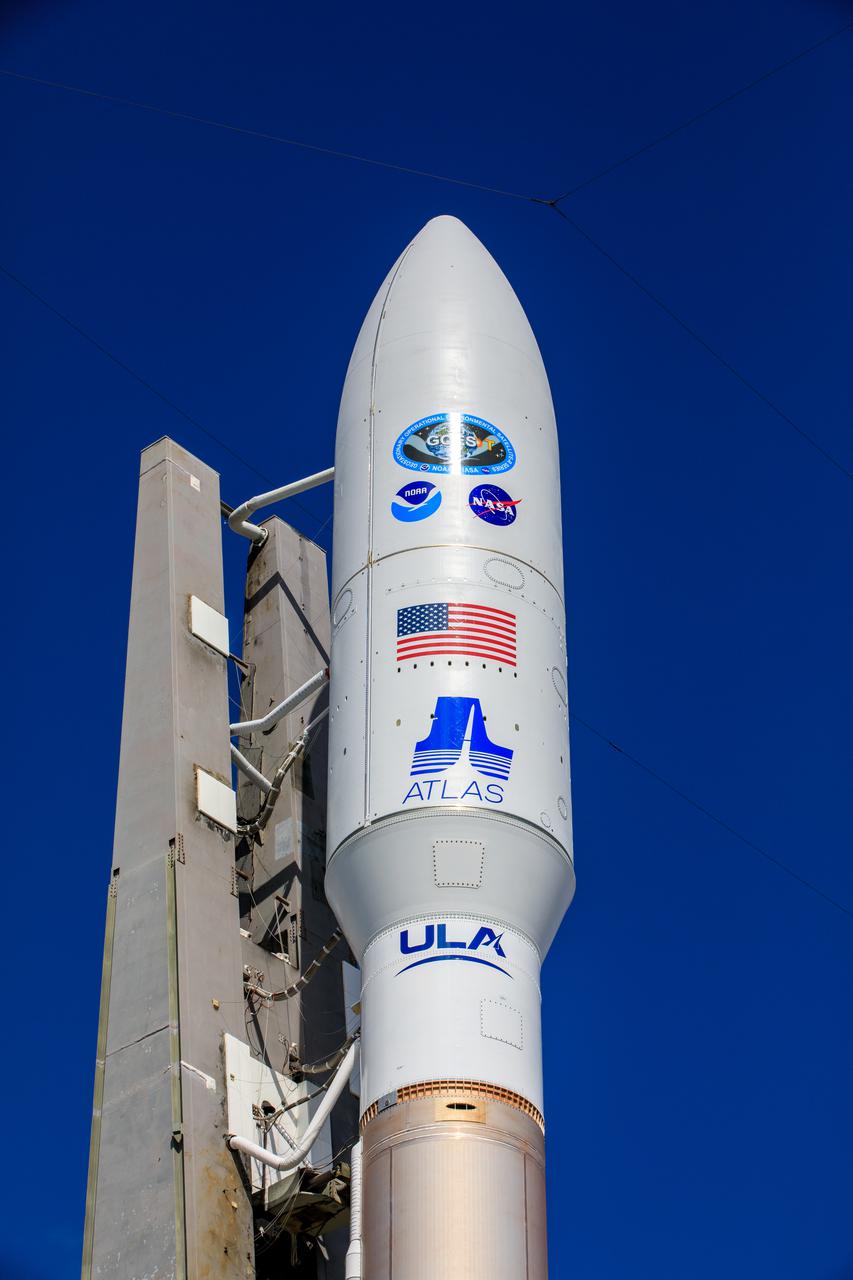
A United Launch Alliance Atlas V 541 rocket carrying the National Oceanic and Atmospheric Administration’s (NOAA) Geostationary Operational Environmental Satellite-T (GOES-T), arrives at Space Launch Complex 41 at Cape Canaveral Space Force Station in Florida on Feb. 28, 2022. GOES-T will lift off atop the Atlas V from SLC-41 on March 1, 2022, at 4:38 p.m. GOES-T is the third satellite in the GOES-R series that will continue to help meteorologists observe and predict local weather events that affect public safety. GOES-T will be renamed GOES-18 once it reaches geostationary orbit. GOES-18 will go into operational service as GOES West to provide critical data for the U.S. West Coast, Alaska, Hawaii, Mexico, Central America, and the Pacific Ocean. The launch is managed by NASA’s Launch Services Program based at Kennedy Space Center in Florida, America’s multi-user spaceport.
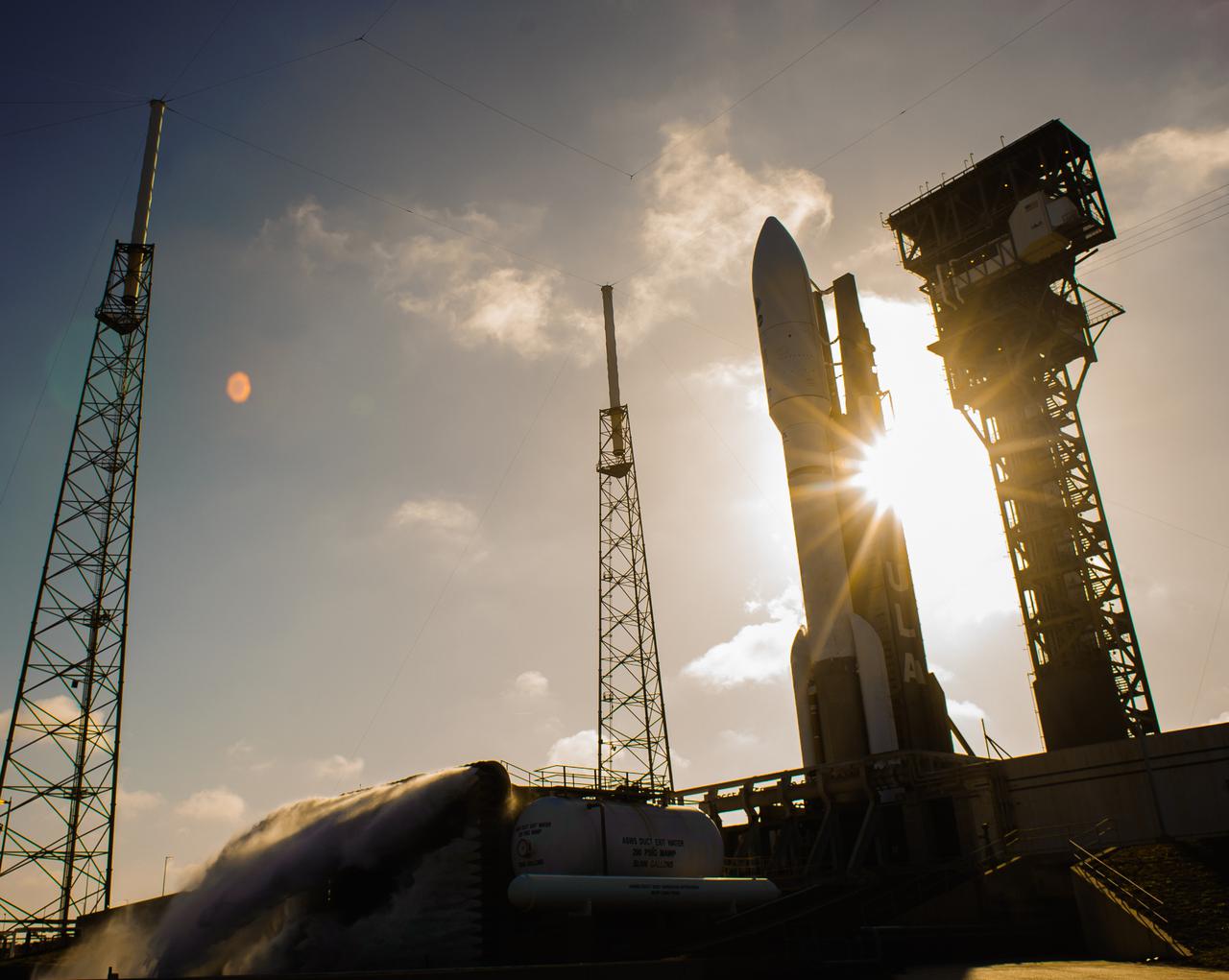
A United Launch Alliance Atlas V 541 rocket, carrying the National Oceanic and Atmospheric Administration’s (NOAA) Geostationary Operational Environmental Satellite-T (GOES-T), is in view before liftoff from Space Launch Complex 41 at Cape Canaveral Space Force Station in Florida on March 1, 2022. Liftoff was at 4:38 p.m. EST. GOES-T is the third satellite in the GOES-R series that will continue to help meteorologists observe and predict local weather events that affect public safety. GOES-T will be renamed GOES-18 once it reaches geostationary orbit. GOES-18 will go into operational service as GOES West to provide critical data for the U.S. West Coast, Alaska, Hawaii, Mexico, Central America, and the Pacific Ocean. The launch was managed by NASA’s Launch Services Program based at Kennedy Space Center in Florida, America’s multi-user spaceport.
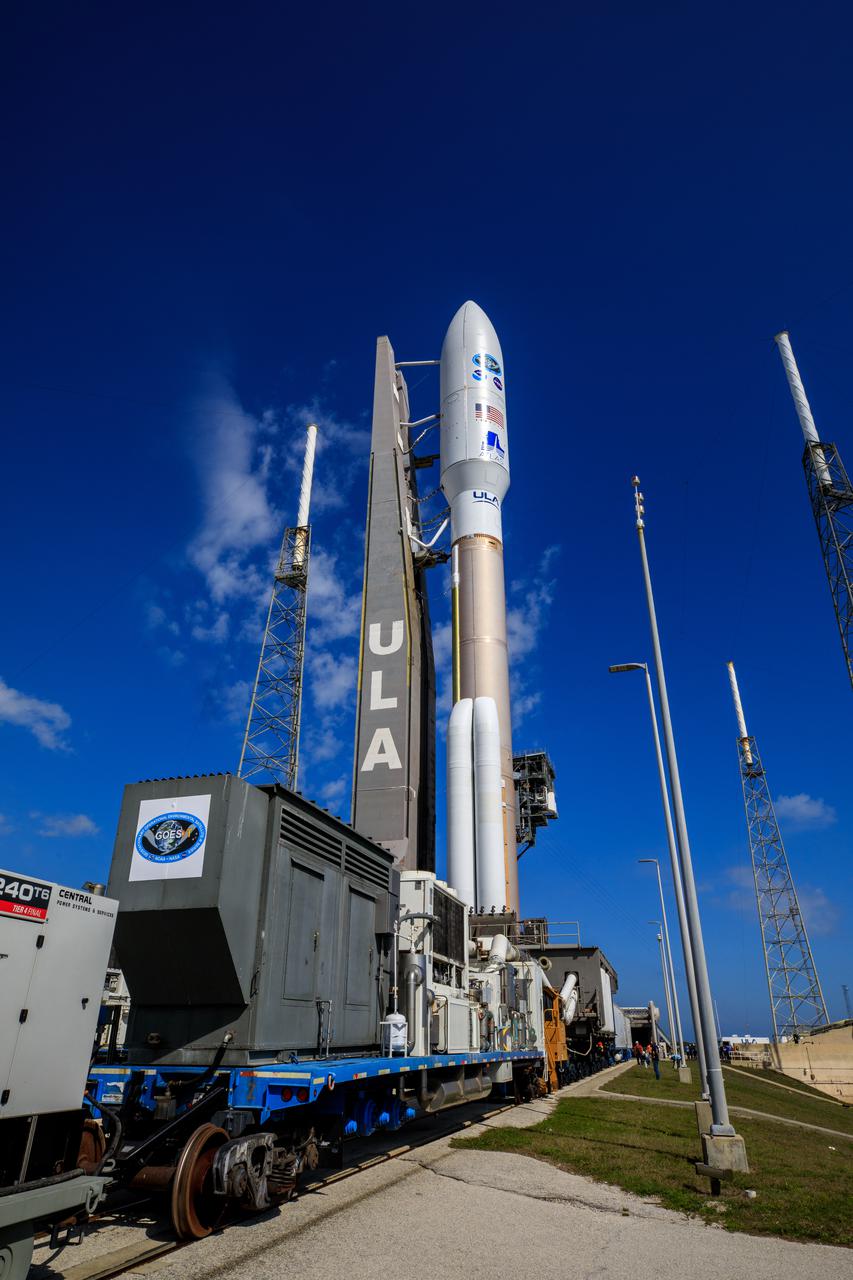
A United Launch Alliance Atlas V 541 rocket carrying the National Oceanic and Atmospheric Administration’s (NOAA) Geostationary Operational Environmental Satellite-T (GOES-T), arrives at Space Launch Complex 41 at Cape Canaveral Space Force Station in Florida on Feb. 28, 2022. GOES-T will lift off atop the Atlas V from SLC-41 on March 1, 2022, at 4:38 p.m. GOES-T is the third satellite in the GOES-R series that will continue to help meteorologists observe and predict local weather events that affect public safety. GOES-T will be renamed GOES-18 once it reaches geostationary orbit. GOES-18 will go into operational service as GOES West to provide critical data for the U.S. West Coast, Alaska, Hawaii, Mexico, Central America, and the Pacific Ocean. The launch is managed by NASA’s Launch Services Program based at Kennedy Space Center in Florida, America’s multi-user spaceport.
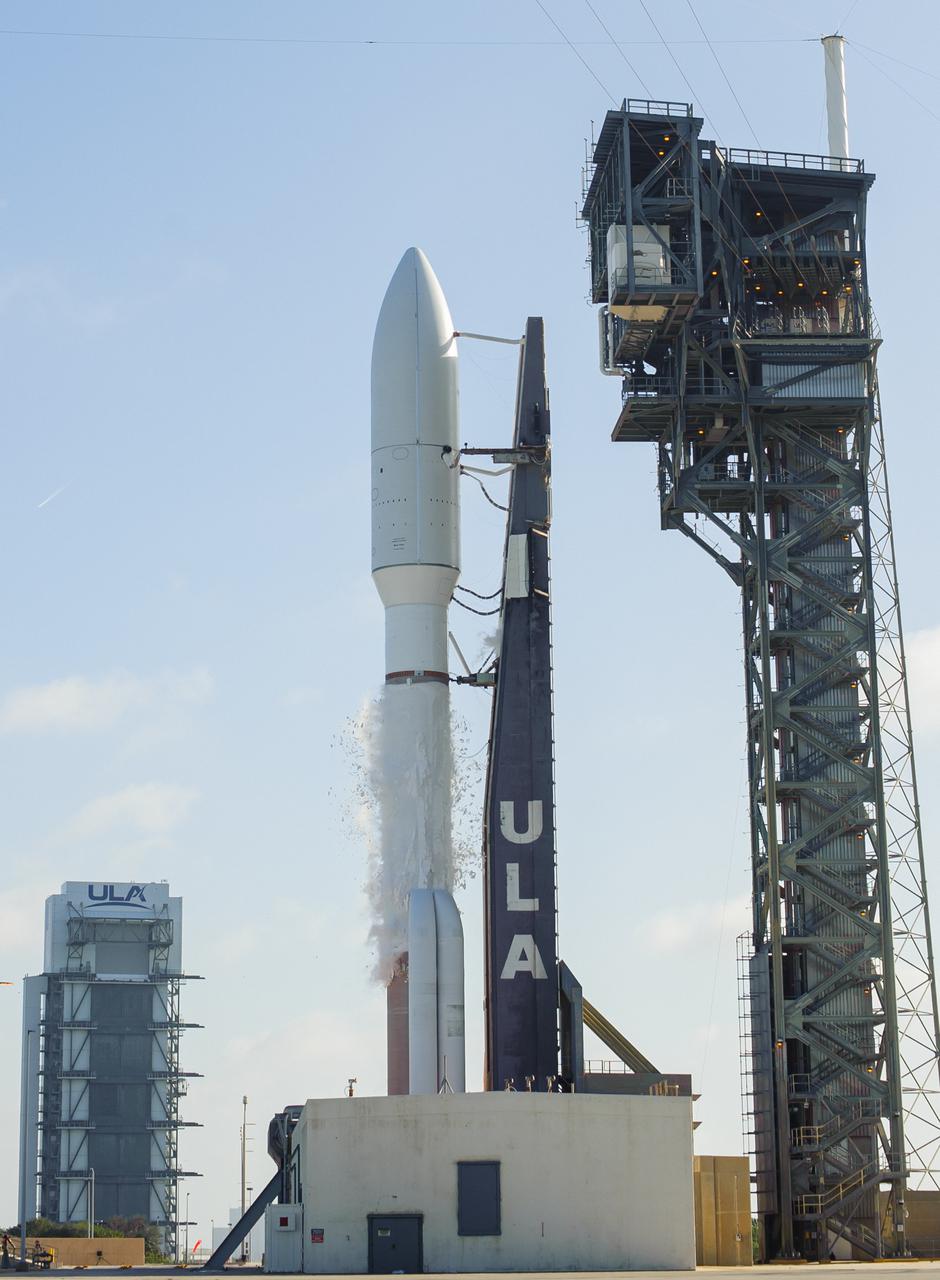
A United Launch Alliance Atlas V 541 rocket, carrying the National Oceanic and Atmospheric Administration’s (NOAA) Geostationary Operational Environmental Satellite-T (GOES-T), lifts off from Space Launch Complex 41 at Cape Canaveral Space Force Station in Florida on March 1, 2022. Liftoff was at 4:38 p.m. EST. GOES-T is the third satellite in the GOES-R series that will continue to help meteorologists observe and predict local weather events that affect public safety. GOES-T will be renamed GOES-18 once it reaches geostationary orbit. GOES-18 will go into operational service as GOES West to provide critical data for the U.S. West Coast, Alaska, Hawaii, Mexico, Central America, and the Pacific Ocean. The launch was managed by NASA’s Launch Services Program based at Kennedy Space Center in Florida, America’s multi-user spaceport.
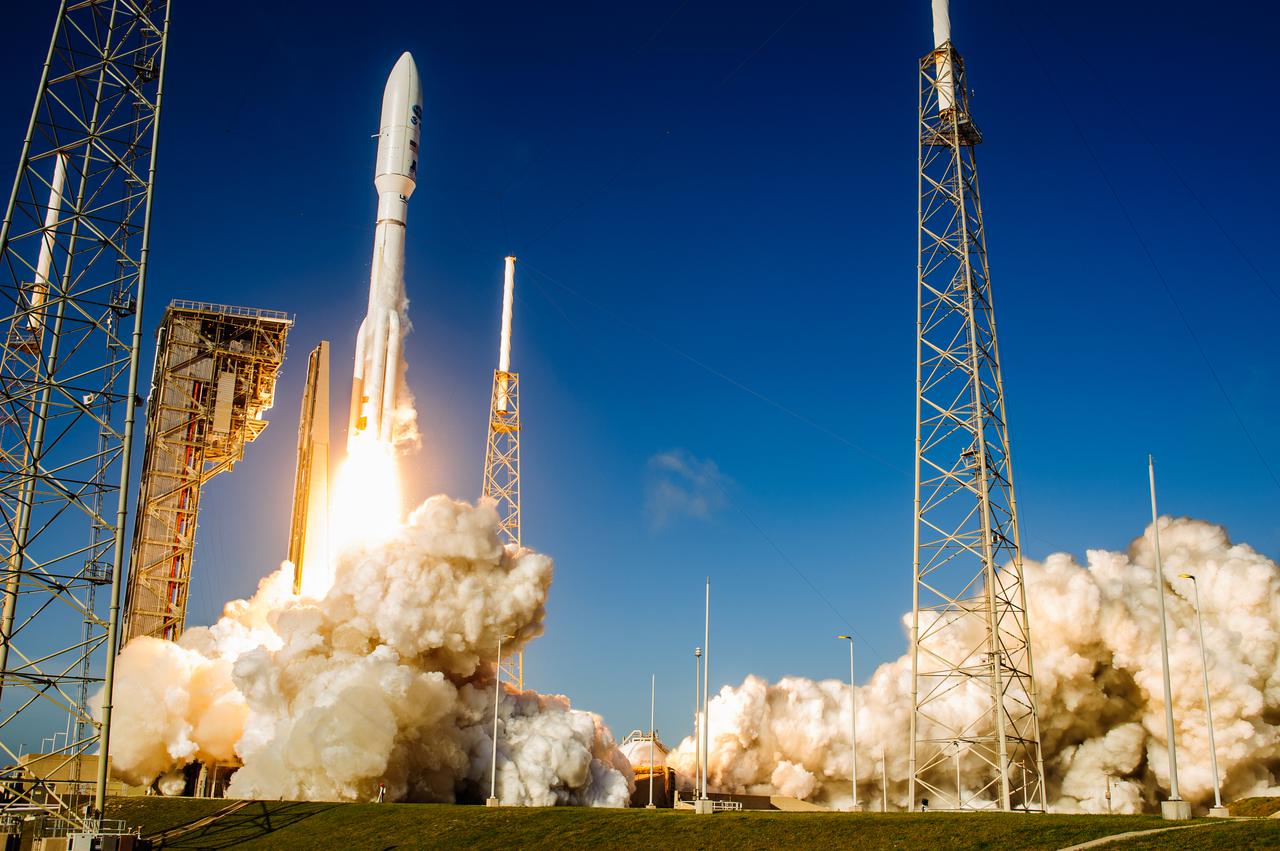
A United Launch Alliance Atlas V 541 rocket, carrying the National Oceanic and Atmospheric Administration’s (NOAA) Geostationary Operational Environmental Satellite-T (GOES-T), lifts off from Space Launch Complex 41 at Cape Canaveral Space Force Station in Florida on March 1, 2022. Liftoff was at 4:38 p.m. EST. GOES-T is the third satellite in the GOES-R series that will continue to help meteorologists observe and predict local weather events that affect public safety. GOES-T will be renamed GOES-18 once it reaches geostationary orbit. GOES-18 will go into operational service as GOES West to provide critical data for the U.S. West Coast, Alaska, Hawaii, Mexico, Central America, and the Pacific Ocean. The launch was managed by NASA’s Launch Services Program based at Kennedy Space Center in Florida, America’s multi-user spaceport.
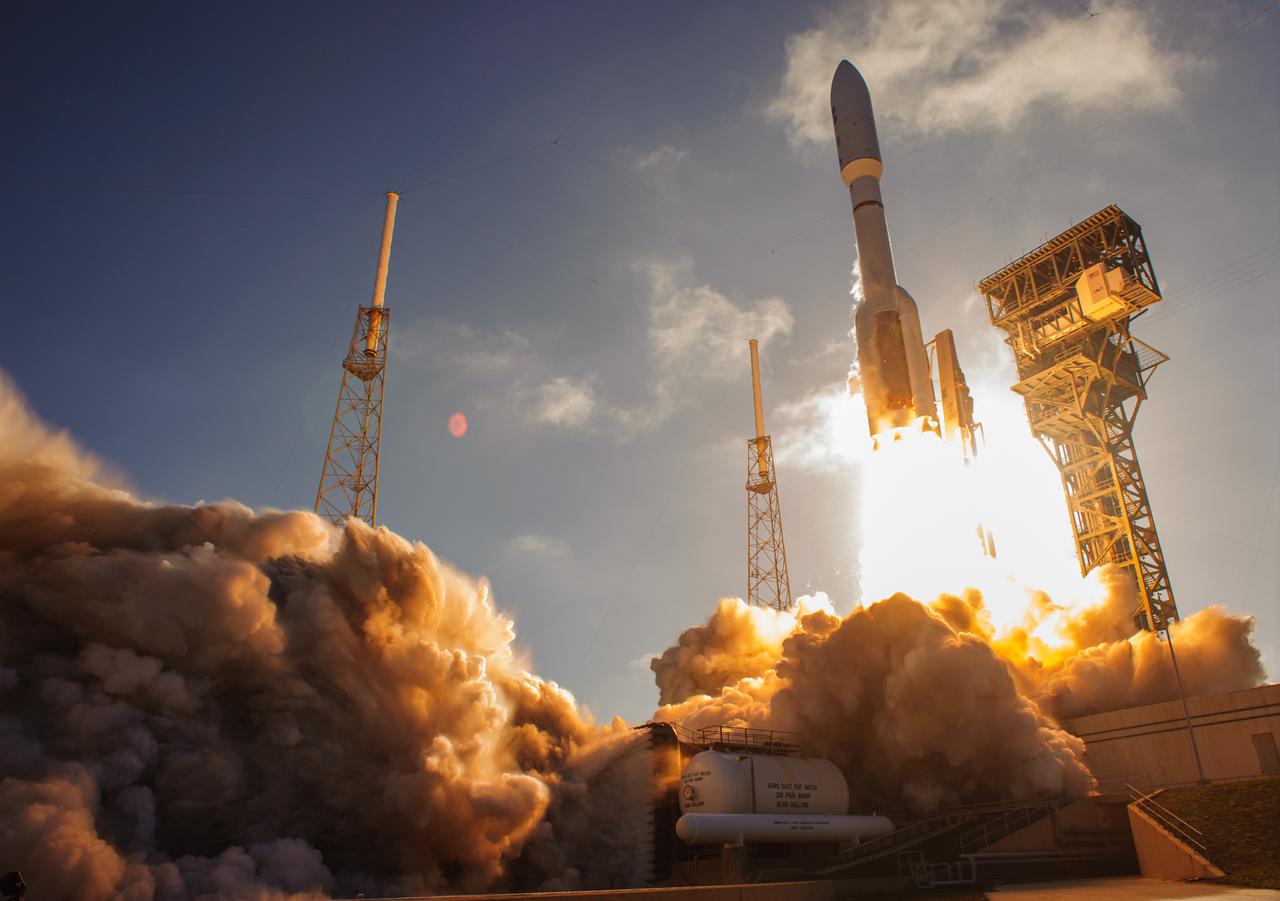
A United Launch Alliance Atlas V 541 rocket, carrying the National Oceanic and Atmospheric Administration’s (NOAA) Geostationary Operational Environmental Satellite-T (GOES-T), lifts off from Space Launch Complex 41 at Cape Canaveral Space Force Station in Florida on March 1, 2022. Liftoff was at 4:38 p.m. EST. GOES-T is the third satellite in the GOES-R series that will continue to help meteorologists observe and predict local weather events that affect public safety. GOES-T will be renamed GOES-18 once it reaches geostationary orbit. GOES-18 will go into operational service as GOES West to provide critical data for the U.S. West Coast, Alaska, Hawaii, Mexico, Central America, and the Pacific Ocean. The launch was managed by NASA’s Launch Services Program based at Kennedy Space Center in Florida, America’s multi-user spaceport.
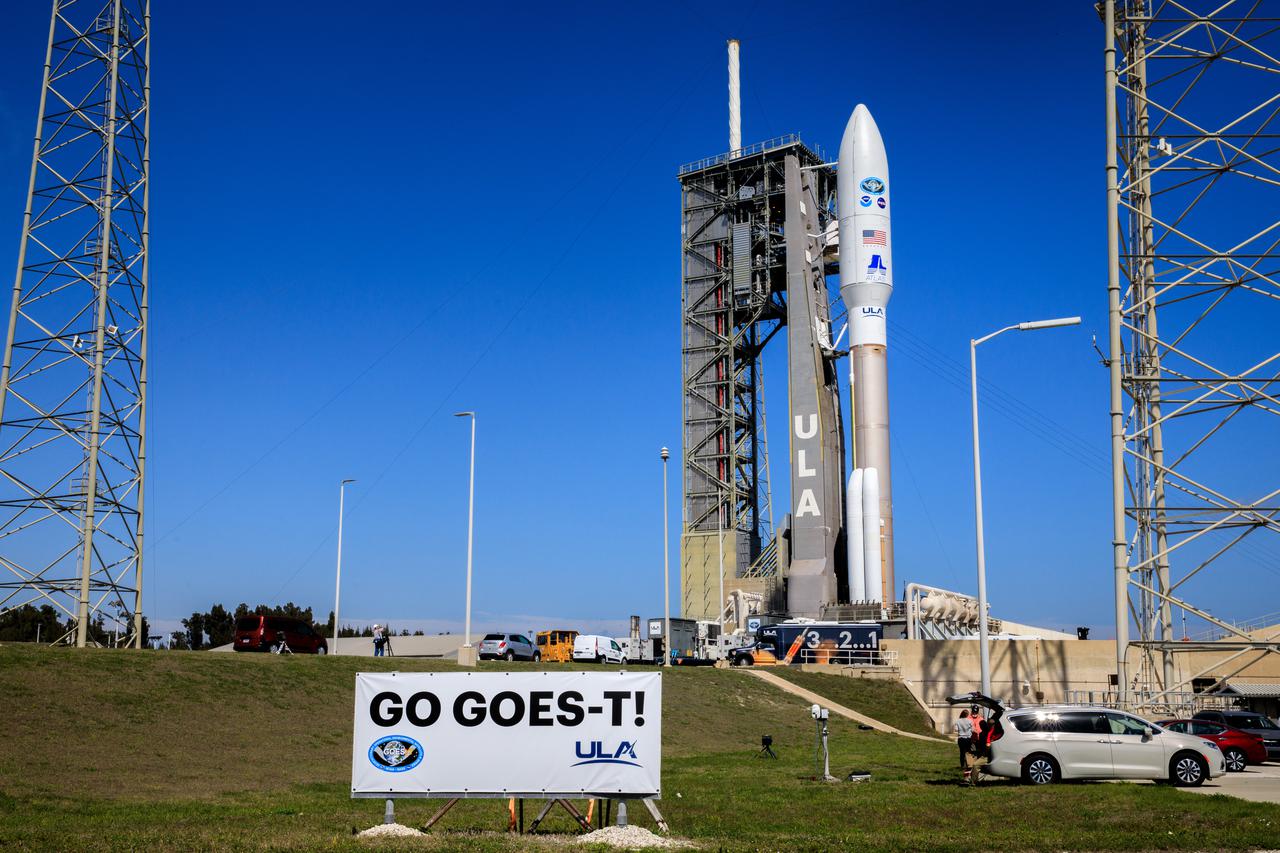
A United Launch Alliance Atlas V 541 rocket carrying the National Oceanic and Atmospheric Administration’s (NOAA) Geostationary Operational Environmental Satellite-T (GOES-T), is secured on the pad at Space Launch Complex 41 at Cape Canaveral Space Force Station in Florida on Feb. 28, 2022. GOES-T will lift off atop the Atlas V from SLC-41 on March 1, 2022, at 4:38 p.m. GOES-T is the third satellite in the GOES-R series that will continue to help meteorologists observe and predict local weather events that affect public safety. GOES-T will be renamed GOES-18 once it reaches geostationary orbit. GOES-18 will go into operational service as GOES West to provide critical data for the U.S. West Coast, Alaska, Hawaii, Mexico, Central America, and the Pacific Ocean. The launch is managed by NASA’s Launch Services Program based at Kennedy Space Center in Florida, America’s multi-user spaceport.
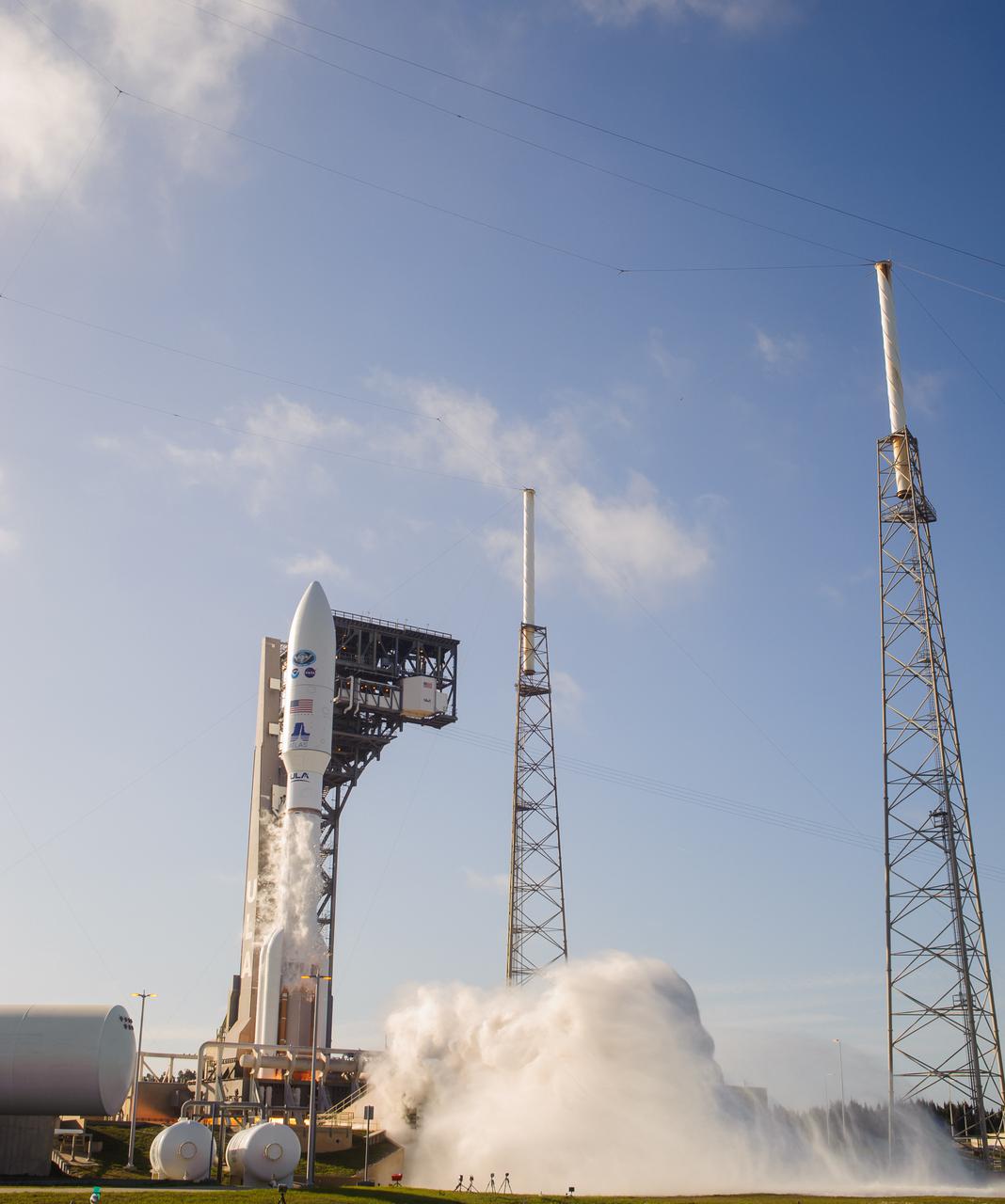
A United Launch Alliance Atlas V 541 rocket, carrying the National Oceanic and Atmospheric Administration’s (NOAA) Geostationary Operational Environmental Satellite-T (GOES-T), lifts off from Space Launch Complex 41 at Cape Canaveral Space Force Station in Florida on March 1, 2022. Liftoff was at 4:38 p.m. EST. GOES-T is the third satellite in the GOES-R series that will continue to help meteorologists observe and predict local weather events that affect public safety. GOES-T will be renamed GOES-18 once it reaches geostationary orbit. GOES-18 will go into operational service as GOES West to provide critical data for the U.S. West Coast, Alaska, Hawaii, Mexico, Central America, and the Pacific Ocean. The launch was managed by NASA’s Launch Services Program based at Kennedy Space Center in Florida, America’s multi-user spaceport.
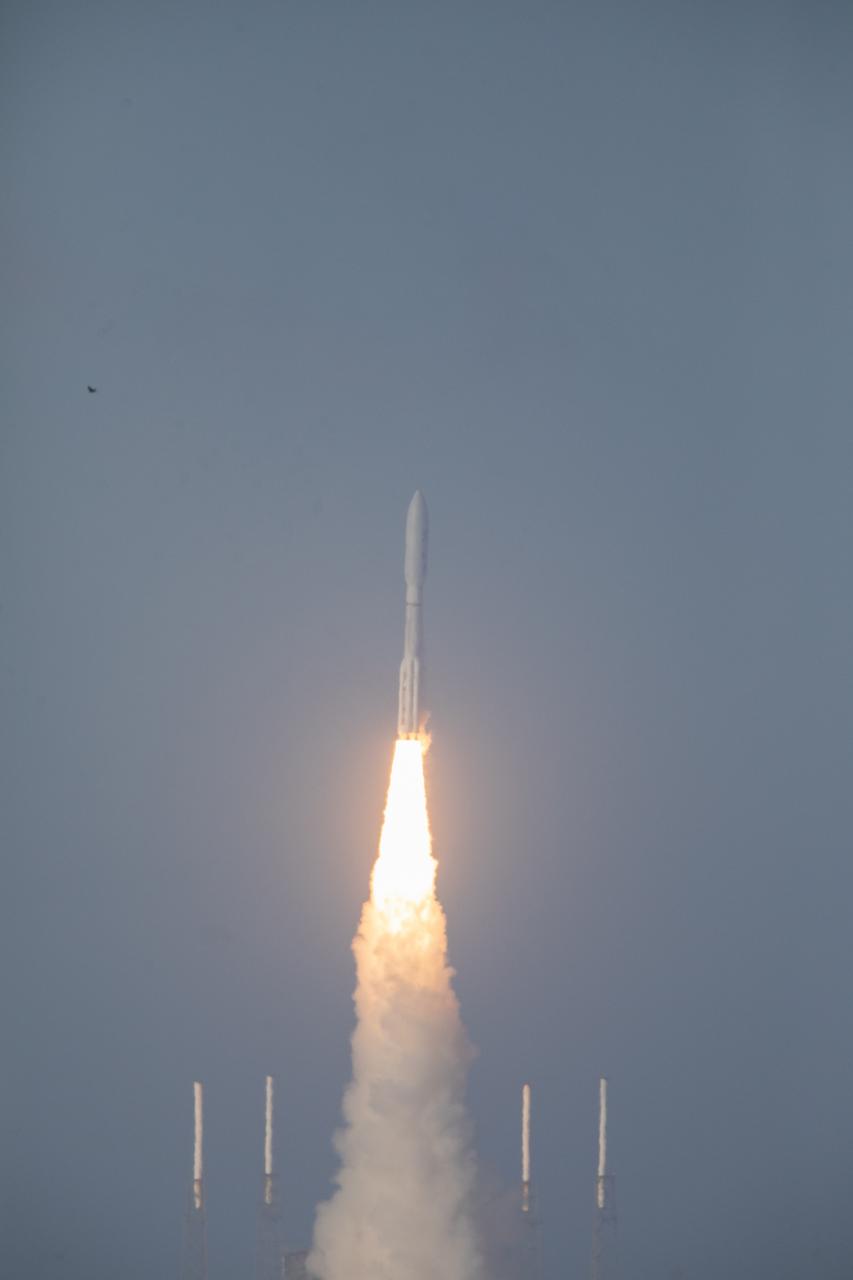
A United Launch Alliance Atlas V 541 rocket, carrying the National Oceanic and Atmospheric Administration’s (NOAA) Geostationary Operational Environmental Satellite-T (GOES-T), soars upward after lifting off from Space Launch Complex 41 at Cape Canaveral Space Force Station in Florida on March 1, 2022. Liftoff was at 4:38 p.m. EST. GOES-T is the third satellite in the GOES-R series that will continue to help meteorologists observe and predict local weather events that affect public safety. GOES-T will be renamed GOES-18 once it reaches geostationary orbit. GOES-18 will go into operational service as GOES West to provide critical data for the U.S. West Coast, Alaska, Hawaii, Mexico, Central America, and the Pacific Ocean. The launch was managed by NASA’s Launch Services Program based at Kennedy Space Center in Florida, America’s multi-user spaceport.
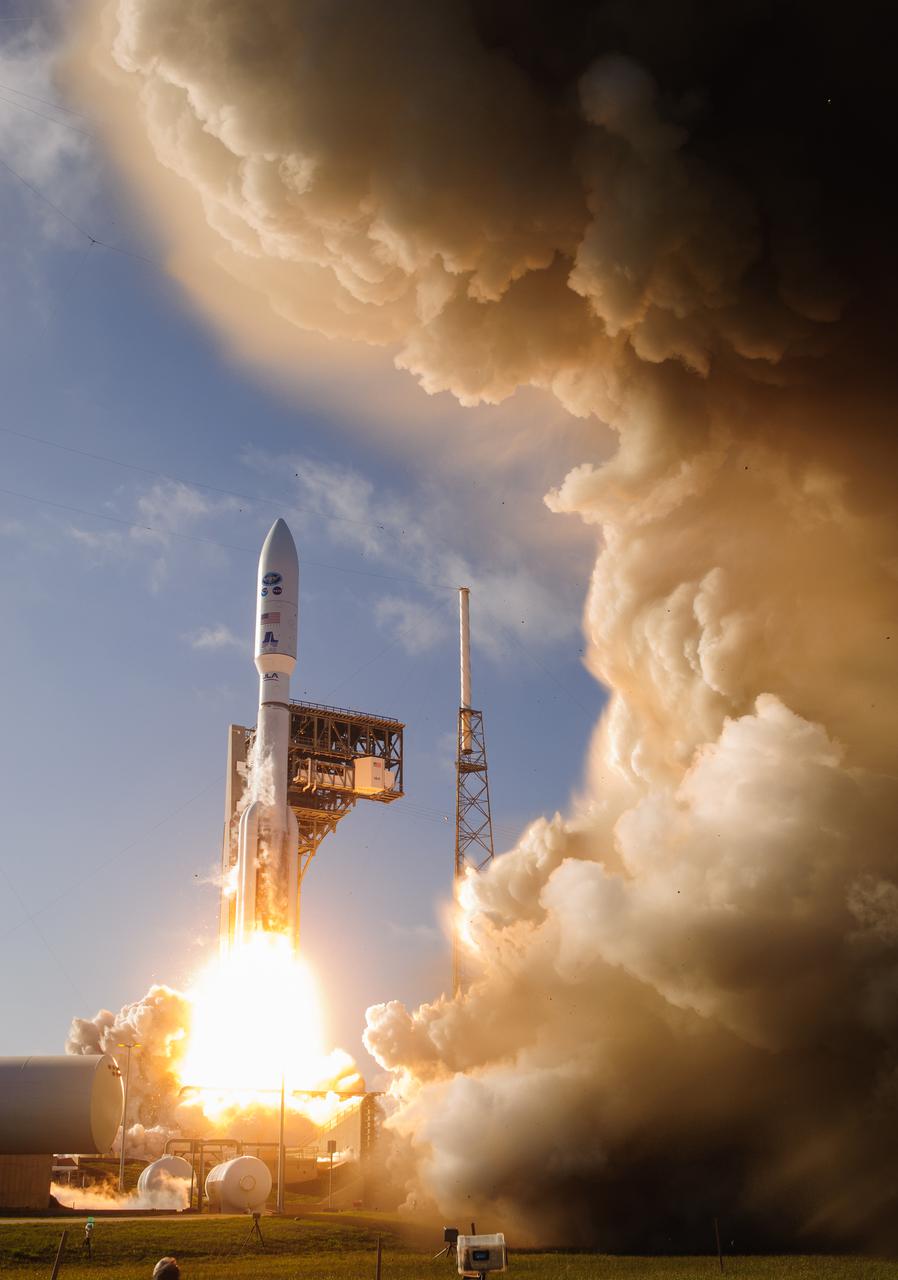
A United Launch Alliance Atlas V 541 rocket, carrying the National Oceanic and Atmospheric Administration’s (NOAA) Geostationary Operational Environmental Satellite-T (GOES-T), lifts off from Space Launch Complex 41 at Cape Canaveral Space Force Station in Florida on March 1, 2022. Liftoff was at 4:38 p.m. EST. GOES-T is the third satellite in the GOES-R series that will continue to help meteorologists observe and predict local weather events that affect public safety. GOES-T will be renamed GOES-18 once it reaches geostationary orbit. GOES-18 will go into operational service as GOES West to provide critical data for the U.S. West Coast, Alaska, Hawaii, Mexico, Central America, and the Pacific Ocean. The launch was managed by NASA’s Launch Services Program based at Kennedy Space Center in Florida, America’s multi-user spaceport.
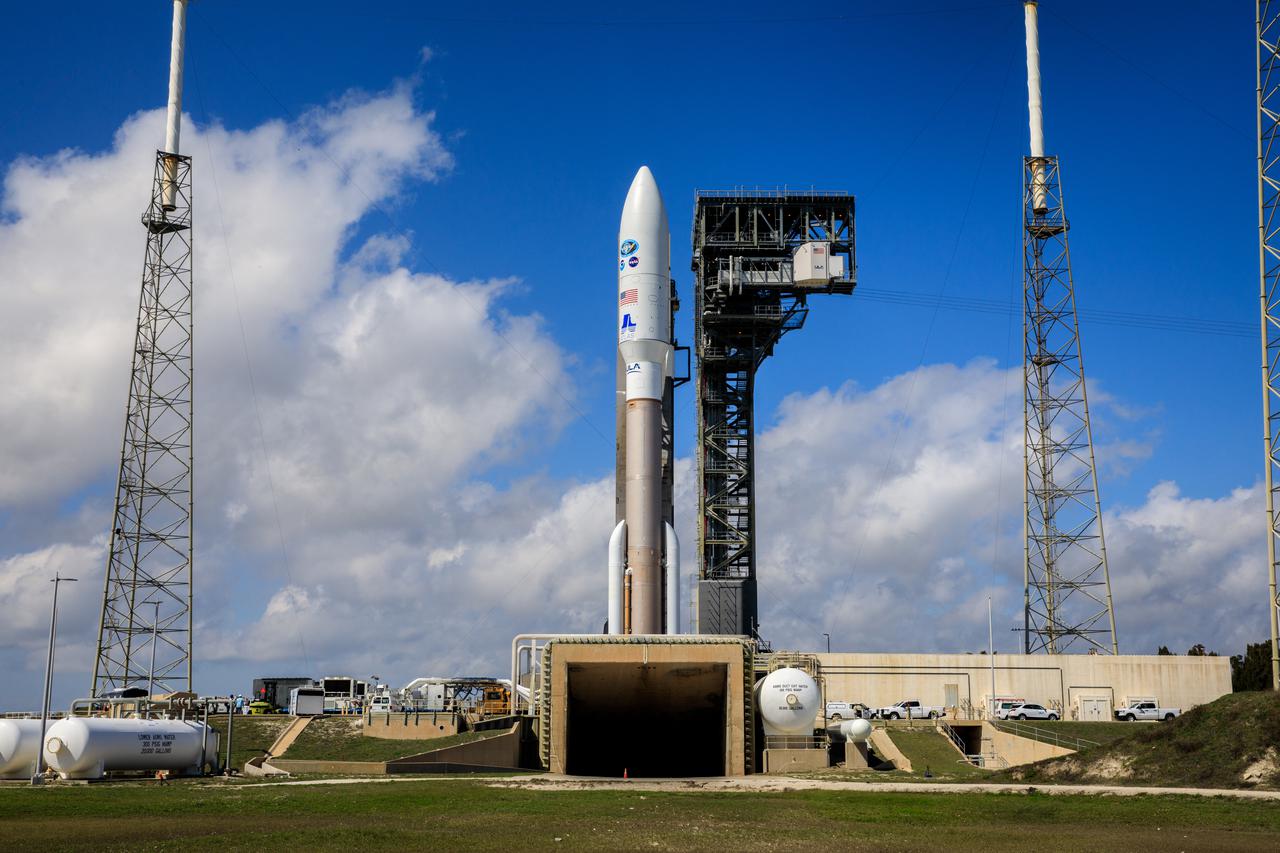
A United Launch Alliance Atlas V 541 rocket carrying the National Oceanic and Atmospheric Administration’s (NOAA) Geostationary Operational Environmental Satellite-T (GOES-T), is secured on the pad at Space Launch Complex 41 at Cape Canaveral Space Force Station in Florida on Feb. 28, 2022. GOES-T will lift off atop the Atlas V from SLC-41 on March 1, 2022, at 4:38 p.m. GOES-T is the third satellite in the GOES-R series that will continue to help meteorologists observe and predict local weather events that affect public safety. GOES-T will be renamed GOES-18 once it reaches geostationary orbit. GOES-18 will go into operational service as GOES West to provide critical data for the U.S. West Coast, Alaska, Hawaii, Mexico, Central America, and the Pacific Ocean. The launch is managed by NASA’s Launch Services Program based at Kennedy Space Center in Florida, America’s multi-user spaceport.

A close-up view of the first-stage engines as the United Launch Alliance Atlas V 541 rocket, carrying the National Oceanic and Atmospheric Administration’s (NOAA) Geostationary Operational Environmental Satellite-T (GOES-T), lifts off from Space Launch Complex 41 at Cape Canaveral Space Force Station in Florida on March 1, 2022. Liftoff was at 4:38 p.m. EST. GOES-T is the third satellite in the GOES-R series that will continue to help meteorologists observe and predict local weather events that affect public safety. GOES-T will be renamed GOES-18 once it reaches geostationary orbit. GOES-18 will go into operational service as GOES West to provide critical data for the U.S. West Coast, Alaska, Hawaii, Mexico, Central America, and the Pacific Ocean. The launch was managed by NASA’s Launch Services Program based at Kennedy Space Center in Florida, America’s multi-user spaceport.
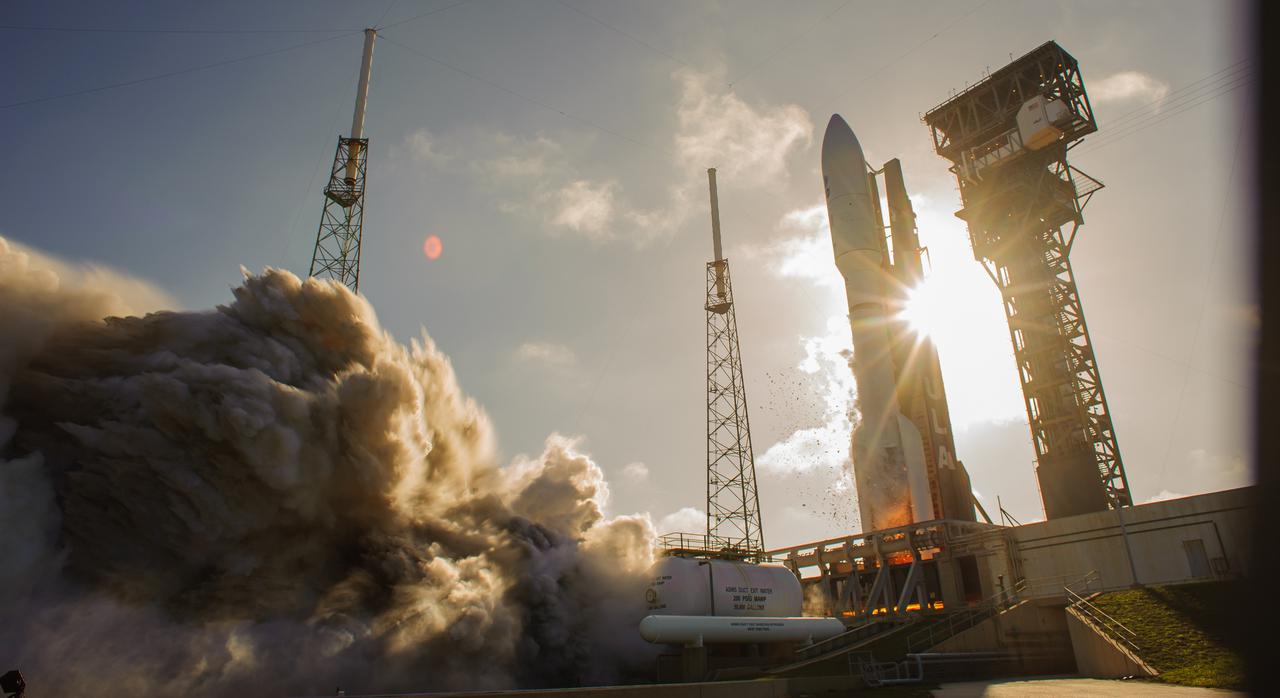
A United Launch Alliance Atlas V 541 rocket, carrying the National Oceanic and Atmospheric Administration’s (NOAA) Geostationary Operational Environmental Satellite-T (GOES-T), lifts off from Space Launch Complex 41 at Cape Canaveral Space Force Station in Florida on March 1, 2022. Liftoff was at 4:38 p.m. EST. GOES-T is the third satellite in the GOES-R series that will continue to help meteorologists observe and predict local weather events that affect public safety. GOES-T will be renamed GOES-18 once it reaches geostationary orbit. GOES-18 will go into operational service as GOES West to provide critical data for the U.S. West Coast, Alaska, Hawaii, Mexico, Central America, and the Pacific Ocean. The launch was managed by NASA’s Launch Services Program based at Kennedy Space Center in Florida, America’s multi-user spaceport.
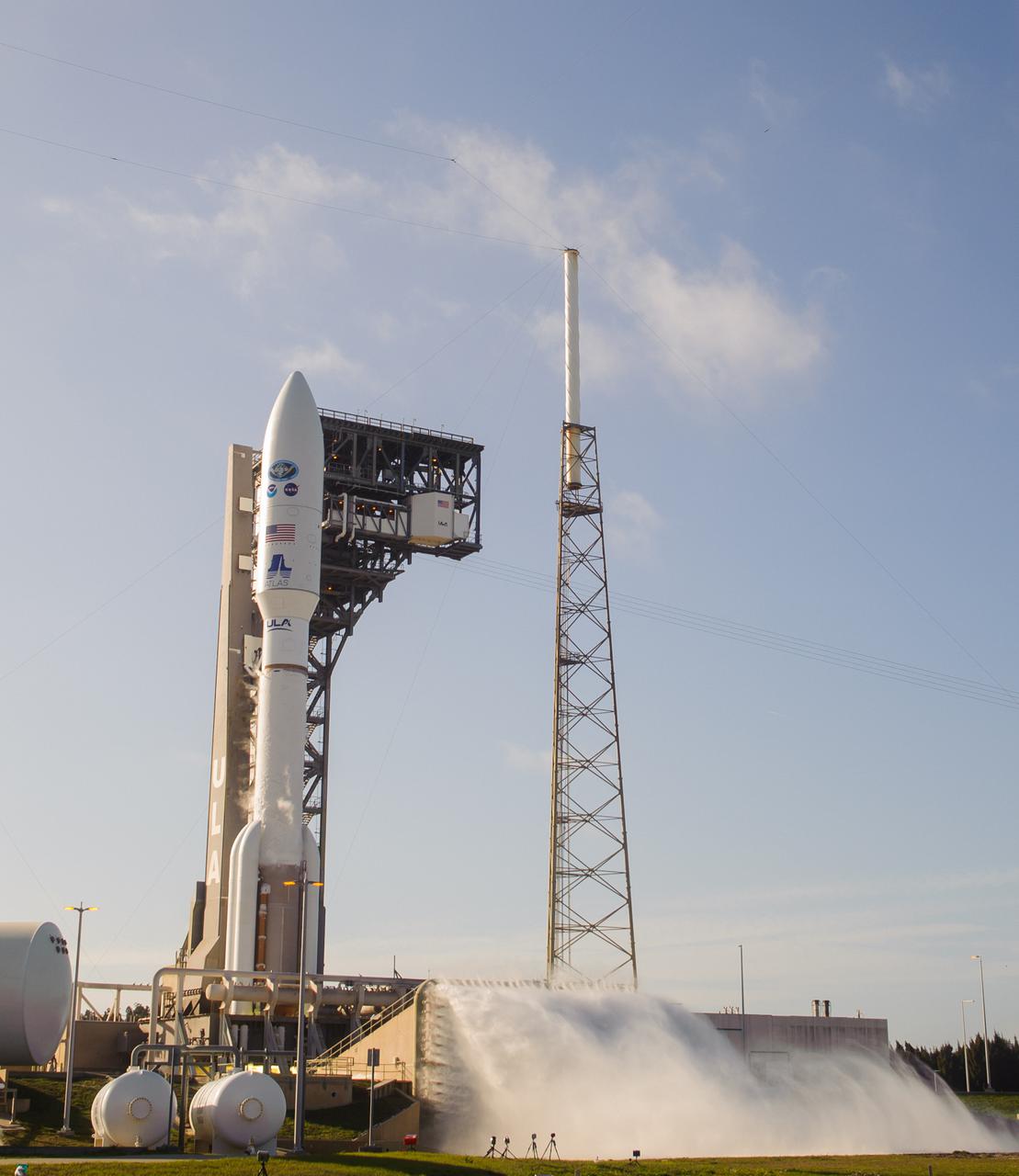
A United Launch Alliance Atlas V 541 rocket, carrying the National Oceanic and Atmospheric Administration’s (NOAA) Geostationary Operational Environmental Satellite-T (GOES-T), lifts off from Space Launch Complex 41 at Cape Canaveral Space Force Station in Florida on March 1, 2022. Liftoff was at 4:38 p.m. EST. GOES-T is the third satellite in the GOES-R series that will continue to help meteorologists observe and predict local weather events that affect public safety. GOES-T will be renamed GOES-18 once it reaches geostationary orbit. GOES-18 will go into operational service as GOES West to provide critical data for the U.S. West Coast, Alaska, Hawaii, Mexico, Central America, and the Pacific Ocean. The launch was managed by NASA’s Launch Services Program based at Kennedy Space Center in Florida, America’s multi-user spaceport.

A United Launch Alliance Atlas V 541 rocket, carrying the National Oceanic and Atmospheric Administration’s (NOAA) Geostationary Operational Environmental Satellite-T (GOES-T), soars upward after lifting off from Space Launch Complex 41 at Cape Canaveral Space Force Station in Florida on March 1, 2022. Liftoff was at 4:38 p.m. EST. GOES-T is the third satellite in the GOES-R series that will continue to help meteorologists observe and predict local weather events that affect public safety. GOES-T will be renamed GOES-18 once it reaches geostationary orbit. GOES-18 will go into operational service as GOES West to provide critical data for the U.S. West Coast, Alaska, Hawaii, Mexico, Central America, and the Pacific Ocean. The launch was managed by NASA’s Launch Services Program based at Kennedy Space Center in Florida, America’s multi-user spaceport.
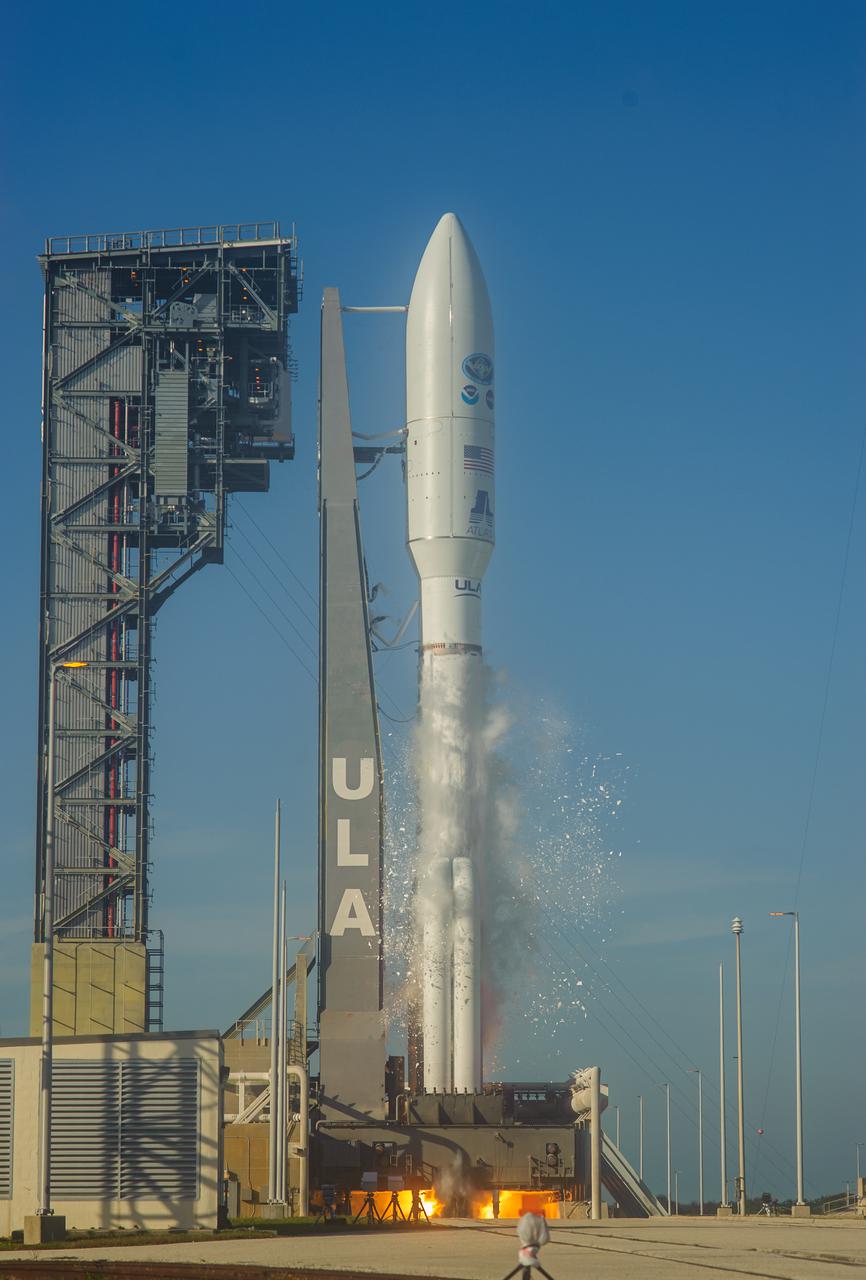
A United Launch Alliance Atlas V 541 rocket, carrying the National Oceanic and Atmospheric Administration’s (NOAA) Geostationary Operational Environmental Satellite-T (GOES-T), lifts off from Space Launch Complex 41 at Cape Canaveral Space Force Station in Florida on March 1, 2022. Liftoff was at 4:38 p.m. EST. GOES-T is the third satellite in the GOES-R series that will continue to help meteorologists observe and predict local weather events that affect public safety. GOES-T will be renamed GOES-18 once it reaches geostationary orbit. GOES-18 will go into operational service as GOES West to provide critical data for the U.S. West Coast, Alaska, Hawaii, Mexico, Central America, and the Pacific Ocean. The launch was managed by NASA’s Launch Services Program based at Kennedy Space Center in Florida, America’s multi-user spaceport.
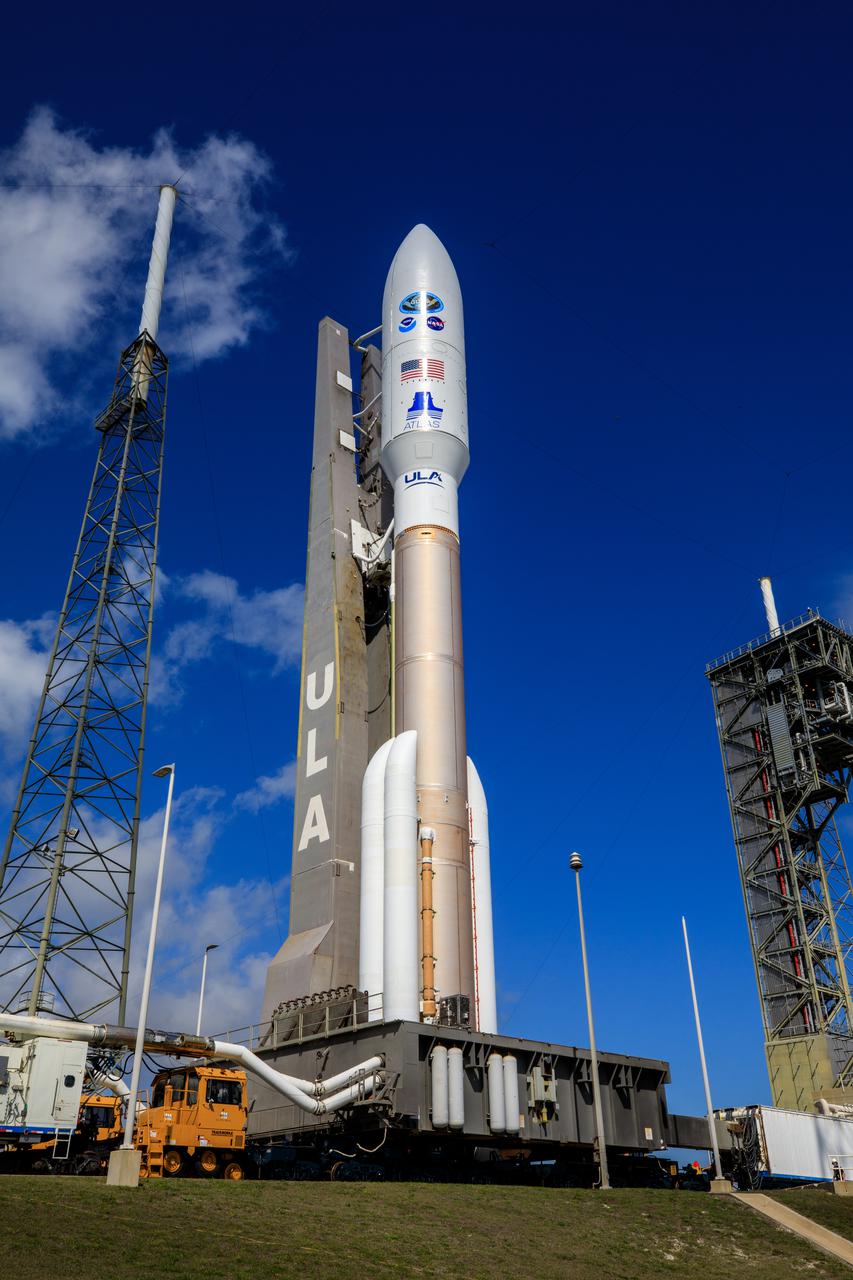
A United Launch Alliance Atlas V 541 rocket carrying the National Oceanic and Atmospheric Administration’s (NOAA) Geostationary Operational Environmental Satellite-T (GOES-T), arrives at Space Launch Complex 41 at Cape Canaveral Space Force Station in Florida on Feb. 28, 2022. GOES-T will lift off atop the Atlas V from SLC-41 on March 1, 2022, at 4:38 p.m. GOES-T is the third satellite in the GOES-R series that will continue to help meteorologists observe and predict local weather events that affect public safety. GOES-T will be renamed GOES-18 once it reaches geostationary orbit. GOES-18 will go into operational service as GOES West to provide critical data for the U.S. West Coast, Alaska, Hawaii, Mexico, Central America, and the Pacific Ocean. The launch is managed by NASA’s Launch Services Program based at Kennedy Space Center in Florida, America’s multi-user spaceport.

A United Launch Alliance Atlas V 541 rocket, carrying the National Oceanic and Atmospheric Administration’s (NOAA) Geostationary Operational Environmental Satellite-T (GOES-T), lifts off from Space Launch Complex 41 at Cape Canaveral Space Force Station in Florida on March 1, 2022. Liftoff was at 4:38 p.m. EST. GOES-T is the third satellite in the GOES-R series that will continue to help meteorologists observe and predict local weather events that affect public safety. GOES-T will be renamed GOES-18 once it reaches geostationary orbit. GOES-18 will go into operational service as GOES West to provide critical data for the U.S. West Coast, Alaska, Hawaii, Mexico, Central America, and the Pacific Ocean. The launch was managed by NASA’s Launch Services Program based at Kennedy Space Center in Florida, America’s multi-user spaceport.
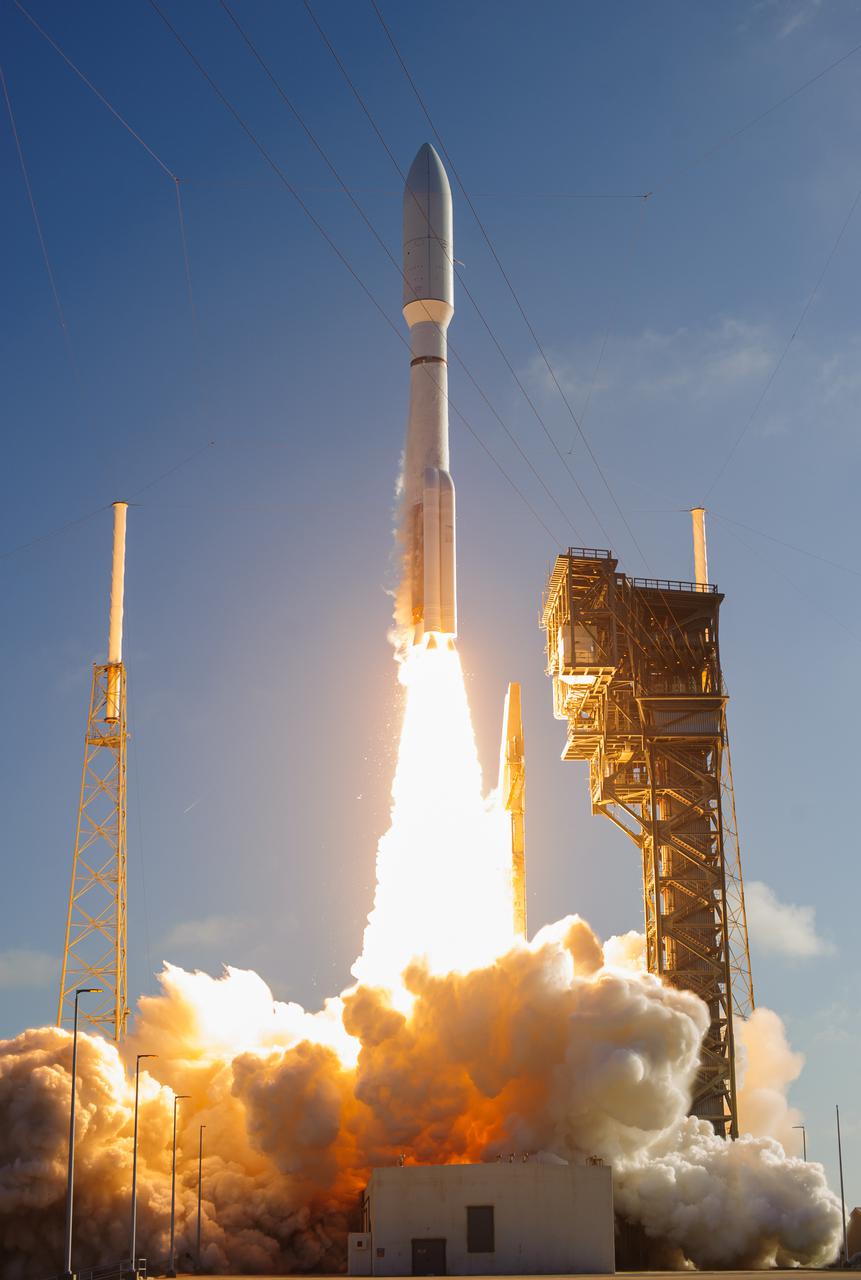
A United Launch Alliance Atlas V 541 rocket, carrying the National Oceanic and Atmospheric Administration’s (NOAA) Geostationary Operational Environmental Satellite-T (GOES-T), lifts off from Space Launch Complex 41 at Cape Canaveral Space Force Station in Florida on March 1, 2022. Liftoff was at 4:38 p.m. EST. GOES-T is the third satellite in the GOES-R series that will continue to help meteorologists observe and predict local weather events that affect public safety. GOES-T will be renamed GOES-18 once it reaches geostationary orbit. GOES-18 will go into operational service as GOES West to provide critical data for the U.S. West Coast, Alaska, Hawaii, Mexico, Central America, and the Pacific Ocean. The launch was managed by NASA’s Launch Services Program based at Kennedy Space Center in Florida, America’s multi-user spaceport.
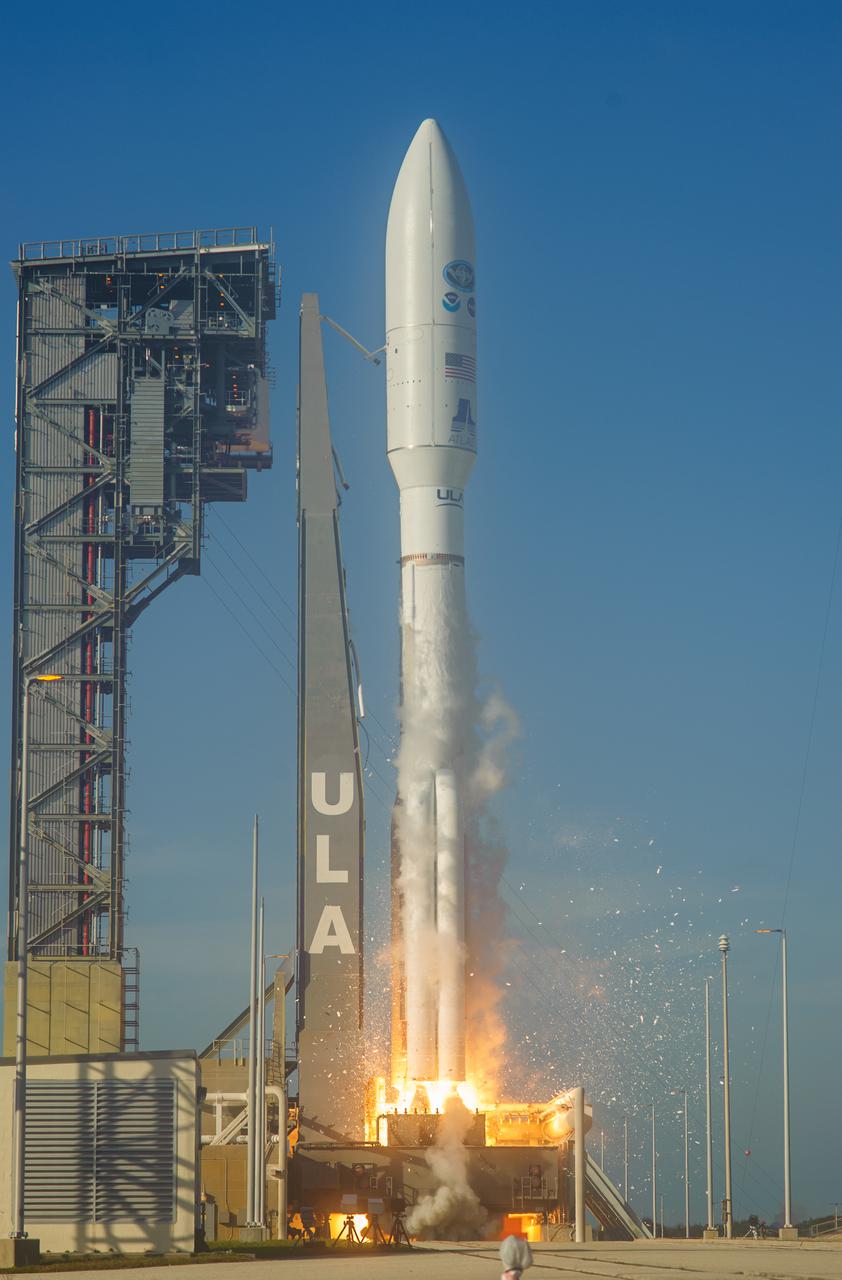
A United Launch Alliance Atlas V 541 rocket, carrying the National Oceanic and Atmospheric Administration’s (NOAA) Geostationary Operational Environmental Satellite-T (GOES-T), lifts off from Space Launch Complex 41 at Cape Canaveral Space Force Station in Florida on March 1, 2022. Liftoff was at 4:38 p.m. EST. GOES-T is the third satellite in the GOES-R series that will continue to help meteorologists observe and predict local weather events that affect public safety. GOES-T will be renamed GOES-18 once it reaches geostationary orbit. GOES-18 will go into operational service as GOES West to provide critical data for the U.S. West Coast, Alaska, Hawaii, Mexico, Central America, and the Pacific Ocean. The launch was managed by NASA’s Launch Services Program based at Kennedy Space Center in Florida, America’s multi-user spaceport.
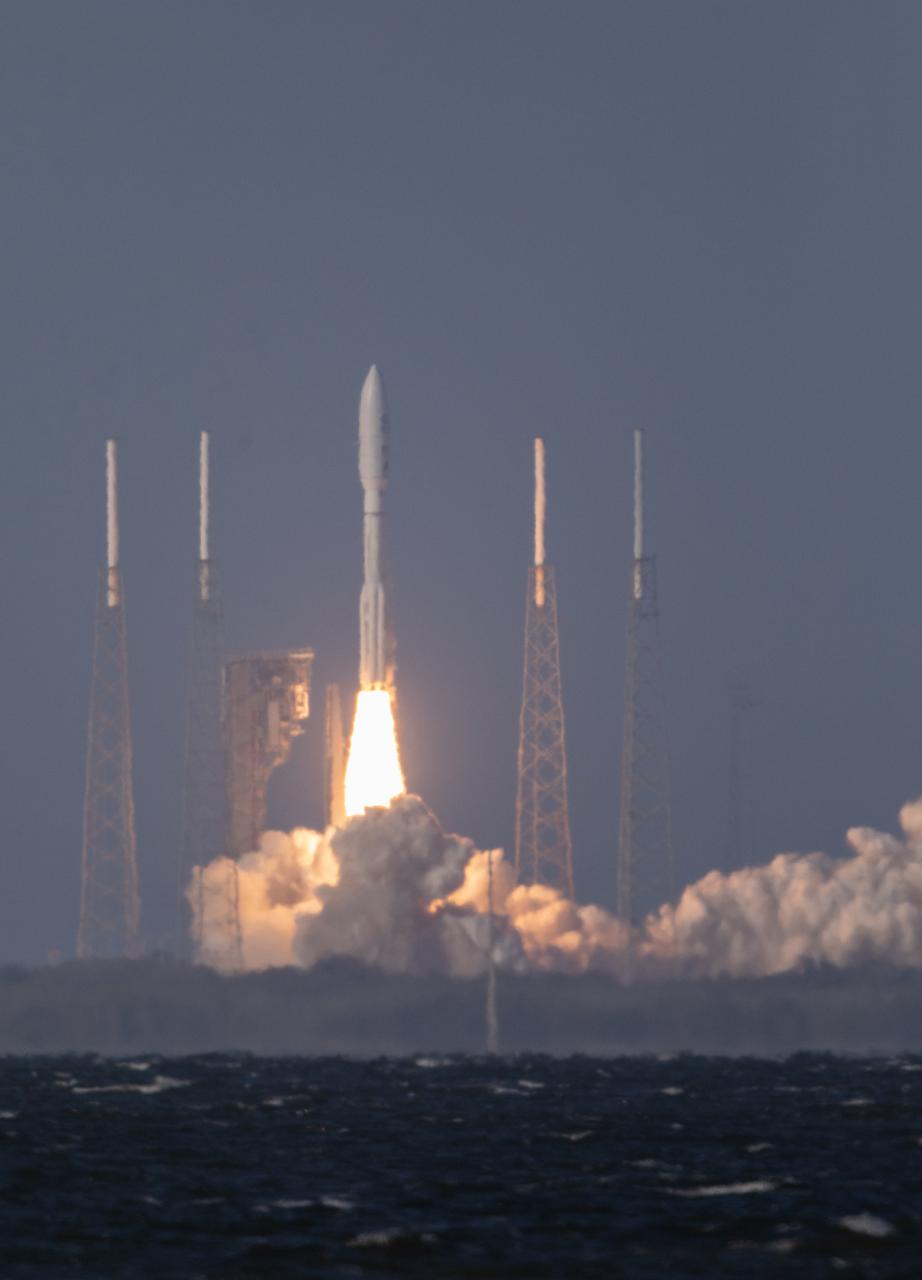
A United Launch Alliance Atlas V 541 rocket, carrying the National Oceanic and Atmospheric Administration’s (NOAA) Geostationary Operational Environmental Satellite-T (GOES-T), lifts off from Space Launch Complex 41 at Cape Canaveral Space Force Station in Florida on March 1, 2022. Liftoff was at 4:38 p.m. EST. GOES-T is the third satellite in the GOES-R series that will continue to help meteorologists observe and predict local weather events that affect public safety. GOES-T will be renamed GOES-18 once it reaches geostationary orbit. GOES-18 will go into operational service as GOES West to provide critical data for the U.S. West Coast, Alaska, Hawaii, Mexico, Central America, and the Pacific Ocean. The launch was managed by NASA’s Launch Services Program based at Kennedy Space Center in Florida, America’s multi-user spaceport.
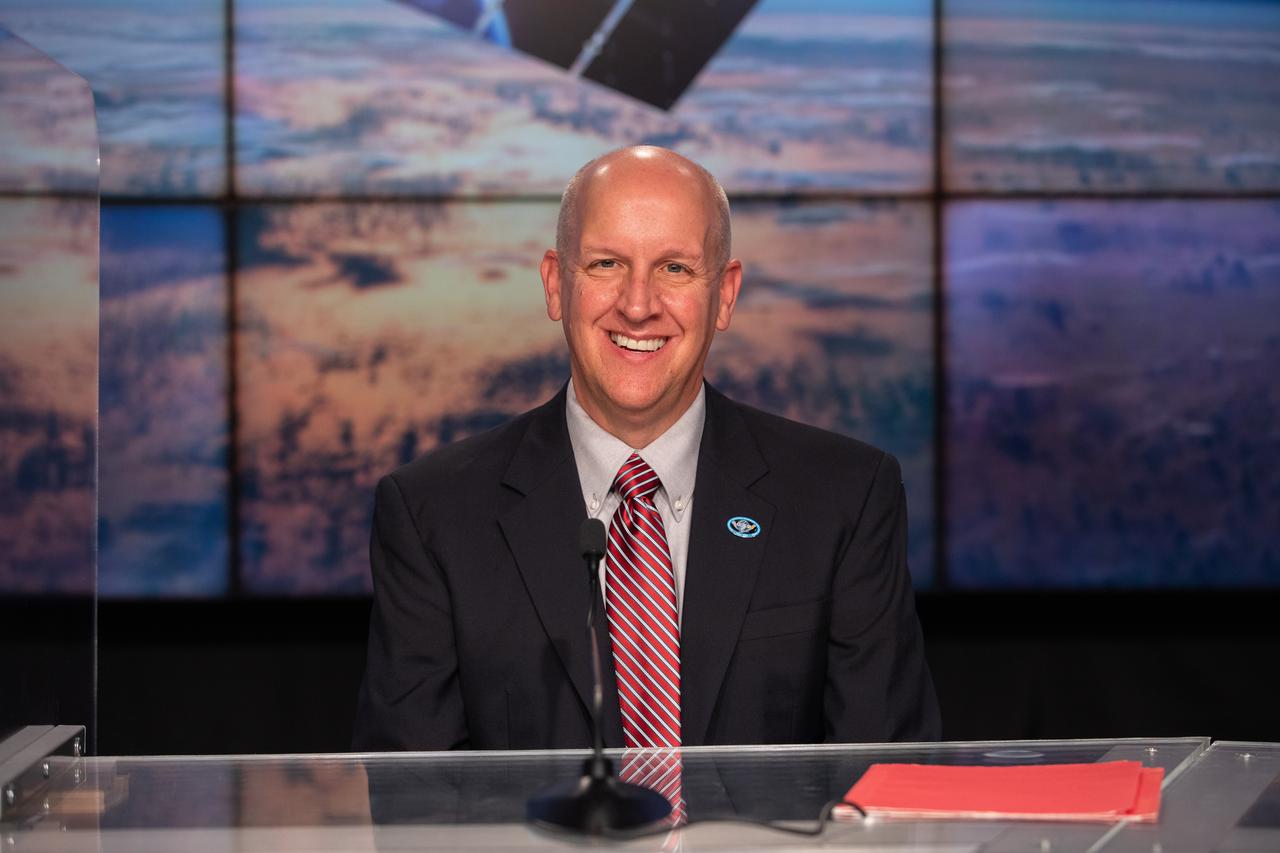
A prelaunch news conference for the National Oceanic and Atmospheric Administration’s (NOAA) Geostationary Operational Environmental Satellite-T (GOES-T) is held on Feb. 26, 2022, at NASA’s Kennedy Space Center in Florida. Tim Dunn, launch director for NASA’s Launch Services Program at Kennedy answers questions during the briefing. GOES-T is scheduled to lift off on a United Launch Alliance Atlas V 541 rocket from Space Launch Complex 41 at Cape Canaveral Space Force Station in Florida on March 1, 2022, at 4:38 p.m. GOES-T is the third satellite in the GOES-R series that will continue to help meteorologists observe and predict local weather events that affect public safety. The launch is being managed by NASA’s Launch Services Program based at Kennedy Space Center in Florida, America’s multi-user spaceport.
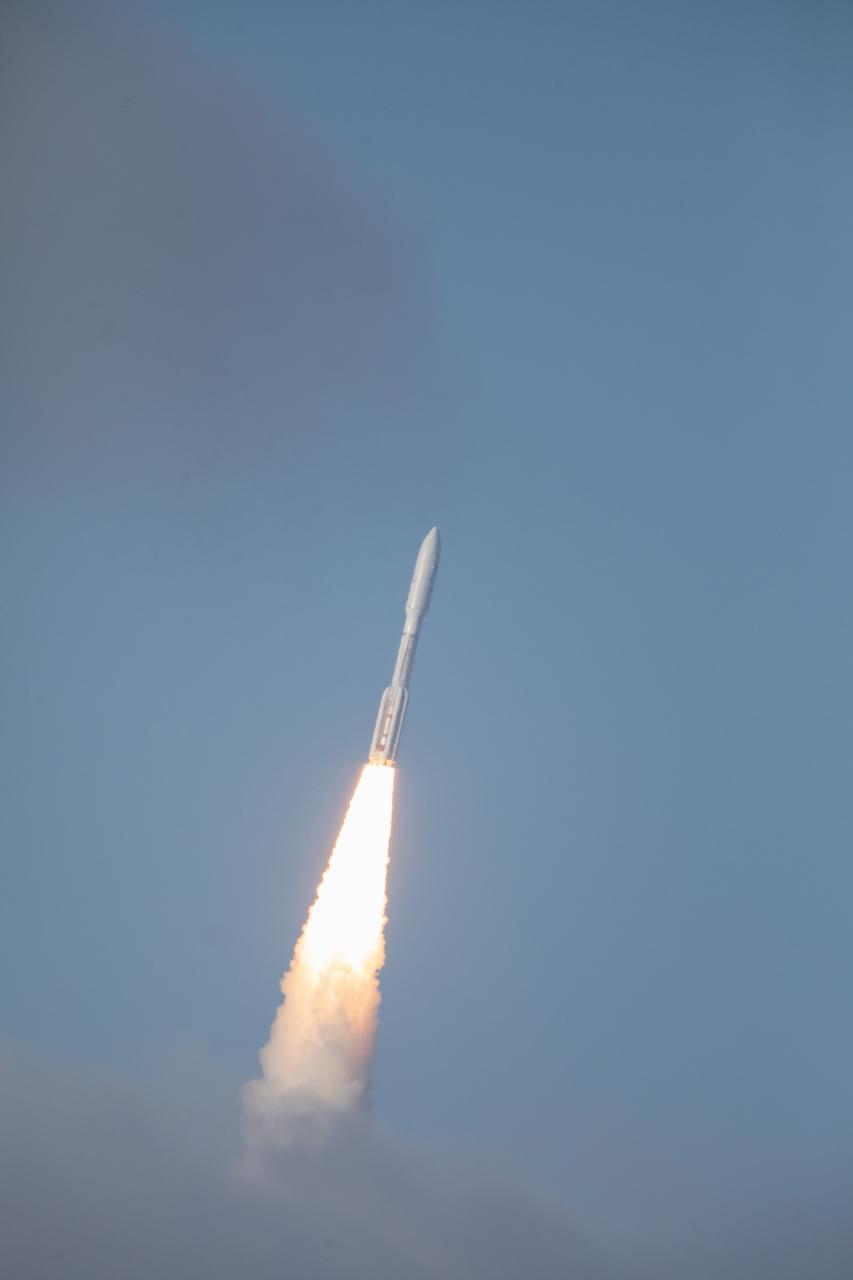
A United Launch Alliance Atlas V 541 rocket, carrying the National Oceanic and Atmospheric Administration’s (NOAA) Geostationary Operational Environmental Satellite-T (GOES-T), soars upward after lifting off from Space Launch Complex 41 at Cape Canaveral Space Force Station in Florida on March 1, 2022. Liftoff was at 4:38 p.m. EST. GOES-T is the third satellite in the GOES-R series that will continue to help meteorologists observe and predict local weather events that affect public safety. GOES-T will be renamed GOES-18 once it reaches geostationary orbit. GOES-18 will go into operational service as GOES West to provide critical data for the U.S. West Coast, Alaska, Hawaii, Mexico, Central America, and the Pacific Ocean. The launch was managed by NASA’s Launch Services Program based at Kennedy Space Center in Florida, America’s multi-user spaceport.
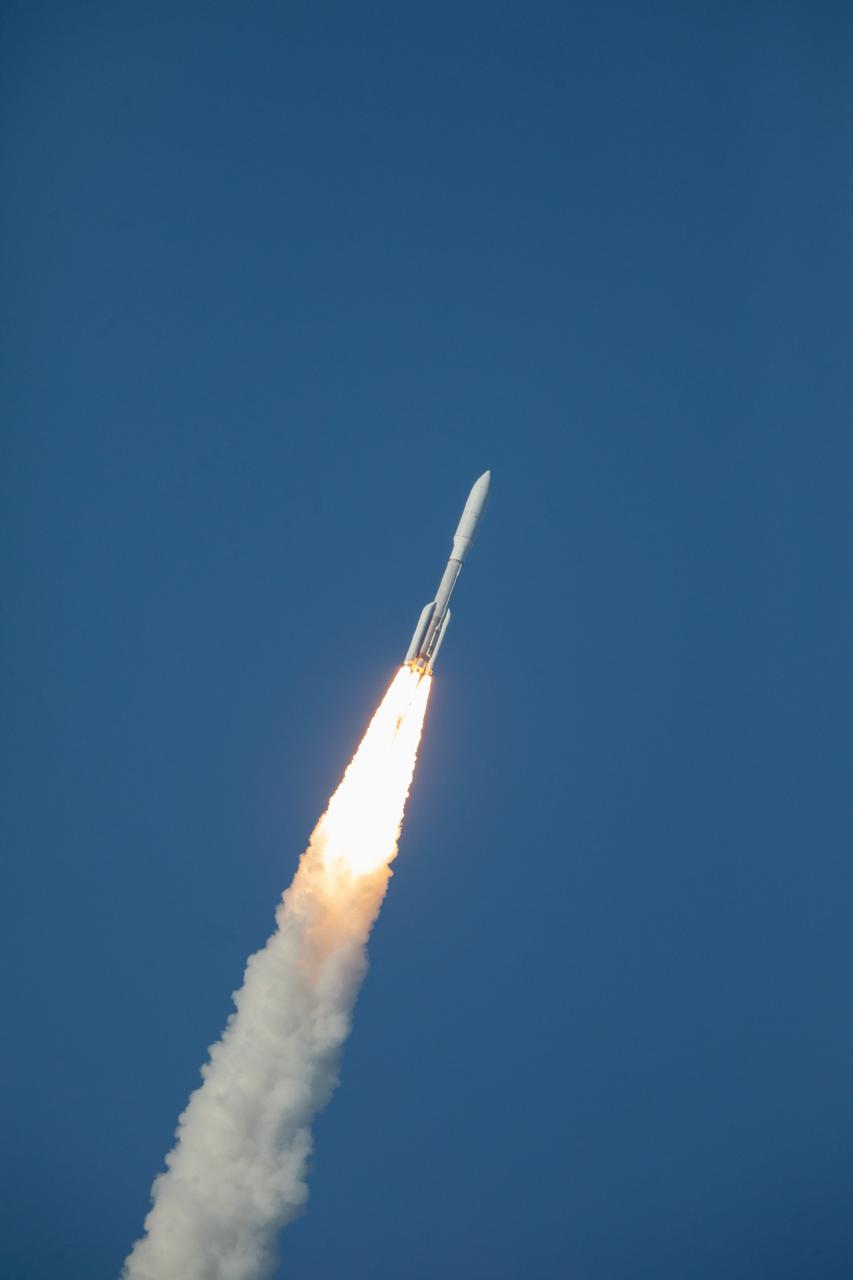
A United Launch Alliance Atlas V 541 rocket, carrying the National Oceanic and Atmospheric Administration’s (NOAA) Geostationary Operational Environmental Satellite-T (GOES-T), soars upward after lifting off from Space Launch Complex 41 at Cape Canaveral Space Force Station in Florida on March 1, 2022. Liftoff was at 4:38 p.m. EST. GOES-T is the third satellite in the GOES-R series that will continue to help meteorologists observe and predict local weather events that affect public safety. GOES-T will be renamed GOES-18 once it reaches geostationary orbit. GOES-18 will go into operational service as GOES West to provide critical data for the U.S. West Coast, Alaska, Hawaii, Mexico, Central America, and the Pacific Ocean. The launch was managed by NASA’s Launch Services Program based at Kennedy Space Center in Florida, America’s multi-user spaceport.
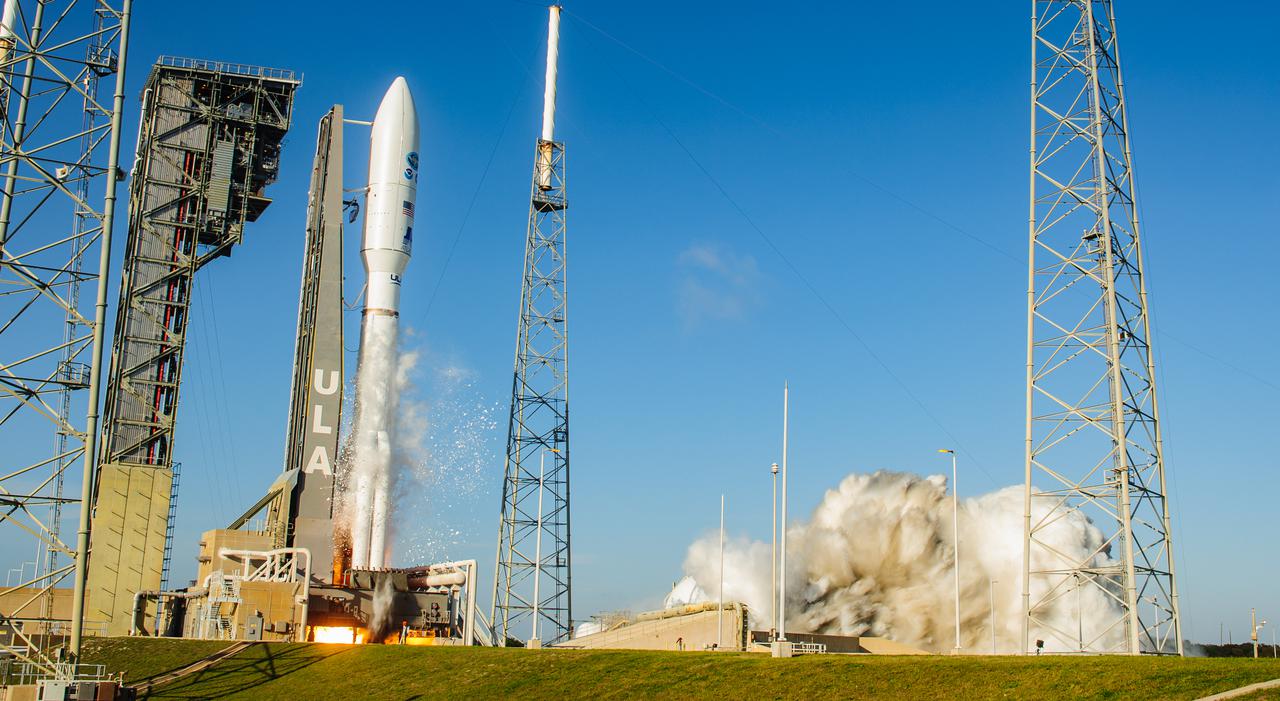
A United Launch Alliance Atlas V 541 rocket, carrying the National Oceanic and Atmospheric Administration’s (NOAA) Geostationary Operational Environmental Satellite-T (GOES-T), lifts off from Space Launch Complex 41 at Cape Canaveral Space Force Station in Florida on March 1, 2022. Liftoff was at 4:38 p.m. EST. GOES-T is the third satellite in the GOES-R series that will continue to help meteorologists observe and predict local weather events that affect public safety. GOES-T will be renamed GOES-18 once it reaches geostationary orbit. GOES-18 will go into operational service as GOES West to provide critical data for the U.S. West Coast, Alaska, Hawaii, Mexico, Central America, and the Pacific Ocean. The launch was managed by NASA’s Launch Services Program based at Kennedy Space Center in Florida, America’s multi-user spaceport.
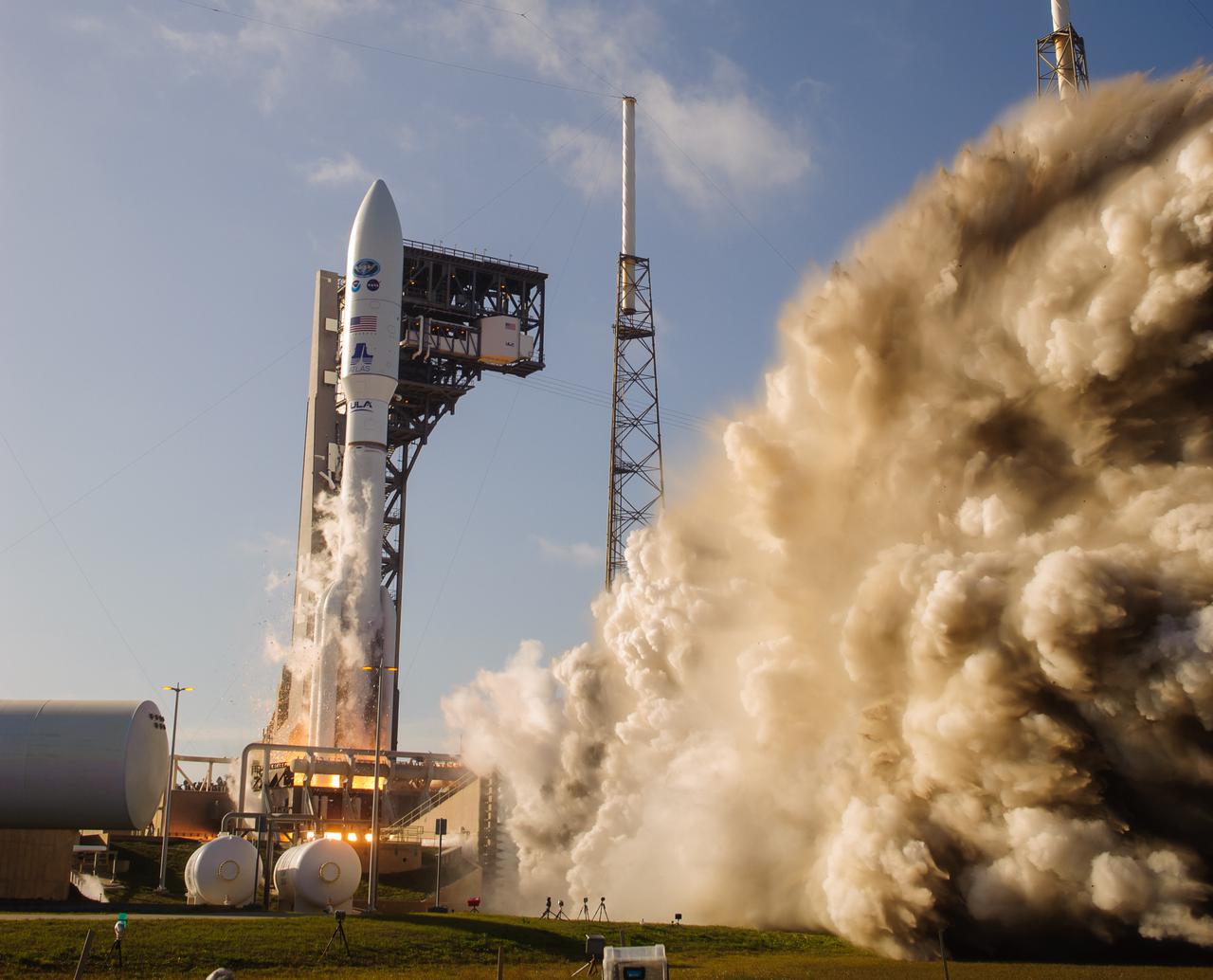
A United Launch Alliance Atlas V 541 rocket, carrying the National Oceanic and Atmospheric Administration’s (NOAA) Geostationary Operational Environmental Satellite-T (GOES-T), lifts off from Space Launch Complex 41 at Cape Canaveral Space Force Station in Florida on March 1, 2022. Liftoff was at 4:38 p.m. EST. GOES-T is the third satellite in the GOES-R series that will continue to help meteorologists observe and predict local weather events that affect public safety. GOES-T will be renamed GOES-18 once it reaches geostationary orbit. GOES-18 will go into operational service as GOES West to provide critical data for the U.S. West Coast, Alaska, Hawaii, Mexico, Central America, and the Pacific Ocean. The launch was managed by NASA’s Launch Services Program based at Kennedy Space Center in Florida, America’s multi-user spaceport.
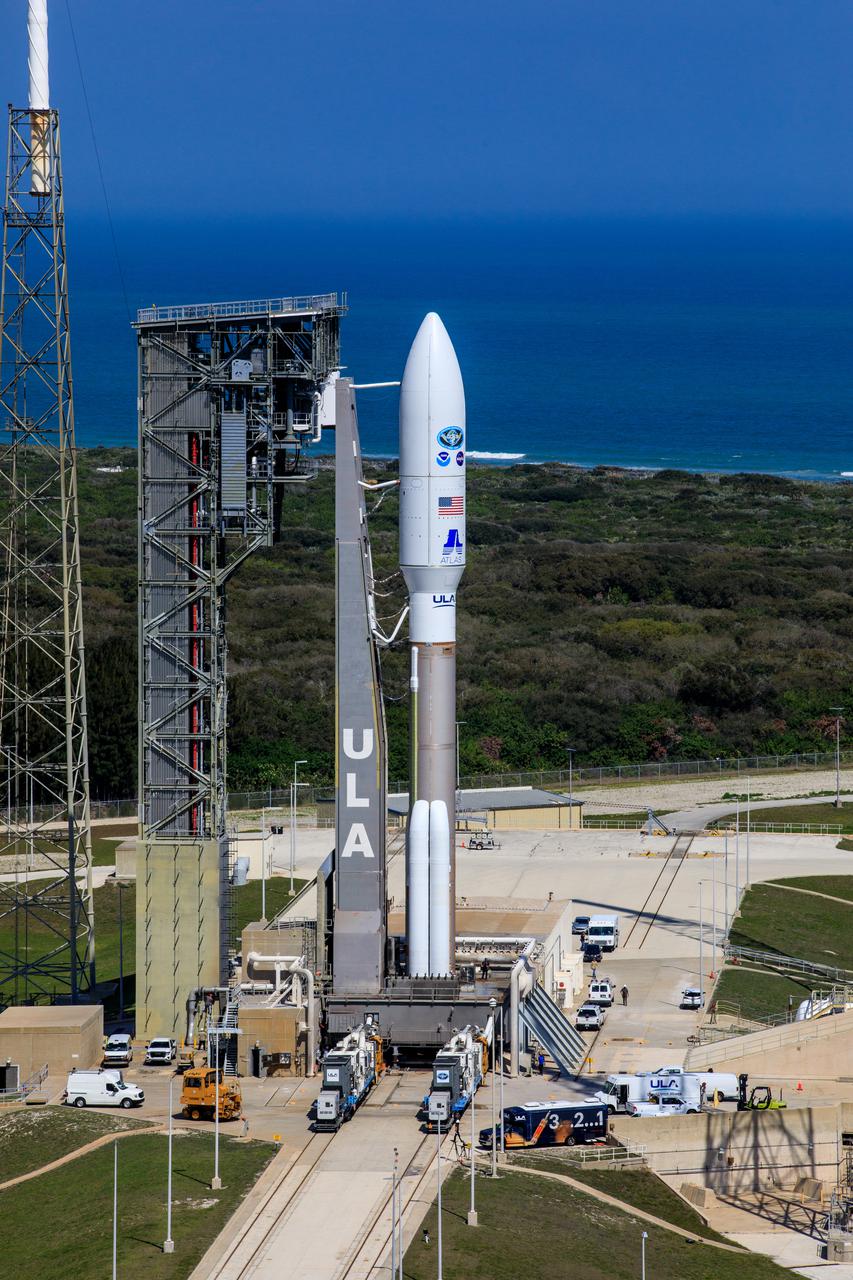
A United Launch Alliance Atlas V 541 rocket carrying the National Oceanic and Atmospheric Administration’s (NOAA) Geostationary Operational Environmental Satellite-T (GOES-T), is secured on the pad at Space Launch Complex 41 at Cape Canaveral Space Force Station in Florida on Feb. 28, 2022. GOES-T will lift off atop the Atlas V from SLC-41 on March 1, 2022, at 4:38 p.m. GOES-T is the third satellite in the GOES-R series that will continue to help meteorologists observe and predict local weather events that affect public safety. GOES-T will be renamed GOES-18 once it reaches geostationary orbit. GOES-18 will go into operational service as GOES West to provide critical data for the U.S. West Coast, Alaska, Hawaii, Mexico, Central America, and the Pacific Ocean. The launch is managed by NASA’s Launch Services Program based at Kennedy Space Center in Florida, America’s multi-user spaceport.
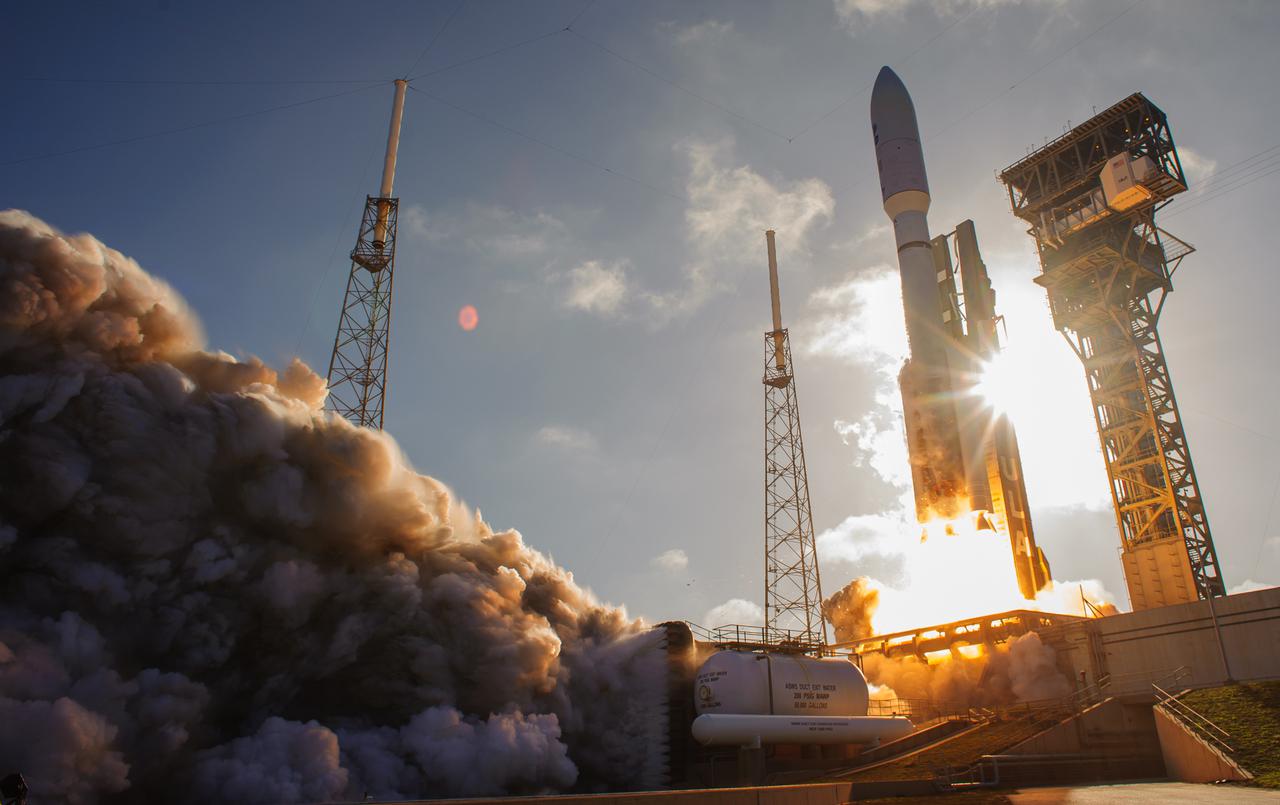
A United Launch Alliance Atlas V 541 rocket, carrying the National Oceanic and Atmospheric Administration’s (NOAA) Geostationary Operational Environmental Satellite-T (GOES-T), lifts off from Space Launch Complex 41 at Cape Canaveral Space Force Station in Florida on March 1, 2022. Liftoff was at 4:38 p.m. EST. GOES-T is the third satellite in the GOES-R series that will continue to help meteorologists observe and predict local weather events that affect public safety. GOES-T will be renamed GOES-18 once it reaches geostationary orbit. GOES-18 will go into operational service as GOES West to provide critical data for the U.S. West Coast, Alaska, Hawaii, Mexico, Central America, and the Pacific Ocean. The launch was managed by NASA’s Launch Services Program based at Kennedy Space Center in Florida, America’s multi-user spaceport.
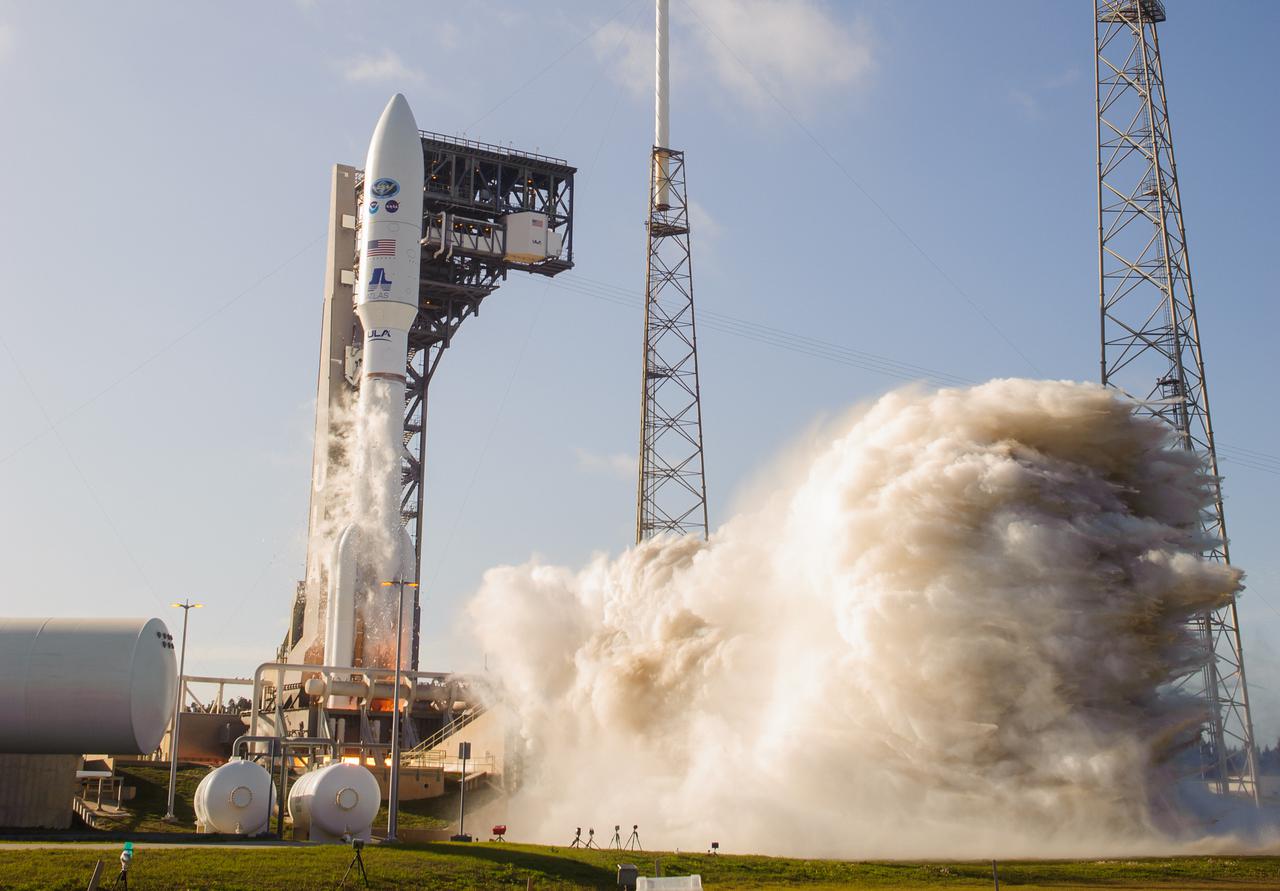
A United Launch Alliance Atlas V 541 rocket, carrying the National Oceanic and Atmospheric Administration’s (NOAA) Geostationary Operational Environmental Satellite-T (GOES-T), lifts off from Space Launch Complex 41 at Cape Canaveral Space Force Station in Florida on March 1, 2022. Liftoff was at 4:38 p.m. EST. GOES-T is the third satellite in the GOES-R series that will continue to help meteorologists observe and predict local weather events that affect public safety. GOES-T will be renamed GOES-18 once it reaches geostationary orbit. GOES-18 will go into operational service as GOES West to provide critical data for the U.S. West Coast, Alaska, Hawaii, Mexico, Central America, and the Pacific Ocean. The launch was managed by NASA’s Launch Services Program based at Kennedy Space Center in Florida, America’s multi-user spaceport.

A prelaunch news conference for the National Oceanic and Atmospheric Administration’s (NOAA) Geostationary Operational Environmental Satellite-T (GOES-T) is held on Feb. 26, 2022, at NASA’s Kennedy Space Center in Florida. Steve Volz, assistant administrator for Satellite and Information Services, NOAA, answers questions during the news conference. GOES-T is scheduled to lift off on a United Launch Alliance Atlas V 541 rocket from Space Launch Complex 41 at Cape Canaveral Space Force Station in Florida on March 1, 2022, at 4:38 p.m. GOES-T is the third satellite in the GOES-R series that will continue to help meteorologists observe and predict local weather events that affect public safety. The launch is being managed by NASA’s Launch Services Program based at Kennedy Space Center in Florida, America’s multi-user spaceport.
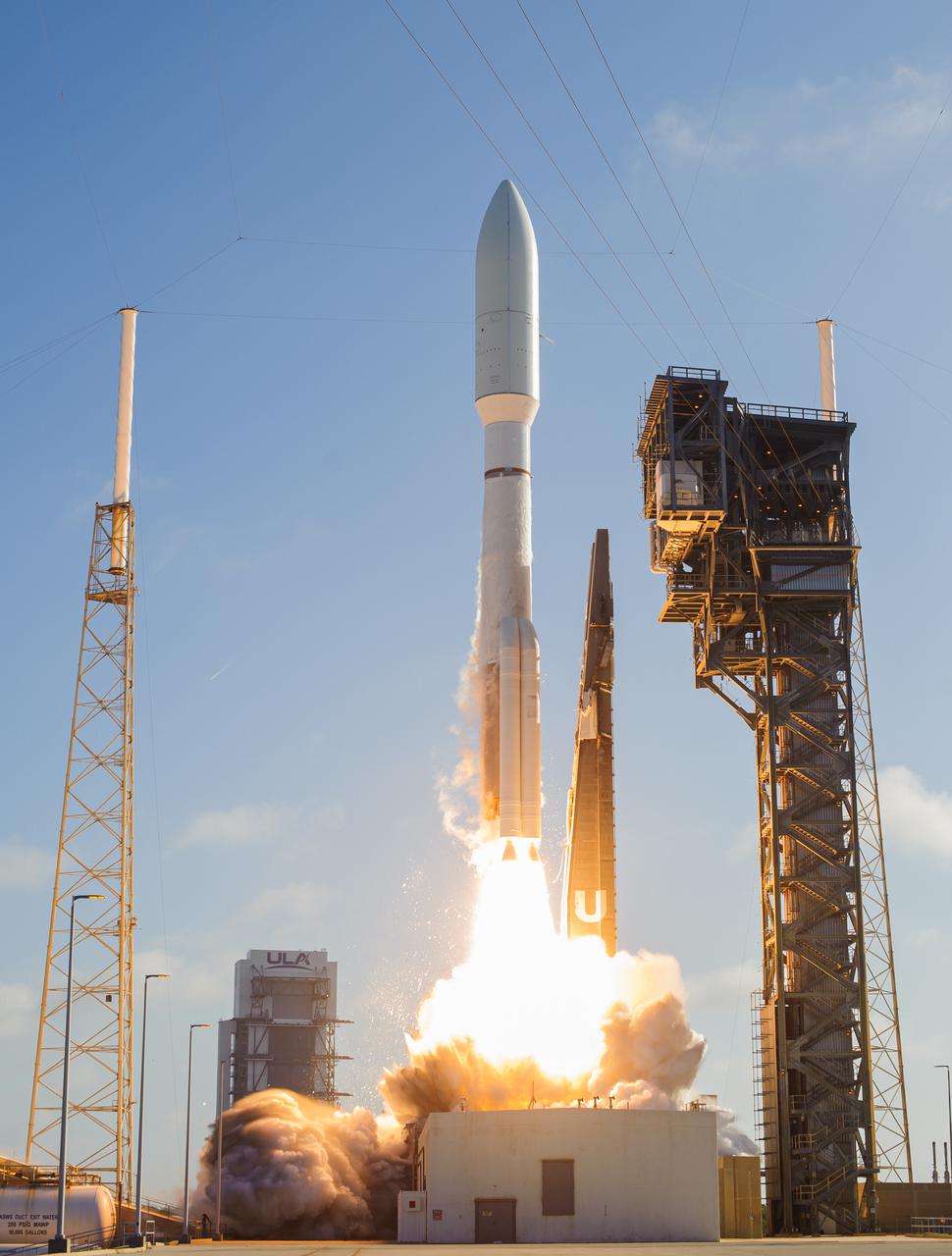
A United Launch Alliance Atlas V 541 rocket, carrying the National Oceanic and Atmospheric Administration’s (NOAA) Geostationary Operational Environmental Satellite-T (GOES-T), lifts off from Space Launch Complex 41 at Cape Canaveral Space Force Station in Florida on March 1, 2022. Liftoff was at 4:38 p.m. EST. GOES-T is the third satellite in the GOES-R series that will continue to help meteorologists observe and predict local weather events that affect public safety. GOES-T will be renamed GOES-18 once it reaches geostationary orbit. GOES-18 will go into operational service as GOES West to provide critical data for the U.S. West Coast, Alaska, Hawaii, Mexico, Central America, and the Pacific Ocean. The launch was managed by NASA’s Launch Services Program based at Kennedy Space Center in Florida, America’s multi-user spaceport.

A close-up view of the first-stage engines as the United Launch Alliance Atlas V 541 rocket, carrying the National Oceanic and Atmospheric Administration’s (NOAA) Geostationary Operational Environmental Satellite-T (GOES-T), lifts off from Space Launch Complex 41 at Cape Canaveral Space Force Station in Florida on March 1, 2022. Liftoff was at 4:38 p.m. EST. GOES-T is the third satellite in the GOES-R series that will continue to help meteorologists observe and predict local weather events that affect public safety. GOES-T will be renamed GOES-18 once it reaches geostationary orbit. GOES-18 will go into operational service as GOES West to provide critical data for the U.S. West Coast, Alaska, Hawaii, Mexico, Central America, and the Pacific Ocean. The launch was managed by NASA’s Launch Services Program based at Kennedy Space Center in Florida, America’s multi-user spaceport.
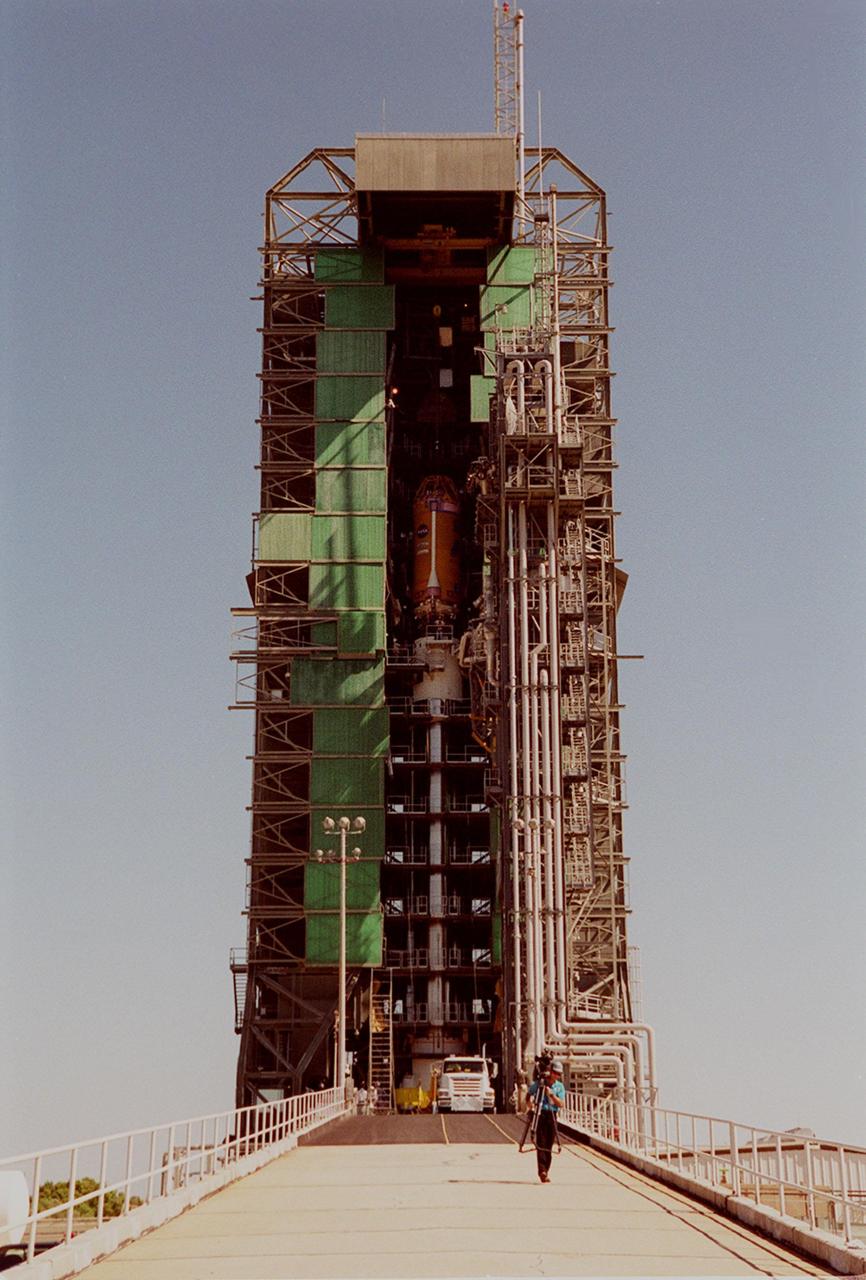
At launch pad 36-A, Cape Canaveral Air Force Station, lifting of the second stage of an Atlas II/Centaur rocket in the launch gantry is completed. The rocket is the launch vehicle for the GOES-L satellite, part of the NOAA National Weather Service system in weather imagery and atmospheric sounding information. The primary objective of the GOES-L is to provide a full capability satellite in an on-orbit storage condition, to assure NOAA continuity in services from a two-satellite constellation. Launch services are being provided by the 45th Space Wing
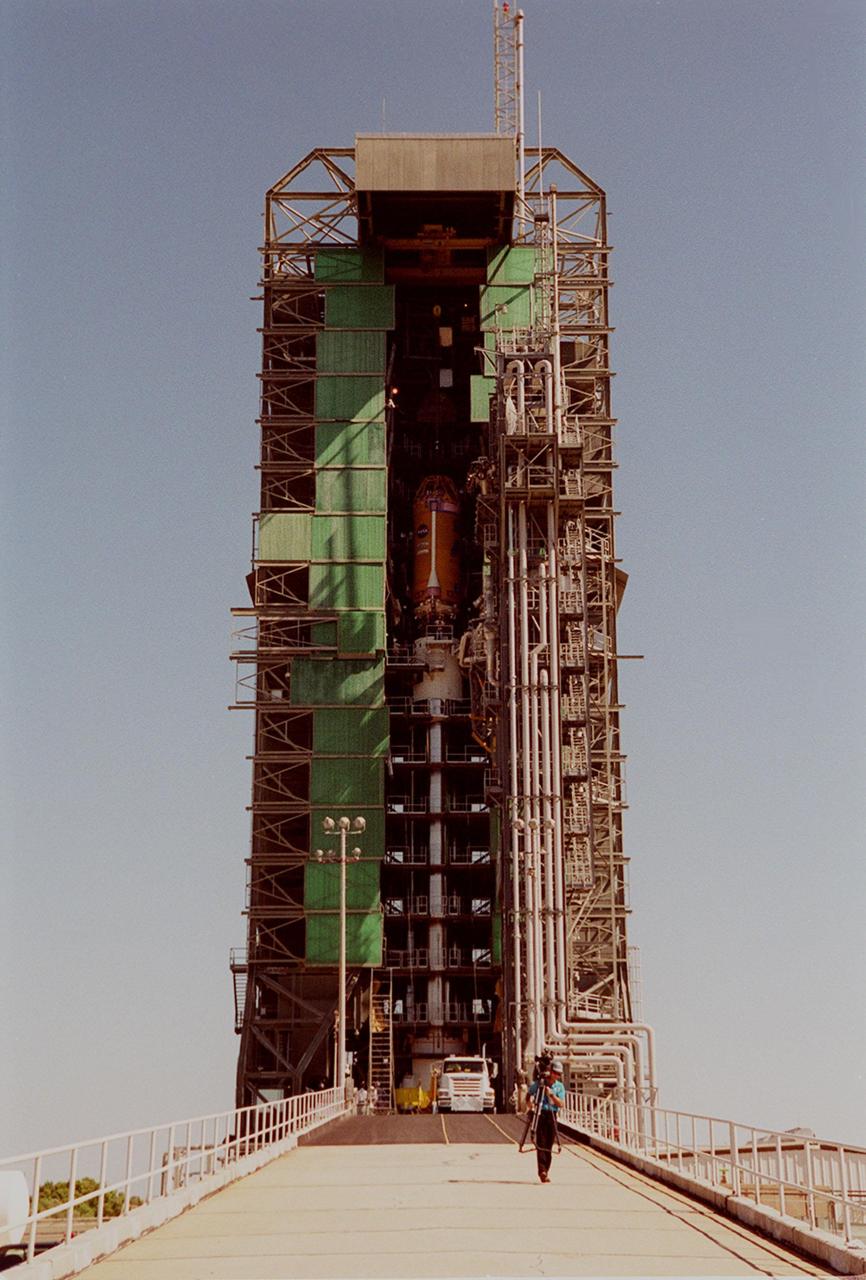
At launch pad 36-A, Cape Canaveral Air Force Station, lifting of the second stage of an Atlas II/Centaur rocket in the launch gantry is completed. The rocket is the launch vehicle for the GOES-L satellite, part of the NOAA National Weather Service system in weather imagery and atmospheric sounding information. The primary objective of the GOES-L is to provide a full capability satellite in an on-orbit storage condition, to assure NOAA continuity in services from a two-satellite constellation. Launch services are being provided by the 45th Space Wing
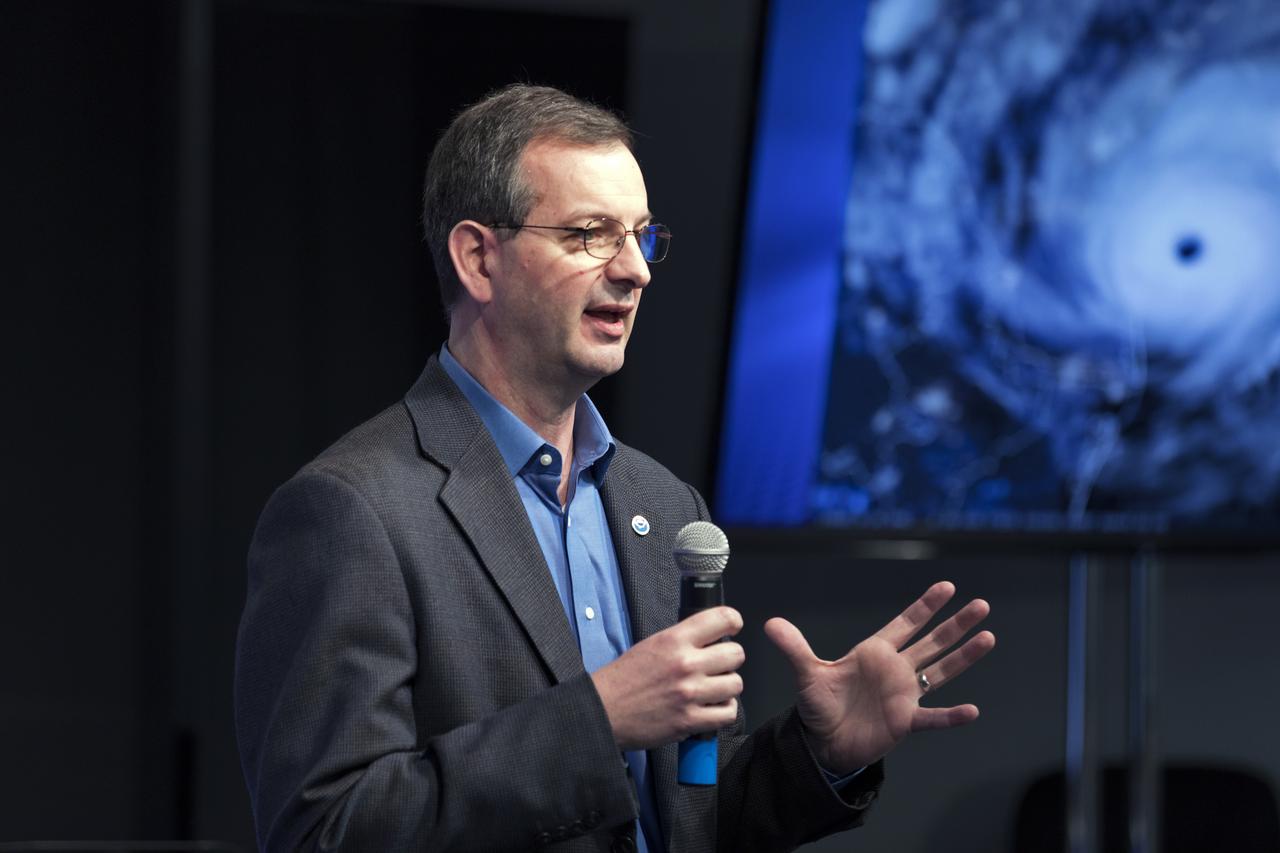
Joe Pica, director of the Office of Observations for the National Oceanic and Atmospheric Administration's, or NOAA’s, National Weather Service, speaks to members of social media in the Kennedy Space Center’s Press Site auditorium. The briefing focused on the Geostationary Operational Environmental Satellite, or GOES-S, the second spacecraft in a series of next-generation NOAA weather satellites. It will launch to a geostationary position over the U.S. to provide images of storms and help predict weather forecasts, severe weather outlooks, watches, warnings, lightning conditions and longer-term forecasting. GOES-S is slated to lift off at 5:02 p.m. EST on March 1, 2018 aboard a United Launch Alliance Atlas V rocket.

In the Kennedy Space Center's Press Site auditorium, Louis Uccellini, director of the National Weather Service for NOAA, speaks to members of the media at a mission briefing on National Oceanic and Atmospheric Administration's, or NOAA's, Geostationary Operational Environmental Satellite, or GOES-S. The spacecraft is the second satellite in a series of next-generation NOAA weather satellites. It will launch to a geostationary position over the U.S. to provide images of storms and help predict weather forecasts, severe weather outlooks, watches, warnings, lightning conditions and longer-term forecasting. GOES-S is slated to lift off at 5:02 p.m. EST on March 1, 2018 aboard a United Launch Alliance Atlas V rocket
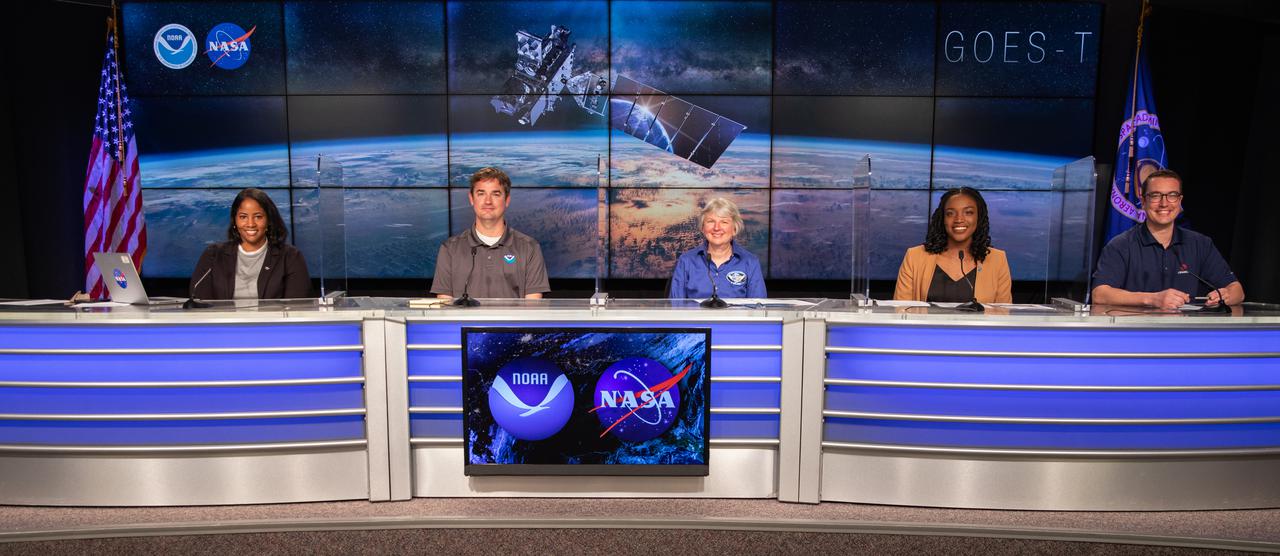
A science briefing for the National Oceanic and Atmospheric Administration’s (NOAA) Geostationary Operational Environmental Satellite-T (GOES-T) is held on Feb. 25, 2022, at NASA’s Kennedy Space Center in Florida. Participants from left, are Tylar Greene, briefing moderator, NASA Communications; Dr. Dan Lindsey, GOES-R program scientist, NOAA; Candace Carlisle, GOES-R flight project manager, NASA’s Goddard Space Flight Center; Tewa Kpulun, Geostationary Lightning Mapper science lead, Lockheed Martin; and Daniel Gall, Advanced Baseline Imager chief systems engineer, Space and Airborne Systems, L3 Harris Technologies, participates in the briefing. GOES-T is scheduled to lift off on a United Launch Alliance Atlas V 541 rocket from Space Launch Complex 41 at Cape Canaveral Space Force Station in Florida on March 1, 2022, at 4:38 p.m. GOES-T is the third satellite in the GOES-R series that will continue to help meteorologists observe and predict local weather events that affect public safety. The launch is being managed by NASA’s Launch Services Program based at Kennedy Space Center in Florida, America’s multi-user spaceport.
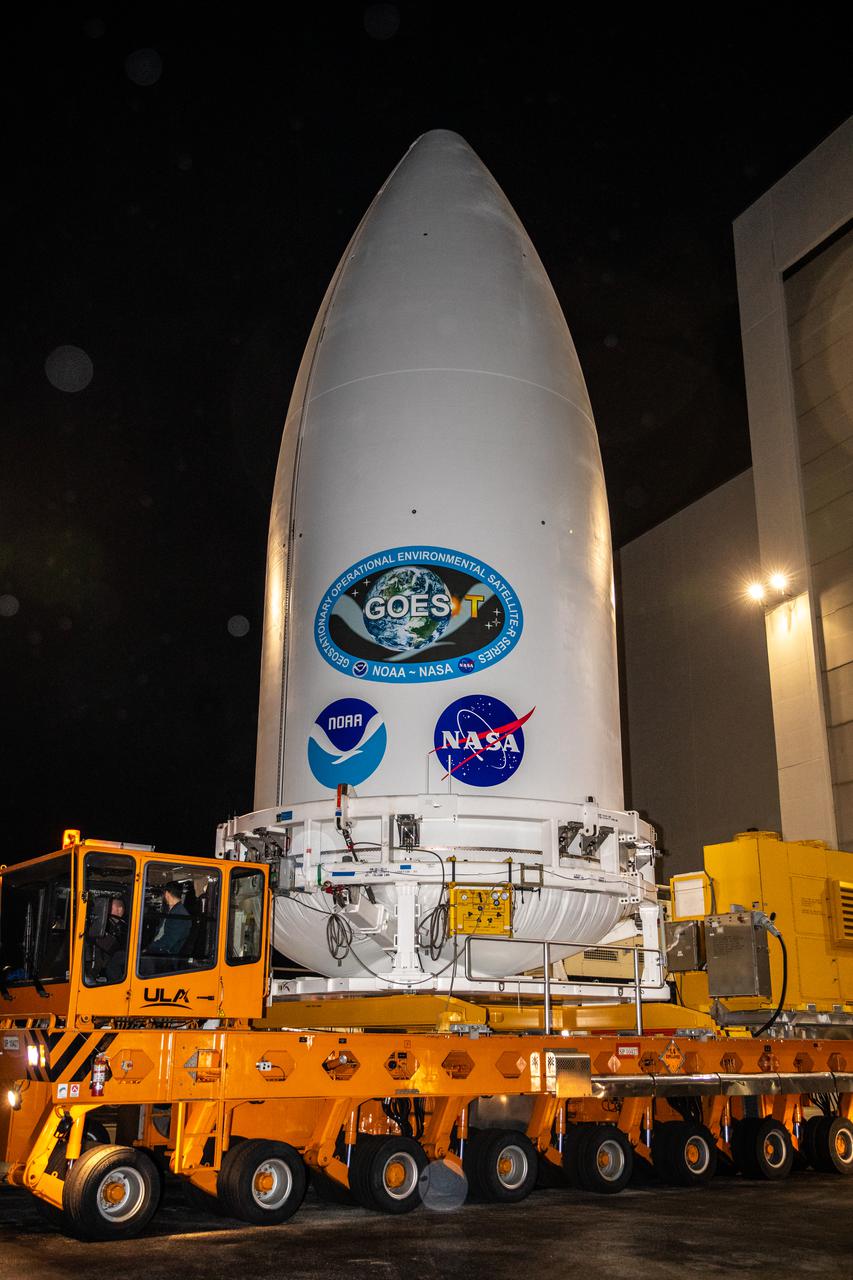
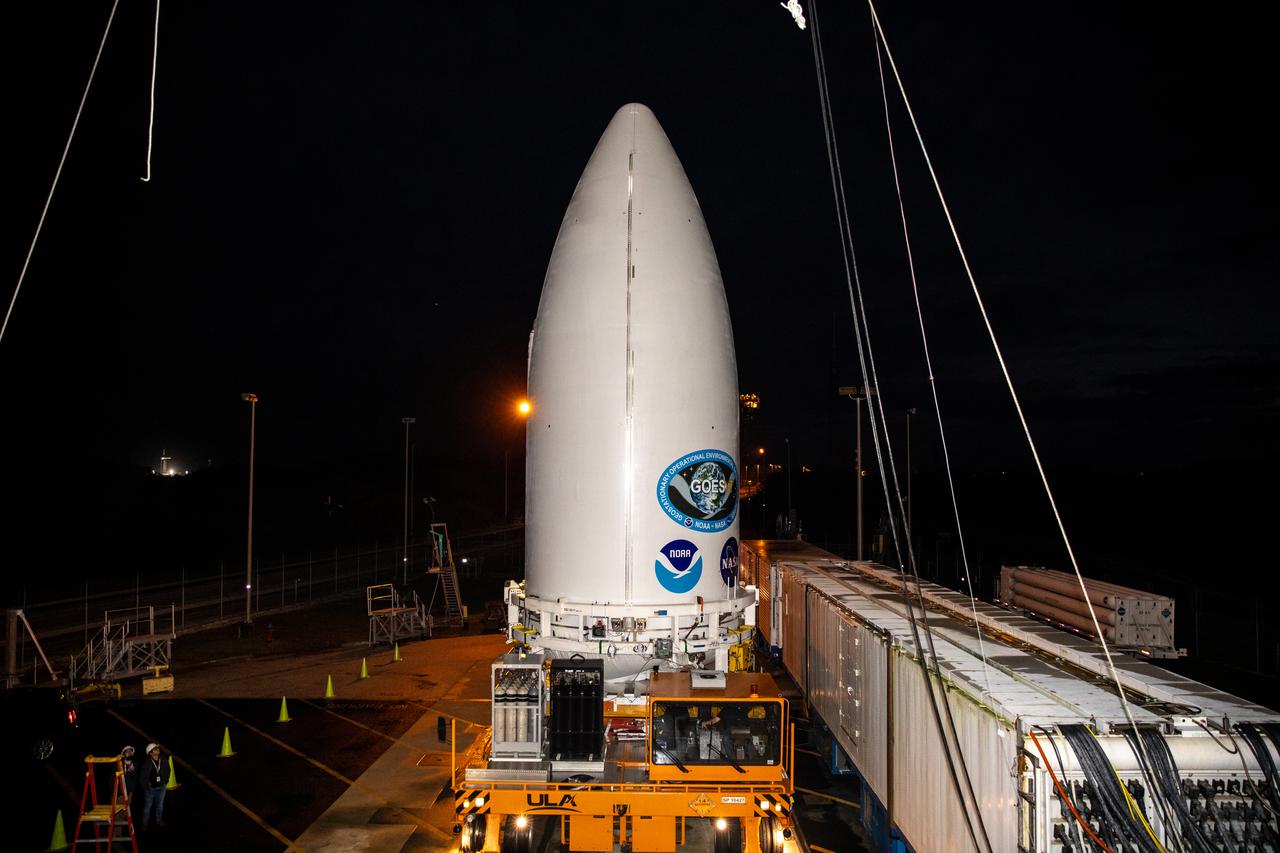
The National Oceanic and Atmospheric Administration’s (NOAA) Geostationary Operational Environmental Satellite-T (GOES-T), enclosed in its payload fairing, exits the Astrotech Space Operations facility in Titusville, Florida, for its trip to the Vertical Integration Facility at Space Launch Complex 41 at Cape Canaveral Space Force Station in Florida on Feb. 17, 2022. The satellite will be lifted up inside the integration facility and secured to the United Launch Alliance Atlas V 541 rocket. GOES-T is scheduled to launch atop the Atlas V rocket from SLC-41 on March 1, 2022, at 4:38 p.m. GOES-T is the third satellite in the GOES-R series that will continue to help meteorologists observe and predict local weather events that affect public safety. The launch is being managed by NASA’s Launch Services Program based at Kennedy Space Center in Florida, America’s multi-user spaceport.
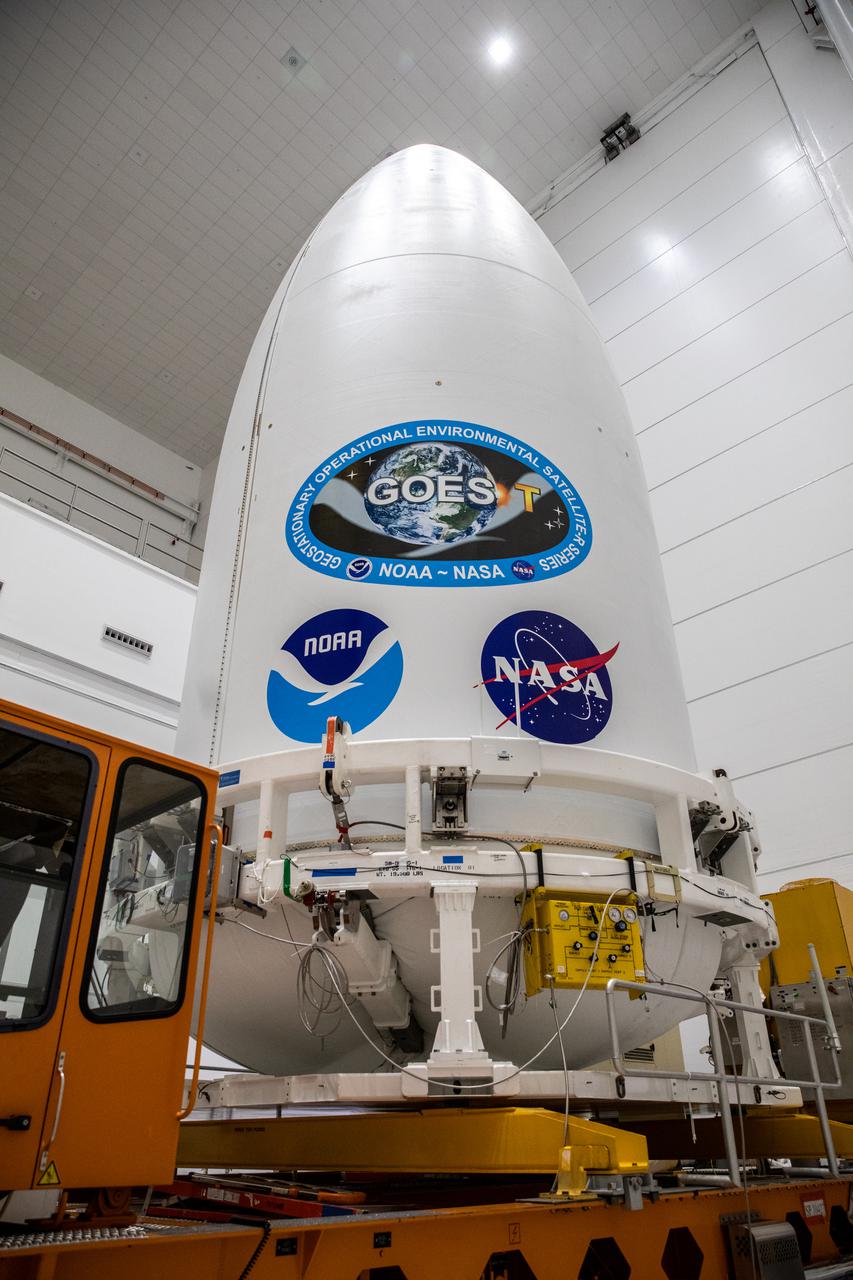
The National Oceanic and Atmospheric Administration’s (NOAA) Geostationary Operational Environmental Satellite-T (GOES-T), enclosed in its payload fairing, is prepared for its move from the Astrotech Space Operations facility in Titusville, Florida, to the Vertical Integration Facility at Space Launch Complex 41 at Cape Canaveral Space Force Station in Florida on Feb. 17, 2022. The satellite will be lifted up inside the integration facility and secured to the United Launch Alliance Atlas V 541 rocket. GOES-T is scheduled to launch atop the Atlas V rocket from SLC-41 on March 1, 2022, at 4:38 p.m. GOES-T is the third satellite in the GOES-R series that will continue to help meteorologists observe and predict local weather events that affect public safety. The launch is being managed by NASA’s Launch Services Program based at Kennedy Space Center in Florida, America’s multi-user spaceport.
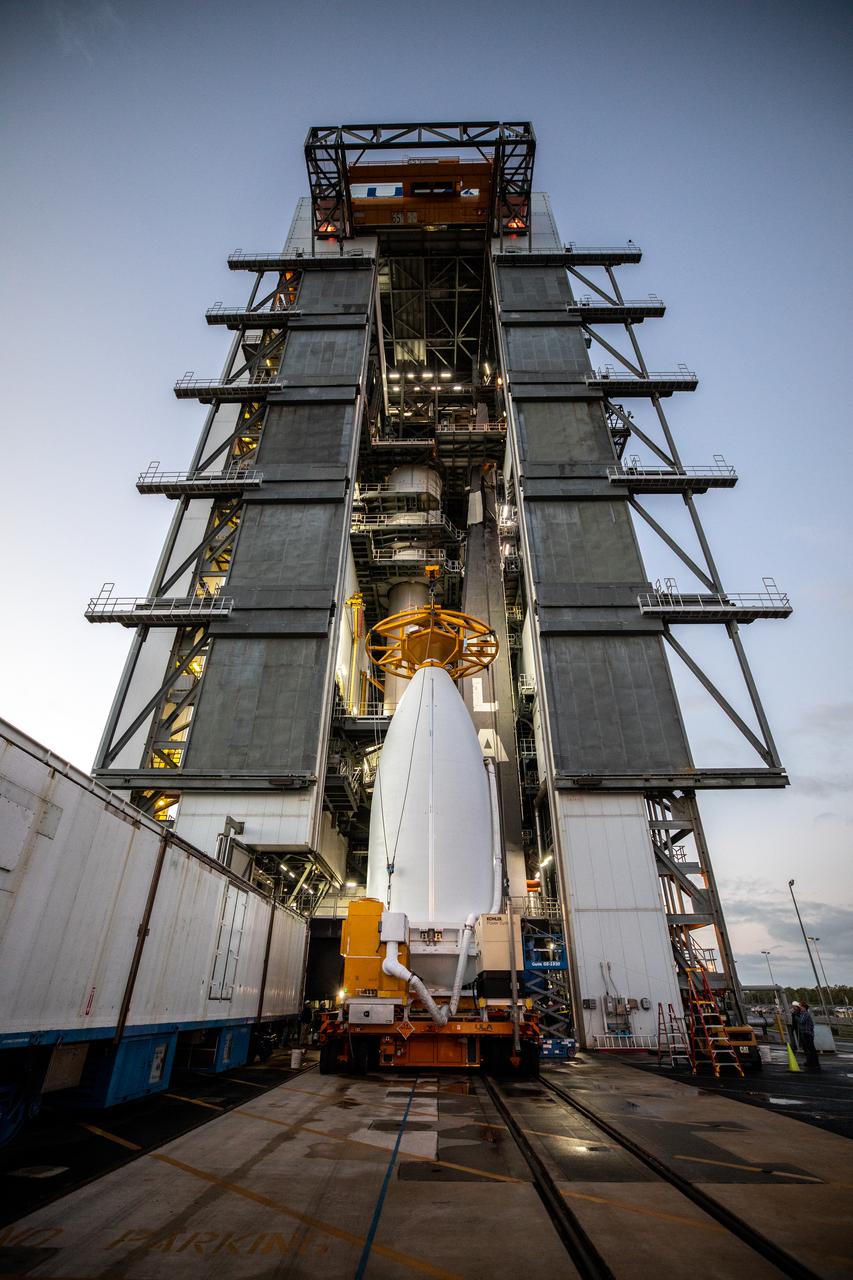
Preparations are underway to lift the National Oceanic and Atmospheric Administration’s (NOAA) Geostationary Operational Environmental Satellite-T (GOES-T), enclosed in its payload fairing, up into the Vertical Integration Facility at Space Launch Complex 41 at Cape Canaveral Space Force Station in Florida on Feb. 17, 2022. The satellite will be secured atop the United Launch Alliance Atlas V 541 rocket. GOES-T is scheduled to launch atop the Atlas V rocket from SLC-41 on March 1, 2022, at 4:38 p.m. GOES-T is the third satellite in the GOES-R series that will continue to help meteorologists observe and predict local weather events that affect public safety. The launch is being managed by NASA’s Launch Services Program based at Kennedy Space Center in Florida, America’s multi-user spaceport.
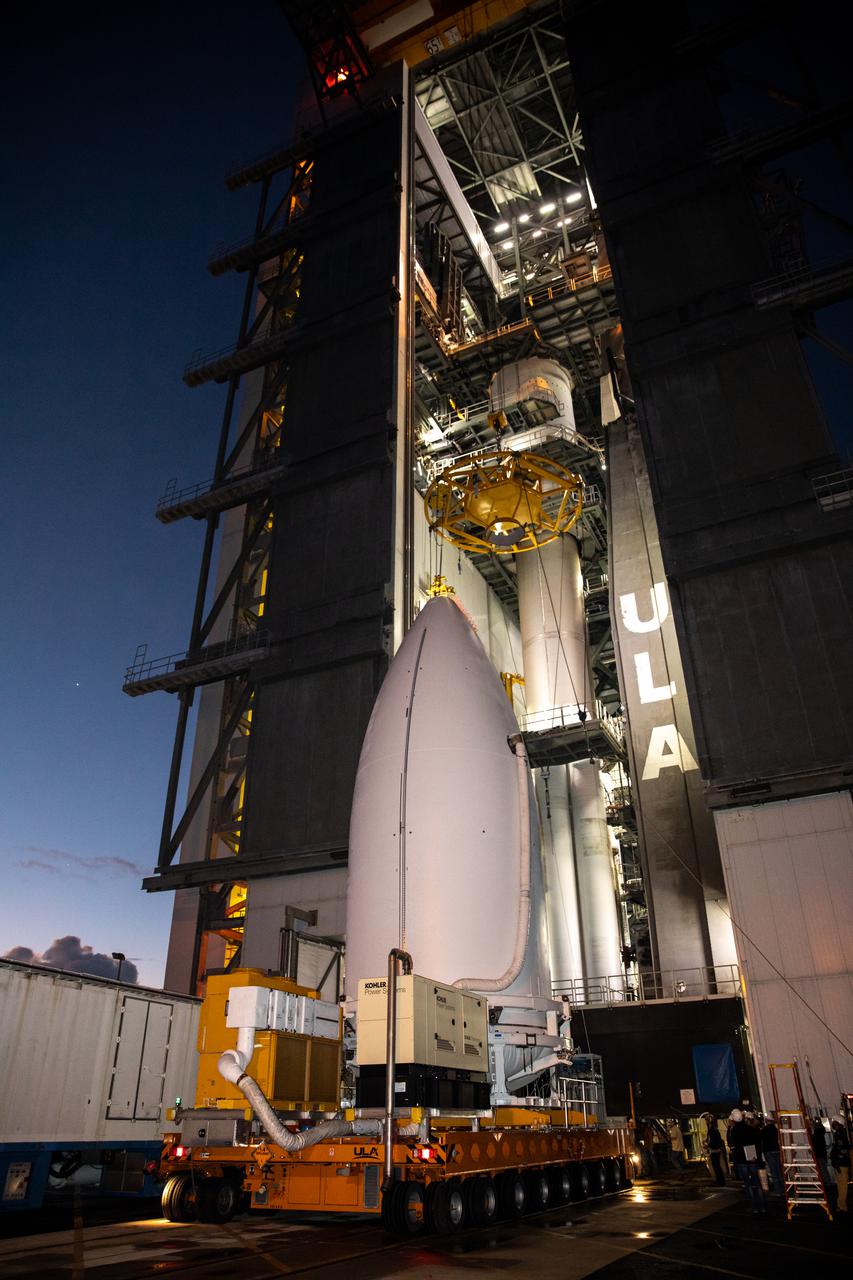
Preparations are underway to lift the National Oceanic and Atmospheric Administration’s (NOAA) Geostationary Operational Environmental Satellite-T (GOES-T), enclosed in its payload fairing, up into the Vertical Integration Facility at Space Launch Complex 41 at Cape Canaveral Space Force Station in Florida on Feb. 17, 2022. The satellite will be secured atop the United Launch Alliance Atlas V 541 rocket. GOES-T is scheduled to launch atop the Atlas V rocket from SLC-41 on March 1, 2022, at 4:38 p.m. GOES-T is the third satellite in the GOES-R series that will continue to help meteorologists observe and predict local weather events that affect public safety. The launch is being managed by NASA’s Launch Services Program based at Kennedy Space Center in Florida, America’s multi-user spaceport.
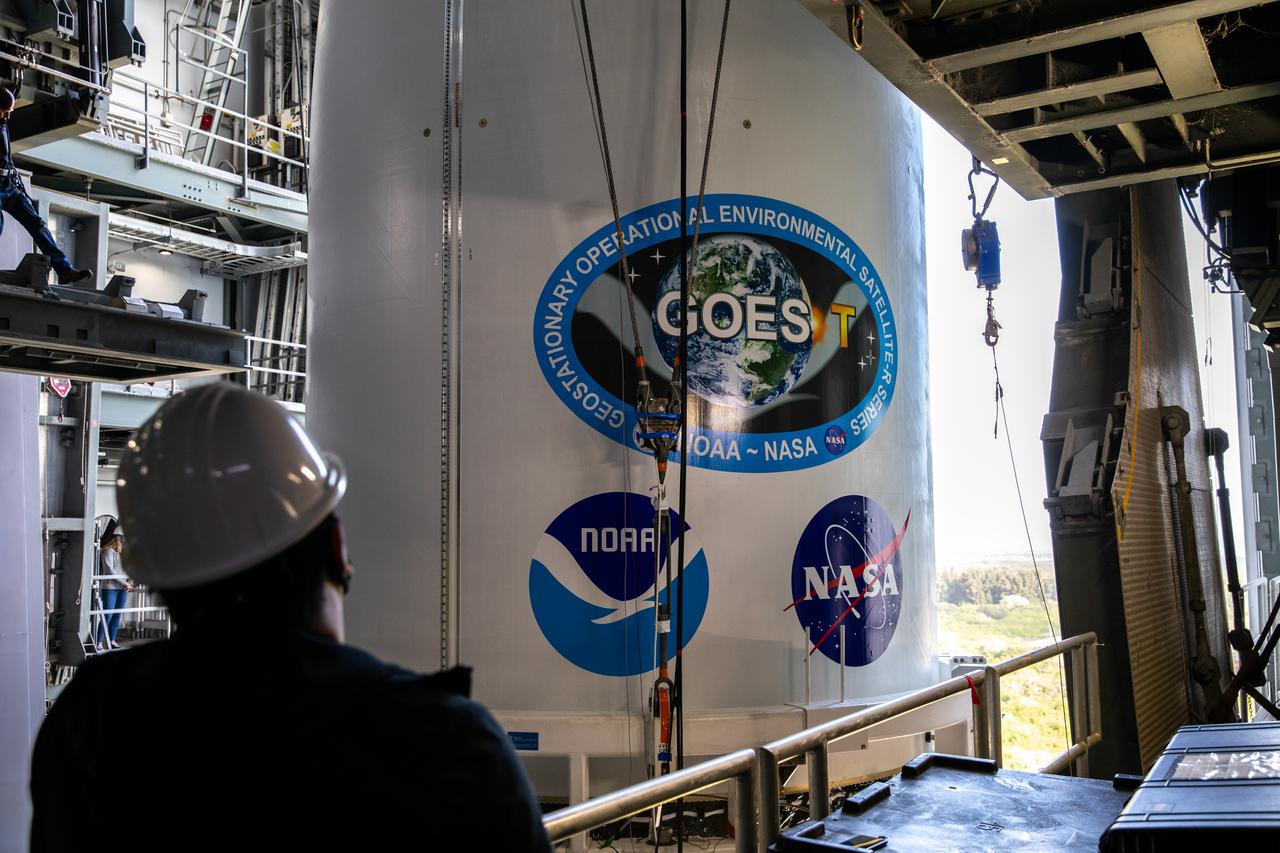
A United Launch Alliance technician monitors the progress as the National Oceanic and Atmospheric Administration’s (NOAA) Geostationary Operational Environmental Satellite-T (GOES-T), enclosed in its payload fairing, is moved into the Vertical Integration Facility at Space Launch Complex 41 at Cape Canaveral Space Force Station in Florida on Feb. 17, 2022. The satellite will be secured atop the United Launch Alliance Atlas V 541 rocket. GOES-T is scheduled to launch atop the Atlas V rocket from SLC-41 on March 1, 2022, at 4:38 p.m. GOES-T is the third satellite in the GOES-R series that will continue to help meteorologists observe and predict local weather events that affect public safety. The launch is being managed by NASA’s Launch Services Program based at Kennedy Space Center in Florida, America’s multi-user spaceport.
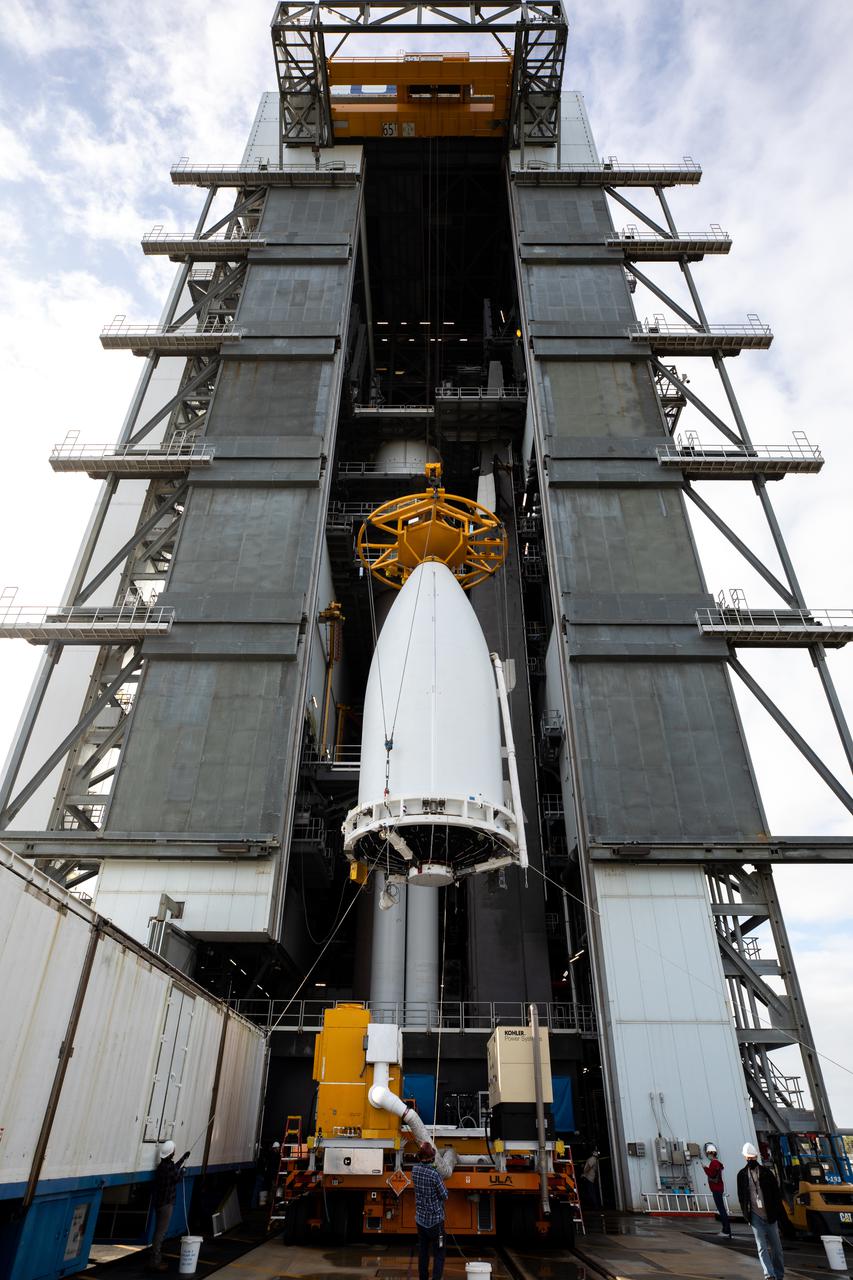
The National Oceanic and Atmospheric Administration’s (NOAA) Geostationary Operational Environmental Satellite-T (GOES-T), enclosed in its payload fairing, is lifted up by crane for its move into the Vertical Integration Facility at Space Launch Complex 41 at Cape Canaveral Space Force Station in Florida on Feb. 17, 2022. The satellite will be secured atop the United Launch Alliance Atlas V 541 rocket. GOES-T is scheduled to launch atop the Atlas V rocket from SLC-41 on March 1, 2022, at 4:38 p.m. GOES-T is the third satellite in the GOES-R series that will continue to help meteorologists observe and predict local weather events that affect public safety. The launch is being managed by NASA’s Launch Services Program based at Kennedy Space Center in Florida, America’s multi-user spaceport.

Jasmine Hopkins, NASA Communicators, moderates a prelaunch news conference for the National Oceanic and Atmospheric Administration’s (NOAA) Geostationary Operational Environmental Satellite-T (GOES-T) held on Feb. 26, 2022, at NASA’s Kennedy Space Center in Florida. GOES-T is scheduled to lift off on a United Launch Alliance Atlas V 541 rocket from Space Launch Complex 41 at Cape Canaveral Space Force Station in Florida on March 1, 2022, at 4:38 p.m. GOES-T is the third satellite in the GOES-R series that will continue to help meteorologists observe and predict local weather events that affect public safety. The launch is being managed by NASA’s Launch Services Program based at Kennedy Space Center in Florida, America’s multi-user spaceport.
Preparations are underway to lift the National Oceanic and Atmospheric Administration’s (NOAA) Geostationary Operational Environmental Satellite-T (GOES-T), enclosed in its payload fairing, up into the Vertical Integration Facility at Space Launch Complex 41 at Cape Canaveral Space Force Station in Florida on Feb. 17, 2022. The satellite will be secured atop the United Launch Alliance Atlas V 541 rocket. GOES-T is scheduled to launch atop the Atlas V rocket from SLC-41 on March 1, 2022, at 4:38 p.m. GOES-T is the third satellite in the GOES-R series that will continue to help meteorologists observe and predict local weather events that affect public safety. The launch is being managed by NASA’s Launch Services Program based at Kennedy Space Center in Florida, America’s multi-user spaceport.
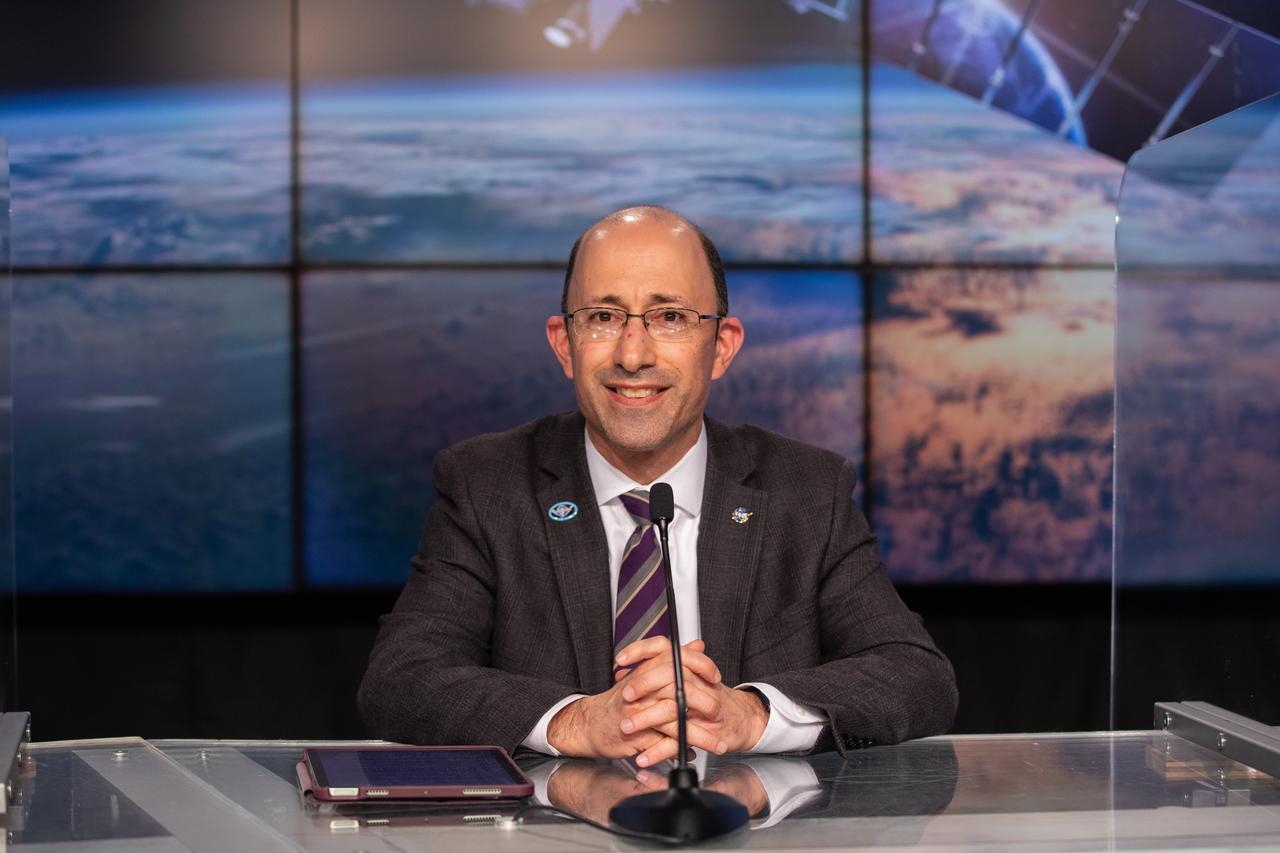
A prelaunch news conference for the National Oceanic and Atmospheric Administration’s (NOAA) Geostationary Operational Environmental Satellite-T (GOES-T) is held on Feb. 26, 2022, at NASA’s Kennedy Space Center in Florida. John Gagosian, director, Joint Agency Satellite Division, NASA Headquarters Science Mission Directorate, answers questions during the news conference. GOES-T is scheduled to lift off on a United Launch Alliance Atlas V 541 rocket from Space Launch Complex 41 at Cape Canaveral Space Force Station in Florida on March 1, 2022, at 4:38 p.m. GOES-T is the third satellite in the GOES-R series that will continue to help meteorologists observe and predict local weather events that affect public safety. The launch is being managed by NASA’s Launch Services Program based at Kennedy Space Center in Florida, America’s multi-user spaceport.
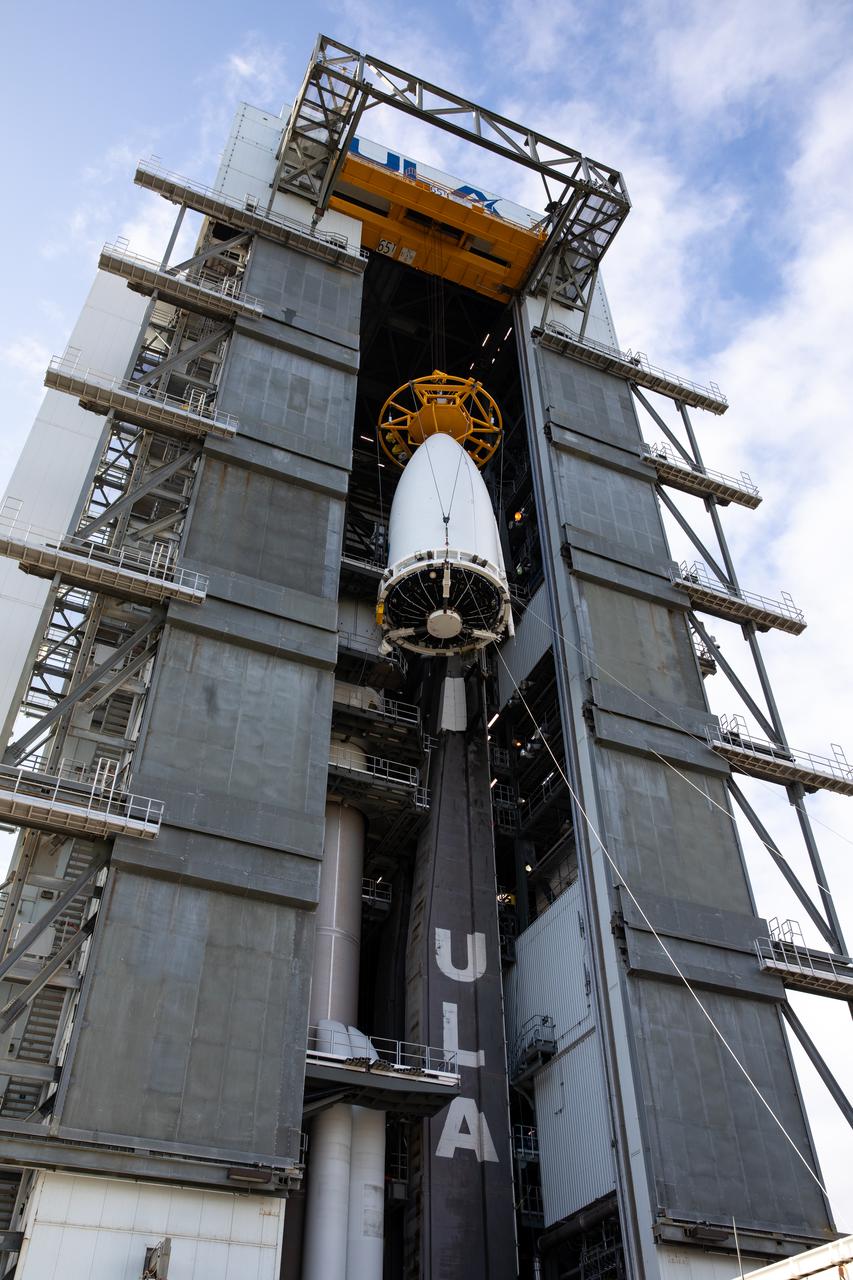
The National Oceanic and Atmospheric Administration’s (NOAA) Geostationary Operational Environmental Satellite-T (GOES-T), enclosed in its payload fairing, is lifted up by crane for its move into the Vertical Integration Facility at Space Launch Complex 41 at Cape Canaveral Space Force Station in Florida on Feb. 17, 2022. The satellite will be secured atop the United Launch Alliance Atlas V 541 rocket. GOES-T is scheduled to launch atop the Atlas V rocket from SLC-41 on March 1, 2022, at 4:38 p.m. GOES-T is the third satellite in the GOES-R series that will continue to help meteorologists observe and predict local weather events that affect public safety. The launch is being managed by NASA’s Launch Services Program based at Kennedy Space Center in Florida, America’s multi-user spaceport.
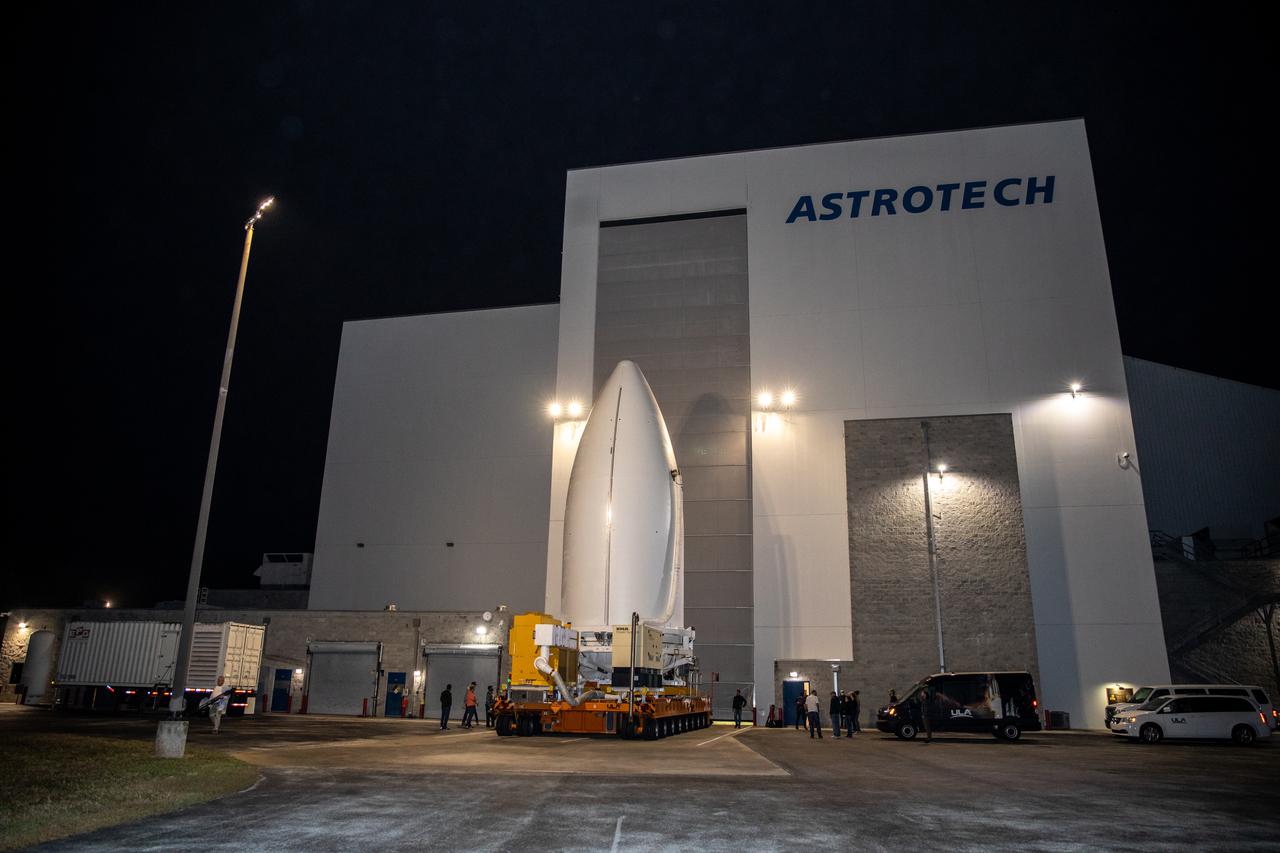
The National Oceanic and Atmospheric Administration’s (NOAA) Geostationary Operational Environmental Satellite-T (GOES-T), enclosed in its payload fairing, exits the Astrotech Space Operations facility in Titusville, Florida, for its trip to the Vertical Integration Facility at Space Launch Complex 41 at Cape Canaveral Space Force Station in Florida on Feb. 17, 2022. The satellite will be lifted up inside the integration facility and secured to the United Launch Alliance Atlas V 541 rocket. GOES-T is scheduled to launch atop the Atlas V rocket from SLC-41 on March 1, 2022, at 4:38 p.m. GOES-T is the third satellite in the GOES-R series that will continue to help meteorologists observe and predict local weather events that affect public safety. The launch is being managed by NASA’s Launch Services Program based at Kennedy Space Center in Florida, America’s multi-user spaceport.
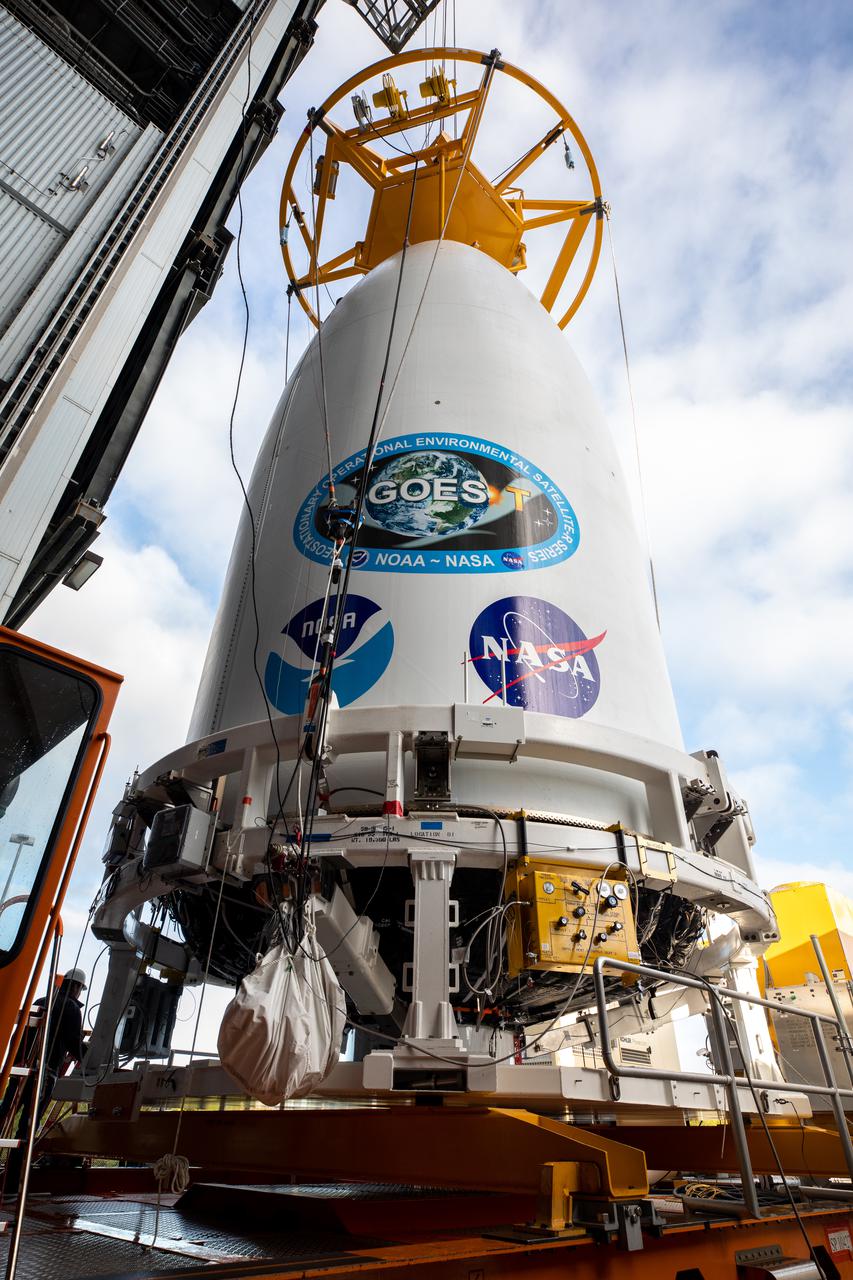
A crane is attached to the National Oceanic and Atmospheric Administration’s (NOAA) Geostationary Operational Environmental Satellite-T (GOES-T), enclosed in its payload fairing, for its lift up into the Vertical Integration Facility at Space Launch Complex 41 at Cape Canaveral Space Force Station in Florida on Feb. 17, 2022. The satellite will be secured atop the United Launch Alliance Atlas V 541 rocket. GOES-T is scheduled to launch atop the Atlas V rocket from SLC-41 on March 1, 2022, at 4:38 p.m. GOES-T is the third satellite in the GOES-R series that will continue to help meteorologists observe and predict local weather events that affect public safety. The launch is being managed by NASA’s Launch Services Program based at Kennedy Space Center in Florida, America’s multi-user spaceport.
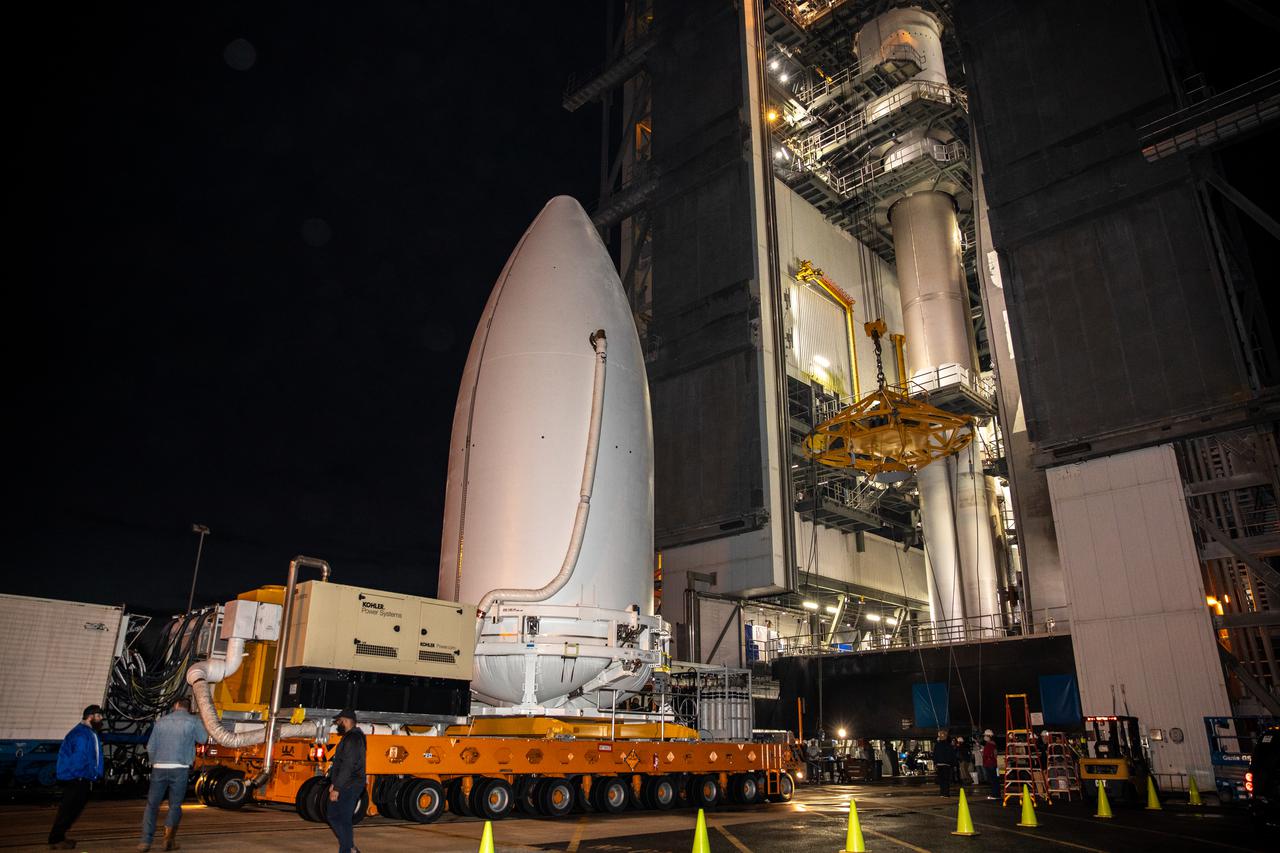
The National Oceanic and Atmospheric Administration’s (NOAA) Geostationary Operational Environmental Satellite-T (GOES-T), enclosed in its payload fairing, arrives at the Vertical Integration Facility at Space Launch Complex 41 at Cape Canaveral Space Force Station in Florida on Feb. 17, 2022. The satellite will be lifted up inside the integration facility and secured to the United Launch Alliance Atlas V 541 rocket. GOES-T is scheduled to launch atop the Atlas V rocket from SLC-41 on March 1, 2022, at 4:38 p.m. GOES-T is the third satellite in the GOES-R series that will continue to help meteorologists observe and predict local weather events that affect public safety. The launch is being managed by NASA’s Launch Services Program based at Kennedy Space Center in Florida, America’s multi-user spaceport.
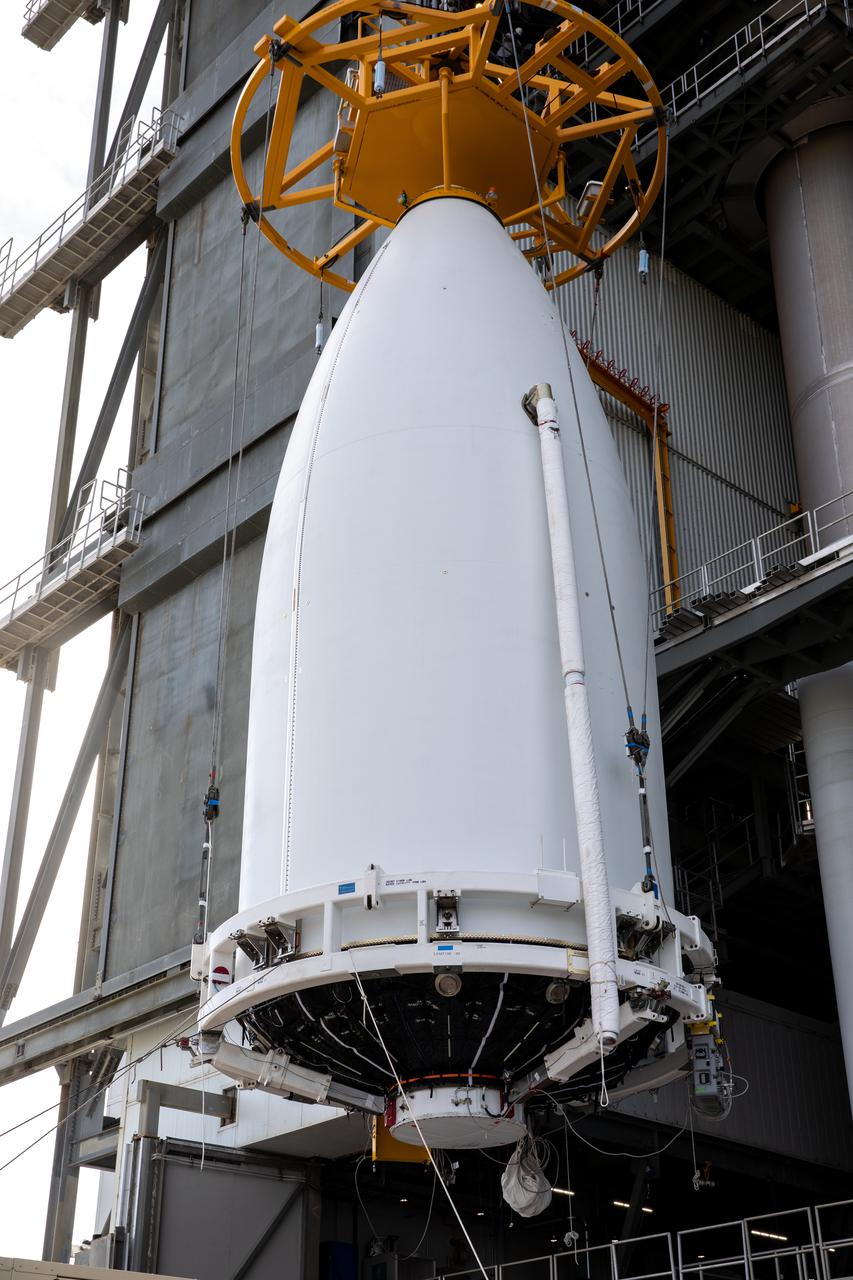
The National Oceanic and Atmospheric Administration’s (NOAA) Geostationary Operational Environmental Satellite-T (GOES-T), enclosed in its payload fairing, is lifted up by crane for its move into the Vertical Integration Facility at Space Launch Complex 41 at Cape Canaveral Space Force Station in Florida on Feb. 17, 2022. The satellite will be secured atop the United Launch Alliance Atlas V 541 rocket. GOES-T is scheduled to launch atop the Atlas V rocket from SLC-41 on March 1, 2022, at 4:38 p.m. GOES-T is the third satellite in the GOES-R series that will continue to help meteorologists observe and predict local weather events that affect public safety. The launch is being managed by NASA’s Launch Services Program based at Kennedy Space Center in Florida, America’s multi-user spaceport.
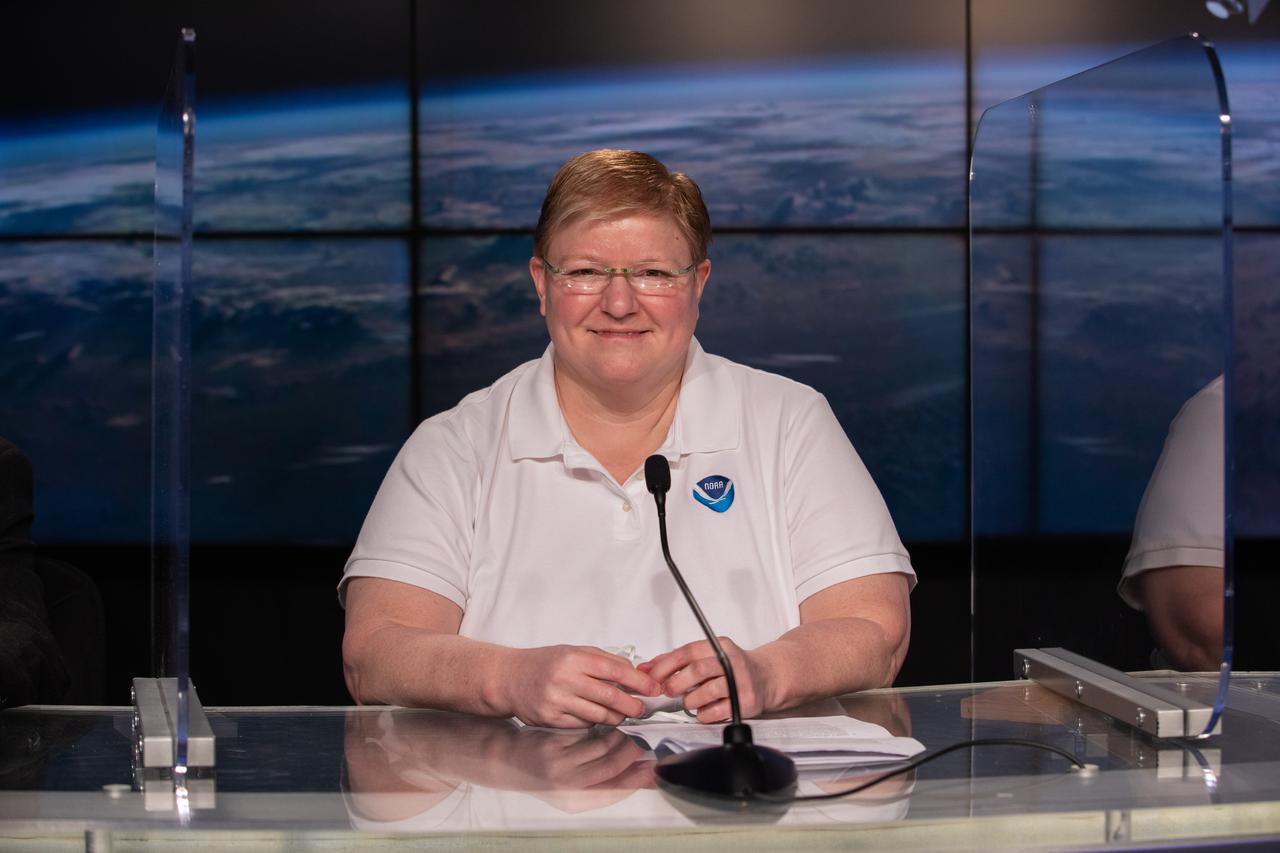
A prelaunch news conference for the National Oceanic and Atmospheric Administration’s (NOAA) Geostationary Operational Environmental Satellite-T (GOES-T) is held on Feb. 26, 2022, at NASA’s Kennedy Space Center in Florida. Pam Sullivan, director, GOES-R Program, NOAA, answers questions during the news conference. GOES-T is scheduled to lift off on a United Launch Alliance Atlas V 541 rocket from Space Launch Complex 41 at Cape Canaveral Space Force Station in Florida on March 1, 2022, at 4:38 p.m. GOES-T is the third satellite in the GOES-R series that will continue to help meteorologists observe and predict local weather events that affect public safety. The launch is being managed by NASA’s Launch Services Program based at Kennedy Space Center in Florida, America’s multi-user spaceport.
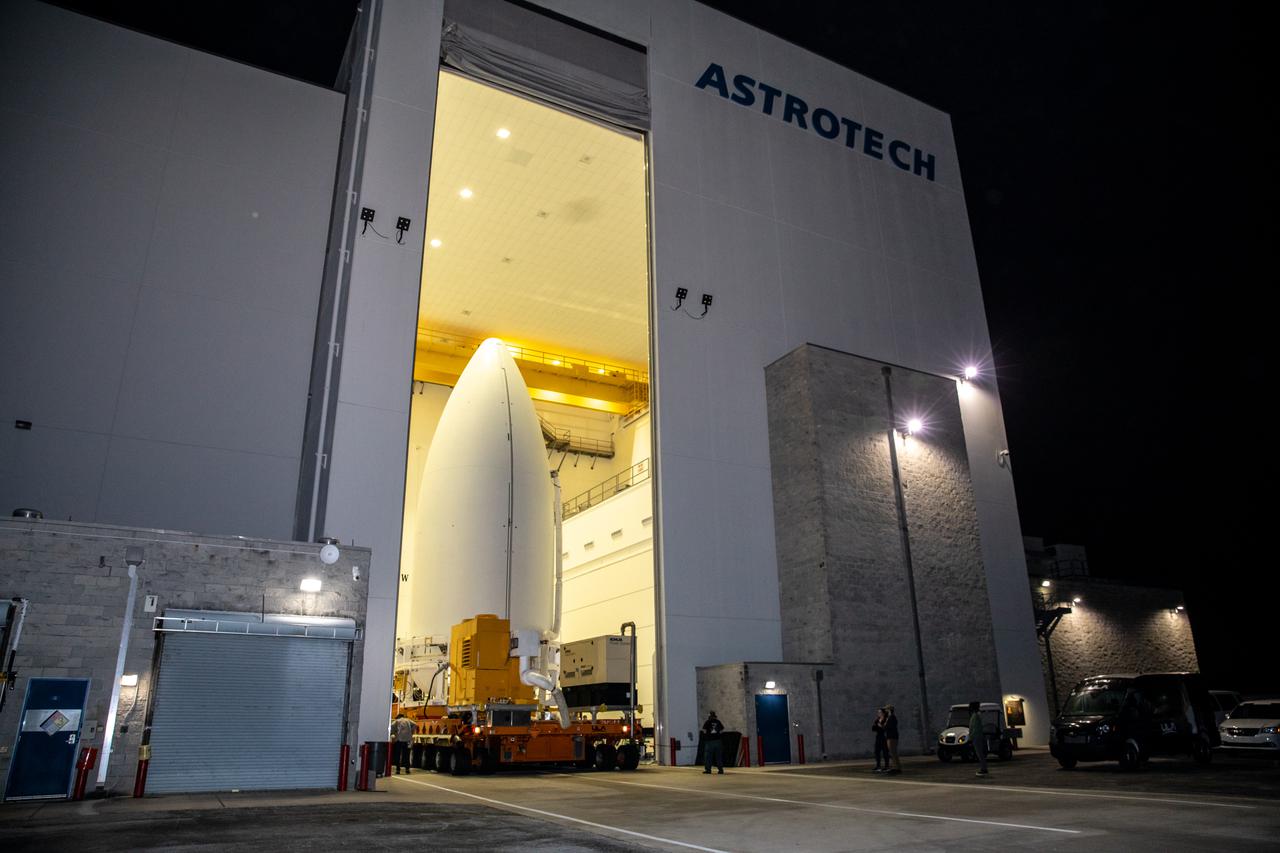
The National Oceanic and Atmospheric Administration’s (NOAA) Geostationary Operational Environmental Satellite-T (GOES-T), enclosed in its payload fairing, begins its move out of the Astrotech Space Operations facility in Titusville, Florida, for the trip to the Vertical Integration Facility at Space Launch Complex 41 at Cape Canaveral Space Force Station in Florida on Feb. 17, 2022. The satellite will be lifted up inside the integration facility and secured to the United Launch Alliance Atlas V 541 rocket. GOES-T is scheduled to launch atop the Atlas V rocket from SLC-41 on March 1, 2022, at 4:38 p.m. GOES-T is the third satellite in the GOES-R series that will continue to help meteorologists observe and predict local weather events that affect public safety. The launch is being managed by NASA’s Launch Services Program based at Kennedy Space Center in Florida, America’s multi-user spaceport.
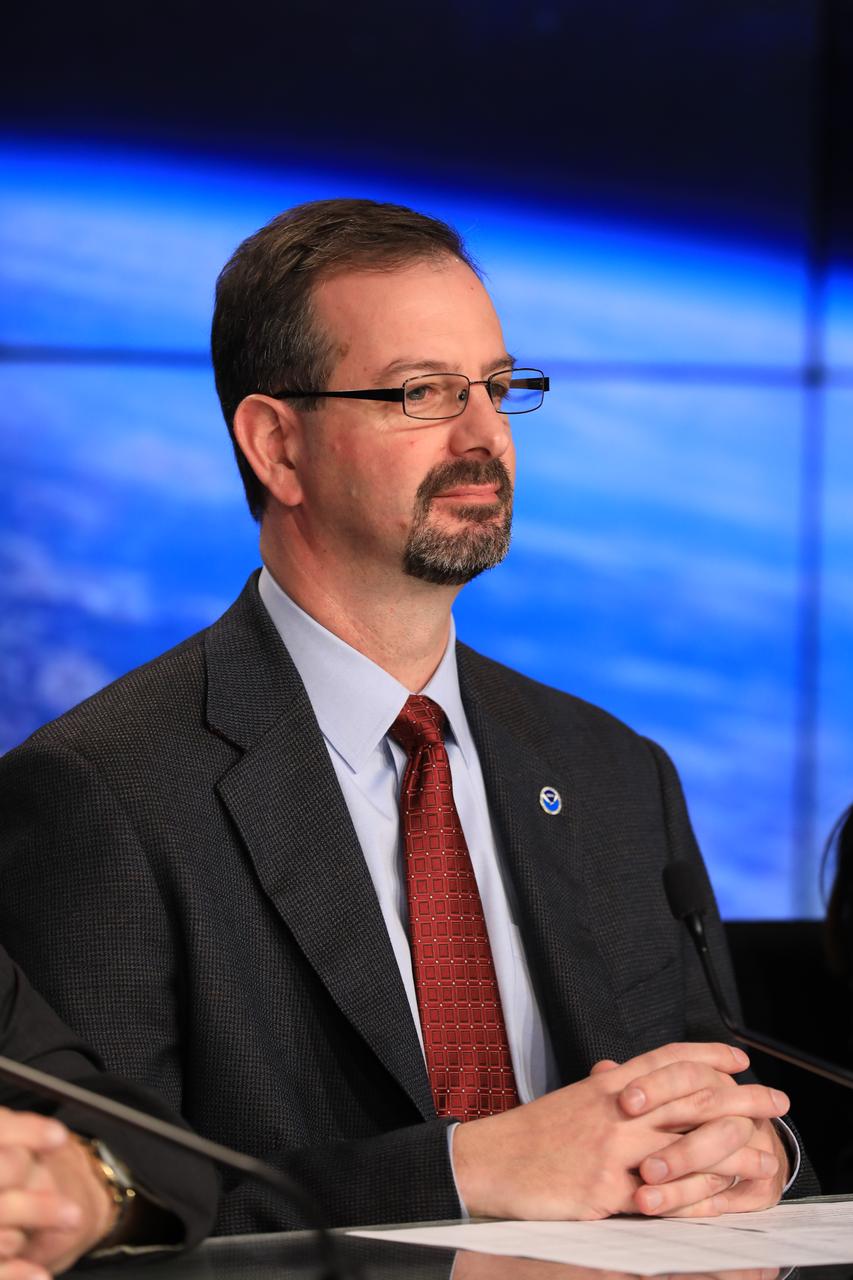
In the Kennedy Space Center's Press Site auditorium, Joseph A. Pica, director of the National Weather Service Office of Observations, speaks to the media during a mission briefing on the Geostationary Operational Environmental Satellite (GOES-R). GOES-R is the first satellite in a series of next-generation GOES satellites for NOAA, the National Oceanographic and Atmospheric Administration. It will launch to a geostationary orbit over the western hemisphere to provide images of storms and help meteorologists predict severe weather conditionals and develop long-range forecasts.
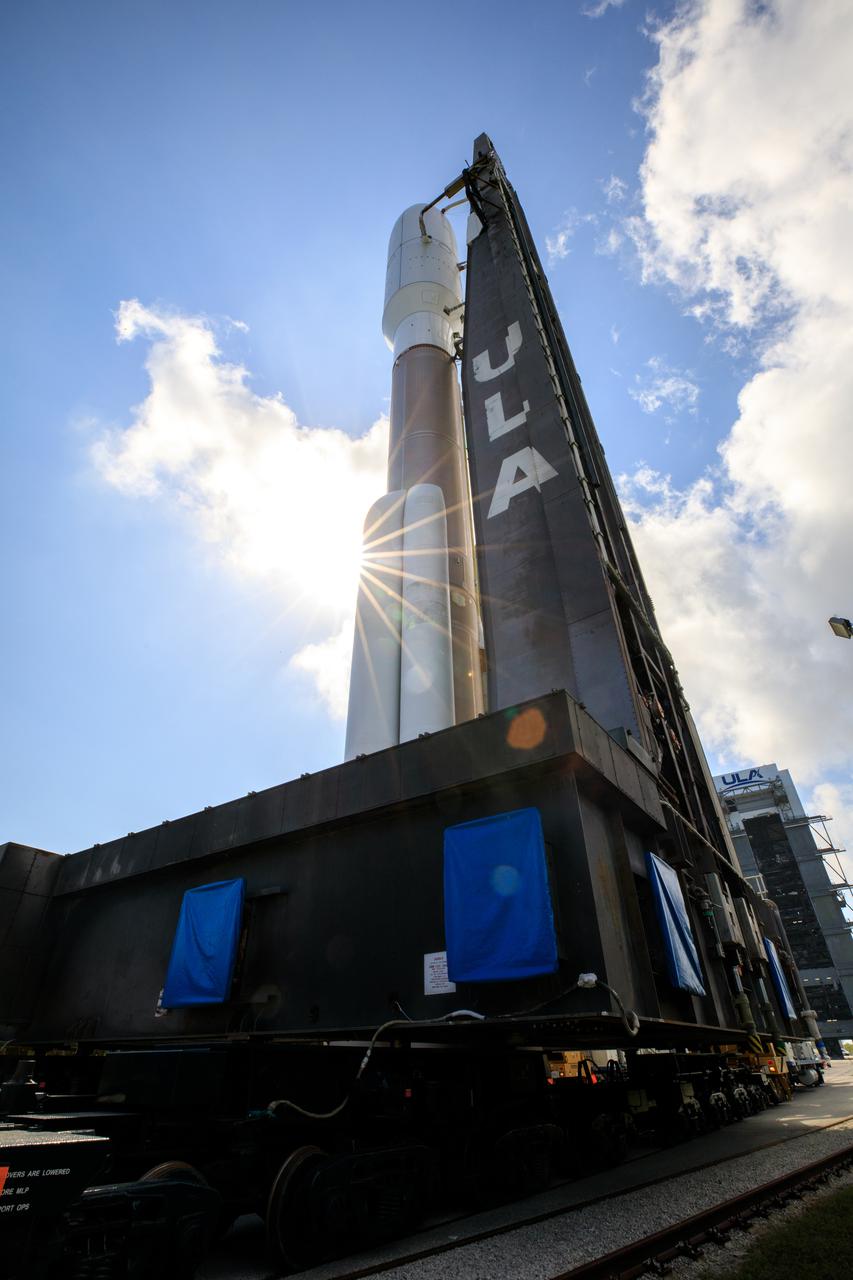
A United Launch Alliance Atlas V 541 rocket carrying the National Oceanic and Atmospheric Administration’s (NOAA) Geostationary Operational Environmental Satellite-T (GOES-T), rolls out of the Vertical Integration Facility on its way to Space Launch Complex 41 at Cape Canaveral Space Force Station in Florida on Feb. 28, 2022. GOES-T will lift off atop the Atlas V from SLC-41 on March 1, 2022, at 4:38 p.m. GOES-T is the third satellite in the GOES-R series that will continue to help meteorologists observe and predict local weather events that affect public safety. GOES-T will be renamed GOES-18 once it reaches geostationary orbit. GOES-18 will go into operational service as GOES West to provide critical data for the U.S. West Coast, Alaska, Hawaii, Mexico, Central America, and the Pacific Ocean. The launch is managed by NASA’s Launch Services Program based at Kennedy Space Center in Florida, America’s multi-user spaceport.
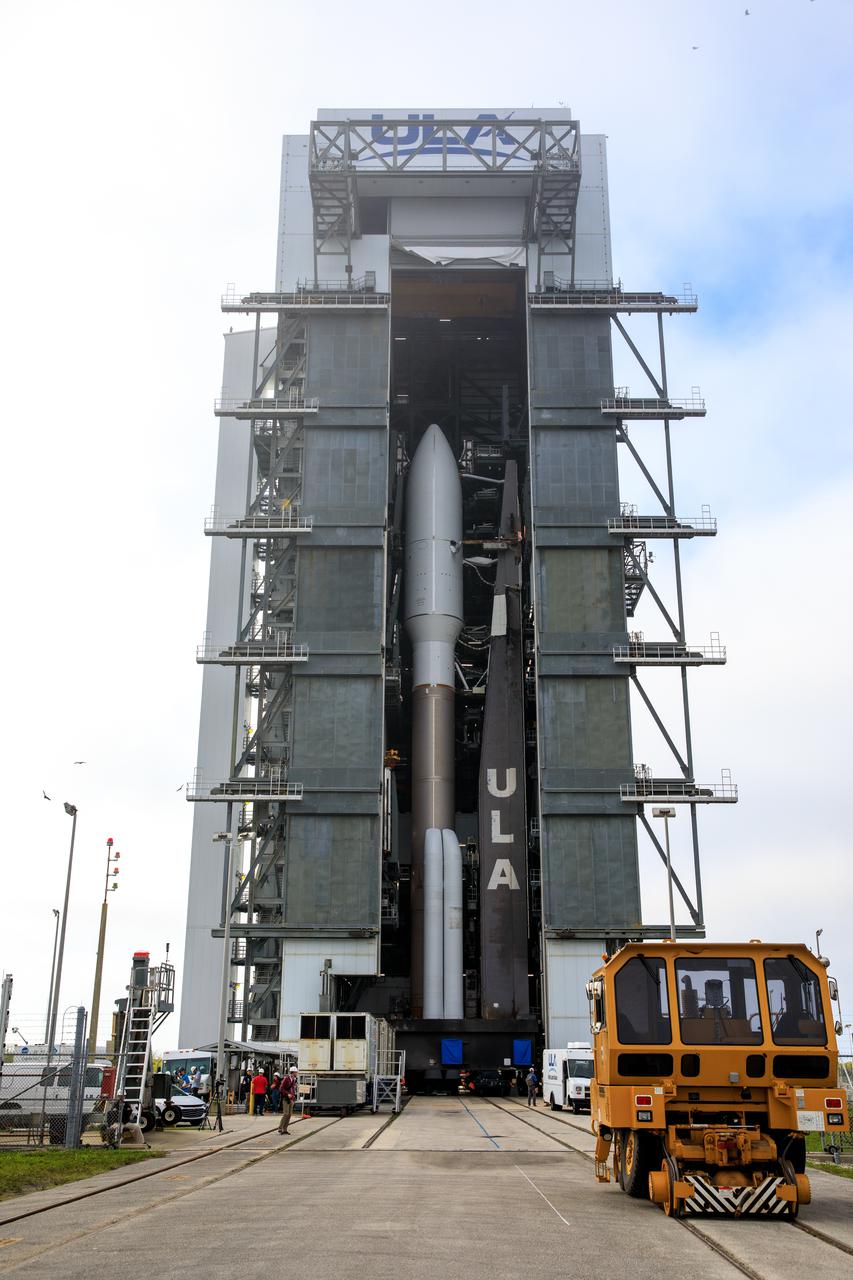
A United Launch Alliance Atlas V 541 rocket carrying the National Oceanic and Atmospheric Administration’s (NOAA) Geostationary Operational Environmental Satellite-T (GOES-T), begins its rollout from the Vertical Integration Facility to Space Launch Complex 41 at Cape Canaveral Space Force Station in Florida on Feb. 28, 2022. GOES-T will lift off atop the Atlas V from SLC-41 on March 1, 2022, at 4:38 p.m. GOES-T is the third satellite in the GOES-R series that will continue to help meteorologists observe and predict local weather events that affect public safety. GOES-T will be renamed GOES-18 once it reaches geostationary orbit. GOES-18 will go into operational service as GOES West to provide critical data for the U.S. West Coast, Alaska, Hawaii, Mexico, Central America, and the Pacific Ocean. The launch is managed by NASA’s Launch Services Program based at Kennedy Space Center in Florida, America’s multi-user spaceport.
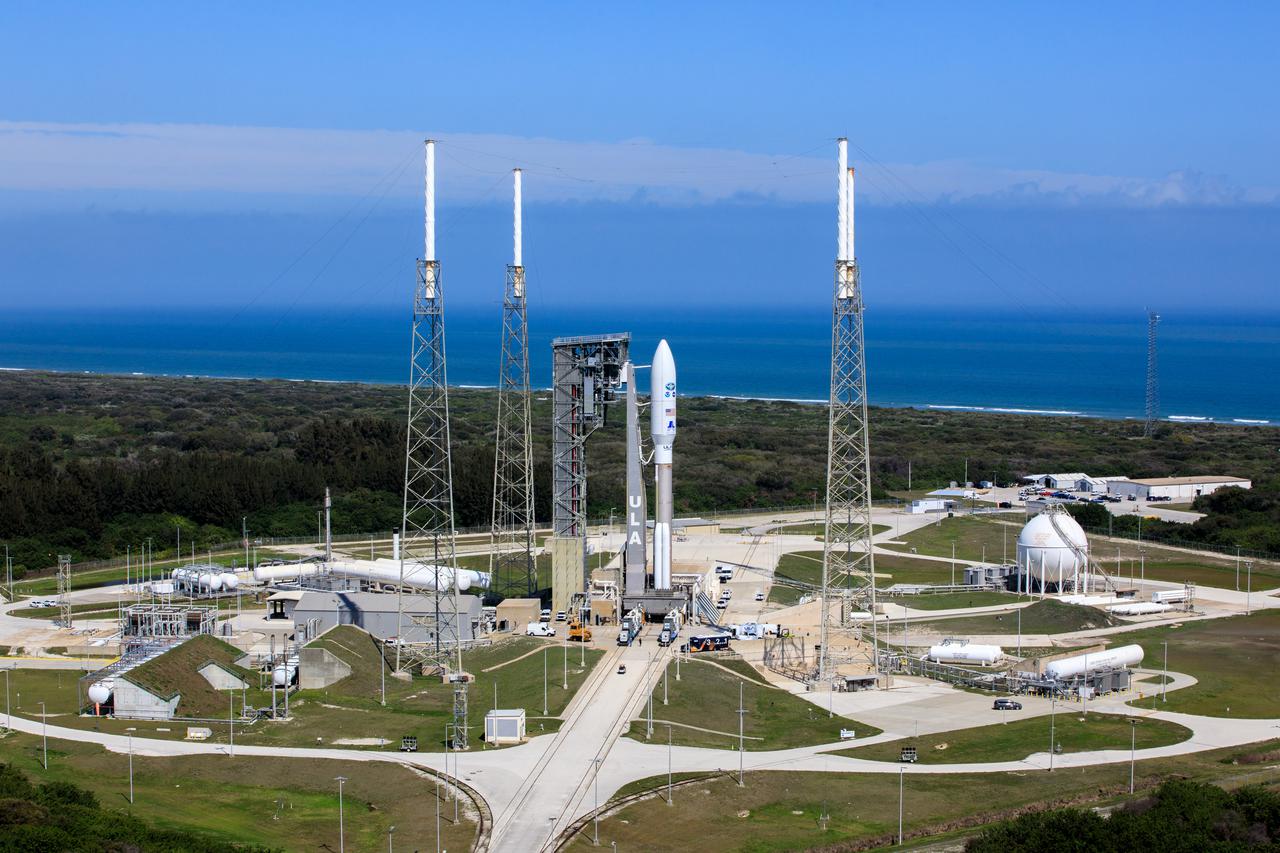
An aerial view shows the United Launch Alliance Atlas V 541 rocket carrying the National Oceanic and Atmospheric Administration’s (NOAA) Geostationary Operational Environmental Satellite-T (GOES-T), secured on the pad at Space Launch Complex 41 at Cape Canaveral Space Force Station in Florida on Feb. 28, 2022. GOES-T will lift off atop the Atlas V from SLC-41 on March 1, 2022, at 4:38 p.m. GOES-T is the third satellite in the GOES-R series that will continue to help meteorologists observe and predict local weather events that affect public safety. GOES-T will be renamed GOES-18 once it reaches geostationary orbit. GOES-18 will go into operational service as GOES West to provide critical data for the U.S. West Coast, Alaska, Hawaii, Mexico, Central America, and the Pacific Ocean. The launch is managed by NASA’s Launch Services Program based at Kennedy Space Center in Florida, America’s multi-user spaceport.
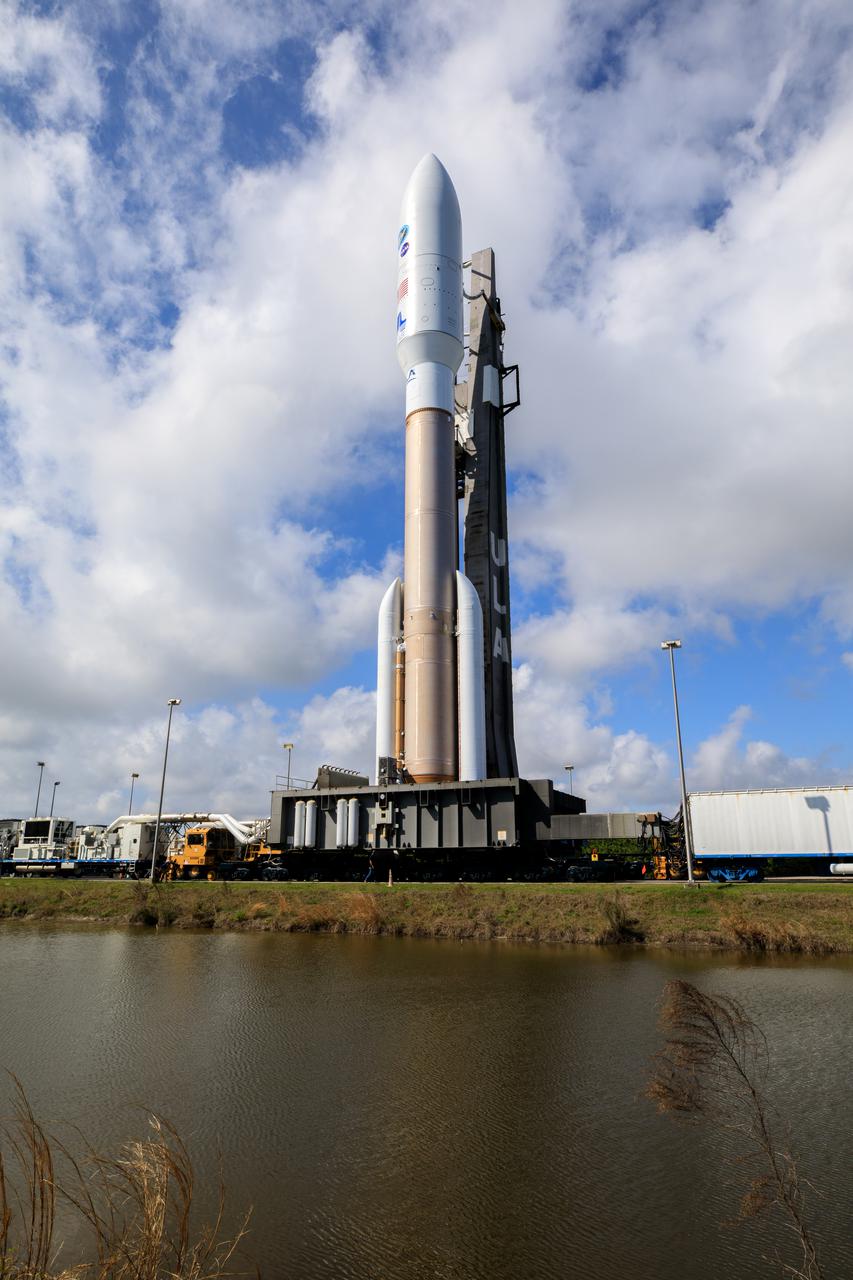
A United Launch Alliance Atlas V 541 rocket carrying the National Oceanic and Atmospheric Administration’s (NOAA) Geostationary Operational Environmental Satellite-T (GOES-T), rolls out of the Vertical Integration Facility on its way to Space Launch Complex 41 at Cape Canaveral Space Force Station in Florida on Feb. 28, 2022. GOES-T will lift off atop the Atlas V from SLC-41 on March 1, 2022, at 4:38 p.m. GOES-T is the third satellite in the GOES-R series that will continue to help meteorologists observe and predict local weather events that affect public safety. GOES-T will be renamed GOES-18 once it reaches geostationary orbit. GOES-18 will go into operational service as GOES West to provide critical data for the U.S. West Coast, Alaska, Hawaii, Mexico, Central America, and the Pacific Ocean. The launch is managed by NASA’s Launch Services Program based at Kennedy Space Center in Florida, America’s multi-user spaceport.
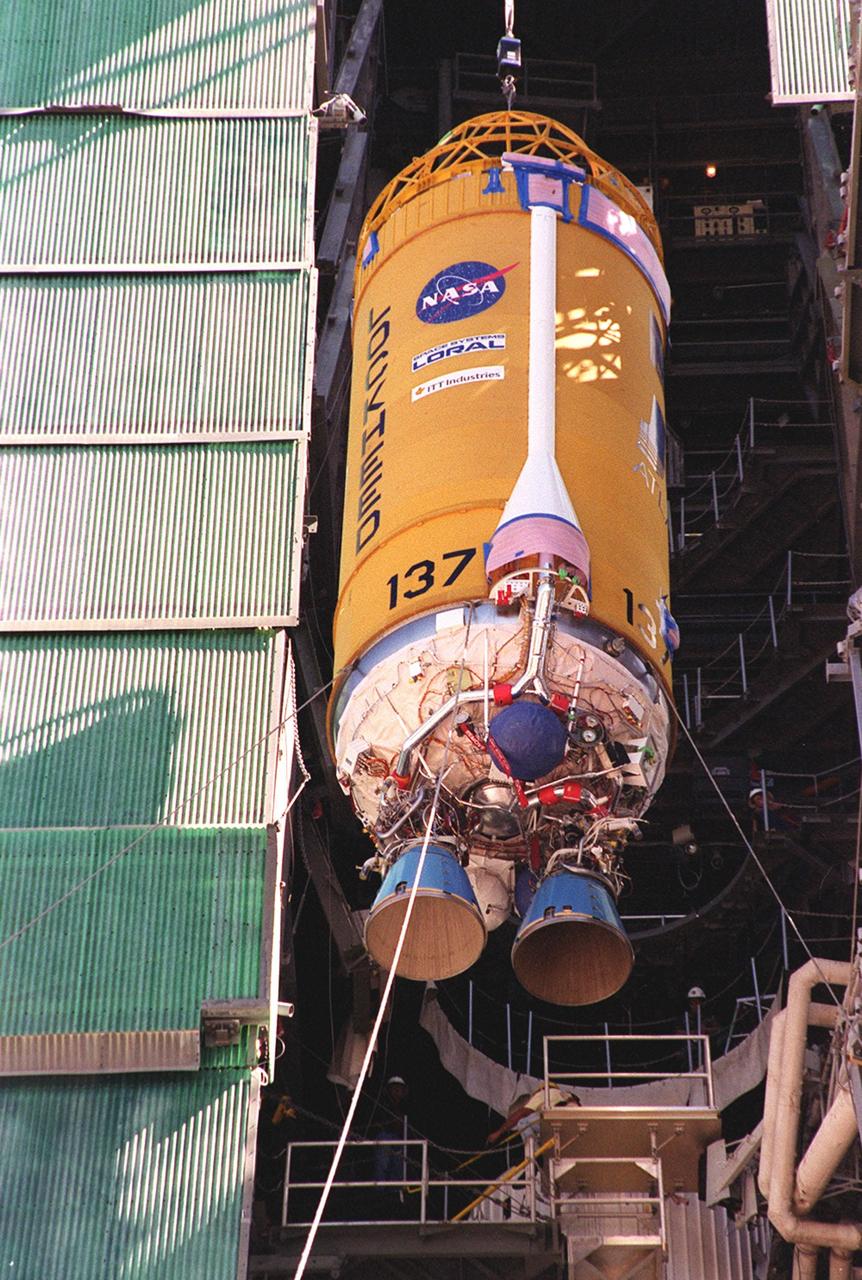
At launch pad 36-A, Cape Canaveral Air Force Station, cables help guide the second stage of an Atlas II/Centaur rocket as it is lifted up the gantry (behind it) for mating with the first stage. Atlas II is designed to launch payloads into low earth orbit, geosynchronous transfer orbit or geosynchronous orbit. The rocket is the launch vehicle for the GOES-L satellite, part of the NOAA National Weather Service system in weather imagery and atmospheric sounding information. The primary objective of the GOES-L is to provide a full capability satellite in an on-orbit storage condition, to assure NOAA continuity in services from a two-satellite constellation. Launch services are being provided by the 45th Space Wing
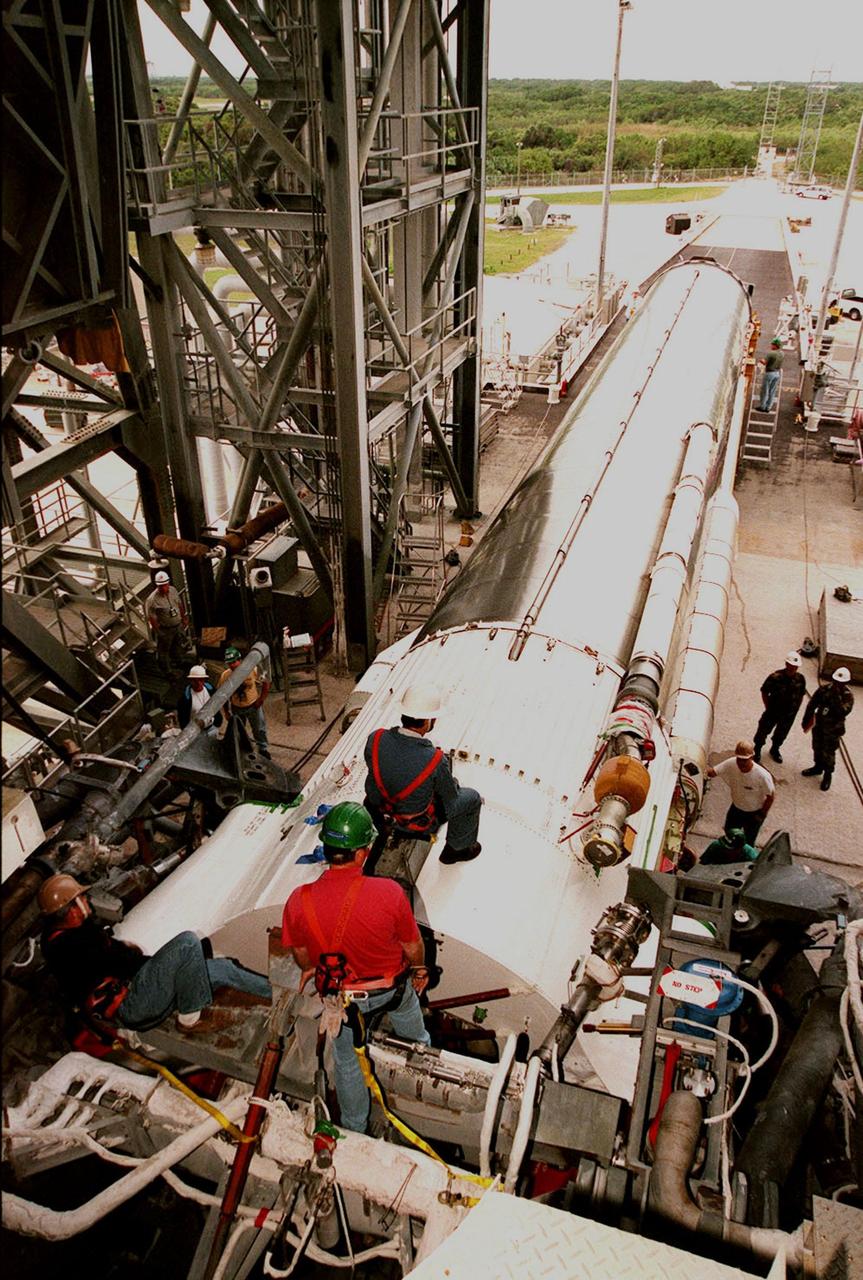
Workers at Cape Canaveral Air Force Station prepare to erect the first stage of an Atlas II/Centaur rocket in the launch gantry on pad 36A. Atlas II is designed to launch payloads into low earth orbit, geosynchronous transfer orbit or geosynchronous orbit. The rocket is the launch vehicle for the NASA/Lockheed Martin GOES-L satellite, part of the NOAA National Weather Service system in weather imagery and atmospheric sounding information. The primary objective of the GOES-L is to provide a full capability satellite in an on-orbit storage condition, to assure NOAA continuity in services from a two-satellite constellation. Launch services are being provided by the 45th Space Wing
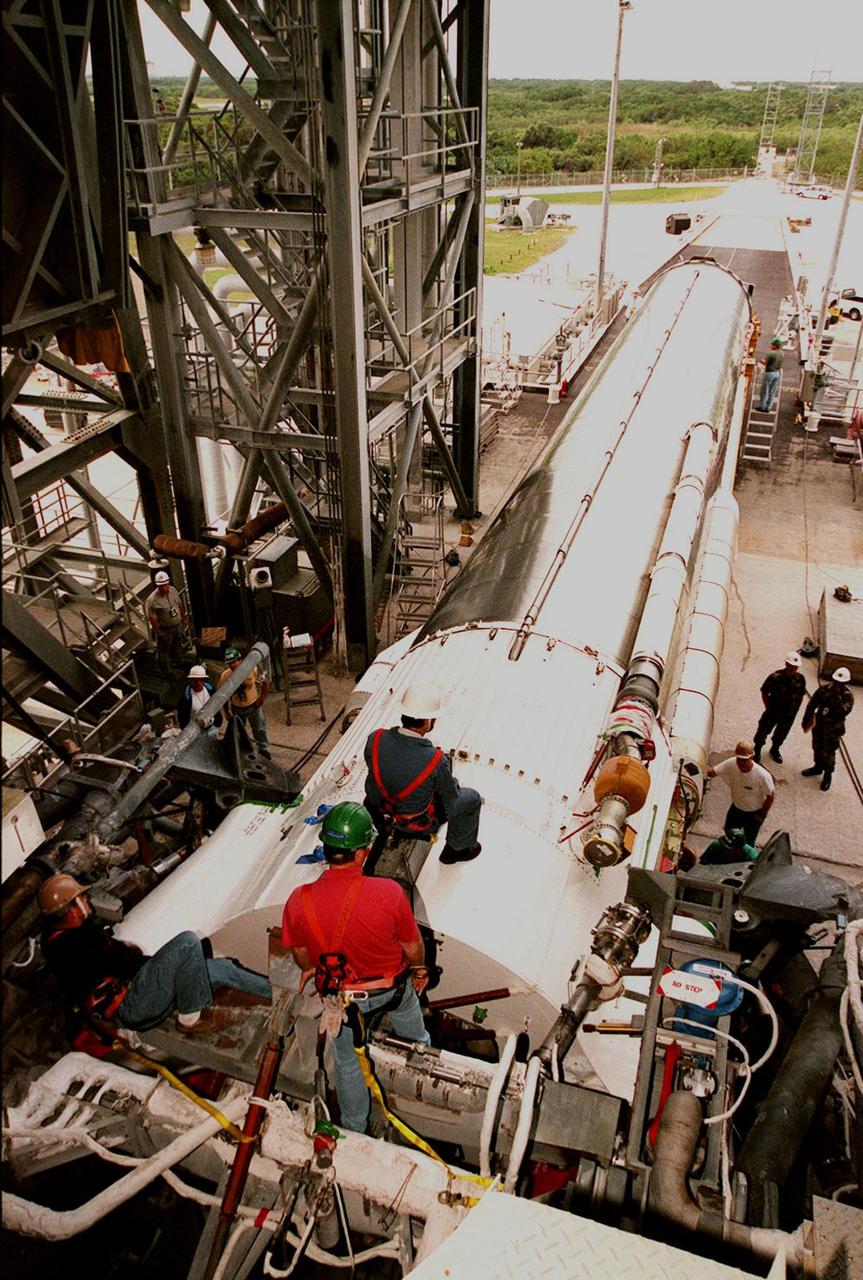
Workers at Cape Canaveral Air Force Station prepare to erect the first stage of an Atlas II/Centaur rocket in the launch gantry on pad 36A. Atlas II is designed to launch payloads into low earth orbit, geosynchronous transfer orbit or geosynchronous orbit. The rocket is the launch vehicle for the NASA/Lockheed Martin GOES-L satellite, part of the NOAA National Weather Service system in weather imagery and atmospheric sounding information. The primary objective of the GOES-L is to provide a full capability satellite in an on-orbit storage condition, to assure NOAA continuity in services from a two-satellite constellation. Launch services are being provided by the 45th Space Wing

The second stage of an Atlas II/Centaur rocket arrives on pad 36-A, Cape Canaveral Air Force Station, for mating with the first stage. Atlas II is designed to launch payloads into low earth orbit, geosynchronous transfer orbit or geosynchronous orbit. The rocket is the launch vehicle for the GOES-L satellite, part of the NOAA National Weather Service system in weather imagery and atmospheric sounding information. The primary objective of the GOES-L is to provide a full capability satellite in an on-orbit storage condition, to assure NOAA continuity in services from a two-satellite constellation. Launch services are being provided by the 45th Space Wing

The GOES-L satellite, after being lifted up to the top of the gantry on pad 36A, Cape Canaveral Air Force Station, is ready for mating with the Atlas IIA/Centaur rocket. Atlas IIA is designed to launch payloads into low earth orbit, geosynchronous transfer orbit or geosynchronous orbit. The rocket is the launch vehicle for the GOES-L satellite, part of the NOAA National Weather Service system in weather imagery and atmospheric sounding information. The primary objective of the GOES-L is to provide a full capability satellite in an on-orbit storage condition, to assure NOAA continuity in services from a two-satellite constellation. Launch services are being provided by the 45th Space Wing. Launch is scheduled for May 3

At Cape Canaveral Air Force Station, the first stage of an Atlas II/Centaur rocket is nearing erection in the launch gantry on pad 36A. Atlas II is designed to launch payloads into low earth orbit, geosynchronous transfer orbit or geosynchronous orbit. The rocket is the launch vehicle for the NASA/Lockheed Martin GOES-L satellite, part of the NOAA National Weather Service system in weather imagery and atmospheric sounding information. The primary objective of the GOES-L is to provide a full capability satellite in an on-orbit storage condition, to assure NOAA continuity in services from a two-satellite constellation. Launch services are being provided by the 45th Space Wing
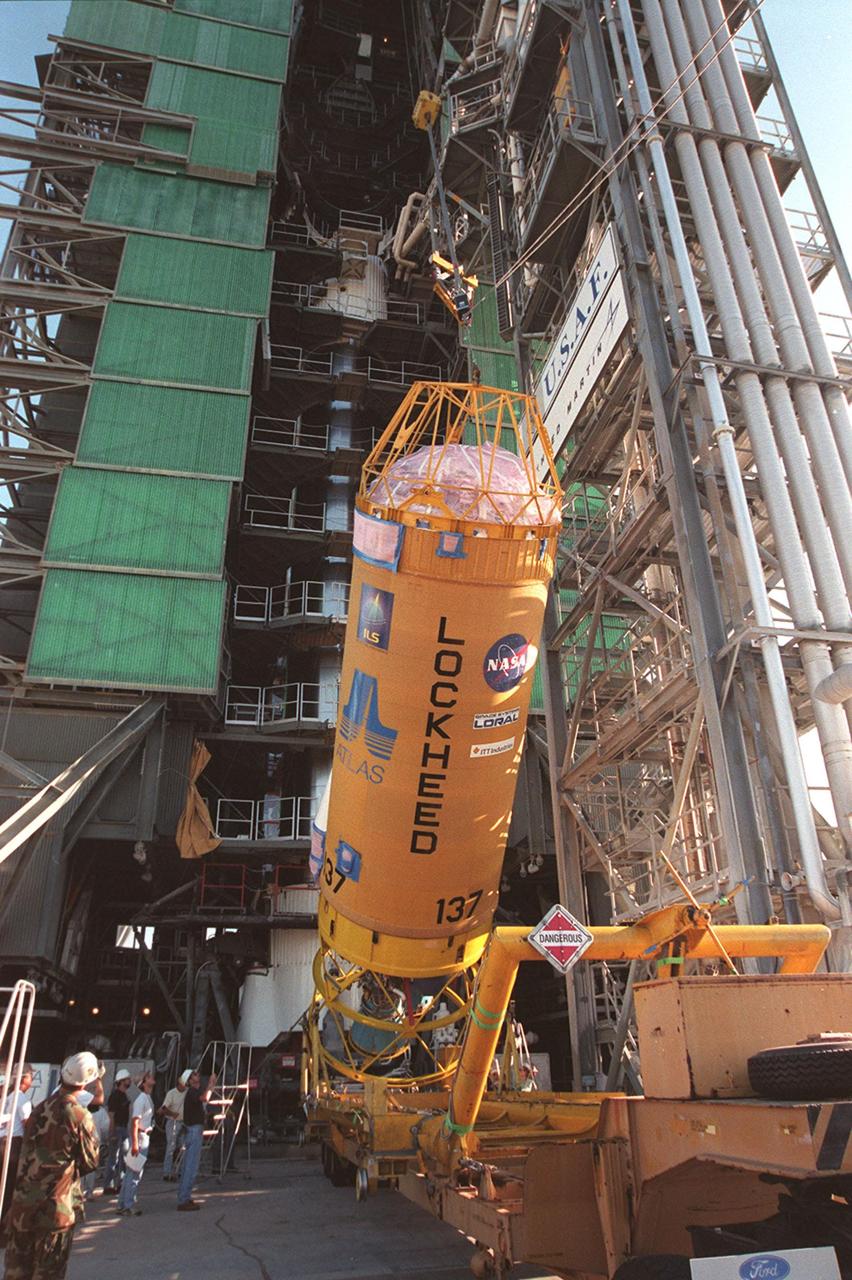
Workers at Cape Canaveral Air Force Station watch as the second stage of an Atlas II/Centaur rocket is raised to a vertical position in front of the gantry on pad 36-A. Atlas II is designed to launch payloads into low earth orbit, geosynchronous transfer orbit or geosynchronous orbit. The rocket is the launch vehicle for the GOES-L satellite, part of the NOAA National Weather Service system in weather imagery and atmospheric sounding information. The primary objective of the GOES-L is to provide a full capability satellite in an on-orbit storage condition, to assure NOAA continuity in services from a two-satellite constellation. Launch services are being provided by the 45th Space Wing

At Cape Canaveral Air Force Station, the first stage of an Atlas II/Centaur rocket is slowly raised in the launch gantry on pad 36A. Atlas II is designed to launch payloads into low earth orbit, geosynchronous transfer orbit or geosynchronous orbit. The rocket is the launch vehicle for the NASA/Lockheed Martin GOES-L satellite, part of the NOAA National Weather Service system in weather imagery and atmospheric sounding information. The primary objective of the GOES-L is to provide a full capability satellite in an on-orbit storage condition, to assure NOAA continuity in services from a two-satellite constellation. Launch services are being provided by the 45th Space Wing
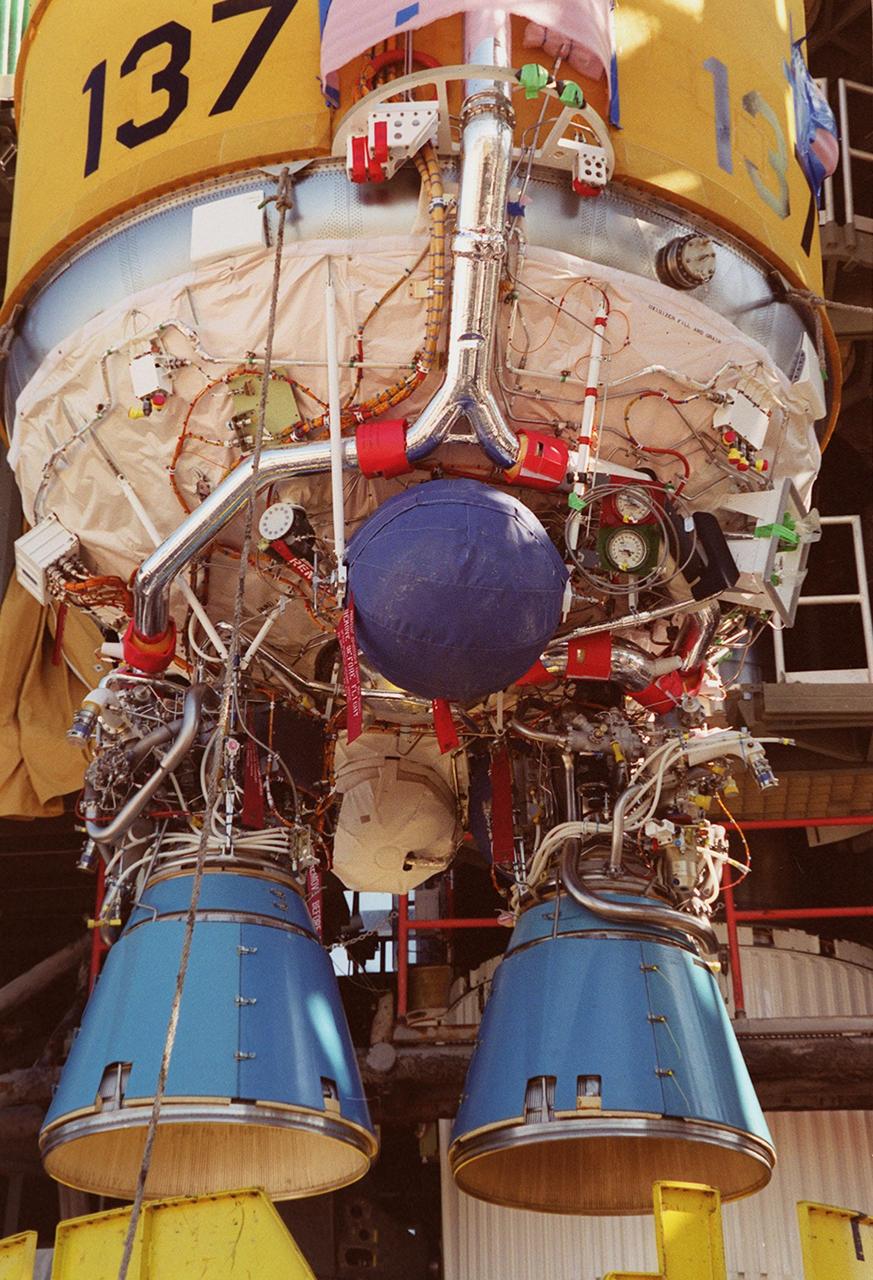
At launch pad 36-A, Cape Canaveral Air Force Station, the second stage of an Atlas II/Centaur rocket is lifted up the gantry (behind it) for mating with the first stage. Atlas II is designed to launch payloads into low earth orbit, geosynchronous transfer orbit or geosynchronous orbit. The rocket is the launch vehicle for the GOES-L satellite, part of the NOAA National Weather Service system in weather imagery and atmospheric sounding information. The primary objective of the GOES-L is to provide a full capability satellite in an on-orbit storage condition, to assure NOAA continuity in services from a two-satellite constellation. Launch services are being provided by the 45th Space Wing
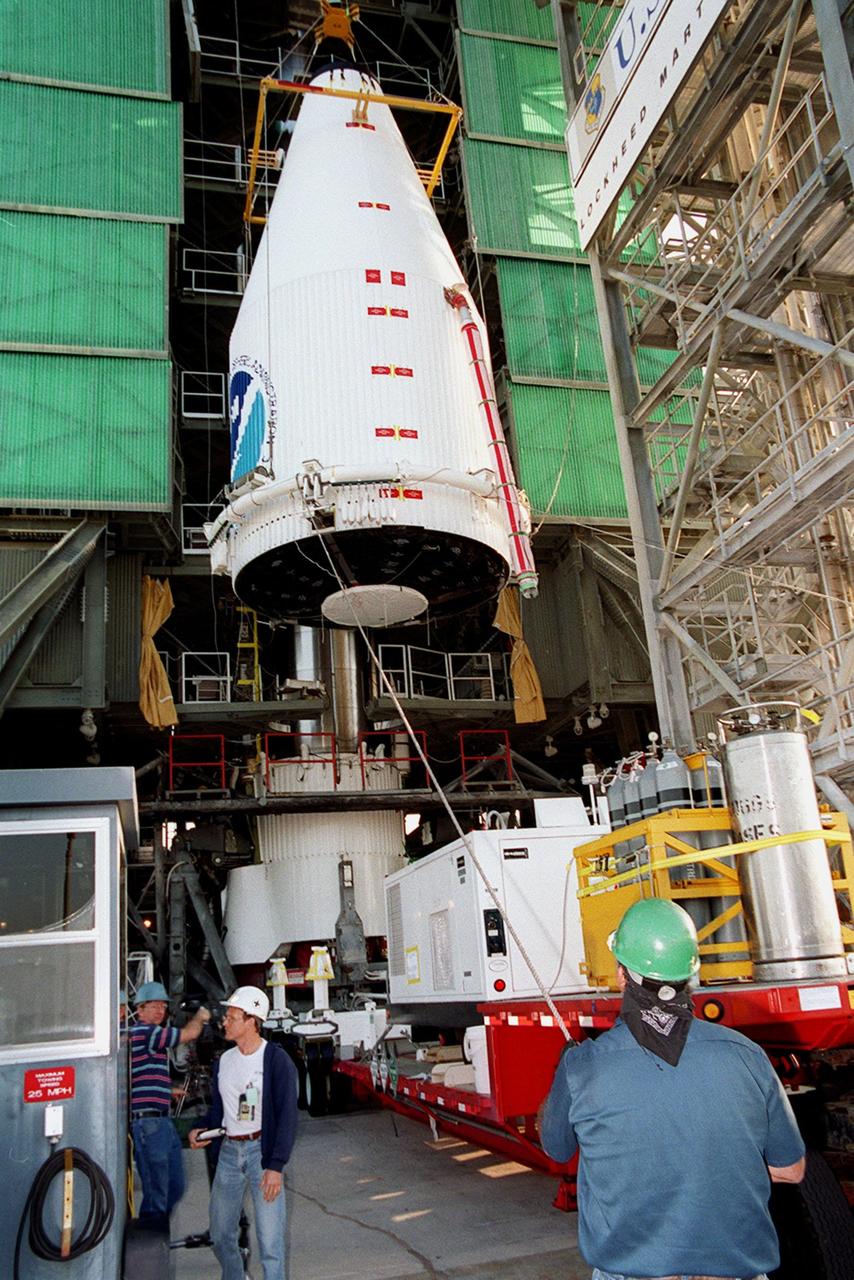
The GOES-L satellite is ready for mating with the lower stages of the Atlas IIA rocket on pad 36A, Cape Canaveral Air Force Station. Atlas II is designed to launch payloads into low earth orbit, geosynchronous transfer orbit or geosynchronous orbit. The rocket is the launch vehicle for the GOES-L satellite, part of the NOAA National Weather Service system in weather imagery and atmospheric sounding information. The primary objective of the GOES-L is to provide a full capability satellite in an on-orbit storage condition, to assure NOAA continuity in services from a two-satellite constellation. Launch services are being provided by the 45th Space Wing. Launch is scheduled for May 3
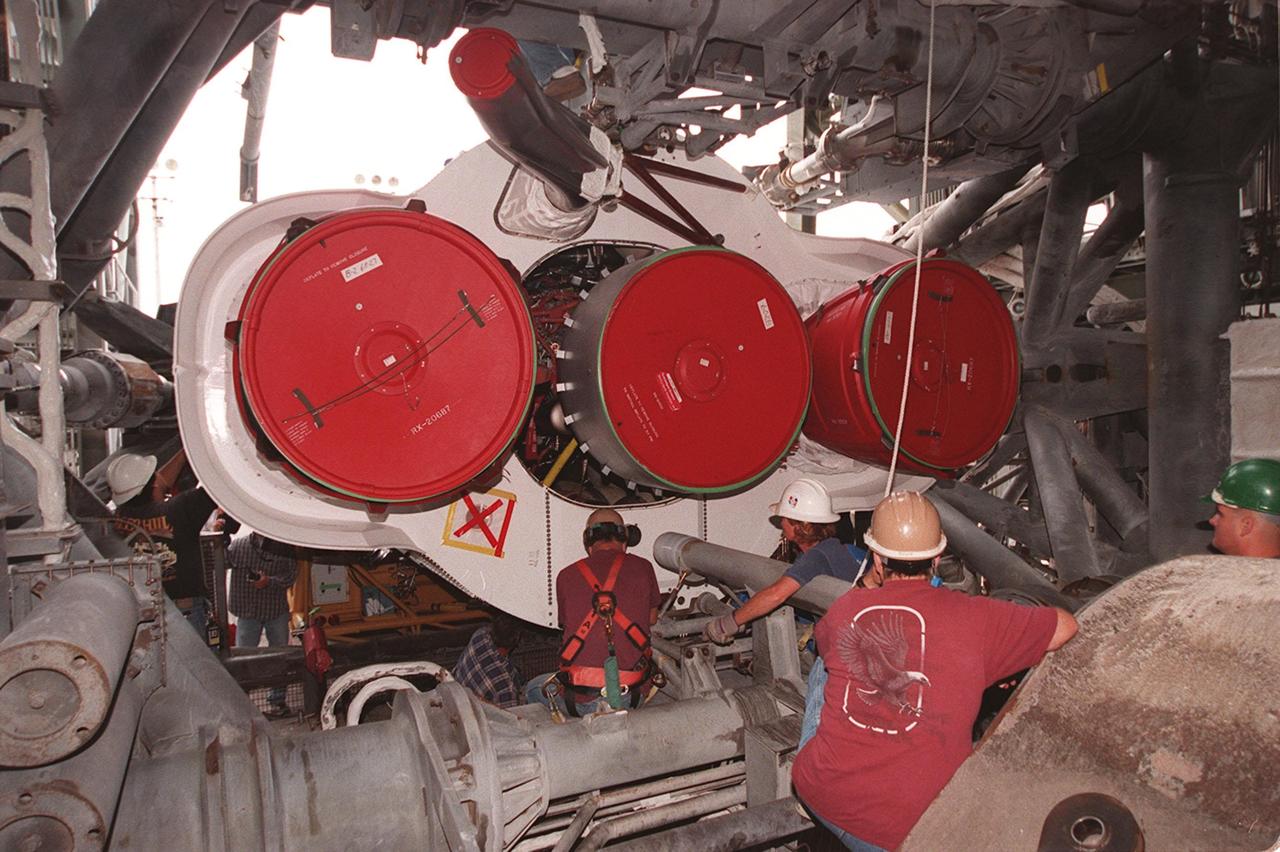
Workers at Cape Canaveral Air Force Station prepare to erect the first stage of an Atlas II/Centaur rocket in the launch gantry on pad 36A. Shown are the rocket thrusters. Atlas II is designed to launch payloads into low earth orbit, geosynchronous transfer orbit or geosynchronous orbit. The rocket is the launch vehicle for the NASA/Lockheed Martin GOES-L satellite, part of the NOAA National Weather Service system in weather imagery and atmospheric sounding information. The primary objective of the GOES-L is to provide a full capability satellite in an on-orbit storage condition, to assure NOAA continuity in services from a two-satellite constellation. Launch services are being provided by the 45th Space Wing
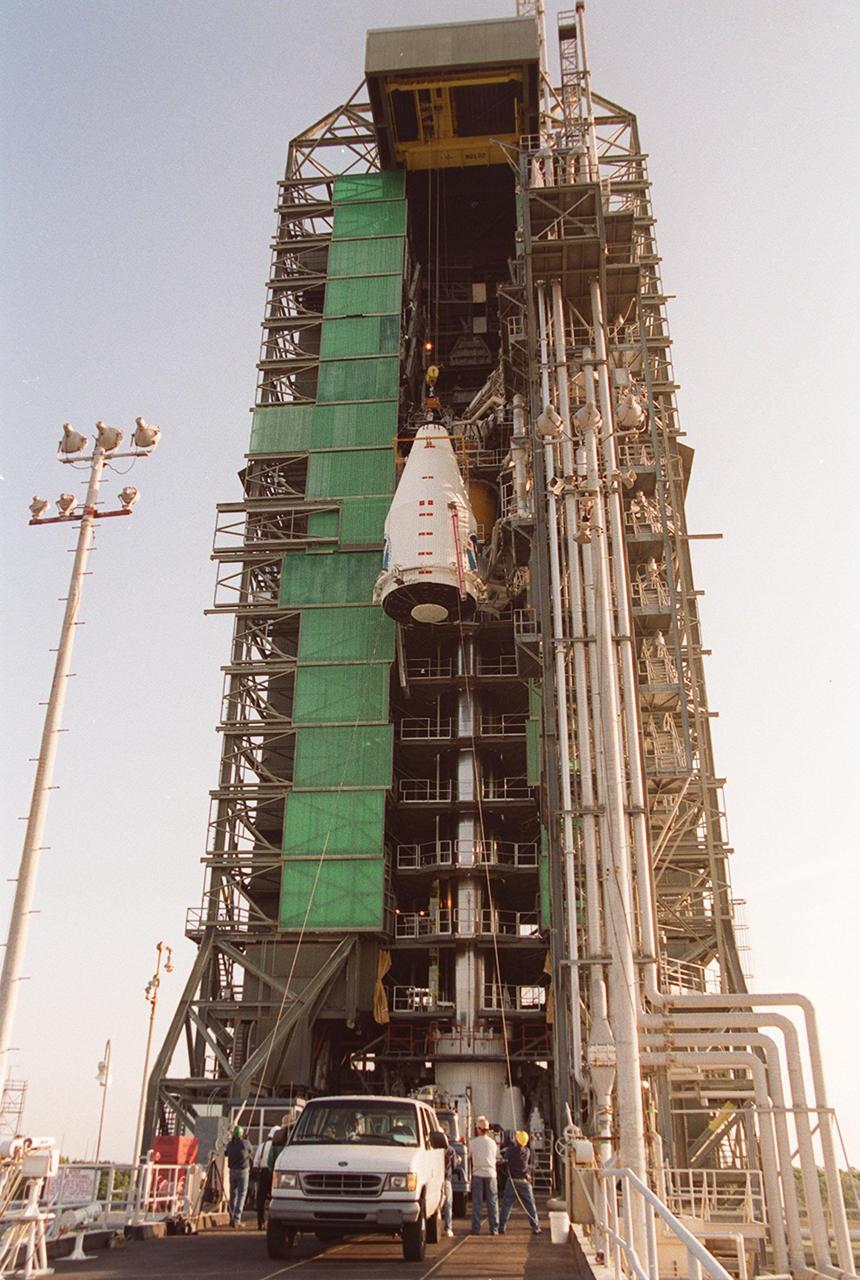
The GOES-L satellite is about midway in its journey up the gantry on pad 36A, Cape Canaveral Air Force Station. The Atlas IIA rocket is designed to launch payloads into low earth orbit, geosynchronous transfer orbit or geosynchronous orbit. The rocket is the launch vehicle for the GOES-L satellite, part of the NOAA National Weather Service system in weather imagery and atmospheric sounding information. The primary objective of the GOES-L is to provide a full capability satellite in an on-orbit storage condition, to assure NOAA continuity in services from a two-satellite constellation. Launch services are being provided by the 45th Space Wing. Launch is scheduled for May 3
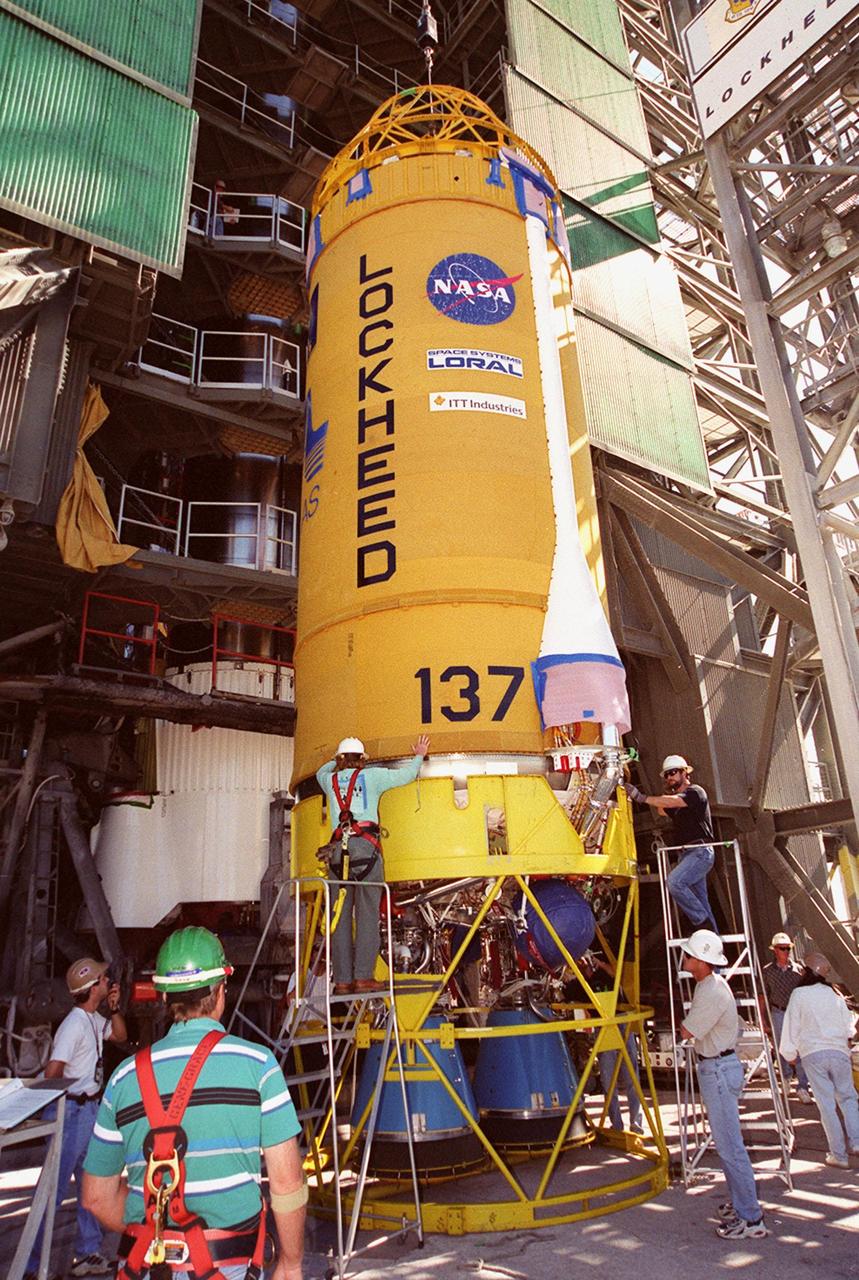
At launch pad 36-A, Cape Canaveral Air Force Station, workers check over the second stage of an Atlas II/Centaur rocket before it is lifted up the gantry (behind it) for mating with the first stage. Atlas II is designed to launch payloads into low earth orbit, geosynchronous transfer orbit or geosynchronous orbit. The rocket is the launch vehicle for the GOES-L satellite, part of the NOAA National Weather Service system in weather imagery and atmospheric sounding information. The primary objective of the GOES-L is to provide a full capability satellite in an on-orbit storage condition, to assure NOAA continuity in services from a two-satellite constellation. Launch services are being provided by the 45th Space Wing

At Cape Canaveral Air Force Station, the first stage of an Atlas II/Centaur rocket is nearing erection in the launch gantry on pad 36A. Atlas II is designed to launch payloads into low earth orbit, geosynchronous transfer orbit or geosynchronous orbit. The rocket is the launch vehicle for the NASA/Lockheed Martin GOES-L satellite, part of the NOAA National Weather Service system in weather imagery and atmospheric sounding information. The primary objective of the GOES-L is to provide a full capability satellite in an on-orbit storage condition, to assure NOAA continuity in services from a two-satellite constellation. Launch services are being provided by the 45th Space Wing
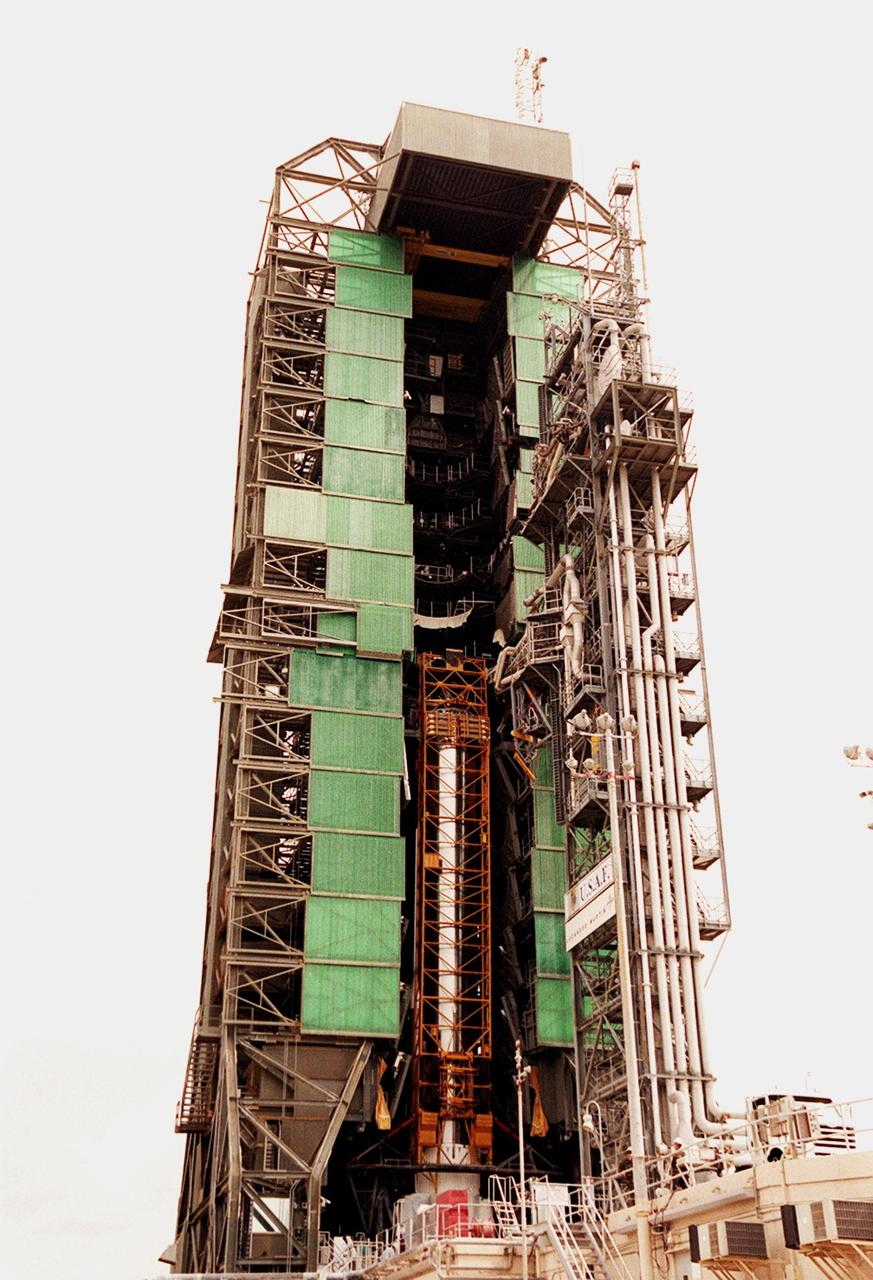
The first stage of an Atlas II/Centaur rocket stands erect in the launch gantry on pad 36A, Cape Canaveral Air Force Station. Atlas II is designed to launch payloads into low earth orbit, geosynchronous transfer orbit or geosynchronous orbit. The rocket is the launch vehicle for the NASA/Lockheed Martin GOES-L satellite, part of the NOAA National Weather Service system in weather imagery and atmospheric sounding information. The primary objective of the GOES-L is to provide a full capability satellite in an on-orbit storage condition, to assure NOAA continuity in services from a two-satellite constellation. Launch services are being provided by the 45th Space Wing

The GOES-L satellite approaches the end of its journey up the gantry on pad 36A, Cape Canaveral Air Force Station, for mating with the Atlas IIA/Centaur rocket. The Atlas IIA is designed to launch payloads into low earth orbit, geosynchronous transfer orbit or geosynchronous orbit. The rocket is the launch vehicle for the GOES-L satellite, part of the NOAA National Weather Service system in weather imagery and atmospheric sounding information. The primary objective of the GOES-L is to provide a full capability satellite in an on-orbit storage condition, to assure NOAA continuity in services from a two-satellite constellation. Launch services are being provided by the 45th Space Wing. Launch is scheduled for May 3
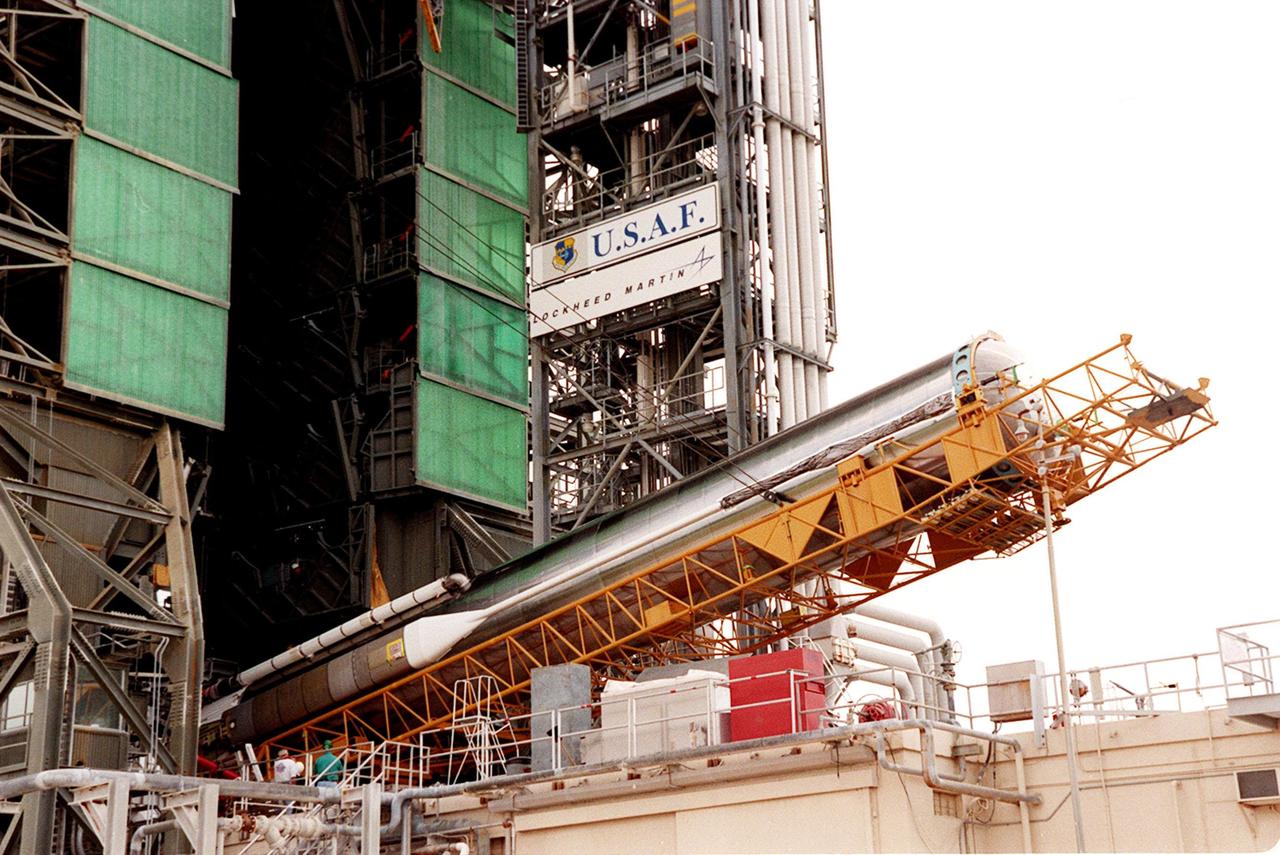
At Cape Canaveral Air Force Station, the first stage of an Atlas II/Centaur rocket begins erection in the launch gantry on pad 36A. Atlas II is designed to launch payloads into low earth orbit, geosynchronous transfer orbit or geosynchronous orbit. The rocket is the launch vehicle for the NASA/Lockheed Martin GOES-L satellite, part of the NOAA National Weather Service system in weather imagery and atmospheric sounding information. The primary objective of the GOES-L is to provide a full capability satellite in an on-orbit storage condition, to assure NOAA continuity in services from a two-satellite constellation. Launch services are being provided by the 45th Space Wing
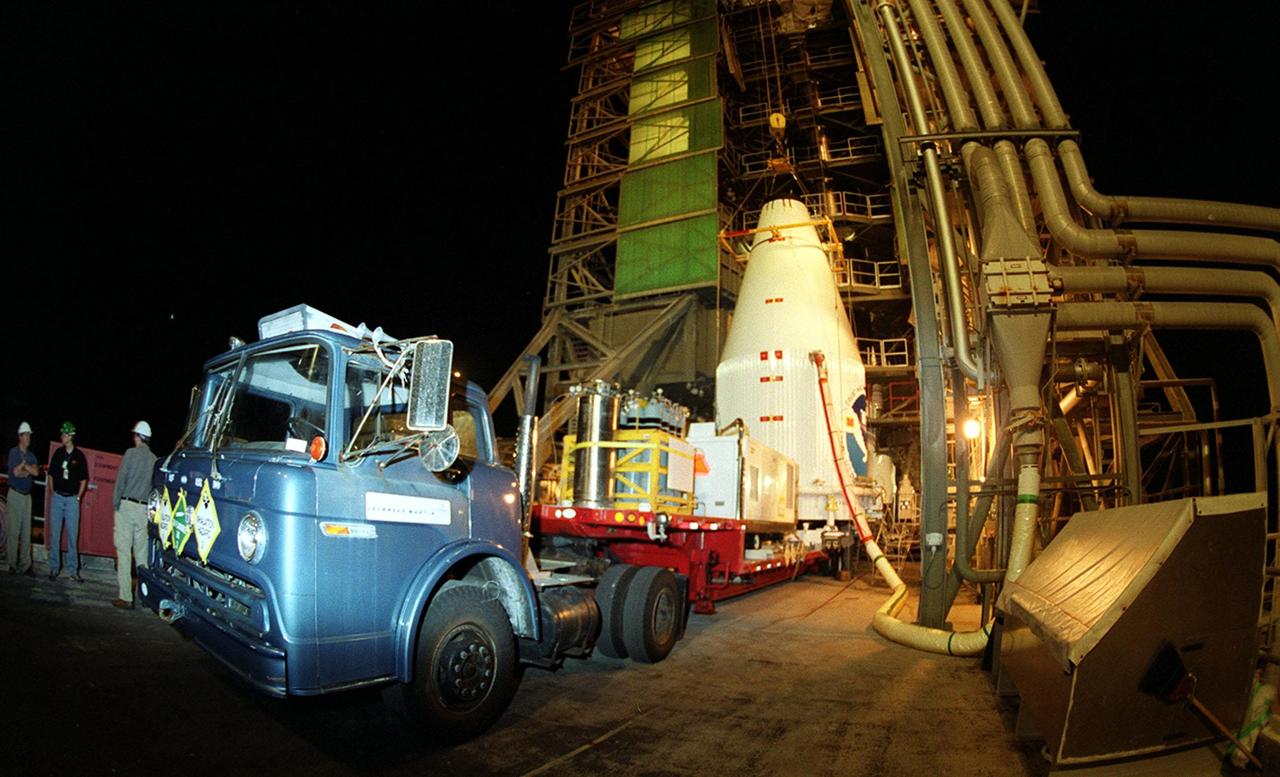
The GOES-L satellite arrives on pad 36A, Cape Canaveral Air Force Station. The Atlas IIA rocket is designed to launch payloads into low earth orbit, geosynchronous transfer orbit or geosynchronous orbit. The rocket is the launch vehicle for the GOES-L satellite, part of the NOAA National Weather Service system in weather imagery and atmospheric sounding information. The primary objective of the GOES-L is to provide a full capability satellite in an on-orbit storage condition, to assure NOAA continuity in services from a two-satellite constellation. Launch services are being provided by the 45th Space Wing. Launch is scheduled for May 3
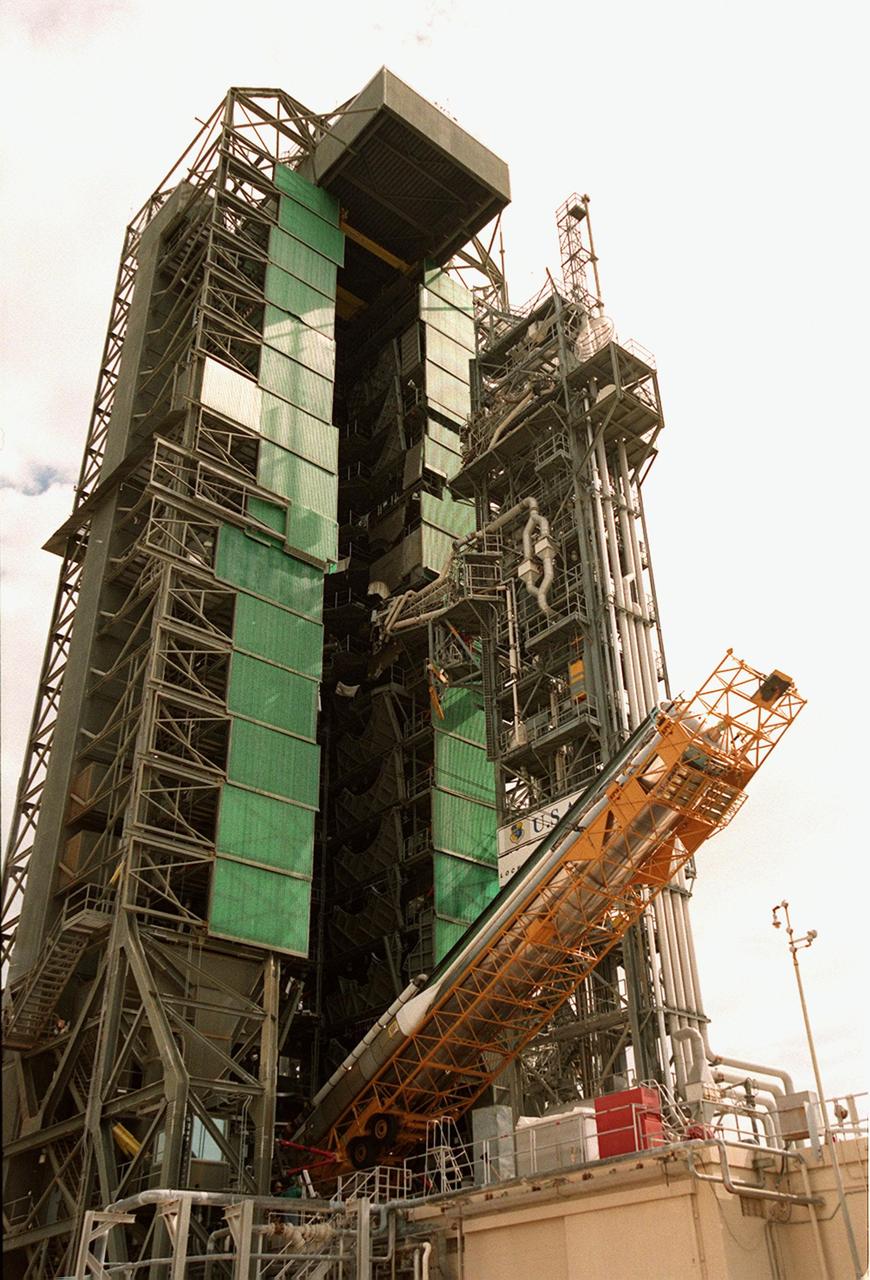
At Cape Canaveral Air Force Station, the first stage of an Atlas II/Centaur rocket is slowly raised in the launch gantry on pad 36A. Atlas II is designed to launch payloads into low earth orbit, geosynchronous transfer orbit or geosynchronous orbit. The rocket is the launch vehicle for the NASA/Lockheed Martin GOES-L satellite, part of the NOAA National Weather Service system in weather imagery and atmospheric sounding information. The primary objective of the GOES-L is to provide a full capability satellite in an on-orbit storage condition, to assure NOAA continuity in services from a two-satellite constellation. Launch services are being provided by the 45th Space Wing
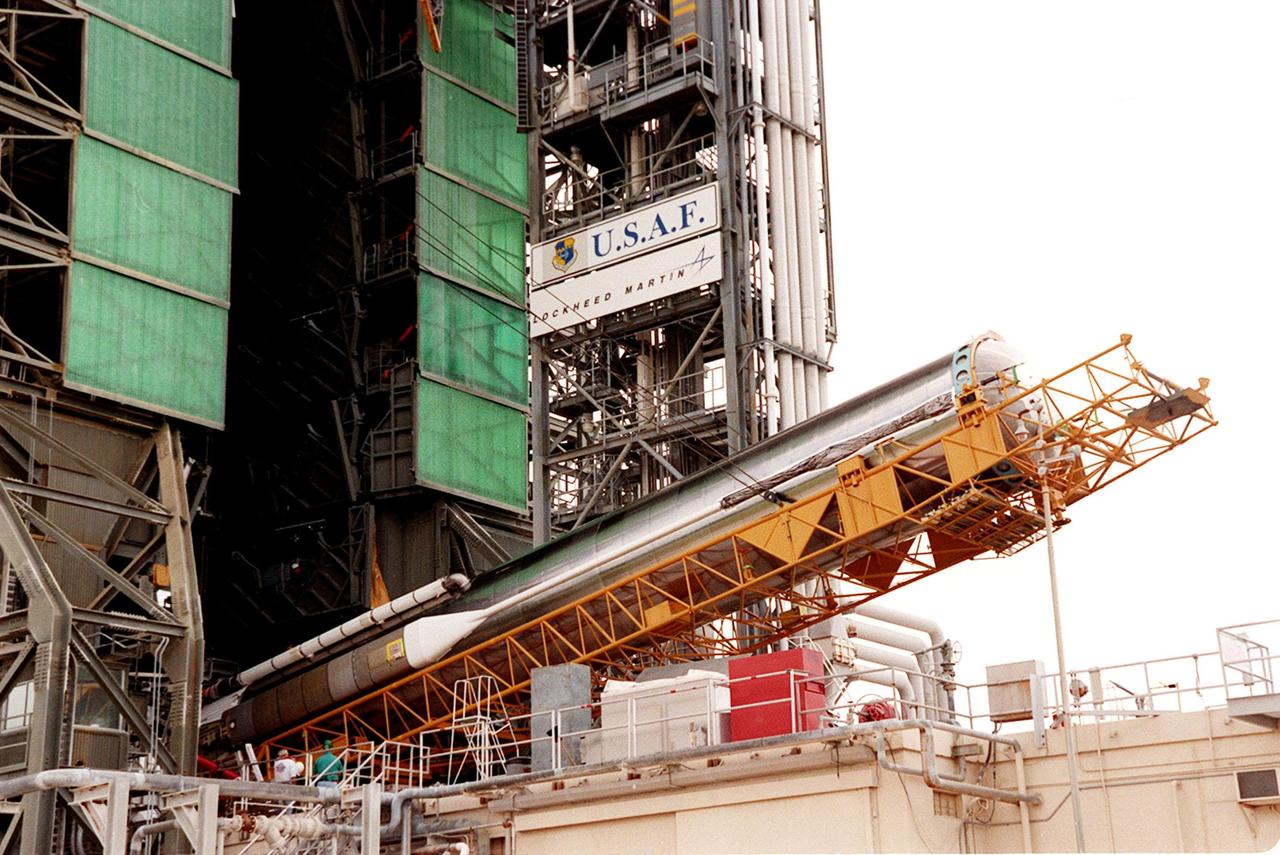
At Cape Canaveral Air Force Station, the first stage of an Atlas II/Centaur rocket begins erection in the launch gantry on pad 36A. Atlas II is designed to launch payloads into low earth orbit, geosynchronous transfer orbit or geosynchronous orbit. The rocket is the launch vehicle for the NASA/Lockheed Martin GOES-L satellite, part of the NOAA National Weather Service system in weather imagery and atmospheric sounding information. The primary objective of the GOES-L is to provide a full capability satellite in an on-orbit storage condition, to assure NOAA continuity in services from a two-satellite constellation. Launch services are being provided by the 45th Space Wing

The second stage of an Atlas II/Centaur rocket is raised to a vertical position in front of the gantry on pad 36-A, Cape Canaveral Air Force Station, for mating with the first stage. Atlas II is designed to launch payloads into low earth orbit, geosynchronous transfer orbit or geosynchronous orbit. The rocket is the launch vehicle for the GOES-L satellite, part of the NOAA National Weather Service system in weather imagery and atmospheric sounding information. The primary objective of the GOES-L is to provide a full capability satellite in an on-orbit storage condition, to assure NOAA continuity in services from a two-satellite constellation. Launch services are being provided by the 45th Space Wing
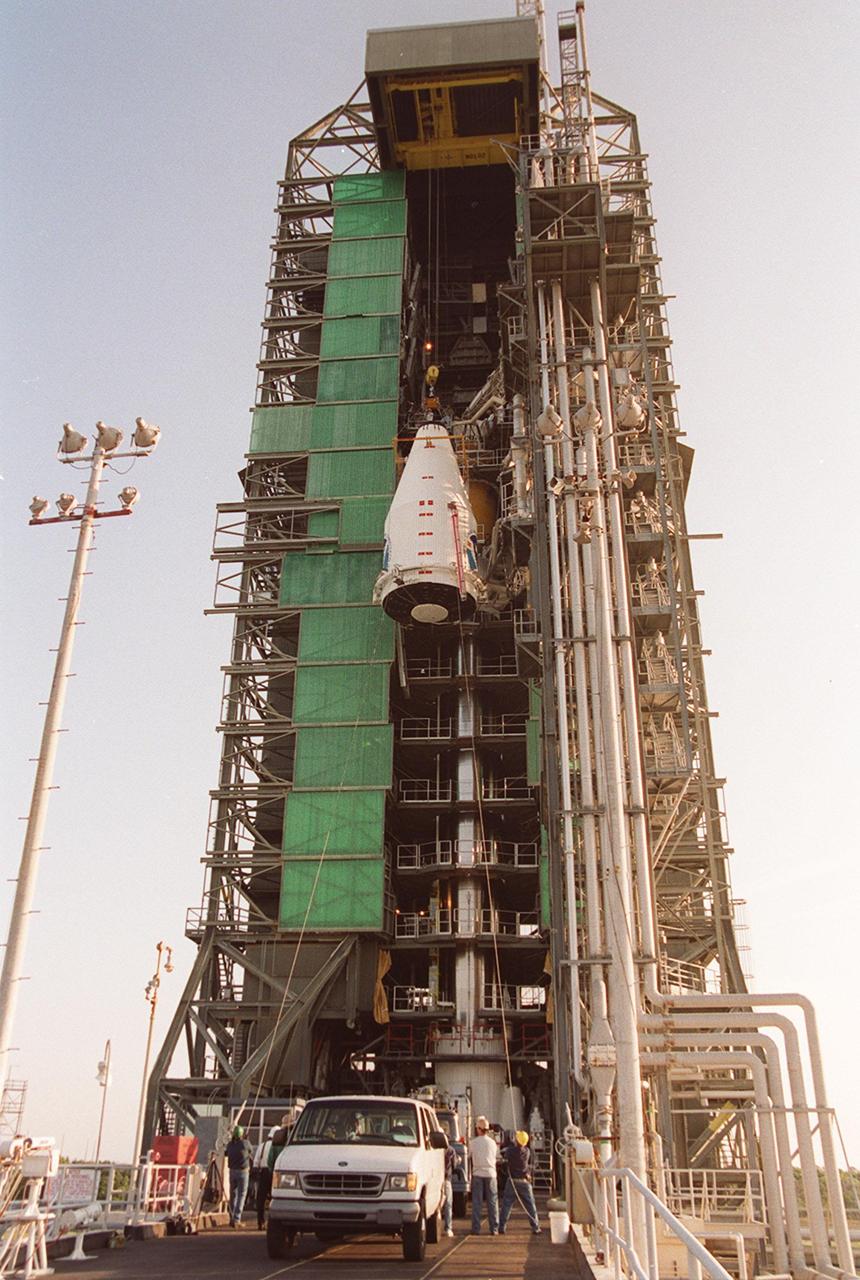
The GOES-L satellite is about midway in its journey up the gantry on pad 36A, Cape Canaveral Air Force Station. The Atlas IIA rocket is designed to launch payloads into low earth orbit, geosynchronous transfer orbit or geosynchronous orbit. The rocket is the launch vehicle for the GOES-L satellite, part of the NOAA National Weather Service system in weather imagery and atmospheric sounding information. The primary objective of the GOES-L is to provide a full capability satellite in an on-orbit storage condition, to assure NOAA continuity in services from a two-satellite constellation. Launch services are being provided by the 45th Space Wing. Launch is scheduled for May 3
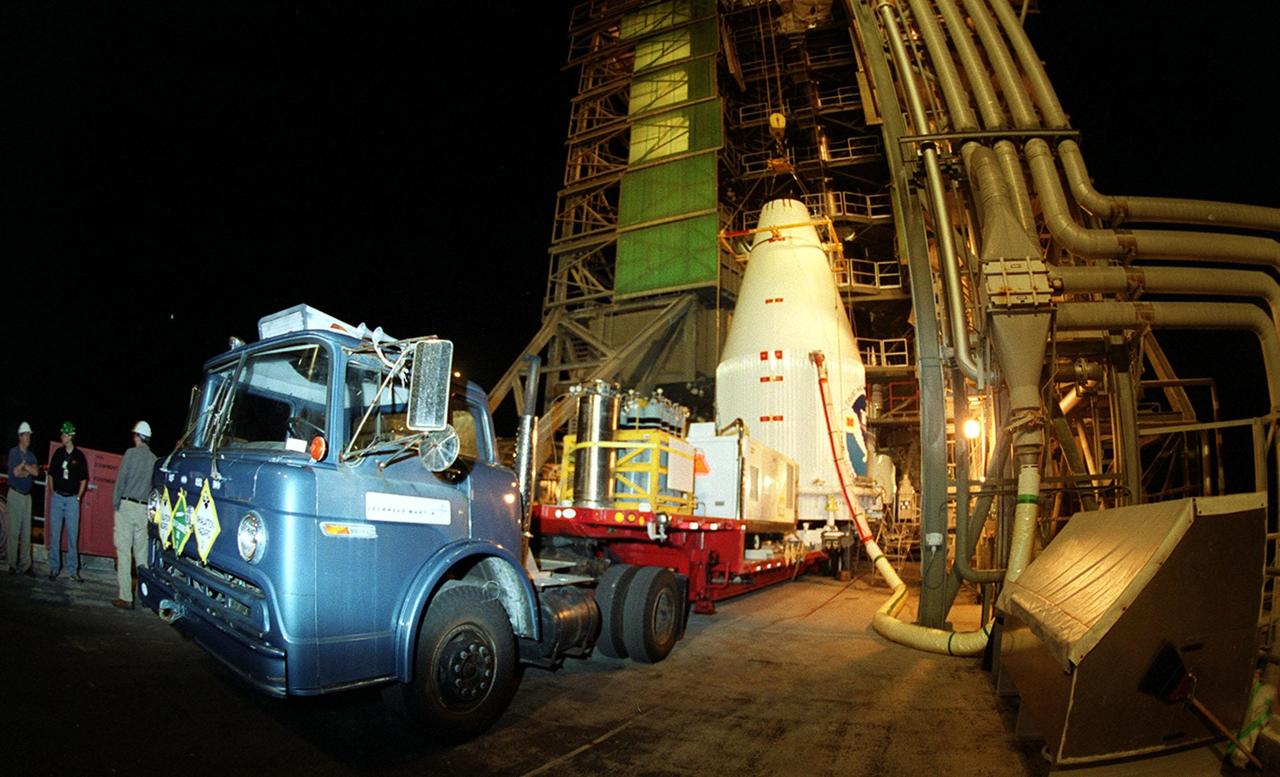
The GOES-L satellite arrives on pad 36A, Cape Canaveral Air Force Station. The Atlas IIA rocket is designed to launch payloads into low earth orbit, geosynchronous transfer orbit or geosynchronous orbit. The rocket is the launch vehicle for the GOES-L satellite, part of the NOAA National Weather Service system in weather imagery and atmospheric sounding information. The primary objective of the GOES-L is to provide a full capability satellite in an on-orbit storage condition, to assure NOAA continuity in services from a two-satellite constellation. Launch services are being provided by the 45th Space Wing. Launch is scheduled for May 3