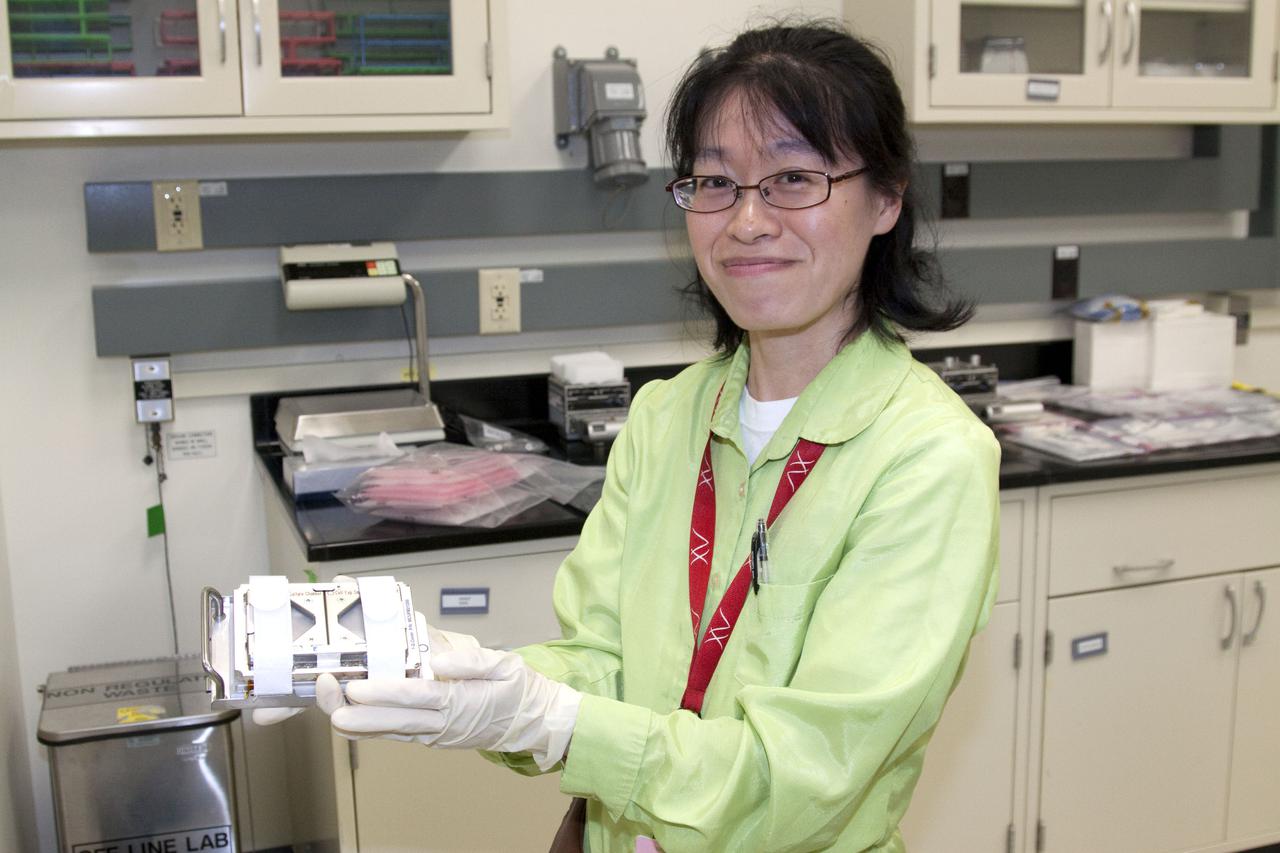
CAPE CANAVERAL, Fla. - In the Space Station Processing Facility at NASA's Kennedy Space Center in Florida, Japan Aerospace Exploration Agency scientist, Yano Sachiko, prepares the fish scale experiment for its flight to the International Space Station aboard the STS-132 mission. Expedition crew members aboard the station will examine regenerating scales collected from anesthetized goldfish in microgravity using the Cell Biology Experiment Facility, or CBEF, and the results will be compared with ground controls. In mammals, bone is formed and maintained by continuous remodeling through bone resorption called osteoclasts, and subsequent new bone formation called osteoblasts. The experiment will use osteoclasts and osteoblasts to examine the effect of microgravity on bone metabolism. Photo credit: NASA_Jack Pfaller
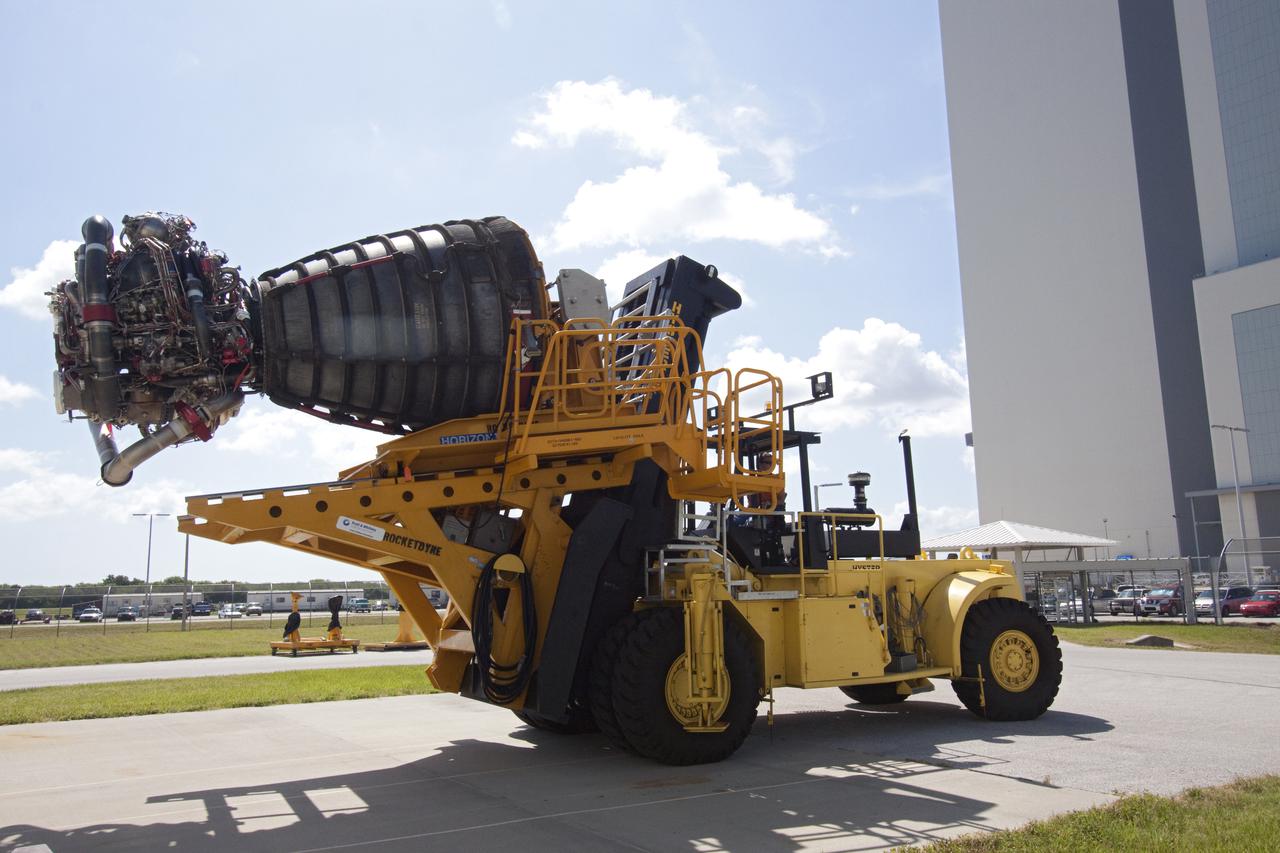
CAPE CANAVERAL, Fla. -- At NASA's Kennedy Space Center in Florida, a space shuttle main engine secured on a Hyster forklift moves from the Space Shuttle Main Engine Processing Facility to Orbiter Processing Facility-3. Three main engines, weighing 7,000 pounds each, will be installed in space shuttle Discovery for the STS-133 mission to the International Space Station. Discovery and its STS-133 crew are targeted to deliver the Express Logistics Carrier-4 filled with external payloads and experiments, as well as critical spare components to the station later this year. Photo credit: NASA_Jack Pfaller
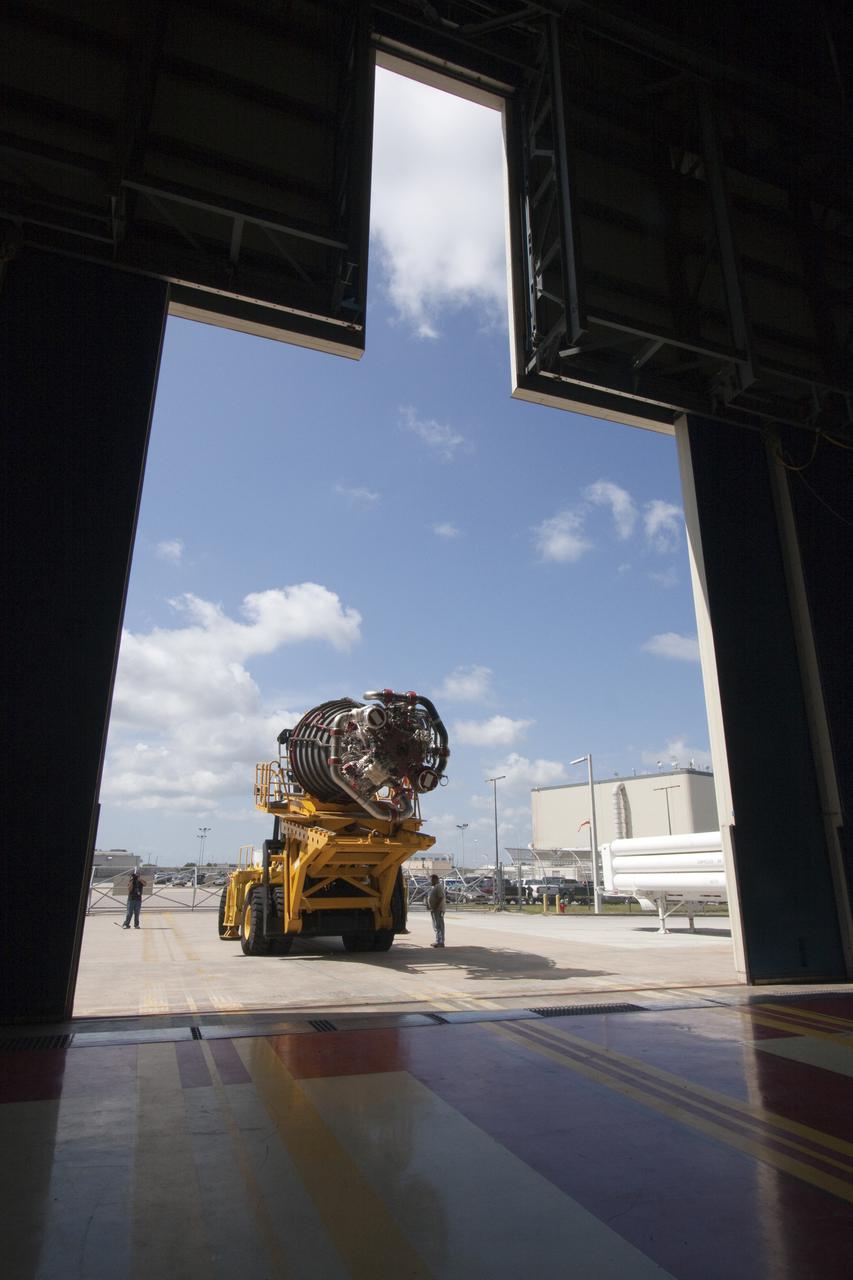
CAPE CANAVERAL, Fla. -- At NASA's Kennedy Space Center in Florida, a space shuttle main engine secured on a Hyster forklift enters Orbiter Processing Facility-3. Three main engines, weighing 7,000 pounds each, will be installed in space shuttle Discovery for the STS-133 mission to the International Space Station. Engines are inspected and maintained in the nearby Space Shuttle Main Engine Processing Facility before installation. Discovery and its STS-133 crew are targeted to deliver the Express Logistics Carrier-4 filled with external payloads and experiments, as well as critical spare components to the station later this year. Photo credit: NASA_Jack Pfaller
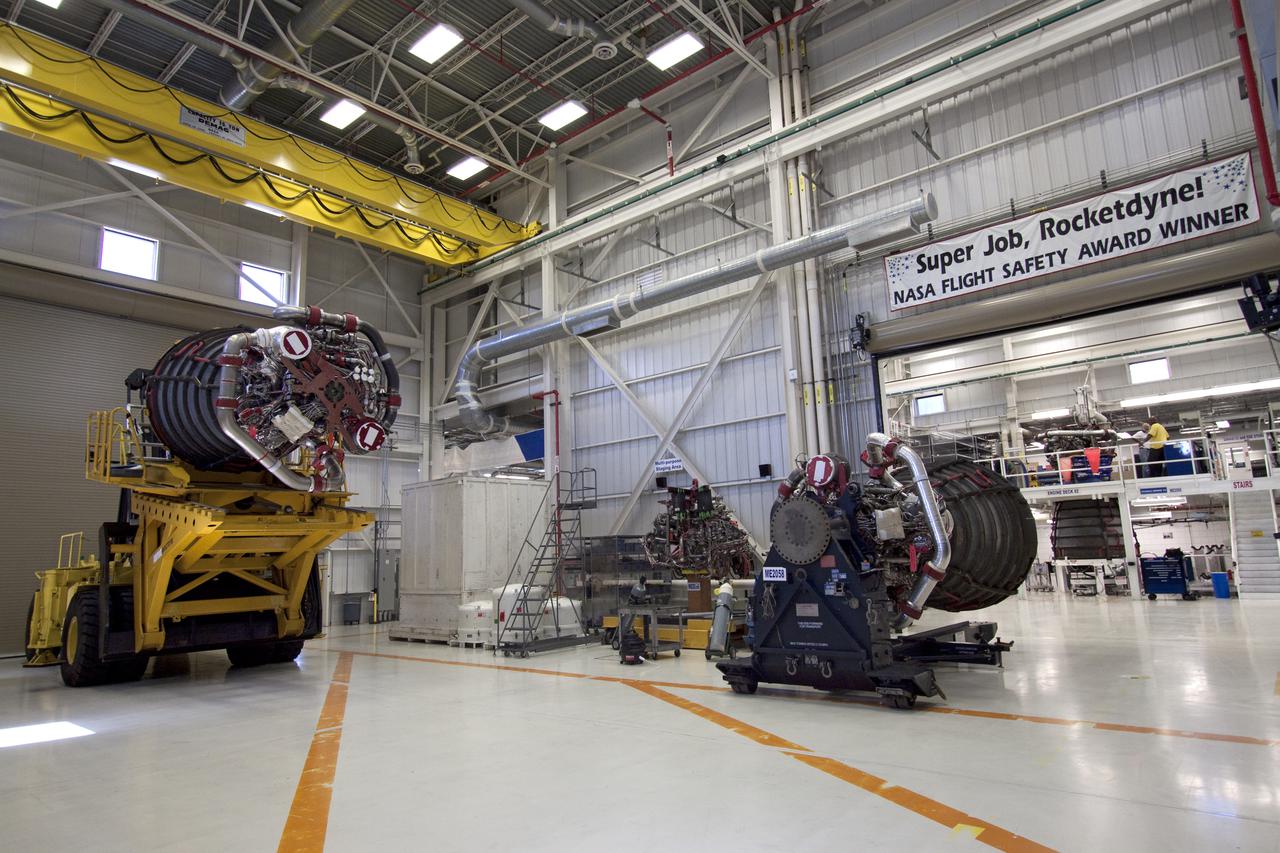
CAPE CANAVERAL, Fla. -- In the Space Shuttle Main Engine Processing Facility at NASA's Kennedy Space Center in Florida, a space shuttle main engine is secured on a Hyster forklift, left, and ready for its move to Orbiter Processing Facility-3. Three main engines, weighing 7,000 pounds each, will be installed in space shuttle Discovery for the STS-133 mission to the International Space Station. Discovery and its STS-133 crew are targeted to deliver the Express Logistics Carrier-4 filled with external payloads and experiments, as well as critical spare components to the station later this year. Photo credit: NASA_Jack Pfaller
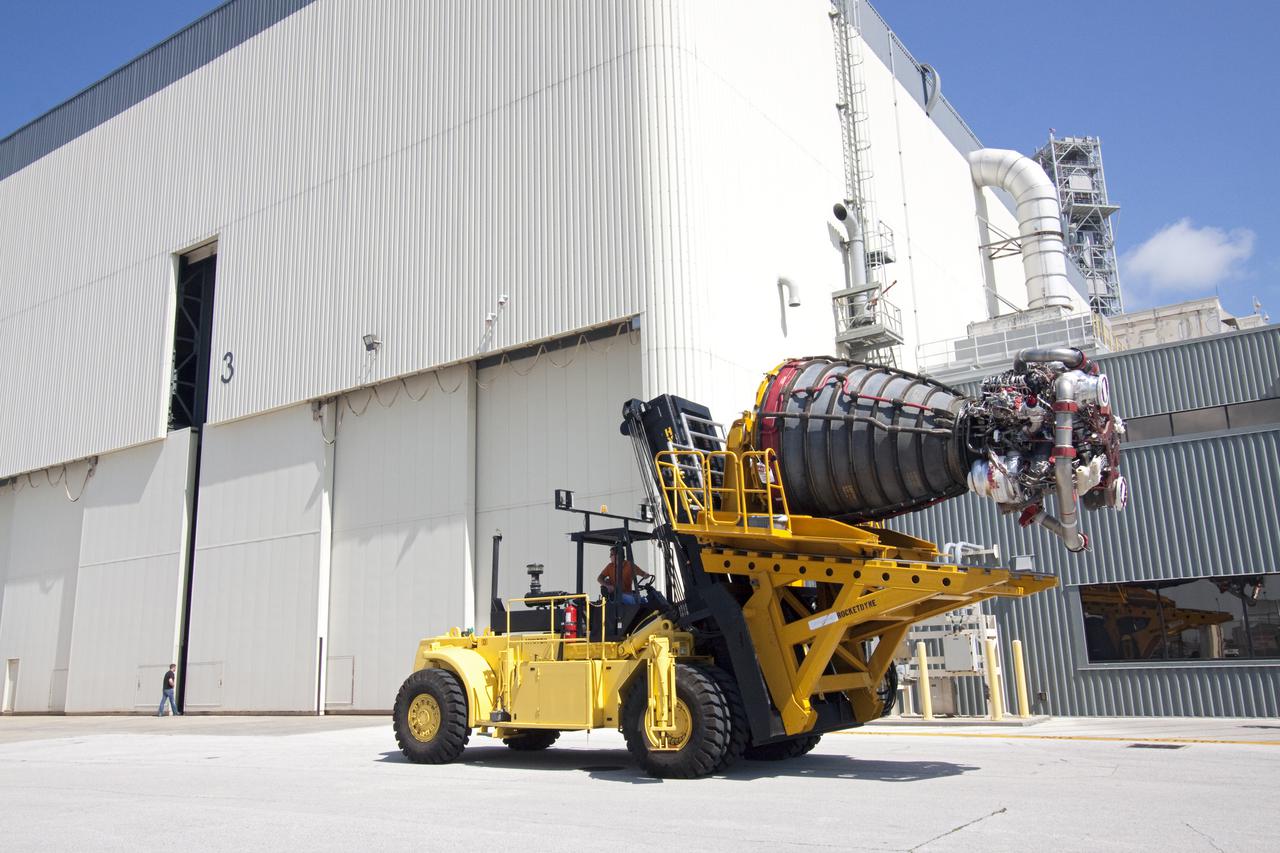
CAPE CANAVERAL, Fla. -- At NASA's Kennedy Space Center in Florida, a space shuttle main engine secured on a Hyster forklift moves from the Space Shuttle Main Engine Processing Facility to Orbiter Processing Facility-3. Three main engines, weighing 7,000 pounds each, will be installed in space shuttle Discovery for the STS-133 mission to the International Space Station. Discovery and its STS-133 crew are targeted to deliver the Express Logistics Carrier-4 filled with external payloads and experiments, as well as critical spare components to the station later this year. Photo credit: NASA_Jack Pfaller
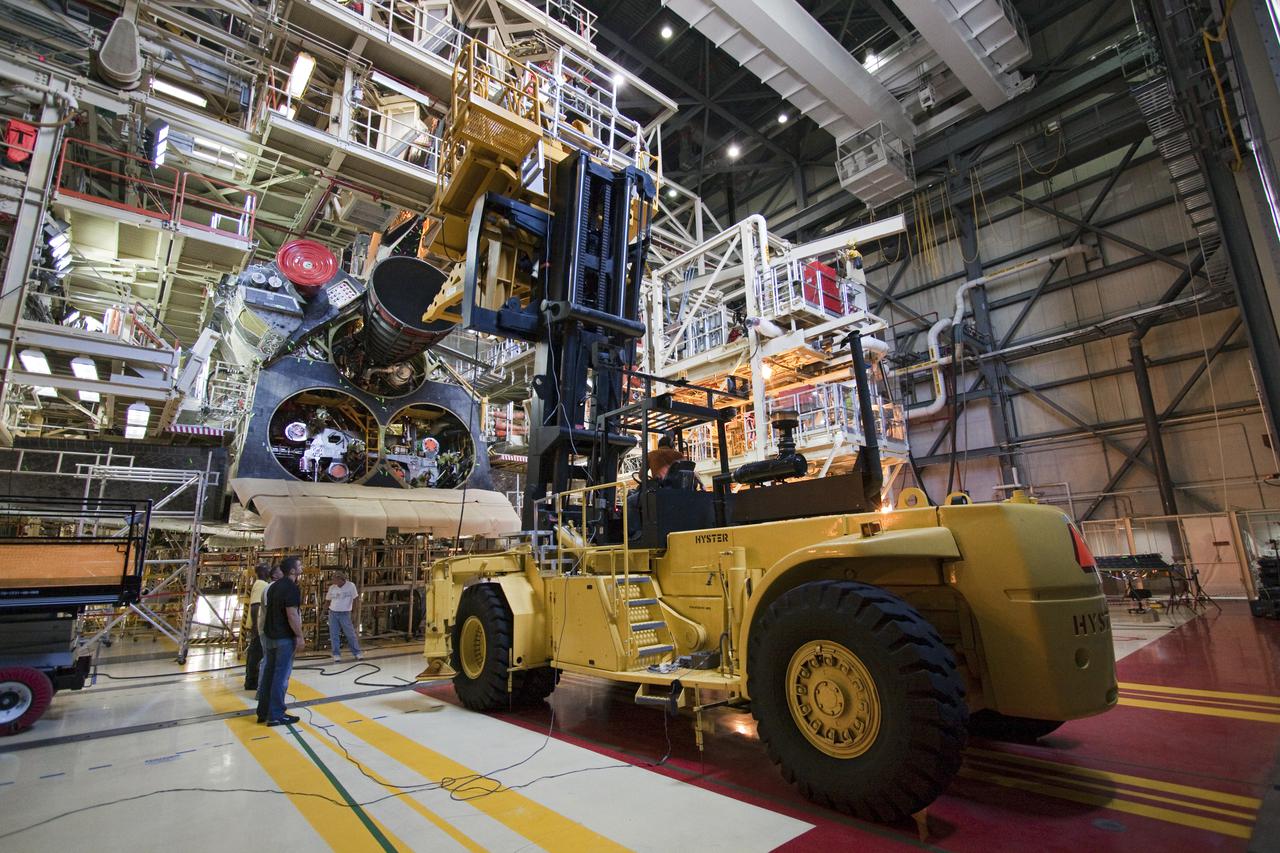
CAPE CANAVERAL, Fla. -- At NASA's Kennedy Space Center in Florida, a space shuttle main engine secured on a Hyster forklift is installed in space shuttle Discovery in Orbiter Processing Facility-3. Three main engines, weighing 7,000 pounds each, will be installed for the STS-133 mission to the International Space Station. Engines are inspected and maintained in the nearby Space Shuttle Main Engine Processing Facility before installation. Discovery and its STS-133 crew are targeted to deliver the Express Logistics Carrier-4 filled with external payloads and experiments, as well as critical spare components to the station later this year. Photo credit: NASA_Jack Pfaller
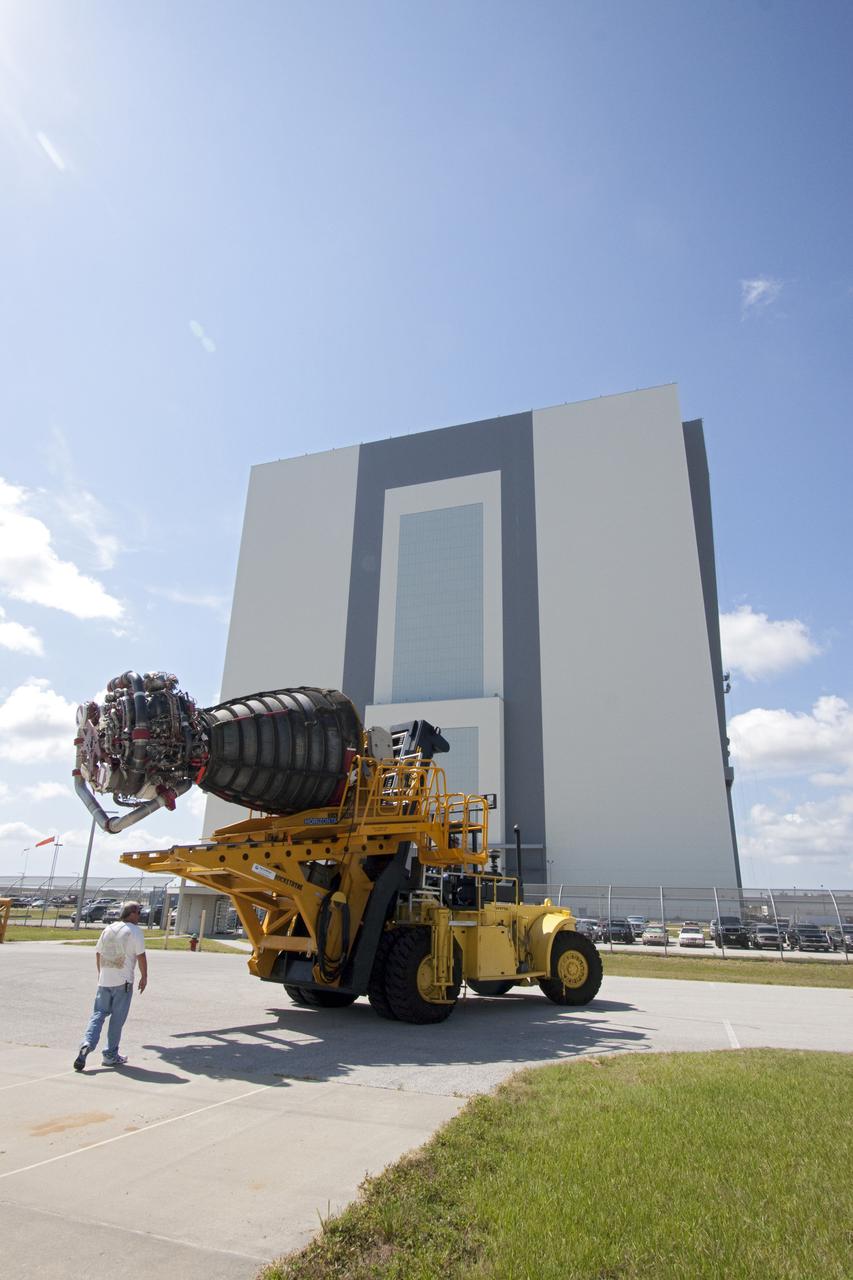
CAPE CANAVERAL, Fla. -- At NASA's Kennedy Space Center in Florida, a space shuttle main engine secured on a Hyster forklift moves from the Space Shuttle Main Engine Processing Facility to Orbiter Processing Facility-3. Three main engines, weighing 7,000 pounds each, will be installed in space shuttle Discovery for the STS-133 mission to the International Space Station. Discovery and its STS-133 crew are targeted to deliver the Express Logistics Carrier-4 filled with external payloads and experiments, as well as critical spare components to the station later this year. Photo credit: NASA_Jack Pfaller
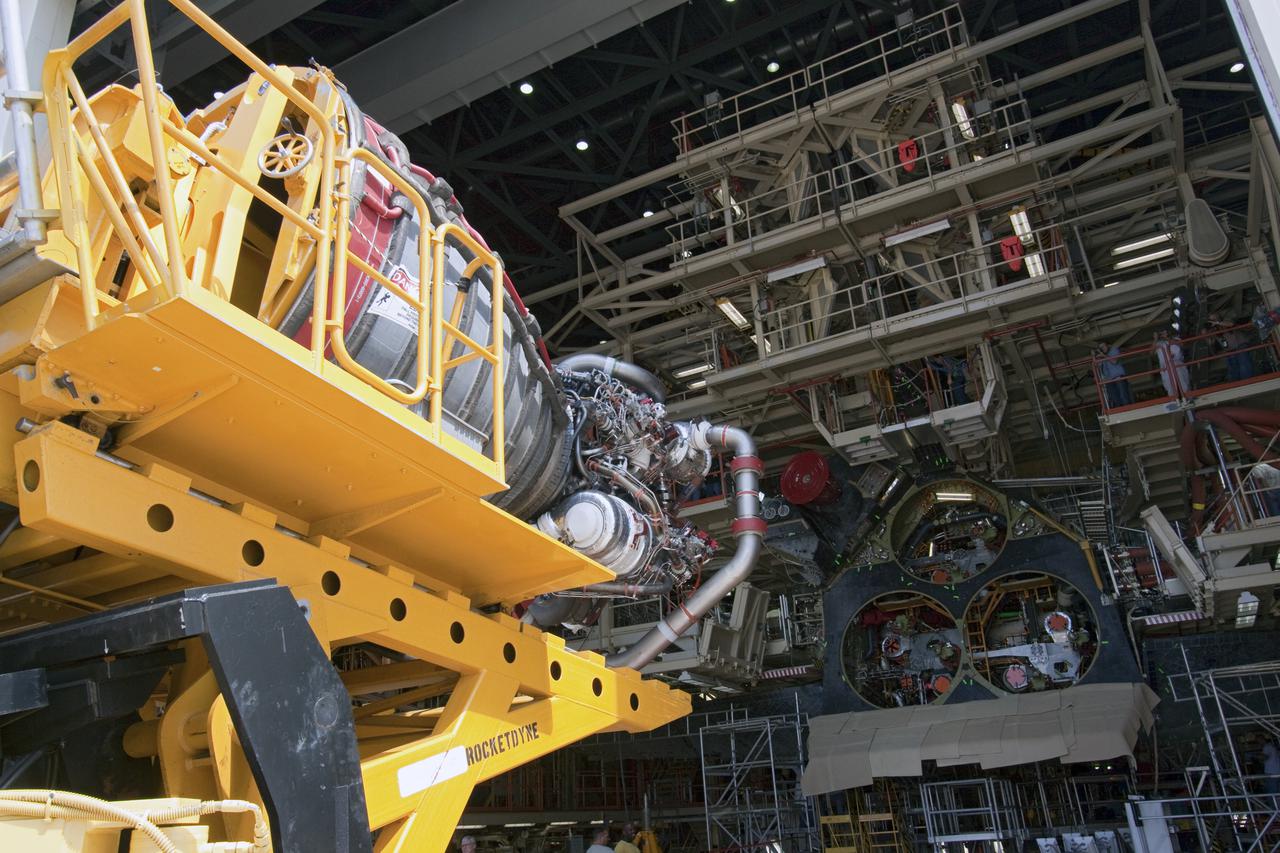
CAPE CANAVERAL, Fla. -- At NASA's Kennedy Space Center in Florida, a space shuttle main engine secured on a Hyster forklift is ready to be installed to space shuttle Discovery in Orbiter Processing Facility-3. Three main engines, weighing 7,000 pounds each, will be installed in the shuttle for the STS-133 mission to the International Space Station. Engines are inspected and maintained in the nearby Space Shuttle Main Engine Processing Facility before installation. Discovery and its STS-133 crew are targeted to deliver the Express Logistics Carrier-4 filled with external payloads and experiments, as well as critical spare components to the station later this year. Photo credit: NASA_Jack Pfaller
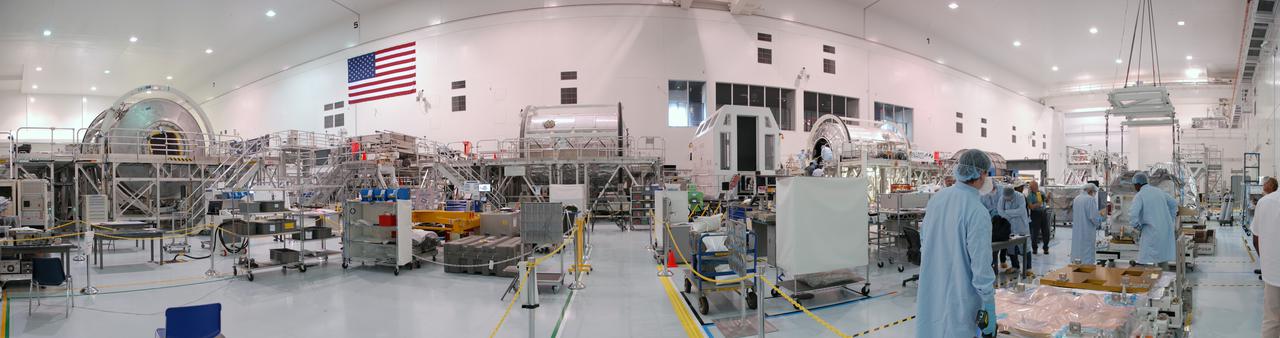
CAPE CANAVERAL, Fla. -- In the Space Station Processing Facility at NASA's Kennedy Space Center in Florida, technicians prepare to lift the cargo transportation container, or CTC, for installation into a shipping container. The container will be transported to the Japanese Aerospace Exploration Agency's Tanegashima Space Center to begin processing for launch to the International Space Station aboard HTV-2, scheduled for Jan. 20, 2011. HTV-2 is an uncrewed cargo transporter that will be launched by the H-IIB launch vehicle. It is designed to deliver up to 6 tons of supplies, including food, clothes and experiment devices to the space station. Photo credit: NASA_Frankie Martin

CAPE CANAVERAL, Fla. -- In Orbiter Processing Facility-3 at NASA's Kennedy Space Center in Florida, space shuttle Discovery is outfitted with one of its three space shuttle main engines. The engines, weighing 7,000 pounds each, are being installed in the shuttle for the STS-133 mission to the International Space Station. Engines are inspected and maintained in the nearby Space Shuttle Main Engine Processing Facility before installation. Discovery and its STS-133 crew are targeted to deliver the Express Logistics Carrier-4 filled with external payloads and experiments, as well as critical spare components to the station later this year. Photo credit: NASA_Jack Pfaller
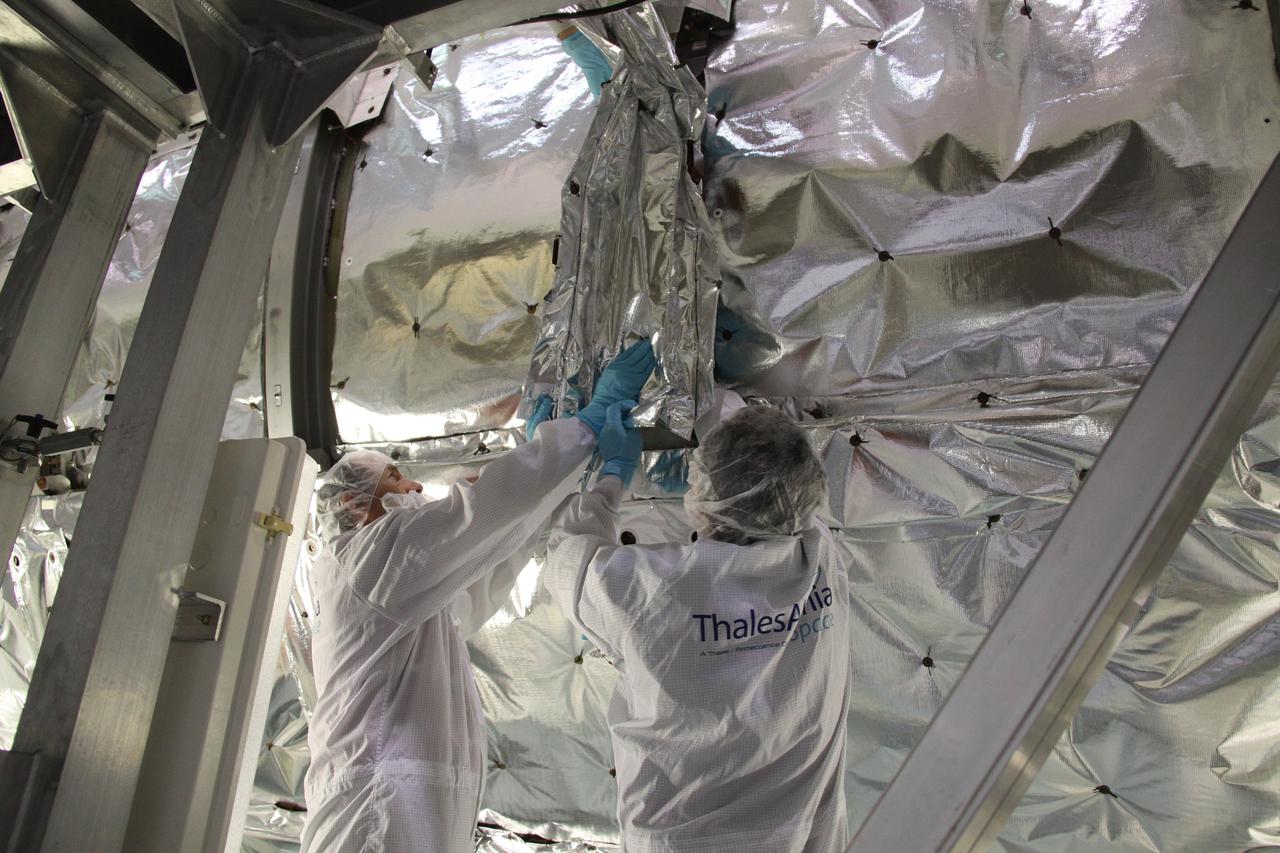
CAPE CANAVERAL, Fla. – In the Space Station Processing Facility at NASA's Kennedy Space Center in Florida, technicians install multi-layer insulation on the Meteoroids and Debris Protective Shield of the Permanent Multipurpose Module, or PMM. The reflective silver mesh is Mylar, which is aluminized to protect hardware aboard the International Space Station from solar thermal radiation. The Leonardo multi-purpose logistics module, or MPLM, is being modified to become the PMM that will carry supplies and critical spare parts to the station aboard space shuttle Discovery’s STS-133 mission. Discovery, targeted to launch Nov. 1, will leave the module behind so it can be used for microgravity experiments in fluid physics, materials science, biology and biotechnology. Photo credit: NASA_Troy Cryder
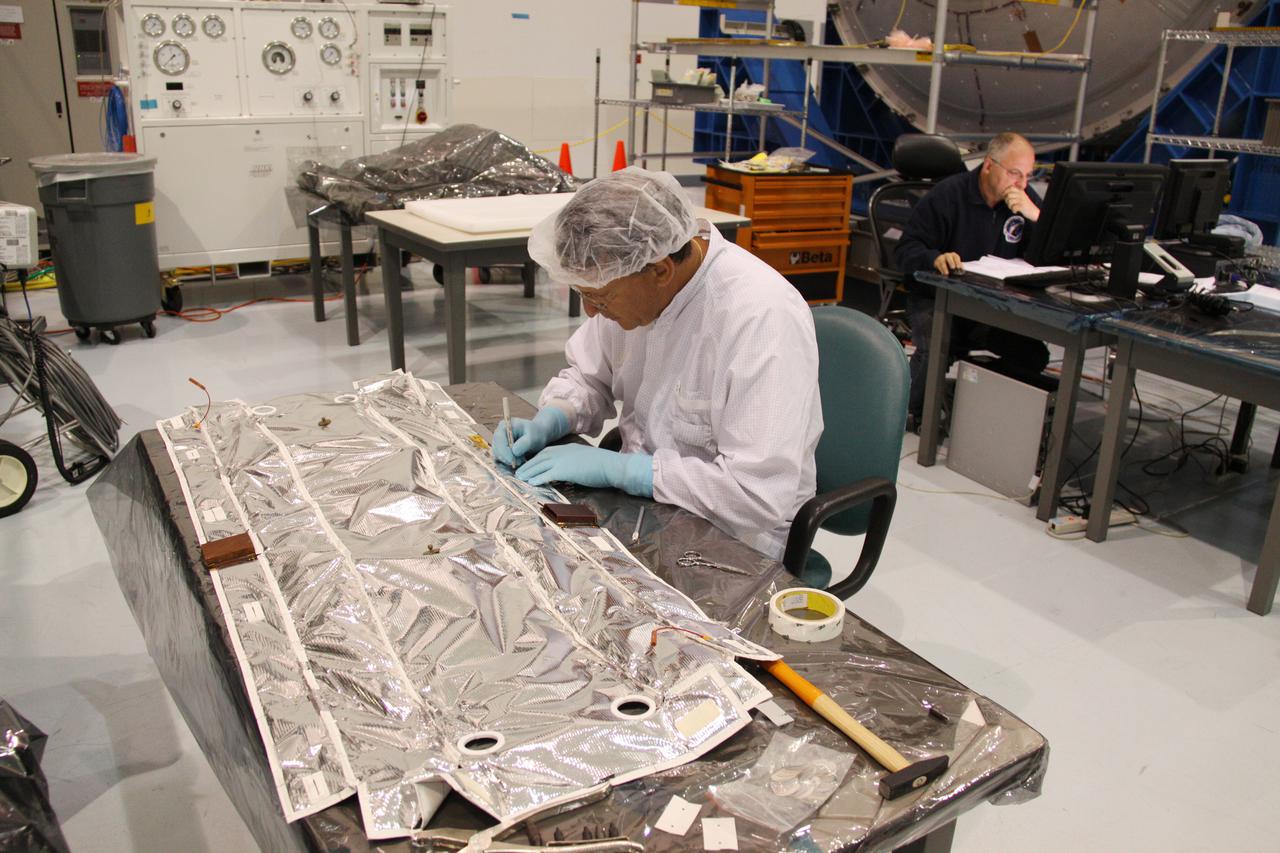
CAPE CANAVERAL, Fla. – In the Space Station Processing Facility at NASA's Kennedy Space Center in Florida, a technician inspects multi-layer insulation before it is installed on the Meteoroids and Debris Protective Shield of the Permanent Multipurpose Module, or PMM. The reflective silver mesh is Mylar, which is aluminized to protect hardware aboard the International Space Station from solar thermal radiation. The Leonardo multi-purpose logistics module, or MPLM, is being modified to become the PMM that will carry supplies and critical spare parts to the station aboard space shuttle Discovery’s STS-133 mission. Discovery, targeted to launch Nov. 1, will leave the module behind so it can be used for microgravity experiments in fluid physics, materials science, biology and biotechnology. Photo credit: NASA_Troy Cryder
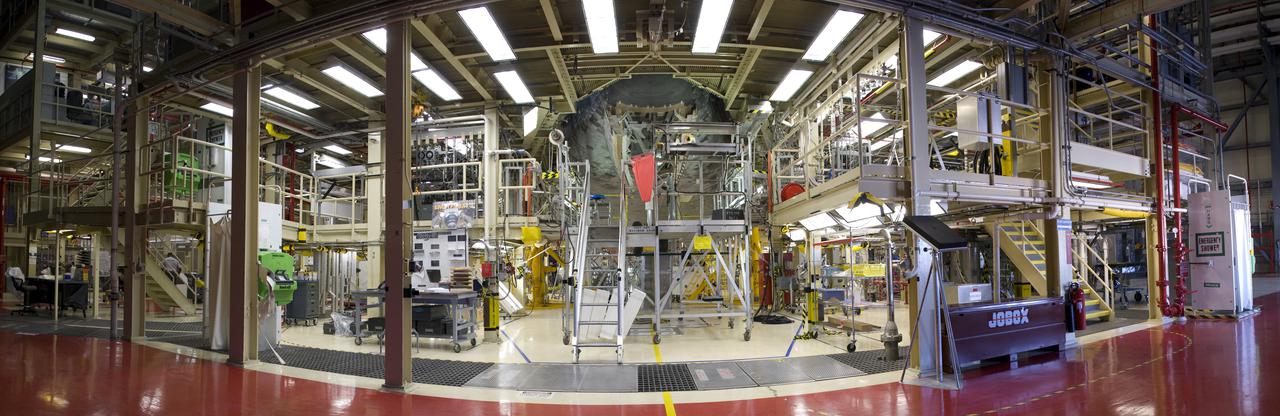
CAPE CANAVERAL, Fla. -- In Orbiter Processing Facility-3 at NASA's Kennedy Space Center in Florida, space shuttle Discovery is being processed for its upcoming mission to the International Space Station. Discovery and its crew of six will deliver the Express Logistics Carrier-4 filled with external payloads and experiments, as well as critical spare components to the station during the STS-133 mission targeted for Nov. 1. Photo credit: NASA_Frankie Martin
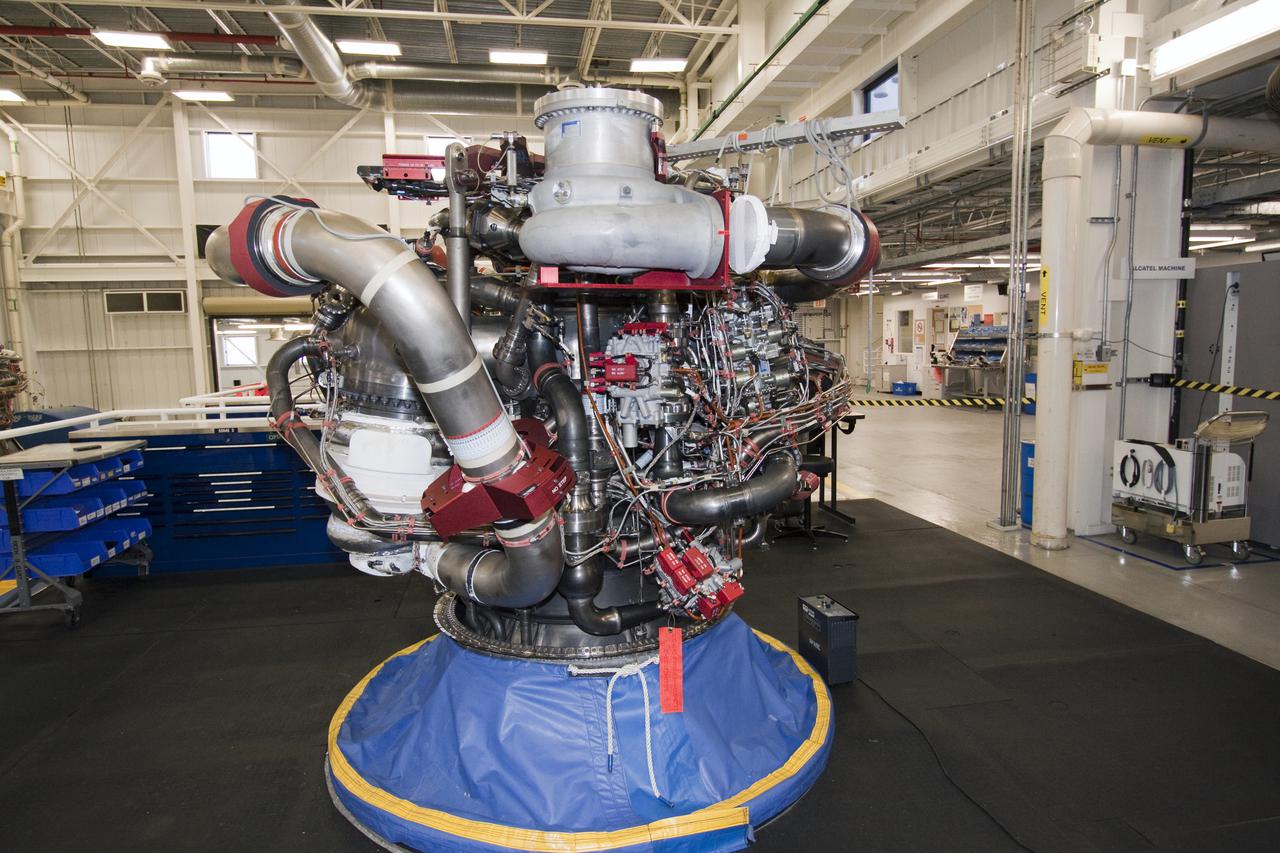
CAPE CANAVERAL, Fla. -- In the Space Shuttle Main Engine Processing Facility at NASA's Kennedy Space Center in Florida, space shuttle main engine No. 1 is outfitted with a new turbopump. A suspect turbopump experienced an issue during torque testing and had to be removed and replaced for Discovery's STS-133 mission to the International Space Station. Next, all three main engines will be transported back to Orbiter Processing Facility-3 and reinstalled. The shuttle and its STS-133 crew are targeted to deliver the Express Logistics Carrier-4 filled with external payloads and experiments, as well as critical spare components to the station later this year. Photo credit: NASA_Jack Pfaller
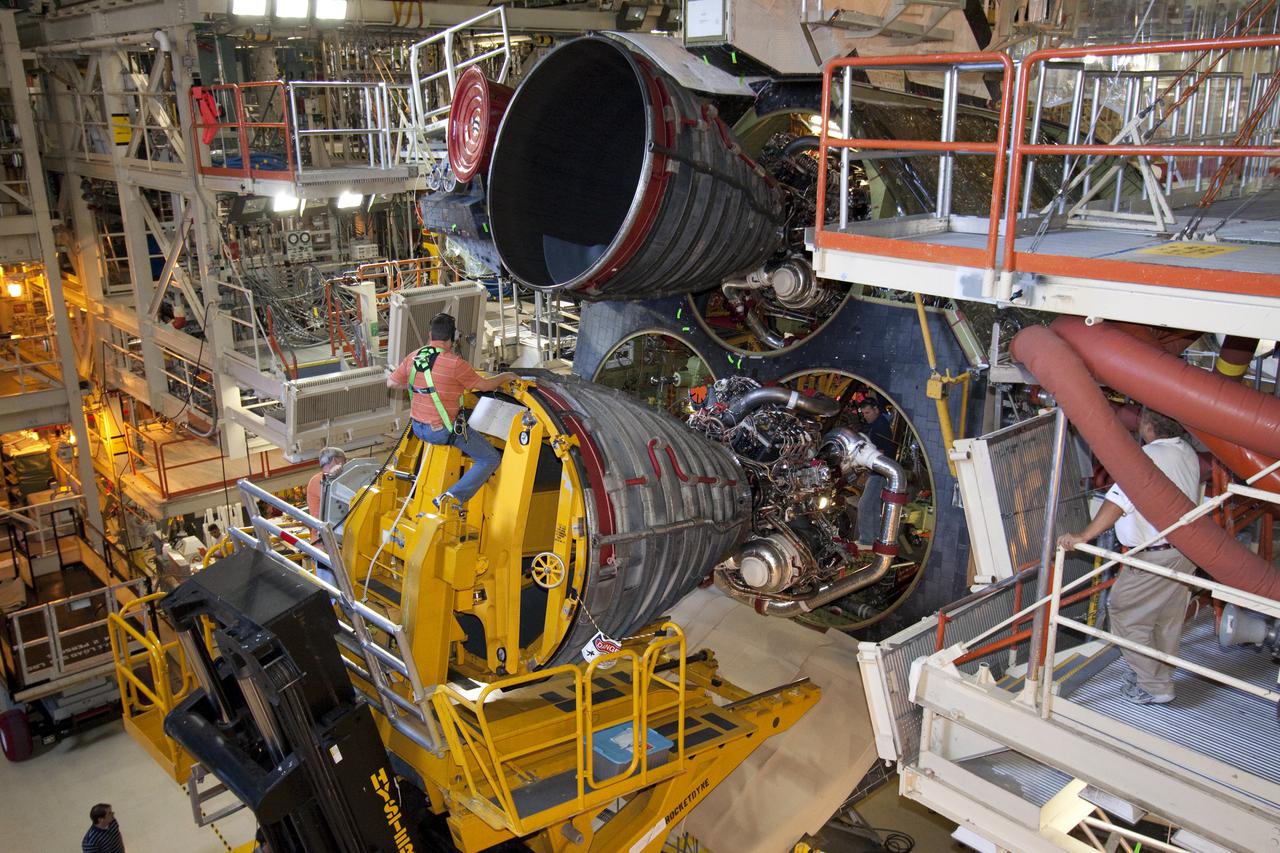
CAPE CANAVERAL, Fla. -- In Orbiter Processing Facility-3 at NASA's Kennedy Space Center in Florida, space shuttle main engine No. 3 is installed in shuttle Discovery. The engine was removed to give technicians time to replace a suspect turbopump in main engine No. 1, which encountered an issue during torque testing. Discovery and its STS-133 crew are targeted to deliver the Express Logistics Carrier-4 filled with external payloads and experiments, as well as critical spare components to the International Space Station later this year. Photo credit: NASA_Jack Pfaller
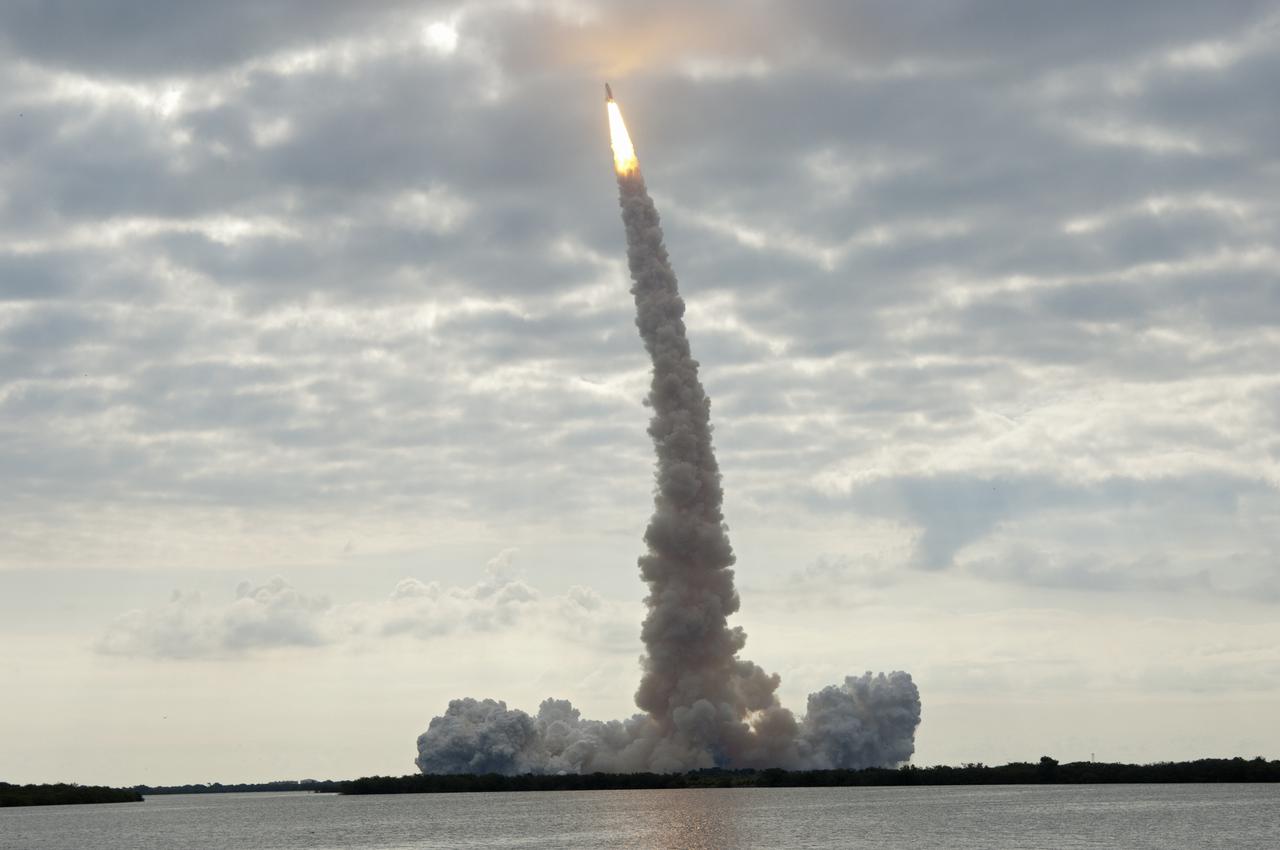
CAPE CANAVERAL, Fla. - Seen from across the Banana River Creek Viewing Site near the Saturn V Center, space shuttle Endeavour soars skyward. The shuttle lifted off on its STS-134 mission to the International Space Station on time at 8:56 a.m. EDT on May 16 from Launch Pad 39A at NASA's Kennedy Space Center in Florida. The shuttle and its six-member crew are embarking on a mission to deliver the Alpha Magnetic Spectrometer-2 (AMS), Express Logistics Carrier-3, a high-pressure gas tank and additional spare parts for the Dextre robotic helper to the space station. Endeavour's first launch attempt on April 29 was scrubbed because of an issue associated with a faulty power distribution box called the aft load control assembly-2 (ALCA-2). For more information, visit www.nasa.gov_mission_pages_shuttle_shuttlemissions_sts134_index.html. Photo credit: NASA_Chad Baumer