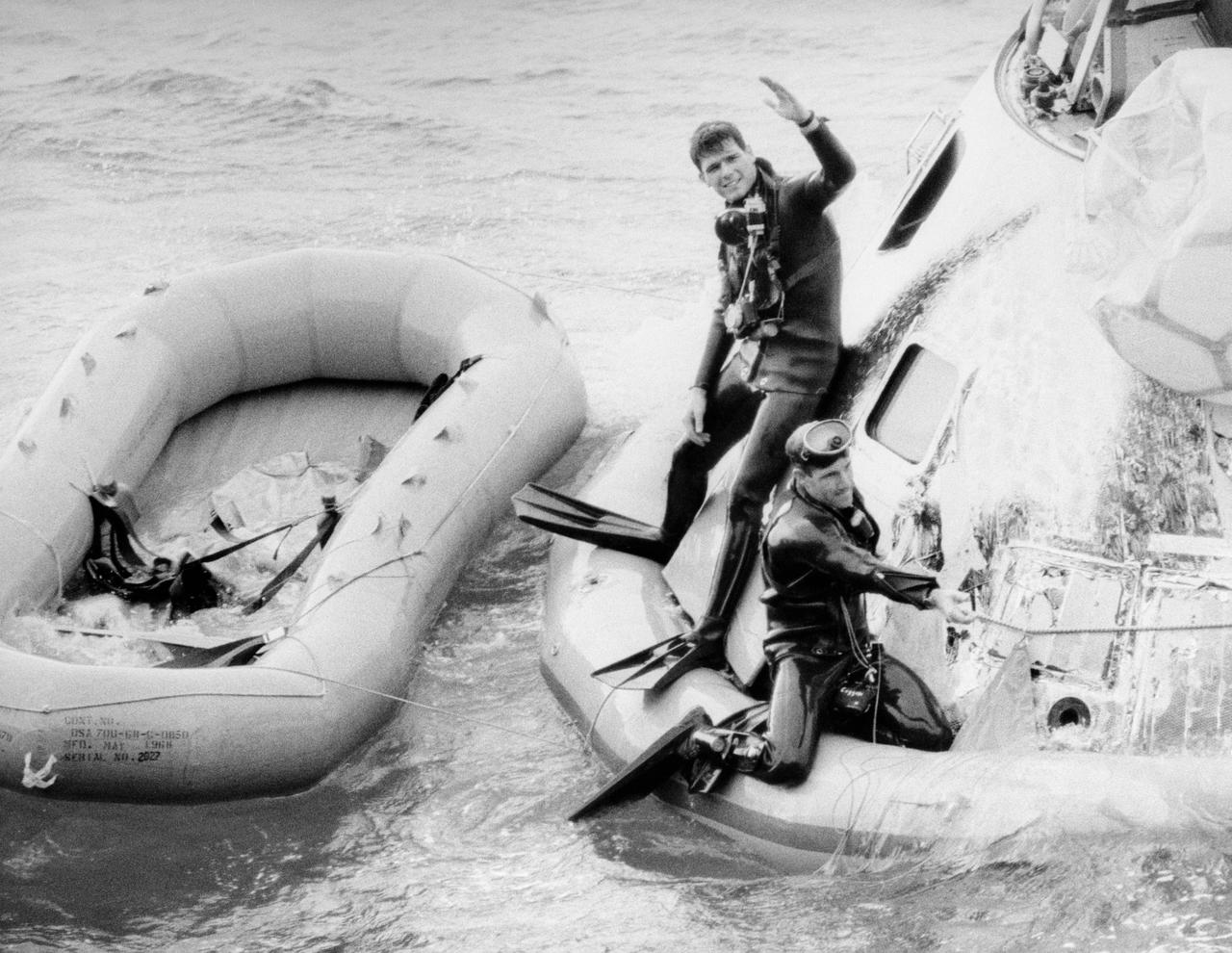
S69-15732 (27 Dec. 1968) --- A U.S. Navy frogman team participates in the Apollo 8 recovery operations. The Apollo crew, astronauts Frank Borman, James A. Lovell Jr., and William A. Anders, were recovered by helicopter and flown to the deck of the USS Yorktown, prime recovery ship for the historic Apollo 8 lunar orbit mission. Apollo 8 splashed down at 10:51 a.m. (EST), Dec. 27, 1968, about 1,000 miles south-southwest of Hawaii.
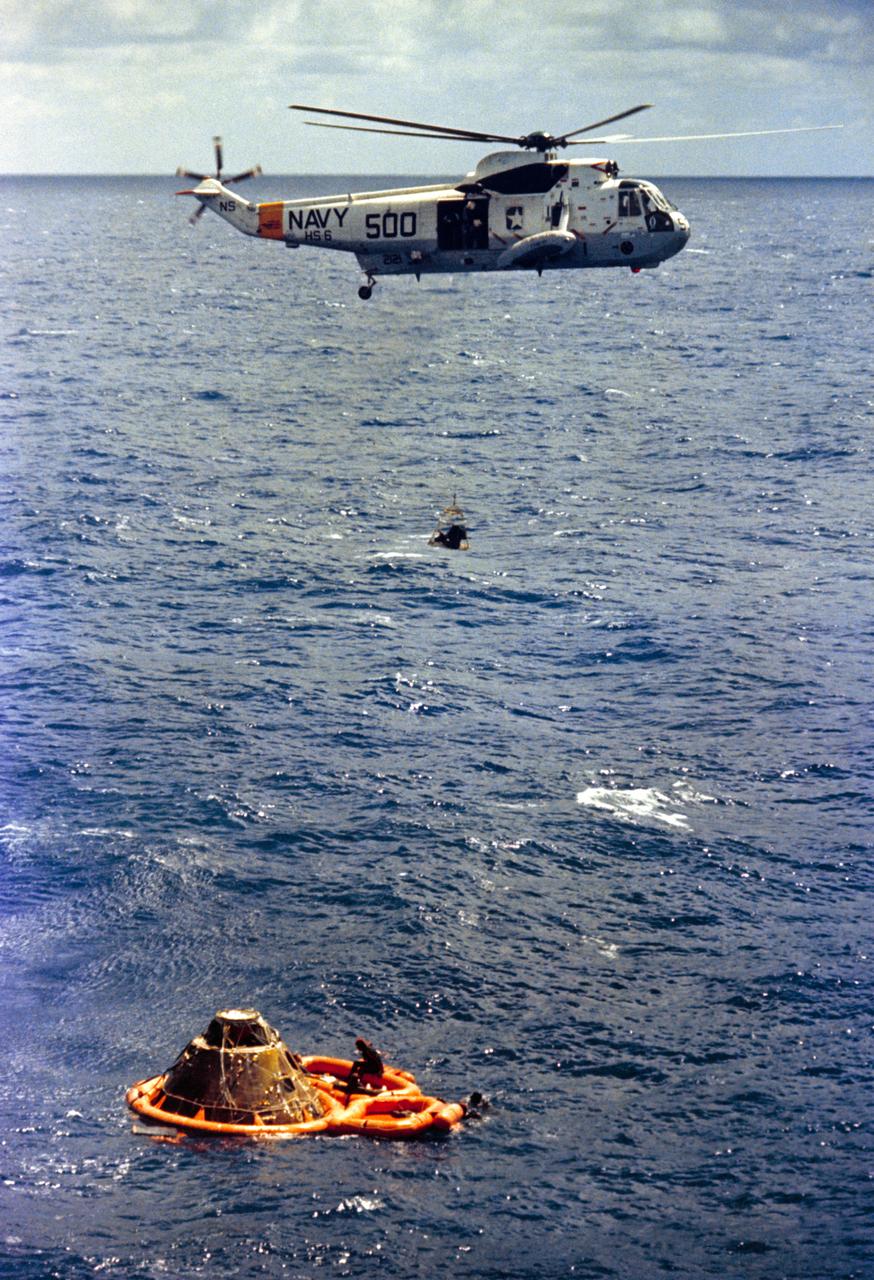
S71-19476 (9 Feb. 1971) --- Astronaut Stuart A. Roosa, command module pilot, is hoisted inside a Billy Pugh net to a U.S. Navy helicopter assisting in Apollo 14 recovery operations in the South Pacific Ocean. Visible in a life raft beside the Command Module (CM) are astronauts Alan B. Shepard Jr., commander, back to camera; and Edgar D. Mitchell (partially obscured by the spacecraft), lunar module pilot. Three U.S. Navy underwater demolition team swimmers who assisted in the recovery operations are pictured in and around the life raft. Apollo 14 splashdown occurred at 3:04:39 p.m. (CST), Feb. 9, 1971, approximately 765 nautical miles south of American Samoa in the South Pacific Ocean.
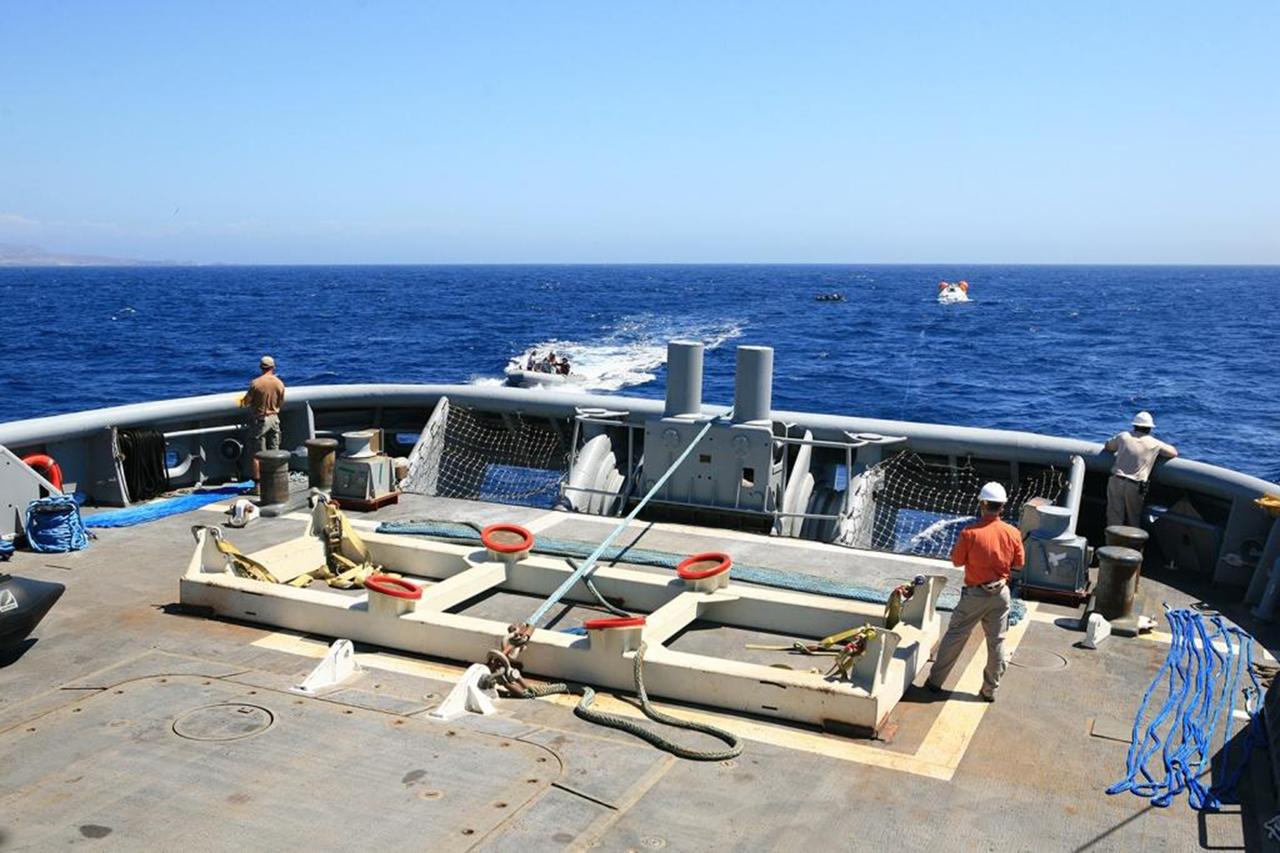
SAN DIEGO, Calif. – On board the USS Salvor, a safeguard-class rescue and salvage ship, NASA and U.S. Navy personnel monitor the progress as the Orion boilerplate test vehicle is towed behind the ship during the third day of Underway Recovery Test 4A in the Pacific Ocean. At left, Navy divers in a rigid hull inflatable boat monitor practice recovery procedures. NASA, Lockheed Martin and the U.S. Navy are conducting the test to prepare for recovery of the Orion crew module on its return from a deep space mission. The underway recovery test allows the teams to demonstrate and evaluate the recovery processes, procedures, new hardware and personnel in open waters. The Ground Systems Development and Operations Program is conducting the underway recovery test. Orion is the exploration spacecraft designed to carry astronauts to destinations not yet explored by humans, including an asteroid and Mars. It will have emergency abort capability, sustain the crew during space travel and provide safe re-entry from deep space return velocities. The first unpiloted test flight of the Orion is scheduled to launch in December 2014 atop a United Launch Alliance Delta IV Heavy rocket and in 2018 on NASA’s Space Launch System rocket. For more information, visit http://www.nasa.gov/orion. Photo credit: NASA/Kim Shiflett
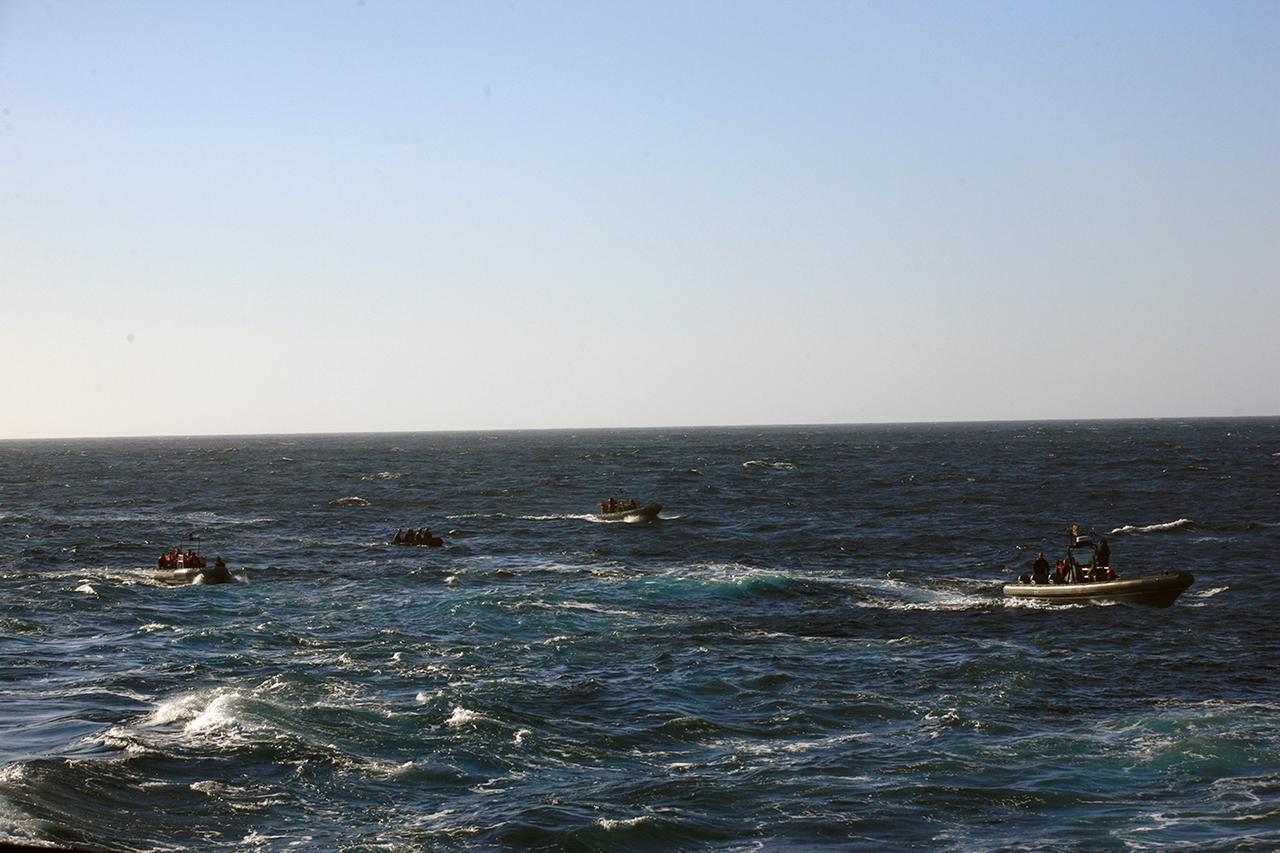
SAN DIEGO, Calif. – During the third day of Orion Underway Recovery Test 3 on the USS Anchorage in the Pacific Ocean, two Zodiac boats with U.S. Navy divers aboard, at left, and two rigid hull inflatable boats with Navy and other team personnel aboard, prepare for recovery of the Orion boilerplate test vehicle. NASA, Lockheed Martin and U.S. Navy personnel are conducting recovery tests using the Orion boilerplate test vehicle to prepare for recovery of the Orion crew module on its return from a deep space mission. The test allows the teams to demonstrate and evaluate the recovery processes, procedures, hardware and personnel in open waters. The Ground Systems Development and Operations Program is conducting the underway recovery tests. Orion is the exploration spacecraft designed to carry astronauts to destinations not yet explored by humans, including an asteroid and Mars. It will have emergency abort capability, sustain the crew during space travel and provide safe re-entry from deep space return velocities. The first unpiloted test flight of Orion is scheduled to launch in 2014 atop a United Launch Alliance Delta IV Heavy rocket and in 2018 on NASA’s Space Launch System rocket. For more information, visit http://www.nasa.gov/orion. Photo credit: NASA/Kim Shiflett
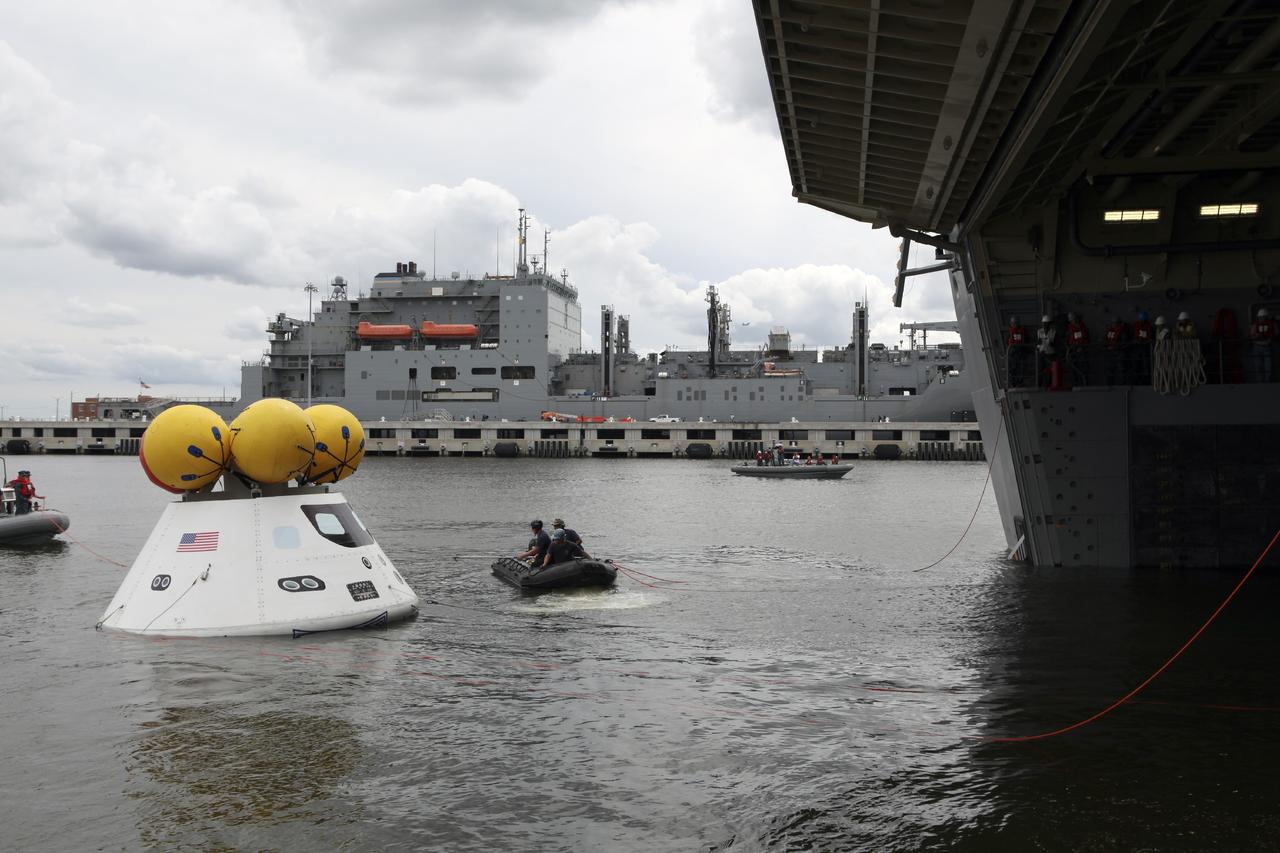
HAMPTON, Va. – At the Naval Station Norfolk near NASA’s Langley Research Center in Virginia, NASA and the U.S. Navy are conducting a stationary recovery test on the Orion boilerplate test article in the water near a U.S. Navy ship. NASA and the U.S. Navy are conducting tests to prepare for recovery of the Orion crew module and forward bay cover on its return from a deep space mission. The stationary recovery test will allow the teams to demonstrate and evaluate the recovery processes, procedures, hardware and personnel in a controlled environment before conducting a second recovery test next year in open waters. Orion is the exploration spacecraft designed to carry astronauts to destinations not yet explored by humans, including an asteroid and Mars. It will have emergency abort capability, sustain the crew during space travel and provide safe re-entry from deep space return velocities. The first unpiloted test flight of the Orion is scheduled to launch in 2014 atop a Delta IV rocket and in 2017 on NASA’s Space Launch System rocket. For more information, visit http://www.nasa.gov/orion. Photo credit: NASA/Dimitri Gerondidakis
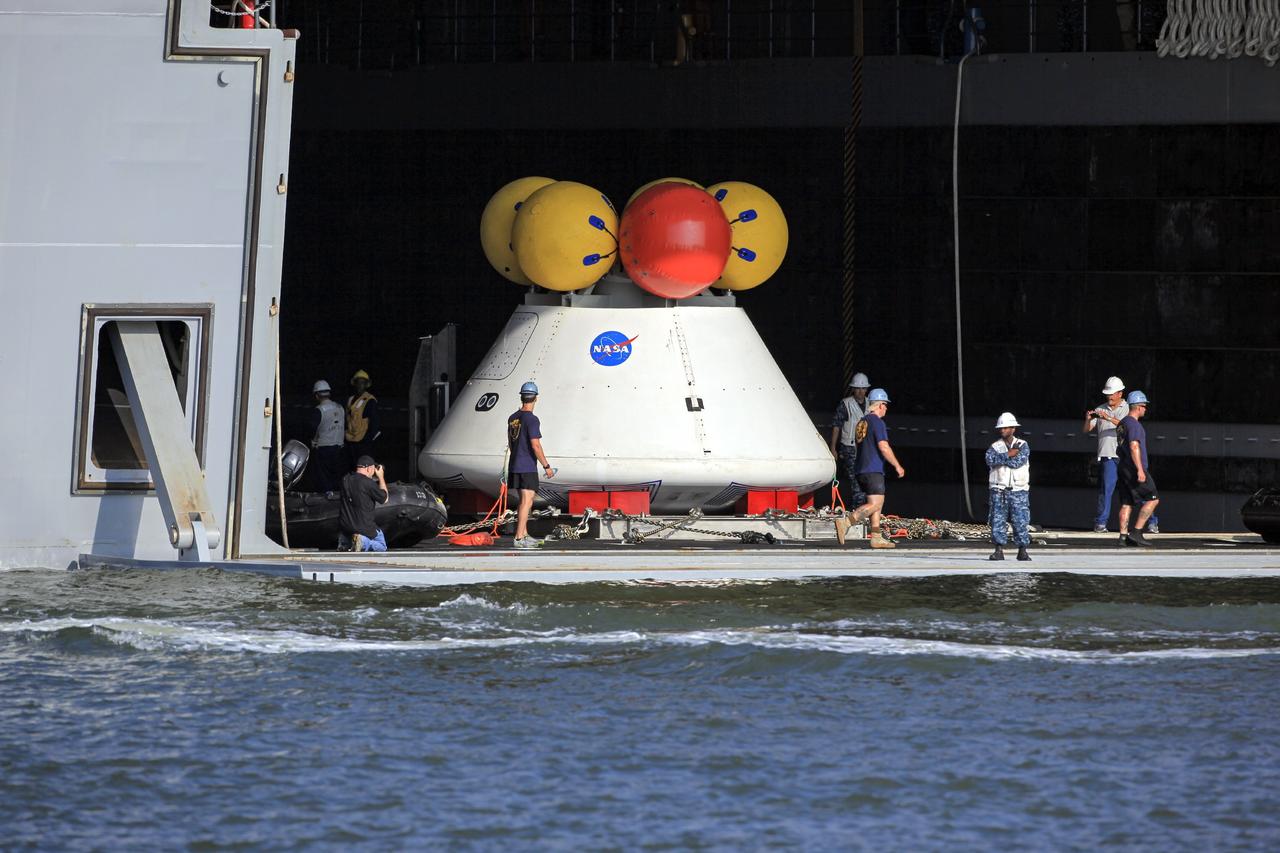
HAMPTON, Va. – At the Naval Station Norfolk near NASA’s Langley Research Center in Virginia, NASA and U.S. Navy personnel prepare the Orion boilerplate test article for a stationary recovery test aboard a U.S. Navy ship. NASA and the U.S. Navy are conducting tests to prepare for recovery of the Orion crew module and forward bay cover on its return from a deep space mission. The stationary recovery test will allow the teams to demonstrate and evaluate the recovery processes, procedures, hardware and personnel in a controlled environment before conducting a second recovery test next year in open waters. Orion is the exploration spacecraft designed to carry astronauts to destinations not yet explored by humans, including an asteroid and Mars. It will have emergency abort capability, sustain the crew during space travel and provide safe re-entry from deep space return velocities. The first unpiloted test flight of the Orion is scheduled to launch in 2014 atop a Delta IV rocket and in 2017 on NASA’s Space Launch System rocket. For more information, visit http://www.nasa.gov/orion. Photo credit: NASA/Dimitri Gerondidakis
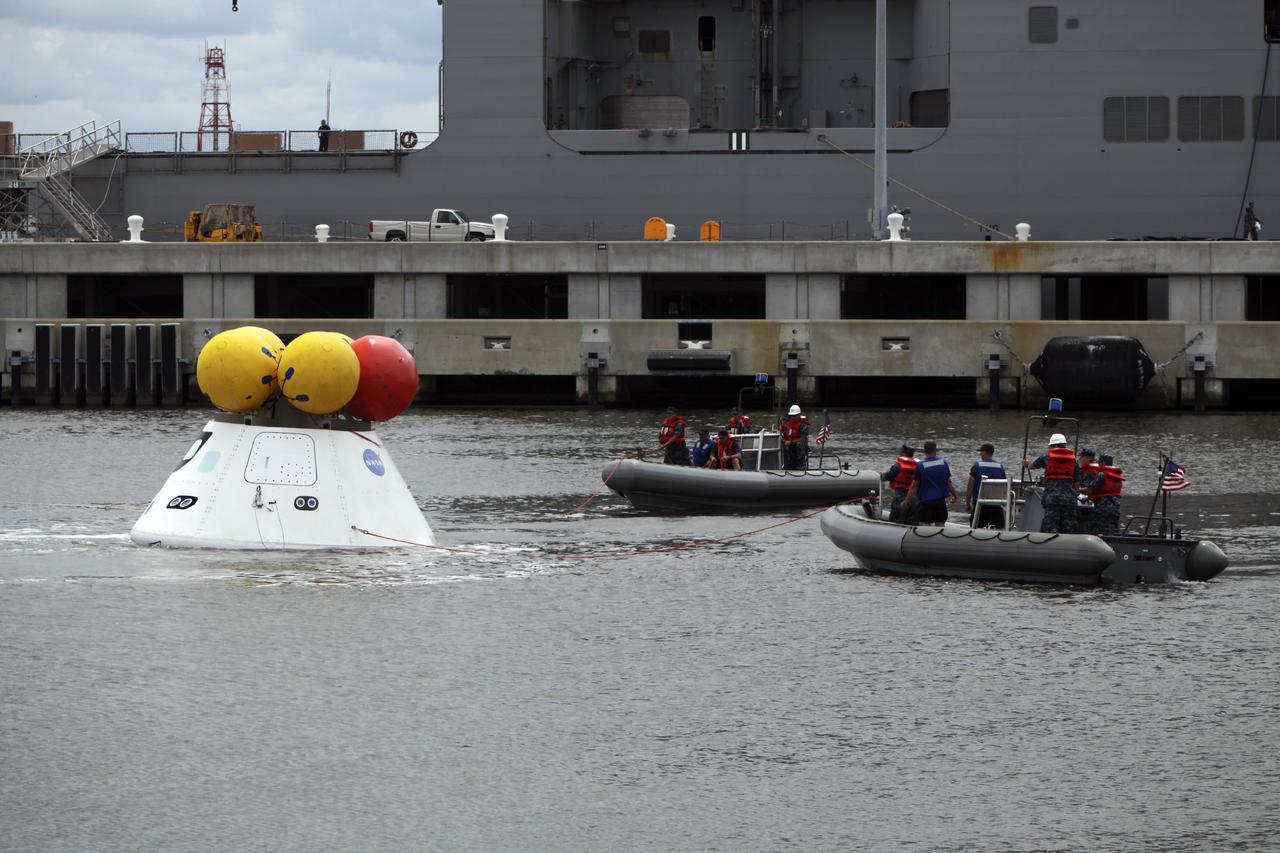
HAMPTON, Va. – At the Naval Station Norfolk near NASA’s Langley Research Center in Virginia, NASA and the U.S. Navy are conducting a stationary recovery test on the Orion boilerplate test article in the water near a U.S. Navy ship. NASA and the U.S. Navy are conducting tests to prepare for recovery of the Orion crew module and forward bay cover on its return from a deep space mission. The stationary recovery test will allow the teams to demonstrate and evaluate the recovery processes, procedures, hardware and personnel in a controlled environment before conducting a second recovery test next year in open waters. Orion is the exploration spacecraft designed to carry astronauts to destinations not yet explored by humans, including an asteroid and Mars. It will have emergency abort capability, sustain the crew during space travel and provide safe re-entry from deep space return velocities. The first unpiloted test flight of the Orion is scheduled to launch in 2014 atop a Delta IV rocket and in 2017 on NASA’s Space Launch System rocket. For more information, visit http://www.nasa.gov/orion. Photo credit: NASA/Dimitri Gerondidakis
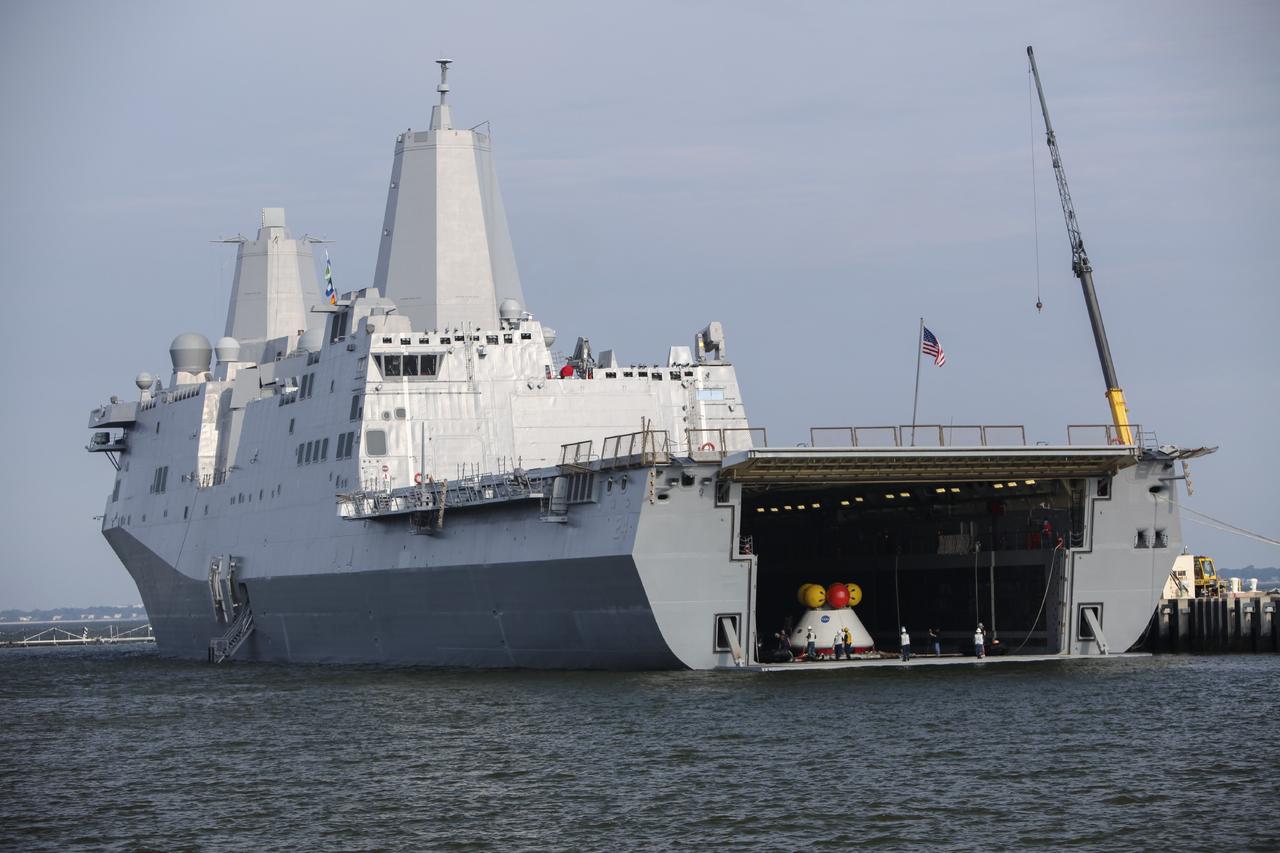
HAMPTON, Va. – At the Naval Station Norfolk near NASA’s Langley Research Center in Virginia, NASA and U.S. Navy personnel prepare the Orion boilerplate test article and support equipment for a stationary recovery test on a U.S. Navy ship. NASA and the U.S. Navy are conducting tests to prepare for recovery of the Orion crew module and forward bay cover on its return from a deep space mission. The stationary recovery test will allow the teams to demonstrate and evaluate the recovery processes, procedures, hardware and personnel in a controlled environment before conducting a second recovery test next year in open waters. Orion is the exploration spacecraft designed to carry astronauts to destinations not yet explored by humans, including an asteroid and Mars. It will have emergency abort capability, sustain the crew during space travel and provide safe re-entry from deep space return velocities. The first unpiloted test flight of the Orion is scheduled to launch in 2014 atop a Delta IV rocket and in 2017 on NASA’s Space Launch System rocket. For more information, visit http://www.nasa.gov/orion. Photo credit: NASA/Dimitri Gerondidakis
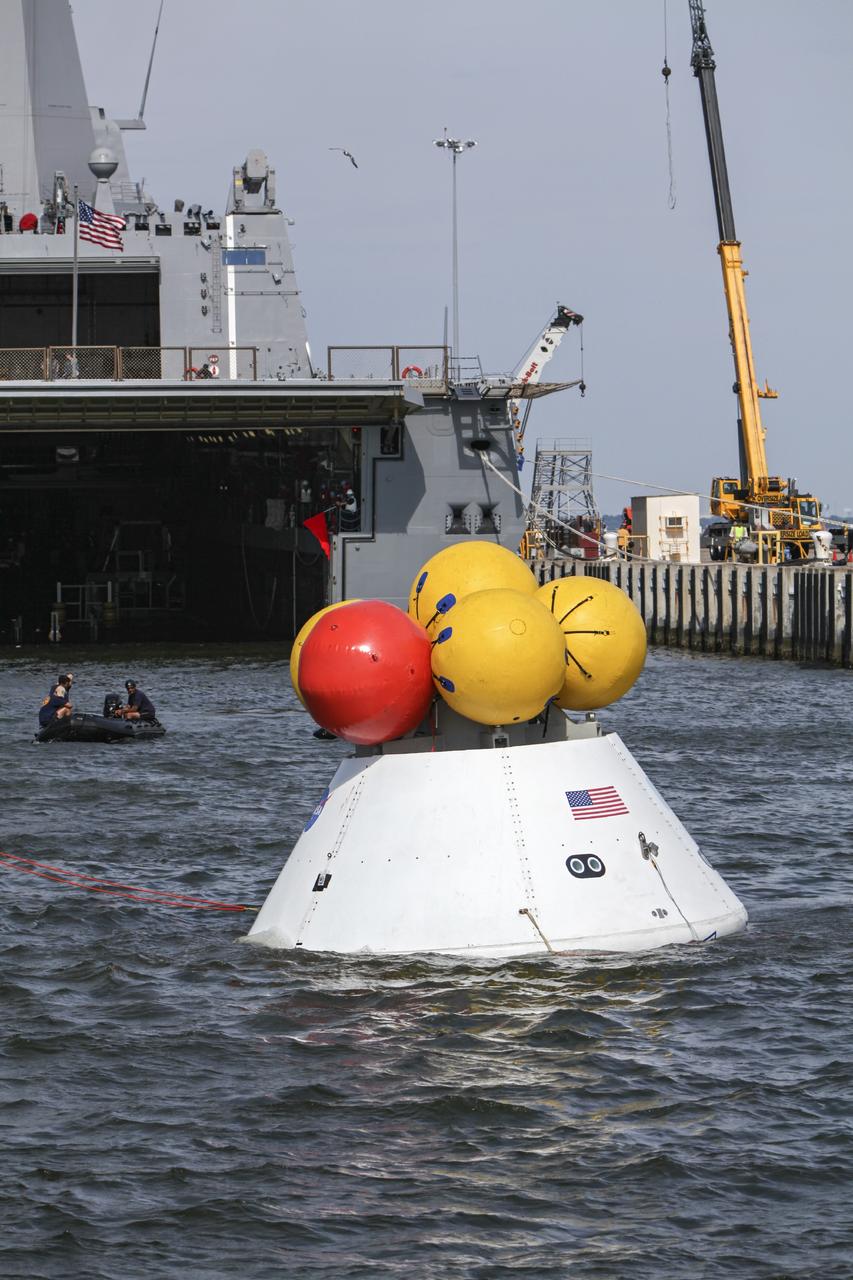
HAMPTON, Va. – At the Naval Station Norfolk near NASA’s Langley Research Center in Virginia, NASA and U.S. Navy personnel are conducting a stationary recovery test using the Orion boilerplate test article. The test article was transferred from a U.S. Navy ship into the water and tether lines have been attached. NASA and the U.S. Navy are conducting tests to prepare for recovery of the Orion crew module and forward bay cover on its return from a deep space mission. The stationary recovery test will allow the teams to demonstrate and evaluate the recovery processes, procedures, hardware and personnel in a controlled environment before conducting a second recovery test next year in open waters. Orion is the exploration spacecraft designed to carry astronauts to destinations not yet explored by humans, including an asteroid and Mars. It will have emergency abort capability, sustain the crew during space travel and provide safe re-entry from deep space return velocities. The first unpiloted test flight of the Orion is scheduled to launch in 2014 atop a Delta IV rocket and in 2017 on NASA’s Space Launch System rocket. For more information, visit http://www.nasa.gov/orion. Photo credit: NASA/Dimitri Gerondidakis
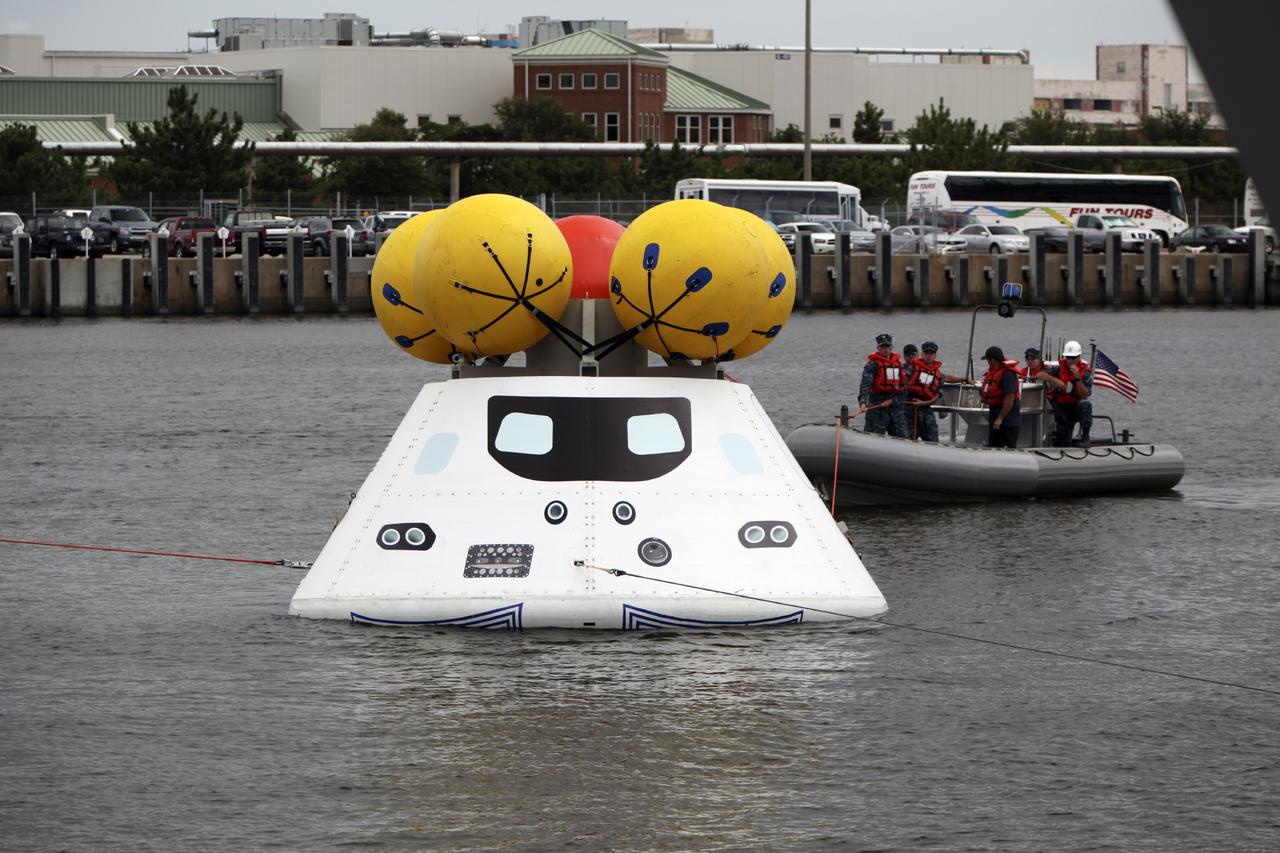
HAMPTON, Va. – At the Naval Station Norfolk near NASA’s Langley Research Center in Virginia, NASA and the U.S. Navy are conducting a stationary recovery test on the Orion boilerplate test article in the water near a U.S. Navy ship. NASA and the U.S. Navy are conducting tests to prepare for recovery of the Orion crew module and forward bay cover on its return from a deep space mission. The stationary recovery test will allow the teams to demonstrate and evaluate the recovery processes, procedures, hardware and personnel in a controlled environment before conducting a second recovery test next year in open waters. Orion is the exploration spacecraft designed to carry astronauts to destinations not yet explored by humans, including an asteroid and Mars. It will have emergency abort capability, sustain the crew during space travel and provide safe re-entry from deep space return velocities. The first unpiloted test flight of the Orion is scheduled to launch in 2014 atop a Delta IV rocket and in 2017 on NASA’s Space Launch System rocket. For more information, visit http://www.nasa.gov/orion. Photo credit: NASA/Dimitri Gerondidakis
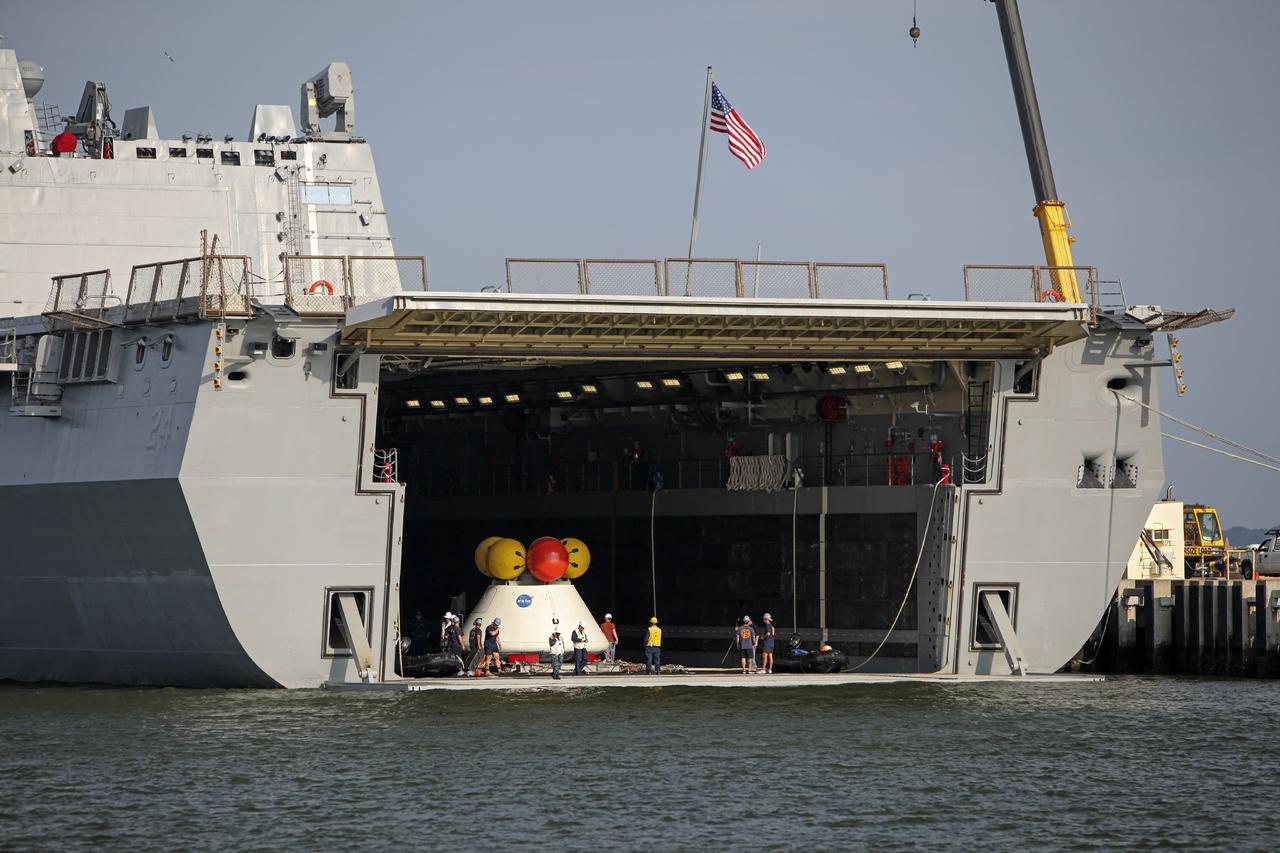
HAMPTON, Va. – At the Naval Station Norfolk near NASA’s Langley Research Center in Virginia, NASA and U.S. Navy personnel prepare the Orion boilerplate test article and support equipment for a stationary recovery test on a U.S. Navy ship. NASA and the U.S. Navy are conducting tests to prepare for recovery of the Orion crew module and forward bay cover on its return from a deep space mission. The stationary recovery test will allow the teams to demonstrate and evaluate the recovery processes, procedures, hardware and personnel in a controlled environment before conducting a second recovery test next year in open waters. Orion is the exploration spacecraft designed to carry astronauts to destinations not yet explored by humans, including an asteroid and Mars. It will have emergency abort capability, sustain the crew during space travel and provide safe re-entry from deep space return velocities. The first unpiloted test flight of the Orion is scheduled to launch in 2014 atop a Delta IV rocket and in 2017 on NASA’s Space Launch System rocket. For more information, visit http://www.nasa.gov/orion. Photo credit: NASA/Dimitri Gerondidakis
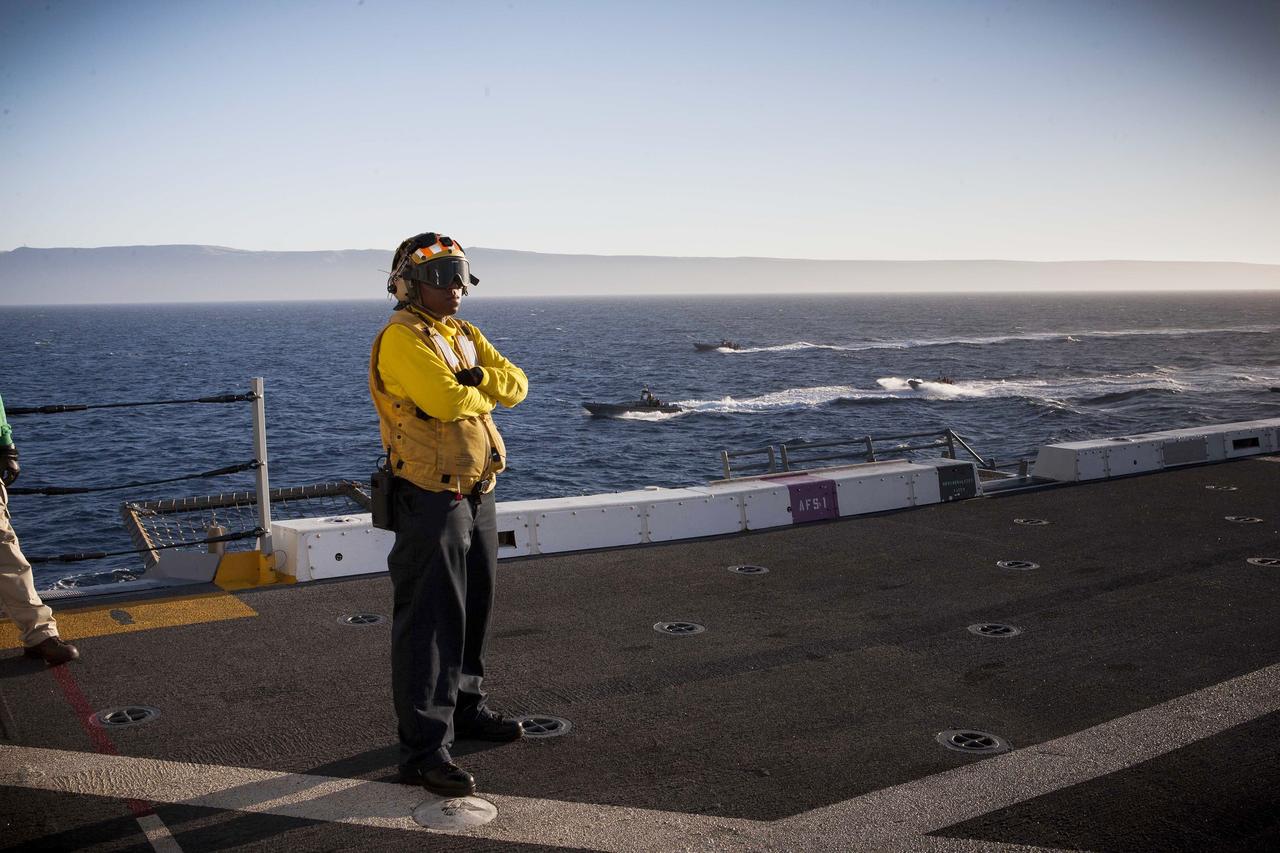
SAN DIEGO, Calif. – A member of the U.S. Navy stands on the deck of the USS Anchorage on the first day of Orion Underway Recovery Test 3 in the Pacific Ocean. In the water are several Zodiac boats and rigid hull inflatable boats with U.S. Navy personnel and divers that are preparing to recover the Orion boilerplate test vehicle already in the water. NASA, Lockheed Martin and U.S. Navy personnel are conducting the recovery test to prepare for recovery of the Orion crew module on its return from a deep space mission. The test will allow the teams to demonstrate and evaluate the recovery processes, procedures, hardware and personnel in open waters. The Ground Systems Development and Operations Program is conducting the underway recovery tests. Orion is the exploration spacecraft designed to carry astronauts to destinations not yet explored by humans, including an asteroid and Mars. It will have emergency abort capability, sustain the crew during space travel and provide safe re-entry from deep space return velocities. The first unpiloted test flight of Orion is scheduled to launch in 2014 atop a United Launch Alliance Delta IV Heavy rocket and in 2018 on NASA’s Space Launch System rocket. For more information, visit http://www.nasa.gov/orion. Photo credit: NASA/Cory Huston
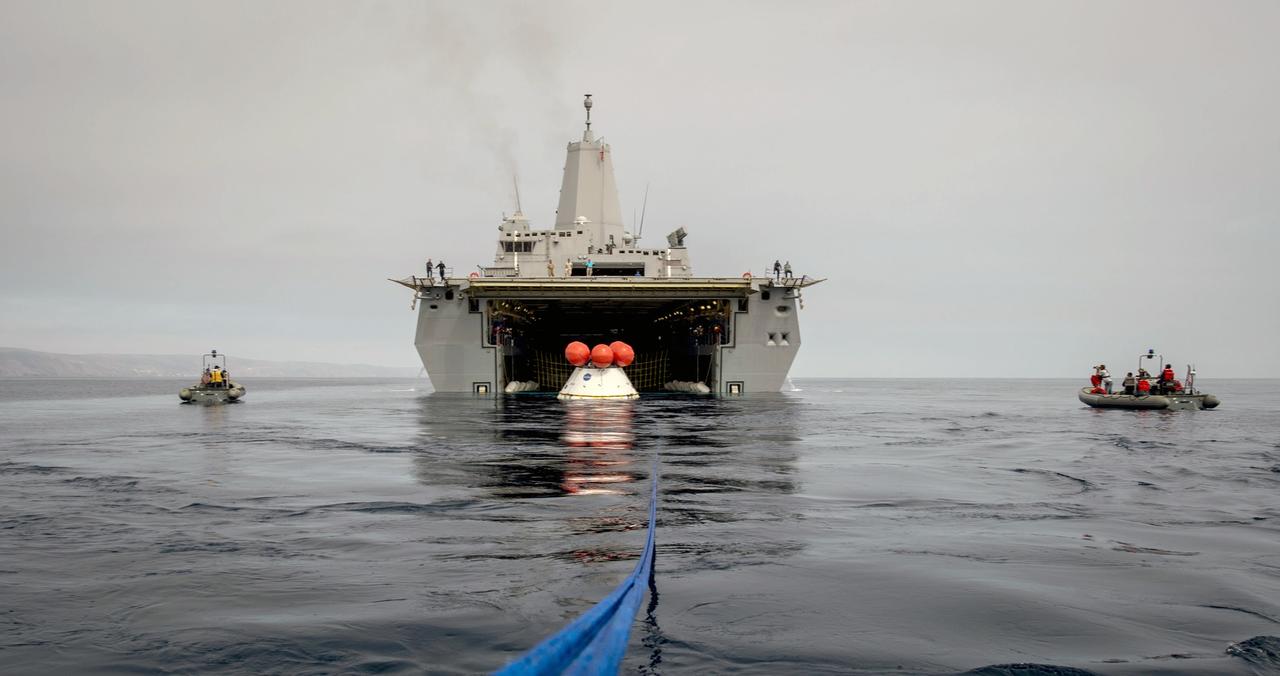
SAN DIEGO, Calif. – U.S. Navy personnel in rigid hull inflatable boats practice with tether lines attached to the Orion boilerplate test vehicle during an evolution of the Underway Recovery Test 2 near the USS Anchorage in the Pacific Ocean off the coast of San Diego. The vehicle is outside of the ship. NASA, Lockheed Martin and the U.S. Navy are conducting the test to prepare for recovery of the Orion crew module on its return from a deep space mission. The underway recovery test will allow the teams to demonstrate and evaluate the recovery processes, procedures, new hardware and personnel in open waters. The Ground Systems Development and Operations Program is conducting the underway recovery test. Orion is the exploration spacecraft designed to carry astronauts to destinations not yet explored by humans, including an asteroid and Mars. It will have emergency abort capability, sustain the crew during space travel and provide safe re-entry from deep space return velocities. The first unpiloted test flight of the Orion is scheduled to launch in 2014 atop a Delta IV rocket and in 2017 on NASA’s Space Launch System rocket. For more information, visit http://www.nasa.gov/orion. Photo credit: U.S. Navy/Specialist 1st Class Gary Keen
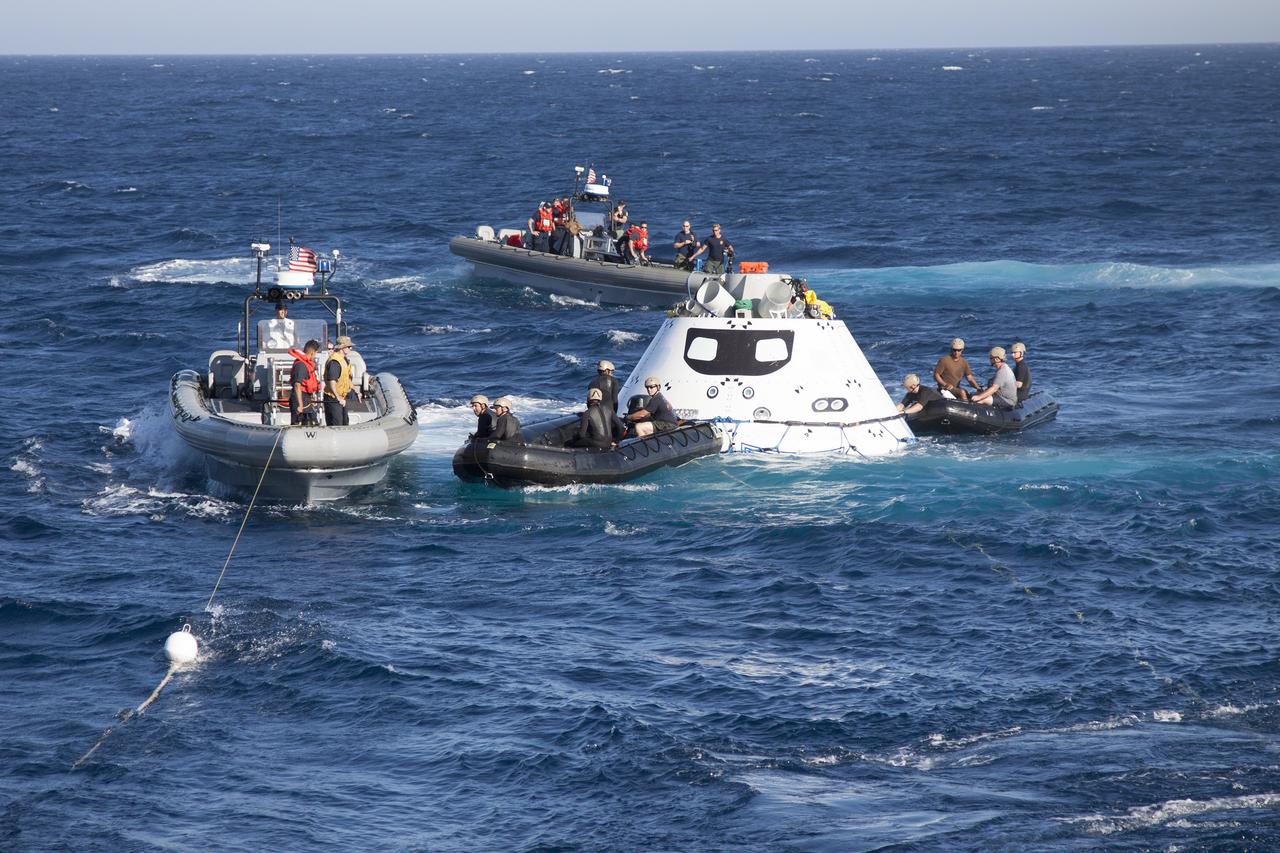
SAN DIEGO, Calif. – The Orion boilerplate test vehicle floats in the Pacific Ocean near the USS Anchorage during Underway Recovery Test 3. U.S. Navy divers and other recovery team members in two Zodiac boats attach tether lines to Orion. Other recovery team members are nearby in two rigid hull inflatable boats. NASA, Lockheed Martin and U.S. Navy personnel are conducting the recovery test to prepare for recovery of the Orion crew module on its return from a deep space mission. The test allows the teams to demonstrate and evaluate the recovery processes, procedures, hardware and personnel in open waters. The Ground Systems Development and Operations Program is conducting the underway recovery tests. Orion is the exploration spacecraft designed to carry astronauts to destinations not yet explored by humans, including an asteroid and Mars. It will have emergency abort capability, sustain the crew during space travel and provide safe re-entry from deep space return velocities. The first unpiloted test flight of Orion is scheduled to launch in 2014 atop a United Launch Alliance Delta IV Heavy rocket and in 2018 on NASA’s Space Launch System rocket. For more information, visit http://www.nasa.gov/orion. Photo credit: NASA/Cory Huston
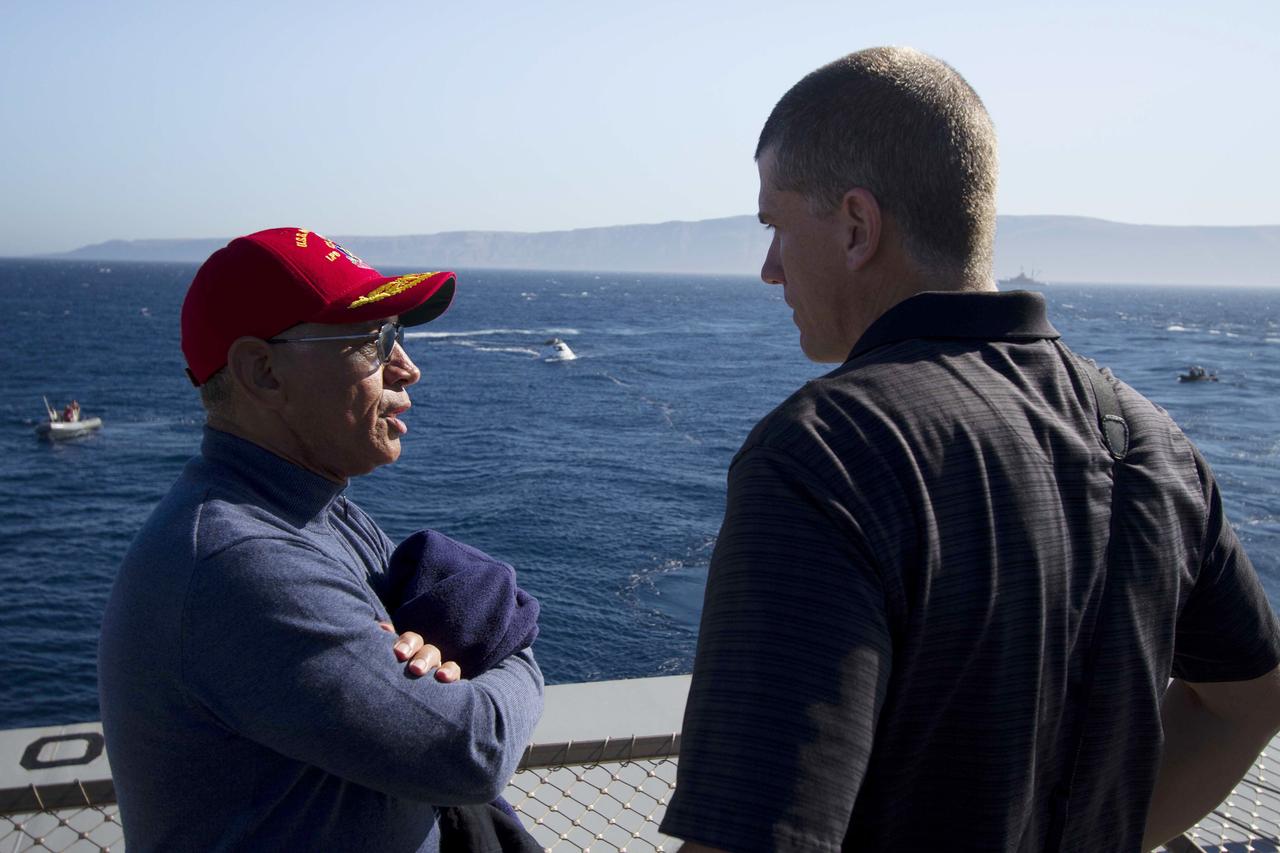
SAN DIEGO, Calif. – NASA Administrator Charlie Bolden, at left, talks to Jeremy Graeber, NASA Recovery director for Exploration Flight Test-1 Landing and Recovery Operations, on the deck of the USS Anchorage during Orion Underway Recovery Test 3. The Orion boilerplate test vehicle is in the Pacific Ocean with U.S. Navy divers nearby in Zodiac boats and rigid hull inflatable boats during recovery operations. NASA, Lockheed Martin and U.S. Navy personnel are conducting the test to prepare for recovery of the Orion crew module on its return from a deep space mission. The test will allow the teams to demonstrate and evaluate the recovery processes, procedures, hardware and personnel in open waters. The Ground Systems Development and Operations Program is conducting the underway recovery tests. Orion is the exploration spacecraft designed to carry astronauts to destinations not yet explored by humans, including an asteroid and Mars. It will have emergency abort capability, sustain the crew during space travel and provide safe re-entry from deep space return velocities. The first unpiloted test flight of Orion is scheduled to launch in 2014 atop a United Launch Alliance Delta IV Heavy rocket and in 2018 on NASA’s Space Launch System rocket. For more information, visit http://www.nasa.gov/orion. Photo credit: NASA/Cory Huston
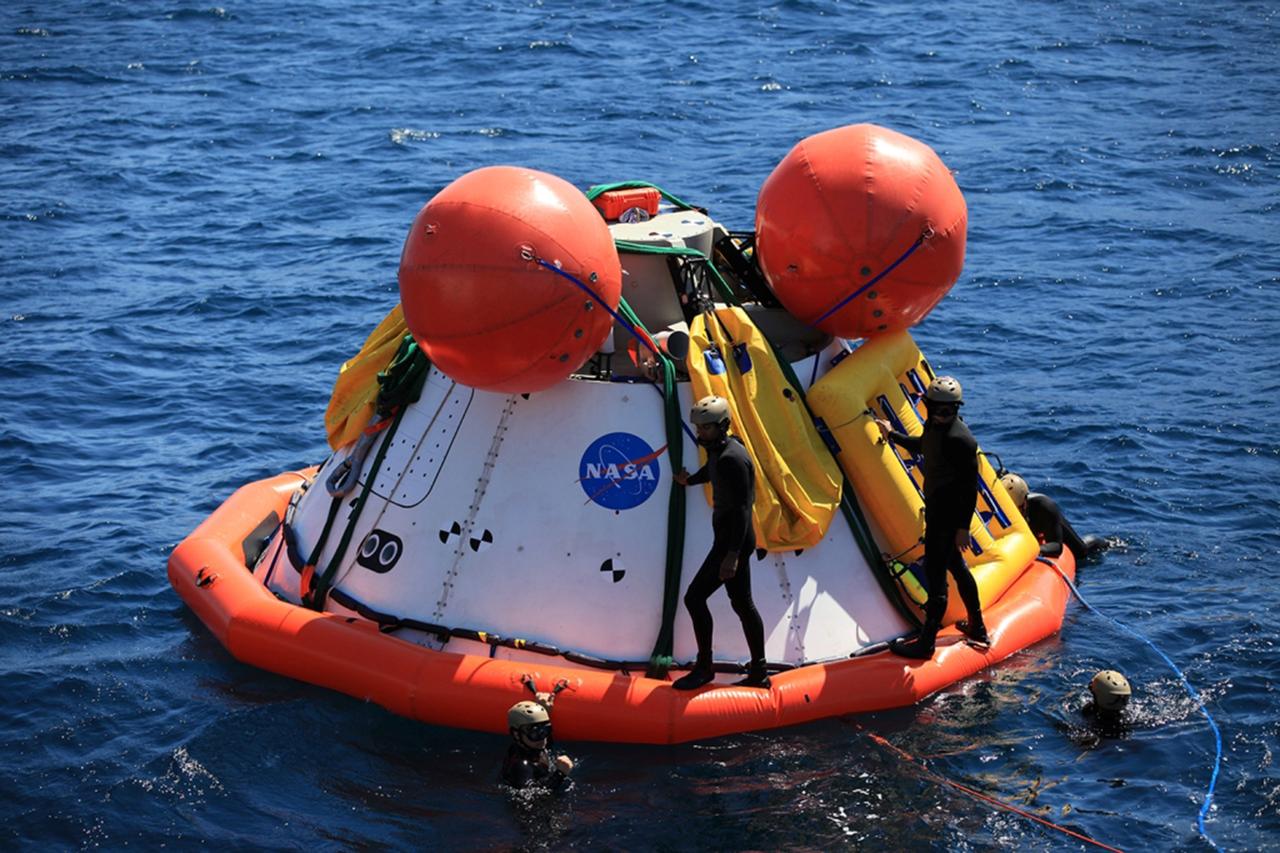
SAN DIEGO, Calif. – The Orion boilerplate test vehicle floats in the Pacific Ocean during Underway Recovery Test 4A. Orion was lowered into the water with a stationary crane from the USS Salvor, a safeguard-class rescue and salvage ship. U.S. Navy divers have attached a flotation collar and tether lines to Orion to prepare for recovery. NASA, Lockheed Martin and the U.S. Navy are conducting crane recovery tests to prepare for recovery of the Orion crew module on its return from a deep space mission. The underway recovery test will allow the teams to demonstrate and evaluate the recovery processes, procedures, new hardware and personnel in open waters. The Ground Systems Development and Operations Program is conducting the underway recovery test. Orion is the exploration spacecraft designed to carry astronauts to destinations not yet explored by humans, including an asteroid and Mars. It will have emergency abort capability, sustain the crew during space travel and provide safe re-entry from deep space return velocities. The first unpiloted test flight of the Orion is scheduled to launch in December 2014 atop a United Launch Alliance Delta IV Heavy rocket and in 2018 on NASA’s Space Launch System rocket. For more information, visit http://www.nasa.gov/orion. Photo credit: Kim Shiflett
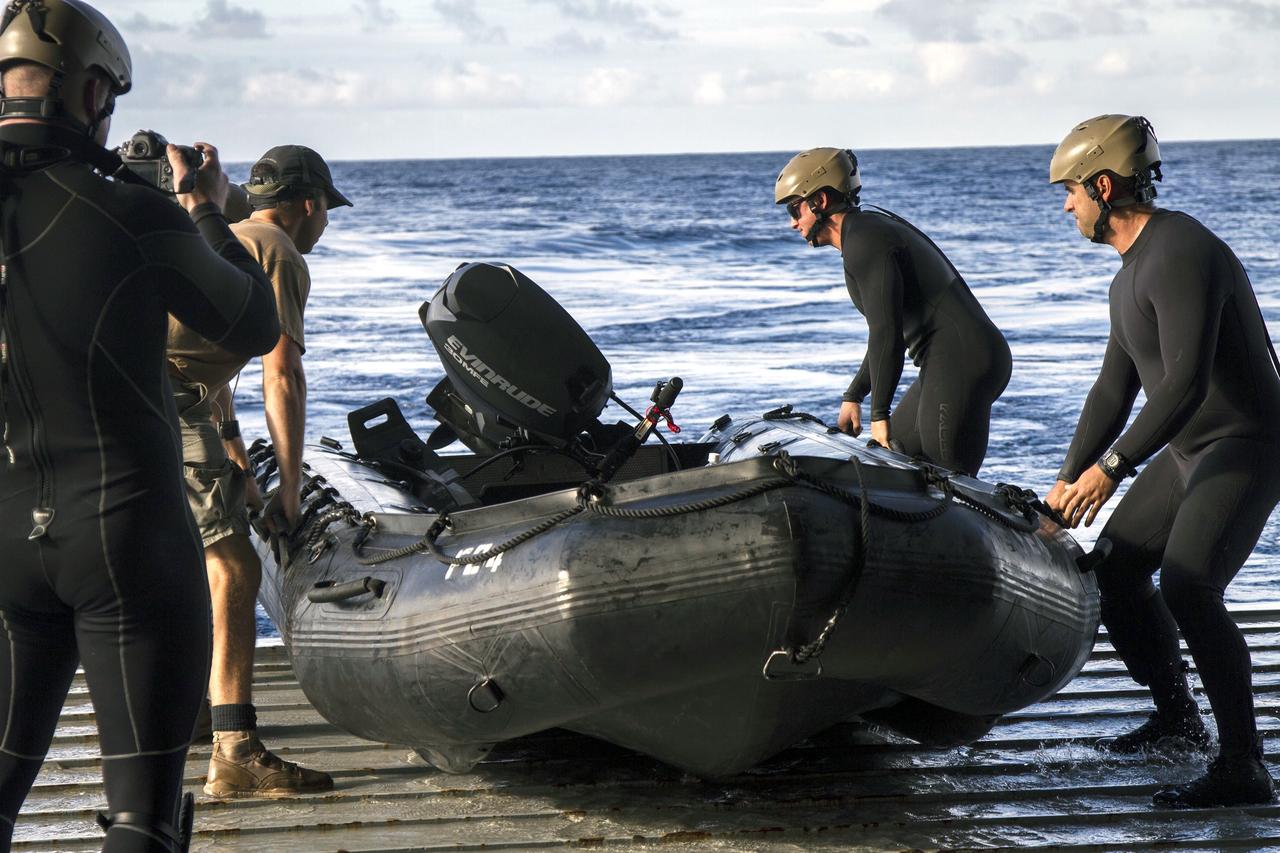
SAN DIEGO, Calif. – On the third day of preparations for recovery of Orion after its splashdown in the Pacific Ocean, U.S. Navy Divers prepare to embark from the well deck of the USS Anchorage in a rigid hull Zodiac boat about 600 miles off the coast of Baja, California. NASA, Lockheed Martin and U.S. Navy personnel are preparing for recovery of the crew module, forward bay cover and parachutes on its return from space and splashdown in the Pacific Ocean. The Ground Systems Development and Operations Program is leading the recovery efforts. The first unpiloted flight test of Orion is scheduled to launch Dec. 4 atop a United Launch Alliance Delta IV Heavy rocket. During its two-orbit, 4.5-hour flight, Orion will venture 3,600 miles in altitude and travel nearly 60,000 miles before returning to Earth for a splashdown in the Pacific Ocean. For more information, visit http://www.nasa.gov/orion. Photo credit: NASA/Cory Huston
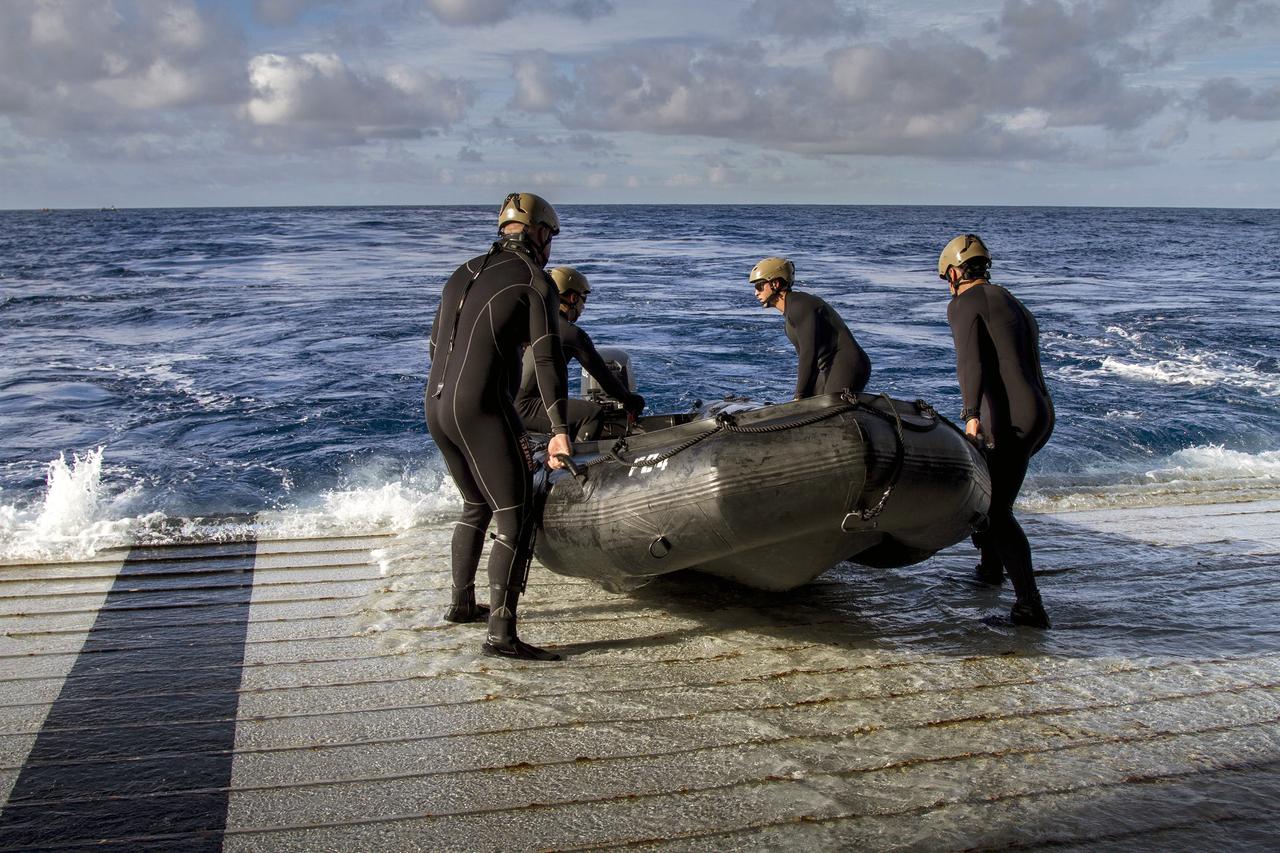
SAN DIEGO, Calif. – On the third day of preparations for recovery of Orion after its splashdown in the Pacific Ocean, U.S. Navy Divers prepare to embark from the well deck of the USS Anchorage in a rigid hull Zodiac boat about 600 miles off the coast of Baja, California. NASA, Lockheed Martin and U.S. Navy personnel are preparing for recovery of the crew module, forward bay cover and parachutes on its return from space and splashdown in the Pacific Ocean. The Ground Systems Development and Operations Program is leading the recovery efforts. The first unpiloted flight test of Orion is scheduled to launch Dec. 4 atop a United Launch Alliance Delta IV Heavy rocket. During its two-orbit, 4.5-hour flight, Orion will venture 3,600 miles in altitude and travel nearly 60,000 miles before returning to Earth for a splashdown in the Pacific Ocean. For more information, visit http://www.nasa.gov/orion. Photo credit: NASA/Cory Huston
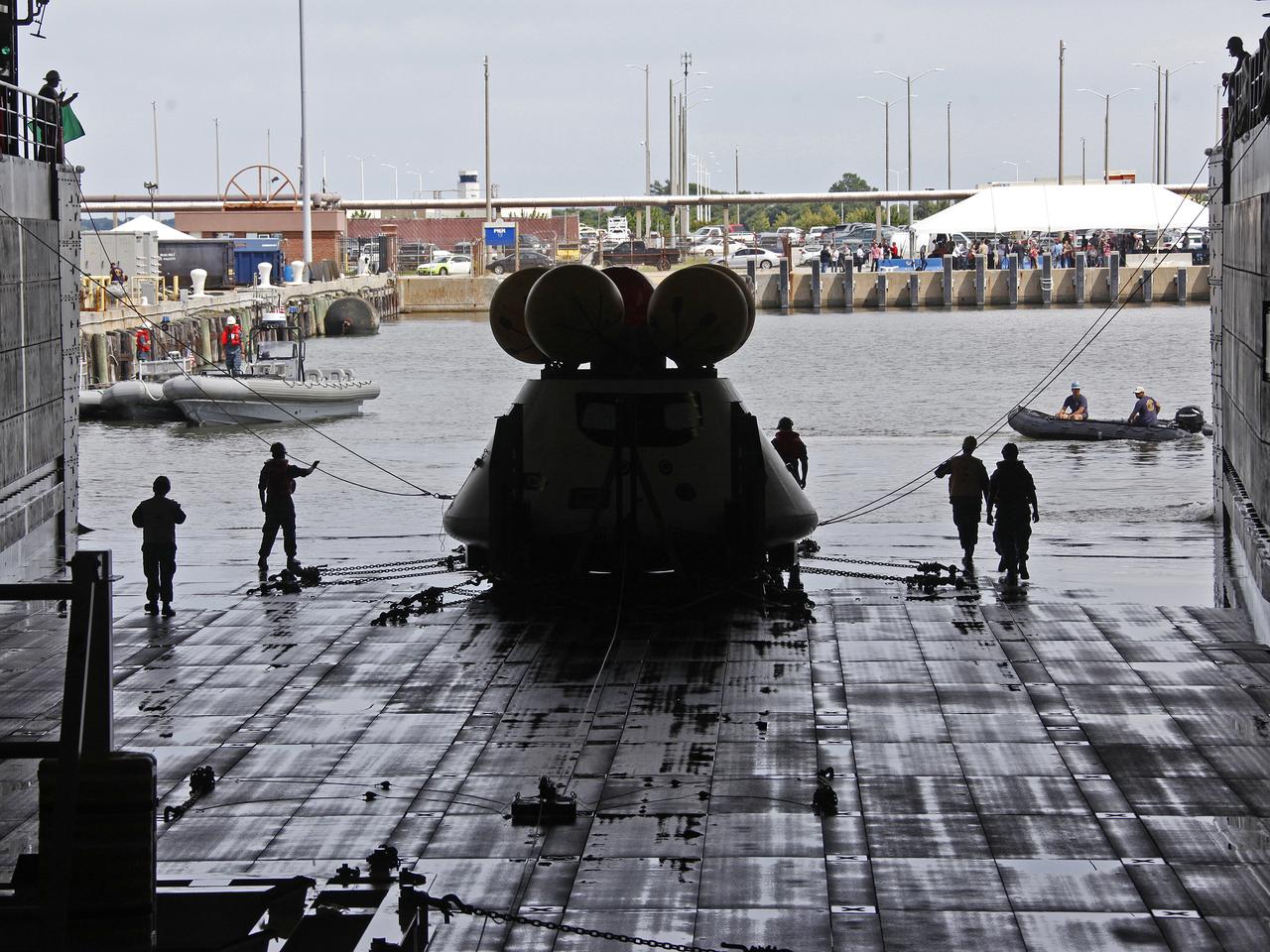
On August 15, 2013, at the Naval Station Norfolk near NASA’s Langley Research Center in Virginia, NASA and the U.S. Navy conducted a stationary recovery test on the Orion boilerplate test article in the water near a U.S. Navy ship. NASA and the U.S. Navy are conducting tests to prepare for recovery of the Orion crew module and forward bay cover on its return from a deep space mission. The stationary recovery tests allow the teams to demonstrate and evaluate the recovery processes, the hardware and the test personnel in a controlled environment. During the test, the U.S Navy Dive Team checked the capsule for hazards while sailors from the USS Arlington approached the capsule in inflatable boats, and towed it back to the ship’s flooded well deck. A second test will be conducted next year in the open waters of the Pacific Ocean.
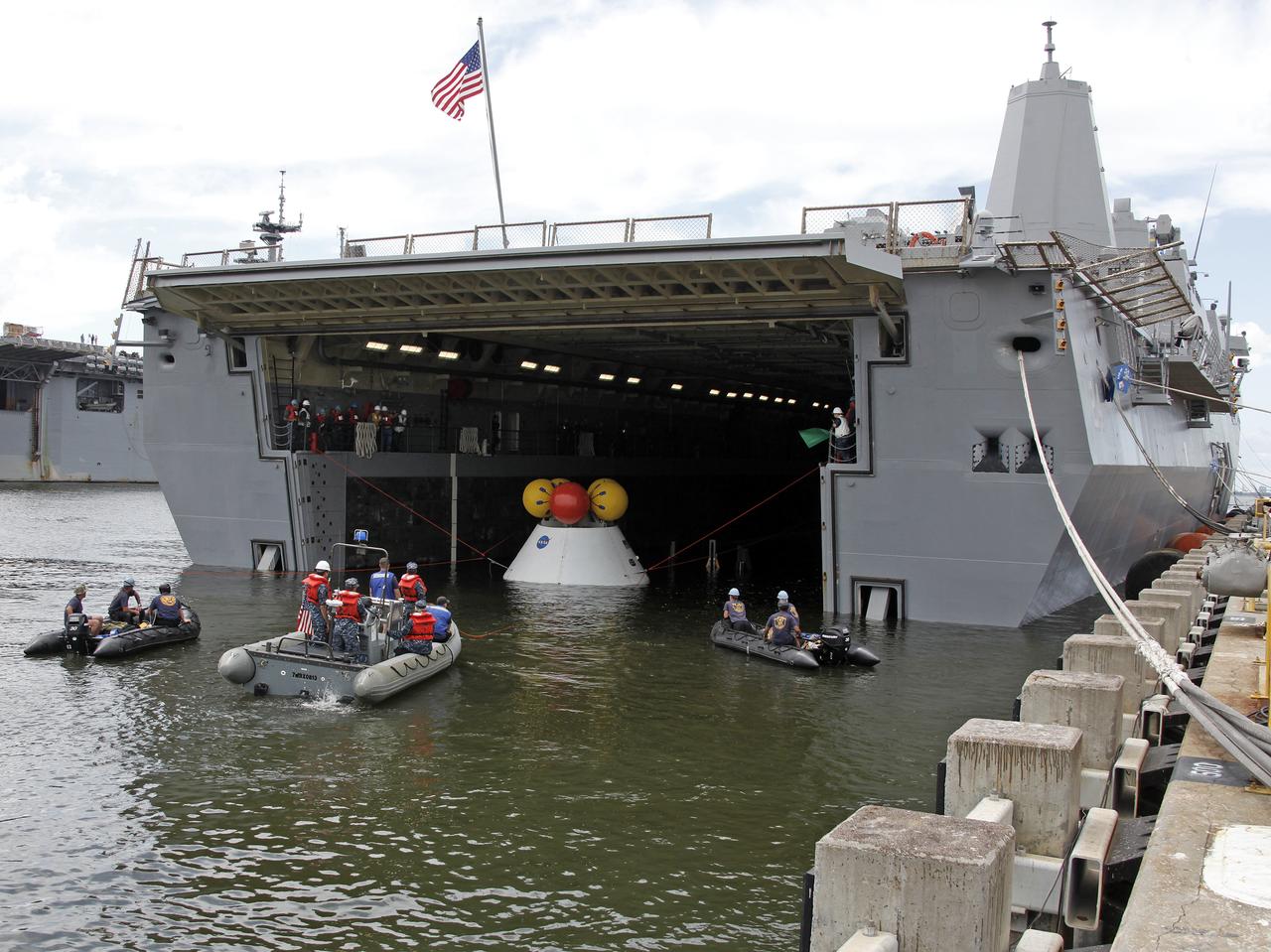
On August 15, 2013, at the Naval Station Norfolk near NASA’s Langley Research Center in Virginia, NASA and the U.S. Navy conducted a stationary recovery test on the Orion boilerplate test article in the water near a U.S. Navy ship. NASA and the U.S. Navy are conducting tests to prepare for recovery of the Orion crew module and forward bay cover on its return from a deep space mission. The stationary recovery tests allow the teams to demonstrate and evaluate the recovery processes, the hardware and the test personnel in a controlled environment. During the test, the U.S Navy Dive Team checked the capsule for hazards while sailors from the USS Arlington approached the capsule in inflatable boats, and towed it back to the ship’s flooded well deck. A second test will be conducted next year in the open waters of the Pacific Ocean.
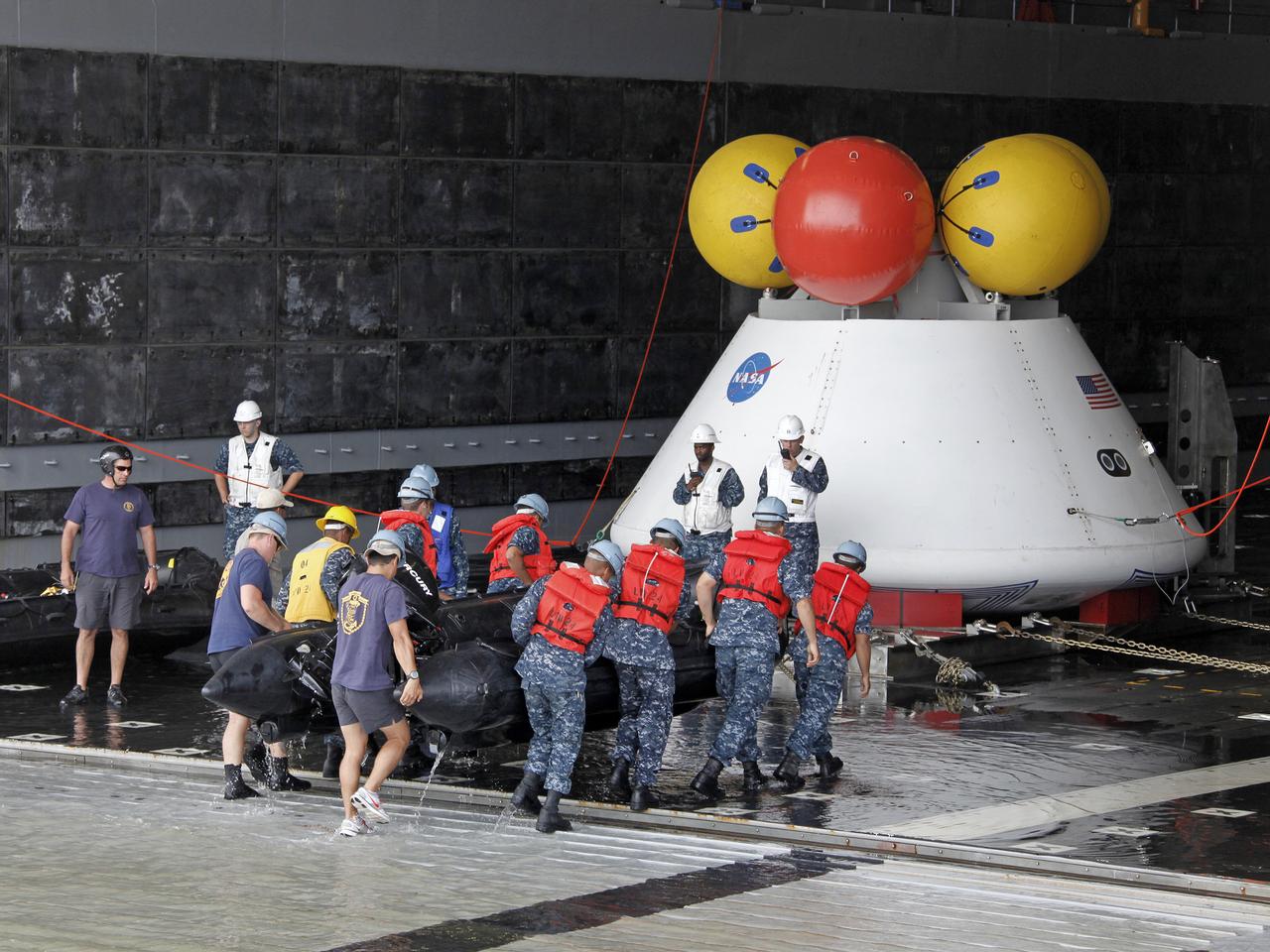
On August 15, 2013, at the Naval Station Norfolk near NASA’s Langley Research Center in Virginia, NASA and the U.S. Navy conducted a stationary recovery test on the Orion boilerplate test article in the water near a U.S. Navy ship. NASA and the U.S. Navy are conducting tests to prepare for recovery of the Orion crew module and forward bay cover on its return from a deep space mission. The stationary recovery tests allow the teams to demonstrate and evaluate the recovery processes, the hardware and the test personnel in a controlled environment. During the test, the U.S Navy Dive Team checked the capsule for hazards while sailors from the USS Arlington approached the capsule in inflatable boats, and towed it back to the ship’s flooded well deck. A second test will be conducted next year in the open waters of the Pacific Ocean.
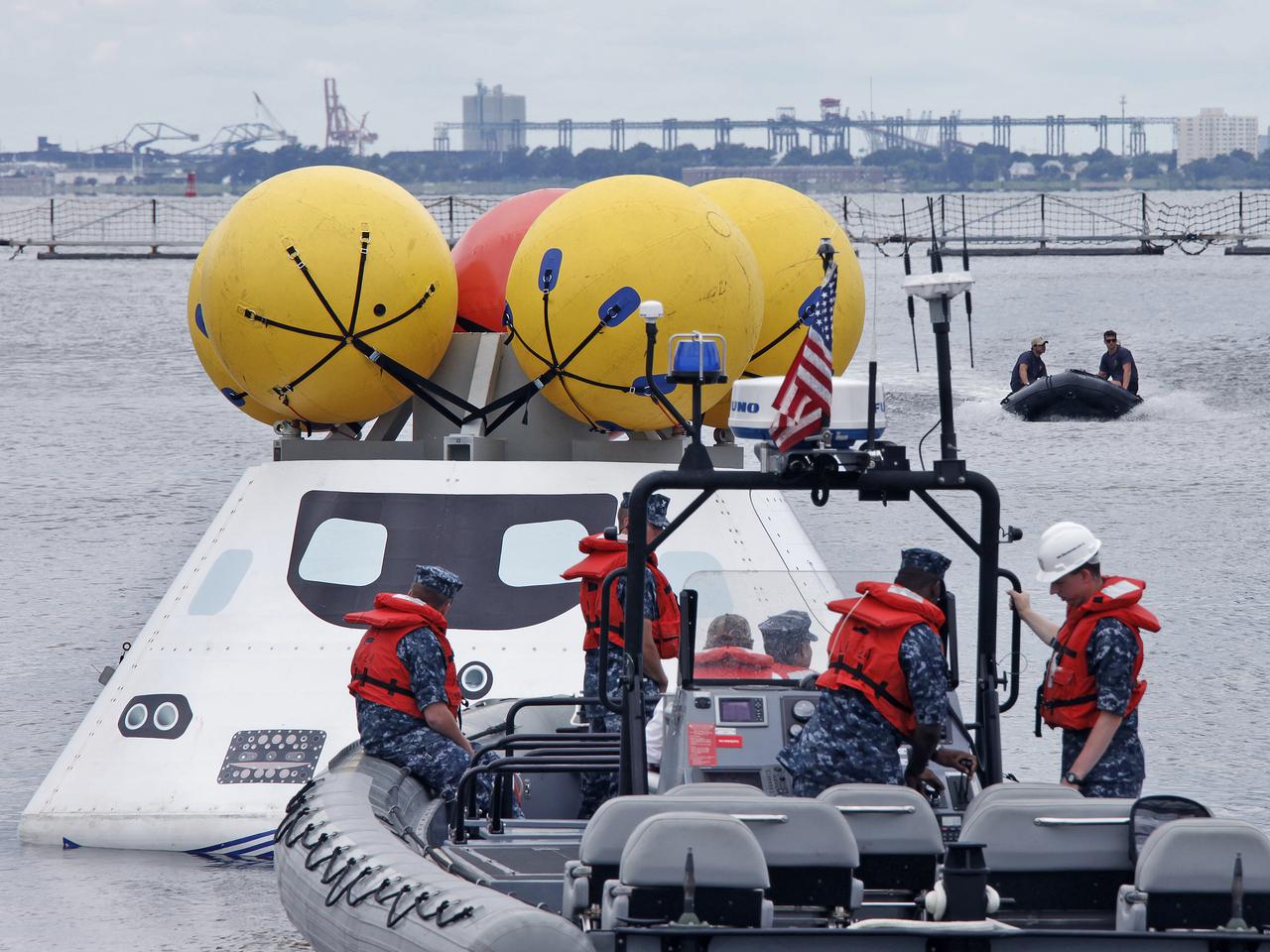
On August 15, 2013, at the Naval Station Norfolk near NASA’s Langley Research Center in Virginia, NASA and the U.S. Navy conducted a stationary recovery test on the Orion boilerplate test article in the water near a U.S. Navy ship. NASA and the U.S. Navy are conducting tests to prepare for recovery of the Orion crew module and forward bay cover on its return from a deep space mission. The stationary recovery tests allow the teams to demonstrate and evaluate the recovery processes, the hardware and the test personnel in a controlled environment. During the test, the U.S Navy Dive Team checked the capsule for hazards while sailors from the USS Arlington approached the capsule in inflatable boats, and towed it back to the ship’s flooded well deck. A second test will be conducted next year in the open waters of the Pacific Ocean.
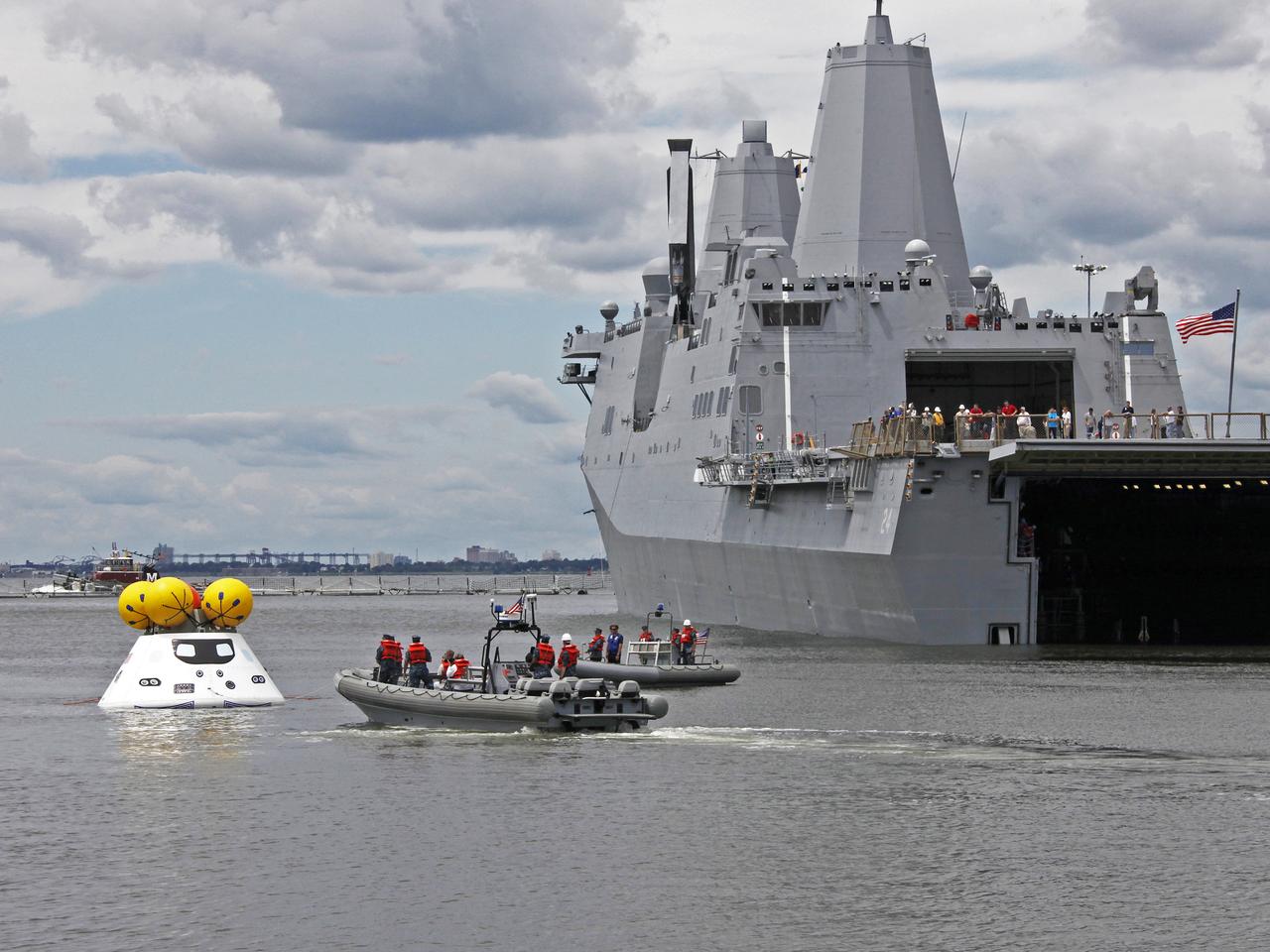
On August 15, 2013, at the Naval Station Norfolk near NASA’s Langley Research Center in Virginia, NASA and the U.S. Navy conducted a stationary recovery test on the Orion boilerplate test article in the water near a U.S. Navy ship. NASA and the U.S. Navy are conducting tests to prepare for recovery of the Orion crew module and forward bay cover on its return from a deep space mission. The stationary recovery tests allow the teams to demonstrate and evaluate the recovery processes, the hardware and the test personnel in a controlled environment. During the test, the U.S Navy Dive Team checked the capsule for hazards while sailors from the USS Arlington approached the capsule in inflatable boats, and towed it back to the ship’s flooded well deck. A second test will be conducted next year in the open waters of the Pacific Ocean.
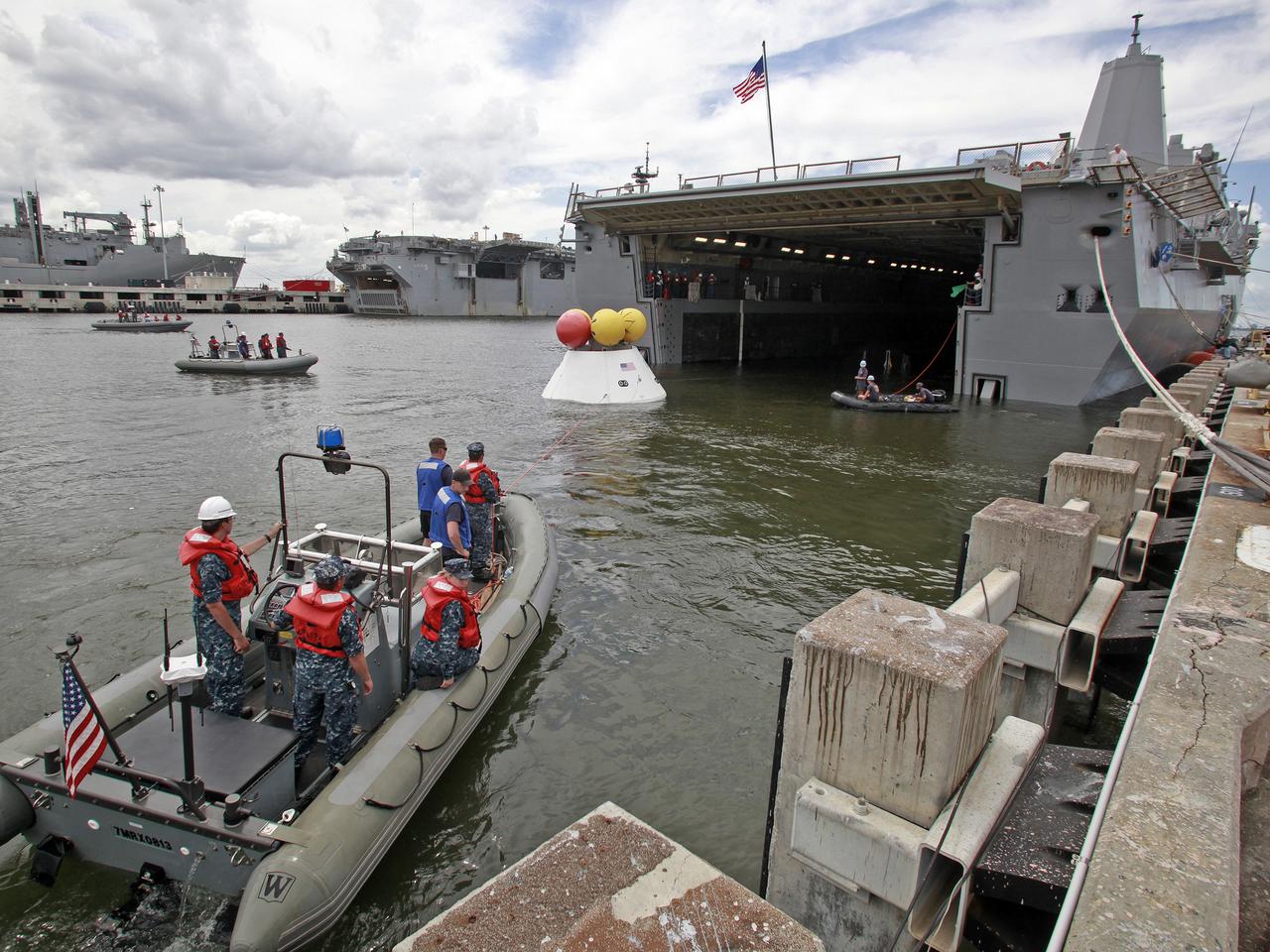
On August 15, 2013, at the Naval Station Norfolk near NASA’s Langley Research Center in Virginia, NASA and the U.S. Navy conducted a stationary recovery test on the Orion boilerplate test article in the water near a U.S. Navy ship. NASA and the U.S. Navy are conducting tests to prepare for recovery of the Orion crew module and forward bay cover on its return from a deep space mission. The stationary recovery tests allow the teams to demonstrate and evaluate the recovery processes, the hardware and the test personnel in a controlled environment. During the test, the U.S Navy Dive Team checked the capsule for hazards while sailors from the USS Arlington approached the capsule in inflatable boats, and towed it back to the ship’s flooded well deck. A second test will be conducted next year in the open waters of the Pacific Ocean.
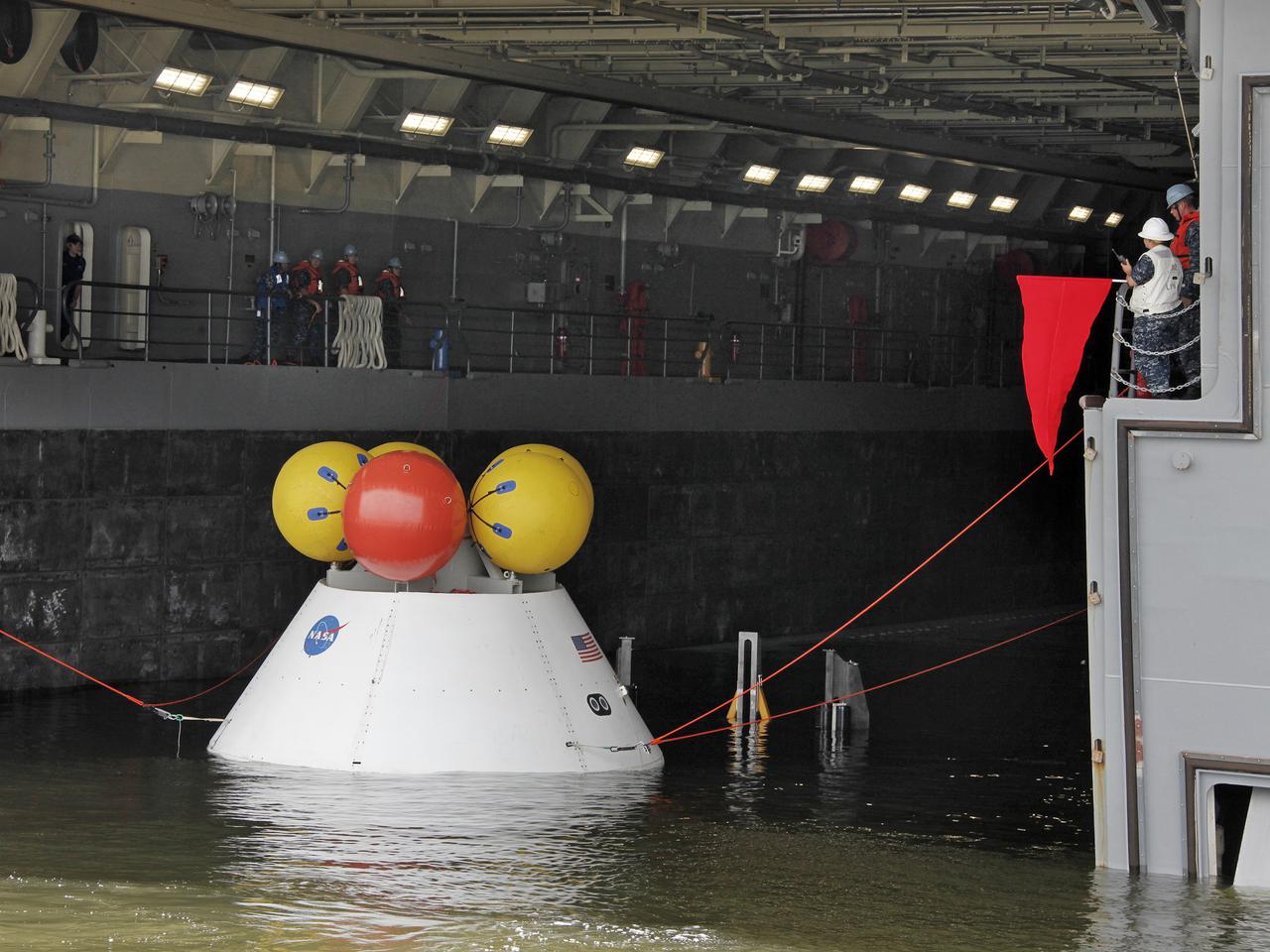
On August 15, 2013, at the Naval Station Norfolk near NASA’s Langley Research Center in Virginia, NASA and the U.S. Navy conducted a stationary recovery test on the Orion boilerplate test article in the water near a U.S. Navy ship. NASA and the U.S. Navy are conducting tests to prepare for recovery of the Orion crew module and forward bay cover on its return from a deep space mission. The stationary recovery tests allow the teams to demonstrate and evaluate the recovery processes, the hardware and the test personnel in a controlled environment. During the test, the U.S Navy Dive Team checked the capsule for hazards while sailors from the USS Arlington approached the capsule in inflatable boats, and towed it back to the ship’s flooded well deck. A second test will be conducted next year in the open waters of the Pacific Ocean.
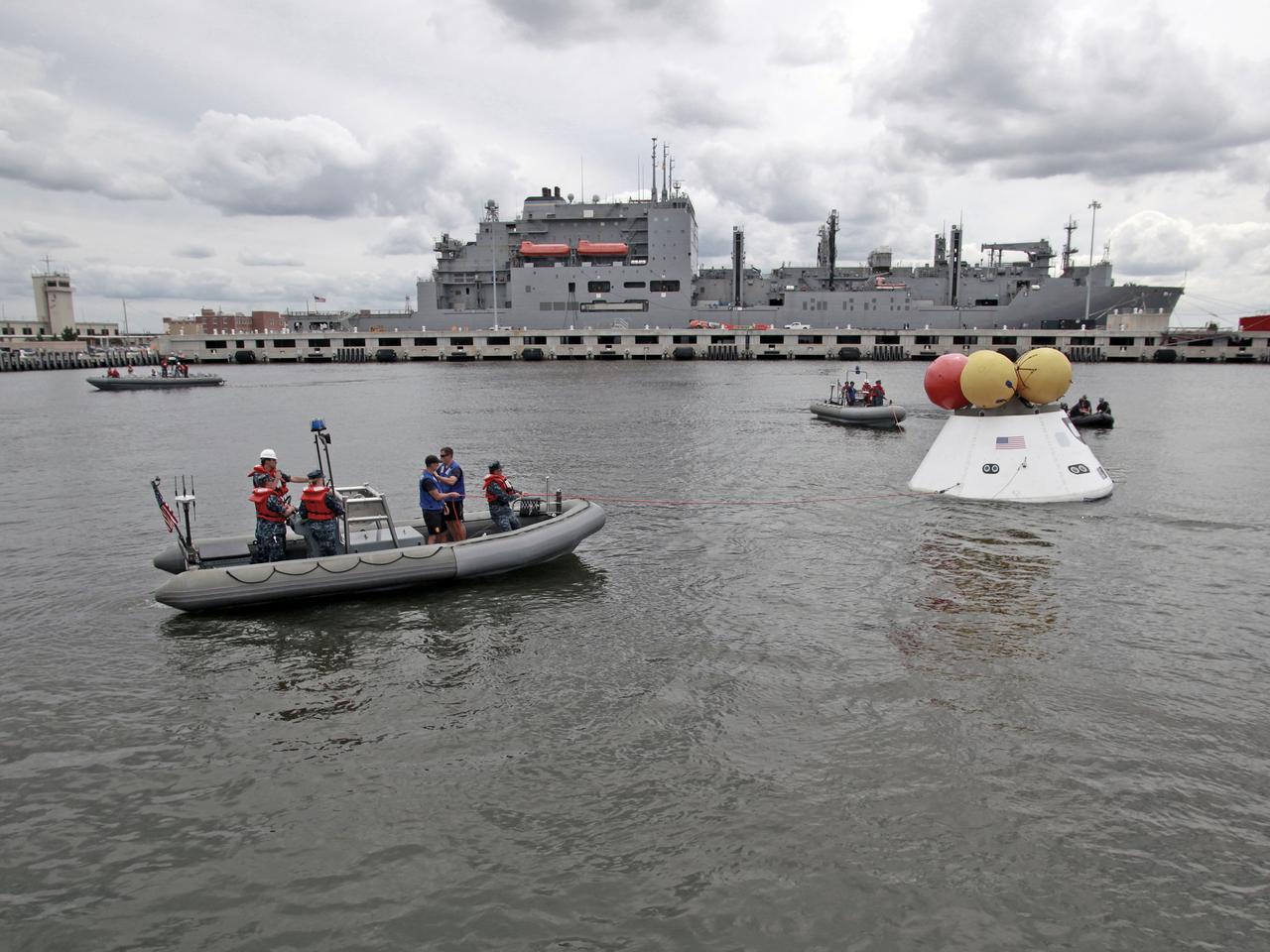
On August 15, 2013, at the Naval Station Norfolk near NASA’s Langley Research Center in Virginia, NASA and the U.S. Navy conducted a stationary recovery test on the Orion boilerplate test article in the water near a U.S. Navy ship. NASA and the U.S. Navy are conducting tests to prepare for recovery of the Orion crew module and forward bay cover on its return from a deep space mission. The stationary recovery tests allow the teams to demonstrate and evaluate the recovery processes, the hardware and the test personnel in a controlled environment. During the test, the U.S Navy Dive Team checked the capsule for hazards while sailors from the USS Arlington approached the capsule in inflatable boats, and towed it back to the ship’s flooded well deck. A second test will be conducted next year in the open waters of the Pacific Ocean.
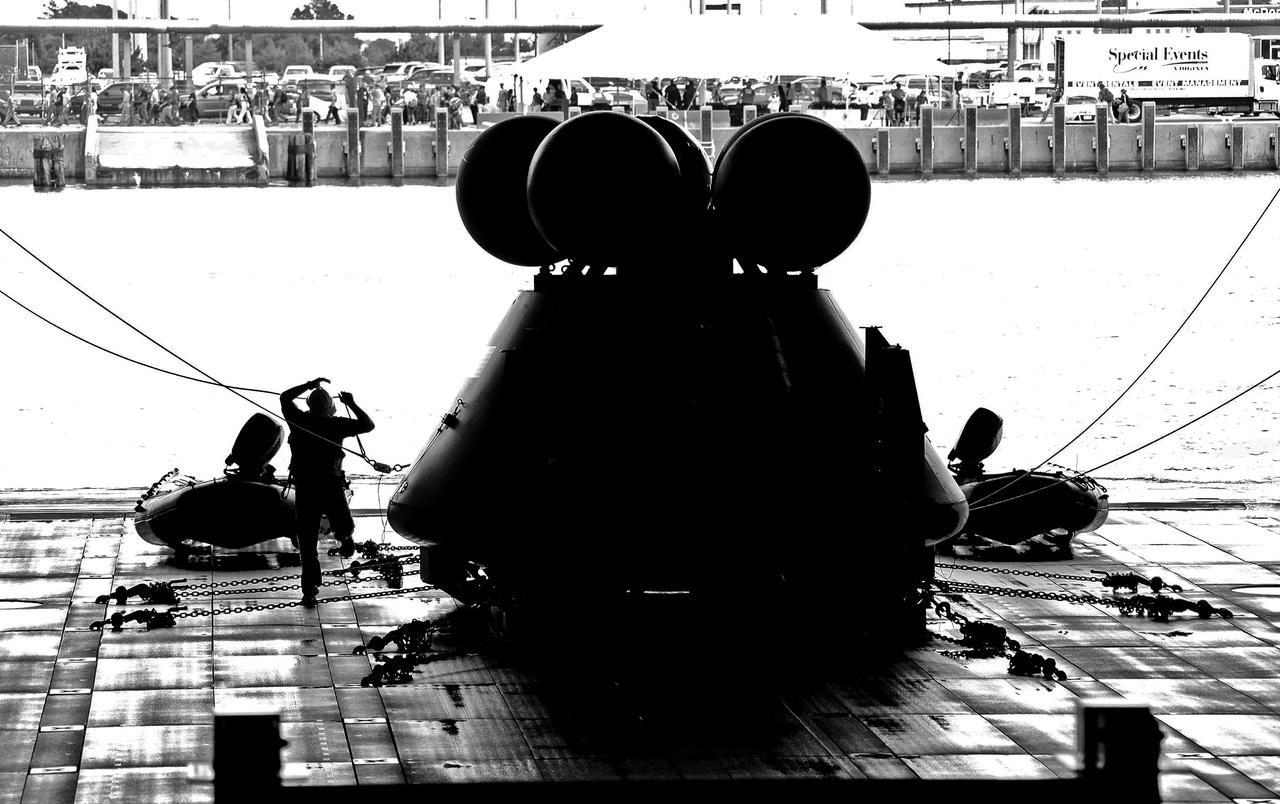
On August 15, 2013, at the Naval Station Norfolk near NASA’s Langley Research Center in Virginia, NASA and the U.S. Navy conducted a stationary recovery test on the Orion boilerplate test article in the water near a U.S. Navy ship. NASA and the U.S. Navy are conducting tests to prepare for recovery of the Orion crew module and forward bay cover on its return from a deep space mission. The stationary recovery tests allow the teams to demonstrate and evaluate the recovery processes, the hardware and the test personnel in a controlled environment. During the test, the U.S Navy Dive Team checked the capsule for hazards while sailors from the USS Arlington approached the capsule in inflatable boats, and towed it back to the ship’s flooded well deck. A second test will be conducted next year in the open waters of the Pacific Ocean.
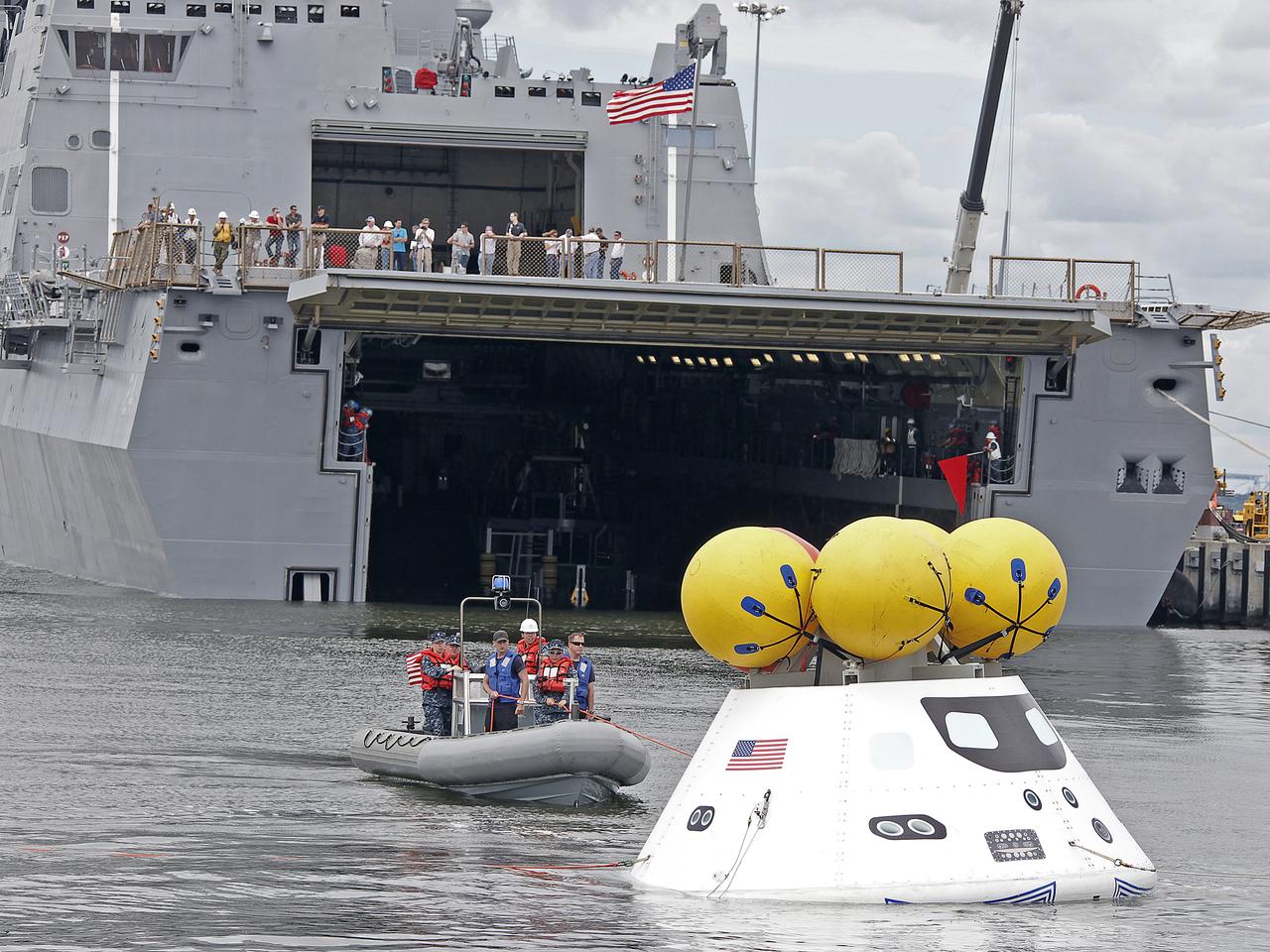
On August 15, 2013, at the Naval Station Norfolk near NASA’s Langley Research Center in Virginia, NASA and the U.S. Navy conducted a stationary recovery test on the Orion boilerplate test article in the water near a U.S. Navy ship. NASA and the U.S. Navy are conducting tests to prepare for recovery of the Orion crew module and forward bay cover on its return from a deep space mission. The stationary recovery tests allow the teams to demonstrate and evaluate the recovery processes, the hardware and the test personnel in a controlled environment. During the test, the U.S Navy Dive Team checked the capsule for hazards while sailors from the USS Arlington approached the capsule in inflatable boats, and towed it back to the ship’s flooded well deck. A second test will be conducted next year in the open waters of the Pacific Ocean.
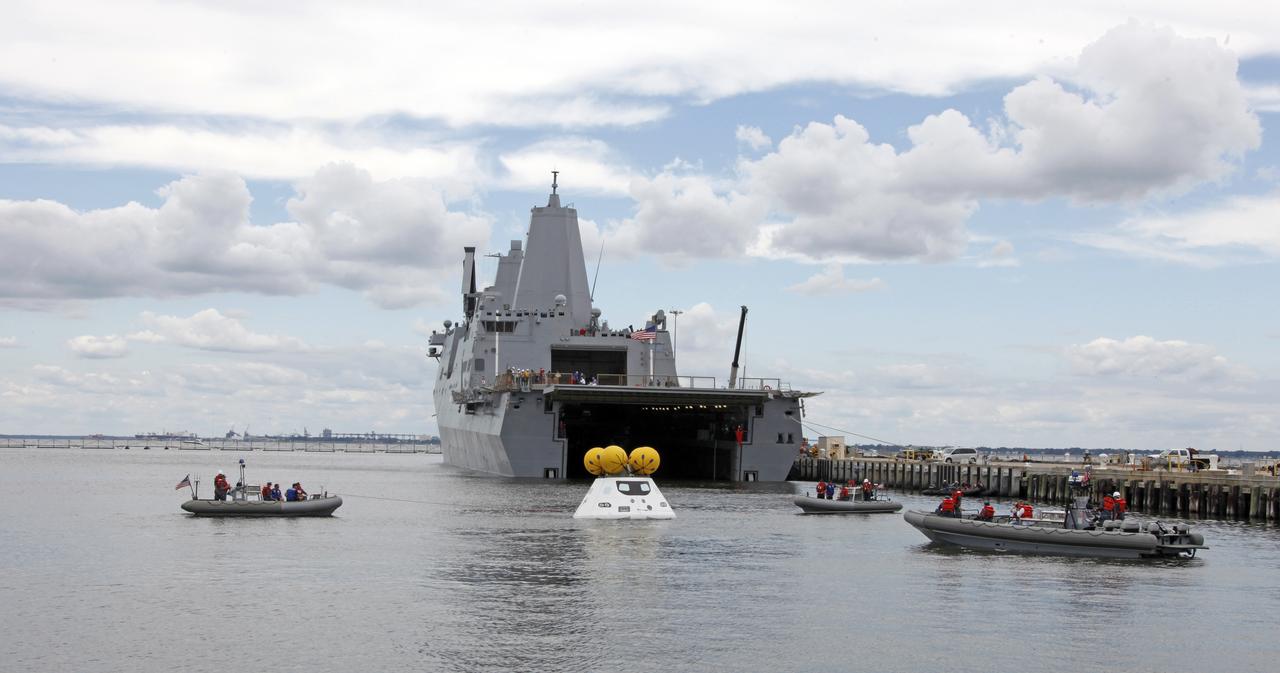
On August 15, 2013, at the Naval Station Norfolk near NASA’s Langley Research Center in Virginia, NASA and the U.S. Navy conducted a stationary recovery test on the Orion boilerplate test article in the water near a U.S. Navy ship. NASA and the U.S. Navy are conducting tests to prepare for recovery of the Orion crew module and forward bay cover on its return from a deep space mission. The stationary recovery tests allow the teams to demonstrate and evaluate the recovery processes, the hardware and the test personnel in a controlled environment. During the test, the U.S Navy Dive Team checked the capsule for hazards while sailors from the USS Arlington approached the capsule in inflatable boats, and towed it back to the ship’s flooded well deck. A second test will be conducted next year in the open waters of the Pacific Ocean.
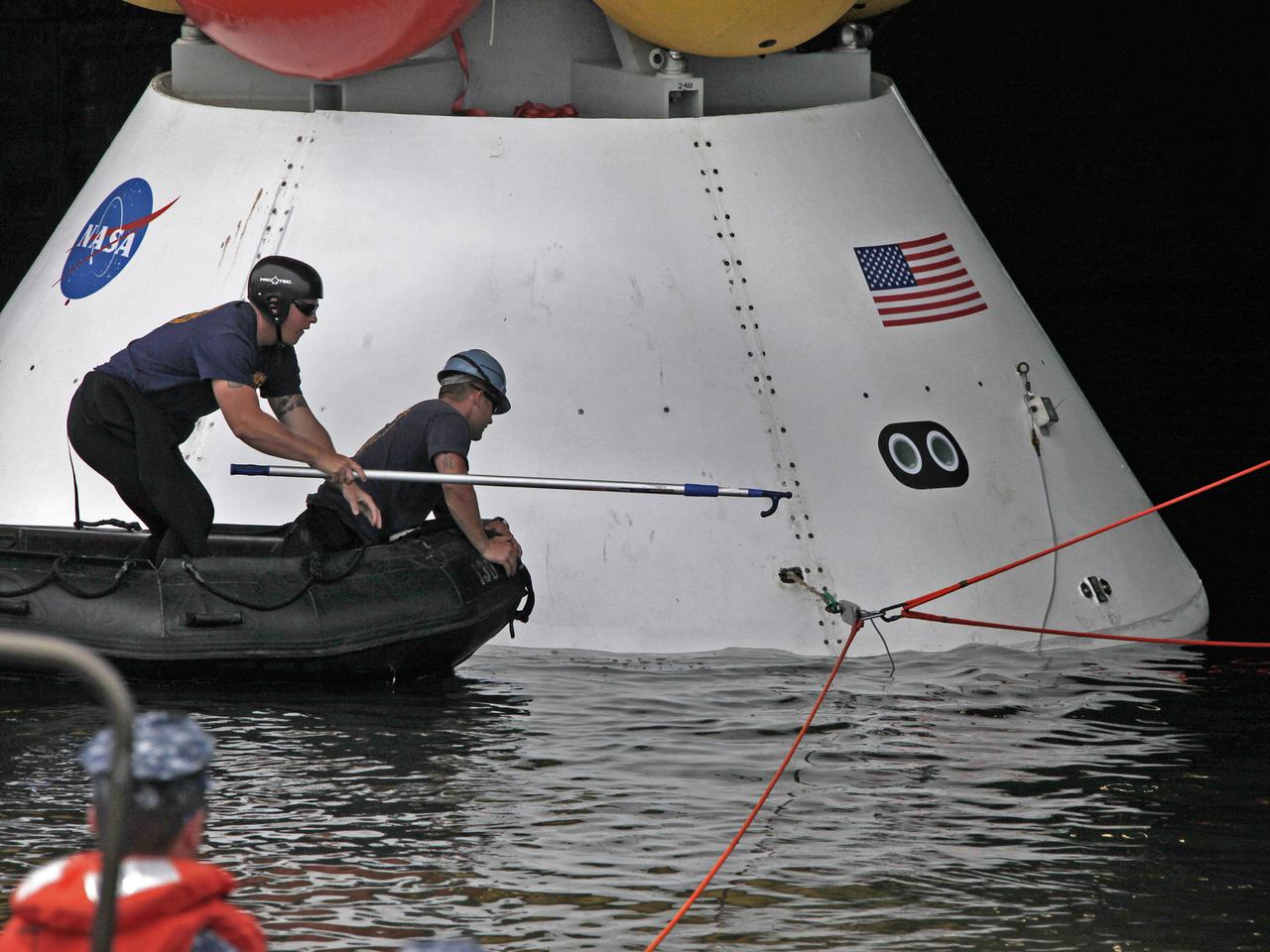
On August 15, 2013, at the Naval Station Norfolk near NASA’s Langley Research Center in Virginia, NASA and the U.S. Navy conducted a stationary recovery test on the Orion boilerplate test article in the water near a U.S. Navy ship. NASA and the U.S. Navy are conducting tests to prepare for recovery of the Orion crew module and forward bay cover on its return from a deep space mission. The stationary recovery tests allow the teams to demonstrate and evaluate the recovery processes, the hardware and the test personnel in a controlled environment. During the test, the U.S Navy Dive Team checked the capsule for hazards while sailors from the USS Arlington approached the capsule in inflatable boats, and towed it back to the ship’s flooded well deck. A second test will be conducted next year in the open waters of the Pacific Ocean.
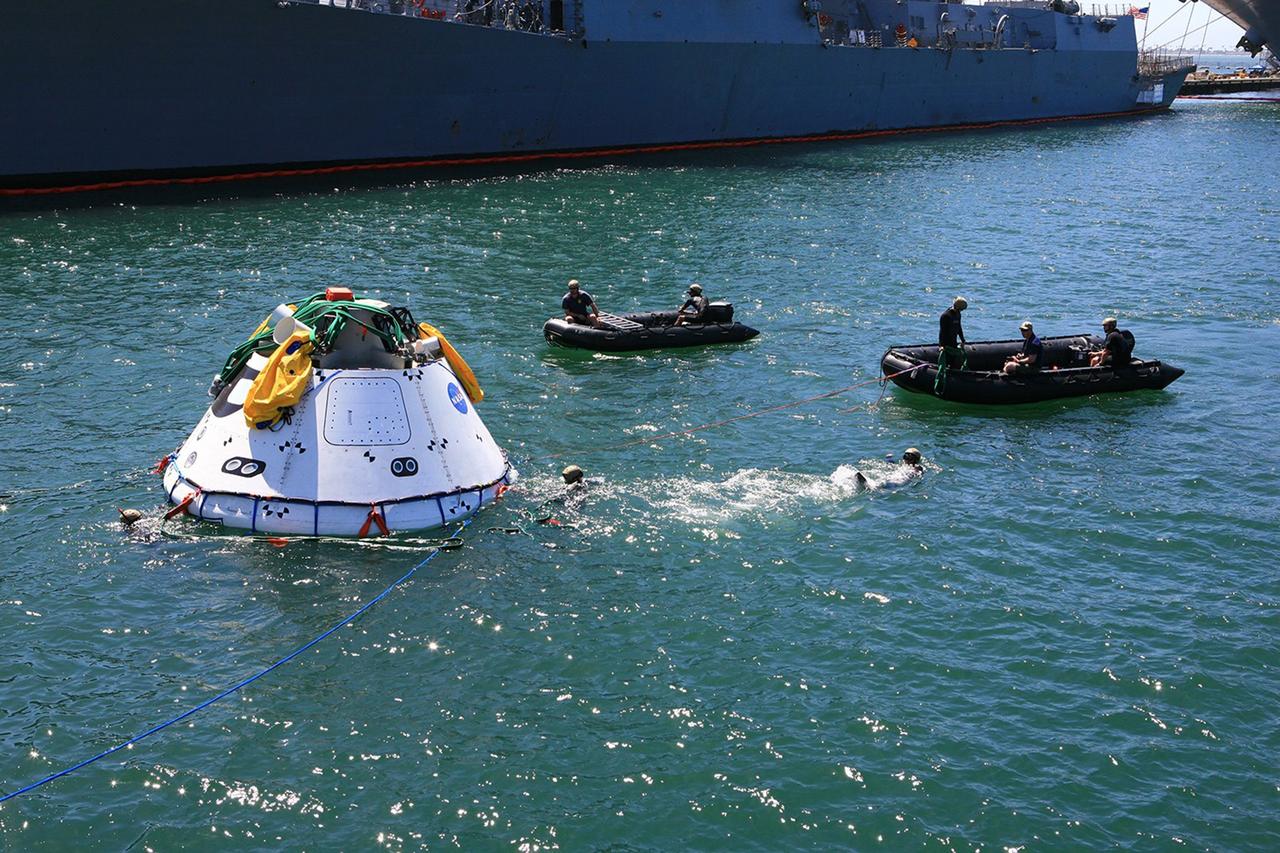
SAN DIEGO, Calif. – The Orion boilerplate test vehicle has been lowered into the water with a stationary crane from the USS Salvor, a safeguard-class rescue and salvage ship, during the first day of Underway Recovery Test 4A at Naval Base San Diego in California. U.S. Navy personnel in two Zodiac boats practice procedures to tether and retrieve the test vehicle. The ship will head out to sea for four days to test crew module crane recovery operations. NASA, Lockheed Martin and the U.S. Navy are conducting the test to prepare for recovery of the Orion crew module on its return from a deep space mission. The underway recovery test will allow the teams to demonstrate and evaluate the recovery processes, procedures, new hardware and personnel in open waters. The Ground Systems Development and Operations Program is conducting the underway recovery test. Orion is the exploration spacecraft designed to carry astronauts to destinations not yet explored by humans, including an asteroid and Mars. It will have emergency abort capability, sustain the crew during space travel and provide safe re-entry from deep space return velocities. The first unpiloted test flight of the Orion is scheduled to launch in December 2014 atop a United Launch Alliance Delta IV rocket and in 2018 on NASA’s Space Launch System rocket. For more information, visit http://www.nasa.gov/orion. Photo credit: Kim Shiflett
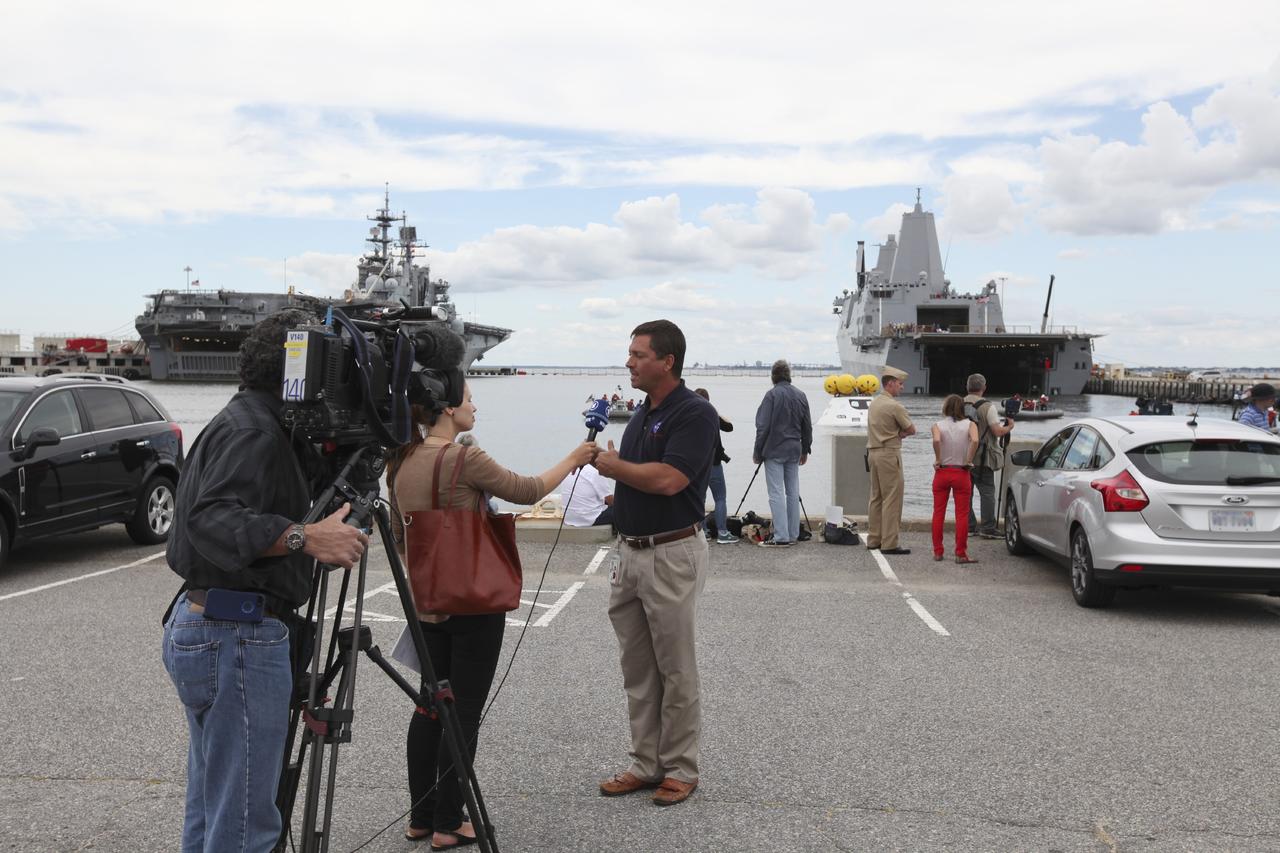
HAMPTON, Va. – At the Naval Station Norfolk near NASA’s Langley Research Center in Virginia, members of the news media speak with Louis Garcia, NASA recovery director, during the stationary recovery test being performed on the Orion boilerplate test in the water near a U.S. Navy ship. NASA and the U.S. Navy are conducting tests to prepare for recovery of the Orion crew module and forward bay cover on its return from a deep space mission. The stationary recovery test will allow the teams to demonstrate and evaluate the recovery processes, procedures, hardware and personnel in a controlled environment before conducting a second recovery test next year in open waters. Orion is the exploration spacecraft designed to carry astronauts to destinations not yet explored by humans, including an asteroid and Mars. It will have emergency abort capability, sustain the crew during space travel and provide safe re-entry from deep space return velocities. The first unpiloted test flight of the Orion is scheduled to launch in 2014 atop a Delta IV rocket and in 2017 on NASA’s Space Launch System rocket. For more information, visit http://www.nasa.gov/orion. Photo credit: NASA/Dimitri Gerondidakis
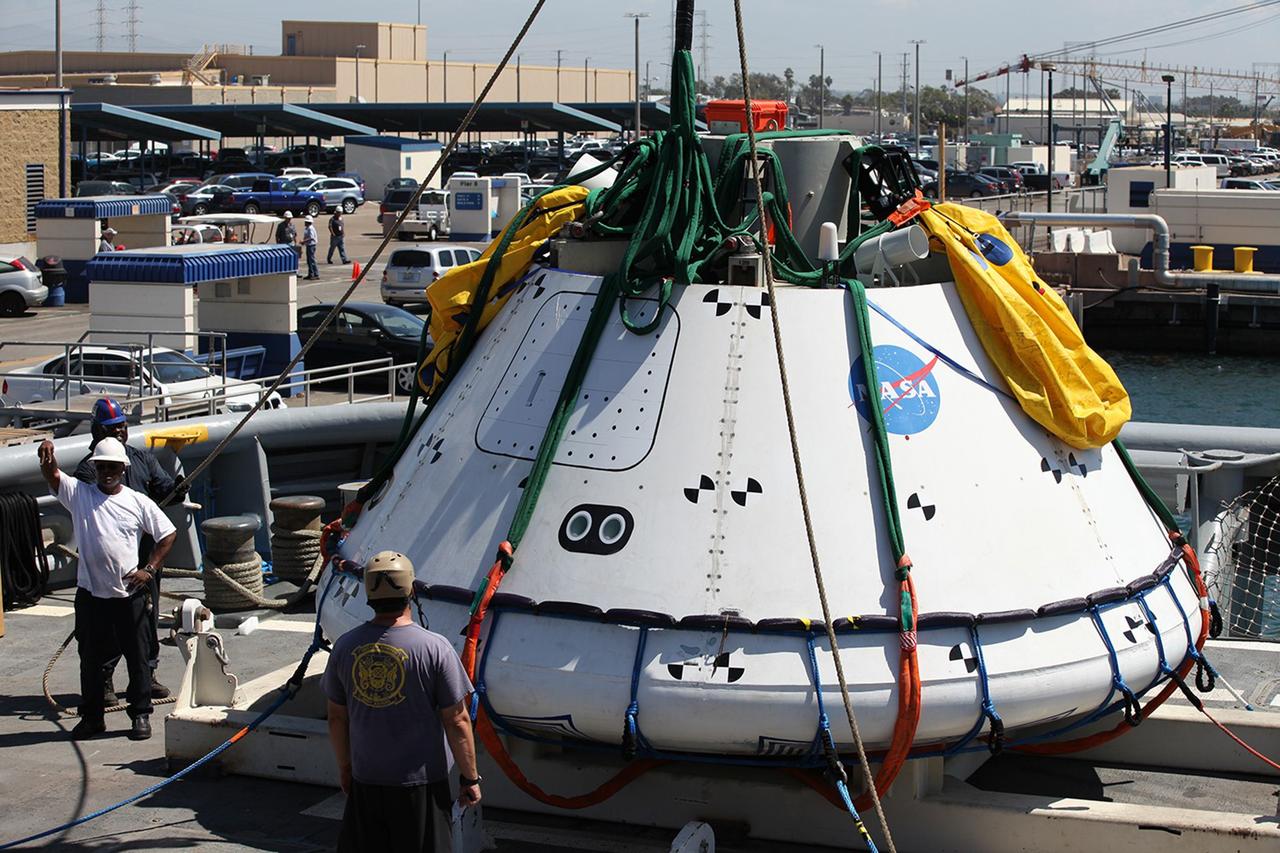
SAN DIEGO, Calif. – At Naval Base San Diego in California, U.S. Navy personnel prepare the Orion boilerplate test vehicle to be lifted by stationary crane from the USS Salvor, a safeguard-class rescue and salvage ship, and lowered into the water during the first day of Underway Recovery Test 4A. The ship will head out to sea for four days to test crew module crane recovery operations. NASA, Lockheed Martin and the U.S. Navy are conducting the test to prepare for recovery of the Orion crew module on its return from a deep space mission. The underway recovery test will allow the teams to demonstrate and evaluate the recovery processes, procedures, new hardware and personnel in open waters. The Ground Systems Development and Operations Program is conducting the underway recovery test. Orion is the exploration spacecraft designed to carry astronauts to destinations not yet explored by humans, including an asteroid and Mars. It will have emergency abort capability, sustain the crew during space travel and provide safe re-entry from deep space return velocities. The first unpiloted test flight of the Orion is scheduled to launch in December 2014 atop a United Launch Alliance Delta IV rocket and in 2018 on NASA’s Space Launch System rocket. For more information, visit http://www.nasa.gov/orion. Photo credit: Kim Shiflett
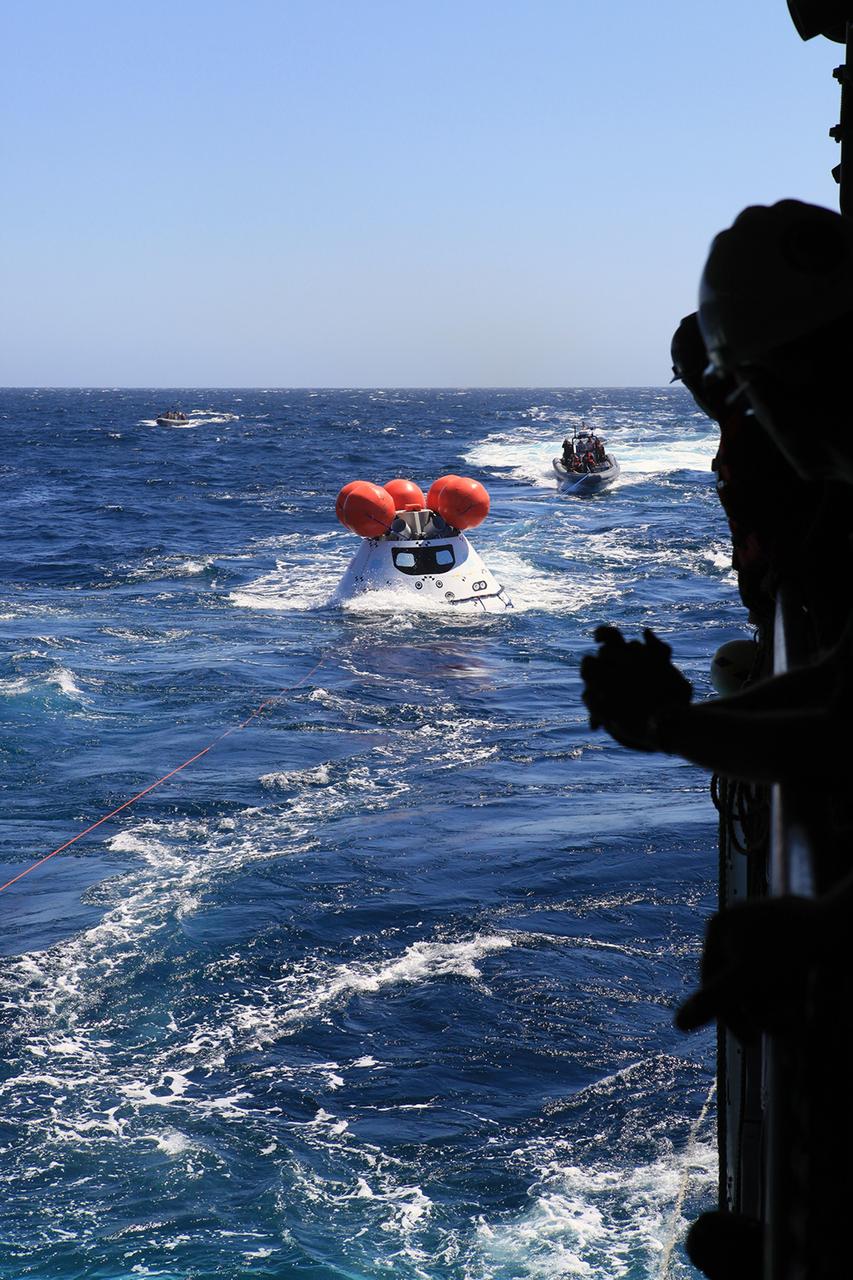
SAN DIEGO, Calif. – During the third day of Orion Underway Recovery Test 3 on the USS Anchorage in the Pacific Ocean, U.S. Navy personnel in a rigid hull inflatable boat use tether lines attached to the test vehicle to practice the recovery process. NASA, Lockheed Martin and U.S. Navy personnel are conducting recovery tests using the Orion boilerplate test vehicle to prepare for recovery of the Orion crew module on its return from a deep space mission. The test allows the teams to demonstrate and evaluate the recovery processes, procedures, hardware and personnel in open waters. The Ground Systems Development and Operations Program is conducting the underway recovery tests. Orion is the exploration spacecraft designed to carry astronauts to destinations not yet explored by humans, including an asteroid and Mars. It will have emergency abort capability, sustain the crew during space travel and provide safe re-entry from deep space return velocities. The first unpiloted test flight of Orion is scheduled to launch in 2014 atop a United Launch Alliance Delta IV Heavy rocket and in 2018 on NASA’s Space Launch System rocket. For more information, visit http://www.nasa.gov/orion. Photo credit: NASA/Kim Shiflett
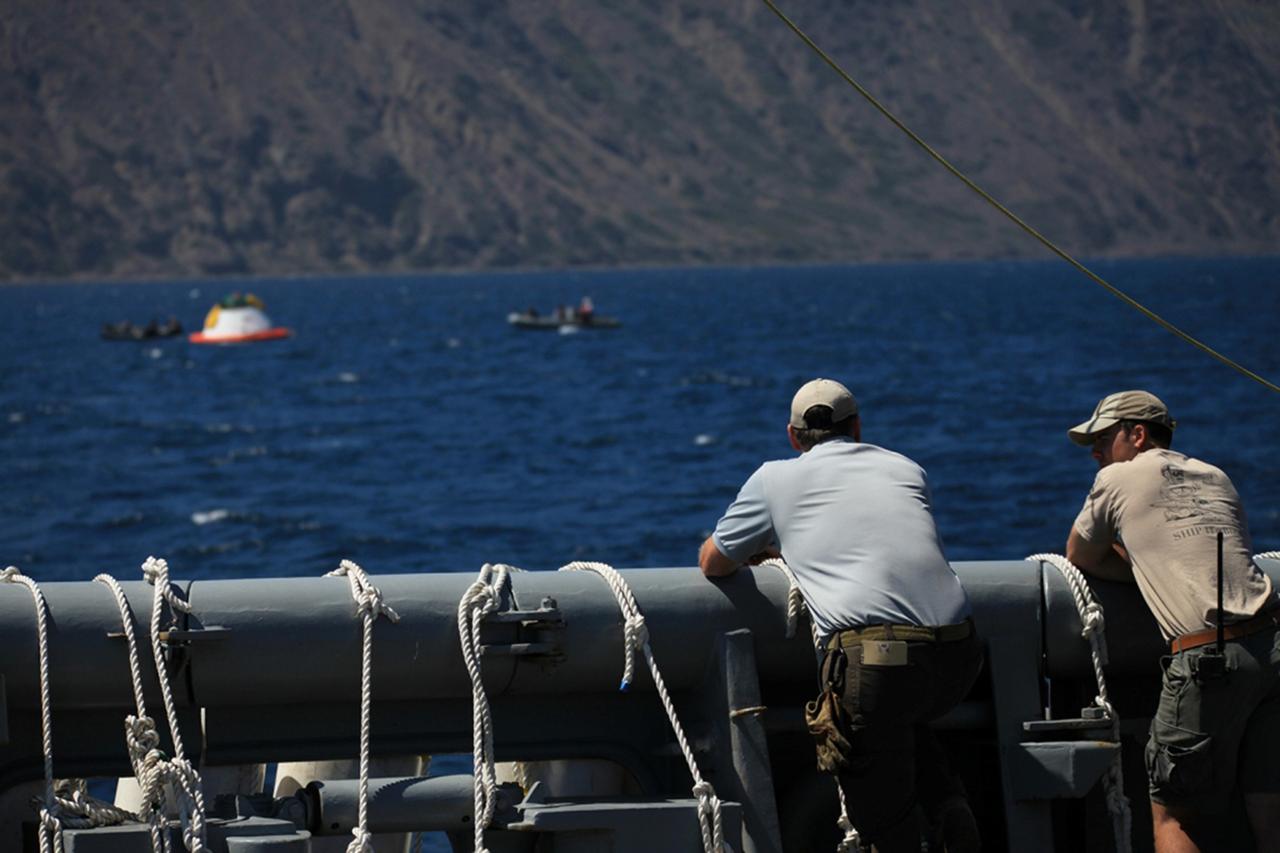
SAN DIEGO, Calif. – The Orion boilerplate test vehicle floats in the Pacific Ocean during Underway Recovery Test 4A. Orion was lowered into the water with a stationary crane from the USS Salvor, a safeguard-class rescue and salvage ship. Nearby, U.S. Navy personnel in a Zodiac boat and rigid hull inflatable boat prepare to practice procedures to tether and retrieve the test vehicle. NASA, Lockheed Martin and the U.S. Navy are conducting crane recovery tests to prepare for recovery of the Orion crew module on its return from a deep space mission. The underway recovery test will allow the teams to demonstrate and evaluate the recovery processes, procedures, new hardware and personnel in open waters. The Ground Systems Development and Operations Program is conducting the underway recovery test. Orion is the exploration spacecraft designed to carry astronauts to destinations not yet explored by humans, including an asteroid and Mars. It will have emergency abort capability, sustain the crew during space travel and provide safe re-entry from deep space return velocities. The first unpiloted test flight of the Orion is scheduled to launch in December 2014 atop a United Launch Alliance Delta IV Heavy rocket and in 2018 on NASA’s Space Launch System rocket. For more information, visit http://www.nasa.gov/orion. Photo credit: Kim Shiflett
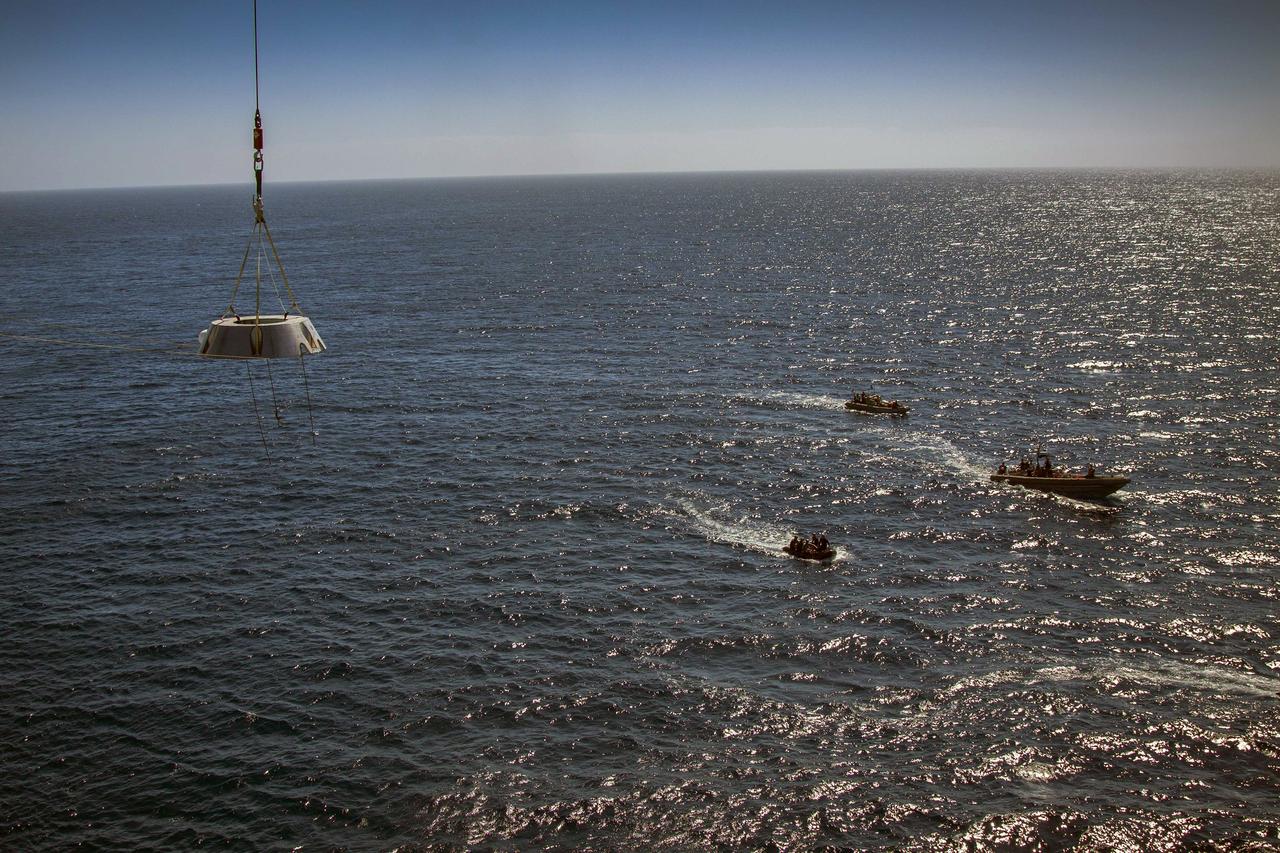
SAN DIEGO, Calif. – A mock-up of the Orion forward bay cover is lowered by crane from the USS Anchorage into the water during the second day of Orion Underway Recovery Test 3 in the Pacific Ocean. Nearby, U.S. navy divers in two Zodiac boats and other team members in a rigid hull inflatable boat, wait to practice recovery procedures. NASA, Lockheed Martin and U.S. Navy personnel are conducting the recovery test using the Orion boilerplate test vehicle and mock-up forward bay cover to prepare for recovery of the Orion crew module on its return from a deep space mission. The test allows the teams to demonstrate and evaluate the recovery processes, procedures, hardware and personnel in open waters. The Ground Systems Development and Operations Program is conducting the underway recovery tests. Orion is the exploration spacecraft designed to carry astronauts to destinations not yet explored by humans, including an asteroid and Mars. It will have emergency abort capability, sustain the crew during space travel and provide safe re-entry from deep space return velocities. The first unpiloted test flight of Orion is scheduled to launch in 2014 atop a United Launch Alliance Delta IV Heavy rocket and in 2018 on NASA’s Space Launch System rocket. For more information, visit http://www.nasa.gov/orion. Photo credit: NASA/Cory Huston
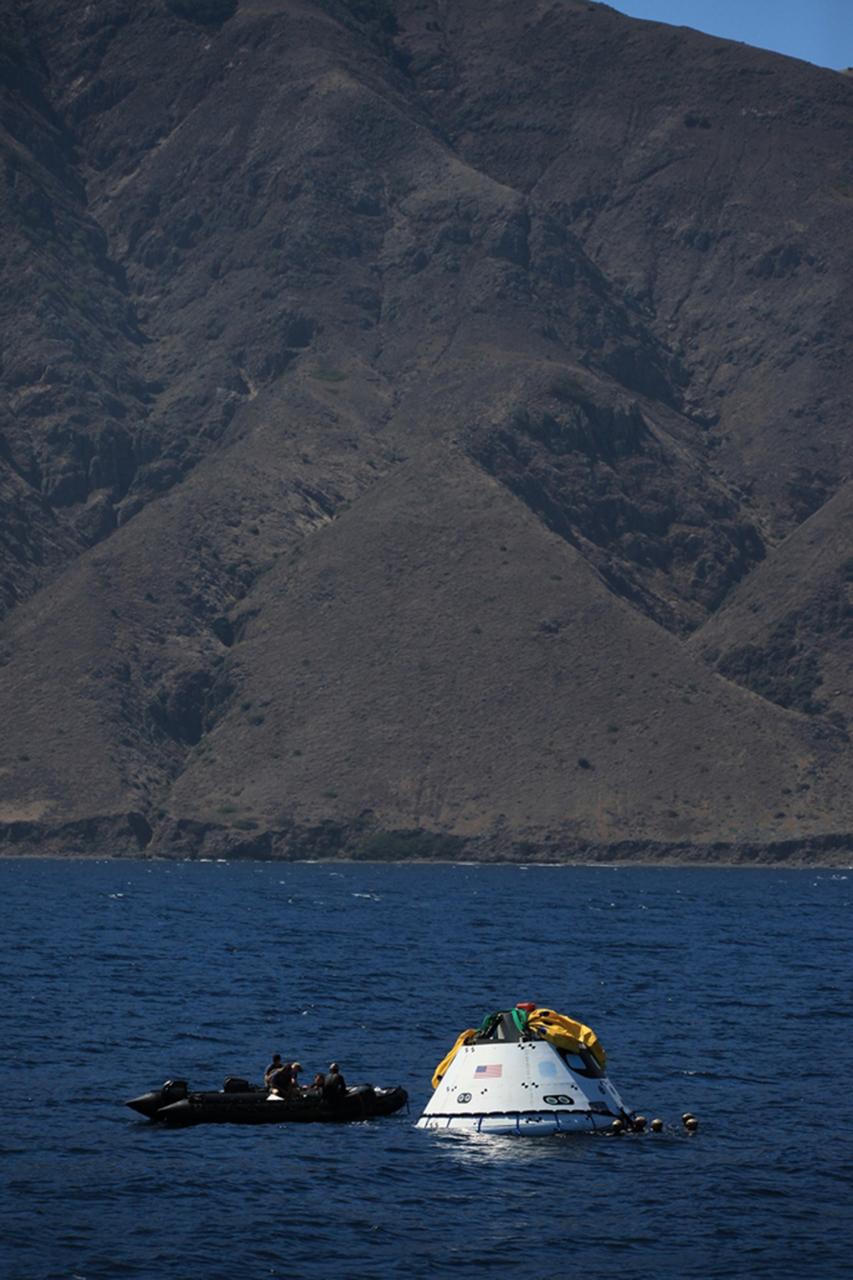
SAN DIEGO, Calif. – The Orion boilerplate test vehicle floats in the Pacific Ocean during Underway Recovery Test 4A. Orion was lowered into the water with a stationary crane from the USS Salvor, a safeguard-class rescue and salvage ship. Nearby, U.S. Navy personnel in a Zodiac boat prepare to practice procedures to tether and retrieve the test vehicle. NASA, Lockheed Martin and the U.S. Navy are conducting crane recovery tests to prepare for recovery of the Orion crew module on its return from a deep space mission. The underway recovery test will allow the teams to demonstrate and evaluate the recovery processes, procedures, new hardware and personnel in open waters. The Ground Systems Development and Operations Program is conducting the underway recovery test. Orion is the exploration spacecraft designed to carry astronauts to destinations not yet explored by humans, including an asteroid and Mars. It will have emergency abort capability, sustain the crew during space travel and provide safe re-entry from deep space return velocities. The first unpiloted test flight of the Orion is scheduled to launch in December 2014 atop a United Launch Alliance Delta IV Heavy rocket and in 2018 on NASA’s Space Launch System rocket. For more information, visit http://www.nasa.gov/orion. Photo credit: Kim Shiflett
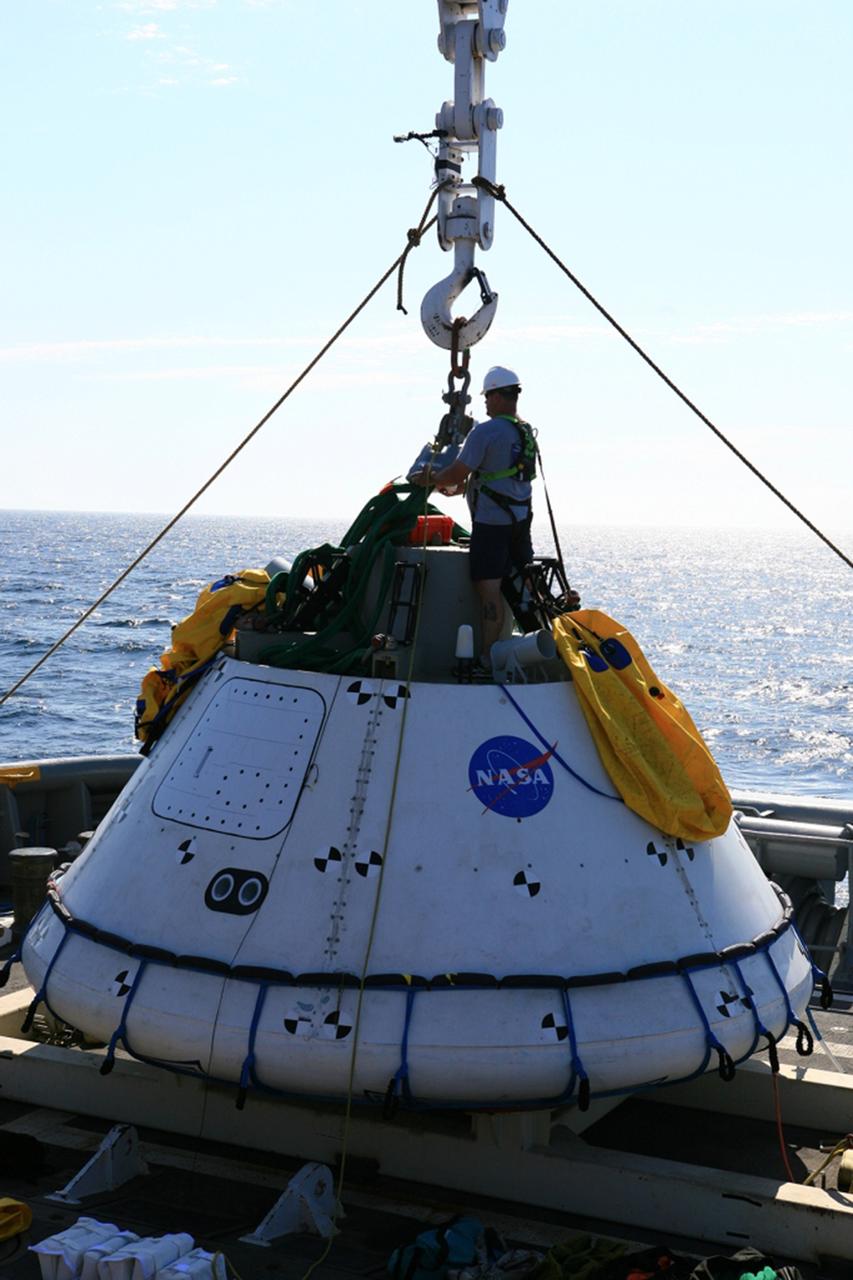
SAN DIEGO, Calif. – On board the USS Salvor, a safeguard-class rescue and salvage ship, U.S. Navy personnel check the stationary crane attached to the Orion boilerplate test vehicle during Underway Recovery Test 4A in the Pacific Ocean. The test vehicle will be lifted up and lowered into the water to test crew module crane recovery operations. NASA, Lockheed Martin and the U.S. Navy are conducting the test to prepare for recovery of the Orion crew module on its return from a deep space mission. The underway recovery test will allow the teams to demonstrate and evaluate the recovery processes, procedures, new hardware and personnel in open waters. The Ground Systems Development and Operations Program is conducting the underway recovery test. Orion is the exploration spacecraft designed to carry astronauts to destinations not yet explored by humans, including an asteroid and Mars. It will have emergency abort capability, sustain the crew during space travel and provide safe re-entry from deep space return velocities. The first unpiloted test flight of the Orion is scheduled to launch in December 2014 atop a United Launch Alliance Delta IV Heavy rocket and in 2018 on NASA’s Space Launch System rocket. For more information, visit http://www.nasa.gov/orion. Photo credit: Kim Shiflett
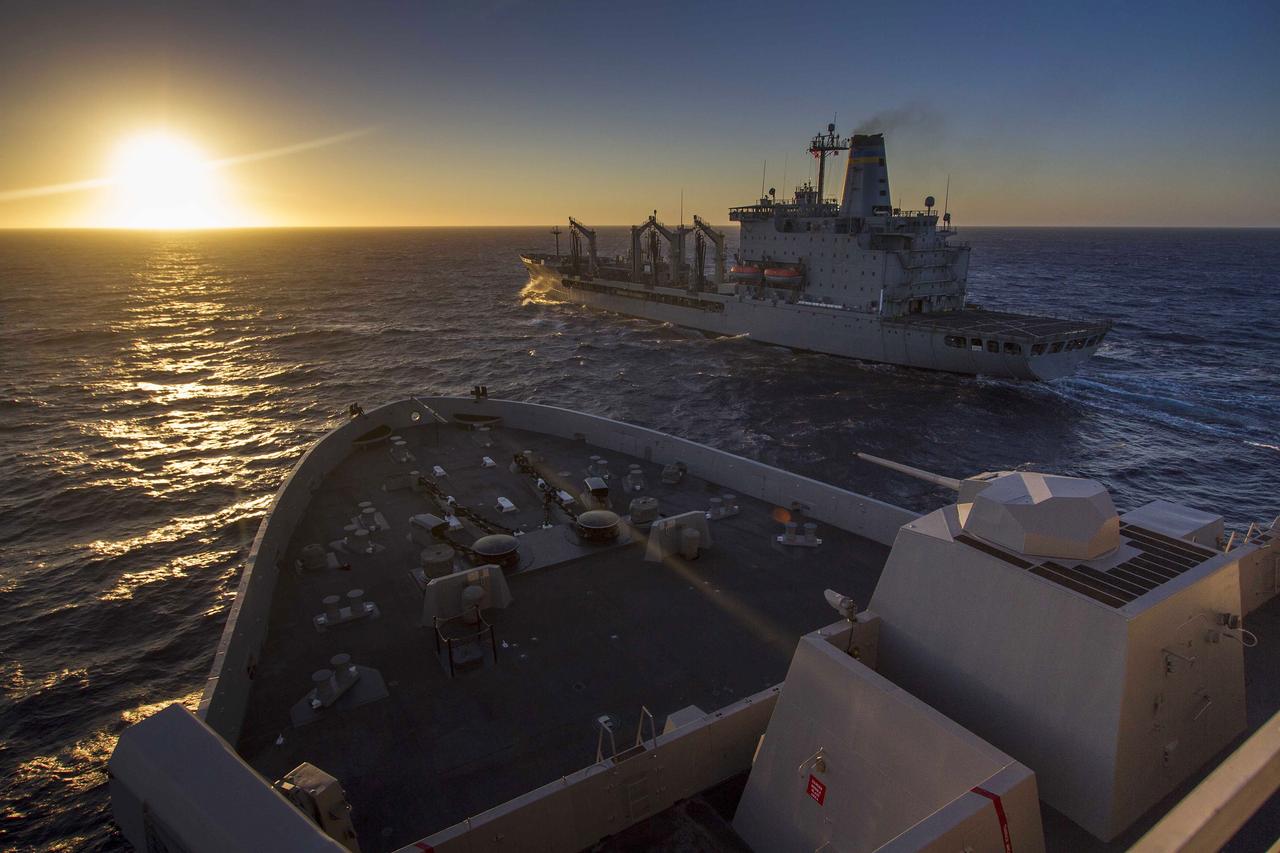
SAN DIEGO, Calif. – The USNS Yukon, in the foreground, is stationed nearby the USS Anchorage, during the third day of Orion Underway Recovery Test 3 in the Pacific Ocean. The Yukon provides underway replenishment of fuel to ships at sea. U.S. Navy divers and other personnel completed a day of practicing recovery of the Orion boilerplate test vehicle. NASA, Lockheed Martin and U.S. Navy personnel are conducting the recovery test using the test vehicle to prepare for recovery of the Orion crew module on its return from a deep space mission. The test allows the teams to demonstrate and evaluate the recovery processes, procedures, hardware and personnel in open waters. The Ground Systems Development and Operations Program is conducting the underway recovery tests. Orion is the exploration spacecraft designed to carry astronauts to destinations not yet explored by humans, including an asteroid and Mars. It will have emergency abort capability, sustain the crew during space travel and provide safe re-entry from deep space return velocities. The first unpiloted test flight of Orion is scheduled to launch in 2014 atop a United Launch Alliance Delta IV Heavy rocket and in 2018 on NASA’s Space Launch System rocket. For more information, visit http://www.nasa.gov/orion. Photo credit: NASA/Cory Huston
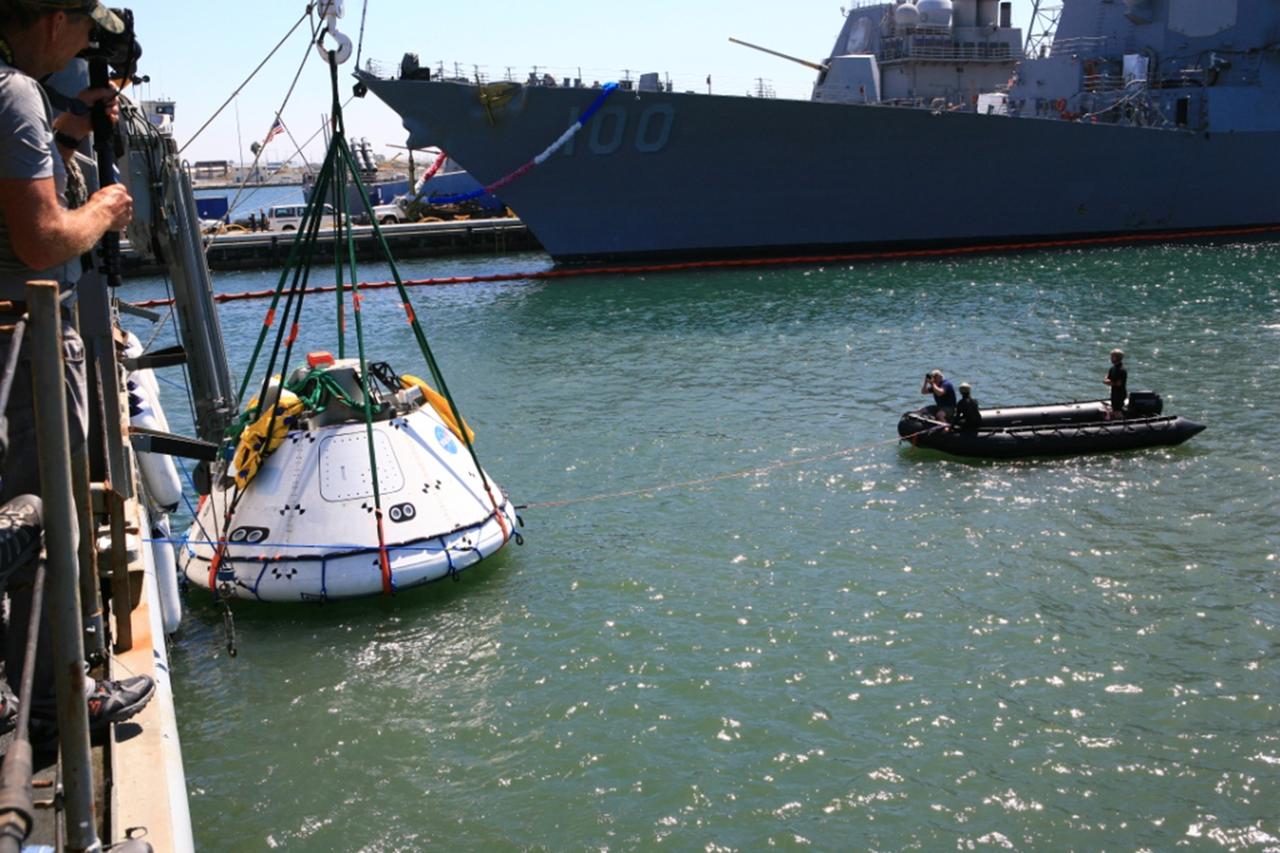
SAN DIEGO, Calif. – The Orion boilerplate test vehicle has been lowered into the water with a stationary crane from the USS Salvor, a safeguard-class rescue and salvage ship, during the first day of Underway Recovery Test 4A at Naval Base San Diego in California. U.S. Navy personnel in a Zodiac boat practice procedures to tether the test vehicle. The ship will head out to sea for four days to test crew module crane recovery operations. NASA, Lockheed Martin and the U.S. Navy are conducting the test to prepare for recovery of the Orion crew module on its return from a deep space mission. The underway recovery test will allow the teams to demonstrate and evaluate the recovery processes, procedures, new hardware and personnel in open waters. The Ground Systems Development and Operations Program is conducting the underway recovery test. Orion is the exploration spacecraft designed to carry astronauts to destinations not yet explored by humans, including an asteroid and Mars. It will have emergency abort capability, sustain the crew during space travel and provide safe re-entry from deep space return velocities. The first unpiloted test flight of the Orion is scheduled to launch in December 2014 atop a United Launch Alliance Delta IV rocket and in 2018 on NASA’s Space Launch System rocket. For more information, visit http://www.nasa.gov/orion. Photo credit: Kim Shiflett
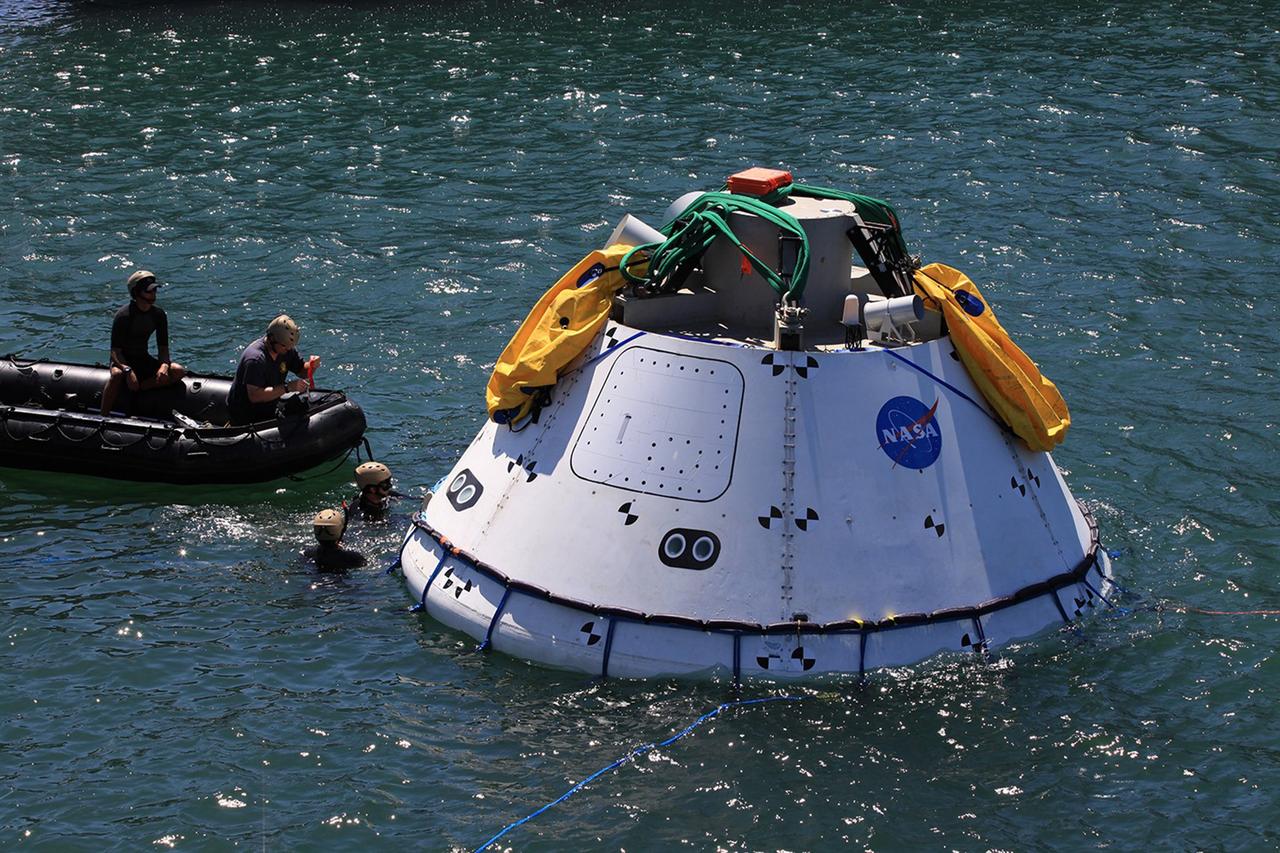
SAN DIEGO, Calif. – The Orion boilerplate test vehicle has been lowered into the water with a stationary crane from the USS Salvor, a safeguard-class rescue and salvage ship, during the first day of Underway Recovery Test 4A at Naval Base San Diego in California. U.S. Navy personnel in a Zodiac boat practice procedures to tether and retrieve the test vehicle. The ship will head out to sea for four days to test crew module crane recovery operations. NASA, Lockheed Martin and the U.S. Navy are conducting the test to prepare for recovery of the Orion crew module on its return from a deep space mission. The underway recovery test will allow the teams to demonstrate and evaluate the recovery processes, procedures, new hardware and personnel in open waters. The Ground Systems Development and Operations Program is conducting the underway recovery test. Orion is the exploration spacecraft designed to carry astronauts to destinations not yet explored by humans, including an asteroid and Mars. It will have emergency abort capability, sustain the crew during space travel and provide safe re-entry from deep space return velocities. The first unpiloted test flight of the Orion is scheduled to launch in December 2014 atop a United Launch Alliance Delta IV rocket and in 2018 on NASA’s Space Launch System rocket. For more information, visit http://www.nasa.gov/orion. Photo credit: Kim Shiflett
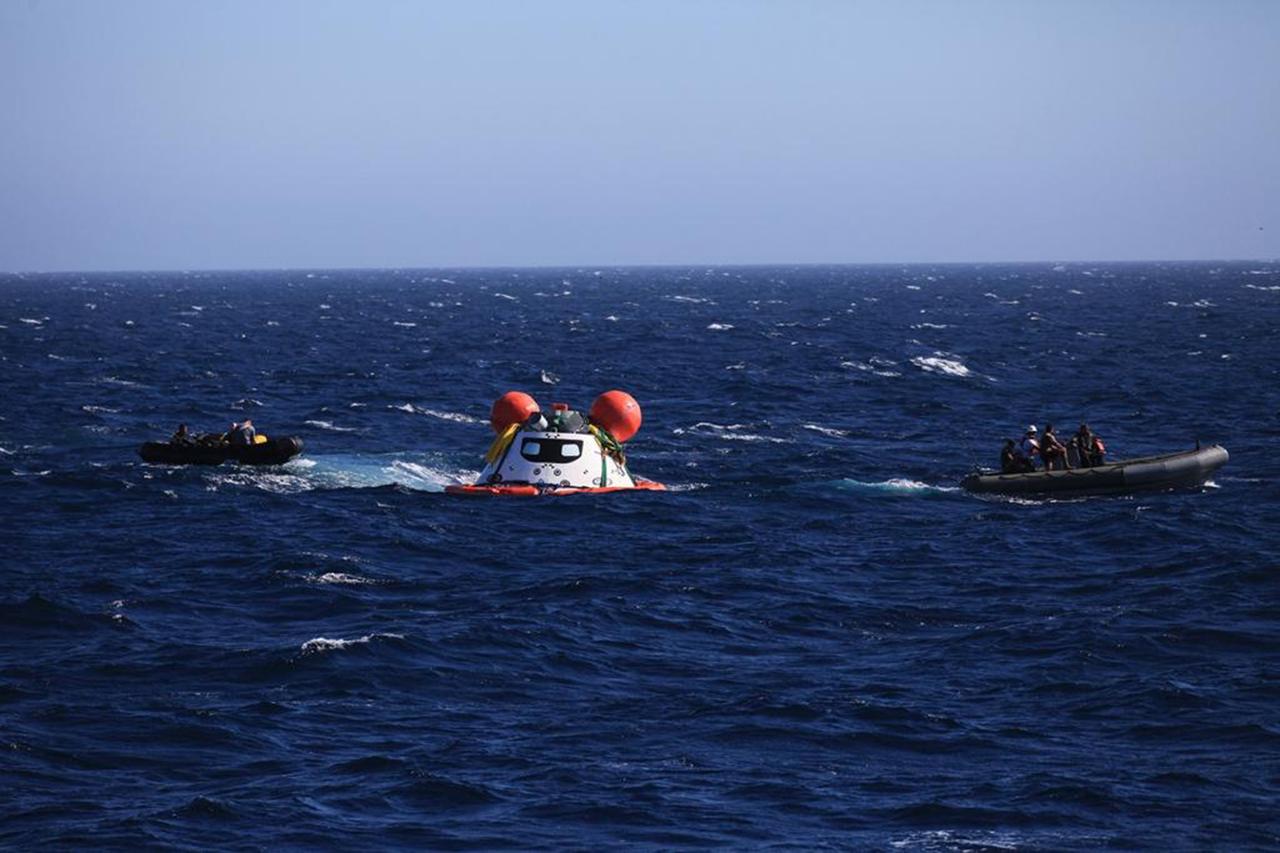
SAN DIEGO, Calif. – On the third day of Underway Recovery Test 4A, the Orion boilerplate test vehicle floats in the Pacific Ocean near the USS Salvor, a safeguard-class rescue and salvage ship. Orion was lowered into the water with a stationary crane from the ship. Tether lines from the ship have been attached to Orion for a towing test. Nearby, Navy divers in Zodiac boats monitor Orion and practice recovery procedures. NASA, Lockheed Martin and the U.S. Navy are conducting the test to prepare for recovery of the Orion crew module on its return from a deep space mission. The underway recovery test allows the teams to demonstrate and evaluate the recovery processes, procedures, new hardware and personnel in open waters. The Ground Systems Development and Operations Program is conducting the underway recovery test. Orion is the exploration spacecraft designed to carry astronauts to destinations not yet explored by humans, including an asteroid and Mars. It will have emergency abort capability, sustain the crew during space travel and provide safe re-entry from deep space return velocities. The first unpiloted test flight of the Orion is scheduled to launch in December 2014 atop a United Launch Alliance Delta IV Heavy rocket and in 2018 on NASA’s Space Launch System rocket. For more information, visit http://www.nasa.gov/orion. Photo credit: NASA/Kim Shiflett
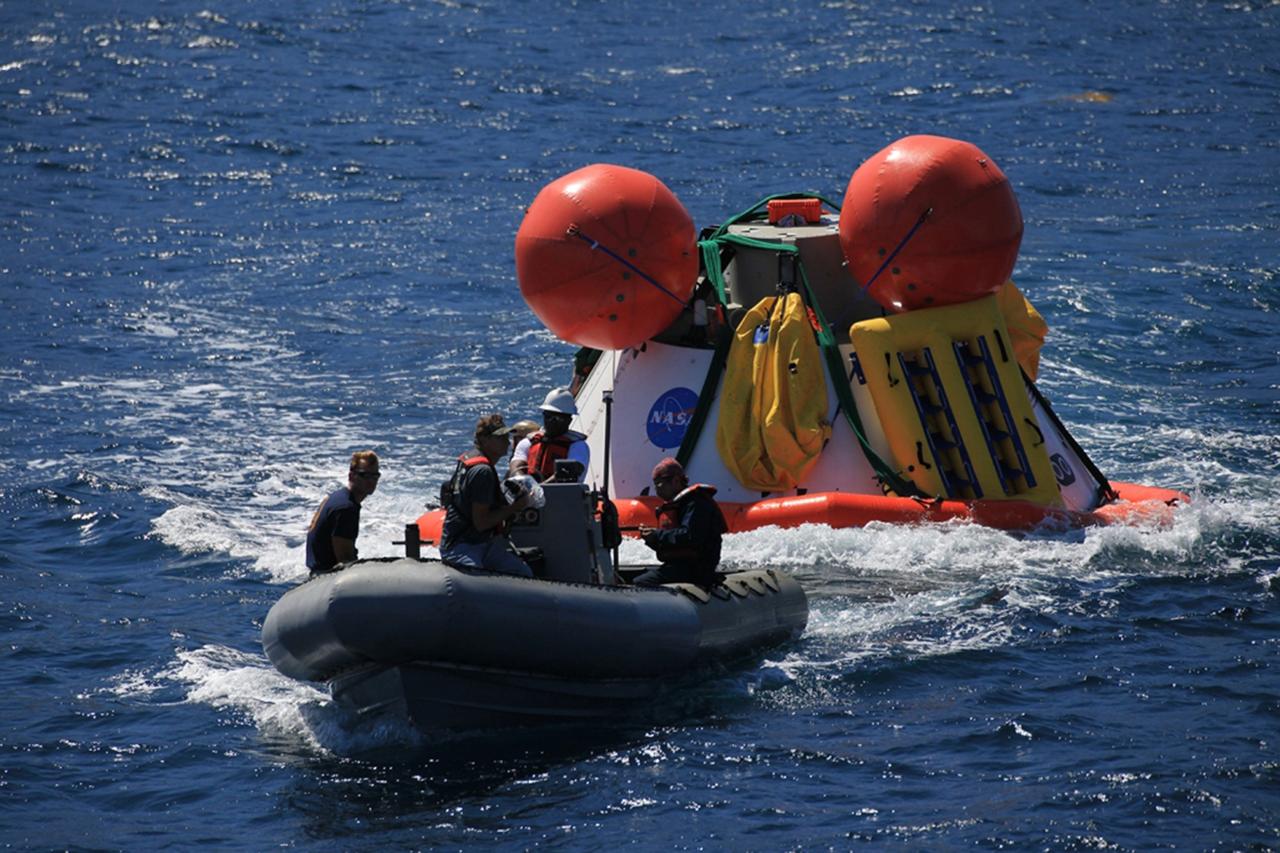
SAN DIEGO, Calif. – The Orion boilerplate test vehicle floats in the Pacific Ocean during Underway Recovery Test 4A. Orion was lowered into the water with a stationary crane from the USS Salvor, a safeguard-class rescue and salvage ship. Nearby, U.S. Navy personnel in a Zodiac boat have attached a flotation collar and tether lines to Orion to bring the test vehicle closer to the ship. NASA, Lockheed Martin and the U.S. Navy are conducting crane recovery tests to prepare for recovery of the Orion crew module on its return from a deep space mission. The underway recovery test will allow the teams to demonstrate and evaluate the recovery processes, procedures, new hardware and personnel in open waters. The Ground Systems Development and Operations Program is conducting the underway recovery test. Orion is the exploration spacecraft designed to carry astronauts to destinations not yet explored by humans, including an asteroid and Mars. It will have emergency abort capability, sustain the crew during space travel and provide safe re-entry from deep space return velocities. The first unpiloted test flight of the Orion is scheduled to launch in December 2014 atop a United Launch Alliance Delta IV Heavy rocket and in 2018 on NASA’s Space Launch System rocket. For more information, visit http://www.nasa.gov/orion. Photo credit: Kim Shiflett
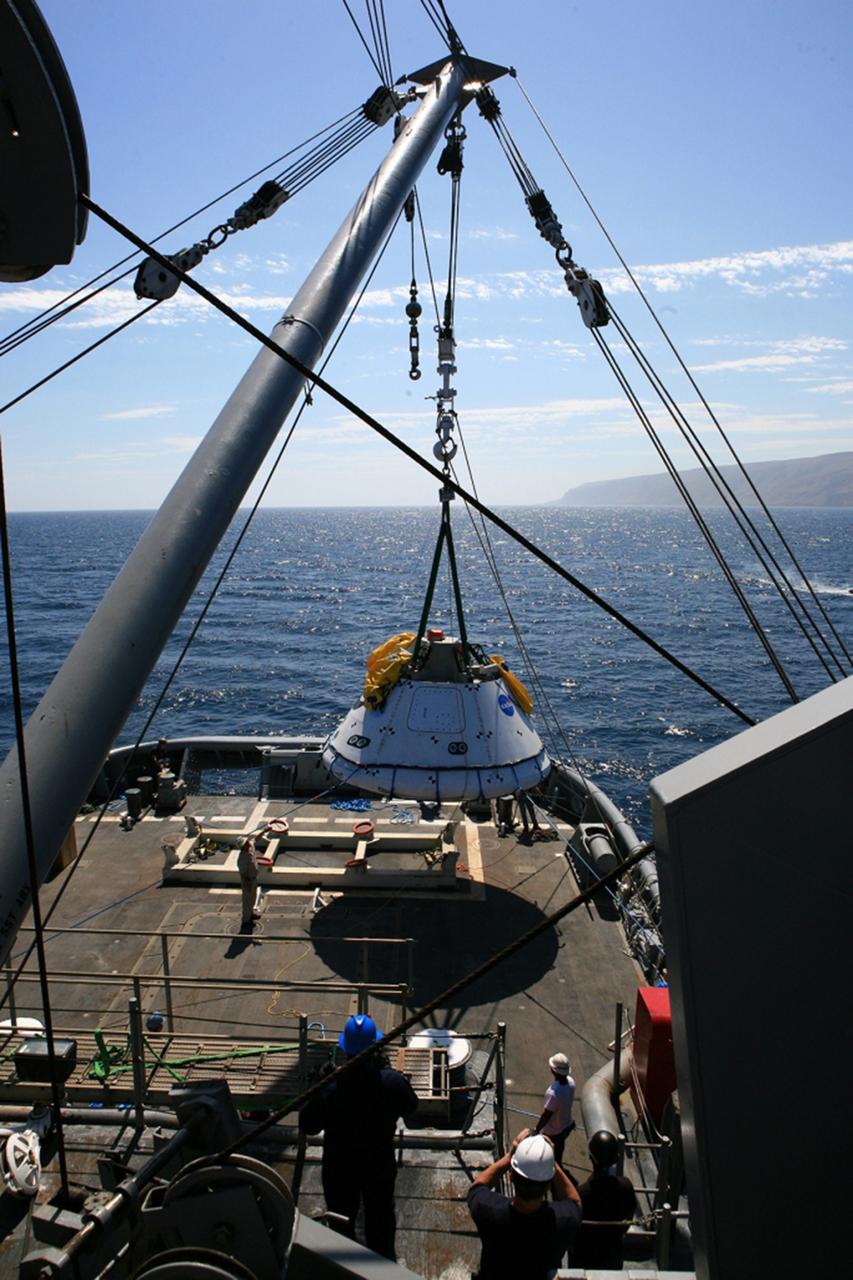
SAN DIEGO, Calif. – On board the USS Salvor, a safeguard-class rescue and salvage ship, U.S. Navy personnel monitor the progress as a stationary crane lifts the Orion boilerplate test vehicle during Underway Recovery Test 4A in the Pacific Ocean. The test vehicle will be lifted up and lowered into the water to test crew module crane recovery operations. NASA, Lockheed Martin and the U.S. Navy are conducting the test to prepare for recovery of the Orion crew module on its return from a deep space mission. The underway recovery test will allow the teams to demonstrate and evaluate the recovery processes, procedures, new hardware and personnel in open waters. The Ground Systems Development and Operations Program is conducting the underway recovery test. Orion is the exploration spacecraft designed to carry astronauts to destinations not yet explored by humans, including an asteroid and Mars. It will have emergency abort capability, sustain the crew during space travel and provide safe re-entry from deep space return velocities. The first unpiloted test flight of the Orion is scheduled to launch in December 2014 atop a United Launch Alliance Delta IV Heavy rocket and in 2018 on NASA’s Space Launch System rocket. For more information, visit http://www.nasa.gov/orion. Photo credit: Kim Shiflett
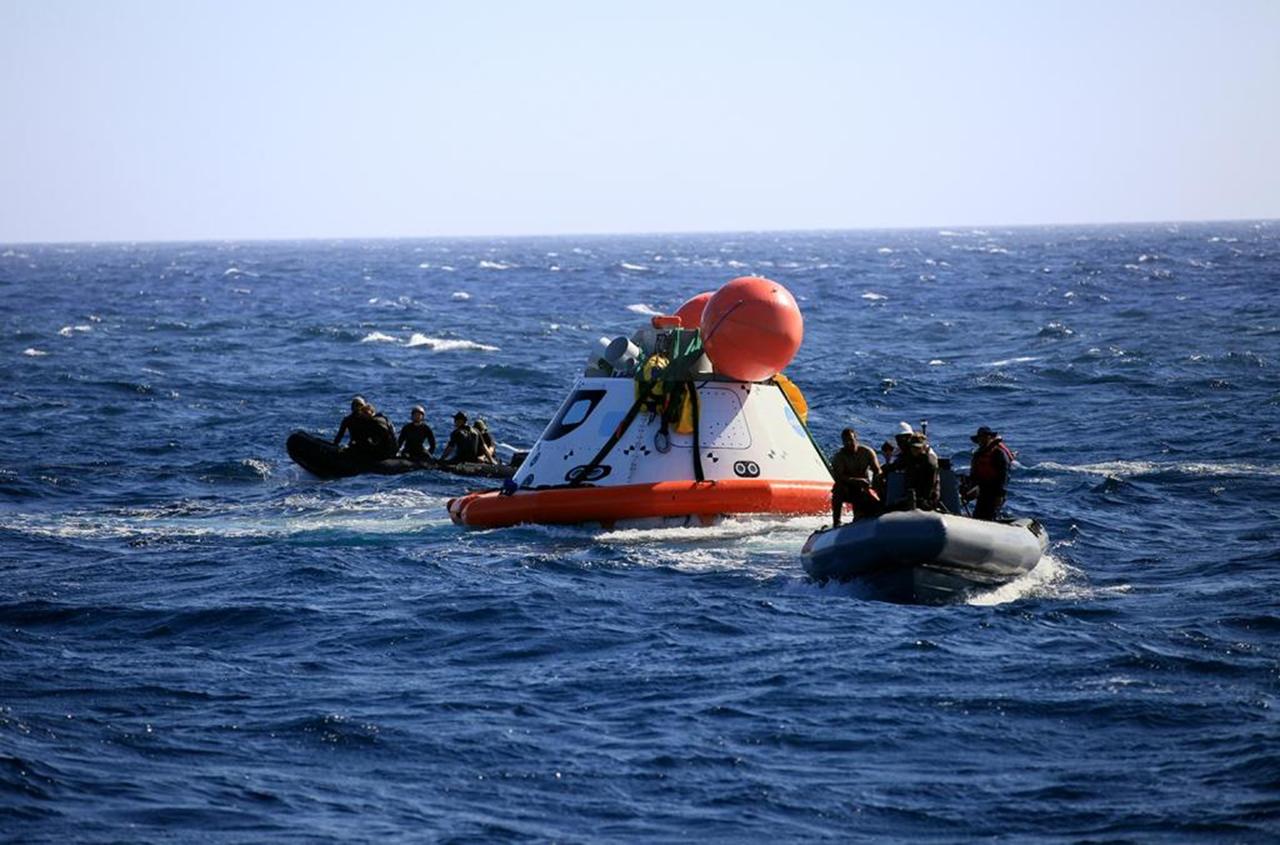
SAN DIEGO, Calif. – The Orion boilerplate test vehicle floats in the Pacific Ocean during Underway Recovery Test 4A. Orion was lowered into the water with a stationary crane from the USS Salvor, a safeguard-class rescue and salvage ship. Nearby, Navy divers in two Zodiac boats practice recovery procedures. An orange stabilization collar has been attached around Orion to prepare for lift by stationary crane back onto the USS Salvor. NASA, Lockheed Martin and the U.S. Navy are conducting the test to prepare for recovery of the Orion crew module on its return from a deep space mission. The underway recovery test will allow the teams to demonstrate and evaluate the recovery processes, procedures, new hardware and personnel in open waters. The Ground Systems Development and Operations Program is conducting the underway recovery test. Orion is the exploration spacecraft designed to carry astronauts to destinations not yet explored by humans, including an asteroid and Mars. It will have emergency abort capability, sustain the crew during space travel and provide safe re-entry from deep space return velocities. The first unpiloted test flight of the Orion is scheduled to launch in December 2014 atop a United Launch Alliance Delta IV Heavy rocket and in 2018 on NASA’s Space Launch System rocket. For more information, visit http://www.nasa.gov/orion. Photo credit: NASA/Kim Shiflett
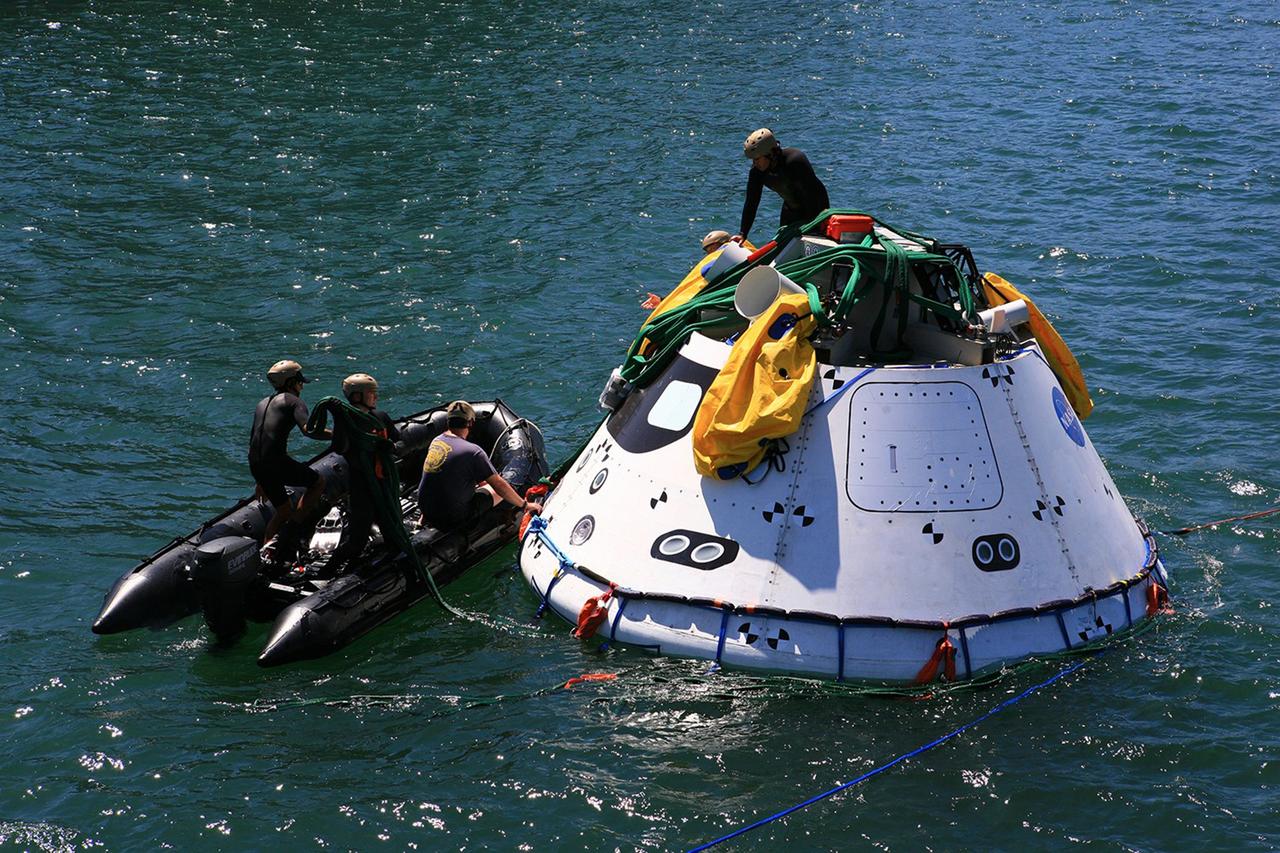
SAN DIEGO, Calif. – The Orion boilerplate test vehicle has been lowered into the water with a stationary crane from the USS Salvor, a safeguard-class rescue and salvage ship, during the first day of Underway Recovery Test 4A at Naval Base San Diego in California. U.S. Navy personnel in a Zodiac boat practice procedures to tether and retrieve the test vehicle. The ship will head out to sea for four days to test crew module crane recovery operations. NASA, Lockheed Martin and the U.S. Navy are conducting the test to prepare for recovery of the Orion crew module on its return from a deep space mission. The underway recovery test will allow the teams to demonstrate and evaluate the recovery processes, procedures, new hardware and personnel in open waters. The Ground Systems Development and Operations Program is conducting the underway recovery test. Orion is the exploration spacecraft designed to carry astronauts to destinations not yet explored by humans, including an asteroid and Mars. It will have emergency abort capability, sustain the crew during space travel and provide safe re-entry from deep space return velocities. The first unpiloted test flight of the Orion is scheduled to launch in December 2014 atop a United Launch Alliance Delta IV rocket and in 2018 on NASA’s Space Launch System rocket. For more information, visit http://www.nasa.gov/orion. Photo credit: Kim Shiflett
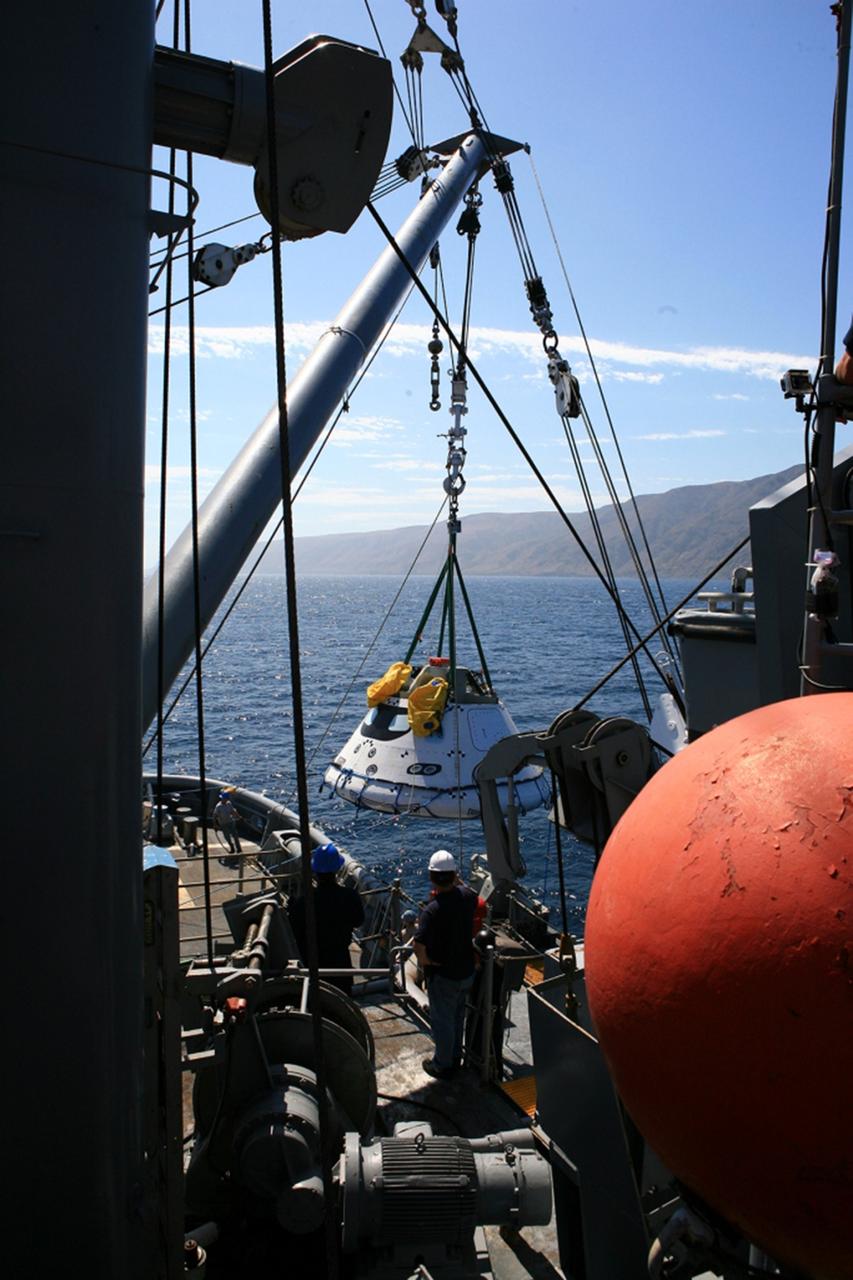
SAN DIEGO, Calif. – On board the USS Salvor, a safeguard-class rescue and salvage ship, U.S. Navy personnel monitor the progress as a stationary crane lowers the Orion boilerplate test vehicle into the Pacific Ocean during Underway Recovery Test 4A. NASA, Lockheed Martin and the U.S. Navy are testing crane recovery operations to prepare for recovery of the Orion crew module on its return from a deep space mission. The underway recovery test will allow the teams to demonstrate and evaluate the recovery processes, procedures, new hardware and personnel in open waters. The Ground Systems Development and Operations Program is conducting the underway recovery test. Orion is the exploration spacecraft designed to carry astronauts to destinations not yet explored by humans, including an asteroid and Mars. It will have emergency abort capability, sustain the crew during space travel and provide safe re-entry from deep space return velocities. The first unpiloted test flight of the Orion is scheduled to launch in December 2014 atop a United Launch Alliance Delta IV Heavy rocket and in 2018 on NASA’s Space Launch System rocket. For more information, visit http://www.nasa.gov/orion. Photo credit: Kim Shiflett
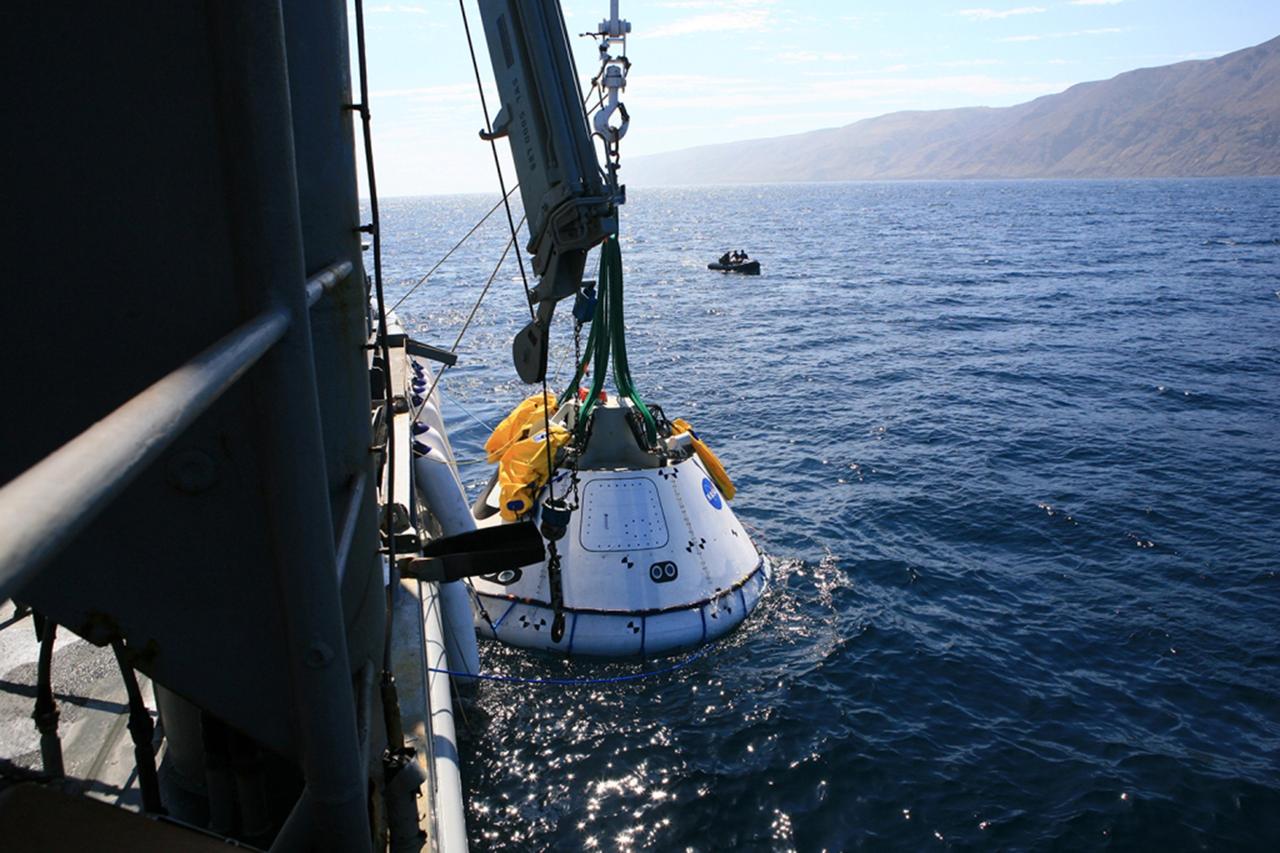
SAN DIEGO, Calif. – The Orion boilerplate test vehicle has been lowered into the water with a stationary crane from the USS Salvor, a safeguard-class rescue and salvage ship, during Underway Recovery Test 4A in the Pacific Ocean. Nearby, U.S. Navy personnel in a Zodiac boat prepare to practice procedures to tether and retrieve the test vehicle. NASA, Lockheed Martin and the U.S. Navy are testing crane recovery operations to prepare for recovery of the Orion crew module on its return from a deep space mission. The underway recovery test will allow the teams to demonstrate and evaluate the recovery processes, procedures, new hardware and personnel in open waters. The Ground Systems Development and Operations Program is conducting the underway recovery test. Orion is the exploration spacecraft designed to carry astronauts to destinations not yet explored by humans, including an asteroid and Mars. It will have emergency abort capability, sustain the crew during space travel and provide safe re-entry from deep space return velocities. The first unpiloted test flight of the Orion is scheduled to launch in December 2014 atop a United Launch Alliance Delta IV Heavy rocket and in 2018 on NASA’s Space Launch System rocket. For more information, visit http://www.nasa.gov/orion. Photo credit: Kim Shiflett
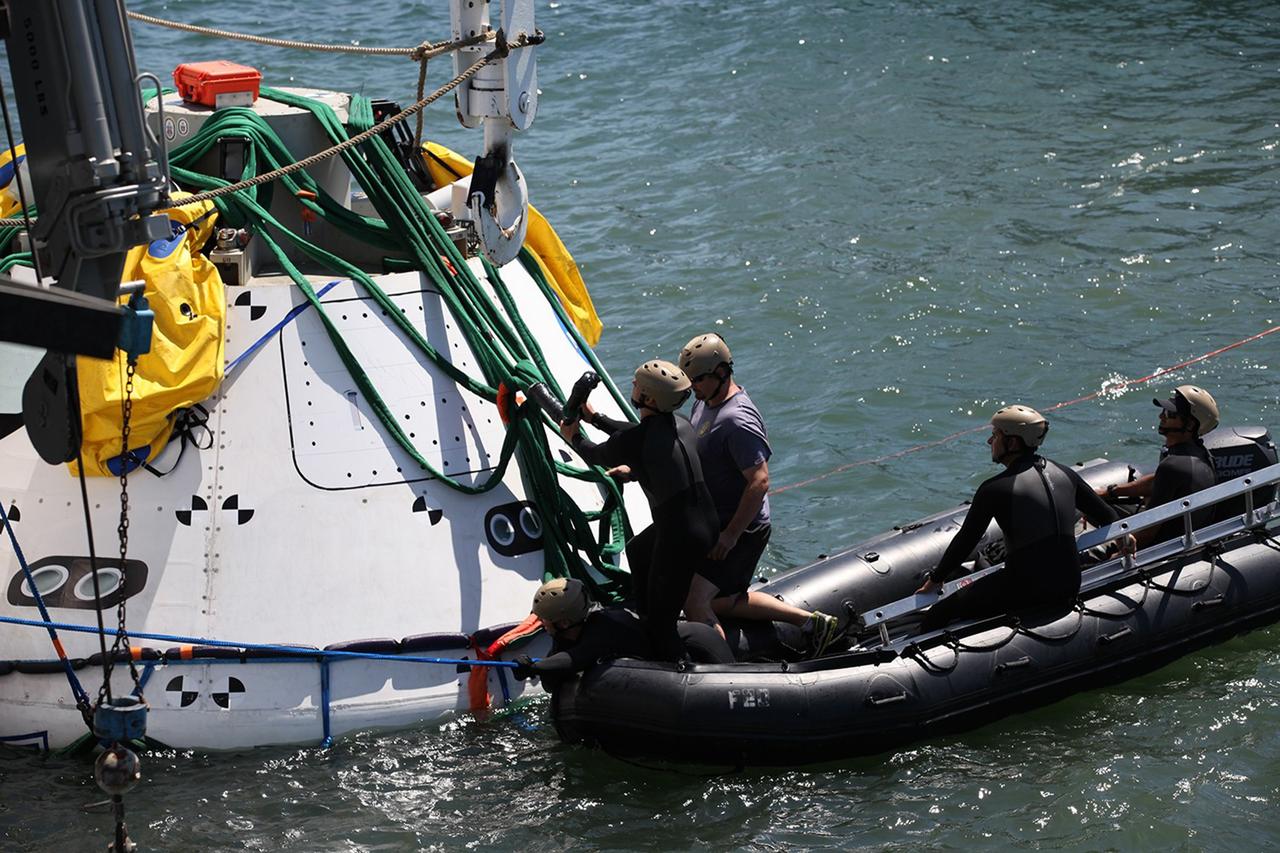
SAN DIEGO, Calif. – The Orion boilerplate test vehicle has been lowered into the water with a stationary crane from the USS Salvor, a safeguard-class rescue and salvage ship, during the first day of Underway Recovery Test 4A at Naval Base San Diego in California. U.S. Navy personnel in a Zodiac boat practice procedures to tether and retrieve the test vehicle. The ship will head out to sea for four days to test crew module crane recovery operations. NASA, Lockheed Martin and the U.S. Navy are conducting the test to prepare for recovery of the Orion crew module on its return from a deep space mission. The underway recovery test will allow the teams to demonstrate and evaluate the recovery processes, procedures, new hardware and personnel in open waters. The Ground Systems Development and Operations Program is conducting the underway recovery test. Orion is the exploration spacecraft designed to carry astronauts to destinations not yet explored by humans, including an asteroid and Mars. It will have emergency abort capability, sustain the crew during space travel and provide safe re-entry from deep space return velocities. The first unpiloted test flight of the Orion is scheduled to launch in December 2014 atop a United Launch Alliance Delta IV rocket and in 2018 on NASA’s Space Launch System rocket. For more information, visit http://www.nasa.gov/orion. Photo credit: Kim Shiflett
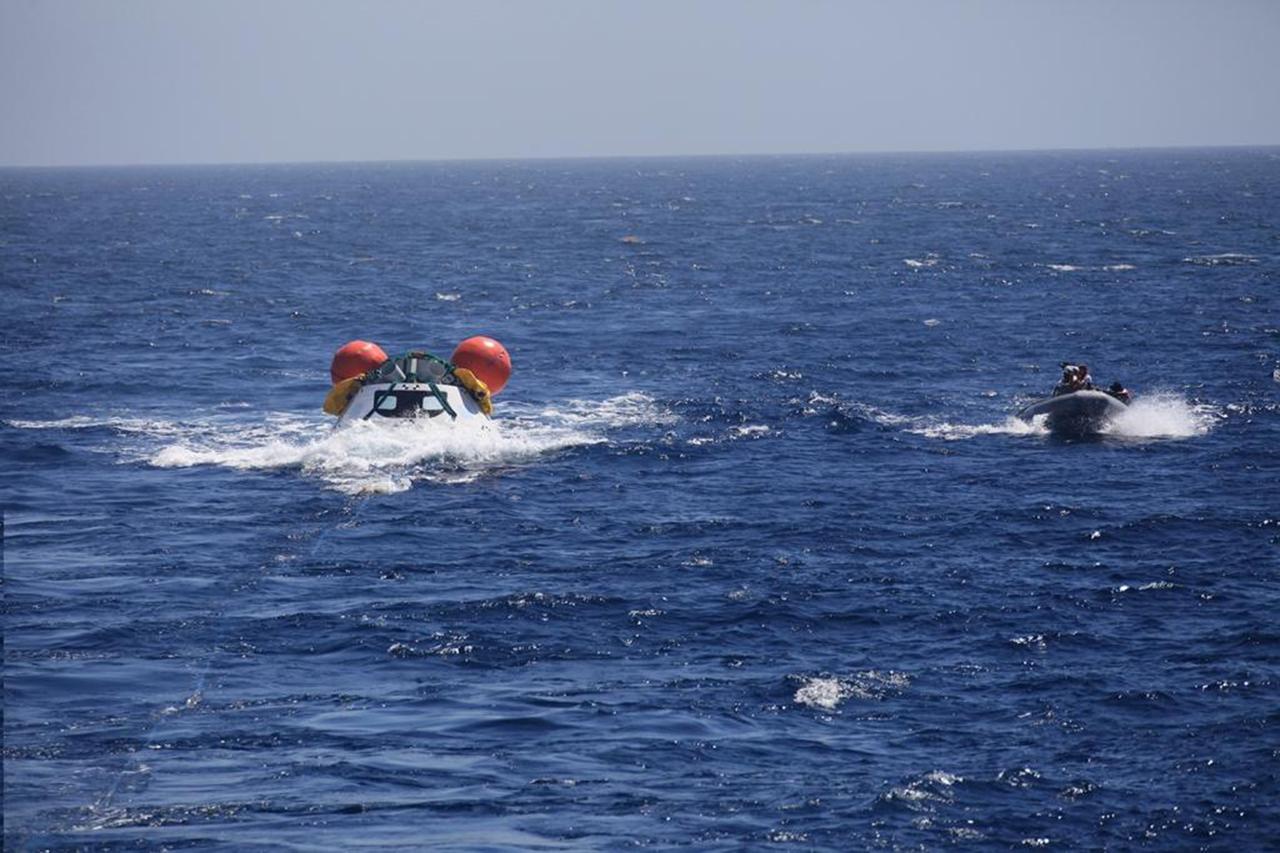
SAN DIEGO, Calif. – The Orion boilerplate test vehicle floats in the Pacific Ocean during the third day of Underway Recovery Test 4A. Orion was lowered into the water from the USS Salvor, a safeguard-class rescue and salvage ship, using a stationary crane. Tether lines were attached to the test vehicle from the ship for a towing test. Navy divers in a Zodiac boat practice recovery procedures and monitor Orion. NASA, Lockheed Martin and the U.S. Navy are conducting the test to prepare for recovery of the Orion crew module on its return from a deep space mission. The underway recovery test allows the teams to demonstrate and evaluate the recovery processes, procedures, new hardware and personnel in open waters. The Ground Systems Development and Operations Program is conducting the underway recovery test. Orion is the exploration spacecraft designed to carry astronauts to destinations not yet explored by humans, including an asteroid and Mars. It will have emergency abort capability, sustain the crew during space travel and provide safe re-entry from deep space return velocities. The first unpiloted test flight of the Orion is scheduled to launch in December 2014 atop a United Launch Alliance Delta IV Heavy rocket and in 2018 on NASA’s Space Launch System rocket. For more information, visit http://www.nasa.gov/orion. Photo credit: NASA/Kim Shiflett
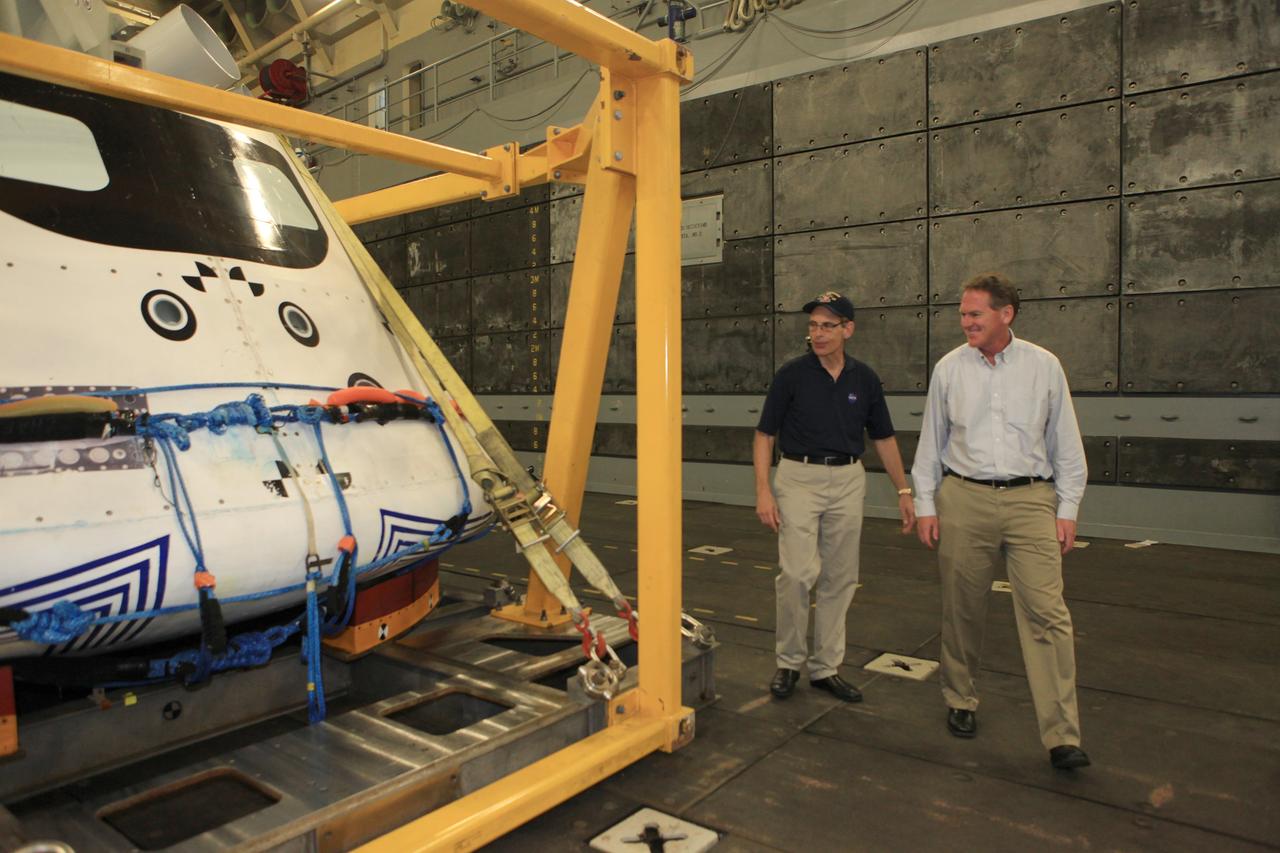
LOS ANGELES, Calif. – Mike Bolger, Ground Systems Development and Operations Program manager, at right, and Mike Generale, Orion Recovery Operations manager and Recovery Test director, both from NASA’s Kennedy Space Center in Florida, view the Orion boilerplate test vehicle in its recovery cradle in the well deck of the USS Anchorage. NASA, Lockheed Martin and the U.S. Navy completed the Orion recovery test in the Pacific Ocean off the coast of San Diego to prepare for recovery of the Orion crew module on its return from a deep space mission. The underway recovery test allowed the teams to demonstrate and evaluate the recovery processes, procedures, new hardware and personnel in open waters. The U.S. Navy ship is in Los Angeles for LA Navy Days. The Ground Systems Development and Operations Program conducted the underway recovery test. Orion is the exploration spacecraft designed to carry astronauts to destinations not yet explored by humans, including an asteroid and Mars. It will have emergency abort capability, sustain the crew during space travel and provide safe re-entry from deep space return velocities. The first unpiloted test flight of the Orion is scheduled to launch in 2014 atop a Delta IV rocket and in 2017 on NASA’s Space Launch System rocket. For more information, visit http://www.nasa.gov/orion. Photo credit: Kim Shiflett
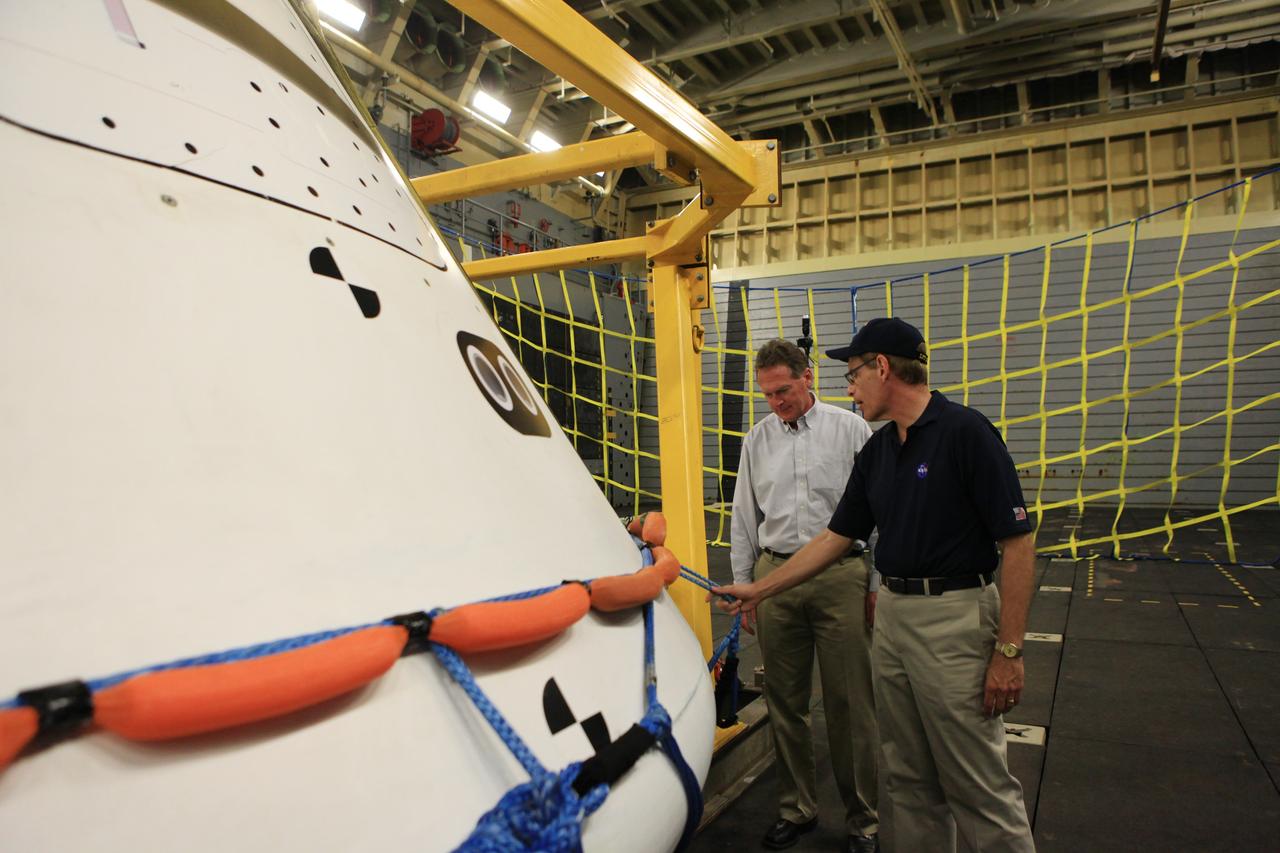
LOS ANGELES, Calif. – Mike Bolger, Ground Systems Development and Operations Program manager, at left, and Mike Generale, Orion Recovery Operations manager and Recovery Test director, both from NASA’s Kennedy Space Center in Florida, talk about Underway Recovery Test 2 in the well deck of the USS Anchorage. The U.S. Navy ship is in Los Angeles for LA Navy Days. NASA, Lockheed Martin and the U.S. Navy completed the recovery test in the Pacific Ocean off the coast of San Diego to prepare for recovery of the Orion crew module on its return from a deep space mission. The underway recovery test allowed the teams to demonstrate and evaluate the recovery processes, procedures, new hardware and personnel in open waters. The Ground Systems Development and Operations Program conducted the underway recovery test. Orion is the exploration spacecraft designed to carry astronauts to destinations not yet explored by humans, including an asteroid and Mars. It will have emergency abort capability, sustain the crew during space travel and provide safe re-entry from deep space return velocities. The first unpiloted test flight of the Orion is scheduled to launch in 2014 atop a Delta IV rocket and in 2017 on NASA’s Space Launch System rocket. For more information, visit http://www.nasa.gov/orion. Photo credit: Kim Shiflett
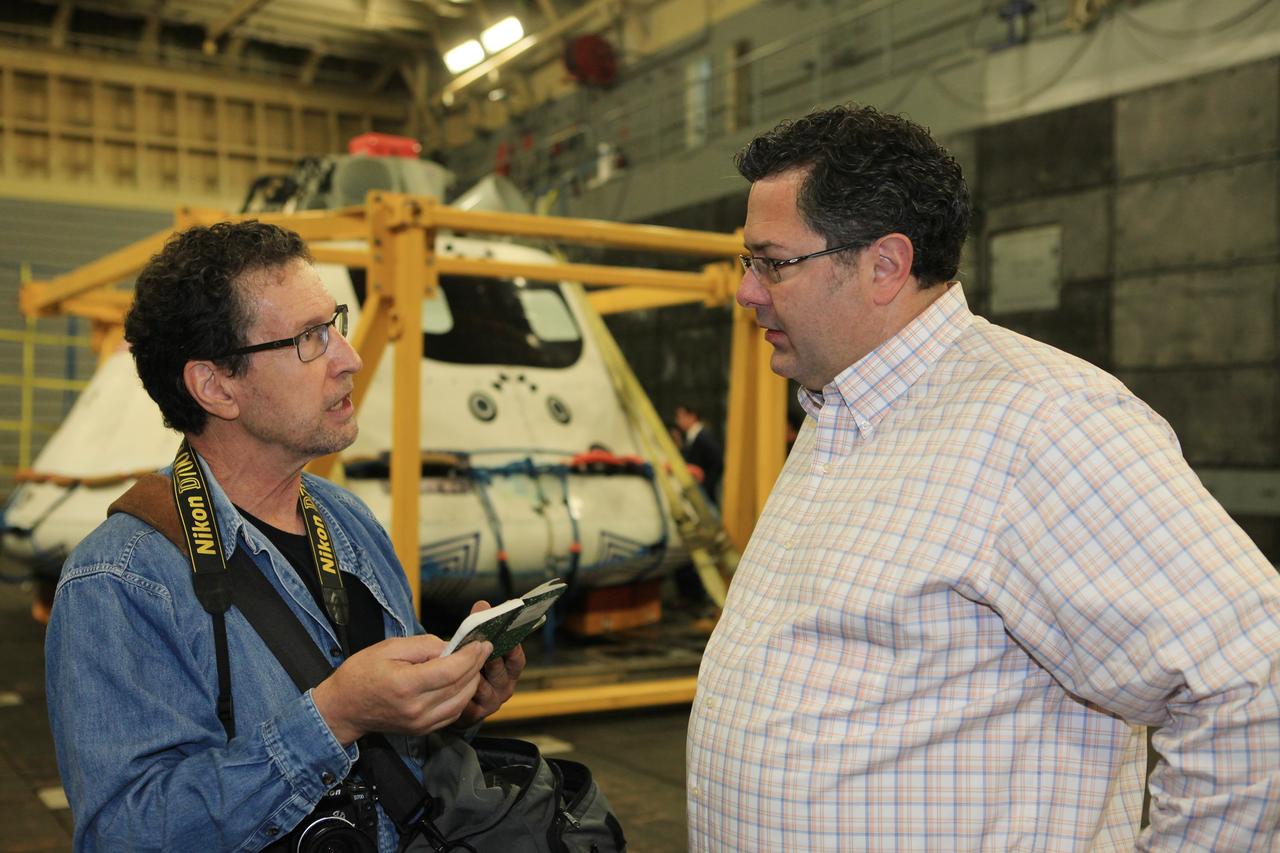
LOS ANGELES, Calif. – Todd May, NASA Space Launch System Program manager, talks with a reporter in the well deck of the USS Anchorage after completion of Underway Recovery Test 2. Behind him is the Orion boilerplate test vehicle secured in its recovery cradle. NASA, Lockheed Martin and the U.S. Navy completed the recovery test in the Pacific Ocean off the coast of San Diego to prepare for recovery of the Orion crew module on its return from a deep space mission. The underway recovery test allowed the teams to demonstrate and evaluate the recovery processes, procedures, new hardware and personnel in open waters. The U.S. Navy ship is in Los Angeles for LA Navy Days. The Ground Systems Development and Operations Program conducted the underway recovery test. Orion is the exploration spacecraft designed to carry astronauts to destinations not yet explored by humans, including an asteroid and Mars. It will have emergency abort capability, sustain the crew during space travel and provide safe re-entry from deep space return velocities. The first unpiloted test flight of the Orion is scheduled to launch in 2014 atop a Delta IV rocket and in 2017 on NASA’s Space Launch System rocket. For more information, visit http://www.nasa.gov/orion. Photo credit: Kim Shiflett
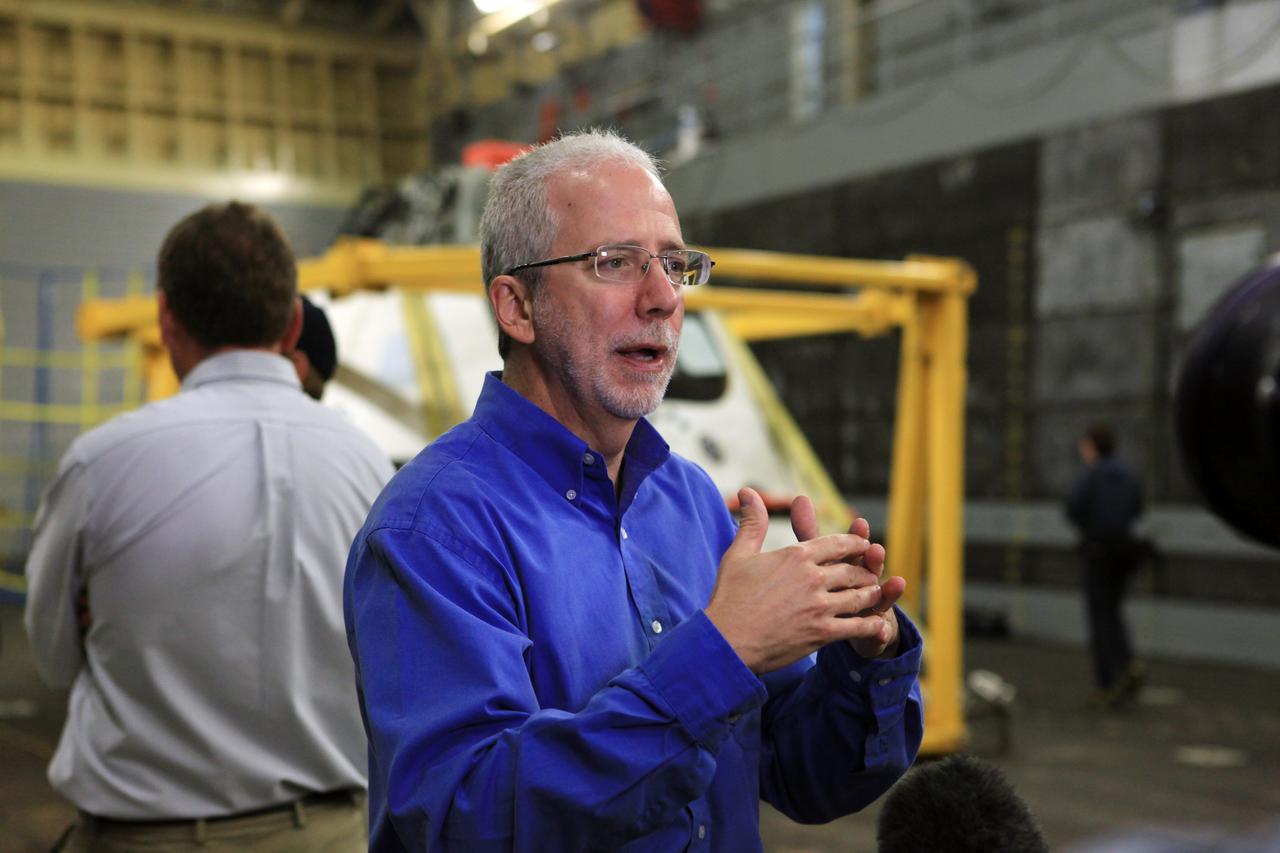
LOS ANGELES, Calif. – Mark Geyer, NASA Orion Program manager, talks with reporters in the well deck of the USS Anchorage after completion of Underway Recovery Test 2. NASA, Lockheed Martin and the U.S. Navy completed the recovery test on the Orion boilerplate test vehicle in the Pacific Ocean off the coast of San Diego to prepare for recovery of the Orion crew module on its return from a deep space mission. The underway recovery test allowed the teams to demonstrate and evaluate the recovery processes, procedures, new hardware and personnel in open waters. Behind Geyer is the test vehicle secured in its recovery cradle. The U.S. Navy ship is in Los Angeles for LA Navy Days. The Ground Systems Development and Operations Program conducted the underway recovery test. Orion is the exploration spacecraft designed to carry astronauts to destinations not yet explored by humans, including an asteroid and Mars. It will have emergency abort capability, sustain the crew during space travel and provide safe re-entry from deep space return velocities. The first unpiloted test flight of the Orion is scheduled to launch in 2014 atop a Delta IV rocket and in 2017 on NASA’s Space Launch System rocket. For more information, visit http://www.nasa.gov/orion. Photo credit: Kim Shiflett
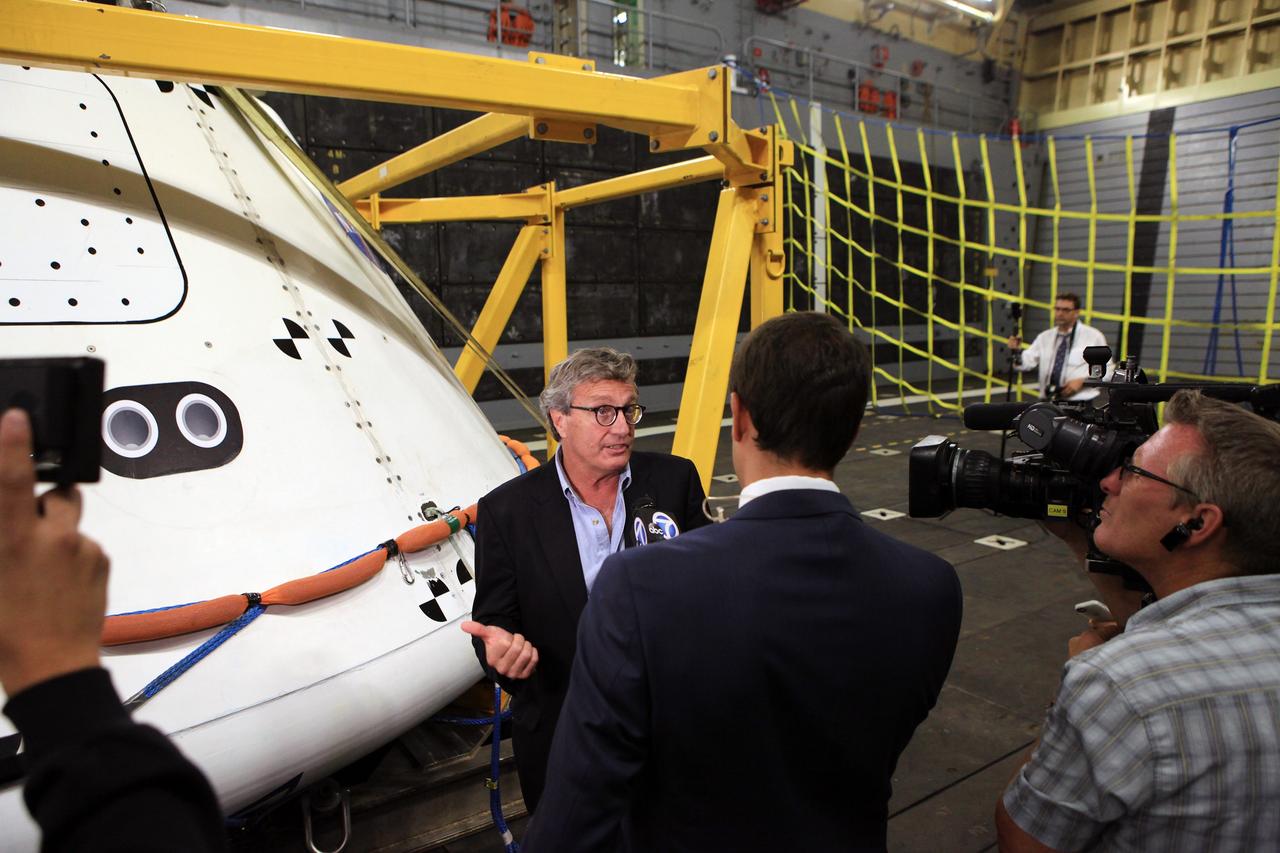
LOS ANGELES, Calif. – Larry Price, Lockheed Martin Space Systems deputy program manager for Orion, talks with reporters in the well deck of the USS Anchorage after completion of Underway Recovery Test 2. Behind him is the Orion boilerplate test vehicle secured in its recovery cradle. NASA, Lockheed Martin and the U.S. Navy completed the recovery test in the Pacific Ocean off the coast of San Diego to prepare for recovery of the Orion crew module on its return from a deep space mission. The underway recovery test allowed the teams to demonstrate and evaluate the recovery processes, procedures, new hardware and personnel in open waters. The U.S. Navy ship is in Los Angeles for LA Navy Days. The Ground Systems Development and Operations Program conducted the underway recovery test. Orion is the exploration spacecraft designed to carry astronauts to destinations not yet explored by humans, including an asteroid and Mars. It will have emergency abort capability, sustain the crew during space travel and provide safe re-entry from deep space return velocities. The first unpiloted test flight of the Orion is scheduled to launch in 2014 atop a Delta IV rocket and in 2017 on NASA’s Space Launch System rocket. For more information, visit http://www.nasa.gov/orion. Photo credit: Kim Shiflett
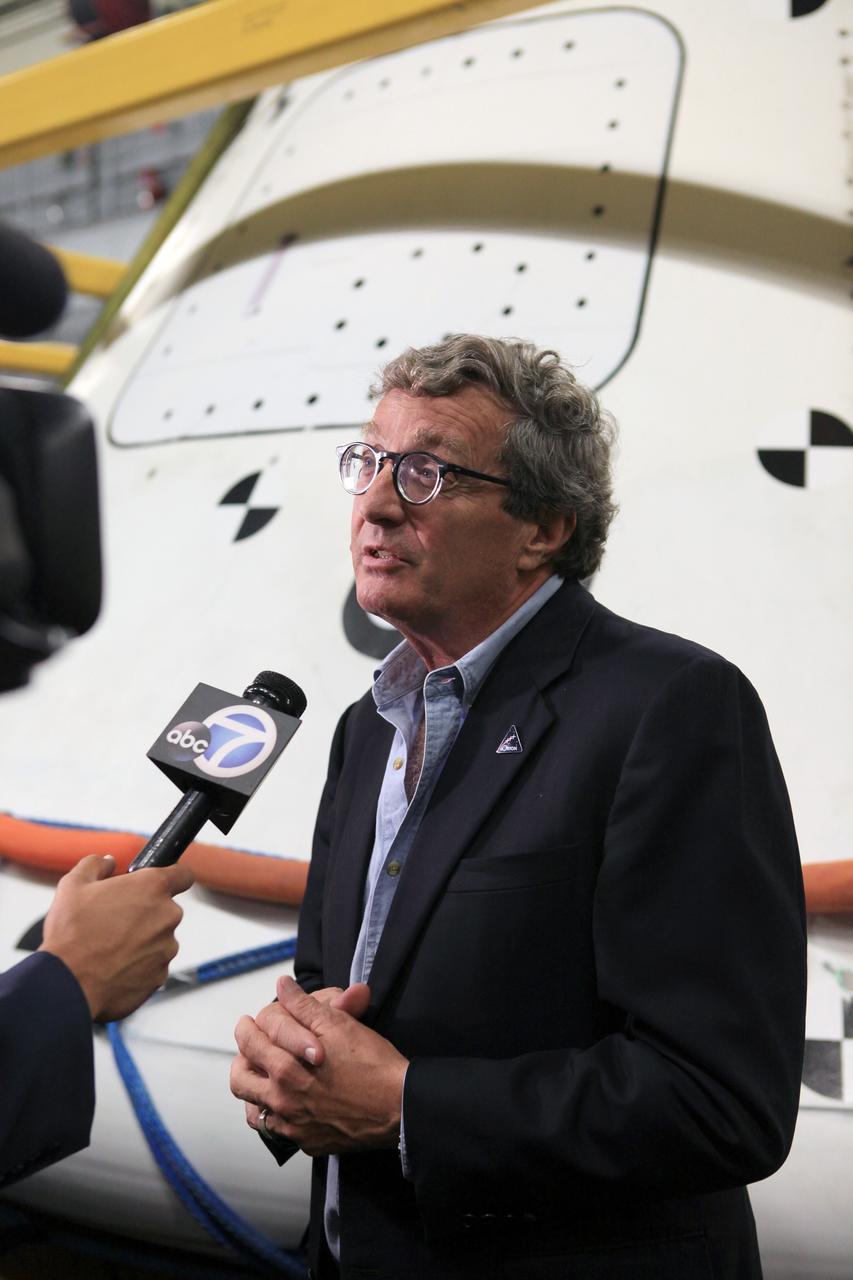
LOS ANGELES, Calif. – Larry Price, Lockheed Martin Space Systems deputy program manager for Orion, talks with a reporter in the well deck of the USS Anchorage after completion of Underway Recovery Test 2. Behind him is the Orion boilerplate test vehicle secured in its recovery cradle. NASA, Lockheed Martin and the U.S. Navy completed the recovery test in the Pacific Ocean off the coast of San Diego to prepare for recovery of the Orion crew module on its return from a deep space mission. The underway recovery test allowed the teams to demonstrate and evaluate the recovery processes, procedures, new hardware and personnel in open waters. The U.S. Navy ship is in Los Angeles for LA Navy Days. The Ground Systems Development and Operations Program conducted the underway recovery test. Orion is the exploration spacecraft designed to carry astronauts to destinations not yet explored by humans, including an asteroid and Mars. It will have emergency abort capability, sustain the crew during space travel and provide safe re-entry from deep space return velocities. The first unpiloted test flight of the Orion is scheduled to launch in 2014 atop a Delta IV rocket and in 2017 on NASA’s Space Launch System rocket. For more information, visit http://www.nasa.gov/orion. Photo credit: Kim Shiflett
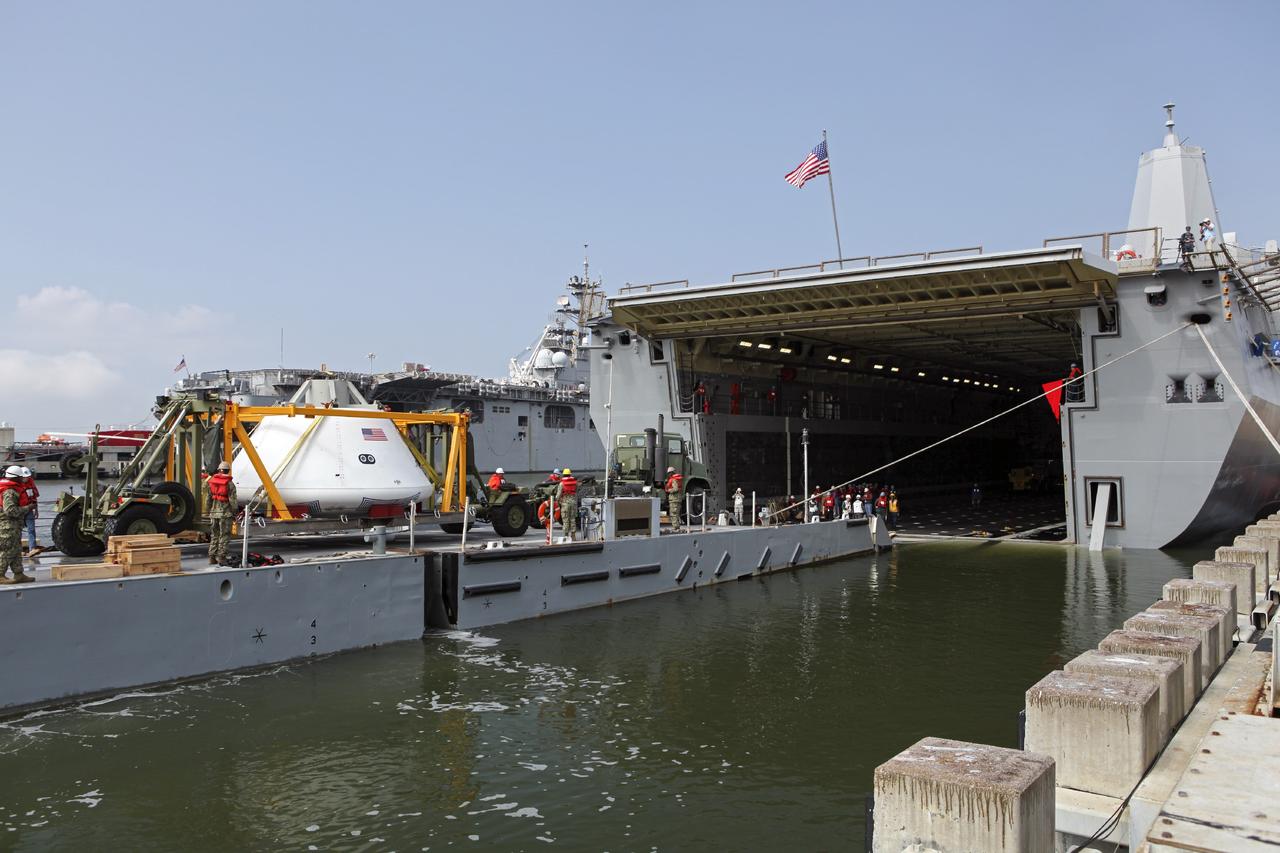
HAMPTON, Va. – At the Naval Station Norfolk near NASA’s Langley Research Center in Virginia, the Orion boilerplate test article and support equipment for a stationary recovery test are being transferred on a floating dock system to a U.S. Navy ship. NASA and the U.S. Navy are conducting tests to prepare for recovery of the Orion crew module and forward bay cover on its return from a deep space mission. The stationary recovery test will allow the teams to demonstrate and evaluate the recovery processes, procedures, hardware and personnel in a controlled environment before conducting a second recovery test next year in open waters. Orion is the exploration spacecraft designed to carry astronauts to destinations not yet explored by humans, including an asteroid and Mars. It will have emergency abort capability, sustain the crew during space travel and provide safe re-entry from deep space return velocities. The first unpiloted test flight of the Orion is scheduled to launch in 2014 atop a Delta IV rocket and in 2017 on NASA’s Space Launch System rocket. For more information, visit http://www.nasa.gov/orion. Photo credit: NASA/Dimitri Gerondidakis
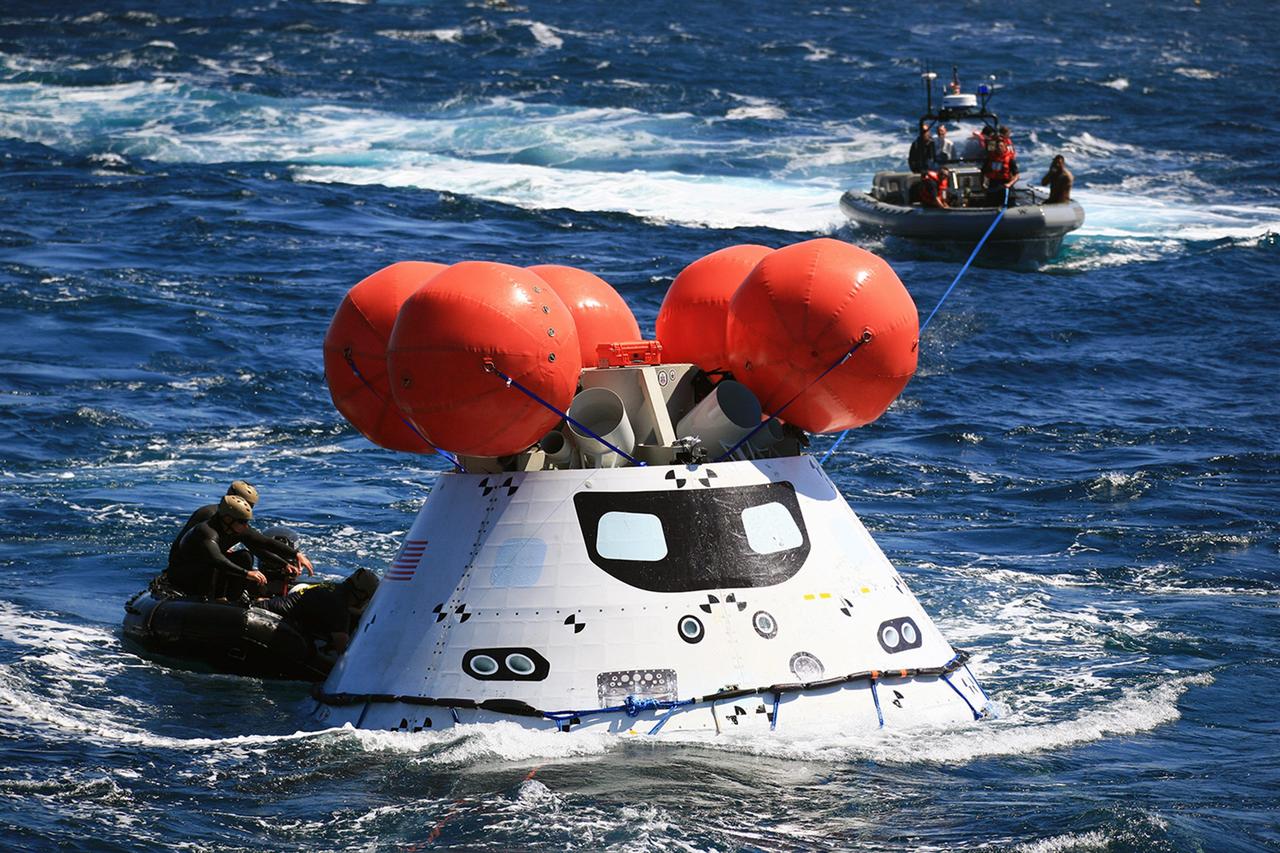
SAN DIEGO, Calif. – The Orion boilerplate test vehicle floats in the Pacific Ocean, a distance away from the USS Anchorage, during the third day of Orion Underway Recovery Test 3. The orange stabilizers inflated on top help keep the test vehicle floating upright. U.S. Navy divers in a Zodiac boat, at left, and other team members in a rigid hull inflatable boat prepare the test vehicle for return to the ship. NASA, Lockheed Martin and U.S. Navy personnel are conducting the recovery test using the test vehicle to prepare for recovery of the Orion crew module on its return from a deep space mission. The test allows the teams to demonstrate and evaluate the recovery processes, procedures, hardware and personnel in open waters. The Ground Systems Development and Operations Program is conducting the underway recovery tests. Orion is the exploration spacecraft designed to carry astronauts to destinations not yet explored by humans, including an asteroid and Mars. It will have emergency abort capability, sustain the crew during space travel and provide safe re-entry from deep space return velocities. The first unpiloted test flight of Orion is scheduled to launch in 2014 atop a United Launch Alliance Delta IV Heavy rocket and in 2018 on NASA’s Space Launch System rocket. For more information, visit http://www.nasa.gov/orion. Photo credit: NASA/Kim Shiflett
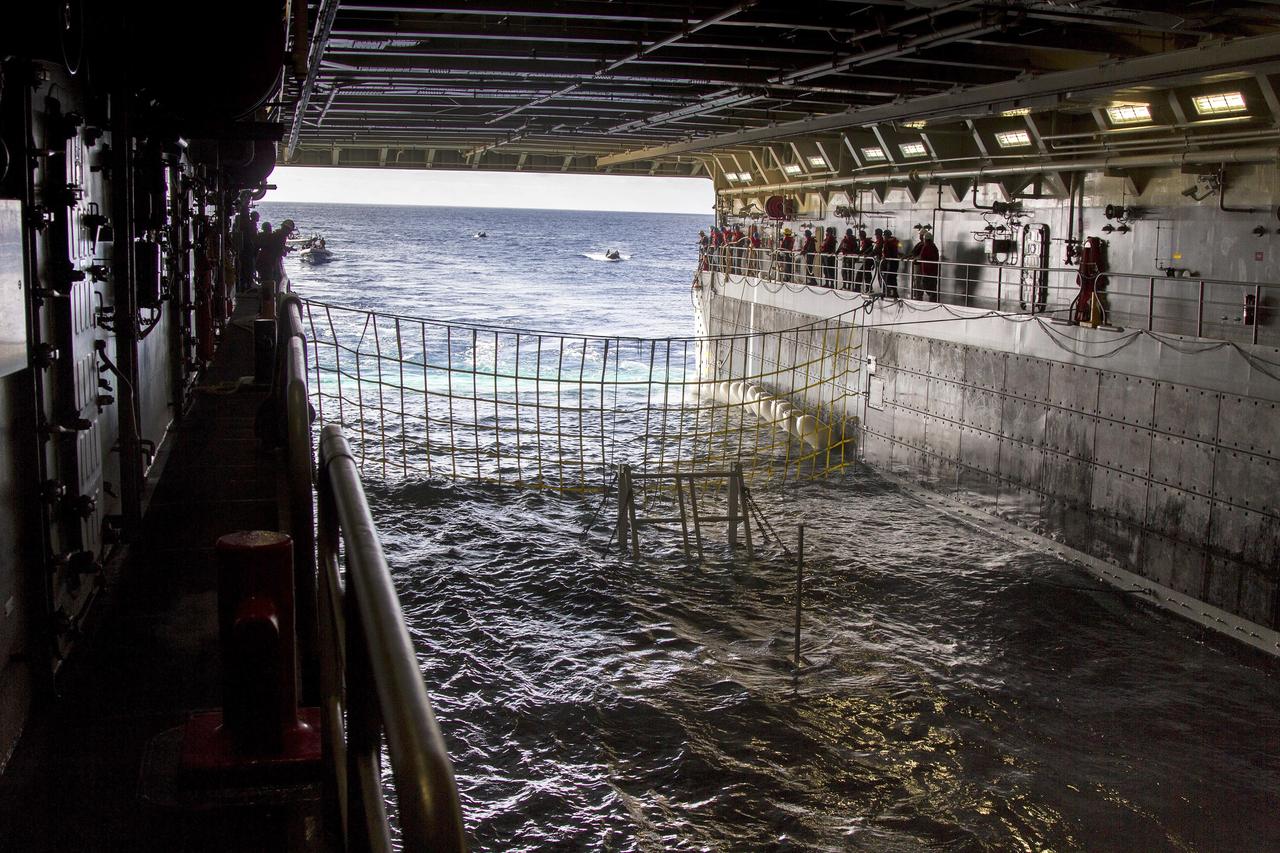
SAN DIEGO, Calif. – On the third day of preparations for recovery of Orion after its splashdown in the Pacific Ocean, the well deck of the USS Anchorage has been filled with water and recovery hardware is in place. U.S. Navy divers have embarked from ship to practice recovery procedures in rigid hull inflatable boats and Zodiac boats. NASA, Lockheed Martin and U.S. Navy personnel are preparing for recovery of the crew module, forward bay cover and parachutes on its return from space and splashdown in the Pacific Ocean. The Ground Systems Development and Operations Program is leading the recovery efforts. The first unpiloted flight test of Orion is scheduled to launch Dec. 4 atop a United Launch Alliance Delta IV Heavy rocket. During its two-orbit, 4.5-hour flight, Orion will venture 3,600 miles in altitude and travel nearly 60,000 miles before returning to Earth for a splashdown in the Pacific Ocean. For more information, visit http://www.nasa.gov/orion. Photo credit: NASA/Cory Huston
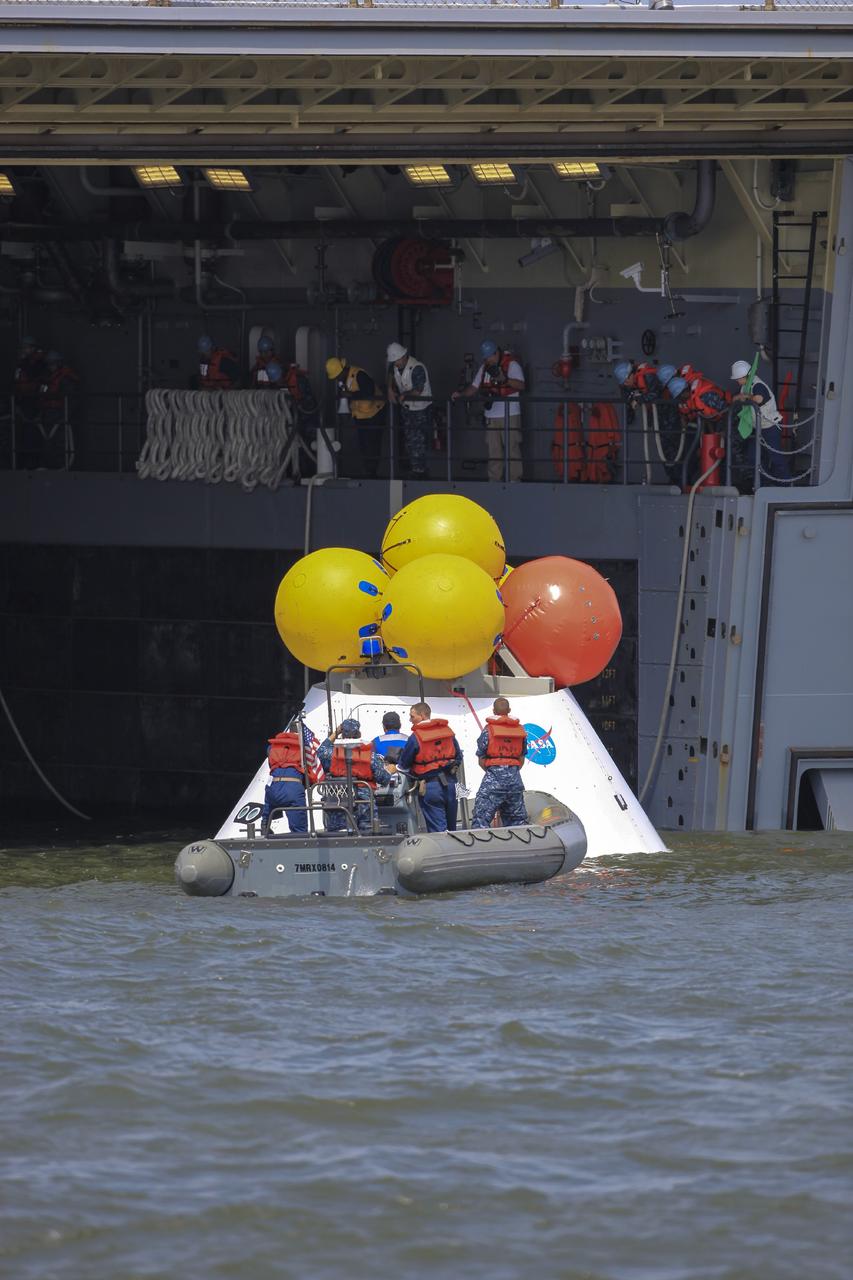
HAMPTON, Va. – At the Naval Station Norfolk near NASA’s Langley Research Center in Virginia, the Orion boilerplate test article is being returned to a U.S. Navy ship following a stationary recovery test in the water. NASA and the U.S. Navy are conducting tests to prepare for recovery of the Orion crew module and forward bay cover on its return from a deep space mission. The stationary recovery test will allow the teams to demonstrate and evaluate the recovery processes, procedures, hardware and personnel in a controlled environment before conducting a second recovery test next year in open waters. Orion is the exploration spacecraft designed to carry astronauts to destinations not yet explored by humans, including an asteroid and Mars. It will have emergency abort capability, sustain the crew during space travel and provide safe re-entry from deep space return velocities. The first unpiloted test flight of the Orion is scheduled to launch in 2014 atop a Delta IV rocket and in 2017 on NASA’s Space Launch System rocket. For more information, visit http://www.nasa.gov/orion. Photo credit: NASA/Dimitri Gerondidakis
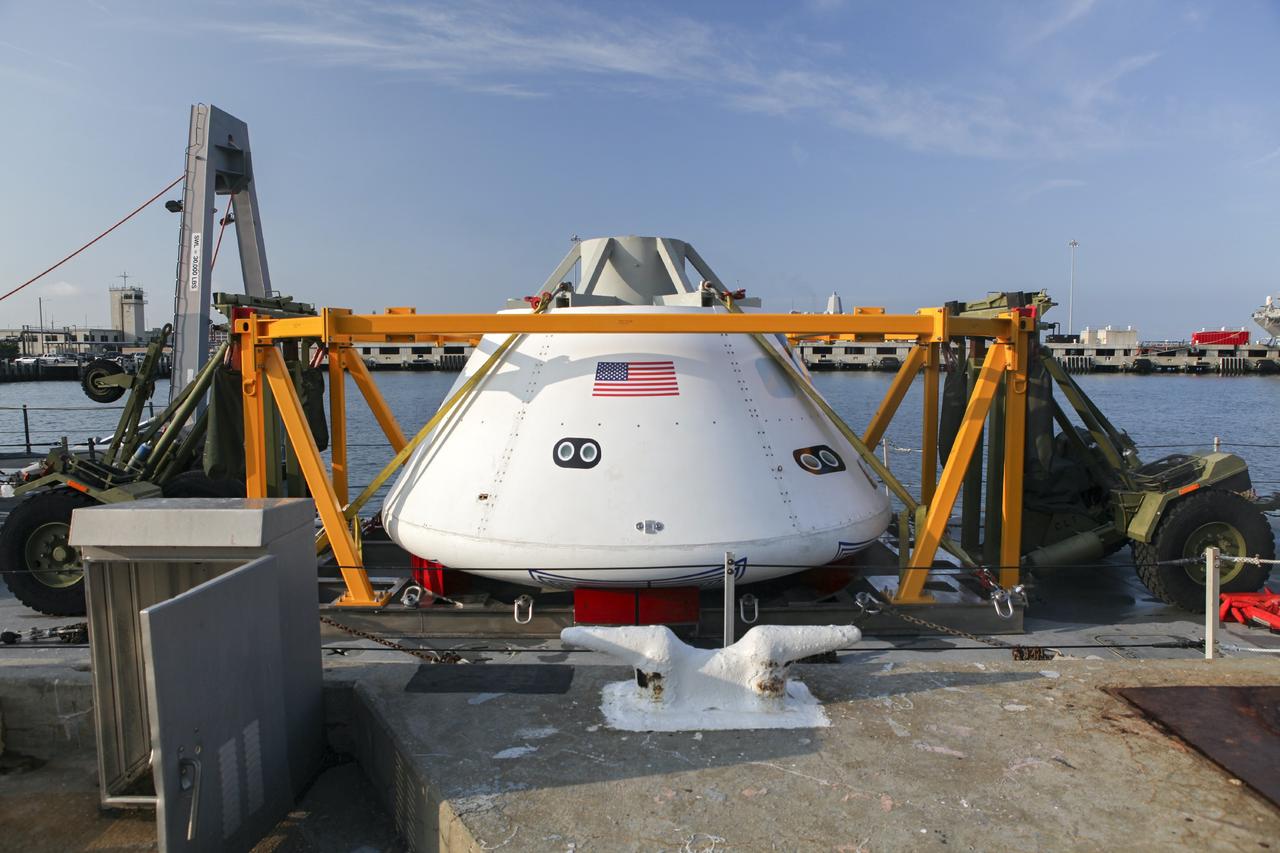
HAMPTON, Va. – At the Naval Station Norfolk near NASA’s Langley Research Center in Virginia, the Orion boilerplate test article and support equipment for a stationary recovery test are being transferred on a floating dock system to a U.S. Navy ship. NASA and the U.S. Navy are conducting tests to prepare for recovery of the Orion crew module and forward bay cover on its return from a deep space mission. The stationary recovery test will allow the teams to demonstrate and evaluate the recovery processes, procedures, hardware and personnel in a controlled environment before conducting a second recovery test next year in open waters. Orion is the exploration spacecraft designed to carry astronauts to destinations not yet explored by humans, including an asteroid and Mars. It will have emergency abort capability, sustain the crew during space travel and provide safe re-entry from deep space return velocities. The first unpiloted test flight of the Orion is scheduled to launch in 2014 atop a Delta IV rocket and in 2017 on a Space Launch System rocket. For more information, visit http://www.nasa.gov/orion. Photo credit: NASA/Dimitri Gerondidakis
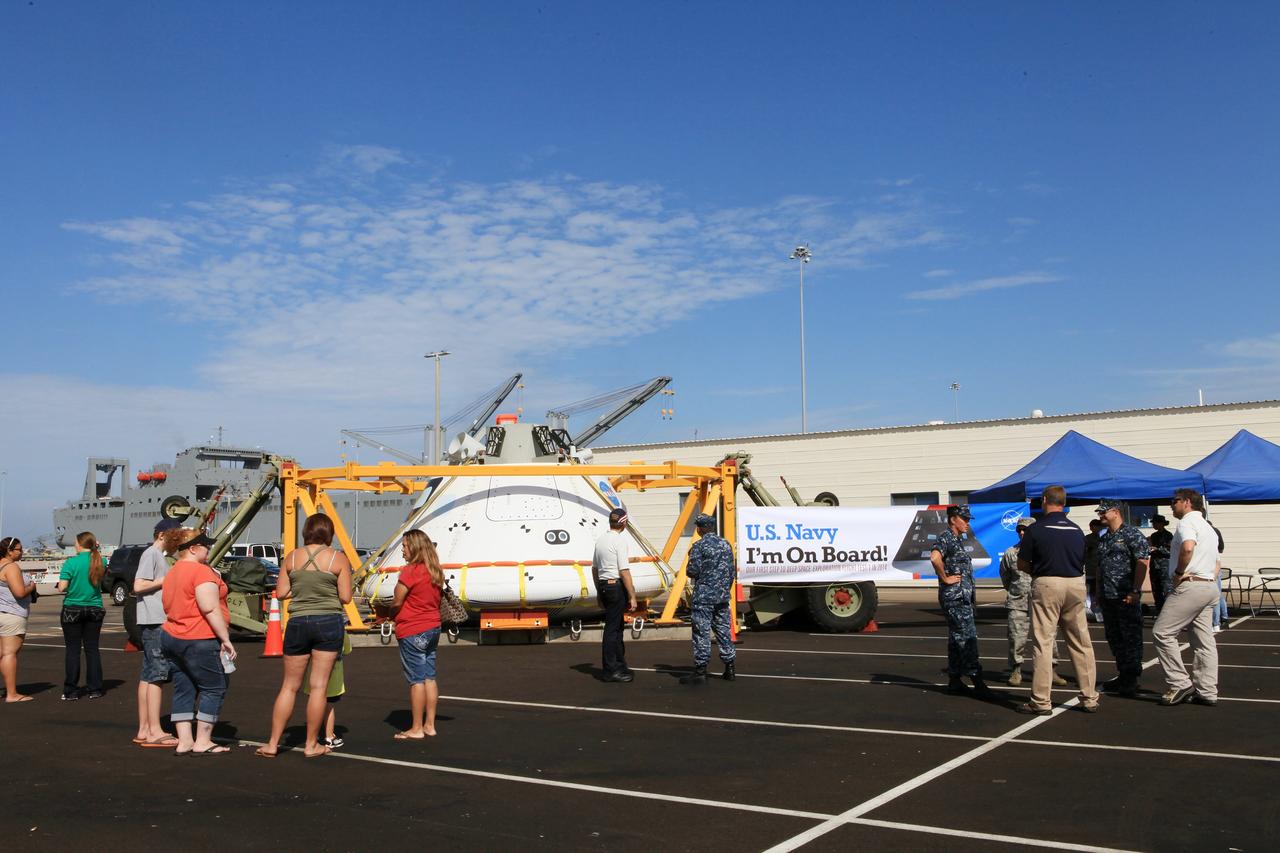
SAN DIEGO, Calif. – At the U.S. Naval Base San Diego in California, visitors talk with U.S. Navy personnel and view the Orion boilerplate test vehicle during an outreach event at the naval base. The USS Anchorage is being prepared for the Orion Underway Recovery Test 2. The test vehicle and other hardware will be loaded into the well deck of the ship and head out to sea in the Pacific Ocean off the coast of San Diego. NASA, Lockheed Martin and the U.S. Navy will conduct the test to prepare for recovery of the Orion crew module, forward bay cover and parachutes on its return from a deep space mission. The underway recovery test will allow the teams to demonstrate and evaluate the recovery processes, procedures, new support hardware and personnel in open waters. The Ground Systems Development and Operations Program will conduct the underway recovery tests. Orion is the exploration spacecraft designed to carry astronauts to destinations not yet explored by humans, including an asteroid and Mars. It will have emergency abort capability, sustain the crew during space travel and provide safe re-entry from deep space return velocities. The first unpiloted test flight of the Orion is scheduled to launch in 2014 atop a Delta IV rocket and in 2017 on NASA’s Space Launch System rocket. For more information, visit http://www.nasa.gov/orion. Photo credit: NASA/Kim Shiflett
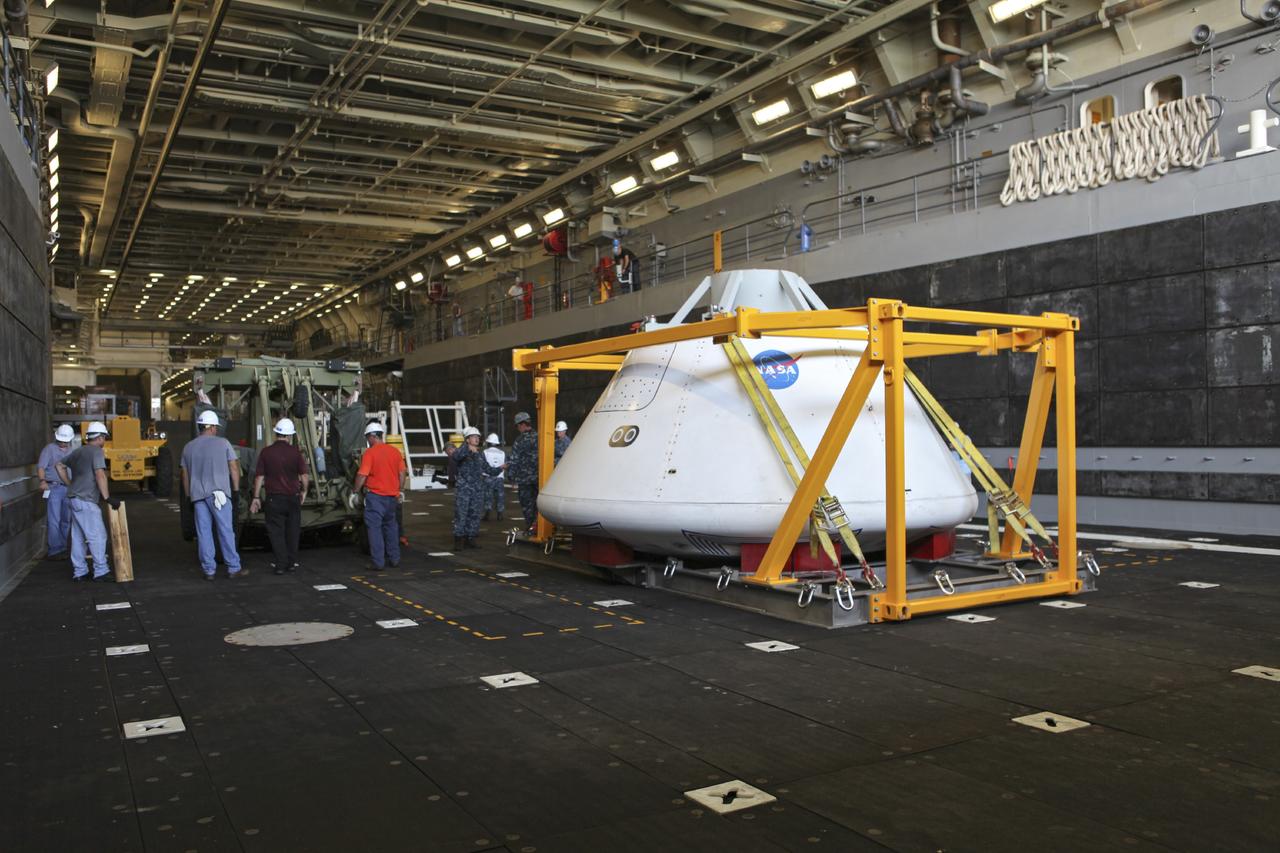
HAMPTON, Va. – At the Naval Station Norfolk near NASA’s Langley Research Center in Virginia, the Orion boilerplate test article and support equipment for a stationary recovery test have been secured on a U.S. Navy ship after arriving by floating dock system. NASA and the U.S. Navy are conducting tests to prepare for recovery of the Orion crew module and forward bay cover on its return from a deep space mission. The stationary recovery test will allow the teams to demonstrate and evaluate the recovery processes, procedures, hardware and personnel in a controlled environment before conducting a second recovery test next year in open waters. Orion is the exploration spacecraft designed to carry astronauts to destinations not yet explored by humans, including an asteroid and Mars. It will have emergency abort capability, sustain the crew during space travel and provide safe re-entry from deep space return velocities. The first unpiloted test flight of the Orion is scheduled to launch in 2014 atop a Delta IV rocket and in 2017 on NASA’s Space Launch System rocket. For more information, visit http://www.nasa.gov/orion. Photo credit: NASA/Dimitri Gerondidakis
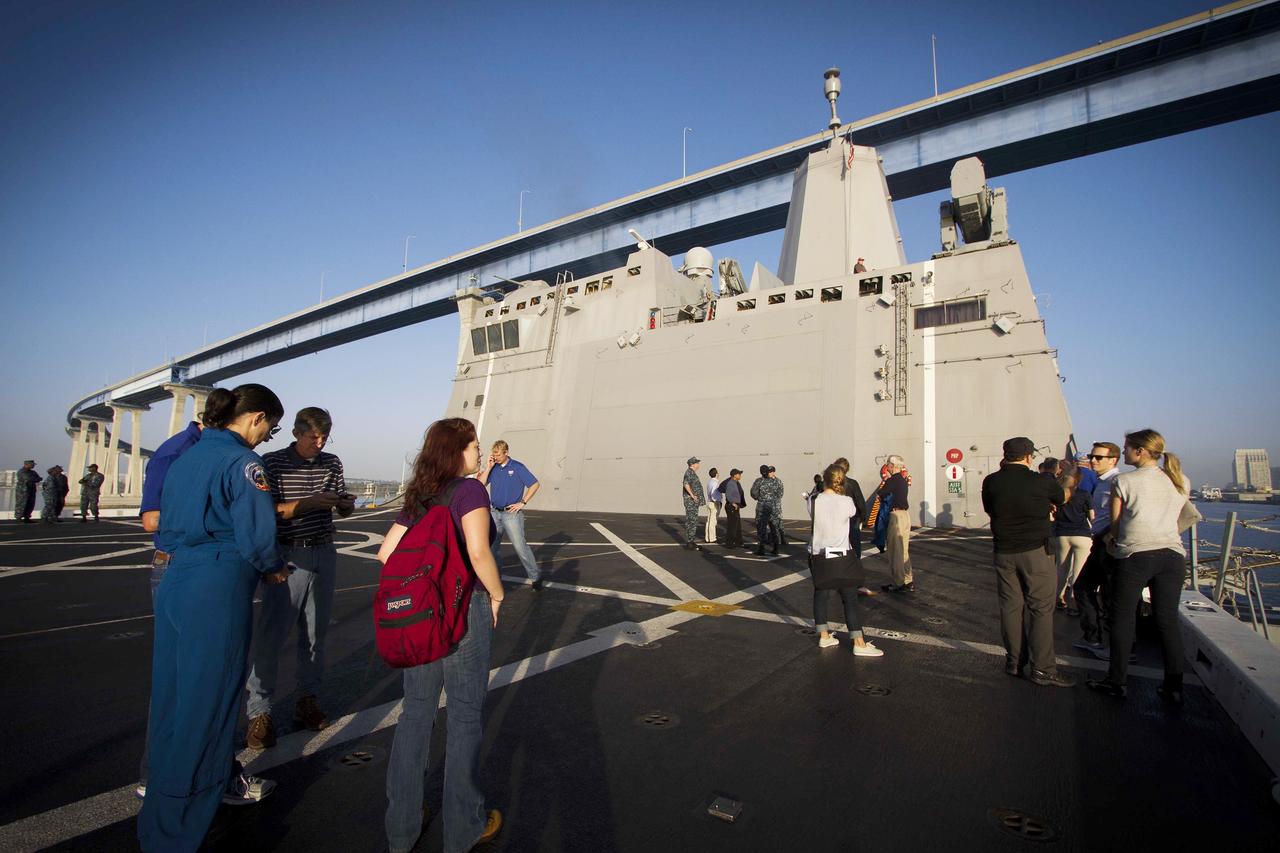
SAN DIEGO, Calif. – NASA, Lockheed Martin and U.S. Navy personnel stand on the deck of the USS Anchorage as the ship departs Naval Base San Diego on the first day of Orion Underway Recovery Test 3. The ship will head out to sea, off the coast of San Diego, in search of conditions to support test needs for a full dress rehearsal of recovery operations. NASA, Lockheed Martin and U.S. Navy personnel will conduct tests in the Pacific Ocean to prepare for recovery of the Orion crew module on its return from a deep space mission. The test will allow the teams to demonstrate and evaluate the recovery processes, procedures, hardware and personnel in open waters. The Ground Systems Development and Operations Program is conducting the underway recovery tests. Orion is the exploration spacecraft designed to carry astronauts to destinations not yet explored by humans, including an asteroid and Mars. It will have emergency abort capability, sustain the crew during space travel and provide safe re-entry from deep space return velocities. The first unpiloted test flight of Orion is scheduled to launch in 2014 atop a United Launch Alliance Delta IV Heavy rocket and in 2018 on NASA’s Space Launch System rocket. For more information, visit http://www.nasa.gov/orion. Photo credit: NASA/Cory Huston
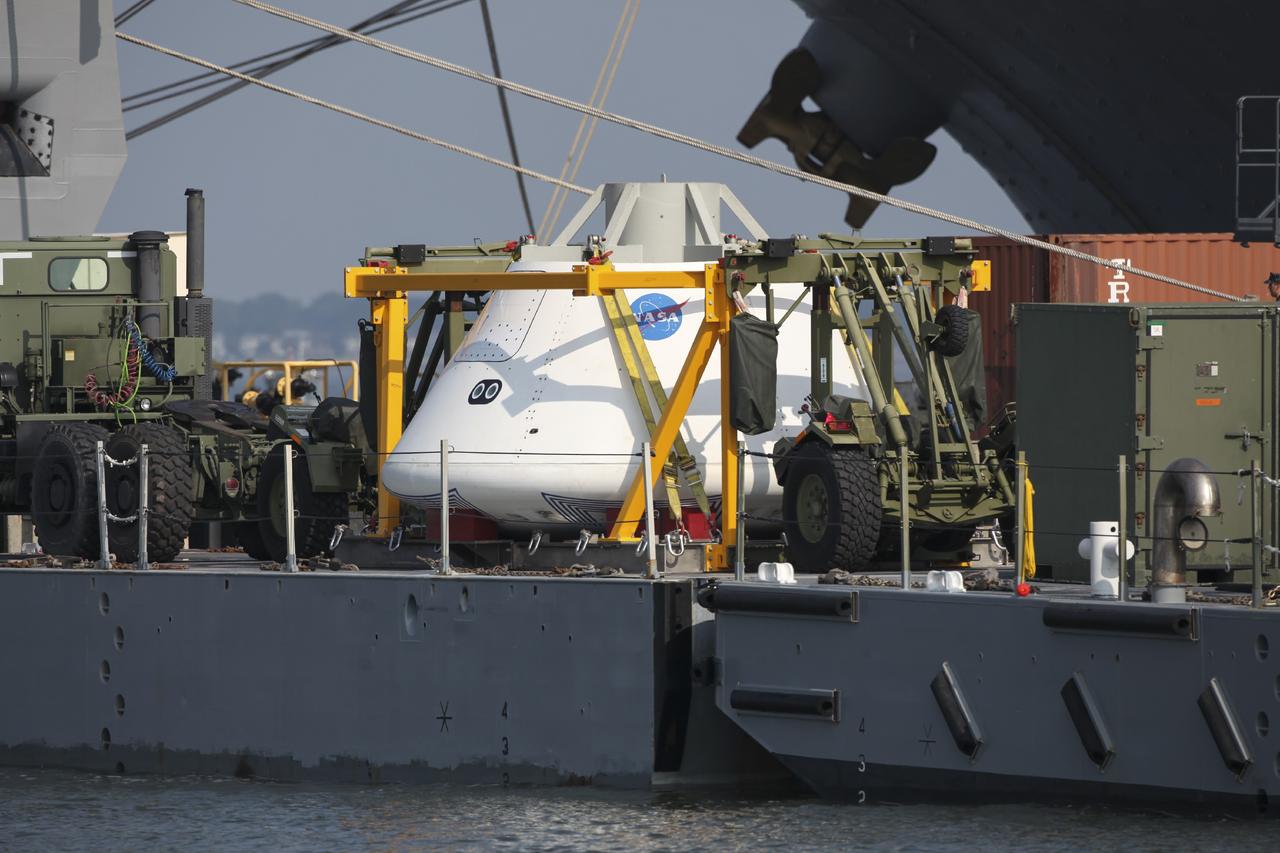
HAMPTON, Va. – At the Naval Station Norfolk near NASA’s Langley Research Center in Virginia, the Orion boilerplate test article and support equipment for a stationary recovery test are being transferred from a floating dock system to a U.S. Navy ship. NASA and the U.S. Navy are conducting tests to prepare for recovery of the Orion crew module and forward bay cover on its return from a deep space mission. The stationary recovery test will allow the teams to demonstrate and evaluate the recovery processes, procedures, hardware and personnel in a controlled environment before conducting a second recovery test next year in open waters. Orion is the exploration spacecraft designed to carry astronauts to destinations not yet explored by humans, including an asteroid and Mars. It will have emergency abort capability, sustain the crew during space travel and provide safe re-entry from deep space return velocities. The first unpiloted test flight of the Orion is scheduled to launch in 2014 atop a Delta IV rocket and in 2017 on a Space Launch System rocket. For more information, visit http://www.nasa.gov/orion. Photo credit: NASA/Dimitri Gerondidakis
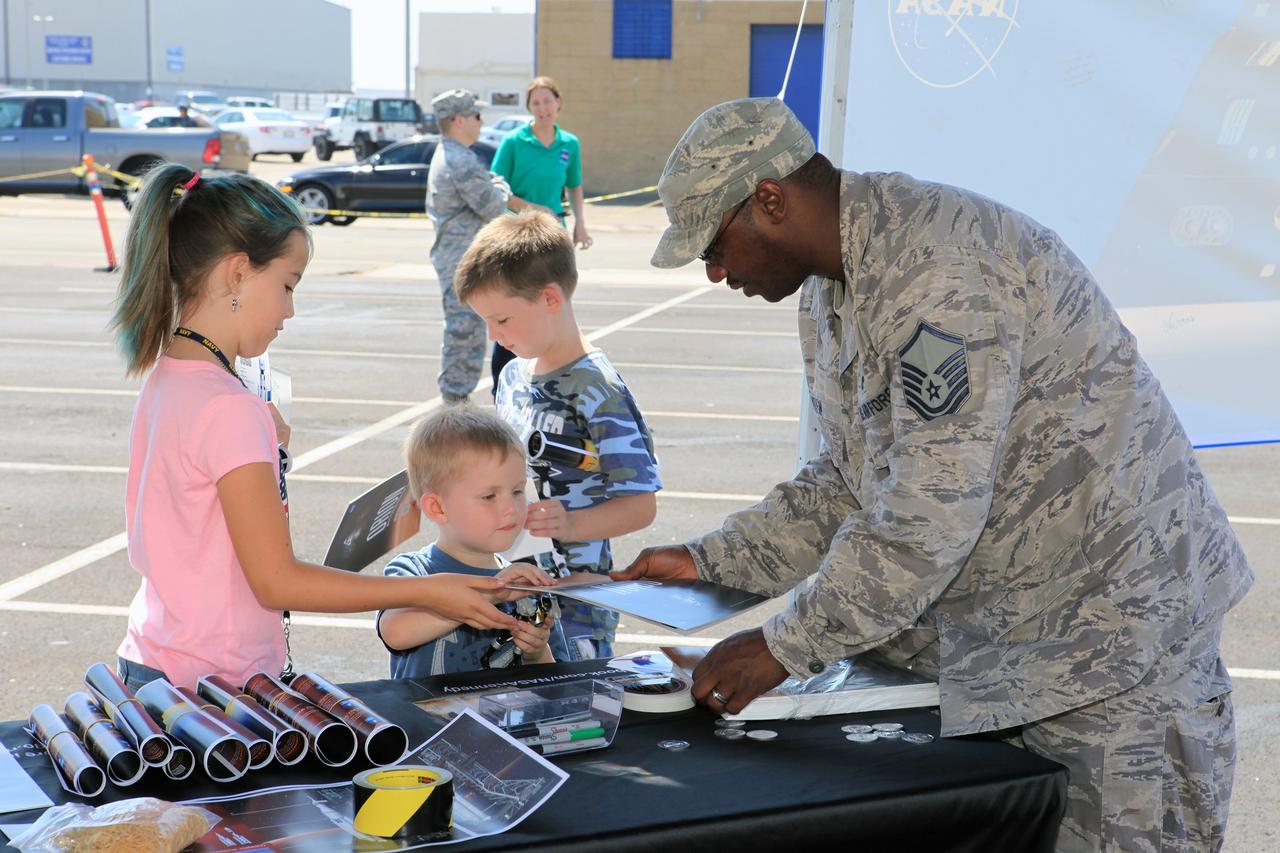
SAN DIEGO, Calif. – At the U.S. Naval Base San Diego in California, children pick up Orion posters from U.S. Navy personnel during an outreach event at the naval base. The Orion boilerplate test vehicle is on display. The USS Anchorage is being prepared for the Orion Underway Recovery Test 2. The test vehicle and other hardware will be loaded into the well deck of the ship and head out to sea in the Pacific Ocean off the coast of San Diego. NASA, Lockheed Martin and the U.S. Navy will conduct the test to prepare for recovery of the Orion crew module, forward bay cover and parachutes on its return from a deep space mission. The underway recovery test will allow the teams to demonstrate and evaluate the recovery processes, procedures, new support hardware and personnel in open waters. The Ground Systems Development and Operations Program will conduct the underway recovery tests. Orion is the exploration spacecraft designed to carry astronauts to destinations not yet explored by humans, including an asteroid and Mars. It will have emergency abort capability, sustain the crew during space travel and provide safe re-entry from deep space return velocities. The first unpiloted test flight of the Orion is scheduled to launch in 2014 atop a Delta IV rocket and in 2017 on NASA’s Space Launch System rocket. For more information, visit http://www.nasa.gov/orion. Photo credit: NASA/Kim Shiflett
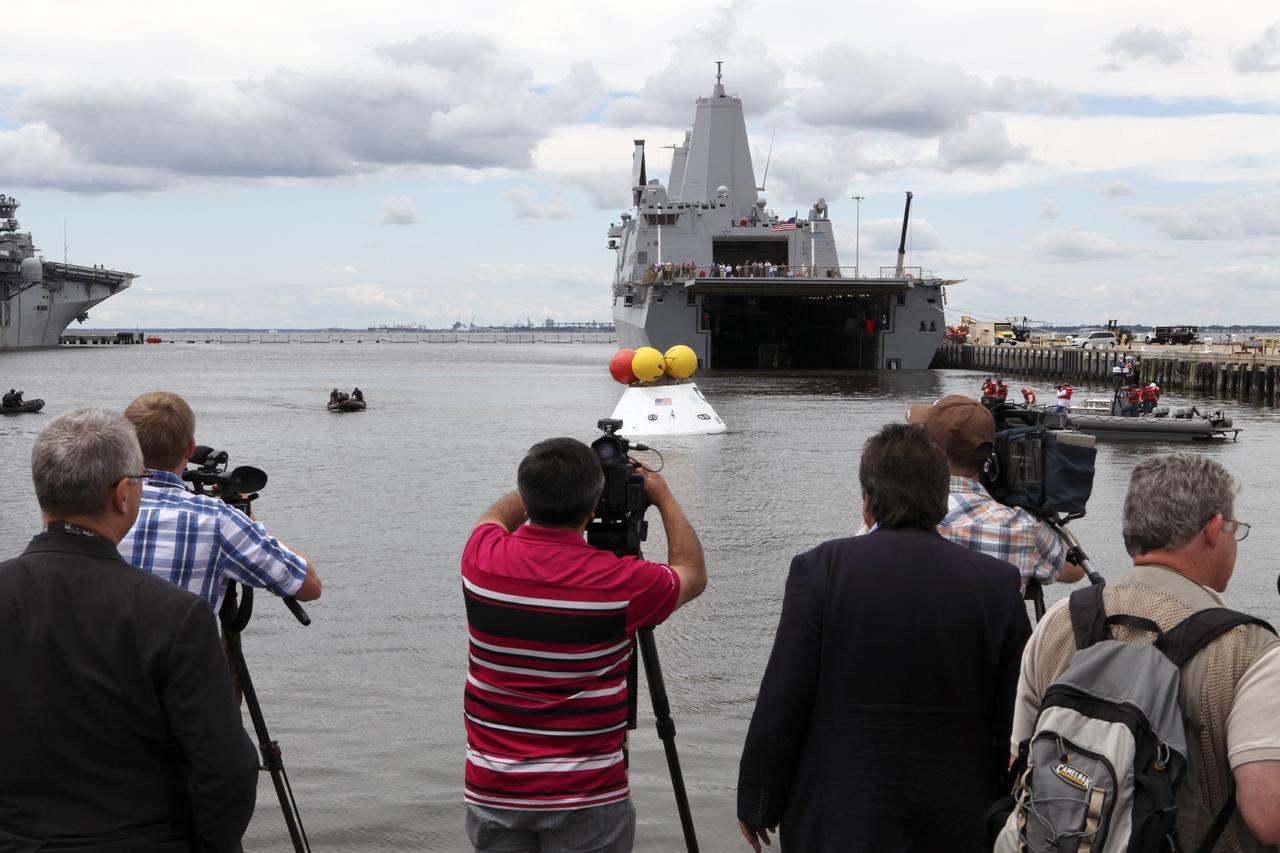
HAMPTON, Va. – At the Naval Station Norfolk near NASA’s Langley Research Center in Virginia, members of the news media observe the stationary recovery test being conducted on the Orion boilerplate test article in the water near a U.S. Navy ship. NASA and the U.S. Navy are conducting tests to prepare for recovery of the Orion crew module and forward bay cover on its return from a deep space mission. The stationary recovery test will allow the teams to demonstrate and evaluate the recovery processes, procedures, hardware and personnel in a controlled environment before conducting a second recovery test next year in open waters. Orion is the exploration spacecraft designed to carry astronauts to destinations not yet explored by humans, including an asteroid and Mars. It will have emergency abort capability, sustain the crew during space travel and provide safe re-entry from deep space return velocities. The first unpiloted test flight of the Orion is scheduled to launch in 2014 atop a Delta IV rocket and in 2017 on NASA’s Space Launch System rocket. For more information, visit http://www.nasa.gov/orion. Photo credit: NASA/Dimitri Gerondidakis
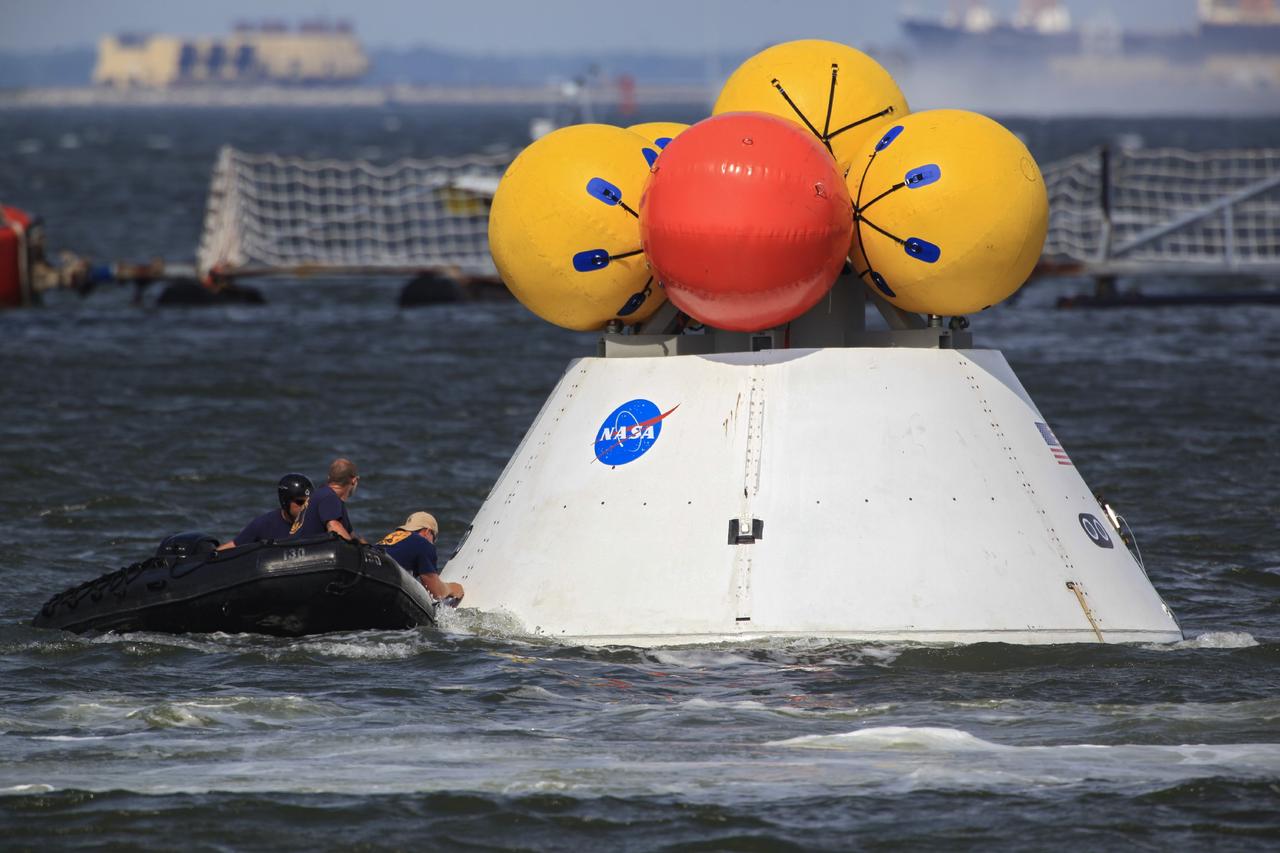
HAMPTON, Va. – At the Naval Station Norfolk near NASA’s Langley Research Center in Virginia, U.S. Navy personnel detach tether lines from the Orion boilerplate test article during a stationary recovery test in the water. NASA and the U.S. Navy are conducting tests to prepare for recovery of the Orion crew module and forward bay cover on its return from a deep space mission. The stationary recovery test will allow the teams to demonstrate and evaluate the recovery processes, procedures, hardware and personnel in a controlled environment before conducting a second recovery test next year in open waters. Orion is the exploration spacecraft designed to carry astronauts to destinations not yet explored by humans, including an asteroid and Mars. It will have emergency abort capability, sustain the crew during space travel and provide safe re-entry from deep space return velocities. The first unpiloted test flight of the Orion is scheduled to launch in 2014 atop a Delta IV rocket and in 2017 on NASA’s Space Launch System rocket. For more information, visit http://www.nasa.gov/orion. Photo credit: NASA/Dimitri Gerondidakis
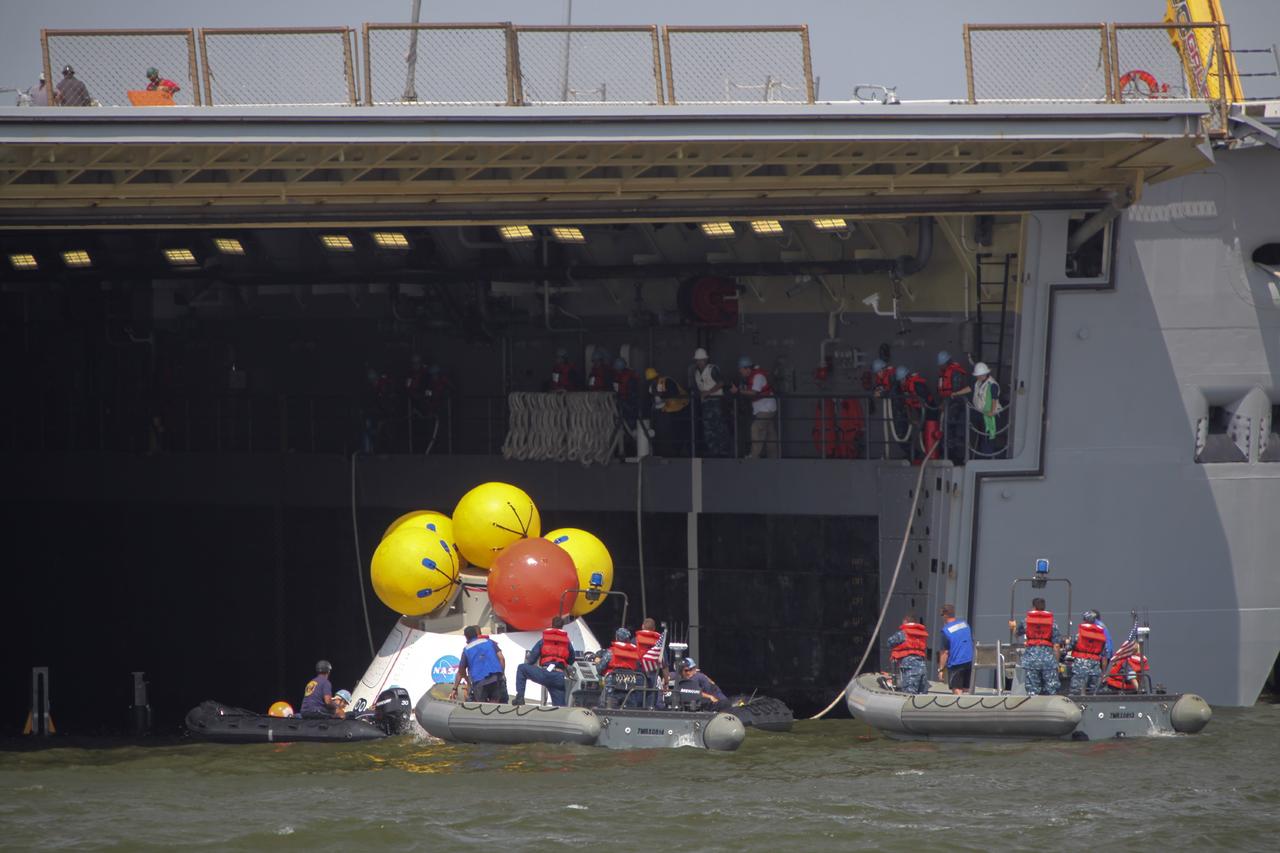
HAMPTON, Va. – At the Naval Station Norfolk near NASA’s Langley Research Center in Virginia, the Orion boilerplate test article is being returned to a U.S. Navy ship following a stationary recovery test in the water. NASA and the U.S. Navy are conducting tests to prepare for recovery of the Orion crew module and forward bay cover on its return from a deep space mission. The stationary recovery test will allow the teams to demonstrate and evaluate the recovery processes, procedures, hardware and personnel in a controlled environment before conducting a second recovery test next year in open waters. Orion is the exploration spacecraft designed to carry astronauts to destinations not yet explored by humans, including an asteroid and Mars. It will have emergency abort capability, sustain the crew during space travel and provide safe re-entry from deep space return velocities. The first unpiloted test flight of the Orion is scheduled to launch in 2014 atop a Delta IV rocket and in 2017 on NASA’s Space Launch System rocket. For more information, visit http://www.nasa.gov/orion. Photo credit: NASA/Dimitri Gerondidakis
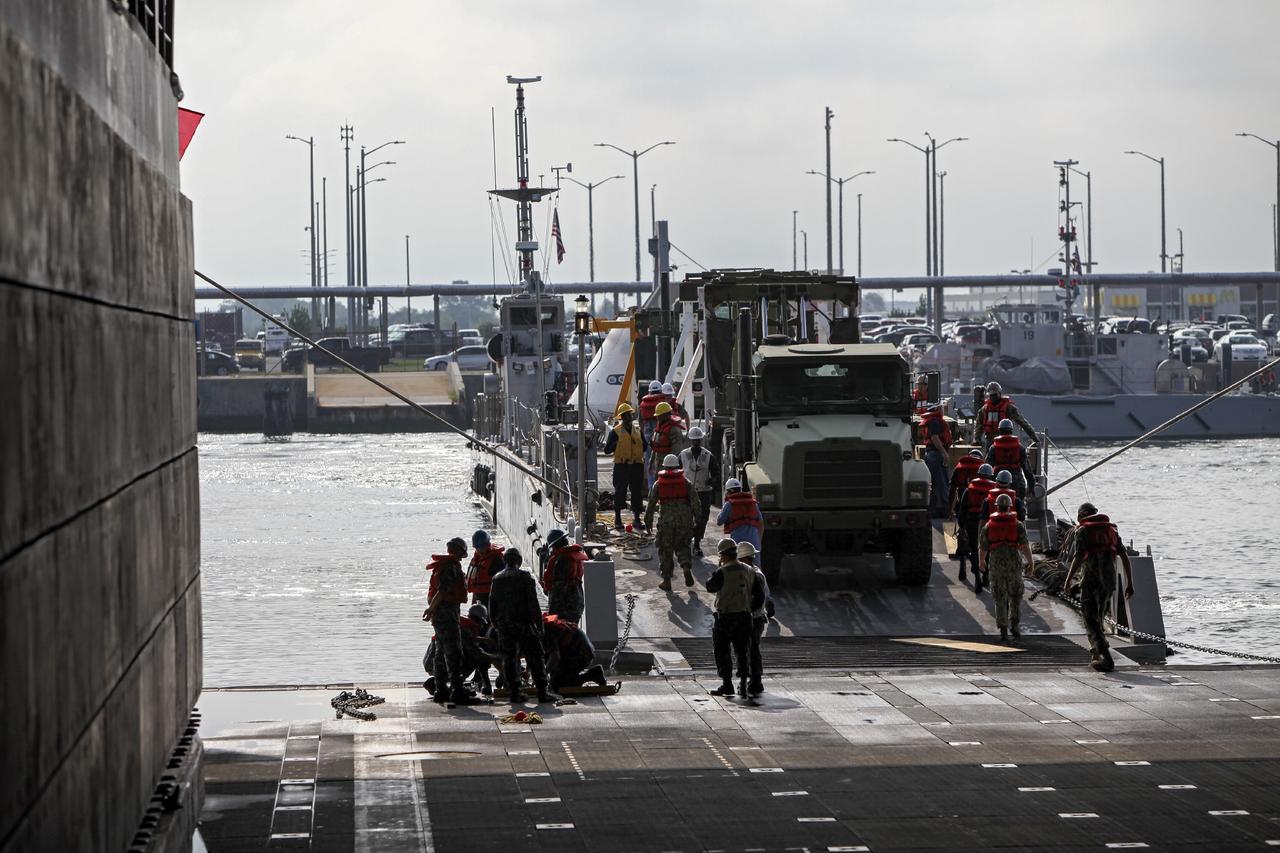
HAMPTON, Va. – At the Naval Station Norfolk near NASA’s Langley Research Center in Virginia, the Orion boilerplate test article and support equipment for a stationary recovery test are being transferred from a floating dock system to a U.S. Navy ship. NASA and the U.S. Navy are conducting tests to prepare for recovery of the Orion crew module and forward bay cover on its return from a deep space mission. The stationary recovery test will allow the teams to demonstrate and evaluate the recovery processes, procedures, hardware and personnel in a controlled environment before conducting a second recovery test next year in open waters. Orion is the exploration spacecraft designed to carry astronauts to destinations not yet explored by humans, including an asteroid and Mars. It will have emergency abort capability, sustain the crew during space travel and provide safe re-entry from deep space return velocities. The first unpiloted test flight of the Orion is scheduled to launch in 2014 atop a Delta IV rocket and in 2017 on a Space Launch System rocket. For more information, visit http://www.nasa.gov/orion. Photo credit: NASA/Dimitri Gerondidakis
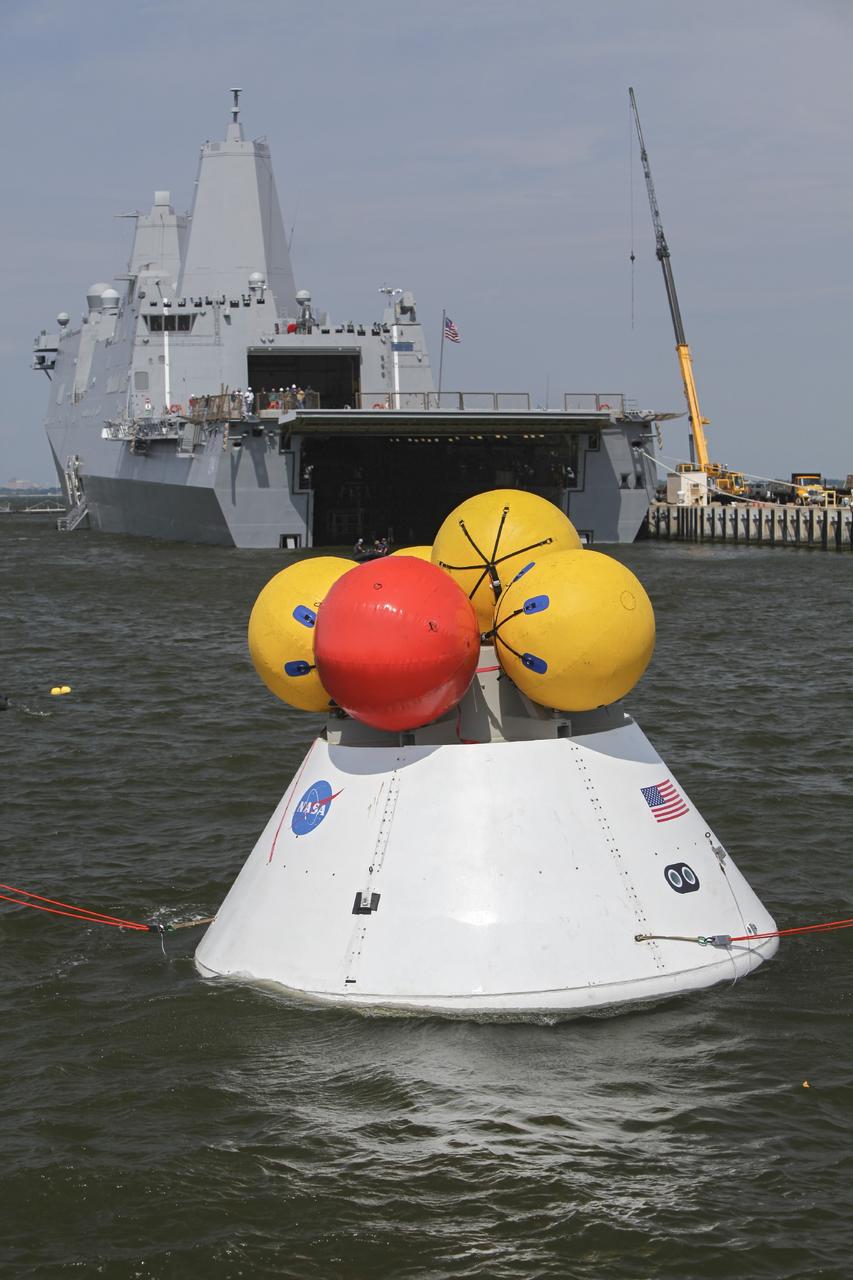
HAMPTON, Va. – At the Naval Station Norfolk near NASA’s Langley Research Center in Virginia, the Orion boilerplate test article floats in the water near a U.S. Navy ship during a stationary recovery test. NASA and the U.S. Navy are conducting tests to prepare for recovery of the Orion crew module and forward bay cover on its return from a deep space mission. The stationary recovery test will allow the teams to demonstrate and evaluate the recovery processes, procedures, hardware and personnel in a controlled environment before conducting a second recovery test next year in open waters. Orion is the exploration spacecraft designed to carry astronauts to destinations not yet explored by humans, including an asteroid and Mars. It will have emergency abort capability, sustain the crew during space travel and provide safe re-entry from deep space return velocities. The first unpiloted test flight of the Orion is scheduled to launch in 2014 atop a Delta IV rocket and in 2017 on NASA’s Space Launch System rocket. For more information, visit http://www.nasa.gov/orion. Photo credit: NASA/Dimitri Gerondidakis
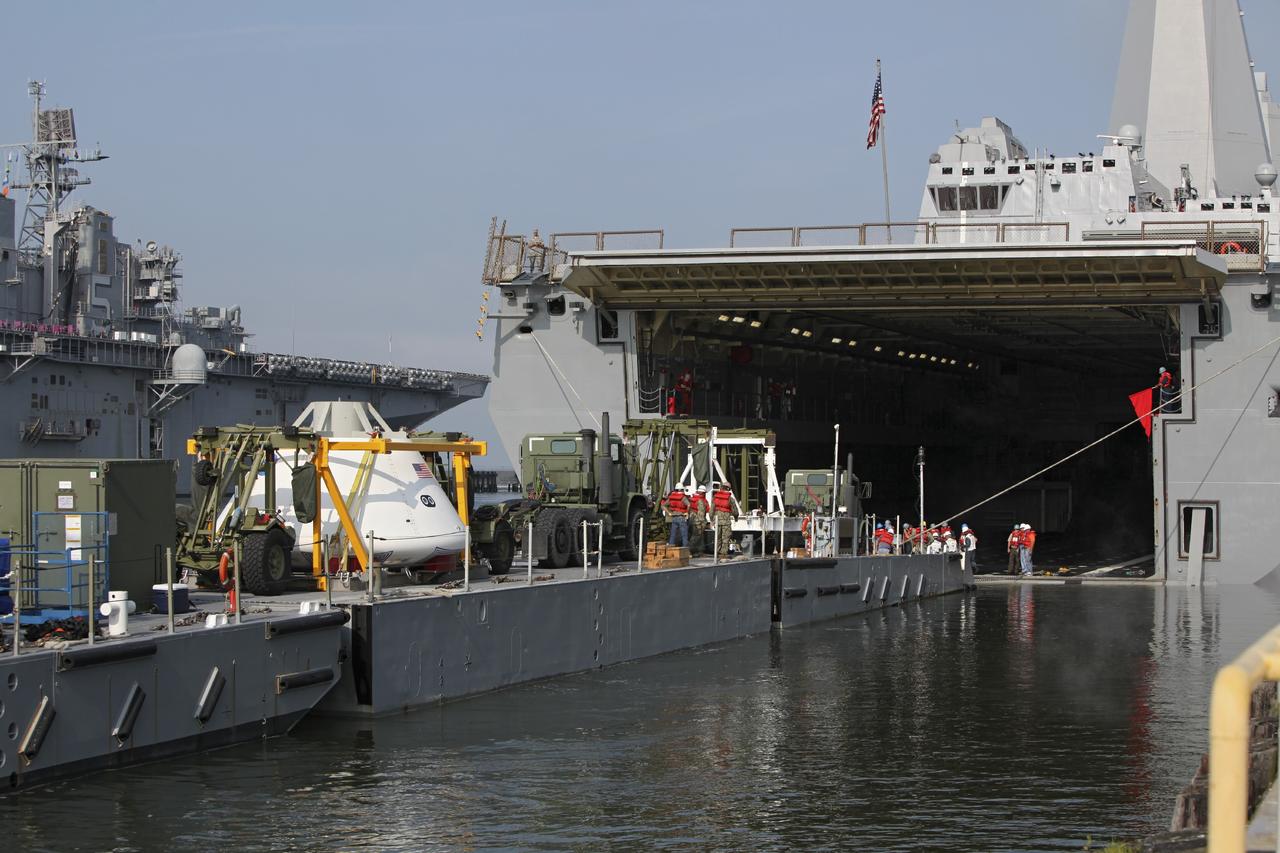
HAMPTON, Va. – At the Naval Station Norfolk near NASA’s Langley Research Center in Virginia, the Orion boilerplate test article and support equipment for a stationary recovery test are being transferred from a floating dock system to a U.S. Navy ship. NASA and the U.S. Navy are conducting tests to prepare for recovery of the Orion crew module and forward bay cover on its return from a deep space mission. The stationary recovery test will allow the teams to demonstrate and evaluate the recovery processes, procedures, hardware and personnel in a controlled environment before conducting a second recovery test next year in open waters. Orion is the exploration spacecraft designed to carry astronauts to destinations not yet explored by humans, including an asteroid and Mars. It will have emergency abort capability, sustain the crew during space travel and provide safe re-entry from deep space return velocities. The first unpiloted test flight of the Orion is scheduled to launch in 2014 atop a Delta IV rocket and in 2017 on a Space Launch System rocket. For more information, visit http://www.nasa.gov/orion. Photo credit: NASA/Dimitri Gerondidakis
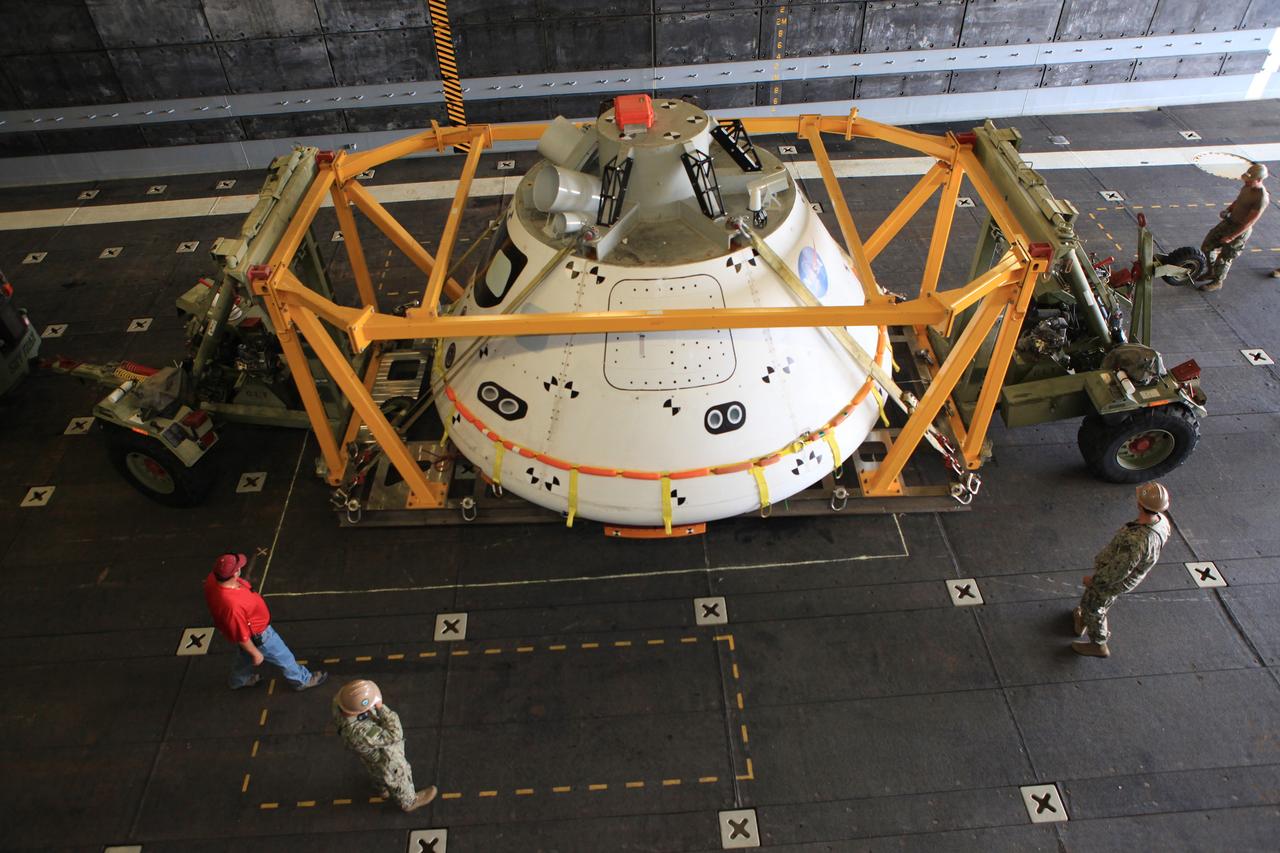
SAN DIEGO, Calif. – At the U.S. Naval Base San Diego in California, NASA and U.S. Navy personnel make sure that the Orion boilerplate test vehicle and support hardware are secured in the well deck of the USS Anchorage for Underway Recovery Test 2. NASA, Lockheed Martin and the U.S. Navy will conduct tests in the Pacific Ocean to prepare for recovery of the Orion crew module, forward bay cover and parachutes on its return from a deep space mission. The second underway recovery test will allow the teams to demonstrate and evaluate the recovery processes, procedures, new hardware and personnel in open waters. The Ground Systems Development and Operations Program is conducting the underway recovery tests. Orion is the exploration spacecraft designed to carry astronauts to destinations not yet explored by humans, including an asteroid and Mars. It will have emergency abort capability, sustain the crew during space travel and provide safe re-entry from deep space return velocities. The first unpiloted test flight of the Orion is scheduled to launch in 2014 atop a Delta IV rocket and in 2017 on NASA’s Space Launch System rocket. For more information, visit http://www.nasa.gov/orion. Photo credit: NASA/Kim Shiflett
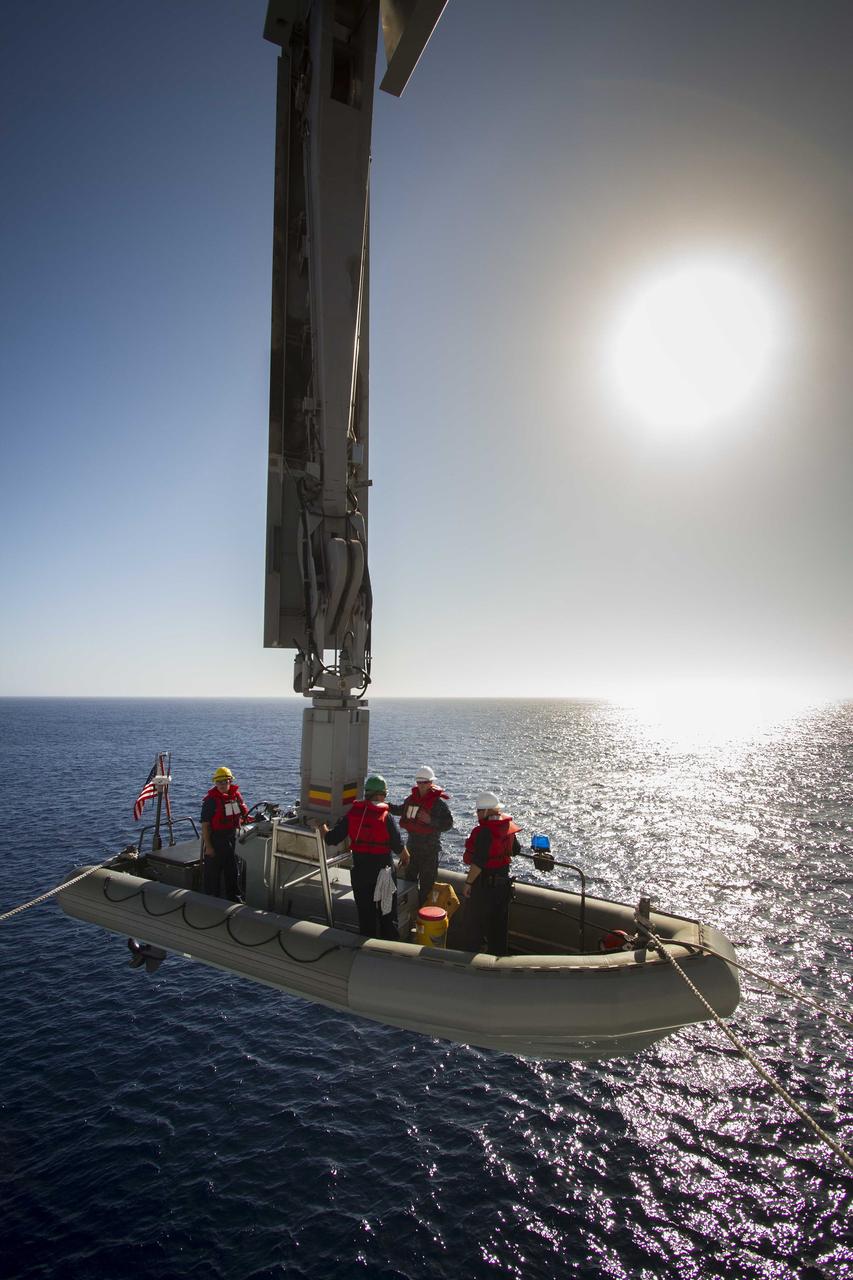
SAN DIEGO, Calif. – A rigid hull inflatable boat, with U.S. Navy personnel aboard, is being lowered into the water from the USS Anchorage on the second day of Orion Underway Recovery Test 3 in the Pacific Ocean. NASA, Lockheed Martin and U.S. Navy personnel are conducting recovery tests using the Orion boilerplate test vehicle to prepare for recovery of the Orion crew module on its return from a deep space mission. The test allows the teams to demonstrate and evaluate the recovery processes, procedures, hardware and personnel in open waters. The Ground Systems Development and Operations Program is conducting the underway recovery tests. Orion is the exploration spacecraft designed to carry astronauts to destinations not yet explored by humans, including an asteroid and Mars. It will have emergency abort capability, sustain the crew during space travel and provide safe re-entry from deep space return velocities. The first unpiloted test flight of Orion is scheduled to launch in 2014 atop a United Launch Alliance Delta IV Heavy rocket and in 2018 on NASA’s Space Launch System rocket. For more information, visit http://www.nasa.gov/orion. Photo credit: NASA/Cory Huston
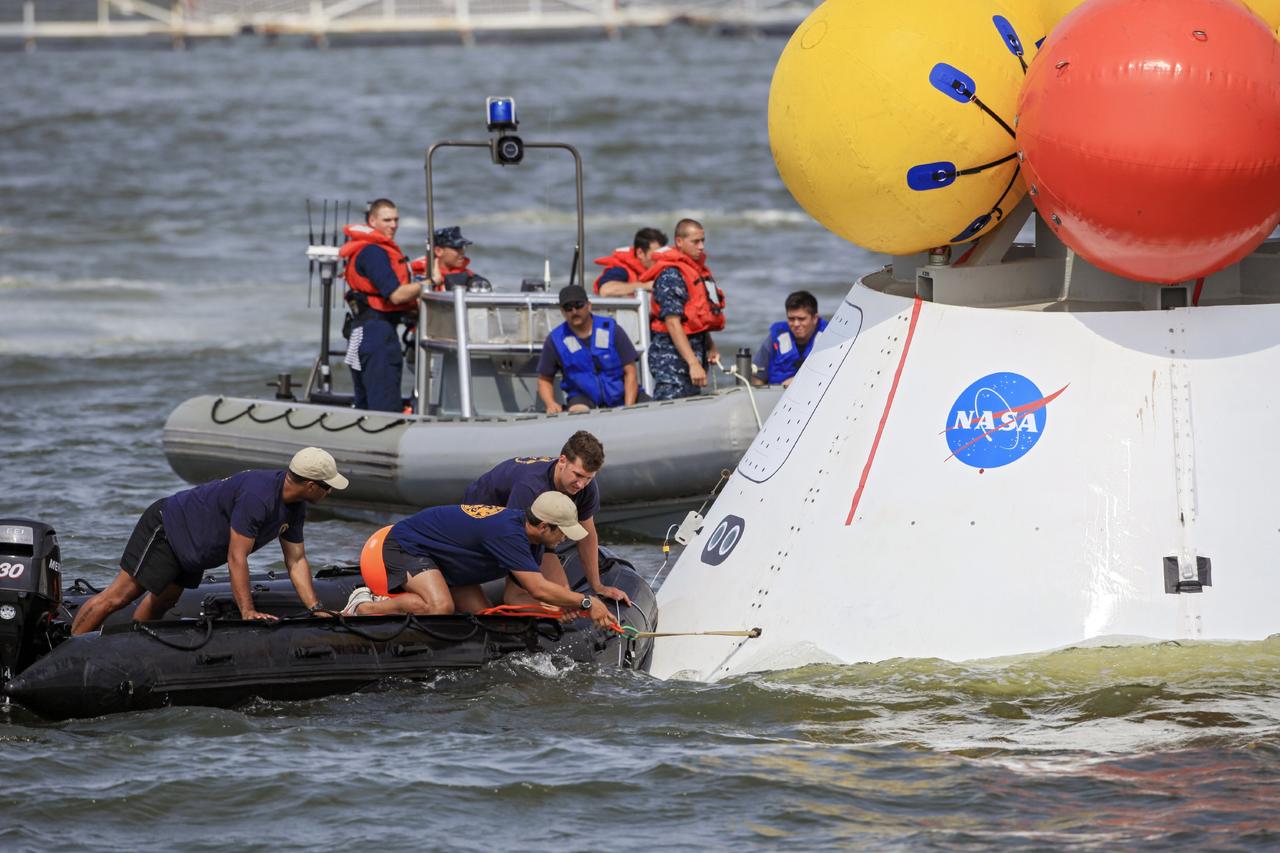
HAMPTON, Va. – At the Naval Station Norfolk near NASA’s Langley Research Center in Virginia, NASA and U.S. Navy personnel practice procedures during a stationary recovery test on the Orion boilerplate test article. NASA and the U.S. Navy are conducting tests to prepare for recovery of the Orion crew module and forward bay cover on its return from a deep space mission. The stationary recovery test will allow the teams to demonstrate and evaluate the recovery processes, procedures, hardware and personnel in a controlled environment before conducting a second recovery test next year in open waters. Orion is the exploration spacecraft designed to carry astronauts to destinations not yet explored by humans, including an asteroid and Mars. It will have emergency abort capability, sustain the crew during space travel and provide safe re-entry from deep space return velocities. The first unpiloted test flight of the Orion is scheduled to launch in 2014 atop a Delta IV rocket and in 2017 on NASA’s Space Launch System rocket. For more information, visit http://www.nasa.gov/orion. Photo credit: NASA/Dimitri Gerondidakis
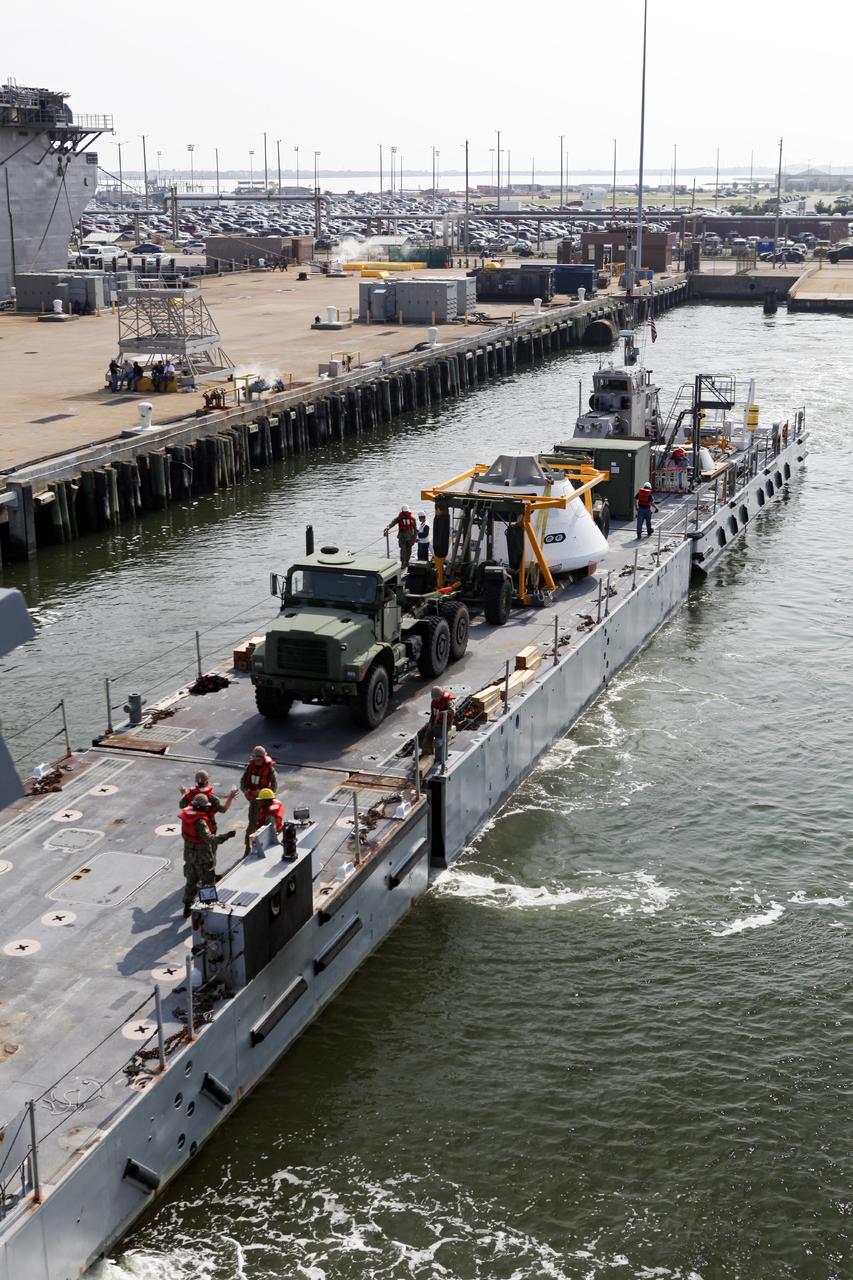
HAMPTON, Va. – At the Naval Station Norfolk near NASA’s Langley Research Center in Virginia, a floating dock system carries the Orion boilerplate test article and support equipment for a stationary recovery test aboard a U.S. Navy ship. NASA and the U.S. Navy are conducting tests to prepare for recovery of the Orion crew module and forward bay cover on its return from a deep space mission. The stationary recovery test will allow the teams to demonstrate and evaluate the recovery processes, procedures, hardware and personnel in a controlled environment before conducting a second recovery test next year in open waters. Orion is the exploration spacecraft designed to carry astronauts to destinations not yet explored by humans, including an asteroid and Mars. It will have emergency abort capability, sustain the crew during space travel and provide safe re-entry from deep space return velocities. The first unpiloted test flight of the Orion is scheduled to launch in 2014 atop a Delta IV rocket and in 2017 on NASA’s Space Launch System rocket. For more information, visit http://www.nasa.gov/orion. Photo credit: NASA/Dimitri Gerondidakis
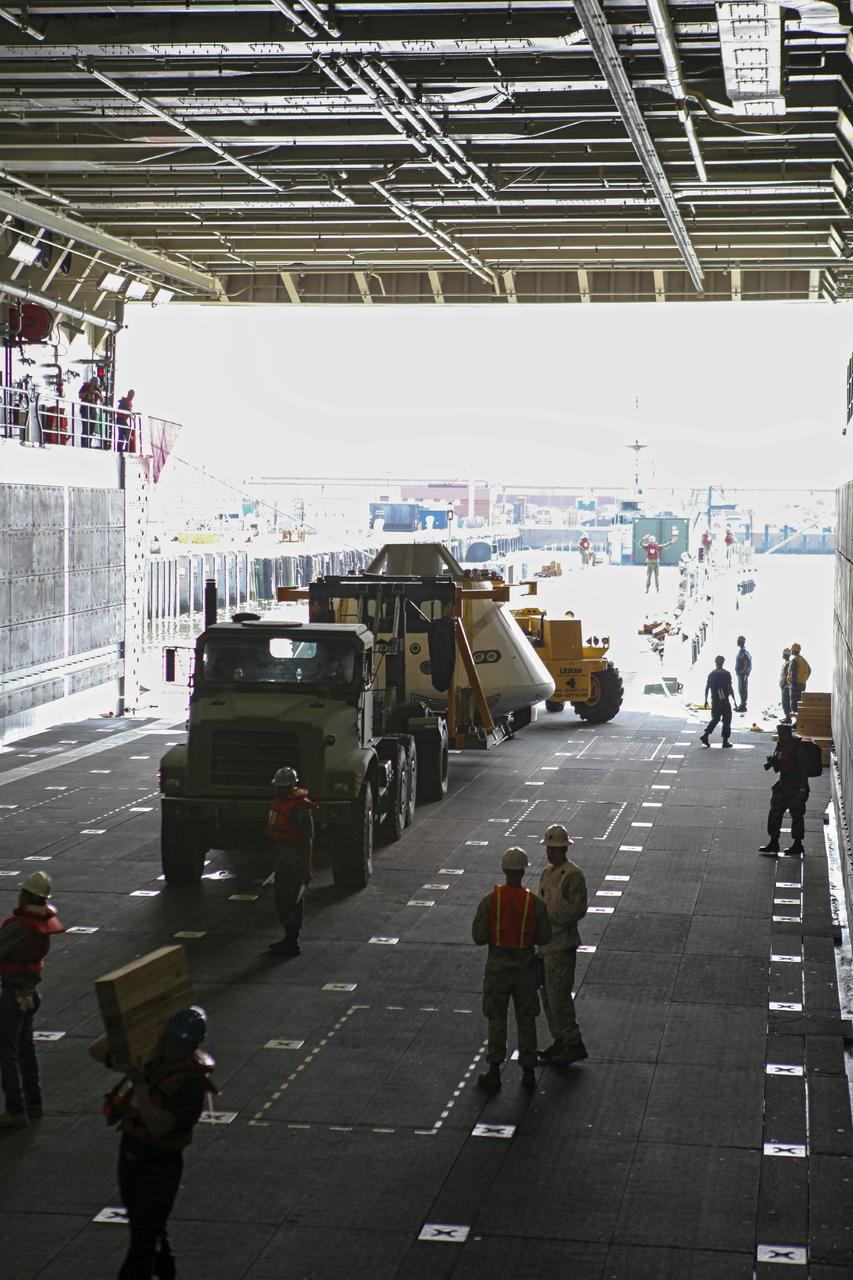
HAMPTON, Va. – At the Naval Station Norfolk near NASA’s Langley Research Center in Virginia, the Orion boilerplate test article and support equipment for a stationary recovery test are transferred to a U.S. Navy ship from a floating dock system. NASA and the U.S. Navy are conducting tests to prepare for recovery of the Orion crew module and forward bay cover on its return from a deep space mission. The stationary recovery test will allow the teams to demonstrate and evaluate the recovery processes, procedures, hardware and personnel in a controlled environment before conducting a second recovery test next year in open waters. Orion is the exploration spacecraft designed to carry astronauts to destinations not yet explored by humans, including an asteroid and Mars. It will have emergency abort capability, sustain the crew during space travel and provide safe re-entry from deep space return velocities. The first unpiloted test flight of the Orion is scheduled to launch in 2014 atop a Delta IV rocket and in 2017 on NASA’s Space Launch System rocket. For more information, visit http://www.nasa.gov/orion. Photo credit: NASA/Dimitri Gerondidakis
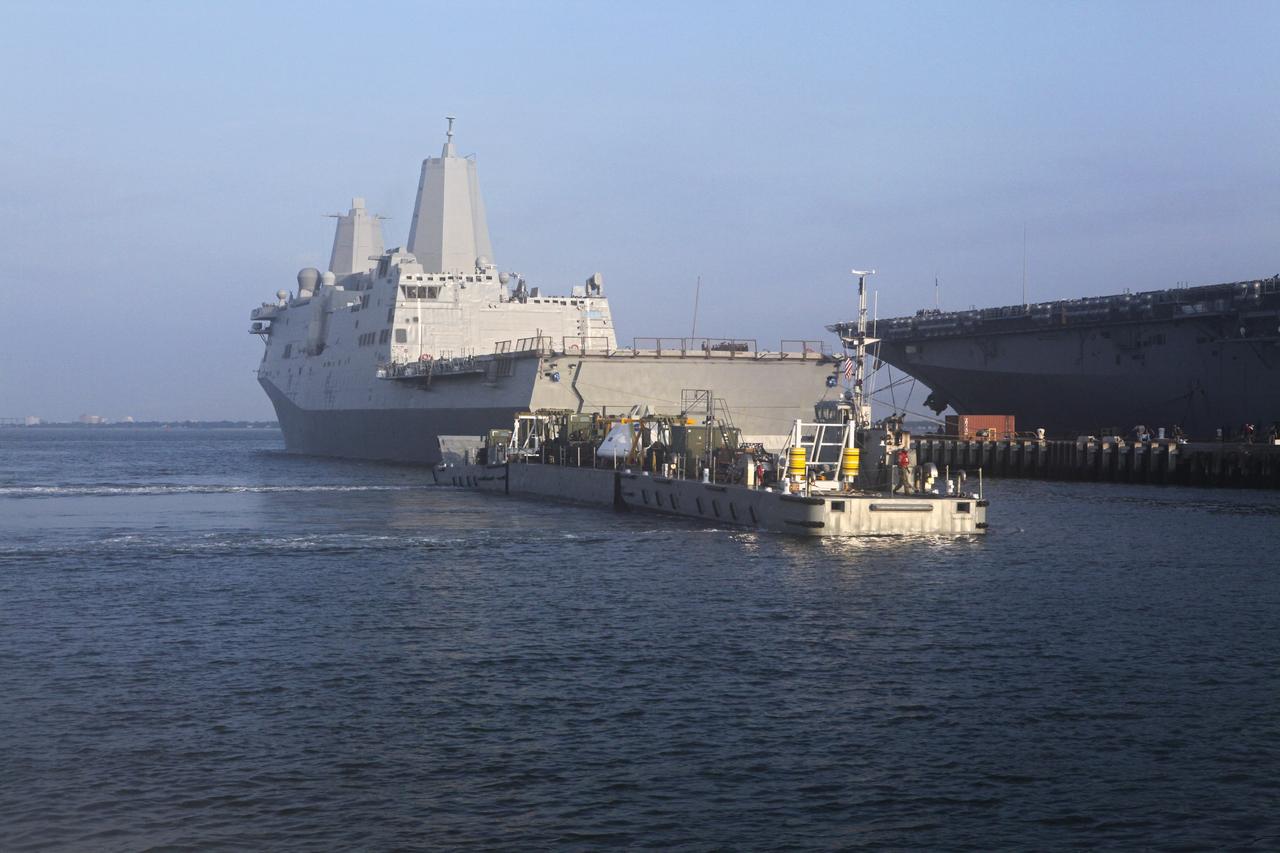
HAMPTON, Va. – At the Naval Station Norfolk near NASA’s Langley Research Center in Virginia, a floating dock system carries the Orion boilerplate test article and support equipment for a stationary recovery test aboard a U.S. Navy ship. NASA and the U.S. Navy are conducting tests to prepare for recovery of the Orion crew module and forward bay cover on its return from a deep space mission. The stationary recovery test will allow the teams to demonstrate and evaluate the recovery processes, procedures, hardware and personnel in a controlled environment before conducting a second recovery test next year in open waters. Orion is the exploration spacecraft designed to carry astronauts to destinations not yet explored by humans, including an asteroid and Mars. It will have emergency abort capability, sustain the crew during space travel and provide safe re-entry from deep space return velocities. The first unpiloted test flight of the Orion is scheduled to launch in 2014 atop a Delta IV rocket and in 2017 on a Space Launch System rocket. For more information, visit http://www.nasa.gov/orion. Photo credit: NASA/Dimitri Gerondidakis
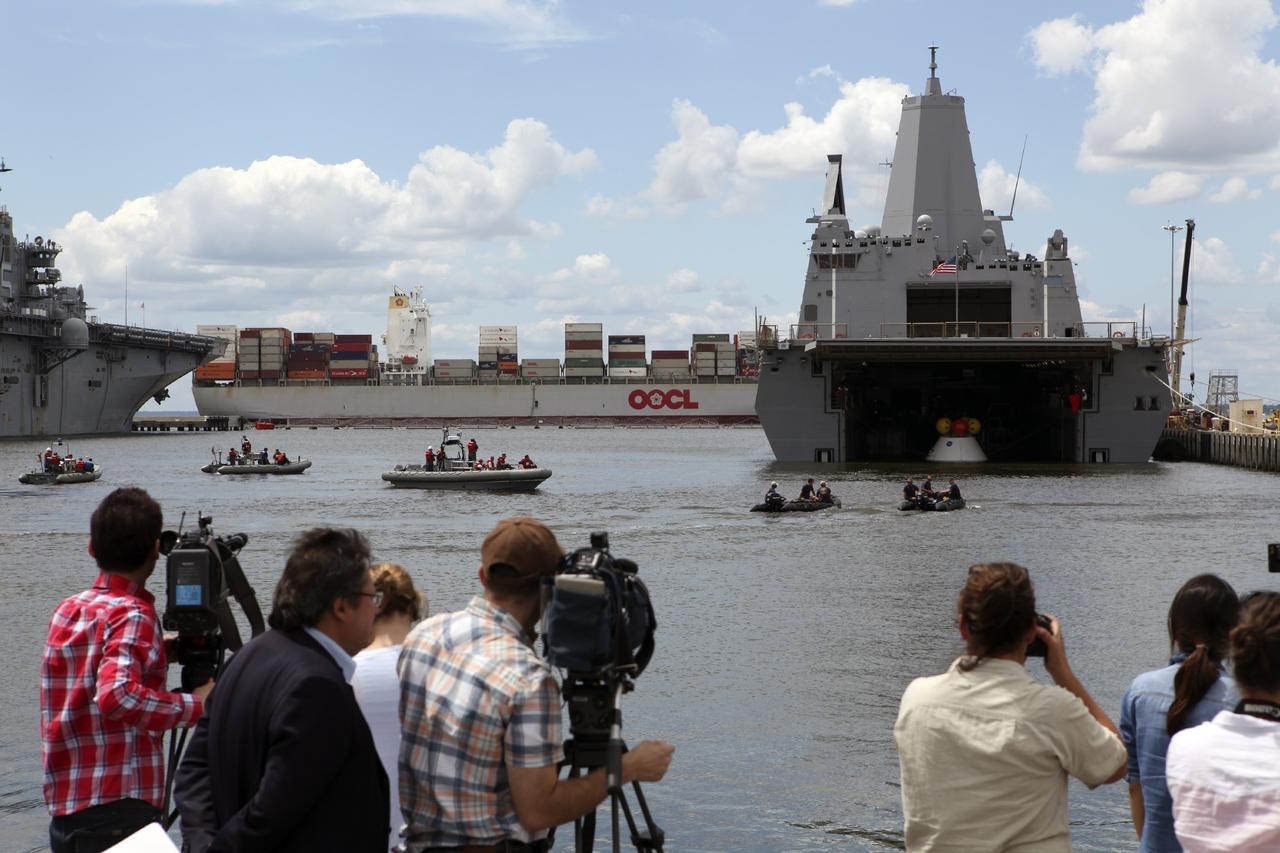
HAMPTON, Va. – At the Naval Station Norfolk near NASA’s Langley Research Center in Virginia, members of the news media observe the stationary recovery test being conducted on the Orion boilerplate test article in the water near a U.S. Navy ship. NASA and the U.S. Navy are conducting tests to prepare for recovery of the Orion crew module and forward bay cover on its return from a deep space mission. The stationary recovery test will allow the teams to demonstrate and evaluate the recovery processes, procedures, hardware and personnel in a controlled environment before conducting a second recovery test next year in open waters. Orion is the exploration spacecraft designed to carry astronauts to destinations not yet explored by humans, including an asteroid and Mars. It will have emergency abort capability, sustain the crew during space travel and provide safe re-entry from deep space return velocities. The first unpiloted test flight of the Orion is scheduled to launch in 2014 atop a Delta IV rocket and in 2017 on NASA’s Space Launch System rocket. For more information, visit http://www.nasa.gov/orion. Photo credit: NASA/Dimitri Gerondidakis

HAMPTON, Va. – At the Naval Station Norfolk near NASA’s Langley Research Center in Virginia, the Orion boilerplate test article is being prepared for a stationary recovery test aboard a U.S. Navy ship. NASA and the U.S. Navy are conducting tests to prepare for recovery of the Orion crew module and forward bay cover on its return from a deep space mission. The stationary recovery test will allow the teams to demonstrate and evaluate the recovery processes, procedures, hardware and personnel in a controlled environment before conducting a second recovery test next year in open waters. Orion is the exploration spacecraft designed to carry astronauts to destinations not yet explored by humans, including an asteroid and Mars. It will have emergency abort capability, sustain the crew during space travel and provide safe re-entry from deep space return velocities. The first unpiloted test flight of the Orion is scheduled to launch in 2014 atop a Delta IV rocket and in 2017 on NASA’s Space Launch System rocket. For more information, visit http://www.nasa.gov/orion. Photo credit: NASA/Dimitri Gerondidakis
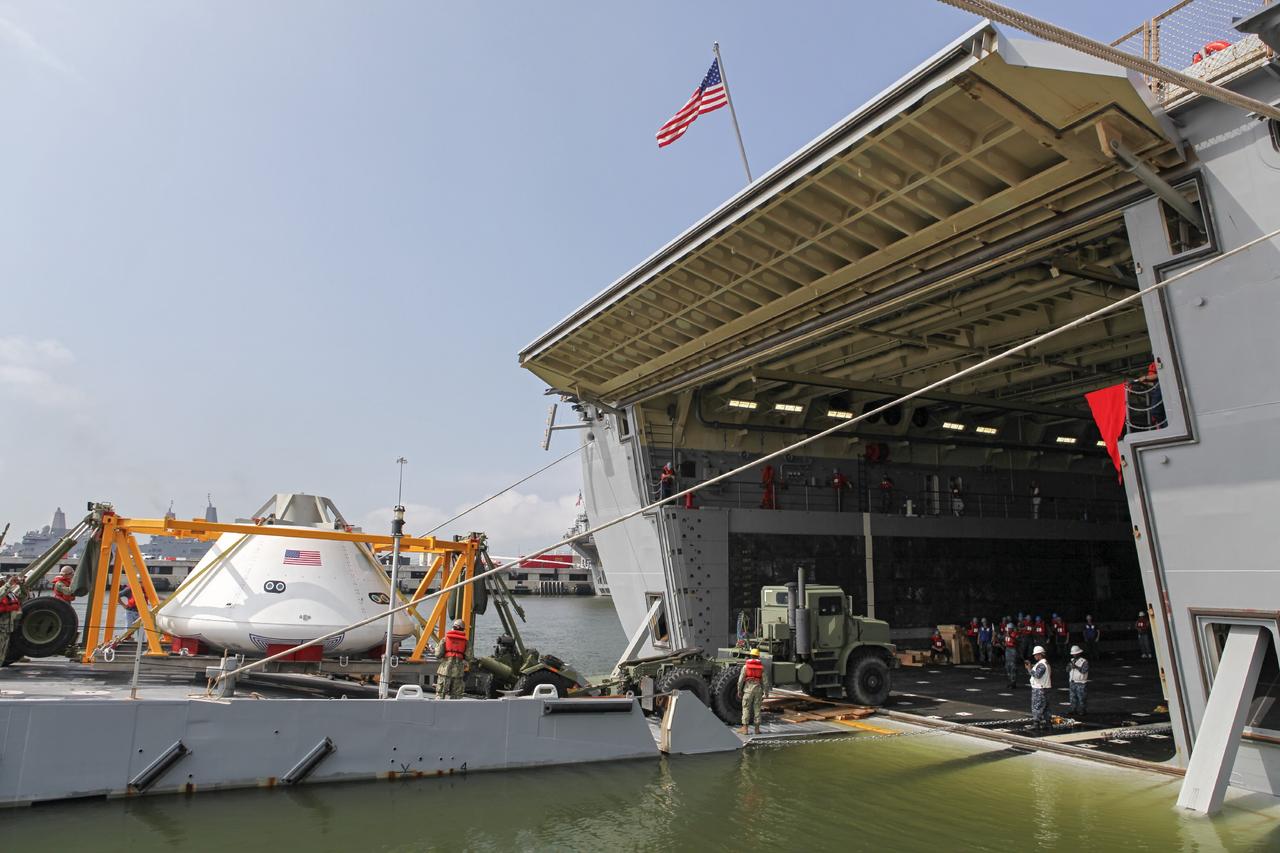
HAMPTON, Va. – At the Naval Station Norfolk near NASA’s Langley Research Center in Virginia, the Orion boilerplate test article and support equipment for a stationary recovery test are transferred by floating dock system to a U.S. Navy ship. NASA and the U.S. Navy are conducting tests to prepare for recovery of the Orion crew module and forward bay cover on its return from a deep space mission. The stationary recovery test will allow the teams to demonstrate and evaluate the recovery processes, procedures, hardware and personnel in a controlled environment before conducting a second recovery test next year in open waters. Orion is the exploration spacecraft designed to carry astronauts to destinations not yet explored by humans, including an asteroid and Mars. It will have emergency abort capability, sustain the crew during space travel and provide safe re-entry from deep space return velocities. The first unpiloted test flight of the Orion is scheduled to launch in 2014 atop a Delta IV rocket and in 2017 on NASA’s Space Launch System rocket. For more information, visit http://www.nasa.gov/orion. Photo credit: NASA/Dimitri Gerondidakis
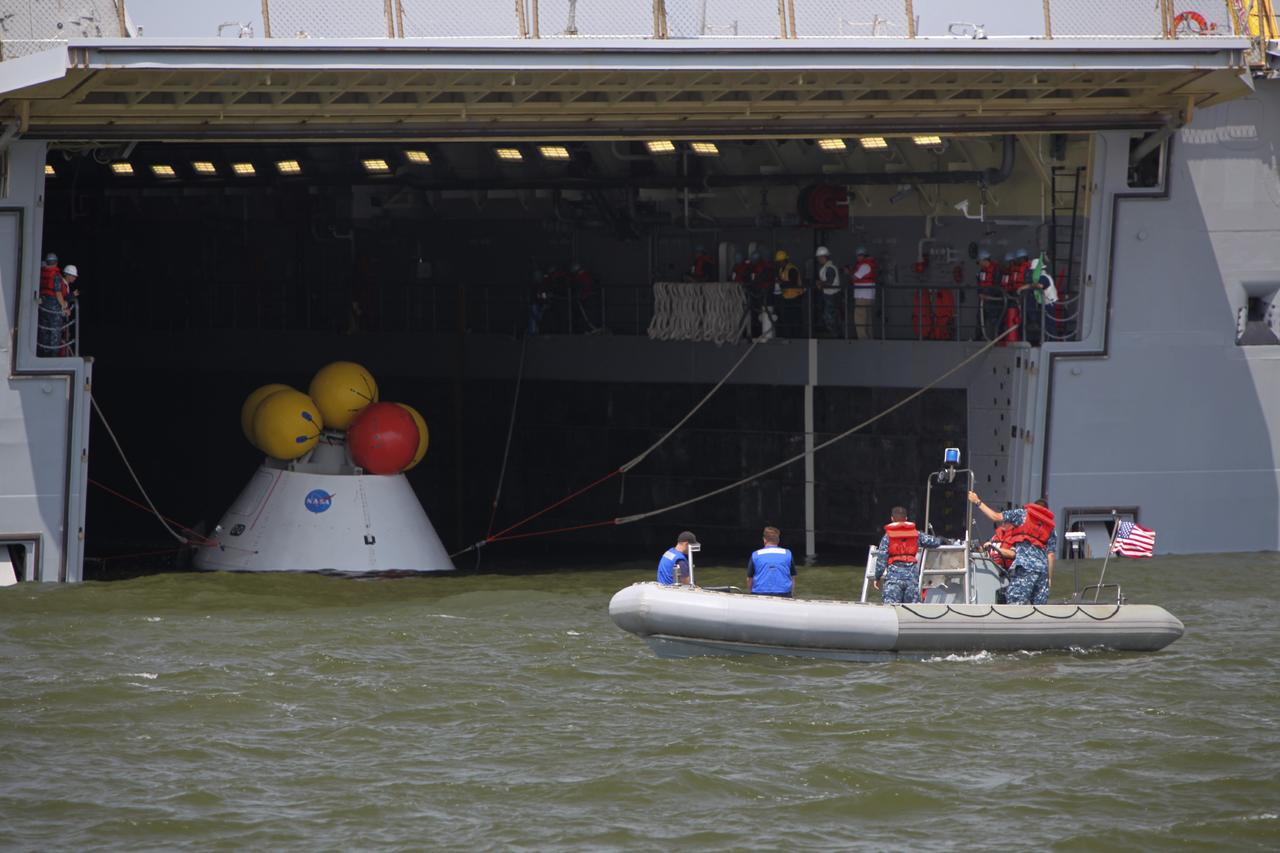
HAMPTON, Va. – At the Naval Station Norfolk near NASA’s Langley Research Center in Virginia, the Orion boilerplate test article has been returned to a U.S. Navy ship following a stationary recovery test in the water. NASA and the U.S. Navy are conducting tests to prepare for recovery of the Orion crew module and forward bay cover on its return from a deep space mission. The stationary recovery test will allow the teams to demonstrate and evaluate the recovery processes, procedures, hardware and personnel in a controlled environment before conducting a second recovery test next year in open waters. Orion is the exploration spacecraft designed to carry astronauts to destinations not yet explored by humans, including an asteroid and Mars. It will have emergency abort capability, sustain the crew during space travel and provide safe re-entry from deep space return velocities. The first unpiloted test flight of the Orion is scheduled to launch in 2014 atop a Delta IV rocket and in 2017 on NASA’s Space Launch System rocket. For more information, visit http://www.nasa.gov/orion. Photo credit: NASA/Dimitri Gerondidakis
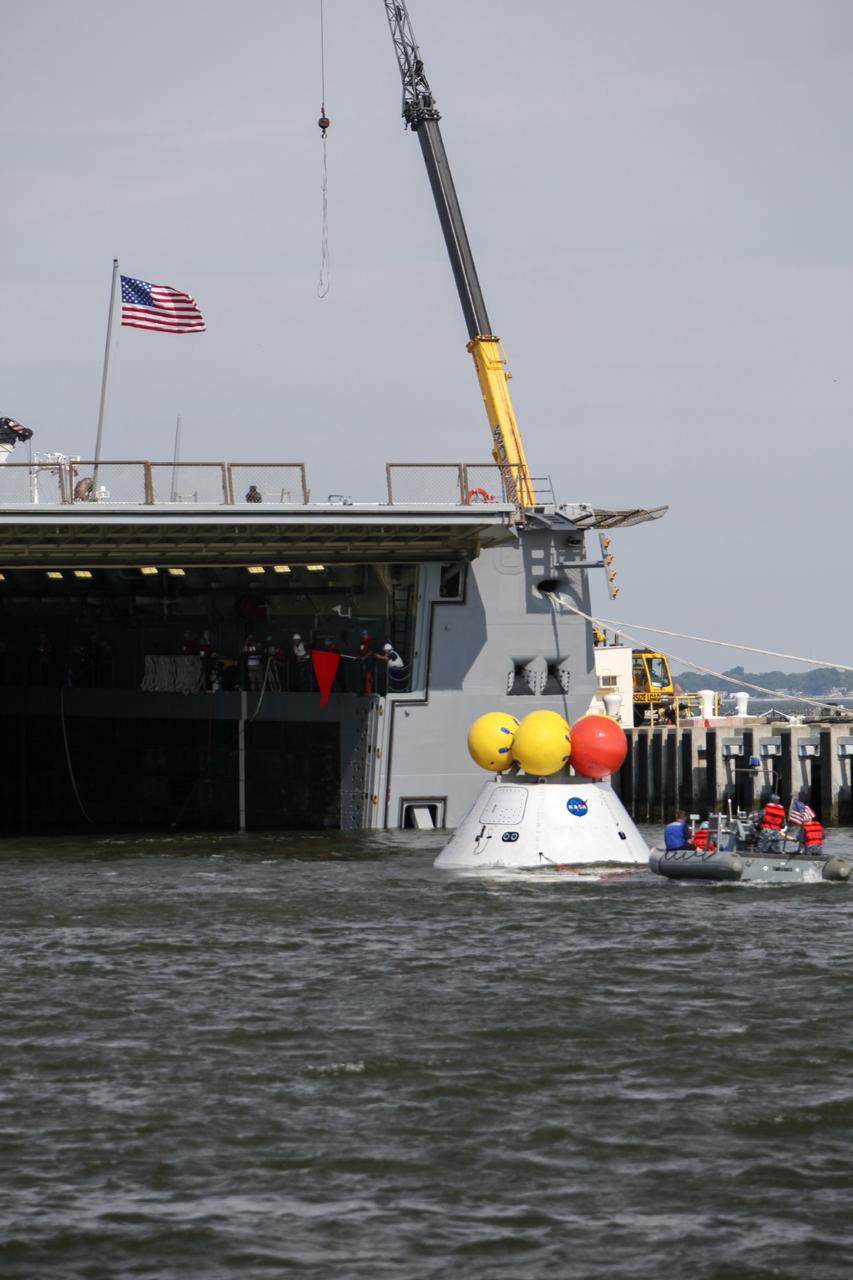
HAMPTON, Va. – At the Naval Station Norfolk near NASA’s Langley Research Center in Virginia, the Orion boilerplate test article has been moved from a U.S. Navy ship and placed in the water for a stationary recovery test. NASA and the U.S. Navy are conducting tests to prepare for recovery of the Orion crew module and forward bay cover on its return from a deep space mission. The stationary recovery test will allow the teams to demonstrate and evaluate the recovery processes, procedures, hardware and personnel in a controlled environment before conducting a second recovery test next year in open waters. Orion is the exploration spacecraft designed to carry astronauts to destinations not yet explored by humans, including an asteroid and Mars. It will have emergency abort capability, sustain the crew during space travel and provide safe re-entry from deep space return velocities. The first unpiloted test flight of the Orion is scheduled to launch in 2014 atop a Delta IV rocket and in 2017 on NASA’s Space Launch System rocket. For more information, visit http://www.nasa.gov/orion. Photo credit: NASA/Dimitri Gerondidakis
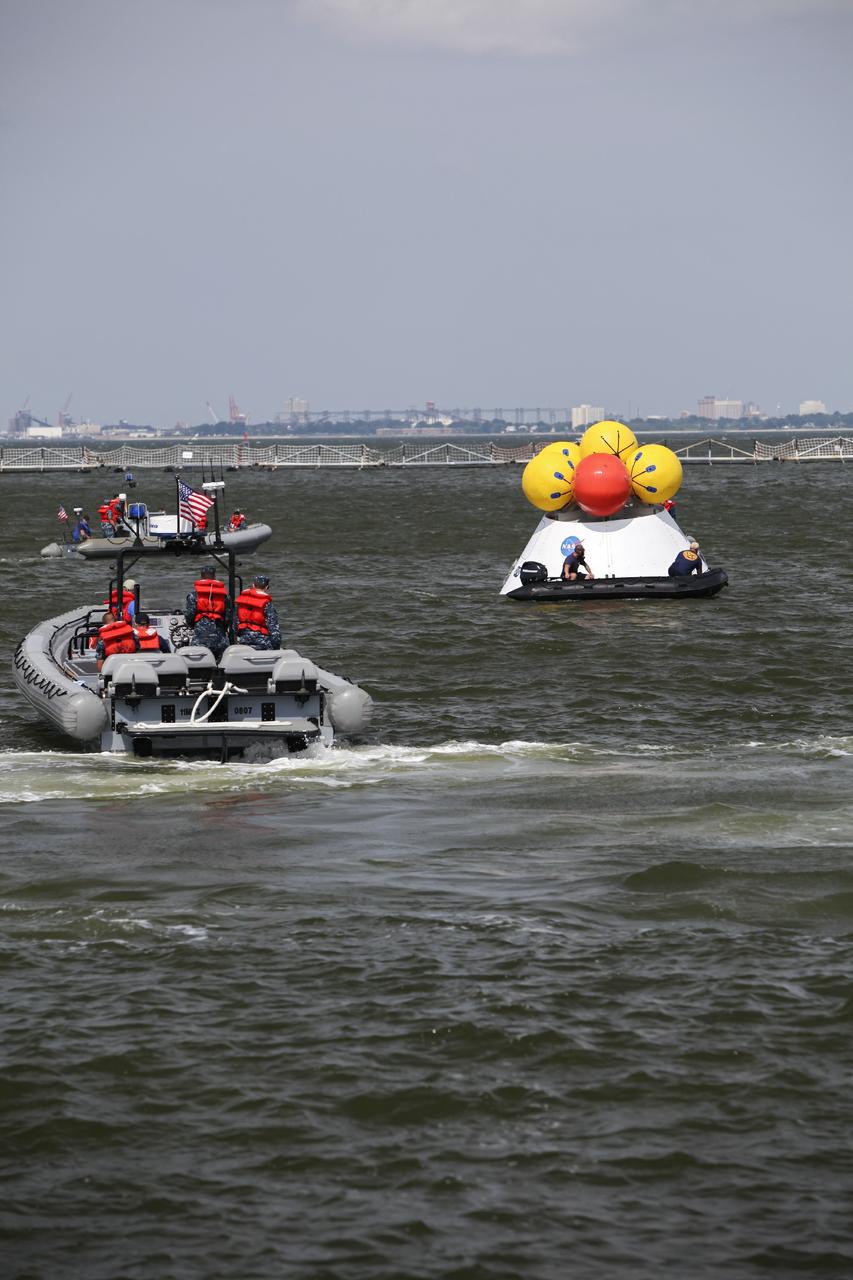
HAMPTON, Va. – At the Naval Station Norfolk near NASA’s Langley Research Center in Virginia, NASA and U.S. Navy personnel monitor the progress as the Orion boilerplate test article floats in the water during a stationary recovery test. NASA and the U.S. Navy are conducting tests to prepare for recovery of the Orion crew module and forward bay cover on its return from a deep space mission. The stationary recovery test will allow the teams to demonstrate and evaluate the recovery processes, procedures, hardware and personnel in a controlled environment before conducting a second recovery test next year in open waters. Orion is the exploration spacecraft designed to carry astronauts to destinations not yet explored by humans, including an asteroid and Mars. It will have emergency abort capability, sustain the crew during space travel and provide safe re-entry from deep space return velocities. The first unpiloted test flight of the Orion is scheduled to launch in 2014 atop a Delta IV rocket and in 2017 on NASA’s Space Launch System rocket. For more information, visit http://www.nasa.gov/orion. Photo credit: NASA/Dimitri Gerondidakis
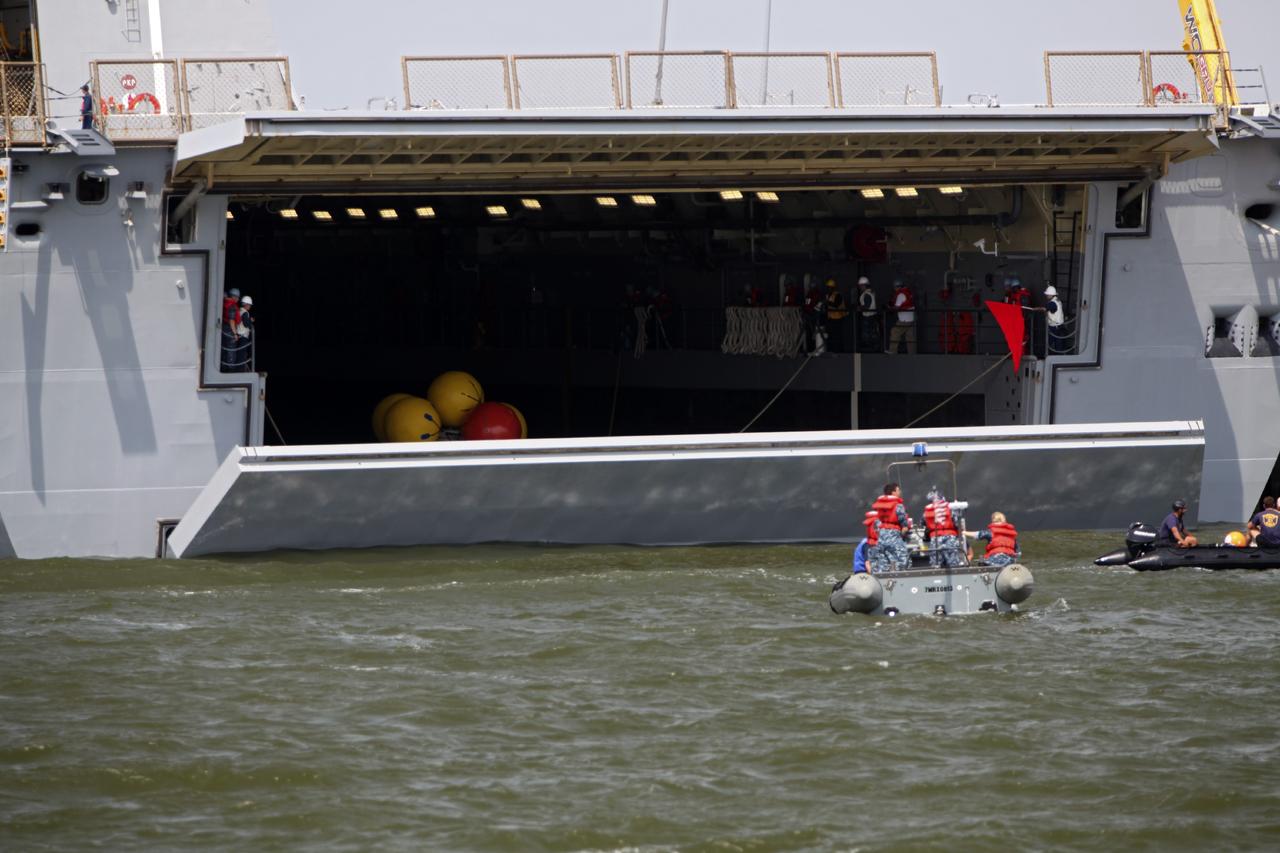
HAMPTON, Va. – At the Naval Station Norfolk near NASA’s Langley Research Center in Virginia, the Orion boilerplate test article has been returned to a U.S. Navy ship following a stationary recovery test in the water. NASA and the U.S. Navy are conducting tests to prepare for recovery of the Orion crew module and forward bay cover on its return from a deep space mission. The stationary recovery test will allow the teams to demonstrate and evaluate the recovery processes, procedures, hardware and personnel in a controlled environment before conducting a second recovery test next year in open waters. Orion is the exploration spacecraft designed to carry astronauts to destinations not yet explored by humans, including an asteroid and Mars. It will have emergency abort capability, sustain the crew during space travel and provide safe re-entry from deep space return velocities. The first unpiloted test flight of the Orion is scheduled to launch in 2014 atop a Delta IV rocket and in 2017 on NASA’s Space Launch System rocket. For more information, visit http://www.nasa.gov/orion. Photo credit: NASA/Dimitri Gerondidakis
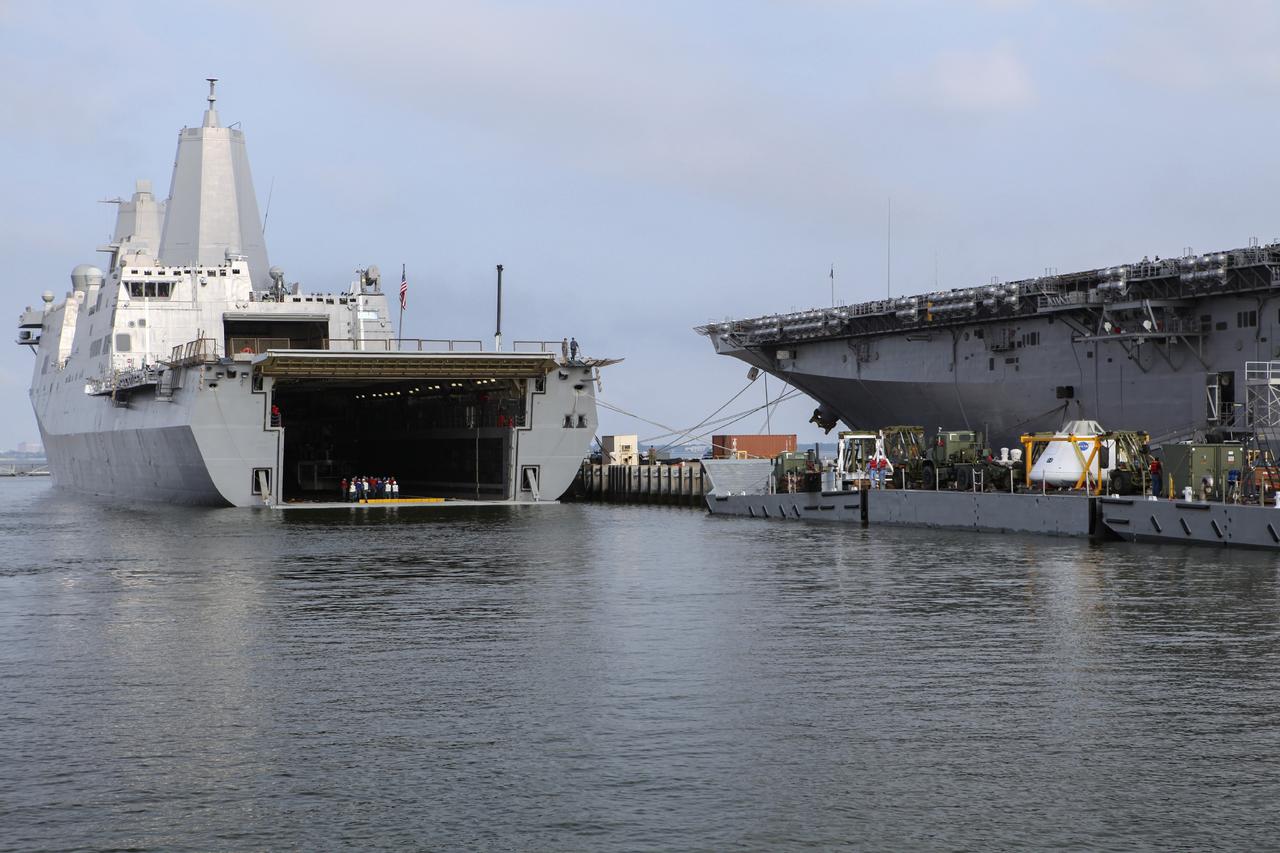
HAMPTON, Va. – At the Naval Station Norfolk near NASA’s Langley Research Center in Virginia, the Orion boilerplate test article and support equipment for a stationary recovery test are being transferred on a floating dock system to a U.S. Navy ship. NASA and the U.S. Navy are conducting tests to prepare for recovery of the Orion crew module and forward bay cover on its return from a deep space mission. The stationary recovery test will allow the teams to demonstrate and evaluate the recovery processes, procedures, hardware and personnel in a controlled environment before conducting a second recovery test next year in open waters. Orion is the exploration spacecraft designed to carry astronauts to destinations not yet explored by humans, including an asteroid and Mars. It will have emergency abort capability, sustain the crew during space travel and provide safe re-entry from deep space return velocities. The first unpiloted test flight of the Orion is scheduled to launch in 2014 atop a Delta IV rocket and in 2017 on a Space Launch System rocket. For more information, visit http://www.nasa.gov/orion. Photo credit: NASA/Dimitri Gerondidakis
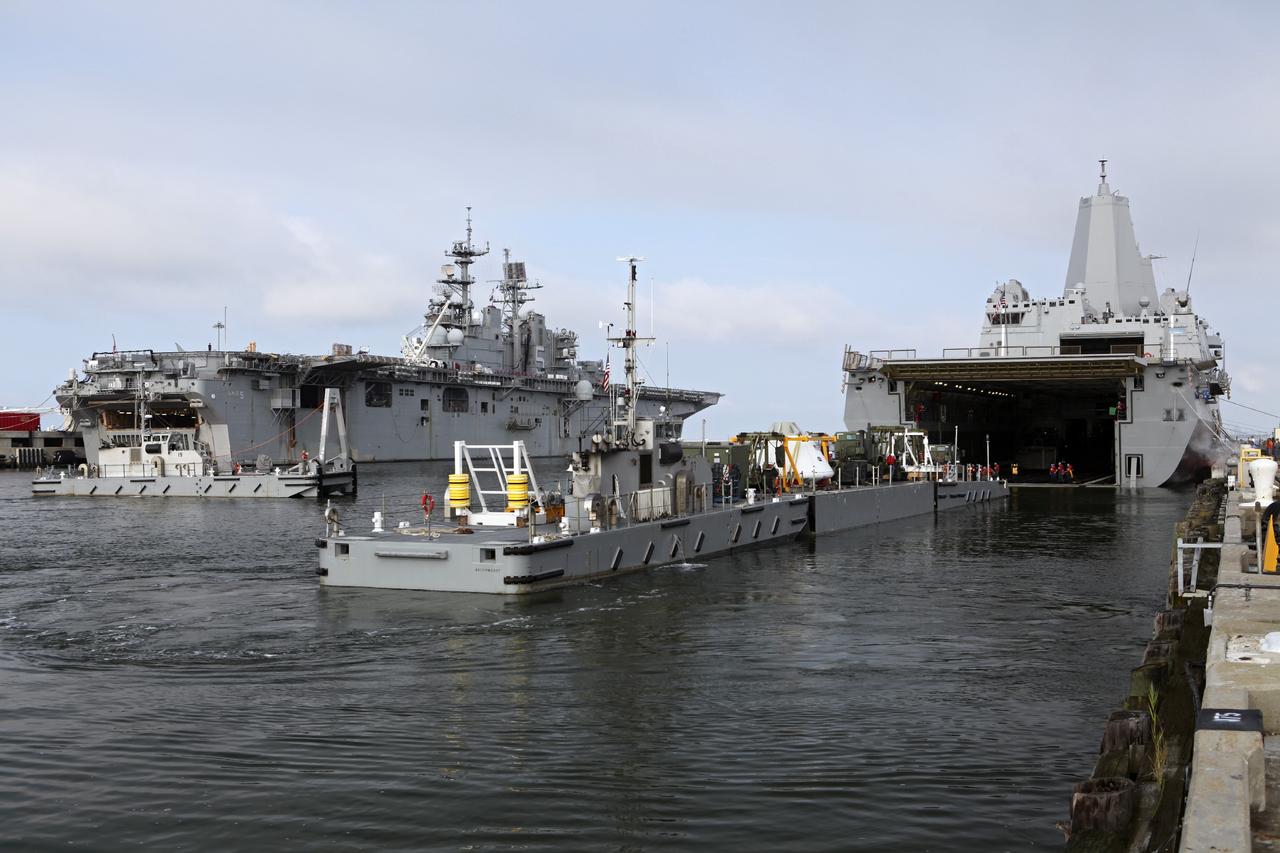
HAMPTON, Va. – At the Naval Station Norfolk near NASA’s Langley Research Center in Virginia, the Orion boilerplate test article and support equipment for a stationary recovery test are being transferred on a floating dock system to a U.S. Navy ship. NASA and the U.S. Navy are conducting tests to prepare for recovery of the Orion crew module and forward bay cover on its return from a deep space mission. The stationary recovery test will allow the teams to demonstrate and evaluate the recovery processes, procedures, hardware and personnel in a controlled environment before conducting a second recovery test next year in open waters. Orion is the exploration spacecraft designed to carry astronauts to destinations not yet explored by humans, including an asteroid and Mars. It will have emergency abort capability, sustain the crew during space travel and provide safe re-entry from deep space return velocities. The first unpiloted test flight of the Orion is scheduled to launch in 2014 atop a Delta IV rocket and in 2017 on a Space Launch System rocket. For more information, visit http://www.nasa.gov/orion. Photo credit: NASA/Dimitri Gerondidakis
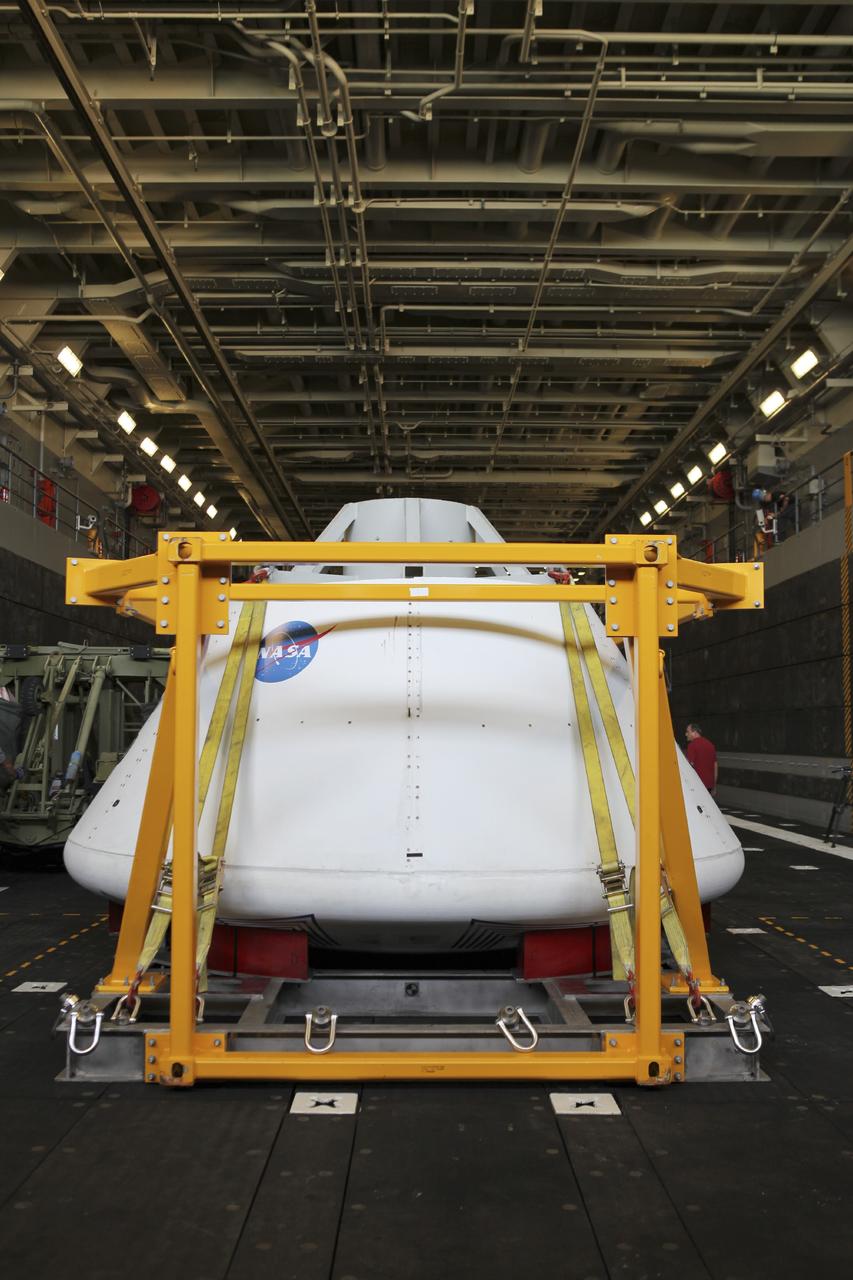
HAMPTON, Va. – At the Naval Station Norfolk near NASA’s Langley Research Center in Virginia, the Orion boilerplate test article was secured on a U.S. Navy ship after arriving by floating dock system for a stationary recovery test. NASA and the U.S. Navy are conducting tests to prepare for recovery of the Orion crew module and forward bay cover on its return from a deep space mission. The stationary recovery test will allow the teams to demonstrate and evaluate the recovery processes, procedures, hardware and personnel in a controlled environment before conducting a second recovery test next year in open waters. Orion is the exploration spacecraft designed to carry astronauts to destinations not yet explored by humans, including an asteroid and Mars. It will have emergency abort capability, sustain the crew during space travel and provide safe re-entry from deep space return velocities. The first unpiloted test flight of the Orion is scheduled to launch in 2014 atop a Delta IV rocket and in 2017 on NASA’s Space Launch System rocket. For more information, visit http://www.nasa.gov/orion. Photo credit: NASA/Dimitri Gerondidakis
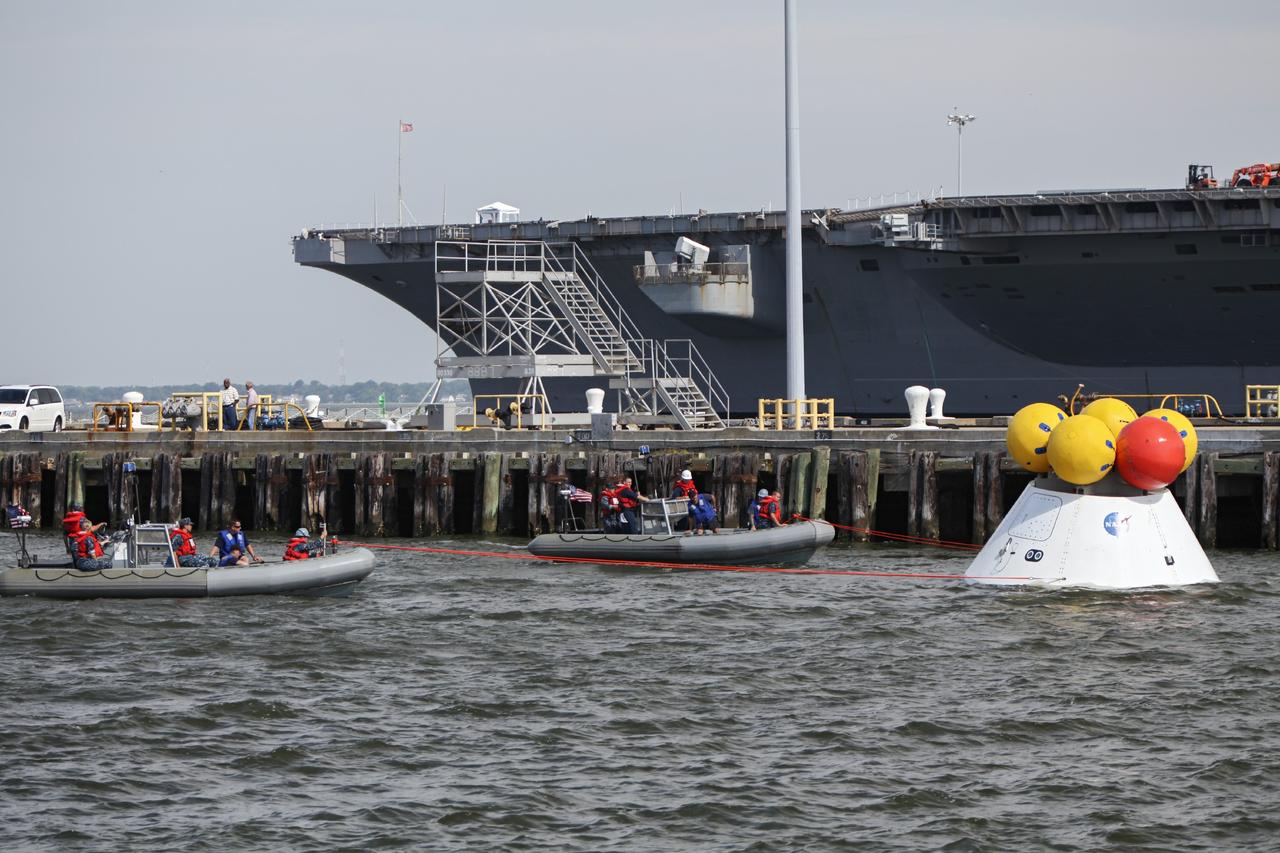
HAMPTON, Va. – At the Naval Station Norfolk near NASA’s Langley Research Center in Virginia, NASA and U.S. Navy personnel have attached tether lines to the Orion boilerplate test article for a stationary recovery test. NASA and the U.S. Navy are conducting tests to prepare for recovery of the Orion crew module and forward bay cover on its return from a deep space mission. The stationary recovery test will allow the teams to demonstrate and evaluate the recovery processes, procedures, hardware and personnel in a controlled environment before conducting a second recovery test next year in open waters. Orion is the exploration spacecraft designed to carry astronauts to destinations not yet explored by humans, including an asteroid and Mars. It will have emergency abort capability, sustain the crew during space travel and provide safe re-entry from deep space return velocities. The first unpiloted test flight of the Orion is scheduled to launch in 2014 atop a Delta IV rocket and in 2017 on NASA’s Space Launch System rocket. For more information, visit http://www.nasa.gov/orion. Photo credit: NASA/Dimitri Gerondidakis
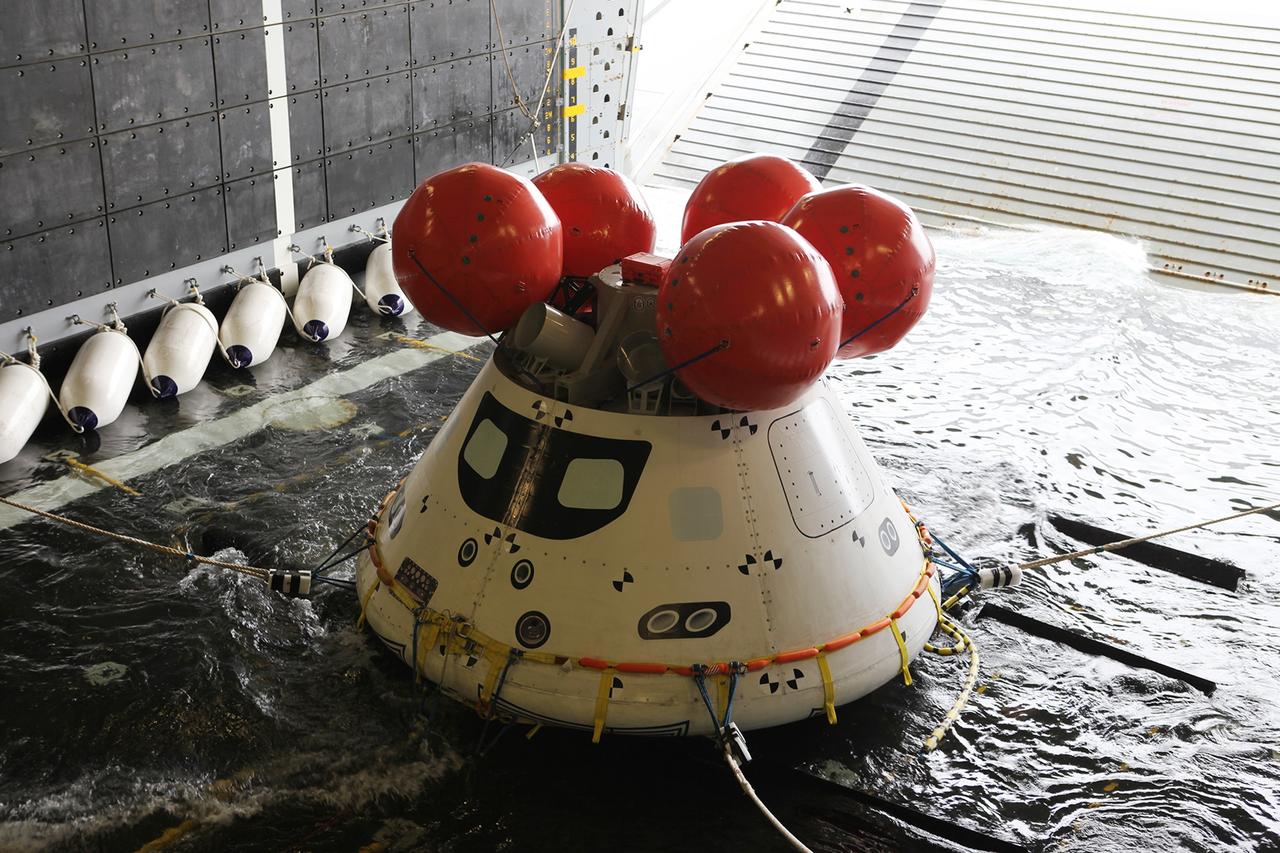
SAN DIEGO, Calif. – Inside the well deck of the U.S. Navy's USS Anchorage, the Orion boilerplate test vehicle rests on its cradle as water fills around before the start of an evolution for the Underway Recovery Test 2. NASA, Lockheed Martin and the U.S. Navy are conducting the test in the Pacific Ocean off the coast of San Diego to prepare for recovery of the Orion crew module on its return from a deep space mission. The underway recovery test will allow the team to demonstrate and evaluate the recovery processes, procedures, new hardware and personnel in open waters. The Ground Systems Development and Operations Program is conducting the underway recovery test. Orion is the exploration spacecraft designed to carry astronauts to destinations not yet explored by humans, including an asteroid and Mars. It will have emergency abort capability, sustain the crew during space travel and provide safe re-entry from deep space return velocities. The first unpiloted test flight of the Orion is scheduled to launch in 2014 atop a Delta IV rocket and in 2017 on NASA’s Space Launch System rocket. For more information, visit http://www.nasa.gov/orion. Photo credit: NASA/Kim Shiflett
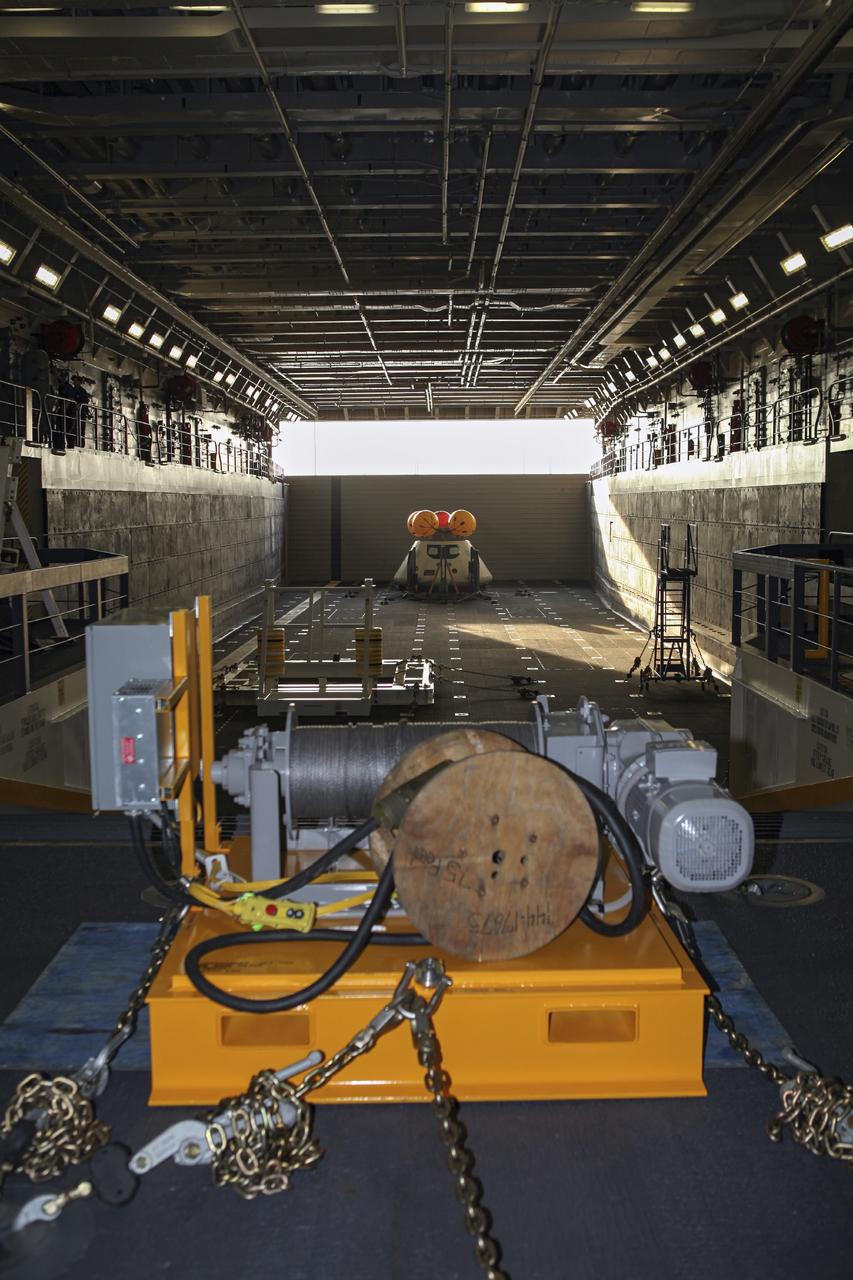
HAMPTON, Va. – At the Naval Station Norfolk near NASA’s Langley Research Center in Virginia, the Orion boilerplate test article and support equipment for a stationary recovery test are secured on a U.S. Navy ship. NASA and the U.S. Navy are conducting tests to prepare for recovery of the Orion crew module and forward bay cover on its return from a deep space mission. The stationary recovery test will allow the teams to demonstrate and evaluate the recovery processes, procedures, hardware and personnel in a controlled environment before conducting a second recovery test next year in open waters. Orion is the exploration spacecraft designed to carry astronauts to destinations not yet explored by humans, including an asteroid and Mars. It will have emergency abort capability, sustain the crew during space travel and provide safe re-entry from deep space return velocities. The first unpiloted test flight of the Orion is scheduled to launch in 2014 atop a Delta IV rocket and in 2017 on NASA’s Space Launch System rocket. For more information, visit http://www.nasa.gov/orion. Photo credit: NASA/Dimitri Gerondidakis
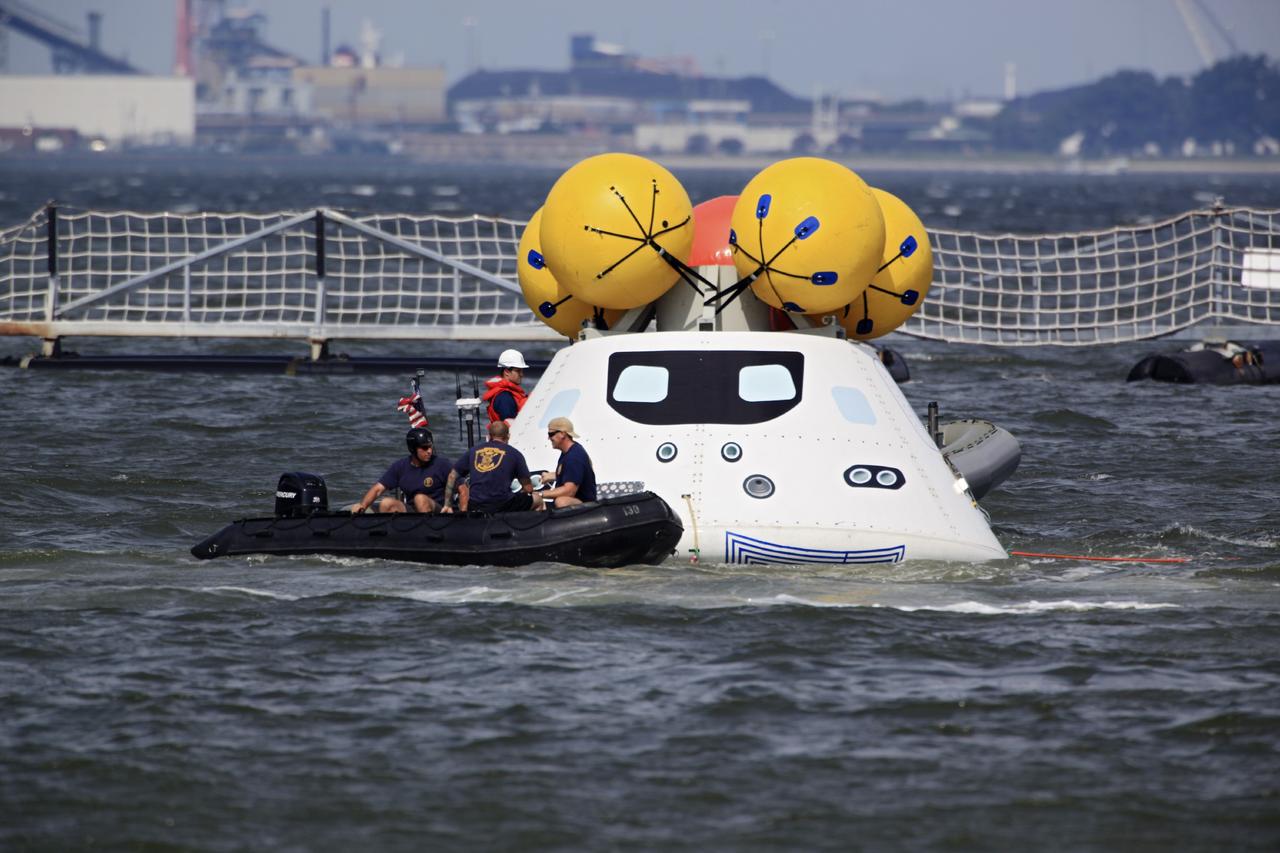
HAMPTON, Va. – At the Naval Station Norfolk near NASA’s Langley Research Center in Virginia, U.S. Navy personnel detach tether lines from the Orion boilerplate test article during a stationary recovery test in the water. NASA and the U.S. Navy are conducting tests to prepare for recovery of the Orion crew module and forward bay cover on its return from a deep space mission. The stationary recovery test will allow the teams to demonstrate and evaluate the recovery processes, procedures, hardware and personnel in a controlled environment before conducting a second recovery test next year in open waters. Orion is the exploration spacecraft designed to carry astronauts to destinations not yet explored by humans, including an asteroid and Mars. It will have emergency abort capability, sustain the crew during space travel and provide safe re-entry from deep space return velocities. The first unpiloted test flight of the Orion is scheduled to launch in 2014 atop a Delta IV rocket and in 2017 on NASA’s Space Launch System rocket. For more information, visit http://www.nasa.gov/orion. Photo credit: NASA/Dimitri Gerondidakis
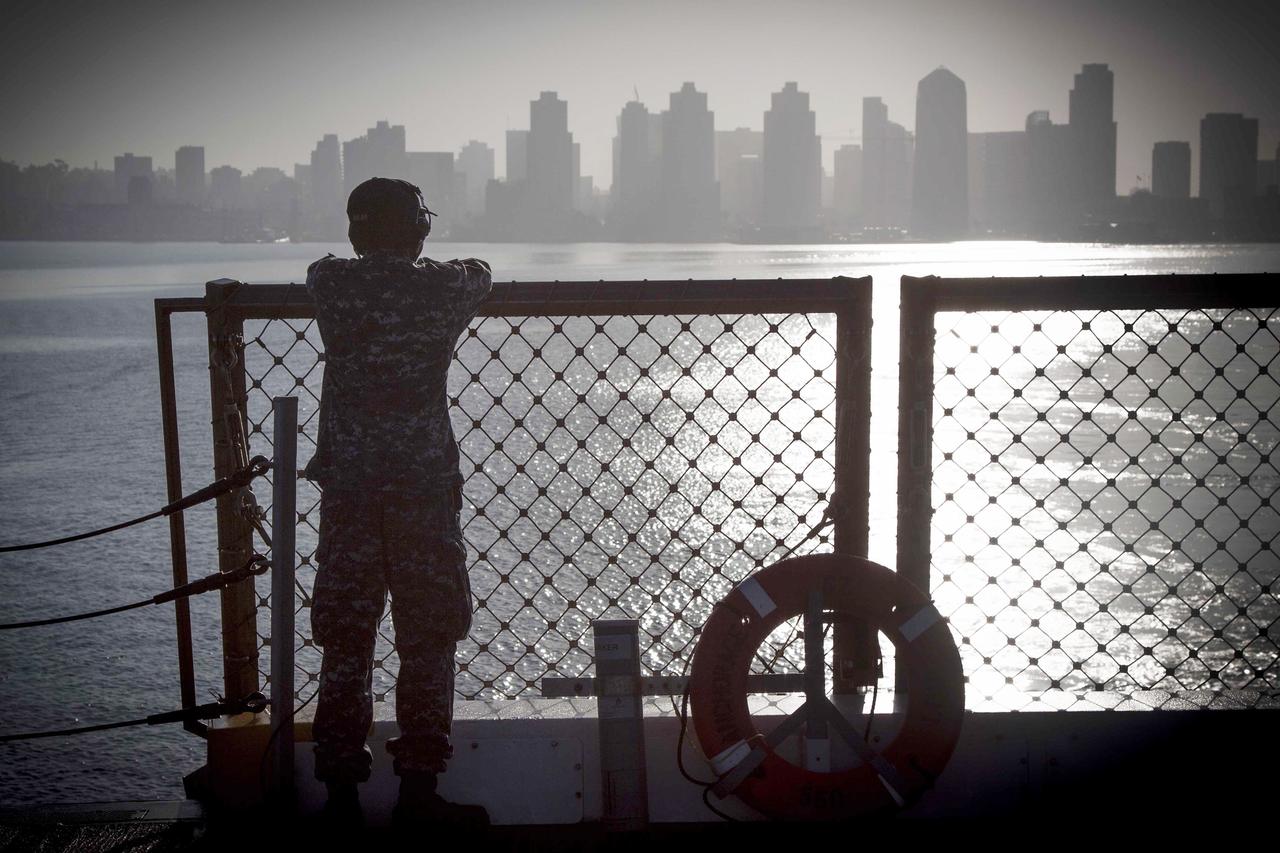
SAN DIEGO, Calif. – A member of the U.S. Navy watches the San Diego skyline from the deck of the USS Anchorage as the ship departs Naval Base San Diego on the first day of Orion Underway Recovery Test 3. The ship is heading out to sea, off the coast of San Diego, in search of conditions to support test needs for a full dress rehearsal of recovery operations. NASA, Lockheed Martin and U.S. Navy personnel will conduct tests in the Pacific Ocean to prepare for recovery of the Orion crew module on its return from a deep space mission. The test will allow the teams to demonstrate and evaluate the recovery processes, procedures, hardware and personnel in open waters. The Ground Systems Development and Operations Program is conducting the underway recovery tests. Orion is the exploration spacecraft designed to carry astronauts to destinations not yet explored by humans, including an asteroid and Mars. It will have emergency abort capability, sustain the crew during space travel and provide safe re-entry from deep space return velocities. The first unpiloted test flight of Orion is scheduled to launch in 2014 atop a United Launch Alliance Delta IV Heavy rocket and in 2018 on NASA’s Space Launch System rocket. For more information, visit http://www.nasa.gov/orion. Photo credit: NASA/Cory Huston

SAN DIEGO, Calif. – During the third day of Orion Underway Recovery Test 4A, NASA and U.S. Navy personnel prepare the Orion boilerplate test vehicle to be lowered by stationary crane from the USS Salvor, a safeguard-class rescue and salvage ship, into the Pacific Ocean. NASA, Lockheed Martin and the U.S. Navy are conducting the test to prepare for recovery of the Orion crew module on its return from a deep space mission. The underway recovery test allows the teams to demonstrate and evaluate the recovery processes, procedures, new hardware and personnel in open waters. The Ground Systems Development and Operations Program is conducting the underway recovery test. Orion is the exploration spacecraft designed to carry astronauts to destinations not yet explored by humans, including an asteroid and Mars. It will have emergency abort capability, sustain the crew during space travel and provide safe re-entry from deep space return velocities. The first unpiloted test flight of the Orion is scheduled to launch in December 2014 atop a United Launch Alliance Delta IV Heavy rocket and in 2018 on NASA’s Space Launch System rocket. For more information, visit http://www.nasa.gov/orion. Photo credit: NASA/Kim Shiflett
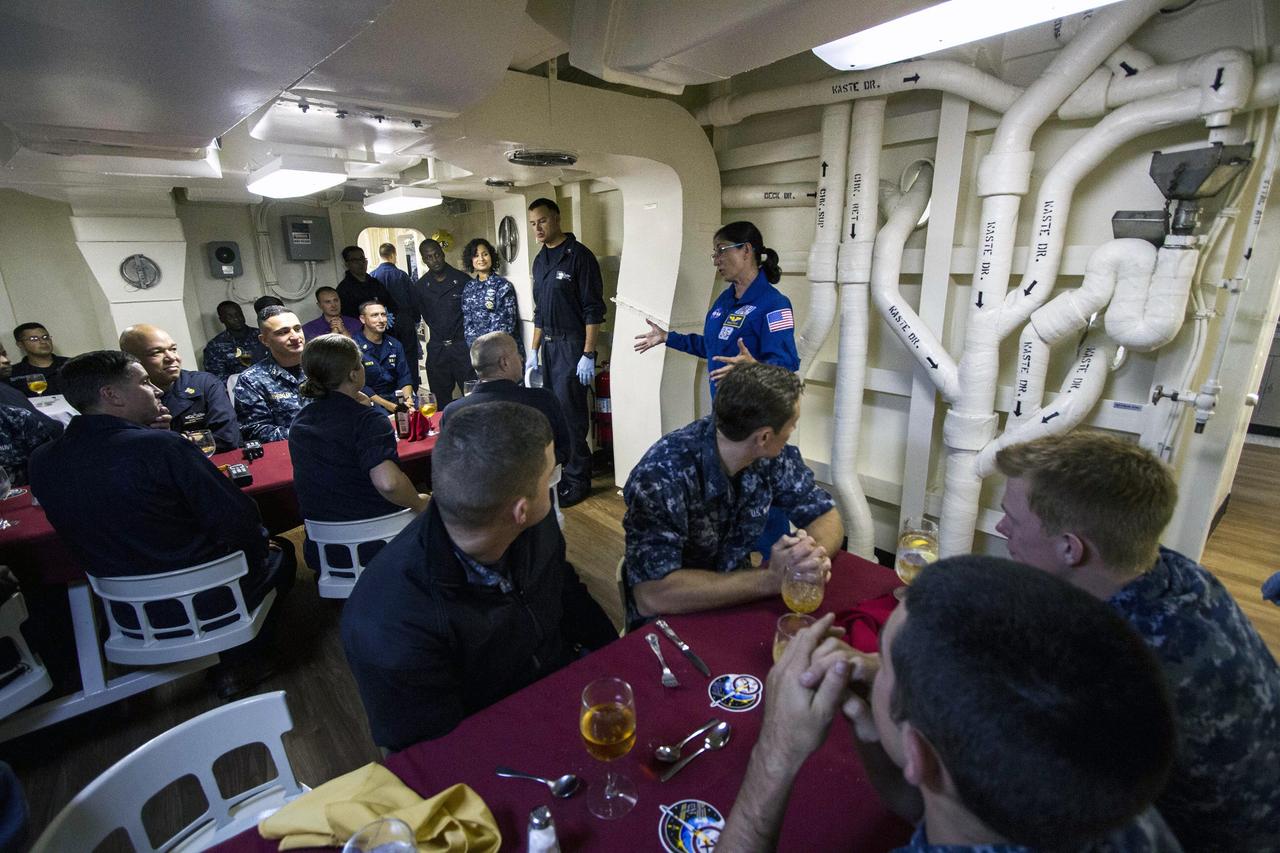
SAN DIEGO, Calif. – NASA astronaut Nicole Stott talks to members of the U.S. Navy inside the USS Anchorage during the Orion Underway Recovery Test 3 mission simulation day in the Pacific Ocean. The Orion boilerplate test vehicle is secured in the well deck of the ship. NASA, Lockheed Martin and U.S. Navy personnel are conducting the recovery test using the test vehicle to prepare for recovery of the Orion crew module on its return from a deep space mission. The test allows the teams to demonstrate and evaluate the recovery processes, procedures, hardware and personnel in open waters. The Ground Systems Development and Operations Program is conducting the underway recovery tests. Orion is the exploration spacecraft designed to carry astronauts to destinations not yet explored by humans, including an asteroid and Mars. It will have emergency abort capability, sustain the crew during space travel and provide safe re-entry from deep space return velocities. The first unpiloted test flight of Orion is scheduled to launch in 2014 atop a United Launch Alliance Delta IV Heavy rocket and in 2018 on NASA’s Space Launch System rocket. For more information, visit http://www.nasa.gov/orion. Photo credit: NASA/Cory Huston
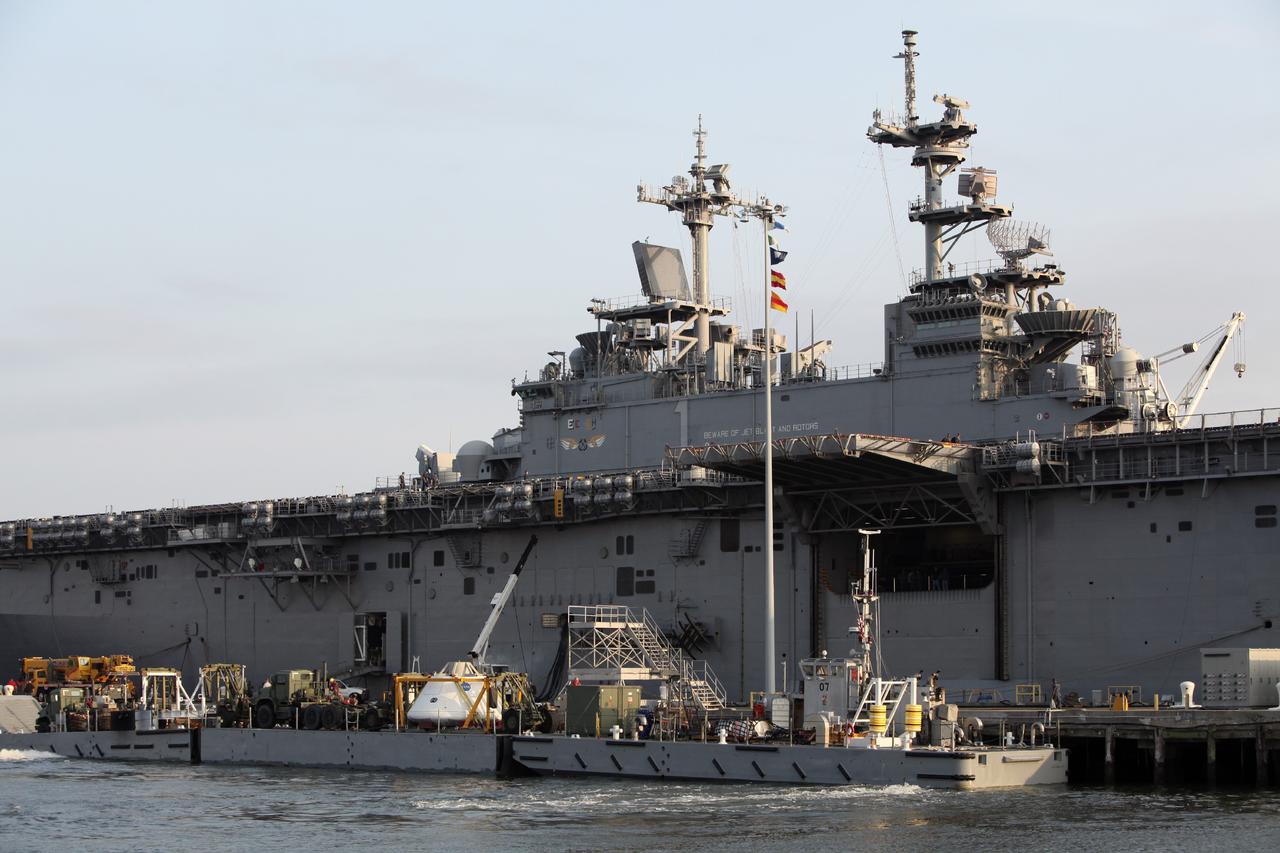
HAMPTON, Va. – At the Naval Station Norfolk near NASA’s Langley Research Center in Virginia, the Orion boilerplate test article and support equipment for a stationary recovery test are being transferred on a floating dock system to a U.S. Navy ship. NASA and the U.S. Navy are conducting tests to prepare for recovery of the Orion crew module and forward bay cover on its return from a deep space mission. The stationary recovery test will allow the teams to demonstrate and evaluate the recovery processes, procedures, hardware and personnel in a controlled environment before conducting a second recovery test next year in open waters. Orion is the exploration spacecraft designed to carry astronauts to destinations not yet explored by humans, including an asteroid and Mars. It will have emergency abort capability, sustain the crew during space travel and provide safe re-entry from deep space return velocities. The first unpiloted test flight of the Orion is scheduled to launch in 2014 atop a Delta IV rocket and in 2017 on a Space Launch System rocket. For more information, visit http://www.nasa.gov/orion. Photo credit: NASA/Dimitri Gerondidakis
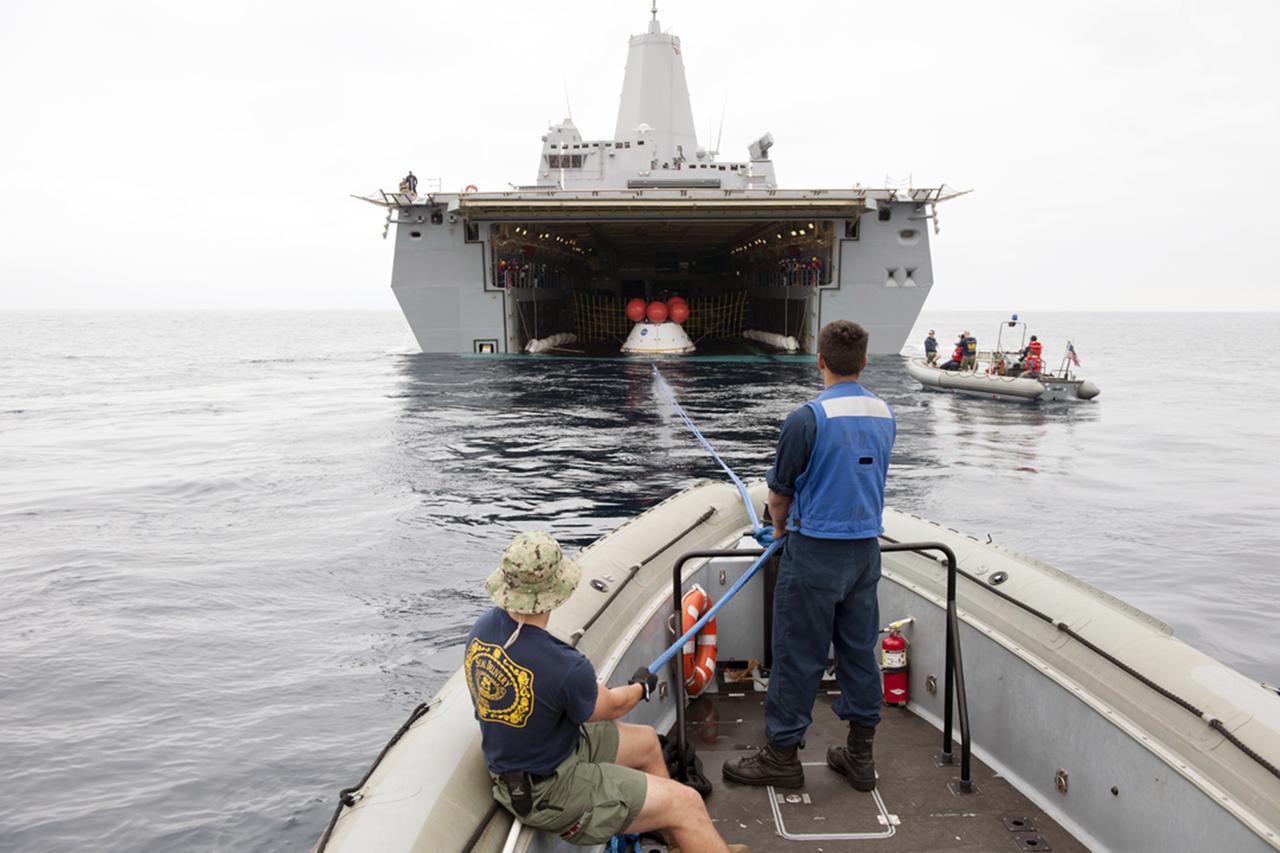
SAN DIEGO, Calif. – U.S. Navy personnel in a rigid hull inflatable boat practice with tether lines attached to the Orion boilerplate test vehicle during an evolution of the Underway Recovery Test 2 near the USS Anchorage in the Pacific Ocean off the coast of San Diego. The vehicle is outside of the ship. NASA, Lockheed Martin and the U.S. Navy are conducting the test to prepare for recovery of the Orion crew module on its return from a deep space mission. The underway recovery test will allow the teams to demonstrate and evaluate the recovery processes, procedures, new hardware and personnel in open waters. The Ground Systems Development and Operations Program is conducting the underway recovery test. Orion is the exploration spacecraft designed to carry astronauts to destinations not yet explored by humans, including an asteroid and Mars. It will have emergency abort capability, sustain the crew during space travel and provide safe re-entry from deep space return velocities. The first unpiloted test flight of the Orion is scheduled to launch in 2014 atop a Delta IV rocket and in 2017 on NASA’s Space Launch System rocket. For more information, visit http://www.nasa.gov/orion. Photo credit: NASA/Tony Gray
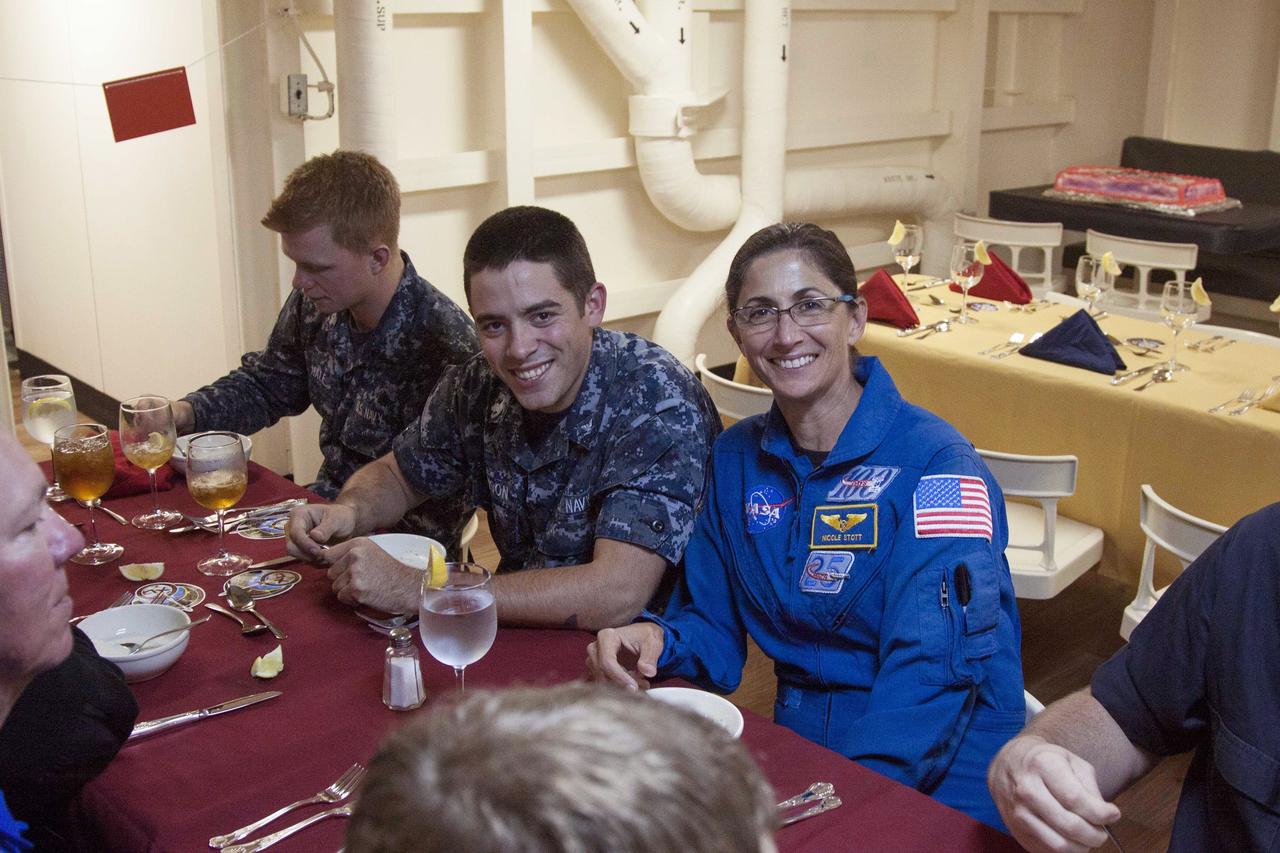
SAN DIEGO, Calif. – NASA astronaut Nicole Stott talks to members of the U.S. Navy inside the USS Anchorage during the Orion Underway Recovery Test 3 mission simulation day in the Pacific Ocean. The Orion boilerplate test vehicle is secured in the well deck of the ship. NASA, Lockheed Martin and U.S. Navy personnel are conducting the recovery test using the test vehicle to prepare for recovery of the Orion crew module on its return from a deep space mission. The test allows the teams to demonstrate and evaluate the recovery processes, procedures, hardware and personnel in open waters. The Ground Systems Development and Operations Program is conducting the underway recovery tests. Orion is the exploration spacecraft designed to carry astronauts to destinations not yet explored by humans, including an asteroid and Mars. It will have emergency abort capability, sustain the crew during space travel and provide safe re-entry from deep space return velocities. The first unpiloted test flight of Orion is scheduled to launch in 2014 atop a United Launch Alliance Delta IV Heavy rocket and in 2018 on NASA’s Space Launch System rocket. For more information, visit http://www.nasa.gov/orion. Photo credit: NASA/Cory Huston

SAN DIEGO, Calif. – At the U.S. Naval Base San Diego in California, NASA and U.S. Navy personnel make sure that the Orion boilerplate test vehicle and support hardware are secured in the well deck of the USS Anchorage for Underway Recovery Test 2. NASA, Lockheed Martin and the U.S. Navy will conduct tests in the Pacific Ocean to prepare for recovery of the Orion crew module, forward bay cover and parachutes on its return from a deep space mission. The second underway recovery test will allow the teams to demonstrate and evaluate the recovery processes, procedures, new hardware and personnel in open waters. The Ground Systems Development and Operations Program is conducting the underway recovery tests. Orion is the exploration spacecraft designed to carry astronauts to destinations not yet explored by humans, including an asteroid and Mars. It will have emergency abort capability, sustain the crew during space travel and provide safe re-entry from deep space return velocities. The first unpiloted test flight of the Orion is scheduled to launch in 2014 atop a Delta IV rocket and in 2017 on NASA’s Space Launch System rocket. For more information, visit http://www.nasa.gov/orion. Photo credit: NASA/Kim Shiflett
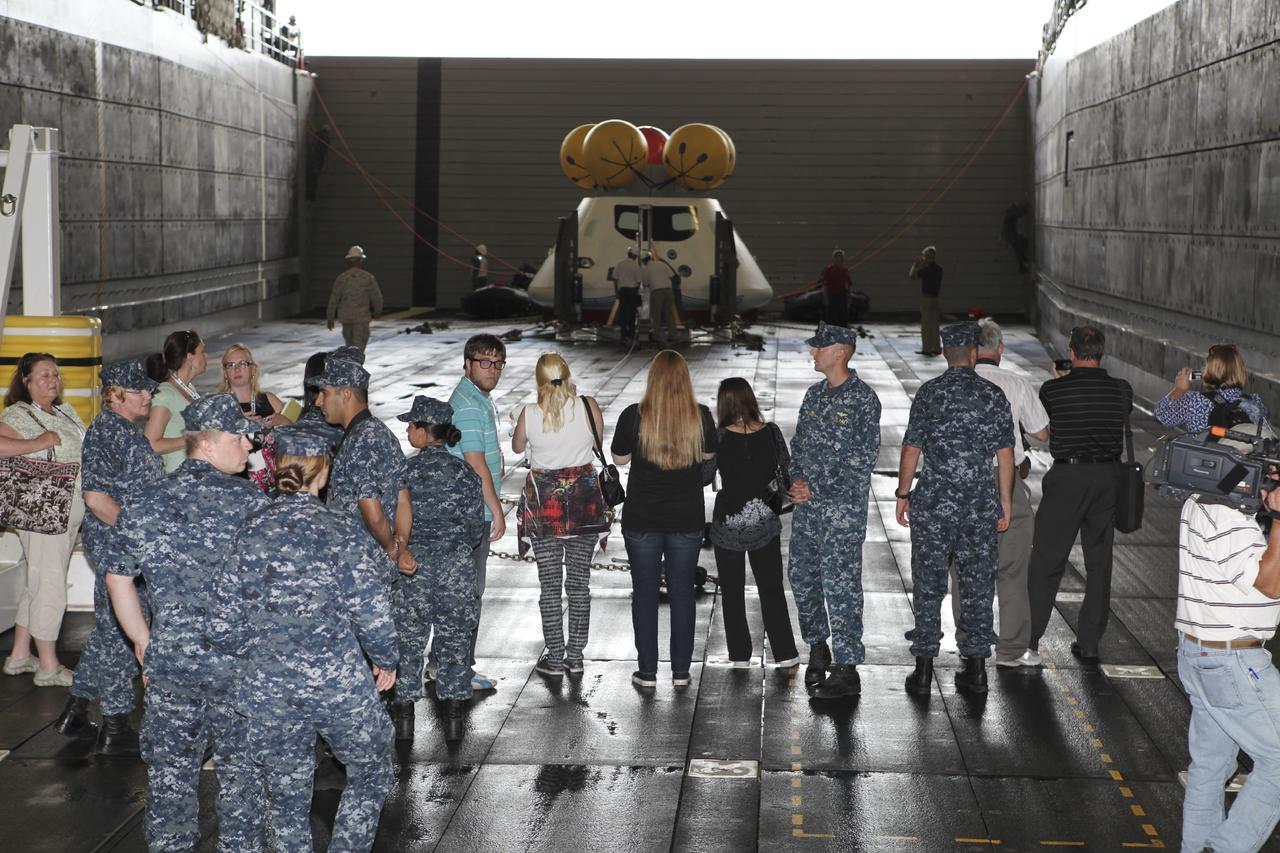
HAMPTON, Va. – At the Naval Station Norfolk near NASA’s Langley Research Center in Virginia, members of the media observe the Orion boilerplate test article and support equipment for a stationary recovery test secured in a U.S. Navy ship. NASA and the U.S. Navy are conducting tests to prepare for recovery of the Orion crew module and forward bay cover on its return from a deep space mission. The stationary recovery test will allow the teams to demonstrate and evaluate the recovery processes, procedures, hardware and personnel in a controlled environment before conducting a second recovery test next year in open waters. Orion is the exploration spacecraft designed to carry astronauts to destinations not yet explored by humans, including an asteroid and Mars. It will have emergency abort capability, sustain the crew during space travel and provide safe re-entry from deep space return velocities. The first unpiloted test flight of the Orion is scheduled to launch in 2014 atop a Delta IV rocket and in 2017 on NASA’s Space Launch System rocket. For more information, visit http://www.nasa.gov/orion. Photo credit: NASA/Dimitri Gerondidakis