
Astronomers using the Hubble Space Telescope (HST) have identified what may be the most luminous star known; a celestial mammoth that releases up to 10-million times the power of the Sun and is big enough to fill the diameter of Earth's orbit. The star unleashes as much energy in six seconds as our Sun does in one year. The image, taken by a UCLA-led team with the recently installed Near-Infrared Camera and Multi-Object Spectrometer (NICMOS) aboard the HST, also reveals a bright nebula, created by extremely massive stellar eruptions. The UCLA astronomers estimate that the star, called the Pistol Star, (for the pistol shaped nebula surrounding it), is approximately 25,000 light-years from Earth, near the center of our Milky Way galaxy. The Pistol Star is not visible to the eye, but is located in the direction of the constellation Sagittarius, hidden behind the great dust clouds along the Milky Way

Taking its first peek at Uranus, NASA Hubble Space Telescope Near Infrared Camera and Multi-Object Spectrometer NICMOS detected six distinct clouds in images taken July 28,1997.
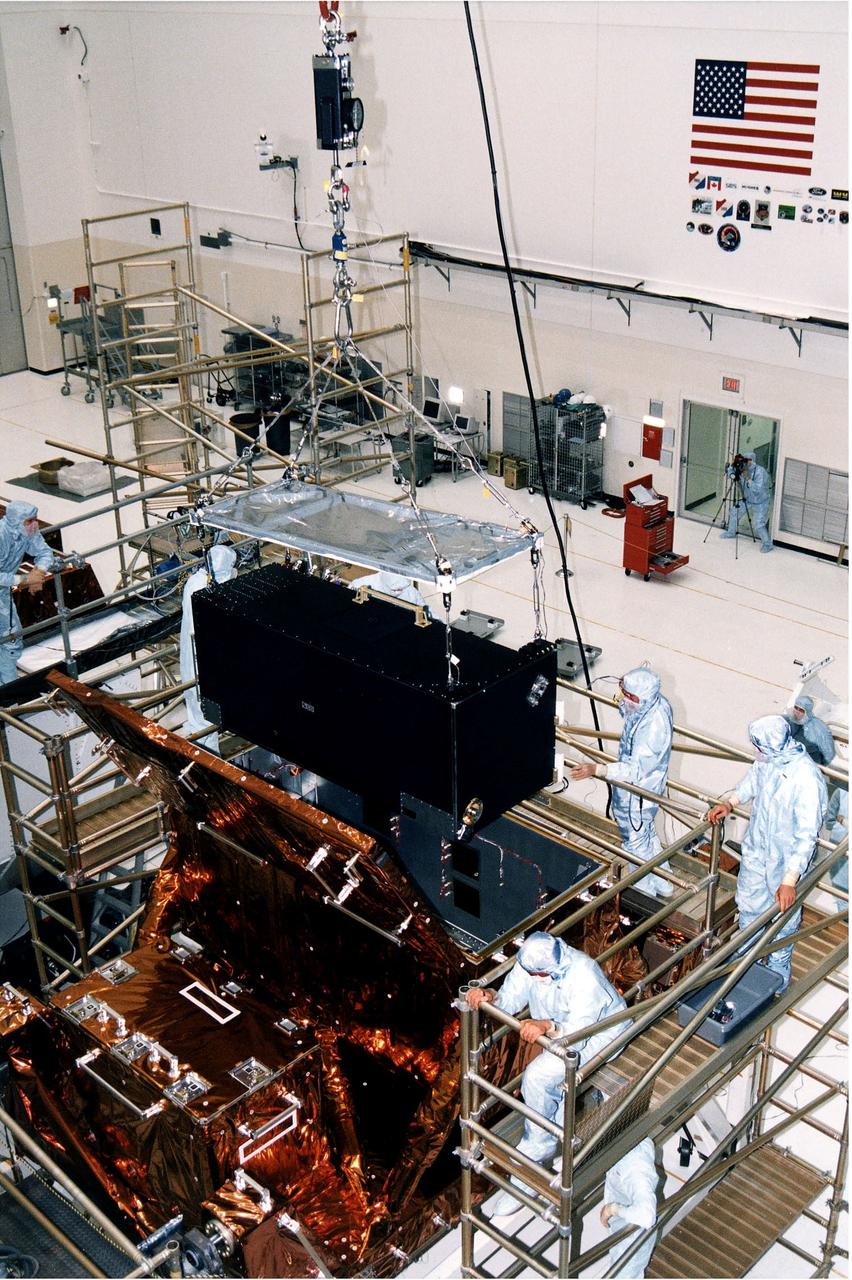
KENNEDY SPACE CENTER, FLA. - Workers in KSC's Vertical Processing Facility lower the Near Infrared Camera and Multi-Object Spectrometer (NICMOS) into the Second Axial Carrier. NICMOS is one of two new scientific instruments that will replace two outdated instruments on the Hubble Space Telescope (HST). NICMOS will provide HST with the capability for infrared imaging and spectroscopic observations of astronomical targets. The refrigerator-sized NICMOS is HST's first cryogenic instrument -- its sensitive infrared detectors must operate at very cold temperatures of minus 355 degrees Fahrenheit or 58 derees Kelvin. NICMOS will be installed in Hubble during STS-82, the second Hubble Space Telescope servicing mission. Liftoff is targeted Feb. 11 aboard Discovery with a crew of seven.
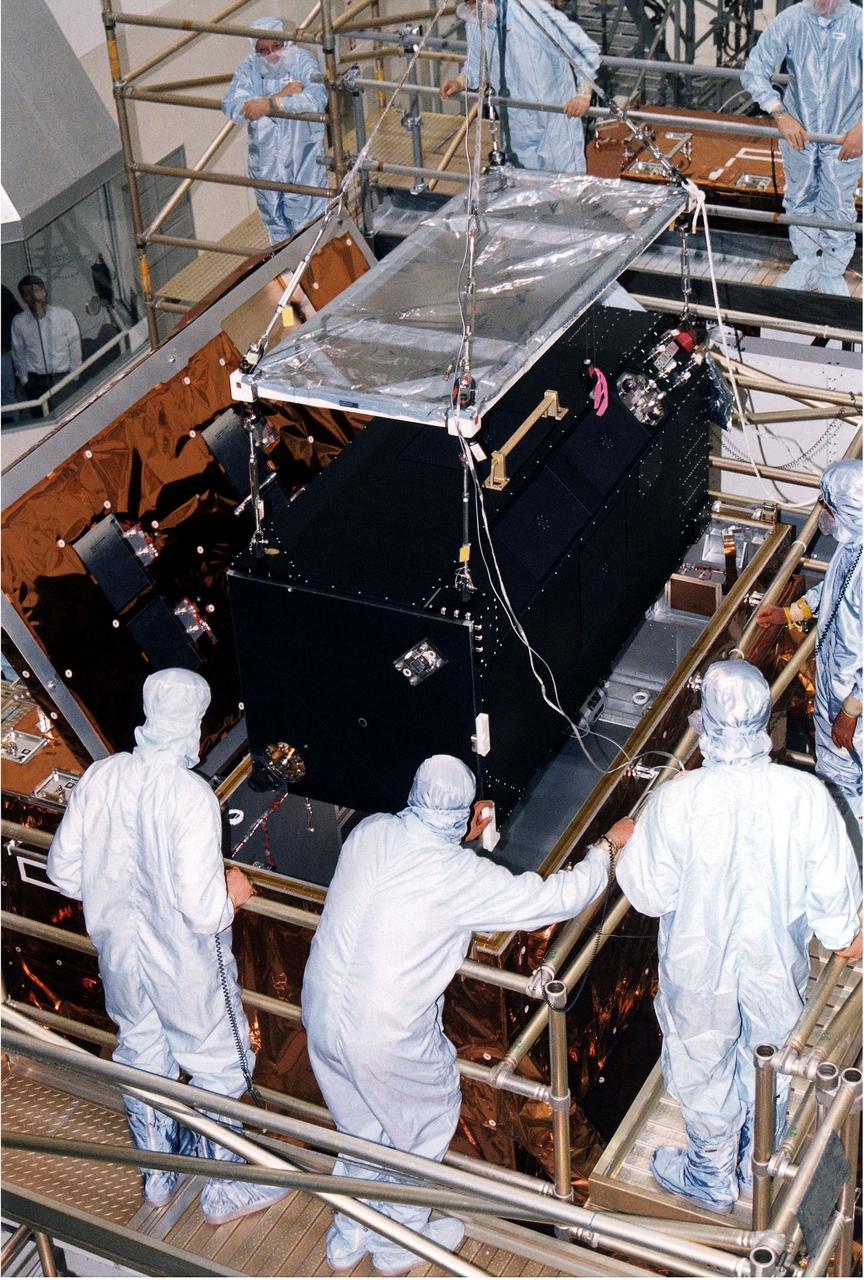
KENNEDY SPACE CENTER, FLA. - Workers in KSC's Vertical Processing Facility lower the Near Infrared Camera and Multi-Object Spectrometer (NICMOS) into the Second Axial Carrier. NICMOS is one of two new scientific instruments that will replace two outdated instruments on the Hubble Space Telescope (HST). NICMOS will provide HST with the capability for infrared imaging and spectroscopic observations of astronomical targets. The refrigerator-sized NICMOS also is HST's first cryogenic instrument — its sensitive infrared detectors must operate at very cold temperatures of minus 355 degrees Fahrenheit or 58 degrees Kelvin. NICMOS will be installed in Hubble during STS-82, the second Hubble Space Telescope servicing mission. Liftoff is targeted Feb. 11 aboard Discovery with a crew of seven.
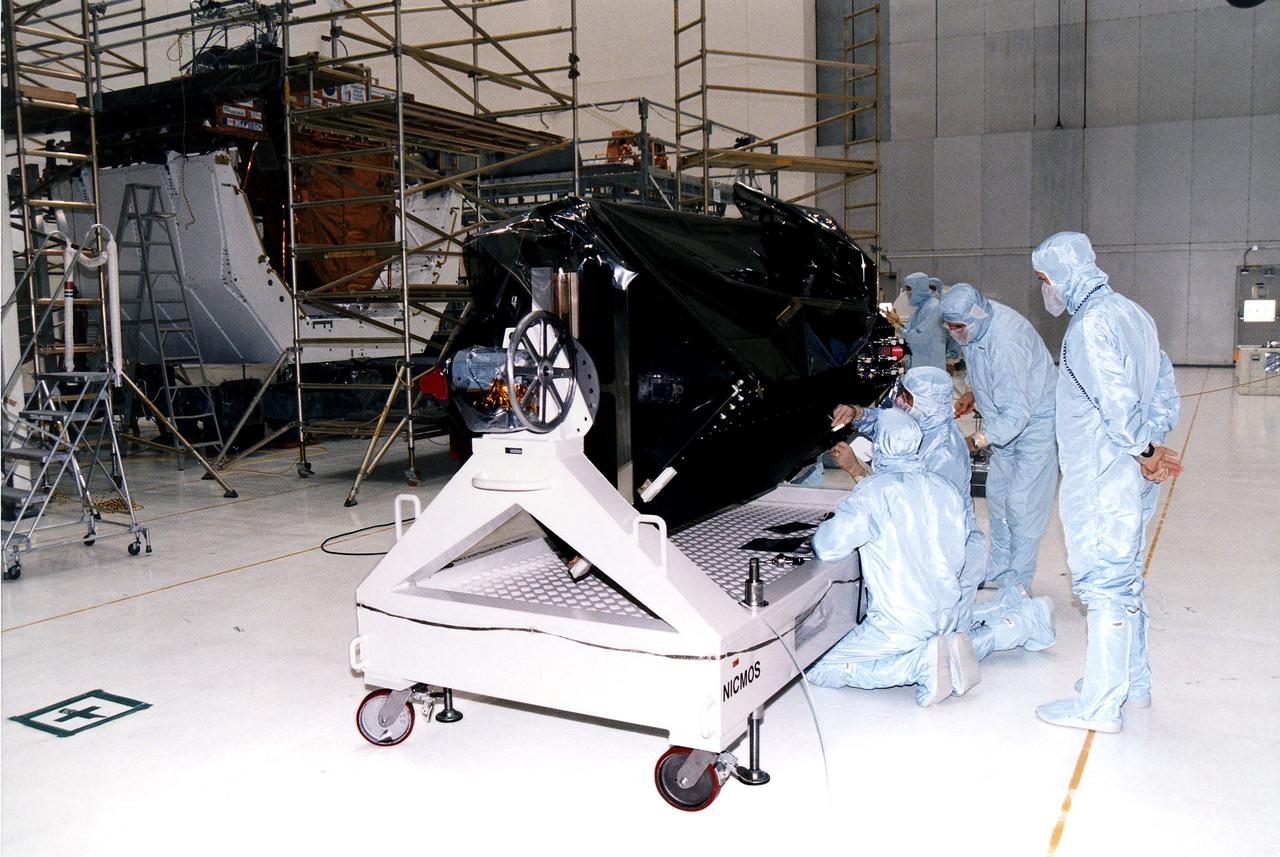
KENNEDY SPACE CENTER, FLA. - Workers in KSC's Vertical Processing Facility inspect the Near Infrared Camera and Multi-Object Spectrometer (NICMOS) on its handling fixture. NICMOS is one of two new scientific instruments that will replace two outdated instruments on the Hubble Space Telescope (HST). NICMOS will provide HST with the capability for infrared imaging and spectroscopic observations of astronomical targets. The refrigerator-sized NICMOS also is HST's first cryogenic instrument — its sensitive infrared detectors must operate at very cold temperatures of minus 355 degrees Fahrenheit or 58 degrees Kelvin. NICMOS will be installed in Hubble during STS-82, the second Hubble Space Telescope servicing mission. Liftoff is targeted Feb. 11 aboard Discovery with a crew of seven.
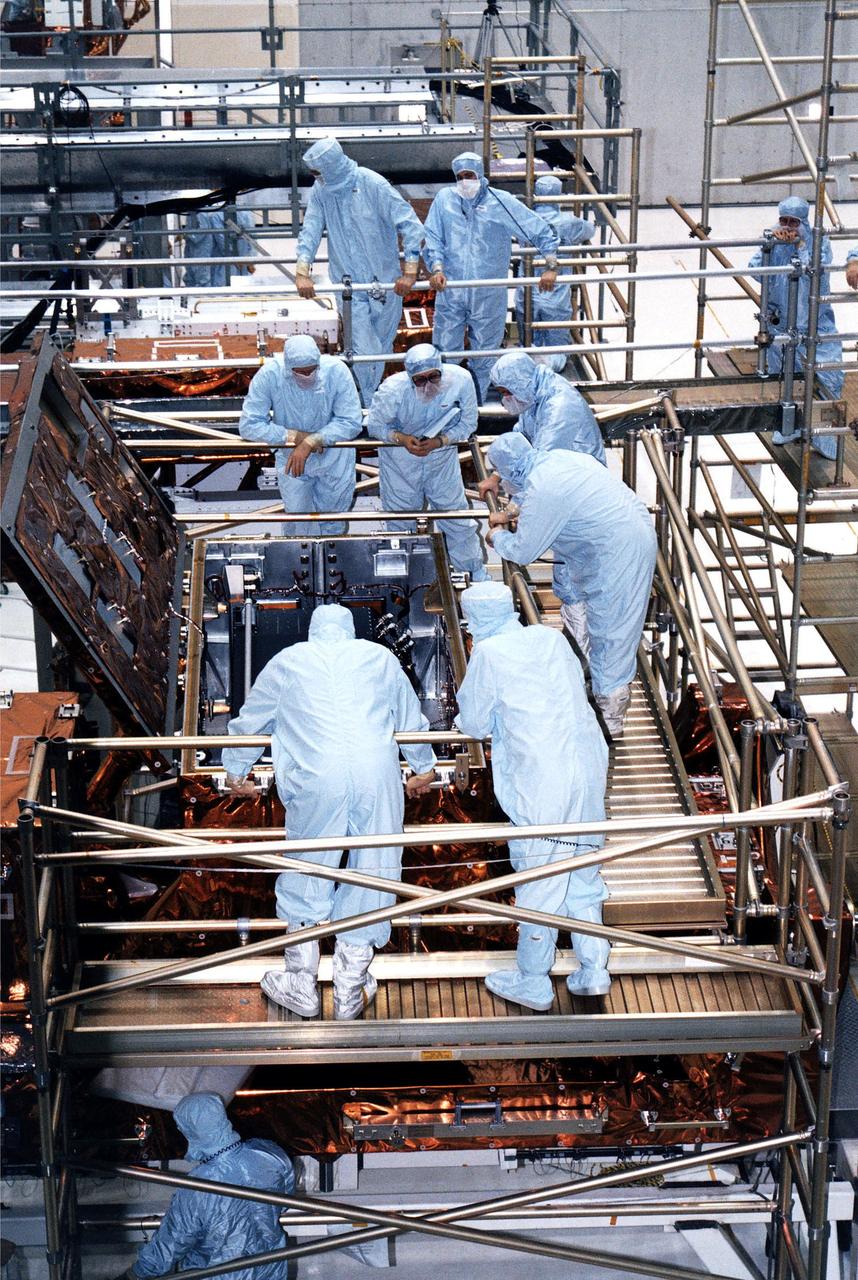
KENNEDY SPACE CENTER, FLA. - STS-82 crew members and workers at KSC's Vertical Processing Facility get a final look at the Near Infrared Camera and Multi-Object Spectrometer (NICMOS) in its flight configuration for the STS-82 mission. The crew is participating in the Crew Equipment Integration Test (CEIT). NICMOS is one of two new scientific instruments that will replace two outdated instruments on the Hubble Space Telescope (HST). NICMOS will provide HST with the capability for infrared imaging and spectroscopic observations of astronomical targets. The refrigerator-sized NICMOS also is HST's first cryogenic instrument - its sensitive infrared detectors must operate at very cold temperatures of minus 355 degrees Fahrenheit or 58 degrees Kelvin. NICMOS will be installed in Hubble during STS-82, the second Hubble Space Telescope servicing mission. Liftoff is scheduled Feb. 11 aboard Discovery with a crew of seven.
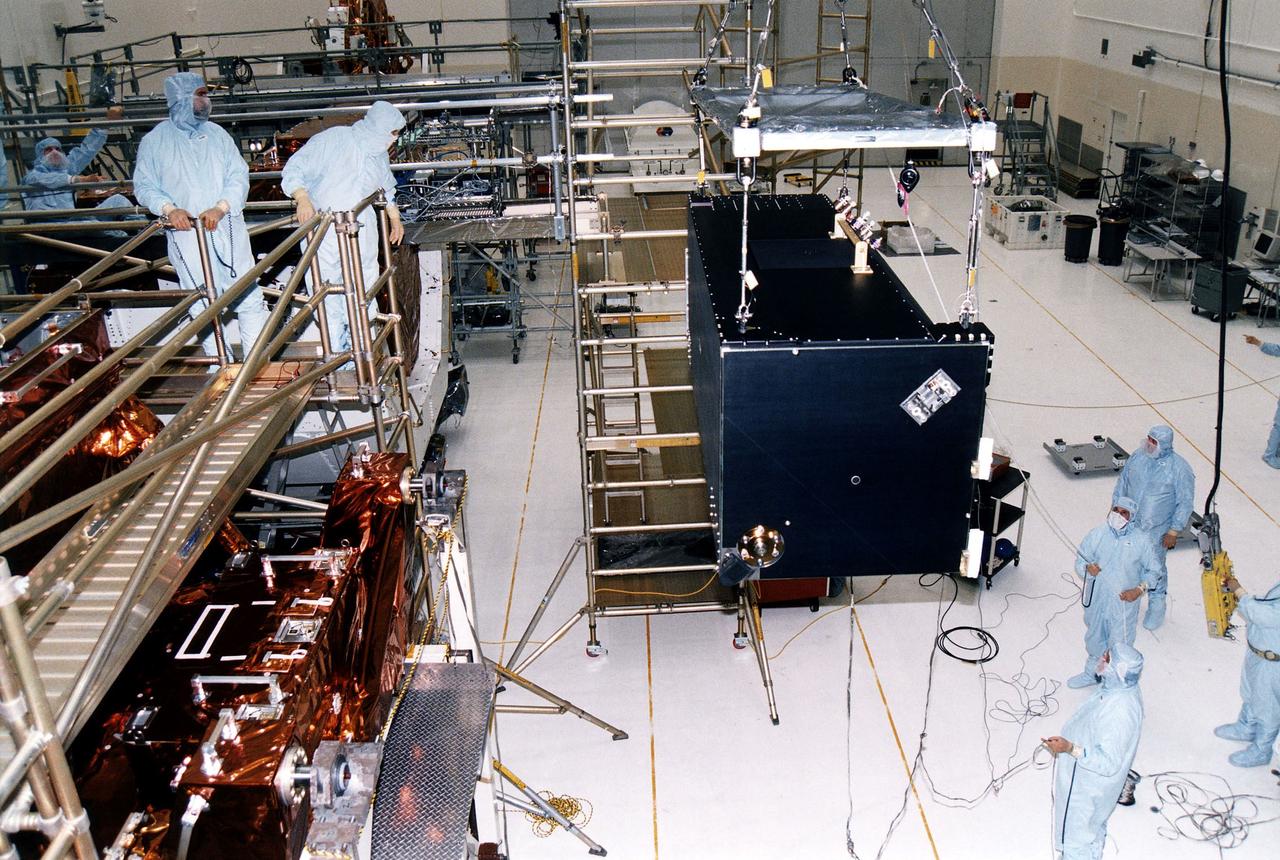
KENNEDY SPACE CENTER, FLA. - Workers in KSC's Vertical Processing Facility lift the Near Infrared Camera and Multi-Object Spectrometer (NICMOS) prior to its installation in the Second Axial Carrier. NICMOS is one of two new scientific instruments that will replace two outdated instruments on the Hubble Space Telescope (HST). NICMOS will provide HST with the capability for infrared imaging and spectroscopic observations of astronomical targets. The refrigerator-sized NICMOS also is HST's first cryogenic instrument — its sensitive infrared detectors must operate at very cold temperatures of minus 355 degrees Fahrenheit or 58 degrees Kelvin. NICMOS will be installed in Hubble during STS-82, the second Hubble Space Telescope servicing mission. Liftoff is targeted Feb. 11 aboard Discovery with a crew of seven.
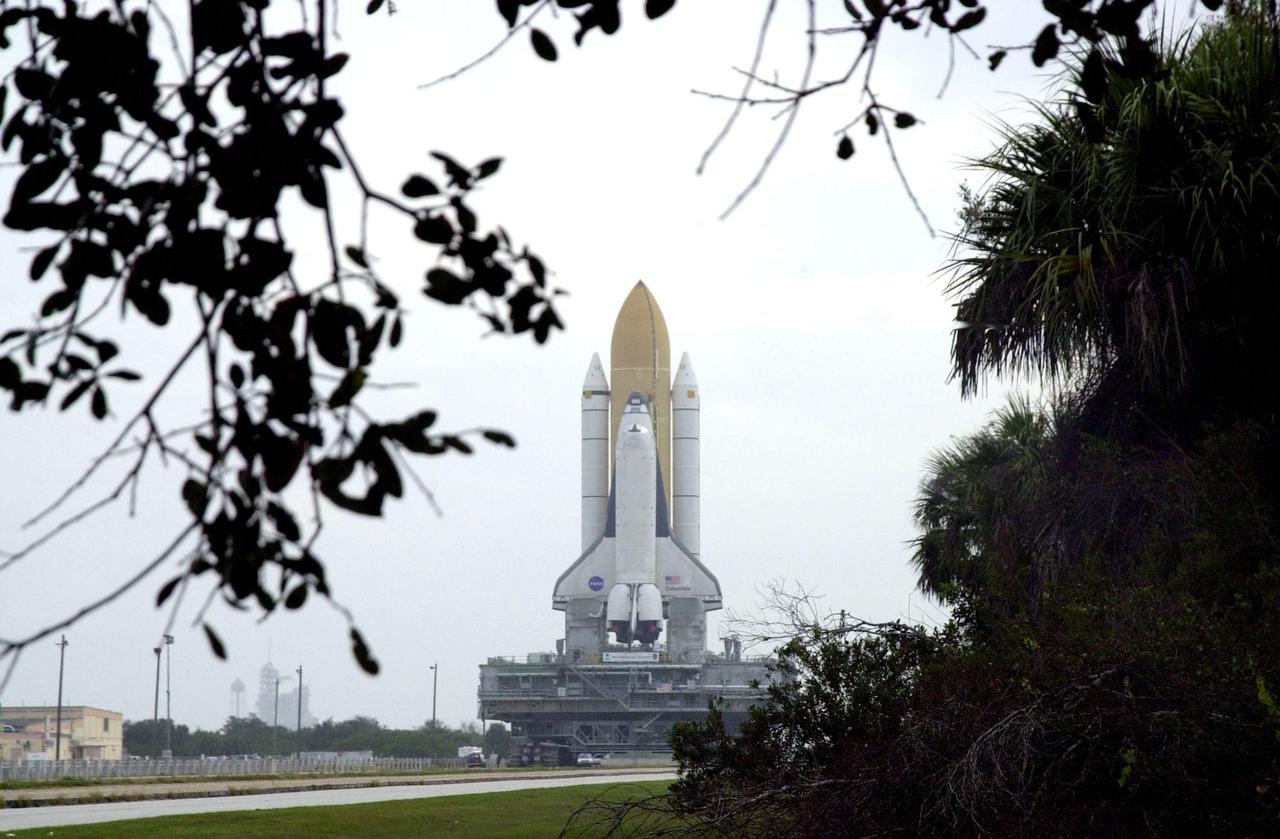
KENNEDY SPACE CENTER, FLA. -- Framed by trees and palmetto scrub, Space Shuttle Columbia is viewed atop its Mobile Launcher Platform as it rolls out to Launch Pad 39A. Underneath is the crawler-transporter, which carries the multi-ton vehicles to the launch pad. Columbia is scheduled to be launched Feb. 28 on mission STS-109, a Hubble Servicing Mission. The goal of the mission is to replace Solar Array 2 with Solar Array 3, replace the Power Control Unit, remove the Faint Object Camera and install the ACS, install the Near Infrared Camera and Multi-Object Spectrometer (NICMOS) Cooling System, and install New Outer Blanket Layer insulation
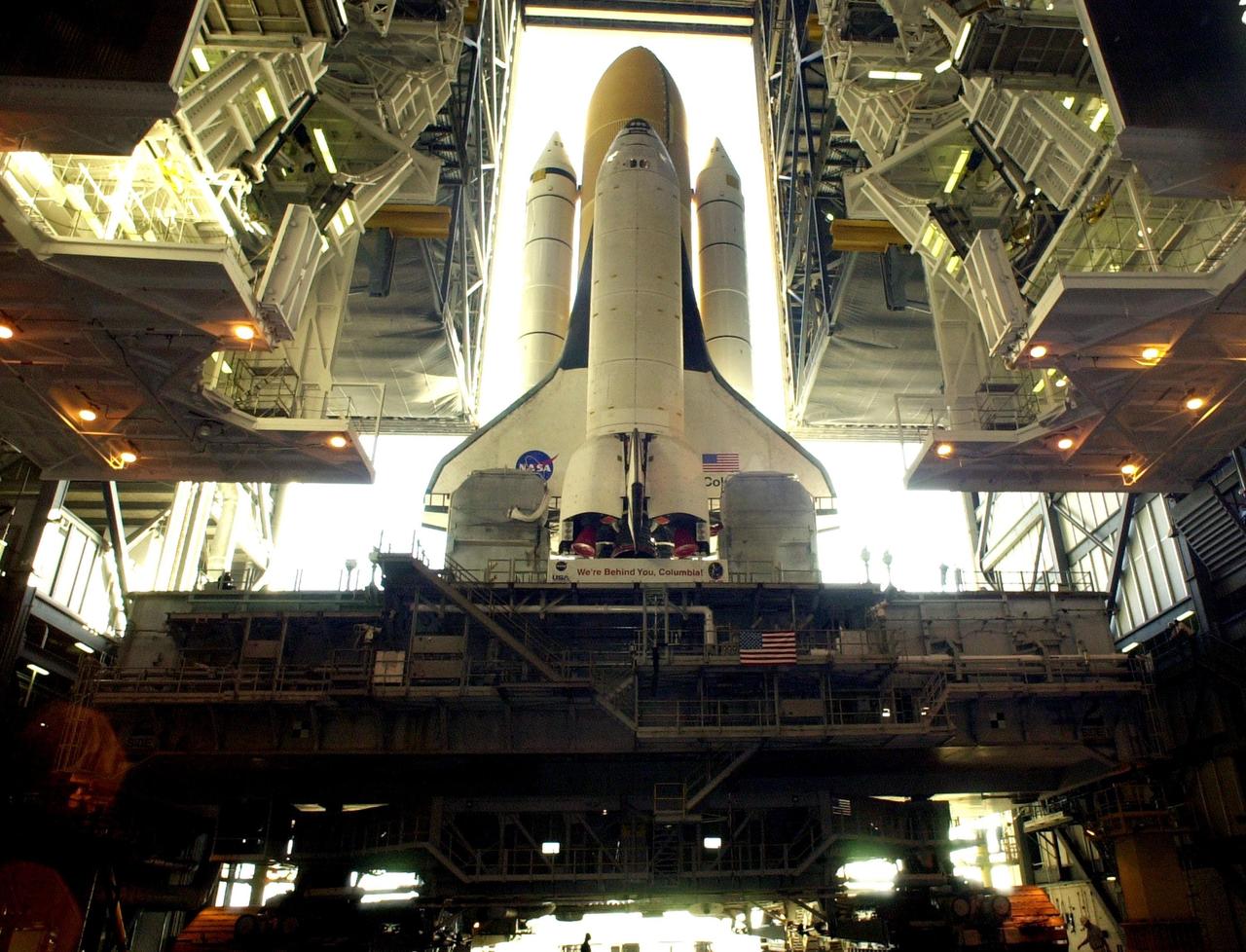
KENNEDY SPACE CENTER, FLA. -- Rollout of Space Shuttle Columbia from the Vehicle Assembly Building begins in the early light of morning. Columbia sits on top of the Mobile Launcher Platform. Underneath is the crawler-transporter, which carries the multi-ton vehicles to the launch pad. Columbia is scheduled to be launched Feb. 28 on mission STS-109, a Hubble Servicing Mission. The goal of the mission is to replace Solar Array 2 with Solar Array 3, replace the Power Control Unit, remove the Faint Object Camera and install the ACS, install the Near Infrared Camera and Multi-Object Spectrometer (NICMOS) Cooling System, and install New Outer Blanket Layer insulation
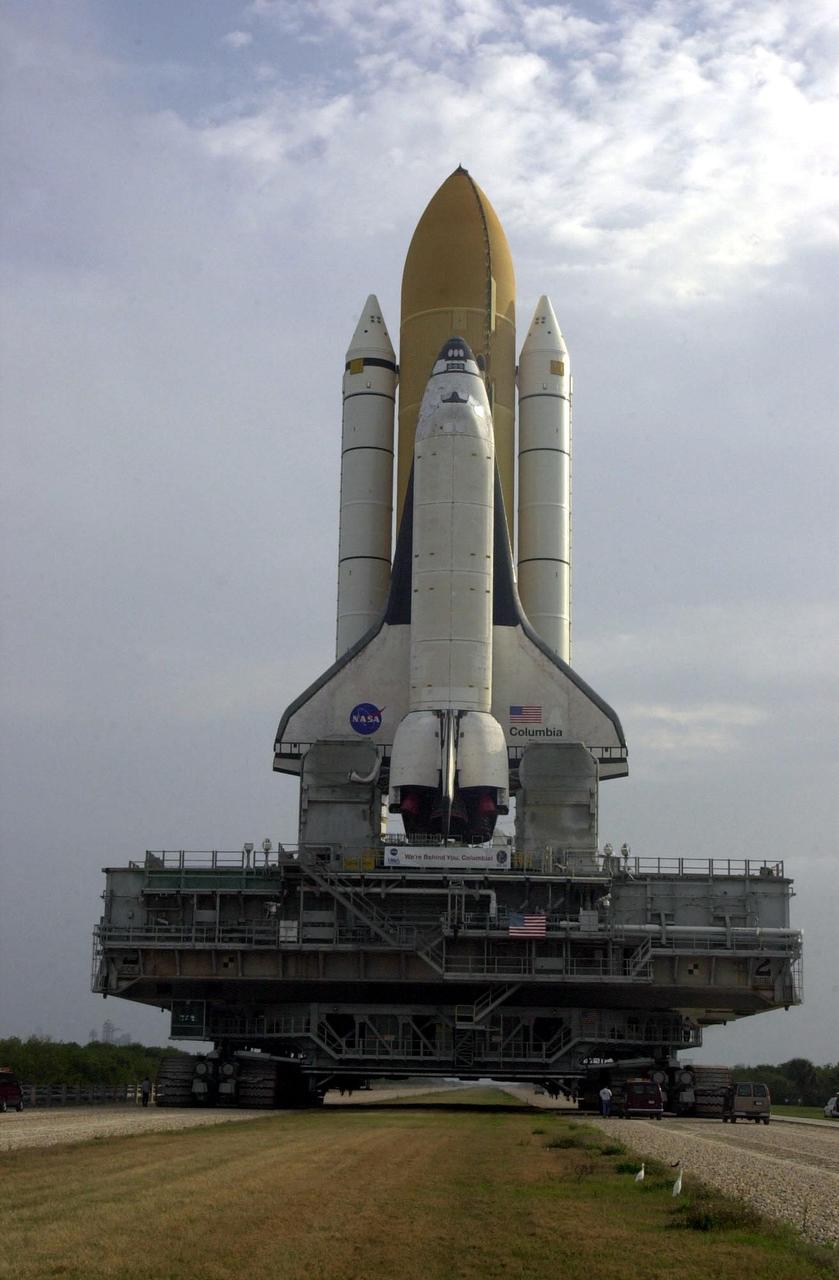
KENNEDY SPACE CENTER, FLA. -- A grey sky silhouettes Space Shuttle Columbia, atop its Mobile Launcher Platform, as it rolls out to Launch Pad 39A. Underneath is the crawler-transporter, which carries the multi-ton vehicles to the pad. In the grass behind the towering structures are two white herons. Columbia is scheduled to be launched Feb. 28 on mission STS-109, a Hubble Servicing Mission. The goal of the mission is to replace Solar Array 2 with Solar Array 3, replace the Power Control Unit, remove the Faint Object Camera and install the ACS, install the Near Infrared Camera and Multi-Object Spectrometer (NICMOS) Cooling System, and install New Outer Blanket Layer insulation
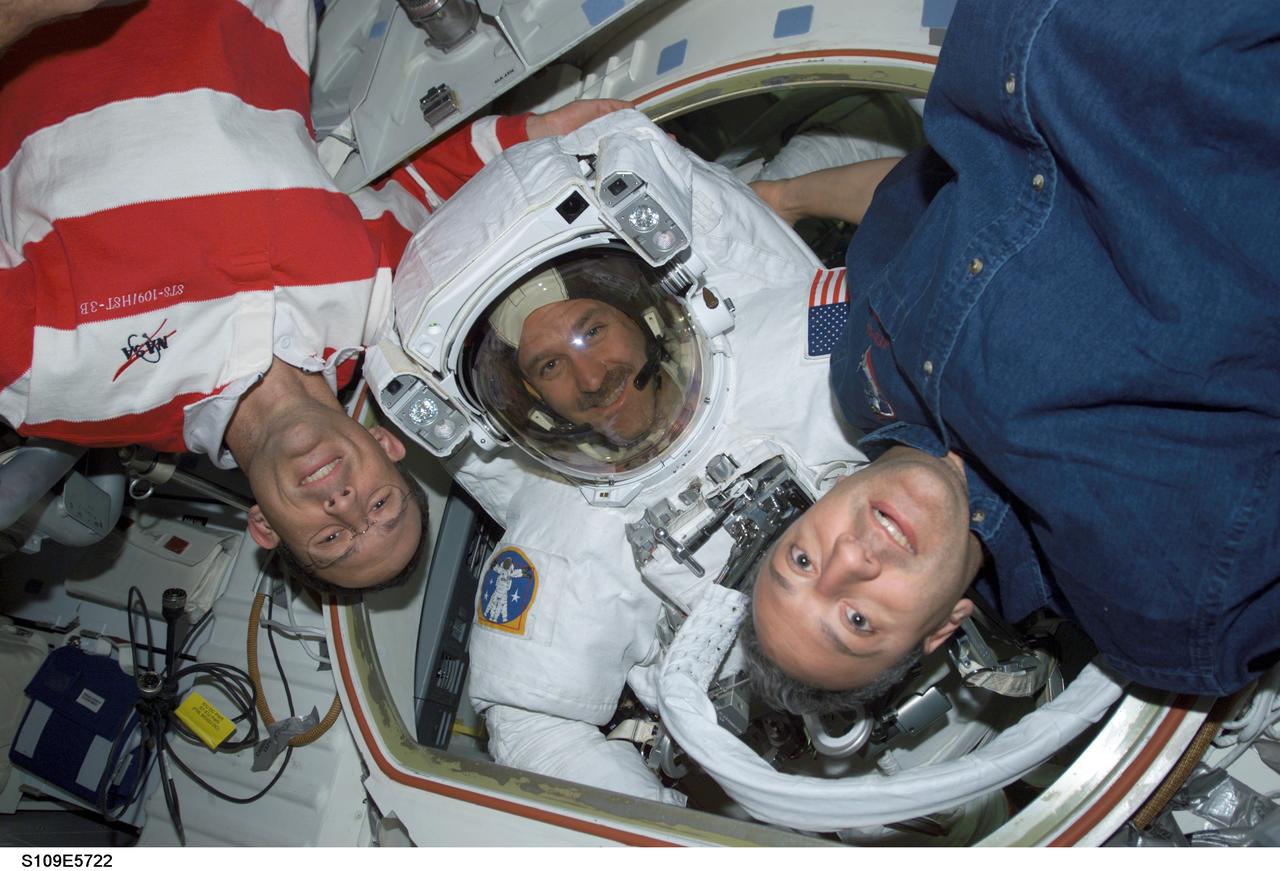
STS109-E-5722 (8 March 2002) --- Astronaut John M. Grunsfeld (center), STS-109 payload commander, attired in the extravehicular mobility unit (EMU) space suit, is photographed with astronauts James H. Newman (left) and Michael J. Massimino, both mission specialists, prior to the fifth space walk. Activities for EVA-5 centered around the Near-Infrared Camera and Multi-Object Spectrometer (NICMOS) to install a Cryogenic Cooler and its Cooling System Radiator. The image was recorded with a digital still camera.
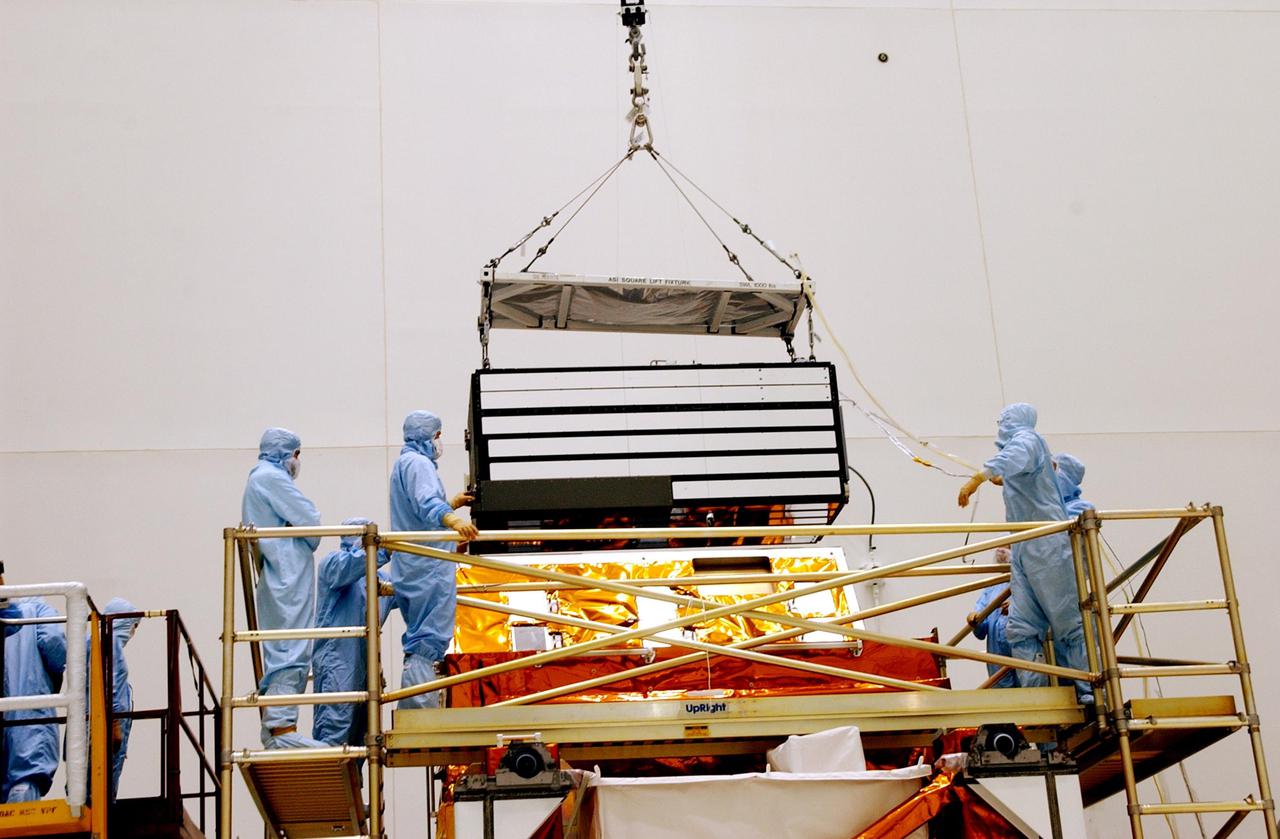
KENNEDY SPACE CENTER, FLA. -- In the Vertical Processing Facility, workers watch while an overhead crane lowers the Advanced Camera for Surveys (ACS) toward the Axial Science Instrument Protective Enclosure (ASIPE). The ACS is part of the payload on the Hubble Space Telescope Servicing Mission, STS-109. The goal of the mission is to service the HST, replacing Solar Array 2 with Solar Array 3, replacing the Power Control Unit, removing the Faint Object Camera and installing the ACS, installing the Near Infrared Camera and Multi-Object Spectrometer (NICMOS) Cooling System, and installing New Outer Blanket Layer insulation. Mission STS-109 is scheduled for launch no earlier than Feb. 21, 2002
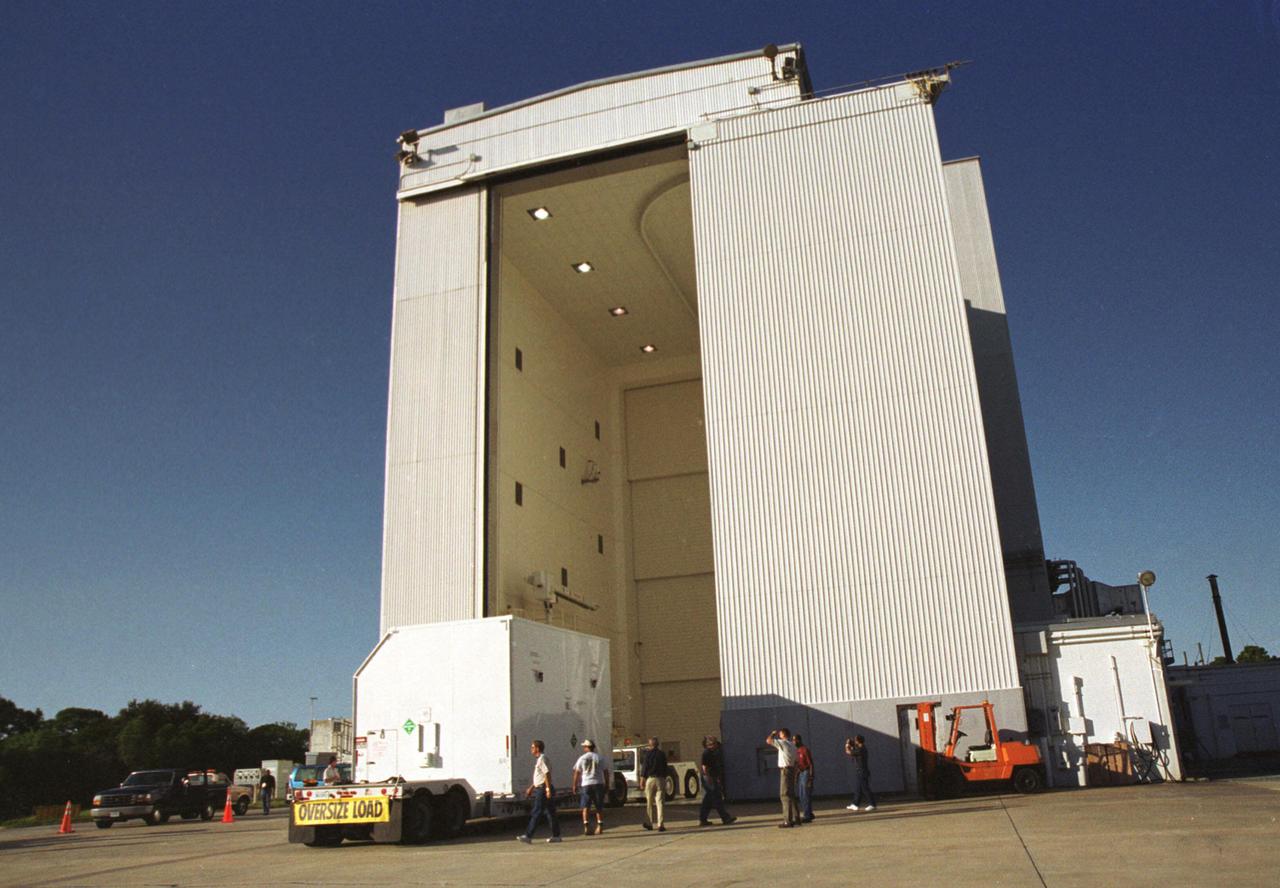
KENNEDY SPACE CENTER, Fla. -- The truck delivering part of the equipment to be used on mission STS-109 moves into the Vertical Processing Facility at KSC. The mission is to service the Hubble Space Telescope, replacing Solar Array 2 with Solar Array 3, replacing the Power Control Unit, removing the Faint Object Camera and installing the Advanced Camera for Surveys, installing the Near Infrared Camera and Multi-Object Spectrometer (NICMOS) Cooling System, and installing New Outer Blanket Layer insulation on bays 5 through 8. Mission STS-109 is scheduled for launch Feb. 14, 2002.
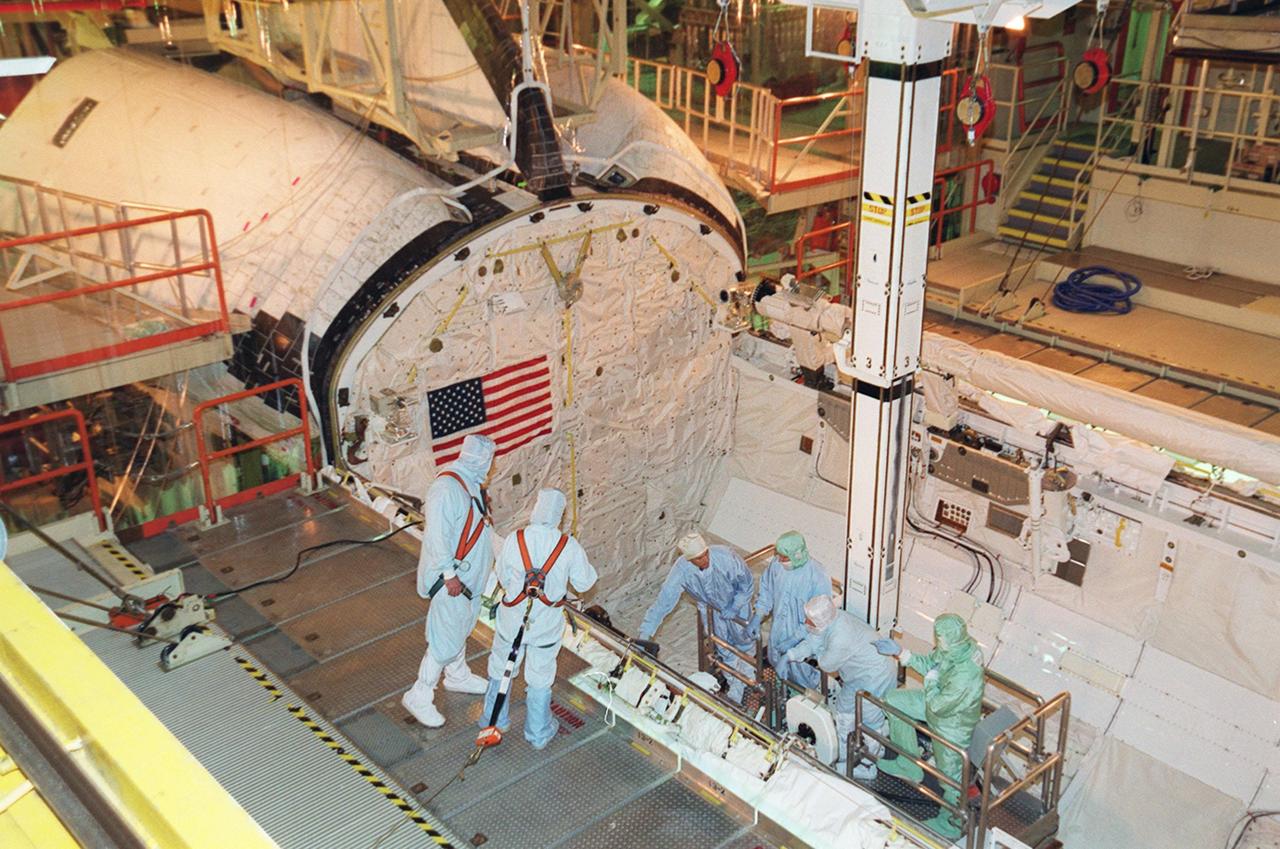
KENNEDY SPACE CENTER, Fla. - Members of the STS-109 crew are lowered into the payload bay of orbiter Columbia to check out some of the equipment. The crew is at KSC to take part in Crew Equipment Interface Test activities that include familiarization with the orbiter and equipment. The goal of the mission is to service the HST, replacing Solar Array 2 with Solar Array 3, replacing the Power Control Unit, removing the Faint Object Camera and installing the Advanced Camera for Surveys, installing the Near Infrared Camera and Multi-Object Spectrometer (NICMOS) Cooling System, and installing New Outer Blanket Layer insulation on bays 5 through 8. Mission STS-109 is scheduled for launch Feb. 14, 2002
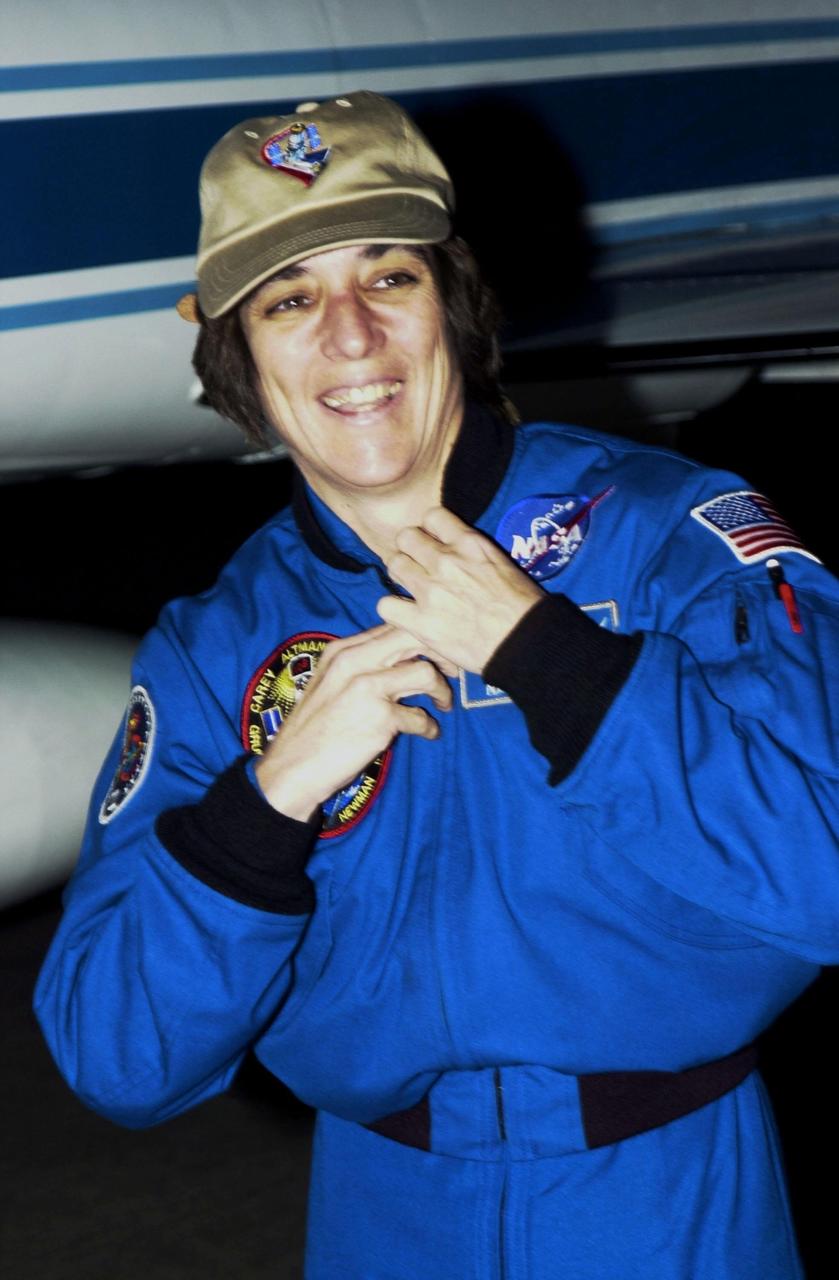
KENNEDY SPACE CENTER, Fla. - STS-109 Mission Specialist Nancy Currie arrives at KSC aboard a T-38 jet aircraft to begin launch preparations. This is Currie's fourth Shuttle flight. The goal of the 11-day mission is repair and maintenance on the Hubble Space Telescope. Five spacewalks are planned to replace Solar Array 2 with Solar Array 3, replace the Power Control Unit, remove the Faint Object Camera and install the Advanced Camera for Surveys (ACS), install the Near Infrared Camera and Multi-Object Spectrometer (NICMOS) Cooling System, and install New Outer Blanket Layer insulation. Launch is scheduled for Feb. 28 at 6:48 a.m. EST
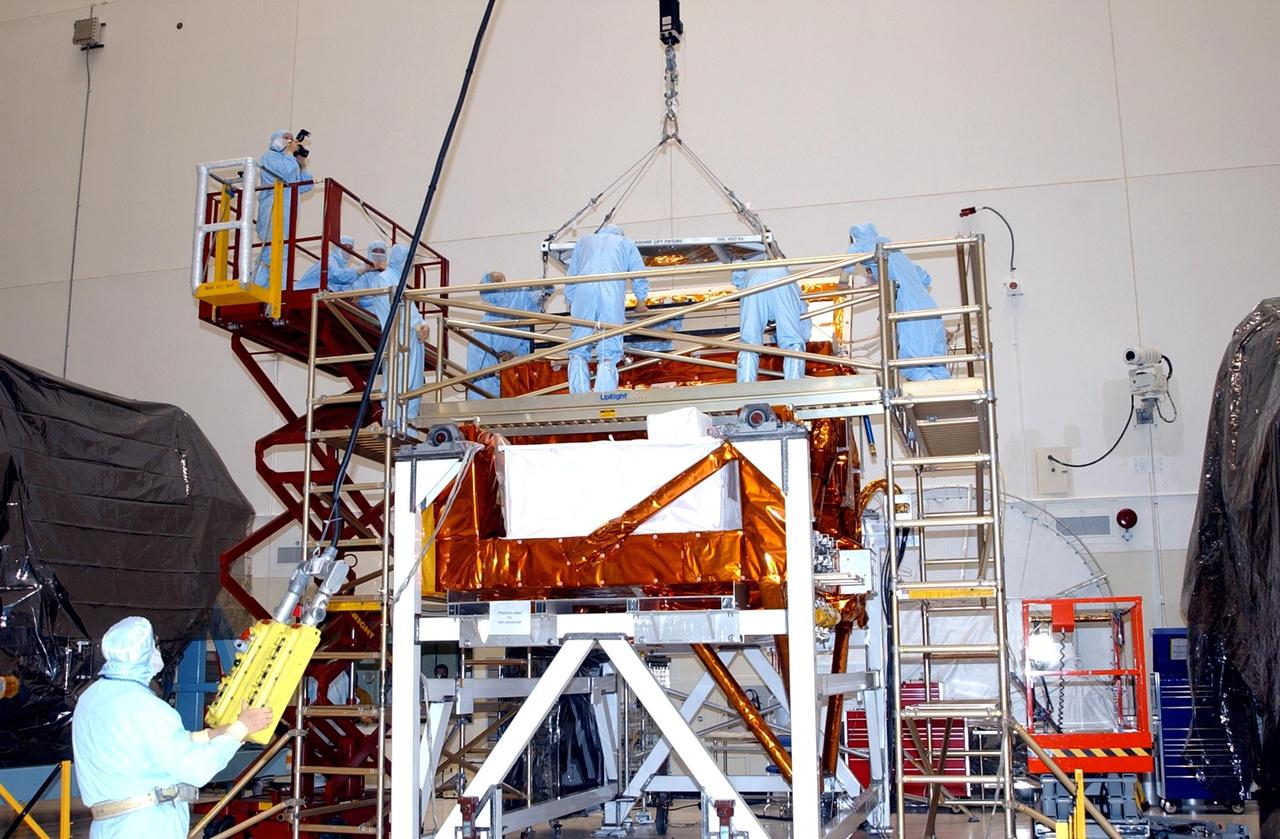
KENNEDY SPACE CENTER, FLA. -- In the Vertical Processing Facility, workers watch while an overhead crane lowers the Advanced Camera for Surveys (ACS) into the Axial Science Instrument Protective Enclosure (ASIPE). The ACS is part of the payload on the Hubble Space Telescope Servicing Mission, STS-109. The goal of the mission is to service the HST, replacing Solar Array 2 with Solar Array 3, replacing the Power Control Unit, removing the Faint Object Camera and installing the ACS, installing the Near Infrared Camera and Multi-Object Spectrometer (NICMOS) Cooling System, and installing New Outer Blanket Layer insulation. Mission STS-109 is scheduled for launch no earlier than Feb. 21, 2002
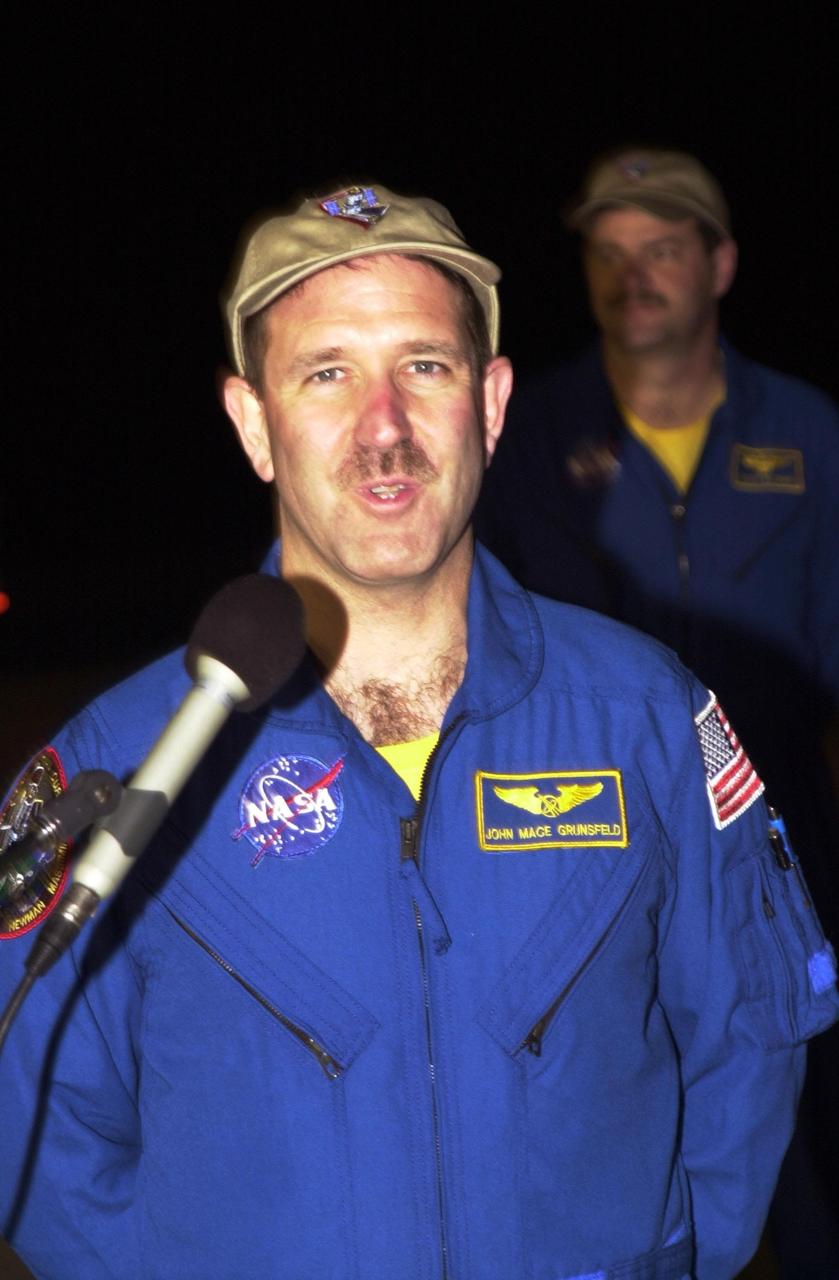
KENNEDY SPACE CENTER, Fla. - STS-109 Payload Commander John Grunsfeld arrives at KSC aboard a T-38 jet aircraft to begin launch preparations. This is Grunsfeld's fourth Shuttle flight. The goal of the 11-day mission is repair and maintenance on the Hubble Space Telescope. Five spacewalks are planned to replace Solar Array 2 with Solar Array 3, replace the Power Control Unit, remove the Faint Object Camera and install the Advanced Camera for Surveys (ACS), install the Near Infrared Camera and Multi-Object Spectrometer (NICMOS) Cooling System, and install New Outer Blanket Layer insulation. Launch is scheduled for Feb. 28 at 6:48 a.m. EST
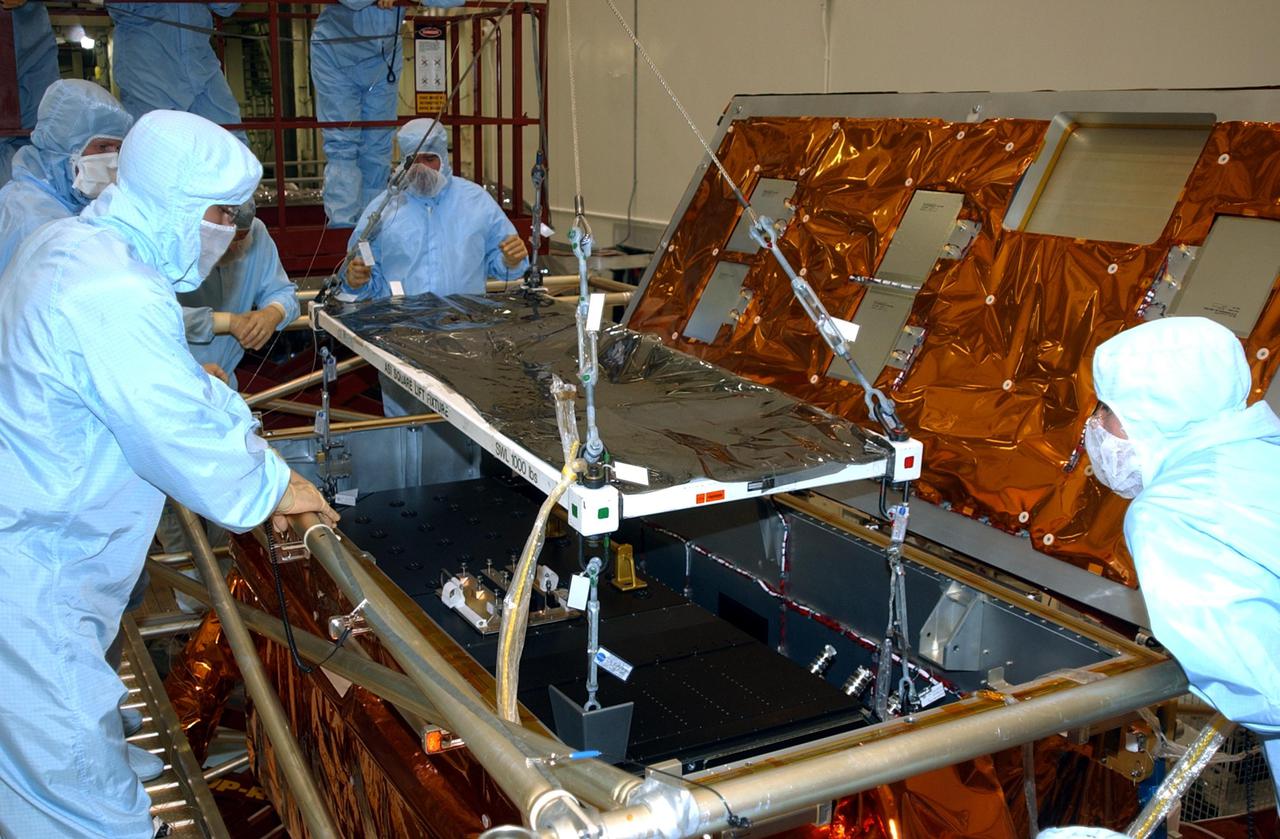
KENNEDY SPACE CENTER, FLA. -- In the Vertical Processing Facility, workers watch while the Advanced Camera for Surveys (ACS) is lowered into the Axial Science Instrument Protective Enclosure (ASIPE). The ACS is part of the payload on the Hubble Space Telescope Servicing Mission, STS-109. The goal of the mission is to service the HST, replacing Solar Array 2 with Solar Array 3, replacing the Power Control Unit, removing the Faint Object Camera and installing the ACS, installing the Near Infrared Camera and Multi-Object Spectrometer (NICMOS) Cooling System, and installing New Outer Blanket Layer insulation. Mission STS-109 is scheduled for launch no earlier than Feb. 21, 2002
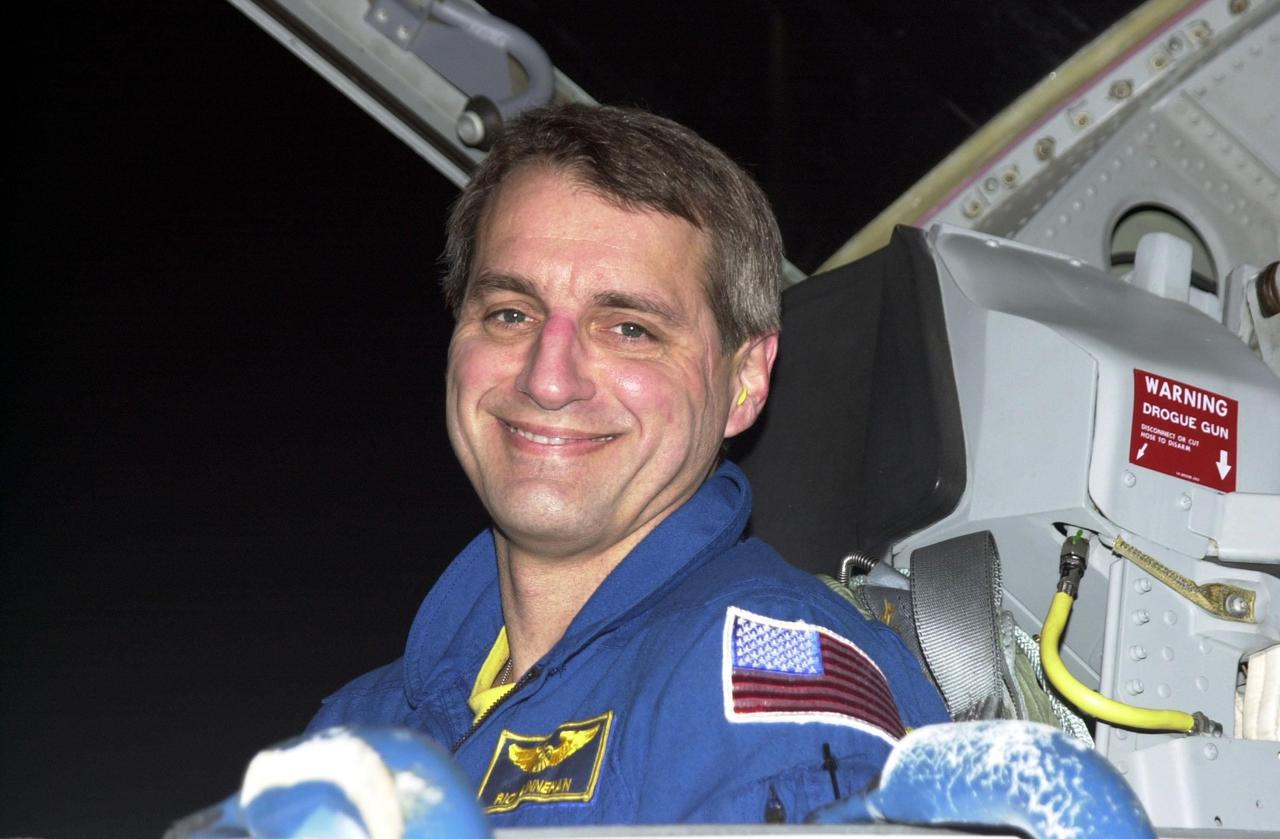
KENNEDY SPACE CENTER, FLA. - STS-109 Mission Specialist Richard Linnehan arrives at KSC aboard a T-38 jet aircraft to begin launch preparations. This is Linnehan's third Shuttle flight. The goal of the 11-day mission is repair and maintenance on the Hubble Space Telescope. Five spacewalks are planned to replace Solar Array 2 with Solar Array 3, replace the Power Control Unit, remove the Faint Object Camera and install the Advanced Camera for Surveys (ACS), install the Near Infrared Camera and Multi-Object Spectrometer (NICMOS) Cooling System, and install New Outer Blanket Layer insulation. Launch is scheduled for Feb. 28 at 6:48 a.m. EST
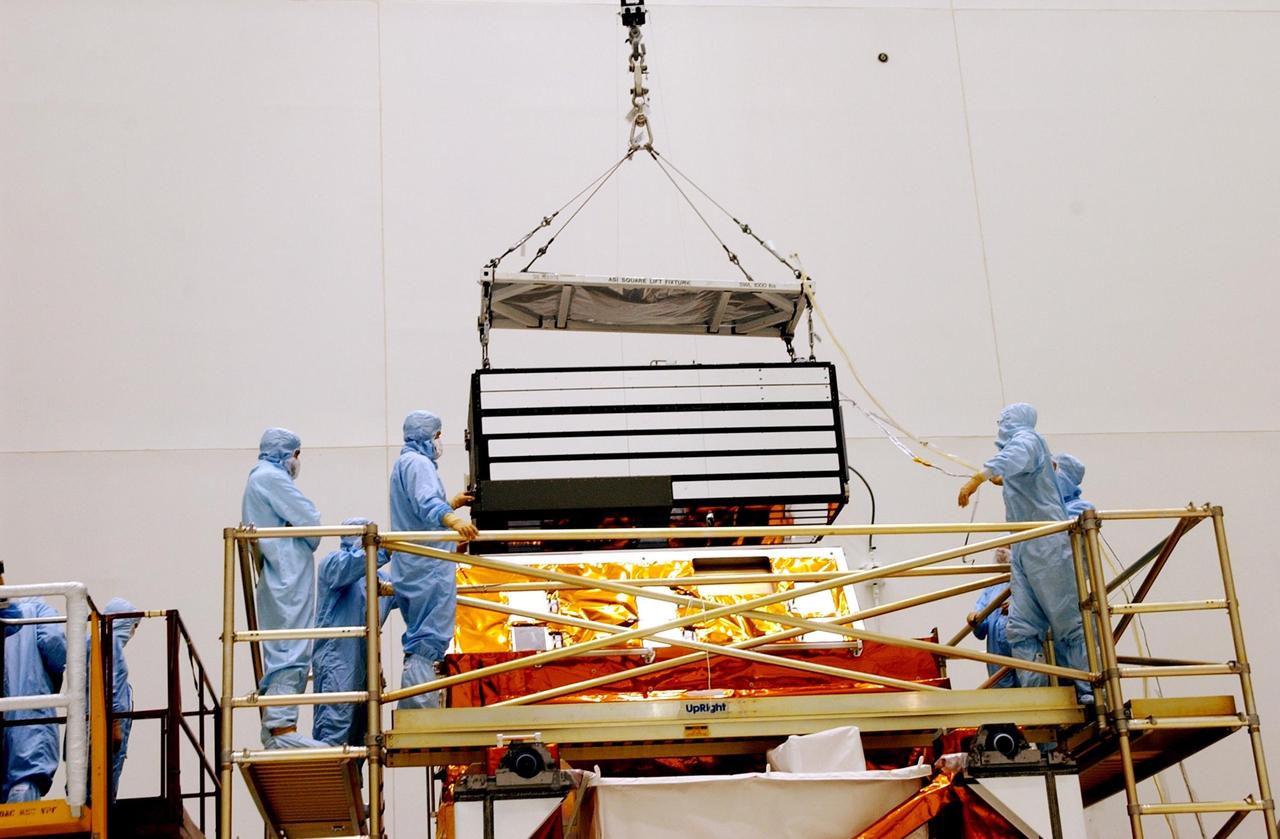
KENNEDY SPACE CENTER, FLA. -- In the Vertical Processing Facility, workers watch while an overhead crane lowers the Advanced Camera for Surveys (ACS) toward the Axial Science Instrument Protective Enclosure (ASIPE). The ACS is part of the payload on the Hubble Space Telescope Servicing Mission, STS-109. The goal of the mission is to service the HST, replacing Solar Array 2 with Solar Array 3, replacing the Power Control Unit, removing the Faint Object Camera and installing the ACS, installing the Near Infrared Camera and Multi-Object Spectrometer (NICMOS) Cooling System, and installing New Outer Blanket Layer insulation. Mission STS-109 is scheduled for launch no earlier than Feb. 21, 2002
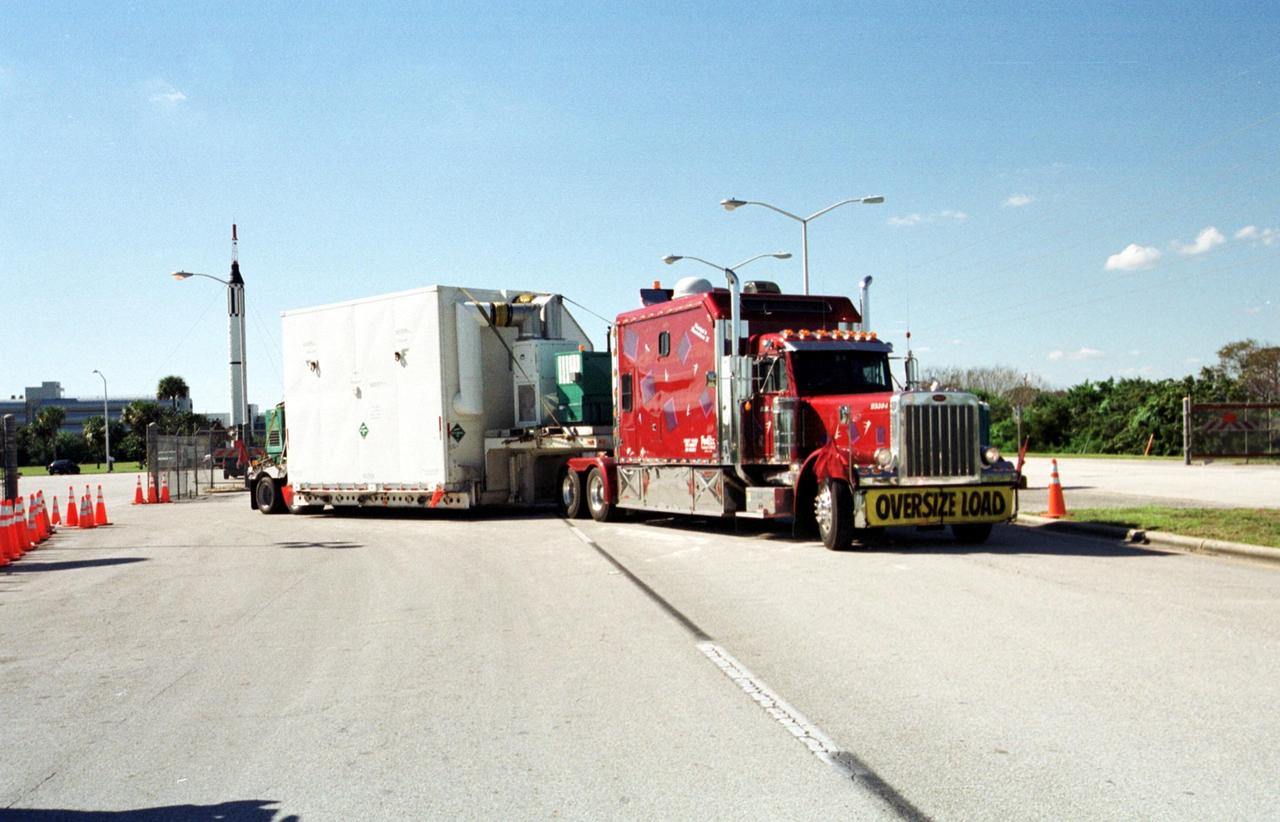
KENNEDY SPACE CENTER, Fla. -- A large truck arrives at the gate to KSC, delivering part of the equipment to be used on mission STS-109, the Hubble Servicing mission. The primary tasks of the mission are to replace Solar Array 2 with Solar Array 3, replace the Power Control Unit, remove the Faint Object Camera and install the Advanced Camera for Surveys, install the Near Infrared Camera and Multi-Object Spectrometer (NICMOS) Cooling System, and install New Outer Blanket Layer insulation on bays 5 through 8. Mission STS-109 is scheduled for launch Feb. 14, 2002

KENNEDY SPACE CENTER, Fla. -- In the Vertical Processing Facility, part of the equipment to be used on mission STS-109 sits on a workstand after removal of the protective cover. The mission is to service the Hubble Space Telescope, replacing Solar Array 2 with Solar Array 3, replacing the Power Control Unit, removing the Faint Object Camera and installing the Advanced Camera for Surveys, installing the Near Infrared Camera and Multi-Object Spectrometer (NICMOS) Cooling System, and installing New Outer Blanket Layer insulation on bays 5 through 8. Mission STS-109 is scheduled for launch Feb. 14, 2002

KENNEDY SPACE CENTER, Fla. -- In the Vertical Processing Facility, part of the equipment to be used on mission STS-109 is revealed after removal of the protective cover. The mission is to service the Hubble Space Telescope, replacing Solar Array 2 with Solar Array 3, replacing the Power Control Unit, removing the Faint Object Camera and installing the Advanced Camera for Surveys, installing the Near Infrared Camera and Multi-Object Spectrometer (NICMOS) Cooling System, and installing New Outer Blanket Layer insulation on bays 5 through 8. Mission STS-109 is scheduled for launch Feb. 14, 2002
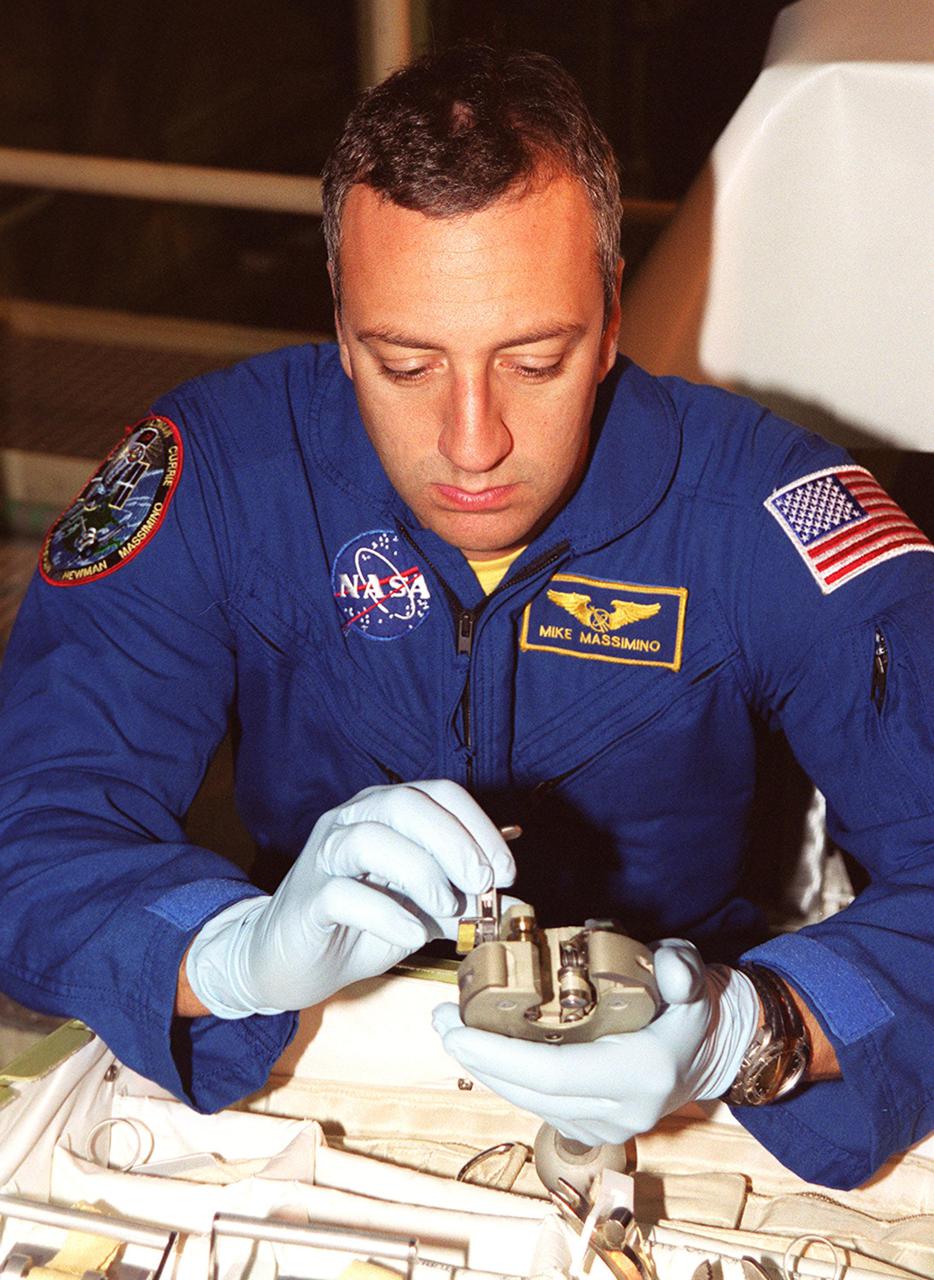
KENNEDY SPACE CENTER, Fla. -- STS-109 Mission Specialist Michael Massimino practices on equipment that will be used on the mission. The crew is at KSC to take part in Crew Equipment Interface Test activities that include familiarization with the orbiter and equipment. The goal of the mission is to service the HST, replacing Solar Array 2 with Solar Array 3, replacing the Power Control Unit, removing the Faint Object Camera and installing the Advanced Camera for Surveys, installing the Near Infrared Camera and Multi-Object Spectrometer (NICMOS) Cooling System, and installing New Outer Blanket Layer insulation on bays 5 through 8. Mission STS-109 is scheduled for launch Feb. 14, 2002
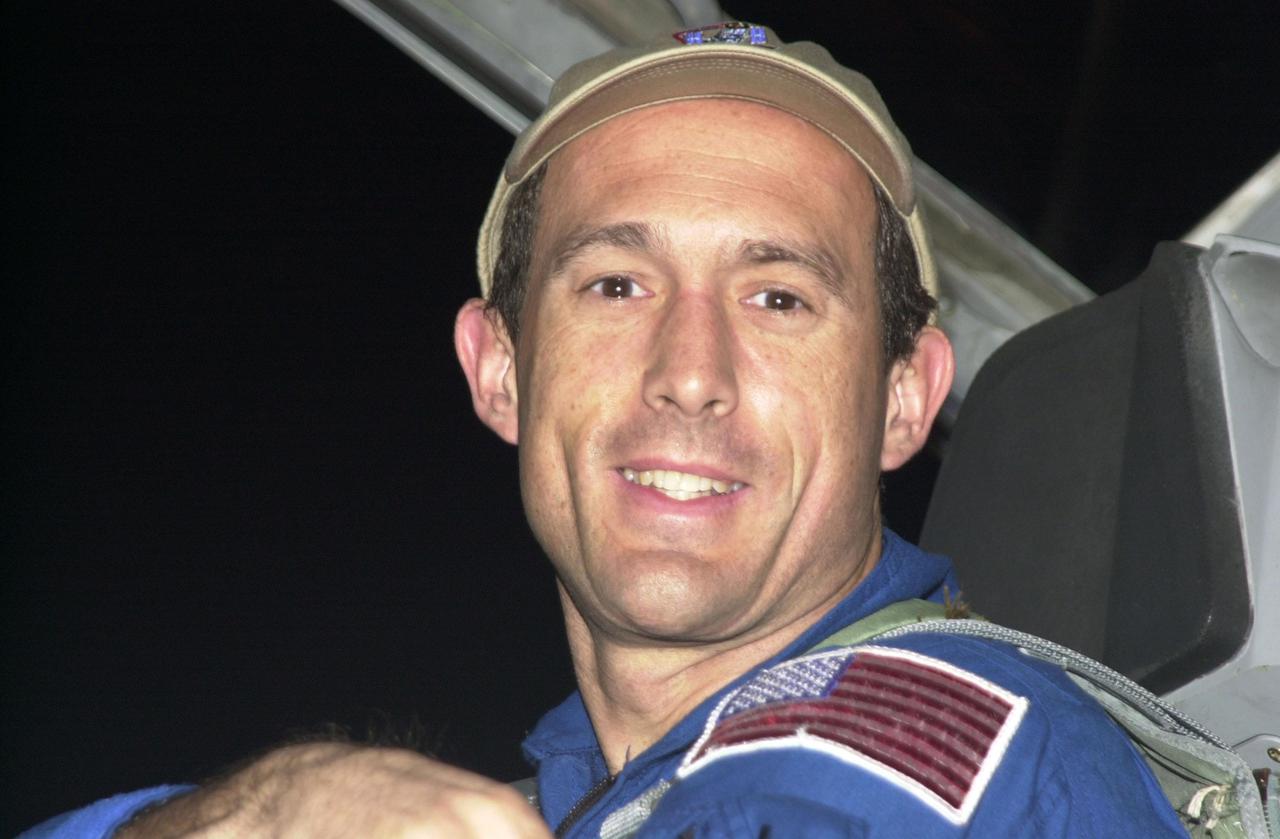
KENNEDY SPACE CENTER, Fla. - STS-109 Mission Specialist James Newman arrives at KSC aboard a T-38 jet aircraft to begin launch preparations. This is Newman's fourth Shuttle flight. The goal of the 11-day mission is repair and maintenance on the Hubble Space Telescope. Five spacewalks are planned to replace Solar Array 2 with Solar Array 3, replace the Power Control Unit, remove the Faint Object Camera and install the Advanced Camera for Surveys (ACS), install the Near Infrared Camera and Multi-Object Spectrometer (NICMOS) Cooling System, and install New Outer Blanket Layer insulation. Launch is scheduled for Feb. 28 at 6:48 a.m. EST
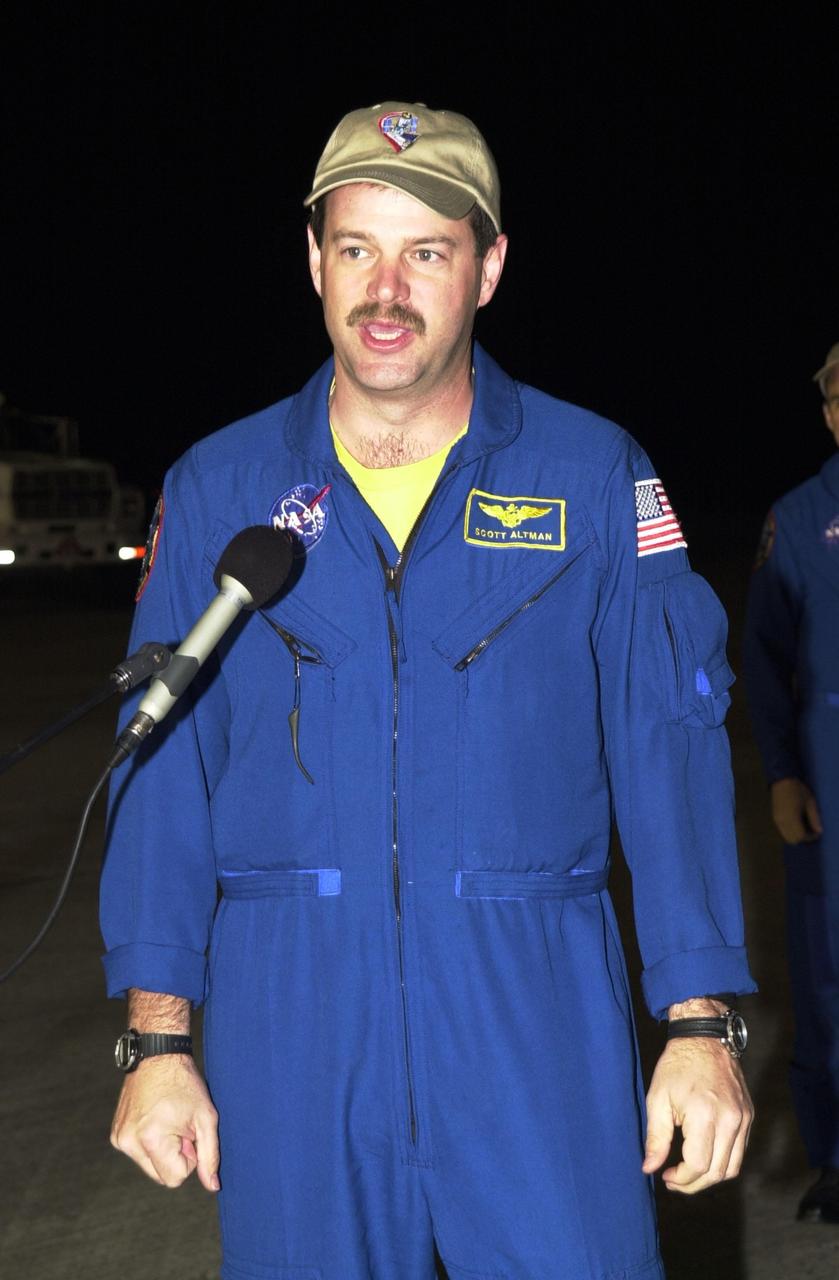
KENNEDY SPACE CENTER, Fla. - STS-109 Shuttle Commander Scott Altman arrives at KSC aboard a T-38 jet aircraft to begin launch preparations. This is Altman's third Shuttle flight. The goal of the 11-day mission is repair and maintenance on the Hubble Space Telescope. Five spacewalks are planned to replace Solar Array 2 with Solar Array 3, replace the Power Control Unit, remove the Faint Object Camera and install the Advanced Camera for Surveys (ACS), install the Near Infrared Camera and Multi-Object Spectrometer (NICMOS) Cooling System, and install New Outer Blanket Layer insulation. Launch is scheduled for Feb. 28 at 6:48 a.m. EST
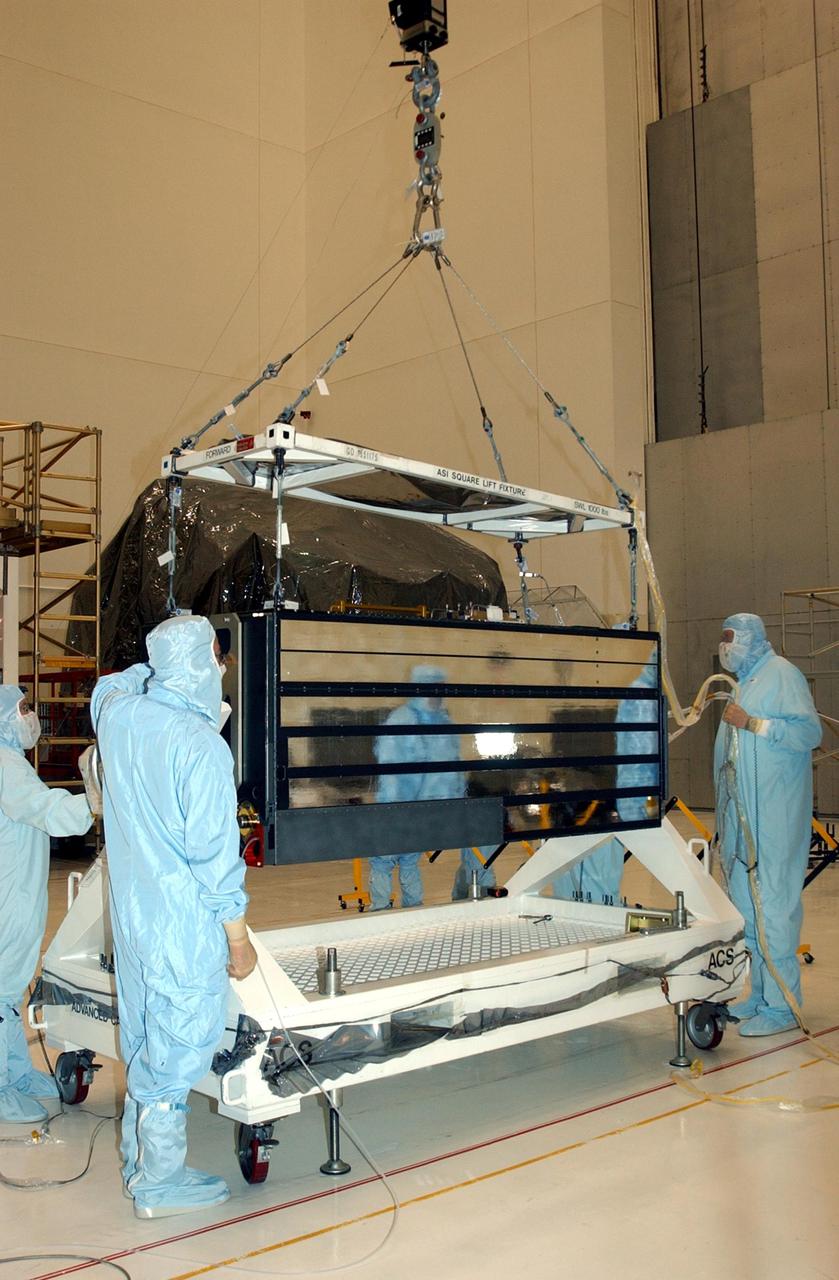
KENNEDY SPACE CENTER, FLA. -- In the Vertical Processing Facility, workers watch while an overhead crane lifts the Advanced Camera for Surveys (ACS) off the stand. The ACS is part of the payload on the Hubble Space Telescope Servicing Mission, STS-109. The goal of the mission is to service the HST, replacing Solar Array 2 with Solar Array 3, replacing the Power Control Unit, removing the Faint Object Camera and installing the ACS, installing the Near Infrared Camera and Multi-Object Spectrometer (NICMOS) Cooling System, and installing New Outer Blanket Layer insulation. Mission STS-109 is scheduled for launch no earlier than Feb. 21, 2002

KENNEDY SPACE CENTER, FLA. -- In the Vertical Processing Facility, workers watch while an overhead crane lowers the Advanced Camera for Surveys (ACS) into the Axial Science Instrument Protective Enclosure (ASIPE). The ACS is part of the payload on the Hubble Space Telescope Servicing Mission, STS-109. The goal of the mission is to service the HST, replacing Solar Array 2 with Solar Array 3, replacing the Power Control Unit, removing the Faint Object Camera and installing the ACS, installing the Near Infrared Camera and Multi-Object Spectrometer (NICMOS) Cooling System, and installing New Outer Blanket Layer insulation. Mission STS-109 is scheduled for launch no earlier than Feb. 21, 2002
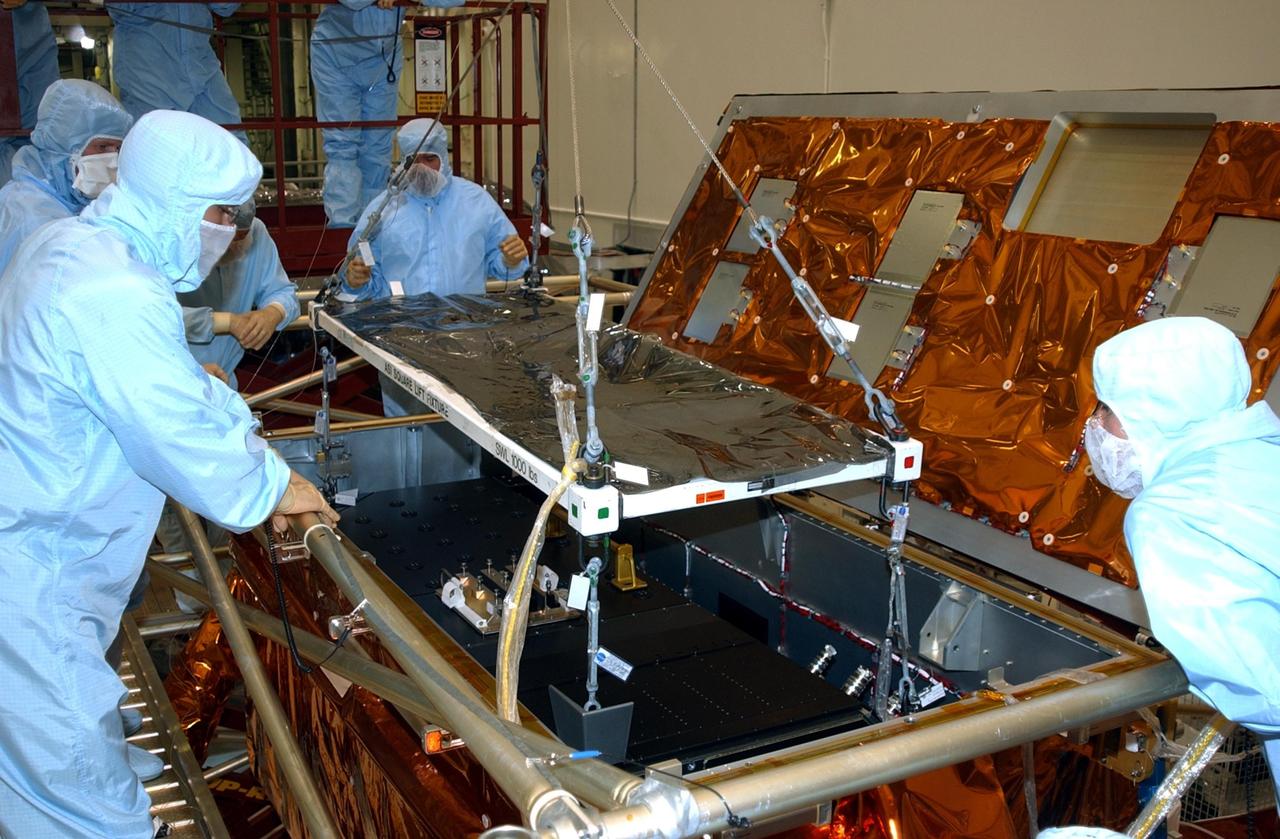
KENNEDY SPACE CENTER, FLA. -- In the Vertical Processing Facility, workers watch while the Advanced Camera for Surveys (ACS) is lowered into the Axial Science Instrument Protective Enclosure (ASIPE). The ACS is part of the payload on the Hubble Space Telescope Servicing Mission, STS-109. The goal of the mission is to service the HST, replacing Solar Array 2 with Solar Array 3, replacing the Power Control Unit, removing the Faint Object Camera and installing the ACS, installing the Near Infrared Camera and Multi-Object Spectrometer (NICMOS) Cooling System, and installing New Outer Blanket Layer insulation. Mission STS-109 is scheduled for launch no earlier than Feb. 21, 2002
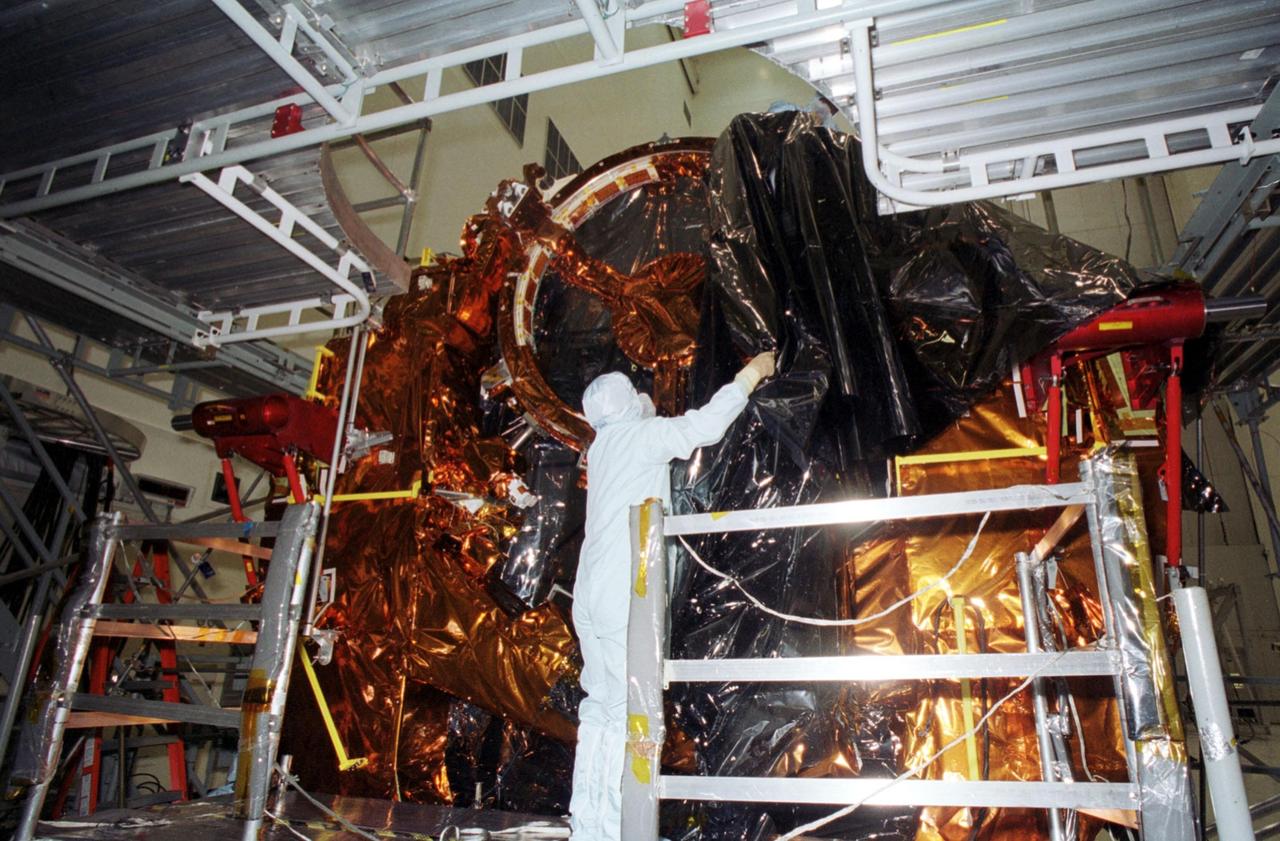
KENNEDY SPACE CENTER, Fla. -- In the Vertical Processing Facility a worker removes the protective covering from the equipment to be used on mission STS-109. The mission is to service the Hubble Space Telescope, replacing Solar Array 2 with Solar Array 3, replacing the Power Control Unit, removing the Faint Object Camera and installing the Advanced Camera for Surveys, installing the Near Infrared Camera and Multi-Object Spectrometer (NICMOS) Cooling System, and installing New Outer Blanket Layer insulation on bays 5 through 8. Mission STS-109 is scheduled for launch Feb. 14, 2002
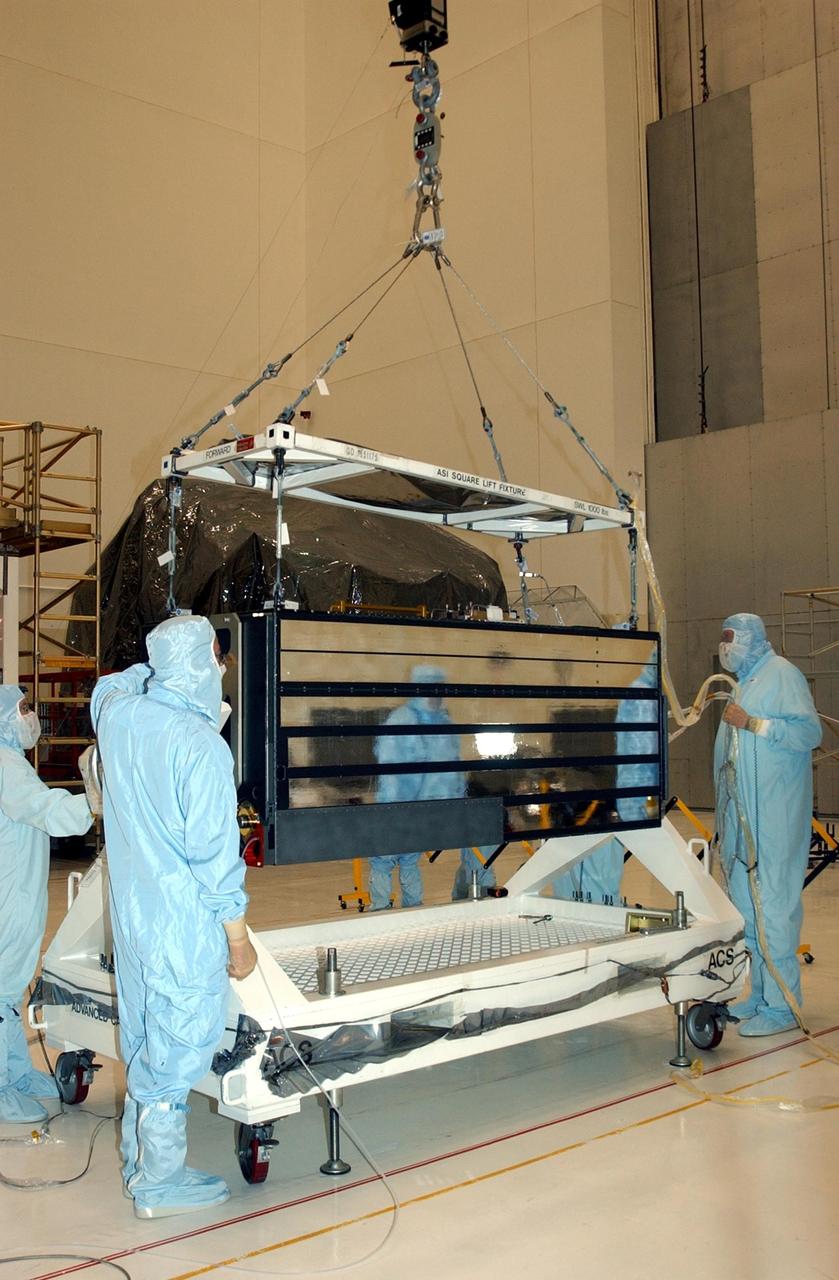
KENNEDY SPACE CENTER, FLA. -- In the Vertical Processing Facility, workers watch while an overhead crane lifts the Advanced Camera for Surveys (ACS) off the stand. The ACS is part of the payload on the Hubble Space Telescope Servicing Mission, STS-109. The goal of the mission is to service the HST, replacing Solar Array 2 with Solar Array 3, replacing the Power Control Unit, removing the Faint Object Camera and installing the ACS, installing the Near Infrared Camera and Multi-Object Spectrometer (NICMOS) Cooling System, and installing New Outer Blanket Layer insulation. Mission STS-109 is scheduled for launch no earlier than Feb. 21, 2002
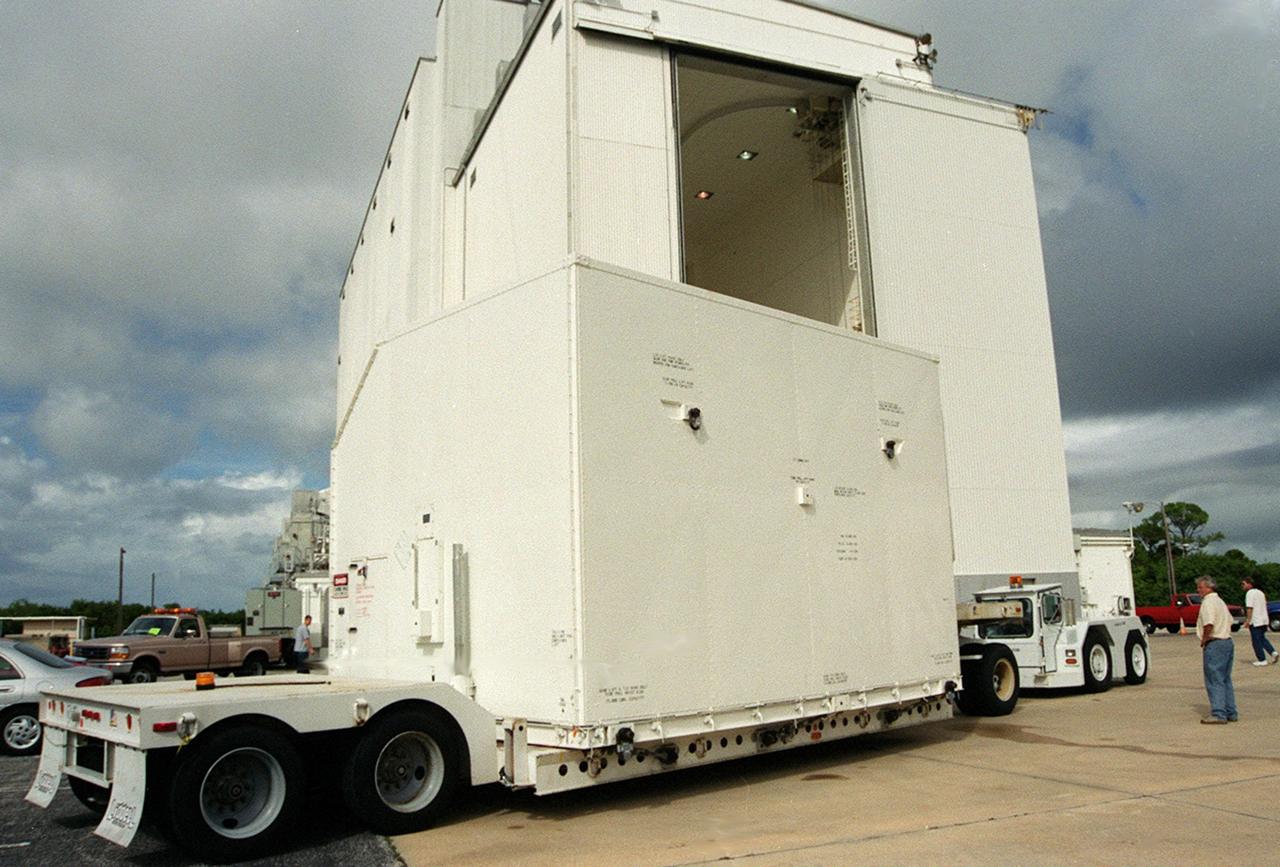
KENNEDY SPACE CENTER, Fla. -- Part of the equipment to be used on mission STS-109, servicing the Hubble Space Telescope, arrives at a facility at KSC. The primary servicing tasks of the mission are to replace Solar Array 2 with Solar Array 3, replace the Power Control Unit, remove the Faint Object Camera and install the Advanced Camera for Surveys, install the Near Infrared Camera and Multi-Object Spectrometer (NICMOS) Cooling System, and install New Outer Blanket Insulation on bays 5 through 8. Mission STS-109 is scheduled for launch in mid-February 2002
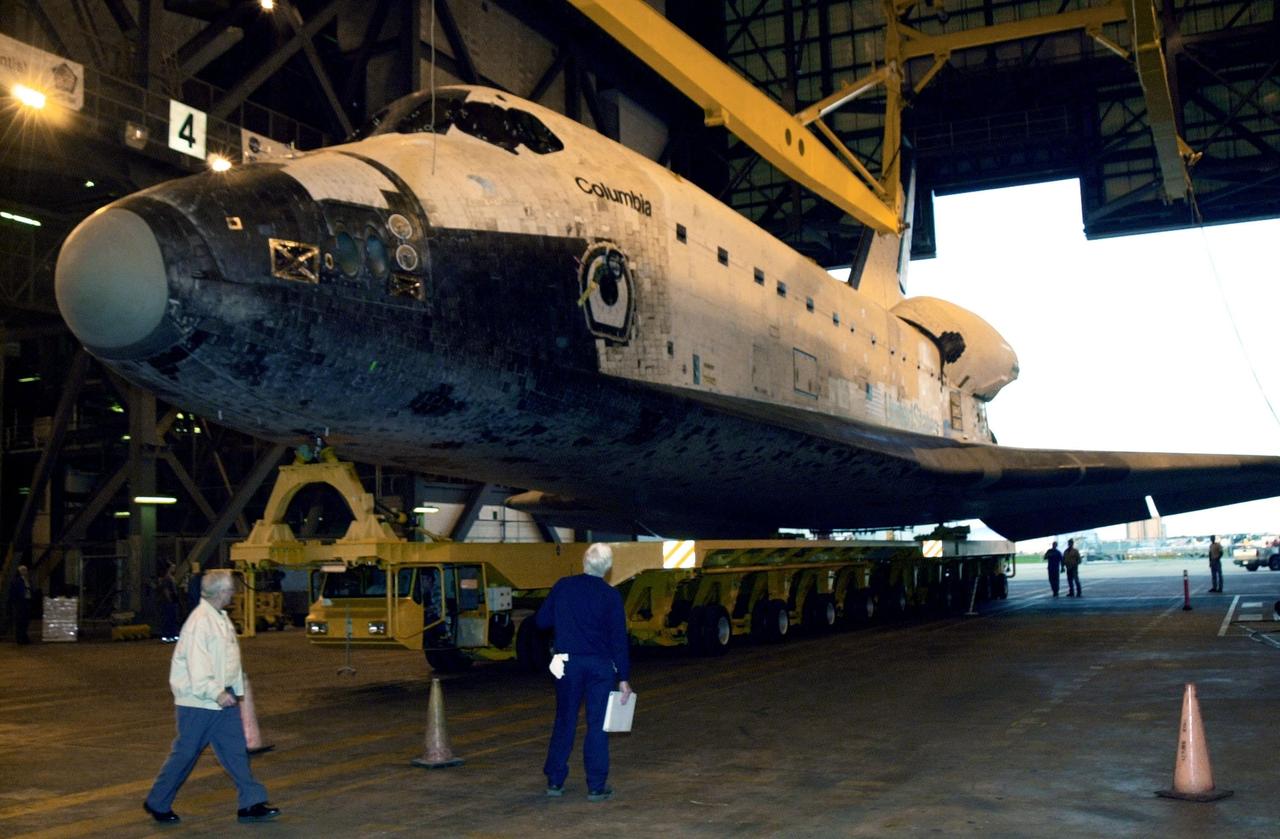
KENNEDY SPACE CENTER, FLA. -- In the Vehicle Assembly Building, overhead cranes are lowered toward the orbiter Columbia. The cranes will lift the orbiter to a vertical position for stacking with the external tank and solid rocket boosters. Columbia is scheduled to be launched Feb. 28 on mission STS-109, a Hubble Servicing Mission. The goal of the mission is to service the HST, replacing Solar Array 2 with Solar Array 3, replacing the Power Control Unit, removing the Faint Object Camera and installing the ACS, installing the Near Infrared Camera and Multi-Object Spectrometer (NICMOS) Cooling System, and installing New Outer Blanket Layer insulation
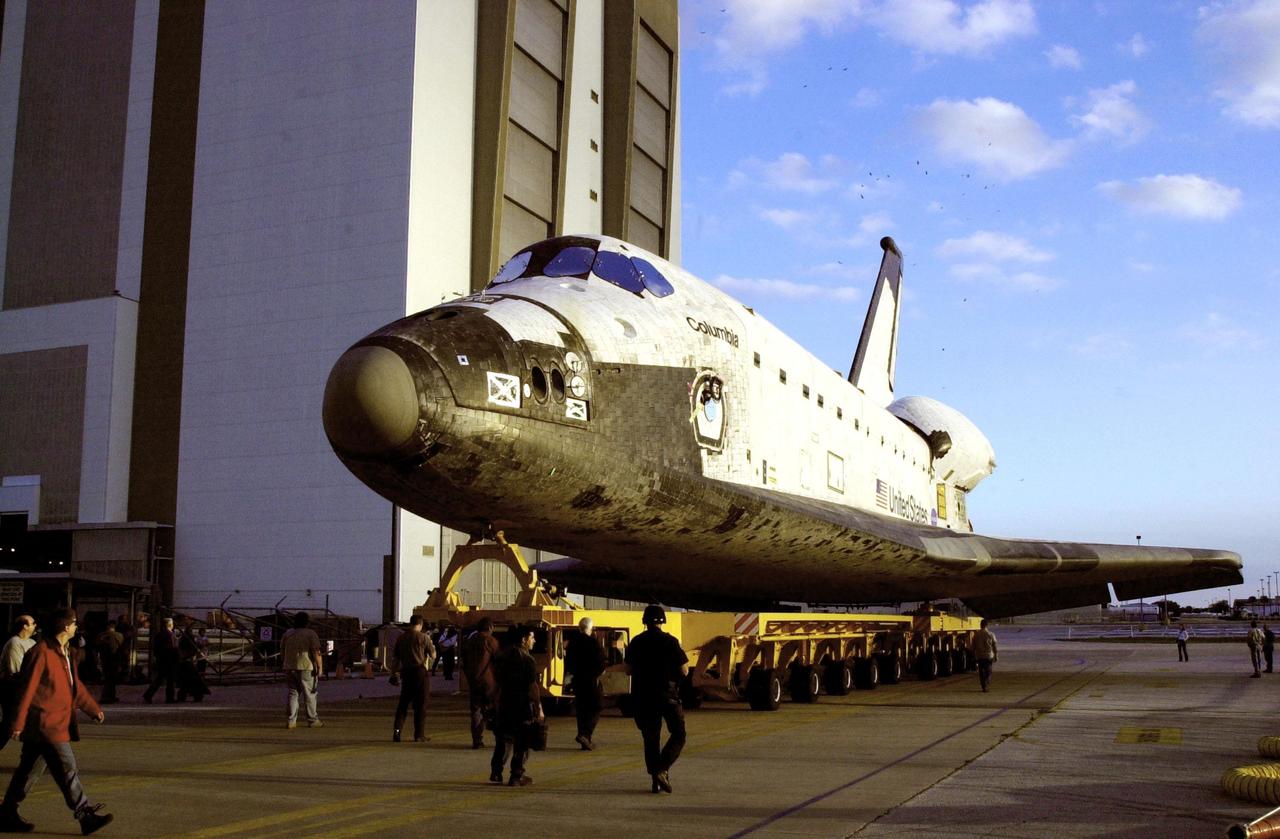
KENNEDY SPACE CENTER, FLA. -- After leaving the Orbiter Processing Facility, orbiter Columbia rolls toward the Vehicle Assembly Building where it will be mated with the external tank-solid rocket booster stack. Columbia is scheduled to be launched Feb. 28 on mission STS-109, a Hubble Servicing Mission. The goal of the mission is to service the HST, replacing Solar Array 2 with Solar Array 3, replacing the Power Control Unit, removing the Faint Object Camera and installing the ACS, installing the Near Infrared Camera and Multi-Object Spectrometer (NICMOS) Cooling System, and installing New Outer Blanket Layer insulation
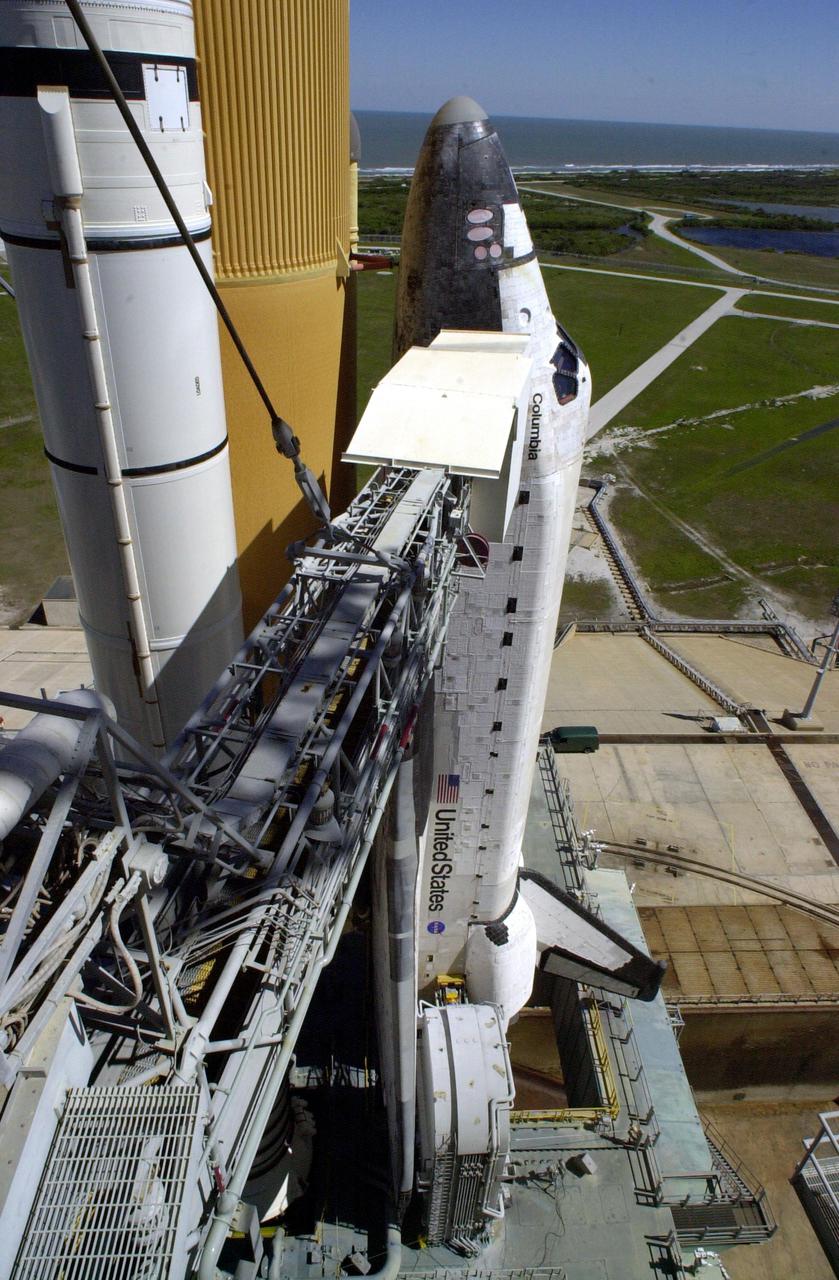
KENNEDY SPACE CENTER, FLA. -- The Rotating Service Structure is rolled back from Space Shuttle Columbia in preparation for launch Feb. 28, 2002, at 6:48 a.m. EST (11:48 GMT) on mission STS-109. In the photo is seen the Orbiter Access Arm stretched to Columbia's cockpit. A Hubble Servicing Mission, the goal is to replace Solar Array 2 with Solar Array 3, replace the Power Control Unit, remove the Faint Object Camera and install the ACS, install the Near Infrared Camera and Multi-Object Spectrometer (NICMOS) Cooling System, and install New Outer Blanket Layer insulation.
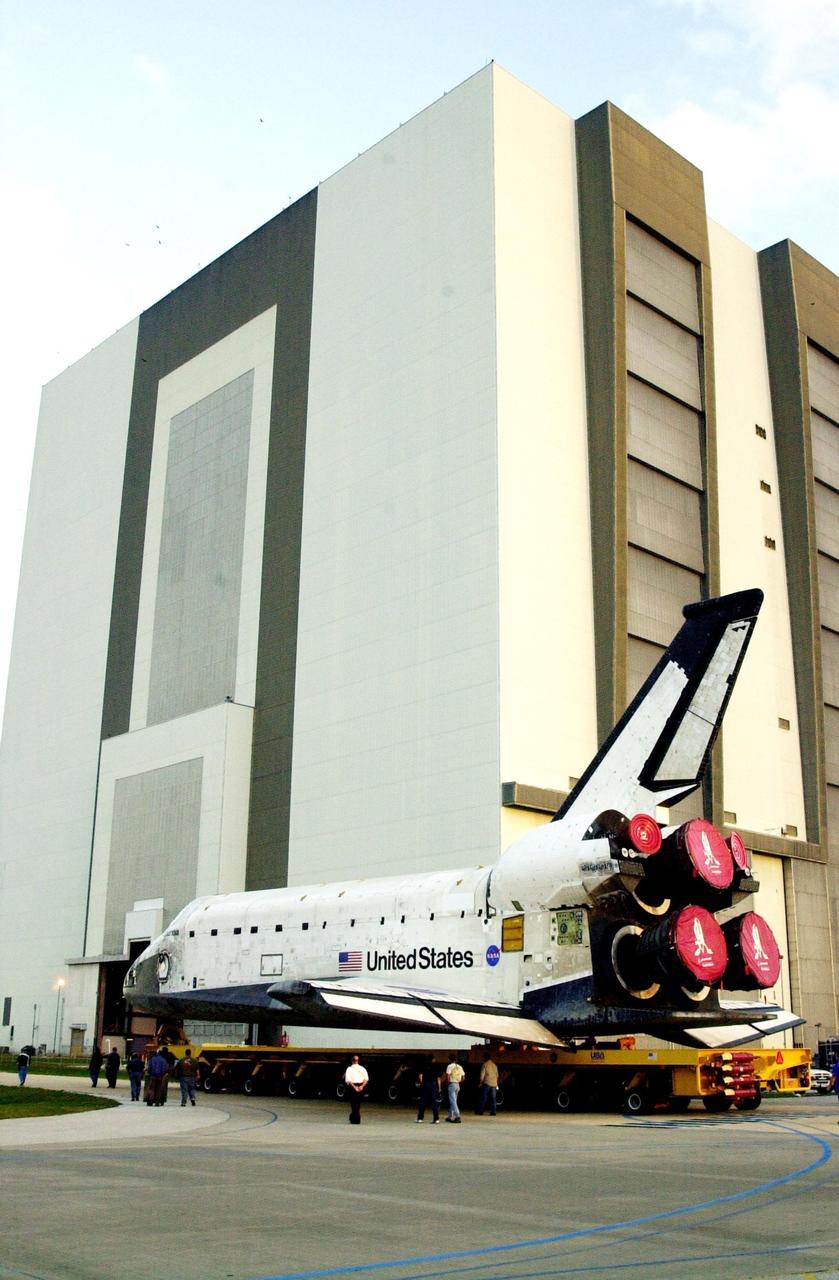
KENNEDY SPACE CENTER, FLA. -- After leaving the Orbiter Processing Facility, orbiter Columbia rolls toward the Vehicle Assembly Building where it will be mated with the external tank-solid rocket booster stack. Columbia is scheduled to be launched Feb. 28 on mission STS-109, a Hubble Servicing Mission. The goal of the mission is to service the HST, replacing Solar Array 2 with Solar Array 3, replacing the Power Control Unit, removing the Faint Object Camera and installing the ACS, installing the Near Infrared Camera and Multi-Object Spectrometer (NICMOS) Cooling System, and installing New Outer Blanket Layer insulation
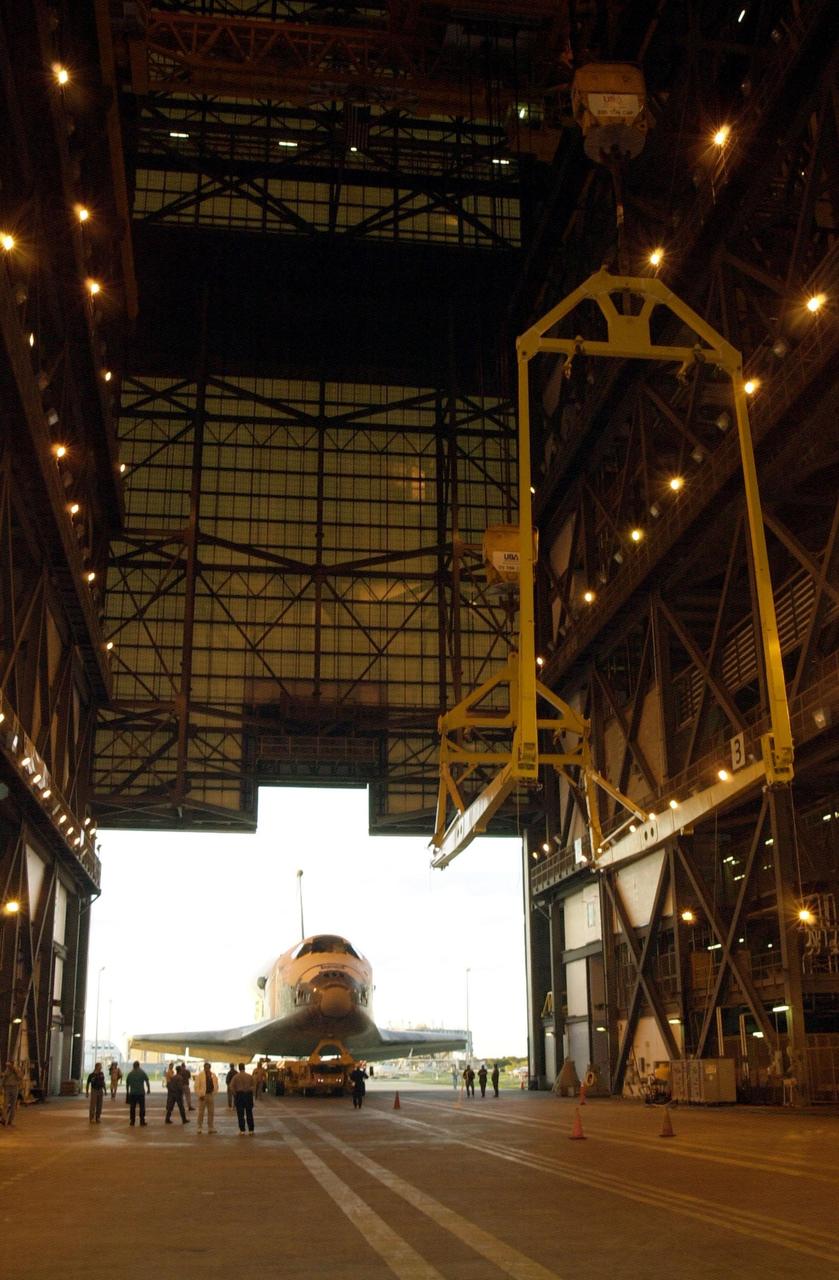
KENNEDY SPACE CENTER, FLA. -- The orbiter Columbia rolls into the transfer aisle of the Vehicle Assembly Building where it will be mated with the external tank-solid rocket booster stack. Columbia is scheduled to be launched Feb. 28 on mission STS-109, a Hubble Servicing Mission. The goal of the mission is to service the HST, replacing Solar Array 2 with Solar Array 3, replacing the Power Control Unit, removing the Faint Object Camera and installing the ACS, installing the Near Infrared Camera and Multi-Object Spectrometer (NICMOS) Cooling System, and installing New Outer Blanket Layer insulation
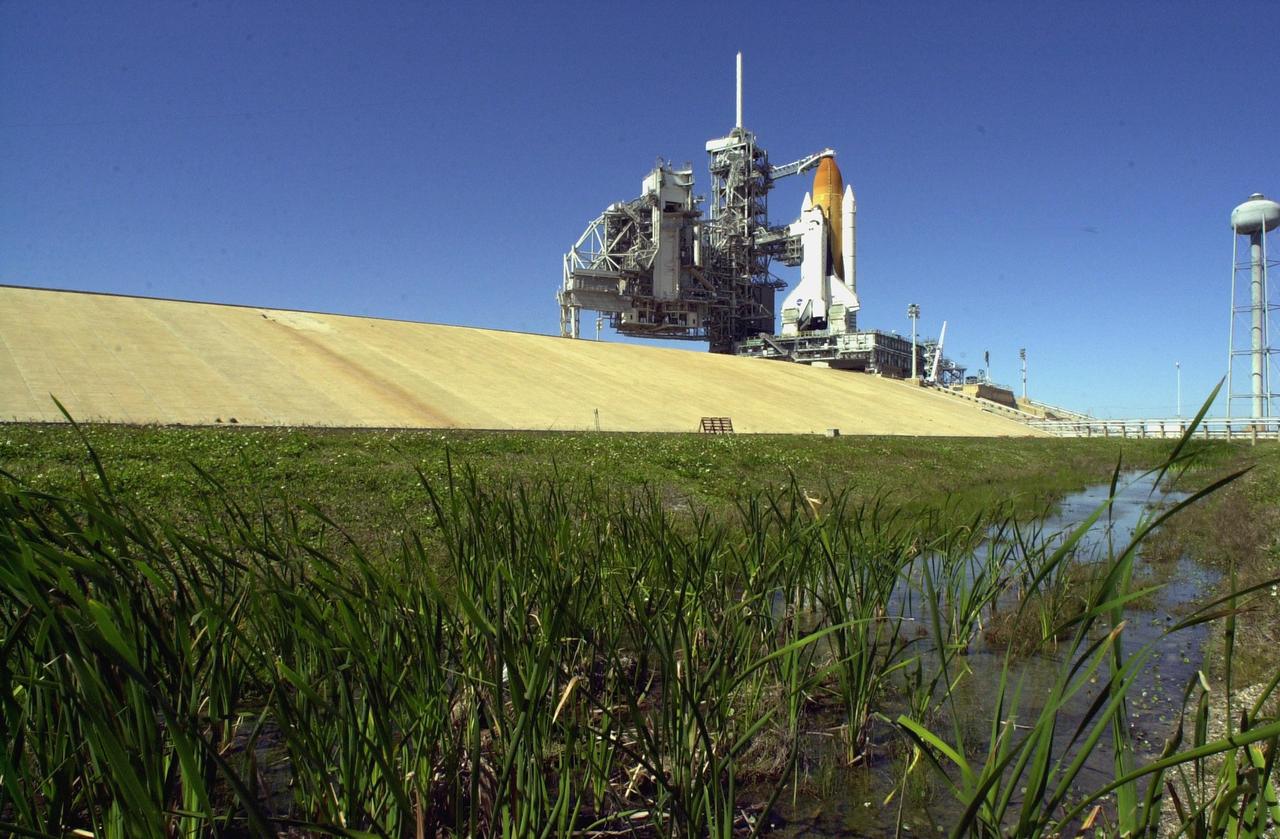
KENNEDY SPACE CENTER, FLA. - The Rotating Service Structure is rolled back from Space Shuttle Columbia in preparation for launch Feb. 28, 2002, at 6:48 a.m. EST (11:48 GMT) on mission STS-109. A Hubble Servicing Mission, the goal is to replace Solar Array 2 with Solar Array 3, replace the Power Control Unit, remove the Faint Object Camera and install the ACS, install the Near Infrared Camera and Multi-Object Spectrometer (NICMOS) Cooling System, and install New Outer Blanket Layer insulation.
KENNEDY SPACE CENTER, FLA. -- The Rotating Service Structure is rolled back from Space Shuttle Columbia in preparation for launch Feb. 28, 2002, at 6:48 a.m. EST (11:48 GMT) on mission STS-109. In the photo is seen the Orbiter Access Arm stretched to Columbia's cockpit. A Hubble Servicing Mission, the goal of STS-109 is to replace Solar Array 2 with Solar Array 3, replace the Power Control Unit, remove the Faint Object Camera and install the ACS, install the Near Infrared Camera and Multi-Object Spectrometer (NICMOS) Cooling System, and install New Outer Blanket Layer insulation.
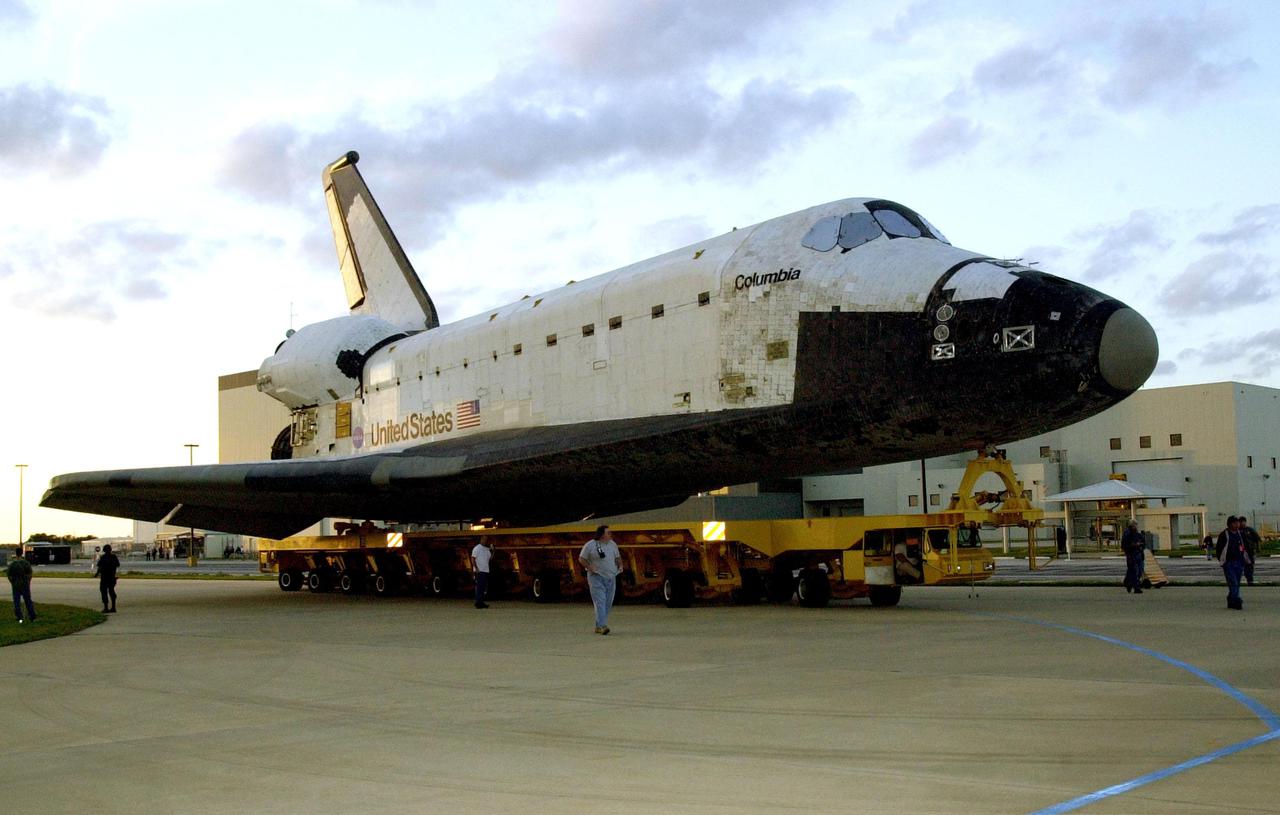
KENNEDY SPACE CENTER, FLA. -- The orbiter Columbia, atop a transporter, rolls away from the Orbiter Processing Facility on its way to the Vehicle Assembly Building. There it will be mated with the external tank-solid rocket booster stack. Columbia is scheduled to be launched Feb. 28 on mission STS-109, a Hubble Servicing Mission. The goal of the mission is to service the HST, replacing Solar Array 2 with Solar Array 3, replacing the Power Control Unit, removing the Faint Object Camera and installing the ACS, installing the Near Infrared Camera and Multi-Object Spectrometer (NICMOS) Cooling System, and installing New Outer Blanket Layer insulation
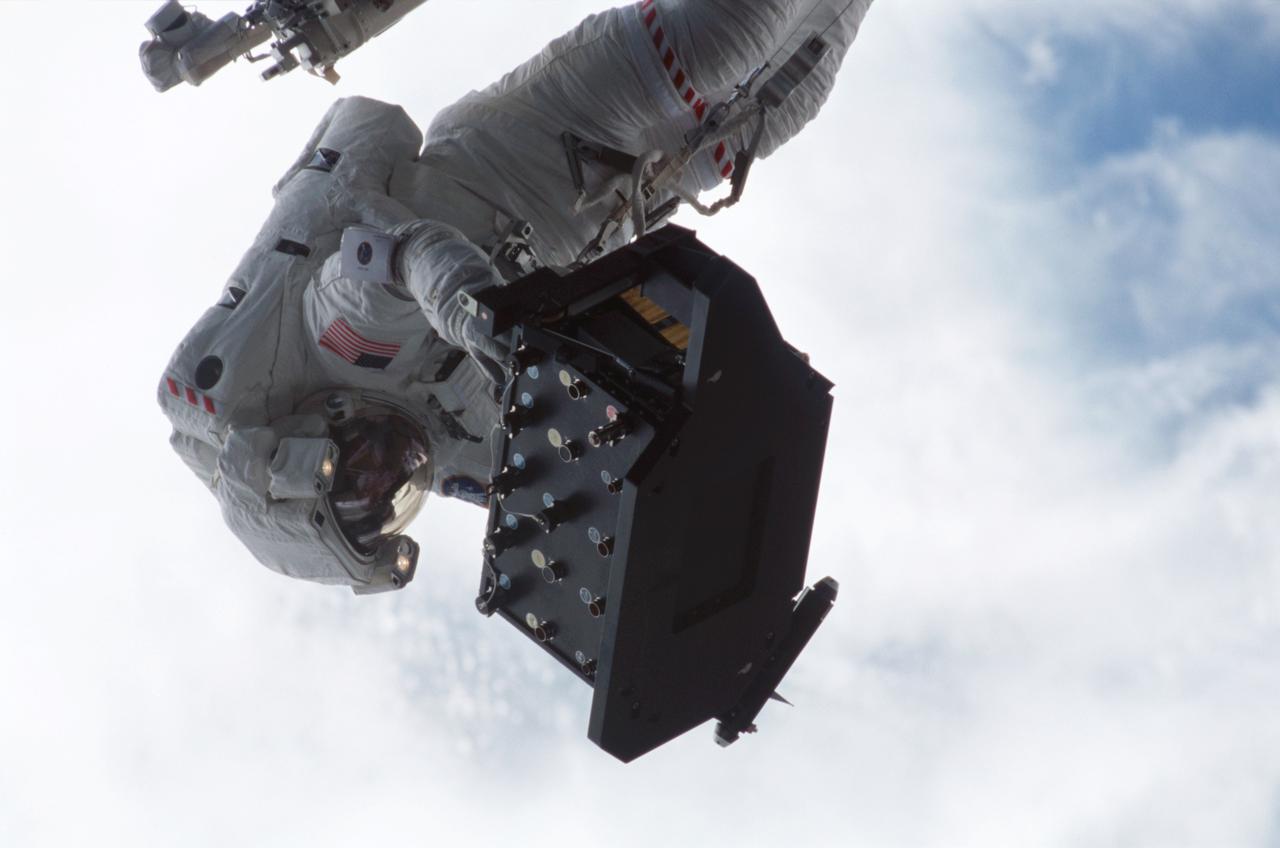
STS109-323-035 (7 March 2002) --- Astronaut Michael J. Massimino, on the shuttle’s robotic arm, prepares to install the Electronic Support Module (ESM) in the aft shroud of the Hubble Space Telescope (HST), with the assistance of astronaut James H. Newman (out of frame). The module will support a new experimental cooling system to be installed during the next day's fifth and final scheduled spacewalk of the mission. That cooling system is designed to bring the telescope's Near-Infrared Camera and Multi-Object Spectrometer (NICMOS) back to life.
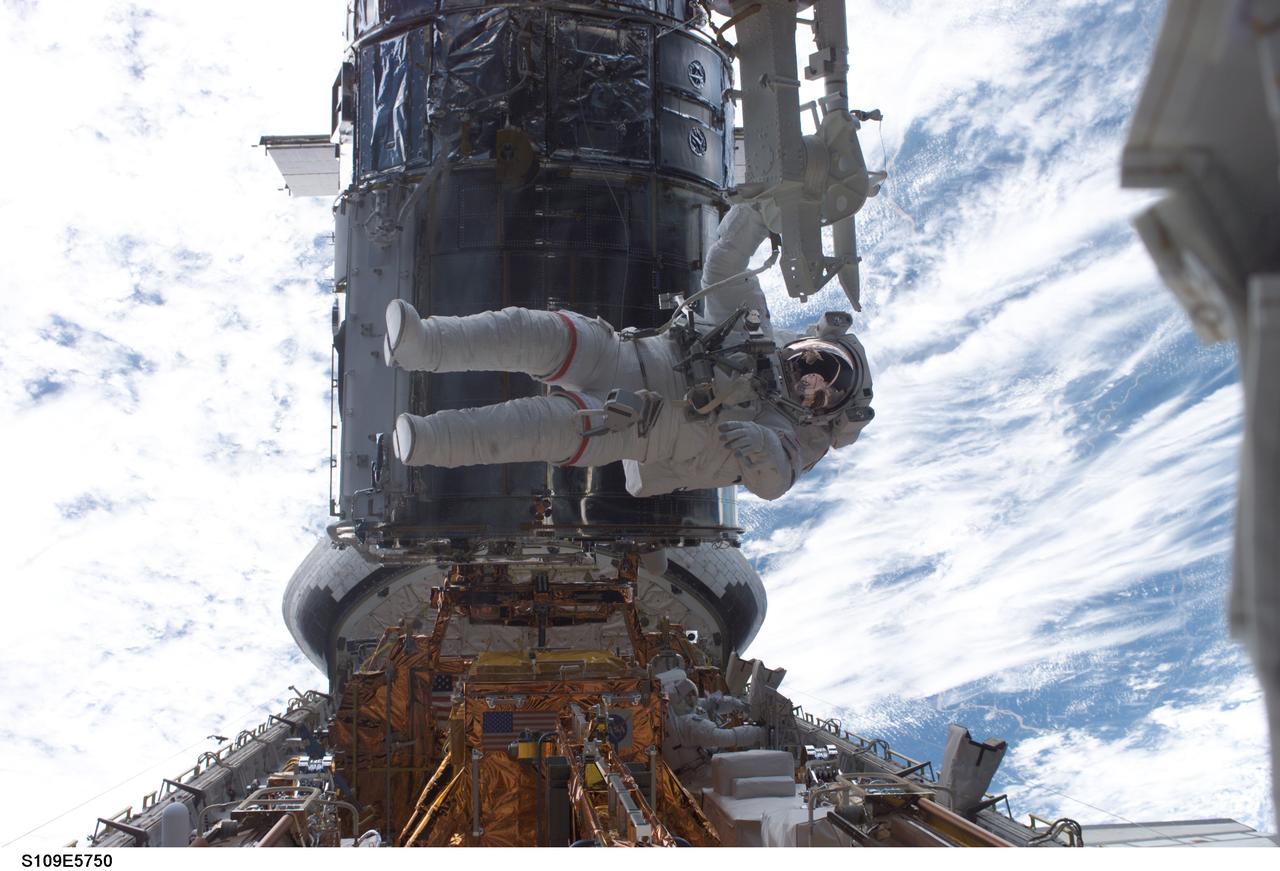
STS109-E-5750 (8 March 2002) --- Astronaut John M. Grunsfeld, STS-109 payload commander, floats near the giant Hubble Space Telescope (HST) temporarily hosted in the Space Shuttle Columbia’s cargo bay. Astronaut Richard M. Linnehan (lower right), mission specialist, works in tandem with Grunsfeld during this fifth and final scheduled space walk. Activities for EVA-5 centered around the Near-Infrared Camera and Multi-Object Spectrometer (NICMOS) to install a Cryogenic Cooler and its Cooling System Radiator. The space walk was completed at 10:06 a.m. CST (1606 GMT), March 8, 2002. The image was recorded with a digital still camera.
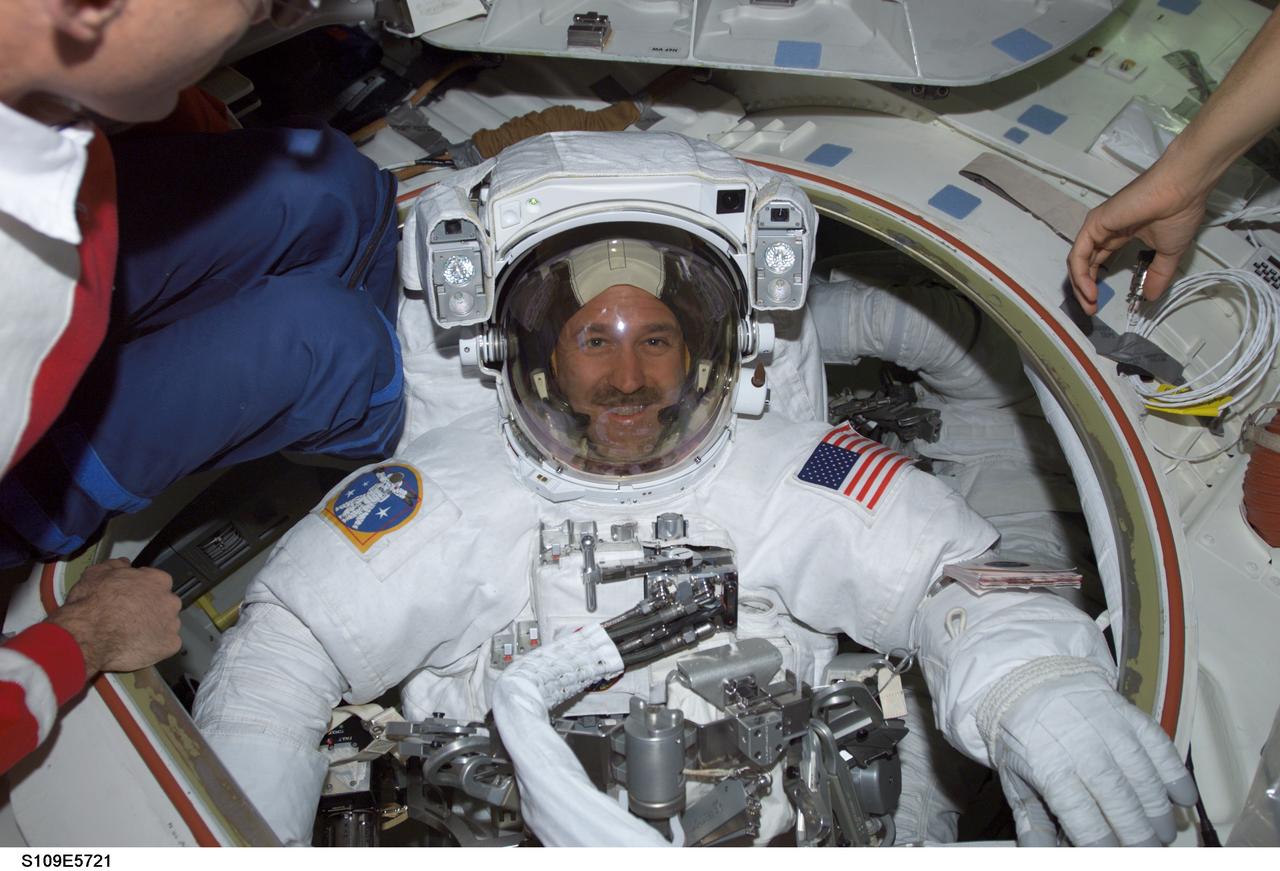
STS109-E-5721 (8 March 2002) --- Astronaut John M. Grunsfeld, STS-109 payload commander, attired in the extravehicular mobility unit (EMU) space suit, completed suited is in the Space Shuttle Columbia’s airlock. Grunsfeld and Richard M. Linnehan, mission specialist, were about to participate in STS-109’s fifth space walk. Activities for EVA-5 centered around the Near-Infrared Camera and Multi-Object Spectrometer (NICMOS) to install a Cryogenic Cooler and its Cooling System Radiator. The image was recorded with a digital still camera.
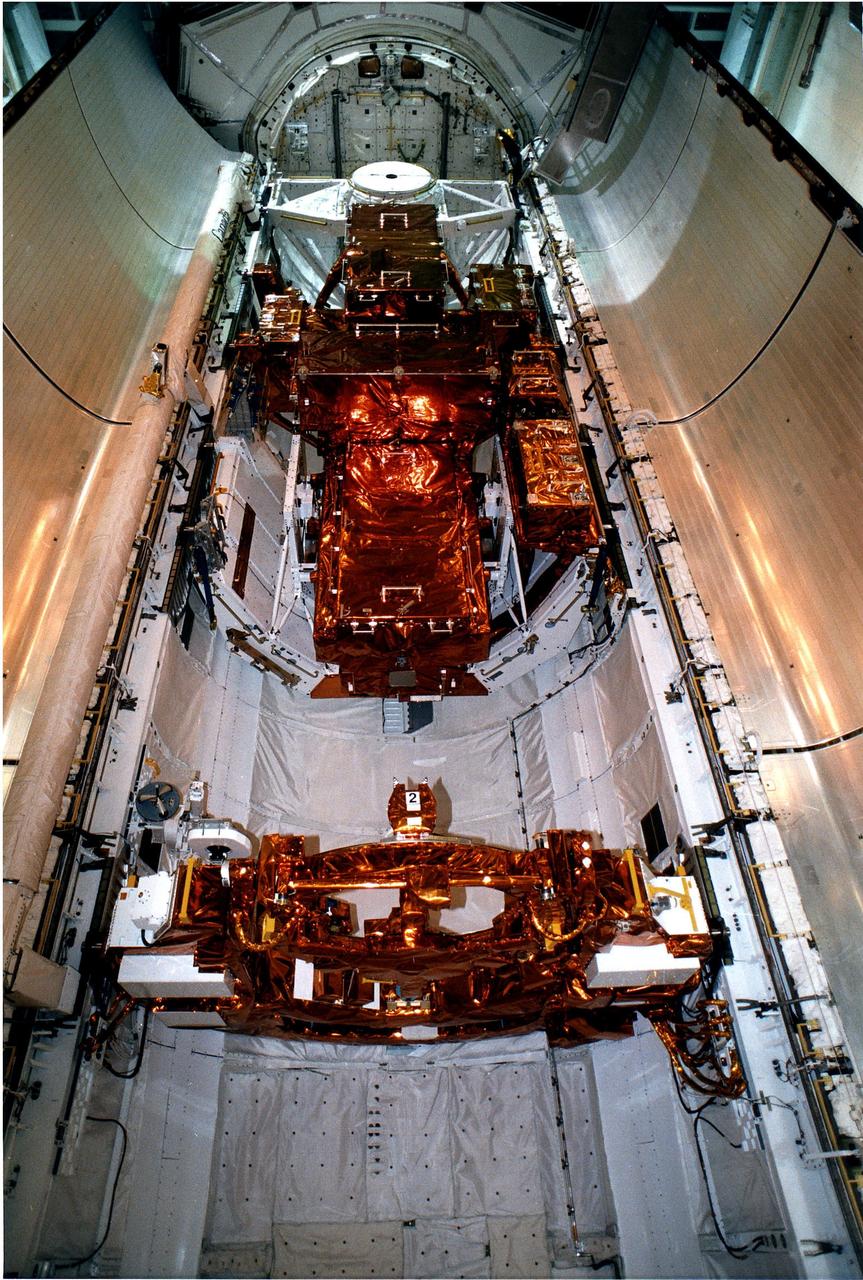
KENNEDY SPACE CENTER, FLA. - The Payload is seen inside of the Bay just before the doors are closed for flight at Pad 39A, Kennedy Space Center, Fla. Discovery, the orbiter for STS-82 mission, is ready for the launch of the second Hubble Space Telescope service mission. The payload consists of the Near Infrared Camera and Multi-Object Spectrometer (NICMOS) that will be installed, Fine Guidance Sensor #1 (FGS-1), and the Space Telescope Imaging Spectrograph (STIS) to be installed. The STS-82 will launch with a crew of seven at 3:54 a.m. EST, Feb. 11, 1997. The launch window is 65 minutes in duration. The Mission Commander for STS-82 is Ken Bowersox. The purpose of the mission is to upgrade the scientific capabilities, service or replace aging components on the Telescope, and provide a reboost to the optimum altitude.
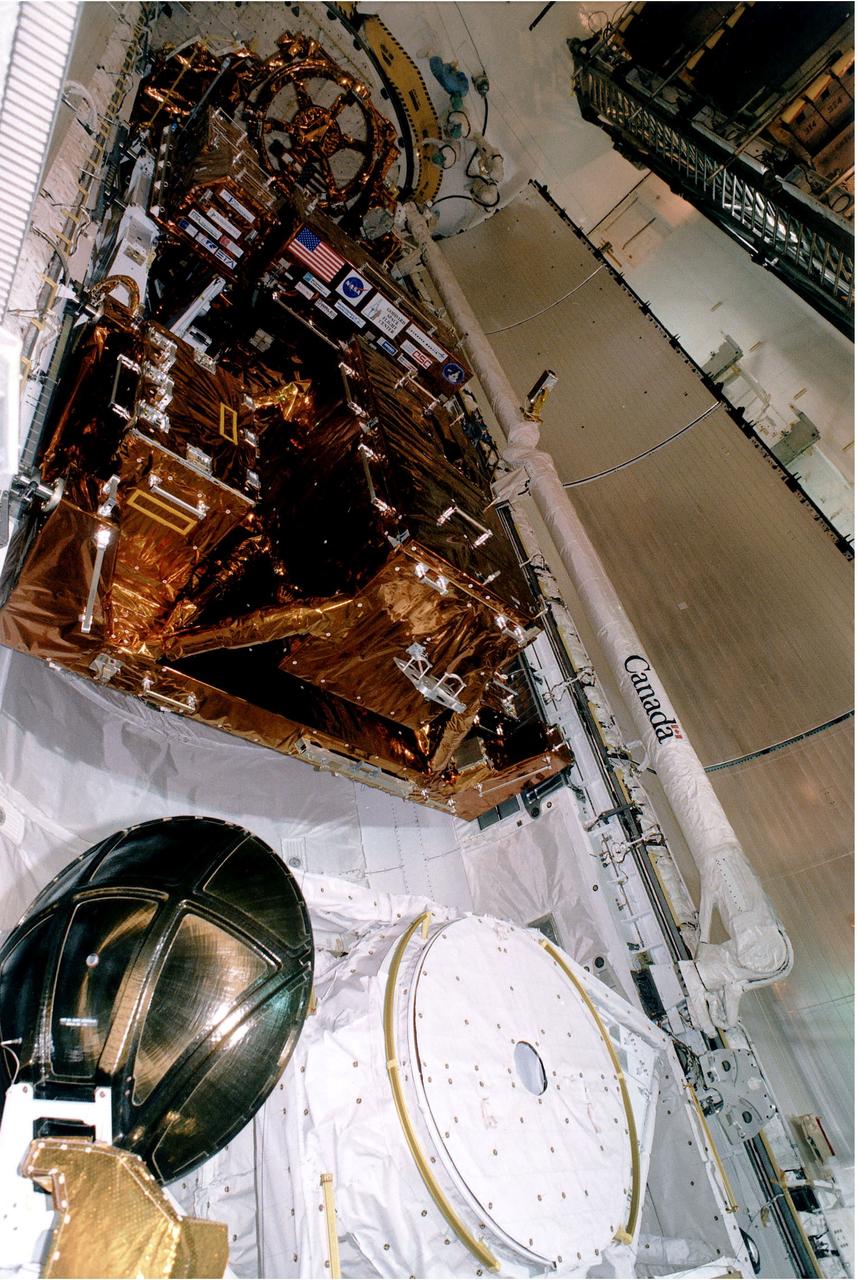
KENNEDY SPACE CENTER, FLA. - The Payload is seen inside of the Bay just before the doors are closed for flight at KSC's Launch Pad 39A. Discovery, the orbiter for the STS-82 mission, is ready for the launch of the second Hubble Space Telescope service mission. The payload consists of the Near Infrared Camera and Multi-Object Spectrometer (NICMOS) that will be installed, Fine Guidance Sensor #1 (FGS-1), and the Space Telescope Imaging Spectrograph (STIS) to be installed. The STS-82 will launch with a crew of seven at 3:54 a.m. EST, Feb. 11, 1997. The launch window is 65 minutes in duration. The Mission Commander for STS-82 is Ken Bowersox. The purpose of the mission is to upgrade the scientific capabilities, service or replace aging components on the Telescope, and provide a reboost to the optimum altitude.
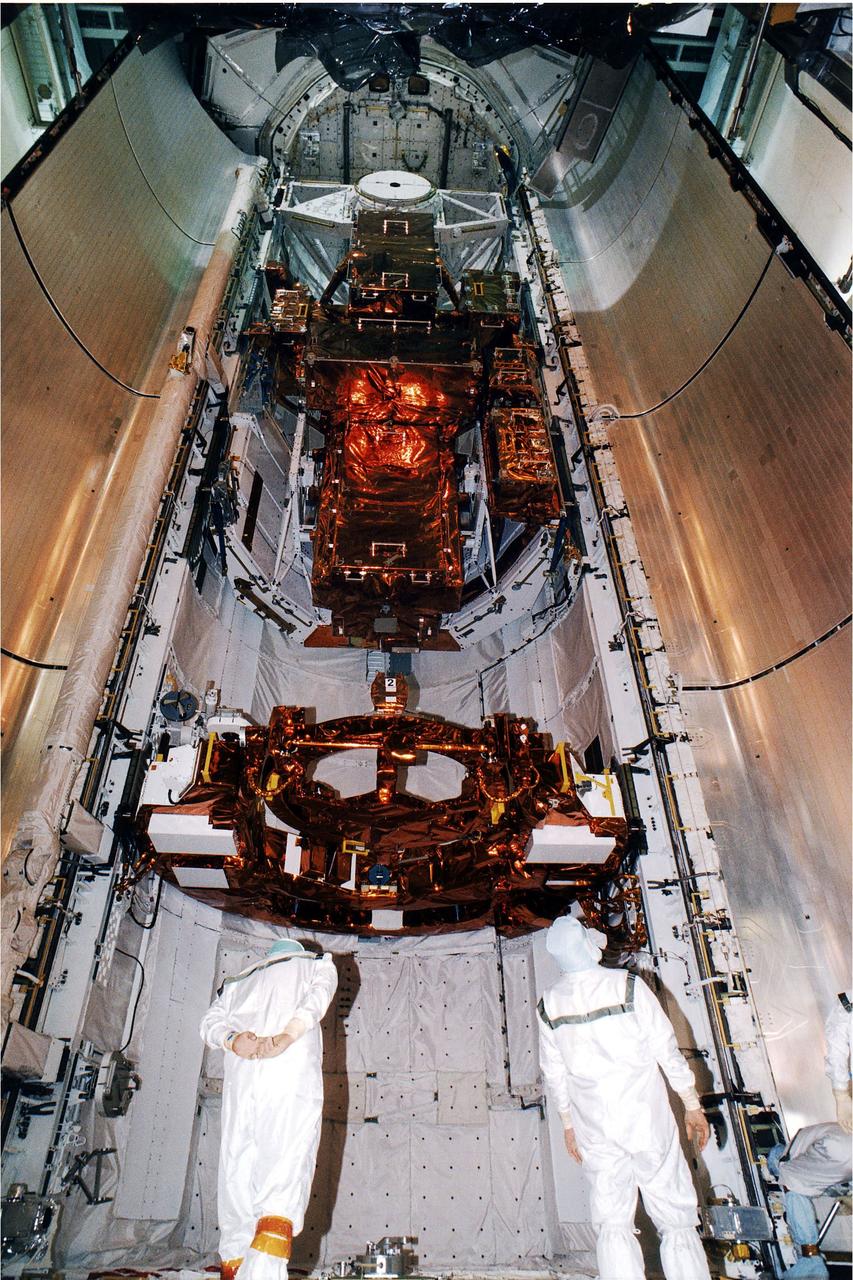
KENNEDY SPACE CENTER, FLA. - At the KSC Launch Pad 39A, two members of the payload closeout crew check equipment as the doors are just about ready to be closed. The Payload inside the bay of Discovery, the orbiter for the STS-82 mission, is ready for the launch of the second Hubble Space Telescope service mission. The payload consists of the Near Infrared Camera and Multi-Object Spectrometer (NICMOS) that will be installed, Fine Guidance Sensor #1 (FGS-1), and the Space Telescope Imaging Spectrograph (STIS) to be installed. The STS-82 will launch with a crew of seven at 3:54 a.m. EST, Feb. 11, 1997. The launch window is 65 minutes in duration. The Mission Commander for STS-82 is Ken Bowersox. The purpose of the mission is to upgrade the scientific capabilities, service or replace aging components on the Telescope and provide a reboost to the optimum altitude.
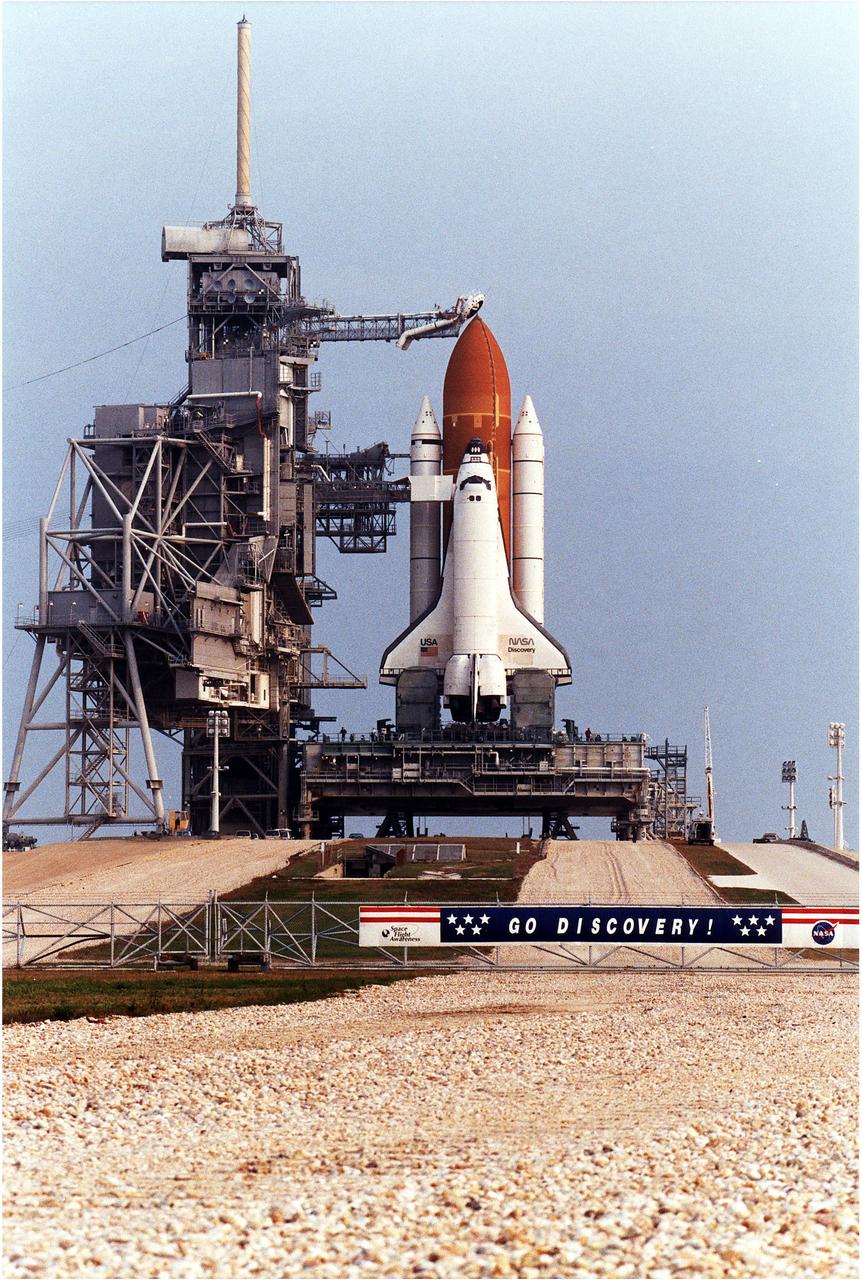
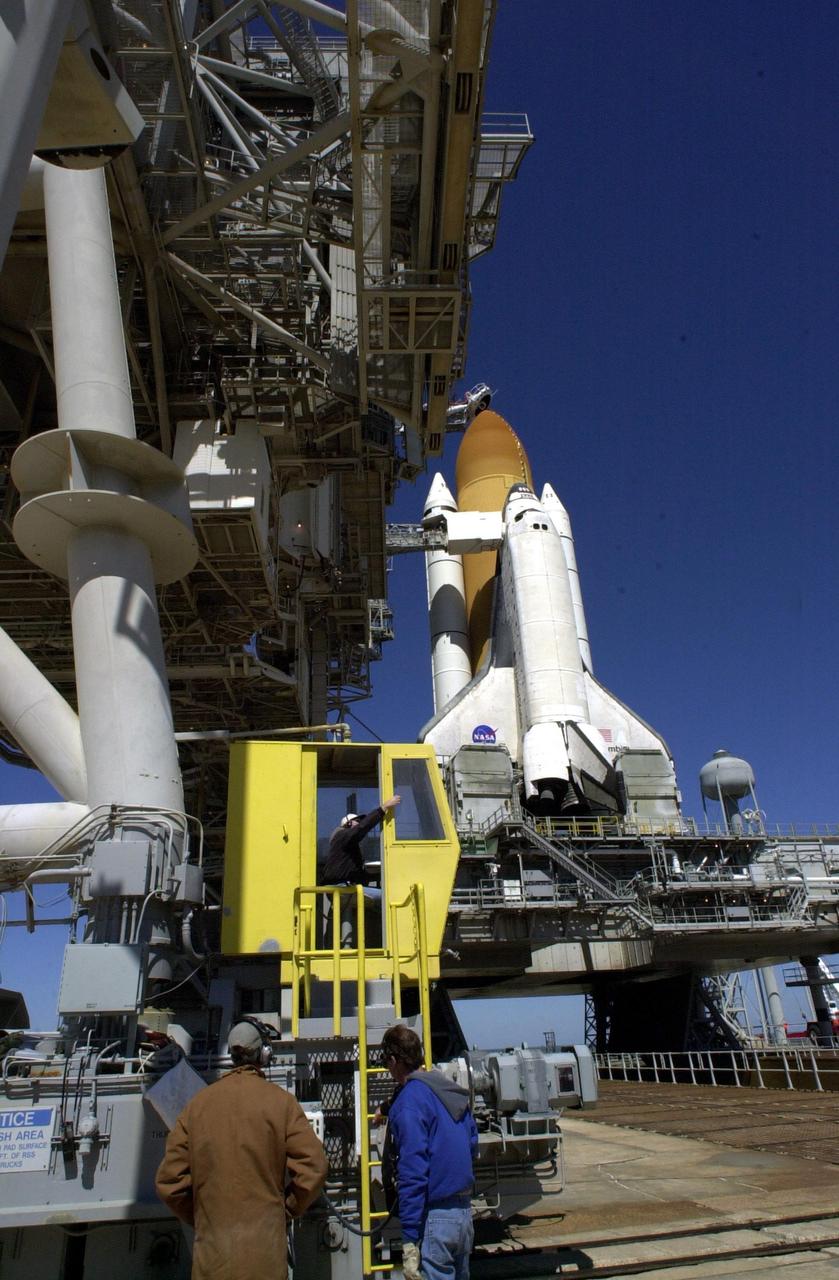
KENNEDY SPACE CENTER, FLA. - The Rotating Service Structure has been retracted at KSC's Launch Pad 39A. Discovery, the orbiter for the STS-82 mission, is ready for the launch of the second Hubble Space Telescope service mission. The payload consists of the Near Infrared Camera and Multi-Object Spectrometer (NICMOS) that will be installed, Fine Guidance Sensor #1 (FGS-1), and the Space Telescope Imaging Spectrograph (STIS) to be installed. The STS-82 will launch with a crew of seven at 3:54 a.m. EST, Feb. 11, 1997. The launch window is 65 minutes in duration. The Mission Commander for STS-82 is Ken Bowersox. The purpose of the mission is to upgrade the scientific capabilities, service or replace aging components on the Telescope, and provide a reboost to the optimum altitude.

KENNEDY SPACE CENTER, FLA. - The White Room is seen at the upper left where the astronauts enter the Space Shuttle for flight. The Rotating Service Structure has been retracted at KSC's Launch Pad 39A. Discovery, the orbiter for the STS-82 mission, is ready for the launch of the second Hubble Space Telescope service mission. The payload consists of the Near Infrared Camera and Multi-Object Spectrometer (NICMOS) that will be installed, Fine Guidance Sensor #1 (FGS-1), and the Space Telescope Imaging Spectrograph (STIS) to be installed. The STS-82 will launch with a crew of seven at 3:54 a.m. EST, Feb. 11, 1997. The launch window is 65 minutes in duration. The Mission Commander for STS-82 is Ken Bowersox. The purpose of the mission is to upgrade the scientific capabilities, service or replace aging components on the Telescope, and provide a reboost to the optimum altitude.
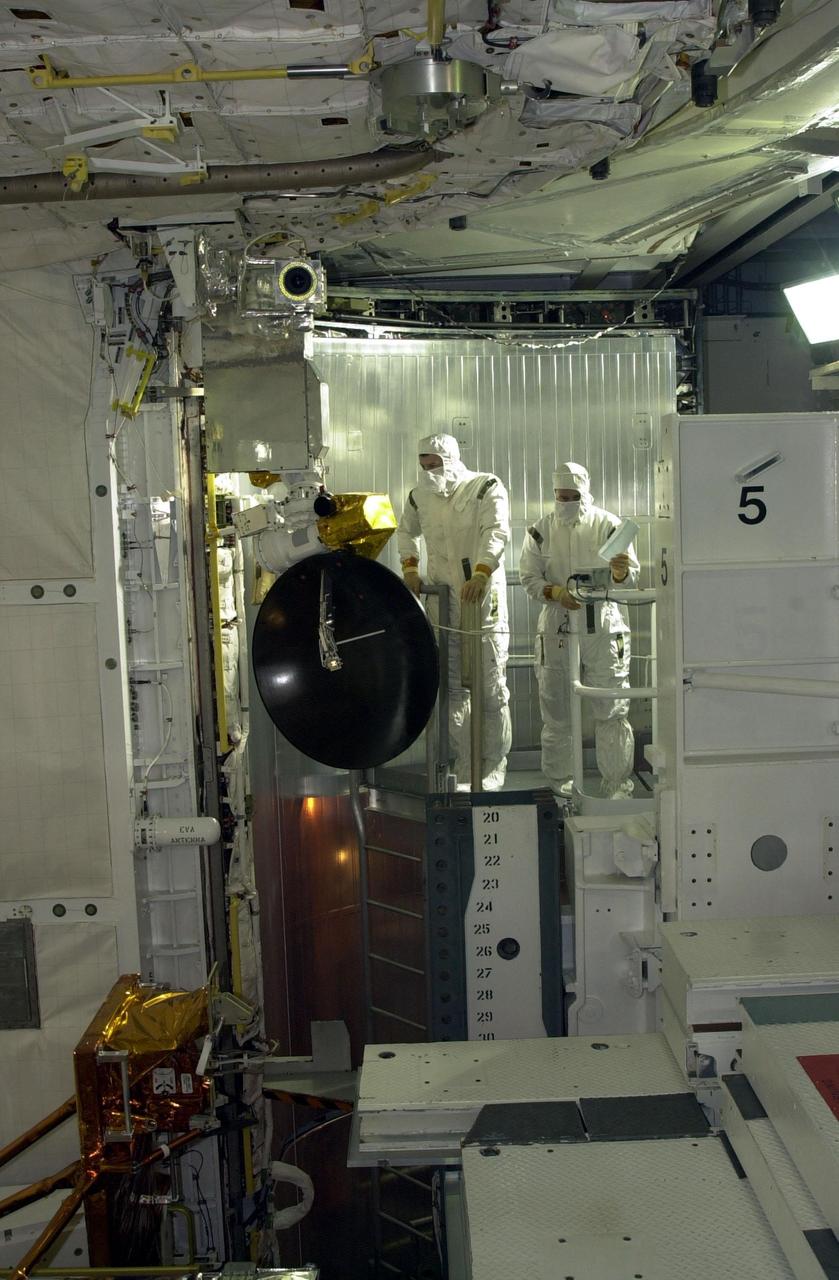
KENNEDY SPACE CENTER, Fla. - On Launch Pad 39A, members of the STS-109 crew perform a final inspection of the Hubble payload they will deploy on orbit during five spacewalks. The crew comprises Commander Scott Altman, Pilot Duane Carey, Payload Commander John Grunsfeld, and Mission Specialists Nancy Currie, James Newman, Richrd Linnehan and Michael Massimino. The goal of the mission is to replace Solar Array 2 with Solar Array 3, replace the Power Control Unit, remove the Faint Object Camera and install the Advanced Camera for Surveys (ACS), install the Near Infrared Camera and Multi-Object Spectrometer (NICMOS) Cooling System, and install New Outer Blanket Layer insulation. Launch of Shuttle Columbia on mission STS-109 is scheduled for Feb. 28 at 6:48 a.m. EST
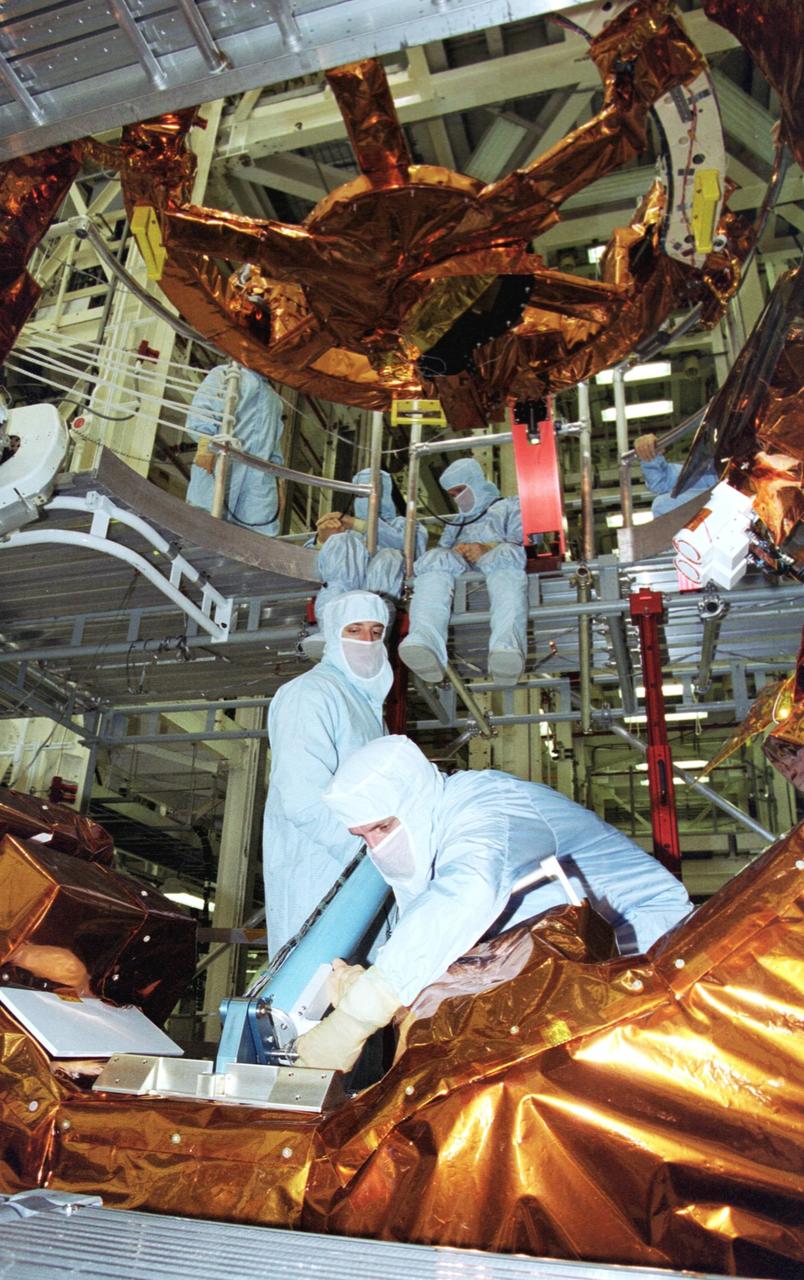
KENNEDY SPACE CENTER, Fla. - In the Vertical Processing Facility, members of the STS-109 crew practice using some of the equipment for their Hubble Space Telescope (HST) Servicing mission. Seen in the foreground are Mission Specialists Michael Massimino (standing) and Richard Linnehan (bending over). The rest of the crew members are Commander Scott Altman, Pilot Duane Carey, Payload Commander John Grunsfeld and Mission Specialists Nancy Currie and James Newman. The goal of the mission is to service the HST, replacing Solar Array 2 with Solar Array 3, replacing the Power Control Unit, removing the Faint Object Camera and installing the Advanced Camera for Surveys, installing the Near Infrared Camera and Multi-Object Spectrometer (NICMOS) Cooling System, and installing New Outer Blanket Layer insulation on bays 5 through 8. Mission STS-109 is scheduled for launch Feb. 14, 2002
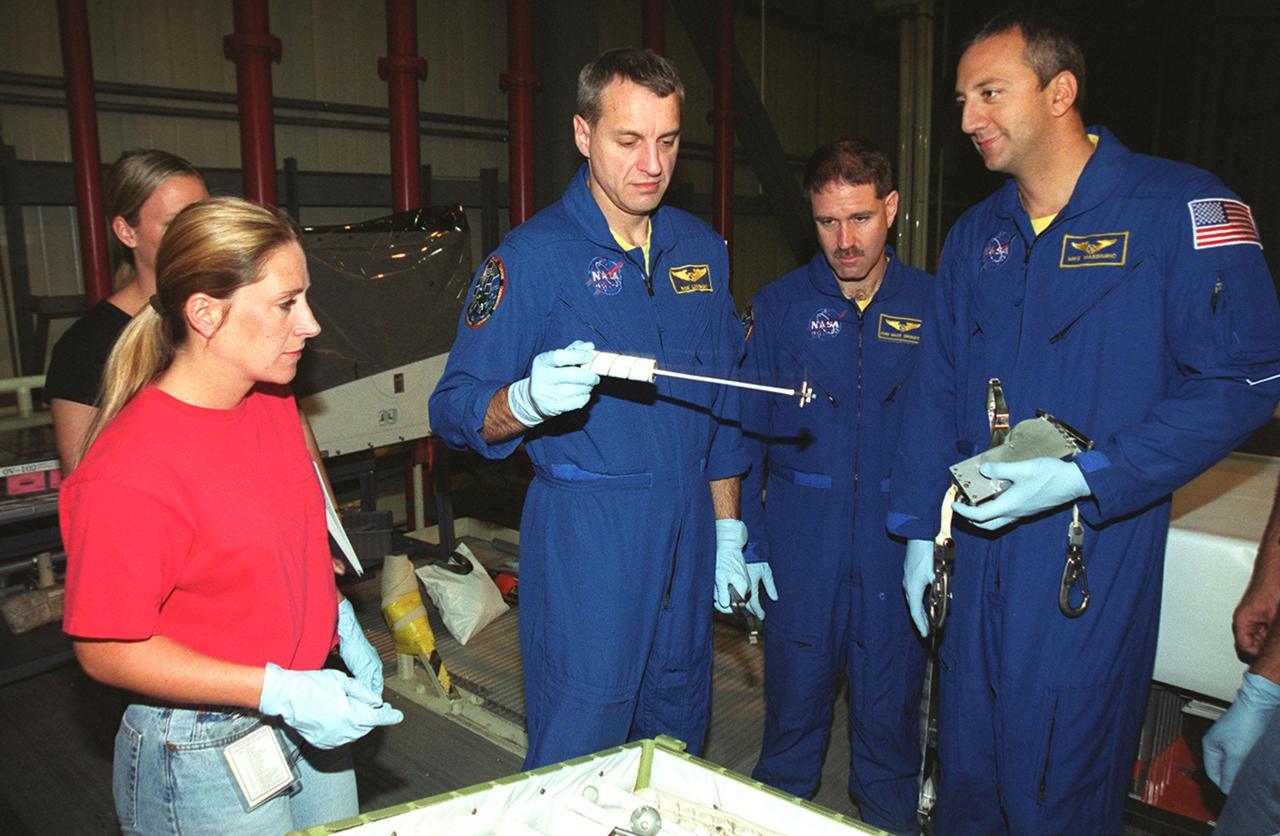
KENNEDY SPACE CENTER, Fla. - In the company of two technicians (left), STS-109 crew members look over equipment related to their mission. Holding the equipment is Mission Specialist Richard Linnehan (left); at center is Payload Commander John Grunsfeld; at right is Mission Specialist Michael Massimino. STS-109, the Hubble Space Telescope (HST) Servicing mission, is Massimino's first Shuttle flight. The crew is at KSC to take part in Crew Equipment Interface Test activities that include familiarization with the orbiter and equipment. The goal of the mission is to service the HST, replacing Solar Array 2 with Solar Array 3, replacing the Power Control Unit, removing the Faint Object Camera and installing the Advanced Camera for Surveys, installing the Near Infrared Camera and Multi-Object Spectrometer (NICMOS) Cooling System, and installing New Outer Blanket Layer insulation on bays 5 through 8. Mission STS-109 is scheduled for launch Feb. 14, 2002
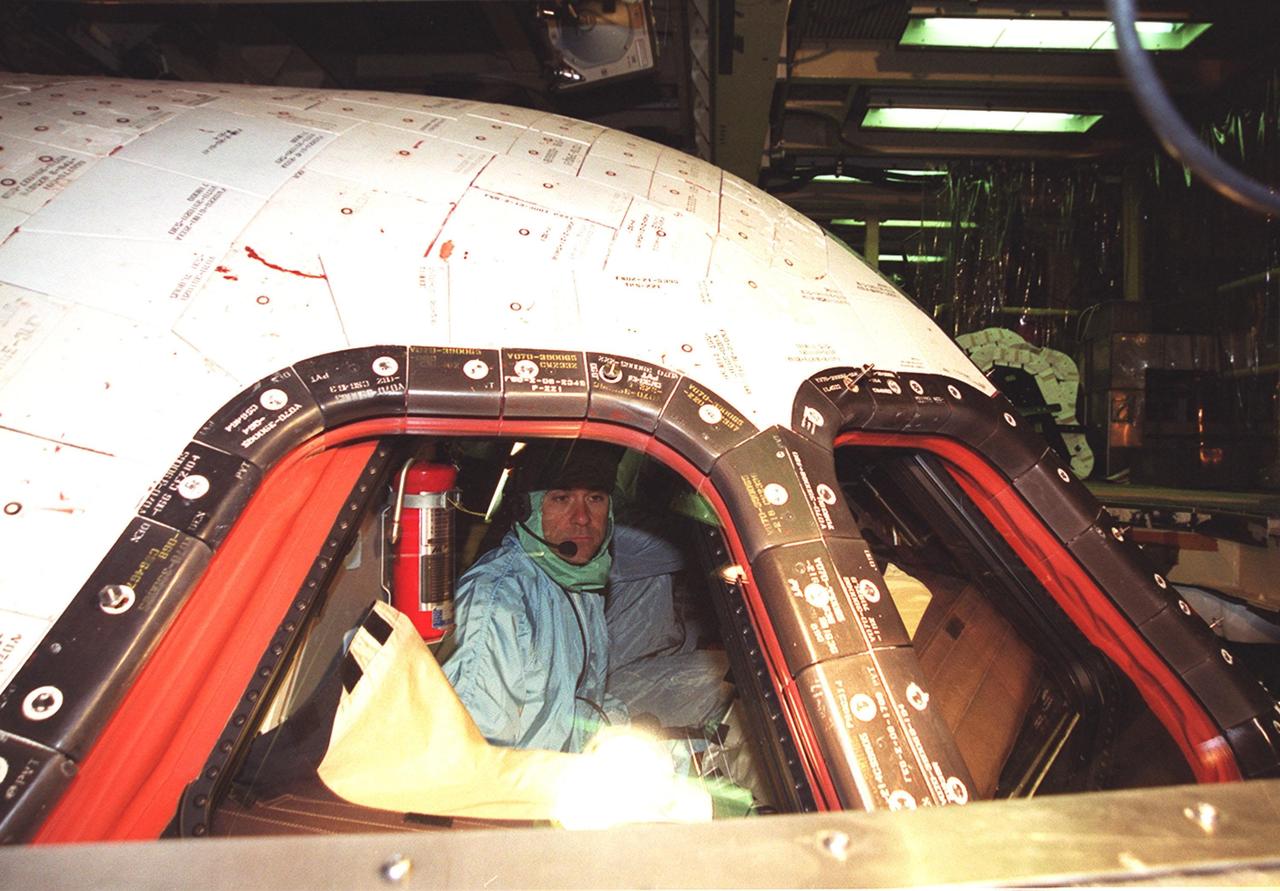
KENNEDY SPACE CENTER, Fla. - STS-109 Pilot Duane Carey checks the windshield and windows from inside Columbia. This is Carey's first Shuttle flight. He and the crew are at KSC to take part in Crew Equipment Interface Test activities that include familiarization with the orbiter and equipment. STS-109 is the Hubble Space Telescope (HST) Servicing mission. The crew also comprises Commander Scott Altman, Payload Commander John Grunsfeld and Mission Specialists Nancy Currie, James Newman, Richard Linnehan and Michael Massimino. The goal of the mission is to service the HST, replacing Solar Array 2 with Solar Array 3, replacing the Power Control Unit, removing the Faint Object Camera and installing the Advanced Camera for Surveys, installing the Near Infrared Camera and Multi-Object Spectrometer (NICMOS) Cooling System, and installing New Outer Blanket Layer insulation on bays 5 through 8. Mission STS-109 is scheduled for launch Feb. 14, 2002
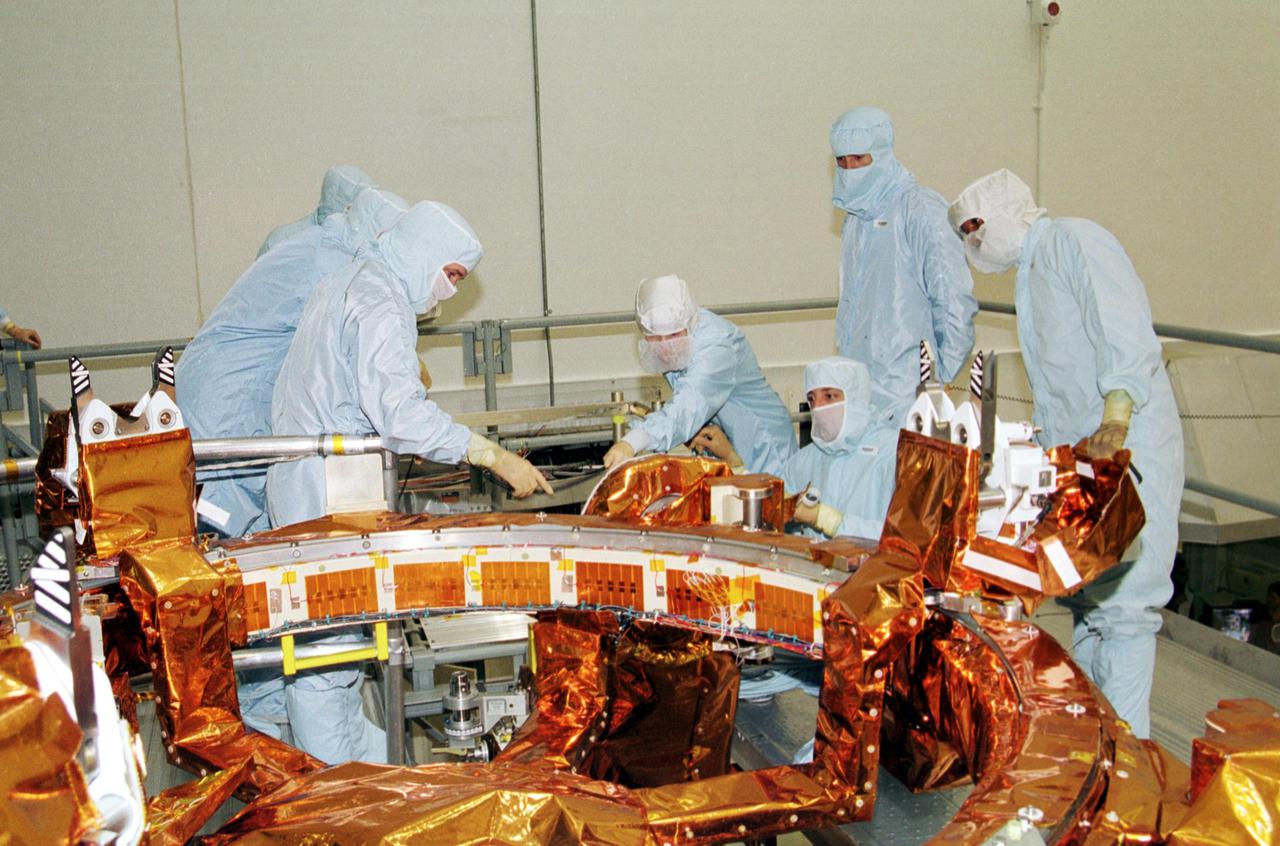
KENNEDY SPACE CENTER, Fla. - Inside the Vertical Processing Facility, the STS-109 crew checks out part of the equipment for their Hubble Space Telescope (HST) Servicing mission. The crew comprises Commander Scott altman, Pilot Duane Carey, Payload Commander John Grunsfeld and Mission Specialists Nancy Currie, James Newman, Richard Linnehan and Michael Massimino. The goal of the mission is to service the HST, replacing Solar Array 2 with Solar Array 3, replacing the Power Control Unit, removing the Faint Object Camera and installing the Advanced Camera for Surveys, installing the Near Infrared Camera and Multi-Object Spectrometer (NICMOS) Cooling System, and installing New Outer Blanket Layer insulation on bays 5 through 8. Mission STS-109 is scheduled for launch Feb. 14, 2002
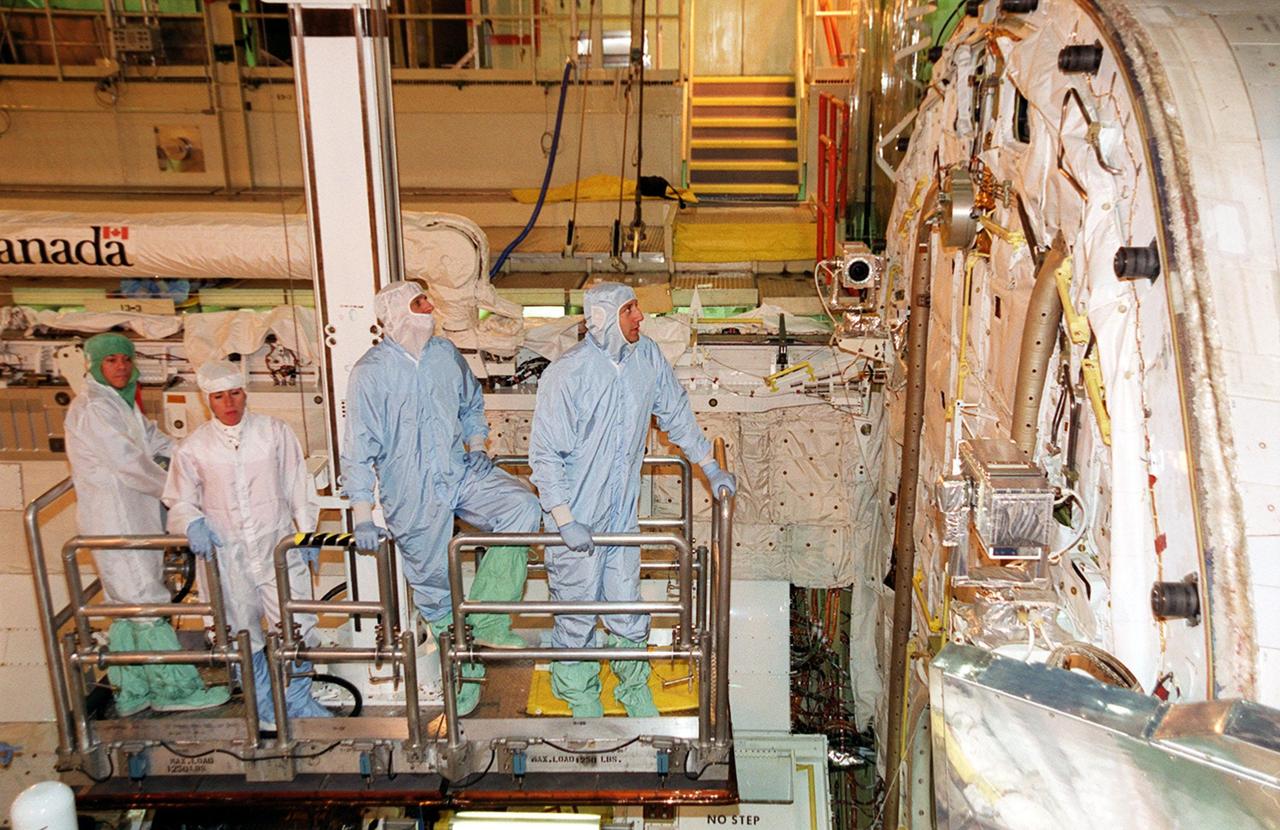
KENNEDY SPACE CENTER, Fla. - Members of the STS-109 crew look over the interior of orbiter Columbia's payload bay. At right is Mission Specialist Michael Massimino; next to him is Commander Scott Altman. The crew is at KSC to take part in Crew Equipment Interface Test activities that include familiarization with the orbiter and equipment. The goal of the mission is to service the HST, replacing Solar Array 2 with Solar Array 3, replacing the Power Control Unit, removing the Faint Object Camera and installing the Advanced Camera for Surveys, installing the Near Infrared Camera and Multi-Object Spectrometer (NICMOS) Cooling System, and installing New Outer Blanket Layer insulation on bays 5 through 8. Mission STS-109 is scheduled for launch Feb. 14, 2002
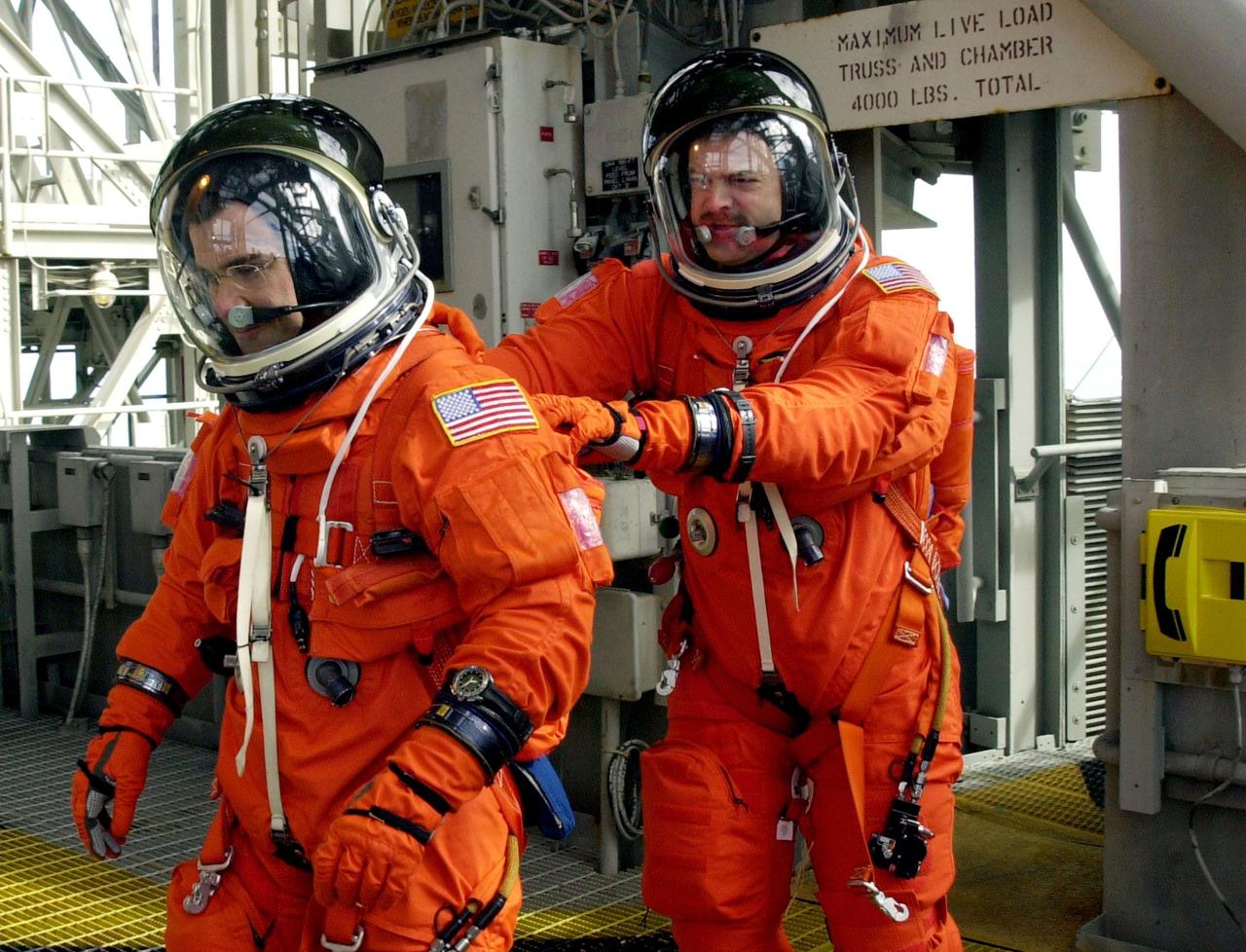
KENNEDY SPACE CENTER, FLA. -- As part of Terminal Countdown Demonstration Test activities, the STS-109 crew practices emergency exit from the Shuttle. Leading the way to the slidewire basket on the 195-foot level is Pilot Duane Carey, followed by Commander Scott Altman. The TCDT also includes a simulated launch countdown. STS-109 is a Hubble Space Telescope Servicing Mission, with goals to replace Solar Array 2 with Solar Array 3, replace the Power Control Unit, remove the Faint Object Camera and install the Advanced Camera for Surveys (ACS), install the Near Infrared Camera and Multi-Object Spectrometer (NICMOS) Cooling System, and install New Outer Blanket Layer insulation. The 11-day mission will require five spacewalks to perform the tasks. Launch of STS-109 aboard Space Shuttle Columbia is scheduled for Feb. 28, 2002
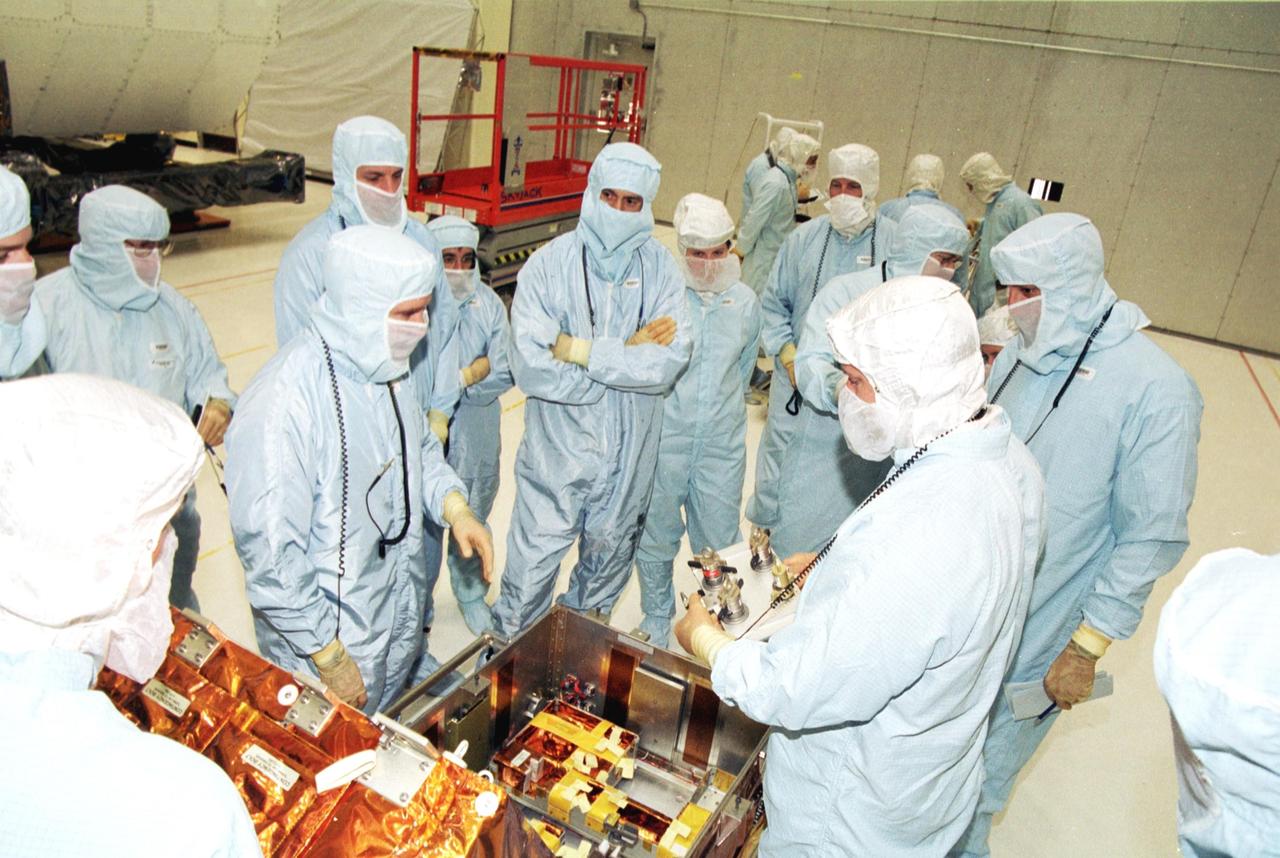
KENNEDY SPACE CENTER, Fla. - The STS-109 crew is in the Vertical Processing Facility to look over equipment for their Hubble Space Telescope (HST) Servicing mission. The crew comprises Commander Scott Altman, Pilot Duane Carey, Payload Commander John Grunsfeld and Mission Specialists Nancy Currie, James Newman, Richard Linnehan and Michael Massimino. The goal of the mission is to service the HST, replacing Solar Array 2 with Solar Array 3, replacing the Power Control Unit, removing the Faint Object Camera and installing the Advanced Camera for Surveys, installing the Near Infrared Camera and Multi-Object Spectrometer (NICMOS) Cooling System, and installing New Outer Blanket Layer insulation on bays 5 through 8. Mission STS-109 is scheduled for launch Feb. 14, 2002
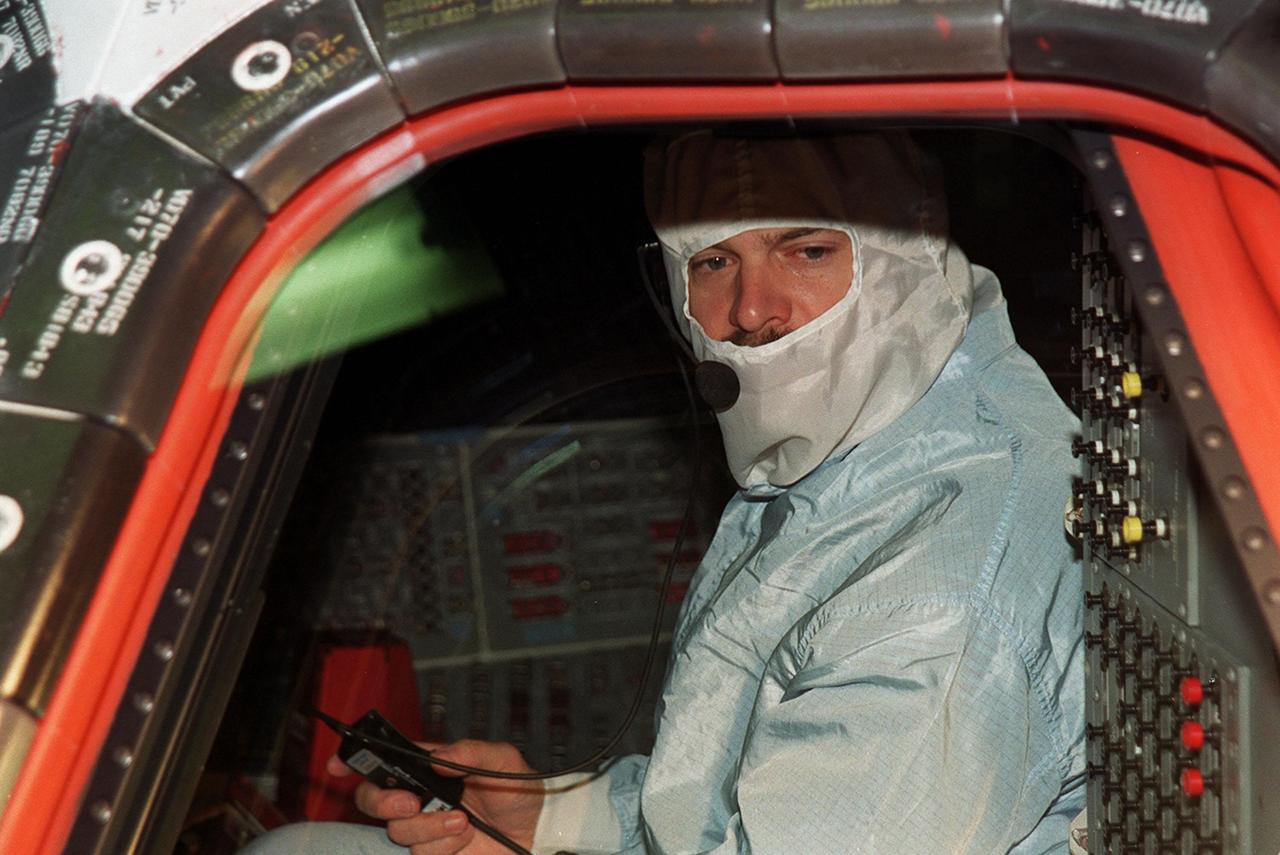
KENNEDY SPACE CENTER, Fla. -- STS-109 Commander Scott Altman checks the windshield and windows from inside Columbia. He and the crew are at KSC to take part in Crew Equipment Interface Test activities that include familiarization with the orbiter and equipment. STS-109 is the Hubble Space Telescope (HST) Servicing mission. The crew also comprises Pilot Duane Carey, Payload Commander John Grunsfeld and Mission Specialists Nancy Currie, James Newman, Richard Linnehan and Michael Massimino. The goal of the mission is to service the HST, replacing Solar Array 2 with Solar Array 3, replacing the Power Control Unit, removing the Faint Object Camera and installing the Advanced Camera for Surveys, installing the Near Infrared Camera and Multi-Object Spectrometer (NICMOS) Cooling System, and installing New Outer Blanket Layer insulation on bays 5 through 8. Mission STS-109 is scheduled for launch Feb. 14, 2002
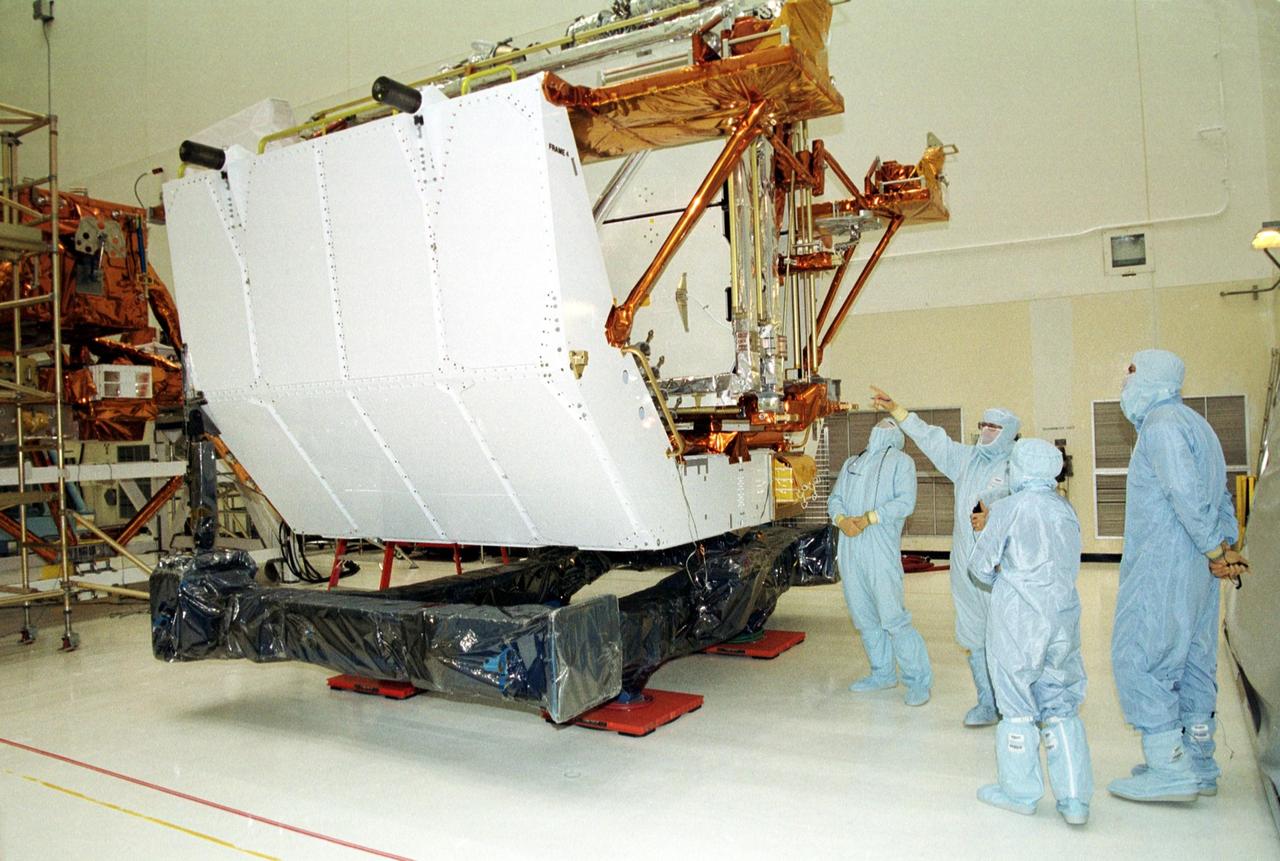
KENNEDY SPACE CENTER, Fla. -- In the Vertical Processing Facility, members of the STS-109 crew look over the Solar Array 3 panels that will be replacing Solar Array 2 panels on the Hubble Space Telescope (HST). Trainers, at left, point to the panels while Mission Specialist Nancy Currie (second from right) and Commander Scott Altman (far right) look on. Other crew members are Pilot Duane Carey, Payload Commander John Grunsfeld and Mission Specialists James Newman, Richard Linnehan and Michael Massimino. The other goals of the mission are replacing the Power Control Unit, removing the Faint Object Camera and installing the Advanced Camera for Surveys, installing the Near Infrared Camera and Multi-Object Spectrometer (NICMOS) Cooling System, and installing New Outer Blanket Layer insulation on bays 5 through 8. Mission STS-109 is scheduled for launch Feb. 14, 2002
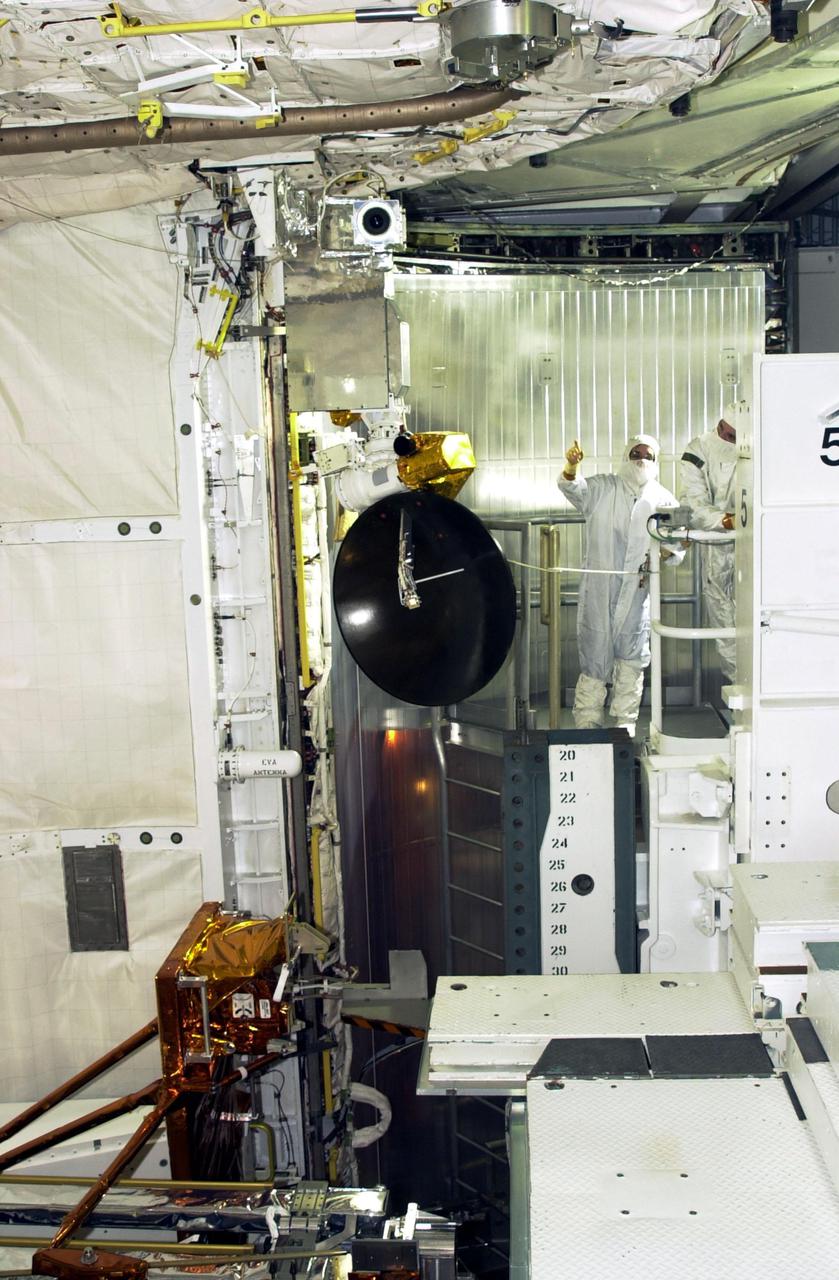
KENNEDY SPACE CENTER, FLA. -- On Launch Pad 39A, members of the STS-109 crew perform a final inspection of the Hubble payload they will deploy on orbit during five spacewalks. Mission Specialist Nancy Currie is seen pointing at a piece of the equipment. Other crew members are Commander Scott Altman, Pilot Duane Carey, Payload Commander John Grunsfeld, and Mission Specialists James Newman, Richrd Linnehan and Michael Massimino. The goal of the mission is to replace Solar Array 2 with Solar Array 3, replace the Power Control Unit, remove the Faint Object Camera and install the Advanced Camera for Surveys (ACS), install the Near Infrared Camera and Multi-Object Spectrometer (NICMOS) Cooling System, and install New Outer Blanket Layer insulation. Launch of Shuttle Columbia on mission STS-109 is scheduled for Feb. 28 at 6:48 a.m. EST
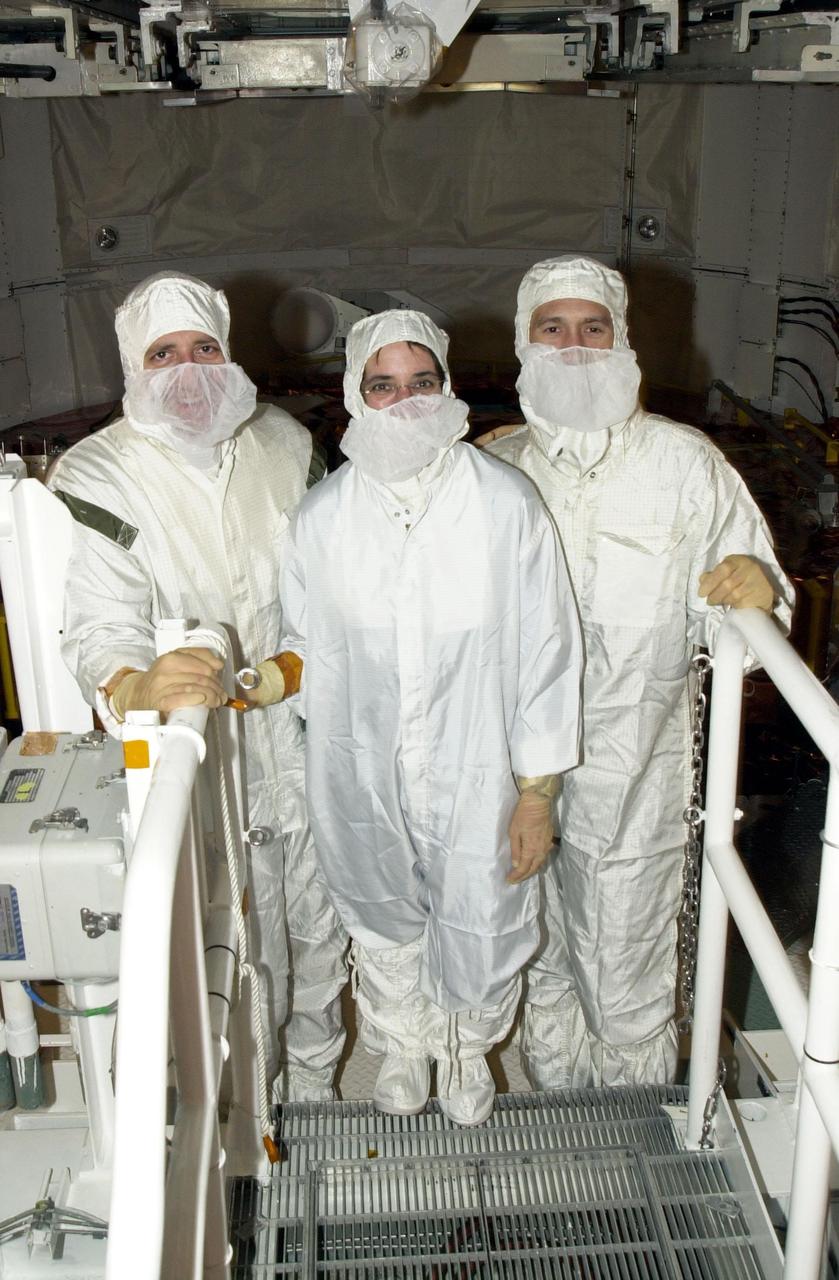
KENNEDY SPACE CENTER, Fla. - On Launch Pad 39A, members of the STS-109 crew pause during their final inspection of the Hubble payload they will deploy on orbit during five spacewalks. Seen here (left to right) are Mission Specialists Michael Massimino, Nancy Currie and James Newman. The crew also comprises Commander Scott Altman, Pilot Duane Carey, Payload Commander John Grunsfeld, and Mission Specialist Richard Linnehan. The goal of the mission is to replace Solar Array 2 with Solar Array 3, replace the Power Control Unit, remove the Faint Object Camera and install the Advanced Camera for Surveys (ACS), install the Near Infrared Camera and Multi-Object Spectrometer (NICMOS) Cooling System, and install New Outer Blanket Layer insulation. Launch of Shuttle Columbia on mission STS-109 is scheduled for Feb. 28 at 6:48 a.m. EST
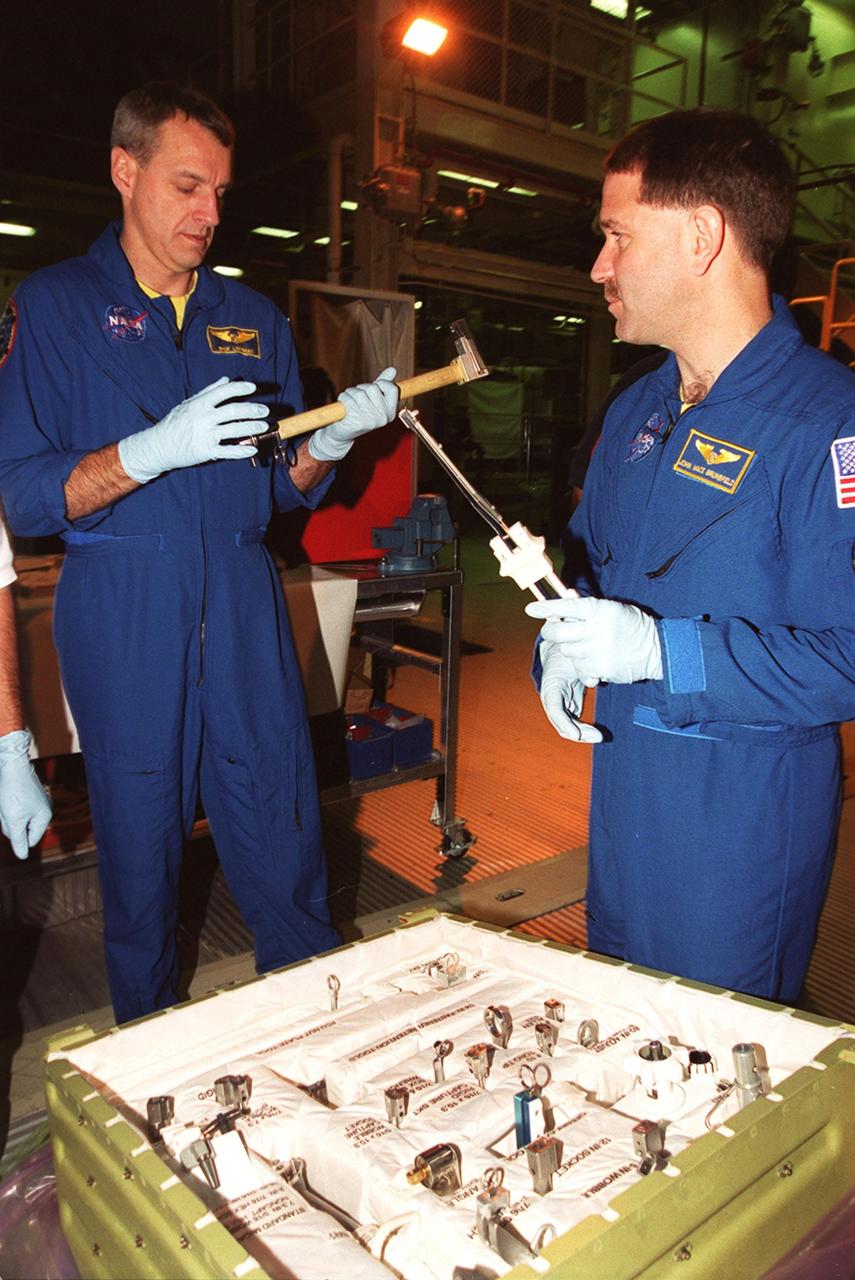
KENNEDY SPACE CENTER, Fla. - STS-109 Mission Specialist Richard Lennehan (left) and Payload Commander John Grunsfeld get a feel for tools and equipment that will be used on the mission. The crew is at KSC to take part in Crew Equipment Interface Test activities that include familiarization with the orbiter and equipment. The goal of the mission is to service the HST, replacing Solar Array 2 with Solar Array 3, replacing the Power Control Unit, removing the Faint Object Camera and installing the Advanced Camera for Surveys, installing the Near Infrared Camera and Multi-Object Spectrometer (NICMOS) Cooling System, and installing New Outer Blanket Layer insulation on bays 5 through 8. Mission STS-109 is scheduled for launch Feb. 14, 2002
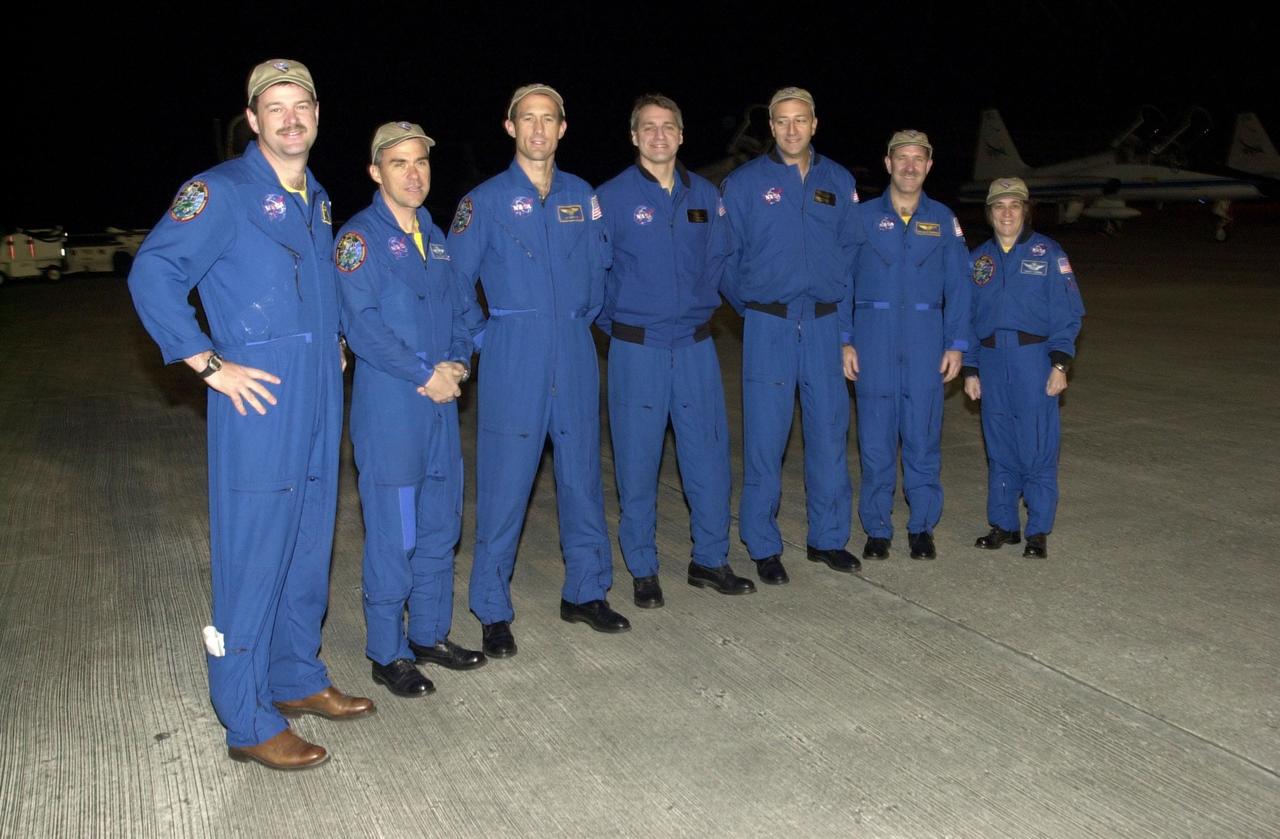
KENNEDY SPACE CENTER, Fla. - The STS-109 crew stops for a photograph after arriving at KSC aboard a T-38 jet aircraft to begin launch preparations. Standing left to right are Commander Scott Altman, Pilot Duane Carey, and Mission Specialists James Newman, Richard Linnehan and Michael Massimino, Payload Commander John Grunsfeld, and Mission Specialist Nancy Currie. The goal of the 11-day mission is repair and maintenance on the Hubble Space Telescope. Five spacewalks are planned to replace Solar Array 2 with Solar Array 3, replace the Power Control Unit, remove the Faint Object Camera and install the Advanced Camera for Surveys (ACS), install the Near Infrared Camera and Multi-Object Spectrometer (NICMOS) Cooling System, and install New Outer Blanket Layer insulation. Launch is scheduled for Feb. 28 at 6:48 a.m. EST
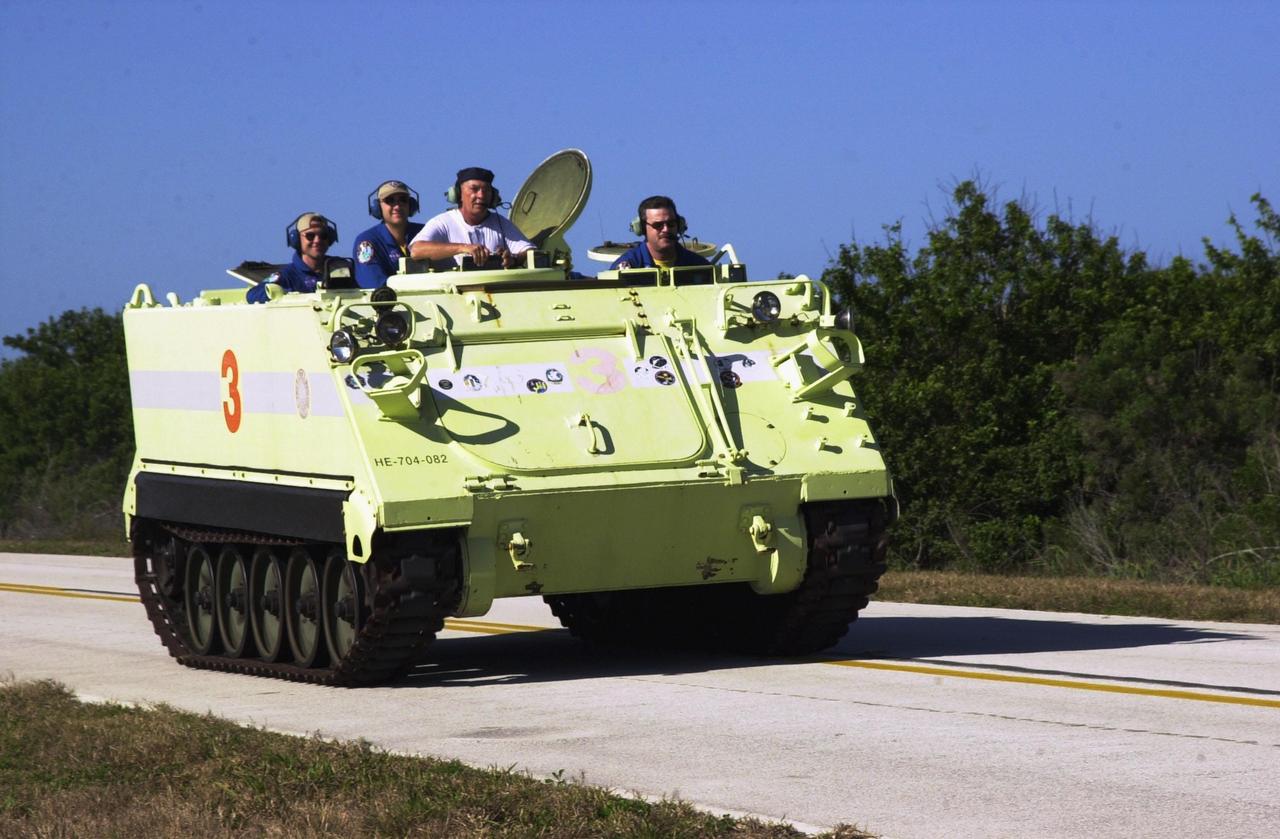
KENNEDY SPACE CENTER, FLA. - STS-109 Commander Scott Altman drives the M-113 armored personnel carrier during emergency egress training at the launch pad. He and other crew members are taking part in Terminal Countdown Demonstration Test activities, which also include a simulated launch countdown. STS-109 is a Hubble Space Telescope Servicing Mission, with goals to replace Solar Array 2 with Solar Array 3, replace the Power Control Unit, remove the Faint Object Camera and install the Advanced Camera for Surveys (ACS), install the Near Infrared Camera and Multi-Object Spectrometer (NICMOS) Cooling System, and install New Outer Blanket Layer insulation. The 11-day mission will require grasping the satellite with a robotic arm in order for the crew to perform the tasks during five spacewalks. Launch of STS-109 aboard Space Shuttle Columbia is scheduled for Feb. 28, 2002
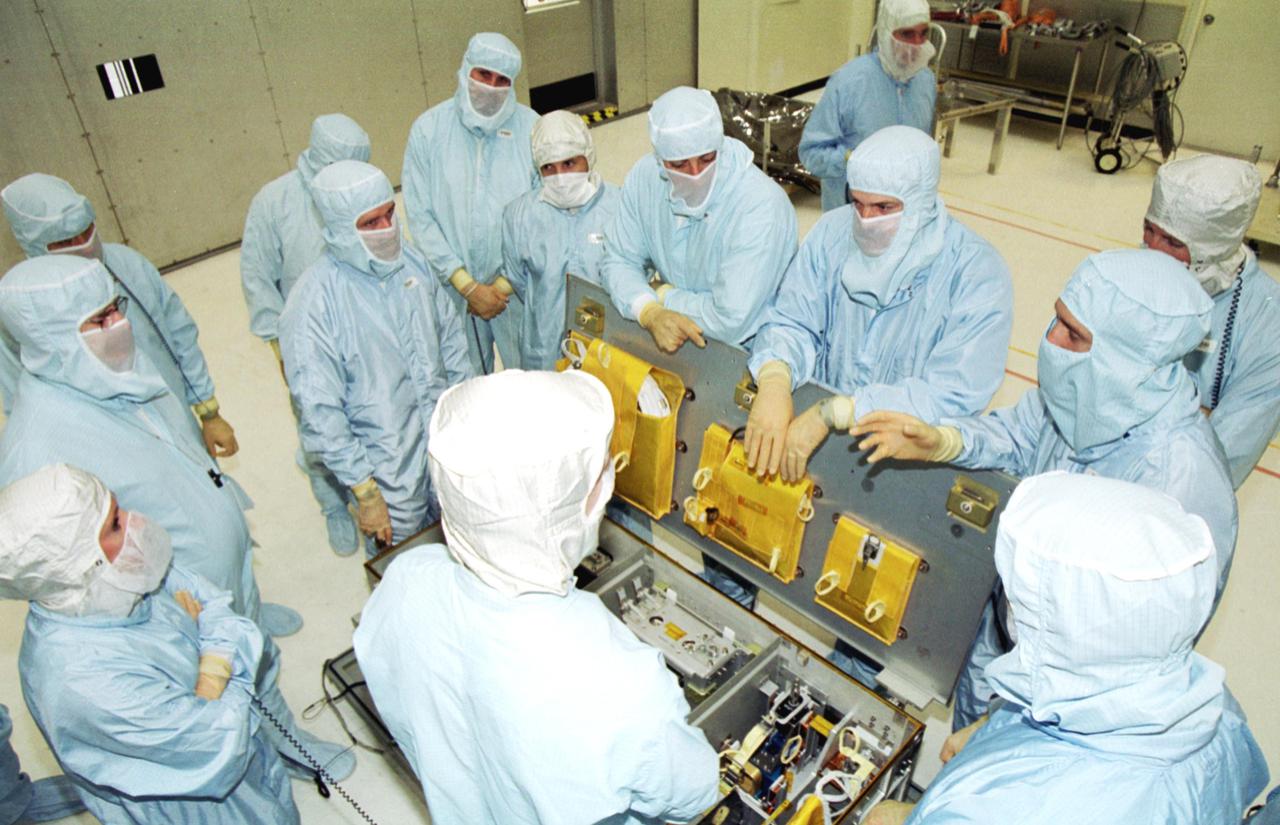
KENNEDY SPACE CENTER, Fla. - In the Vertical Processing Facility, members of the STS-109 crew listen to instructions about using some of the equipment for their Hubble Space Telescope (HST) Servicing mission. At left are three trainers. The crew, whose faces can be seen, are (left to right) Payload Commander John Grunsfeld, Pilot Duane Carey, Mission Specialists Nancy Currie and Richard Linnehan, Commander Scott Altman, and Mission Specialists James Newman and Michael Massimino (behind Newman). The goal of the mission is to service the HST, replacing Solar Array 2 with Solar Array 3, replacing the Power Control Unit, removing the Faint Object Camera and installing the Advanced Camera for Surveys, installing the Near Infrared Camera and Multi-Object Spectrometer (NICMOS) Cooling System, and installing New Outer Blanket Layer insulation on bays 5 through 8. Mission STS-109 is scheduled for launch Feb. 14, 2002
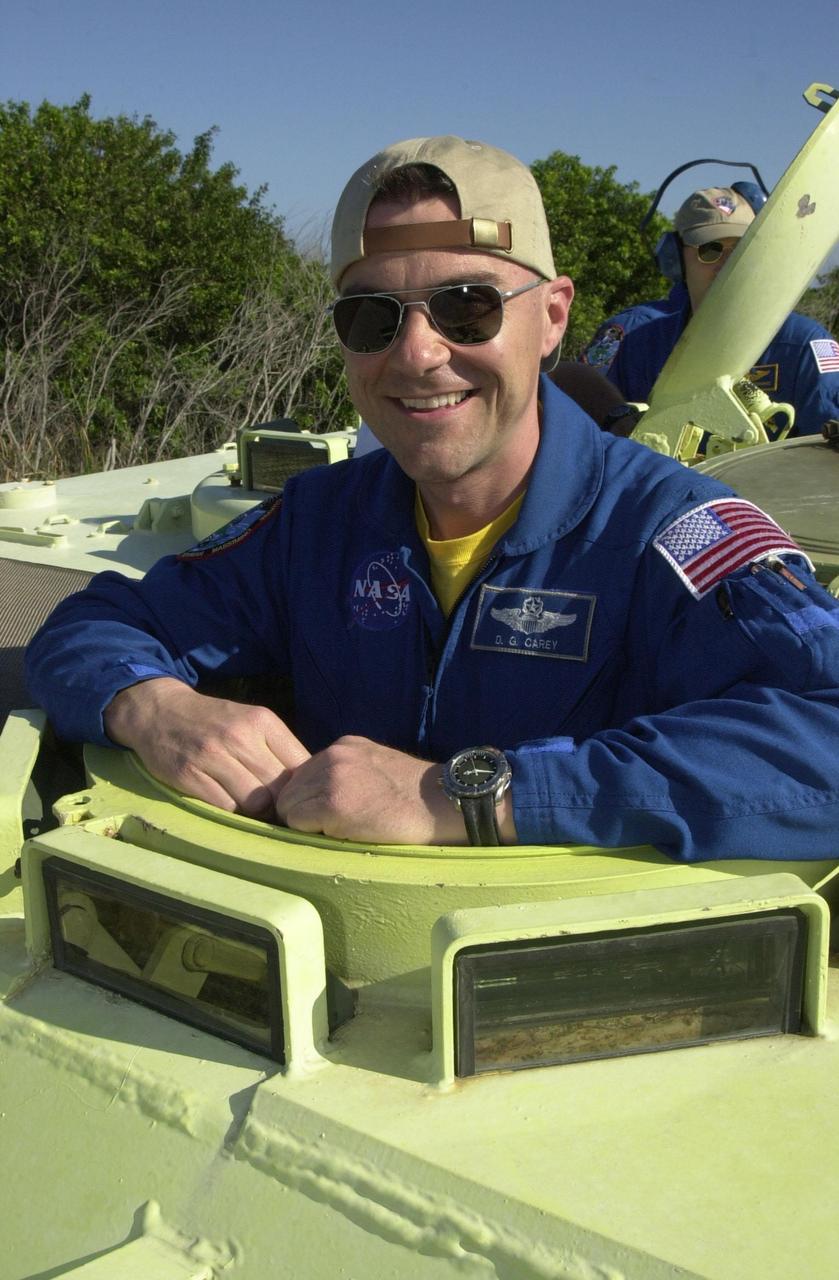
KENNEDY SPACE CENTER, FLA. - STS-109 Pilot Duane Carey is ready to practice driving the M-113 armored personnel carrier, part of emergency egress training at the launch pad. He and other crew members are taking part in Terminal Countdown Demonstration Test activities, which also include a simulated launch countdown. STS-109 is a Hubble Space Telescope Servicing Mission, with goals to replace Solar Array 2 with Solar Array 3, replace the Power Control Unit, remove the Faint Object Camera and install the Advanced Camera for Surveys (ACS), install the Near Infrared Camera and Multi-Object Spectrometer (NICMOS) Cooling System, and install New Outer Blanket Layer insulation. The 11-day mission will require grasping the satellite with a robotic arm in order for the crew to perform the tasks during five spacewalks. Launch of STS-109 aboard Space Shuttle Columbia is scheduled for Feb. 28, 2002
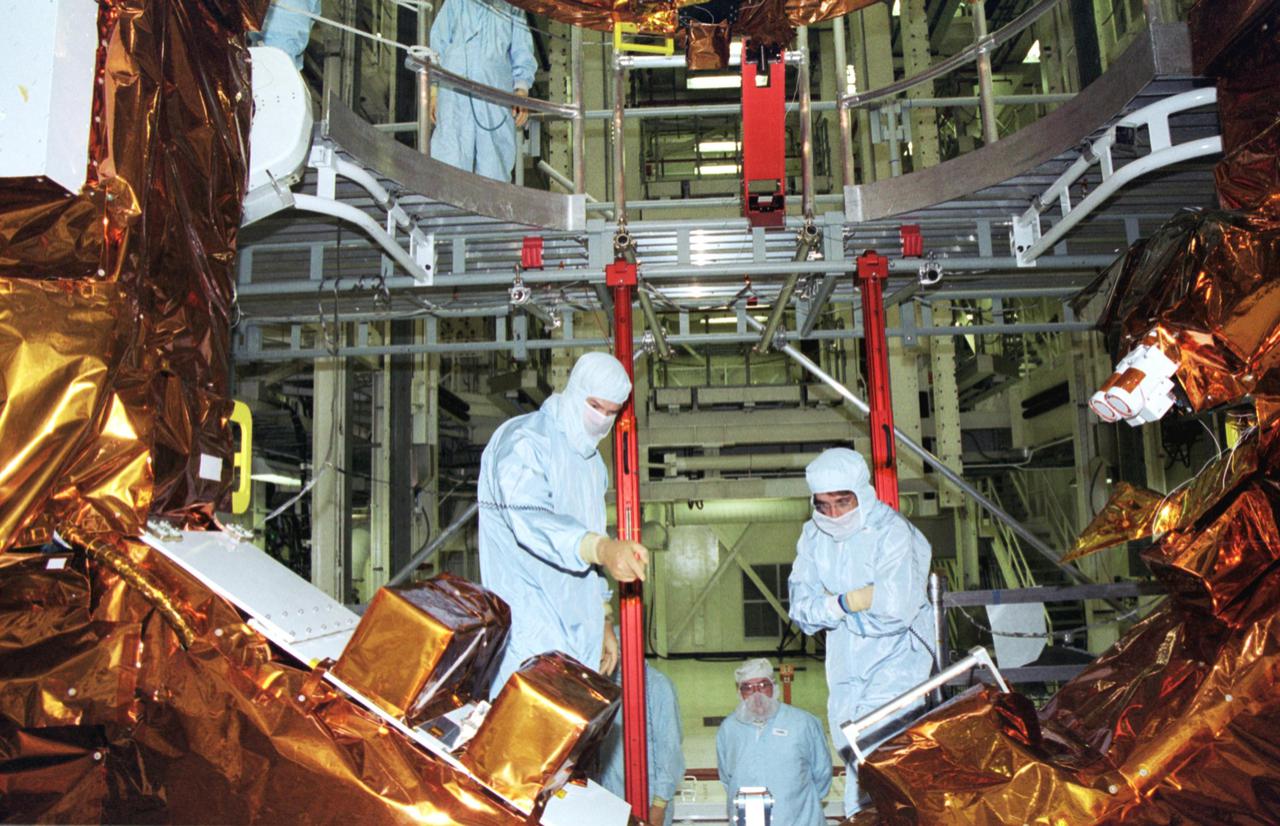
KENNEDY SPACE CENTER, Fla. -- Inside the Vertical Processing Facility, members of the STS-109 crew looks over equipment for their Hubble Space Telescope (HST) Servicing mission. Seen in the foreground are Commander Scott Altman and Mission Specialist Nancy Currie. Other crew members are Pilot Duane Carey, Payload Commander John Grunsfeld and Mission Specialists James Newman, Richard Linnehan and Michael Massimino. The goal of the mission is to service the HST, replacing Solar Array 2 with Solar Array 3, replacing the Power Control Unit, removing the Faint Object Camera and installing the Advanced Camera for Surveys, installing the Near Infrared Camera and Multi-Object Spectrometer (NICMOS) Cooling System, and installing New Outer Blanket Layer insulation on bays 5 through 8. Mission STS-109 is scheduled for launch Feb. 14, 2002
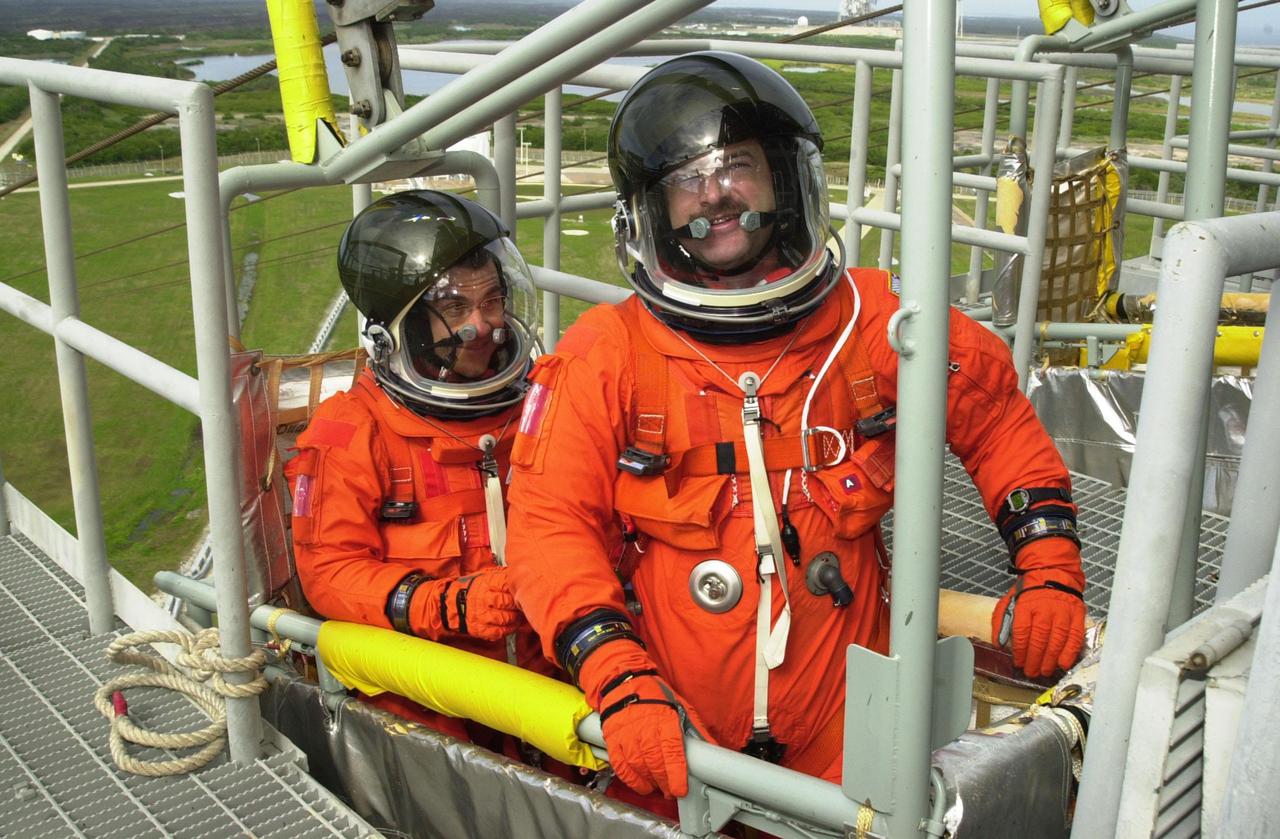
KENNEDY SPACE CENTER, FLA. -- As part of Terminal Countdown Demonstration Test activities, the STS-109 crew practices emergency exit from the Shuttle. Seated in the slidewire basket at the 195-foot level of the Fixed Service Structure are Pilot Duane Carey (left) and Commander Scott Altman (right). The TCDT also includes a simulated launch countdown. STS-109 is a Hubble Space Telescope Servicing Mission, with goals to replace Solar Array 2 with Solar Array 3, replace the Power Control Unit, remove the Faint Object Camera and install the Advanced Camera for Surveys (ACS), install the Near Infrared Camera and Multi-Object Spectrometer (NICMOS) Cooling System, and install New Outer Blanket Layer insulation. The 11-day mission will require five spacewalks to perform the tasks. Launch of STS-109 aboard Space Shuttle Columbia is scheduled for Feb. 28, 2002
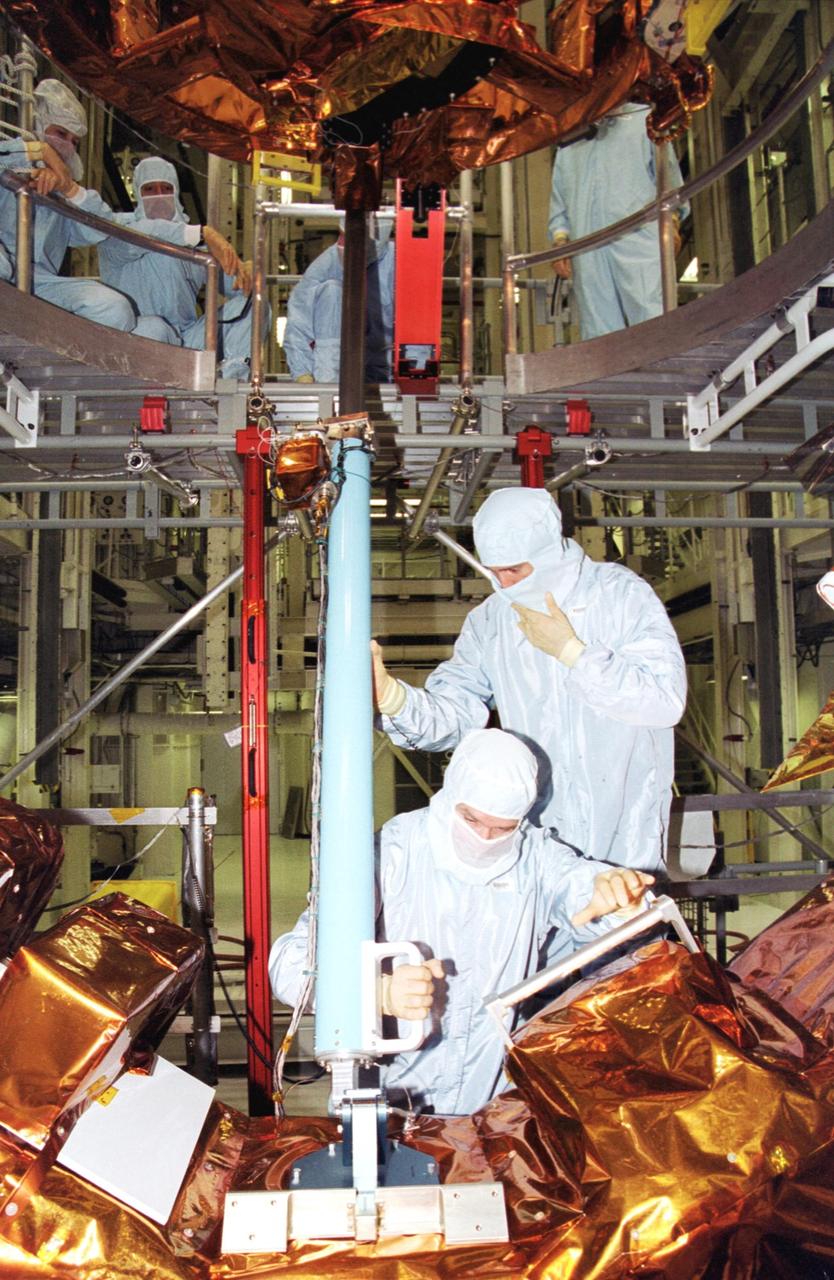
KENNEDY SPACE CENTER, Fla. - In the Vertical Processing Facility, members of the STS-109 crew practice on some of the equipment for their Hubble Space Telescope (HST) Servicing mission. Seen in the foreground are (left) Payload Commander John Grunsfeld and (right) Mission Specialist James Newman. The rest of the crew are Commander Scott Altman, Pilot Duane Carey, and Mission Specialists Nancy Currie, Richard Linnehan and Michael Massimino. The goal of the mission is to service the HST, replacing Solar Array 2 with Solar Array 3, replacing the Power Control Unit, removing the Faint Object Camera and installing the Advanced Camera for Surveys, installing the Near Infrared Camera and Multi-Object Spectrometer (NICMOS) Cooling System, and installing New Outer Blanket Layer insulation on bays 5 through 8. Mission STS-109 is scheduled for launch Feb. 14, 2002
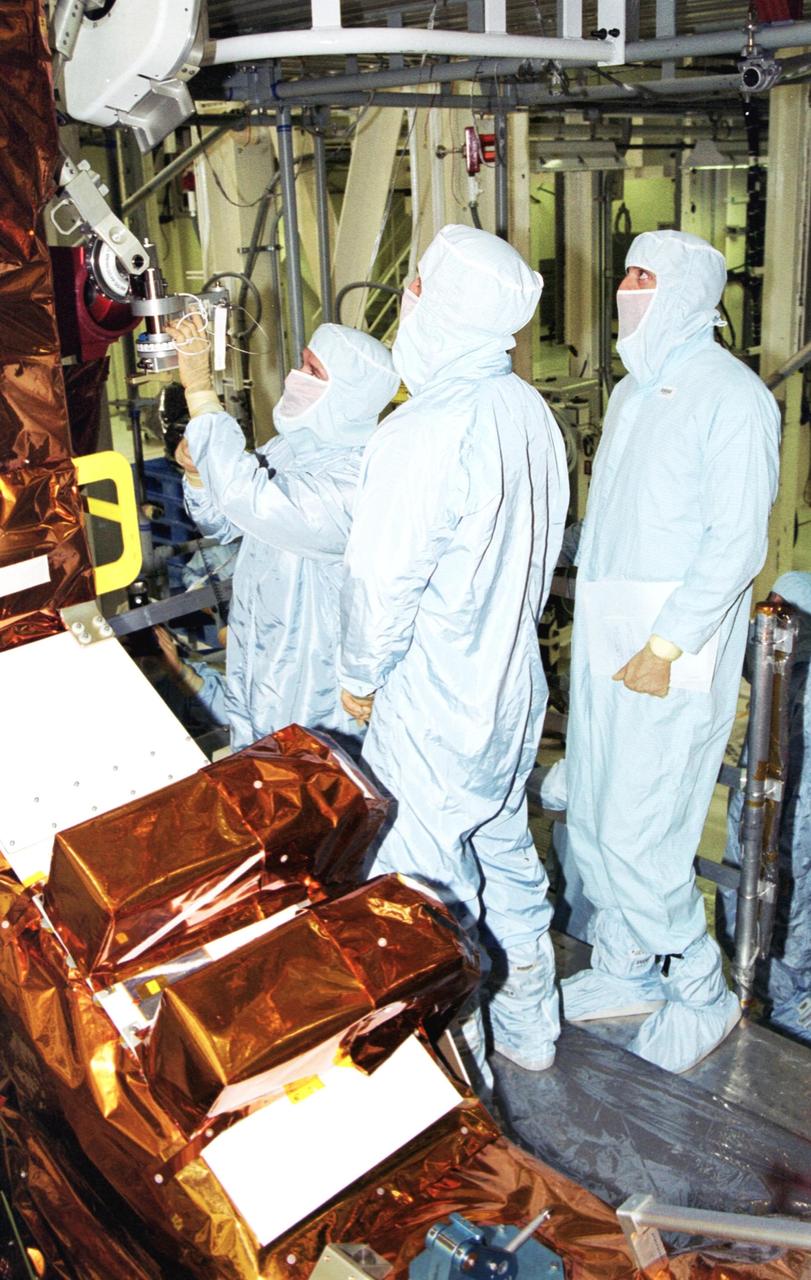
KENNEDY SPACE CENTER, Fla. - In the Vertical Processing Facility, members of the STS-109 crew look over a piece of the equipment for their Hubble Space Telescope (HST) Servicing mission. Seen are Payload Commander John Grunsfeld and Mission Specialists Richard Linnehan and Michael Massimino. Other crew members are Commander Scott Altman, Pilot Duane Carey and Mission Specialists Nancy Currie and James Newman. The goal of the mission is to service the HST, replacing Solar Array 2 with Solar Array 3, replacing the Power Control Unit, removing the Faint Object Camera and installing the Advanced Camera for Surveys, installing the Near Infrared Camera and Multi-Object Spectrometer (NICMOS) Cooling System, and installing New Outer Blanket Layer insulation on bays 5 through 8. Mission STS-109 is scheduled for launch Feb. 14, 2002
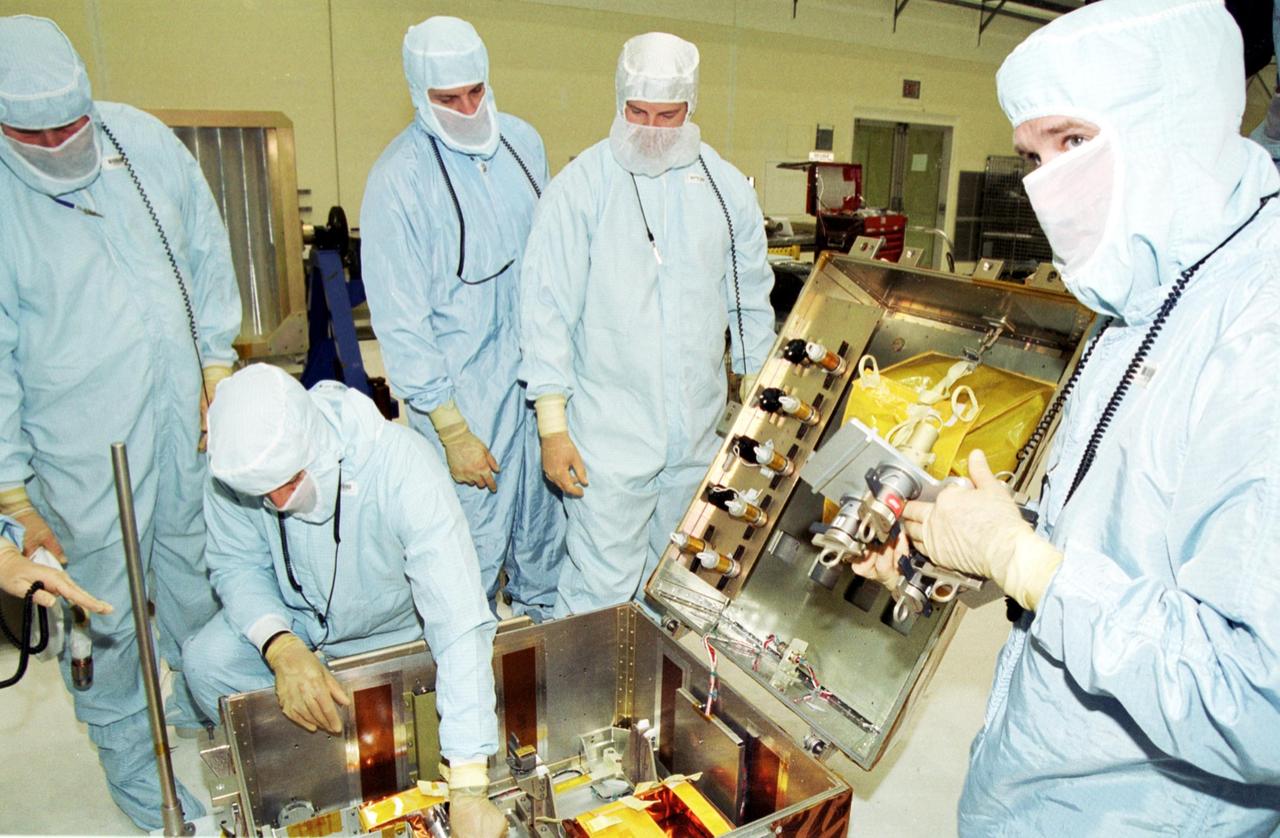
KENNEDY SPACE CENTER, Fla. -- Inside the Vertical Processing Facility, the STS-109 crew looks over equipment for their Hubble Space Telescope (HST) Servicing mission. Seen are (starting second from left), Mission Specialists Michael Massimino and Richard Linnehan, Commander Scott Altman and Payload Commander John Grunsfeld. Other crew members are Pilot Duane Carey and Mission Spcialists Nancy Currie and James Newman. The goal of the mission is to service the HST, replacing Solar Array 2 with Solar Array 3, replacing the Power Control Unit, removing the Faint Object Camera and installing the Advanced Camera for Surveys, installing the Near Infrared Camera and Multi-Object Spectrometer (NICMOS) Cooling System, and installing New Outer Blanket Layer insulation on bays 5 through 8. Mission STS-109 is scheduled for launch Feb. 14, 2002
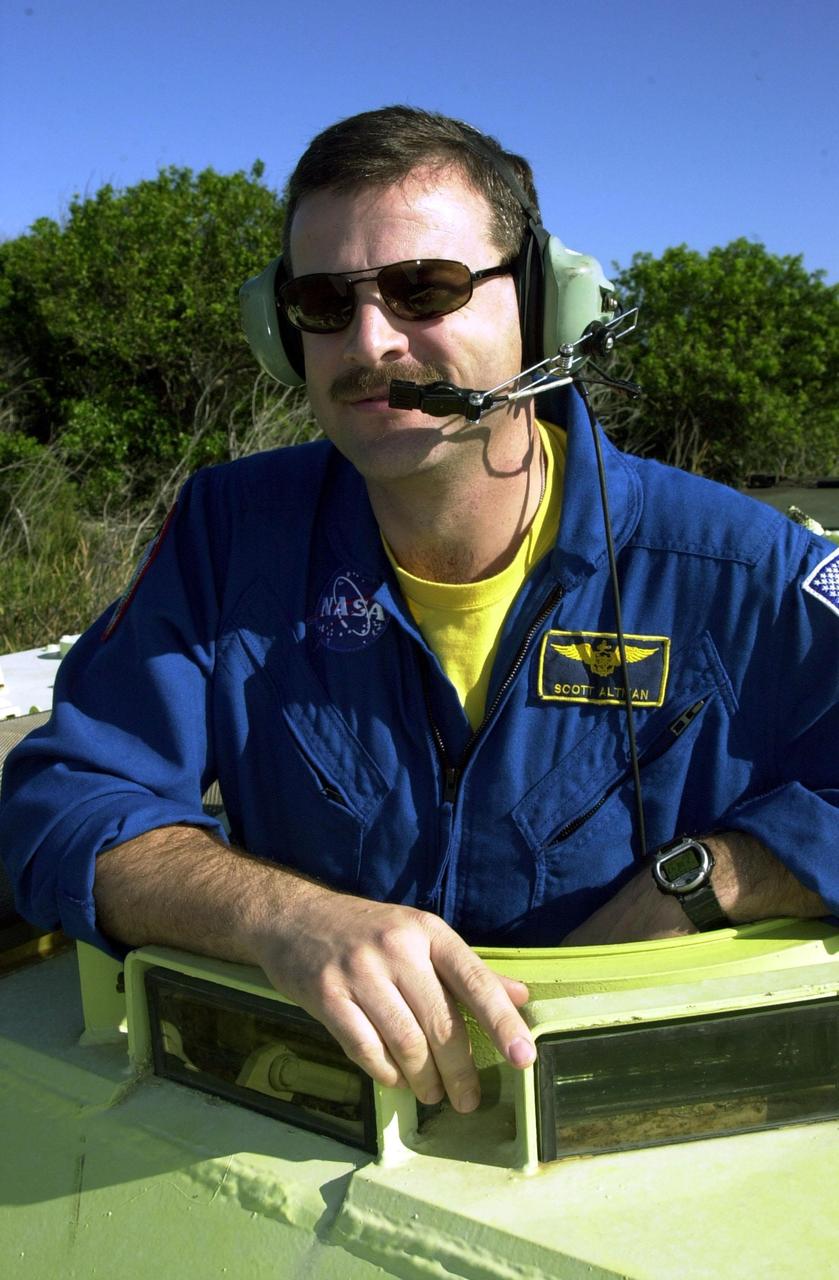
KENNEDY SPACE CENTER, FLA. -- STS-109 Commander Scott Altman is ready to practice driving the M-113 armored personnel carrier, part of emergency egress training at the launch pad. He and other crew members are taking part in Terminal Countdown Demonstration Test activities, which also include a simulated launch countdown. STS-109 is a Hubble Space Telescope Servicing Mission, with goals to replace Solar Array 2 with Solar Array 3, replace the Power Control Unit, remove the Faint Object Camera and install the Advanced Camera for Surveys (ACS), install the Near Infrared Camera and Multi-Object Spectrometer (NICMOS) Cooling System, and install New Outer Blanket Layer insulation. The 11-day mission will require grasping the satellite with a robotic arm in order for the crew to perform the tasks during five spacewalks. Launch of STS-109 aboard Space Shuttle Columbia is scheduled for Feb. 28, 2002
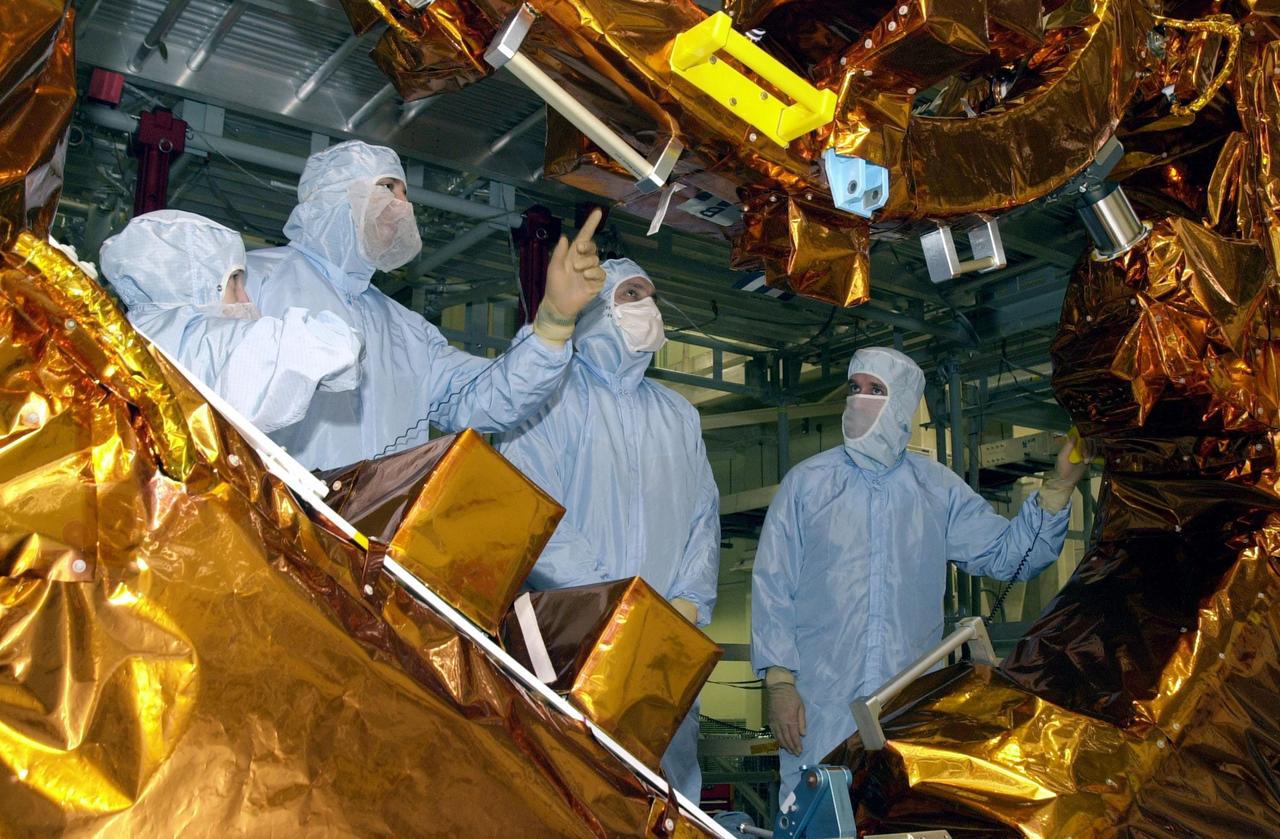
KENNEDY SPACE CENTER, FLA. -- In the Vertical Processing Facility, STS-109 crew members take part in familiarization activities, looking over the payload of repair equipment they will be handling on the mission. From left are Mission Specialists Nancy Curry, Michael Massimino and Richard Linnehan, and Payload Commander John Grunsfeld. The goal of the mission is to service the Hubble Space Telescope, replacing Solar Array 2 with Solar Array 3, replacing the Power Control Unit, removing the Faint Object Camera and installing the Advanced Camera System, installing the Near Infrared Camera and Multi-Object Spectrometer (NICMOS) Cooling System, and installing New Outer Blanket Layer insulation. Launch of Columbia on mission STS-109 is scheduled Feb. 28, 2002

KENNEDY SPACE CENTER, FLA. - STS-109 Mission Specialist Nancy Currie is ready to practice driving the M-113 armored personnel carrier, part of emergency egress training at the launch pad. Crew members are taking part in Terminal Countdown Demonstration Test activities, which also include a simulated launch countdown. STS-109 is a Hubble Space Telescope Servicing Mission, with goals to replace Solar Array 2 with Solar Array 3, replace the Power Control Unit, remove the Faint Object Camera and install the Advanced Camera for Surveys (ACS), install the Near Infrared Camera and Multi-Object Spectrometer (NICMOS) Cooling System, and install New Outer Blanket Layer insulation. The 11-day mission will require grasping the satellite with a robotic arm in order for the crew to perform the tasks during five spacewalks. Launch of STS-109 aboard Space Shuttle Columbia is scheduled for Feb. 28, 2002
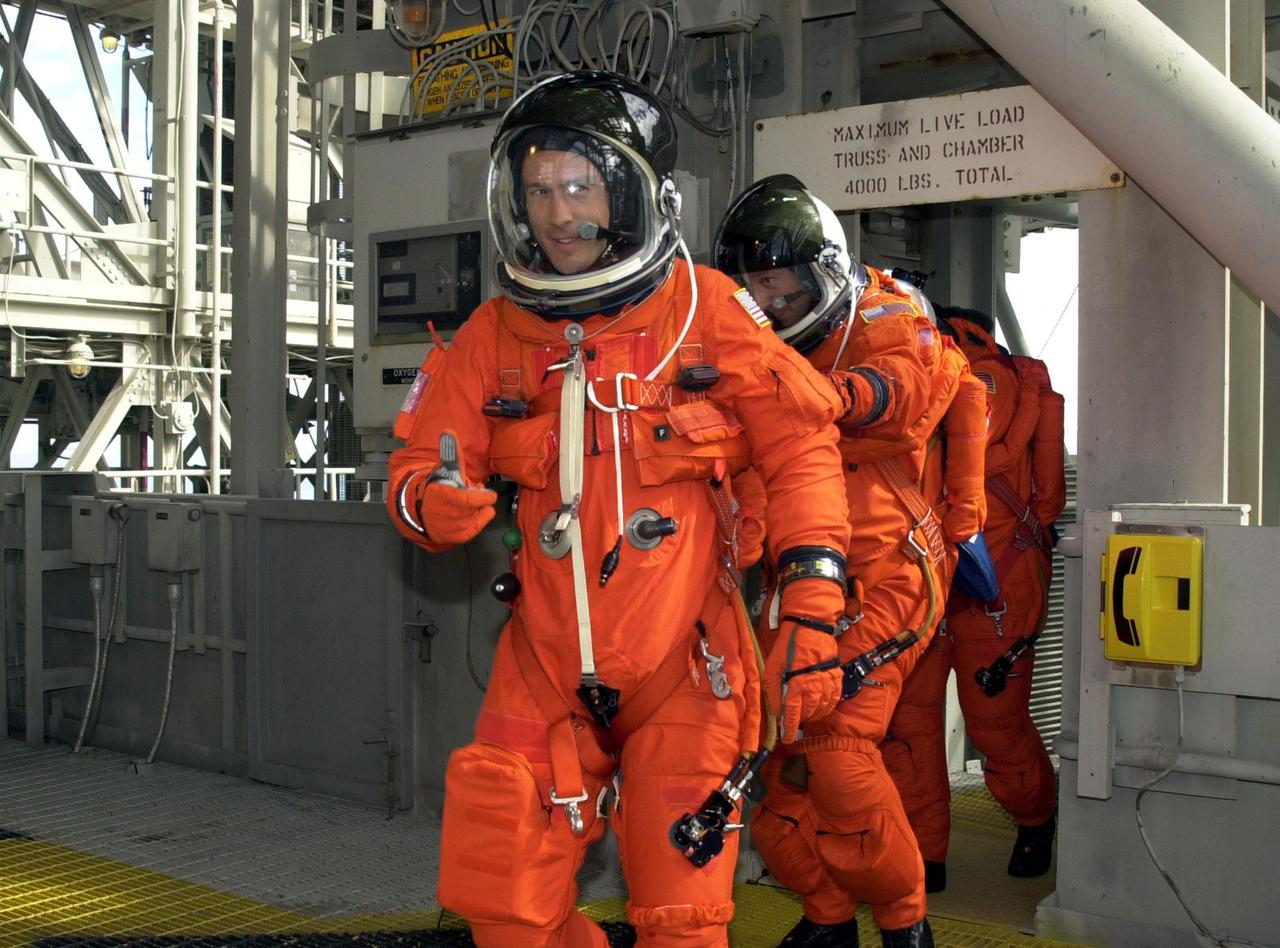
KENNEDY SPACE CENTER, FLA. -- As part of Terminal Countdown Demonstration Test activities, the STS-109 crew practices emergency exit from the Shuttle. Leading the way to the slidewire basket is Mission Specialist James Newman, followed by Michael Massimino and Richard Linnehan. The TCDT also includes a simulated launch countdown. STS-109 is a Hubble Space Telescope Servicing Mission, with goals to replace Solar Array 2 with Solar Array 3, replace the Power Control Unit, remove the Faint Object Camera and install the Advanced Camera for Surveys (ACS), install the Near Infrared Camera and Multi-Object Spectrometer (NICMOS) Cooling System, and install New Outer Blanket Layer insulation. The 11-day mission will require five spacewalks to perform the tasks. Launch of STS-109 aboard Space Shuttle Columbia is scheduled for Feb. 28, 2002
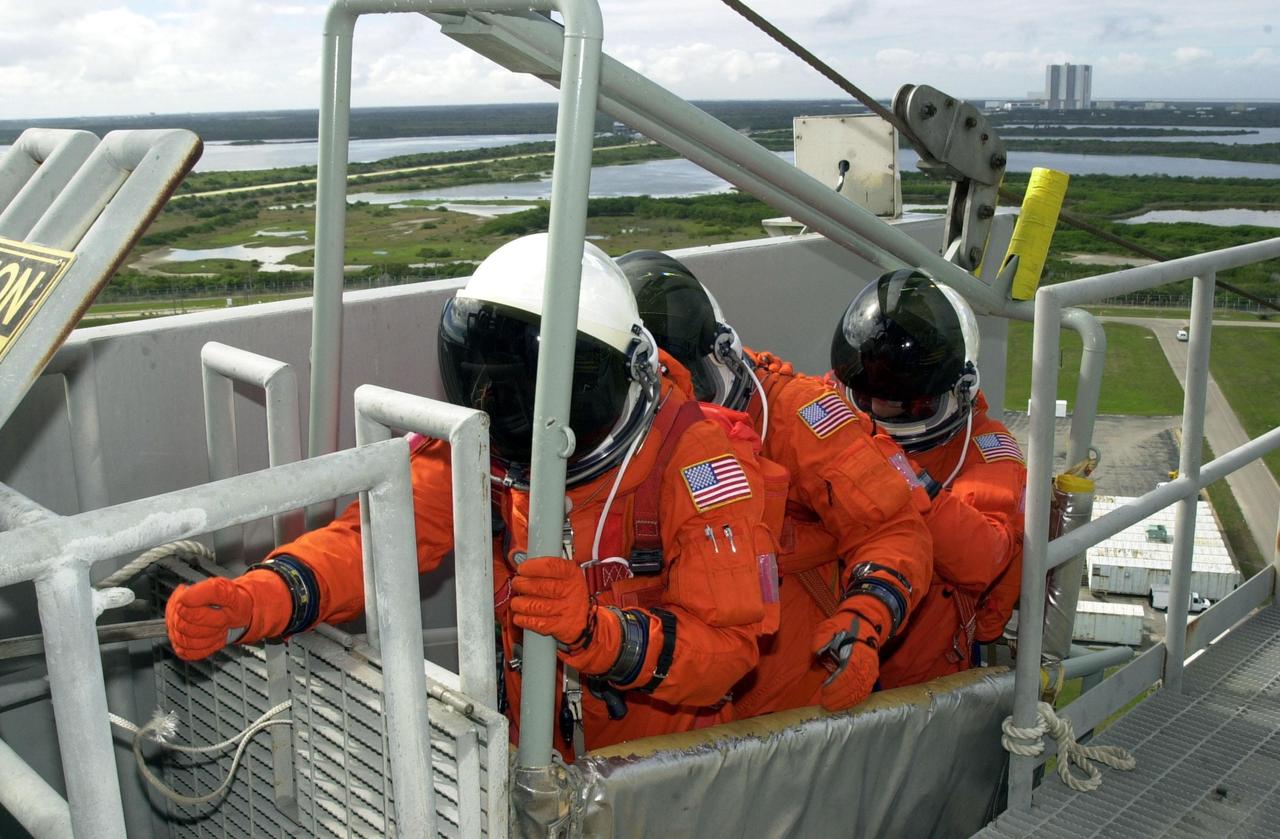
KENNEDY SPACE CENTER, FLA. -- As part of Terminal Countdown Demonstration Test activities, the STS-109 crew practices emergency exit from the Shuttle. Seated in the slidewire basket at the 195-foot level of the Fixed Service Structure are Mission Specialists Richard Linnehan (reaching for the release lever), Michael Massimino and James Newman. The TCDT also includes a simulated launch countdown. STS-109 is a Hubble Space Telescope Servicing Mission, with goals to replace Solar Array 2 with Solar Array 3, replace the Power Control Unit, remove the Faint Object Camera and install the Advanced Camera for Surveys (ACS), install the Near Infrared Camera and Multi-Object Spectrometer (NICMOS) Cooling System, and install New Outer Blanket Layer insulation. The 11-day mission will require five spacewalks to perform the tasks. Launch of STS-109 aboard Space Shuttle Columbia is scheduled for Feb. 28, 2002
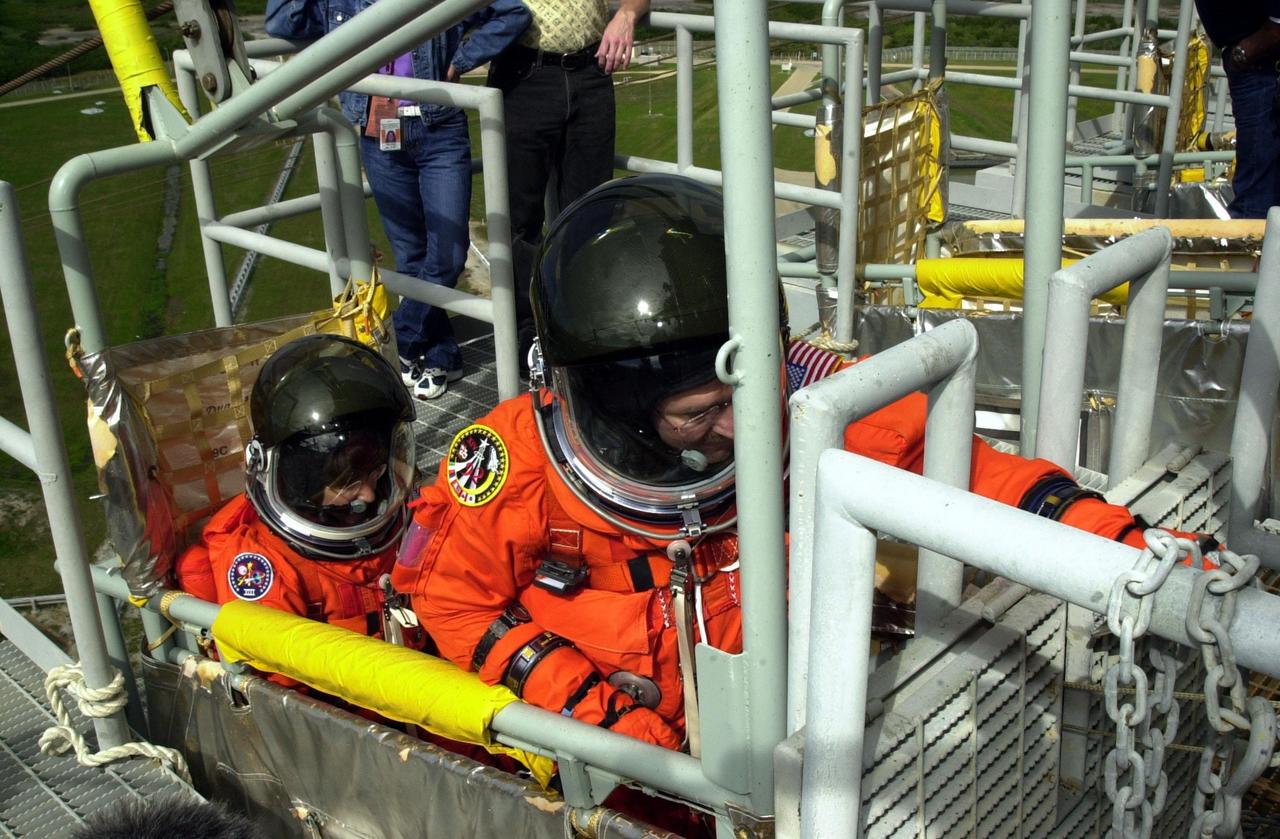
KENNEDY SPACE CENTER, FLA. -- As part of Terminal Countdown Demonstration Test activities, the STS-109 crew practices emergency exit from the Shuttle. Seated in the slidewire basket at the 195-foot level of the Fixed Service Structure are Mission Specialists Nancy Currie (left) and John Grunsfeld (reaching for the release lever). The TCDT also includes a simulated launch countdown. STS-109 is a Hubble Space Telescope Servicing Mission, with goals to replace Solar Array 2 with Solar Array 3, replace the Power Control Unit, remove the Faint Object Camera and install the Advanced Camera for Surveys (ACS), install the Near Infrared Camera and Multi-Object Spectrometer (NICMOS) Cooling System, and install New Outer Blanket Layer insulation. The 11-day mission will require five spacewalks to perform the tasks. Launch of STS-109 aboard Space Shuttle Columbia is scheduled for Feb. 28, 2002
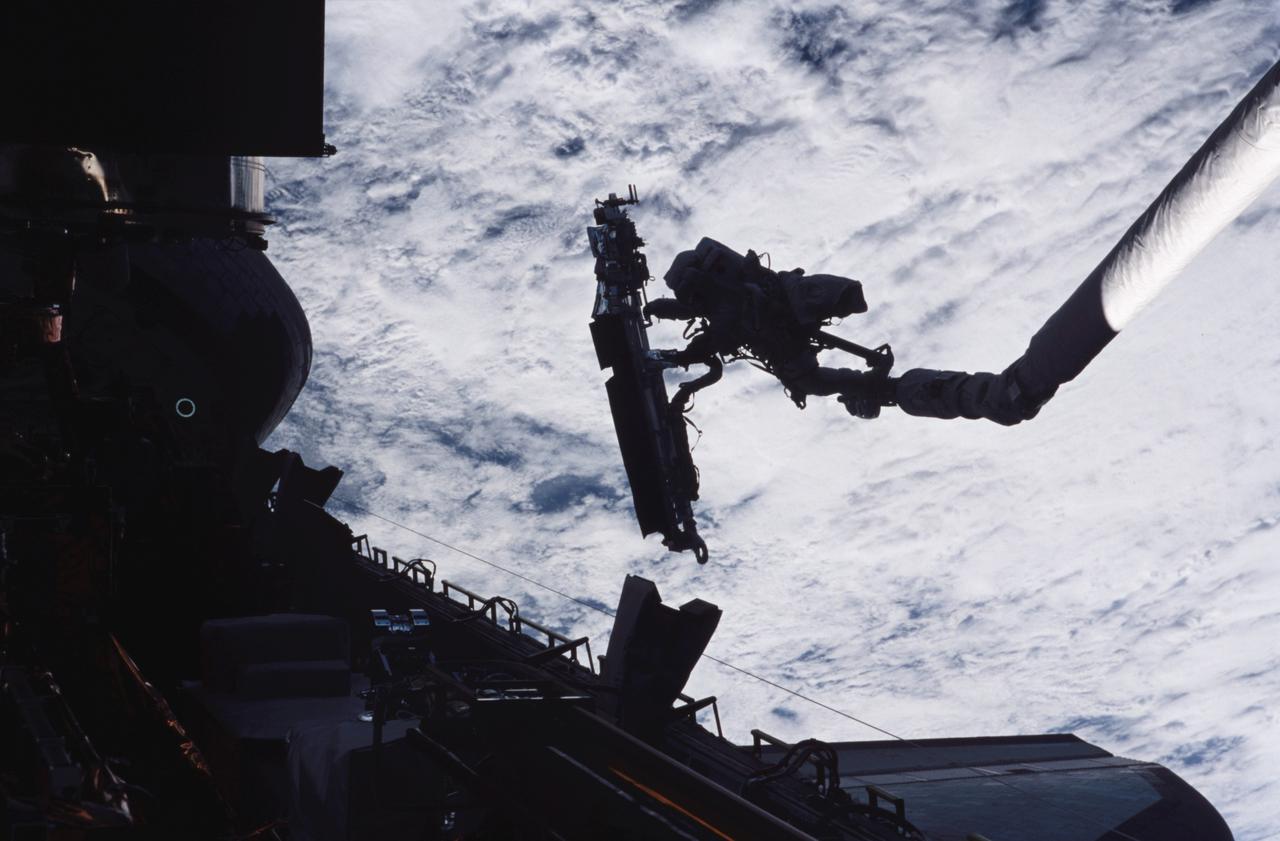
STS109-315-007 (8 March 2002) --- Astronaut John M. Grunsfeld, STS-109 payload commander, anchored on the end of the Space Shuttle Columbia’s Remote Manipulator System (RMS) robotic arm, moves toward the giant Hubble Space Telescope (HST) temporarily hosted in the orbiter’s cargo bay. Astronaut Richard M. Linnehan (out of frame) works in tandem with Grunsfeld during this fifth and final session of extravehicular activity (EVA). Activities for the space walk centered around the Near-Infrared Camera and Multi-Object Spectrometer (NICMOS) to install a Cryogenic Cooler and its Cooling System Radiator.
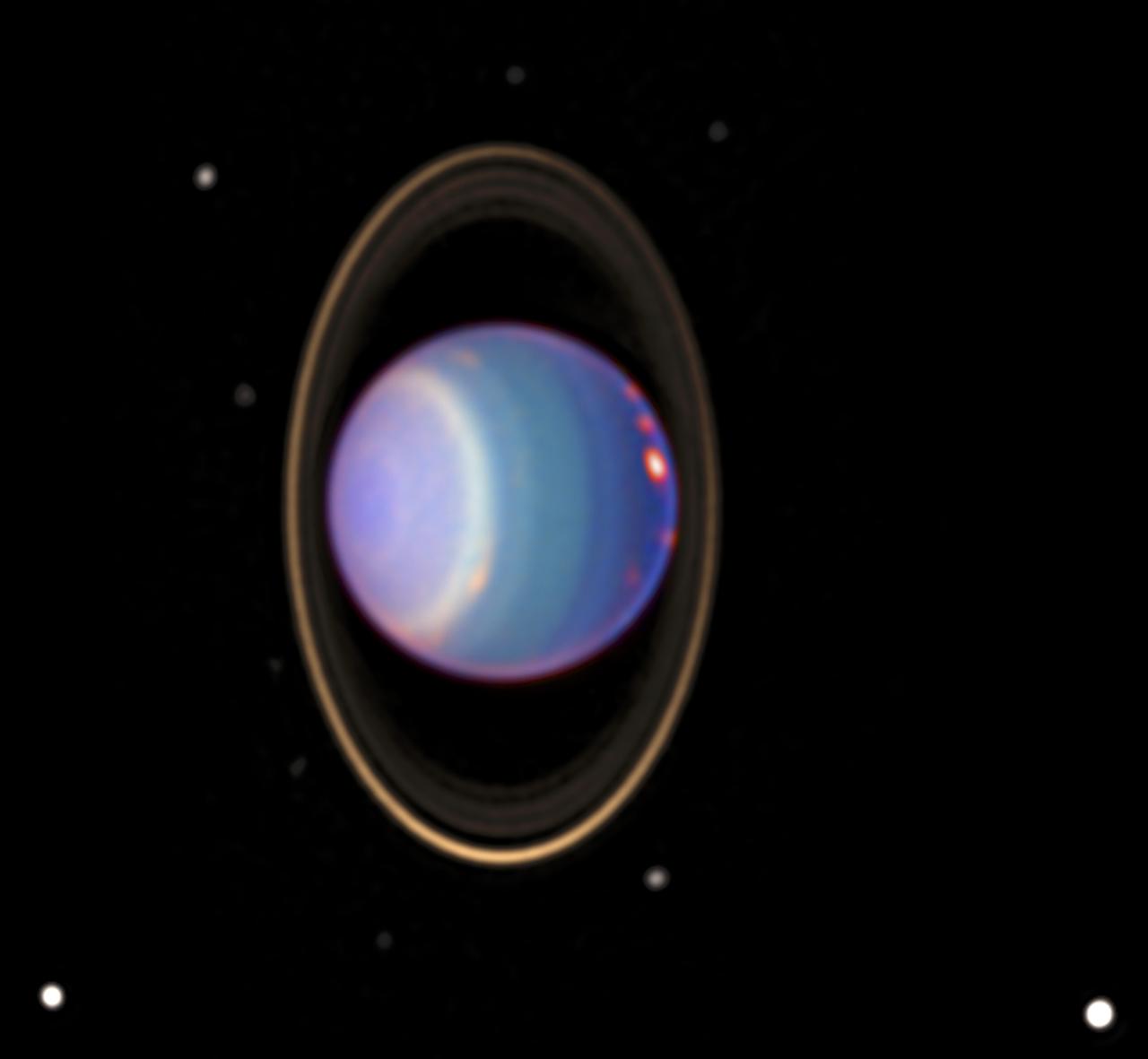
A recent Hubble Space Telescope (HST) view reveals Uranus surrounded by its 4 major rings and 10 of its 17 known satellites. This false color image was generated by Erich Karoschka using data taken with Hubble's Near Infrared Camera and Multi-Object Spectrometer. The HST recently found about 20 clouds. The colors in the image indicate altitude. The green and blue regions show where the atmosphere is clear and can be penetrated by sunlight. In yellow and grey regions, the sunlight reflects from a higher haze or cloud layer. The orange and red colors indicate very high clouds, such as cirrus clouds on Earth.
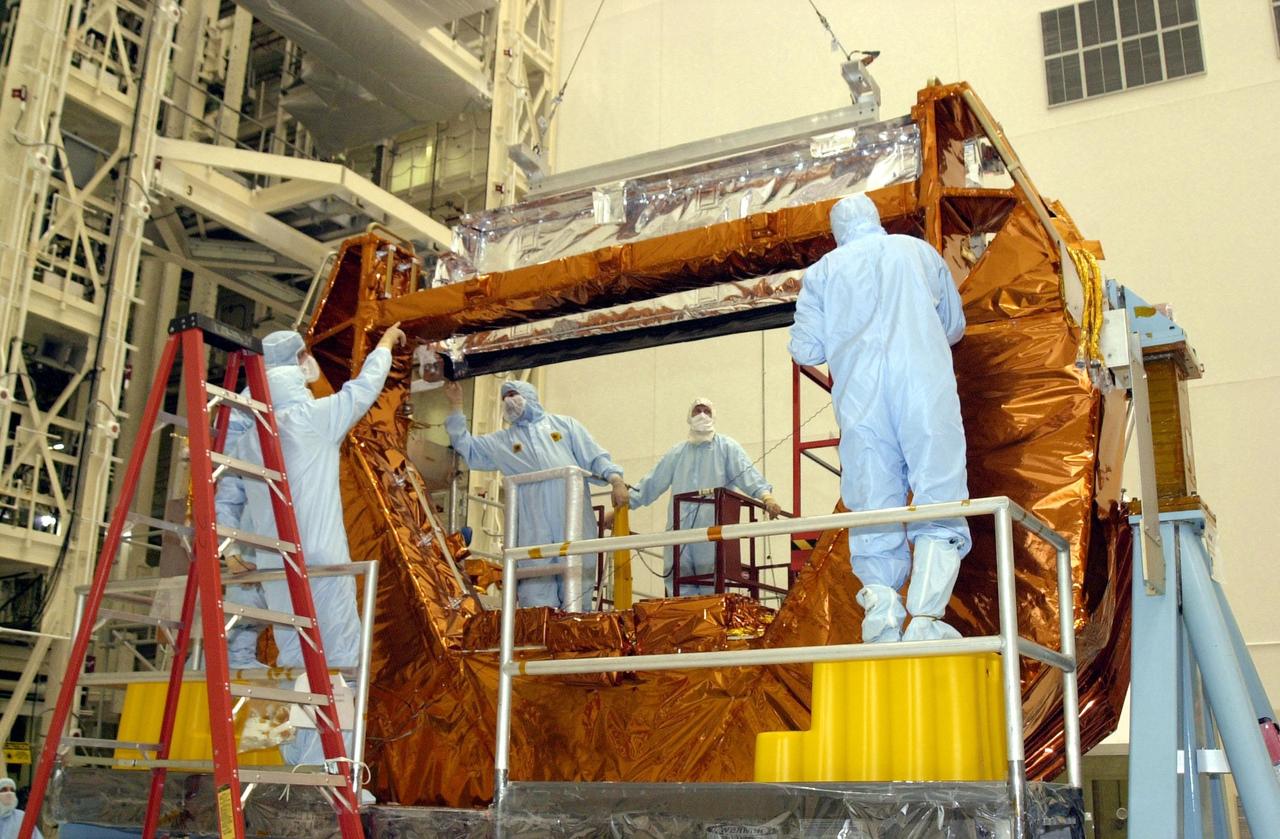
KENNEDY SPACE CENTER, FLA. -- Workers in the Vertical Processing Facility oversee the installation of the NICMOS radiator onto the MULE (Multi-Use Lightweight Equipment) carrier. Part of the payload on mission STS-109, the Near Infrared Camera and Multi-Object Spectrometer (NICMOS) is a new experimental cooling system consisting of a compressor and tiny turbines. With the experimental cryogenic system, NASA hopes to re-cool the infrared detectors to below -315 degrees F (-193 degrees Celsius). NICMOS II was previously tested aboard STS-95 in 1998. NICMOS could extend the life of the Hubble Space Telescope by several years. Astronauts aboard Columbia on mission STS-109 will be replacing the original NICMOS with the newer version. Launch of Columbia on mission STS-109 is scheduled Feb. 28, 2002
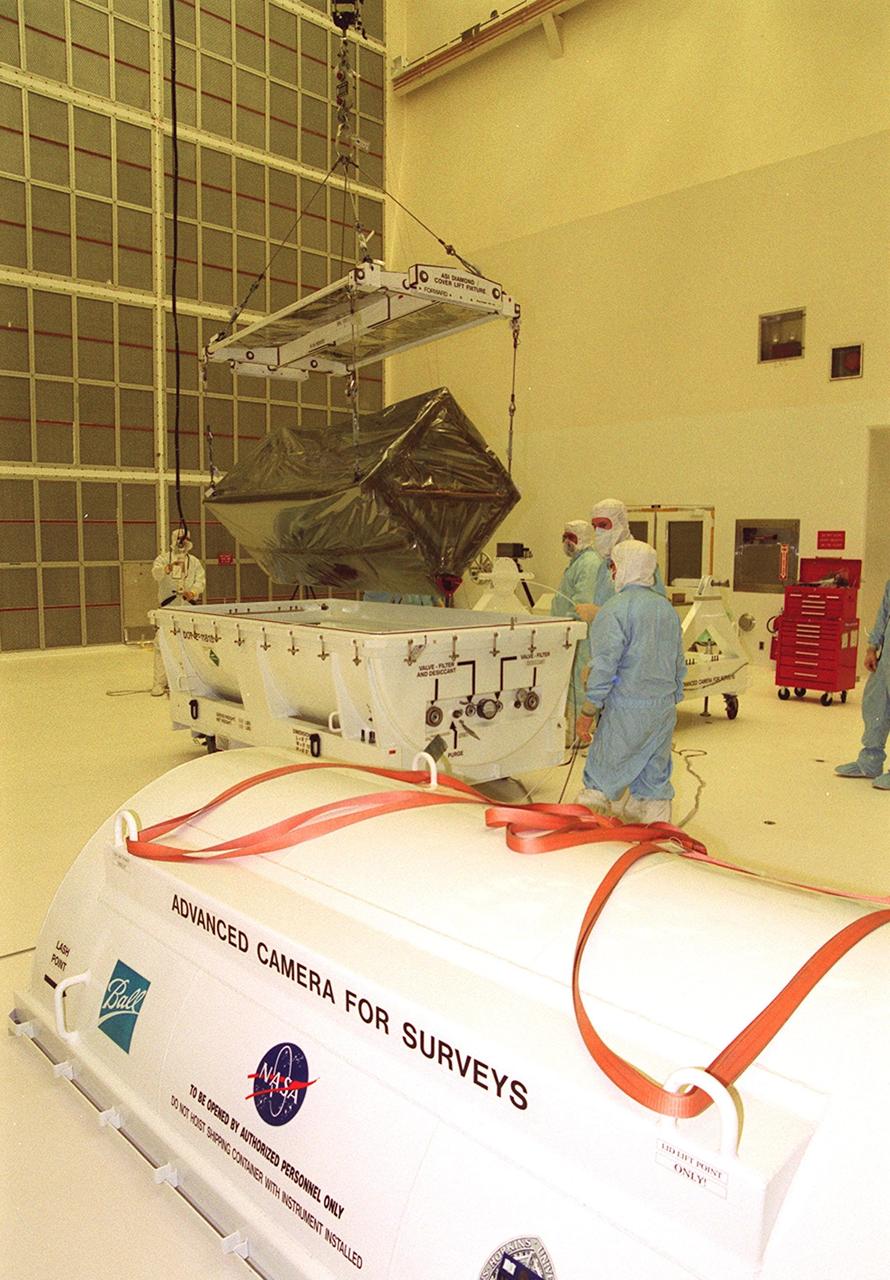
KENNEDY SPACE CENTER, Fla. -- In Hangar A&E, workers watch as an overhead crane lifts the Advanced Camera for Surveys out of its transportation container. Part of the payload on the Hubble Space Telescope Servicing Mission, STS-109, the ACS will increase the discovery efficiency of the HST by a factor of ten. It consists of three electronic cameras and a complement of filters and dispersers that detect light from the ultraviolet to the near infrared (1200 - 10,000 angstroms). The ACS was built through a collaborative effort between Johns Hopkins University, Goddard Space Flight Center, Ball Aerospace Corporation and Space Telescope Science Institute. Tasks for the mission include replacing Solar Array 2 with Solar Array 3, replacing the Power Control Unit, removing the Faint Object Camera and installing the ACS, installing the Near Infrared Camera and Multi-Object Spectrometer (NICMOS) Cooling System, and installing New Outer Blanket Layer insulation on bays 5 through 8. Mission STS-109 is scheduled for launch Feb. 14, 2002

KENNEDY SPACE CENTER, Fla. -- Fully unwrapped, the Advanced Camera for Surveys, which is suspended by an overhead crane, is checked over by workers. Part of the payload on the Hubble Space Telescope Servicing Mission, STS-109, the ACS will increase the discovery efficiency of the HST by a factor of ten. It consists of three electronic cameras and a complement of filters and dispersers that detect light from the ultraviolet to the near infrared (1200 - 10,000 angstroms). The ACS was built through a collaborative effort between Johns Hopkins University, Goddard Space Flight Center, Ball Aerospace Corporation and Space Telescope Science Institute. Tasks for the mission include replacing Solar Array 2 with Solar Array 3, replacing the Power Control Unit, removing the Faint Object Camera and installing the ACS, installing the Near Infrared Camera and Multi-Object Spectrometer (NICMOS) Cooling System, and installing New Outer Blanket Layer insulation on bays 5 through 8. Mission STS-109 is scheduled for launch Feb. 14, 2002
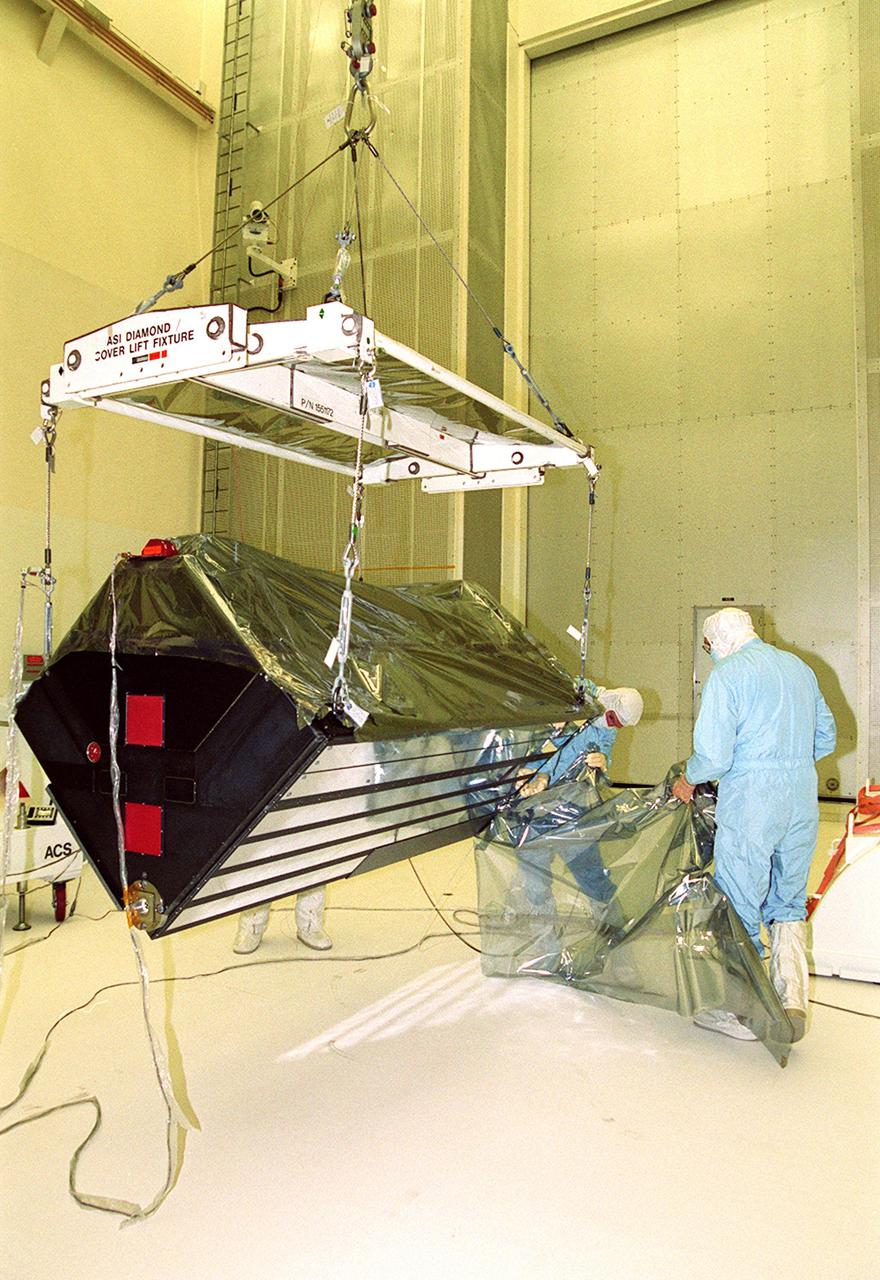
KENNEDY SPACE CENTER, Fla. -- Workers in Hangar AandE remove the wrapping from around the Advanced Camera for Surveys, which is suspended by an overhead crane. Part of the payload on the Hubble Space Telescope Servicing Mission, STS-109, the ACS will increase the discovery efficiency of the HST by a factor of ten. It consists of three electronic cameras and a complement of filters and dispersers that detect light from the ultraviolet to the near infrared (1200 - 10,000 angstroms). The ACS was built through a collaborative effort between Johns Hopkins University, Goddard Space Flight Center, Ball Aerospace Corporation and Space Telescope Science Institute. Tasks for the mission include replacing Solar Array 2 with Solar Array 3, replacing the Power Control Unit, removing the Faint Object Camera and installing the ACS, installing the Near Infrared Camera and Multi-Object Spectrometer (NICMOS) Cooling System, and installing New Outer Blanket Layer insulation on bays 5 through 8. Mission STS-109 is scheduled for launch Feb. 14, 2002
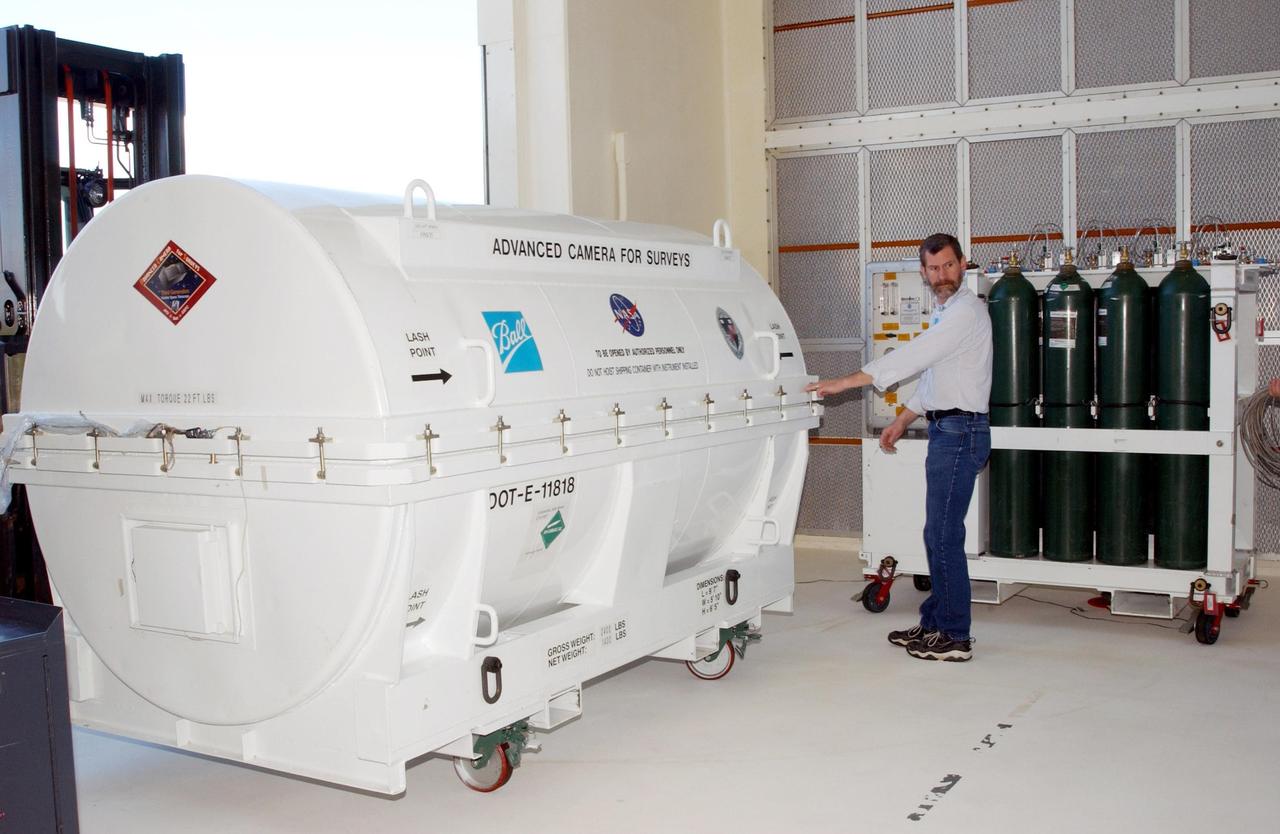
KENNEDY SPACE CENTER, Fla. -- A piece of equipment for Hubble Space Telescope Servicing mission is moved inside Hangar AE, Cape Canaveral. In the canister is the Advanced Camera for Surveys (ACS). The ACS will increase the discovery efficiency of the HST by a factor of ten. It consists of three electronic cameras and a complement of filters and dispersers that detect light from the ultraviolet to the near infrared (1200 - 10,000 angstroms). The ACS was built through a collaborative effort between Johns Hopkins University, Goddard Space Flight Center, Ball Aerospace Corporation and Space Telescope Science Institute. The goal of the mission, STS-109, is to service the HST, replacing Solar Array 2 with Solar Array 3, replacing the Power Control Unit, removing the Faint Object Camera and installing the ACS, installing the Near Infrared Camera and Multi-Object Spectrometer (NICMOS) Cooling System, and installing New Outer Blanket Layer insulation on bays 5 through 8. Mission STS-109 is scheduled for launch Feb. 14, 2002
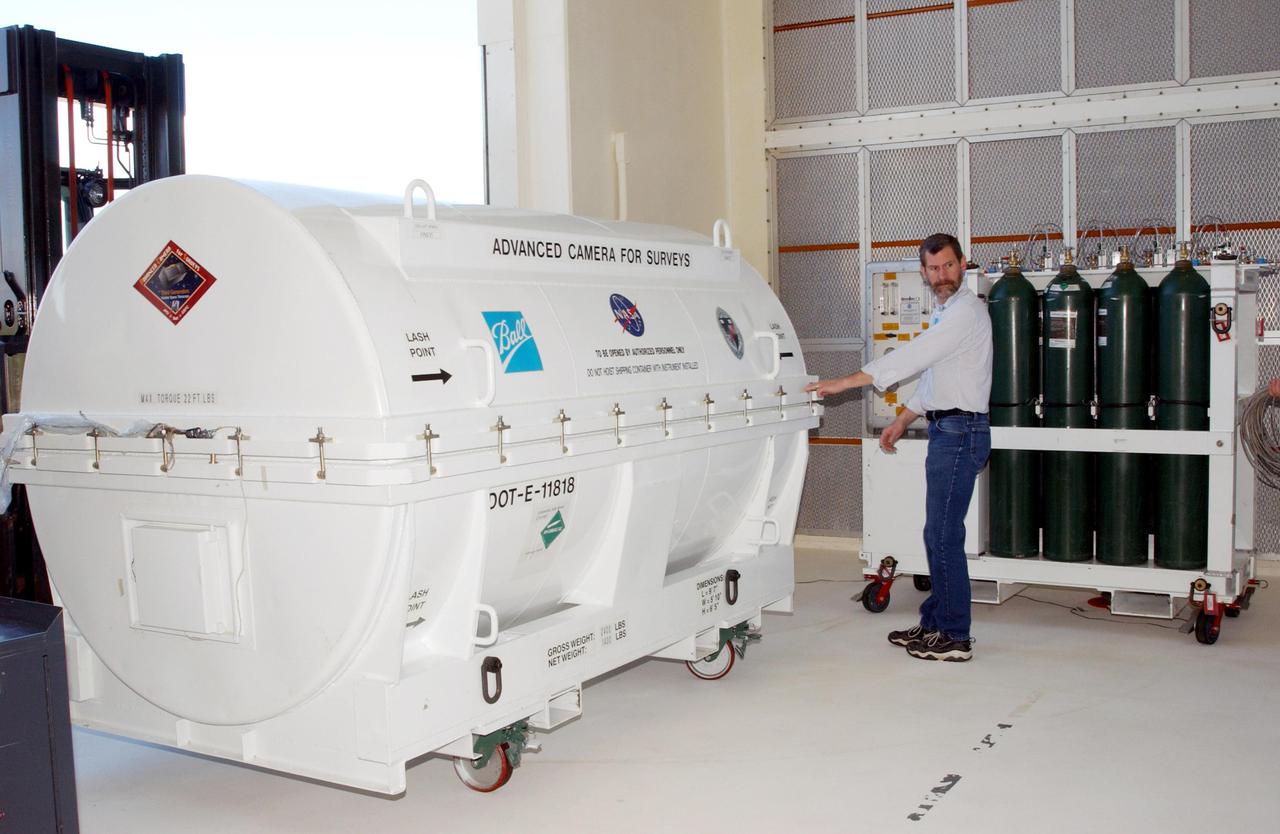
KENNEDY SPACE CENTER, Fla. -- A piece of equipment for Hubble Space Telescope Servicing mission is moved inside Hangar AE, Cape Canaveral. In the canister is the Advanced Camera for Surveys (ACS). The ACS will increase the discovery efficiency of the HST by a factor of ten. It consists of three electronic cameras and a complement of filters and dispersers that detect light from the ultraviolet to the near infrared (1200 - 10,000 angstroms). The ACS was built through a collaborative effort between Johns Hopkins University, Goddard Space Flight Center, Ball Aerospace Corporation and Space Telescope Science Institute. The goal of the mission, STS-109, is to service the HST, replacing Solar Array 2 with Solar Array 3, replacing the Power Control Unit, removing the Faint Object Camera and installing the ACS, installing the Near Infrared Camera and Multi-Object Spectrometer (NICMOS) Cooling System, and installing New Outer Blanket Layer insulation on bays 5 through 8. Mission STS-109 is scheduled for launch Feb. 14, 2002
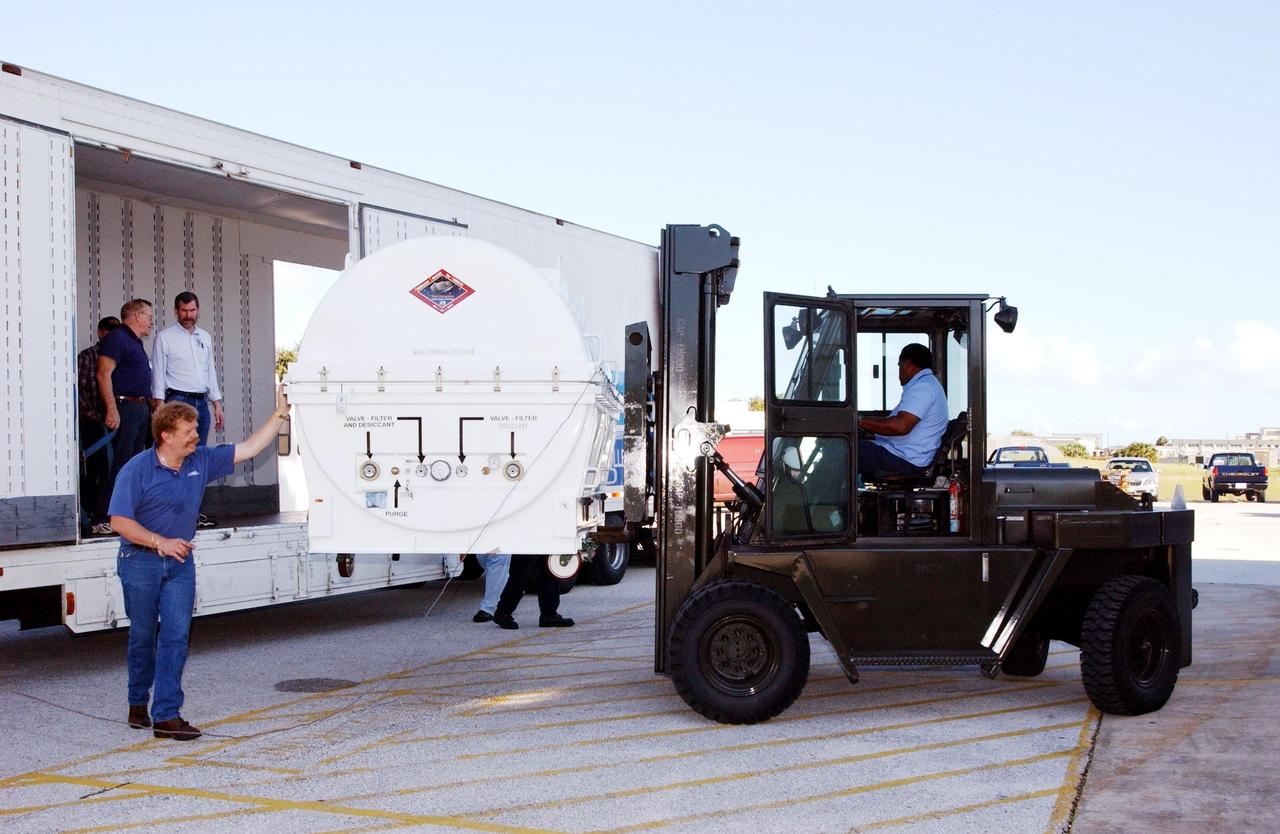
KENNEDY SPACE CENTER, Fla. - A piece of equipment for Hubble Space Telescope Servicing mission arrives at Hangar AE, Cape Canaveral. Inside the canister is the Advanced Camera for Surveys (ACS). The ACS will increase the discovery efficiency of the HST by a factor of ten. It consists of three electronic cameras and a complement of filters and dispersers that detect light from the ultraviolet to the near infrared (1200 - 10,000 angstroms). The ACS was built through a collaborative effort between Johns Hopkins University, Goddard Space Flight Center, Ball Aerospace Corporation and Space Telescope Science Institute. The goal of the mission, STS-109, is to service the HST, replacing Solar Array 2 with Solar Array 3, replacing the Power Control Unit, removing the Faint Object Camera and installing the ACS, installing the Near Infrared Camera and Multi-Object Spectrometer (NICMOS) Cooling System, and installing New Outer Blanket Layer insulation on bays 5 through 8. Mission STS-109 is scheduled for launch Feb. 14, 2002
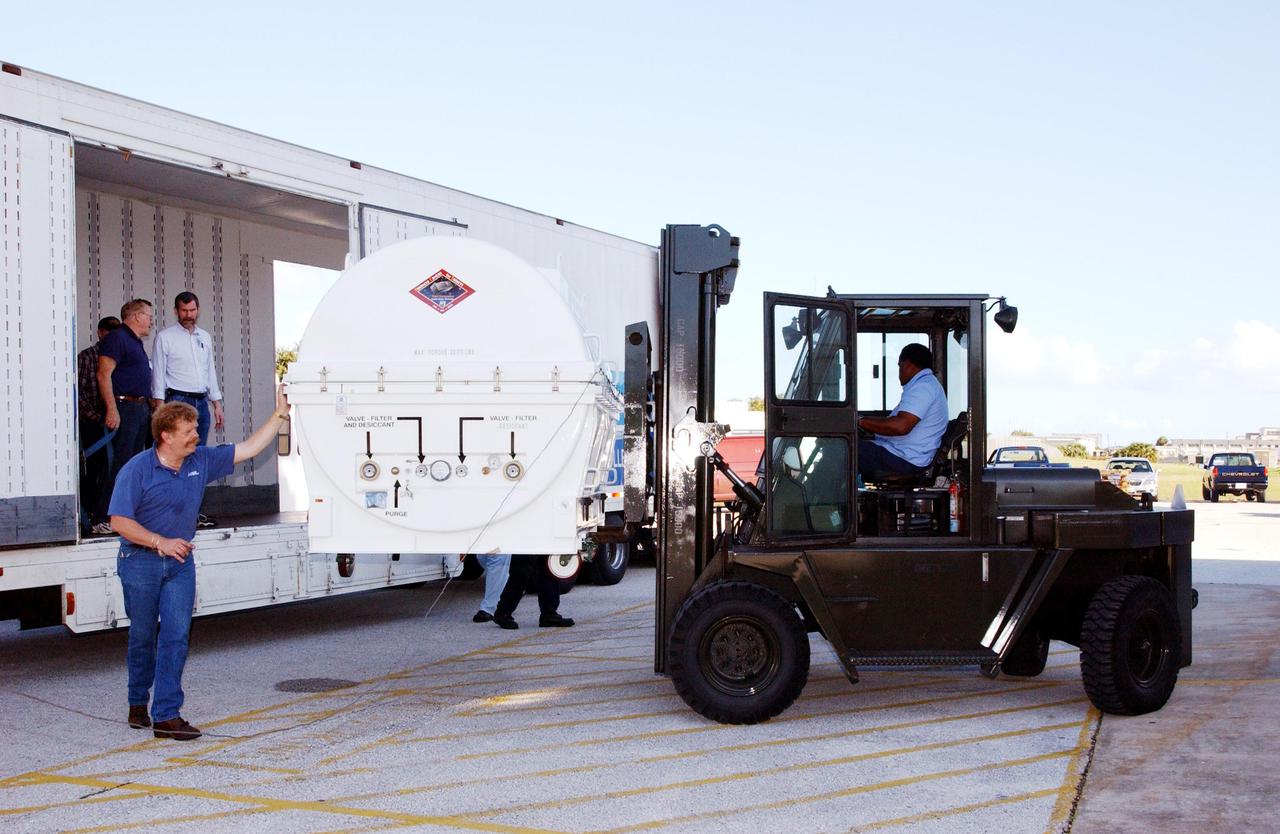
KENNEDY SPACE CENTER, Fla. - A piece of equipment for Hubble Space Telescope Servicing mission arrives at Hangar AE, Cape Canaveral. Inside the canister is the Advanced Camera for Surveys (ACS). The ACS will increase the discovery efficiency of the HST by a factor of ten. It consists of three electronic cameras and a complement of filters and dispersers that detect light from the ultraviolet to the near infrared (1200 - 10,000 angstroms). The ACS was built through a collaborative effort between Johns Hopkins University, Goddard Space Flight Center, Ball Aerospace Corporation and Space Telescope Science Institute. The goal of the mission, STS-109, is to service the HST, replacing Solar Array 2 with Solar Array 3, replacing the Power Control Unit, removing the Faint Object Camera and installing the ACS, installing the Near Infrared Camera and Multi-Object Spectrometer (NICMOS) Cooling System, and installing New Outer Blanket Layer insulation on bays 5 through 8. Mission STS-109 is scheduled for launch Feb. 14, 2002
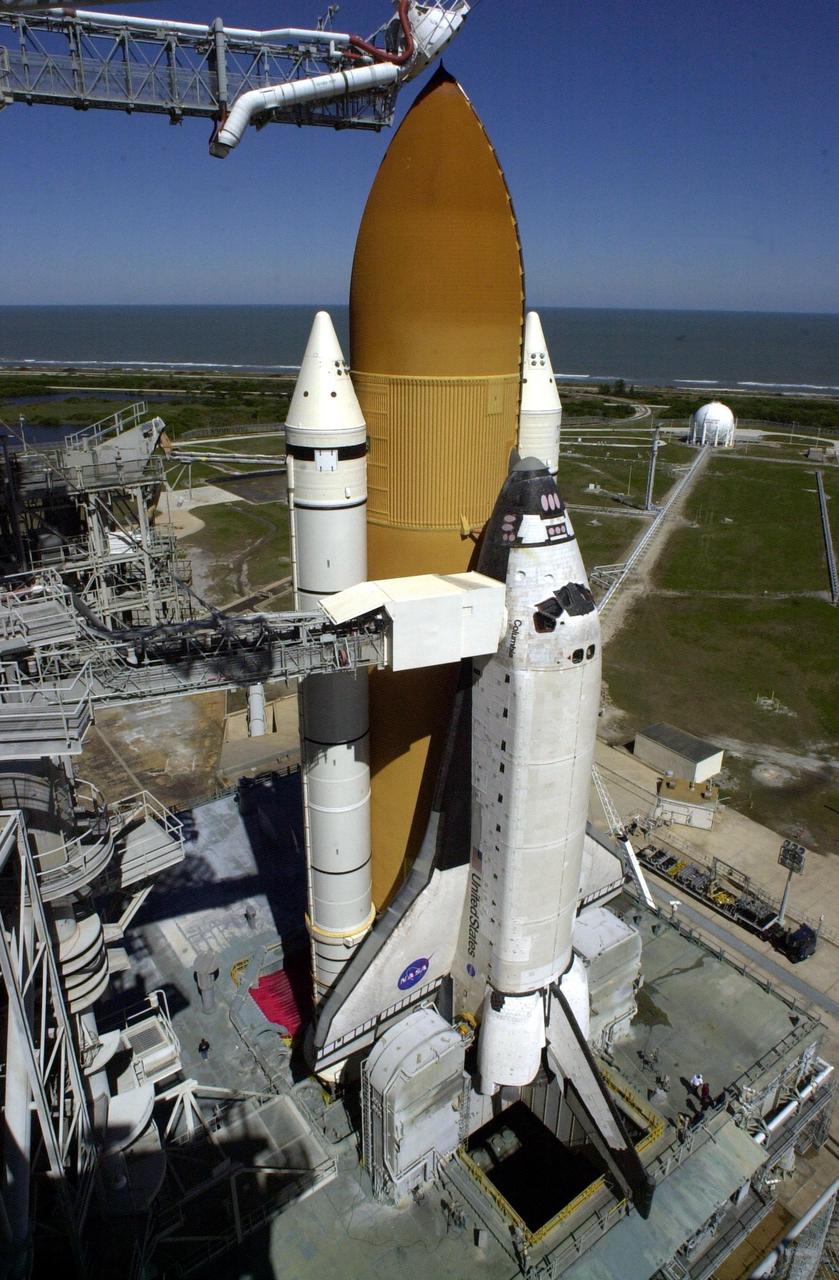
KENNEDY SPACE CENTER, FLA. - After rollback of the Rotating Service Structure, Space Shuttle Columbia is revealed waiting for launch Feb. 28, 2002, at 6:48 a.m. EST (11:48 GMT) on mission STS-109. In the photo is seen the Orbiter Access Arm stretched to Columbia's cockpit, plus the "beanie cap" above the external tank. The cap is a vent hood allowing release of gaseous oxygen. A Hubble Servicing Mission, the goal is to replace Solar Array 2 with Solar Array 3, replace the Power Control Unit, remove the Faint Object Camera and install the ACS, install the Near Infrared Camera and Multi-Object Spectrometer (NICMOS) Cooling System, and install New Outer Blanket Layer insulation.
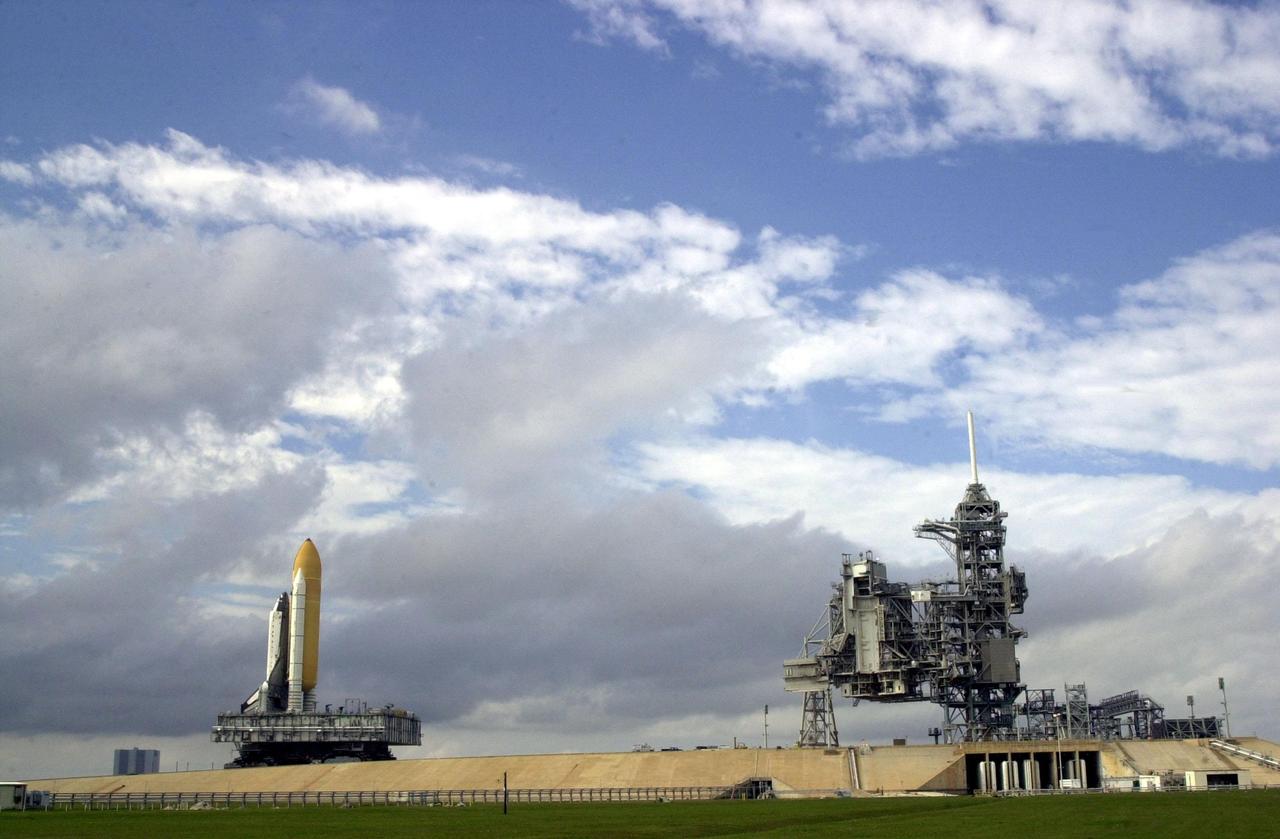
KENNEDY SPACE CENTER, FLA. -- Space Shuttle Columbia, atop its Mobile Launcher Platform, inches its way along the path to Launch Pad 39A. Columbia is scheduled to be launched Feb. 28 on mission STS-109, a Hubble Servicing Mission. The goal of the mission is to replace Solar Array 2 with Solar Array 3, replace the Power Control Unit, remove the Faint Object Camera and install the ACS, install the Near Infrared Camera and Multi-Object Spectrometer (NICMOS) Cooling System, and install New Outer Blanket Layer insulation. The launch will be the first for Columbia after returning from California where it underwent extensive maintenance, inspections and enhancements. More than 100 upgrades make Columbia safer and more reliable than ever before
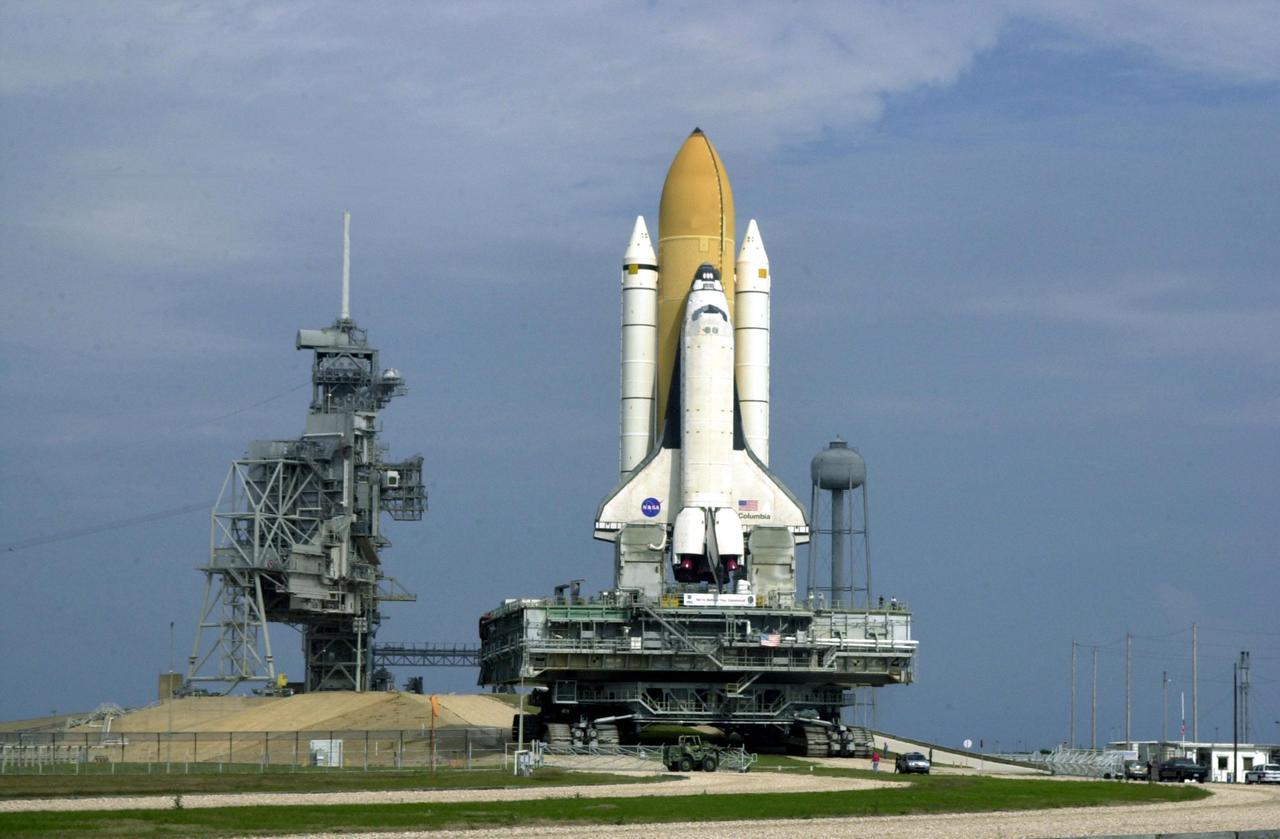
KENNEDY SPACE CENTER, FLA. -- Space Shuttle Columbia, atop its Mobile Launcher Platform, begins the ascent up the incline to Launch Pad 39A. Columbia is scheduled to be launched Feb. 28 on mission STS-109, a Hubble Servicing Mission. The goal of the mission is to replace Solar Array 2 with Solar Array 3, replace the Power Control Unit, remove the Faint Object Camera and install the ACS, install the Near Infrared Camera and Multi-Object Spectrometer (NICMOS) Cooling System, and install New Outer Blanket Layer insulation. The launch will be the first for Columbia after returning from California where it underwent extensive maintenance, inspections and enhancements. More than 100 upgrades make Columbia safer and more reliable than ever before
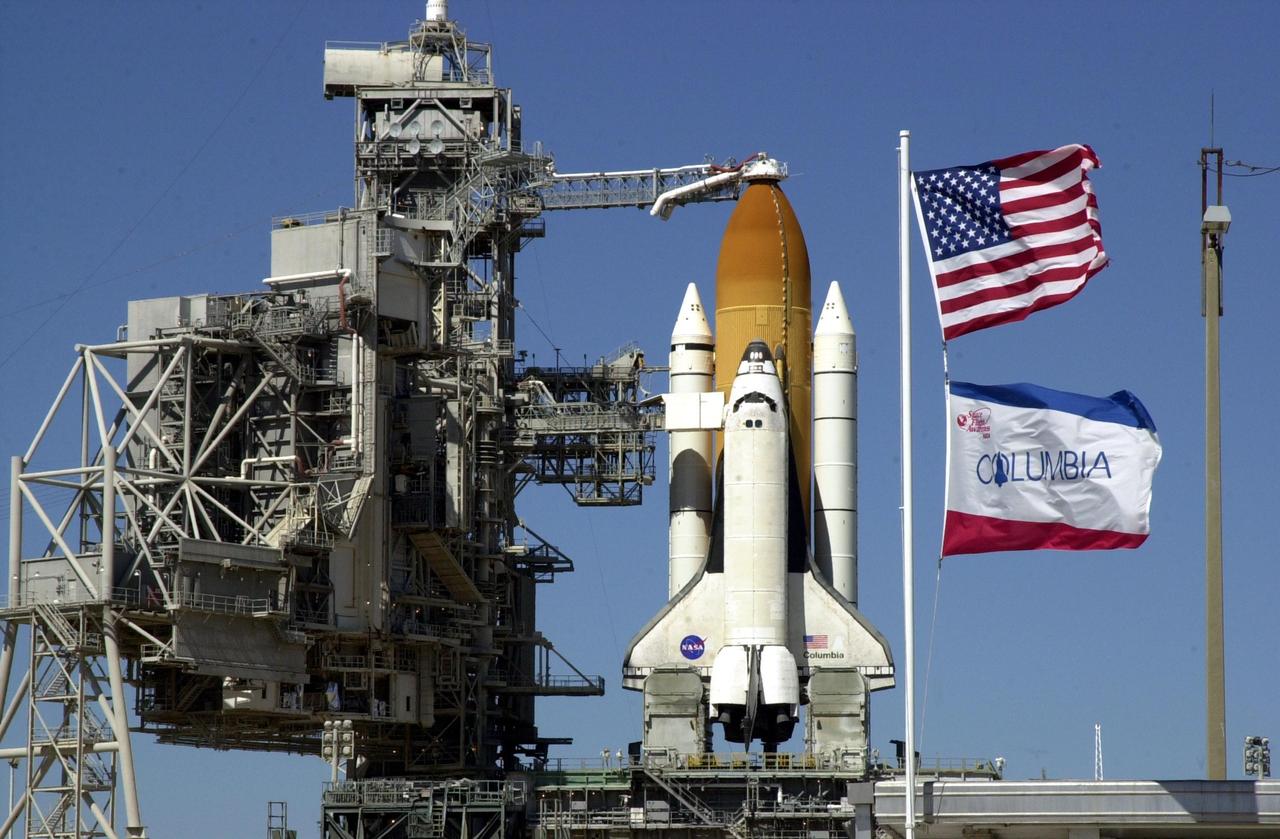
KENNEDY SPACE CENTER, FLA. -- The Rotating Service Structure is rolled back from Space Shuttle Columbia in preparation for launch Feb. 28, 2002, at 6:48 a.m. EST (11:48 GMT) on mission STS-109. Flags of the U.S. and the orbiter (foreground) illustrate the brisk winds blowing at Launch Complex 39A. In the photo is seen the Orbiter Access Arm stretched to Columbia's cockpit. A Hubble Servicing Mission, the goal of STS-109 is to replace Solar Array 2 with Solar Array 3, replace the Power Control Unit, remove the Faint Object Camera and install the ACS, install the Near Infrared Camera and Multi-Object Spectrometer (NICMOS) Cooling System, and install New Outer Blanket Layer insulation.
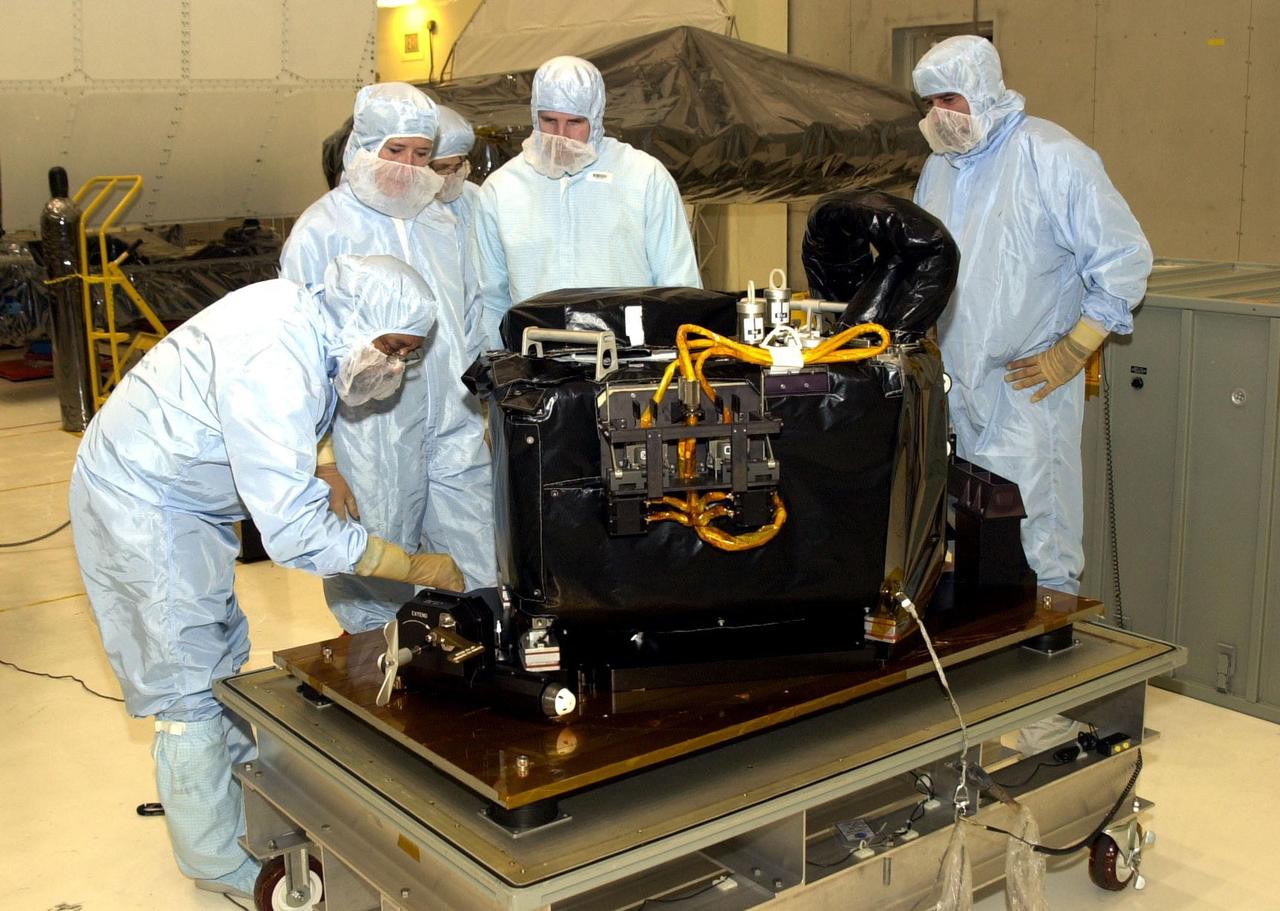
KENNEDY SPACE CENTER, FLA. -- Workers in the Vertical Processing Facility look over the Near Infrared Camera and Multi-Object Spectrometer (NICMOS) Cooling System, part of the payload on mission STS-109, the Hubble Servicing Telescope Mission. NICMOS is a new experimental cooling system consisting of a compressor and tiny turbines. With the experimental cryogenic system, NASA hopes to re-cool the infrared detectors to below -315 degrees F (-193 degrees Celsius). NICMOS II was previously tested aboard STS-95 in 1998. It could extend the life of the Hubble Space Telescope by several years. Astronauts aboard Columbia on mission STS-109 will be replacing the original NICMOS with the newer version. Launch of mission STS-109 is scheduled for Feb. 28, 2002
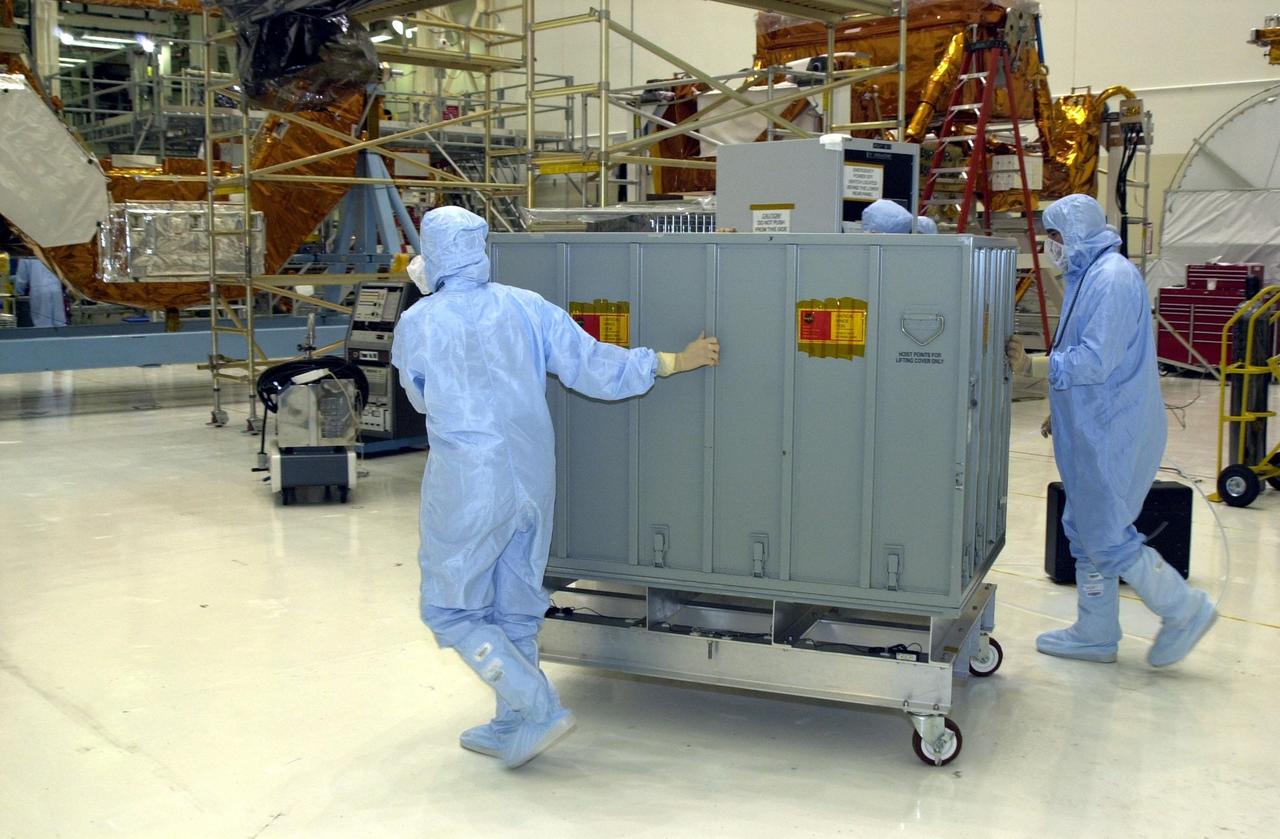
KENNEDY SPACE CENTER, FLA. -- Workers in the Vertical Processing Facility wheel a container with the NICMOS II across the floor. The Near Infrared Camera and Multi-Object Spectrometer (NICMOS) Cooling System is part of the payload on mission STS-109, the Hubble Servicing Telescope Mission. NICMOS is a new experimental cooling system consisting of a compressor and tiny turbines. With the experimental cryogenic system, NASA hopes to re-cool the infrared detectors to below -315 degrees F (-193 degrees Celsius). NICMOS II was previously tested aboard STS-95 in 1998. It could extend the life of the Hubble Space Telescope by several years. Astronauts aboard Columbia on mission STS-109 will be replacing the original NICMOS with the newer version. Launch of mission STS-109 is scheduled for Feb. 28, 2002
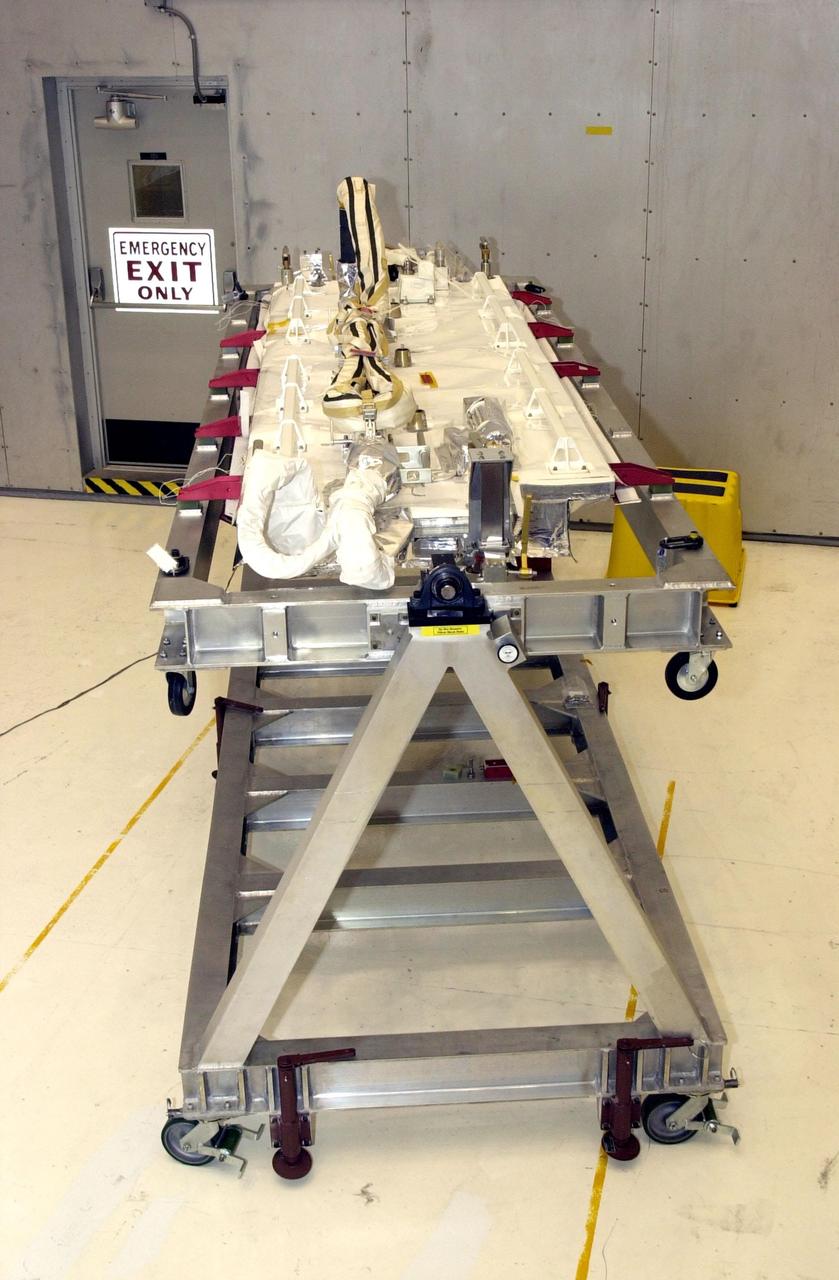
KENNEDY SPACE CENTER, FLA. -- The NICMOS II radiator is ready for checkout in the Vertical Processing Facility. The Near Infrared Camera and Multi-Object Spectrometer (NICMOS) Cooling System is part of the payload on mission STS-109, the Hubble Servicing Telescope mission. NICMOS is a new experimental cooling system consisting of a compressor and tiny turbines. With the experimental cryogenic system, NASA hopes to re-cool the infrared detectors to below -315 degrees F (-193 degrees Celsius). NICMOS II was previously tested aboard STS-95 in 1998. NICMOS could extend the life of the Hubble Space Telescope by several years. Astronauts aboard Columbia on mission STS-109 will be replacing the original NICMOS with the newer version. Launch of Columbia is scheduled Feb. 28, 2002
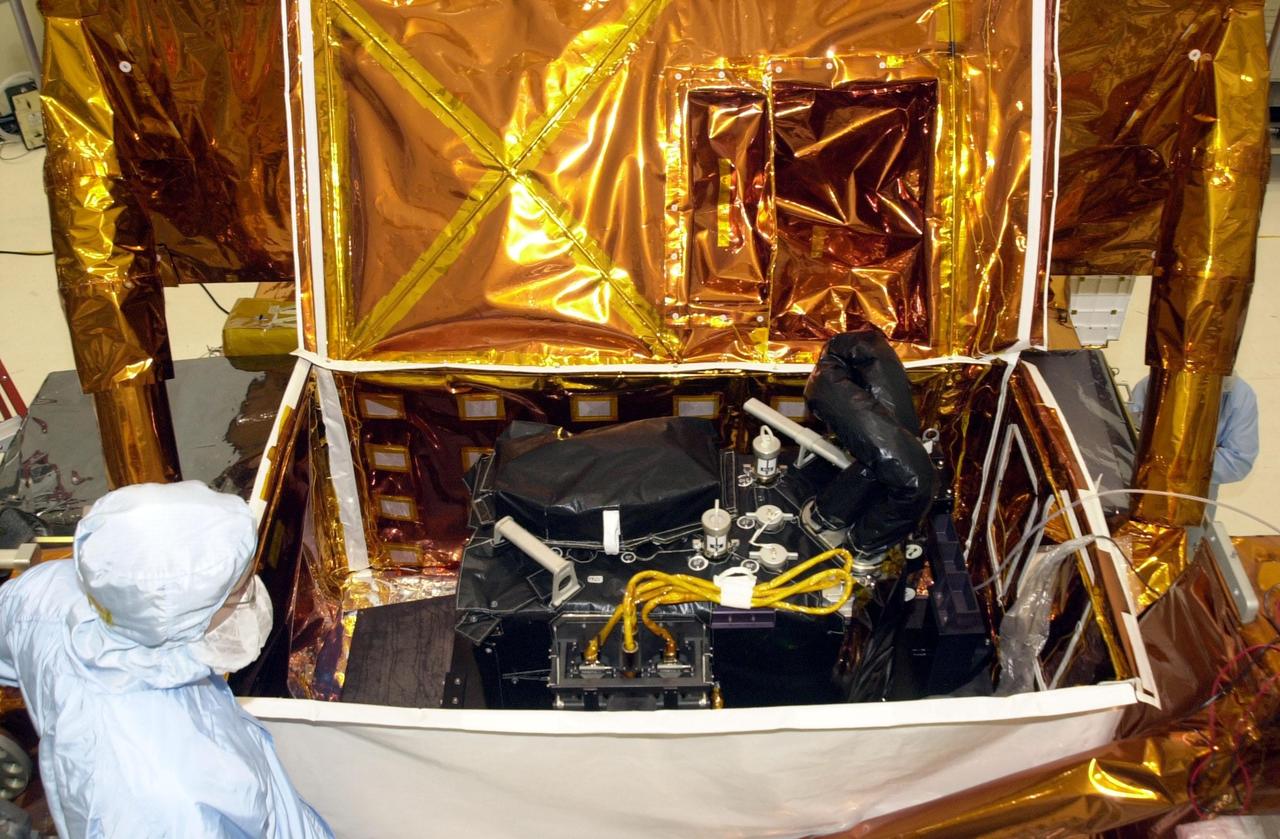
KENNEDY SPACE CENTER, FLA. -- The Near Infrared Camera and Multi-Object Spectrometer (NICMOS) Cooling System rests inside a protective enclosure on a payload carrier. NICMOS II is part of the payload on mission STS-109, the Hubble Servicing Telescope Mission. It is a new experimental cooling system consisting of a compressor and tiny turbines. With the experimental cryogenic system, NASA hopes to re-cool the infrared detectors to below -315 degrees F (-193 degrees Celsius). NICMOS II was previously tested aboard STS-95 in 1998. It could extend the life of the Hubble Space Telescope by several years. Astronauts aboard Columbia on mission STS-109 will be replacing the original NICMOS with the newer version. Launch of mission STS-109 is scheduled for Feb. 28, 2002
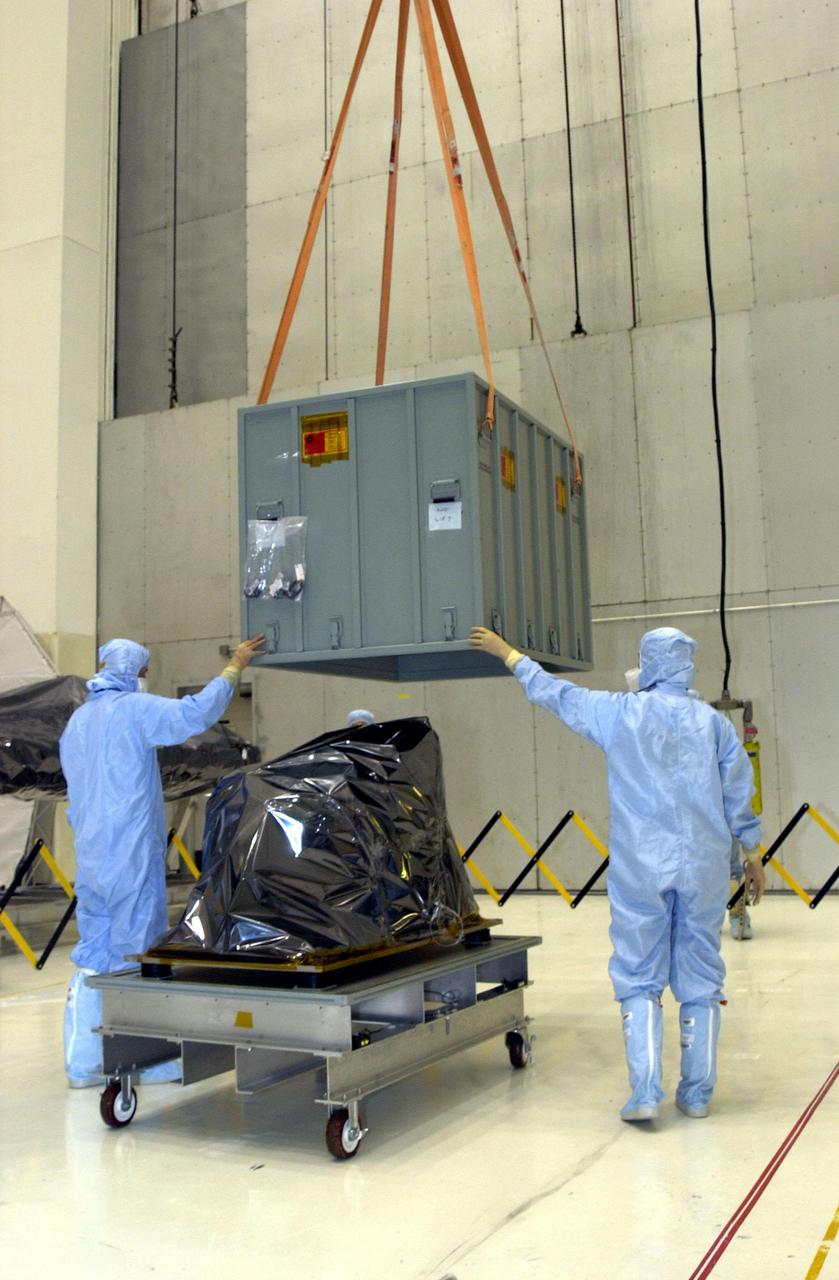
KENNEDY SPACE CENTER, FLA. -- An overhead crane in the Vertical Processing Facility lifts the shipping container from the Near Infrared Camera and Multi-Object Spectrometer (NICMOS) Cooling System, part of the payload on mission STS-109, the Hubble Servicing Telescope Mission. NICMOS is a new experimental cooling system consisting of a compressor and tiny turbines. With the experimental cryogenic system, NASA hopes to re-cool the infrared detectors to below -315 degrees F (-193 degrees Celsius). NICMOS II was previously tested aboard STS-95 in 1998. It could extend the life of the Hubble Space Telescope by several years. Astronauts aboard Columbia on mission STS-109 will be replacing the original NICMOS with the newer version. Launch of mission STS-109 is scheduled for Feb. 28, 2002
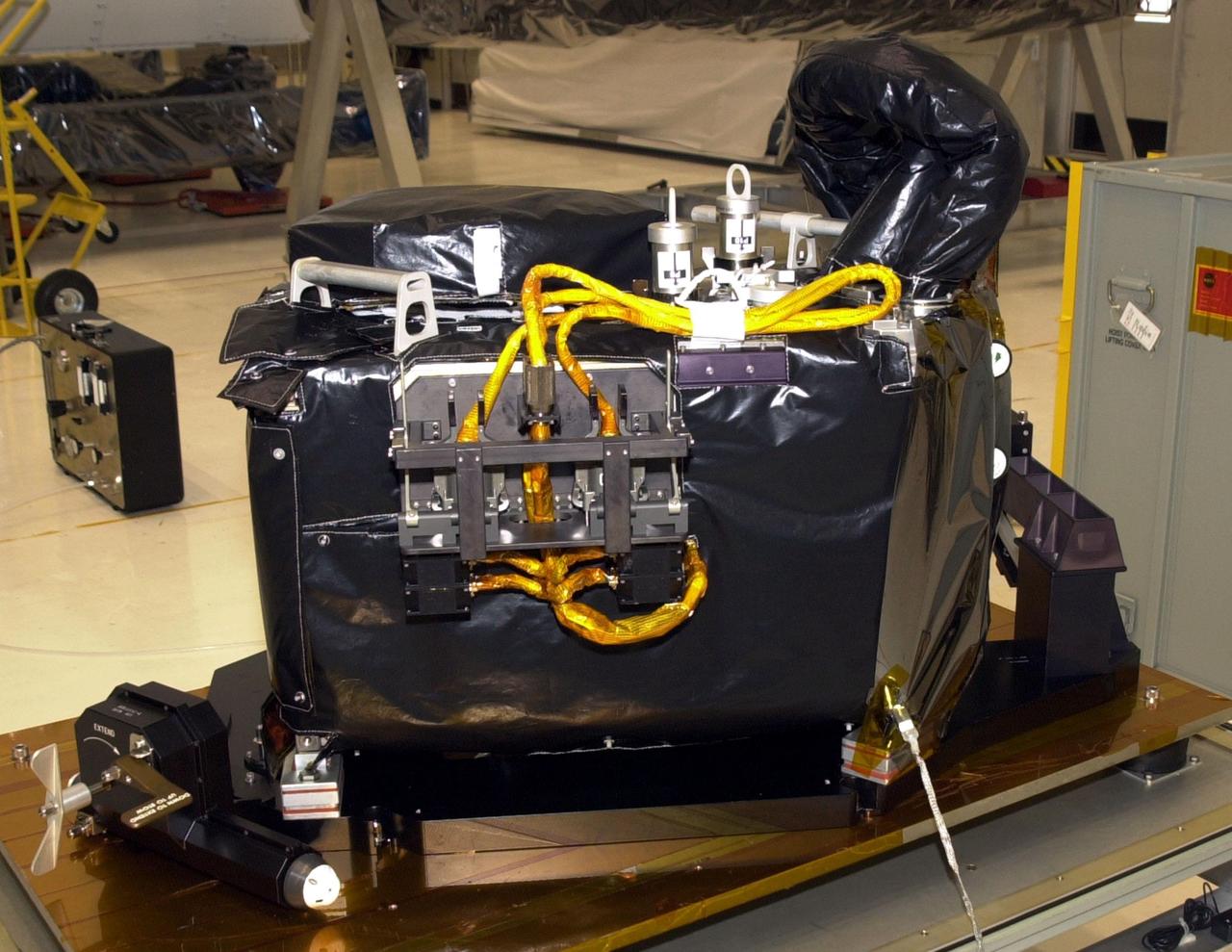
KENNEDY SPACE CENTER, FLA. -- A closeup view of the Near Infrared Camera and Multi-Object Spectrometer (NICMOS) Cooling System, part of the payload on mission STS-109, the Hubble Servicing Telescope Mission. NICMOS II is a new experimental cooling system consisting of a compressor and tiny turbines. With the experimental cryogenic system, NASA hopes to re-cool the infrared detectors to below -315 degrees F (-193 degrees Celsius). NICMOS II was previously tested aboard STS-95 in 1998. It could extend the life of the Hubble Space Telescope by several years. Astronauts aboard Columbia on mission STS-109 will be replacing the original NICMOS with the newer version. Launch of mission STS-109 is scheduled for Feb. 28, 2002

KENNEDY SPACE CENTER, FLA. -- Workers in the Vertical Processing Facility test the Near Infrared Camera and Multi-Object Spectrometer (NICMOS) Cooling System, part of the payload on mission STS-109, the Hubble Servicing Telescope Mission. The worker at right is using a black light. NICMOS II is a new experimental cooling system consisting of a compressor and tiny turbines. With the experimental cryogenic system, NASA hopes to re-cool the infrared detectors to below -315 degrees F (-193 degrees Celsius). NICMOS II was previously tested aboard STS-95 in 1998. It could extend the life of the Hubble Space Telescope by several years. Astronauts aboard Columbia on mission STS-109 will be replacing the original NICMOS with the newer version. Launch of mission STS-109 is scheduled for Feb. 28, 2002
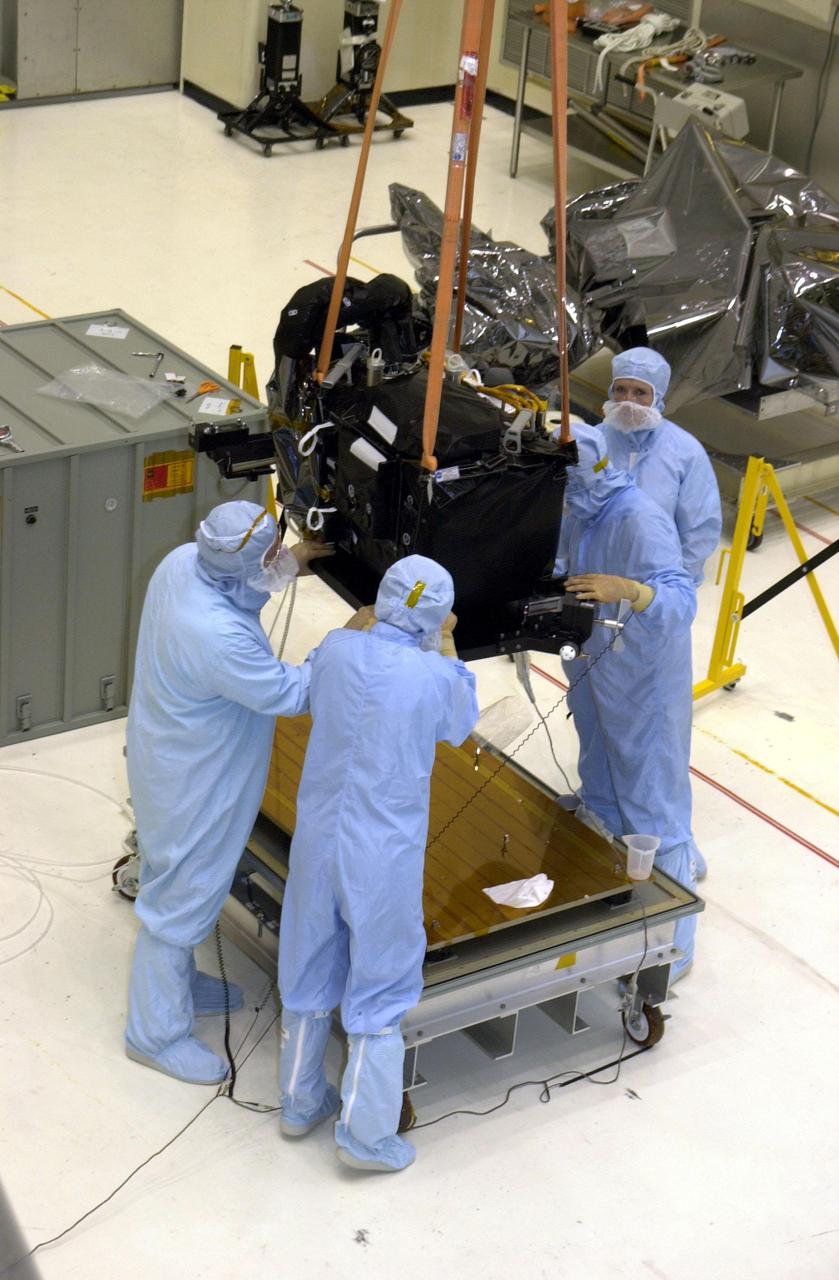
KENNEDY SPACE CENTER, FLA. - A crane in the Vertical Processing Facility lifts the Near Infrared Camera and Multi-Object Spectrometer (NICMOS) Cooling System off the workstand. NICMOS II is part of the payload on mission STS-109, the Hubble Servicing Telescope Mission. It is a new experimental cooling system consisting of a compressor and tiny turbines. With the experimental cryogenic system, NASA hopes to re-cool the infrared detectors to below -315 degrees F (-193 degrees Celsius). NICMOS II was previously tested aboard STS-95 in 1998. It could extend the life of the Hubble Space Telescope by several years. Astronauts aboard Columbia on mission STS-109 will be replacing the original NICMOS with the newer version. Launch of mission STS-109 is scheduled for Feb. 28, 2002
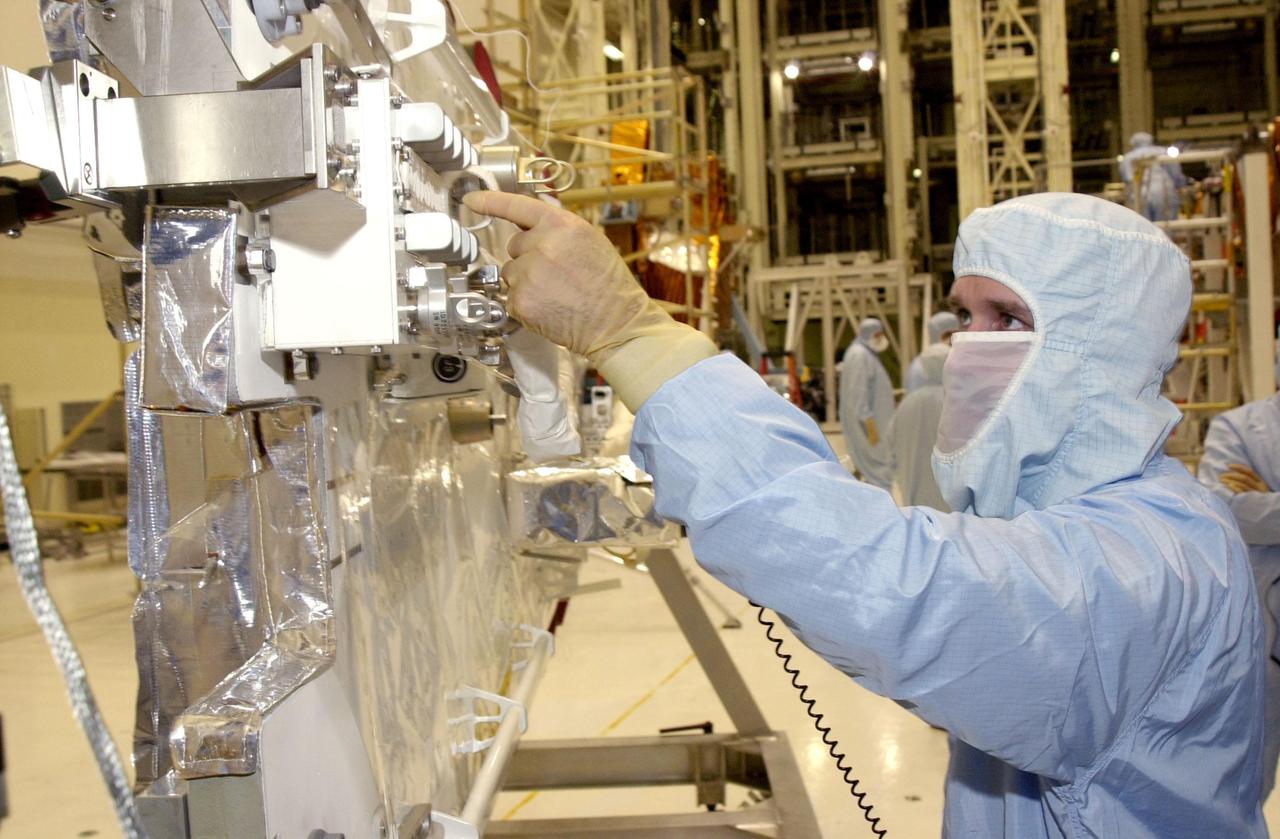
KENNEDY SPACE CENTER, FLA. - In the Vertical Processing Facility, STS-109 Payload Commander John Grunsfeld checks out the NICMOS radiator during crew familiarization activities. Part of the payload on mission STS-109, the Near Infrared Camera and Multi-Object Spectrometer (NICMOS) is a new experimental cooling system consisting of a compressor and tiny turbines. With the experimental cryogenic system, NASA hopes to re-cool the infrared detectors to below -315 degrees F (-193 degrees Celsius). NICMOS II was previously tested aboard STS-95 in 1998. NICMOS could extend the life of the Hubble Space Telescope by several years. Astronauts aboard Columbia on mission STS-109 will be replacing the original NICMOS with the newer version. Launch of Columbia is scheduled Feb. 28, 2002
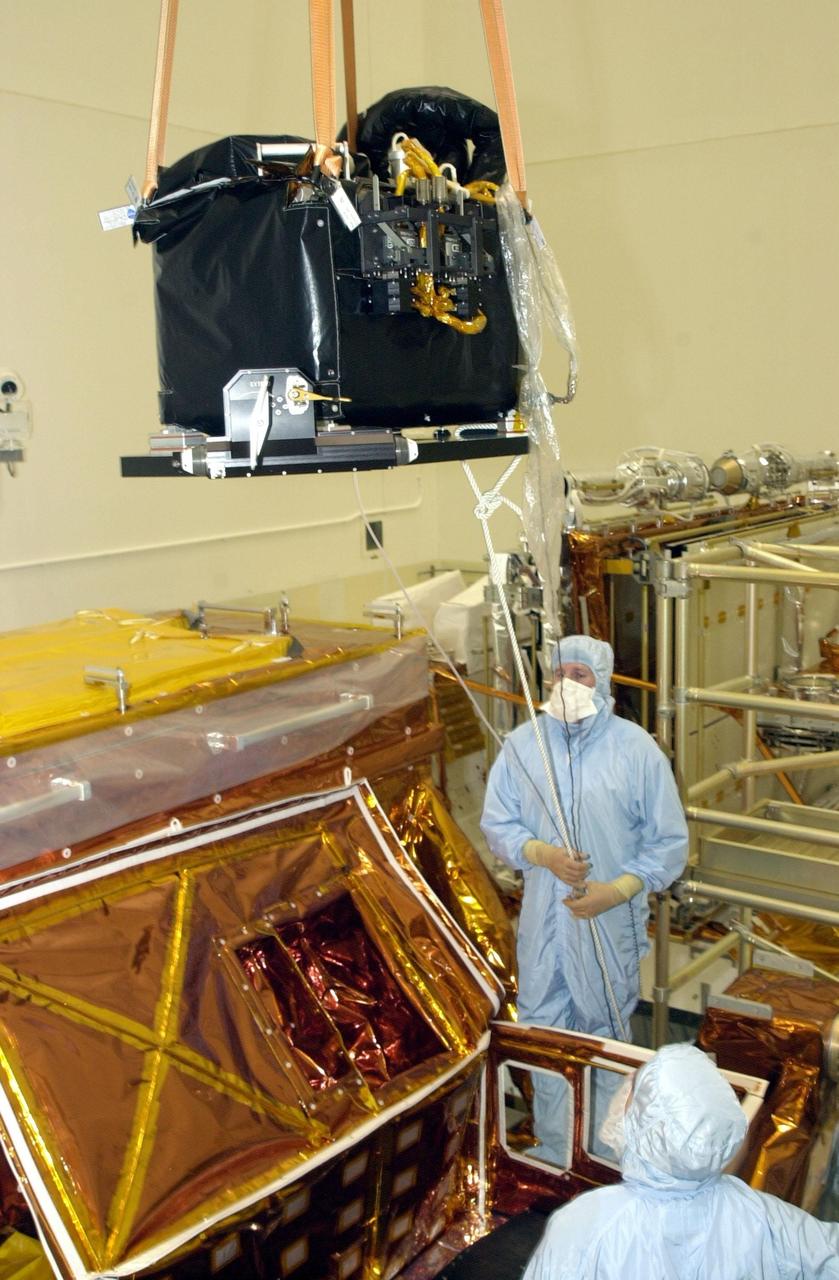
KENNEDY SPACE CENTER, FLA. -- Workers in the Vertical Processing Facility help guide the Near Infrared Camera and Multi-Object Spectrometer (NICMOS) Cooling System onto a payload carrier. NICMOS II is part of the payload on mission STS-109, the Hubble Servicing Telescope Mission. It is a new experimental cooling system consisting of a compressor and tiny turbines. With the experimental cryogenic system, NASA hopes to re-cool the infrared detectors to below -315 degrees F (-193 degrees Celsius). NICMOS II was previously tested aboard STS-95 in 1998. It could extend the life of the Hubble Space Telescope by several years. Astronauts aboard Columbia on mission STS-109 will be replacing the original NICMOS with the newer version. Launch of mission STS-109 is scheduled for Feb. 28, 2002