
Nereid, the last satellite of Neptune to be discovered before NASA Voyager's recent discoveries, was first seen by Gerard Kuiper in 1949. Until this Voyager 2 image was obtained, all that was known about Nereid was its orbital parameters and intrinsic brightness. This Voyager view of Nereid was obtained on Aug. 24, 1989 at a distance of 4.7 million kilometers (2.9 million miles). With a resolution of 43 kilometers (26.6 miles) per pixel, this image has sufficient detail to show the overall size and albedo. Nereid is about 170 kilometers (105 miles) across and reflects about 12 percent of the incident light. http://photojournal.jpl.nasa.gov/catalog/PIA00054
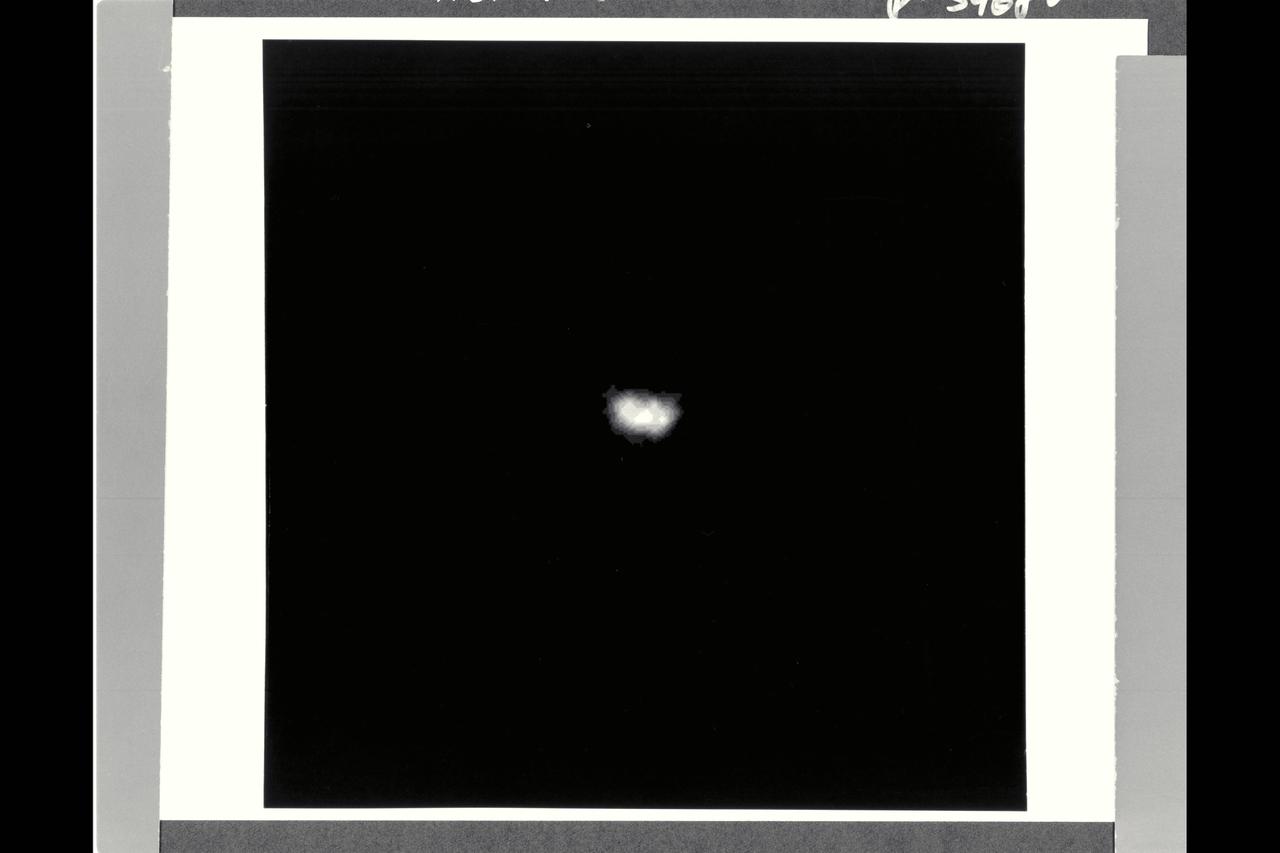
Range : 4.7 million km (2.9 million mi.) Nereid, the last satellite of Neptune to be discovered before Voyager's recent discoveries, was first seen by Gerard Kuiper in 1949. Until this Voyager 2 image was obtained, all that was known about Nereid was its orbital parameters and intrinsic brightness. With a resolution of 43 kilometers (26.6 mi.) per pixel, this image has sufficient detail to show the overall size and albedo. Nereid is about 170 km (105 mi.) across and reflects about 12 percent of the incident light.

Voyager 2 was the first spacecraft to observe the planet Neptune and its two satellites: Triton, the largest, and Nereid. The most obvious feature of the planet is its blue color, the result of methane in the atmosphere. Research continues on Neptune's two largest satellites and the additional six that were discovered by Voyager 2's investigation. These images represent the most complete set of full disk Neptune images that the spacecraft will acquire.
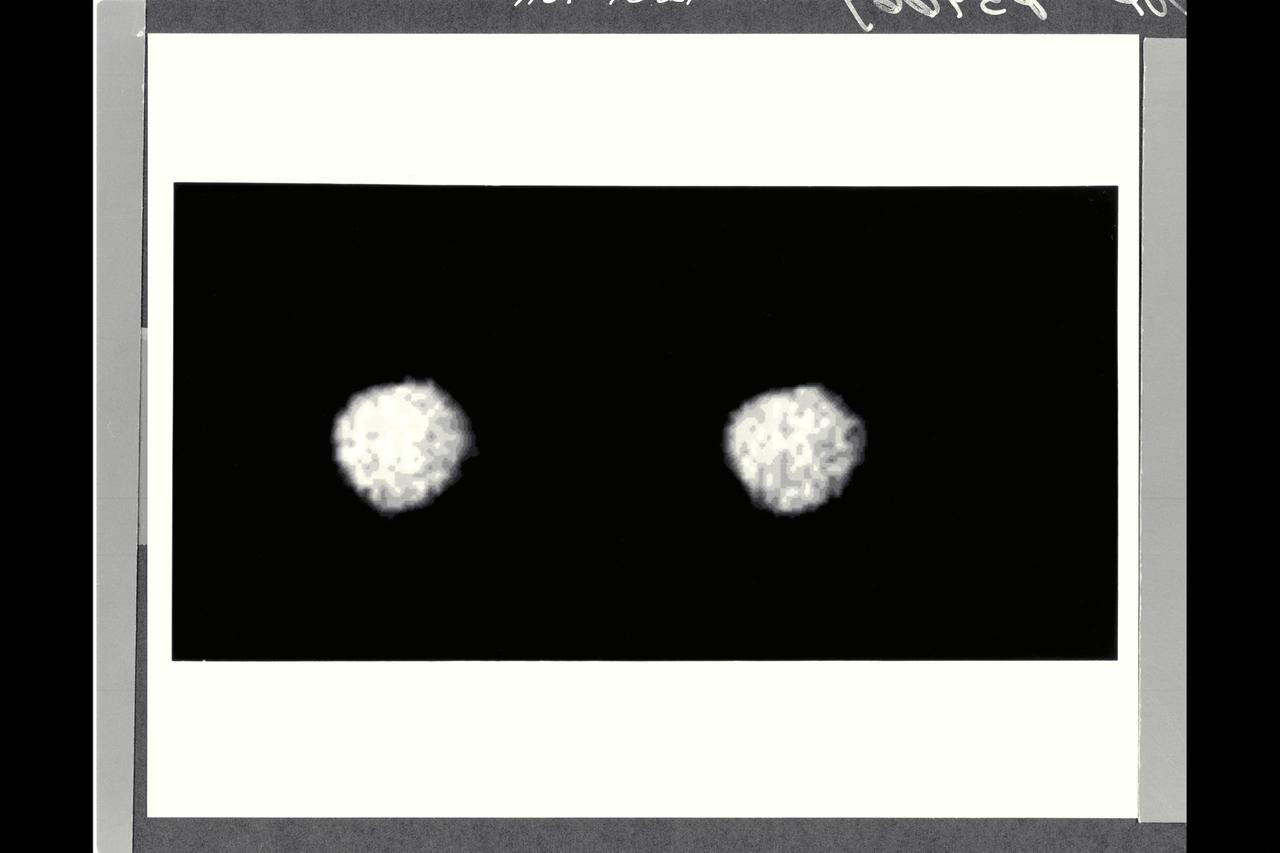
P-34669 Range : 2.6 million km. ( 1.6 million miles ) Smallest Resolvable Feature : 50 km or 31 miles These two Voyager 2 images, shot through clear filters, show the largest of the new moons of Neptune, 1989N1, discovered by Voyager. The satellite, made of dark material that reflects about 6 % of incident sunlight, has an average radius of about 200 kilometers ( 124 miles ) and an irregular shape. Its similiar appearance in the two images shows that the shape seen here is not the result of image noise or smear. This may the largest satellite in the solar system with such an irregular shape. satellite 1989N1 is slightly larger than the previously known small Neptunian moon Nereid but is very much darker.