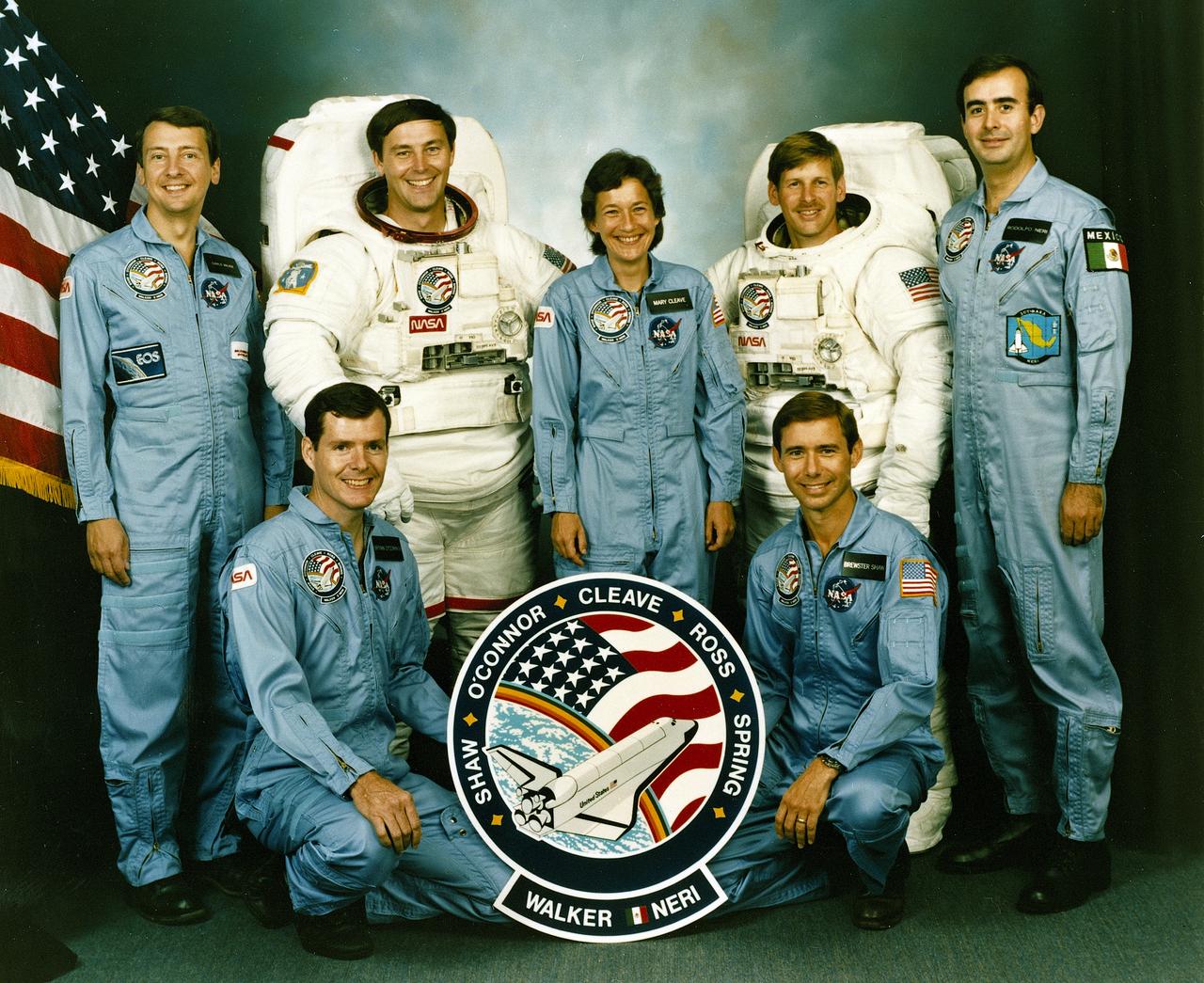
The crew assigned to the STS-61B mission included (kneeling left to right) Bryan D. O’conner, pilot; and Brewster H. Shaw, commander. On the back row, left to right, are Charles D. Walker, payload specialist; mission specialists Jerry L. Ross, Mary L. Cleave, and Sherwood C. Spring; and Rodolpho Neri Vela, payload specialist. Launched aboard the Space Shuttle Atlantis November 28, 1985 at 7:29:00 pm (EST), the STS-61B mission’s primary payload included three communications satellites: MORELOS-B (Mexico); AUSSAT-2 (Autralia); and SATCOM KU-2 (RCA Americom. Two experiments were conducted to test assembling erectable structures in space: EASE (Experimental Assembly of Structures in Extravehicular Activity), and ACCESS (Assembly Concept for Construction of Erectable Space Structure). In a joint venture between NASA/Langley Research Center in Hampton, VA and Marshall Space Flight Center (MSFC), the Assembly Concept for Construction of Erectable Space Structures (ACCESS) was developed and demonstrated at MSFC's Neutral Buoyancy Simulator (NBS). The primary objective of this experiment was to test the ACCESS structural assembly concept for suitability as the framework for larger space structures and to identify ways to improve the productivity of space construction.
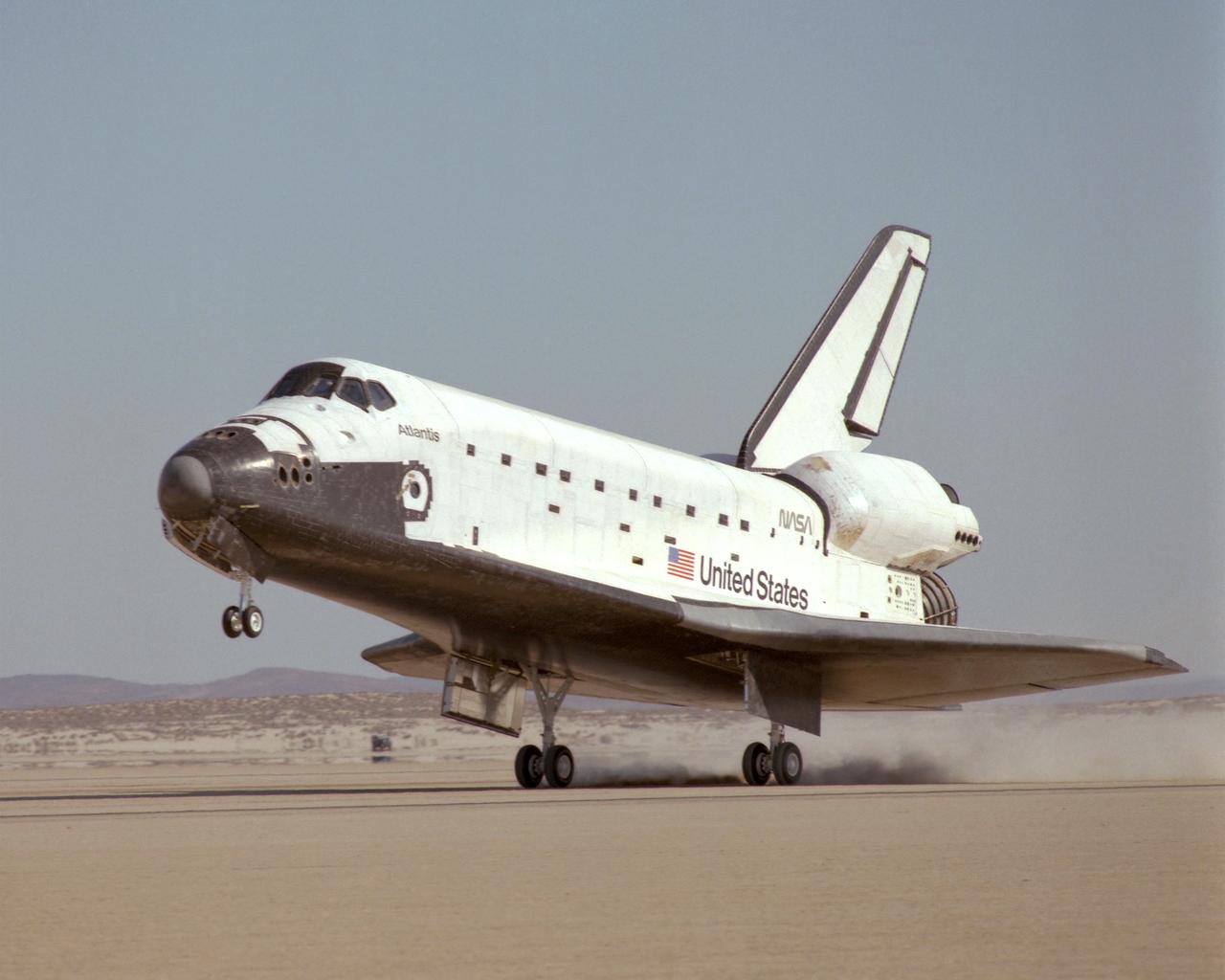
NASA's Space Shuttle Atlantis touched down on the lakebed runway at Edwards Air Force Base in California's Mojave Desert Tuesday, 3 December 1985 at 1:33:49 p.m. Pacific Standard Time, concluding the STS 61-B international mission. The eight-day mission successfully deployed three communications satellites including the Mexican Morelos B, the Australian Aussat 2 and an RCA Satcom K-2 satellite. In addition, two spacewalks were performed to experiment with construction of structures in space. Crew of the 61-B mission included Commander Brewster H. Shaw, Jr.; Pilot Bryan D. O'Connor; Mission Specialists Mary L. Cleave, Sherwood C. Spring and Jerry L. Ross; and Payload Specialists Rudolfo Neri Vela of Mexico and Charles Walker of McDonnell Douglas Astronautics Co.
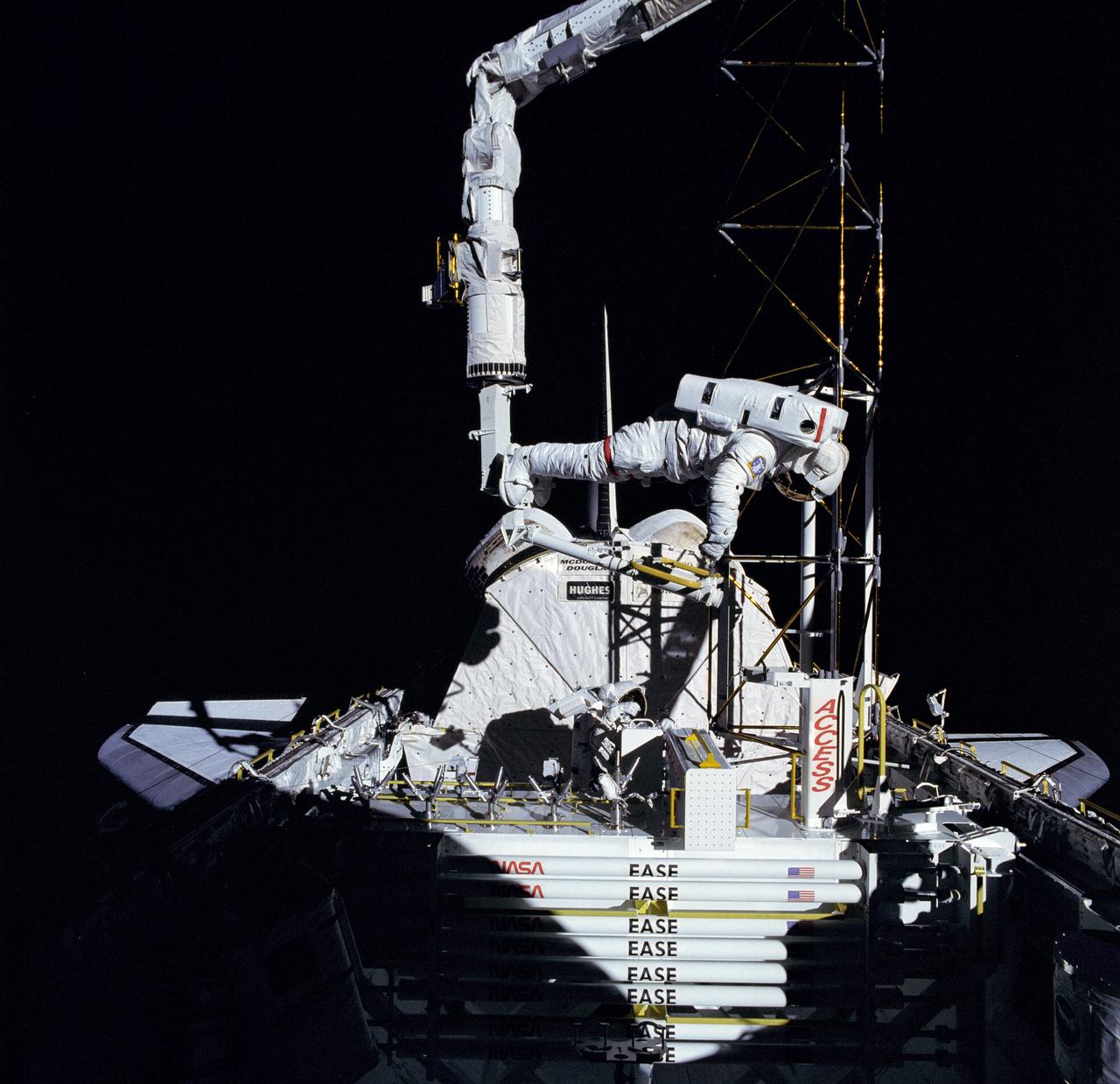
The crew assigned to the STS-61B mission included Bryan D. O’Conner, pilot; Brewster H. Shaw, commander; Charles D. Walker, payload specialist; mission specialists Jerry L. Ross, Mary L. Cleave, and Sherwood C. Spring; and Rodolpho Neri Vela, payload specialist. Launched aboard the Space Shuttle Atlantis November 28, 1985 at 7:29:00 pm (EST), the STS-61B mission’s primary payload included three communications satellites: MORELOS-B (Mexico); AUSSAT-2 (Australia); and SATCOM KU-2 (RCA Americom). Two experiments were conducted to test assembling erectable structures in space: EASE (Experimental Assembly of Structures in Extravehicular Activity), and ACCESS (Assembly Concept for Construction of Erectable Space Structure). In a joint venture between NASA/Langley Research Center in Hampton, Virginia and the Marshall Space Flight Center (MSFC), EASE and ACCESS were developed and demonstrated at MSFC's Neutral Buoyancy Simulator (NBS). The primary objective of this experiment was to test the structural assembly concepts for suitability as the framework for larger space structures and to identify ways to improve the productivity of space construction. In this STS-61B onboard photo, astronaut Ross was working on the ACCESS experiment during an Extravehicular Activity (EVA).
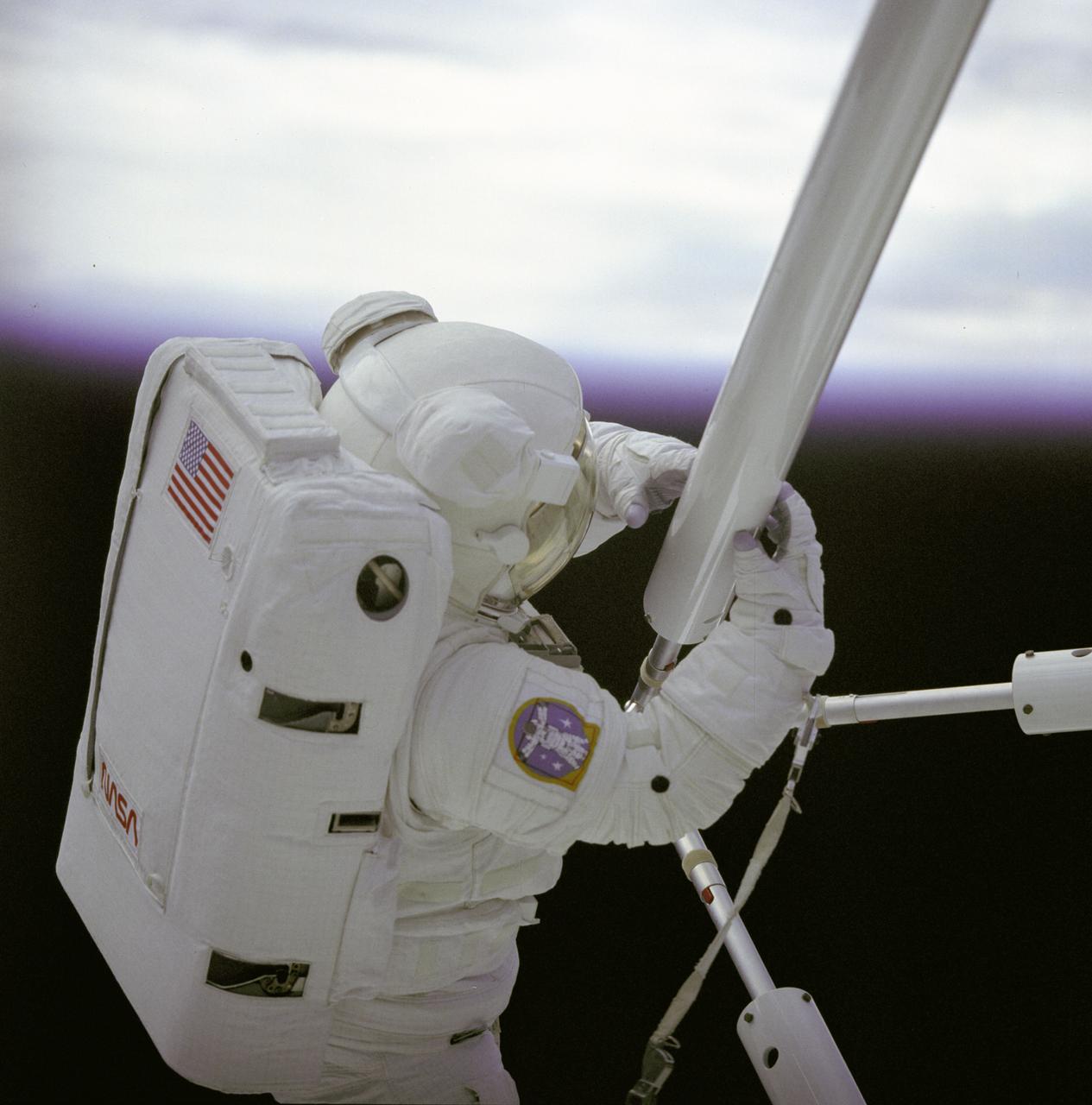
The crew assigned to the STS-61B mission included Bryan D. O’Conner, pilot; Brewster H. Shaw, commander; Charles D. Walker, payload specialist; mission specialists Jerry L. Ross, Mary L. Cleave, and Sherwood C. Spring; and Rodolpho Neri Vela, payload specialist. Launched aboard the Space Shuttle Atlantis November 28, 1985 at 7:29:00 pm (EST), the STS-61B mission’s primary payload included three communications satellites: MORELOS-B (Mexico); AUSSAT-2 (Australia); and SATCOM KU-2 (RCA Americom). Two experiments were conducted to test assembling erectable structures in space: EASE (Experimental Assembly of Structures in Extravehicular Activity), and ACCESS (Assembly Concept for Construction of Erectable Space Structure). In a joint venture between NASA/Langley Research Center in Hampton, Virginia, and the Marshall Space Flight Center (MSFC), the EASE and ACCESS were developed and demonstrated at MSFC's Neutral Buoyancy Simulator (NBS). In this STS-61B onboard photo, astronaut Spring was working on the EASE during an Extravehicular Activity (EVA). The primary objective of this experiment was to test the structural assembly concepts for suitability as the framework for larger space structures and to identify ways to improve the productivity of space construction.
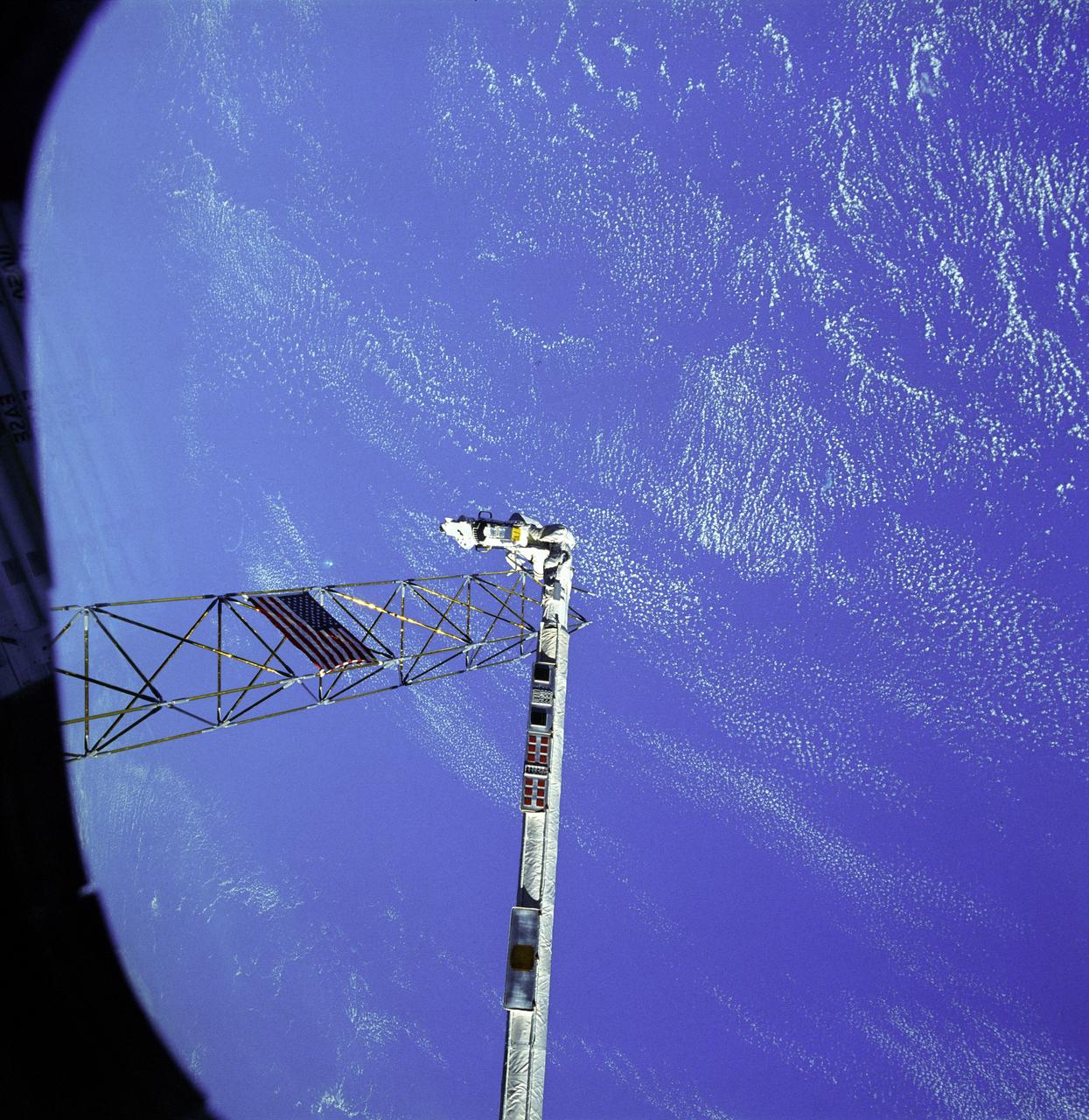
The crew assigned to the STS-61B mission included Bryan D. O’Conner, pilot; Brewster H. Shaw, commander; Charles D. Walker, payload specialist; mission specialists Jerry L. Ross, Mary L. Cleave, and Sherwood C. Spring; and Rodolpho Neri Vela, payload specialist. Launched aboard the Space Shuttle Atlantis November 28, 1985 at 7:29:00 pm (EST), the STS-61B mission’s primary payload included three communications satellites: MORELOS-B (Mexico); AUSSAT-2 (Australia); and SATCOM KU-2 (RCA Americom). Two experiments were conducted to test assembling erectable structures in space: EASE (Experimental Assembly of Structures in Extravehicular Activity), and ACCESS (Assembly Concept for Construction of Erectable Space Structure). In a joint venture between NASA/Langley Research Center in Hampton, Virginia, and the Marshall Space Flight Center (MSFC), EASE and ACCESS were developed and demonstrated at MSFC's Neutral Buoyancy Simulator (NBS). In this STS-61B onboard photo, astronaut Ross works on ACCESS high above the orbiter. The primary objective of these experiments was to test the structural assembly concepts for suitability as the framework for larger space structures and to identify ways to improve the productivity of space construction.
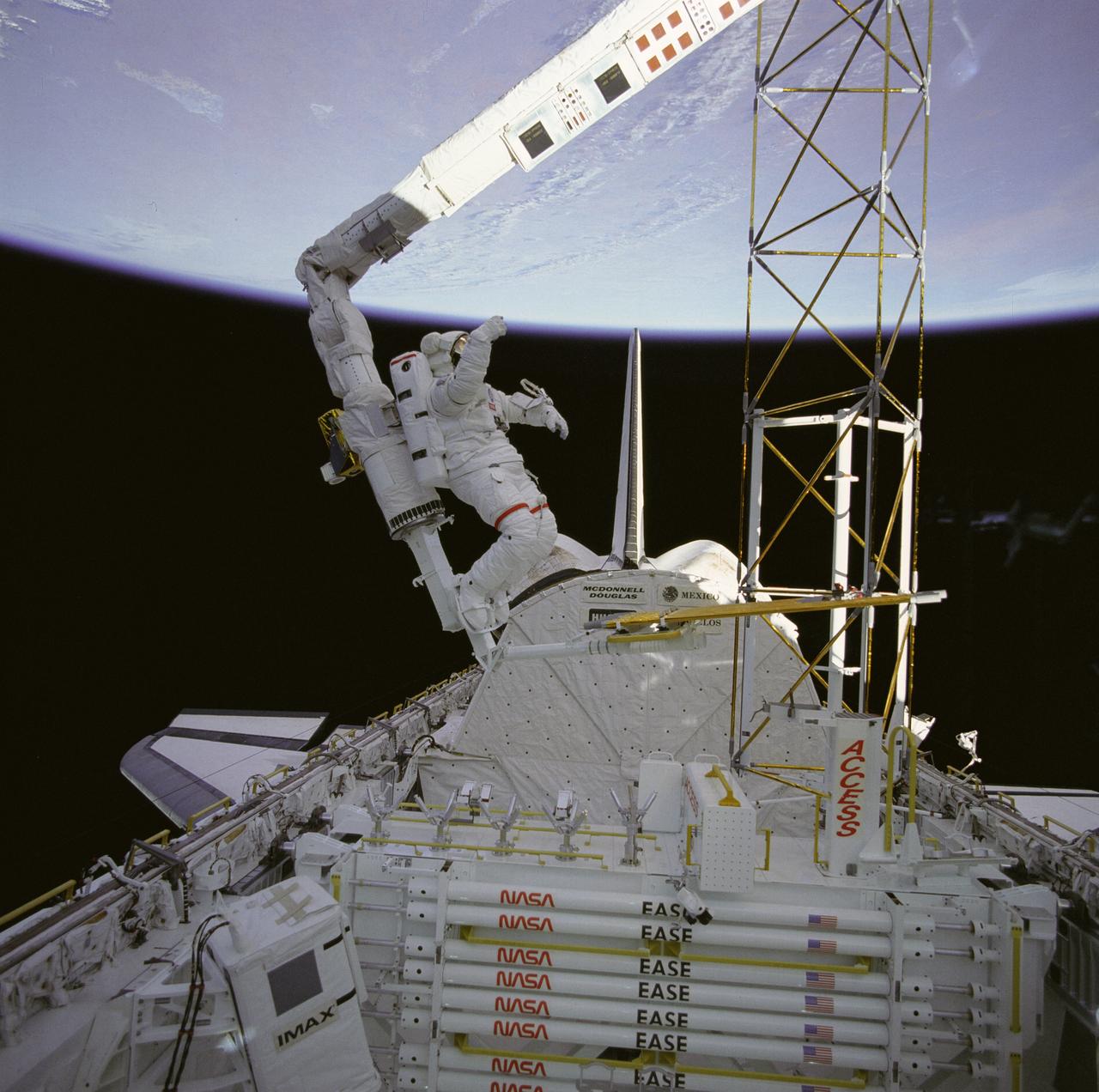
The crew assigned to the STS-61B mission included Bryan D. O’Conner, pilot; Brewster H. Shaw, commander; Charles D. Walker, payload specialist; mission specialists Jerry L. Ross, Mary L. Cleave, and Sherwood C. Spring; and Rodolpho Neri Vela, payload specialist. Launched aboard the Space Shuttle Atlantis November 28, 1985 at 7:29:00 pm (EST), the STS-61B mission’s primary payload included three communications satellites: MORELOS-B (Mexico); AUSSAT-2 (Australia); and SATCOM KU-2 (RCA Americom). Two experiments were conducted to test assembling erectable structures in space: EASE (Experimental Assembly of Structures in Extravehicular Activity), and ACCESS (Assembly Concept for Construction of Erectable Space Structure). In a joint venture between NASA/Langley Research Center in Hampton, Virginia and the Marshall Space Flight Center (MSFC), EASE and ACCESS were developed and demonstrated at MSFC's Neutral Buoyancy Simulator (NBS). In this STS-61B onboard photo astronaut Ross, located on the Manipulator Foot Restraint (MFR) over the cargo bay, erects ACCESS. The primary objective of this experiment was to test the structural assembly concepts for suitability as the framework for larger space structures and to identify ways to improve the productivity of space construction.