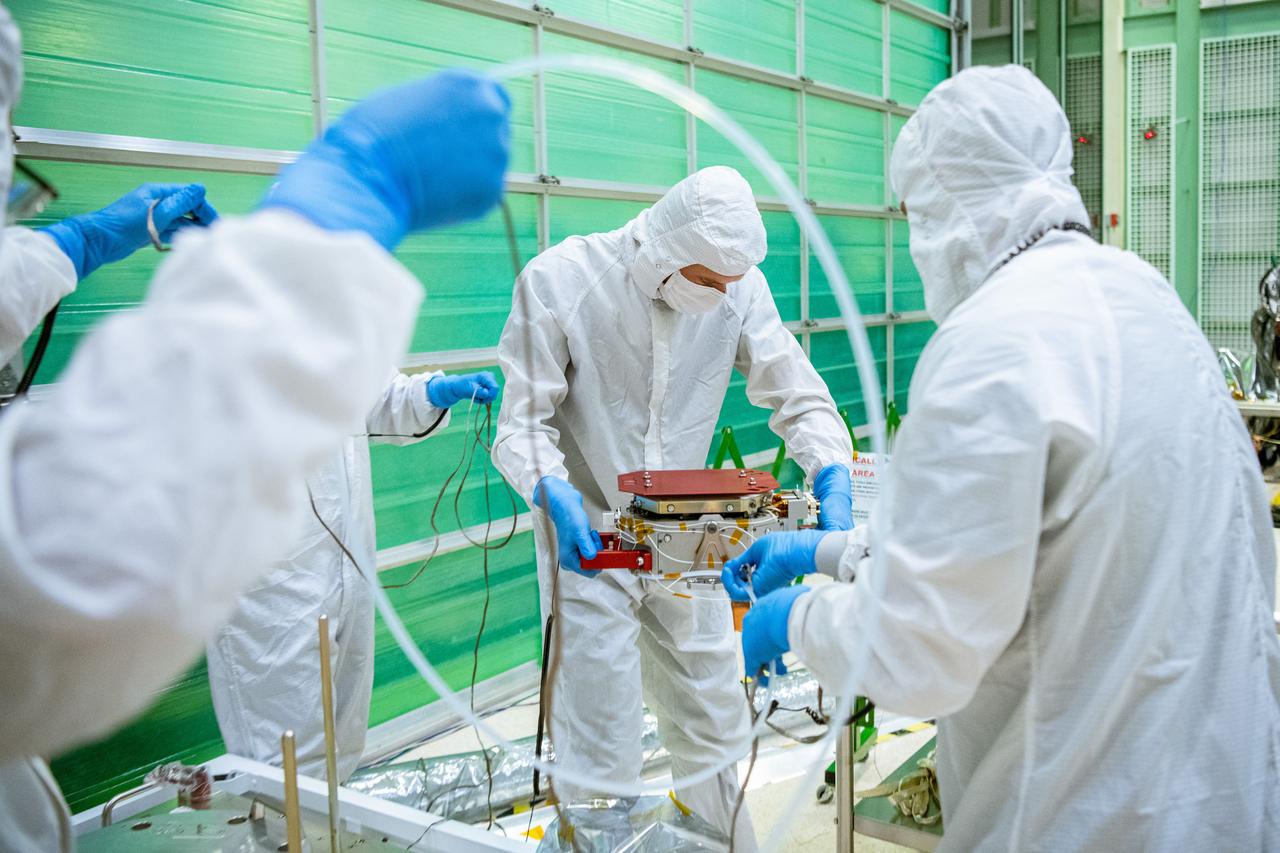
Senior Mechanical Design Engineer Alexander Eigenraam from SRON, the Netherlands Institute for Space Research, moves the SPEXone instrument before it is integrated onto the Plankton, Aerosol, Cloud, ocean Ecosystem (PACE) Spacecraft at NASA Goddard Space Flight Center in Greenbelt, Maryland on June 13th, 2022. SPEXone is one of three instruments on NASA's Plankton, Aerosol, Cloud, ocean Ecosystem (PACE) observatory and has been developed by a Dutch consortium consisting of SRON Netherlands Institute for Space Research and Airbus Defence and Space Netherlands, supported by opto-mechanical expertise from TNO. SRON and Airbus DS NL are responsible for the design, manufacturing and testing of the instrument. The scientific lead is in the hands of SRON. SPEXone is a public-private initiative, funded by the Netherlands Space Office (NSO), the Netherlands Organization of Scientific Research (NWO), SRON and Airbus DS NL.instrument. The scientific lead is in the hands of SRON. SPEXone is a public-private initiative, funded by the Netherlands Space Office (NSO), the Netherlands Organization of Scientific Research (NWO), SRON and Airbus DS NL.
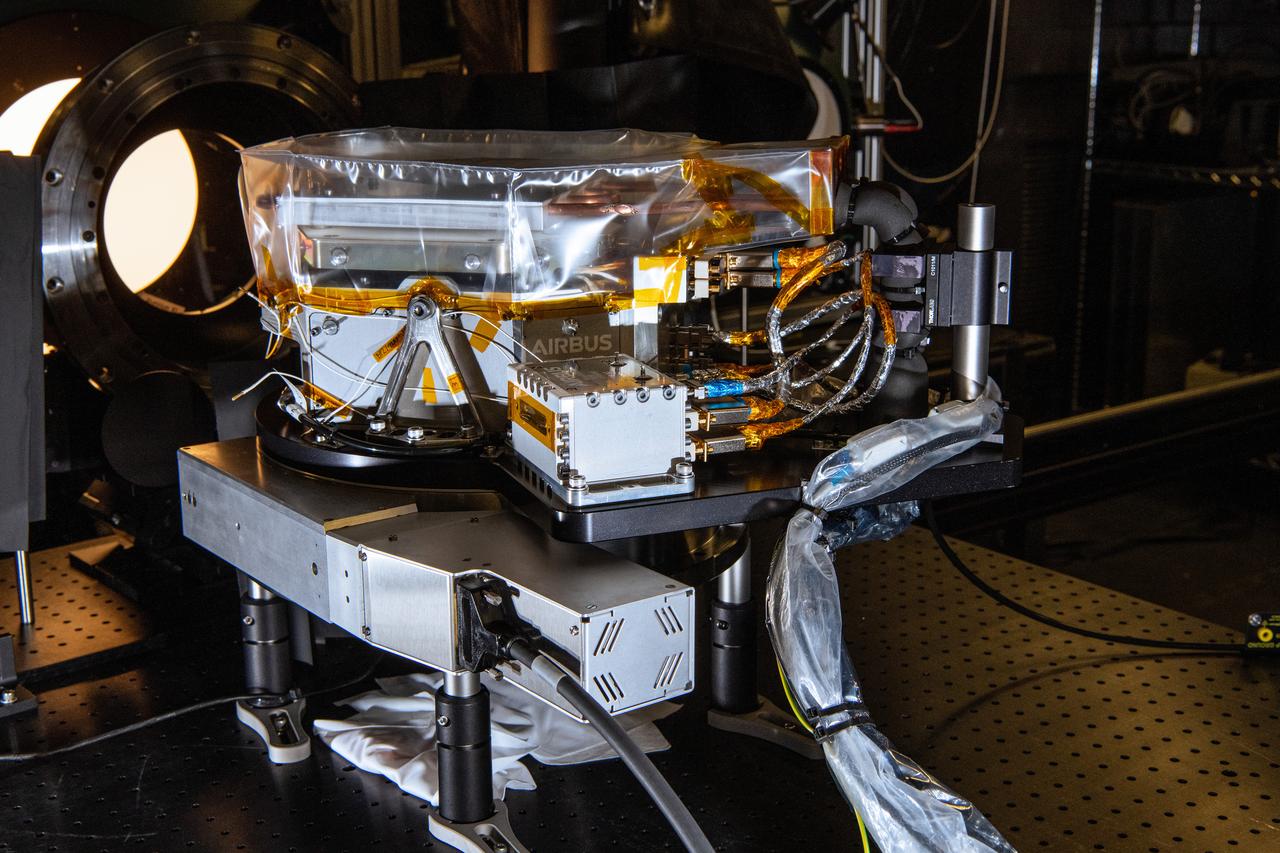
The SPEXone instrument undergoes Polarimetric Calibration at NASA's Goddard Space Flight Center in Greenbelt,Maryland on April 8th, 2021. SPEXone is one of three instruments on NASA's Plankton, Aerosol, Cloud, ocean Ecosystem (PACE) observatory and has been developed by a Dutch consortium consisting of SRON Netherlands Institute for Space Research and Airbus Defence and Space Netherlands, supported by opto-mechanical expertise from TNO. SRON and Airbus DS NL are responsible for the design, manufacturing and testing of the instrument. The scientific lead is in the hands of SRON. SPEXone is a public-private initiative, funded by the Netherlands Space Office (NSO), the Netherlands Organization of Scientific Research (NWO), SRON and Airbus DS NL.
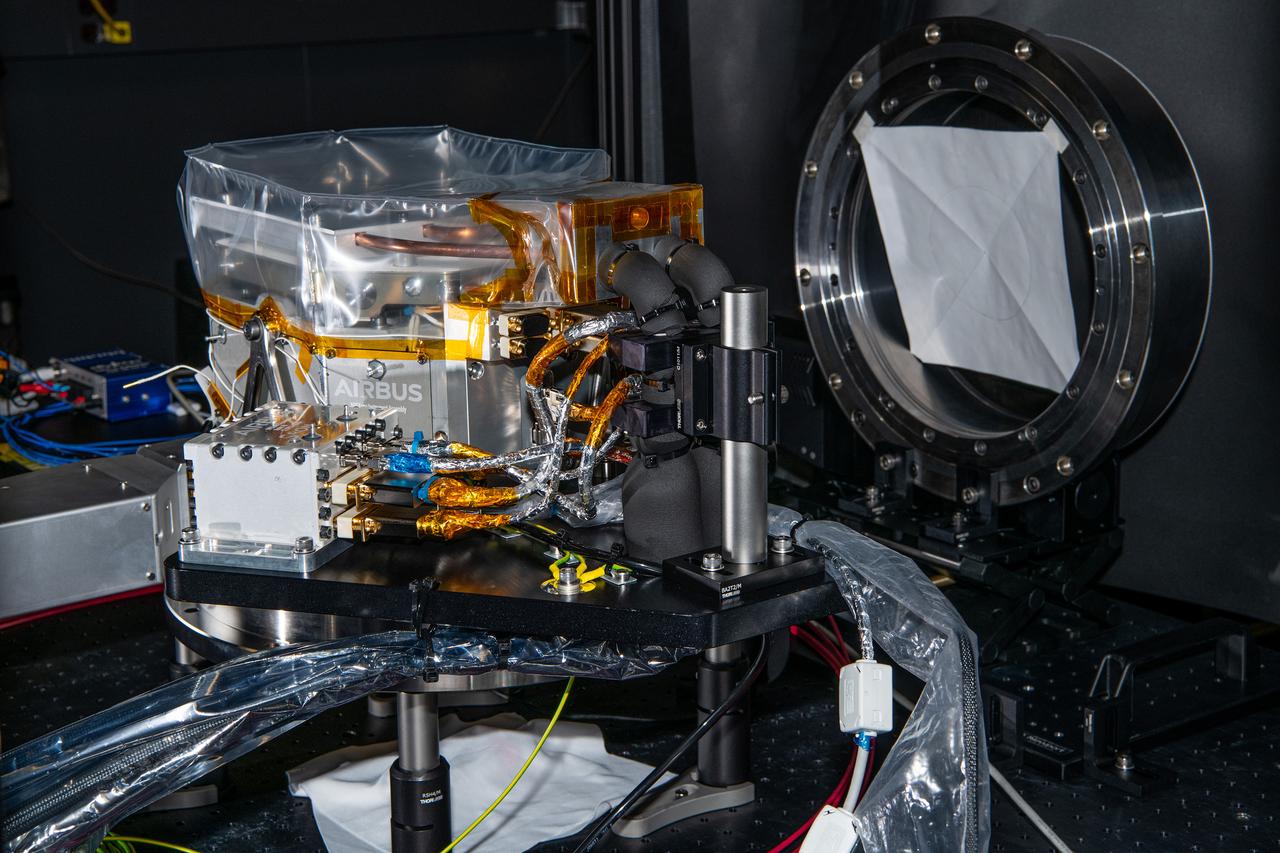
The SPEXone instrument undergoes comprehensive performace and calibration testing at NASA's Goddard Space Flight Center in Greenbelt,Maryland on April 8th, 2021. SPEXone is one of three instruments on NASA's Plankton, Aerosol, Cloud, ocean Ecosystem (PACE) observatory and has been developed by a Dutch consortium consisting of SRON Netherlands Institute for Space Research and Airbus Defence and Space Netherlands, supported by opto-mechanical expertise from TNO. SRON and Airbus DS NL are responsible for the design, manufacturing and testing of the instrument. The scientific lead is in the hands of SRON. SPEXone is a public-private initiative, funded by the Netherlands Space Office (NSO), the Netherlands Organization of Scientific Research (NWO), SRON and Airbus DS NL.
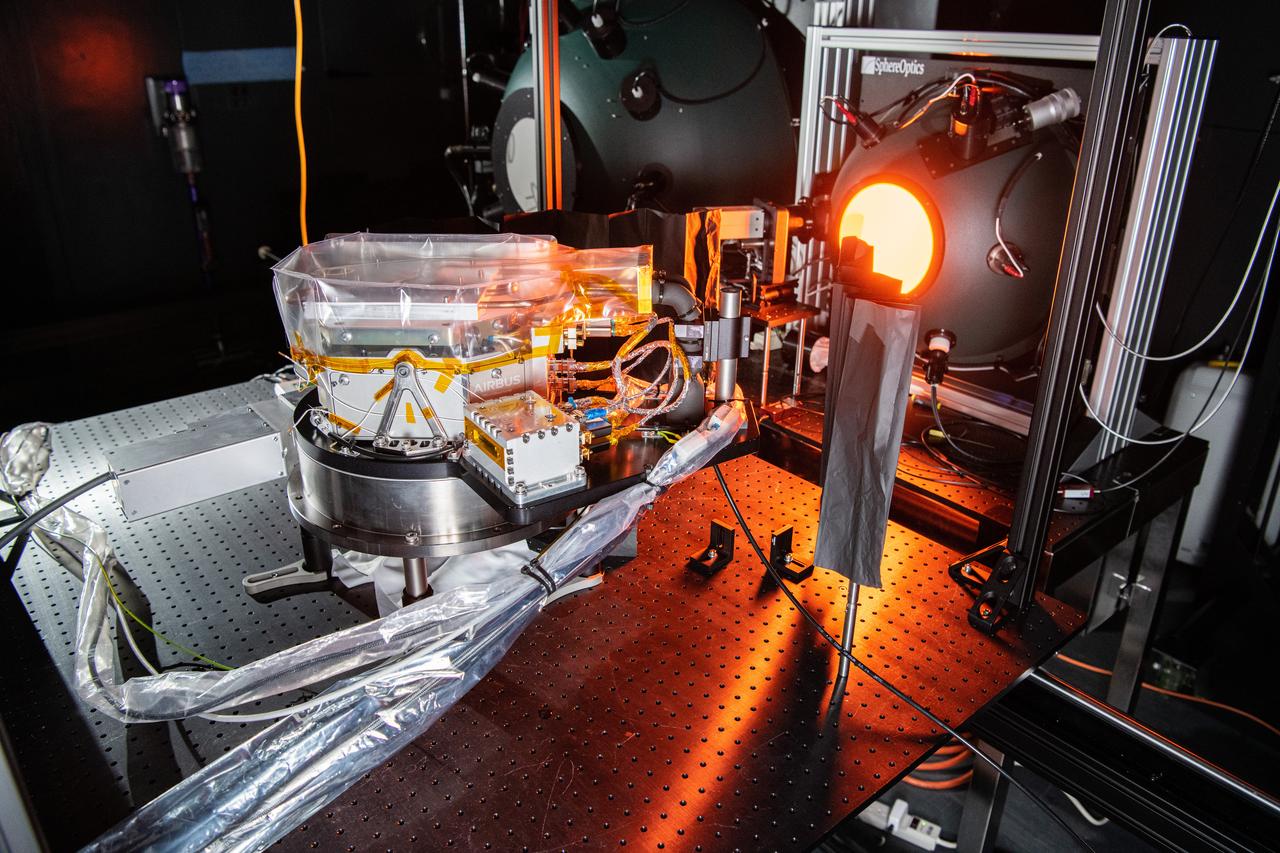
The SPEXone instrument undergoes cross calibration at NASA's Goddard Space Flight Center in Greenbelt,Maryland on April 20th, 2021. SPEXone is one of three instruments on NASA's Plankton, Aerosol, Cloud, ocean Ecosystem (PACE) observatory and has been developed by a Dutch consortium consisting of SRON Netherlands Institute for Space Research and Airbus Defence and Space Netherlands, supported by opto-mechanical expertise from TNO. SRON and Airbus DS NL are responsible for the design, manufacturing and testing of the instrument. The scientific lead is in the hands of SRON. SPEXone is a public-private initiative, funded by the Netherlands Space Office (NSO), the Netherlands Organization of Scientific Research (NWO), SRON and Airbus DS NL.
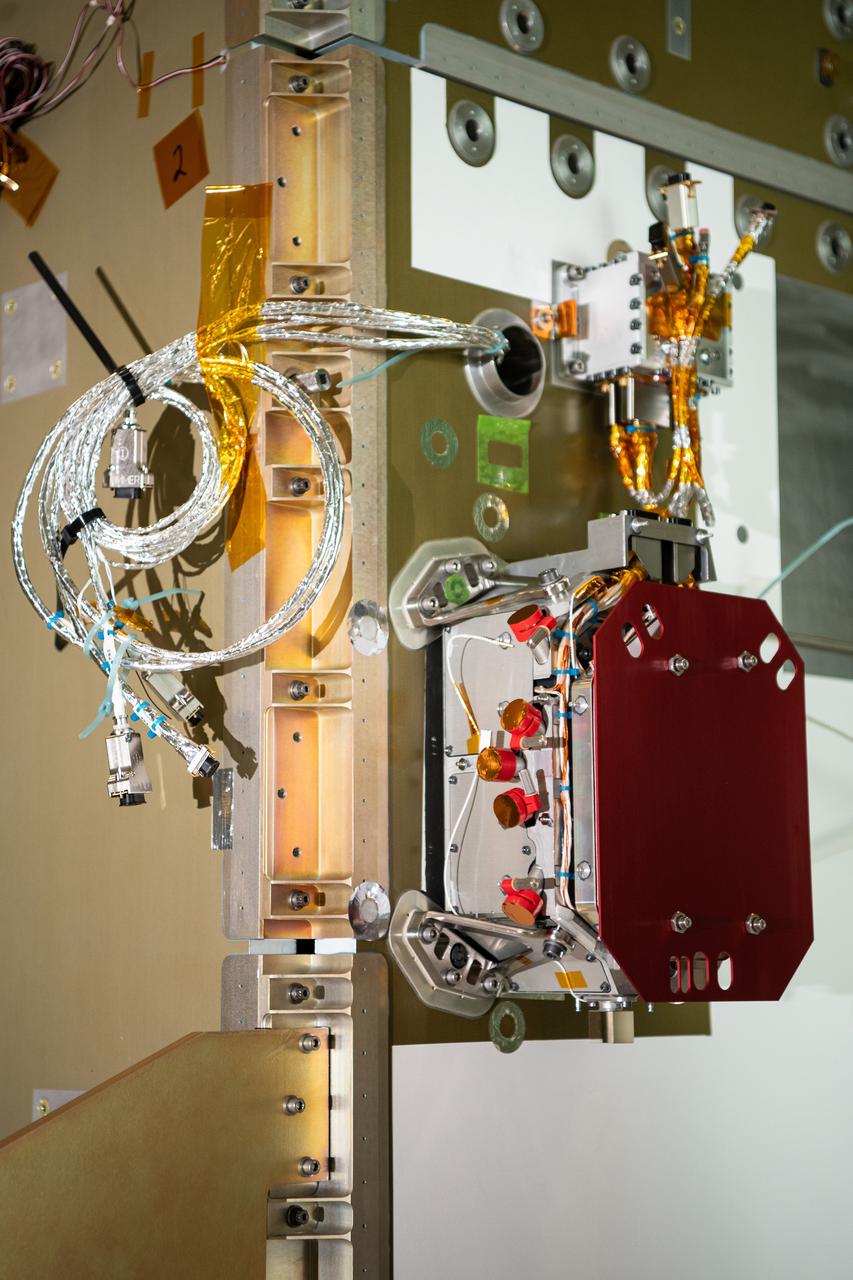
The SPEXone instrument after integration to the Plankton, Aerosol, Cloud, ocean Ecosystem (PACE) Observatory. SPEXone is one of three instruments on NASA's Plankton, Aerosol, Cloud, ocean Ecosystem (PACE) observatory and has been developed by a Dutch consortium consisting of SRON Netherlands Institute for Space Research and Airbus Defence and Space Netherlands, supported by opto-mechanical expertise from TNO. SRON and Airbus DS NL are responsible for the design, manufacturing and testing of the instrument. The scientific lead is in the hands of SRON. SPEXone is a public-private initiative, funded by the Netherlands Space Office (NSO), the Netherlands Organization of Scientific Research (NWO), SRON and Airbus DS NL.
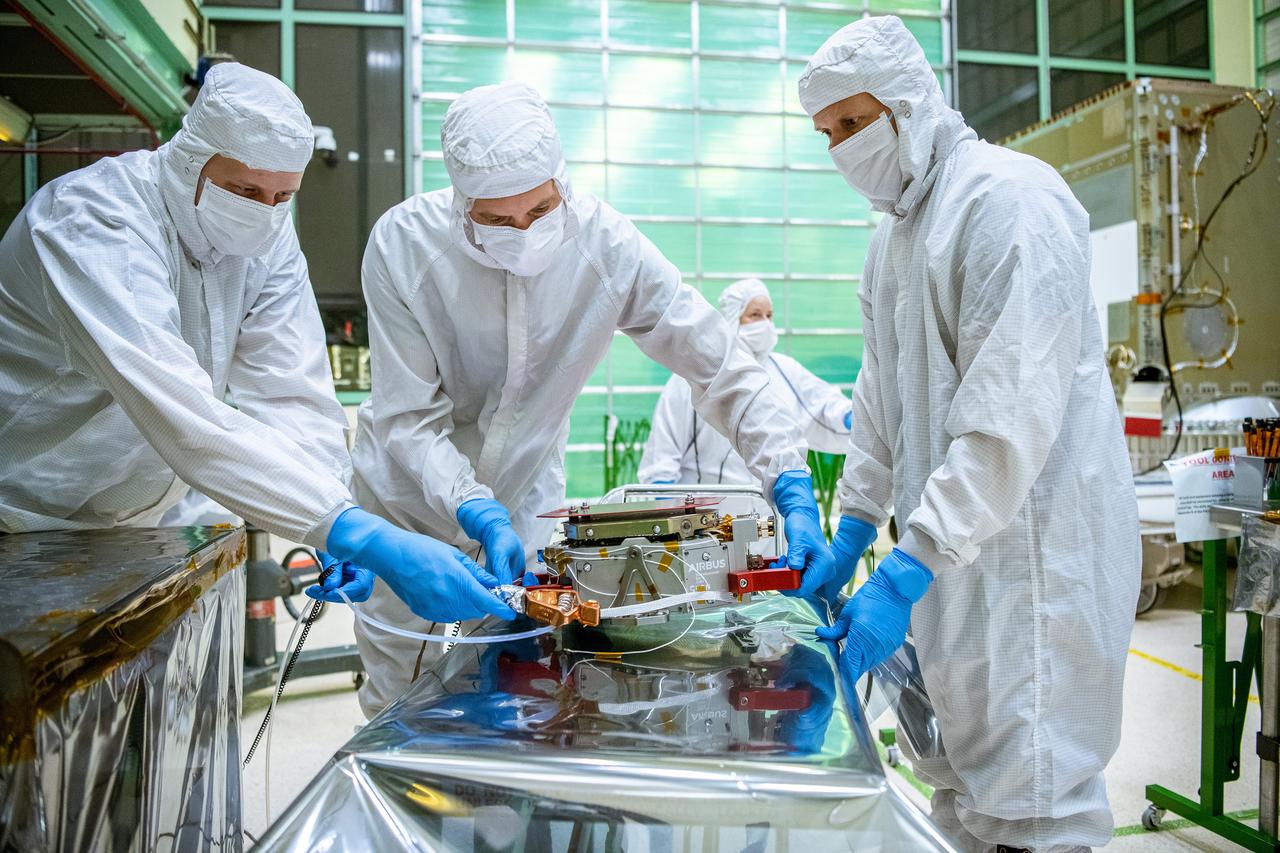
Engineers from SRON, the Netherlands Institute for Space Research, move the SPEXone instrument before it is integrated onto the Plankton, Aerosol, Cloud, ocean Ecosystem (PACE) Spacecraft at NASA Goddard Space Flight Center in Greenbelt, Maryland on June 13th, 2022. SPEXone is a compact, optical satellite instrument that will characterize aerosols from low Earth orbit as part of the NASA PACE mission. SPEXone is one of three instruments on NASA's Plankton, Aerosol, Cloud, ocean Ecosystem (PACE) observatory and has been developed by a Dutch consortium consisting of SRON Netherlands Institute for Space Research and Airbus Defence and Space Netherlands, supported by opto-mechanical expertise from TNO. SRON and Airbus DS NL are responsible for the design, manufacturing and testing of the instrument. The scientific lead is in the hands of SRON. SPEXone is a public-private initiative, funded by the Netherlands Space Office (NSO), the Netherlands Organization of Scientific Research (NWO), SRON and Airbus DS NL.
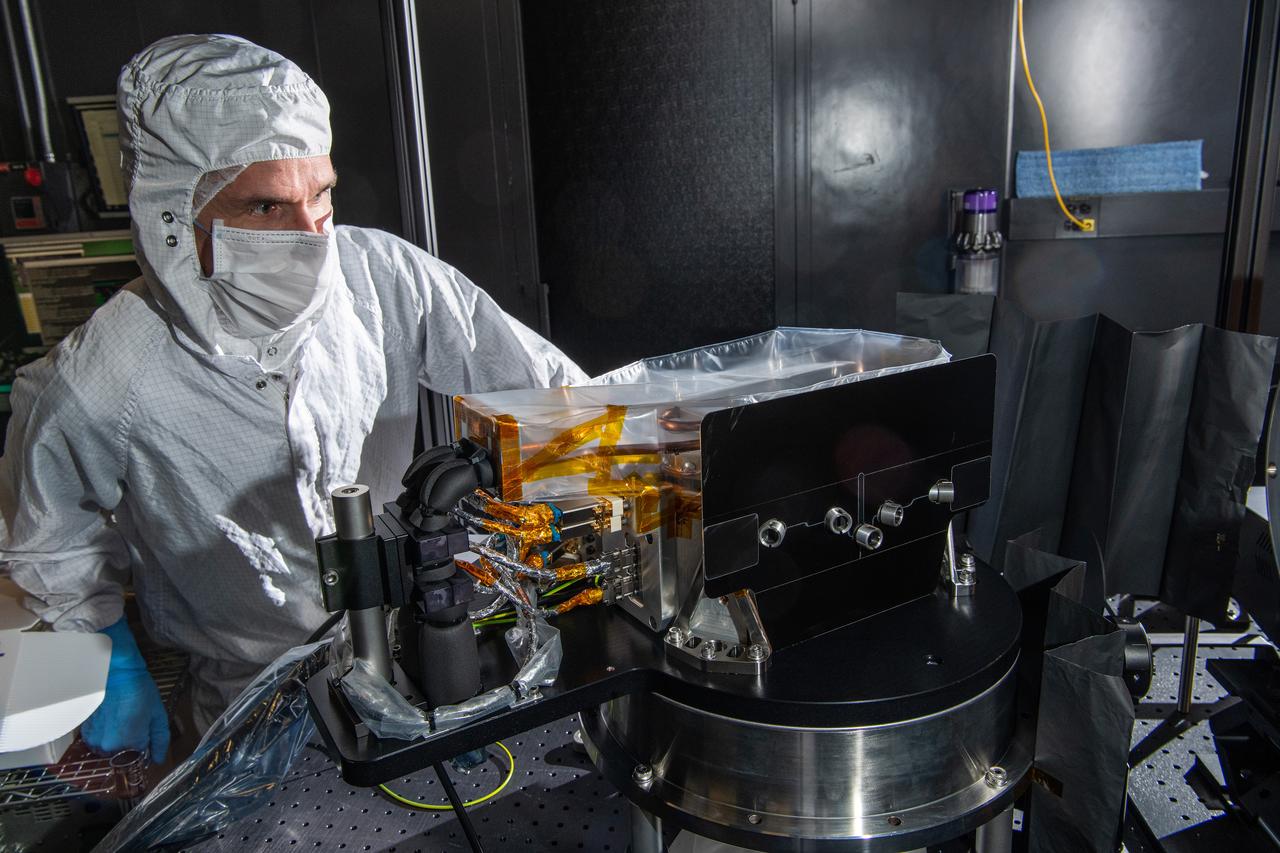
Jochen Campo from SRON Netherlands Institute for Space Research with the The SPEXone Polarimetric Calibration at NASA's Goddard Space Flight Center in Greenbelt,Maryland on April 8th, 2021. SPEXone is one of three instruments on NASA's Plankton, Aerosol, Cloud, ocean Ecosystem (PACE) observatory and has been developed by a Dutch consortium consisting of SRON Netherlands Institute for Space Research and Airbus Defence and Space Netherlands, supported by opto-mechanical expertise from TNO. SRON and Airbus DS NL are responsible for the design, manufacturing and testing of the instrument. The scientific lead is in the hands of SRON. SPEXone is a public-private initiative, funded by the Netherlands Space Office (NSO), the Netherlands Organization of Scientific Research (NWO), SRON and Airbus DS NL.
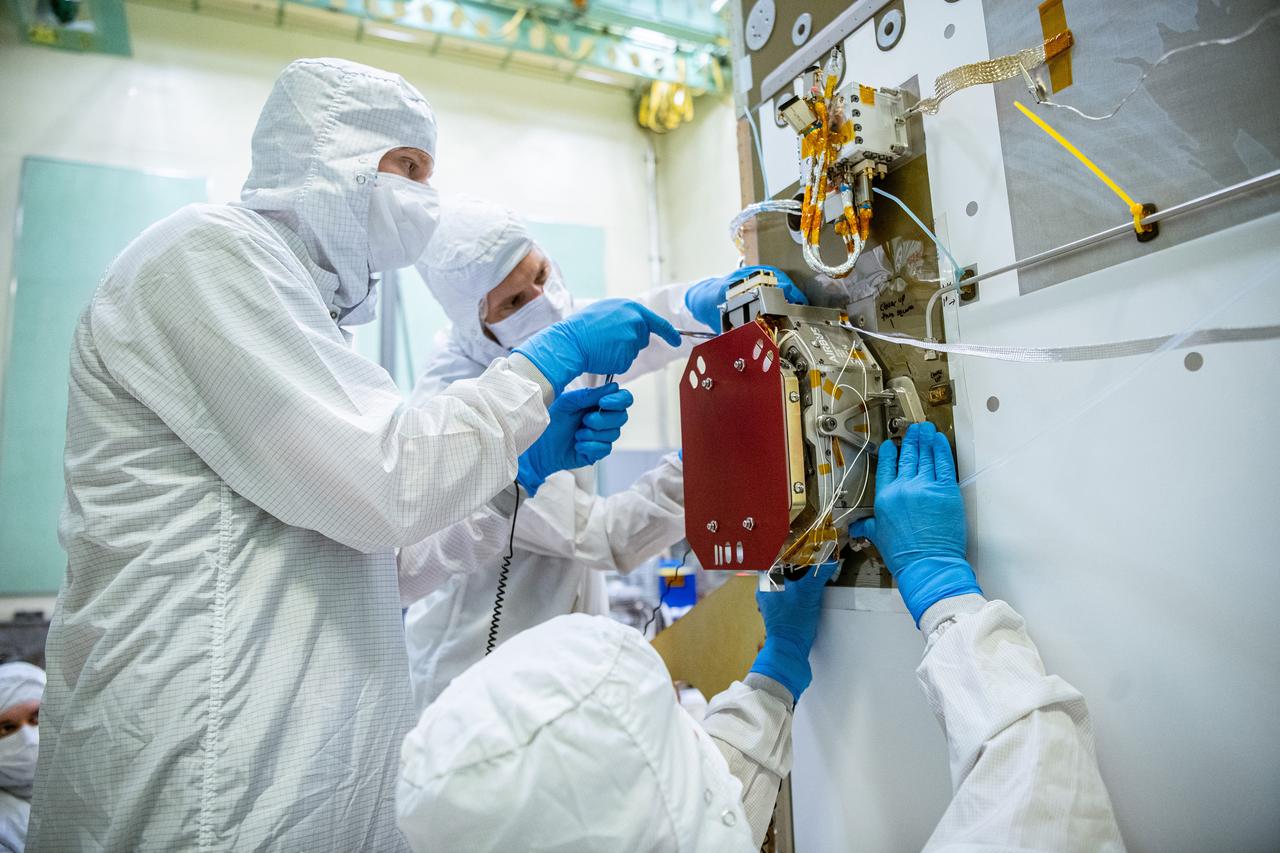
NASA technicians and Engineers from SRON, the Netherlands Institute for Space Research, integrate the SPEXone instrument to the Plankton, Aerosol, Cloud, ocean Ecosystem (PACE) Spacecraft at NASA Goddard Space Flight Center in Greenbelt, Maryland on June 13th, 2022. SPEXone is a compact, optical satellite instrument that will characterize aerosols from low Earth orbit as part of the NASA PACE mission. SPEXone is one of three instruments on NASA's Plankton, Aerosol, Cloud, ocean Ecosystem (PACE) observatory and has been developed by a Dutch consortium consisting of SRON Netherlands Institute for Space Research and Airbus Defence and Space Netherlands, supported by opto-mechanical expertise from TNO. SRON and Airbus DS NL are responsible for the design, manufacturing and testing of the instrument. The scientific lead is in the hands of SRON. SPEXone is a public-private initiative, funded by the Netherlands Space Office (NSO), the Netherlands Organization of Scientific Research (NWO), SRON and Airbus DS NL.
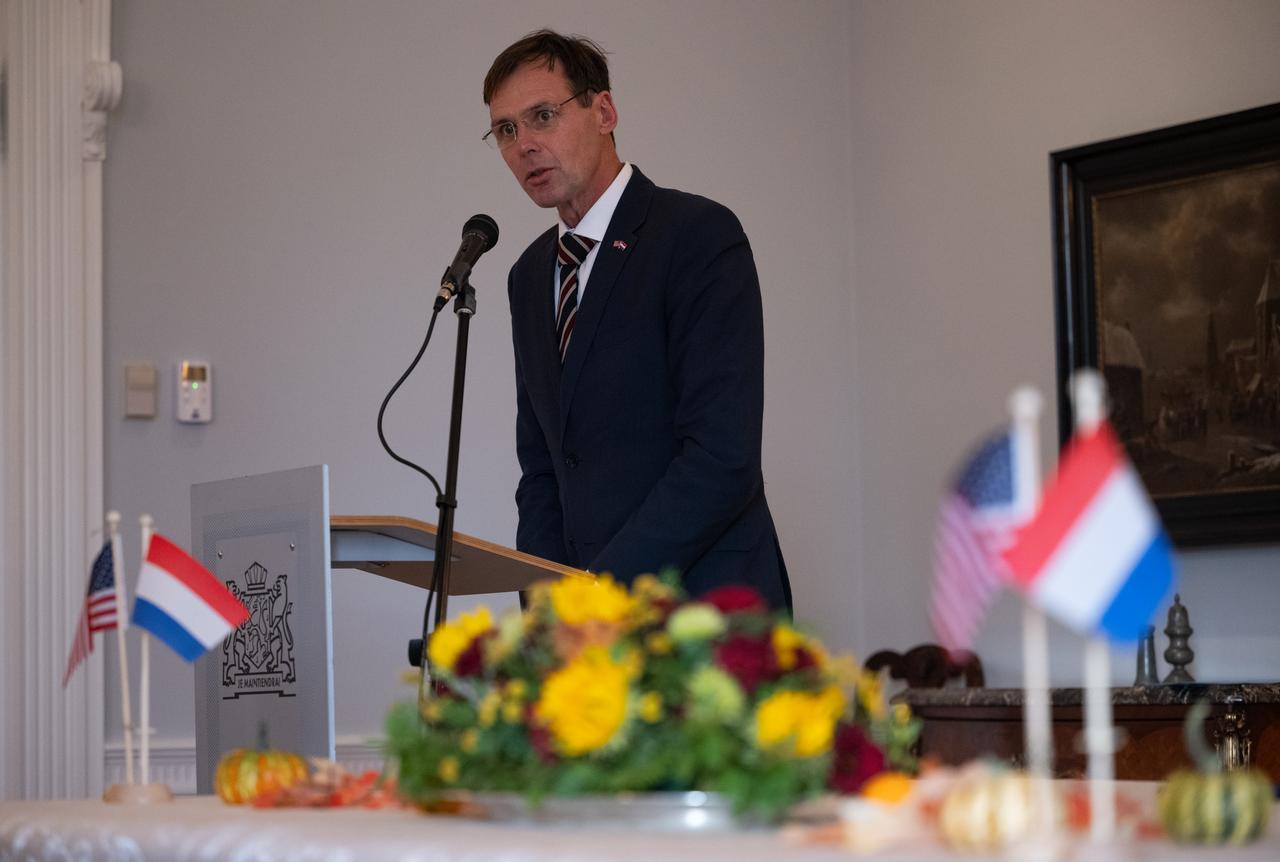
Harm van de Wetering, director of the Netherlands Space Office, delivers remarks during an Artemis Accords signing ceremony, Wednesday, Nov. 1, 2023, at the Dutch Ambassador’s Residence in Washington. Netherlands is the 31st country to sign the Artemis Accords, which establish a practical set of principles to guide space exploration cooperation among nations participating in NASA’s Artemis program. Photo Credit: (NASA/Joel Kowsky)

Ambassador of the Kingdom of the Netherlands to the United States Birgitta Tazelaar delivers remarks during an Artemis Accords signing ceremony, Wednesday, Nov. 1, 2023, at the Dutch Ambassador’s Residence in Washington. Netherlands is the 31st country to sign the Artemis Accords, which establish a practical set of principles to guide space exploration cooperation among nations participating in NASA’s Artemis program. Photo Credit: (NASA/Joel Kowsky)

NASA Administrator Bill Nelson delivers remarks during an Artemis Accords signing ceremony, Wednesday, Nov. 1, 2023, at the Dutch Ambassador’s Residence in Washington. Netherlands is the 31st country to sign the Artemis Accords, which establish a practical set of principles to guide space exploration cooperation among nations participating in NASA’s Artemis program. Photo Credit: (NASA/Joel Kowsky)

Ambassador of the Kingdom of the Netherlands to the United States Birgitta Tazelaar delivers remarks during an Artemis Accords signing ceremony, Wednesday, Nov. 1, 2023, at the Dutch Ambassador’s Residence in Washington. Netherlands is the 31st country to sign the Artemis Accords, which establish a practical set of principles to guide space exploration cooperation among nations participating in NASA’s Artemis program. Photo Credit: (NASA/Joel Kowsky)
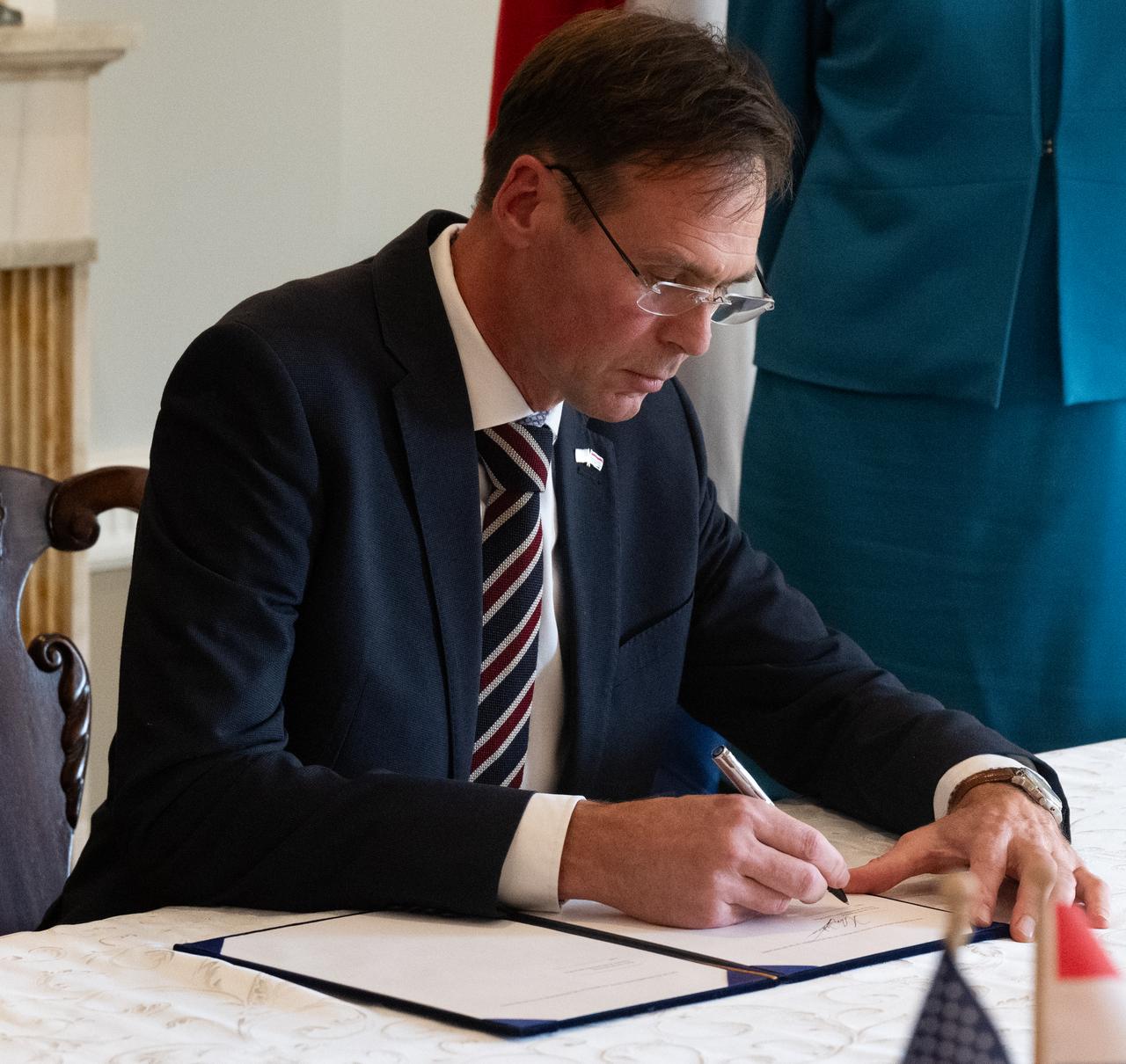
Harm van de Wetering, director of the Netherlands Space Office, center, signs the Artemis Accords, Wednesday, Nov. 1, 2023, at the Dutch Ambassador’s Residence in Washington. Netherlands is the 31st country to sign the Artemis Accords, which establish a practical set of principles to guide space exploration cooperation among nations participating in NASA’s Artemis program. Photo Credit: (NASA/Joel Kowsky)

NASA Administrator Bill Nelson delivers remarks during an Artemis Accords signing ceremony, Wednesday, Nov. 1, 2023, at the Dutch Ambassador’s Residence in Washington. Netherlands is the 31st country to sign the Artemis Accords, which establish a practical set of principles to guide space exploration cooperation among nations participating in NASA’s Artemis program. Photo Credit: (NASA/Joel Kowsky)

Chiragh Parikh, executive secretary of the National Space Council, delivers remarks during an Artemis Accords signing ceremony, Wednesday, Nov. 1, 2023, at the Dutch Ambassador’s Residence in Washington. Netherlands is the 31st country to sign the Artemis Accords, which establish a practical set of principles to guide space exploration cooperation among nations participating in NASA’s Artemis program. Photo Credit: (NASA/Joel Kowsky)
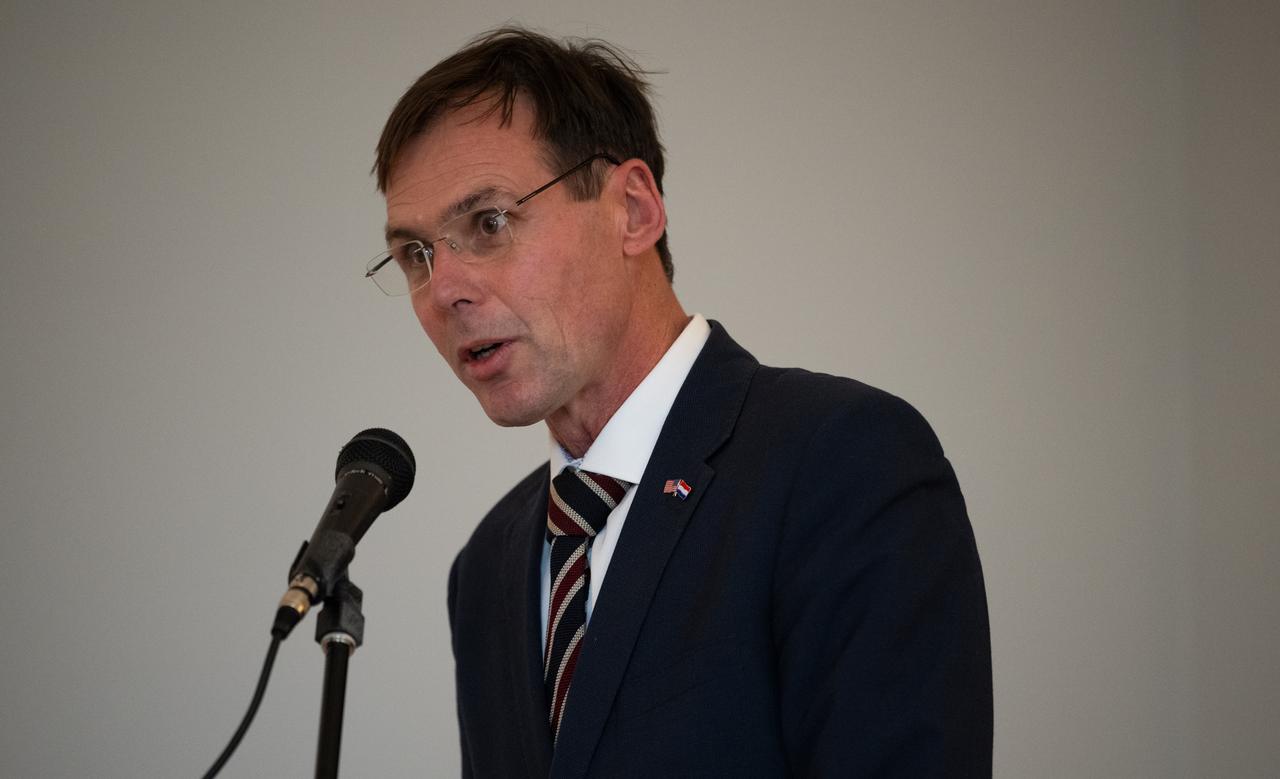
Harm van de Wetering, director of the Netherlands Space Office, delivers remarks during an Artemis Accords signing ceremony, Wednesday, Nov. 1, 2023, at the Dutch Ambassador’s Residence in Washington. Netherlands is the 31st country to sign the Artemis Accords, which establish a practical set of principles to guide space exploration cooperation among nations participating in NASA’s Artemis program. Photo Credit: (NASA/Joel Kowsky)
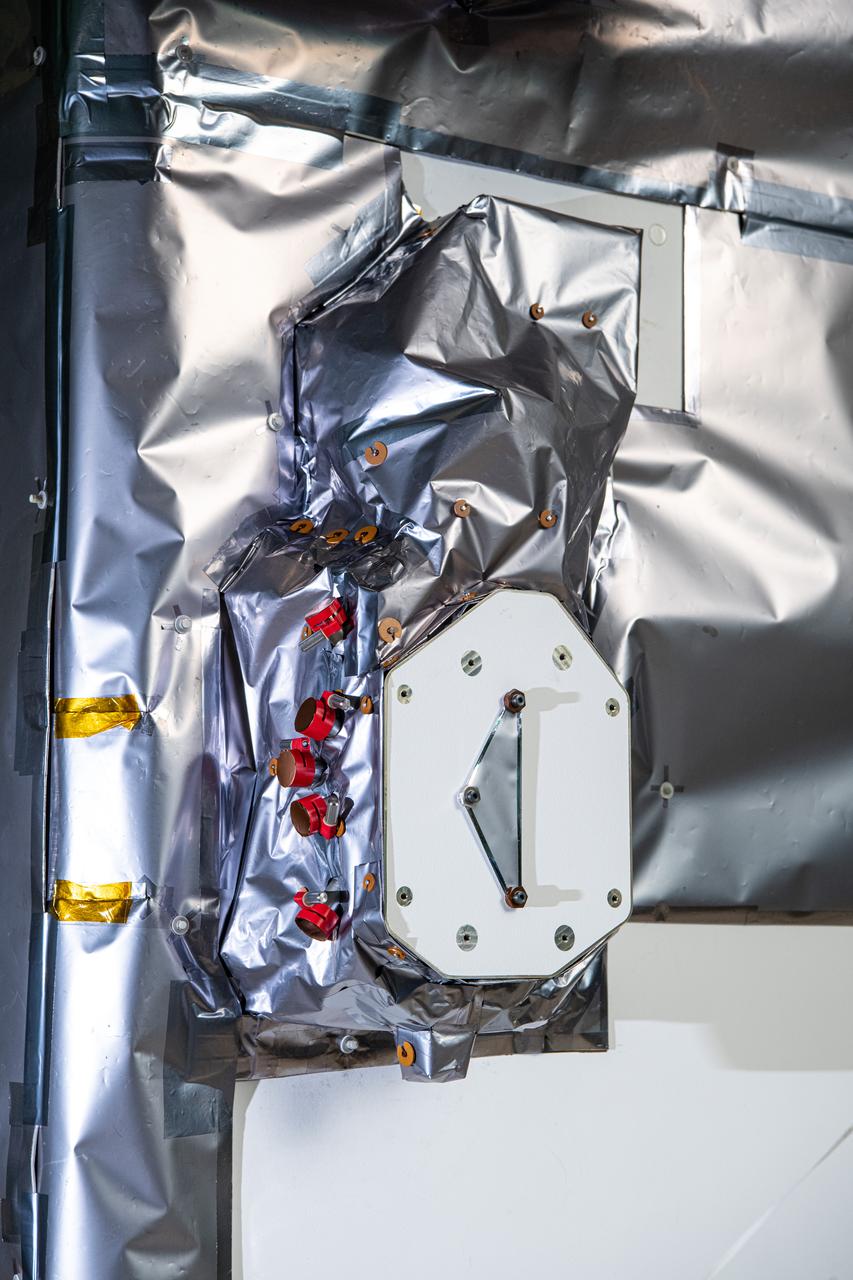
The SPEXone instrument on The Plankton, Aerosol, Cloud, ocean Ecosystem (PACE) in the clean room at NASA's Goddard Space Flight Center in Greenbelt, Maryland on October 31st, 2023. SPEXone is one of three instruments on NASA's Plankton, Aerosol, Cloud, ocean Ecosystem (PACE) observatory and has been developed by a Dutch consortium consisting of SRON Netherlands Institute for Space Research and Airbus Defence and Space Netherlands, supported by opto-mechanical expertise from TNO. SRON and Airbus DS NL are responsible for the design, manufacturing and testing of the instrument. The scientific lead is in the hands of SRON. SPEXone is a public-private initiative, funded by the Netherlands Space Office (NSO), the Netherlands Organization of Scientific Research (NWO), SRON and Airbus DS NL. PACE's unprecedented spectral coverage will provide the first-ever global measurements designed to identify phytoplankton community composition. The mission will make global ocean color measurements, using the Ocean Color Instrument (OCI), to provide extended data records on ocean ecology and global biogeochemistry along with polarimetry measurements, using the Spectro-polarimeter for Planetary Exploration (SPEXone) and the Hyper Angular Research Polarimeter (HARP2) to provide extended data records on clouds and aerosols. The Earth-observing satellite mission, built at Goddard Space Flight Center in Greenbelt, MD, will continue and advance observations of global ocean color, biogeochemistry, and ecology, as well as the carbon cycle, aerosols and clouds.
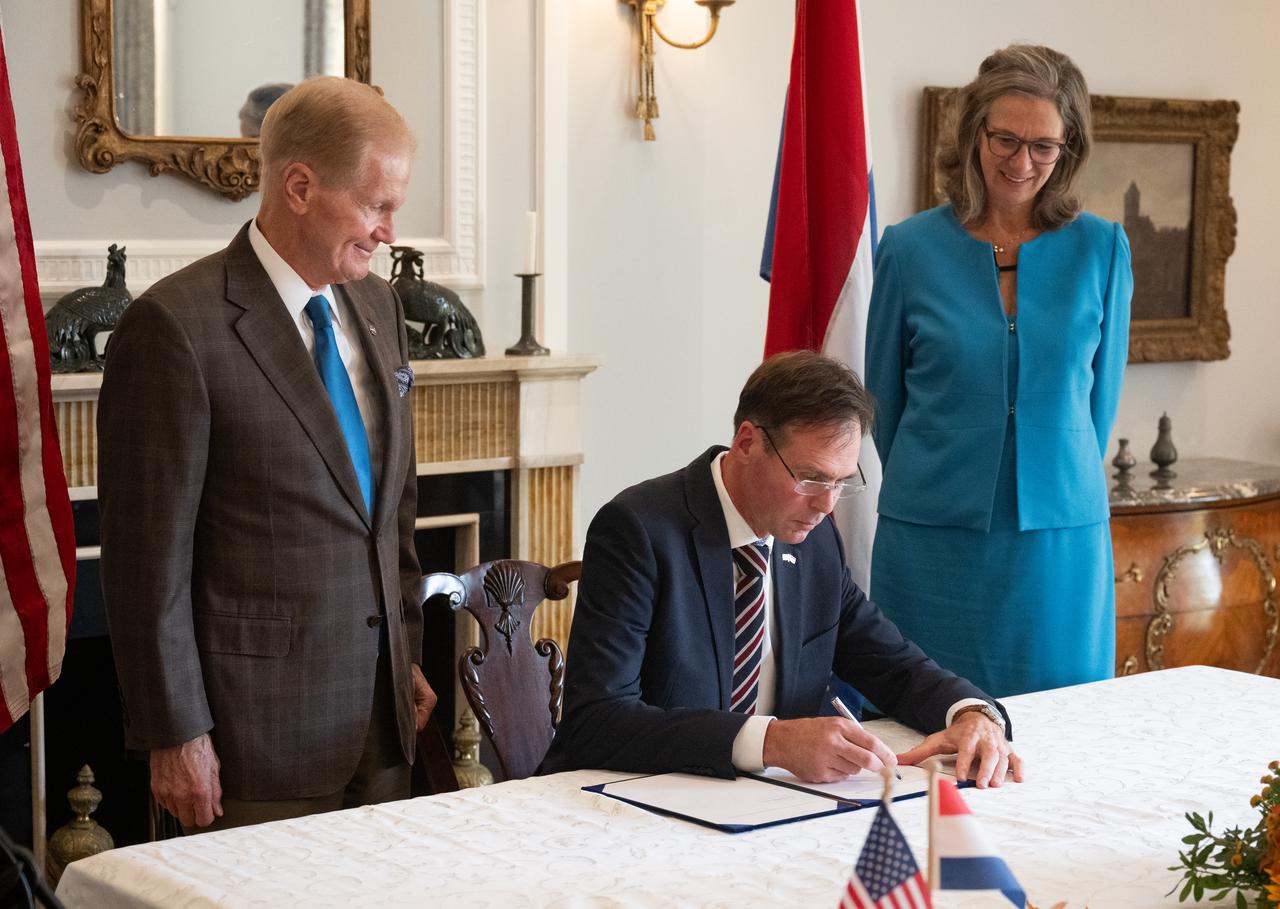
Harm van de Wetering, director of the Netherlands Space Office, center, signs the Artemis Accords as NASA Administrator Bill Nelson, left, and Ambassador of the Kingdom of the Netherlands to the United States Birgitta Tazelaar, right, look on, Wednesday, Nov. 1, 2023, at the Dutch Ambassador’s Residence in Washington. Netherlands is the 31st country to sign the Artemis Accords, which establish a practical set of principles to guide space exploration cooperation among nations participating in NASA’s Artemis program. Photo Credit: (NASA/Joel Kowsky)

Harm van de Wetering, director of the Netherlands Space Office, right, shakes hands with NASA Administrator Bill Nelson after signing the Artemis Accords, Wednesday, Nov. 1, 2023, at the Dutch Ambassador’s Residence in Washington. Netherlands is the 31st country to sign the Artemis Accords, which establish a practical set of principles to guide space exploration cooperation among nations participating in NASA’s Artemis program. Photo Credit: (NASA/Joel Kowsky)
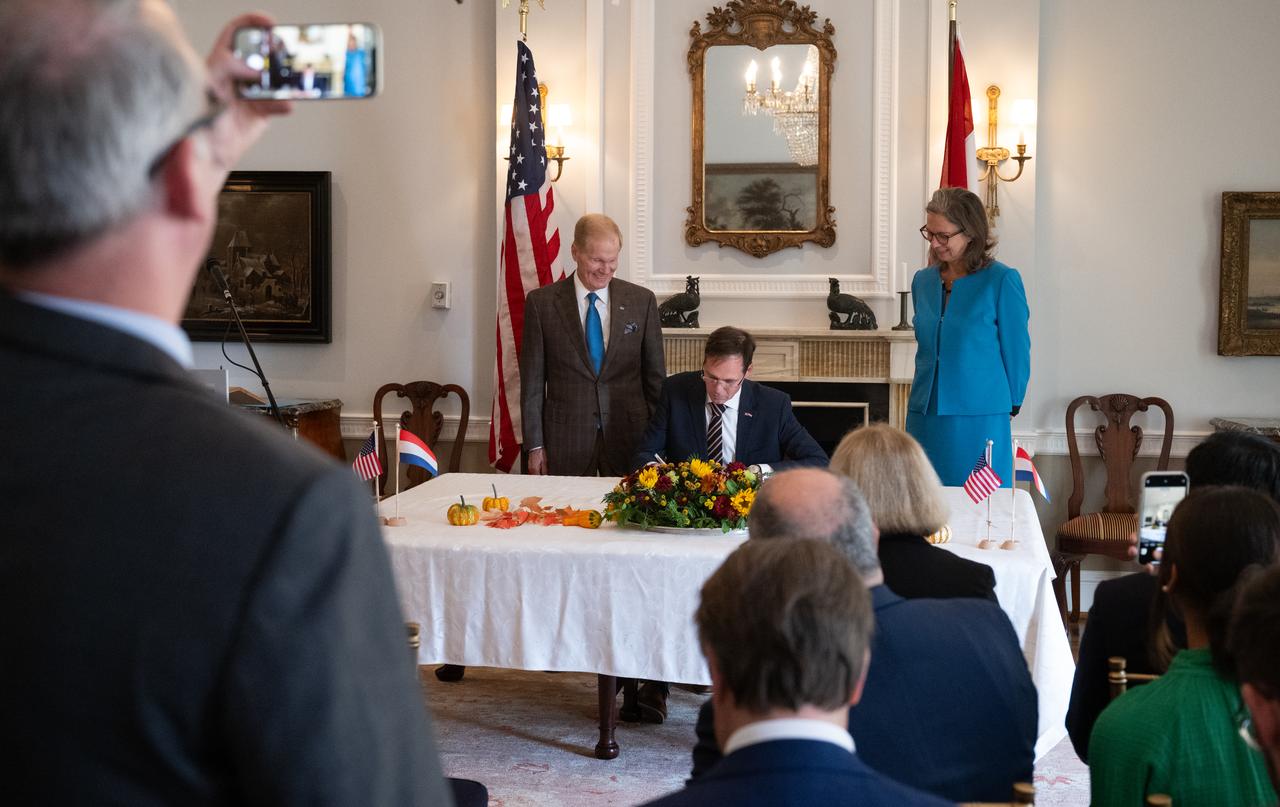
Harm van de Wetering, director of the Netherlands Space Office, center, signs the Artemis Accords as NASA Administrator Bill Nelson, left, and Ambassador of the Kingdom of the Netherlands to the United States Birgitta Tazelaar, right, look on, Wednesday, Nov. 1, 2023, at the Dutch Ambassador’s Residence in Washington. Netherlands is the 31st country to sign the Artemis Accords, which establish a practical set of principles to guide space exploration cooperation among nations participating in NASA’s Artemis program. Photo Credit: (NASA/Joel Kowsky)
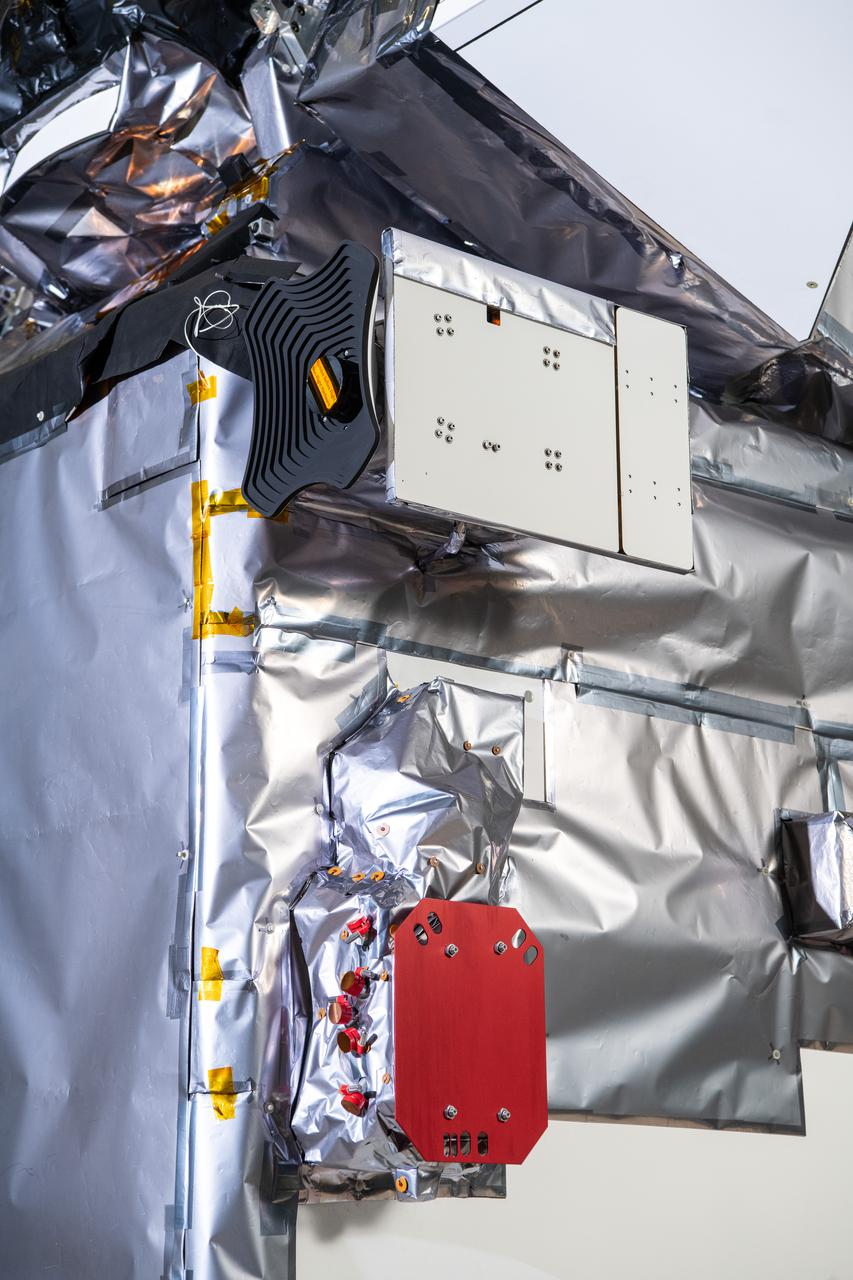
The Hyper-Angular Rainbow Polarimeter #2 (HARP2) instrument (top) and the SPEXone instrument on The Plankton, Aerosol, Cloud, ocean Ecosystem (PACE) in the clean room at NASA's Goddard Space Flight Center in Greenbelt, Maryland on October 31st, 2023. HARP2 is one of three instruments on NASA's PACE observatory, it was designed and built by UMBC's Earth and Space Institute. SPEXone has been developed by a Dutch consortium consisting of SRON Netherlands Institute for Space Research and Airbus Defence and Space Netherlands, supported by opto-mechanical expertise from TNO. SRON and Airbus DS NL are responsible for the design, manufacturing and testing of the instrument. The scientific lead is in the hands of SRON. SPEXone is a public-private initiative, funded by the Netherlands Space Office (NSO), the Netherlands Organization of Scientific Research (NWO), SRON and Airbus DS NL. PACE's unprecedented spectral coverage will provide the first-ever global measurements designed to identify phytoplankton community composition. The mission will make global ocean color measurements, using the Ocean Color Instrument (OCI), to provide extended data records on ocean ecology and global biogeochemistry along with polarimetry measurements, using the Spectro-polarimeter for Planetary Exploration (SPEXone) and the Hyper Angular Research Polarimeter (HARP2) to provide extended data records on clouds and aerosols. The Earth-observing satellite mission, built at Goddard Space Flight Center in Greenbelt, MD, will continue and advance observations of global ocean color, biogeochemistry, and ecology, as well as the carbon cycle, aerosols and clouds.

Harm van de Wetering, director of the Netherlands Space Office, left, NASA Administrator Bill Nelson, second from right, Chiragh Parikh, executive secretary of the National Space Council, not visible, NASA Deputy Administrator Pam Melroy, second from right, and Ambassador of the Kingdom of the Netherlands to the United States Birgitta Tazelaar, right, are seen as they speak following the signing of the Artemis Accords, Wednesday, Nov. 1, 2023, at the Dutch Ambassador’s Residence in Washington. Netherlands is the 31st country to sign the Artemis Accords, which establish a practical set of principles to guide space exploration cooperation among nations participating in NASA’s Artemis program. Photo Credit: (NASA/Joel Kowsky)

NASA Administrator Bill Nelson, left, NASA Deputy Administrator Pam Melroy, Harm van de Wetering, director of the Netherlands Space Office, Ambassador of the Kingdom of the Netherlands to the United States Birgitta Tazelaar, and Chiragh Parikh, executive secretary of the National Space Council, pose for a picture after the signing of the Artemis Accords, Wednesday, Nov. 1, 2023, at the Dutch Ambassador’s Residence in Washington. Netherlands is the 31st country to sign the Artemis Accords, which establish a practical set of principles to guide space exploration cooperation among nations participating in NASA’s Artemis program. Photo Credit: (NASA/Joel Kowsky)