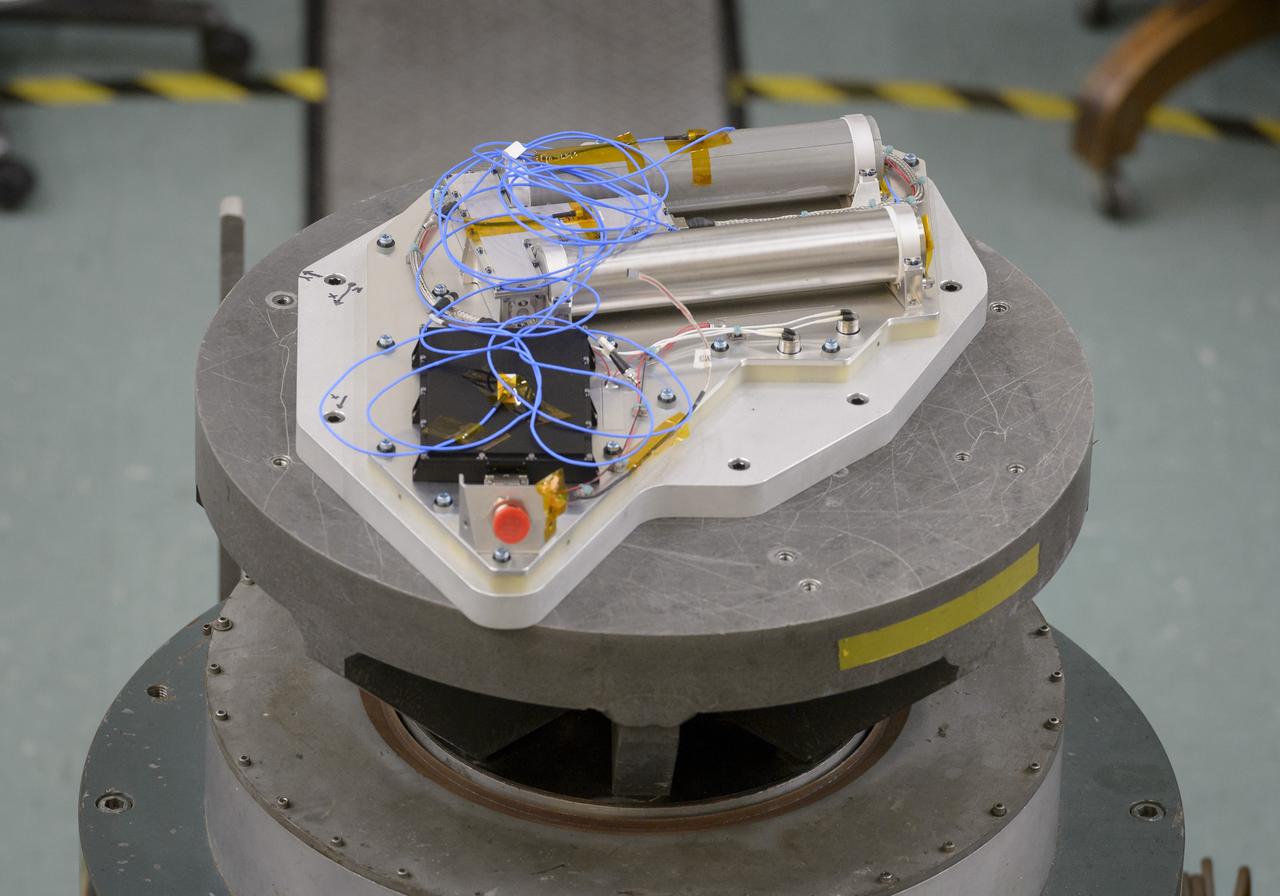
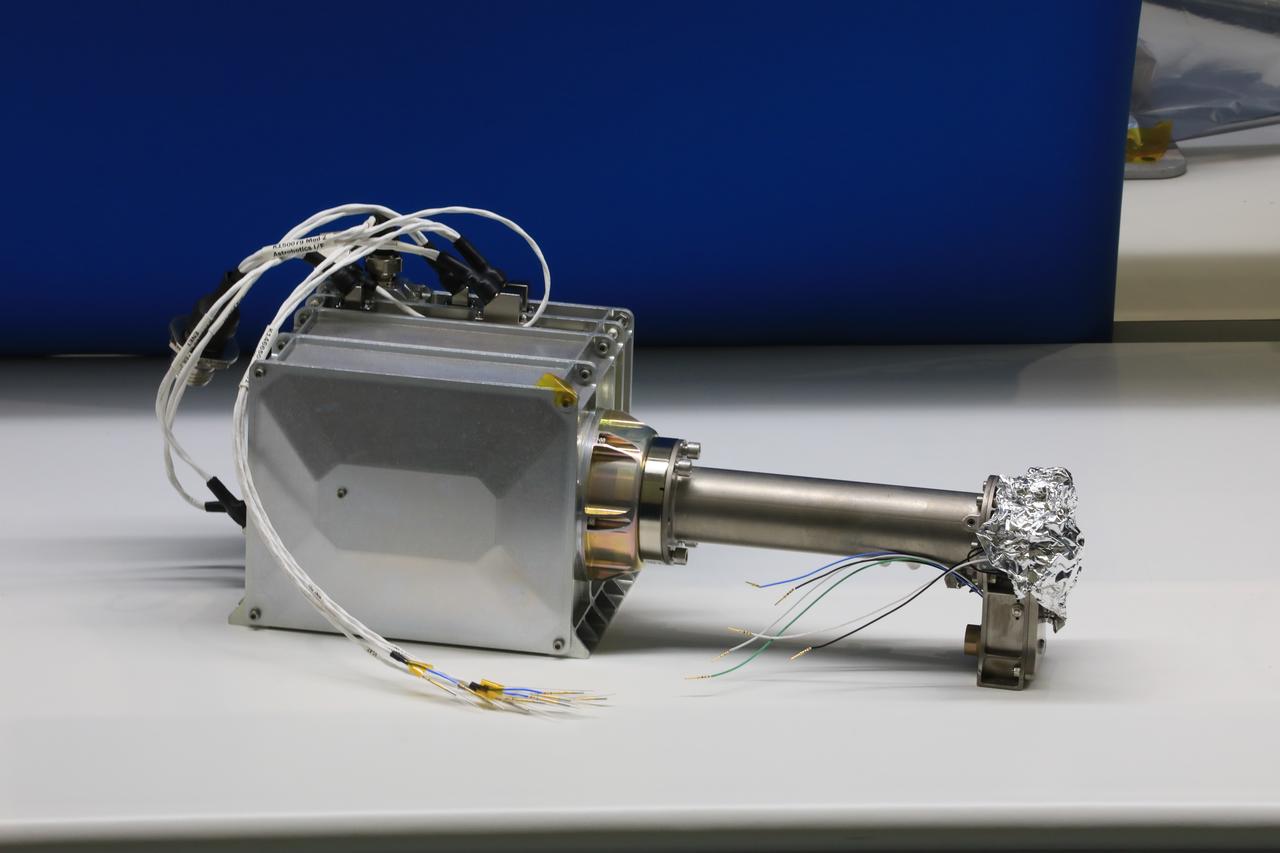
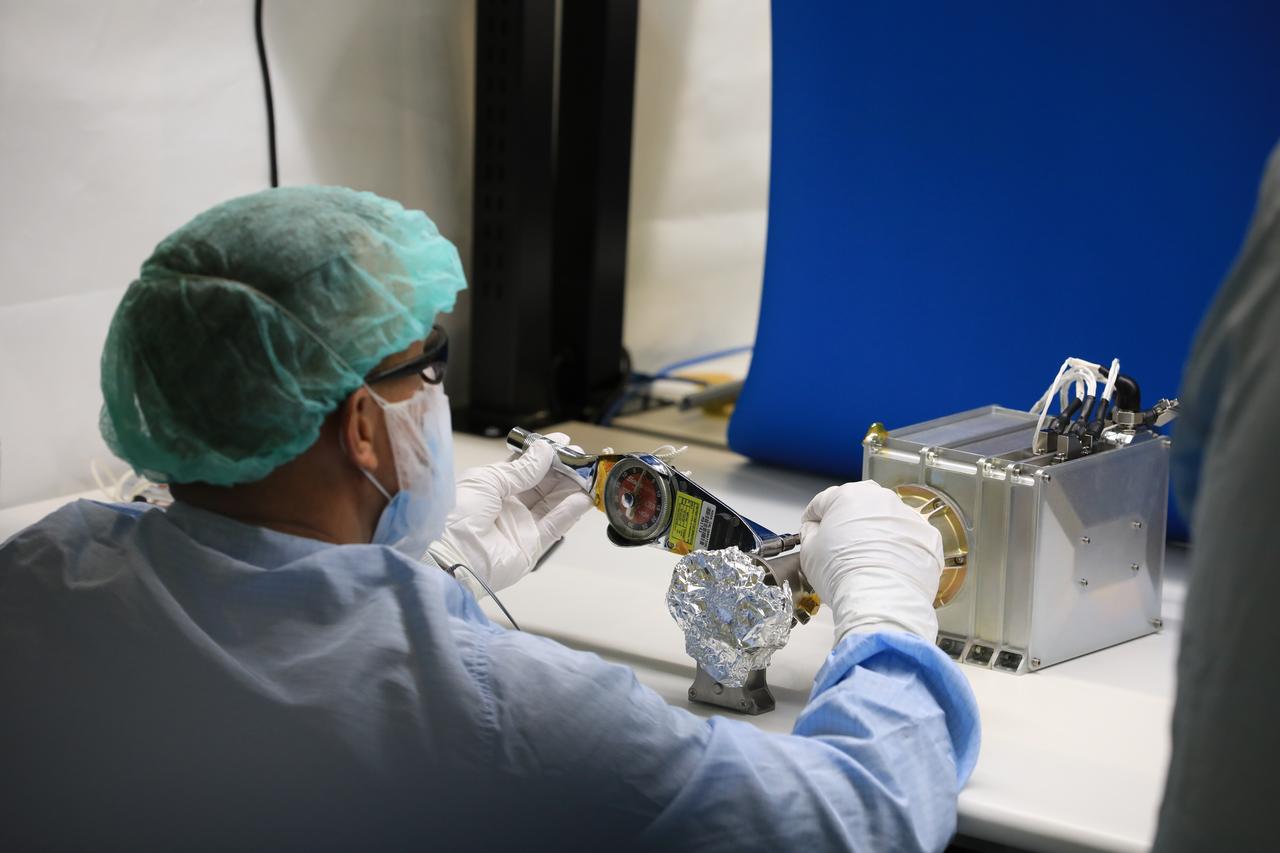
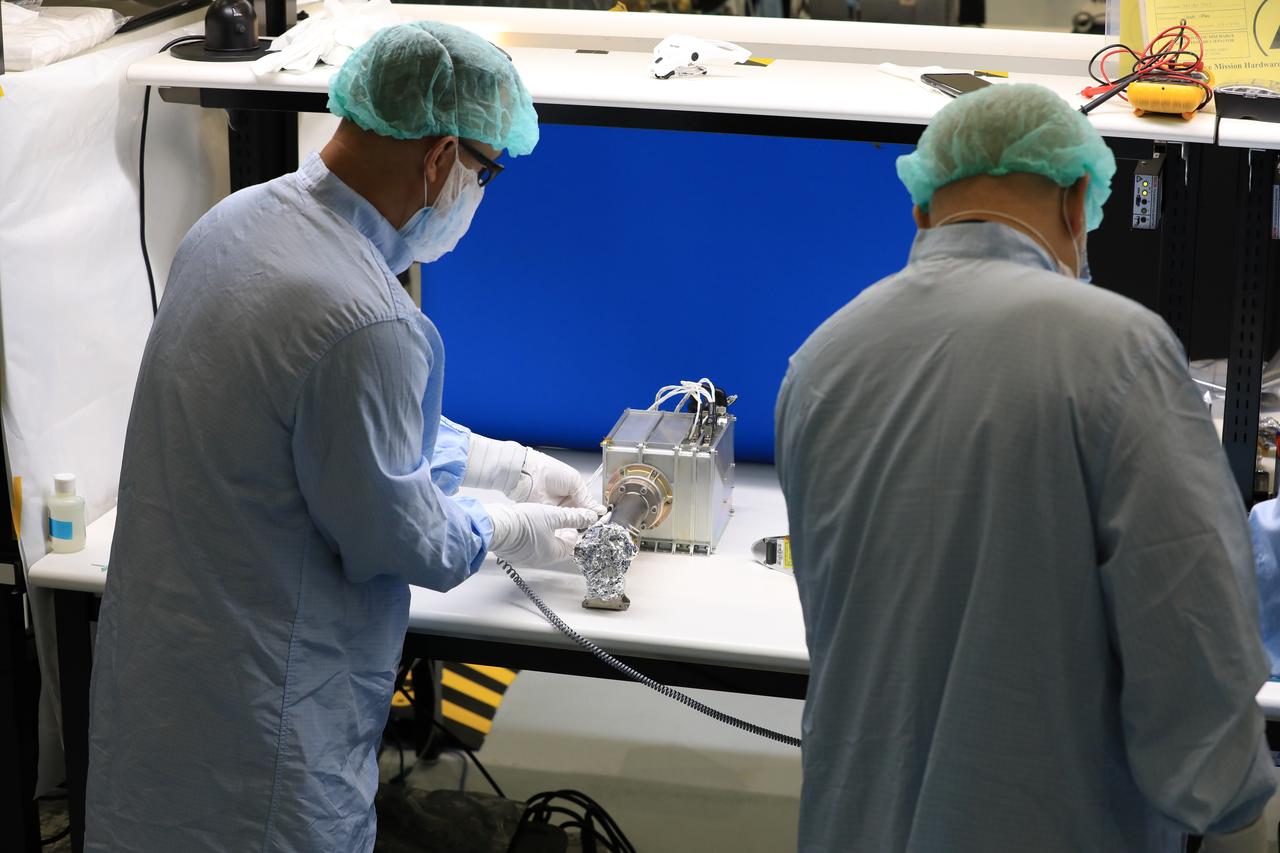
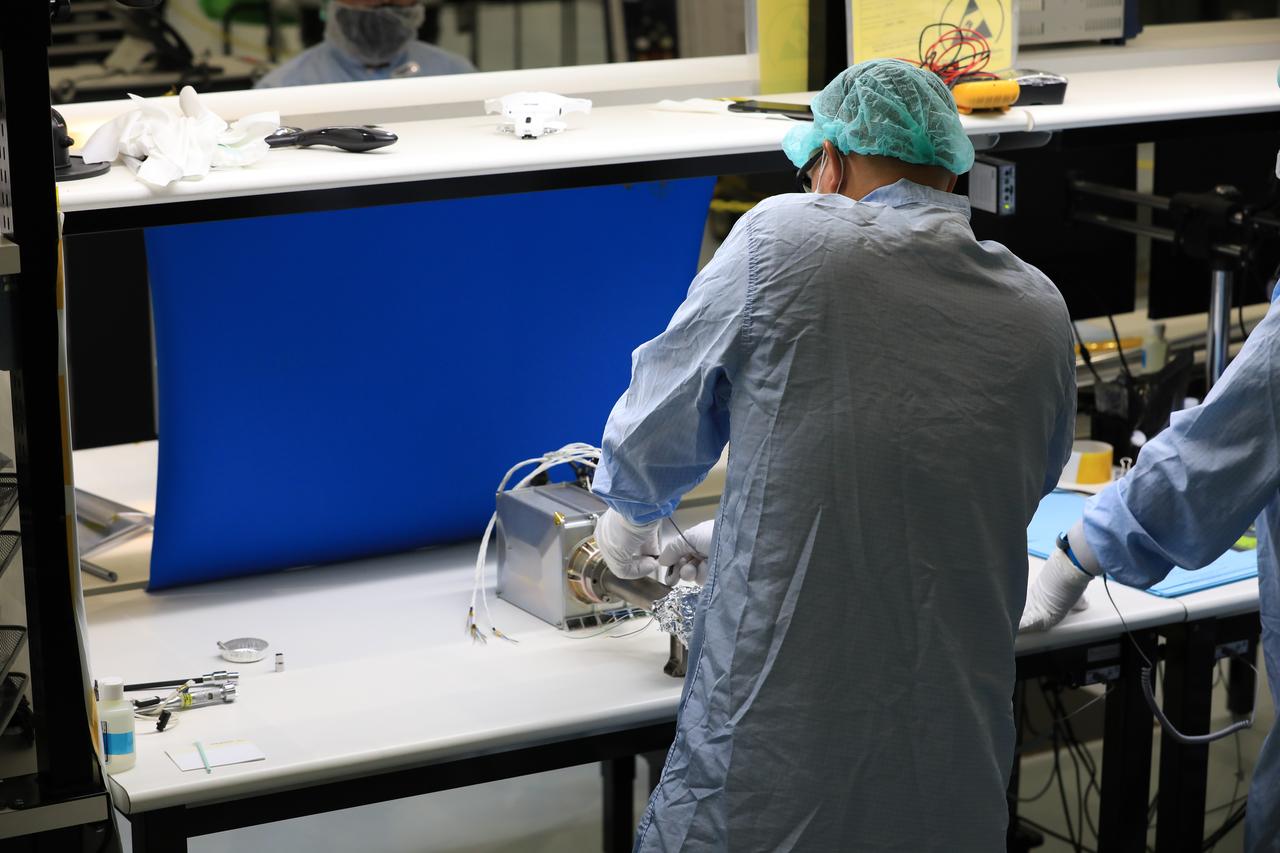
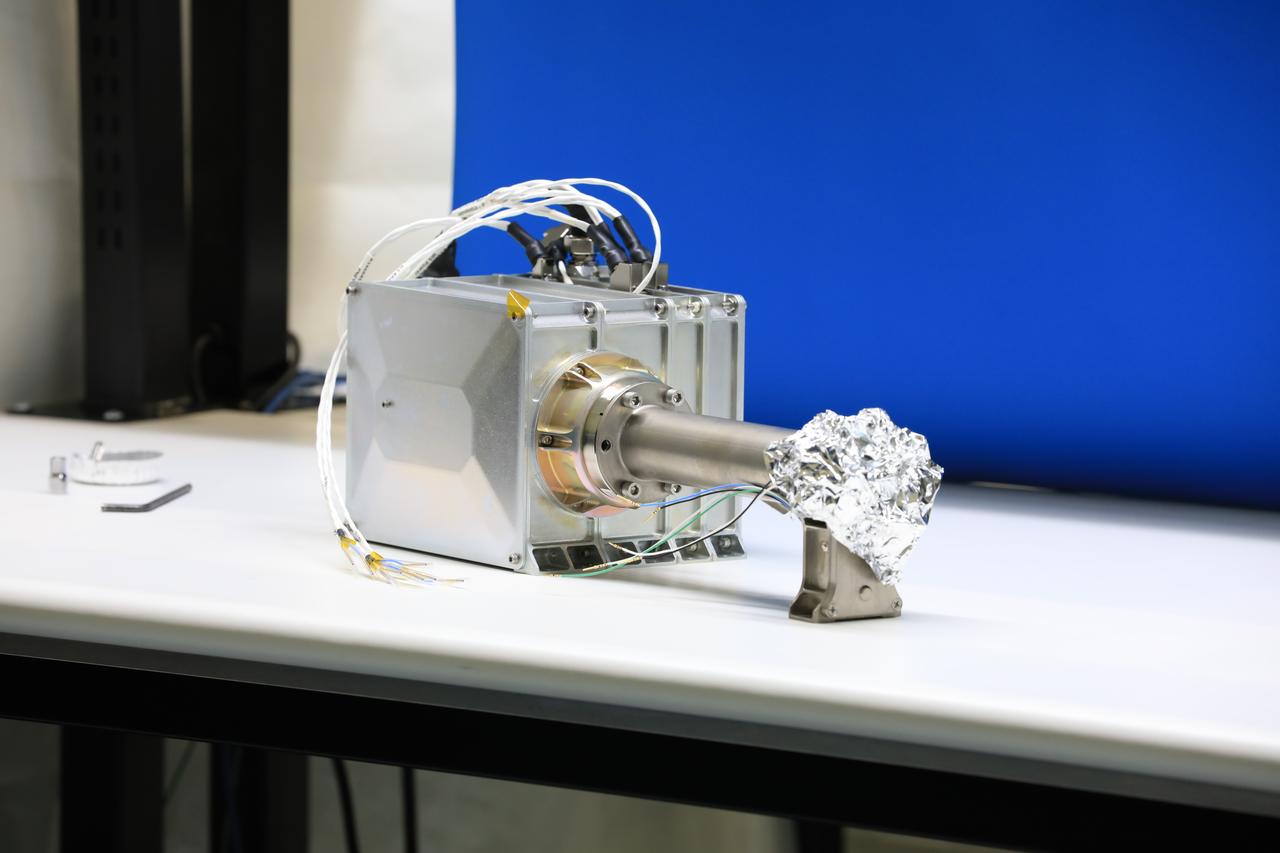
Researchers at NASA’s Ames Research Center in California’s Silicon Valley complete a successful vibration test of the Neutron Spectrometer System or NSS, designed to sniff out water below the surface of the Moon, successfully sailed through a “shake” test to simulate the turbulent conditions of launch. . This is one of the final tests needed to prepare the instrument for a flight to the Moon aboard Astrobotic Technology’s Peregrine lander, as part of the agency’s Commercial Lunar Payload Services program. The vibration test simulates the forces the instrument will be subjected to during launch when the lander blasts off aboard a United Launch Alliance Vulcan Centaur rocket. The NSS will fly on the Volatiles Investigating Polar Exploration Rover, or VIPER.
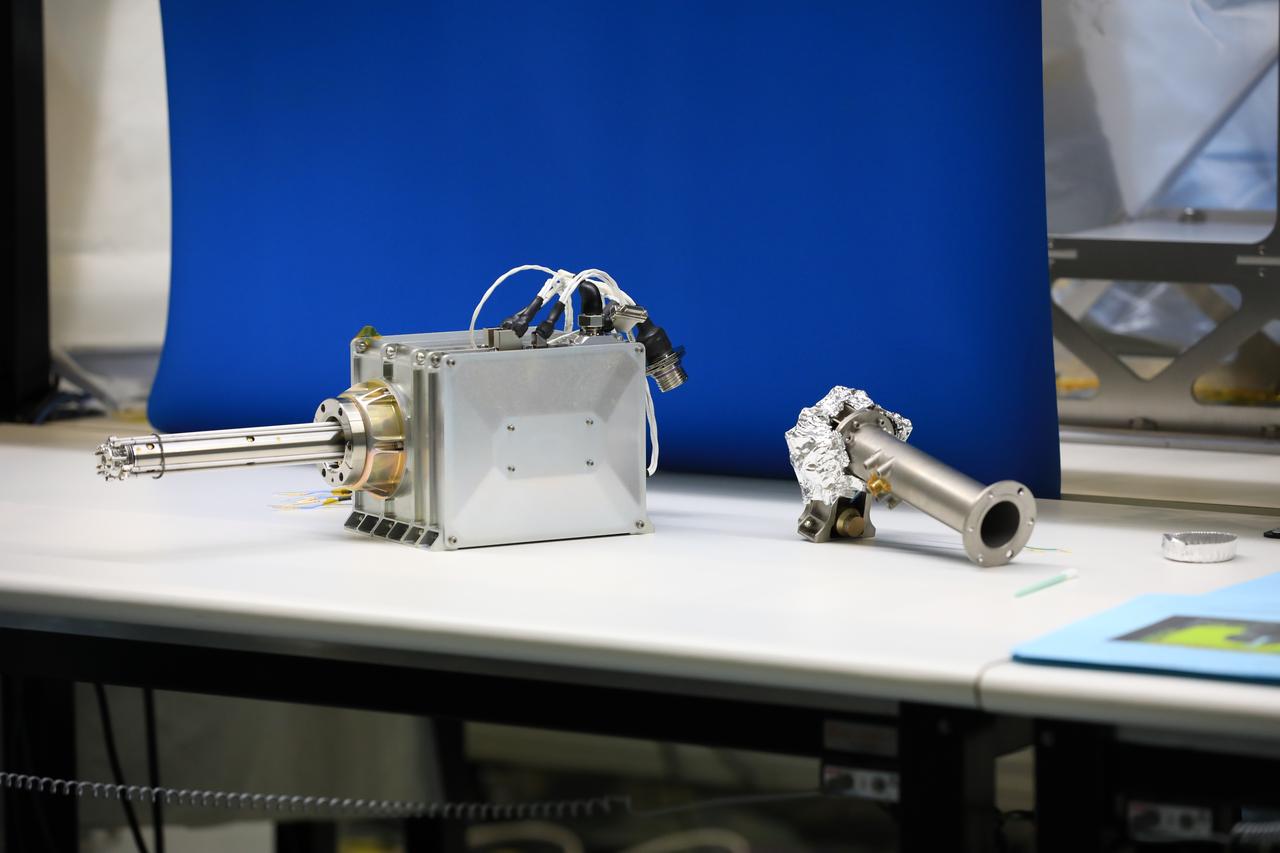
Instruments for the Mass Spectrometer observing lunar operations (MSolo) are in view inside the Space Station Processing Facility at NASA’s Kennedy Space Center in Florida on Sept. 25, 2020. MSolo is a commercial off-the-shelf mass spectrometer modified to work in space and it will help analyze the chemical makeup of landing sites on the Moon, as well as study water on the lunar surface. This work is preparing MSolo hardware for a robotic mission as part of the Commercial Lunar Payload Services (CLPS) launching to exploring Lacus Mortis, a large crater on the near side of the Moon in 2021. A future mission will send a mobile robot named the Volatiles Investigating Polar Exploration Rover (VIPER) to the Moon to prospect for water. VIPER will have several instruments that will allow it to detect and sample water including MSolo, the Neutron Spectrometer System, the Near Infrared Volatiles Spectrometer System and The Regolith and Ice Drill for Exploring New Terrain (TRIDENT).
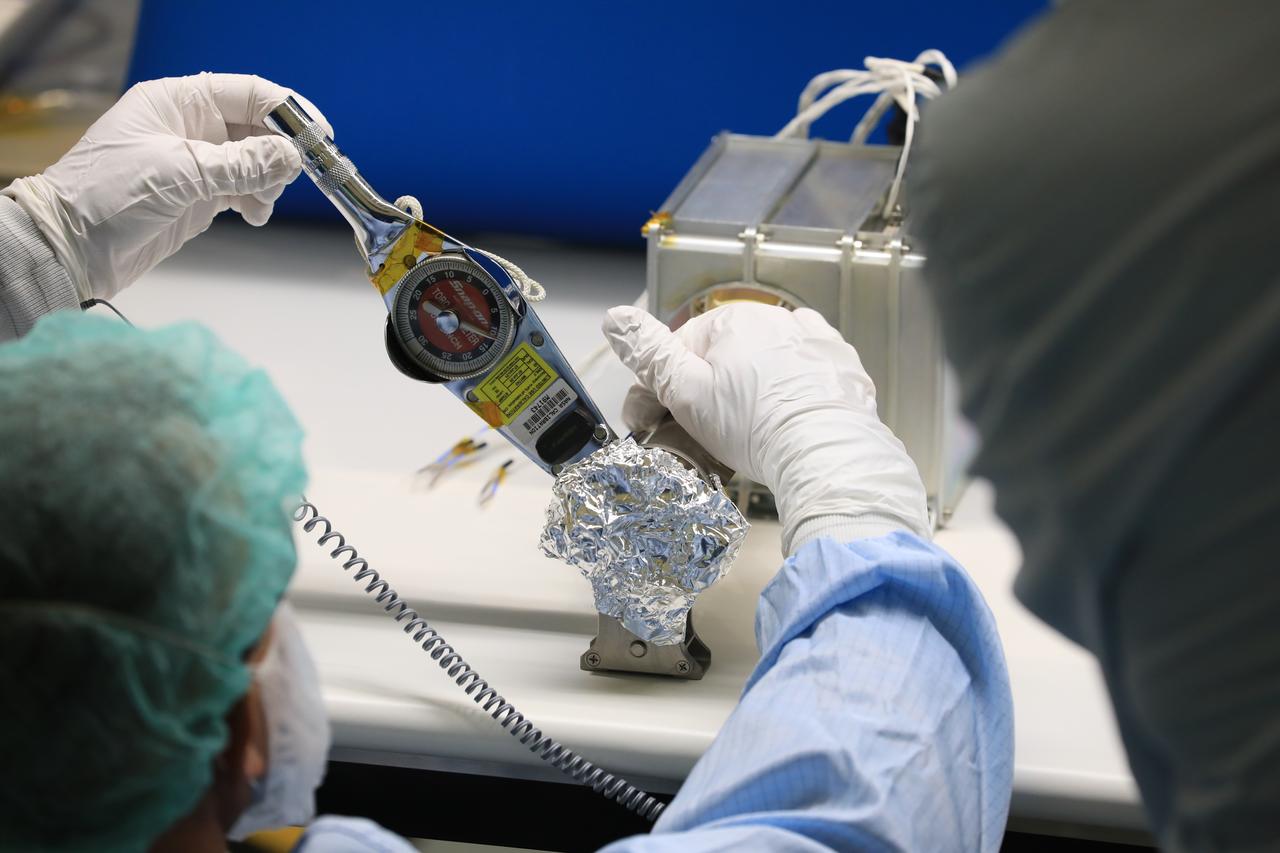
Engineers and technicians at NASA’s Kennedy Space Center in Florida work with instruments for Mass Spectrometer observing lunar operations (MSolo) inside the Space Station Processing on Sept. 25, 2020. MSolo is a commercial off-the-shelf mass spectrometer modified to work in space and it will help analyze the chemical makeup of landing sites on the Moon, as well as study water on the lunar surface. This work is preparing MSolo hardware for a robotic mission as part of the Commercial Lunar Payload Services (CLPS) launching to exploring Lacus Mortis, a large crater on the near side of the Moon in 2021. A future mission will send a mobile robot named the Volatiles Investigating Polar Exploration Rover (VIPER) to the Moon to prospect for water. VIPER will have several instruments that will allow it to detect and sample water including MSolo, the Neutron Spectrometer System, the Near Infrared Volatiles Spectrometer System and The Regolith and Ice Drill for Exploring New Terrain (TRIDENT).
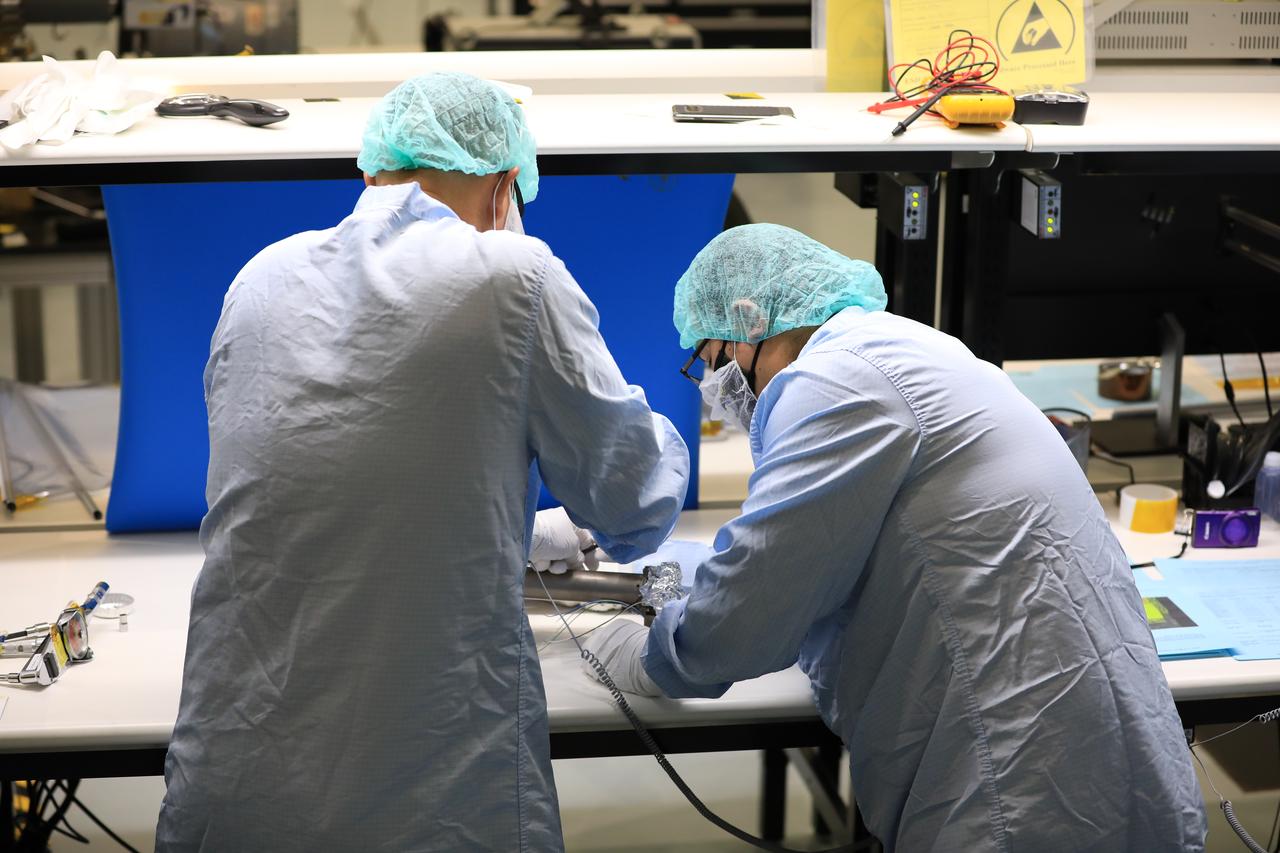
Engineers and technicians at NASA’s Kennedy Space Center in Florida work with instruments for Mass Spectrometer observing lunar operations (MSolo) inside the Space Station Processing on Sept. 25, 2020. MSolo is a commercial off-the-shelf mass spectrometer modified to work in space and it will help analyze the chemical makeup of landing sites on the Moon, as well as study water on the lunar surface. This work is preparing MSolo hardware for a robotic mission as part of the Commercial Lunar Payload Services (CLPS) launching to exploring Lacus Mortis, a large crater on the near side of the Moon in 2021. A future mission will send a mobile robot named the Volatiles Investigating Polar Exploration Rover (VIPER) to the Moon to prospect for water. VIPER will have several instruments that will allow it to detect and sample water including MSolo, the Neutron Spectrometer System, the Near Infrared Volatiles Spectrometer System and The Regolith and Ice Drill for Exploring New Terrain (TRIDENT).
Engineers and technicians at NASA’s Kennedy Space Center in Florida are preparing the Mass Spectrometer observing lunar operations (MSolo) for launch inside the Space Station Processing Facility at NASA’s Kennedy Space Center in Florida on Sept. 25, 2020. MSolo is a commercial off-the-shelf mass spectrometer modified to work in space and it will help analyze the chemical makeup of landing sites on the Moon, as well as study water on the lunar surface. MSolo hardware is a payload for a robotic mission to the Moon as part of the Commercial Lunar Payload Services (CLPS) launching to exploring Lacus Mortis, a large crater on the near side of the Moon in 2021. A future mission will send a mobile robot named the Volatiles Investigating Polar Exploration Rover (VIPER) to the Moon to prospect for water. VIPER will have several instruments that will allow it to detect and sample water including MSolo, the Neutron Spectrometer System, the Near Infrared Volatiles Spectrometer System and The Regolith and Ice Drill for Exploring New Terrain (TRIDENT).
Engineers and technicians at NASA’s Kennedy Space Center in Florida work with instruments for Mass Spectrometer observing lunar operations (MSolo) inside the Space Station Processing on Sept. 25, 2020. MSolo is a commercial off-the-shelf mass spectrometer modified to work in space and it will help analyze the chemical makeup of landing sites on the Moon, as well as study water on the lunar surface. This work is preparing MSolo hardware for a robotic mission as part of the Commercial Lunar Payload Services (CLPS) launching to exploring Lacus Mortis, a large crater on the near side of the Moon in 2021. A future mission will send a mobile robot named the Volatiles Investigating Polar Exploration Rover (VIPER) to the Moon to prospect for water. VIPER will have several instruments that will allow it to detect and sample water including MSolo, the Neutron Spectrometer System, the Near Infrared Volatiles Spectrometer System and The Regolith and Ice Drill for Exploring New Terrain (TRIDENT).
Engineers and technicians at NASA’s Kennedy Space Center in Florida work with instruments for Mass Spectrometer observing lunar operations (MSolo) inside the Space Station Processing on Sept. 25, 2020. MSolo is a commercial off-the-shelf mass spectrometer modified to work in space and it will help analyze the chemical makeup of landing sites on the Moon, as well as study water on the lunar surface. This work is preparing MSolo hardware for a robotic mission as part of the Commercial Lunar Payload Services (CLPS) launching to exploring Lacus Mortis, a large crater on the near side of the Moon in 2021. A future mission will send a mobile robot named the Volatiles Investigating Polar Exploration Rover (VIPER) to the Moon to prospect for water. VIPER will have several instruments that will allow it to detect and sample water including MSolo, the Neutron Spectrometer System, the Near Infrared Volatiles Spectrometer System and The Regolith and Ice Drill for Exploring New Terrain (TRIDENT).
Engineers and technicians at NASA’s Kennedy Space Center in Florida work with instruments for Mass Spectrometer observing lunar operations (MSolo) inside the Space Station Processing on Sept. 25, 2020. MSolo is a commercial off-the-shelf mass spectrometer modified to work in space and it will help analyze the chemical makeup of landing sites on the Moon, as well as study water on the lunar surface. This work is preparing MSolo hardware for a robotic mission as part of the Commercial Lunar Payload Services (CLPS) launching to exploring Lacus Mortis, a large crater on the near side of the Moon in 2021. A future mission will send a mobile robot named the Volatiles Investigating Polar Exploration Rover (VIPER) to the Moon to prospect for water. VIPER will have several instruments that will allow it to detect and sample water including MSolo, the Neutron Spectrometer System, the Near Infrared Volatiles Spectrometer System and The Regolith and Ice Drill for Exploring New Terrain (TRIDENT).
Engineers and technicians at NASA’s Kennedy Space Center in Florida are preparing the Mass Spectrometer observing lunar operations (MSolo) for launch inside the Space Station Processing Facility at NASA’s Kennedy Space Center in Florida on Sept. 25, 2020. MSolo is a commercial off-the-shelf mass spectrometer modified to work in space and it will help analyze the chemical makeup of landing sites on the Moon, as well as study water on the lunar surface. MSolo hardware is a payload for a robotic mission to the Moon as part of the Commercial Lunar Payload Services (CLPS) launching to exploring Lacus Mortis, a large crater on the near side of the Moon in 2021. A future mission will send a mobile robot named the Volatiles Investigating Polar Exploration Rover (VIPER) to the Moon to prospect for water. VIPER will have several instruments that will allow it to detect and sample water including MSolo, the Neutron Spectrometer System, the Near Infrared Volatiles Spectrometer System and The Regolith and Ice Drill for Exploring New Terrain (TRIDENT).
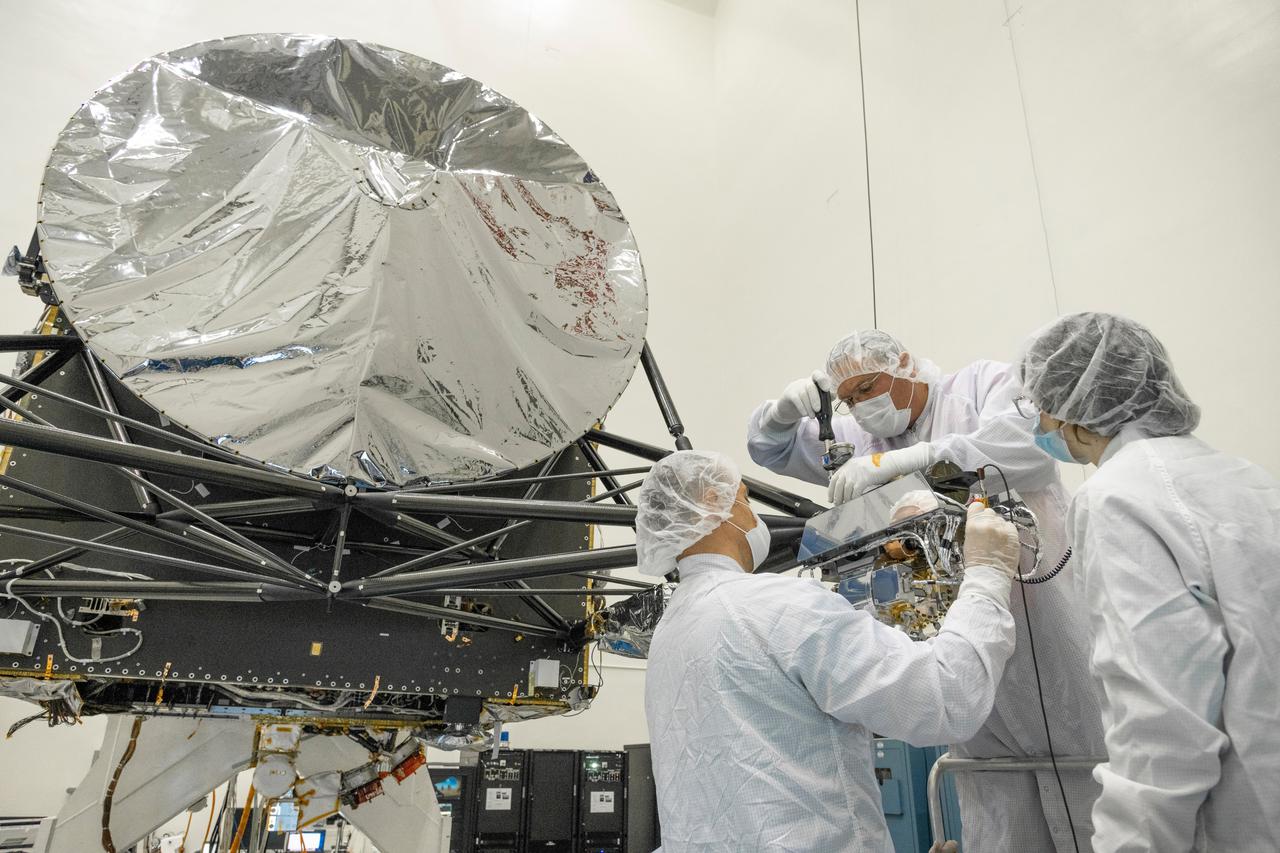
Engineers at NASA's Jet Propulsion Laboratory in Southern California integrate the gamma ray and neutron spectrometer instrument into the agency's Psyche spacecraft on Aug. 23, 2021. Psyche, set to launch in August 2022, will investigate a metal-rich asteroid of the same name, which lies in the main asteroid belt between Mars and Jupiter. Scientists believe the asteroid could be part or all of the iron-rich interior of an early planetary building block that was stripped of its outer rocky shell as it repeatedly collided with other large bodies during the early formation of the solar system. The spacecraft will use the GRNS to study the neutrons and gamma rays coming from the asteroid's surface to help determine its elemental composition. As cosmic rays and high energy particles impact the surface of Psyche, the elements that make up the surface material absorb the energy and in response emit neutrons and gamma rays of varying energy levels. These emitted neutrons and gamma rays can be detected by the GRNS and analyzed by scientists, who can match their properties to those emitted by known elements to determine what Psyche is made of. https://photojournal.jpl.nasa.gov/catalog/PIA24891
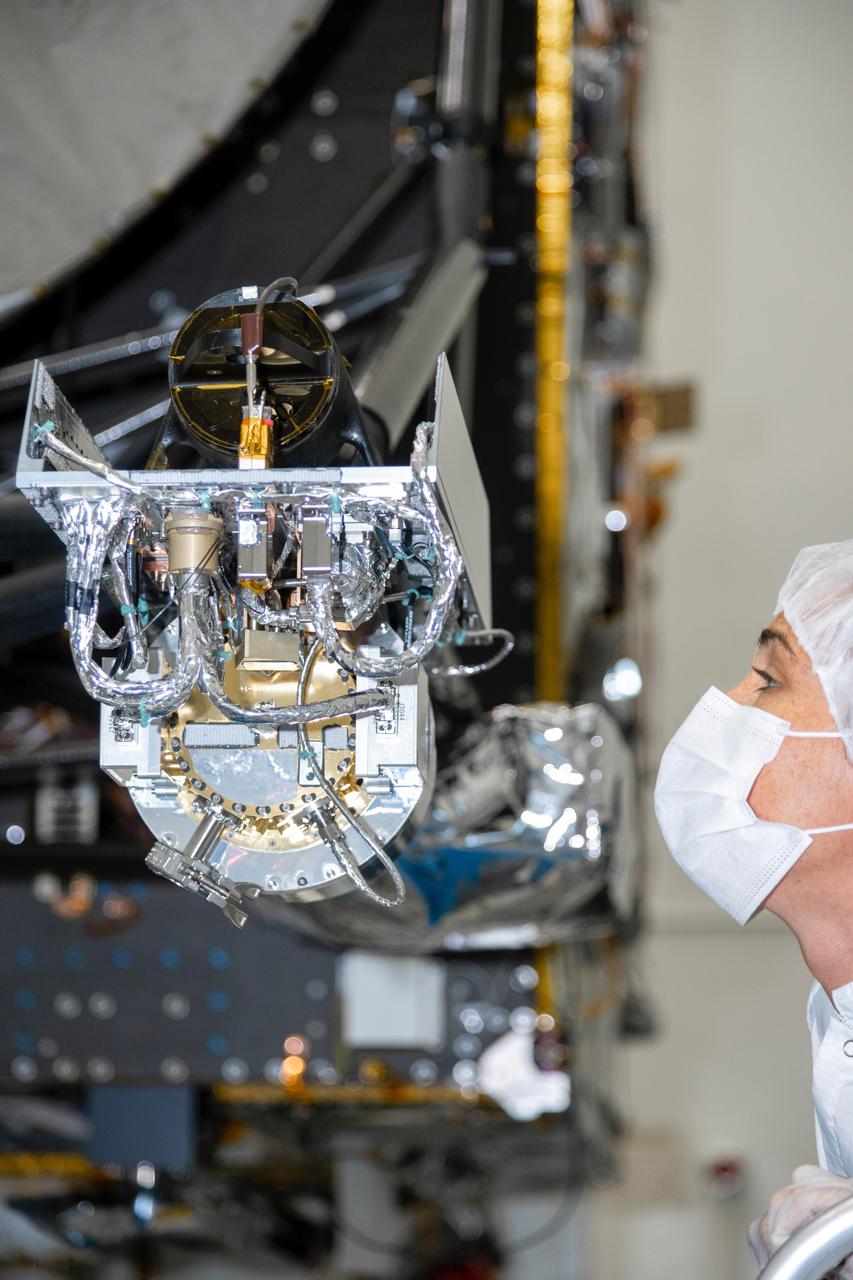
An engineer at NASA's Jet Propulsion Laboratory in Southern California inspects the gamma ray and neutron spectrometer instrument as it is integrated into the agency's Psyche spacecraft on Aug. 23, 2021. Psyche, set to launch in August 2022, will investigate a metal-rich asteroid of the same name, which lies in the main asteroid belt between Mars and Jupiter. Scientists believe the asteroid could be part or all of the iron-rich interior of an early planetary building block that was stripped of its outer rocky shell as it repeatedly collided with other large bodies during the early formation of the solar system. The spacecraft will use the GRNS to study the neutrons and gamma rays coming from the asteroid's surface to help determine its elemental composition. As cosmic rays and high energy particles impact the surface of Psyche, the elements that make up the surface material absorb the energy and in response emit neutrons and gamma rays of varying energy levels. These emitted neutrons and gamma rays can be detected by the GRNS and analyzed by scientists, who can match their properties to those emitted by known elements to determine what Psyche is made of. https://photojournal.jpl.nasa.gov/catalog/PIA24892

After barely 2 months in space, the Chandra X-Ray Observatory (CXO) took this sturning image of the Crab Nebula, the spectacular remains of a stellar explosion, revealing something never seen before, a brilliant ring around the nebula's heart. The image shows the central pulsar surrounded by tilted rings of high-energy particles that appear to have been flung outward over a distance of more than a light-year from the pulsar. Perpendicular to the rings, jet-like structures produced by high-energy particles blast away from the pulsar. Hubble Space Telescope images have shown moving knots and wisps around the neutron star, and previous x-ray images have shown the outer parts of the jet and hinted at the ring structure. With CXO's exceptional resolution, the jet can be traced all the way in to the neutron star, and the ring pattern clearly appears. The image was made with CXO's Advanced Charge-Coupled Device (CCD) Imaging Spectrometer (ACIS) and High Energy Transmission Grating. The Crab Nebula, easily the most intensively studied object beyond our solar system, has been observed using virtually every astronomical instrument that could see that part of the sky

KENNEDY SPACE CENTER, FLA. -- The Delta II rocket stands ready for launch following rollback of the mobile service tower, or gantry, on Launch Pad 17B at Cape Canaveral Air Force Station. Starting with a boost from this higher thrust version of the Delta II rocket, the Dawn spacecraft will study the asteroid Vesta and dwarf planet Ceres, celestial bodies believed to have accreted early in the history of the solar system. To carry out its scientific mission during its nearly decade-long mission, Dawn will carry a visible camera, a visible and infrared mapping spectrometer, and a gamma ray and neutron spectrometer, whose data will be used in combination to characterize these bodies. In addition to the three instruments, radiometric and optical navigation data will provide data relating to the gravity field, and thus, bulk properties and internal structure of the two bodies. Data returned from the Dawn spacecraft could provide opportunities for significant breakthroughs in our knowledge of how the solar system formed. Launch is targeted for Sept. 27 during a window that extends from 7:20 to 7:49 a.m. EDT. Photo credit: NASA/Kim Shiflett
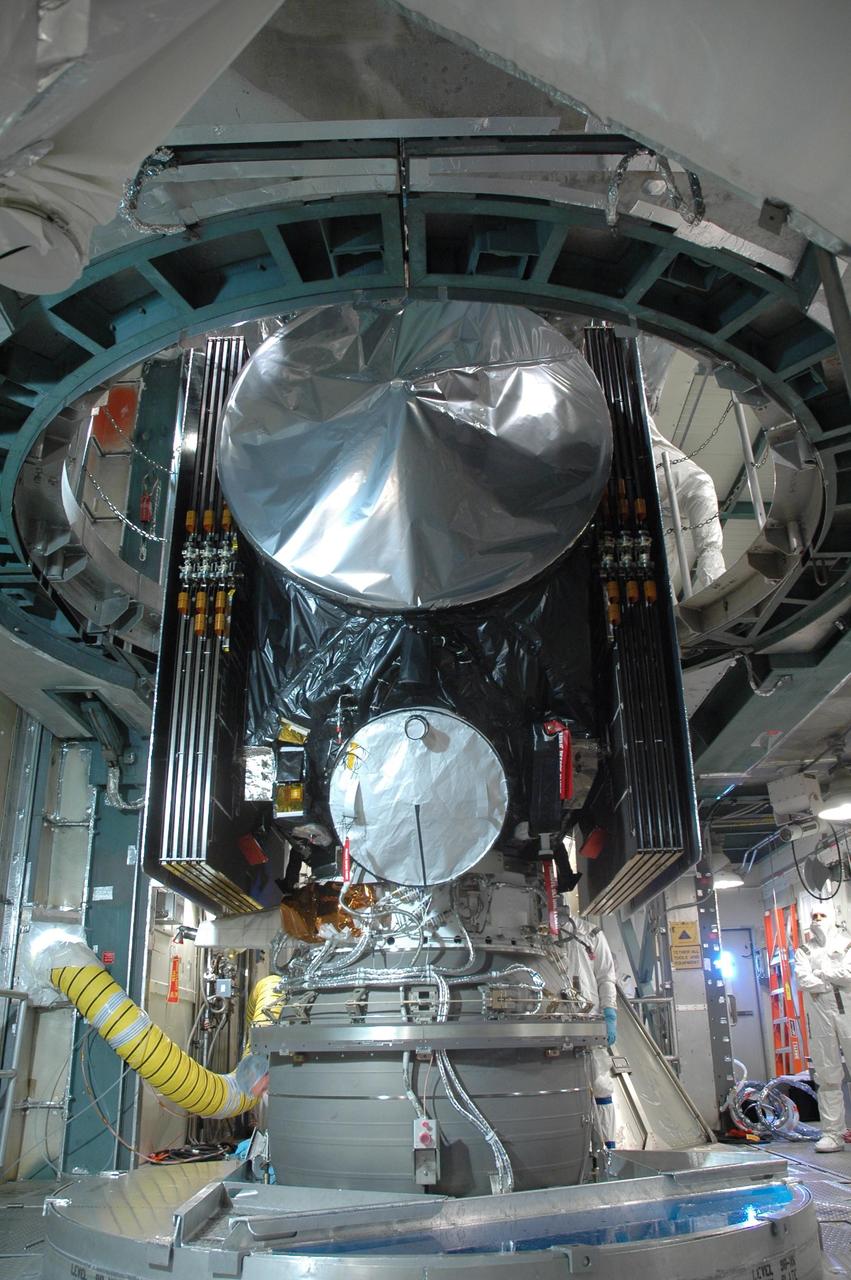
KENNEDY SPACE CENTER, FLA. -- In the mobile service tower on Launch Pad 17-B at Cape Canaveral Air Force Station, the upper transportation canister is lifted away from the Dawn spacecraft. After removal of the canister, Dawn will be mated with the waiting Delta II rocket. Dawn is scheduled for launch in a window from 7:25 to 7:54 a.m. EDT Sept. 26 from CCAFS. During its nearly decade-long mission, the Dawn mission will study the asteroid Vesta and dwarf planet Ceres, celestial bodies believed to have accreted early in the history of the solar system. To carry out its scientific mission, the Dawn spacecraft will carry a visible camera, a visible and infrared mapping spectrometer, and a gamma ray and neutron spectrometer, whose data will be used in combination to characterize these bodies. In addition to the three instruments, radiometric and optical navigation data will provide data relating to the gravity field and thus bulk properties and internal structure of the two bodies. Data returned from the Dawn spacecraft could provide opportunities for significant breakthroughs in our knowledge of how the solar system formed. Photo credit: NASA/Jim Grossmann
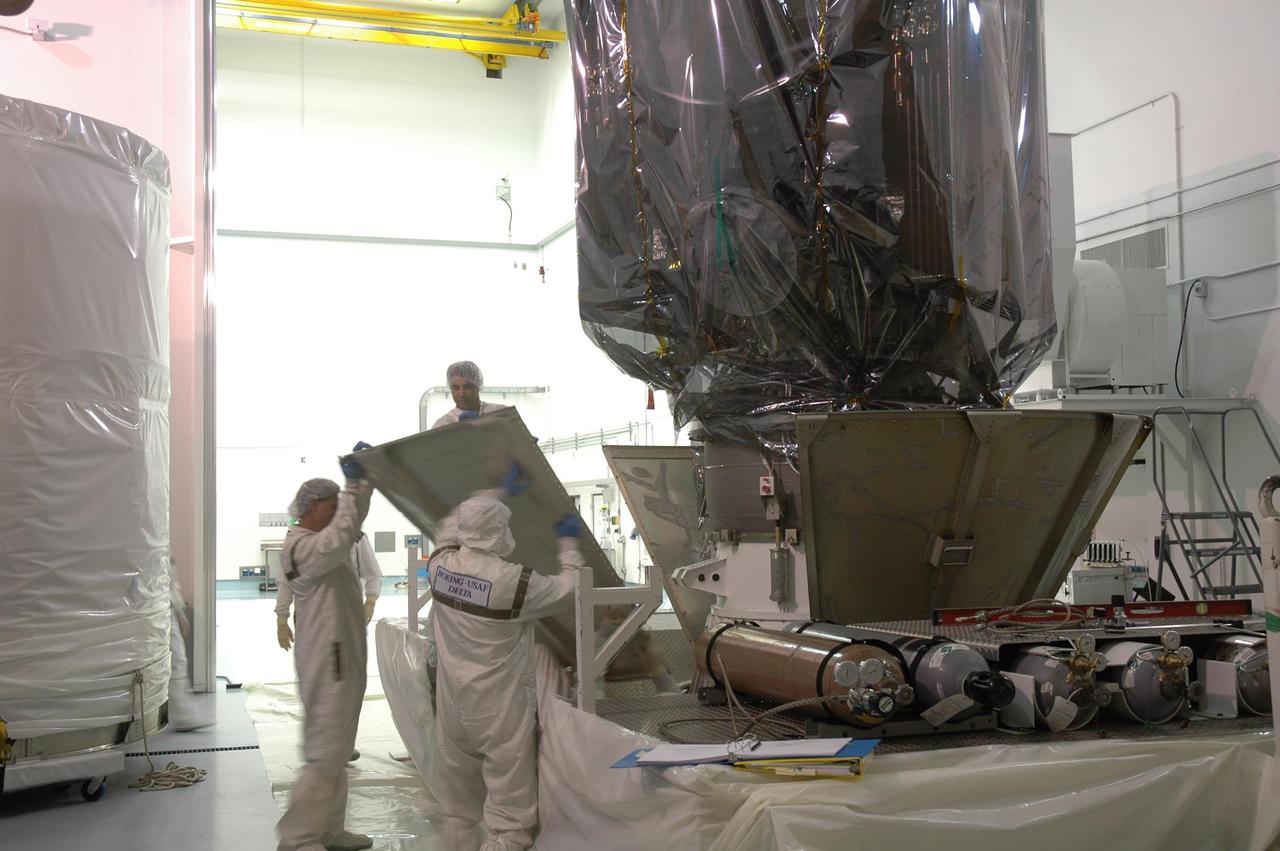
KENNEDY SPACE CENTER, FLA. -- At Astrotech Space Operations in Titusville, Fla., workers place another segment of the transportation canister around the upper stage booster beneath the Dawn spacecraft. The canister will protect the spacecraft and booster during transfer to Launch Pad 17-B at Cape Canaveral Air Force Station (CCAFS). During its nearly decade-long mission, the Dawn mission will study the asteroid Vesta and dwarf planet Ceres, celestial bodies believed to have accreted early in the history of the solar system. To carry out its scientific mission, the Dawn spacecraft will carry a visible camera, a visible and infrared mapping spectrometer, and a gamma ray and neutron spectrometer, whose data will be used in combination to characterize these bodies. In addition to the three instruments, radiometric and optical navigation data will provide data relating to the gravity field and thus bulk properties and internal structure of the two bodies. Data returned from the Dawn spacecraft could provide opportunities for significant breakthroughs in our knowledge of how the solar system formed. Launch via a Delta II rocket is scheduled in a window from 7:25 to 7:54 a.m. Sept. 26 from CCAFS. Photo credit: NASA/Jim Grossmann
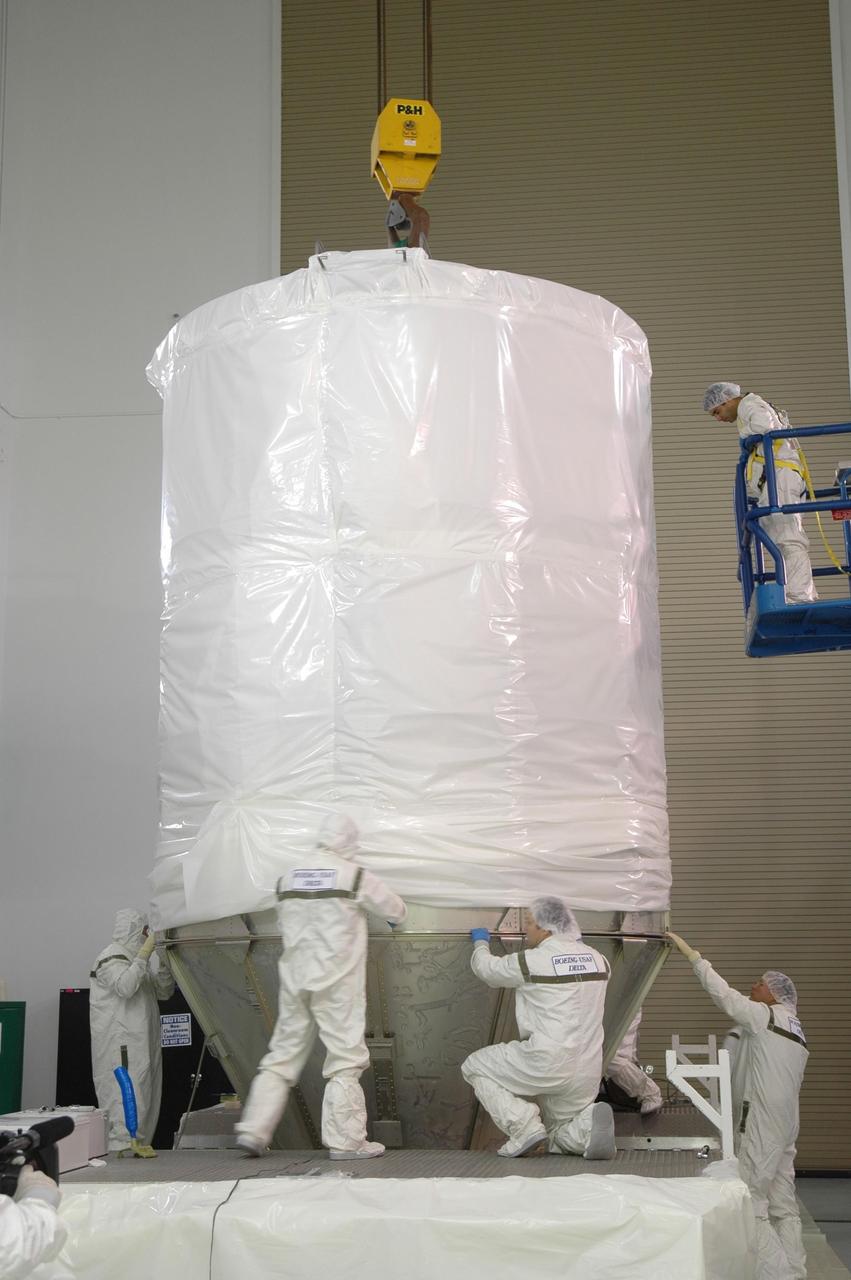
KENNEDY SPACE CENTER, FLA. -- At Astrotech Space Operations in Titusville, Fla., workers ensure the upper transportation canister is securely attached to the lower segments. The canister will protect the spacecraft and booster during transfer to Launch Pad 17-B at Cape Canaveral Air Force Station (CCAFS). During its nearly decade-long mission, the Dawn mission will study the asteroid Vesta and dwarf planet Ceres, celestial bodies believed to have accreted early in the history of the solar system. To carry out its scientific mission, the Dawn spacecraft will carry a visible camera, a visible and infrared mapping spectrometer, and a gamma ray and neutron spectrometer, whose data will be used in combination to characterize these bodies. In addition to the three instruments, radiometric and optical navigation data will provide data relating to the gravity field and thus bulk properties and internal structure of the two bodies. Data returned from the Dawn spacecraft could provide opportunities for significant breakthroughs in our knowledge of how the solar system formed. Launch via a Delta II rocket is scheduled in a window from 7:25 to 7:54 a.m. Sept. 26 from CCAFS. Photo credit: NASA/Jim Grossmann
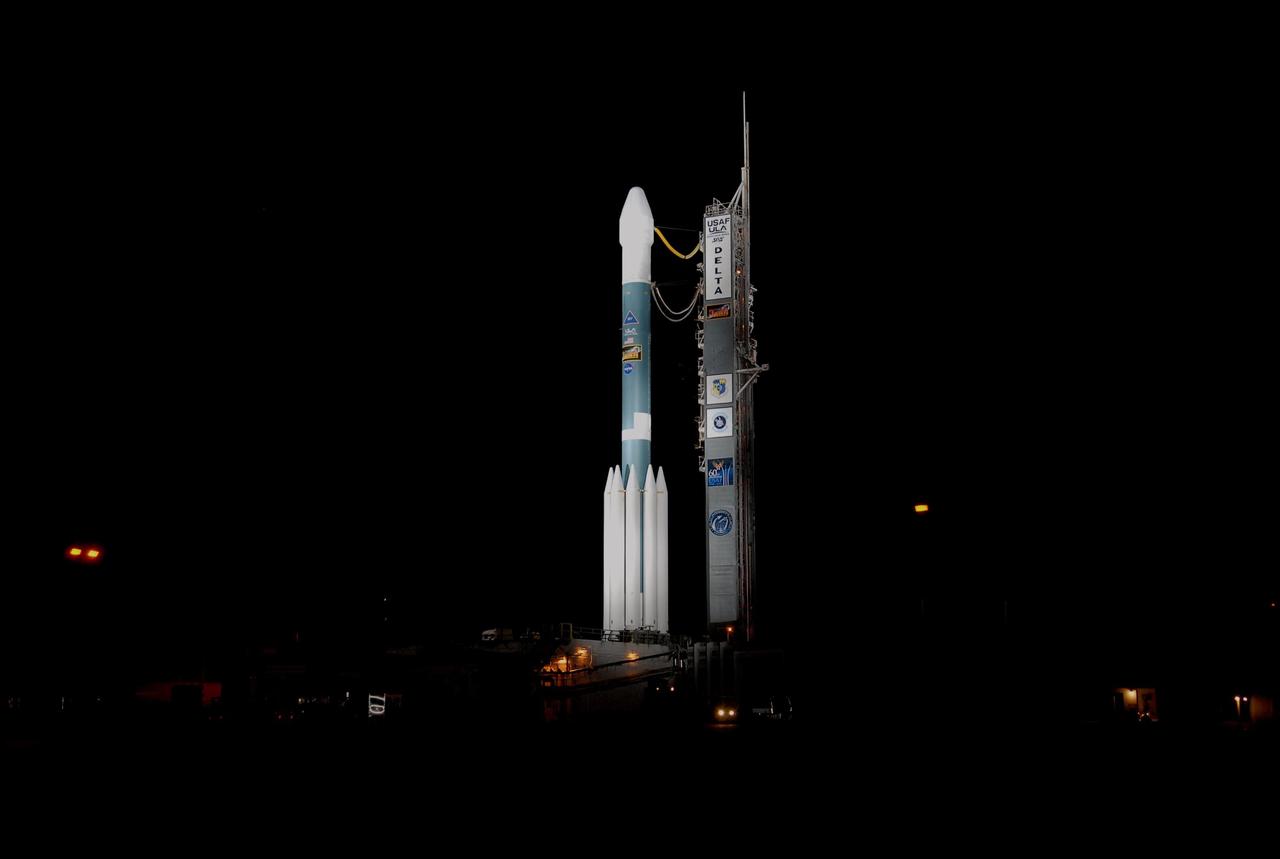
KENNEDY SPACE CENTER, FLA. -- Rollback of the mobile service tower, or gantry, from the Delta II rocket is complete on Launch Pad 17B at Cape Canaveral Air Force Station. Starting with a boost from this higher thrust version of the Delta II rocket, the Dawn spacecraft will study the asteroid Vesta and dwarf planet Ceres, celestial bodies believed to have accreted early in the history of the solar system. To carry out its scientific mission during its nearly decade-long mission, Dawn will carry a visible camera, a visible and infrared mapping spectrometer, and a gamma ray and neutron spectrometer, whose data will be used in combination to characterize these bodies. In addition to the three instruments, radiometric and optical navigation data will provide data relating to the gravity field, and thus, bulk properties and internal structure of the two bodies. Data returned from the Dawn spacecraft could provide opportunities for significant breakthroughs in our knowledge of how the solar system formed. Launch is targeted for Sept. 27 during a window that extends from 7:20 to 7:49 a.m. EDT. Photo credit: NASA/Kim Shiflett

KENNEDY SPACE CENTER, FLA. -- In the mobile service tower on Launch Pad 17-B at Cape Canaveral Air Force Station, workers remove the transportation canister from around the Dawn spacecraft. After removal of the canister, Dawn will be mated with the waiting Delta II rocket. Dawn is scheduled for launch in a window from 7:25 to 7:54 a.m. EDT Sept. 26 from CCAFS. During its nearly decade-long mission, the Dawn mission will study the asteroid Vesta and dwarf planet Ceres, celestial bodies believed to have accreted early in the history of the solar system. To carry out its scientific mission, the Dawn spacecraft will carry a visible camera, a visible and infrared mapping spectrometer, and a gamma ray and neutron spectrometer, whose data will be used in combination to characterize these bodies. In addition to the three instruments, radiometric and optical navigation data will provide data relating to the gravity field and thus bulk properties and internal structure of the two bodies. Data returned from the Dawn spacecraft could provide opportunities for significant breakthroughs in our knowledge of how the solar system formed. Photo credit: NASA/Jim Grossmann
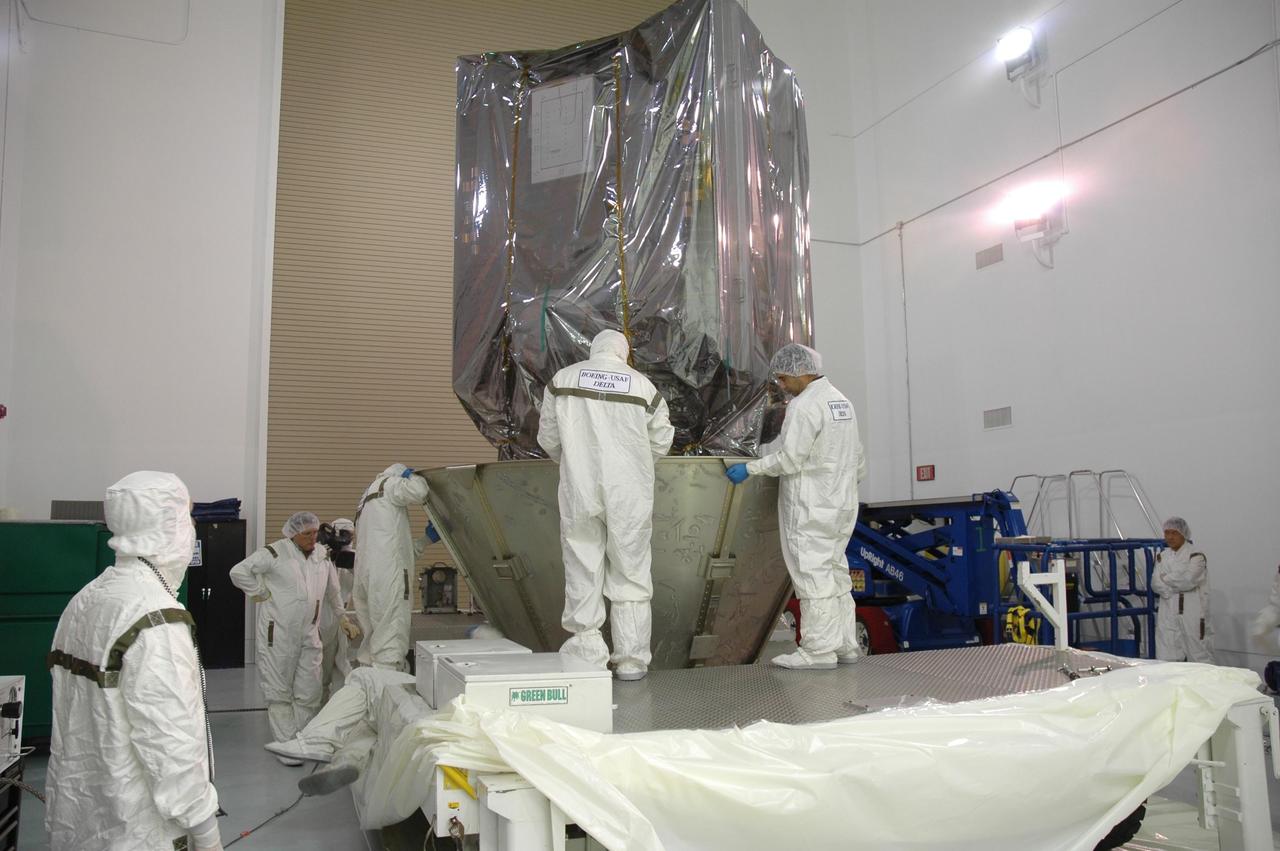
KENNEDY SPACE CENTER, FLA. -- At Astrotech Space Operations in Titusville, Fla., workers place the lower segments of the transportation canister around the upper stage booster beneath the Dawn spacecraft. The canister will protect the spacecraft and booster during transfer to Launch Pad 17-B at Cape Canaveral Air Force Station (CCAFS). During its nearly decade-long mission, the Dawn mission will study the asteroid Vesta and dwarf planet Ceres, celestial bodies believed to have accreted early in the history of the solar system. To carry out its scientific mission, the Dawn spacecraft will carry a visible camera, a visible and infrared mapping spectrometer, and a gamma ray and neutron spectrometer, whose data will be used in combination to characterize these bodies. In addition to the three instruments, radiometric and optical navigation data will provide data relating to the gravity field and thus bulk properties and internal structure of the two bodies. Data returned from the Dawn spacecraft could provide opportunities for significant breakthroughs in our knowledge of how the solar system formed. Launch via a Delta II rocket is scheduled in a window from 7:25 to 7:54 a.m. Sept. 26 from CCAFS. Photo credit: NASA/Jim Grossmann
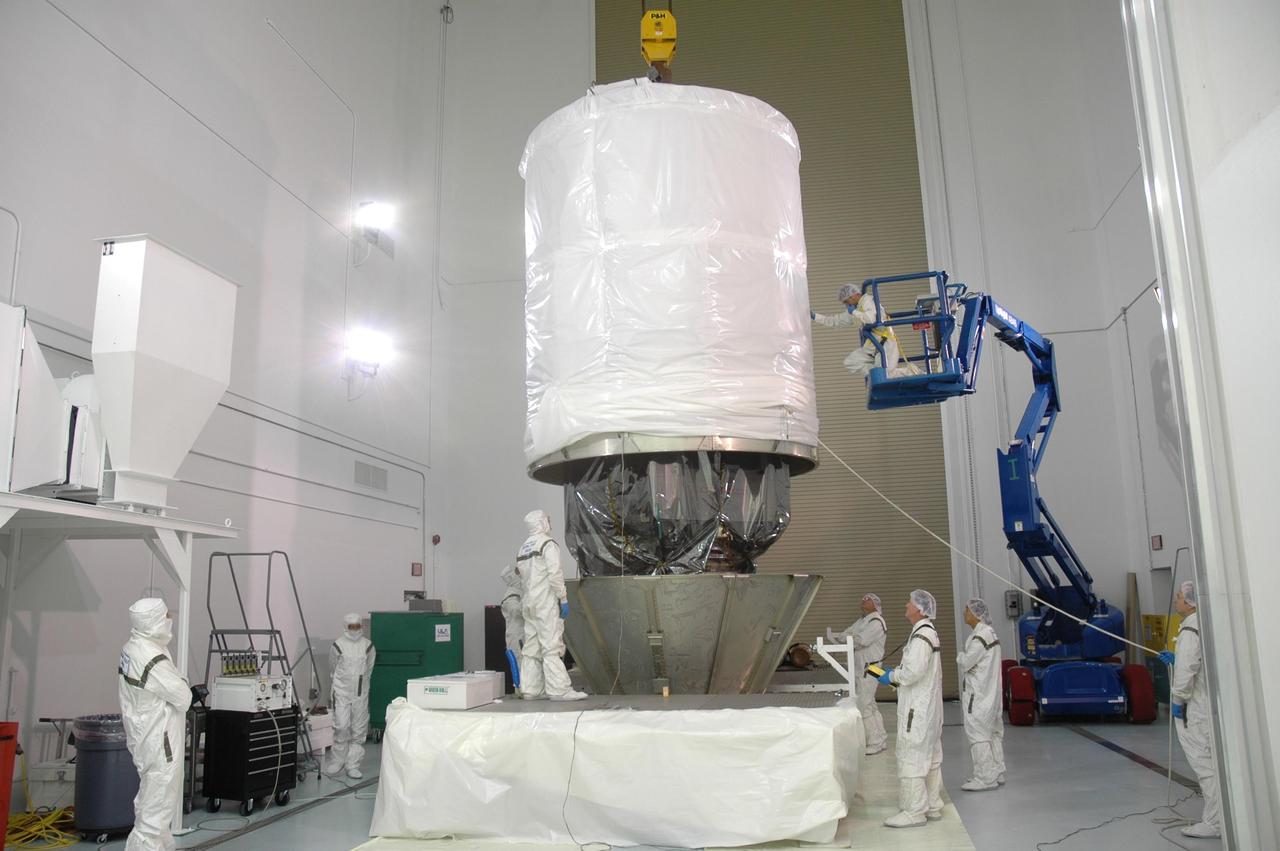
KENNEDY SPACE CENTER, FLA. -- At Astrotech Space Operations in Titusville, Fla., workers watch as the upper transportation canister is lowered over the Dawn spacecraft. The canister will be attached to the bottom segments already in place. The canister will protect the spacecraft and booster during transfer to Launch Pad 17-B at Cape Canaveral Air Force Station (CCAFS). During its nearly decade-long mission, the Dawn mission will study the asteroid Vesta and dwarf planet Ceres, celestial bodies believed to have accreted early in the history of the solar system. To carry out its scientific mission, the Dawn spacecraft will carry a visible camera, a visible and infrared mapping spectrometer, and a gamma ray and neutron spectrometer, whose data will be used in combination to characterize these bodies. In addition to the three instruments, radiometric and optical navigation data will provide data relating to the gravity field and thus bulk properties and internal structure of the two bodies. Data returned from the Dawn spacecraft could provide opportunities for significant breakthroughs in our knowledge of how the solar system formed. Launch via a Delta II rocket is scheduled in a window from 7:25 to 7:54 a.m. Sept. 26 from CCAFS. Photo credit: NASA/Jim Grossmann
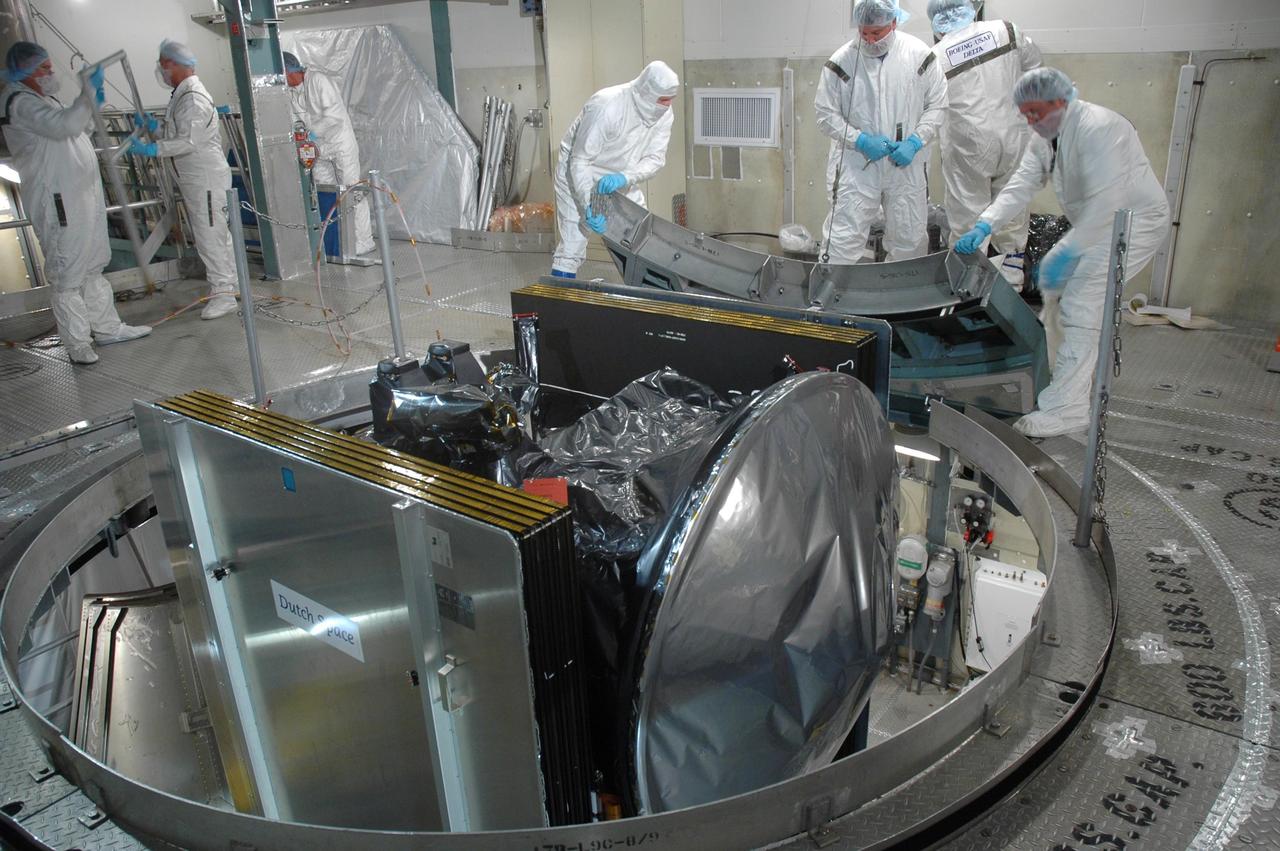
KENNEDY SPACE CENTER, FLA. -- In the mobile service tower on Launch Pad 17-B at Cape Canaveral Air Force Station, workers remove the lower segments of the transportation canister away from the Dawn spacecraft. After removal of the canister, Dawn will be mated with the waiting Delta II rocket. Dawn is scheduled for launch in a window from 7:25 to 7:54 a.m. EDT Sept. 26 from CCAFS. During its nearly decade-long mission, the Dawn mission will study the asteroid Vesta and dwarf planet Ceres, celestial bodies believed to have accreted early in the history of the solar system. To carry out its scientific mission, the Dawn spacecraft will carry a visible camera, a visible and infrared mapping spectrometer, and a gamma ray and neutron spectrometer, whose data will be used in combination to characterize these bodies. In addition to the three instruments, radiometric and optical navigation data will provide data relating to the gravity field and thus bulk properties and internal structure of the two bodies. Data returned from the Dawn spacecraft could provide opportunities for significant breakthroughs in our knowledge of how the solar system formed. Photo credit: NASA/Jim Grossmann

KENNEDY SPACE CENTER, FLA. -- On Launch Pad 17-B at Cape Canaveral Air Force Station, the Dawn spacecraft is lowered toward the awaiting Delta II rocket in the mobile service tower. Dawn will be mated with the Delta in preparation for launch. Dawn is scheduled for launch in a window from 7:25 to 7:54 a.m. Sept. 26 from CCAFS. During its nearly decade-long mission, the Dawn mission will study the asteroid Vesta and dwarf planet Ceres, celestial bodies believed to have accreted early in the history of the solar system. To carry out its scientific mission, the Dawn spacecraft will carry a visible camera, a visible and infrared mapping spectrometer, and a gamma ray and neutron spectrometer, whose data will be used in combination to characterize these bodies. In addition to the three instruments, radiometric and optical navigation data will provide data relating to the gravity field and thus bulk properties and internal structure of the two bodies. Data returned from the Dawn spacecraft could provide opportunities for significant breakthroughs in our knowledge of how the solar system formed. Photo credit: NASA/Jack Pfaller
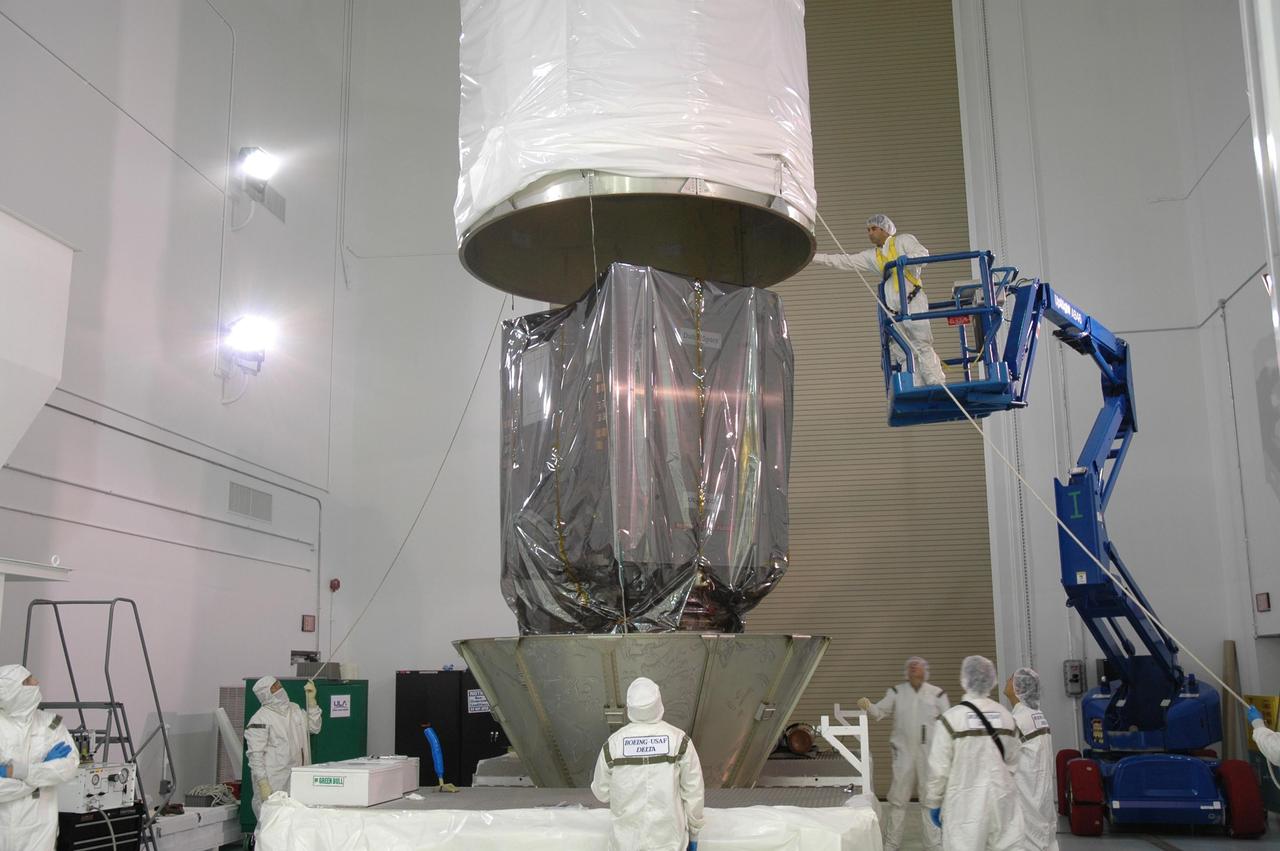
KENNEDY SPACE CENTER, FLA. -- At Astrotech Space Operations in Titusville, Fla., workers guide the upper transportation canister as it is lowered onto the Dawn spacecraft. The canister will be attached to the bottom segments already in place. The canister will protect the spacecraft and booster during transfer to Launch Pad 17-B at Cape Canaveral Air Force Station (CCAFS). During its nearly decade-long mission, the Dawn mission will study the asteroid Vesta and dwarf planet Ceres, celestial bodies believed to have accreted early in the history of the solar system. To carry out its scientific mission, the Dawn spacecraft will carry a visible camera, a visible and infrared mapping spectrometer, and a gamma ray and neutron spectrometer, whose data will be used in combination to characterize these bodies. In addition to the three instruments, radiometric and optical navigation data will provide data relating to the gravity field and thus bulk properties and internal structure of the two bodies. Data returned from the Dawn spacecraft could provide opportunities for significant breakthroughs in our knowledge of how the solar system formed. Launch via a Delta II rocket is scheduled in a window from 7:25 to 7:54 a.m. Sept. 26 from CCAFS. Photo credit: NASA/Jim Grossmann
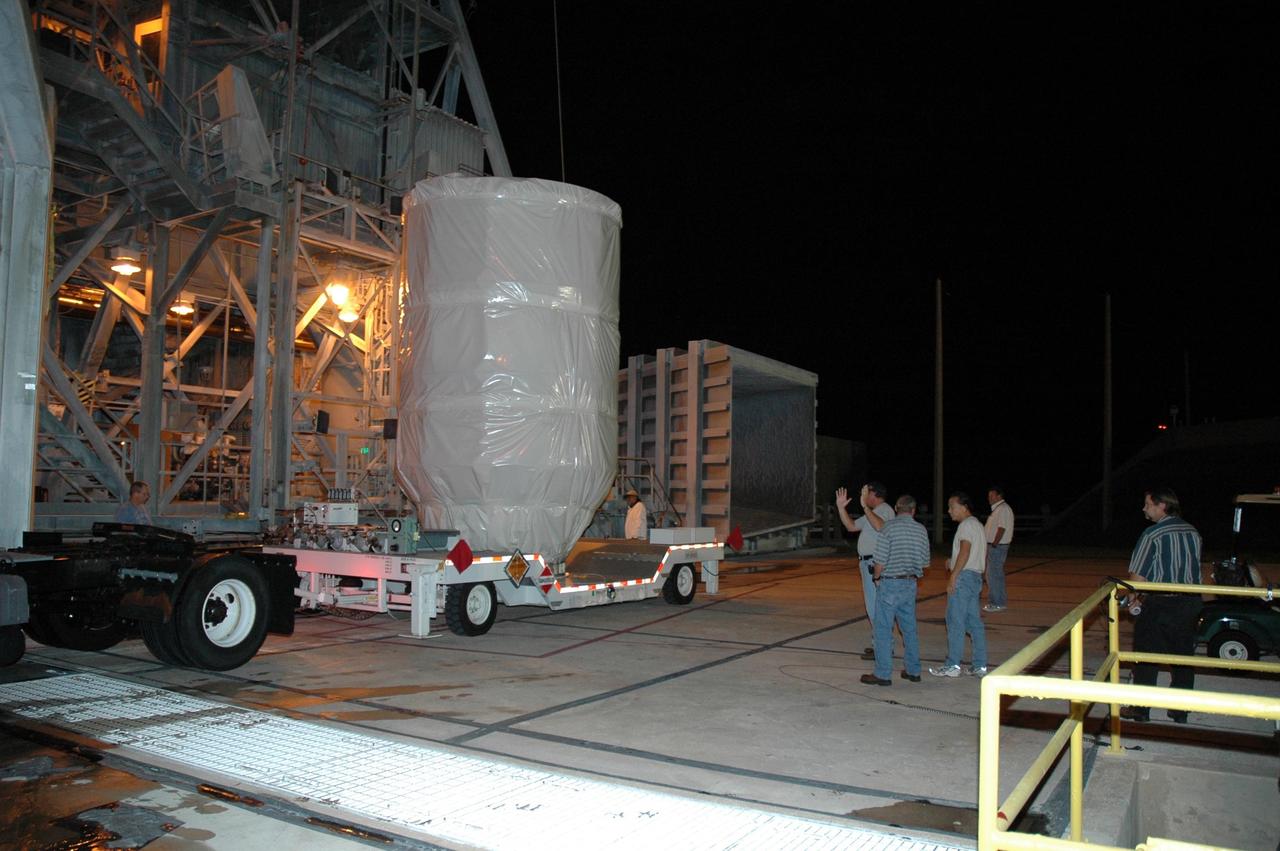
KENNEDY SPACE CENTER, FLA. -- The Dawn spacecraft arrives on Launch Pad 17-B at Cape Canaveral Air Force Station. At the pad, Dawn will be lifted into the mobile service tower and prepared for mating with the awaiting Delta II rocket. Dawn is scheduled for launch in a window from 7:25 to 7:54 a.m. Sept. 26 from CCAFS. During its nearly decade-long mission, the Dawn mission will study the asteroid Vesta and dwarf planet Ceres, celestial bodies believed to have accreted early in the history of the solar system. To carry out its scientific mission, the Dawn spacecraft will carry a visible camera, a visible and infrared mapping spectrometer, and a gamma ray and neutron spectrometer, whose data will be used in combination to characterize these bodies. In addition to the three instruments, radiometric and optical navigation data will provide data relating to the gravity field and thus bulk properties and internal structure of the two bodies. Data returned from the Dawn spacecraft could provide opportunities for significant breakthroughs in our knowledge of how the solar system formed. Photo credit: NASA/Jack Pfaller
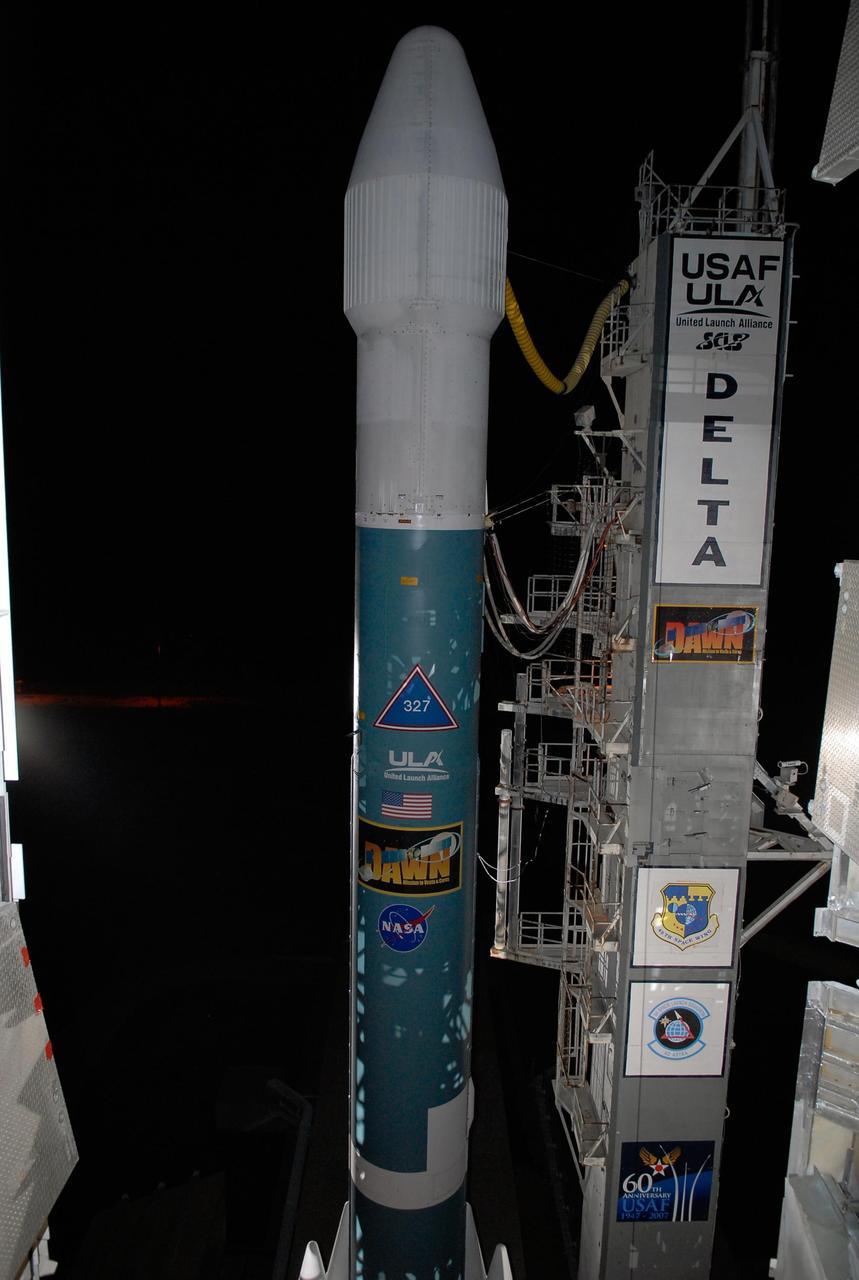
KENNEDY SPACE CENTER, FLA. -- The Delta II rocket stands ready for launch following rollback of the mobile service tower, or gantry, on Launch Pad 17B at Cape Canaveral Air Force Station. Starting with a boost from this higher thrust version of the Delta II rocket, the Dawn spacecraft will study the asteroid Vesta and dwarf planet Ceres, celestial bodies believed to have accreted early in the history of the solar system. To carry out its scientific mission during its nearly decade-long mission, Dawn will carry a visible camera, a visible and infrared mapping spectrometer, and a gamma ray and neutron spectrometer, whose data will be used in combination to characterize these bodies. In addition to the three instruments, radiometric and optical navigation data will provide data relating to the gravity field, and thus, bulk properties and internal structure of the two bodies. Data returned from the Dawn spacecraft could provide opportunities for significant breakthroughs in our knowledge of how the solar system formed. Launch is targeted for Sept. 27 during a window that extends from 7:20 to 7:49 a.m. EDT. Photo credit: NASA/Kim Shiflett
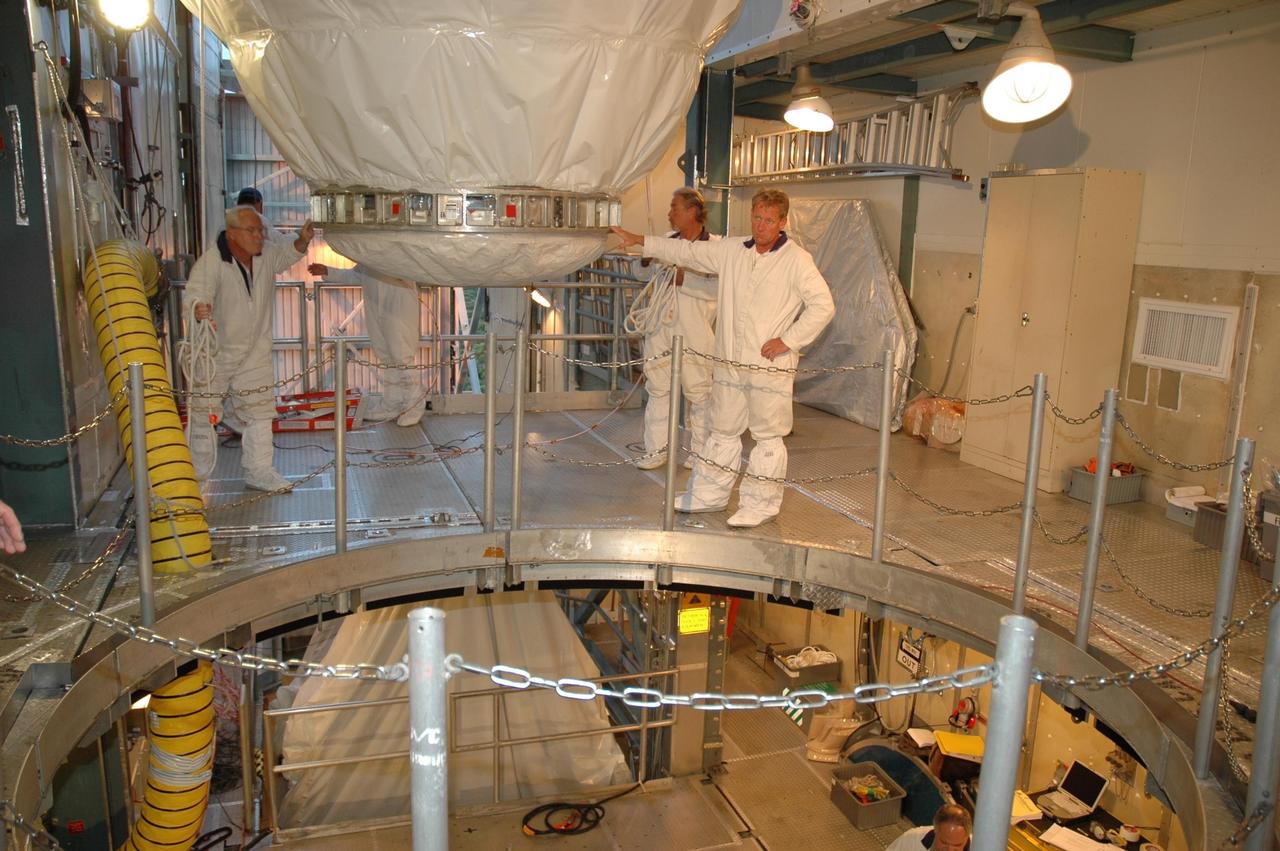
KENNEDY SPACE CENTER, FLA. -- On Launch Pad 17-B at Cape Canaveral Air Force Station, the Dawn spacecraft is moved toward the opening above the Delta II rocket in the mobile service tower. Dawn will be mated with the Delta in preparation for launch. Dawn is scheduled for launch in a window from 7:25 to 7:54 a.m. Sept. 26 from CCAFS. During its nearly decade-long mission, the Dawn mission will study the asteroid Vesta and dwarf planet Ceres, celestial bodies believed to have accreted early in the history of the solar system. To carry out its scientific mission, the Dawn spacecraft will carry a visible camera, a visible and infrared mapping spectrometer, and a gamma ray and neutron spectrometer, whose data will be used in combination to characterize these bodies. In addition to the three instruments, radiometric and optical navigation data will provide data relating to the gravity field and thus bulk properties and internal structure of the two bodies. Data returned from the Dawn spacecraft could provide opportunities for significant breakthroughs in our knowledge of how the solar system formed. Photo credit: NASA/Jack Pfaller
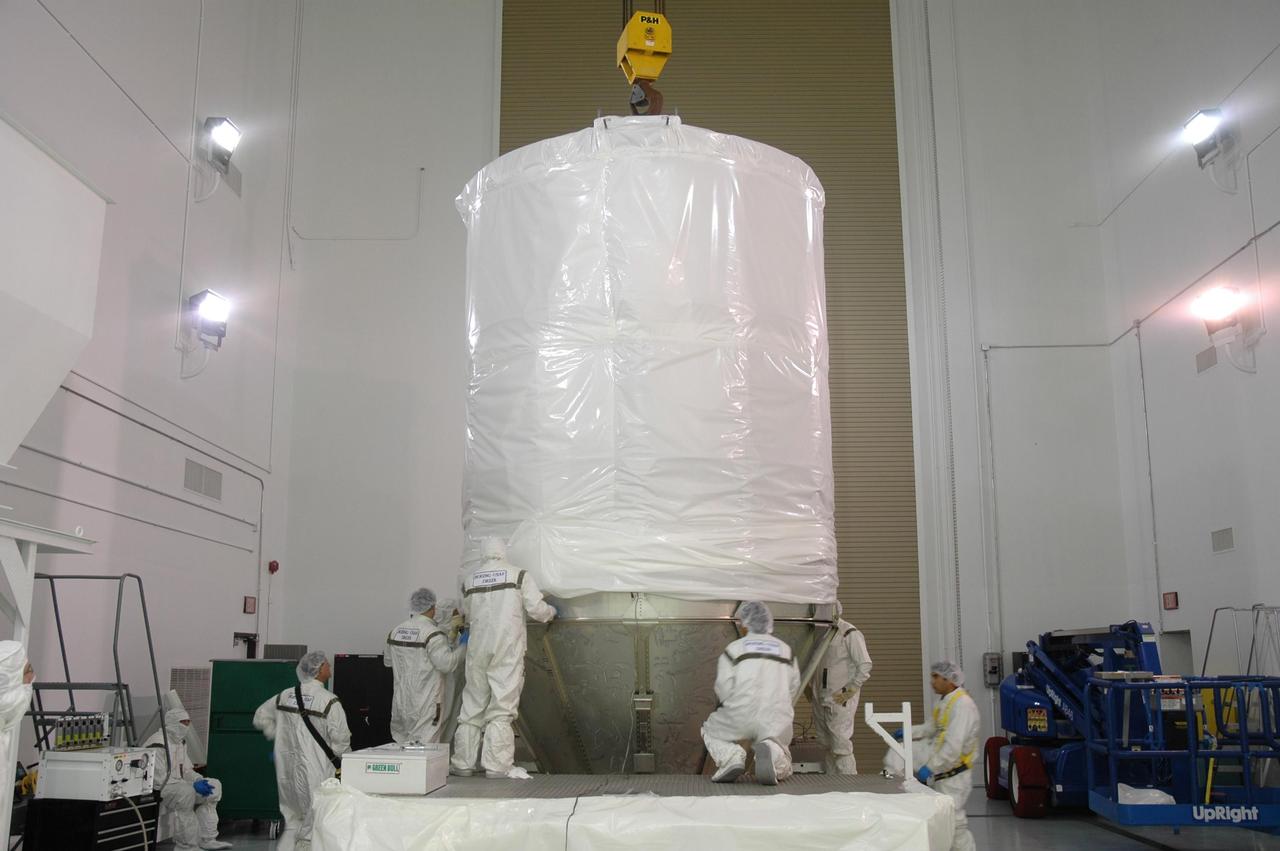
KENNEDY SPACE CENTER, FLA. -- At Astrotech Space Operations in Titusville, Fla., workers ensure the upper transportation canister is securely attached to the lower segments. The transportation canister will protect the spacecraft and booster during transfer to Launch Pad 17-B at Cape Canaveral Air Force Station (CCAFS). During its nearly decade-long mission, the Dawn mission will study the asteroid Vesta and dwarf planet Ceres, celestial bodies believed to have accreted early in the history of the solar system. To carry out its scientific mission, the Dawn spacecraft will carry a visible camera, a visible and infrared mapping spectrometer, and a gamma ray and neutron spectrometer, whose data will be used in combination to characterize these bodies. In addition to the three instruments, radiometric and optical navigation data will provide data relating to the gravity field and thus bulk properties and internal structure of the two bodies. Data returned from the Dawn spacecraft could provide opportunities for significant breakthroughs in our knowledge of how the solar system formed. Launch via a Delta II rocket is scheduled in a window from 7:25 to 7:54 a.m. Sept. 26 from CCAFS. Photo credit: NASA/Jim Grossmann
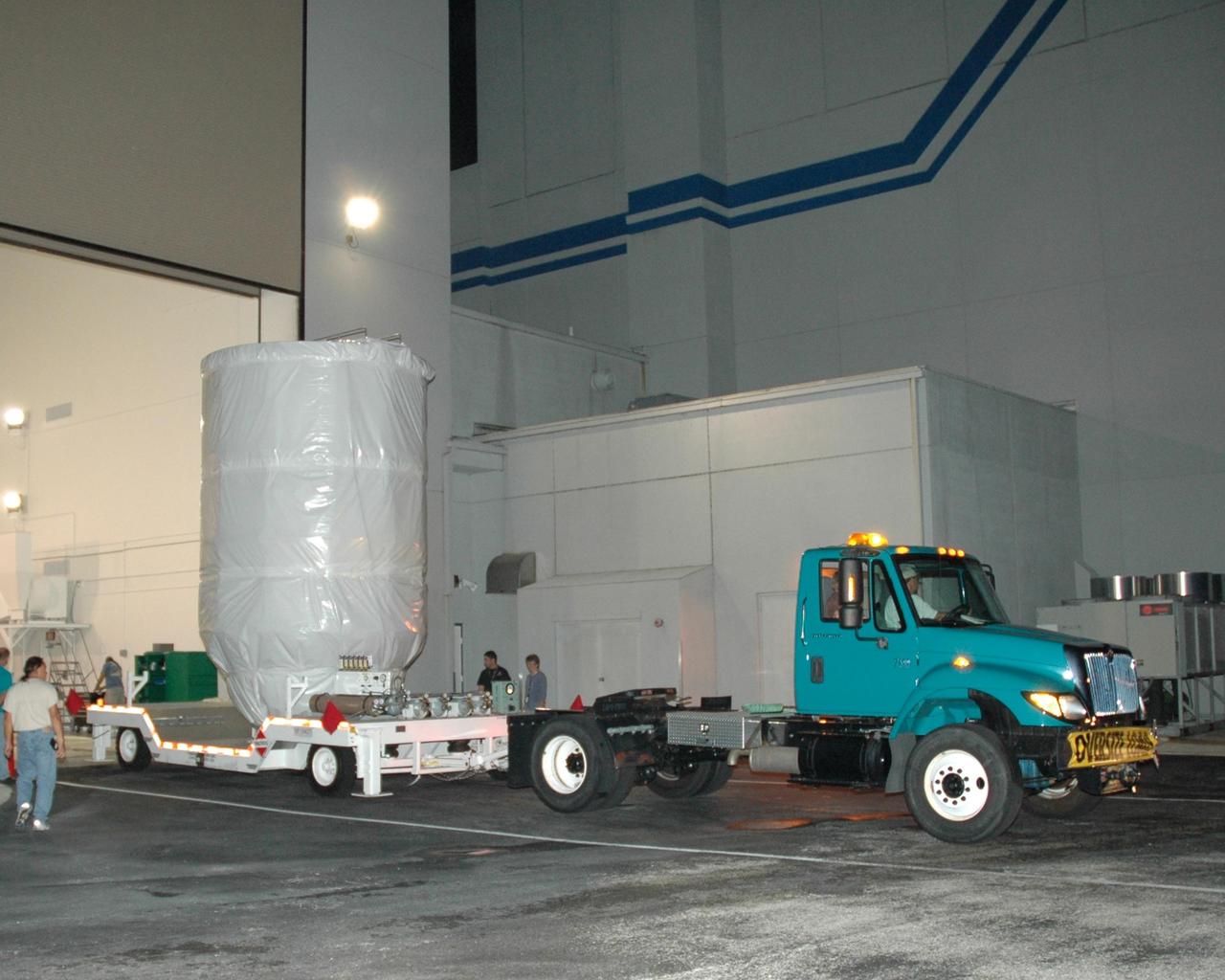
KENNEDY SPACE CENTER, FLA. -- The Dawn spacecraft is moved out of the Astrotech Space Operations facility, on its way to Launch Pad 17-B at Cape Canaveral Air Force Station. At the pad, Dawn will be lifted into the mobile service tower and prepared for mating with the awaiting Delta II rocket. Dawn is scheduled for launch in a window from 7:25 to 7:54 a.m. Sept. 26 from CCAFS. During its nearly decade-long mission, the Dawn mission will study the asteroid Vesta and dwarf planet Ceres, celestial bodies believed to have accreted early in the history of the solar system. To carry out its scientific mission, the Dawn spacecraft will carry a visible camera, a visible and infrared mapping spectrometer, and a gamma ray and neutron spectrometer, whose data will be used in combination to characterize these bodies. In addition to the three instruments, radiometric and optical navigation data will provide data relating to the gravity field and thus bulk properties and internal structure of the two bodies. Data returned from the Dawn spacecraft could provide opportunities for significant breakthroughs in our knowledge of how the solar system formed. Photo credit: NASA/Jack Pfaller
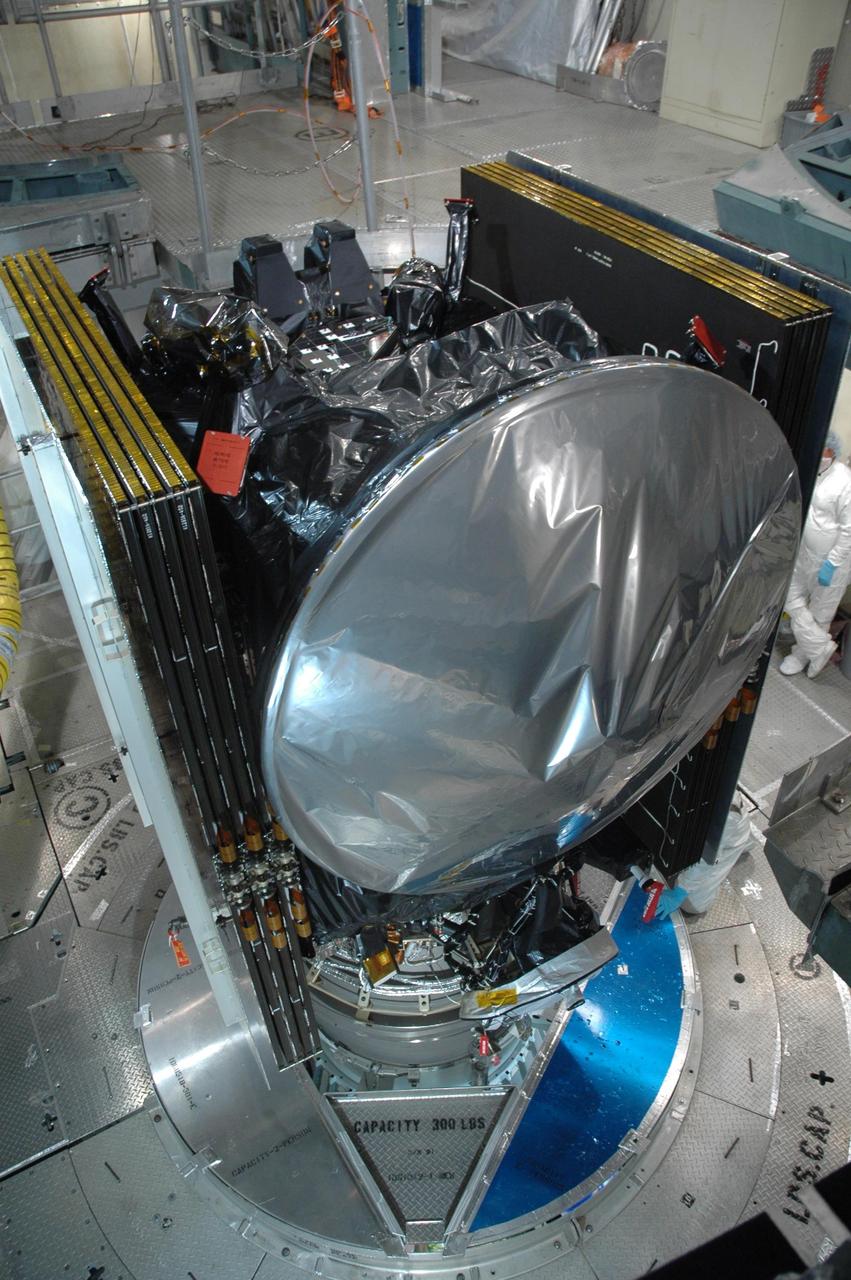
KENNEDY SPACE CENTER, FLA. -- In the mobile service tower on Launch Pad 17-B at Cape Canaveral Air Force Station, the Dawn spacecraft is ready for mating with the waiting Delta II rocket. Dawn is scheduled for launch in a window from 7:25 to 7:54 a.m. EDT Sept. 26 from CCAFS. During its nearly decade-long mission, the Dawn mission will study the asteroid Vesta and dwarf planet Ceres, celestial bodies believed to have accreted early in the history of the solar system. To carry out its scientific mission, the Dawn spacecraft will carry a visible camera, a visible and infrared mapping spectrometer, and a gamma ray and neutron spectrometer, whose data will be used in combination to characterize these bodies. In addition to the three instruments, radiometric and optical navigation data will provide data relating to the gravity field and thus bulk properties and internal structure of the two bodies. Data returned from the Dawn spacecraft could provide opportunities for significant breakthroughs in our knowledge of how the solar system formed. Photo credit: NASA/Jim Grossmann
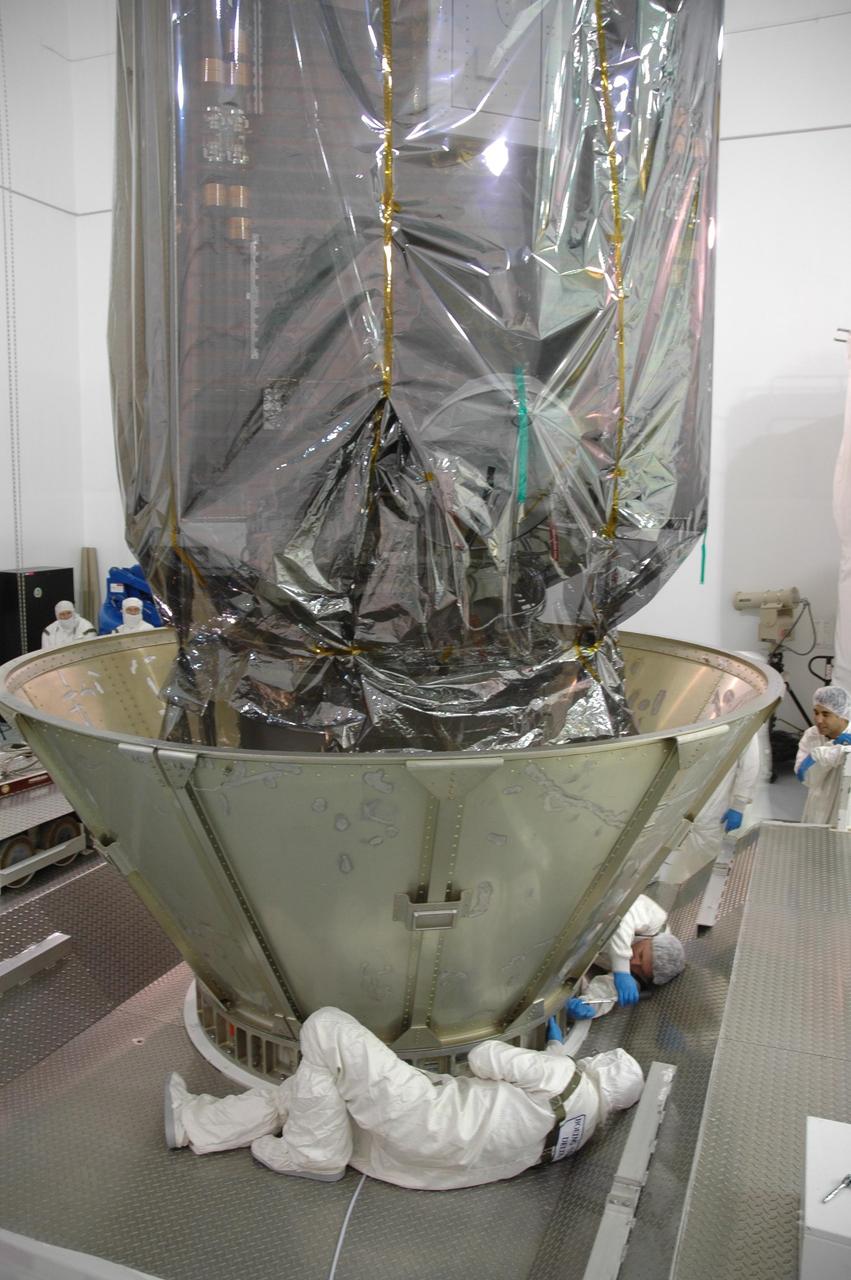
KENNEDY SPACE CENTER, FLA. -- At Astrotech Space Operations in Titusville, Fla., workers check the fitting on the lower transportation canister segments in place around the upper stage booster beneath the Dawn spacecraft. The canister will protect the spacecraft and booster during transfer to Launch Pad 17-B at Cape Canaveral Air Force Station (CCAFS). During its nearly decade-long mission, the Dawn mission will study the asteroid Vesta and dwarf planet Ceres, celestial bodies believed to have accreted early in the history of the solar system. To carry out its scientific mission, the Dawn spacecraft will carry a visible camera, a visible and infrared mapping spectrometer, and a gamma ray and neutron spectrometer, whose data will be used in combination to characterize these bodies. In addition to the three instruments, radiometric and optical navigation data will provide data relating to the gravity field and thus bulk properties and internal structure of the two bodies. Data returned from the Dawn spacecraft could provide opportunities for significant breakthroughs in our knowledge of how the solar system formed. Launch via a Delta II rocket is scheduled in a window from 7:25 to 7:54 a.m. Sept. 26 from CCAFS. Photo credit: NASA/Jim Grossmann

KENNEDY SPACE CENTER, FLA. -- On Launch Pad 17-B at Cape Canaveral Air Force Station, the Dawn spacecraft is lifted alongside the mobile service tower. At the top, Dawn will be prepared for mating with the awaiting Delta II rocket. Dawn is scheduled for launch in a window from 7:25 to 7:54 a.m. Sept. 26 from CCAFS. During its nearly decade-long mission, the Dawn mission will study the asteroid Vesta and dwarf planet Ceres, celestial bodies believed to have accreted early in the history of the solar system. To carry out its scientific mission, the Dawn spacecraft will carry a visible camera, a visible and infrared mapping spectrometer, and a gamma ray and neutron spectrometer, whose data will be used in combination to characterize these bodies. In addition to the three instruments, radiometric and optical navigation data will provide data relating to the gravity field and thus bulk properties and internal structure of the two bodies. Data returned from the Dawn spacecraft could provide opportunities for significant breakthroughs in our knowledge of how the solar system formed. Photo credit: NASA/Jack Pfaller
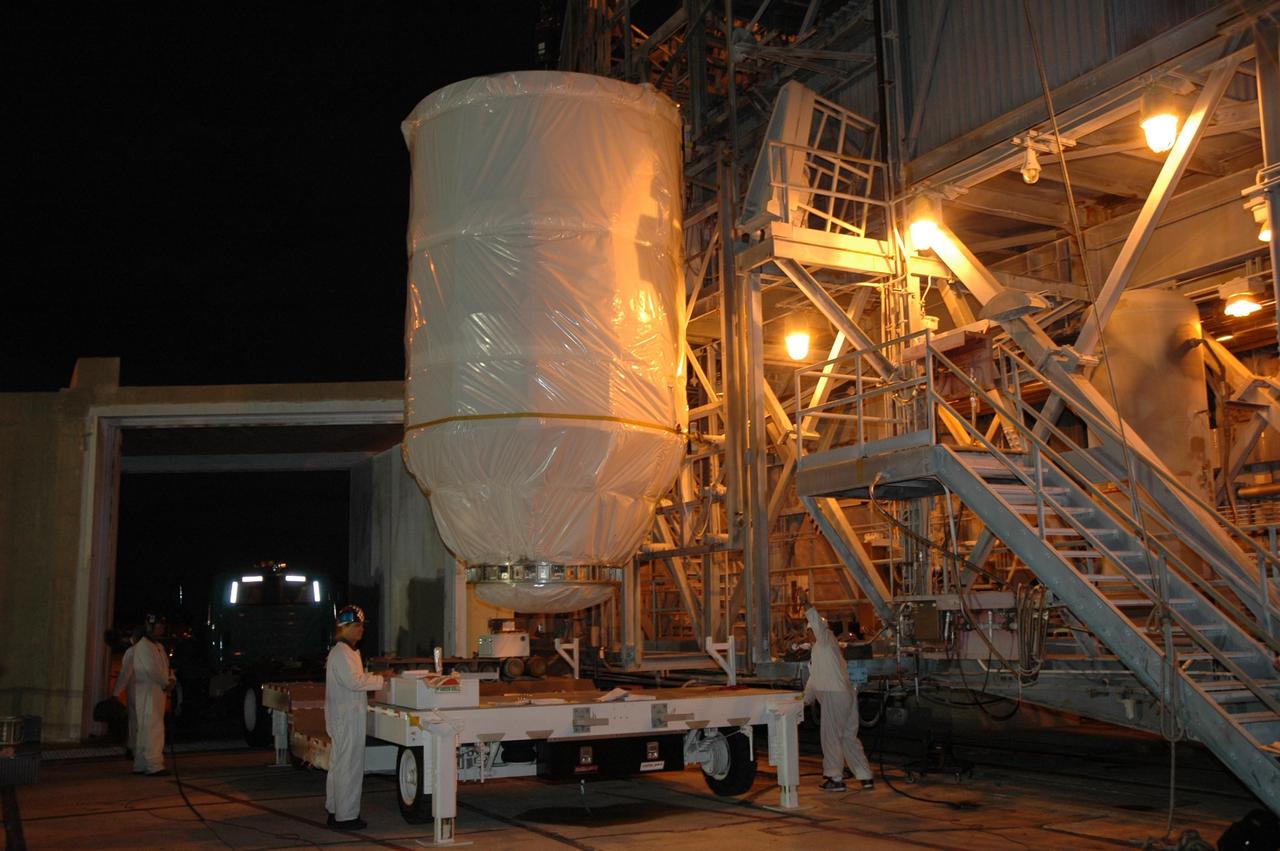
KENNEDY SPACE CENTER, FLA. -- On Launch Pad 17-B at Cape Canaveral Air Force Station, the Dawn spacecraft is lifted off its transporter. Dawn will be lifted into the mobile service tower and prepared for mating with the awaiting Delta II rocket.Dawn is scheduled for launch in a window from 7:25 to 7:54 a.m. Sept. 26 from CCAFS. During its nearly decade-long mission, the Dawn mission will study the asteroid Vesta and dwarf planet Ceres, celestial bodies believed to have accreted early in the history of the solar system. To carry out its scientific mission, the Dawn spacecraft will carry a visible camera, a visible and infrared mapping spectrometer, and a gamma ray and neutron spectrometer, whose data will be used in combination to characterize these bodies. In addition to the three instruments, radiometric and optical navigation data will provide data relating to the gravity field and thus bulk properties and internal structure of the two bodies. Data returned from the Dawn spacecraft could provide opportunities for significant breakthroughs in our knowledge of how the solar system formed. Photo credit: NASA/Jack Pfaller
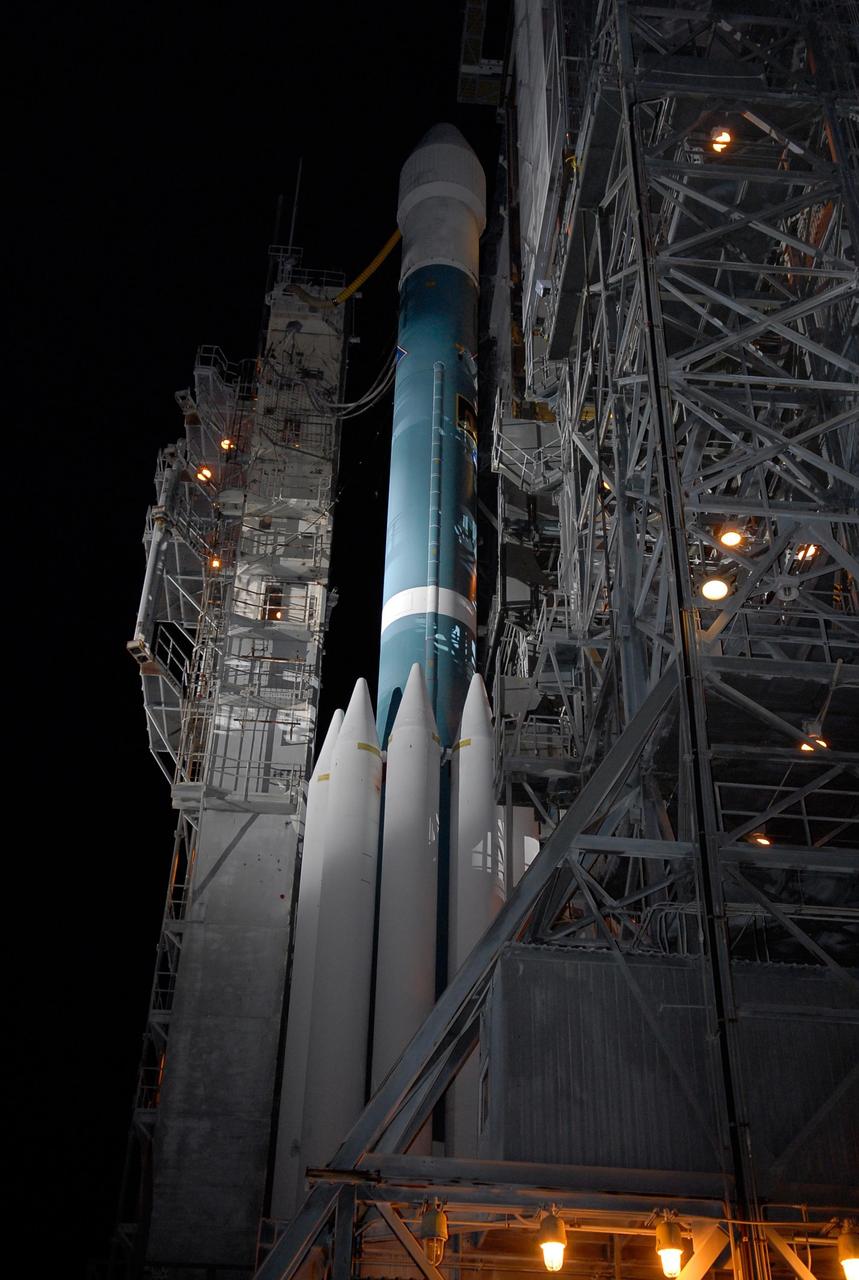
KENNEDY SPACE CENTER, FLA. -- The Delta II rocket is revealed as the mobile service tower, or gantry (at left), is retracted on Launch Pad 17B at Cape Canaveral Air Force Station. Starting with a boost from this higher thrust version of the Delta II rocket, the Dawn spacecraft will study the asteroid Vesta and dwarf planet Ceres, celestial bodies believed to have accreted early in the history of the solar system. To carry out its scientific mission during its nearly decade-long mission, Dawn will carry a visible camera, a visible and infrared mapping spectrometer, and a gamma ray and neutron spectrometer, whose data will be used in combination to characterize these bodies. In addition to the three instruments, radiometric and optical navigation data will provide data relating to the gravity field, and thus, bulk properties and internal structure of the two bodies. Data returned from the Dawn spacecraft could provide opportunities for significant breakthroughs in our knowledge of how the solar system formed. Launch is targeted for Sept. 27 during a window that extends from 7:20 to 7:49 a.m. EDT. Photo credit: NASA/Kim Shiflett

KENNEDY SPACE CENTER, FLA. -- The Delta II rocket is revealed as the mobile service tower, or gantry (at right), is retracted on Launch Pad 17B at Cape Canaveral Air Force Station. Starting with a boost from this higher thrust version of the Delta II rocket, the Dawn spacecraft will study the asteroid Vesta and dwarf planet Ceres, celestial bodies believed to have accreted early in the history of the solar system. To carry out its scientific mission during its nearly decade-long mission, Dawn will carry a visible camera, a visible and infrared mapping spectrometer, and a gamma ray and neutron spectrometer, whose data will be used in combination to characterize these bodies. In addition to the three instruments, radiometric and optical navigation data will provide data relating to the gravity field, and thus, bulk properties and internal structure of the two bodies. Data returned from the Dawn spacecraft could provide opportunities for significant breakthroughs in our knowledge of how the solar system formed. Launch is targeted for Sept. 27 during a window that extends from 7:20 to 7:49 a.m. EDT. Photo credit: NASA/Kim Shiflett
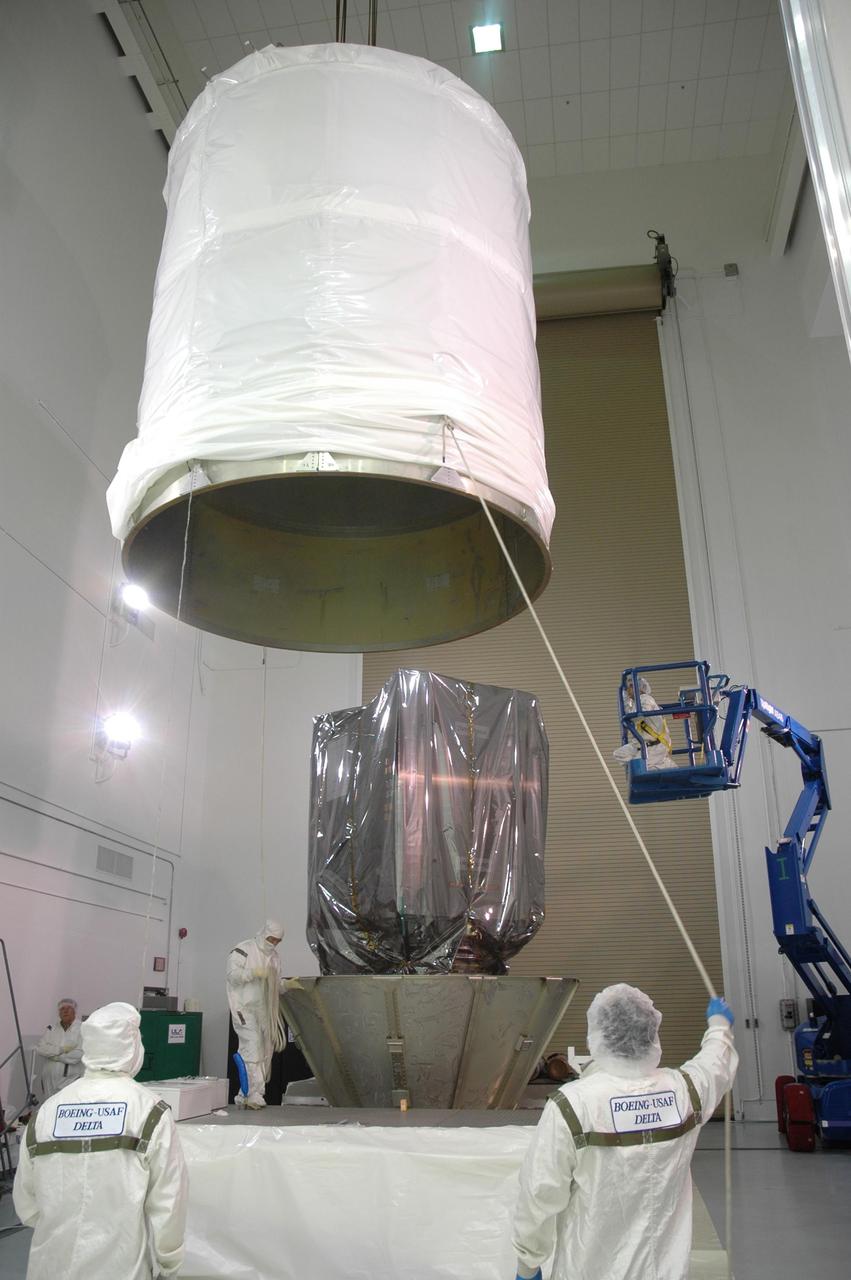
KENNEDY SPACE CENTER, FLA. -- At Astrotech Space Operations in Titusville, Fla., workers guide the upper transportation canister toward the Dawn spacecraft in the background. The canister will be lowered onto the lower segments and attached. The canister will protect the spacecraft and booster during transfer to Launch Pad 17-B at Cape Canaveral Air Force Station (CCAFS). During its nearly decade-long mission, the Dawn mission will study the asteroid Vesta and dwarf planet Ceres, celestial bodies believed to have accreted early in the history of the solar system. To carry out its scientific mission, the Dawn spacecraft will carry a visible camera, a visible and infrared mapping spectrometer, and a gamma ray and neutron spectrometer, whose data will be used in combination to characterize these bodies. In addition to the three instruments, radiometric and optical navigation data will provide data relating to the gravity field and thus bulk properties and internal structure of the two bodies. Data returned from the Dawn spacecraft could provide opportunities for significant breakthroughs in our knowledge of how the solar system formed. Launch via a Delta II rocket is scheduled in a window from 7:25 to 7:54 a.m. Sept. 26 from CCAFS. Photo credit: NASA/Jim Grossmann
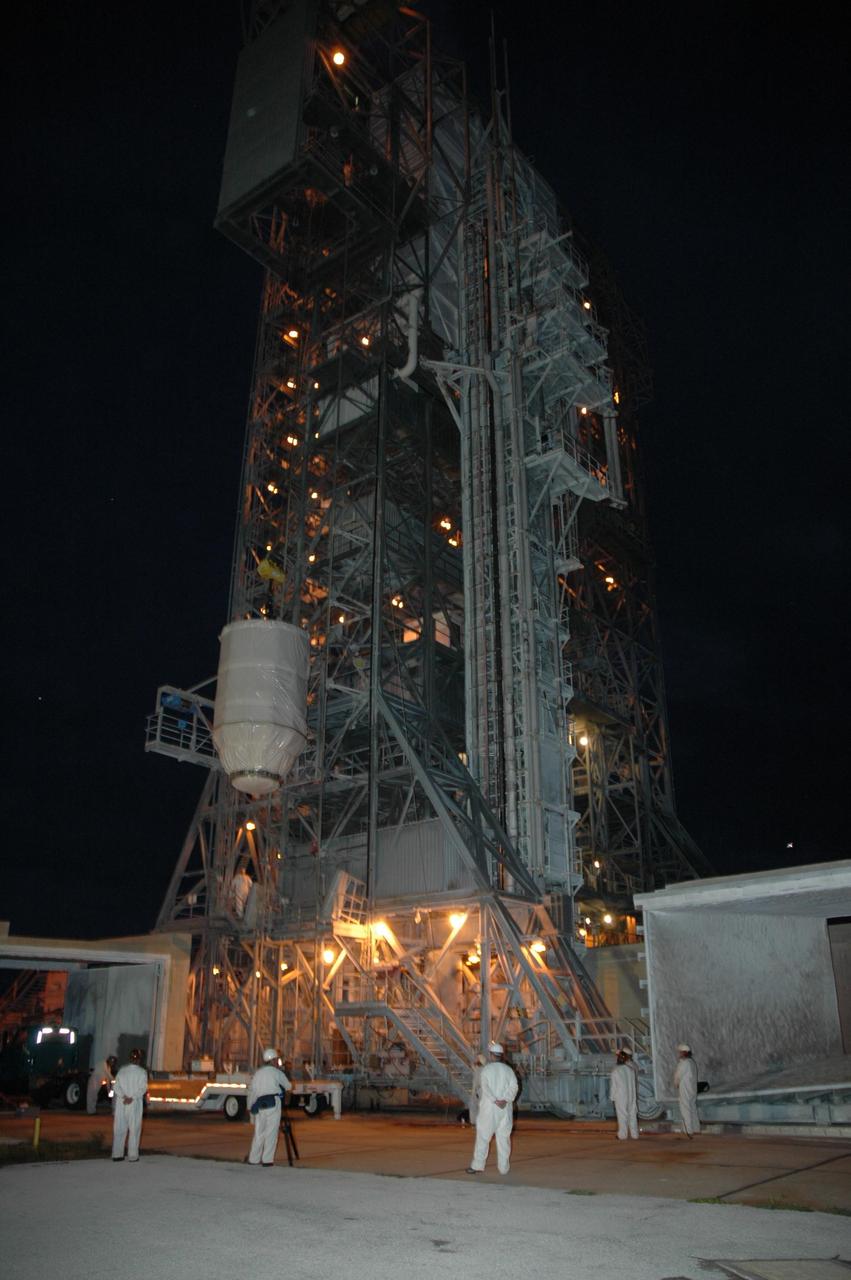
KENNEDY SPACE CENTER, FLA. -- On Launch Pad 17-B at Cape Canaveral Air Force Station, the Dawn spacecraft is lifted alongside the mobile service tower. At the top, Dawn will be prepared for mating with the awaiting Delta II rocket. Dawn is scheduled for launch in a window from 7:25 to 7:54 a.m. Sept. 26 from CCAFS. During its nearly decade-long mission, the Dawn mission will study the asteroid Vesta and dwarf planet Ceres, celestial bodies believed to have accreted early in the history of the solar system. To carry out its scientific mission, the Dawn spacecraft will carry a visible camera, a visible and infrared mapping spectrometer, and a gamma ray and neutron spectrometer, whose data will be used in combination to characterize these bodies. In addition to the three instruments, radiometric and optical navigation data will provide data relating to the gravity field and thus bulk properties and internal structure of the two bodies. Data returned from the Dawn spacecraft could provide opportunities for significant breakthroughs in our knowledge of how the solar system formed. Photo credit: NASA/Jack Pfaller
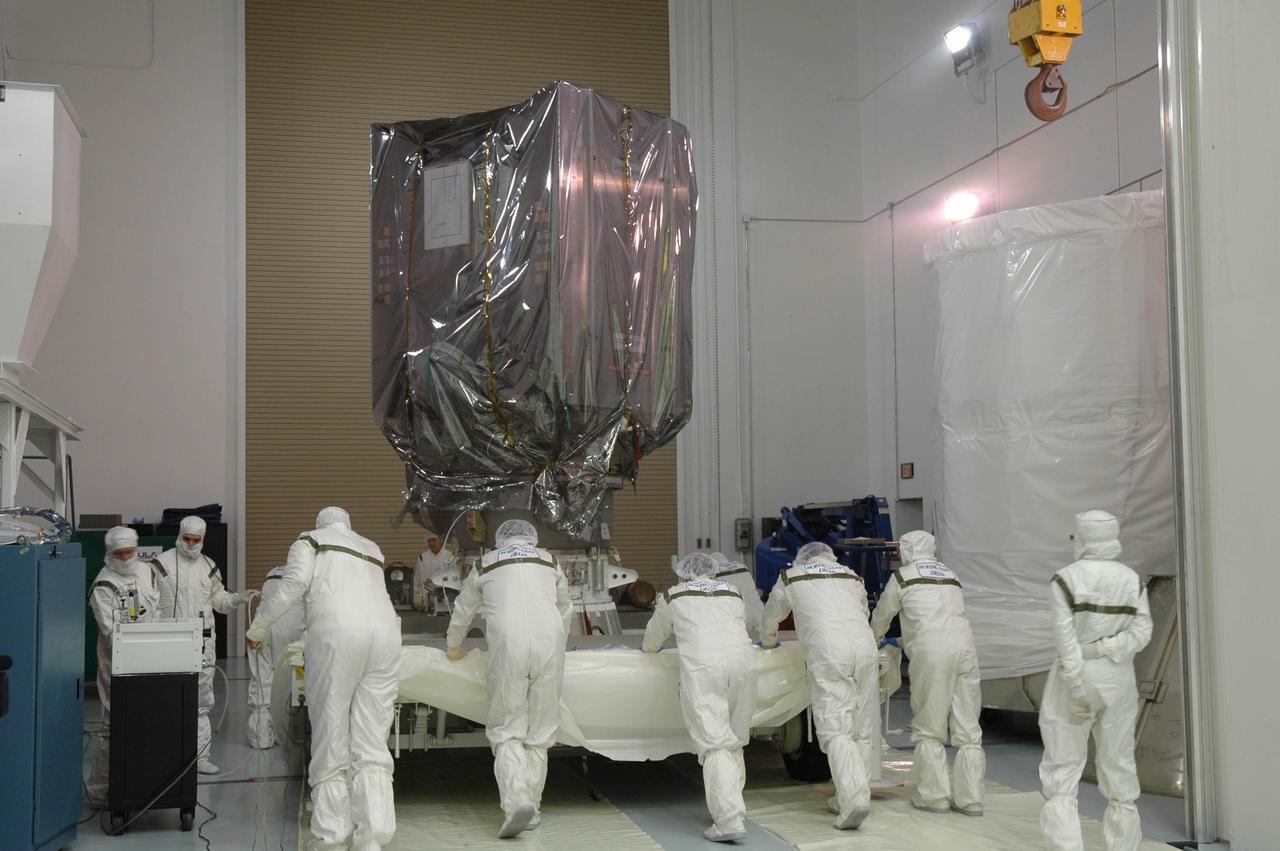
KENNEDY SPACE CENTER, FLA. -- At Astrotech Space Operations in Titusville, Fla., workers move the platform with the Dawn spacecraft. They are preparing to install the transportation canister around Dawn for transfer to Launch Pad 17-B at Cape Canaveral Air Force Station (CCAFS). During its nearly decade-long mission, the Dawn mission will study the asteroid Vesta and dwarf planet Ceres, celestial bodies believed to have accreted early in the history of the solar system. To carry out its scientific mission, the Dawn spacecraft will carry a visible camera, a visible and infrared mapping spectrometer, and a gamma ray and neutron spectrometer, whose data will be used in combination to characterize these bodies. In addition to the three instruments, radiometric and optical navigation data will provide data relating to the gravity field and thus bulk properties and internal structure of the two bodies. Data returned from the Dawn spacecraft could provide opportunities for significant breakthroughs in our knowledge of how the solar system formed. Launch via a Delta II rocket is scheduled in a window from 7:25 to 7:54 a.m. Sept. 26 from CCAFS. Photo credit: NASA/Jim Grossmann

KENNEDY SPACE CENTER, FLA. -- On Launch Pad 17-B at Cape Canaveral Air Force Station, workers in the mobile service tower keep watch as the Dawn spacecraft is lowered toward the awaiting Delta II rocket. Dawn will be mated with the Delta in preparation for launch. Dawn is scheduled for launch in a window from 7:25 to 7:54 a.m. Sept. 26 from CCAFS. During its nearly decade-long mission, the Dawn mission will study the asteroid Vesta and dwarf planet Ceres, celestial bodies believed to have accreted early in the history of the solar system. To carry out its scientific mission, the Dawn spacecraft will carry a visible camera, a visible and infrared mapping spectrometer, and a gamma ray and neutron spectrometer, whose data will be used in combination to characterize these bodies. In addition to the three instruments, radiometric and optical navigation data will provide data relating to the gravity field and thus bulk properties and internal structure of the two bodies. Data returned from the Dawn spacecraft could provide opportunities for significant breakthroughs in our knowledge of how the solar system formed. Photo credit: NASA/Jack Pfaller
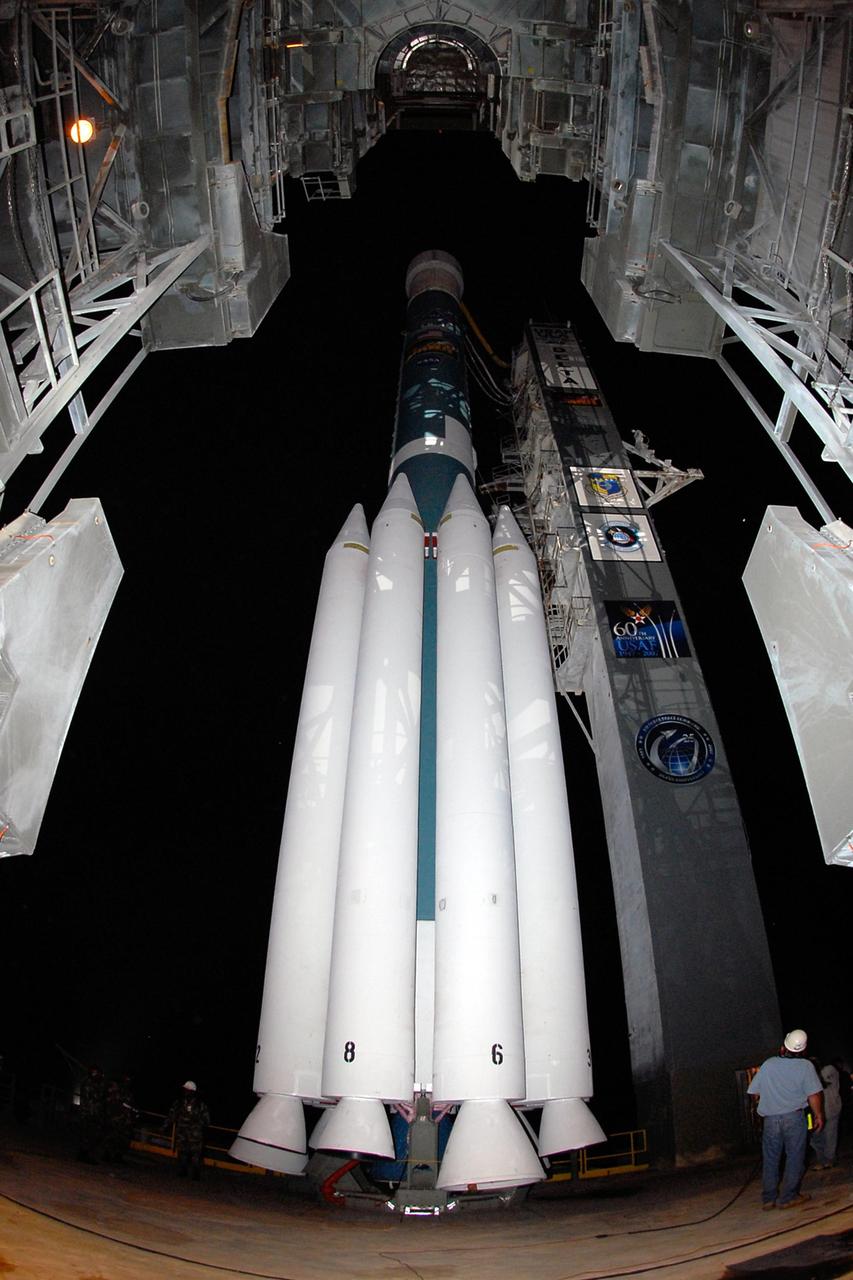
KENNEDY SPACE CENTER, FLA. -- A worker monitors the progress of the retraction of the mobile service tower, or gantry, from the Delta II rocket on Launch Pad 17B at Cape Canaveral Air Force Station. Starting with a boost from this higher thrust version of the Delta II rocket, the Dawn spacecraft will study the asteroid Vesta and dwarf planet Ceres, celestial bodies believed to have accreted early in the history of the solar system. To carry out its scientific mission during its nearly decade-long mission, Dawn will carry a visible camera, a visible and infrared mapping spectrometer, and a gamma ray and neutron spectrometer, whose data will be used in combination to characterize these bodies. In addition to the three instruments, radiometric and optical navigation data will provide data relating to the gravity field, and thus, bulk properties and internal structure of the two bodies. Data returned from the Dawn spacecraft could provide opportunities for significant breakthroughs in our knowledge of how the solar system formed. Launch is targeted for Sept. 27 during a window that extends from 7:20 to 7:49 a.m. EDT. Photo credit: NASA/Kim Shiflett

KENNEDY SPACE CENTER, FLA. -- On Launch Pad 17-B at Cape Canaveral Air Force Station, the Dawn spacecraft arrives at the upper level of the mobile service tower. It will be moved inside and prepared for mating with the awaiting Delta II rocket. Dawn is scheduled for launch in a window from 7:25 to 7:54 a.m. Sept. 26 from CCAFS. During its nearly decade-long mission, the Dawn mission will study the asteroid Vesta and dwarf planet Ceres, celestial bodies believed to have accreted early in the history of the solar system. To carry out its scientific mission, the Dawn spacecraft will carry a visible camera, a visible and infrared mapping spectrometer, and a gamma ray and neutron spectrometer, whose data will be used in combination to characterize these bodies. In addition to the three instruments, radiometric and optical navigation data will provide data relating to the gravity field and thus bulk properties and internal structure of the two bodies. Data returned from the Dawn spacecraft could provide opportunities for significant breakthroughs in our knowledge of how the solar system formed. Photo credit: NASA/Jack Pfaller
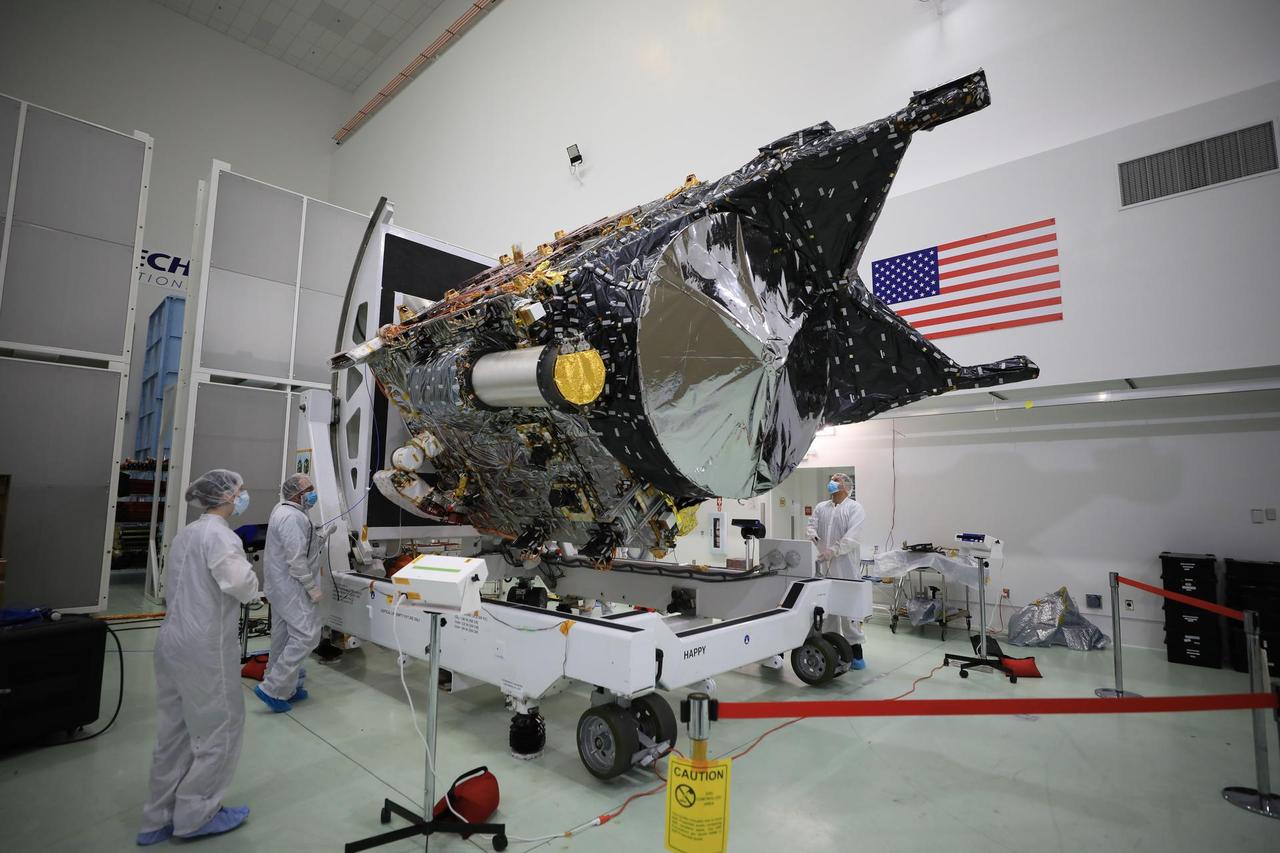
NASA's Psyche spacecraft is shown in a clean room on Dec. 8, 2022, at Astrotech Space Operations Facility near the agency's Kennedy Space Center in Florida. The spacecraft was powered on and connected to ground support equipment, enabling engineers and technicians to prepare it for launch in 2023. Teams working at Astrotech and at NASA's Jet Propulsion Laboratory in Southern California continue to monitor the health of its systems. After a one-year delay to complete critical testing, the Psyche project is targeting an October 2023 launch on a SpaceX Falcon Heavy rocket. NASA's Deep Space Optical Communications (DSOC) technology demonstration, testing high-data-rate laser communications, is integrated into Psyche and will travel with it when it launches to its target, a metal-rich asteroid, also named Psyche, that lies in the main asteroid belt. The silver-colored cylinder shown in the photo is the sunshade for DSOC, and the gold blanketing is the aperture cover for the DSOC payload. The spacecraft's target may be the partial core of a planetesimal, a building block of rocky planets in our solar system. Researchers will study Psyche using a suite of instruments including multispectral cameras, a Gamma Ray and Neutron Spectrometer (GRNS) and a magnetometer. The GRNS and magnetometer sensors are visible in the photo as the tips of the two black protrusions at the far end of the spacecraft. Also visible is the large, disc-shaped high-gain antenna, which will enable the spacecraft to communicate with Earth. https://photojournal.jpl.nasa.gov/catalog/PIA25664
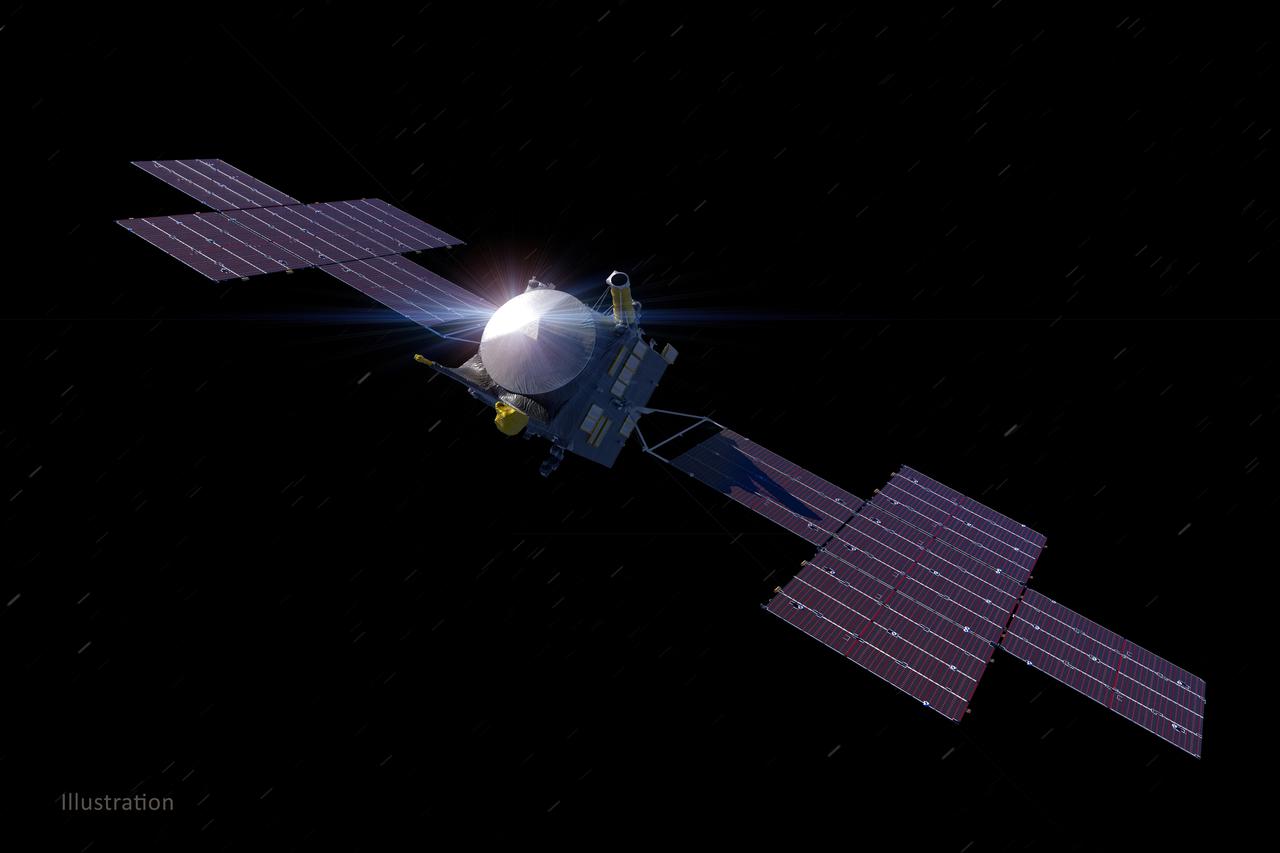
This illustration, updated as of March 2021, depicts NASA's Psyche spacecraft. Set to launch in August 2022, the Psyche mission will explore a metal-rich asteroid of the same name that lies in the main asteroid belt between Mars and Jupiter. The spacecraft will arrive in early 2026 and orbit the asteroid for nearly two years to investigate its composition. Scientists think that Psyche, unlike most other asteroids that are rocky or icy bodies, is made up of mostly iron and nickel — similar to Earth's core. The Psyche team will use a magnetometer to measure the asteroid's magnetic field. A multispectral imager will capture images of the surface, as well as data about Psyche's composition and topography. Spectrometers will analyze the neutrons and gamma rays coming from the surface to reveal the elements that make up the asteroid. Maxar Technologies in Palo Alto, California, built the main body of the spacecraft, called the Solar Electric Propulsion (SEP) Chassis. Maxar also will deliver the five-panel solar arrays, shown here, that will provide the power for the spacecraft systems. The image was created by Peter Rubin. https://photojournal.jpl.nasa.gov/catalog/PIA24473
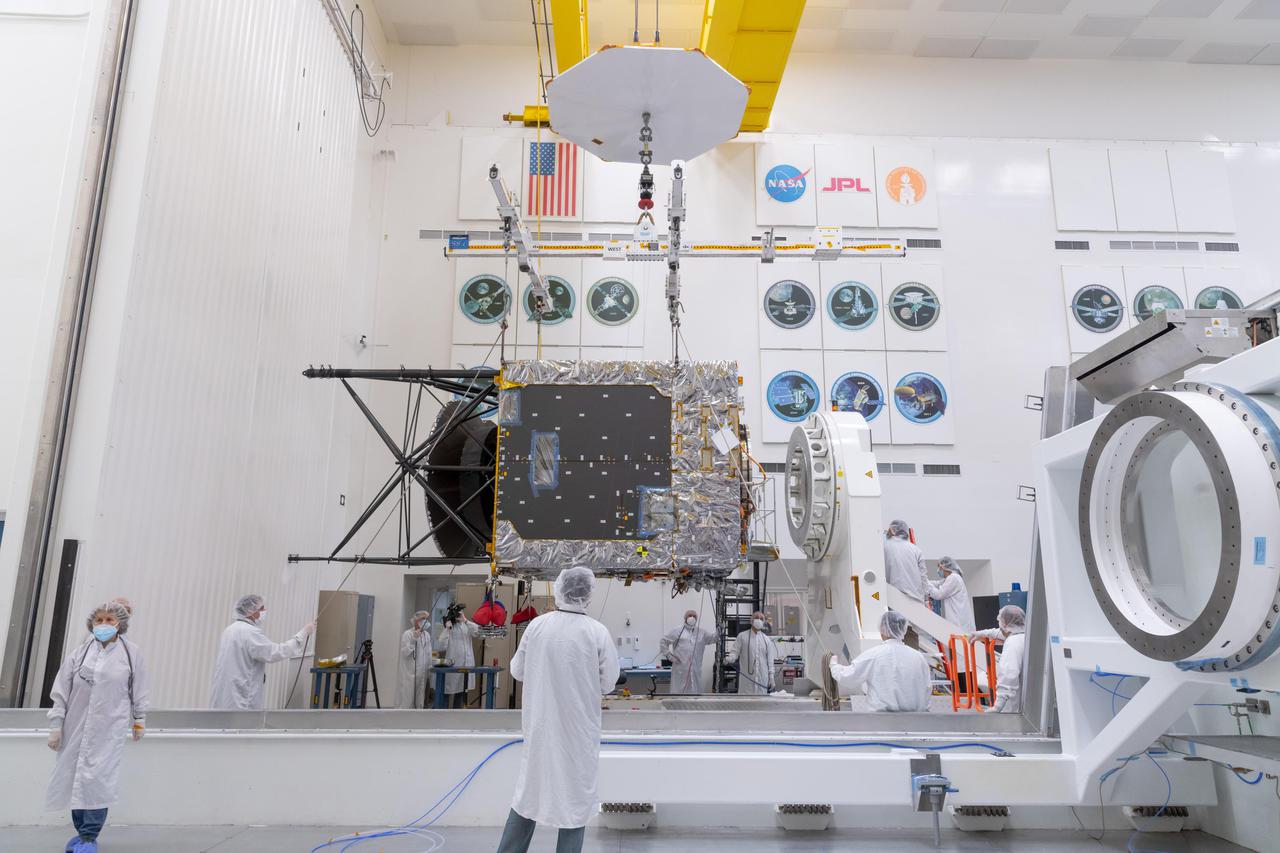
A major component of NASA's Psyche spacecraft has been delivered to the agency's Jet Propulsion Laboratory in Southern California, where the phase known as assembly, test, and launch operations (ATLO) is now underway. Taken on March 28, 2021, this photo shows the Solar Electric Propulsion (SEP) Chassis just after it was delivered to JPL by Maxar Technologies. Here, the chassis is about to be attached to the dolly in High Bay 1 of JPL's Spacecraft Assembly Facility. Maxar's team in Palo Alto, California, designed and built the SEP Chassis, which includes all the primary and secondary structure and the hardware components needed for the high-power electrical system, the propulsion system, the thermal system, guidance and navigation sensors and actuators, and the high-gain antenna. Over the next year additional hardware will be added to the spacecraft, including the command and data handling system, a power distribution assembly, the X-band telecommunications hardware suite, three science instruments (two imagers, two magnetometers, and a Gamma Ray Neutron Spectrometer), and a deep space optical communications technology demonstrator. The spacecraft will finish assembly and then undergo rigorous checkout and testing before being shipped to NASA's Kennedy Space Center in Cape Canaveral, Florida, for an August 2022 launch to the main asteroid belt. Psyche will arrive at the metal-rich asteroid of the same name in 2026, orbiting for 21 months to investigate its composition. Scientists think that Psyche is made up of mostly iron and nickel — similar to Earth's core. Exploring the asteroid could give valuable insight into how our own planet and others formed. https://photojournal.jpl.nasa.gov/catalog/PIA24474
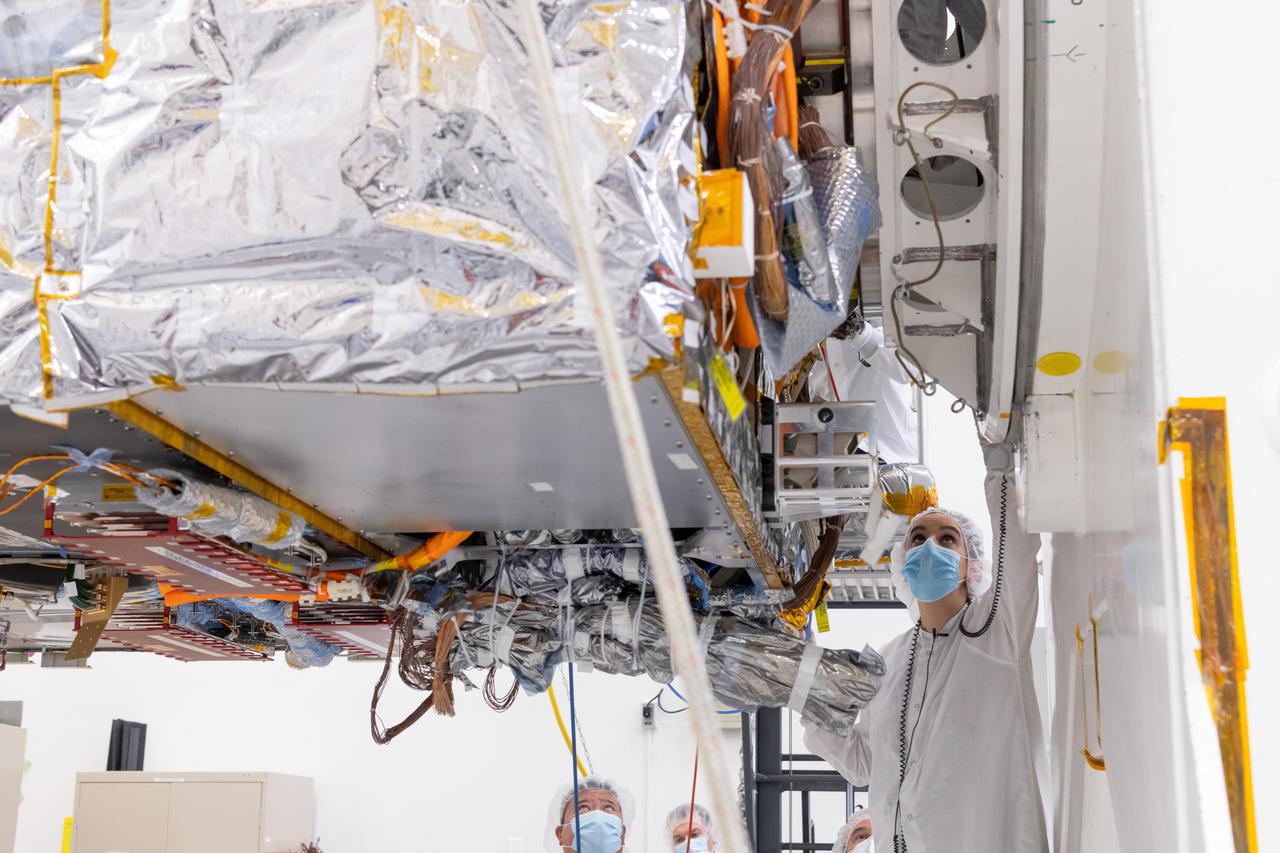
The Solar Electric Propulsion (SEP) Chassis of NASA's Psyche spacecraft is mounted onto a rotation fixture in High Bay 1 of the Spacecraft Assembly Facility at NASA's Jet Propulsion Laboratory in Southern California. This photo was taken March 28, 2021, just after the chassis — a major component of the Psyche spacecraft — was delivered to JPL by Maxar Technologies. Maxar's team in Palo Alto, California, designed and built the chassis, which includes all the primary and secondary structure and the hardware components needed for the high-power electrical system, the propulsion system, the thermal system, guidance and navigation sensors and actuators, and the high-gain antenna. The phase known as assembly test, and launch operations (ATLO) for Psyche is now underway at JPL. In this photo, ATLO Mechanical Lead Michelle Colizzi of JPL oversees the docking of the chassis to the dolly. Over the next year additional hardware will be added to the spacecraft including the command and data handling system, a power distribution assembly, the X-band telecommunications hardware suite, three science instruments (two imagers, two magnetometers, and a Gamma Ray Neutron Spectrometer), and a deep space optical communications technology demonstrator. The spacecraft will finish assembly and then undergo rigorous checkout and testing, before it's shipped to NASA's Kennedy Space Center in Cape Canaveral, Florida, for an August 2022 launch to the main asteroid belt. Psyche will arrive at the metal-rich asteroid of the same name in 2026, orbiting for 21 months to investigate its composition. Scientists think that Psyche is made up of mostly iron and nickel — similar to Earth's core. Exploring the asteroid could give valuable insight into how our own planet and others formed. https://photojournal.jpl.nasa.gov/catalog/PIA24476

A major component of NASA's Psyche spacecraft has been delivered to NASA's Jet Propulsion Laboratory in Southern California, where the phase known as assembly, test, and launch operations (ATLO) is now underway. This photo, shot March 28, 2021 shows engineers and technicians preparing to move the Solar Electric Propulsion (SEP) Chassis from its shipping container to a dolly in High Bay 1 of JPL's Spacecraft Assembly Facility. The photo was captured just after the chassis was delivered to JPL by Maxar Technologies. Maxar's team in Palo Alto, California, designed and built the SEP Chassis, which includes all the primary and secondary structure and the hardware components needed for the high-power electrical system, the propulsion system, the thermal system, guidance and navigation sensors and actuators, and the high-gain antenna. Over the next year, additional hardware will be added to the spacecraft including the command and data handling system, a power distribution assembly, the X-band telecommunications hardware suite, three science instruments (two imagers, two magnetometers, and a gamma ray neutron Spectrometer), and a deep space optical communications technology demonstrator. The spacecraft will finish assembly and then undergo rigorous checkout and testing before being shipped to NASA's Kennedy Space Center in Cape Canaveral, Florida, for an August 2022 launch to the main asteroid belt. Psyche will arrive at the metal-rich asteroid of the same name in 2026, orbiting for 21 months to investigate its composition. Scientists think that Psyche is made up of mostly iron and nickel — similar to Earth's core. Exploring the asteroid could give valuable insight into how our own planet and others formed. https://photojournal.jpl.nasa.gov/catalog/PIA24475
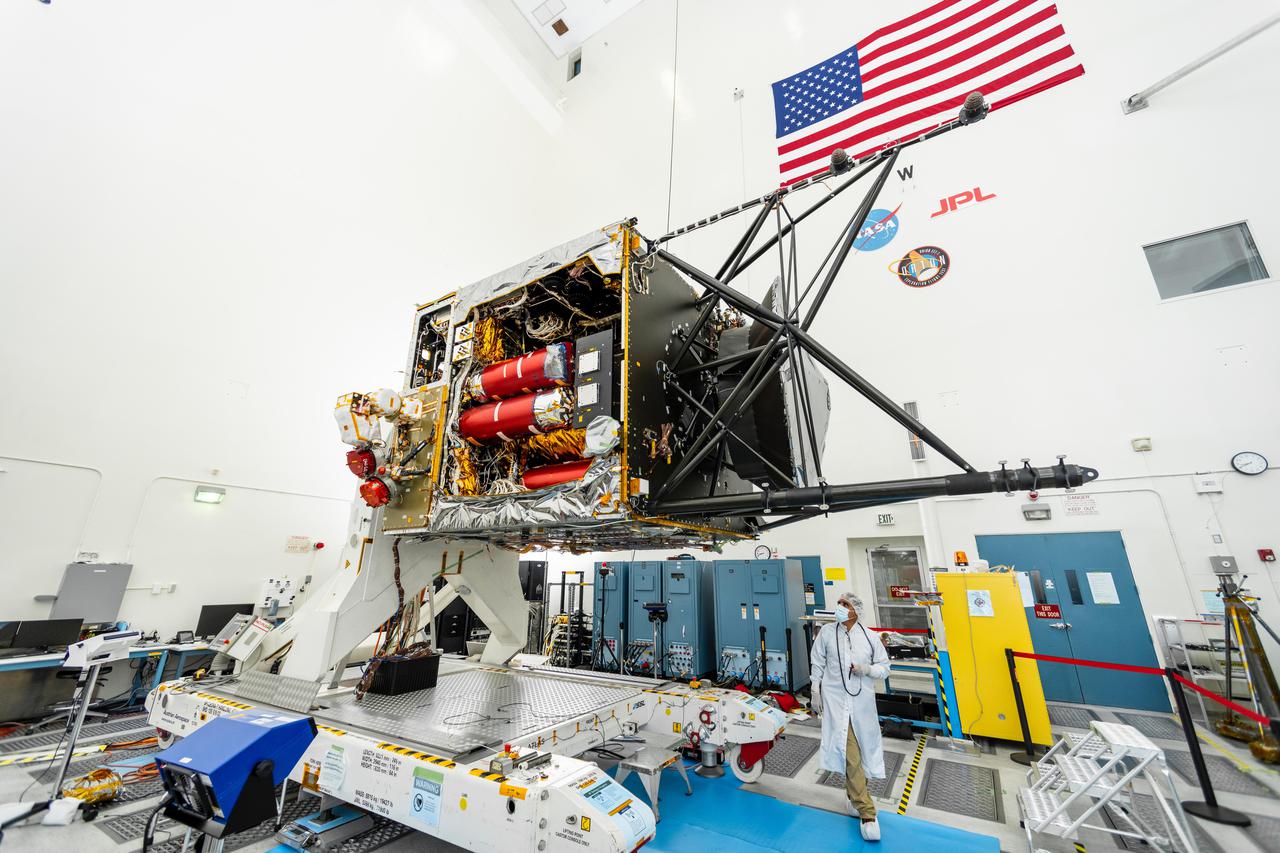
NASA's Psyche spacecraft is captured here on August 18, 2021, in a clean room at the agency's Jet Propulsion Laboratory in Southern California – in the midst of system integration and test. The mission's launch period opens August 1, 2022. The nitrogen tanks are visible in the center of the spacecraft chassis, encased in red protective "remove before flight" covers. Mounted on the right is the strut tower, which will host the sensors for two of the science instruments – the magnetometer and the Gamma Ray and Neutron Spectrometer (GRNS). By spring of 2022, the fully assembled Psyche spacecraft will ship from JPL to NASA's Kennedy Space Center for launch. In early 2026, the spacecraft will arrive at its target, an asteroid of the same name in the main asteroid belt between Mars and Jupiter. Scientists believe asteroid Psyche, which is about 140 miles (226 kilometers) wide, is made largely of iron and nickel and could be the core of an early planet. The spacecraft will spend 21 months orbiting the asteroid and gathering science data. Besides the magnetometer and the GRNS, Psyche will carry a multispectral imager. The mission also will test a sophisticated new laser communications technology, recently completed by JPL, called Deep Space Optical Communications (DSOC). The technology demonstration will focus on using lasers to enhance communications speeds and prepare for data-intensive transmissions, which could potentially include livestream videos for future missions. Arizona State University leads the mission. JPL is responsible for the mission's overall management, system engineering, integration and testing, and mission operations. Maxar Technologies is providing a high-power solar electric propulsion spacecraft chassis. Psyche is the 14th mission selected as part of NASA's Discovery Program. https://photojournal.jpl.nasa.gov/catalog/PIA24787
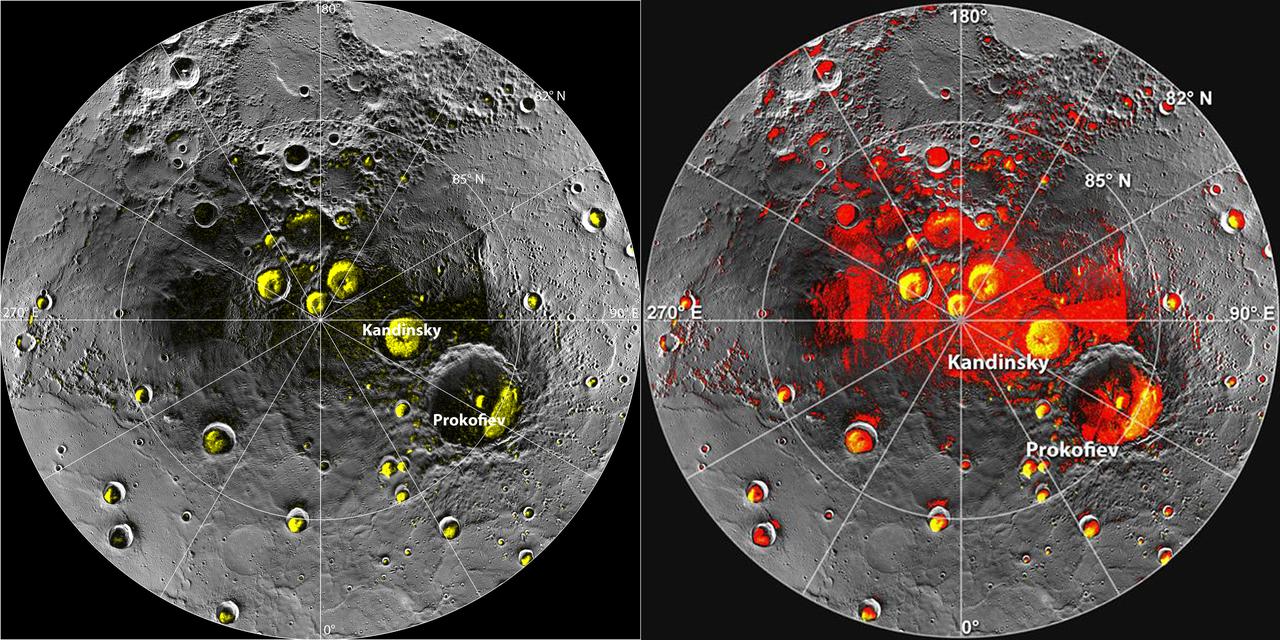
New observations by the MESSENGER spacecraft provide compelling support for the long-held hypothesis that Mercury harbors abundant water ice and other frozen volatile materials in its permanently shadowed polar craters. Three independent lines of evidence support this conclusion: the first measurements of excess hydrogen at Mercury's north pole with MESSENGER's Neutron Spectrometer, the first measurements of the reflectance of Mercury's polar deposits at near-infrared wavelengths with the Mercury Laser Altimeter (MLA), and the first detailed models of the surface and near-surface temperatures of Mercury's north polar regions that utilize the actual topography of Mercury's surface measured by the MLA. These findings are presented in three papers published online today in Science Express. Given its proximity to the Sun, Mercury would seem to be an unlikely place to find ice. But the tilt of Mercury's rotational axis is almost zero — less than one degree — so there are pockets at the planet's poles that never see sunlight. Scientists suggested decades ago that there might be water ice and other frozen volatiles trapped at Mercury's poles. The idea received a boost in 1991, when the Arecibo radio telescope in Puerto Rico detected unusually radar-bright patches at Mercury's poles, spots that reflected radio waves in the way one would expect if there were water ice. Many of these patches corresponded to the location of large impact craters mapped by the Mariner 10 spacecraft in the 1970s. But because Mariner saw less than 50 percent of the planet, planetary scientists lacked a complete diagram of the poles to compare with the images. MESSENGER's arrival at Mercury last year changed that. Images from the spacecraft's Mercury Dual Imaging System taken in 2011 and earlier this year confirmed that radar-bright features at Mercury's north and south poles are within shadowed regions on Mercury's surface, findings that are consistent with the water-ice hypothesis. To read more go to: <a href="http://1.usa.gov/TtNwM2" rel="nofollow">1.usa.gov/TtNwM2</a> Image Credit: NASA/Johns Hopkins University Applied Physics Laboratory/Carnegie Institution of Washington/National Astronomy and Ionosphere Center, Arecibo Observatory <b><a href="http://www.nasa.gov/audience/formedia/features/MP_Photo_Guidelines.html" rel="nofollow">NASA image use policy.</a></b> <b><a href="http://www.nasa.gov/centers/goddard/home/index.html" rel="nofollow">NASA Goddard Space Flight Center</a></b> enables NASA’s mission through four scientific endeavors: Earth Science, Heliophysics, Solar System Exploration, and Astrophysics. Goddard plays a leading role in NASA’s accomplishments by contributing compelling scientific knowledge to advance the Agency’s mission. <b>Follow us on <a href="http://twitter.com/NASA_GoddardPix" rel="nofollow">Twitter</a></b> <b>Like us on <a href="http://www.facebook.com/pages/Greenbelt-MD/NASA-Goddard/395013845897?ref=tsd" rel="nofollow">Facebook</a></b> <b>Find us on <a href="http://instagram.com/nasagoddard?vm=grid" rel="nofollow">Instagram</a></b>