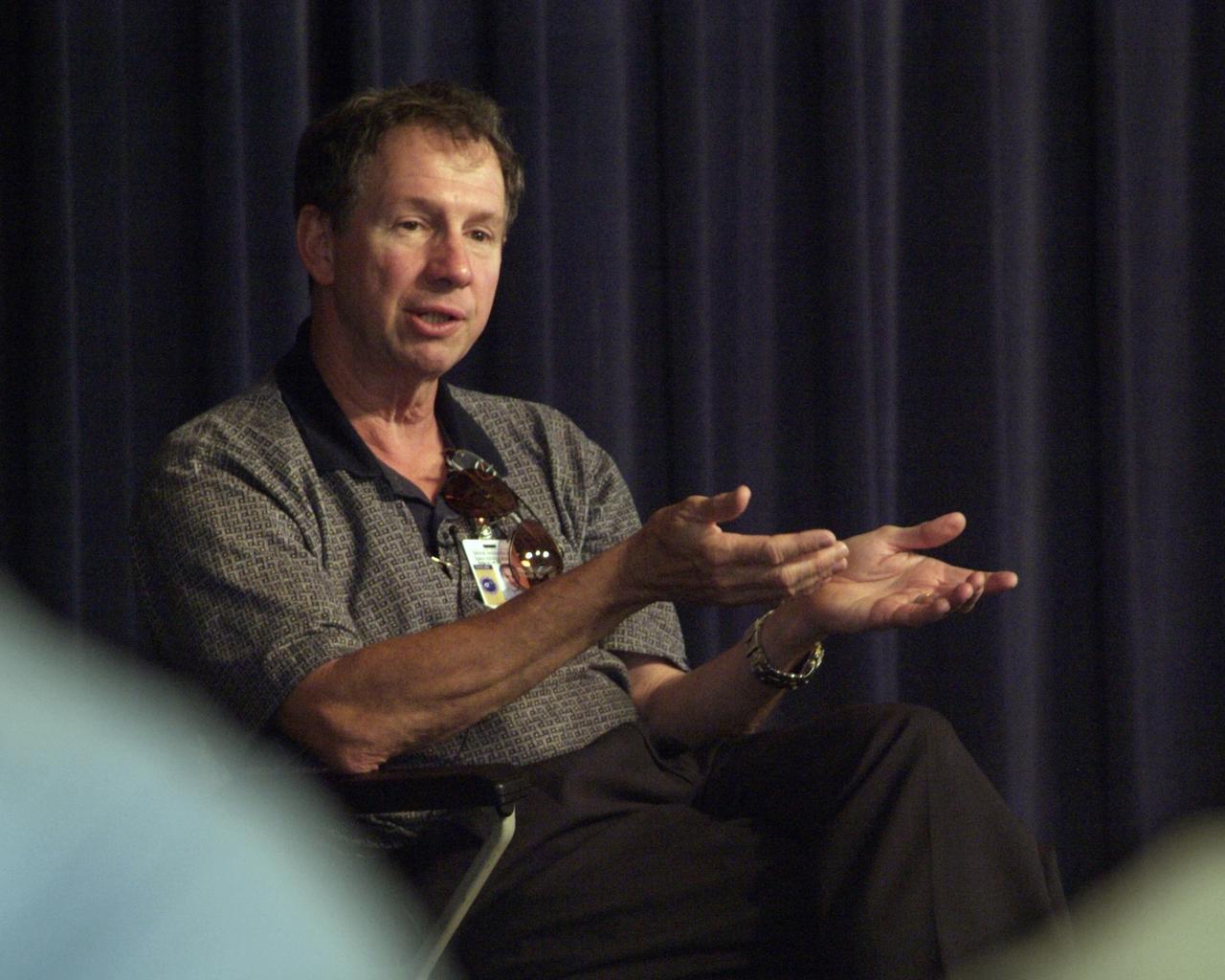
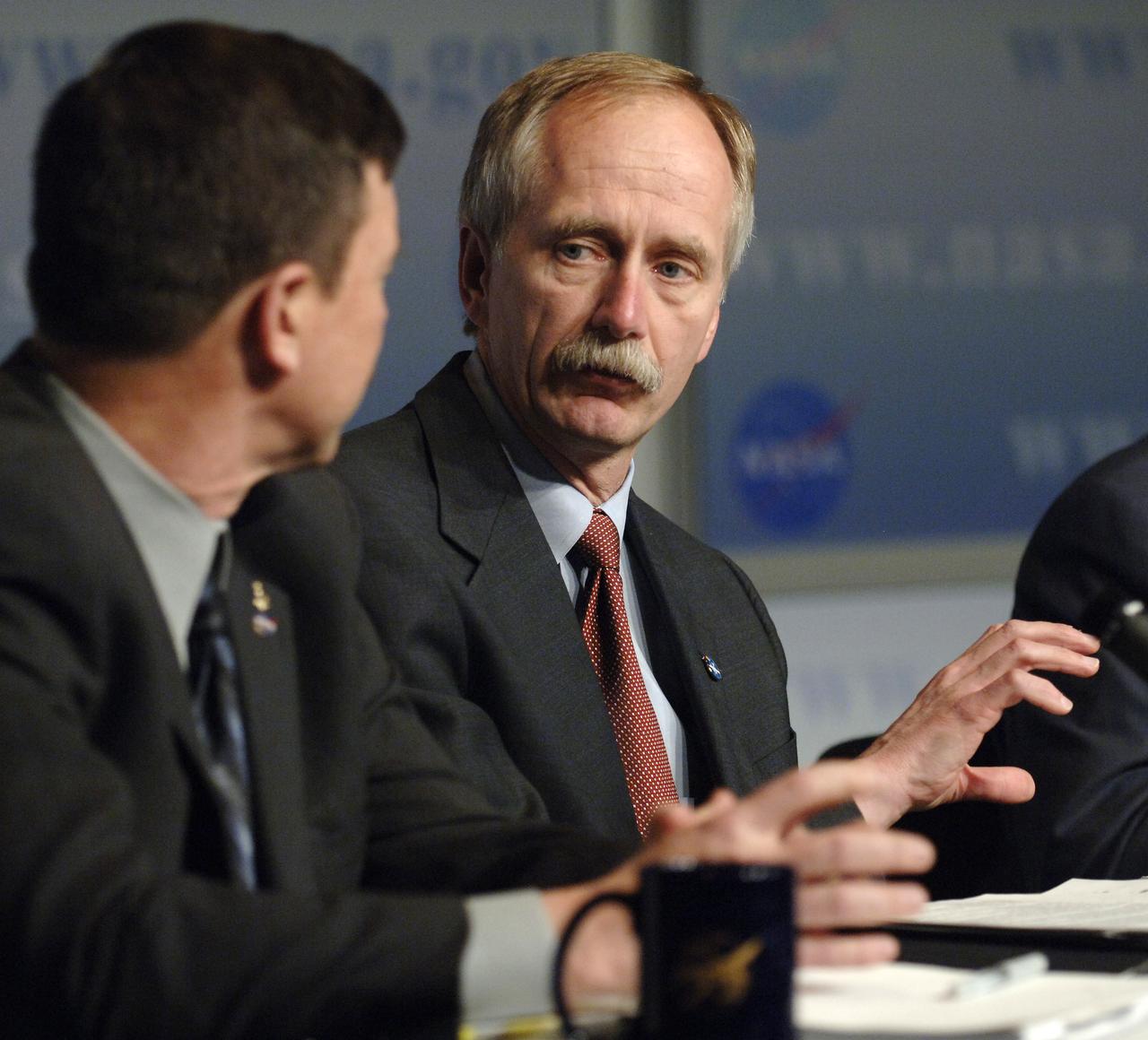
New NASA Administrator Michael Griffin makes a point during a town hall meeting with NASA Dryden employees on Tuesday, May 24, 2005.
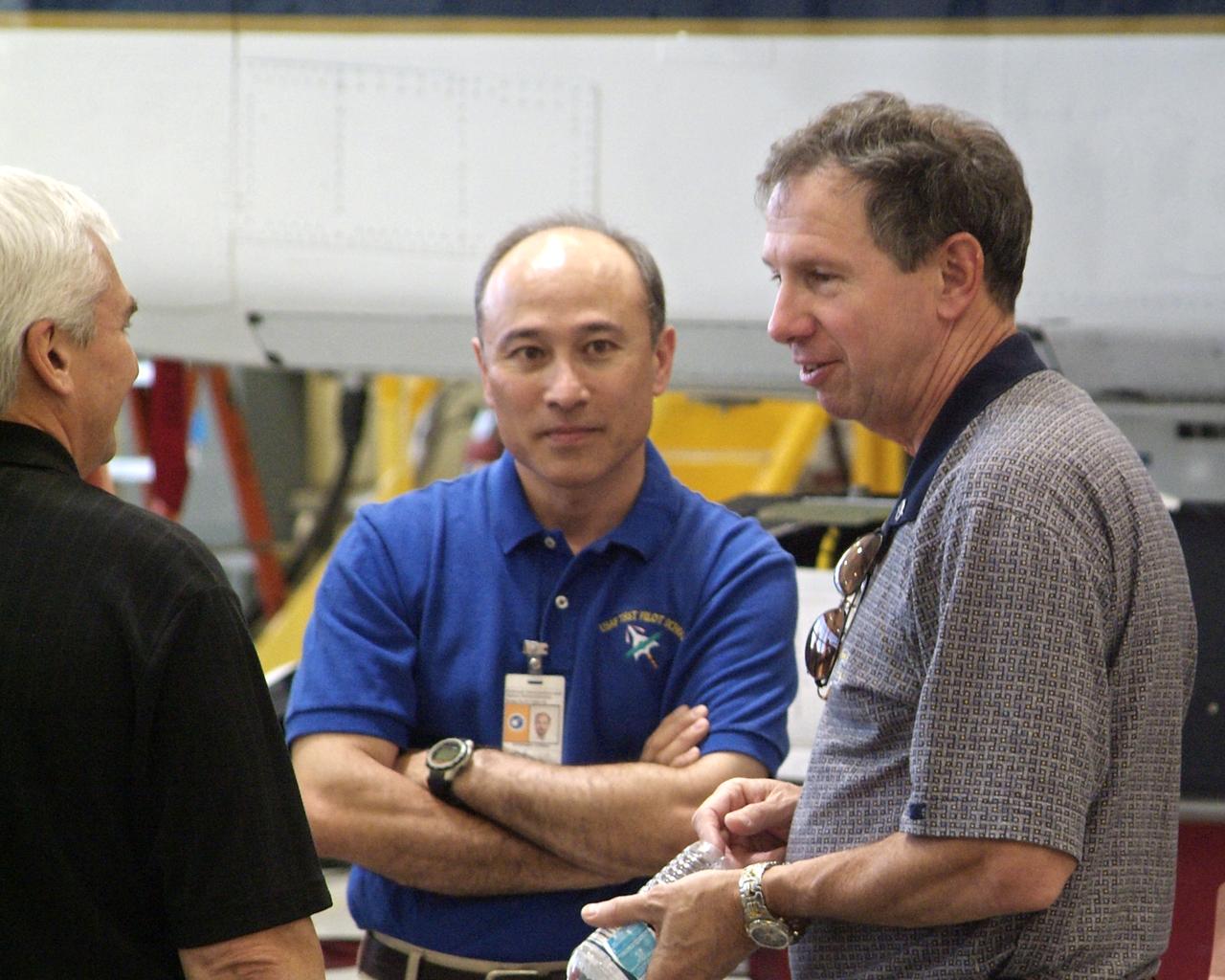
New NASA Administrator Michael Griffin (right) shares a moment with Director Kevin Petersen (left) and F-15B project manager Stephen Corda (center) during Griffin's visit to NASA Dryden Flight Research Center on Tuesday, May 24.
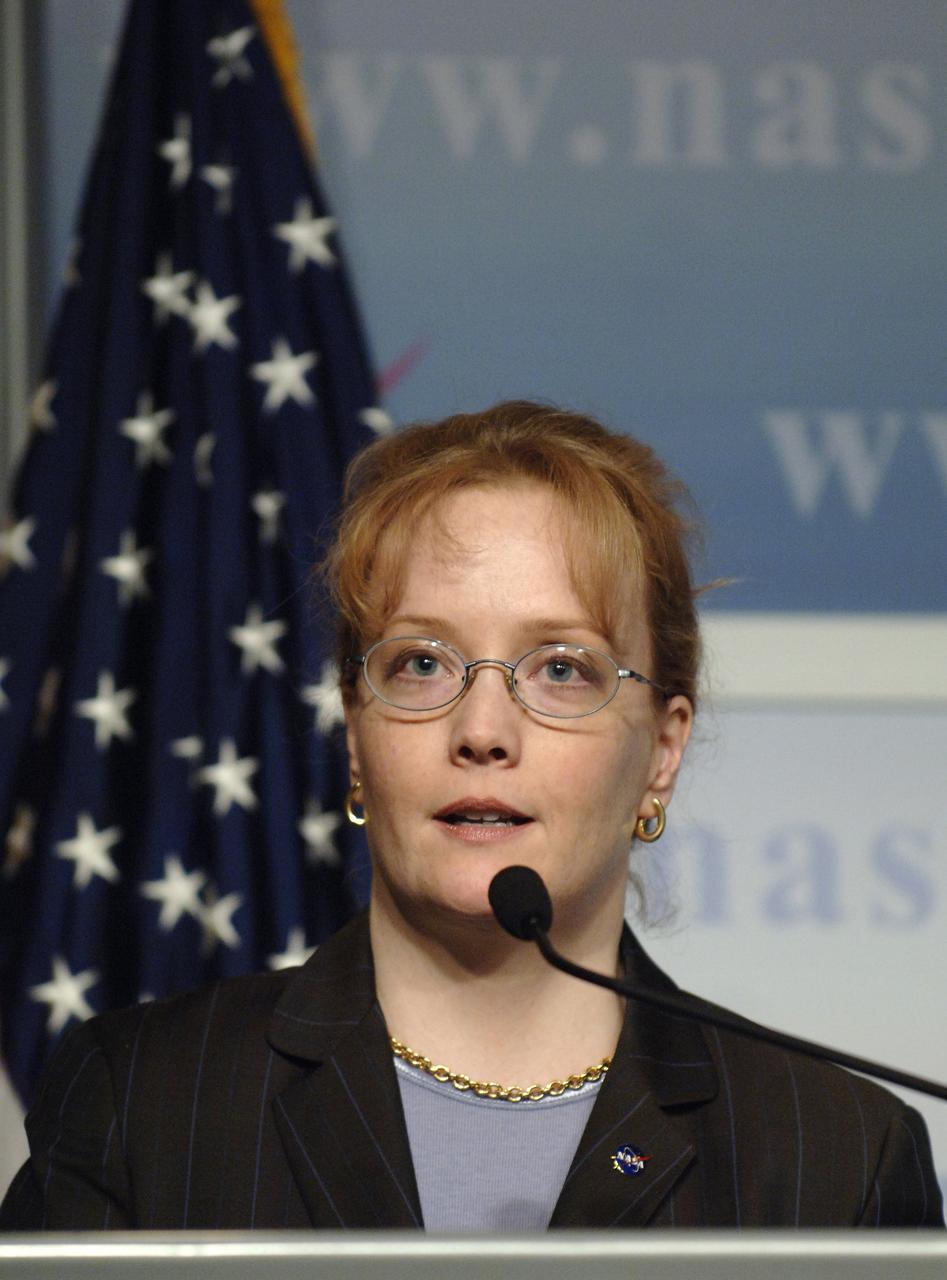
NASA Deputy Administrator Shana Dale introduces NASA Administrator Michael Griffin who outlined the President's budget for fiscal year 2007 during a news conference, Monday, Feb. 6, 2006, at NASA Headquarters in Washington. Photo Credit: (NASA/Bill Ingalls)
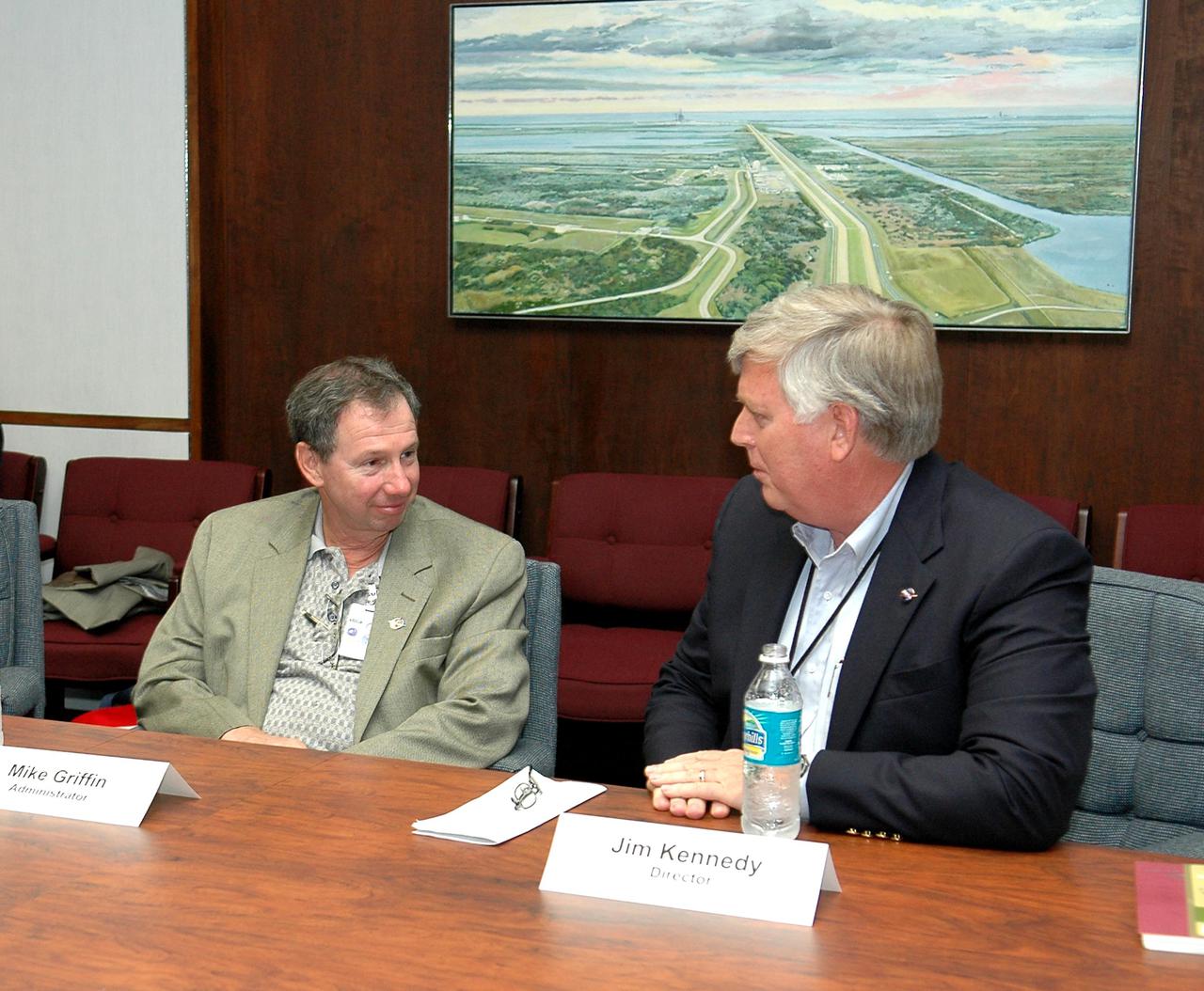
KENNEDY SPACE CENTER, FLA. - Dr. Michael Griffin (left), the new administrator of the National Aeronautics and Space Administration (NASA), meets with James W. Kennedy, the director of the John F. Kennedy Space Center (KSC) in Florida, during Griffin's first official visit to the Center. Griffin is the 11th administrator of NASA, a role he assumed on April 14, 2005. Griffin was nominated to the position in March by President George W. Bush while serving as the Space Department head at Johns Hopkins University's Applied Physics Laboratory in Baltimore. A registered professional engineer in Maryland and California, Griffin served as chief engineer at NASA earlier in his career. He holds numerous scientific and technical degrees including a Ph.D. in Aerospace Engineering from the University of Maryland.
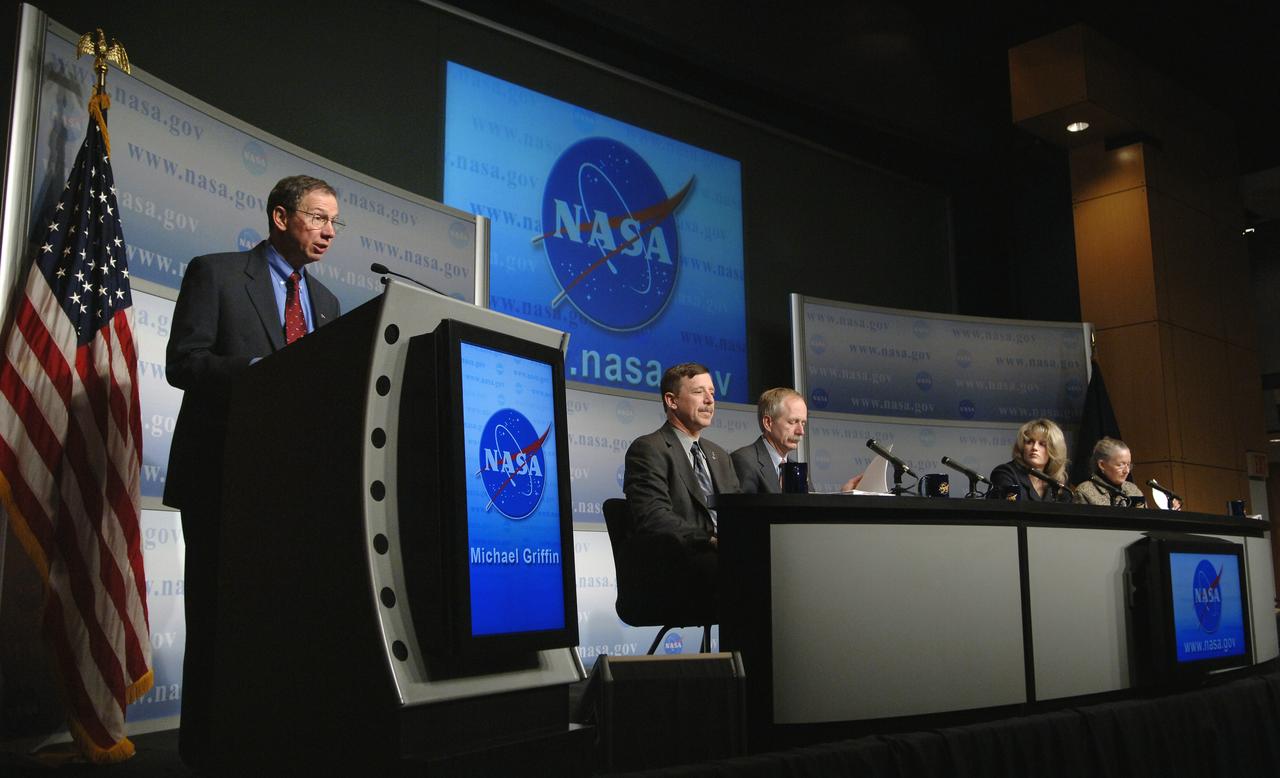
NASA Administrator Michael Griffin outlines the President's budget for fiscal year 2007 during a news conference, Monday, Feb. 6, 2006, at NASA Headquarters in Washington. Griffin was joined by the heads of NASA's four mission directorates to explain how the proposed $16.8 billion dollar budget supports the Vision for Space Exploration. Seated left to right: Scott Horowitz, NASA Associate Administrator for Exploration Systems, William Gerstenmaier, NASA Associate Administrator for Space Operations, Lisa Porter, NASA Associate Administrator for Aeronautics Research and Mary Cleave, NASA Associate Administrator for Science. Photo Credit: (NASA/Bill Ingalls)
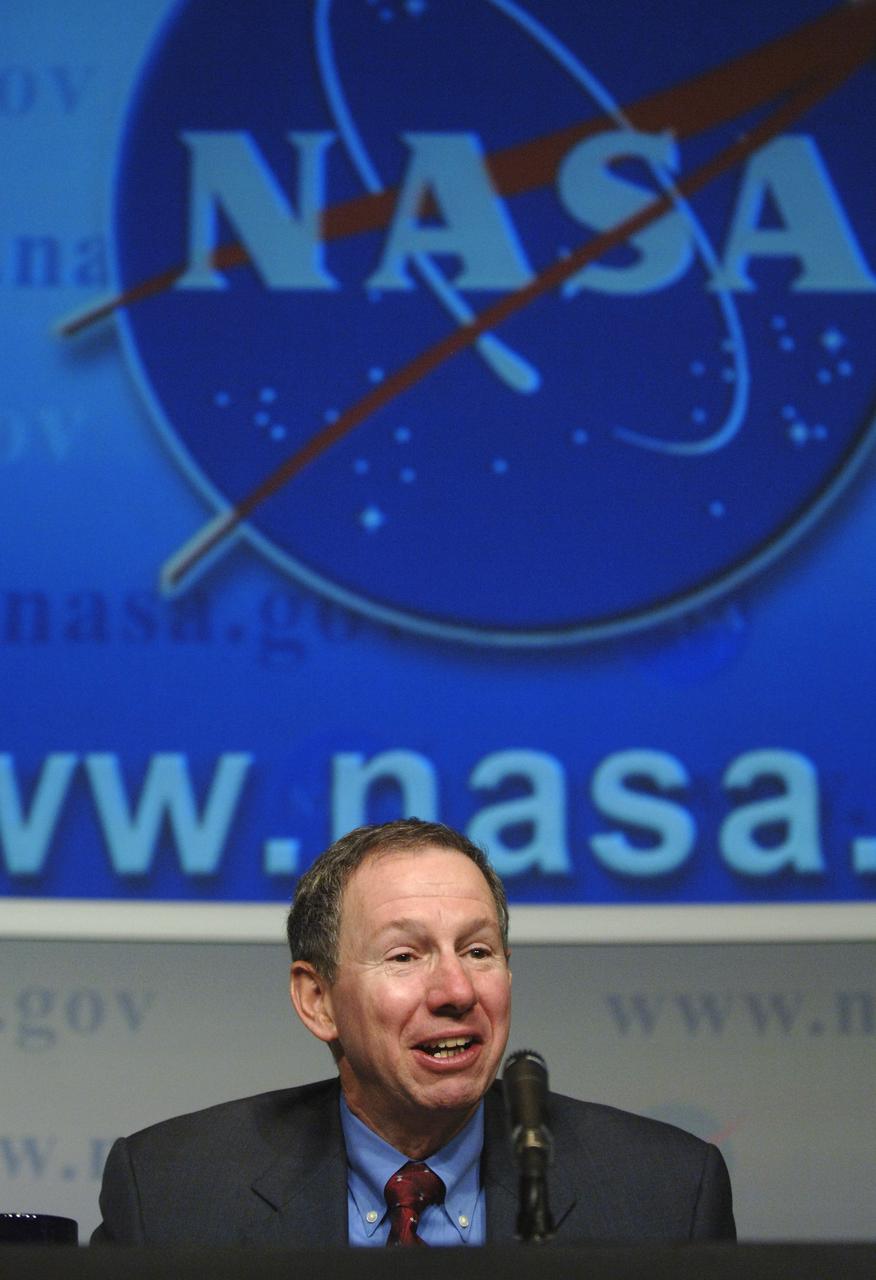
NASA Administrator Michael Griffin outlines the President's budget for fiscal year 2007 during a news conference, Monday, Feb. 6, 2006, at NASA Headquarters in Washington. Griffin was joined by the heads of NASA's four mission directorates to explain how the proposed $16.8 billion dollar budget supports the Vision for Space Exploration. The budget represents a 3.2% increase above the fiscal year 2006 appropriated budget. Photo Credit: (NASA/Bill Ingalls)
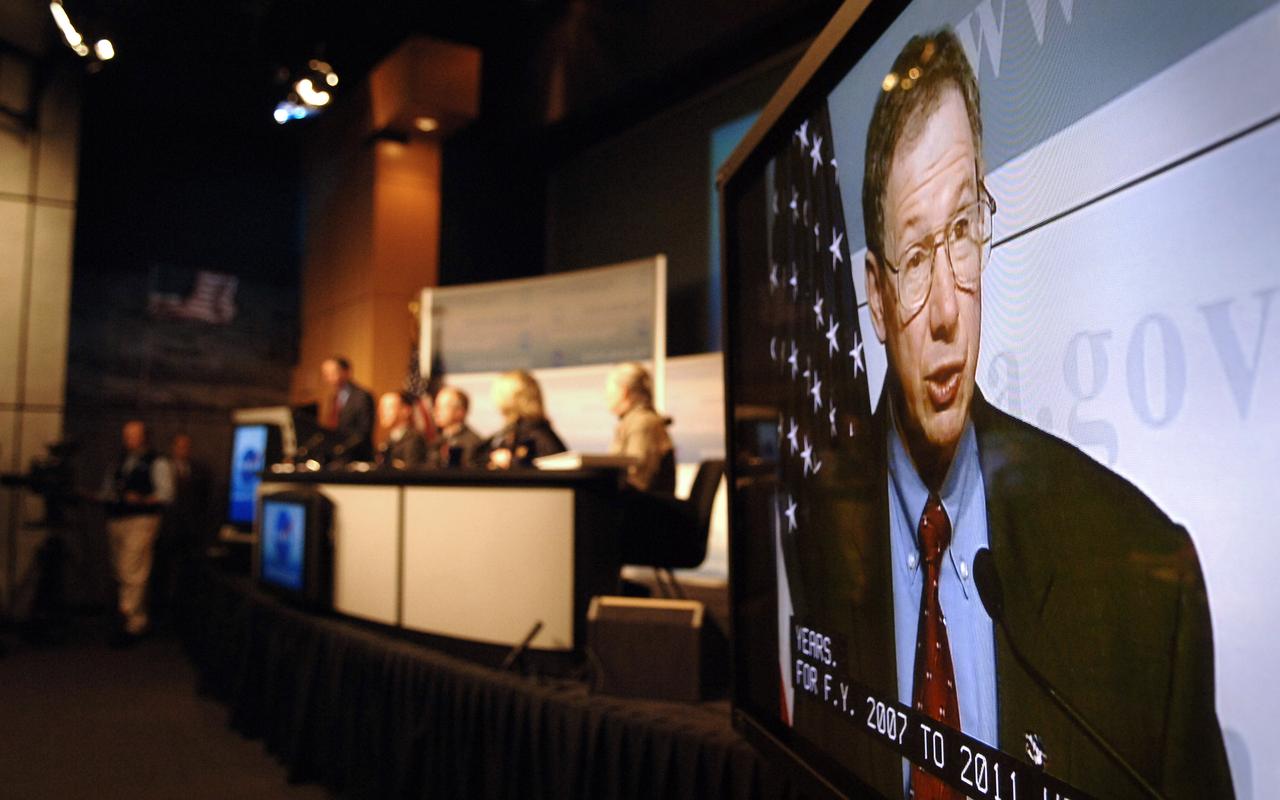
NASA Administrator Michael Griffin outlines the President's budget for fiscal year 2007 during a news conference, Monday, Feb. 6, 2006, at NASA Headquarters in Washington. Griffin was joined by the heads of NASA's four mission directorates to explain how the proposed $16.8 billion dollar budget supports the Vision for Space Exploration. The budget represents a 3.2% increase above the fiscal year 2006 appropriated budget. Photo Credit: (NASA/Bill Ingalls)
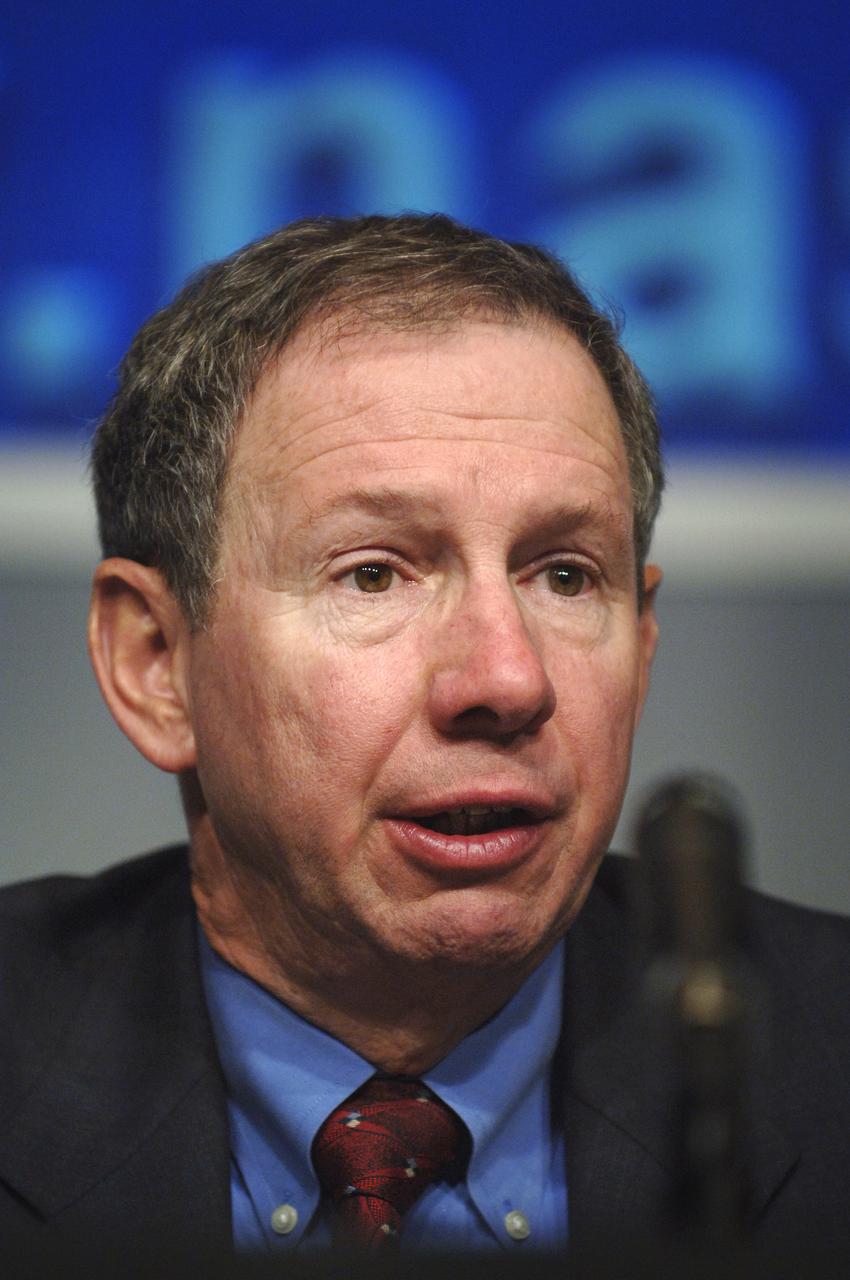
NASA Administrator Michael Griffin outlines the President's budget for fiscal year 2007 during a news conference, Monday, Feb. 6, 2006, at NASA Headquarters in Washington. Griffin was joined by the heads of NASA's four mission directorates to explain how the proposed $16.8 billion dollar budget supports the Vision for Space Exploration. The budget represents a 3.2% increase above the fiscal year 2006 appropriated budget. Photo Credit: (NASA/Bill Ingalls)
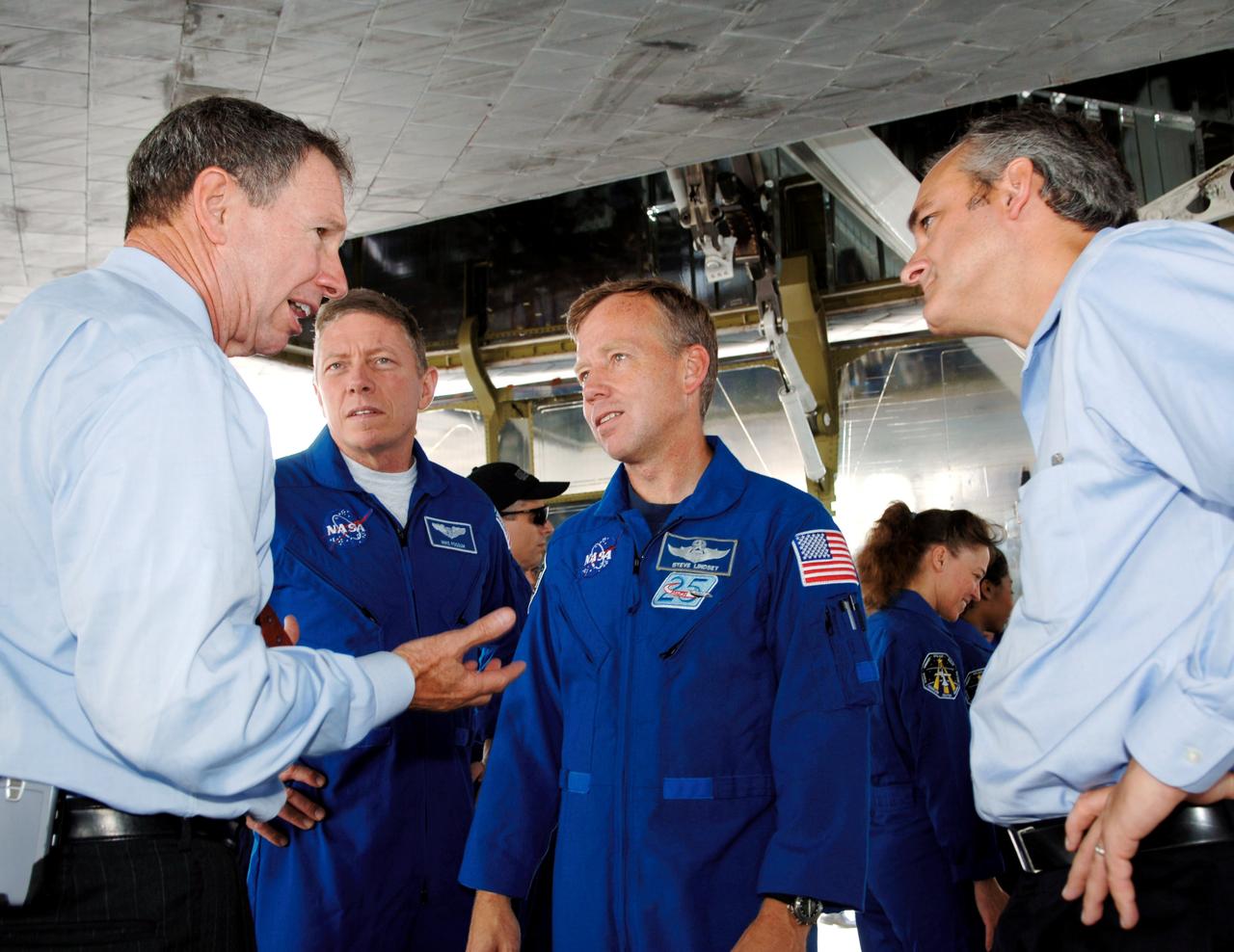
STS121-S-066 (17 July 2006) --- Dr. Michael Griffin (left), NASA administrator, and Rex Geveden (right), associate administrator, talk with STS-121 crew members Michael E. Fossum (left), mission specialist; and Steven W. Lindsey, commander, after the landing of the Space Shuttle Discovery and conclusion of mission STS-121. The crew of seven tested new equipment and procedures to improve shuttle safety, as well as deliver supplies and make repairs to the International Space Station. Photo Credit: NASA/Bill Ingalls
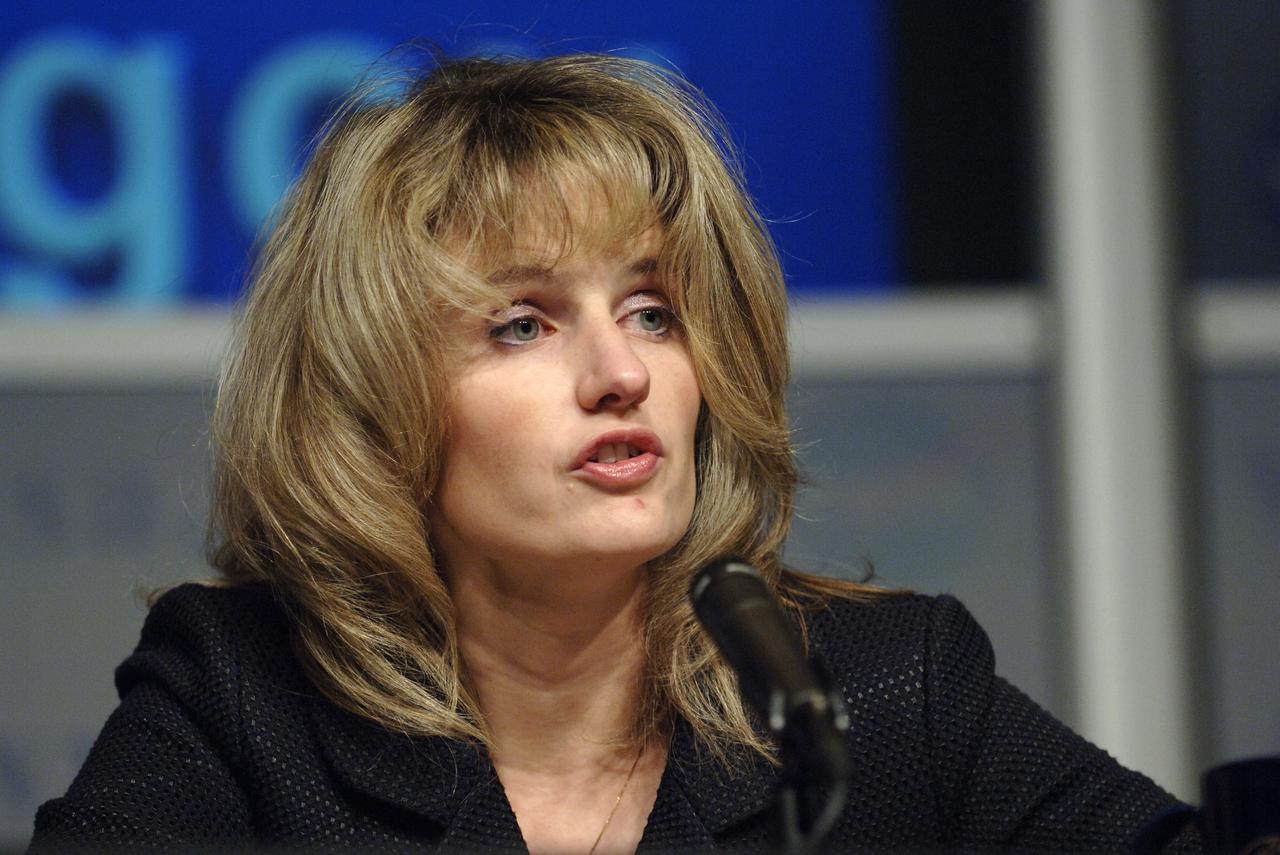
NASA Associate Administrator for Aeronautics Research Lisa J. Porter answers reporters questions during the fiscal year 2007 news conference, Monday, Feb. 6, 2006, at NASA Headquarters in Washington. NASA Administrator Michael Griffin was joined by the heads of NASA's four mission directorates to explain how the proposed $16.8 billion dollar budget supports the Vision for Space Exploration. The budget represents a 3.2% increase above the fiscal year 2006 appropriated budget. Photo Credit: (NASA/Bill Ingalls)
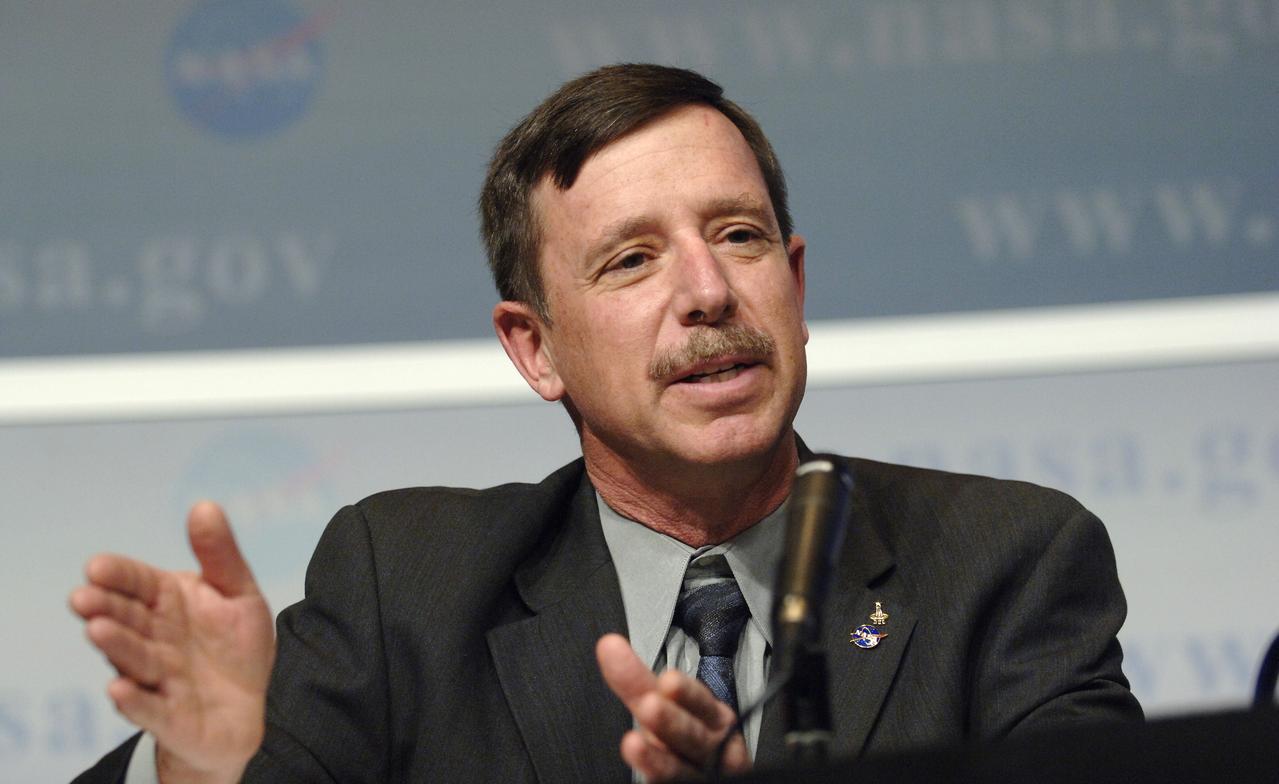
NASA Associate Administrator for Exploration Systems Scott J. Horowitz answers reporters questions during the fiscal year 2007 news conference, Monday, Feb. 6, 2006, at NASA Headquarters in Washington. NASA Administrator Michael Griffin was joined by the heads of NASA's four mission directorates to explain how the proposed $16.8 billion dollar budget supports the Vision for Space Exploration. The budget represents a 3.2% increase above the fiscal year 2006 appropriated budget. Photo Credit: (NASA/Bill Ingalls)
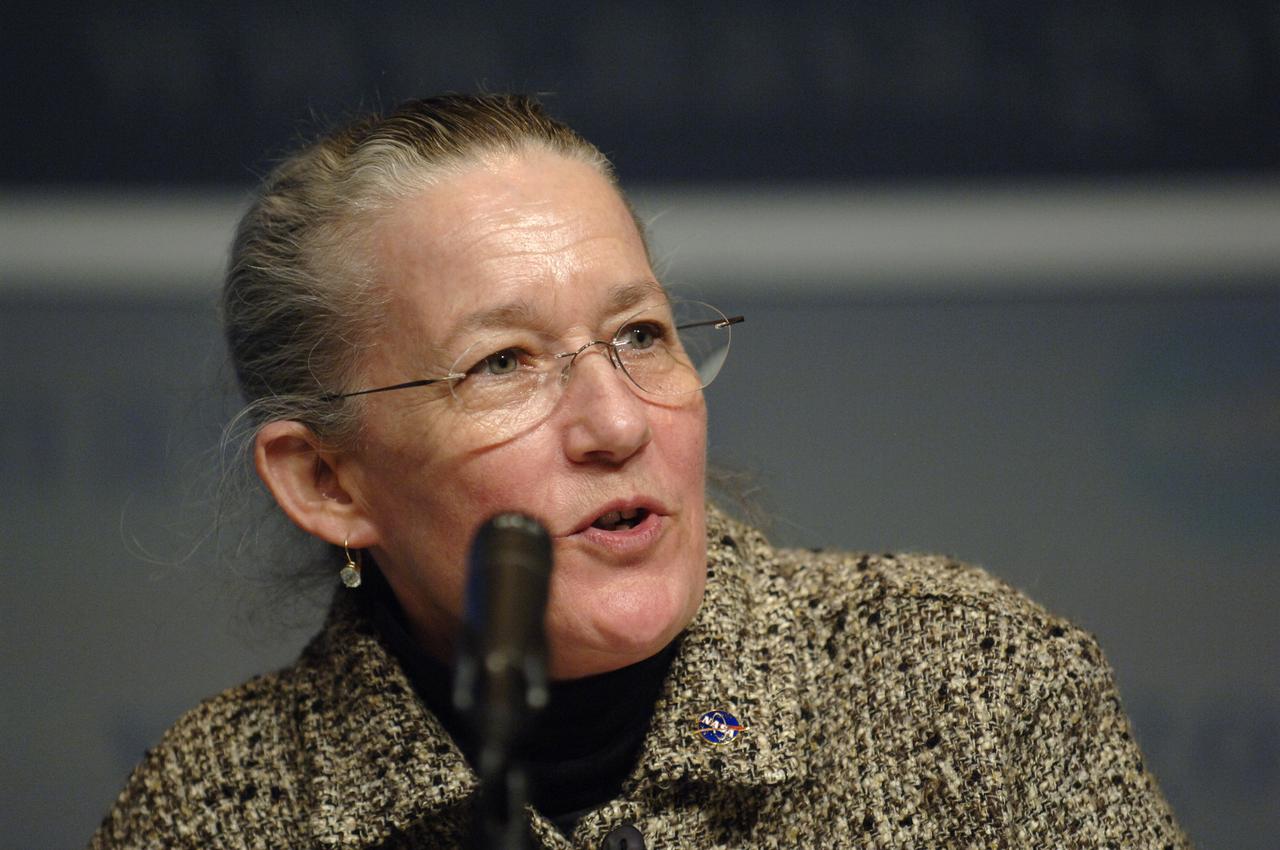
NASA Associate Administrator for Science Mary Cleave answers reporters questions during the fiscal year 2007 news conference, Monday, Feb. 6, 2006, at NASA Headquarters in Washington. NASA Administrator Michael Griffin was joined by the heads of NASA's four mission directorates to explain how the proposed $16.8 billion dollar budget supports the Vision for Space Exploration. The budget represents a 3.2% increase above the fiscal year 2006 appropriated budget. Photo Credit: (NASA/Bill Ingalls)
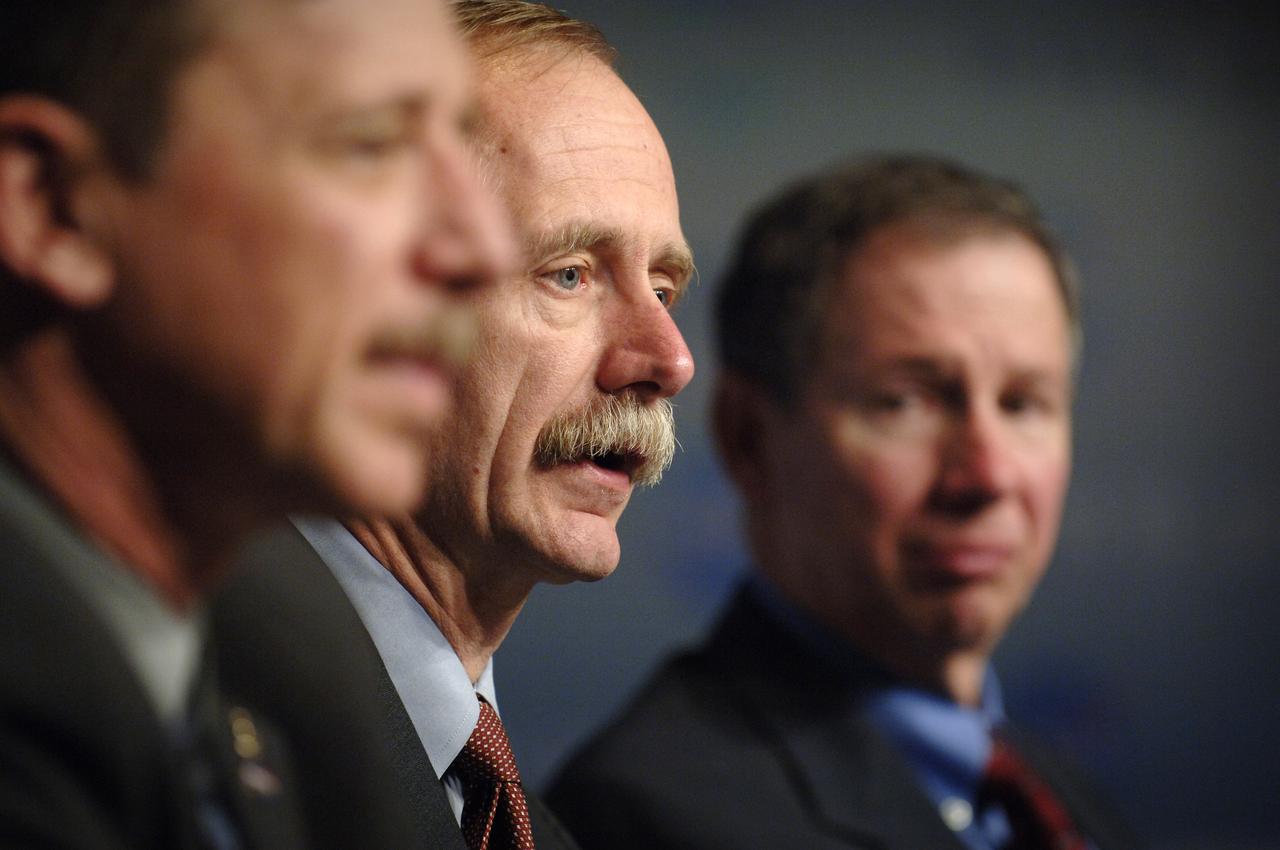
NASA Associate Administrator for Space Operations William Gerstenmaier responds to questions during the fiscal year 2007 news conference, Monday, Feb. 6, 2006, at NASA Headquarters in Washington. NASA Administrator Michael Griffin, background right, was joined by the heads of NASA's four mission directorates to explain how the proposed $16.8 billion dollar budget supports the Vision for Space Exploration. The budget represents a 3.2% increase above the fiscal year 2006 appropriated budget. Photo Credit: (NASA/Bill Ingalls)
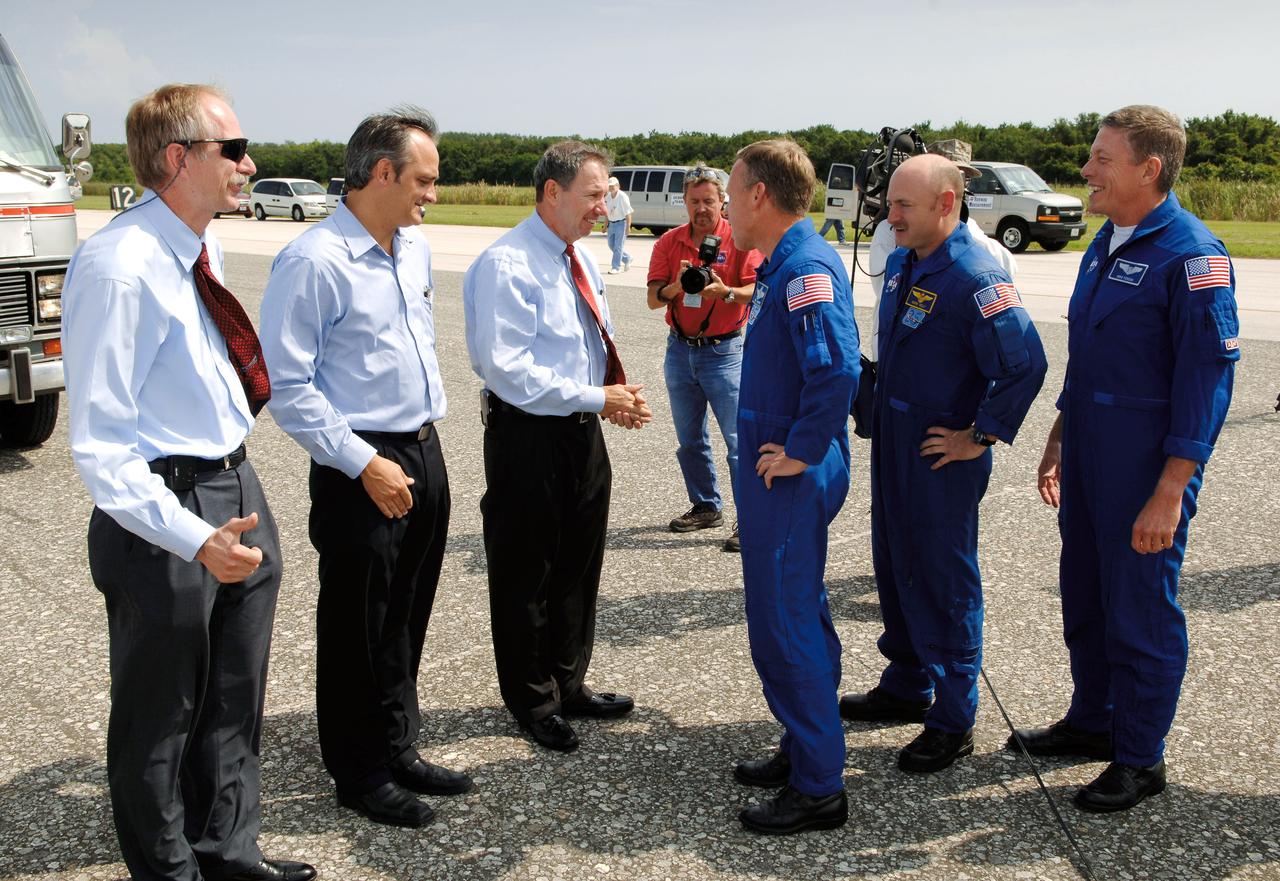
STS121-S-067 (17 July 2006) --- (left to right) William H. Gerstenmaier, associate administrator for Space Operations; Rex Geveden, associate administrator; and Dr. Michael Griffin, NASA administrator, welcome home STS-121 crewmembers--Steven Lindsey, commander; Mark E. Kelly, pilot; and Michael E. Fossum, mission specialist--after the landing of the Space Shuttle Discovery and conclusion of mission STS-121. The crew of seven tested new equipment and procedures to improve shuttle safety, as well as deliver supplies and make repairs to the International Space Station. Photo Credit: NASA/Bill Ingalls
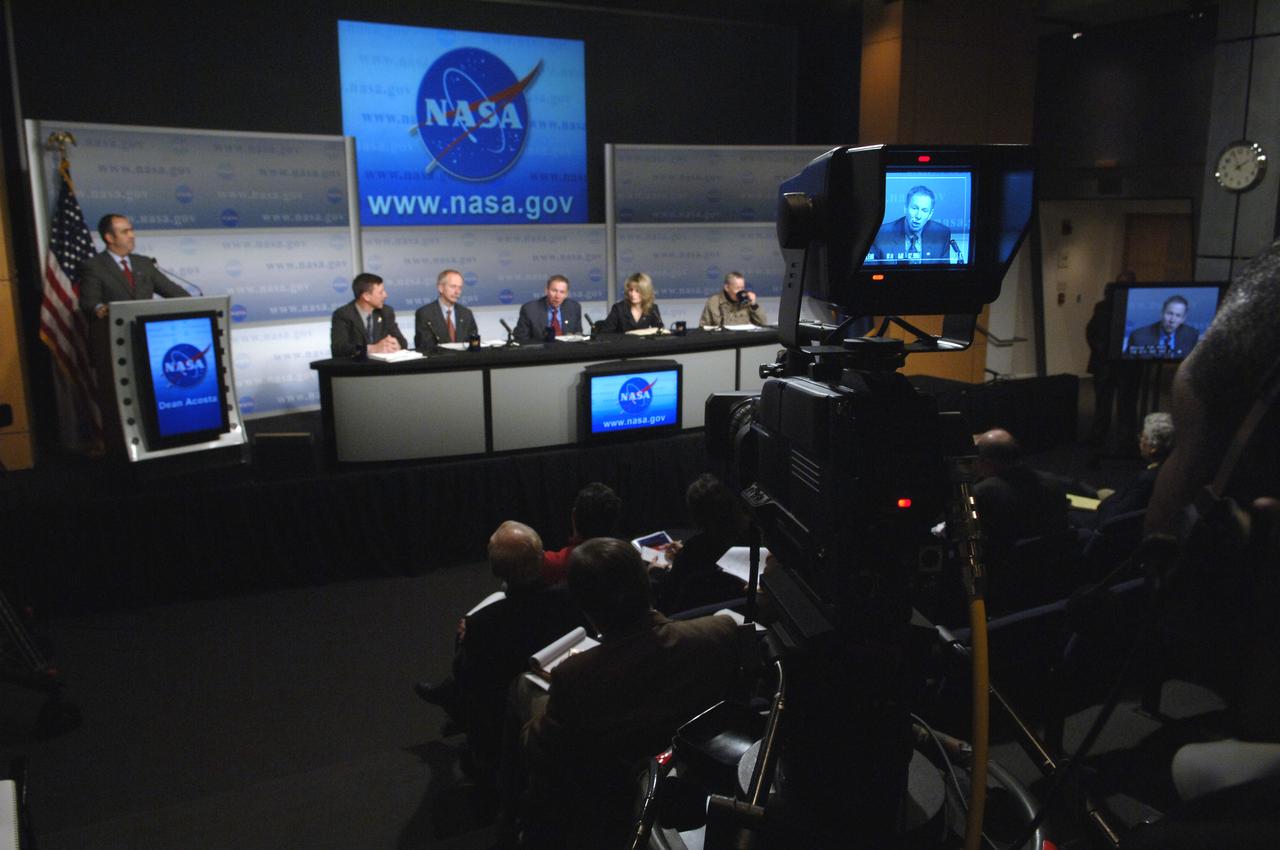
NASA Administrator Michael Griffin, seated center, outlines the President's budget for fiscal year 2007 during a news conference, Monday, Feb. 6, 2006, at NASA Headquarters in Washington. The administrator was joined by the heads of NASA's four mission directorates to explain how the proposed $16.8 billion dollar budget supports the Vision for Space Exploration. The budget represents a 3.2% increase above the Fiscal Year 2006 appropriated budget. Photo Credit: (NASA/Bill Ingalls)
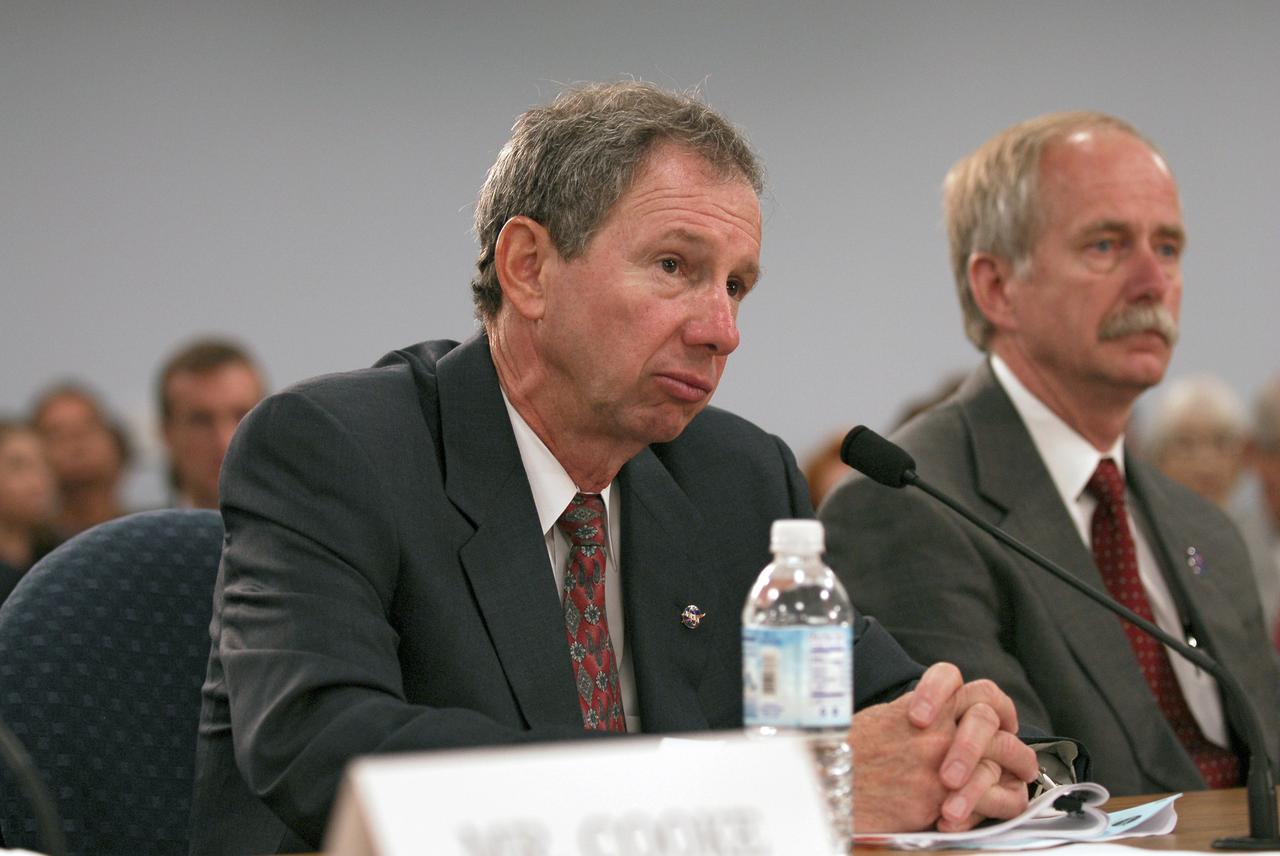
CAPE CANAVERAL, Fla. – A Senate field hearing held at the Canaveral Port Authority and chaired by Florida Sen. Bill Nelson (third from right on the dais) focuses on workforce related challenges at NASA's Kennedy Space Center and potential solutions to mitigate the transition's effects on the community. The hearing examined issues surrounding the retirement of the space shuttle and the transition to the new Orion/Ares system. At the table representing NASA are Administrator Michael Griffin and Associate Administrator of Space Operations William Gerstenmaier. Photo credit: NASA/Kim Shiflett
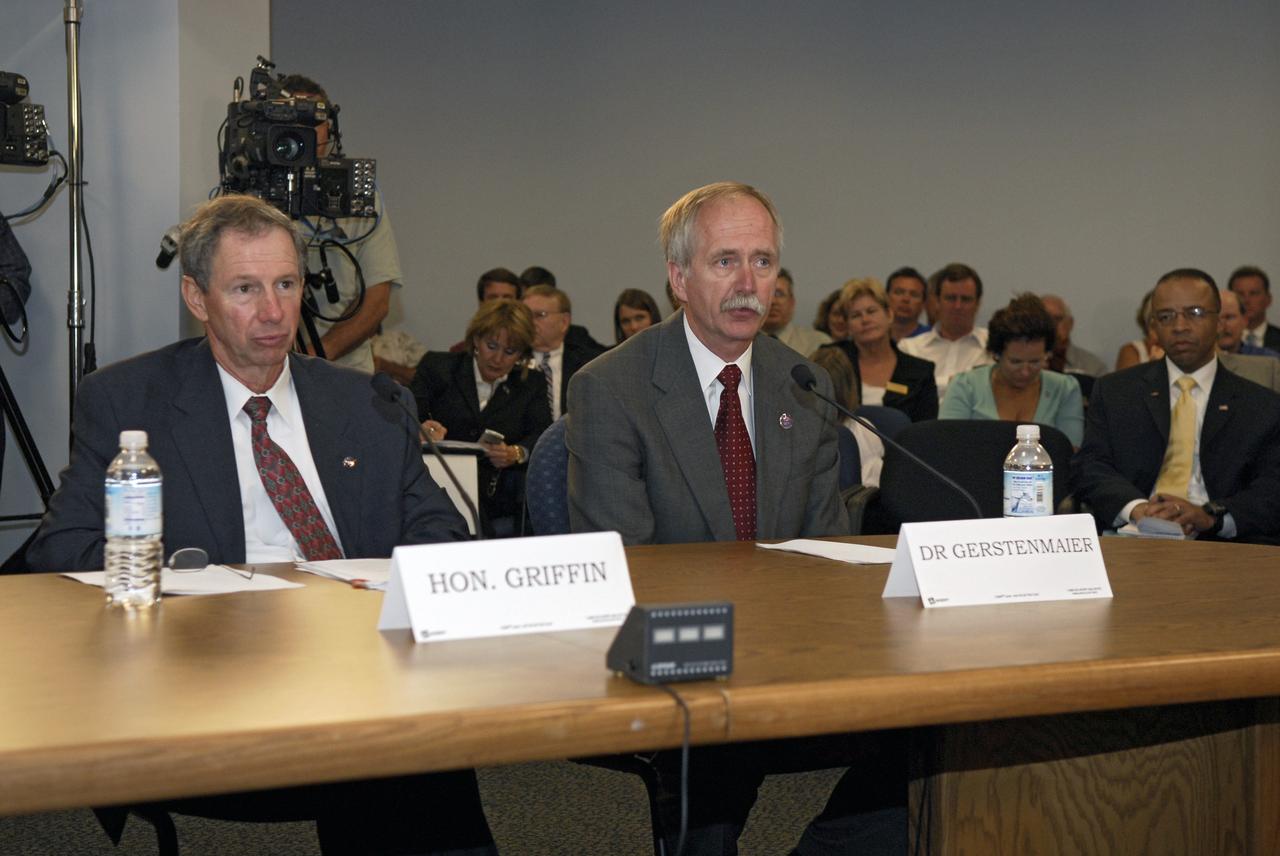
CAPE CANAVERAL, Fla. – A Senate field hearing held at the Canaveral Port Authority and chaired by Florida Sen. Bill Nelson (third from right on the dais) focuses on workforce related challenges at NASA's Kennedy Space Center and potential solutions to mitigate the transition's effects on the community. The hearing examined issues surrounding the retirement of the space shuttle and the transition to the new Orion/Ares system. At the table representing NASA are Administrator Michael Griffin and Associate Administrator of Space Operations William Gerstenmaier. Photo credit: NASA/Kim Shiflett
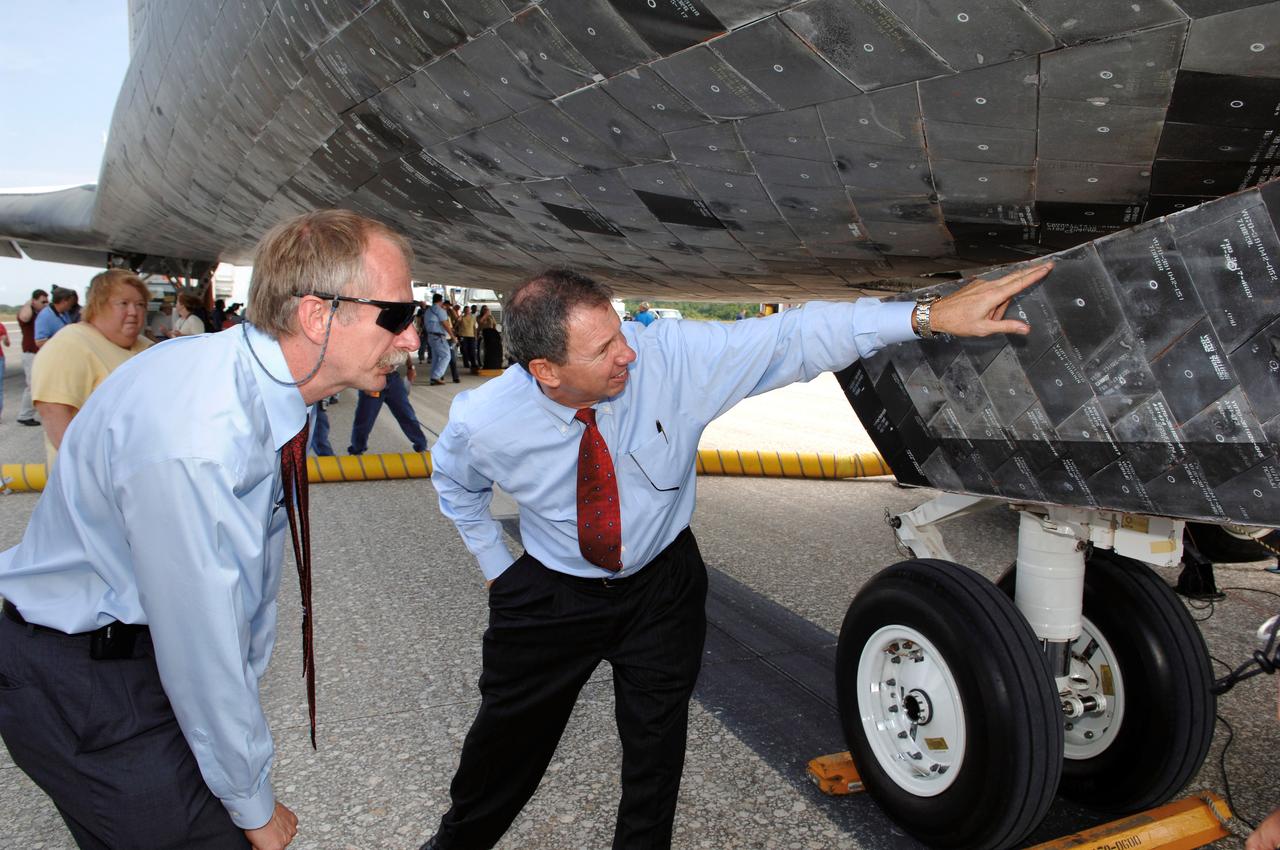
STS121-S-064 (17 July 2006) --- Dr. Michael Griffin (right), NASA administrator; and William H. Gerstenmaier, associate administrator for Space Operations, inspect the Space Shuttle Discovery after the landing and conclusion of mission STS-121. The crew of seven tested new equipment and procedures to improve shuttle safety, as well as deliver supplies and make repairs to the International Space Station. Photo Credit: NASA/Bill Ingalls
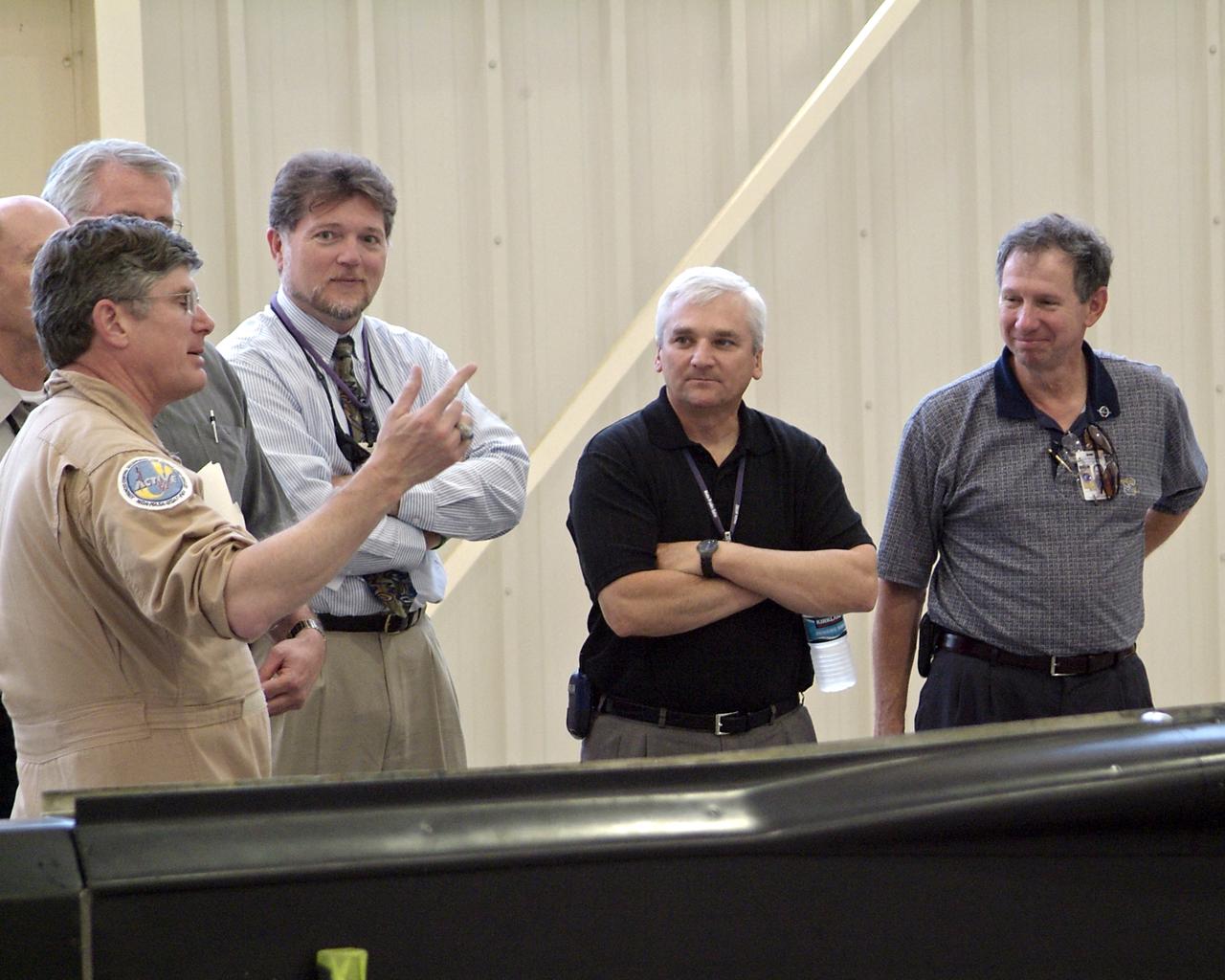
NASA Dryden research pilot Jim Smolka (left) details a recent flight experiment on a modified F-15B research aircraft to test range program manager Jerry McKee, center director Kevin Petersen and NASA Administrator Michael Griffin (right) during Griffin's initial visit to NASA's Dryden Flight Research Center on Tuesday, May 24.
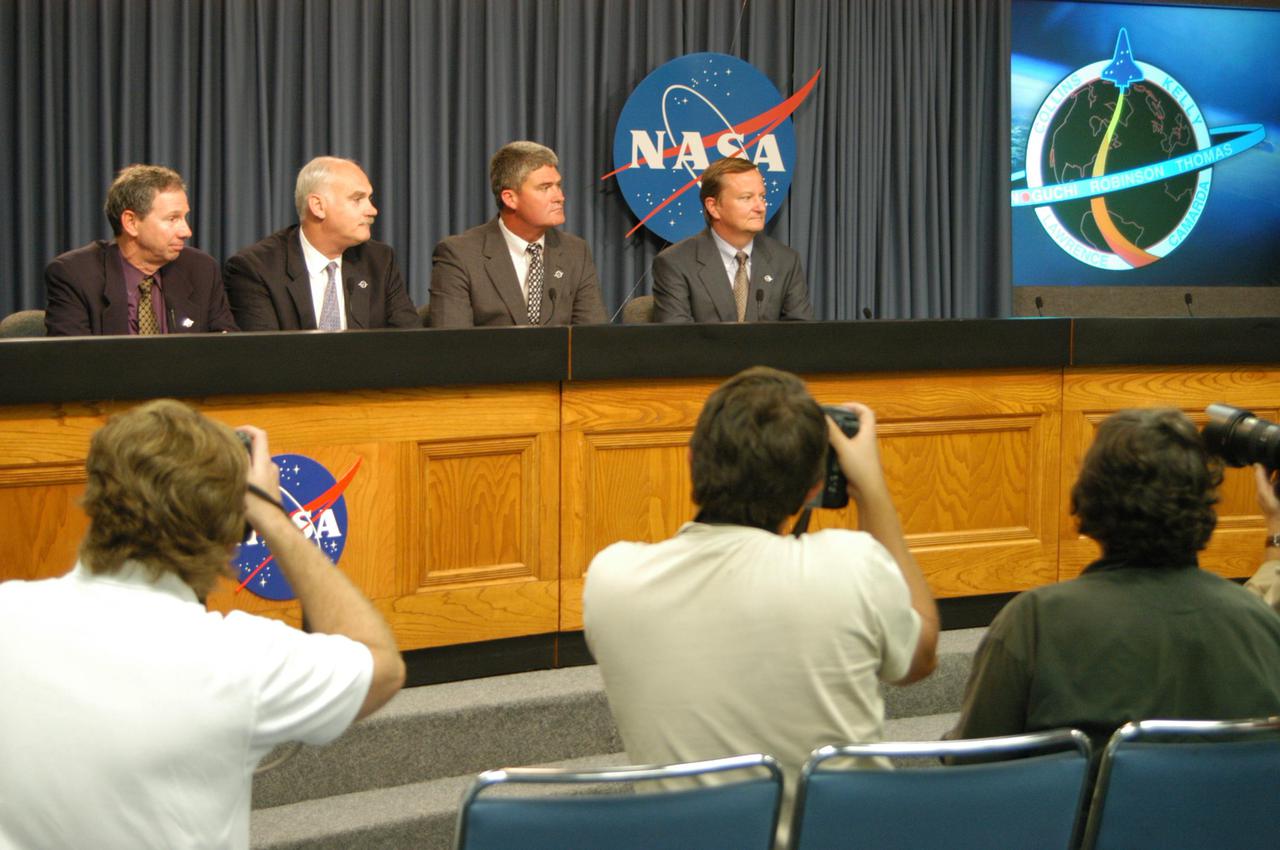
KENNEDY SPACE CENTER, FLA. - Space Shuttle managers take questions from the media during a press conference held following the conclusion of the Flight Readiness Review for Space Shuttle Discovery's Return to Flight mission STS-114. From left are NASA's Administrator Michael Griffin, Associate Administrator for Space Operations William Readdy, Space Shuttle Program Manager William Parsons, and Space Shuttle Launch Director Michael Leinbach. A July 13 launch date was approved for the 12-day mission during which Discovery’s seven-person crew will test new hardware and techniques to improve Shuttle safety, as well as deliver supplies to the International Space Station.
NASA Associate Administrator for Space Operations William Gerstenmaier, right, and NASA Associate Administrator for Exploration Systems Scott J. Horowitz talk during the fiscal year 2007 news conference, Monday, Feb. 6, 2006, at NASA Headquarters in Washington. NASA Administrator Michael Griffin was joined by the heads of NASA's four mission directorates to explain how the proposed $16.8 billion dollar budget supports the Vision for Space Exploration. The budget represents a 3.2% increase above the fiscal year 2006 appropriated budget. Photo Credit: (NASA/Bill Ingalls)
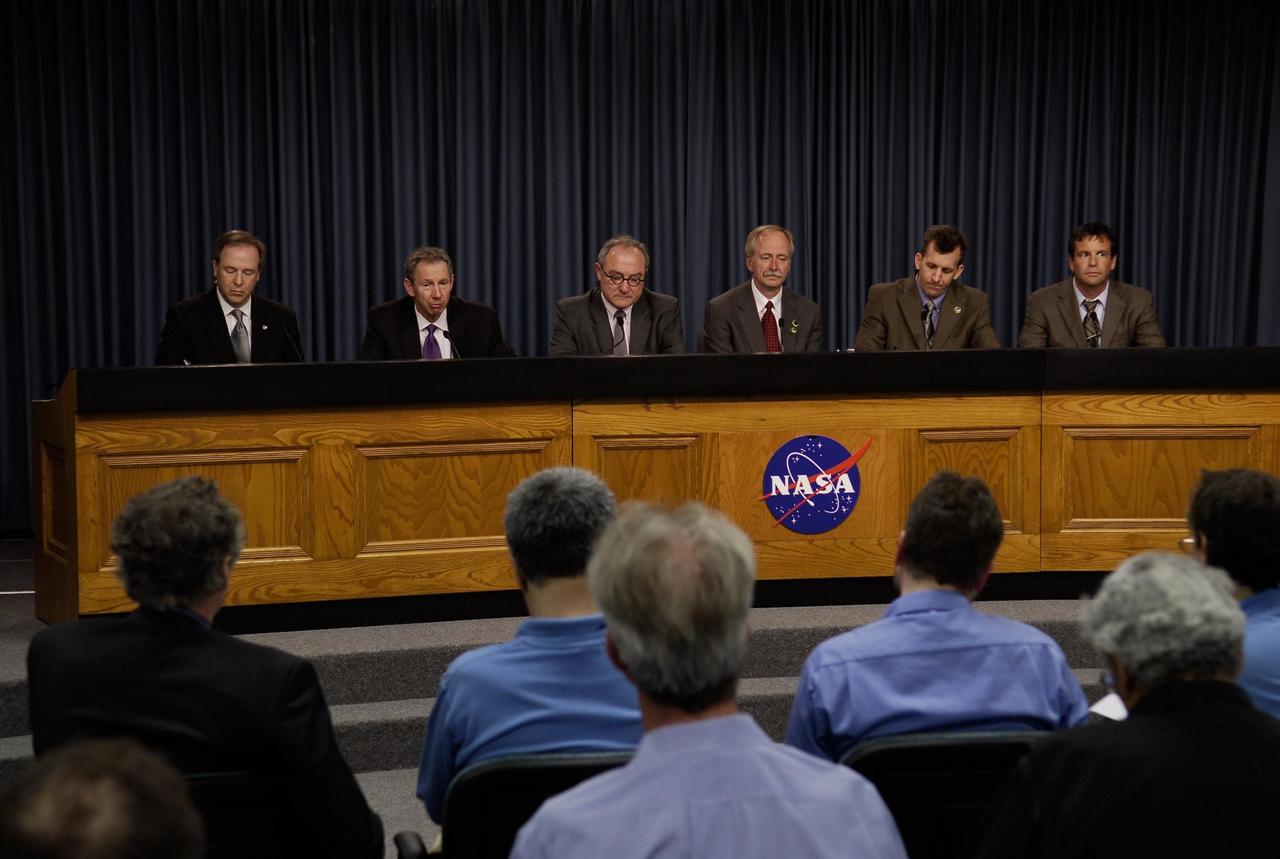
KENNEDY SPACE CENTER, FLA. -- Following the successful launch of space shuttle Atlantis on mission STS-122, NASA VIPs appear at a news conference to give their views about the launch and mission. From left are NASA Assistant Administrator for Public Affairs David Mould, NASA Administrator Michael Griffin, European Space Agency Director General Jean-Jacques Dordain, Associate Administrator for Space Operations Bill Gerstenmaier, Director of Mission Launch Integration LeRoy Cain and STS-122 Launch Director Doug Lyons. During the 11-day mission, the crew's prime objective is to attach the Columbus laboratory to the Harmony module, adding to the station's size and capabilities. Photo credit: NASA/Kim Shiflett
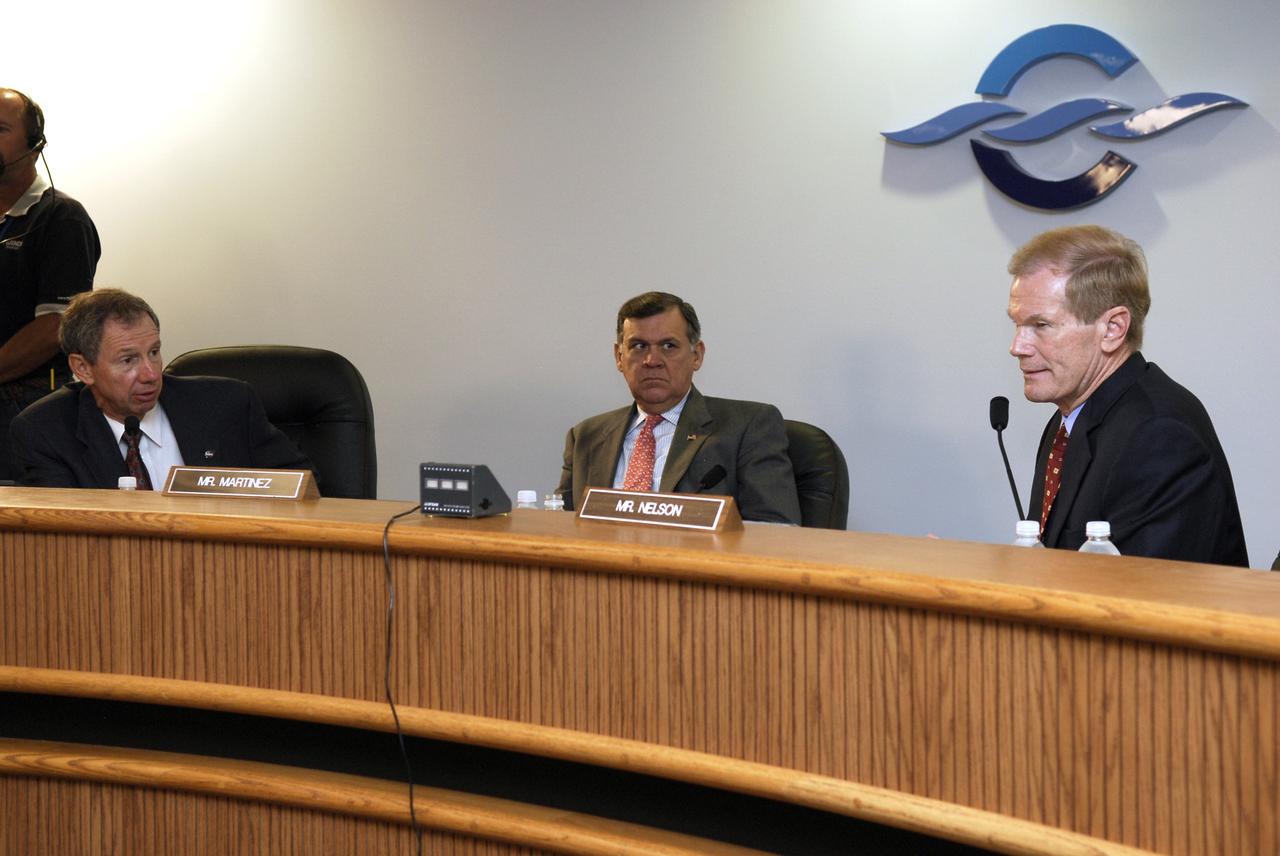
CAPE CANAVERAL, Fla. – A Senate field hearing held at the Canaveral Port Authority and chaired by Florida Sen. Bill Nelson (right) focuses on workforce related challenges at NASA's Kennedy Space Center and potential solutions to mitigate the transition's effects on the community. The hearing examined issues surrounding the retirement of the space shuttle and the transition to the new Orion/Ares system. At the dais with Nelson are NASA Administrator Michael Griffin (left) and Florida Sen. Mel Martinez (center). Photo credit: NASA/Kim Shiflett
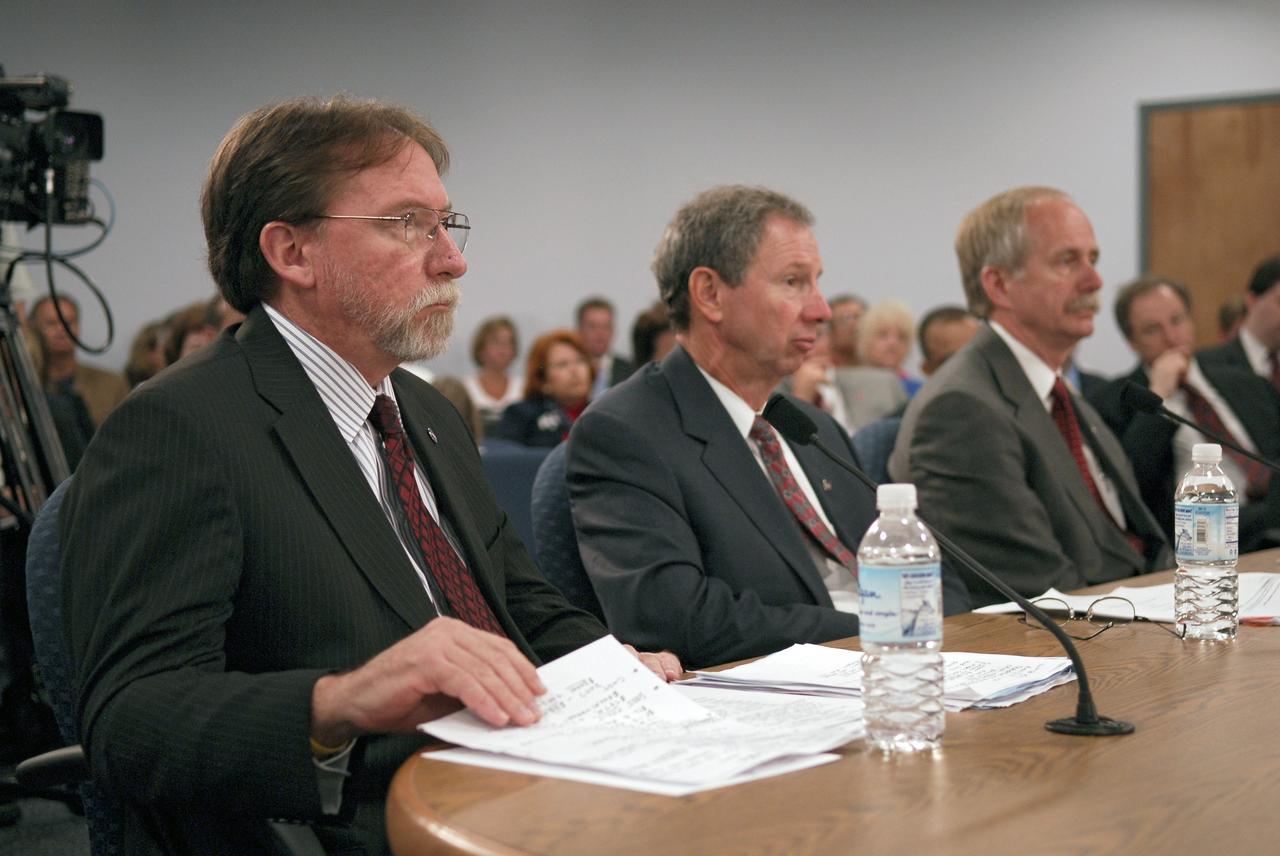
CAPE CANAVERAL, Fla. – A Senate field hearing held at the Canaveral Port Authority and chaired by Florida Sen. Bill Nelson (third from right on the dais) focuses on workforce related challenges at NASA's Kennedy Space Center and potential solutions to mitigate the transition's effects on the community. The hearing examined issues surrounding the retirement of the space shuttle and the transition to the new Orion/Ares system. At the table representing NASA are Deputy Associate Administrator of Exploration Systems Doug Cooke, Administrator Michael Griffin and Associate Administrator of Space Operations William Gerstenmaier. Photo credit: NASA/Kim Shiflett
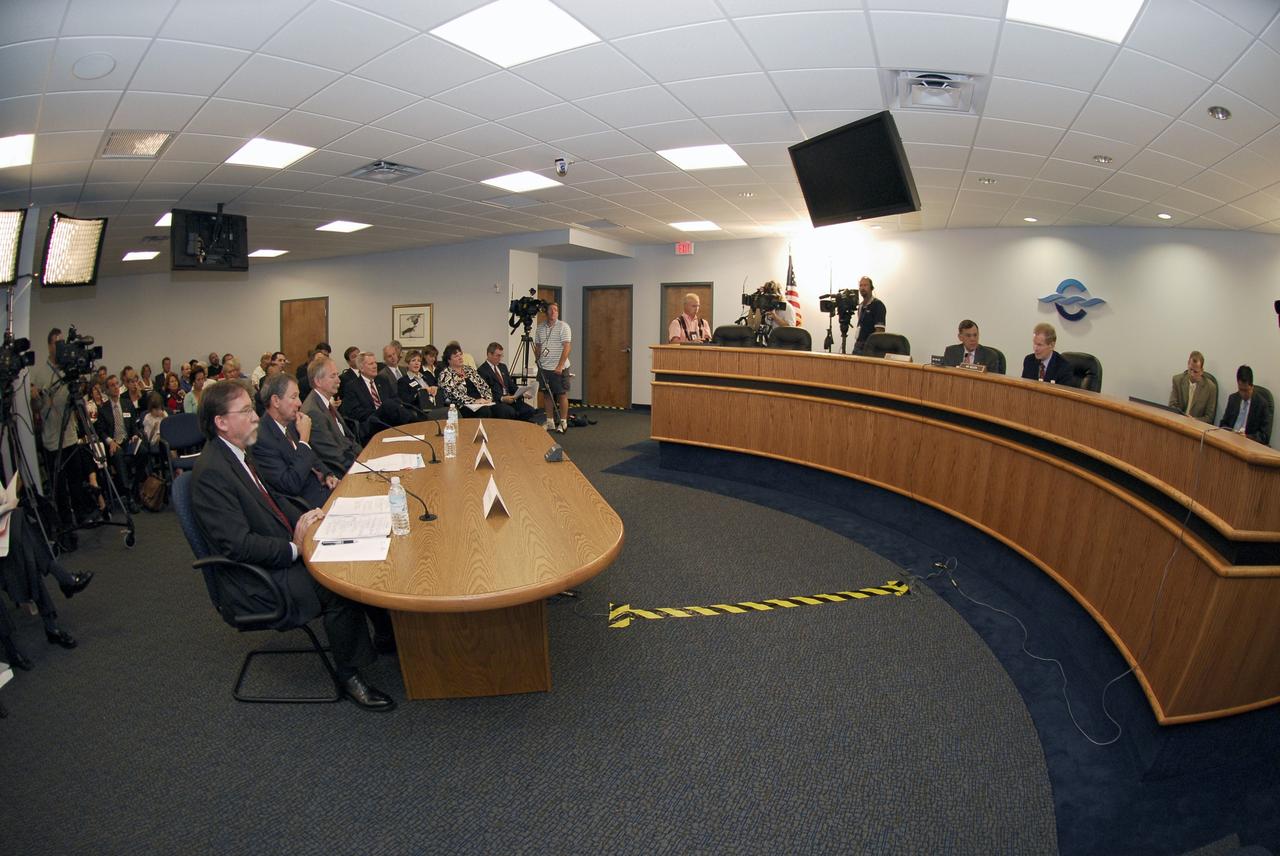
CAPE CANAVERAL, Fla. – A Senate field hearing held at the Canaveral Port Authority and chaired by Florida Sen. Bill Nelson (third from right on the dais) focuses on workforce related challenges at NASA's Kennedy Space Center and potential solutions to mitigate the transition's effects on the community. The hearing examined issues surrounding the retirement of the space shuttle and the transition to the new Orion/Ares system. At Nelson's right is Florida Sen. Mel Martinez. Seated at left are NASA representatives Deputy Associate Administrator of Exploration Systems Doug Cooke, Administrator Michael Griffin and Associate Administrator of Space Operations William Gerstenmaier. Photo credit: NASA/Kim Shiflett
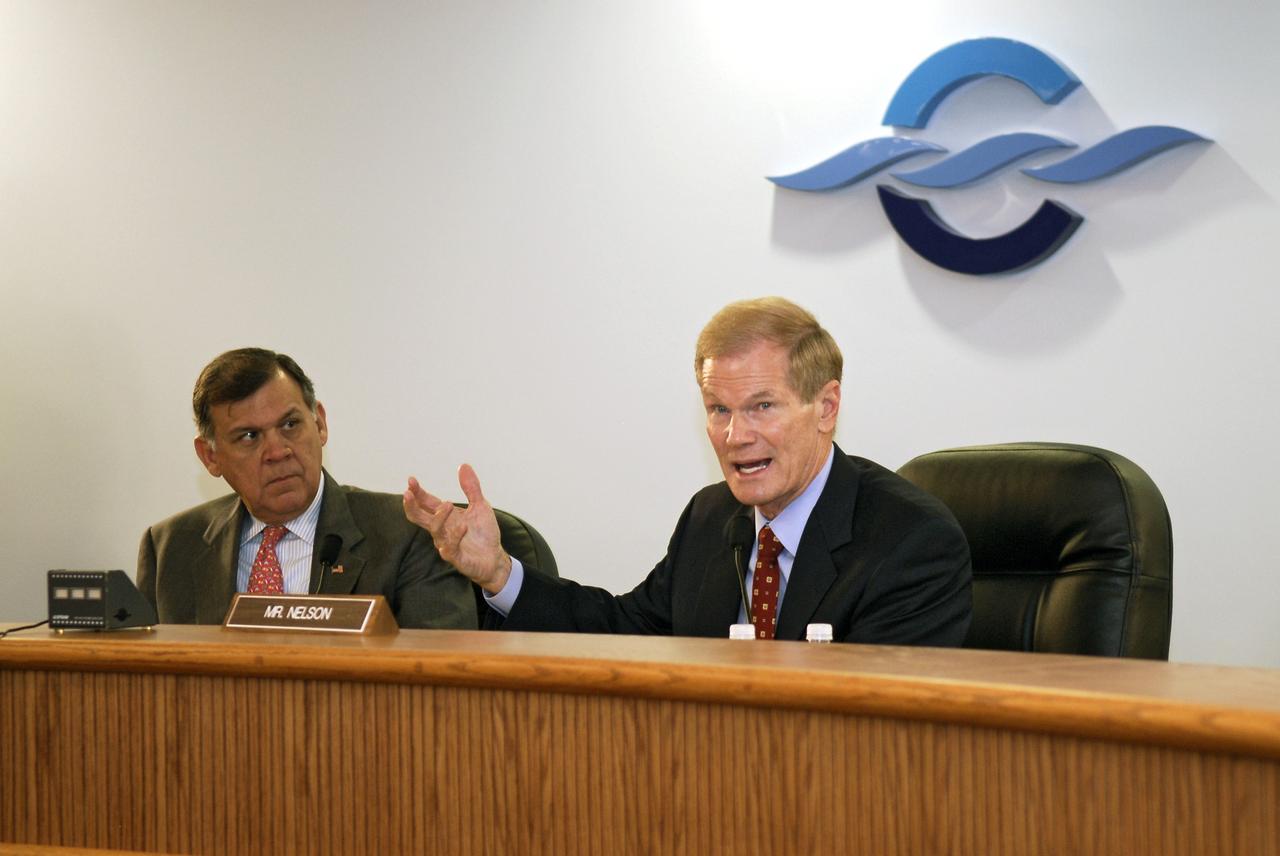
CAPE CANAVERAL, Fla. – A Senate field hearing held at the Canaveral Port Authority and chaired by Florida Sen. Bill Nelson (right) focuses on workforce related challenges at NASA's Kennedy Space Center and potential solutions to mitigate the transition's effects on the community. The hearing examined issues surrounding the retirement of the space shuttle and the transition to the new Orion/Ares system. On the left is Florida Sen. Mel Martinez. NASA was represented by Deputy Associate Administrator of Exploration Systems Doug Cooke, Administrator Michael Griffin and Associate Administrator of Space Operations William Gerstenmaier. Photo credit: NASA/Kim Shiflett
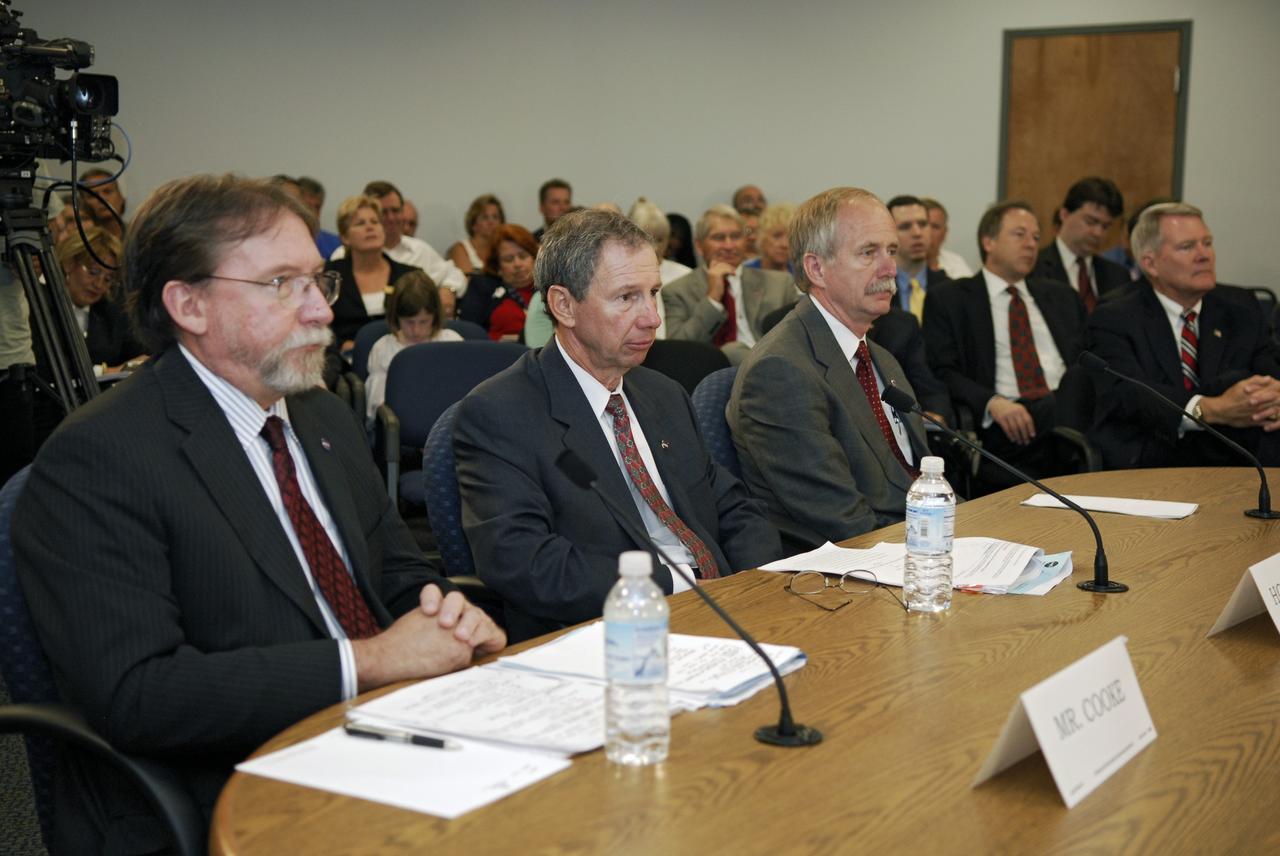
CAPE CANAVERAL, Fla. – A Senate field hearing held at the Canaveral Port Authority and chaired by Florida Sen. Bill Nelson (third from right on the dais) focuses on workforce related challenges at NASA's Kennedy Space Center and potential solutions to mitigate the transition's effects on the community. The hearing examined issues surrounding the retirement of the space shuttle and the transition to the new Orion/Ares system. At the table representing NASA are Deputy Associate Administrator of Exploration Systems Doug Cooke, Administrator Michael Griffin and Associate Administrator of Space Operations William Gerstenmaier. Photo credit: NASA/Kim Shiflett
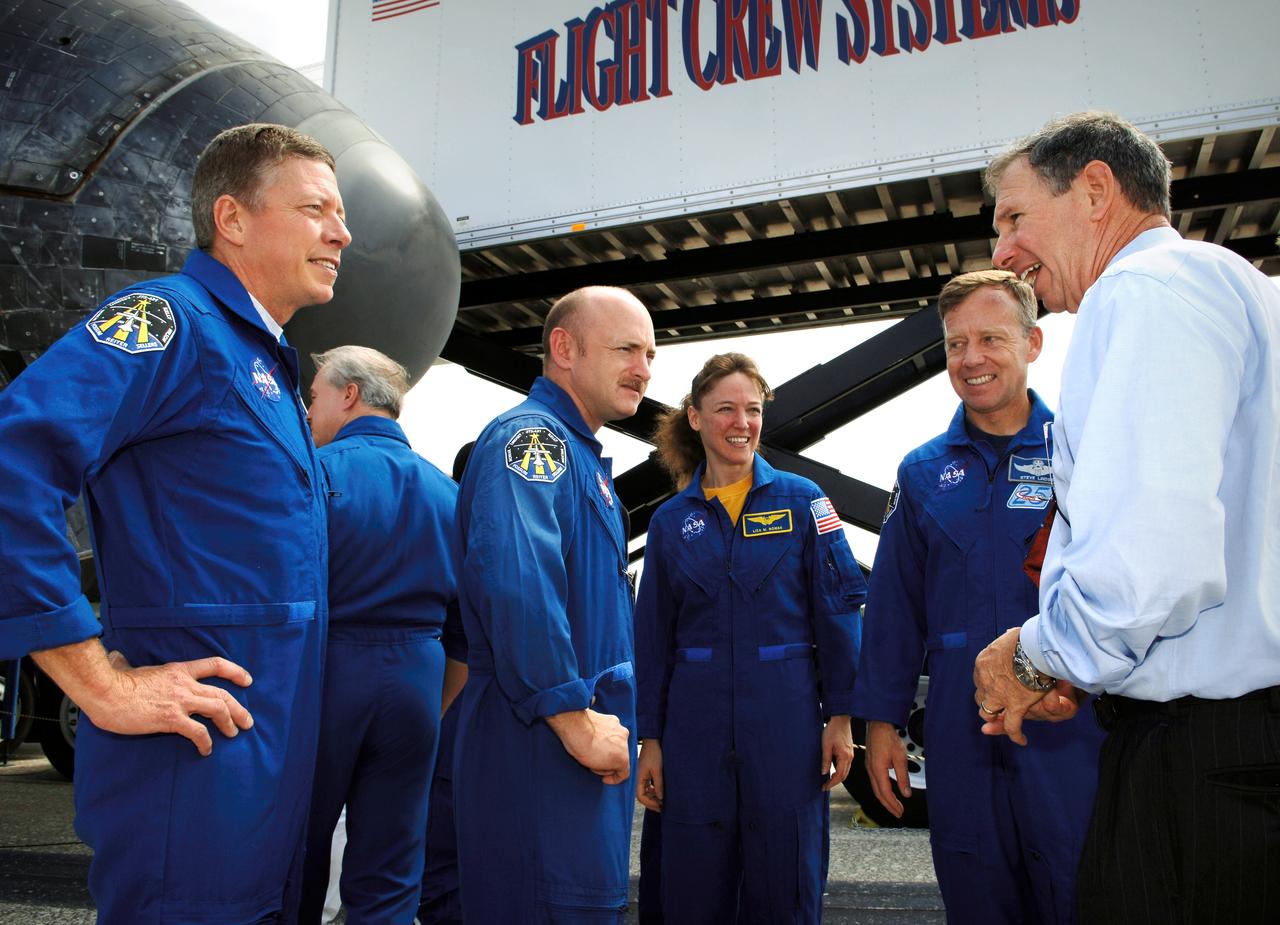
STS121-S-065 (17 July 2006) --- Dr. Michael Griffin (right), NASA Administrator, talks with STS-121 crew members (L to R) Michael E. Fossum, mission specialist; Mark E. Kelly, pilot; Lisa M. Nowak, mission specialist; and Steven W. Lindsey, commander, after the landing of the Space Shuttle Discovery and conclusion of mission STS-121. The crew of seven tested new equipment and procedures to improve shuttle safety, as well as deliver supplies and make repairs to the International Space Station. Photo Credit: NASA/Bill Ingalls
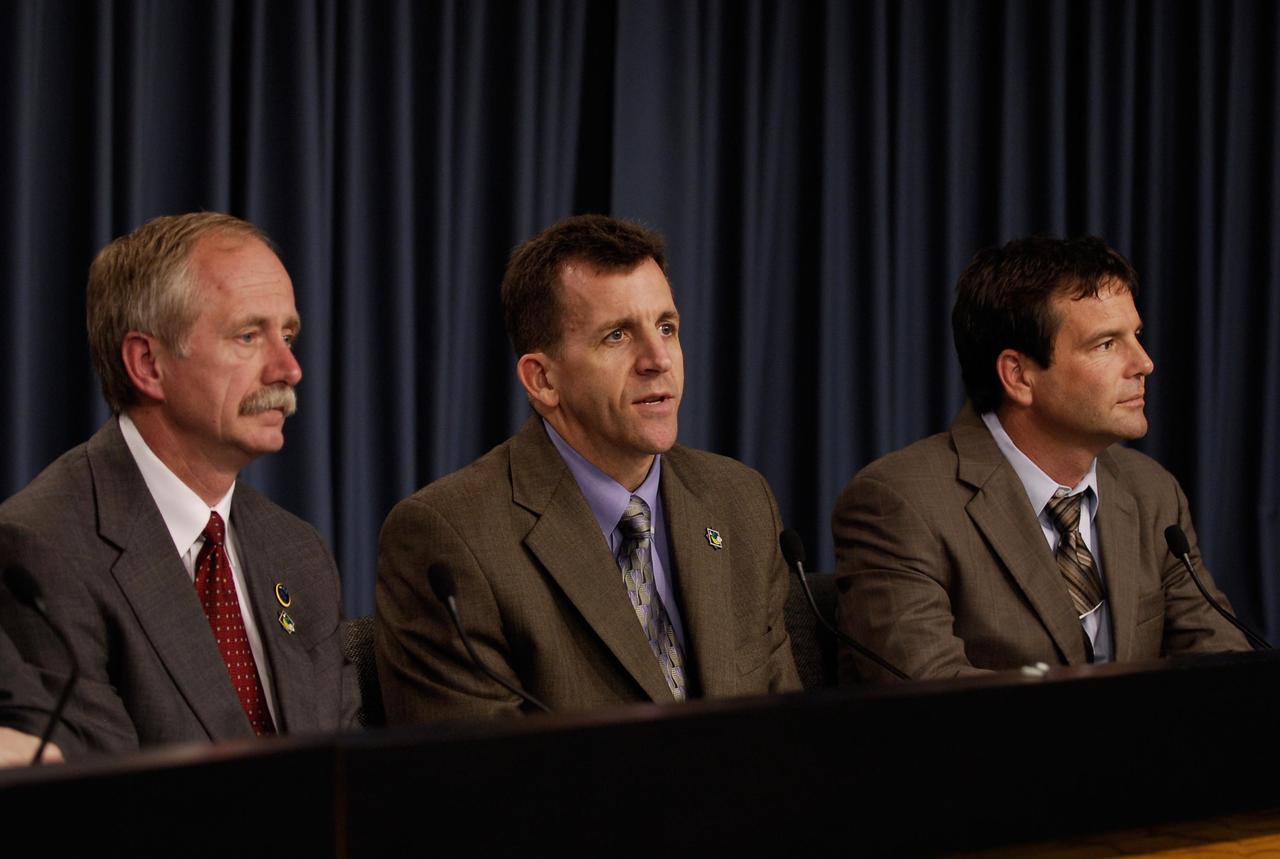
KENNEDY SPACE CENTER, FLA. -- Following the successful launch of space shuttle Atlantis on mission STS-122, NASA VIPs appear at a news conference to give their views about the launch and mission. Seen here are Associate Administrator for Space Operations Bill Gerstenmaier, Director of Mission Launch Integration LeRoy Cain and STS-122 Launch Director Doug Lyons. Also on the dais but not pictured are NASA Administrator Michael Griffin and European Space Agency Director General Jean-Jacques Dordain. During the 11-day mission, the crew's prime objective is to attach the Columbus laboratory to the Harmony module, adding to the station's size and capabilities. Photo credit: NASA/Kim Shiflett
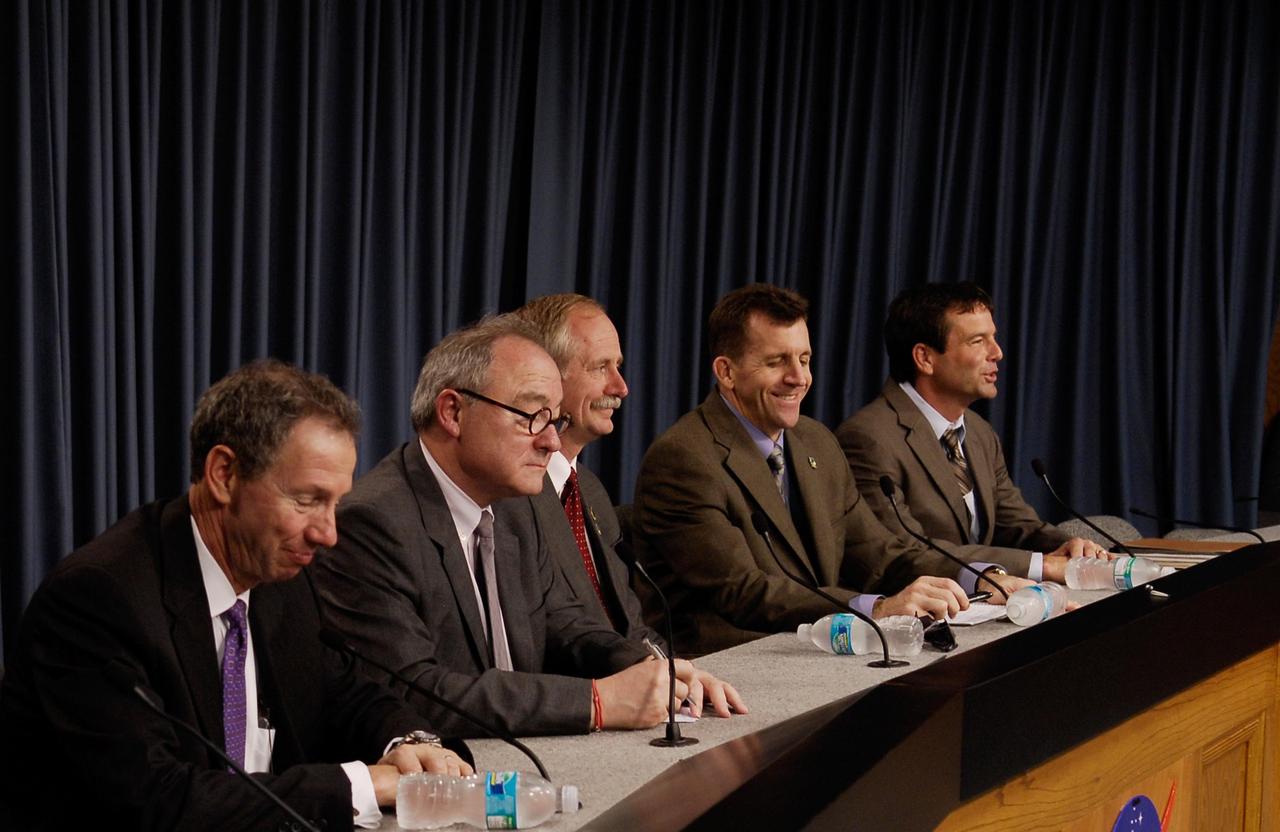
KENNEDY SPACE CENTER, FLA. -- Following the successful launch of space shuttle Atlantis on mission STS-122, NASA VIPs appear at a news conference to give their views about the launch and mission. From left are NASA Administrator Michael Griffin, European Space Agency Director General Jean-Jacques Dordain, Associate Administrator for Space Operations Bill Gerstenmaier, Director of Mission Launch Integration LeRoy Cain and STS-122 Launch Director Doug Lyons. During the 11-day mission, the crew's prime objective is to attach the Columbus laboratory to the Harmony module, adding to the station's size and capabilities. Photo credit: NASA/Kim Shiflett
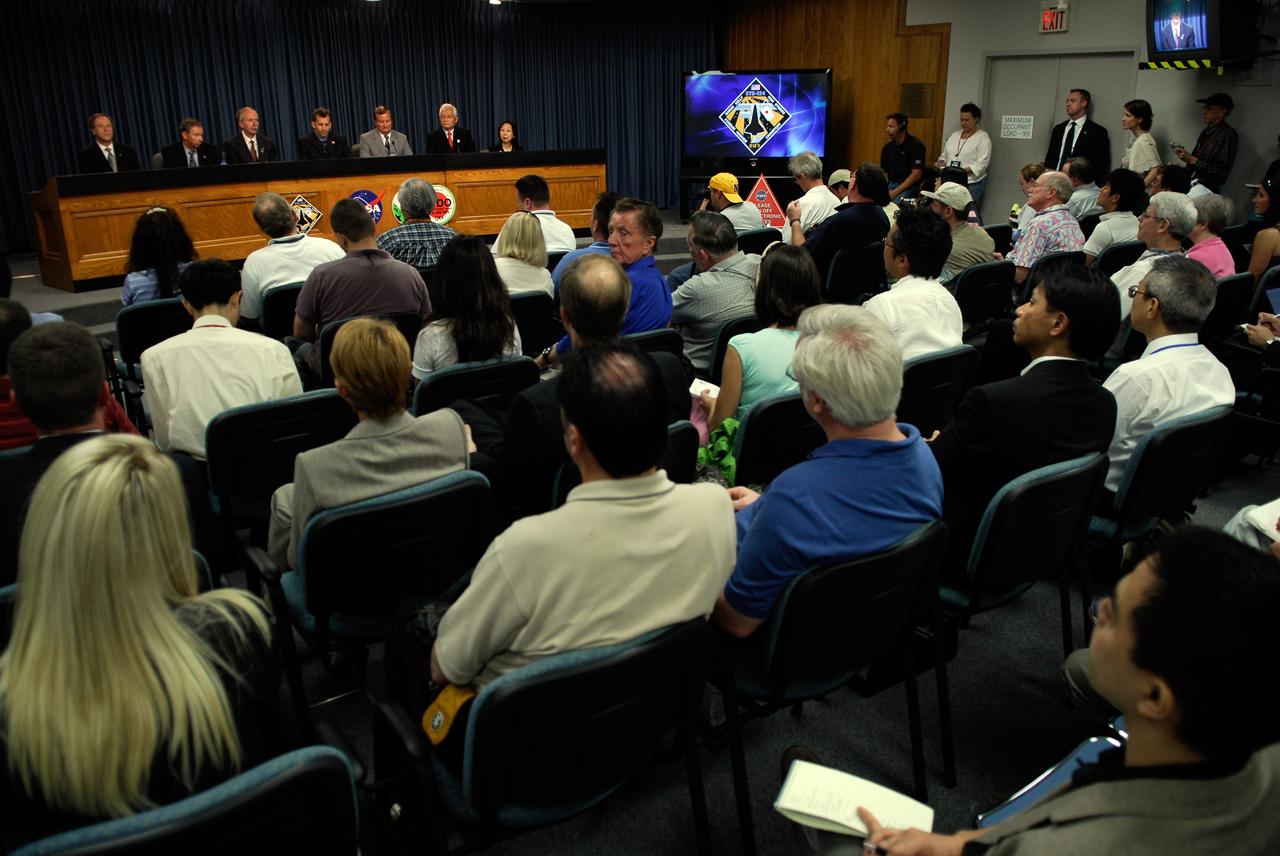
CAPE CANAVERAL, Fla. -- The media fill the NASA's News Center television studio for a news conference with key NASA personnel following the successful launch of space shuttle Discovery on the STS-124 mission. On the stage are (left to right) Public Affairs Officer David Mould as moderator, NASA Administrator Michael Griffin, Associate Administrator for Space Operations Bill Gerstenmaier, Director of Mission Launch Integration LeRoy Cain, Shuttle Launch Director Mike Leinbach, Japan Aerospace Exploration Agency President Dr. Keiji Tachikawa and an interpreter. The STS-124 mission is the 26th in the assembly of the space station. It is the second of three flights launching components to complete the Japan Aerospace Exploration Agency's Kibo laboratory. The shuttle crew will install Kibo's large Japanese Pressurized Module and its remote manipulator system, or RMS. The 14-day flight includes three spacewalks. Photo credit: NASAKim Shiflett
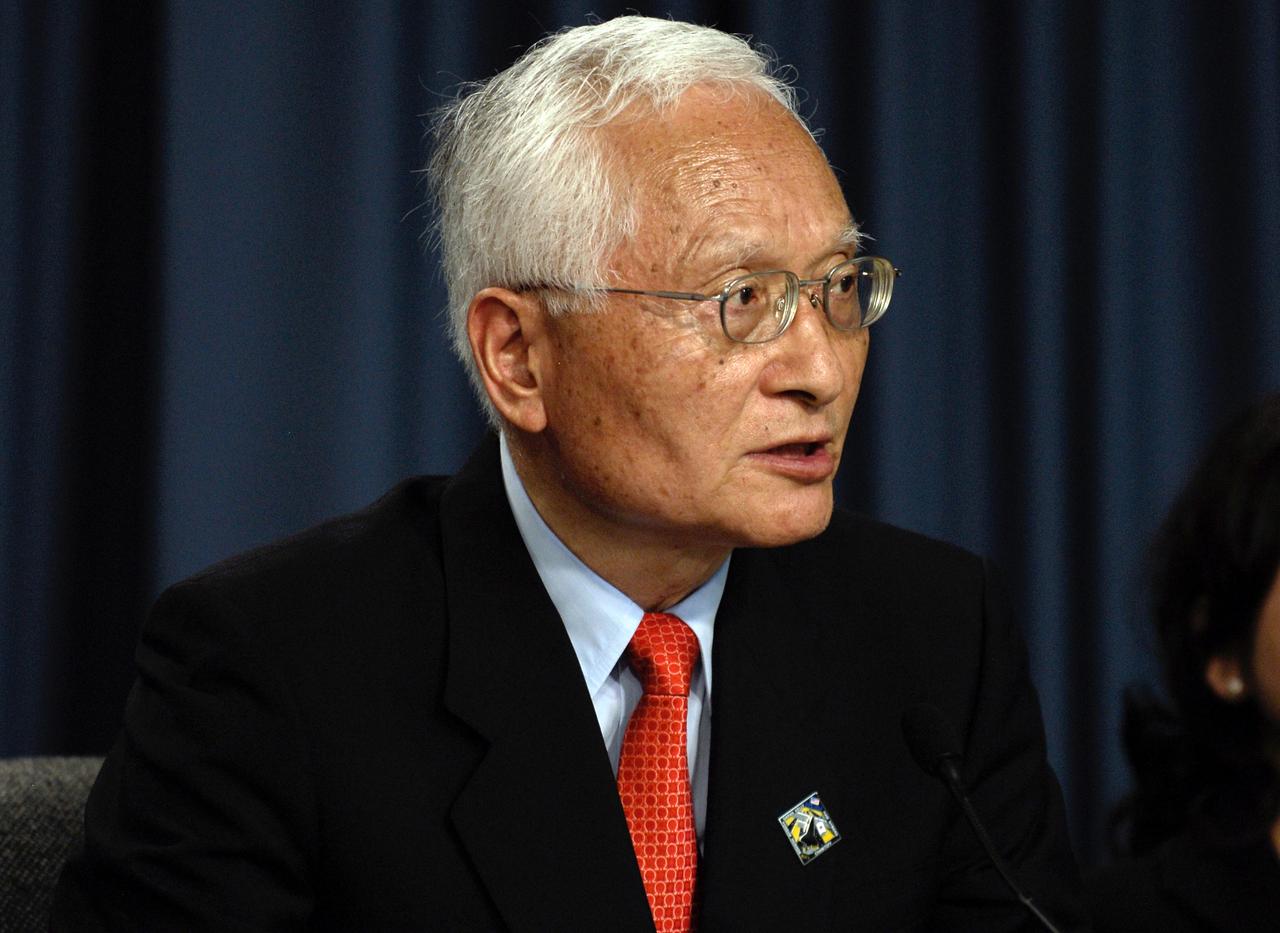
CAPE CANAVERAL, Fla. -- Japan Aerospace Exploration Agency President Dr. Keiji Tachikawa talks to the media during a news conference in NASA's News Center television studio following the successful launch of space shuttle Discovery on the STS-124 mission. Others who participated were NASA Administrator Michael Griffin, Associate Administrator for Space Operations Bill Gerstenmaier, Director of Mission Launch Integration LeRoy Cain and Shuttle Launch Director Mike Leinbach. The STS-124 mission is the 26th in the assembly of the space station. It is the second of three flights launching components to complete the Japan Aerospace Exploration Agency's Kibo laboratory. The shuttle crew will install Kibo's large Japanese Pressurized Module and its remote manipulator system, or RMS. The 14-day flight includes three spacewalks. Photo credit: NASAKim Shiflett
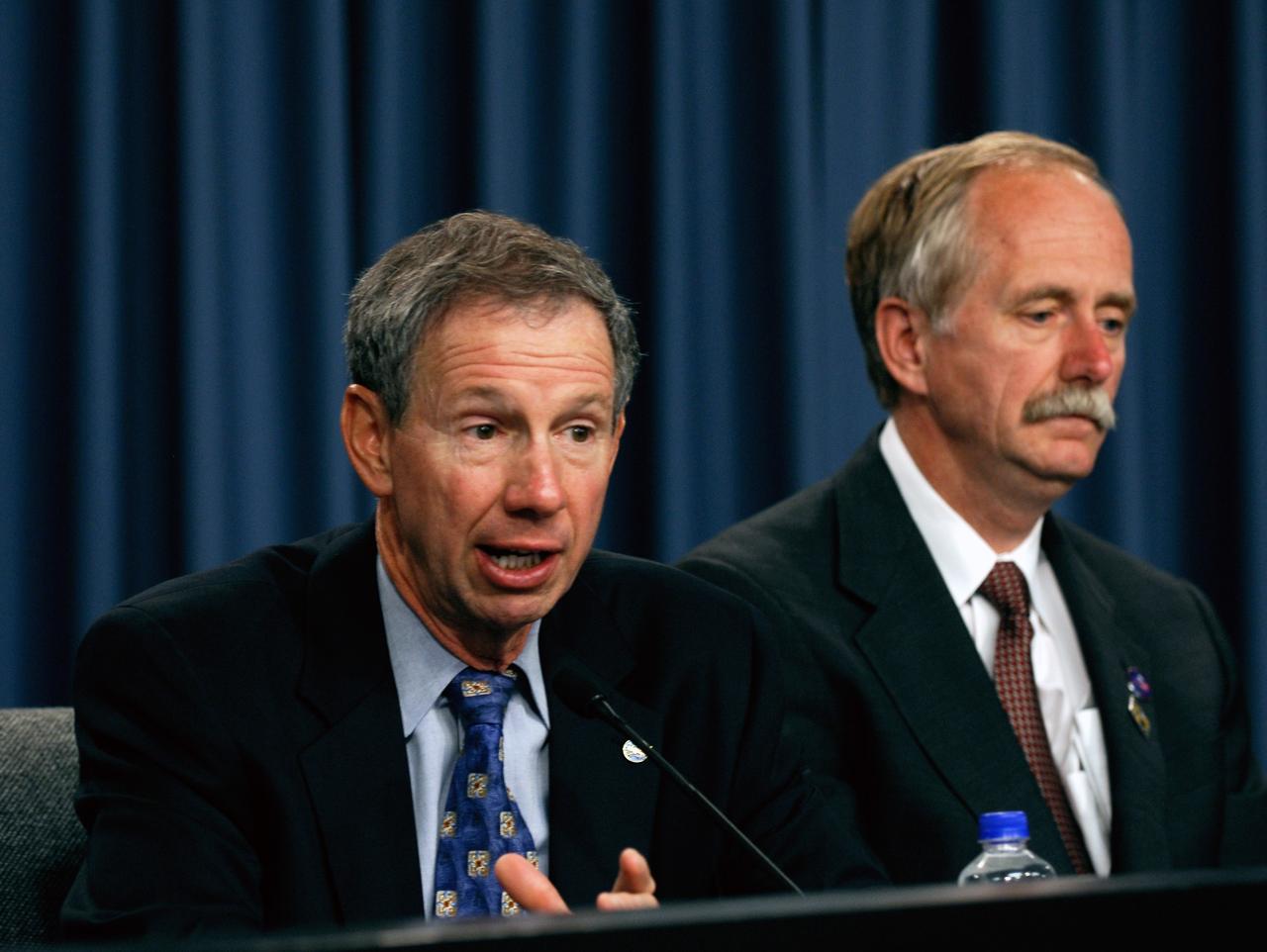
CAPE CANAVERAL, Fla. -- NASA Administrator Michael Griffin responds to a question from the media during a news conference in NASA's News Center television studio following the successful launch of space shuttle Discovery on the STS-124 mission. At right is Associate Administrator for Space Operations Bill Gerstenmaier. Others who participated were Director of Mission Launch Integration LeRoy Cain, Shuttle Launch Director Mike Leinbach and Japan Aerospace Exploration Agency President Dr. Keiji Tachikawa. The STS-124 mission is the 26th in the assembly of the space station. It is the second of three flights launching components to complete the Japan Aerospace Exploration Agency's Kibo laboratory. The shuttle crew will install Kibo's large Japanese Pressurized Module and its remote manipulator system, or RMS. The 14-day flight includes three spacewalks. Photo credit: NASAKim Shiflett
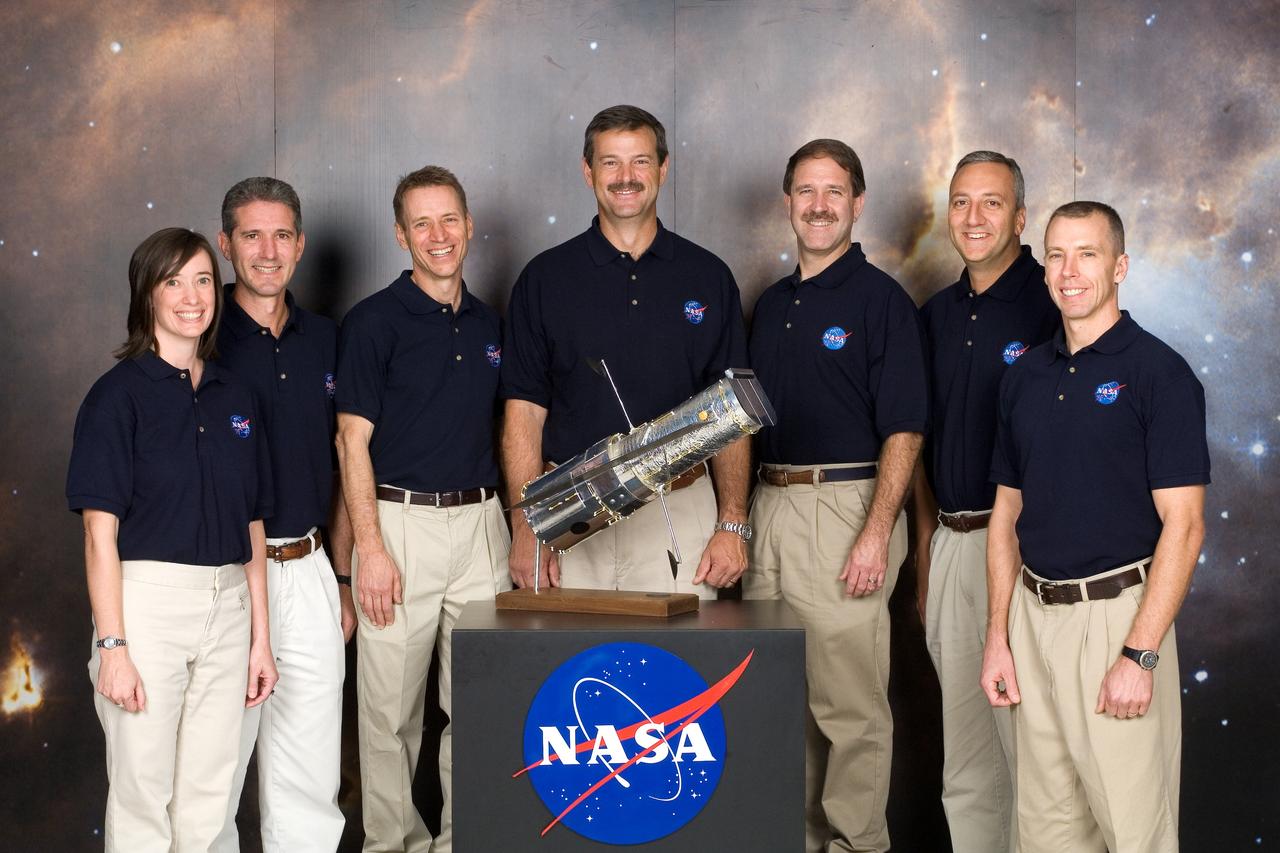
JSC2006-E-47144 (31 Oct. 2006) --- A few hours after NASA Administrator Michael Griffin announced from Goddard Space Flight Center the astronauts selected for the final shuttle mission to perform work on the Hubble Space Telescope, the STS-125 crew met the news media at the Johnson Space Center. Following the press briefing, the members posed for this group portrait. From left to right are astronauts K. Megan McArthur, Michael T. Good, Gregory C. Johnson, Scott D. Altman, John M. Grunsfeld, Michael J. Massimino and Andrew J. Feustel. Altman will command the final space shuttle mission to Hubble, and Johnson will serve as pilot for his initial spaceflight. Mission specialists include veteran spacewalkers Grunsfeld and Massimino and first-time space fliers Feustel, Good and McArthur.
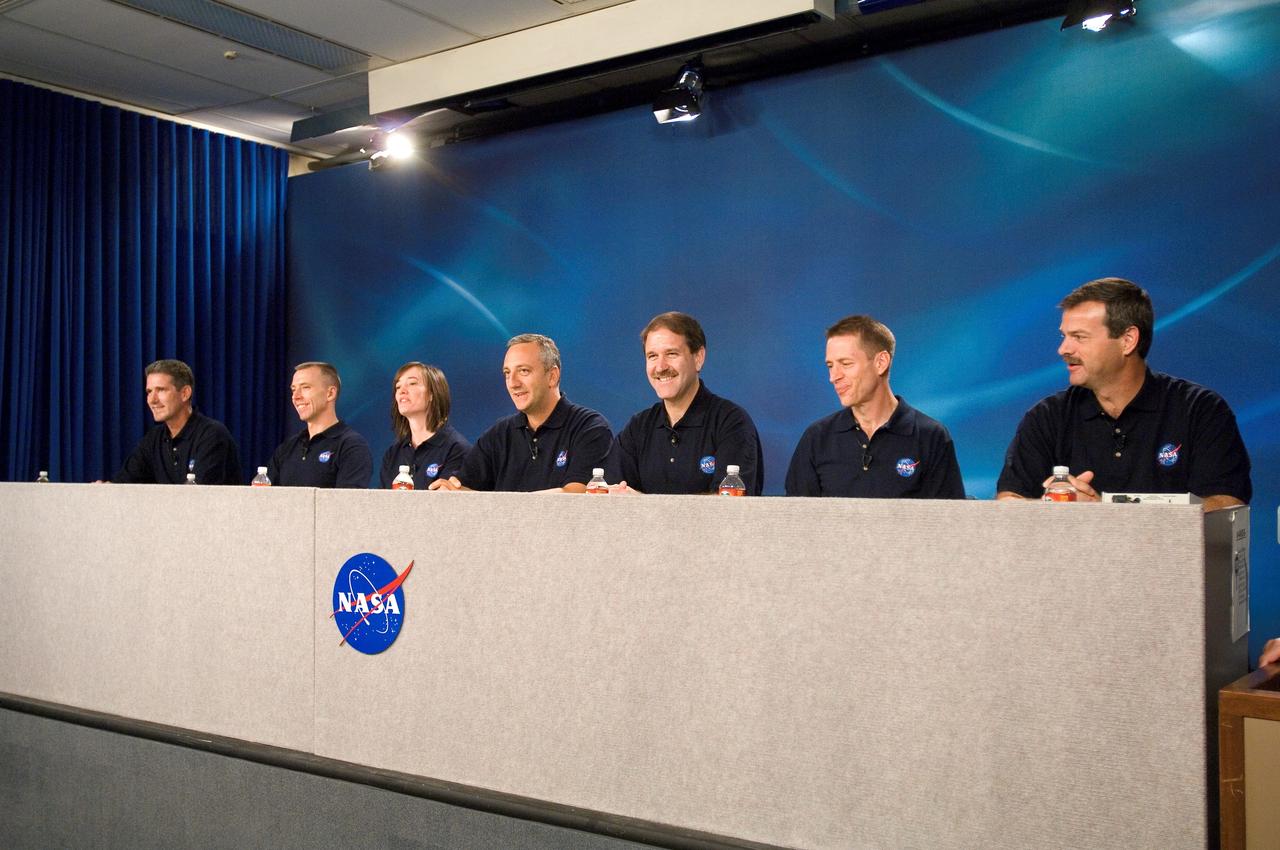
JSC2006-E-47110 (31 Oct. 2006) --- A few hours after NASA Administrator Michael Griffin announced from Goddard Space Flight Center the astronauts selected for the final shuttle mission to perform work on the Hubble Space Telescope, the STS-125 crew met the news media at the Johnson Space Center. From left to right are astronauts Michael T. Good, Andrew J. Feustel, K. Megan McArthur, Michael J. Massimino, John M. Grunsfeld, Gregory C. Johnson and Scott D. Altman. Altman will command the final space shuttle mission to Hubble, and Johnson will serve as pilot for his initial spaceflight. Mission specialists include veteran spacewalkers Grunsfeld and Massimino and first-time space fliers Feustel, Good and McArthur.
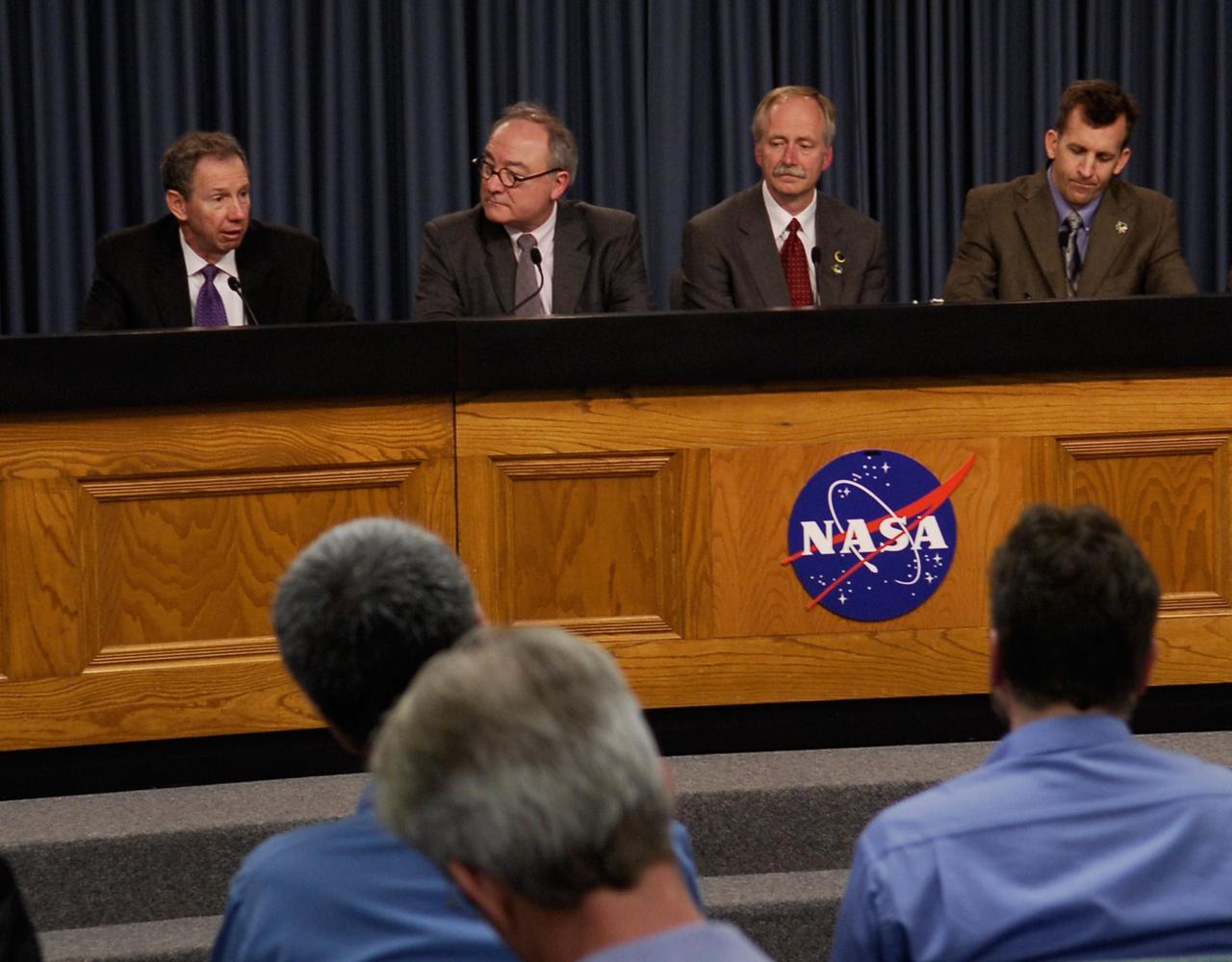
KENNEDY SPACE CENTER, FLA. -- Following the successful launch of space shuttle Atlantis on mission STS-122, NASA Administrator Michael Griffin tells the media at a news conference that the European Space Agency's (ESA) Columbus laboratory will bring a truly international capability to the International Space Station. Also seen on the dais are ESA's Director General Jean-Jacques Dordain, Associate Administrator for Space Operations Bill Gerstenmaier and Director of Mission Launch Integration LeRoy Cain. Not pictured but present at the conference is STS-122 Launch Director Doug Lyons. During the 11-day mission, the crew's prime objective is to attach the Columbus laboratory to the Harmony module, adding to the station's size and capabilities. Photo credit: NASA/Kim Shiflett
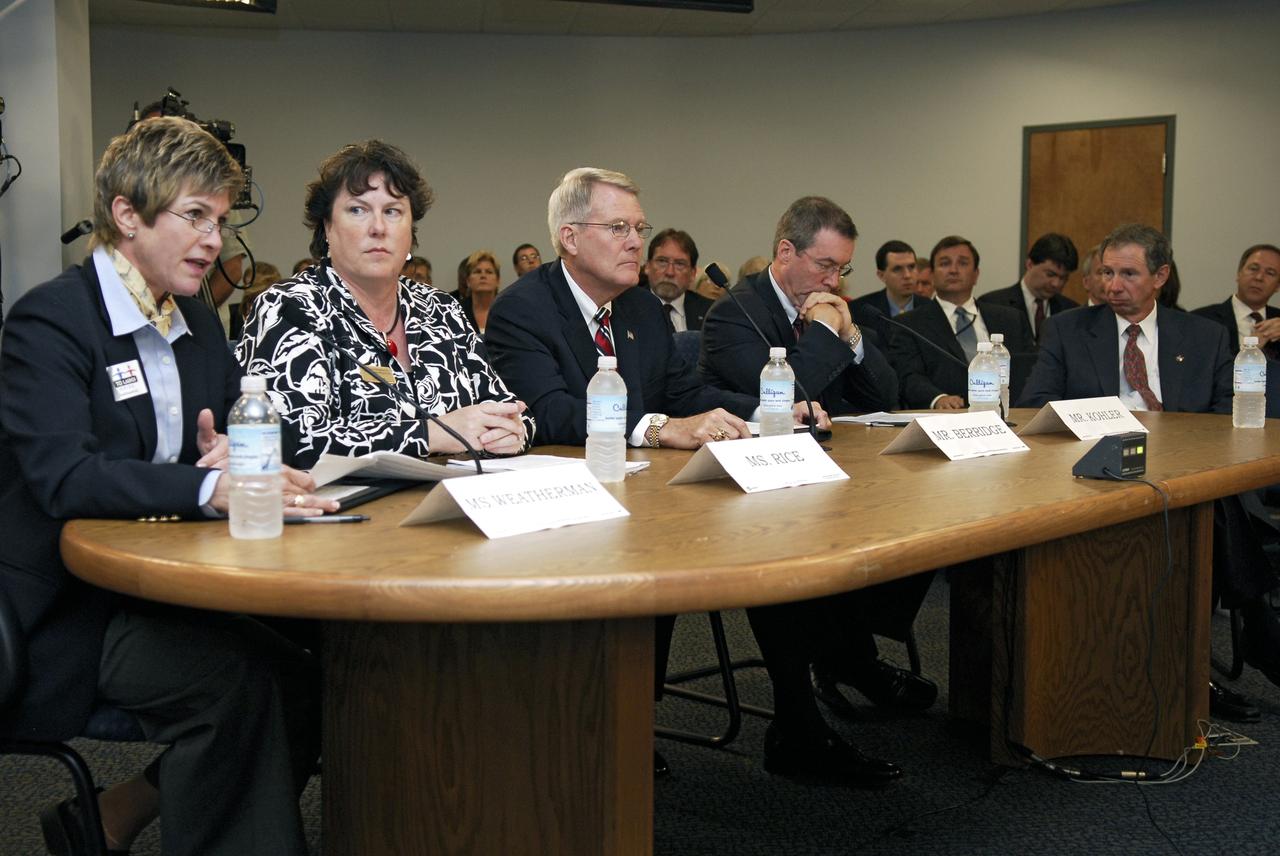
CAPE CANAVERAL, Fla. – A Senate field hearing held at the Canaveral Port Authority and chaired by Florida Sen. Bill Nelson focuses on workforce related challenges at NASA's Kennedy Space Center and potential solutions to mitigate the transition's effects on the community. The hearing examined issues surrounding the retirement of the space shuttle and the transition to the new Orion/Ares system. At the table are community representatives Lynda Weatherman, president and CEO of the Economic Development Commission of Florida's Space Coast; Lisa Rice, president of the Brevard Workforce Development Board Inc.; Randy Berridge, president of the Florida High Tech Corridor Council; and Steve Kohler, president of Space Florida. NASA Administrator Michael Griffin is seated at right. Photo credit: NASA/Kim Shiflett
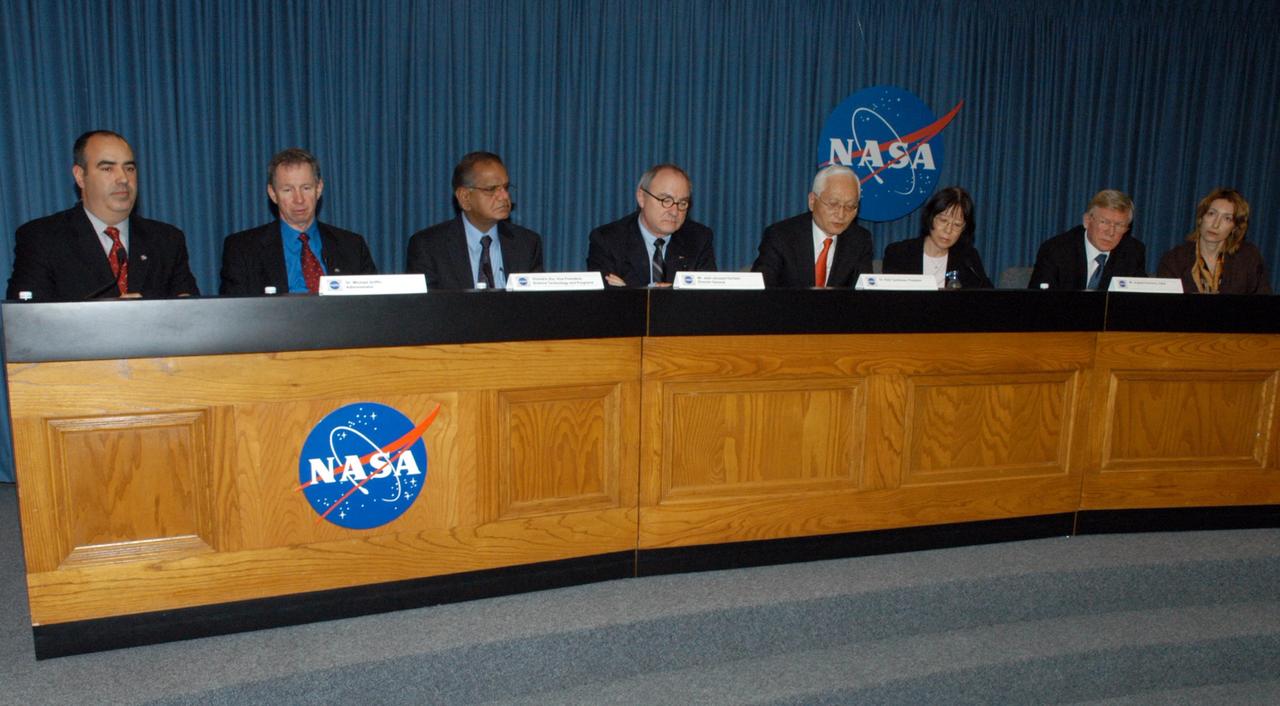
KENNEDY SPACE CENTER, FLA. - Leaders from space agencies around the world participate in a news briefing following the International Space Station Heads of Agency meeting held at Kennedy Space Center. From left are NASA Press Secretary Dean Acosta; NASA Administrator Michael Griffin; Canadian Space Agency Vice-President Space Science, Technology and Programs Virendra Jha; European Space Agency Director-General Jean-Jacques Dordain; Japan Aerospace Exploration Agency President Keiji Tachikawa; Japanese interpreter Masako Kaharia; Russian Federal Space Agency Head Anatolii Perminov; and Russian interpreter Elena Maroko. The purpose of the meeting was to review International Space Station cooperation and endorse a revision to the station configuration and assembly sequence. At the meeting, the partners reaffirmed their agencies' commitment to meet their mutual obligations, to implement six person crew operations in 2009 and an adequate number of shuttle flights to complete the assembly of the space station by the end of the decade. Photo credit: NASA/George Shelton