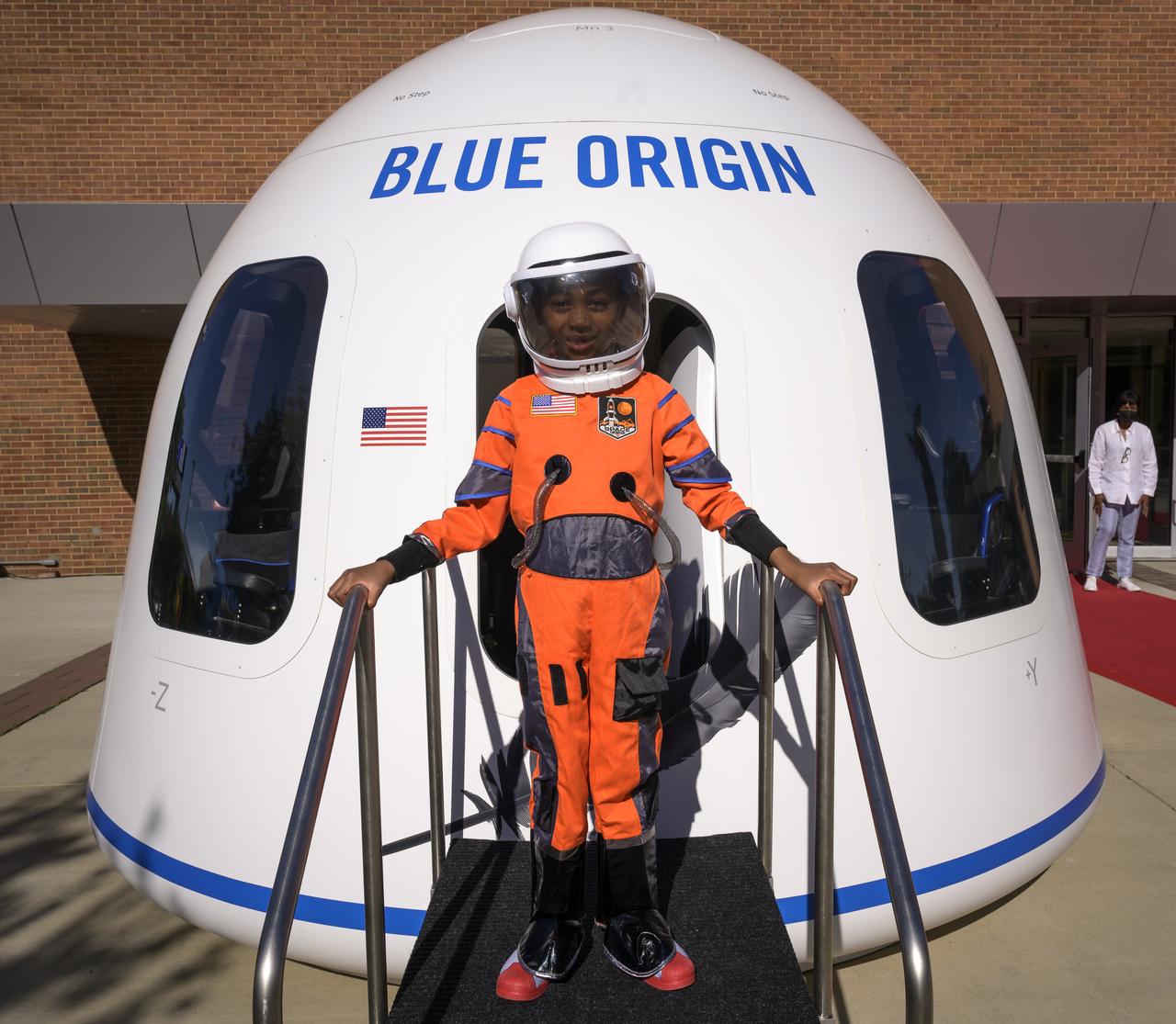
6-year old Armani Bonds poses for a photograph as he exits a Blue Origin New Shepard capsule mockup prior to the screening of the NASA produced documentary “The Color of Space” at Howard University’s Cramton Auditorium in Washington, Saturday, June 18, 2022. Premiering on Juneteenth, the federal holiday commemorating the end of slavery in the United States, “The Color of Space” is an inspirational documentary that tells the stories of NASA’s Black astronauts determined to reach the stars. Photo Credit: (NASA/Bill Ingalls)
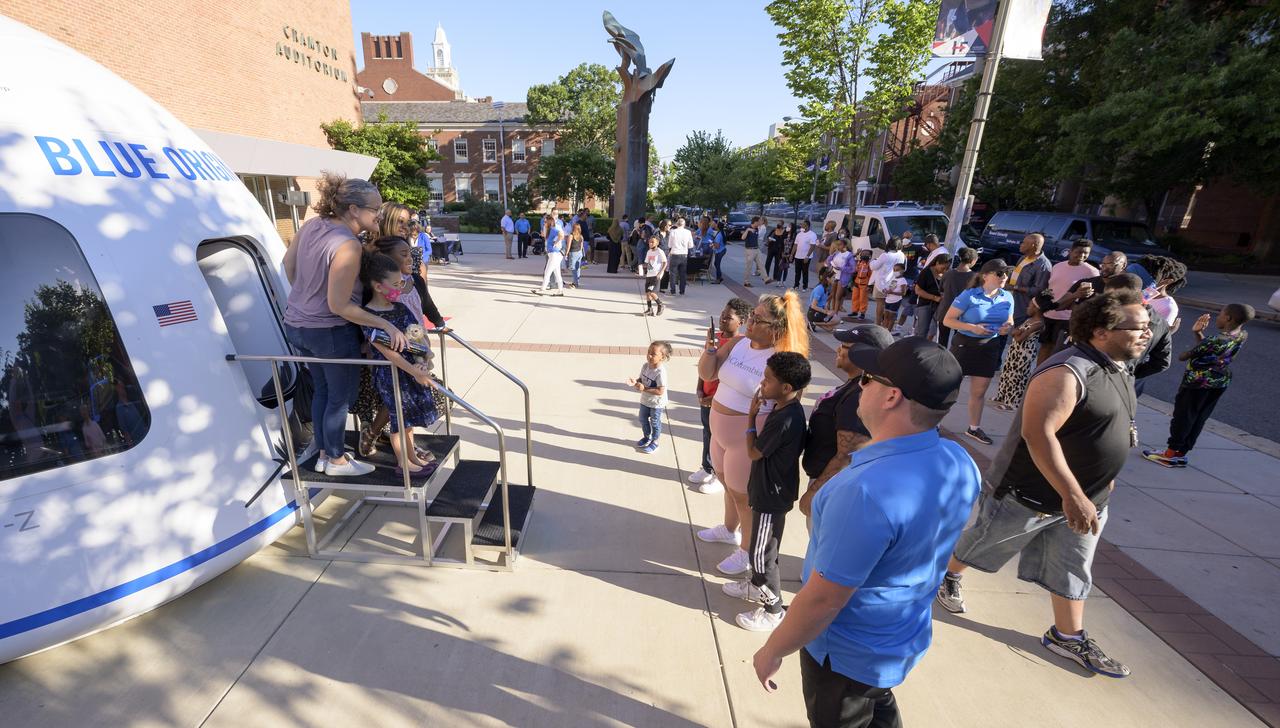
Attendees line up to go inside a Blue Origin New Shepard capsule mockup prior to the screening of the NASA produced documentary “The Color of Space” at Howard University’s Cramton Auditorium in Washington, Saturday, June 18, 2022. Premiering on Juneteenth, the federal holiday commemorating the end of slavery in the United States, “The Color of Space” is an inspirational documentary that tells the stories of NASA’s Black astronauts determined to reach the stars. Photo Credit: (NASA/Bill Ingalls)
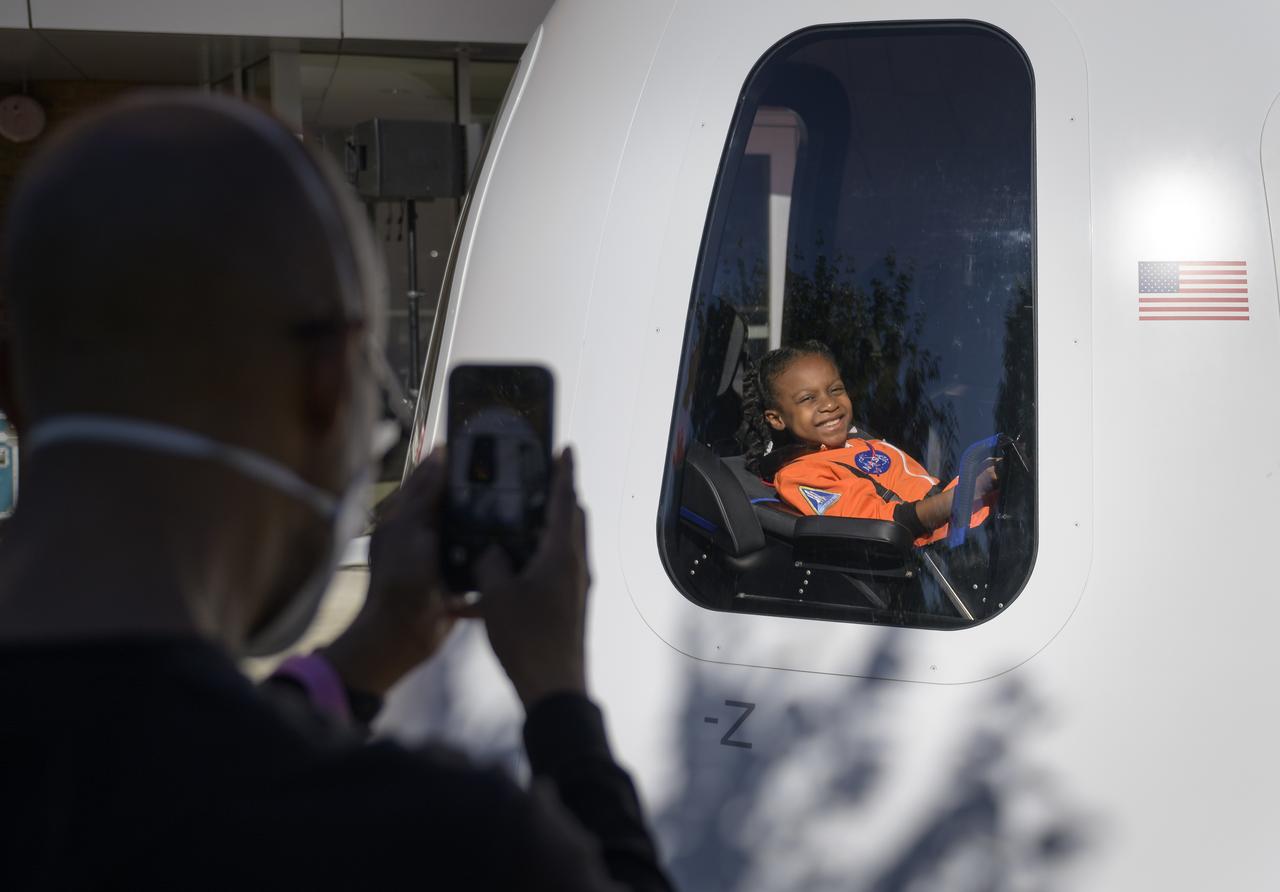
9-year old Amara Bowman smiles as her father photographs her inside a Blue Origin New Shepard capsule mockup prior to the screening of the NASA produced documentary “The Color of Space” at Howard University’s Cramton Auditorium in Washington, Saturday, June 18, 2022. Premiering on Juneteenth, the federal holiday commemorating the end of slavery in the United States, “The Color of Space” is an inspirational documentary that tells the stories of NASA’s Black astronauts determined to reach the stars. Photo Credit: (NASA/Bill Ingalls)
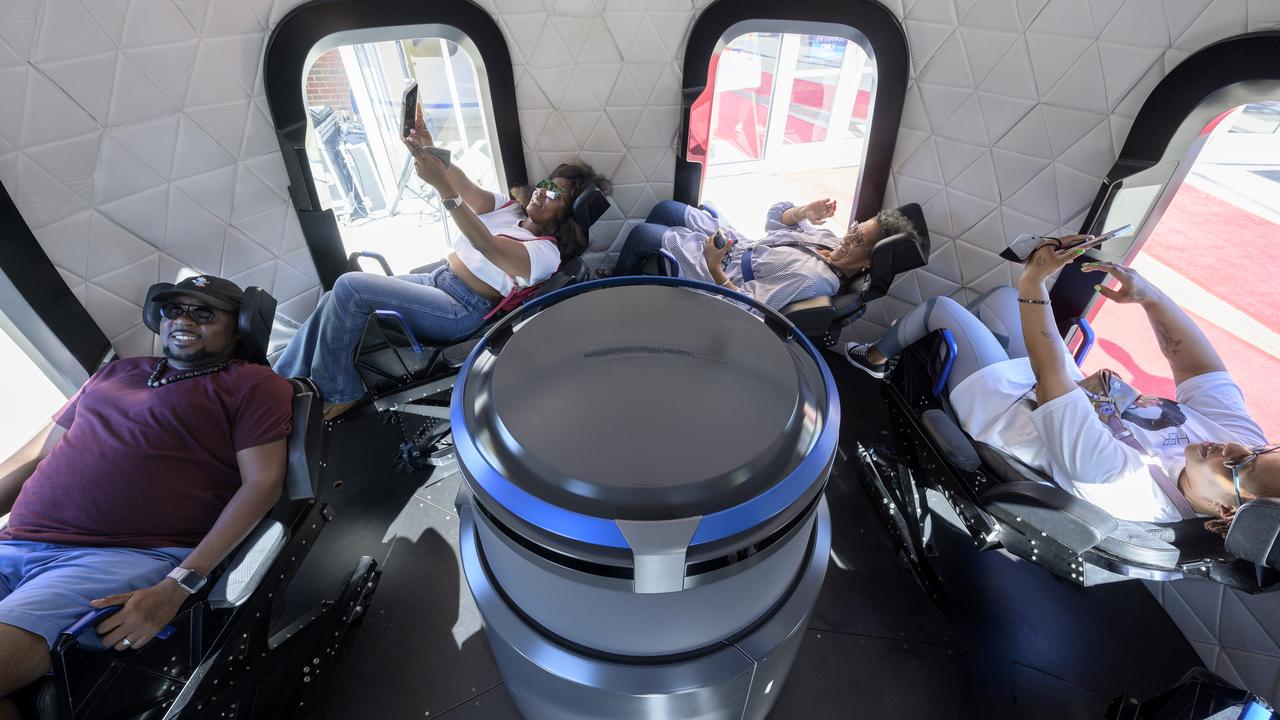
Attendees experience the inside of a Blue Origin New Shepard capsule mockup prior to the screening of the NASA produced documentary “The Color of Space” at Howard University’s Cramton Auditorium in Washington, Saturday, June 18, 2022. Premiering on Juneteenth, the federal holiday commemorating the end of slavery in the United States, “The Color of Space” is an inspirational documentary that tells the stories of NASA’s Black astronauts determined to reach the stars. Photo Credit: (NASA/Bill Ingalls)
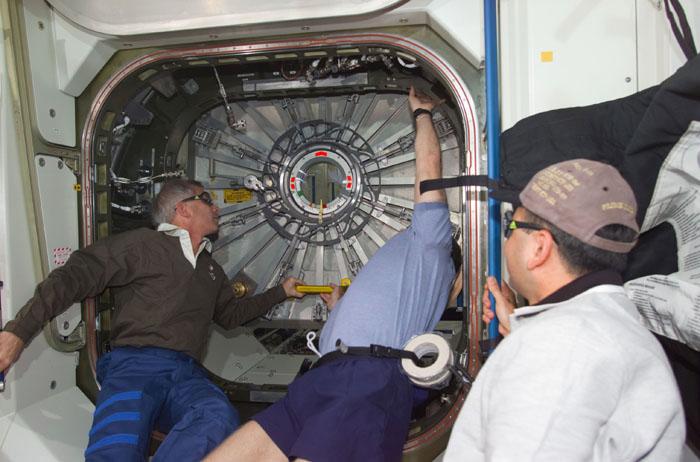
STS98-E-5131 (11 February 2001) --- The crews of Atlantis and the International Space Station open the Destiny laboratory on February 11 in this digital still camera view. From the left are astronauts Kenneth D. Cockrell, STS-98 commander; William M. (Bill) Shepherd, Expedition One commander; and Mark L. Polansky, STS-98 pilot. Later, the astronauts and cosmonauts spent the first full day of what are planned to be years of work ahead inside the orbiting science and command center. After Shepherd opened the Destiny hatch, he and Cockrell ventured inside at 8:38 a.m. (CST). As depicted in subsequent digital images in this series, members of both crews went to work quickly inside the new module, activating air systems, fire extinguishers, alarm systems, computers and internal communications. The crew also continued equipment transfers from the shuttle to the station.
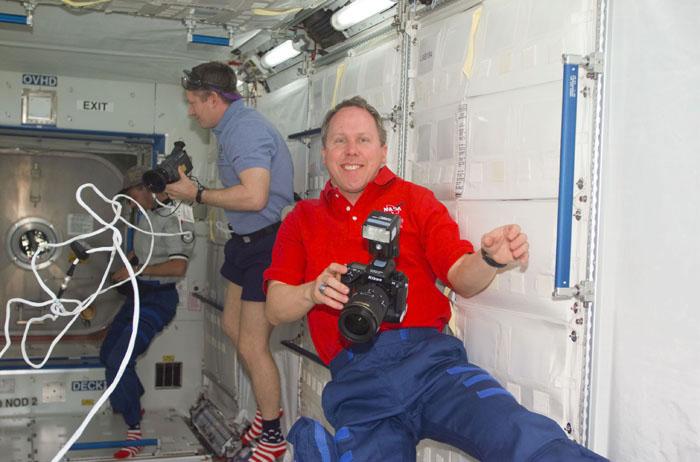
STS98-E-5137 (11 February 2001) --- Astronauts Thomas D. Jones (foreground), STS-98 mission specialist, and William M. Shepherd, Expedition One mission commander, participate in an impromptu photo shoot onboard the newly opened Destiny laboratory on the International Space Station (ISS). After Shepherd opened the Destiny hatch, he and astronaut Kenneth D. Cockrell (out of frame) ventured inside at 8:38 a.m. (CST), February 11, 2001. As depicted in subsequent digital images in this series, members of both crews went to work quickly inside the new module, activating air systems, fire extinguishers, alarm systems, computers and internal communications. The crew also took some photos and continued equipment transfers from the shuttle to the station.
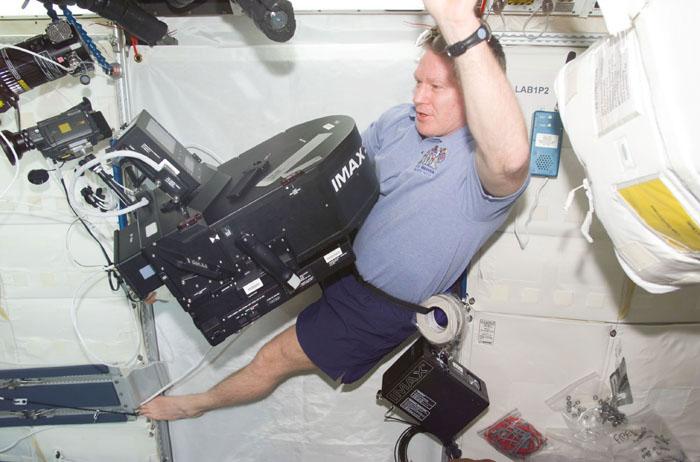
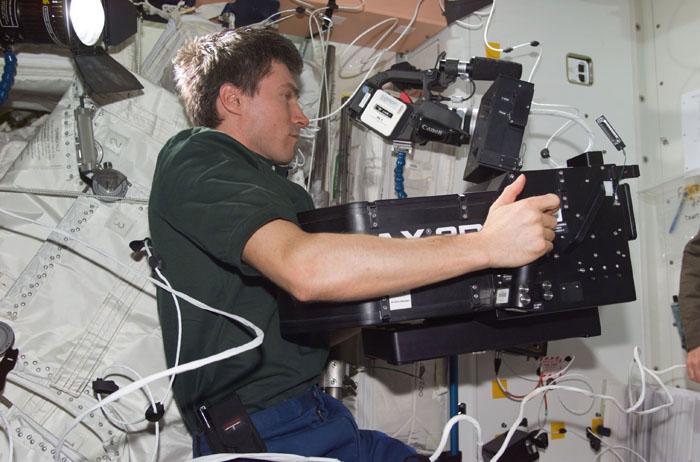
STS98-E-5164 (11 February 2001) --- Astronaut William M. (Bill) Shepherd documents activity onboard the newly attached Destiny laboratory using an IMAX motion picture camera. The crews of Atlantis and the International Space Station on February 11 opened the Destiny laboratory and spent the first full day of what are planned to be years of work ahead inside the orbiting science and command center. Shepherd opened the Destiny hatch, and he and Shuttle commander Kenneth D. Cockrell ventured inside at 8:38 a.m. (CST). Members of both crews went to work quickly inside the new module, activating air systems, fire extinguishers, alarm systems, computers and internal communications. The crew also continued equipment transfers from the shuttle to the station and filmed several scenes onboard the station using an IMAX camera. This scene was recorded with a digital still camera.

STS98-E-5143 (11 February 2001) --- Astronauts Marsha S. Ivins (from the left), STS-98 mission specialist, Kenneth D. Cockrell, STS-98 mission commander; and William M. Shepherd, Expedition One mission commander, discuss the organizational "game plan" onboard the newly opened Destiny laboratory on the International Space Station (ISS). After Shepherd opened the Destiny hatch, he and Cockrell ventured inside at 8:38 a.m. (CST), February 11, 2001. As depicted in subsequent digital images in this series, members of both crews went to work quickly inside the new module, activating air systems, fire extinguishers, alarm systems, computers and internal communications. The crew also took some photos and continued equipment transfers from the shuttle to the station.
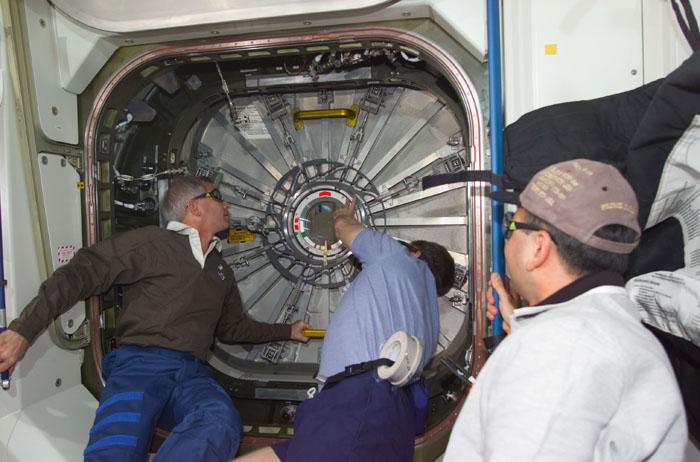
STS98-E-5130 (11 February 2001) --- The crews of Atlantis and the International Space Station open the Destiny laboratory on February 11 in this digital still camera view. From the left are astronauts Kenneth D. Cockrell, STS-98 commander; William M. (Bill) Shepherd, Expedition One commander; and Mark L. Polansky, STS-98 pilot. Later, the astronauts and cosmonauts spent the first full day of what are planned to be years of work ahead inside the orbiting science and command center. After Shepherd opened the Destiny hatch, he and Cockrell ventured inside at 8:38 a.m. (CST). As depicted in subsequent digital images in this series, members of both crews went to work quickly inside the new module, activating air systems, fire extinguishers, alarm systems, computers and internal communications. The crew also continued equipment transfers from the shuttle to the station.
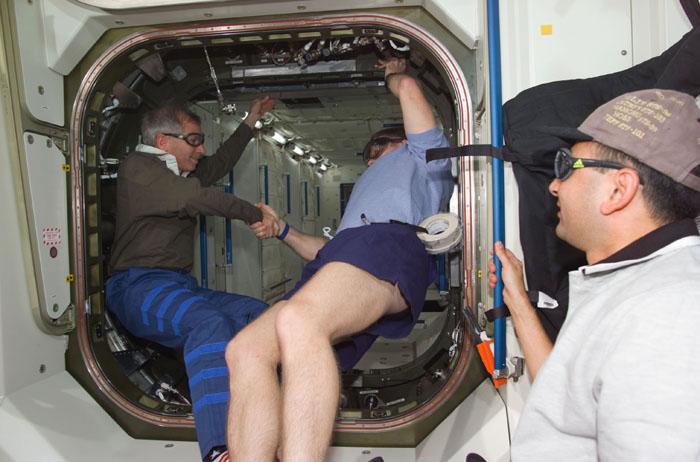
STS98-E-5133 (11 February 2001) --- The crew commanders of Atlantis and the International Space Station shake hands following the opening of the Destiny laboratory on February 11 in this digital still camera view. From the left are astronauts Kenneth D. Cockrell, STS-98 commander; William M. (Bill) Shepherd, Expedition One commander; and Mark L. Polansky, STS-98 pilot. Later, the astronauts and cosmonauts spent the first full day of what are planned to be years of work ahead inside the orbiting science and command center. After Shepherd opened the Destiny hatch, he and Cockrell ventured inside at 8:38 a.m. (CST). As depicted in subsequent digital images in this series, members of both crews went to work quickly inside the new module, activating air systems, fire extinguishers, alarm systems, computers and internal communications. The crew also continued equipment transfers from the shuttle to the station.
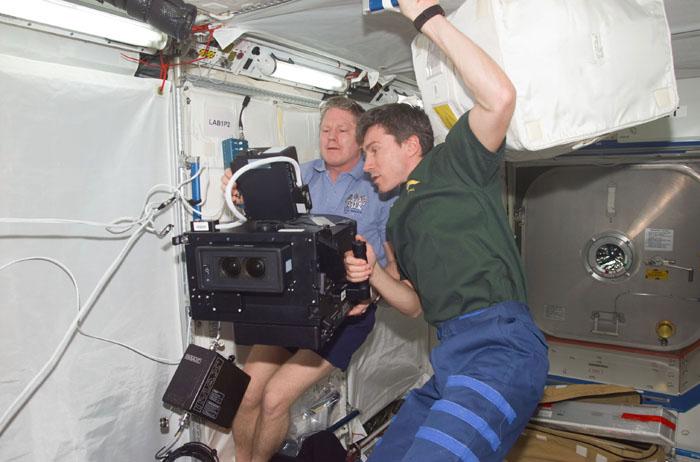
STS98-E-5167 (11 February 2001) --- Astronaut William M. (Bill) Shepherd (left), Expedition One commander, with the help of cosmonaut Sergei K. Krikalev, films activity onboard the newly attached Destiny laboratory. The crews of Atlantis and the International Space Station on February 11 opened the Destiny laboratory and spent the first full day of what are planned to be years of work ahead inside the orbiting science and command center. Shepherd opened the Destiny hatch, and he and Shuttle commander Kenneth D. Cockrell ventured inside at 8:38 a.m. (CST). Members of both crews went to work quickly inside the new module, activating air systems, fire extinguishers, alarm systems, computers and internal communications. The crew also continued equipment transfers from the shuttle to the station and filmed several scenes onboard the station using an IMAX camera. This scene was recorded with a digital still camera.
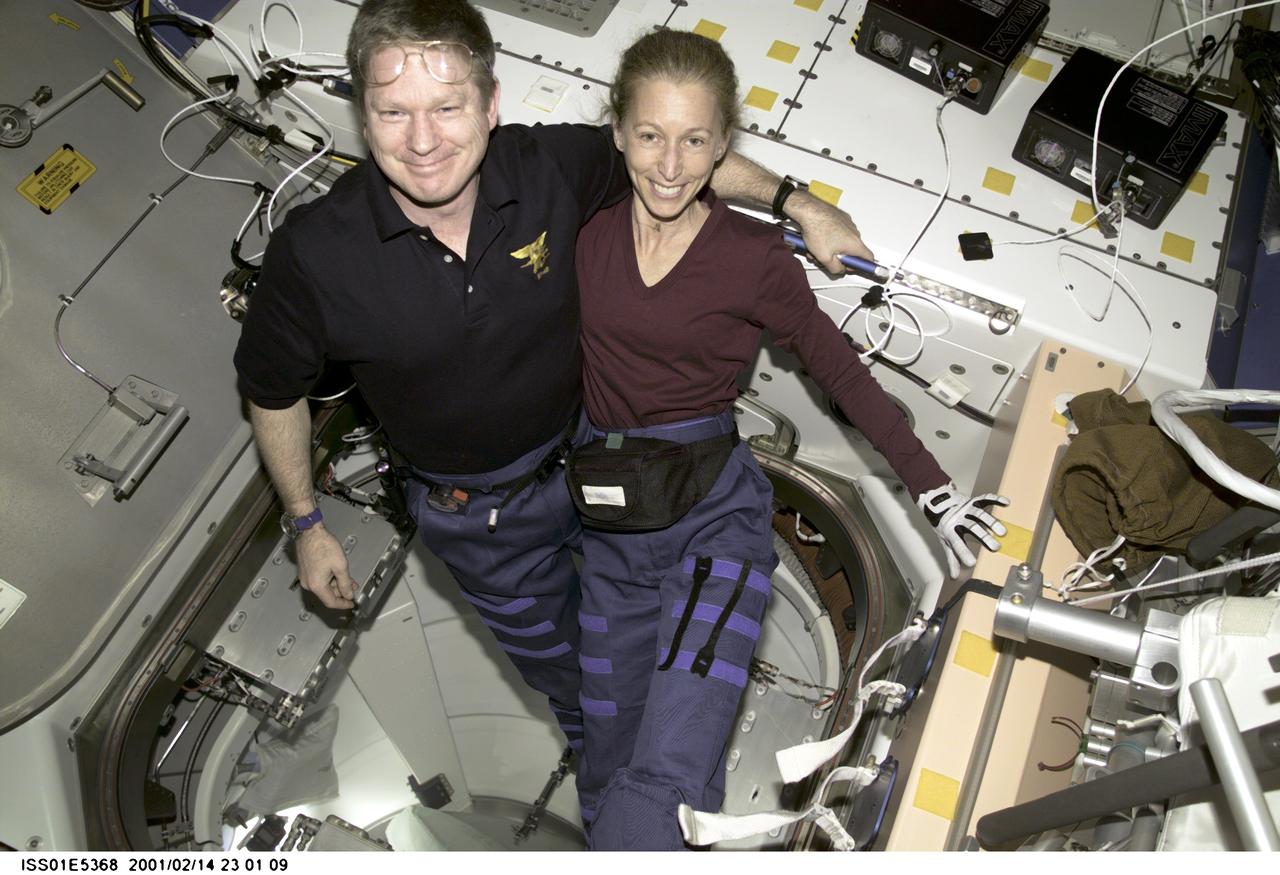
ISS01-E-5368 (14 February 2001) --- Onboard the new Destiny laboratory, Expedition One commander William M. (Bill) Shepherd, shares a brief break from a busy work agenda with astronaut Marsha S. Ivins, STS-98 mission specialist. The two are alumni of the tenth class of NASA astronaut candidates, having come aboard with 15 other trainees in the summer of 1984.
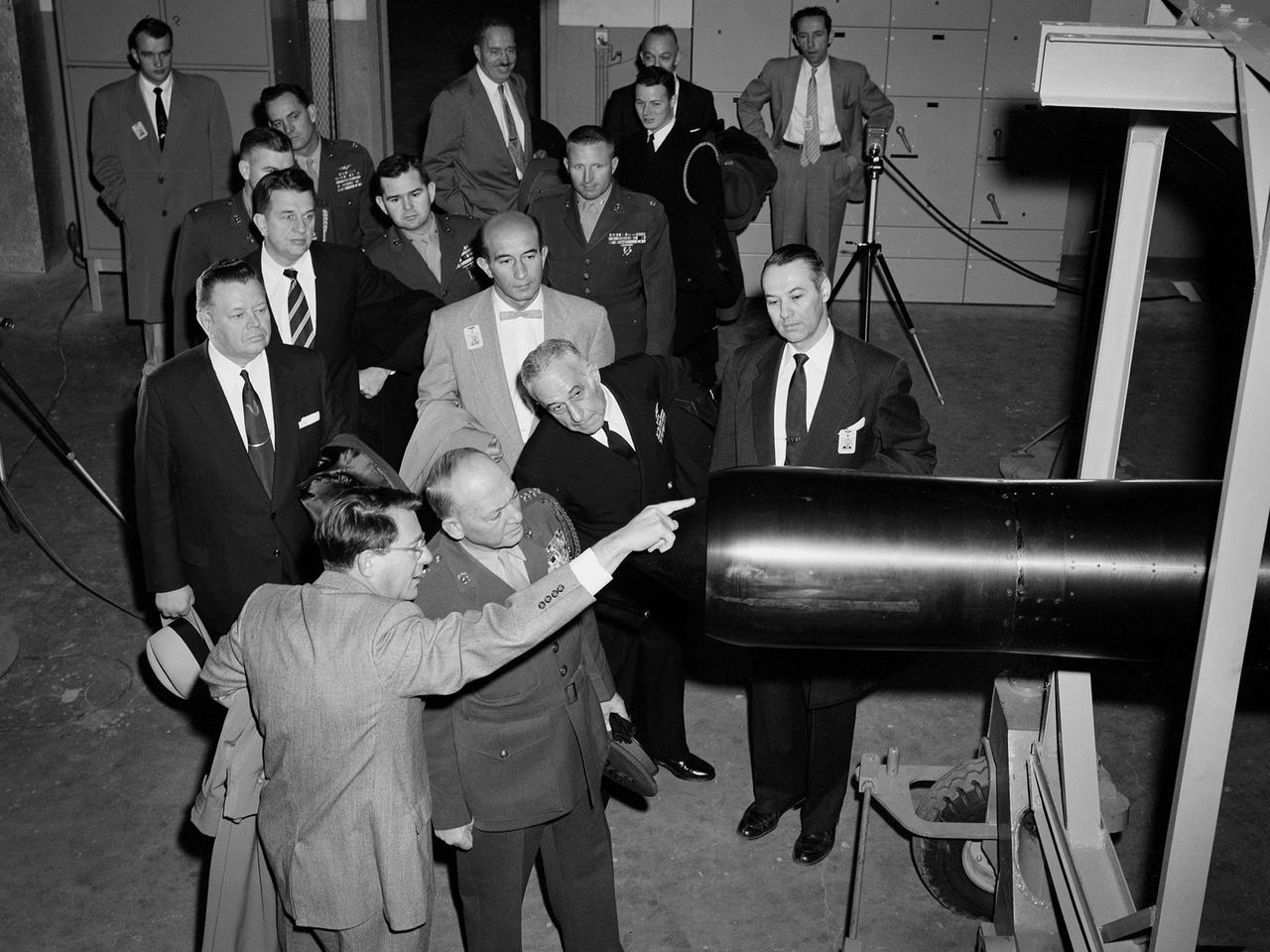
Abe Silverstein, Associate Director of the National Advisory Committee for Aeronautics (NACA) Lewis Flight Propulsion Laboratory, provides a personal tour of the new 10- by 10-Foot Supersonic Wind Tunnel for US Senator George Bender (hat in hand) and General Lemuel Shepherd. Shepherd was Commandant of the Marine Corps and had served in World War I, World War II, and the Korean War. The general was accompanied by Admiral Herbert Leary, in dark uniform. Bender was a Republican Senator from Ohio. Behind Bender is President of the Cleveland Chamber of Commerce Curtis Smith. NACA Lewis managers Eugene Manganiello and Wilson Hunter assist with the tour. Abe Silverstein oversaw all research at the laboratory. Upon taking his post in 1952 he reorganized the research staff and began shifting the focus away from airbreathing aircraft engines to new fields such as high energy fuels, electric propulsion, and nuclear power and propulsion. He was an early advocate of the NACA’s involvement in the space program and crucial to the founding of National Aeronautics and Space Administration in 1958. Silverstein began his career helping design and conduct research in the Full Scale Tunnel in 1929 at the Langley Memorial Aeronautical Laboratory. Silverstein advocated a series of increasingly large supersonic wind tunnels after the war, culminating in the 10- by 10.
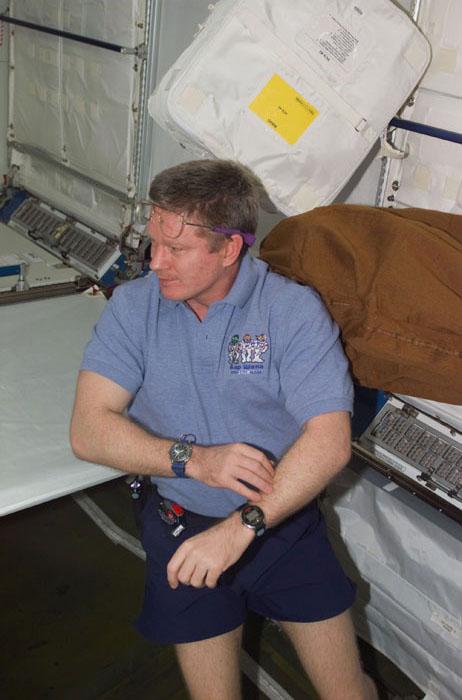
STS98-E-5160 (11 February 2001) --- Astronaut William M. (Bill) Shepherd, Expedition One commander, surveys the interior of the newly attached Destiny laboratory onboard the International Space Station (ISS). After the Destiny hatch was opened early in the day, members of both crews went to work quickly inside the new module, activating air systems, fire extinguishers, alarm systems, computers and internal communications. The crews also took some photos and continued equipment transfers from the shuttle to the station. The scene was taken with a digital still camera.
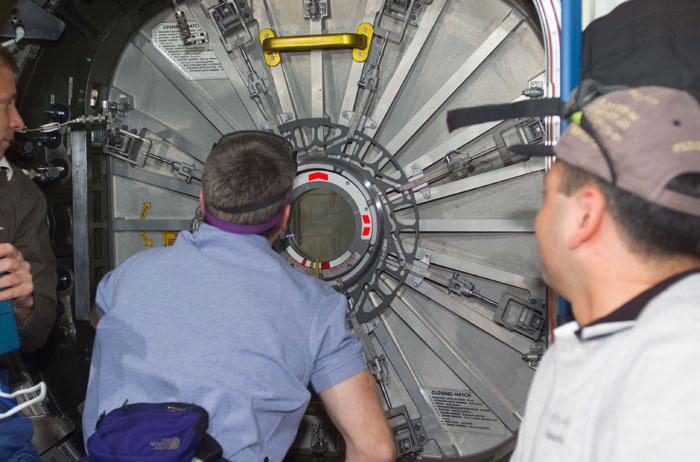
STS98-E-5120 (11 February 2001) --- This digital still camera shot shows Expedition One commander William M. (Bill) Shepherd looking through the portal on Unity's closed hatch to the newly attached Destiny laboratory. (Note: Astronauts Kenneth D. Cockrell and Mark L. Polansky appear at the left and right edges, respectively, but could possibly be cropped out in some views). The crews of Atlantis and the International Space Station opened the laboratory shortly after this photo was made on February 11; and the astronauts and cosmonauts spent the first full day of what are planned to be years of work ahead inside the orbiting science and command center. Shepherd opened the Destiny hatch, and he and shuttle commander Cockrell ventured inside at 8:38 a.m. (CST), Feb. 11. As depicted in subsequent digital images in this series, members of both crews went to work quickly inside the new module, activating air systems, fire extinguishers, alarm systems, computers and internal communications. The crew also continued equipment transfers from the shuttle to the station.
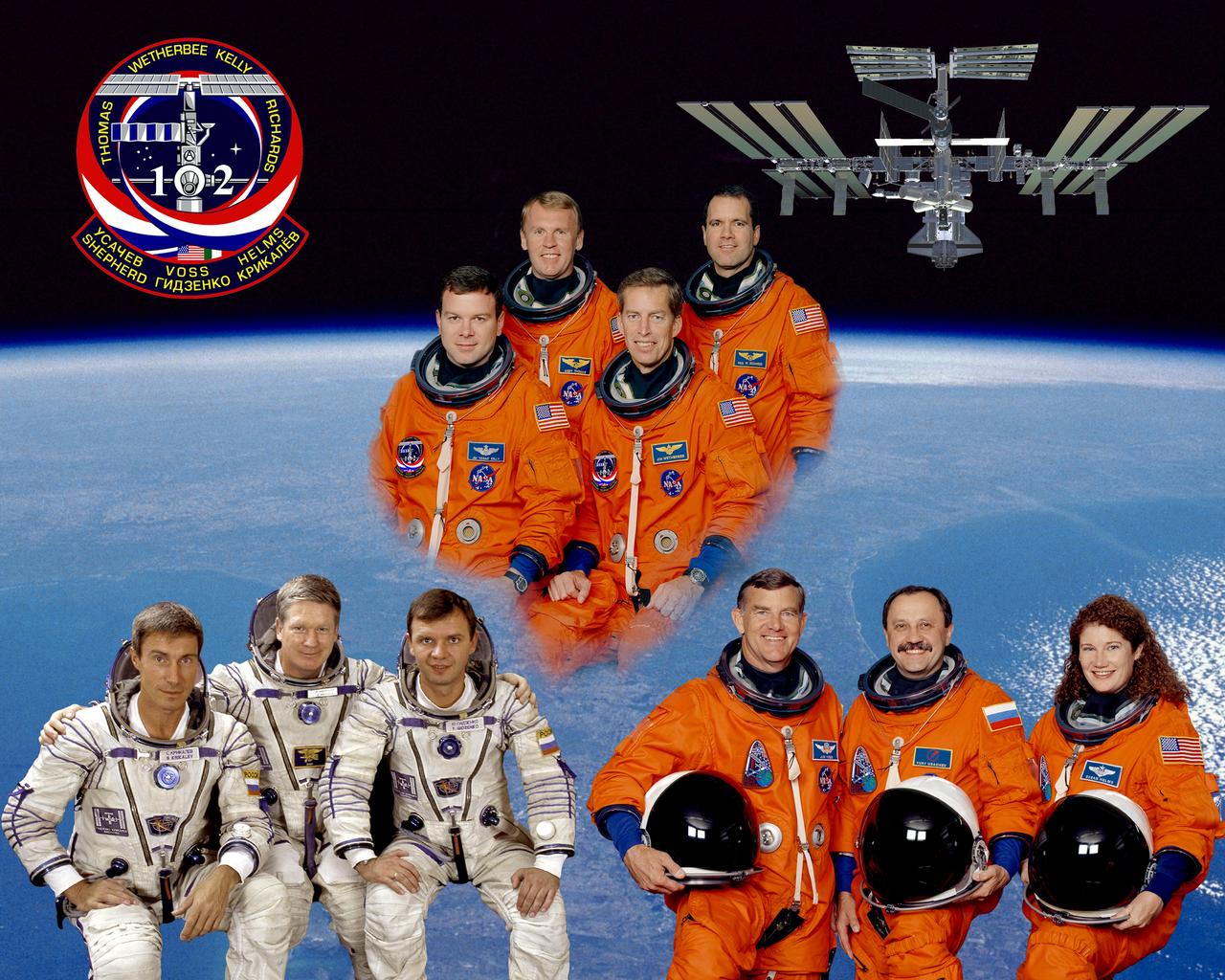
STS102-S-002 (February 2001)--- With the full-time occupancy of the International Space Station (ISS), Space Transportation System crew portraits have taken on a new look. These ten astronauts and cosmonauts represent the base STS-102 space travelers, as well as the crew members for the station crews switching out turns aboard the outpost. In the top group are, from the left, astronauts James M. Kelly, pilot; Andrew S.W. Thomas, mission specialist; James D. Wetherbee, mission commander; and Paul W. Richards, mission specialist. The bottom left grouping is the Expedition One crew, which includes, from left, cosmonaut Sergei K. Krikalev, flight engineer; astronaut William M. (Bill) Shepherd, commander; and cosmonaut Yuri P. Gidzenko, Soyuz commander. At bottom right is crew who will replace Shepherd's crew aboard the station, from the left, astronaut James S. Voss; cosmonaut Yury V. Usachev, Expedition Two commander; and astronaut Susan J. Helms. Usachev, Krikalev and Gidzenko all represent Rosaviakosmos.
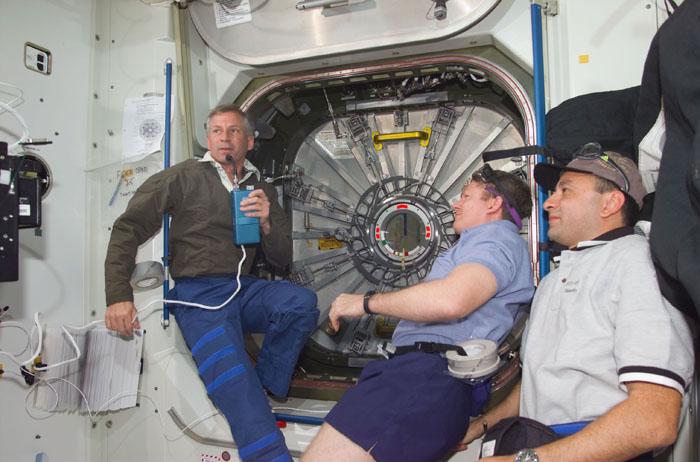
STS98-E-5123 (11 February 2001) --- This digital still camera shot shows STS-98 mission commander Kenneth D. Cockrell (from left), Expedition One commander William M. (Bill) Shepherd and STS-98 pilot Mark L. Polansky pausing at Unity's closed hatch to the newly attached Destiny laboratory. The crews of Atlantis and the International Space Station opened the laboratory shortly after this photo was made on Feb. 11; and the astronauts and cosmonauts spent the first full day of what are planned to be years of work ahead inside the orbiting science and command center. Shepherd opened the Destiny hatch, and he and shuttle commander Cockrell ventured inside at 8:38 a.m. (CST), Feb. 11. As depicted in subsequent digital images in this series, members of both crews went to work quickly inside the new module, activating air systems, fire extinguishers, alarm systems, computers and internal communications. The crew also continued equipment transfers from the shuttle to the station.
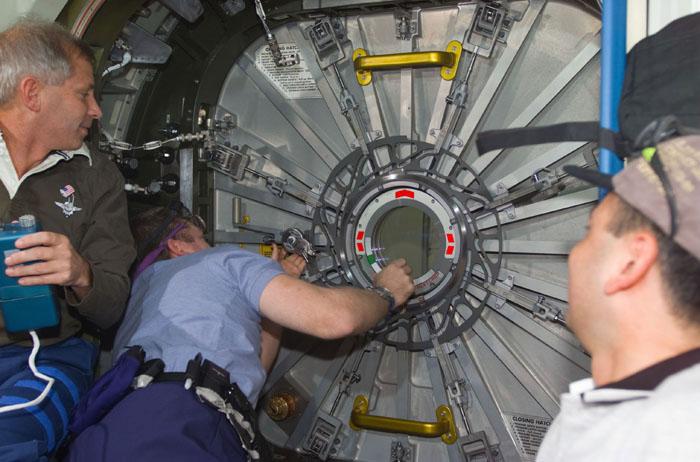
STS98-E-5121 (11 February 2001) --- This digital still camera shot shows Expedition One commander William M. (Bill) Shepherd looking through the observation port on Unity's closed hatch to the newly attached Destiny laboratory. Astronauts Kenneth D. Cockrell and Mark L. Polansky appear at the left and right edges, respectively. The crews of Atlantis and the International Space Station opened the laboratory shortly after this photo was made on Feb. 11, and the astronauts and cosmonauts spent the first full day of what are planned to be years of work ahead inside the orbiting science and command center. Shepherd opened the Destiny hatch, and he and shuttle commander Cockrell ventured inside at 8:38 a.m. (CST), Feb. 11. As depicted in subsequent digital images in this series, members of both crews went to work quickly inside the new module, activating air systems, fire extinguishers, alarm systems, computers and internal communications. The crew also continued equipment transfers from the shuttle to the station.
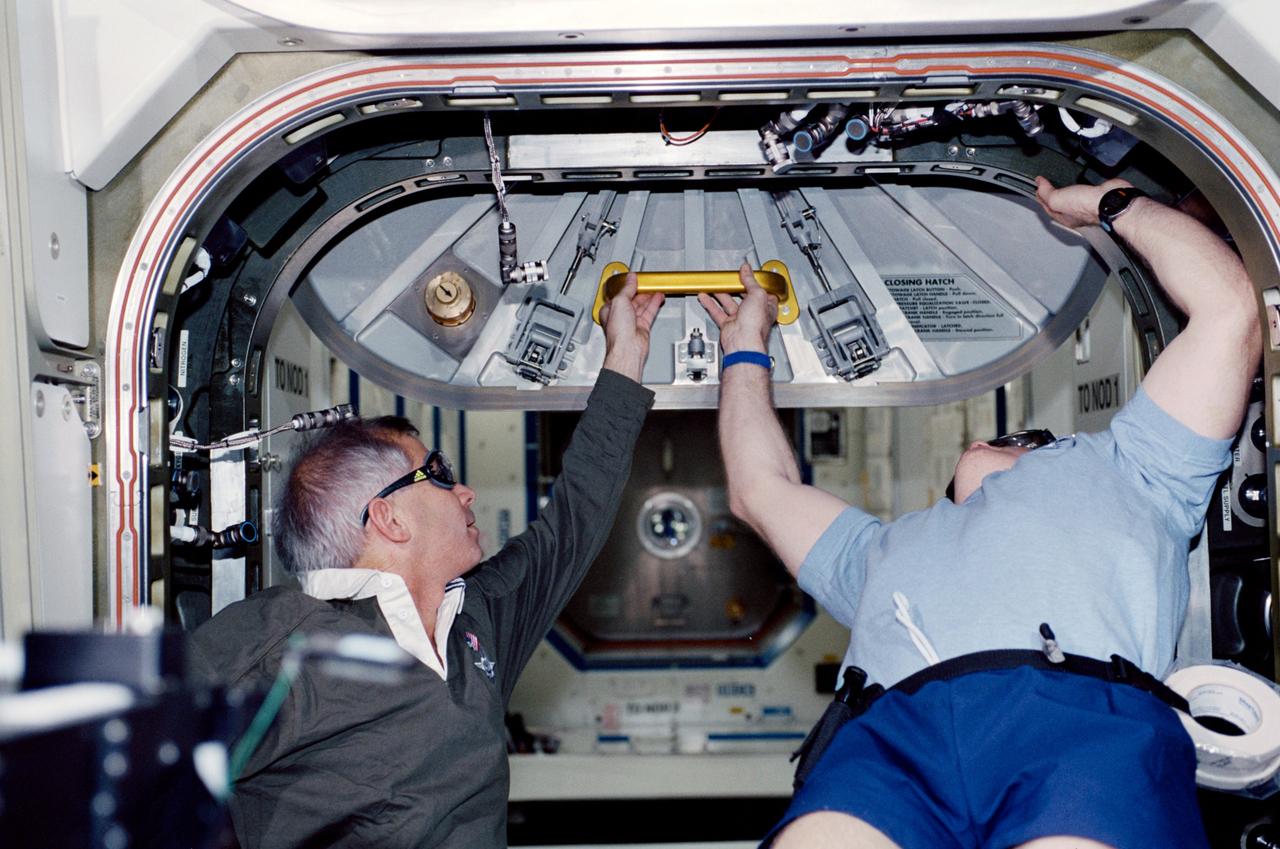
STS098-352-0025 (11 February 2001) --- STS-98 mission commander Kenneth D. Cockrell (left) assists as Expedition One commander William M. (Bill) Shepherd opens the hatch to the newly attached Destiny laboratory. The crews of Atlantis and the International Space Station entered the laboratory shortly after this photo was made on February 11; and the astronauts and cosmonauts spent the first full day of what are planned to be years of work ahead inside the orbiting science and command center. Members of both crews went to work quickly inside the new module, activating air systems, fire extinguishers, alarm systems, computers and internal communications. The crew also continued equipment transfers from the shuttle to the station.
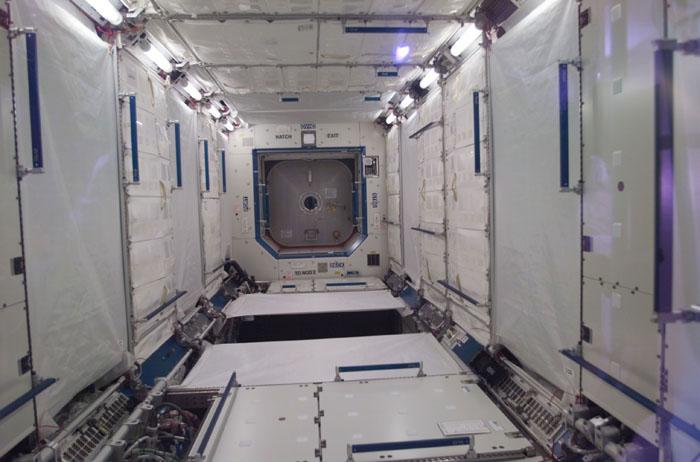
STS98-E-5113 (11 February 2001) --- This wide shot, photographed with a digital still camera, shows the interior of the newly attached Destiny laboratory. The crews of Atlantis and the International Space Station opened the laboratory on Feb. 11 and spent the first full day of what are planned to be years of work ahead inside the orbiting science and command center. Station commander William M. (Bill) Shepherd opened the Destiny hatch, and he and shuttle commander Kenneth D. Cockrell ventured inside at 8:38 a.m. (CST), Feb. 11. As depicted in subsequent digital images in this series, members of both crews went to work quickly inside the new module, activating air systems, fire extinguishers, alarm systems, computers and internal communications. The crew also continued equipment transfers from the shuttle to the station.
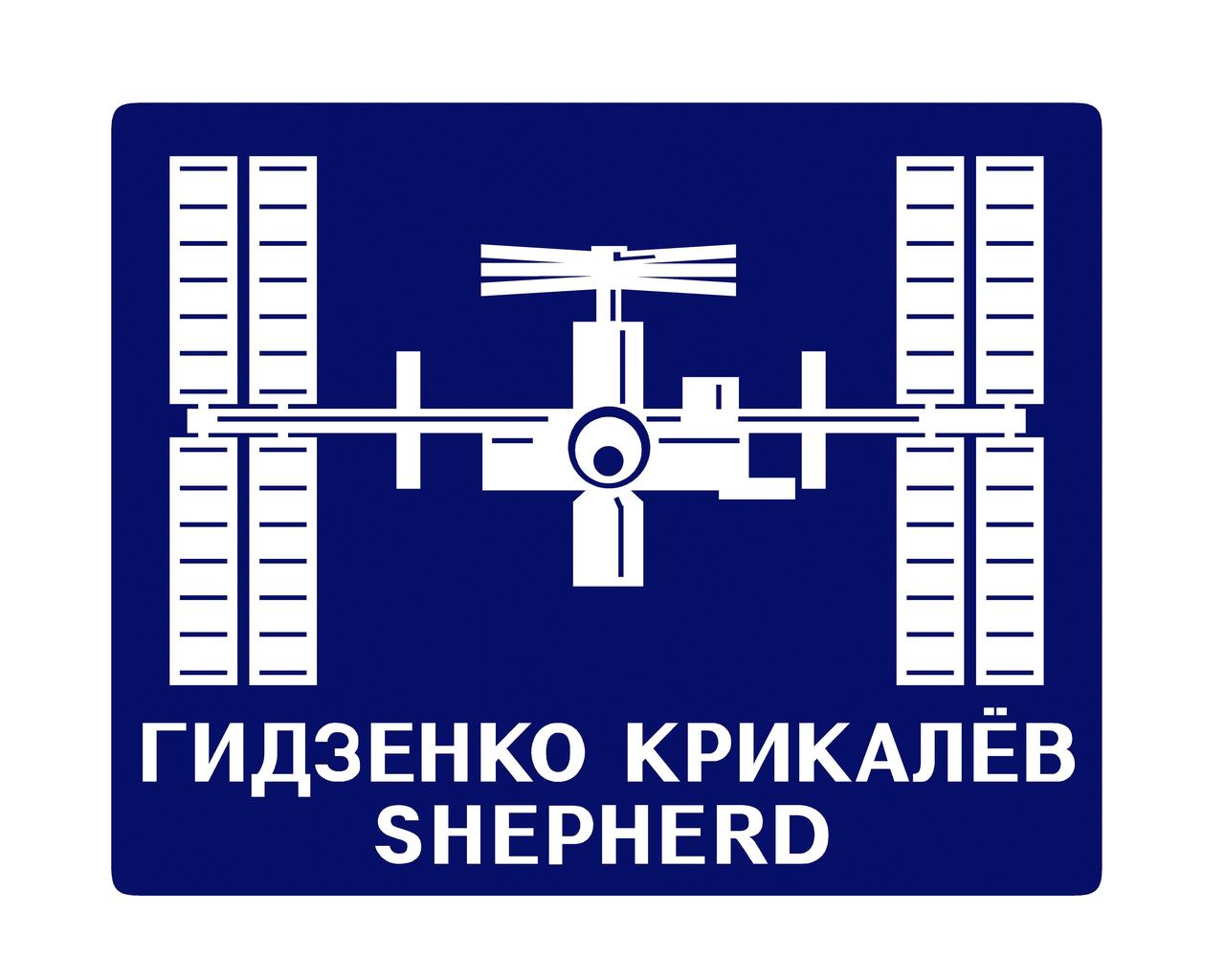
ISS001-S-001 (October 2000) --- The first International Space Station (ISS) crew patch is a simplified graphic of the station complex when fully completed. The station is seen with solar arrays turned forward. The last names of the Expedition One crew, Soyuz pilot Yuri Gidzenko, flight engineer Sergei Krikalev, and expedition commander William (Bill) Shepherd, appear under the station symbol. The insignia design for ISS flights is reserved for use by the astronauts and cosmonauts and for other official use as the NASA Administrator and NASA's international partners may authorize. Public availability has been approved only in the form of illustrations by the various news media. When and if there is any change in this policy, which we do not anticipate, it will be publicly announced.
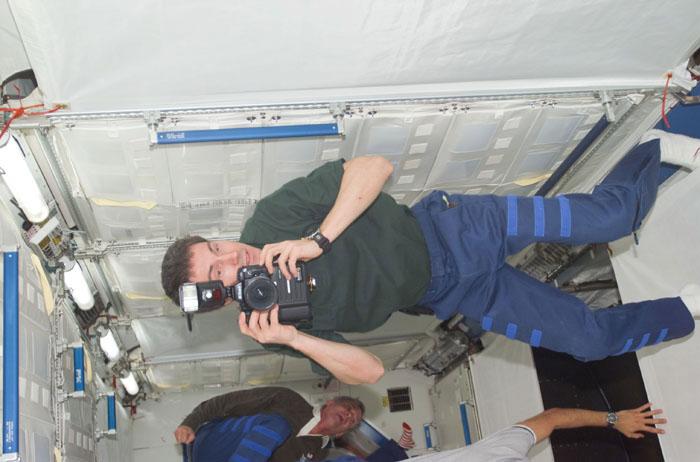
STS98-E-5138 (11 February 2001) --- Cosmonaut Sergei K. Krikalev, Expedition One flight engineer, takes still photographs onboard the newly opened Destiny laboratory on the International Space Station (ISS). After astronaut William M. (Bill) Shepherd, Expedition One commander, opened the Destiny hatch, he and astronaut Kenneth D. Cockrell (out of frame) ventured inside at 8:38 a.m. (CST), February 11, 2001. As depicted in subsequent digital images in this series, members of both crews went to work quickly inside the new module, activating air systems, fire extinguishers, alarm systems, computers and internal communications. The crew also took some photos and continued equipment transfers from the shuttle to the station.
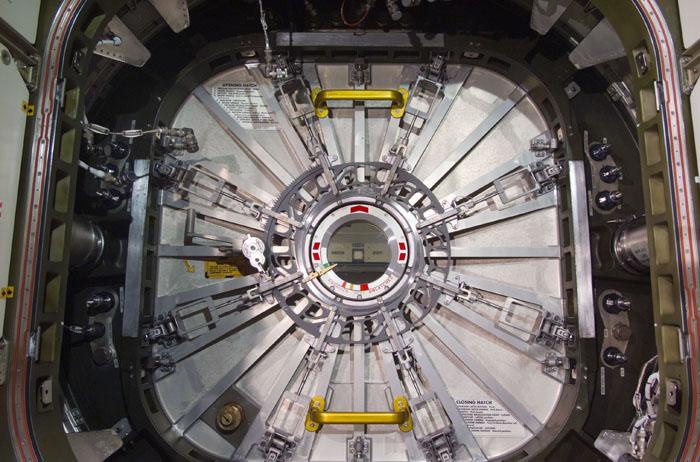
STS98-E-5114 (11 February 2001) --- This medium close-up shot, photographed with a digital still camera, shows Unity's closed hatch to the newly delivered Destiny laboratory. The crews of Atlantis and the International Space Station opened the laboratory, shortly after this photo was made on Feb. 11, and the astronauts and cosmonauts spent the first full day of what are planned to be years of work ahead inside the orbiting science and command center. Station commander William M. (Bill) Shepherd opened the Destiny hatch, and he and shuttle commander Kenneth D. Cockrell ventured inside at 8:38 a.m. (CST), Feb. 11. As depicted in subsequent digital images in this series, members of both crews went to work quickly inside the new module, activating air systems, fire extinguishers, alarm systems, computers and internal communications. The crew also continued equipment transfers from the shuttle to the station.
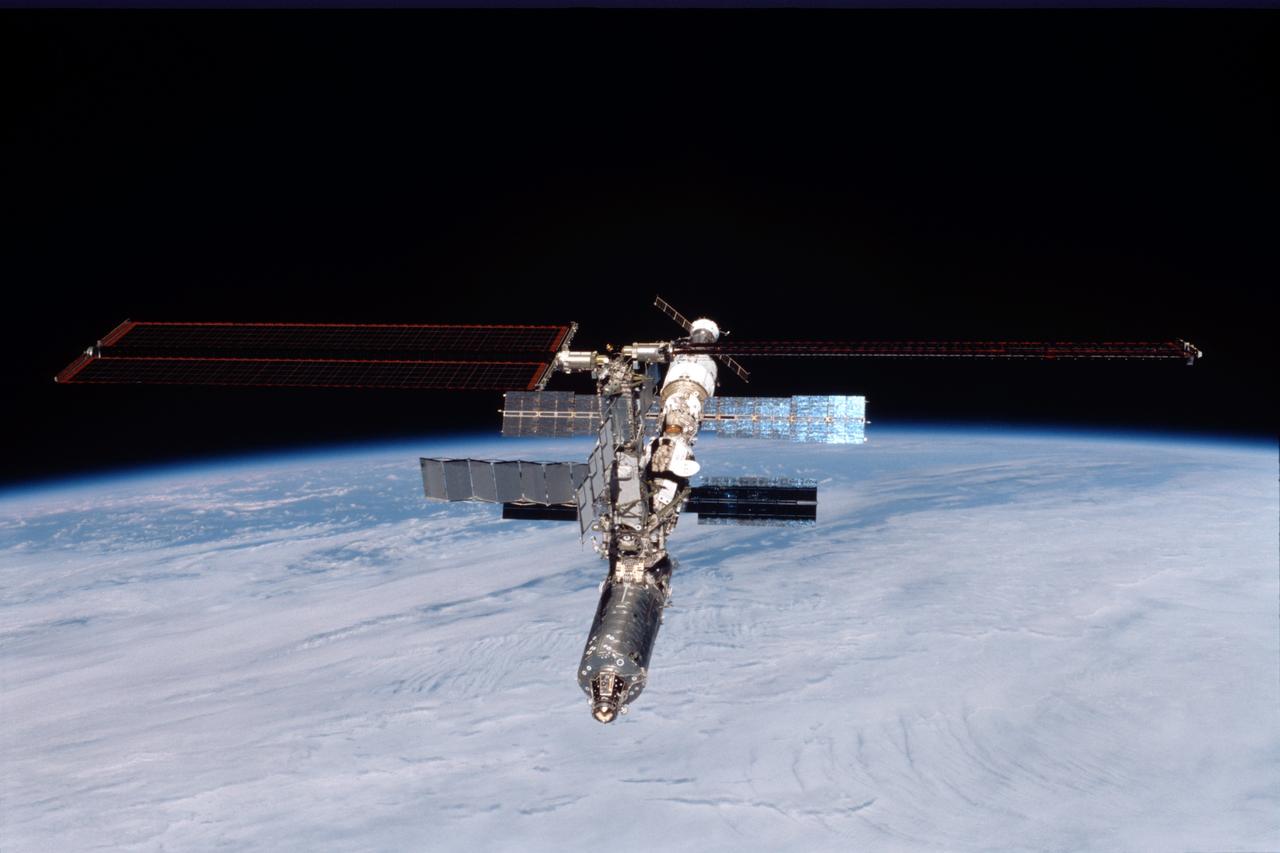
STS098-312-0025 (16 February 2001) --- Backdropped against heavy cloud cover, the International Space Station (ISS) was photographed with a 35mm camera by one of the astronauts onboard Atlantis. The crew of the station, onboard the outpost since early November 2000, is made up of astronaut William M. (Bill) Shepherd, mission commander; Yuri P. Gidzenko, Soyuz commander; and Sergei K. Krikalev, flight engineer. Krikalev and Gidzenko represent the Russian Aviation and Space Agency. On Atlantis were astronauts Kenneth D. Cockrell, mission commander; Mark L. Polansky, pilot; and Marsha S. Ivins, Robert L. Curbeam and Thomas D. Jones, all mission specialists. The shuttle and the station parted company at 8:06 a.m. (CST), Feb. 16, as Polansky flew the shuttle halfway around the outpost and its new Destiny laboratory before moving off.
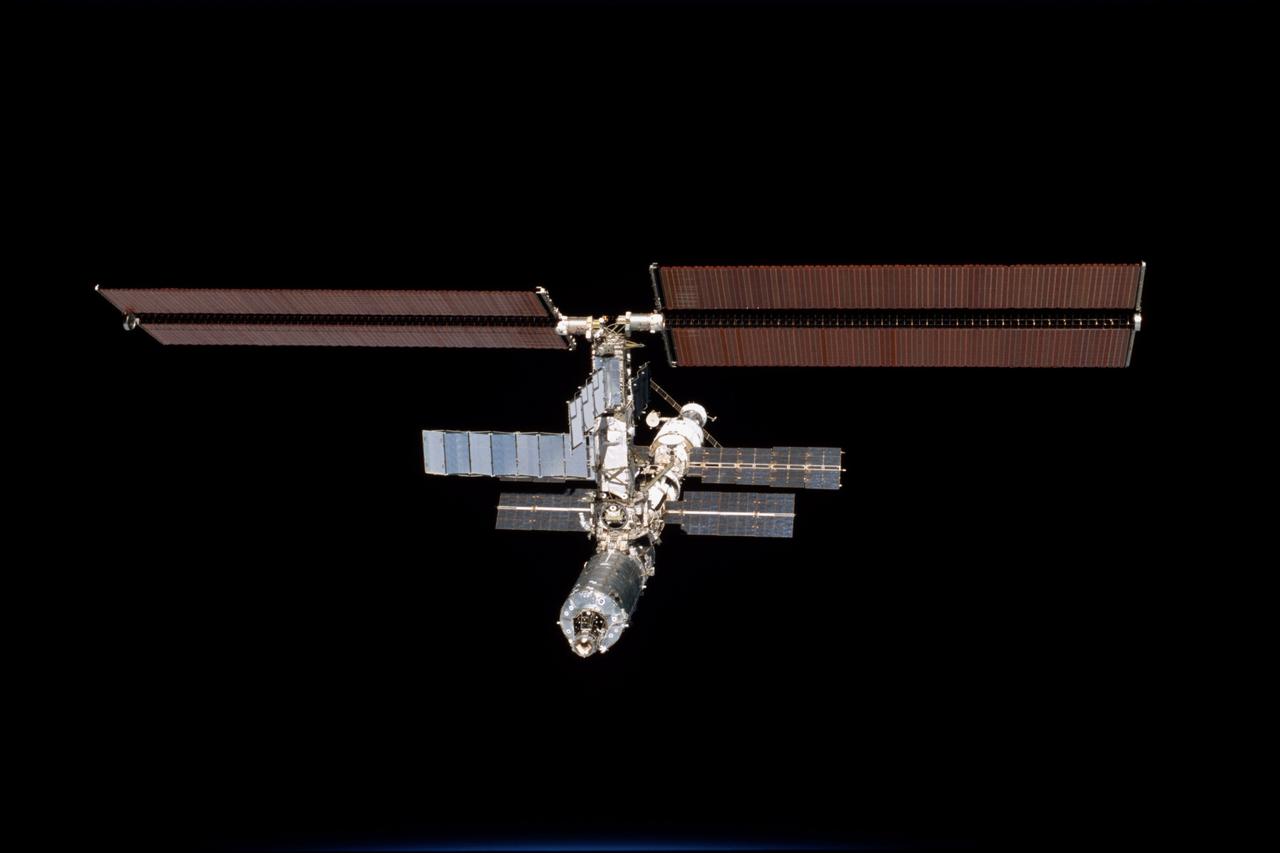
STS098-312-0020 (16 February 2001) --- Backdropped against the blackness of space, the International Space Station (ISS)was photographed with a 35mm camera by one of the astronauts onboard Atlantis. The crew of the station, onboard the outpost since early November 2000, is made up of astronaut William M. (Bill) Shepherd, mission commander; Yuri P. Gidzenko, Soyuz commander; and Sergei K. Krikalev, flight engineer. Krikalev and Gidzenko represent the Russian Aviation and Space Agency. On Atlantis were astronauts Kenneth D. Cockrell, mission commander; Mark L. Polansky, pilot; and Marsha S. Ivins, Robert L. Curbeam and Thomas D. Jones, all mission specialists. The shuttle and the station parted company at 8:06 a.m. (CST), Feb. 16, as Polansky flew the shuttle halfway around the outpost and its new Destiny laboratory before moving off.
![KENNEDY SPACE CENTER, FLA. -- Seventeen new astronaut candidates visited the Vehicle Assembly Building as part of an orientation tour of KSC facilities. Here they are grouped around one of the external fuel tanks in the transfer aisle of the VAB. This latest group of candidates is the tenth chosen since the original seven Mercury astronauts. [From left, Michael J. McCulley, Curtis L. Brown Jr., Frank L. Culbertson Jr., Kathryn C. Thornton, Mark N. Brown, Mark C. Lee, Kenneth D. Cameron, John H. Casper, L. Blaine Hammond Jr., Charles Lacy Veach (deceased), James C. Adamson, William M. Shepherd, Sidney M. Gutierrez, Marsha S. Ivins, David G. Low, Michael J. Smith (deceased), Ellen S. Baker, Sonny Carter (deceased).]](https://images-assets.nasa.gov/image/108-KSC-84P-339/108-KSC-84P-339~medium.jpg)
KENNEDY SPACE CENTER, FLA. -- Seventeen new astronaut candidates visited the Vehicle Assembly Building as part of an orientation tour of KSC facilities. Here they are grouped around one of the external fuel tanks in the transfer aisle of the VAB. This latest group of candidates is the tenth chosen since the original seven Mercury astronauts. [From left, Michael J. McCulley, Curtis L. Brown Jr., Frank L. Culbertson Jr., Kathryn C. Thornton, Mark N. Brown, Mark C. Lee, Kenneth D. Cameron, John H. Casper, L. Blaine Hammond Jr., Charles Lacy Veach (deceased), James C. Adamson, William M. Shepherd, Sidney M. Gutierrez, Marsha S. Ivins, David G. Low, Michael J. Smith (deceased), Ellen S. Baker, Sonny Carter (deceased).]
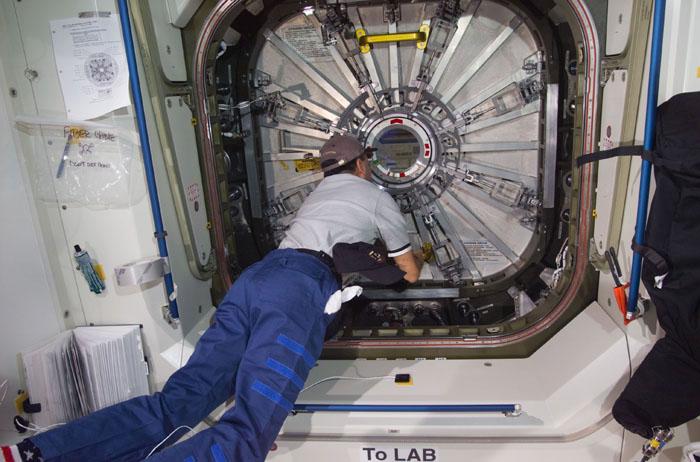
STS98-E-5115 (11 February 2001) --- This medium shot, photographed with a digital still camera, shows STS-98 pilot Mark L. Polansky looking through the observation port on Unity's closed hatch to the newly attached Destiny laboratory. The crews of Atlantis and the International Space Station opened the laboratory shortly after this photo was made on Feb. 11; and the astronauts and cosmonauts spent the first full day of what are planned to be years of work ahead inside the orbiting science and command center. Station commander William M. (Bill) Shepherd opened the Destiny hatch, and he and shuttle commander Kenneth D. Cockrell ventured inside at 8:38 a.m. (CST), Feb. 11. As depicted in subsequent digital images in this series, members of both crews went to work quickly inside the new module, activating air systems, fire extinguishers, alarm systems, computers and internal communications. The crew also continued equipment transfers from the shuttle to the station.
STS98-E-5124 (11 February 2001) --- Cosmonaut Sergei K. Krikalev, Expedition One flight engineer representing the Russian Aviation and Space Agency, films activity in the Unity node, just outside the newly attached Destiny laboratory. The crews of Atlantis and the International Space Station on February 11 opened the Destiny laboratory and spent the first full day of what are planned to be years of work ahead inside the orbiting science and command center. Astronaut William M. (Bill) Shepherd (just out of frame here) opened the Destiny hatch, and he and Shuttle commander Kenneth D. Cockrell ventured inside at 8:38 a.m. (CST). Members of both crews went to work quickly inside the new module, activating air systems, fire extinguishers, alarm systems, computers and internal communications. The crew also continued equipment transfers from the shuttle to the station and filmed several scenes onboard the station using the IMAX camera. This scene was recorded with a digital still camera.
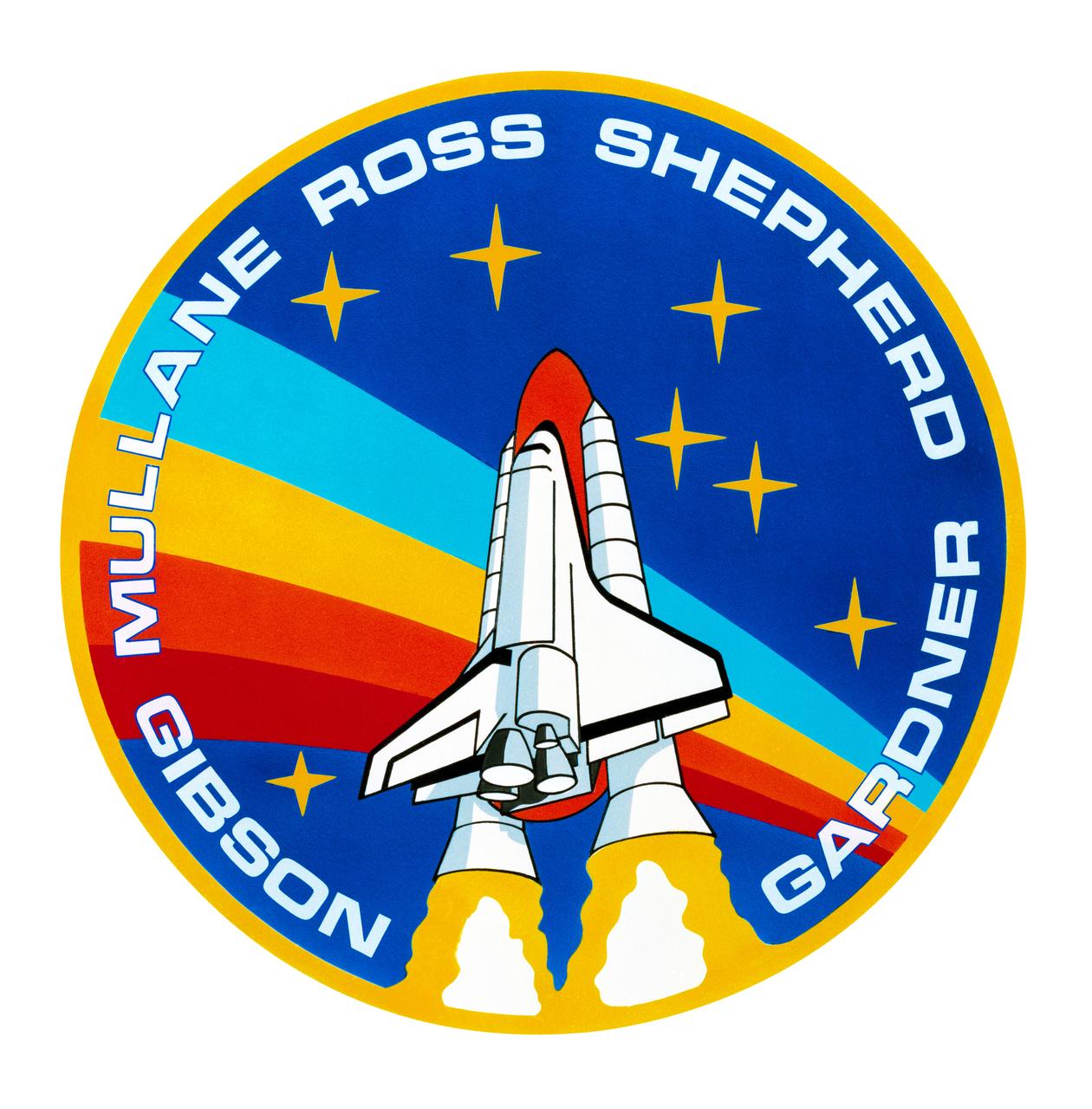
S88-41481 (15 July 1988) --- This is the official insignia of the NASA STS-27 mission. The patch depicts the space shuttle lifting off against the multi-colored backdrop of a rainbow, symbolizing the triumphal return to flight of our nation's manned space program. The design also commemorates the memory of the crew of Challenger mission STS51-L, represented by the seven stars. The names of the flight crew members of STS-27 are located along the border of the patch. They are astronauts Robert L. Gibson, commander; Guy S. Gardner, pilot; Jerry L. Ross, Richard M. (Mike) Mullane and William M. Shepherd, mission specialists. Each crew member contributed to the design of the insignia. The NASA insignia design for space shuttle flights is reserved for use by the astronauts and for other official use as the NASA Administrator may authorize. Public availability has been approved only in the forms of illustrations by the various news media. When and if there is any change in this policy, which is not anticipated, the change will be publicly announced. Photo credit: NASA