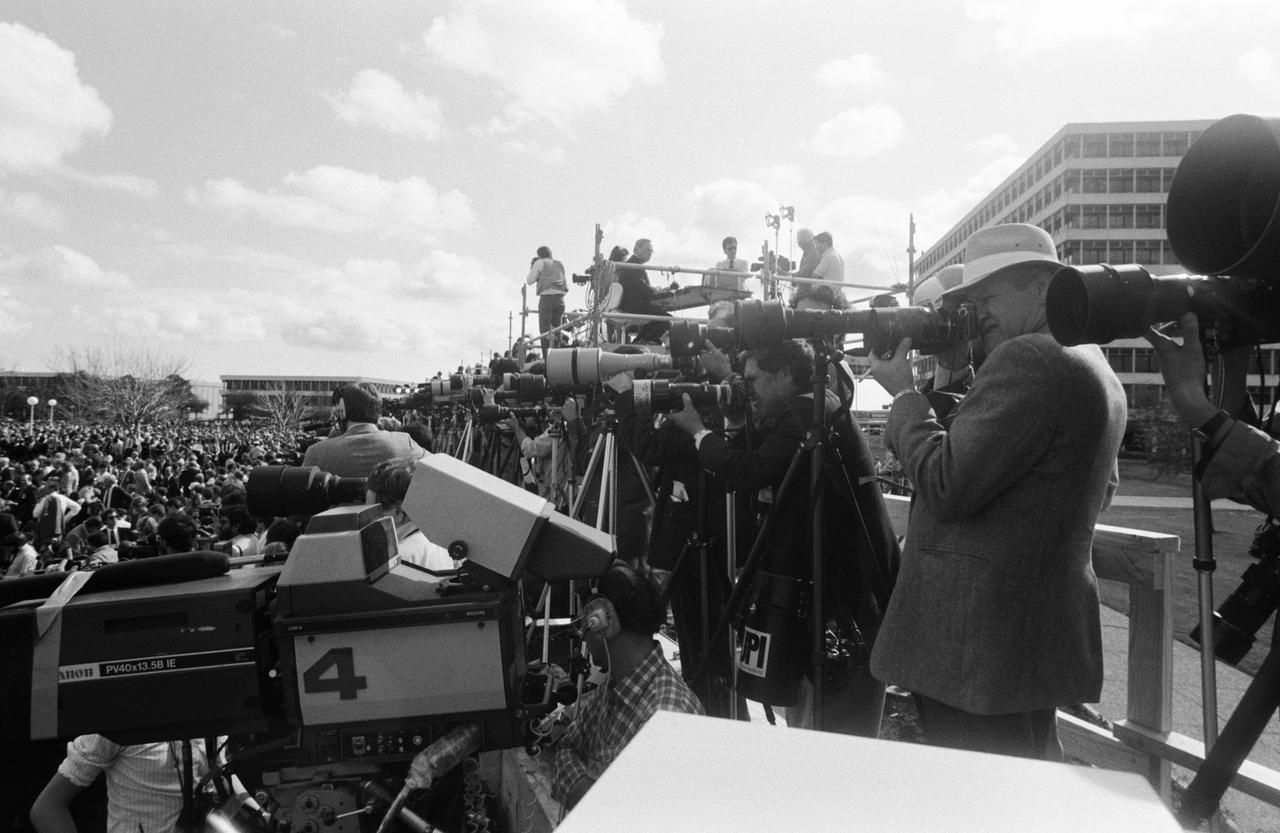
Overall view of the news media at the memorial service at JSC for the Crew of STS 51-L.
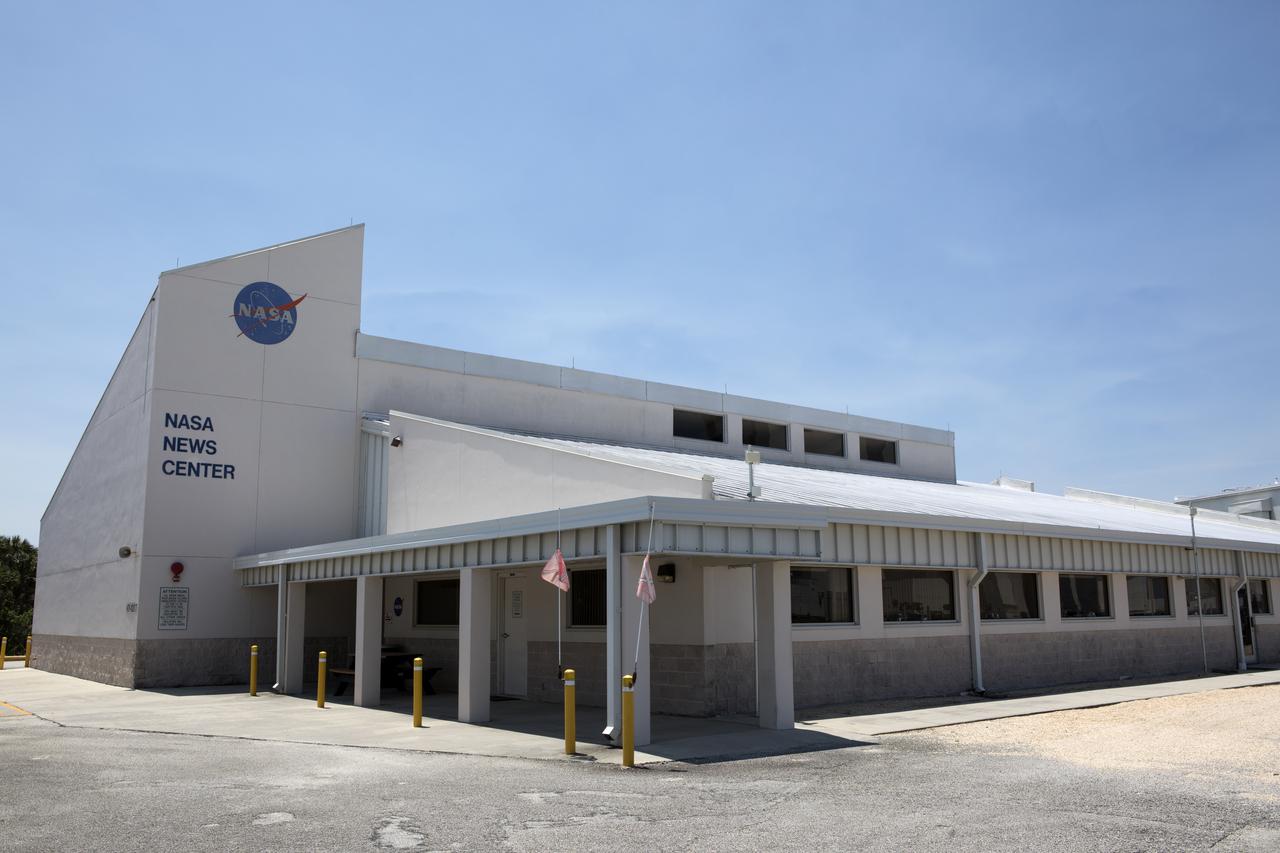
This is the NASA News Center at Kennedy Space Center in Florida, where reporters from television, radio, print and online media outlets have monitored countless launches, landings and other space events in order to deliver the news to the world.
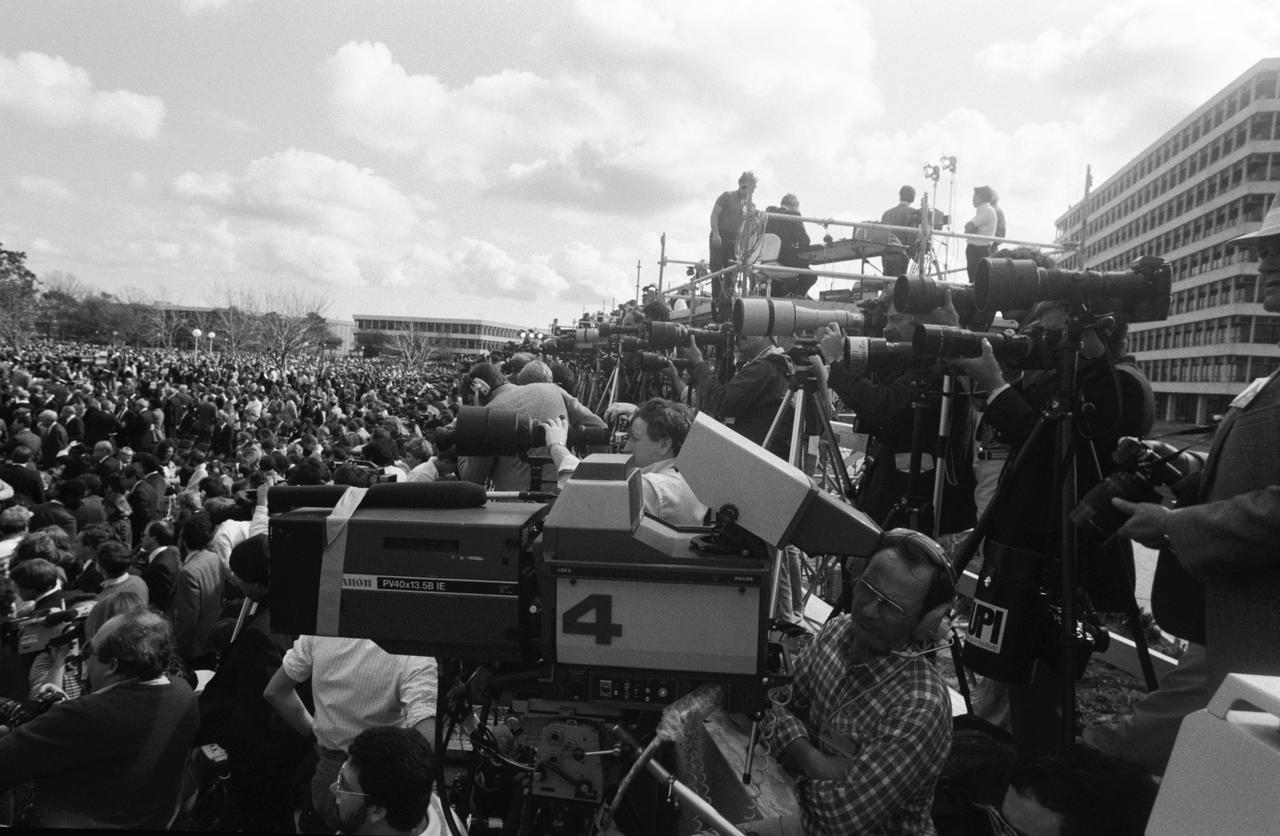
S86-26428 (31 Jan. 1986) --- Dozens of cameras and thousands of eyes focus on President Ronald Reagan (out of frame at left) during the 51-L memorial services Jan. 31 on the mall at the Johnson Space Center (JSC). The photograph was taken from special bleachers quickly erected to accommodate hundreds of members of the news media. The audience of thousands was largely made up of JSC employees and family and friends of the Challenger crew members who perished four days earlier in the attempted launch of NASA’s 25th STS mission. Photo credit: NASA
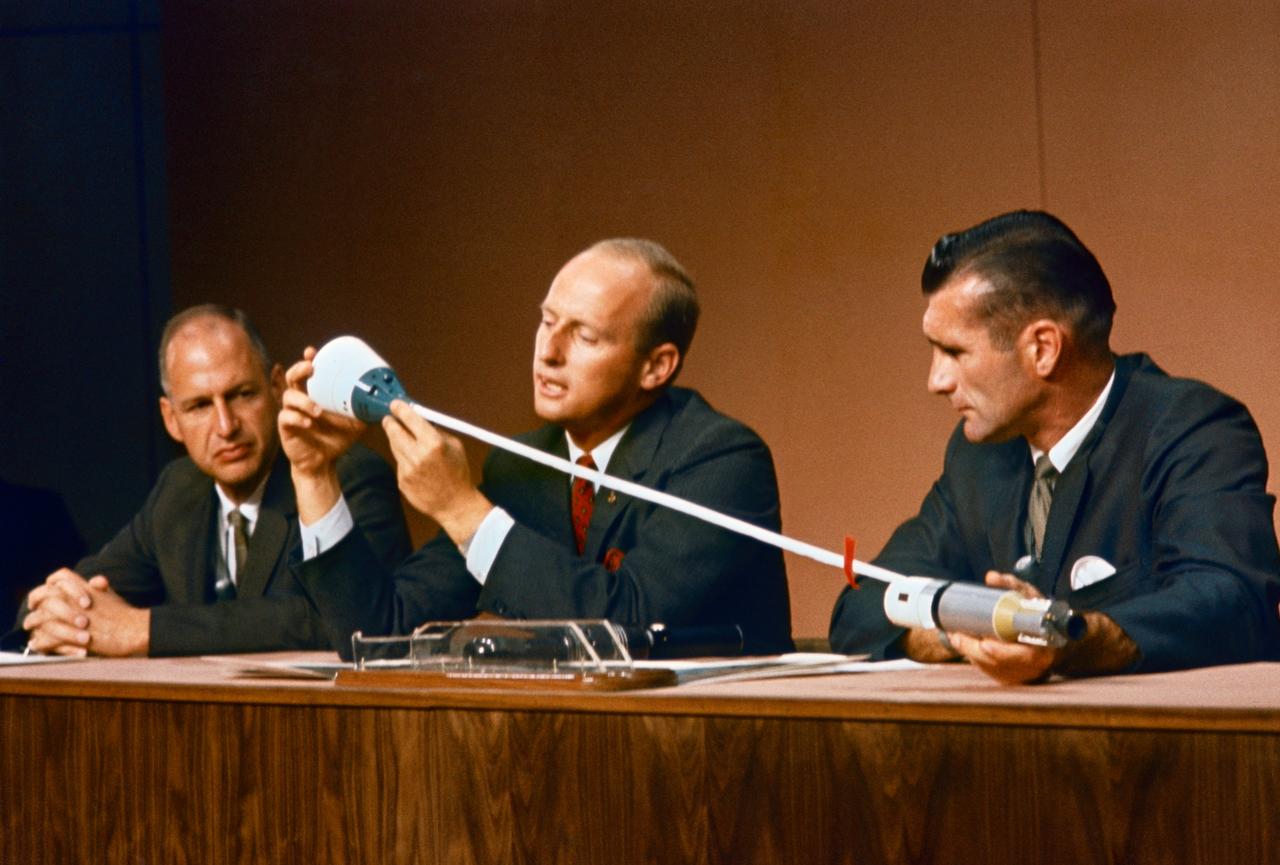
S66-45635 (26 Sept. 1966) --- Astronaut Charles Conrad Jr. (center), Gemini-11 prime crew command pilot, discusses the Gemini-11/Agena tether before a gathering of news media representatives in the MSC Building 1 auditorium. Holding an Agena model at right is astronaut Richard F. Gordon Jr., Gemini-11 pilot. Looking on at left is George M. Low, MSC Deputy Director. Photo credit: NASA
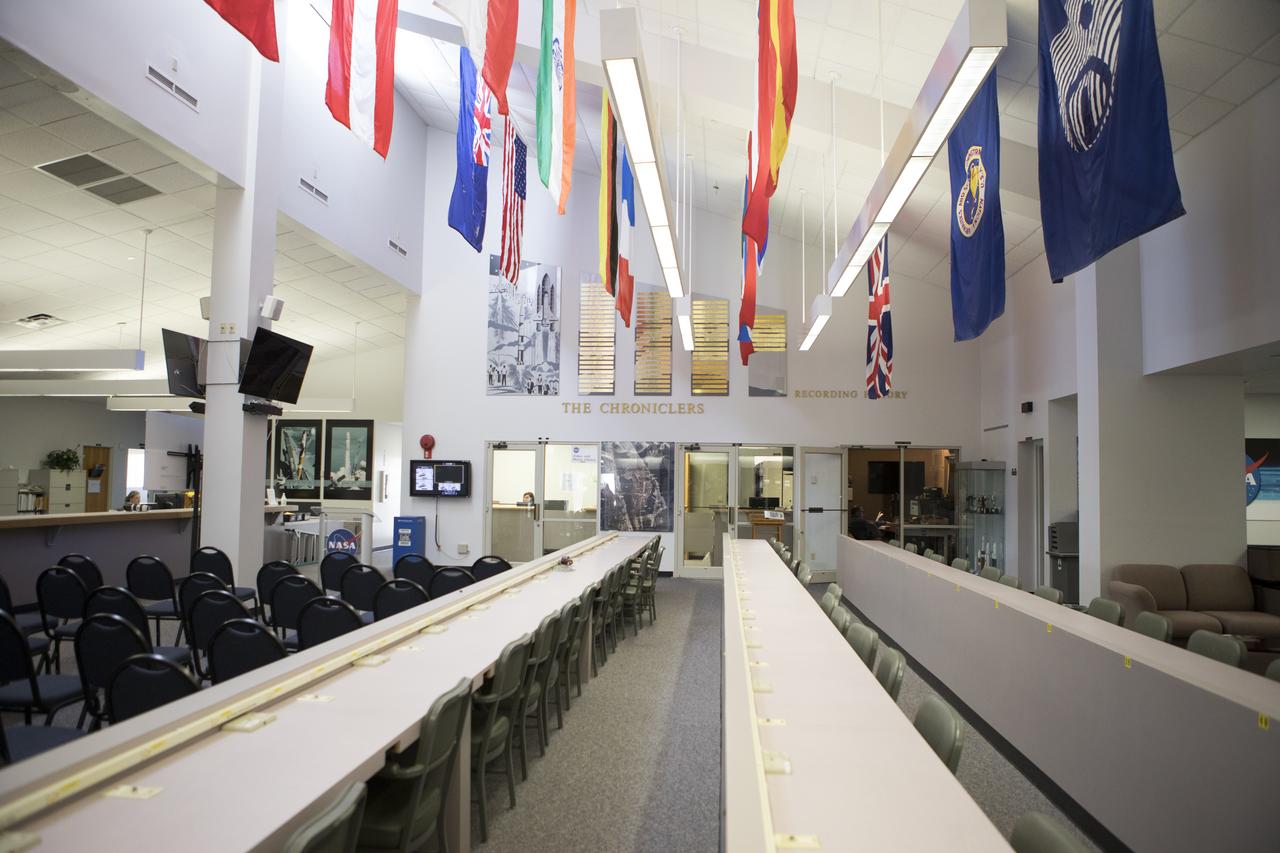
Brass plaques engraved with the names of "The Chroniclers" adorn the wall at the NASA News Center at Kennedy Space Center in Florida. In the foreground are rows of stations where reporters from television, radio, print and online media outlets have monitored countless launches, landings and other space events in order to deliver the news to the world. The Chroniclers program recognizes retirees of the news and communications business who helped spread news of American space exploration from Kennedy Space Center for ten years or more.
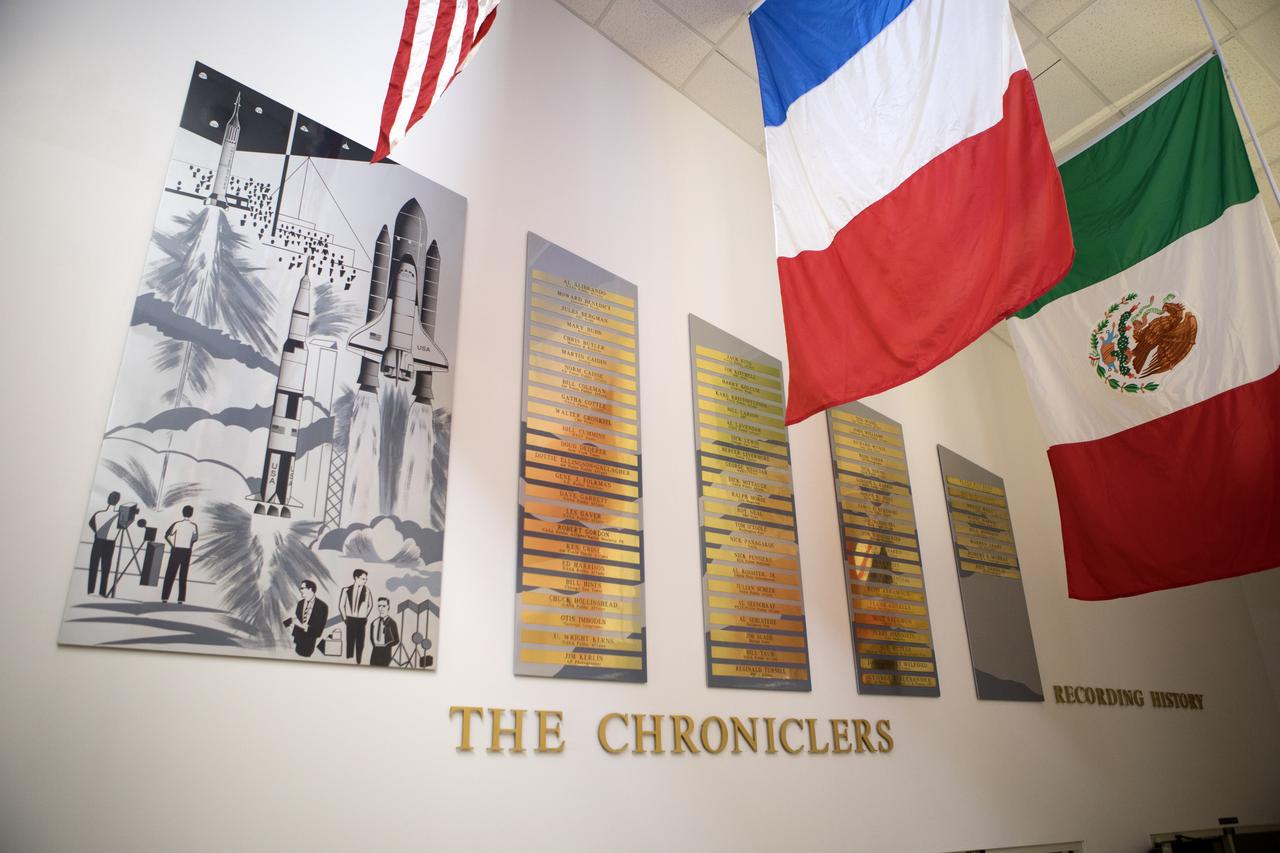
Brass plaques engraved with the names of "The Chroniclers" create a roll of honor on the wall at the NASA News Center at Kennedy Space Center in Florida. In this facility reporters from television, radio, print and online media outlets have monitored countless launches, landings and other space events in order to deliver the news to the world. The Chroniclers program recognizes retirees of the news and communications business who helped spread news of American space exploration from Kennedy Space Center for ten years or more.
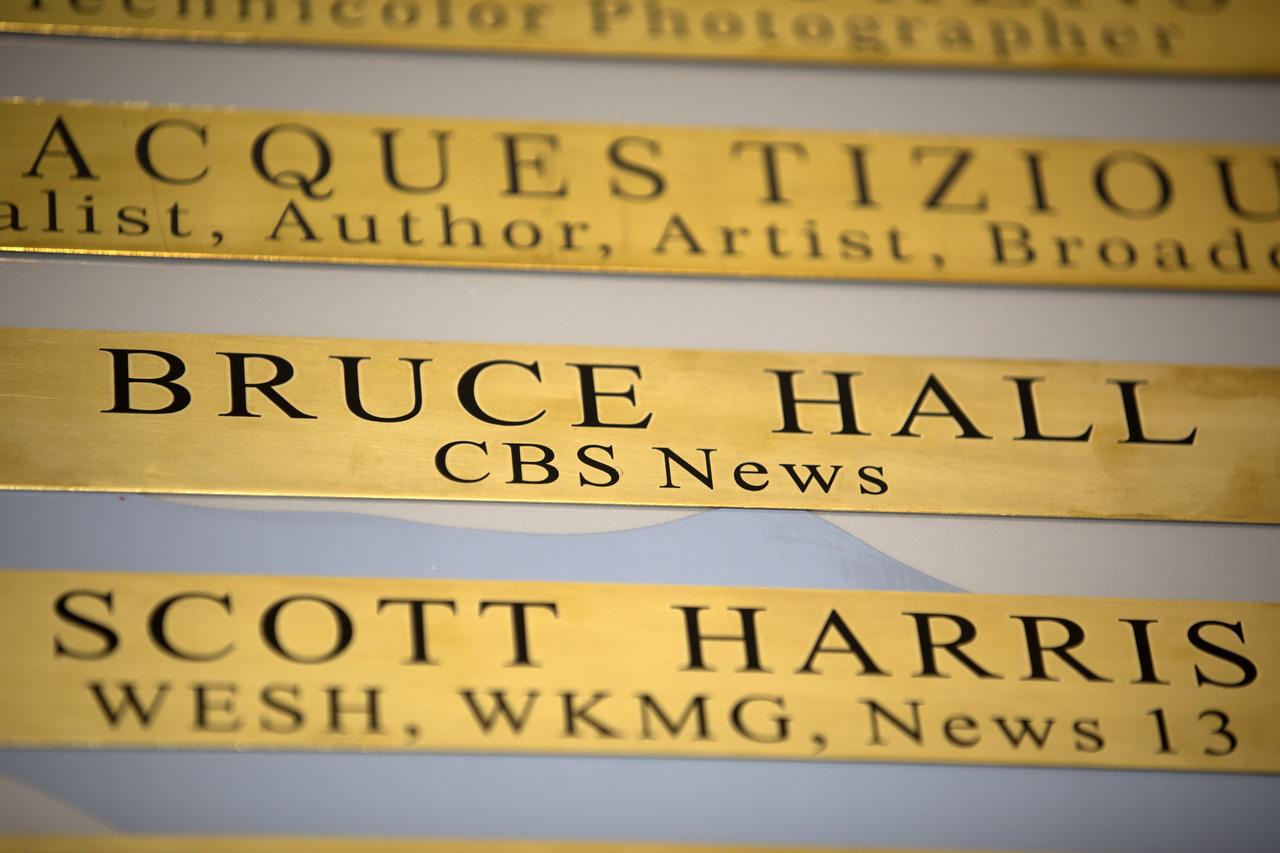
A brass plaque engraved with the name of Bruce Hall of CBS News is among the list of "The Chroniclers," a roll of honor on the wall at the NASA News Center at Kennedy Space Center in Florida. Hall, one of six new inductees in 2017, died after a lengthy illness on May 2, 2017. In this facility reporters from television, radio, print and online media outlets have monitored countless launches, landings and other space events in order to deliver the news to the world. The Chroniclers program recognizes retirees of the news and communications business who helped spread news of American space exploration from Kennedy Space Center for ten years or more.
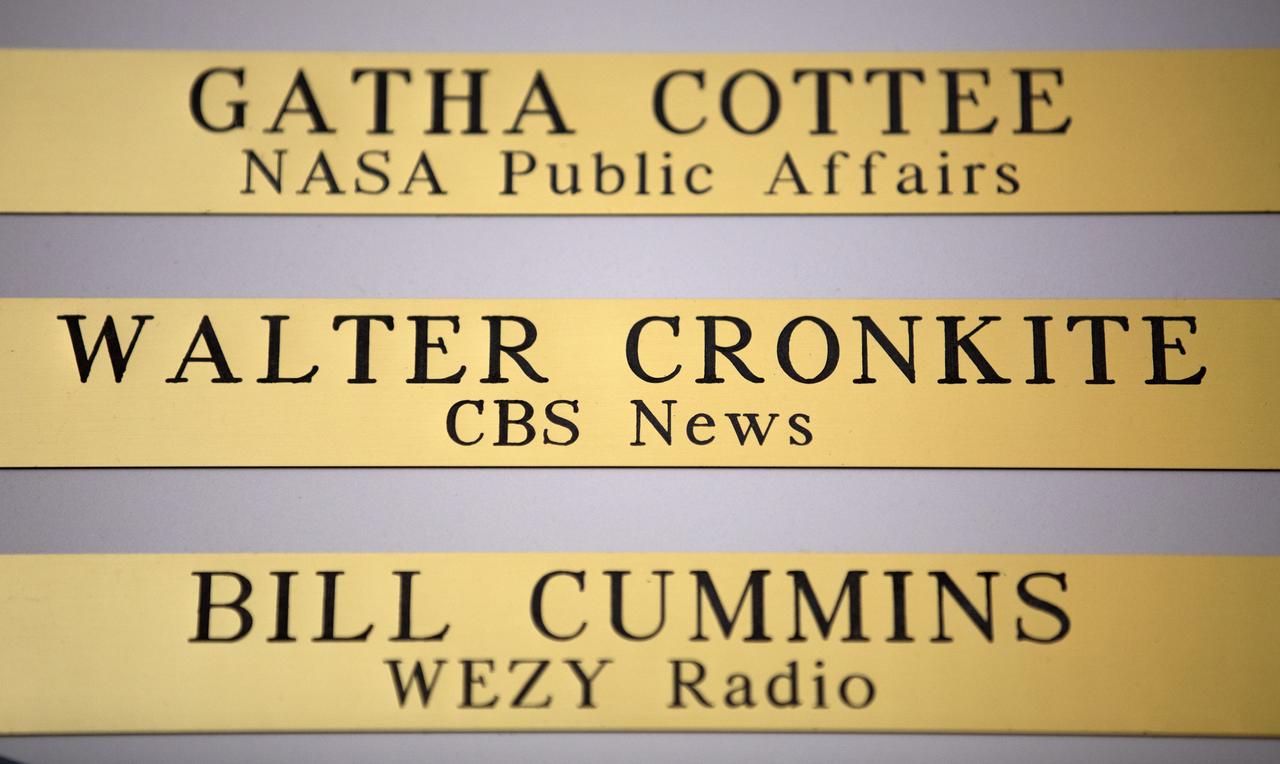
Brass plaques engraved with the names of Gatha Cottee of NASA Public Affairs, Walter Cronkite of CBS News and Bill Cummins of WEZY Radio are among the list of "The Chroniclers," a roll of honor on the wall at the NASA News Center at Kennedy Space Center in Florida. In this facility reporters from television, radio, print and online media outlets have monitored countless launches, landings and other space events in order to deliver the news to the world. The Chroniclers program recognizes retirees of the news and communications business who helped spread news of American space exploration from Kennedy Space Center for ten years or more.
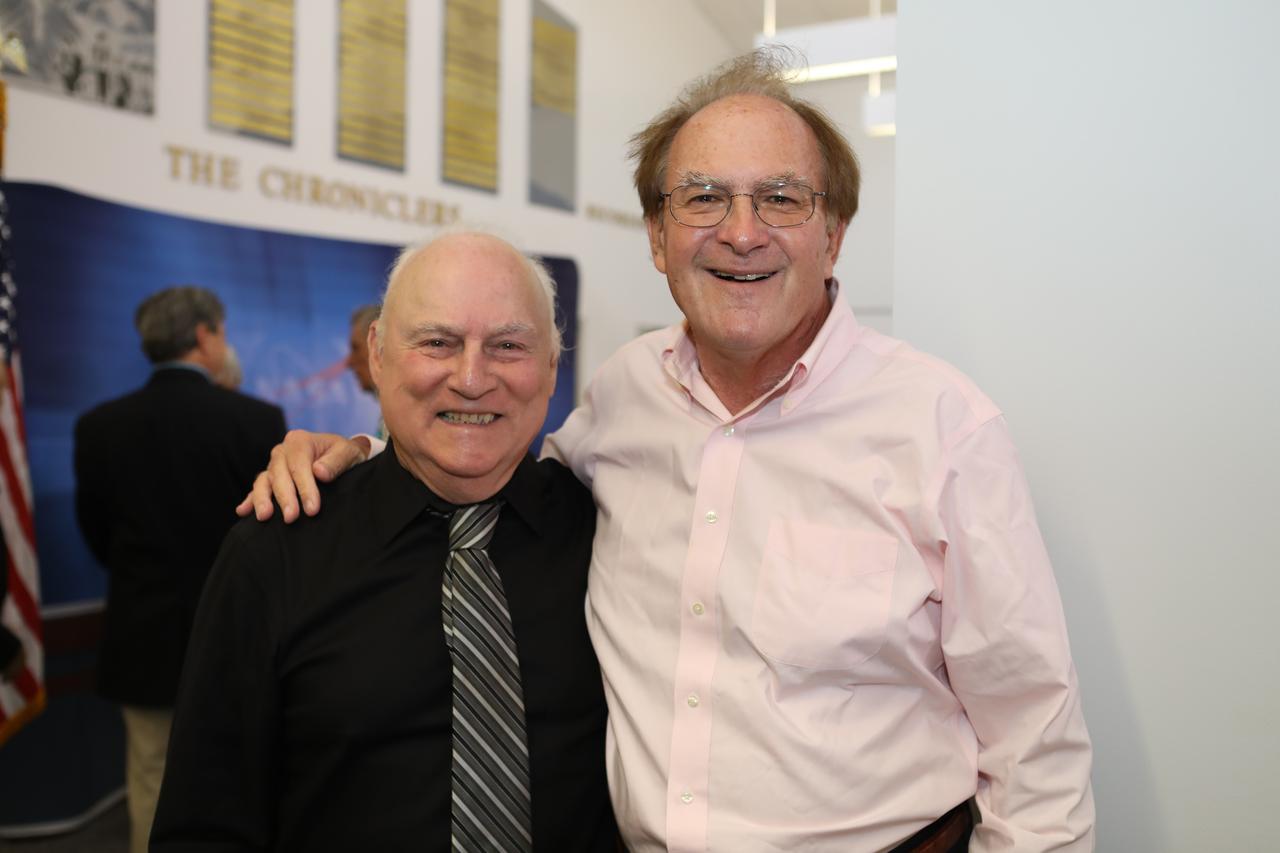
Bill Johnson, left, retired NASA chief of Media Services at Kennedy Space Center in Florida, is congratulated by NASA Public Information Specialist George Diller during a ceremony for six new honorees added to the "Chroniclers" roll of honor in the NASA News Center. Johnson, whose career at Kennedy spanned more than 45 years, was one of the six added to the Chroniclers list. Also added were Bruce Hall, CBS News and NBC News; Scott Harris, WESH, WKMG and Central Florida News 13; Warren Leary, The New York Times; Bob Murray, WDBO-TV, RCA and United Space Alliance; and Phillip Sandlin, Associated Press photographer. The Chroniclers program recognizes retirees of the news and communications business who helped spread news of American space exploration from Kennedy Space Center for ten years or more.
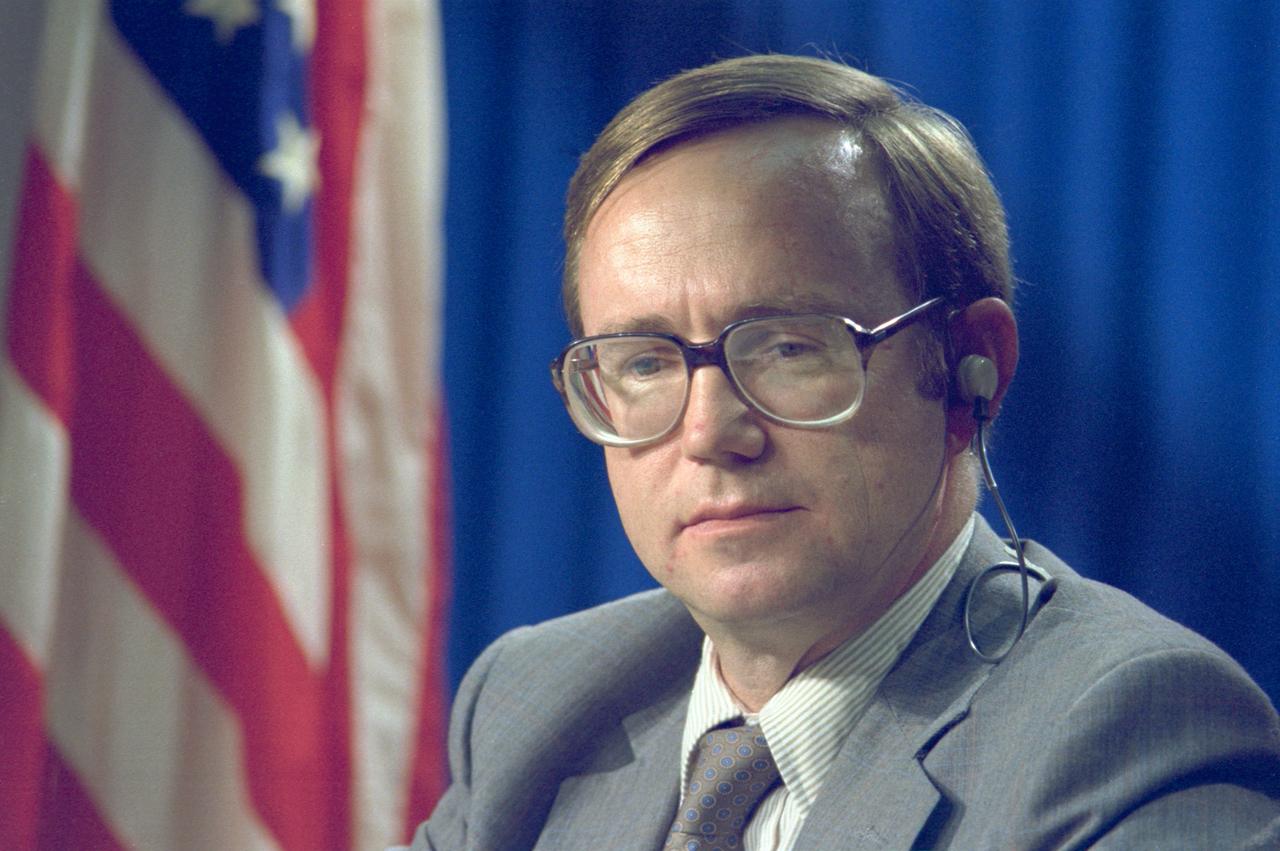
Flight Director Tommy Holloway listens to a question from a news media representative during a STS-5 pre-flight press briefing.
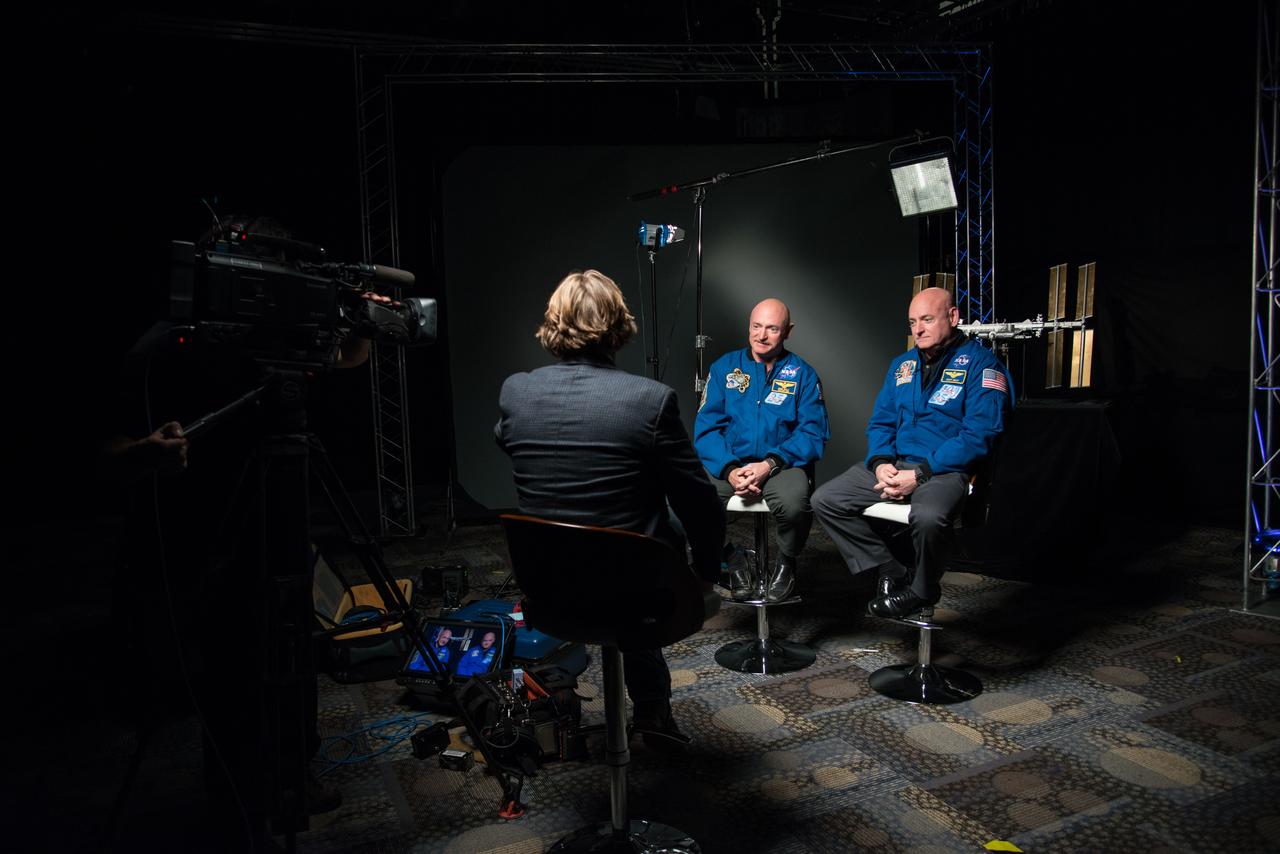
Expedition 45/46 Commander, Astronaut Scott Kelly along with his brother, former Astronaut Mark Kelly speak to news media outlets about Scott Kelly's 1-year mission aboard the International Space Station. Photo Date: January 19, 2015. Location: Building 2. Photographer: Robert Markowitz
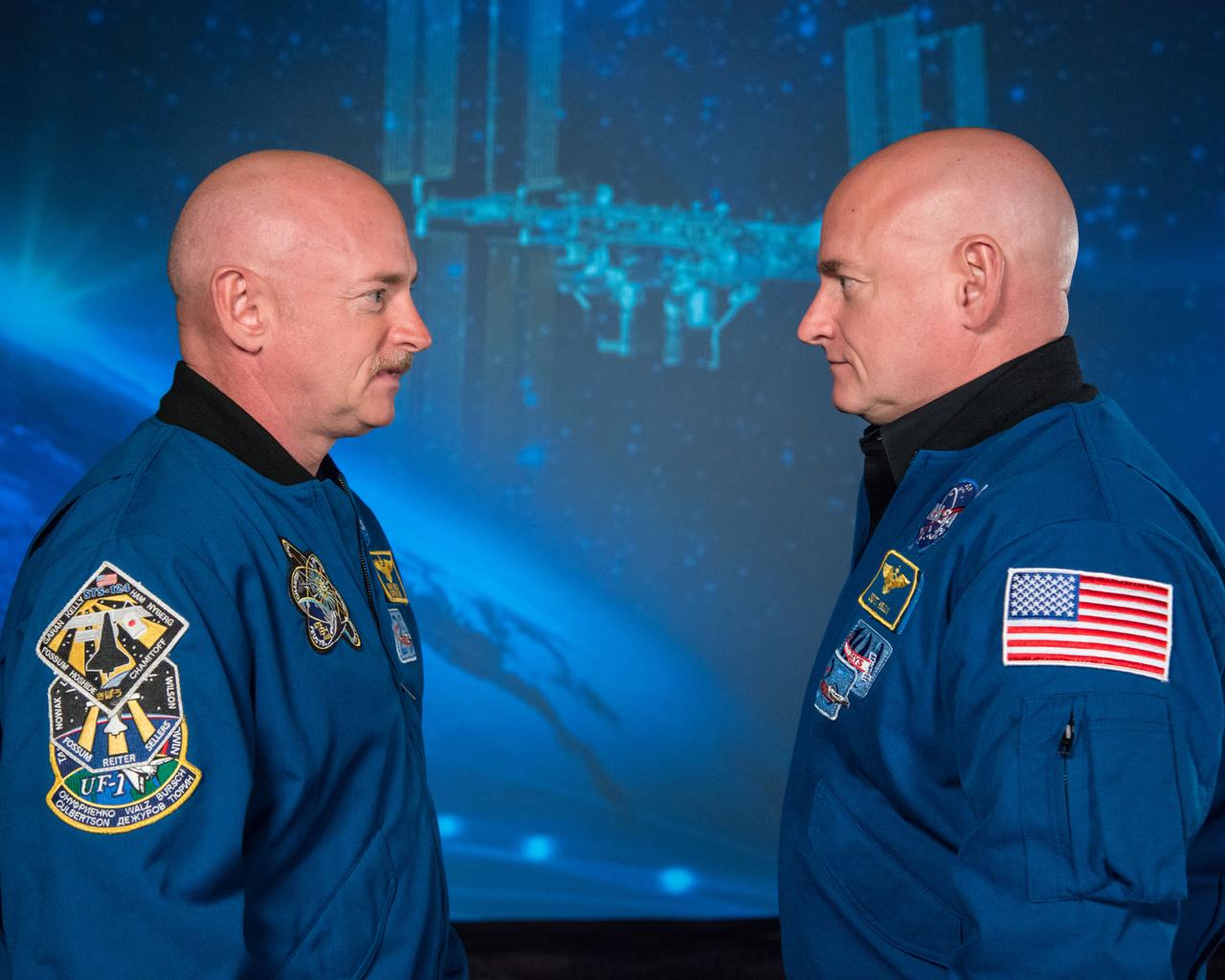
Expedition 45/46 Commander, Astronaut Scott Kelly along with his brother, former Astronaut Mark Kelly speak to news media outlets about Scott Kelly's 1-year mission aboard the International Space Station. Photo Date: January 19, 2015. Location: Building 2. Photographer: Robert Markowitz
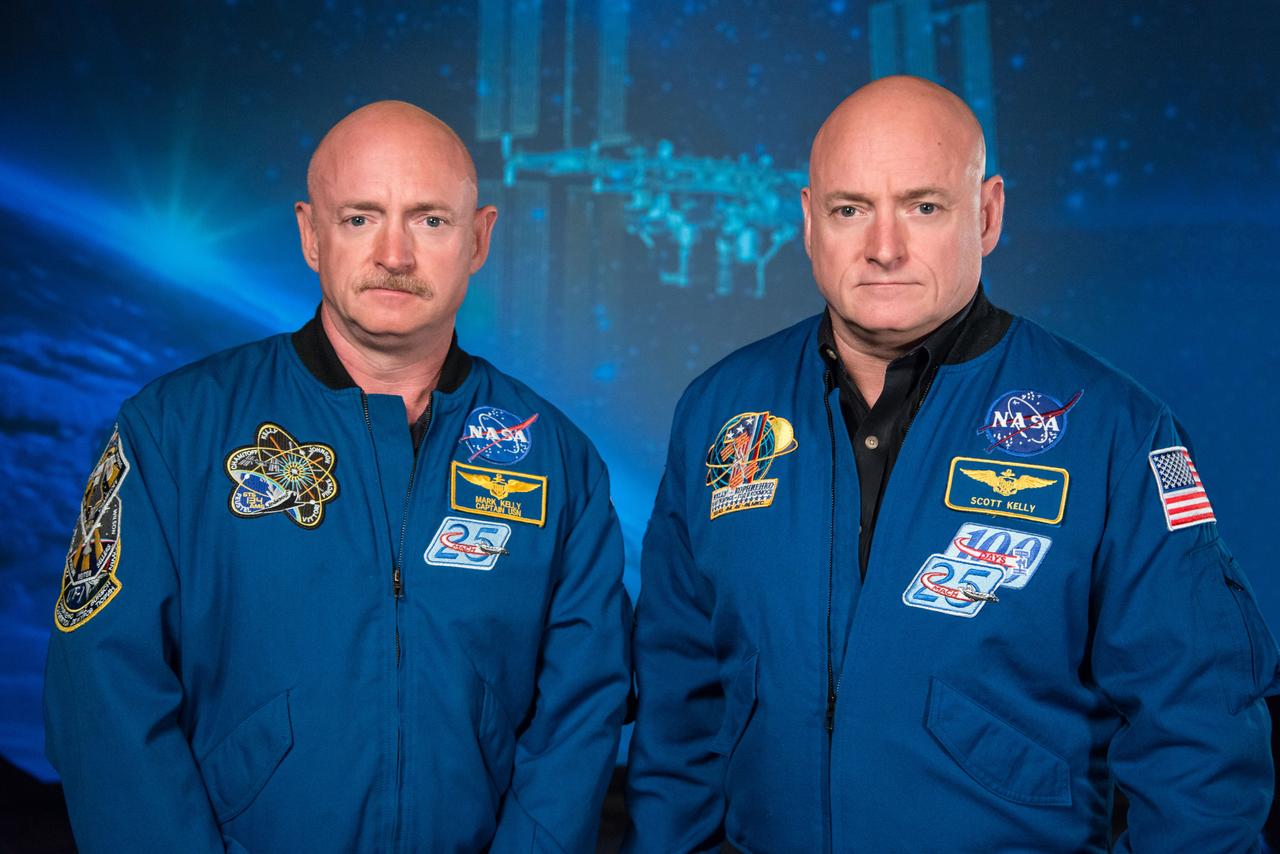
Expedition 45/46 Commander, Astronaut Scott Kelly along with his brother, former Astronaut Mark Kelly speak to news media outlets about Scott Kelly's 1-year mission aboard the International Space Station. Photo Date: January 19, 2015. Location: Building 2. Photographer: Robert Markowitz
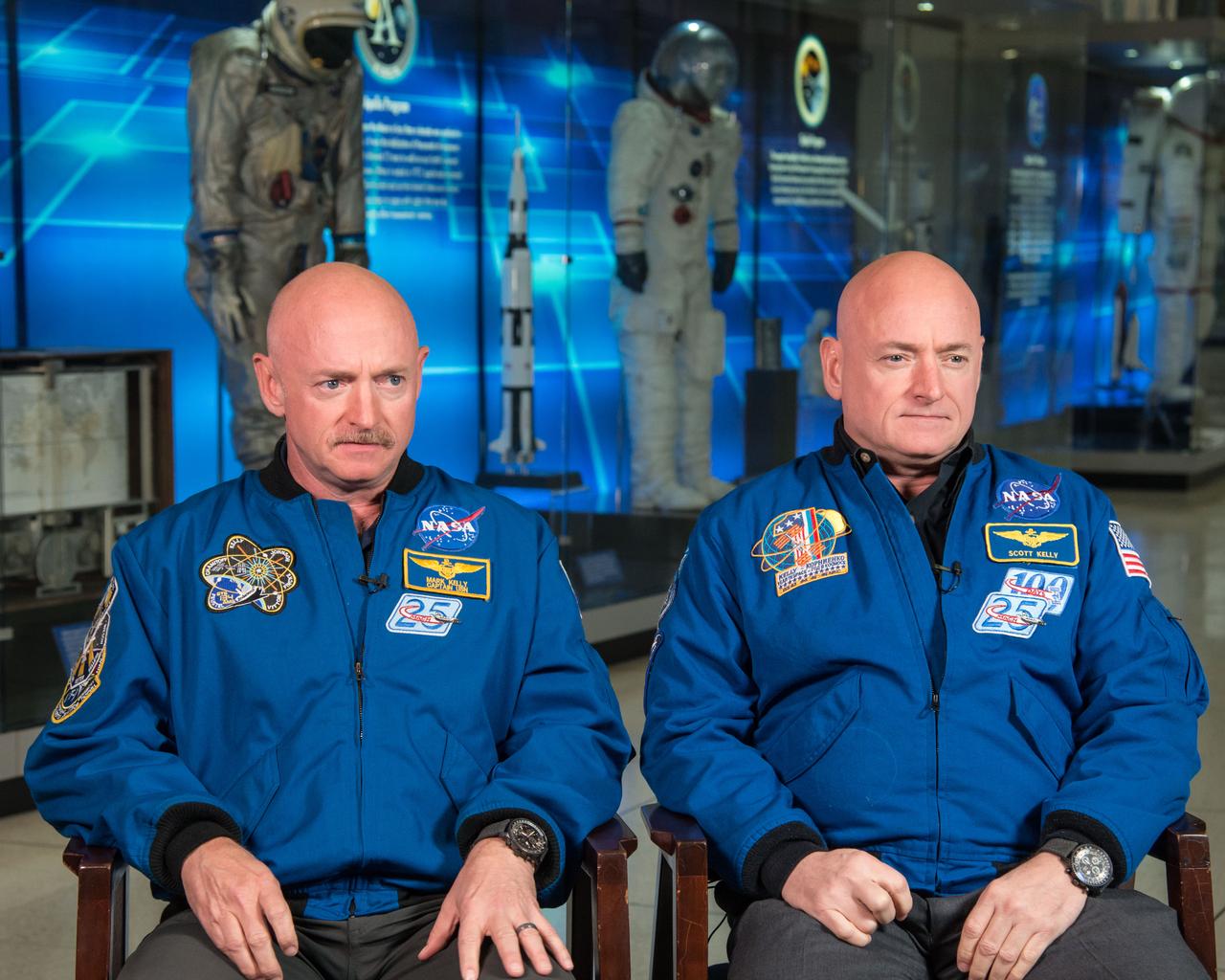
Expedition 45/46 Commander, Astronaut Scott Kelly along with his brother, former Astronaut Mark Kelly speak to news media outlets about Scott Kelly's 1-year mission aboard the International Space Station. Photo Date: January 19, 2015. Location: Building 2. Photographer: Robert Markowitz
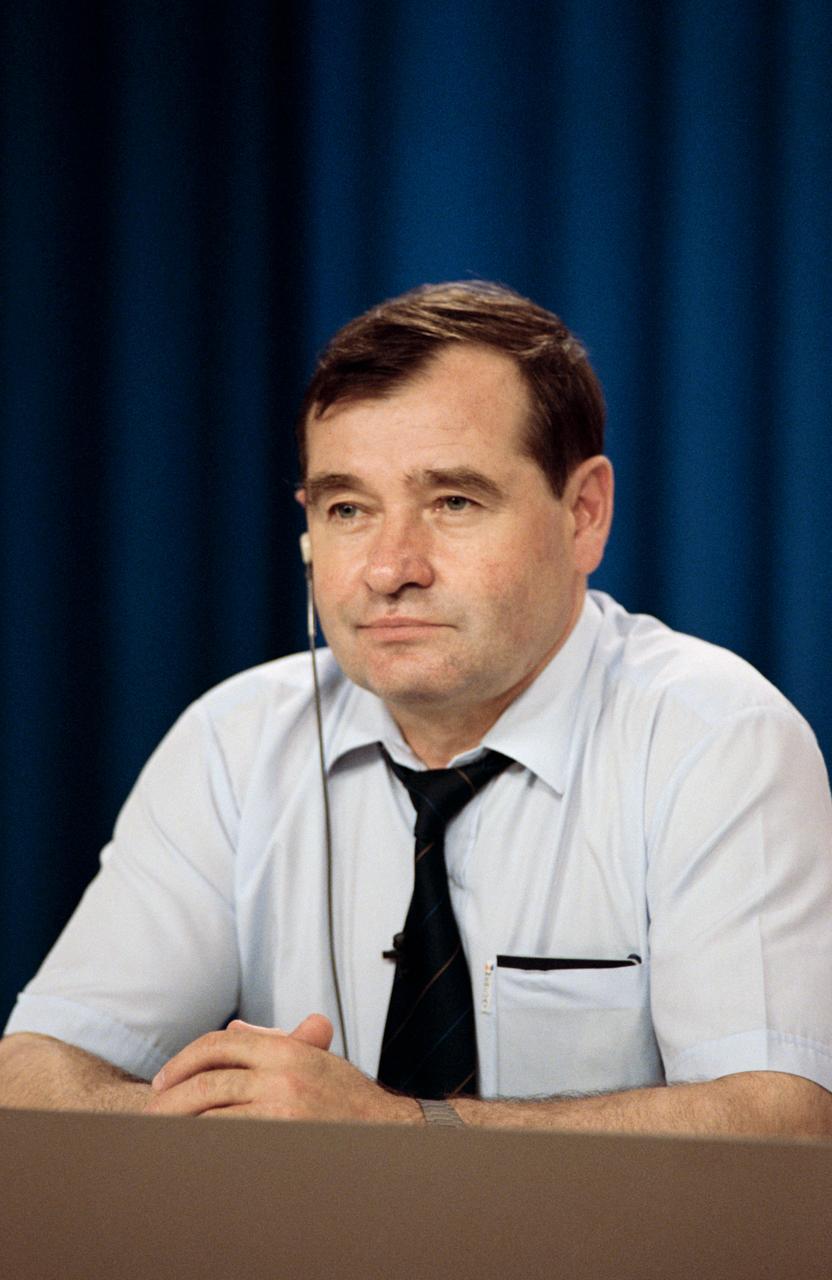
Cosmonaut Gennadiy M. Strekalov, flight engineer for the Mir-18 mission, listens to a question from a news media representative. Crew members for two of the joint Space Shuttle/Mir missions met the press at JSC.
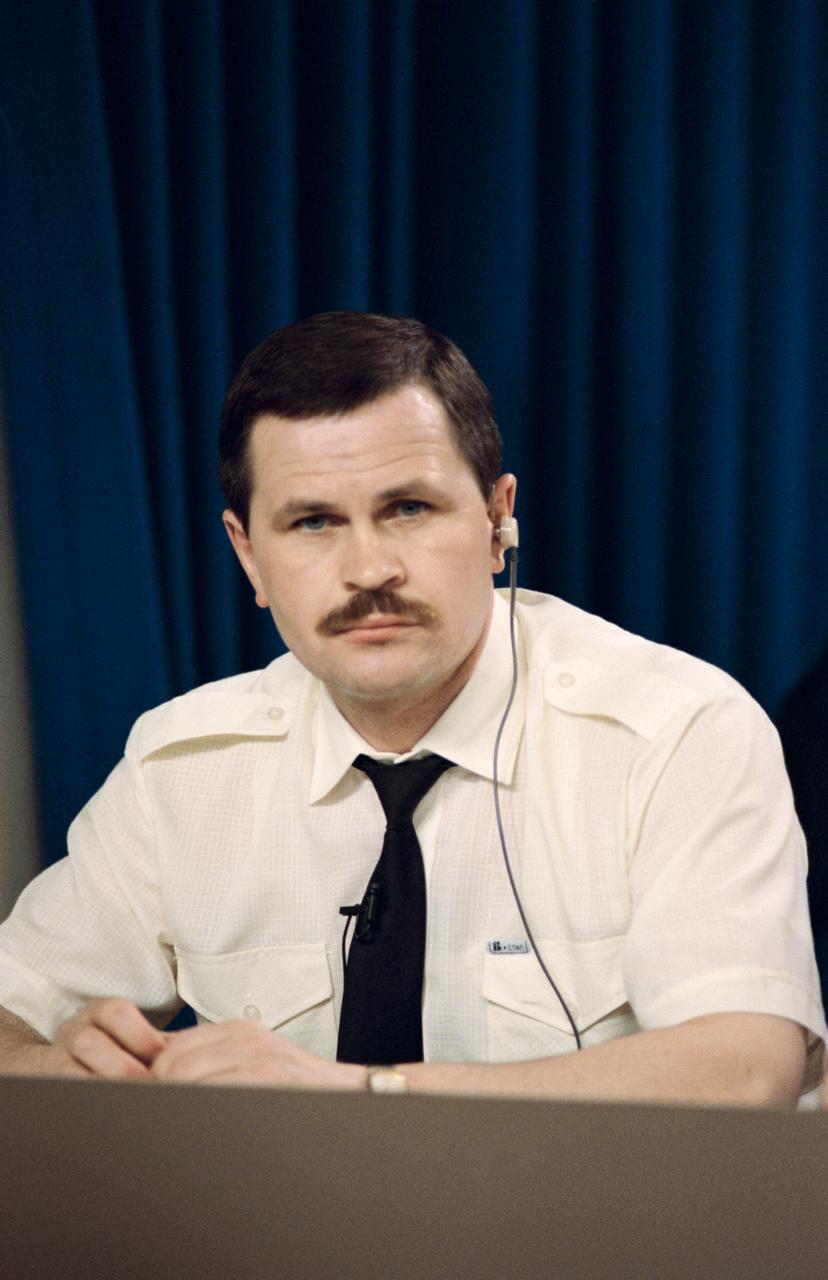
Cosmonaut Nikolai M. Budarin, flight engineer for Mir 19, ponders a question from a news media representative. Crew members for two of the joint Space Shuttle/Mir missions met the press at JSC.

Cosmonaut Anatoliy Y. Solovyev, mission commander for Mir 19, responds to a question from a news media representative. Crew members for two of the joint Space Shuttle/Mir missions met the press at JSC.
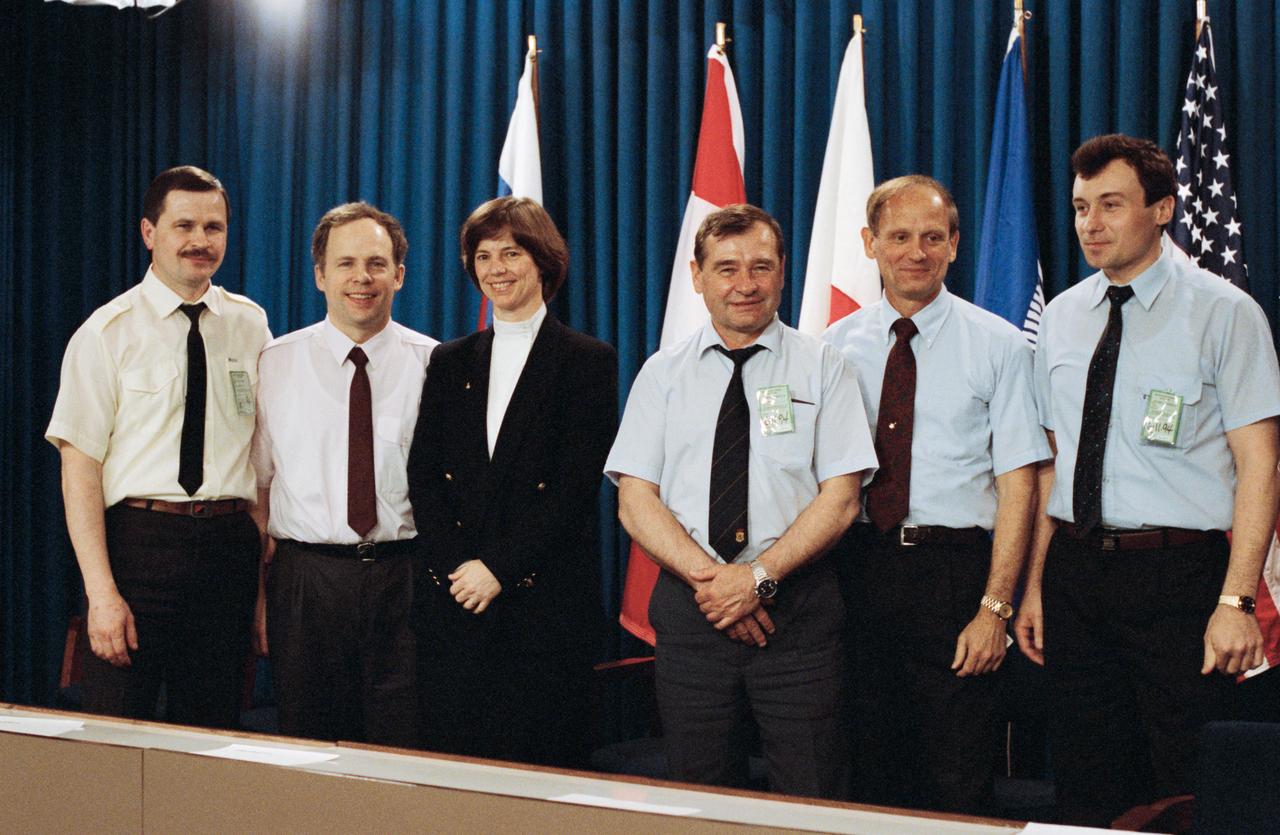
Crew members for two joint Space Shuttle/Mir missions greet the press during a break in medical operations training at JSC. Left to right are Nikolai M. Budarin, Anatoly Y. Solovyev, Bonnie J. Dunbar, Gennadiy M. Strekalov, Norman E. Thagard and Vladimir N. Dezhurov.
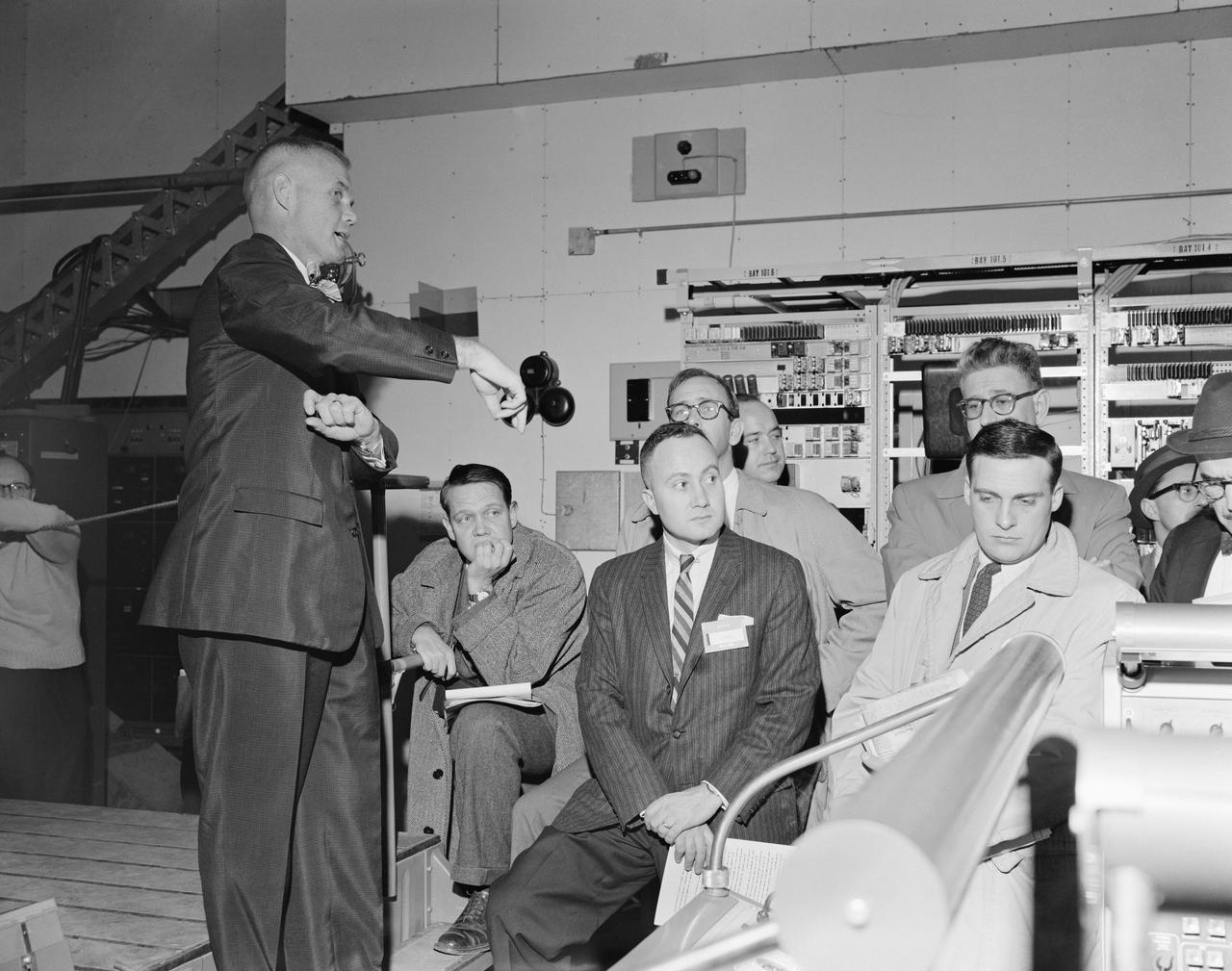
M61-00041 (January 1961) --- Astronaut John Glenn and news media representatives are pictured during a press conference and spacecraft familiarization tour of Cape Canaveral, Florida. Photo credit: NASA
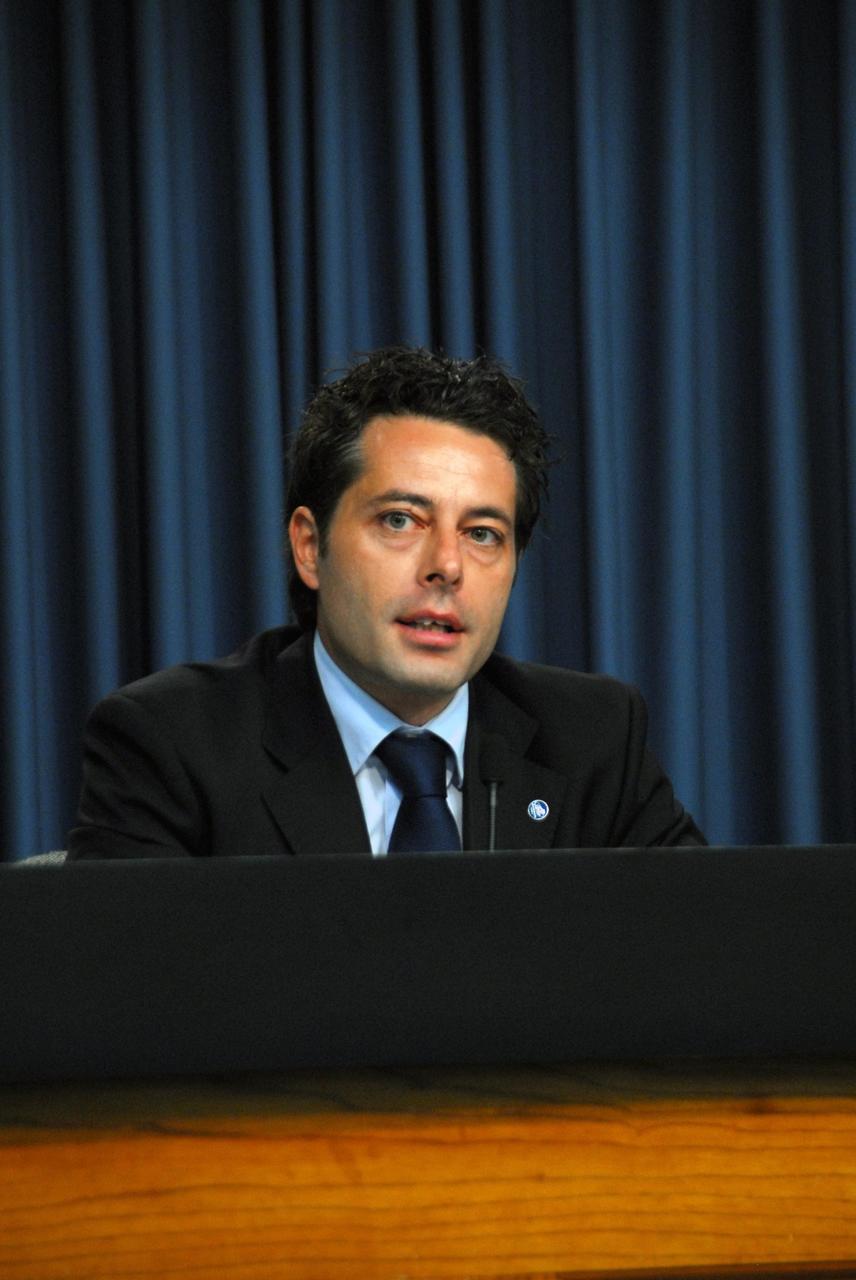
KENNEDY SPACE CENTER, FLA. -- Mauro Piermaria, the ESPERIA mission manager for ASI, the Italian Space Agency, answers questions from the media during a news briefing on the launch readiness of space shuttle mission STS-120. The STS-120 mission will be the 23rd shuttle flight to the International Space Station, delivering the Italian-built U.S. Node 2, called Harmony. The seven-member crew includes ESA astronaut Paolo Nespoli from Italy. The 14-day mission includes five spacewalks -- four by shuttle crew members and one by the station's Expedition 16 crew -- to install Harmony and move the P6 solar arrays to their permanent position and deploy them. Launch aboard space shuttle Discovery is planned for 11:38 a.m. EDT Oct. 23, and Discovery is scheduled to complete its mission and return home on Nov. 6. Photo credit: NASA/George Shelton
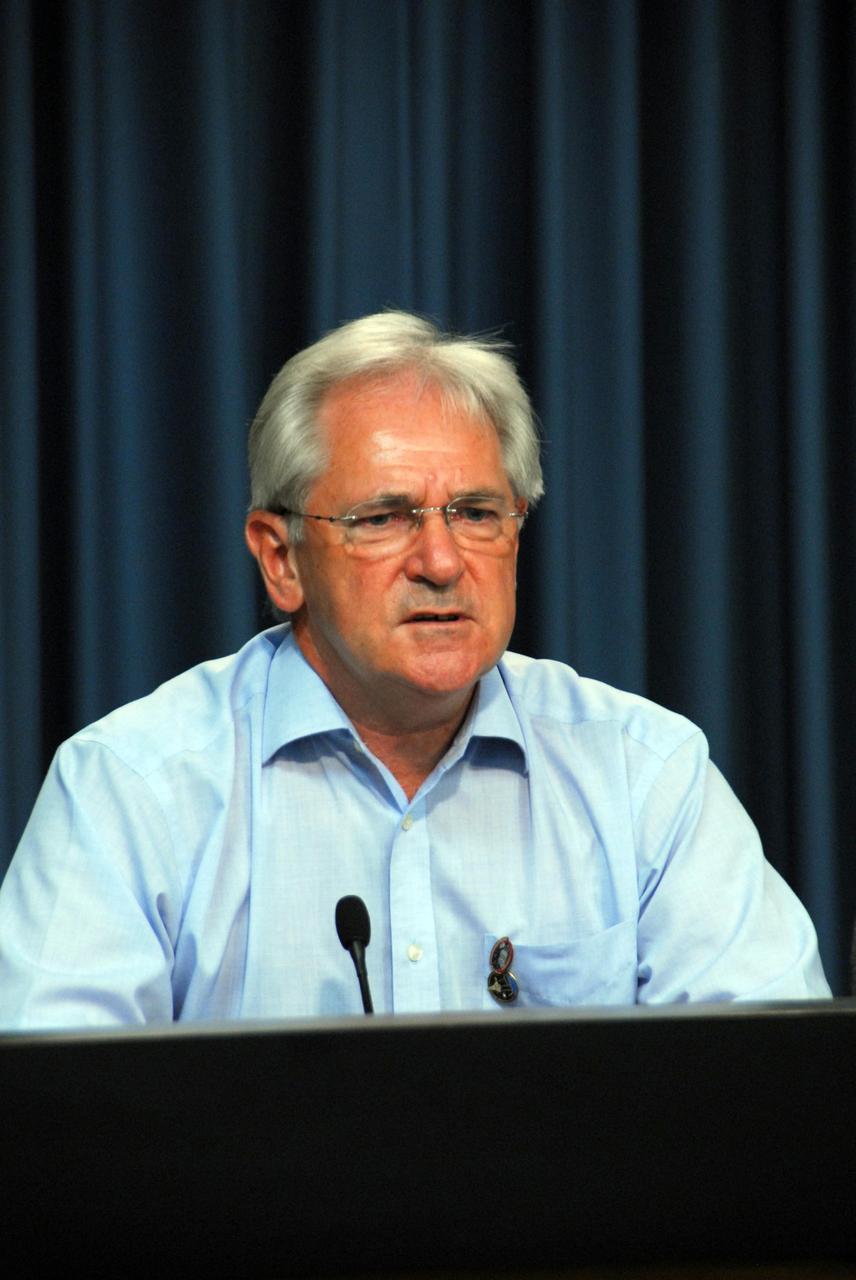
KENNEDY SPACE CENTER, FLA. -- Alan Thirkettle, the International Space Station Program Manager for ESA, the European Space Agency, answers questions from the media during a news briefing on the launch readiness of space shuttle mission STS-120. The STS-120 mission will be the 23rd shuttle flight to the International Space Station, delivering the Italian-built U.S. Node 2, called Harmony. The seven-member crew includes ESA astronaut Paolo Nespoli from Italy. The 14-day mission includes five spacewalks -- four by shuttle crew members and one by the station's Expedition 16 crew -- to install Harmony and move the P6 solar arrays to their permanent position and deploy them. Launch aboard space shuttle Discovery is planned for 11:38 a.m. EDT Oct. 23, and Discovery is scheduled to complete its mission and return home on Nov. 6. Photo credit: NASA/George Shelton
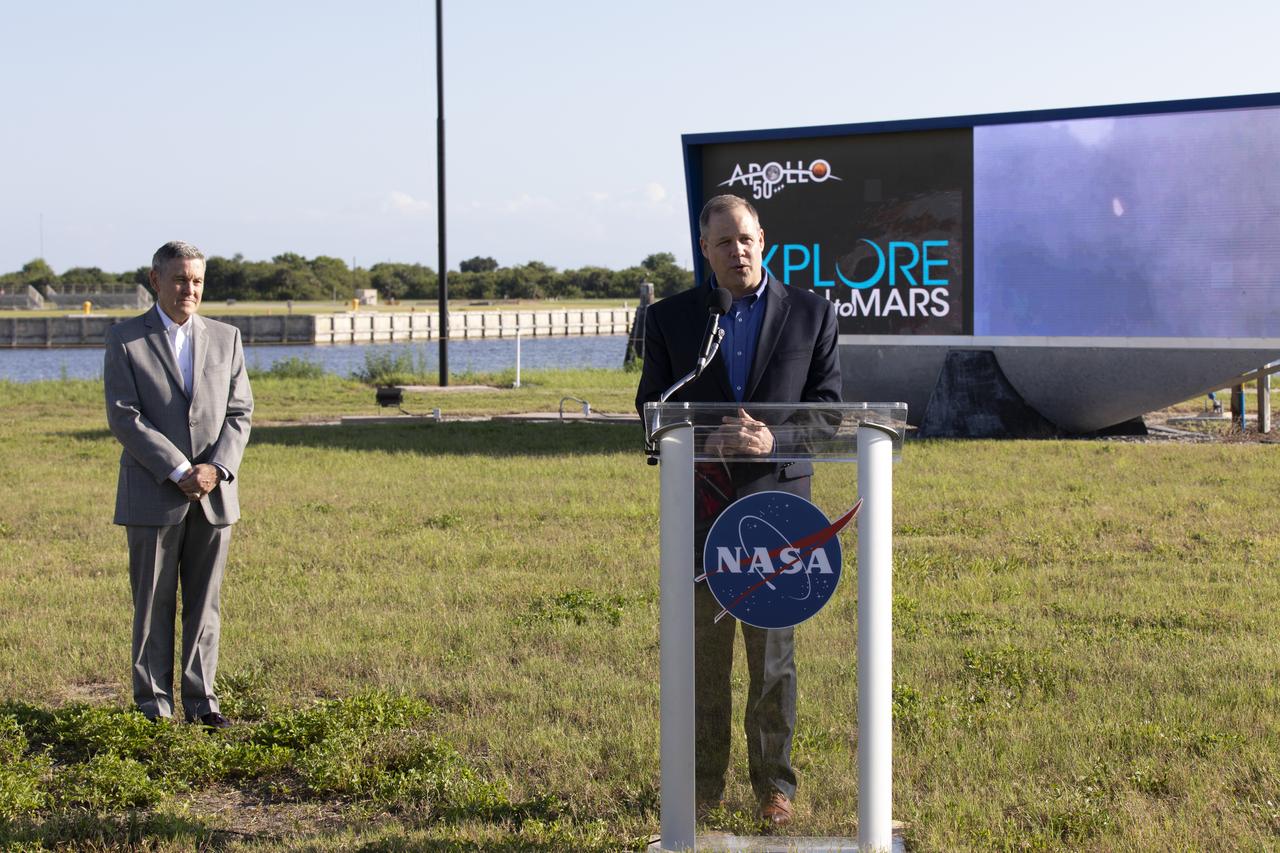
NASA Administrator Jim Bridenstine speaks to members of the news media at the NASA News Center on May 23, 2019. At left is Kennedy Space Center Director Bob Cabana. News media were at the center for an Apollo 11 Media Day. They toured several facilities, including the Vehicle Assembly and Launch Complex 39B for a look back at the Apollo missions and a look ahead to NASA’s new Moon 2024 initiative, the Artemis 1 mission and the Gateway lunar outpost.
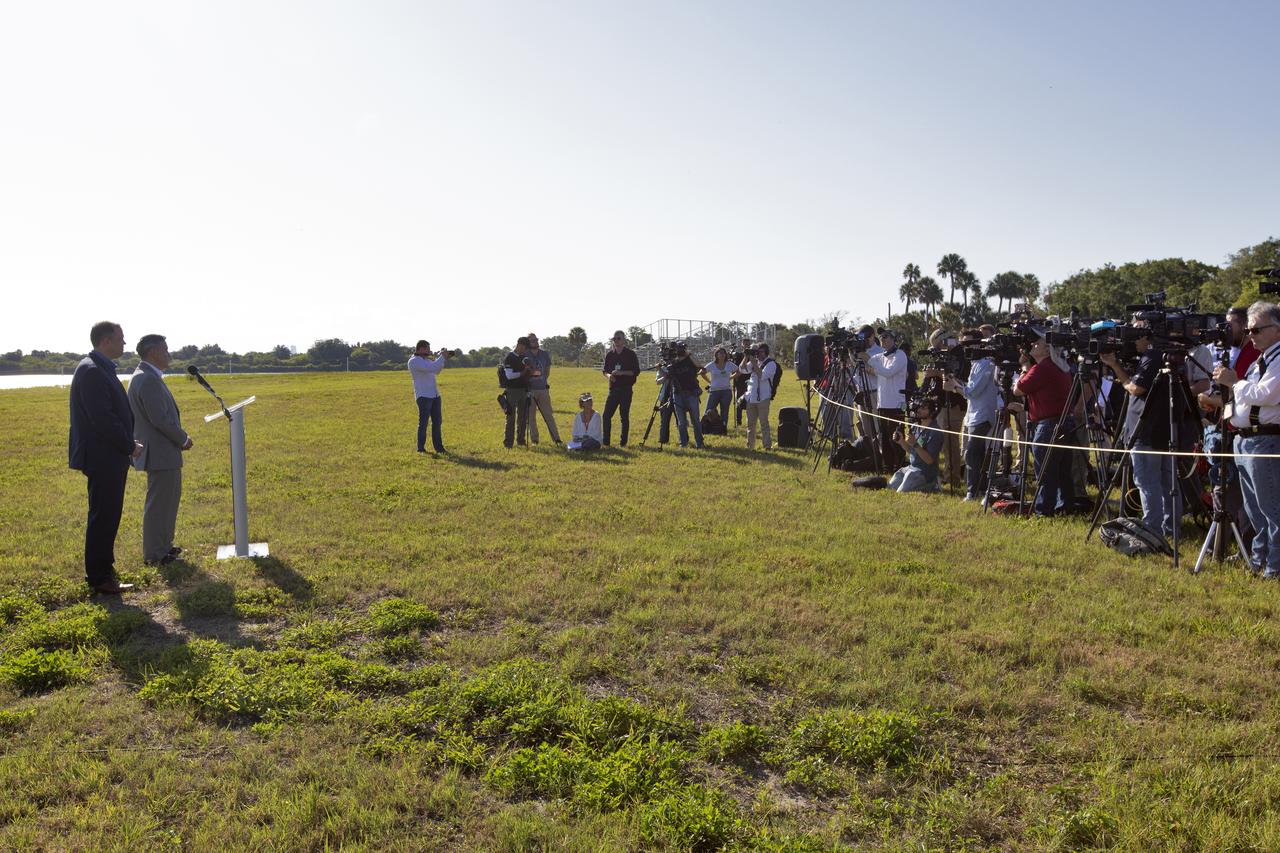
NASA Kennedy Space Center’s Director Bob Cabana, at the podium, speaks to members of the news media at the NASA News Center on May 23, 2019. At left is NASA Administrator Jim Bridenstine. News media were at the center for an Apollo 11 Media Day. They toured several facilities, including the Vehicle Assembly and Launch Complex 39B for a look back at the Apollo missions and a look ahead to NASA’s new Moon 2024 initiative, the Artemis 1 mission and the Gateway lunar outpost.
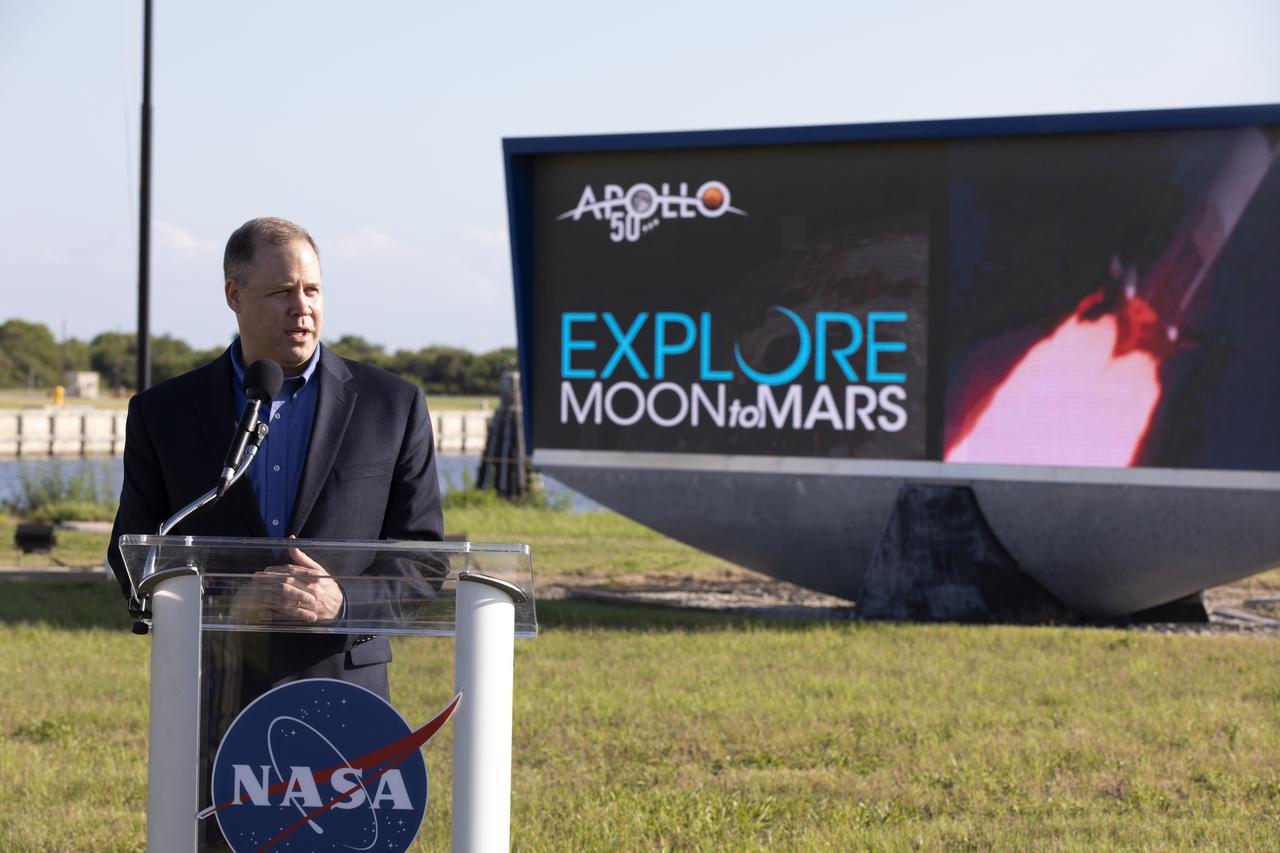
NASA Administrator Jim Bridenstine speaks to members of the news media at the NASA News Center on May 23, 2019. News media were at the center for an Apollo 11 Media Day. They toured several facilities, including the Vehicle Assembly and Launch Complex 39B for a look back at the Apollo missions and a look ahead to NASA’s new Moon 2024 initiative, the Artemis 1 mission and the Gateway lunar outpost.
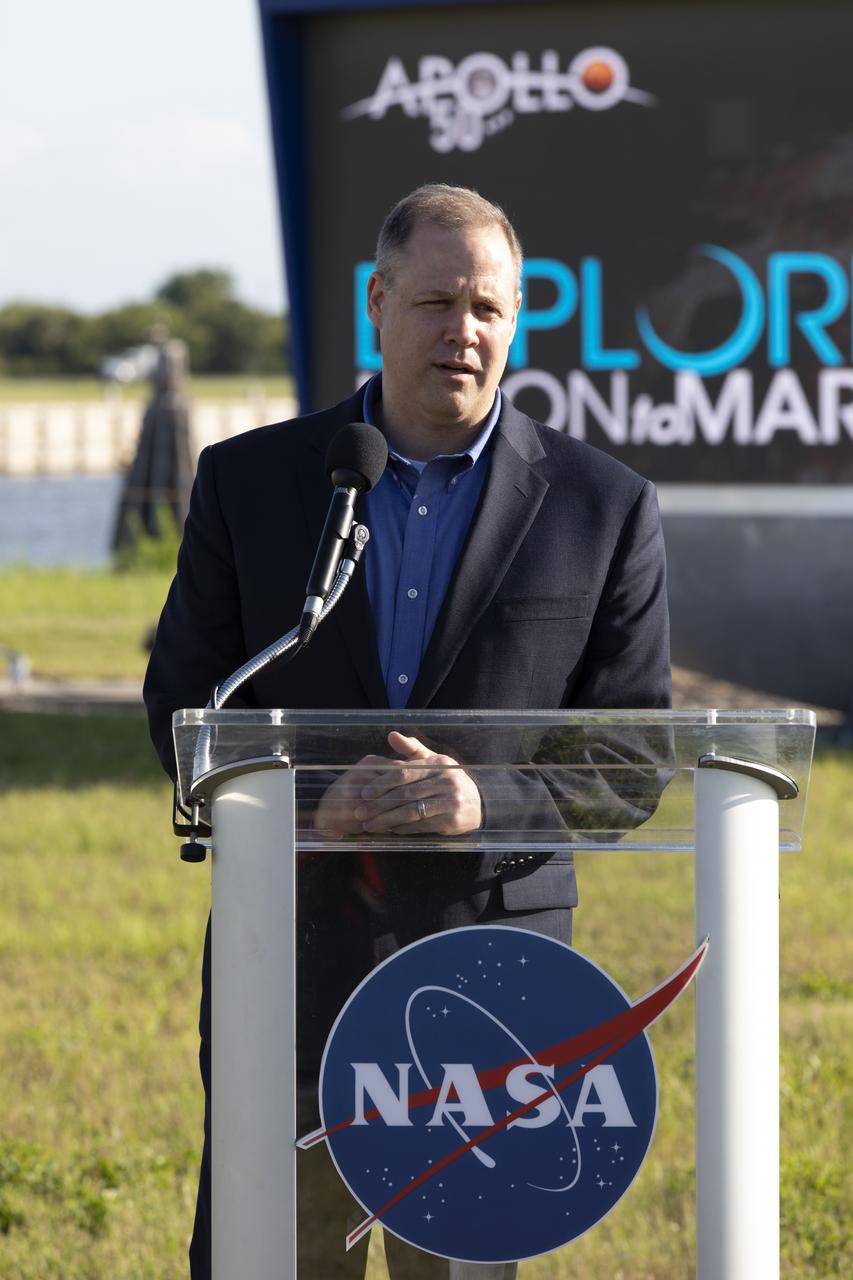
NASA Administrator Jim Bridenstine speaks to members of the news media at the NASA News Center on May 23, 2019. News media were at the center for an Apollo 11 Media Day. They toured several facilities, including the Vehicle Assembly and Launch Complex 39B for a look back at the Apollo missions and a look ahead to NASA’s new Moon 2024 initiative, the Artemis 1 mission and the Gateway lunar outpost.

NASA Kennedy Space Center’s Director Bob Cabana, at left, and NASA Administrator Jim Bridenstine, speak to members of the news media at the NASA News Center on May 23, 2019. News media were at the center for an Apollo 11 Media Day. They toured several facilities, including the Vehicle Assembly and Launch Complex 39B for a look back at the Apollo missions and a look ahead to NASA’s new Moon 2024 initiative, the Artemis 1 mission and the Gateway lunar outpost.
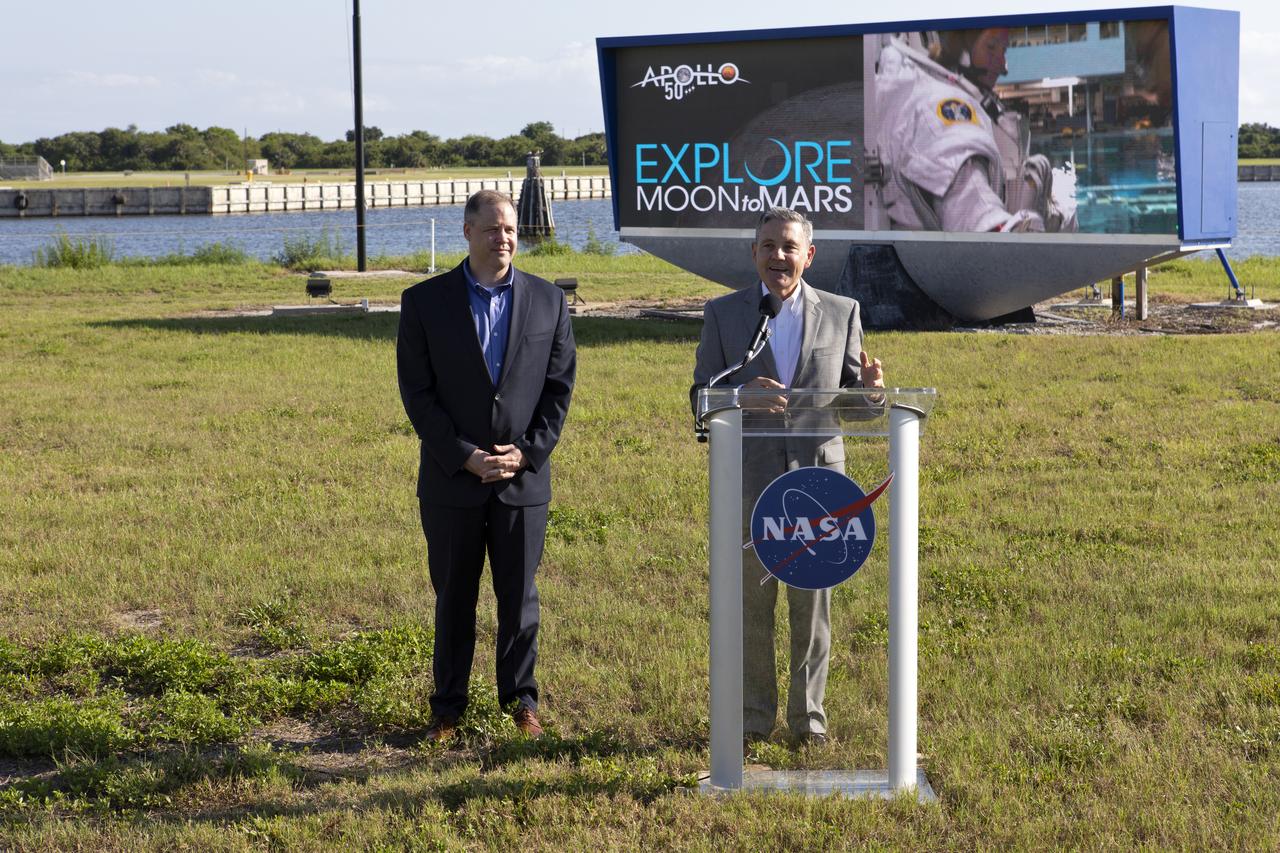
NASA Kennedy Space Center’s Director Bob Cabana, at the podium, speaks to members of the news media at the NASA News Center on May 23, 2019. At left is NASA Administrator Jim Bridenstine. News media were at the center for an Apollo 11 Media Day. They toured several facilities, including the Vehicle Assembly and Launch Complex 39B for a look back at the Apollo missions and a look ahead to NASA’s new Moon 2024 initiative, the Artemis 1 mission and the Gateway lunar outpost.
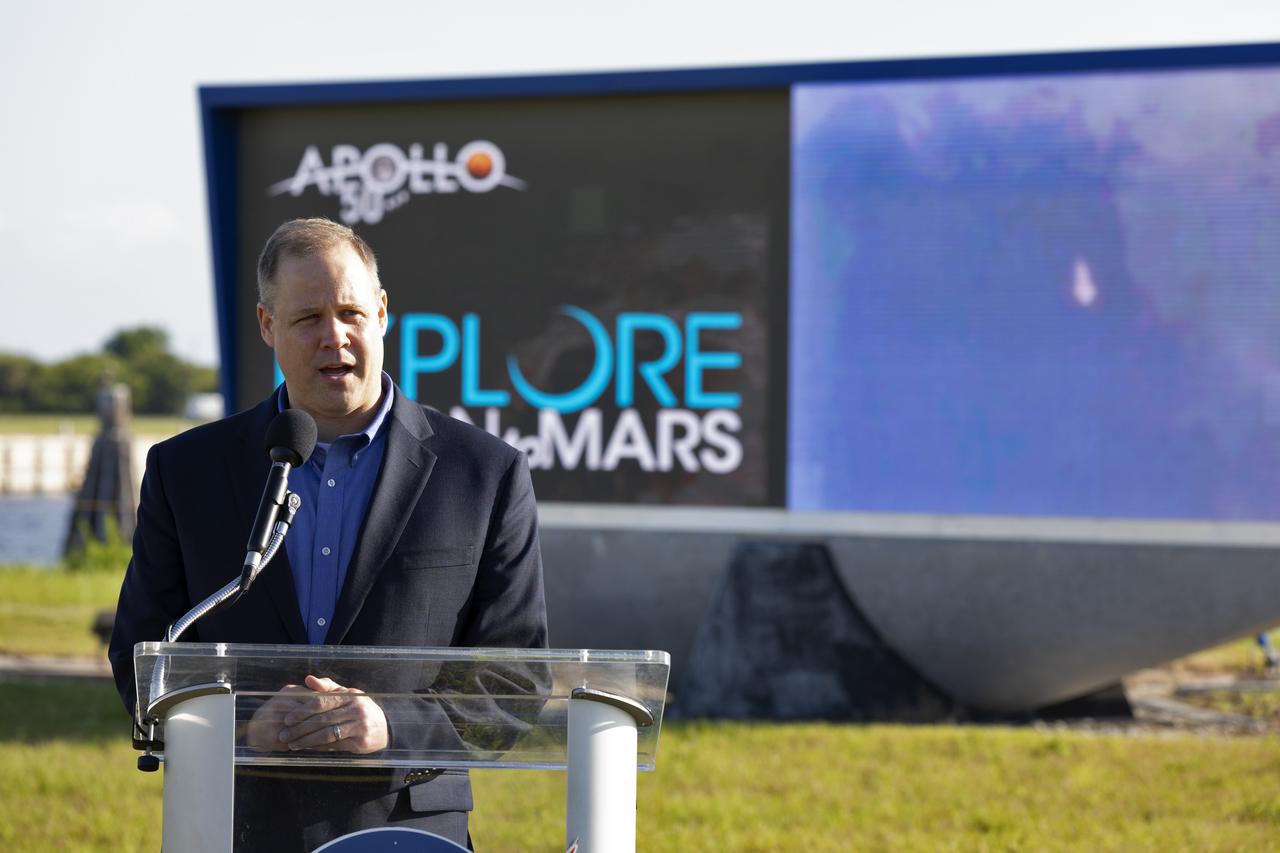
NASA Administrator Jim Bridenstine speaks to members of the news media at the NASA News Center on May 23, 2019. News media were at the center for an Apollo 11 Media Day. They toured several facilities, including the Vehicle Assembly and Launch Complex 39B for a look back at the Apollo missions and a look ahead to NASA’s new Moon 2024 initiative, the Artemis 1 mission and the Gateway lunar outpost.
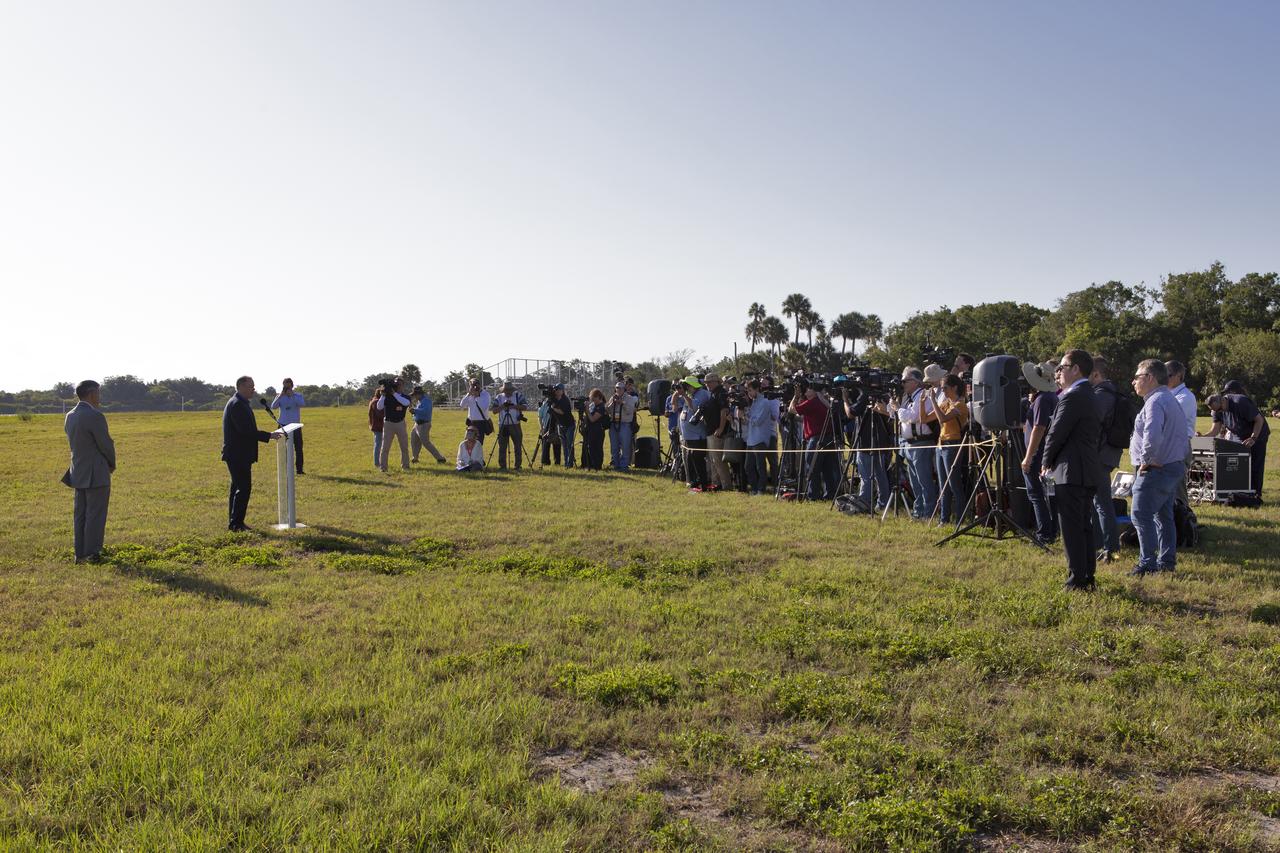
NASA Administrator Jim Bridenstine, at the podium, speaks to members of the news media at the NASA News Center on May 23, 2019. At left is Kennedy Space Center Director Bob Cabana. News media were at the center for an Apollo 11 Media Day. They toured several facilities, including the Vehicle Assembly and Launch Complex 39B for a look back at the Apollo missions and a look ahead to NASA’s new Moon 2024 initiative, the Artemis 1 mission and the Gateway lunar outpost.
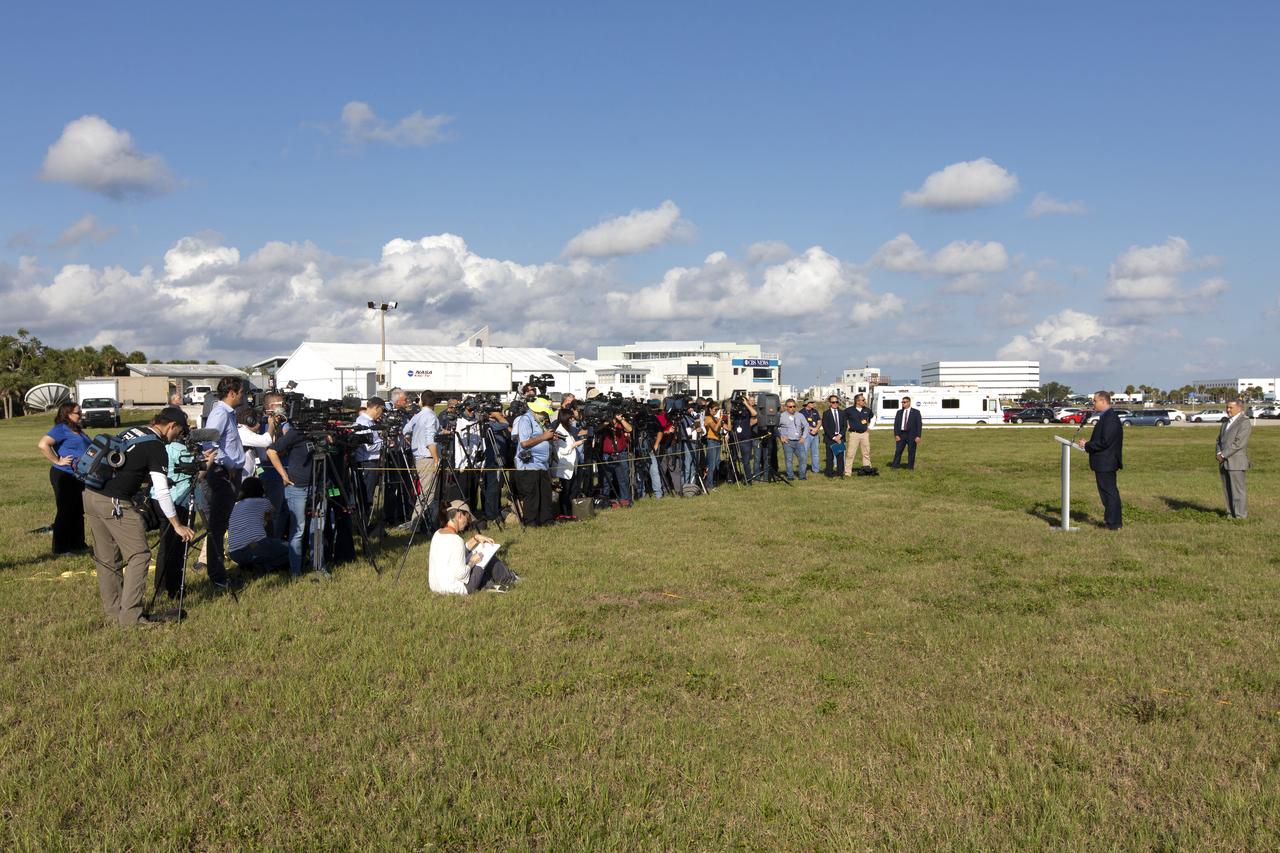
NASA Administrator Jim Bridenstine, at the podium, speaks to members of the news media at the NASA News Center on May 23, 2019. At far right is Kennedy Space Center Director Bob Cabana. News media were at the center for an Apollo 11 Media Day. They toured several facilities, including the Vehicle Assembly and Launch Complex 39B for a look back at the Apollo missions and a look ahead to NASA’s new Moon 2024 initiative, the Artemis 1 mission and the Gateway lunar outpost.
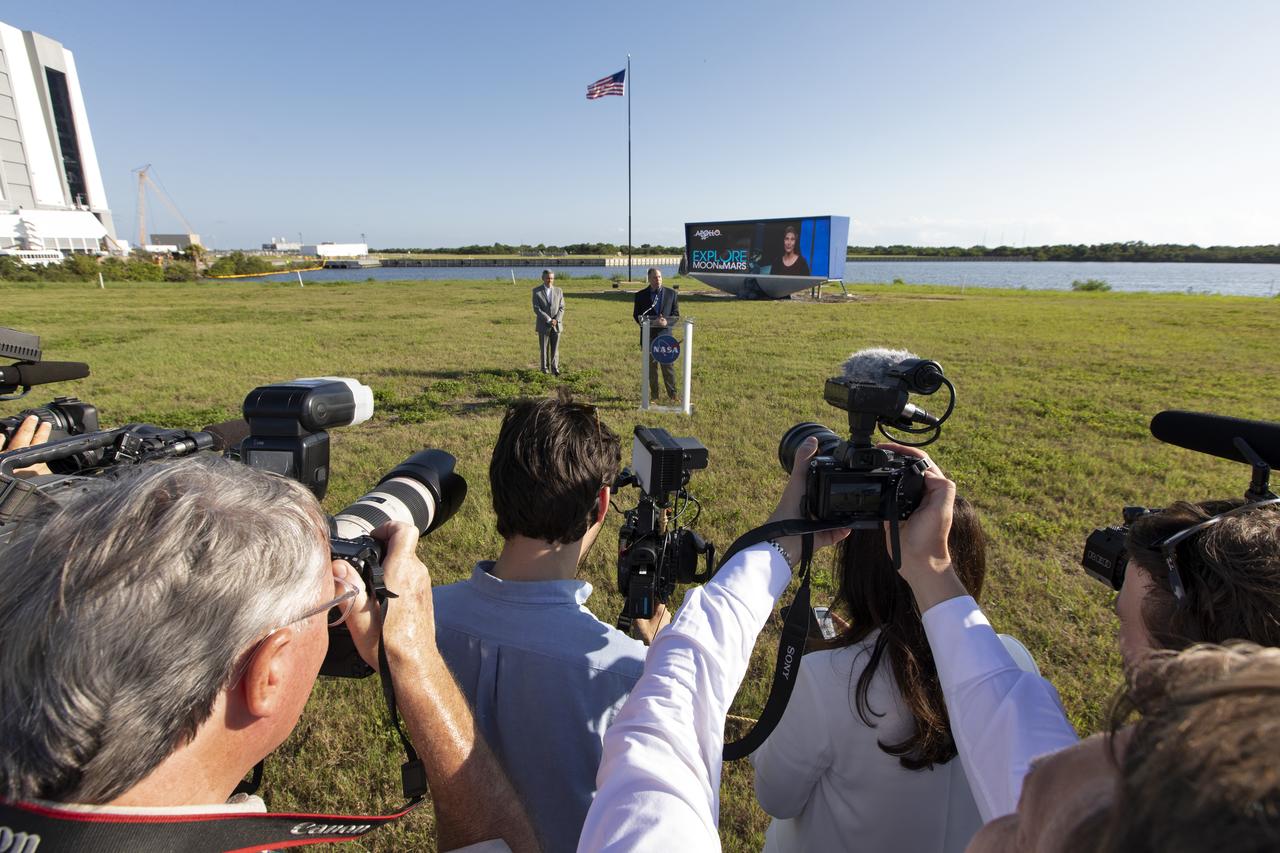
NASA Administrator Jim Bridenstine, at the podium, speaks to members of the news media at the NASA News Center on May 23, 2019. At left is Kennedy Space Center Director Bob Cabana. News media were at the center for an Apollo 11 Media Day. They toured several facilities, including the Vehicle Assembly and Launch Complex 39B for a look back at the Apollo missions and a look ahead to NASA’s new Moon 2024 initiative, the Artemis 1 mission and the Gateway lunar outpost.

NASA Administrator Jim Bridenstine, at the podium, speaks to members of the news media at the NASA News Center on May 23, 2019. Behind him is Kennedy Space Center Director Bob Cabana. News media were at the center for an Apollo 11 Media Day. They toured several facilities, including the Vehicle Assembly and Launch Complex 39B for a look back at the Apollo missions and a look ahead to NASA’s new Moon 2024 initiative, the Artemis 1 mission and the Gateway lunar outpost.
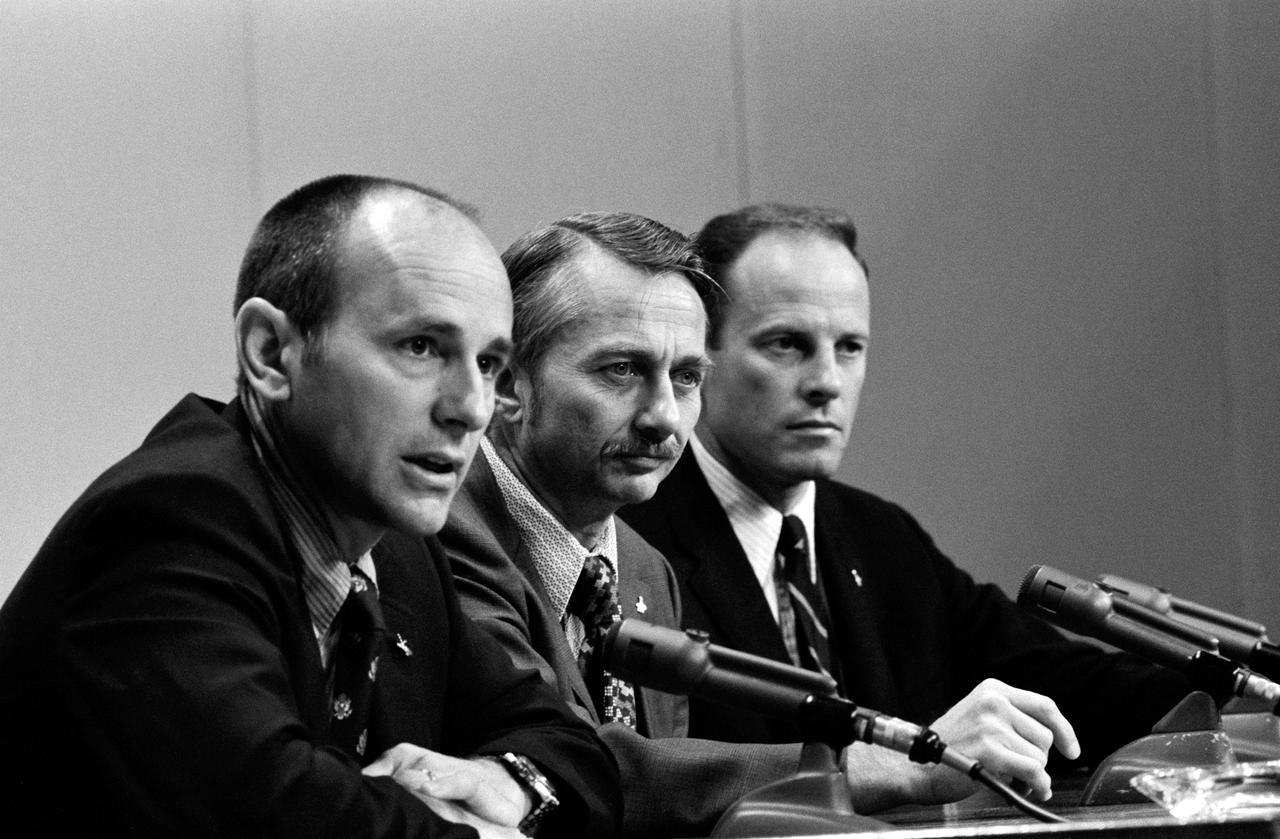
S73-30110 (30 June 1973) --- The three members of the prime crew of the second manned Skylab mission (Skylab 3) discuss their scheduled 56-day flight before a gathering of news media representatives in the large auditorium of Building 1 at the Johnson Space Center (JSC), Houston, Texas, on June 30, 1973. They are, left to right, astronaut Alan L. Bean, commander; scientist-astronaut Owen K. Garriott, science pilot; and astronaut Jack R. Lousma, pilot. Photo credit: NASA
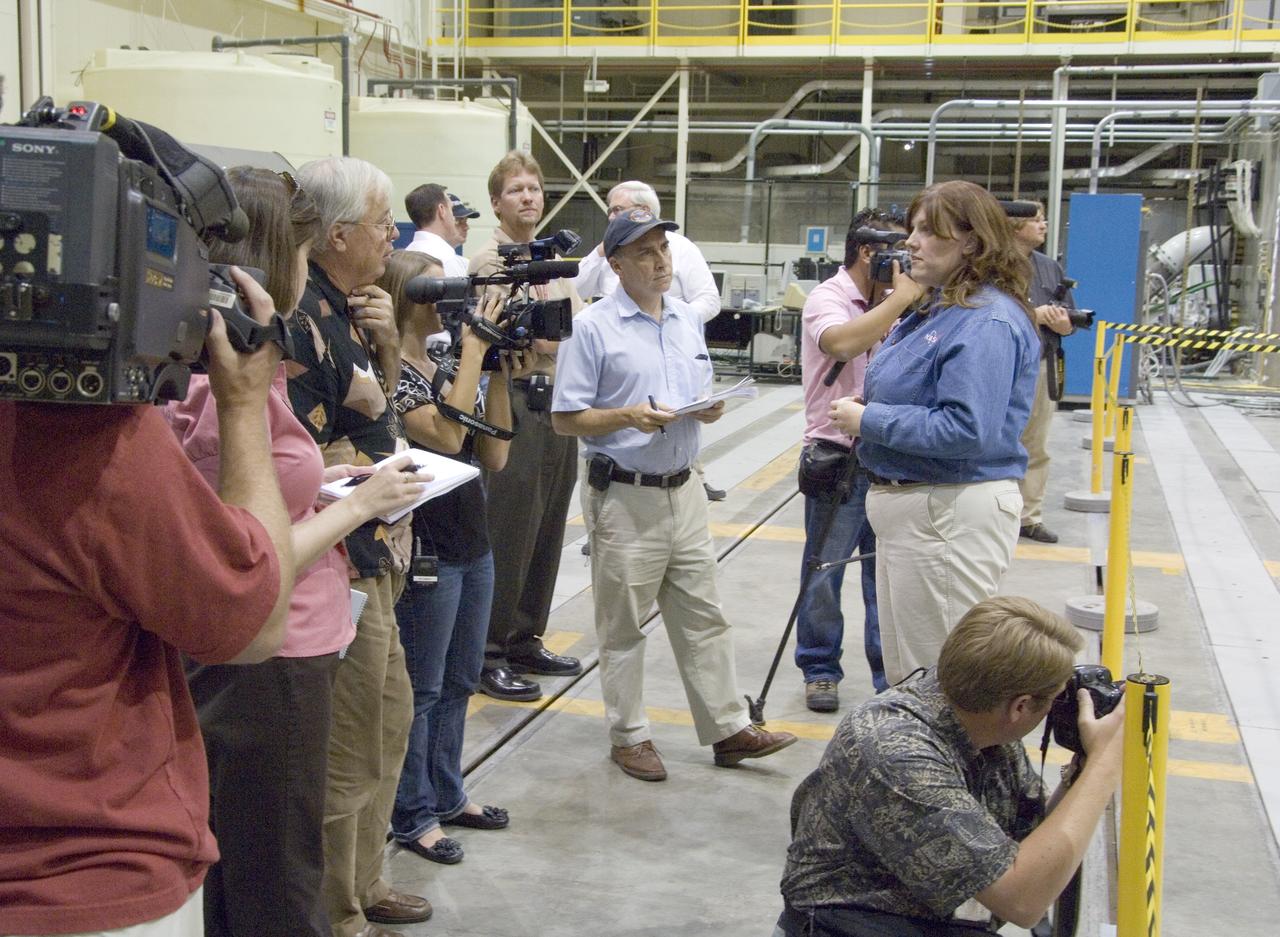
Cathy Bahm, Orion Abort Flight Test integration deputy project manager, briefs news media on the progress of testing in NASA Dryden's Flight Loads Laboratory.
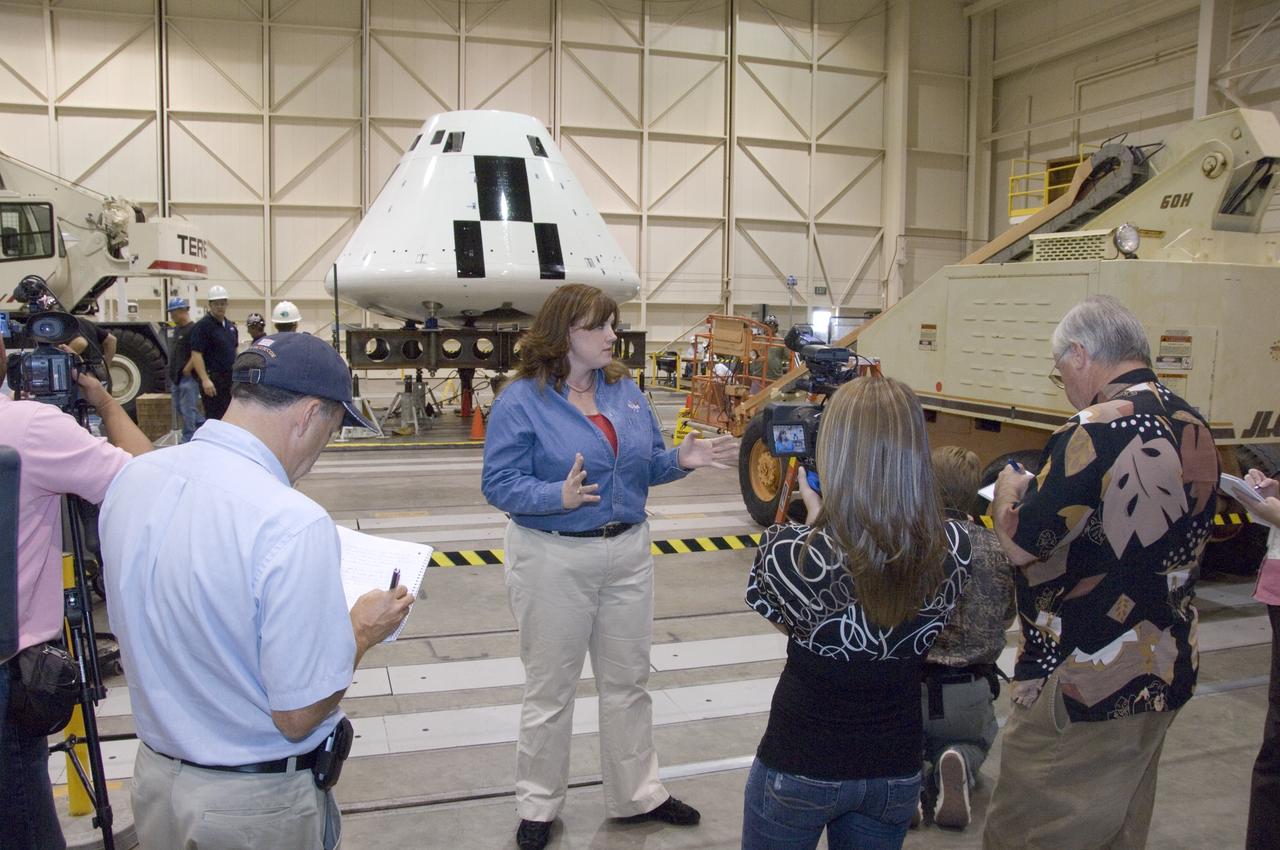
Cathy Bahm, Orion Abort Flight Test integration deputy project manager, briefs news media on the progress of testing in NASA Dryden's Flight Loads Laboratory.
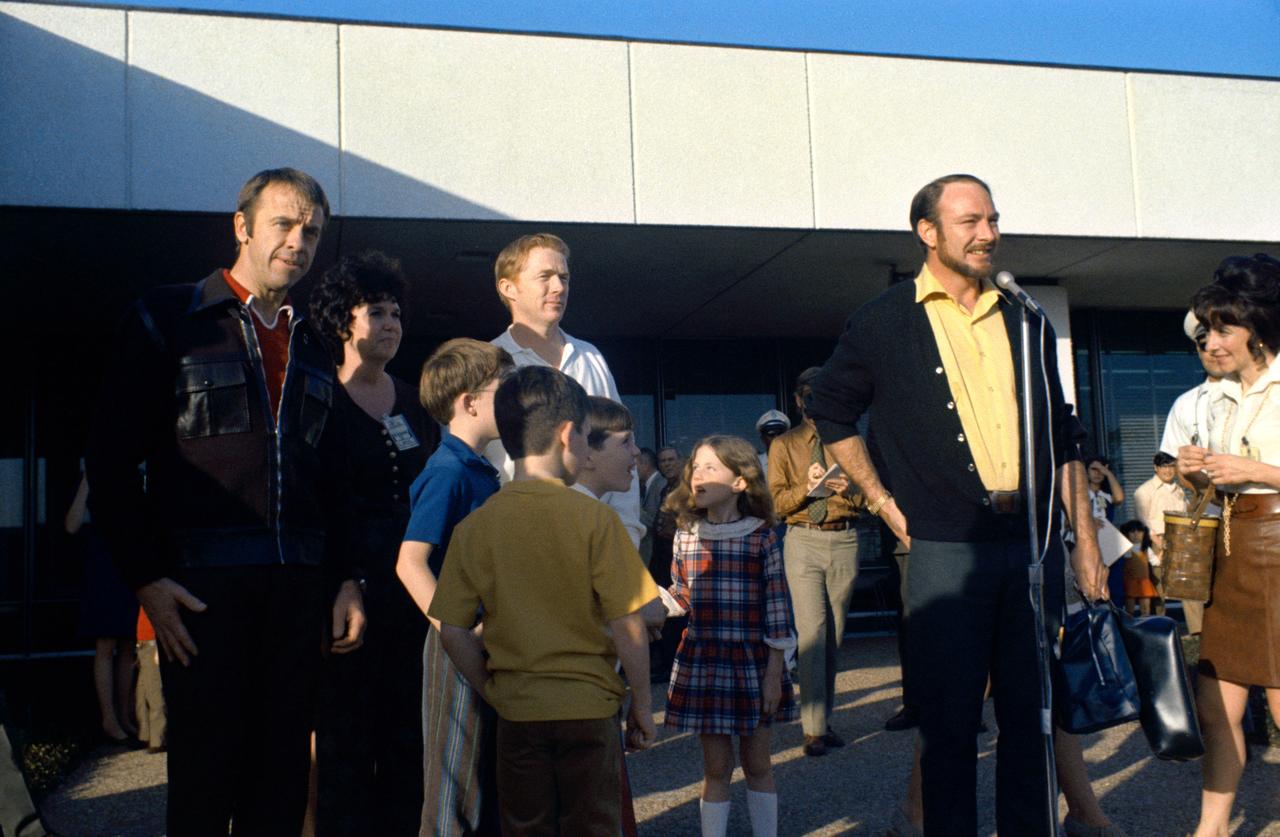
S71-22028 (26 Feb. 1971) --- Astronaut Edgar D. Mitchell, right, the Apollo 14 lunar module pilot, addresses NASA-MSC personnel and news media representatives and other visitors soon after he and his fellow crewmen were released from a 15-day confinement period in the Lunar Receiving Laboratory. Pictured with Mitchell in front of the LRL, MSC Building 37, are astronauts Alan B. Shepard Jr., left, commander; and Stuart A Roosa, command module pilot, Mrs. Mitchell is at right and Mrs. Roosa, near left. Roosa is flanked by his four children, left to right, Christopher A., Stuart A. Roosa Jr., John D. and Rosemary D.
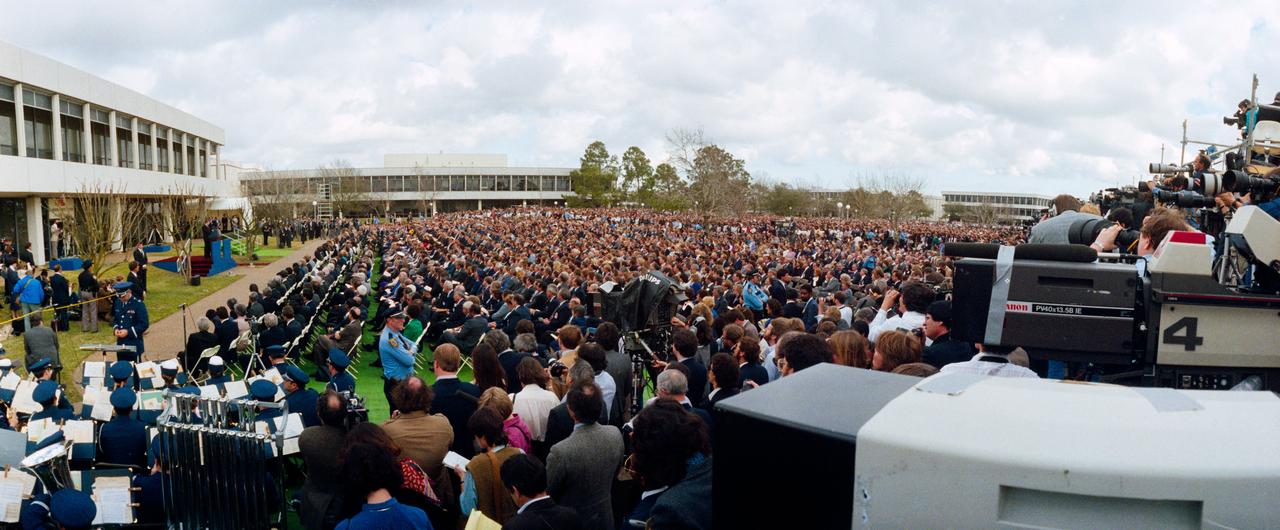
51L-S-127 (31 Jan. 1986) --- A wide angle lens was used to capture only a portion of the crowd gathered for memorial services for the seven members of the STS-51L Challenger crew at the Johnson Space Center. President Ronald Reagan speaks at the lectern at far left edge of the frame. The photographer for the picture was positioned on a large platform erected to accommodate the many members of the news media on hand for the event. Photo credit: NASA
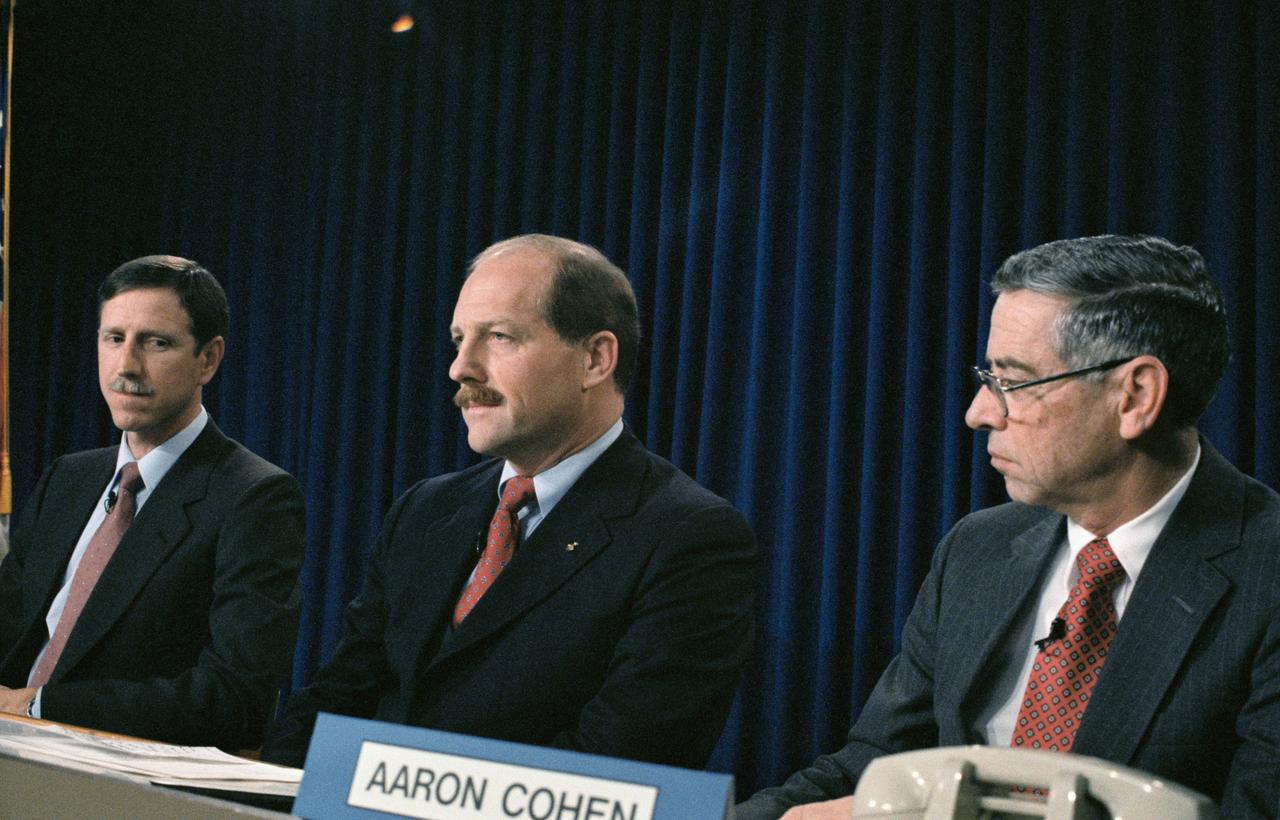
STS-26 Discovery, Orbiter Vehicle (OV) 103, crew including Commander Frederick H. Hauck and Pilot Richard O. Covey and JSC Director Aaron Cohen participate in press conference held at JSC Auditorium and Public Affairs Facility Bldg 2. Hauck and Covey are shown with Cohen as they ponder queries from news media representatives during the first press conference for the group since the mission's announcement last week. Left to right are Covey, Hauck, and Cohen.
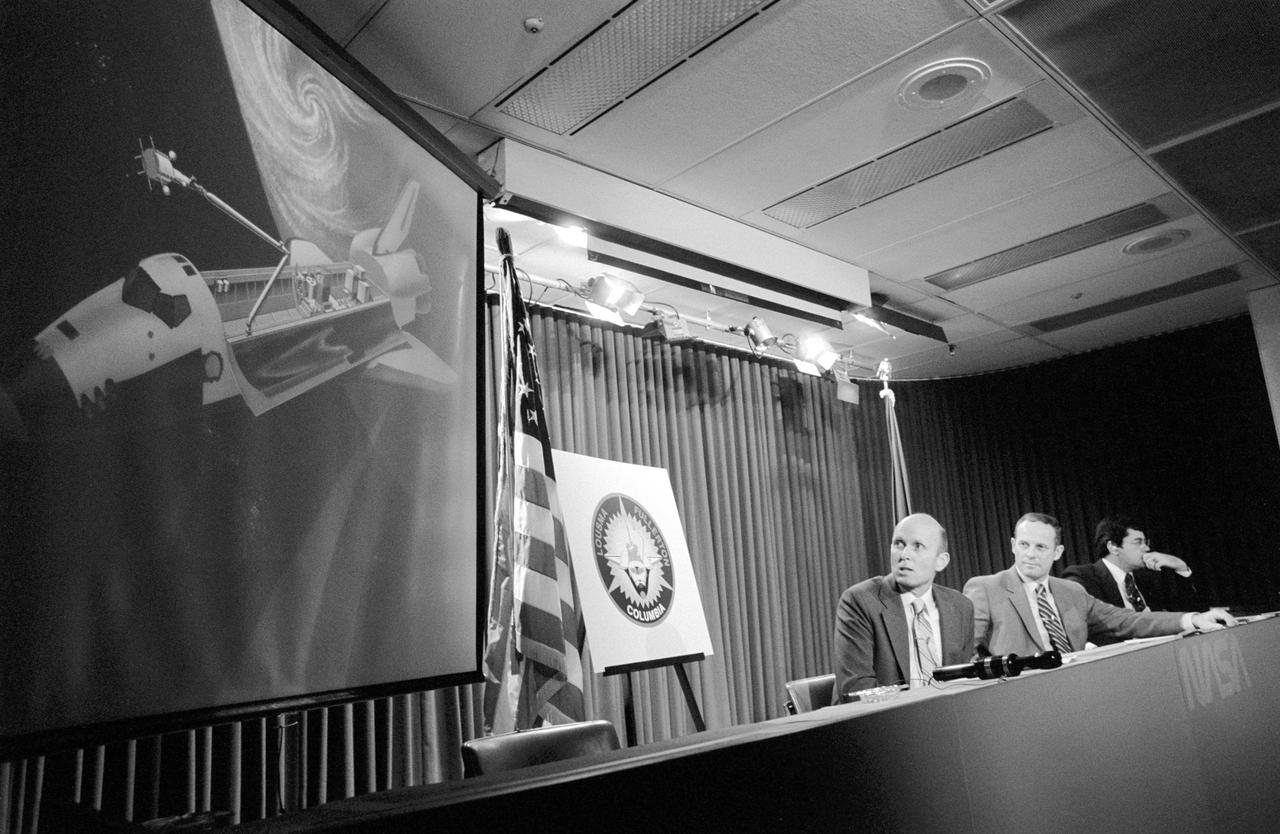
S82-25903 (21 Jan. 1982) --- Astronaut Jack R. Lousma, center, and C. Gordon Fullerton, left, respond to a visual depicting the Columbia and its remote manipulator system in space during a pre-STS-3 press conference in JSC?s pubic affairs building. Dr. John Lawrence, public information specialist who introduced the crew to news media representatives, is at far right. Photo credit: NASA
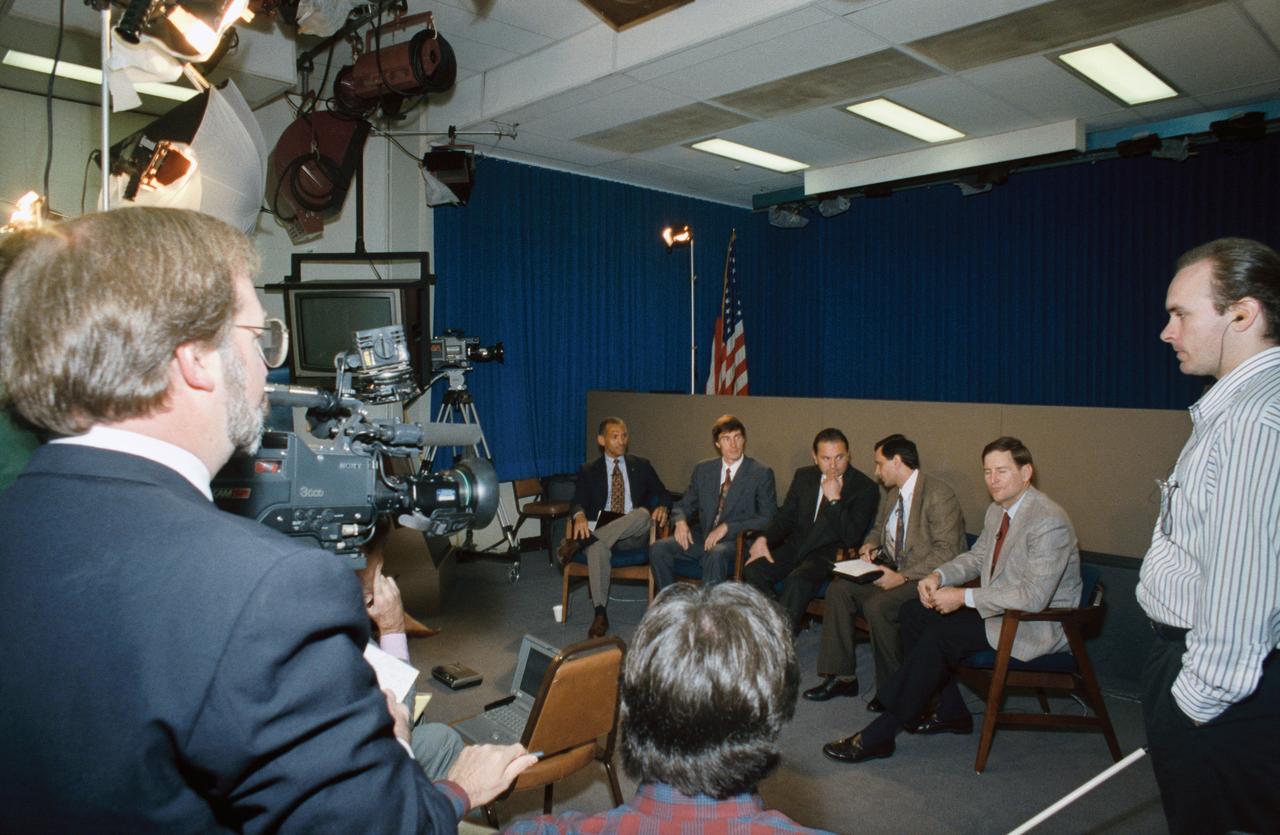
Three members of the STS-60 crew and an alternate crew member discuss their upcoming mission with the news media in JSC's public affairs facility. Seated from the left are Charles F. Bolden Jr., mission commander; Russian Cosmonaut Sergei Krikalev, mission specialist; Russian Cosmonaut Vladimir Titov, alternate mission specialist; interpreter Vladimir Fischel and Astronaut Kenneth S. Reightler, pilot.
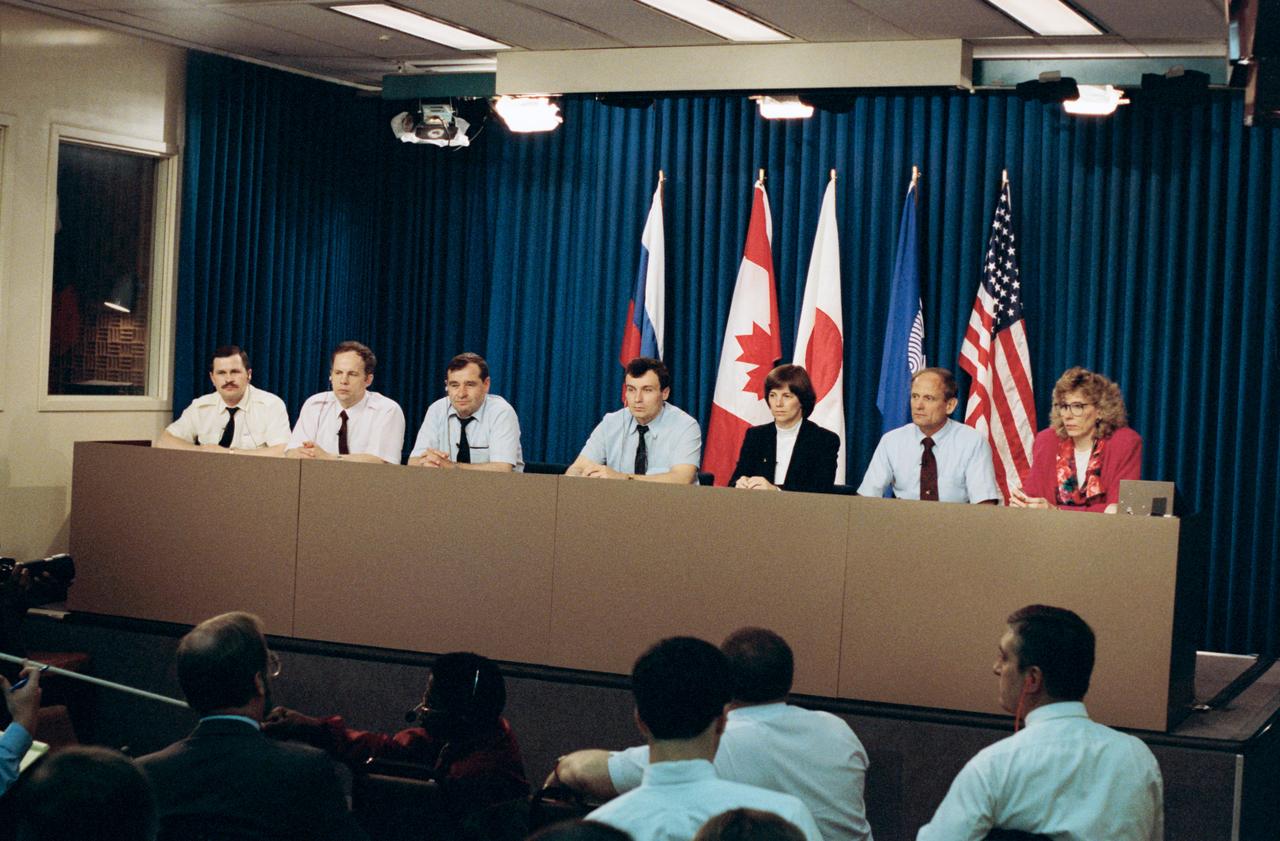
Crew members for the joint Space Shuttle / Mir mission field questions from the press at JSC. Left to right are cosmonauts Nikolai M. Budarin, Anatoliy Y. Solovyov, Gennadiy M. Strekalov, Vladimir N. Dezhurov, and astronauts Bonnie J. Dunbar, Norman E. Thagard, along with Kari L. Fluegel of the Public Affairs Office's (PAO) News and Media Services Branch. Flags representing the international space partners - Russia, the United States, the European Space Agency (ESA), Canada and Japan - are displayed behind the conference participants.
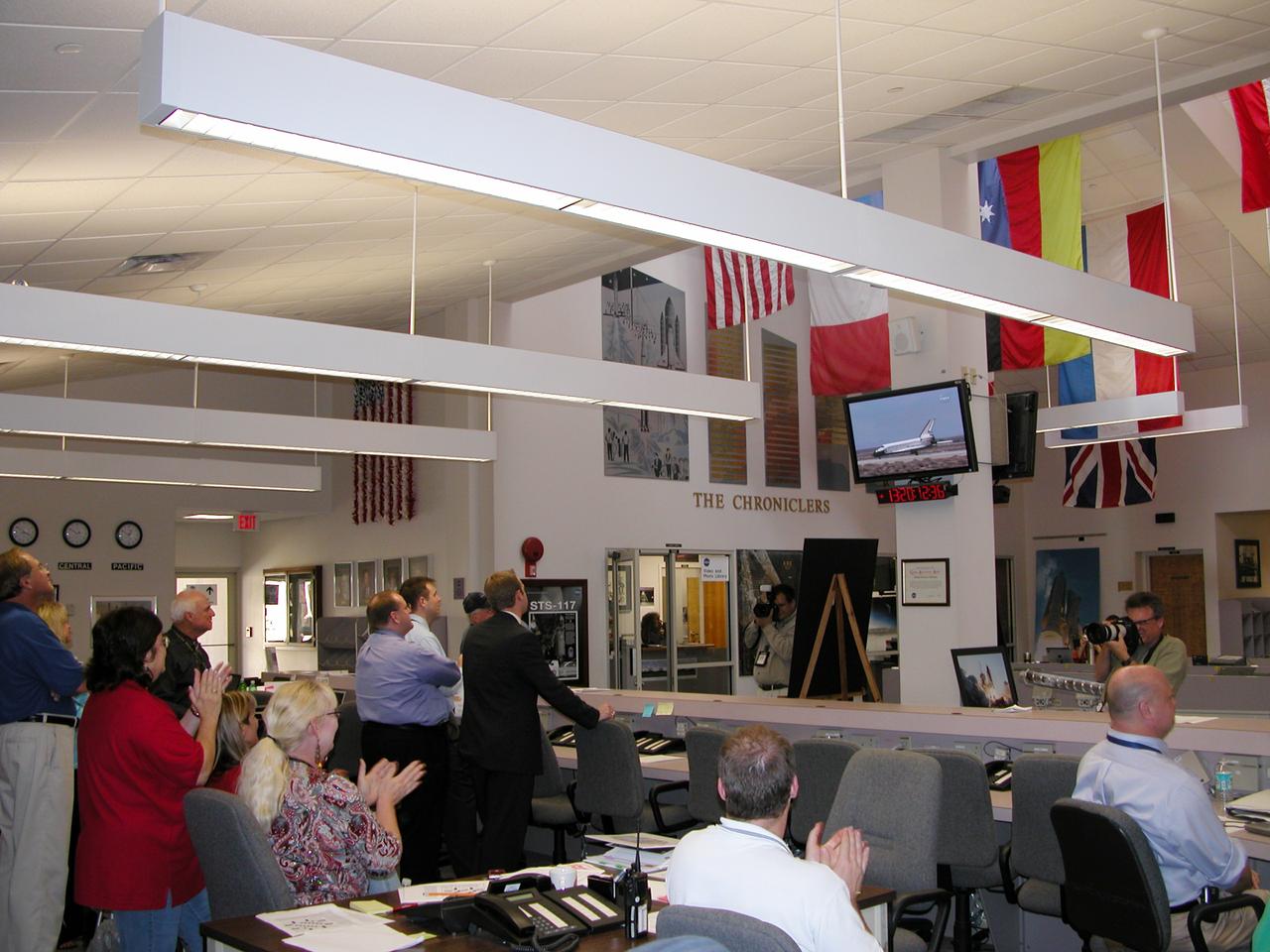
Media and staff in the NASA News Center at Kennedy Space Center applaud the successful landing of Atlantis, visible on the television screens, at NASA's Dryden Flight Research Center at Edwards Air Force Base in California. Returning from mission STS-117, Atlantis touched down on runway 22 at Edwards on orbit 219 after 13 days, 20 hours and 12 minutes in space. The landing was diverted to California due to marginal weather at the Kennedy Space Center. Main gear touchdown was at 3:49:38 p.m. EDT on runway 22. Nose gear touchdown was at 3:49:49 p.m. and wheel stop was at 3:50:48 p.m. This was the 51st landing for the Space Shuttle Program at Edwards Air Force Base. The mission to the International Space Station was a success, installing the S3/S4 truss. The returning crew of seven includes astronaut Sunita Williams, who was flight engineer on the Expedition 15 crew. She achieved a new milestone, a record-setting flight at 194 days, 18 hours and 58 minutes, the longest single spaceflight ever by a female astronaut or cosmonaut.
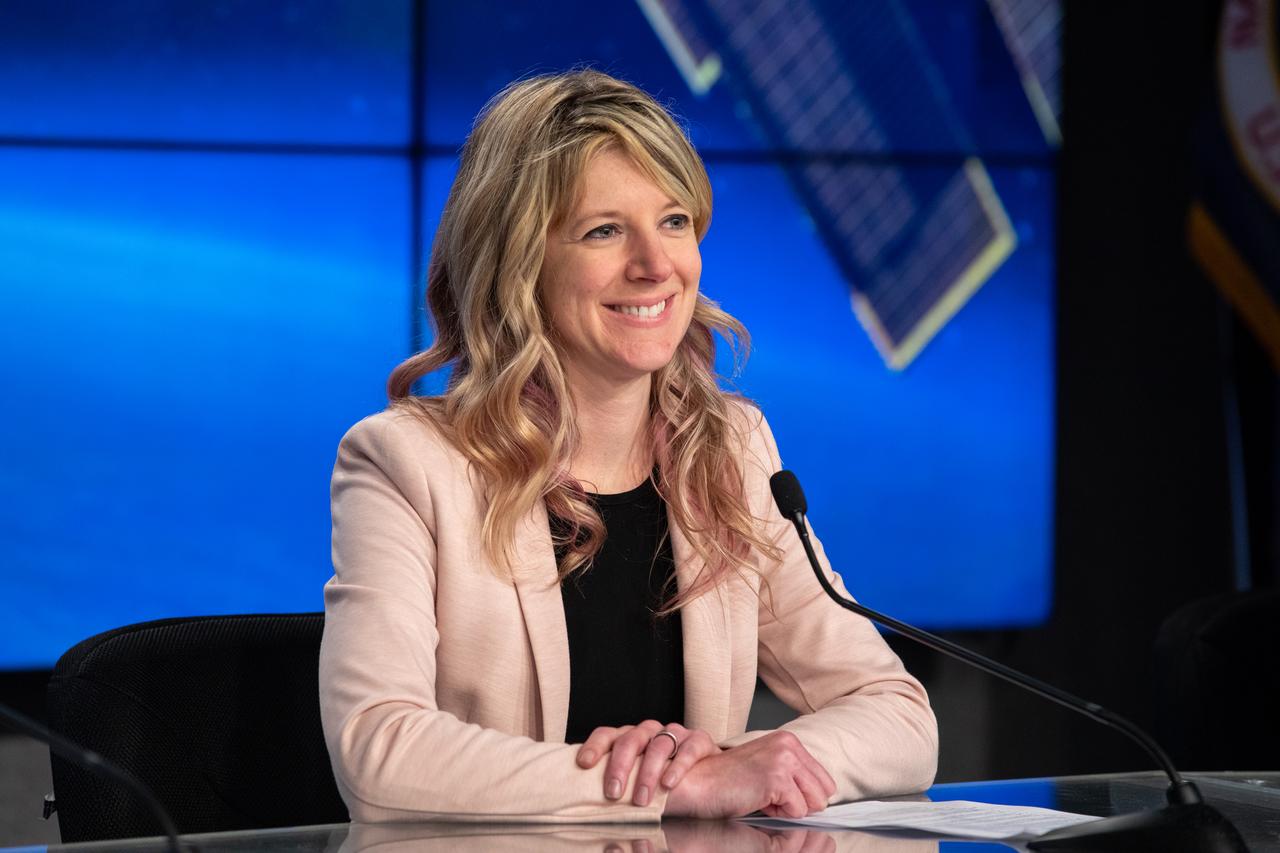
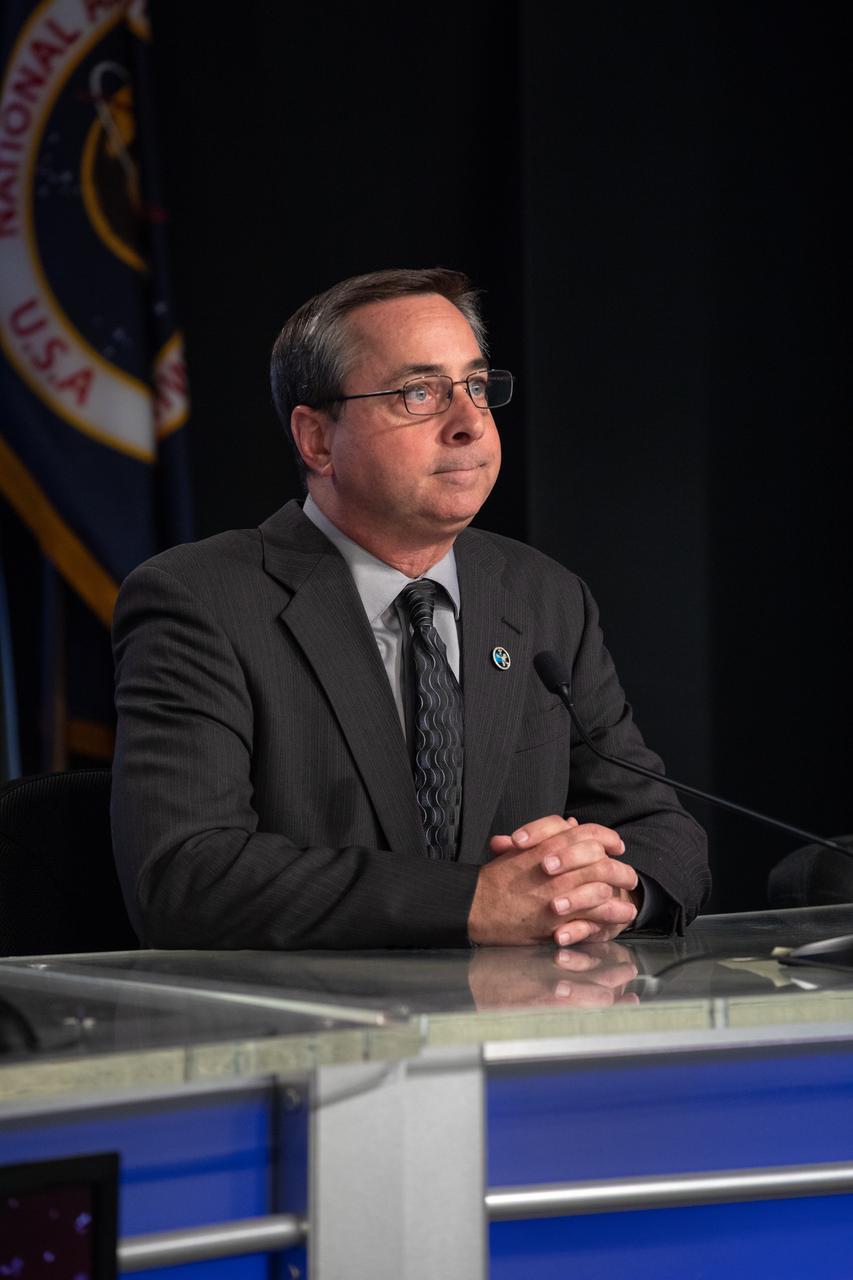
Jessica Jensen, director, Dragon Mission Management at SpaceX, speaks to members of the news media during a prelaunch news conference on Dec. 3, 2019, for SpaceX’s 19th Commercial Resupply Services (CRS-19) mission for NASA to the International Space Station, at the agency’s Kennedy Space Center in Florida. NASA and industry leaders speak to members of the news media during the news conference. The SpaceX Falcon 9 rocket and Dragon cargo module are scheduled to launch on Dec. 4, 2019, from Space Launch Complex 40 on Cape Canaveral Air Force Station in Florida.
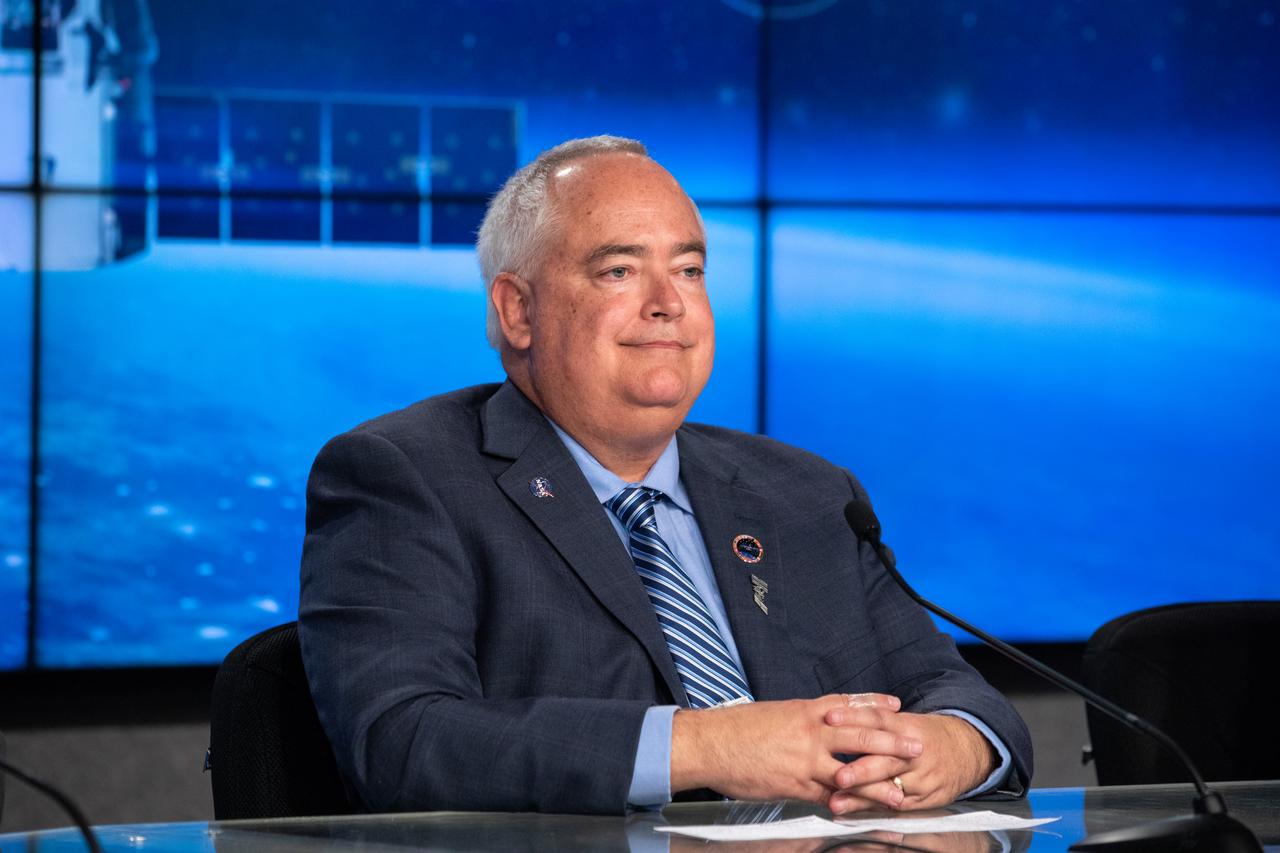
Mike McAleenan, launch weather officer, U.S. Air Force 45th Space Wing, gives a weather update to members of the news media during a prelaunch news conference on Dec. 3, 2019, for SpaceX’s 19th Commercial Resupply Services (CRS-19) mission for NASA to the International Space Station, at the agency’s Kennedy Space Center in Florida. NASA and industry leaders speak to members of the news media during the news conference. The SpaceX Falcon 9 rocket and Dragon cargo module are scheduled to launch on Dec. 4, 2019, from Space Launch Complex 40 on Cape Canaveral Air Force Station in Florida.
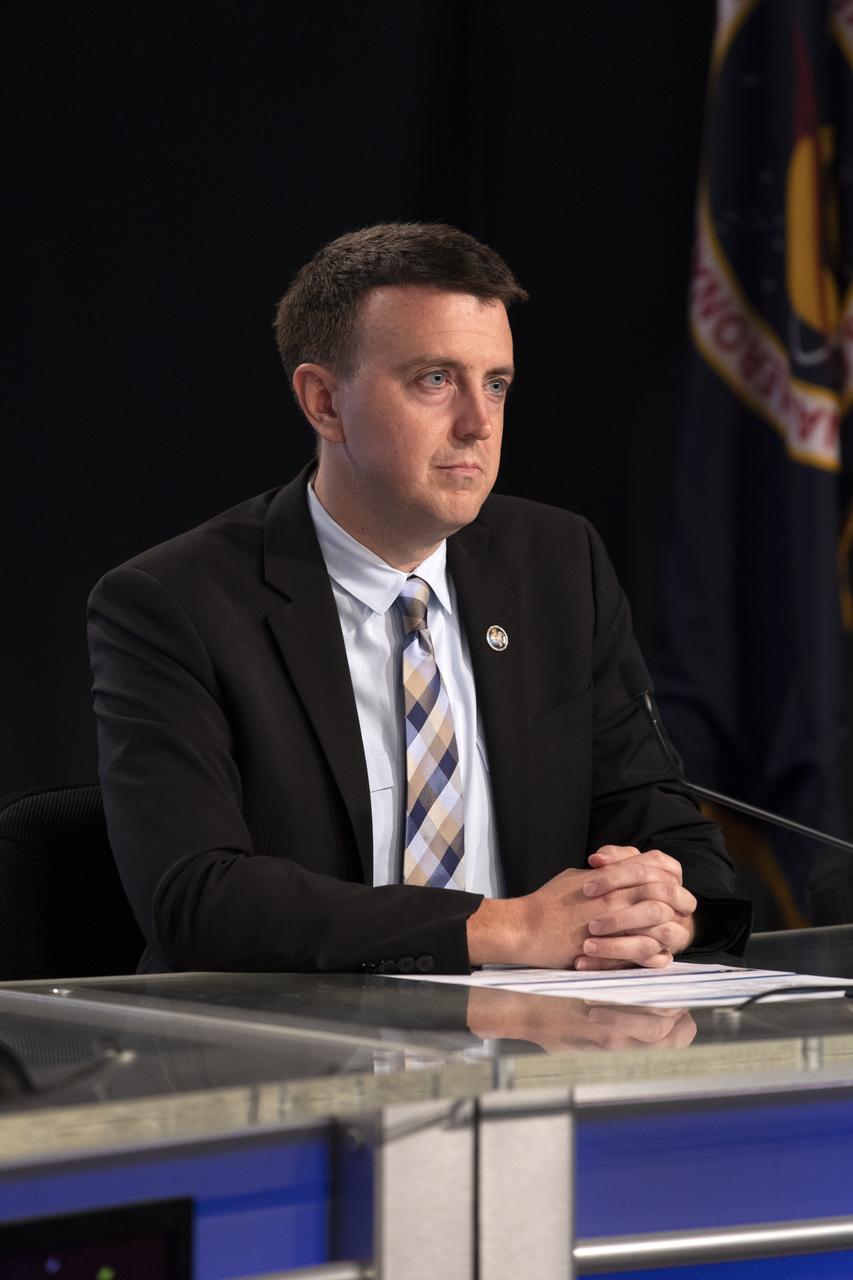
Bryan Dansberry, assistant program scientist, International Space Station Program Science Office at NASA speaks to members of the news media during a prelaunch news conference on Dec. 3, 2019, for SpaceX’s 19th Commercial Resupply Services (CRS-19) mission for NASA to the International Space Station, at the agency’s Kennedy Space Center in Florida. NASA and industry leaders speak to members of the news media during the news conference. The SpaceX Falcon 9 rocket and Dragon cargo module are scheduled to launch on Dec. 4, 2019, from Space Launch Complex 40 on Cape Canaveral Air Force Station in Florida.
Will Ulrich, 45th Space Wing weather officer with the U.S. Air Force, speaks to members of the news media during a prelaunch news conference for SpaceX’s 17th Commercial Resupply Services (CRS-17) mission for NASA to the International Space Station on May 2, 2019, at the agency’s Kennedy Space Center in Florida. The SpaceX Falcon 9 rocket and Dragon cargo module are scheduled to launch no earlier than May 3, 2019, from Space Launch Complex 40 on Cape Canaveral Air Force Station in Florida.
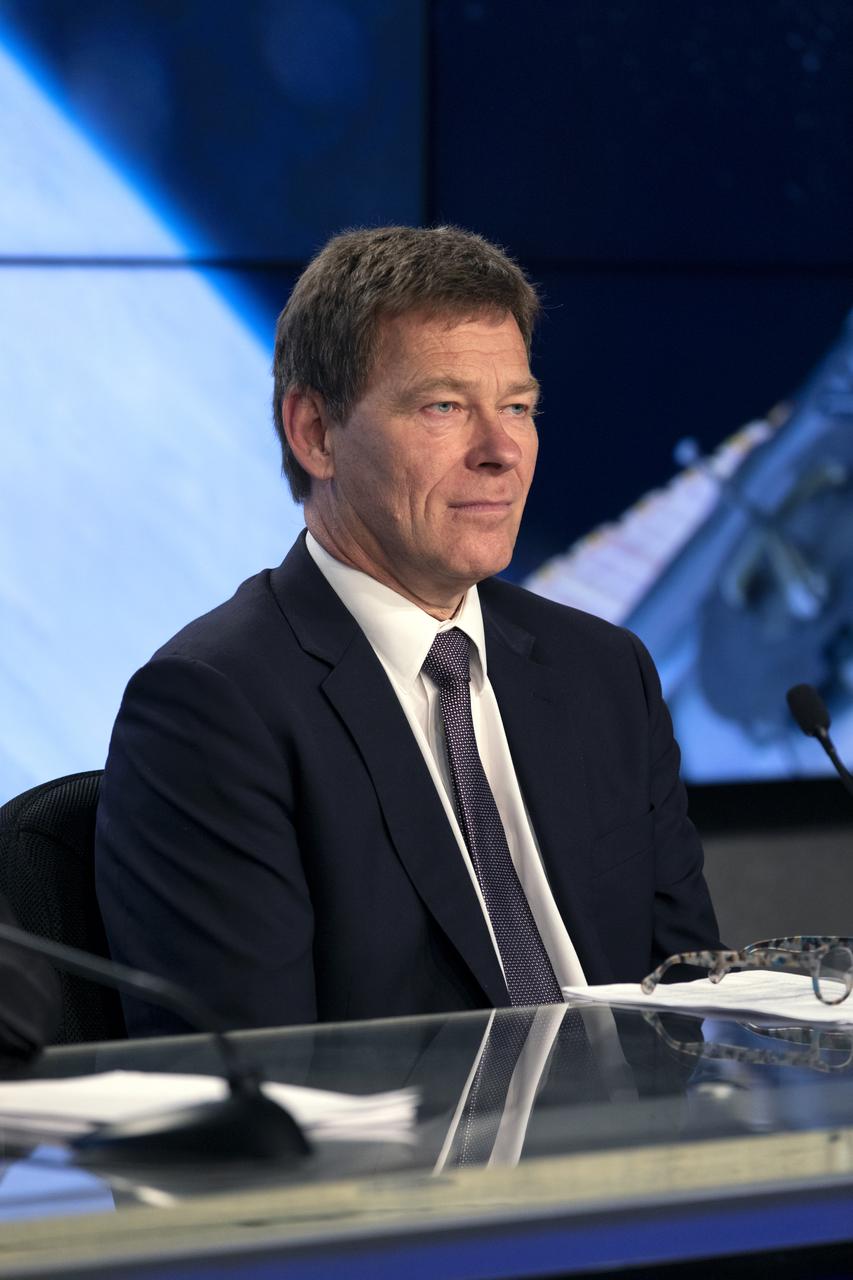
Hans Koenigsmann, VP, Build and Flight Reliability with SpaceX, speaks to members of the news media during a prelaunch news conference for SpaceX’s 17th Commercial Resupply Services (CRS-17) mission for NASA to the International Space Station on May 2, 2019, at the agency’s Kennedy Space Center in Florida. The SpaceX Falcon 9 rocket and Dragon cargo module are scheduled to launch no earlier than May 3, 2019, from Space Launch Complex 40 on Cape Canaveral Air Force Station in Florida.
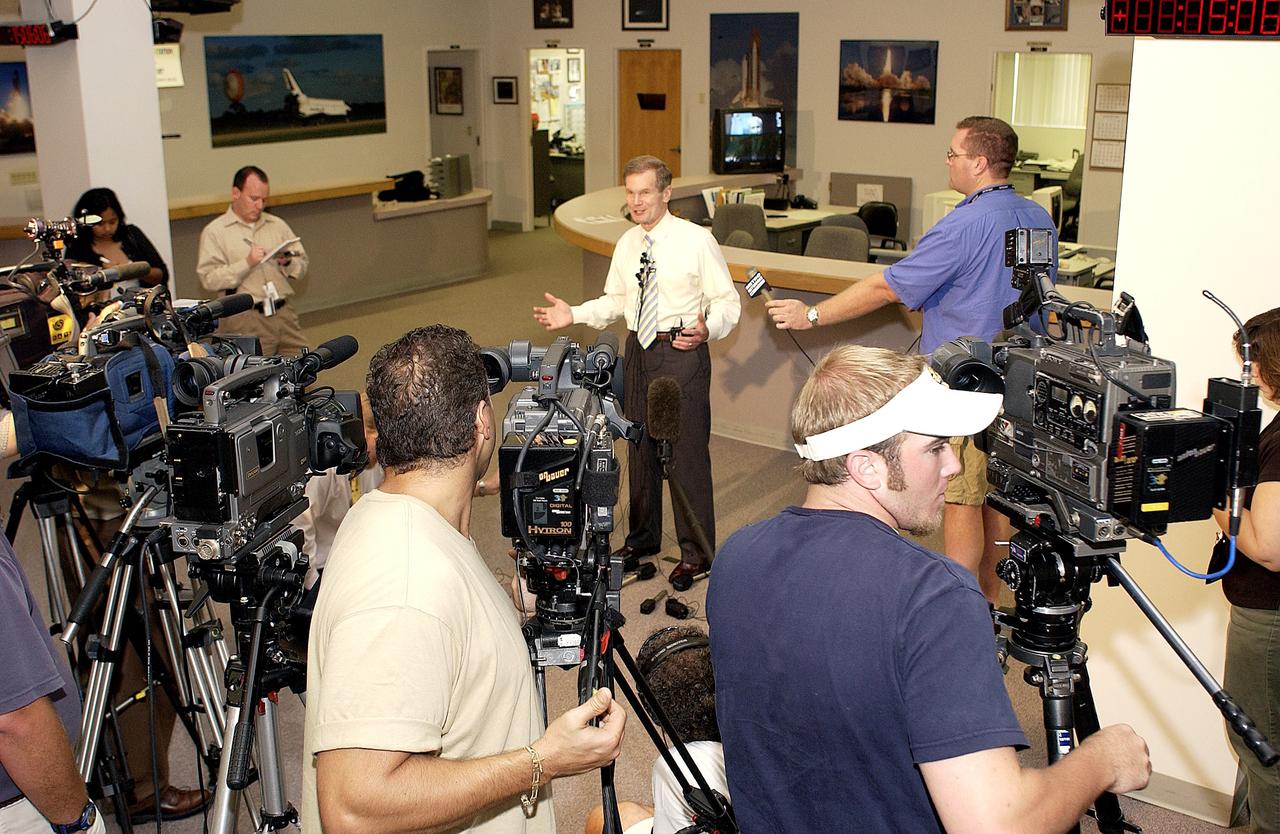
KENNEDY SPACE CENTER, FLA. - Sen. Bill Nelson talks to the media at the NASA KSC News Center about the Columbia Accident Investigation Board report released today.
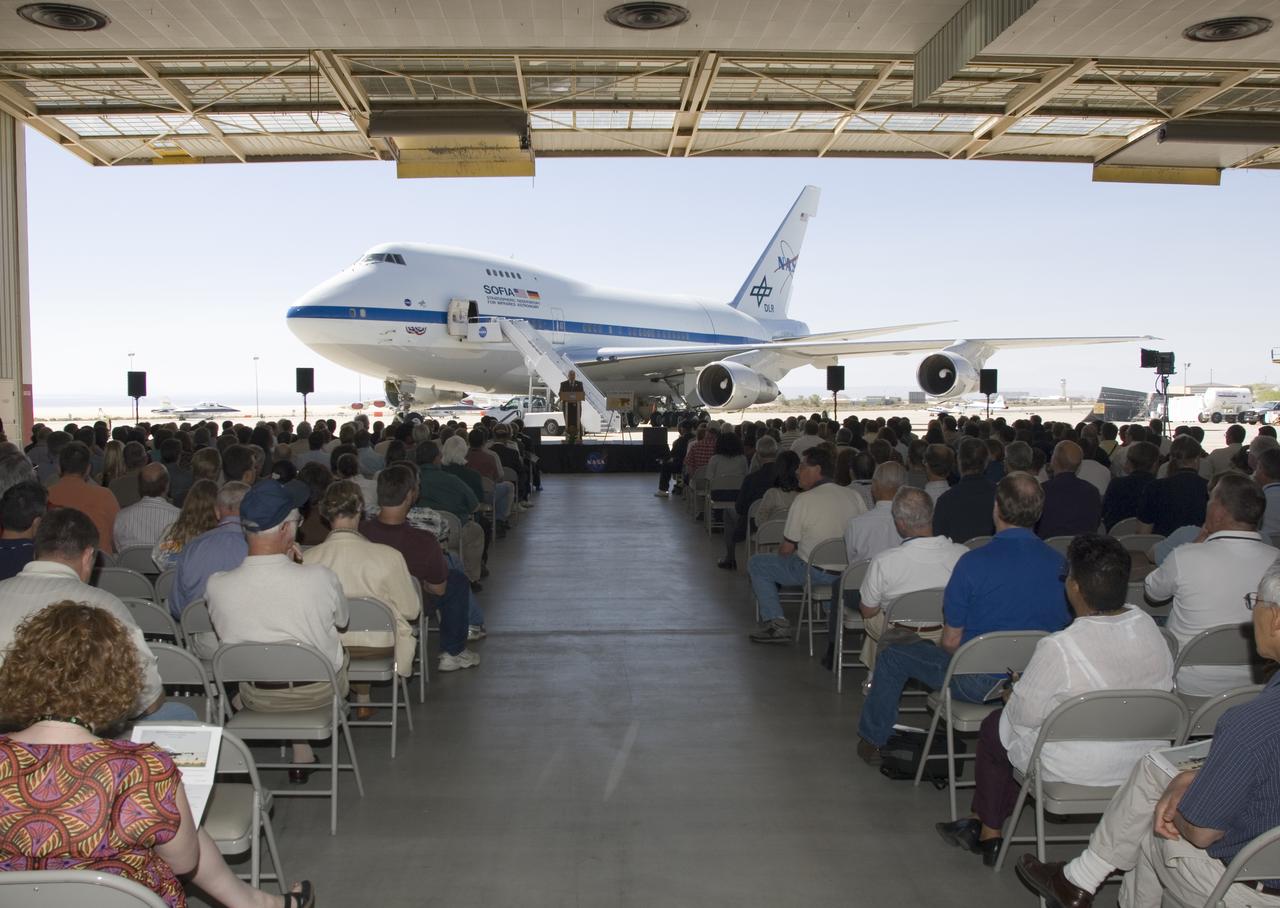
More than 250 VIPs, news media and guests joined NASA, DLR, USRA and other SOFIA staff for the debut of the airborne observatory at NASA DFRC on June 27, 2007.
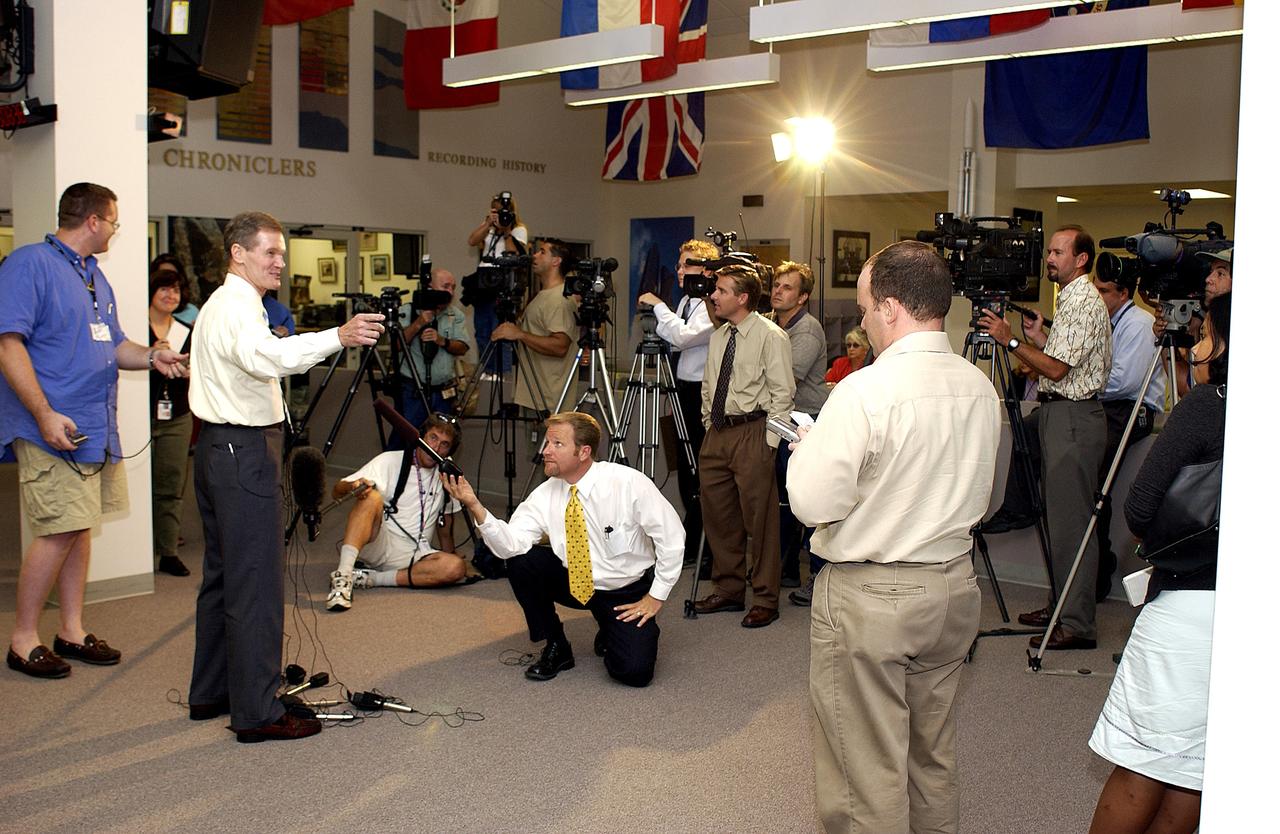
KENNEDY SPACE CENTER, FLA. - Sen. Bill Nelson talks to the media at the NASA KSC News Center about the Columbia Accident Investigation Board report released today.
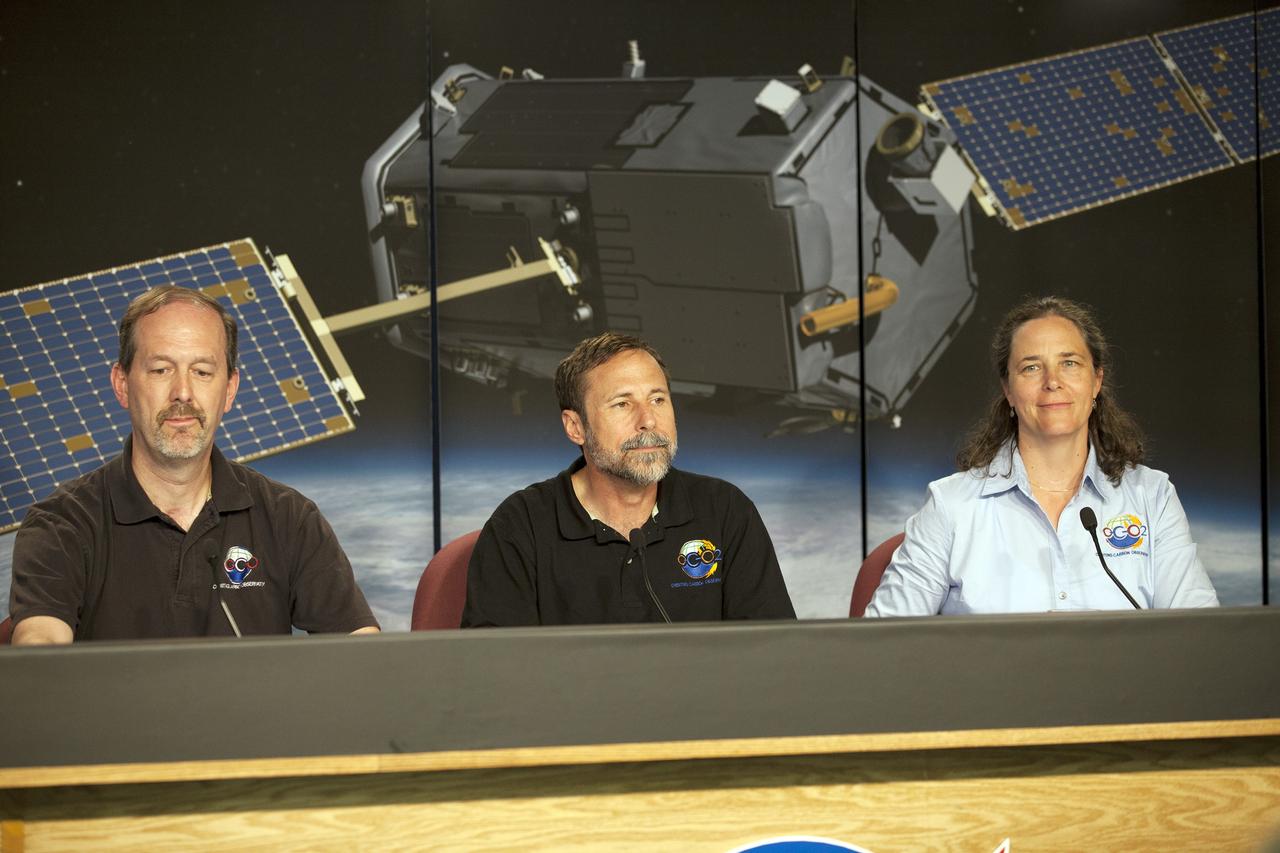
VANDENBERG AIR FORCE BASE, Calif. – From left, Ken Jucks, Orbiting Carbon Observatory-2, or OCO-2, project executive at NASA Headquarters David Crisp, OCO-2 science team leader at NASA's Jet Propulsion Laboratory, or JPL and Annmarie Eldering, OCO-2 deputy project scientist at JPL, participate in a mission science briefing at Vandenberg Air Force Base in California prior to the launch of the observatory. Launch aboard a United Launch Alliance Delta II rocket from Space Launch Complex 2 is scheduled for 5:56 a.m. EDT on July 1. OCO-2 is NASA’s first mission dedicated to studying atmospheric carbon dioxide, the leading human-produced greenhouse gas driving changes in Earth’s climate. OCO-2 will provide a new tool for understanding the human and natural sources of carbon dioxide emissions and the natural "sinks" that absorb carbon dioxide and help control its buildup. The observatory will measure the global geographic distribution of these sources and sinks and study their changes over time. To learn more about OCO-2, visit http://www.nasa.gov/oco2. Photo credit: NASA/Kim Shiflett
VANDENBERG AIR FORCE BASE, Calif. – From left, David Crisp, Orbiting Carbon Observatory-2, or OCO-2, science team leader at NASA's Jet Propulsion Laboratory, or JPL, and Annmarie Eldering, OCO-2 deputy project scientist at JPL, participate in a mission science briefing at Vandenberg Air Force Base in California prior to the launch of the observatory. Launch aboard a United Launch Alliance Delta II rocket from Space Launch Complex 2 is scheduled for 5:56 a.m. EDT on July 1. OCO-2 is NASA’s first mission dedicated to studying atmospheric carbon dioxide, the leading human-produced greenhouse gas driving changes in Earth’s climate. OCO-2 will provide a new tool for understanding the human and natural sources of carbon dioxide emissions and the natural "sinks" that absorb carbon dioxide and help control its buildup. The observatory will measure the global geographic distribution of these sources and sinks and study their changes over time. To learn more about OCO-2, visit http://www.nasa.gov/oco2. Photo credit: NASA/Kim Shiflett

VANDENBERG AIR FORCE BASE, Calif. – Ken Jucks, Orbiting Carbon Observatory-2 project executive at NASA Headquarters, participates in a mission science briefing at Vandenberg Air Force Base in California prior to the launch of the observatory, or OCO-2. Launch aboard a United Launch Alliance Delta II rocket from Space Launch Complex 2 is scheduled for 5:56 a.m. EDT on July 1. OCO-2 is NASA’s first mission dedicated to studying atmospheric carbon dioxide, the leading human-produced greenhouse gas driving changes in Earth’s climate. OCO-2 will provide a new tool for understanding the human and natural sources of carbon dioxide emissions and the natural "sinks" that absorb carbon dioxide and help control its buildup. The observatory will measure the global geographic distribution of these sources and sinks and study their changes over time. To learn more about OCO-2, visit http://www.nasa.gov/oco2. Photo credit: NASA/Kim Shiflett
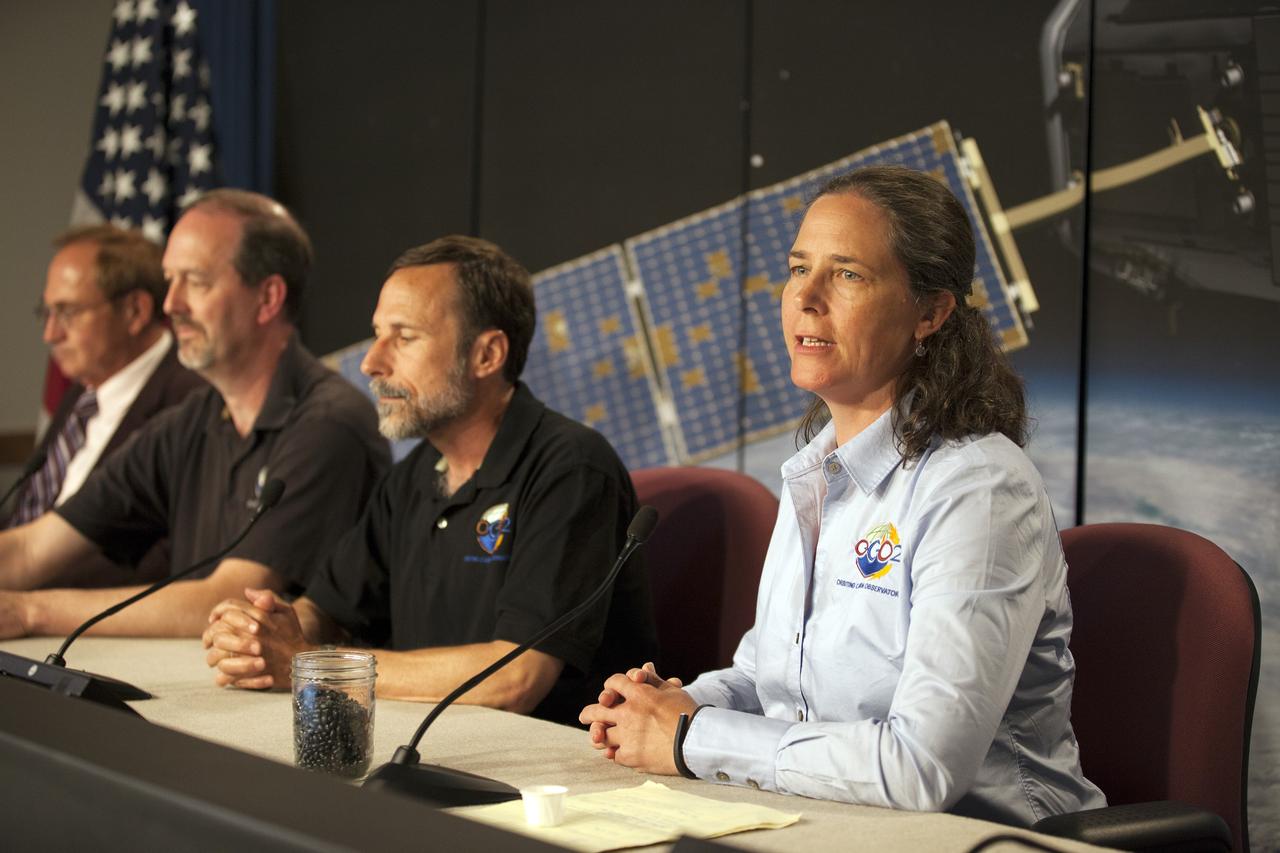
VANDENBERG AIR FORCE BASE, Calif. – From left, George Diller, NASA Public Affairs Ken Jucks, Orbiting Carbon Observatory-2, or OCO-2, project executive at NASA Headquarters David Crisp, OCO-2 science team leader at NASA's Jet Propulsion Laboratory, or JPL and Annmarie Eldering, OCO-2 deputy project scientist at JPL, participate in a mission science briefing at Vandenberg Air Force Base in California prior to the launch of the observatory. Launch aboard a United Launch Alliance Delta II rocket from Space Launch Complex 2 is scheduled for 5:56 a.m. EDT on July 1. OCO-2 is NASA’s first mission dedicated to studying atmospheric carbon dioxide, the leading human-produced greenhouse gas driving changes in Earth’s climate. OCO-2 will provide a new tool for understanding the human and natural sources of carbon dioxide emissions and the natural "sinks" that absorb carbon dioxide and help control its buildup. The observatory will measure the global geographic distribution of these sources and sinks and study their changes over time. To learn more about OCO-2, visit http://www.nasa.gov/oco2. Photo credit: NASA/Kim Shiflett
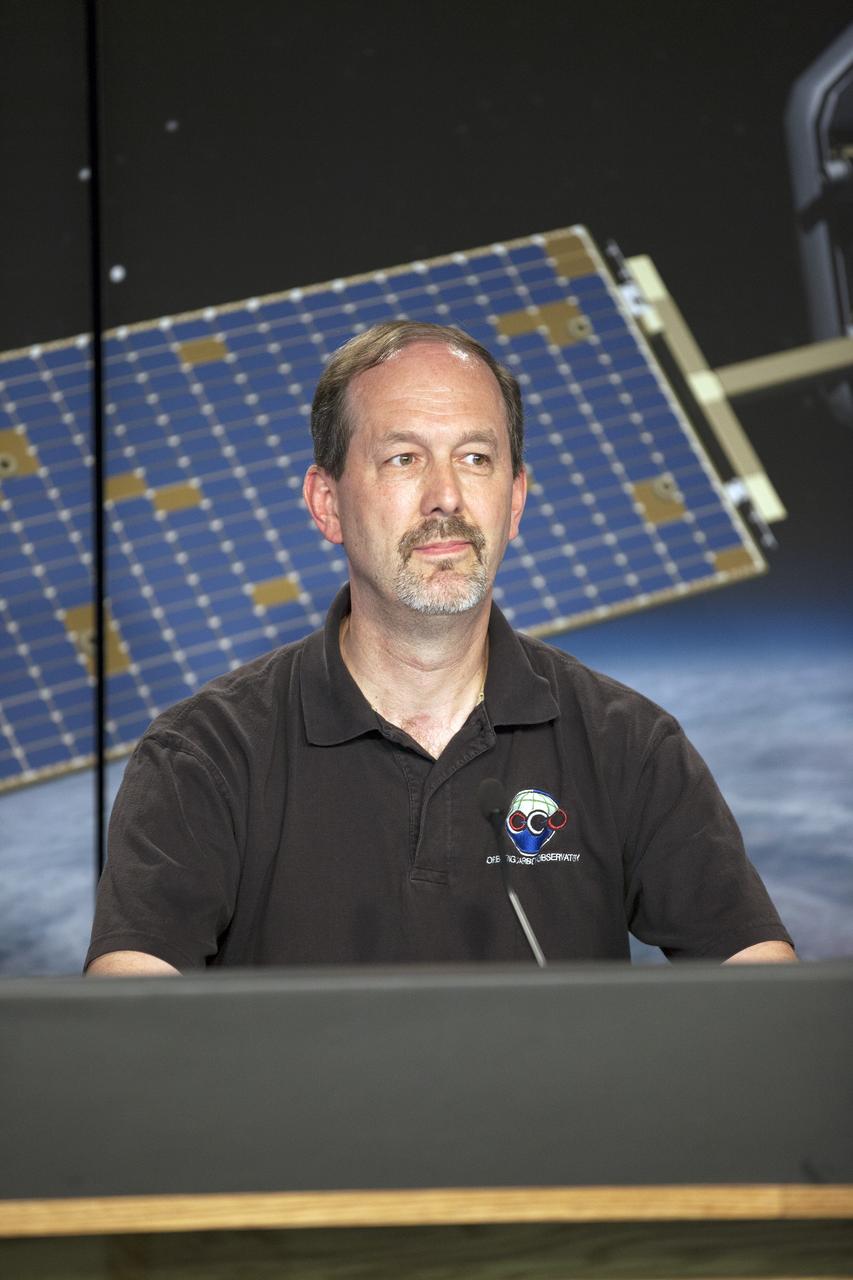
VANDENBERG AIR FORCE BASE, Calif. – Ken Jucks, Orbiting Carbon Observatory-2 project executive at NASA Headquarters, participates in a mission science briefing at Vandenberg Air Force Base in California prior to the launch of the observatory, or OCO-2. Launch aboard a United Launch Alliance Delta II rocket from Space Launch Complex 2 is scheduled for 5:56 a.m. EDT on July 1. OCO-2 is NASA’s first mission dedicated to studying atmospheric carbon dioxide, the leading human-produced greenhouse gas driving changes in Earth’s climate. OCO-2 will provide a new tool for understanding the human and natural sources of carbon dioxide emissions and the natural "sinks" that absorb carbon dioxide and help control its buildup. The observatory will measure the global geographic distribution of these sources and sinks and study their changes over time. To learn more about OCO-2, visit http://www.nasa.gov/oco2. Photo credit: NASA/Kim Shiflett
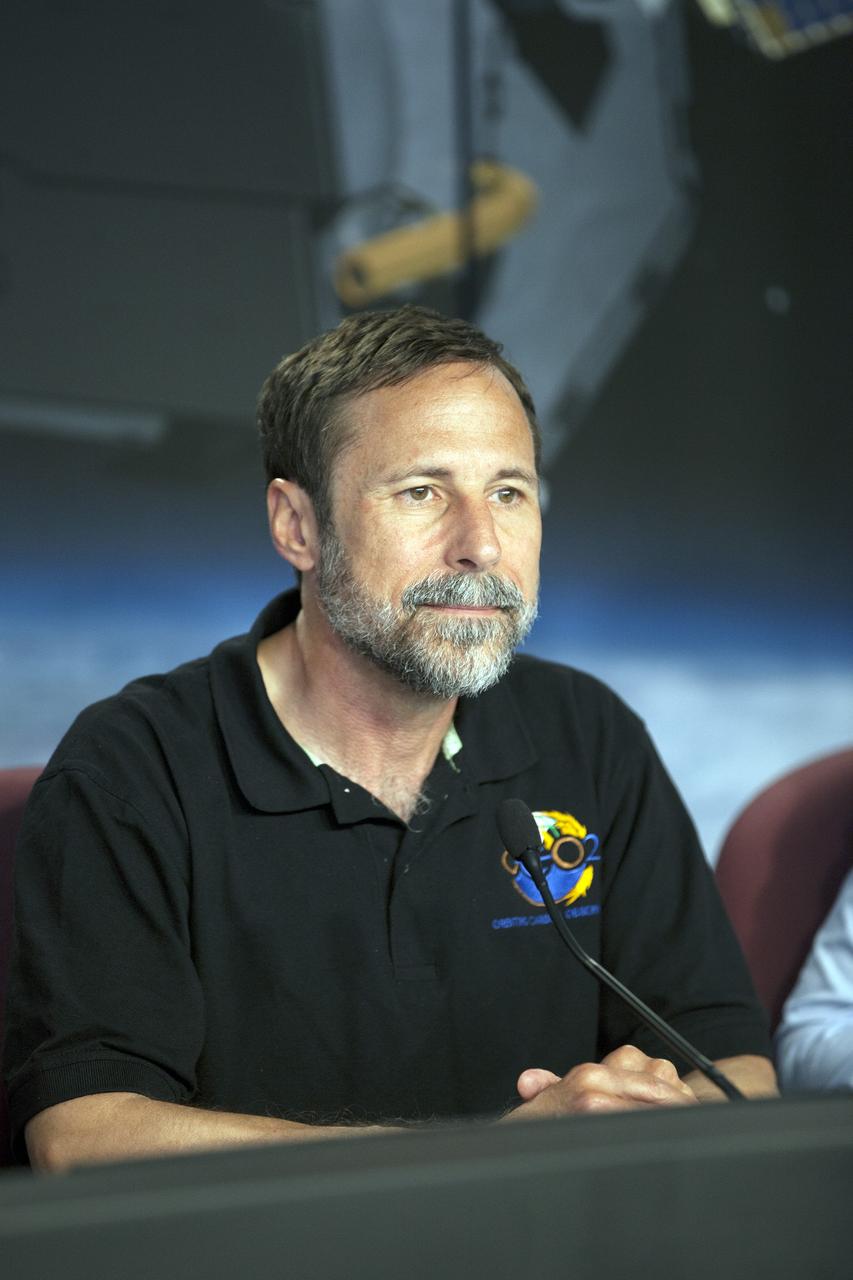
VANDENBERG AIR FORCE BASE, Calif. – David Crisp, Orbiting Carbon Observatory-2 science team leader at NASA's Jet Propulsion Laboratory, participates in a mission science briefing at Vandenberg Air Force Base in California prior to the launch of the observatory, or OCO-2. Launch aboard a United Launch Alliance Delta II rocket from Space Launch Complex 2 is scheduled for 5:56 a.m. EDT on July 1. OCO-2 is NASA’s first mission dedicated to studying atmospheric carbon dioxide, the leading human-produced greenhouse gas driving changes in Earth’s climate. OCO-2 will provide a new tool for understanding the human and natural sources of carbon dioxide emissions and the natural "sinks" that absorb carbon dioxide and help control its buildup. The observatory will measure the global geographic distribution of these sources and sinks and study their changes over time. To learn more about OCO-2, visit http://www.nasa.gov/oco2. Photo credit: NASA/Kim Shiflett
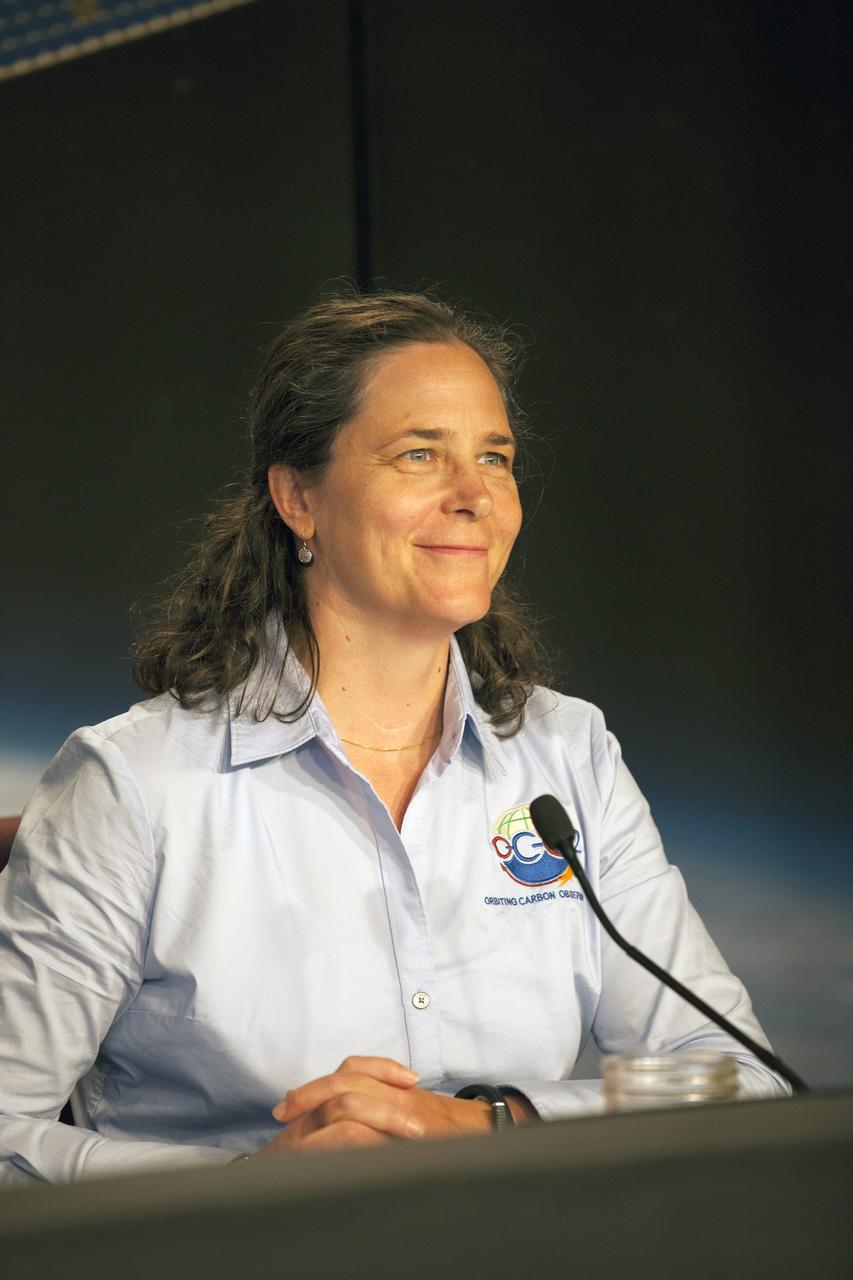
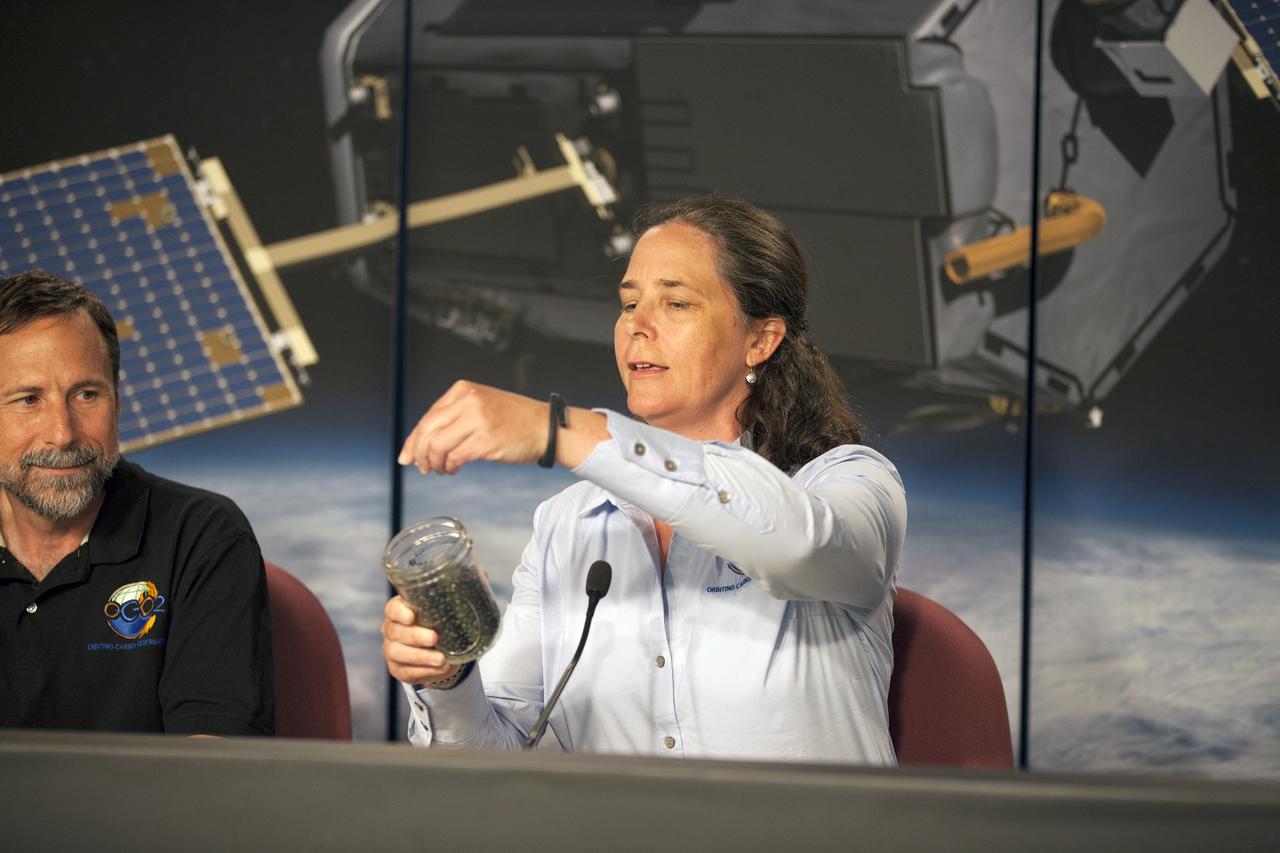
VANDENBERG AIR FORCE BASE, Calif. – Annmarie Eldering, Orbiting Carbon Observatory-2 deputy project scientist at NASA's Jet Propulsion Laboratory, participates in a mission science briefing at Vandenberg Air Force Base in California prior to the launch of the observatory, or OCO-2. Launch aboard a United Launch Alliance Delta II rocket from Space Launch Complex 2 is scheduled for 5:56 a.m. EDT on July 1. OCO-2 is NASA’s first mission dedicated to studying atmospheric carbon dioxide, the leading human-produced greenhouse gas driving changes in Earth’s climate. OCO-2 will provide a new tool for understanding the human and natural sources of carbon dioxide emissions and the natural "sinks" that absorb carbon dioxide and help control its buildup. The observatory will measure the global geographic distribution of these sources and sinks and study their changes over time. To learn more about OCO-2, visit http://www.nasa.gov/oco2. Photo credit: NASA/Kim Shiflett
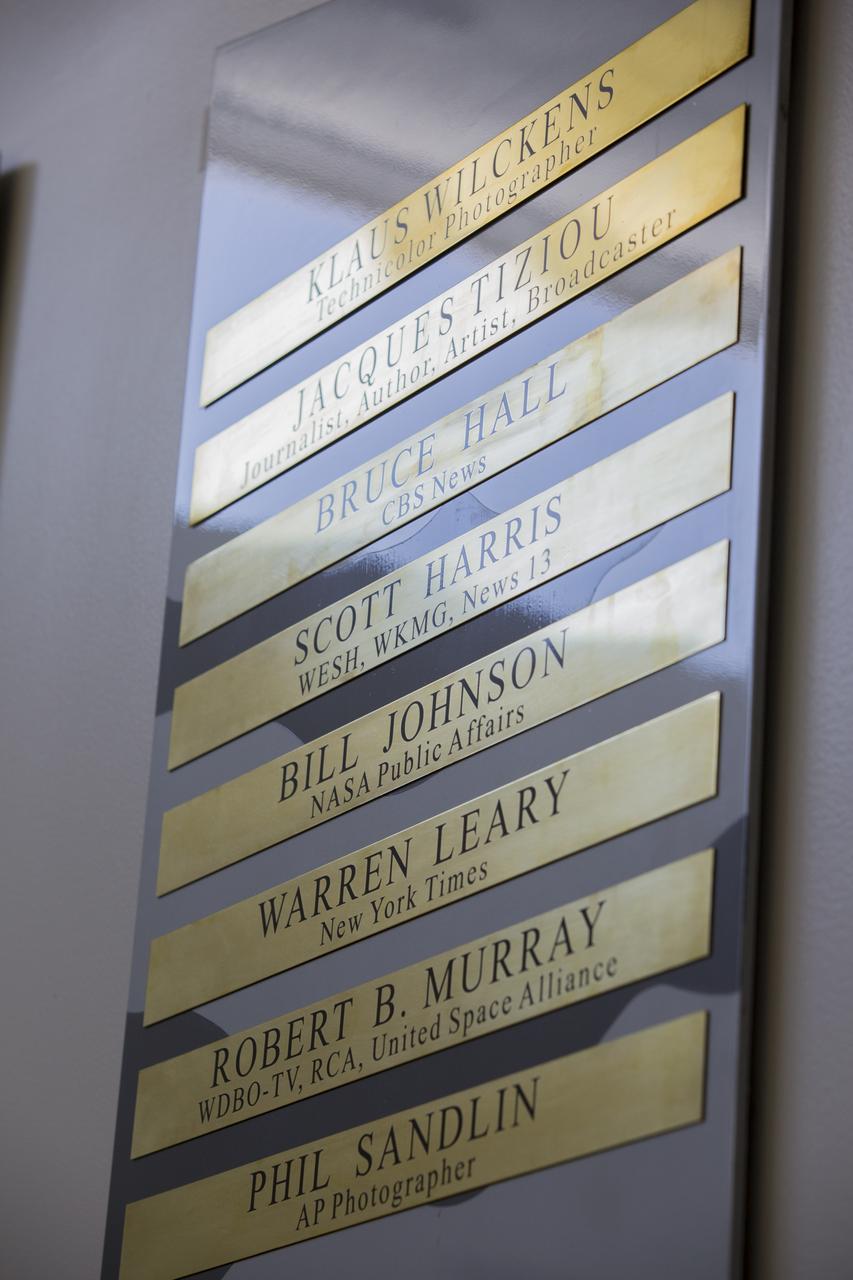
Brass strips bear the names and photos of the six new honorees added to the "Chroniclers" roll of honor in the NASA News Center at Kennedy Space Center in Florida. The Chroniclers program recognizes retirees of the news and communications business who helped spread news of American space exploration from Kennedy Space Center for ten years or more. The 2017 Chroniclers are Bruce Hall, CBS News and NBC News; Scott Harris, WESH, WKMG and Central Florida News 13; Bill Johnson, NASA Public Affairs; Warren Leary, The New York Times; Bob Murray, WDBO-TV, RCA and United Space Alliance; and Phillip Sandlin, Associated Press photographer.
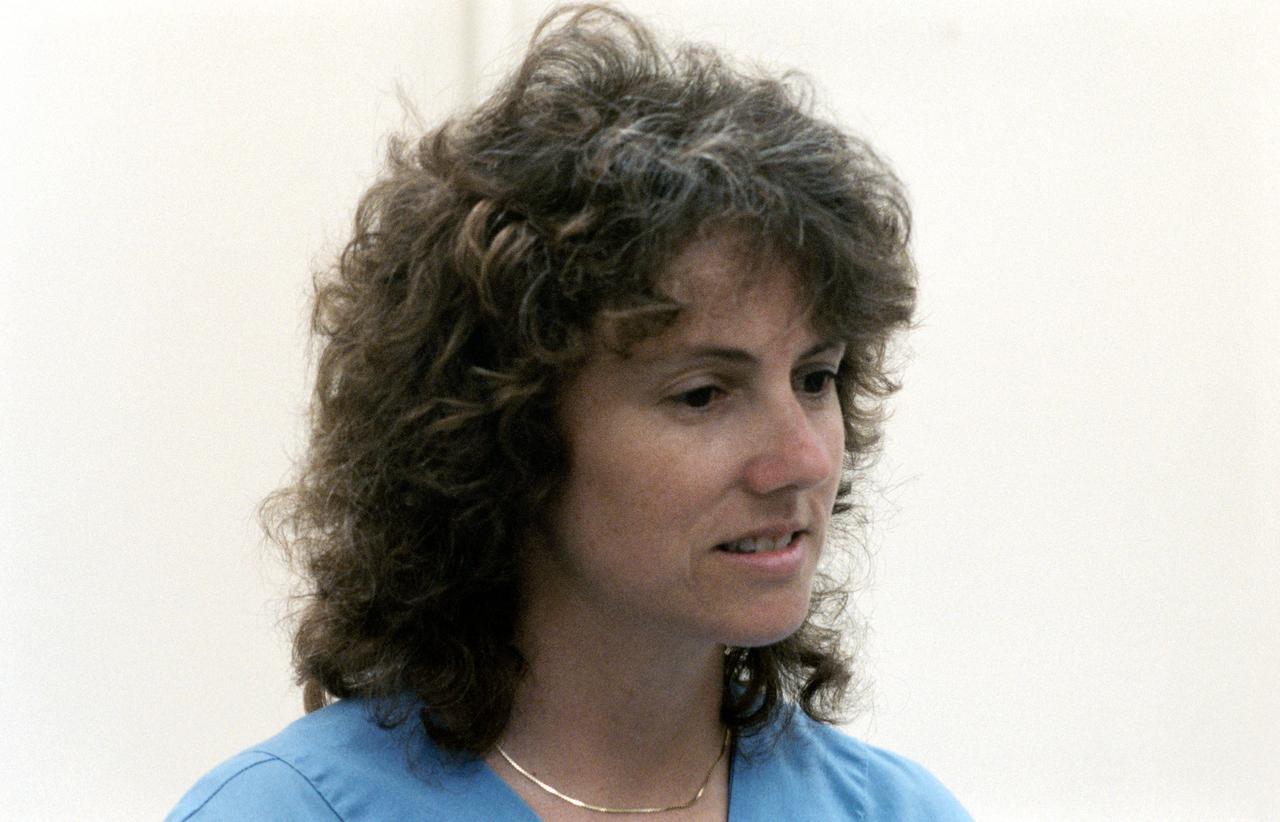
S85-37164 (8-12 July 1985) --- Sharon C. (Christa) McAuliffe of Concord High, Concord, New Hampshire, talks to the media at Johnson Space Center. Christa McAuliffe was eventually chosen as the first Teacher in Space and was a member of the seven-member Challenger shuttle crew which died tragically in the explosion of the spacecraft during the launch of STS-51L from the Kennedy Space Center about 11:40 a.m., EST, on Jan. 28, 1986. The explosion occurred 73 seconds into the flight as a result of a leak in one of two Solid Rocket Boosters that ignited the main liquid fuel tank. The crew members of the Challenger represented a cross-section of the American population in terms of race, gender, geography, background, and religion. The explosion became one of the most significant events of the 1980s, as billions around the world saw the accident on television and empathized with any one of the several crew members killed. Photo credit: NASA
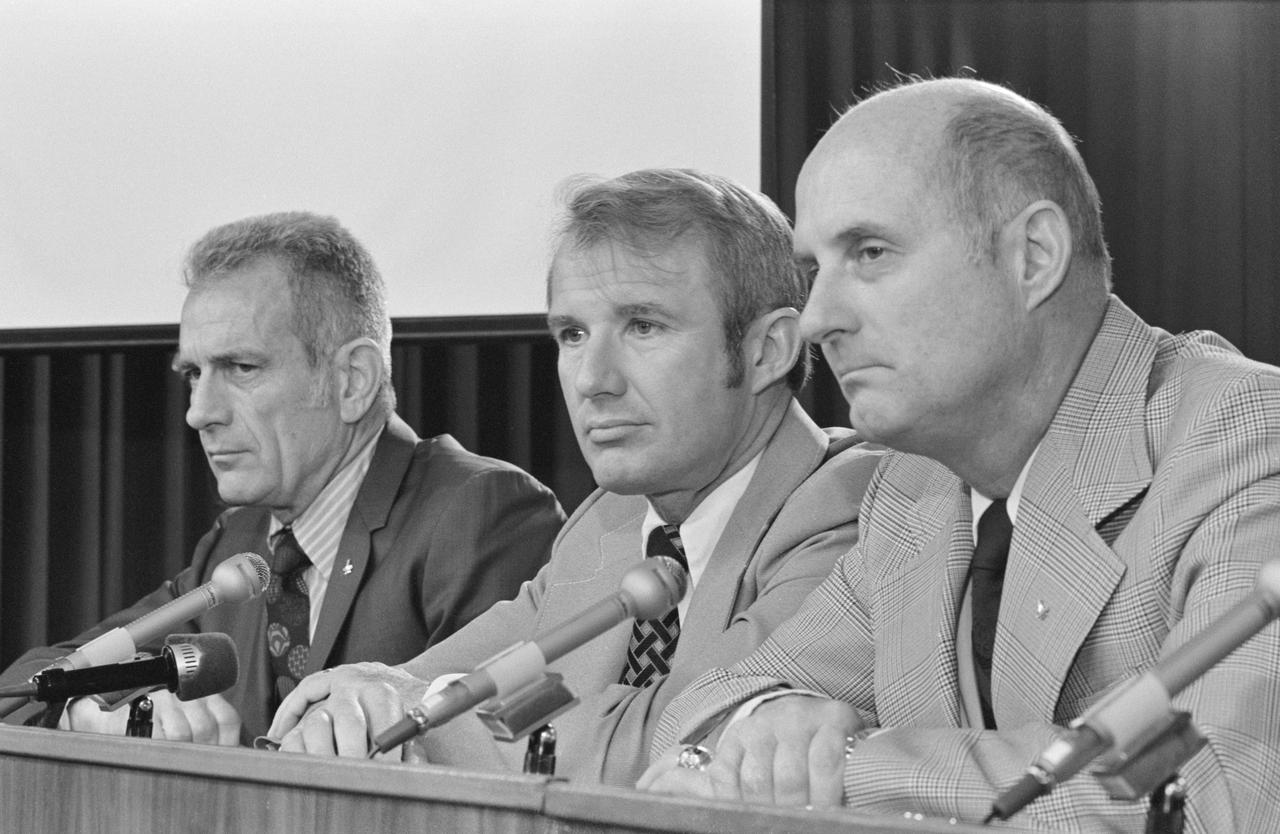
S75-26573 (14 May 1975) --- The three members of the American ASTP prime crew participate in an Apollo-Soyuz Test Project press conference conducted on May 14, 1975 in the Building 2 briefing room at NASA's Johnson Space Center. They are, left to right, Donald K. Slayton, docking module pilot; Vance D. Brand, command module pilot; and Thomas P. Stafford, commander. The astronauts discussed with the news media their recent ASTP joint training session in the Soviet Union, and the crew?s tour of the USSR?s Baikonur launch complex in Kazakhstan.
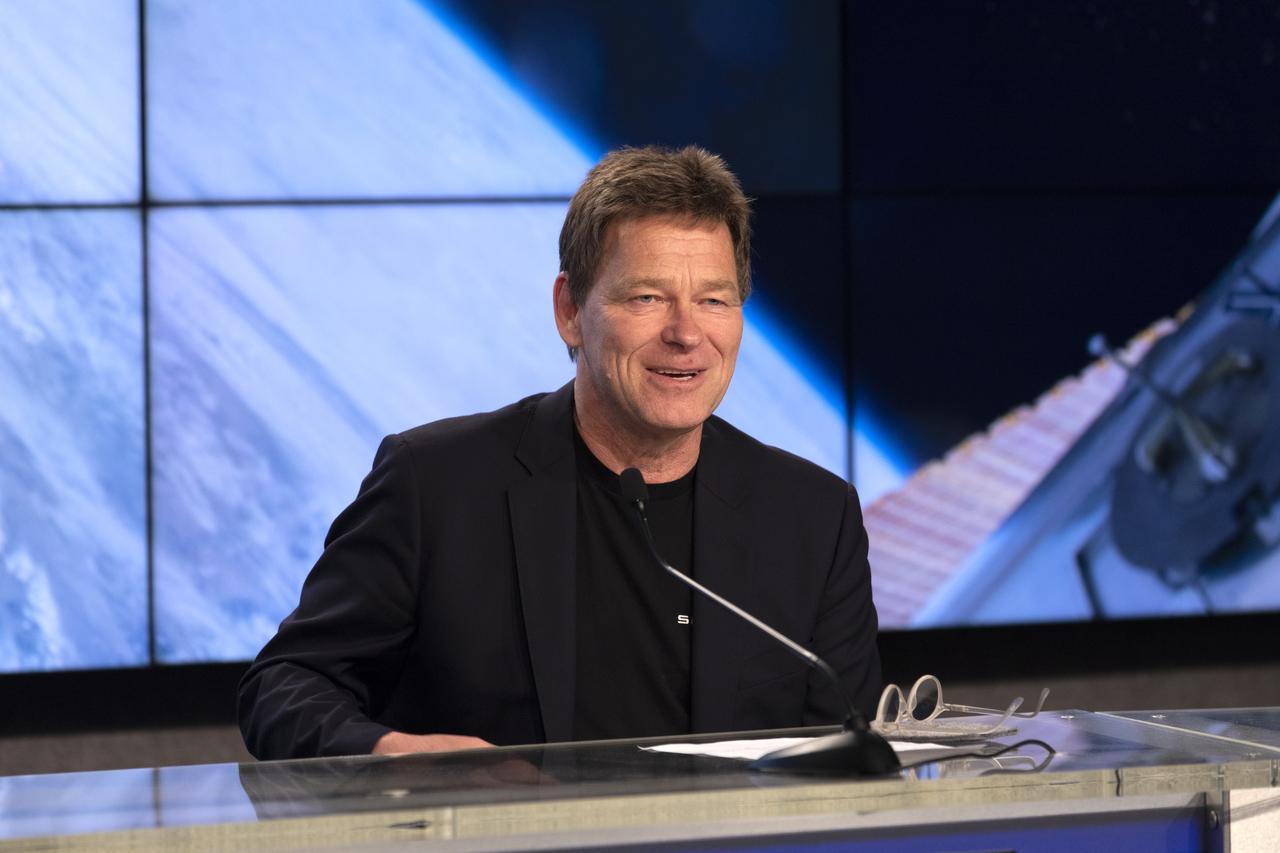
Hans Koenigsmann, vice president, Build and Flight Reliability with SpaceX, speaks to members of the news media during a postlaunch news conference at NASA’s Kennedy Space Center in Florida on May 4, 2019, for SpaceX’s 17th Commercial Resupply Services (CRS-17) mission to the International Space Station for the agency. The company’s Falcon 9 rocket with the Dragon cargo module lifted off from Space Launch Complex 40 at Cape Canaveral Air Force Station in Florida at 2:48 a.m. EDT. The Dragon cargo module will deliver about 5,500 pounds of science and research, crew supplies and vehicle hardware to the orbital laboratory and its crew.
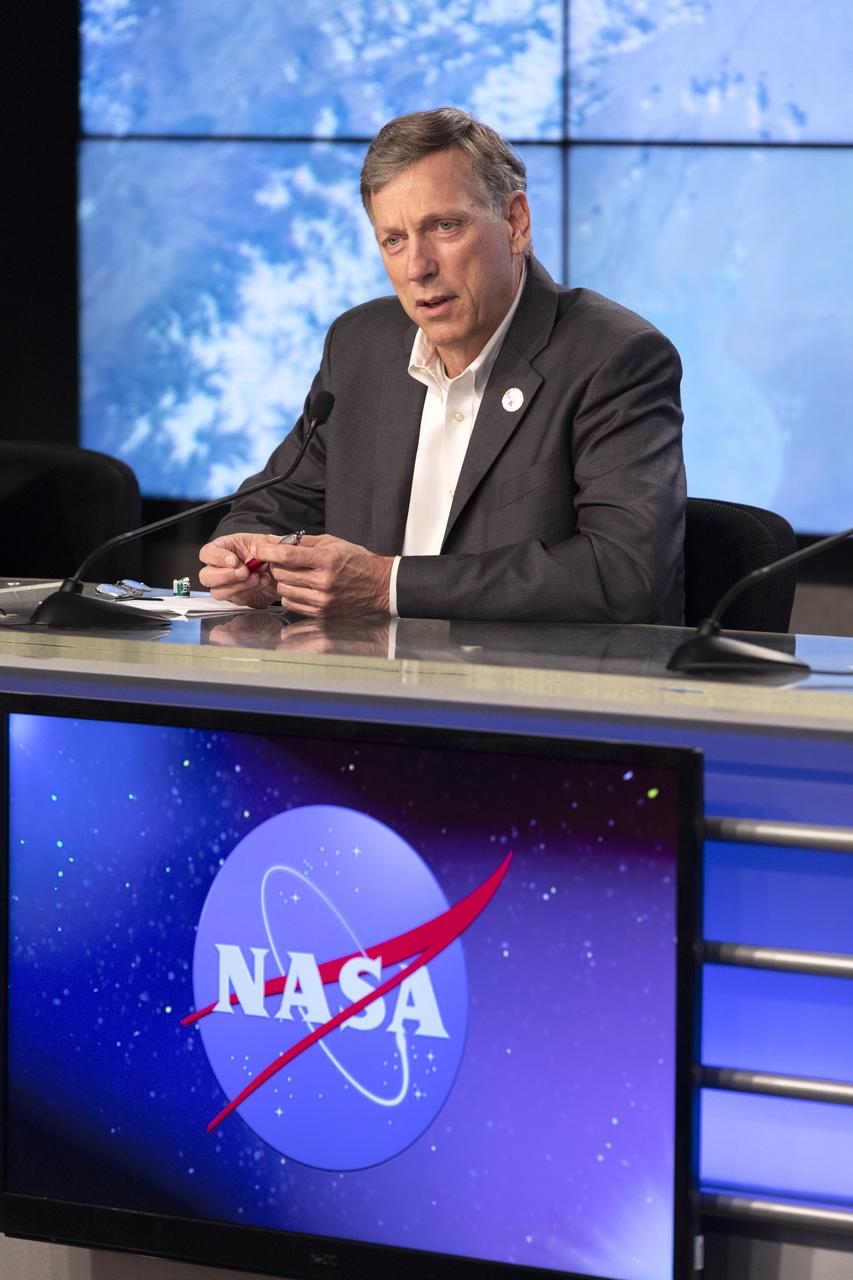
Kenny Todd, manager, International Space Station Operations and Integration at NASA’s Johnson Space Center in Houston speaks to members of the news media during a postlaunch news conference at NASA’s Kennedy Space Center in Florida on May 4, 2019, for SpaceX’s 17th Commercial Resupply Services (CRS-17) mission to the International Space Station for the agency. The company’s Falcon 9 rocket with the Dragon cargo module lifted off from Space Launch Complex 40 at Cape Canaveral Air Force Station in Florida at 2:48 a.m. EDT. The Dragon cargo module will deliver about 5,500 pounds of science and research, crew supplies and vehicle hardware to the orbital laboratory and its crew.
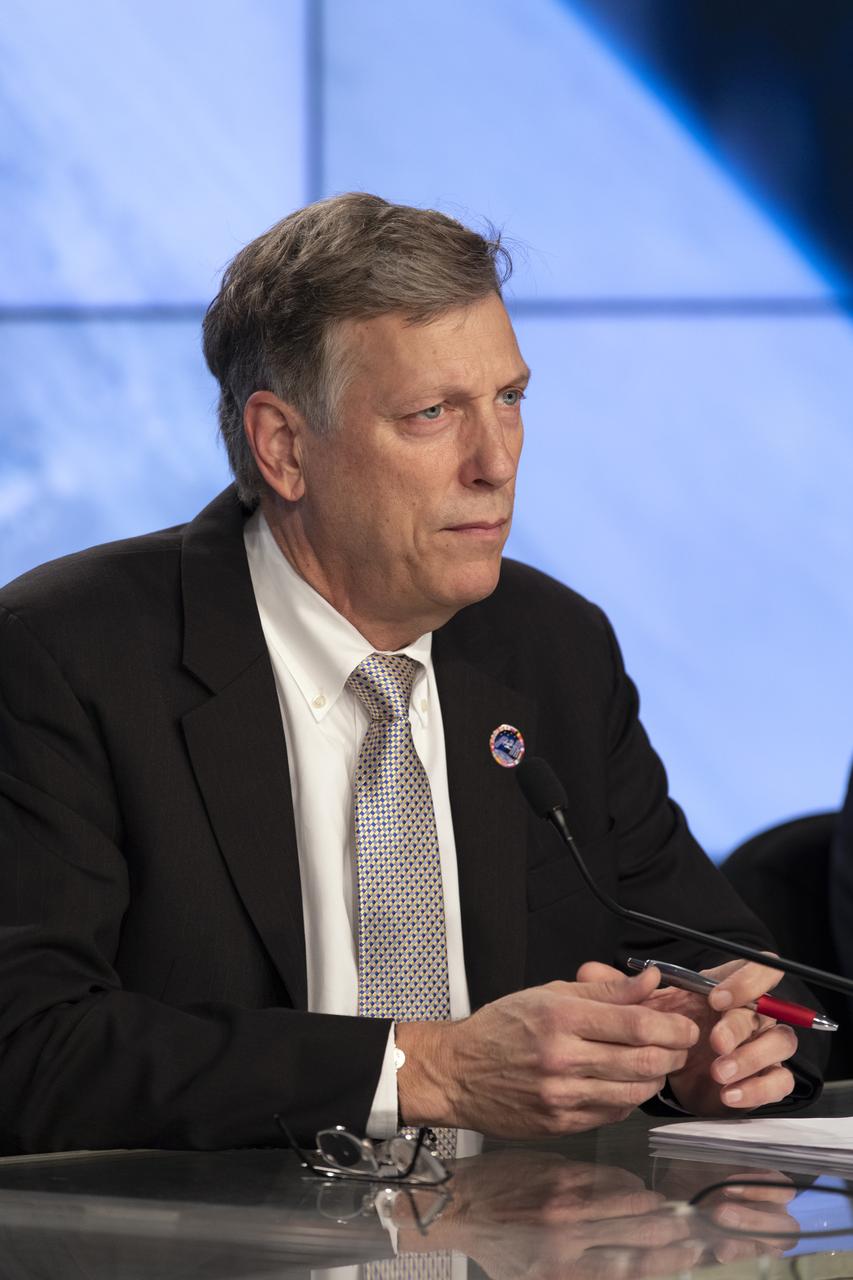
Kenny Todd, manager, International Space Station Operations and Integration, NASA’s Johnson Space Center in Houston, speaks to members of the news media during a prelaunch news conference for SpaceX’s 17th Commercial Resupply Services (CRS-17) mission for NASA to the International Space Station on May 2, 2019, at the agency’s Kennedy Space Center in Florida. The SpaceX Falcon 9 rocket and Dragon cargo module are scheduled to launch no earlier than May 3, 2019, from Space Launch Complex 40 on Cape Canaveral Air Force Station in Florida.
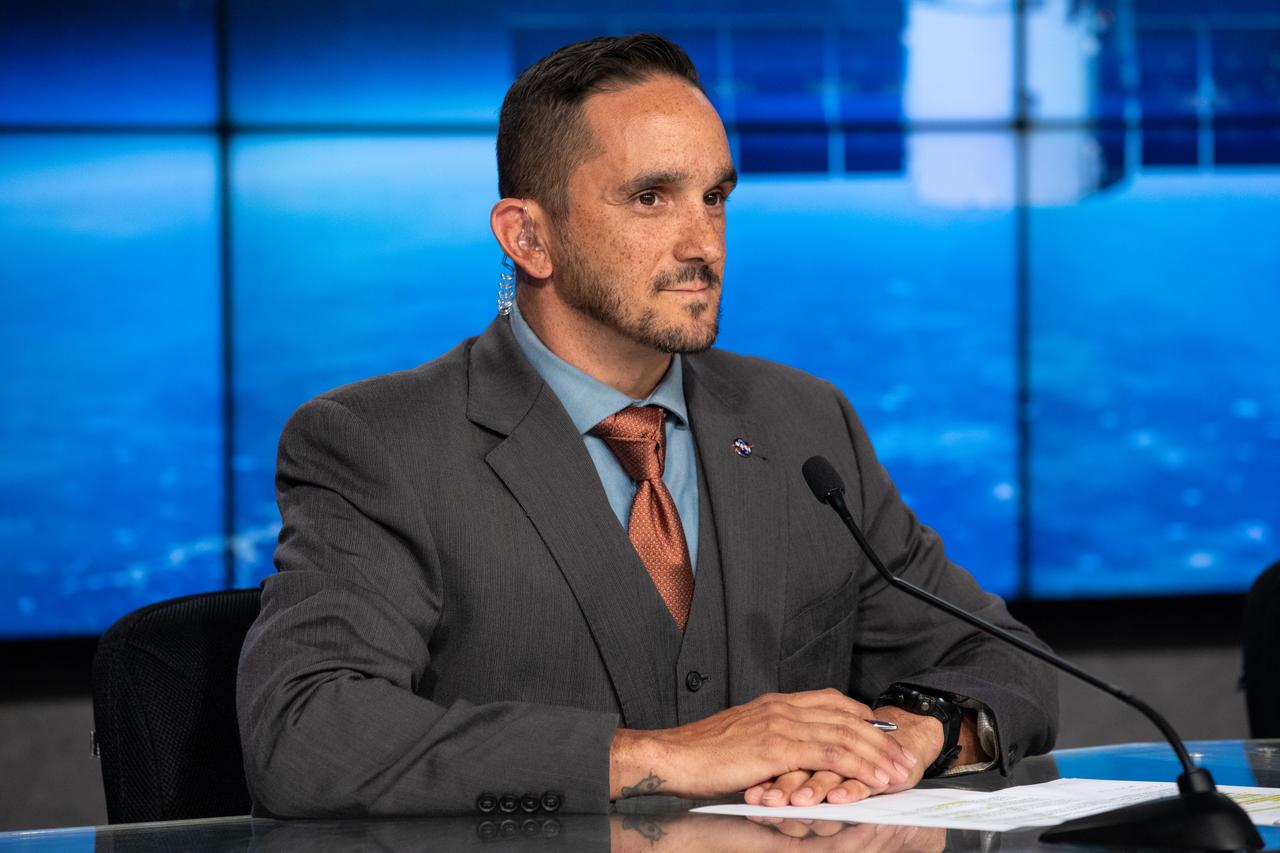
Dustin Cammack, NASA Communications, moderates a prelaunch news conference on Dec. 3, 2019, for SpaceX’s 19th Commercial Resupply Services (CRS-19) mission for NASA to the International Space Station, at the agency’s Kennedy Space Center in Florida. NASA and industry leaders speak to members of the news media during the news conference. The SpaceX Falcon 9 rocket and Dragon cargo module are scheduled to launch on Dec. 4, 2019, from Space Launch Complex 40 on Cape Canaveral Air Force Station in Florida.
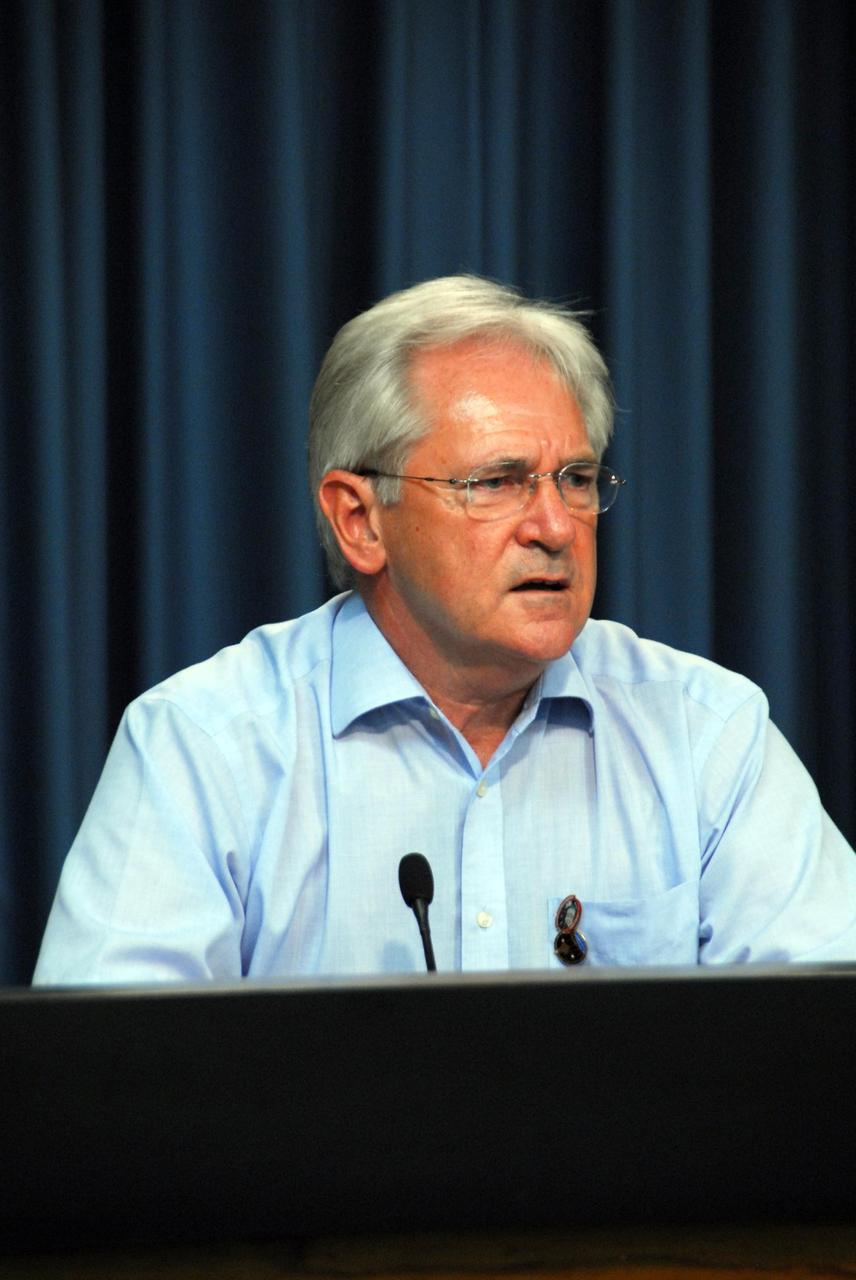
KENNEDY SPACE CENTER, FLA. -- Alan Thirkettle, the International Space Station Program Manager for ESA, the European Space Agency, participates in a news briefing on the launch readiness of space shuttle mission STS-120. The STS-120 mission will be the 23rd shuttle flight to the International Space Station, delivering the Italian-built U.S. Node 2, called Harmony. The seven-member crew includes ESA astronaut Paolo Nespoli from Italy. The 14-day mission includes five spacewalks -- four by shuttle crew members and one by the station's Expedition 16 crew -- to install Harmony and move the P6 solar arrays to their permanent position and deploy them. Launch aboard space shuttle Discovery is planned for 11:38 a.m. EDT Oct. 23, and Discovery is scheduled to complete its mission and return home on Nov. 6. Photo credit: NASA/George Shelton
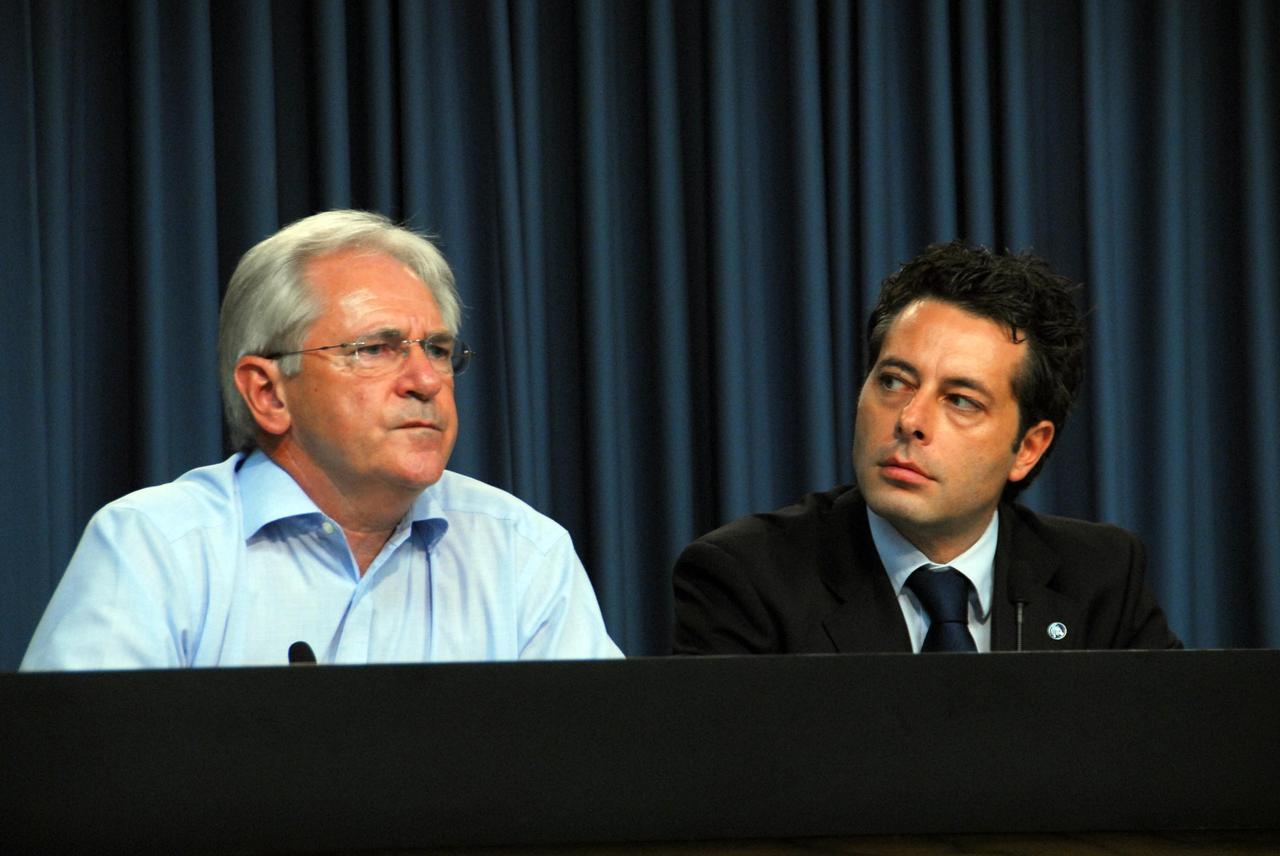
KENNEDY SPACE CENTER, FLA. -- Alan Thirkettle, the International Space Station Program Manager for ESA, the European Space Agency, and Mauro Piermaria, the ESPERIA mission manager for ASI, the Italian Space Agency, participate in a news briefing on the launch readiness of space shuttle mission STS-120. The STS-120 mission will be the 23rd shuttle flight to the International Space Station, delivering the Italian-built U.S. Node 2, called Harmony. The seven-member crew includes ESA astronaut Paolo Nespoli from Italy. The 14-day mission includes five spacewalks -- four by shuttle crew members and one by the station's Expedition 16 crew -- to install Harmony and move the P6 solar arrays to their permanent position and deploy them. Launch aboard space shuttle Discovery is planned for 11:38 a.m. EDT Oct. 23, and Discovery is scheduled to complete its mission and return home on Nov. 6. Photo credit: NASA/George Shelton
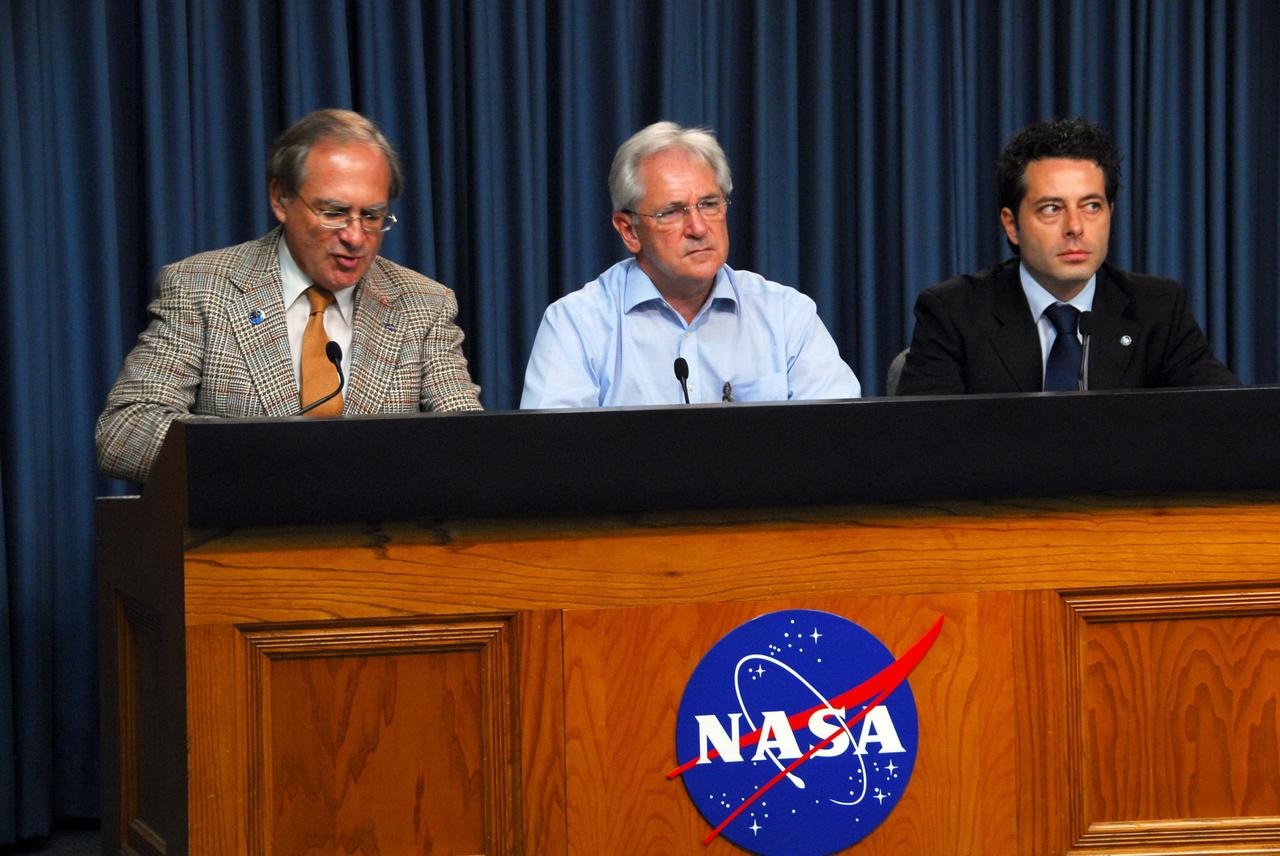
KENNEDY SPACE CENTER, FLA. -- Representatives of NASA's international partners participate in a news briefing on the launch readiness of space shuttle mission STS-120. From left are George Diller, briefing moderator for NASA; Alan Thirkettle, International Space Station Program Manager for ESA, the European Space Agency; and Mauro Piermaria, ESPERIA mission manager for ASI, the Italian Space Agency. The STS-120 mission will be the 23rd shuttle flight to the International Space Station, delivering the Italian-built U.S. Node 2, called Harmony. The seven-member crew includes ESA astronaut Paolo Nespoli from Italy. The 14-day mission includes five spacewalks -- four by shuttle crew members and one by the station's Expedition 16 crew -- to install Harmony and move the P6 solar arrays to their permanent position and deploy them. Launch aboard space shuttle Discovery is planned for 11:38 a.m. EDT Oct. 23, and Discovery is scheduled to complete its mission and return home on Nov. 6. Photo credit: NASA/George Shelton
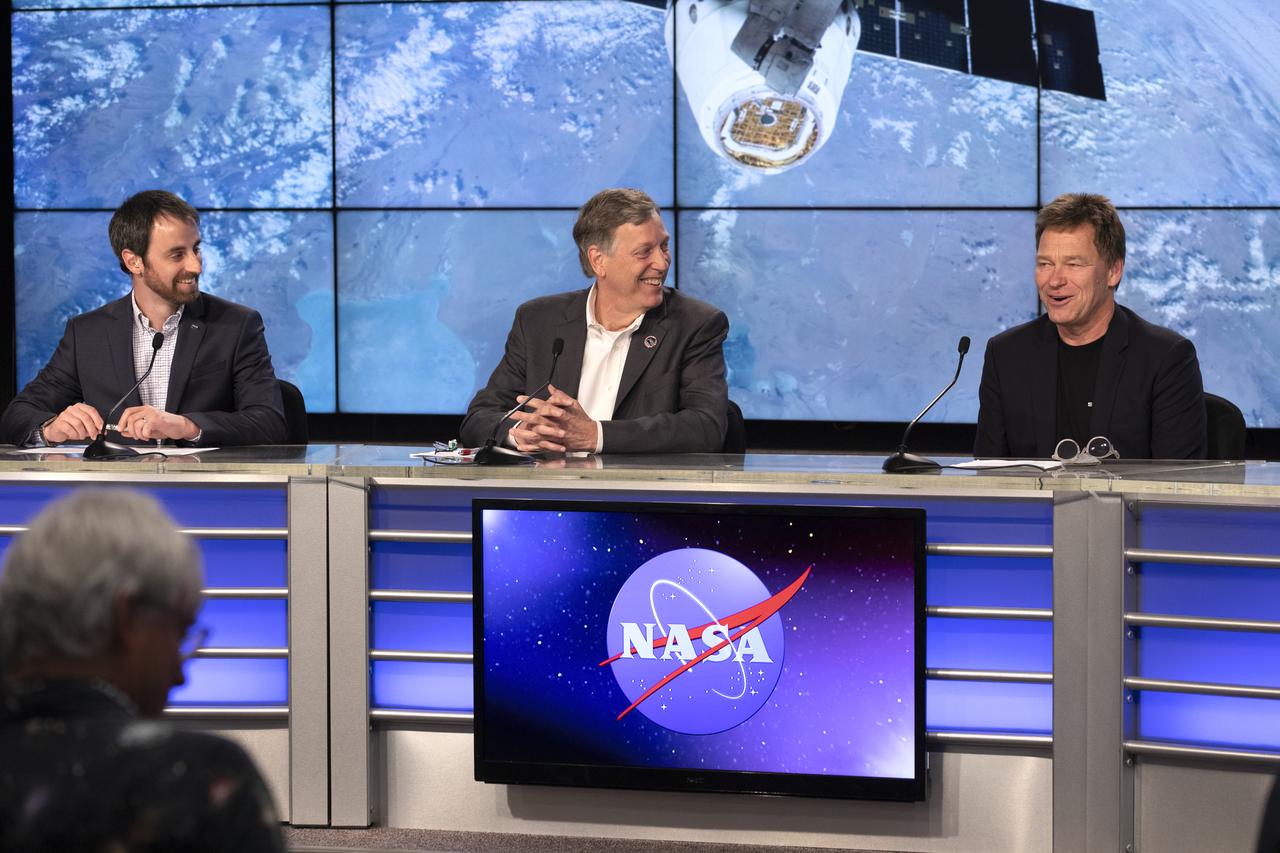
From left, Josh Santora, moderator with NASA Communications; Kenny Todd, manager, International Space Station Operations and Integration at NASA’s Johnson Space Center in Houston; and Hans Koenigsmann, vice president, Build and Flight Reliability with SpaceX, speak to members of the news media during a postlaunch news conference at NASA’s Kennedy Space Center in Florida on May 4, 2019, for SpaceX’s 17th Commercial Resupply Services (CRS-17) mission to the International Space Station for the agency. The company’s Falcon 9 rocket with the Dragon cargo module lifted off from Space Launch Complex 40 at Cape Canaveral Air Force Station in Florida at 2:48 a.m. EDT. The Dragon cargo module will deliver about 5,500 pounds of science and research, crew supplies and vehicle hardware to the orbital laboratory and its crew.
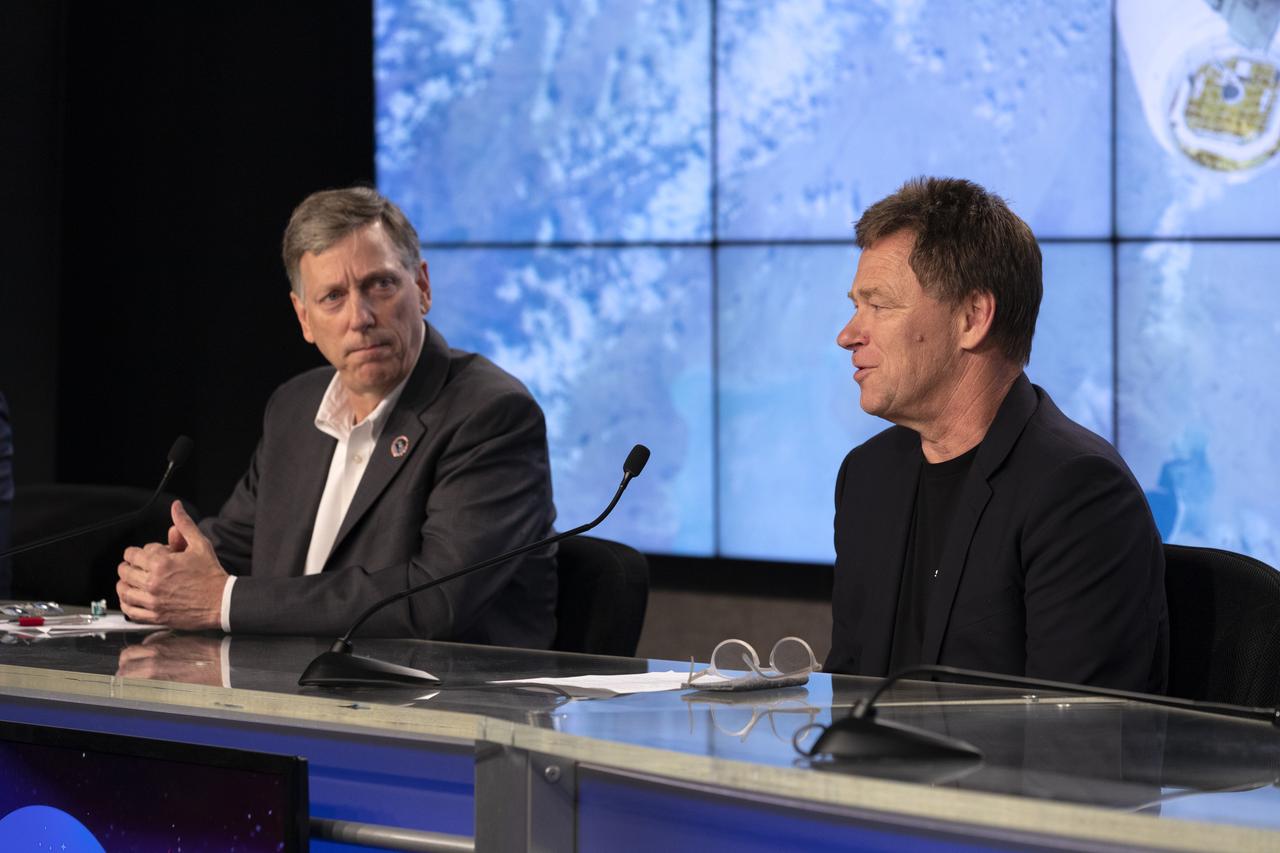
From left, Kenny Todd, manager, International Space Station Operations and Integration at NASA’s Johnson Space Center in Houston; and Hans Koenigsmann, vice president, Build and Flight Reliability with SpaceX, speak to members of the news media during a postlaunch news conference at NASA’s Kennedy Space Center in Florida on May 4, 2019, for SpaceX’s 17th Commercial Resupply Services (CRS-17) mission to the International Space Station for the agency. The company’s Falcon 9 rocket with the Dragon cargo module lifted off from Space Launch Complex 40 at Cape Canaveral Air Force Station in Florida at 2:48 a.m. EDT. The Dragon cargo module will deliver about 5,500 pounds of science and research, crew supplies and vehicle hardware to the orbital laboratory and its crew.
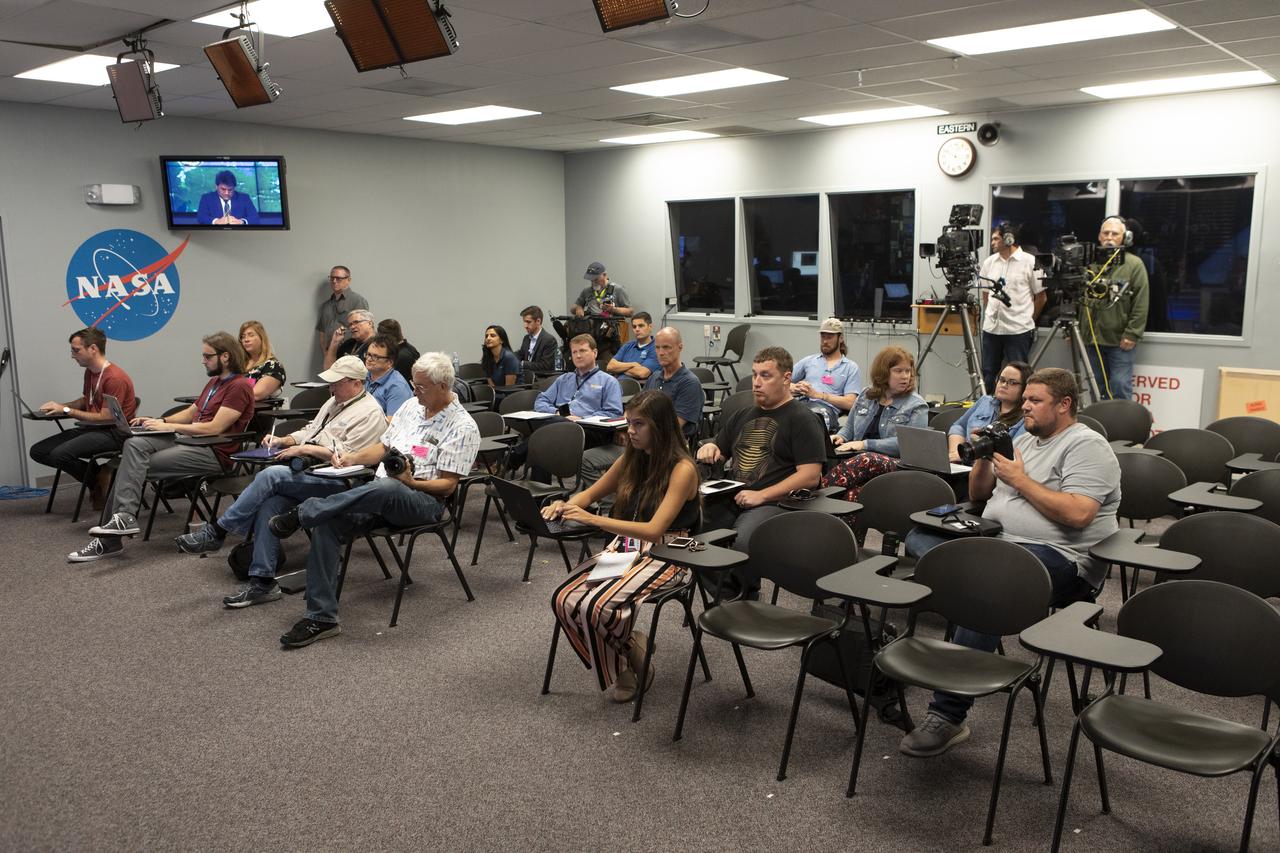
Members of the news media attend the prelaunch news conference for SpaceX’s 18th Commercial Resupply Services (CRS-18) mission to the International Space Station, July 24, 2019, at NASA’s Kennedy Space Center in Florida. Participants were Marie Lewis, NASA Communications moderator; Bill Spetch, deputy manager of the International Space Station Transportation Integration Office at the agency’s Johnson Space Center in Houston; Jessica Jensen, director of Dragon mission management at SpaceX; Pete Hasbrook, manager of the space station’s Program Science Office at Johnson; and Will Ulrich, launch weather officer with the U.S. Air Force 45th Space Wing. The SpaceX Falcon 9 rocket and uncrewed Dragon spacecraft are scheduled to launch July 24, 2019, from Space Launch Complex 40 at Florida’s Cape Canaveral Air Force Station.
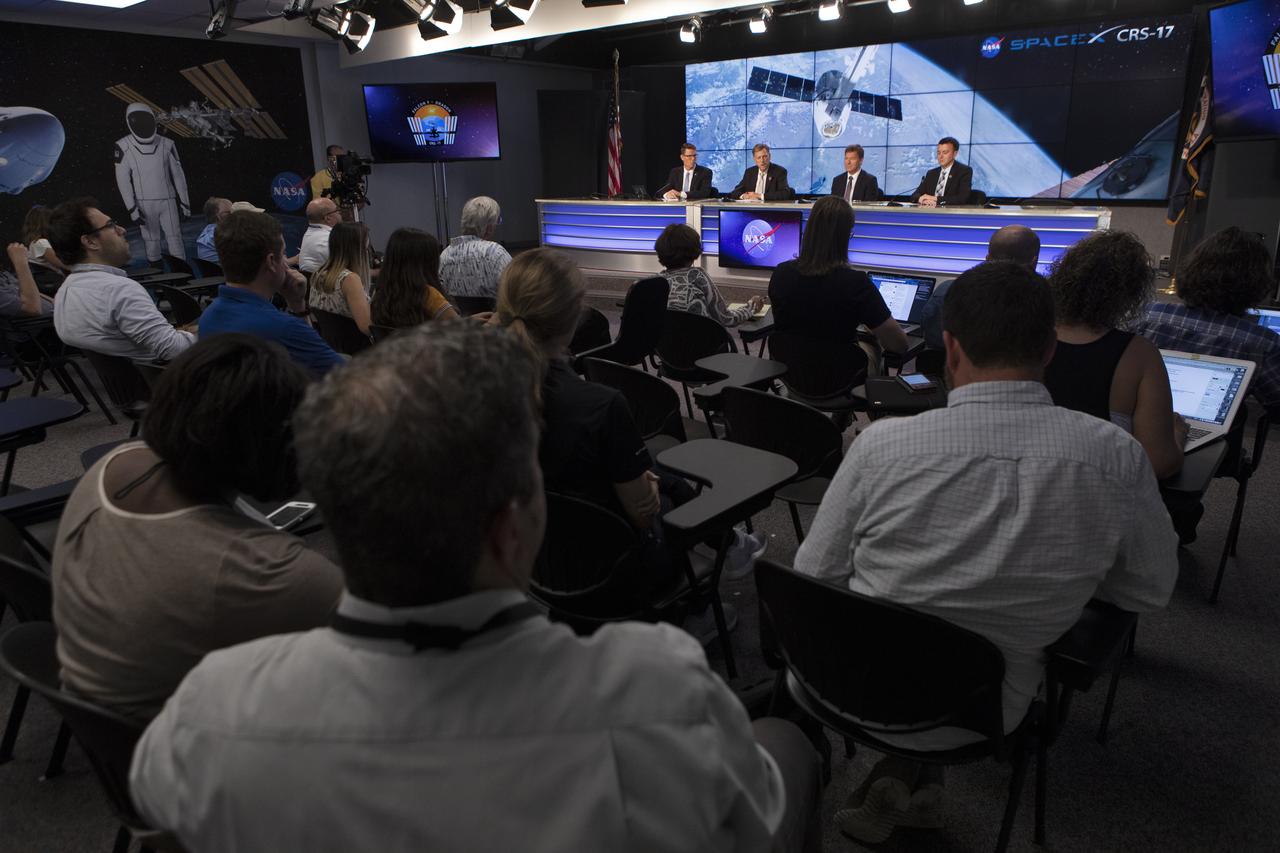
Members of the news media attend a prelaunch news conference for SpaceX’s 17th Commercial Resupply Services (CRS-17) mission to the International Space Station for NASA on May 2, 2019, at the agency’s Kennedy Space Center in Florida. From left, are Derrol Nail, NASA Communications moderator; Kenny Todd, Manager, International Space Station Operations and Integration at NASA’s Johnson Space Center in Houston; Hans Koenigsmann, VP, Build and Flight Reliability with SpaceX; and Will Ulrich, 45th launch weather officer with the U.S. Air Force. The SpaceX Falcon 9 rocket and Dragon cargo module are scheduled to launch no earlier than May 3, 2019, from Space Launch Complex 40 on Cape Canaveral Air Force Station in Florida.
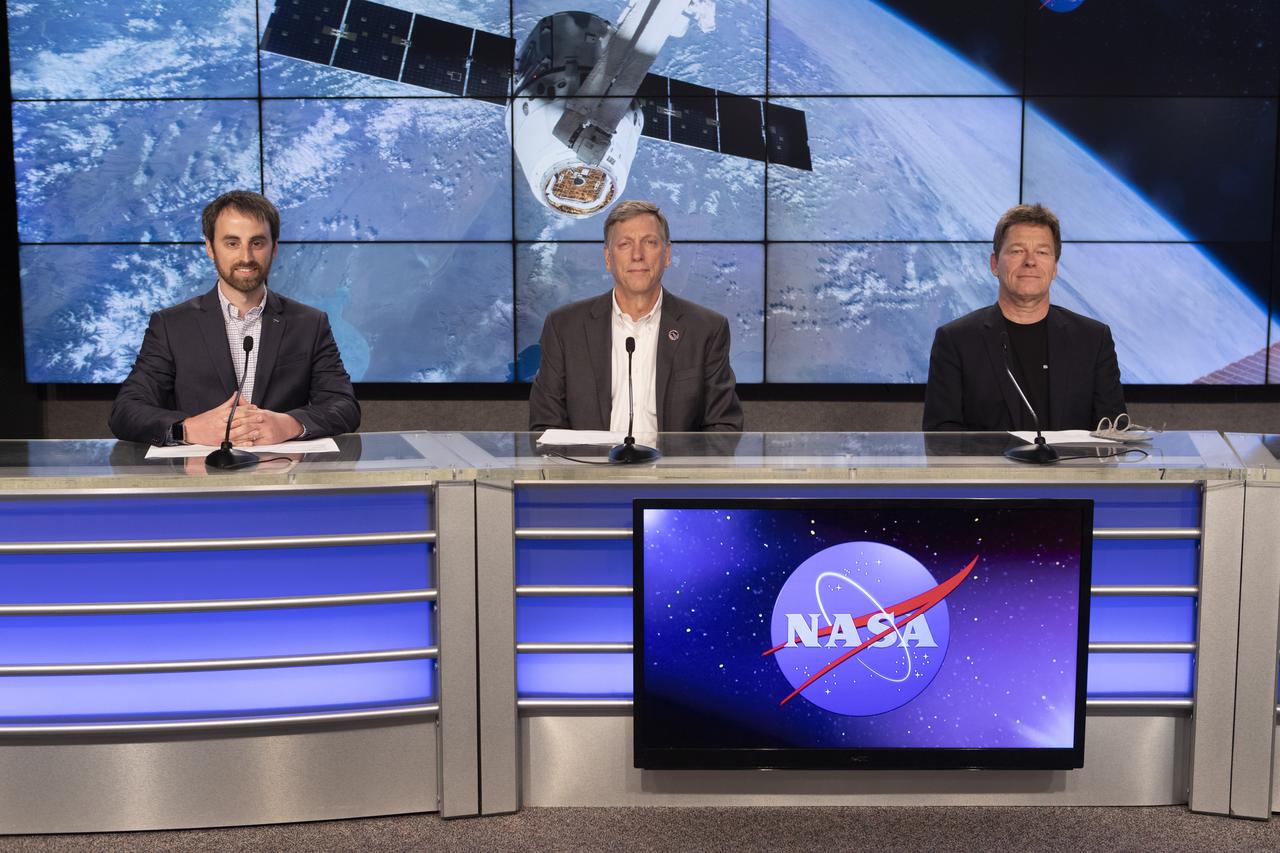
From left, Josh Santora, moderator with NASA Communications; Kenny Todd, manager, International Space Station Operations and Integration at NASA’s Johnson Space Center in Houston; and Hans Koenigsmann, vice president, Build and Flight Reliability with SpaceX, speak to members of the news media during a postlaunch news conference at NASA’s Kennedy Space Center in Florida on May 4, 2019, for SpaceX’s 17th Commercial Resupply Services (CRS-17) mission to the International Space Station for the agency. The company’s Falcon 9 rocket with the Dragon cargo module lifted off from Space Launch Complex 40 at Cape Canaveral Air Force Station in Florida at 2:48 a.m. EDT. The Dragon cargo module will deliver about 5,500 pounds of science and research, crew supplies and vehicle hardware to the orbital laboratory and its crew.
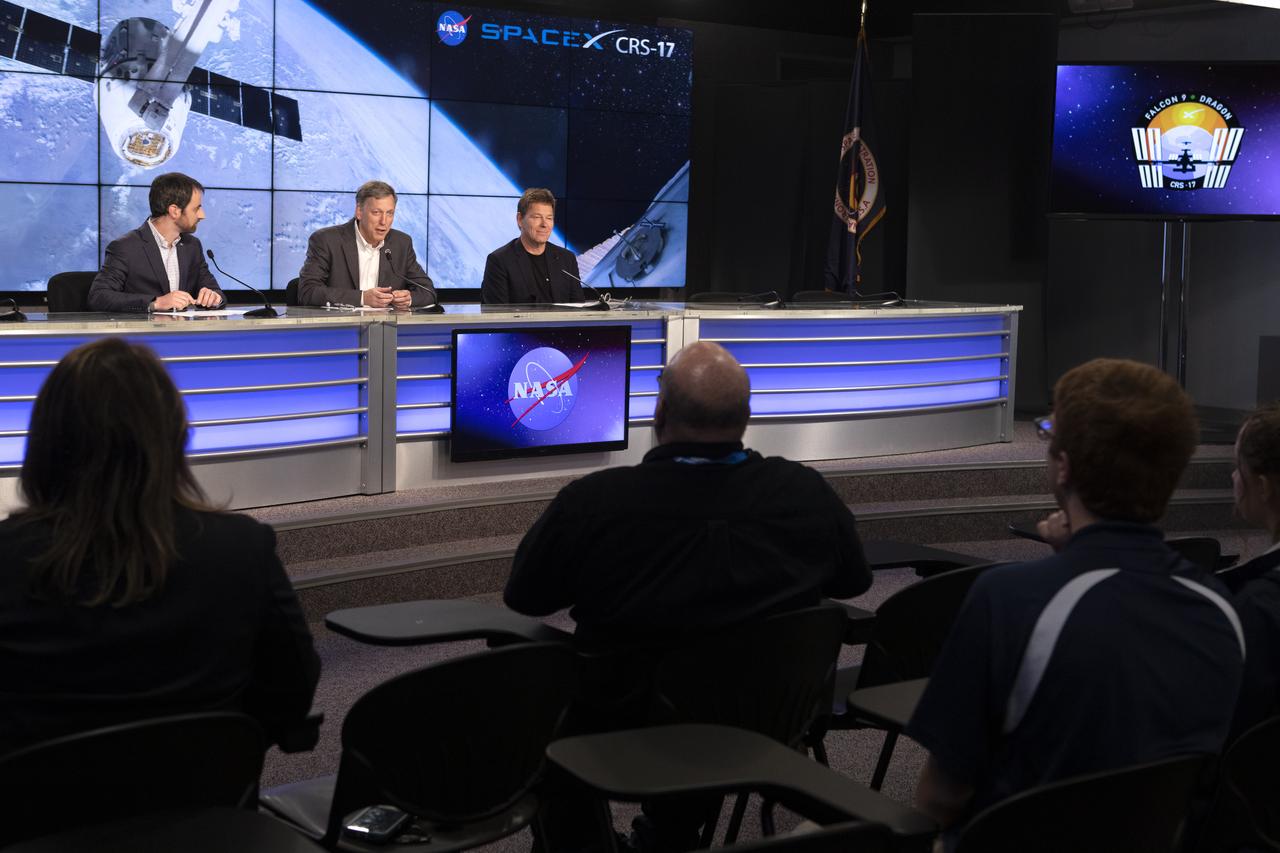
From left, Josh Santora, moderator with NASA Communications; Kenny Todd, manager, International Space Station Operations and Integration at NASA’s Johnson Space Center in Houston; and Hans Koenigsmann, vice president, Build and Flight Reliability with SpaceX, speak to members of the news media during a postlaunch news conference at NASA’s Kennedy Space Center in Florida on May 4, 2019, for SpaceX’s 17th Commercial Resupply Services (CRS-17) mission to the International Space Station for the agency. The company’s Falcon 9 rocket with the Dragon cargo module lifted off from Space Launch Complex 40 at Cape Canaveral Air Force Station in Florida at 2:48 a.m. EDT. The Dragon cargo module will deliver about 5,500 pounds of science and research, crew supplies and vehicle hardware to the orbital laboratory and its crew.
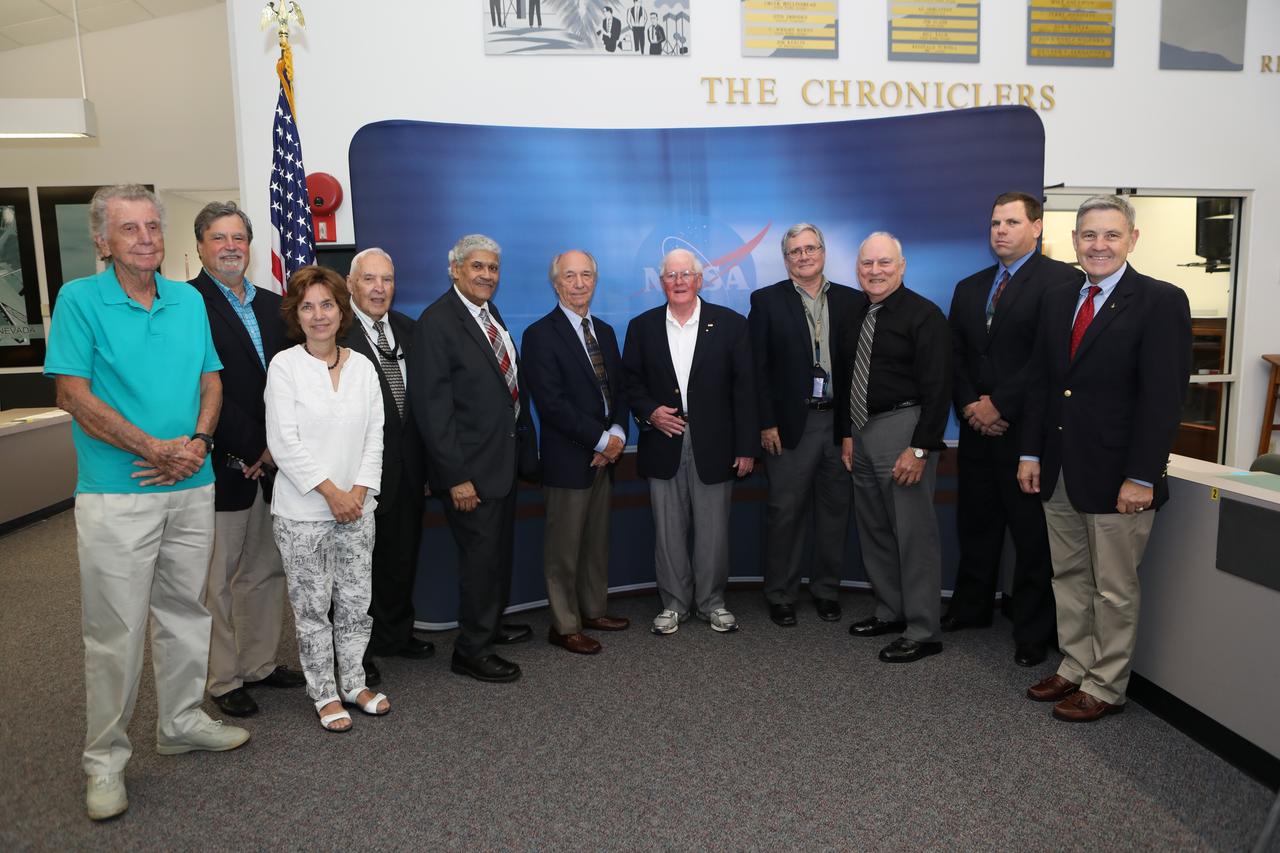
Current and retired NASA Public Affairs team members and space journalists gather in the NASA News Center at Kennedy Space Center in Florida for a ceremony in which six new honorees were added to the "Chroniclers" roll of honor. From left to right are Jay Barbree, NBC News; Al Feinberg, NASA Public Affairs; Marcia Dunn, Associated Press; Hugh Harris, NASA Public Affairs; Warren Leary, The New York Times; Phillip Sandlin, Associated Press photographer; Bob Murray, WDBO-TV, RCA and United Space Alliance; Bill Harwood, CBS News, there on behalf of the late Bruce Hall, CBS News; Bill Johnson, NASA Public Affairs; Emery McGough, son of the late Scott Harris, WESH, WKMG and Central Florida News 13; and Center Director Bob Cabana. Hall, Harris, Johnson, Leary, Murray and Sandlin are the 2017 Chroniclers. The program recognizes retirees of the news and communications business who helped spread news of American space exploration from Kennedy Space Center for ten years or more.
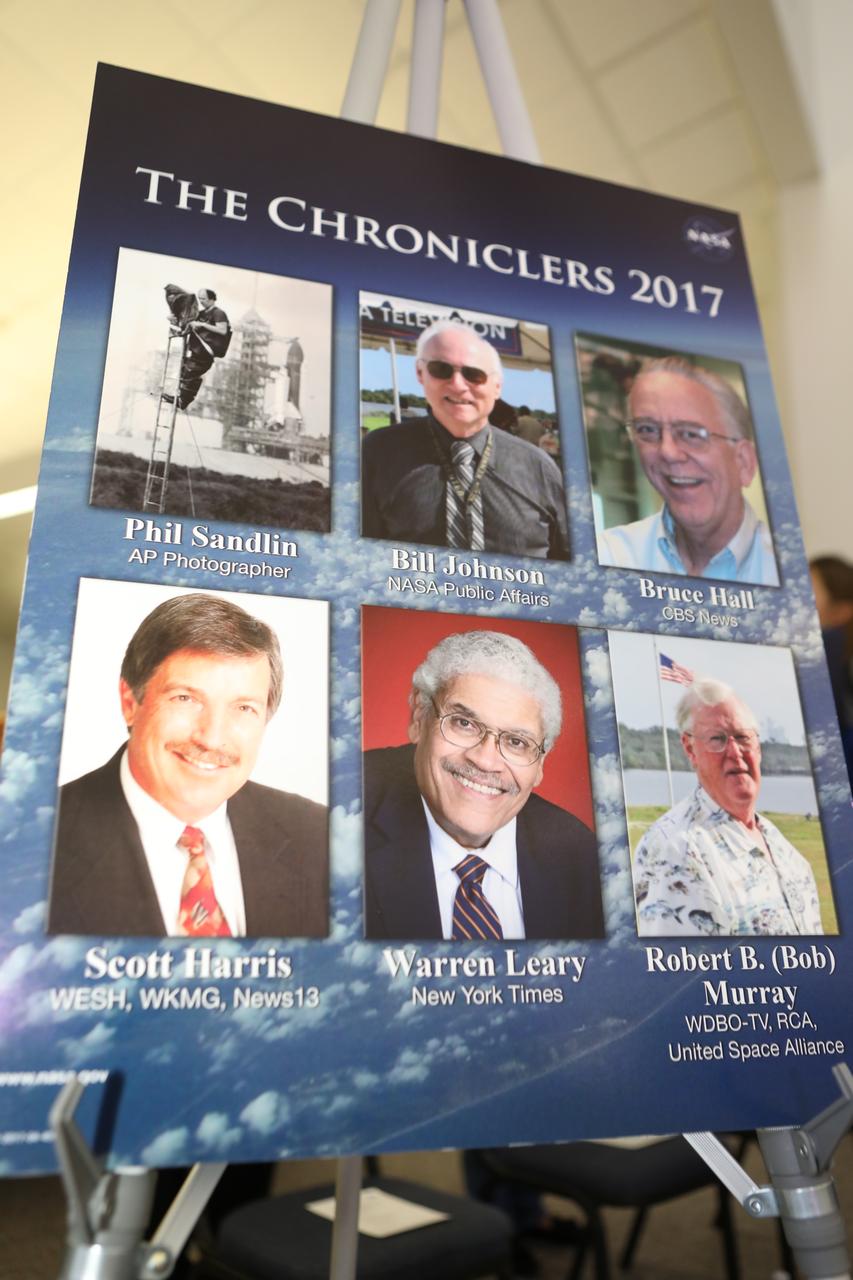
A poster in the NASA News Center at Kennedy Space Center in Florida bears the names and photos of the six new honorees added to the facility's "Chroniclers" roll of honor. The Chroniclers program recognizes retirees of the news and communications business who helped spread news of American space exploration from Kennedy Space Center for ten years or more. From top left to bottom right are Phillip Sandlin, Associated Press photographer; Bill Johnson, NASA Public Affairs; Bruce Hall, CBS News and NBC News; Scott Harris, WESH, WKMG and Central Florida News 13; Warren Leary, The New York Times; and Bob Murray, WDBO-TV, RCA and United Space Alliance.
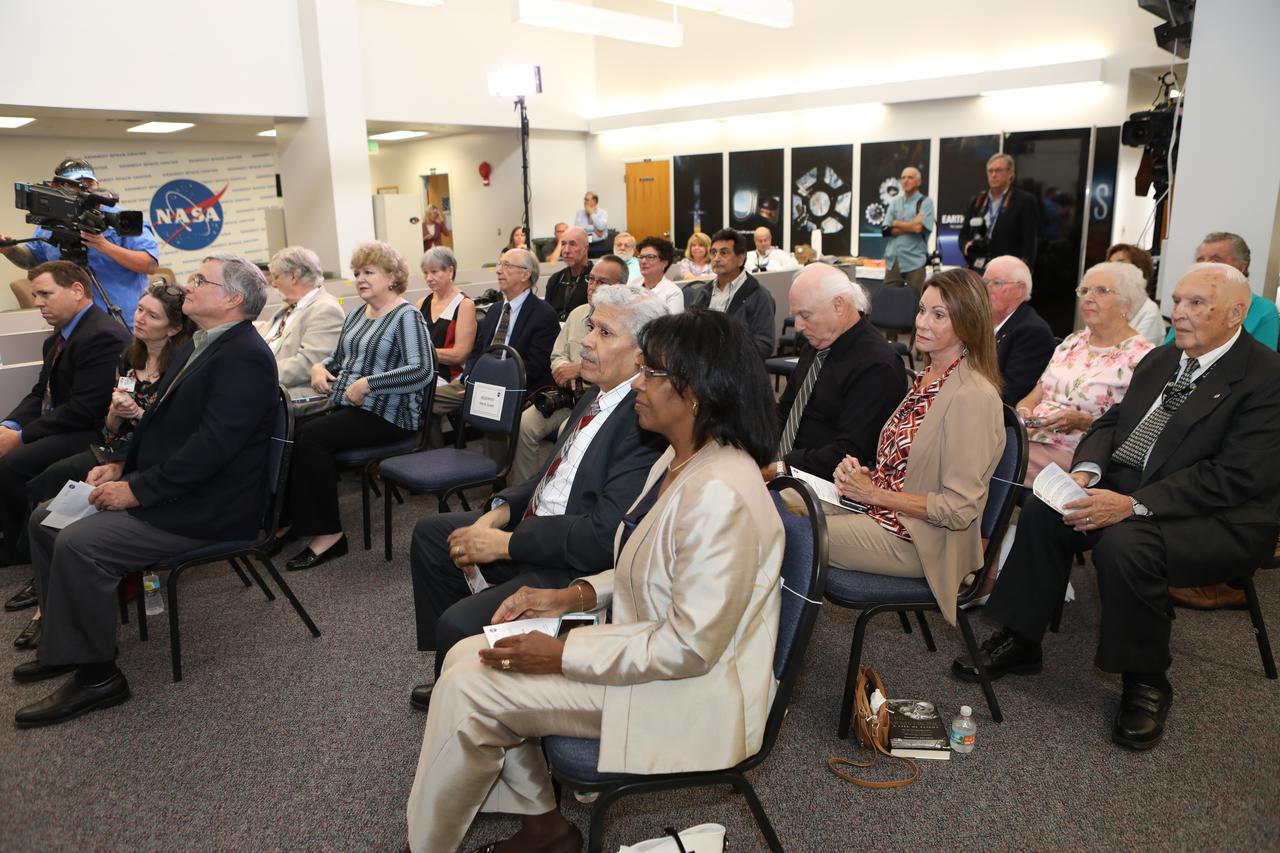
Friends, family members and colleagues of former NASA Public Affairs team members and space journalists gather in the NASA News Center at Kennedy Space Center in Florida for a ceremony in which six new honorees were added to the "Chroniclers" roll of honor. The Chroniclers program recognizes retirees of the news and communications business who helped spread news of American space exploration from Kennedy Space Center for ten years or more. The 2017 Chroniclers are Bruce Hall, CBS News and NBC News; Scott Harris, WESH, WKMG and Central Florida News 13; Bill Johnson, NASA Public Affairs; Warren Leary, The New York Times; Bob Murray, WDBO-TV, RCA and United Space Alliance; and Phillip Sandlin, Associated Press photographer.
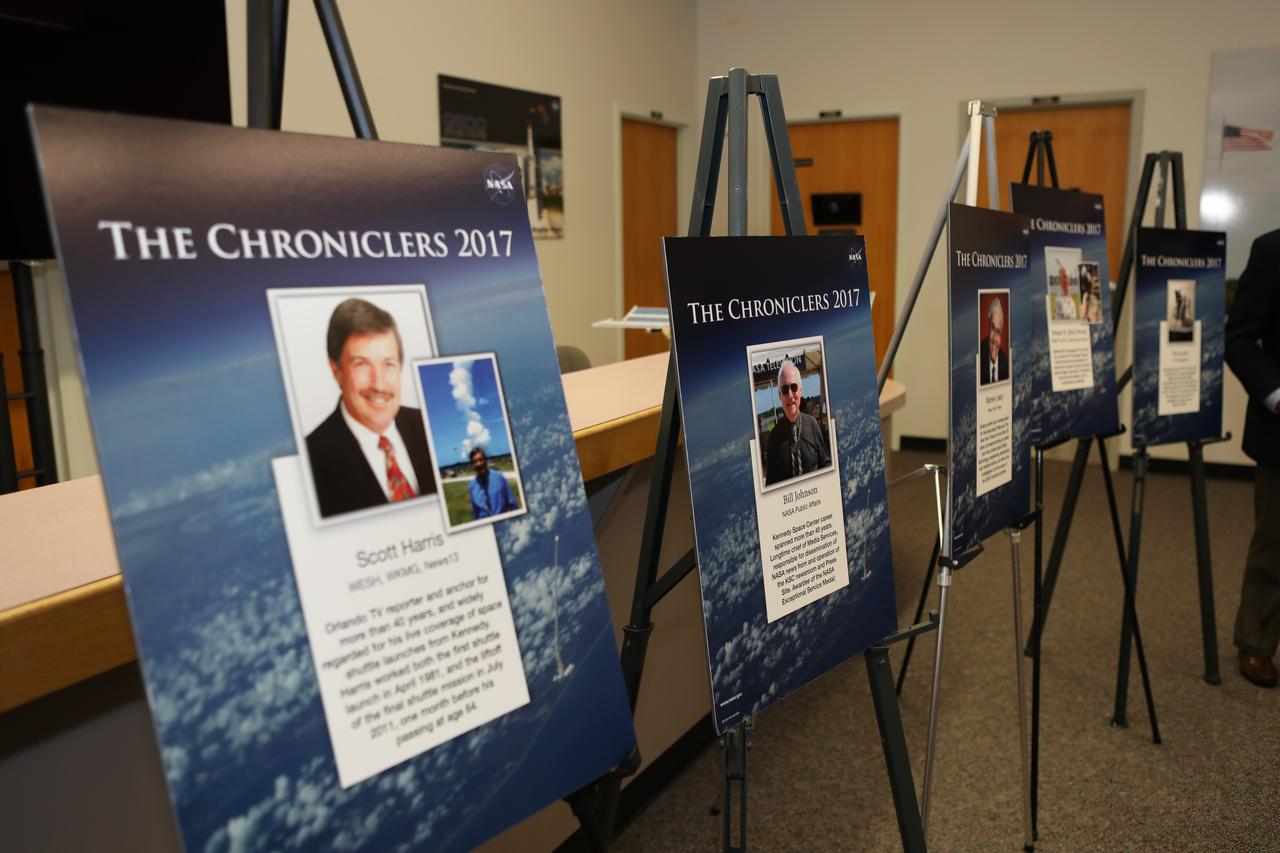
Posters in the NASA News Center at Kennedy Space Center in Florida bear the names and photos of five of the six new honorees added to the facility's "Chroniclers" roll of honor. From left to right are posters featuring Scott Harris, WESH, WKMG and Central Florida News 13; Bill Johnson, NASA Public Affairs; Warren Leary, The New York Times; Bob Murray, WDBO-TV, RCA and United Space Alliance; and Phillip Sandlin, Associated Press photographer. Not pictured is the poster for Bruce Hall, CBS News and NBC News. The Chroniclers program recognizes retirees of the news and communications business who helped spread news of American space exploration from Kennedy Space Center for ten years or more.
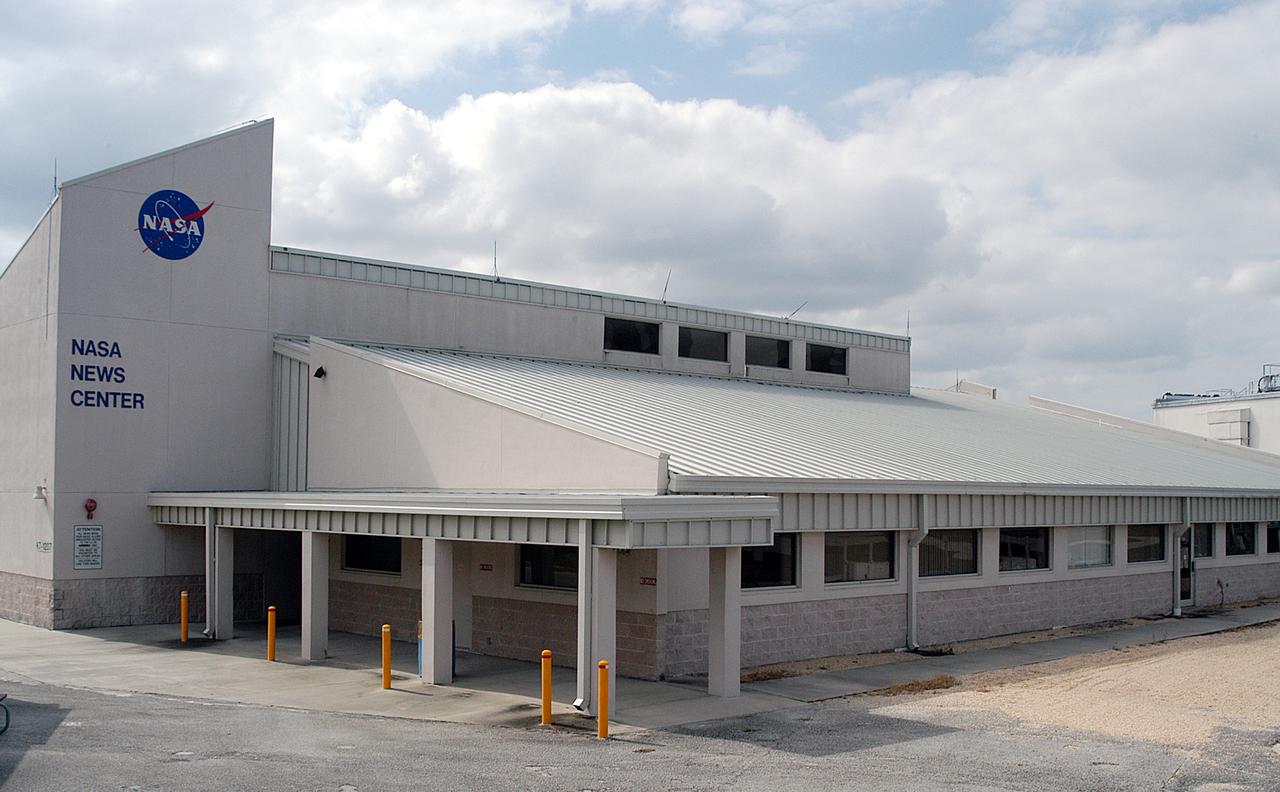
The NASA News Center, seen here, is the hub of news operations for the media, providing information and contacts about Space Shuttle processing and other activities around KSC. News Center staff also conduct media tours, escorting journalists and photo/videographers to key sites such as the launch pads and Vehicle Assembly Building as needed.
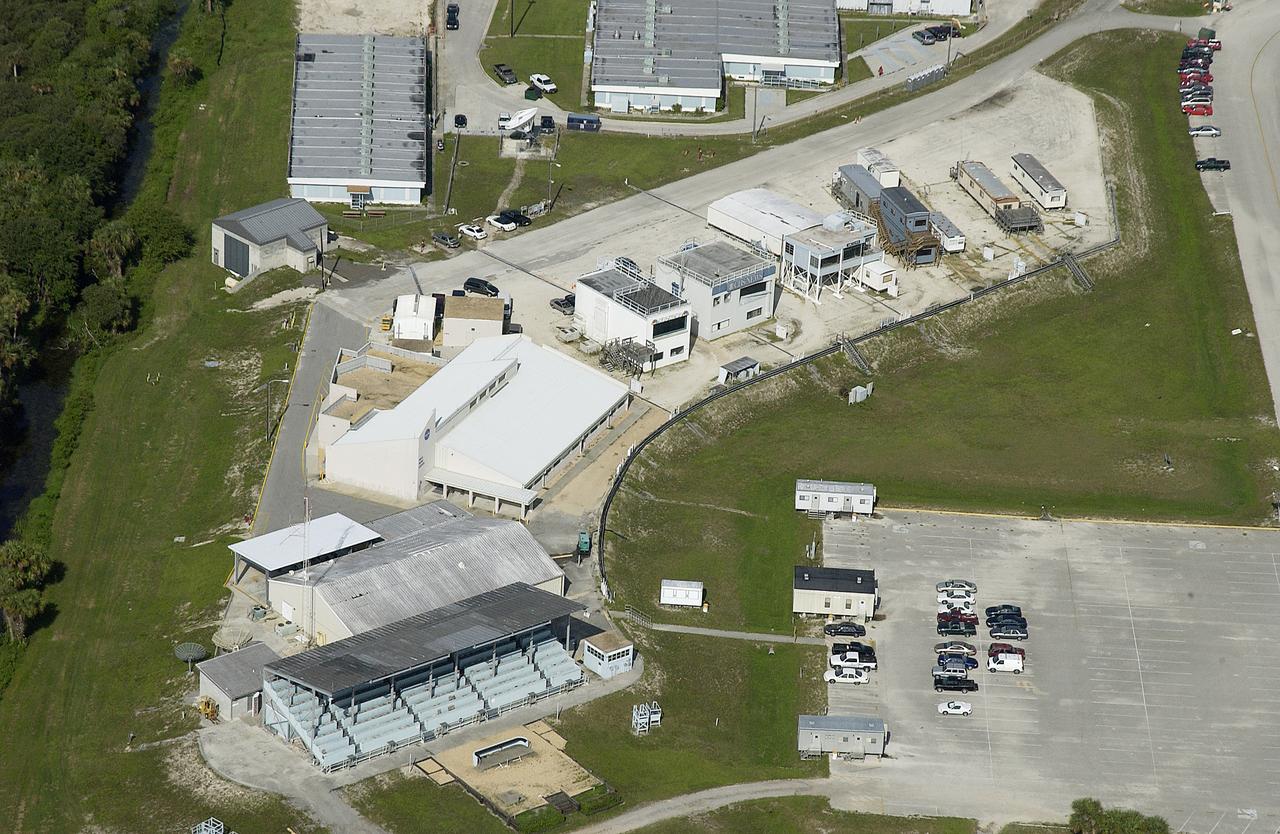
The KSC Press Site is seen from the air. The large white building is the NASA News Center. At lower left are the grandstands that provide viewing of Shuttle launches for the media. Stretching from the News Center to the right are buildings and trailers occupied by television media and other news agencies such as Associated Press and Reuters.
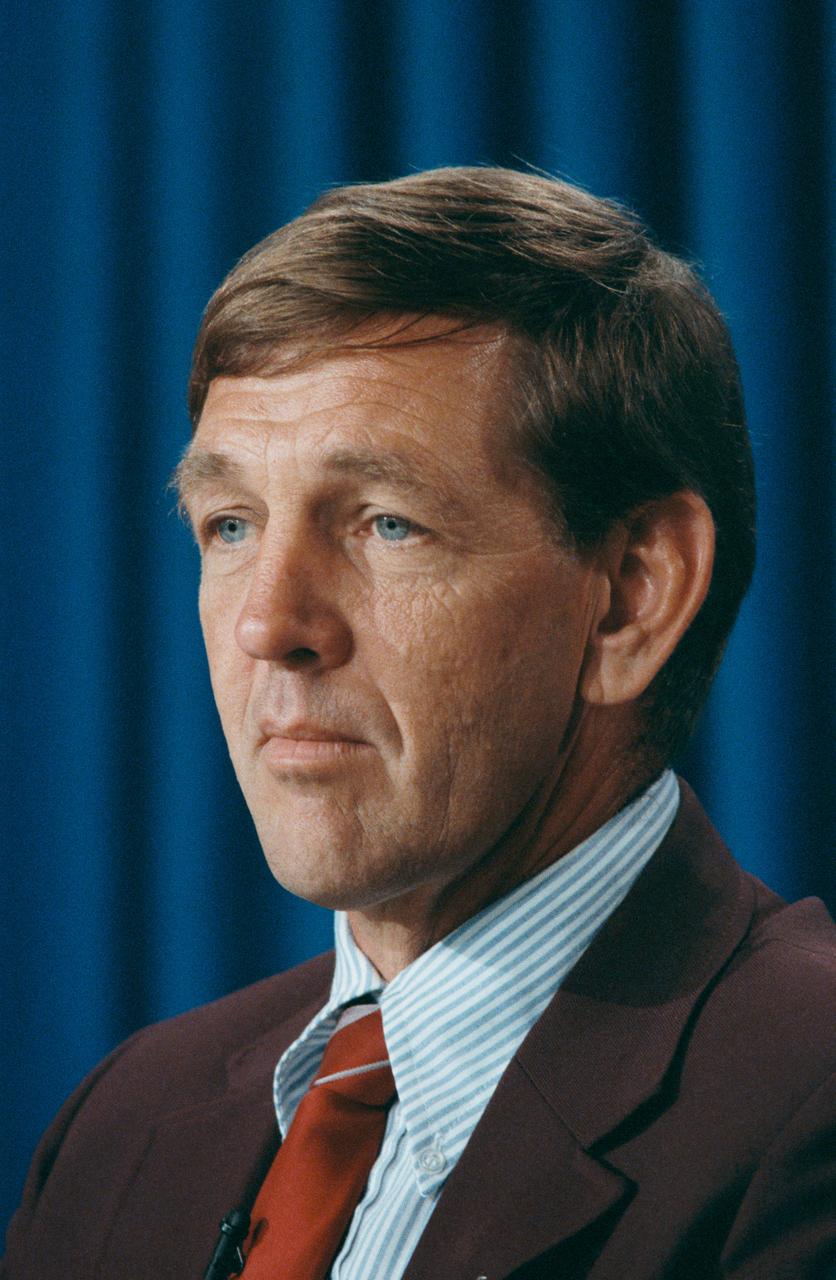
STS-34 Atlantis, Orbiter Vehicle (OV) 104, Pilot Michael J. McCulley reflects on a question during the thirty days before launch (T-30) press briefing in the JSC Auditorium and Public Affairs Facility Bldg 2 briefing room.
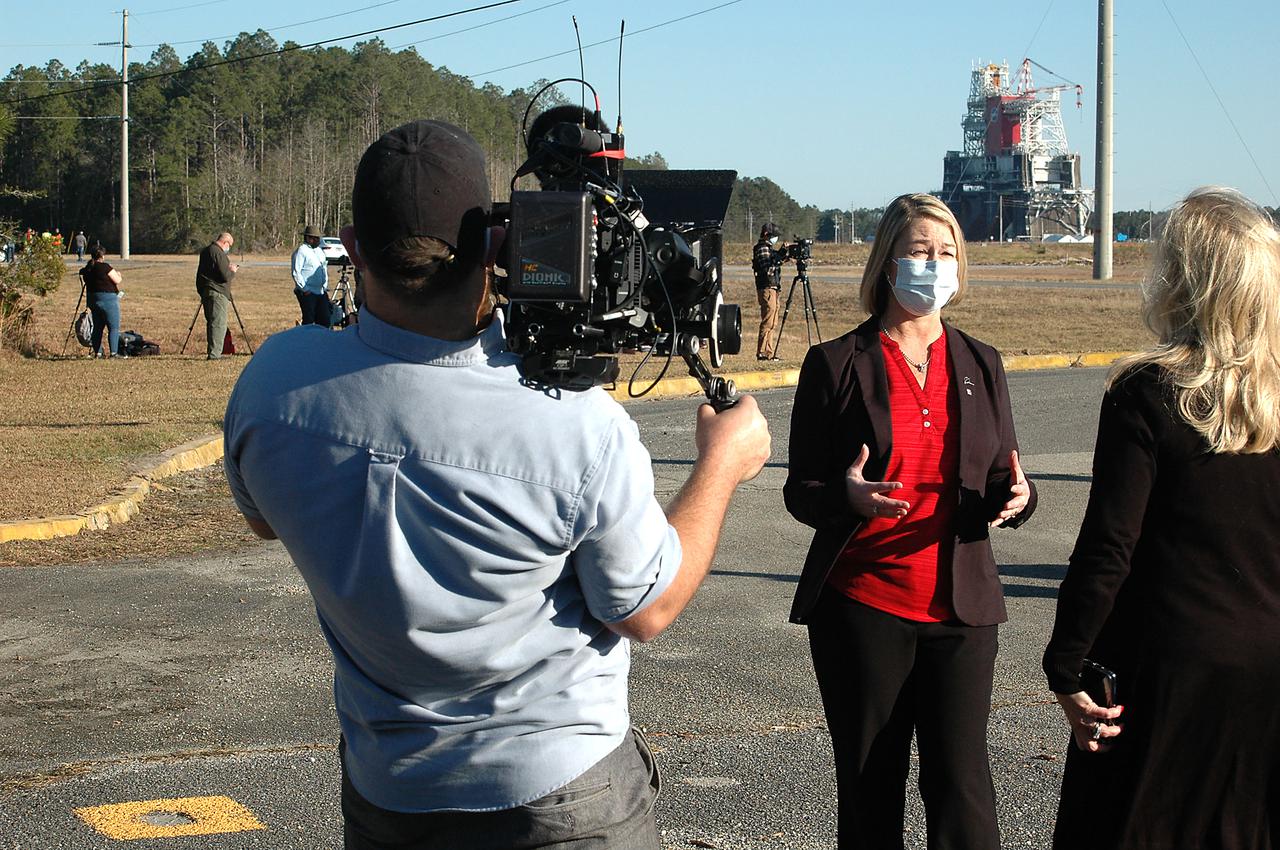
Jennifer Boland-Masterson, director of Boeing Operations at NASA’s Michoud Assembly Facility in New Orleans, talks with media prior to the Green Run hot fire test of the core stage for NASA’s Space Launch System (SLS) rocket at Stennis Space Center near Bay St. Louis, Mississippi, on Jan. 16, 2021. NASA conducted a hot fire test of the core stage’s four RS-25 engines on the B-2 Test Stand at Stennis. Scheduled for as long as eight minutes, the engines fired for a little more than one minute to generate a combined 1.6 million pounds of thrust, just as will occur during an actual launch. The hot fire is the final test of the Green Run test series, a comprehensive assessment of the SLS core stage prior to launching the Artemis I mission to the Moon.
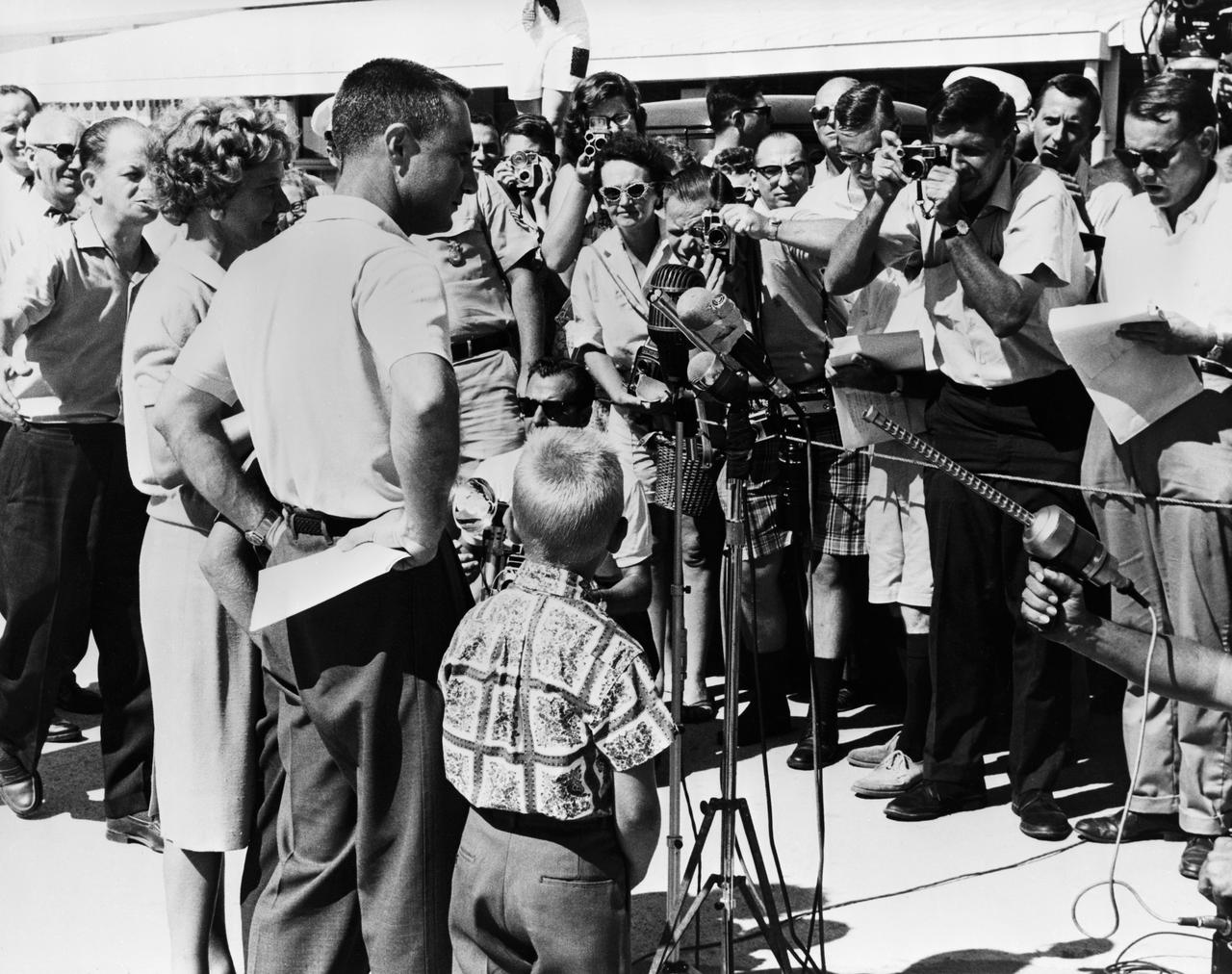
S61-03687 (21 July 1961) --- Astronaut Virgil I. (Gus) Grissom and his family are shown at the airport at Patrick Air Force Base facing a crowd of news media representatives. Grissom is speaking into microphones for the news media. Photo credit: NASA
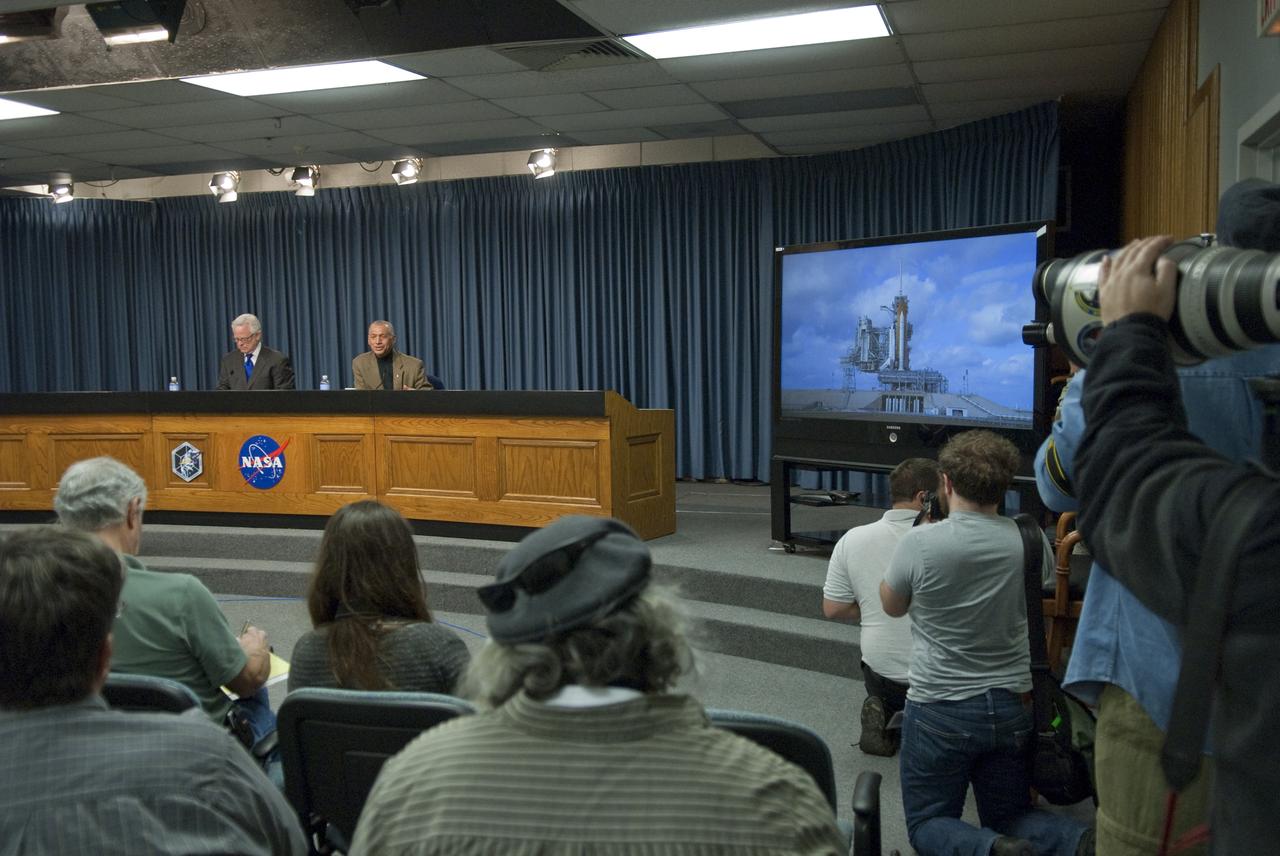
NASA ADMINISTRATOR CHARLIE BOLDEN BRIEFS MEDIA ON NEW NASA BUDGET
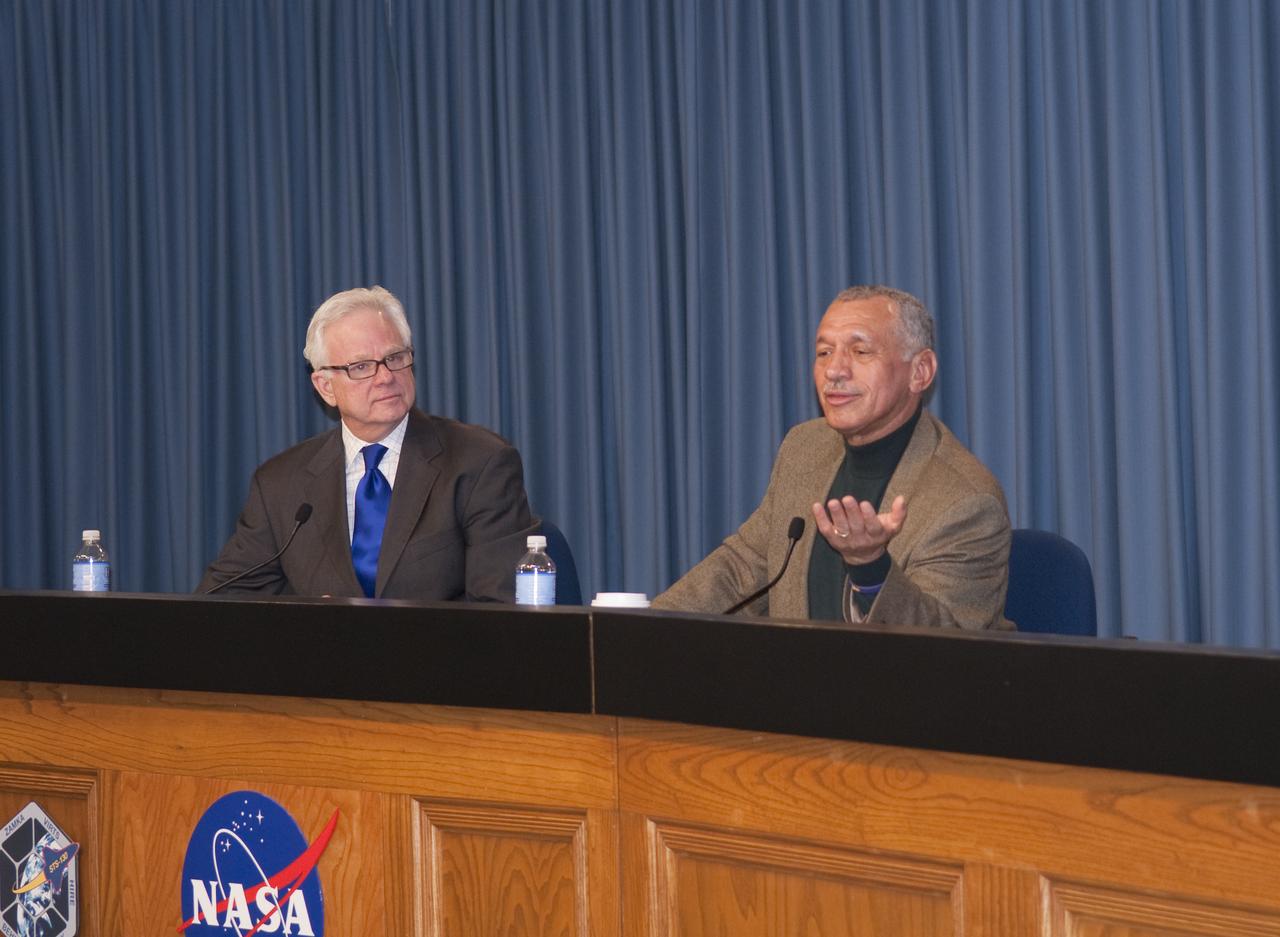
NASA ADMINISTRATOR CHARLIE BOLDEN BRIEFS MEDIA ON NEW NASA BUDGET
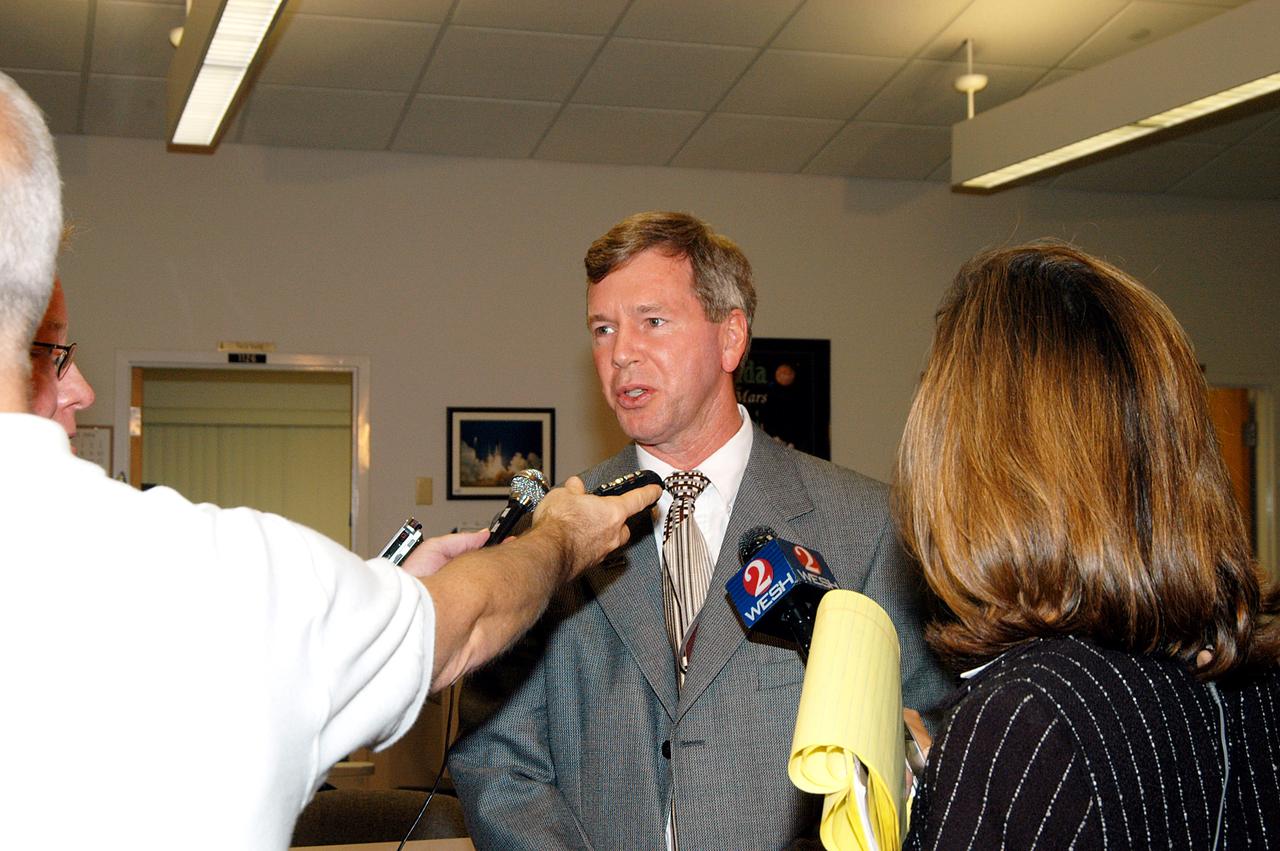
KENNEDY SPACE CENTER, FLA. -- Mike O’Neal, with the KSC Spaceport Technology Development Office, talks to the media at the NASA-KSC News Center after viewing President George W. Bush’s message on the future of NASA. The President stated his goals for NASA’s new mission: Completing the International Space Station, retiring the Space Shuttle orbiters, developing a new crew exploration vehicle, and returning to the moon and beyond within the next two decades. Pres. Bush was welcomed by NASA Administrator Sean O’Keefe and Expedition 8 Commander Michael Foale, who greeted him from the International Space Station.
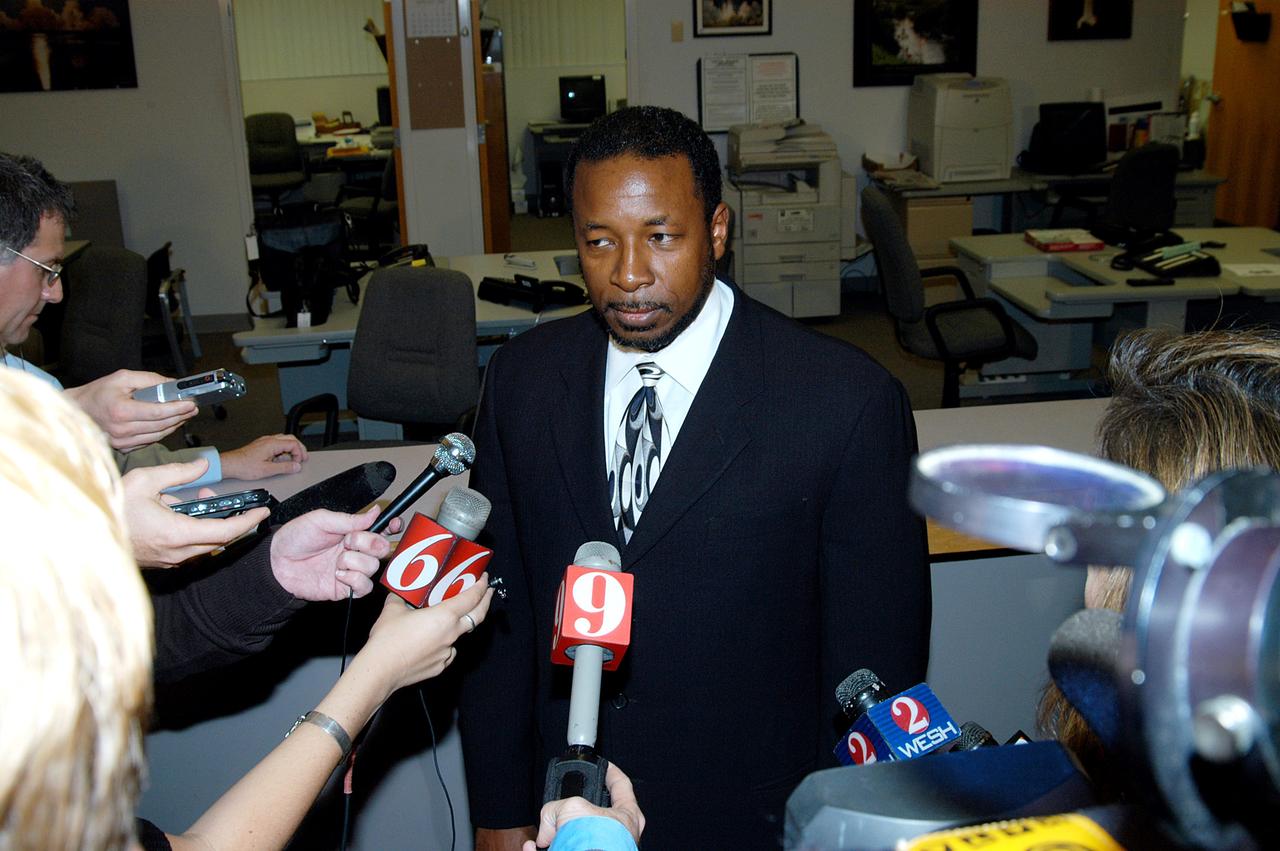
KENNEDY SPACE CENTER, FLA. -- Dr. Woodrow Whitlow, KSC deputy director, talks to the media at the NASA-KSC News Center after viewing President George W. Bush’s message on the future of NASA. The President stated his goals for NASA’s new mission: Completing the International Space Station, retiring the Space Shuttle orbiters, developing a new crew exploration vehicle, and returning to the moon and beyond within the next two decades. Pres. Bush was welcomed by NASA Administrator Sean O’Keefe and Expedition 8 Commander Michael Foale, who greeted him from the International Space Station.
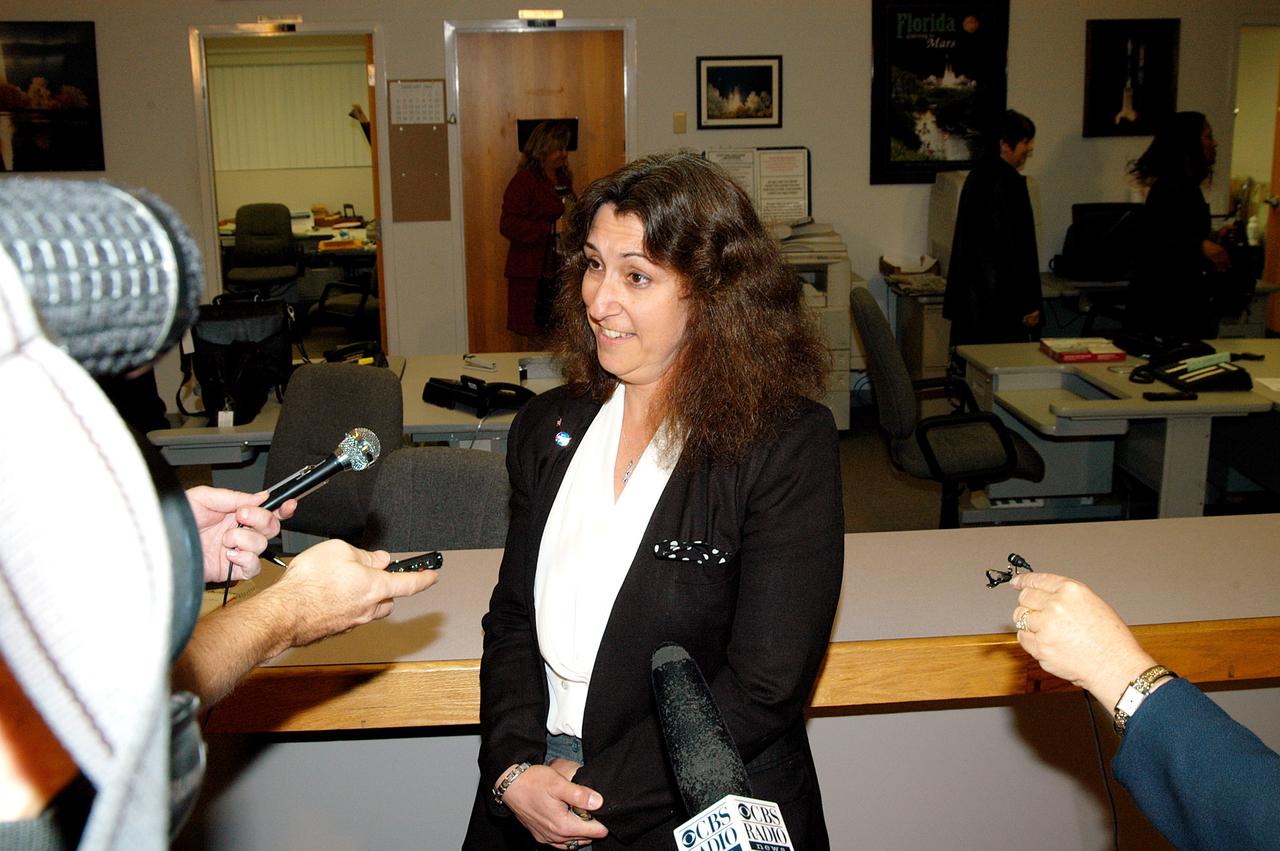
KENNEDY SPACE CENTER, FLA. -- Maria Littlefield, chief technologist with the Launch Services Program Office, talks to the media at the NASA-KSC News Center after viewing President George W. Bush’s message on the future of NASA. The President stated his goals for NASA’s new mission: Completing the International Space Station, retiring the Space Shuttle orbiters, developing a new crew exploration vehicle, and returning to the moon and beyond within the next two decades. Pres. Bush was welcomed by NASA Administrator Sean O’Keefe and Expedition 8 Commander Michael Foale, who greeted him from the International Space Station.
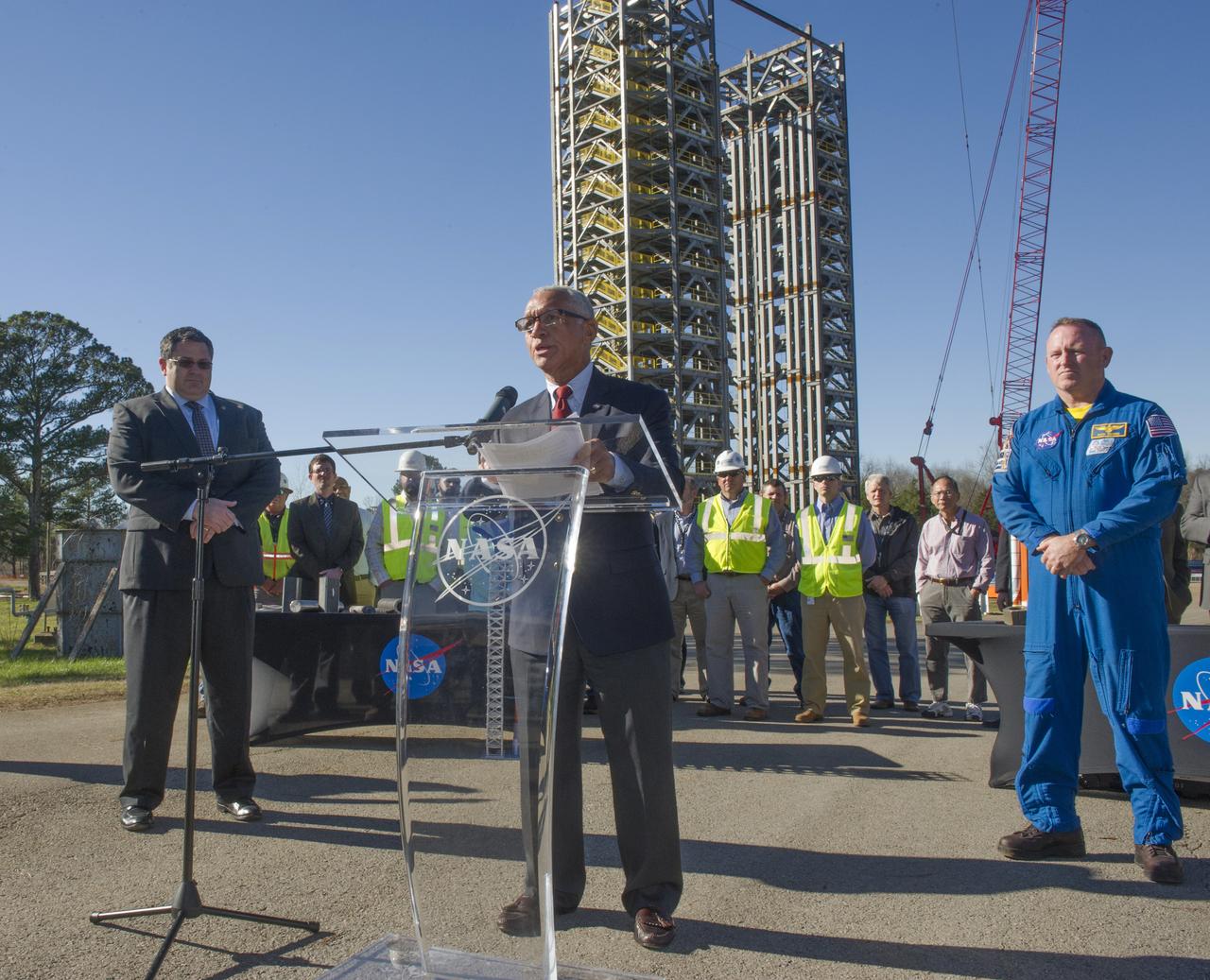
TODD MAY,CHARLIE BOLDEN AND ASTRONAUT BUTCH WILMORE BRIEF NEWS MEDIA ON PROGRESS OF NEW TEST STAND CONSTRUCTION FOR SLS TESTING
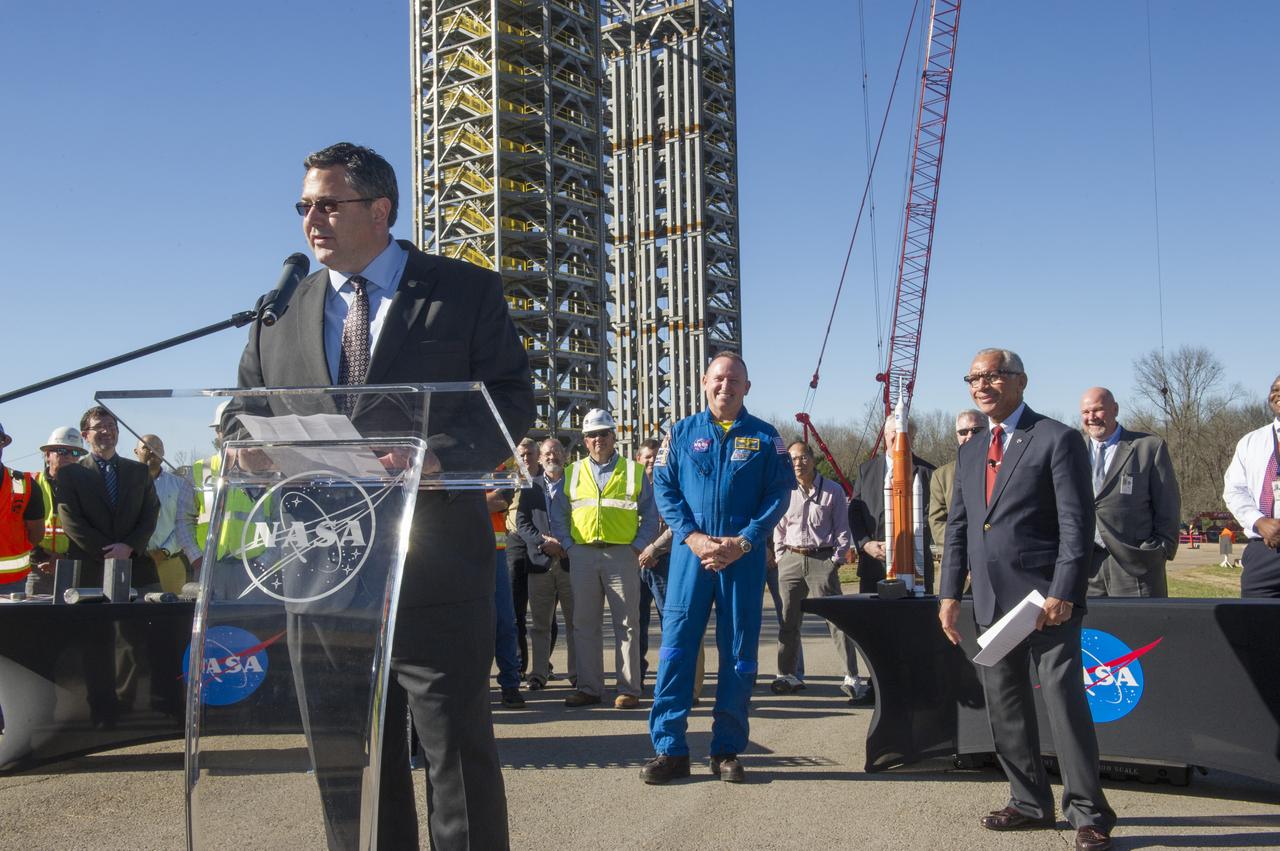
TODD MAY,CHARLIE BOLDEN AND ASTRONAUT BUTCH WILMORE BRIEF NEWS MEDIA ON PROGRESS OF NEW TEST STAND CONSTRUCTION FOR SLS TESTING
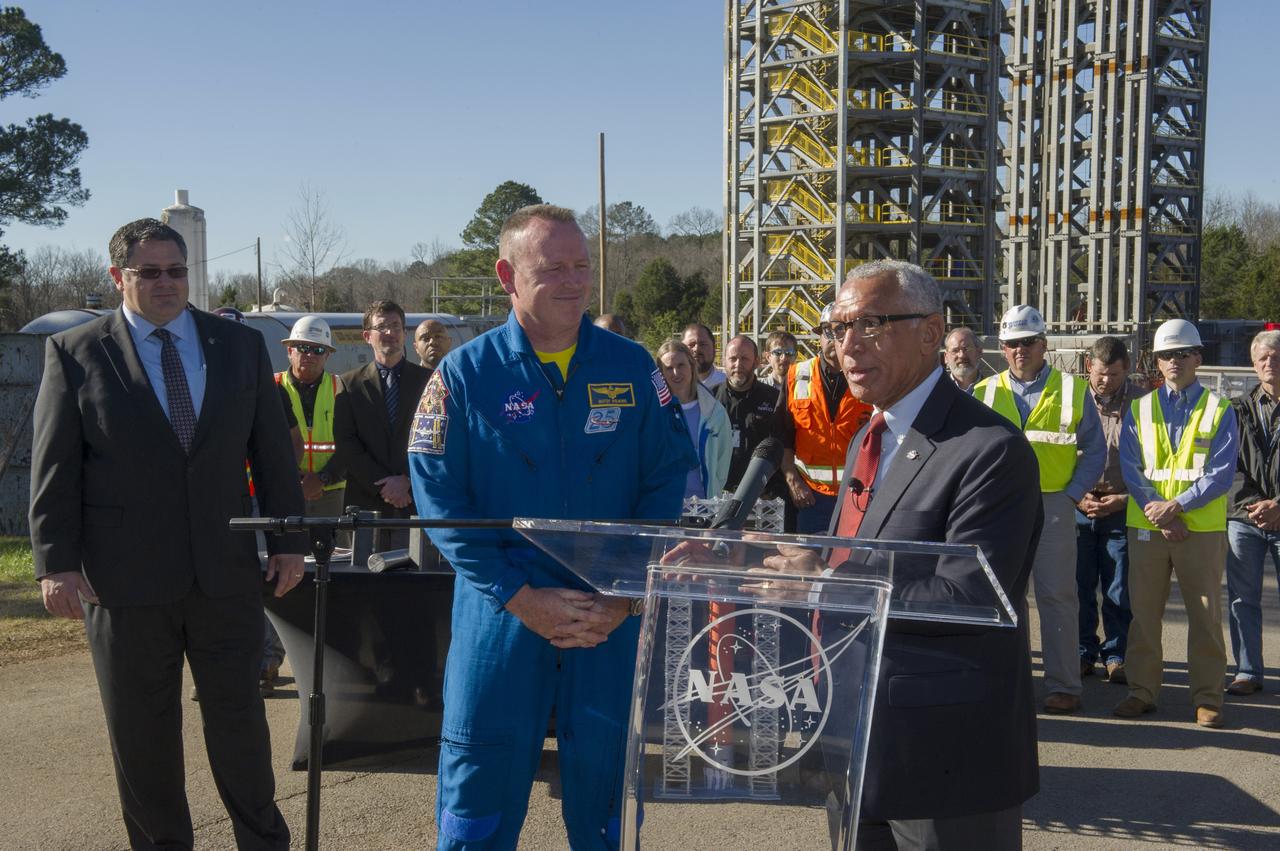
TODD MAY,CHARLIE BOLDEN AND ASTRONAUT BUTCH WILMORE BRIEF NEWS MEDIA ON PROGRESS OF NEW TEST STAND CONSTRUCTION FOR SLS TESTING
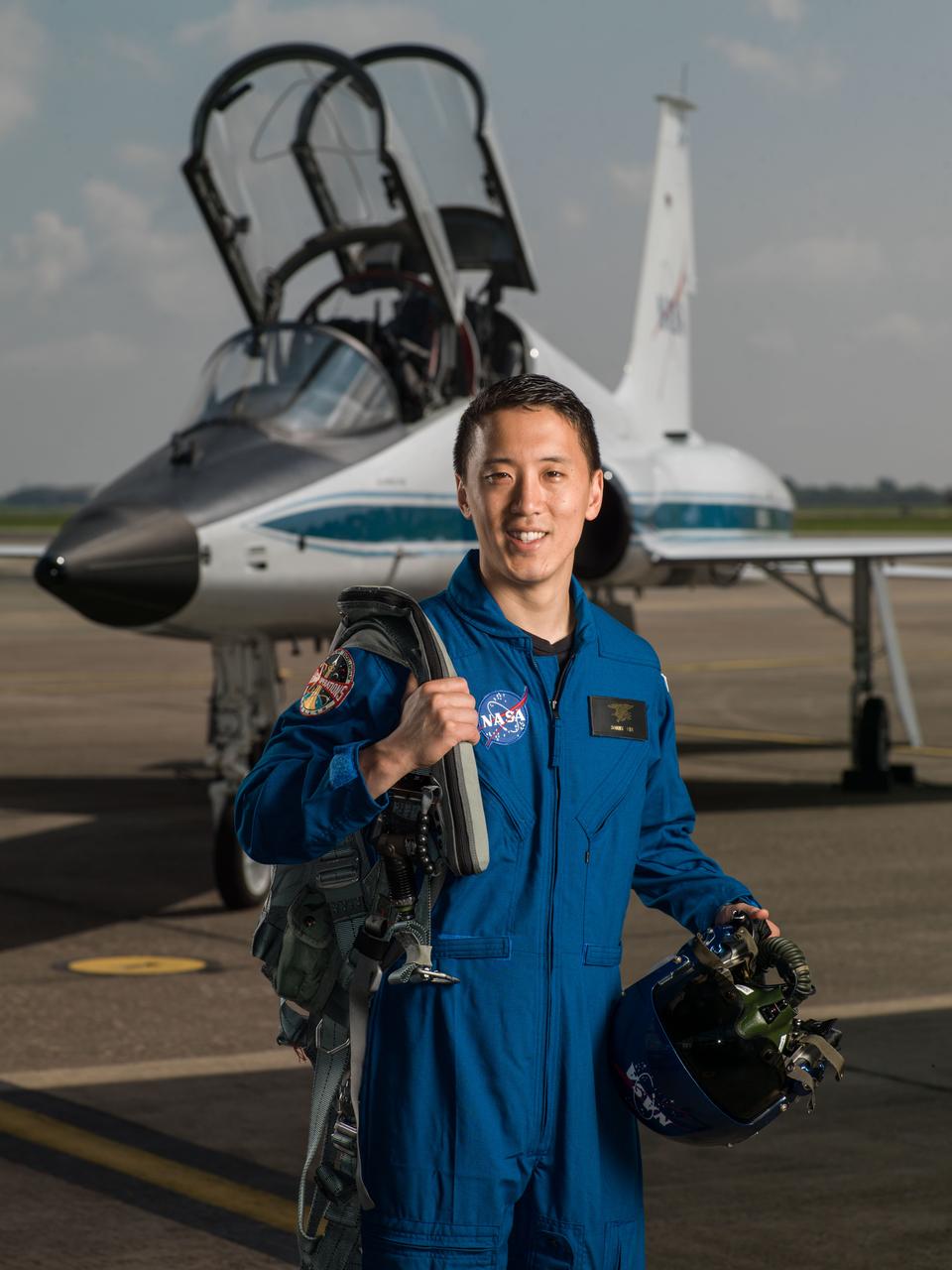
jsc2017e067117 (June 6, 2017) --- NASA portrait of 2017 Astronaut Candidate Jonny Kim in front of a T-38 trainer aircraft at Ellington Field near NASA’s Johnson Space Center in Houston, Texas.
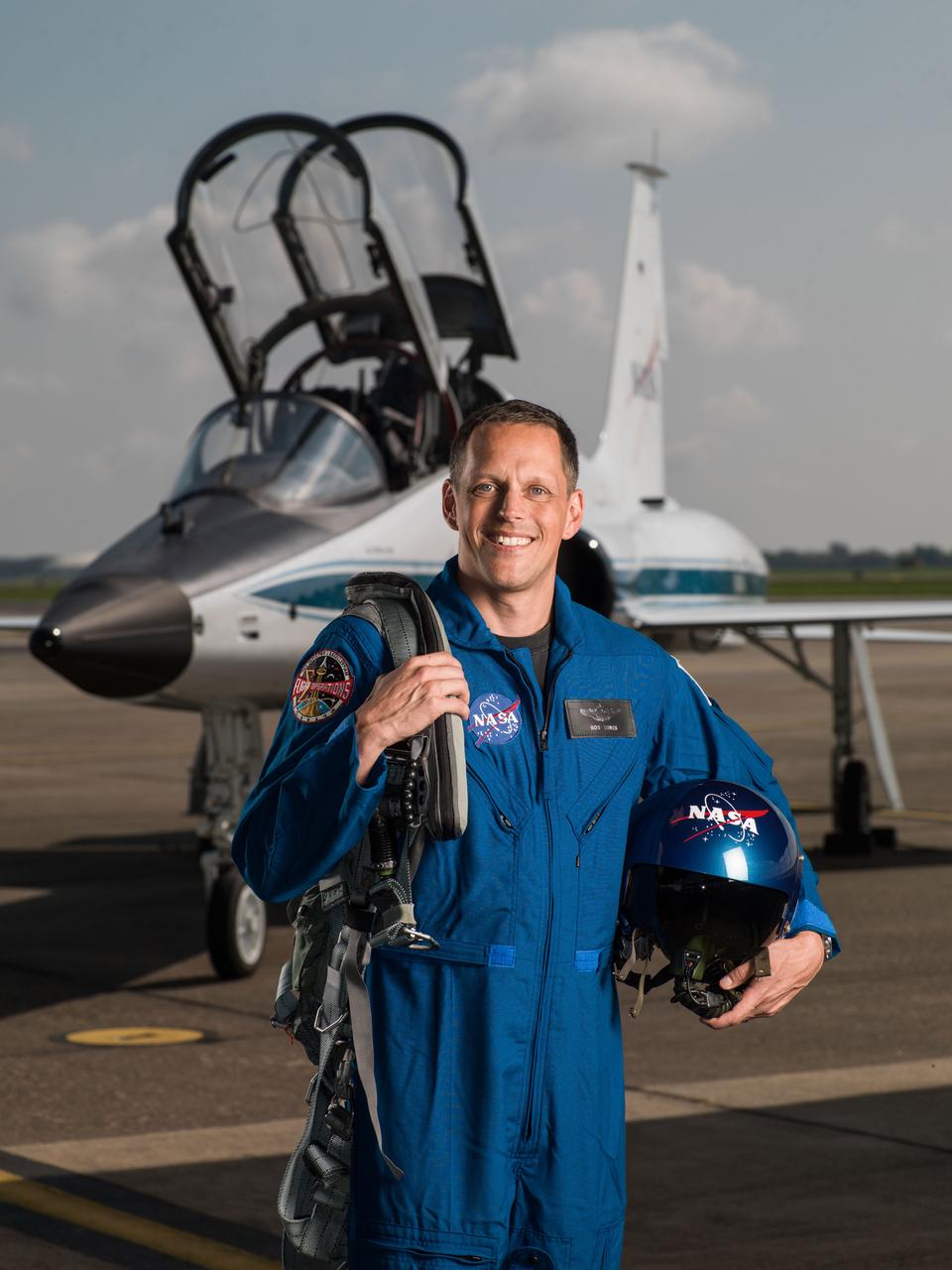
jsc2017e067123 (June 6, 2017) --- NASA portrait of 2017 Astronaut Candidate Bob Hines in front of a T-38 trainer aircraft at Ellington Field near NASA’s Johnson Space Center in Houston, Texas.
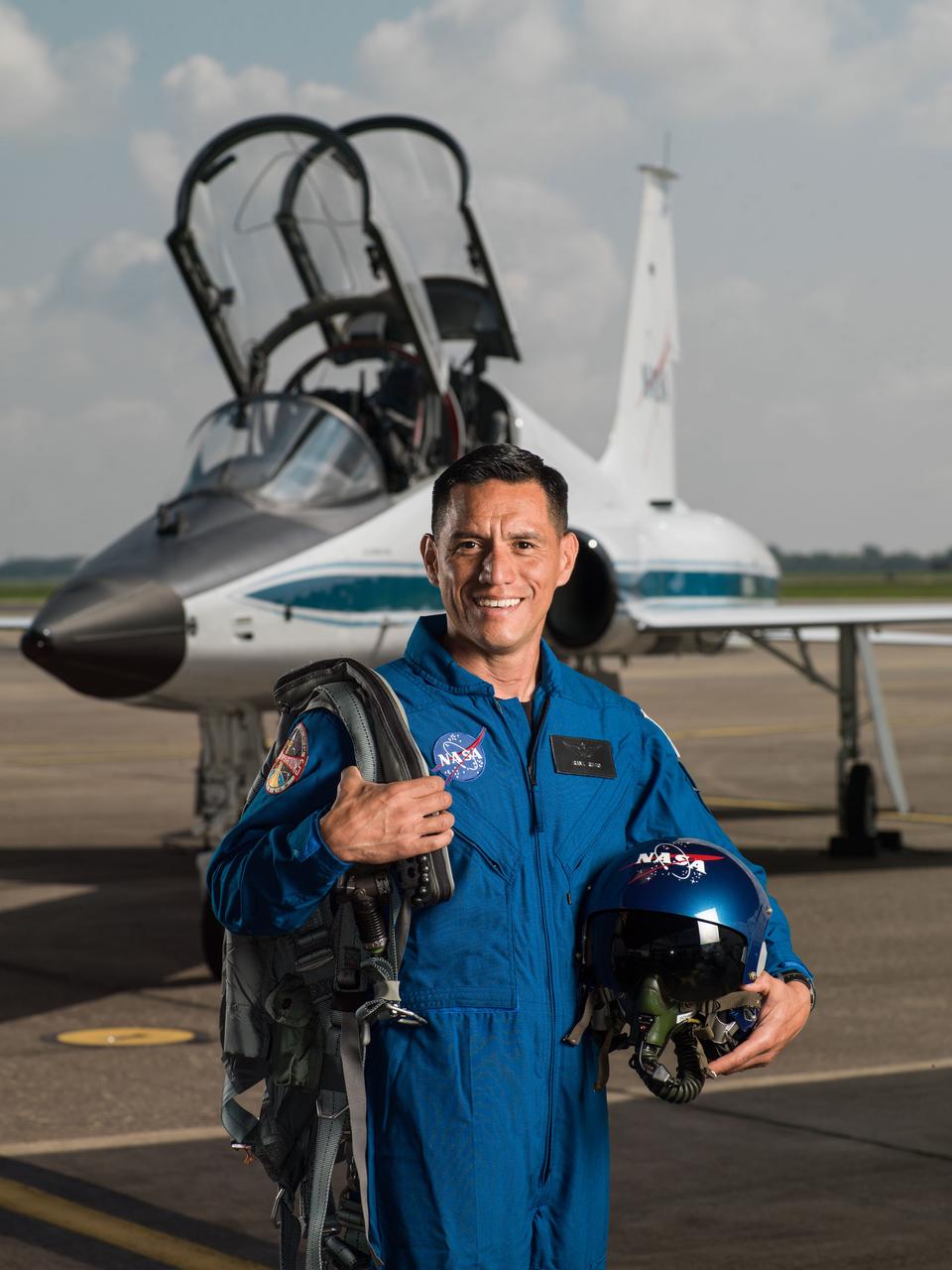
jsc2017e067119 (June 6, 2017) --- NASA portrait of 2017 Astronaut Candidate Frank Rubio in front of a T-38 trainer aircraft at Ellington Field near NASA’s Johnson Space Center in Houston, Texas.
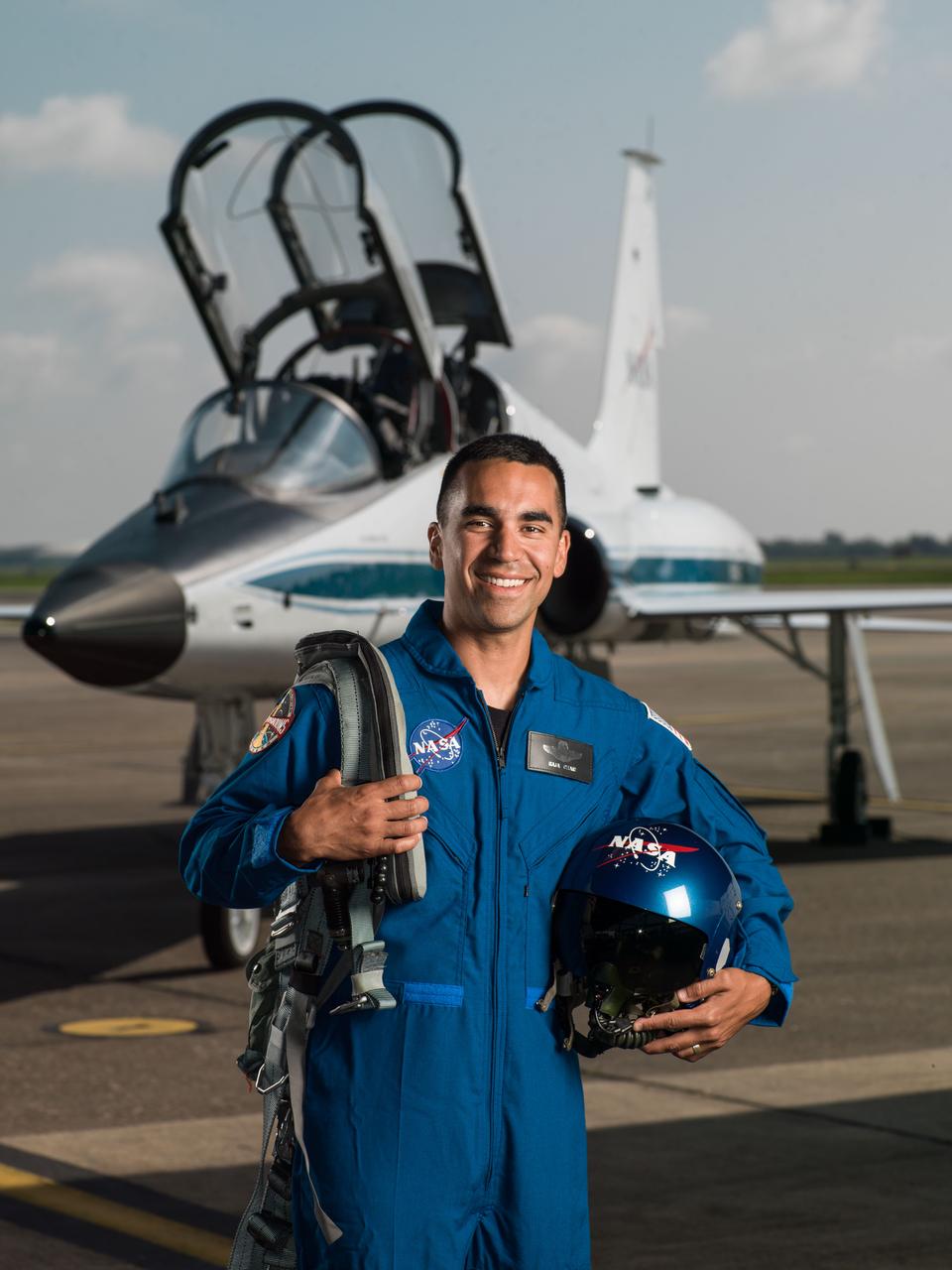
jsc2017e067113 (June 6, 2017) --- NASA portrait of 2017 Astronaut Candidate Raja Chari in front of a T-38 trainer aircraft at Ellington Field near NASA’s Johnson Space Center in Houston, Texas.
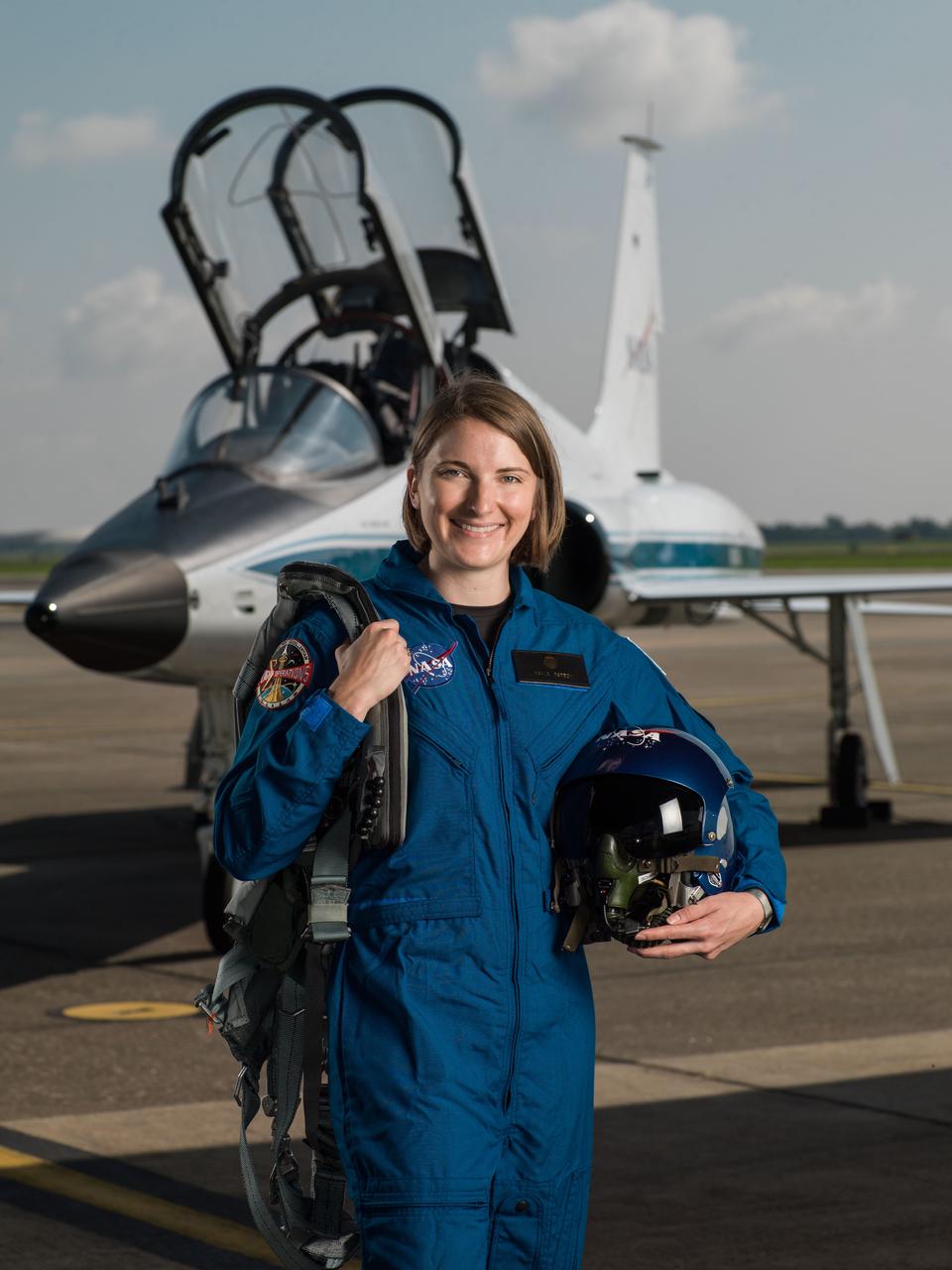
jsc2017e067114 (June 6, 2017) --- NASA portrait of 2017 Astronaut Candidate Kayla Barron in front of a T-38 trainer aircraft at Ellington Field near NASA’s Johnson Space Center in Houston, Texas.
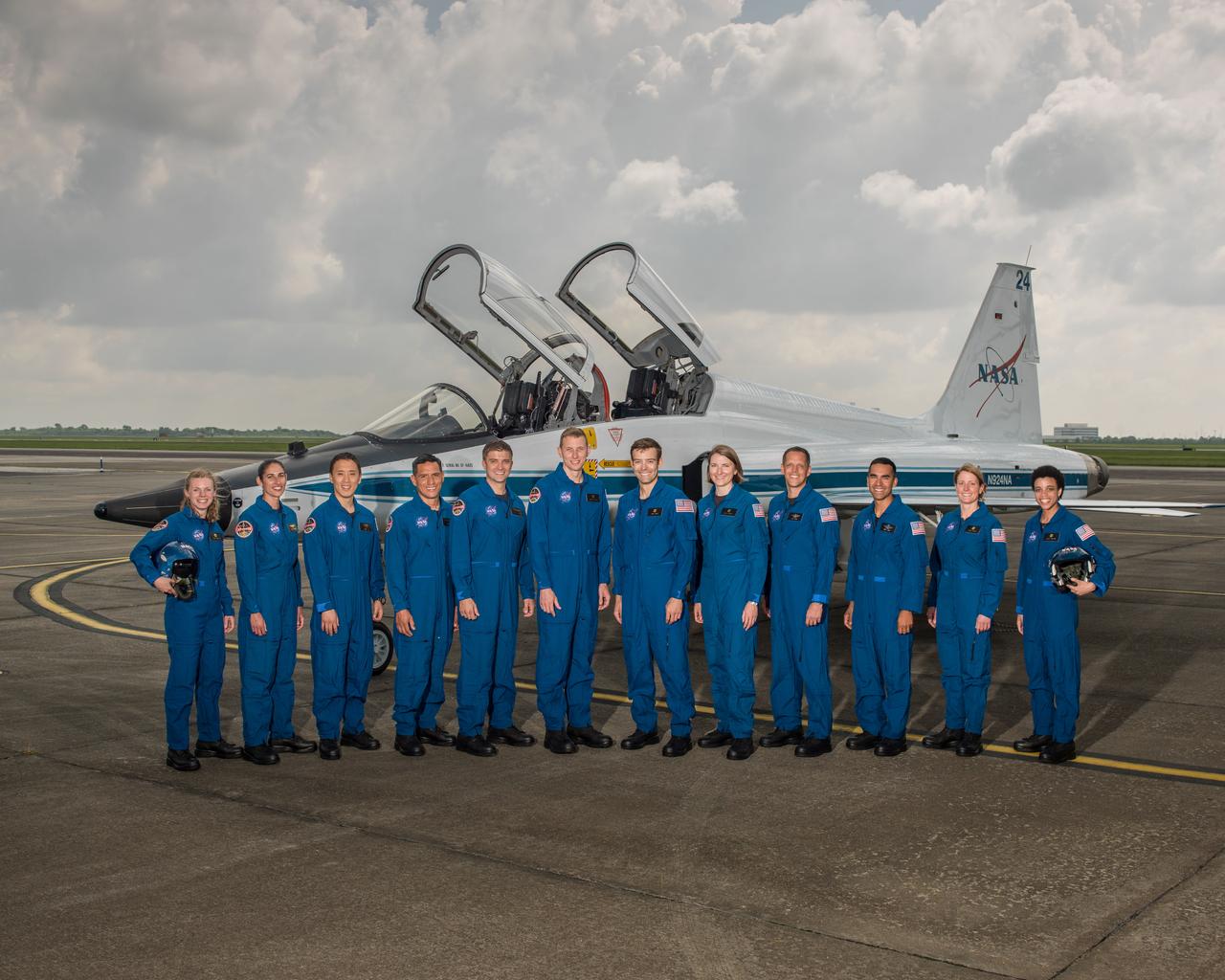
jsc2017e067125 (June 6, 2017) --- The members of the 2017 NASA Astronaut Class are (from left) Zena Cardman, Jasmin Moghbeli, Jonny Kim, Frank Rubio, Matthew Dominick, Warren Hoburg, Robb Kulin, Kayla Barron, Bob Hines, Raja Chari, Loral O' Hara and Jessica Watkins. Photo Credit: NASA/Robert Markowitz
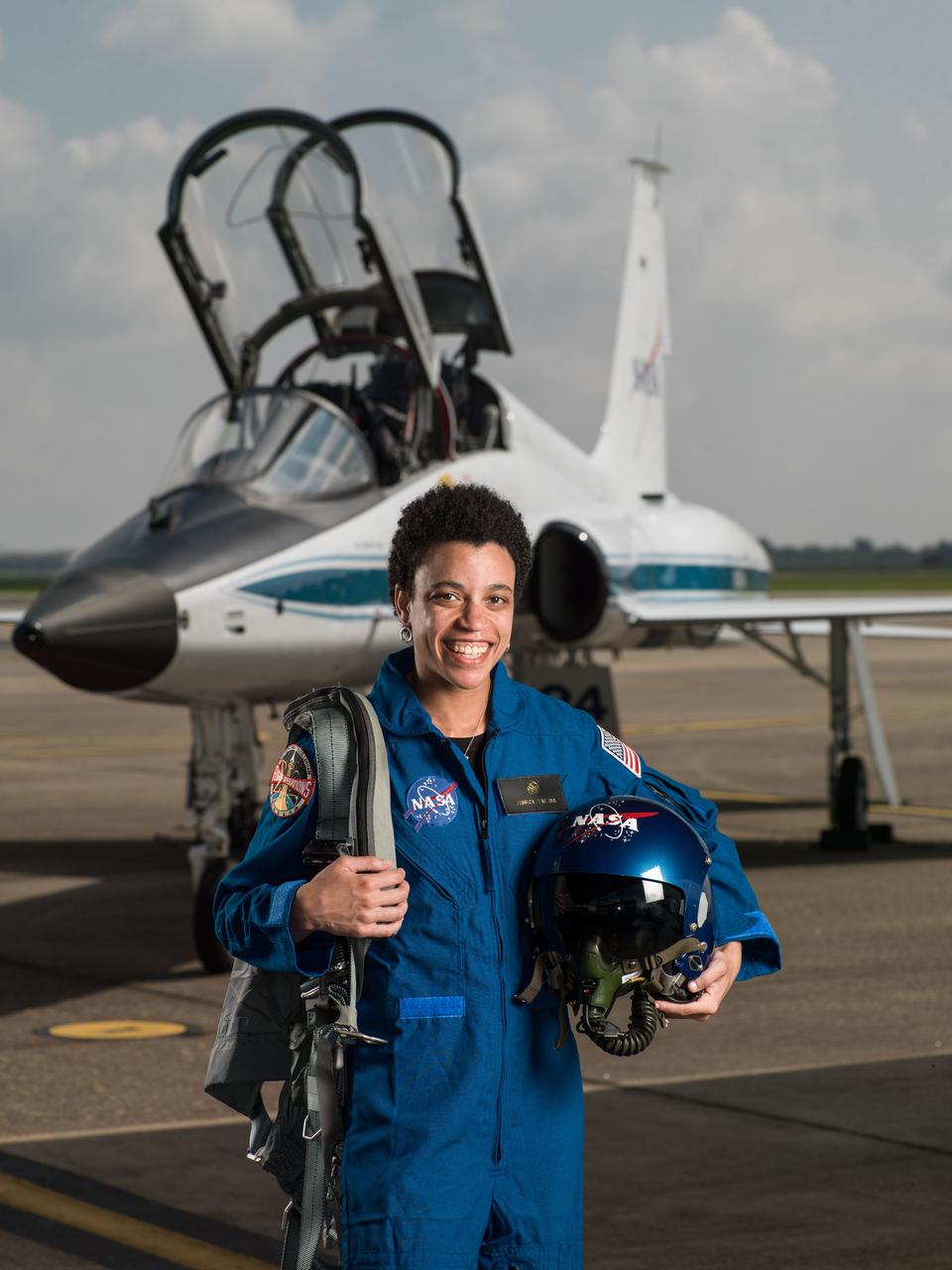
jsc2017e067121 (June 6, 2017) --- NASA portrait of 2017 Astronaut Candidate Jessica Watkins in front of a T-38 trainer aircraft at Ellington Field near NASA’s Johnson Space Center in Houston, Texas.
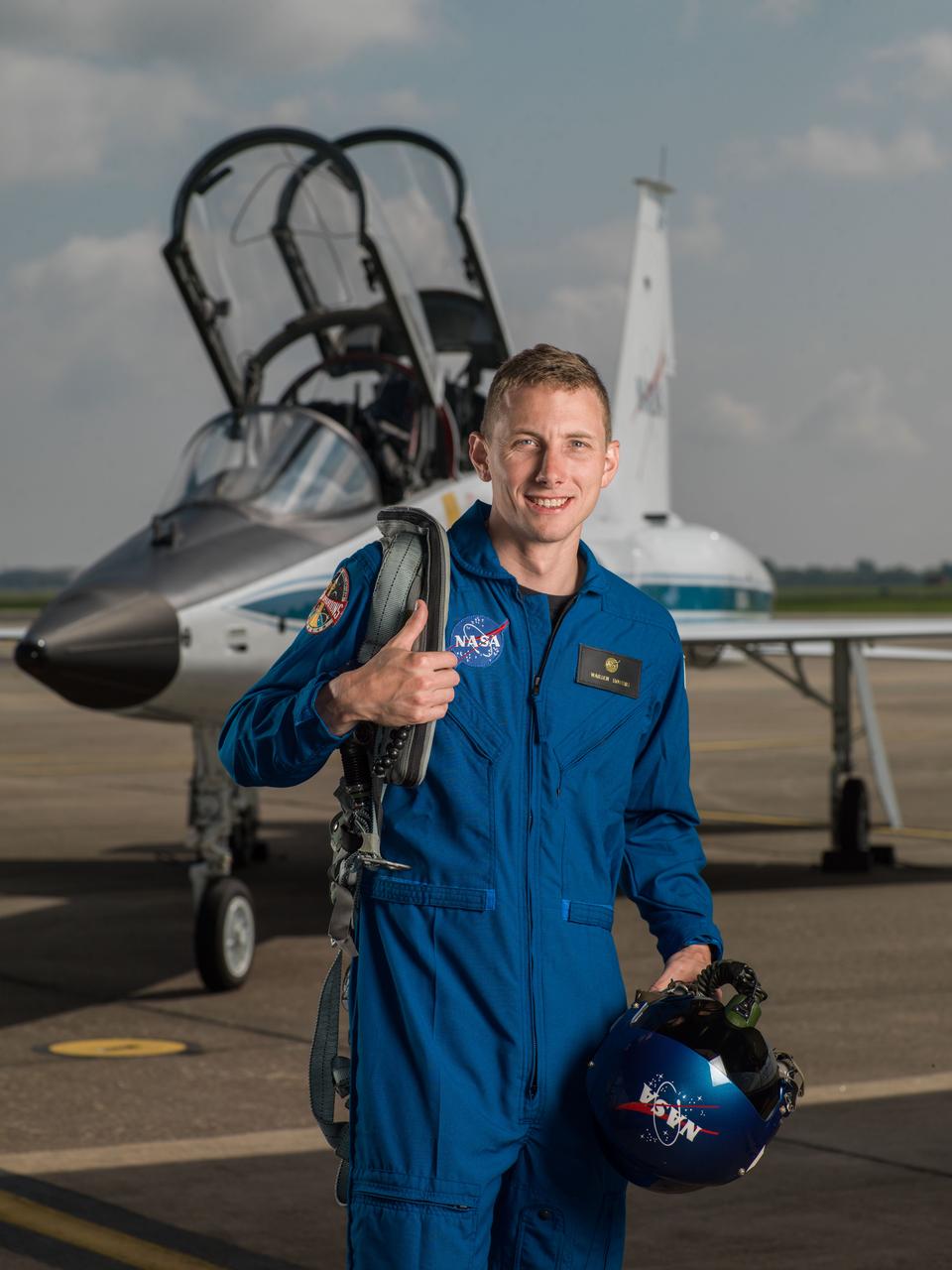
jsc2017e067116 (June 6, 2017) --- NASA portrait of 2017 Astronaut Candidate Warren Hoburg in front of a T-38 trainer aircraft at Ellington Field near NASA’s Johnson Space Center in Houston, Texas.
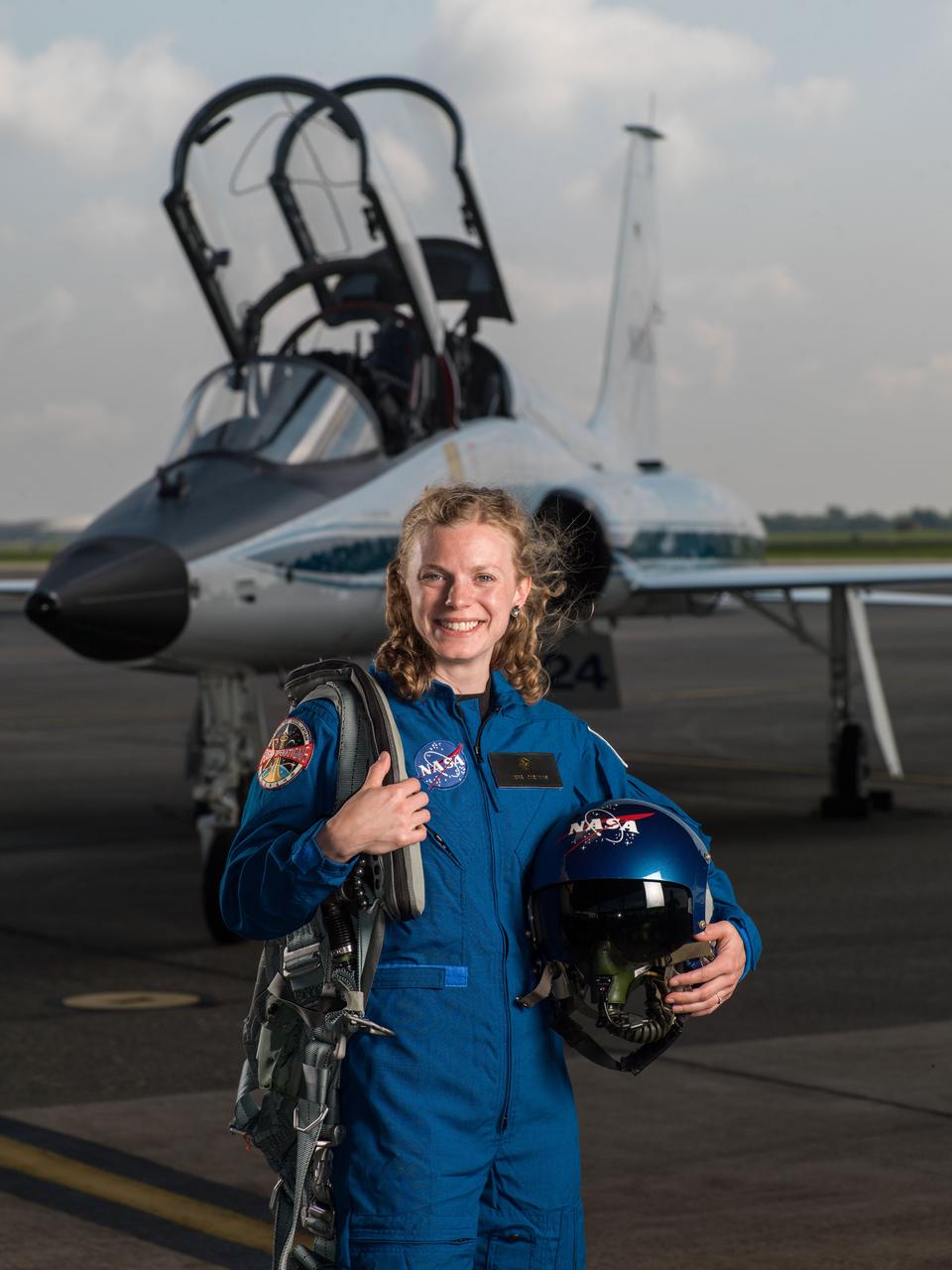
jsc2017e067124 (June 6, 2017) --- NASA portrait of 2017 Astronaut Candidate Zena Cardman in front of a T-38 trainer aircraft at Ellington Field near NASA’s Johnson Space Center in Houston, Texas.
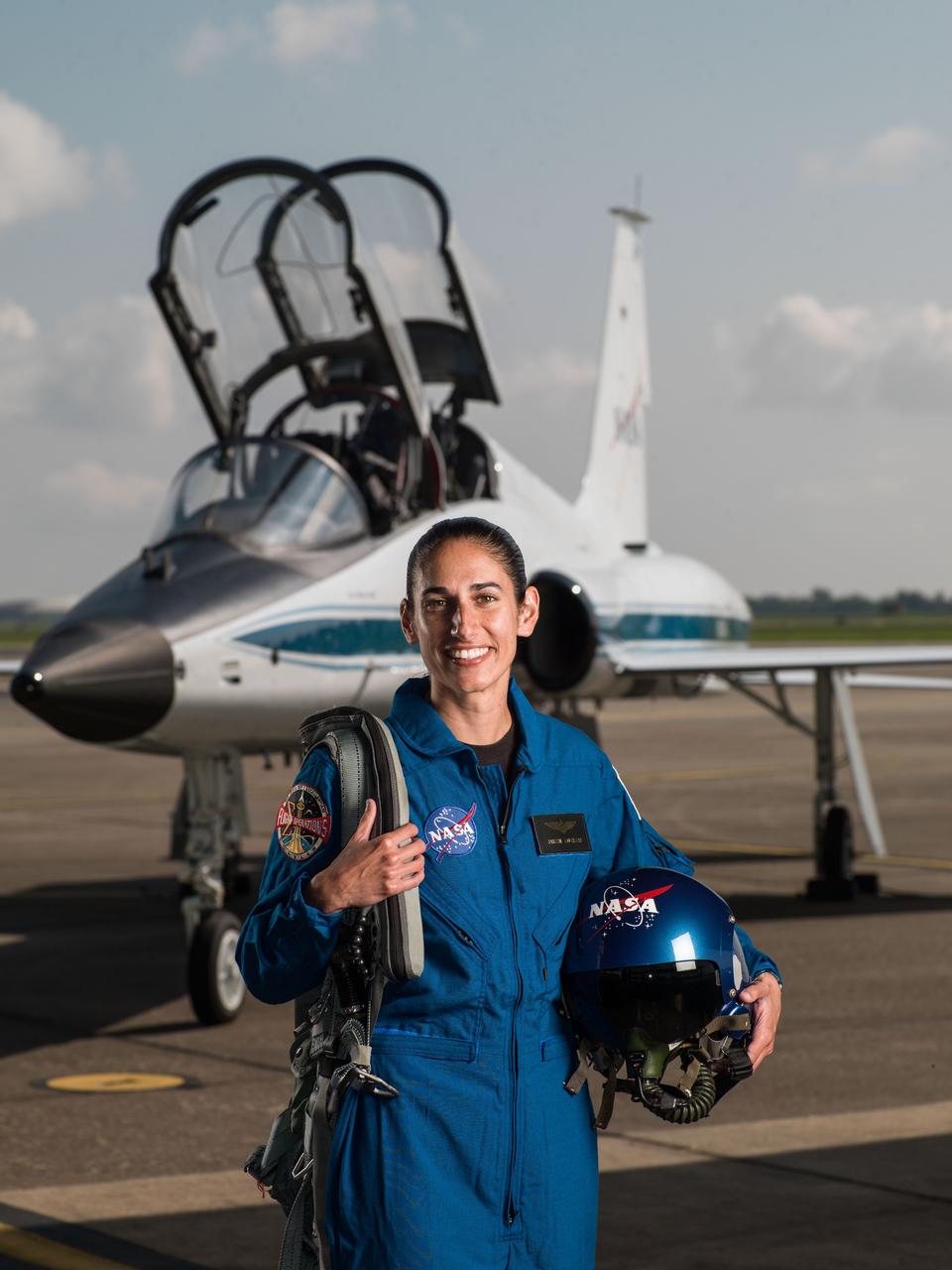
jsc2017e067122 (June 6, 2017) --- NASA portrait of 2017 Astronaut Candidate Jasmin Moghbeli in front of a T-38 trainer aircraft at Ellington Field near NASA’s Johnson Space Center in Houston, Texas.