
Newton Crater
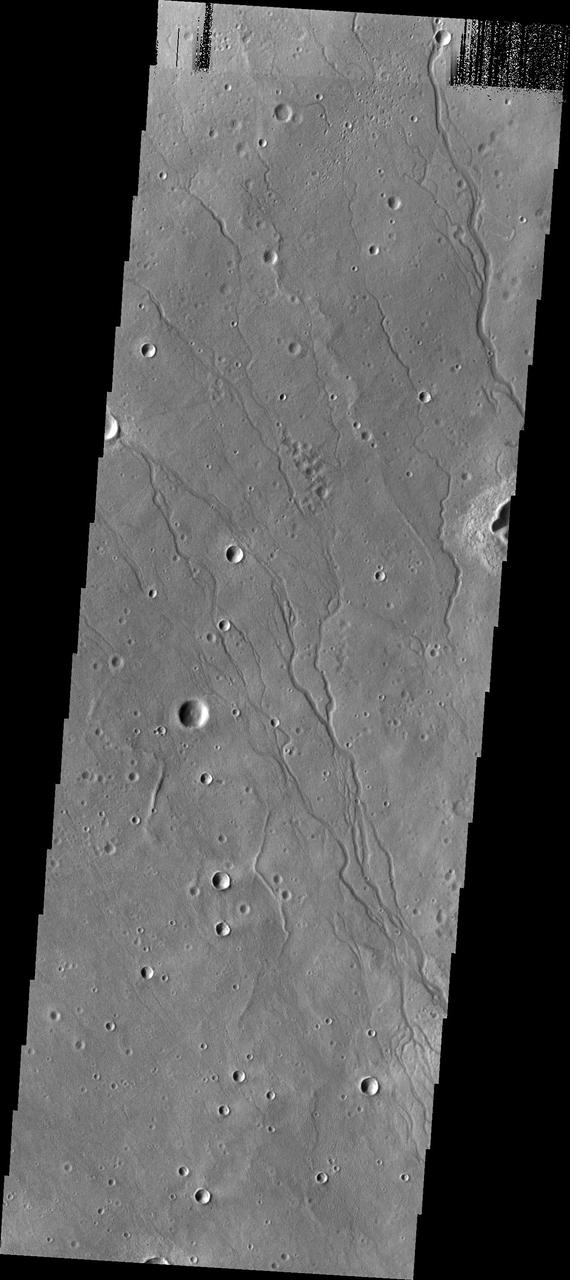
Newton Crater
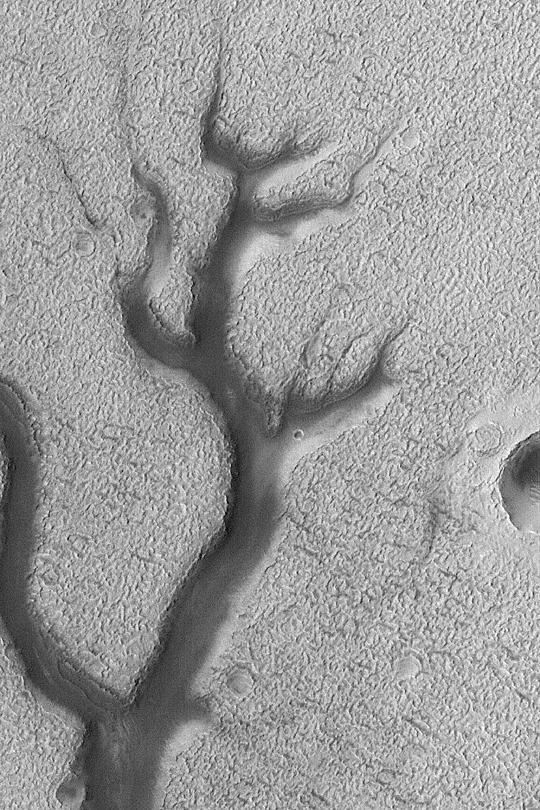
Dark Valley in Newton Crater
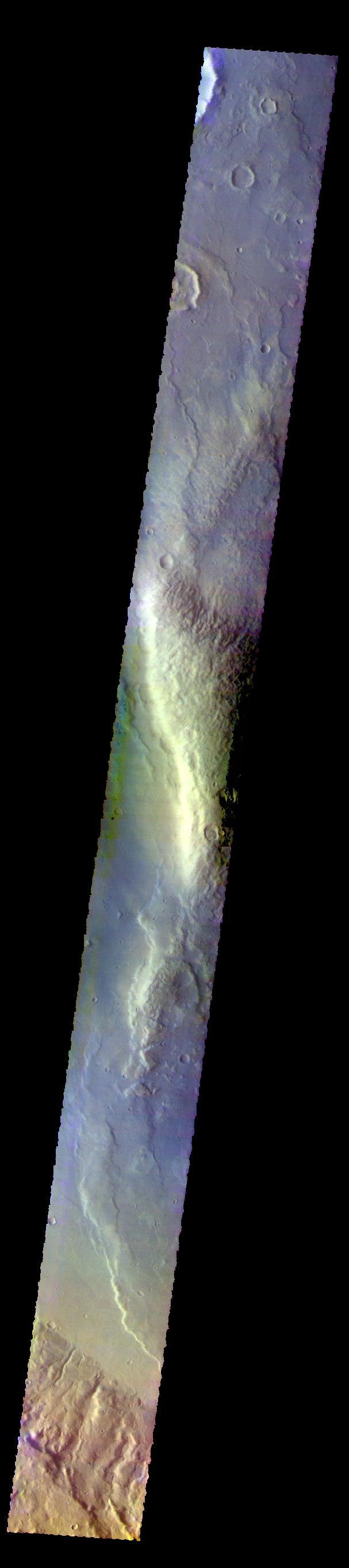
The THEMIS VIS camera contains 5 filters. The data from different filters can be combined in multiple ways to create a false color image. These false color images may reveal subtle variations of the surface not easily identified in a single band image. Today's false color images shows part of the large ridge on the floor of Newton Crater in Terra Sirenum. Orbit Number: 59416 Latitude: -41.0768 Longitude: 200.911 Instrument: VIS Captured: 2015-05-07 00:38 https://photojournal.jpl.nasa.gov/catalog/PIA21672
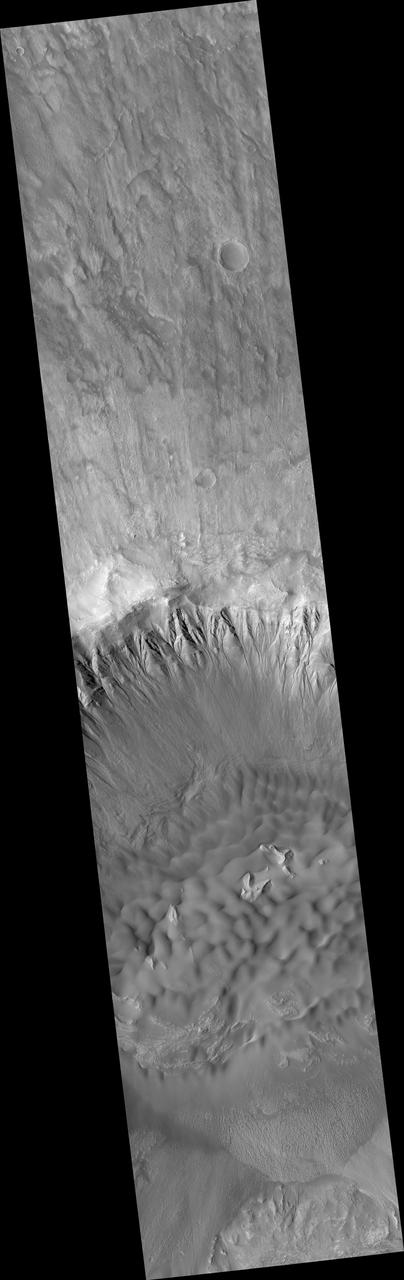
Gullies and Dunes in a Crater in Newton Basin
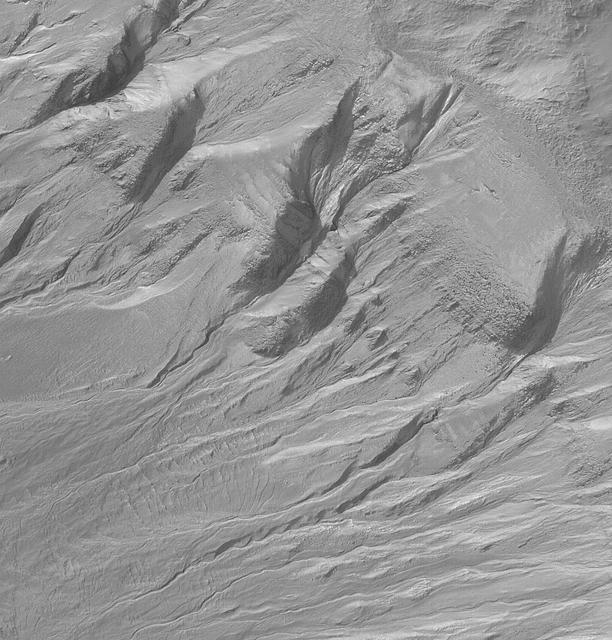
Gullies and Layers in Crater Wall in Newton
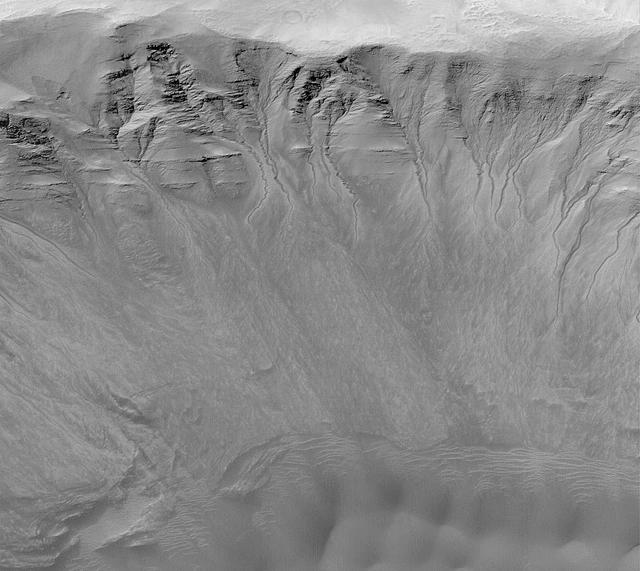
Gullies in a Crater Wall in Newton Basin:
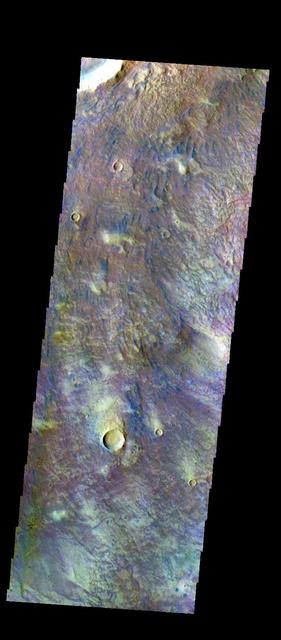
The THEMIS VIS camera contains 5 filters. The data from different filters can be combined in multiple ways to create a false color image. These false color images may reveal subtle variations of the surface not easily identified in a single band image. Today's false color image shows some of the floor of Newton Crater. The small dark bluish features are sand dunes. Orbit Number: 50864 Latitude: -41.5788 Longitude: 201.592 Instrument: VIS Captured: 2013-06-02 02:53 http://photojournal.jpl.nasa.gov/catalog/PIA21280

This image taken by the ultraviolet-light monitoring camera on the European Space Agency ESA XMM-Newton telescope shows the beautiful spiral arms of the galaxy NGC1365.
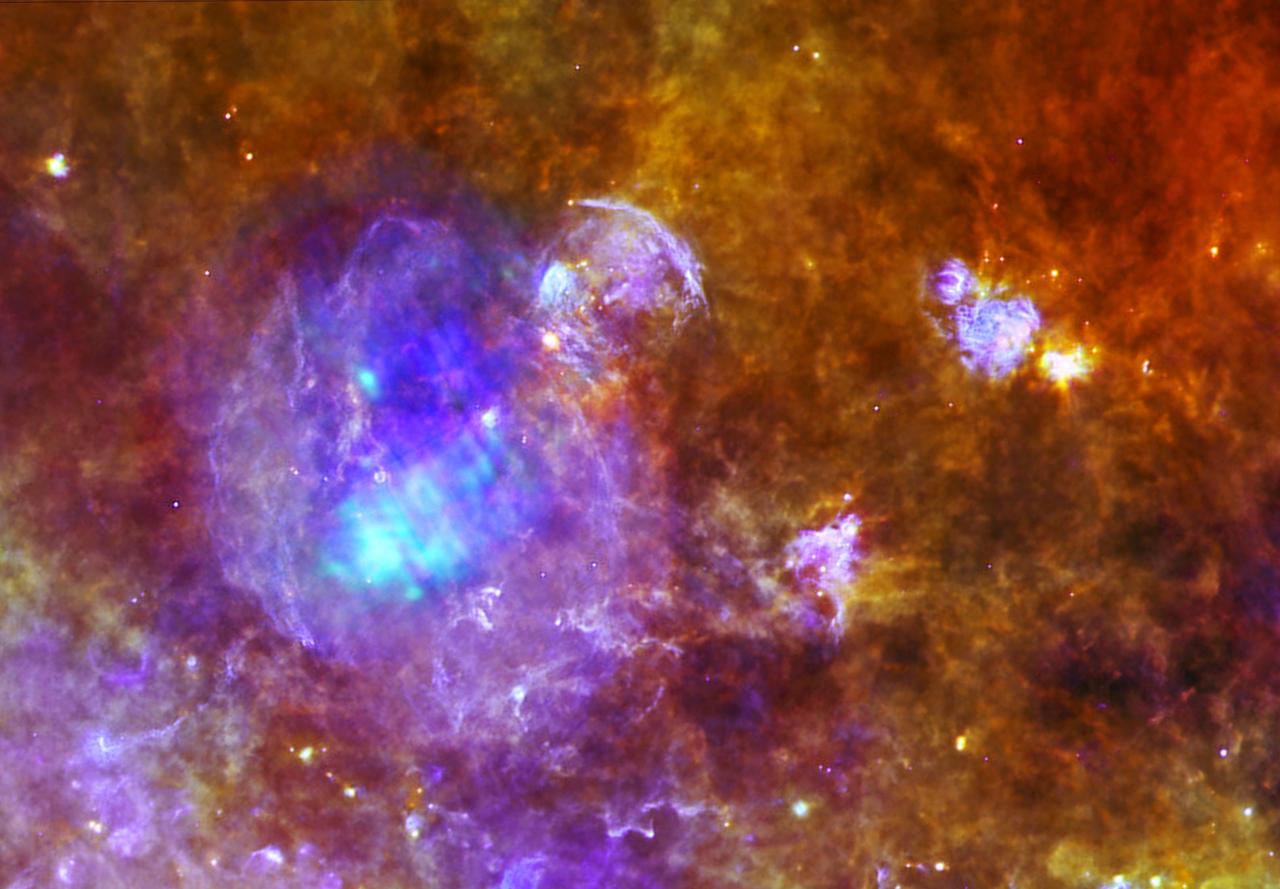
W44 is located around 10,000 light-years away, within a forest of dense star-forming clouds in the constellation of Aquila, the Eagle. This image combines data from ESA Herschel and XXM-Newton space observatories.
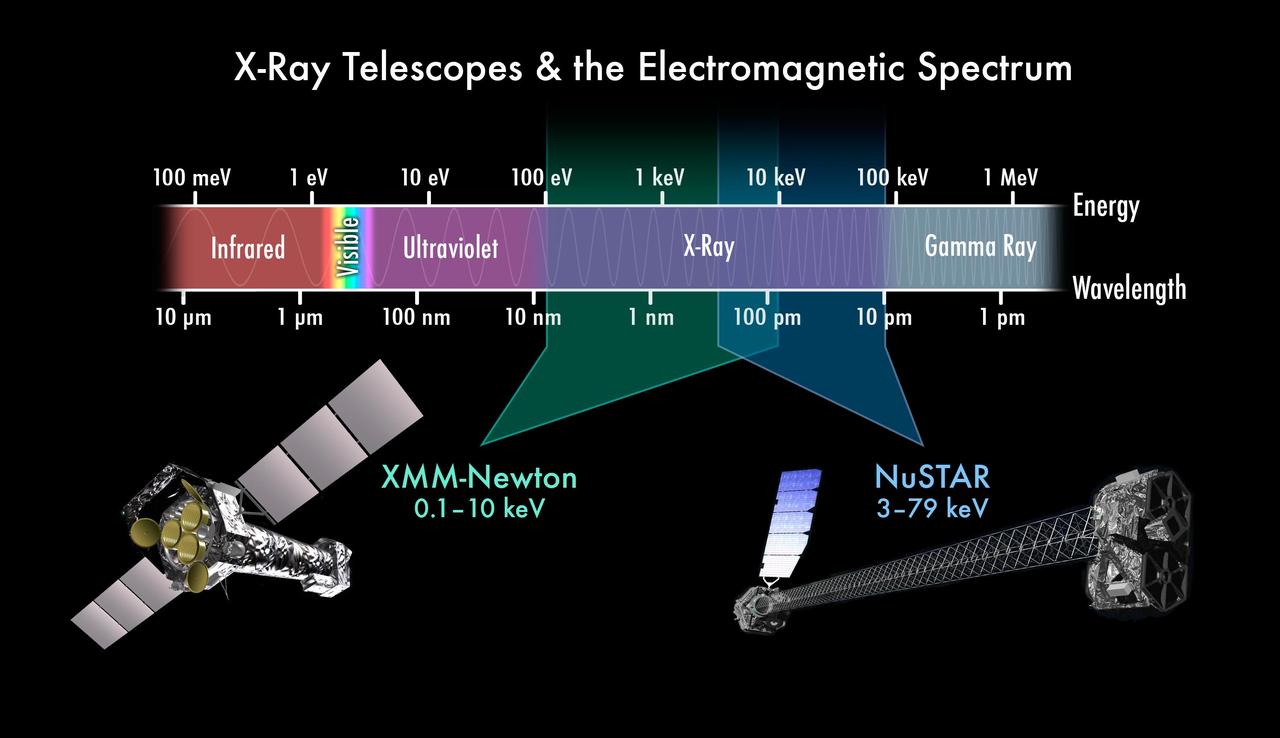
This chart depicts the electromagnetic spectrum, highlighting the X-ray portion. NASA NuSTAR and ESA XMM-Newton telescope complement each other by seeing different colors of X-ray light.

Black holes are tremendous objects whose immense gravity can distort and twist space-time, the fabric that shapes our universe as this chart from NASA NuSTAR and ESA XMM-Newton telescope illustrates.

Supermassive black holes at the cores of galaxies blast radiation and ultra-fast winds outward, as illustrated in this artist conception based on NASA NuSTAR and ESA XMM-Newton telescopes.

This plot of data from two space telescopes, NASA NuSTAR and ESA XMM-Newton determines for the first time the shape of ultra-fast winds from supermassive black holes, or quasars.
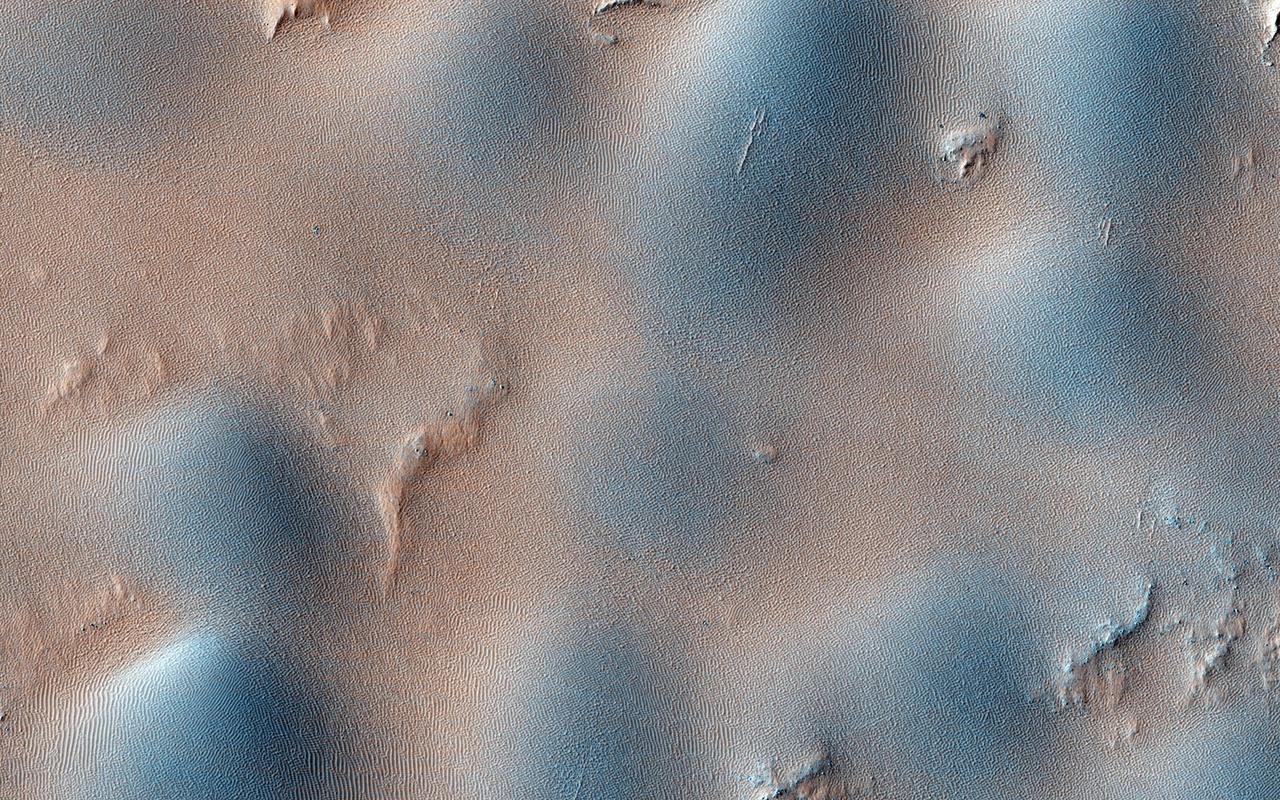
This observation from NASA Mars Reconnaissance Orbiter shows both dome and barchan dunes in a small sand dune field on the floor of Newton Crater, an approximately 300 kilometer 130 mile wide crater in the Southern hemisphere of Mars.
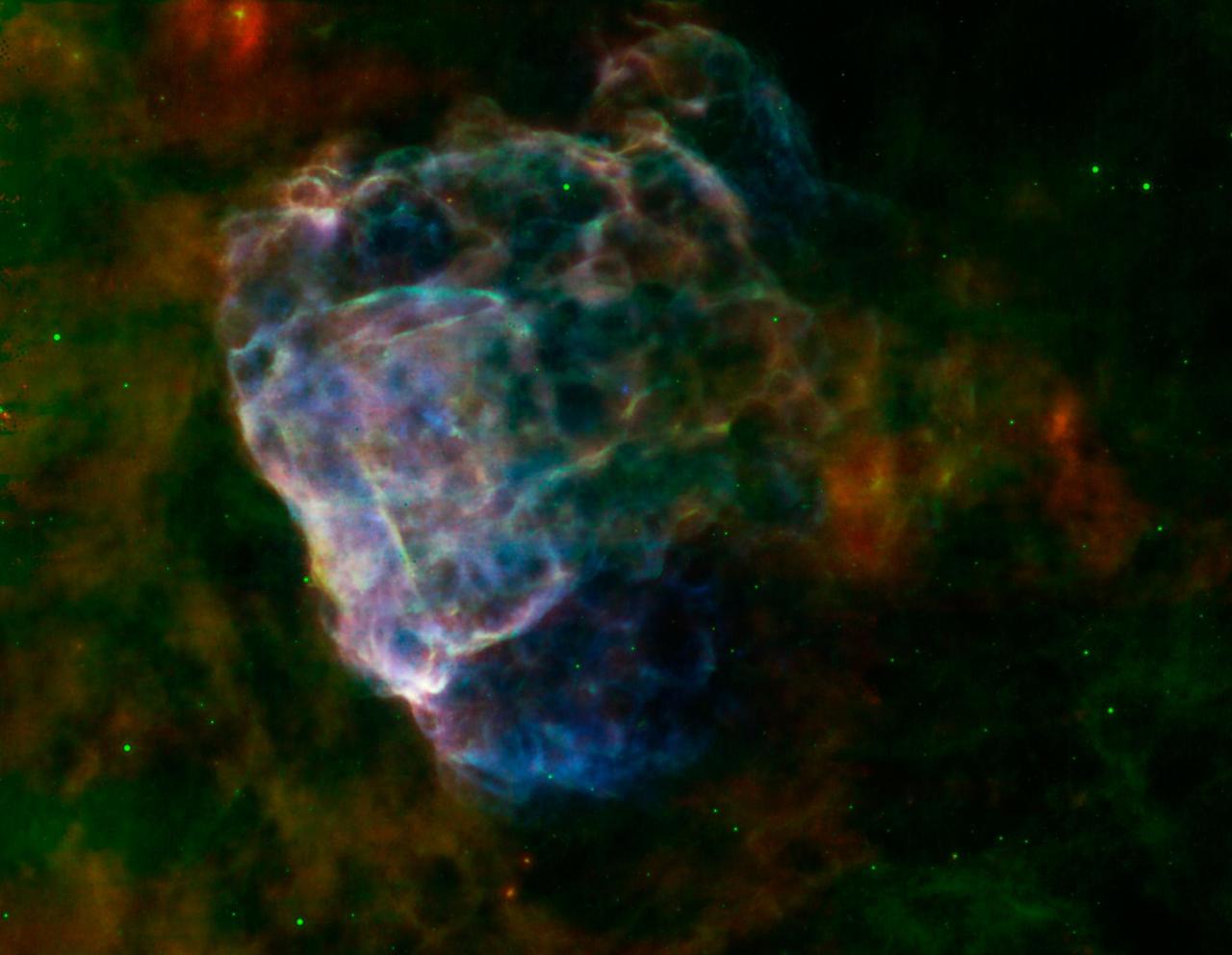
Puppis A, around 7,000 light-years away, is seen in this image from NASA Spitzer Space Telescope and Chandra X-Ray Observatory, and the European Space Agency XMM-Newton.
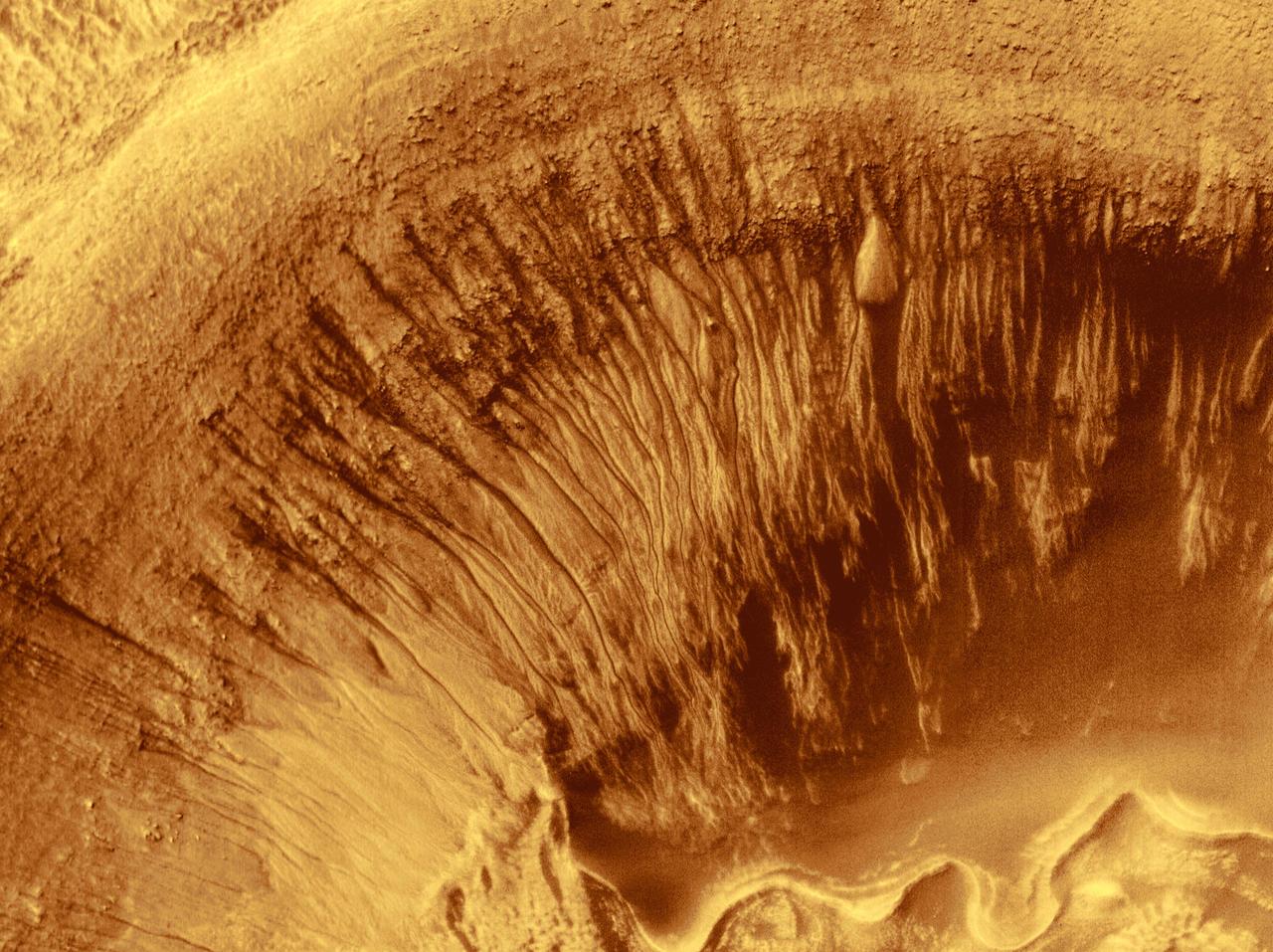
Evidence for Recent Liquid Water on Mars: Channeled Aprons in a Small Crater within Newton Crater
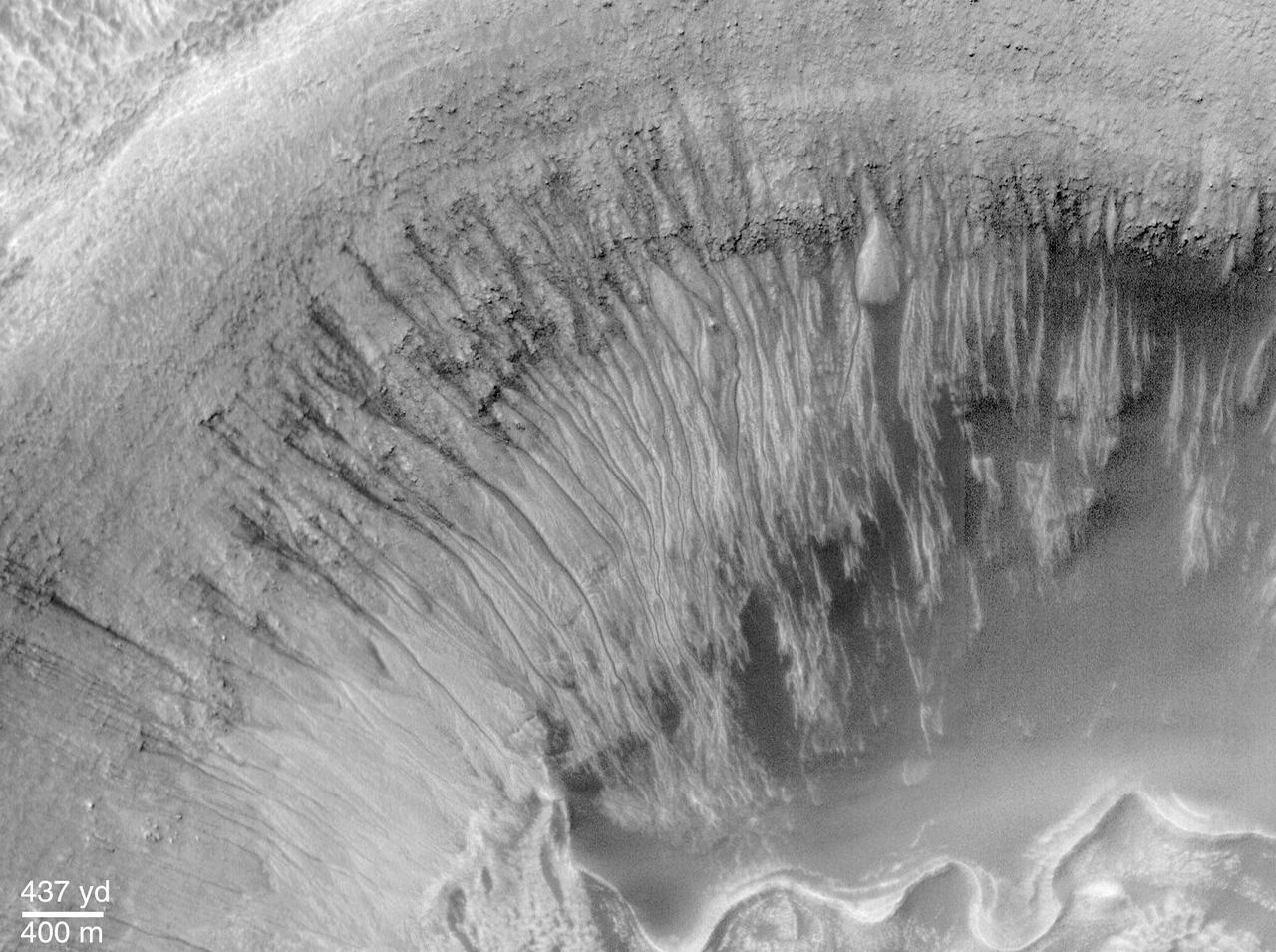
Evidence for Recent Liquid Water on Mars: Channeled Aprons in a Small Crater within Newton Crater
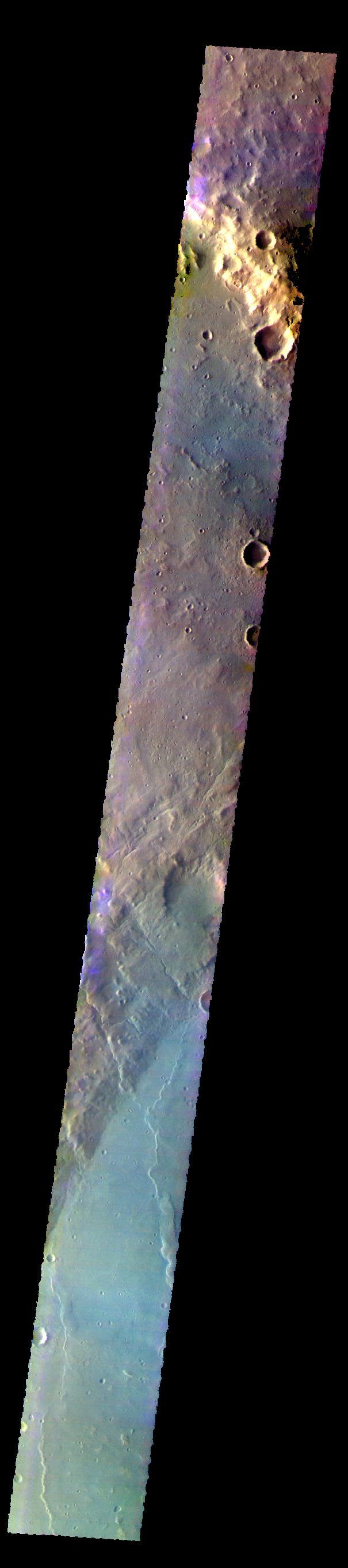
The THEMIS VIS camera contains 5 filters. THe data from different filters can be combined in multiple ways to create a false color image. These false color images may reveal subtle variations of the surface not easily identified in a single band image. Today's false color image shows part of Newton Crater in Terra Sirenum. Orbit Number: 59753 Latitude: -38.4654 Longitude: 199.631 Instrument: VIS Captured: 2015-06-03 18:38 https://photojournal.jpl.nasa.gov/catalog/PIA21793
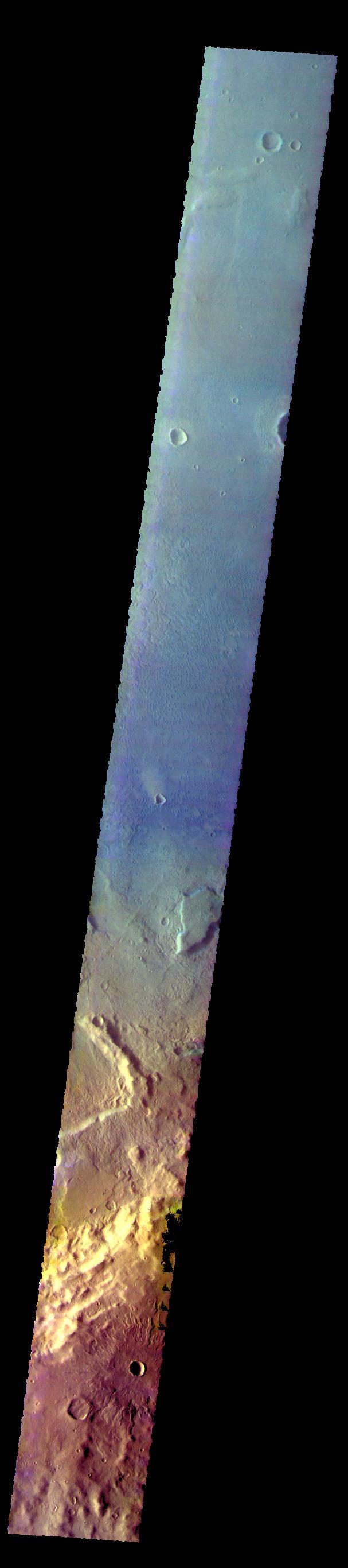
The THEMIS VIS camera contains 5 filters. The data from different filters can be combined in multiple way to create a false color image. These false color images may reveal subtle variations of the surface not easily identified in a single band image. Today's false color image shows part of Newton Crater in Terra Siremun. Orbit Number: 59678 Latitude: -41.9838 Longitude: 202.593 Instrument: VIS Captured: 2015-05-28 14:26 https://photojournal.jpl.nasa.gov/catalog/PIA21703
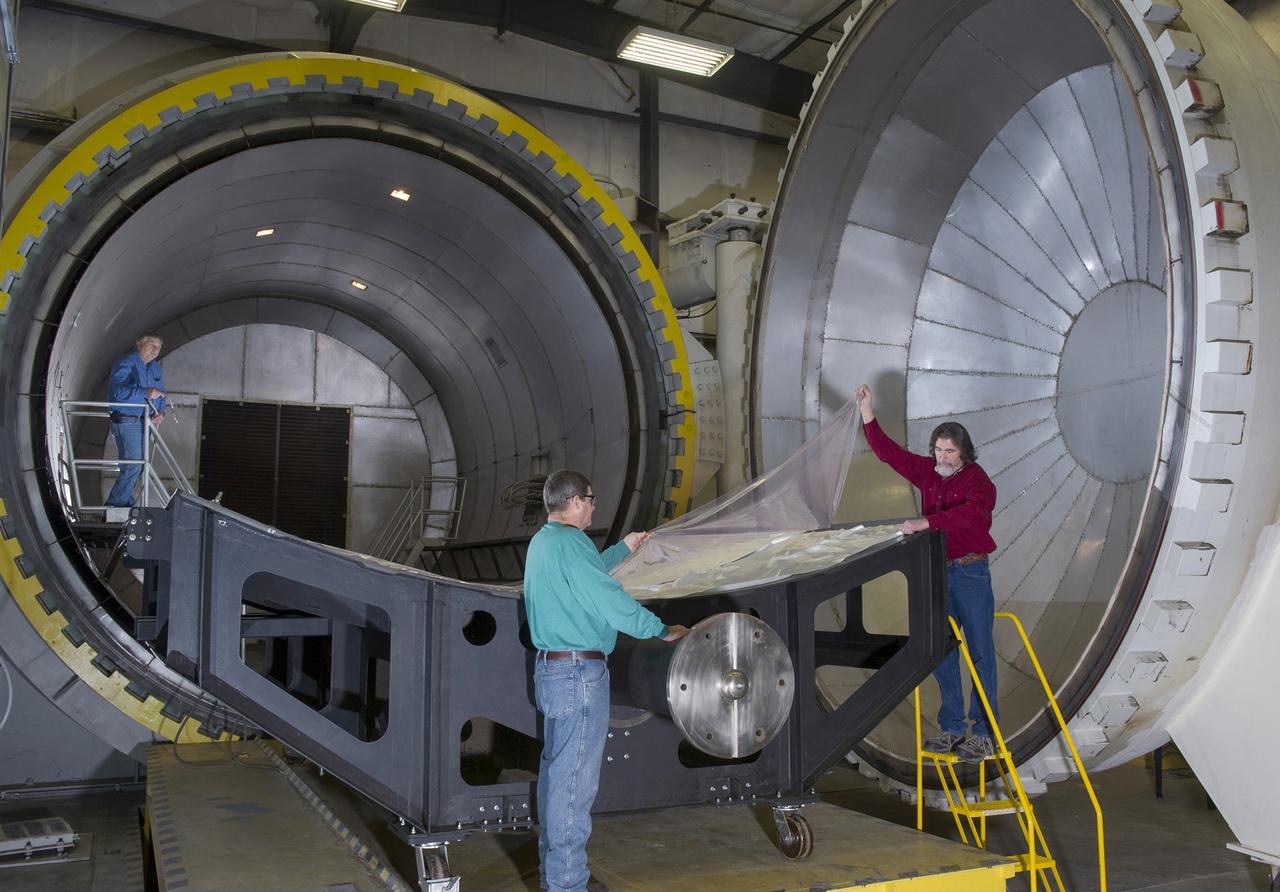
JAMES NEWTON, LEFT, PHILLIP THOMPSON, CENTER, AND DAVID LAWRENCE, RIGHT PREPARE COMPOSITE TOOL FOR CURE IN 18' X 20' AUTOCLAVE IN BUILDING 4707
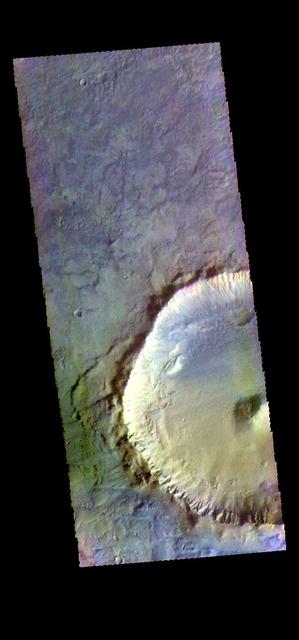
The THEMIS camera contains 5 filters. The data from different filters can be combined in multiple ways to create a false color image. These false color images may reveal subtle variations of the surface not easily identified in a single band image. This image from NASA 2001 Mars Odyssey spacecraft shows an unnamed crater located on the floor of Newton Crater. Orbit Number: 57962 Latitude: -42.1218 Longitude: 201.814 Instrument: VIS Captured: 2015-01-07 07:47 https://photojournal.jpl.nasa.gov/catalog/PIA21539
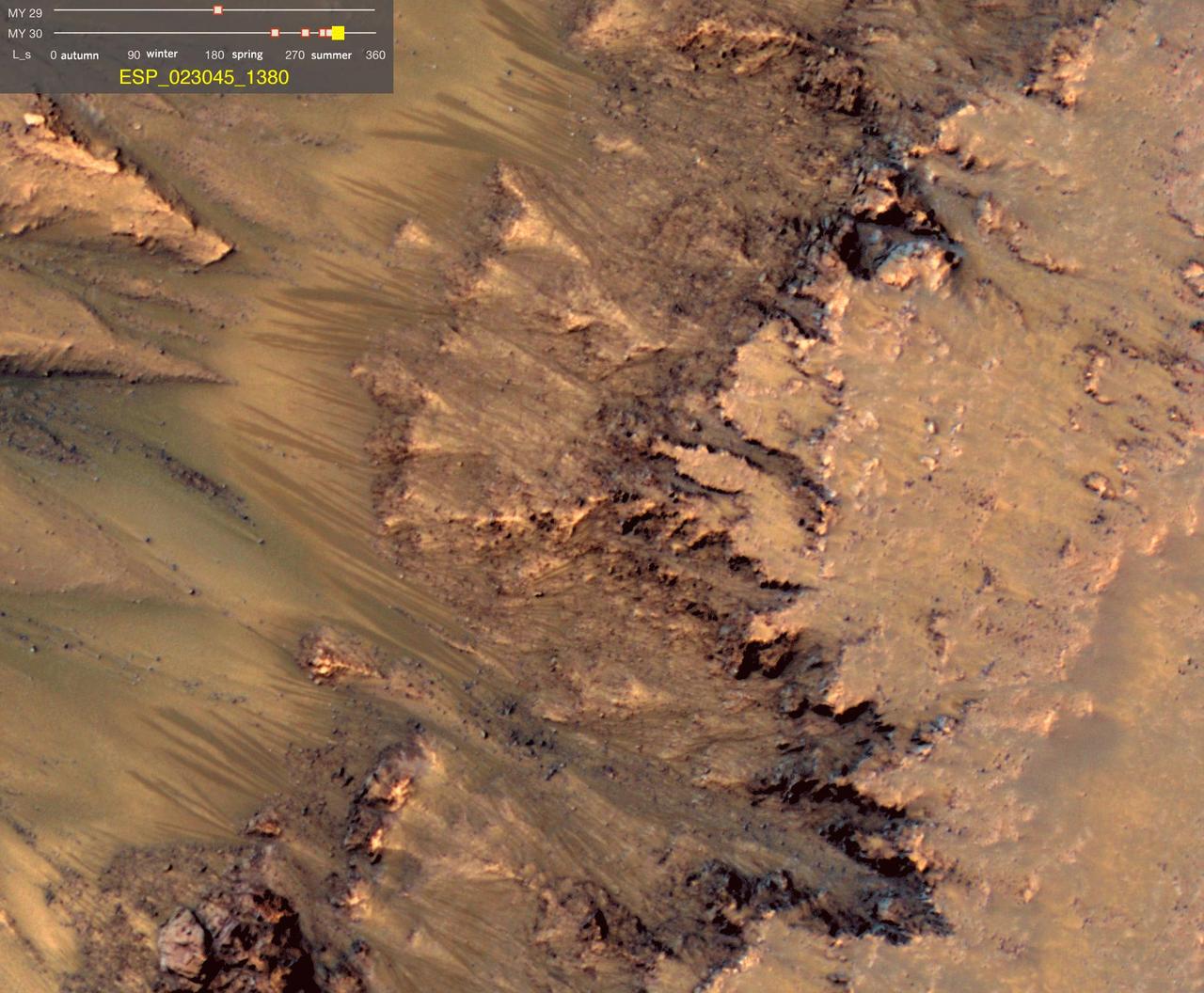
This image comes from observations of Newton crater by the HiRISE camera onboard NASA Mars Reconnaissance Orbiter; warm-season features might be evidence of salty liquid water active on Mars today.
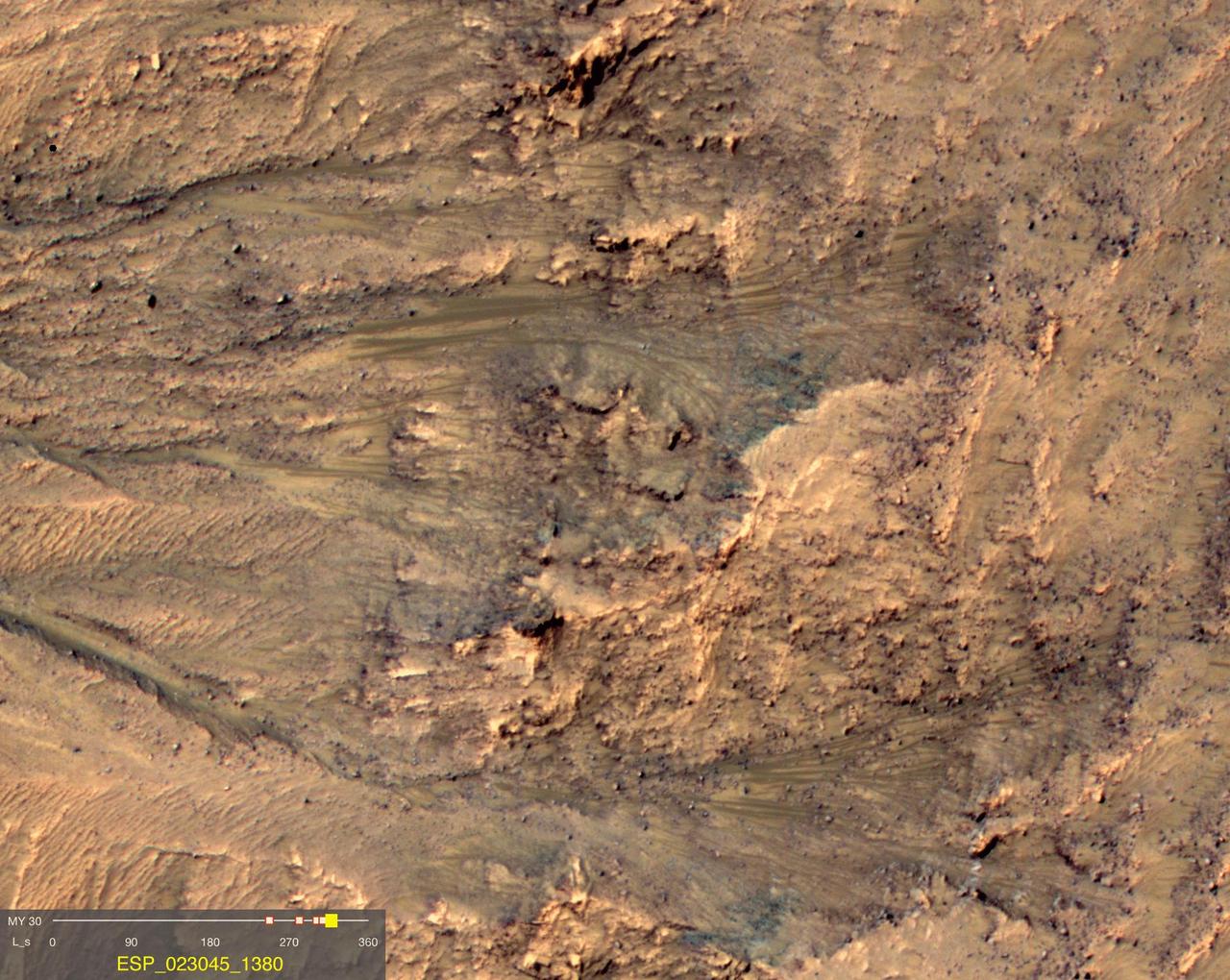
This image comes from observations of Newton crater by the HiRISE camera onboard NASA Mars Reconnaissance Orbiter. The features that extend down the slope during warm seasons are called recurring slope lineae.
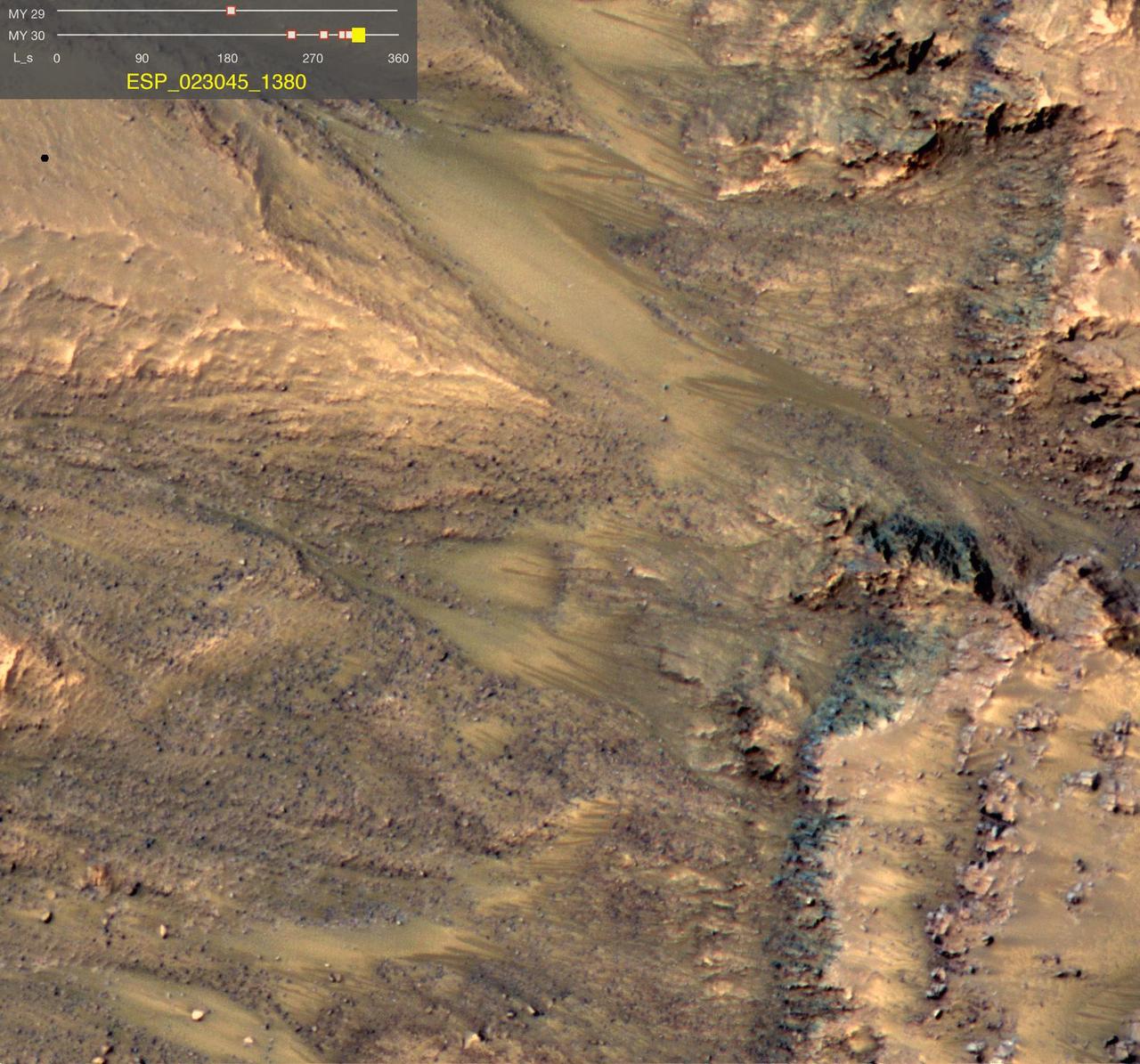
This image comes from observations of Newton crater by the HiRISE camera onboard NASA Mars Reconnaissance Orbiter where features appear and incrementally grow during warm seasons and fade in cold seasons.

This image, combining orbital imagery with 3-D modeling, shows flows that appear in spring and summer on a slope inside Mars Newton crater. The source observation was made May 30, 2011, by the HiRISE camera onboard NASA Mars Reconnaissance Orbiter.
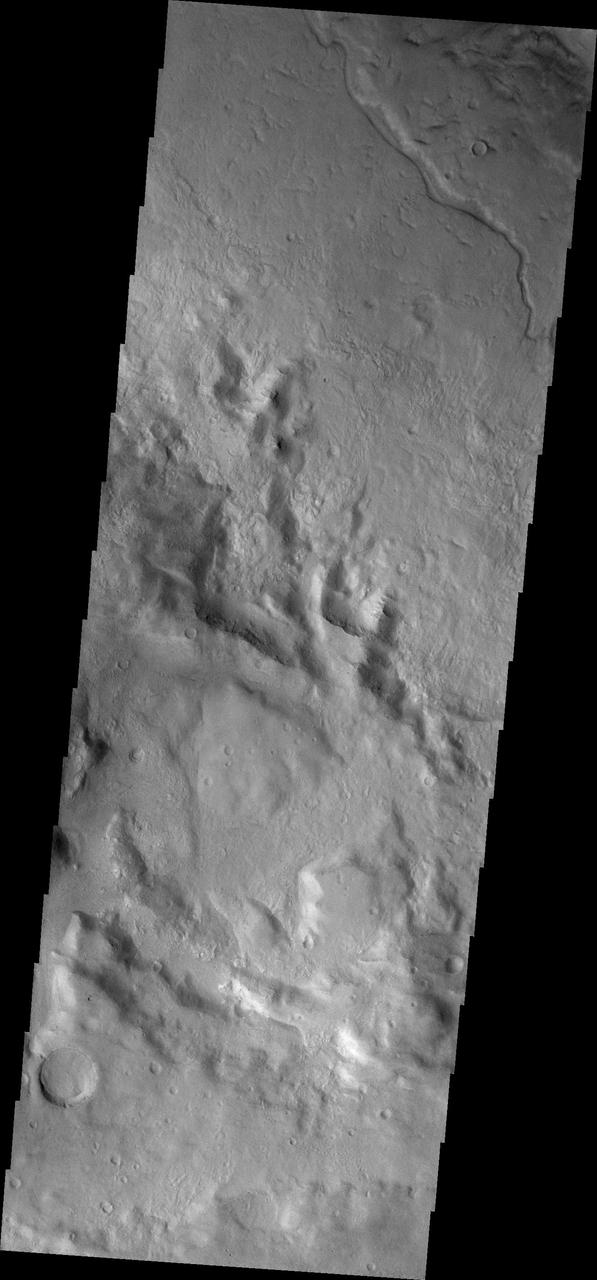
The small channel in this image from NASA 2001 Mars Odyssey spacecraft is located on the floor of Newton Crater.
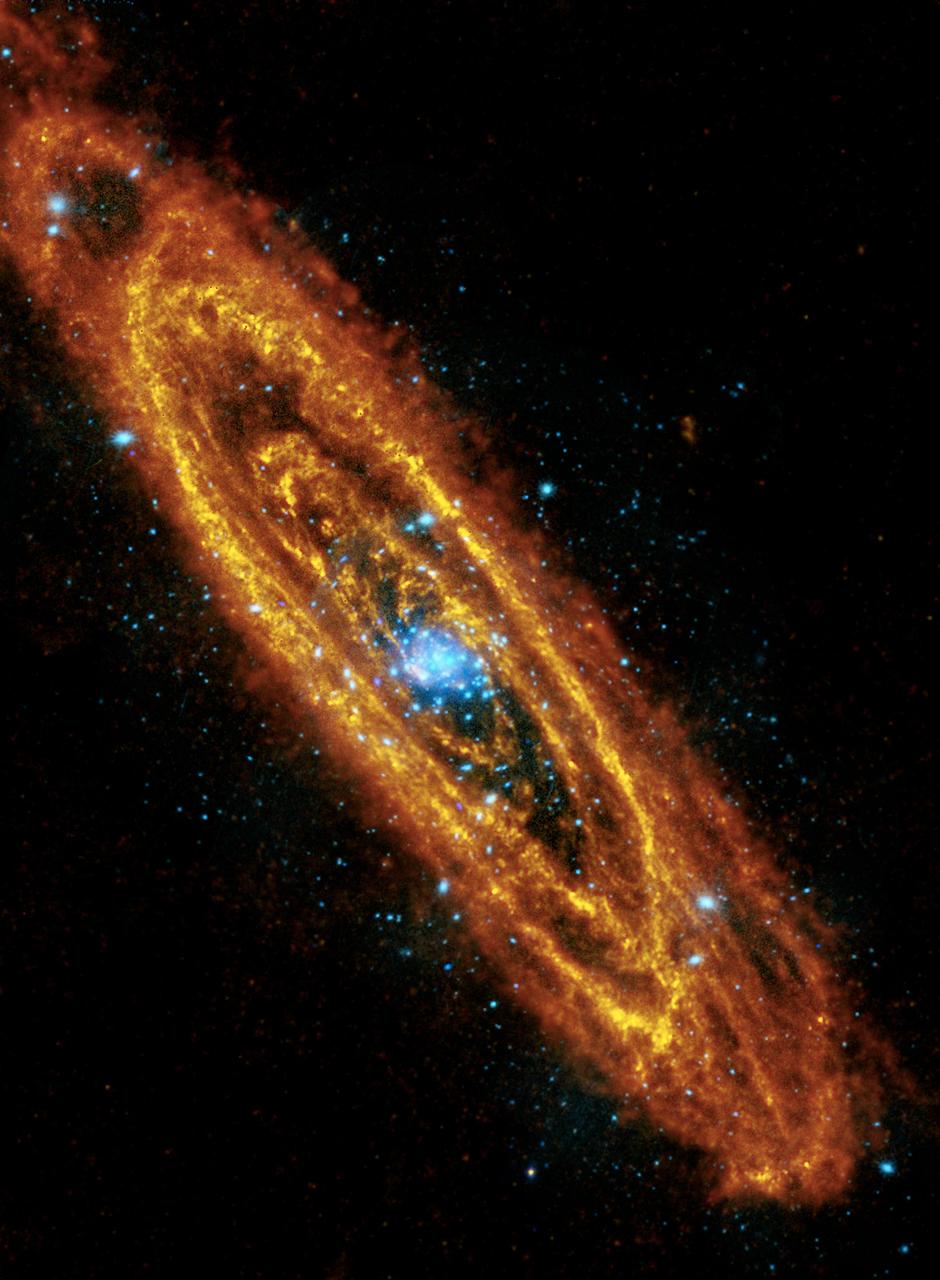
This mosaic of the Andromeda spiral galaxy highlights explosive stars in its interior, and cooler, dusty stars forming in its many rings. This is a combination of observations from the Herschel Space Observatory and the XMM-Newton telescope.
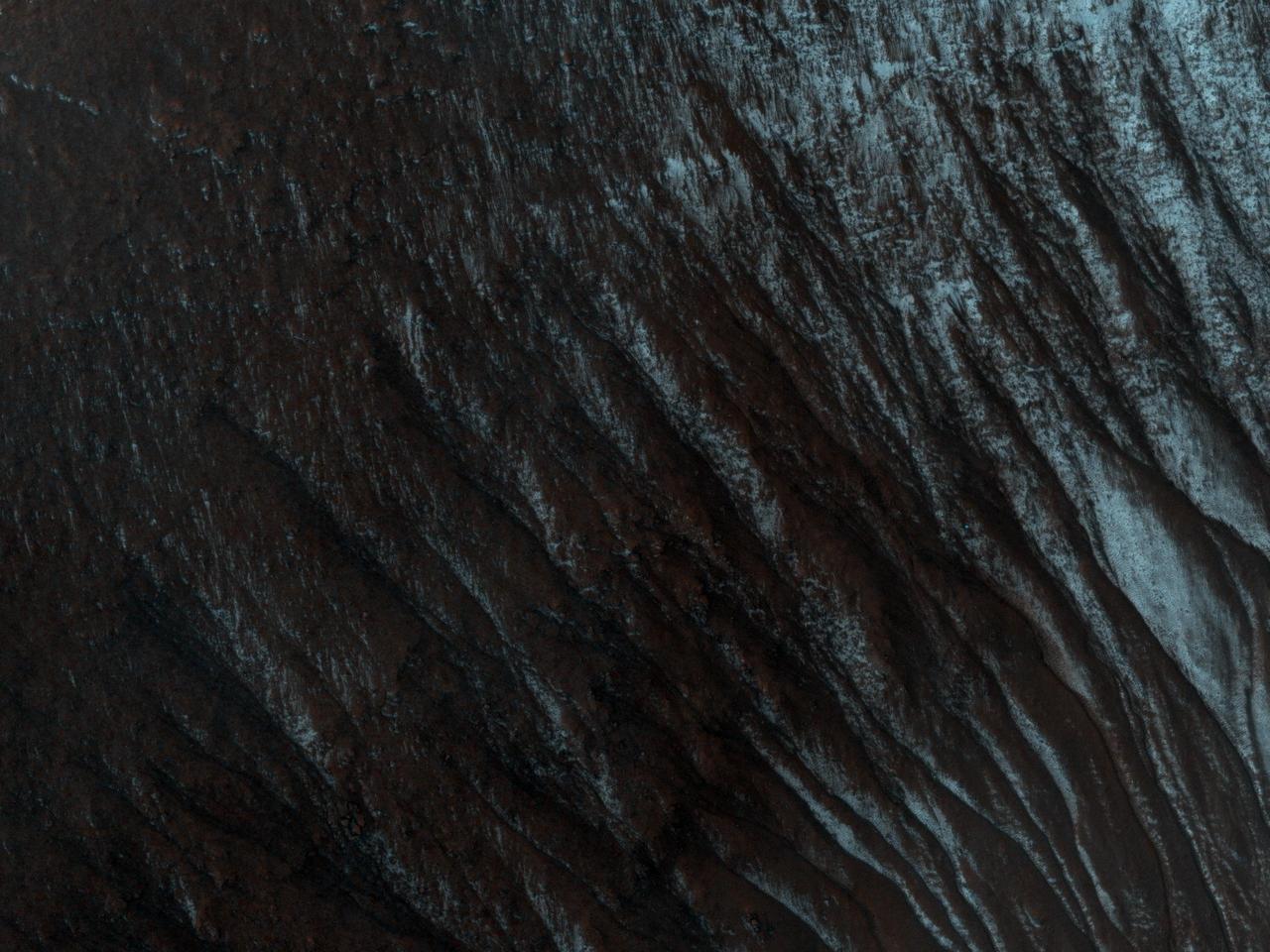
This image from NASA Mars Reconnaissance Orbiter shows part of an unnamed crater, itself located inside the much larger Newton Crater, in Terra Sirenum. Original release date March 3, 2010.
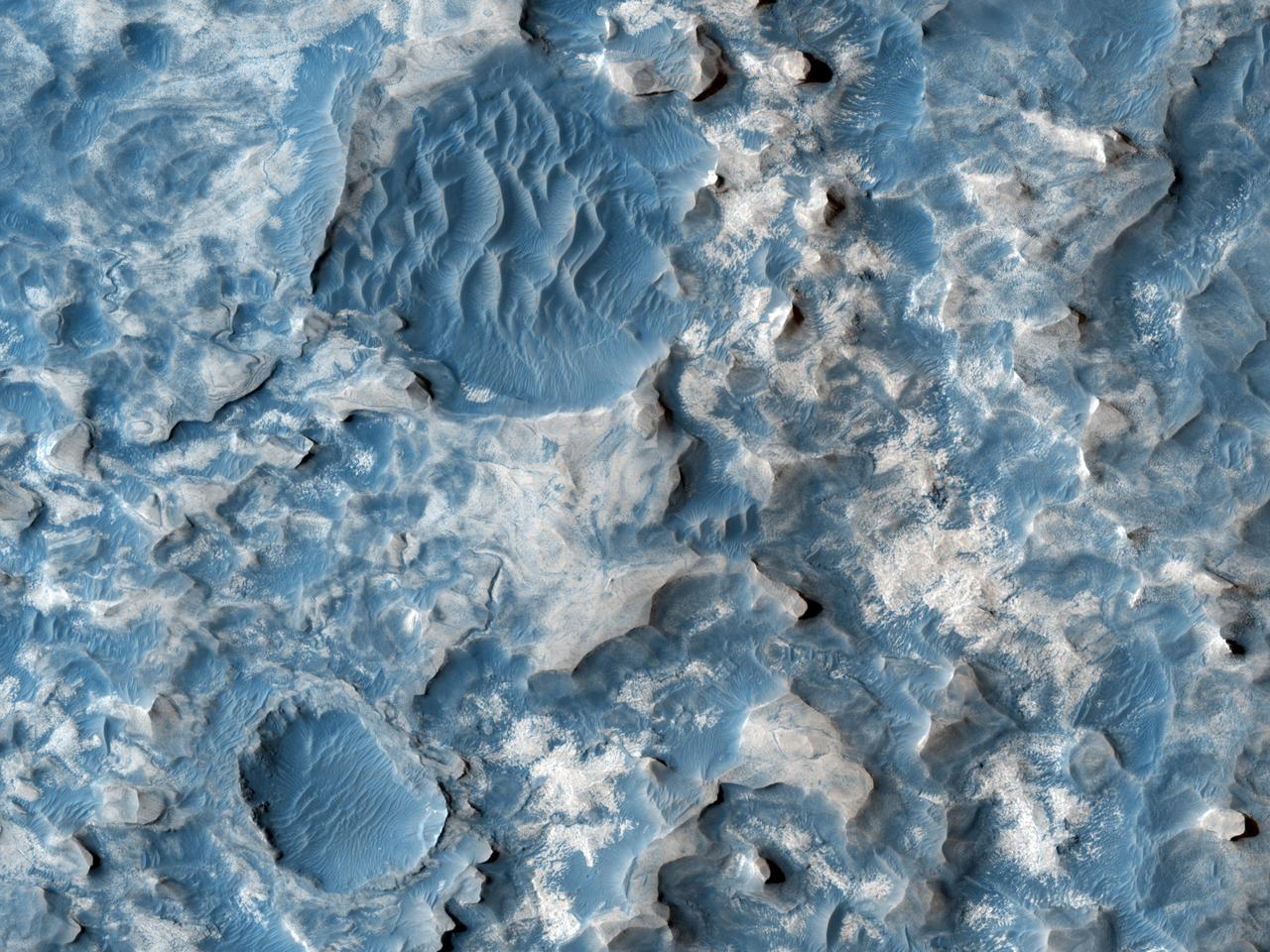
This image from NASA Mars Reconnaissance Orbiter shows part of an unnamed crater, itself located inside the much larger Newton Crater, in Terra Sirenum. Original release date March 3, 2010.
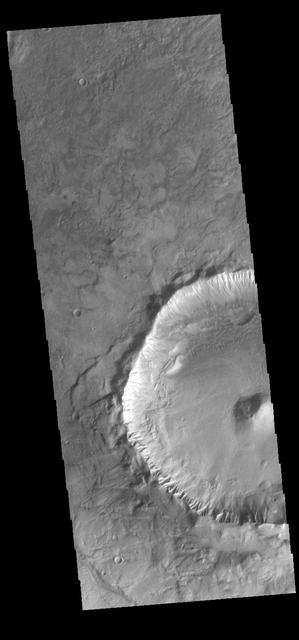
This image captured by NASA 2001 Mars Odyssey spacecraft shows an example of a central peak crater. This unnamed crater is located on the floor of Newton Crater in Terra Sirenum. Orbit Number: 57962 Latitude: -42.1211 Longitude: 201.814 Instrument: VIS Captured: 2015-01-07 07:47 photojournal.jpl.nasa.gov/catalog/PIA19200

In the summer of the year 1054 AD, Chinese astronomers saw a new "guest star," that appeared six times brighter than Venus. So bright in fact, it could be seen during the daytime for several months. This "guest star" was forgotten about until 700 years later with the advent of telescopes. Astronomers saw a tentacle-like nebula in the place of the vanished star and called it the Crab Nebula. Today we know it as the expanding gaseous remnant from a star that self-detonated as a supernova, briefly shining as brightly as 400 million suns. The explosion took place 6,500 light-years away. If the blast had instead happened 50 light-years away it would have irradiated Earth, wiping out most life forms. In the late 1960s astronomers discovered the crushed heart of the doomed star, an ultra-dense neutron star that is a dynamo of intense magnetic field and radiation energizing the nebula. Astronomers therefore need to study the Crab Nebula across a broad range of electromagnetic radiation, from X-rays to radio waves. This image combines data from five different telescopes: the VLA (radio) in red; Spitzer Space Telescope (infrared) in yellow; Hubble Space Telescope (visible) in green; XMM-Newton (ultraviolet) in blue; and Chandra X-ray Observatory (X-ray) in purple. More images and an animation are available at https://photojournal.jpl.nasa.gov/catalog/PIA21474

This image of the Eagle nebula shows the self-emission of the intensely cold nebula gas and dust as never seen before; the nebula intricate tendril nature, with vast cavities forms an almost cave-like surrounding to the famous pillars.

Scientists measure the spin rates of supermassive black holes by spreading the X-ray light into different colors. The light comes from accretion disks that swirl around black holes, as shown in both of the artist concepts.
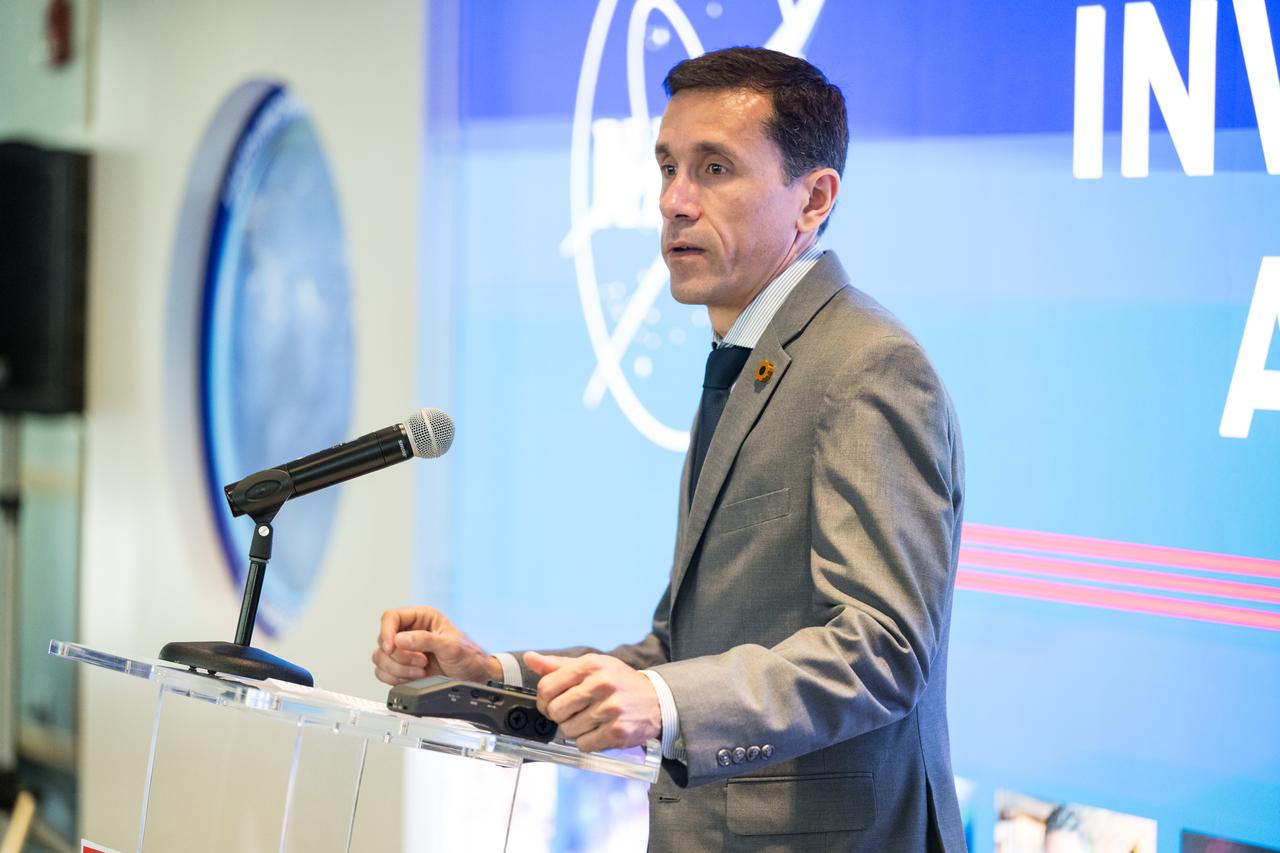
Ed Aguayo, President, Newton LLC, gives remarks during an event unveiling the 2022 Small Business Federal Procurement Scorecard, Tuesday, July 18, 2023, in the Earth Information Center at the Mary W. Jackson NASA Headquarters building in Washington. NASA Administrator Bill Nelson and NASA Deputy Administrator Pam Melroy hosted Isabella Casillas Guzman, Administrator of the Small Business Administration (SBA), for the unveiling of the annual scorecard which looks at how federal agencies rank on meeting their small business goals. Photo Credit: (NASA/Aubrey Gemignani)
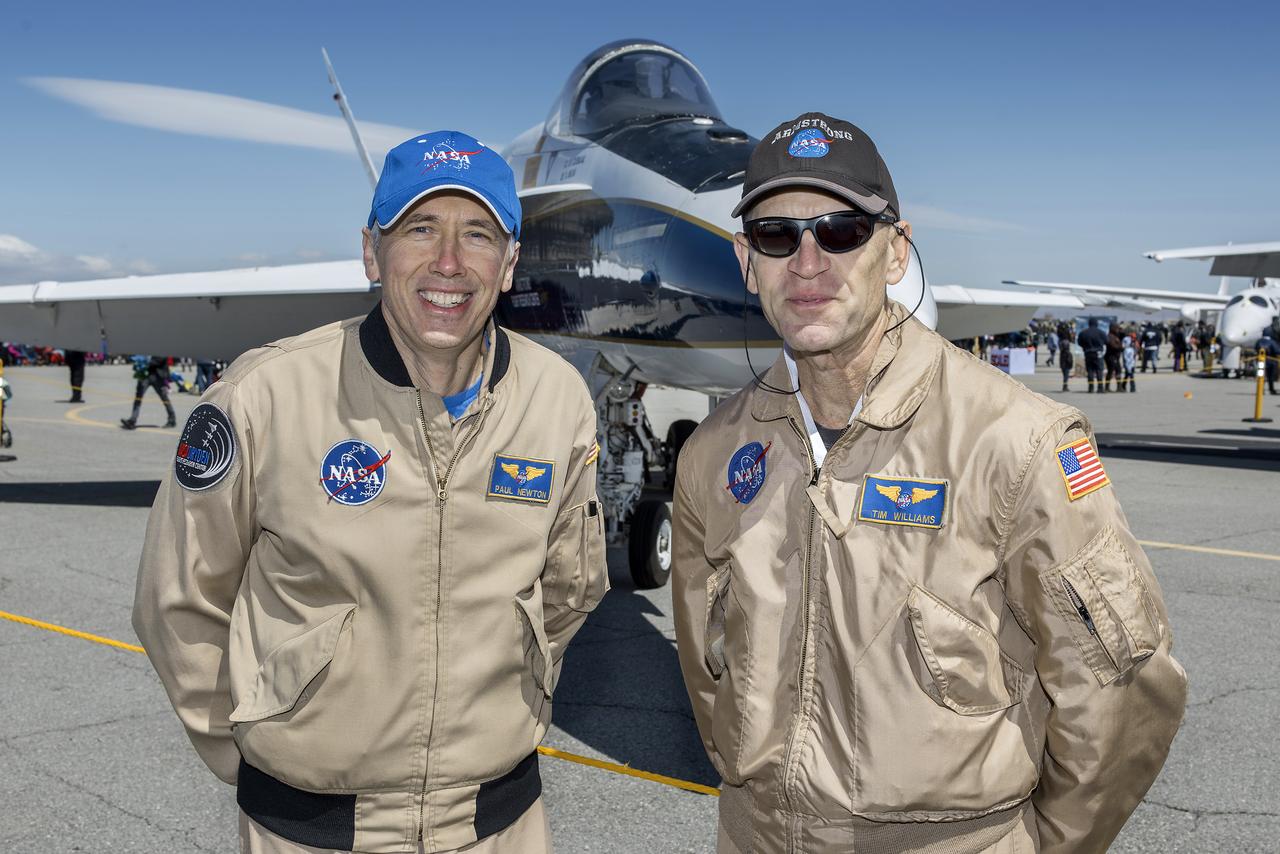
NASA Armstrong Research Center pilots Paul Newton and Tim Williams stand by the center’s F/A-18 research aircraft.

From left to right, Daryl Carrington, Director of Business Development, OPR LLC, Timothy Richardson, FDSS-III Program Manager, OPR LLC, NASA Deputy Administrator Pam Melroy, Isabella Casillas Guzman, Administrator of the Small Business Administration (SBA), NASA Administrator Bill Nelson, Ed Aguayo, President, Newton LLC, Justin Ward, Vice President, Newton LLC, Ashok Jha, President, Adnet, and David Morris, Vice President, Adnet, pose for a photo before SBA Administrator Guzman unveiled the 2022 Small Business Federal Procurement Scorecard, at an event hosted by NASA, Tuesday, July 18, 2023 in the Earth Information Center at the Mary W. Jackson NASA Headquarters building in Washington. For the sixth year in a row NASA has received an “A” rating from SBA for its work with small businesses. Photo Credit: (NASA/Aubrey Gemignani)
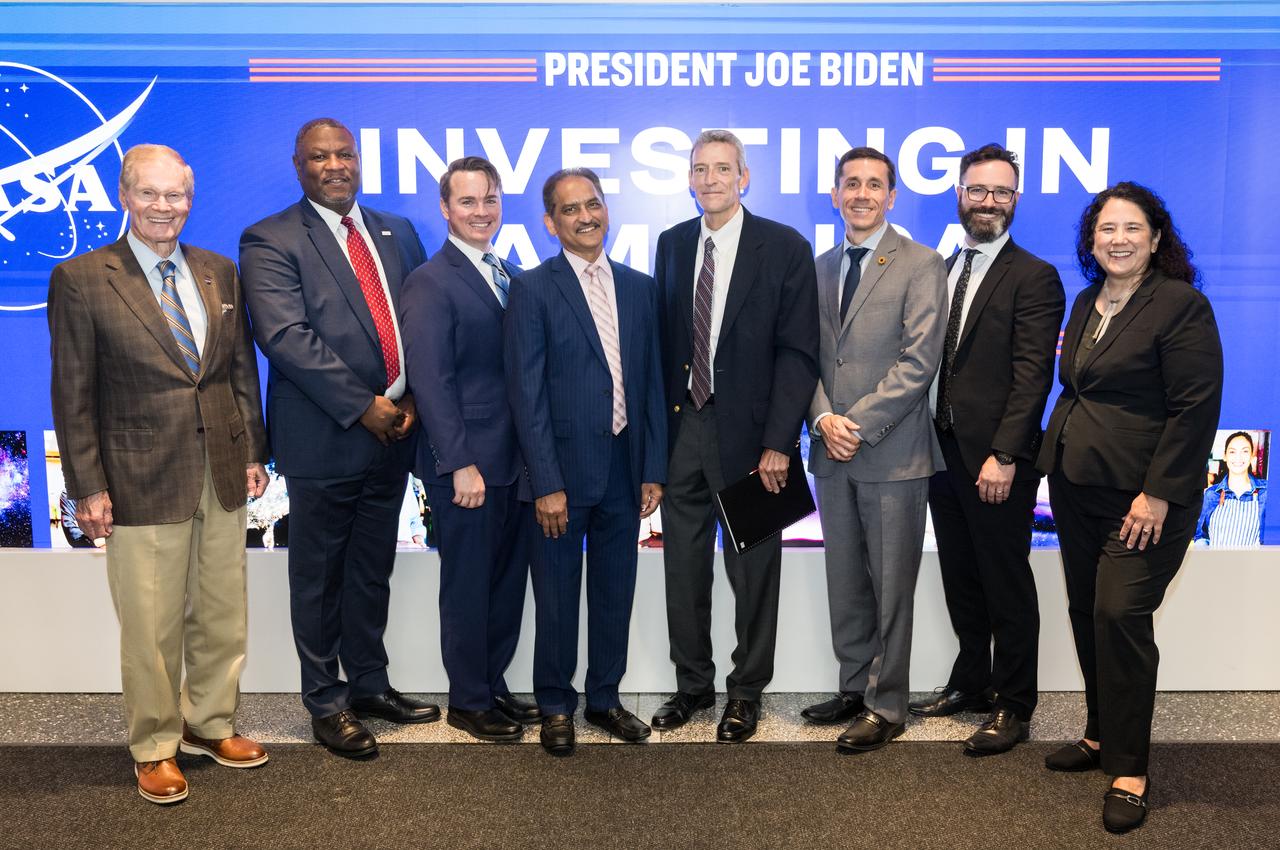
From left to right, NASA Administrator Bill Nelson, Daryl Carrington, Director of Business Development, OPR LLC, Timothy Richardson, FDSS-III Program Manager, OPR LLC, Ashok Jha, President, Adnet, and David Morris, Vice President, Adnet, Ed Aguayo, President, Newton LLC, Justin Ward, Vice President, Newton LLC, and Isabella Casillas Guzman, Administrator of the Small Business Administration (SBA), pose for a photo after SBA Administrator Guzman unveiled the 2022 Small Business Federal Procurement Scorecard, at an event hosted by NASA, Tuesday, July 18, 2023 in the Earth Information Center at the Mary W. Jackson NASA Headquarters building in Washington. For the sixth year in a row NASA has received an “A” rating from SBA for its work with small businesses. Photo Credit: (NASA/Aubrey Gemignani)
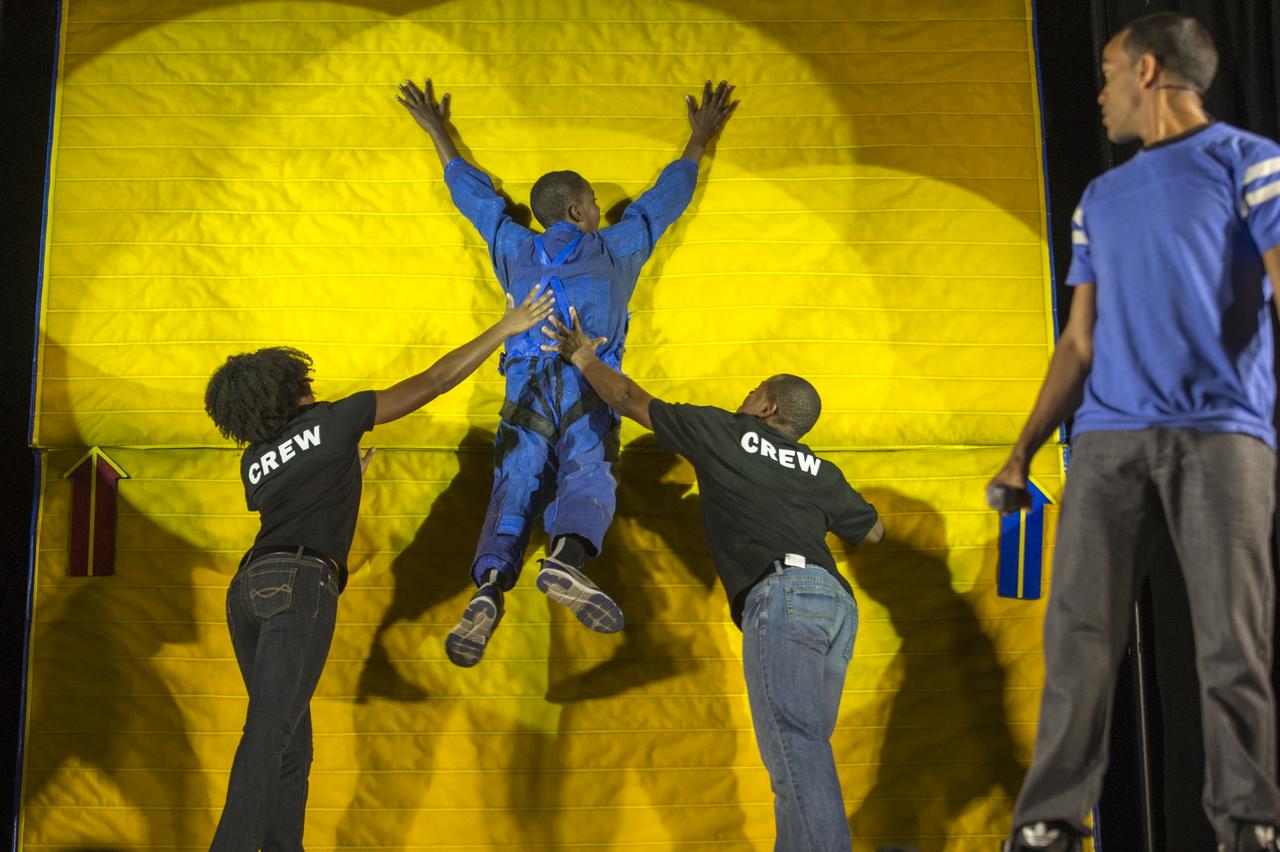
With the help of a student participant, "FMA Live!" crew members explain Newton's first law of motion during a performance of "FMA Live!" at Hardy Middle School in Washington on Monday, Sept. 16th, 2013. "FMA Live!" is a program sponsored by NASA and Honeywell that teaches Newton's three laws of motion mixed with dance and music. The program travels across the country and has reached nearly 300,000 students.Photo Credit: (NASA/Jay Westcott)
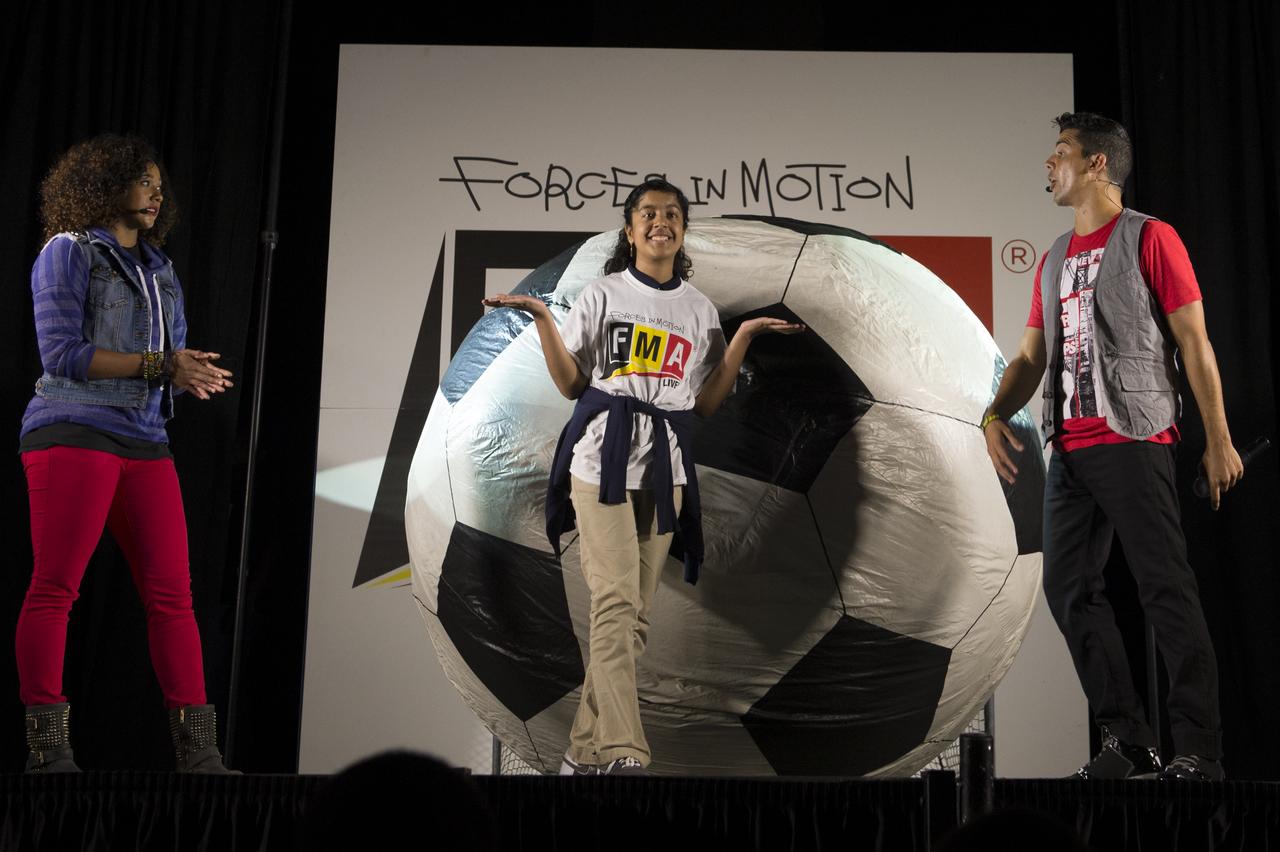
With the help of a student participant, "FMA Live!" crew members explain Newton's second law of motion during a performance of "FMA Live!" at Hardy Middle School in Washington on Monday, Sept. 16th, 2013. "FMA Live!" is a program sponsored by NASA and Honeywell that teaches Newton's three laws of motion mixed with dance and music. The program travels across the country and has reached nearly 300,000 students.Photo Credit: (NASA/Jay Westcott)
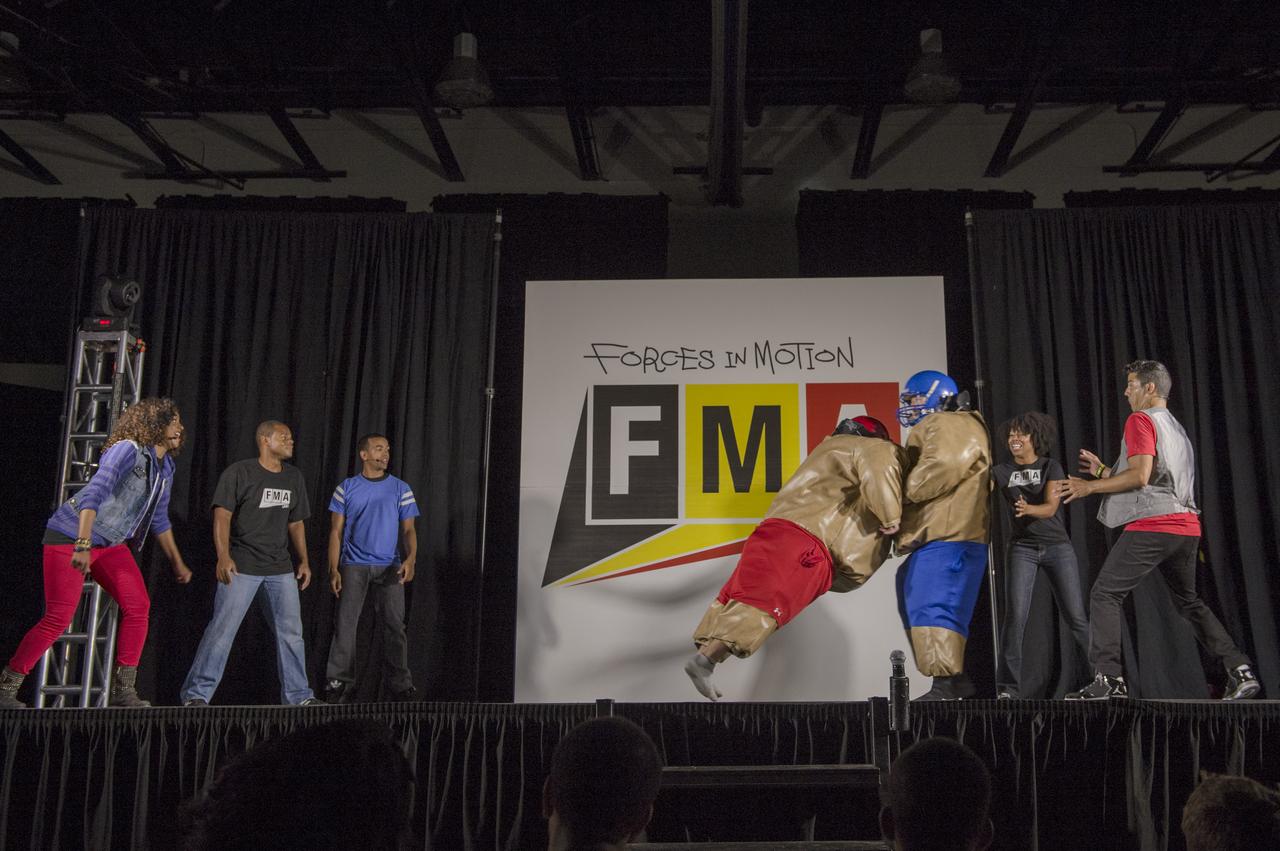
Two teachers at Hardy Middle School square off in foam suits as "FMA Live!" crew members explain Newton's third law of motion during a performance of "FMA Live!" at Hardy Middle School in Washington on Monday, Sept. 16th, 2013. "FMA Live!" is a program sponsored by NASA and Honeywell that teaches Newton's three laws of motion mixed with dance and music. The program travels across the country and has reached nearly 300,000 students.Photo Credit: (NASA/Jay Westcott)
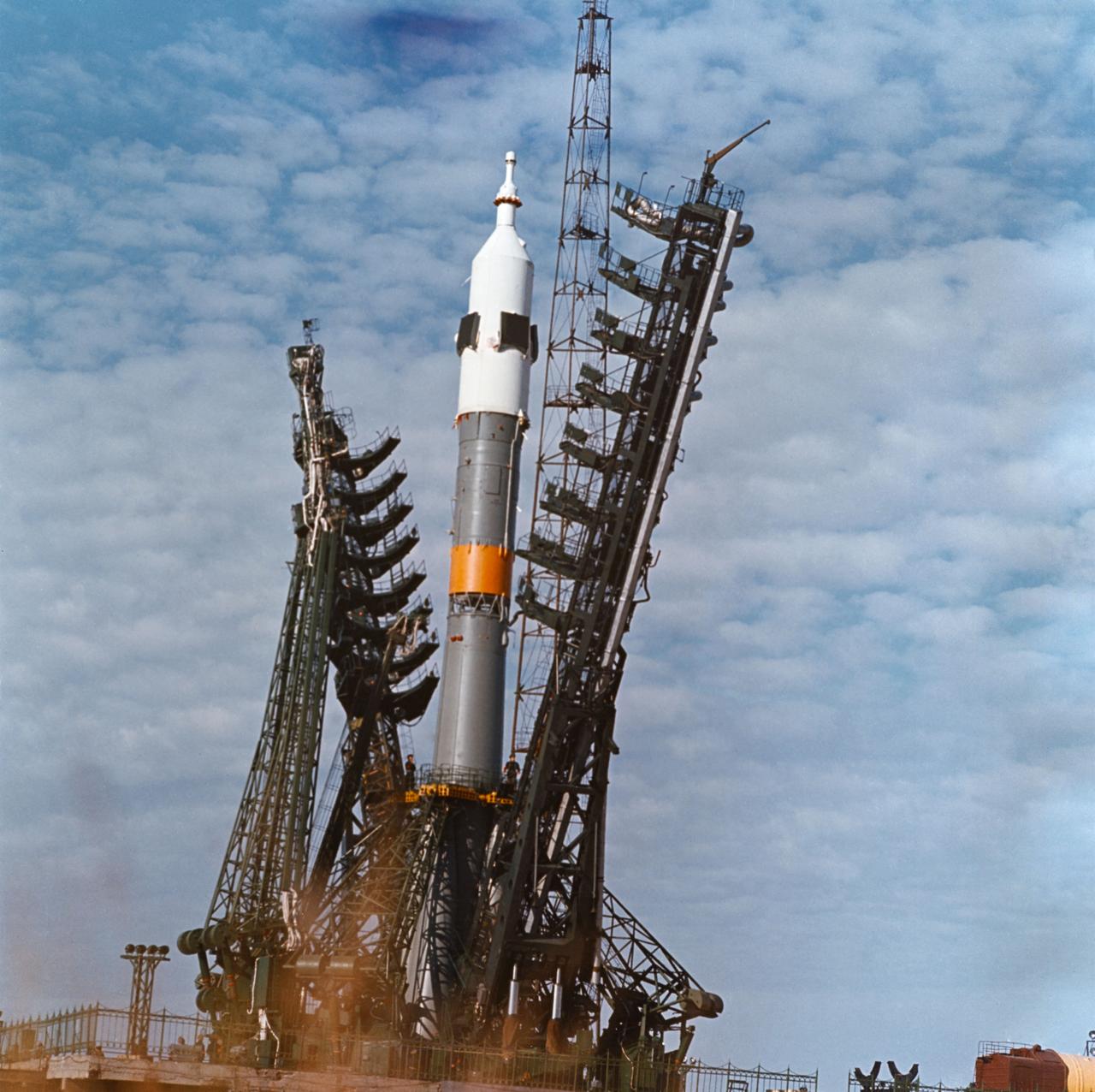
S75-32339 (28 Jan. 1974) --- A low-angle view of a launch pad at the Baikonur Cosmodrome in Kazakhstan showing the installation of a Soyuz spacecraft and its launch vehicle. The 49.3-meter-high (162 feet) space vehicle is composed of the three-stage booster, a three-module, two-man Soyuz spacecraft and a launch escape system. The weight of the space vehicle at launch is approximately 300,000 kilograms. The first stage vacuum thrust is about 1,000,400 newtons, the second stage is 956,500 newtons, and the third stage is 299,000 newtons. This earlier Soyuz mission illustrates the approximate launch configuration of the Soviet Union?s Apollo-Soyuz Test Project (ASTP) Soyuz space vehicle. PHOTO COURTESY: USSR ACADEMY OF SCIENCES
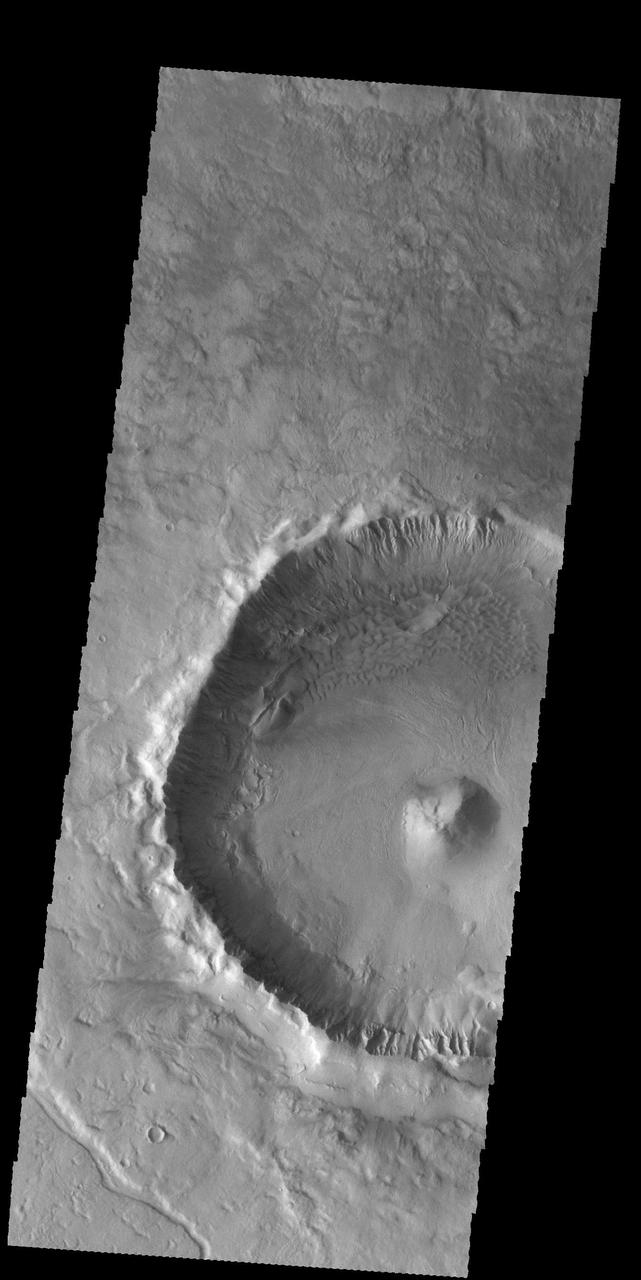
Today's VIS image is of an unnamed crater located on the floor of the much larger Newton Crater. This crater had a central peak, gullies on the inner rim and dunes on the northern part of the crater floor. Orbit Number: 59391 Latitude: -41.9785 Longitude: 201.934 Instrument: VIS Captured: 2015-05-04 23:15 http://photojournal.jpl.nasa.gov/catalog/PIA19504

NASA Day at AT&T Park: NASA and the San Francisco Giants share a day to celebrate the 50 year anniversaries. Ames New Ventures and Communication staff (L-R) Dolores Beasley, Lori and Kim Newton enjoy the sun and fun at the game.
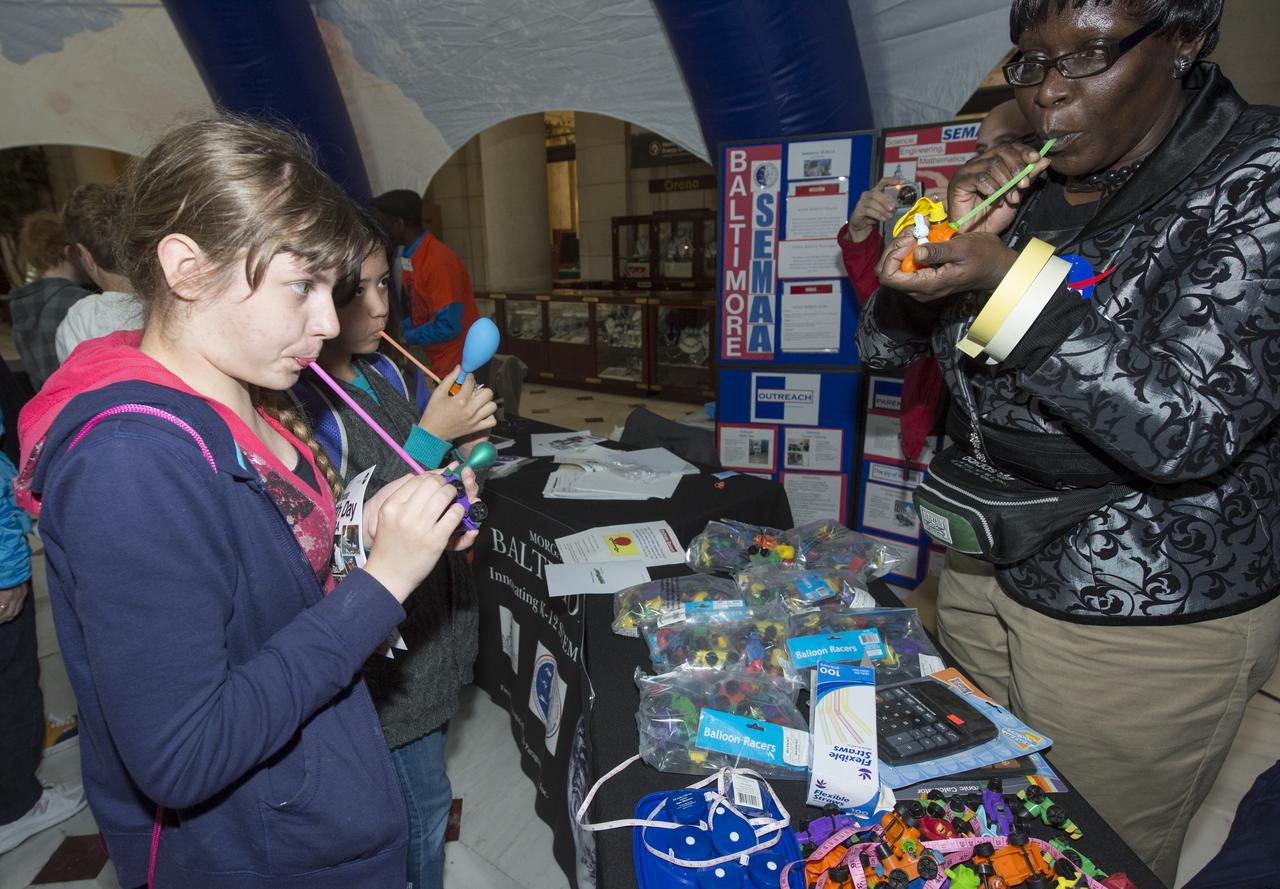
Students assemble balloon race cars and Alka-Seltzer film canister rockets to demonstrate Newton's third Law of motion at the NASA Science Gallery at Union Station, Monday, April 22, 2013 in Washington. The NASA Science Gallery exhibits are being sponsored by NASA in honor of Earth Day. (Photo Credit: NASA/Carla Cioffi)
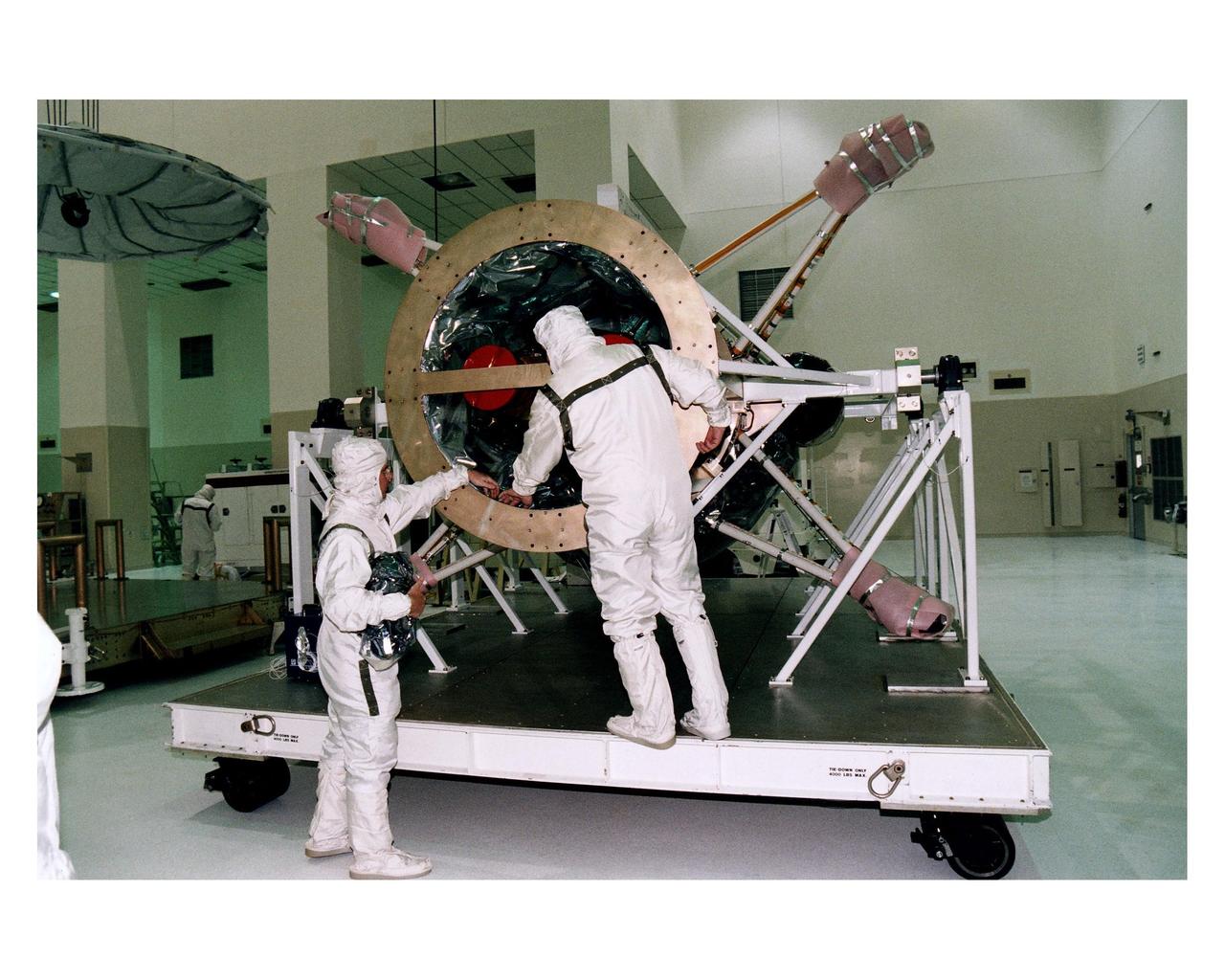
Workers take off the protective covering on the propulsion module for the Cassini spacecraft after uncrating the module at KSC's Spacecraft Assembly and Encapsulation Facility-2 (SAEF-2). The extended journey of 6.7 years to Saturn and the 4-year mission for Cassini once it gets there will require the spacecraft to carry a large amount of propellant for inflight trajectory-correction maneuvers and attitude control, particularly during the science observations. The propulsion module has redundant 445-newton main engines that burn nitrogen tetraoxide and monomethyl-hydrazine for main propulsion and 16 smaller 1-newton engines that burn hydrazine to control attitude and to correct small deviations from the spacecraft flight path. Cassini will be launched on a Titan IVB/Centaur expendable launch vehicle. Liftoff is targeted for October 6 from Launch Complex 40, Cape Canaveral Air Station
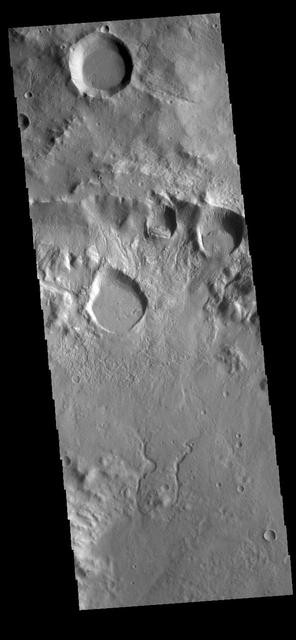
This VIS image shows part of the crater rim and floor of an unnamed crater located in Terra Sirenum on the north rim of Newton Crater. The rim of the crater is in the upper half of the image. Several rounded features are located near the top of the rim. Rather than being impact craters, these features are more likely formed by collapse of the crater rim. In this type of slope failure a block of material slides down a fracture leaving a scalloped shaped feature with a block of material along the lower edge of the slope. There are also several channels dissecting the rim. This crater has a central peak, just off the image at the bottom left corner. The channels in the bottom part of the image are flowing away from the peak. Orbit Number: 81565 Latitude: -37.72 Longitude: 200.927 Instrument: VIS Captured: 2020-05-04 08:53 https://photojournal.jpl.nasa.gov/catalog/PIA23998

The Milky Way and other galaxies in the universe harbor many young star clusters and associations that each contain hundreds to thousands of hot, massive, young stars known as O and B stars.
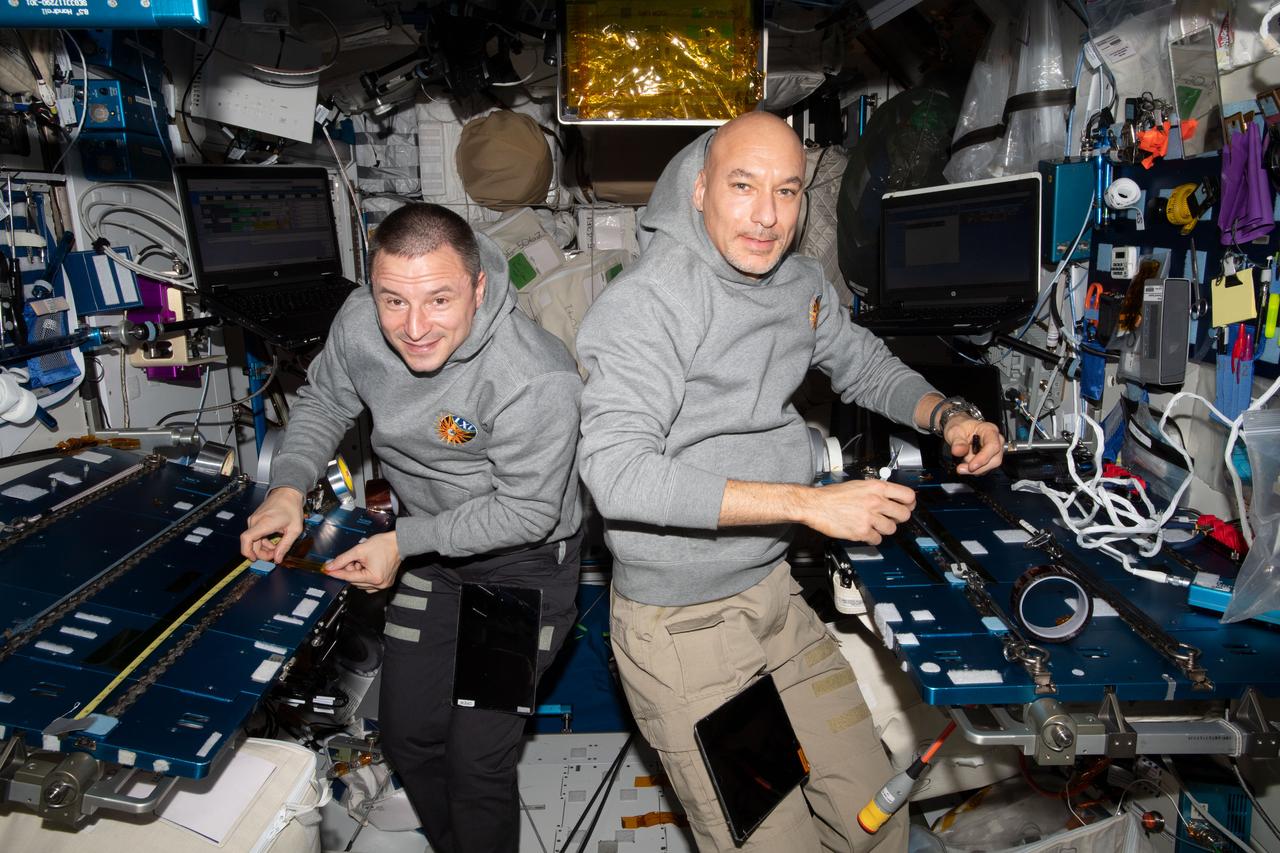
iss061e021362 (Oct. 30, 2019) --- From left, NASA Flight Engineer Andrew Morgan and Commander Luca Parmitano of ESA (European Space Agency) set up a work space in the Columbus laboratory module. Parmitano would soon test a device in Columbus that measures an astronaut’s mass using Newton’s Second Law of Motion. The device, named the Space Linear Acceleration Mass Measurement Device, applies a known force to an attached astronaut and the resulting acceleration is used to calculate an astronaut’s mass.
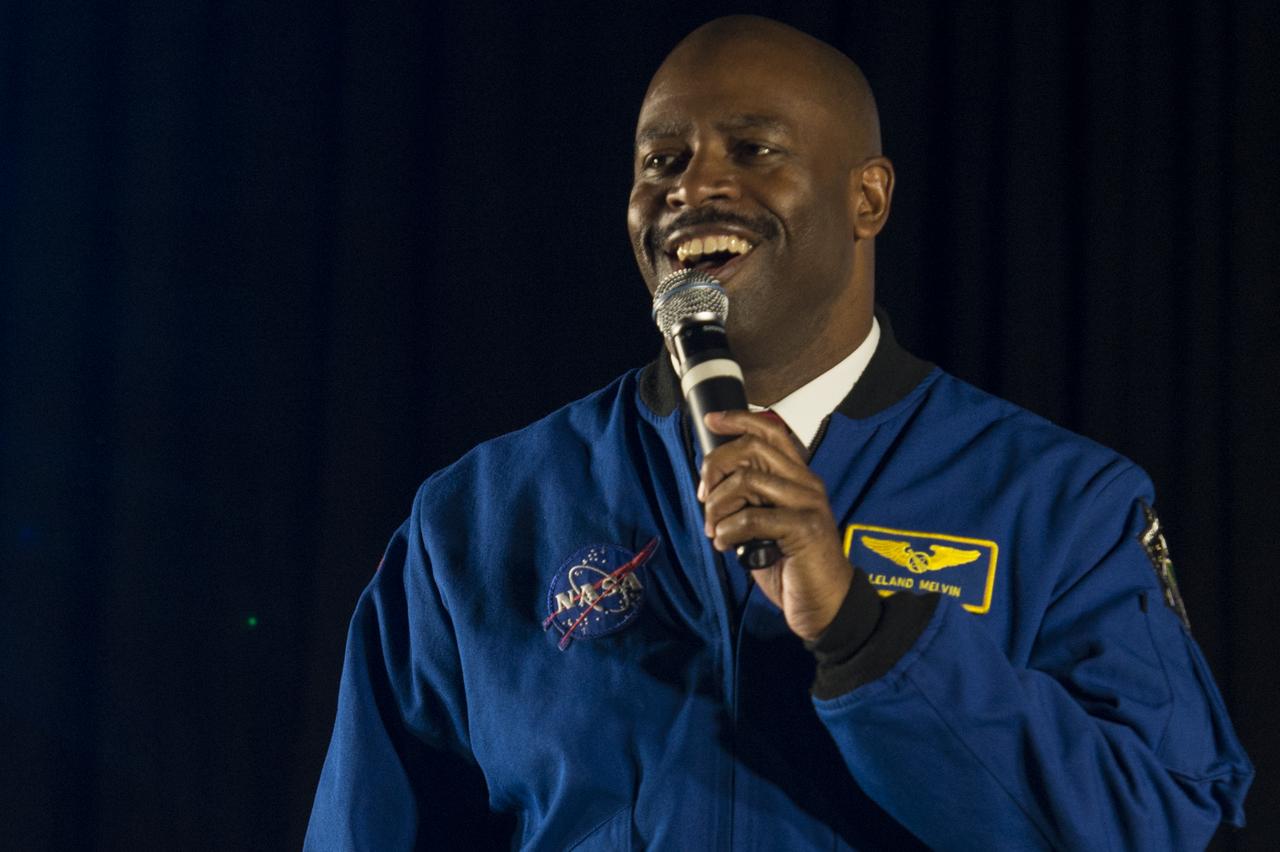
Leland Melvin, NASA Associate Administrator for Education and former 2x astronaut, addresses students before the start of "FMA Live!" at Hardy Middle School in Washington on Monday, Sept. 16th, 2013. "FMA Live!" is a program sponsored by NASA and Honeywell that teaches Newton's three laws of motion mixed with dance and music. The program travels across the country and has reached nearly 300,000 students.Photo Credit: (NASA/Jay Westcott)

iss071e113128 (May 22, 2024) --- Expedition 71 Flight Engineer and NASA astronaut Matthew Dominick works in the International Space Station's Columbus laboratory module performing maintenance on the Space Linear Acceleration Mass Measurement Device, or SLAMMD. The human research device applies a known force to a crew member then calculates body mass using a form of Newton’s Second Law of Motion, force equals mass times acceleration.
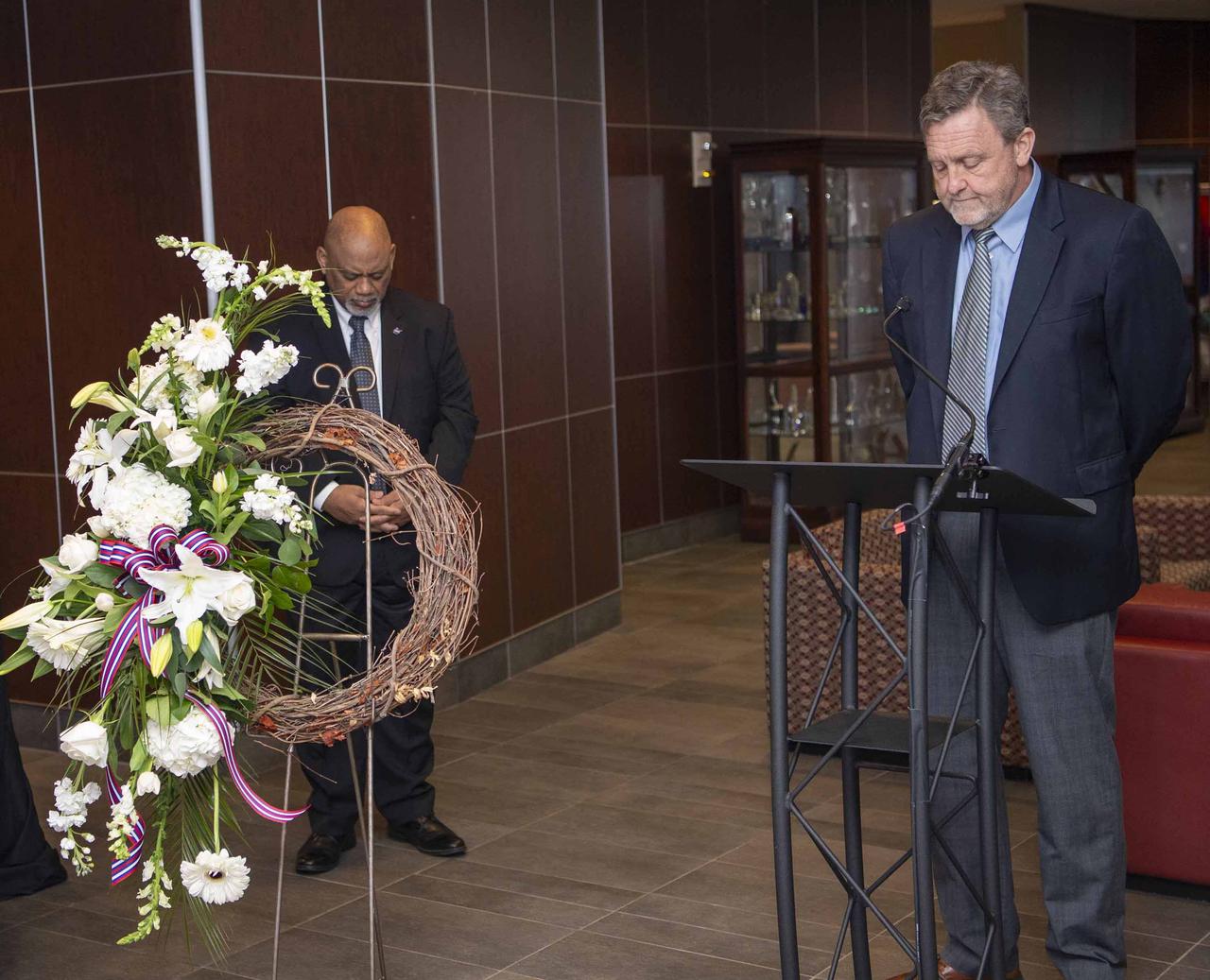
NASA’s Stennis Space Center and NASA Shared Services Center leaders commemorate NASA Day of Remembrance on Jan. 25 with a ceremony at the south Mississippi site. Rodney McKellip, NASA Stennis associate director (right), and Ken Newton, NASA Shared Services Center acting executive director, observe a moment of silence as employees honor members of the NASA family who lost their lives while furthering the cause of exploration and discovery, including the crews of Apollo 1, and space shuttles Challenger and Columbia.
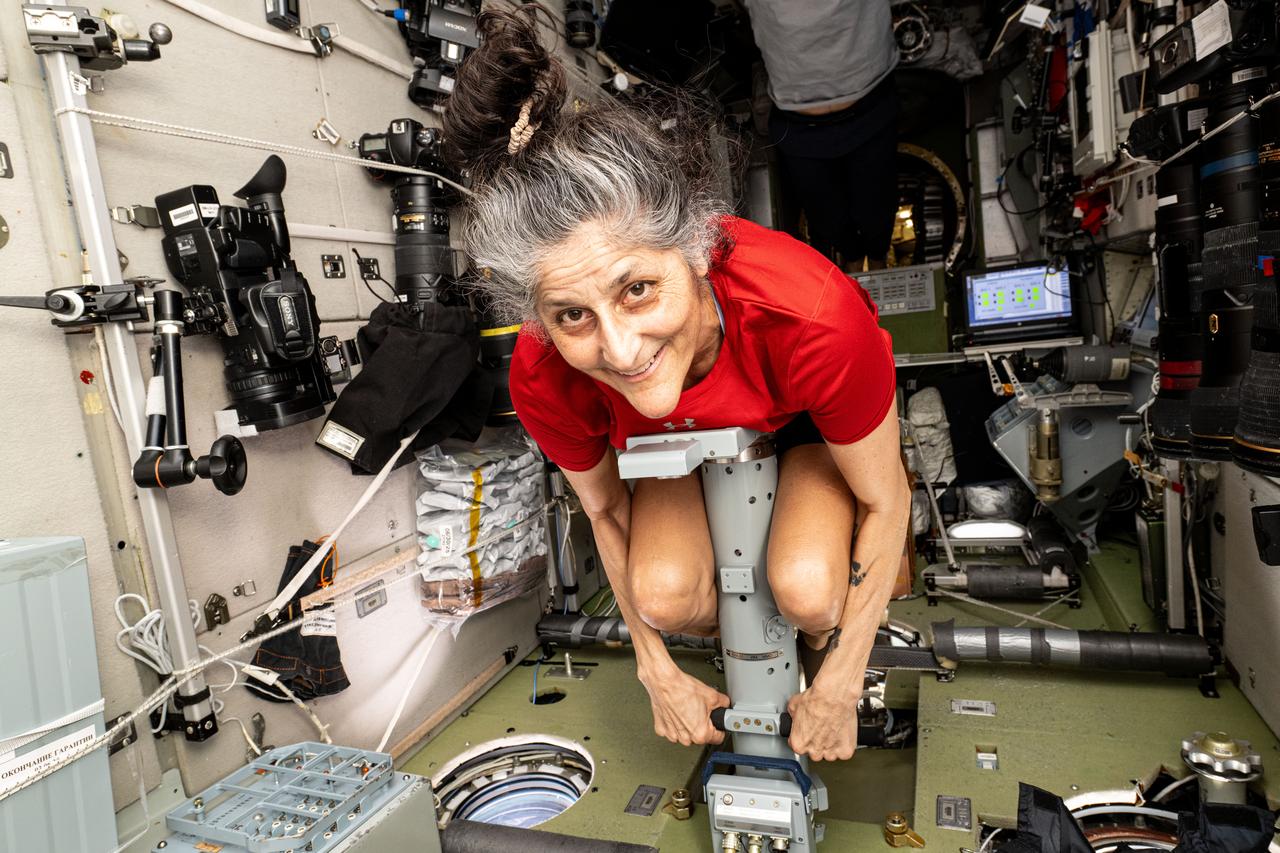
iss072e616384 (Feb. 11, 2025) --- NASA astronaut and Expedition 72 Commander Suni Williams measures her mass using a specialized device inside the International Space Station's Zvezda service module. The mass measurement device applies a known force to an attached astronaut and measures the resulting acceleration to acquire the crew member's mass. The result is based on a form of Newton's Second Law of Motion.
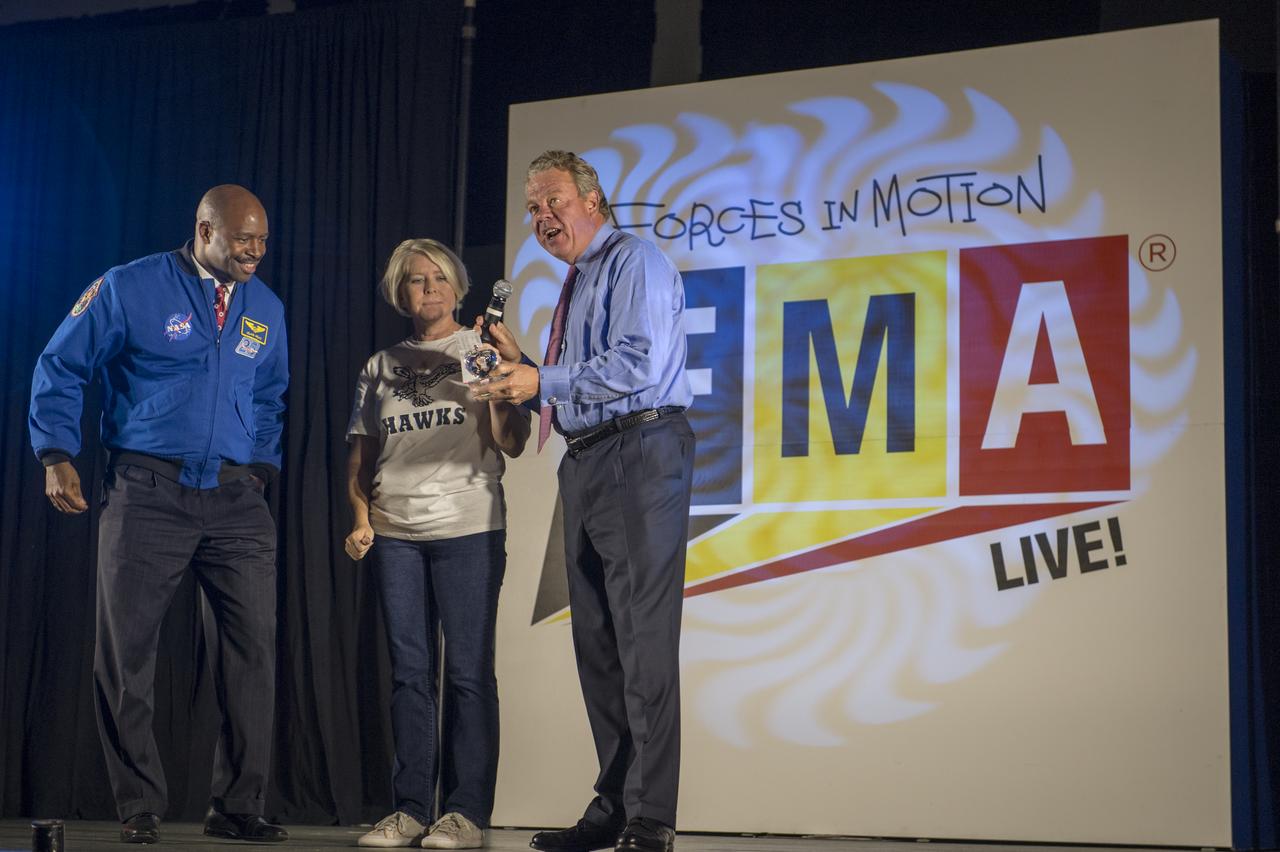
Leland Melvin, NASA Associate Administrator for Education and former 2x astronaut,Hardy Middle School Prinipal Patricia Pride, and Tom Buckmaster, President, Honeywell Hometown Solutions introduce "FMA Live!" at Hardy Middle School in Washington on Monday, Sept. 16th, 2013. "FMA Live!" is a program sponsored by NASA and Honeywell that teaches Newton's three laws of motion mixed with dance and music. The program travels across the country and has reached nearly 300,000 students.Photo Credit: (NASA/Jay Westcott)
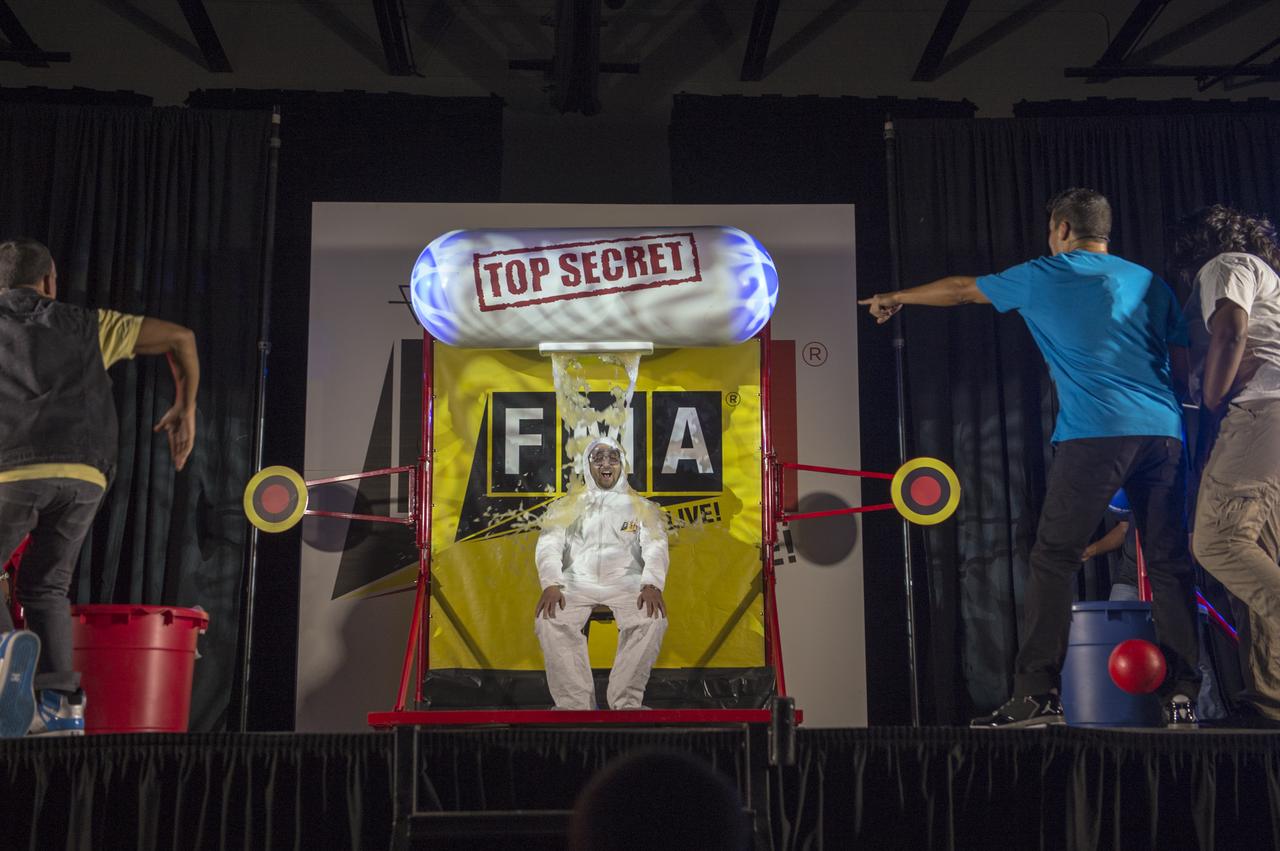
A teacher gets dunked with apple sauce during a performance of "FMA Live!" at Hardy Middle School in Washington on Monday, Sept. 16th, 2013. "FMA Live!" is a program sponsored by NASA and Honeywell that teaches Newton's three laws of motion mixed with dance and music. The program travels across the country and has reached nearly 300,000 students.Photo Credit: (NASA/Jay Westcott)
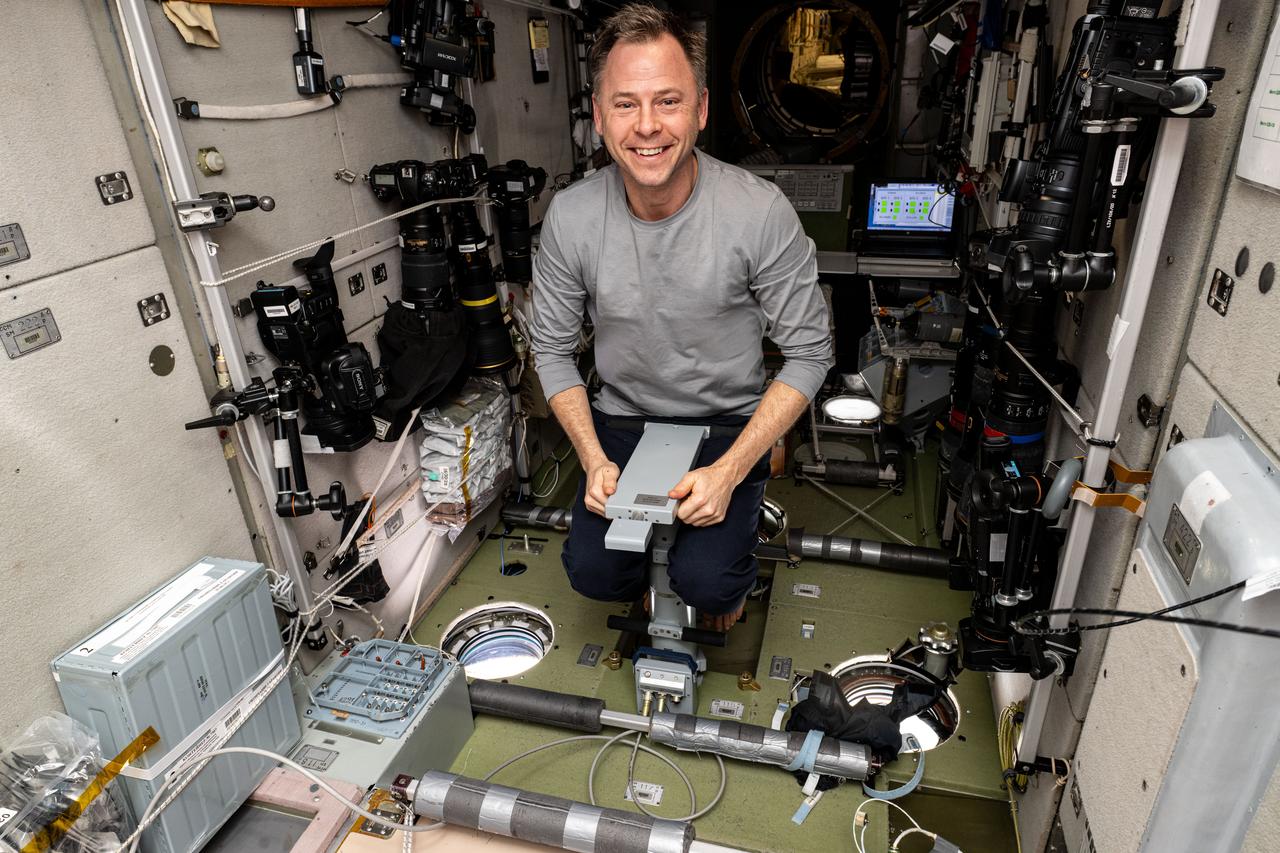
iss072e616386 (Feb. 11, 2025) --- NASA astronaut and Expedition 72 Flight Engineer Nick Hague measures his mass using a specialized device inside the International Space Station's Zvezda service module. The mass measurement device applies a known force to an attached astronaut and measures the resulting acceleration to acquire the crew member's mass. The result is based on a form of Newton's Second Law of Motion.
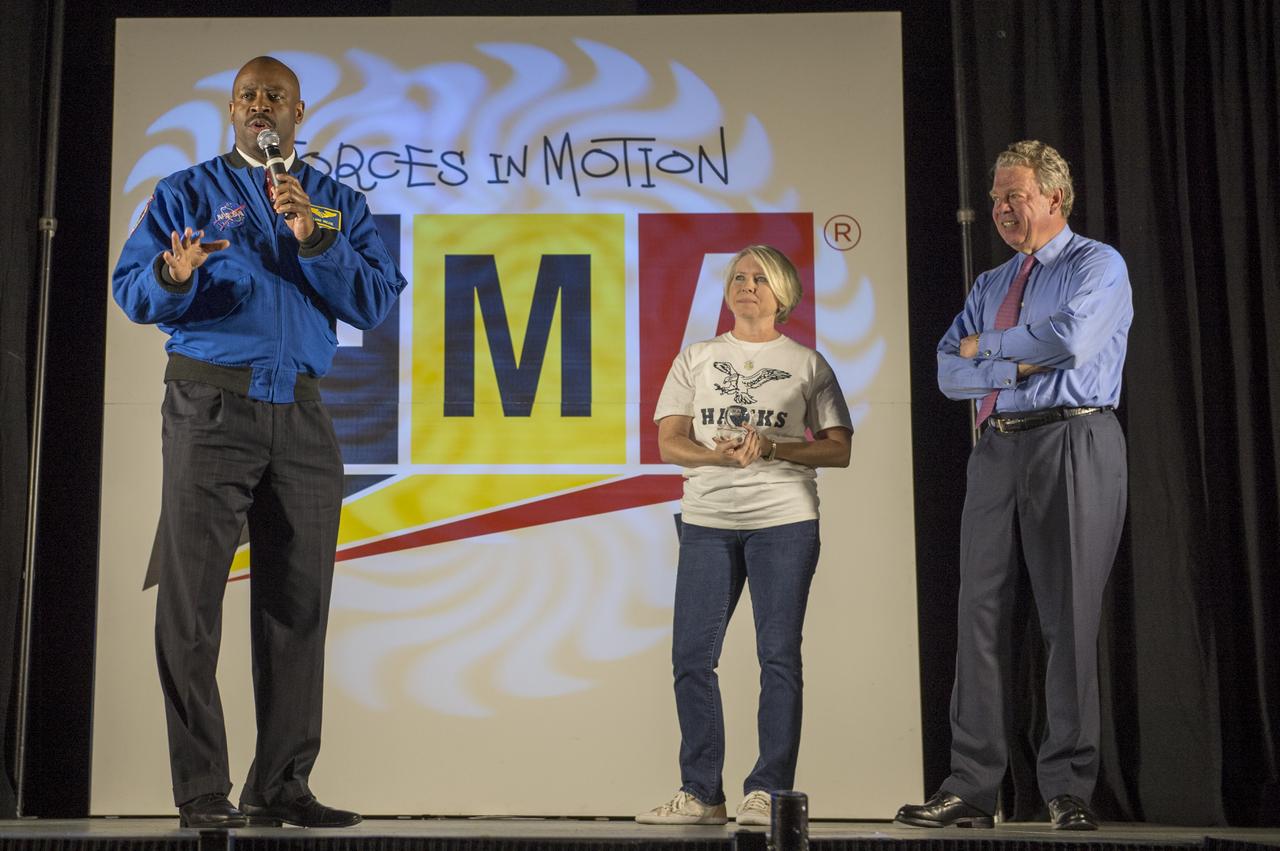
Leland Melvin, NASA Associate Administrator for Education and former 2x astronaut, Hardy Middle School Prinipal Patricia Pride, and Tom Buckmaster, President, Honeywell Hometown Solutions introduce "FMA Live!" at Hardy Middle School in Washington on Monday, Sept. 16th, 2013. "FMA Live!" is a program sponsored by NASA and Honeywell that teaches Newton's three laws of motion mixed with dance and music. The program travels across the country and has reached nearly 300,000 students.Photo Credit: (NASA/Jay Westcott)
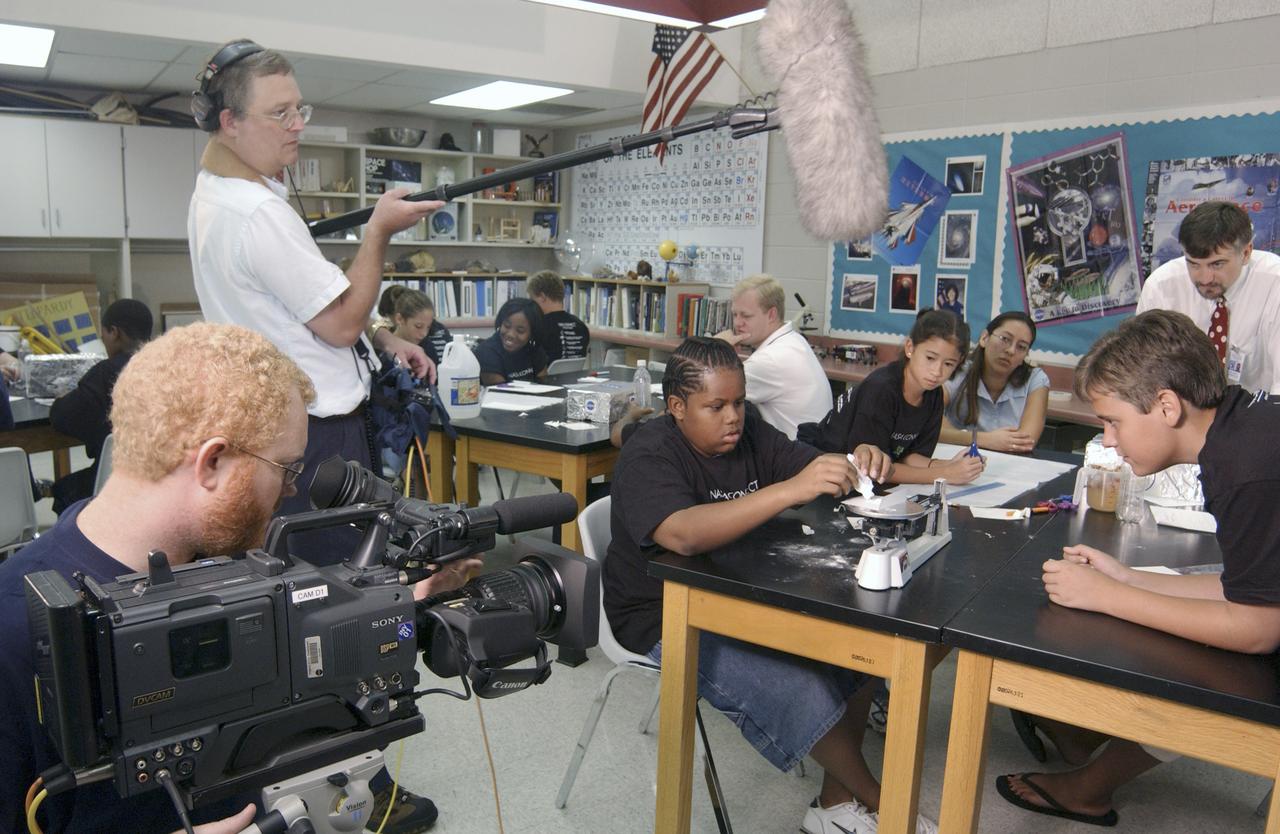
Students at Williams Technology Middle School in Huntsville were featured in a new segment of NASA CONNECT, a video series aimed to enhance the teaching of math, science, and technology to middle school students. The segment premiered nationwide May 15, 2003, and helped viewers understand Sir Isaac Newton's first, second, and third laws of gravity and how they relate to NASA's efforts in developing the next generation of space transportation.
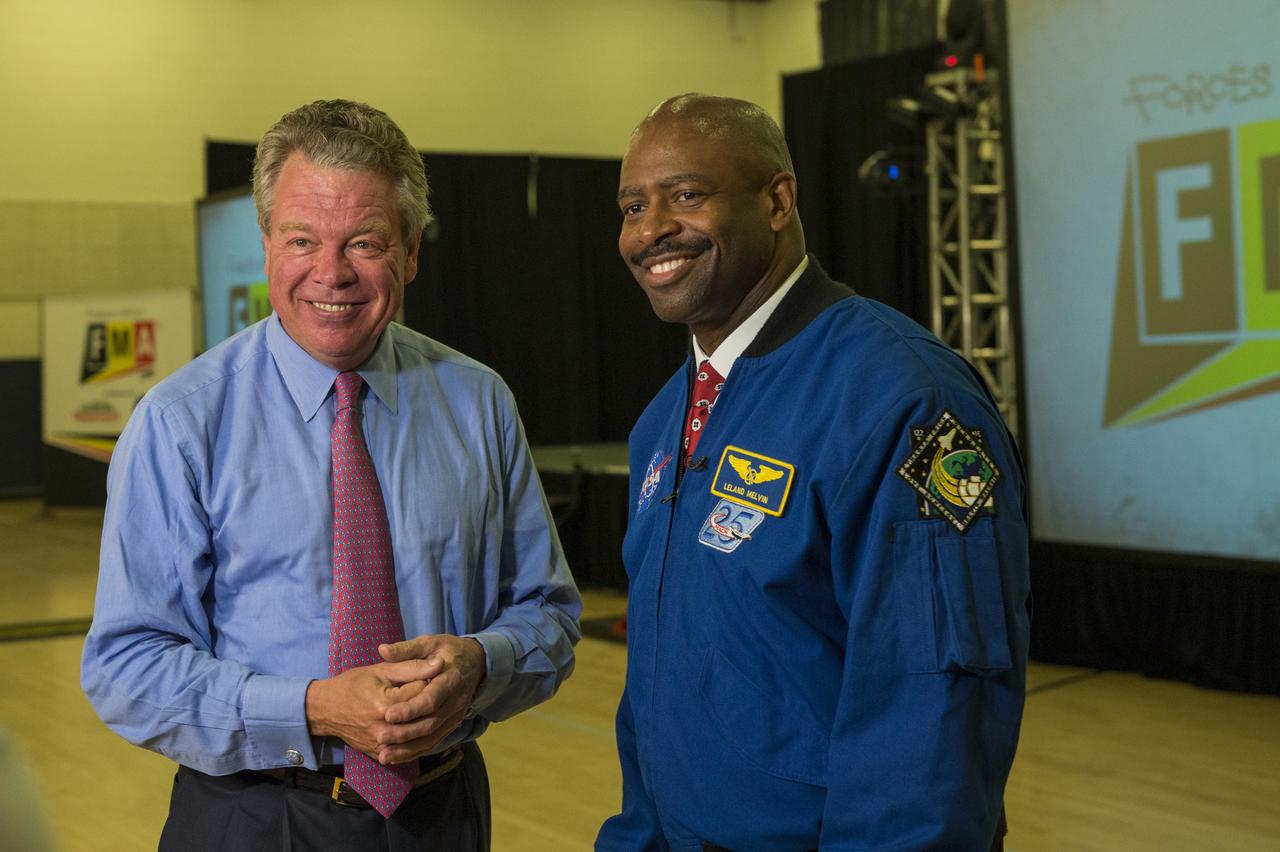
Tom Buckmaster, President, Honeywell Hometown Solutions and Leland Melvin, NASA Associate Administrator for Education and former 2x astronaut, are interviewed before the start of "FMA Live!" at Hardy Middle School in Washington on Monday, Sept. 16th, 2013. "FMA Live!" is a program sponsored by NASA and Honeywell that teaches Newton's three laws of motion mixed with dance and music. The program travels across the country and has reached nearly 300,000 students.Photo Credit: (NASA/Jay Westcott)
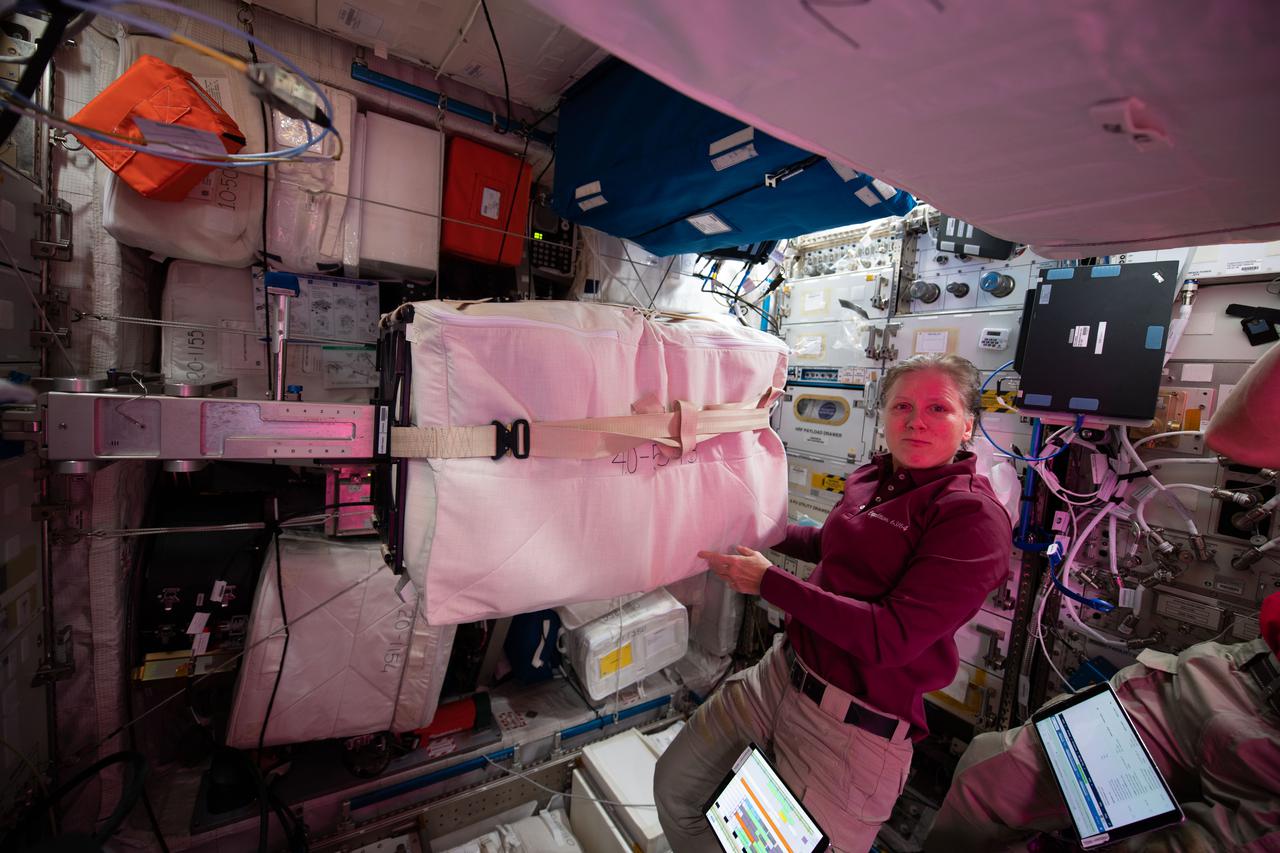
iss064e019119 (Jan. 4, 2021) --- NASA astronaut and Expedition 64 Flight Engineer Shannon Walker works in the European Columbus laboratory module to set up a unique device that calculates the mass of cargo aboard the International Space Station. Known as SLAMMD, or Space Linear Acceleration Mass Measurement Device, it uses a form of Newton's Second Law of Motion and applies a known force to an object or an astronaut with the resulting acceleration used to calculate mass in microgravity

Performers dance and sing during a performance of "FMA Live!" at Hardy Middle School in Washington on Monday, Sept. 16th, 2013. "FMA Live!" is a program sponsored by NASA and Honeywell that teaches Newton's three laws of motion mixed with dance and music. The program travels across the country and has reached nearly 300,000 students.Photo Credit: (NASA/Jay Westcott)
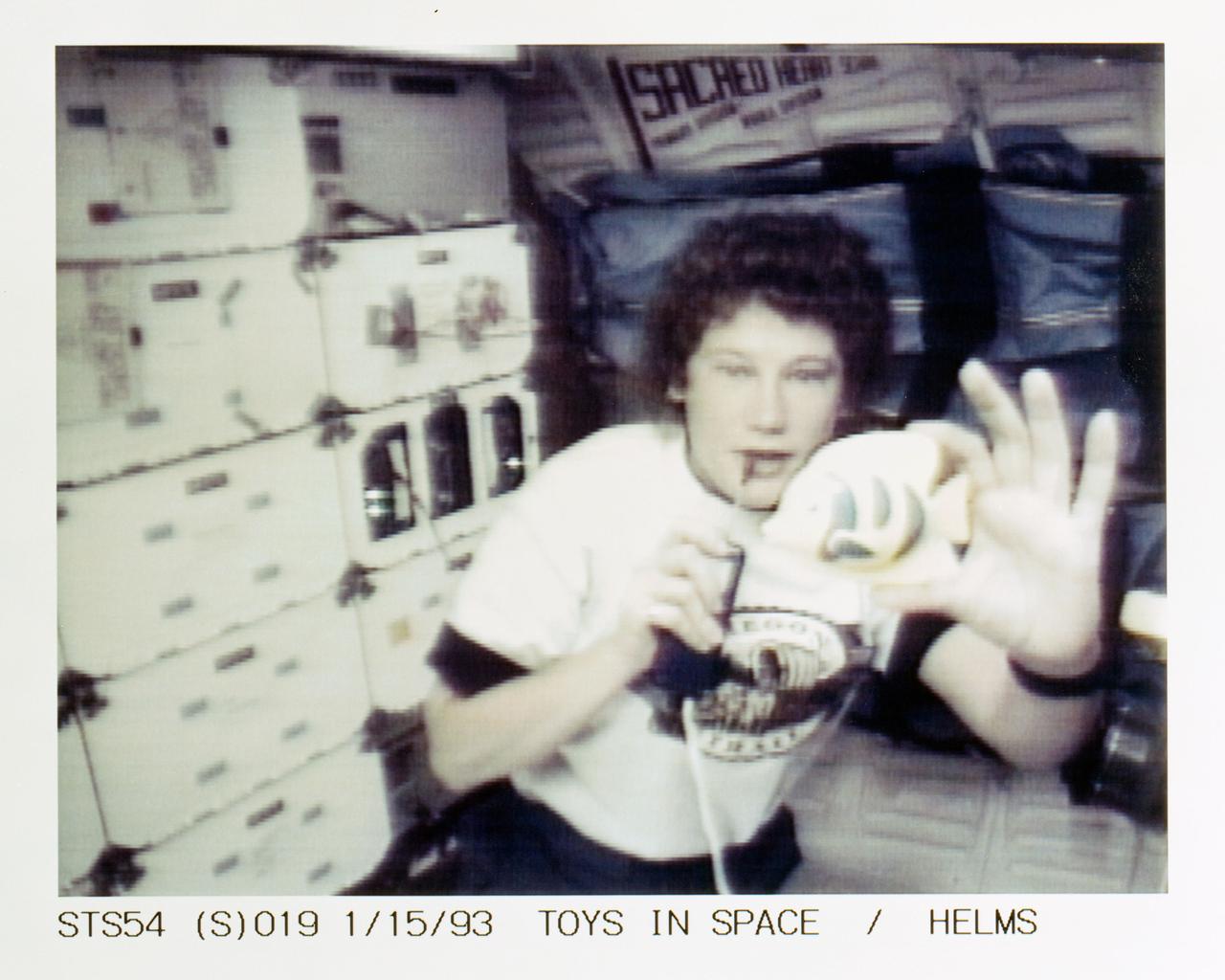
STS054-S-019 (15 Jan 1993) --- Helms with a fish toy on the middeck demonstrates some of the physics of toys to students watching on television. Four schools were chosen to ask questions of the astronauts during the lengthy program. Helms fielded questions from students at Shaver Elementary School in Portland, Oregon. The fish was used to demonstrate Newton's third law of motion and the conservation of angular momentum. The entire collection of toys will be videotaped for an educational program to be distributed to schools in the fall of this year. The scene was recorded at 17:50:08:27 GMT, Jan. 15, 1993.
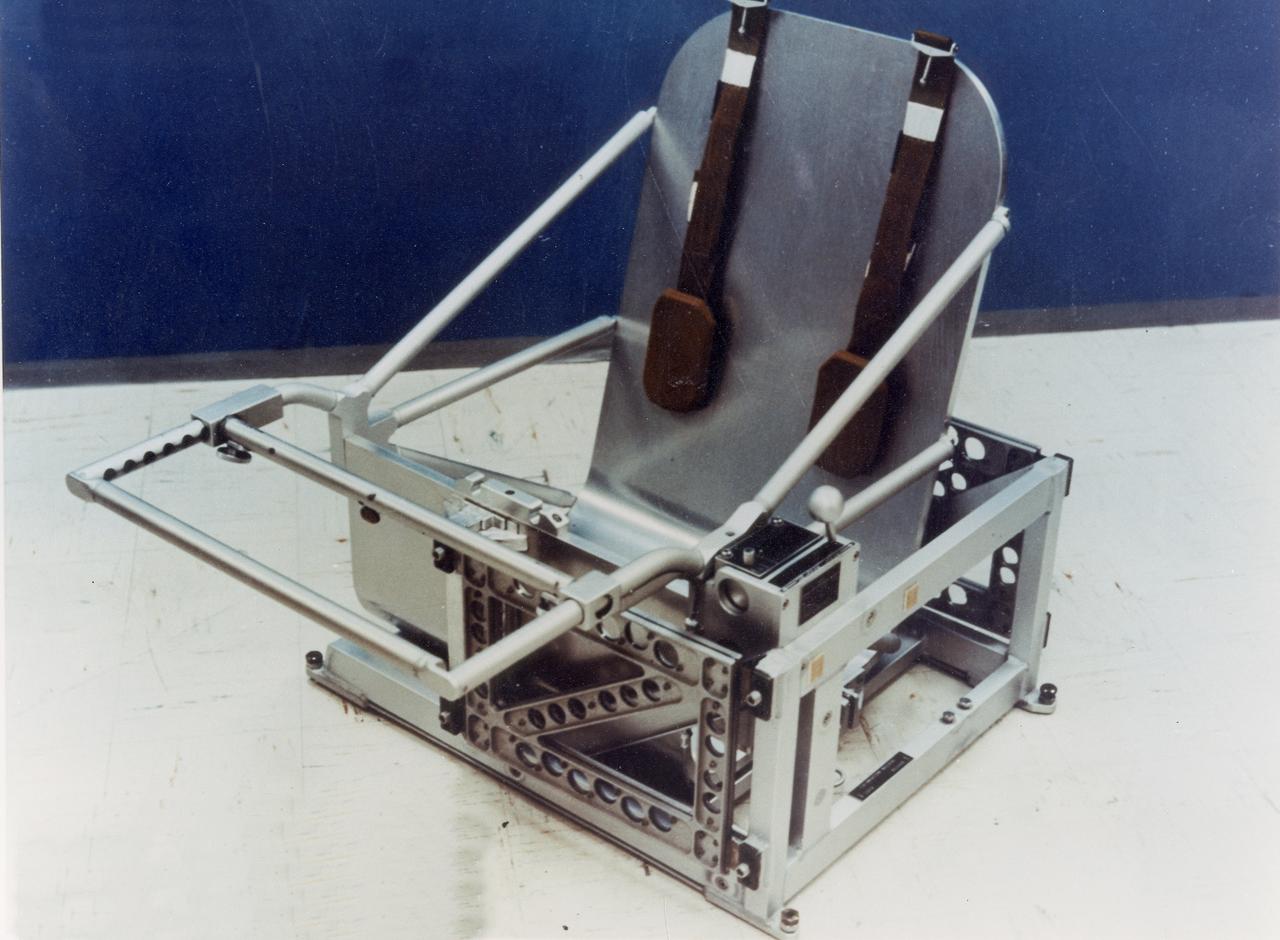
Skylab's Body Mass Measurement chair, the facility of the Body Mass Measurement experiment (M172), is shown here in this 1970 photograph. The M172 experiment determined the body mass of each crew member and observed changes in body masses during flight. Knowledge of exact body mass variations throughout the flight in significantly aided in the correlation of other medical data obtained during the flight. Mass measurements under zero-gravity conditions were achieved by the application of Newton's second law (force equals mass times acceleration). The Marshall Space Flight Center had program management responsibility for the development of Skylab hardware and experiments.
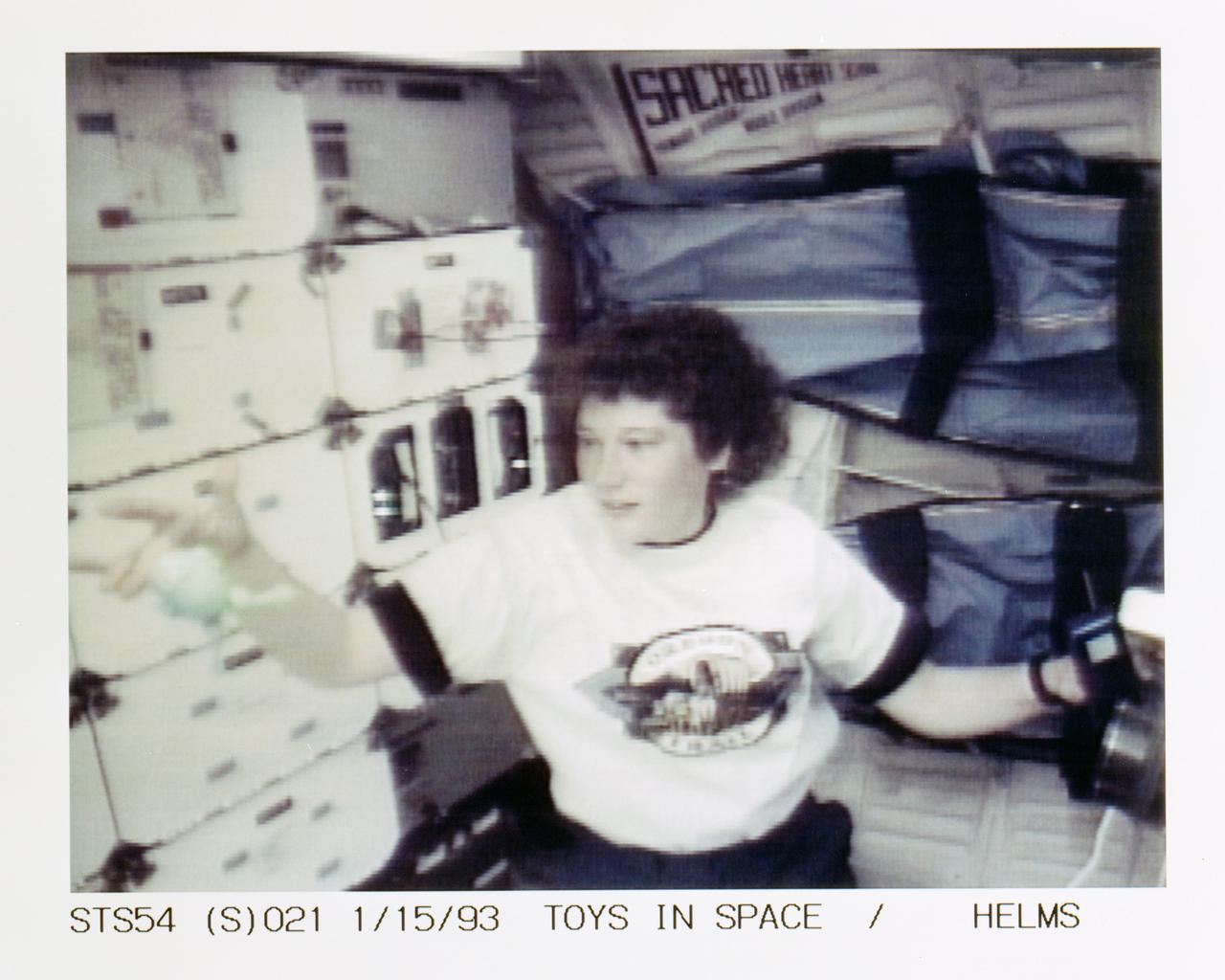
STS054-S-021 (15 Jan 1993) --- Helms with a frog swimmer toy on the middeck demonstrates some of the physics of toys to students watching on television. Four schools were chosen to ask questions of the astronauts during the lengthy program. Helms fielded questions from students at Shaver Elementary School in Portland, Oregon. The swimmer frog was used to demonstrate Newton's third law of motion and the conservation of angular momentum. The entire collection of toys will be videotaped for an educational program to be distributed to schools in the fall of this year. The scene was recorded at 17:51:38:12 GMT, Jan. 15, 1993.
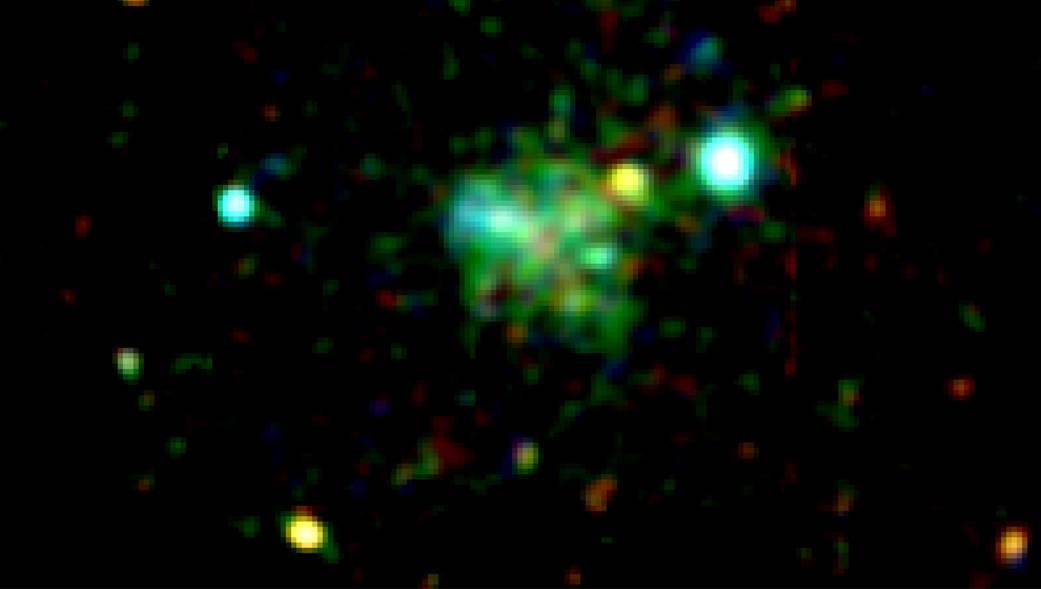
Astronomers have discovered a vast cloud of high-energy particles called a wind nebula around a rare ultra-magnetic neutron star, or magnetar, for the first time. The find offers a unique window into the properties, environment and outburst history of magnetars, which are the strongest magnets in the universe. A neutron star is the crushed core of a massive star that ran out of fuel, collapsed under its own weight, and exploded as a supernova. Each one compresses the equivalent mass of half a million Earths into a ball just 12 miles (20 kilometers) across, or about the length of New York's Manhattan Island. Neutron stars are most commonly found as pulsars, which produce radio, visible light, X-rays and gamma rays at various locations in their surrounding magnetic fields. When a pulsar spins these regions in our direction, astronomers detect pulses of emission, hence the name. Credit: ESA/XMM-Newton/Younes et al. 2016

Astronomers have produced a highly detailed image of the Crab Nebula, by combining data from telescopes spanning nearly the entire breadth of the electromagnetic spectrum, from radio waves seen by the Karl G. Jansky Very Large Array (VLA) to the powerful X-ray glow as seen by the orbiting Chandra X-ray Observatory. And, in between that range of wavelengths, the Hubble Space Telescope's crisp visible-light view, and the infrared perspective of the Spitzer Space Telescope. This composite image of the Crab Nebula, a supernova remnant, was assembled by combining data from five telescopes spanning nearly the entire breadth of the electromagnetic spectrum: the Very Large Array, the Spitzer Space Telescope, the Hubble Space Telescope, the XMM-Newton Observatory, and the Chandra X-ray Observatory. Credits: NASA, ESA, NRAO/AUI/NSF and G. Dubner (University of Buenos Aires) #nasagoddard #space #science
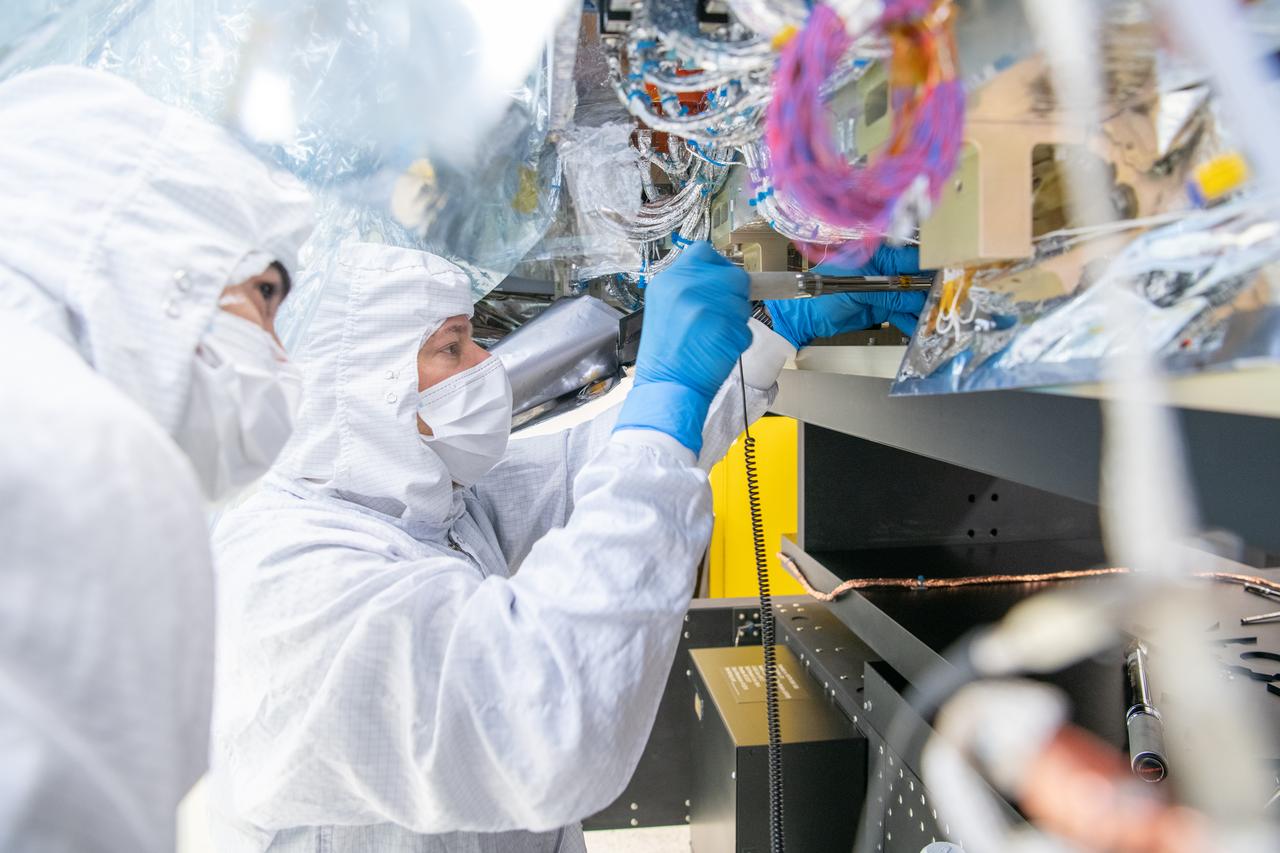
Mechanical technician, Thomas Huber, tightens bolts on the Ocean Color Instrument (OCI) is installed onto the Ground Support Equipment Application for Tilt or Rotation (GAToR) made by Newton Engineering. GAToR will allow engineers to tilt and rotate OCI in different orientations for further testing prior to integration onto the PACE (Plankton, Aerosol, Cloud, ocean Ecosystem) spacecraft. OCI is a highly advanced optical spectrometer that will be used to measure properties of light over portions of the electromagnetic spectrum. It will enable continuous measurement of light at finer wavelength resolution than previous NASA satellite sensors, extending key system ocean color data records for climate studies. OCI is PACE's (Plankton, Aerosol, Cloud, ocean Ecosystem) primary sensor built at Goddard Space Flight Center in Greenbelt, MD.
![ISS007-E-17848 (23 October 2003) --- Cosmonaut Alexander Y. Kaleri (right), Expedition 8 flight engineer, uses a camera to film a scientific experiment performed by European Space Agency (ESA) astronaut Pedro Duque of Spain in the Zvezda Service Module on the International Space Station (ISS). Kaleri represents Rosaviakosmos. Duque and Kaleri performed the European educational VIDEO-2 (VID-01) experiment, which uses the Russian DSR PD-150P digital video camcorder for recording demos of several basic physical phenomena, viz., Isaac Newton's three motion laws, with narration. [The demo made use of a sealed bag containing coffee and a syringe to fill one of two hollow balls with the brown liquid (to provide "mass", as opposed to the other, "mass-less" ball).]](https://images-assets.nasa.gov/image/iss007e17848/iss007e17848~medium.jpg)
ISS007-E-17848 (23 October 2003) --- Cosmonaut Alexander Y. Kaleri (right), Expedition 8 flight engineer, uses a camera to film a scientific experiment performed by European Space Agency (ESA) astronaut Pedro Duque of Spain in the Zvezda Service Module on the International Space Station (ISS). Kaleri represents Rosaviakosmos. Duque and Kaleri performed the European educational VIDEO-2 (VID-01) experiment, which uses the Russian DSR PD-150P digital video camcorder for recording demos of several basic physical phenomena, viz., Isaac Newton's three motion laws, with narration. [The demo made use of a sealed bag containing coffee and a syringe to fill one of two hollow balls with the brown liquid (to provide "mass", as opposed to the other, "mass-less" ball).]
![ISS007-E-17842 (23 October 2003) --- European Space Agency (ESA) astronaut Pedro Duque (left) of Spain and cosmonaut Alexander Y. Kaleri, Expedition 8 flight engineer representing Rosaviakosmos, work with a scientific experiment in the Zvezda Service Module on the International Space Station (ISS). Duque and Kaleri performed the European educational VIDEO-2 (VID-01) experiment, which uses the Russian DSR PD-150P digital video camcorder for recording demos of several basic physical phenomena, viz., Isaac Newton's three motion laws, with narration. [The demo made use of a sealed bag containing coffee and a syringe to fill one of two hollow balls with the brown liquid (to provide "mass", as opposed to the other, "mass-less" ball).]](https://images-assets.nasa.gov/image/iss007e17842/iss007e17842~medium.jpg)
ISS007-E-17842 (23 October 2003) --- European Space Agency (ESA) astronaut Pedro Duque (left) of Spain and cosmonaut Alexander Y. Kaleri, Expedition 8 flight engineer representing Rosaviakosmos, work with a scientific experiment in the Zvezda Service Module on the International Space Station (ISS). Duque and Kaleri performed the European educational VIDEO-2 (VID-01) experiment, which uses the Russian DSR PD-150P digital video camcorder for recording demos of several basic physical phenomena, viz., Isaac Newton's three motion laws, with narration. [The demo made use of a sealed bag containing coffee and a syringe to fill one of two hollow balls with the brown liquid (to provide "mass", as opposed to the other, "mass-less" ball).]

This artist's impression depicts the accretion disc surrounding a black hole, in which the inner region of the disc precesses. "Precession" means that the orbit of material surrounding the black hole changes orientation around the central object. In these three views, the precessing inner disc shines high-energy radiation that strikes the matter in the surrounding accretion disc. This causes the iron atoms in that disc to emit X-rays, depicted as the glow on the accretion disc to the right (in view a), to the front (in view b) and to the left (in view c) (see Figure 1). In a study published in July 2016, astronomers used data from ESA's XMM-Newton X-ray Observatory and NASA's NuSTAR telescope to measure this "wobble" in X-ray emission from excited iron atoms. Scientists interpreted this as evidence for the Lense-Thirring effect -- a name for the precession phenomenon -- in the strong gravitational field of a black hole. http://photojournal.jpl.nasa.gov/catalog/PIA20697
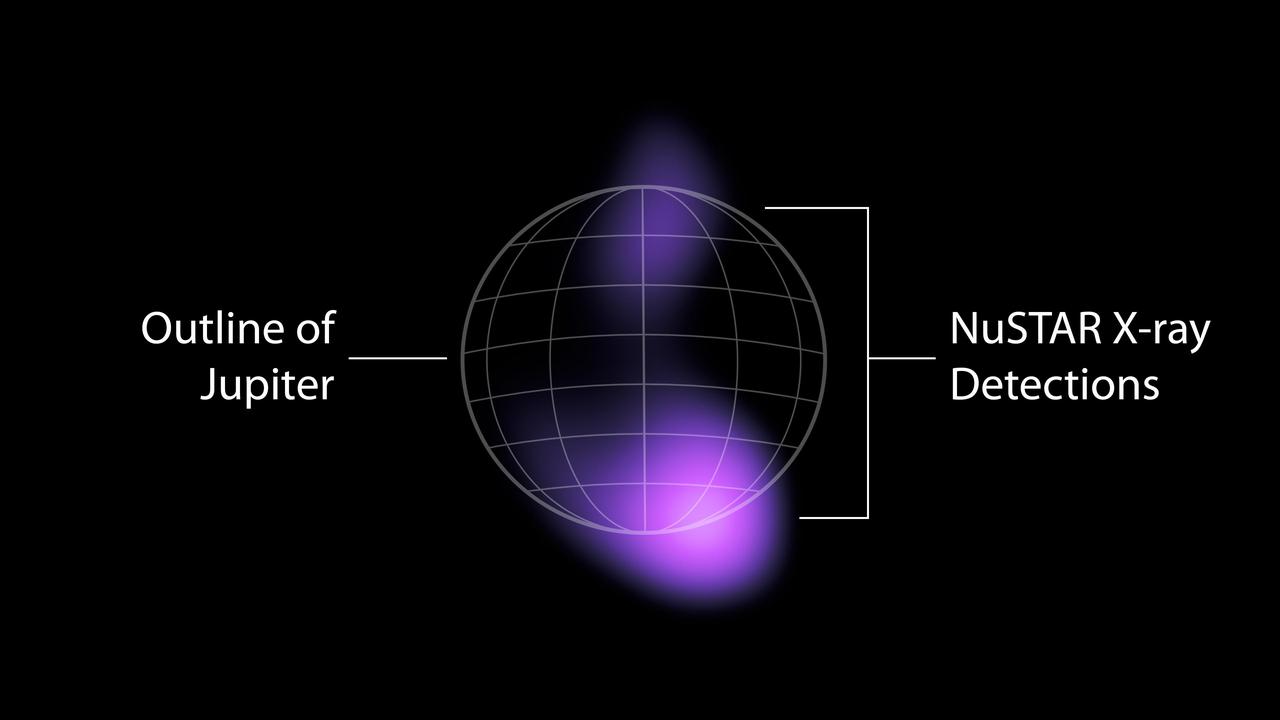
The areas where high-energy X-rays were detected by NASA's NuSTAR (Nuclear Spectroscopic Telescope Array) from the auroras near Jupiter's north and south poles are shown in purple in this graphic. The emissions are the highest-energy light ever seen at Jupiter and the highest-energy light ever detected from a planet in our solar system other than Earth. The light comes from accelerated electrons colliding with the atmosphere. NuSTAR cannot pinpoint the source of the light with high precision, but can only find that it is coming from somewhere in the purple-colored regions. X-rays are a form of light, but with much higher energies and shorter wavelengths than the visible light human eyes can see. NASA's Chandra X-ray Observatory and the ESA (European Space Agency) XMM-Newton observatory have both studied X-rays from Jupiter's auroras – produced when volcanos on Jupiter's moon Io shower the planet with ions (atoms stripped of their electrons). Jupiter's powerful magnetic field accelerates the particles and funnels them toward the planet's poles, where they collide with its atmosphere and release energy in the form of light, including X-rays. Electrons from Io are also accelerated by the planet's magnetic field, according to observations by the Jovian Auroral Distributions Experiment (JADE) and Jupiter Energetic-particle Detector Instrument (JEDI) on NASA's Juno spacecraft, which arrived at Jupiter in 2016. Researchers suspected that those electrons should produce even higher-energy X-rays than those observed by Chandra and XMM-Newton, and the NuSTAR detections confirm that hypothesis. The high-energy X-rays are relatively faint, and required a week of NuSTAR observations to detect. Scientists have detected X-rays in Earth's auroras with even higher energies than what NuSTAR saw at Jupiter, but those emissions can only be spotted by small satellites or high-altitude balloons that get extremely close to the locations in the atmosphere that generate those X-rays. https://photojournal.jpl.nasa.gov/catalog/PIA25131
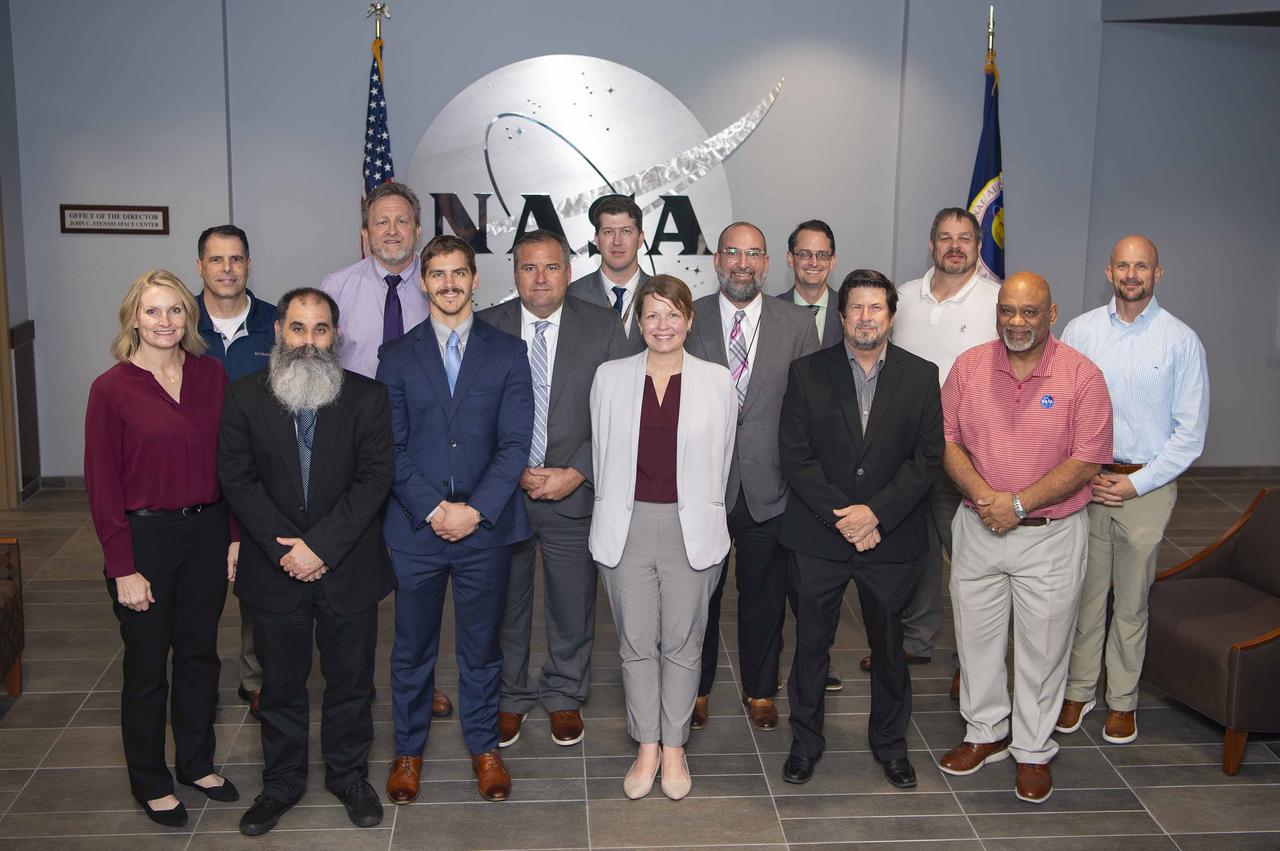
U.S. Navy officials visited with NASA Stennis leaders Nov. 13 for a meet-and-greet opportunity, also receiving an overview briefing about the work and operations of south Mississippi site. Participants in the gathering included (left to right): Anita Harrell, executive director of the NASA Shared Services Center; Joe Schuyler, director of the NASA Stennis Engineering and Test Directorate; Herschel Mims, a management support specialist with the Naval Oceanography Operations Command; Rodney McKellip, NASA Stennis associate director; Francis Prikasky, an electronics engineer and information technology administrator with the Naval Oceanographic Office; Robert Gavagnie, a contract specialist with the Naval Oceanographic Office; James “Brett” English, information systems security manager with the Naval Meteorology and Oceanography Command; Dr. Brooke Jones, head of the Ocean Forecasting Division for the Fleet Numerical Meteorology and Oceanography Center; Maxwell Williamson, a physical scientists with the Naval Oceanographic Office; Dr. Benjamin Phrampus, a research geophysicist with the Naval Research Laboratory; Gary Benton, director of the NASA Stennis Safety and Mission Assurance Directorate; Thom Rich, associate director of the NASA Stennis Center Operations Directorate; Ken Newton, director of service delivery for the NASA Shared Services Center; and Eli Ouder, director of the NASA Stennis/NASA Shared Services Center Office of Procurement.

These four images show an artist's impression of gas accreting onto the neutron star in the binary system MXB 1730-335, also known as the "Rapid Burster." In such a binary system, the gravitational pull of the dense neutron star is stripping gas away from its stellar companion (a low-mass star, not shown in these images). The gas forms an accretion disk and spirals towards the neutron star. Observations of the Rapid Burster using three X-ray space telescopes -- NASA's NuSTAR and Swift, and ESA's XMM-Newton -- have revealed what happens around the neutron star before and during a so-called "type-II" burst. These bursts are sudden, erratic and extremely intense releases of X-rays that liberate enormous amounts of energy during periods when very little emission occurs otherwise. Before the burst, the fast-spinning magnetic field of the neutron star keeps the gas flowing from the companion star at bay, preventing it from reaching closer to the neutron star and effectively creating an inner edge at the center of the disk (Figure 1, panel 1). During this phase, only small amounts of gas leak towards the neutron star. However, as the gas continues to flow and accumulate near this edge, it spins faster and faster. http://photojournal.jpl.nasa.gov/catalog/PIA21418

Astronomers have produced a highly detailed image of the Crab Nebula, by combining data from telescopes spanning nearly the entire breadth of the electromagnetic spectrum, from radio waves seen by the Karl G. Jansky Very Large Array (VLA) to the powerful X-ray glow as seen by the orbiting Chandra X-ray Observatory. And, in between that range of wavelengths, the Hubble Space Telescope's crisp visible-light view, and the infrared perspective of the Spitzer Space Telescope. This video starts with a composite image of the Crab Nebula, a supernova remnant that was assembled by combining data from five telescopes spanning nearly the entire breadth of the electromagnetic spectrum: the Very Large Array, the Spitzer Space Telescope, the Hubble Space Telescope, the XMM-Newton Observatory, and the Chandra X-ray Observatory. The video dissolves to the red-colored radio-light view that shows how a neutron star’s fierce “wind” of charged particles from the central neutron star energized the nebula, causing it to emit the radio waves. The yellow-colored infrared image includes the glow of dust particles absorbing ultraviolet and visible light. The green-colored Hubble visible-light image offers a very sharp view of hot filamentary structures that permeate this nebula. The blue-colored ultraviolet image and the purple-colored X-ray image shows the effect of an energetic cloud of electrons driven by a rapidly rotating neutron star at the center of the nebula. Read more: <a href="https://go.nasa.gov/2r0s8VC" rel="nofollow">go.nasa.gov/2r0s8VC</a> Credits: NASA, ESA, J. DePasquale (STScI)
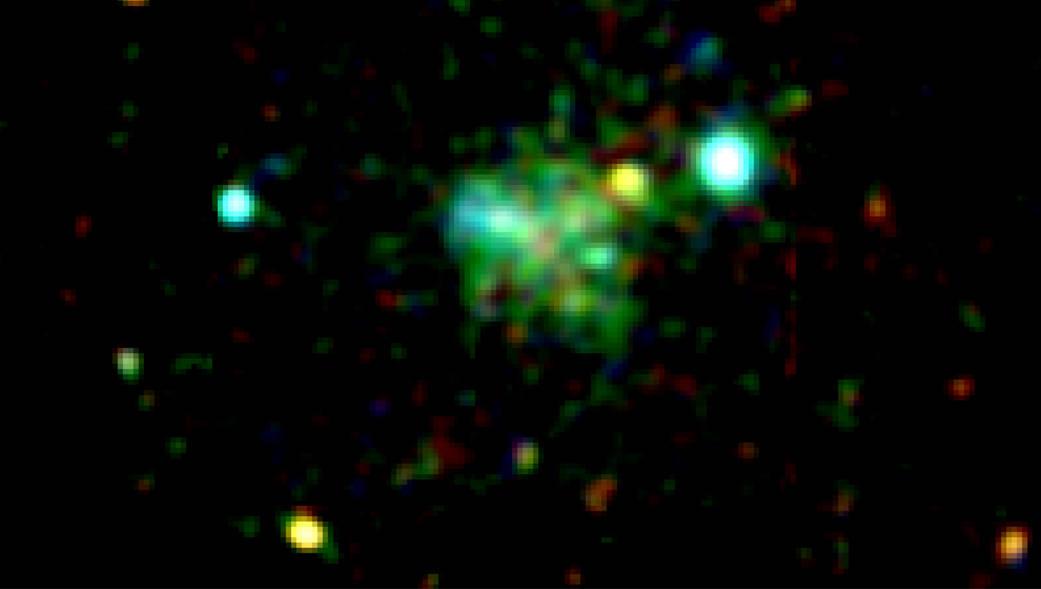
Astronomers have discovered a vast cloud of high-energy particles called a wind nebula around a rare ultra-magnetic neutron star, or magnetar, for the first time. The find offers a unique window into the properties, environment and outburst history of magnetars, which are the strongest magnets in the universe. A neutron star is the crushed core of a massive star that ran out of fuel, collapsed under its own weight, and exploded as a supernova. Each one compresses the equivalent mass of half a million Earths into a ball just 12 miles (20 kilometers) across, or about the length of New York's Manhattan Island. Neutron stars are most commonly found as pulsars, which produce radio, visible light, X-rays and gamma rays at various locations in their surrounding magnetic fields. When a pulsar spins these regions in our direction, astronomers detect pulses of emission, hence the name. Read more: <a href="http://go.nasa.gov/28PVUop" rel="nofollow">go.nasa.gov/28PVUop</a> Credit: ESA/XMM-Newton/Younes et al. 2016 <b><a href="http://go.nasa.gov/28KYHxv" rel="nofollow">NASA image use policy.</a></b> <b><a href="http://go.nasa.gov/28KYKsS" rel="nofollow">NASA Goddard Space Flight Center</a></b> enables NASA’s mission through four scientific endeavors: Earth Science, Heliophysics, Solar System Exploration, and Astrophysics. Goddard plays a leading role in NASA’s accomplishments by contributing compelling scientific knowledge to advance the Agency’s mission. <b>Follow us on <a href="http://go.nasa.gov/28KYVo7" rel="nofollow">Twitter</a></b> <b>Like us on <a href="http://go.nasa.gov/28KYGcx" rel="nofollow">Facebook</a></b> <b>Find us on <a href="http://go.nasa.gov/28KYGtf" rel="nofollow">Instagram</a></b>
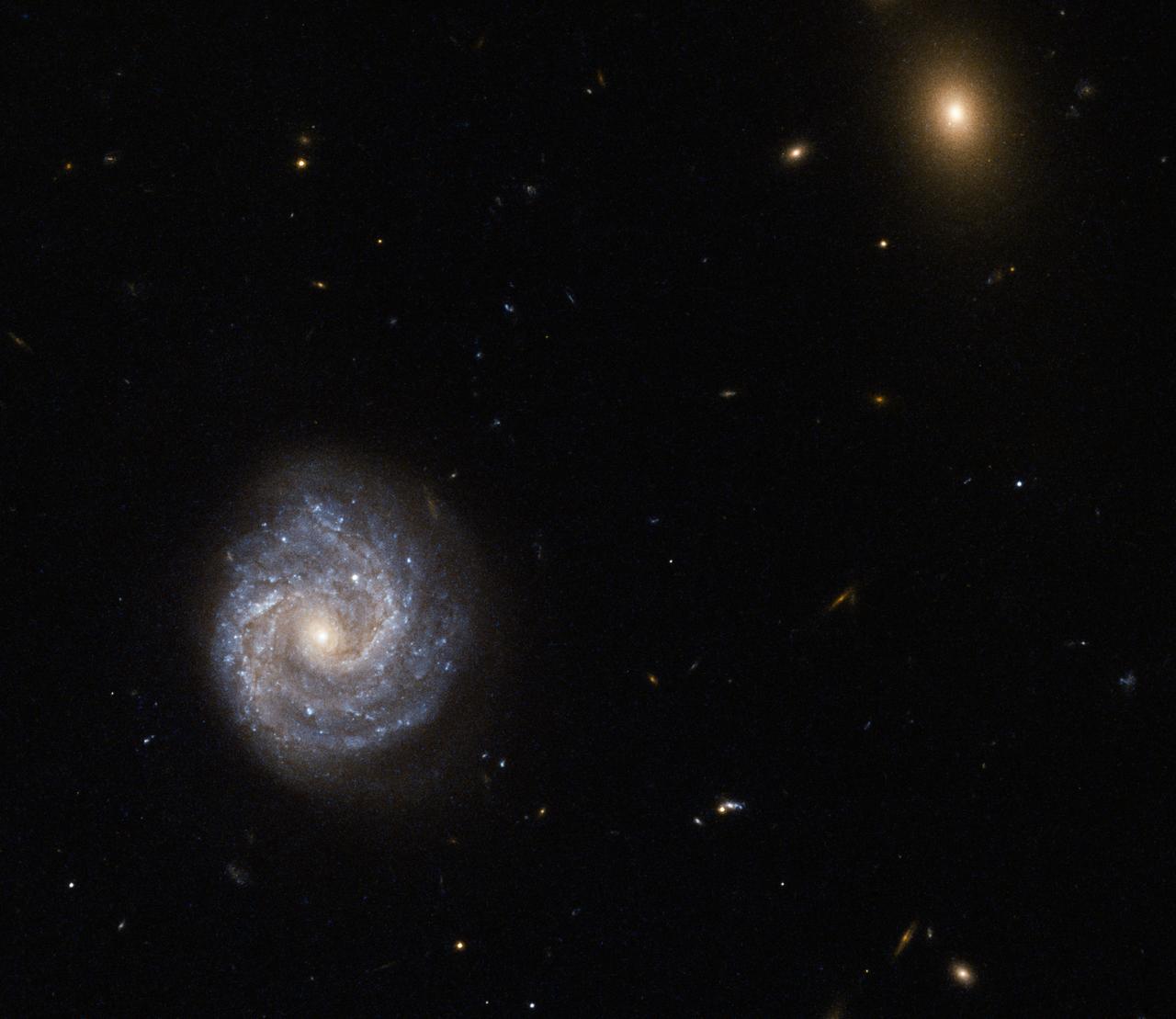
Not all galaxies have the luxury of possessing a simple moniker or quirky nickname. This impressive galaxy imaged by the NASA/ESA Hubble Space Telescope is one of the unlucky ones, and goes by a name that looks more like a password for a computer: 2XMM J143450.5+033843. Such a name may seem like a random jumble of numbers and letters, but like all galactic epithets it has a distinct meaning. This galaxy, for example, was detected and observed as part of the second X-ray sky survey performed by ESA’s XMM-Newton Observatory. Its celestial coordinates form the rest of the bulky name, following the “J”: a right ascension value of 14h (hours) 34m (minutes) 50.5s (seconds). This can be likened to terrestrial longitude. It also has a declination of +03d (degrees) 38m (minutes) 43s (seconds). Declination can be likened to terrestrial latitude. The other fuzzy object in the frame was named in the same way — it is a bright galaxy named 2XMM J143448.3+033749. 2XMM J143450.5+033843 lies nearly 400 million light-years away from Earth. It is a Seyfert galaxy that is dominated by something known as an Active Galactic Nucleus — its core is thought to contain a supermassive black hole that is emitting huge amounts of radiation, pouring energetic X-rays out into the Universe. Photo credit: ESA/Hubble & NASA <b><a href="http://www.nasa.gov/audience/formedia/features/MP_Photo_Guidelines.html" rel="nofollow">NASA image use policy.</a></b> <b><a href="http://www.nasa.gov/centers/goddard/home/index.html" rel="nofollow">NASA Goddard Space Flight Center</a></b> enables NASA’s mission through four scientific endeavors: Earth Science, Heliophysics, Solar System Exploration, and Astrophysics. Goddard plays a leading role in NASA’s accomplishments by contributing compelling scientific knowledge to advance the Agency’s mission. <b>Follow us on <a href="http://twitter.com/NASAGoddardPix" rel="nofollow">Twitter</a></b> <b>Like us on <a href="http://www.facebook.com/pages/Greenbelt-MD/NASA-Goddard/395013845897?ref=tsd" rel="nofollow">Facebook</a></b> <b>Find us on <a href="http://instagrid.me/nasagoddard/?vm=grid" rel="nofollow">Instagram</a></b>
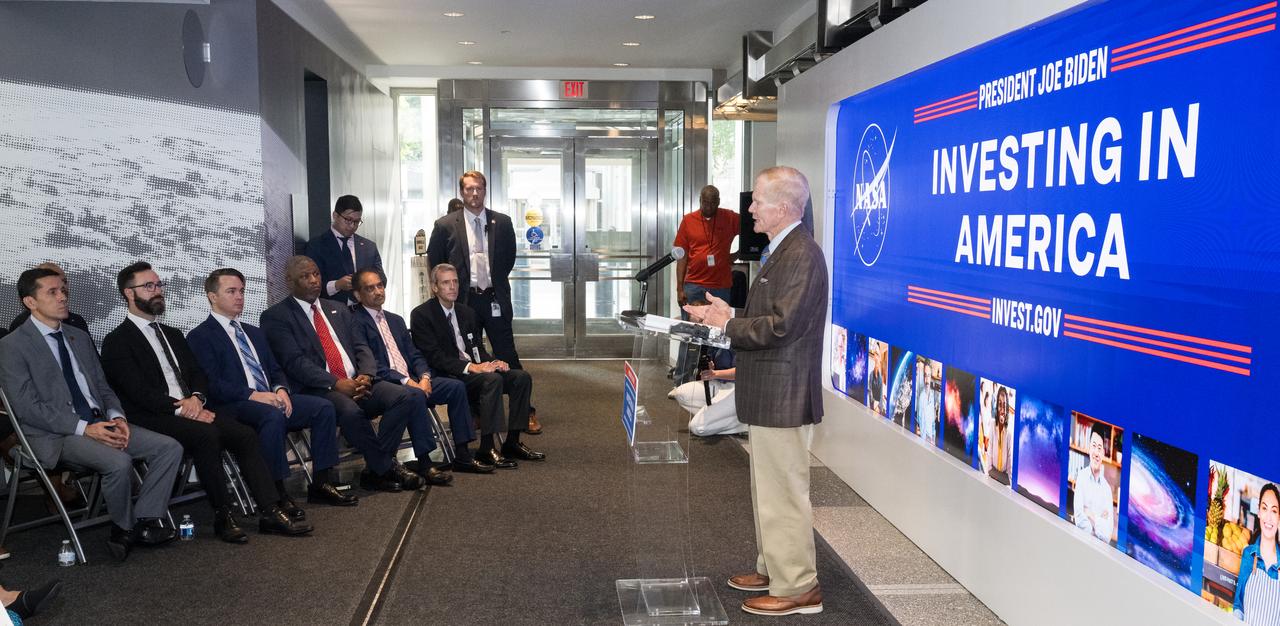
NASA Administrator Bill Nelson gives remarks during an event unveiling the 2022 Small Business Federal Procurement Scorecard, Tuesday, July 18, 2023, in the Earth Information Center at the Mary W. Jackson NASA Headquarters building in Washington. NASA Administrator Bill Nelson and NASA Deputy Administrator Pam Melroy hosted Isabella Casillas Guzman, Administrator of the Small Business Administration (SBA), for the unveiling of the annual scorecard which looks at how federal agencies rank on meeting their small business goals. Photo Credit: (NASA/Aubrey Gemignani)

NASA Administrator Bill Nelson, top left, and NASA Deputy Administrator Pam Melroy, bottom left, speak to small business owners who work with NASA before Isabella Casillas Guzman, Administrator of the Small Business Administration (SBA), unveils the 2022 Small Business Federal Procurement Scorecard, at an event hosted by NASA, Tuesday, July 18, 2023 in the Earth Information Center at the Mary W. Jackson NASA Headquarters building in Washington. For the sixth year in a row NASA has received an “A” rating from SBA for its work with small businesses. Photo Credit: (NASA/Aubrey Gemignani)
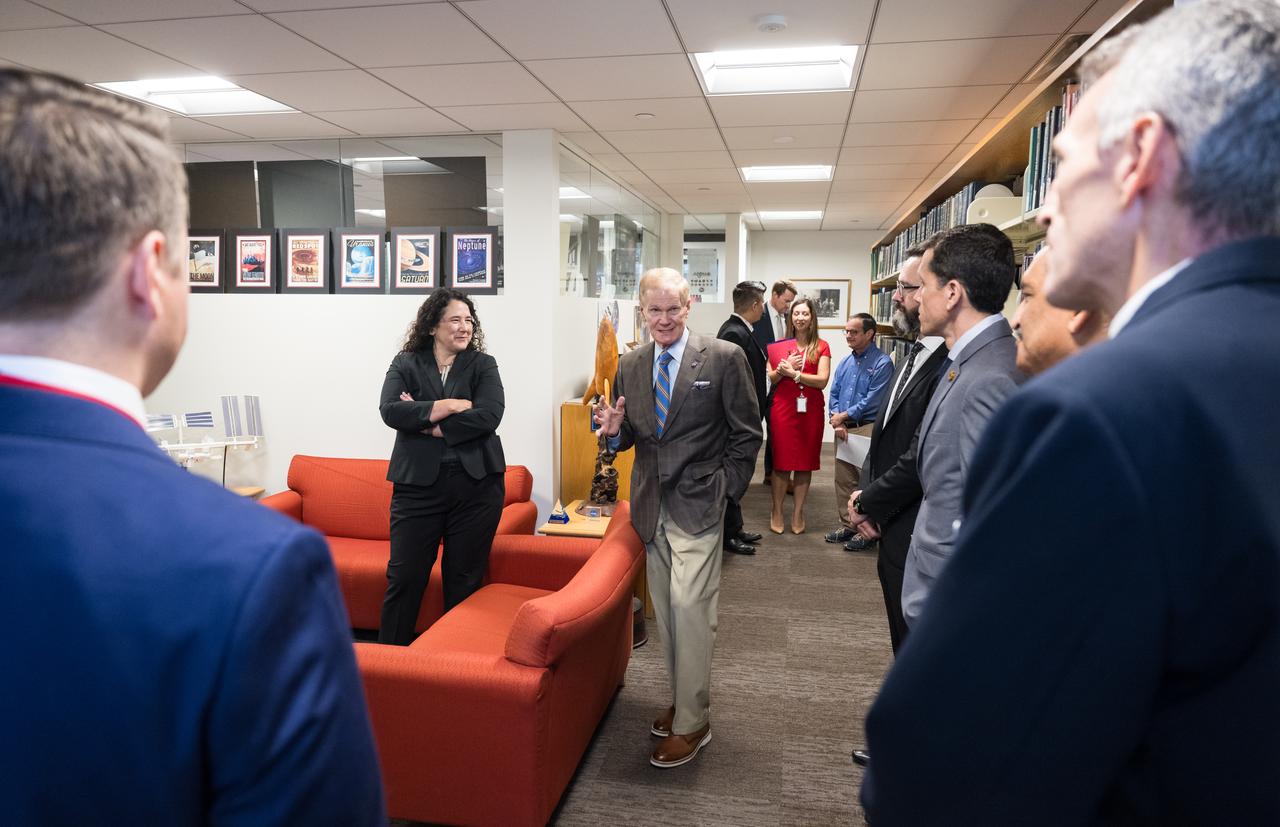
NASA Administrator Bill Nelson, center, and Isabella Casillas Guzman, Administrator of the Small Business Administration (SBA), left, speak to small business owners who work with NASA, before Guzman unveiled the 2022 Small Business Federal Procurement Scorecard, at an event hosted by NASA, Tuesday, July 18, 2023 in the Earth Information Center at the Mary W. Jackson NASA Headquarters building in Washington. For the sixth year in a row NASA has received an “A” rating from SBA for its work with small businesses. Photo Credit: (NASA/Aubrey Gemignani)
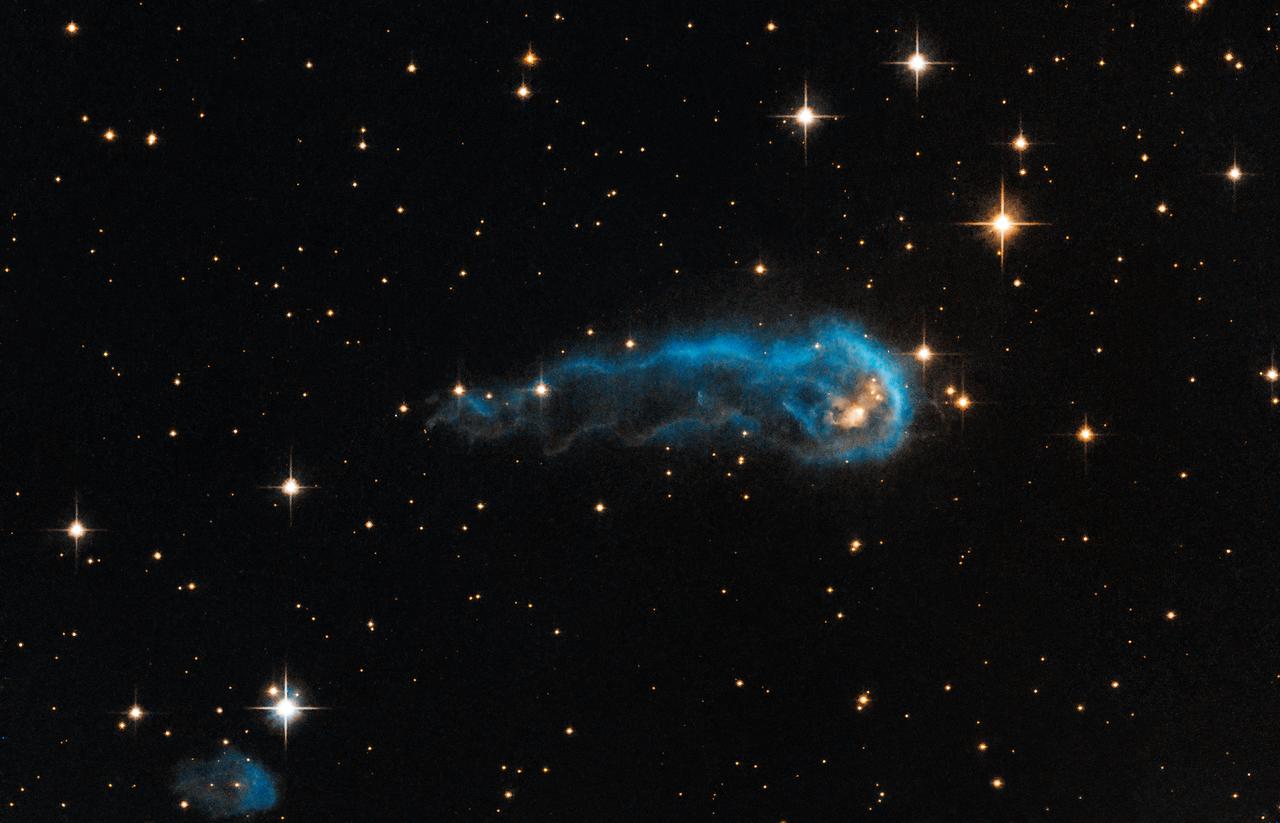
This light-year-long knot of interstellar gas and dust resembles a caterpillar on its way to a feast. But the meat of the story is not only what this cosmic caterpillar eats for lunch, but also what's eating it. Harsh winds from extremely bright stars are blasting ultraviolet radiation at this "wanna-be" star and sculpting the gas and dust into its long shape. The culprits are 65 of the hottest, brightest known stars, classified as O-type stars, located 15 light-years away from the knot, towards the right edge of the image. These stars, along with 500 less bright, but still highly luminous B-type stars make up what is called the Cygnus OB2 association. Collectively, the association is thought to have a mass more than 30,000 times that of our sun. The caterpillar-shaped knot, called IRAS 20324+4057, is a protostar in a very early evolutionary stage. It is still in the process of collecting material from an envelope of gas surrounding it. However, that envelope is being eroded by the radiation from Cygnus OB2. Protostars in this region should eventually become young stars with final masses about one to ten times that of our sun, but if the eroding radiation from the nearby bright stars destroys the gas envelope before the protostars finish collecting mass, their final masses may be reduced. Spectroscopic observations of the central star within IRAS 20324+4057 show that it is still collecting material quite heavily from its outer envelope, hoping to bulk up in mass. Only time will tell if the formed star will be a "heavy-weight" or a "light-weight" with respect to its mass. This image of IRAS 20324+4057 is a composite of Hubble Advanced Camera for Surveys data taken in green and infrared light in 2006, and ground-based hydrogen data from the Isaac Newton Telescope in 2003. The object lies 4,500 light-years away in the constellation Cygnus. Credit: NASA, ESA, and the Hubble Heritage Team (STScI/AURA) <b><a href="http://www.nasa.gov/audience/formedia/features/MP_Photo_Guidelines.html" rel="nofollow">NASA image use policy.</a></b> <b><a href="http://www.nasa.gov/centers/goddard/home/index.html" rel="nofollow">NASA Goddard Space Flight Center</a></b> enables NASA’s mission through four scientific endeavors: Earth Science, Heliophysics, Solar System Exploration, and Astrophysics. Goddard plays a leading role in NASA’s accomplishments by contributing compelling scientific knowledge to advance the Agency’s mission. <b>Follow us on <a href="http://twitter.com/NASA_GoddardPix" rel="nofollow">Twitter</a></b> <b>Like us on <a href="http://www.facebook.com/pages/Greenbelt-MD/NASA-Goddard/395013845897?ref=tsd" rel="nofollow">Facebook</a></b> <b>Find us on <a href="http://instagram.com/nasagoddard?vm=grid" rel="nofollow">Instagram</a></b>
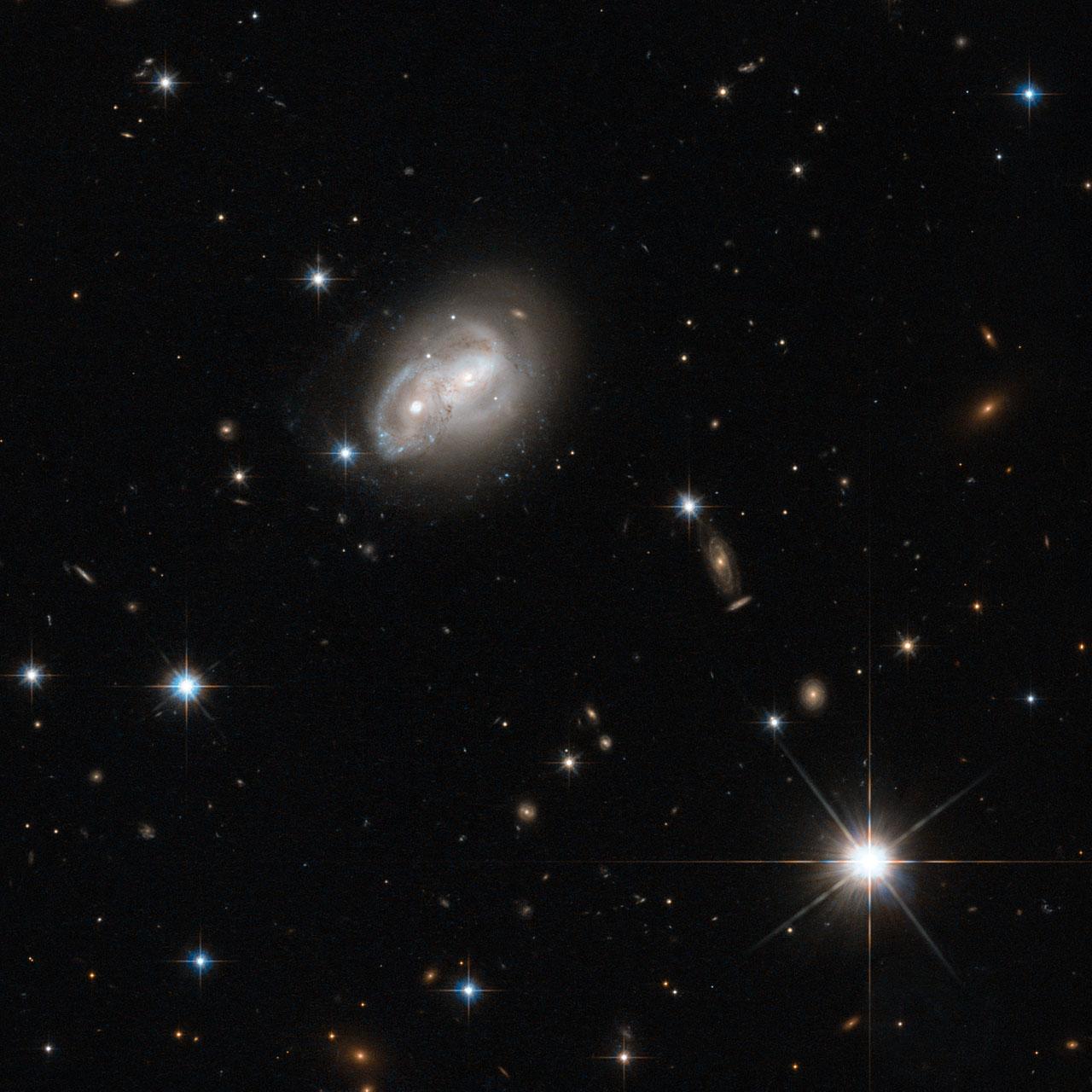
From objects as small as Newton's apple to those as large as a galaxy, no physical body is free from the stern bonds of gravity, as evidenced in this stunning picture captured by the Wide Field Camera 3 and Advanced Camera for Surveys onboard the NASA/ESA Hubble Space Telescope. Here we see two spiral galaxies engaged in a cosmic tug-of-war — but in this contest, there will be no winner. The structures of both objects are slowly distorted to resemble new forms, and in some cases, merge together to form new, super galaxies. This particular fate is similar to that of the Milky Way Galaxy, when it will ultimately merge with our closest galactic partner, the Andromeda Galaxy. There is no need to panic however, as this process takes several hundreds of millions of years. Not all interacting galaxies result in mergers though. The merger is dependent on the mass of each galaxy, as well as the relative velocities of each body. It is quite possible that the event pictured here, romantically named 2MASX J06094582-2140234, will avoid a merger event altogether, and will merely distort the arms of each spiral without colliding — the cosmic equivalent of a hair ruffling! These galactic interactions also trigger new regions of star formation in the galaxies involved, causing them to be extremely luminous in the infrared part of the spectrum. For this reason, these types of galaxies are referred to as LIRGs, or Luminous Infrared Galaxies. This image was taken as part of as part of a Hubble survey of the central regions of LIRGs in the local Universe, which also used the Near Infrared Camera and Multi-Object Spectrometer (NICMOS) instrument. Credit: ESA/Hubble & NASA, Acknowledgement: Luca Limatola <b><a href="http://www.nasa.gov/audience/formedia/features/MP_Photo_Guidelines.html" rel="nofollow">NASA image use policy.</a></b> <b><a href="http://www.nasa.gov/centers/goddard/home/index.html" rel="nofollow">NASA Goddard Space Flight Center</a></b> enables NASA’s mission through four scientific endeavors: Earth Science, Heliophysics, Solar System Exploration, and Astrophysics. Goddard plays a leading role in NASA’s accomplishments by contributing compelling scientific knowledge to advance the Agency’s mission. <b>Follow us on <a href="http://twitter.com/NASAGoddardPix" rel="nofollow">Twitter</a></b> <b>Like us on <a href="http://www.facebook.com/pages/Greenbelt-MD/NASA-Goddard/395013845897?ref=tsd" rel="nofollow">Facebook</a></b> <b>Find us on <a href="http://instagram.com/nasagoddard?vm=grid" rel="nofollow">Instagram</a></b>

The Cat's Eye Nebula, one of the first planetary nebulae discovered, also has one of the most complex forms known to this kind of nebula. Eleven rings, or shells, of gas make up the Cat's Eye. The full beauty of the Cat's Eye Nebula is revealed in this detailed view from NASA's Hubble Space Telescope. The image from Hubble's Advanced Camera for Surveys (ACS) shows a bull's eye pattern of eleven or even more concentric rings, or shells, around the Cat's Eye. Each 'ring' is actually the edge of a spherical bubble seen projected onto the sky -- that's why it appears bright along its outer edge. Observations suggest the star ejected its mass in a series of pulses at 1,500-year intervals. These convulsions created dust shells, each of which contain as much mass as all of the planets in our solar system combined (still only one percent of the Sun's mass). These concentric shells make a layered, onion-skin structure around the dying star. The view from Hubble is like seeing an onion cut in half, where each skin layer is discernible. The bull's-eye patterns seen around planetary nebulae come as a surprise to astronomers because they had no expectation that episodes of mass loss at the end of stellar lives would repeat every 1,500 years. Several explanations have been proposed, including cycles of magnetic activity somewhat similar to our own Sun's sunspot cycle, the action of companion stars orbiting around the dying star, and stellar pulsations. Another school of thought is that the material is ejected smoothly from the star, and the rings are created later on due to formation of waves in the outflowing material. Credit: NASA, ESA, HEIC, and The Hubble Heritage Team (STScI/AURA) Acknowledgment: R. Corradi (Isaac Newton Group of Telescopes, Spain) and Z. Tsvetanov (NASA) The Hubble Space Telescope is a project of international cooperation between NASA and the European Space Agency. NASA's Goddard Space Flight Center manages the telescope. The Space Telescope Science Institute conducts Hubble science operations. Goddard is responsible for HST project management, including mission and science operations, servicing missions, and all associated development activities. To learn more about the Hubble Space Telescope go here: <a href="http://www.nasa.gov/mission_pages/hubble/main/index.html" rel="nofollow">www.nasa.gov/mission_pages/hubble/main/index.html</a> <b><a href="http://www.nasa.gov/audience/formedia/features/MP_Photo_Guidelines.html" rel="nofollow">NASA image use policy.</a></b> <b><a href="http://www.nasa.gov/centers/goddard/home/index.html" rel="nofollow">NASA Goddard Space Flight Center</a></b> enables NASA’s mission through four scientific endeavors: Earth Science, Heliophysics, Solar System Exploration, and Astrophysics. Goddard plays a leading role in NASA’s accomplishments by contributing compelling scientific knowledge to advance the Agency’s mission. <b>Follow us on <a href="http://twitter.com/NASAGoddardPix" rel="nofollow">Twitter</a></b> <b>Like us on <a href="http://www.facebook.com/pages/Greenbelt-MD/NASA-Goddard/395013845897?ref=tsd" rel="nofollow">Facebook</a></b> <b>Find us on <a href="http://instagram.com/nasagoddard?vm=grid" rel="nofollow">Instagram</a></b>
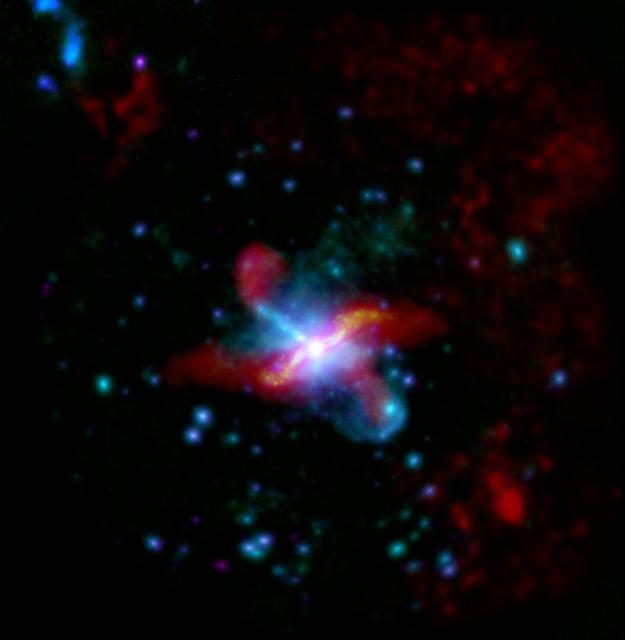
Inner structural features seen in this image from ESA Herschel Space Observatory are helping scientists to understand the mechanisms and interactions within the galaxy.