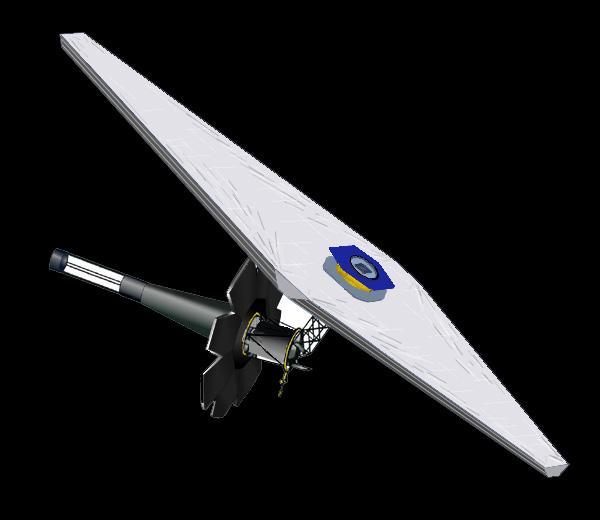
Artist concept of Next Generation Space Telescope from December, 2002. http://photojournal.jpl.nasa.gov/catalog/PIA04243

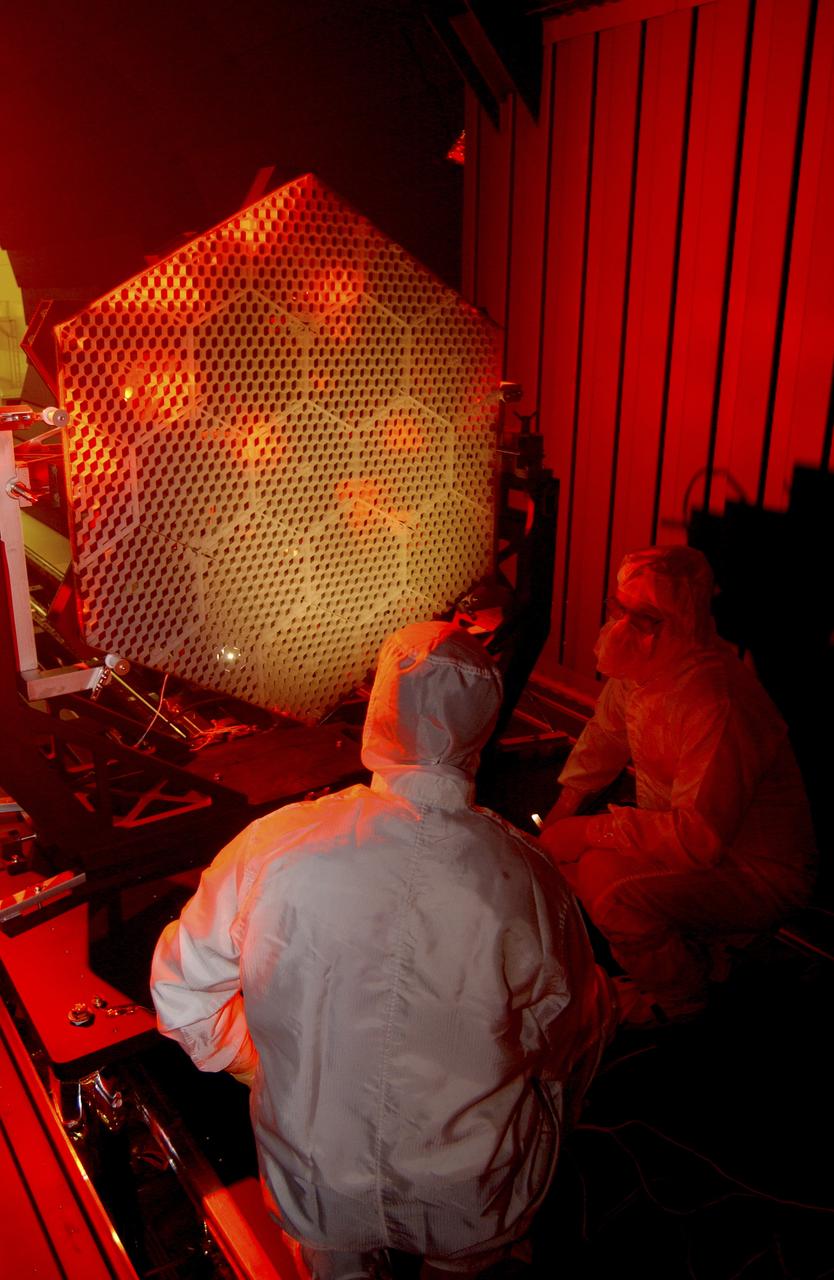
NASA image release April 14, 2011 NASA engineer Ernie Wright looks on as the first six flight ready James Webb Space Telescope's primary mirror segments are prepped to begin final cryogenic testing at NASA's Marshall Space Flight Center in Huntsville, Ala. Credit: NASA/MSFC/David Higginbotham To read more go to: <a href="http://www.nasa.gov/centers/marshall/news/jwst/11-111.html" rel="nofollow">www.nasa.gov/centers/marshall/news/jwst/11-111.html</a> <b><a href="http://www.nasa.gov/centers/goddard/home/index.html" rel="nofollow">NASA Goddard Space Flight Center</a></b> enables NASA’s mission through four scientific endeavors: Earth Science, Heliophysics, Solar System Exploration, and Astrophysics. Goddard plays a leading role in NASA’s accomplishments by contributing compelling scientific knowledge to advance the Agency’s mission. <b>Follow us on <a href="http://twitter.com/NASA_GoddardPix" rel="nofollow">Twitter</a></b> <b>Join us on <a href="http://www.facebook.com/pages/Greenbelt-MD/NASA-Goddard/395013845897?ref=tsd" rel="nofollow">Facebook</a></b>
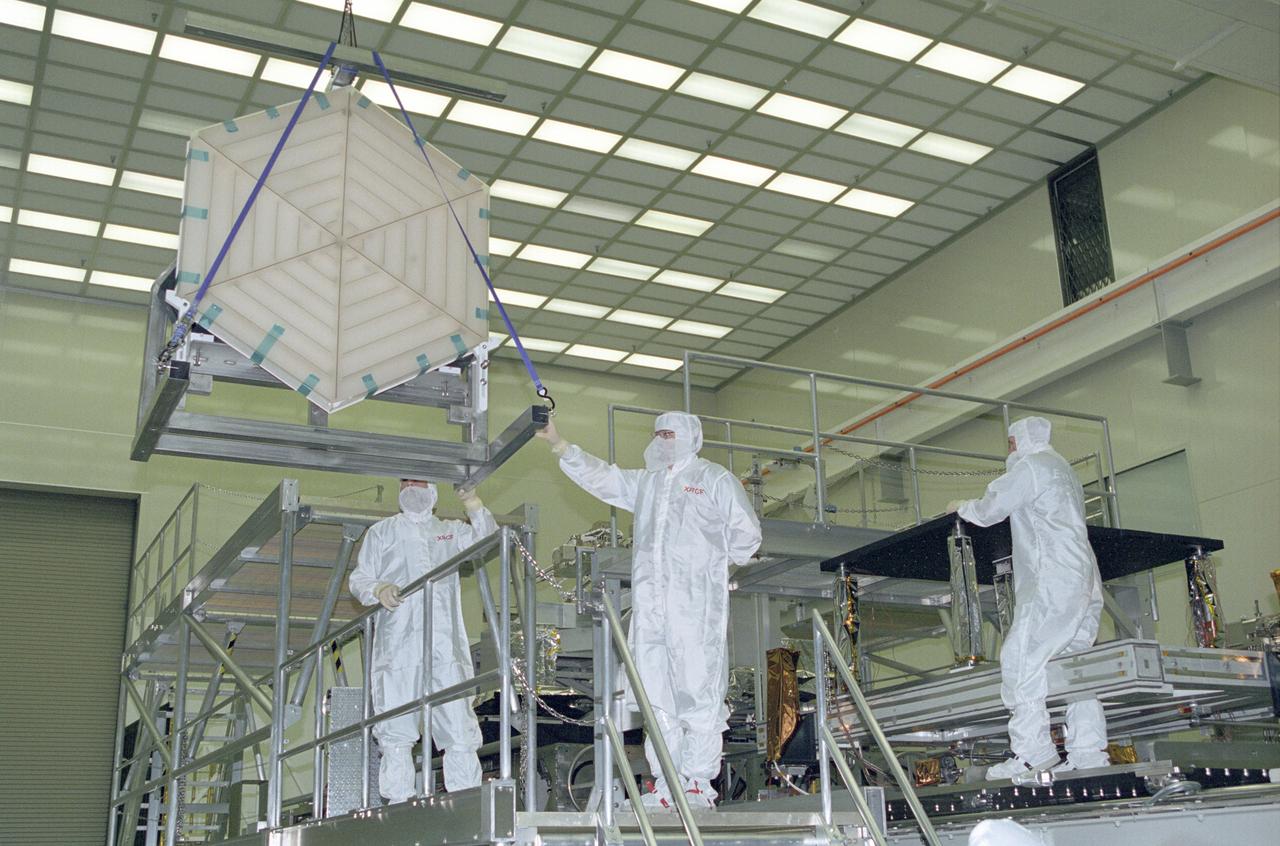
In this photograph, the composite material mirror is tested in the X-Ray Calibration Facility at the Marshall Space Flight Center for the James Webb Space Telescope (JWST). The mirror test conducted was to check the ability to accurately model and predict the cryogenic performance of complex mirror systems, and the characterization of cryogenic dampening properties of beryllium. The JWST, a next generation successor to the Hubble Space Telescope (HST), was named in honor of James W. Webb, NASA's second administrator, who led NASA in the early days of the fledgling Aerospace Agency. Scheduled for launch in 2010 aboard an expendable launch vehicle, the JWST will be able to look deeper into the universe than the HST because of the increased light-collecting power of its larger mirror and the extraordinary sensitivity of its instrument to infrared light.
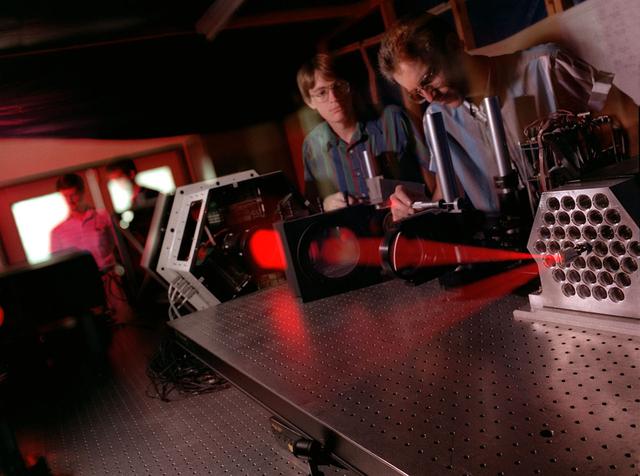
Scientists at Marshall's Adaptive Optics Lab demonstrate the Wave Front Sensor alignment using the Phased Array Mirror Extendible Large Aperture (PAMELA) optics adjustment. The primary objective of the PAMELA project is to develop methods for aligning and controlling adaptive optics segmented mirror systems. These systems can be used to acquire or project light energy. The Next Generation Space Telescope is an example of an energy acquisition system that will employ segmented mirrors. Light projection systems can also be used for power beaming and orbital debris removal. All segmented optical systems must be adjusted to provide maximum performance. PAMELA is an on going project that NASA is utilizing to investigate various methods for maximizing system performance.
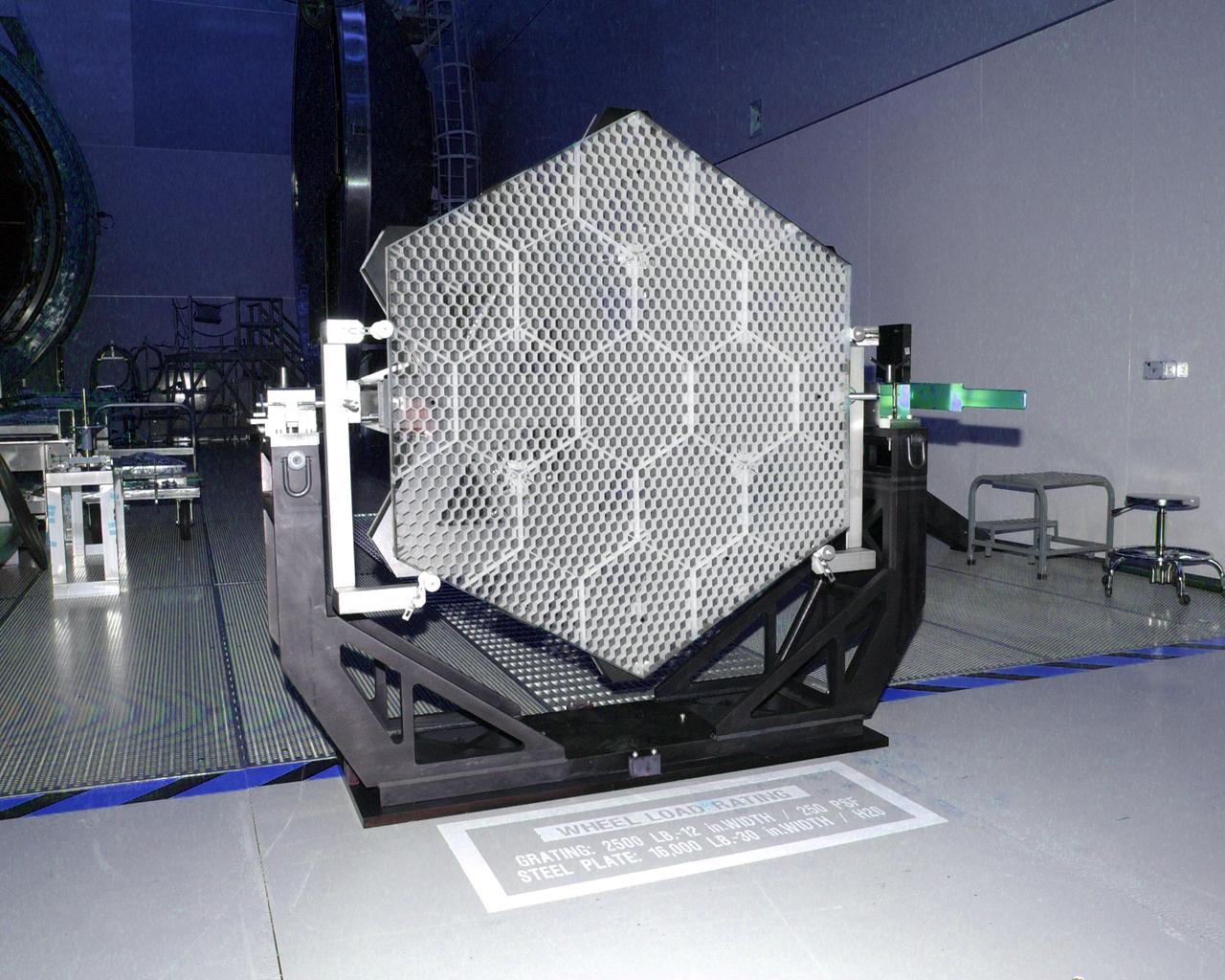
This photo (a frontal view) is of one of many segments of the Eastman-Kodak mirror assembly being tested for the James Webb Space Telescope (JWST) project at the X-Ray Calibration Facility at Marshall Space Flight Center (MSFC). MSFC is supporting Goddard Space Flight Center (GSFC) in developing the JWST by taking numerous measurements to predict its future performance. The tests are conducted in a vacuum chamber cooled to approximate the super cold temperatures found in space. During its 27 years of operation, the facility has performed testing in support of a wide array of projects, including the Hubble Space Telescope (HST), Solar A, Chandra technology development, Chandra High Resolution Mirror Assembly and science instruments, Constellation X-Ray Mission, and Solar X-Ray Imager, currently operating on a Geostationary Operational Environment Satellite. The JWST is NASA's next generation space telescope, a successor to the Hubble Space Telescope, named in honor of NASA's second administrator, James E. Webb. It is scheduled for launch in 2010 aboard an expendable launch vehicle. It will take about 3 months for the spacecraft to reach its destination, an orbit of 940,000 miles in space.
The Eastman-Kodak mirror assembly is being tested for the James Webb Space Telescope (JWST) project at the X-Ray Calibration Facility at Marshall Space Flight Center (MSFC). In this photo, one of many segments of the mirror assembly is being set up inside the 24-ft vacuum chamber where it will undergo x-ray calibration tests. MSFC is supporting Goddard Space Flight Center (GSFC) in developing the JWST by taking numerous measurements to predict its future performance. The tests are conducted in a vacuum chamber cooled to approximate the super cold temperatures found in space. During its 27 years of operation, the facility has performed testing in support of a wide array of projects, including the Hubble Space Telescope (HST), Solar A, Chandra technology development, Chandra High Resolution Mirror Assembly and science instruments, Constellation X-Ray Mission, and Solar X-Ray Imager, currently operating on a Geostationary Operational Environment Satellite. The JWST is NASA's next generation space telescope, a successor to the Hubble Space Telescope, named in honor of NASA's second administrator, James E. Webb. It is scheduled for launch in 2010 aboard an expendable launch vehicle. It will take about 3 months for the spacecraft to reach its destination, an orbit of 940,000 miles in space.
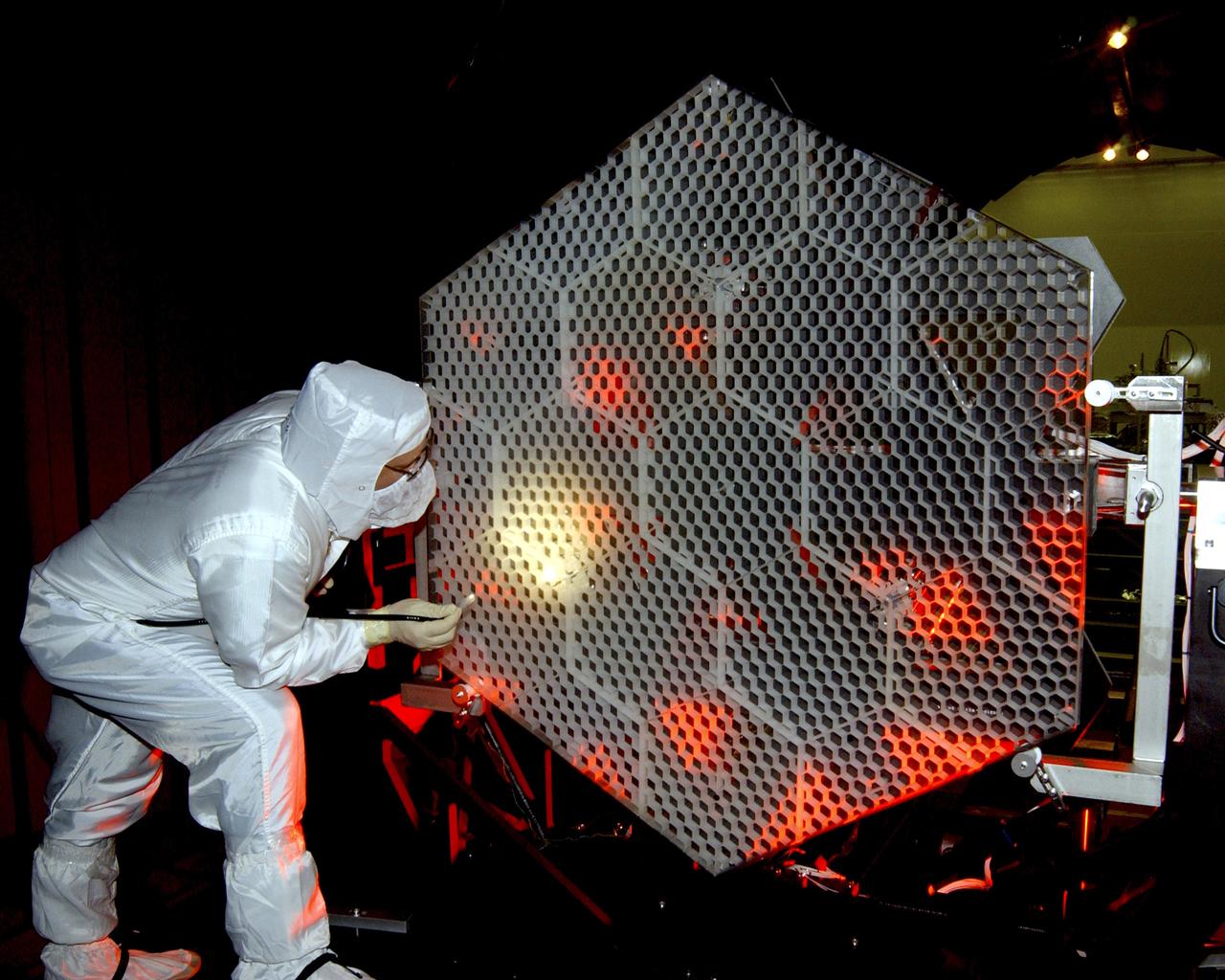
The Eastman-Kodak mirror assembly is being tested for the James Webb Space Telescope (JWST) project at the X-Ray Calibration Facility at Marshall Space Flight Center (MSFC). In this photo, an MSFC employee is inspecting one of many segments of the mirror assembly for flaws. MSFC is supporting Goddard Space Flight Center (GSFC) in developing the JWST by taking numerous measurements to predict its future performance. The tests are conducted in a vacuum chamber cooled to approximate the super cold temperatures found in space. During its 27 years of operation, the facility has performed testing in support of a wide array of projects, including the Hubble Space Telescope (HST), Solar A, Chandra technology development, Chandra High Resolution Mirror Assembly and science instruments, Constellation X-Ray Mission, and Solar X-Ray Imager, currently operating on a Geostationary Operational Environment Satellite. The JWST is NASA's next generation space telescope, a successor to the Hubble Space Telescope, named in honor of NASA's second administrator, James E. Webb. It is scheduled for launch in 2010 aboard an expendable launch vehicle. It will take about 3 months for the spacecraft to reach its destination, an orbit of 940,000 miles in space.
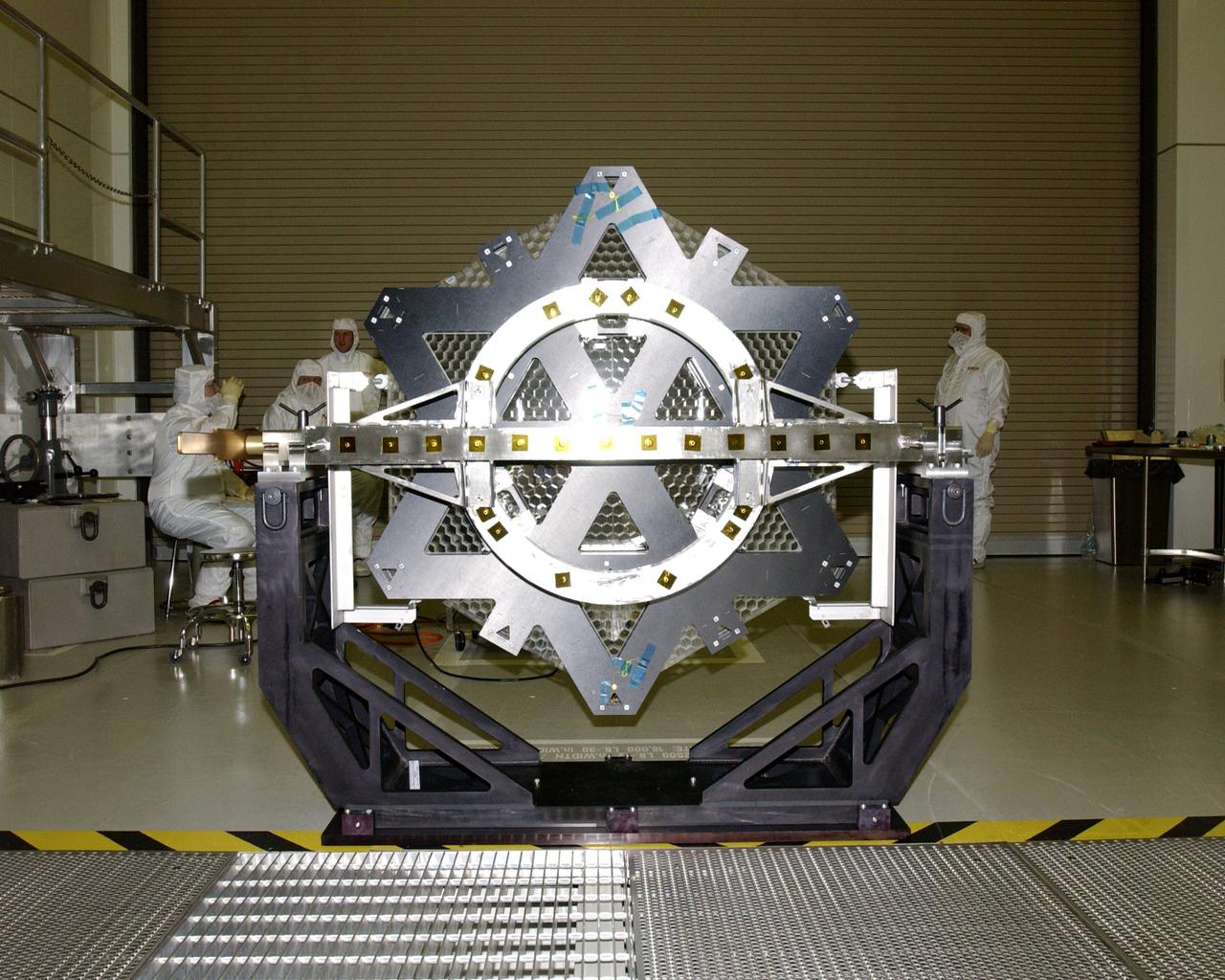
This photo (rear view) is of one of many segments of the Eastman-Kodak mirror assembly being tested for the James Webb Space Telescope (JWST) project at the X-Ray Calibration Facility at Marshall Space Flight Center (MSFC). MSFC is supporting Goddard Space Flight Center (GSFC) in developing the JWST by taking numerous measurements to predict its future performance. The tests are conducted in a vacuum chamber cooled to approximate the super cold temperatures found in space. During its 27 years of operation, the facility has performed testing in support of a wide array of projects, including the Hubble Space Telescope (HST), Solar A, Chandra technology development, Chandra High Resolution Mirror Assembly and science instruments, Constellation X-Ray Mission, and Solar X-Ray Imager, currently operating on a Geostationary Operational Environment Satellite. The JWST is NASA's next generation space telescope, a successor to the Hubble Space Telescope, named in honor of NASA's second administrator, James E. Webb. It is scheduled for launch in 2010 aboard an expendable launch vehicle. It will take about 3 months for the spacecraft to reach its destination, an orbit of 940,000 miles in space.

First Lady Hillary Rodham Clinton and her daughter, Chelsea, are greeted by NASA Administrator Daniel S. Goldin upon their arrival at the Skid Strip at Cape Canaveral Air Station. Next to Gold are (from left) Deputy Director for Business Operations Jim Jennings and Mrs. Goldin. Mrs. Clinton and Chelsea are here to view the launch of Space Shuttle mission STS-93, scheduled for 12:36 a.m. EDT July 20. Much attention has been generated over the launch due to Commander Eileen M. Collins, the first woman to serve as commander of a Shuttle mission. The primary payload of the five-day mission is the Chandra X-ray Observatory, which will allow scientists from around the world to study some of the most distant, powerful and dynamic objects in the universe. The new telescope is 20 to 50 times more sensitive than any previous X-ray telescope and is expected to unlock the secrets of supernovae, quasars and black holes
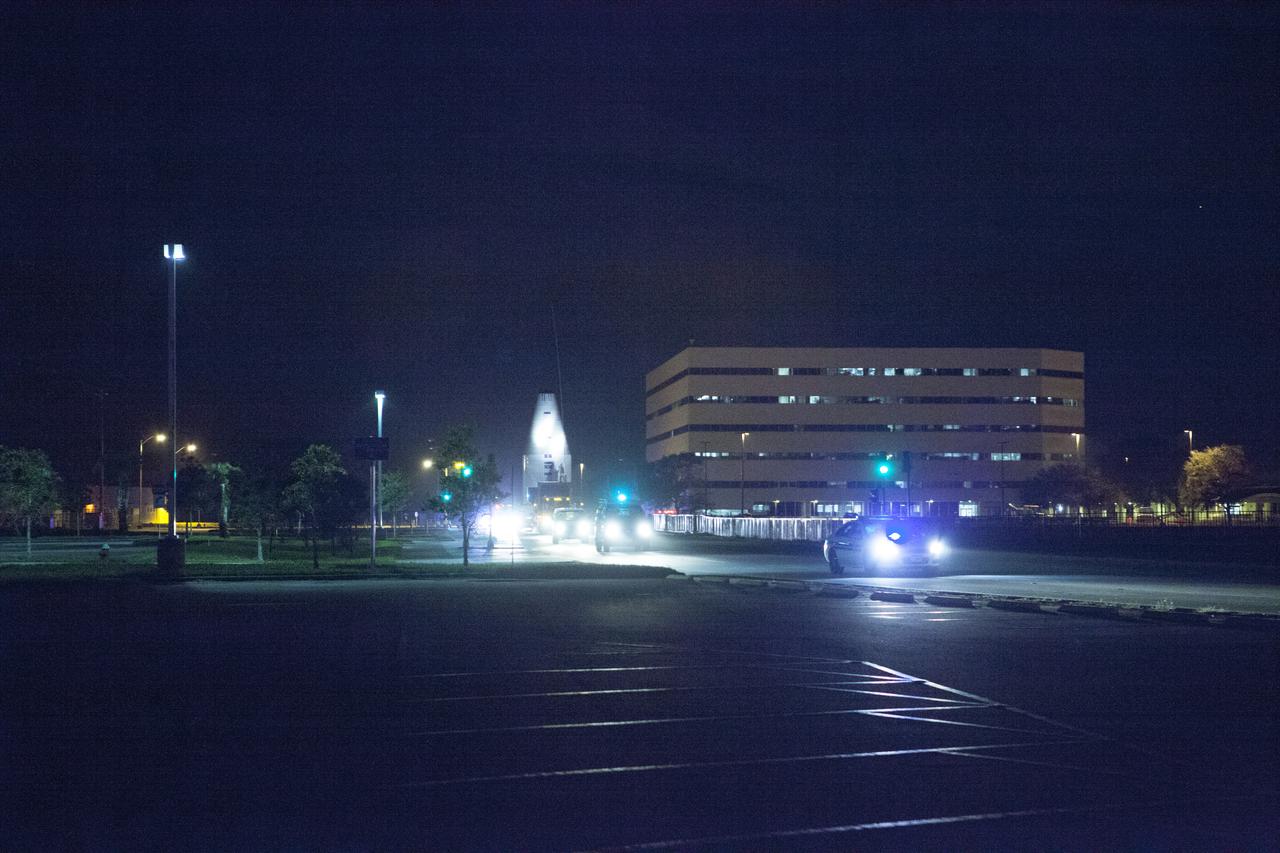
CAPE CANAVERAL, Fla. – Encapsulated in its payload fairing, NASA's Tracking and Data Relay Satellite, or TDRS-L, spacecraft is transported along the Saturn Causeway at the Kennedy Space Center on its way to Launch Complex 41 at Cape Canaveral Air Force Station. The TDRS-L satellite will be a part of the second of three next-generation spacecraft designed to ensure vital operational continuity for the NASA Space Network. It is scheduled to launch from Cape Canaveral's Space Launch Complex 41 atop a United Launch Alliance Atlas V rocket on January 23, 2014. The current Tracking and Data Relay Satellite system consists of eight in-orbit satellites distributed to provide near continuous information relay contact with orbiting spacecraft ranging from the International Space Station and Hubble Space Telescope to the array of scientific observatories. For more information, visit: http://www.nasa.gov/mission_pages/tdrs/home/index.html Photo credit: NASA/Dimitri Gerondidakis
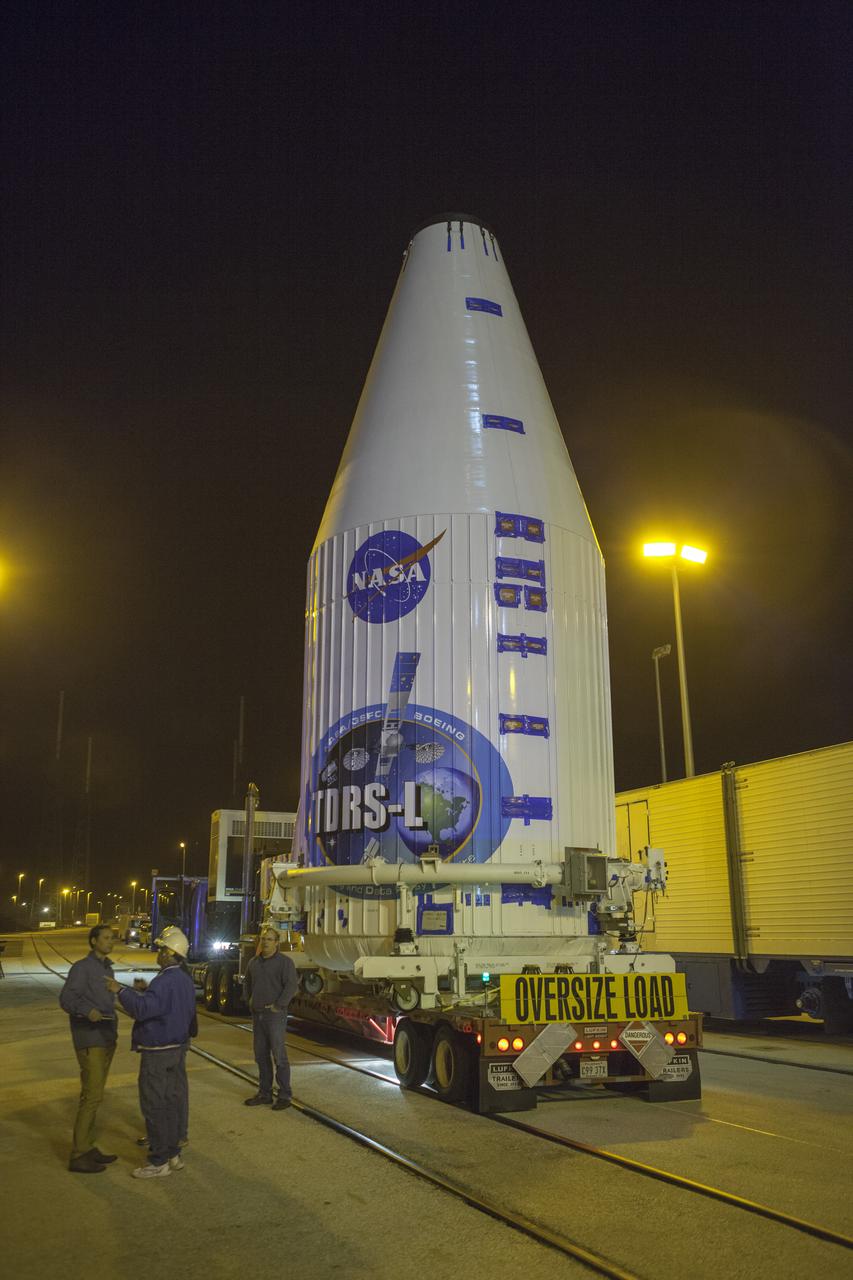
CAPE CANAVERAL, Fla. – Encapsulated in its payload fairing, NASA's Tracking and Data Relay Satellite, or TDRS-L, spacecraft arrives at Cape Canaveral Air Force Station's Vertical Integration Facility at Launch Complex 41. The TDRS-L satellite will be a part of the second of three next-generation spacecraft designed to ensure vital operational continuity for the NASA Space Network. It is scheduled to launch from Cape Canaveral's Space Launch Complex 41 atop a United Launch Alliance Atlas V rocket on January 23, 2014. The current Tracking and Data Relay Satellite system consists of eight in-orbit satellites distributed to provide near continuous information relay contact with orbiting spacecraft ranging from the International Space Station and Hubble Space Telescope to the array of scientific observatories. For more information, visit: http://www.nasa.gov/mission_pages/tdrs/home/index.html Photo credit: NASA/Dimitri Gerondidakis
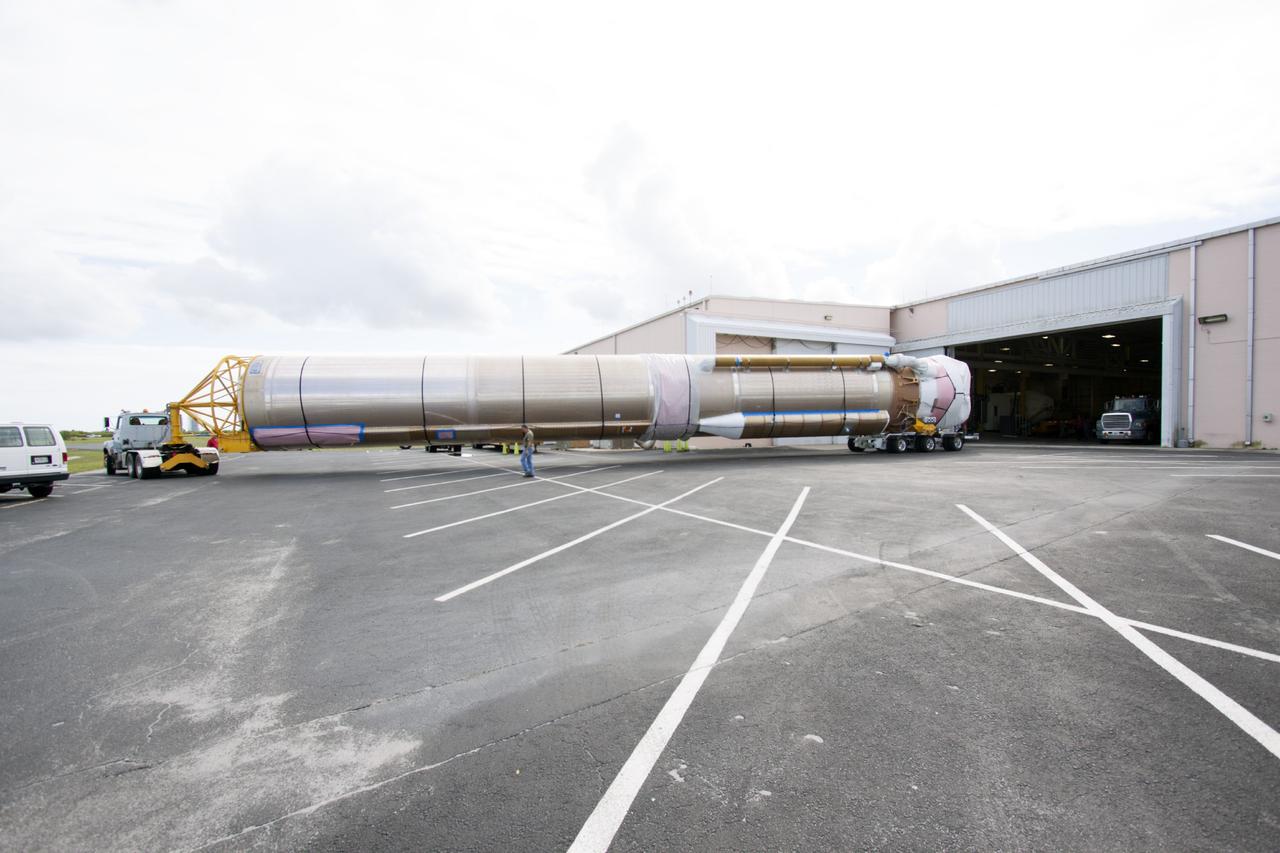
CAPE CANAVERAL, Fla. – The United Launch Alliance Atlas V launch vehicle that will boost the Tracking and Data Relay Satellite, or TDRS-L, spacecraft into orbit arrives at the Atlas Spaceflight Operations Center on Cape Canaveral Air Force Station for checkout in preparation for launch. TDRS-L is the second of three next-generation satellites designed to ensure vital operational continuity for the NASA Space Network. It is scheduled to launch from Cape Canaveral's Space Launch Complex 41 atop an Atlas V rocket in January 2014. The current Tracking and Data Relay Satellite system consists of eight in-orbit satellites distributed to provide near continuous information relay service to missions such as the Hubble Space Telescope and International Space Station. For more information, visit: http://www.nasa.gov/content/tracking-and-data-relay-satellite-tdrs/ Photo credit: NASA/ Jim Grossman
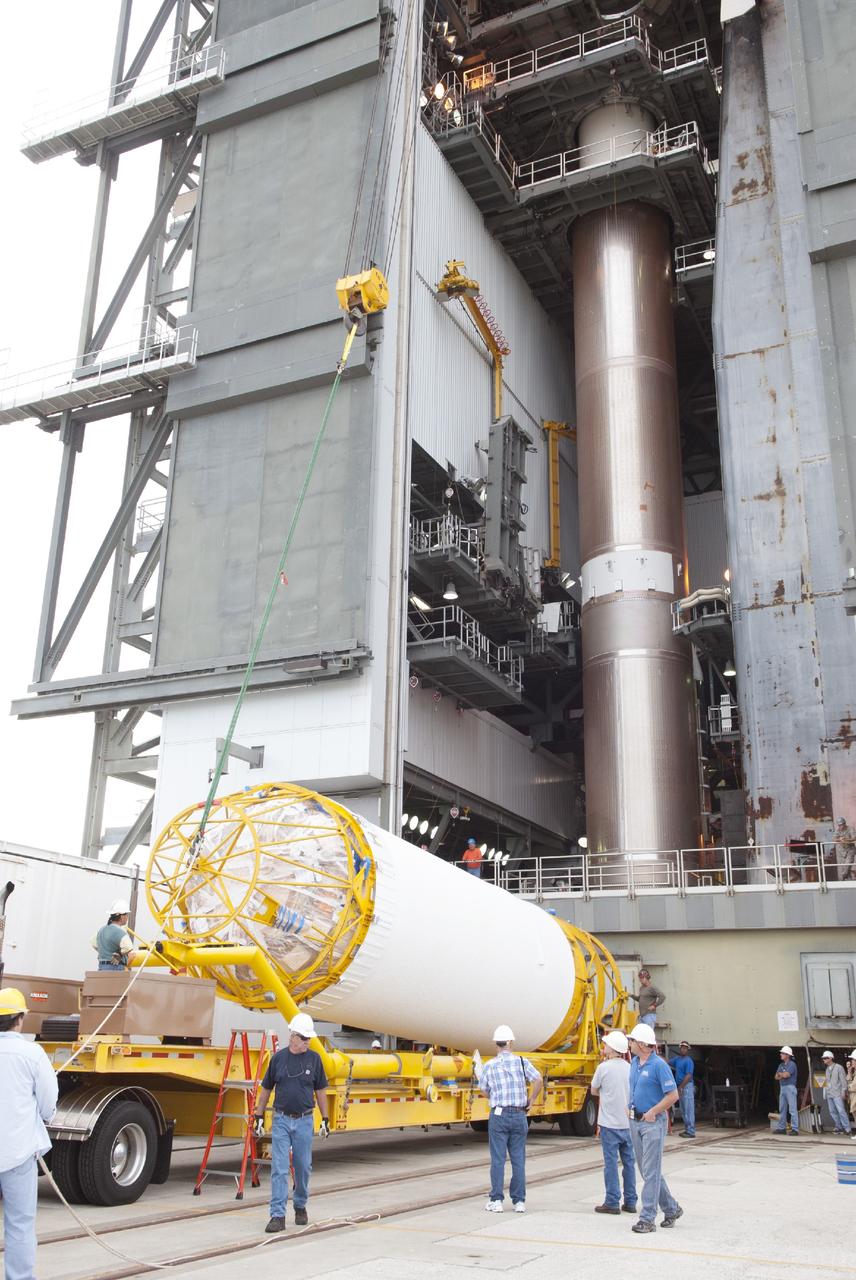
CAPE CANAVERAL, Fla. – At Cape Canaveral Air Force Station's Launch Complex 41, engineers and technicians support lifting a Centaur second stage for stacking atop a United Launch Alliance Atlas V rocket that will be used to boost the Tracking and Data Relay Satellite, or TDRS-L, spacecraft to orbit. TDRS-L is the second of three next-generation satellites designed to ensure vital operational continuity for the NASA Space Network. It is scheduled to launch from Cape Canaveral's Space Launch Complex 41 atop an Atlas V rocket in January 2014. The current Tracking and Data Relay Satellite system consists of eight in-orbit satellites distributed to provide near continuous information relay service to missions such as the Hubble Space Telescope and International Space Station. For more information, visit: http://www.nasa.gov/content/tracking-and-data-relay-satellite-tdrs/ Photo credit: NASA/Charisse Nahser
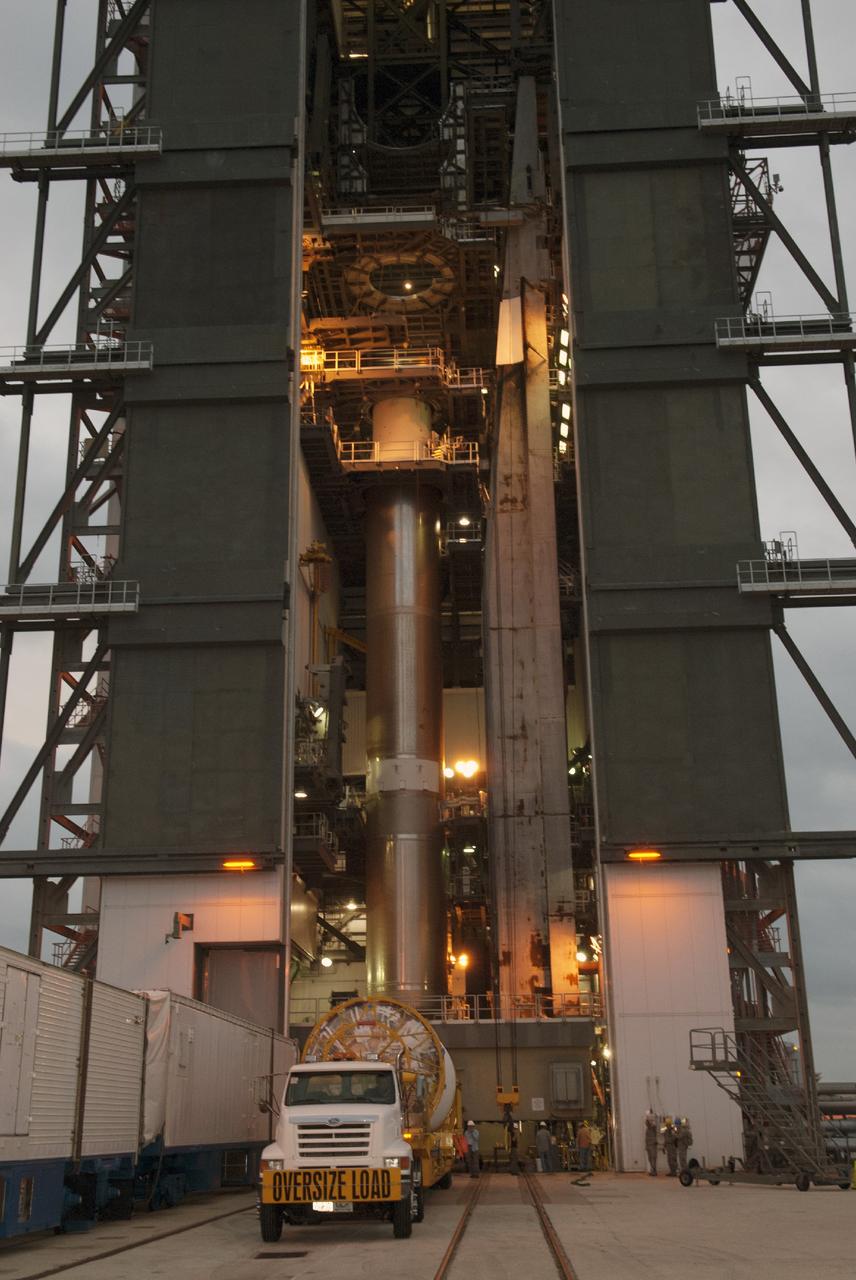
CAPE CANAVERAL, Fla. – The United Launch Alliance Centaur second stage that will help boost the Tracking and Data Relay Satellite, or TDRS-L, spacecraft into orbit arrives at Cape Canaveral Air Force Station's Launch Complex 41. It will be lifted and mounted atop the Atlas V first stage already in position inside the Vertical Integration Facility. TDRS-L is the second of three next-generation satellites designed to ensure vital operational continuity for the NASA Space Network. It is scheduled to launch from Cape Canaveral's Space Launch Complex 41 atop an Atlas V rocket in January 2014. The current Tracking and Data Relay Satellite system consists of eight in-orbit satellites distributed to provide near continuous information relay service to missions such as the Hubble Space Telescope and International Space Station. For more information, visit: http://www.nasa.gov/content/tracking-and-data-relay-satellite-tdrs/ Photo credit: NASA/Charisse Nahser
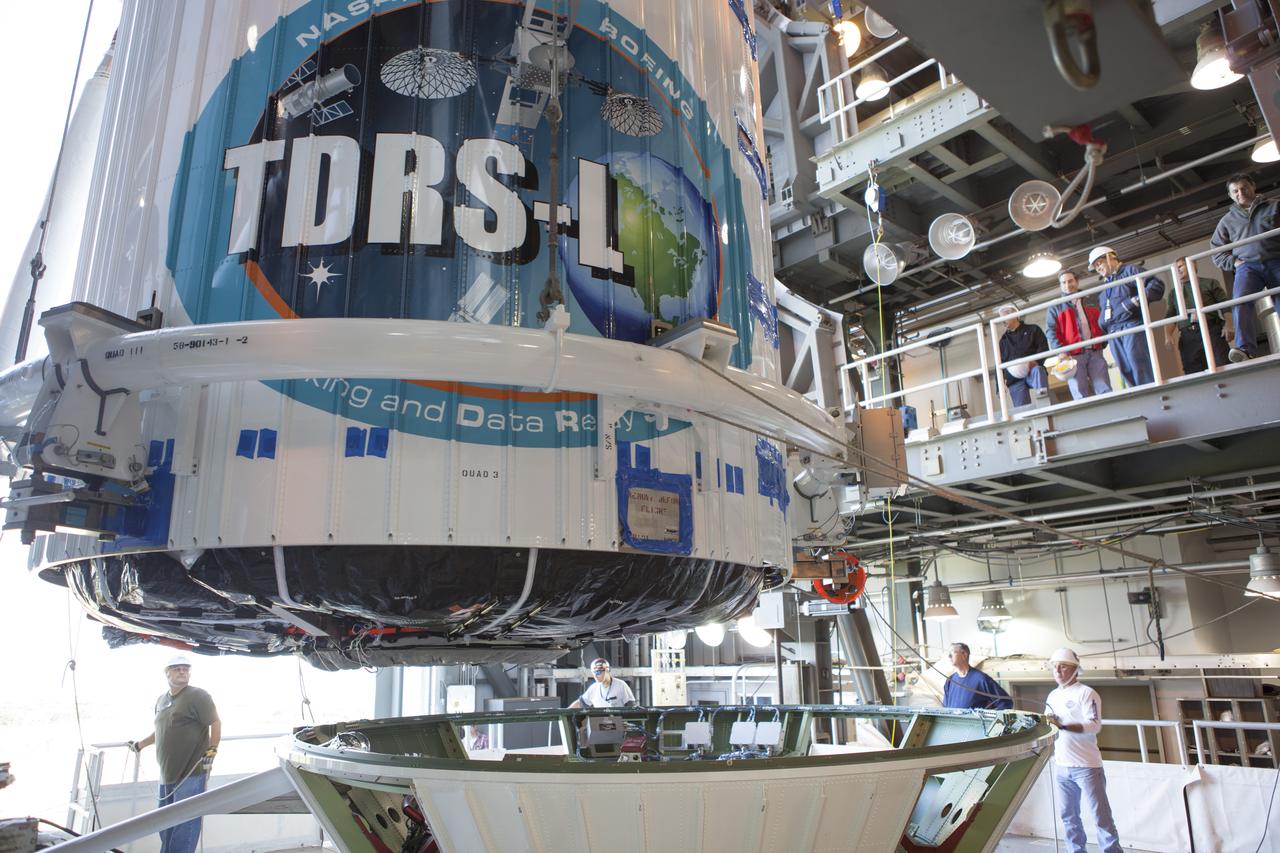
CAPE CANAVERAL, Fla. – At Cape Canaveral Air Force Station's Vertical Integration Facility at Launch Complex 41, NASA's Tracking and Data Relay Satellite, or TDRS-L, spacecraft is moved into position for mating atop a United Launch Alliance Atlas V rocket. The TDRS-L satellite will be a part of the second of three next-generation spacecraft designed to ensure vital operational continuity for the NASA Space Network. It is scheduled to launch from Cape Canaveral's Space Launch Complex 41 atop a United Launch Alliance Atlas V rocket on Jan. 23, 2014. The current Tracking and Data Relay Satellite system consists of eight in-orbit satellites distributed to provide near continuous information relay contact with orbiting spacecraft ranging from the International Space Station and Hubble Space Telescope to the array of scientific observatories. For more information, visit: http://www.nasa.gov/mission_pages/tdrs/home/index.html Photo credit: NASA/Dimitri Gerondidakis
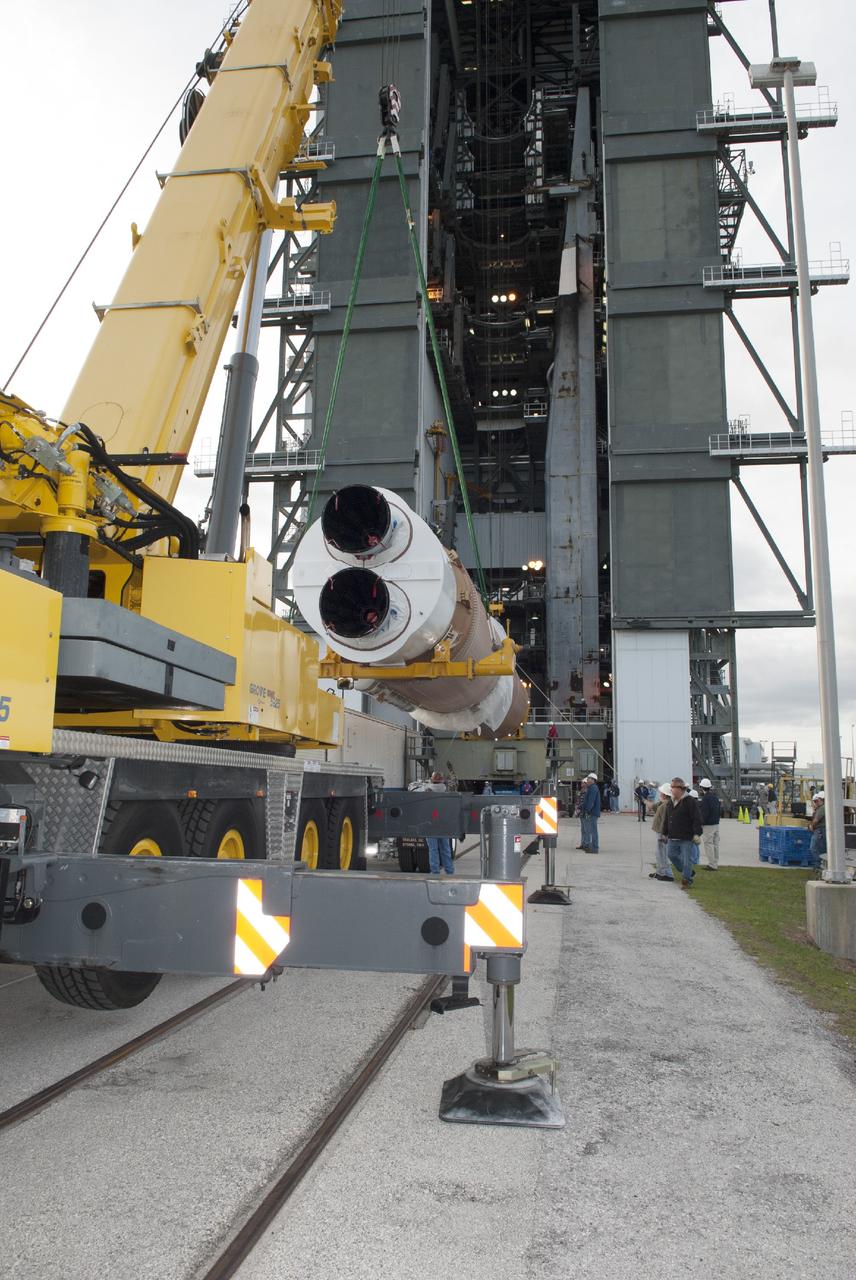
CAPE CANAVERAL, Fla. – At Cape Canaveral Air Force Station, the first stage of the United Launch Alliance Atlas V rocket is lifted for stacking in the Vertical Integration Facility at Launch Complex 41. The vehicle will be used to boost the Tracking and Data Relay Satellite, or TDRS-L, spacecraft to orbit. TDRS-L is the second of three next-generation satellites designed to ensure vital operational continuity for the NASA Space Network. It is scheduled to launch from Cape Canaveral's Space Launch Complex 41 atop an Atlas V rocket in January 2014. The current Tracking and Data Relay Satellite system consists of eight in-orbit satellites distributed to provide near continuous information relay service to missions such as the Hubble Space Telescope and International Space Station. For more information, visit: http://www.nasa.gov/content/tracking-and-data-relay-satellite-tdrs/ Photo credit: NASA/Charisse Nahser
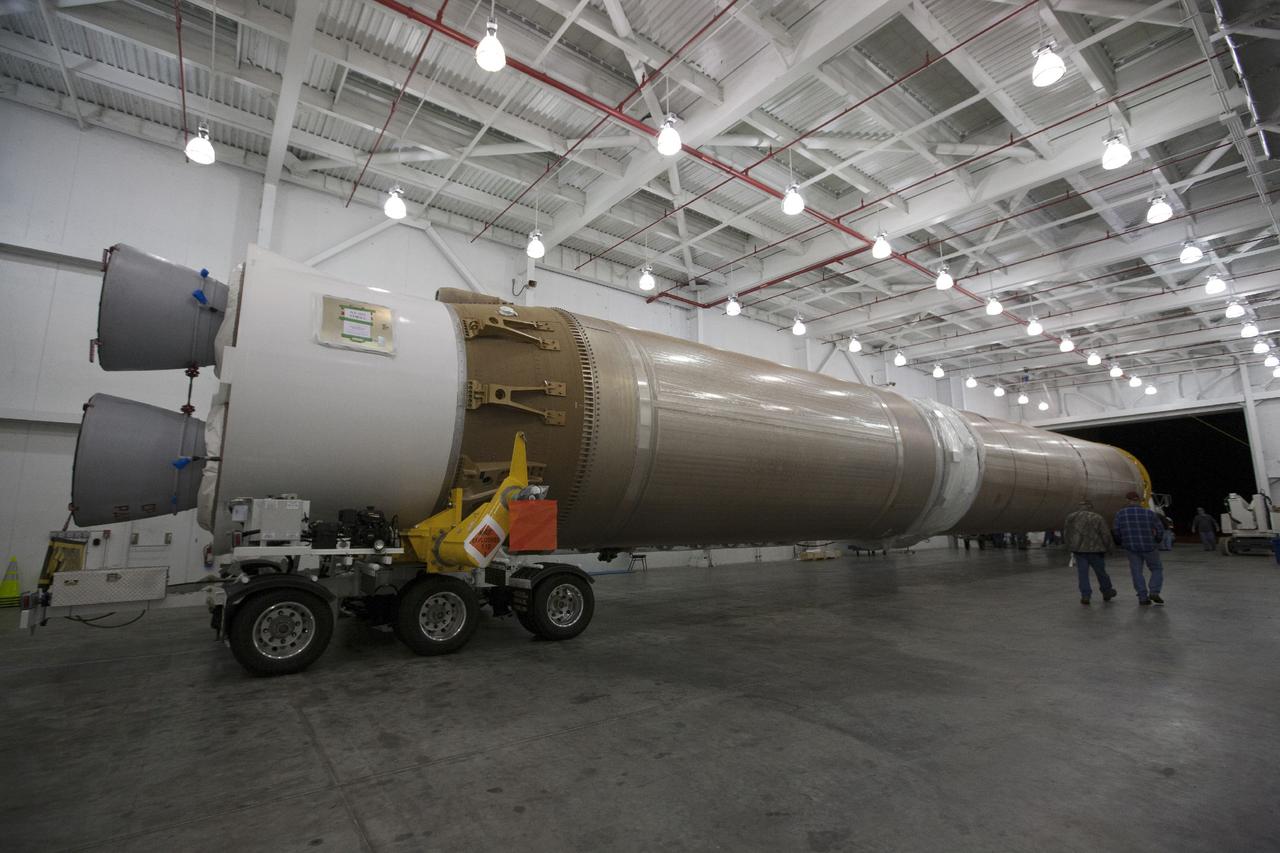
CAPE CANAVERAL, Fla. – The United Launch Alliance Atlas V first stage booster that will boost the Tracking and Data Relay Satellite, or TDRS-L, spacecraft into orbit is being transported from the hangar at the Atlas Spaceflight Operations Center on Cape Canaveral Air Force Station to Launch Complex 41. TDRS-L is the second of three next-generation satellites designed to ensure vital operational continuity for the NASA Space Network. It is scheduled to launch from Cape Canaveral's Space Launch Complex 41 atop an Atlas V rocket in January 2014. The current Tracking and Data Relay Satellite system consists of eight in-orbit satellites distributed to provide near continuous information relay service to missions such as the Hubble Space Telescope and International Space Station. For more information, visit: http://www.nasa.gov/content/tracking-and-data-relay-satellite-tdrs/ Photo credit: NASA/Kim Shiflett
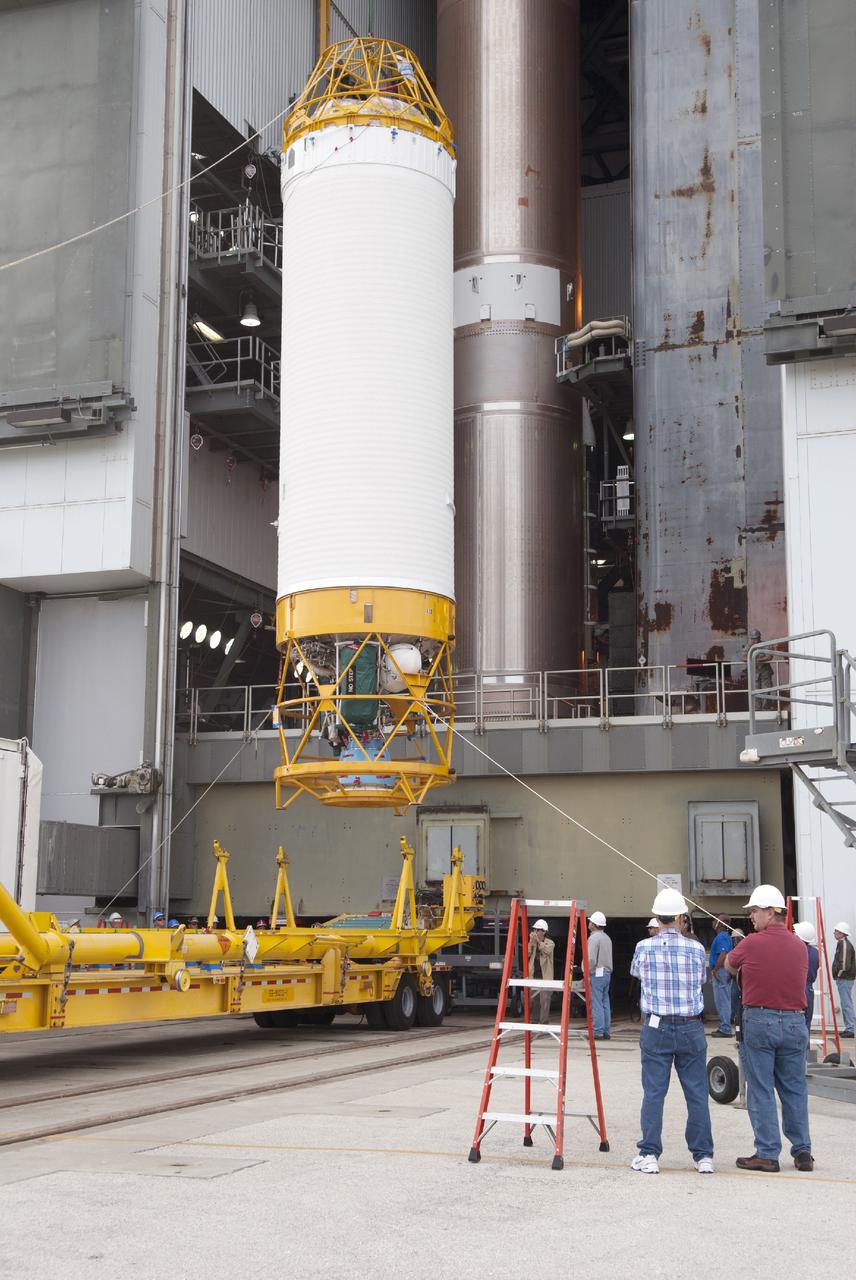
CAPE CANAVERAL, Fla. – At Cape Canaveral Air Force Station's Launch Complex 41, engineers and technicians support lifting a Centaur second stage for stacking atop a United Launch Alliance Atlas V rocket that will be used to boost the Tracking and Data Relay Satellite, or TDRS-L, spacecraft to orbit. TDRS-L is the second of three next-generation satellites designed to ensure vital operational continuity for the NASA Space Network. It is scheduled to launch from Cape Canaveral's Space Launch Complex 41 atop an Atlas V rocket in January 2014. The current Tracking and Data Relay Satellite system consists of eight in-orbit satellites distributed to provide near continuous information relay service to missions such as the Hubble Space Telescope and International Space Station. For more information, visit: http://www.nasa.gov/content/tracking-and-data-relay-satellite-tdrs/ Photo credit: NASA/Charisse Nahser
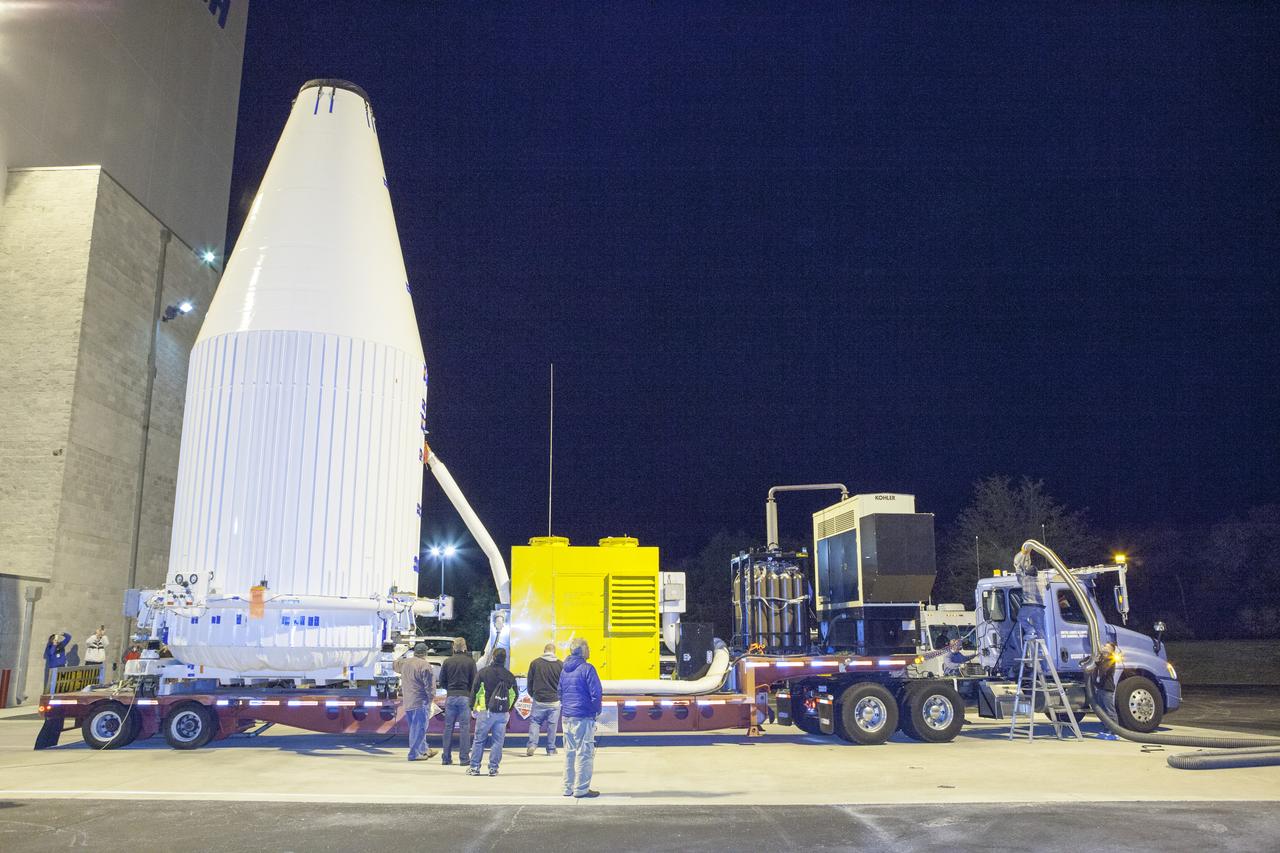
TITUSVILLE, Fla. – Encapsulated in its payload fairing, NASA's Tracking and Data Relay Satellite, or TDRS-L, spacecraft begins it trip from the Astrotech payload processing facility in Titusville to Launch Complex 41 at Cape Canaveral Air Force Station. The TDRS-L satellite will be a part of the second of three next-generation spacecraft designed to ensure vital operational continuity for the NASA Space Network. It is scheduled to launch from Cape Canaveral's Space Launch Complex 41 atop a United Launch Alliance Atlas V rocket on January 23, 2014. The current Tracking and Data Relay Satellite system consists of eight in-orbit satellites distributed to provide near continuous information relay contact with orbiting spacecraft ranging from the International Space Station and Hubble Space Telescope to the array of scientific observatories. For more information, visit: http://www.nasa.gov/mission_pages/tdrs/home/index.html Photo credit: NASA/Dimitri Gerondidakis
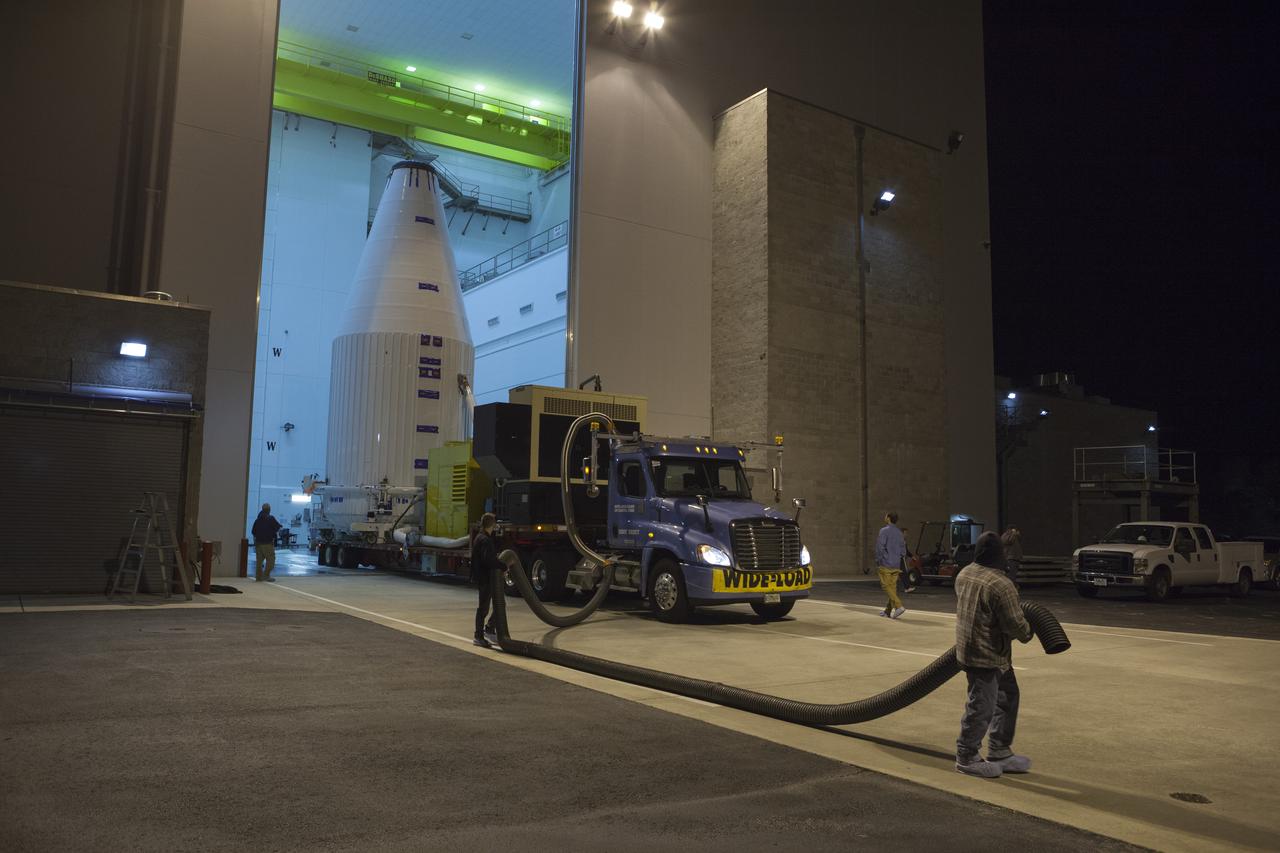
TITUSVILLE, Fla. – Encapsulated in its payload fairing, NASA's Tracking and Data Relay Satellite, or TDRS-L, spacecraft begins it trip from the Astrotech payload processing facility in Titusville to Launch Complex 41 at Cape Canaveral Air Force Station. The TDRS-L satellite will be a part of the second of three next-generation spacecraft designed to ensure vital operational continuity for the NASA Space Network. It is scheduled to launch from Cape Canaveral's Space Launch Complex 41 atop a United Launch Alliance Atlas V rocket on January 23, 2014. The current Tracking and Data Relay Satellite system consists of eight in-orbit satellites distributed to provide near continuous information relay contact with orbiting spacecraft ranging from the International Space Station and Hubble Space Telescope to the array of scientific observatories. For more information, visit: http://www.nasa.gov/mission_pages/tdrs/home/index.html Photo credit: NASA/Dimitri Gerondidakis
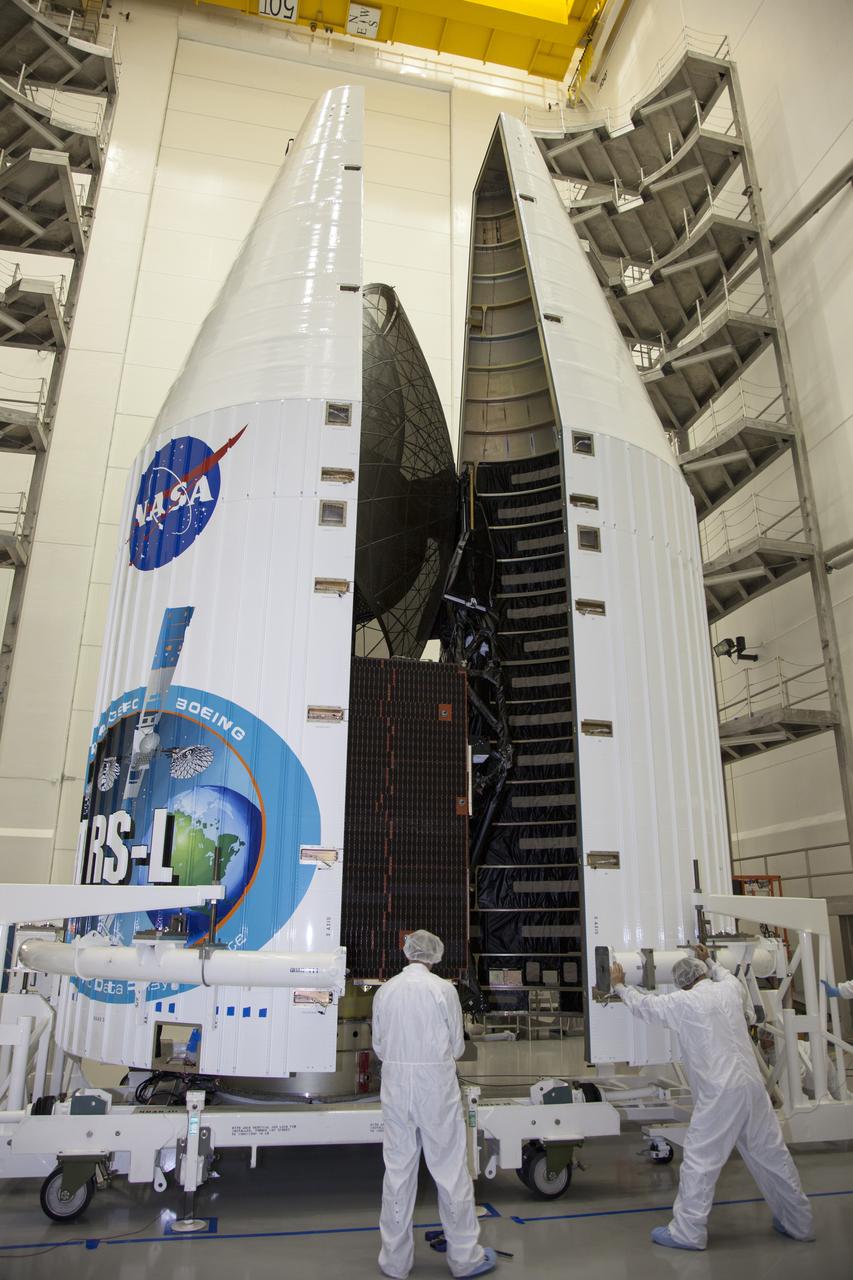
TITUSVILLE, Fla. – Inside the Astrotech payload processing facility in Titusville, United Launch Alliance engineers and technicians encapsulate the Tracking and Data Relay Satellite, or TDRS-L, spacecraft in its payload fairing. TDRS-L will then be transported to Launch Complex 41 at Cape Canaveral Air Force Station. The TDRS-L satellite will be a part of the second of three next-generation spacecraft designed to ensure vital operational continuity for the NASA Space Network. It is scheduled to launch from Cape Canaveral's Space Launch Complex 41 atop a United Launch Alliance Atlas V rocket on January 23, 2014. The current Tracking and Data Relay Satellite system consists of eight in-orbit satellites distributed to provide near continuous information relay contact with orbiting spacecraft ranging from the International Space Station and Hubble Space Telescope to the array of scientific observatories. For more information, visit: http://www.nasa.gov/mission_pages/tdrs/home/index.html
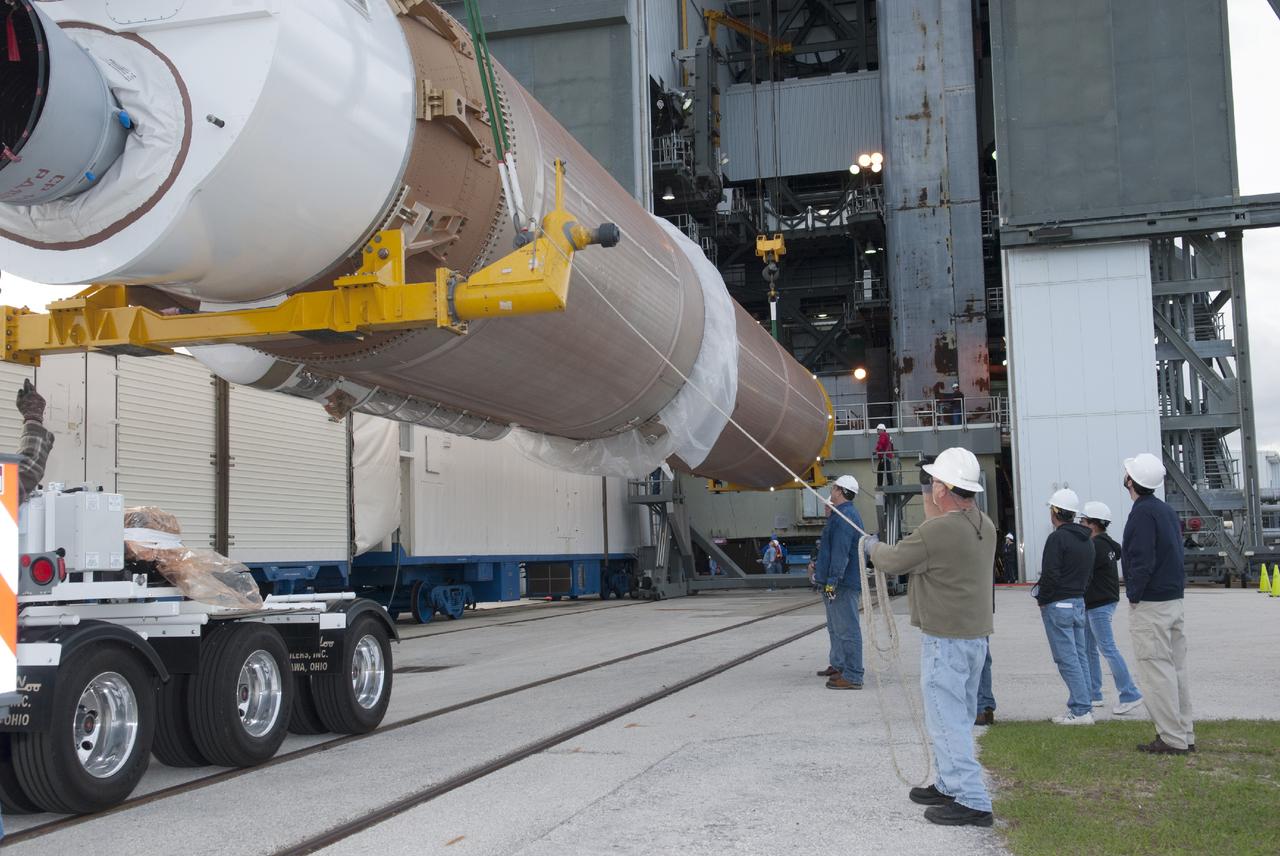
CAPE CANAVERAL, Fla. – At Cape Canaveral Air Force Station, engineers and technicians support lifting the first stage of the United Launch Alliance Atlas V rocket during stacking operations in the Vertical Integration Facility at Launch Complex 41. The vehicle will be used to boost the Tracking and Data Relay Satellite, or TDRS-L, spacecraft to orbit. TDRS-L is the second of three next-generation satellites designed to ensure vital operational continuity for the NASA Space Network. It is scheduled to launch from Cape Canaveral's Space Launch Complex 41 atop an Atlas V rocket in January 2014. The current Tracking and Data Relay Satellite system consists of eight in-orbit satellites distributed to provide near continuous information relay service to missions such as the Hubble Space Telescope and International Space Station. For more information, visit: http://www.nasa.gov/content/tracking-and-data-relay-satellite-tdrs/ Photo credit: NASA/Charisse Nahser
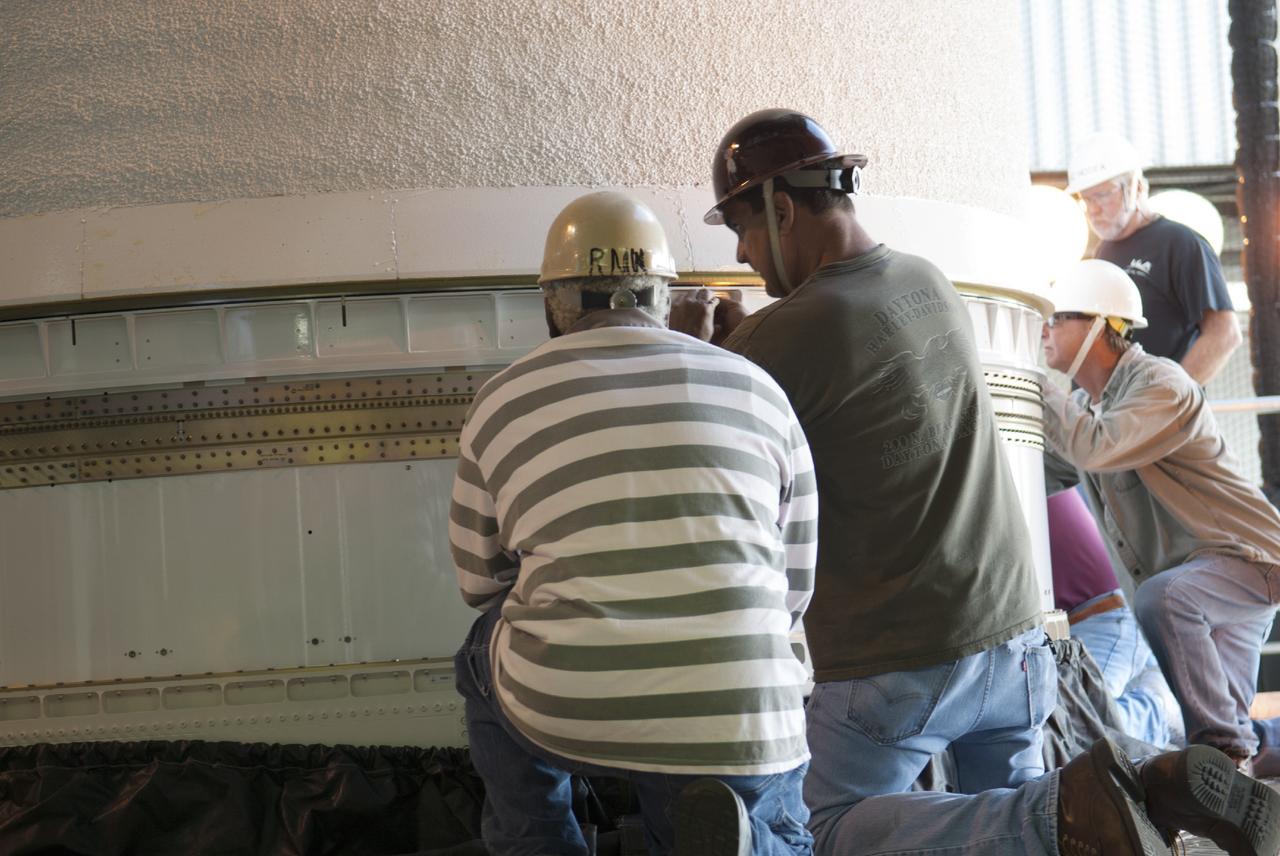
CAPE CANAVERAL, Fla. – At Cape Canaveral Air Force Station's Launch Complex 41, engineers and technicians inspect a Centaur second stage that was just stacked atop a United Launch Alliance Atlas V rocket that will be used to boost the Tracking and Data Relay Satellite, or TDRS-L, spacecraft to orbit. TDRS-L is the second of three next-generation satellites designed to ensure vital operational continuity for the NASA Space Network. It is scheduled to launch from Cape Canaveral's Space Launch Complex 41 atop an Atlas V rocket in January 2014. The current Tracking and Data Relay Satellite system consists of eight in-orbit satellites distributed to provide near continuous information relay service to missions such as the Hubble Space Telescope and International Space Station. For more information, visit: http://www.nasa.gov/content/tracking-and-data-relay-satellite-tdrs/ Photo credit: NASA/Charisse Nahser
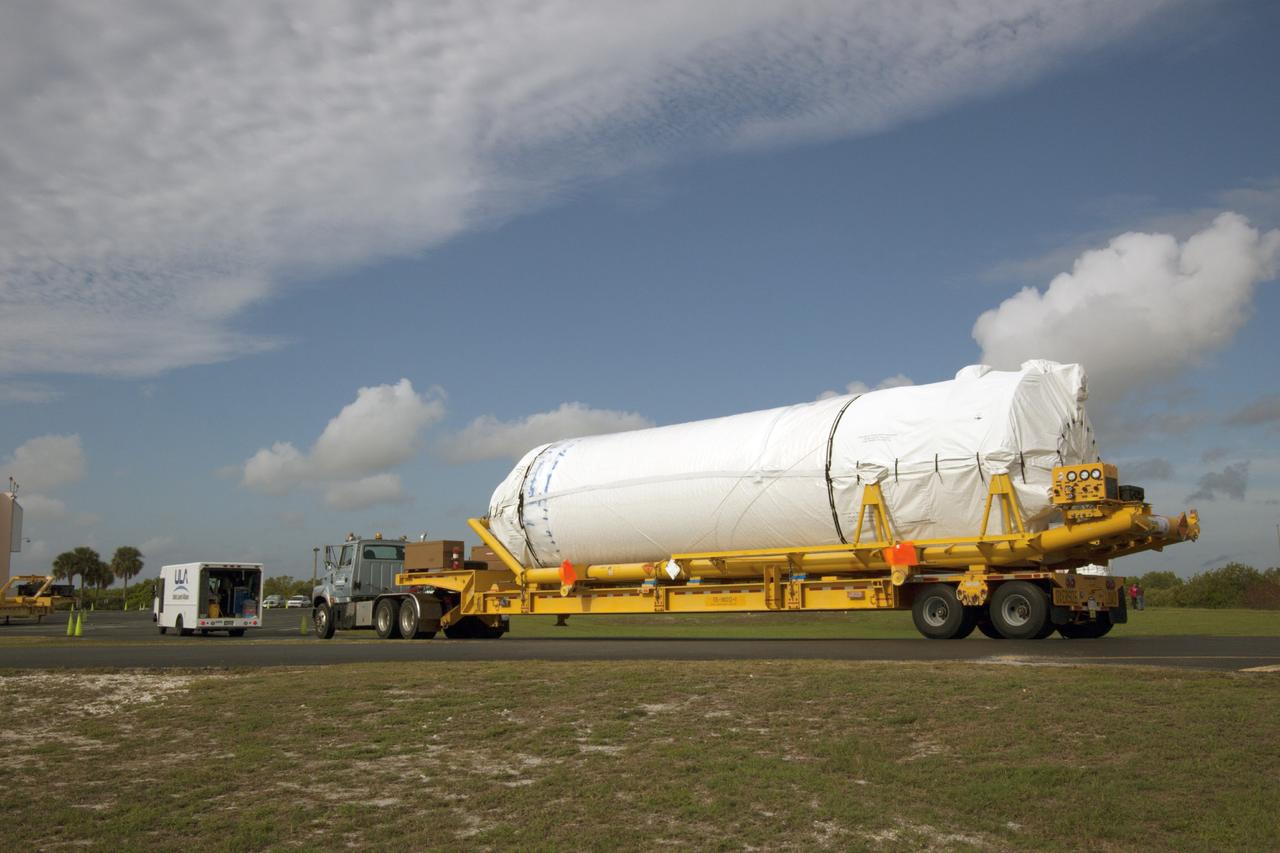
CAPE CANAVERAL, Fla. – The United Launch Alliance Centaur upper stage that will boost the Tracking and Data Relay Satellite, or TDRS-L, spacecraft into orbit is being transported to the hangar at the Atlas Spaceflight Operations Center on Cape Canaveral Air Force Station for checkout in preparation for launch. TDRS-L is the second of three next-generation satellites designed to ensure vital operational continuity for the NASA Space Network. It is scheduled to launch from Cape Canaveral's Space Launch Complex 41 atop an Atlas V rocket in January 2014. The current Tracking and Data Relay Satellite system consists of eight in-orbit satellites distributed to provide near continuous information relay service to missions such as the Hubble Space Telescope and International Space Station. For more information, visit: http://www.nasa.gov/content/tracking-and-data-relay-satellite-tdrs/ Photo credit: NASA/ Jim Grossman
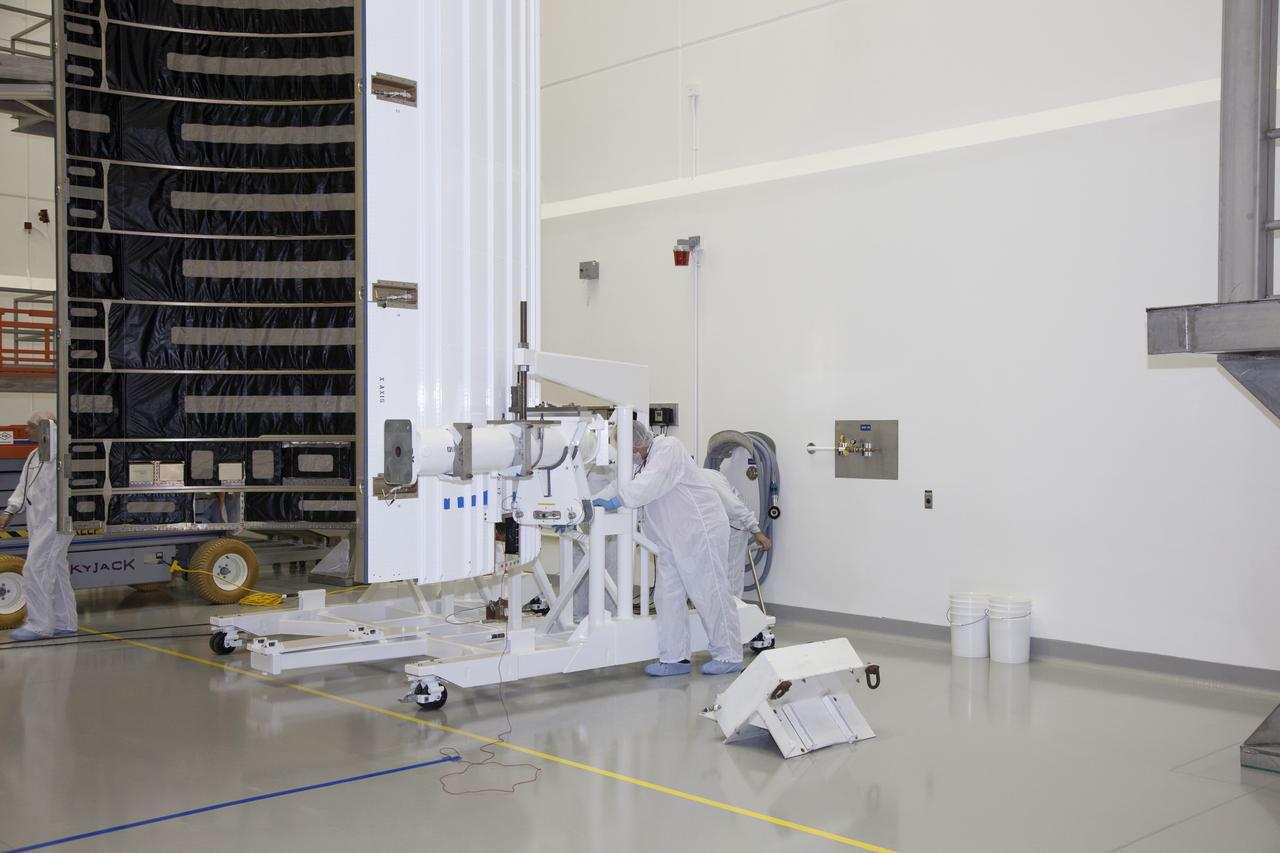
TITUSVILLE, Fla. – Inside the Astrotech payload processing facility in Titusville NASA's Tracking and Data Relay Satellite, or TDRS-L, spacecraft is being encapsulated in its payload fairing prior to being transported to Launch Complex 41 at Cape Canaveral Air Force Station. The TDRS-L satellite will be a part of the second of three next-generation spacecraft designed to ensure vital operational continuity for the NASA Space Network. It is scheduled to launch from Cape Canaveral's Space Launch Complex 41 atop a United Launch Alliance Atlas V rocket on January 23, 2014. The current Tracking and Data Relay Satellite system consists of eight in-orbit satellites distributed to provide near continuous information relay contact with orbiting spacecraft ranging from the International Space Station and Hubble Space Telescope to the array of scientific observatories. For more information, visit: http://www.nasa.gov/mission_pages/tdrs/home/index.html
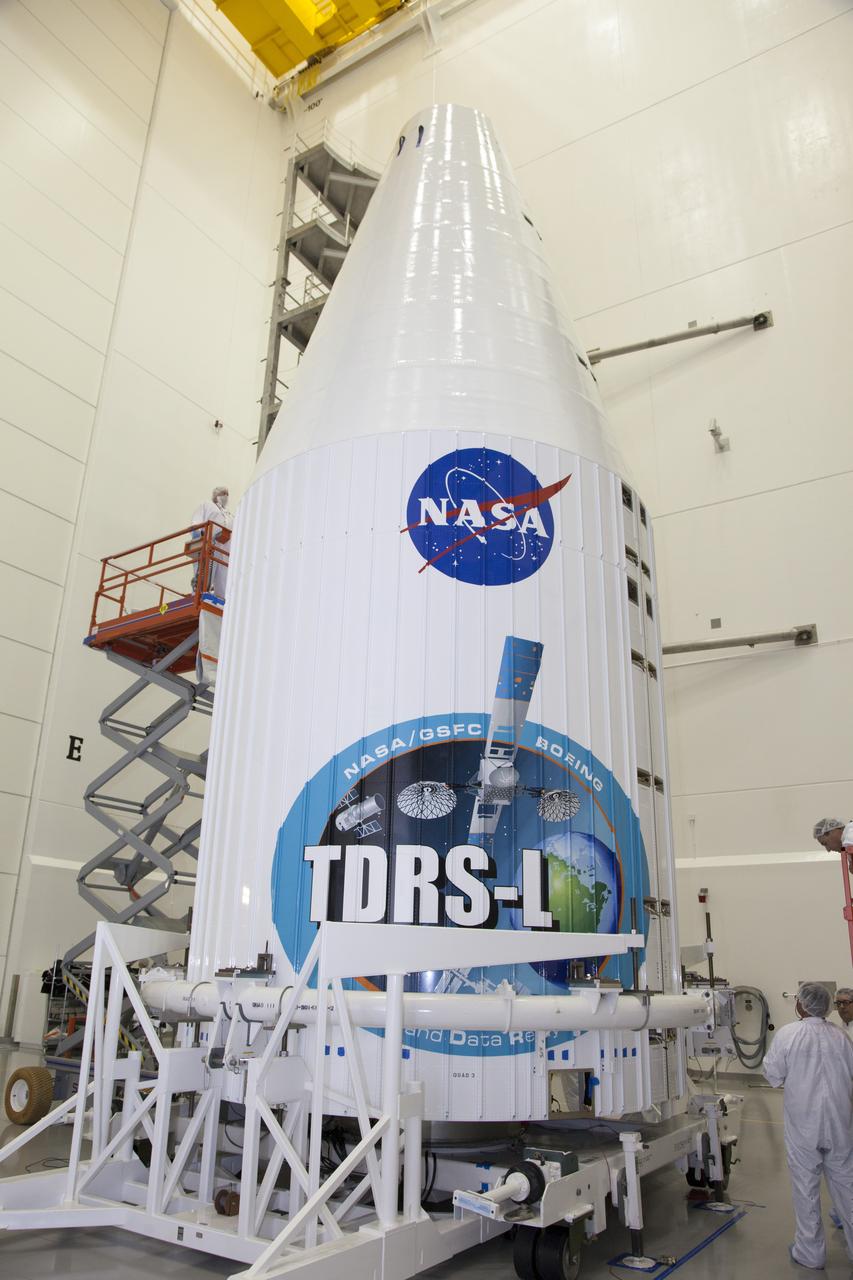
TITUSVILLE, Fla. – Inside the Astrotech payload processing facility in Titusville, NASA's Tracking and Data Relay Satellite, or TDRS-L, spacecraft has been encapsulated in its payload fairing. TDRS-L will then be transported to Launch Complex 41 at Cape Canaveral Air Force Station. The TDRS-L satellite will be a part of the second of three next-generation spacecraft designed to ensure vital operational continuity for the NASA Space Network. It is scheduled to launch from Cape Canaveral's Space Launch Complex 41 atop a United Launch Alliance Atlas V rocket on January 23, 2014. The current Tracking and Data Relay Satellite system consists of eight in-orbit satellites distributed to provide near continuous information relay contact with orbiting spacecraft ranging from the International Space Station and Hubble Space Telescope to the array of scientific observatories. For more information, visit: http://www.nasa.gov/mission_pages/tdrs/home/index.html
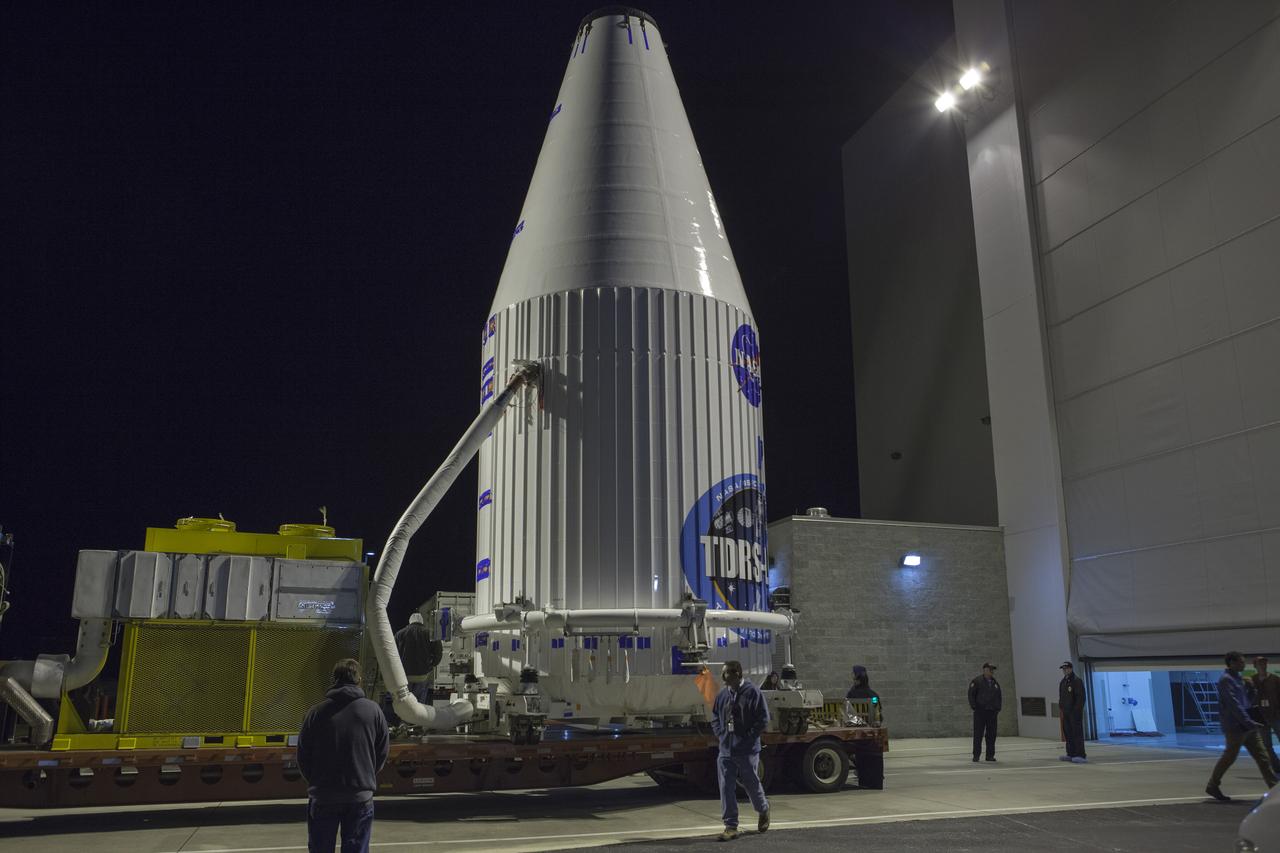
TITUSVILLE, Fla. – Encapsulated in its payload fairing, NASA's Tracking and Data Relay Satellite, or TDRS-L, spacecraft begins it trip from the Astrotech payload processing facility in Titusville to Launch Complex 41 at Cape Canaveral Air Force Station. The TDRS-L satellite will be a part of the second of three next-generation spacecraft designed to ensure vital operational continuity for the NASA Space Network. It is scheduled to launch from Cape Canaveral's Space Launch Complex 41 atop a United Launch Alliance Atlas V rocket on January 23, 2014. The current Tracking and Data Relay Satellite system consists of eight in-orbit satellites distributed to provide near continuous information relay contact with orbiting spacecraft ranging from the International Space Station and Hubble Space Telescope to the array of scientific observatories. For more information, visit: http://www.nasa.gov/mission_pages/tdrs/home/index.html Photo credit: NASA/Dimitri Gerondidakis
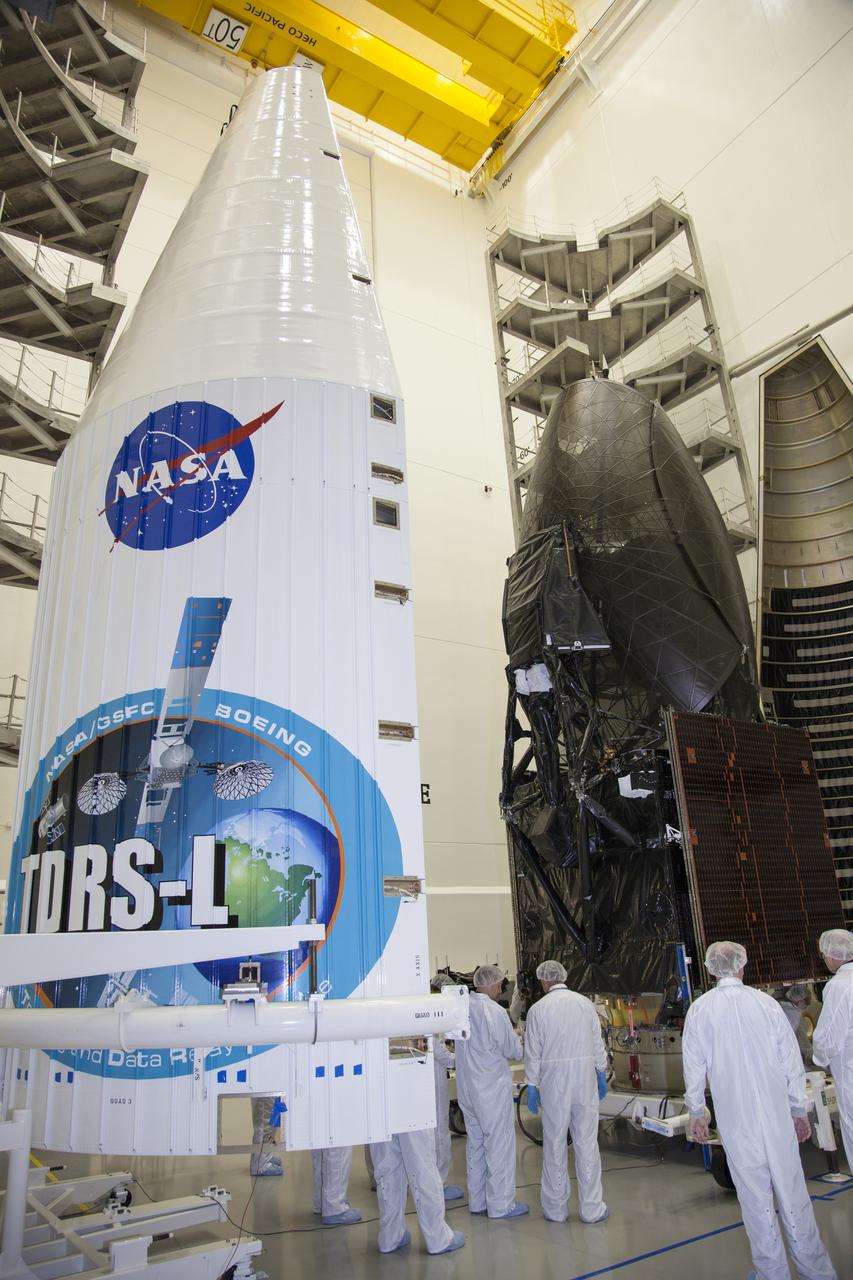
TITUSVILLE, Fla. – Inside the Astrotech payload processing facility in Titusville, the Tracking and Data Relay Satellite, or TDRS-L, spacecraft is being encapsulated in its payload fairing in preparation for being transported to Launch Complex 41 at Cape Canaveral Air Force Station. The TDRS-L satellite will be a part of the second of three next-generation spacecraft designed to ensure vital operational continuity for the NASA Space Network. It is scheduled to launch from Cape Canaveral's Space Launch Complex 41 atop a United Launch Alliance Atlas V rocket on January 23, 2014. The current Tracking and Data Relay Satellite system consists of eight in-orbit satellites distributed to provide near continuous information relay contact with orbiting spacecraft ranging from the International Space Station and Hubble Space Telescope to the array of scientific observatories. For more information, visit: http://www.nasa.gov/mission_pages/tdrs/home/index.html
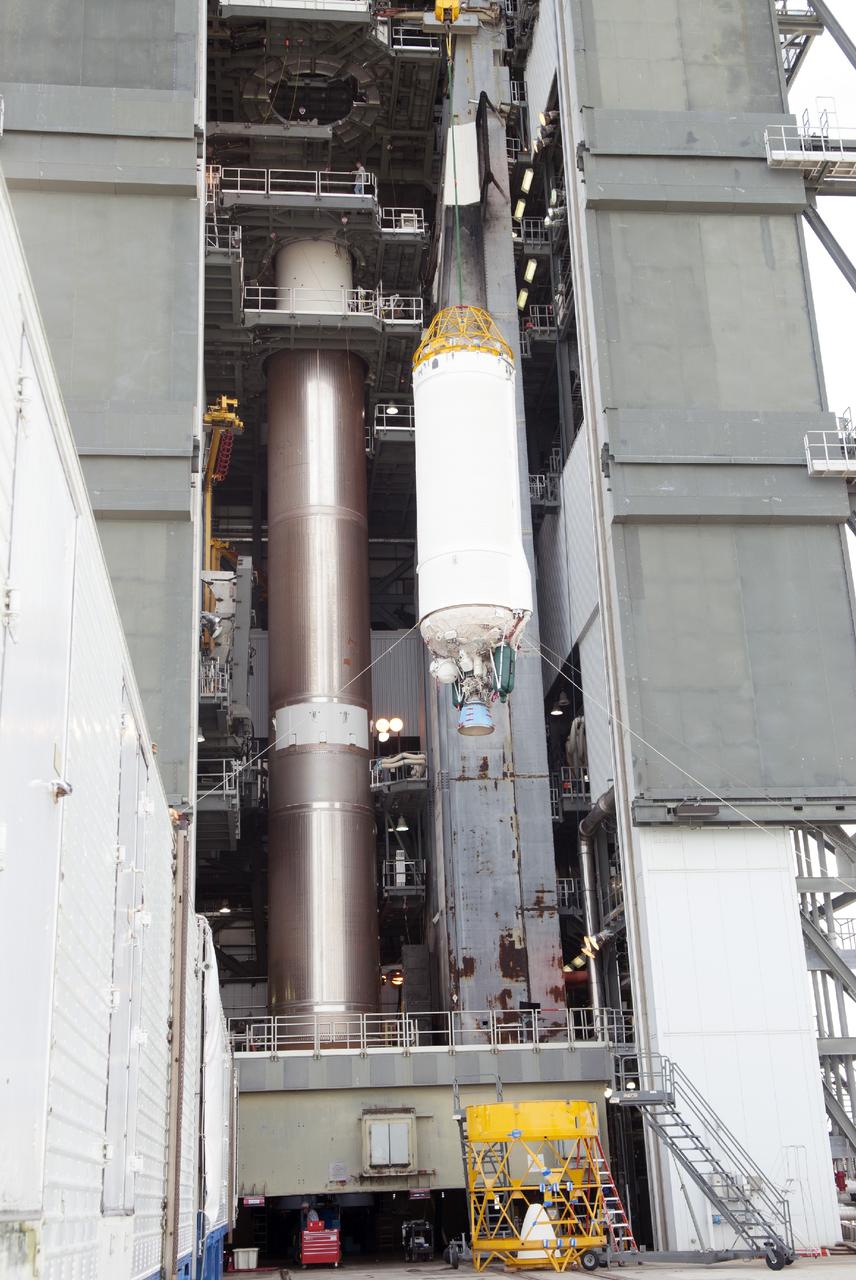
CAPE CANAVERAL, Fla. – At Cape Canaveral Air Force Station's Launch Complex 41, a Centaur second stage is lifted for stacking atop a United Launch Alliance Atlas V rocket that will be used to boost the Tracking and Data Relay Satellite, or TDRS-L, spacecraft to orbit. TDRS-L is the second of three next-generation satellites designed to ensure vital operational continuity for the NASA Space Network. It is scheduled to launch from Cape Canaveral's Space Launch Complex 41 atop an Atlas V rocket in January 2014. The current Tracking and Data Relay Satellite system consists of eight in-orbit satellites distributed to provide near continuous information relay service to missions such as the Hubble Space Telescope and International Space Station. For more information, visit: http://www.nasa.gov/content/tracking-and-data-relay-satellite-tdrs/ Photo credit: NASA/Charisse Nahser
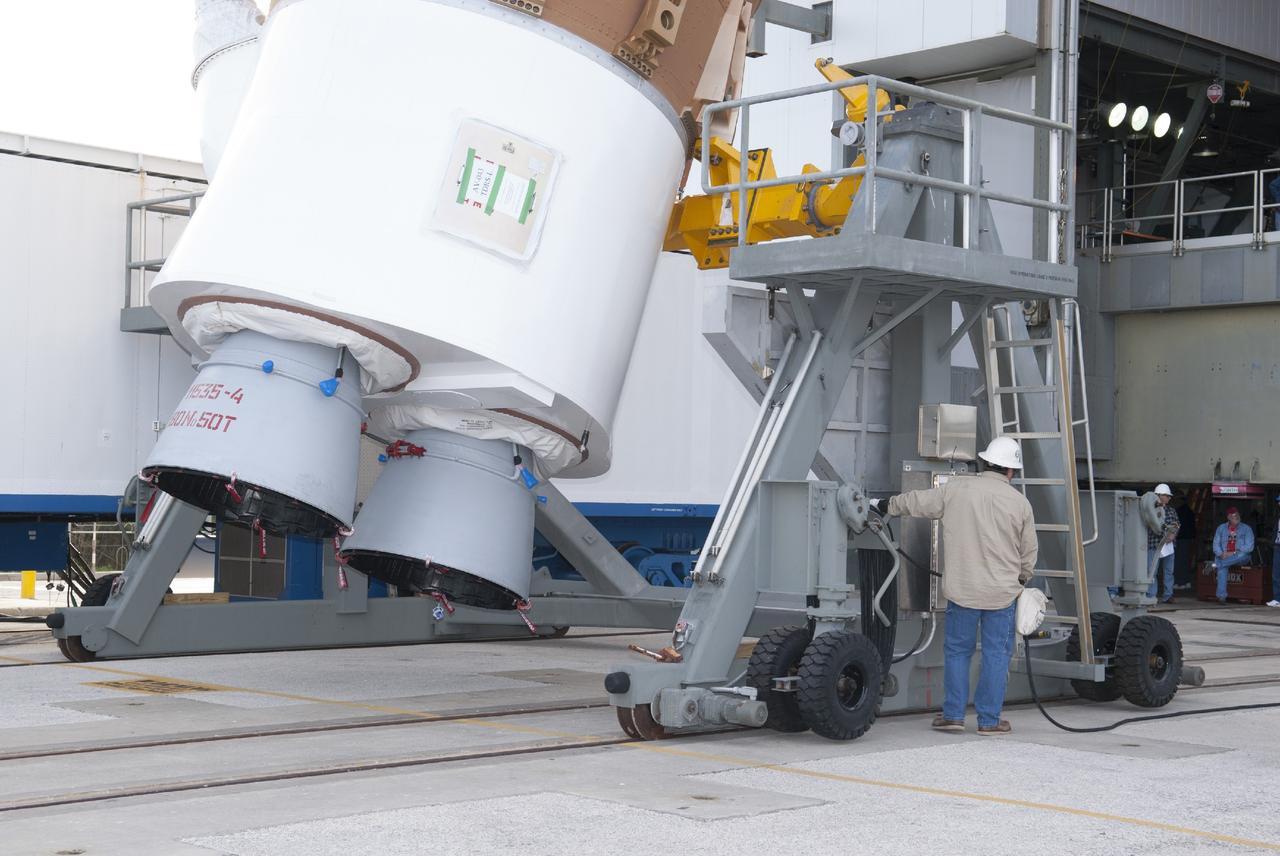
CAPE CANAVERAL, Fla. – At Cape Canaveral Air Force Station, a technician supports lifting of a United Launch Alliance Atlas V rocket in the Vertical Integration Facility at Launch Complex 41. The vehicle will be used to boost the Tracking and Data Relay Satellite, or TDRS-L, spacecraft to orbit. TDRS-L is the second of three next-generation satellites designed to ensure vital operational continuity for the NASA Space Network. It is scheduled to launch from Cape Canaveral's Space Launch Complex 41 atop an Atlas V rocket in January 2014. The current Tracking and Data Relay Satellite system consists of eight in-orbit satellites distributed to provide near continuous information relay service to missions such as the Hubble Space Telescope and International Space Station. For more information, visit: http://www.nasa.gov/content/tracking-and-data-relay-satellite-tdrs/ Photo credit: NASA/Charisse Nahser
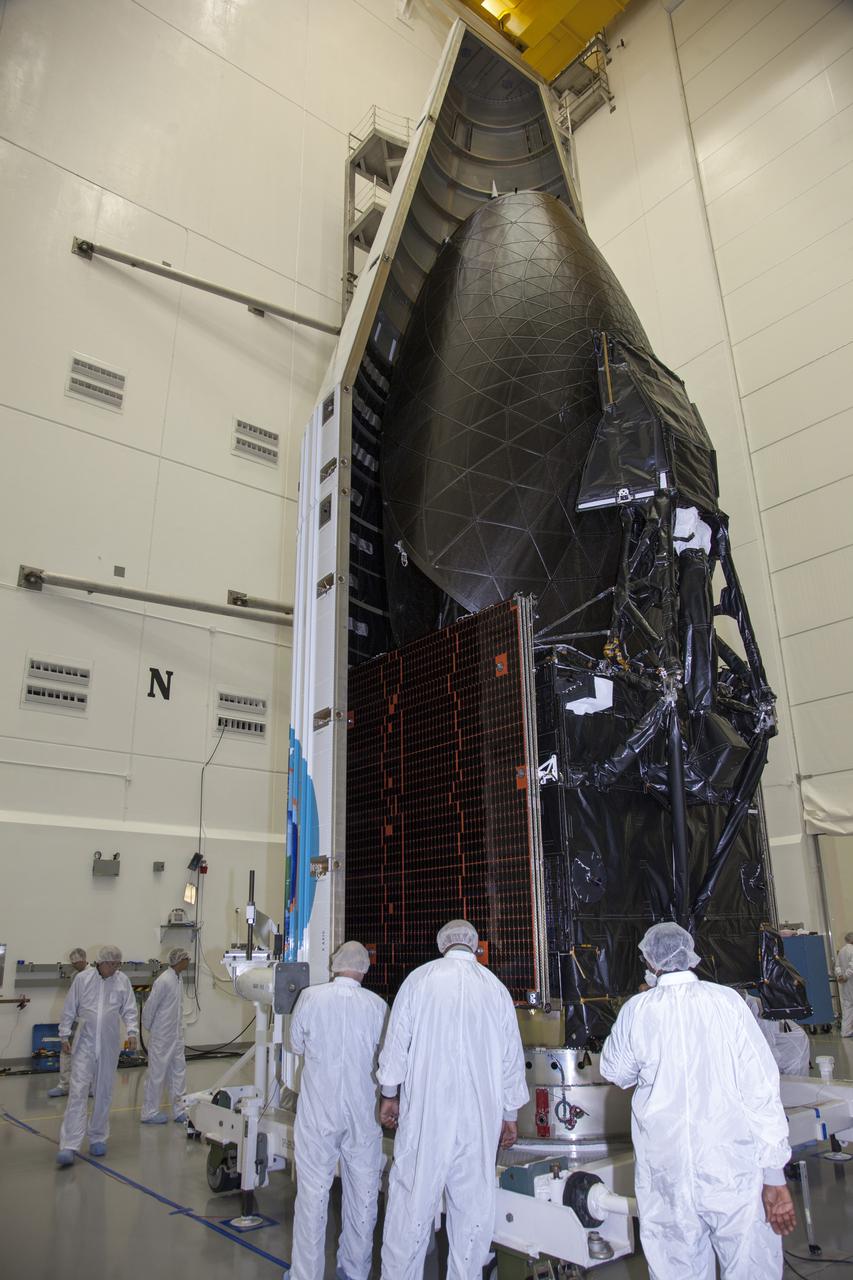
TITUSVILLE, Fla. – Inside the Astrotech payload processing facility in Titusville, United Launch Alliance engineers and technicians encapsulate the Tracking and Data Relay Satellite, or TDRS-L, spacecraft in its payload fairing. TDRS-L will then be transported to Launch Complex 41 at Cape Canaveral Air Force Station. The TDRS-L satellite will be a part of the second of three next-generation spacecraft designed to ensure vital operational continuity for the NASA Space Network. It is scheduled to launch from Cape Canaveral's Space Launch Complex 41 atop a United Launch Alliance Atlas V rocket on January 23, 2014. The current Tracking and Data Relay Satellite system consists of eight in-orbit satellites distributed to provide near continuous information relay contact with orbiting spacecraft ranging from the International Space Station and Hubble Space Telescope to the array of scientific observatories. For more information, visit: http://www.nasa.gov/mission_pages/tdrs/home/index.html
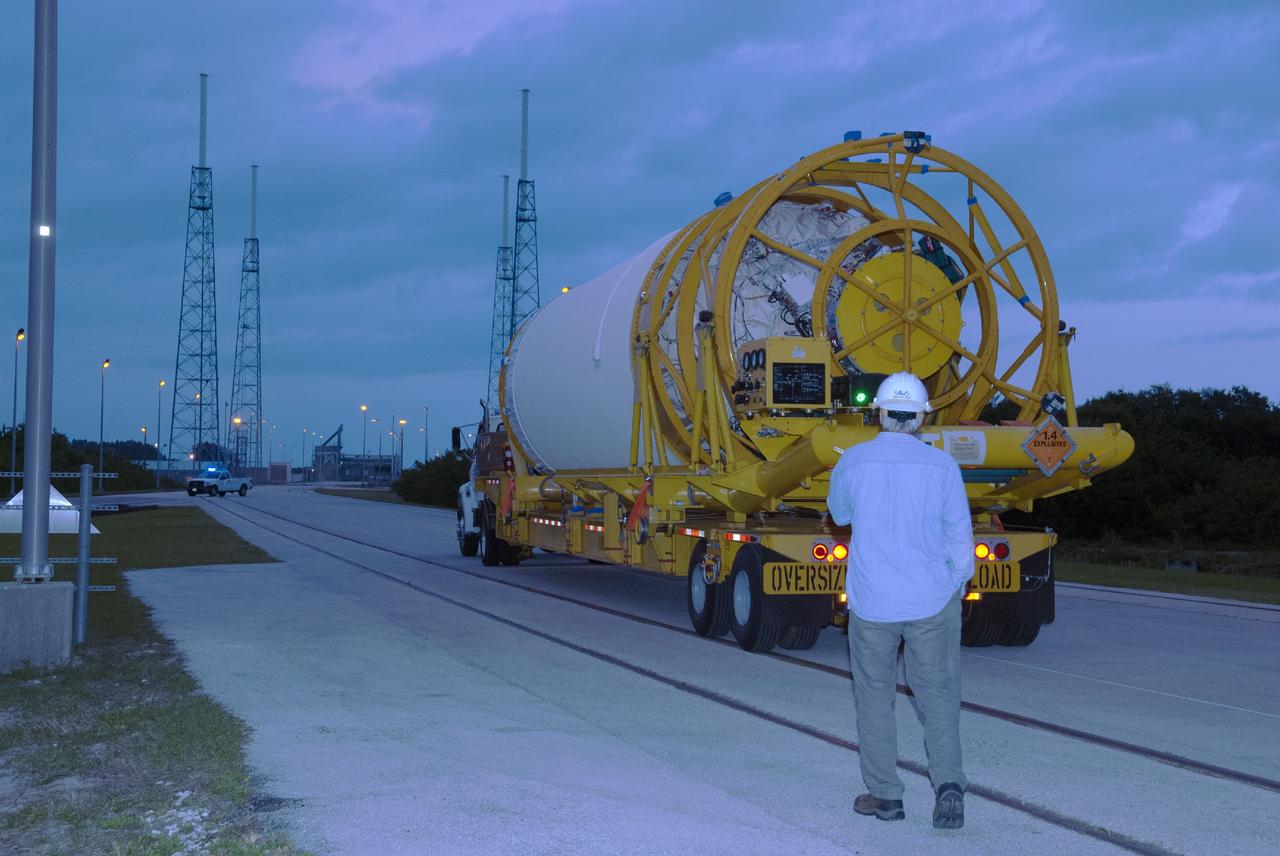
CAPE CANAVERAL, Fla. – The United Launch Alliance Centaur second stage that will help boost the Tracking and Data Relay Satellite, or TDRS-L, spacecraft into orbit is being transported from the hangar at the Atlas Spaceflight Operations Center on Cape Canaveral Air Force Station to Launch Complex 41. TDRS-L is the second of three next-generation satellites designed to ensure vital operational continuity for the NASA Space Network. It is scheduled to launch from Cape Canaveral's Space Launch Complex 41 atop an Atlas V rocket in January 2014. The current Tracking and Data Relay Satellite system consists of eight in-orbit satellites distributed to provide near continuous information relay service to missions such as the Hubble Space Telescope and International Space Station. For more information, visit: http://www.nasa.gov/content/tracking-and-data-relay-satellite-tdrs/ Photo credit: NASA/Charisse Nahser
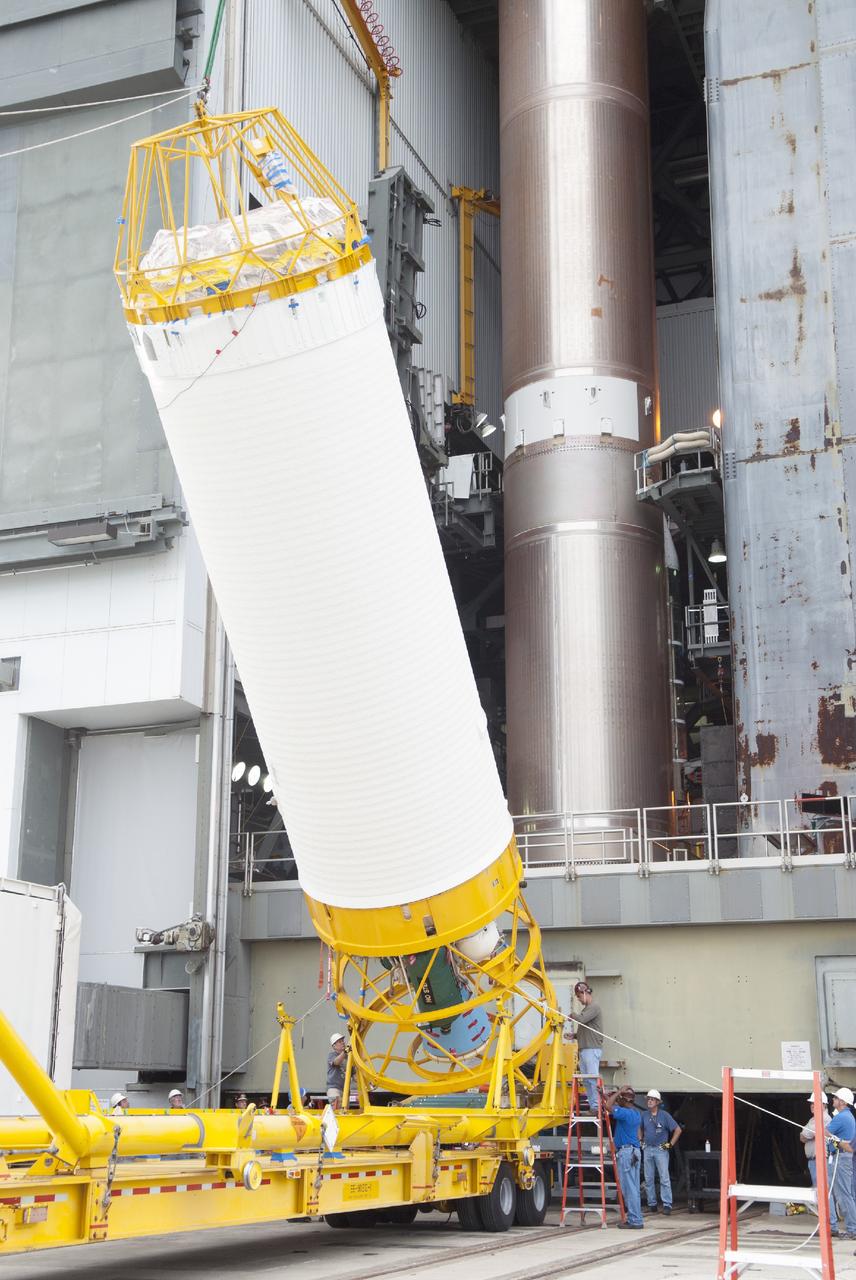
CAPE CANAVERAL, Fla. – At Cape Canaveral Air Force Station's Launch Complex 41, engineers and technicians support lifting a Centaur second stage for stacking atop a United Launch Alliance Atlas V rocket that will be used to boost the Tracking and Data Relay Satellite, or TDRS-L, spacecraft to orbit. TDRS-L is the second of three next-generation satellites designed to ensure vital operational continuity for the NASA Space Network. It is scheduled to launch from Cape Canaveral's Space Launch Complex 41 atop an Atlas V rocket in January 2014. The current Tracking and Data Relay Satellite system consists of eight in-orbit satellites distributed to provide near continuous information relay service to missions such as the Hubble Space Telescope and International Space Station. For more information, visit: http://www.nasa.gov/content/tracking-and-data-relay-satellite-tdrs/ Photo credit: NASA/Charisse Nahser
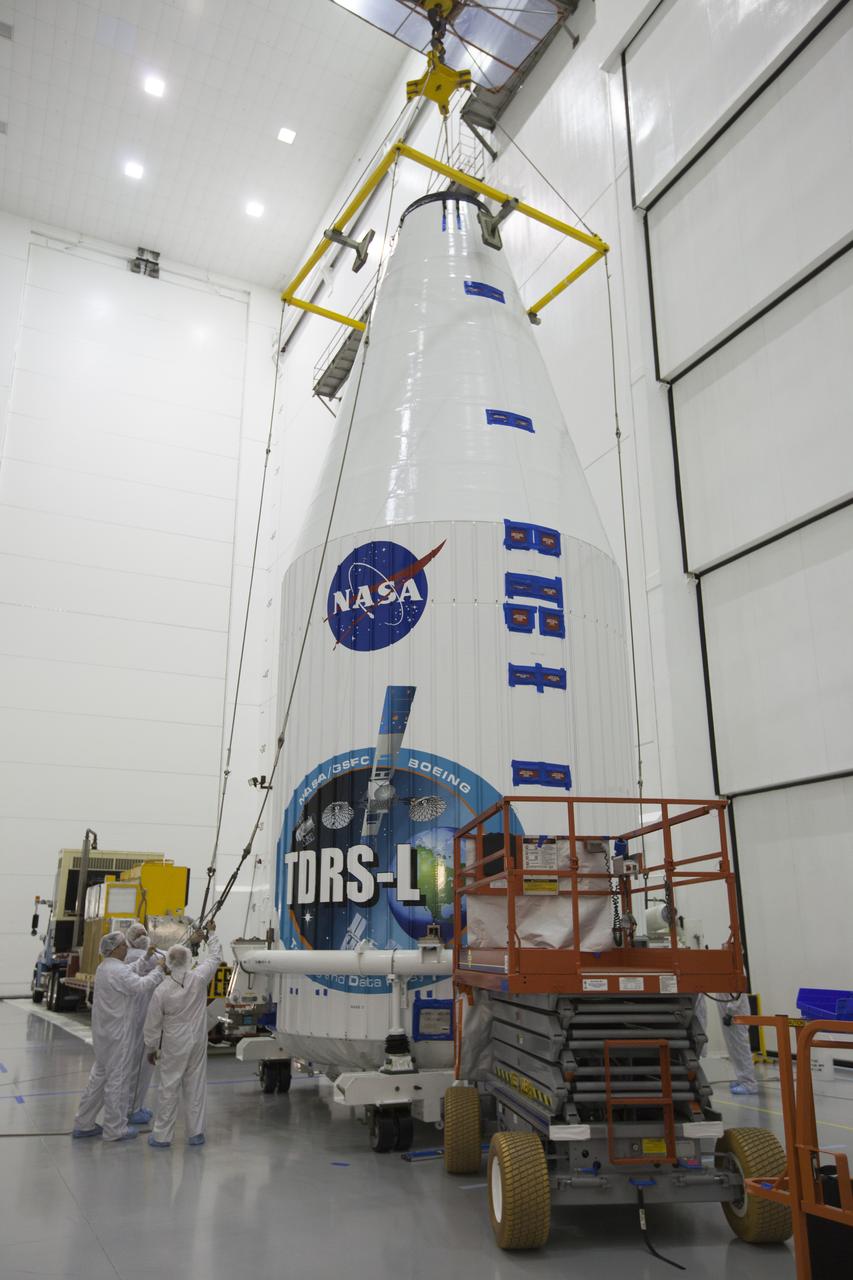
TITUSVILLE, Fla. – Inside the Astrotech payload processing facility in Titusville, NASA's Tracking and Data Relay Satellite, or TDRS-L, spacecraft has been encapsulated in its payload fairing in preparation for begin transported to Launch Complex 41 at Cape Canaveral Air Force Station. The TDRS-L satellite will be a part of the second of three next-generation spacecraft designed to ensure vital operational continuity for the NASA Space Network. It is scheduled to launch from Cape Canaveral's Space Launch Complex 41 atop a United Launch Alliance Atlas V rocket on January 23, 2014. The current Tracking and Data Relay Satellite system consists of eight in-orbit satellites distributed to provide near continuous information relay contact with orbiting spacecraft ranging from the International Space Station and Hubble Space Telescope to the array of scientific observatories. For more information, visit: http://www.nasa.gov/mission_pages/tdrs/home/index.html Photo credit: NASA/Kim Shiflett
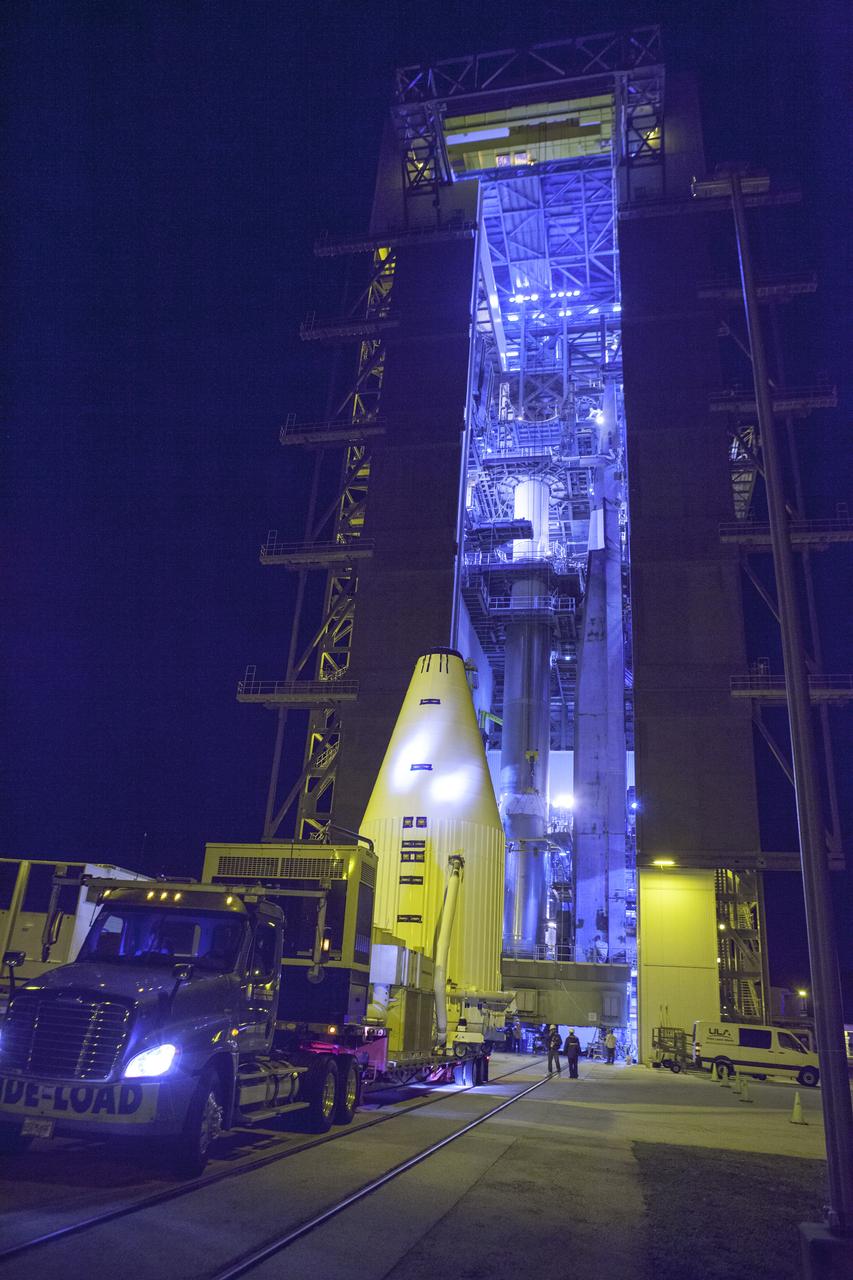
CAPE CANAVERAL, Fla. – Encapsulated in its payload fairing, NASA's Tracking and Data Relay Satellite, or TDRS-L, spacecraft arrives at Cape Canaveral Air Force Station's Vertical Integration Facility at Launch Complex 41. The TDRS-L satellite will be a part of the second of three next-generation spacecraft designed to ensure vital operational continuity for the NASA Space Network. It is scheduled to launch from Cape Canaveral's Space Launch Complex 41 atop a United Launch Alliance Atlas V rocket on January 23, 2014. The current Tracking and Data Relay Satellite system consists of eight in-orbit satellites distributed to provide near continuous information relay contact with orbiting spacecraft ranging from the International Space Station and Hubble Space Telescope to the array of scientific observatories. For more information, visit: http://www.nasa.gov/mission_pages/tdrs/home/index.html Photo credit: NASA/Dimitri Gerondidakis
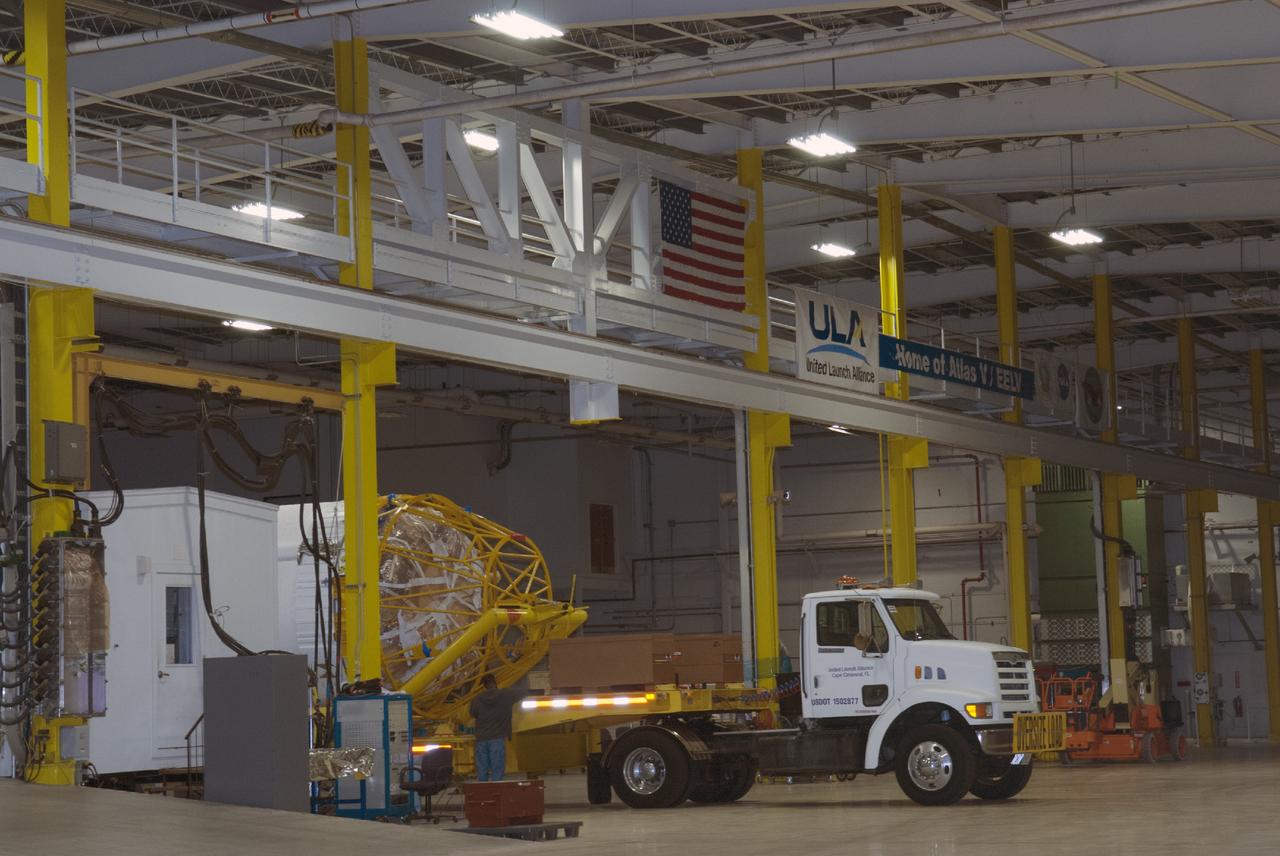
CAPE CANAVERAL, Fla. – The United Launch Alliance Centaur second stage that will help boost the Tracking and Data Relay Satellite, or TDRS-L, spacecraft into orbit is being transported from the hangar at the Atlas Spaceflight Operations Center on Cape Canaveral Air Force Station to Launch Complex 41. TDRS-L is the second of three next-generation satellites designed to ensure vital operational continuity for the NASA Space Network. It is scheduled to launch from Cape Canaveral's Space Launch Complex 41 atop an Atlas V rocket in January 2014. The current Tracking and Data Relay Satellite system consists of eight in-orbit satellites distributed to provide near continuous information relay service to missions such as the Hubble Space Telescope and International Space Station. For more information, visit: http://www.nasa.gov/content/tracking-and-data-relay-satellite-tdrs/ Photo credit: NASA/Charisse Nahser
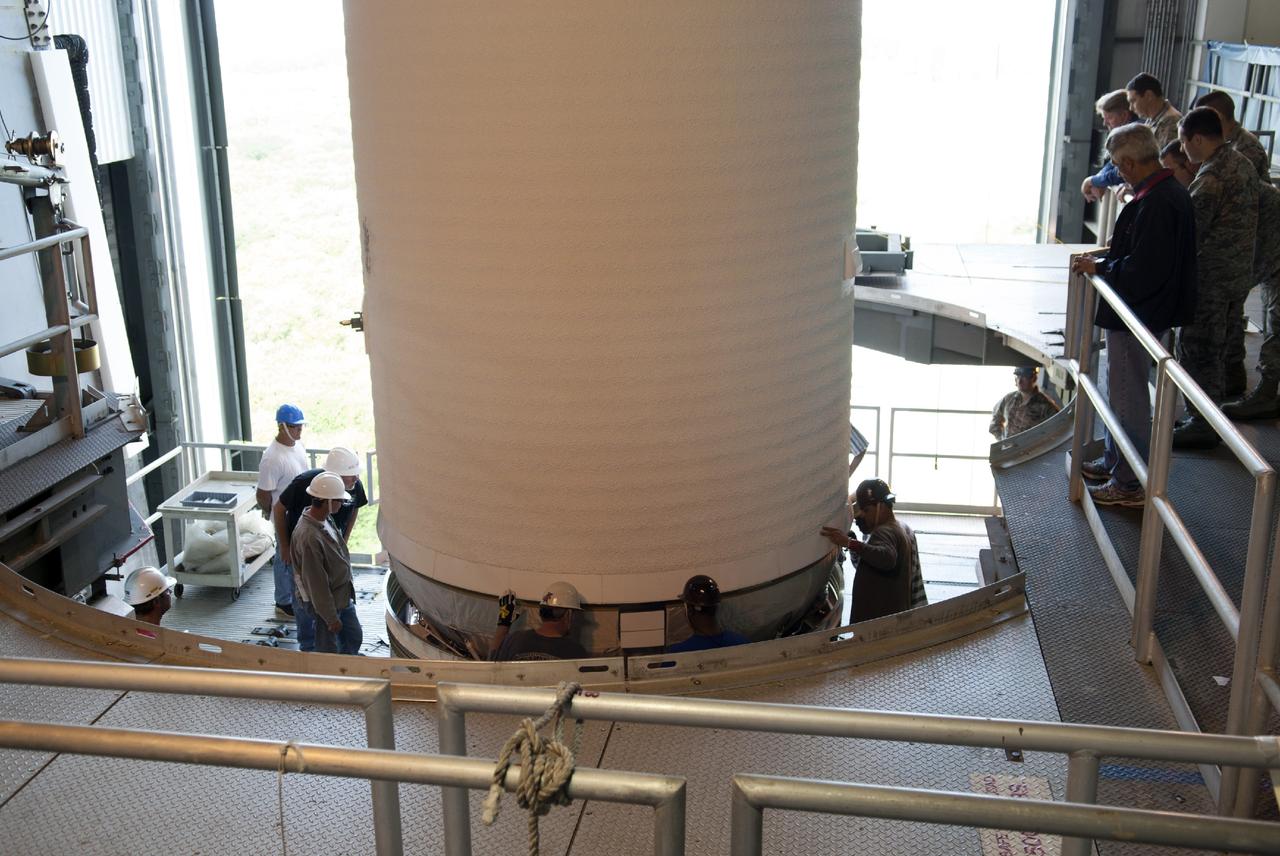
CAPE CANAVERAL, Fla. – At Cape Canaveral Air Force Station's Launch Complex 41, a Centaur second stage is positioned atop a United Launch Alliance Atlas V rocket that will be used to boost the Tracking and Data Relay Satellite, or TDRS-L, spacecraft to orbit. TDRS-L is the second of three next-generation satellites designed to ensure vital operational continuity for the NASA Space Network. It is scheduled to launch from Cape Canaveral's Space Launch Complex 41 atop an Atlas V rocket in January 2014. The current Tracking and Data Relay Satellite system consists of eight in-orbit satellites distributed to provide near continuous information relay service to missions such as the Hubble Space Telescope and International Space Station. For more information, visit: http://www.nasa.gov/content/tracking-and-data-relay-satellite-tdrs/ Photo credit: NASA/Charisse Nahser
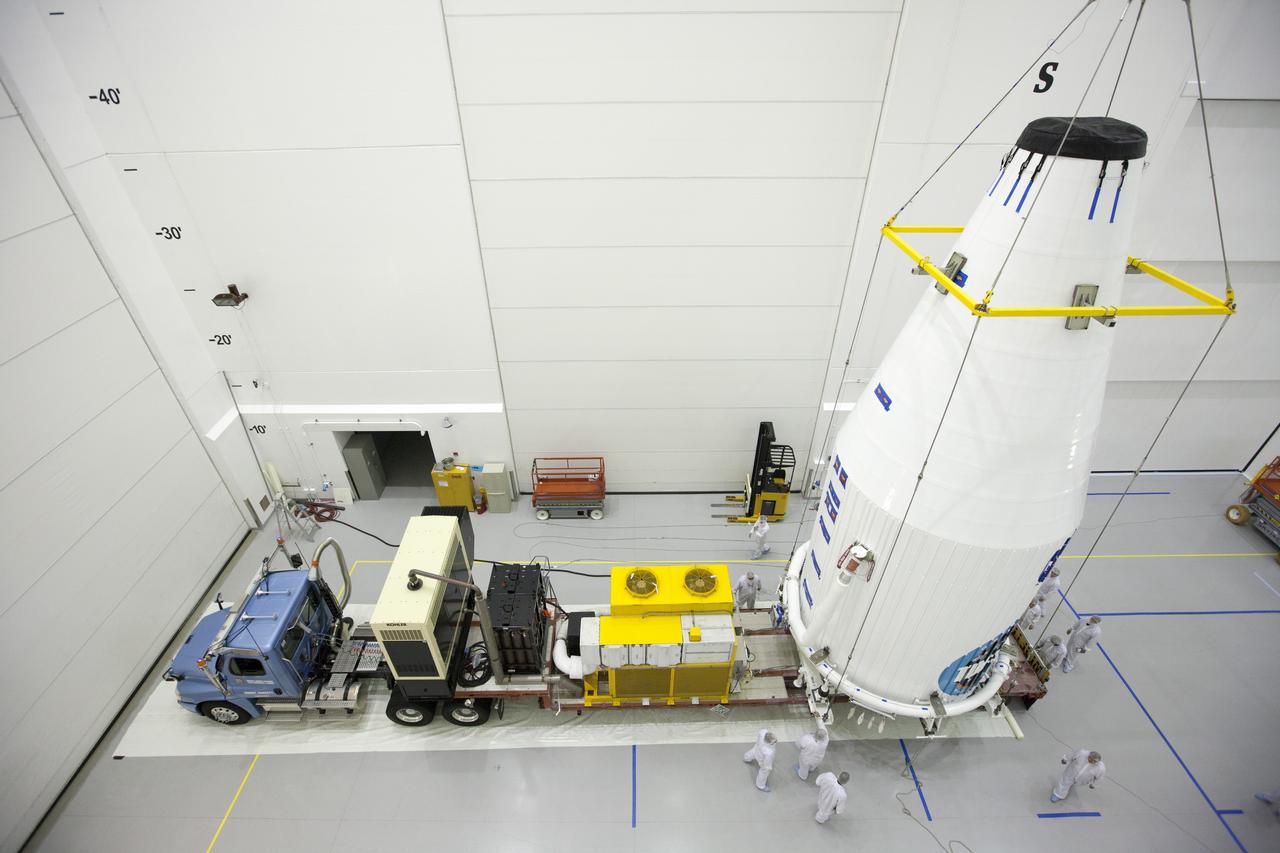
TITUSVILLE, Fla. – Encapsulated in its payload fairing, NASA's Tracking and Data Relay Satellite, or TDRS-L, spacecraft is being mounted on a transporter for its trip from the Astrotech payload processing facility in Titusville to Launch Complex 41 at Cape Canaveral Air Force Station. The TDRS-L satellite will be a part of the second of three next-generation spacecraft designed to ensure vital operational continuity for the NASA Space Network. It is scheduled to launch from Cape Canaveral's Space Launch Complex 41 atop a United Launch Alliance Atlas V rocket on January 23, 2014. The current Tracking and Data Relay Satellite system consists of eight in-orbit satellites distributed to provide near continuous information relay contact with orbiting spacecraft ranging from the International Space Station and Hubble Space Telescope to the array of scientific observatories. For more information, visit: http://www.nasa.gov/mission_pages/tdrs/home/index.html Photo credit: NASA/Kim Shiflett
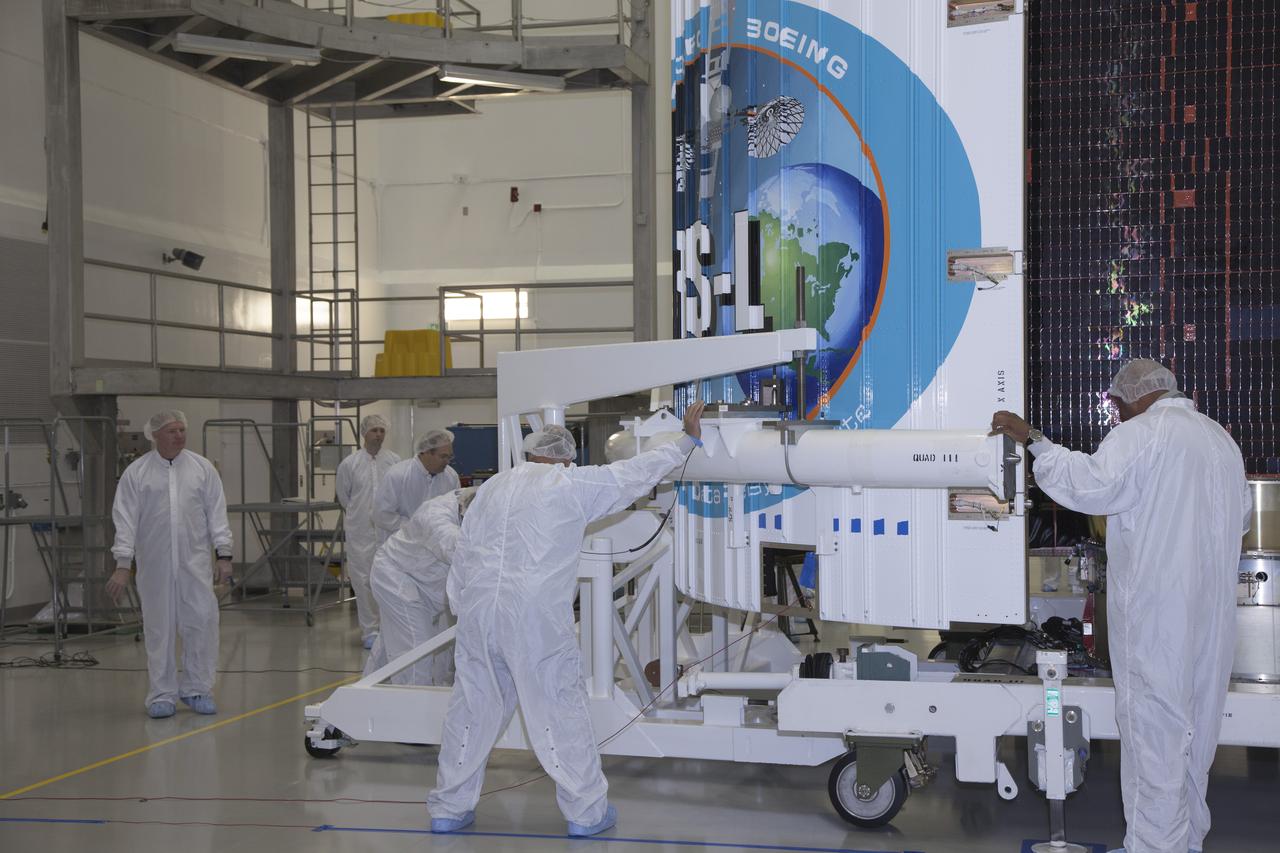
TITUSVILLE, Fla. – Inside the Astrotech payload processing facility in Titusville, United Launch Alliance engineers and technicians encapsulate the Tracking and Data Relay Satellite, or TDRS-L, spacecraft in its payload fairing. TDRS-L will then be transported to Launch Complex 41 at Cape Canaveral Air Force Station. The TDRS-L satellite will be a part of the second of three next-generation spacecraft designed to ensure vital operational continuity for the NASA Space Network. It is scheduled to launch from Cape Canaveral's Space Launch Complex 41 atop a United Launch Alliance Atlas V rocket on January 23, 2014. The current Tracking and Data Relay Satellite system consists of eight in-orbit satellites distributed to provide near continuous information relay contact with orbiting spacecraft ranging from the International Space Station and Hubble Space Telescope to the array of scientific observatories. For more information, visit: http://www.nasa.gov/mission_pages/tdrs/home/index.html
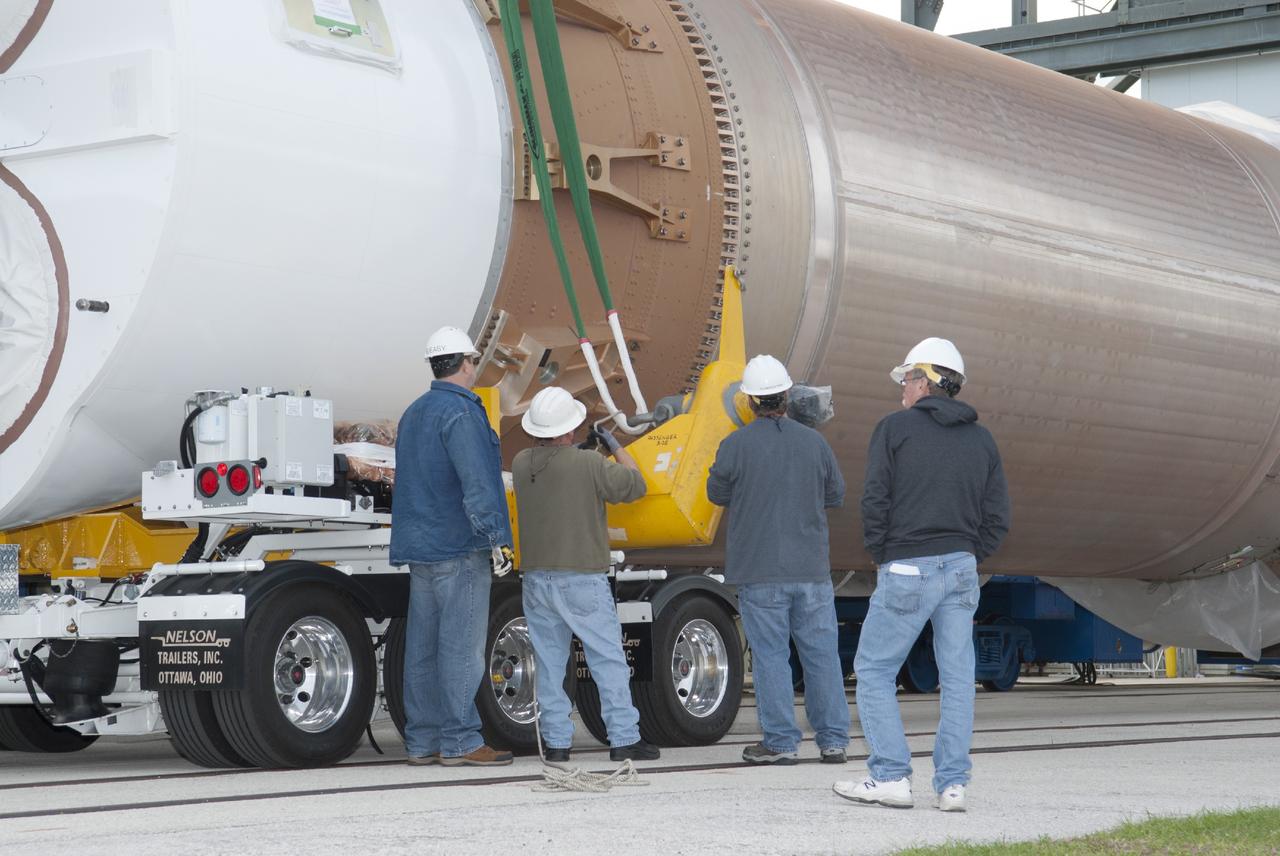
CAPE CANAVERAL, Fla. – At Cape Canaveral Air Force Station, engineers and technicians prepare the United Launch Alliance Atlas V rocket for stacking in the Vertical Integration Facility at Launch Complex 41. The vehicle will be used to boost the Tracking and Data Relay Satellite, or TDRS-L, spacecraft to orbit. TDRS-L is the second of three next-generation satellites designed to ensure vital operational continuity for the NASA Space Network. It is scheduled to launch from Cape Canaveral's Space Launch Complex 41 atop an Atlas V rocket in January 2014. The current Tracking and Data Relay Satellite system consists of eight in-orbit satellites distributed to provide near continuous information relay service to missions such as the Hubble Space Telescope and International Space Station. For more information, visit: http://www.nasa.gov/content/tracking-and-data-relay-satellite-tdrs/ Photo credit: NASA/Charisse Nahser
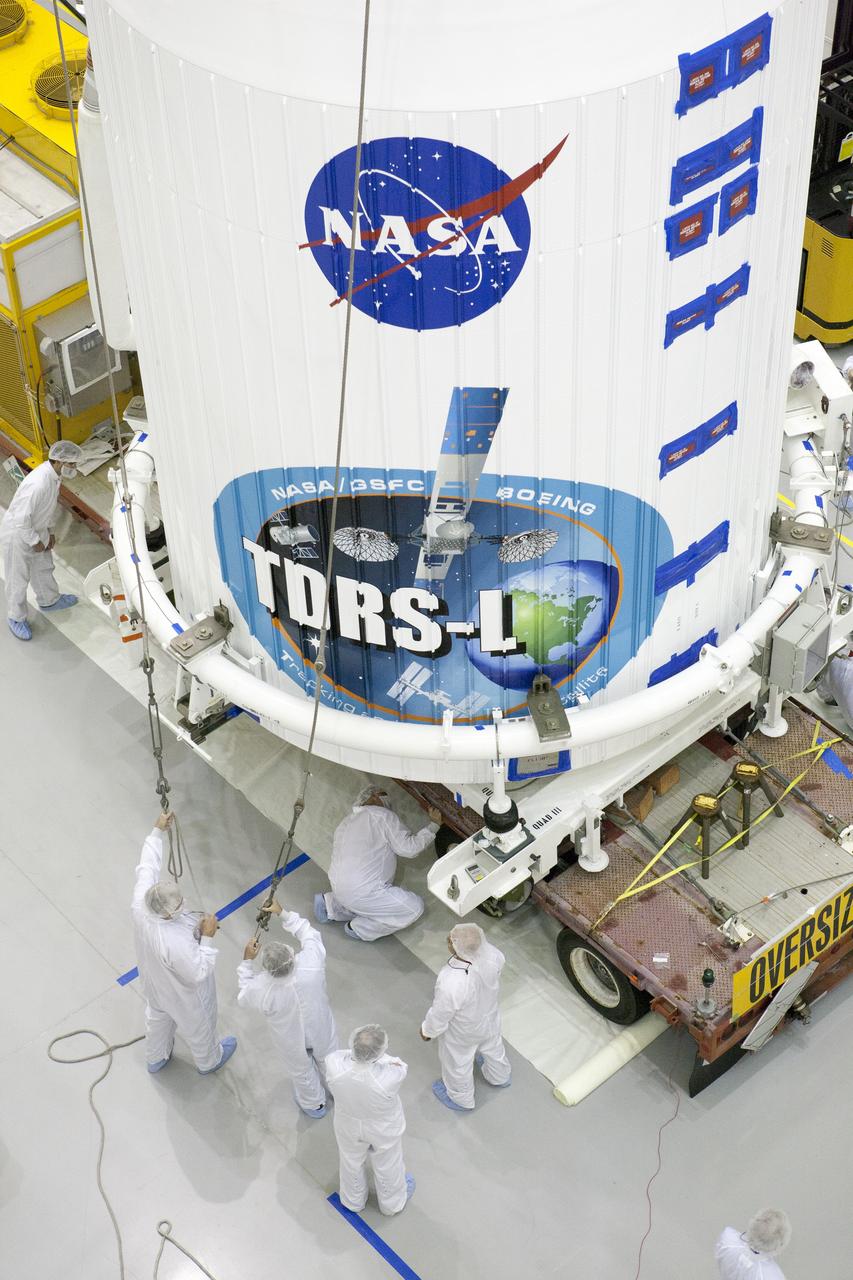
TITUSVILLE, Fla. – Encapsulated in its payload fairing, NASA's Tracking and Data Relay Satellite, or TDRS-L, spacecraft is being mounted on a transporter for its trip from the Astrotech payload processing facility in Titusville to Launch Complex 41 at Cape Canaveral Air Force Station. The TDRS-L satellite will be a part of the second of three next-generation spacecraft designed to ensure vital operational continuity for the NASA Space Network. It is scheduled to launch from Cape Canaveral's Space Launch Complex 41 atop a United Launch Alliance Atlas V rocket on January 23, 2014. The current Tracking and Data Relay Satellite system consists of eight in-orbit satellites distributed to provide near continuous information relay contact with orbiting spacecraft ranging from the International Space Station and Hubble Space Telescope to the array of scientific observatories. For more information, visit: http://www.nasa.gov/mission_pages/tdrs/home/index.html Photo credit: NASA/Kim Shiflett
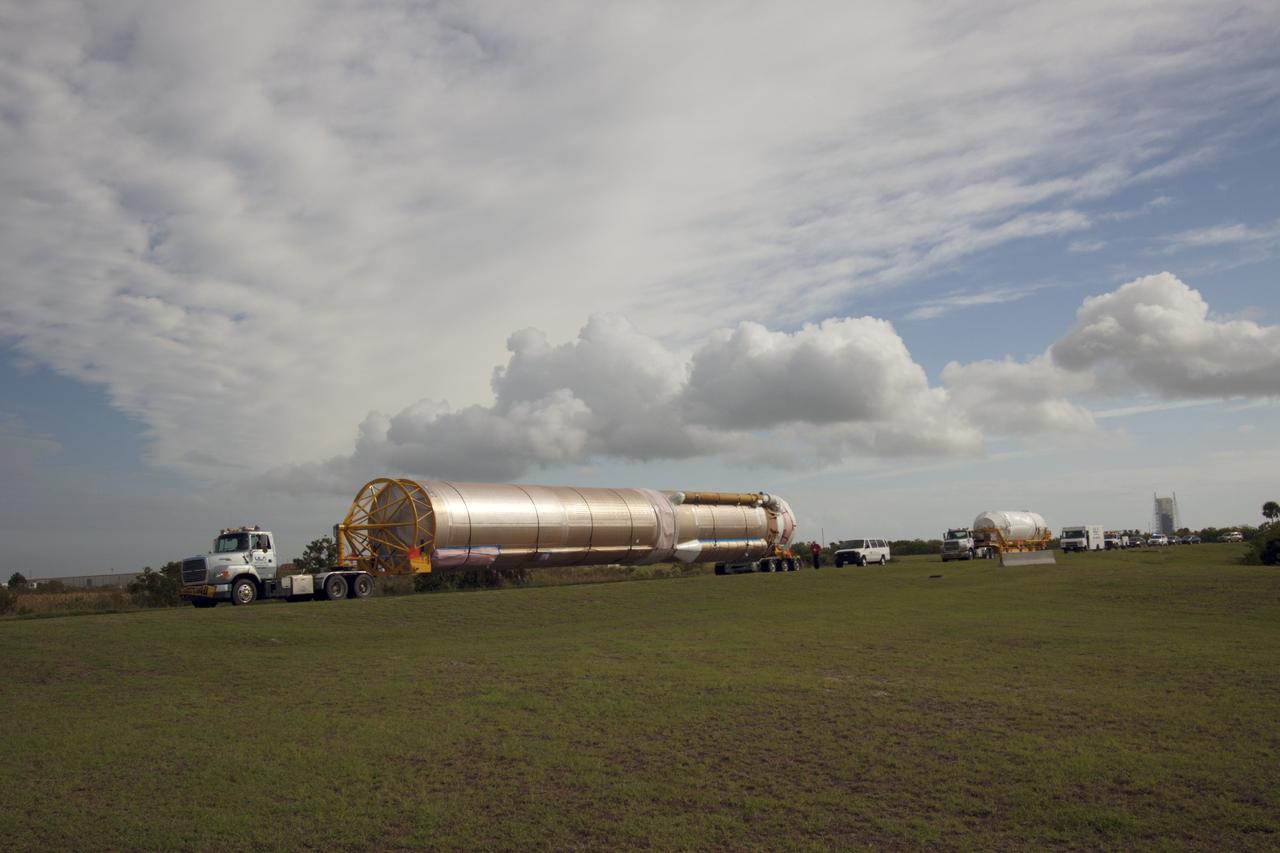
CAPE CANAVERAL, Fla. – The United Launch Alliance Atlas V launch vehicle, left, and Centaur upper stage that will boost the Tracking and Data Relay Satellite, or TDRS-L, spacecraft into orbit is being transported to the hangar at the Atlas Spaceflight Operations Center on Cape Canaveral Air Force Station for checkout in preparation for launch. TDRS-L is the second of three next-generation satellites designed to ensure vital operational continuity for the NASA Space Network. It is scheduled to launch from Cape Canaveral's Space Launch Complex 41 atop an Atlas V rocket in January 2014. The current Tracking and Data Relay Satellite system consists of eight in-orbit satellites distributed to provide near continuous information relay service to missions such as the Hubble Space Telescope and International Space Station. For more information, visit: http://www.nasa.gov/content/tracking-and-data-relay-satellite-tdrs/ Photo credit: NASA/ Jim Grossman
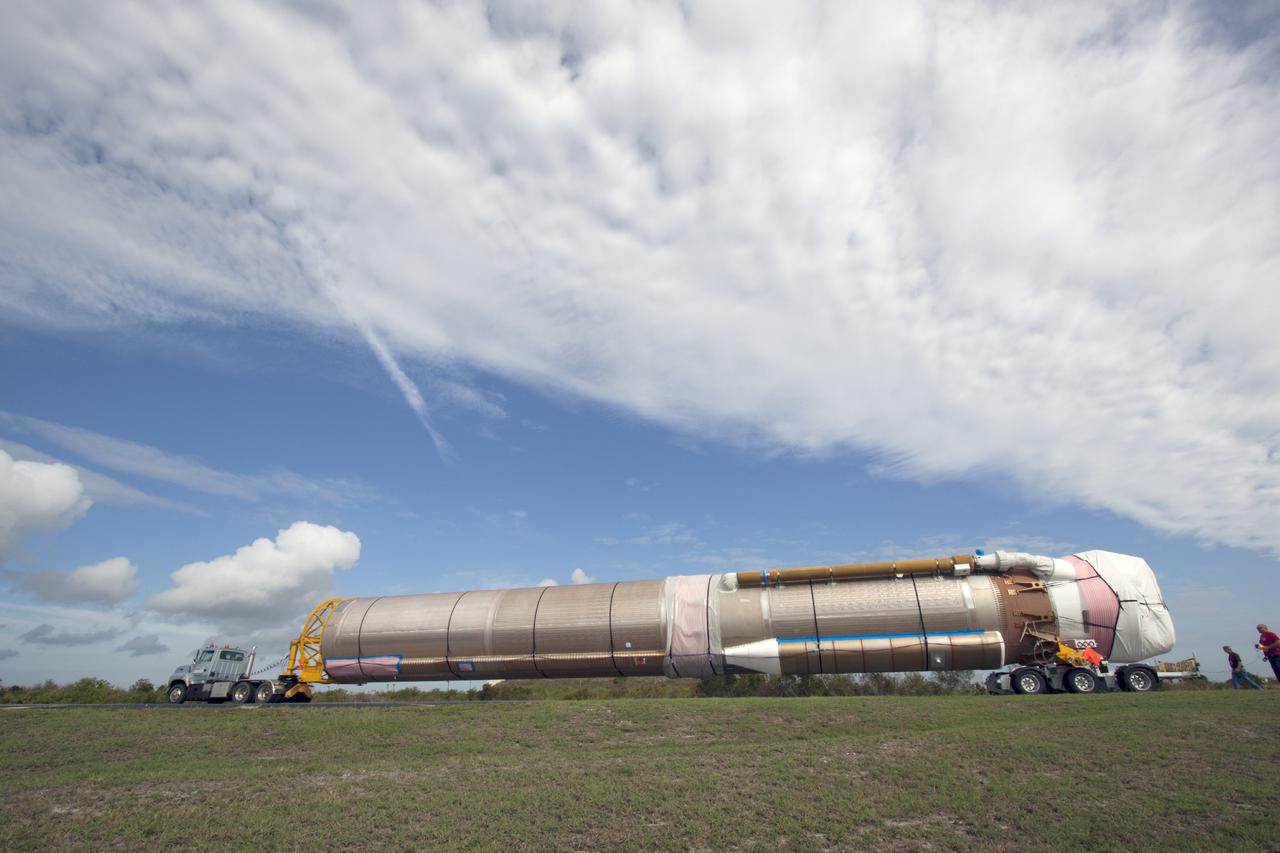
CAPE CANAVERAL, Fla. – The United Launch Alliance Atlas V launch vehicle that will boost the Tracking and Data Relay Satellite, or TDRS-L, spacecraft into orbit is being transported to the hangar at the Atlas Spaceflight Operations Center on Cape Canaveral Air Force Station for checkout in preparation for launch. TDRS-L is the second of three next-generation satellites designed to ensure vital operational continuity for the NASA Space Network. It is scheduled to launch from Cape Canaveral's Space Launch Complex 41 atop an Atlas V rocket in January 2014. The current Tracking and Data Relay Satellite system consists of eight in-orbit satellites distributed to provide near continuous information relay service to missions such as the Hubble Space Telescope and International Space Station. For more information, visit: http://www.nasa.gov/content/tracking-and-data-relay-satellite-tdrs/ Photo credit: NASA/ Jim Grossman
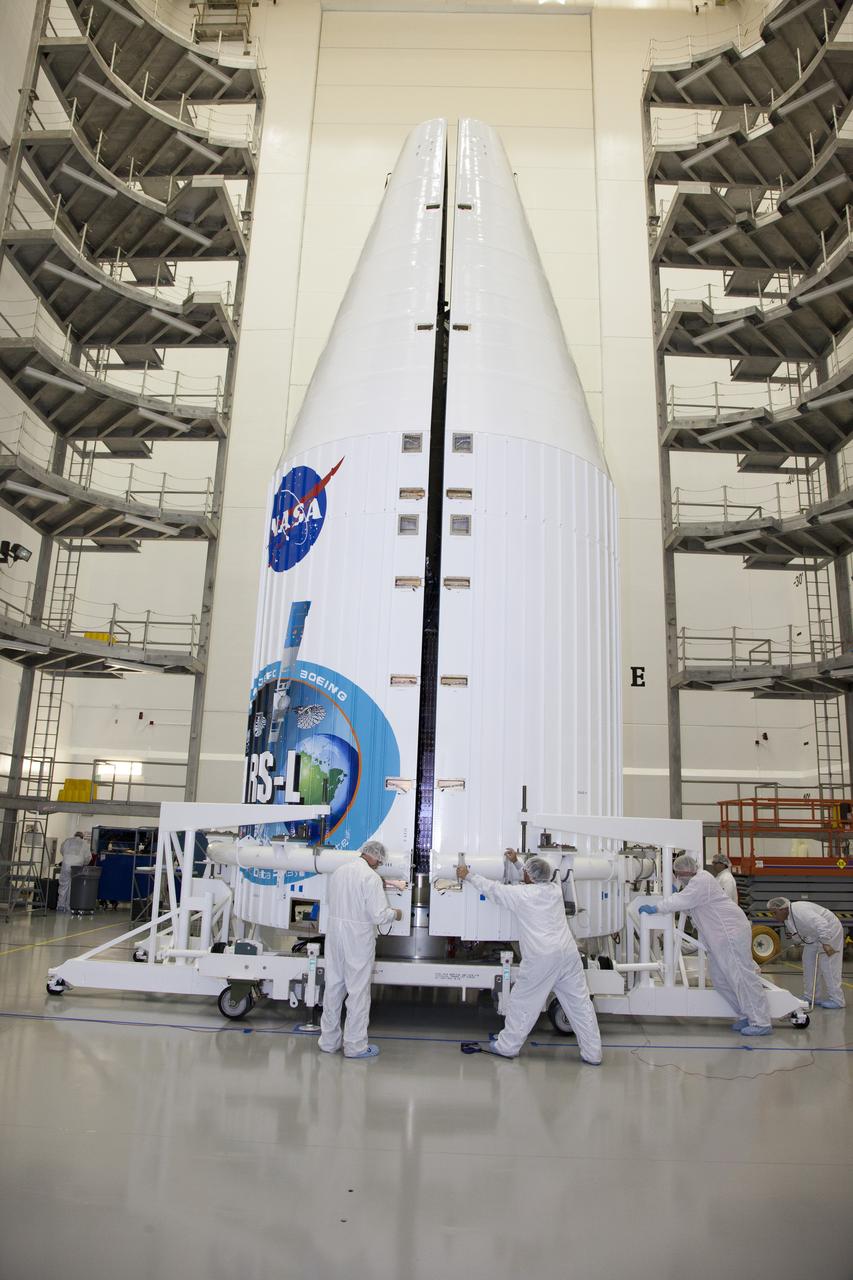
TITUSVILLE, Fla. – Inside the Astrotech payload processing facility in Titusville, United Launch Alliance engineers and technicians encapsulate the Tracking and Data Relay Satellite, or TDRS-L, spacecraft in its payload fairing. TDRS-L will then be transported to Launch Complex 41 at Cape Canaveral Air Force Station. The TDRS-L satellite will be a part of the second of three next-generation spacecraft designed to ensure vital operational continuity for the NASA Space Network. It is scheduled to launch from Cape Canaveral's Space Launch Complex 41 atop a United Launch Alliance Atlas V rocket on January 23, 2014. The current Tracking and Data Relay Satellite system consists of eight in-orbit satellites distributed to provide near continuous information relay contact with orbiting spacecraft ranging from the International Space Station and Hubble Space Telescope to the array of scientific observatories. For more information, visit: http://www.nasa.gov/mission_pages/tdrs/home/index.html
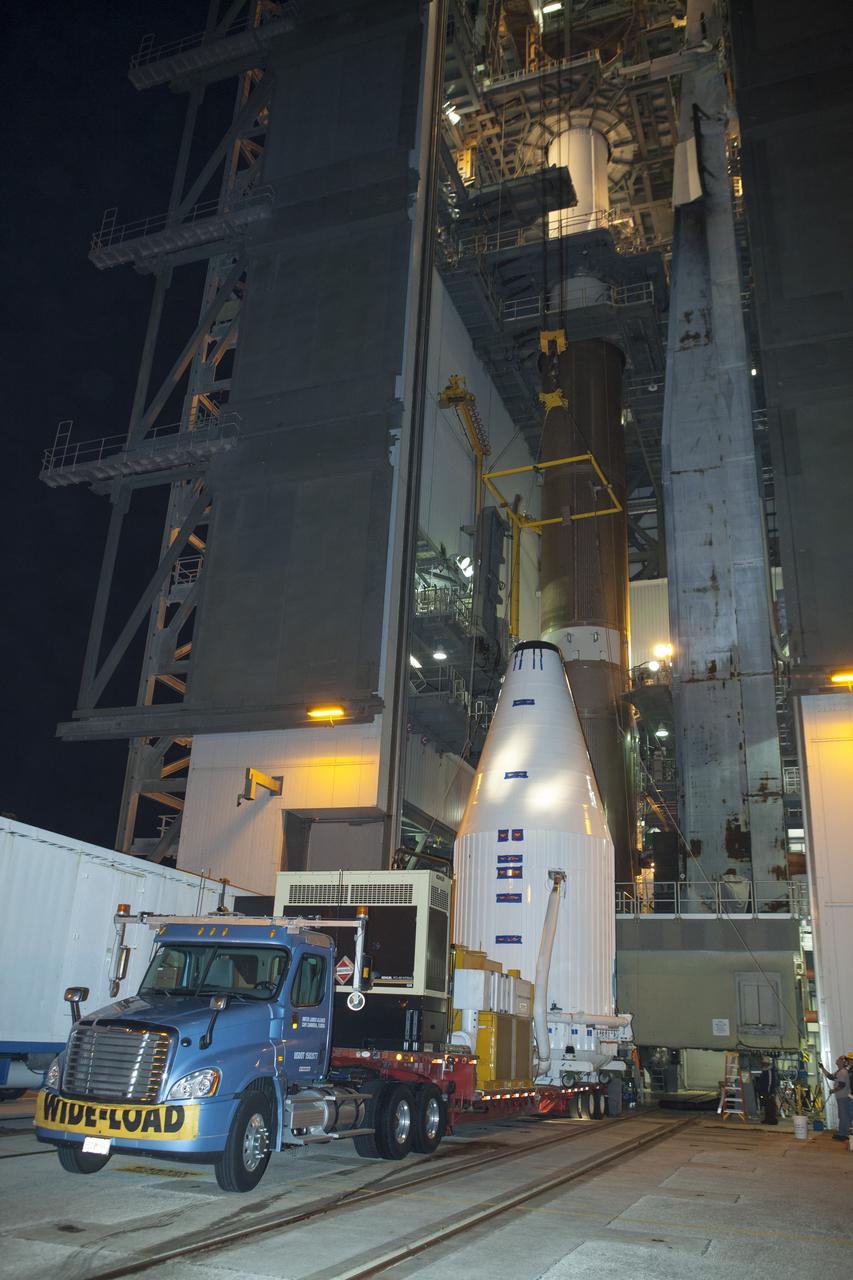
CAPE CANAVERAL, Fla. – Encapsulated in its payload fairing, NASA's Tracking and Data Relay Satellite, or TDRS-L, spacecraft arrives at Cape Canaveral Air Force Station's Vertical Integration Facility at Launch Complex 41. The TDRS-L satellite will be a part of the second of three next-generation spacecraft designed to ensure vital operational continuity for the NASA Space Network. It is scheduled to launch from Cape Canaveral's Space Launch Complex 41 atop a United Launch Alliance Atlas V rocket on Jan. 23, 2014. The current Tracking and Data Relay Satellite system consists of eight in-orbit satellites distributed to provide near continuous information relay contact with orbiting spacecraft ranging from the International Space Station and Hubble Space Telescope to the array of scientific observatories. For more information, visit: http://www.nasa.gov/mission_pages/tdrs/home/index.html Photo credit: NASA/Dimitri Gerondidakis
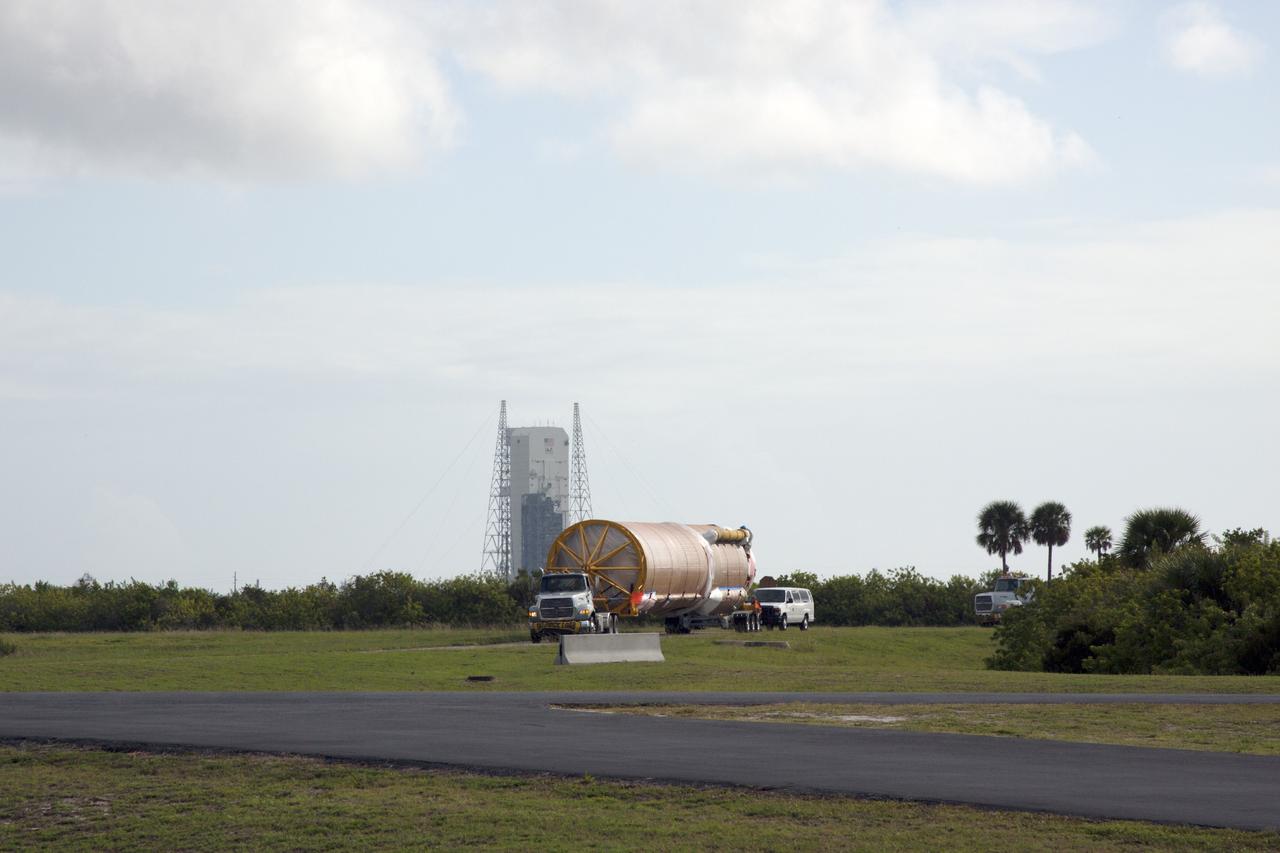
CAPE CANAVERAL, Fla. – The United Launch Alliance Atlas V launch vehicle that will boost the Tracking and Data Relay Satellite, or TDRS-L, spacecraft into orbit is being transported to the hangar at the Atlas Spaceflight Operations Center on Cape Canaveral Air Force Station for checkout in preparation for launch. TDRS-L is the second of three next-generation satellites designed to ensure vital operational continuity for the NASA Space Network. It is scheduled to launch from Cape Canaveral's Space Launch Complex 41 atop an Atlas V rocket in January 2014. The current Tracking and Data Relay Satellite system consists of eight in-orbit satellites distributed to provide near continuous information relay service to missions such as the Hubble Space Telescope and International Space Station. For more information, visit: http://www.nasa.gov/content/tracking-and-data-relay-satellite-tdrs/ Photo credit: NASA/ Jim Grossman
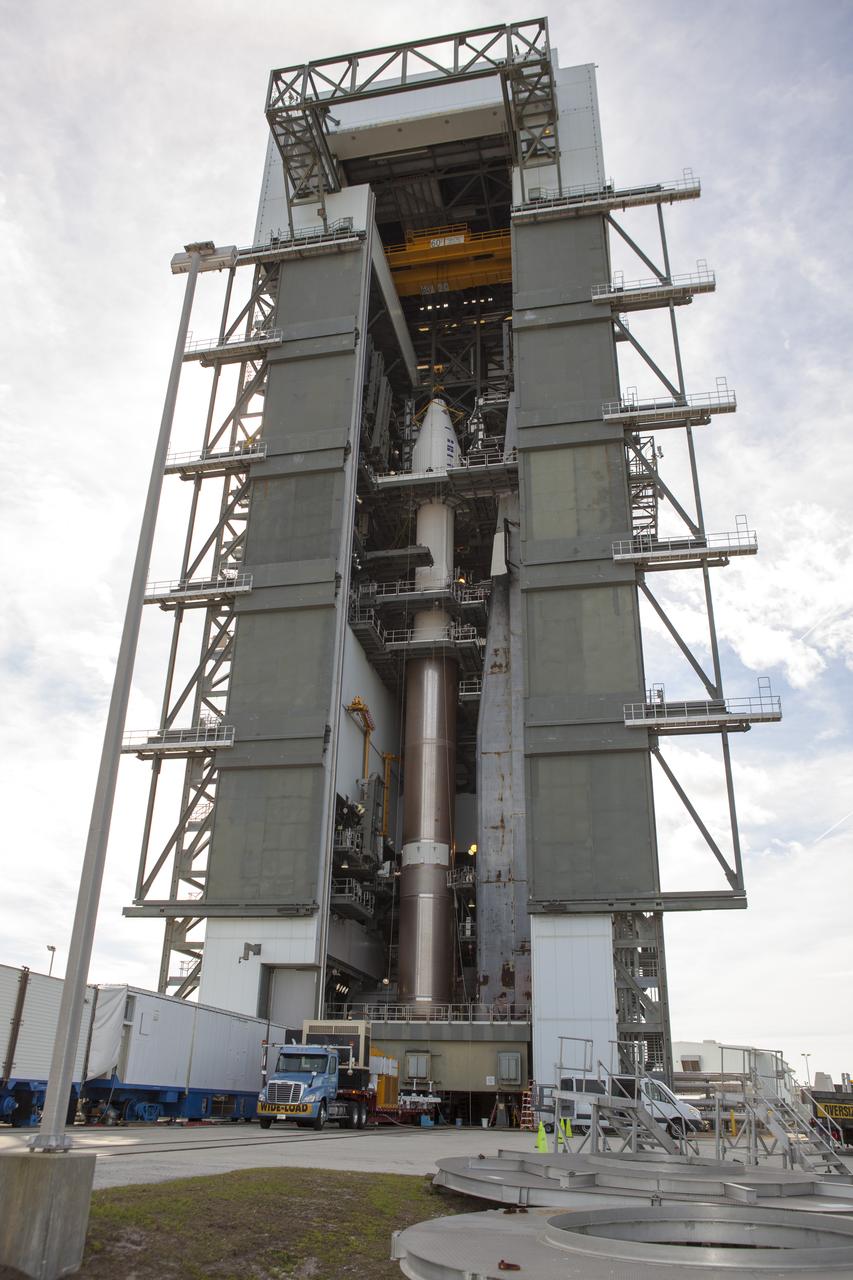
CAPE CANAVERAL, Fla. – At Cape Canaveral Air Force Station's Vertical Integration Facility at Launch Complex 41, NASA's Tracking and Data Relay Satellite, or TDRS-L, spacecraft has been mated atop a United Launch Alliance Atlas V rocket. The TDRS-L satellite will be a part of the second of three next-generation spacecraft designed to ensure vital operational continuity for the NASA Space Network. It is scheduled to launch from Cape Canaveral's Space Launch Complex 41 atop a United Launch Alliance Atlas V rocket on Jan. 23, 2014. The current Tracking and Data Relay Satellite system consists of eight in-orbit satellites distributed to provide near continuous information relay contact with orbiting spacecraft ranging from the International Space Station and Hubble Space Telescope to the array of scientific observatories. For more information, visit: http://www.nasa.gov/mission_pages/tdrs/home/index.html Photo credit: NASA/Dimitri Gerondidakis
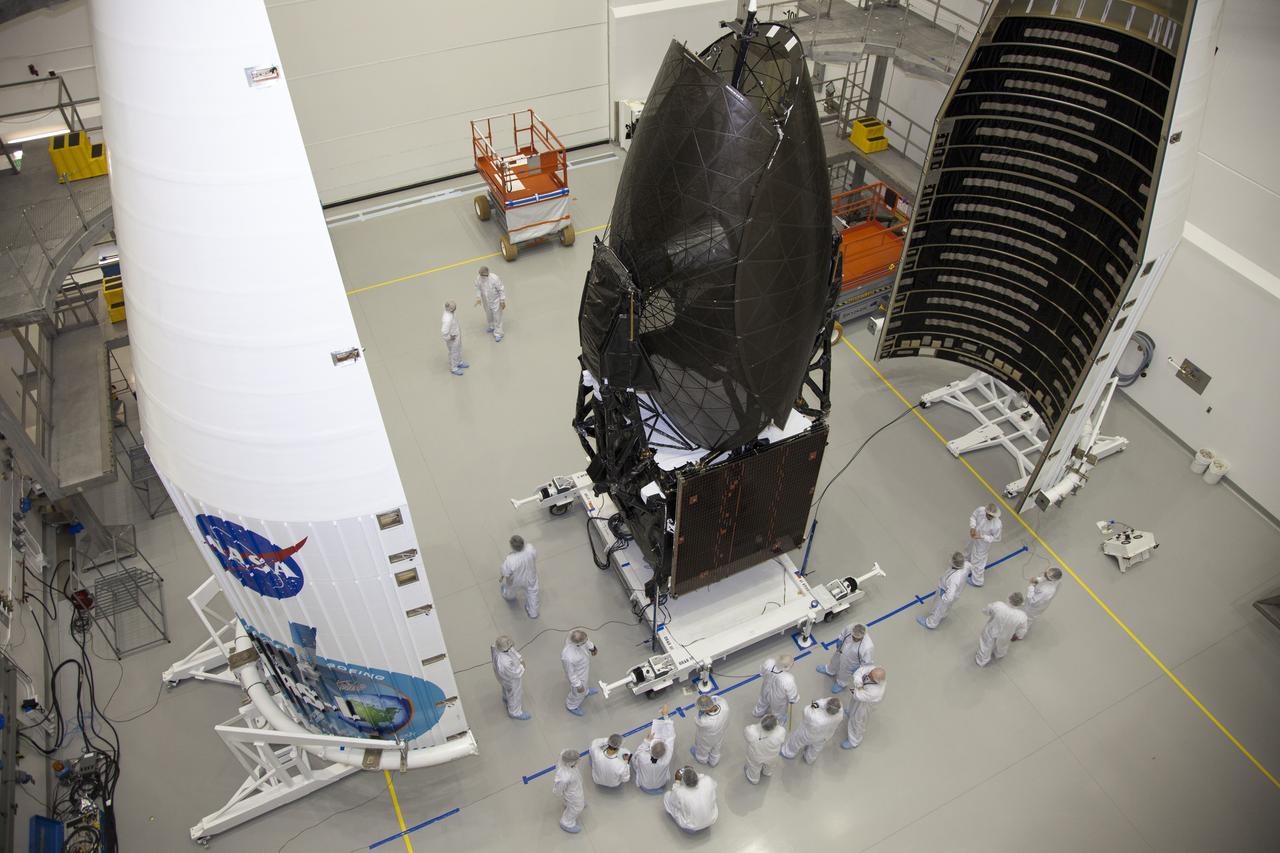
TITUSVILLE, Fla. – Inside the Astrotech payload processing facility in Titusville, the Tracking and Data Relay Satellite, or TDRS-L, spacecraft is being encapsulated in its payload fairing in preparation for begin transported to Launch Complex 41 at Cape Canaveral Air Force Station. The TDRS-L satellite will be a part of the second of three next-generation spacecraft designed to ensure vital operational continuity for the NASA Space Network. It is scheduled to launch from Cape Canaveral's Space Launch Complex 41 atop a United Launch Alliance Atlas V rocket on January 23, 2014. The current Tracking and Data Relay Satellite system consists of eight in-orbit satellites distributed to provide near continuous information relay contact with orbiting spacecraft ranging from the International Space Station and Hubble Space Telescope to the array of scientific observatories. For more information, visit: http://www.nasa.gov/mission_pages/tdrs/home/index.html
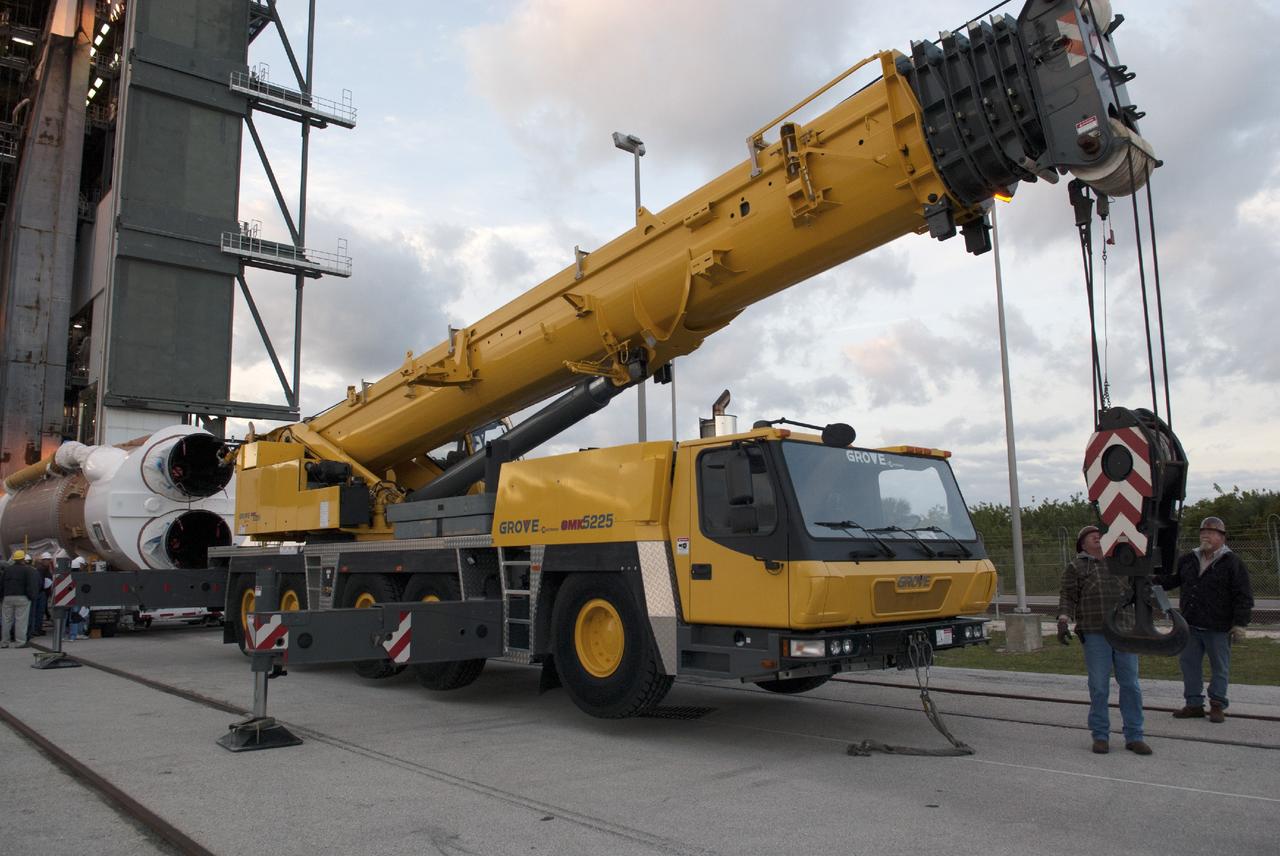
CAPE CANAVERAL, Fla. – At Cape Canaveral Air Force Station's Vertical Integration Facility at Launch Complex 41, a crane is positioned to support stacking of the United Launch Alliance Atlas V rocket that will boost the Tracking and Data Relay Satellite, or TDRS-L, spacecraft into orbit. TDRS-L is the second of three next-generation satellites designed to ensure vital operational continuity for the NASA Space Network. It is scheduled to launch from Cape Canaveral's Space Launch Complex 41 atop an Atlas V rocket in January 2014. The current Tracking and Data Relay Satellite system consists of eight in-orbit satellites distributed to provide near continuous information relay service to missions such as the Hubble Space Telescope and International Space Station. For more information, visit: http://www.nasa.gov/content/tracking-and-data-relay-satellite-tdrs/ Photo credit: NASA/Charisse Nahser
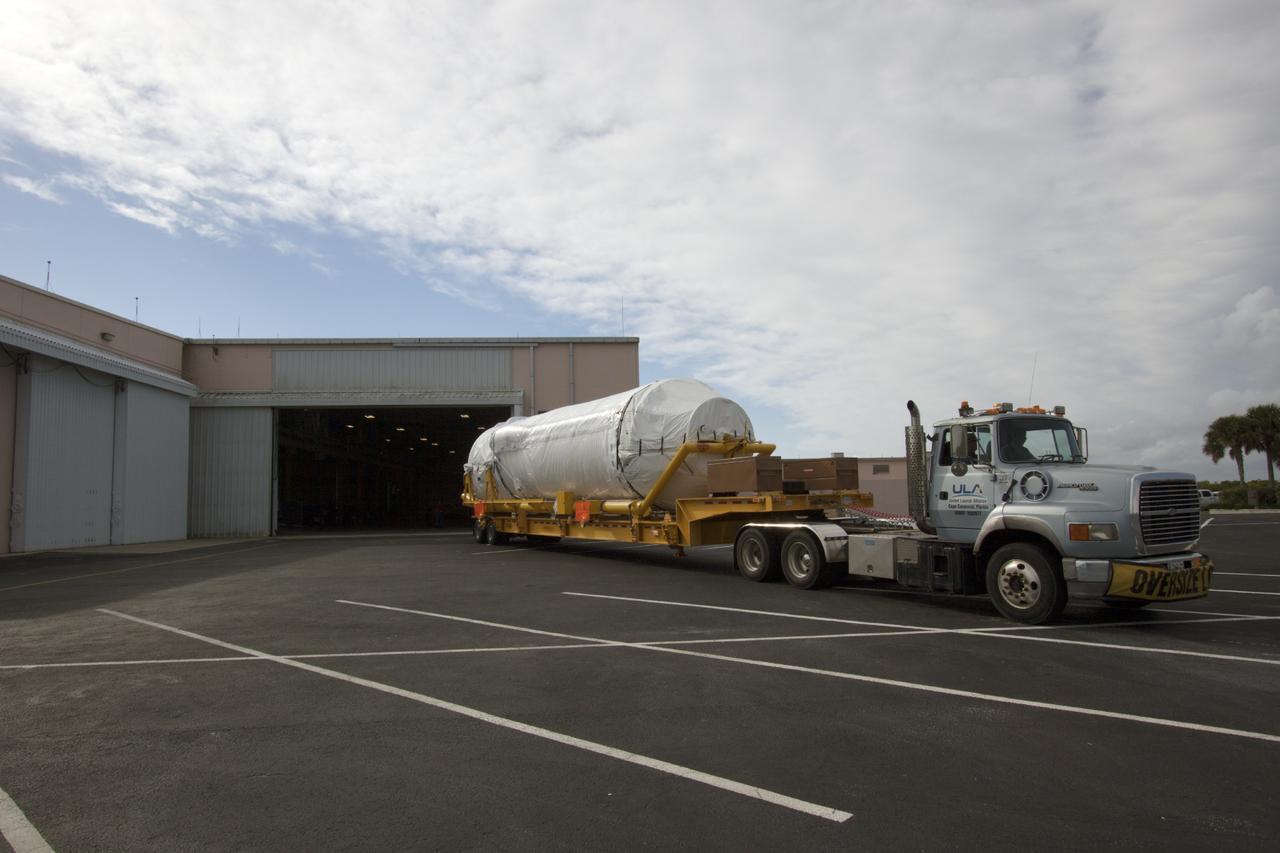
CAPE CANAVERAL, Fla. – The United Launch Alliance Centaur upper stage that will boost the Tracking and Data Relay Satellite, or TDRS-L, spacecraft into orbit arrives at the Atlas Spaceflight Operations Center on Cape Canaveral Air Force Station for checkout in preparation for launch. TDRS-L is the second of three next-generation satellites designed to ensure vital operational continuity for the NASA Space Network. It is scheduled to launch from Cape Canaveral's Space Launch Complex 41 atop an Atlas V rocket in January 2014. The current Tracking and Data Relay Satellite system consists of eight in-orbit satellites distributed to provide near continuous information relay service to missions such as the Hubble Space Telescope and International Space Station. For more information, visit: http://www.nasa.gov/content/tracking-and-data-relay-satellite-tdrs/ Photo credit: NASA/ Jim Grossman
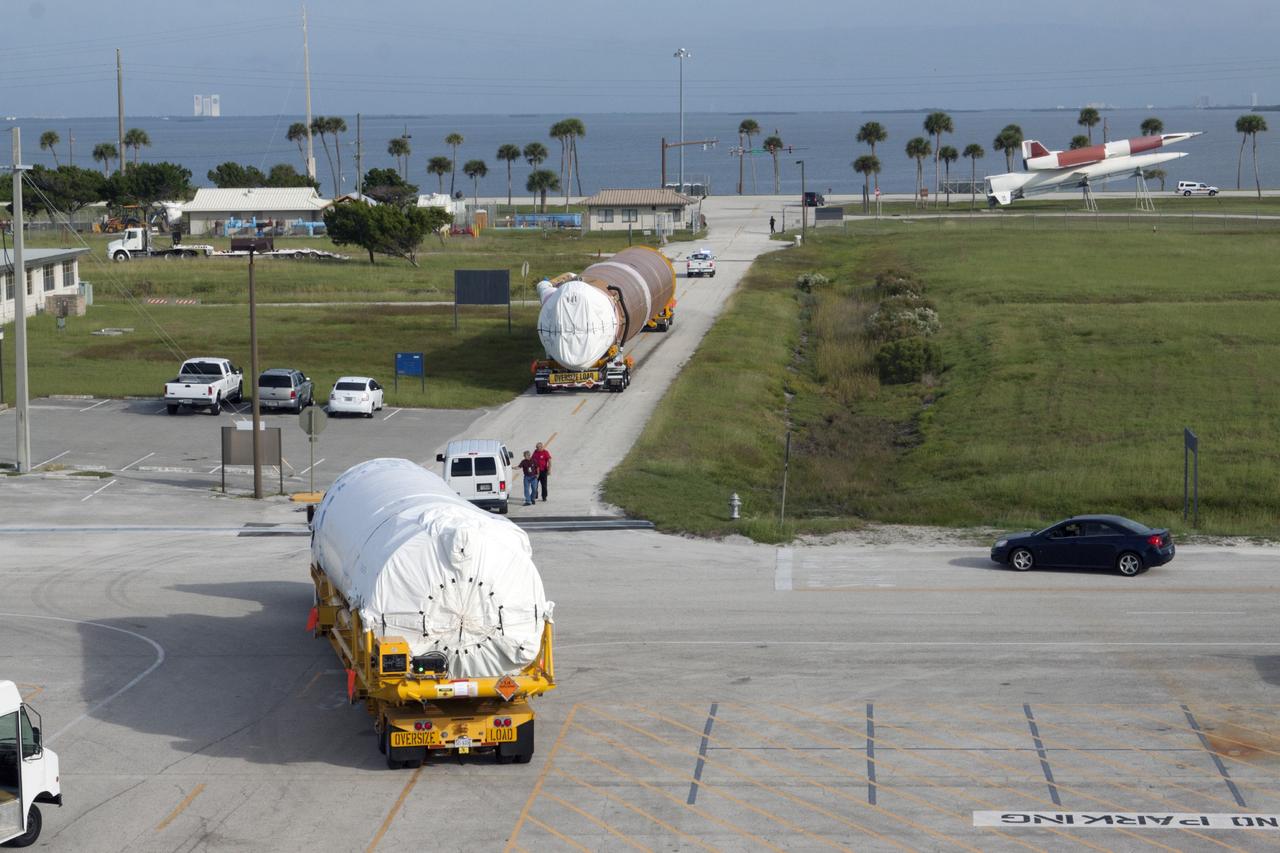
PORT CANAVERAL, Fla. – Following arrival at Port Canaveral, Fla., the United Launch Alliance Atlas V first stage and Centaur upper stage that will boost the Tracking and Data Relay Satellite, or TDRS-L, spacecraft into orbit is being transported to Cape Canaveral Air Force Station's Atlas Spaceflight Operations Center for checkout in preparation for launch. TDRS-L is the second of three next-generation satellites designed to ensure vital operational continuity for the NASA Space Network. It is scheduled to launch from Cape Canaveral's Space Launch Complex 41 atop an Atlas V rocket in January 2014. The current Tracking and Data Relay Satellite system consists of eight in-orbit satellites distributed to provide near continuous information relay service to missions such as the Hubble Space Telescope and International Space Station. For more information, visit: http://www.nasa.gov/content/tracking-and-data-relay-satellite-tdrs/ Photo credit: NASA/ Kim Shiflett
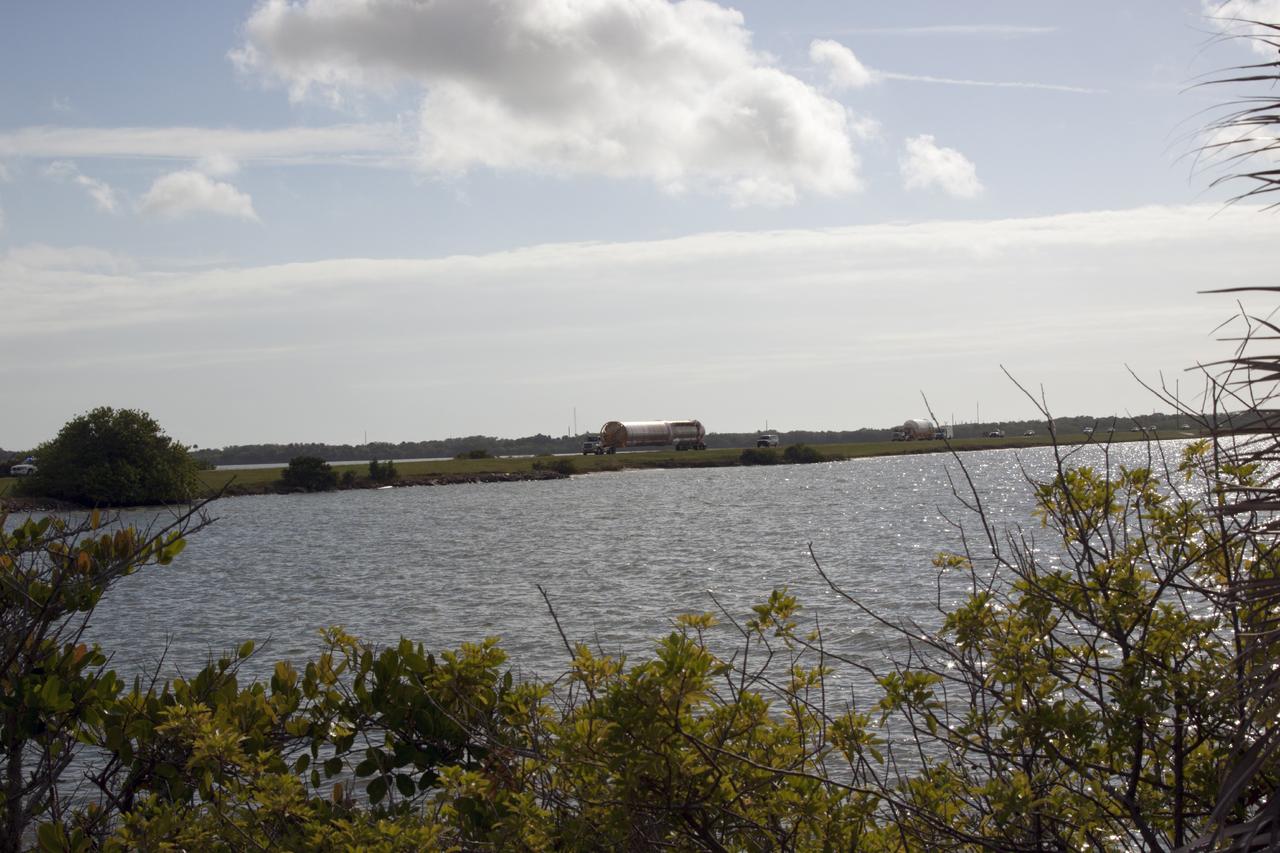
CAPE CANAVERAL, Fla. – The United Launch Alliance Atlas V launch vehicle that will boost the Tracking and Data Relay Satellite, or TDRS-L, spacecraft into orbit is being transported to the hangar at the Atlas Spaceflight Operations Center on Cape Canaveral Air Force Station for checkout in preparation for launch. TDRS-L is the second of three next-generation satellites designed to ensure vital operational continuity for the NASA Space Network. It is scheduled to launch from Cape Canaveral's Space Launch Complex 41 atop an Atlas V rocket in January 2014. The current Tracking and Data Relay Satellite system consists of eight in-orbit satellites distributed to provide near continuous information relay service to missions such as the Hubble Space Telescope and International Space Station. For more information, visit: http://www.nasa.gov/content/tracking-and-data-relay-satellite-tdrs/ Photo credit: NASA/ Jim Grossman
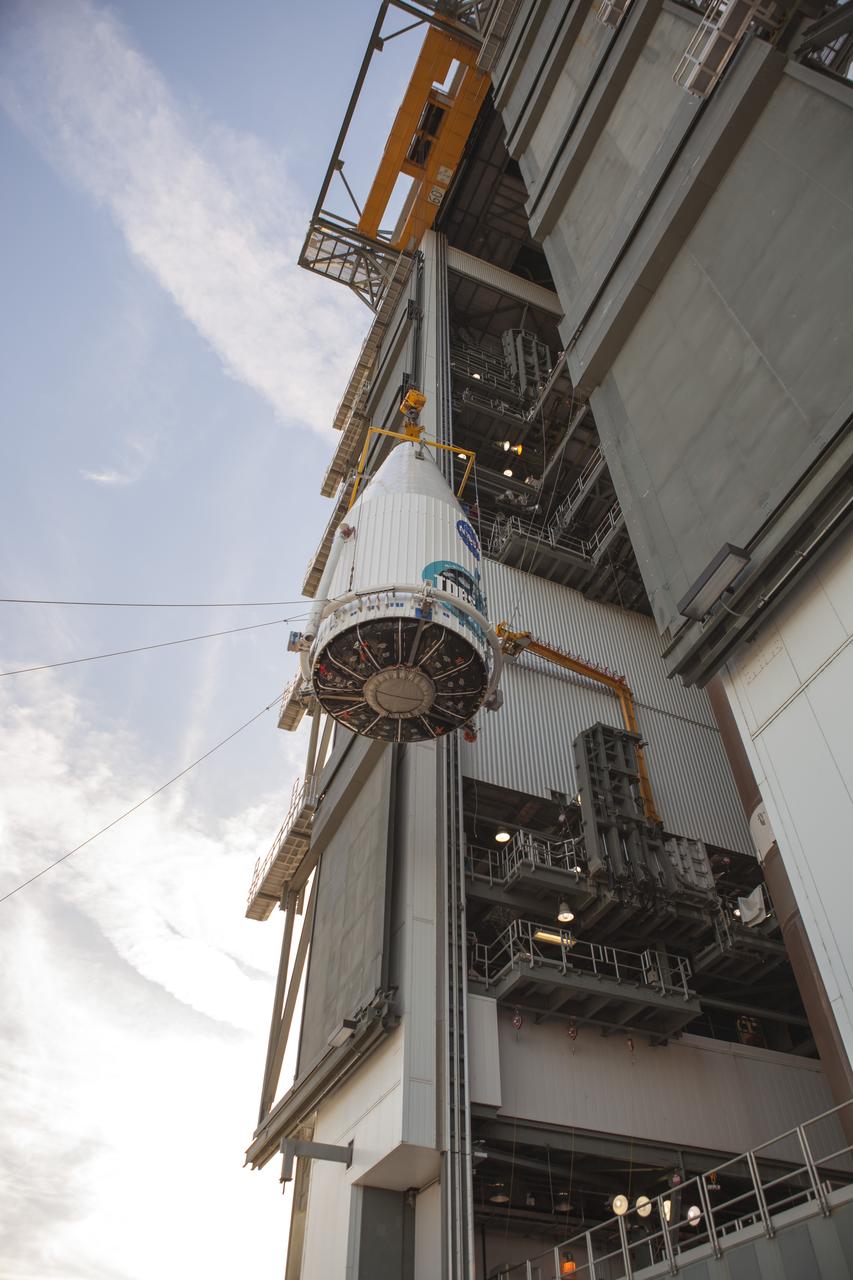
CAPE CANAVERAL, Fla. – At Cape Canaveral Air Force Station's Vertical Integration Facility at Launch Complex 41, NASA's Tracking and Data Relay Satellite, or TDRS-L, spacecraft is lifted for mounting atop a United Launch Alliance Atlas V rocket. The TDRS-L satellite will be a part of the second of three next-generation spacecraft designed to ensure vital operational continuity for the NASA Space Network. It is scheduled to launch from Cape Canaveral's Space Launch Complex 41 atop a United Launch Alliance Atlas V rocket on Jan. 23, 2014. The current Tracking and Data Relay Satellite system consists of eight in-orbit satellites distributed to provide near continuous information relay contact with orbiting spacecraft ranging from the International Space Station and Hubble Space Telescope to the array of scientific observatories. For more information, visit: http://www.nasa.gov/mission_pages/tdrs/home/index.html Photo credit: NASA/Dimitri Gerondidakis
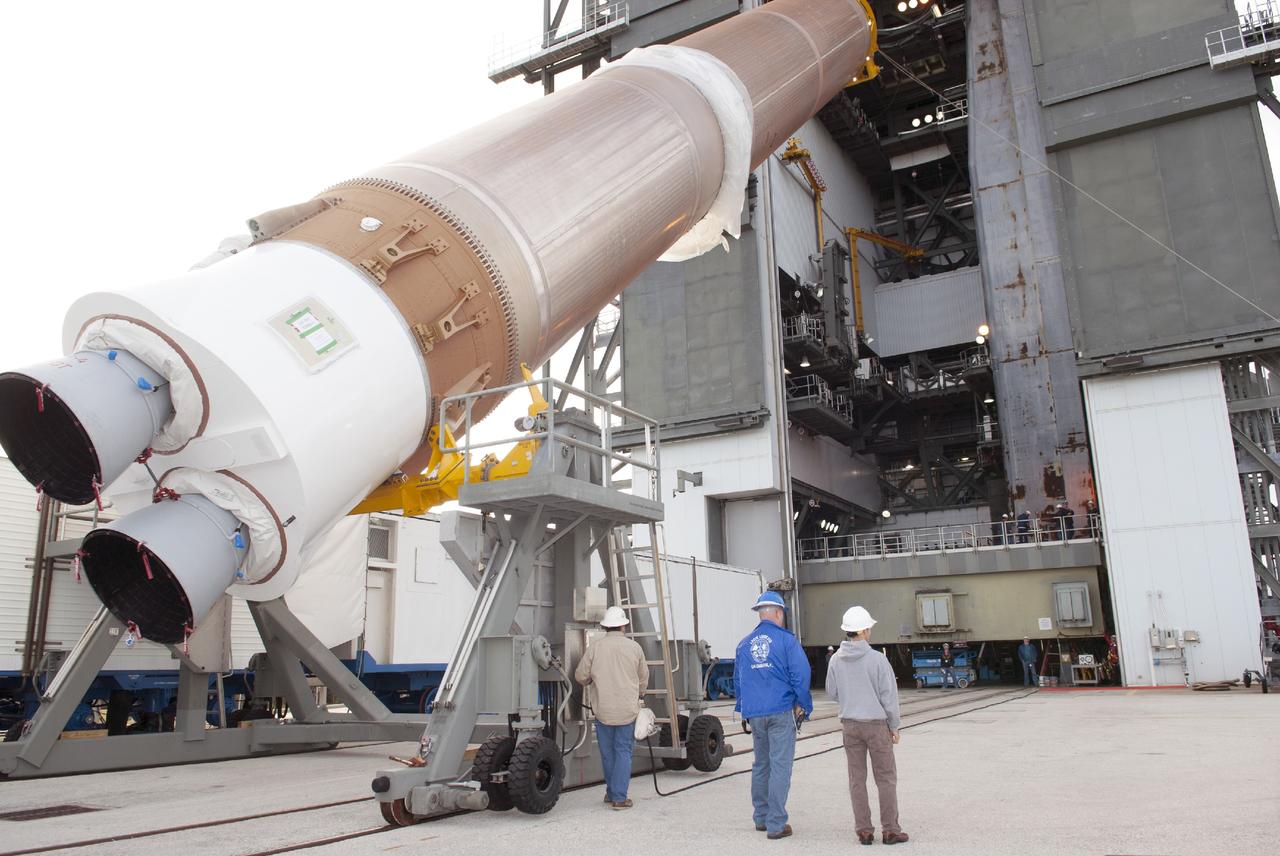
CAPE CANAVERAL, Fla. – At Cape Canaveral Air Force Station, the first stage of the United Launch Alliance Atlas V rocket is lifted for stacking in the Vertical Integration Facility at Launch Complex 41. The vehicle will be used to boost the Tracking and Data Relay Satellite, or TDRS-L, spacecraft to orbit. TDRS-L is the second of three next-generation satellites designed to ensure vital operational continuity for the NASA Space Network. It is scheduled to launch from Cape Canaveral's Space Launch Complex 41 atop an Atlas V rocket in January 2014. The current Tracking and Data Relay Satellite system consists of eight in-orbit satellites distributed to provide near continuous information relay service to missions such as the Hubble Space Telescope and International Space Station. For more information, visit: http://www.nasa.gov/content/tracking-and-data-relay-satellite-tdrs/ Photo credit: NASA/Charisse Nahser
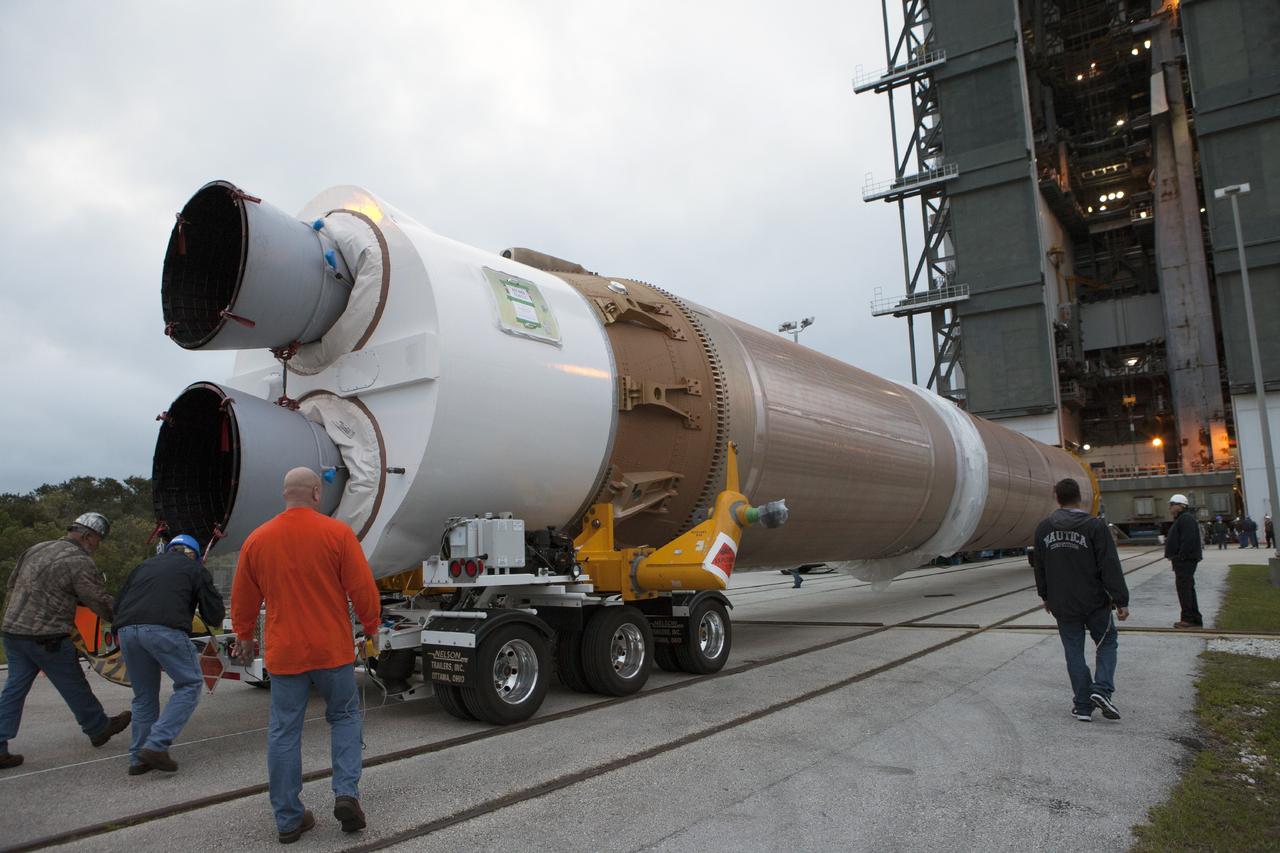
CAPE CANAVERAL, Fla. – The United Launch Alliance Atlas V first stage booster that will boost the Tracking and Data Relay Satellite, or TDRS-L, spacecraft into orbit arrives at Cape Canaveral Air Force Station's Launch Complex 41. TDRS-L is the second of three next-generation satellites designed to ensure vital operational continuity for the NASA Space Network. It is scheduled to launch from Cape Canaveral's Space Launch Complex 41 atop an Atlas V rocket in January 2014. The current Tracking and Data Relay Satellite system consists of eight in-orbit satellites distributed to provide near continuous information relay service to missions such as the Hubble Space Telescope and International Space Station. For more information, visit: http://www.nasa.gov/content/tracking-and-data-relay-satellite-tdrs/ Photo credit: NASA/Kim Shiflett
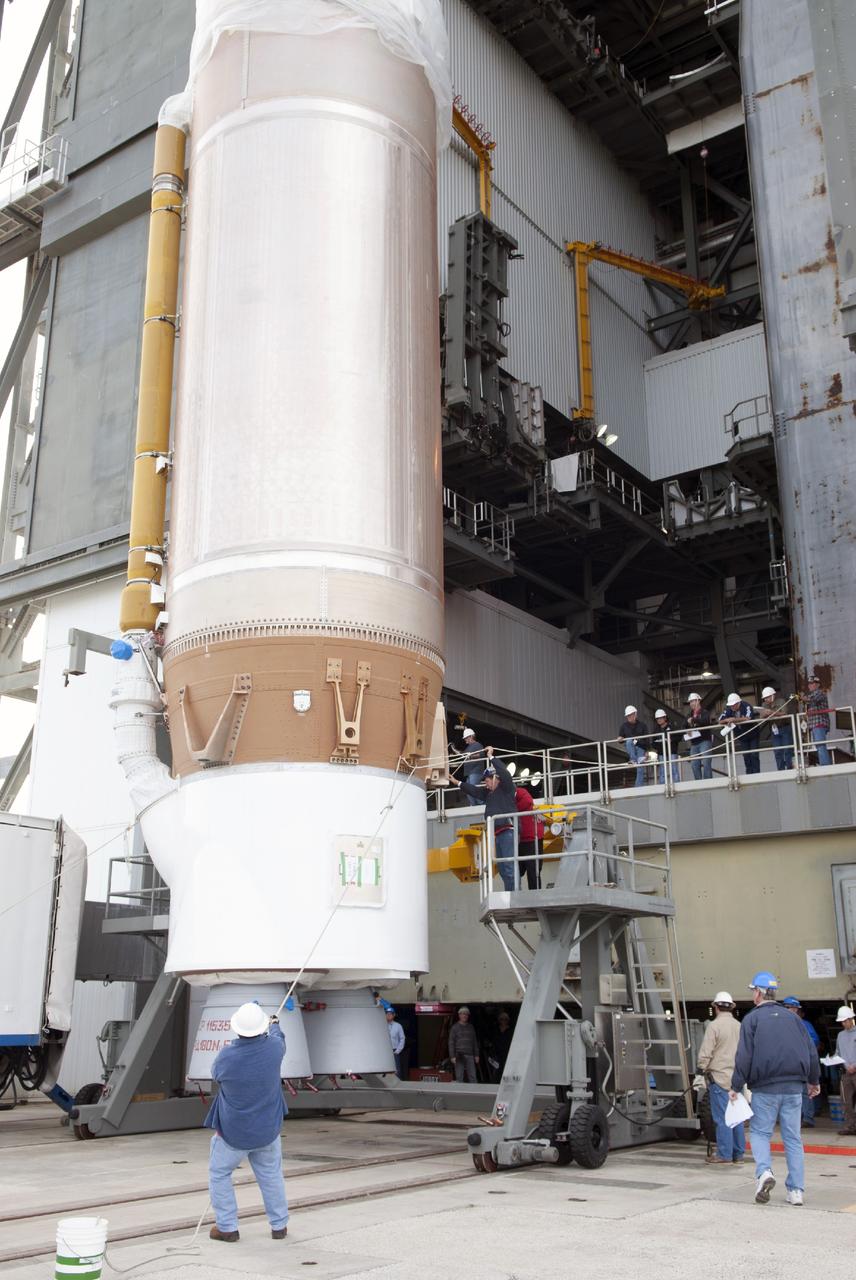
CAPE CANAVERAL, Fla. – At Cape Canaveral Air Force Station, engineers and technicians support lifting the first stage of the United Launch Alliance Atlas V rocket during stacking operations in the Vertical Integration Facility at Launch Complex 41. The vehicle will be used to boost the Tracking and Data Relay Satellite, or TDRS-L, spacecraft to orbit. TDRS-L is the second of three next-generation satellites designed to ensure vital operational continuity for the NASA Space Network. It is scheduled to launch from Cape Canaveral's Space Launch Complex 41 atop an Atlas V rocket in January 2014. The current Tracking and Data Relay Satellite system consists of eight in-orbit satellites distributed to provide near continuous information relay service to missions such as the Hubble Space Telescope and International Space Station. For more information, visit: http://www.nasa.gov/content/tracking-and-data-relay-satellite-tdrs/ Photo credit: NASA/Charisse Nahser
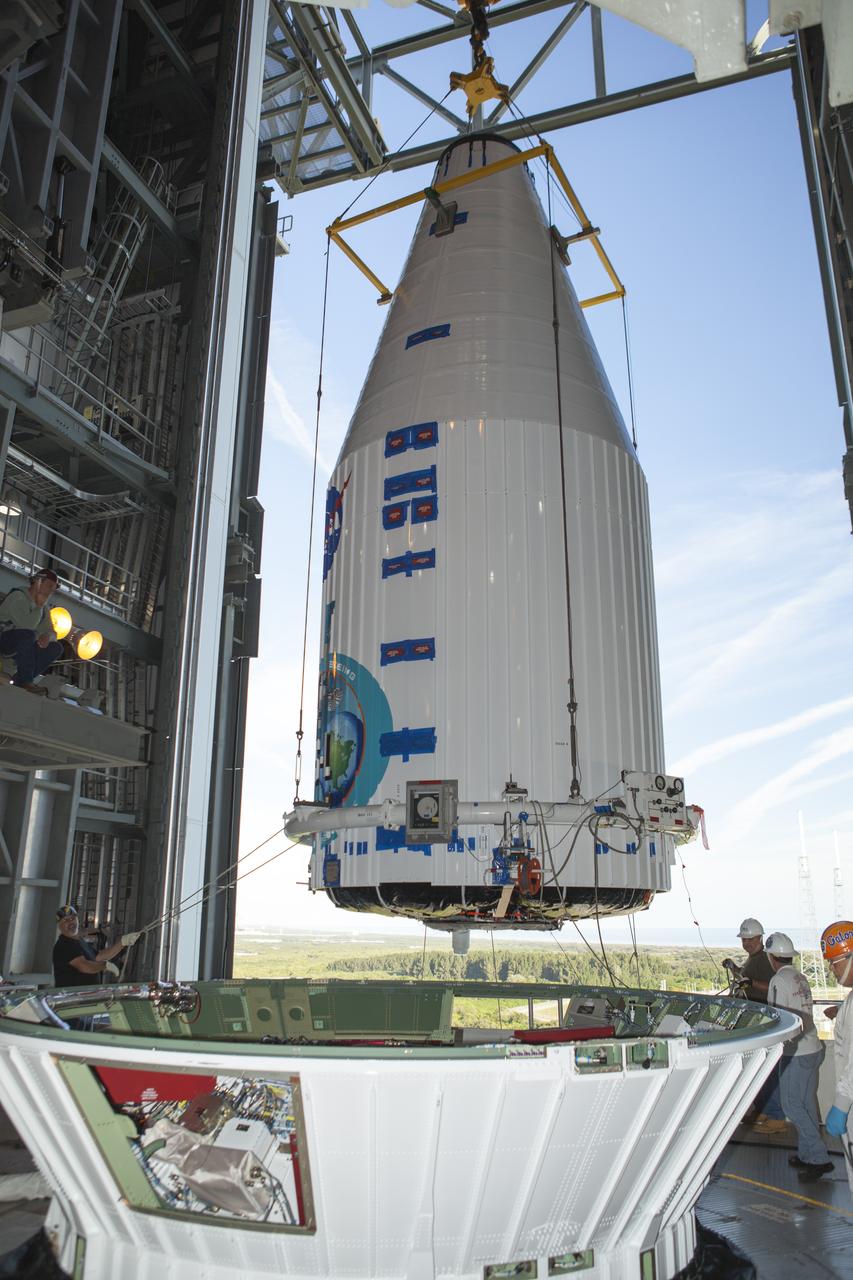
CAPE CANAVERAL, Fla. – At Cape Canaveral Air Force Station's Vertical Integration Facility at Launch Complex 41, NASA's Tracking and Data Relay Satellite, or TDRS-L, spacecraft is lifted for mounting atop a United Launch Alliance Atlas V rocket. The TDRS-L satellite will be a part of the second of three next-generation spacecraft designed to ensure vital operational continuity for the NASA Space Network. It is scheduled to launch from Cape Canaveral's Space Launch Complex 41 atop a United Launch Alliance Atlas V rocket on Jan. 23, 2014. The current Tracking and Data Relay Satellite system consists of eight in-orbit satellites distributed to provide near continuous information relay contact with orbiting spacecraft ranging from the International Space Station and Hubble Space Telescope to the array of scientific observatories. For more information, visit: http://www.nasa.gov/mission_pages/tdrs/home/index.html Photo credit: NASA/Dimitri Gerondidakis
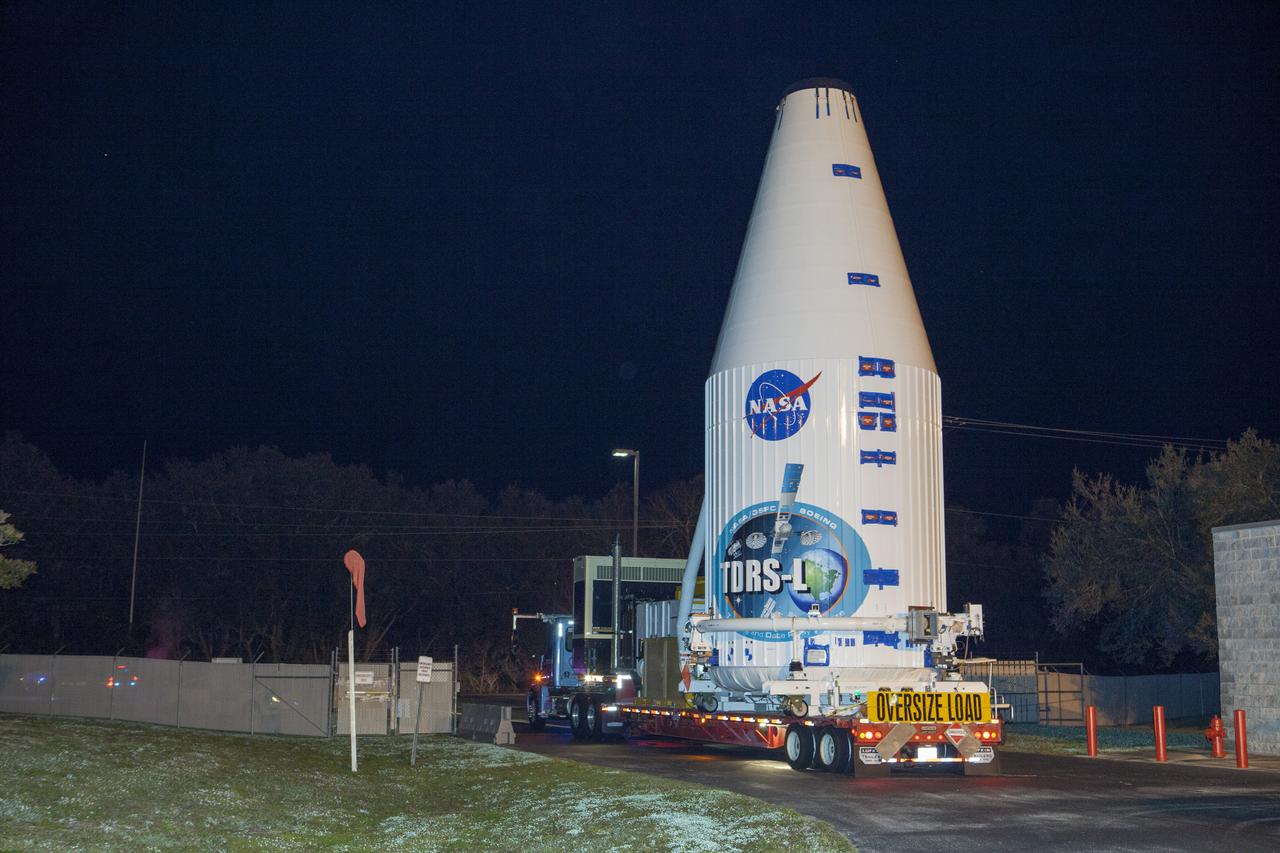
TITUSVILLE, Fla. – Encapsulated in its payload fairing, NASA's Tracking and Data Relay Satellite, or TDRS-L, spacecraft begins it trip from the Astrotech payload processing facility in Titusville to Launch Complex 41 at Cape Canaveral Air Force Station. The TDRS-L satellite will be a part of the second of three next-generation spacecraft designed to ensure vital operational continuity for the NASA Space Network. It is scheduled to launch from Cape Canaveral's Space Launch Complex 41 atop a United Launch Alliance Atlas V rocket on January 23, 2014. The current Tracking and Data Relay Satellite system consists of eight in-orbit satellites distributed to provide near continuous information relay contact with orbiting spacecraft ranging from the International Space Station and Hubble Space Telescope to the array of scientific observatories. For more information, visit: http://www.nasa.gov/mission_pages/tdrs/home/index.html Photo credit: NASA/Dimitri Gerondidakis
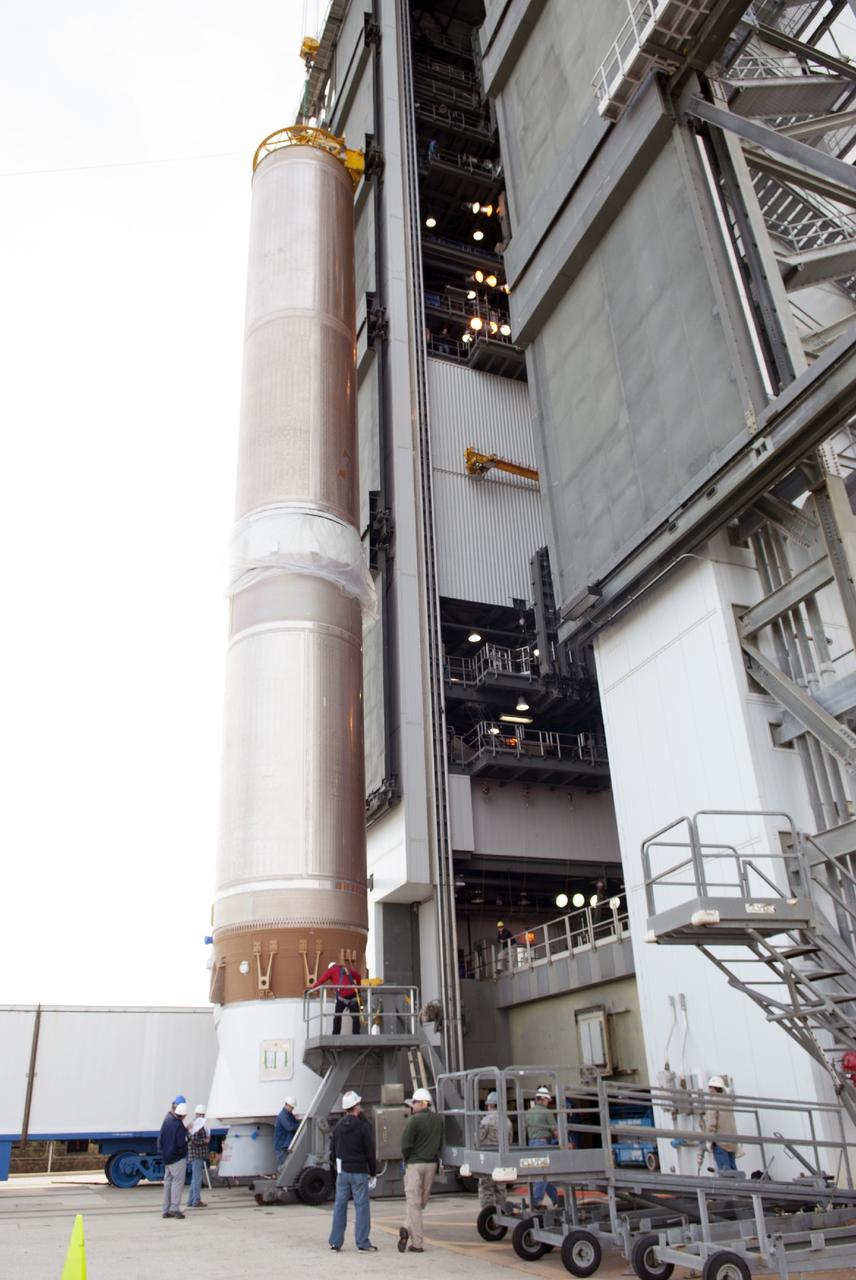
CAPE CANAVERAL, Fla. – At Cape Canaveral Air Force Station, the first stage of the United Launch Alliance Atlas V rocket is lifted for stacking in the Vertical Integration Facility at Launch Complex 41. The vehicle will be used to boost the Tracking and Data Relay Satellite, or TDRS-L, spacecraft to orbit. TDRS-L is the second of three next-generation satellites designed to ensure vital operational continuity for the NASA Space Network. It is scheduled to launch from Cape Canaveral's Space Launch Complex 41 atop an Atlas V rocket in January 2014. The current Tracking and Data Relay Satellite system consists of eight in-orbit satellites distributed to provide near continuous information relay service to missions such as the Hubble Space Telescope and International Space Station. For more information, visit: http://www.nasa.gov/content/tracking-and-data-relay-satellite-tdrs/ Photo credit: NASA/Charisse Nahser
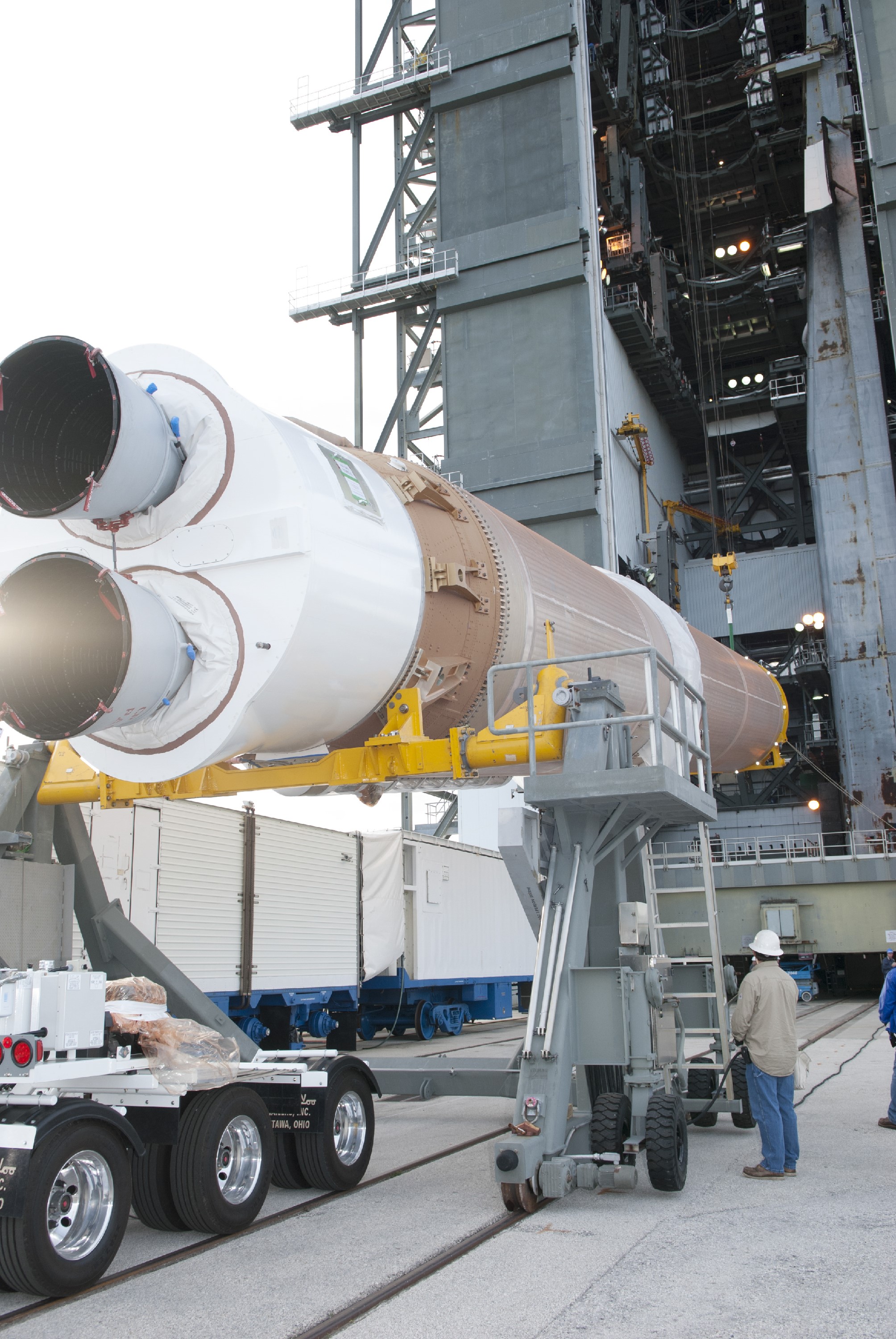
CAPE CANAVERAL, Fla. – At Cape Canaveral Air Force Station, the first stage of the United Launch Alliance Atlas V rocket is lifted for stacking in the Vertical Integration Facility at Launch Complex 41. The vehicle will be used to boost the Tracking and Data Relay Satellite, or TDRS-L, spacecraft to orbit. TDRS-L is the second of three next-generation satellites designed to ensure vital operational continuity for the NASA Space Network. It is scheduled to launch from Cape Canaveral's Space Launch Complex 41 atop an Atlas V rocket in January 2014. The current Tracking and Data Relay Satellite system consists of eight in-orbit satellites distributed to provide near continuous information relay service to missions such as the Hubble Space Telescope and International Space Station. For more information, visit: http://www.nasa.gov/content/tracking-and-data-relay-satellite-tdrs/ Photo credit: NASA/Charisse Nahser
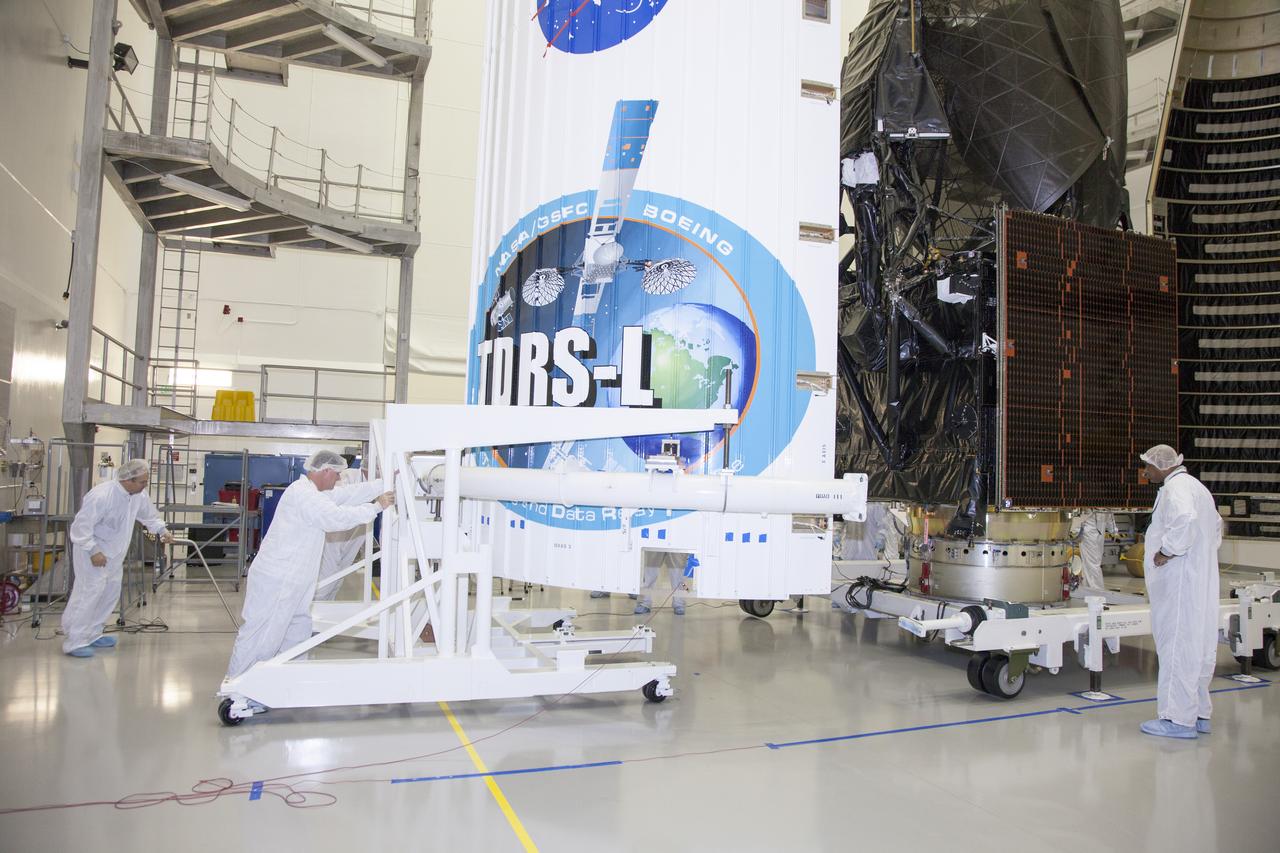
TITUSVILLE, Fla. – Inside the Astrotech payload processing facility in Titusville, NASA's Tracking and Data Relay Satellite, or TDRS-L, spacecraft is being encapsulated in its payload fairing in preparation for begin transported to Launch Complex 41 at Cape Canaveral Air Force Station. The TDRS-L satellite will be a part of the second of three next-generation spacecraft designed to ensure vital operational continuity for the NASA Space Network. It is scheduled to launch from Cape Canaveral's Space Launch Complex 41 atop a United Launch Alliance Atlas V rocket on January 23, 2014. The current Tracking and Data Relay Satellite system consists of eight in-orbit satellites distributed to provide near continuous information relay contact with orbiting spacecraft ranging from the International Space Station and Hubble Space Telescope to the array of scientific observatories. For more information, visit: http://www.nasa.gov/mission_pages/tdrs/home/index.html
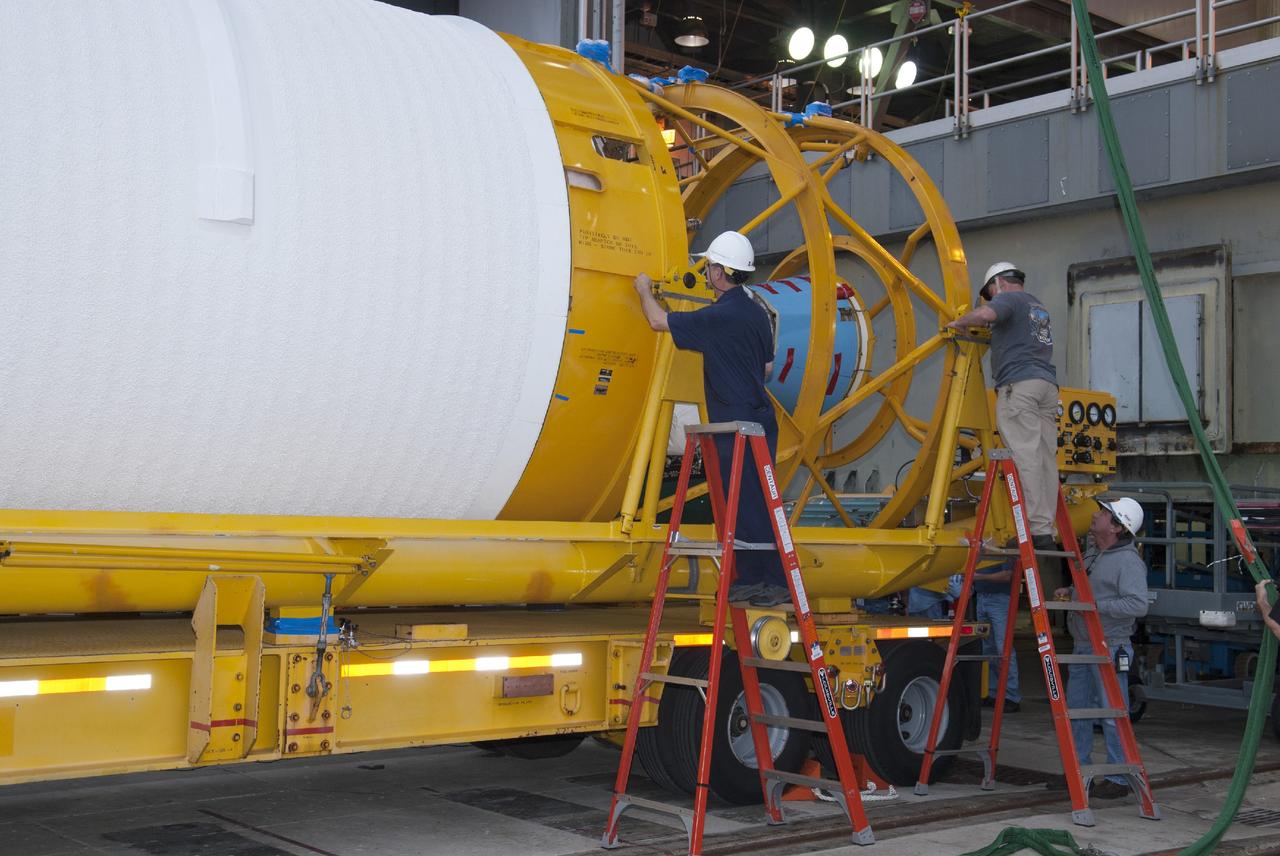
CAPE CANAVERAL, Fla. – At Cape Canaveral Air Force Station's Launch Complex 41, a technician supports preparations for lifting the Centaur second stage of the United Launch Alliance rocket that will be used to boost the Tracking and Data Relay Satellite, or TDRS-L, spacecraft to orbit. TDRS-L is the second of three next-generation satellites designed to ensure vital operational continuity for the NASA Space Network. It is scheduled to launch from Cape Canaveral's Space Launch Complex 41 atop an Atlas V rocket in January 2014. The current Tracking and Data Relay Satellite system consists of eight in-orbit satellites distributed to provide near continuous information relay service to missions such as the Hubble Space Telescope and International Space Station. For more information, visit: http://www.nasa.gov/content/tracking-and-data-relay-satellite-tdrs/ Photo credit: NASA/Charisse Nahser
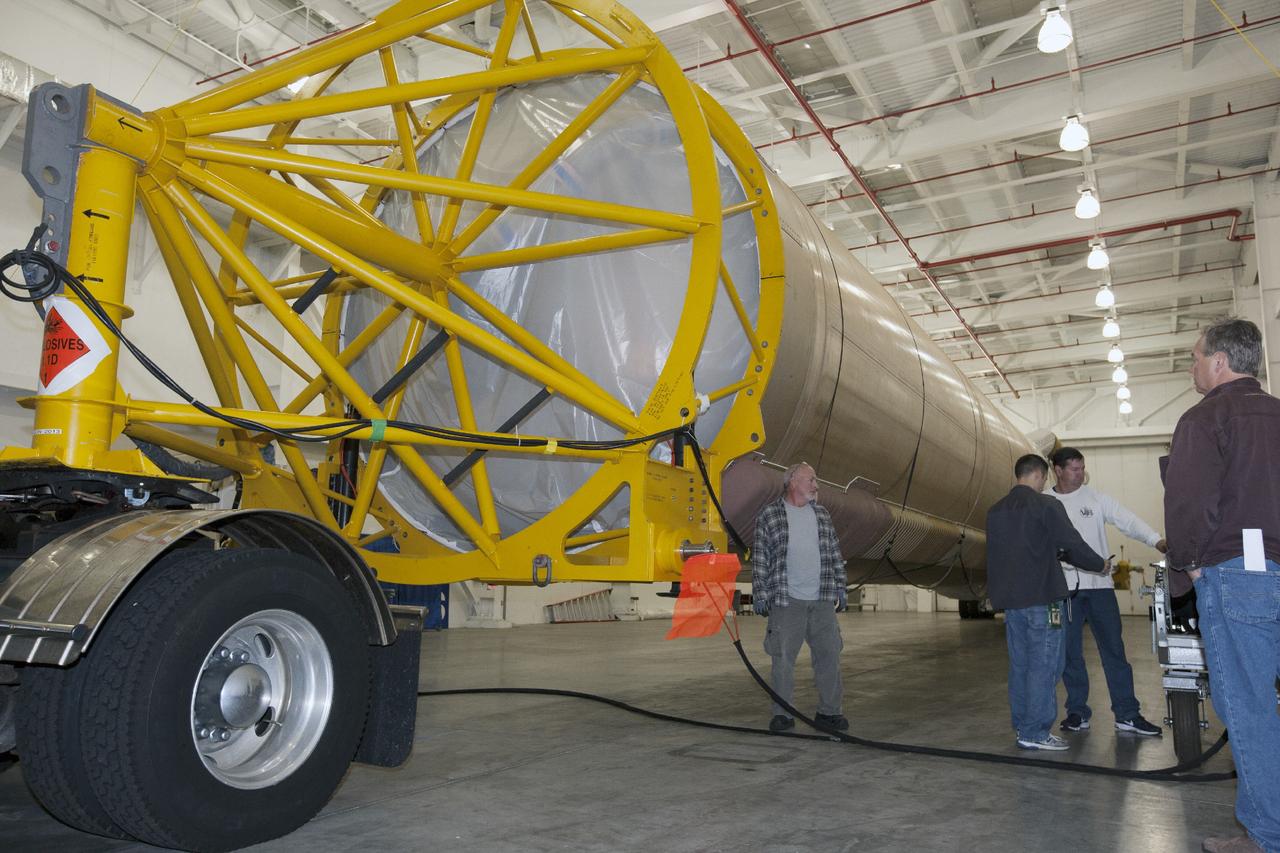
CAPE CANAVERAL, Fla. – The United Launch Alliance Atlas V first stage booster that will boost the Tracking and Data Relay Satellite, or TDRS-L, spacecraft into orbit is being prepared for transport from the hangar at the Atlas Spaceflight Operations Center on Cape Canaveral Air Force Station to Launch Complex 41. TDRS-L is the second of three next-generation satellites designed to ensure vital operational continuity for the NASA Space Network. It is scheduled to launch from Cape Canaveral's Space Launch Complex 41 atop an Atlas V rocket in January 2014. The current Tracking and Data Relay Satellite system consists of eight in-orbit satellites distributed to provide near continuous information relay service to missions such as the Hubble Space Telescope and International Space Station. For more information, visit: http://www.nasa.gov/content/tracking-and-data-relay-satellite-tdrs/ Photo credit: NASA/Kim Shiflett
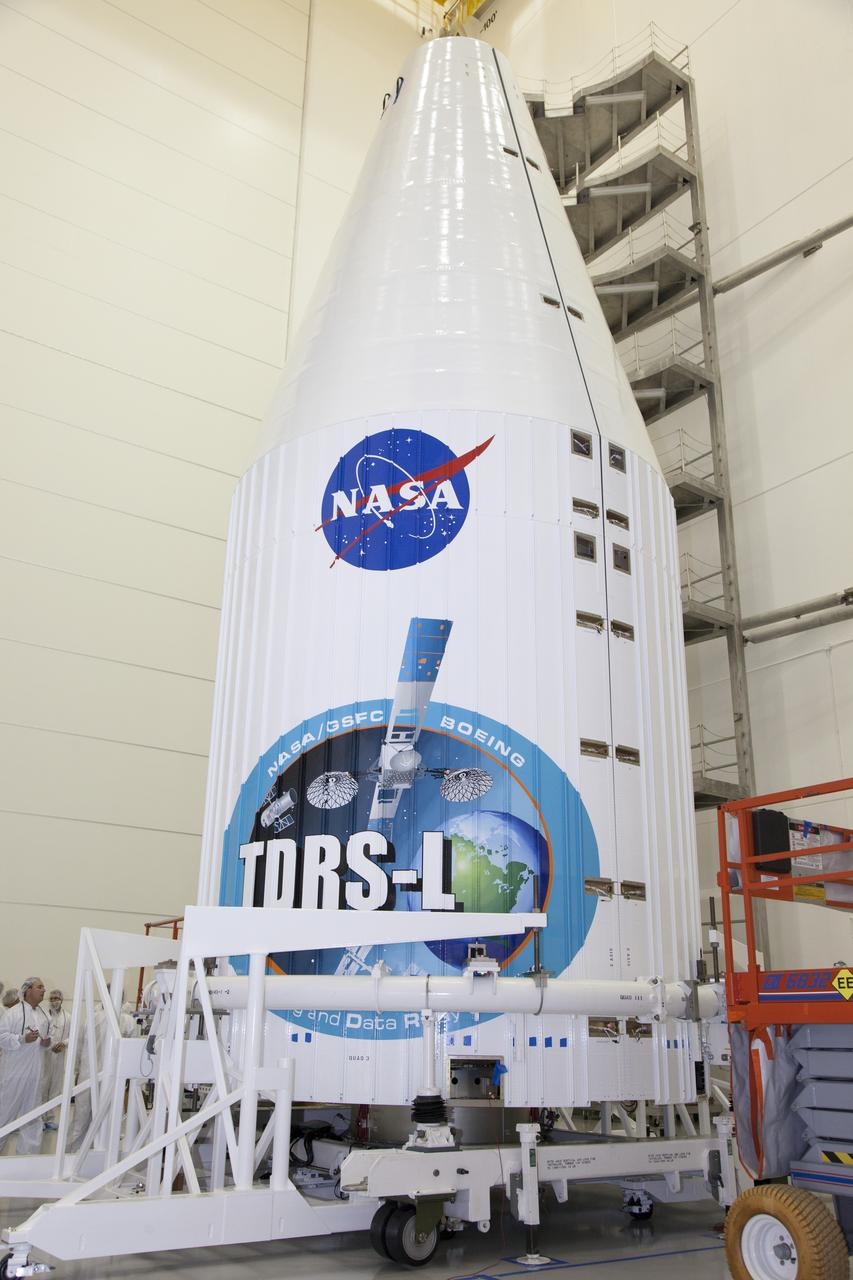
TITUSVILLE, Fla. – Inside the Astrotech payload processing facility in Titusville, NASA's Tracking and Data Relay Satellite, or TDRS-L, spacecraft has been encapsulated in its payload fairing. TDRS-L will then be transported to Launch Complex 41 at Cape Canaveral Air Force Station. The TDRS-L satellite will be a part of the second of three next-generation spacecraft designed to ensure vital operational continuity for the NASA Space Network. It is scheduled to launch from Cape Canaveral's Space Launch Complex 41 atop a United Launch Alliance Atlas V rocket on January 23, 2014. The current Tracking and Data Relay Satellite system consists of eight in-orbit satellites distributed to provide near continuous information relay contact with orbiting spacecraft ranging from the International Space Station and Hubble Space Telescope to the array of scientific observatories. For more information, visit: http://www.nasa.gov/mission_pages/tdrs/home/index.html

CAPE CANAVERAL, Fla. – At Cape Canaveral Air Force Station, engineers and technicians prepare the United Launch Alliance Atlas V rocket for stacking in the Vertical Integration Facility at Launch Complex 41. The vehicle will be used to boost the Tracking and Data Relay Satellite, or TDRS-L, spacecraft to orbit. TDRS-L is the second of three next-generation satellites designed to ensure vital operational continuity for the NASA Space Network. It is scheduled to launch from Cape Canaveral's Space Launch Complex 41 atop an Atlas V rocket in January 2014. The current Tracking and Data Relay Satellite system consists of eight in-orbit satellites distributed to provide near continuous information relay service to missions such as the Hubble Space Telescope and International Space Station. For more information, visit: http://www.nasa.gov/content/tracking-and-data-relay-satellite-tdrs/ Photo credit: NASA/Charisse Nahser
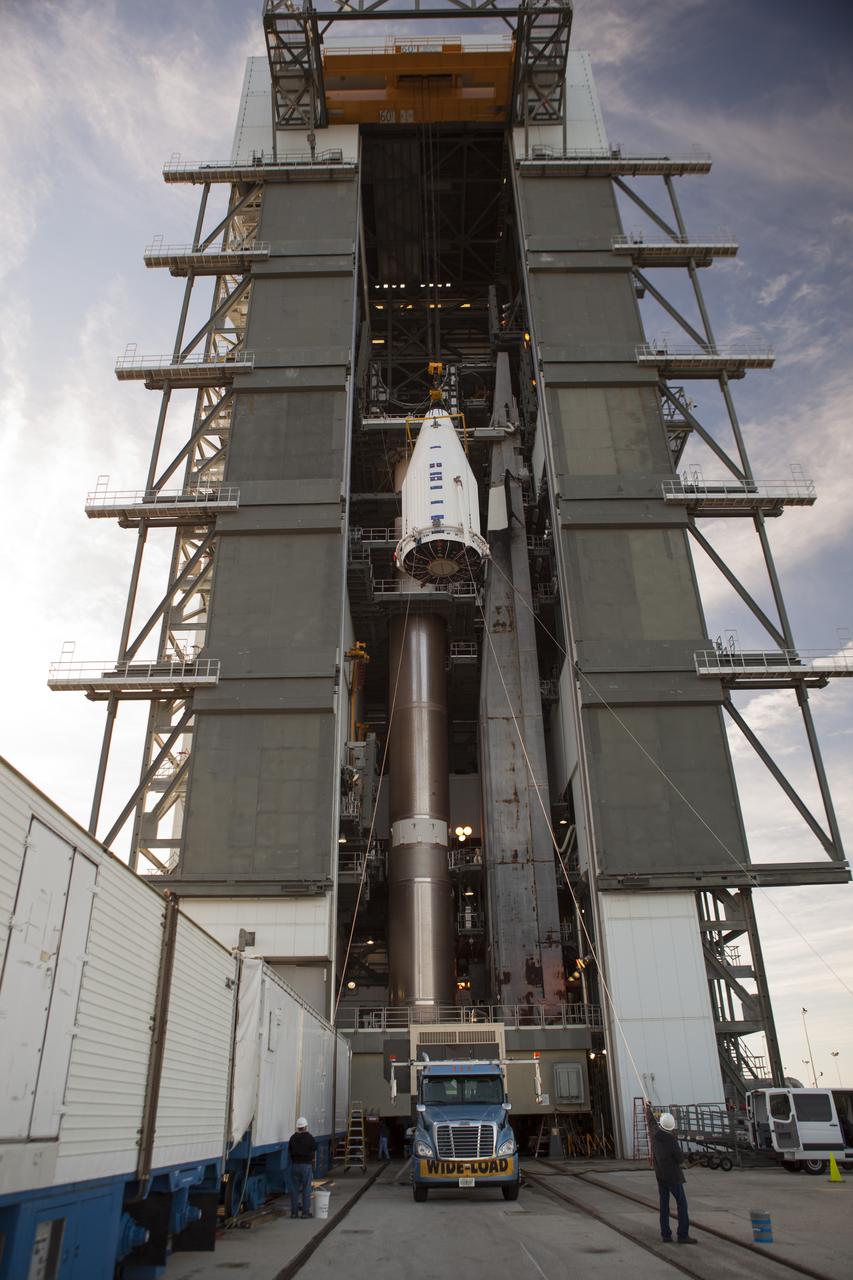
CAPE CANAVERAL, Fla. – At Cape Canaveral Air Force Station's Vertical Integration Facility at Launch Complex 41, NASA's Tracking and Data Relay Satellite, or TDRS-L, spacecraft is lifted for mounting atop a United Launch Alliance Atlas V rocket. The TDRS-L satellite will be a part of the second of three next-generation spacecraft designed to ensure vital operational continuity for the NASA Space Network. It is scheduled to launch from Cape Canaveral's Space Launch Complex 41 atop a United Launch Alliance Atlas V rocket on Jan. 23, 2014. The current Tracking and Data Relay Satellite system consists of eight in-orbit satellites distributed to provide near continuous information relay contact with orbiting spacecraft ranging from the International Space Station and Hubble Space Telescope to the array of scientific observatories. For more information, visit: http://www.nasa.gov/mission_pages/tdrs/home/index.html Photo credit: NASA/Dimitri Gerondidakis
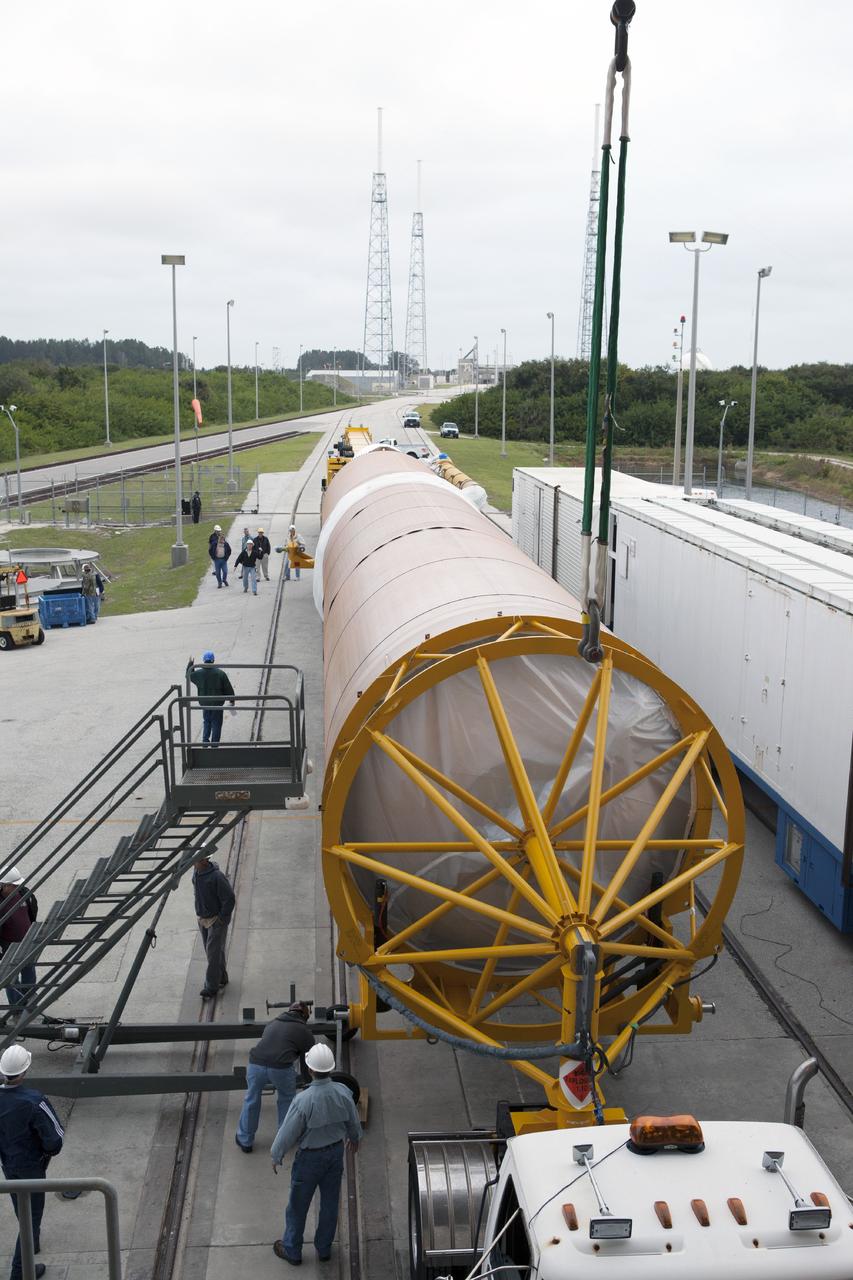
CAPE CANAVERAL, Fla. – The United Launch Alliance Atlas V first stage booster that will boost the Tracking and Data Relay Satellite, or TDRS-L, spacecraft into orbit arrives at Cape Canaveral Air Force Station's Launch Complex 41. TDRS-L is the second of three next-generation satellites designed to ensure vital operational continuity for the NASA Space Network. It is scheduled to launch from Cape Canaveral's Space Launch Complex 41 atop an Atlas V rocket in January 2014. The current Tracking and Data Relay Satellite system consists of eight in-orbit satellites distributed to provide near continuous information relay service to missions such as the Hubble Space Telescope and International Space Station. For more information, visit: http://www.nasa.gov/content/tracking-and-data-relay-satellite-tdrs/ Photo credit: NASA/Kim Shiflett
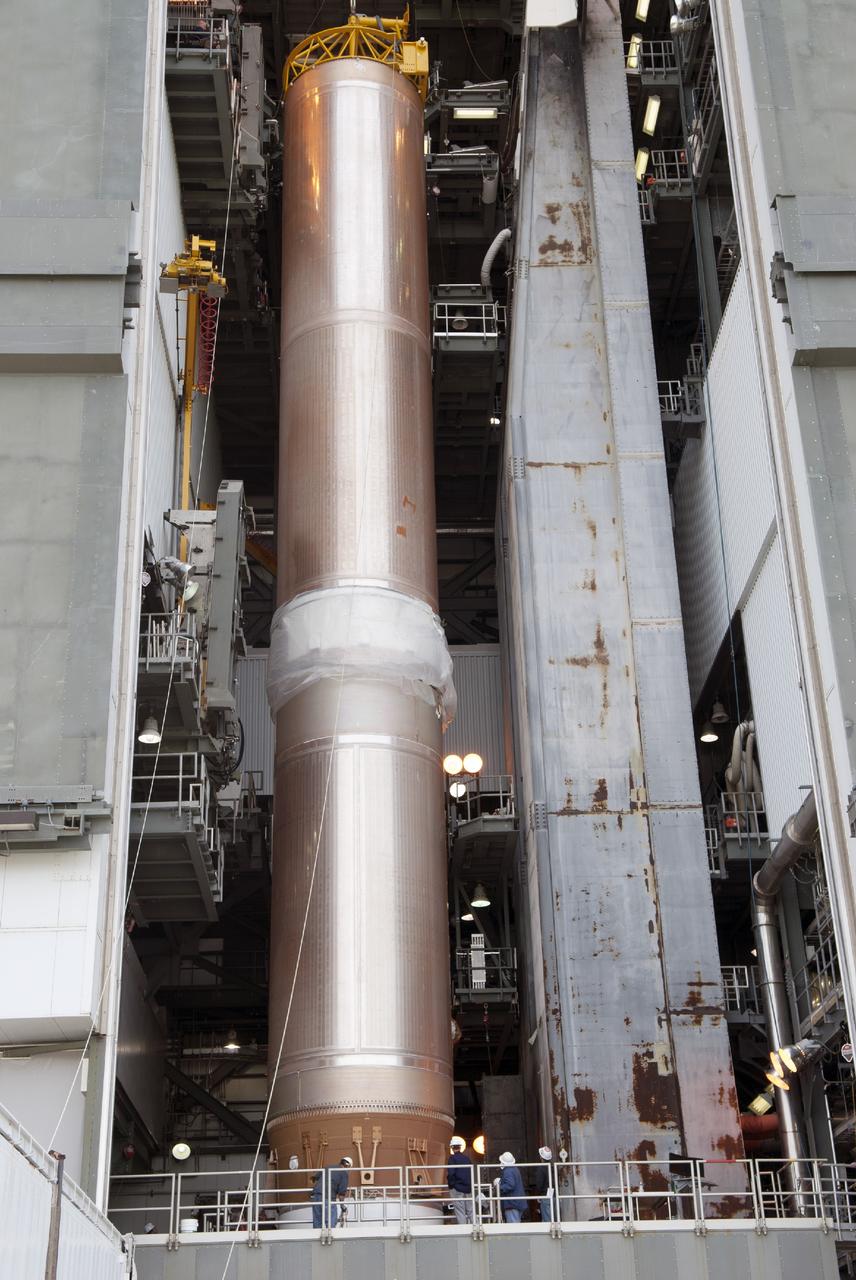
CAPE CANAVERAL, Fla. – At Cape Canaveral Air Force Station, the first stage of the United Launch Alliance Atlas V rocket positioned in the Vertical Integration Facility at Launch Complex 41. The vehicle will be used to boost the Tracking and Data Relay Satellite, or TDRS-L, spacecraft to orbit. TDRS-L is the second of three next-generation satellites designed to ensure vital operational continuity for the NASA Space Network. It is scheduled to launch from Cape Canaveral's Space Launch Complex 41 atop an Atlas V rocket in January 2014. The current Tracking and Data Relay Satellite system consists of eight in-orbit satellites distributed to provide near continuous information relay service to missions such as the Hubble Space Telescope and International Space Station. For more information, visit: http://www.nasa.gov/content/tracking-and-data-relay-satellite-tdrs/ Photo credit: NASA/Charisse Nahser
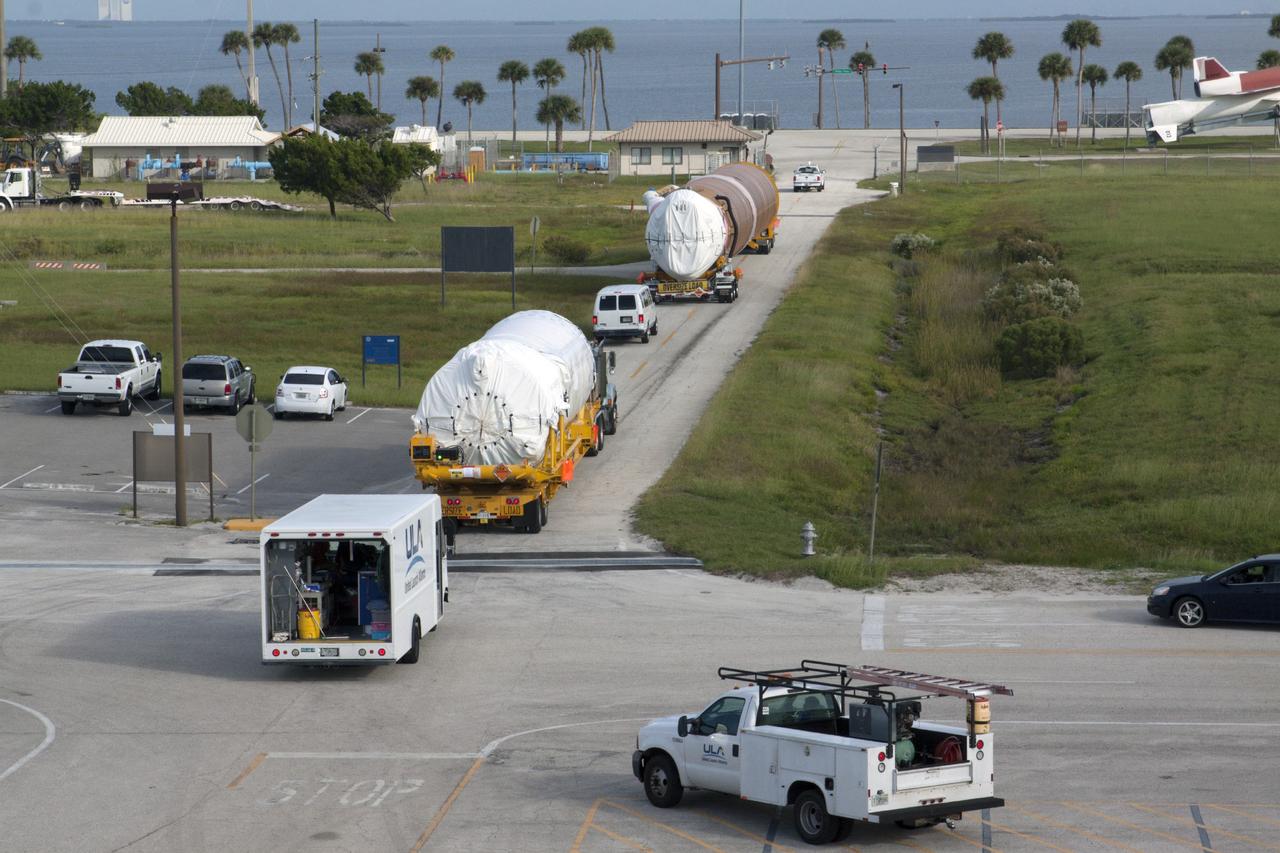
PORT CANAVERAL, Fla. – Following arrival at Port Canaveral, Fla., the United Launch Alliance Atlas V first stage and Centaur upper stage that will boost the Tracking and Data Relay Satellite, or TDRS-L, spacecraft into orbit is being transported to Cape Canaveral Air Force Station's Atlas Spaceflight Operations Center for checkout in preparation for launch. TDRS-L is the second of three next-generation satellites designed to ensure vital operational continuity for the NASA Space Network. It is scheduled to launch from Cape Canaveral's Space Launch Complex 41 atop an Atlas V rocket in January 2014. The current Tracking and Data Relay Satellite system consists of eight in-orbit satellites distributed to provide near continuous information relay service to missions such as the Hubble Space Telescope and International Space Station. For more information, visit: http://www.nasa.gov/content/tracking-and-data-relay-satellite-tdrs/ Photo credit: NASA/ Kim Shiflett
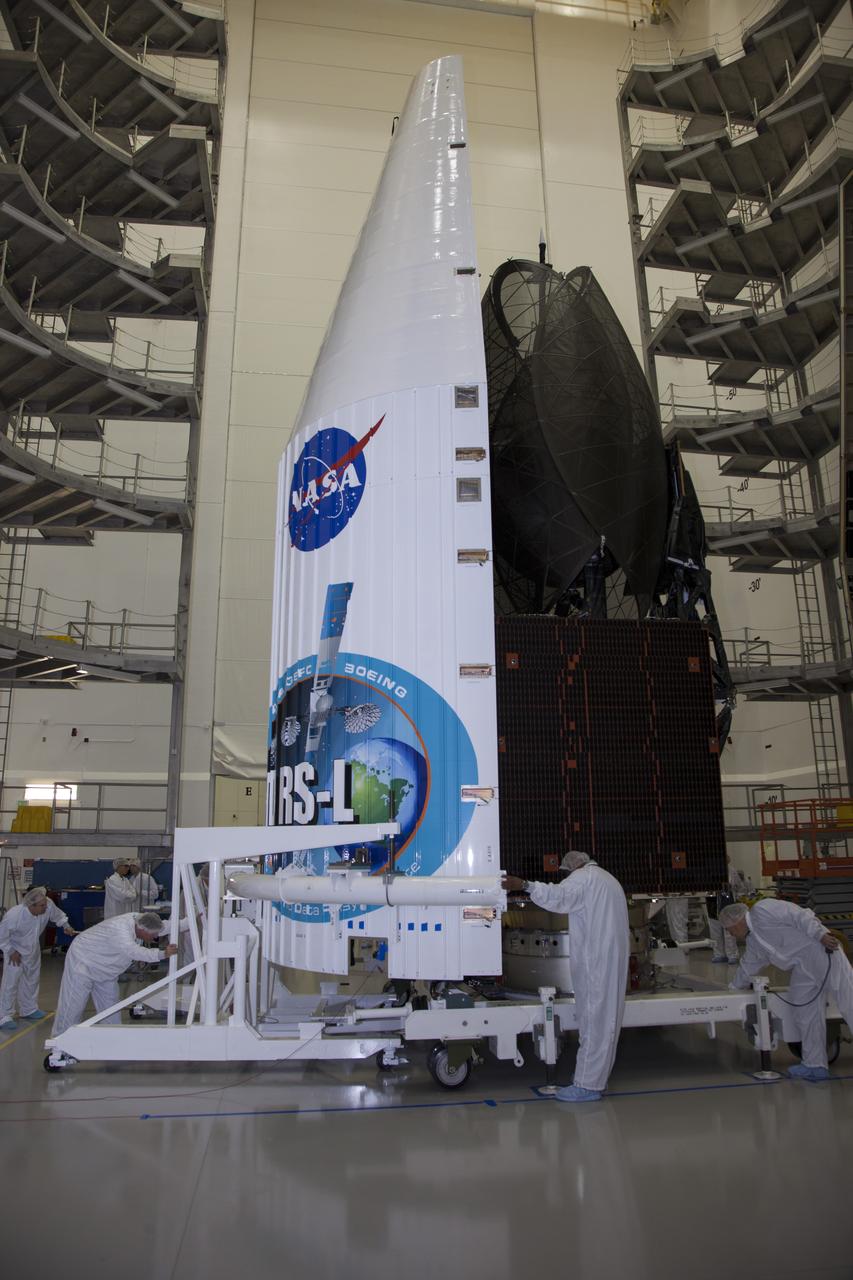
TITUSVILLE, Fla. – Inside the Astrotech payload processing facility in Titusville, the Tracking and Data Relay Satellite, or TDRS-L, spacecraft is being encapsulated in its payload fairing in preparation for begin transported to Launch Complex 41 at Cape Canaveral Air Force Station. The TDRS-L satellite will be a part of the second of three next-generation spacecraft designed to ensure vital operational continuity for the NASA Space Network. It is scheduled to launch from Cape Canaveral's Space Launch Complex 41 atop a United Launch Alliance Atlas V rocket on January 23, 2014. The current Tracking and Data Relay Satellite system consists of eight in-orbit satellites distributed to provide near continuous information relay contact with orbiting spacecraft ranging from the International Space Station and Hubble Space Telescope to the array of scientific observatories. For more information, visit: http://www.nasa.gov/mission_pages/tdrs/home/index.html
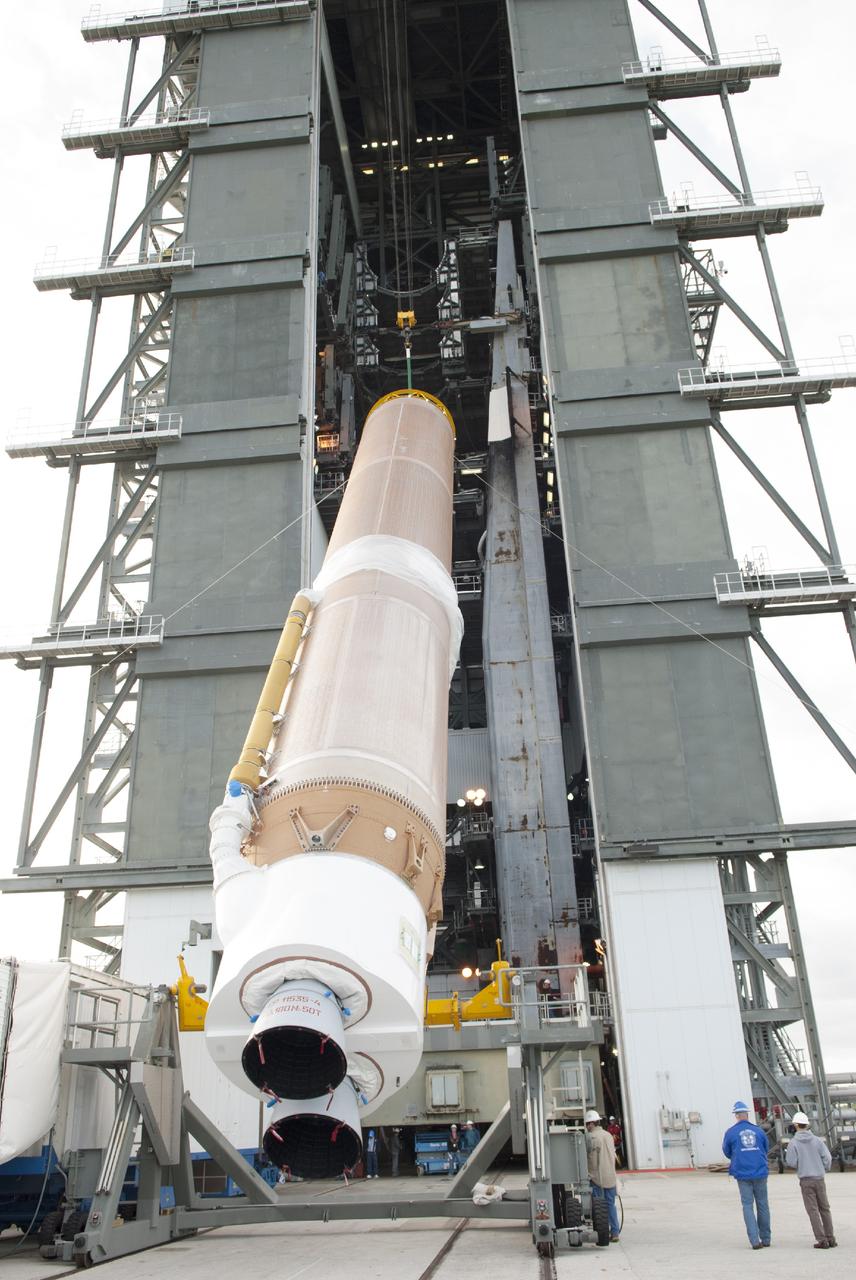
CAPE CANAVERAL, Fla. – At Cape Canaveral Air Force Station, the first stage of the United Launch Alliance Atlas V rocket is lifted for stacking in the Vertical Integration Facility at Launch Complex 41. The vehicle will be used to boost the Tracking and Data Relay Satellite, or TDRS-L, spacecraft to orbit. TDRS-L is the second of three next-generation satellites designed to ensure vital operational continuity for the NASA Space Network. It is scheduled to launch from Cape Canaveral's Space Launch Complex 41 atop an Atlas V rocket in January 2014. The current Tracking and Data Relay Satellite system consists of eight in-orbit satellites distributed to provide near continuous information relay service to missions such as the Hubble Space Telescope and International Space Station. For more information, visit: http://www.nasa.gov/content/tracking-and-data-relay-satellite-tdrs/ Photo credit: NASA/Charisse Nahser
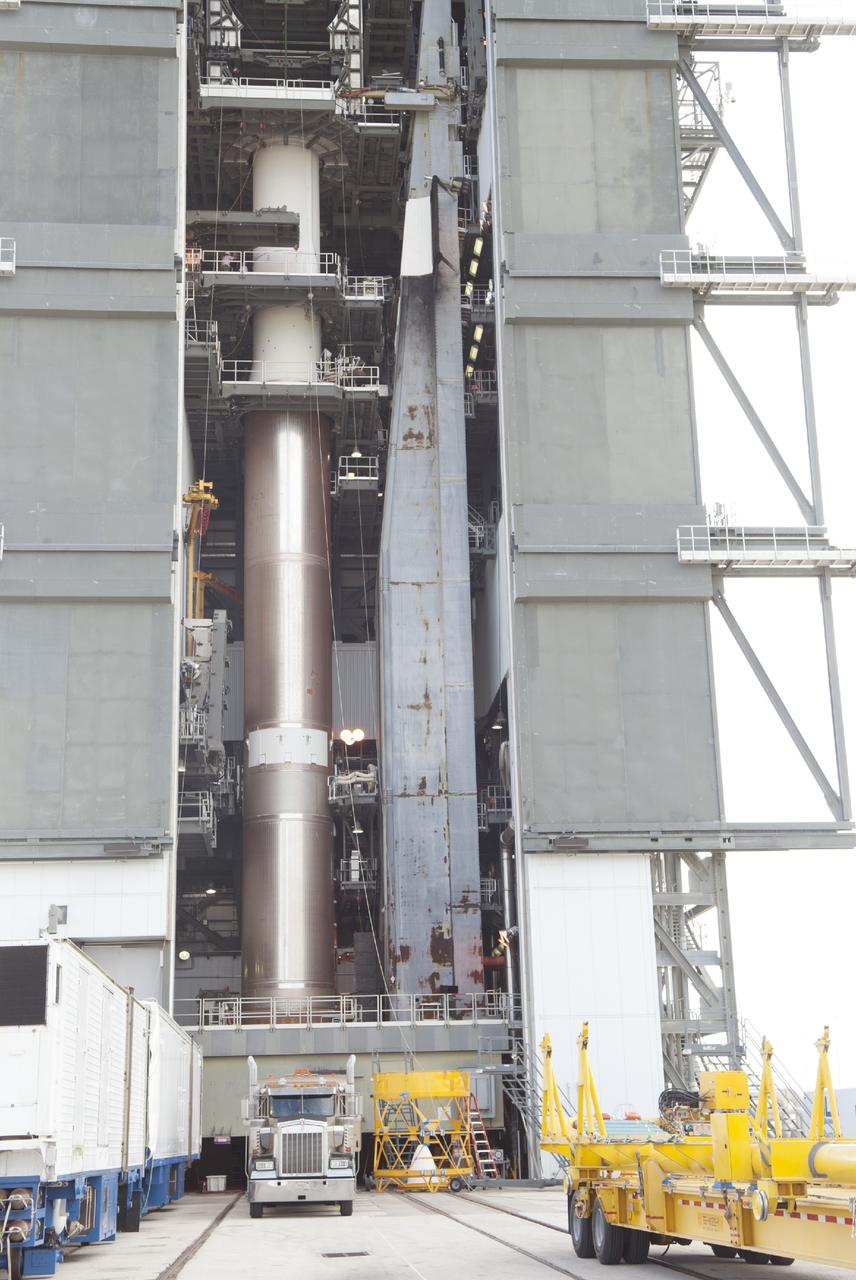
CAPE CANAVERAL, Fla. – At Cape Canaveral Air Force Station's Launch Complex 41, a United Launch Alliance Atlas V rocket, with its Centaur second stage atop, stands in the Vertical Integration Facility as preparations continue for lift off of the Tracking and Data Relay Satellite, or TDRS-L. TDRS-L is the second of three next-generation satellites designed to ensure vital operational continuity for the NASA Space Network. It is scheduled to launch from Cape Canaveral's Space Launch Complex 41 atop an Atlas V rocket in January 2014. The current Tracking and Data Relay Satellite system consists of eight in-orbit satellites distributed to provide near continuous information relay service to missions such as the Hubble Space Telescope and International Space Station. For more information, visit: http://www.nasa.gov/content/tracking-and-data-relay-satellite-tdrs/ Photo credit: NASA/Charisse Nahser

CAPE CANAVERAL, Fla. – The United Launch Alliance Atlas V launch vehicle that will boost the Tracking and Data Relay Satellite, or TDRS-L, spacecraft into orbit is being transported to the hangar at the Atlas Spaceflight Operations Center on Cape Canaveral Air Force Station for checkout in preparation for launch. TDRS-L is the second of three next-generation satellites designed to ensure vital operational continuity for the NASA Space Network. It is scheduled to launch from Cape Canaveral's Space Launch Complex 41 atop an Atlas V rocket in January 2014. The current Tracking and Data Relay Satellite system consists of eight in-orbit satellites distributed to provide near continuous information relay service to missions such as the Hubble Space Telescope and International Space Station. For more information, visit: http://www.nasa.gov/content/tracking-and-data-relay-satellite-tdrs/ Photo credit: NASA/ Jim Grossman

CAPE CANAVERAL, Fla. – At Cape Canaveral Air Force Station, engineers and technicians prepare the United Launch Alliance Atlas V rocket for stacking in the Vertical Integration Facility at Launch Complex 41. The vehicle will be used to boost the Tracking and Data Relay Satellite, or TDRS-L, spacecraft to orbit. TDRS-L is the second of three next-generation satellites designed to ensure vital operational continuity for the NASA Space Network. It is scheduled to launch from Cape Canaveral's Space Launch Complex 41 atop an Atlas V rocket in January 2014. The current Tracking and Data Relay Satellite system consists of eight in-orbit satellites distributed to provide near continuous information relay service to missions such as the Hubble Space Telescope and International Space Station. For more information, visit: http://www.nasa.gov/content/tracking-and-data-relay-satellite-tdrs/ Photo credit: NASA/Charisse Nahser
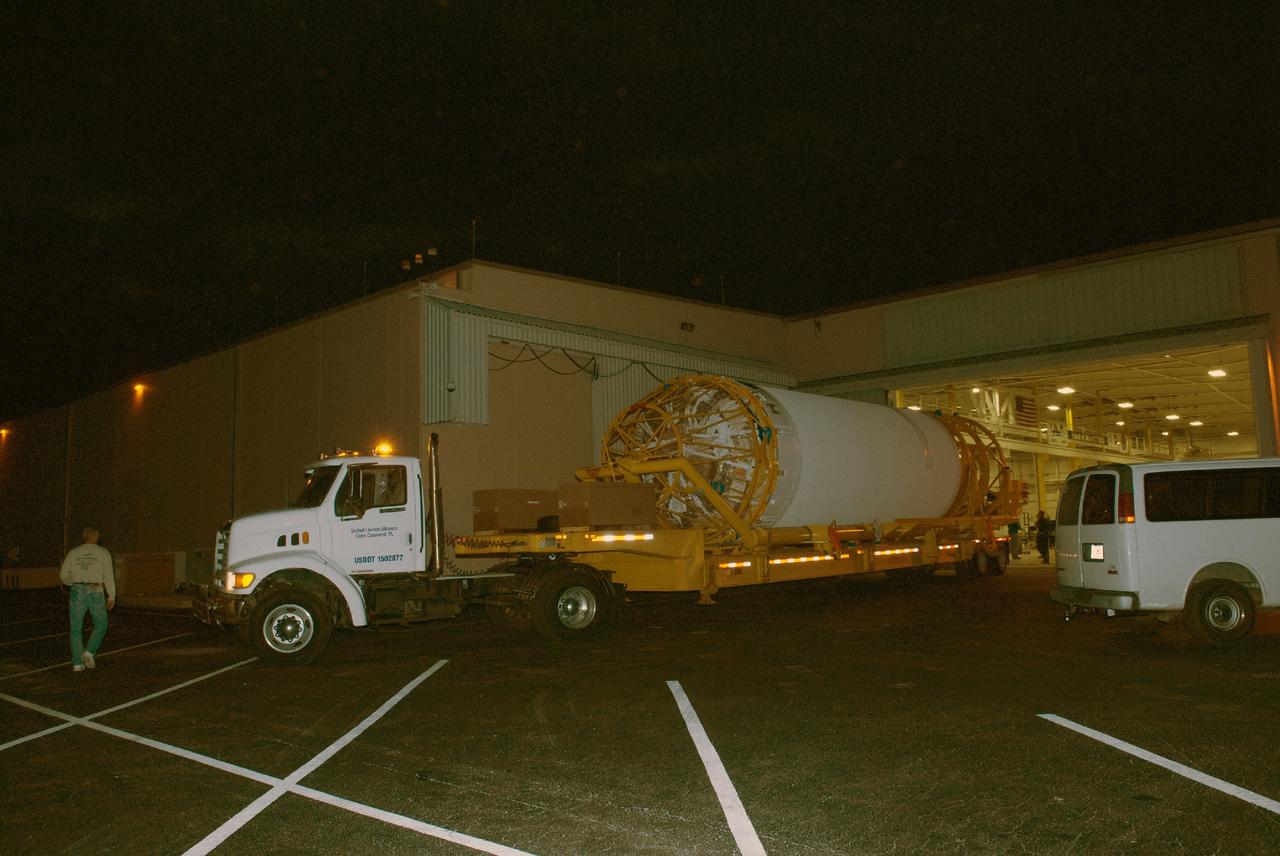
CAPE CANAVERAL, Fla. – The United Launch Alliance Centaur second stage that will help boost the Tracking and Data Relay Satellite, or TDRS-L, spacecraft into orbit is being transported from the hangar at the Atlas Spaceflight Operations Center on Cape Canaveral Air Force Station to Launch Complex 41. TDRS-L is the second of three next-generation satellites designed to ensure vital operational continuity for the NASA Space Network. It is scheduled to launch from Cape Canaveral's Space Launch Complex 41 atop an Atlas V rocket in January 2014. The current Tracking and Data Relay Satellite system consists of eight in-orbit satellites distributed to provide near continuous information relay service to missions such as the Hubble Space Telescope and International Space Station. For more information, visit: http://www.nasa.gov/content/tracking-and-data-relay-satellite-tdrs/ Photo credit: NASA/Charisse Nahser
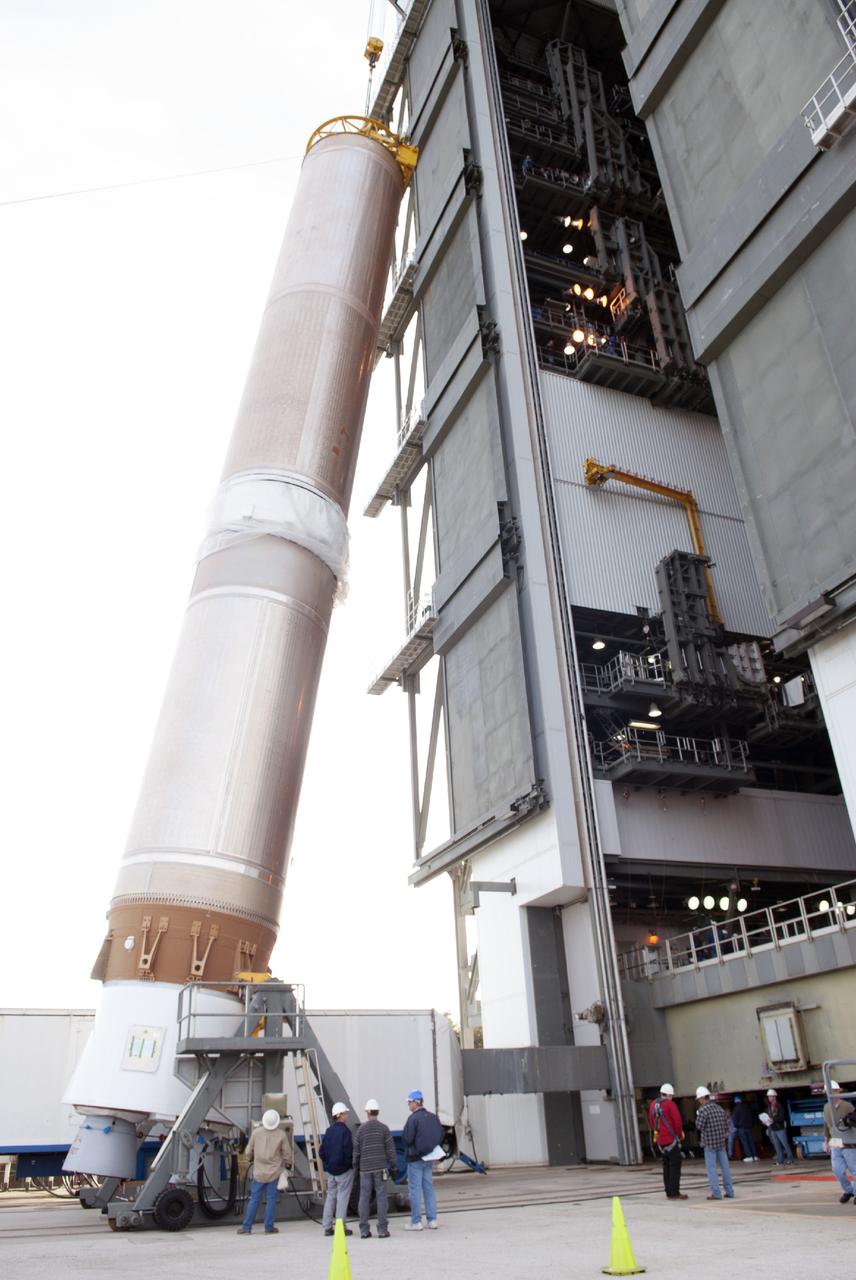
CAPE CANAVERAL, Fla. – At Cape Canaveral Air Force Station, the first stage of the United Launch Alliance Atlas V rocket is lifted for stacking in the Vertical Integration Facility at Launch Complex 41. The vehicle will be used to boost the Tracking and Data Relay Satellite, or TDRS-L, spacecraft to orbit. TDRS-L is the second of three next-generation satellites designed to ensure vital operational continuity for the NASA Space Network. It is scheduled to launch from Cape Canaveral's Space Launch Complex 41 atop an Atlas V rocket in January 2014. The current Tracking and Data Relay Satellite system consists of eight in-orbit satellites distributed to provide near continuous information relay service to missions such as the Hubble Space Telescope and International Space Station. For more information, visit: http://www.nasa.gov/content/tracking-and-data-relay-satellite-tdrs/ Photo credit: NASA/Charisse Nahser
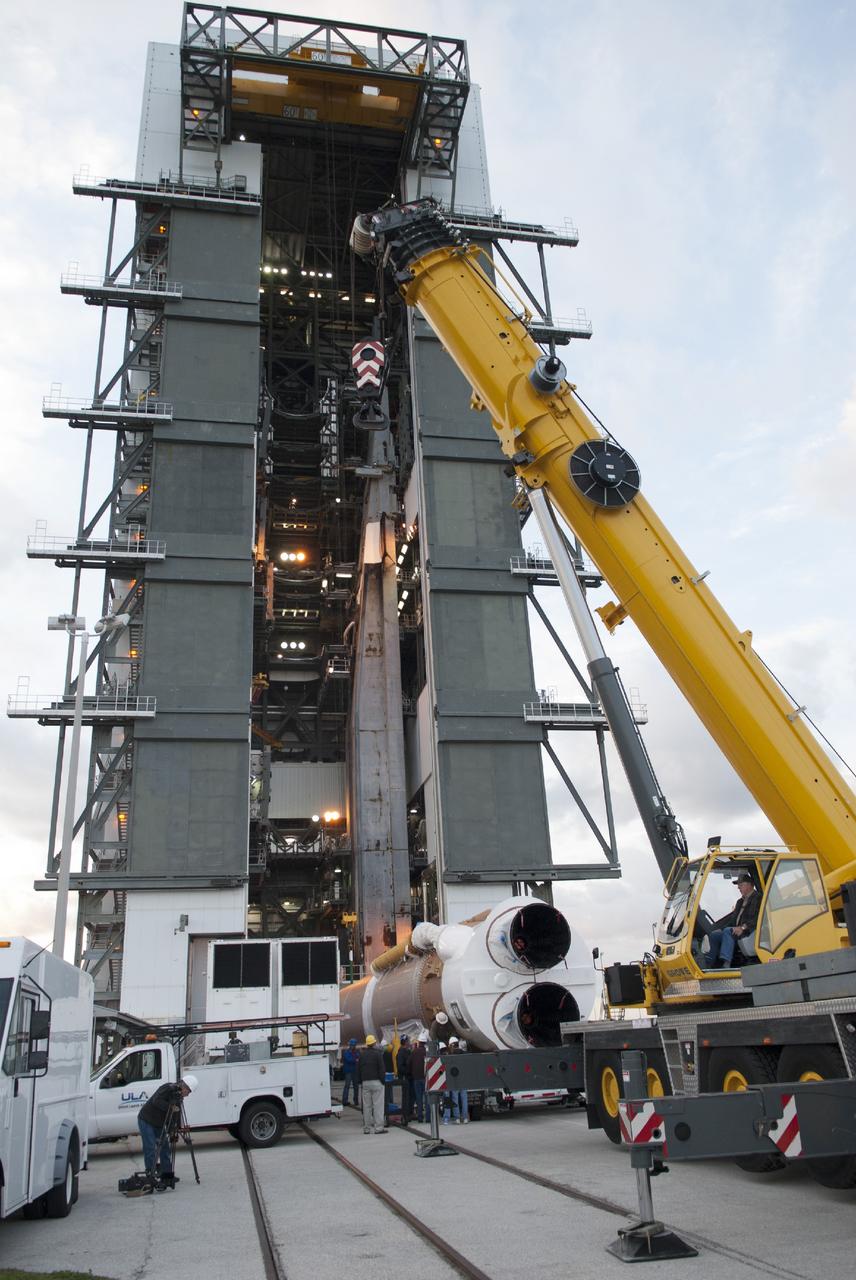
CAPE CANAVERAL, Fla. – At Cape Canaveral Air Force Station's Vertical Integration Facility at Launch Complex 41, a crane is positioned to support stacking of the United Launch Alliance Atlas V rocket that will boost the Tracking and Data Relay Satellite, or TDRS-L, spacecraft into orbit. TDRS-L is the second of three next-generation satellites designed to ensure vital operational continuity for the NASA Space Network. It is scheduled to launch from Cape Canaveral's Space Launch Complex 41 atop an Atlas V rocket in January 2014. The current Tracking and Data Relay Satellite system consists of eight in-orbit satellites distributed to provide near continuous information relay service to missions such as the Hubble Space Telescope and International Space Station. For more information, visit: http://www.nasa.gov/content/tracking-and-data-relay-satellite-tdrs/ Photo credit: NASA/Charisse Nahser
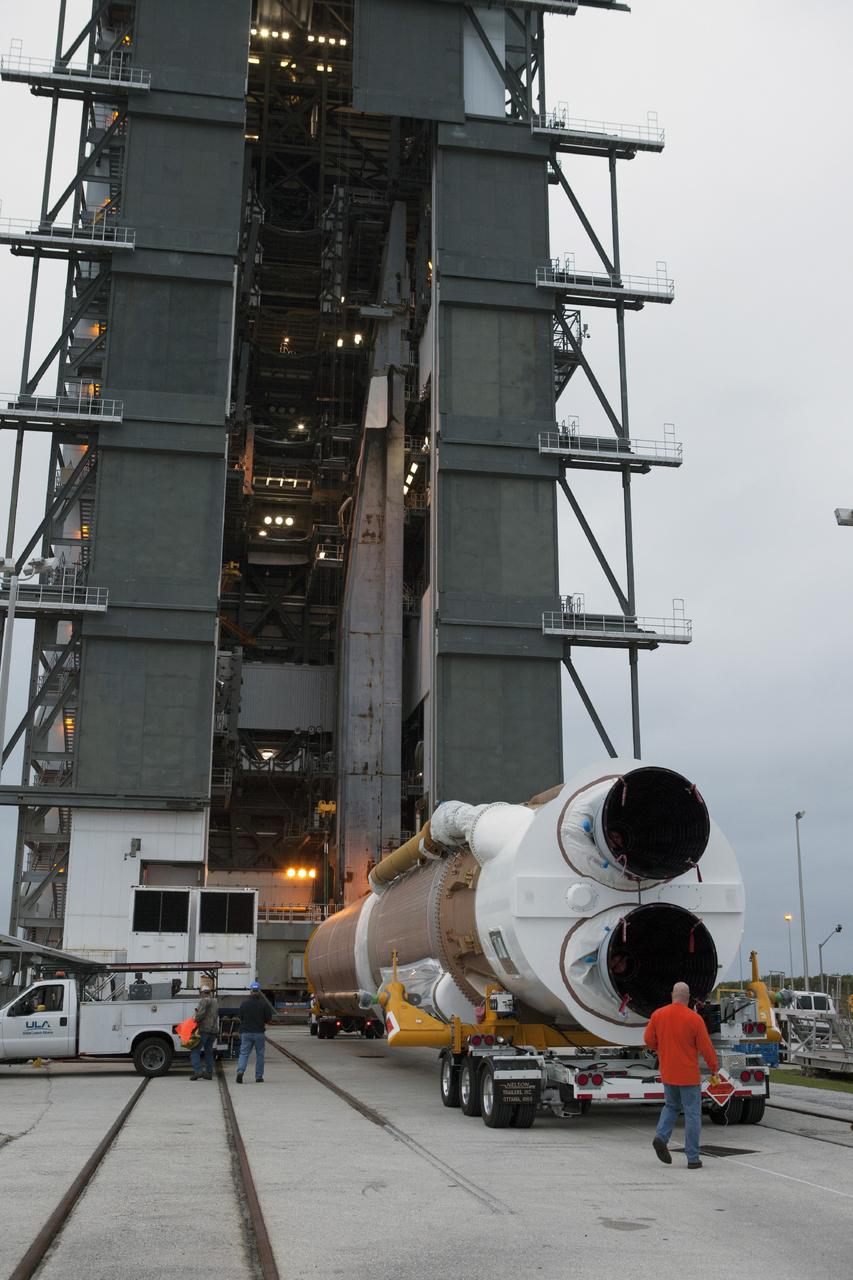
CAPE CANAVERAL, Fla. – The United Launch Alliance Atlas V first stage booster that will boost the Tracking and Data Relay Satellite, or TDRS-L, spacecraft into orbit arrives at Cape Canaveral Air Force Station's Launch Complex 41. TDRS-L is the second of three next-generation satellites designed to ensure vital operational continuity for the NASA Space Network. It is scheduled to launch from Cape Canaveral's Space Launch Complex 41 atop an Atlas V rocket in January 2014. The current Tracking and Data Relay Satellite system consists of eight in-orbit satellites distributed to provide near continuous information relay service to missions such as the Hubble Space Telescope and International Space Station. For more information, visit: http://www.nasa.gov/content/tracking-and-data-relay-satellite-tdrs/ Photo credit: NASA/Kim Shiflett
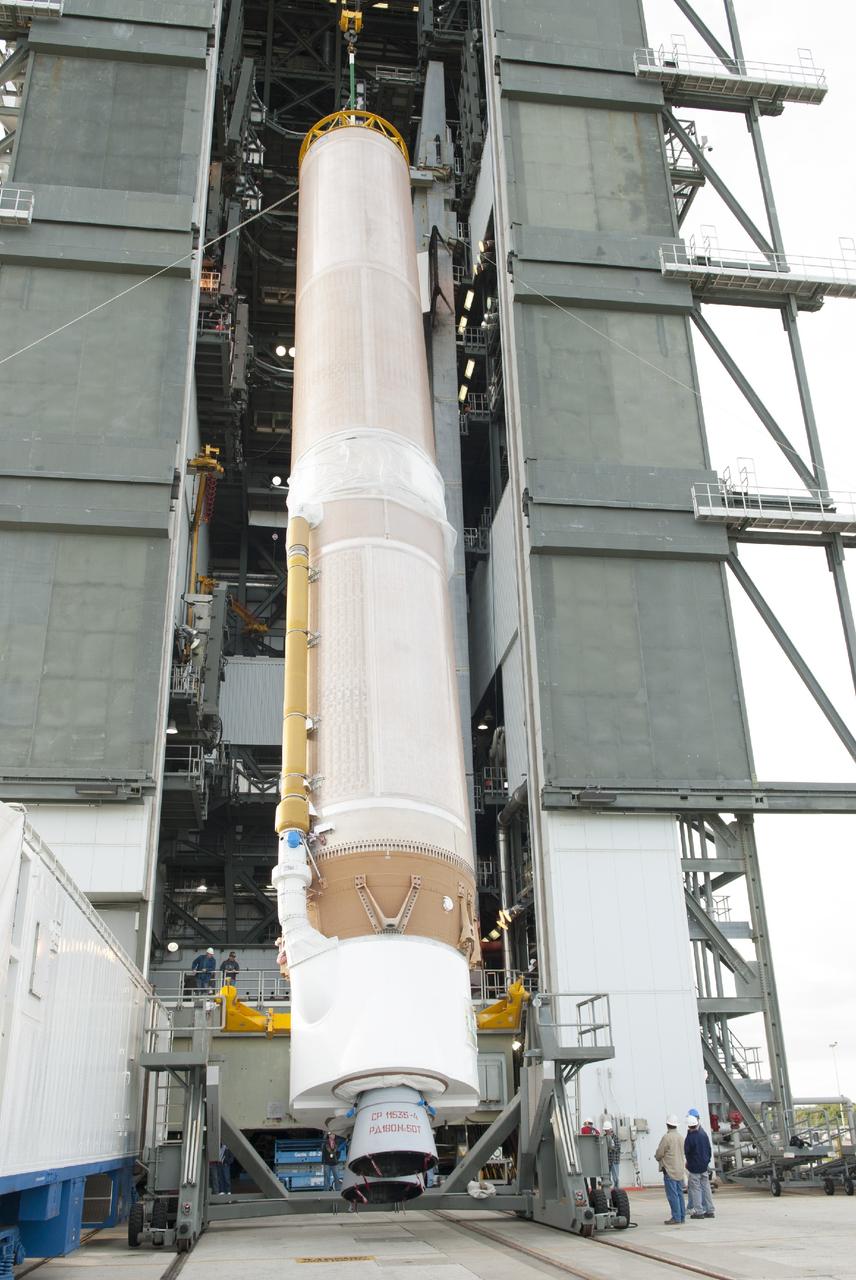
CAPE CANAVERAL, Fla. – At Cape Canaveral Air Force Station, the first stage of the United Launch Alliance Atlas V rocket is lifted for stacking in the Vertical Integration Facility at Launch Complex 41. The vehicle will be used to boost the Tracking and Data Relay Satellite, or TDRS-L, spacecraft to orbit. TDRS-L is the second of three next-generation satellites designed to ensure vital operational continuity for the NASA Space Network. It is scheduled to launch from Cape Canaveral's Space Launch Complex 41 atop an Atlas V rocket in January 2014. The current Tracking and Data Relay Satellite system consists of eight in-orbit satellites distributed to provide near continuous information relay service to missions such as the Hubble Space Telescope and International Space Station. For more information, visit: http://www.nasa.gov/content/tracking-and-data-relay-satellite-tdrs/ Photo credit: NASA/Charisse Nahser
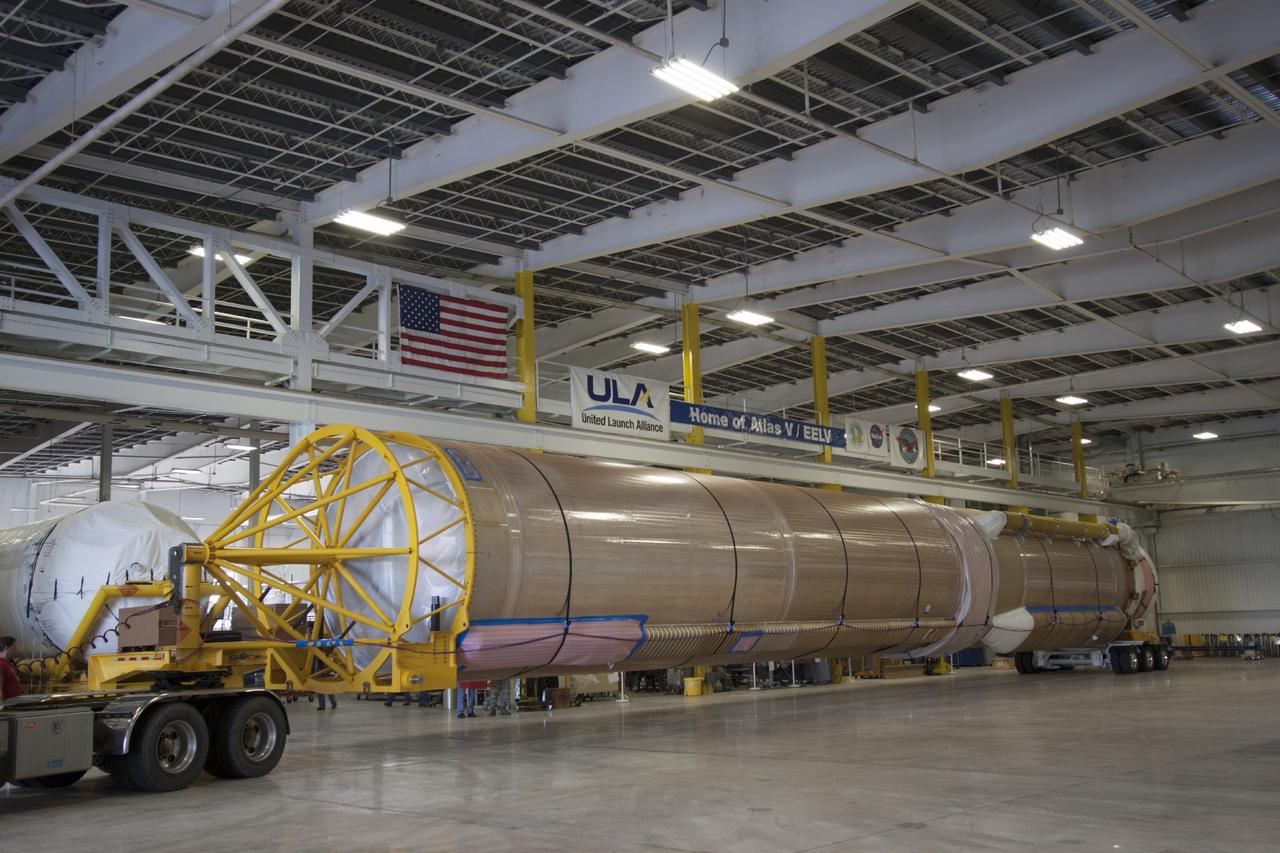
CAPE CANAVERAL, Fla. – The United Launch Alliance Atlas V launch vehicle that will boost the Tracking and Data Relay Satellite, or TDRS-L, spacecraft into orbit arrives at the Atlas Spaceflight Operations Center on Cape Canaveral Air Force Station for checkout in preparation for launch. TDRS-L is the second of three next-generation satellites designed to ensure vital operational continuity for the NASA Space Network. It is scheduled to launch from Cape Canaveral's Space Launch Complex 41 atop an Atlas V rocket in January 2014. The current Tracking and Data Relay Satellite system consists of eight in-orbit satellites distributed to provide near continuous information relay service to missions such as the Hubble Space Telescope and International Space Station. For more information, visit: http://www.nasa.gov/content/tracking-and-data-relay-satellite-tdrs/ Photo credit: NASA/ Jim Grossman
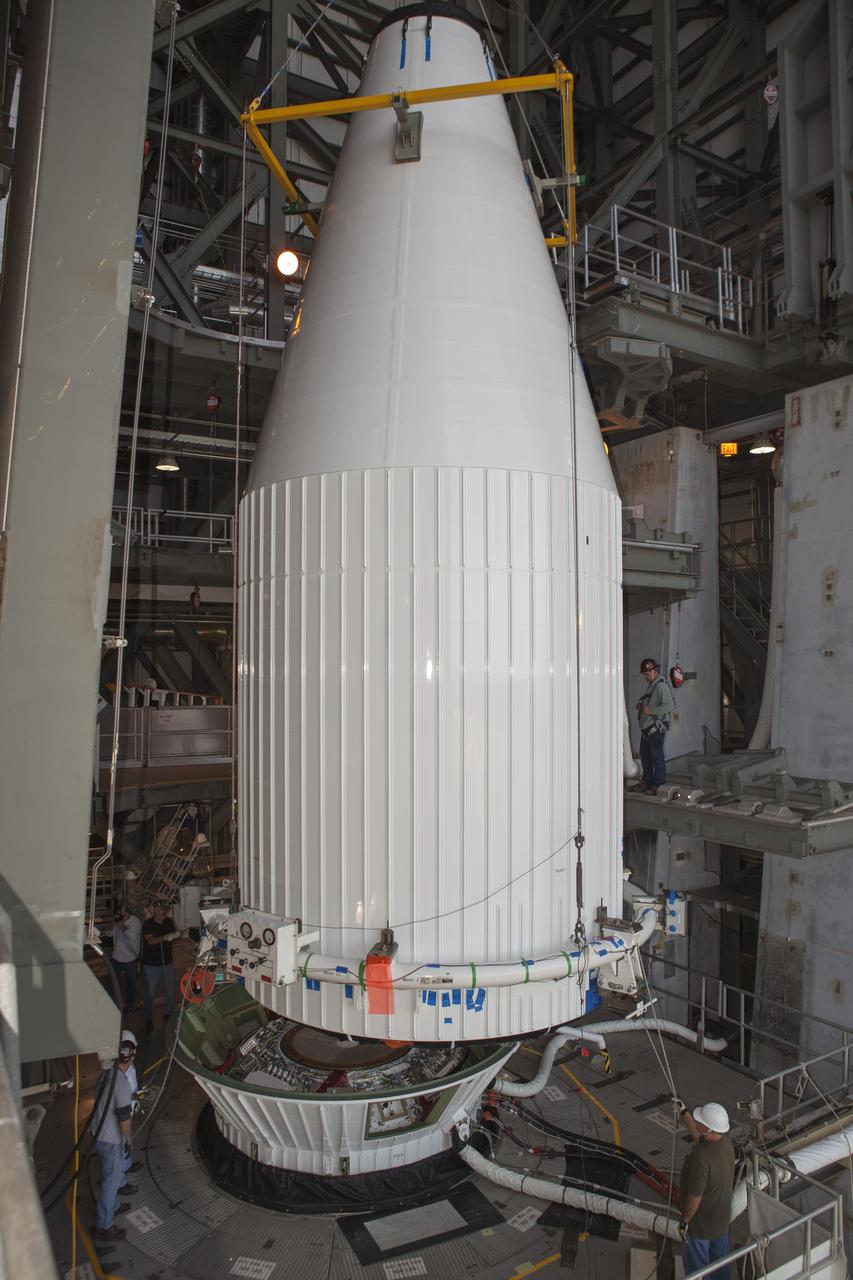
CAPE CANAVERAL, Fla. – At Cape Canaveral Air Force Station's Vertical Integration Facility at Launch Complex 41, NASA's Tracking and Data Relay Satellite, or TDRS-L, spacecraft is moved into position for mating atop a United Launch Alliance Atlas V rocket. The TDRS-L satellite will be a part of the second of three next-generation spacecraft designed to ensure vital operational continuity for the NASA Space Network. It is scheduled to launch from Cape Canaveral's Space Launch Complex 41 atop a United Launch Alliance Atlas V rocket on Jan. 23, 2014. The current Tracking and Data Relay Satellite system consists of eight in-orbit satellites distributed to provide near continuous information relay contact with orbiting spacecraft ranging from the International Space Station and Hubble Space Telescope to the array of scientific observatories. For more information, visit: http://www.nasa.gov/mission_pages/tdrs/home/index.html Photo credit: NASA/Dimitri Gerondidakis
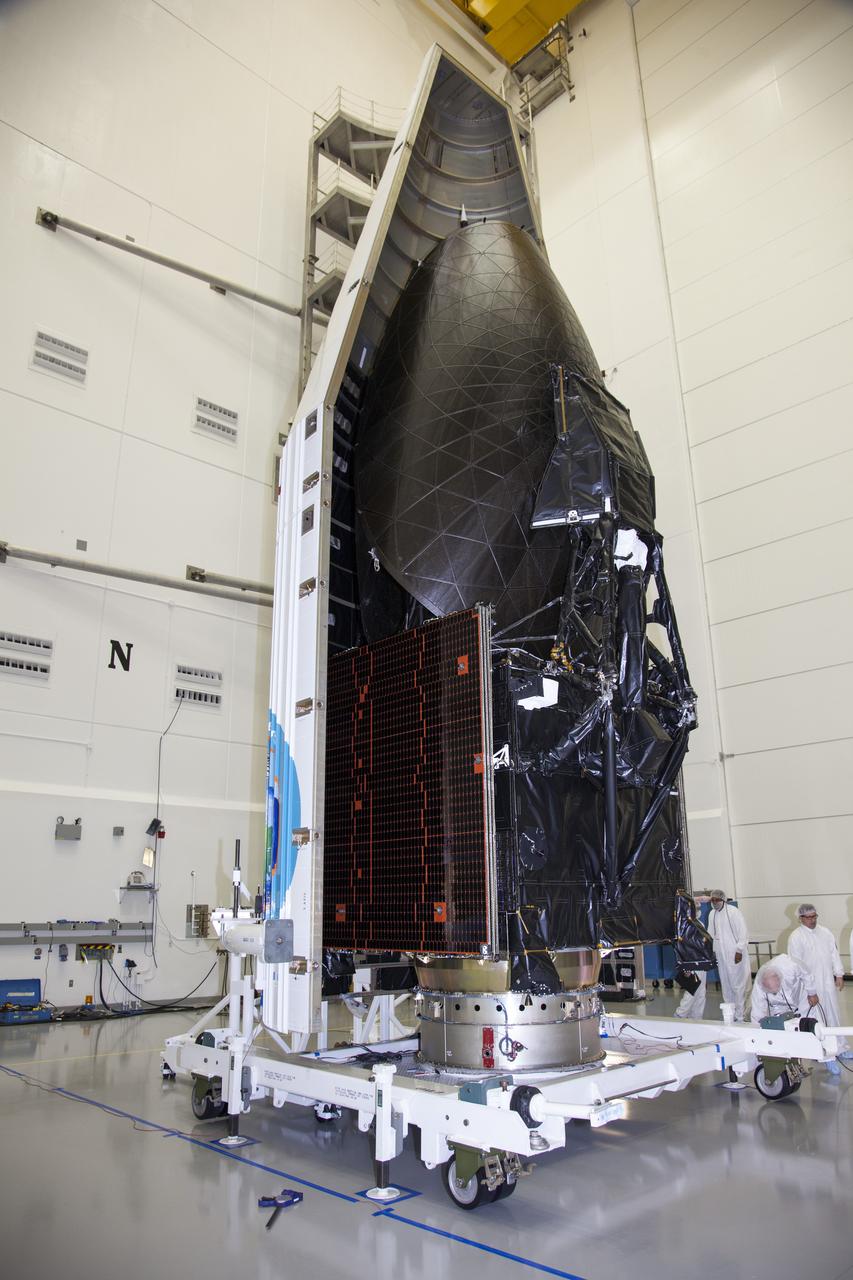
TITUSVILLE, Fla. – Inside the Astrotech payload processing facility in Titusville NASA's Tracking and Data Relay Satellite, or TDRS-L, spacecraft is being encapsulated in its payload fairing prior to being transported to Launch Complex 41 at Cape Canaveral Air Force Station. The TDRS-L satellite will be a part of the second of three next-generation spacecraft designed to ensure vital operational continuity for the NASA Space Network. It is scheduled to launch from Cape Canaveral's Space Launch Complex 41 atop a United Launch Alliance Atlas V rocket on January 23, 2014. The current Tracking and Data Relay Satellite system consists of eight in-orbit satellites distributed to provide near continuous information relay contact with orbiting spacecraft ranging from the International Space Station and Hubble Space Telescope to the array of scientific observatories. For more information, visit: http://www.nasa.gov/mission_pages/tdrs/home/index.html
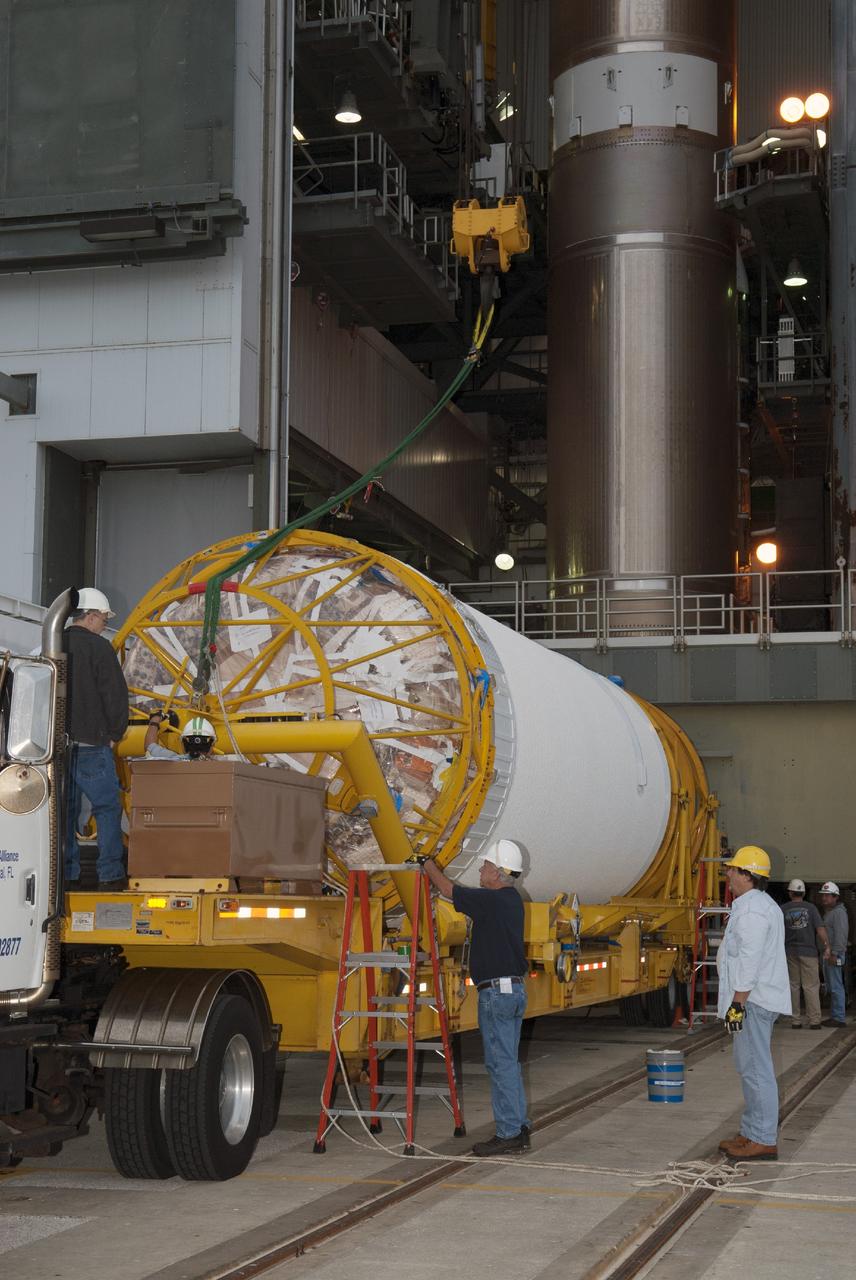
CAPE CANAVERAL, Fla. – At Cape Canaveral Air Force Station's Launch Complex 41, engineers and technicians support preparations for lifting the Centaur second stage of the United Launch Alliance rocket that will be used to boost the Tracking and Data Relay Satellite, or TDRS-L, spacecraft to orbit. TDRS-L is the second of three next-generation satellites designed to ensure vital operational continuity for the NASA Space Network. It is scheduled to launch from Cape Canaveral's Space Launch Complex 41 atop an Atlas V rocket in January 2014. The current Tracking and Data Relay Satellite system consists of eight in-orbit satellites distributed to provide near continuous information relay service to missions such as the Hubble Space Telescope and International Space Station. For more information, visit: http://www.nasa.gov/content/tracking-and-data-relay-satellite-tdrs/ Photo credit: NASA/Charisse Nahser
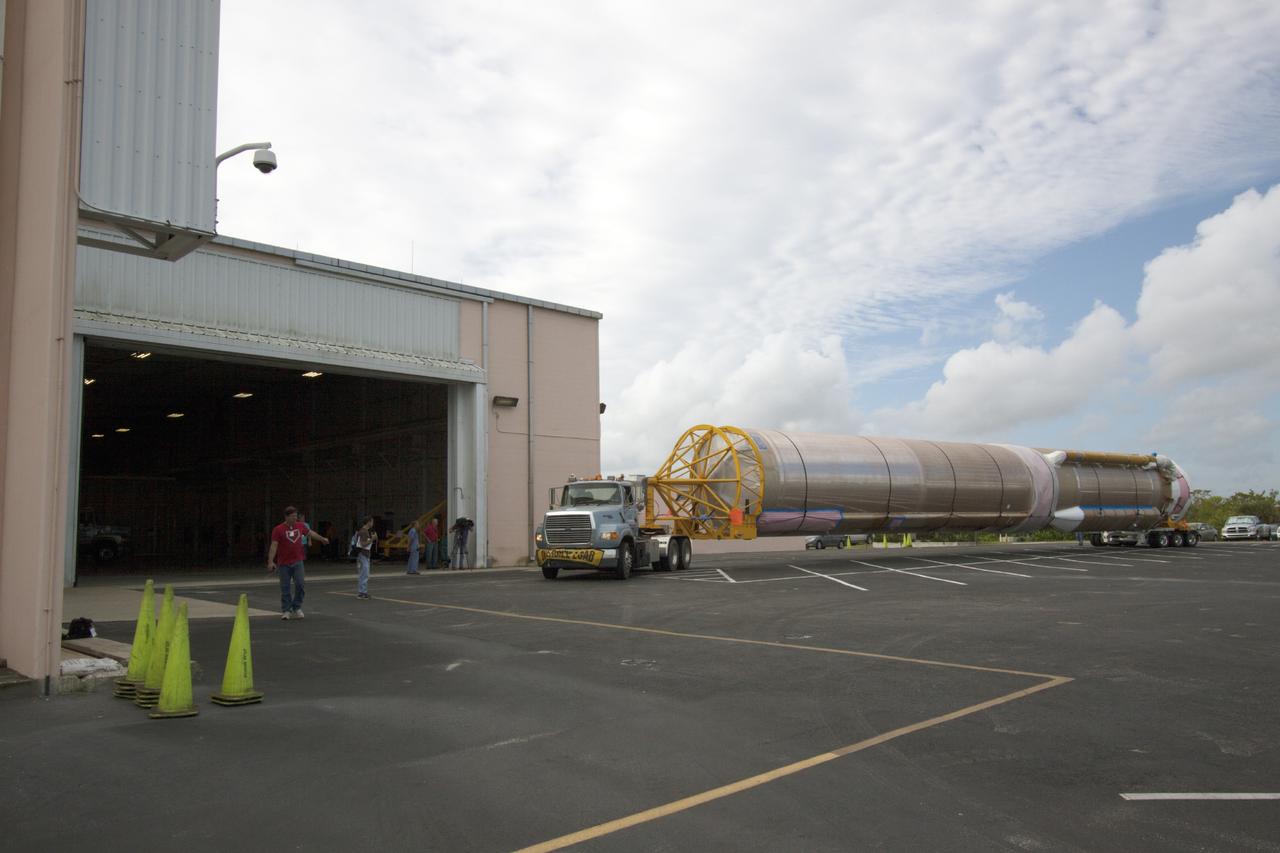
CAPE CANAVERAL, Fla. – The United Launch Alliance Atlas V launch vehicle that will boost the Tracking and Data Relay Satellite, or TDRS-L, spacecraft into orbit arrives at the Atlas Spaceflight Operations Center on Cape Canaveral Air Force Station for checkout in preparation for launch. TDRS-L is the second of three next-generation satellites designed to ensure vital operational continuity for the NASA Space Network. It is scheduled to launch from Cape Canaveral's Space Launch Complex 41 atop an Atlas V rocket in January 2014. The current Tracking and Data Relay Satellite system consists of eight in-orbit satellites distributed to provide near continuous information relay service to missions such as the Hubble Space Telescope and International Space Station. For more information, visit: http://www.nasa.gov/content/tracking-and-data-relay-satellite-tdrs/ Photo credit: NASA/ Jim Grossman
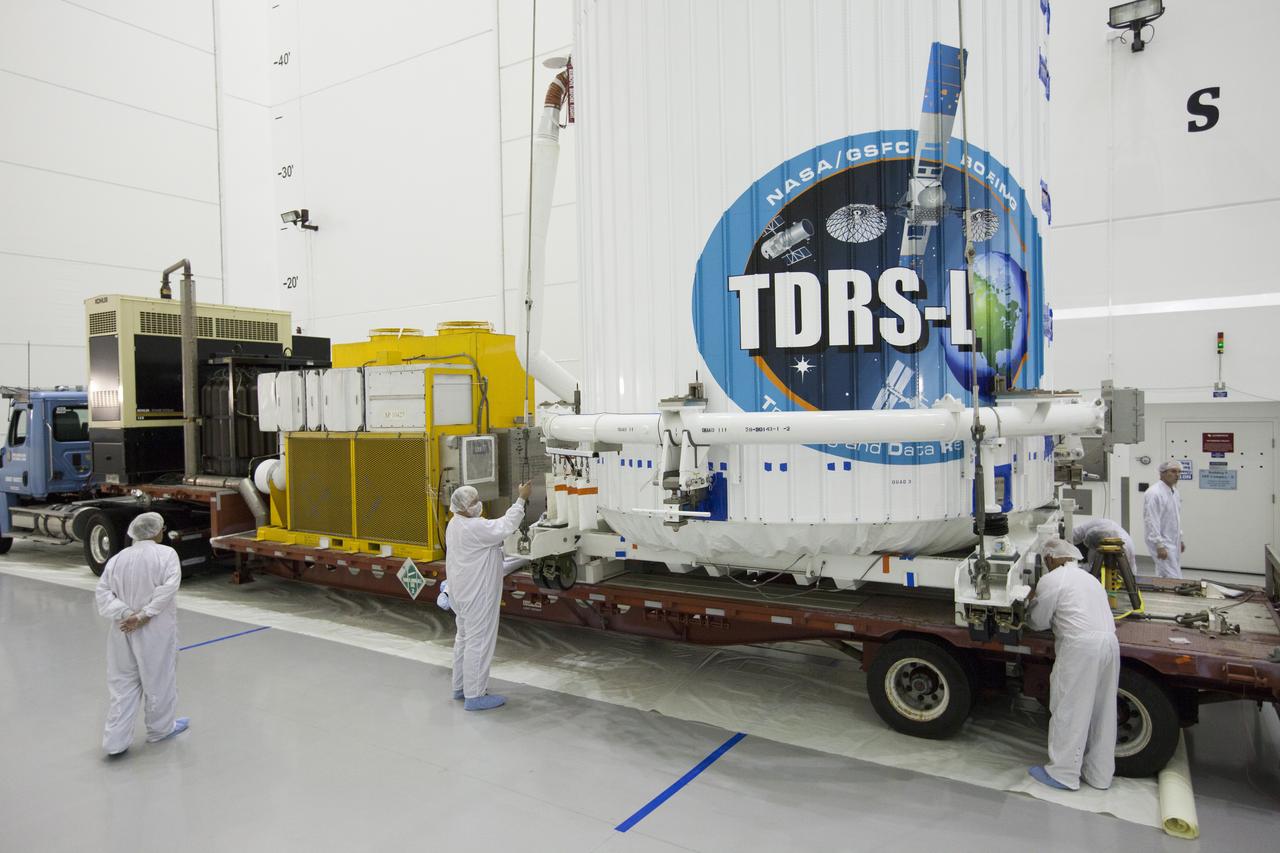
TITUSVILLE, Fla. – Encapsulated in its payload fairing, NASA's Tracking and Data Relay Satellite, or TDRS-L, spacecraft is being mounted on a transporter for its trip from the Astrotech payload processing facility in Titusville to Launch Complex 41 at Cape Canaveral Air Force Station. The TDRS-L satellite will be a part of the second of three next-generation spacecraft designed to ensure vital operational continuity for the NASA Space Network. It is scheduled to launch from Cape Canaveral's Space Launch Complex 41 atop a United Launch Alliance Atlas V rocket on January 23, 2014. The current Tracking and Data Relay Satellite system consists of eight in-orbit satellites distributed to provide near continuous information relay contact with orbiting spacecraft ranging from the International Space Station and Hubble Space Telescope to the array of scientific observatories. For more information, visit: http://www.nasa.gov/mission_pages/tdrs/home/index.html Photo credit: NASA/Kim Shiflett
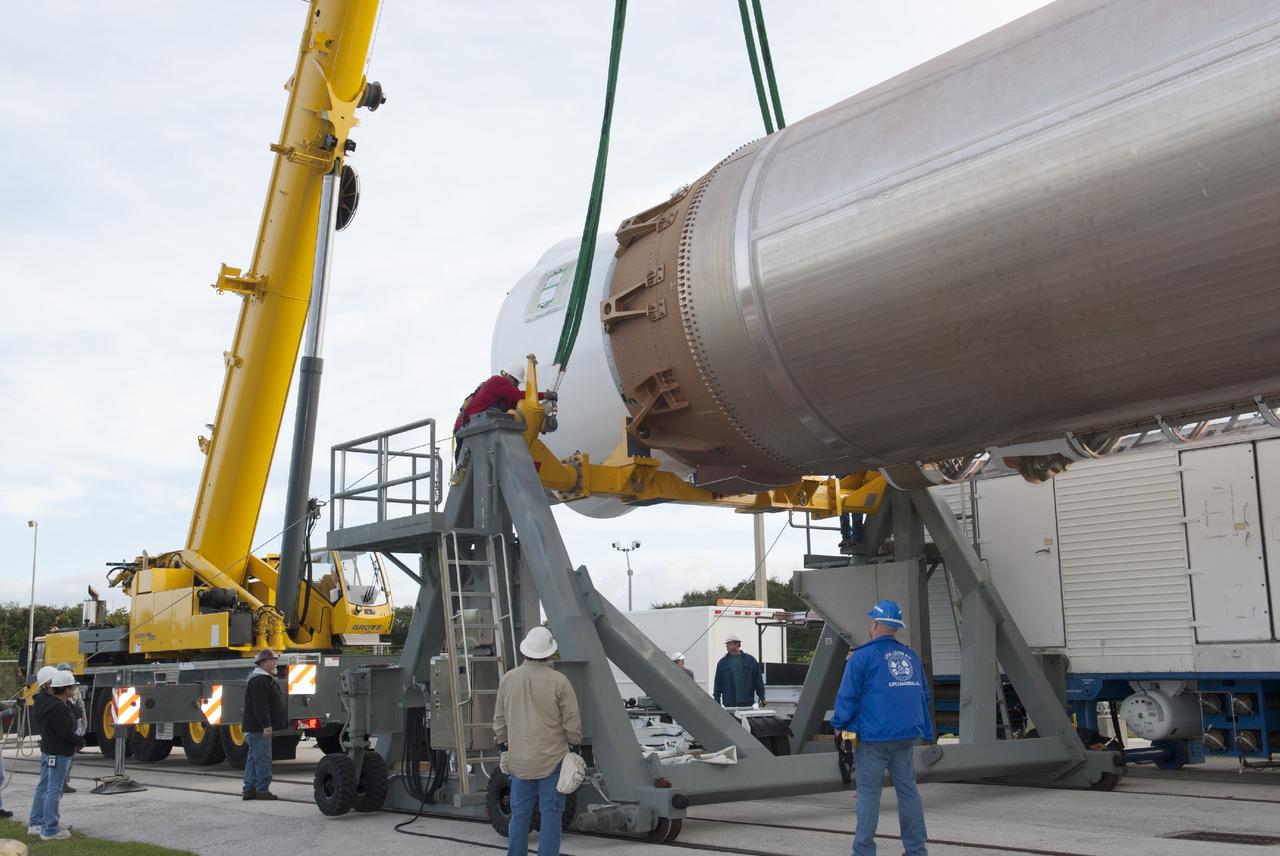
CAPE CANAVERAL, Fla. – At Cape Canaveral Air Force Station, engineers and technicians support lifting the first stage of the United Launch Alliance Atlas V rocket during stacking operations in the Vertical Integration Facility at Launch Complex 41. The vehicle will be used to boost the Tracking and Data Relay Satellite, or TDRS-L, spacecraft to orbit. TDRS-L is the second of three next-generation satellites designed to ensure vital operational continuity for the NASA Space Network. It is scheduled to launch from Cape Canaveral's Space Launch Complex 41 atop an Atlas V rocket in January 2014. The current Tracking and Data Relay Satellite system consists of eight in-orbit satellites distributed to provide near continuous information relay service to missions such as the Hubble Space Telescope and International Space Station. For more information, visit: http://www.nasa.gov/content/tracking-and-data-relay-satellite-tdrs/ Photo credit: NASA/Charisse Nahser
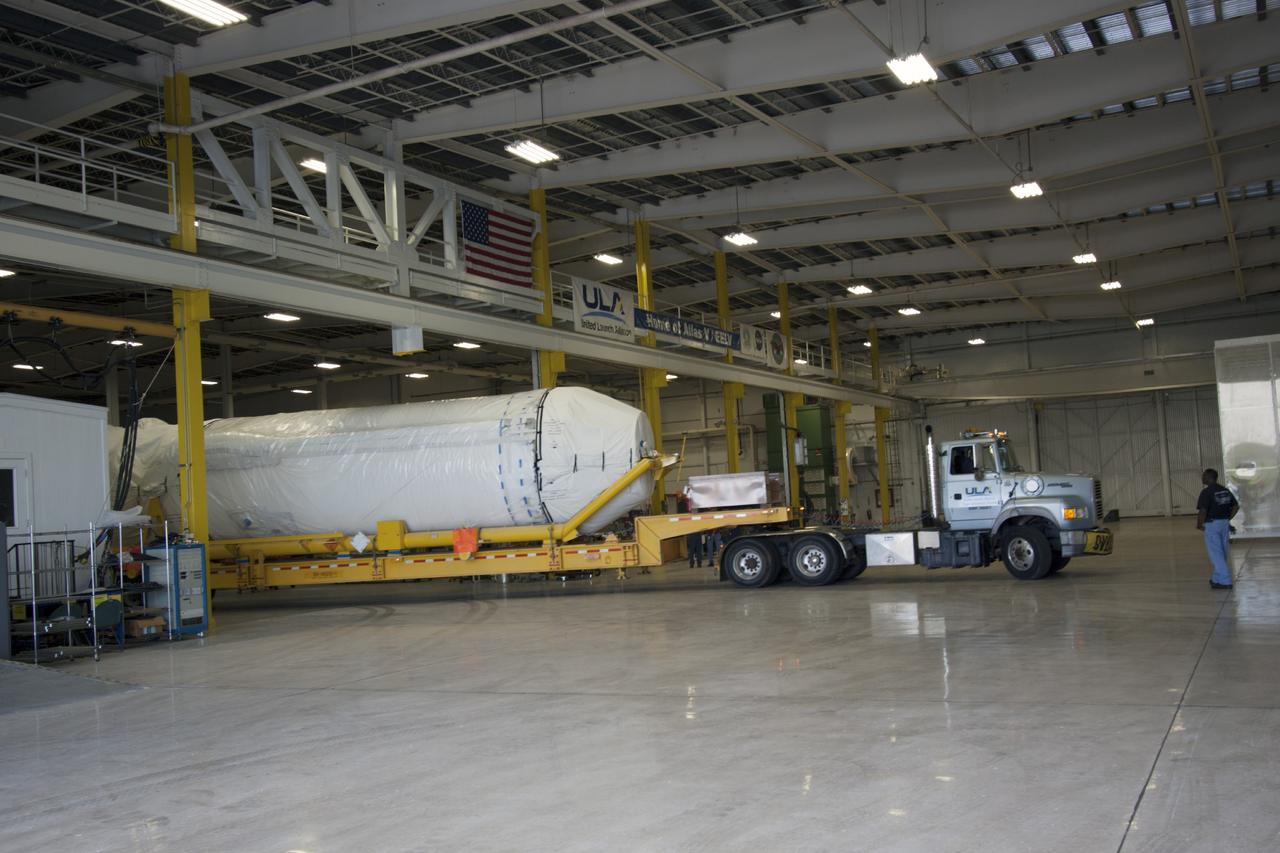
CAPE CANAVERAL, Fla. – The United Launch Alliance Centaur upper stage that will boost the Tracking and Data Relay Satellite, or TDRS-L, spacecraft into orbit arrives at the Atlas Spaceflight Operations Center on Cape Canaveral Air Force Station for checkout in preparation for launch. TDRS-L is the second of three next-generation satellites designed to ensure vital operational continuity for the NASA Space Network. It is scheduled to launch from Cape Canaveral's Space Launch Complex 41 atop an Atlas V rocket in January 2014. The current Tracking and Data Relay Satellite system consists of eight in-orbit satellites distributed to provide near continuous information relay service to missions such as the Hubble Space Telescope and International Space Station. For more information, visit: http://www.nasa.gov/content/tracking-and-data-relay-satellite-tdrs/ Photo credit: NASA/ Jim Grossman
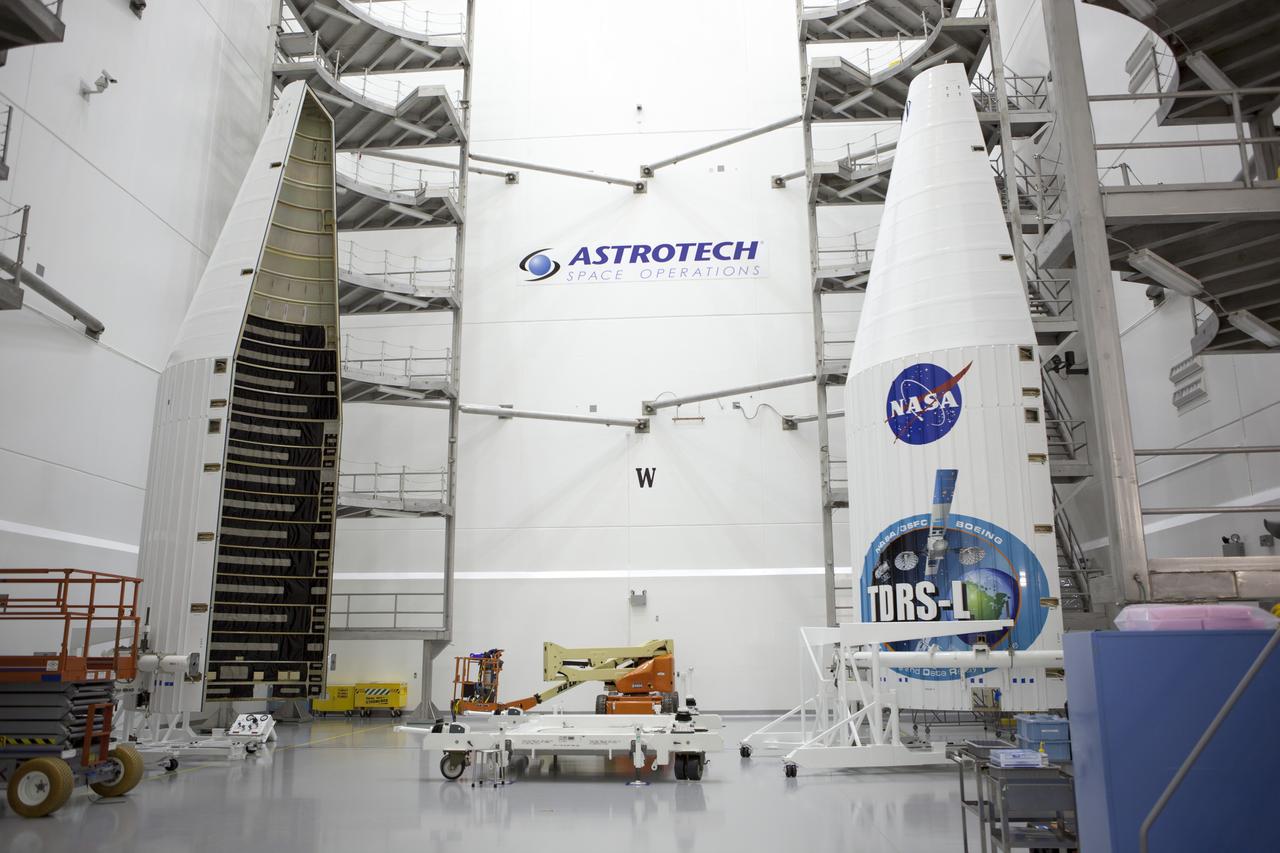
TITUSVILLE, Fla. – Inside the Astrotech payload processing facility in Titusville, members of the news media are given an opportunity for an up-close look at the payload fairing that will encapsulate the Tracking and Data Relay Satellite, or TDRS-L, spacecraft. Journalists visited Astrotech as part of TDRS-L Media Day to conduct interviews and photograph the satellite that will be a part of the second of three next-generation spacecraft designed to ensure vital operational continuity for the NASA Space Network. It is scheduled to launch from Cape Canaveral's Space Launch Complex 41 atop an Atlas V rocket in January 2014. The current Tracking and Data Relay Satellite system consists of eight in-orbit satellites distributed to provide near continuous information relay contact with orbiting spacecraft ranging from the International Space Station and Hubble Space Telescope to the array of scientific observatories. For more information, visit: http://www.nasa.gov/mission_pages/tdrs/home/index.html
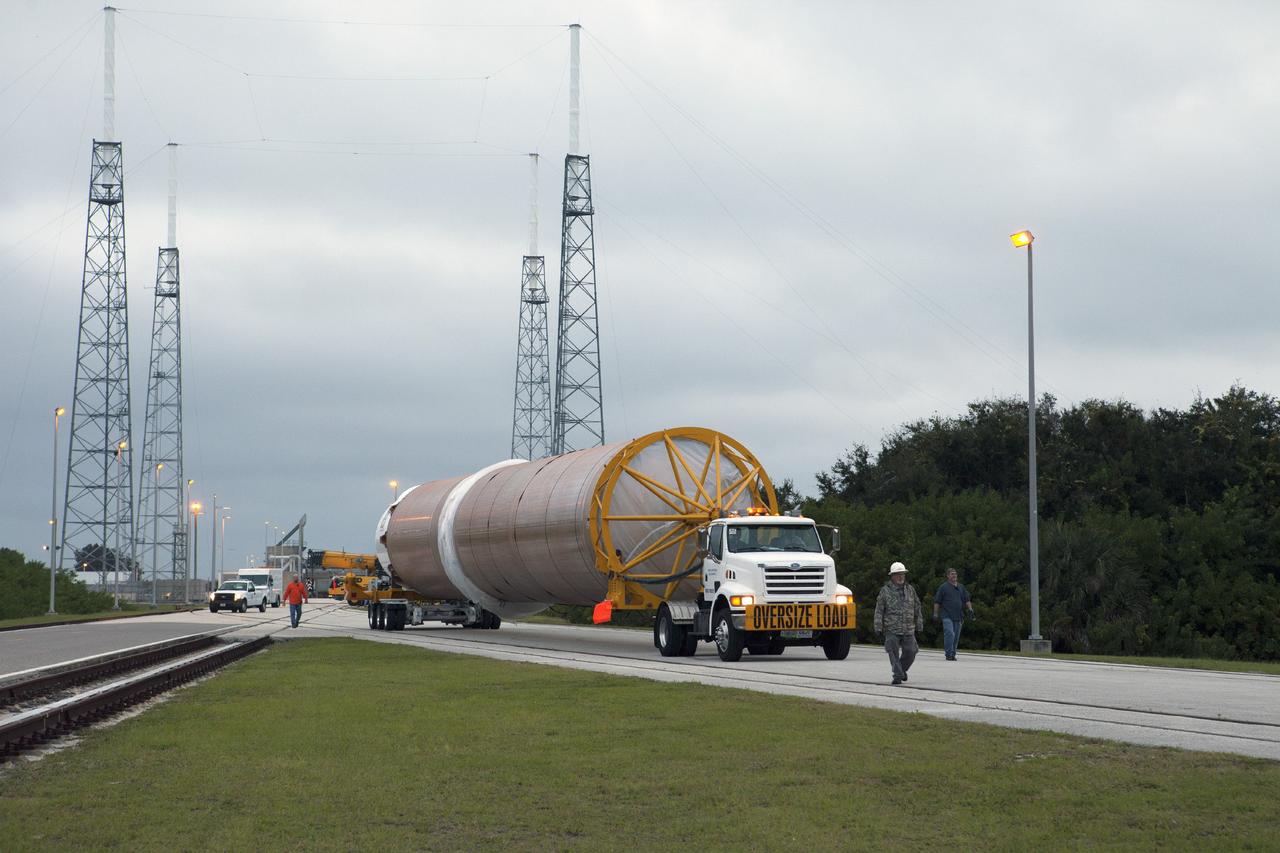
CAPE CANAVERAL, Fla. – The United Launch Alliance Atlas V first stage booster that will boost the Tracking and Data Relay Satellite, or TDRS-L, spacecraft into orbit is being transported from the hangar at the Atlas Spaceflight Operations Center on Cape Canaveral Air Force Station to Launch Complex 41. TDRS-L is the second of three next-generation satellites designed to ensure vital operational continuity for the NASA Space Network. It is scheduled to launch from Cape Canaveral's Space Launch Complex 41 atop an Atlas V rocket in January 2014. The current Tracking and Data Relay Satellite system consists of eight in-orbit satellites distributed to provide near continuous information relay service to missions such as the Hubble Space Telescope and International Space Station. For more information, visit: http://www.nasa.gov/content/tracking-and-data-relay-satellite-tdrs/ Photo credit: NASA/Kim Shiflett
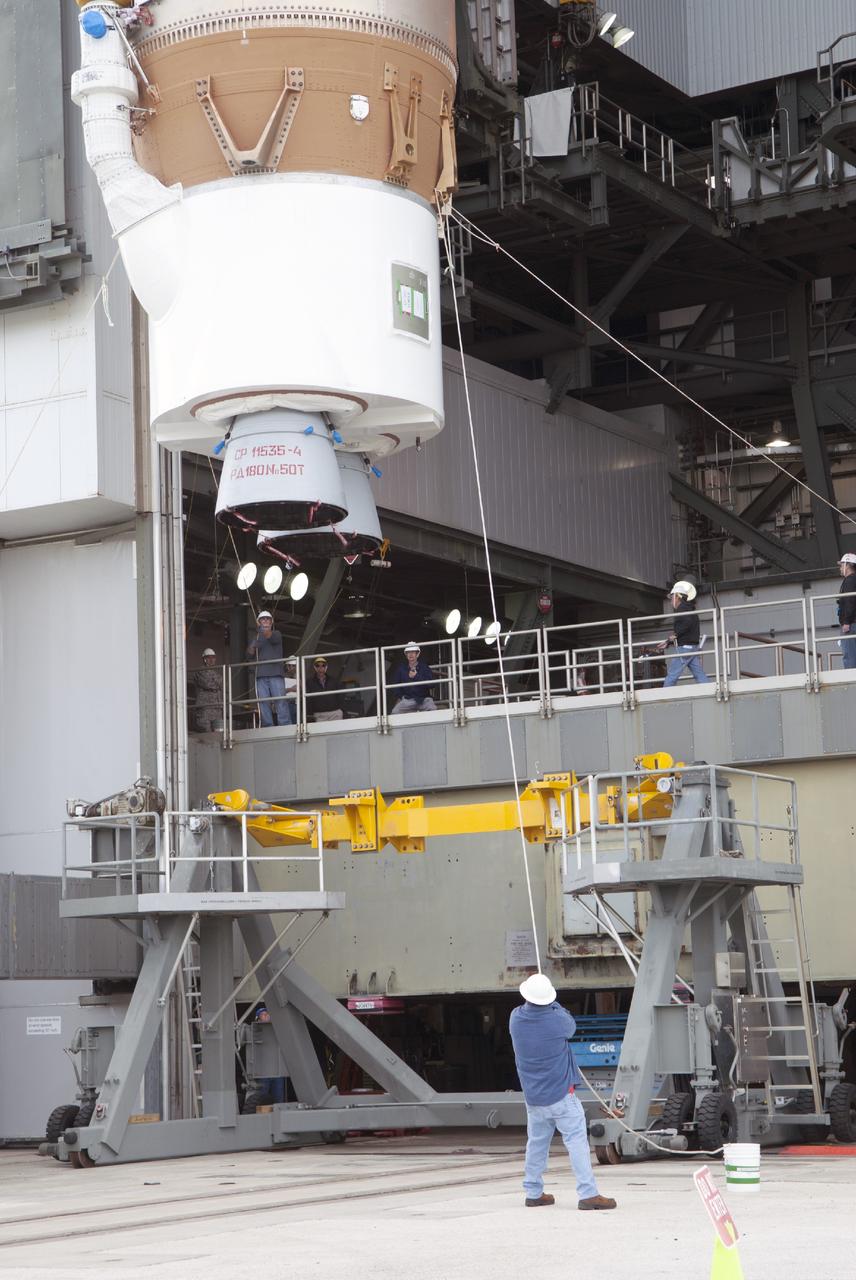
CAPE CANAVERAL, Fla. – At Cape Canaveral Air Force Station, a technician support lifting the first stage of the United Launch Alliance Atlas V rocket during stacking operations in the Vertical Integration Facility at Launch Complex 41. The vehicle will be used to boost the Tracking and Data Relay Satellite, or TDRS-L, spacecraft to orbit. TDRS-L is the second of three next-generation satellites designed to ensure vital operational continuity for the NASA Space Network. It is scheduled to launch from Cape Canaveral's Space Launch Complex 41 atop an Atlas V rocket in January 2014. The current Tracking and Data Relay Satellite system consists of eight in-orbit satellites distributed to provide near continuous information relay service to missions such as the Hubble Space Telescope and International Space Station. For more information, visit: http://www.nasa.gov/content/tracking-and-data-relay-satellite-tdrs/ Photo credit: NASA/Charisse Nahser
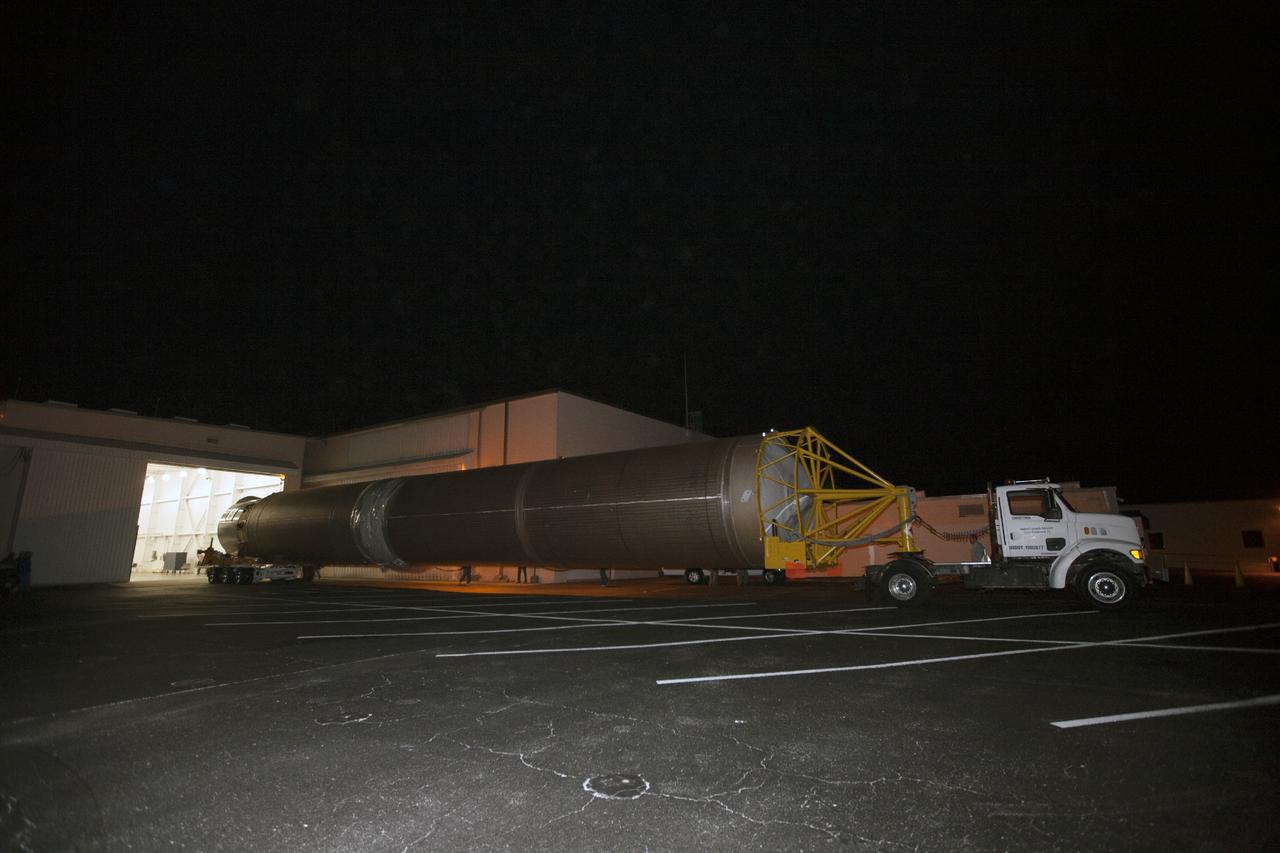
CAPE CANAVERAL, Fla. – The United Launch Alliance Atlas V first stage booster that will boost the Tracking and Data Relay Satellite, or TDRS-L, spacecraft into orbit is being transported from the hangar at the Atlas Spaceflight Operations Center on Cape Canaveral Air Force Station to Launch Complex 41. TDRS-L is the second of three next-generation satellites designed to ensure vital operational continuity for the NASA Space Network. It is scheduled to launch from Cape Canaveral's Space Launch Complex 41 atop an Atlas V rocket in January 2014. The current Tracking and Data Relay Satellite system consists of eight in-orbit satellites distributed to provide near continuous information relay service to missions such as the Hubble Space Telescope and International Space Station. For more information, visit: http://www.nasa.gov/content/tracking-and-data-relay-satellite-tdrs/ Photo credit: NASA/Kim Shiflett
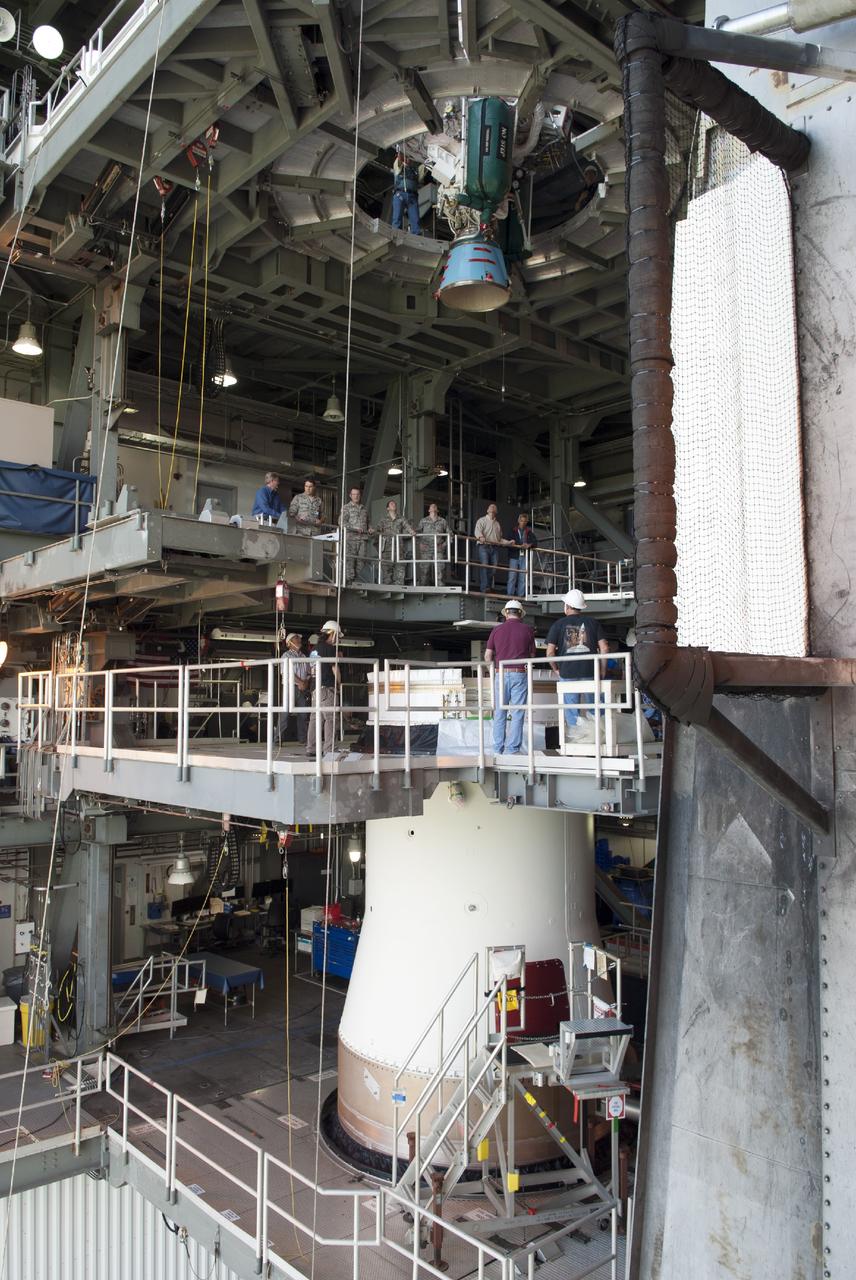
CAPE CANAVERAL, Fla. – At Cape Canaveral Air Force Station's Launch Complex 41, a Centaur second stage is positioned atop a United Launch Alliance Atlas V rocket that will be used to boost the Tracking and Data Relay Satellite, or TDRS-L, spacecraft to orbit. TDRS-L is the second of three next-generation satellites designed to ensure vital operational continuity for the NASA Space Network. It is scheduled to launch from Cape Canaveral's Space Launch Complex 41 atop an Atlas V rocket in January 2014. The current Tracking and Data Relay Satellite system consists of eight in-orbit satellites distributed to provide near continuous information relay service to missions such as the Hubble Space Telescope and International Space Station. For more information, visit: http://www.nasa.gov/content/tracking-and-data-relay-satellite-tdrs/ Photo credit: NASA/Charisse Nahser
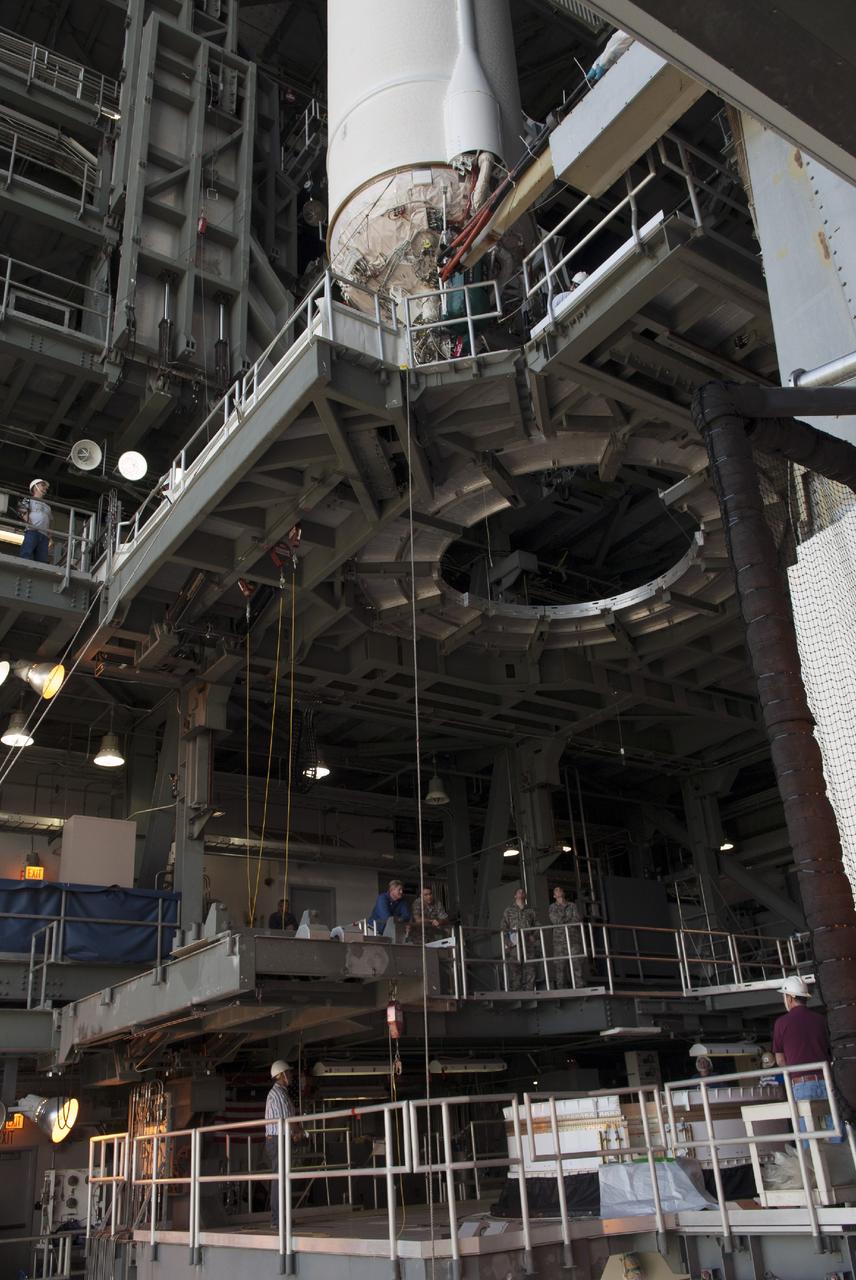
CAPE CANAVERAL, Fla. – At Cape Canaveral Air Force Station's Launch Complex 41, a Centaur second stage is lifted for stacking atop a United Launch Alliance Atlas V rocket that will be used to boost the Tracking and Data Relay Satellite, or TDRS-L, spacecraft to orbit. TDRS-L is the second of three next-generation satellites designed to ensure vital operational continuity for the NASA Space Network. It is scheduled to launch from Cape Canaveral's Space Launch Complex 41 atop an Atlas V rocket in January 2014. The current Tracking and Data Relay Satellite system consists of eight in-orbit satellites distributed to provide near continuous information relay service to missions such as the Hubble Space Telescope and International Space Station. For more information, visit: http://www.nasa.gov/content/tracking-and-data-relay-satellite-tdrs/ Photo credit: NASA/Charisse Nahser
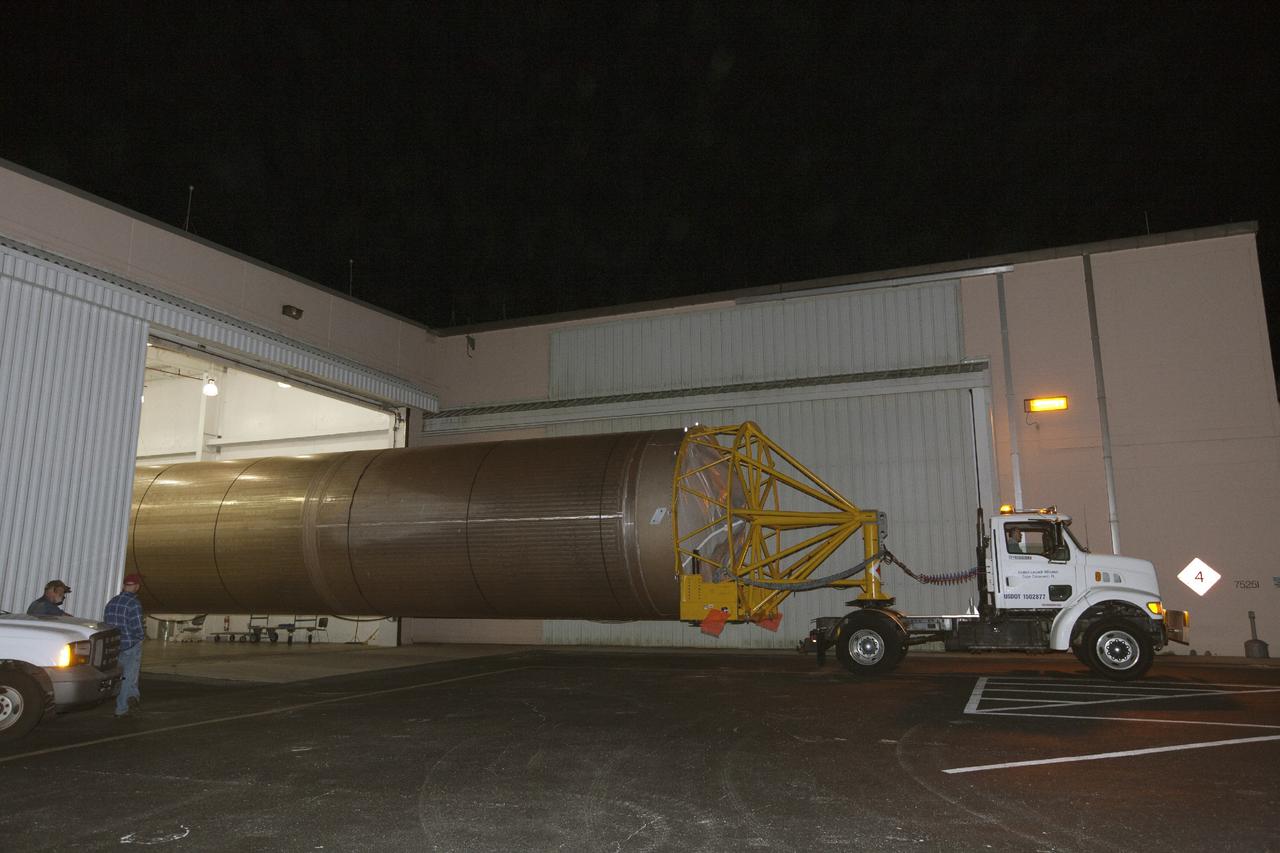
CAPE CANAVERAL, Fla. – The United Launch Alliance Atlas V first stage booster that will boost the Tracking and Data Relay Satellite, or TDRS-L, spacecraft into orbit is being transported from the hangar at the Atlas Spaceflight Operations Center on Cape Canaveral Air Force Station to Launch Complex 41. TDRS-L is the second of three next-generation satellites designed to ensure vital operational continuity for the NASA Space Network. It is scheduled to launch from Cape Canaveral's Space Launch Complex 41 atop an Atlas V rocket in January 2014. The current Tracking and Data Relay Satellite system consists of eight in-orbit satellites distributed to provide near continuous information relay service to missions such as the Hubble Space Telescope and International Space Station. For more information, visit: http://www.nasa.gov/content/tracking-and-data-relay-satellite-tdrs/ Photo credit: NASA/Kim Shiflett
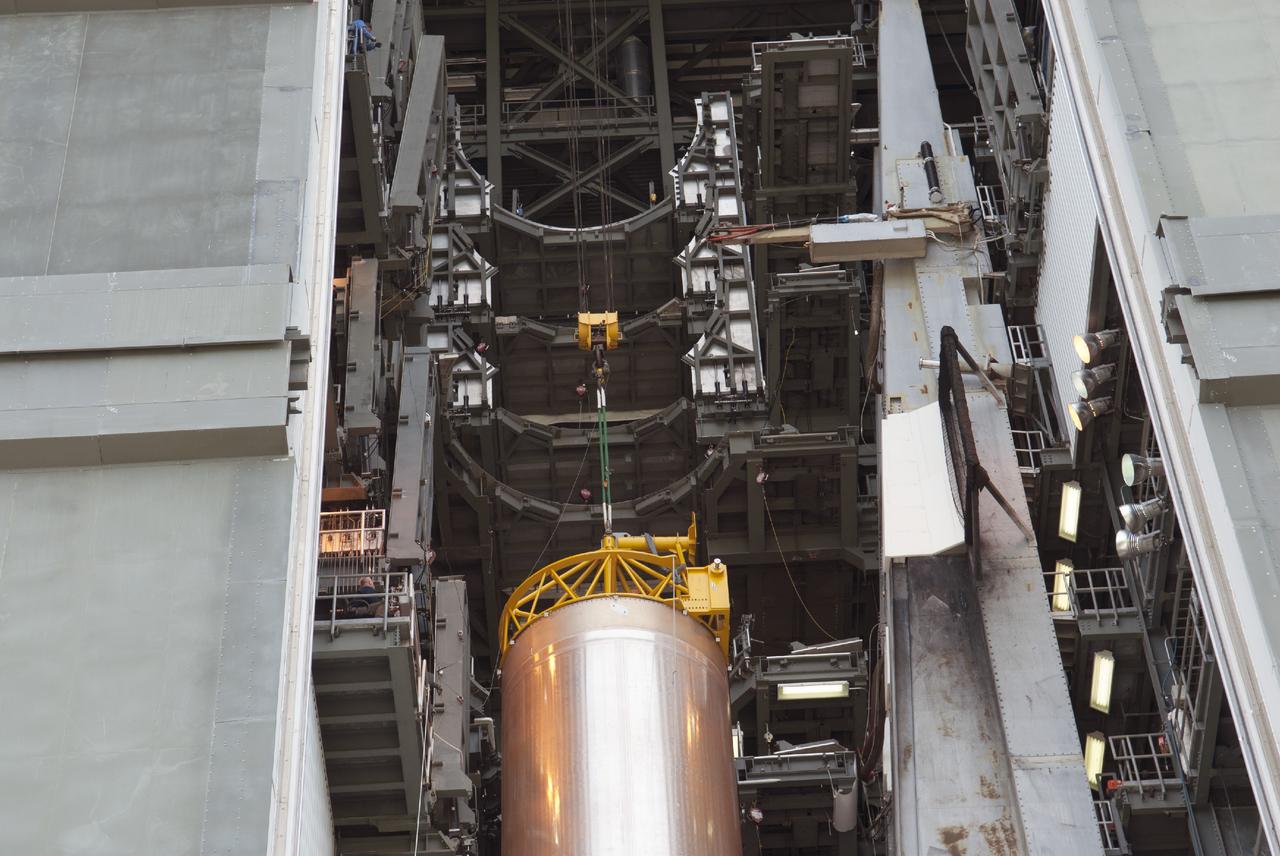
CAPE CANAVERAL, Fla. – At Cape Canaveral Air Force Station, the first stage of the United Launch Alliance Atlas V rocket positioned in the Vertical Integration Facility at Launch Complex 41. The vehicle will be used to boost the Tracking and Data Relay Satellite, or TDRS-L, spacecraft to orbit. TDRS-L is the second of three next-generation satellites designed to ensure vital operational continuity for the NASA Space Network. It is scheduled to launch from Cape Canaveral's Space Launch Complex 41 atop an Atlas V rocket in January 2014. The current Tracking and Data Relay Satellite system consists of eight in-orbit satellites distributed to provide near continuous information relay service to missions such as the Hubble Space Telescope and International Space Station. For more information, visit: http://www.nasa.gov/content/tracking-and-data-relay-satellite-tdrs/ Photo credit: NASA/Charisse Nahser
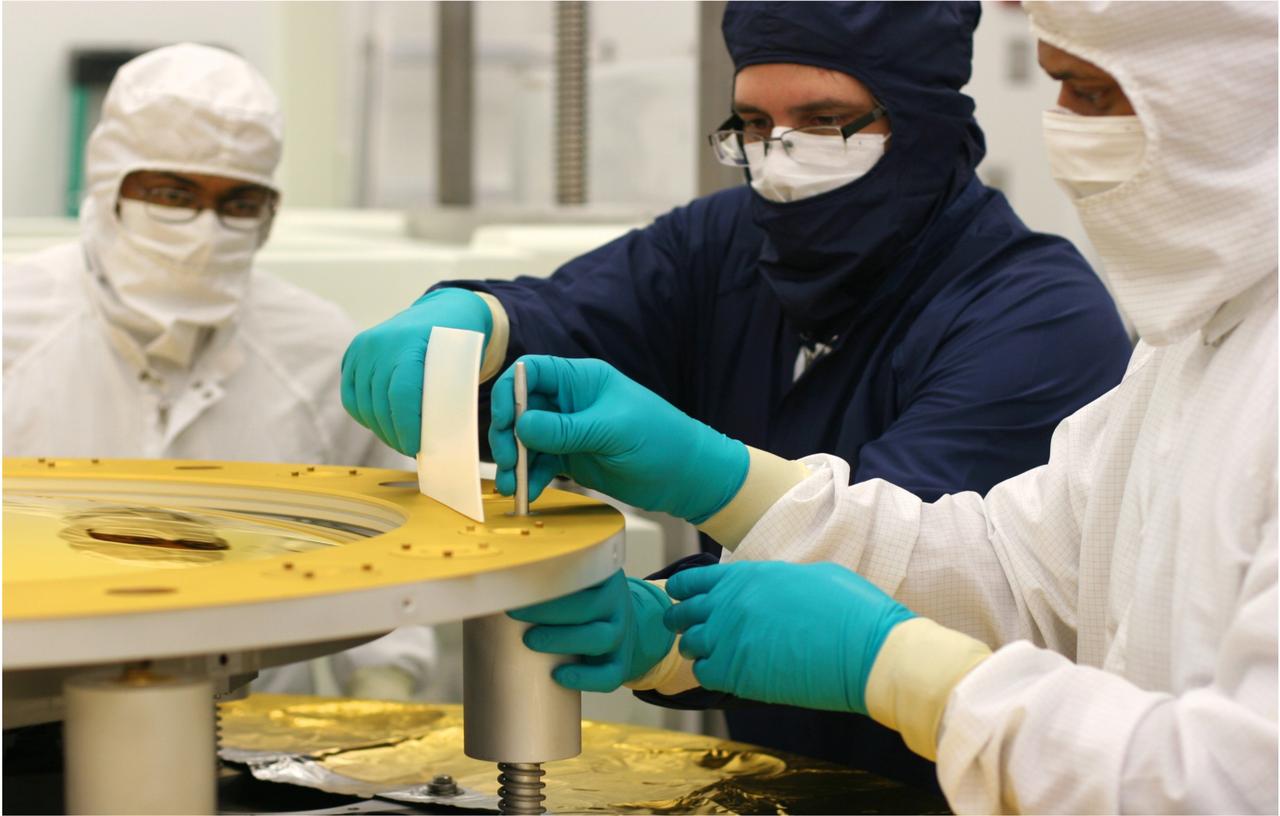
NASA release July 19, 2011 <b>Click here to learn about the <a href="http://www.jwst.nasa.gov/" rel="nofollow"> James Webb Space Telescope</a></b> The secondary mirror (shown here) was polished at the L3 Integrated Optical Systems - Tinsley in Richmond, Calif. to accuracies of less than one millionth of an inch. That accuracy is important for forming the sharpest images when the mirrors cool to -400°F (-240°C) in the cold of space. The Webb's secondary mirror was recently completed, following polishing and gold-coating. "Secondary" may not sound as important as "primary" but when it comes to the next-generation James Webb Space Telescope a secondary mirror plays a critical role in ensuring the telescope gathers information from the cosmos. The Webb's secondary mirror was recently completed, following polishing and gold-coating. There are four different types of mirrors that will fly on the James Webb Space Telescope, and all are made of a light metal called beryllium. It is very strong for its weight and holds its shape across a range of temperatures. There are primary mirror segments (18 total that combined make the large primary mirror providing a collecting area of 25 meters squared/269.1 square feet), the secondary mirror, tertiary mirror and the fine steering mirror. Unlike the primary mirror, which is molded into the shape of a hexagon, the secondary mirror is perfectly rounded. The mirror is also convex, so the reflective surface bulges toward a light source. It looks much like a curved mirror that you'll see on the wall near the exit of a parking garage that lets motorists see around a corner. This mirror is coated with a microscopic layer of gold to enable it to efficiently reflect infrared light (which is what the Webb telescope's cameras see). The quality of the secondary mirror surface is so good that the final convex surface at cold temperatures does not deviate from the design by more than a few millionths of a millimeter - or about one ten thousandth the diameter of a human hair. "As the only convex mirror on the Webb telescope, the secondary mirror has always been recognized to be the hardest of all of the mirrors to polish and test, so we are delighted that its performance meets all specifications," said Lee Feinberg, Webb Optical Telescope manager at NASA's Goddard Space Flight Center in Greenbelt, Md. Convex mirrors are particularly hard to test because light that strikes them diverges away from the mirror. Feinberg noted, "The Webb telescope convex secondary mirror is approximately the size of the Spitzer Space Telescope's primary mirror and is by far the largest convex cryogenic mirror ever built for a NASA program." It was data from the Spitzer's mirrors that helped make the decision to use beryllium for the Webb telescope mirrors. Spitzer's mirrors were also made of beryllium. So why is this mirror so critical? Because the secondary mirror captures light from the 18 primary mirror segments and relays those distant images of the cosmos to the telescope's science cameras. The secondary mirror is mounted on folding "arms" that position it in front of the 18 primary mirror segments. The secondary mirror will soon come to NASA's Goddard Space Flight Center in Greenbelt, Md. where it will be installed on the telescope structure. Then, as a complete unit, the telescope structure and mirrors will undergo acoustic and vibration testing. The secondary mirror was developed at Ball Aerospace & Technology Corp. of Boulder, Colo. and the mirror recently completed polishing at the L3–IOS-Tinsley facility in Richmond, Calif. Northrop Grumman space Systems is the prime contractor on the Webb telescope program. The James Webb Space Telescope is the world’s next-generation space observatory and successor to the Hubble Space Telescope. The most powerful space telescope ever built, Webb will observe the most distant objects in the universe, provide images of the very first galaxies ever formed and see unexplored planets around distant stars. The Webb Telescope is a joint project of NASA, the European Space Agency and the Canadian Space Agency. Credit:NASA/Ball Aerospace/Tinsley <b><a href="http://www.nasa.gov/centers/goddard/home/index.html" rel="nofollow">NASA Goddard Space Flight Center</a></b> enables NASA’s mission through four scientific endeavors: Earth Science, Heliophysics, Solar System Exploration, and Astrophysics. Goddard plays a leading role in NASA’s accomplishments by contributing compelling scientific knowledge to advance the Agency’s mission. <b>Follow us on <a href="http://twitter.com/NASA_GoddardPix" rel="nofollow">Twitter</a></b> <b>Like us on <a href="http://www.facebook.com/pages/Greenbelt-MD/NASA-Goddard/395013845897?ref=tsd" rel="nofollow">Facebook</a></b> <b>Find us on <a href="http://web.stagram.com/n/nasagoddard/?vm=grid" rel="nofollow">Instagram</a></b>
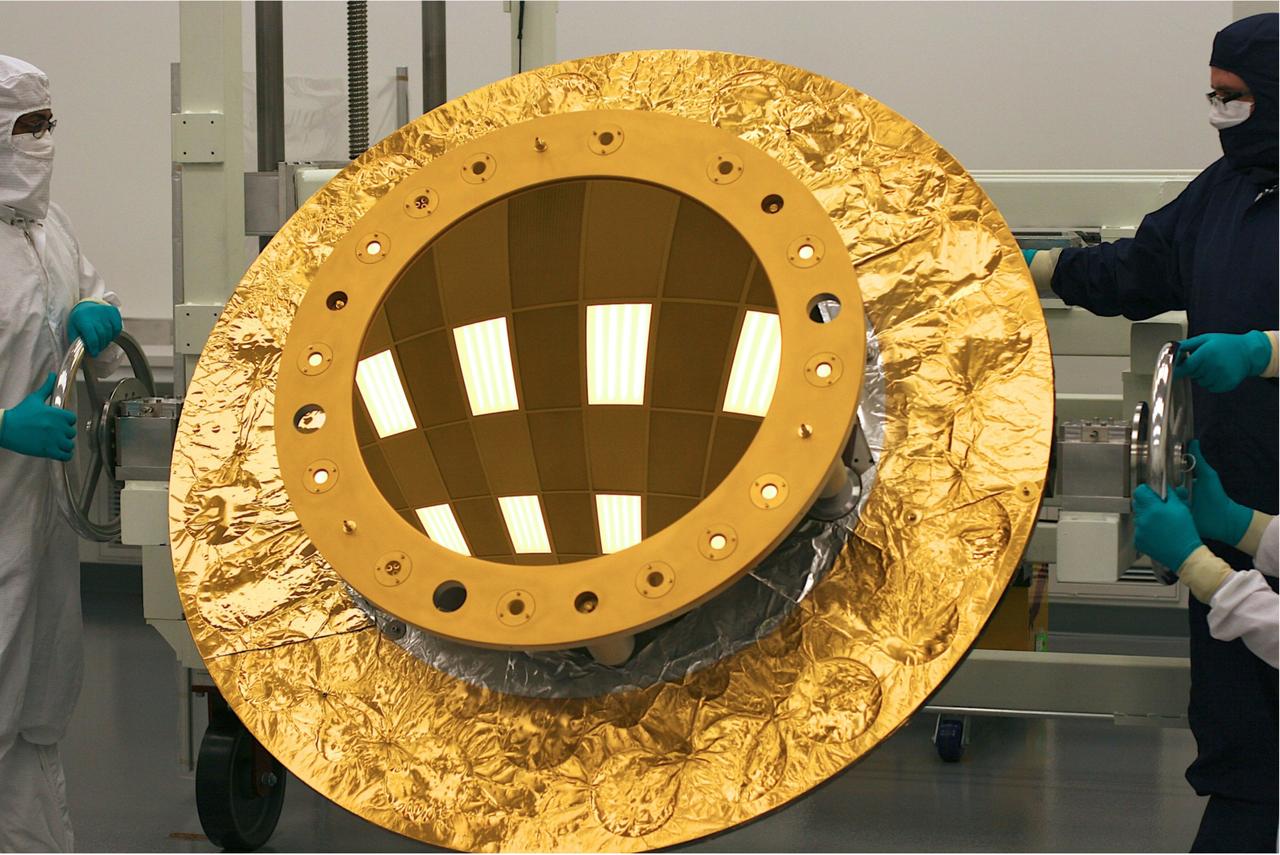
NASA release July 19, 2011 <b>Click here to learn about the <a href="http://www.jwst.nasa.gov/" rel="nofollow"> James Webb Space Telescope</a></b> The secondary mirror (shown here) was polished at the L3 Integrated Optical Systems - Tinsley in Richmond, Calif. to accuracies of less than one millionth of an inch. That accuracy is important for forming the sharpest images when the mirrors cool to -400°F (-240°C) in the cold of space. The Webb's secondary mirror was recently completed, following polishing and gold-coating. "Secondary" may not sound as important as "primary" but when it comes to the next-generation James Webb Space Telescope a secondary mirror plays a critical role in ensuring the telescope gathers information from the cosmos. The Webb's secondary mirror was recently completed, following polishing and gold-coating. There are four different types of mirrors that will fly on the James Webb Space Telescope, and all are made of a light metal called beryllium. It is very strong for its weight and holds its shape across a range of temperatures. There are primary mirror segments (18 total that combined make the large primary mirror providing a collecting area of 25 meters squared/269.1 square feet), the secondary mirror, tertiary mirror and the fine steering mirror. Unlike the primary mirror, which is molded into the shape of a hexagon, the secondary mirror is perfectly rounded. The mirror is also convex, so the reflective surface bulges toward a light source. It looks much like a curved mirror that you'll see on the wall near the exit of a parking garage that lets motorists see around a corner. This mirror is coated with a microscopic layer of gold to enable it to efficiently reflect infrared light (which is what the Webb telescope's cameras see). The quality of the secondary mirror surface is so good that the final convex surface at cold temperatures does not deviate from the design by more than a few millionths of a millimeter - or about one ten thousandth the diameter of a human hair. "As the only convex mirror on the Webb telescope, the secondary mirror has always been recognized to be the hardest of all of the mirrors to polish and test, so we are delighted that its performance meets all specifications," said Lee Feinberg, Webb Optical Telescope manager at NASA's Goddard Space Flight Center in Greenbelt, Md. Convex mirrors are particularly hard to test because light that strikes them diverges away from the mirror. Feinberg noted, "The Webb telescope convex secondary mirror is approximately the size of the Spitzer Space Telescope's primary mirror and is by far the largest convex cryogenic mirror ever built for a NASA program." It was data from the Spitzer's mirrors that helped make the decision to use beryllium for the Webb telescope mirrors. Spitzer's mirrors were also made of beryllium. So why is this mirror so critical? Because the secondary mirror captures light from the 18 primary mirror segments and relays those distant images of the cosmos to the telescope's science cameras. The secondary mirror is mounted on folding "arms" that position it in front of the 18 primary mirror segments. The secondary mirror will soon come to NASA's Goddard Space Flight Center in Greenbelt, Md. where it will be installed on the telescope structure. Then, as a complete unit, the telescope structure and mirrors will undergo acoustic and vibration testing. The secondary mirror was developed at Ball Aerospace & Technology Corp. of Boulder, Colo. and the mirror recently completed polishing at the L3–IOS-Tinsley facility in Richmond, Calif. Northrop Grumman space Systems is the prime contractor on the Webb telescope program. The James Webb Space Telescope is the world’s next-generation space observatory and successor to the Hubble Space Telescope. The most powerful space telescope ever built, Webb will observe the most distant objects in the universe, provide images of the very first galaxies ever formed and see unexplored planets around distant stars. The Webb Telescope is a joint project of NASA, the European Space Agency and the Canadian Space Agency. Credit:NASA/Ball Aerospace/Tinsley <b><a href="http://www.nasa.gov/centers/goddard/home/index.html" rel="nofollow">NASA Goddard Space Flight Center</a></b> enables NASA’s mission through four scientific endeavors: Earth Science, Heliophysics, Solar System Exploration, and Astrophysics. Goddard plays a leading role in NASA’s accomplishments by contributing compelling scientific knowledge to advance the Agency’s mission. <b>Follow us on <a href="http://twitter.com/NASA_GoddardPix" rel="nofollow">Twitter</a></b> <b>Like us on <a href="http://www.facebook.com/pages/Greenbelt-MD/NASA-Goddard/395013845897?ref=tsd" rel="nofollow">Facebook</a></b> <b>Find us on <a href="http://web.stagram.com/n/nasagoddard/?vm=grid" rel="nofollow">Instagram</a></b>
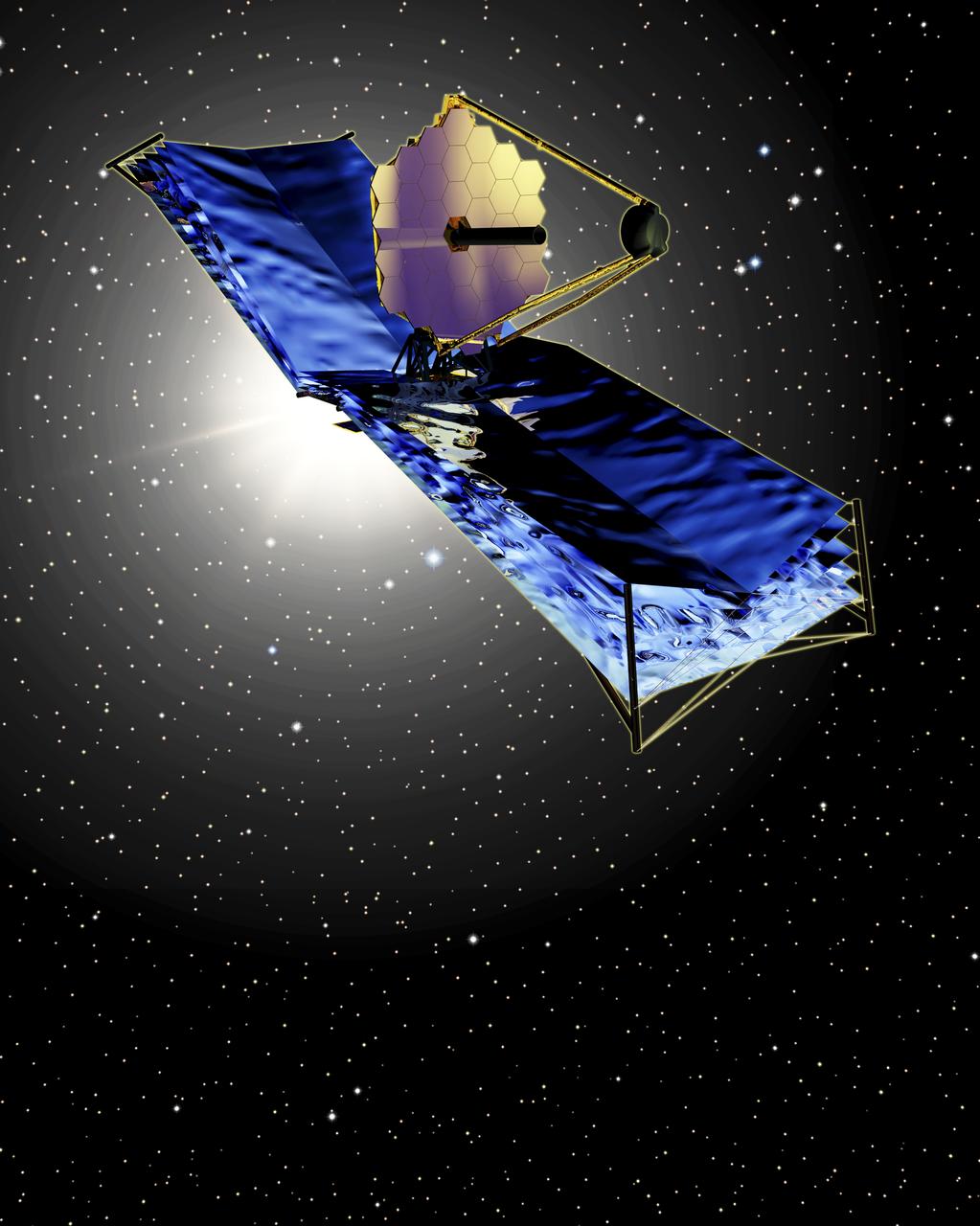
Pictured is the chosen artist's rendering of NASA's next generation space telescope, a successor to the Hubble Space Telescope, was named the James Webb Space Telescope (JWST) in honor of NASA's second administrator, James E. Webb. To further our understanding of the way our present universe formed following the the big bang, NASA is developing the JWST to observe the first stars and galaxies in the universe. This grand effort will help to answer the following fundamental questions: How galaxies form and evolve, how stars and planetary systems form and interact, how the universe builds up its present elemental/chemical composition, and what dark matter is. To see into the depths of space, the JWST is currently plarning to carry instruments that are sensitive to the infrared wavelengths of the electromagnetic spectrum. The new telescope will carry a near-infrared camera, a multi-object spectrometer, and a mid-infrared camera/spectrometer. The JWST is scheduled for launch in 2010 aboard an expendable launch vehicle. It will take about 3 months for the spacecraft to reach its destination, an orbit of 940,000 miles in space. Marshall Space Flight Center (MSFC) is supporting Goddard Space Flight Center (GSFC) in developing the JWST by creating an ultra-lightweight mirror for the telescope at MSFC's Space Optics Manufacturing Technology Center. GSFC, Greenbelt, Maryland, manages the JWST, and TRW will design and fabricate the observatory's primary mirror and spacecraft. The program has a number of industry, academic, and government partners, as well as the European Space Agency and the Canadian Space Agency. (Image: Courtesy of TRW)

The powerful primary mirrors of the James Webb Space Telescope will be able to detect the light from distant galaxies. The manufacturer of those mirrors, Ball Aerospace & Technologies Corp. of Boulder, Colo., recently celebrated their successful efforts as mirror segments were packed up in special shipping canisters (cans) for shipping to NASA. The Webb telescope has 21 mirrors, with 18 primary mirror segments working together as one large 21.3-foot (6.5-meter) primary mirror. The mirror segments are made of beryllium, which was selected for its stiffness, light weight and stability at cryogenic temperatures. Bare beryllium is not very reflective of near-infrared light, so each mirror is coated with about 0.12 ounce of gold. Northrop Grumman Corp. Aerospace Systems is the principal contractor on the telescope and commissioned Ball for the optics system's development, design, manufacturing, integration and testing. The Webb telescope is the world's next-generation space observatory and successor to the Hubble Space Telescope. The most powerful space telescope ever built, the Webb telescope will provide images of the first galaxies ever formed, and explore planets around distant stars. It is a joint project of NASA, the European Space Agency and the Canadian Space Agency. For more information about the James Webb Space Telescope, visit: <a href="http://www.jwst.nasa.gov" rel="nofollow">www.jwst.nasa.gov</a> Credit: Ball Aerospace <b><a href="http://www.nasa.gov/audience/formedia/features/MP_Photo_Guidelines.html" rel="nofollow">NASA image use policy.</a></b> <b><a href="http://www.nasa.gov/centers/goddard/home/index.html" rel="nofollow">NASA Goddard Space Flight Center</a></b> enables NASA’s mission through four scientific endeavors: Earth Science, Heliophysics, Solar System Exploration, and Astrophysics. Goddard plays a leading role in NASA’s accomplishments by contributing compelling scientific knowledge to advance the Agency’s mission. <b>Follow us on <a href="http://twitter.com/NASA_GoddardPix" rel="nofollow">Twitter</a></b> <b>Like us on <a href="http://www.facebook.com/pages/Greenbelt-MD/NASA-Goddard/395013845897?ref=tsd" rel="nofollow">Facebook</a></b> <b>Find us on <a href="http://instagrid.me/nasagoddard/?vm=grid" rel="nofollow">Instagram</a></b>
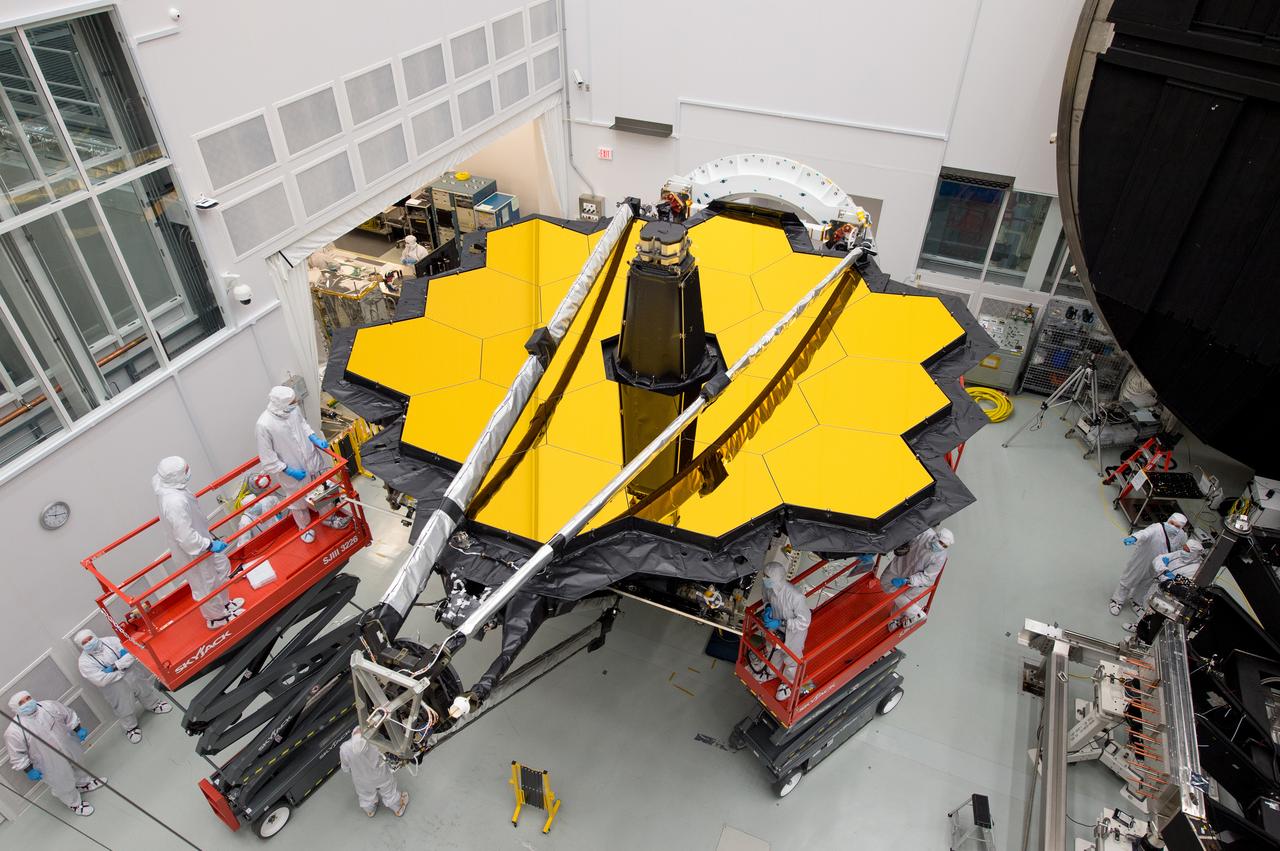
Now that NASA's James Webb Space Telescope has moved to NASA's Johnson Space Center in Houston, Texas, a special Webb camera was installed there to continue providing daily video feeds on the telescope's progress. Space enthusiasts, who are fascinated to see how this next generation space telescope has come together and how it is being tested, are able to see the telescope’s progress as it happens by watching the Webb-cam feed online. The Web camera at NASA’s Johnson Space Center can be seen online at: <a href="http://jwst.nasa.gov/" rel="nofollow">jwst.nasa.gov/</a>, with larger views of the cams available at: <a href="http://jwst.nasa.gov/webcam.html" rel="nofollow">jwst.nasa.gov/webcam.html</a>. Read more: <a href="https://go.nasa.gov/2rQYpT2" rel="nofollow">go.nasa.gov/2rQYpT2</a> <b><a href="http://www.nasa.gov/audience/formedia/features/MP_Photo_Guidelines.html" rel="nofollow">NASA image use policy.</a></b> <b><a href="http://www.nasa.gov/centers/goddard/home/index.html" rel="nofollow">NASA Goddard Space Flight Center</a></b> enables NASA’s mission through four scientific endeavors: Earth Science, Heliophysics, Solar System Exploration, and Astrophysics. Goddard plays a leading role in NASA’s accomplishments by contributing compelling scientific knowledge to advance the Agency’s mission. <b>Follow us on <a href="http://twitter.com/NASAGoddardPix" rel="nofollow">Twitter</a></b> <b>Like us on <a href="http://www.facebook.com/pages/Greenbelt-MD/NASA-Goddard/395013845897?ref=tsd" rel="nofollow">Facebook</a></b> <b>Find us on <a href="http://instagrid.me/nasagoddard/?vm=grid" rel="nofollow">Instagram</a></b>