
Jared Isaacman tours Airbus Defence and Space Facilities in Stevenage, United Kingdom, pictured with Baroness Liz Lloyd, Rebecca Evernden, and Nicky Fox.
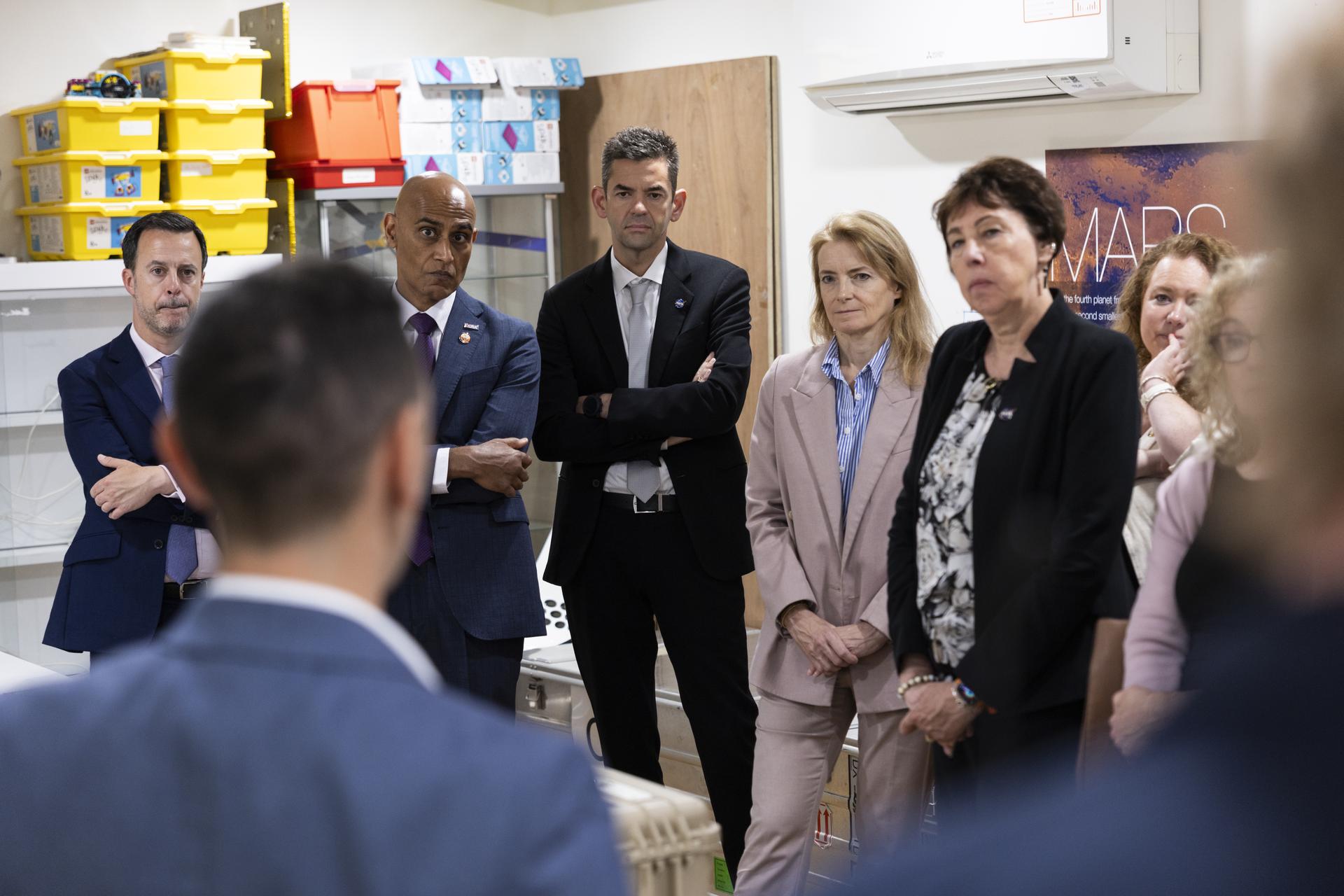
Jared Isaacman tours Airbus Defence and Space Facilities Mars Yard in Stevenage, United Kingdom. Pictured with Nicky Fox, Anu Ojha, Kevin Bonavia, and Baroness Liz Lloyd.
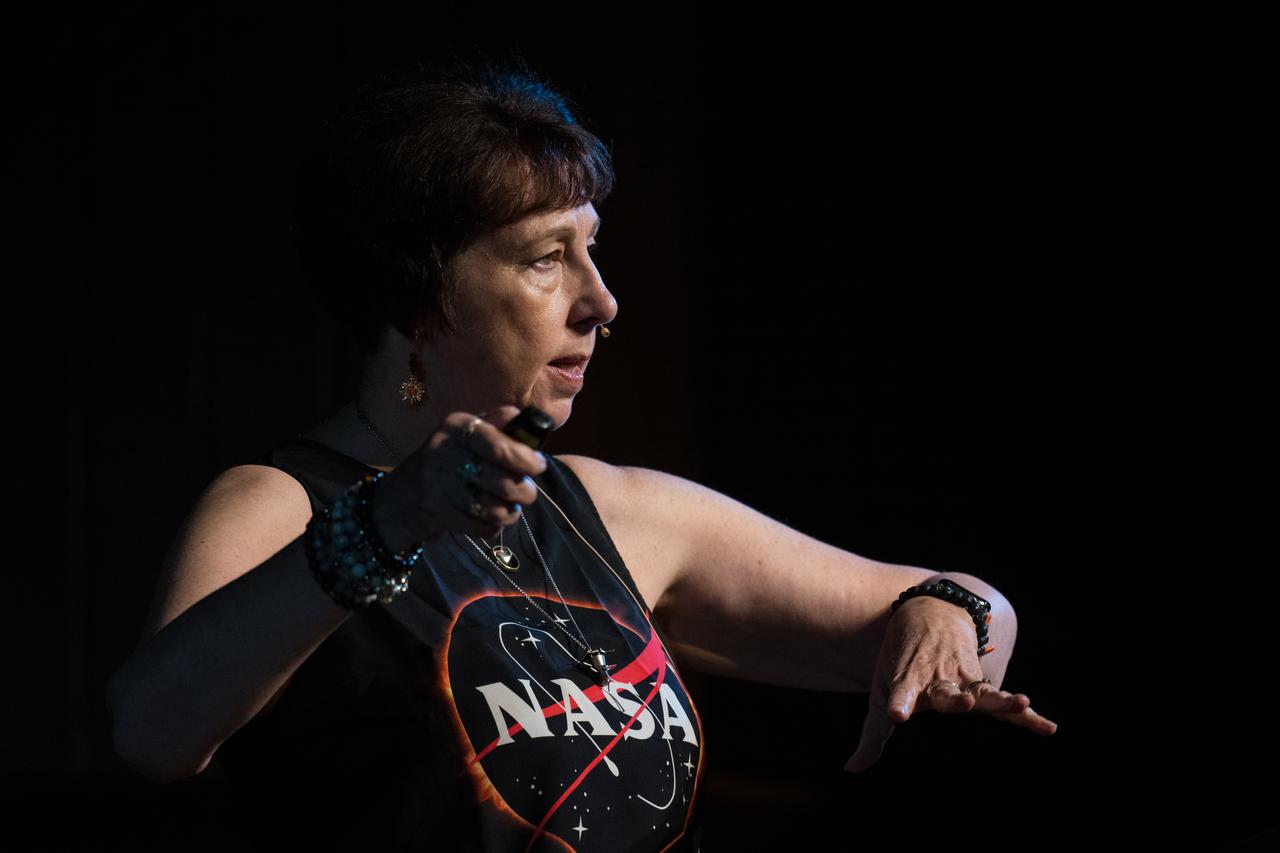
NASA Associate Administrator for the Science Mission Directorate, Dr. Nicky Fox, speaks during a presentation about the upcoming total solar eclipse, Saturday, April 6, 2024 at the Cailloux Theater in Kerrville, Texas. On Monday, April 8, a total solar eclipse will sweep across a narrow portion of the North American continent from Mexico’s Pacific coast to the Atlantic coast of Newfoundland, Canada, while a partial solar eclipse will be visible across the entire North American continent along with parts of Central America and Europe. Photo Credit: (NASA/Aubrey Gemignani)
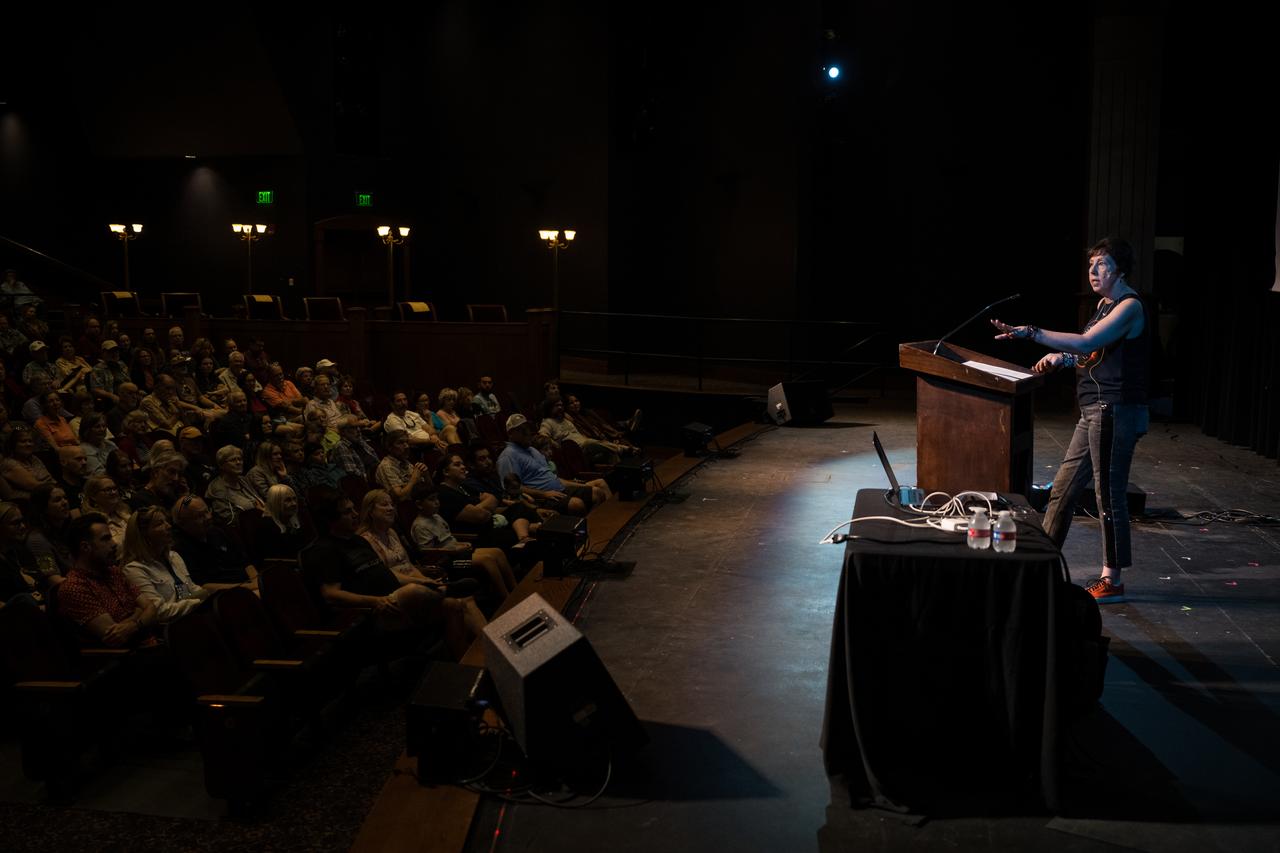
NASA Associate Administrator for the Science Mission Directorate, Dr. Nicky Fox, speaks during a presentation about the upcoming total solar eclipse, Saturday, April 6, 2024 at the Cailloux Theater in Kerrville, Texas. On Monday, April 8, a total solar eclipse will sweep across a narrow portion of the North American continent from Mexico’s Pacific coast to the Atlantic coast of Newfoundland, Canada, while a partial solar eclipse will be visible across the entire North American continent along with parts of Central America and Europe. Photo Credit: (NASA/Aubrey Gemignani)

NASA Associate Administrator for the Science Mission Directorate, Dr. Nicky Fox, speaks during a presentation about the upcoming total solar eclipse, Saturday, April 6, 2024 at the Cailloux Theater in Kerrville, Texas. On Monday, April 8, a total solar eclipse will sweep across a narrow portion of the North American continent from Mexico’s Pacific coast to the Atlantic coast of Newfoundland, Canada, while a partial solar eclipse will be visible across the entire North American continent along with parts of Central America and Europe. Photo Credit: (NASA/Aubrey Gemignani)
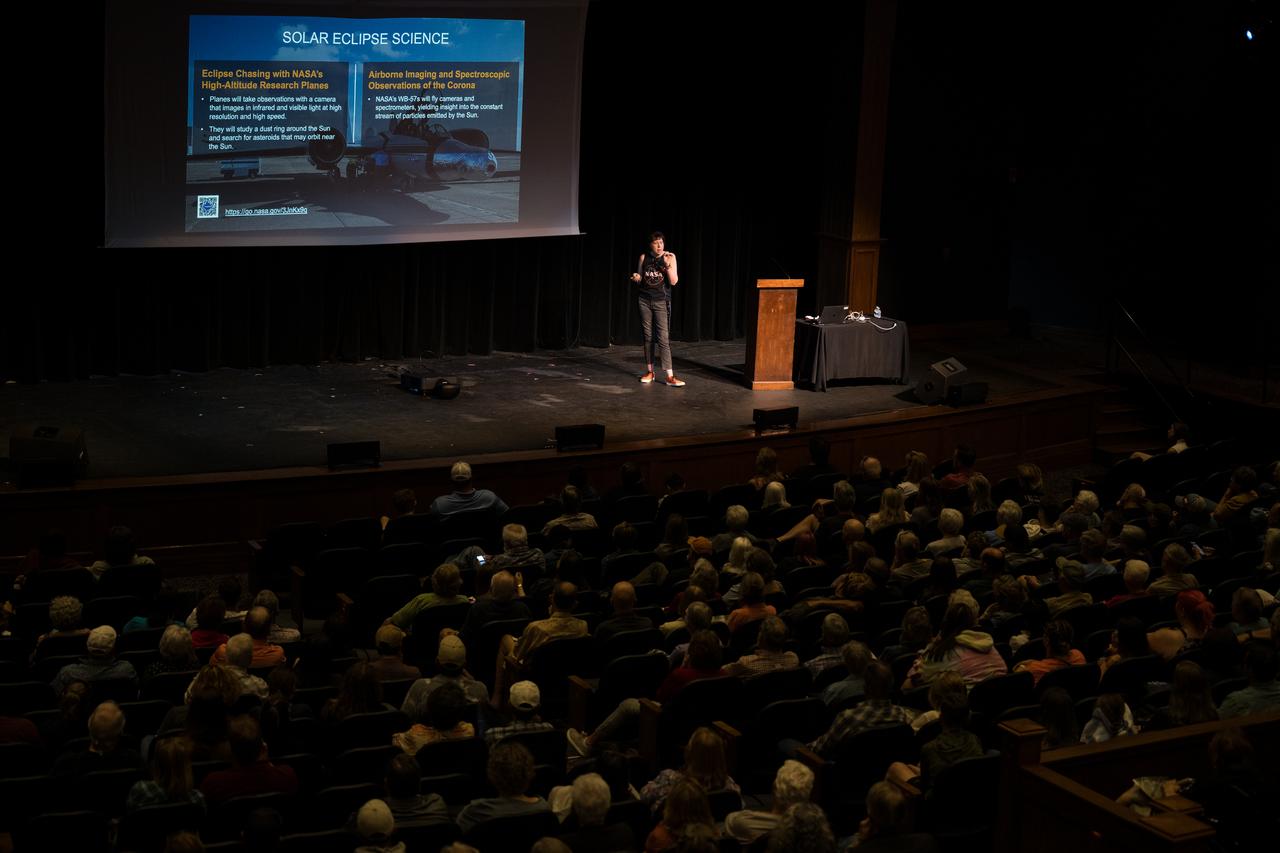
NASA Associate Administrator for the Science Mission Directorate, Dr. Nicky Fox, speaks during a presentation about the upcoming total solar eclipse, Saturday, April 6, 2024 at the Cailloux Theater in Kerrville, Texas. On Monday, April 8, a total solar eclipse will sweep across a narrow portion of the North American continent from Mexico’s Pacific coast to the Atlantic coast of Newfoundland, Canada, while a partial solar eclipse will be visible across the entire North American continent along with parts of Central America and Europe. Photo Credit: (NASA/Aubrey Gemignani)
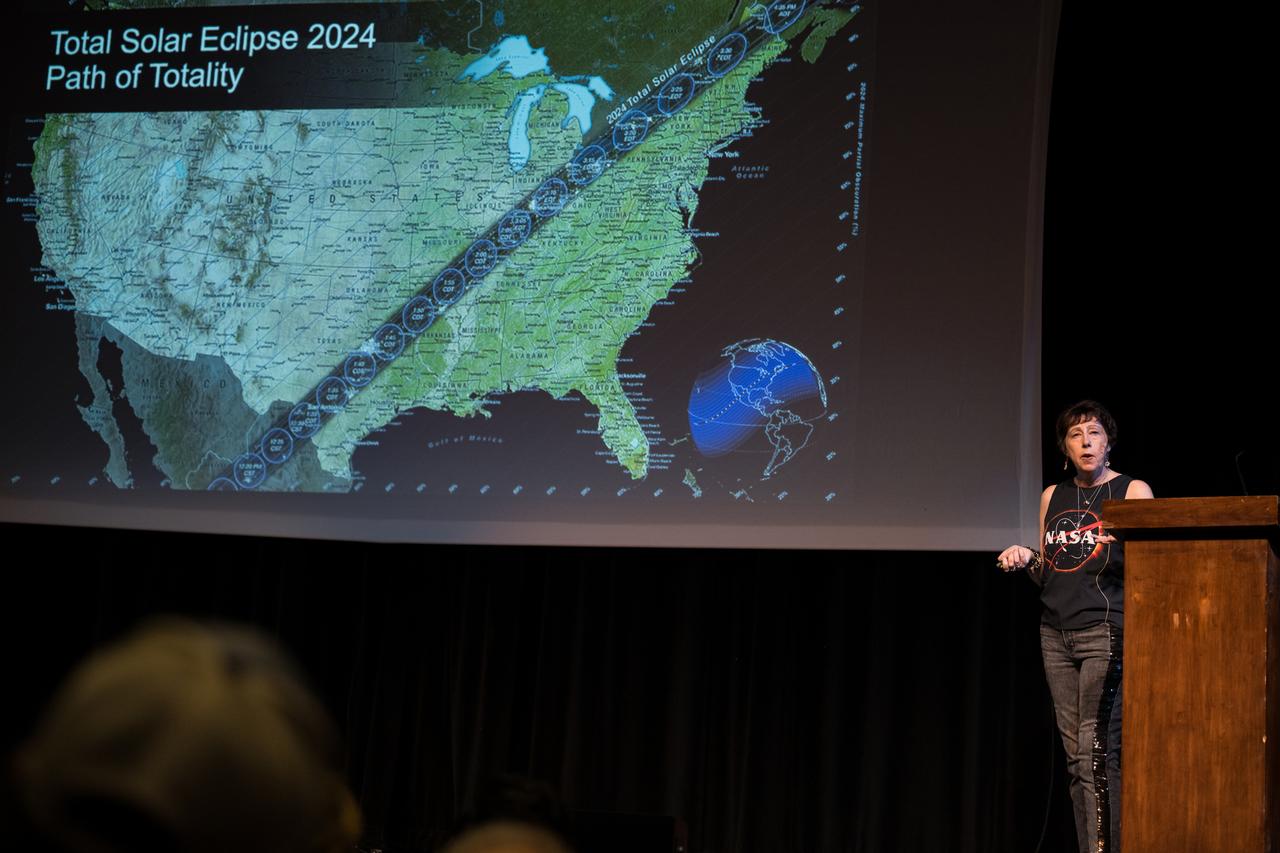
NASA Associate Administrator for the Science Mission Directorate, Dr. Nicky Fox, speaks during a presentation about the upcoming total solar eclipse, Saturday, April 6, 2024 at the Cailloux Theater in Kerrville, Texas. On Monday, April 8, a total solar eclipse will sweep across a narrow portion of the North American continent from Mexico’s Pacific coast to the Atlantic coast of Newfoundland, Canada, while a partial solar eclipse will be visible across the entire North American continent along with parts of Central America and Europe. Photo Credit: (NASA/Aubrey Gemignani)
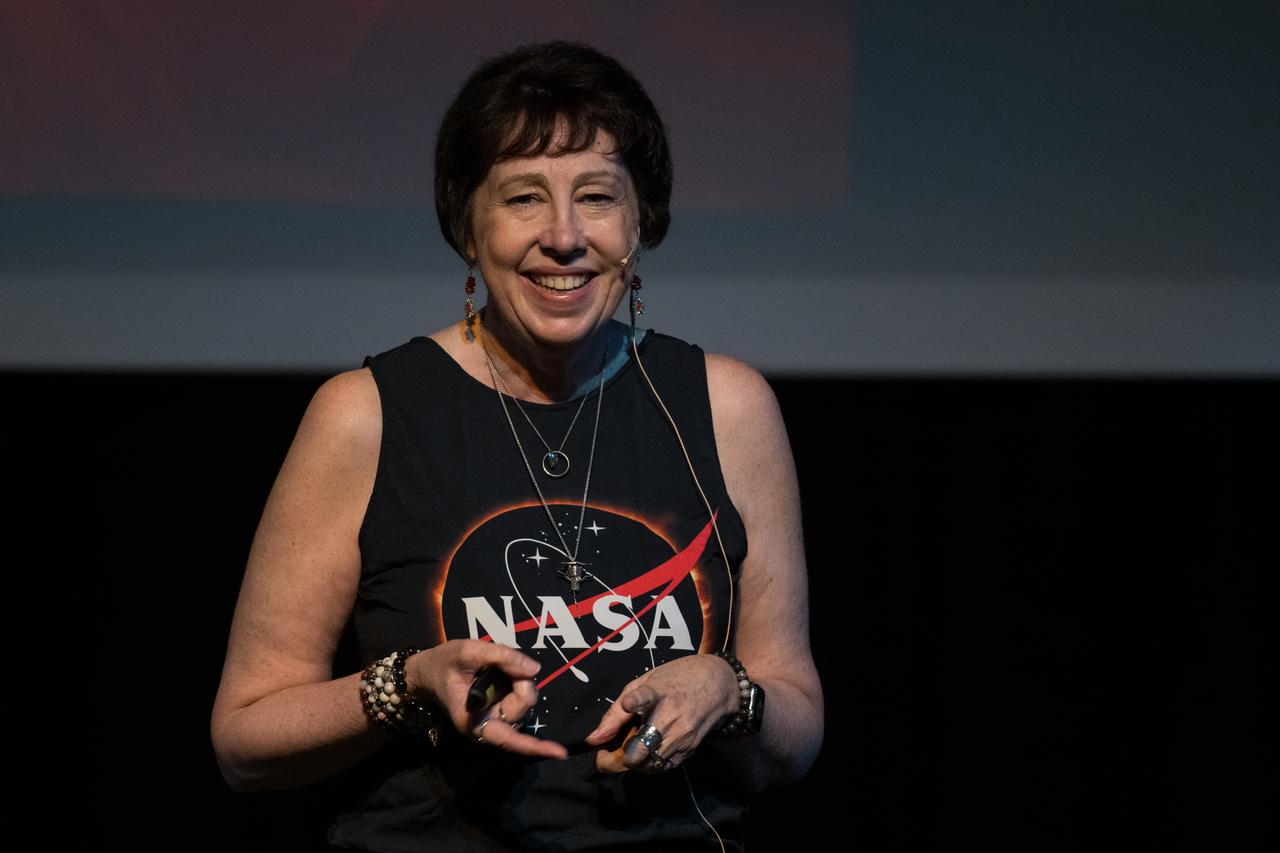
NASA Associate Administrator for the Science Mission Directorate, Dr. Nicky Fox, speaks during a presentation about the upcoming total solar eclipse, Saturday, April 6, 2024 at the Cailloux Theater in Kerrville, Texas. On Monday, April 8, a total solar eclipse will sweep across a narrow portion of the North American continent from Mexico’s Pacific coast to the Atlantic coast of Newfoundland, Canada, while a partial solar eclipse will be visible across the entire North American continent along with parts of Central America and Europe. Photo Credit: (NASA/Aubrey Gemignani)
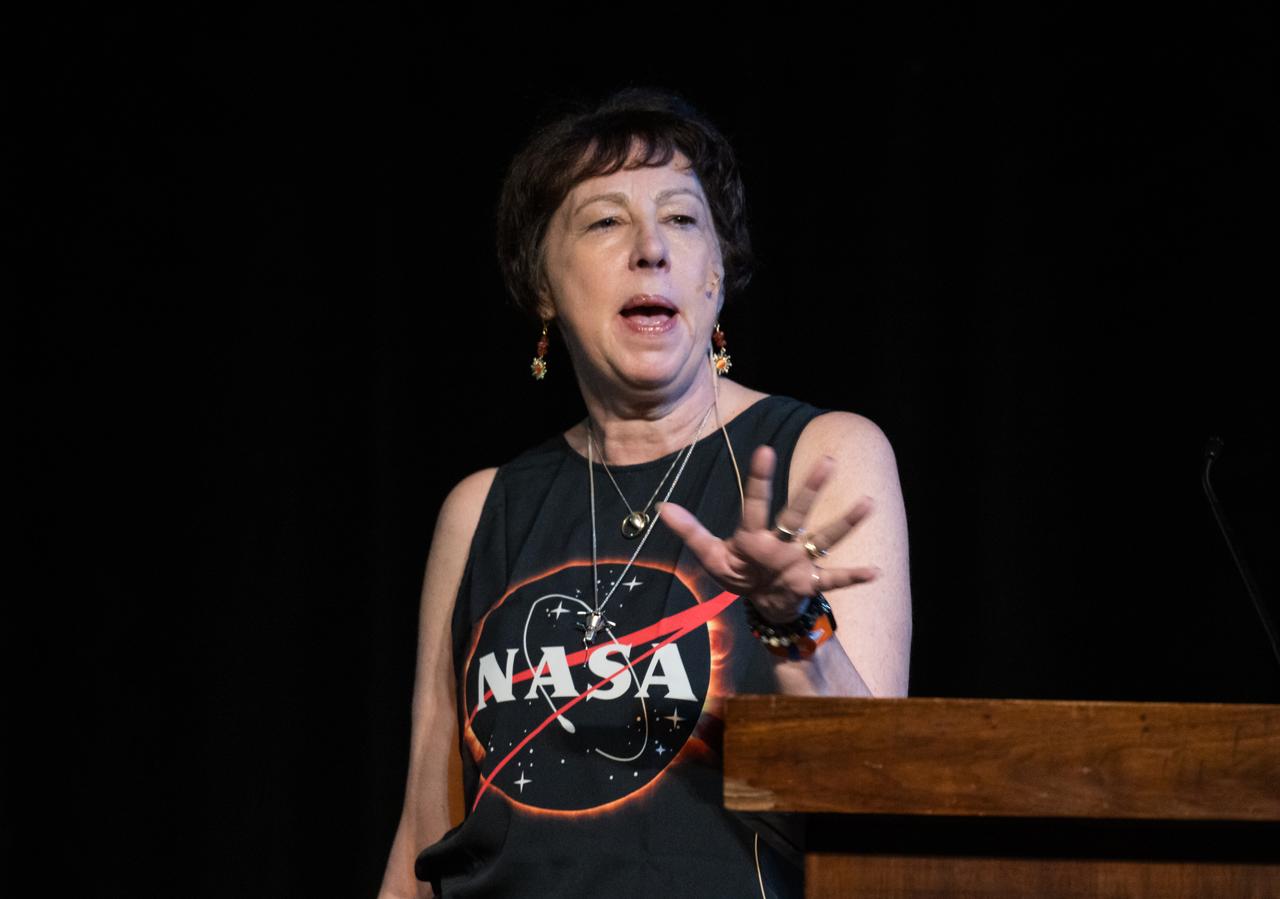
NASA Associate Administrator for the Science Mission Directorate, Dr. Nicky Fox, speaks during a presentation about the upcoming total solar eclipse, Saturday, April 6, 2024 at the Cailloux Theater in Kerrville, Texas. On Monday, April 8, a total solar eclipse will sweep across a narrow portion of the North American continent from Mexico’s Pacific coast to the Atlantic coast of Newfoundland, Canada, while a partial solar eclipse will be visible across the entire North American continent along with parts of Central America and Europe. Photo Credit: (NASA/Aubrey Gemignani)
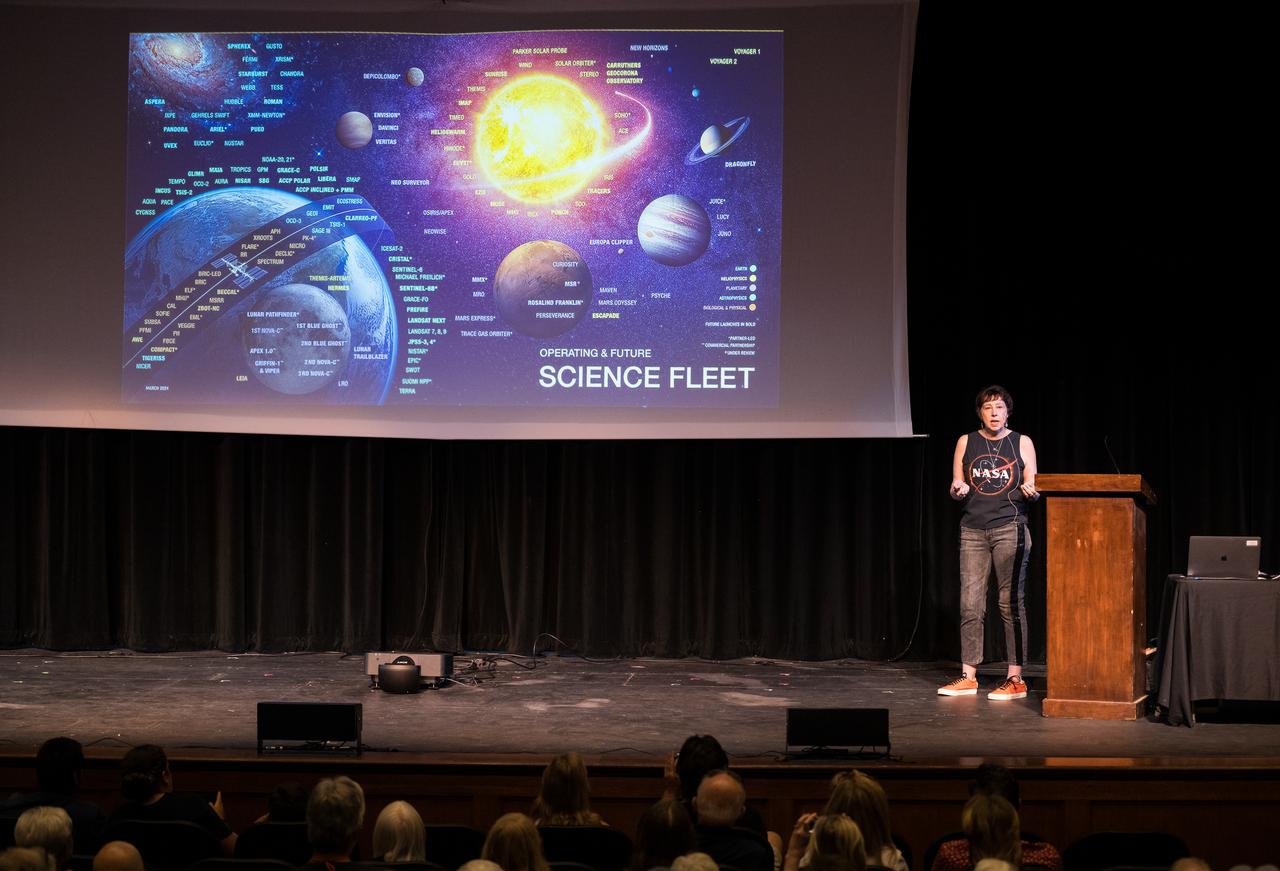
NASA Associate Administrator for the Science Mission Directorate, Dr. Nicky Fox, speaks during a presentation about the upcoming total solar eclipse, Saturday, April 6, 2024 at the Cailloux Theater in Kerrville, Texas. On Monday, April 8, a total solar eclipse will sweep across a narrow portion of the North American continent from Mexico’s Pacific coast to the Atlantic coast of Newfoundland, Canada, while a partial solar eclipse will be visible across the entire North American continent along with parts of Central America and Europe. Photo Credit: (NASA/Aubrey Gemignani)
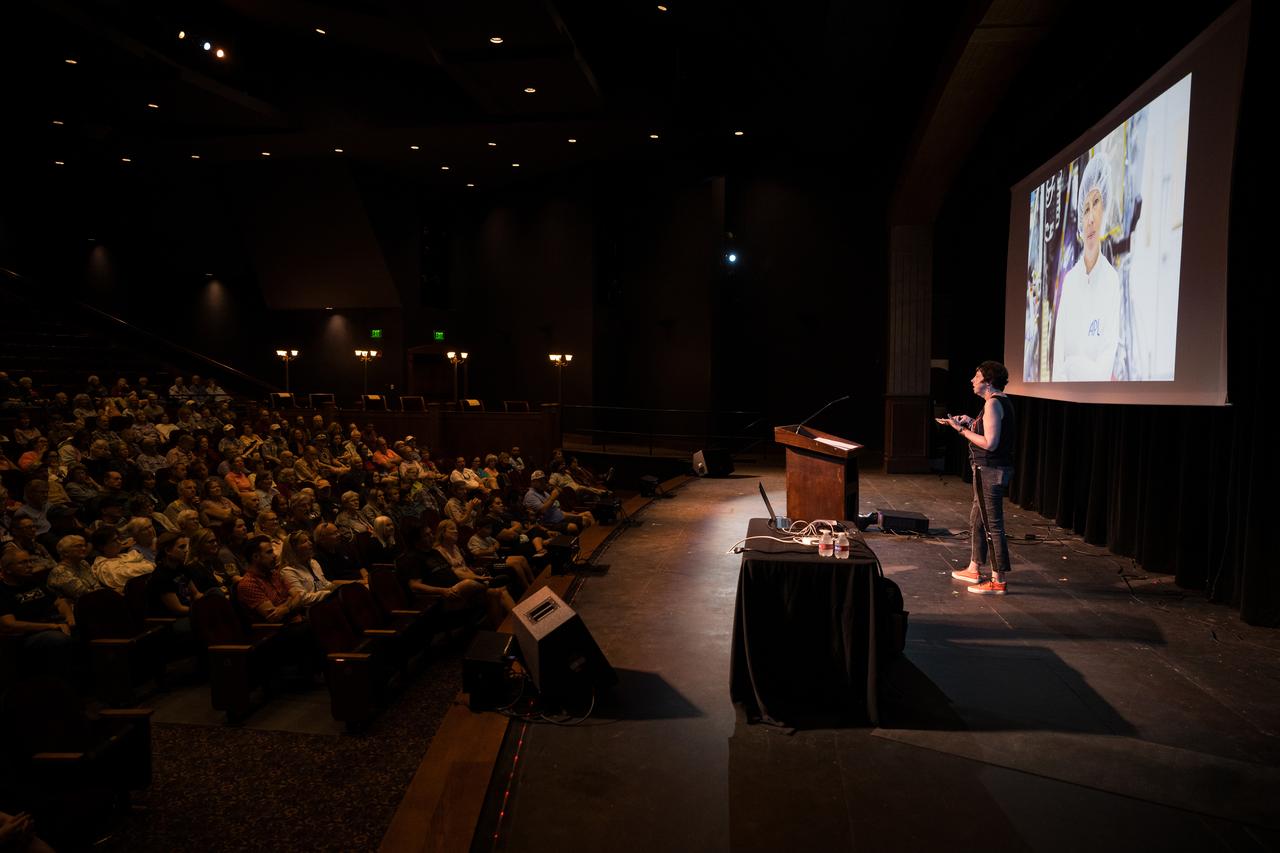
NASA Associate Administrator for the Science Mission Directorate, Dr. Nicky Fox, speaks during a presentation about the upcoming total solar eclipse, Saturday, April 6, 2024 at the Cailloux Theater in Kerrville, Texas. On Monday, April 8, a total solar eclipse will sweep across a narrow portion of the North American continent from Mexico’s Pacific coast to the Atlantic coast of Newfoundland, Canada, while a partial solar eclipse will be visible across the entire North American continent along with parts of Central America and Europe. Photo Credit: (NASA/Aubrey Gemignani)
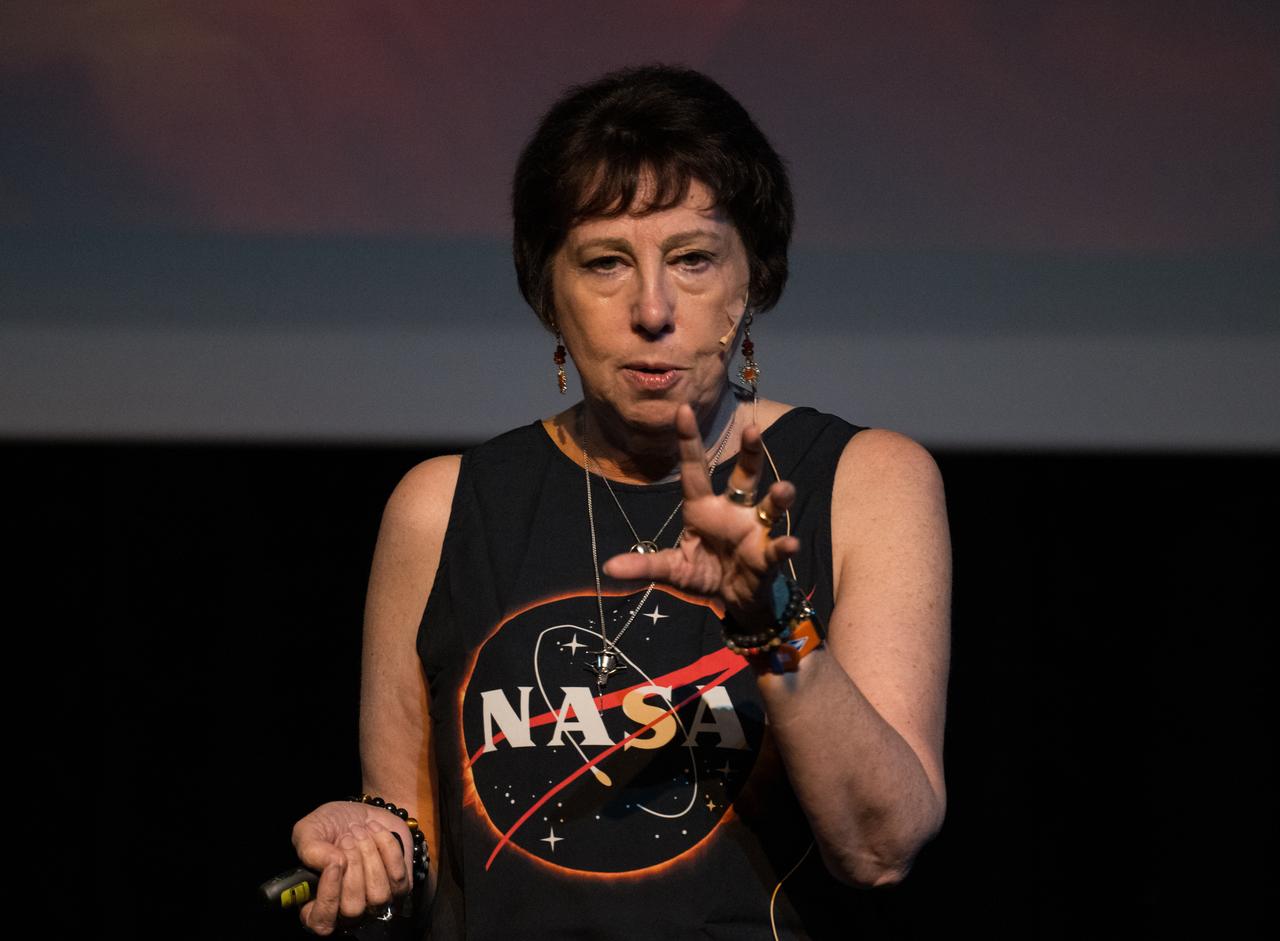
NASA Associate Administrator for the Science Mission Directorate, Dr. Nicky Fox, speaks during a presentation about the upcoming total solar eclipse, Saturday, April 6, 2024 at the Cailloux Theater in Kerrville, Texas. On Monday, April 8, a total solar eclipse will sweep across a narrow portion of the North American continent from Mexico’s Pacific coast to the Atlantic coast of Newfoundland, Canada, while a partial solar eclipse will be visible across the entire North American continent along with parts of Central America and Europe. Photo Credit: (NASA/Aubrey Gemignani)
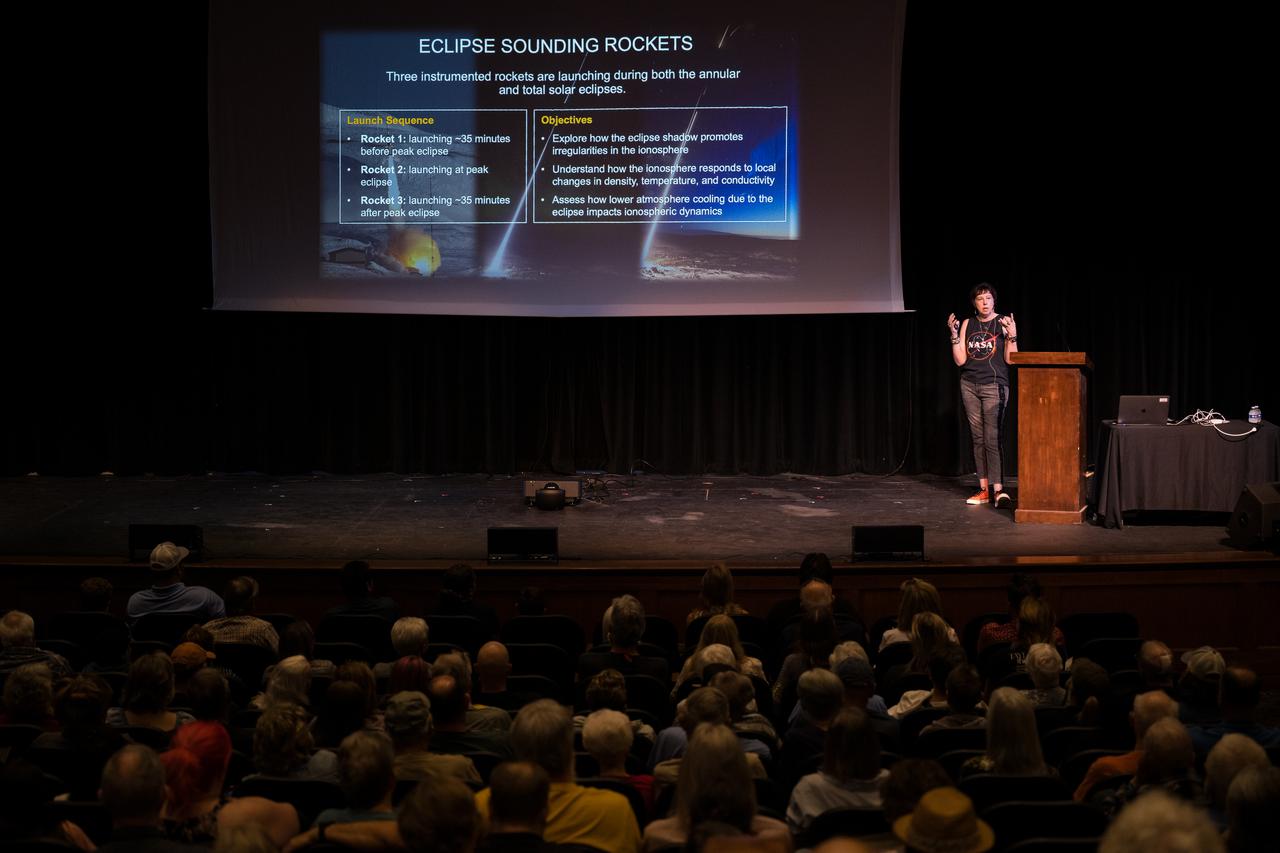
NASA Associate Administrator for the Science Mission Directorate, Dr. Nicky Fox, speaks during a presentation about the upcoming total solar eclipse, Saturday, April 6, 2024 at the Cailloux Theater in Kerrville, Texas. On Monday, April 8, a total solar eclipse will sweep across a narrow portion of the North American continent from Mexico’s Pacific coast to the Atlantic coast of Newfoundland, Canada, while a partial solar eclipse will be visible across the entire North American continent along with parts of Central America and Europe. Photo Credit: (NASA/Aubrey Gemignani)
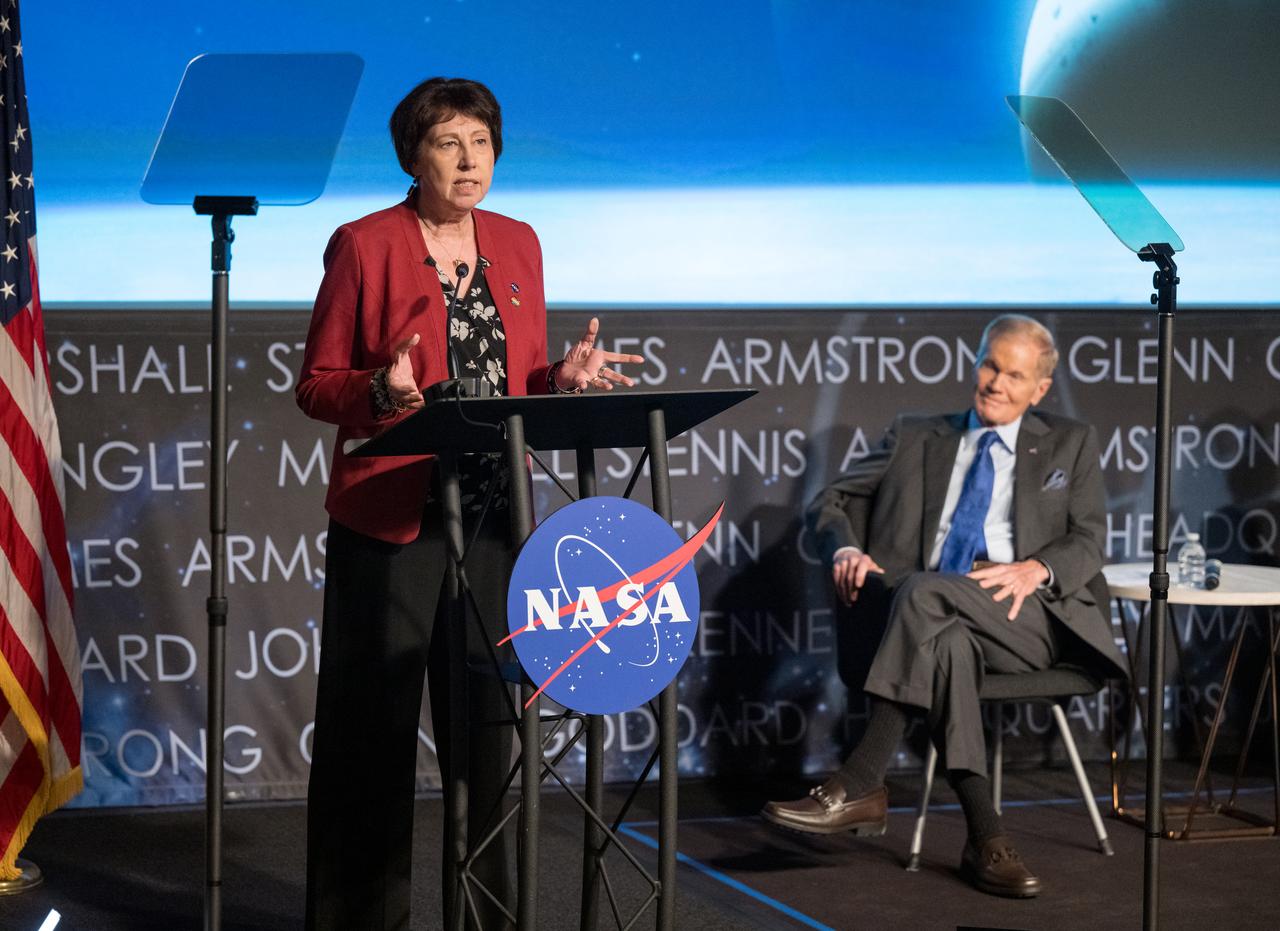
NASA Associate Administrator for Science, Nicky Fox, discusses the agency’s goals during the annual State of NASA address, Monday, March 11, 2024, at the Mary W. Jackson NASA Headquarters Building in Washington. NASA leaders discussed plans for promoting U.S. leadership in space exploration, improving life on Earth through science and innovation, humanity’s return to the Moon under the Artemis campaign, aeronautics, and more. Photo Credit: (NASA/Bill Ingalls)
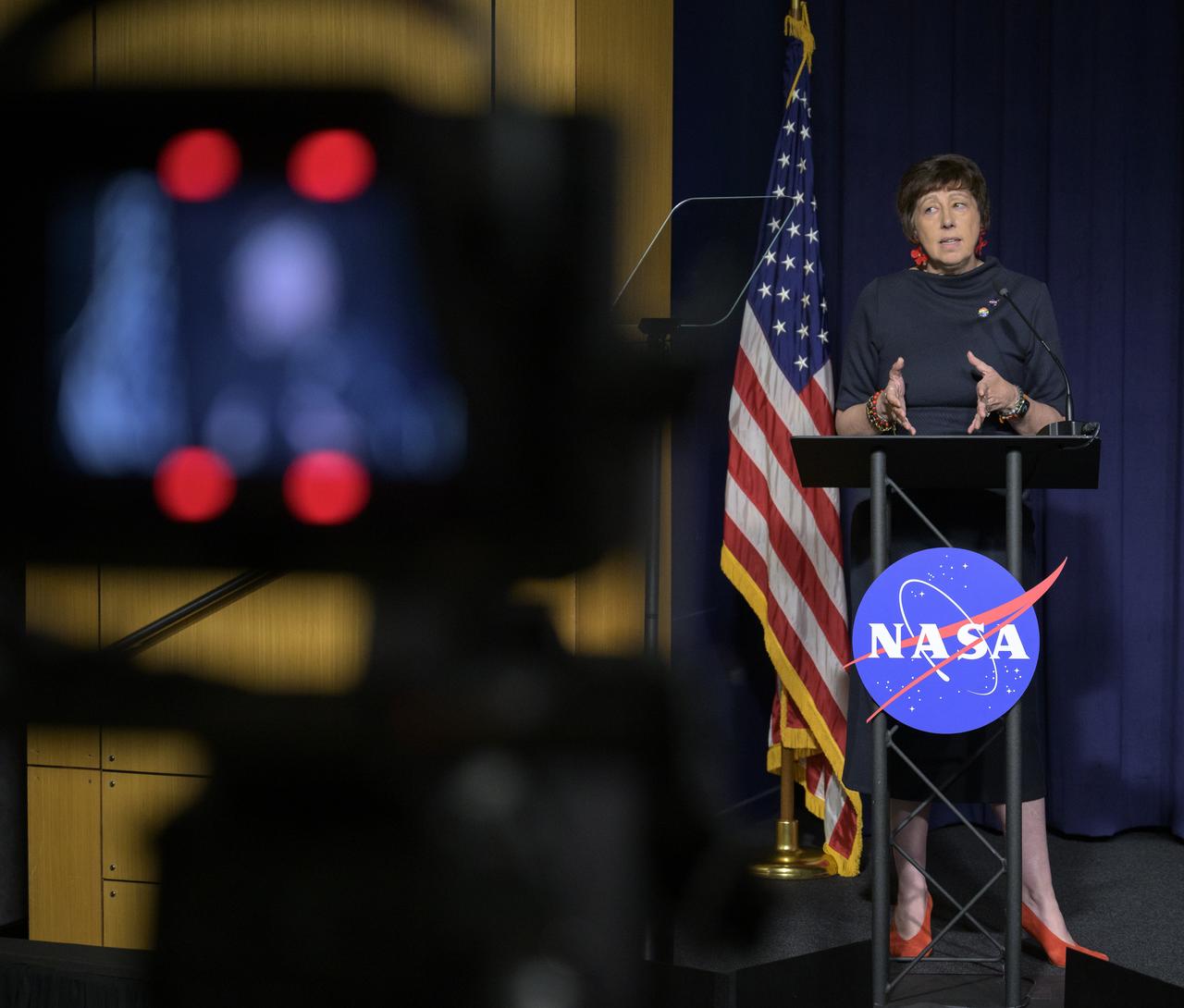
NASA Associate Administrator, Science Mission Directorate, Dr. Nicky Fox delivers remarks during an event launching a new Disaster Response Coordination System that will provide communities and organizations around the world with access to science and data to aid disaster response, Thursday, June 13, 2024, at the NASA Headquarters Mary W. Jackson Building in Washington. Photo Credit: (NASA/Bill Ingalls)

NASA Associate Administrator, Science Mission Directorate, Dr. Nicky Fox delivers remarks during an event launching a new Disaster Response Coordination System that will provide communities and organizations around the world with access to science and data to aid disaster response, Thursday, June 13, 2024, at the NASA Headquarters Mary W. Jackson Building in Washington. Photo Credit: (NASA/Bill Ingalls)
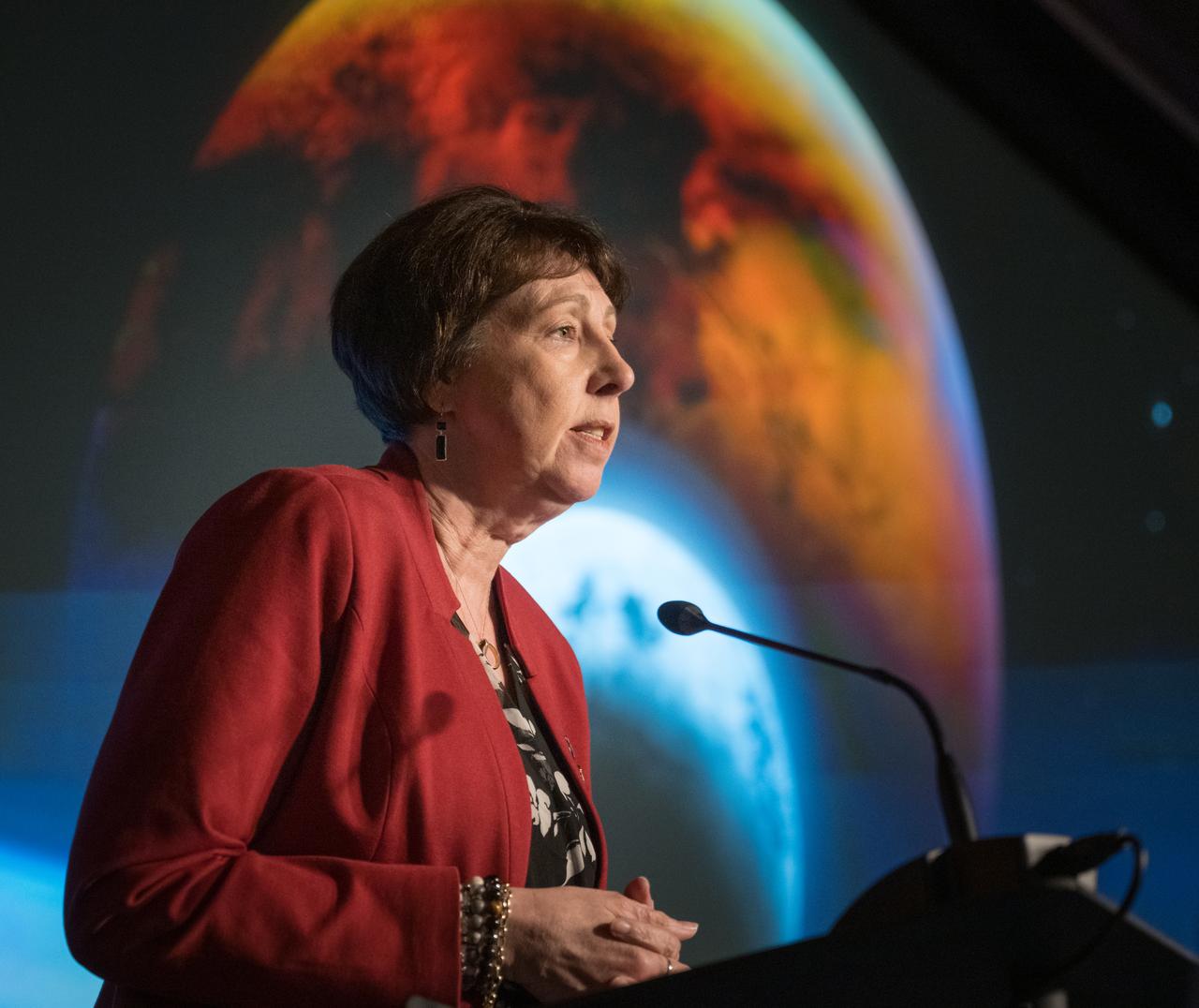
NASA Associate Administrator for Science, Nicky Fox, discusses the agency’s goals during the annual State of NASA address, Monday, March 11, 2024, at the Mary W. Jackson NASA Headquarters Building in Washington. NASA leaders discussed plans for promoting U.S. leadership in space exploration, improving life on Earth through science and innovation, humanity’s return to the Moon under the Artemis campaign, aeronautics, and more. Photo Credit: (NASA/Bill Ingalls)
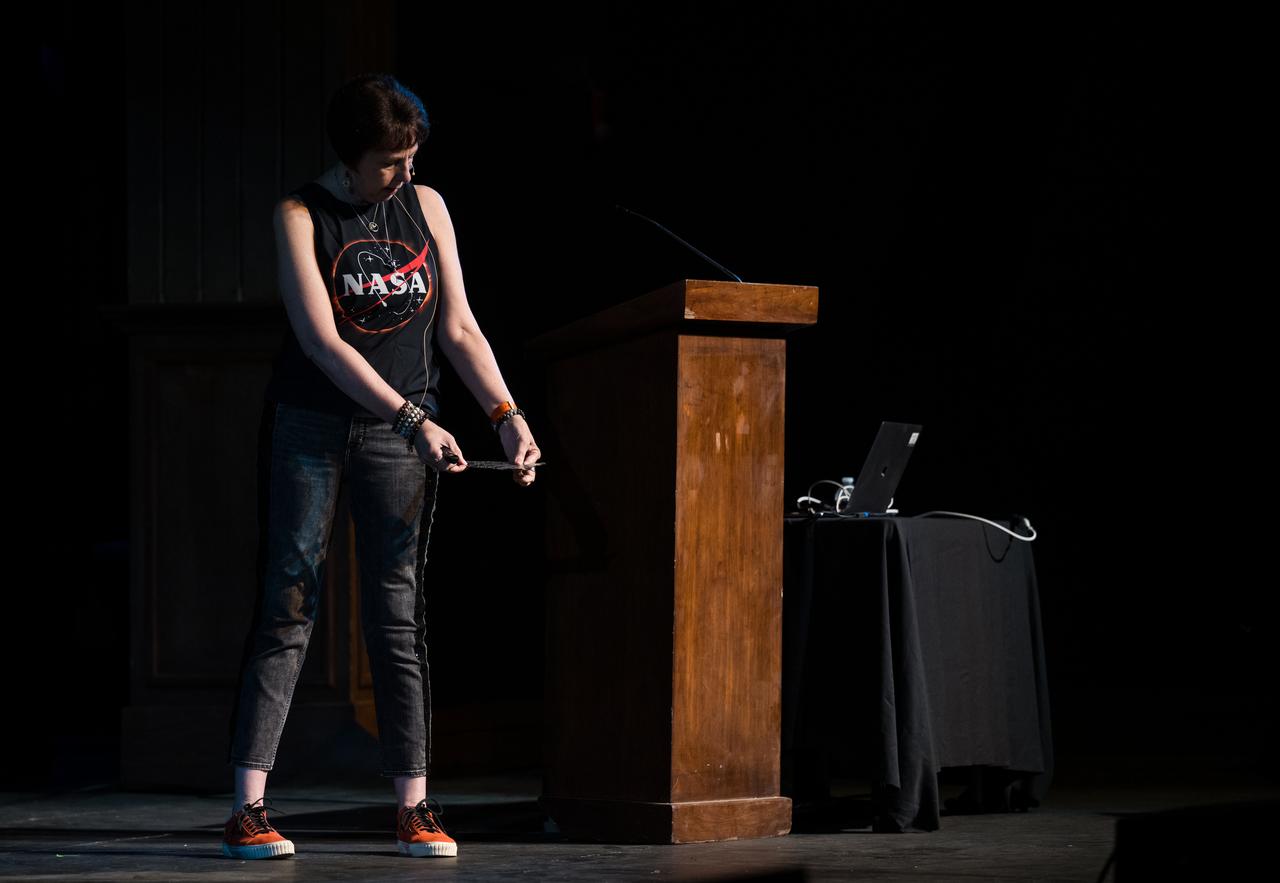
NASA Associate Administrator for the Science Mission Directorate, Dr. Nicky Fox, demonstrates how to use a pinhole projector during a presentation about the upcoming total solar eclipse, Saturday, April 6, 2024 at the Cailloux Theater in Kerrville, Texas. On Monday, April 8, a total solar eclipse will sweep across a narrow portion of the North American continent from Mexico’s Pacific coast to the Atlantic coast of Newfoundland, Canada, while a partial solar eclipse will be visible across the entire North American continent along with parts of Central America and Europe. Photo Credit: (NASA/Aubrey Gemignani)
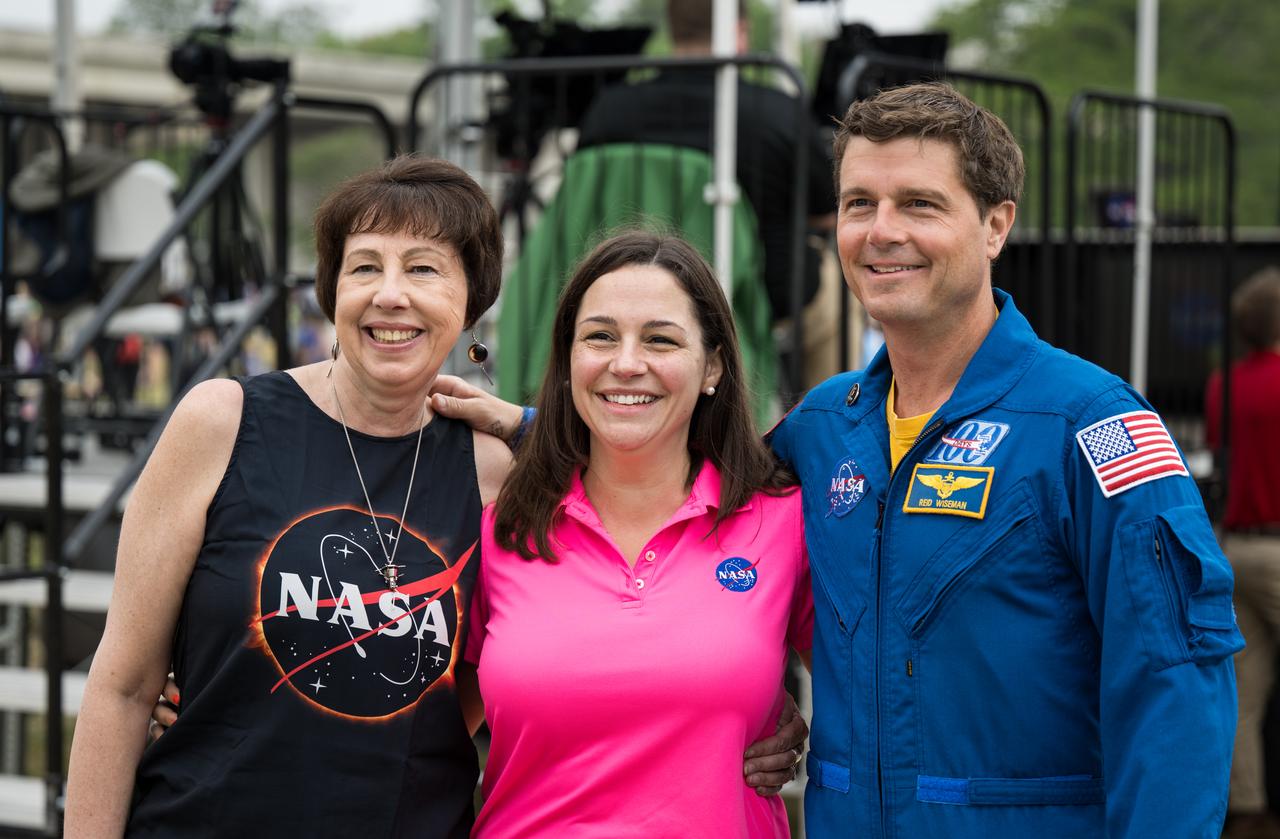
NASA Associate Administrator for the Science Mission directorate, Dr. Nicky Fox, Eclipse Engagement Lead Alex Lockwood, and NASA astronaut Reid Wiseman pose for a photos as they prepare to watch a total solar eclipse in Kerrville, TX on Monday, April 8, 2024. A total solar eclipse swept across a narrow portion of the North American continent from Mexico’s Pacific coast to the Atlantic coast of Newfoundland, Canada. A partial solar eclipse was visible across the entire North American continent along with parts of Central America and Europe. Photo Credit: (NASA/Aubrey Gemignani)
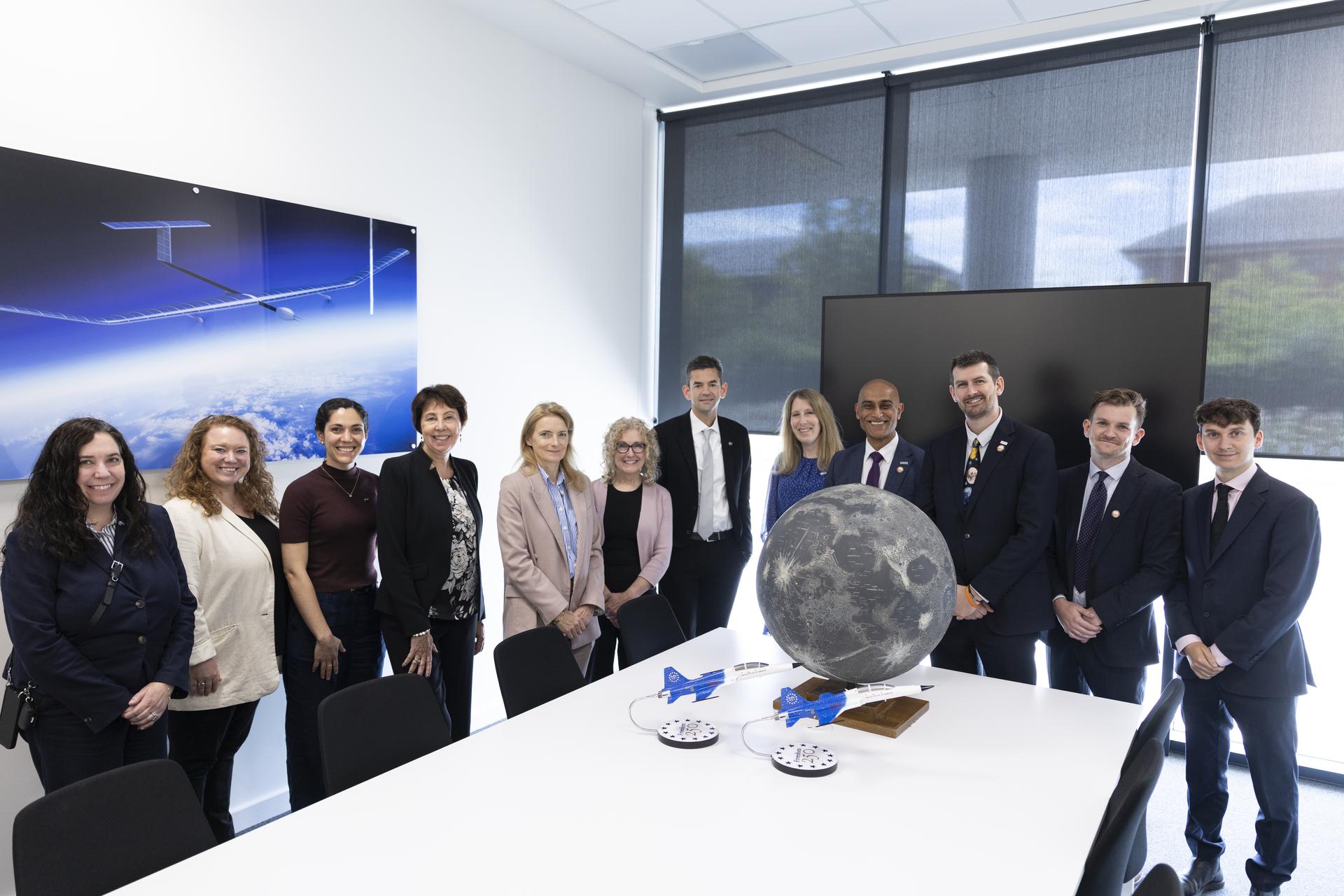
Jared Isaacman tours Airbus Defence and Space Facilities in Stevenage, United Kingdom.
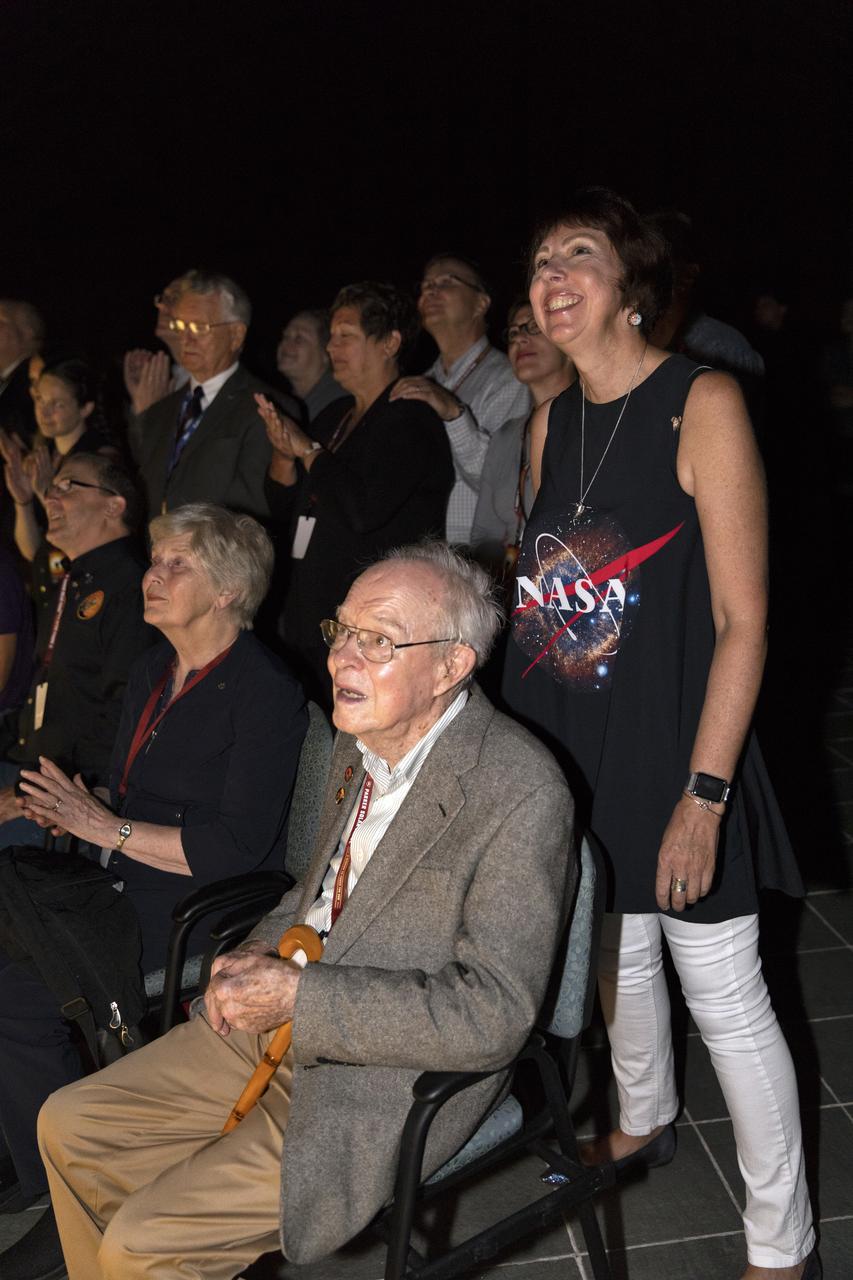
Dr. Eugene Parker (seated in the foreground), a pioneer in heliophysics and S. Chandrasekhar distinguished service professor emeritus for the Department of Astronomy and Astrophysics at the University of Chicago, watches the launch of NASA's Parker Solar Probe. This is the first agency mission named for a living person. Standing behind Parker is Nicky Fox, Parker Solar Probe project scientist at Johns Hopkins Applied Physics Laboratory. The liftoff took place at 3:31 a.m. EDT on Sunday, Aug. 12, 2018. The spacecraft was built by the Johns Hopkins University Applied Physics Laboratory in Laurel, Maryland. The mission will perform the closest-ever observations of a star when it travels through the Sun's atmosphere, called the corona. The probe will rely on measurements and imaging to revolutionize our understanding of the corona and the Sun-Earth connection.
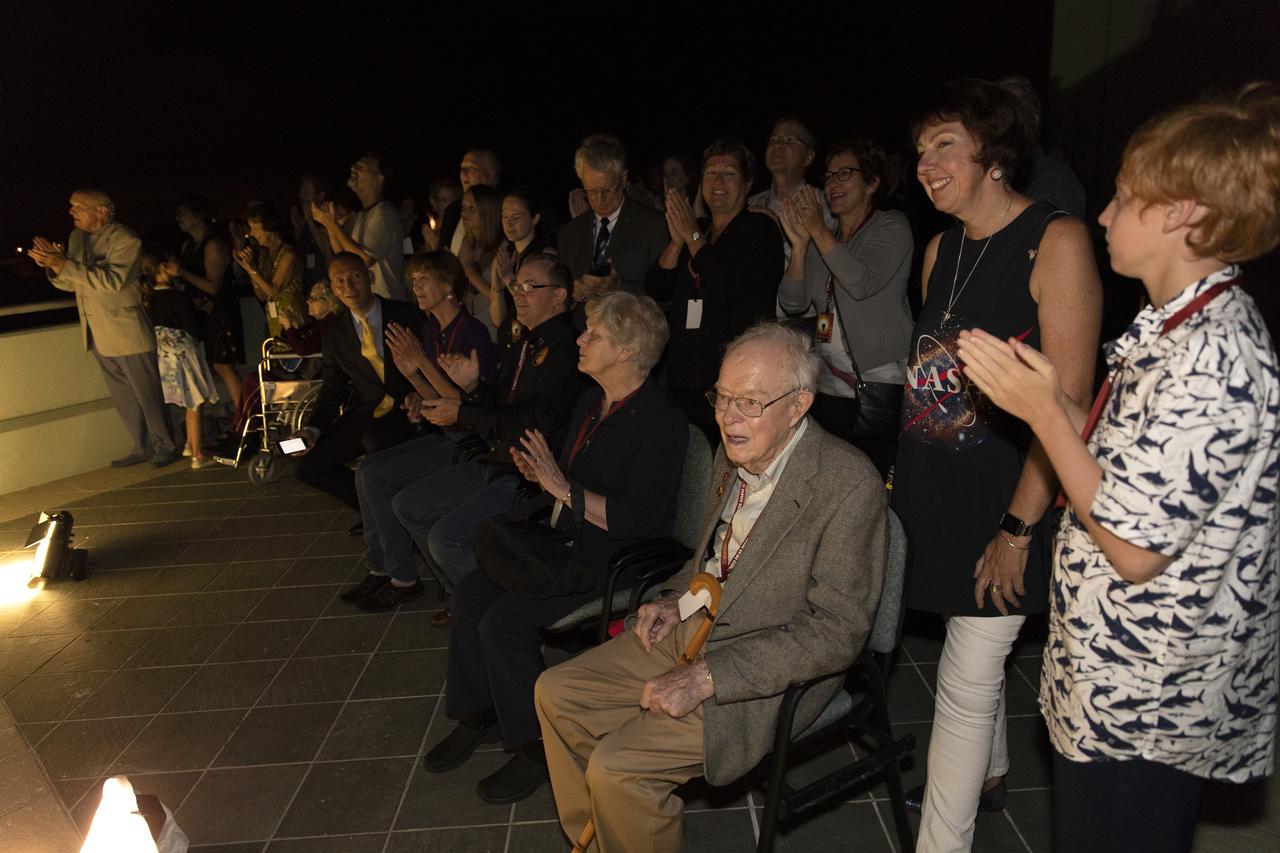
Dr. Eugene Parker (seated in the foreground), a pioneer in heliophysics and S. Chandrasekhar distinguished service professor emeritus for the Department of Astronomy and Astrophysics at the University of Chicago, watches the launch of NASA's Parker Solar Probe. This is the first agency mission named for a living person. Standing behind Parker is Nicky Fox, Parker Solar Probe project scientist at Johns Hopkins Applied Physics Laboratory. The liftoff took place at 3:31 a.m. EDT on Sunday, Aug. 12, 2018. The spacecraft was built by the Johns Hopkins University Applied Physics Laboratory in Laurel, Maryland. The mission will perform the closest-ever observations of a star when it travels through the Sun's atmosphere, called the corona. The probe will rely on measurements and imaging to revolutionize our understanding of the corona and the Sun-Earth connection.
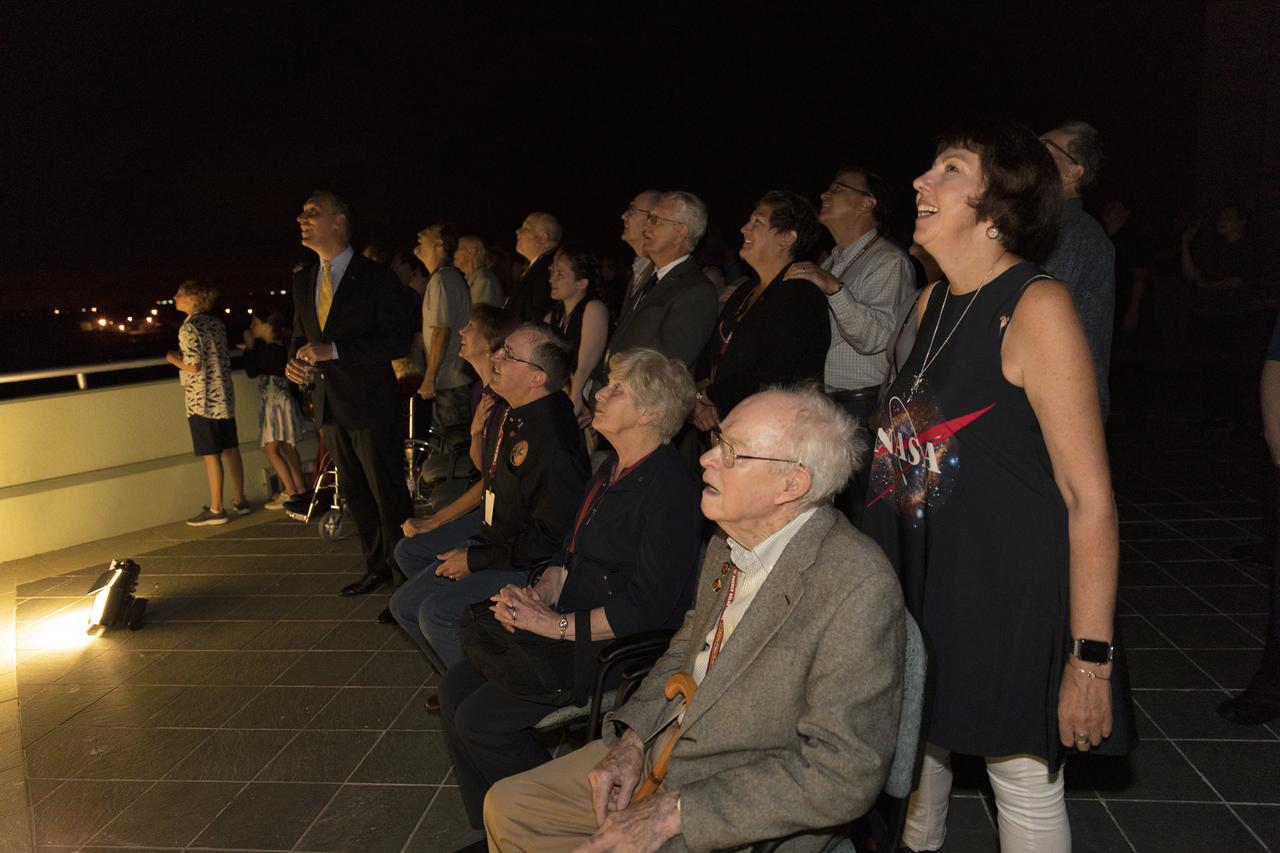
Dr. Eugene Parker (seated in the foreground), a pioneer in heliophysics and S. Chandrasekhar distinguished service professor emeritus for the Department of Astronomy and Astrophysics at the University of Chicago, watches the launch of NASA's Parker Solar Probe. This is the first agency mission named for a living person. Standing behind Parker is Nicky Fox, Parker Solar Probe project scientist at Johns Hopkins Applied Physics Laboratory. The liftoff took place at 3:31 a.m. EDT on Sunday, Aug. 12, 2018. The spacecraft was built by the Johns Hopkins University Applied Physics Laboratory in Laurel, Maryland. The mission will perform the closest-ever observations of a star when it travels through the Sun's atmosphere, called the corona. The probe will rely on measurements and imaging to revolutionize our understanding of the corona and the Sun-Earth connection.
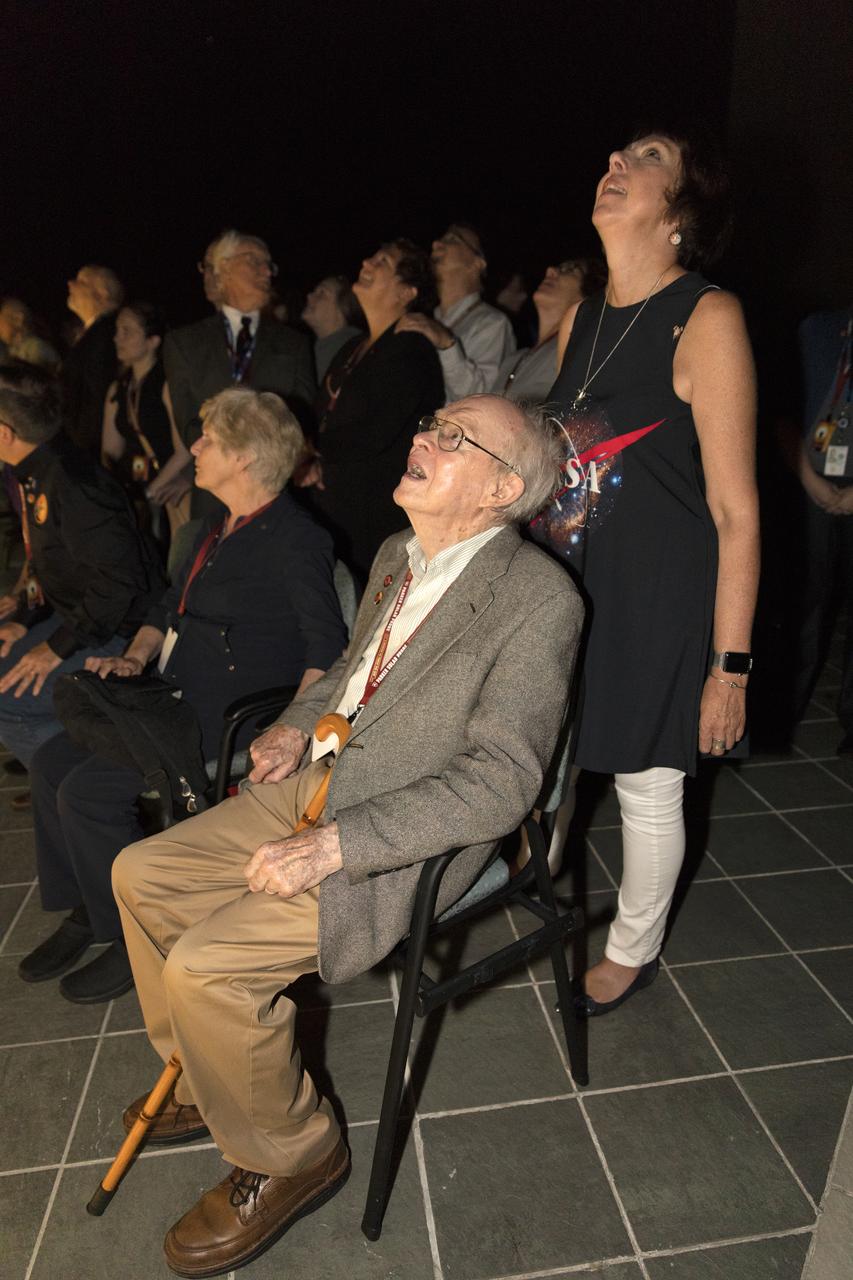
Dr. Eugene Parker (seated in the foreground), a pioneer in heliophysics and S. Chandrasekhar distinguished service professor emeritus for the Department of Astronomy and Astrophysics at the University of Chicago, watches the launch of NASA's Parker Solar Probe. This is the first agency mission named for a living person. Standing behind Parker is Nicky Fox, Parker Solar Probe project scientist at Johns Hopkins Applied Physics Laboratory. The liftoff took place at 3:31 a.m. EDT on Sunday, Aug. 12, 2018. The spacecraft was built by the Johns Hopkins University Applied Physics Laboratory in Laurel, Maryland. The mission will perform the closest-ever observations of a star when it travels through the Sun's atmosphere, called the corona. The probe will rely on measurements and imaging to revolutionize our understanding of the corona and the Sun-Earth connection.

From left, Joel Montalbano acting associate administrator for NASA’s Space Operations Mission Directorate at NASA Headquarters and Nicky Fox, associate administrator, Science Mission Directorate, NASA Headquarters, participate in the Artemis II Flight Readiness Review with NASA leadership on Wednesday, March 11, 2026, at NASA’s Kennedy Space Center in Florida. The review is an assessment of the readiness of NASA’s SLS (Space Launch System) rocket and Orion spacecraft to support the Artemis II test flight as four astronauts journey around the Moon and return to Earth.

jsc2026e021376 (April 6, 2026) - Nicky Fox, associate administrator for NASA's Science Mission Directorate and Brad Bailey, assistant deputy associate administrator for exploration, observe and celebrate a successful lunar flyby with the Artemis II lunar science team in the Science Evaluation Room in Mission Control at NASA's Johnson Space Center in Houston. Credits: NASA/Luna Posadas Nava
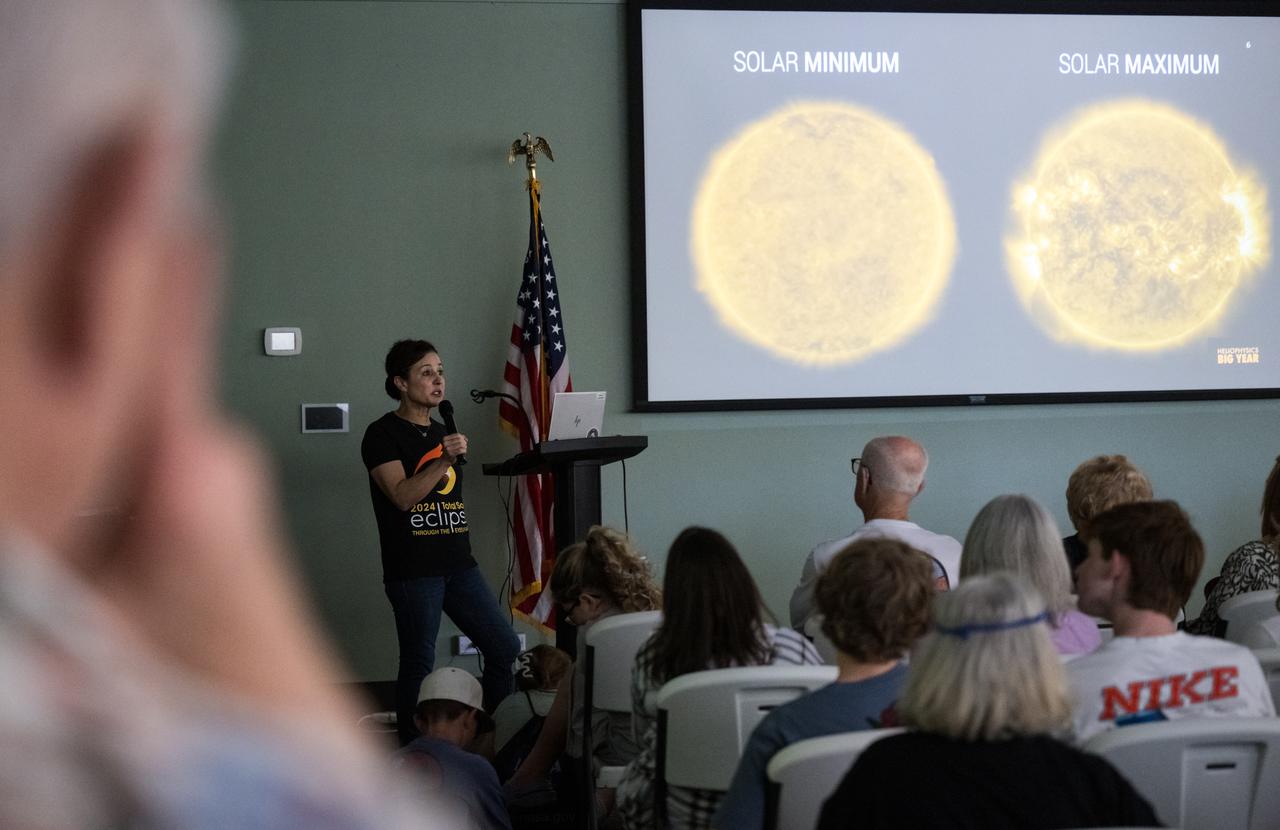
Program Scientist and Deputy Chief Technologist at NASA Headquarters, Roshanak Hakimzadeh, speaks during a presentation about the upcoming eclipse, Sunday, April 7, 2024 at the Butt-Holdsworth Library in Kerrville, Texas. On Monday, April 8, a total solar eclipse will sweep across a narrow portion of the North American continent from Mexico’s Pacific coast to the Atlantic coast of Newfoundland, Canada, while a partial solar eclipse will be visible across the entire North American continent along with parts of Central America and Europe. Photo Credit: (NASA/Aubrey Gemignani)
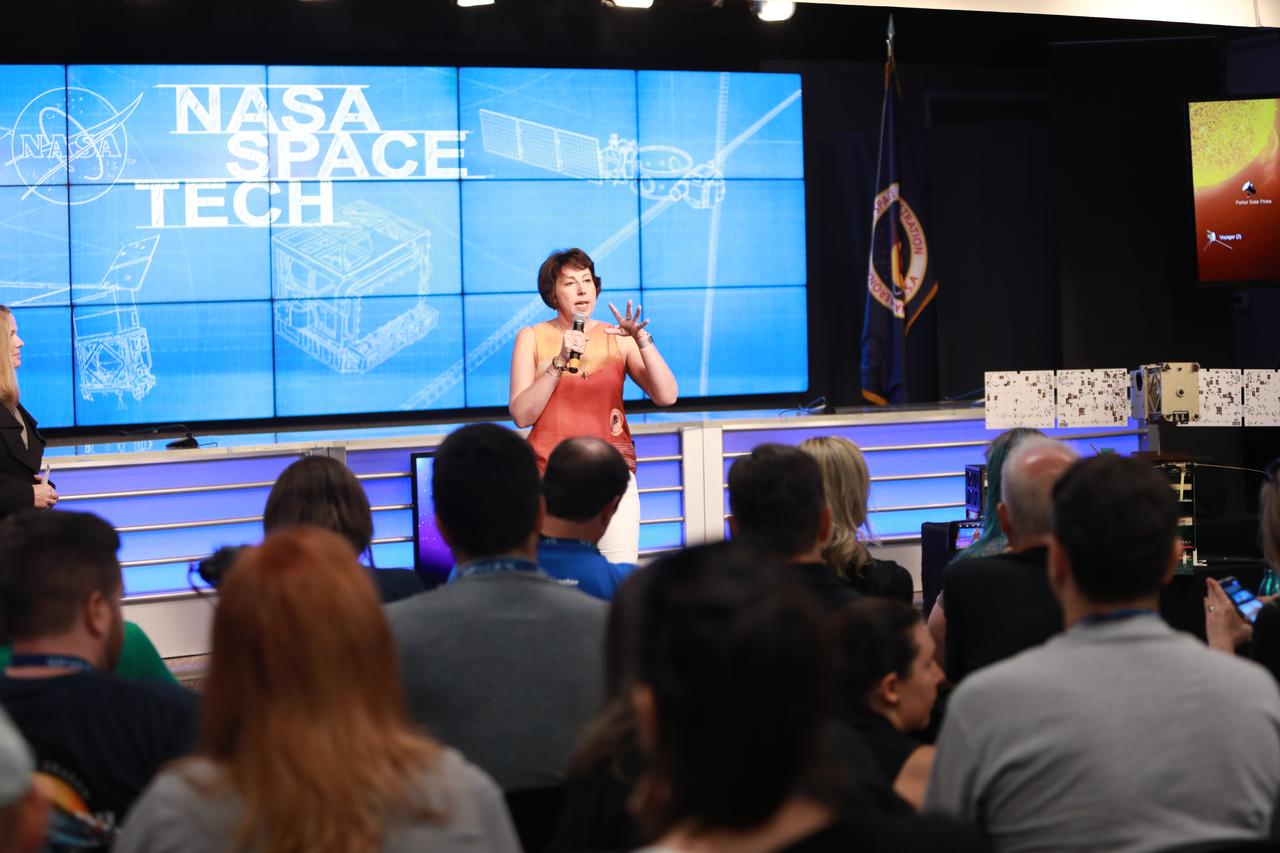
Nicky Fox, director of NASA’s Heliophysics Division, discusses the Space Environment Testbeds payload during a NASA prelaunch technology TV broadcast for the Space Test Program-2 (STP-2) at NASA’s Kennedy Space Center in Florida on June 23, 2019. The payload’s four experiments will reveal the ways local space weather affects spacecraft hardware. It is one of four NASA payloads scheduled to launch on a SpaceX Falcon Heavy rocket from Launch Complex 39A beginning at 11:30 p.m. EDT on June 24, 2019. STP-2 is managed by the U.S. Air Force Space and Missile Systems Center.

Nicky Fox, director of NASA’s Heliophysics Division, discusses the Space Environment Testbeds payload during a NASA prelaunch technology TV broadcast for the Space Test Program-2 (STP-2) at NASA’s Kennedy Space Center in Florida on June 23, 2019. The payload’s four experiments will reveal the ways local space weather affects spacecraft hardware. It is one of four NASA payloads scheduled to launch on a SpaceX Falcon Heavy rocket from Launch Complex 39A beginning at 11:30 p.m. EDT on June 24, 2019. STP-2 is managed by the U.S. Air Force Space and Missile Systems Center.
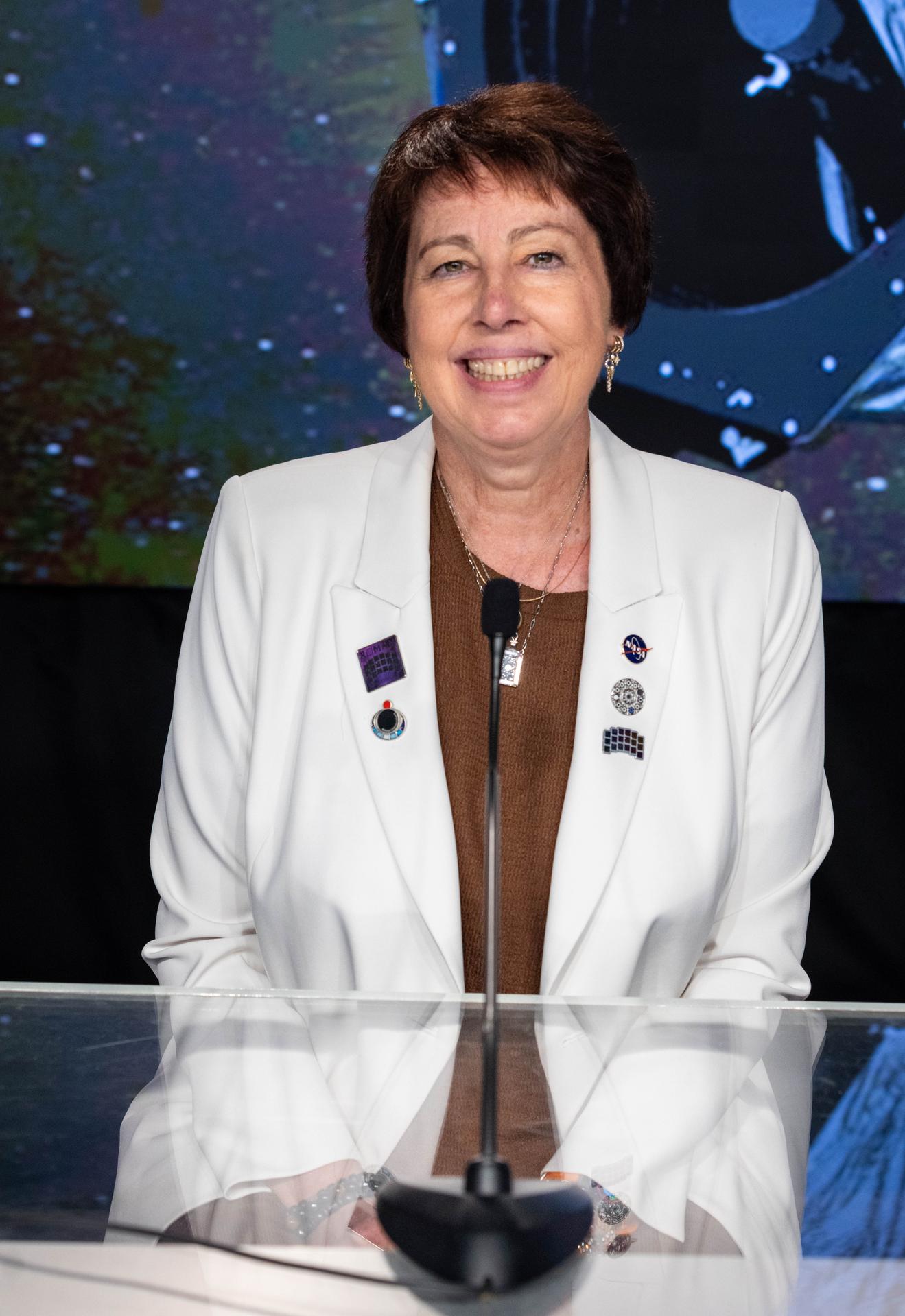
Nicky Fox, associate administrator, Science Mission Directorate, NASA Headquarters in Washington, participates in a postlaunch news conference for the agency’s Nancy Grace Roman Space Telescope inside the NASA News Center’s John Holliman Auditorium at Kennedy Space Center in Florida, on Sunday, Aug. 30, 2026. Roman will investigate dark energy and dark matter, conduct a statistical census of planetary systems, and enable a broad range of additional astrophysics research. Liftoff of Roman atop a SpaceX Falcon Heavy rocket occurred at 7:26 a.m. EDT Sunday, Aug. 30, from Kennedy’s Launch Complex 39A.
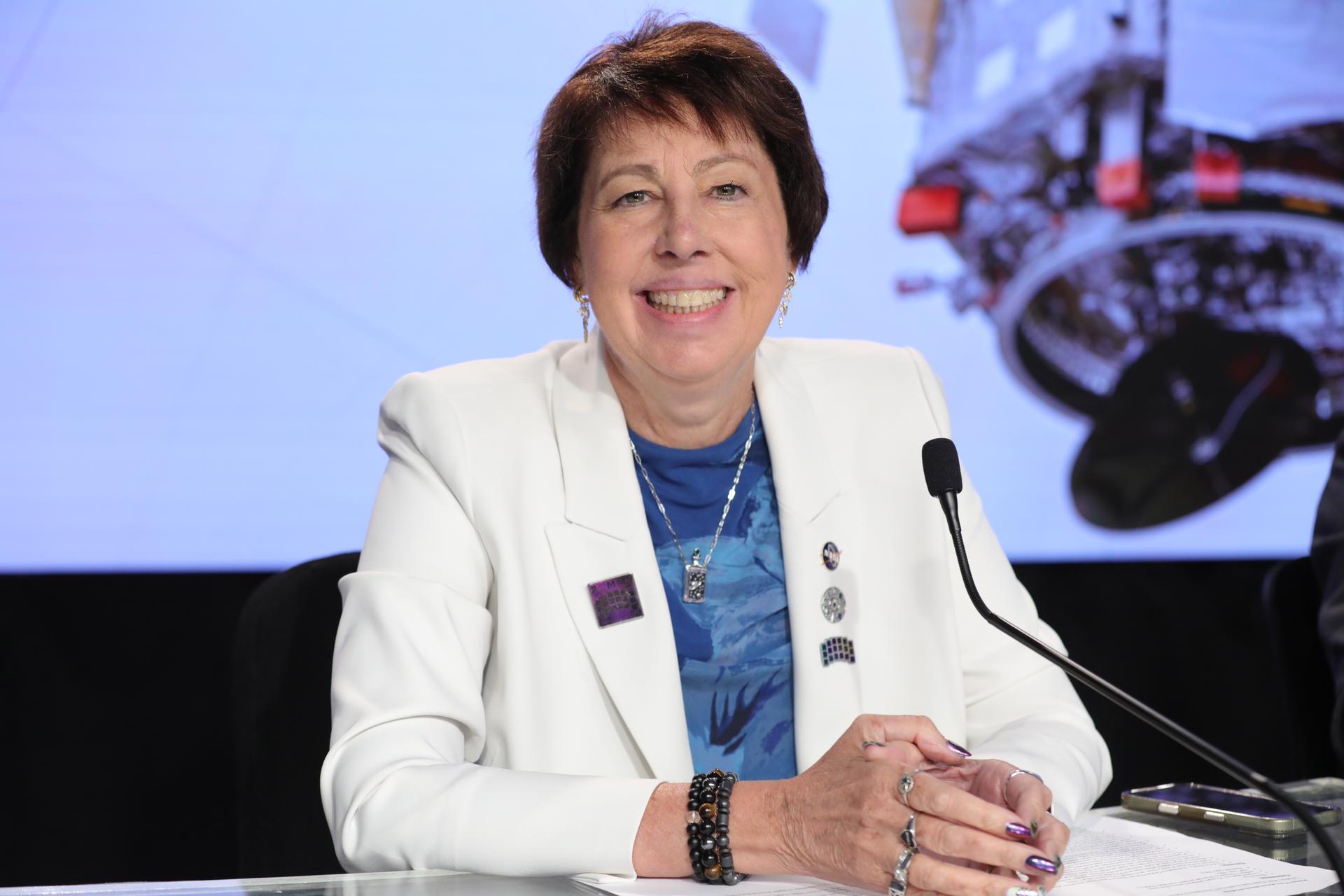
Nicky Fox, associate administrator, Science Mission Directorate, NASA Headquarters in Washington, participates in a prelaunch news conference for the agency’s Nancy Grace Roman Space Telescope inside the NASA News Center’s John Holliman Auditorium at Kennedy Space Center in Florida, on Saturday, Aug. 29, 2026. Roman will investigate dark energy and dark matter, conduct a statistical census of planetary systems, and enable a broad range of additional astrophysics research. Liftoff from Launch Complex 39A at Kennedy is targeted for no earlier than Sunday, Aug. 30, 2026.

Karen Fox, far left, with Goddard Space Flight Center, moderates a Solar Orbiter science press conference at NASA’s Kennedy Space Center in Florida on Feb. 7, 2020. Participants from left are Daniel Mueller, Solar Orbiter Project scientist, European Space Agency; Nicky Fox, director, NASA Heliophysics Division; Guenther Hasinger, director of science, European Space Agency; and Thomas Zurbuchen, associate administrator, NASA Science Mission Directorate. Solar Orbiter is an international cooperative mission between ESA (European Space Agency) and NASA. The mission aims to study the Sun, its outer atmosphere and solar wind. The spacecraft will provide the first images of the Sun’s poles. The spacecraft was developed by Airbus Defence and Space. NASA’s Launch Services Program based at Kennedy is managing the launch. Solar Orbiter will launch aboard a United Launch Alliance Atlas V rocket on Feb. 9, 2020, from Space Launch Complex 41 at Cape Canaveral Air Force Station.
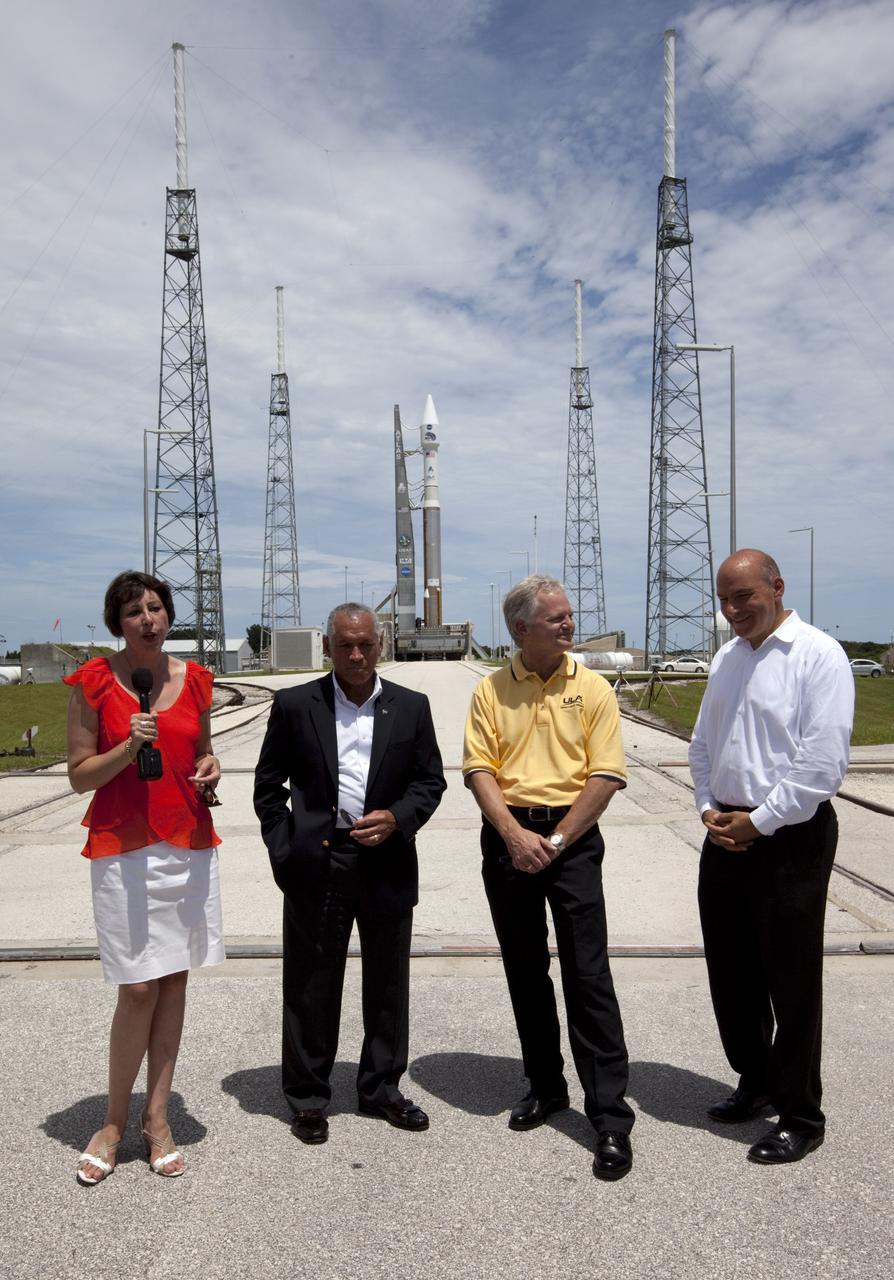
CAPE CANAVERAL, Fla. - Dr. Nicky Fox, deputy RBSP project scientist for the Applied Physics Laboratory at Johns Hopkins University, addresses news media at Space Launch Complex-41 at Cape Canaveral Air Force Station in Florida. At the pad, a United Launch Alliance, or ULA, Atlas V rocket is being prepared for launch of the Radiation Belt Storm Probes, or RBSP, satellites. Speaking to members of the media are, from the left, Fox, NASA Administrator Charles Bolden, James Sponnick, ULA vice president of Mission Operations and NASA Chief Scientist Waleed Abdalati. Bolden took a few dozen members of the news media on a tour of the space agency's Kennedy Space Center and adjacent Cape Canaveral Air Force Station on Aug. 23, 2012 to show the progress being made for future government and commercial space endeavors that will begin from Florida's Space Coast. For more information, visit: http://www.nasa.gov/centers/kennedy/news/kennedy-bolden-tour.html Photo credit: NASA/Kim Shiflett

Karen Fox, far left, with Goddard Space Flight Center, moderates a Solar Orbiter science press conference at NASA’s Kennedy Space Center in Florida on Feb. 7, 2020. Participants from left are Daniel Mueller, Solar Orbiter Project scientist, European Space Agency; Nicky Fox, director, NASA Heliophysics Division; Guenther Hasinger, director of science, European Space Agency; and Thomas Zurbuchen, associate administrator, NASA Science Mission Directorate. Solar Orbiter is an international cooperative mission between ESA (European Space Agency) and NASA. The mission aims to study the Sun, its outer atmosphere and solar wind. The spacecraft will provide the first images of the Sun’s poles. The spacecraft was developed by Airbus Defence and Space. NASA’s Launch Services Program based at Kennedy is managing the launch. Solar Orbiter will launch aboard a United Launch Alliance Atlas V rocket on Feb. 9, 2020, from Space Launch Complex 41 at Cape Canaveral Air Force Station.

In the Kennedy Space Center's Operations and Support Building II, Thursday, Aug. 9, 2018, members of the media participate in a prelaunch mission briefing on NASA's Parker Solar Probe. Moderating the science briefing are Karen Fox, far left, Goddard Space Flight Center; and Dwaye Brown, far right, NASA Communications. Briefers are Andy Driesman, Parker Solar Probe project manager, Johns Hopkins Applied Physics Laboratory; Nicky Fox, Parker Solar Probe project scientist, Johns Hopkins Applied Physics Laboratory; and Thomas Zurbuchen, associate administrator for NASA's Science Mission Directorate in Washington. The Parker Solar Probe will lift off on a United Launch Alliance Delta IV Heavy rocket from Space Launch Complex 37 at Cape Canaveral Air Force Station in Florida. The spacecraft was built by Applied Physics Laboratory of Johns Hopkins University in Laurel, Maryland. The mission will perform the closest-ever observations of a star when it travels through the Sun's atmosphere, called the corona. The probe will rely on measurements and imaging to revolutionize our understanding of the corona and the Sun-Earth connection.
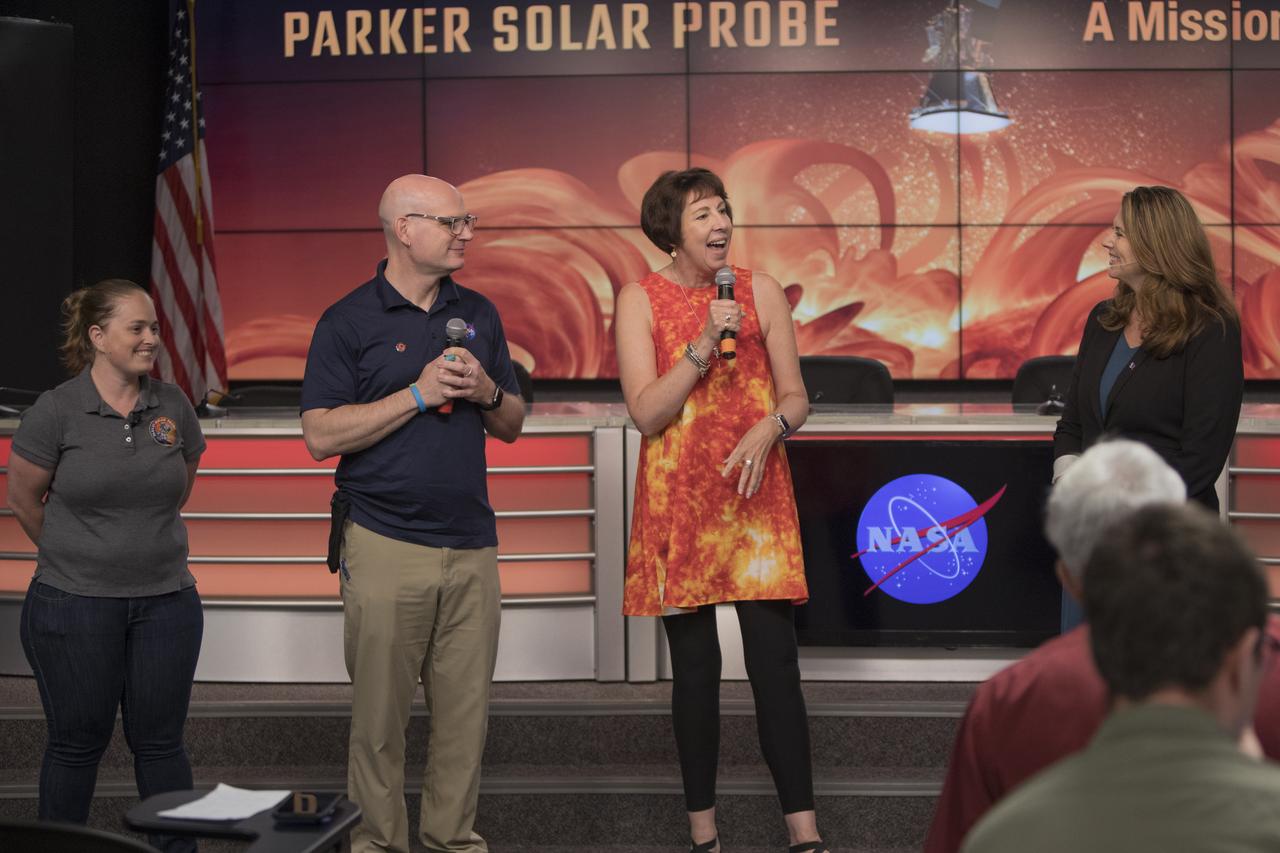
In the Kennedy Space Center’s Press Site auditorium, on Friday, July 20, 2018, agency and mission leaders speak to members of the media during a prelaunch briefing for the Parker Solar Probe mission. From left are: Betsy Congdon, Thermal Protection System engineer with Johns Hopkins Applied Physics Laboratory, Alex Young, solar scientist at NASA's Goddard Space Flight Center in Greenbelt, Maryland, Nicky Fox, project scientist with the Johns Hopkins University APL, and Karen Fox of NASA Communications. The Parker Solar Probe will lift off on a United Launch Alliance Delta IV Heavy rocket from Space Launch Complex 37 at Cape Canaveral Air Force Station in Florida. The spacecraft was built by Applied Physics Laboratory of Johns Hopkins University in Laurel in Maryland. The mission will perform the closest-ever observations of a star when it travels through the Sun's atmosphere, called the corona. The probe will rely on measurements and imaging to revolutionize understanding of the corona and the Sun-Earth connection.
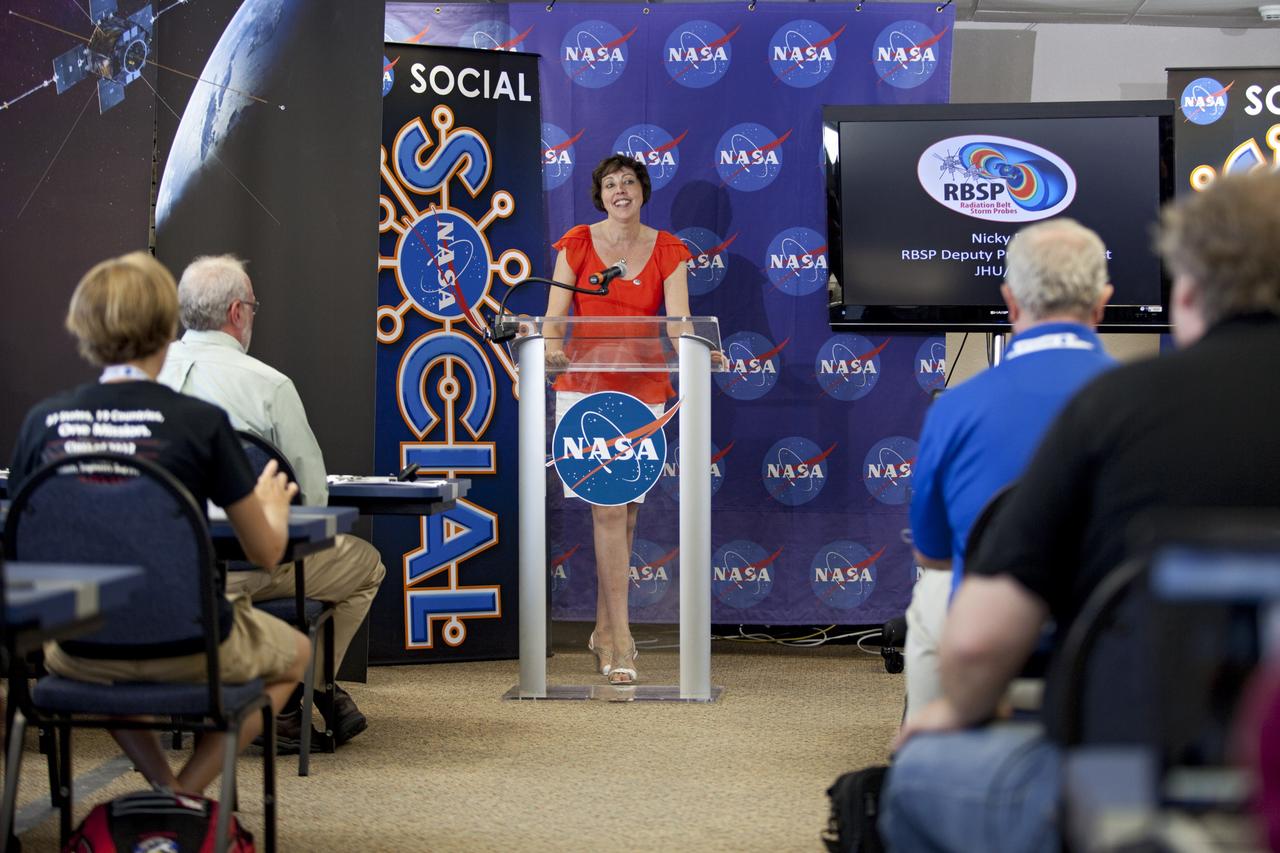
CAPE CANAVERAL, Fla. – At NASA's Kennedy Space Center in Florida, Nicky Fox, deputy project scientist of NASA's Radiation Belt Storm Probes, or RBSP, mission talks to agency social media followers during the second day of NASA Social activities. The probes are set to launch aboard a United Launch Alliance ULA Atlas V rocket from nearby Cape Canaveral Air Force Station. About 40 followers were selected to participate in RBSP's prelaunch and launch activities. The RBSP mission will help us understand the sun’s influence on Earth and near-Earth space by studying the Earth’s radiation belts on various scales of space and time. RBSP will begin its mission of exploration of Earth’s Van Allen radiation belts and the extremes of space weather. For more information, visit http://www.nasa.gov/rbsp. Photo credit: NASA/Frankie Martin
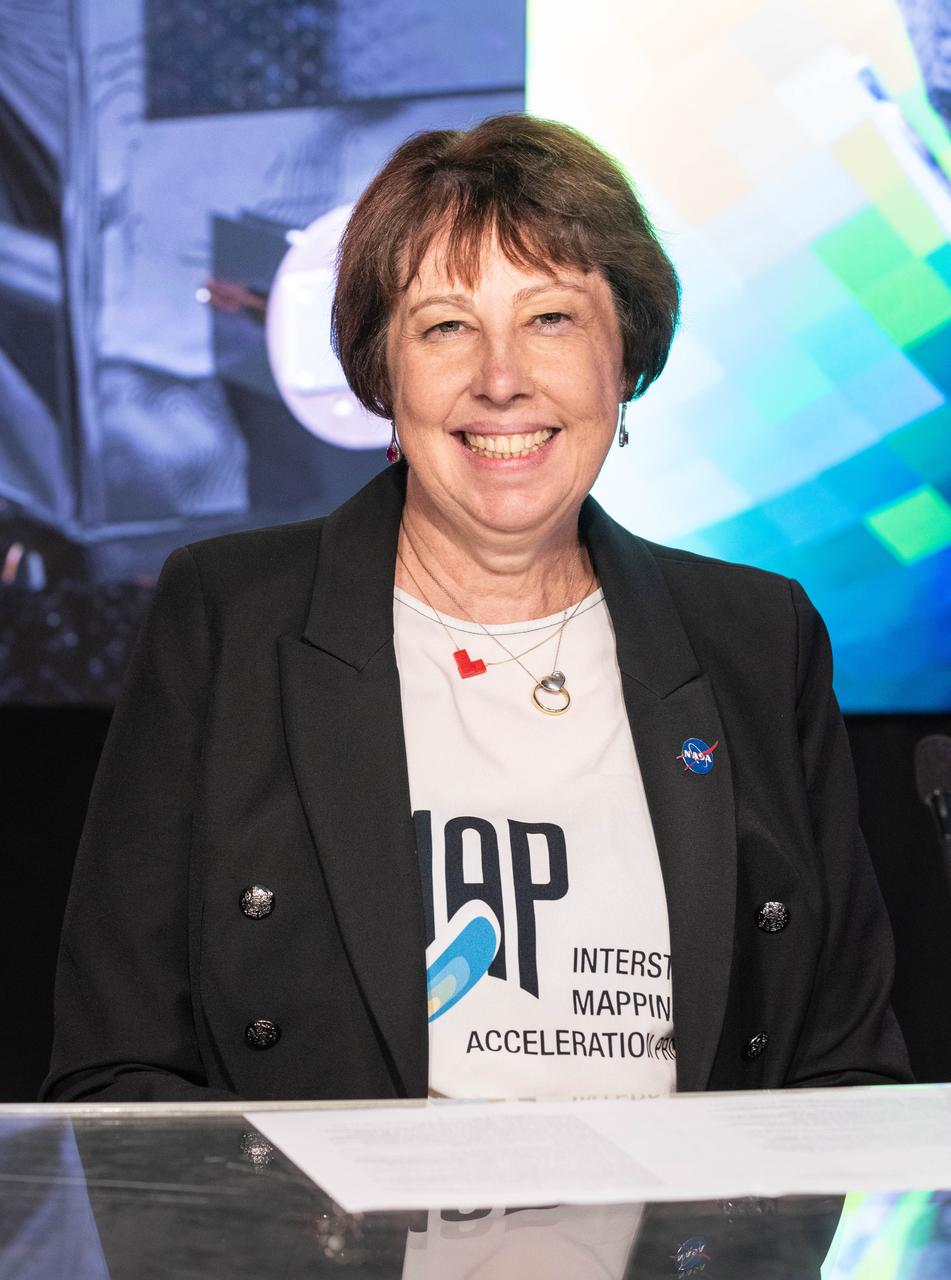
Nicky Fox, associate administrator, Science Mission Directorate, NASA Headquarters, participates in a prelaunch news conference on Sunday, Sept. 21, 2025, at the agency’s Kennedy Space Center in Florida for NASA’s IMAP (Interstellar Mapping and Acceleration Probe) mission. NASA’s IMAP will use 10 science instruments to study and map the heliosphere, a vast magnetic bubble surrounding the Sun protecting our solar system from radiation incoming from interstellar space. This mission and its two rideshares – NASA’s exosphere-studying Carruthers Geocorona Observatory and National Oceanic and Atmospheric Administration’s (NOAA) Space Weather Follow On–Lagrange 1 (SWFO-L1) observatory – will orbit the Sun near Lagrange point 1, about one million miles from Earth. Launch is targeting 7:32 a.m. EDT, Tuesday, Sept. 23, from Launch Complex 39A at NASA Kennedy.

From left, Nicky Fox, director, NASA Heliophysics Division; and Guenther Hasinger, director of science, European Space Agency, participate in a Solar Orbiter science press conference at NASA’s Kennedy Space Center in Florida on Feb. 7, 2020. Solar Orbiter is an international cooperative mission between ESA (European Space Agency) and NASA. The mission aims to study the Sun, its outer atmosphere and solar wind. The spacecraft will provide the first images of the Sun’s poles. The spacecraft was developed by Airbus Defence and Space. NASA’s Launch Services Program based at Kennedy is managing the launch. Solar Orbiter will launch aboard a United Launch Alliance Atlas V rocket on Feb. 9, 2020, from Space Launch Complex 41 at Cape Canaveral Air Force Station.
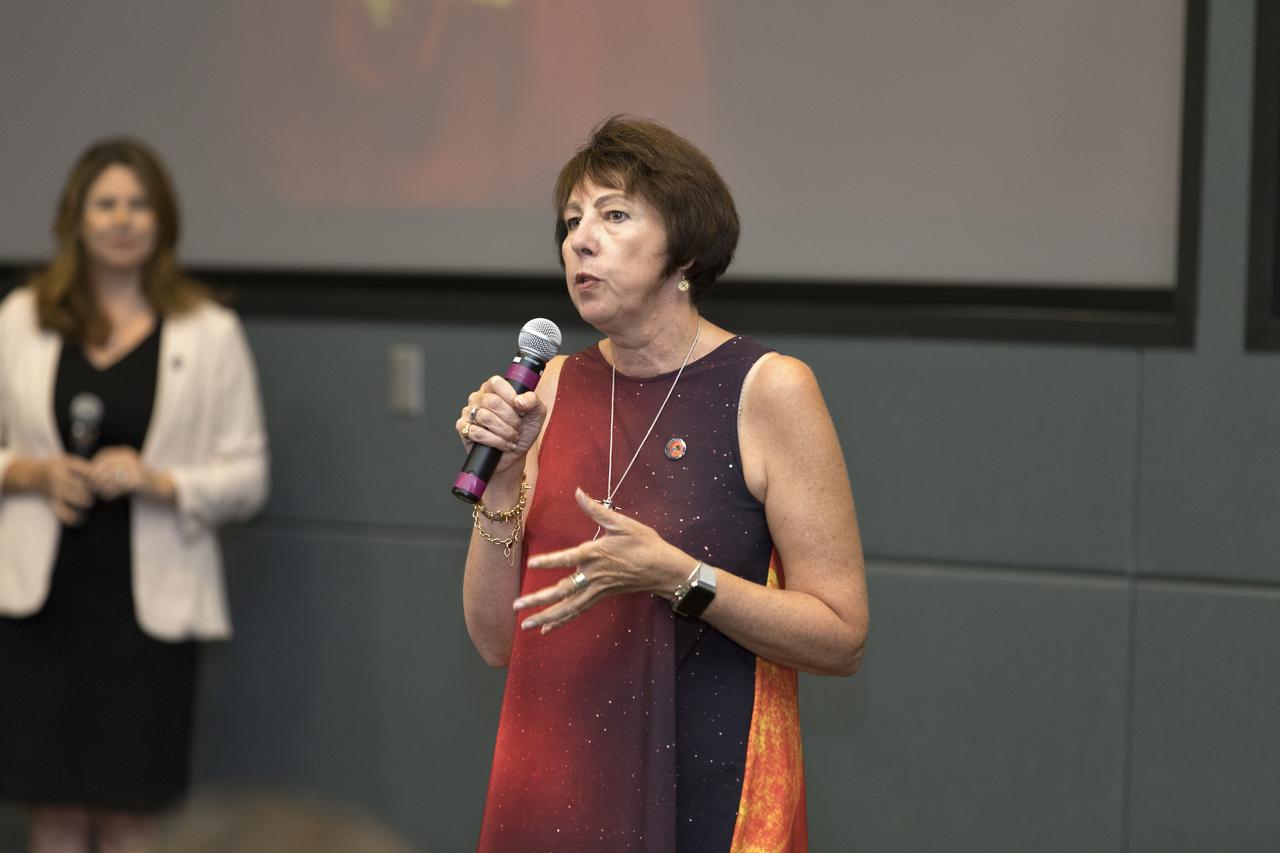
In the Kennedy Space Center's Operations and Support Building II, Thursday, Aug. 9, 2018, members of the media participate in a prelaunch mission briefing on NASA's Parker Solar Probe. Speaking to the media is Nicky Fox, Parker Solar Probe project scientist, Johnson Hopkins Applied Physics Laboratory. The Parker Solar Probe will lift off on a United Launch Alliance Delta IV Heavy rocket from Space Launch Complex 37 at Cape Canaveral Air Force Station in Florida. The spacecraft was built by Applied Physics Laboratory of Johns Hopkins University in Laurel, Maryland. The mission will perform the closest-ever observations of a star when it travels through the Sun's atmosphere, called the corona. The probe will rely on measurements and imaging to revolutionize our understanding of the corona and the Sun-Earth connection.
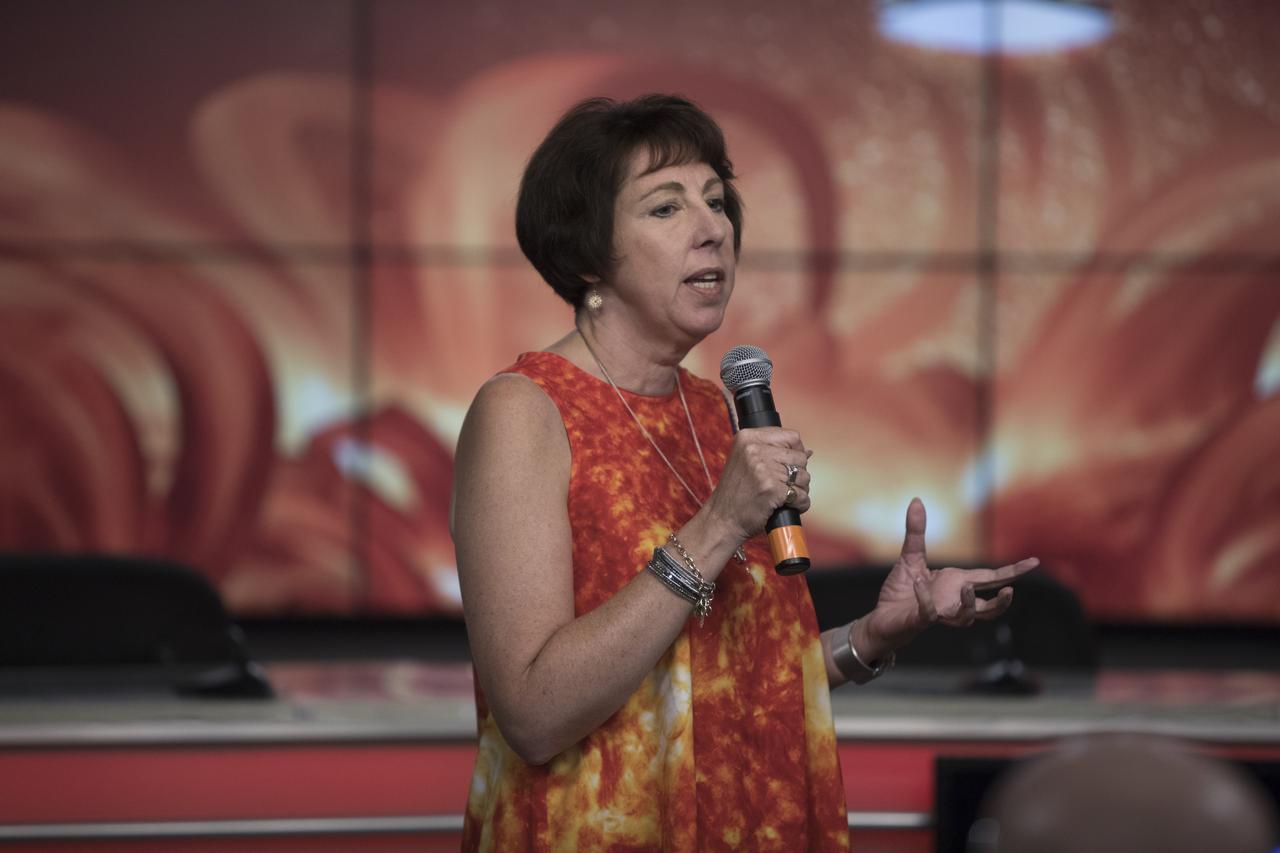
In the Kennedy Space Center’s Press Site auditorium, on Friday, July 20, 2018, Nicky Fox, project scientist with the Johns Hopkins University Applied Physics Laboratory, speaks to members of the media during a prelaunch mission briefing for the Parker Solar Probe mission. The Parker Solar Probe will lift off on a United Launch Alliance Delta IV Heavy rocket from Space Launch Complex 37 at Cape Canaveral Air Force Station in Florida. The spacecraft was built by Applied Physics Laboratory of Johns Hopkins University in Laurel in Maryland. The mission will perform the closest-ever observations of a star when it travels through the Sun's atmosphere, called the corona. The probe will rely on measurements and imaging to revolutionize understanding of the corona and the Sun-Earth connection.

CAPE CANAVERAL, Fla. - Nicky Fox, Radiation Belt Storm Probes, or RBSP, deputy project scientist at Johns Hopkins Applied Physics Laboratory in Laurel, M.D., participates in a postlaunch news conference at NASA Kennedy Space Center’s Press Site in Florida. The RBSP spacecraft launched atop a United Launch Alliance, or ULA, Atlas V rocket at 4:05 a.m. EDT from Space Launch Complex 41 at Cape Canaveral Air Force Station. RBSP will explore changes in Earth's space environment caused by the sun -- known as "space weather" -- that can disable satellites, create power-grid failures and disrupt GPS service. The mission also will provide data on the fundamental radiation and particle acceleration processes throughout the universe. For more information on RBSP, visit http://www.nasa.gov/rbsp. Photo credit: NASA/Jim Grossmann
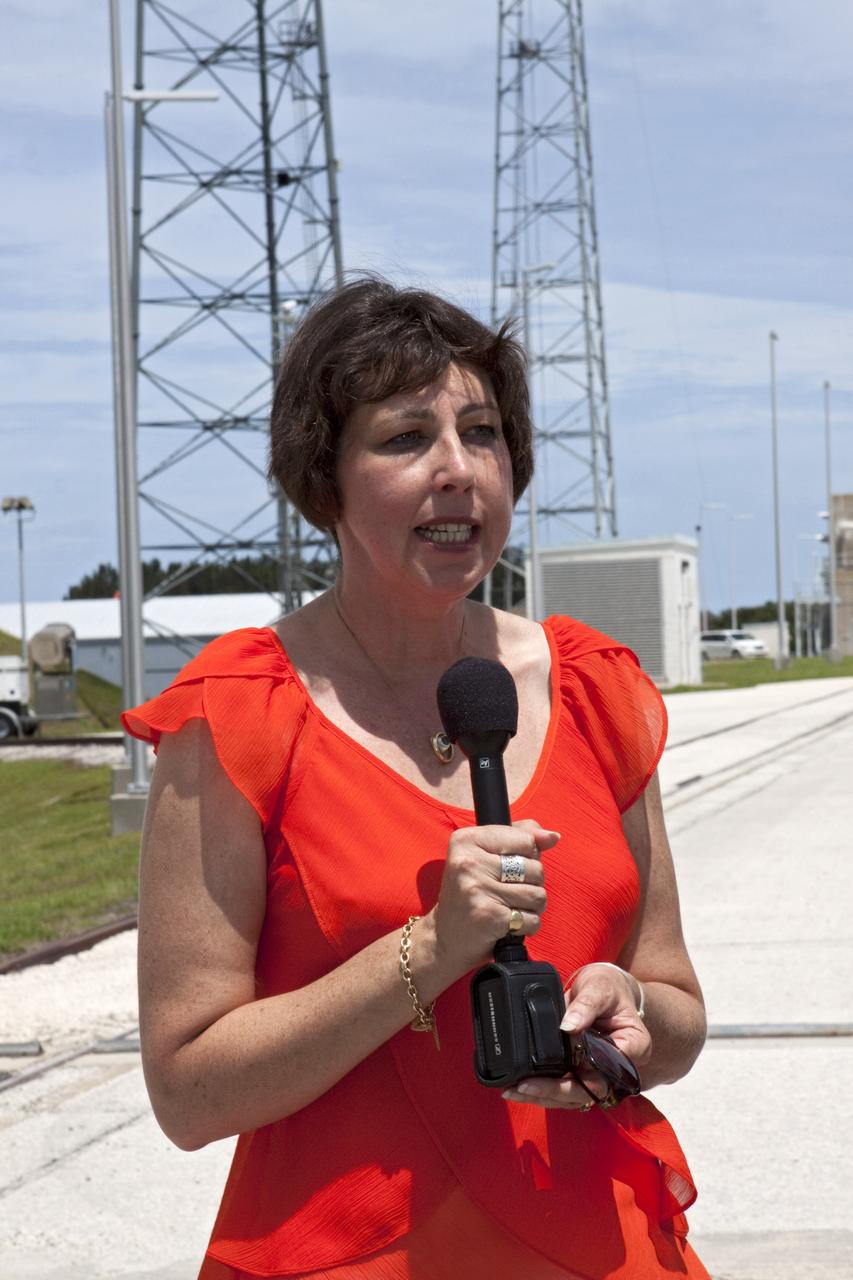
CAPE CANAVERAL, Fla. - Dr. Nicky Fox, deputy RBSP project scientist for the Applied Physics Laboratory at Johns Hopkins University, addresses news media at Space Launch Complex-41 at Cape Canaveral Air Force Station in Florida. At the pad, a United Launch Alliance, or ULA, Atlas V rocket is being prepared for launch of the Radiation Belt Storm Probes, or RBSP, satellites. The presentation took place during NASA Administrator Charles Bolden's tour of the facility. Bolden took a few dozen members of the news media on a tour of the space agency's Kennedy Space Center and adjacent Cape Canaveral Air Force Station on Aug. 23, 2012 to show the progress being made for future government and commercial space endeavors that will begin from Florida's Space Coast. For more information, visit: http://www.nasa.gov/centers/kennedy/news/kennedy-bolden-tour.html Photo credit: NASA/Kim Shiflett

From left, George Alderman, NASA Deputy Press Secretary; NASA Administrator Jared Isaacman; Nicky Fox, associate administrator, Science Mission Directorate, NASA Headquarters in Washington; Jackie Townsend, Roman telescope project manager, NASA’s Goddard Space Flight Center in Greenbelt, Maryland; and Julie McEnery, Roman telescope senior project scientist, NASA Goddard participate in a postlaunch news conference for NASA’s Nancy Grace Roman Space Telescope inside the NASA News Center’s John Holliman Auditorium at Kennedy Space Center in Florida, on Sunday, Aug. 30, 2026. Roman will investigate dark energy and dark matter, conduct a statistical census of planetary systems, and enable a broad range of additional astrophysics research. Liftoff of Roman atop a SpaceX Falcon Heavy rocket occurred at 7:26 a.m. EDT Sunday, Aug. 30, from Kennedy’s Launch Complex 39A.

NASA employees view the live broadcast announcing the astronauts assigned to the agency's Artemis III mission, Tuesday, June 9, 2026, at the Mary W. Jackson NASA Headquarters building in Washington. NASA's Artemis III test flight will take NASA astronauts Randy Bresnik, Frank Rubio, Andre Douglas, and ESA (European Space Agency) astronaut Luca Parmitano to low Earth orbit where they will test rendezvous and docking capabilities between Orion and commercial human landing systems, demonstrating the systems required for future surface missions. Photo Credit: (NASA/Aubrey Gemignani)
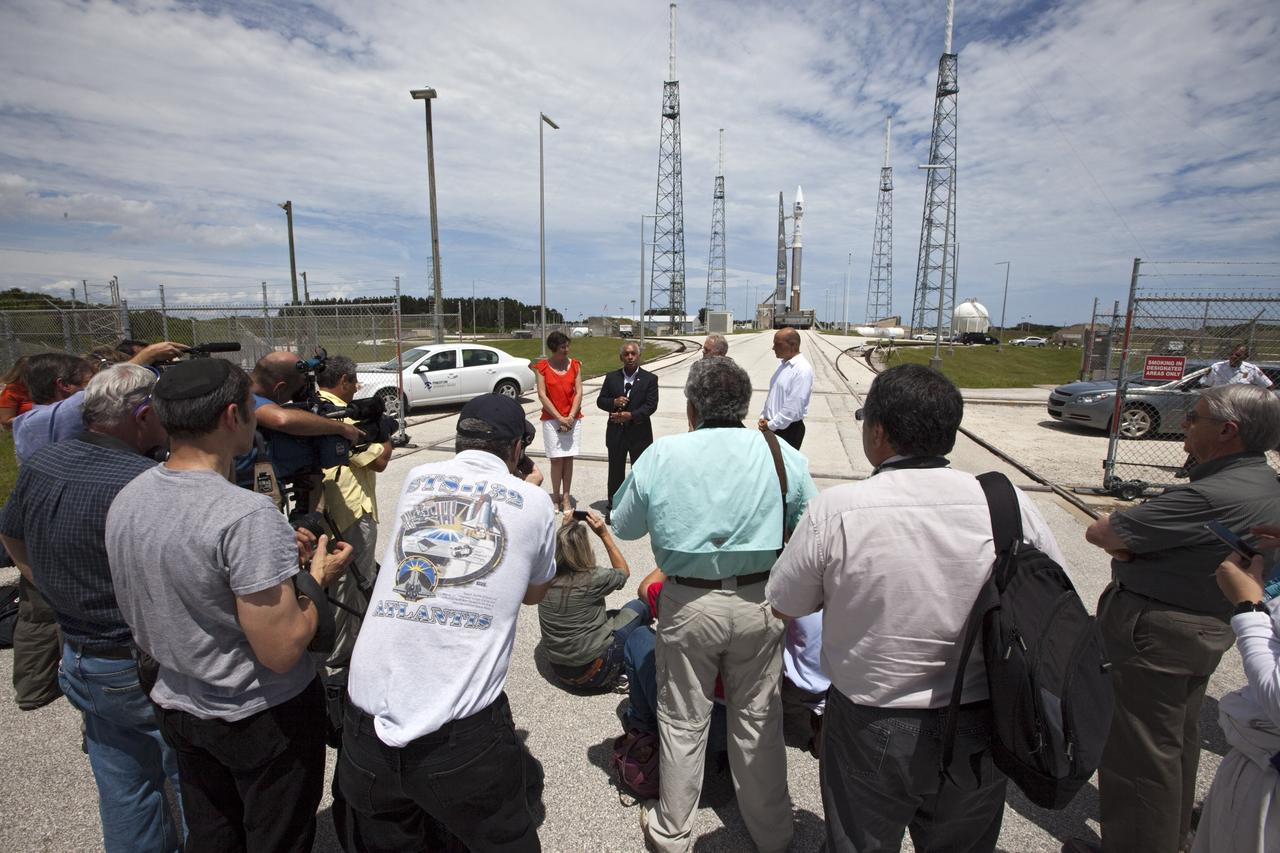
CAPE CANAVERAL, Fla. - NASA Administrator Charles Bolden, second from the left, addresses news media at Space Launch Complex-41 at Cape Canaveral Air Force Station in Florida. At the pad, a United Launch Alliance, or ULA, Atlas V rocket is being prepared for launch of the Radiation Belt Storm Probes, or RBSP, satellites. Speaking to members of the media are, from the left, Dr. Nicky Fox, deputy RBSP project scientist for the Applied Physics Laboratory at Johns Hopkins University, Bolden, James Sponnick, ULA vice president of Mission Operations and NASA Chief Scientist Waleed Abdalati. Bolden took a few dozen members of the news media on a tour of the space agency's Kennedy Space Center and adjacent Cape Canaveral Air Force Station on Aug. 23, 2012 to show the progress being made for future government and commercial space endeavors that will begin from Florida's Space Coast. For more information, visit: http://www.nasa.gov/centers/kennedy/news/kennedy-bolden-tour.html Photo credit: NASA/Kim Shiflett
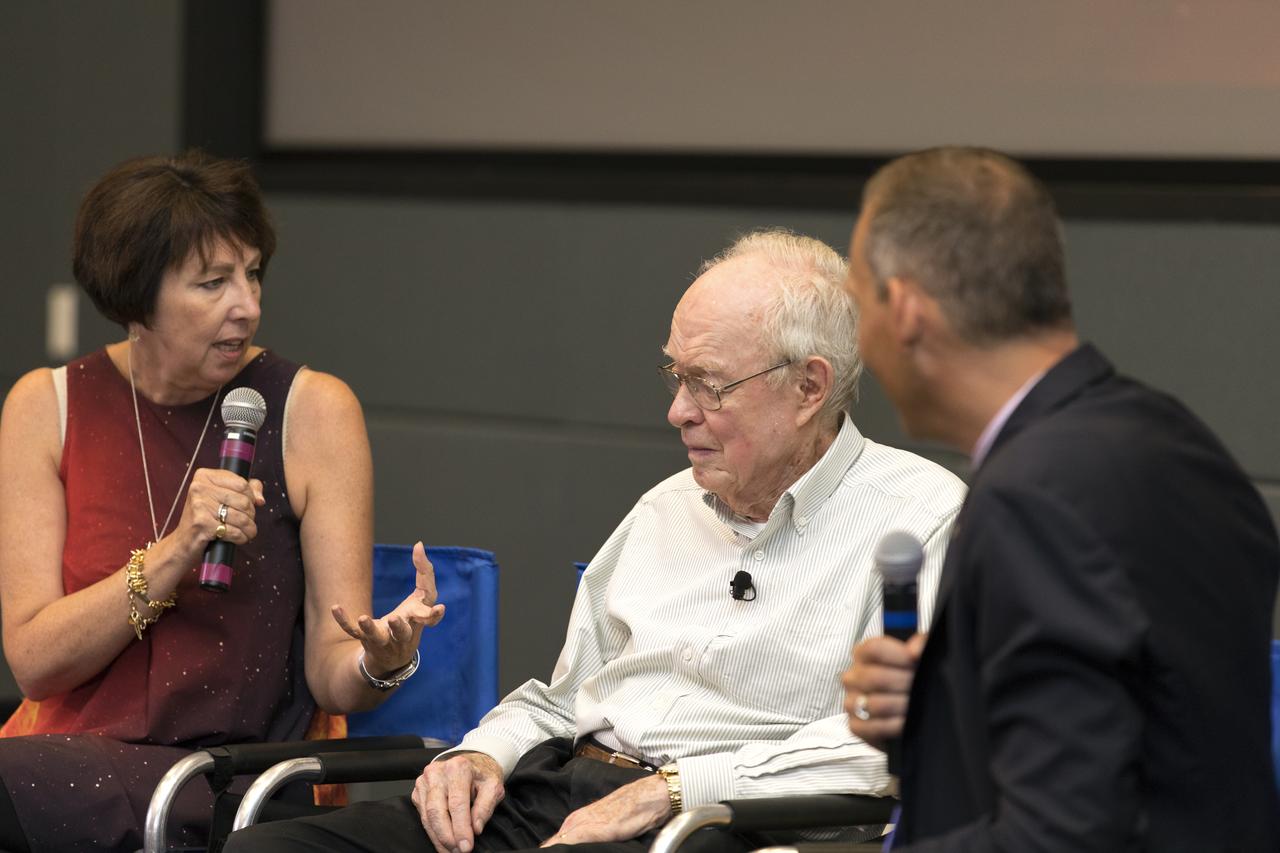
From left, Leah Martin, NASA Communications; Nicky Fox, associate administrator, Science Mission Directorate, NASA Headquarters in Washington; Lucas Paganini, Roman telescope program executive, NASA Headquarters; Jackie Townsend, Roman telescope project manager, NASA’s Goddard Space Flight Center in Greenbelt, Maryland; Denton Gibson, launch director, NASA’s Launch Services Program, Kennedy Space Center in Florida; Julianna Scheiman, director, NASA Science and Dragon Programs, SpaceX; and Justin McReynolds, launch weather officer, 45th Weather Squadron, U.S. Space Force, participate in a prelaunch news conference for NASA’s Nancy Grace Roman Space Telescope inside the NASA News Center’s John Holliman Auditorium at Kennedy Space Center in Florida, on Saturday, Aug. 29, 2026. Roman will investigate dark energy and dark matter, conduct a statistical census of planetary systems, and enable a broad range of additional astrophysics research. Liftoff from Launch Complex 39A at Kennedy is targeted for no earlier than Sunday, Aug. 30, 2026.
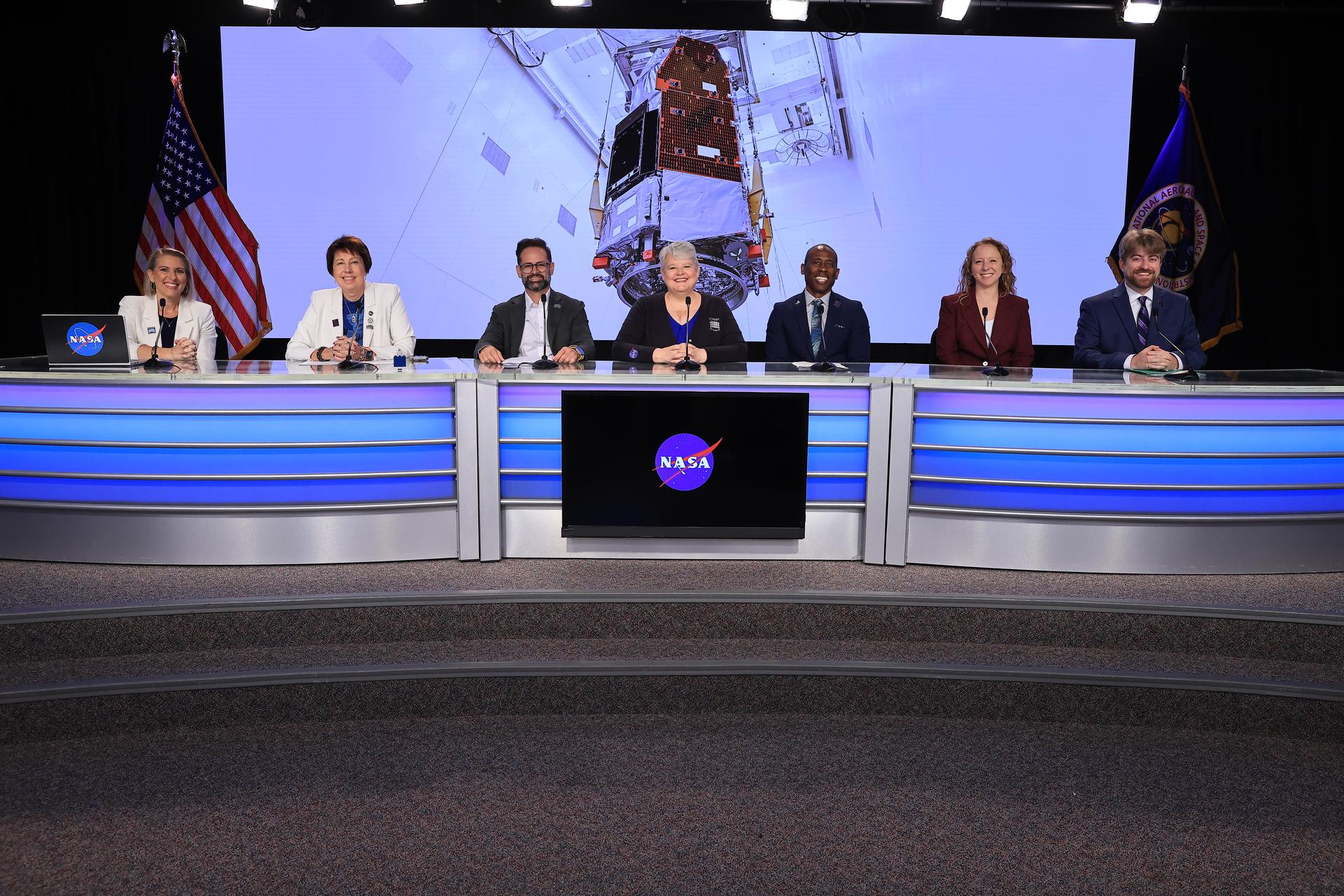
In the Kennedy Space Center's Operations and Support Building II, Thursday, Aug. 9, 2018, members of the news and social media participate in a prelaunch mission briefing on NASA's Parker Solar Probe. Briefing participants from left are: Nicky Fox, Parker Solar Probe project scientist at Johns Hopkins Applied Physics Laboratory, Dr. Eugene Parker, a pioneer in heliophysics and S. Chandrasekhar distinguished service professor emeritus for the Department of Astronomy and Astrophysics at the University of Chicago, Thomas Zurbuchen, associate administrator for NASA’s Science Mission Directorate in Washington. This is the first NASA mission named for a living person. The Parker Solar Probe is designed to provide key observations on his groundbreaking theories about the Sun. Lift off atop a United Launch Alliance Delta IV Heavy rocket will take place from Space Launch Complex 37 at Cape Canaveral Air Force Station in Florida. The spacecraft was built by Applied Physics Laboratory of Johns Hopkins University in Laurel, Maryland. The mission will perform the closest-ever observations of a star when it travels through the Sun's atmosphere, called the corona. The probe will rely on measurements and imaging to revolutionize our understanding of the corona and the Sun-Earth connection.
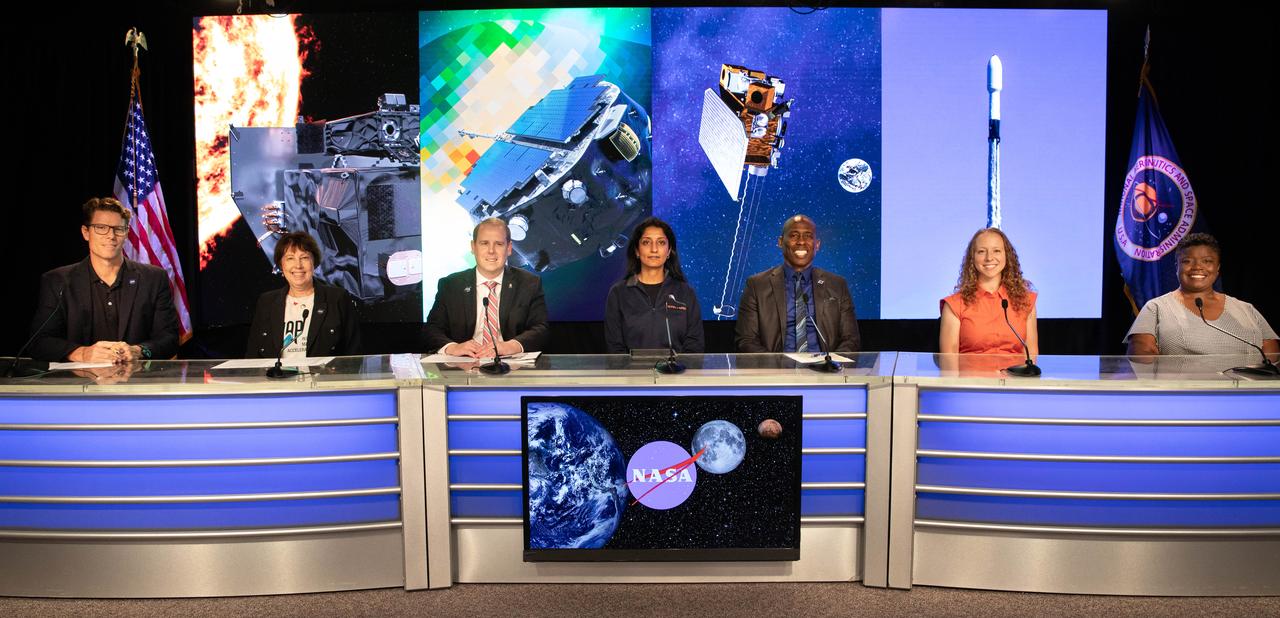
NASA, mission, and partner leaders participate in prelaunch news conference on Sunday, Sept. 21, 2025, at the agency’s Kennedy Space Center in Florida for NASA’s IMAP (Interstellar Mapping and Acceleration Probe) mission. From left are: Derrol Nail, NASA Communications; Nicky Fox, associate administrator, Science Mission Directorate, NASA Headquarters in Washington; Brad Williams, IMAP program executive, NASA Headquarters; Irene Parker, deputy assistant administrator for Systems for NOAA’s National Environmental Satellite, Data, and Information Service; Denton Gibson, launch director, NASA’s Launch Services Program, NASA Kennedy; Julianna Scheiman, director, NASA Science Missions, SpaceX; Arlena Moses, launch weather officer, 45th Weather Squadron, U.S. Space Force. The IMAP mission and its two rideshares – NASA’s exosphere-studying Carruthers Geocorona Observatory and National Oceanic and Atmospheric Administration’s (NOAA) Space Weather Follow On–Lagrange 1 (SWFO-L1) observatory – will orbit the Sun near Lagrange point 1, about one million miles from Earth, where it will scan the heliosphere, analyze the composition of charged particles, and investigate how those particles move through the solar system. Launch is targeted for 7:32 a.m. EDT, Tuesday, Sept. 23, from Launch Complex 39A at NASA Kennedy.
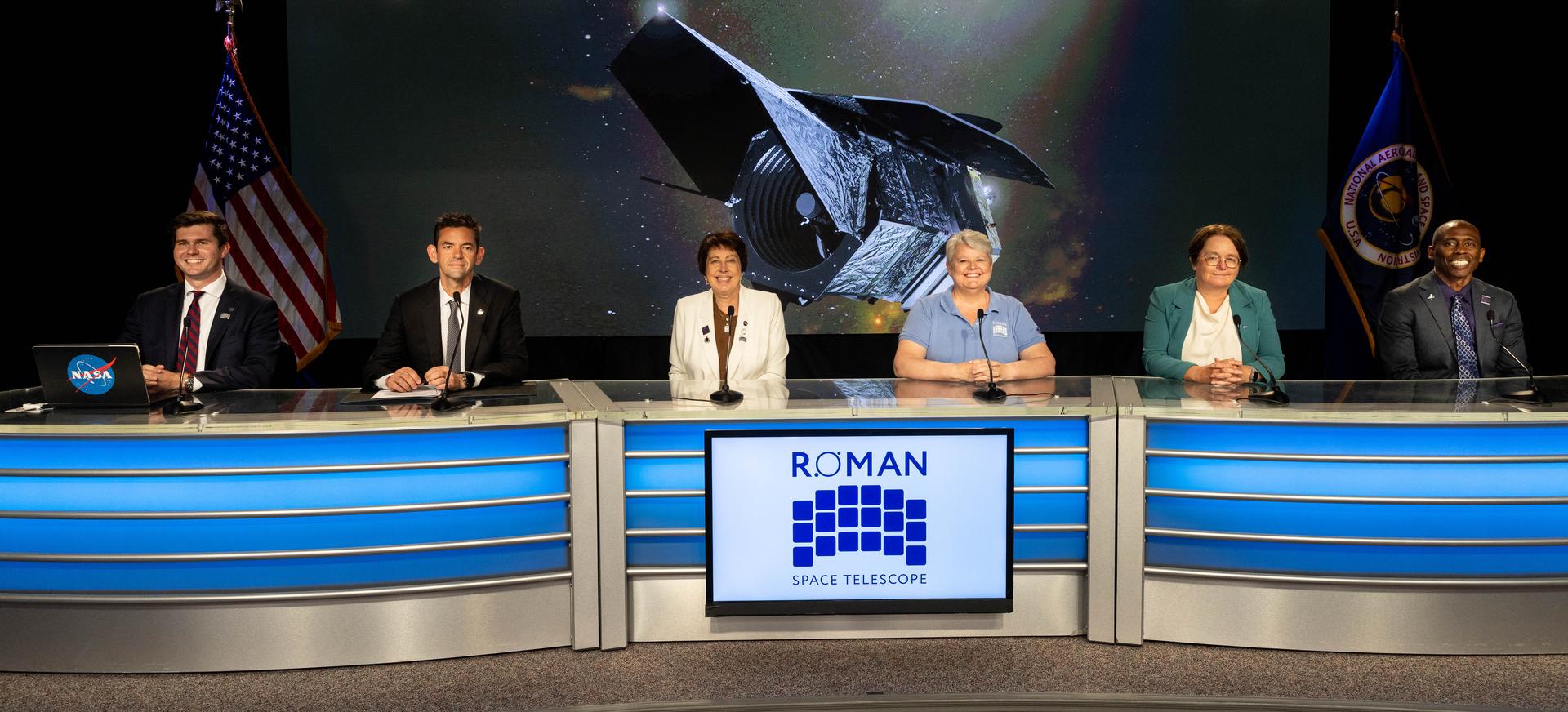
From left, George Alderman, NASA Deputy Press Secretary; NASA Administrator Jared Isaacman; Nicky Fox, associate administrator, Science Mission Directorate, NASA Headquarters in Washington; Jackie Townsend, Roman telescope project manager, NASA’s Goddard Space Flight Center in Greenbelt, Maryland; Julie McEnery, Roman telescope senior project scientist, NASA Goddard; and Denton Gibson, launch director, NASA’s Launch Services Program, Kennedy Space Center in Florida, participate in a postlaunch news conference for NASA’s Nancy Grace Roman Space Telescope inside the NASA News Center’s John Holliman Auditorium at Kennedy Space Center in Florida, on Sunday, Aug. 30, 2026. Roman will investigate dark energy and dark matter, conduct a statistical census of planetary systems, and enable a broad range of additional astrophysics research. Liftoff of Roman atop a SpaceX Falcon Heavy rocket occurred at 7:26 a.m. EDT Sunday, Aug. 30, from Kennedy’s Launch Complex 39A.
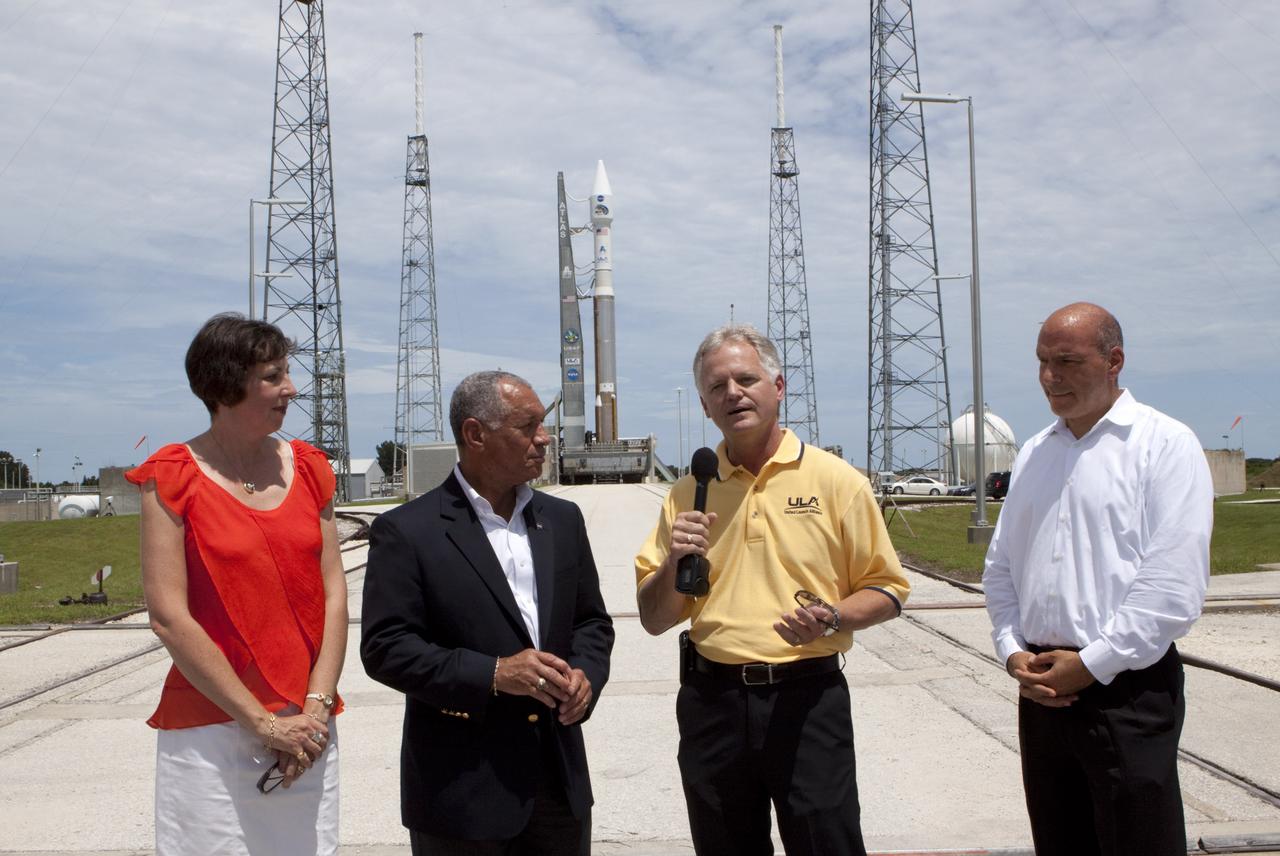
CAPE CANAVERAL, Fla. - United Launch Alliance, or ULA, Vice President of Mission Operations James Sponnick addresses news media at Space Launch Complex-41 at Cape Canaveral Air Force Station in Florida. At the pad, a ULA Atlas V rocket is being prepared for launch of the Radiation Belt Storm Probes, or RBSP, satellites. Speaking to members of the media are, from the left, Dr. Nicky Fox, deputy RBSP project scientist for the Applied Physics Laboratory at Johns Hopkins University, NASA Administrator Charles Bolden, Sponnick and NASA Chief Scientist Waleed Abdalati. Bolden took a few dozen members of the news media on a tour of the space agency's Kennedy Space Center and adjacent Cape Canaveral Air Force Station on Aug. 23, 2012 to show the progress being made for future government and commercial space endeavors that will begin from Florida's Space Coast. For more information, visit: http://www.nasa.gov/centers/kennedy/news/kennedy-bolden-tour.html Photo credit: NASA/Kim Shiflett
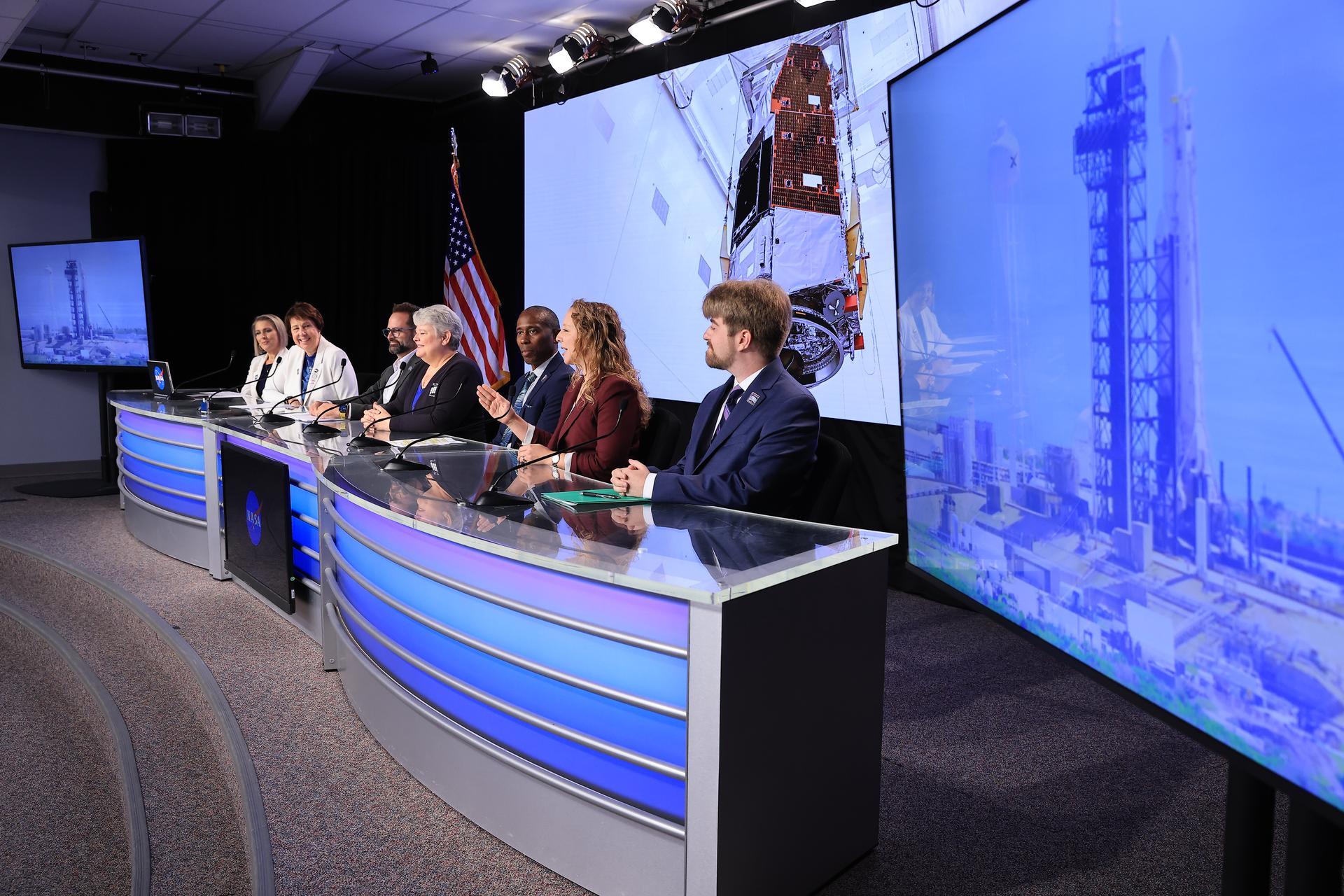
From left, Leah Martin, NASA Communications; Nicky Fox, associate administrator, Science Mission Directorate, NASA Headquarters in Washington; Lucas Paganini, Roman telescope program executive, NASA Headquarters; Jackie Townsend, Roman telescope project manager, NASA’s Goddard Space Flight Center in Greenbelt, Maryland; Denton Gibson, launch director, NASA’s Launch Services Program, Kennedy Space Center in Florida; Julianna Scheiman, director, NASA Science and Dragon Programs, SpaceX; and Justin McReynolds, launch weather officer, 45th Weather Squadron, U.S. Space Force, participate in a prelaunch news conference for NASA’s Nancy Grace Roman Space Telescope inside the NASA News Center’s John Holliman Auditorium at Kennedy Space Center in Florida, on Saturday, Aug. 29, 2026. Roman will investigate dark energy and dark matter, conduct a statistical census of planetary systems, and enable a broad range of additional astrophysics research. Liftoff from Launch Complex 39A at Kennedy is targeted for no earlier than Sunday, Aug. 30, 2026.

CAPE CANAVERAL, Fla. – A postlaunch news conference is held at NASA Kennedy Space Center’s Press Site in Florida following the launch of the Radiation Belt Storm Probes, or RBSP, mission atop a United Launch Alliance, or ULA, Atlas V rocket at 4:05 a.m. EDT from Space Launch Complex 41 at Cape Canaveral Air Force Station. From left, are Richard Fitzgerald, RBSP project manager at Johns Hopkins Applied Physics Laboratory? in Laurel, M.D., Michael Luther, deputy associate administrator of NASA's Science Mission Directorate? at NASA Headquarters?, and Nicky Fox, RBSP deputy project scientist at Johns Hopkins. RBSP will explore changes in Earth's space environment caused by the sun -- known as "space weather" -- that can disable satellites, create power-grid failures and disrupt GPS service. The mission also will provide data on the fundamental radiation and particle acceleration processes throughout the universe. For more information on RBSP, visit http://www.nasa.gov/rbsp. Photo credit: NASA/Jim Grossmann
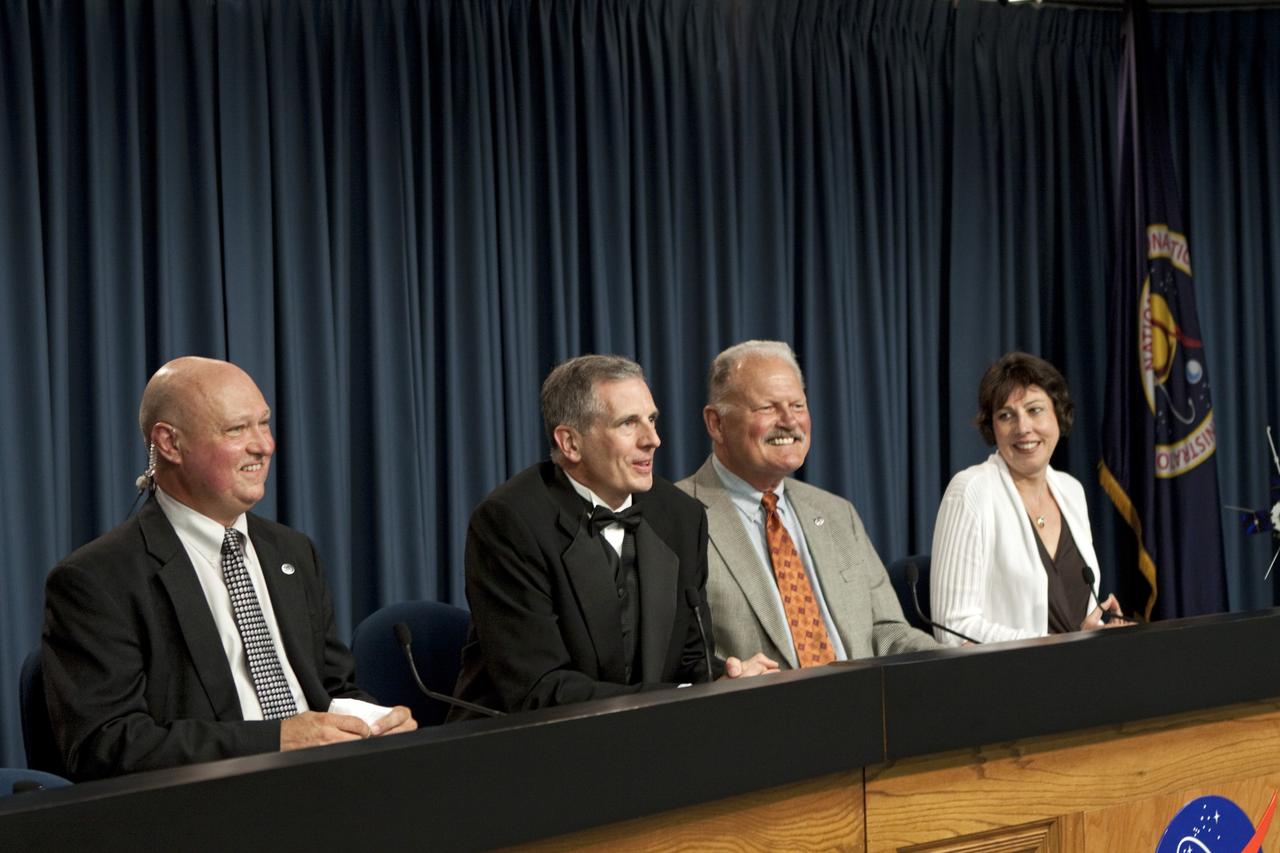
CAPE CANAVERAL, Fla. – A postlaunch news conference is held at NASA Kennedy Space Center’s Press Site in Florida following the launch of the Radiation Belt Storm Probes, or RBSP, mission atop a United Launch Alliance, or ULA, Atlas V rocket at 4:05 a.m. EDT from Space Launch Complex 41 at Cape Canaveral Air Force Station. From left, are Mike Curie of NASA Kennedy Public Affairs, Richard Fitzgerald, RBSP project manager at Johns Hopkins Applied Physics Laboratory? in Laurel, M.D., Michael Luther, deputy associate administrator of NASA's Science Mission Directorate? at NASA Headquarters?, and Nicky Fox, RBSP deputy project scientist at Johns Hopkins. RBSP will explore changes in Earth's space environment caused by the sun -- known as "space weather" -- that can disable satellites, create power-grid failures and disrupt GPS service. The mission also will provide data on the fundamental radiation and particle acceleration processes throughout the universe. For more information on RBSP, visit http://www.nasa.gov/rbsp. Photo credit: NASA/Jim Grossmann
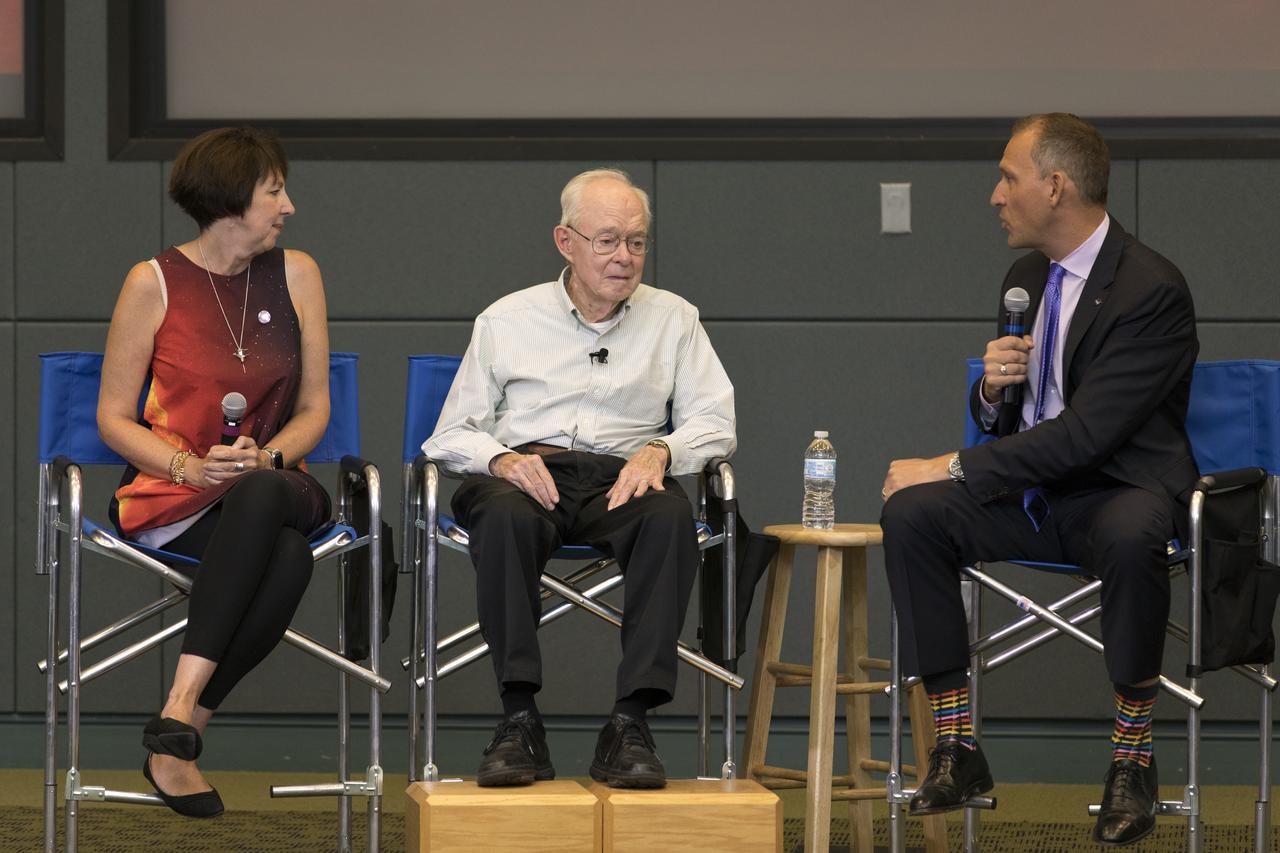
In the Kennedy Space Center's Operations and Support Building II, Thursday, Aug. 9, 2018, members of the news and social media participate in a prelaunch mission briefing on NASA's Parker Solar Probe. Briefing participants from left are: Nicky Fox, Parker Solar Probe project scientist at Johns Hopkins Applied Physics Laboratory, Dr. Eugene Parker, a pioneer in heliophysics and S. Chandrasekhar distinguished service professor emeritus for the Department of Astronomy and Astrophysics at the University of Chicago, Thomas Zurbuchen, associate administrator for NASA’s Science Mission Directorate in Washington. This is the first NASA mission named for a living person. The Parker Solar Probe is designed to provide key observations on his groundbreaking theories about the Sun. Lift off atop a United Launch Alliance Delta IV Heavy rocket will take place from Space Launch Complex 37 at Cape Canaveral Air Force Station in Florida. The spacecraft was built by Applied Physics Laboratory of Johns Hopkins University in Laurel, Maryland. The mission will perform the closest-ever observations of a star when it travels through the Sun's atmosphere, called the corona. The probe will rely on measurements and imaging to revolutionize our understanding of the corona and the Sun-Earth connection.

Dr. Eugene Parker, a pioneer in heliophysics and S. Chandrasekhar distinguished service professor emeritus for the Department of Astronomy and Astrophysics at the University of Chicago, watches the launch of NASA's Parker Solar Probe. This is the first agency mission named for a living person. The liftoff took place at 3:31 a.m. EDT on Sunday, Aug. 12, 2018. The spacecraft was built by the Johns Hopkins University Applied Physics Laboratory in Laurel, Maryland. The mission will perform the closest-ever observations of a star when it travels through the Sun's atmosphere, called the corona. The probe will rely on measurements and imaging to revolutionize our understanding of the corona and the Sun-Earth connection.

Dr. Eugene Parker, a pioneer in heliophysics and S. Chandrasekhar distinguished service professor emeritus for the Department of Astronomy and Astrophysics at the University of Chicago, watches the launch of NASA's Parker Solar Probe. This is the first agency mission named for a living person. The liftoff took place at 3:31 a.m. EDT on Sunday, Aug. 12, 2018. The spacecraft was built by the Johns Hopkins University Applied Physics Laboratory in Laurel, Maryland. The mission will perform the closest-ever observations of a star when it travels through the Sun's atmosphere, called the corona. The probe will rely on measurements and imaging to revolutionize our understanding of the corona and the Sun-Earth connection.
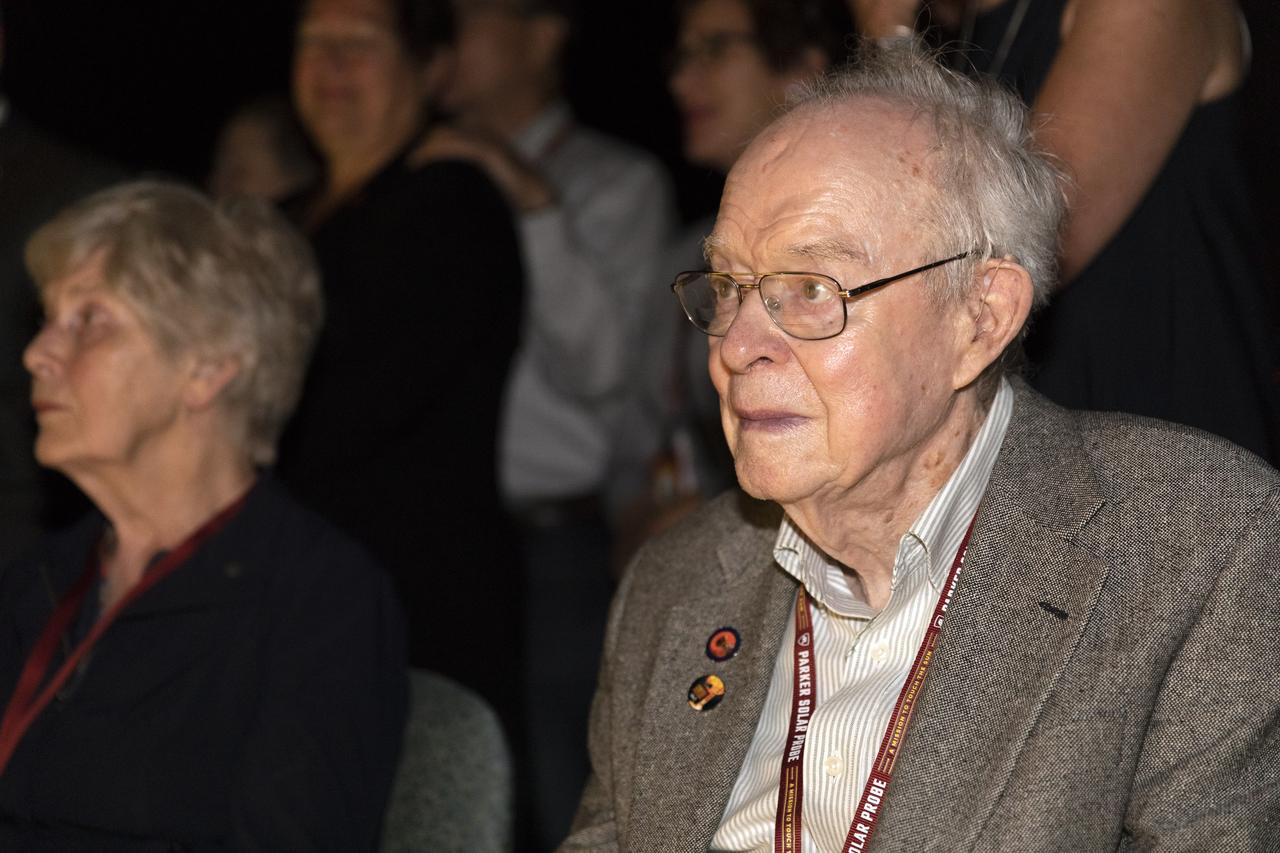
Dr. Eugene Parker, a pioneer in heliophysics and S. Chandrasekhar distinguished service professor emeritus for the Department of Astronomy and Astrophysics at the University of Chicago, watches the launch of NASA's Parker Solar Probe. This is the first agency mission named for a living person. The liftoff took place at 3:31 a.m. EDT on Sunday, Aug. 12, 2018. The spacecraft was built by the Johns Hopkins University Applied Physics Laboratory in Laurel, Maryland. The mission will perform the closest-ever observations of a star when it travels through the Sun's atmosphere, called the corona. The probe will rely on measurements and imaging to revolutionize our understanding of the corona and the Sun-Earth connection.