The Night Sky on Mars
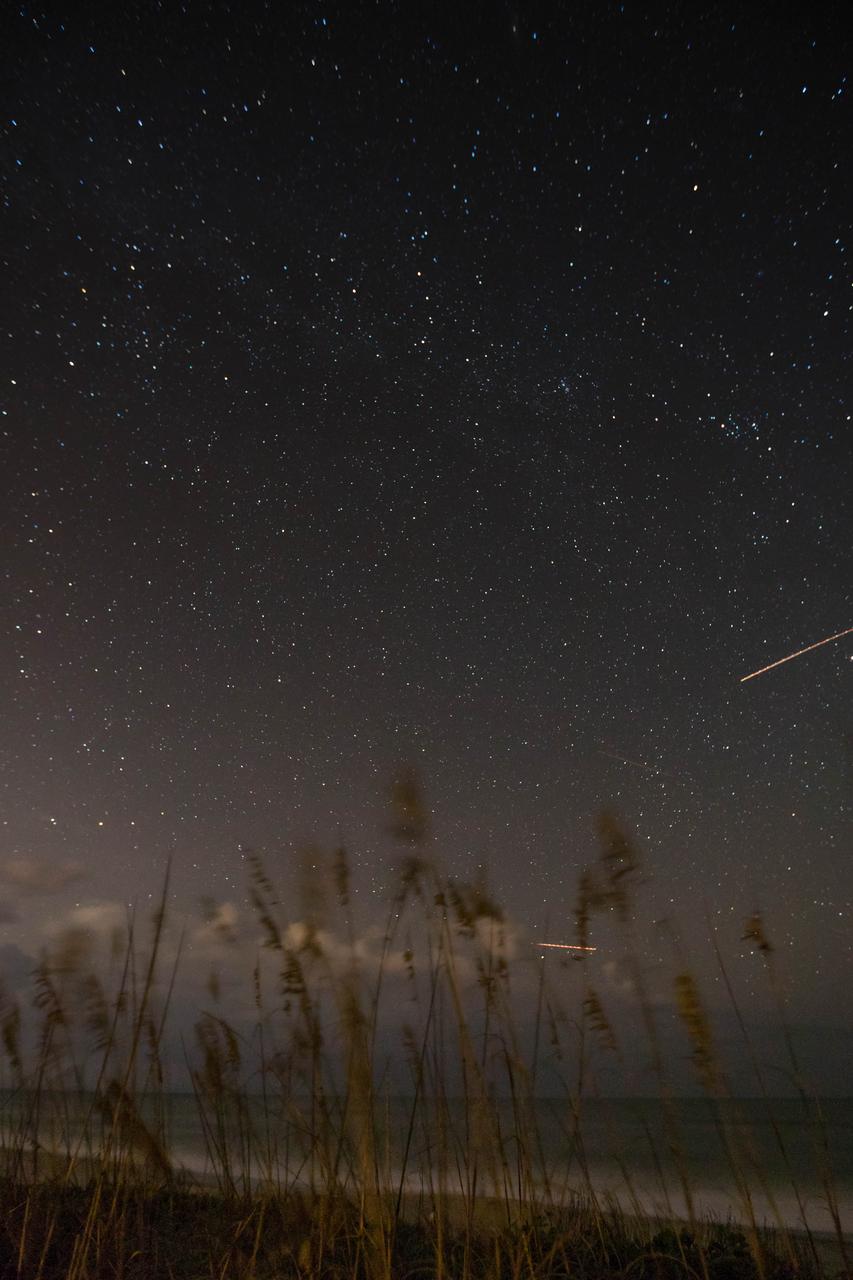
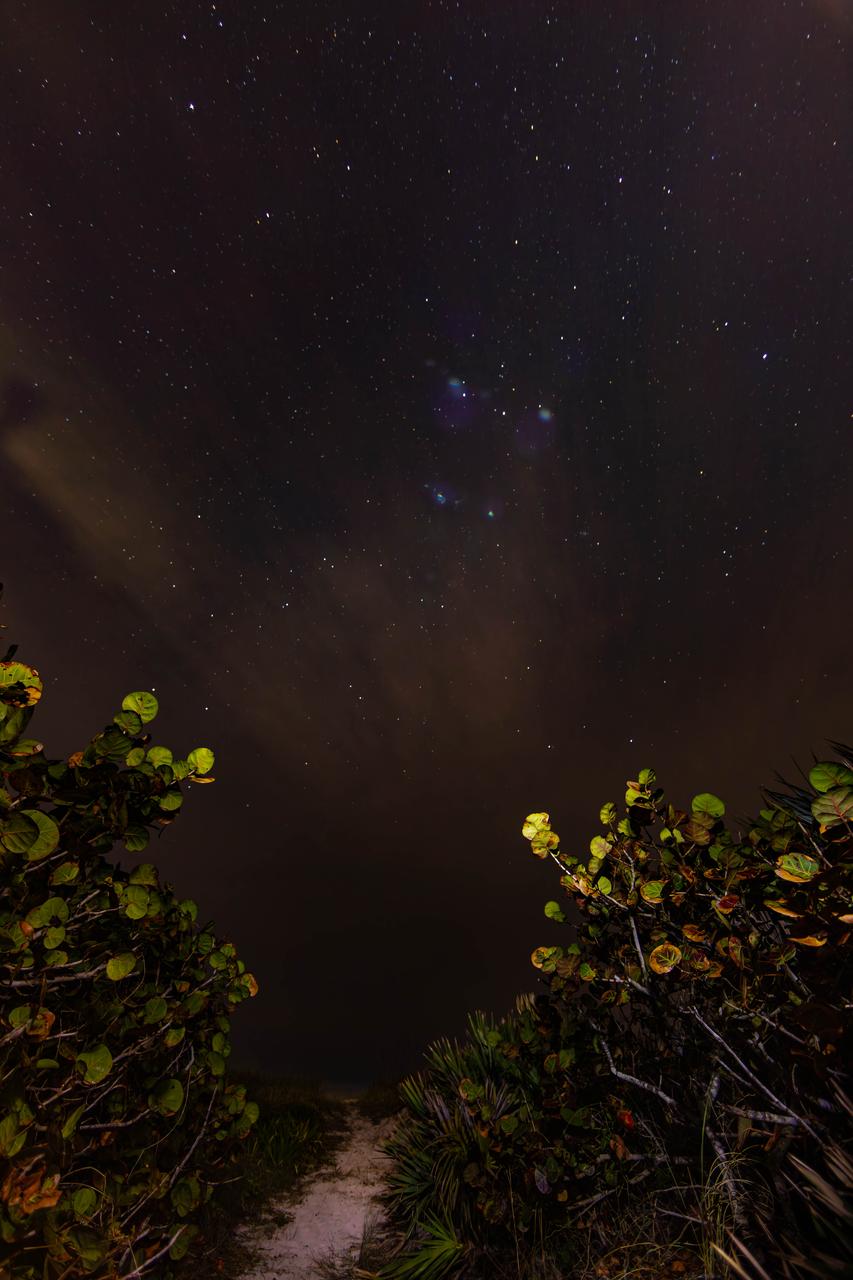
Sea oats are backdropped by the night sky and the Milky Way in this view from the Atlantic shoreline at NASA’s Kennedy Space Center in Florida on Oct. 31, 2019. Lights from aircraft create illuminated streaks above the horizon and at right.
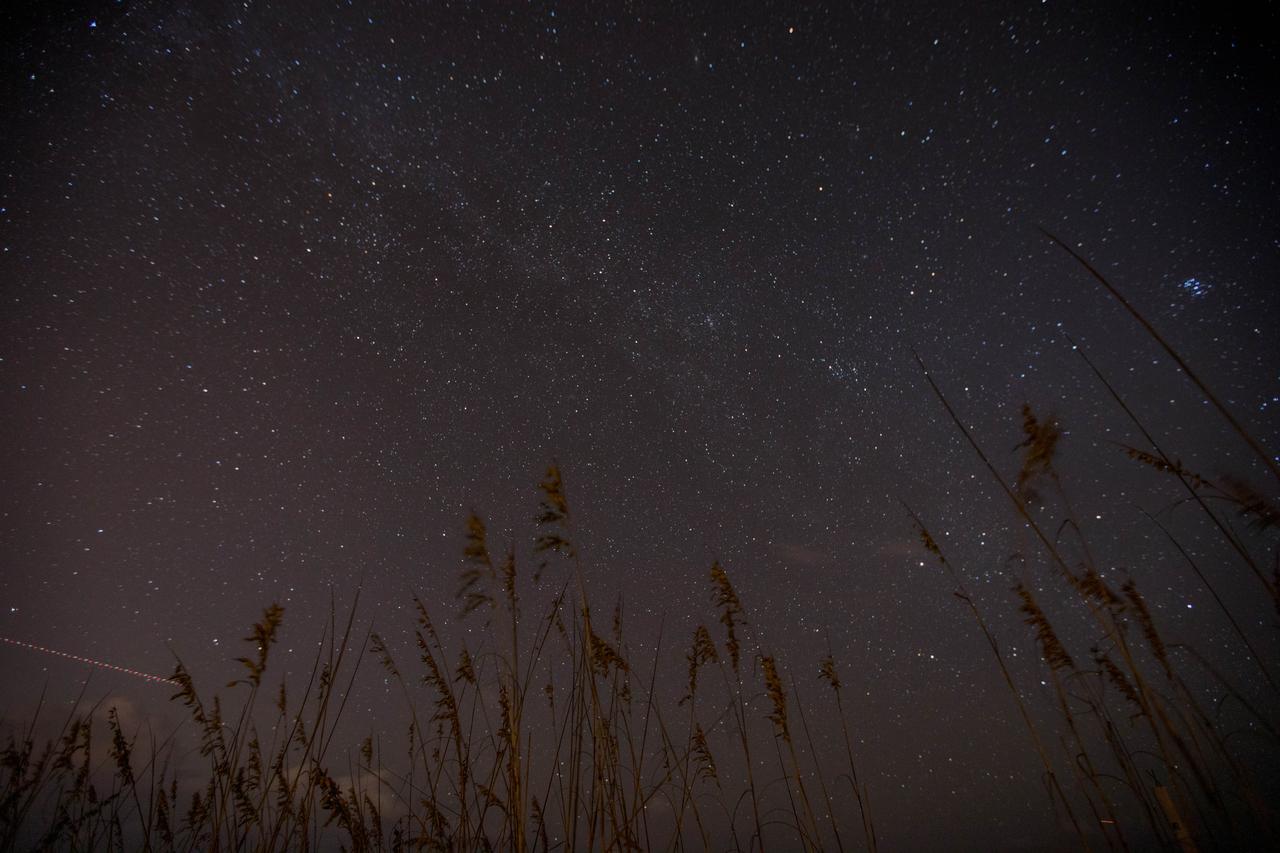
Sea oats frame the night sky, bisected by the Milky Way, in this view from the Atlantic shoreline at NASA’s Kennedy Space Center in Florida on Oct. 31, 2019. The lights of an aircraft create an illuminated streak in the lower left corner.
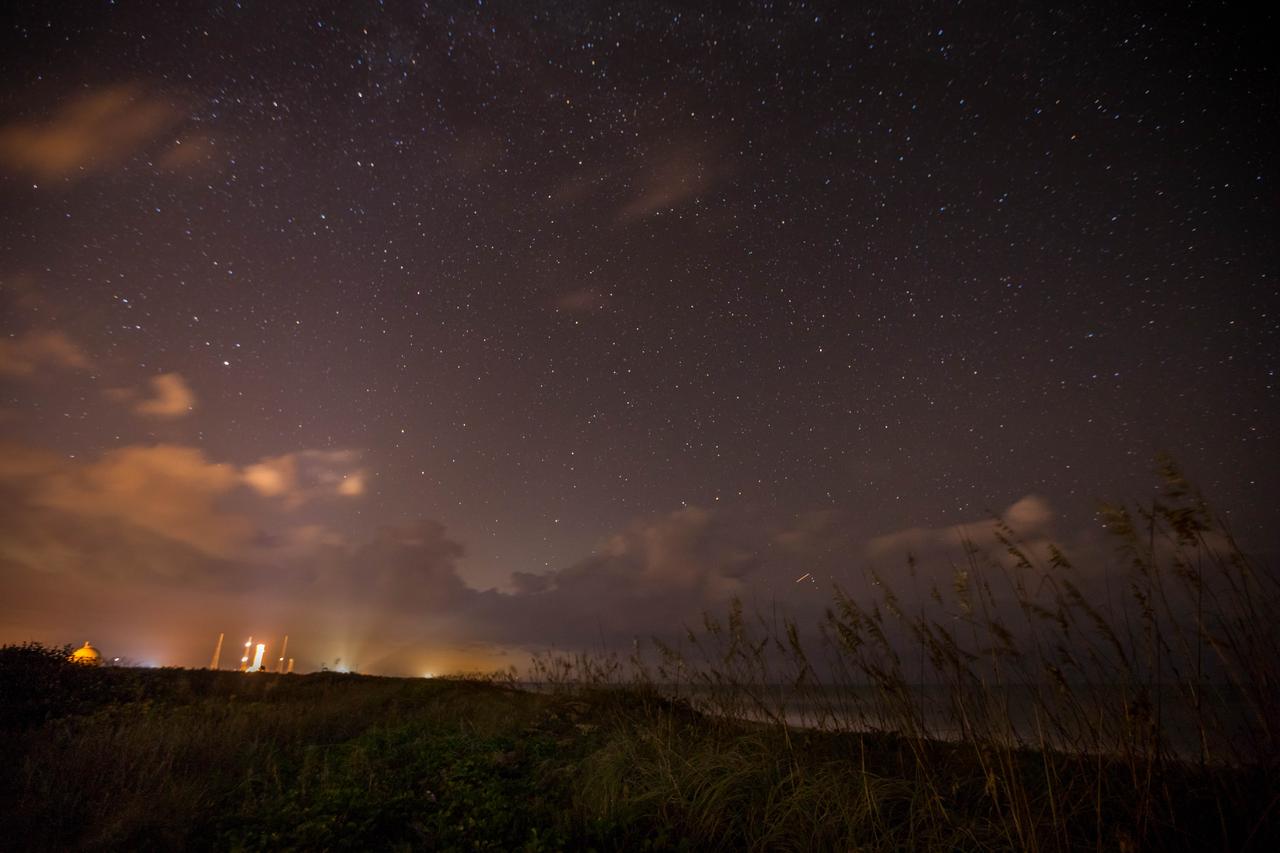
Lights from Launch Complexes 39A and B, left, glow against the night sky in this view from the Atlantic shoreline at NASA’s Kennedy Space Center in Florida on Oct. 31, 2019.
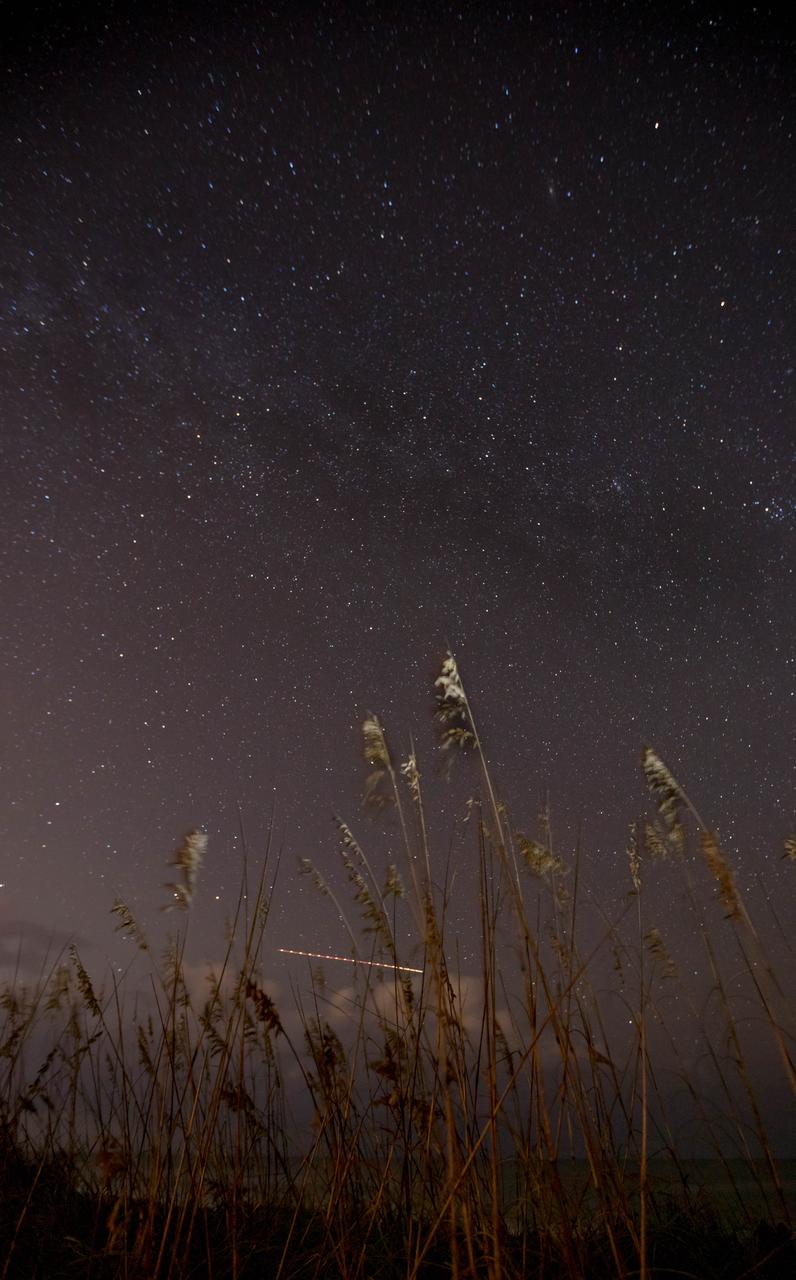
Sea oats are backdropped by the night sky and the Milky Way in this view from the Atlantic shoreline at NASA’s Kennedy Space Center in Florida on Oct. 31, 2019. The lights of an aircraft create an illuminated streak above the horizon.
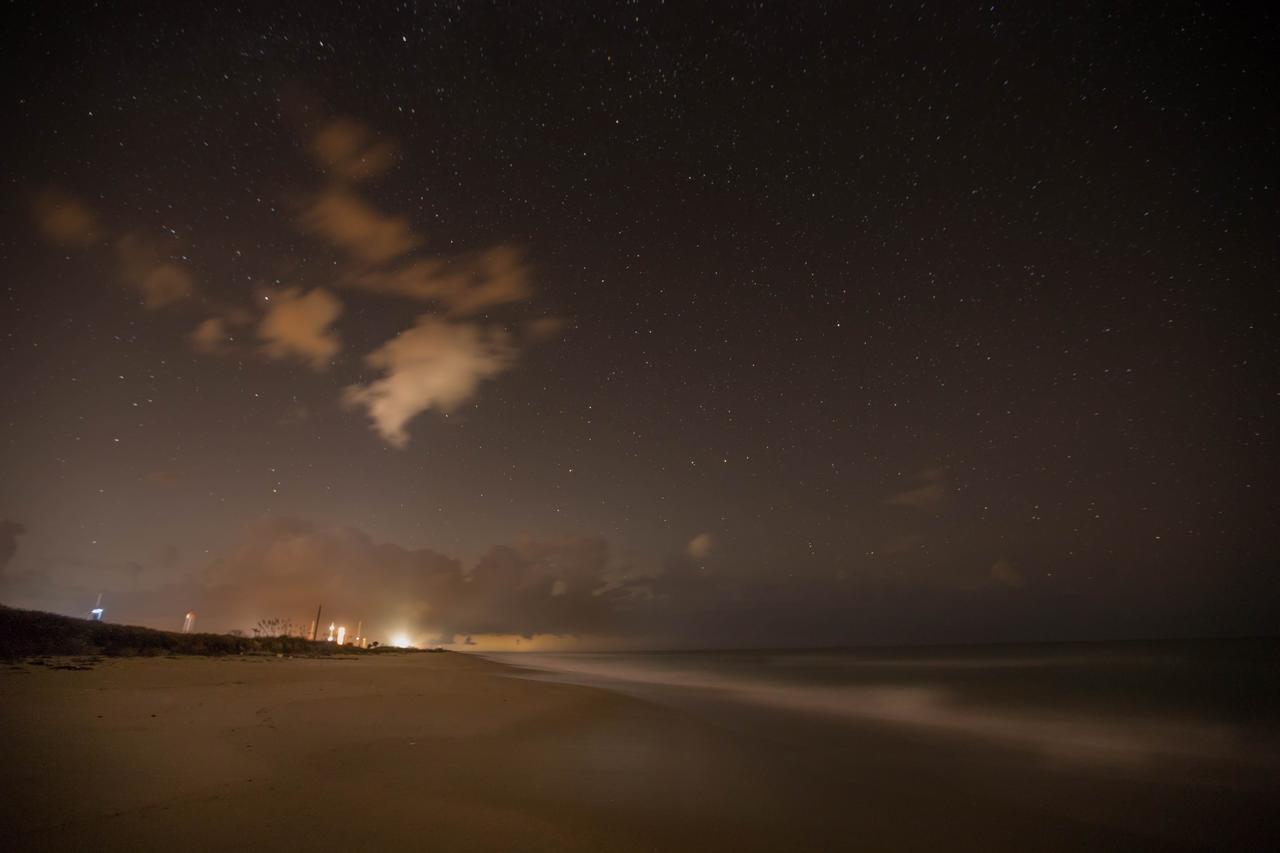
Lights from Launch Complexes 39A and B, left, glow against the night sky in this view from the Atlantic shoreline at NASA’s Kennedy Space Center in Florida on Oct. 31, 2019.
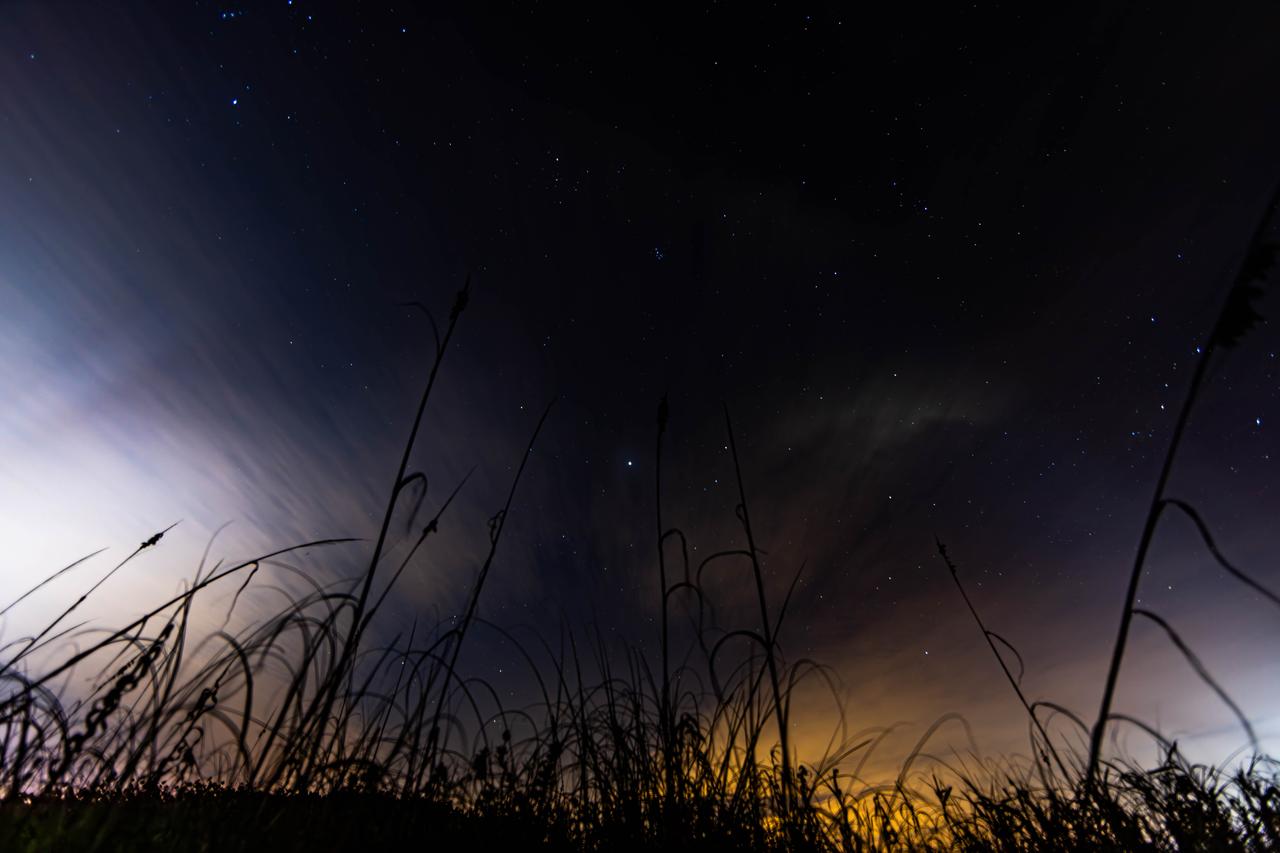
Photographers at NASA capture the night sky Tuesday, Jan. 30, 2024, on a beach near the agency’s Kennedy Space Center in Florida.
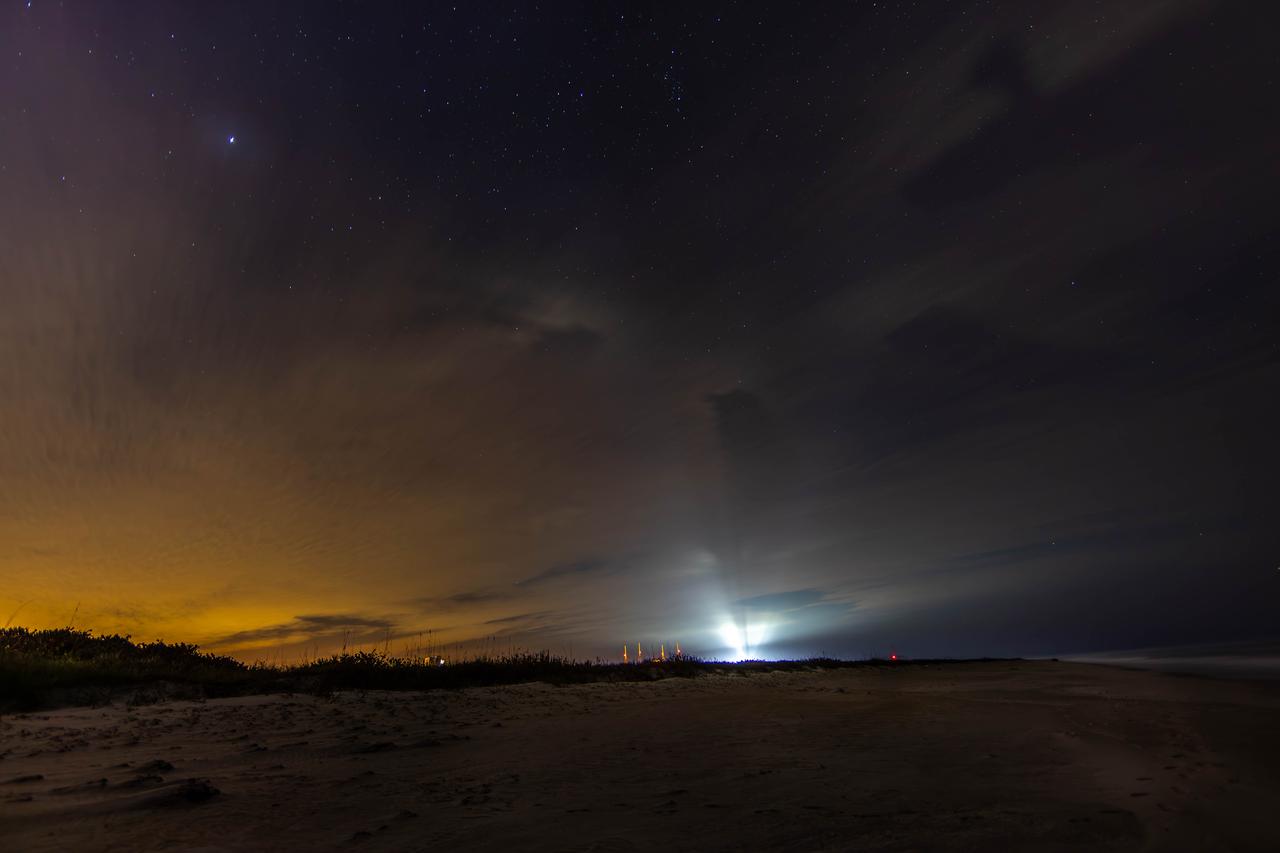
Photographers at NASA capture the night sky Tuesday, Jan. 30, 2024, on a beach near the agency’s Kennedy Space Center in Florida.
Photographers at NASA capture the night sky Tuesday, Jan. 30, 2024, on a beach near the agency’s Kennedy Space Center in Florida.
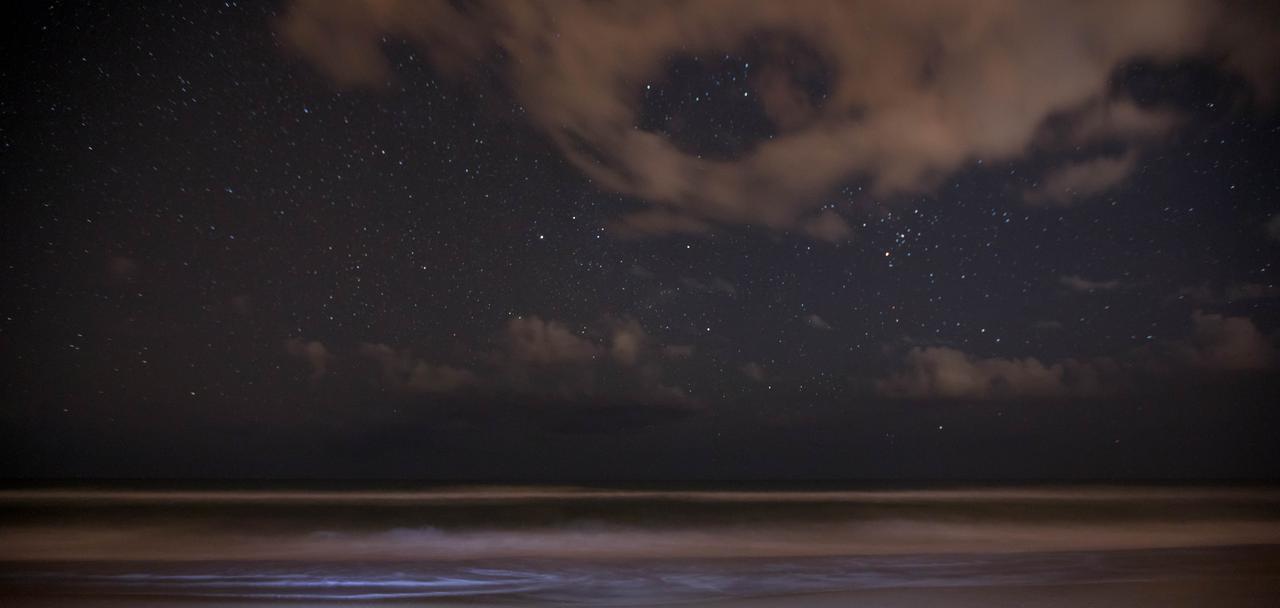
Clouds move inland from the Atlantic Ocean, backdropped by a nighttime vista of stars, in this view from the beach near Launch Complex 39 at NASA’s Kennedy Space Center in Florida on Oct. 31, 2019.
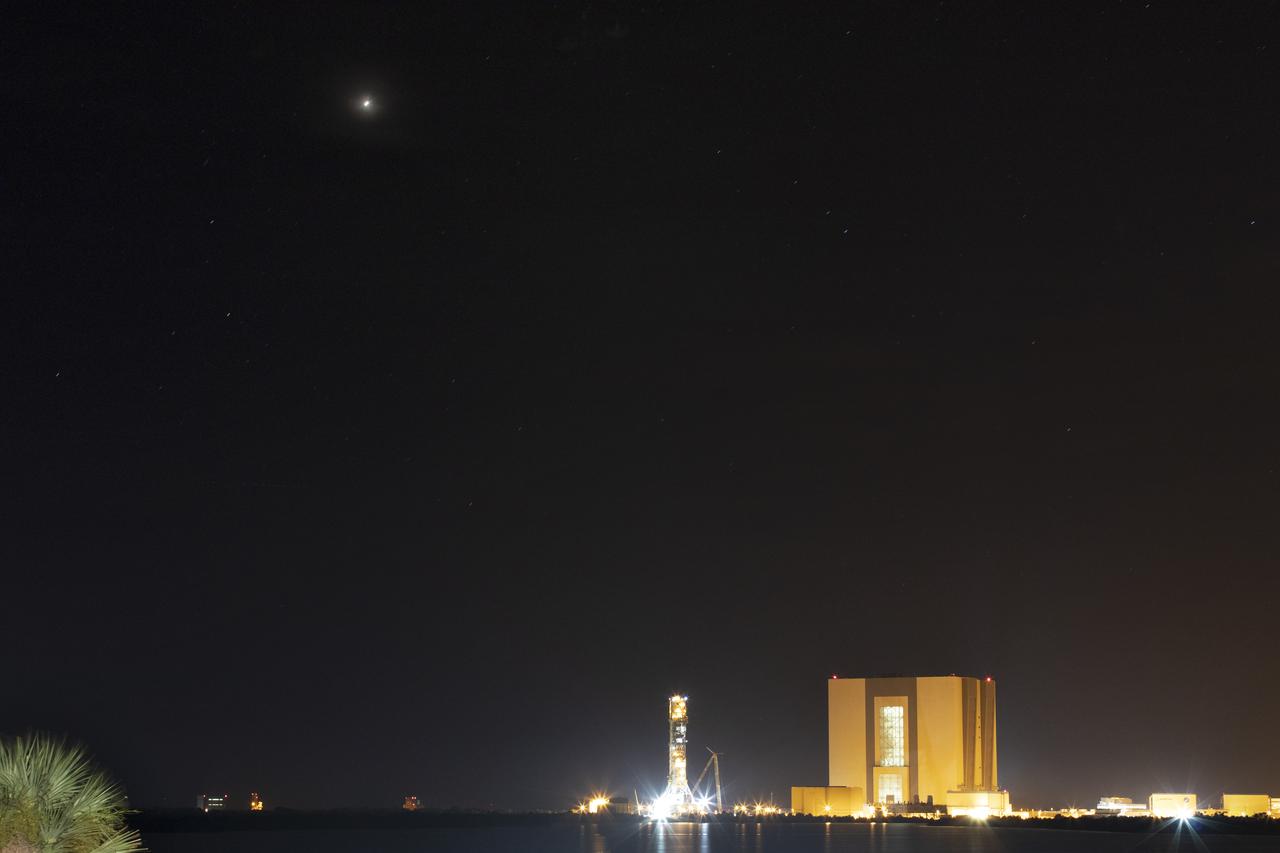
Mars is visible above the horizon in the night sky above Kennedy Space Center in Florida on Monday, July 30, 2018. The Red Planet appeared the brightest from July 27 to July 30, making its closest approach to Earth on July 31. The next Mars close approach is Oct. 6, 2020. A close approach is when Mars and Earth come nearest to each other in their orbits around the Sun.
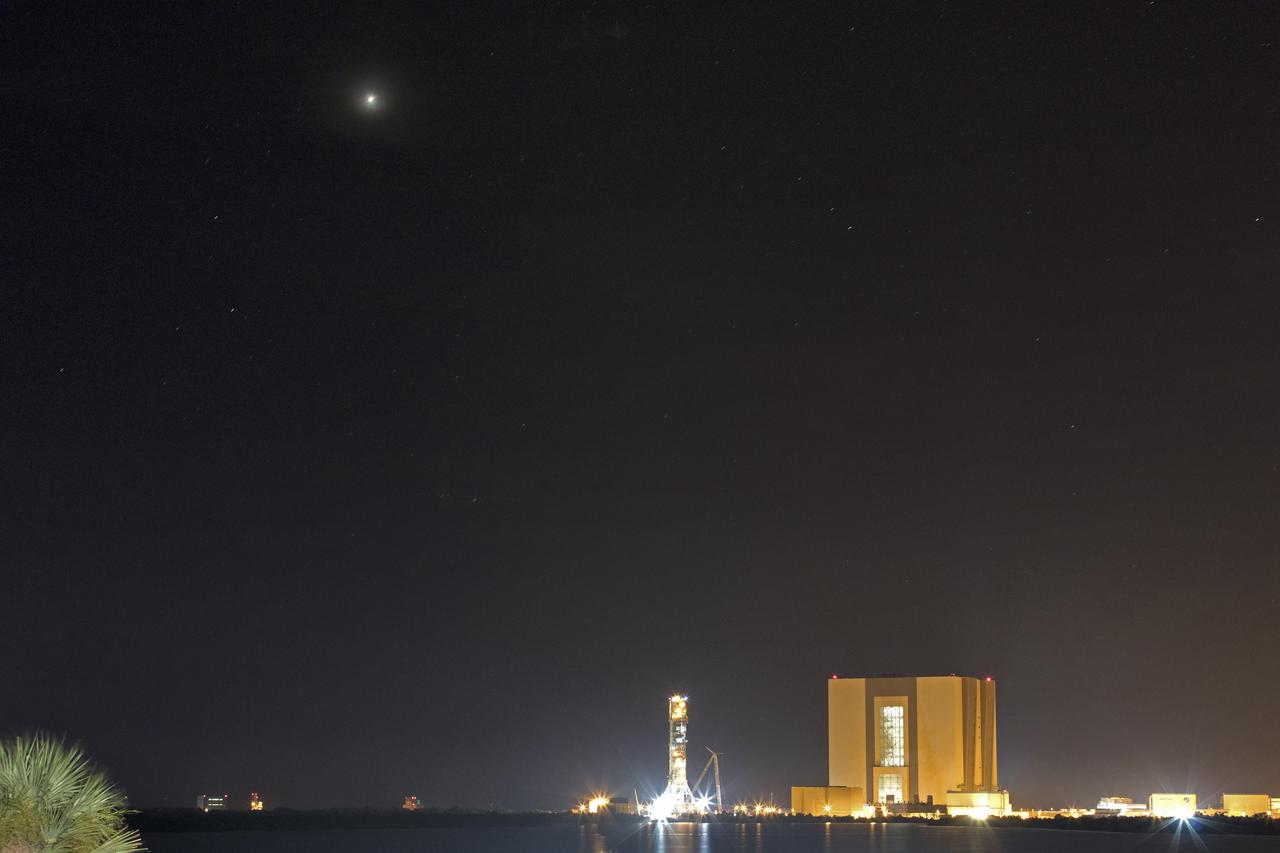
Mars is visible above the horizon in the night sky above Kennedy Space Center in Florida on Monday, July 30, 2018. The Red Planet appeared the brightest from July 27 to July 30, making its closest approach to Earth on July 31. The next Mars close approach is Oct. 6, 2020. A close approach is when Mars and Earth come nearest to each other in their orbits around the Sun.
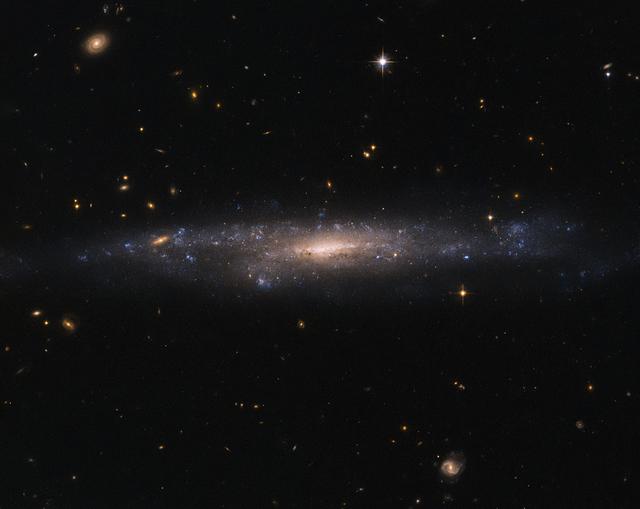
This striking NASA/ESA Hubble Space Telescope image captures the galaxy UGC 477, located just over 110 million light-years away in the constellation of Pisces (The Fish). UGC 477 is a low surface brightness (LSB) galaxy. First proposed in 1976 by Mike Disney, the existence of LSB galaxies was confirmed only in 1986 with the discovery of Malin 1. LSB galaxies like UGC 477 are more diffusely distributed than galaxies such as Andromeda and the Milky Way. With surface brightnesses up to 250 times fainter than the night sky, these galaxies can be incredibly difficult to detect. Most of the matter present in LSB galaxies is in the form of hydrogen gas, rather than stars. Unlike the bulges of normal spiral galaxies, the centers of LSB galaxies do not contain large numbers of stars. Astronomers suspect that this is because LSB galaxies are mainly found in regions devoid of other galaxies, and have therefore experienced fewer galactic interactions and mergers capable of triggering high rates of star formation. LSB galaxies such as UGC 477 instead appear to be dominated by dark matter, making them excellent objects to study to further our understanding of this elusive substance. However, due to an underrepresentation in galactic surveys — caused by their characteristic low brightness — their importance has only been realized relatively recently. Image credit: ESA/Hubble & NASA, Acknowledgement: Judy Schmidt <b><a href="http://www.nasa.gov/audience/formedia/features/MP_Photo_Guidelines.html" rel="nofollow">NASA image use policy.</a></b> <b><a href="http://www.nasa.gov/centers/goddard/home/index.html" rel="nofollow">NASA Goddard Space Flight Center</a></b> enables NASA’s mission through four scientific endeavors: Earth Science, Heliophysics, Solar System Exploration, and Astrophysics. Goddard plays a leading role in NASA’s accomplishments by contributing compelling scientific knowledge to advance the Agency’s mission. <b>Follow us on <a href="http://twitter.com/NASAGoddardPix" rel="nofollow">Twitter</a></b> <b>Like us on <a href="http://www.facebook.com/pages/Greenbelt-MD/NASA-Goddard/395013845897?ref=tsd" rel="nofollow">Facebook</a></b> <b>Find us on <a href="http://instagrid.me/nasagoddard/?vm=grid" rel="nofollow">Instagram</a></b>
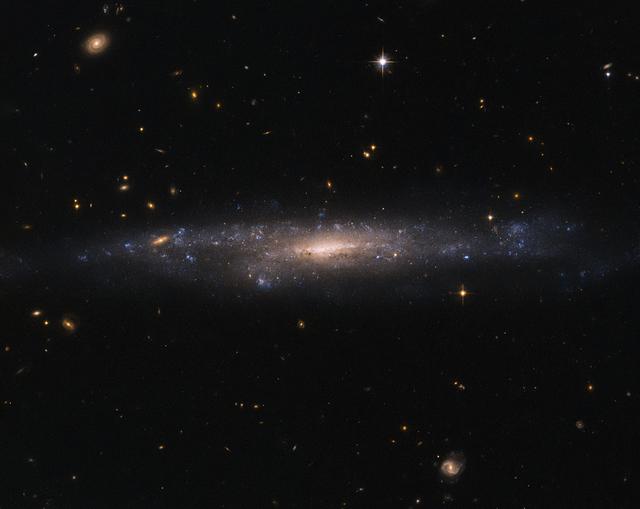
This striking NASA/ESA Hubble Space Telescope image captures the galaxy UGC 477, located just over 110 million light-years away in the constellation of Pisces (The Fish). UGC 477 is a low surface brightness (LSB) galaxy. First proposed in 1976 by Mike Disney, the existence of LSB galaxies was confirmed only in 1986 with the discovery of Malin 1. LSB galaxies like UGC 477 are more diffusely distributed than galaxies such as Andromeda and the Milky Way. With surface brightnesses up to 250 times fainter than the night sky, these galaxies can be incredibly difficult to detect. Most of the matter present in LSB galaxies is in the form of hydrogen gas, rather than stars. Unlike the bulges of normal spiral galaxies, the centres of LSB galaxies do not contain large numbers of stars. Astronomers suspect that this is because LSB galaxies are mainly found in regions devoid of other galaxies, and have therefore experienced fewer galactic interactions and mergers capable of triggering high rates of star formation. LSB galaxies such as UGC 477 instead appear to be dominated by dark matter, making them excellent objects to study to further our understanding of this elusive substance. However, due to an underrepresentation in galactic surveys — caused by their characteristic low brightness — their importance has only been realised relatively recently.
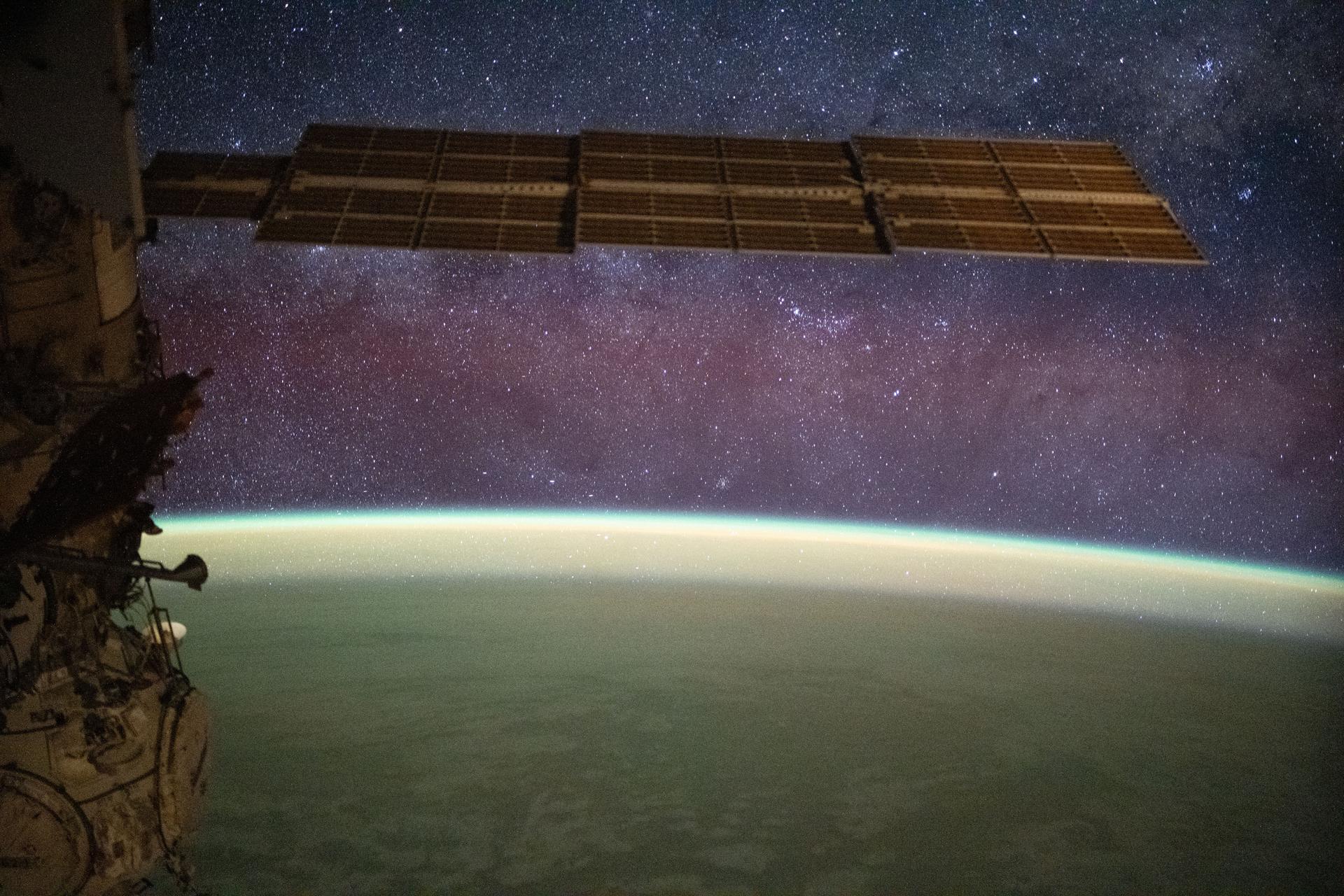
iss073e0982261 (Oct. 24, 2025) --- The Milky Way spans the night sky above a yellow-green airglow that blankets the Atlantic Ocean, midway between South America and Africa. This long-exposure photograph was taken from the International Space Station as it orbited 260 miles above Earth at approximately 11:19 p.m. local time.
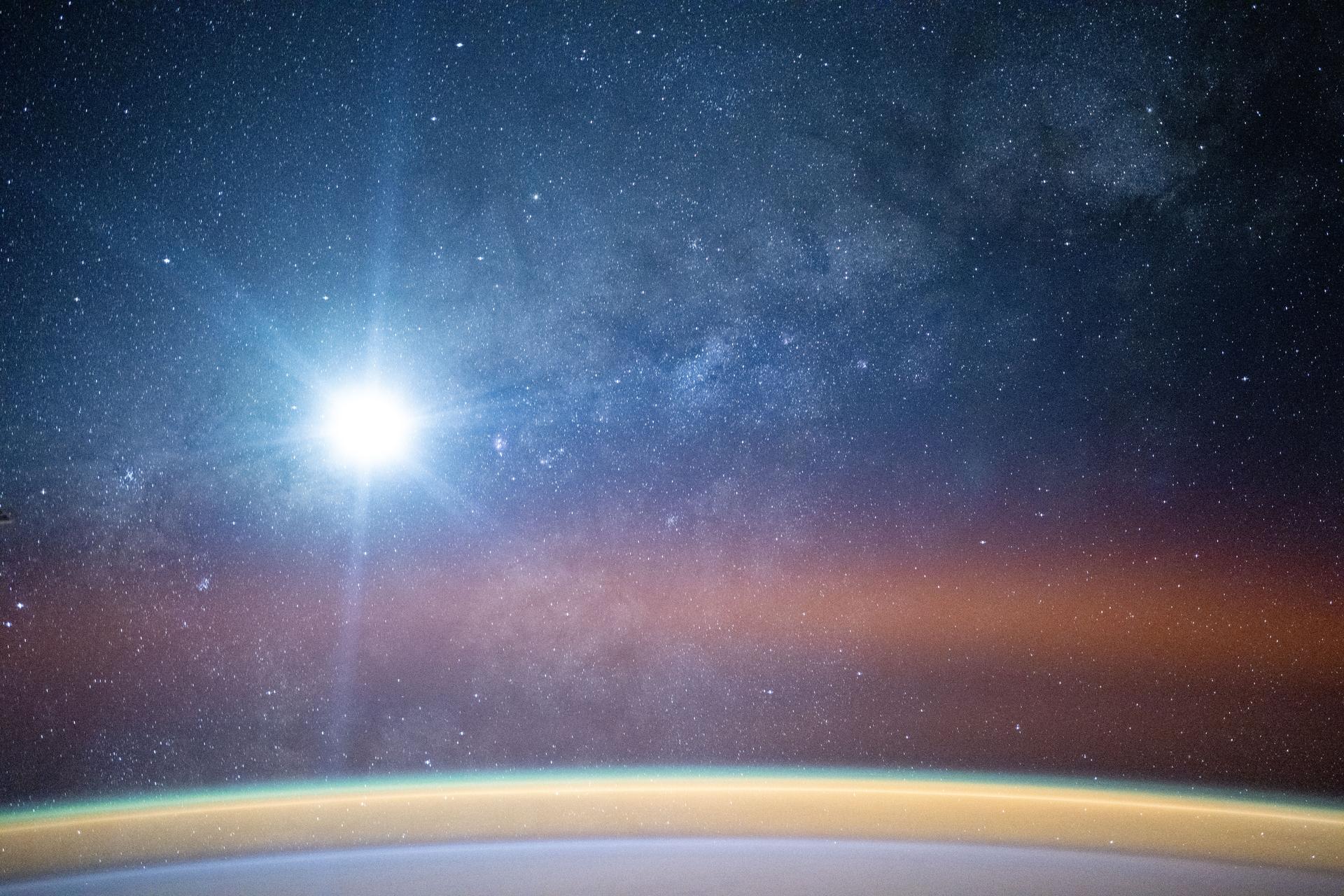
iss073e0982823 (Oct. 26, 2025) --- The Moon glares into a camera aboard the International Space Station as it orbited 259 miles above the Atlantic Ocean off the coast of Africa at approximately 10:49 p.m. local time. A bright airglow blankets Earth's horizon as the Milky Way illuminates the night sky.
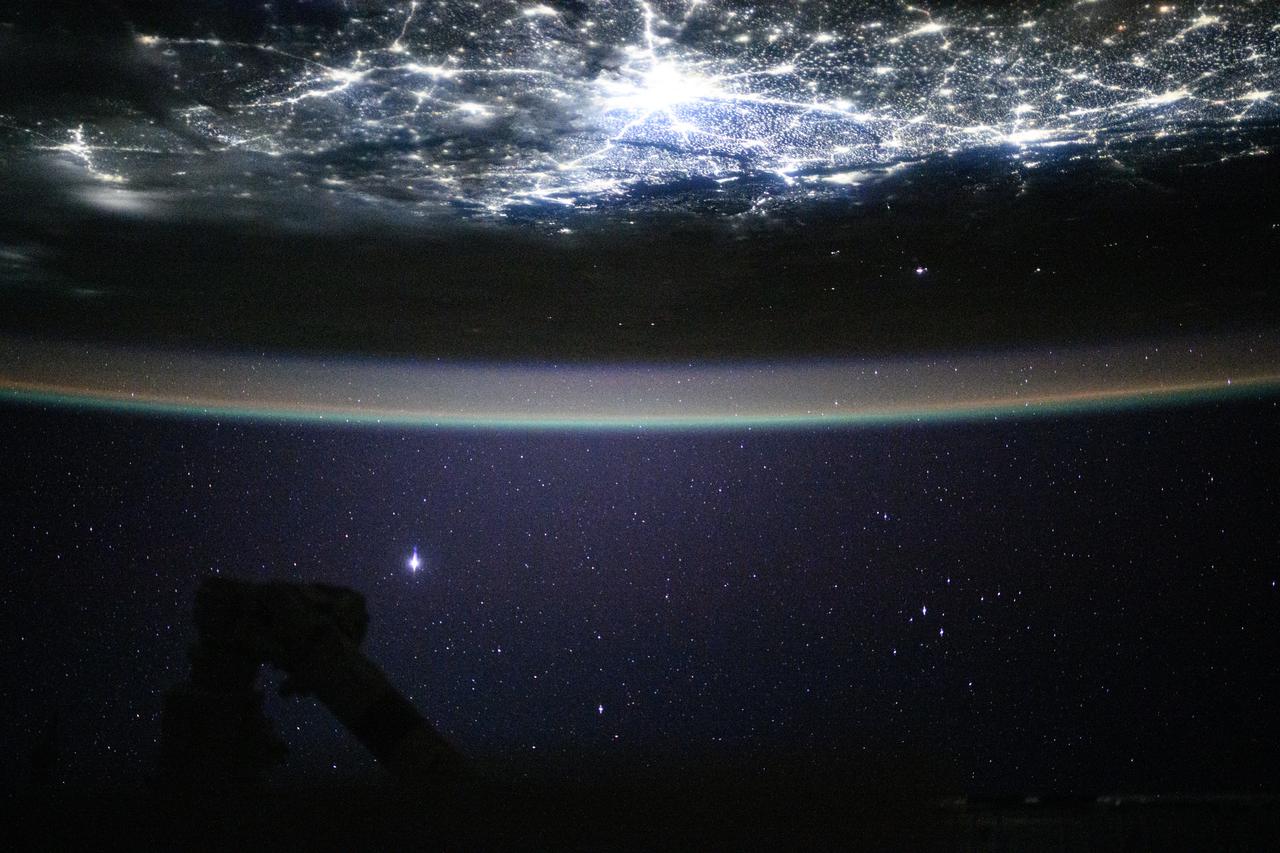
iss073e0685684 (Aug. 21, 2025) --- Underneath a starry night sky, the city lights of New Delhi, India, and its surrounding suburbs glitter below Earth's atmospheric glow and at the edge of the Himalayas. This photograph was taken at approximately 2:55 a.m. local time as the International Space Station orbited 260 miles above.

iss073e0982679 (Oct. 25, 2025) --- The Milky Way spans the night sky above a bright orange-yellow airglow that blankets the city lights along the east coast of Africa, from Kenya to Somalia. The International Space Station was orbiting 259 miles above the Indian Ocean, north of Madagascar, at approximately 10:29 p.m. local time when this photograph was taken.
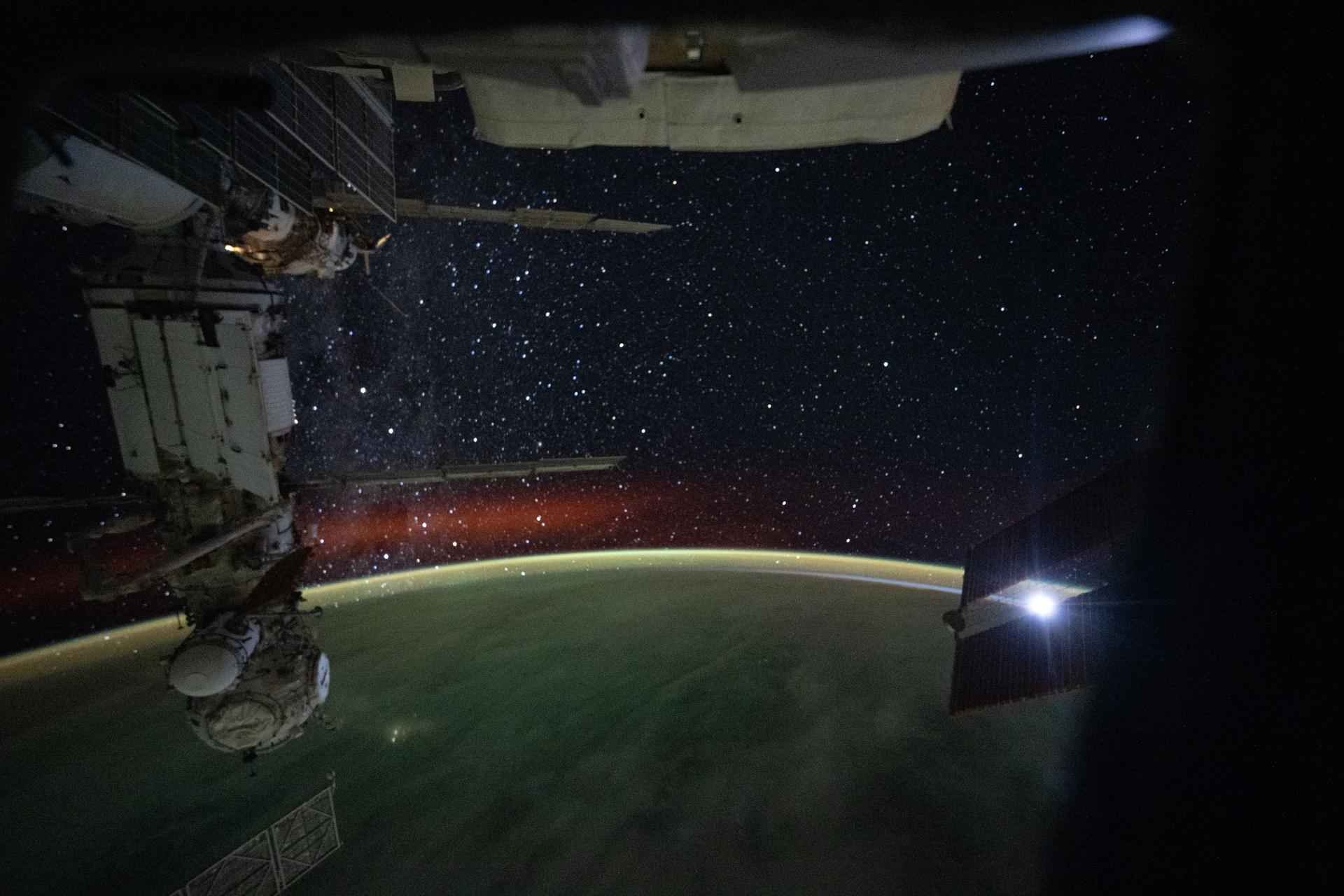
iss074e0759993 (June 21, 2026) --- The International Space Station was soaring 262 miles above southern India at approximately 1:34 a.m. local time when this long‑duration photograph was taken, revealing a bright atmospheric glow and a starry night sky. At left is the Prichal module, attached to the Nauka science module on the orbital outpost’s Roscosmos segment. Credit: NASA/Chris Williams

This view of the twilight sky and Martian horizon taken by NASA Curiosity Mars rover includes Earth as the brightest point of light in the night sky. Earth is a little left of center in the image, and our moon is just below Earth.

iss074e05319021 (April 19, 2026) --- This serene view from the International Space Station captures a bright orange airglow outlining Earth’s horizon beneath the starry expanse of the night sky. The orbital outpost was soaring 259 miles above Colombia at approximately 2:09 a.m. local time when this photograph was taken. Credit: ESA/Sophie Adenot
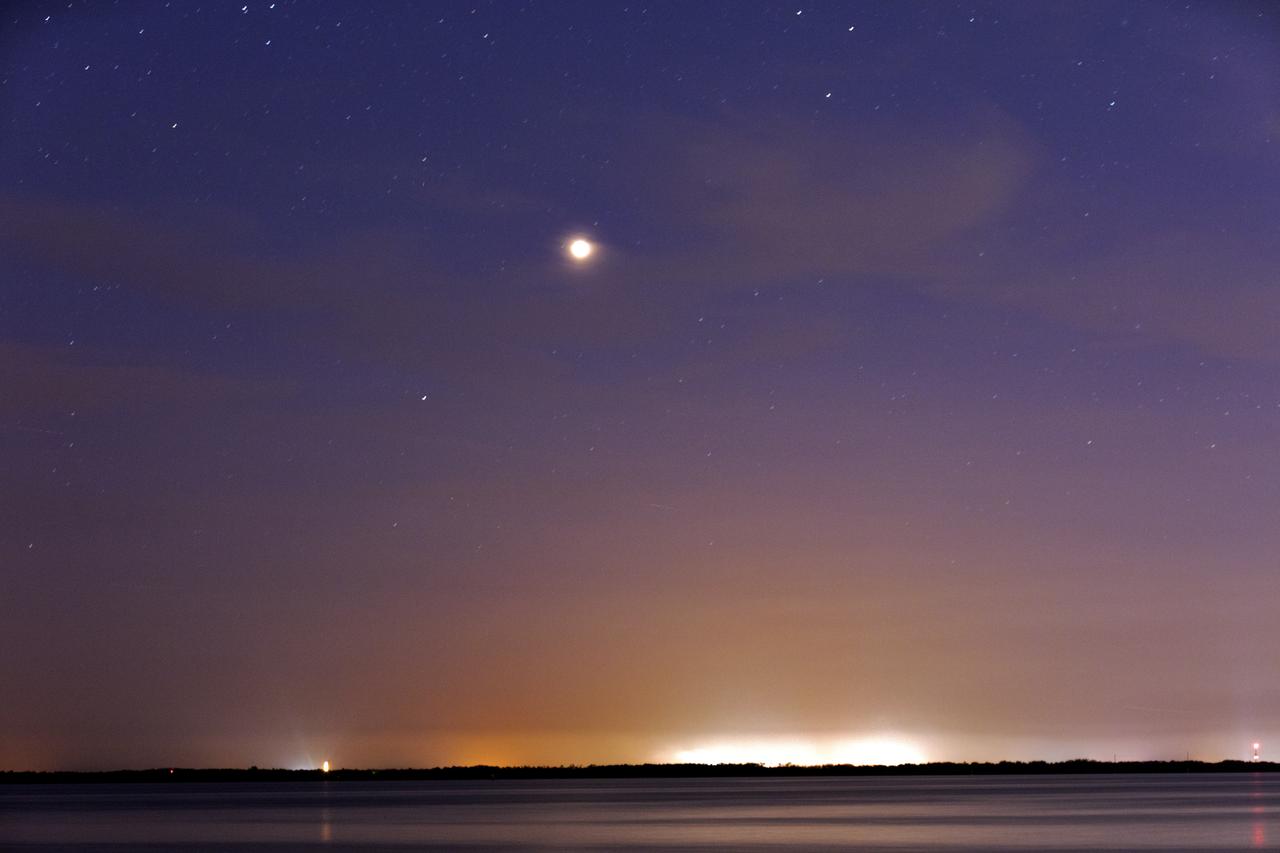
Mars shines brightly in the sky over Port Canaveral in Florida on Monday, July 30, 2018. The Red Planet appeared the brightest from July 27 to July 30, making its closest approach to Earth on July 31. The next Mars close approach is Oct. 6, 2020. A close approach is when Mars and Earth come nearest to each other in their orbits around the Sun.

Mars shines brightly in the sky over Port Canaveral in Florida on Monday, July 30, 2018. The Red Planet appeared the brightest from July 27 to July 30, making its closest approach to Earth on July 31. The next Mars close approach is Oct. 6, 2020. A close approach is when Mars and Earth come nearest to each other in their orbits around the Sun.
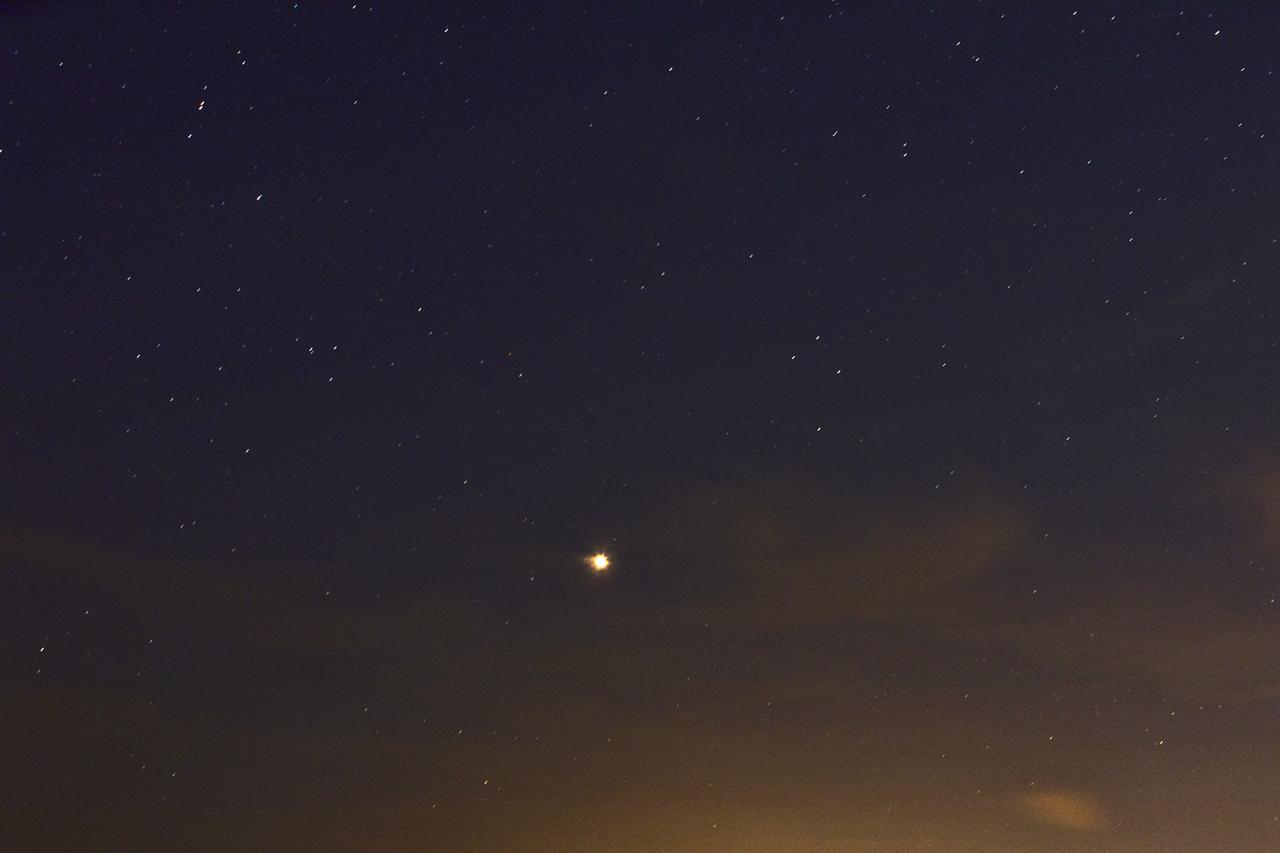
Mars shines brightly in the sky over Port Canaveral in Florida on Monday, July 30, 2018. The Red Planet appeared the brightest from July 27 to July 30, making its closest approach to Earth on July 31. The next Mars close approach is Oct. 6, 2020. A close approach is when Mars and Earth come nearest to each other in their orbits around the Sun.
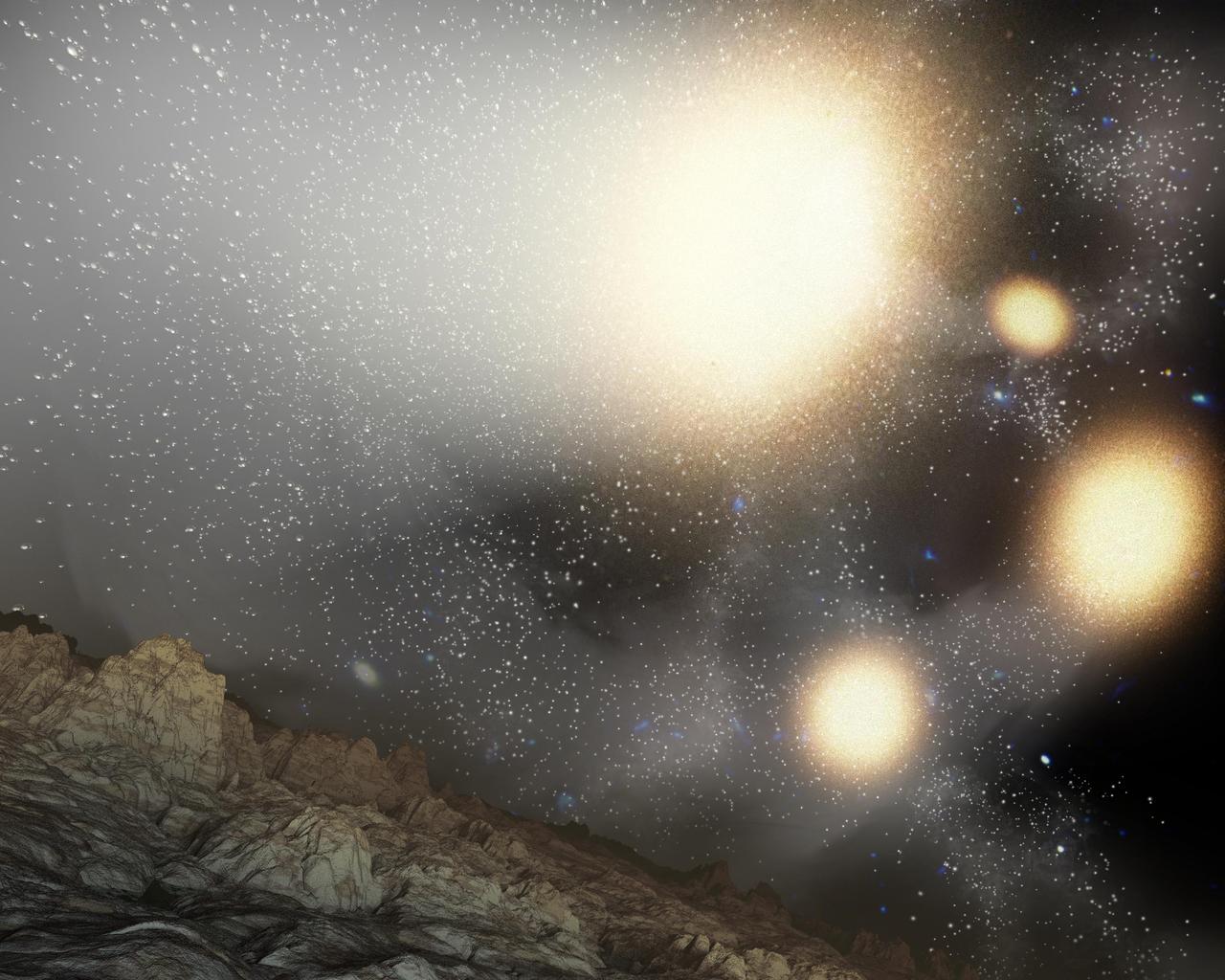
This artist concept shows what the night sky might look like from a hypothetical planet around a star tossed out of an ongoing four-way collision between big galaxies.
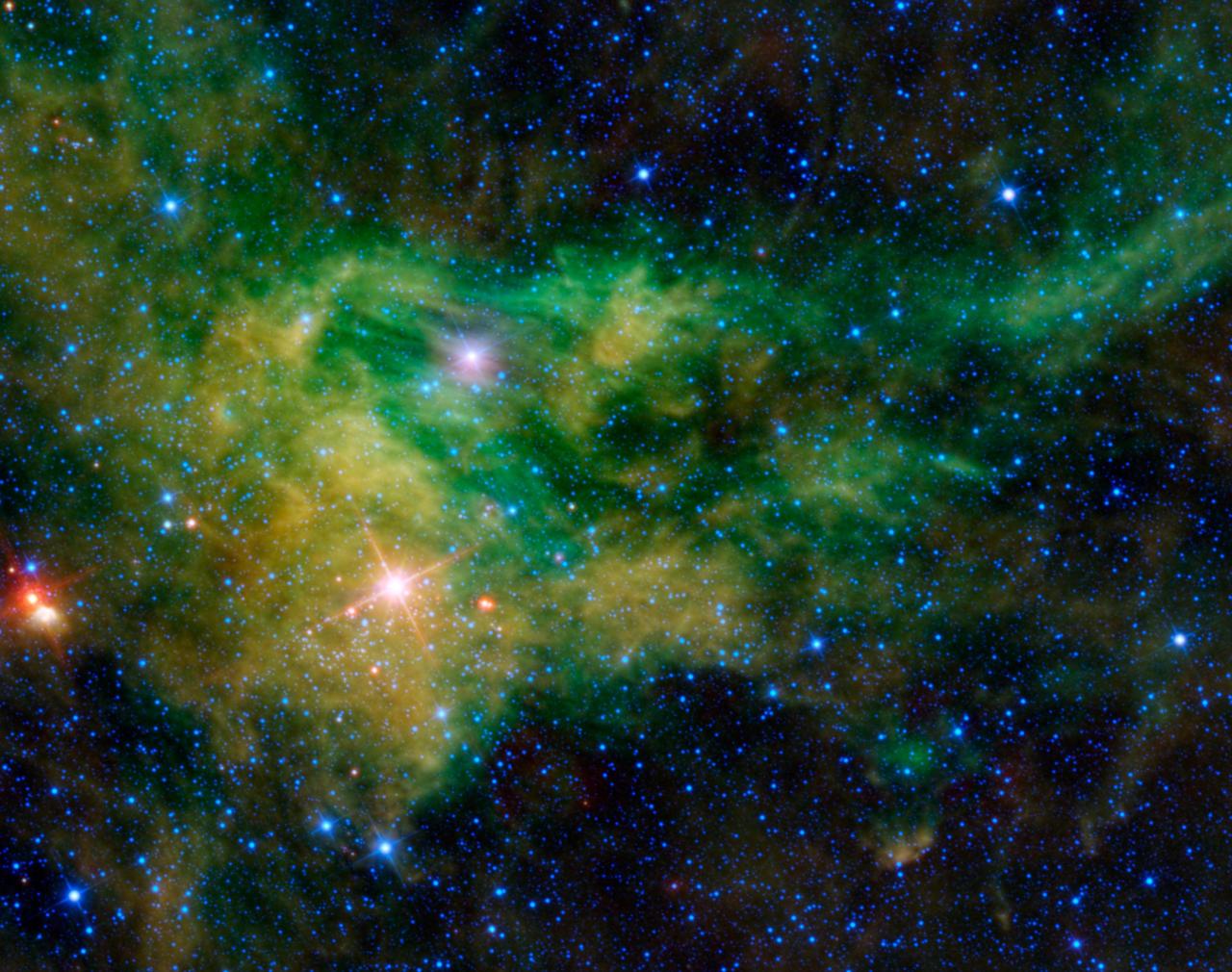
NASA Wide-field Infrared Survey Explorer captured this colorful image of the nebula BFS 29 surrounding the star CE-Camelopardalis, found hovering in the band of the night sky comprising the Milky Way.
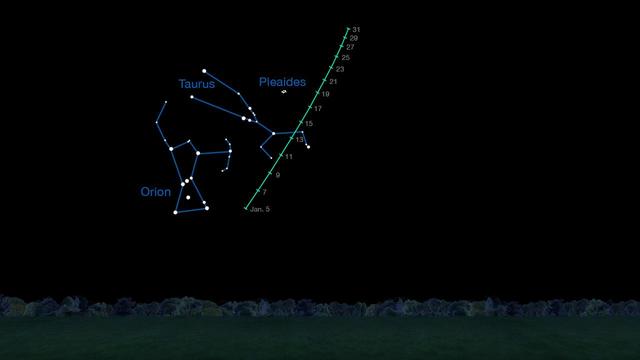
On clear nights in January 2015, comet C/2014 Q2 Lovejoy is visible in the Taurus region of the sky to observers using binoculars. This chart indicates where to look for it on different dates during the month.
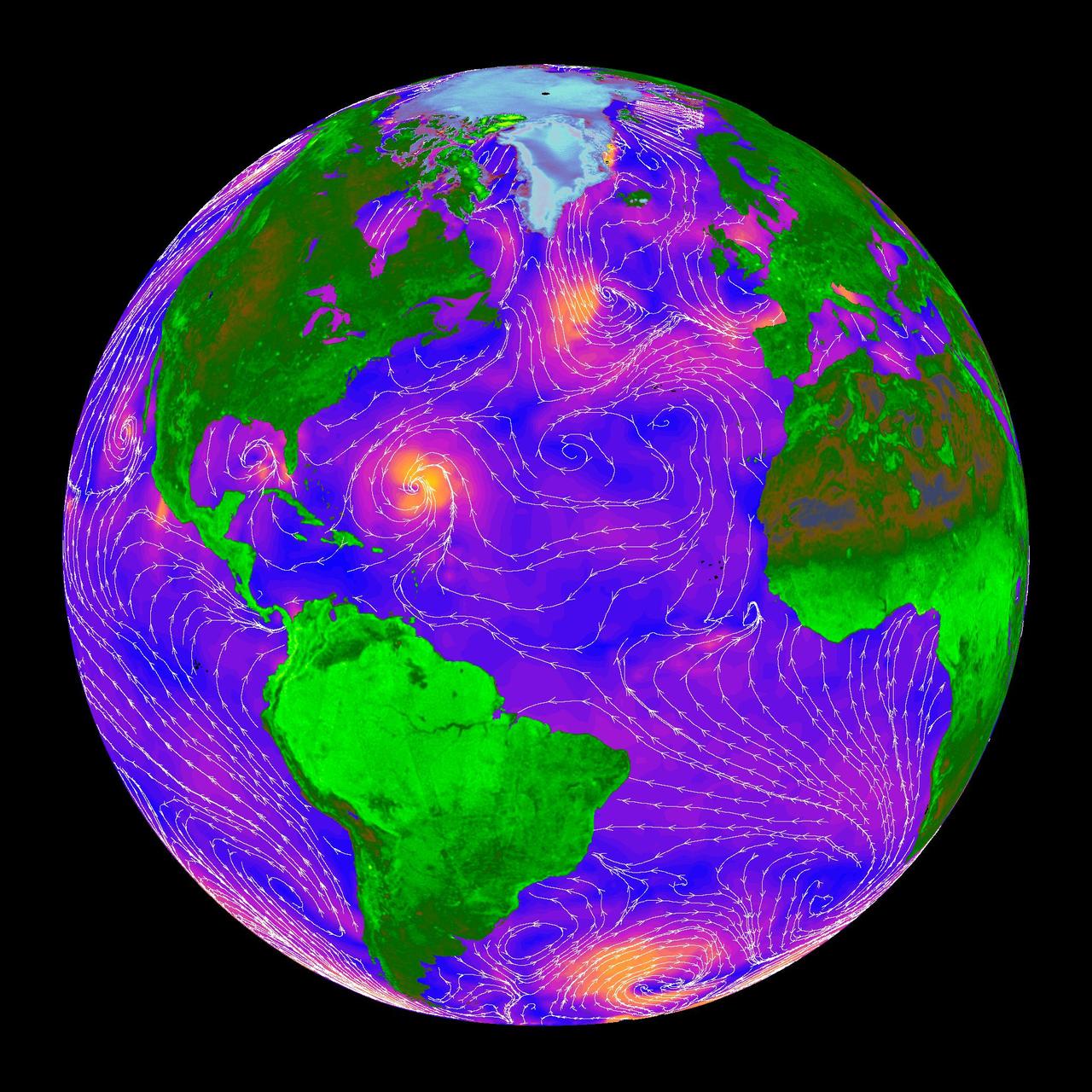
The SeaWinds scatterometer on NASA QuikScat satellite makes global radar measurements day and night, in clear sky and through clouds. Greenland and the polar ice cap are shown here on September 20, 1999.
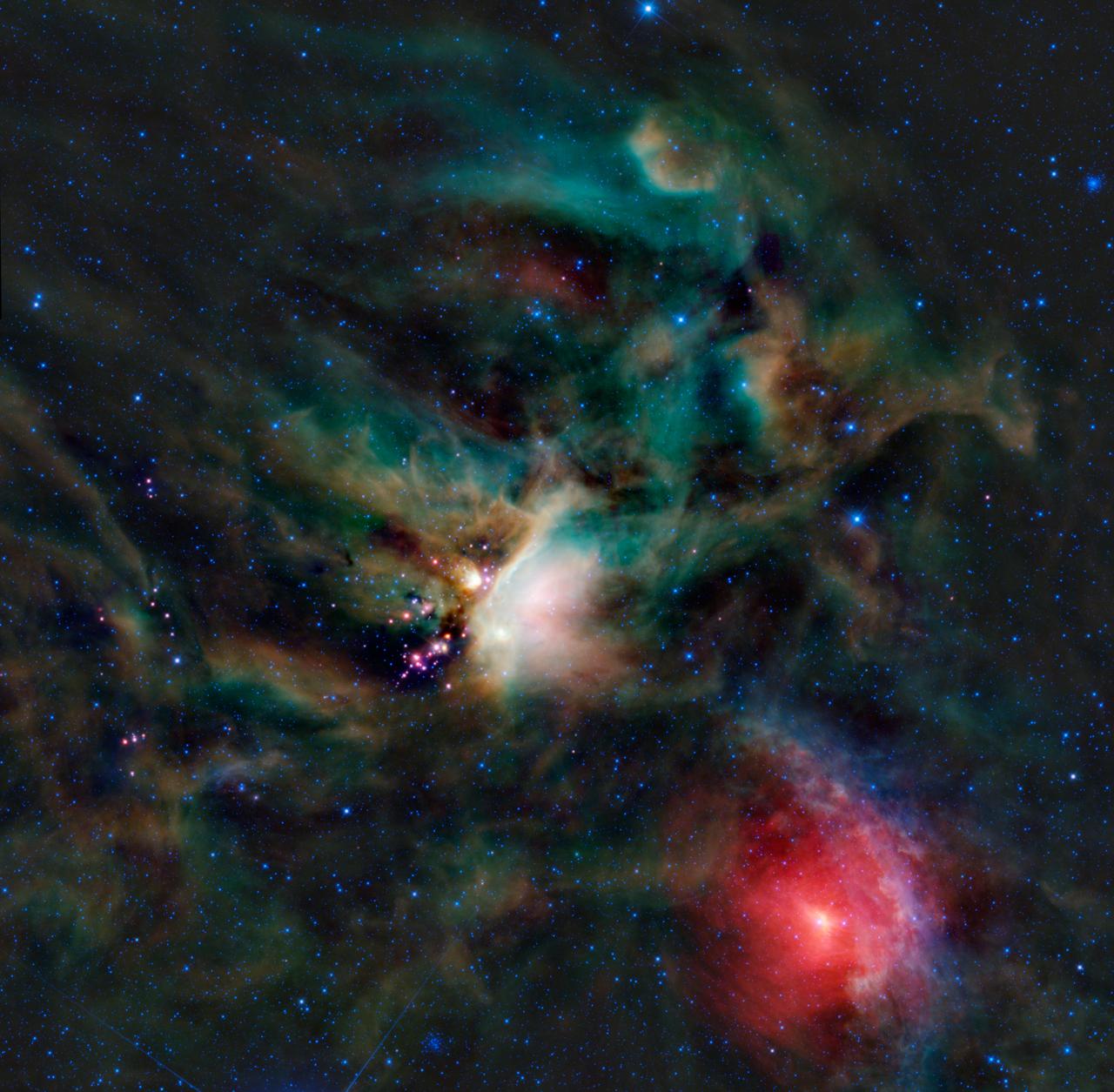
A rich collection of colorful astronomical objects is revealed in this picturesque image of the Rho Ophiuchi cloud complex from NASA Wide-field Infrared Explorer; the cloud is found rising above the plane of the Milky Way in the night sky.
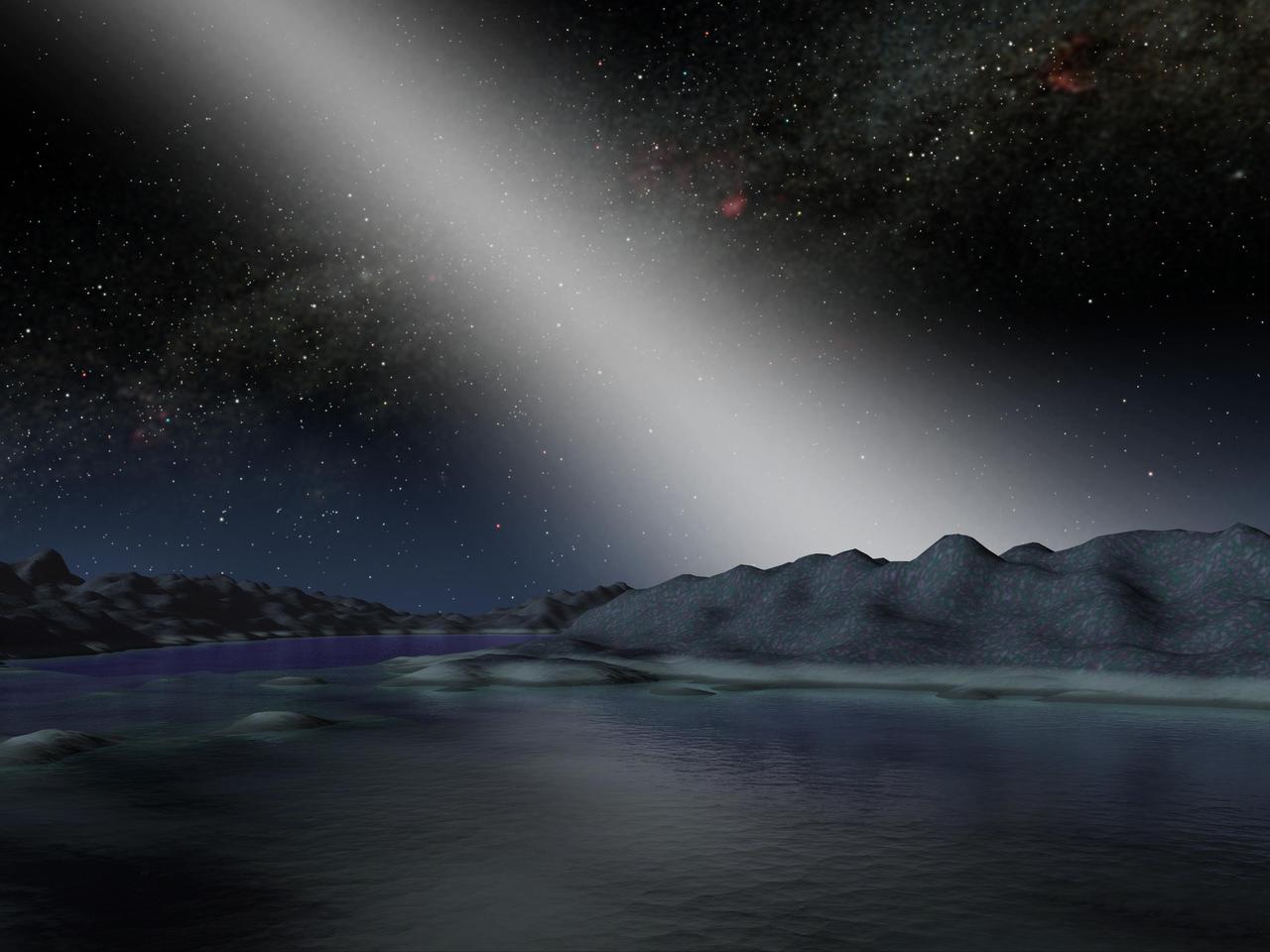
This artist concept shows what the night sky might look like from a hypothetical alien planet in a star system with an asteroid belt 25 times as massive as the one in our own solar system.
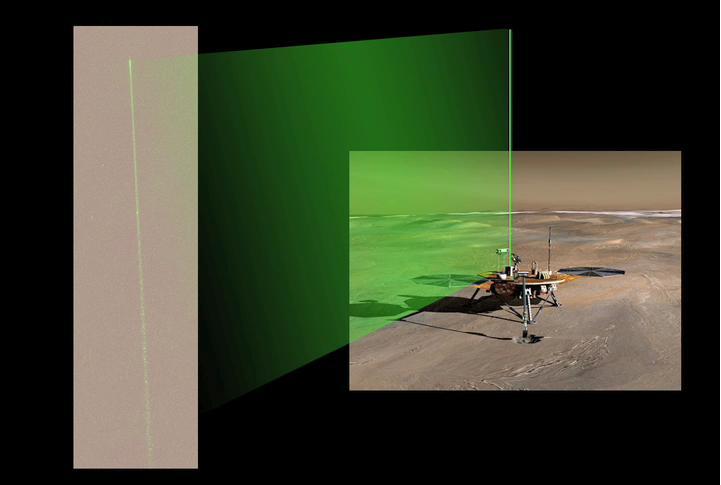
The Surface Stereo Imager camera aboard NASA Phoenix Mars Lander acquired a series of images of the laser beam in the Martian night sky. Bright spots in the beam are reflections from ice crystals in the low level ice-fog.
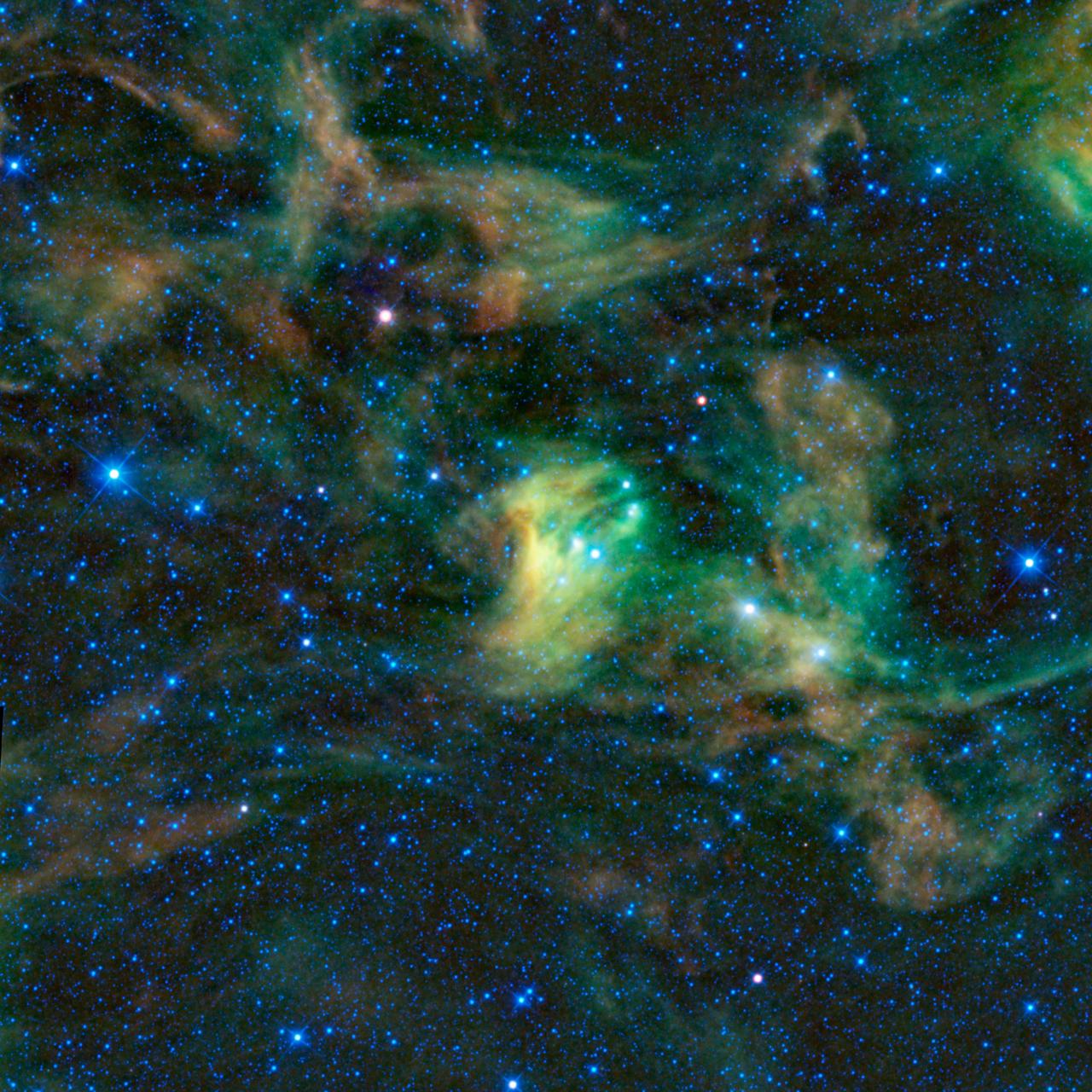
Between the claws of the dreaded scorpion imagined by the ancient Greeks lies this giant dust cloud, imaged by the Wide-field Infrared Survey Explorer. The constellation of Scorpius is prominent in the summer night sky in North America.
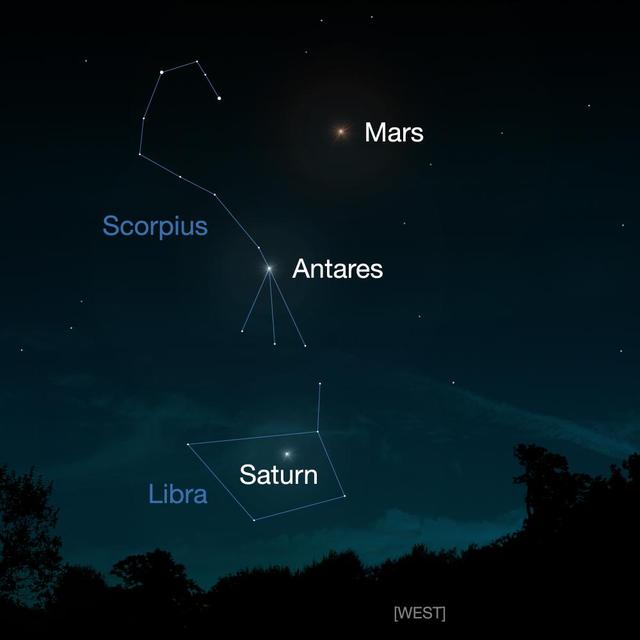
Comet Siding Spring will have a close approach to Mars on Oct. 19, 2014. This artist concept shows people in the Southern Hemisphere where to look for Mars in the night sky. Mars and the comet may be visible with binoculars.
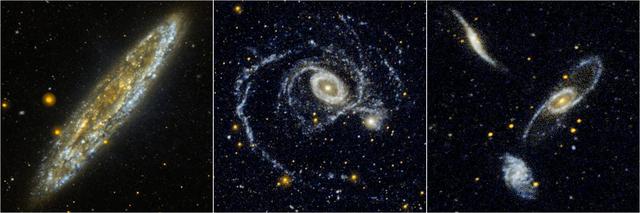
Located 10 million light-years away in the southern constellation Sculptor, the Silver Dollar galaxy, or NGC 253, is one of the brightest spiral galaxies in the night sky as seen in this edge-on view from NASA Galaxy Evolution Explorer.
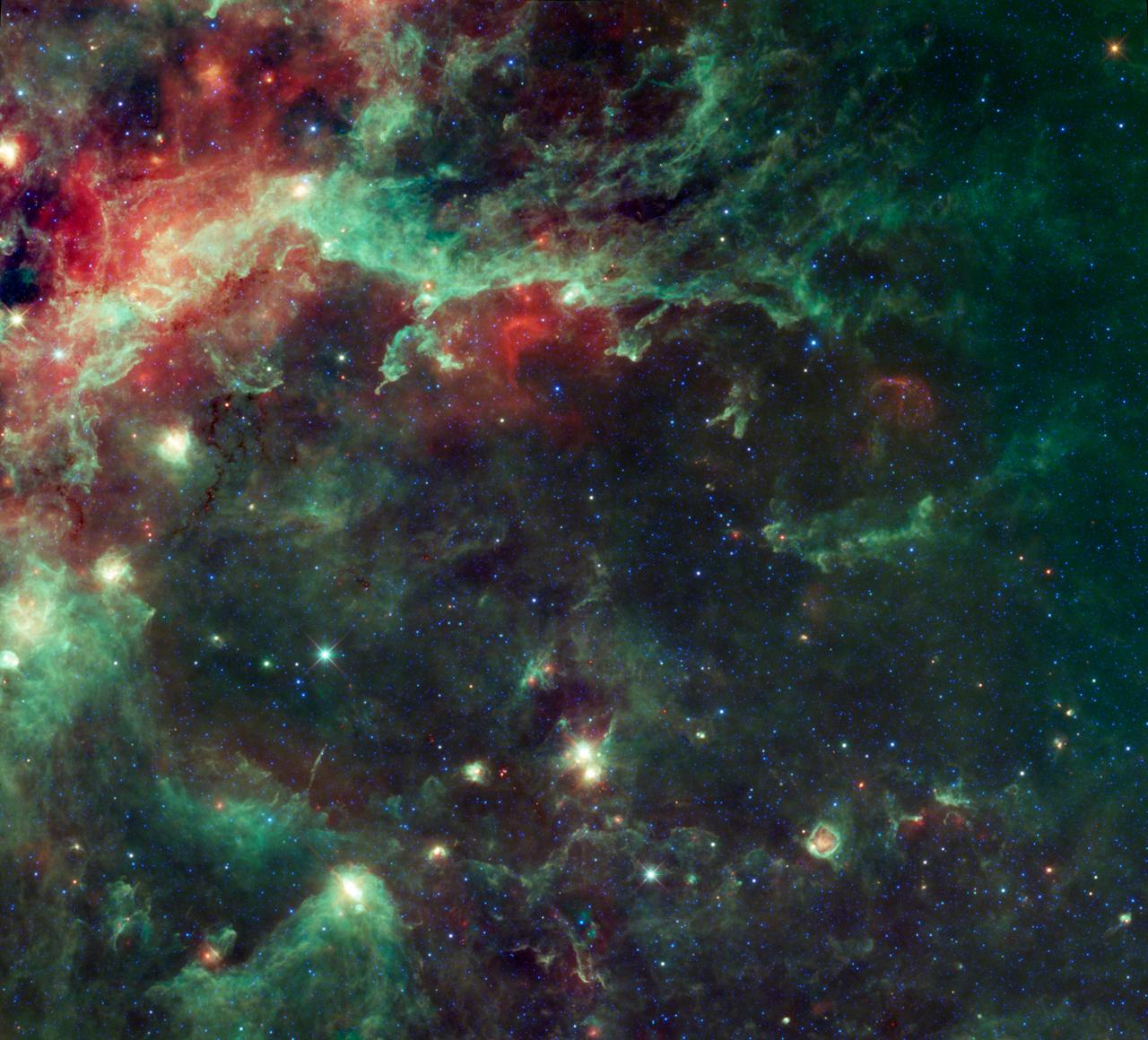
Best known as a swan winging its way across the night, the constellation Cygnus is easily seen in the northern hemisphere summertime sky. NASA WISE telescope captured this image of a huge complex of star-forming clouds and stellar clusters.

An enhanced close-up view shows at least two distinct jets spraying a mist of fine particles from the south polar region of Enceladus. This image shows the night side of Saturn and the active moon against dark sky
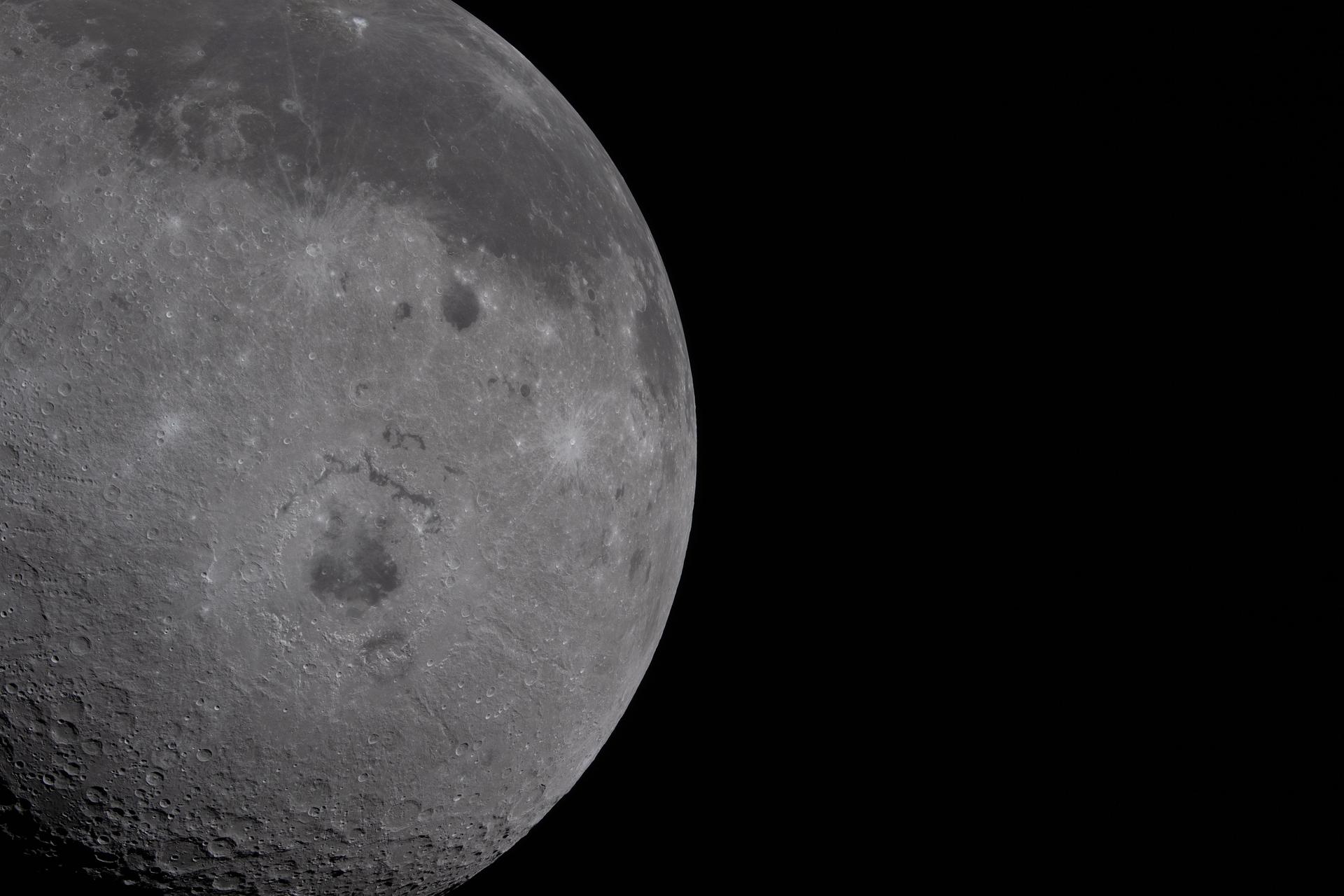
art002e009278 (April 6, 2026) - Just over half of the Moon fills the left half of the image. The near side, characterized by the dark patches of ancient lava, is visible on the top third of the lunar disk. Orientale basin, a round crater in the center with a black patch of ancient lava in the center, is wrapped in rings of mountains. The round black spot northeast of Orientale is Grimaldi crater, and Aristarchus crater is the bright white dot in the midst of a dark grey lava flow at the top of the image.

S134-E-010064 (27 May 2011) --- A portion of the International Space Station is visible in this view of a starry sky, photographed by NASA astronaut Greg Chamitoff, STS-134 mission specialist, while space shuttle Endeavour remains docked with the station. Photo credit: NASA
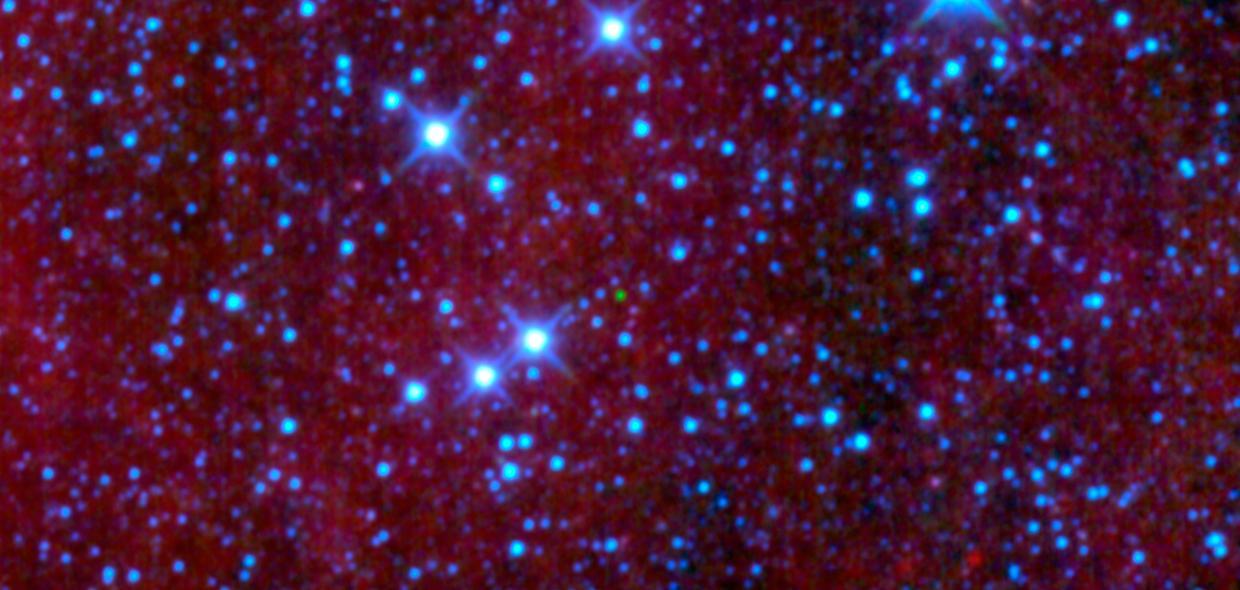
The green dot in the middle of this image might look like an emerald amidst glittering diamonds, but is a dim star belonging to a class called brown dwarfs; it is the first ultra-cool brown dwarf discovered by NASA Wide-field Infrared Survey Explorer.

iss065e061117 (May 21, 2021) --- A starry night sky and an atmospheric glow blanket the Earth during an orbital night period as the International Space Station orbited 266 miles above the Indian Ocean.

iss065e214537 (Aug. 2, 2021) --- The night lights of South Africa are blanketed by Earth's atmospheric glow and a starry night sky as the International Space Station orbited 266 miles above.
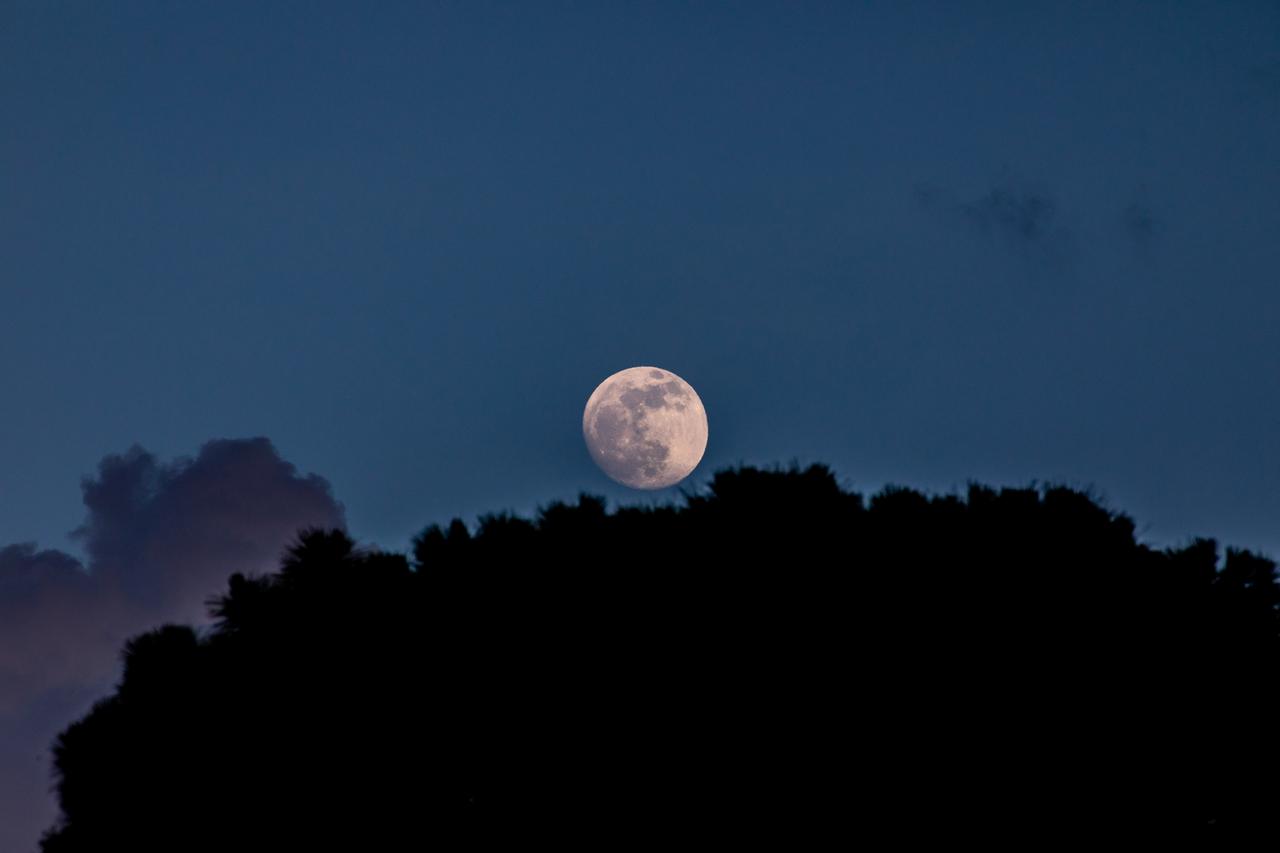
This almost full Moon shining in the eastern night sky was photographed on June 12, 2022, at NASA’s Kennedy Space Center in Florida.

This frame from a movie from the Samford Valley Observatory in Brisbane, Australia, shows the progress of asteroid 2012 DA14 across the night sky as it nears its closest approach. It was taken at 12:59 UTC on Feb. 15 7:59 a.m. EST, or 4:59 a.m. PST.
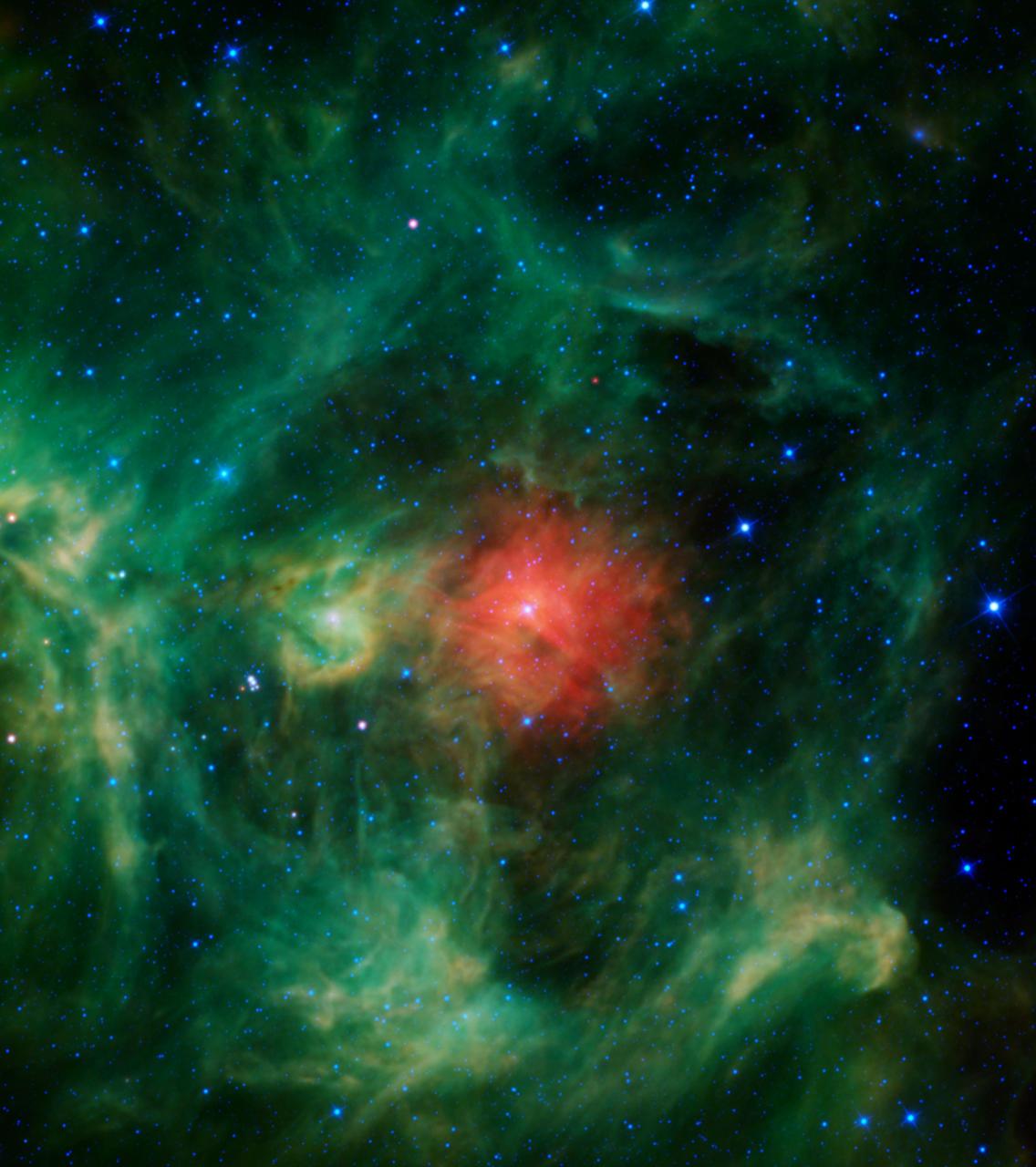
NASA Wide-field Infrared Survey Explorer mission presents the Wreath nebula. The nebula official name is Barnard 3, or IRAS Ring G159.6-18.5. Regions similar to this nebula are found near the band of the Milky Way galaxy in the night sky.
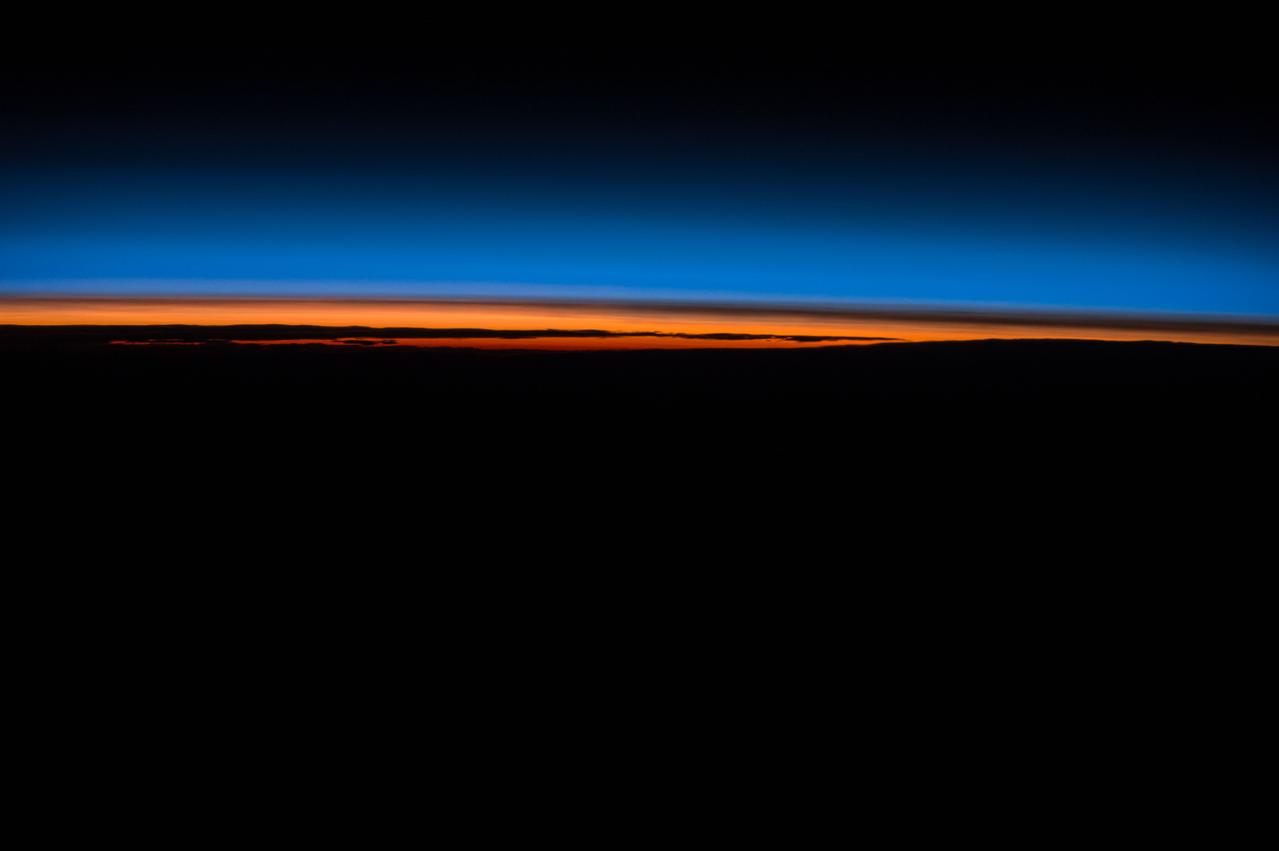
ISS043E193911 (05/14/2015) --- Crew members of Expedition 43 on the International Space Station are treated to the spectacular beauty of the Earth day and night. In this image they captured the dying sun as it creates brilliant orange and red streaks contrasted with the darkening Earth and the still blue night sky.

iss062e103874 (March 20, 2020) --- The city lights at the intersection of Europe and Asia sparkle underneath an atmospheric glow and a starry night sky as the International Space Station orbited 262 miles above into an orbital sunset.
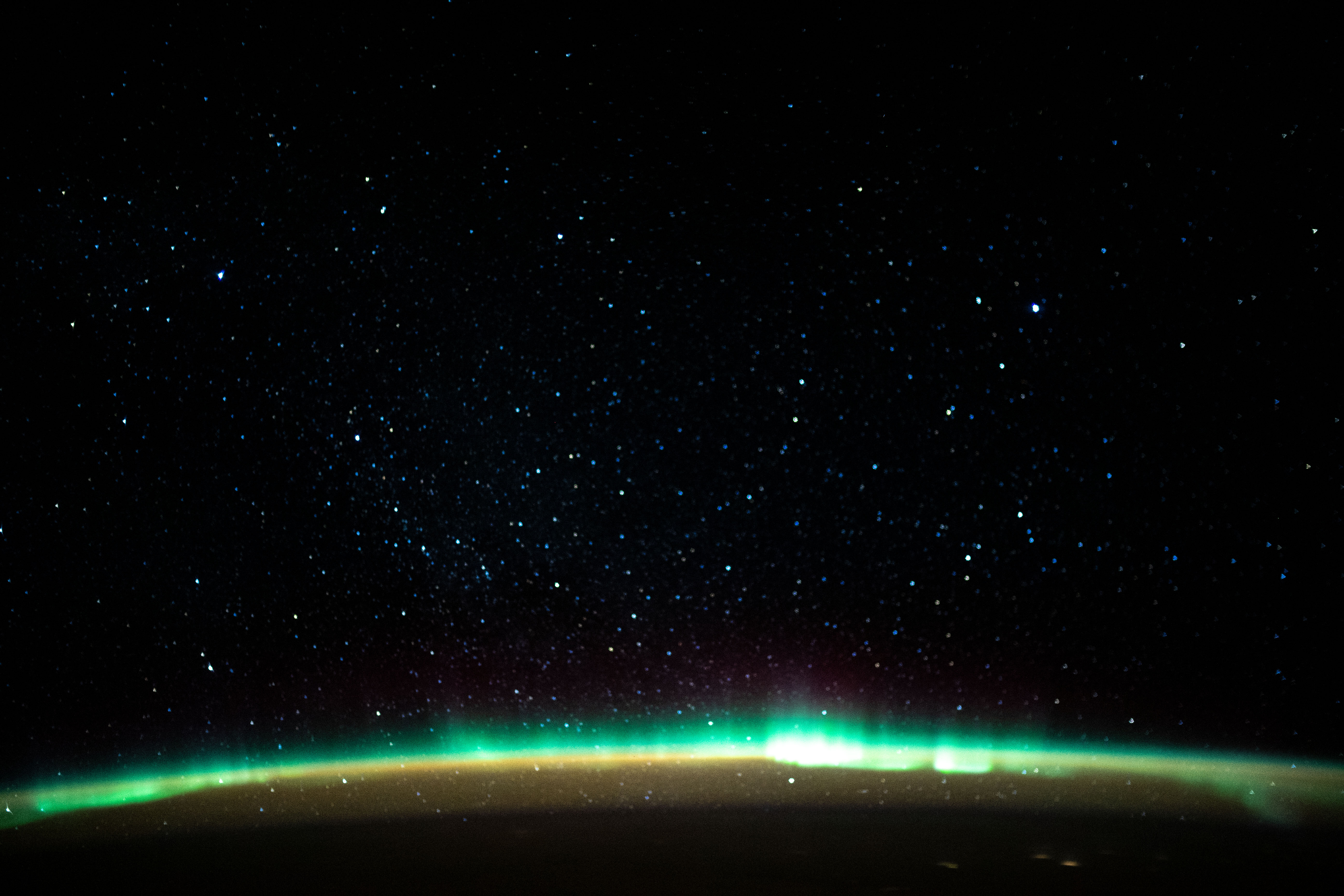
iss061e138170 (Jan. 22, 2020) --- An aurora blankets the Earth beneath a celestial night sky as the International Space Station orbited 261 miles above the Atlantic Ocean off the coast of North America.
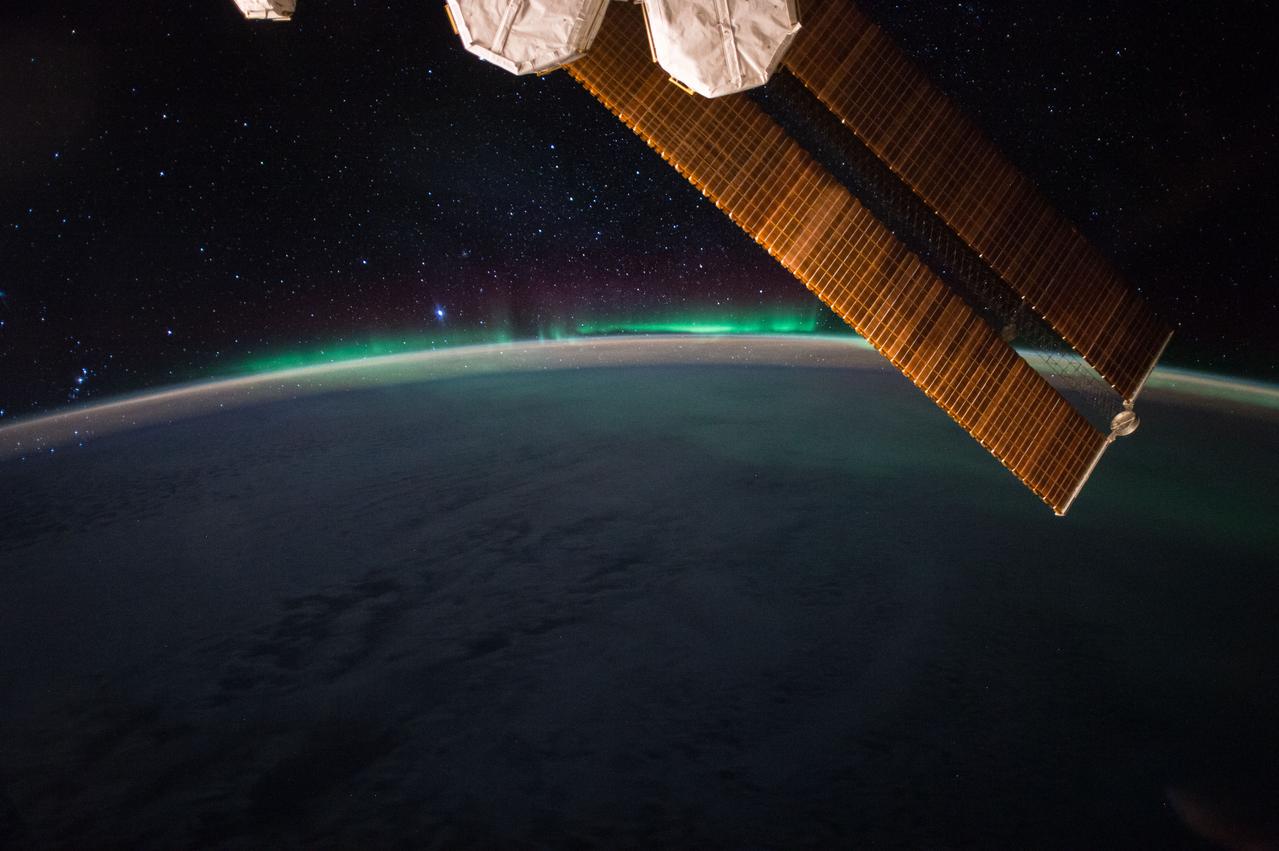
iss052e004913 (June 19, 2017) --- The aurora and the night sky above Earth’s atmosphere are pictured from the space station. A portion of the station’s solar arrays and a pair of nitrogen/oxygen recharge system tanks are pictured in the foreground.

iss067e269019 (Aug. 17, 2022) --- An aurora crowns the Earth beneath a starry sky in this night time photograph from the International Space Station as it orbited 270 miles above the Indian Ocean southeast of the African continent.

iss064e022759 (Jan. 12, 2021) --- A starry night sky and an aurora are pictured above Russia as the International Space Station orbited 264 miles over the western Kazakhstan border.

iss065e213109 (July 30, 2021) --- A starry night sky and and an atmospheric glow blanket the well-lit southeastern African coast as the International Space Station orbited 263 miles above.

ISS028-E-006193 (28 May 2011) --- The docked space shuttle Endeavour (STS-134), backdropped by a night time view of Earth and a starry sky are featured in this image photographed by an Expedition 28 crew member on the station.

iss060e002044 (June 29, 2019) --- An atmospheric glow blankets Earth beneath a starry night sky as the International Space Station orbited 271 miles above the Indian Ocean, south of the Australian island state of Tasmania.

iss065e213046 (July 30, 2021) --- Russia's "Nauka" Multipurpose Laboratory Module is pictured as the International Space Station orbited 261 miles above central Africa with a starry night sky and the atmospheric glow blanketing the Earth.
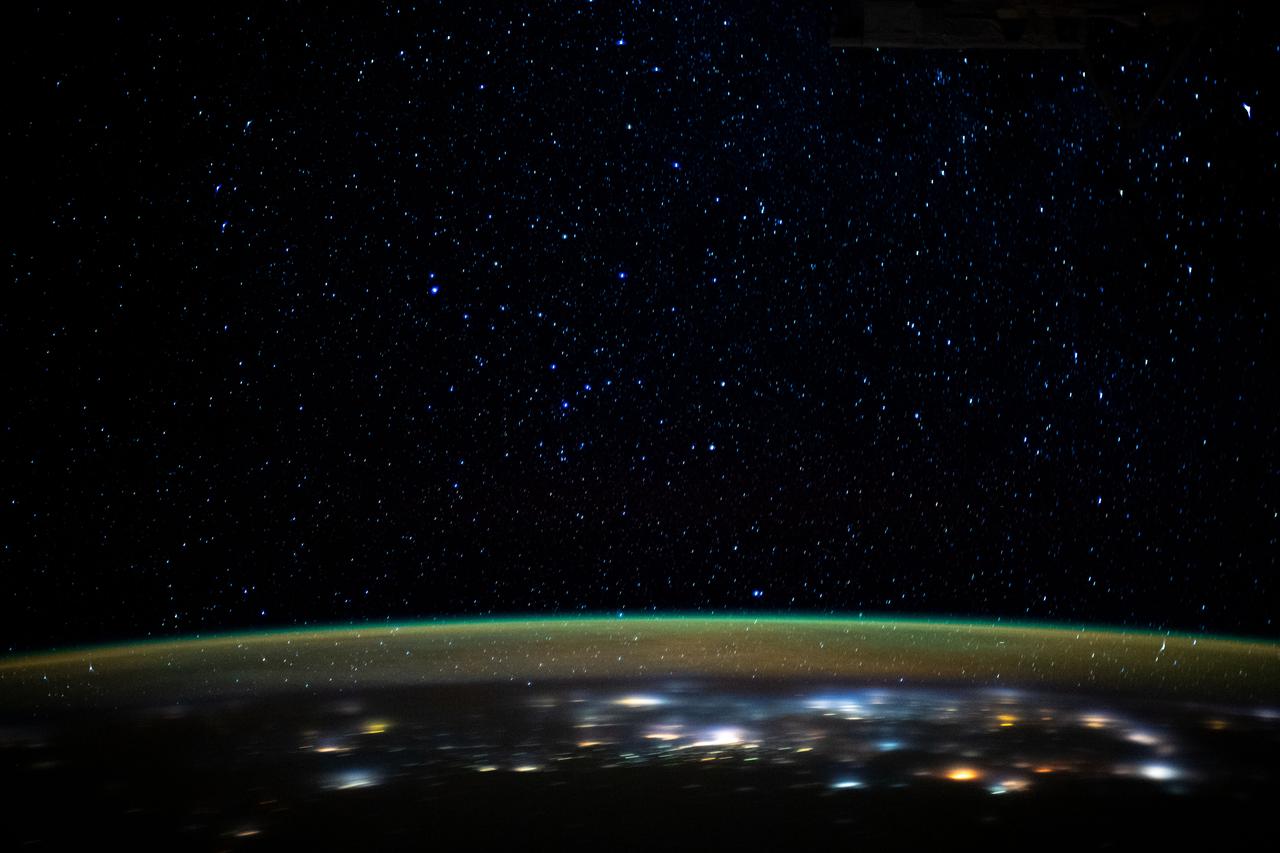
iss061e110462 (Dec. 29, 2019) --- Stars glitter in the night sky above an atmospheric glow that blankets the city lights as the International Space Station orbited 260 miles above northern Iran as it was about to cross the Caspian Sea.
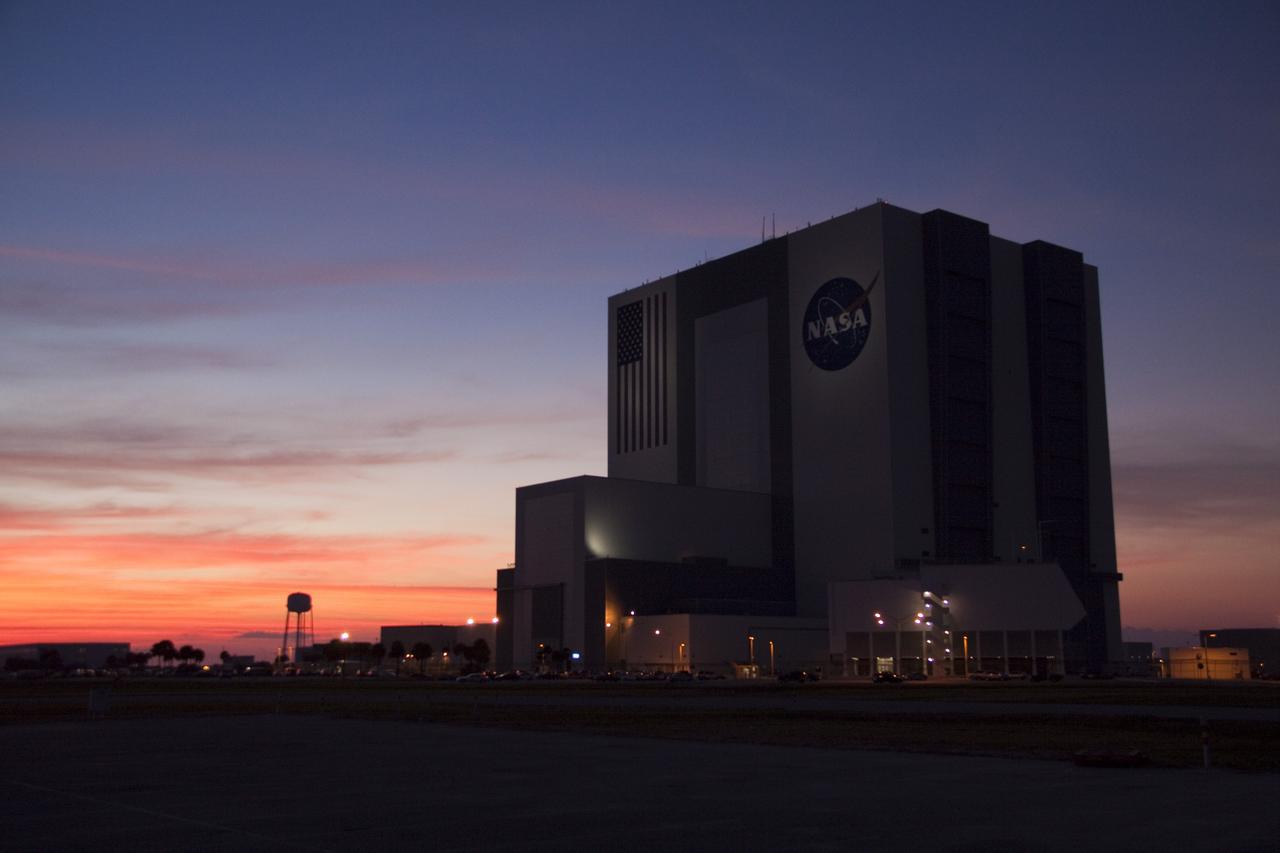
CAPE CANAVERAL, Fla. -- The night lights and Vehicle Assembly Building are silhouetted against the sunset sky over NASA's Kennedy Space Center in Florida. Photo Credit: NASA/Troy Cryder
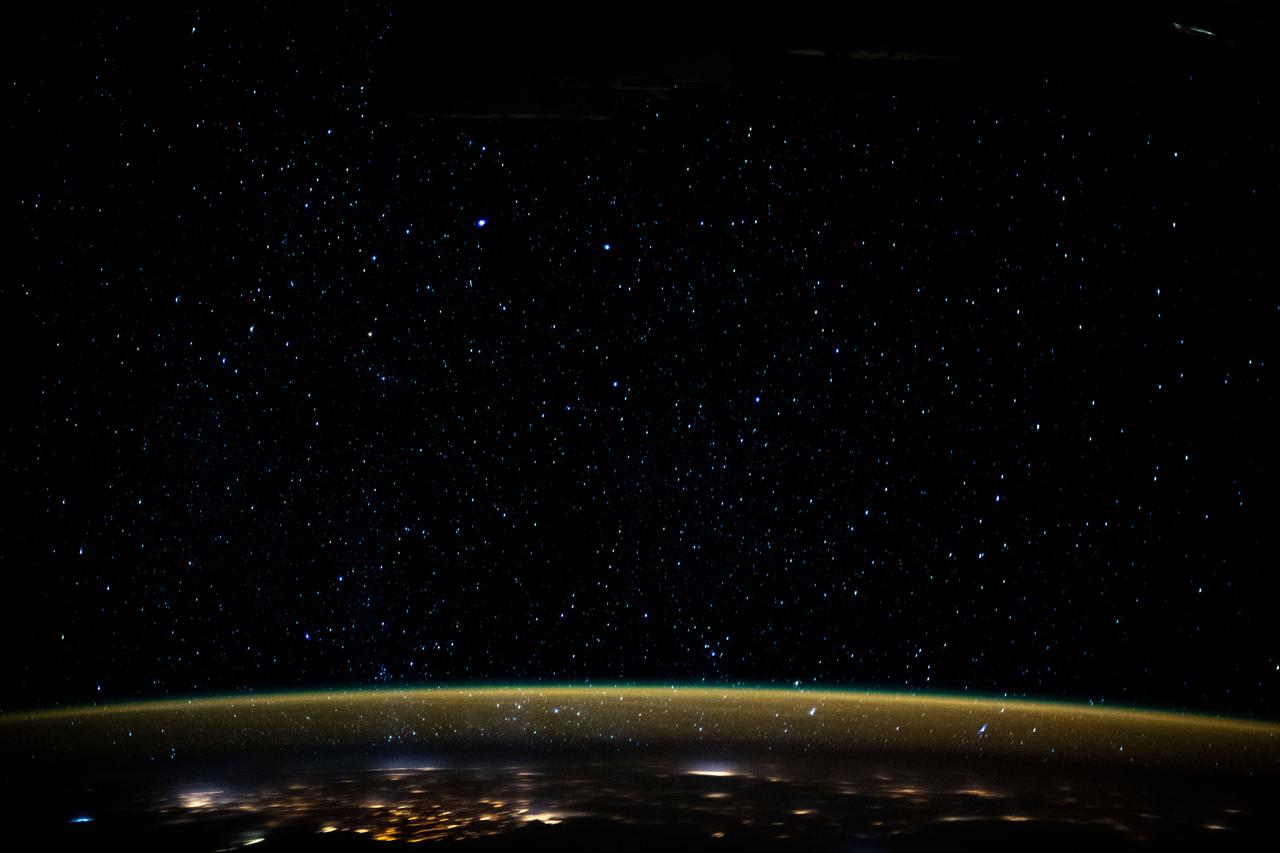
iss061e110433 (Dec. 29, 2019) --- Stars glitter in the night sky above an atmospheric glow that blankets the city lights as the International Space Station orbited 259 miles above the Sudanese/Egyptian border before it crossed the Red Sea.
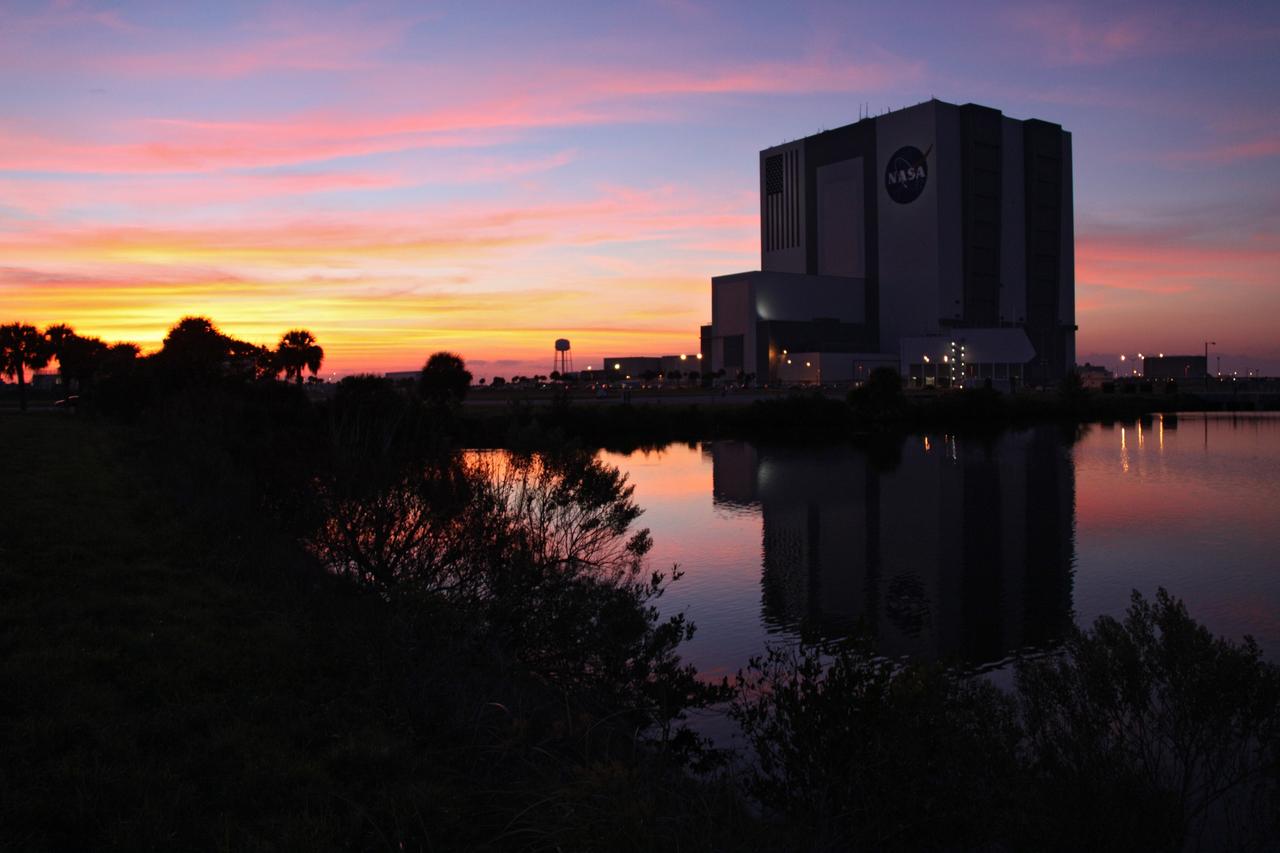
CAPE CANAVERAL, Fla. -- The dark water of the Turn Basin at NASA's Kennedy Space Center in Florida mirrors the night lights and Vehicle Assembly Building, silhouetted against the sunset sky. Photo Credit: NASA/Troy Cryder

iss070e062746 (Jan. 10, 2024) --- The city lights of North America appear under Earth's airglow and a starry night sky in this photograph from the International Space Station as it orbited 262 miles above North Dakota.
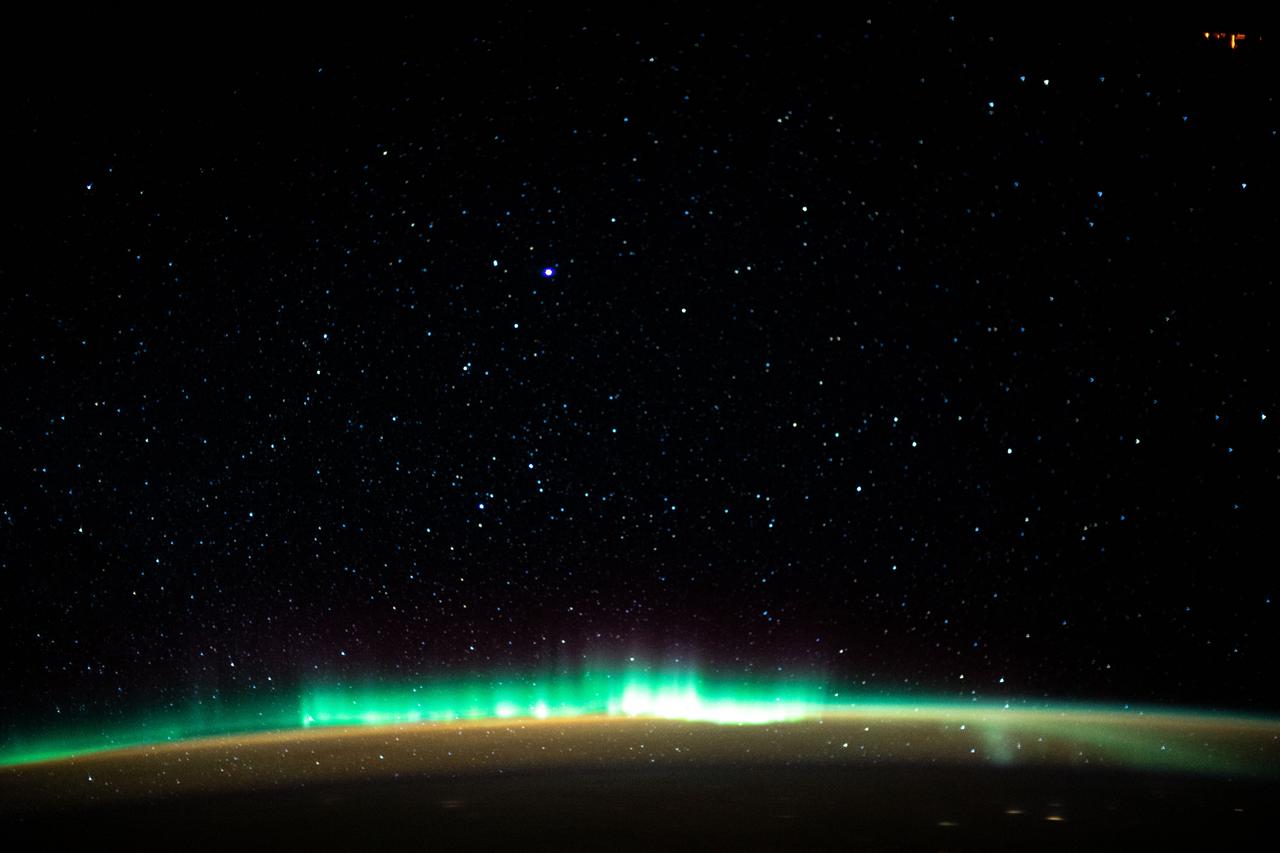
iss061e138167 (Jan. 22, 2020) --- An aurora blankets the Earth beneath a celestial night sky as the International Space Station orbited 261 miles above the Atlantic Ocean off the coast of North America.

iss064e022752 (Jan. 12, 2021) --- A starry night sky and an aurora are pictured above Russia, in between Ukraine and Kazakhstan, as the International Space Station orbited 264 miles overhead.

Two images of the night sky were combined to show Earth and Venus as seen by the Mast Camera aboard NASA's Curiosity Mars rover on June 5, 2020, the 2,784th Martian day, or sol, of the mission. Both planets appear as mere pinpoints of light owing to a combination of distance and dust in the air; they would normally look like bright stars. A feature called Tower Butte is just visible at the bottom of the image, part of the clay-bearing region that Curiosity has been exploring since early 2019. https://photojournal.jpl.nasa.gov/catalog/PIA23899
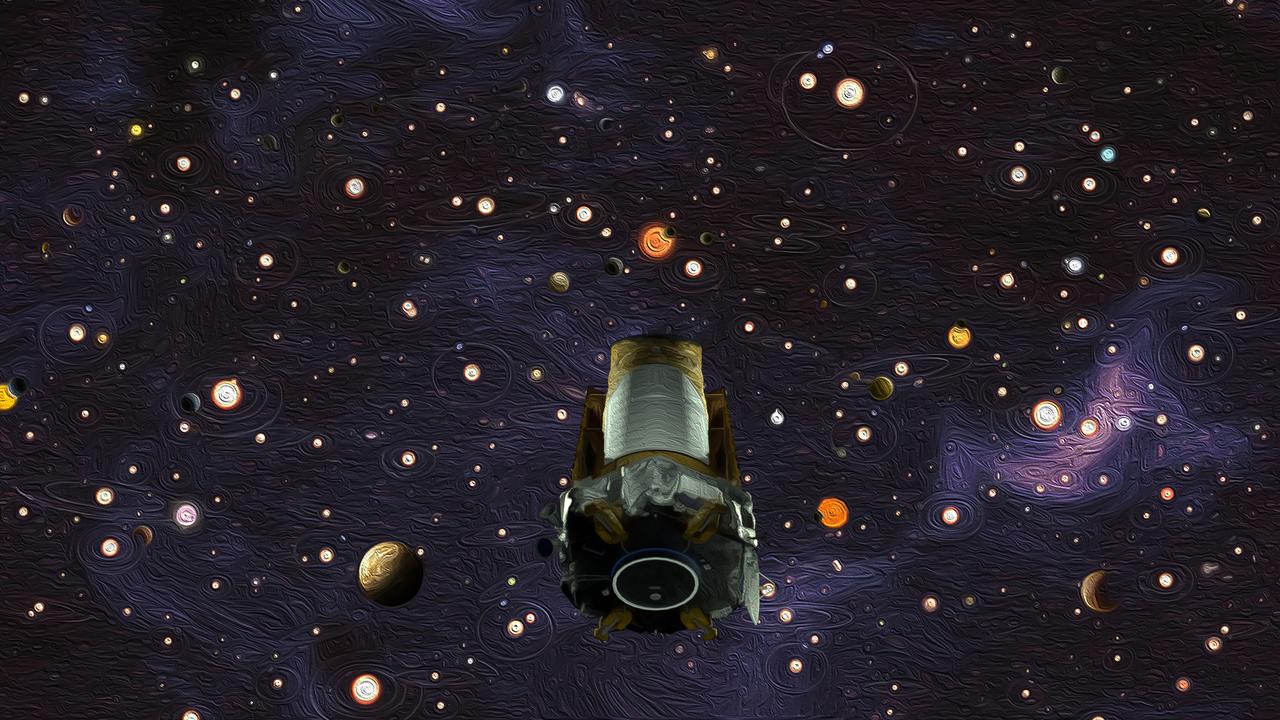
After nine years in deep space collecting data that revealed our night sky to be filled with billions of hidden planets, more planets even than stars, NASA’s Kepler space telescope has run out of fuel needed for further science operations. Illustration depicting the Kepler spacecraft in a sky filled with exoplanets and planetary systems.
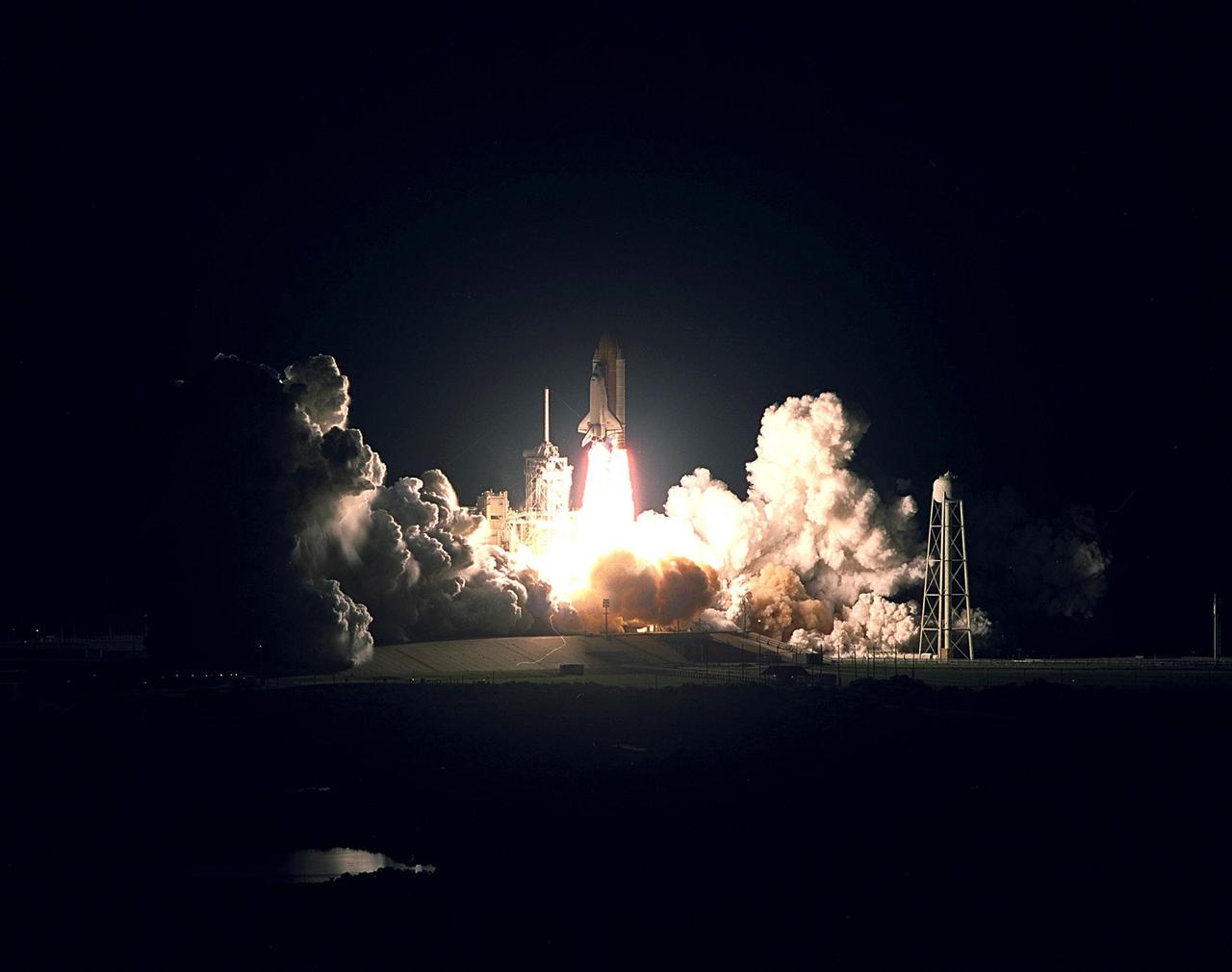
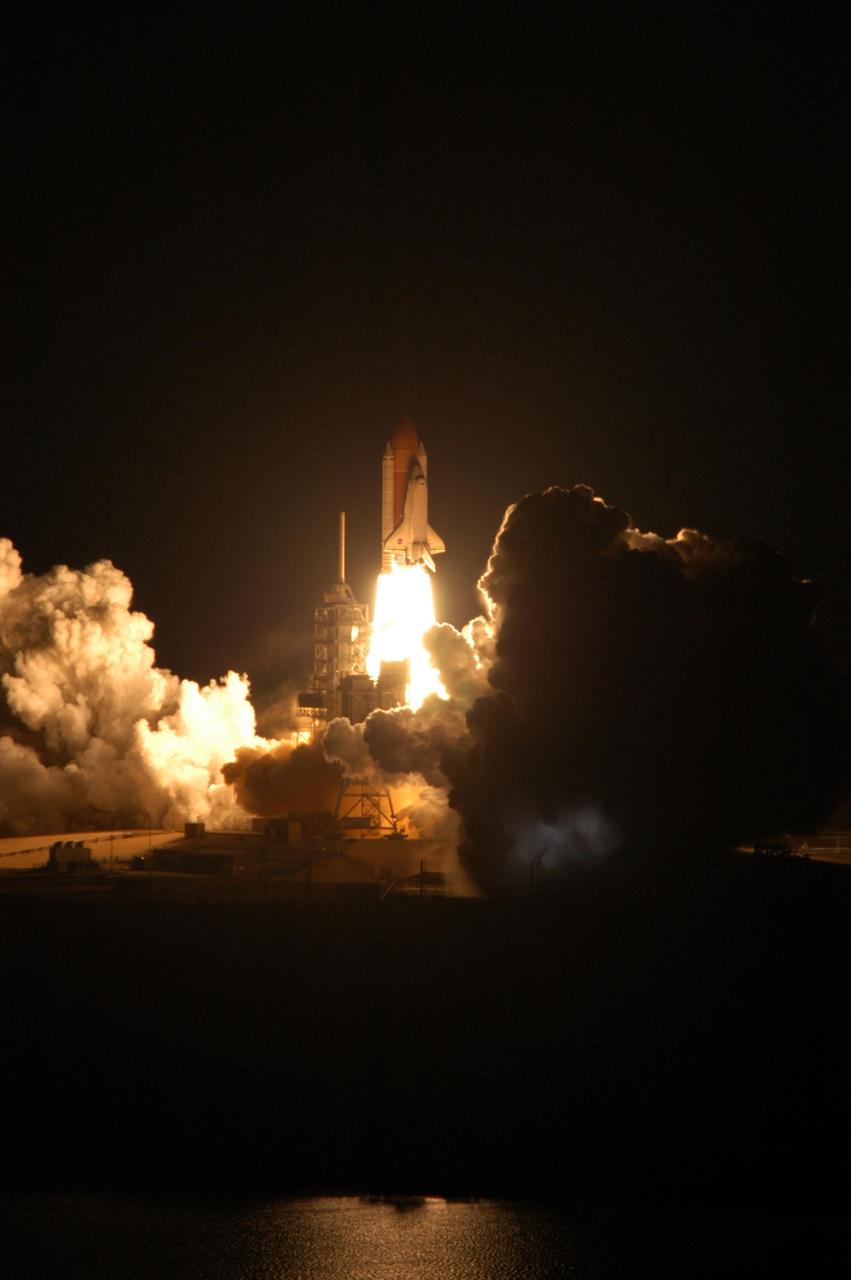
KENNEDY SPACE CENTER, Fla. -- Space Shuttle Endeavour roars into the night sky in a perfect launch. Liftoff occurred on time at 10:06:01 p.m. EST. The Shuttle and its five-member crew will deliver U.S. solar arrays to the International Space Station and be the first Shuttle crew to visit the Station’s first resident crew. The 11-day mission includes three spacewalks. This marks the 101st mission in Space Shuttle history and the 25th night launch. Endeavour is expected to land Dec. 11 at 6:19 p.m. EST
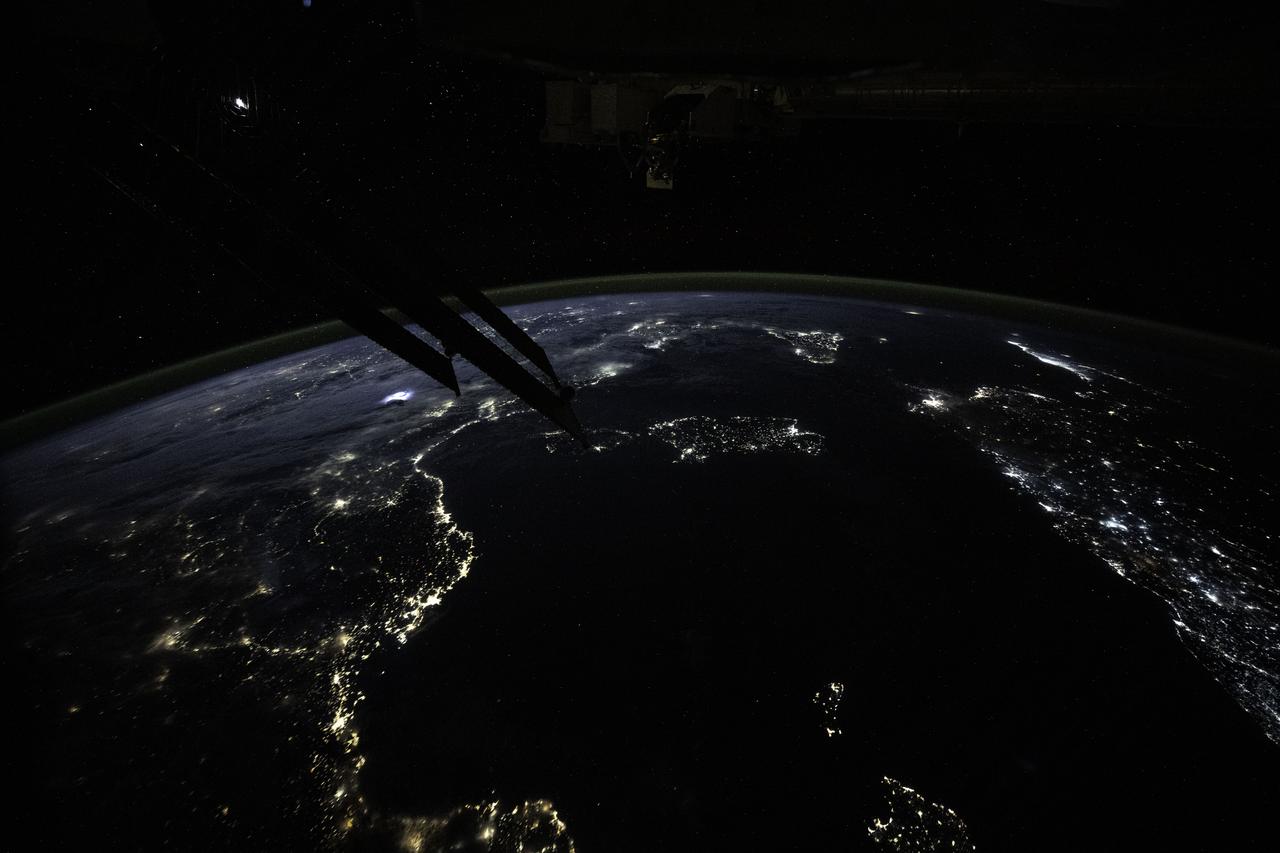
iss072e000922 (Sept. 23, 2024) -- The vibrant night lights of coastal cities on the Mediterranean Sea, from Spain to Italy in Europe and Algeria to Lybia in Africa, are pictured from the International Space Station as it orbited 262 miles above Barcelona. Peeking in at the bottom of the image is Mallorca Island, next to it Minorca. The Italian islands of Corsica, Sardinia, and Sicily are also visible. Above Earth, stars glitter in the night sky.
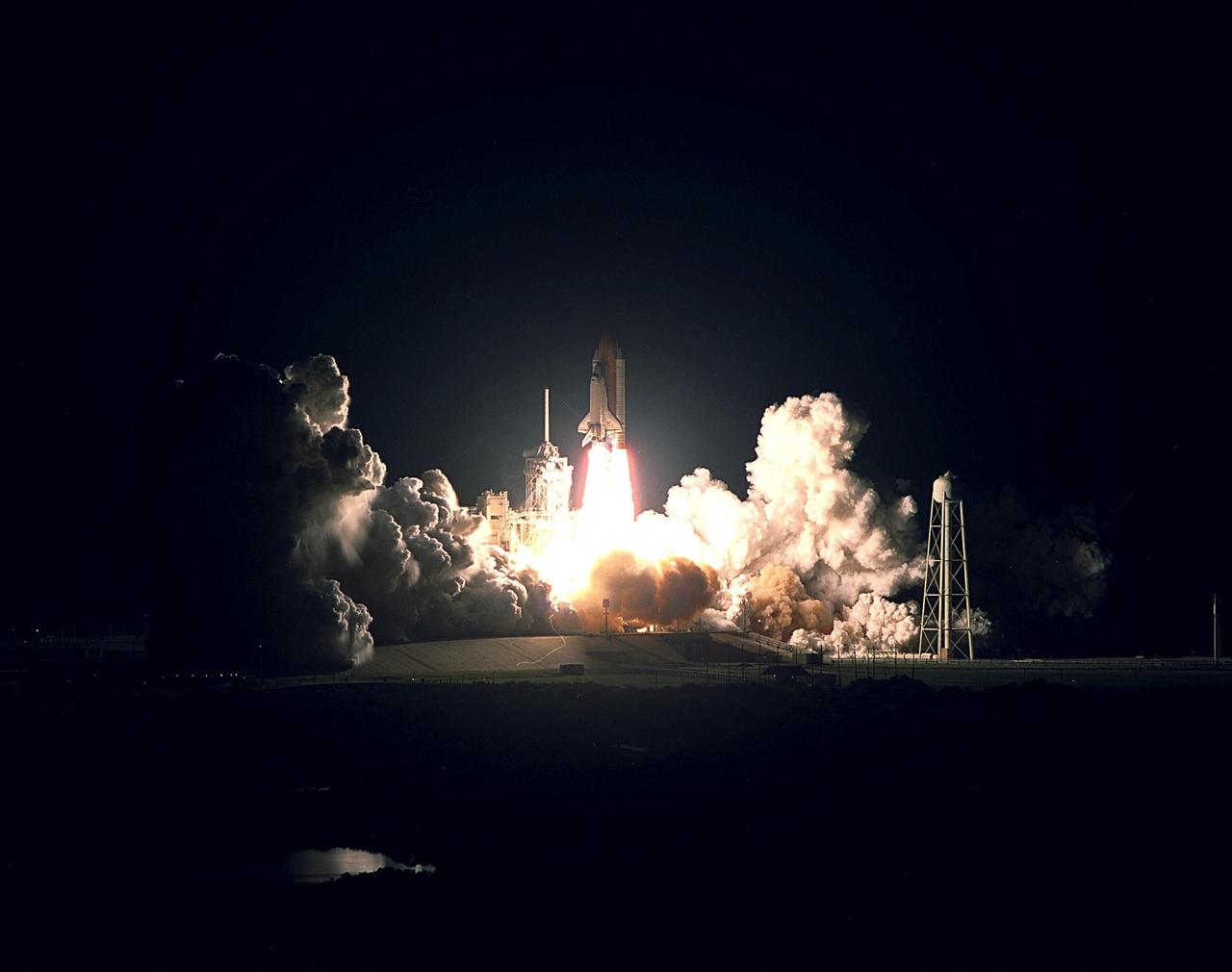
KENNEDY SPACE CENTER, Fla. -- Space Shuttle Endeavour roars into the night sky in a perfect launch. Liftoff occurred on time at 10:06:01 p.m. EST. The Shuttle and its five-member crew will deliver U.S. solar arrays to the International Space Station and be the first Shuttle crew to visit the Station’s first resident crew. The 11-day mission includes three spacewalks. This marks the 101st mission in Space Shuttle history and the 25th night launch. Endeavour is expected to land Dec. 11 at 6:19 p.m. EST

iss066e029018 (Oct. 30, 2021) --- The International Space Station was orbiting 263 miles above the Indian Ocean about to cross over the city lights of southern India, pictured with the island nation of Sri Lanka at center right, in this night time photograph. The atmospheric airglow is also viewed blanketing the Earth's horizon beneath a starry sky.

iss065e051411 (May 23, 2021) --- A starry sky, an atmospheric glow and the night lights of the island nation of Mauritius (center left) and Réunion Island (bottom right), a French department, stand out as the International Space Station orbited 265 miles above of Madagascar on its northeast Indian Ocean coast.

KENNEDY SPACE CENTER, FLA. -- The dark water of the turn basin at NASA's Kennedy Space Center mirrors the night lights and the Vehicle Assembly Building and Launch Control Center, silhouetted against the post-sunset sky. Photo credit: NASA/Kim Shiflett
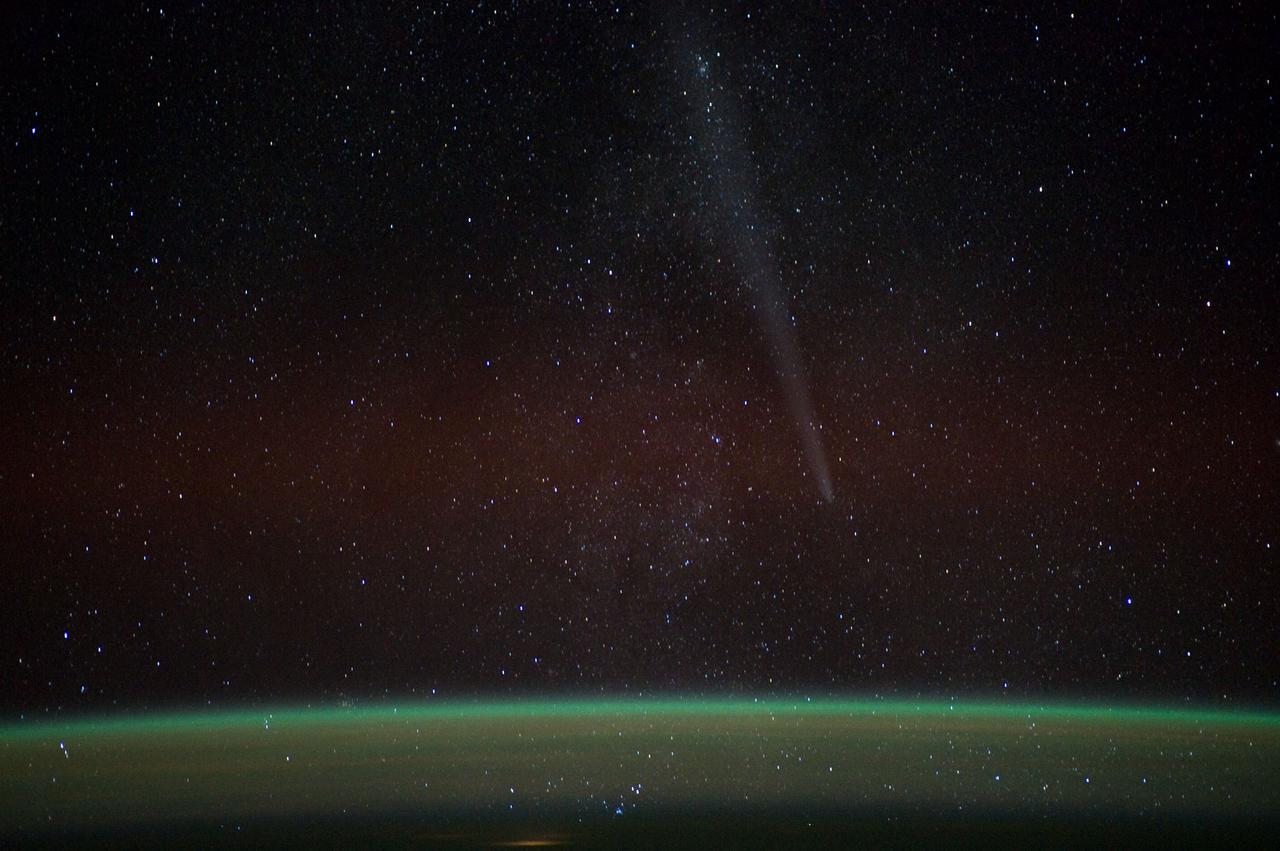
ISS030-E-017836 (27 Dec. 2011) --- Almost a week after first sighting in the night sky, Comet Lovejoy is visible to the six astronauts and cosmonauts currently aboard the International Space Station. An 85-mm focal length was used to record the image.
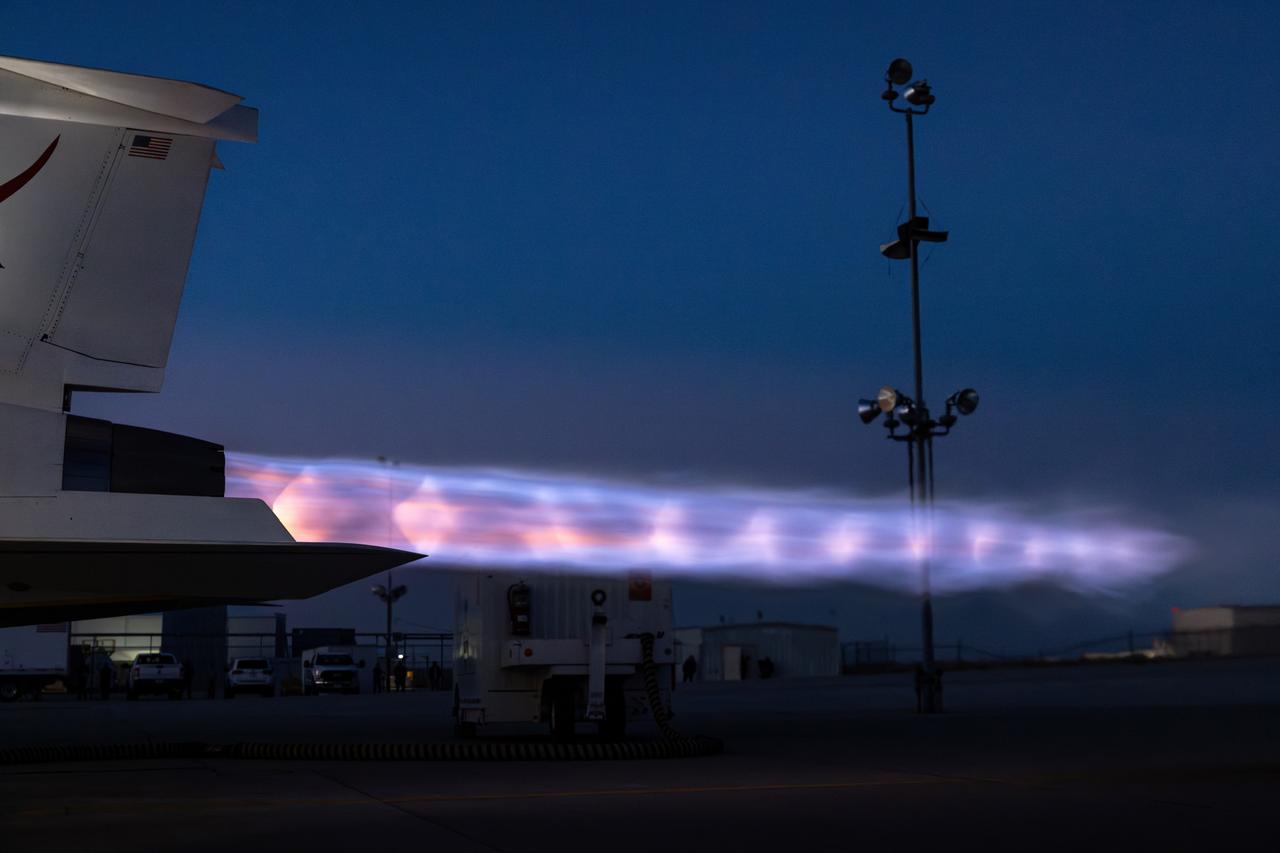
NASA’s X-59 lights up the night sky with its unique Mach diamonds, also known as shock diamonds, during maximum afterburner testing at Lockheed Martin Skunk Works in Palmdale, California. The test demonstrates the engine’s ability to generate the thrust required for supersonic flight, advancing NASA’s Quesst mission.
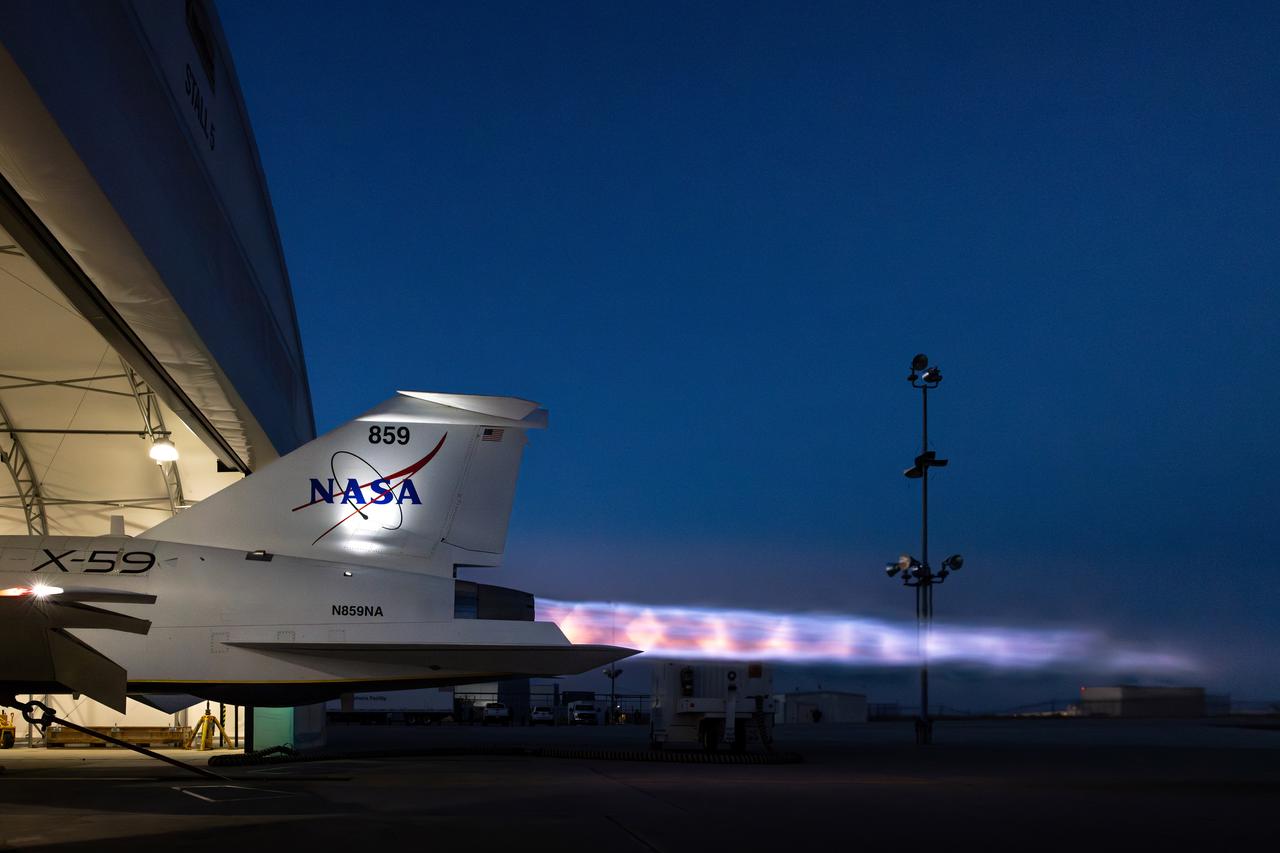
NASA’s X-59 lights up the night sky with its unique Mach diamonds, also known as shock diamonds, during maximum afterburner testing at Lockheed Martin Skunk Works in Palmdale, California. The test demonstrates the engine’s ability to generate the thrust required for supersonic flight, advancing NASA’s Quesst mission.
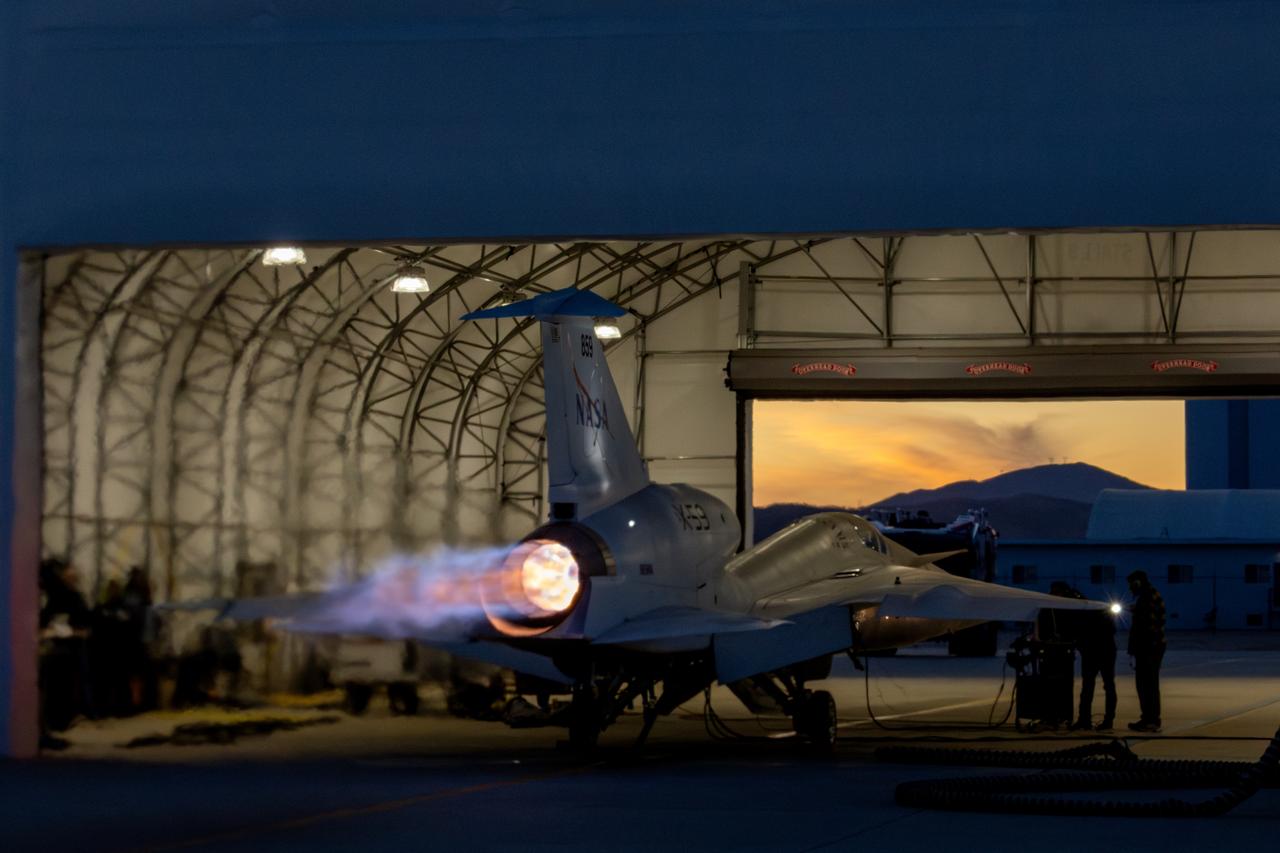
NASA’s X-59 lights up the night sky with its unique Mach diamonds, also known as shock diamonds, during maximum afterburner testing at Lockheed Martin Skunk Works in Palmdale, California. The test demonstrates the engine’s ability to generate the thrust required for supersonic flight, advancing NASA’s Quesst mission.
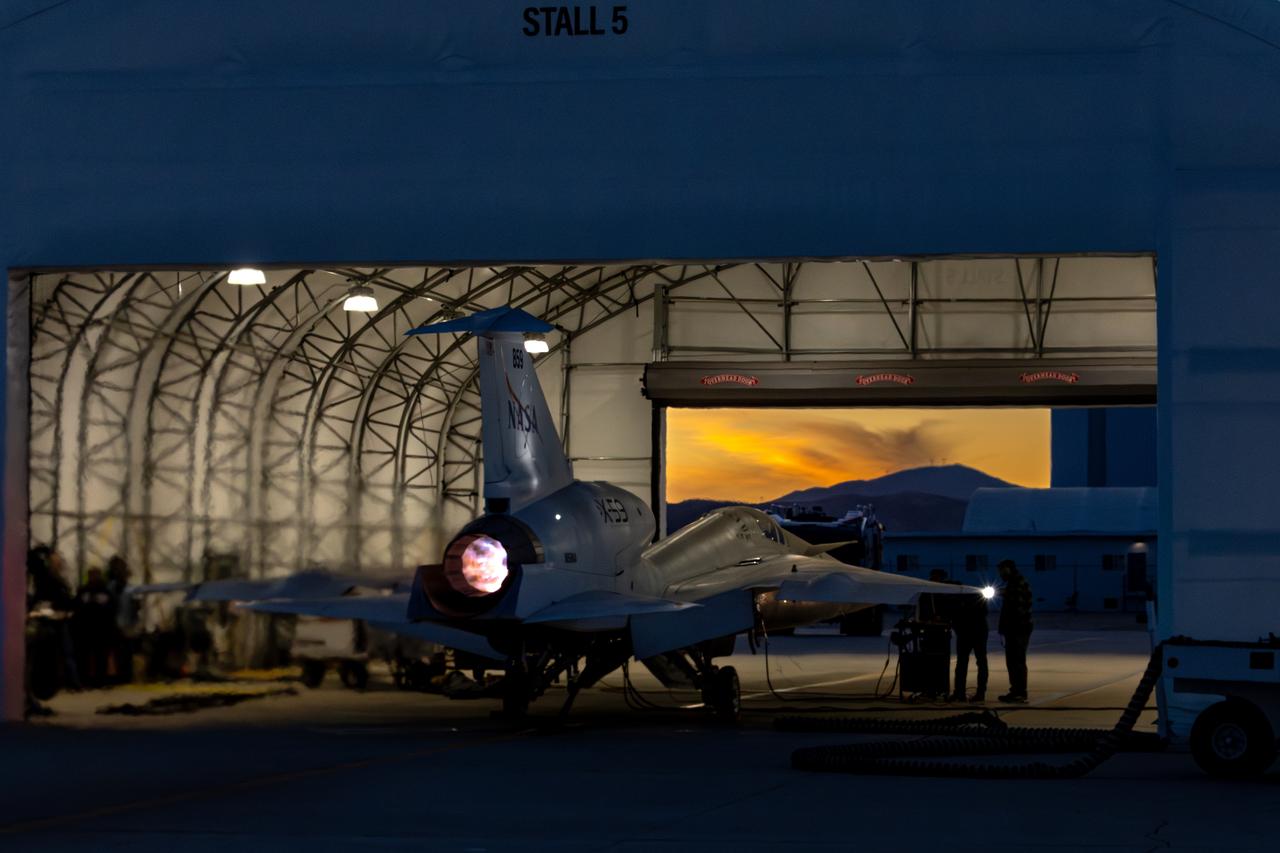
NASA’s X-59 lights up the night sky with its unique Mach diamonds, also known as shock diamonds, during maximum afterburner testing at Lockheed Martin Skunk Works in Palmdale, California. The test demonstrates the engine’s ability to generate the thrust required for supersonic flight, advancing NASA’s Quesst mission.

iss064e035805 (Feb. 21, 2021) --- The International Space Station, pictured with Russia's ISS Progress 77 cargo craft attached to the Pirs docking compartment, orbits into a sunset 270 miles above the South Pacific. This long duration photograph also shows Earth's airglow (a faint emission of light in the upper atmosphere) and a starry night sky.
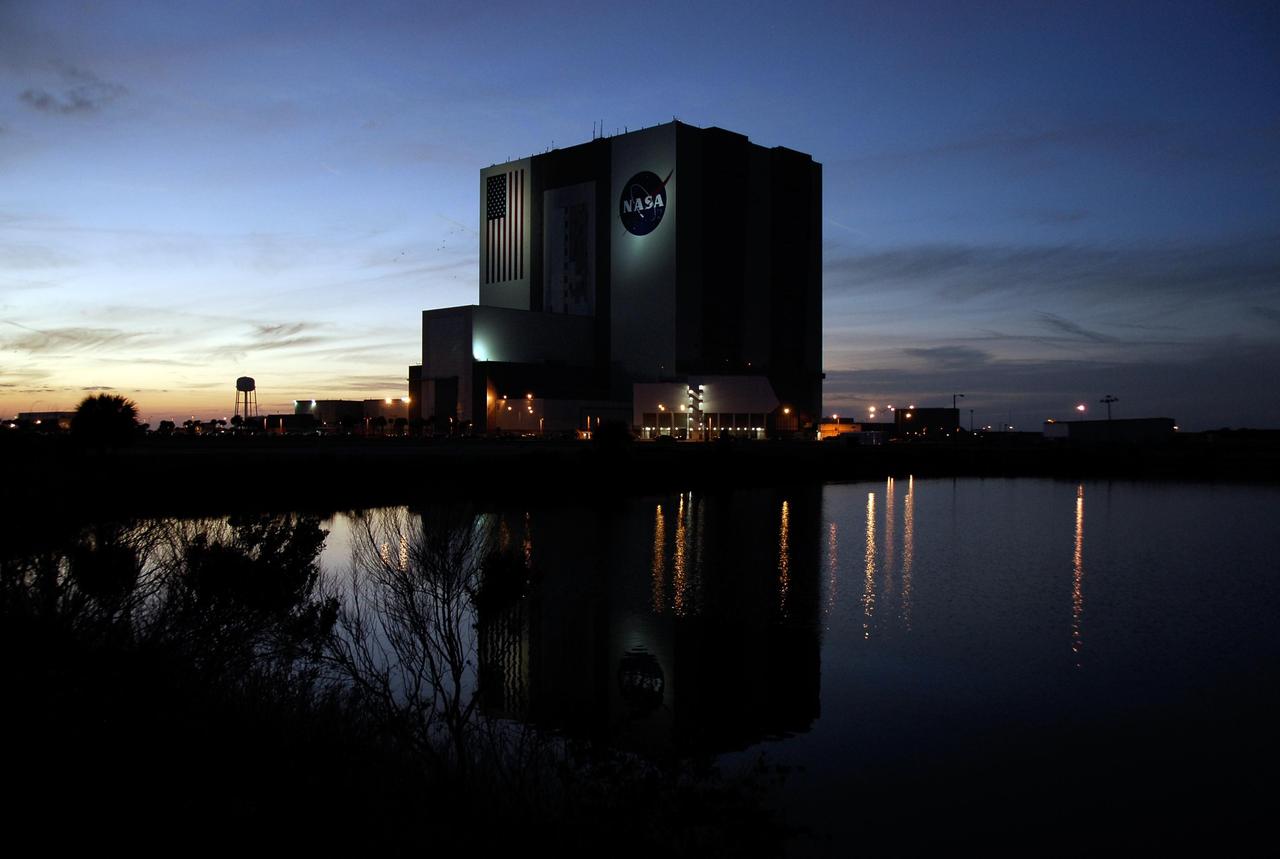
KENNEDY SPACE CENTER, FLA. -- The dark water of the turn basin at NASA's Kennedy Space Center mirrors the night lights and the Vehicle Assembly Building and Launch Control Center, silhouetted against the post-sunset sky. Photo credit: NASA/Kim Shiflett
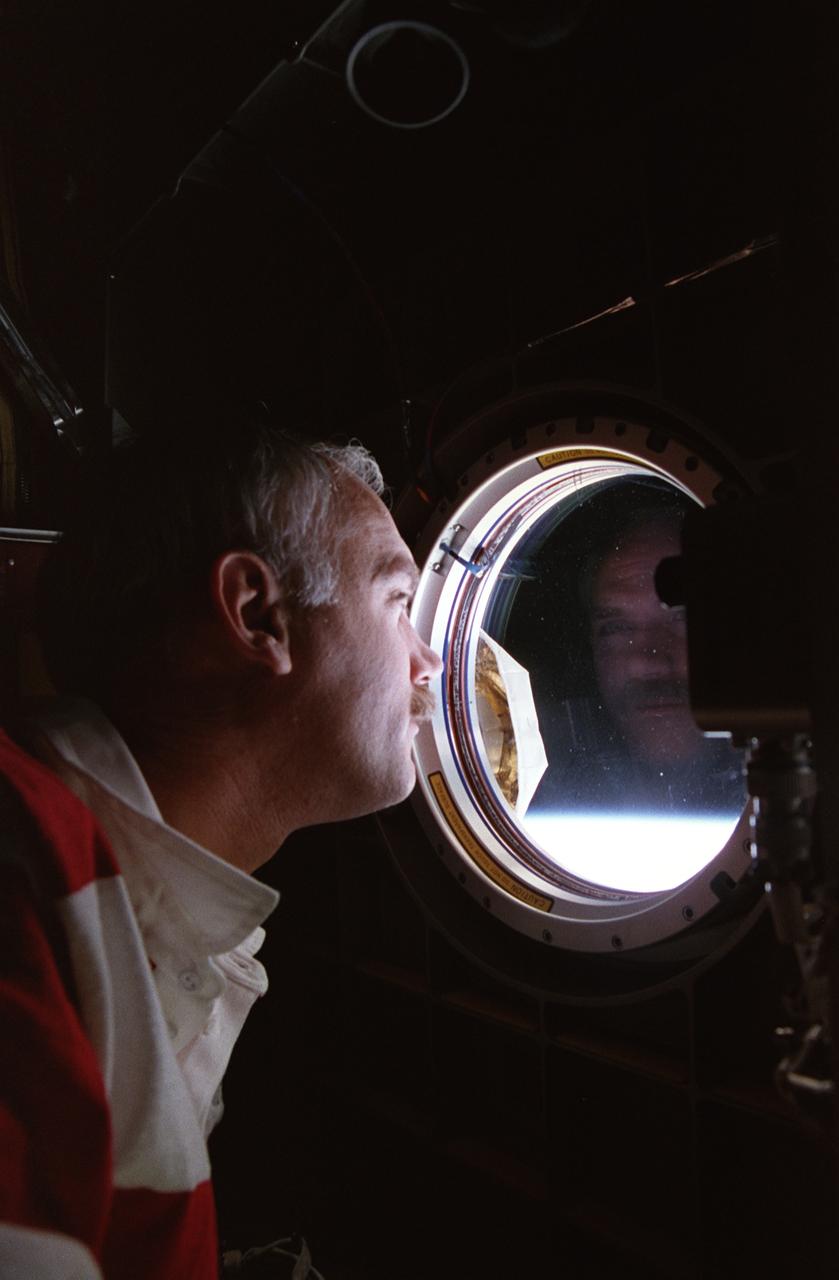
STS079-346-022 (16-26 Sept. 1996) --- Astronaut William F. Readdy, mission commander, looks at the night sky and Earth's horizon through a viewing port in the Spacehab Module in the space shuttle Atlantis' cargo bay. The double module version of Spacehab was flying for the first time.

iss064e035808 (Feb. 21, 2021) --- The International Space Station, pictured with Russia's ISS Progress 77 cargo craft attached to the Pirs docking compartment, orbits into a sunset 265 miles above the South Pacific. This long duration photograph also shows Earth's airglow (a faint emission of light in the upper atmosphere) and a starry night sky.

iss064e035804 (Feb. 21, 2021) --- The International Space Station, pictured with Russia's ISS Progress 77 cargo craft attached to the Pirs docking compartment, orbits into a sunset 270 miles above the South Pacific. This long duration photograph also shows Earth's airglow (a faint emission of light in the upper atmosphere) and a starry night sky.

iss052e010507 (July 4, 2017) --- This long-exposure photograph of Earth and a starry sky was taken during a night pass by the Expedition 52 crew aboard the International Space Station. The Japanese Kibo module and part of the station’s solar array are visible at the top.

iss071e611938 (Sept. 2, 2024) --- NASA astronaut and Expedition 71 Flight Engineer Matthew Dominick programmed a camera for high sensitivity and pointed it out an International Space Station window as it orbited 266 miles above Kazakhstan. At lower right, a wispy Milky Way is pictured amongst a starry night sky.
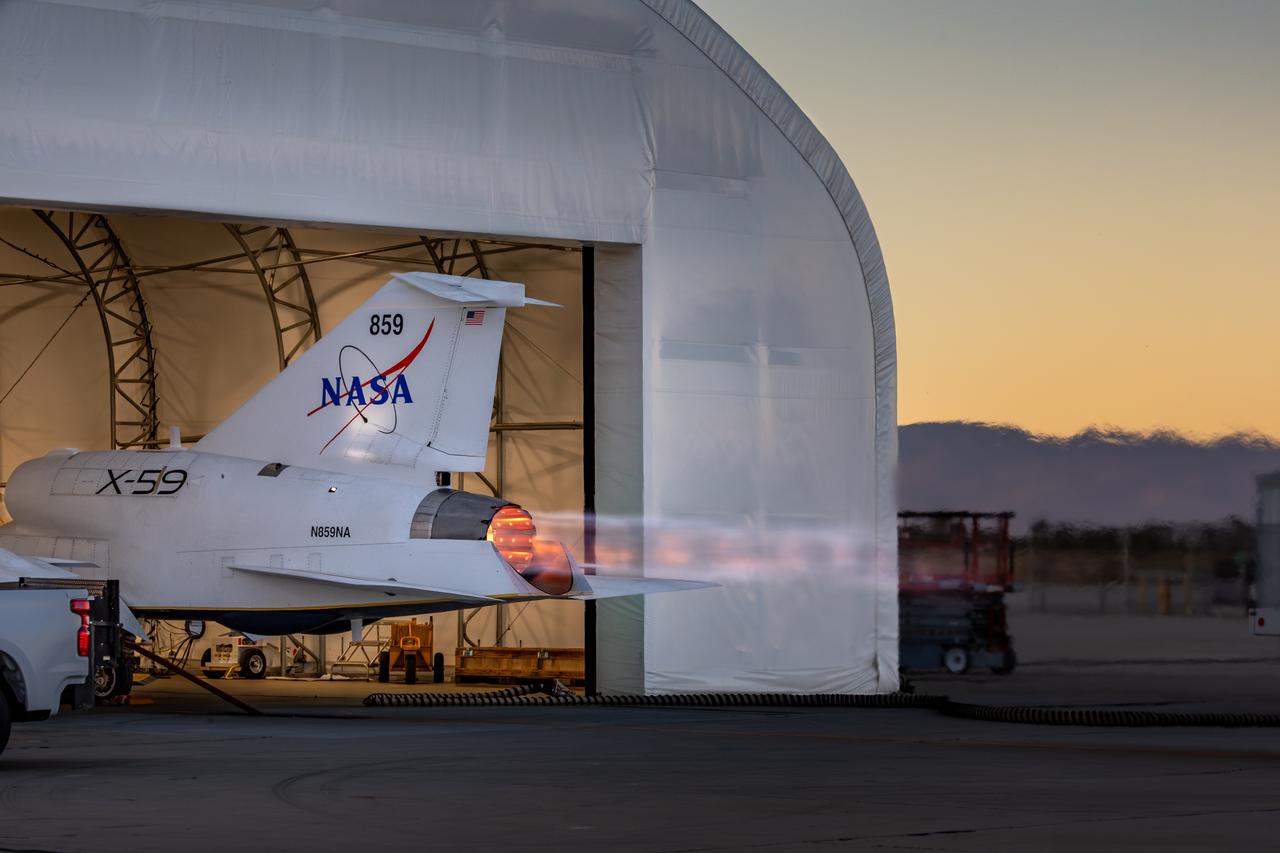
NASA’s X-59 lights up the night sky with its unique Mach diamonds, also known as shock diamonds, during maximum afterburner testing at Lockheed Martin Skunk Works in Palmdale, California. The test demonstrates the engine’s ability to generate the thrust required for supersonic flight, advancing NASA’s Quesst mission.

NASA’s X-59 lights up the night sky with its unique Mach diamonds, also known as shock diamonds, during maximum afterburner testing at Lockheed Martin Skunk Works in Palmdale, California. The test demonstrates the engine’s ability to generate the thrust required for supersonic flight, advancing NASA’s Quesst mission.

iss064e035806 (Feb. 21, 2021) --- The International Space Station, pictured with Russia's ISS Progress 77 cargo craft attached to the Pirs docking compartment, orbits into a sunset 270 miles above the South Pacific. This long duration photograph also shows Earth's airglow (a faint emission of light in the upper atmosphere) and a starry night sky.

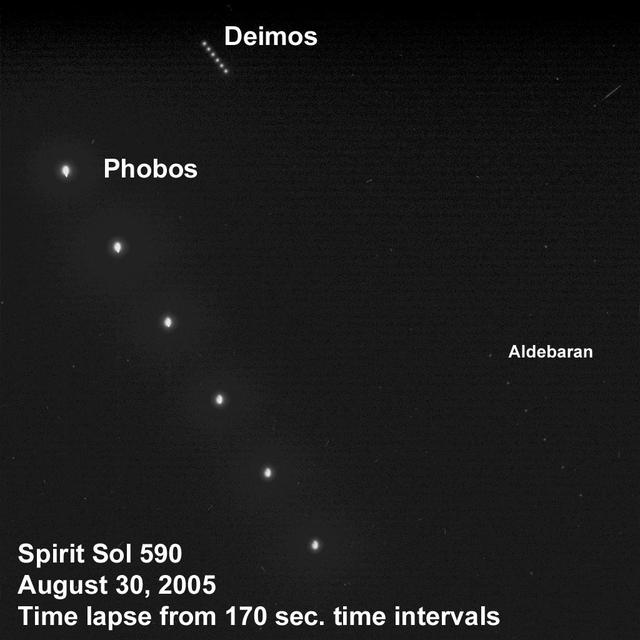
Taking advantage of extra solar energy collected during the day, NASA's Mars Exploration Rover Spirit settled in for an evening of stargazing, photographing the two moons of Mars as they crossed the night sky. The first two images in this sequence show gradual enhancements in the surface detail of Mars' largest moon, Phobos, made possible through a combination technique known as "stacking." In "stacking," scientists use a mathematical process known as Laplacian sharpening to reinforce features that appear consistently in repetitive images and minimize features that show up only intermittently. In this view of Phobos, the large crater named Stickney is just out of sight on the moon's upper right limb. Spirit acquired the first two images with the panoramic camera on the night of sol 585 (Aug. 26,2005). The far right image of Phobos, for comparison, was taken by the High Resolution Stereo Camera on Mars Express, a European Space Agency orbiter. The third image in this sequence was derived from the far right image by making it blurrier for comparison with the panoramic camera images to the left http://photojournal.jpl.nasa.gov/catalog/PIA06335
KENNEDY SPACE CENTER, FLA. -- Flooding the night sky with its blazing light, Space Shuttle Discovery leaps toward the sky from Launch Pad 39B on mission STS-116. The launch occurred at 8:47:35 p.m. EST. This was the second launch attempt for mission STS-116. The first launch attempt on Dec. 7 was postponed due a low cloud ceiling over Kennedy Space Center. This is Discovery's 33rd mission and the first night launch since 2002. The 20th shuttle mission to the International Space Station, STS-116 carries another truss segment, P5. It will serve as a spacer, mated to the P4 truss that was attached in September. After installing the P5, the crew will reconfigure and redistribute the power generated by two pairs of U.S. solar arrays. Landing is expected Dec. 21 at KSC. Photo credit: NASA/George Shelton
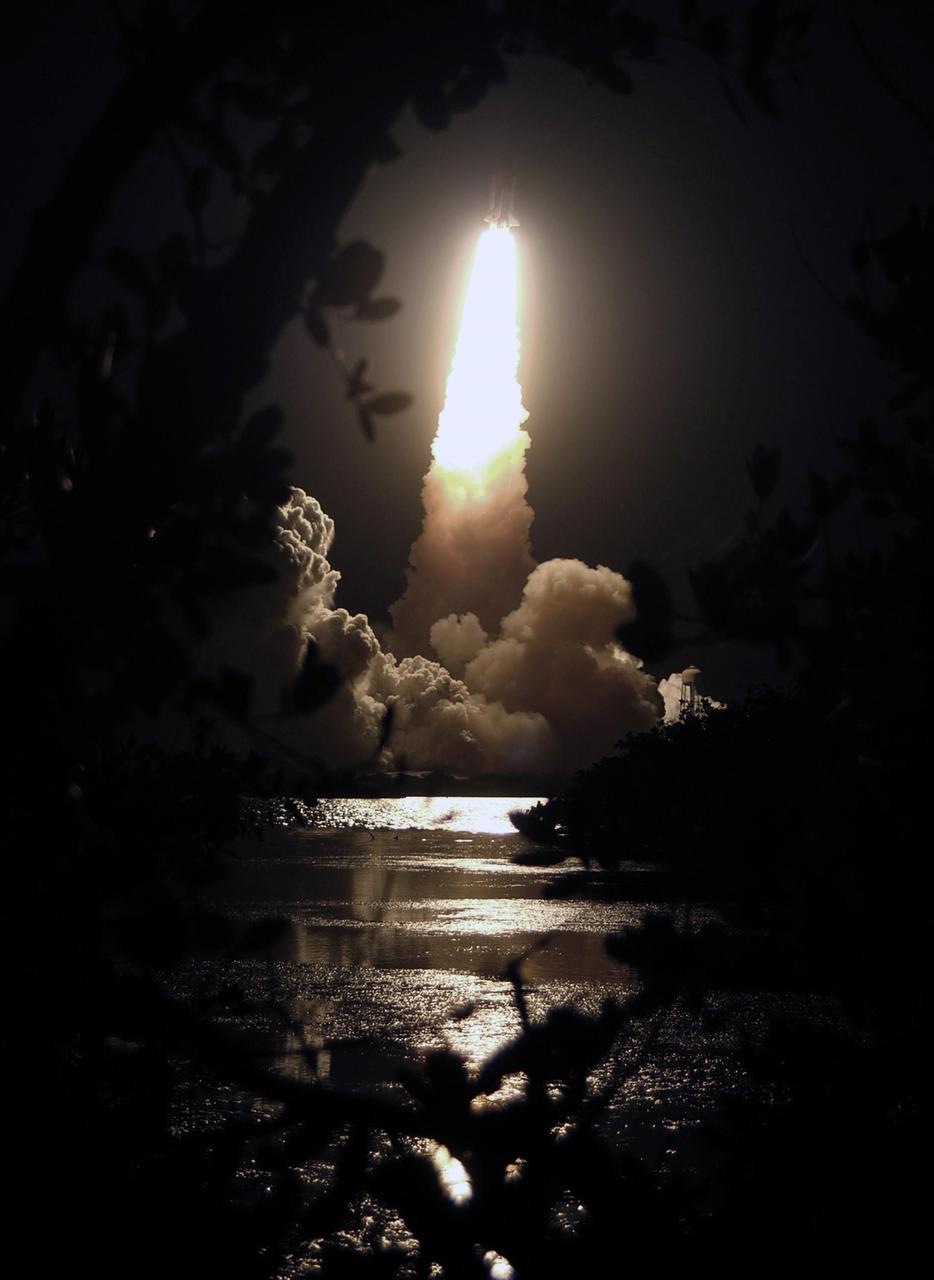
KENNEDY SPACE CENTER, FLA. -- Looking like a shooting star, Space Shuttle Discovery roars into the night sky on mission STS-116. The trailing blaze lighted the sky and nearby water, while clouds of smoke and steam billowed across the launch pad. Liftoff occurred on time at 8:47 p.m. EST. This was the second launch attempt for mission STS-116. The first launch attempt on Dec. 7 was postponed due a low cloud ceiling over Kennedy Space Center. This is Discovery's 33rd mission and the first night launch since 2002. The 20th shuttle mission to the International Space Station, STS-116 carries another truss segment, P5. It will serve as a spacer, mated to the P4 truss that was attached in September. After installing the P5, the crew will reconfigure and redistribute the power generated by two pairs of U.S. solar arrays. Landing is expected Dec. 21 at KSC. Photo courtesy of Nikon/Scott Andrews
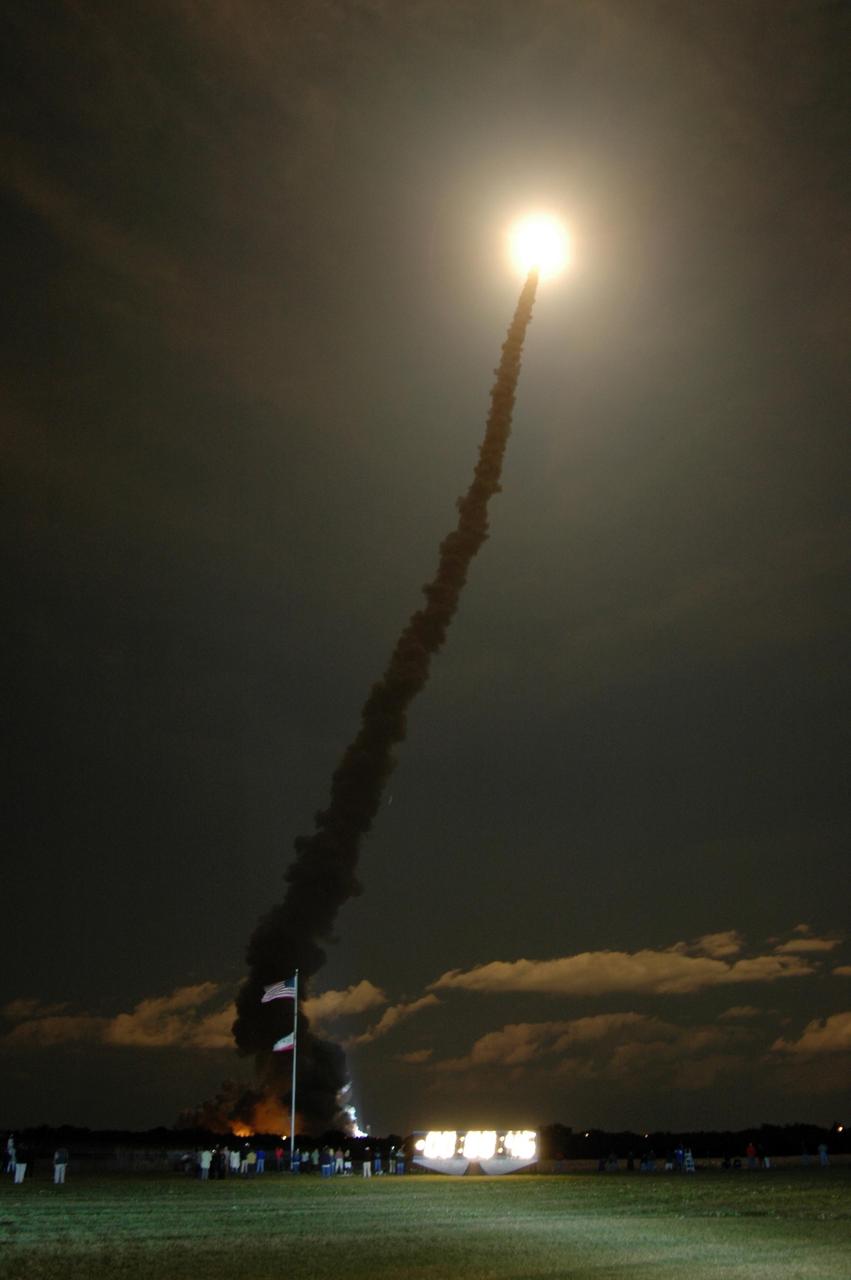
KENNEDY SPACE CENTER, FLA. -- Like a shooting star flooding the night sky with its blazing light, Space Shuttle Discovery leaps toward the sky from Launch Pad 39B on mission STS-116. The launch occurred at 8:47:35 p.m. EST. This was the second launch attempt for mission STS-116. The first launch attempt on Dec. 7 was postponed due a low cloud ceiling over Kennedy Space Center. This is Discovery's 33rd mission and the first night launch since 2002. The 20th shuttle mission to the International Space Station, STS-116 carries another truss segment, P5. It will serve as a spacer, mated to the P4 truss that was attached in September. After installing the P5, the crew will reconfigure and redistribute the power generated by two pairs of U.S. solar arrays. Landing is expected Dec. 21 at KSC. Photo credit: NASA/Jim Grossmann
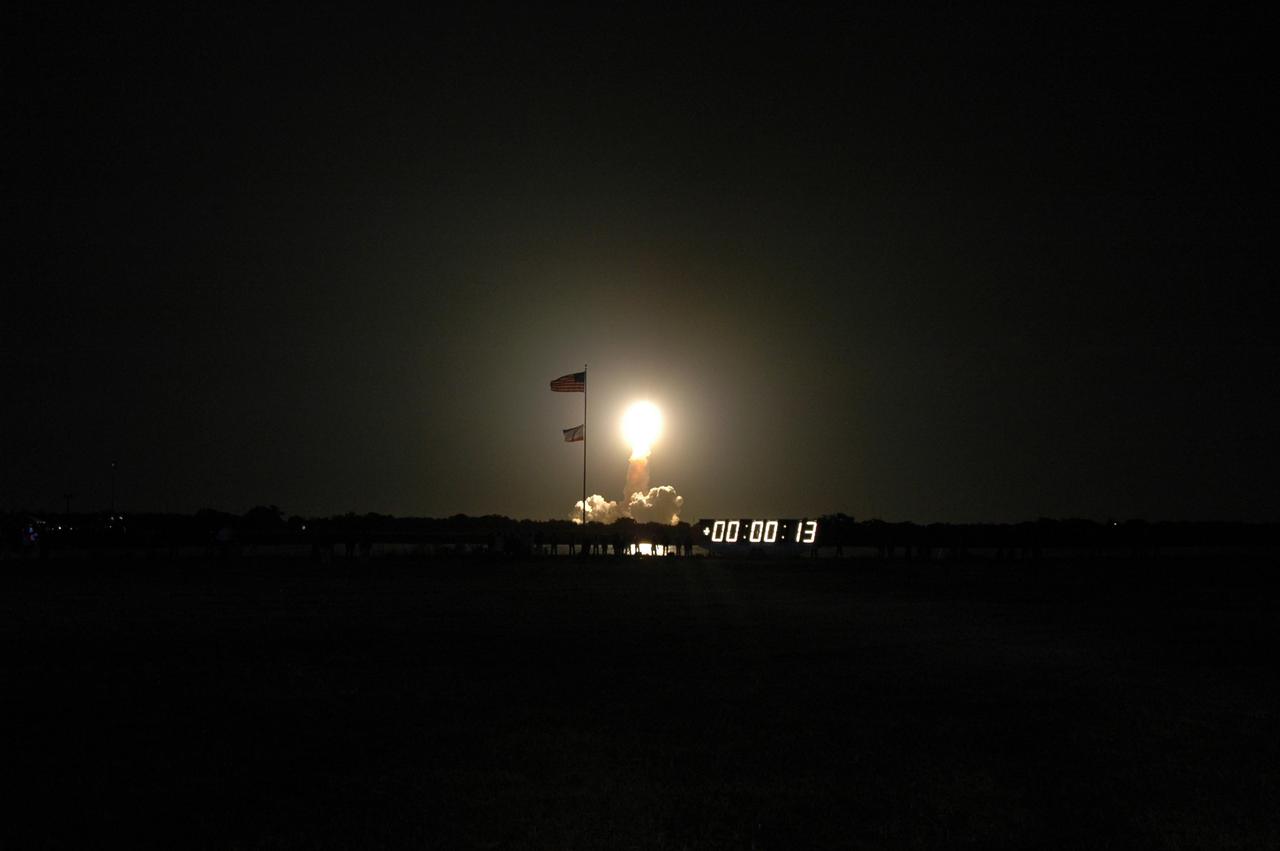
KENNEDY SPACE CENTER, FLA. -- Flooding the night sky with its blazing light, Space Shuttle Discovery leaps toward the sky from Launch Pad 39B on mission STS-116. The launch occurred at 8:47:35 p.m. EST. This was the second launch attempt for mission STS-116. The first launch attempt on Dec. 7 was postponed due a low cloud ceiling over Kennedy Space Center. This is Discovery's 33rd mission and the first night launch since 2002. The 20th shuttle mission to the International Space Station, STS-116 carries another truss segment, P5. It will serve as a spacer, mated to the P4 truss that was attached in September. After installing the P5, the crew will reconfigure and redistribute the power generated by two pairs of U.S. solar arrays. Landing is expected Dec. 21 at KSC. Photo credit: NASA/Jim Grossmann
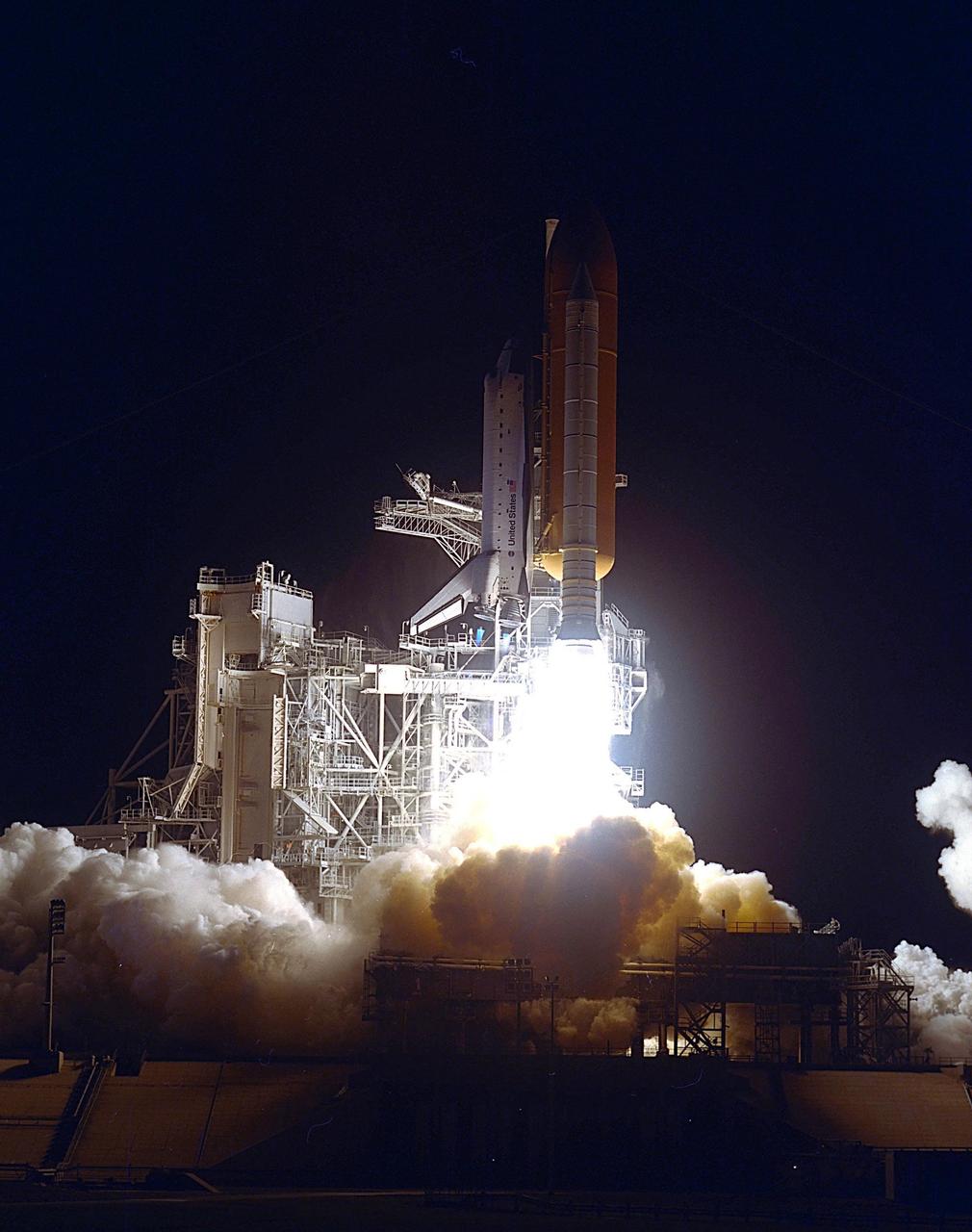
KENNEDY SPACE CENTER, Fla. -- Bursting forth from the clouds of smoke and steam below, Space Shuttle Endeavour hurtles into the night sky after a perfect launch. Liftoff of Endeavour occurred at 10:06:01 p.m. EST on mission STS-97. Endeavour and its five-member crew will deliver U.S. solar arrays to the International Space Station and be the first Shuttle crew to visit the Station’s first resident crew. The 11-day mission includes three spacewalks. This marks the 101st mission in Space Shuttle history and the 25th night launch. Endeavour is expected to land at KSC Dec. 11 at 6:19 p.m. EST
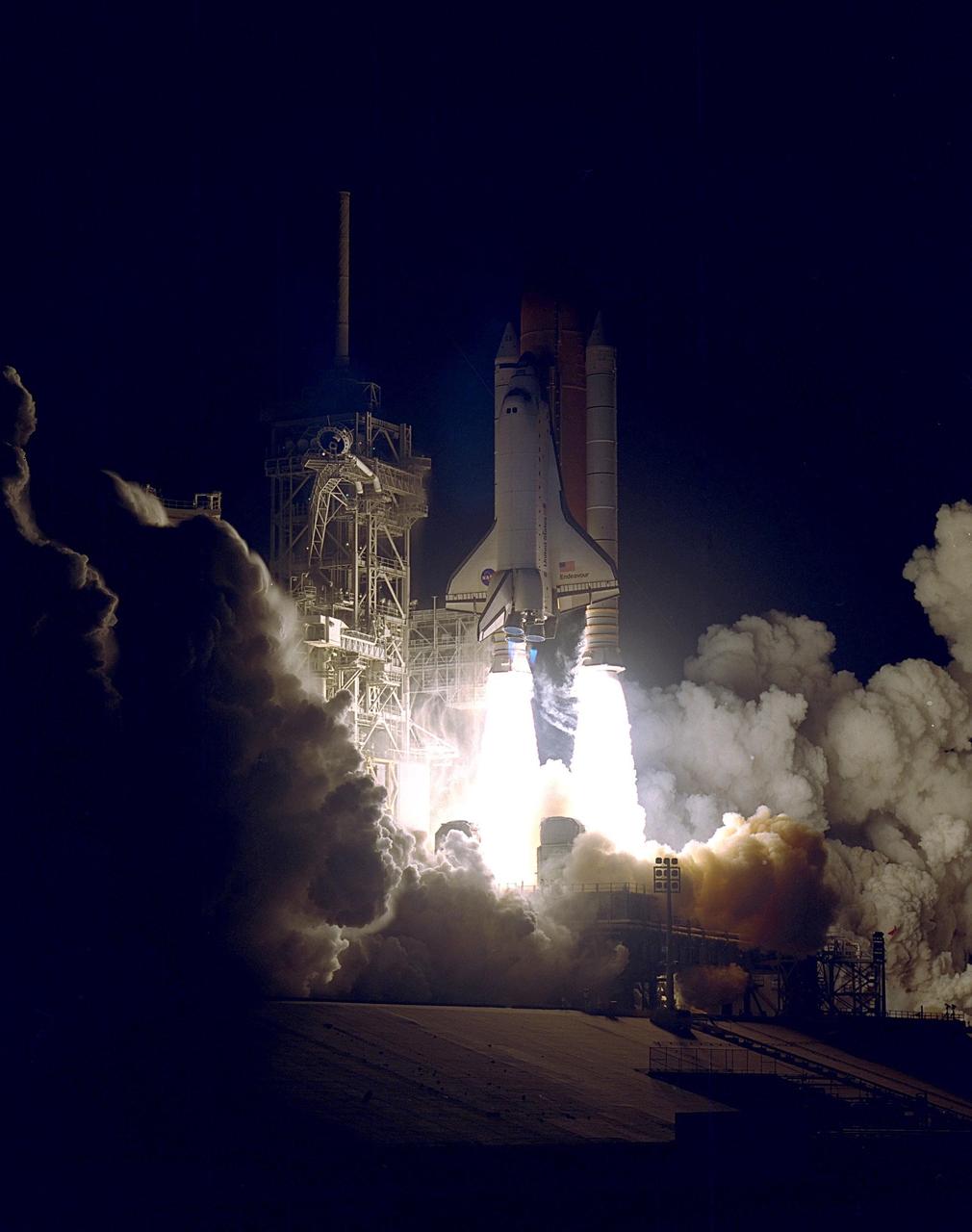
KENNEDY SPACE CENTER, Fla. -- Twin columns of flame spew from the solid rocket boosters lifting Space Shuttle Endeavour out of the smoke and steam and into the night sky. Liftoff occurred on time at 10:06:01 p.m. EST. The Shuttle and its five-member crew will deliver U.S. solar arrays to the International Space Station and be the first Shuttle crew to visit the Station’s first resident crew. The 11-day mission includes three spacewalks. This marks the 101st mission in Space Shuttle history and the 25th night launch. Endeavour is expected to land at KSC Dec. 11 at 6:19 p.m. EST
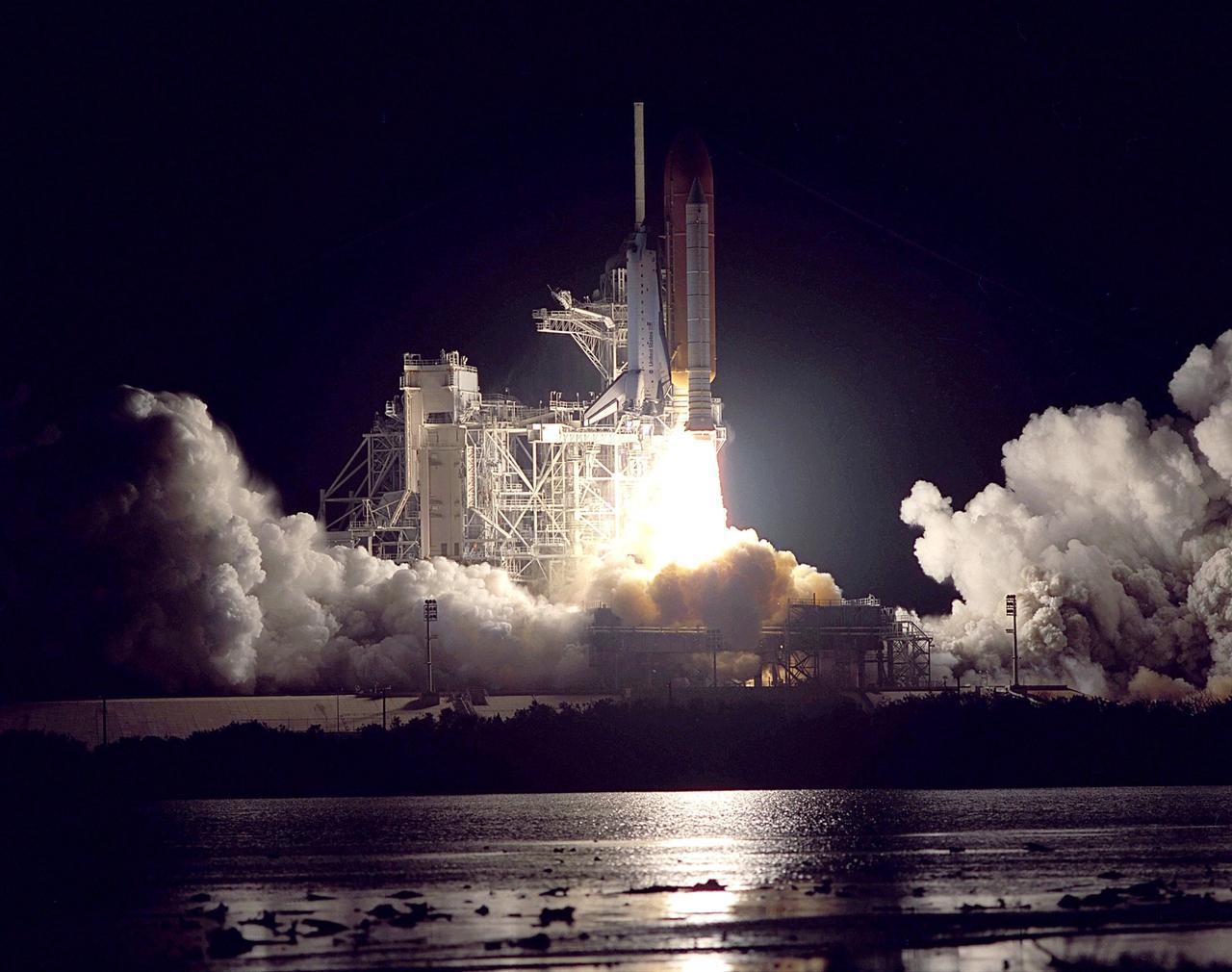
KENNEDY SPACE CENTER, Fla. -- Clouds of smoke and steam roll across Launch Pad 39B and the nearby marshes as Space Shuttle Endeavour roars into the night sky in a perfect launch. Liftoff occurred on time at 10:06:01 p.m. EST. The Shuttle and its five-member crew will deliver U.S. solar arrays to the International Space Station and be the first Shuttle crew to visit the Station’s first resident crew. The 11-day mission includes three spacewalks. This marks the 101st mission in Space Shuttle history and the 25th night launch. Endeavour is expected to land Dec. 11 at 6:19 p.m. EST
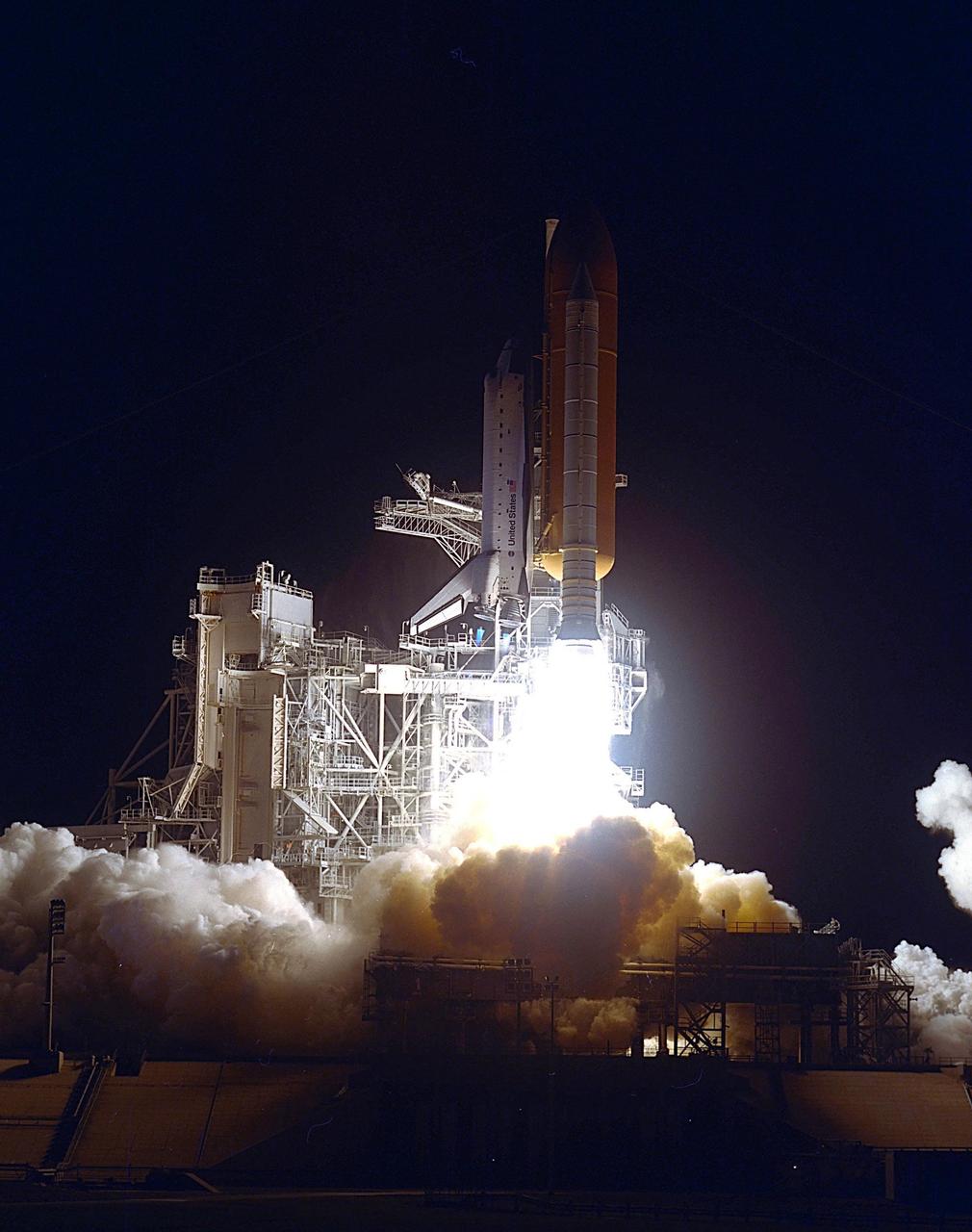
KENNEDY SPACE CENTER, Fla. -- Bursting forth from the clouds of smoke and steam below, Space Shuttle Endeavour hurtles into the night sky after a perfect launch. Liftoff of Endeavour occurred at 10:06:01 p.m. EST on mission STS-97. Endeavour and its five-member crew will deliver U.S. solar arrays to the International Space Station and be the first Shuttle crew to visit the Station’s first resident crew. The 11-day mission includes three spacewalks. This marks the 101st mission in Space Shuttle history and the 25th night launch. Endeavour is expected to land at KSC Dec. 11 at 6:19 p.m. EST
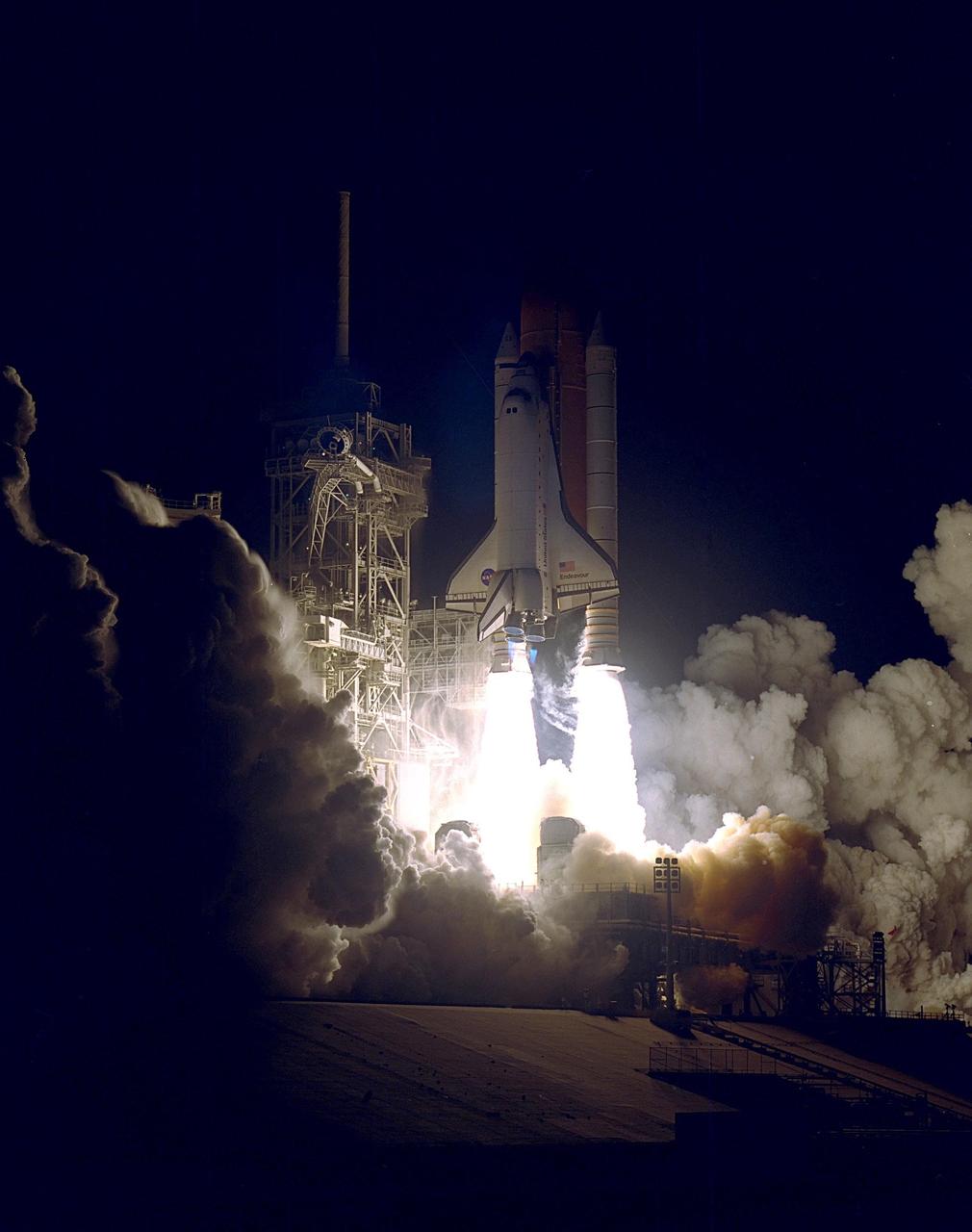
KENNEDY SPACE CENTER, Fla. -- Twin columns of flame spew from the solid rocket boosters lifting Space Shuttle Endeavour out of the smoke and steam and into the night sky. Liftoff occurred on time at 10:06:01 p.m. EST. The Shuttle and its five-member crew will deliver U.S. solar arrays to the International Space Station and be the first Shuttle crew to visit the Station’s first resident crew. The 11-day mission includes three spacewalks. This marks the 101st mission in Space Shuttle history and the 25th night launch. Endeavour is expected to land at KSC Dec. 11 at 6:19 p.m. EST
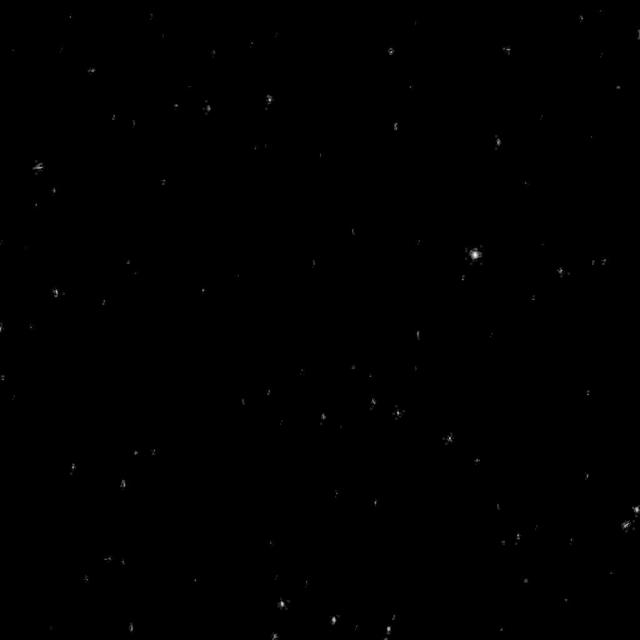
Stars in the upper portion of the constellation Orion the Hunter, including the bright shoulder star Betelgeuse and Orion three-star belt, appear in this image taken from the surface of Mars by the panoramic camera on NASA rover Spirit. Spirit imaged stars on March 11, 2004, after it awoke during the martian night for a communication session with NASA's Mars Global Surveyor orbiter. This image is an eight-second exposure. Longer exposures were also taken. The images tested the capabilities of the rover for night-sky observations. Scientists will use the results to aid planning for possible future astronomical observations from Mars. http://photojournal.jpl.nasa.gov/catalog/PIA05546
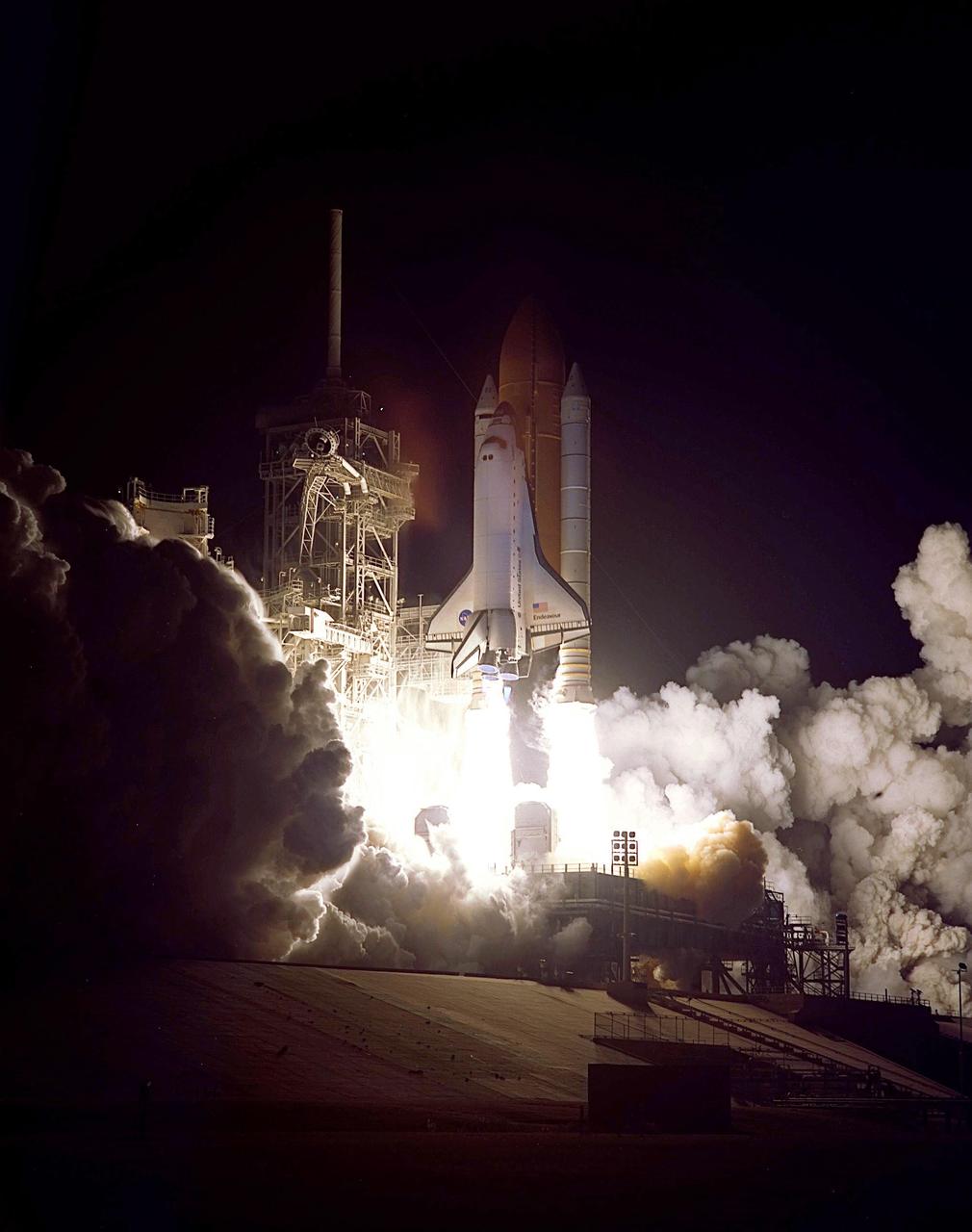
Bursting forth from the clouds of smoke and steam below, Space Shuttle Endeavour hurtles into the night sky after a perfect launch. Liftoff of Endeavour occurred at 10:06:01 p.m. EST on mission STS-97. Endeavour and its five-member crew will deliver U.S. solar arrays to the International Space Station and be the first Shuttle crew to visit the Station's first resident crew. The 11-day mission includes three spacewalks. This marks the 101st mission in Space Shuttle history and the 25th night launch. Endeavour is expected to land at KSC Dec. 11 at 6:19 p.m. EST
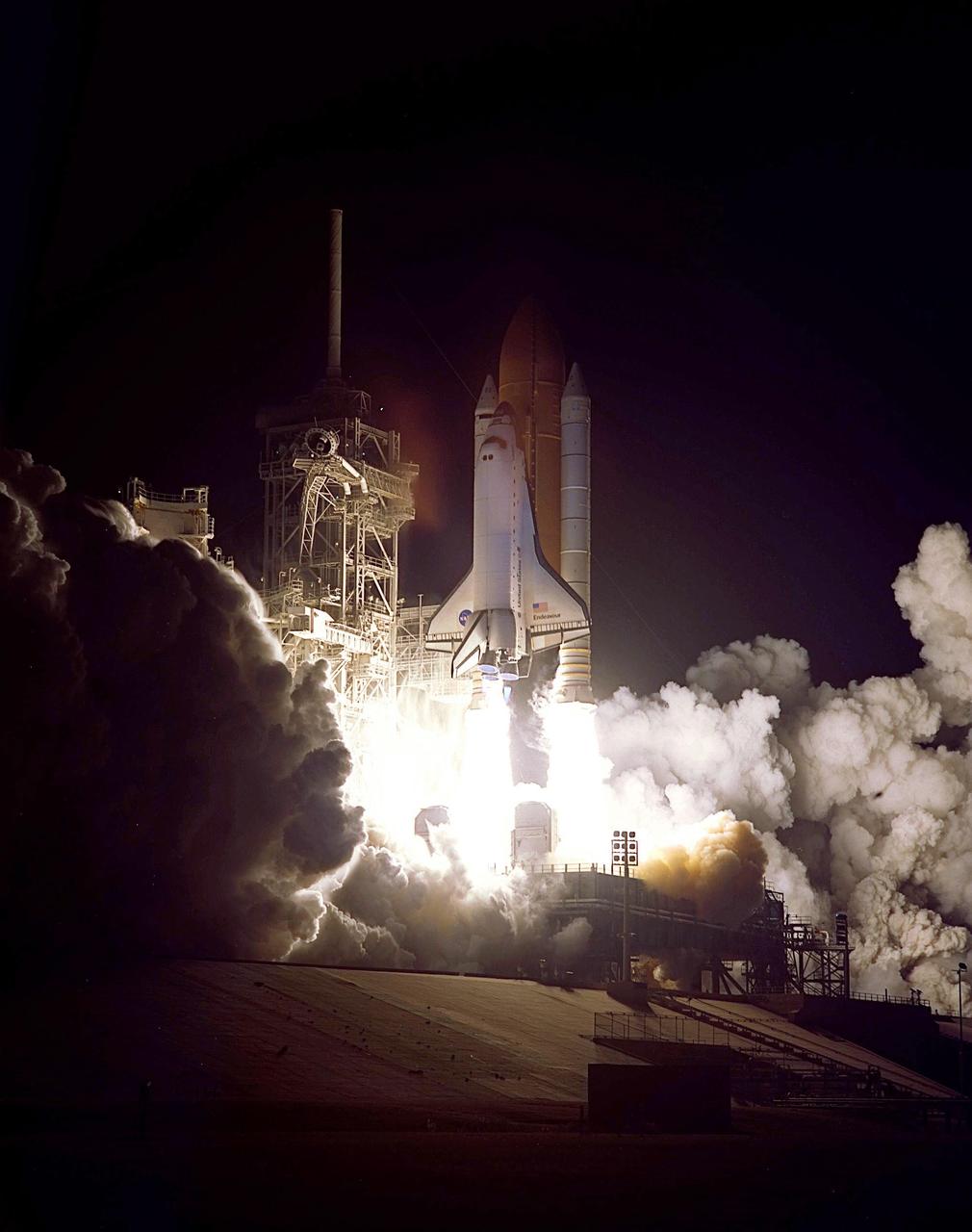
Bursting forth from the clouds of smoke and steam below, Space Shuttle Endeavour hurtles into the night sky after a perfect launch. Liftoff of Endeavour occurred at 10:06:01 p.m. EST on mission STS-97. Endeavour and its five-member crew will deliver U.S. solar arrays to the International Space Station and be the first Shuttle crew to visit the Station's first resident crew. The 11-day mission includes three spacewalks. This marks the 101st mission in Space Shuttle history and the 25th night launch. Endeavour is expected to land at KSC Dec. 11 at 6:19 p.m. EST
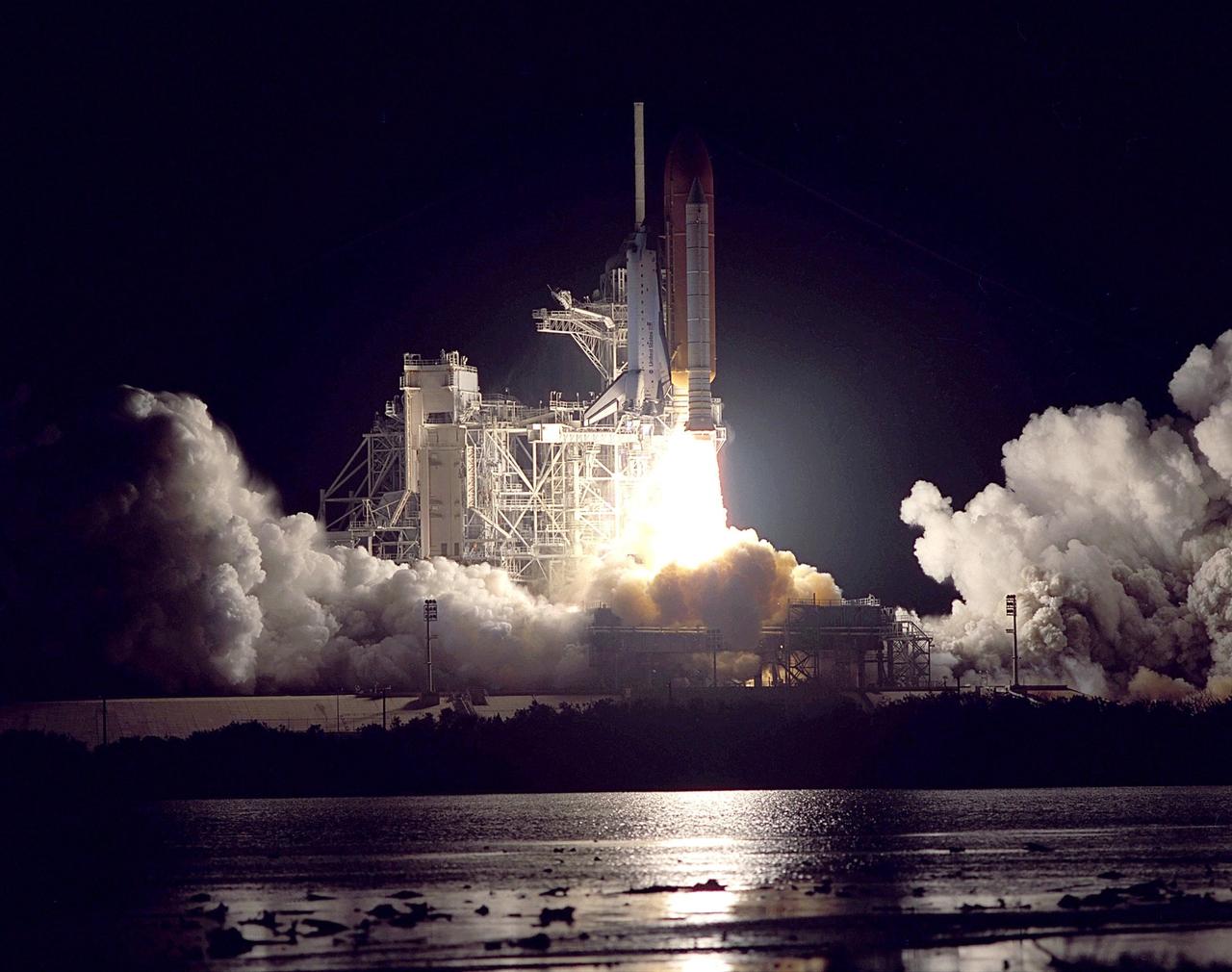
KENNEDY SPACE CENTER, Fla. -- Clouds of smoke and steam roll across Launch Pad 39B and the nearby marshes as Space Shuttle Endeavour roars into the night sky in a perfect launch. Liftoff occurred on time at 10:06:01 p.m. EST. The Shuttle and its five-member crew will deliver U.S. solar arrays to the International Space Station and be the first Shuttle crew to visit the Station’s first resident crew. The 11-day mission includes three spacewalks. This marks the 101st mission in Space Shuttle history and the 25th night launch. Endeavour is expected to land Dec. 11 at 6:19 p.m. EST
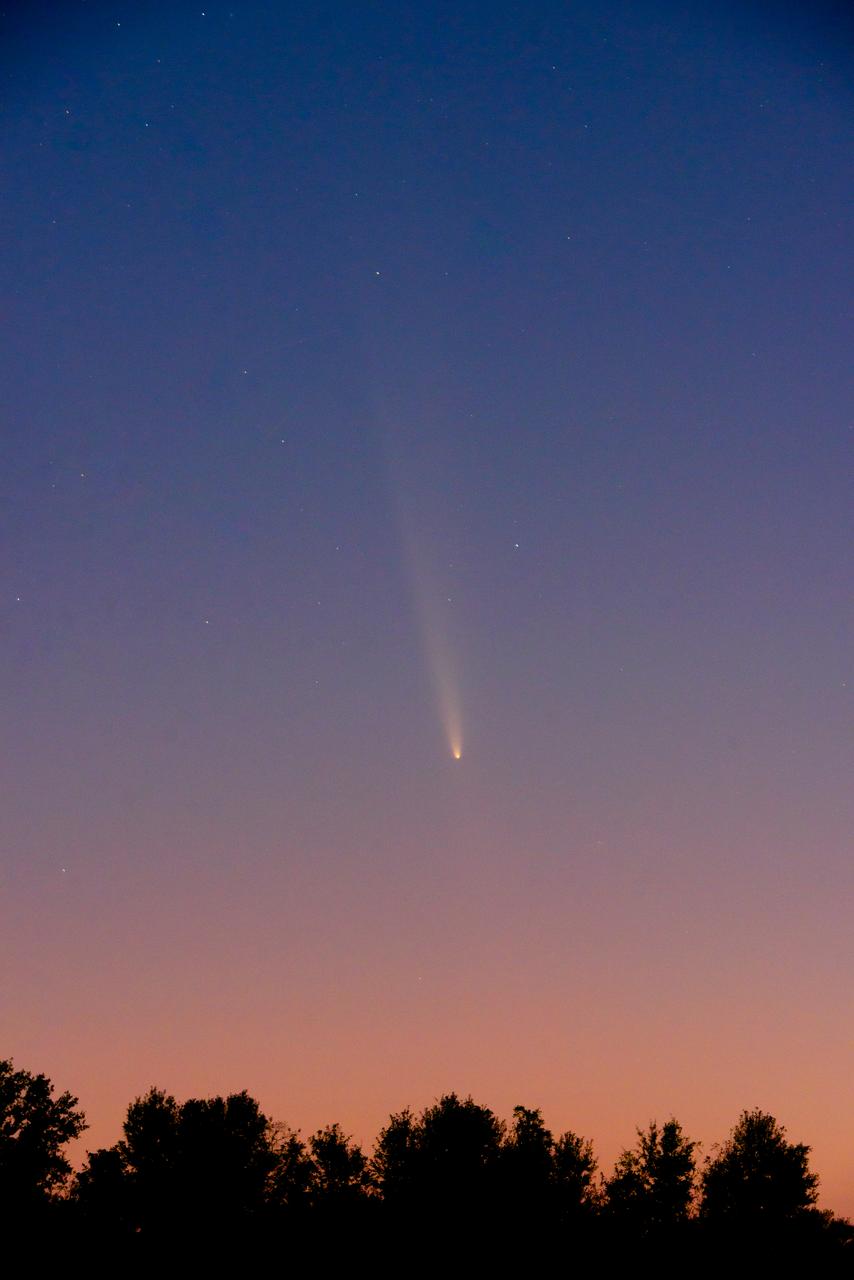
The Oort Cloud comet, called C/2023 A3 Tsuchinshan-ATLAS, passes over Southeast Louisiana near New Orleans, home of NASA’s Michoud Assembly Facility, Sunday, Oct. 13, 2024. The comet is making its first appearance in documented human history; it was last seen in the night sky 80,000 years ago. The Tsuchinshan-ATLAS comet made its first close pass by Earth in mid-October and will remain visible to viewers in the Northern Hemisphere just between the star Arcturus and planet Venus through early November.
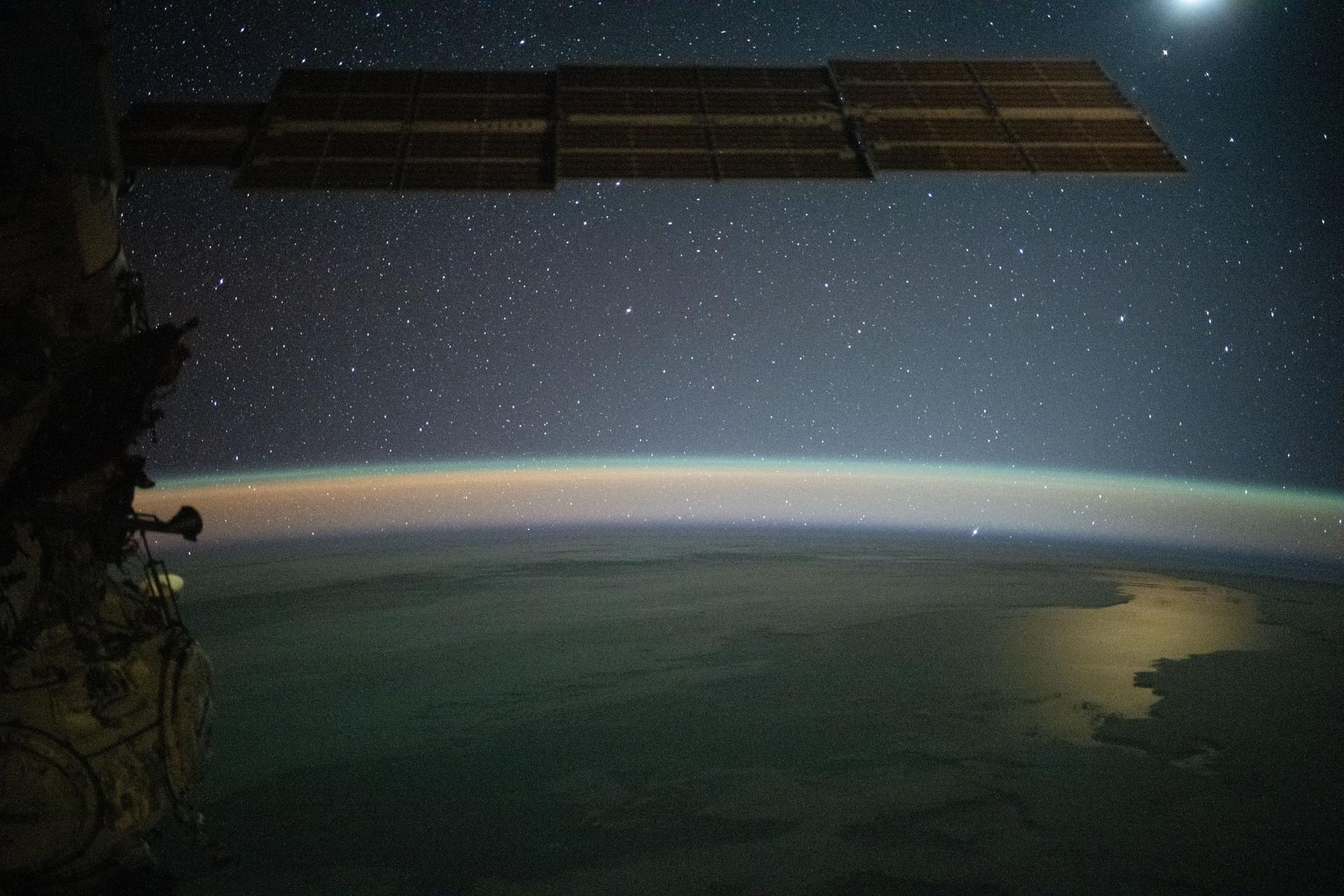
iss073e0982346 (Oct. 25, 2025) --- This serene image of the Moon (upper right) glinting off the Southern Pacific Ocean—beneath a yellow-green airglow and a starry night sky—was taken at approximately 8:59 p.m. local time from the International Space Station as it orbited 263 miles above Earth, southwest of French Polynesia, an overseas collectivity of France comprising more than 100 islands.