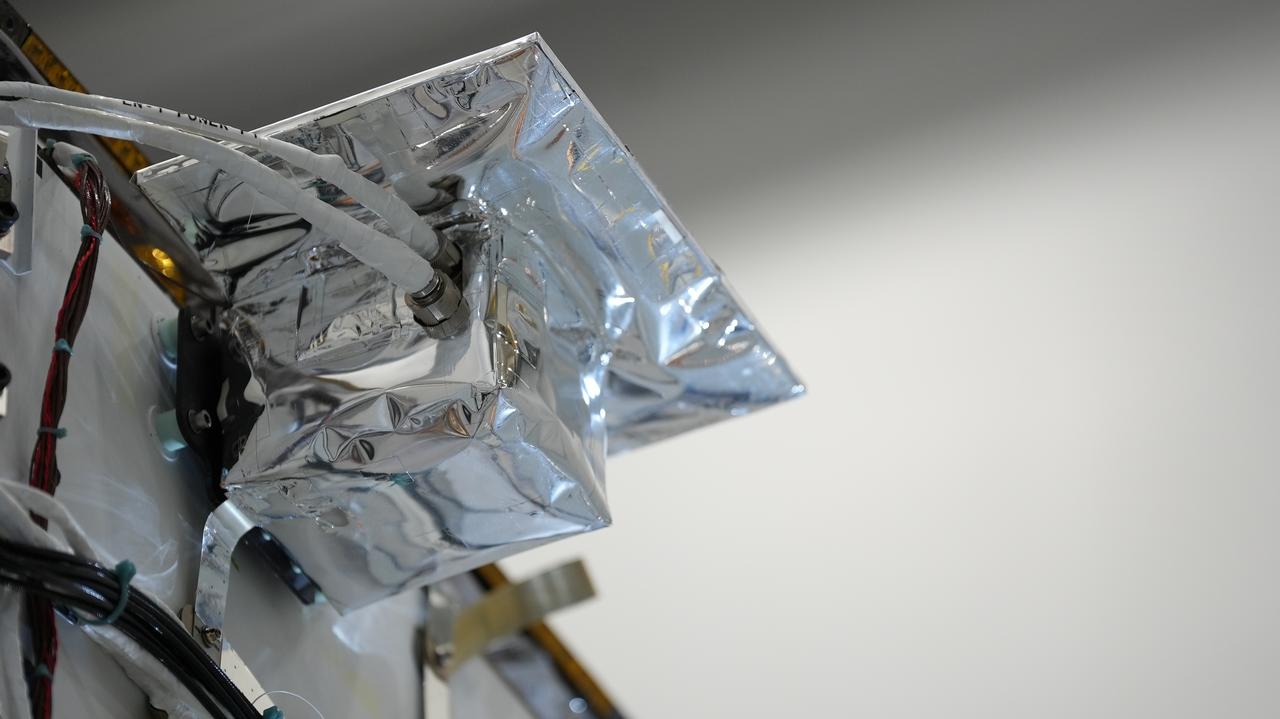
Lunar Node-1, an autonomous navigation payload that will change how human explorers safely traverse the Moon’s surface and live and work in lunar orbit, awaits liftoff as part of Intuitive Machines’ IM-1 mission, its first under NASA’s Commercial Lunar Payload Services initiative. LN-1 was developed, built, and tested at NASA’s Marshall Space Flight Center in Huntsville, Alabama.
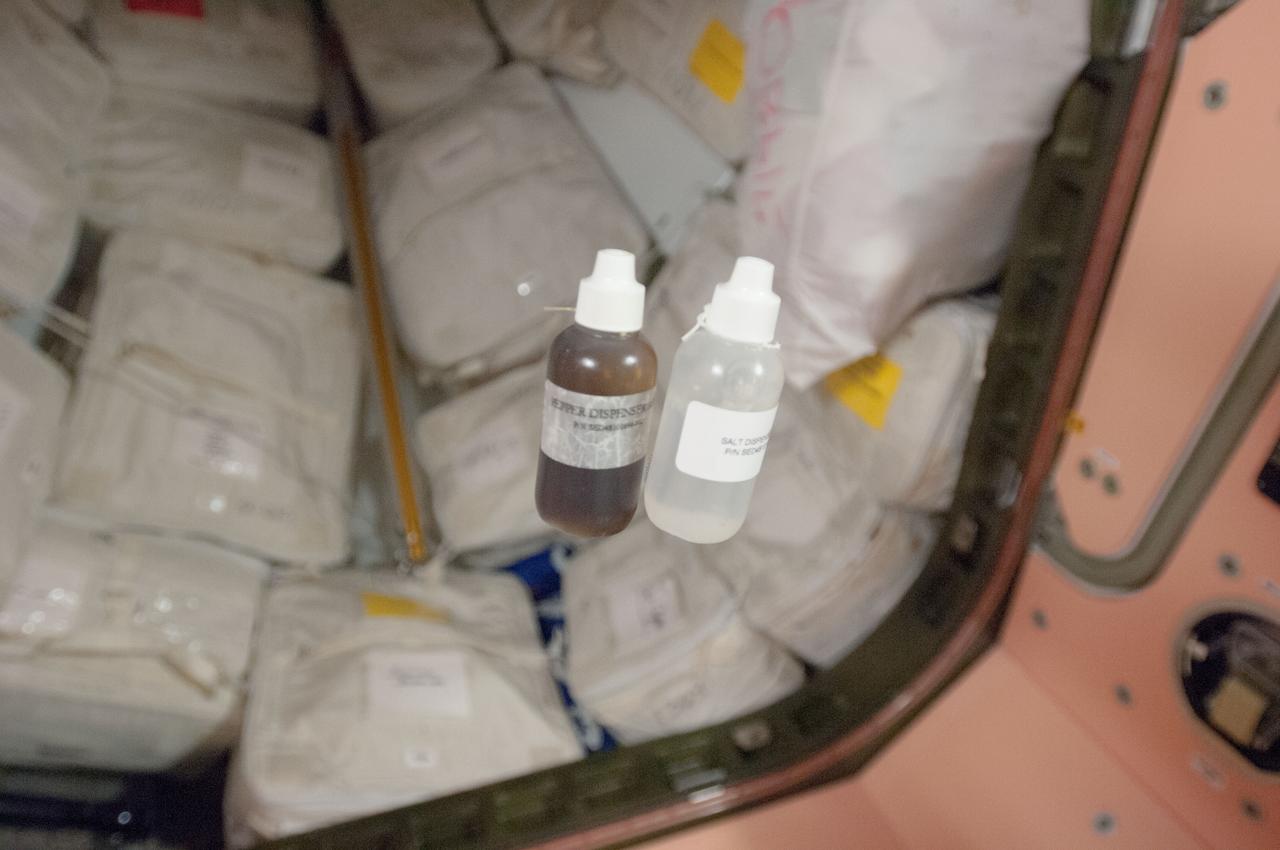
View of liquid pepper and salt dispensers floating in the aft hatch area of the Unity Node 1 during Expedition 35.
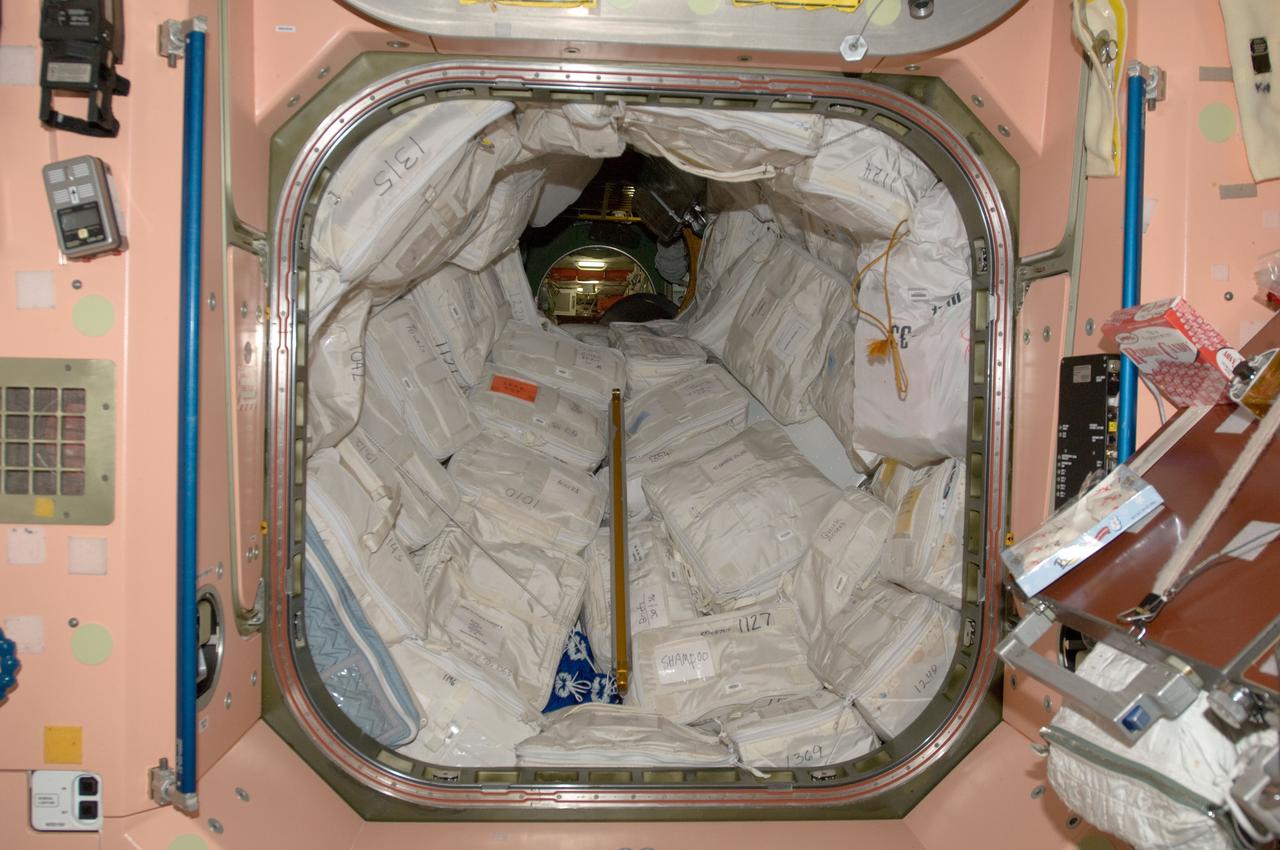
View of stowage in the aft end of the Node 1 and the hatch leading to Pressurized Mating Adapter 1 (PMA1). The PMA1 is also lined with stowed equipment. Photo was taken during Expedition 34.
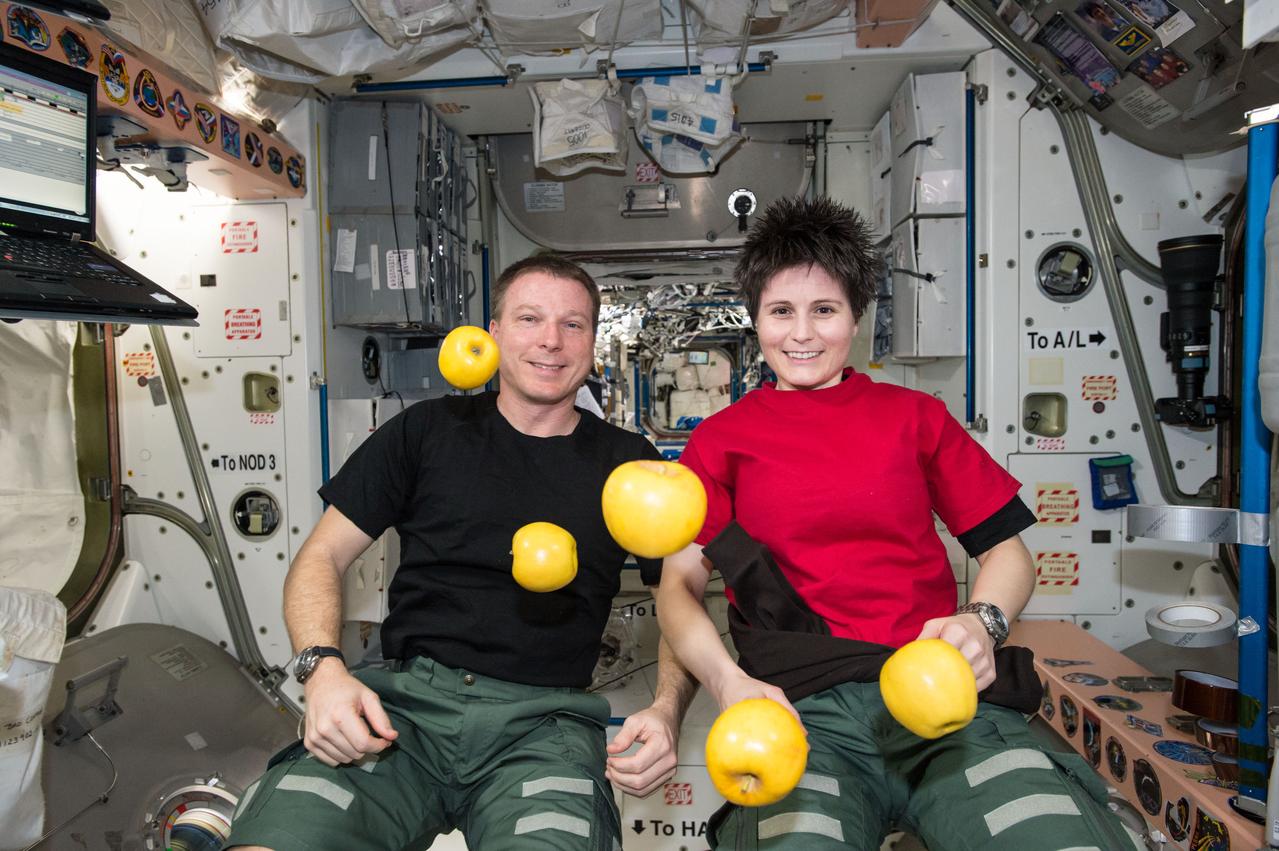
Flight Engineers Terry Virts and Samantha Cristoforetti pose with floating apples recently delivered to the ISS. Image was taken in the Unity Node 1.
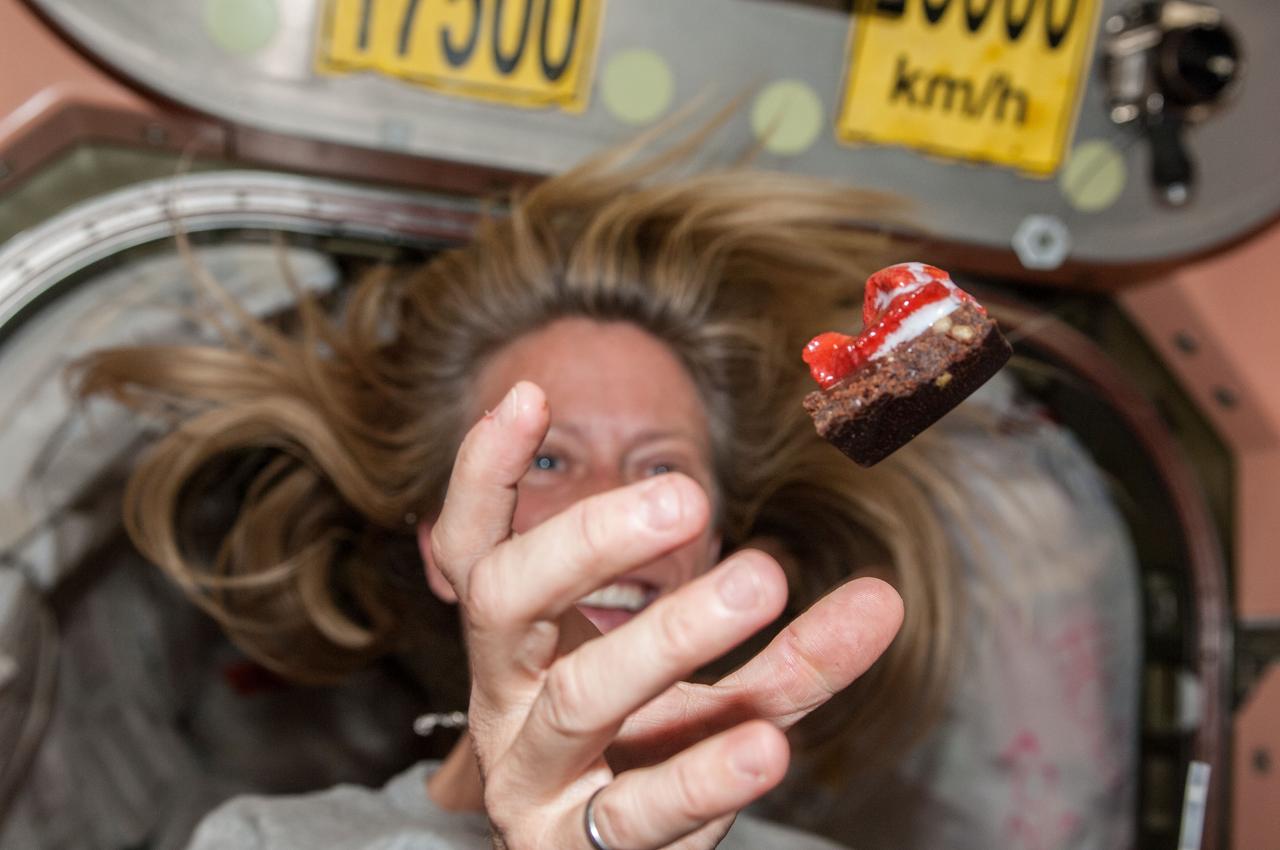
Expedition 36 Flight Engineer Karen Nyberg of NASA floats a piece of food in front her in the Node 1 module during meal time.

Photo of Astronaut Karen Nyber,Expedition 36 flight engineer,with a snack of peanut butter and chocolate sandwiched between two waffles. Photo taken in the Node 1 module. Also sent as Twitter message.
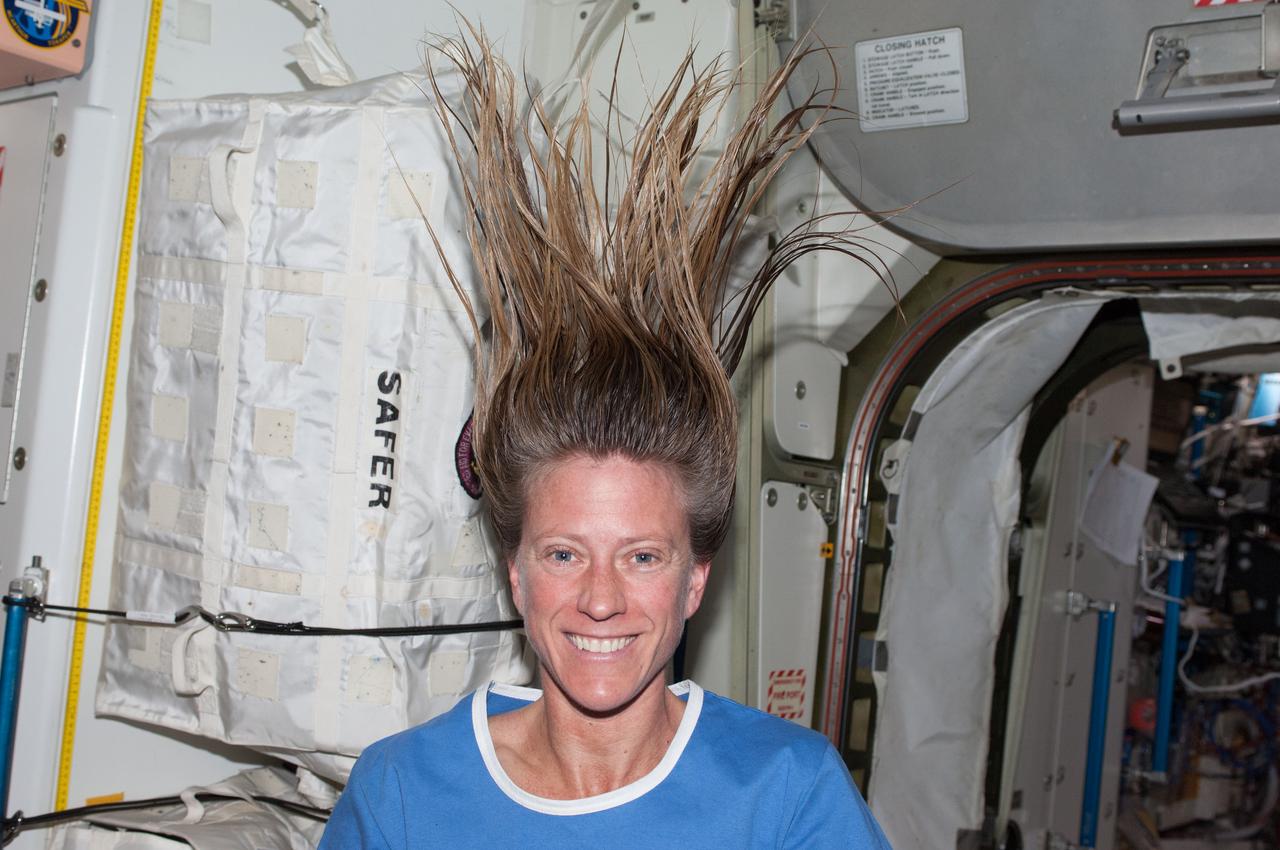
Astronaut Karen Nyberg,Expedition 36 flight engineer,arranges her hair so that it can float straight up from her head. Photo was taken in the Node 1 module. Sent also as Twitter message.
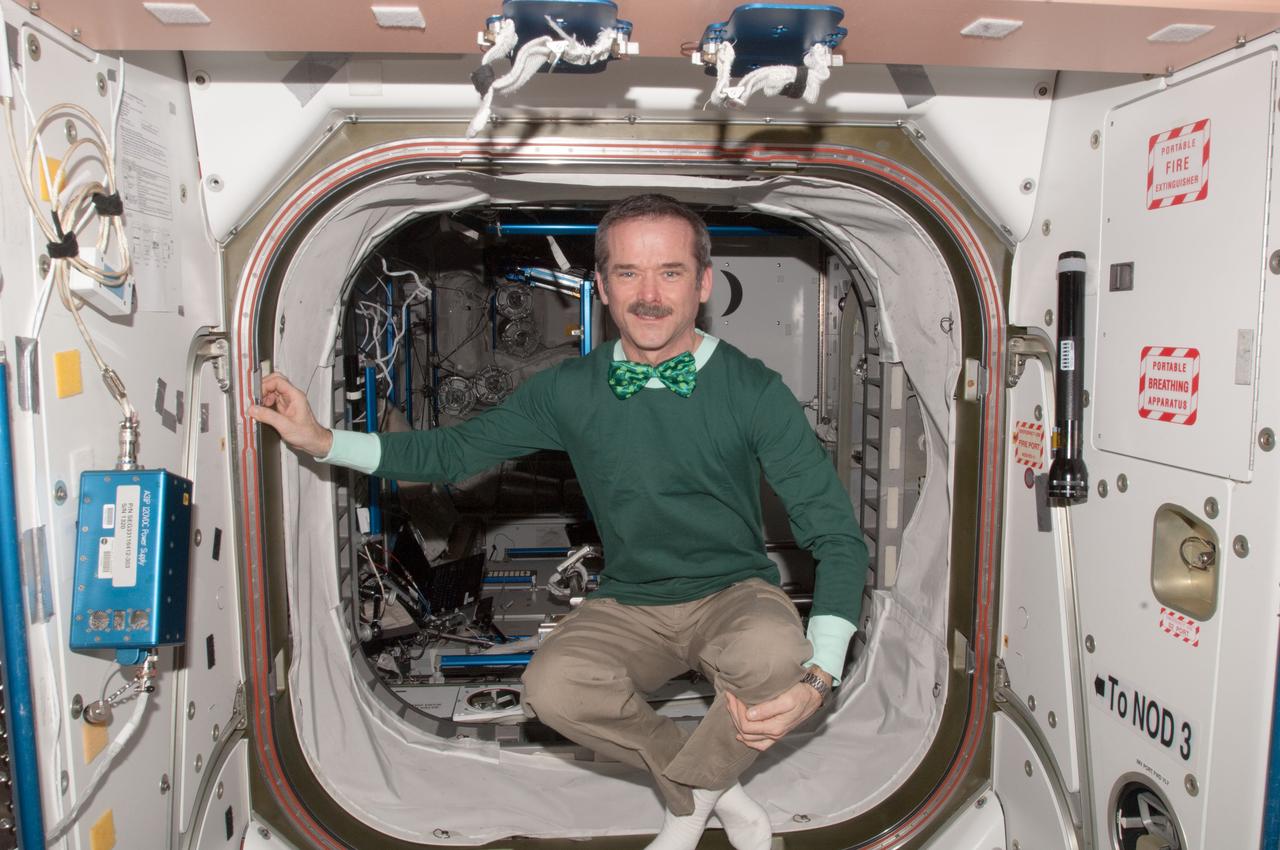
Expedition 35 commander and Canadian Space Agency (CSA) astronaut Chris Hadfield poses for a photo in the Unity Node 1. He is wearing a green shirt and bow tie in honor of St. Patrick's Day.

IM-1, the first NASA Commercial Launch Program Services launch for Intuitive Machines’ Nova-C lunar lander, will carry multiple payloads to the Moon, including Lunar Node-1, demonstrating autonomous navigation via radio beacon to support precise geolocation and navigation among lunar orbiters, landers, and surface personnel. NASA’s CLPS initiative oversees industry development of small robotic landers and rovers to support NASA’s Artemis campaign.

View of miniature bread floating,in the Node 1. Photo was taken during Expedition 34.

View of open food container floating in the Node 1. Cargo Transfer Bags (CTBs) are visible in the background. Photo was taken during Expedition 34.
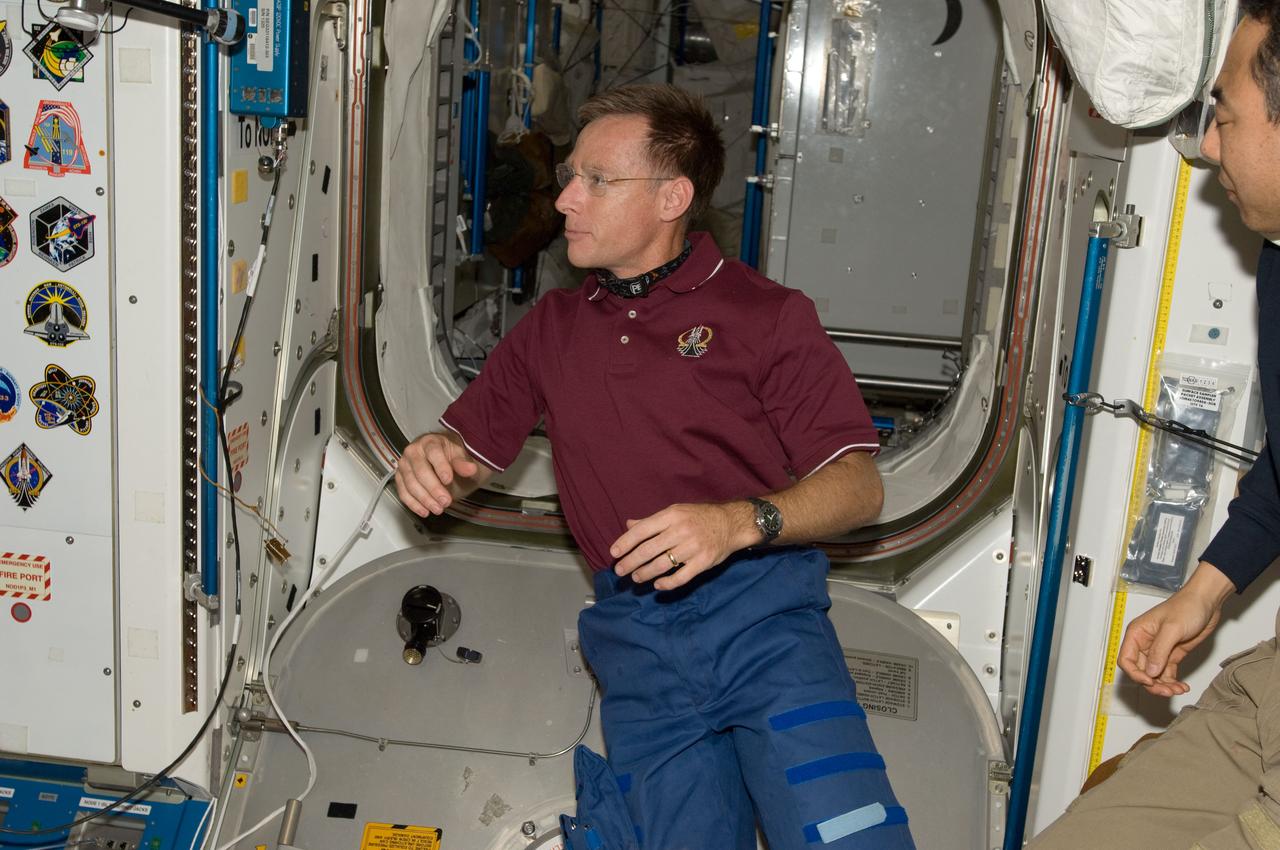
S135-E-009479 (18 July 2011) --- Inside the International Space Station's Node 1 or Unity, NASA astronaut Chris Ferguson, STS-135 commander, prepares to add his mission's decal as the final piece of the collection of shuttle crew insignias, partially visible at left. Photo credit: NASA
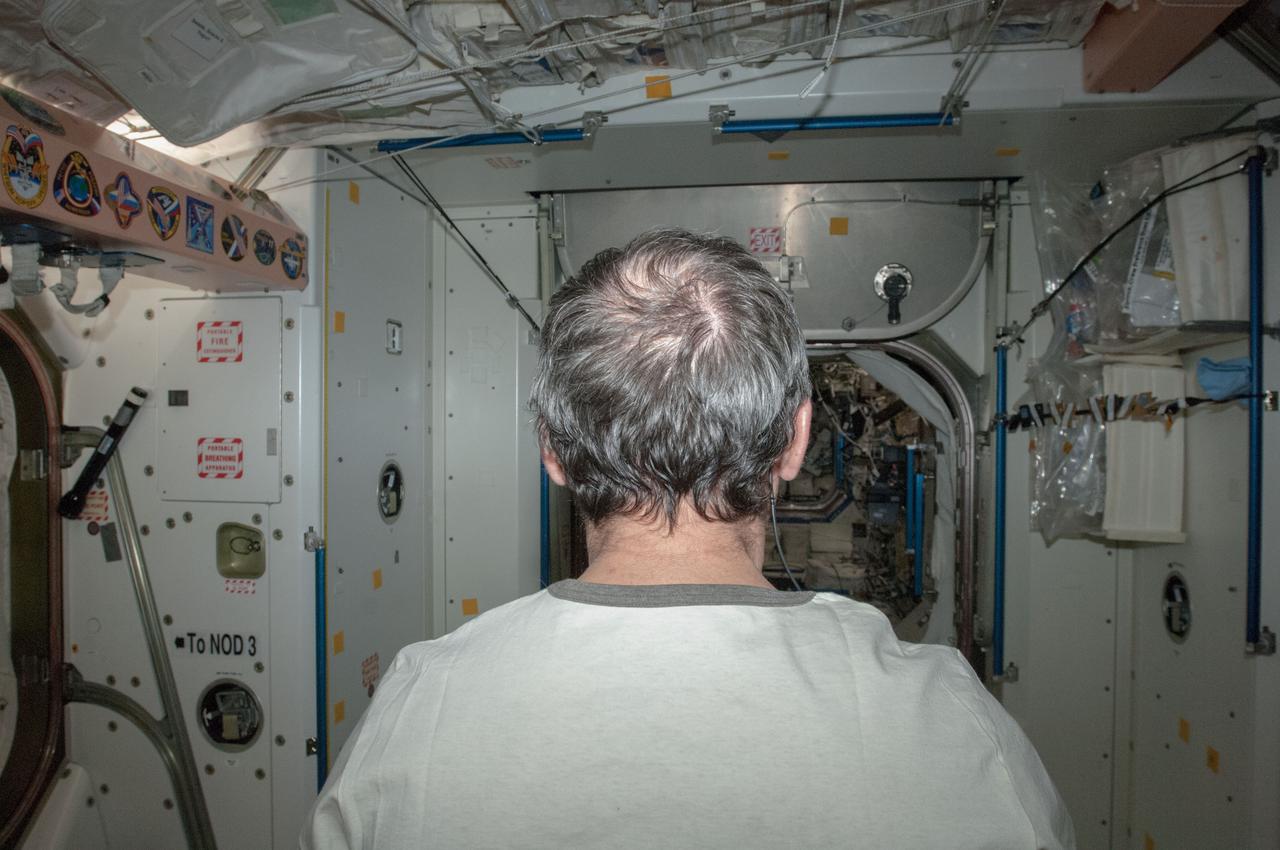
Expedition 35 commander and Canadian Space Agency astronaut Chris Hadfield (facing away from camera) poses for a photo in the Unity Node 1 before getting a haircut.
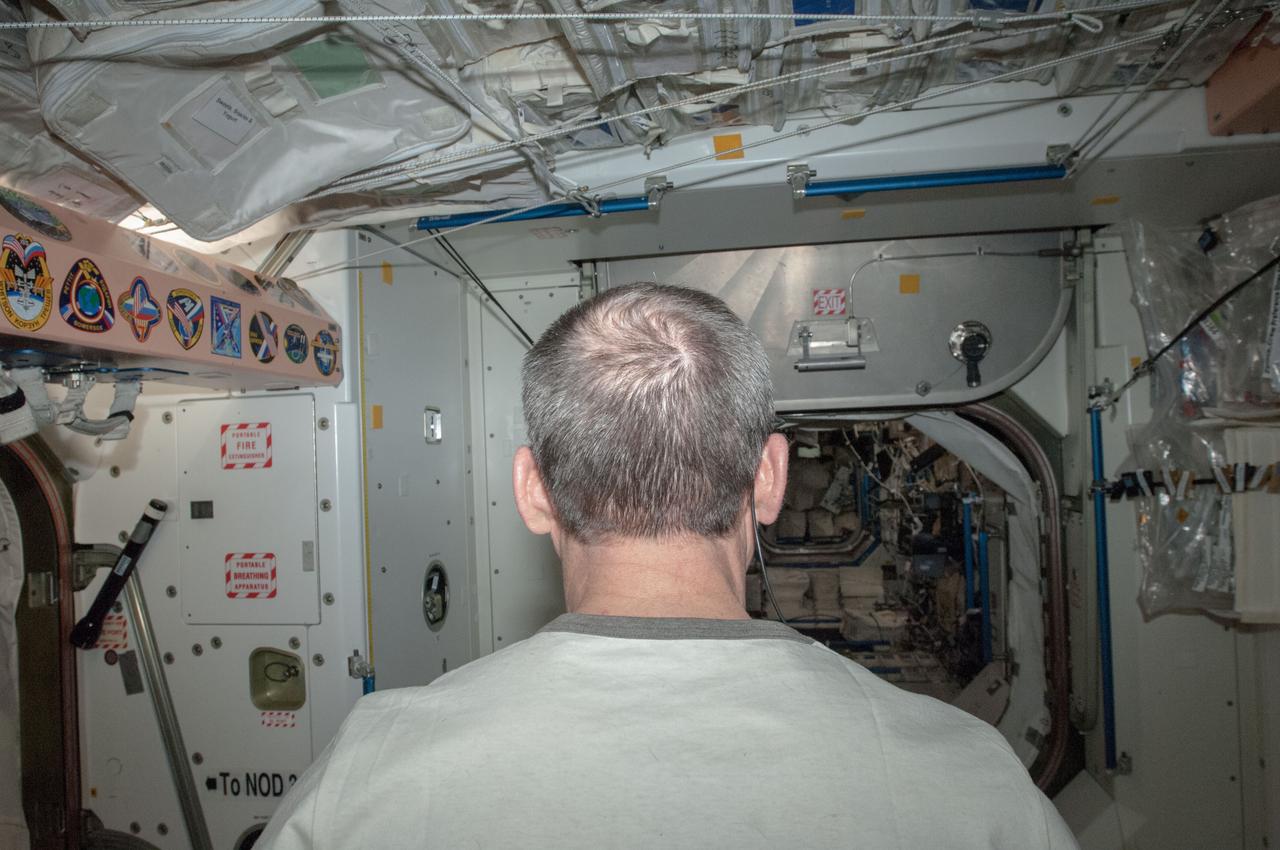
Expedition 35 commander and Canadian Space Agency astronaut Chris Hadfield (facing away from camera) poses for a photo in the Unity Node 1 after getting a haircut.
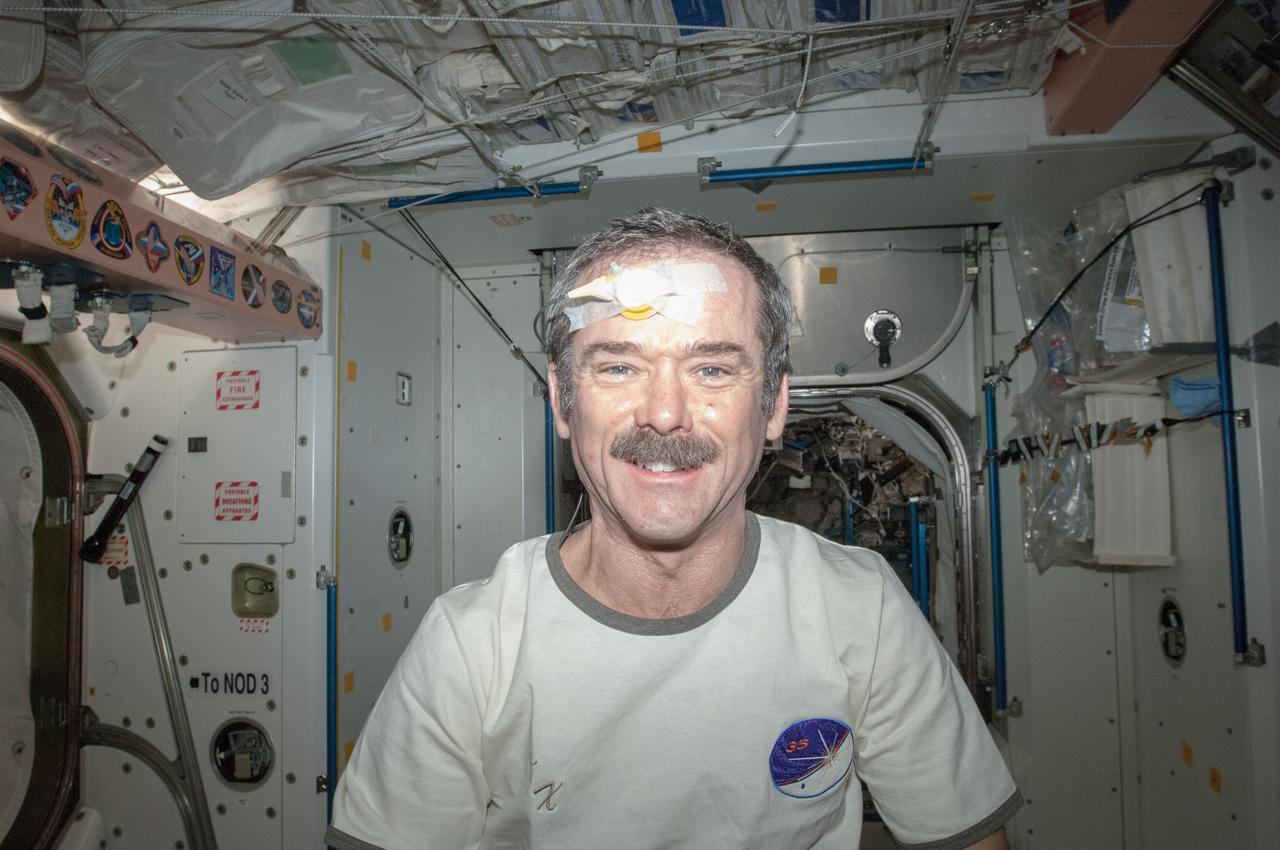
Expedition 35 commander and Canadian Space Agency astronaut Chris Hadfield (with a temperature sensor taped to his forehead) poses for a photo in the Unity Node 1 before getting a haircut.
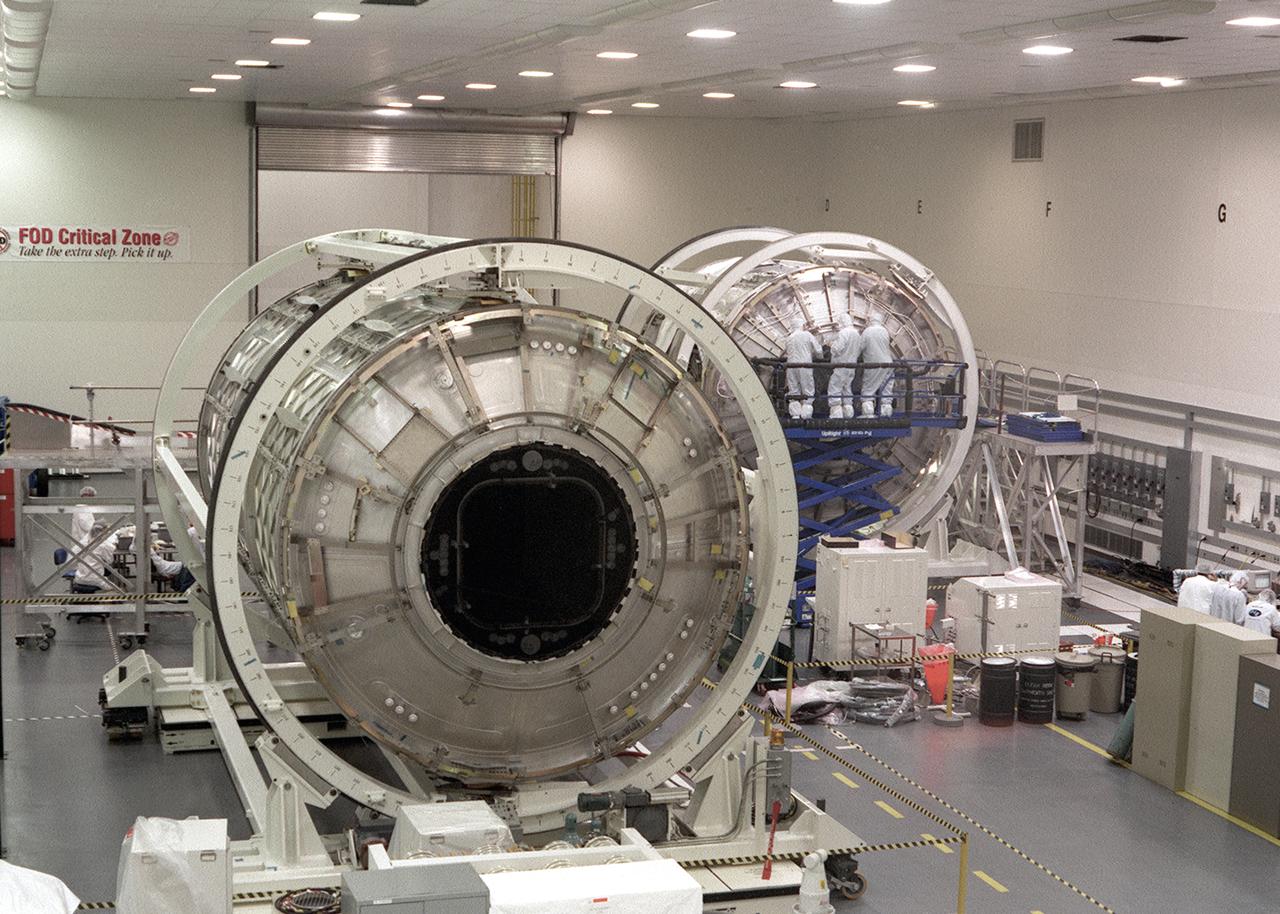
This Boeing photograph shows the Node 1, Unity module, Flight Article (at right) and the U.S. Laboratory module, Destiny, Flight Article for the International Space Station (ISS) being manufactured in the High Bay Clean Room of the Space Station Manufacturing Facility at the Marshall Space Flight Center. The Node 1, or Unity, serves as a cornecting passageway to Space Station modules. The U.S. built Unity module was launched aboard the orbiter Endeavour (STS-88 mission) on December 4, 1998 and connected to the Zarya, the Russian-built Functional Energy Block (FGB). The U.S. Laboratory (Destiny) module is the centerpiece of the ISS, where science experiments will be performed in the near-zero gravity of space. The U.S. Laboratory/Destiny was launched aboard the orbiter Atlantis (STS-98 mission) on February 7, 2001. The ISS is a multidisciplinary laboratory, technology test bed, and observatory that will provide unprecedented undertakings in scientific, technological, and international experimentation.
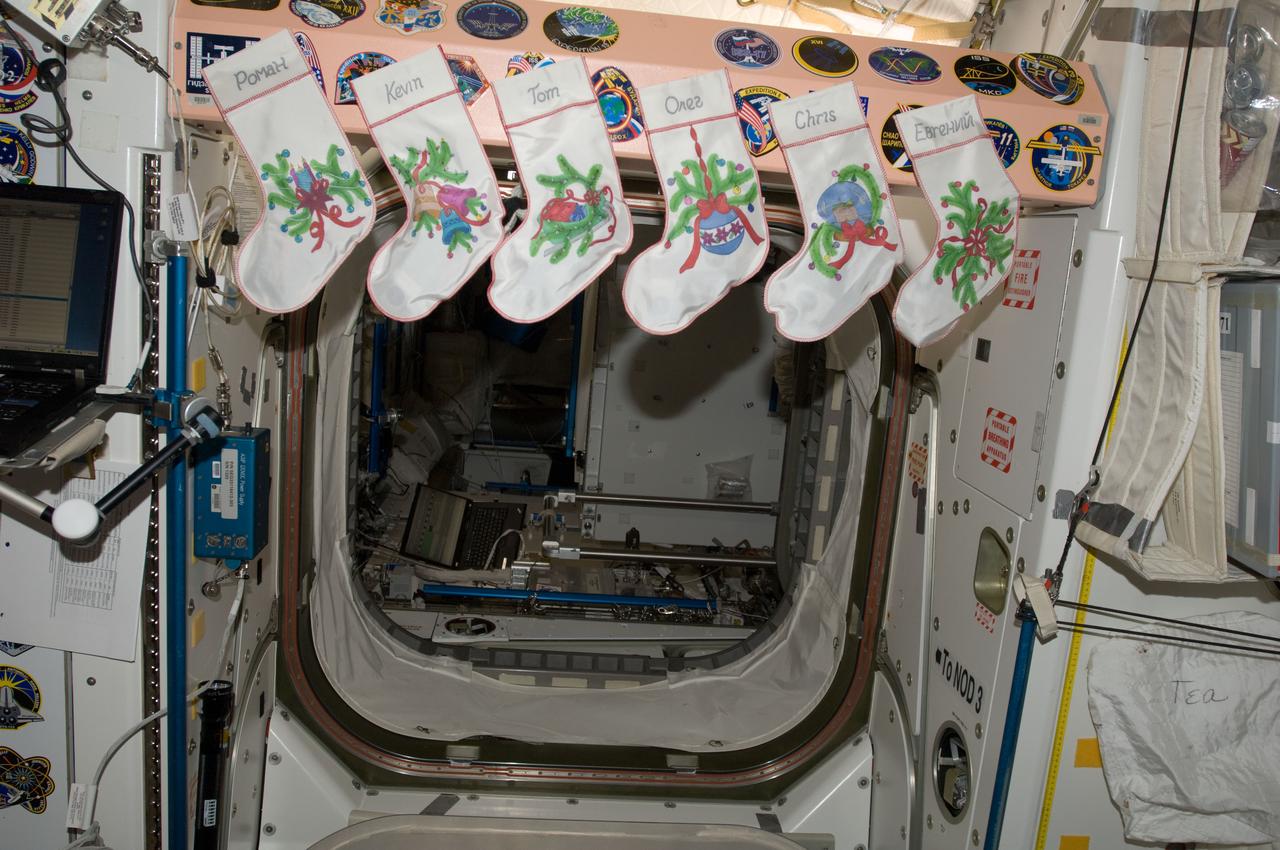
View of Expedition 34 Christmas stockings hanging at the Node 1 hatch. Photo was taken during Expedition 34.
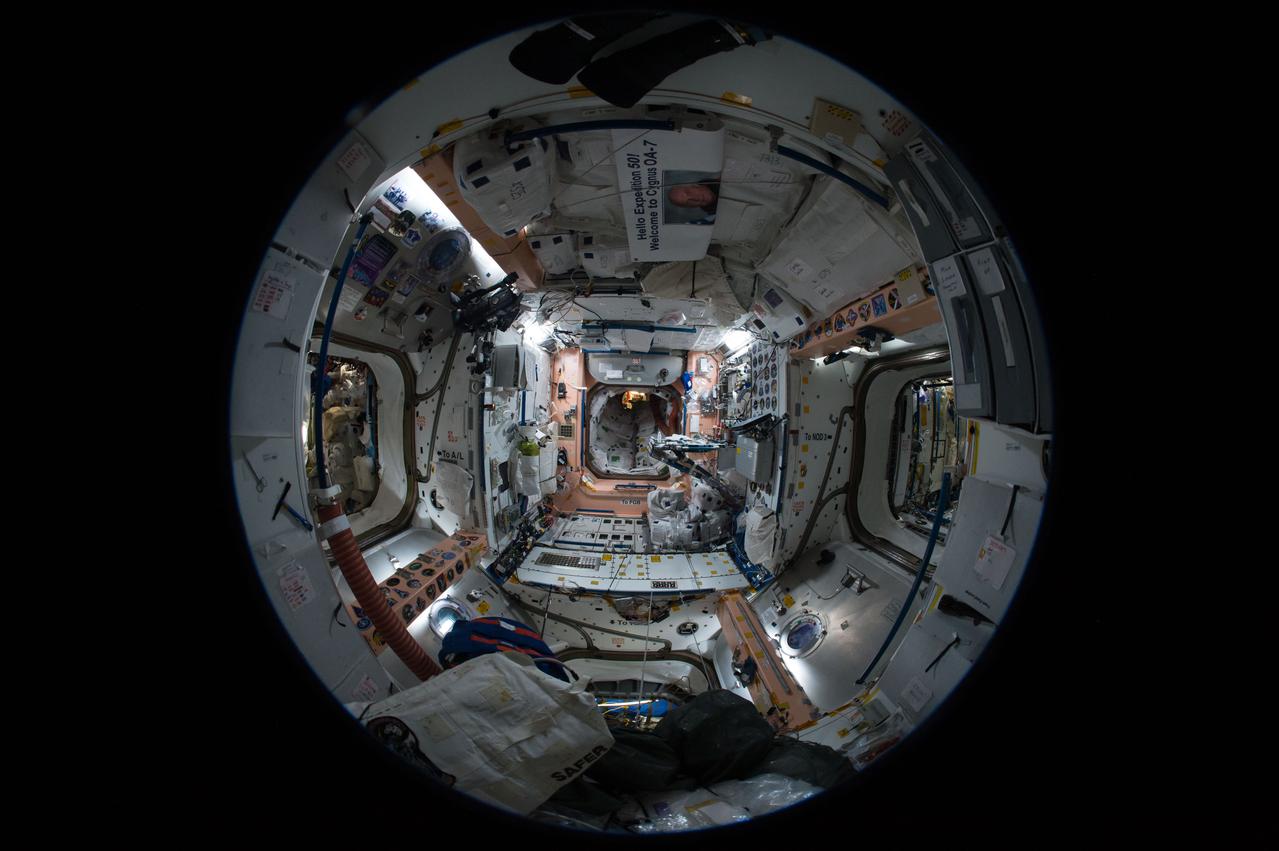
iss051e040946 (5/11/2017) --- A fish-eye view looking aft in the Unity Node 1, taken for a Google Street View of the ISS.
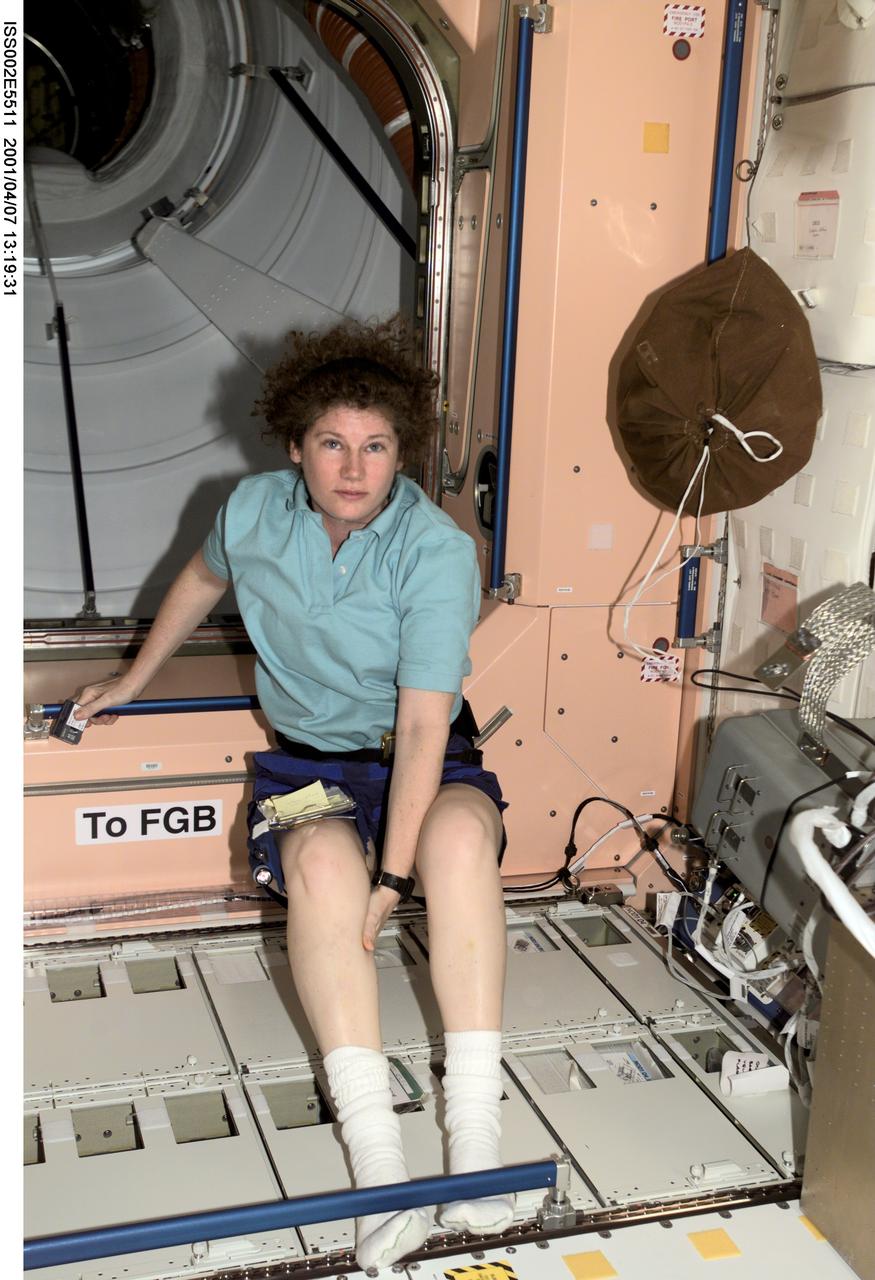
ISS002-E-5511 (07 April 2001) --- Astronaut Susan J. Helms, Expedition Two flight engineer, pauses from moving through the Node 1 / Unity module of the International Space Station (ISS) to pose for a photograph. This image was recorded with a digital still camera.
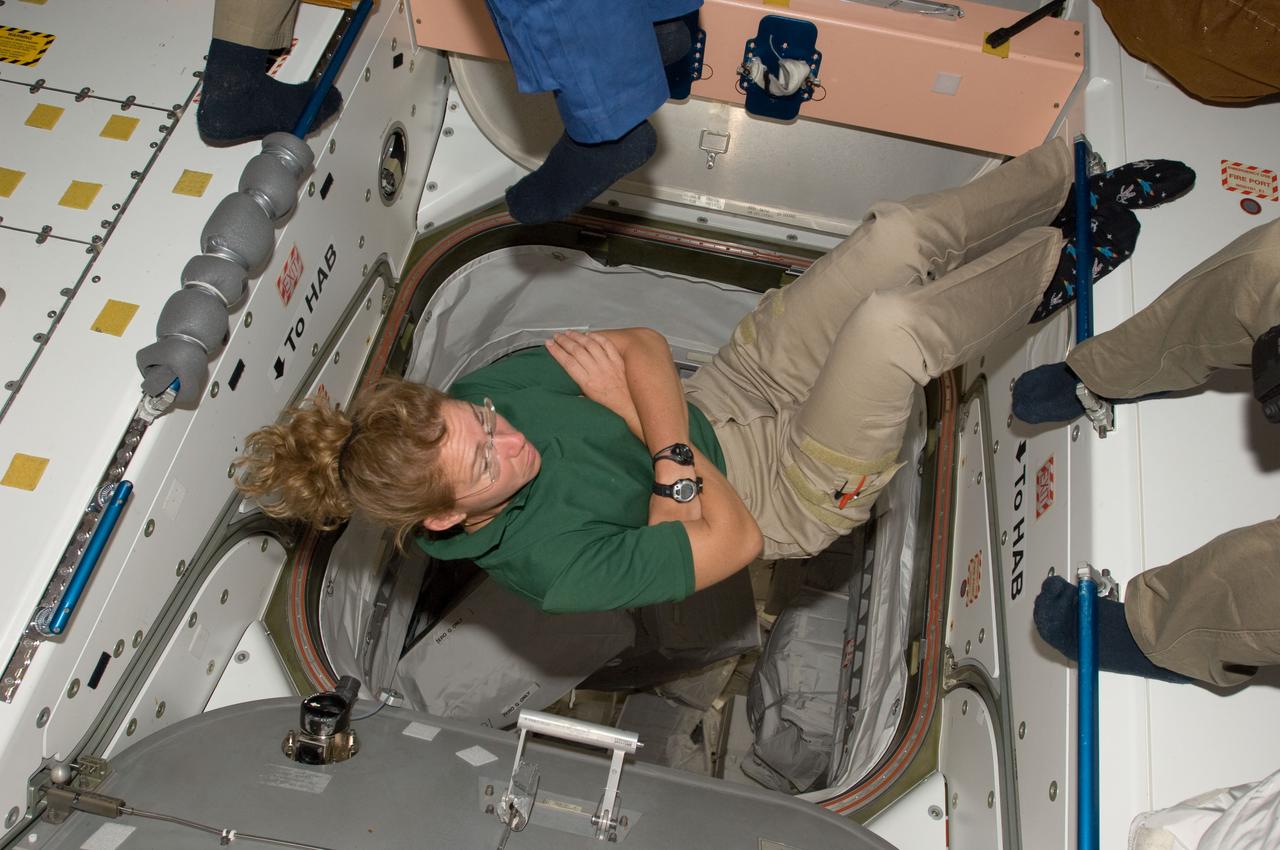
S135-E-009432 (18 July 2011) --- NASA astronaut Sandy Magnus, STS-135 mission specialist, floats in the International Space Station's Node 1 or Unity, with the passageway to the permanent multi-purpose module behind her. She was enjoying some of the last moments onboard the station on the final day of joint activities for the Atlantis and station crews. Photo credit: NASA
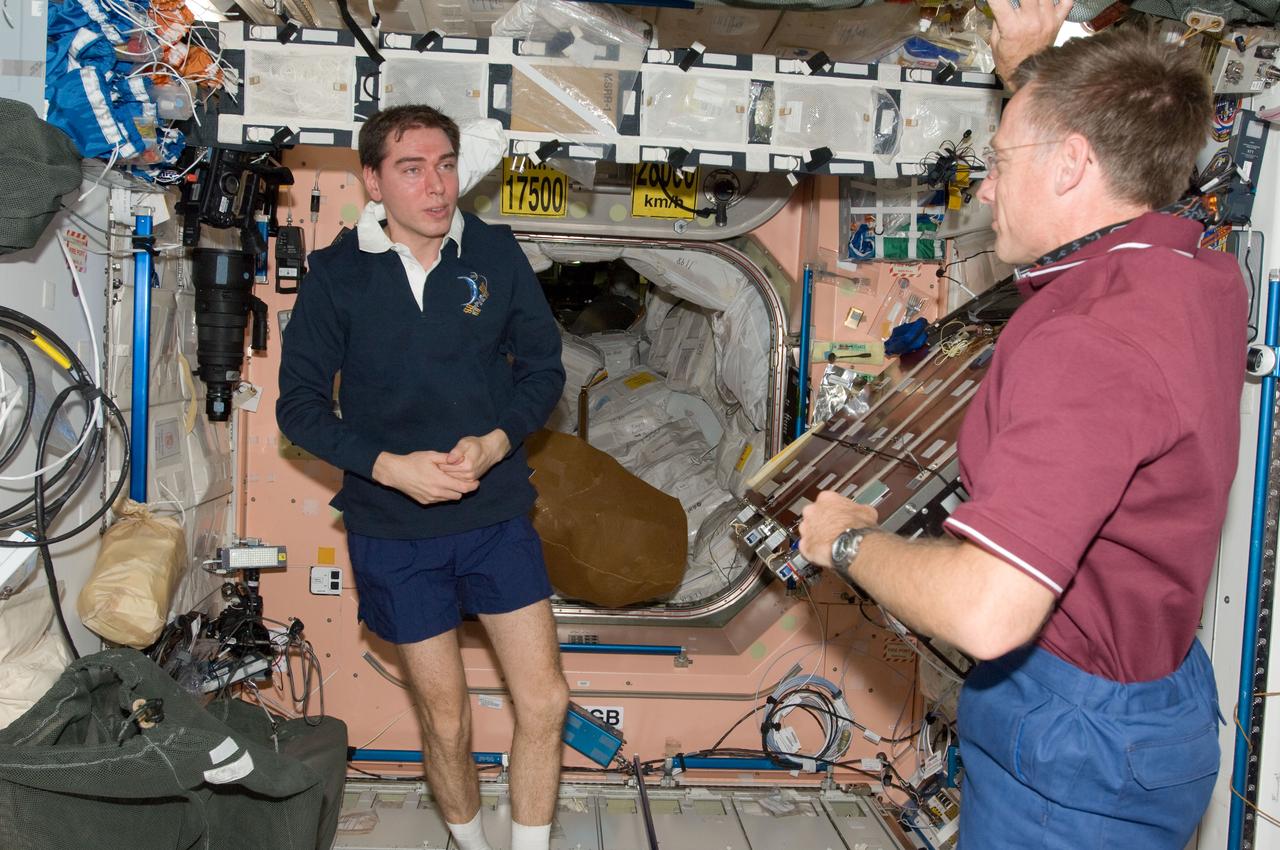
S135-E-009499 (18 July 2011) --- Inside the International Space Station's Node 1 or Unity, NASA astronaut Chris Ferguson (right), STS-135 commander, talks with Russian cosmonaut Sergei Volkov, Expedition 28 flight engineer, on the final day of joint activities involving the station and space shuttle Atlantis crews. Photo credit: NASA
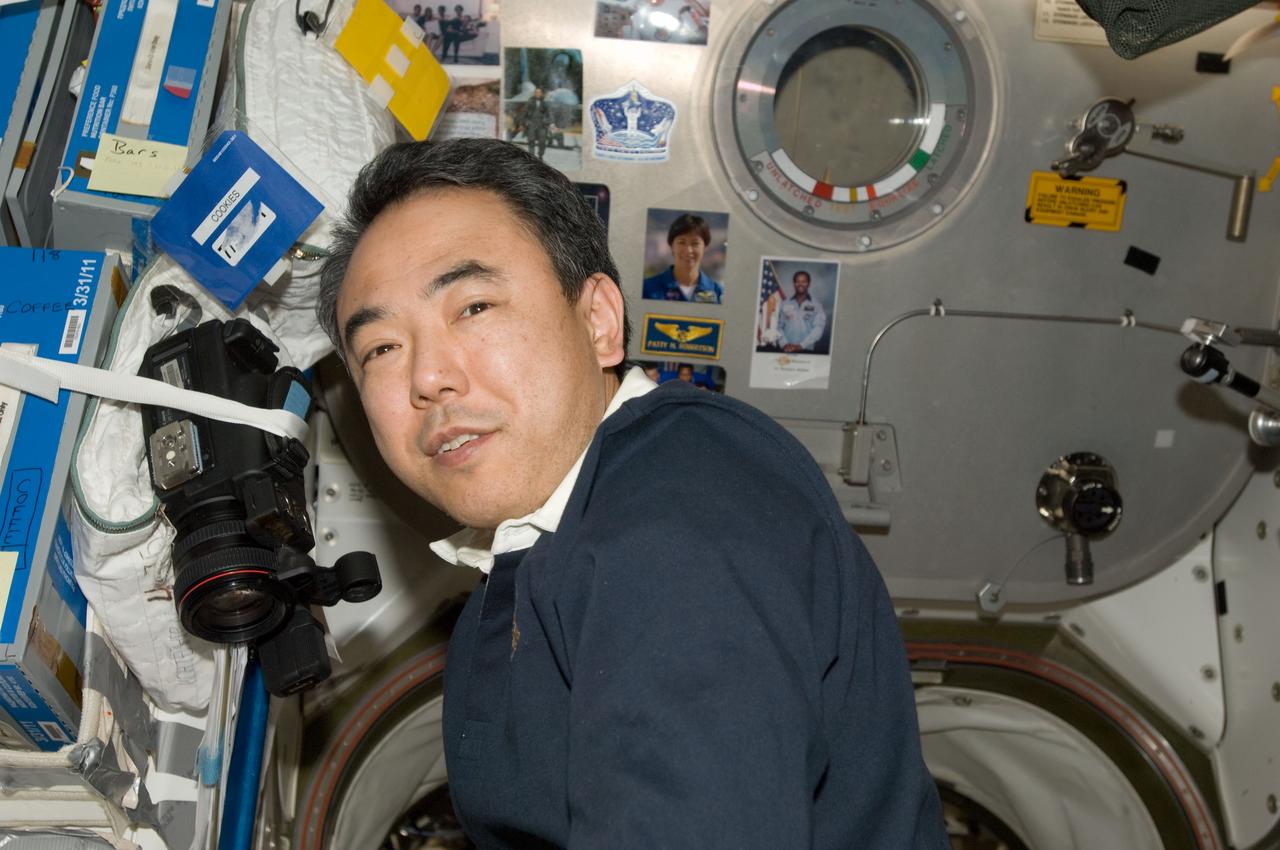
S135-E-009501 (18 July 2011) --- Japan Aerospace Exploration Agency astronaut Satoshi Furukawa is pictured inside the International Space Station's Node 1 or Unity. Furukawa and his five Expedition 28 crewmates were preparing to bid farewell to the STS-135 crew members, who have been visiting the station, carrying out a very busy agenda of work for over a week. Photo credit: NASA
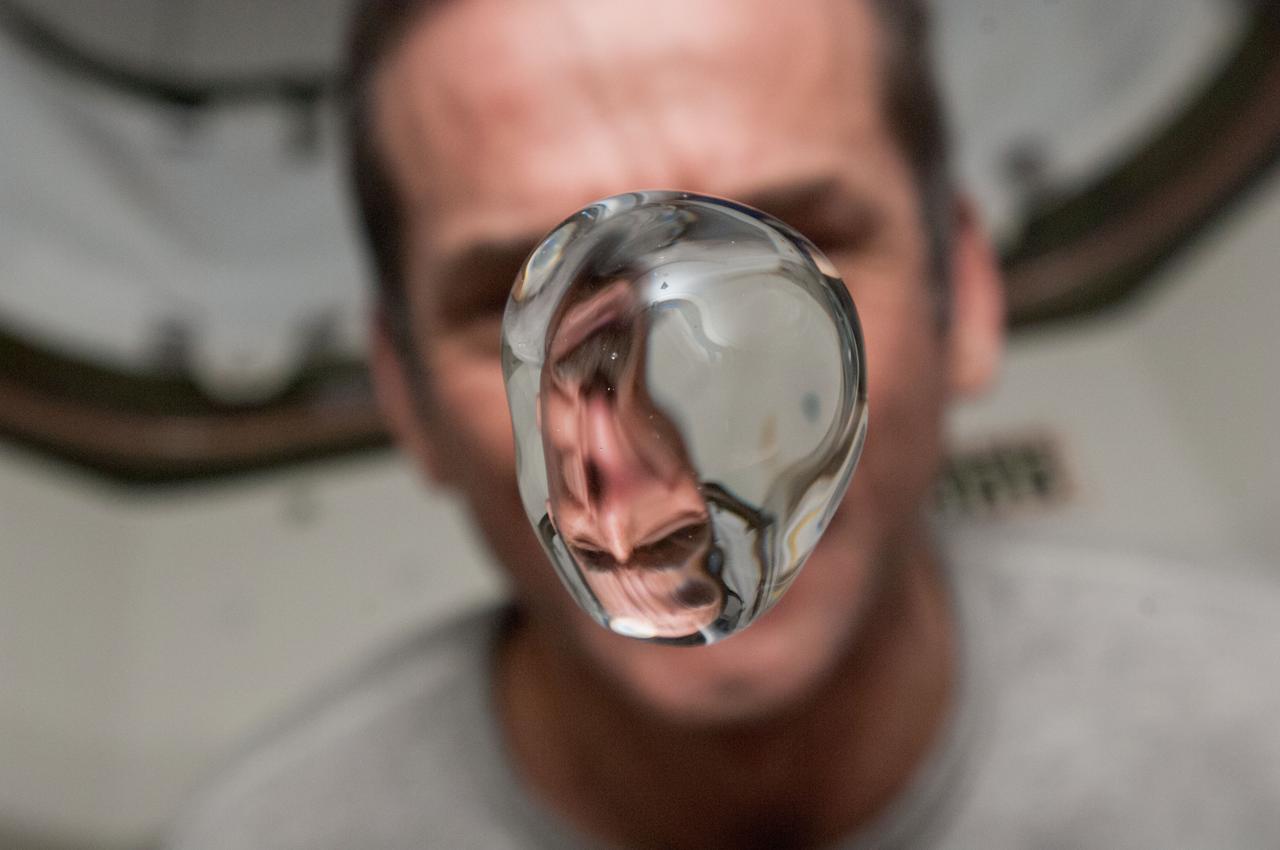
View of Canadian Space Agency (CSA) Chris Hadfield,Expedition 34 Flight Engineer (FE),watching a water bubble float freely,showing his image refracted,in the Node 1. Photo was taken during Expedition 34.
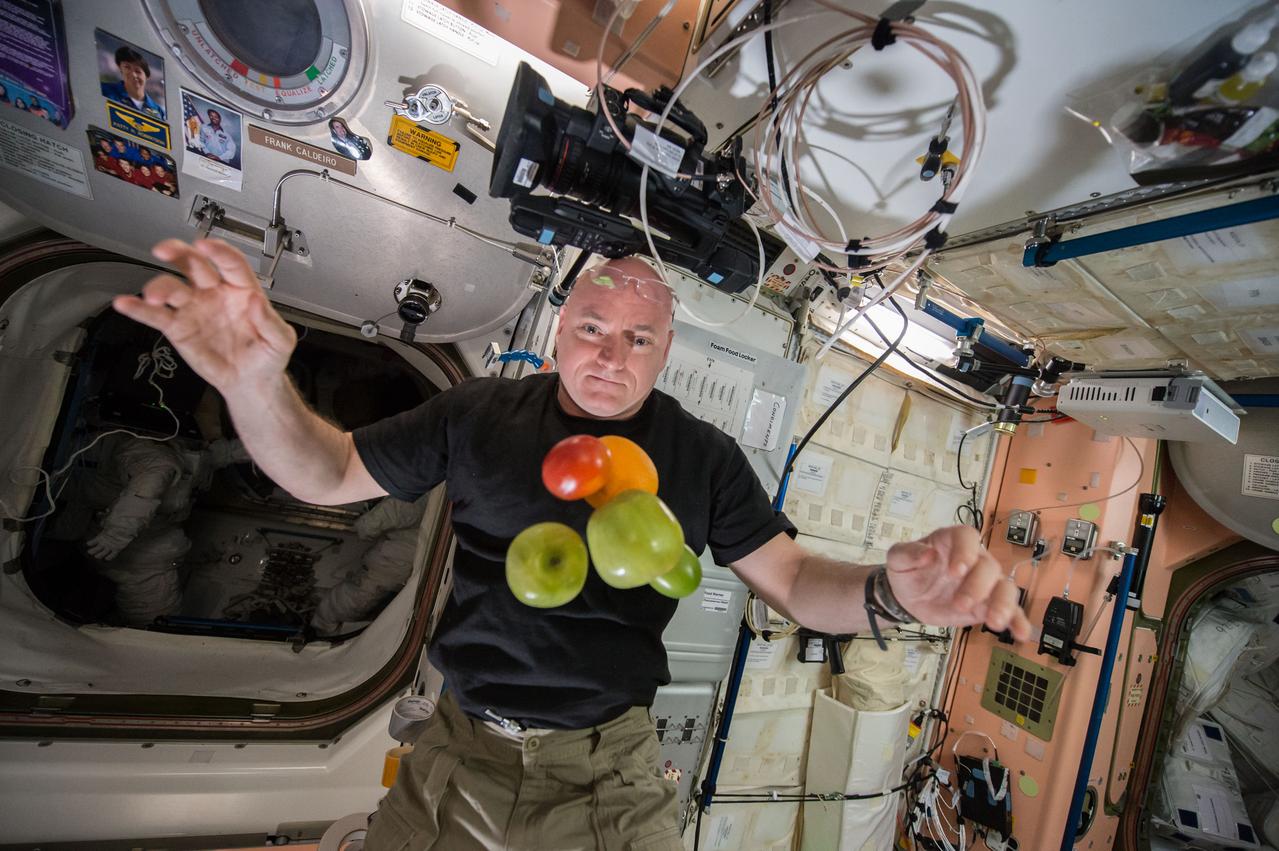
ISS044E007995 (07/05/2015) ---NASA astronaut Scott Kelly in the Unity (Node 1) module enjoying some fresh fruit and vegetables brought up to the International Space Station by the recent Russian Progress 60 spacecraft.
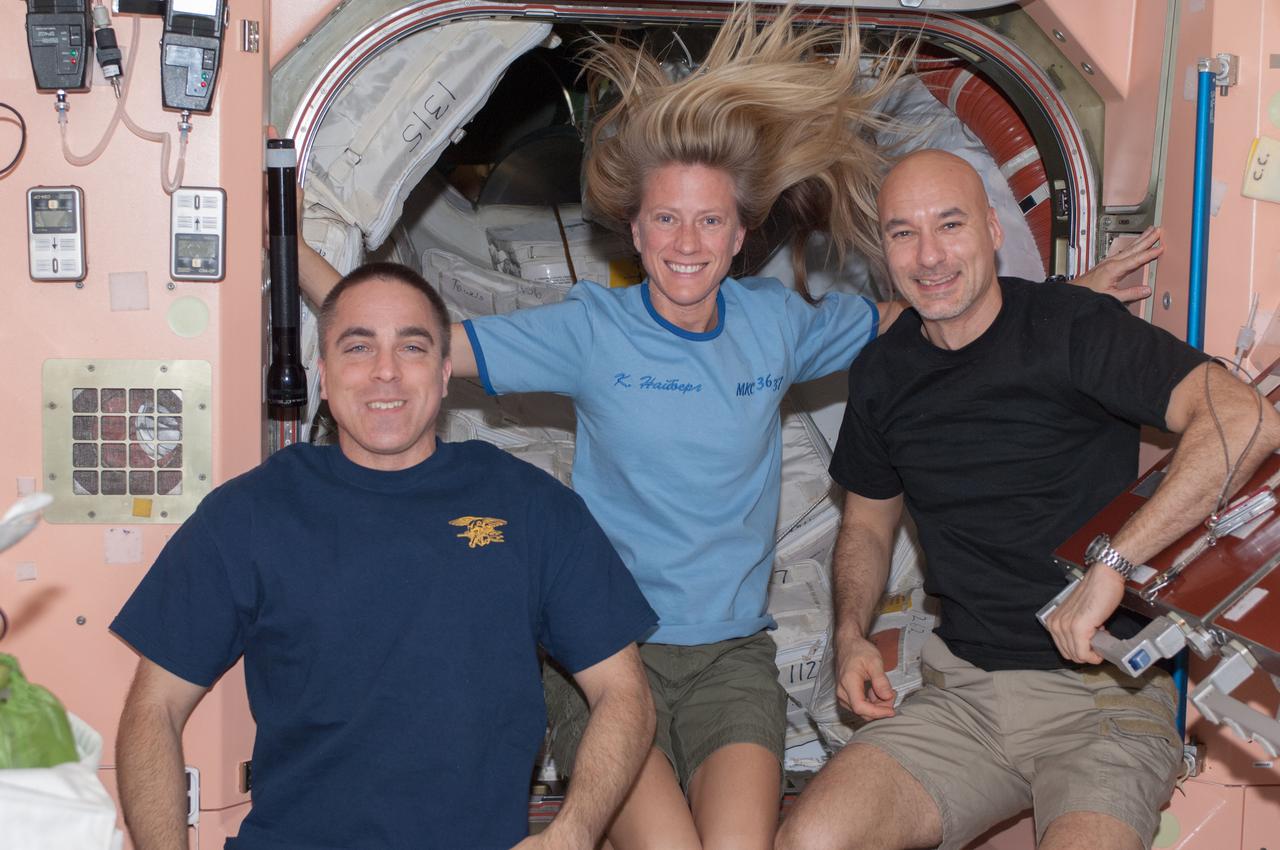
View of Astronauts Chris Cassidy (left),Karen Nyberg (center) and European Space Agency astronaut Luca Parmitano,all Expedition 36 flight engineers,in the Node 1 module.
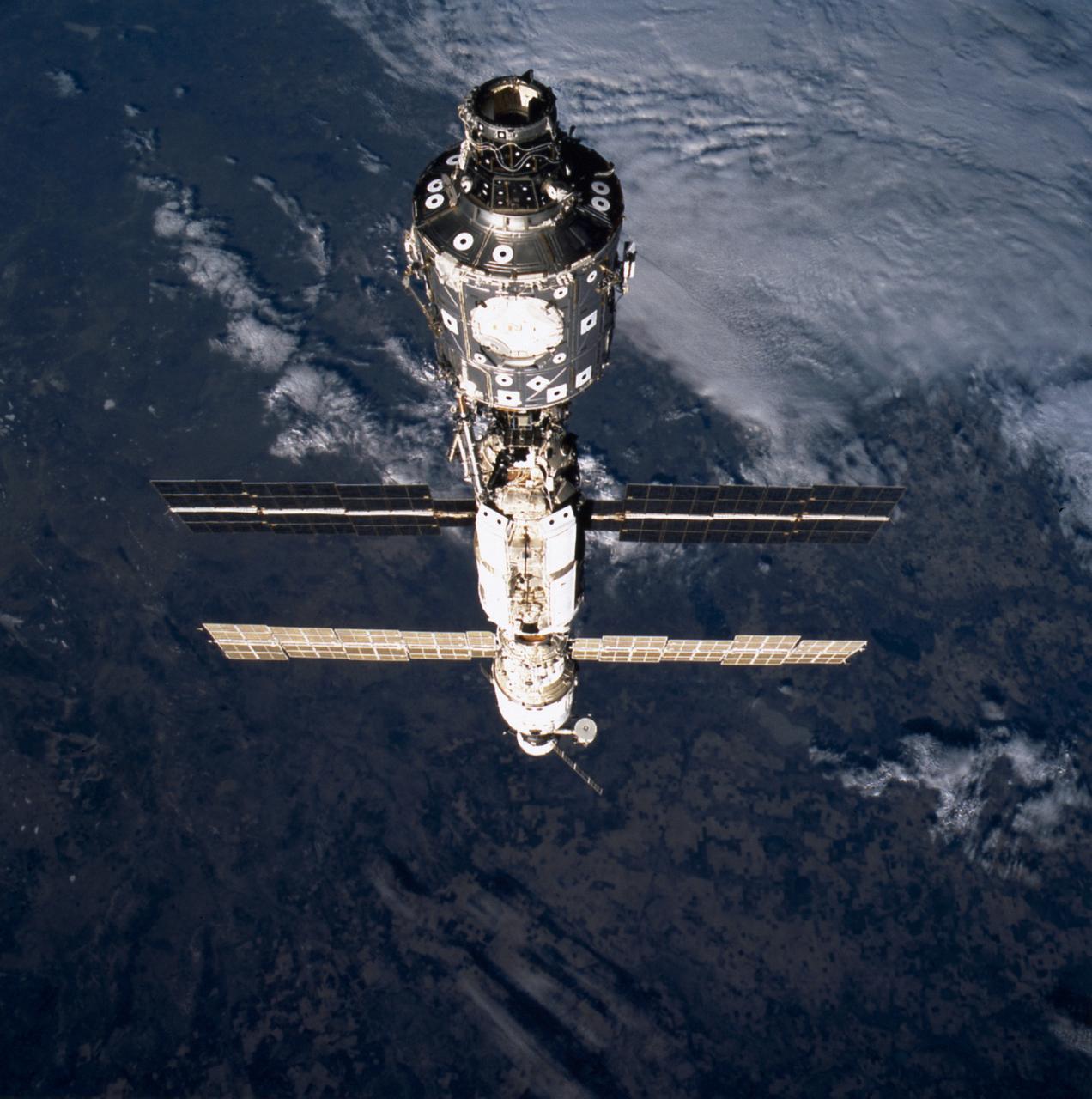
This image of the International Space Station (ISS) was taken during the STS-106 mission. The ISS component nearest the camera is the U.S. built Node 1 or Unity module, which cornected with the Russian built Functional Cargo Block (FGB) or Zarya. The FGB was linked with the Service Module or Zvezda. On the far end is the Russian Progress supply ship.
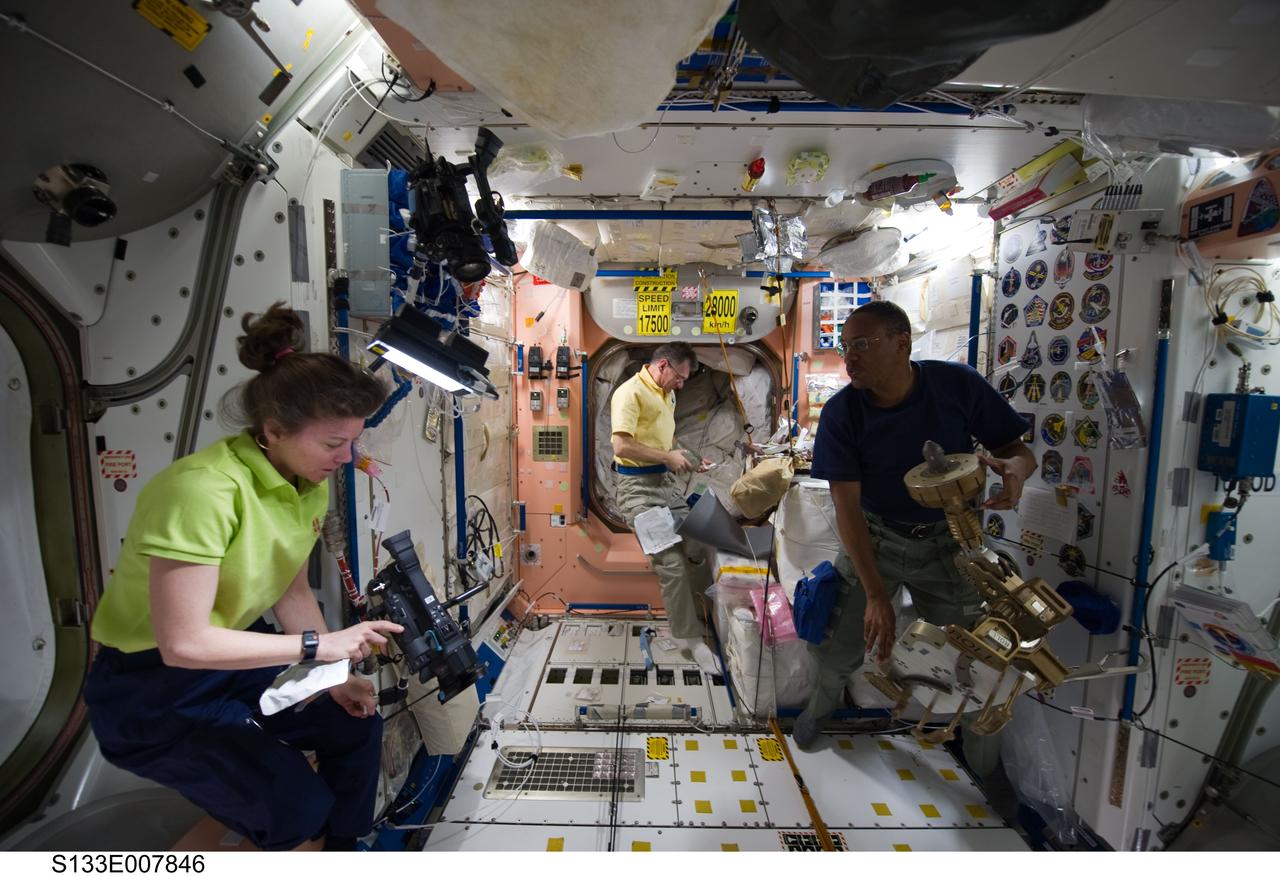
S133-E-007846 (1 March 2011) --- NASA astronaut Cady Coleman and European Space Agency astronaut Paolo Nespoli (background), both Expedition 26 flight engineers; along with NASA astronaut Alvin Drew, STS-133 mission specialist, work in the Unity node of the International Space Station while space shuttle Discovery remains docked with the station. Photo credit: NASA or National Aeronautics and Space Administration
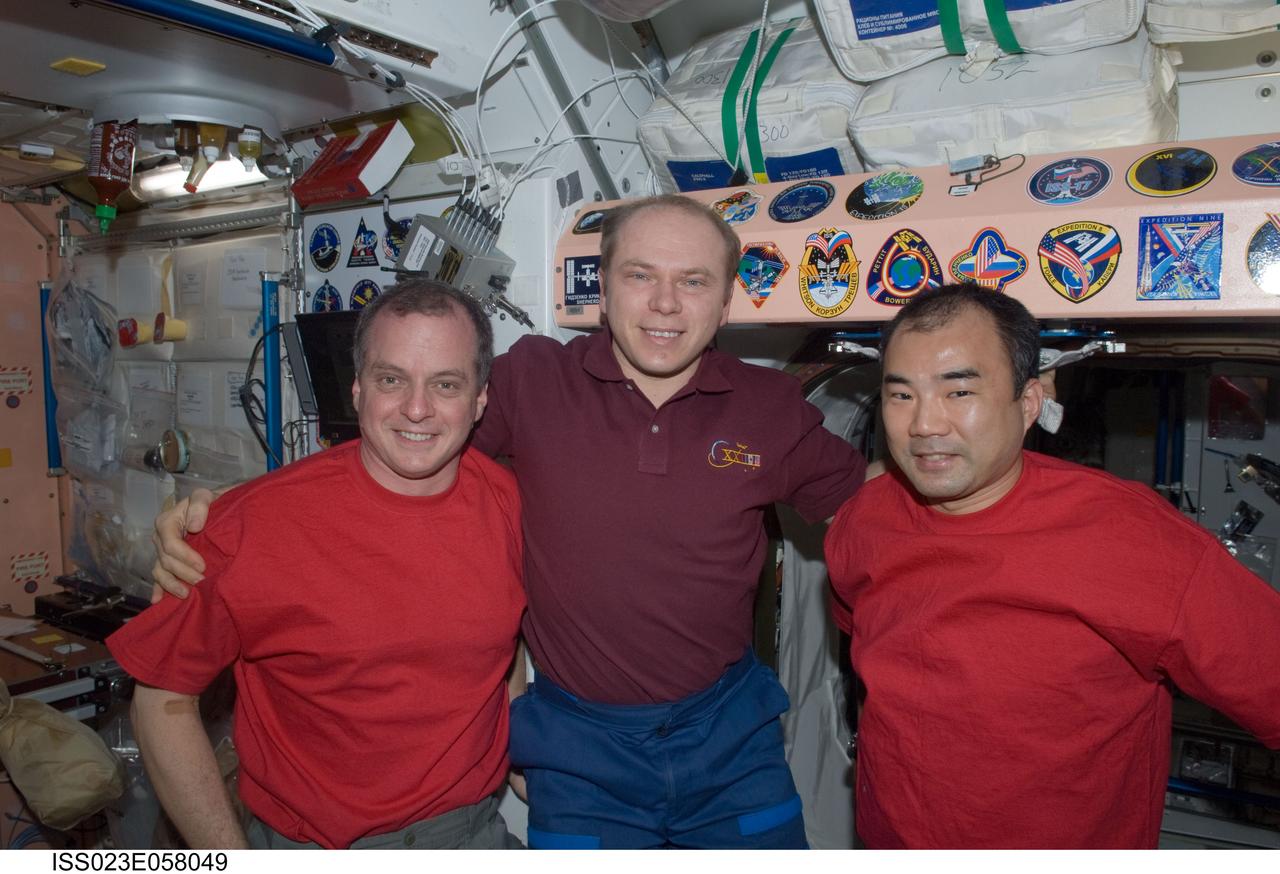
ISS023-E-058049 (1 June 2010) --- Russian cosmonaut Oleg Kotov (center), Expedition 23 commander; along with NASA astronaut T.J. Creamer (left) and Japan Aerospace Exploration Agency (JAXA) astronaut Soichi Noguchi, both flight engineers, pose for a photo after adding the Expedition 23 patch to the Unity node?s growing collection of insignias representing crews who have lived and worked on the International Space Station.
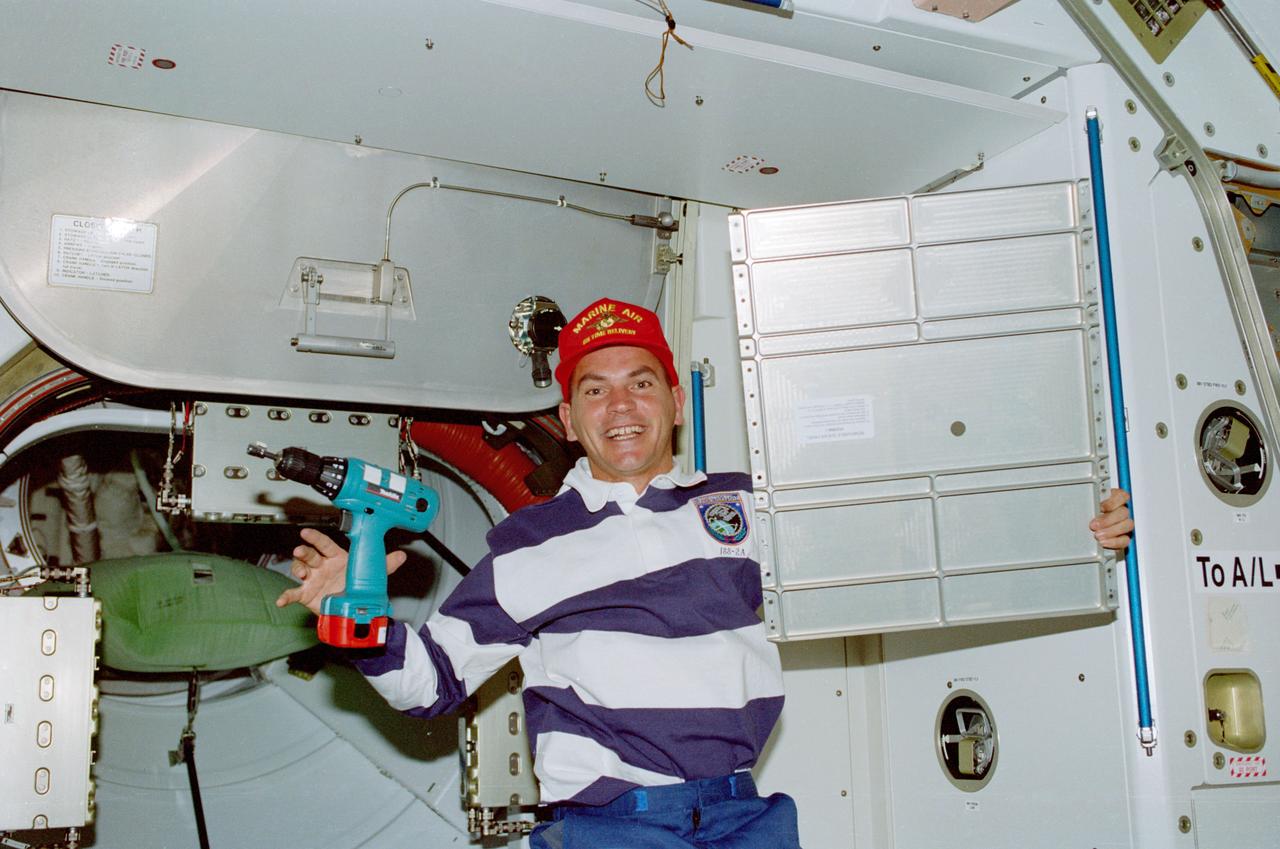
STS088-359-003 (4-15 Dec. 1998) --- Astronaut Frederick W. ?Rick? Sturckow, pilot, holds up a panel while putting final touches on the interior of Node 1 or Unity. Sturckow, who had been working with a battery-powered tool, was joined by other crew members in preparing the module for its International Space Station (ISS) duty.
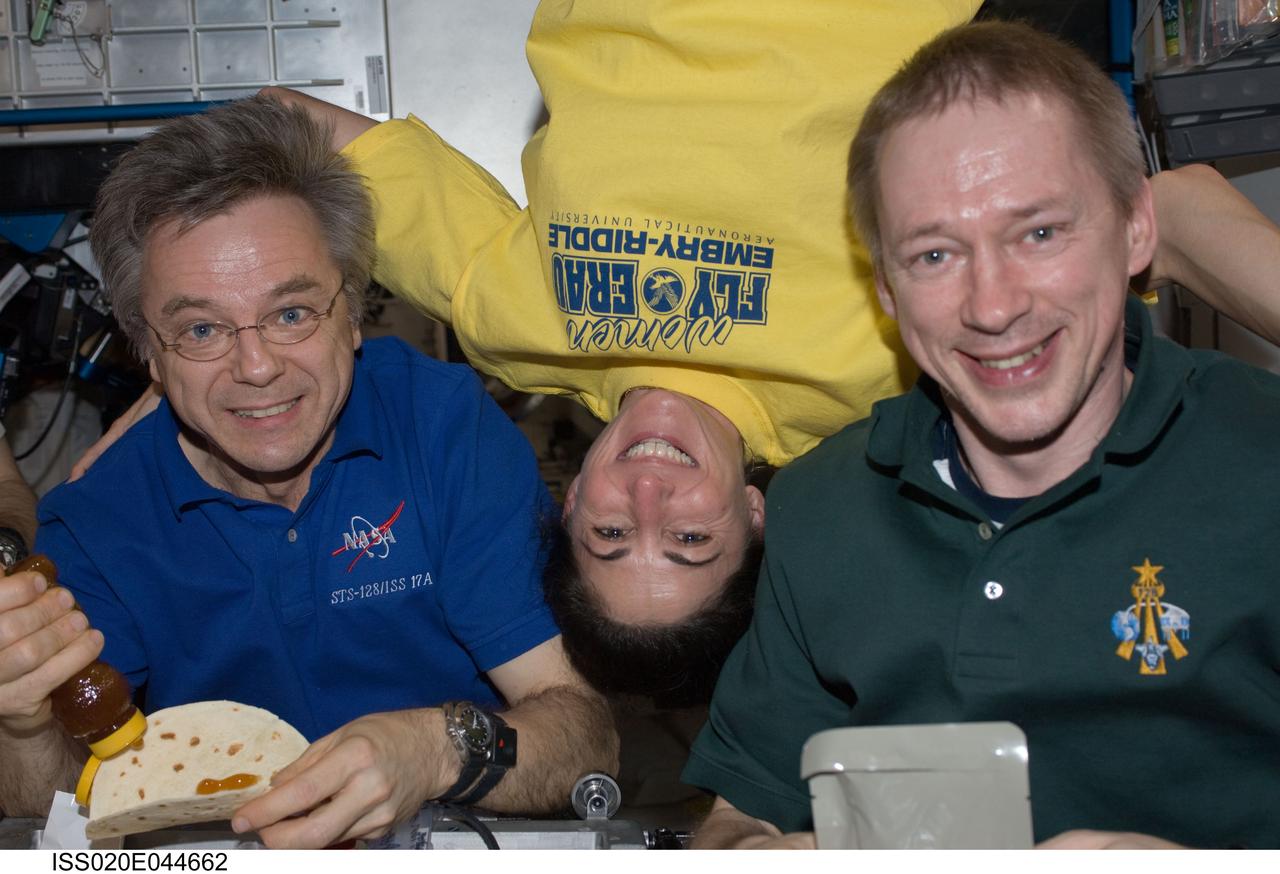
ISS020-E-044662 (1 Oct. 2009) --- Canadian Space Agency astronaut Robert Thirsk (left), NASA astronaut Nicole Stott and European Space Agency astronaut Frank De Winne, all Expedition 20 flight engineers, pose for a photo near the galley in the Unity node of the International Space Station.
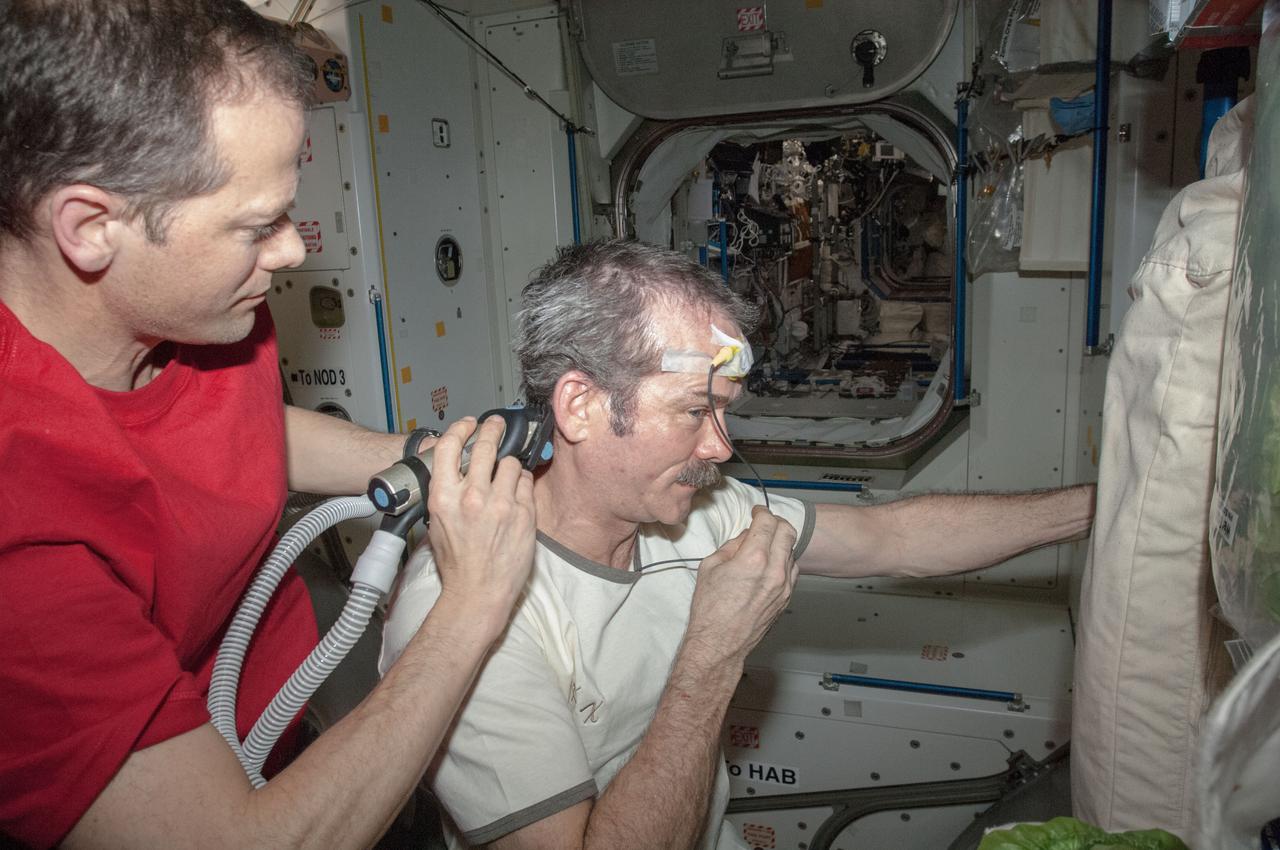
Expedition 35 flight engineer Tom Marshburn gives commander Chris Hadfield a haircut (using clippers attached to a vacuum hose) in the Unity Node 1. Hadfield (a Canadian Space Agency astronaut) has a temperature sensor taped to his forehead.

ISS002-E-5508 (7 April 2001) --- Cosmonaut Yury V. Usachev, Expedition Two commander, wears a harness while conducting resistance exercises in the Unity Node 1 on the International Space Station (ISS). The image was recorded with a digital still camera.
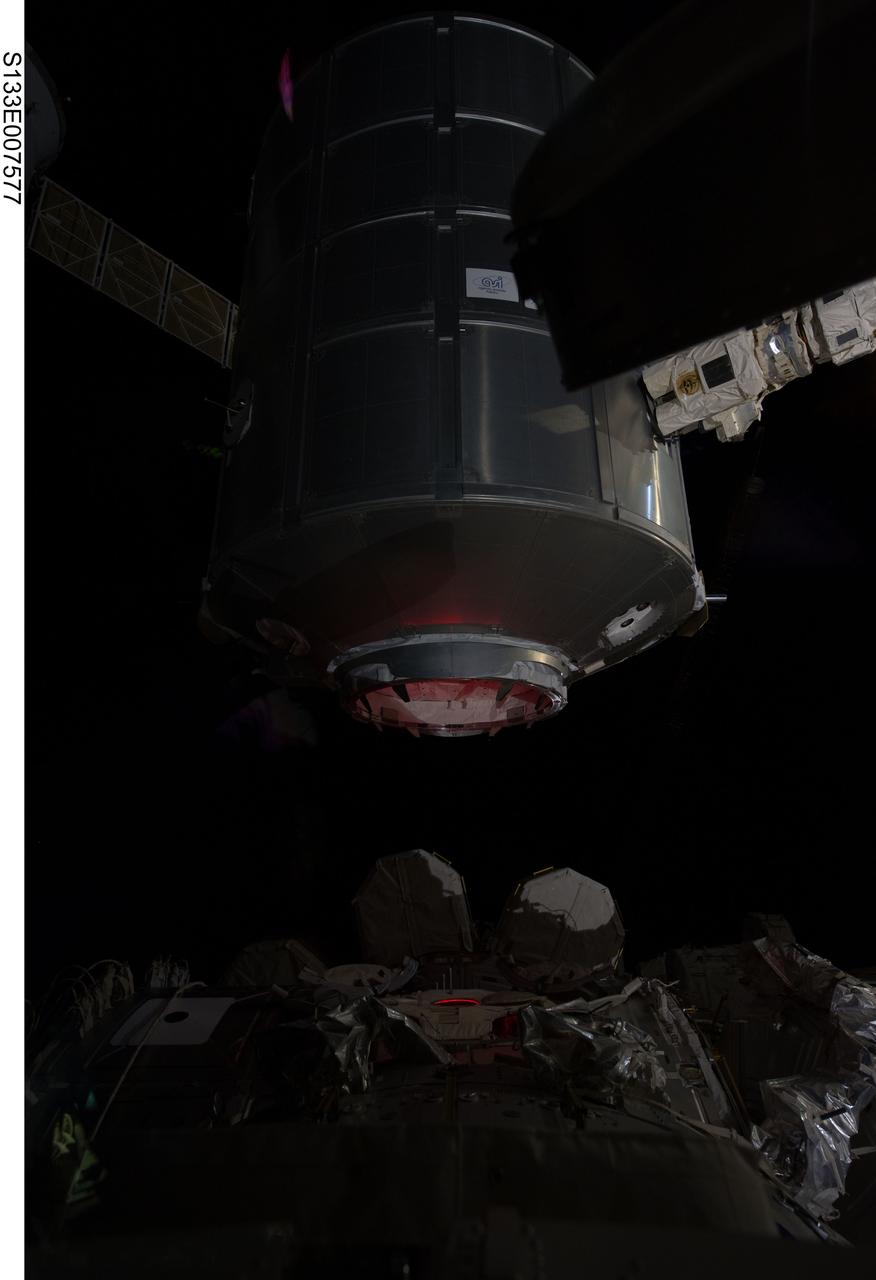
S133-E-007577 (1 March 2011) --- In the grasp of the International Space Station’s Canadarm2, the Italian-built Permanent Multipurpose Module (PMM) is transferred from space shuttle Discovery’s payload bay to be permanently attached to the Earth-facing port of the station’s Unity node. Photo credit: NASA or National Aeronautics and Space Administration
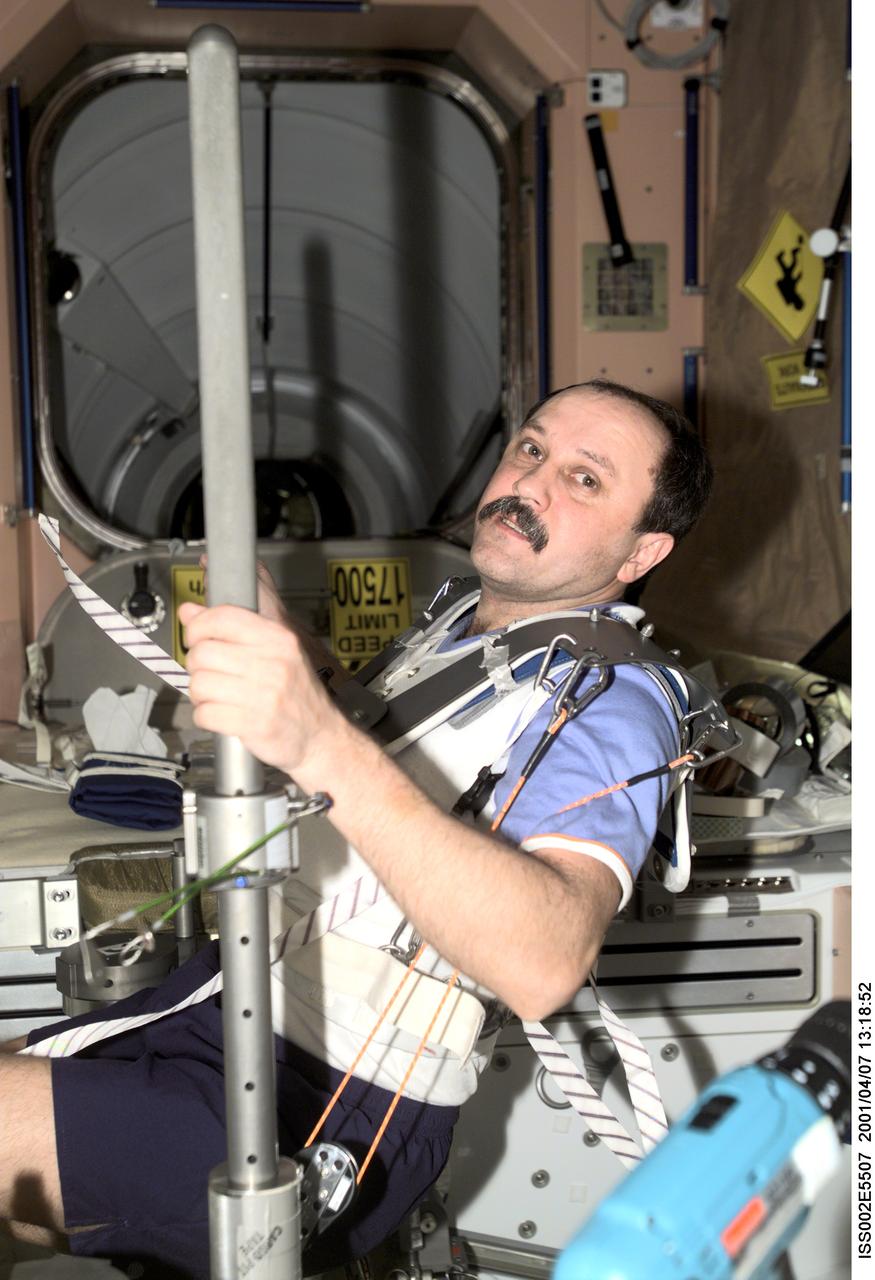
ISS002-E-5507 (07 April 2001) --- Cosmonaut Yury V. Usachev, Expedition Two mission commander, wears a harness while conducting resistance exercises in the Node 1 / Unity module of the International Space Station (ISS). This image was recorded with a digital still camera.
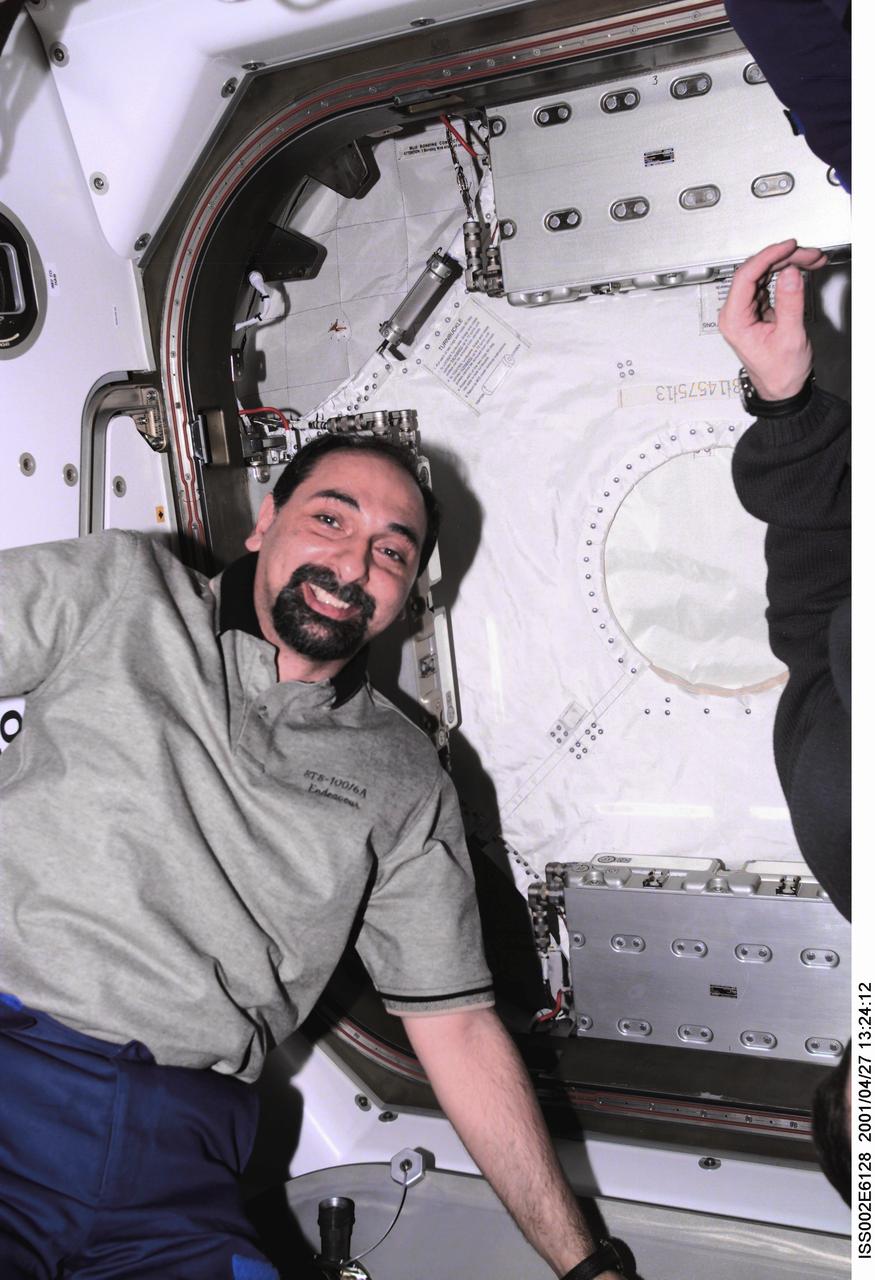
ISS002-E-6128 (27 April 2001) --- Umberto Guidoni of the European Space Agency (ESA), STS-100 mission specialist, poses for a photograph in Unity Node 1 as the hatch to the Multipurpose Logistics Module (MPLM) Raphaello is being closed near the end of the STS-100 mission. The image was taken with a digital still camera.
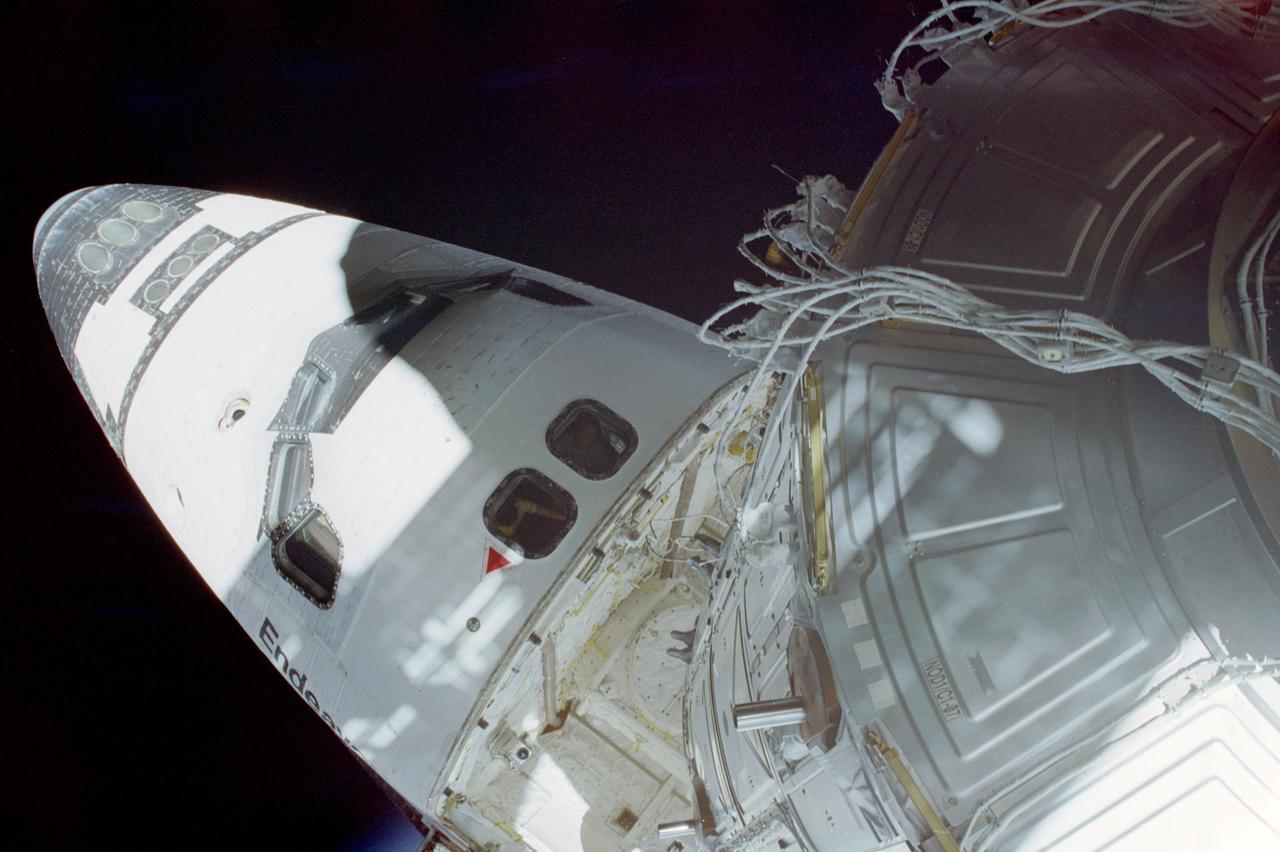
STS088-344-016 (4-15 Dec. 1998) --- This scene photographed from the top of Node 1 shows the nose of the Space Shuttle Endeavour, during one of three Extravehicular Activities (EVA) by astronaut Jerry L. Ross and James H. Newman (both out of frame). The EVA was part of the overall effort to ready for release the recently-joined Russian-built Zarya Module (FGB) and the United States-built Unity (Node 1) Module.
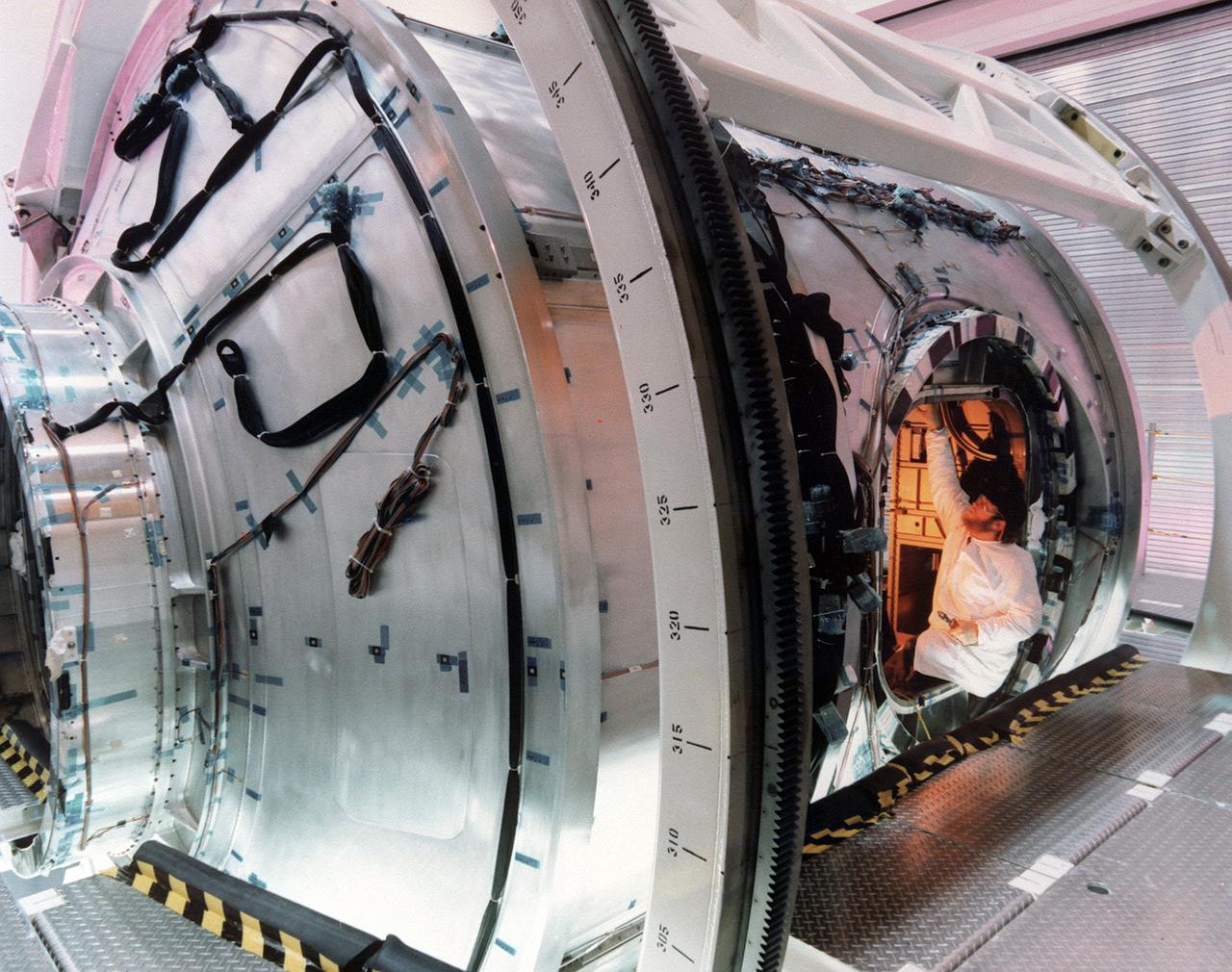
This photograph, taken by the Boeing Company,shows Boeing technicians preparing to install one of six hatches or doors to the Node 1 (also called Unity), the first U.S. Module for the International Space Station (ISS). The Node 1, or Unity, serves as a cornecting passageway to Space Station modules and was manufactured by the Boeing Company at the Marshall Space Flight Center from 1994 to 1997. The U.S. built Unity module was launched aboard the orbiter Endeavour (STS-88 mission) on December 4, 1998 and connected to the Zarya, the Russian-built Functional Energy Block (FGB). The Zarya was launched on a Russian proton rocket prior to the launch of the Unity. The ISS is a multidisciplinary laboratory, technology test bed, and observatory that will provide unprecedented undertakings in scientific, technological, and international experimentation.
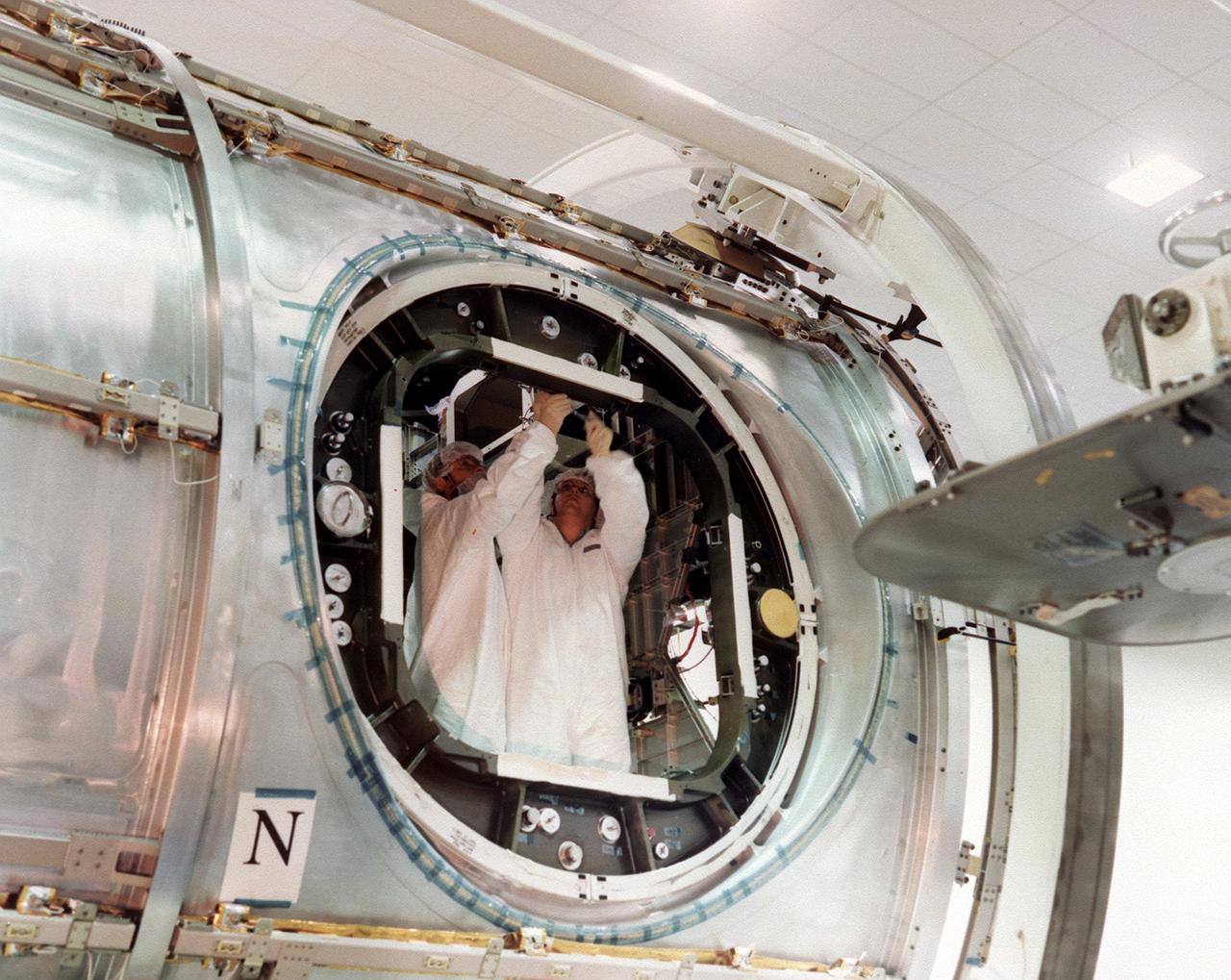
This photograph, taken by the Boeing Company, shows Boeing technicians preparing to install one of six hatches or doors to the Node 1 (also called Unity), the first U.S. Module for the International Space Station (ISS). The Node 1, or Unity, serves as a cornecting passageway to Space Station modules and was manufactured by the Boeing Company at the Marshall Space Flight Center from 1994 to 1997. The U.S. built Unity module was launched aboard the orbiter Endeavour (STS-88 mission) on December 4, 1998 and connected to the Zarya, the Russian-built Functional Energy Block (FGB). The Zarya was launched on a Russian proton rocket prior to the launch of the Unity. The ISS is a multidisciplinary laboratory, technology test bed, and observatory that will provide unprecedented undertakings in scientific, technological, and international experimentation.
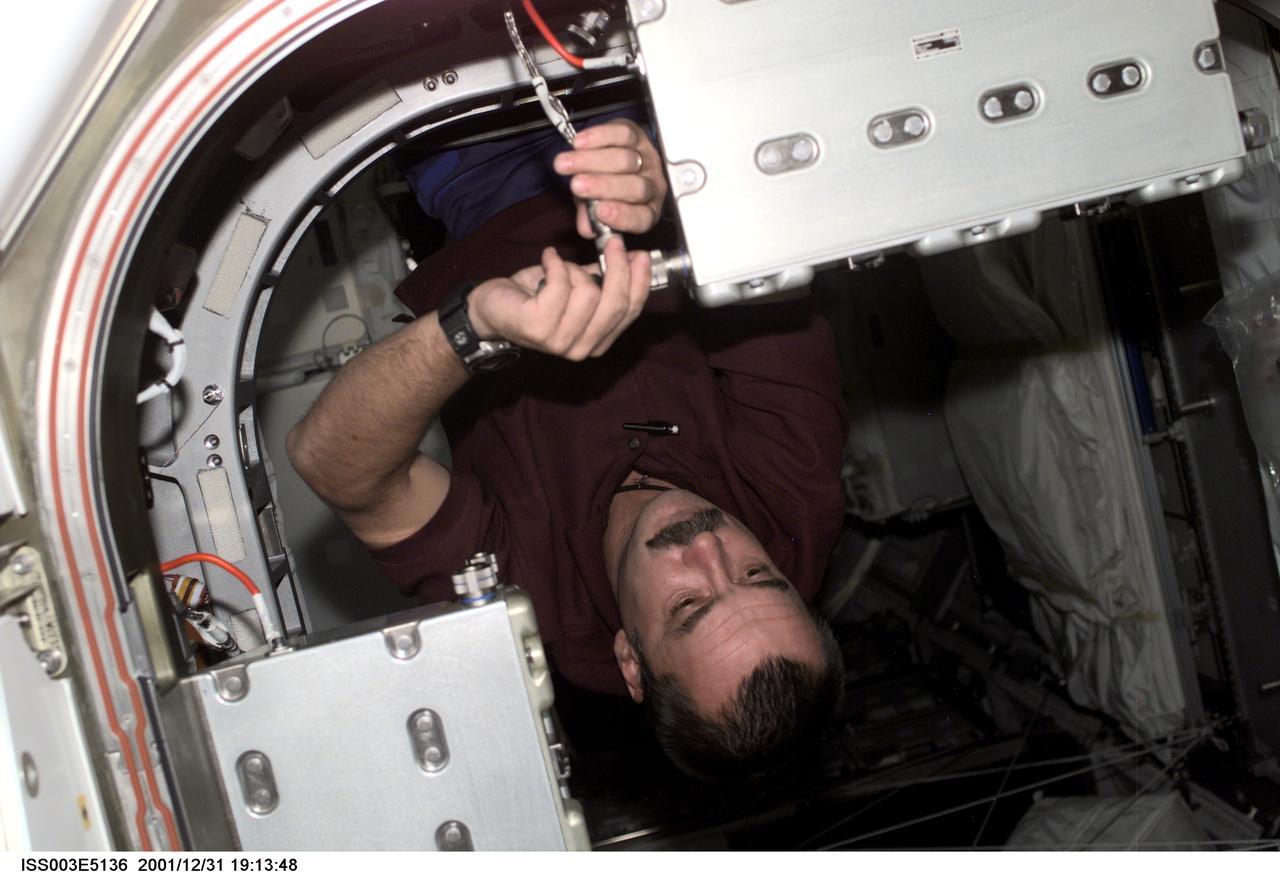
ISS003-E-5136 (August 2001) --- Mikhail Tyurin of Rosaviakosmos, Expedition Three flight engineer, secures a connection on a Controller Power Assembly (CPA) in a hatchway on Unity Node 1. This image was taken with a digital still camera.
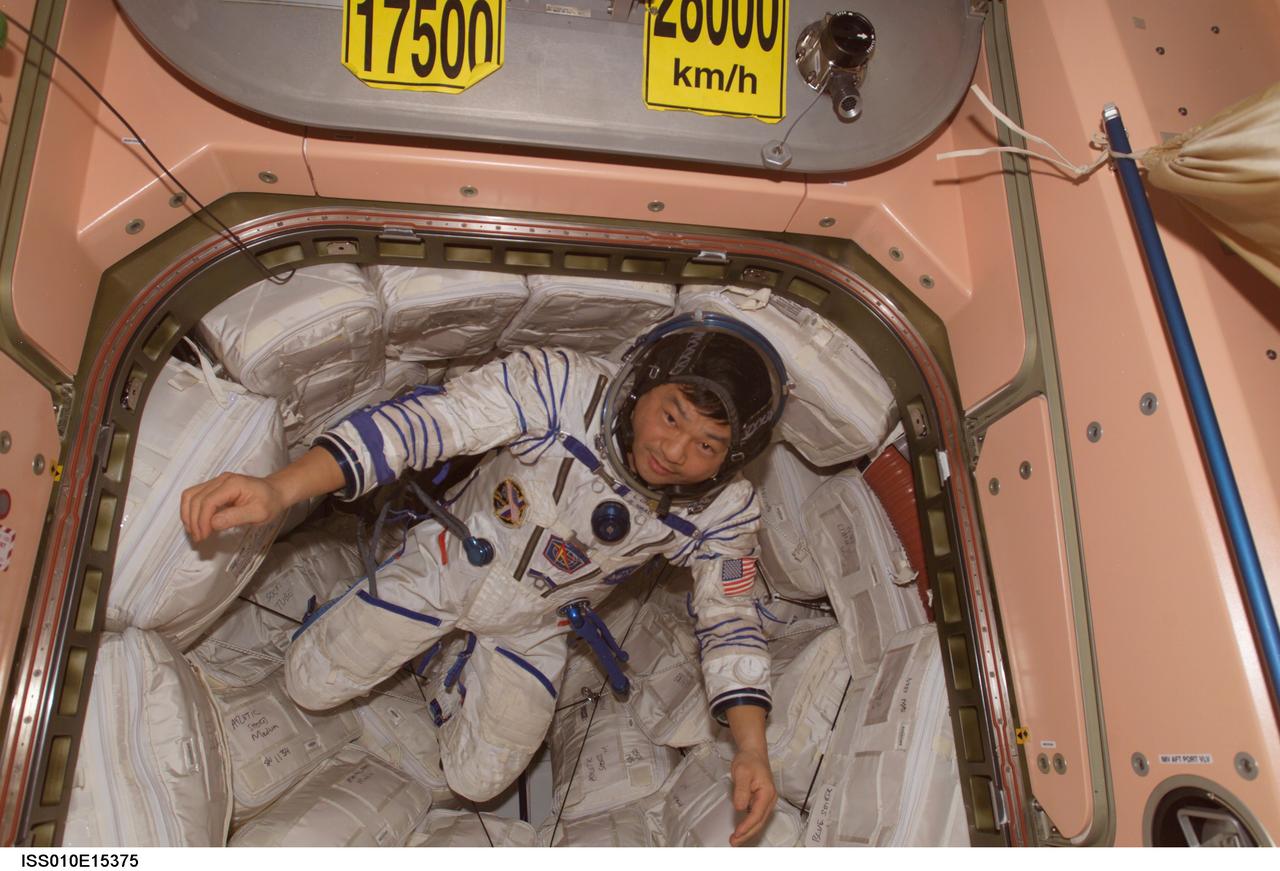
ISS010-E-15375 (1 February 2005) --- Wearing a Russian Sokol suit, astronaut Leroy Chiao, Expedition 10 commander and NASA ISS science officer, floats in a hatch in the Unity node of the International Space Station (ISS).
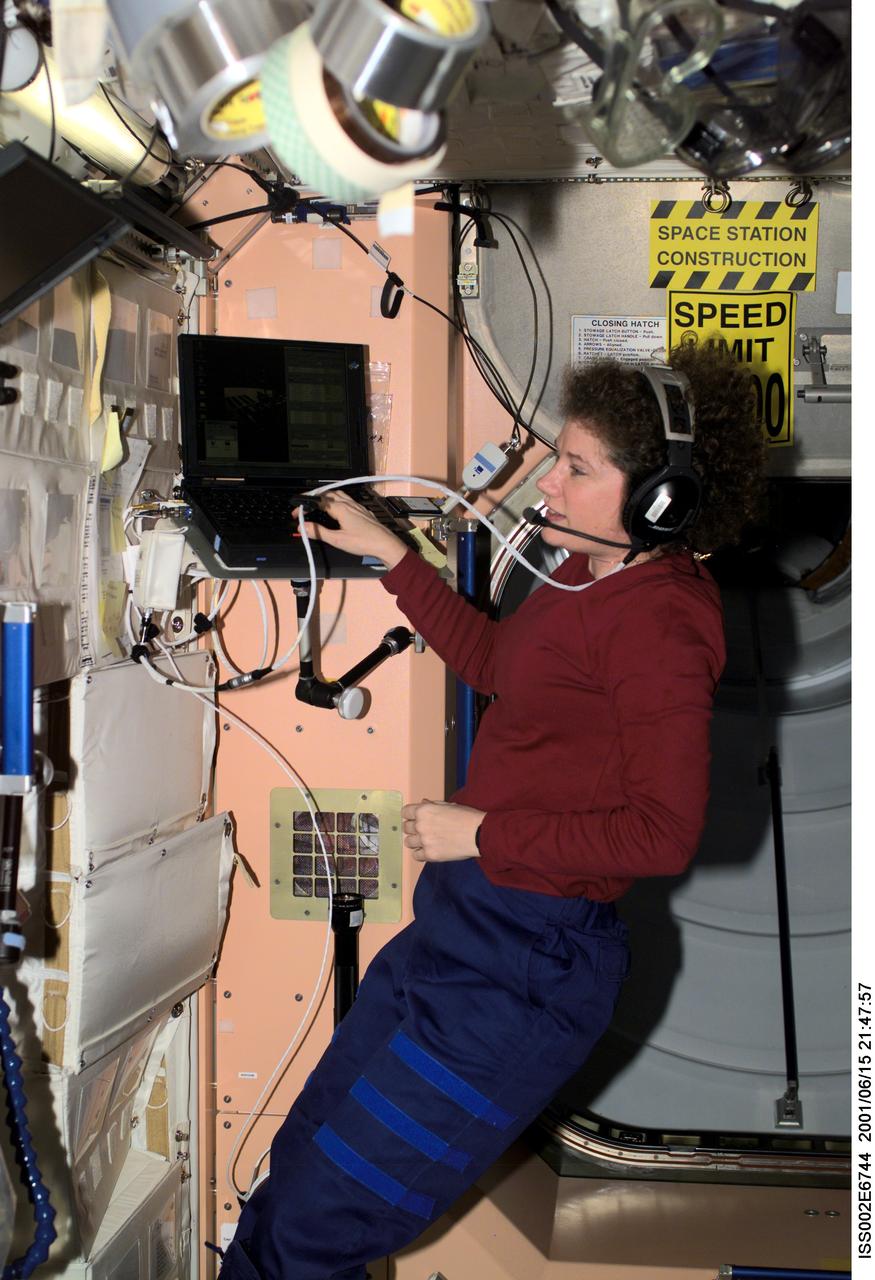
ISS002-E-6744 (15 June 2001) --- Susan J. Helms, Expedition Two flight engineer, talks with mission control while working on a laptop computer in Unity Node 1.
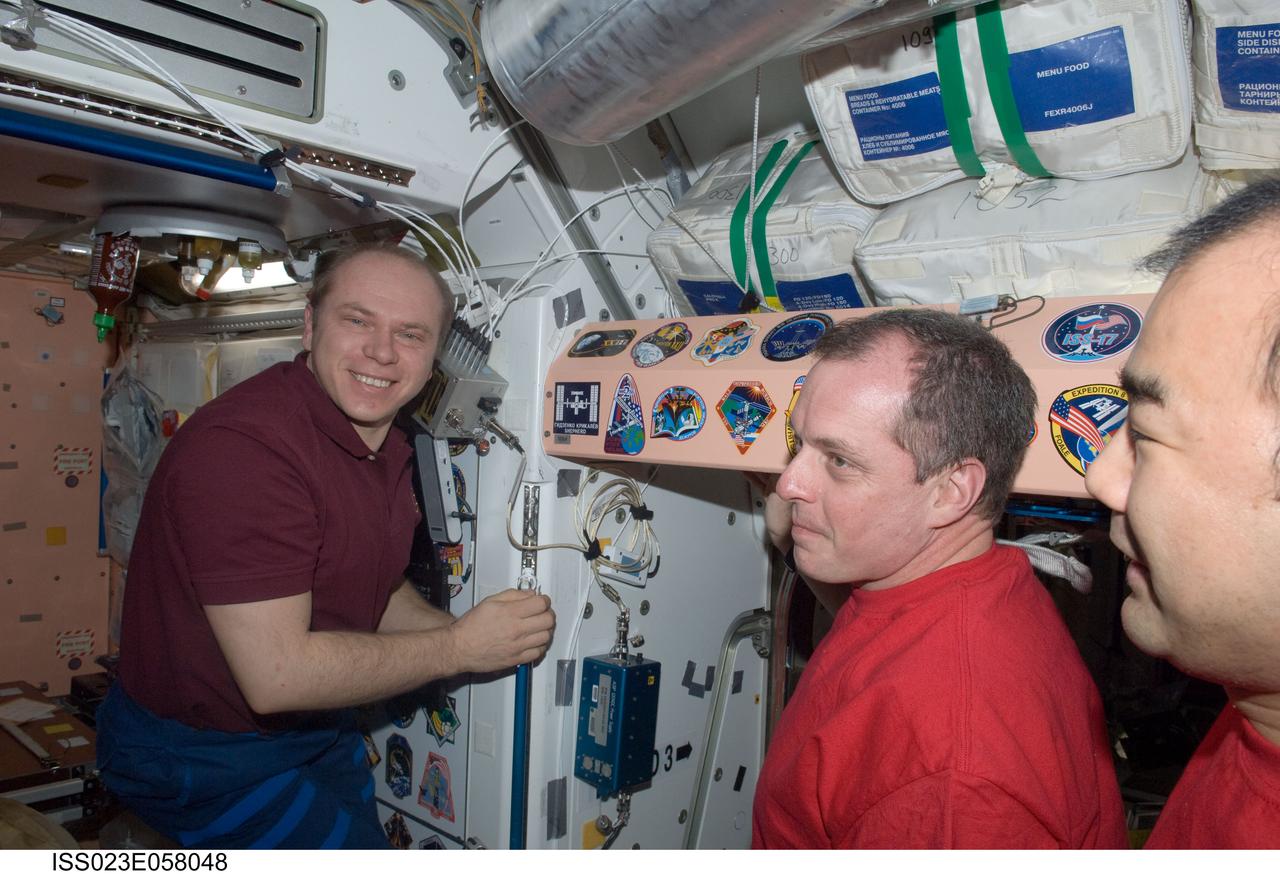
ISS023-E-058048 (1 June 2010) --- Russian cosmonaut Oleg Kotov (left), Expedition 23 commander; along with NASA astronaut T.J. Creamer (center) and Japan Aerospace Exploration Agency (JAXA) astronaut Soichi Noguchi, both flight engineers, are pictured after adding the Expedition 23 patch to the Unity node?s growing collection of insignias representing crews who have lived and worked on the International Space Station.

S133-E-007808 (1 March 2011) --- In the grasp of the International Space Station’s Canadarm2, the Italian-built Permanent Multipurpose Module (PMM) is transferred from space shuttle Discovery’s payload bay to be permanently attached to the Earth-facing port of the station’s Unity node. Earth’s horizon and the blackness of space provide the backdrop for the scene. Photo credit: NASA or National Aeronautics and Space Administration
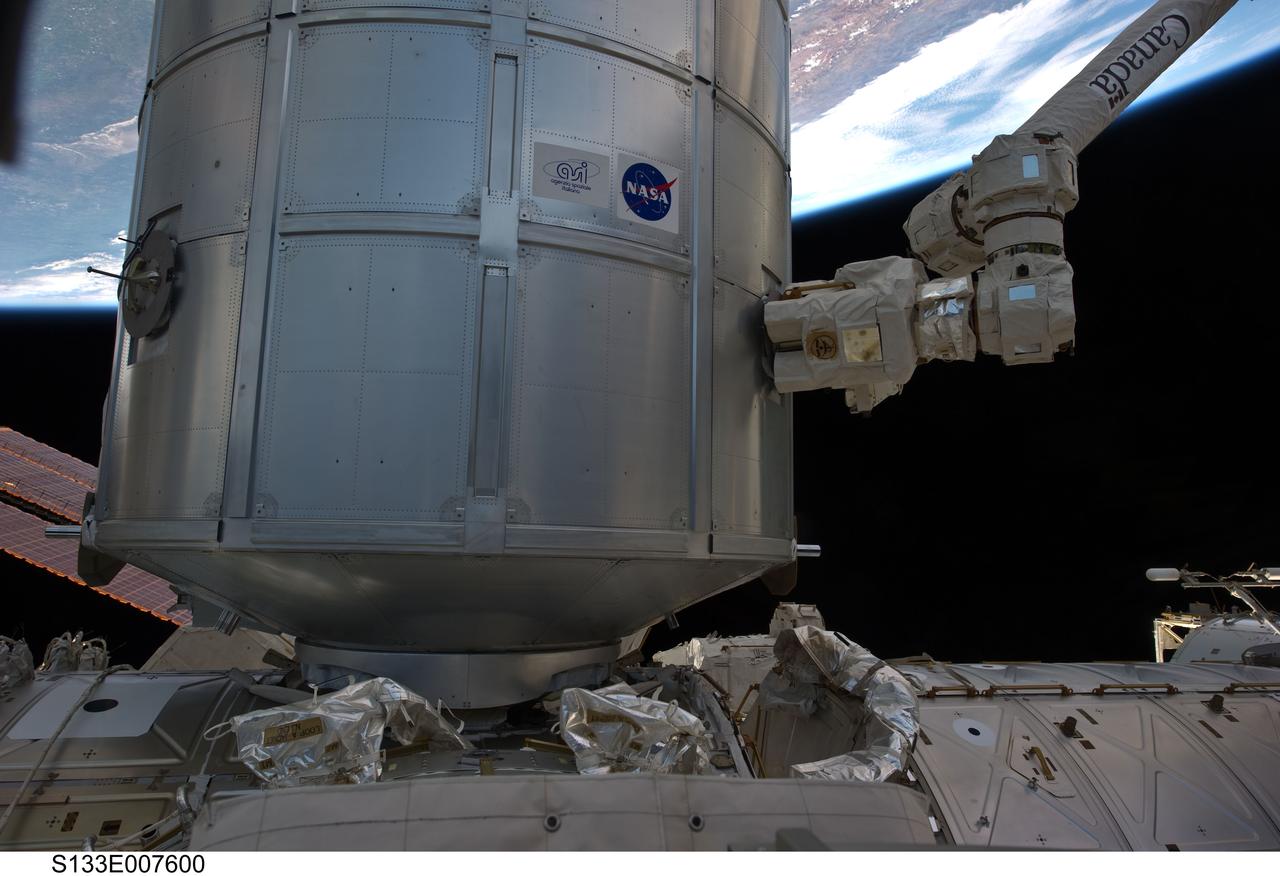
S133-E-007600 (1 March 2011) --- In the grasp of the International Space Station’s Canadarm2, the Italian-built Permanent Multipurpose Module (PMM) is transferred from space shuttle Discovery’s payload bay to be permanently attached to the Earth-facing port of the station’s Unity node. Earth’s horizon and the blackness of space provide the backdrop for the scene. Photo credit: NASA or National Aeronautics and Space Administration
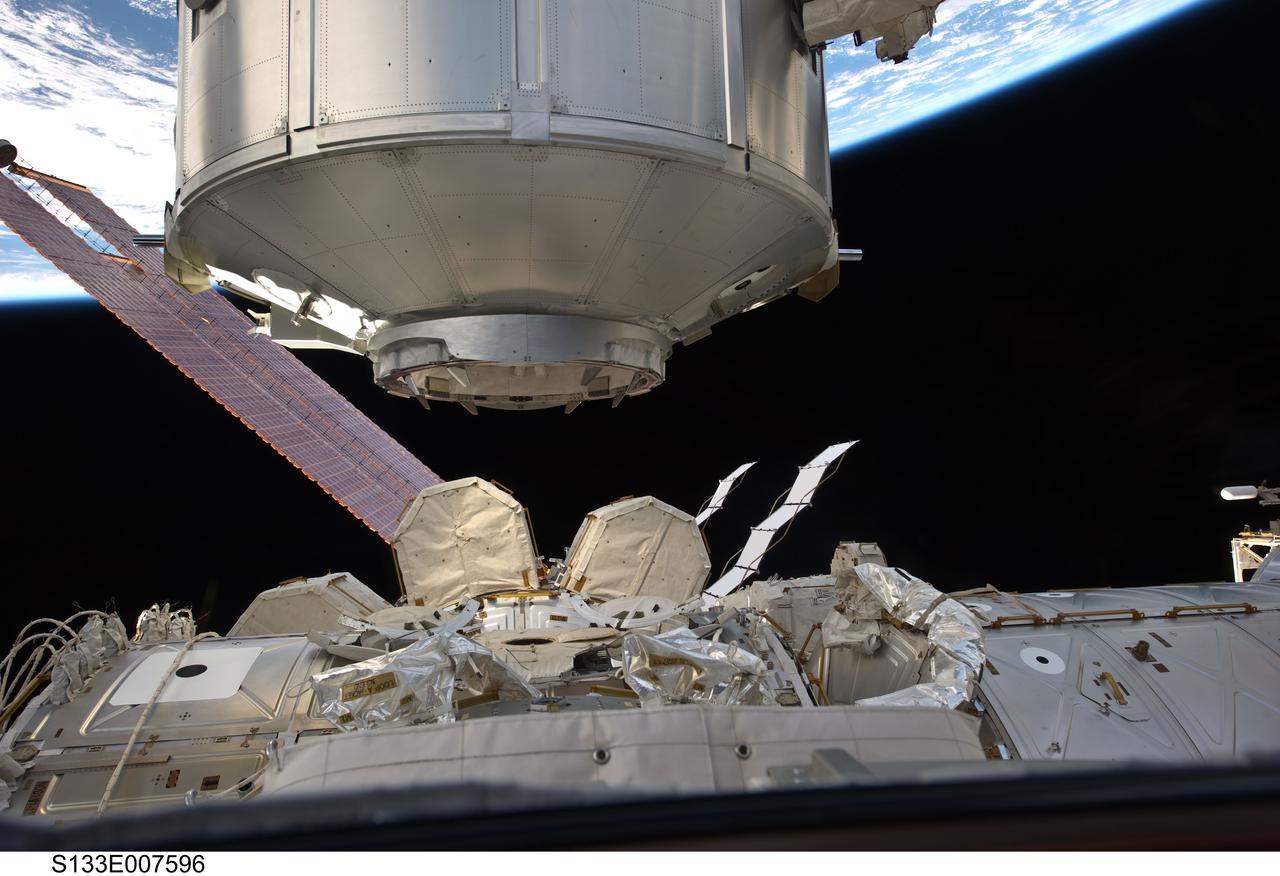
S133-E-007596 (1 March 2011) --- In the grasp of the International Space Station’s Canadarm2, the Italian-built Permanent Multipurpose Module (PMM) is transferred from space shuttle Discovery’s payload bay to be permanently attached to the Earth-facing port of the station’s Unity node. Earth’s horizon and the blackness of space provide the backdrop for the scene. Photo credit: NASA or National Aeronautics and Space Administration
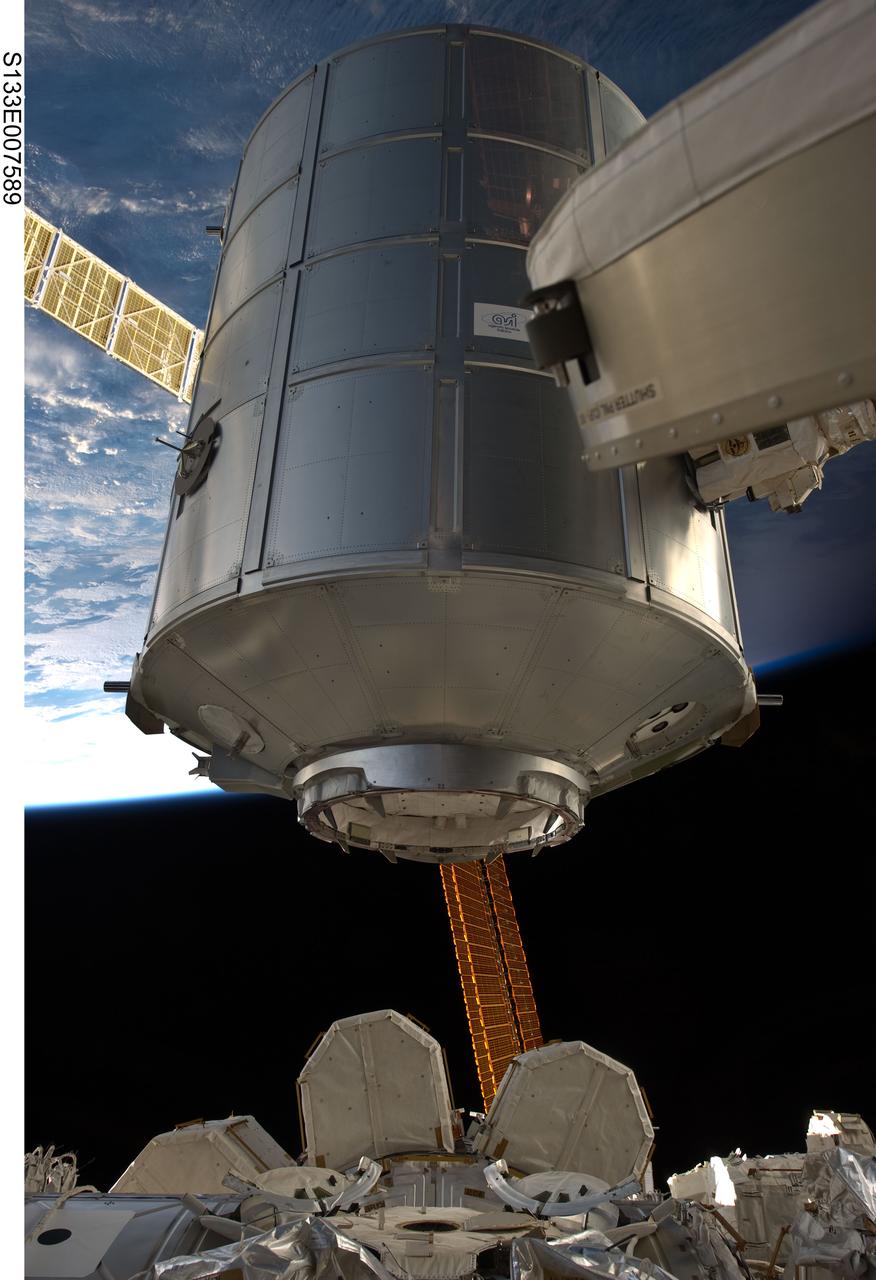
S133-E-007589 (1 March 2011) --- In the grasp of the International Space Station’s Canadarm2, the Italian-built Permanent Multipurpose Module (PMM) is transferred from space shuttle Discovery’s payload bay to be permanently attached to the Earth-facing port of the station’s Unity node. Earth’s horizon and the blackness of space provide the backdrop for the scene. Photo credit: NASA or National Aeronautics and Space Administration
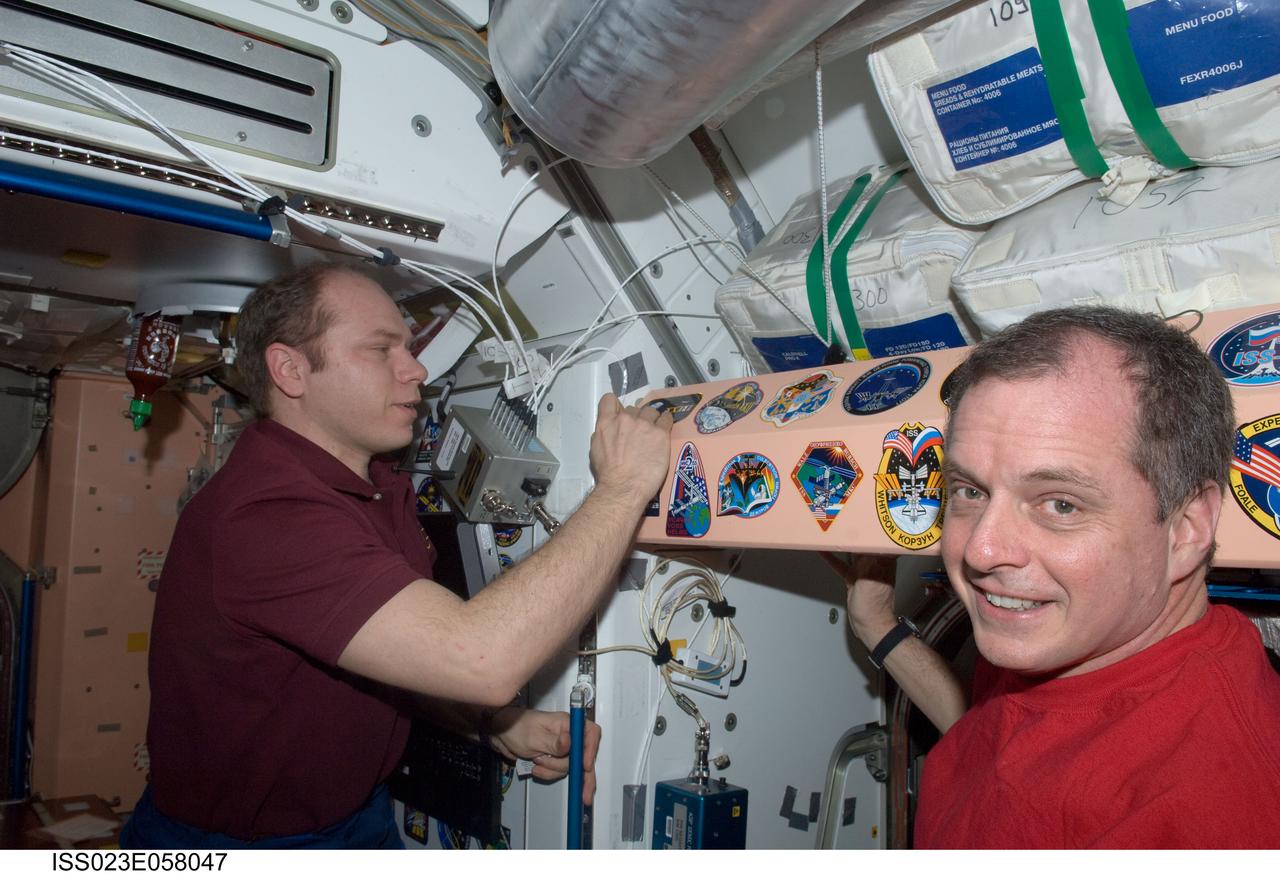
ISS023-E-058047 (1 June 2010) --- Russian cosmonaut Oleg Kotov (left), Expedition 23 commander, adds the Expedition 23 patch to the Unity node?s growing collection of insignias representing crews who have lived and worked on the International Space Station. Also pictured is NASA astronaut T.J. Creamer, flight engineer.
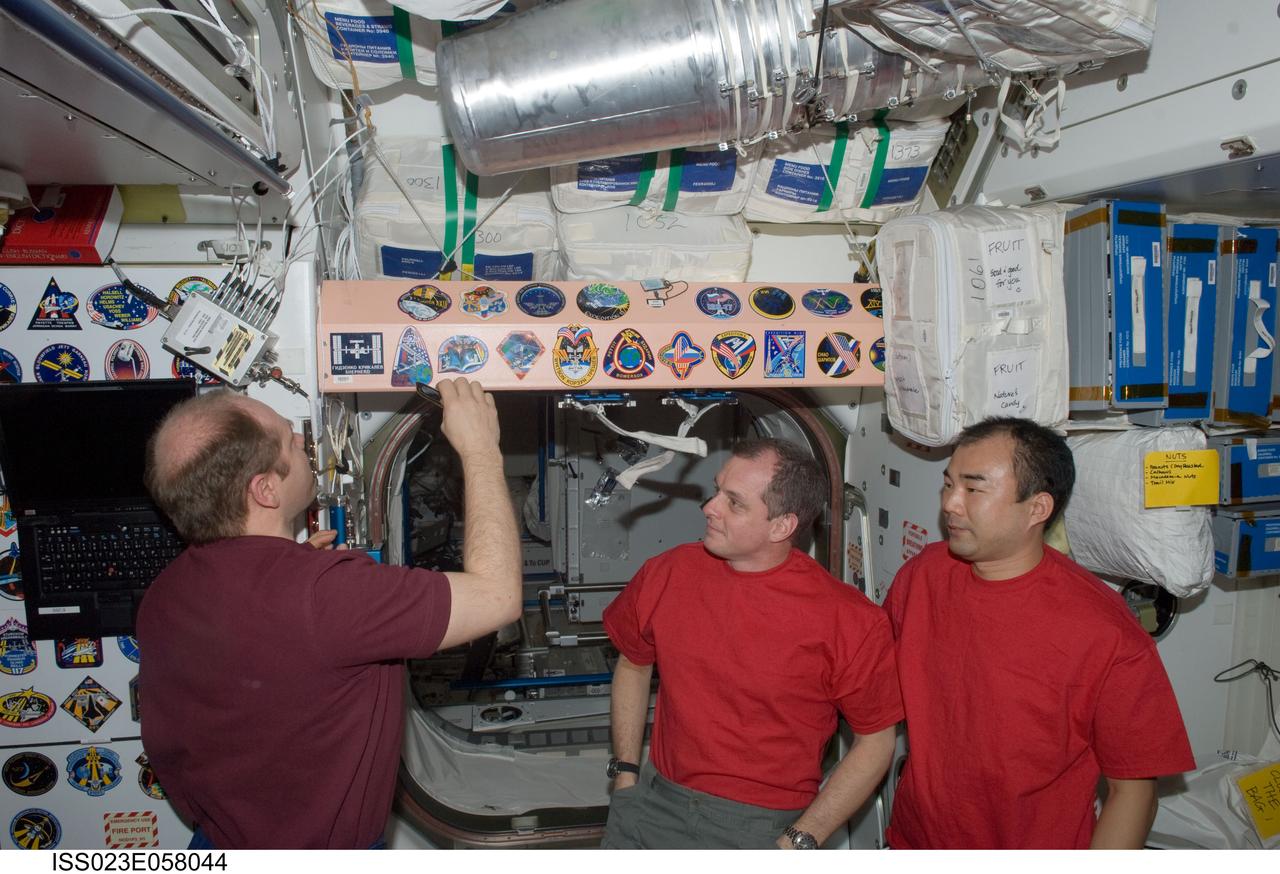
ISS023-E-058044 (1 June 2010) --- Russian cosmonaut Oleg Kotov (left), Expedition 23 commander, adds the Expedition 23 patch to the Unity node’s growing collection of insignias representing crews who have lived and worked on the International Space Station. Also pictured are NASA astronaut T.J. Creamer (center) and Japan Aerospace Exploration Agency (JAXA) astronaut Soichi Noguchi, both flight engineers.
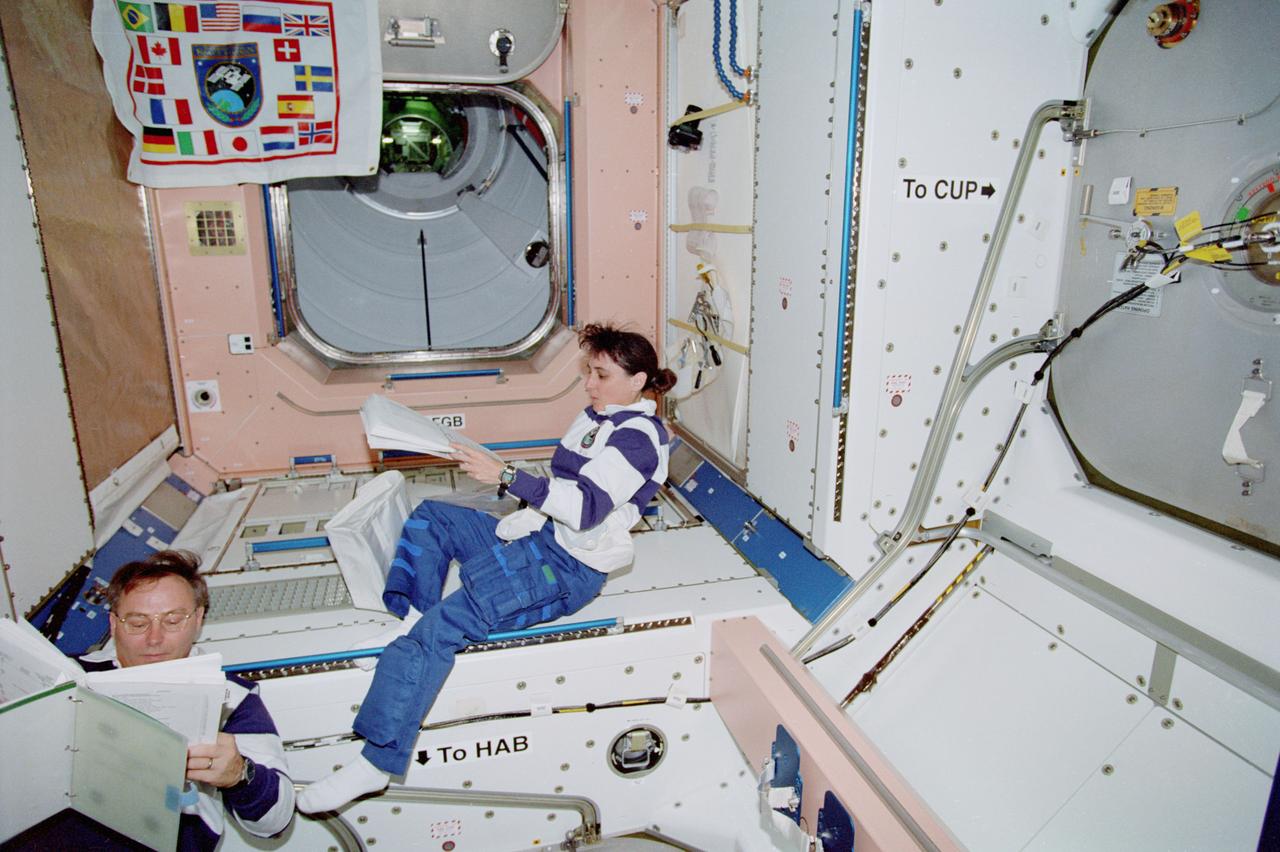
STS088-357-020 (4-15 Dec. 1998) --- Astronauts Jerry L. Ross and Nancy J. Currie, both mission specialists, check procedures list prior to performing a variety of tasks in the United States-built Node 1 or Unity Module. The hatchway in upper left corner accesses the Russian-built FGB or Zarya Module, which had earlier been retrieved with the aid of the Canadian-built Remote Manipulator System (RMS) and linked with Unity.
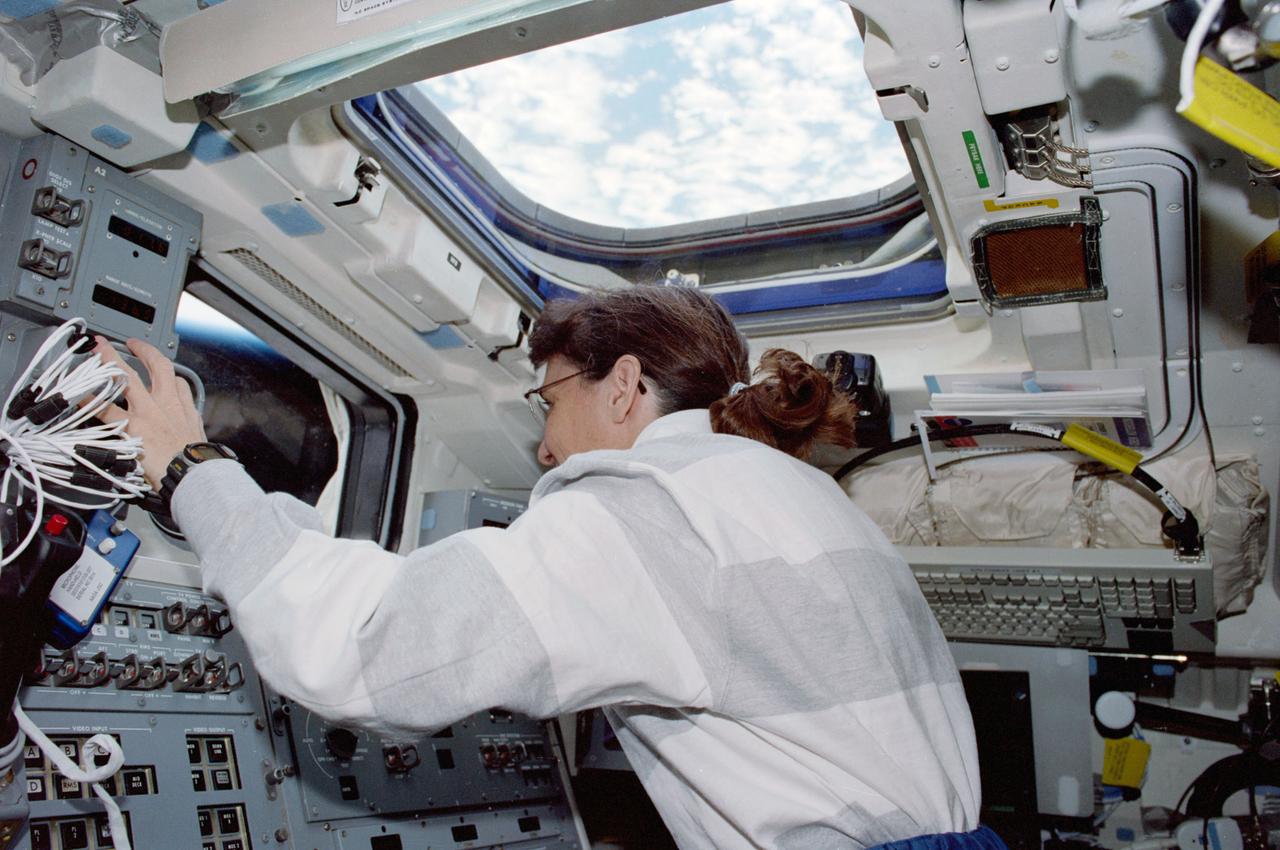
STS088-335-006 (4-15 Dec. 1998) --- Astronaut Nancy J. Currie, mission specialist, looking out the aft flight window, works the controls of the Remote Manipulator System (RMS) arm onboard the Earth-orbiting Space Shuttle Endeavour. She was in the process of moving the stowed United States-built Unity Module (Node 1) into a docked configuration with Endeavour?s docking system. This process preceded rendezvous and docking with the Russian-built FGB Module (Zarya).
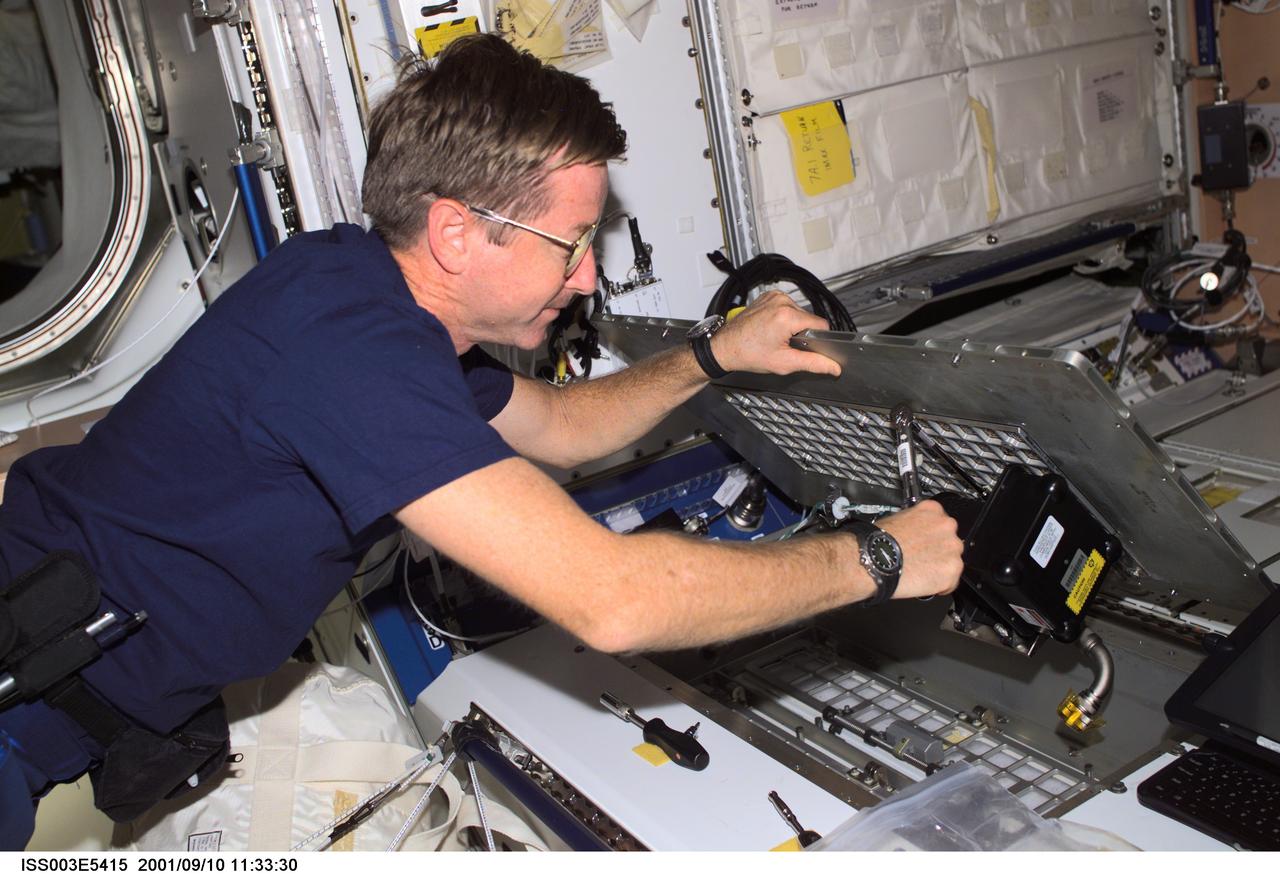
ISS003-E-5415 (10 September 2001) --- Expedition Three mission commander Frank L. Culbertson, Jr., conducts inflight maintenance with a ratchet under a panel in the Unity Node 1 on the International Space Station (ISS). This image was taken with a digital still camera.
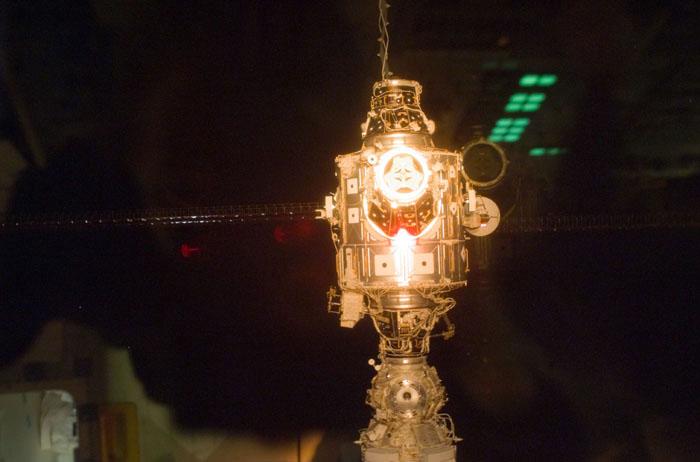
STS98-E-5040 (9 February 2001) --- One of a series of three digital still camera's views of the station's Unity node and the docking mechanism just prior to link up between the station and the Space Shuttle Atlantis. Sailing at 17,000 miles per hour 200 miles above the Pacific Ocean, astronaut Kenneth D. Cockrell, STS-98 mission commander, flawlessly pulled the shuttle alongside the International Space Station and docked, in position to add the new Destiny laboratory to the complex on the following day and begin a new era in space research. Atlantis went on to dock with the station on schedule at 10:51 a.m. (CST), February 9, and the station and shuttle crews opened hatches between the spacecraft at 1:03 p.m.
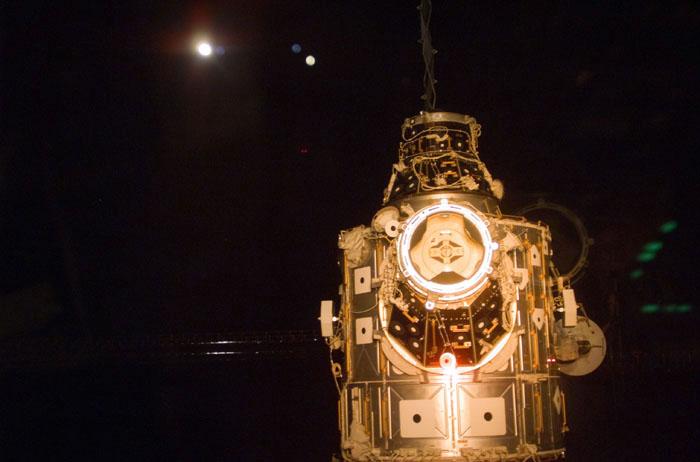
STS98-E-5041 (9 February 2001) --- One of a series of three digital still camera's views of the station's Unity node and the docking mechanism just prior to link up between the station and the Space Shuttle Atlantis. Sailing at 17,000 miles per hour 200 miles above the Pacific Ocean, astronaut Kenneth D. Cockrell, STS-98 mission commander, flawlessly pulled the shuttle alongside the International Space Station and docked, in position to add the new Destiny laboratory to the complex on the following day and begin a new era in space research. Atlantis went on to dock with the station on schedule at 10:51 a.m. (CST), February 9, and the station and shuttle crews opened hatches between the spacecraft at 1:03 p.m.
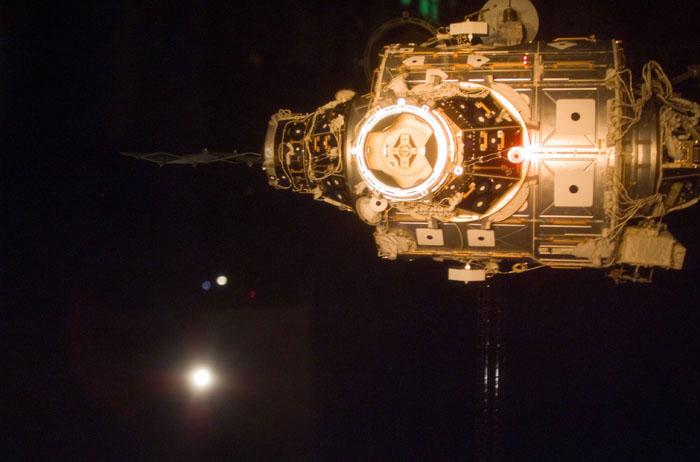
STS98-E-5042 (9 February 2001) --- One of a series of three digital still camera's views of the station's Unity node and the docking mechanism just prior to link up between the station and the Space Shuttle Atlantis. Sailing at 17,000 miles per hour 200 miles above the Pacific Ocean, astronaut Kenneth D. Cockrell, STS-98 mission commander, went on to flawlessly pull the shuttle alongside the International Space Station and dock it, in position to add the new Destiny laboratory to the complex on the following day and begin a new era in space research. Atlantis docked with the station on schedule at 10:51 a.m. (CST), February 9, and the station and shuttle crews opened hatches between the spacecraft at 1:03 p.m.
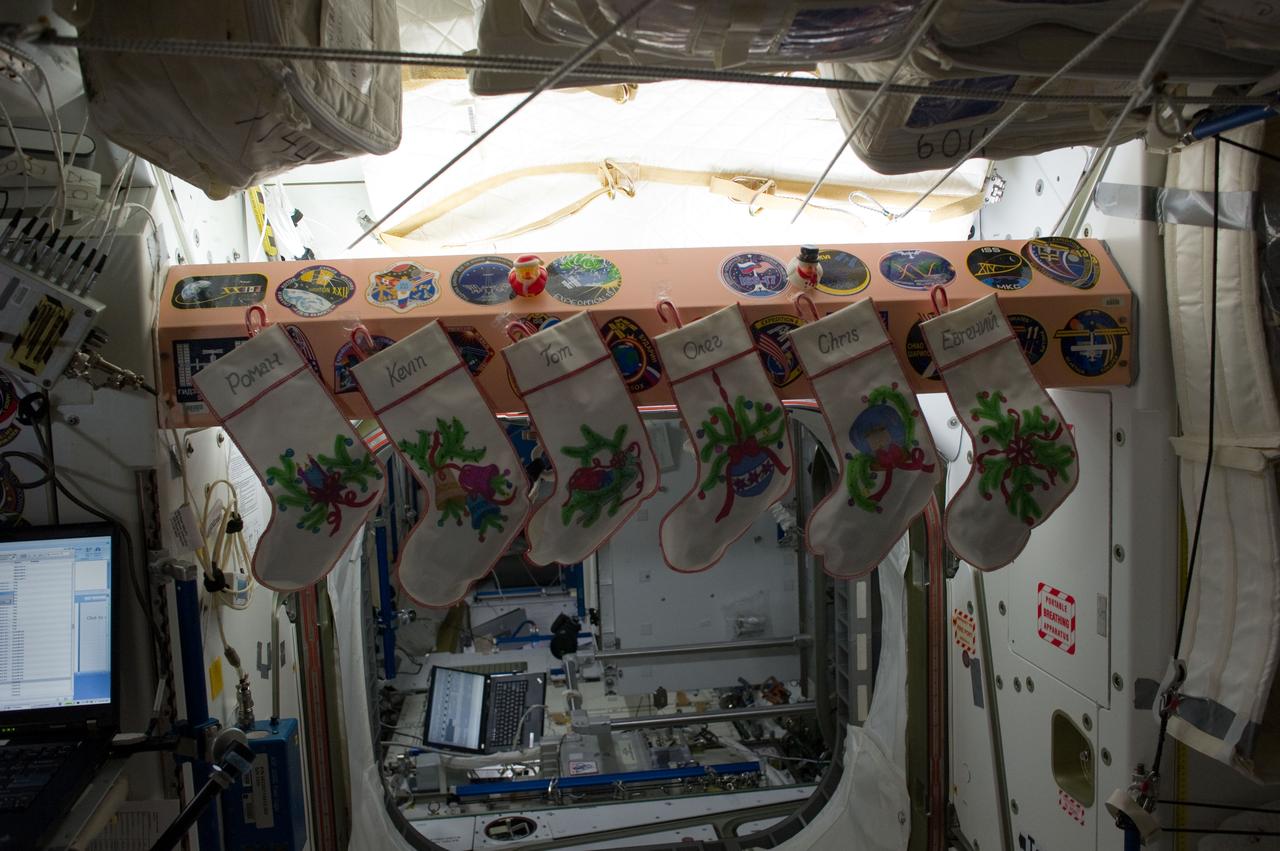
ISS034-E-010298 (25 Dec. 2012) --- Stockings were obviously hung with care on Christmas Day aboard the International Space Station, but for some reason, the fireplace stand-in on Unity couldn't support a real fire. This minor detail didn't faze the spirit of the recently reunited crew members, however. The individual names of the six Expedition 34 crew members are inscribed on their respective stockings. The scene is actually in Node 1, called Unity, which was the first U.S.-built element of the International Space Station that was launched, and it connects the U.S. and Russian segments of the orbital outpost.
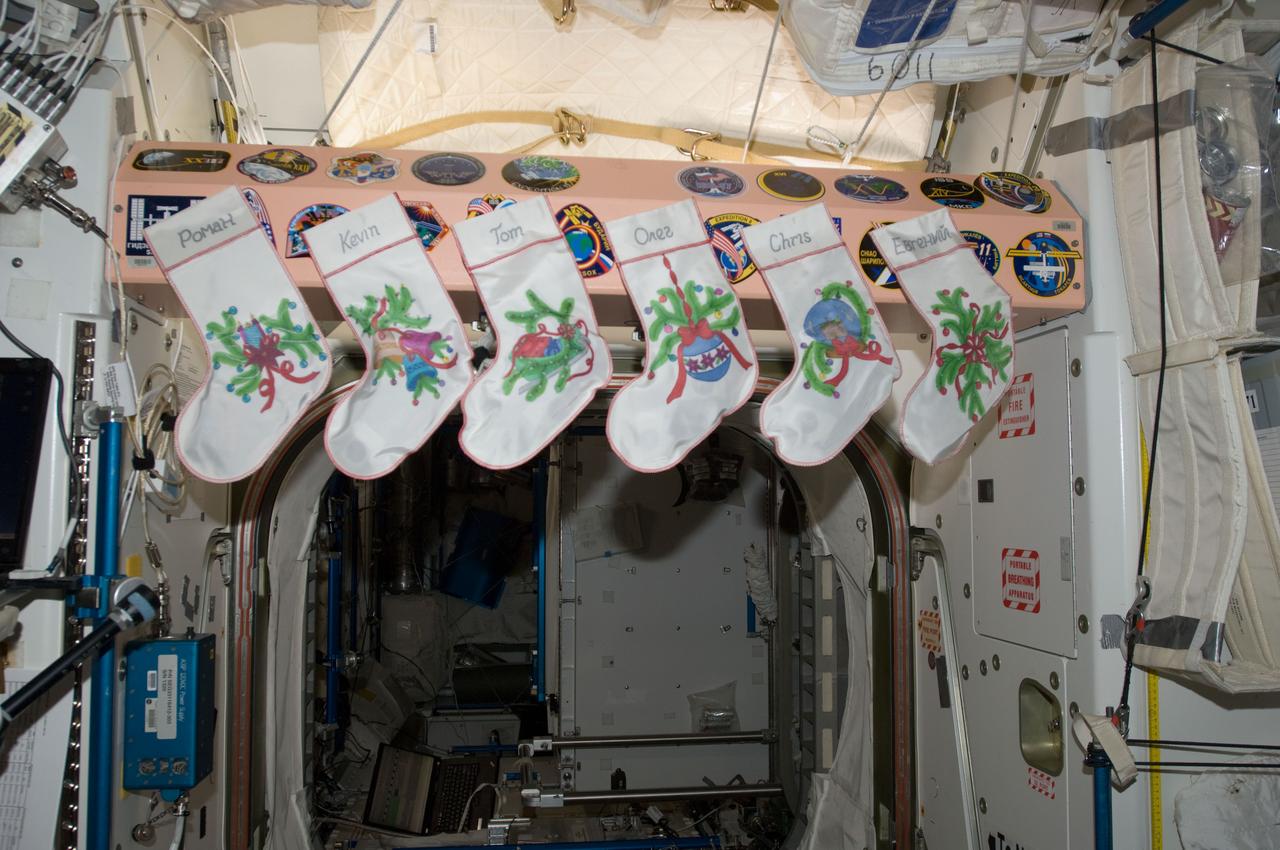
ISS034-E-009737 (25 Dec. 2012) --- Stockings were obviously hung with care on Christmas Day aboard the International Space Station, but for some reason, the fireplace stand-in on Unity couldn't support a real fire. This minor detail didn't faze the spirit of the recently reunited crew members, however. The individual names of the six Expedition 34 crew members are inscribed on their respective stockings. The scene is actually in Node 1, called Unity, which was the first U.S.-built element of the International Space Station that was launched, and it connects the U.S. and Russian segments of the orbital outpost.
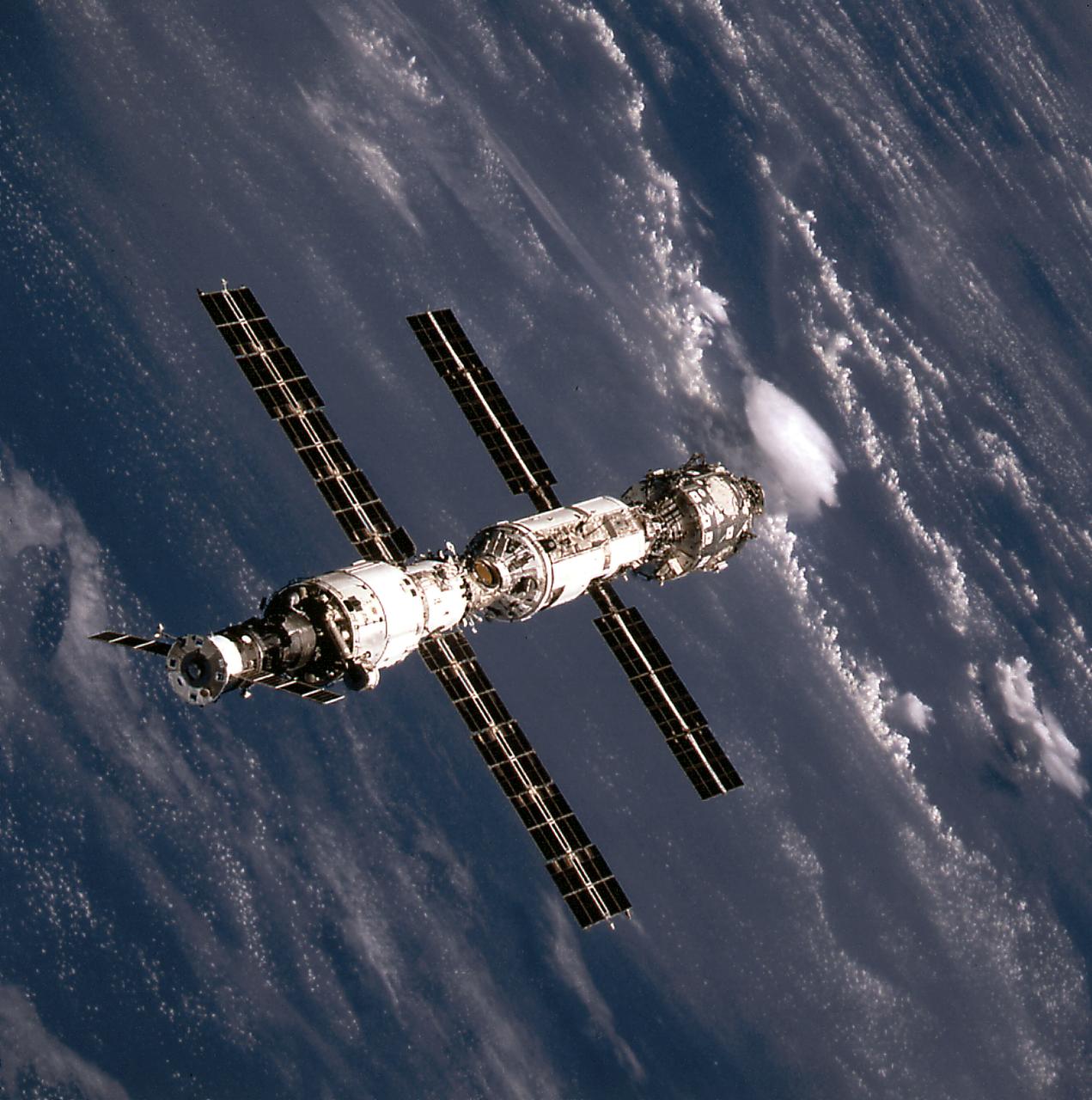
This image of the International Space Station (ISS) was taken when Space Shuttle Atlantis (STS-106 mission) approached the ISS for docking. At the top is the Russian Progress supply ship that is linked with the Russian built Service Module or Zvezda. The Zvezda is cornected with the Russian built Functional Cargo Block (FGB) or Zarya. The U.S. built Node 1 or Unity module is seen at the bottom.
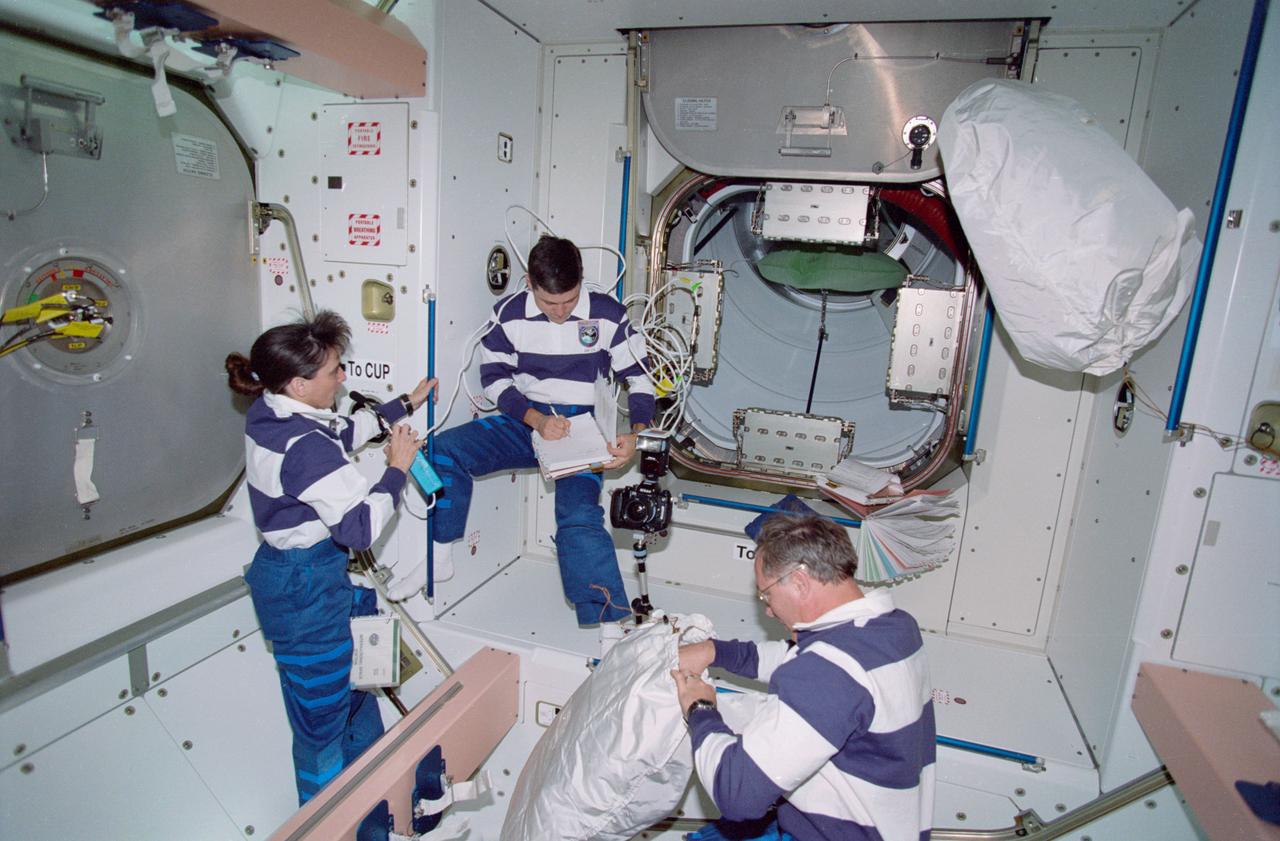
STS088-332-017 (4-15 Dec. 1998) --- From the left, astronauts Nancy J. Currie, mission specialist; Robert D. Cabana, commander, and Jerry L. Ross, mission specialist, go about various chores designed to put the United States-built Unity Connecting Module (Node 1) in readiness for its impending release in Earth-orbit. Currie talks with ground controllers while Cabana logs a note and Ross checks a supply bag. After devoting the major portion of its mission time to various tasks to ready the Russian-built FGB Module (Zarya) and the docked United States-built node, the six-member crew released the tandem from the Space Shuttle Endeavour’s cargo bay toward mission’s end.
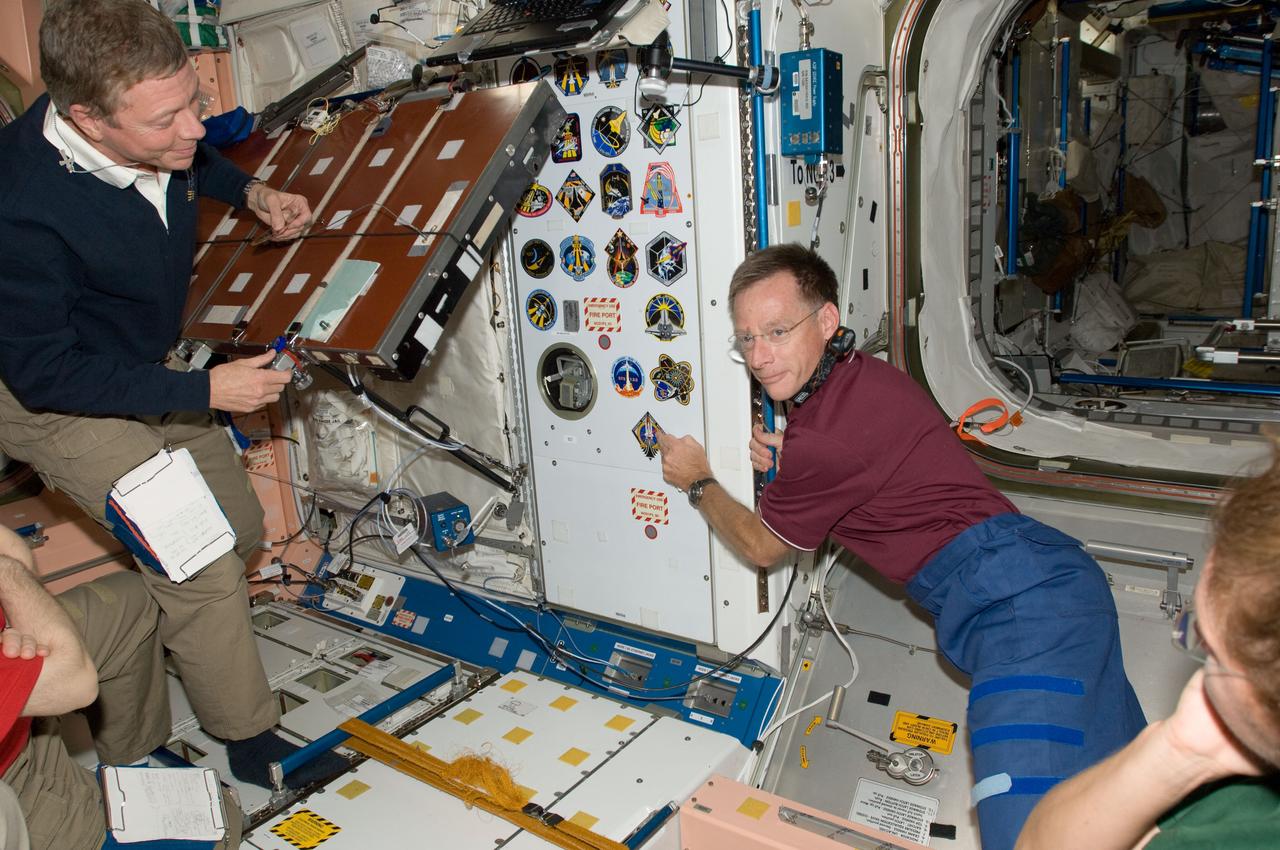
S135-E-009473 (18 July 2011) --- Inside the International Space Station's Node 1 or Unity, NASA astronaut Chris Ferguson, STS-135 commander, adds his mission's decal as the final piece of the collection of shuttle crew insignias. NASA astronaut Mike Fossum, Expedition 28 flight engineer, looks on. Photo credit: NASA
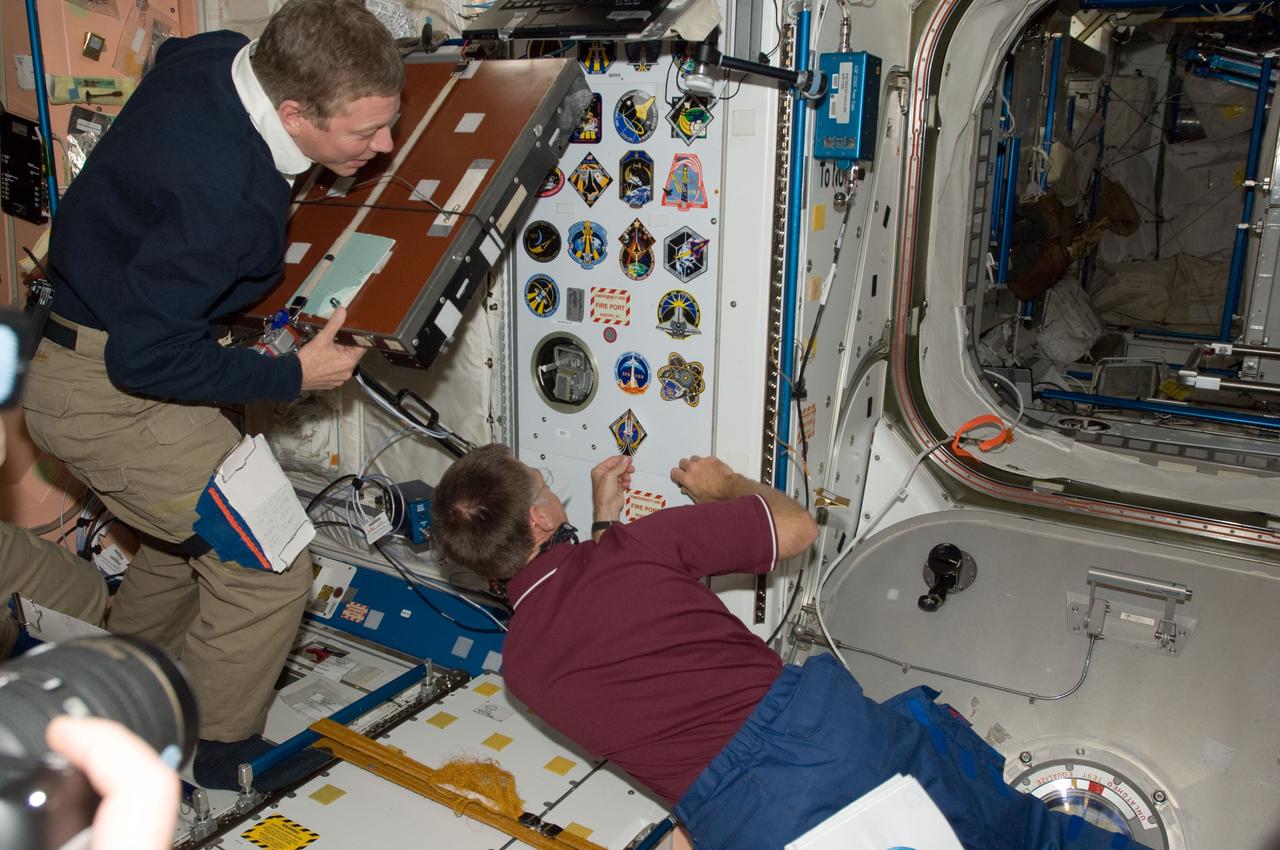
S135-E-009465 (18 July 2011) --- Inside the International Space Station's Node 1 or Unity, NASA astronaut Chris Ferguson, STS-135 commander, adds his mission's decal as the final piece of the collection of shuttle crew insignias. NASA astronaut Mike Fossum, Expedition 28 flight engineer, looks on. Photo credit: NASA

ISS028-E-016526 (13 July 2011) --- The Expedition 28 crewmembers open a cache of fruit and other food items in the Node 1 or Unity aboard the International Space Station. Standing in the back is Russian cosmonaut Andrey Borisenko, commander. In the middle (left to right) are NASA astronaut Ron Garan and Russian cosmonauts Alexander Samokutyaev and Sergei Volkov, all flight engineers. In the foreground are Japan Aerospace Exploration Agency astronaut Satoshi Furukawa (left) and NASA astronaut Mike Fossum, both flight engineers.
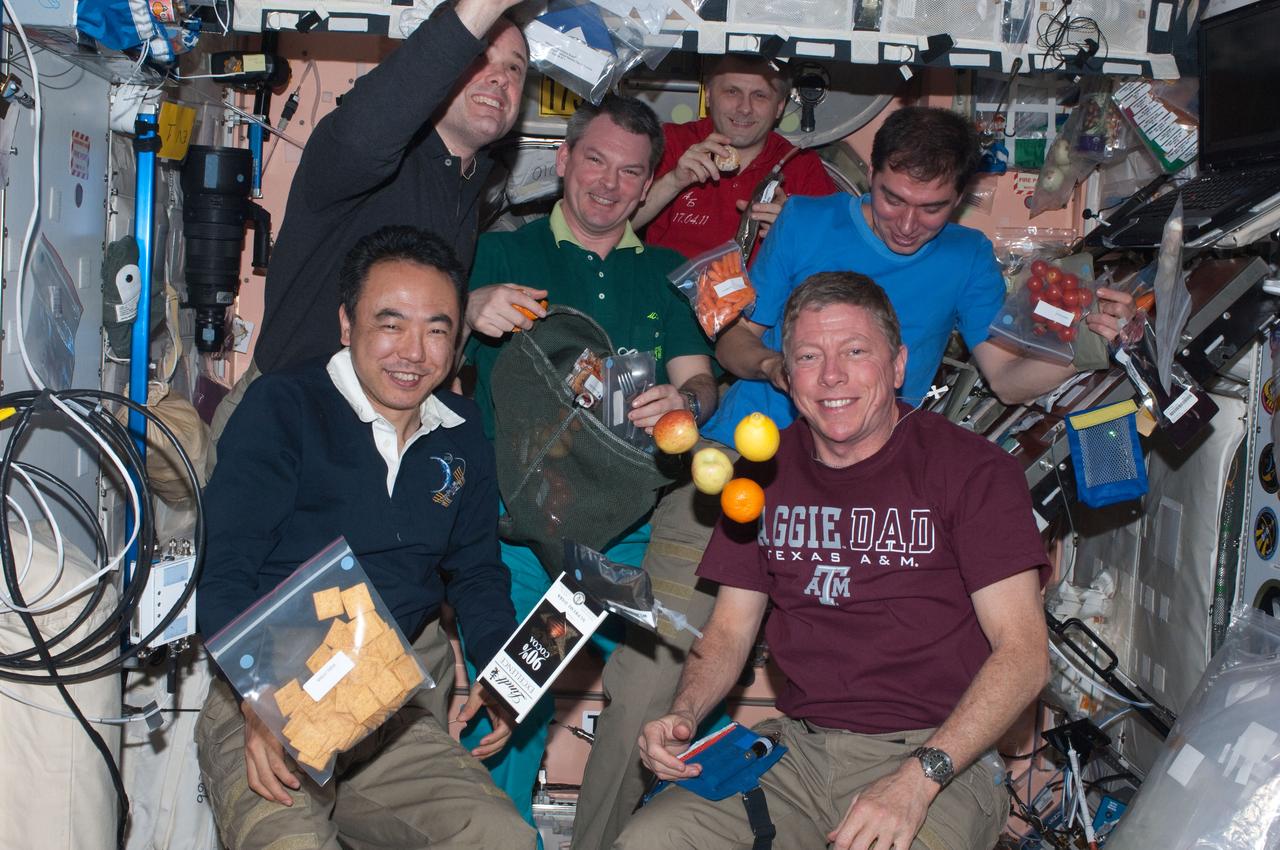
ISS028-E-016505 (13 July 2011) --- The unveiling of food items brings together the astronauts and cosmonauts who make up the Expedition 28 crew as they assemble in Node 1 or Unity in what represents one of the few non-portrait scenes showing all six crewmembers together. From the left are NASA astronaut Ron Garan, Japan Aerospace Exploration Agency astronaut Satoshi Furukawa, Russian cosmonauts Alexander Samokutyaev, Andrey Borisenko and Sergei Volkov, and NASA astronaut Mike Fossum.
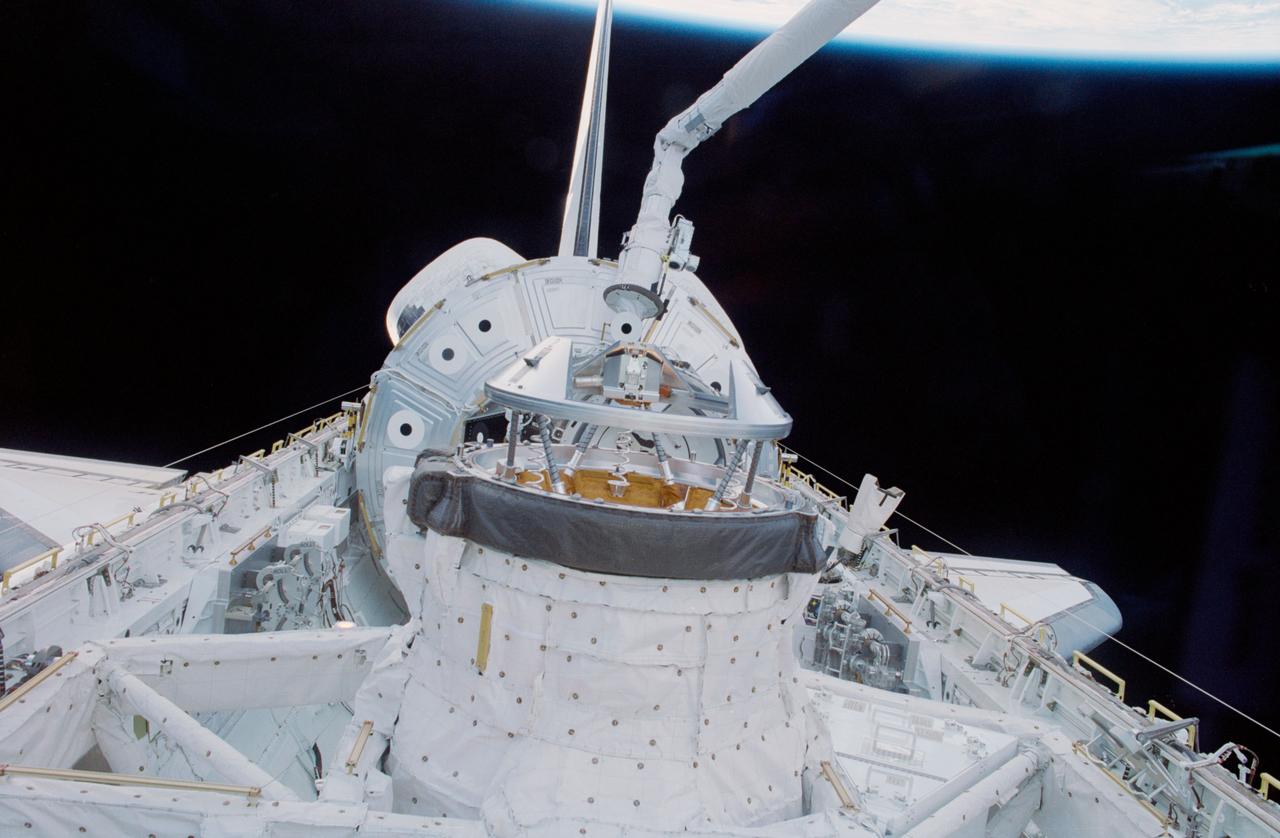
STS088-361-021 (4-15 Dec. 1998) --- The Canadian-built Remote Manipulator System (RMS) arm is about to grapple the Node 1 or Unity Module for mating to the Space Shuttle Endeavour. The move marked the first of many steps that allowed the United States-built Unity Module to be docked with the Russian-built FGB or Zarya Module later in the mission.
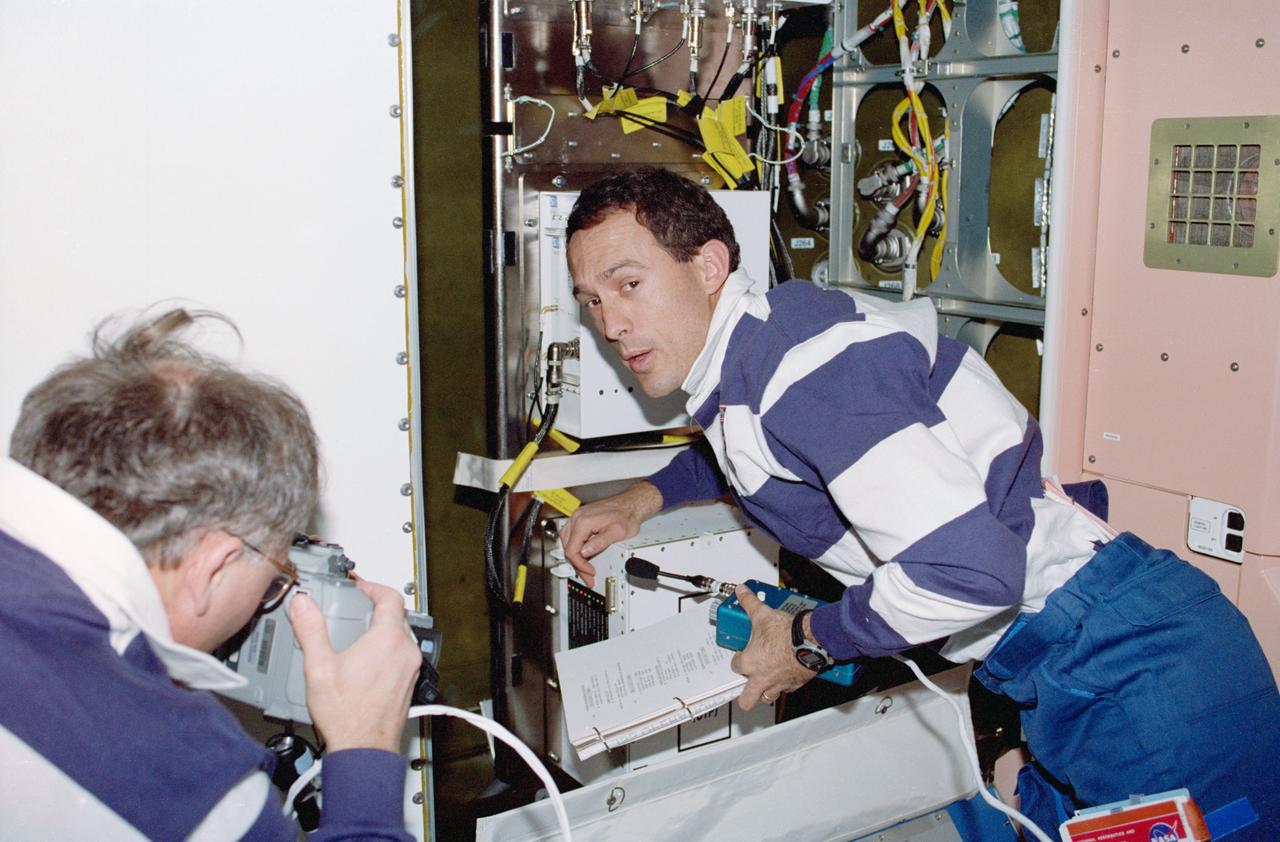
STS088-334-033 (4-15 Dec. 1998) --- Astronauts Jerry L. Ross (on left with camera) and James H. Newman, both mission specialists, work in the Unity Module (Node 1). This task was designed to complete the assembly of an early S-band communications system that will allow flight controllers in Houston, Texas, to send commands to Unity's systems and to keep tabs on the health of the station with a more extensive communications capability than exists through Russian ground stations.
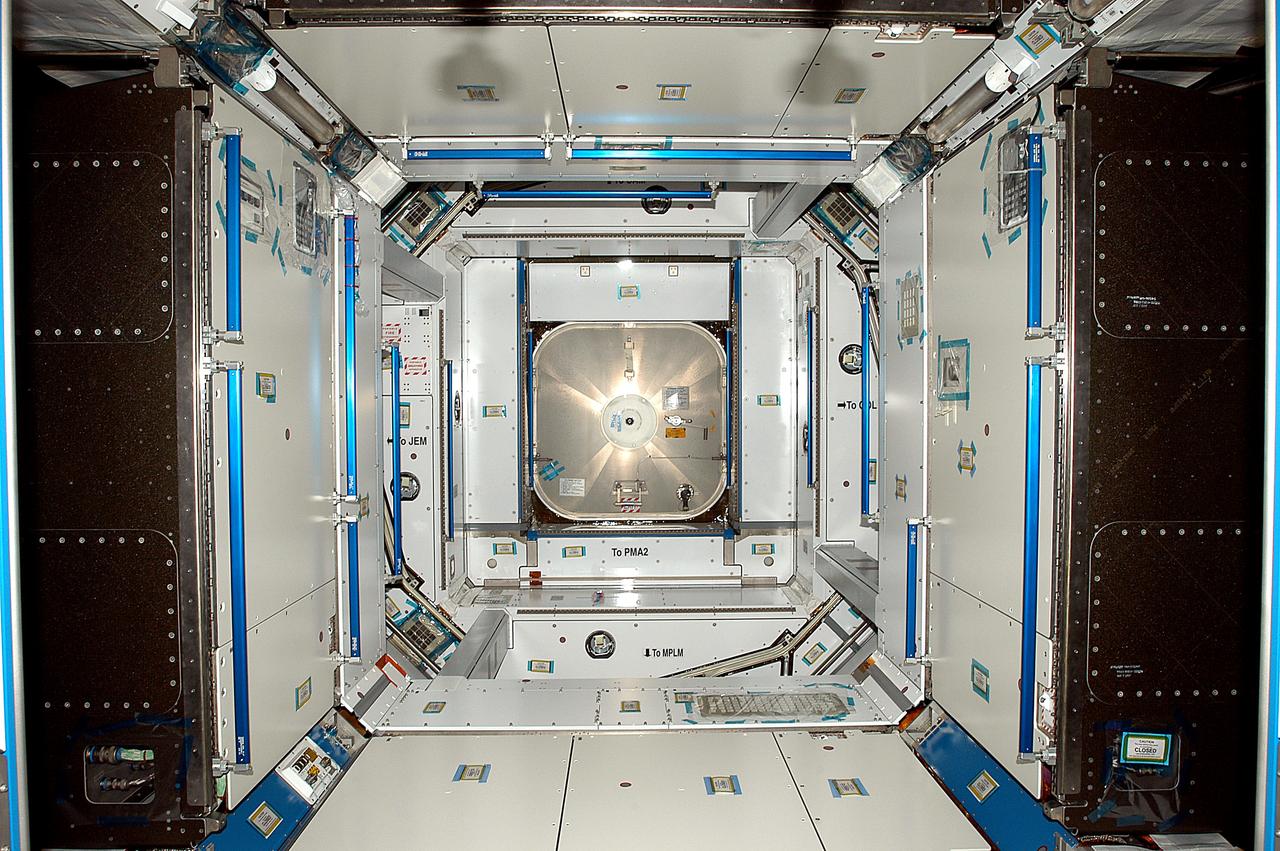
KENNEDY SPACE CENTER, FLA. - The inside of the Italian-built Node 2 looks pristine after opening of the hatch. A future element of the International Space Station, Node 2 arrived at KSC June 1. The second of three Station connecting modules, Node 2 attaches to the end of the U.S. Lab and provides attach locations for the Japanese laboratory, European laboratory, the Centrifuge Accommodation Module and, later, Multipurpose Logistics Modules. It will provide the primary docking location for the Shuttle when a pressurized mating adapter is attached to Node 2. Installation of the module will complete the U.S. Core of the ISS. Node 2 is the designated payload for mission STS-120. No orbiter or launch date has been determined yet.
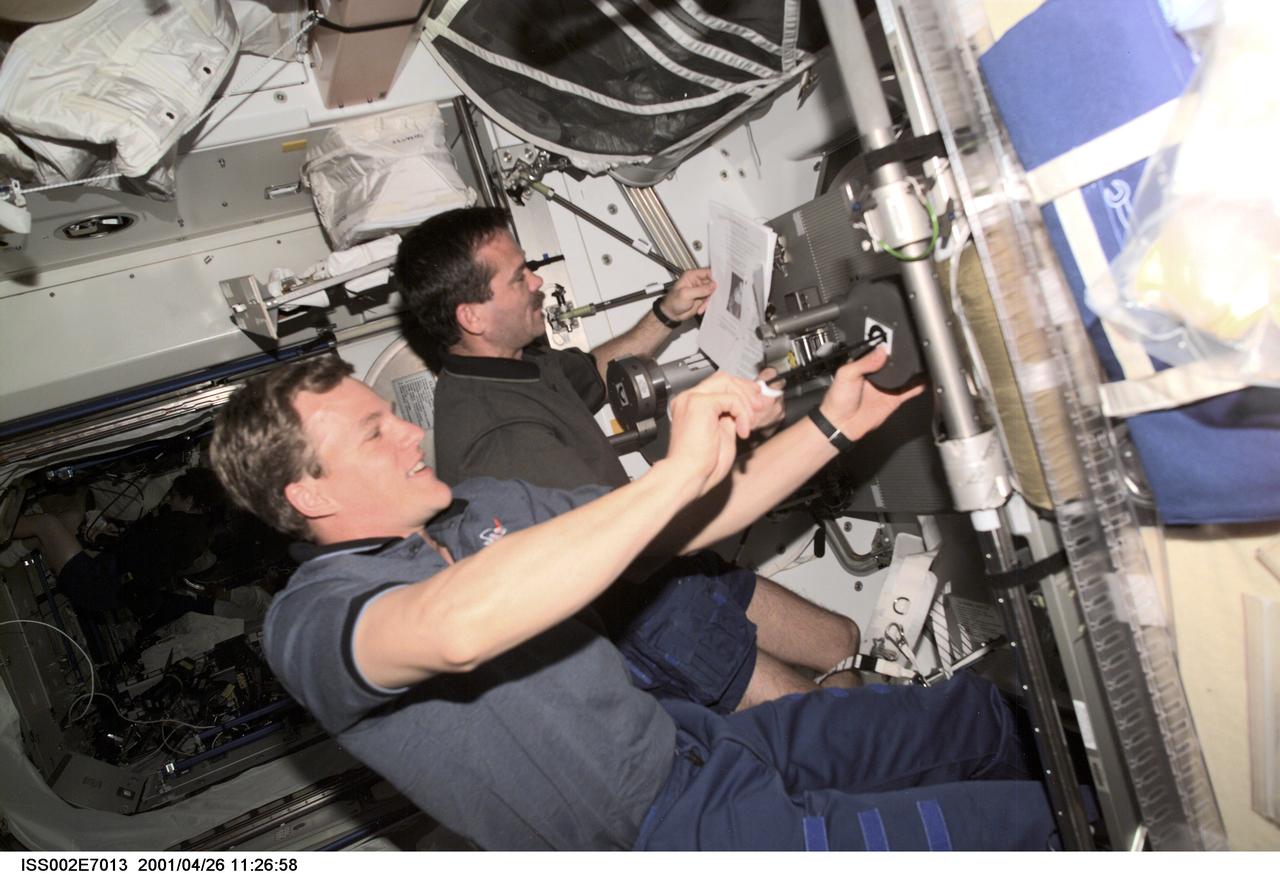
ISS002-E-7013 (26 April 2001) --- Astronauts Scott E. Parazynski and Chris A. Hadfield, mission specialists, install the Interim Resistive Exercise Devise (IRED) in the Unity/Node 1. Hadfield represents the Canadian Space Agency (CSA). A digital still camera was used to record this image.
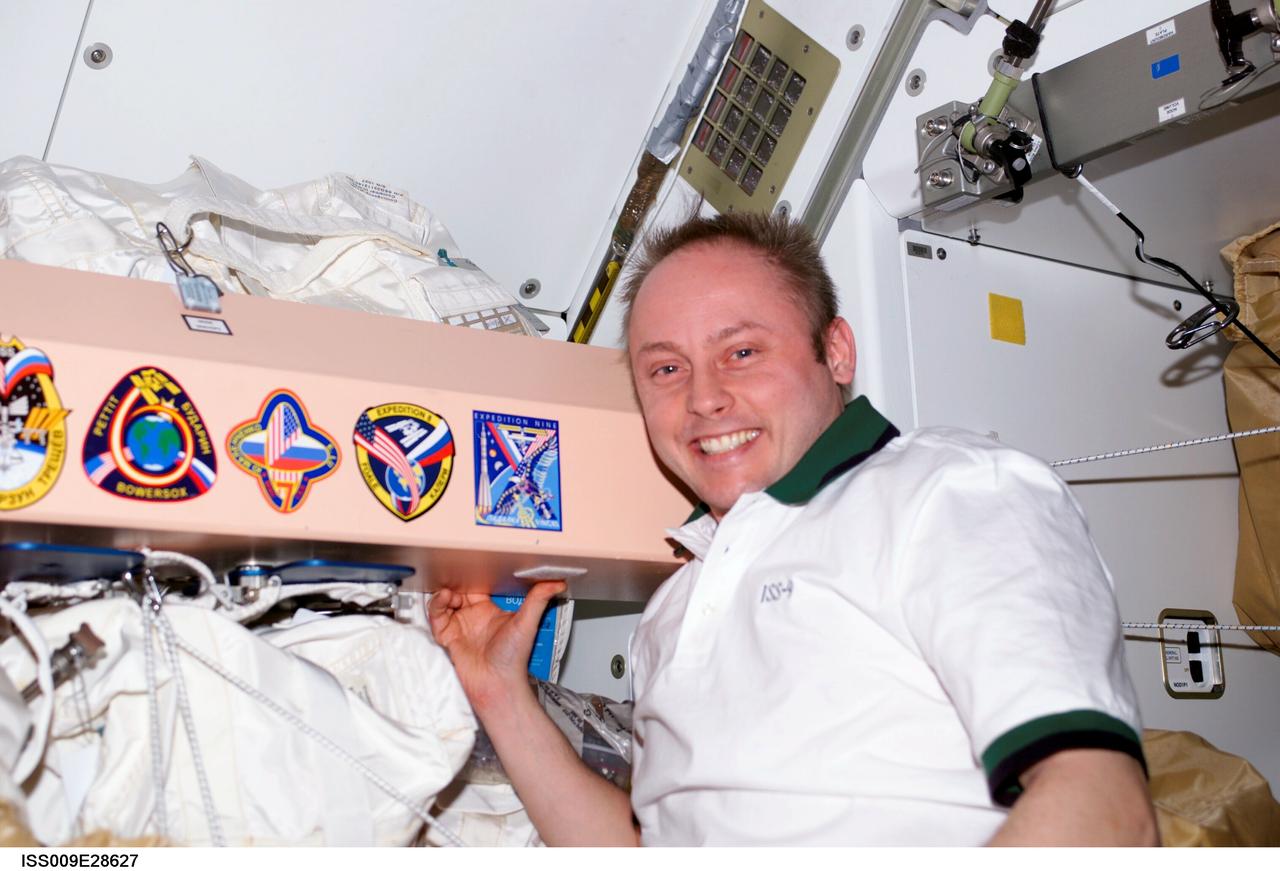
ISS009-E-28627 (1 July 2004) --- Astronaut Edward M. (Mike) Fincke, Expedition 9 NASA ISS science officer and flight engineer, poses by the Expedition mission insignias placed in the Unity node of the International Space Station (ISS).
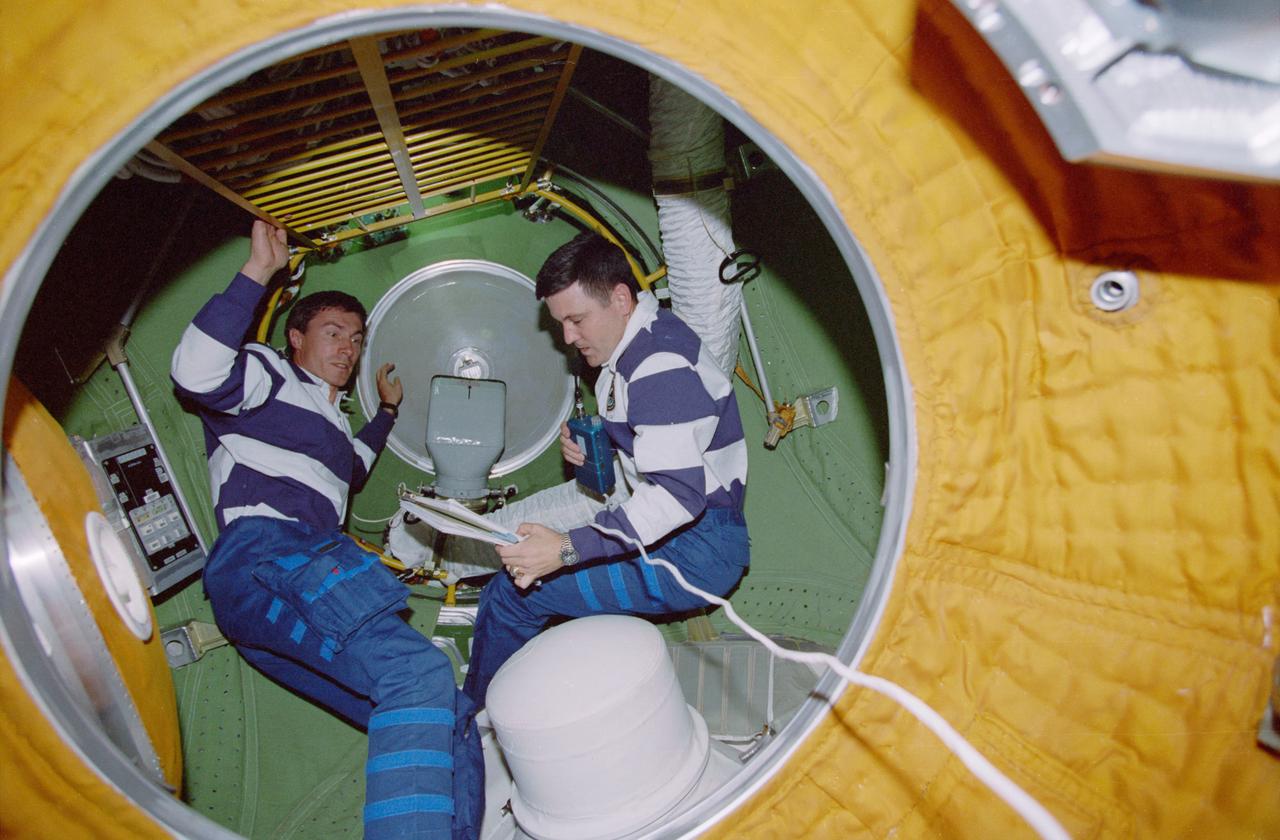
STS088-332-010 (4-15 Dec. 1998) --- Cosmonaut Sergei K. Krikalev (left), mission specialist representing the Russian Space Agency (RSA), and astronaut Robert D. Cabana mission commander, plan their approach to tasks as they huddle at an internal hatch in the Russian built FGB, also called Zarya. All six STS-88 crew members were involved in tasks to ready Zarya and the now-connected U.S. Node 1, also called Unity, for their International Space Station (ISS) roles. Krikalev has been named as a member of the first ISS crew.
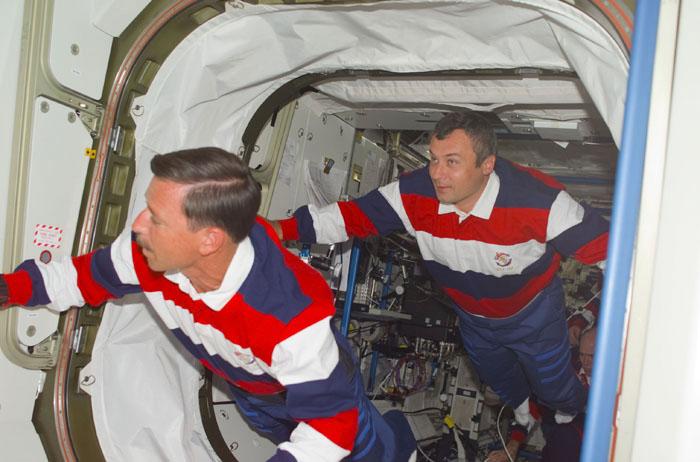
STS105-E-5109 (12 August 2001) --- Scott J. Horowitz (left), STS-105 commander, and cosmonaut Vladimir N. Dezhurov, Expedition Three flight engineer, move into Unity Node 1 during the initial ingress into the International Space Station (ISS) during the STS-105 mission. Dezhurov, accompanied by cosmonaut Mikhail Tyurin and astronaut Frank L. Culbertson, Jr., will be replacing astronauts Susan J. Helms and James S. Voss and cosmonaut Yury V. Usachev as the temporary residents of the ISS. This image was taken with a digital still camera.
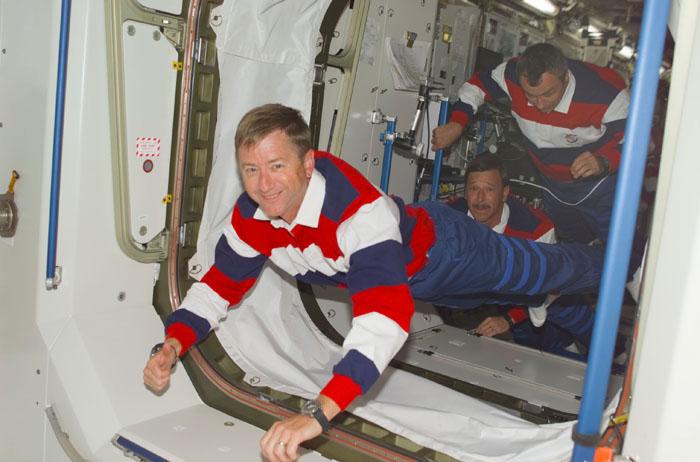
STS105-E-5108 (12 August 2001) --- Frank L. Culbertson, Jr., Expedition Three mission commander, leads cosmonaut Vladimir N. Dezhurov (back top), Expedition Three flight engineer, and Scott J. Horowitz, STS-105 commander, into Unity Node 1 during the initial ingress into the International Space Station (ISS) during the STS-105 mission. Culbertson and Dezhurov, accompanied by cosmonaut Mikhail Tyurin, will be replacing astronauts Susan J. Helms and James S. Voss and cosmonaut Yury V. Usachev as the temporary residents of the ISS. This image was taken with a digital still camera.
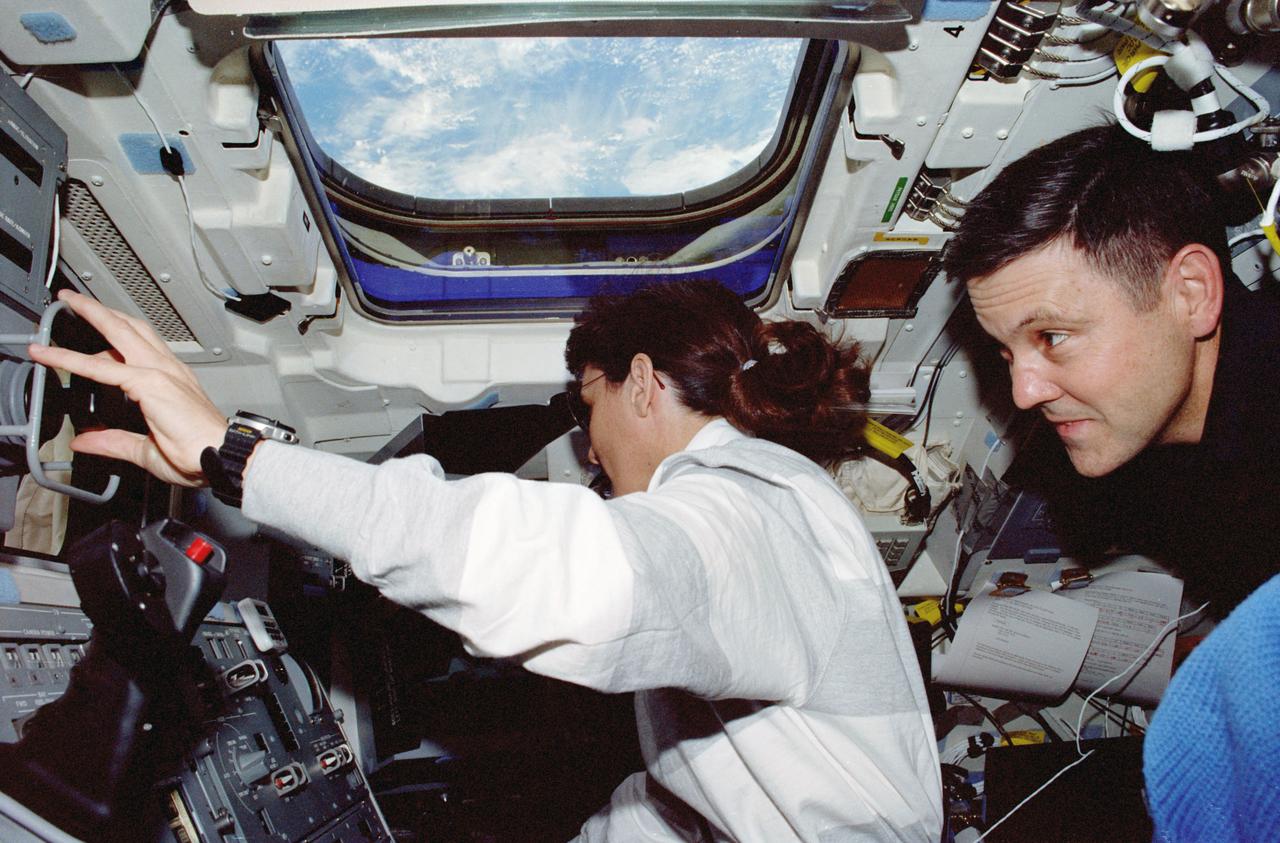
STS088-335-015 (4-15 Dec. 1998) --- Astronauts Nancy J. Currie, mission specialist, and Robert D. Cabana, commander, are busy on the flight deck of the Earth-orbiting Space Shuttle Endeavour. Currie is working the controls of the Remote Manipulator System (RMS) arm, while Cabana observes. The crew used the RMS for docking and extravehicular activity (EVA) support during the mission. At mission?s end, the connected United States-built Unity Module (Node 1) and the Russian-built FGB Module (Zarya) were released in Earth-orbit.
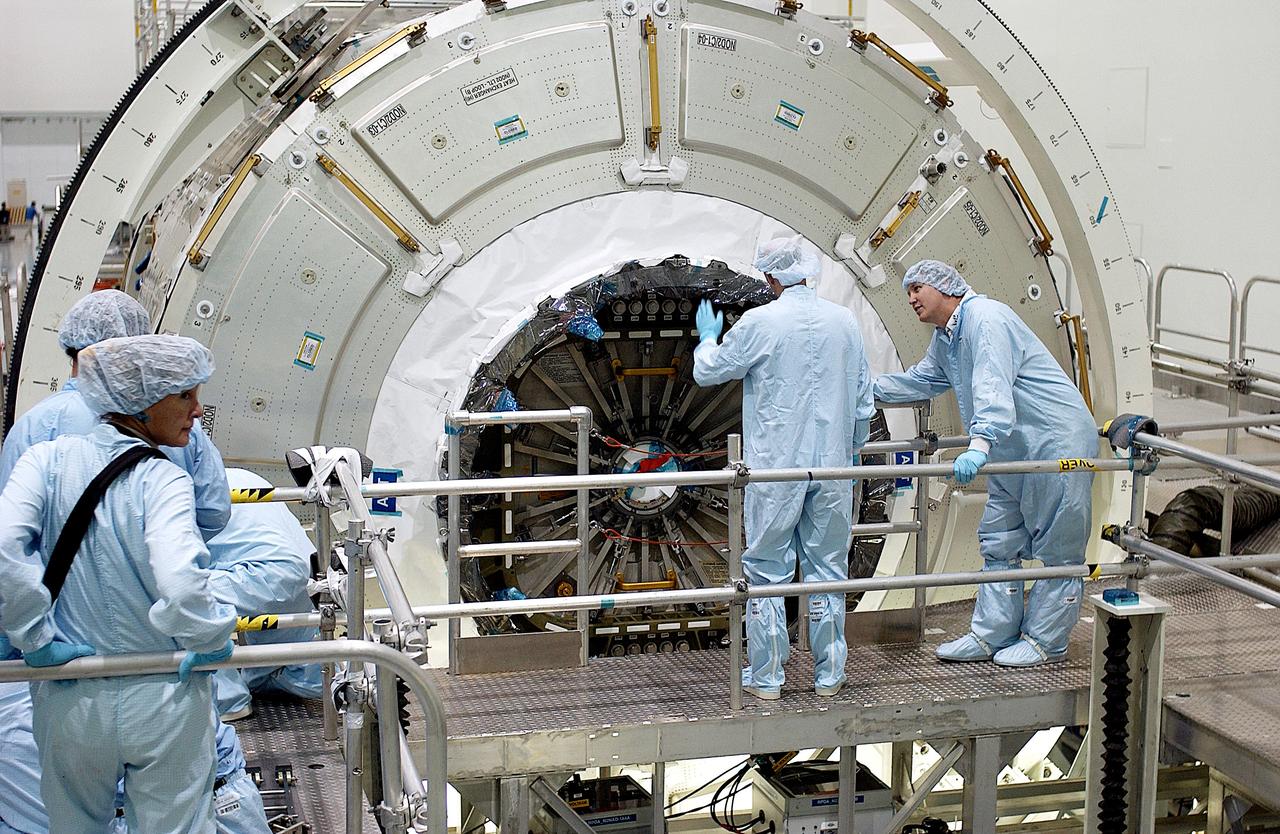
KENNEDY SPACE CENTER, FLA. - Workers in the Space Station Processing Facility look over the hatch on the Italian-built Node 2, a future element of the International Space Station. Node 2 arrived at KSC June 1. The second of three Station connecting modules, the module attaches to the end of the U.S. Lab and provides attach locations for the Japanese laboratory, European laboratory, the Centrifuge Accommodation Module and, later, Multipurpose Logistics Modules. It will provide the primary docking location for the Shuttle when a pressurized mating adapter is attached to Node 2. Installation of the module will complete the U.S. Core of the ISS. Node 2 is the designated payload for mission STS-120. No orbiter or launch date has been determined yet.
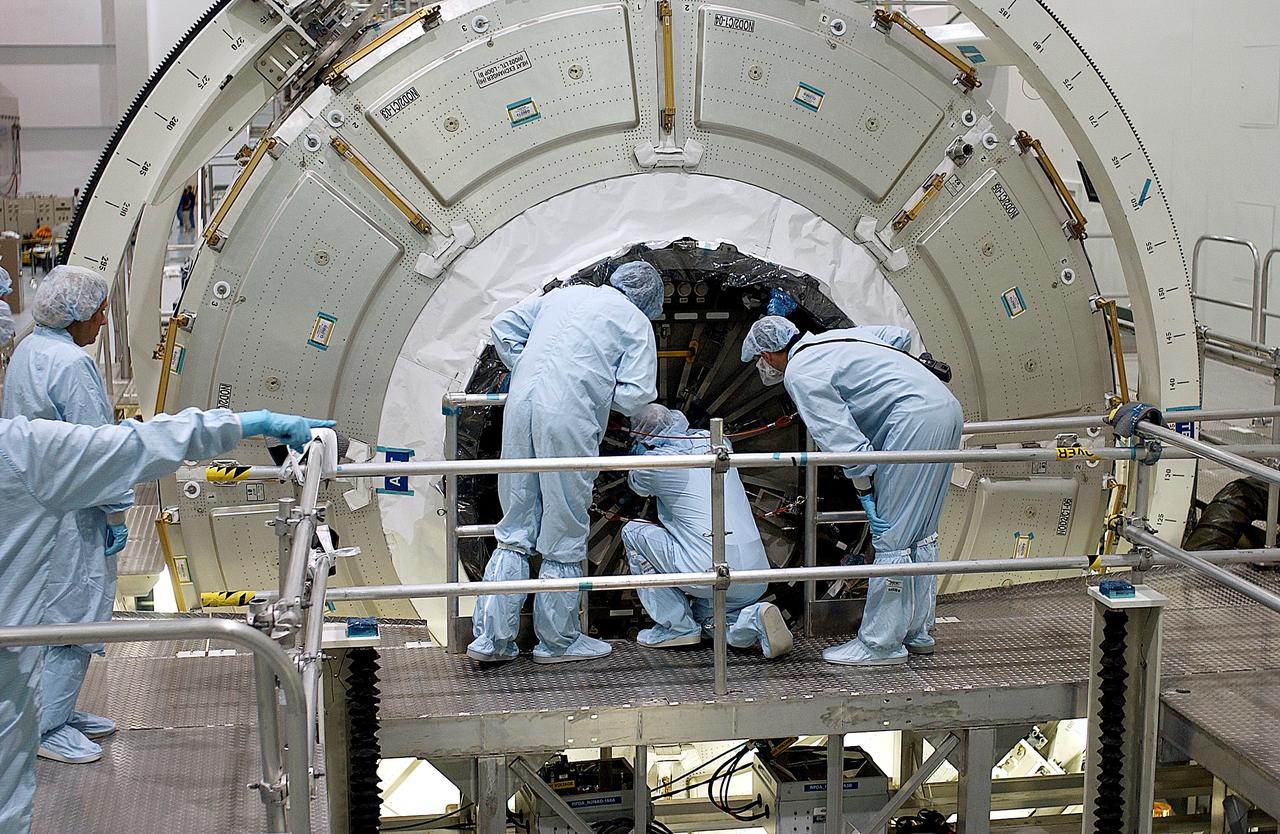
KENNEDY SPACE CENTER, FLA. - Workers in the Space Station Processing Facility attempt to open the hatch on the Italian-built Node 2, a future element of the International Space Station. Node 2 arrived at KSC June 1. The second of three Station connecting modules, the module attaches to the end of the U.S. Lab and provides attach locations for the Japanese laboratory, European laboratory, the Centrifuge Accommodation Module and, later, Multipurpose Logistics Modules. It will provide the primary docking location for the Shuttle when a pressurized mating adapter is attached to Node 2. Installation of the module will complete the U.S. Core of the ISS. Node 2 is the designated payload for mission STS-120. No orbiter or launch date has been determined yet.
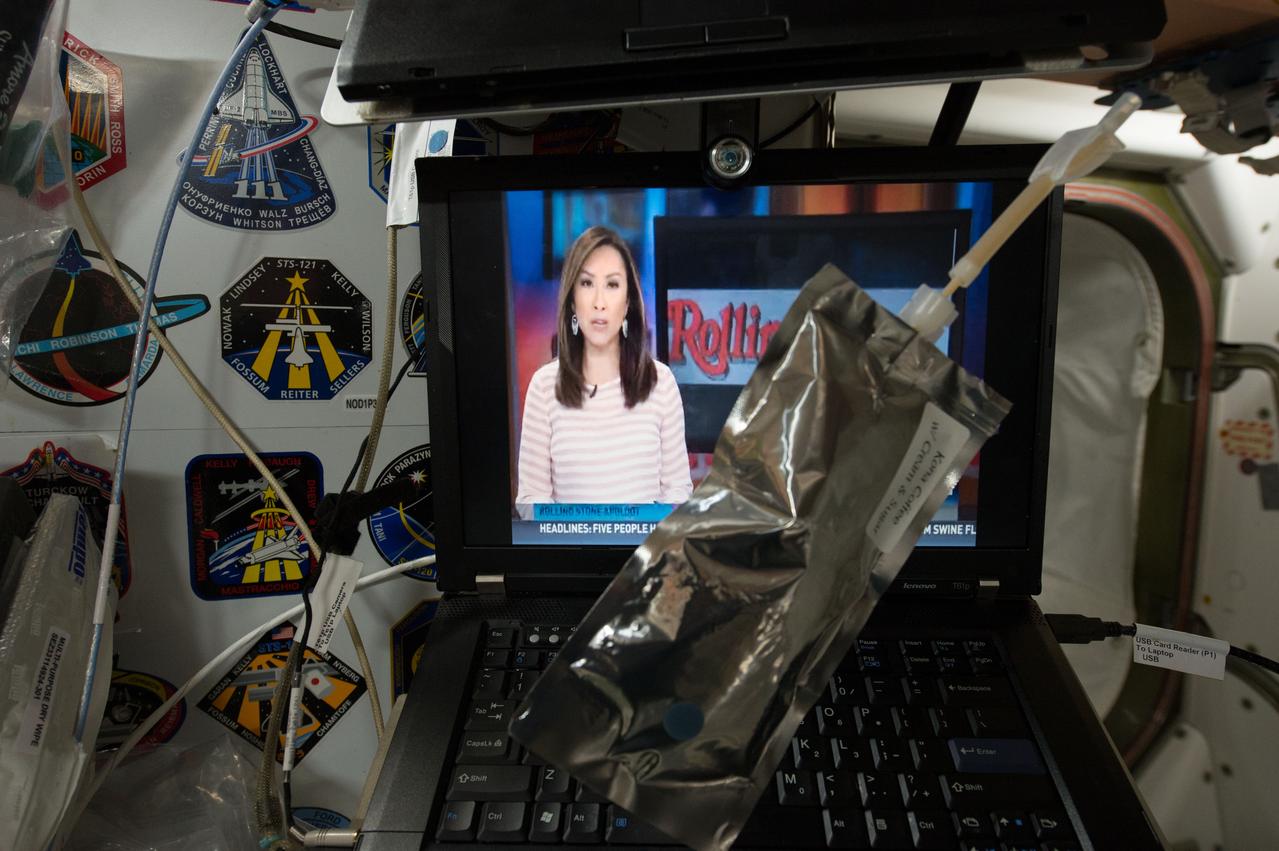
ISS043E089469 (04/06/2015) --- NASA astronaut Scott Kelly, one of two One-Year crew members on the International Space Station, has his morning coffee and TV news from the Houston area on Apr. 6, 2015. His tweeted comment with this image: " Morning @space_station with my coffee and news from Earth with @KHOU News Houston and @KHOU Lily Jang".
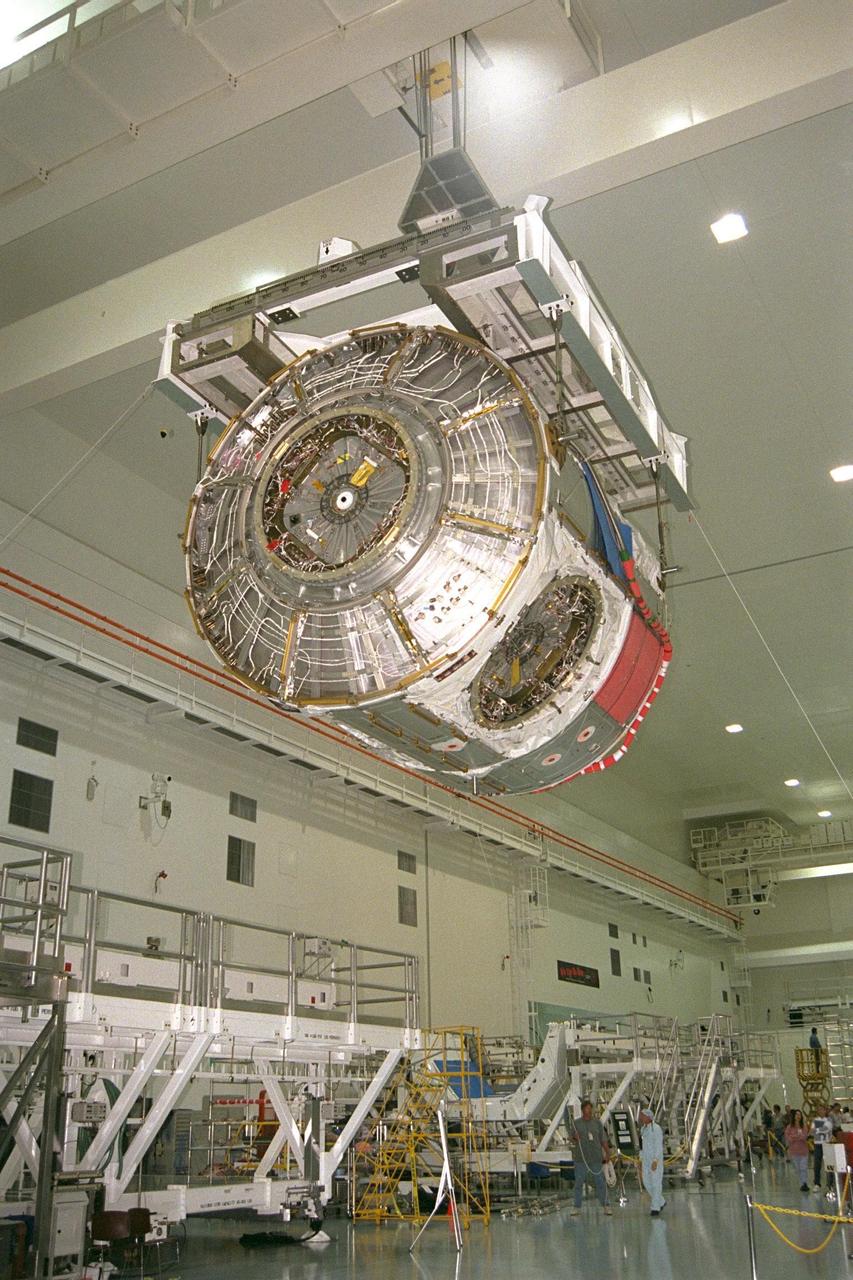
Node 1, the first U.S. element for the International Space Station, and Pressurized Mating Adapter-1 (PMA-1) continue with prelaunch preparation activities at KSC's Space Station Processing Facility. Node 1 is a connecting passageway to the living and working areas of the space station. The node and PMA-1 are being moved to an element rotation stand, or test stand, where they will undergo an interim weight and center of gravity determination. The final determination is planned to be performed prior to transporting Node 1 to the launch pad. Node 1 is scheduled to fly on STS-88
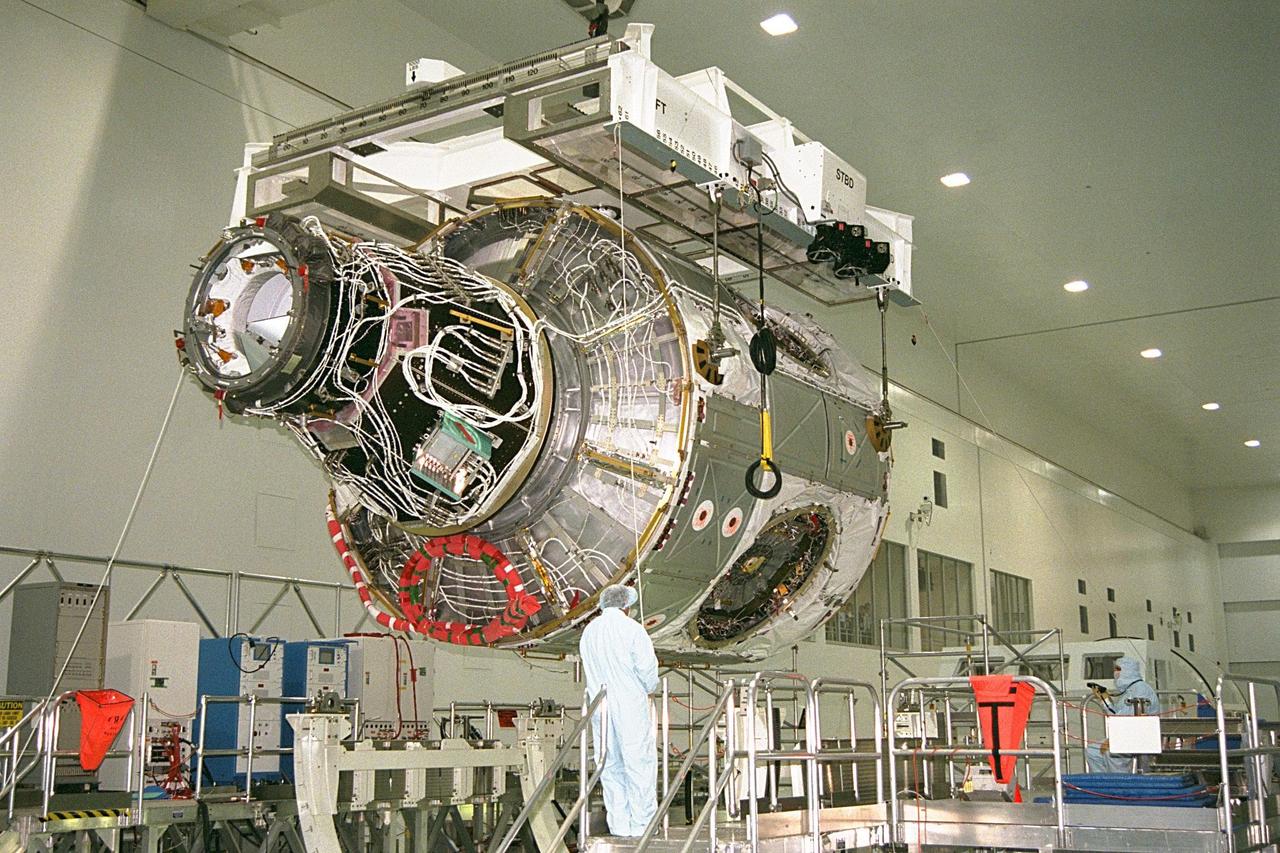
KENNEDY SPACE CENTER, FLA. -- Node 1, the first U.S. element for the International Space Station, and Pressurized Mating Adapter-1 (PMA-1) continue with prelaunch preparation activities at KSC's Space Station Processing Facility. Node 1 is a connecting passageway to the living and working areas of the space station. The node and PMA-1 are being hoisted from their workstand and moved to an element rotation stand, or test stand, where they will undergo an interim weight and center of gravity determination. The final determination is planned to be performed prior to transporting Node 1 to the launch pad. Node 1 is scheduled to fly on STS-88
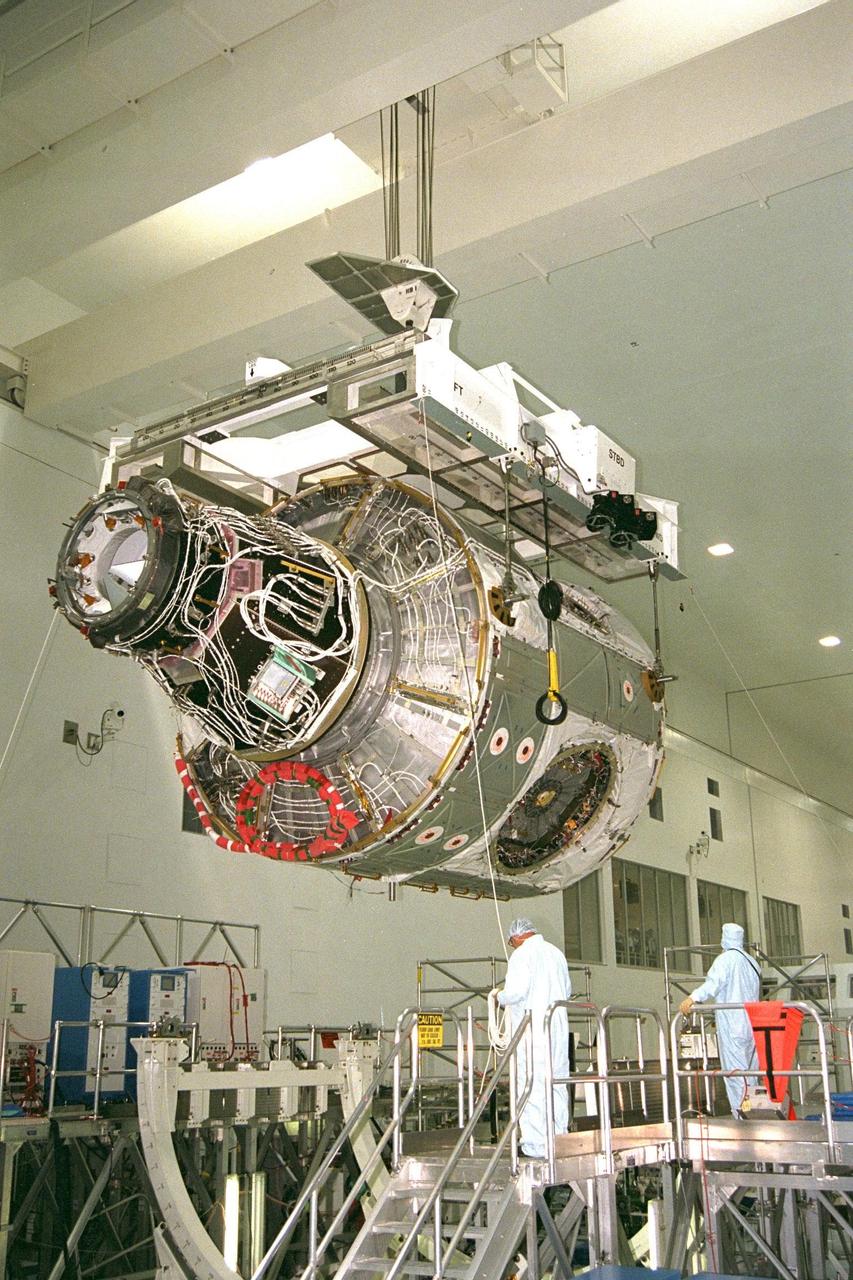
KENNEDY SPACE CENTER, FLA. -- Node 1, the first U.S. element for the International Space Station, and Pressurized Mating Adapter-1 (PMA-1) continue with prelaunch preparation activities at KSC's Space Station Processing Facility. Node 1 is a connecting passageway to the living and working areas of the space station. The node and PMA-1 are being hoisted from their workstand and moved to an element rotation stand, or test stand, where they will undergo an interim weight and center of gravity determination. The final determination is planned to be performed prior to transporting Node 1 to the launch pad. Node 1 is scheduled to fly on STS-88
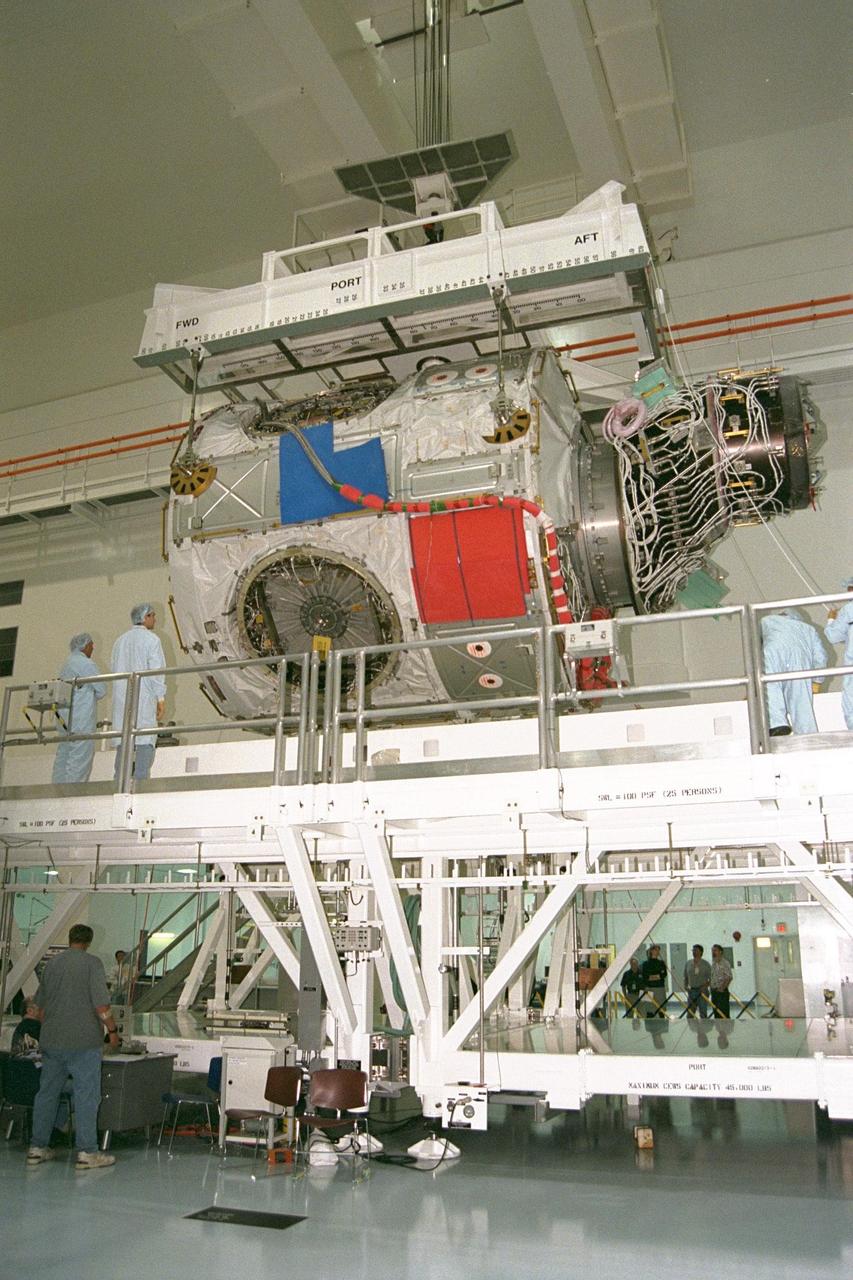
KENNEDY SPACE CENTER, FLA. -- Node 1, the first U.S. element for the International Space Station, and Pressurized Mating Adapter-1 (PMA-1) continue with prelaunch preparation activities at KSC's Space Station Processing Facility. Node 1 is a connecting passageway to the living and working areas of the space station. The node and PMA-1 are being lowered into an element rotation stand, or test stand, where they will undergo an interim weight and center of gravity determination. The final determination is planned to be performed prior to transporting Node 1 to the launch pad. Node 1 is scheduled to fly on STS-88
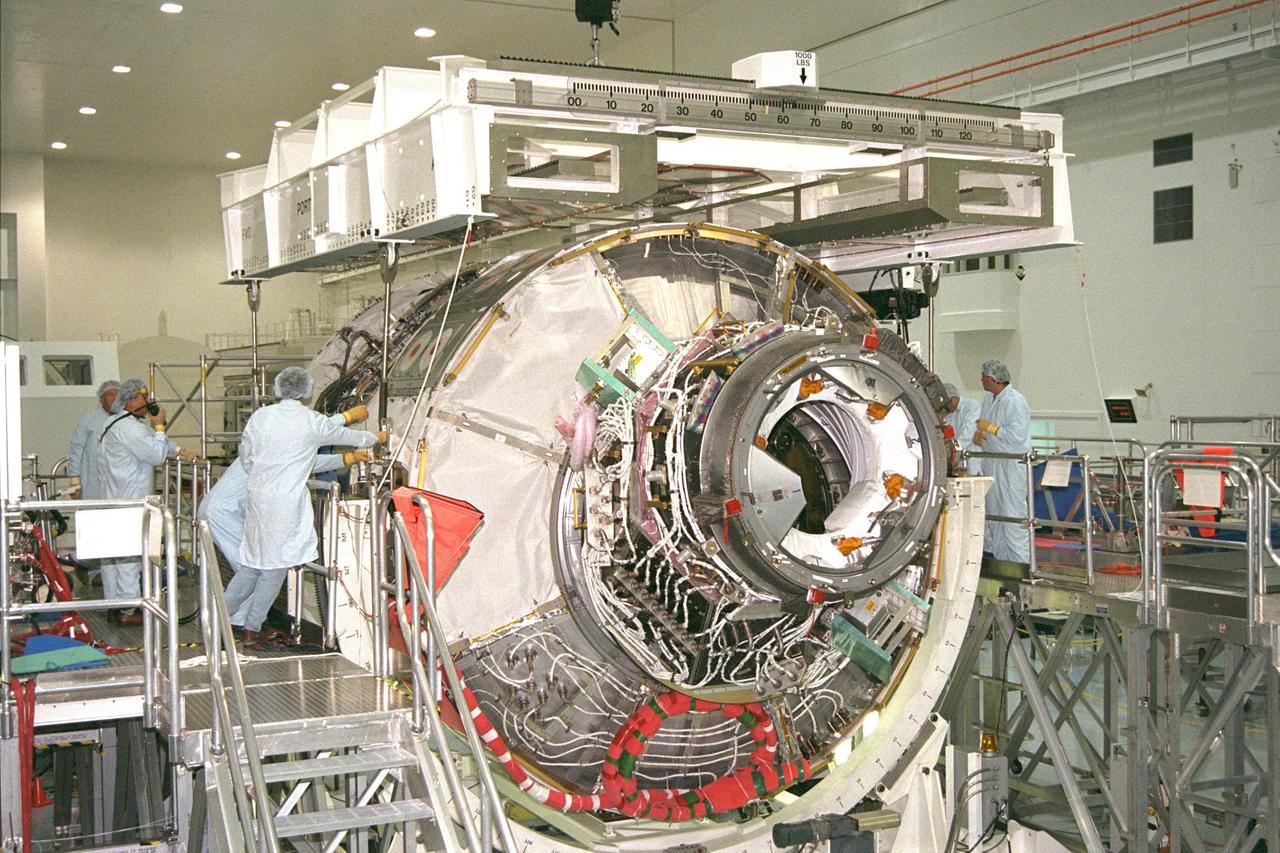
KENNEDY SPACE CENTER, FLA. -- Node 1, the first U.S. element for the International Space Station, and Pressurized Mating Adapter-1 (PMA-1) continue with prelaunch preparation activities at KSC's Space Station Processing Facility. Node 1 is a connecting passageway to the living and working areas of the space station. Boeing technicians are connecting cables to the node and PMA-1 to remove them from their workstand to an element rotation stand, or test stand, where they will undergo an interim weight and center of gravity determination. The final determination is planned to be performed prior to transporting Node 1 to the launch pad. Node 1 is scheduled to fly on STS-88
KENNEDY SPACE CENTER, FLA. -- Node 1, the first U.S. element for the International Space Station, and the Pressurized Mating Adapter-1 (PMA-1) continue with prelaunch preparation activities at KSC's Space Station Processing Facility. The node and PMA-1 are seen here on a workstand as a Boeing technician removes cables to get the node ready to be moved the next day to another stand for an interim weight and center of gravity determination. (The final determination is planned to be performed prior to transporting Node 1 to the launch pad.) Upon completing the interim determination, the node and PMA will be hoisted into the Shuttle payload transportation canister and the doors will be closed for a two-week leak check. Node 1 is a connecting passageway to the living and working areas of the space station. Node 1 is scheduled to fly on STS-88
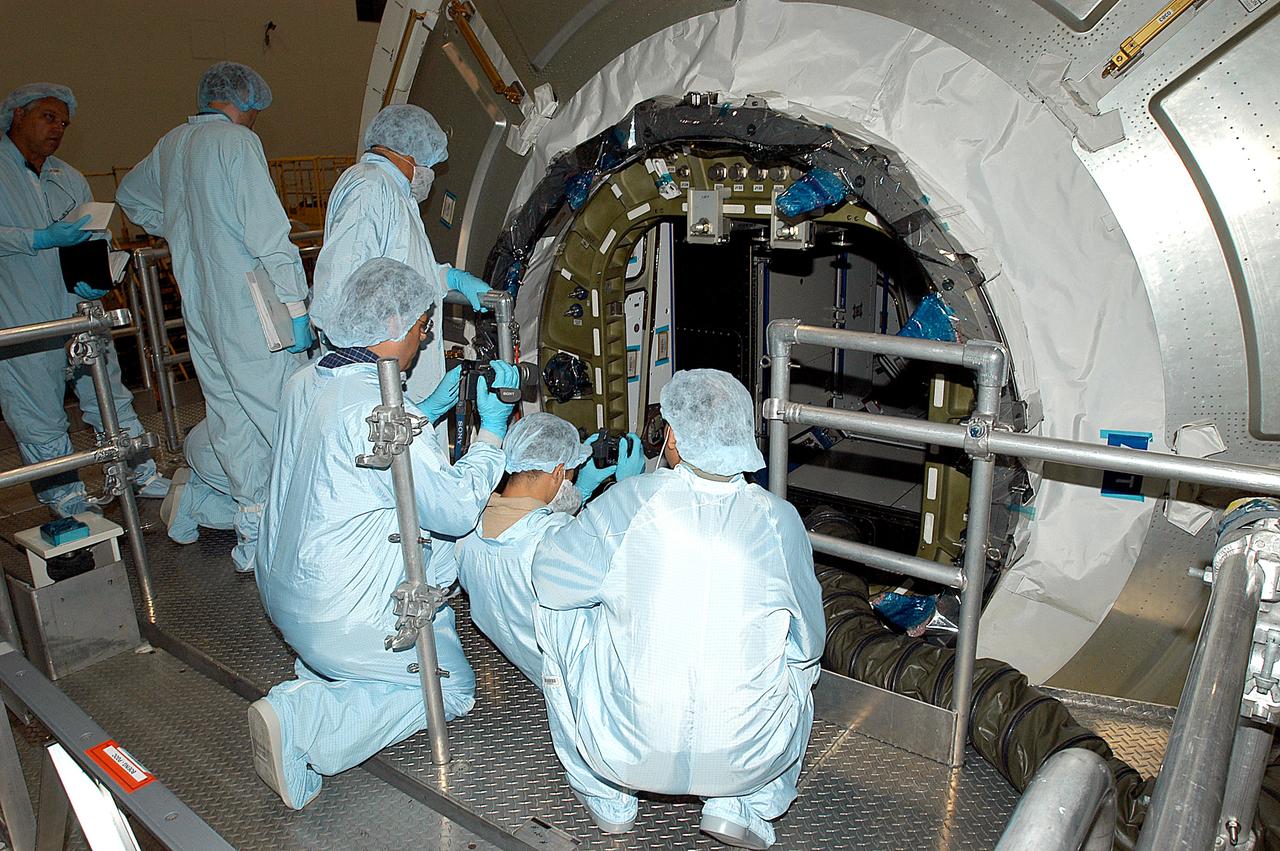
KENNEDY SPACE CENTER, FLA. - Workers in the Space Station Processing Facility attempt to open the hatch on the Italian-built Node 2, a future element of the International Space Station. Node 2 arrived at KSC June 1. The second of three Station connecting modules, the module attaches to the end of the U.S. Lab and provides attach locations for the Japanese laboratory, European laboratory, the Centrifuge Accommodation Module and, later, Multipurpose Logistics Modules. It will provide the primary docking location for the Shuttle when a pressurized mating adapter is attached to Node 2. Installation of the module will complete the U.S. Core of the ISS. Node 2 is the designated payload for mission STS-120. No orbiter or launch date has been determined yet.Installation of the module will complete the U.S. Core of the ISS. Node 2 is the designated payload for mission STS-120. No orbiter or launch date has been determined yet.
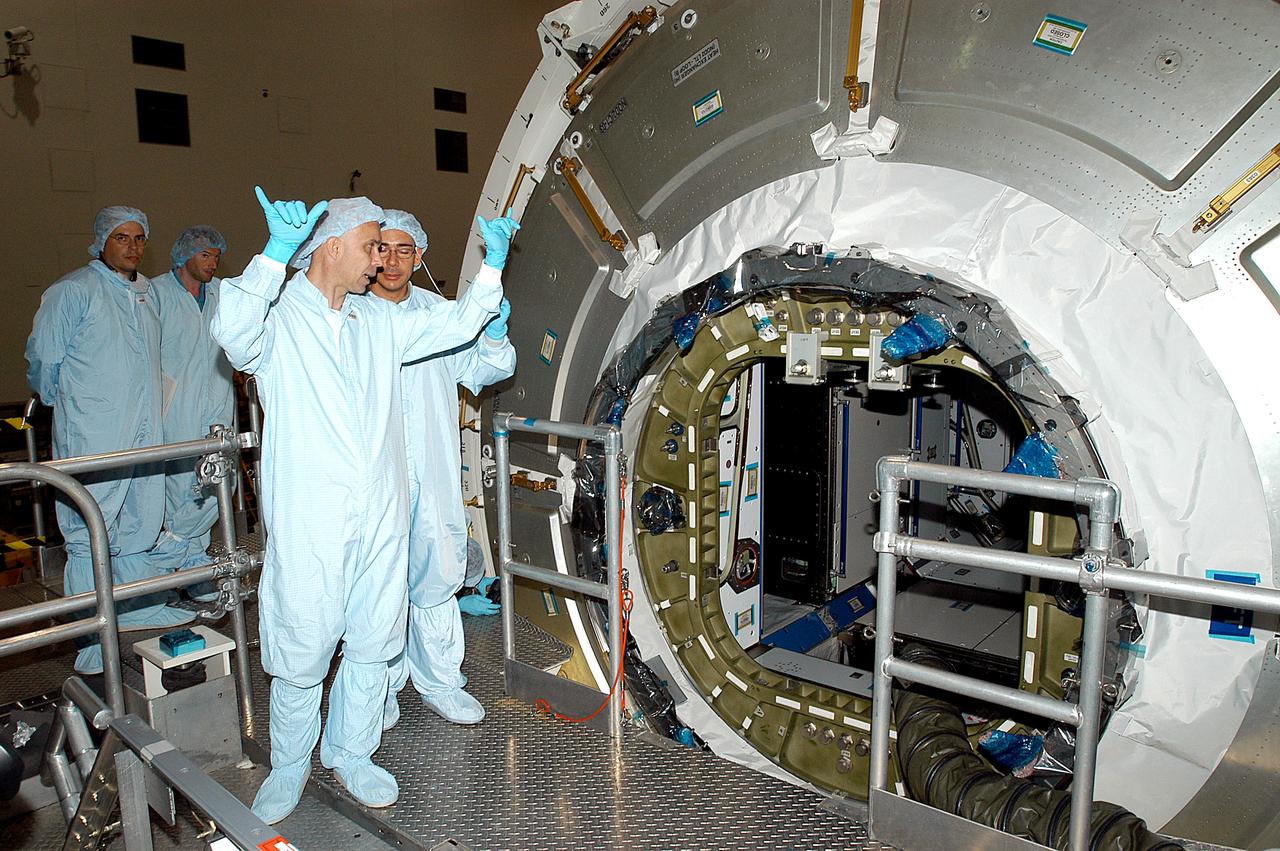
KENNEDY SPACE CENTER, FLA. - In the Space Station Processing Facility, workers talk near the opened hatch of the Italian-built Node 2. A future element of the International Space Station, Node 2 arrived at KSC June 1. The second of three Station connecting modules, Node 2 attaches to the end of the U.S. Lab and provides attach locations for the Japanese laboratory, European laboratory, the Centrifuge Accommodation Module and, later, Multipurpose Logistics Modules. It will provide the primary docking location for the Shuttle when a pressurized mating adapter is attached to Node 2. Installation of the module will complete the U.S. Core of the ISS. Node 2 is the designated payload for mission STS-120. No orbiter or launch date has been determined yet.

KENNEDY SPACE CENTER, FLA. -- The International Space Station's Node 1 and Pressurized Mating Adapter-1 (PMA-1) are rotated by workers in KSC's Space Station Processing Facility. The node is rotated to provide access to different areas of the flight element for processing. Here, the node is rotated to provide access for the installation of heat pipe radiators and a flight computer. The node is scheduled to launch into space on STS-88, slated for a July 9 liftoff at 1:11 p.m. from KSC's Launch Pad 39B
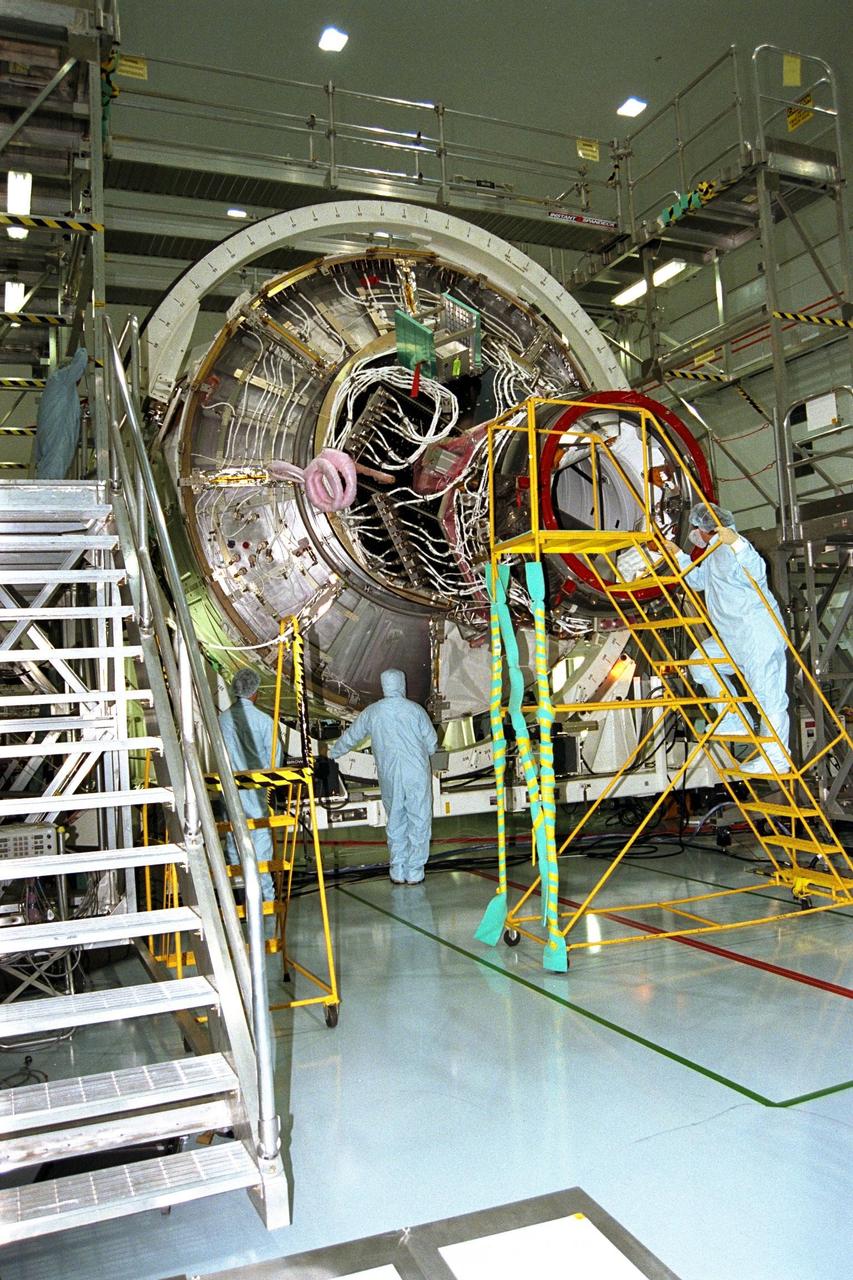
KENNEDY SPACE CENTER, FLA. -- The International Space Station's Node 1 and Pressurized Mating Adapter-1 (PMA-1) are rotated by workers in KSC's Space Station Processing Facility. The node is rotated to provide access to different areas of the flight element for processing. Here, the node is rotated to provide access for the installation of heat pipe radiators and a flight computer. The node is scheduled to launch into space on STS-88, slated for a July 9 liftoff at 1:11 p.m. from KSC's Launch Pad 39B.
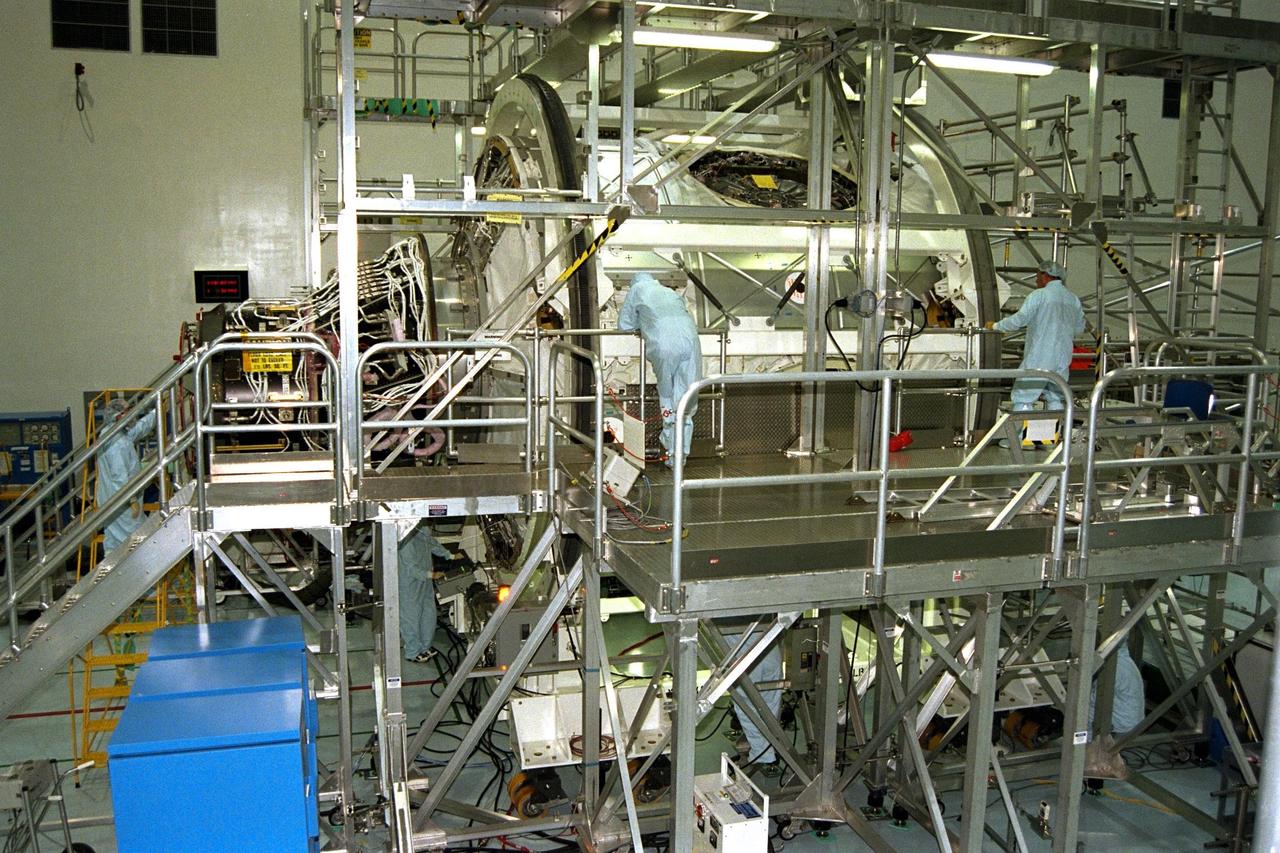
KENNEDY SPACE CENTER, FLA. -- The International Space Station's Node 1 and Pressurized Mating Adapter-1 (PMA-1) are rotated by workers in KSC's Space Station Processing Facility. The node is rotated to provide access to different areas of the flight element for processing. Here, the node is rotated to provide access for the installation of heat pipe radiators and a flight computer. The node is scheduled to launch into space on STS-88, slated for a July 9 liftoff at 1:11 p.m. from KSC's Launch Pad 39B
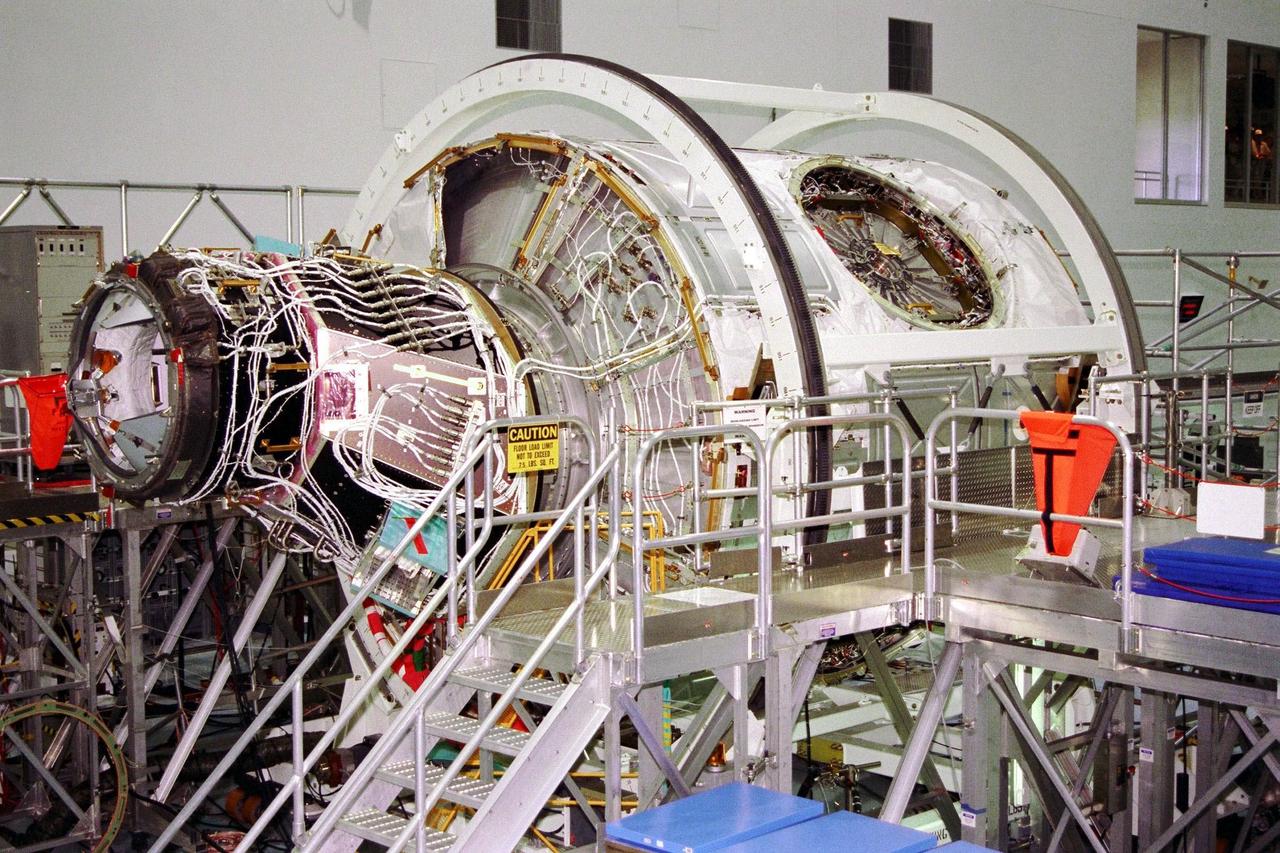
KENNEDY SPACE CENTER, FLA. -- Node 1, the first U.S. element for the International Space Station, and Pressurized Mating Adapter-1 (PMA-1) continue with prelaunch preparation activities at KSC's Space Station Processing Facility. The node and PMA-1 are seen here on a workstand getting ready to be moved the next day to a weight and balance stand for an interim weight and center of gravity determination. (The final determination is planned to be performed prior to transporting Node 1 to the launch pad.) Upon completing the interim determination, the node and PMA will be hoisted into the Shuttle payload transportation canister and the doors will be closed for a two-week leak check. Node 1 is a connecting passageway to the living and working areas of the space station. Node 1 is scheduled to fly on STS-88.
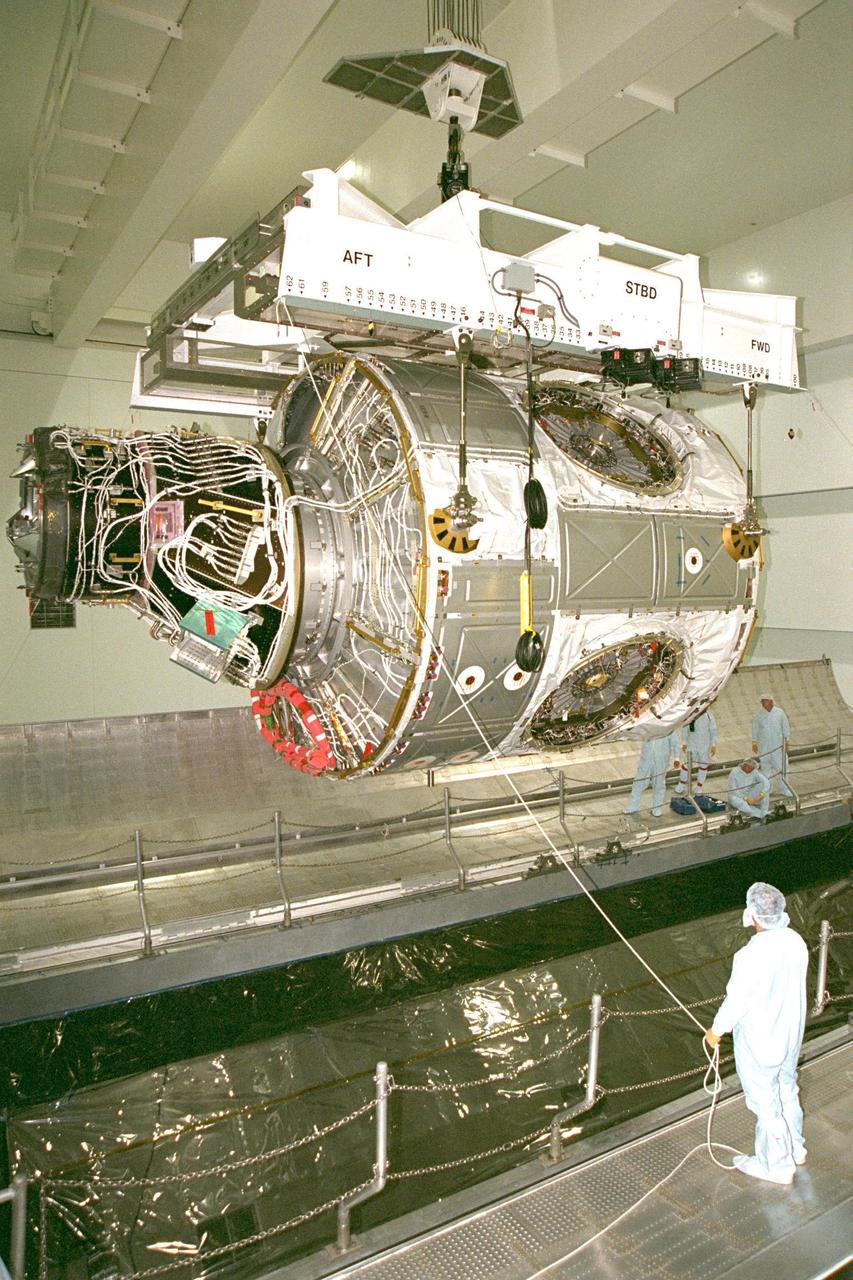
KENNEDY SPACE CENTER, FLA. -- Node 1, the first U.S. element for the International Space Station, and attached Pressurized Mating Adapter-1 (PMA-1) continue with prelaunch preparation activities at KSC's Space Station Processing Facility. Node 1 is a connecting passageway to the living and working areas of the space station. The node and PMA-1 are seen here being moved into the Shuttle payload transportation canister, where the doors will be closed for a two-week leak check. The node and PMA were moved to the canister from the element rotation stand, or test stand, where they underwent an interim weight and center of gravity determination. The final determination is planned to be performed prior to transporting Node 1 to the launch pad. Node 1 is scheduled to fly on STS-88
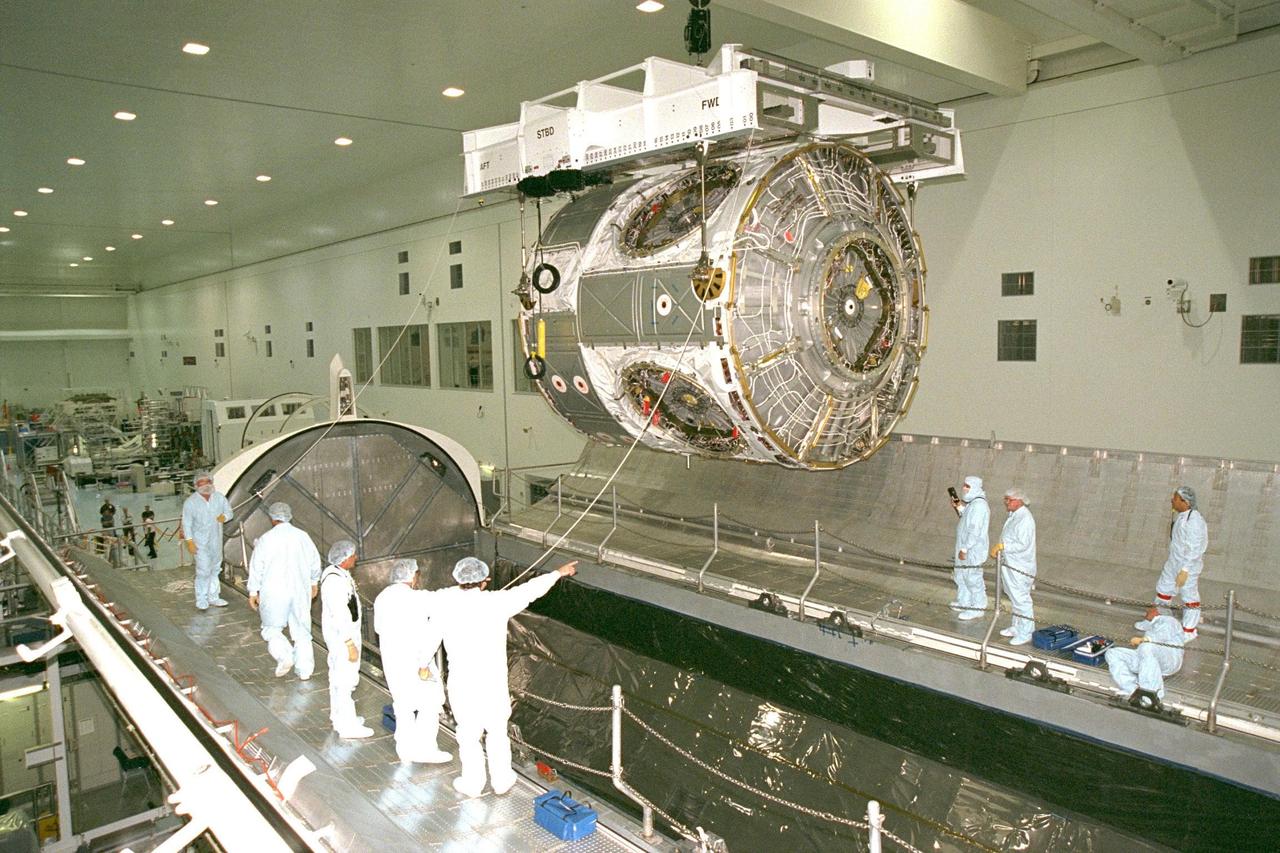
KENNEDY SPACE CENTER, FLA. -- Node 1, the first U.S. element for the International Space Station, and attached Pressurized Mating Adapter-1 (PMA-1) continue with prelaunch preparation activities at KSC's Space Station Processing Facility. Node 1 is a connecting passageway to the living and working areas of the space station. The node is seen here being moved into the Shuttle payload transportation canister, where the doors will be closed for a two-week leak check. The node and PMA-1 were moved to the canister from the element rotation stand, or test stand, where they underwent an interim weight and center of gravity determination. The final determination is planned to be performed prior to transporting Node 1 to the launch pad. Node 1 is scheduled to fly on STS-88
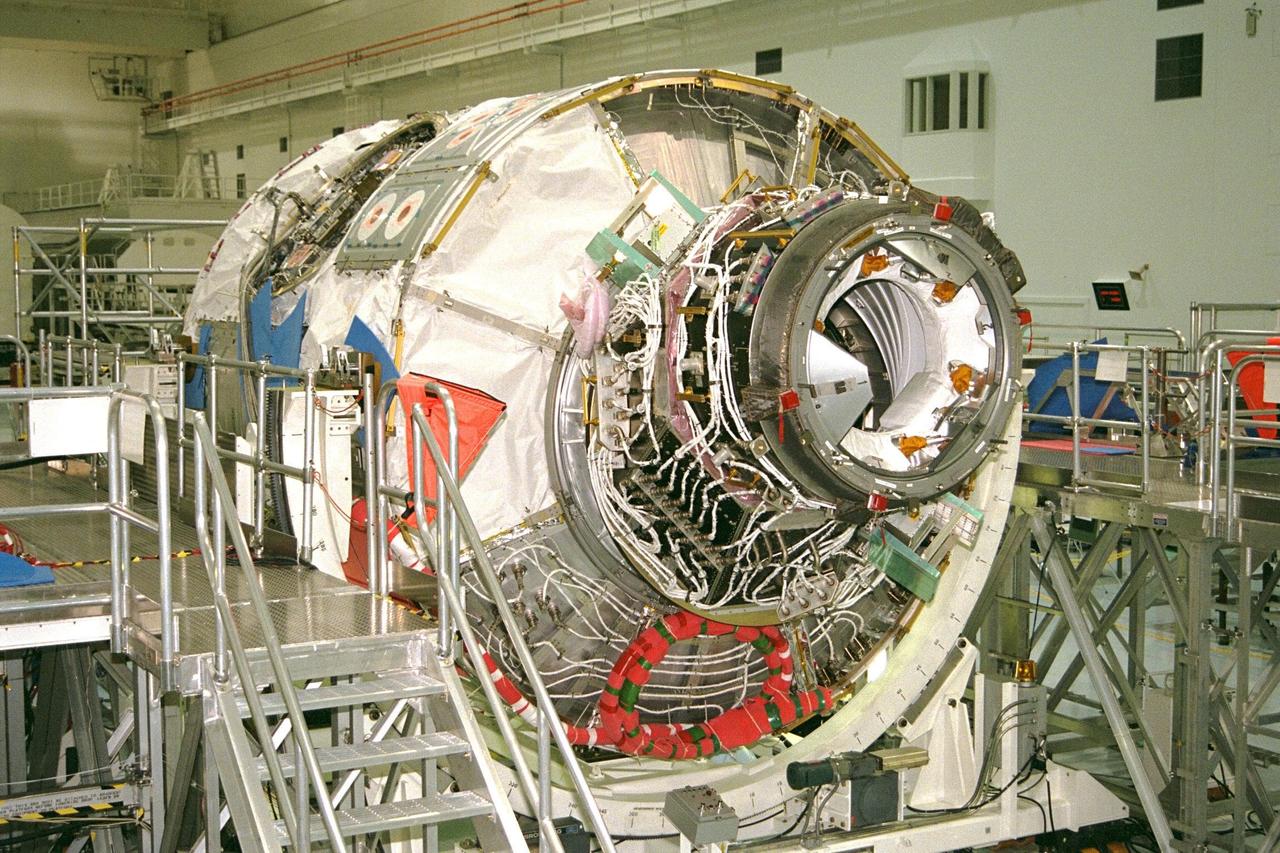
KENNEDY SPACE CENTER, FLA. -- Node 1, the first U.S. element for the International Space Station, and Pressurized Mating Adapter-1 (PMA-1) continue with prelaunch preparation activities at KSC's Space Station Processing Facility. The node and PMA-1 are seen here on a workstand getting ready to be moved the next day to a weight and balance stand for an interim weight and center of gravity determination. (The final determination is planned to be performed prior to transporting Node 1 to the launch pad.) Upon completing the interim determination, the node and PMA will be hoisted into the Shuttle payload transportation canister and the doors will be closed for a two-week leak check. Node 1 is a connecting passageway to the living and working areas of the space station. Node 1 is scheduled to fly on STS-88

KENNEDY SPACE CENTER, FLA. -- Node 1, the first U.S. element for the International Space Station, and attached Pressurized Mating Adapter-1 (PMA-1) continue with prelaunch preparation activities at KSC's Space Station Processing Facility. Node 1 is a connecting passageway to the living and working areas of the space station. The node and PMA-1 are being removed from the element rotation stand, or test stand, where they underwent an interim weight and center of gravity determination. (The final determination is planned to be performed prior to transporting Node 1 to the launch pad.) Now the node is being moved to the Shuttle payload transportation canister, where the doors will be closed for a two-week leak check. PMAs -2 and -3 can be seen against the right wall, with PMA-3 at the far right. Node 1 is scheduled to fly on STS-88
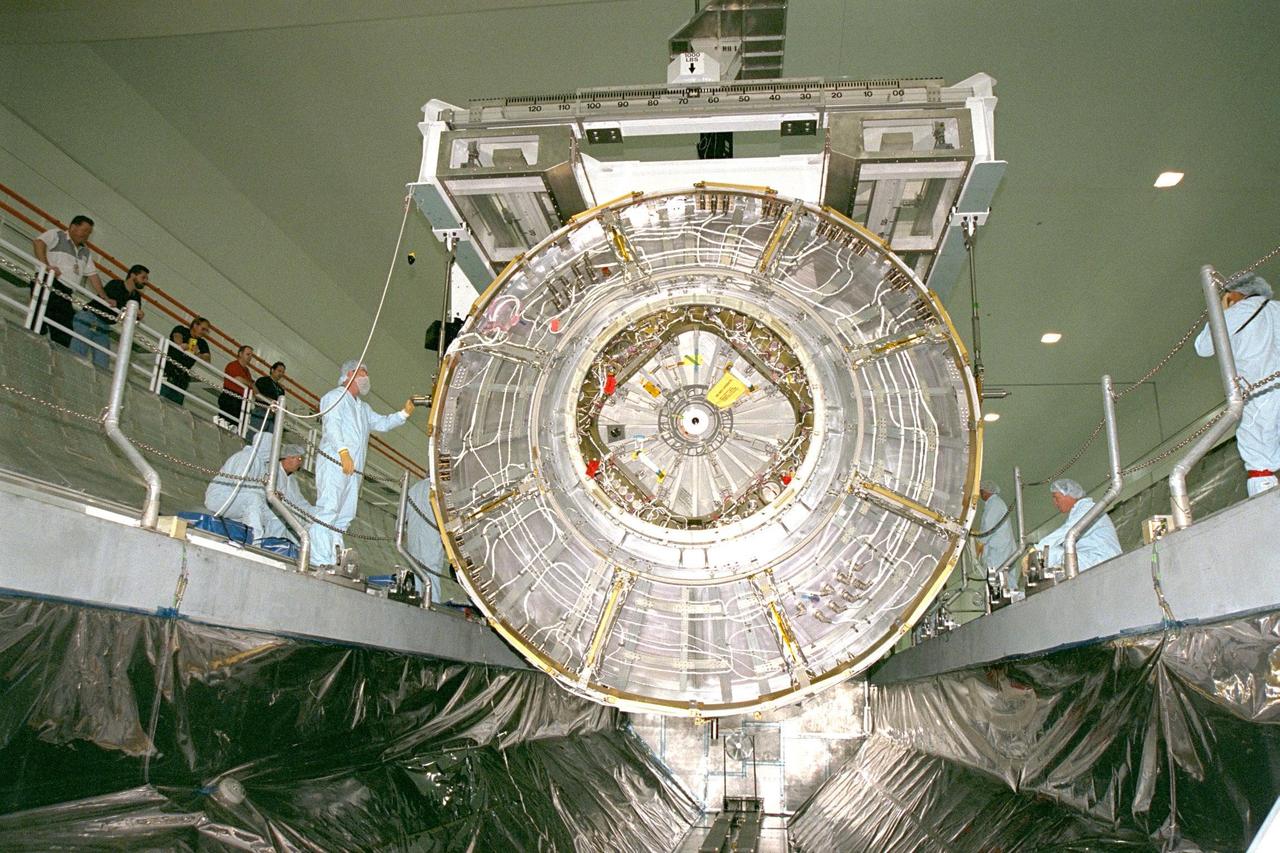
KENNEDY SPACE CENTER, FLA. -- Node 1, the first U.S. element for the International Space Station, and attached Pressurized Mating Adapter-1 (PMA-1) continue with prelaunch preparation activities at KSC's Space Station Processing Facility. Node 1 is a connecting passageway to the living and working areas of the space station. The node and PMA-1 are seen here being moved into the Shuttle payload transportation canister, where the doors will be closed for a two-week leak check. The node and PMA were moved to the canister from the element rotation stand, or test stand, where they underwent an interim weight and center of gravity determination. The final determination is planned to be performed prior to transporting Node 1 to the launch pad. Node 1 is scheduled to fly on STS-88
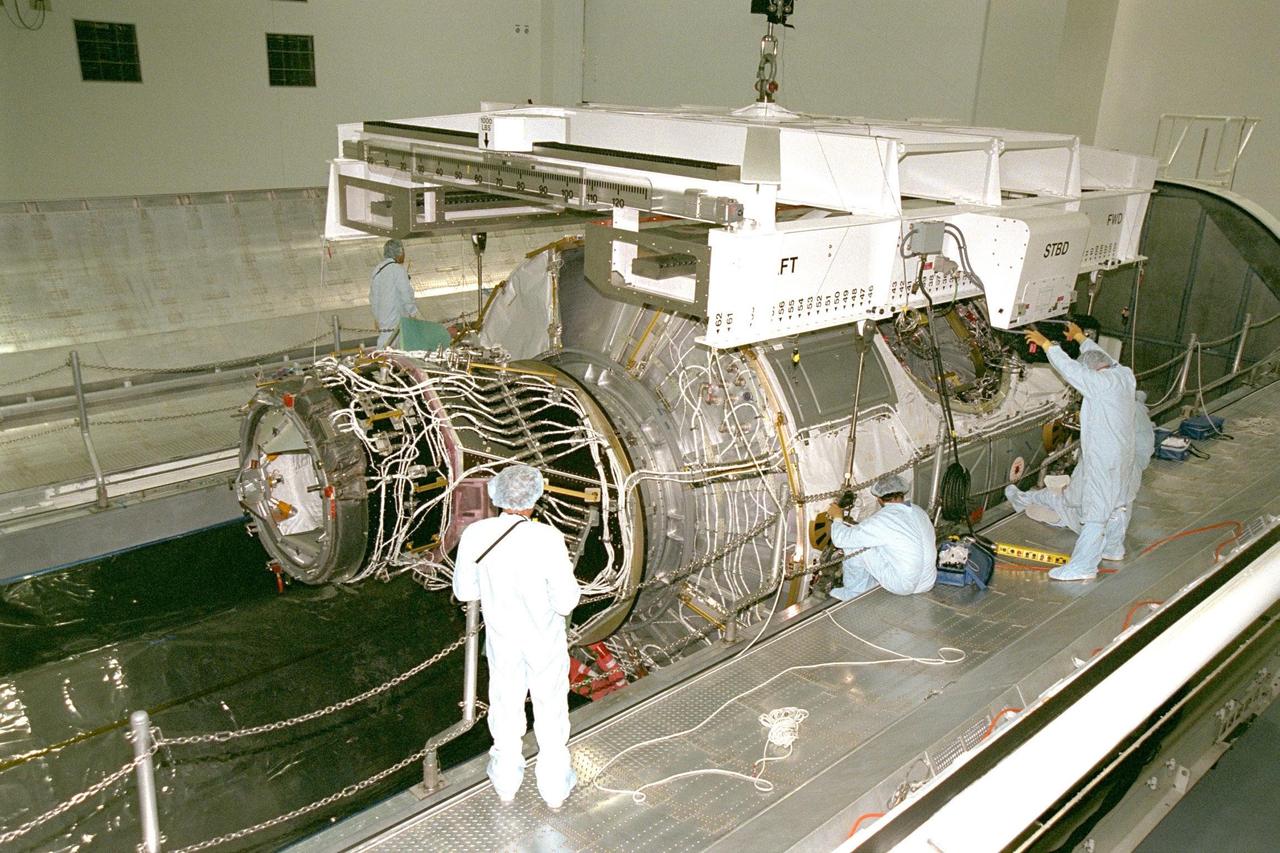
Node 1, the first U.S. element for the International Space Station, and attached Pressurized Mating Adapter-1 (PMA-1) continue with prelaunch preparation activities at KSC's Space Station Processing Facility. Node 1 is a connecting passageway to the living and working areas of the space station. The node and PMA-1 are seen here being moved into the Shuttle payload transportation canister, where the doors will be closed for a two-week leak check. The node and PMA were moved to the canister from the element rotation stand, or test stand, where they underwent an interim weight and center of gravity determination. The final determination is planned to be performed prior to transporting Node 1 to the launch pad. Node 1 is scheduled to fly on STS-88
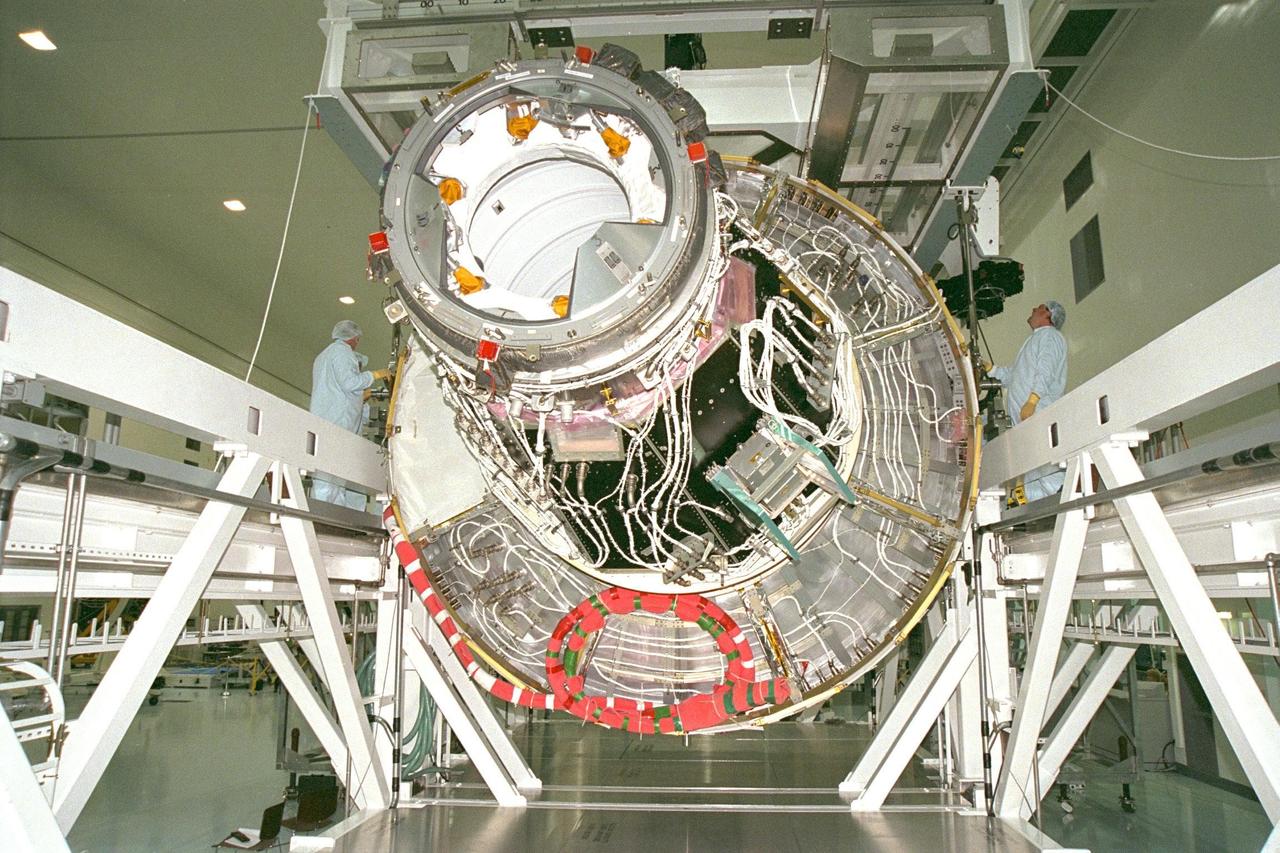
KENNEDY SPACE CENTER, FLA. -- Node 1, the first U.S. element for the International Space Station, and attached Pressurized Mating Adapter-1 continue with prelaunch preparation activities at KSC's Space Station Processing Facility. Node 1 is a connecting passageway to the living and working areas of the space station. The node and PMA-1 are being removed from the element rotation stand, or test stand, where they underwent an interim weight and center of gravity determination. (The final determination is planned to be performed prior to transporting Node 1 to the launch pad.) Now the node is being moved to the Shuttle payload transportation canister, where the doors will be closed for a two-week leak check. Node 1 is scheduled to fly on STS-88
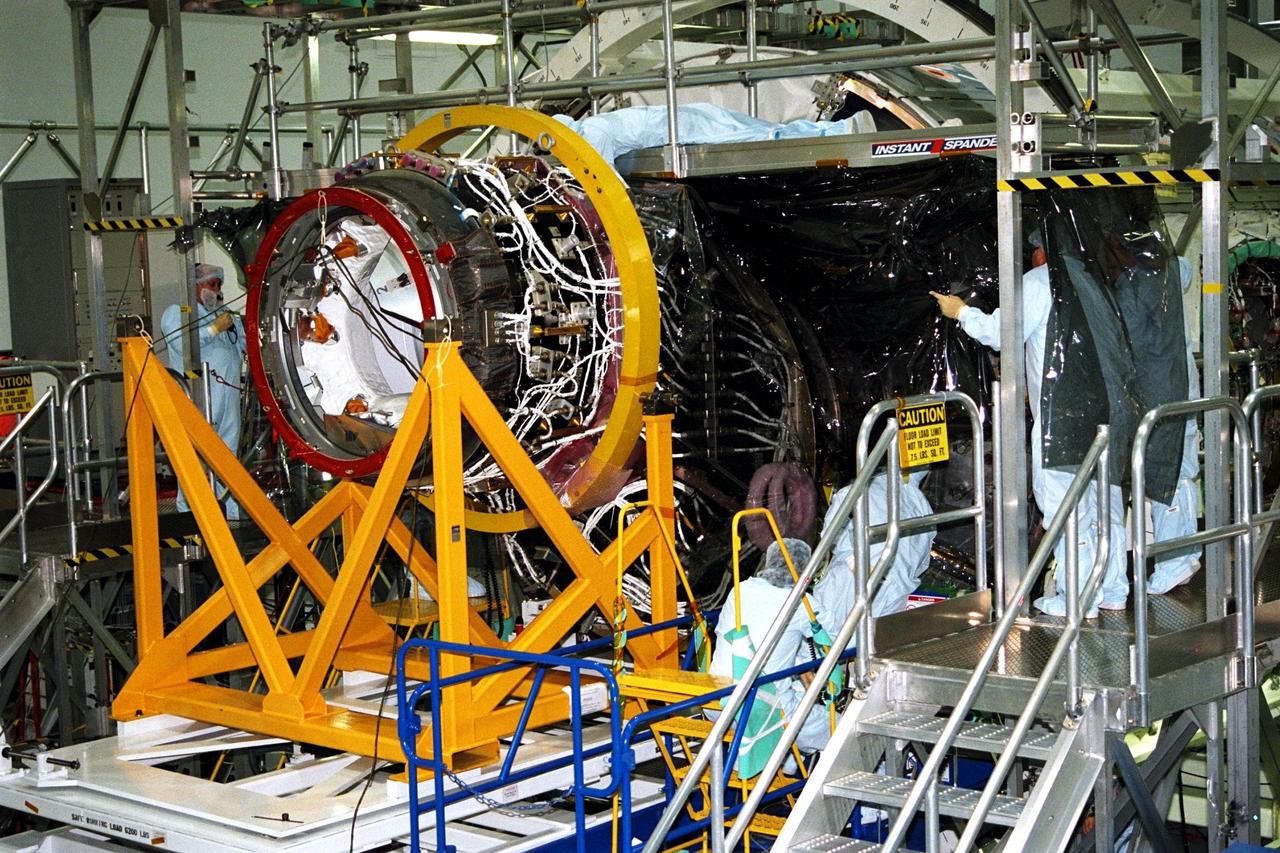
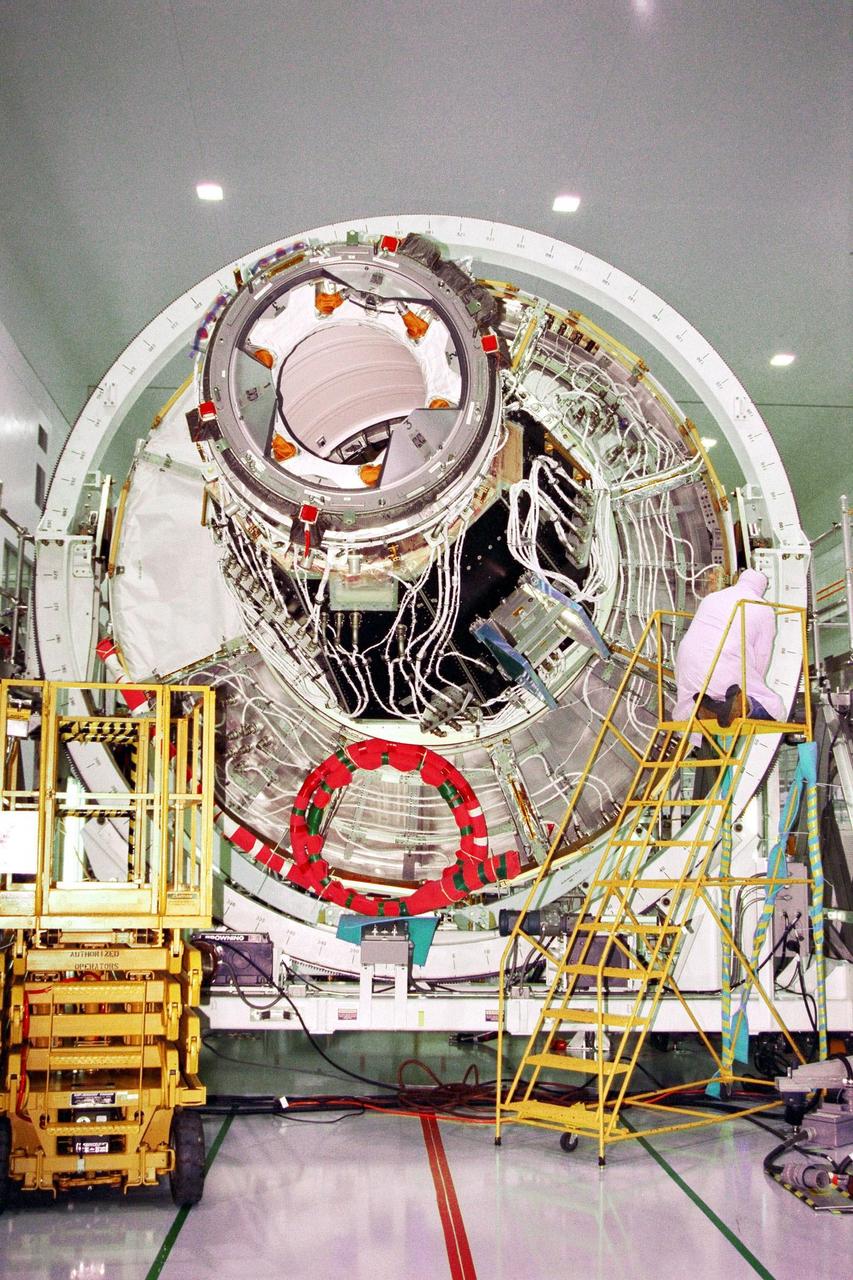
KENNEDY SPACE CENTER, FLA. -- Boeing technicians join Node 1 for the International Space Station (ISS) with the Pressurized Mating Adapter (PMA)-1 in KSC’s Space Station Processing Facility. This PMA, identifiable by its bright red ring, is a cone-shaped connector for the space station’s structural building block, known as Node 1. Seen here surrounded by scaffolding, Node 1 will have two PMAs attached, the second of which is scheduled for mating to the node in January 1998. The node and PMAs, which will be the first element of the ISS, are scheduled to be launched aboard the Space Shuttle Endeavour on STS-88 in July 1998
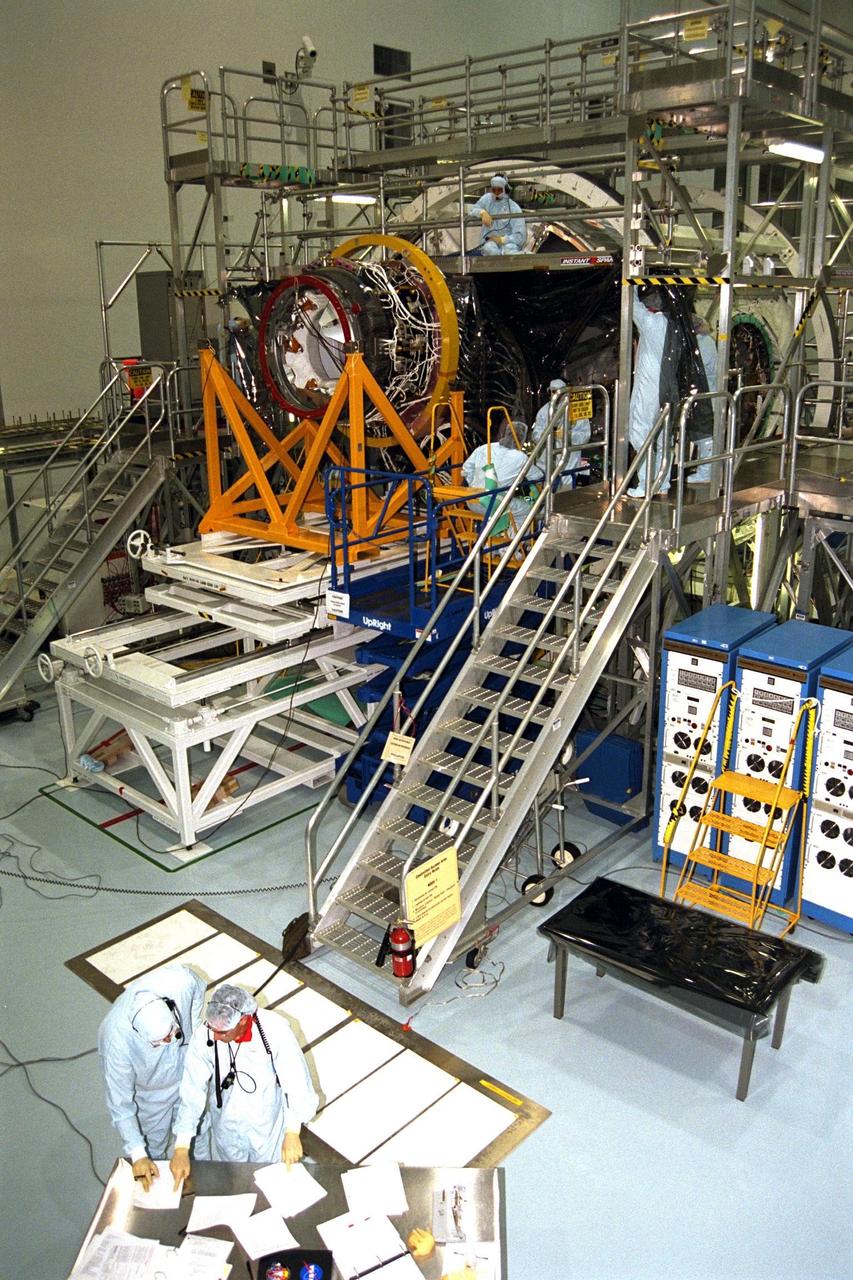
KENNEDY SPACE CENTER, FLA. -- Boeing technicians join Node 1 for the International Space Station (ISS) with the Pressurized Mating Adapter (PMA)-1 in KSC’s Space Station Processing Facility. This PMA, identifiable by its bright red ring, is a cone-shaped connector for the space station’s structural building block, known as Node 1. Seen here surrounded by scaffolding, Node 1 will have two PMAs attached, the second of which is scheduled for mating to the node in January 1998. The node and PMAs, which will be the first element of the ISS, are scheduled to be launched aboard the Space Shuttle Endeavour on STS-88 in July 1998
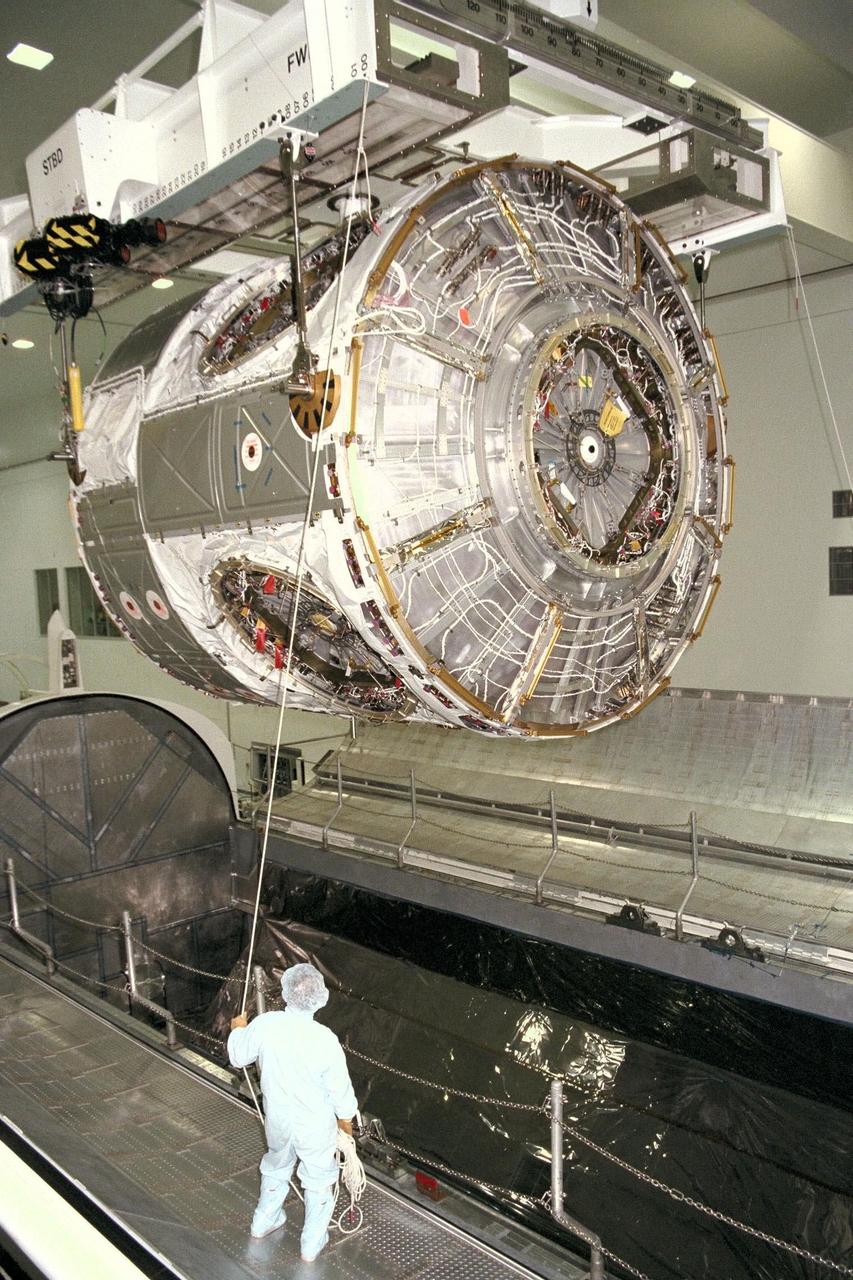
KENNEDY SPACE CENTER, FLA. -- Node 1, the first U.S. element for the International Space Station, and attached Pressurized Mating Adapter-1 (PMA-1) are seen here being moved from the Shuttle payload transportation canister, where the doors were closed a week ago for a leak check in KSC's Space Station Processing Facility. Node 1 is a connecting passageway to the living and working areas of the space station. Since the node and PMA passed the test with flying colors, they were removed from the canister one week early in order to continue with other prelaunch preparation activities. Node 1 is scheduled to fly on STS-88
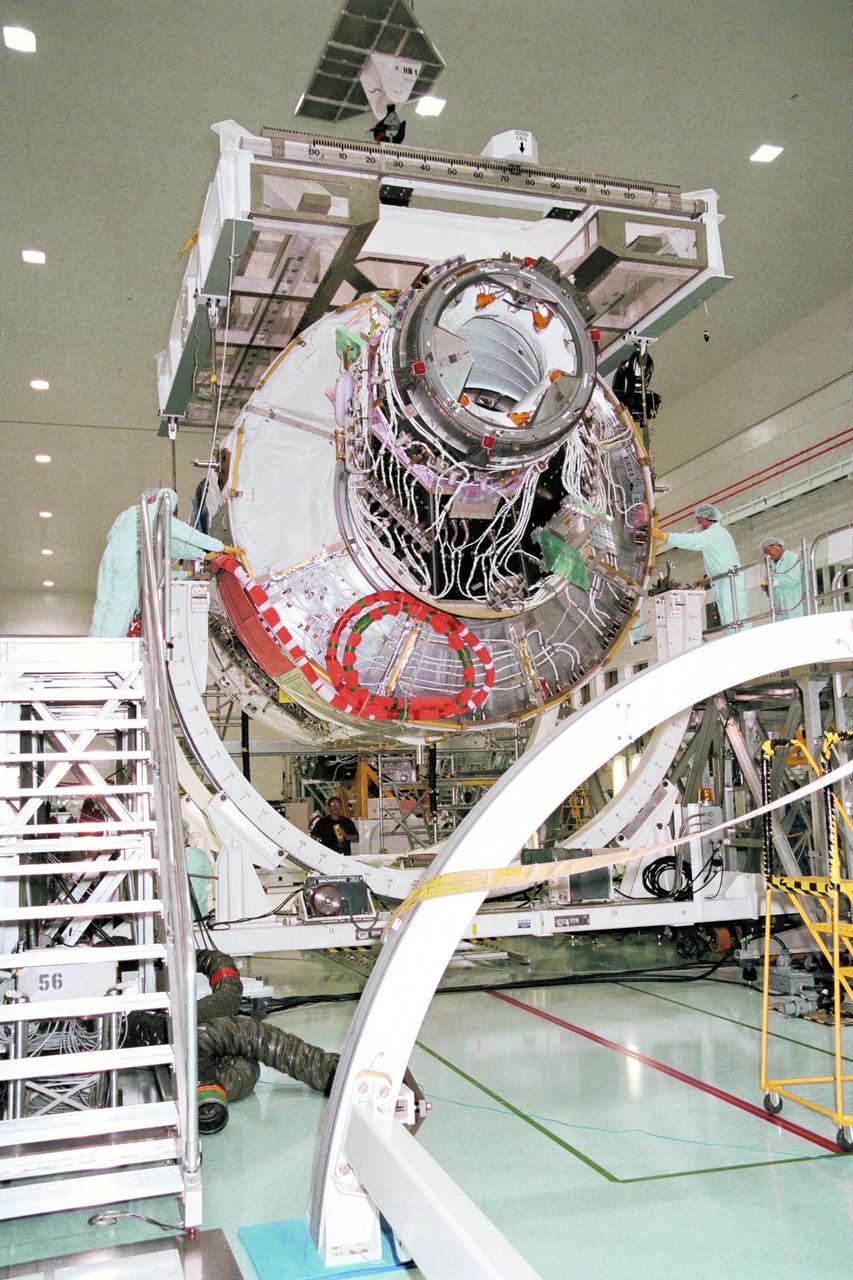
KENNEDY SPACE CENTER, FLA. -- Node 1, the first U.S. element for the International Space Station, and attached Pressurized Mating Adapter-1 (PMA-1) are seen here being moved into their test stand from the Shuttle payload transportation canister, where the doors were closed a week ago for a leak check in KSC's Space Station Processing Facility. Node 1 is a connecting passageway to the living and working areas of the space station. Since the node and PMA passed the test with flying colors, they were removed from the canister one week early in order to continue with other prelaunch preparation activities. Node 1 is scheduled to fly on STS-88
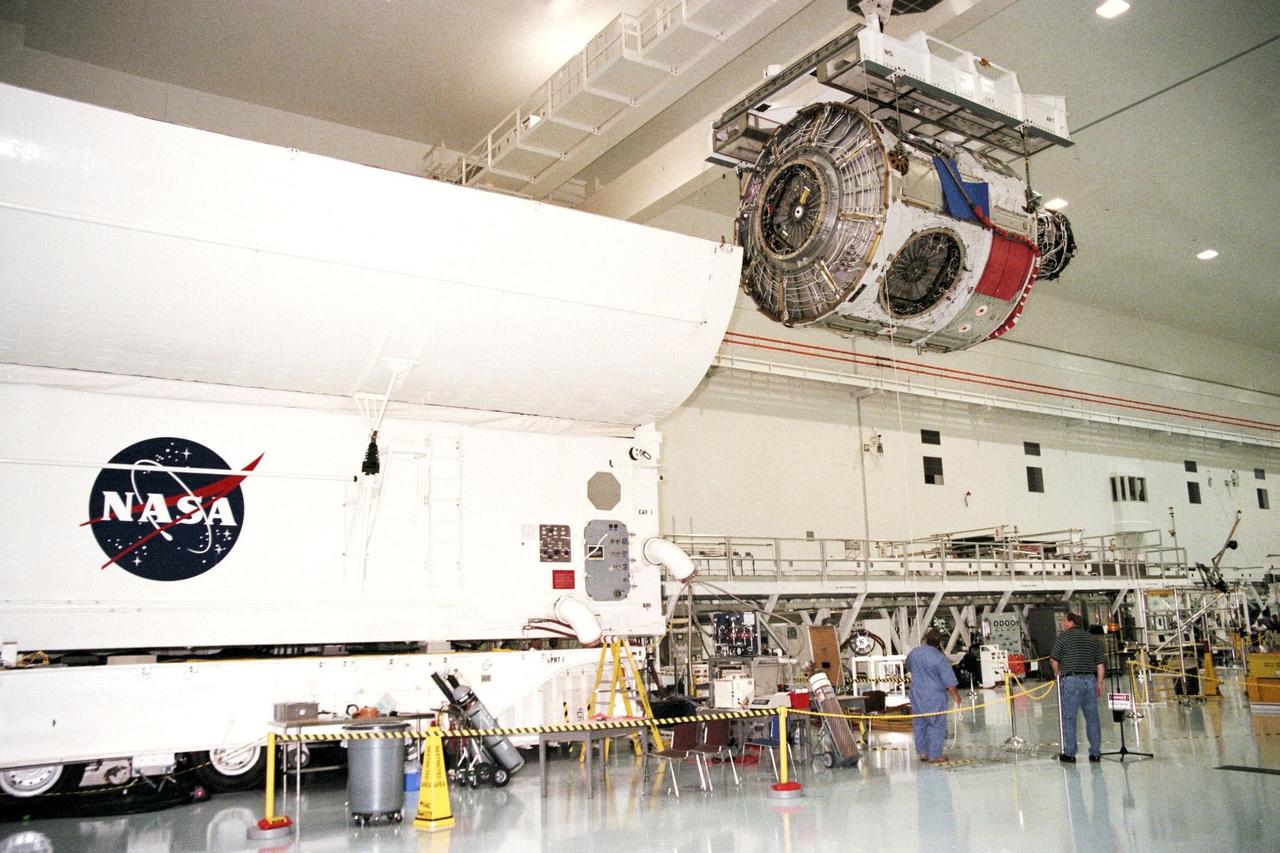
KENNEDY SPACE CENTER, FLA. -- Node 1, the first U.S. element for the International Space Station, and attached Pressurized Mating Adapter-1 (PMA-1) are seen here being moved from the Shuttle payload transportation canister, where the doors were closed a week ago for a leak check in KSC's Space Station Processing Facility. Node 1 is a connecting passageway to the living and working areas of the space station. Since the node and PMA passed the test with flying colors, they were removed from the canister one week early in order to continue with other prelaunch preparation activities. Node 1 is scheduled to fly on STS-88
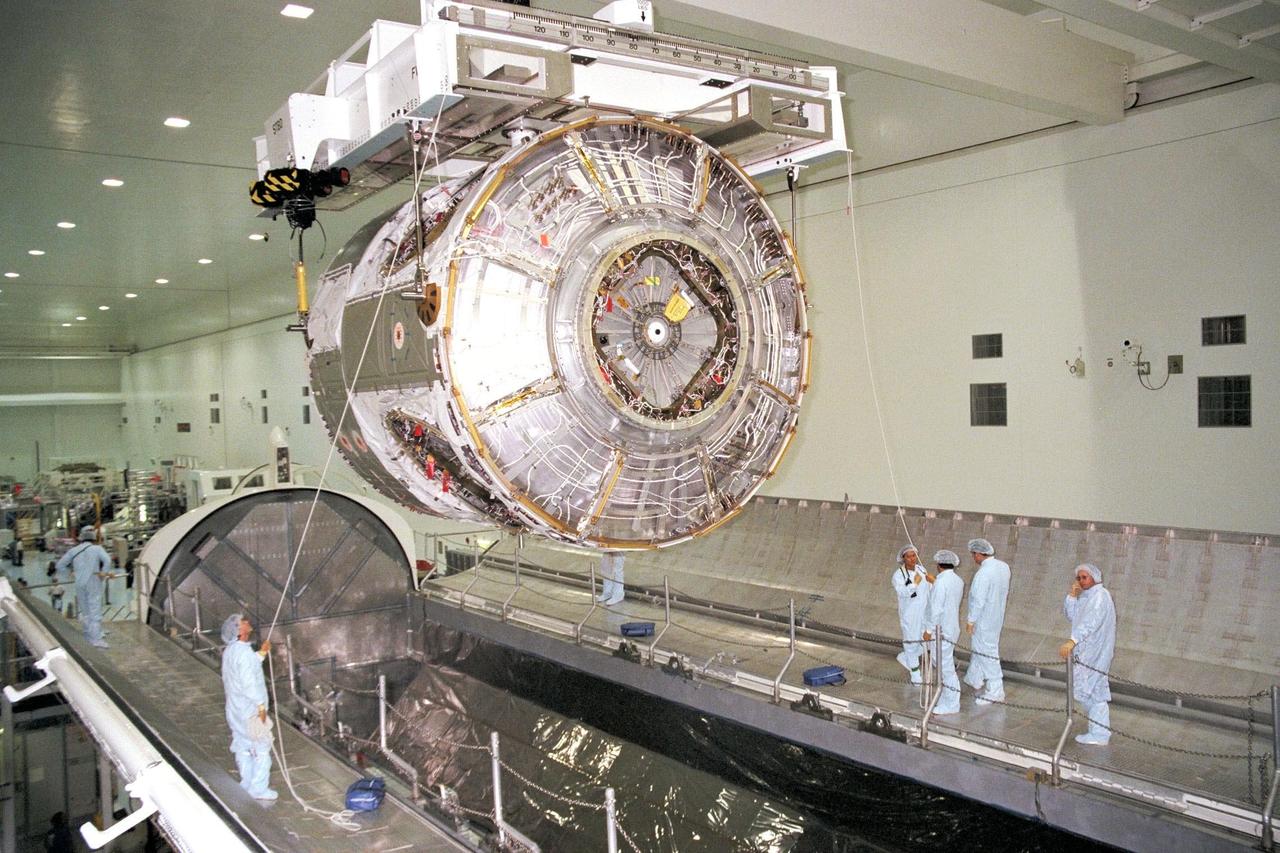
KENNEDY SPACE CENTER, FLA. -- Node 1, the first U.S. element for the International Space Station, and attached Pressurized Mating Adapter-1 (PMA-1) are seen here being moved from the Shuttle payload transportation canister, where the doors were closed a week ago for a leak check in KSC's Space Station Processing Facility. Node 1 is a connecting passageway to the living and working areas of the space station. Since the node and PMA passed the test with flying colors, they were removed from the canister one week early in order to continue with other prelaunch preparation activities. Node 1 is scheduled to fly on STS-88
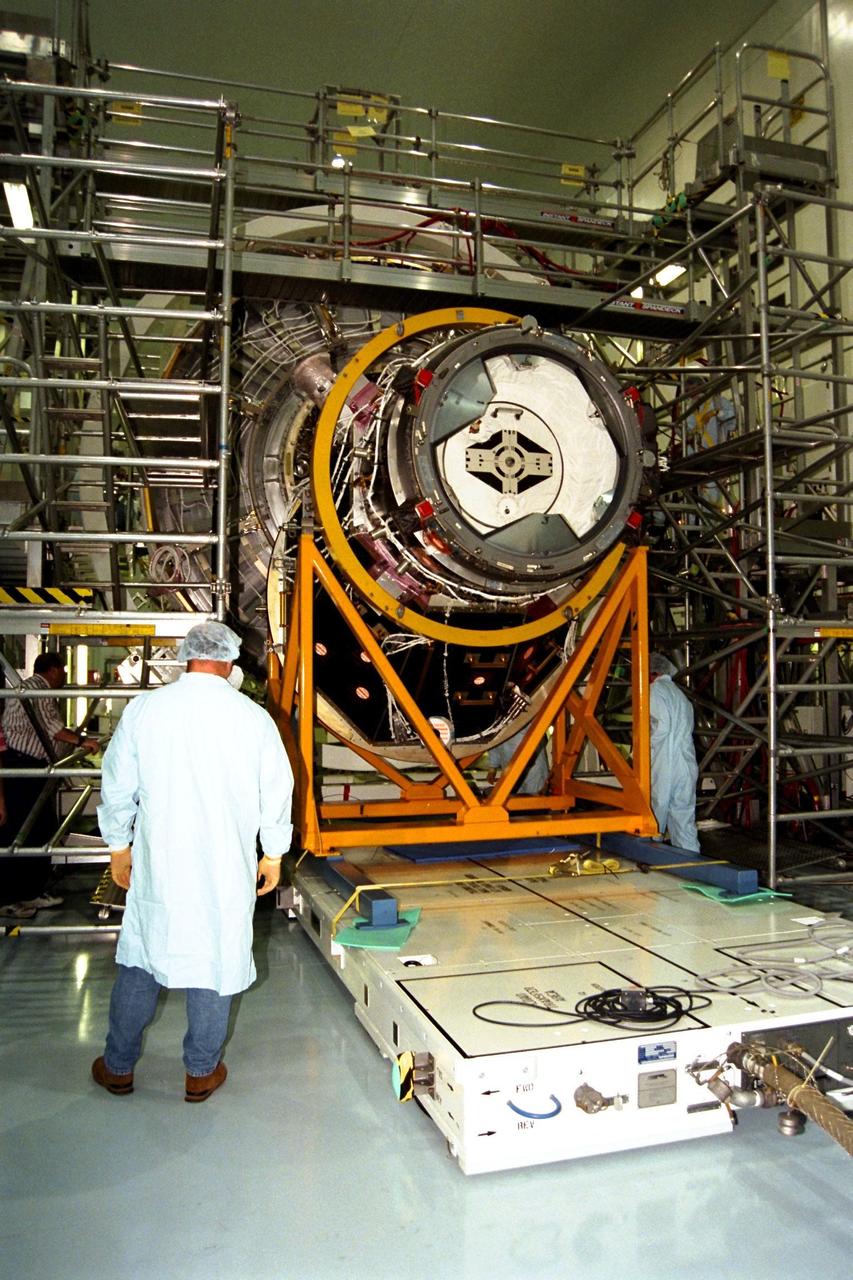
KENNEDY SPACE CENTER, FLA. -- The Pressurized Mating Adapter (PMA)-2, seen here in its yellow workstand, is moved on an air pallet toward Node 1, the International Space Station’s (ISS's) structural building block, in KSC’s Space Station Processing Facility. This PMA is a cone-shaped connector to Node 1, which will have two PMAs attached once PMA-2 is mated with the node. Node 1 can be seen directly behind PMA-2. The node and PMAs, which together will make up the first element of the ISS, are scheduled to be launched aboard the Space Shuttle Endeavour on STS-88.