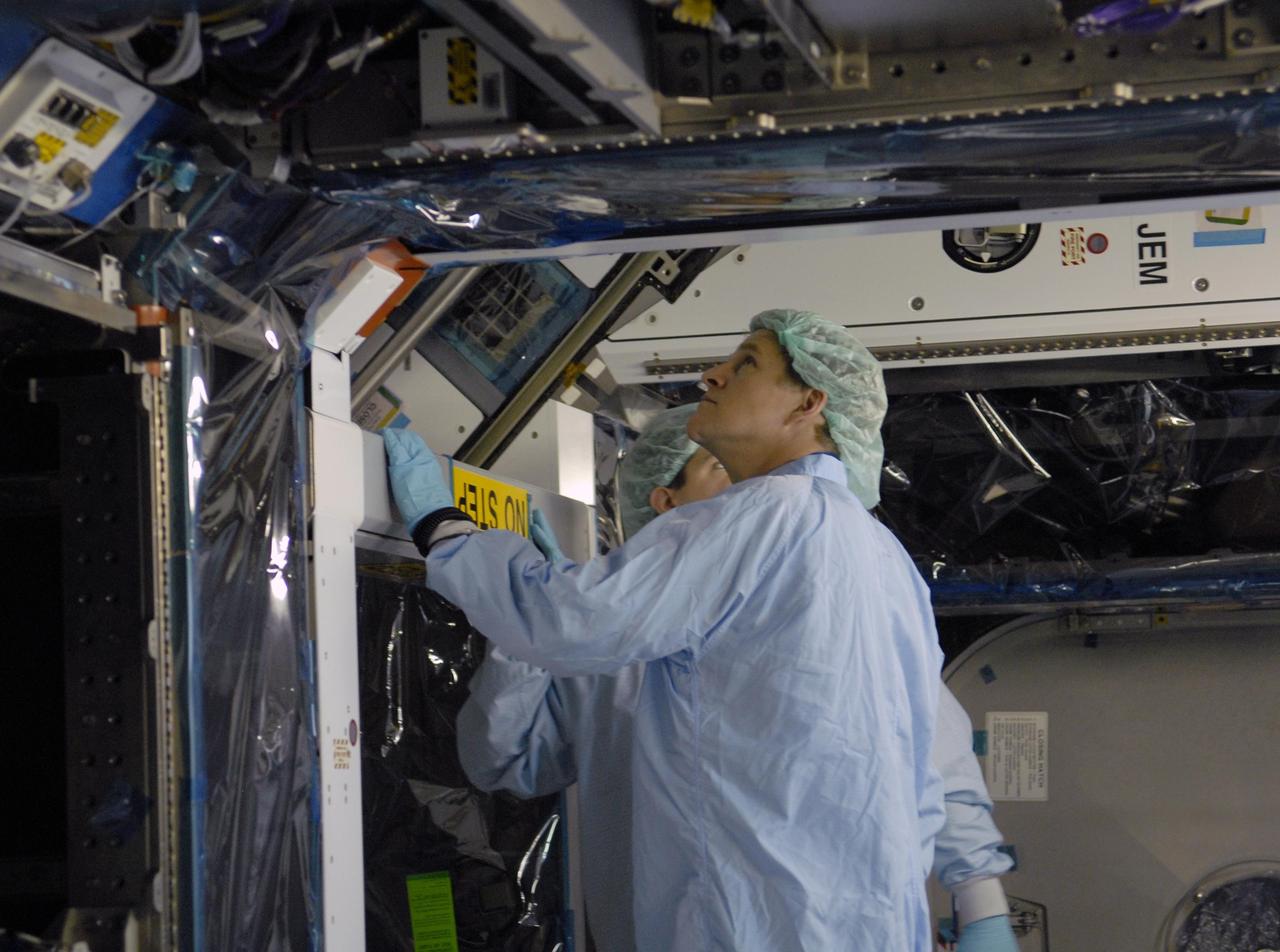
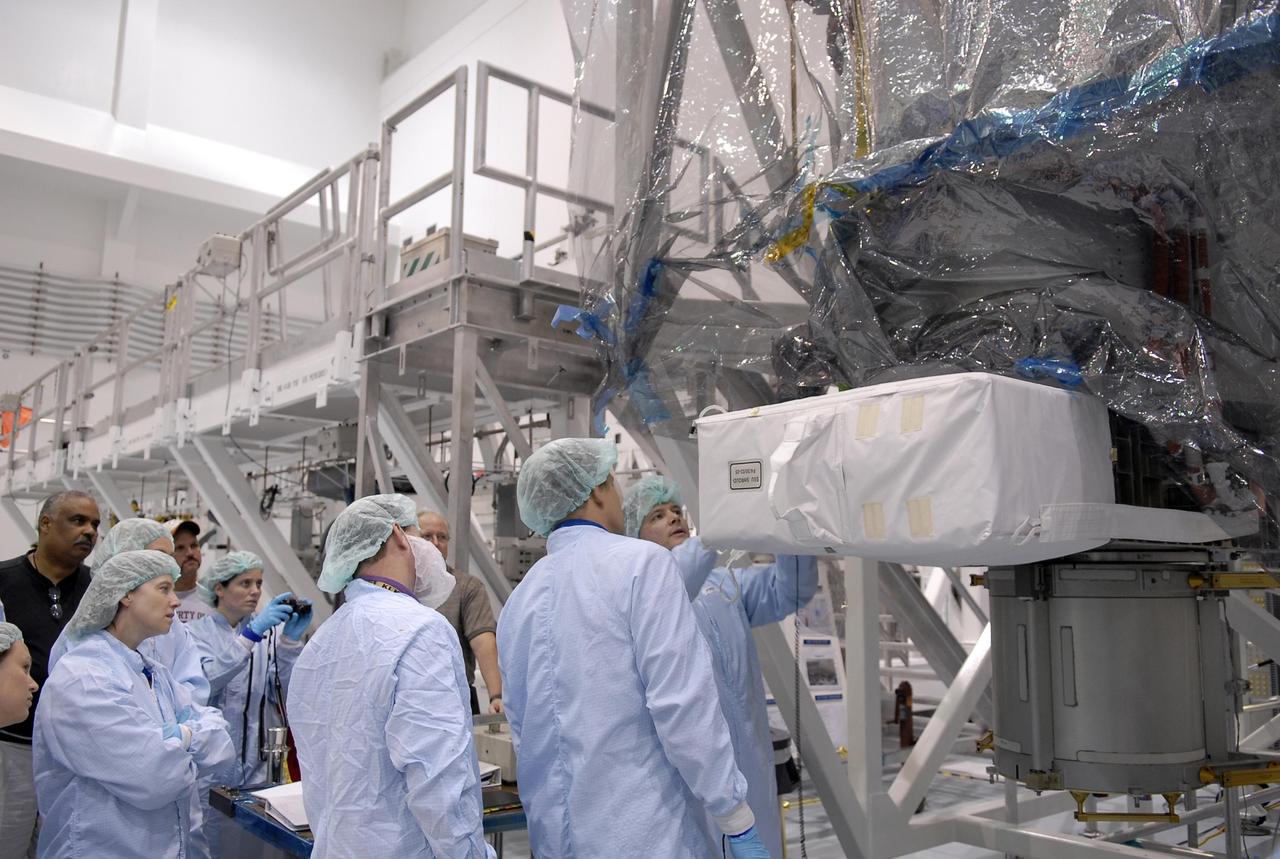
KENNEDY SPACE CENTER, FLA. -- STS-120 Mission Specialist Scott Parazynski takes a look underneath the primary payload for the mission: the U.S. Node 2, another element to be added to the International Space Station. Node 2 will provide a passageway between three station science experiment facilities: the U.S. Destiny Laboratory, the Kibo Japanese Experiment Module, and the European Columbus Laboratory. STS-120 is targeted for launch on Sept. 7 with a crew of six, including Commander Pam Melroy, Pilot George Zamka, and Mission Specialist Mike Foreman. Photo credit: NASA/Kim Shiflett
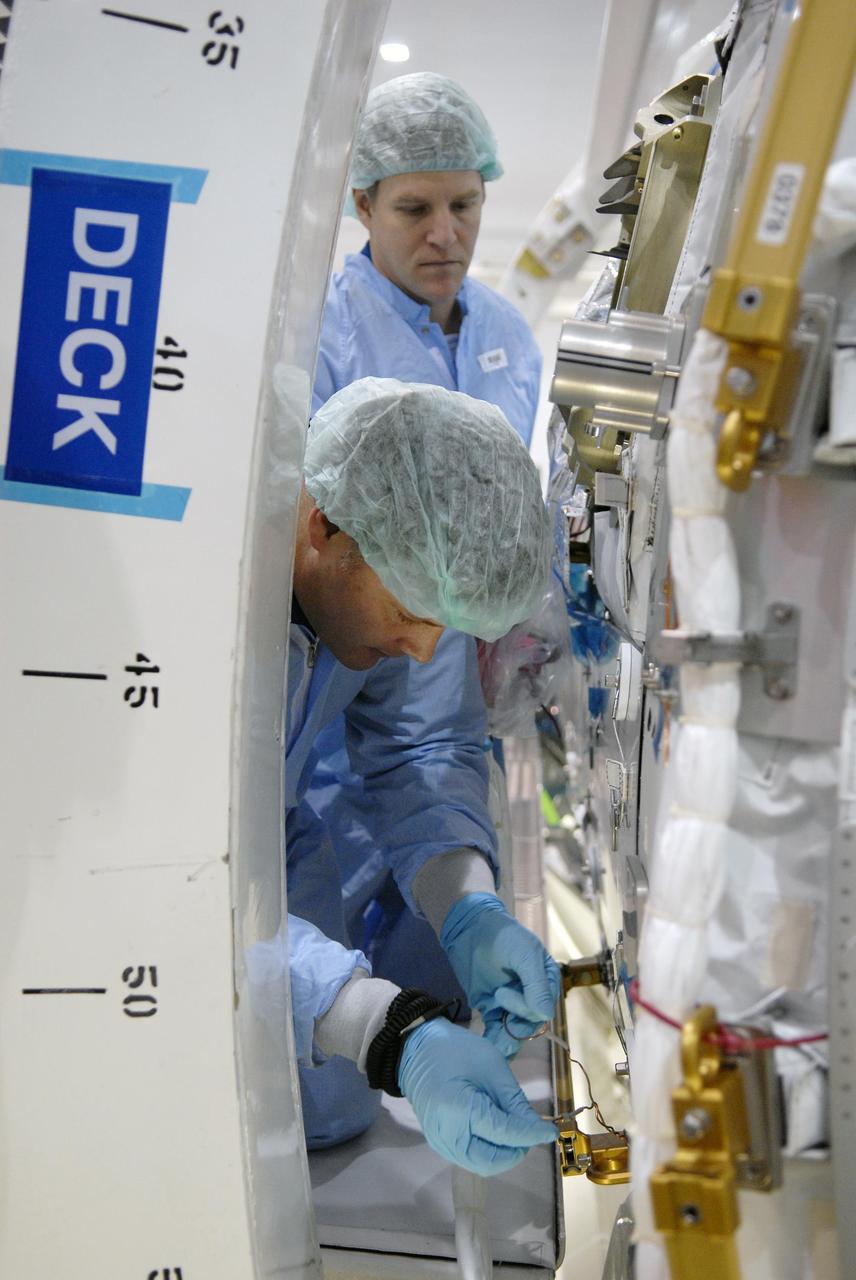
KENNEDY SPACE CENTER, FLA. -- STS-120 Mission Specialist Scott Parazynski (background) watches Mission Specialist Doug Wheelock work with a wire on the primary payload for the mission: the U.S. Node 2, another element to be added to the International Space Station. Parazynski, Wheelock and other crew members are familiarizing themselves with the payload. Node 2 will provide a passageway between three station science experiment facilities: the U.S. Destiny Laboratory, the Kibo Japanese Experiment Module, and the European Columbus Laboratory. STS-120 is targeted for launch on Sept. 7 with a crew of six, including Commander Pam Melroy, Pilot George Zamka, and Mission Specialist Mike Foreman. Photo credit: NASA/Kim Shiflett
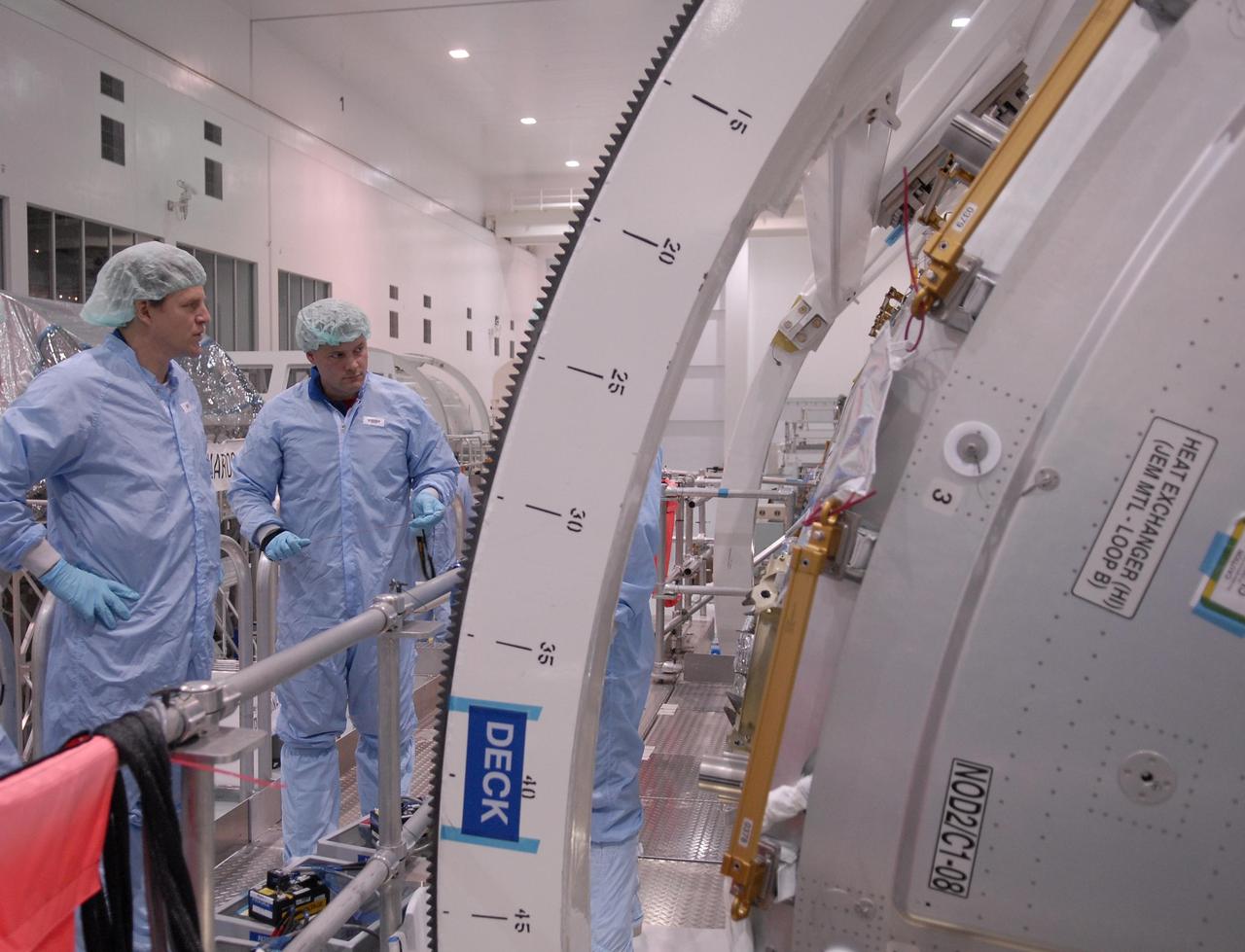
KENNEDY SPACE CENTER, FLA. -- STS-120 Mission Specialists Scott Parazynski (left) and Doug Wheelock check out the primary payload for the mission: the U.S. Node 2, another element to be added to the International Space Station. They are familiarizing themselves with the payload. Node 2 will provide a passageway between three station science experiment facilities: the U.S. Destiny Laboratory, the Kibo Japanese Experiment Module, and the European Columbus Laboratory. STS-120 is targeted for launch on Sept. 7 with a crew of six, including Commander Pam Melroy, Pilot George Zamka, and Mission Specialist Mike Foreman. Photo credit: NASA/Kim Shiflett
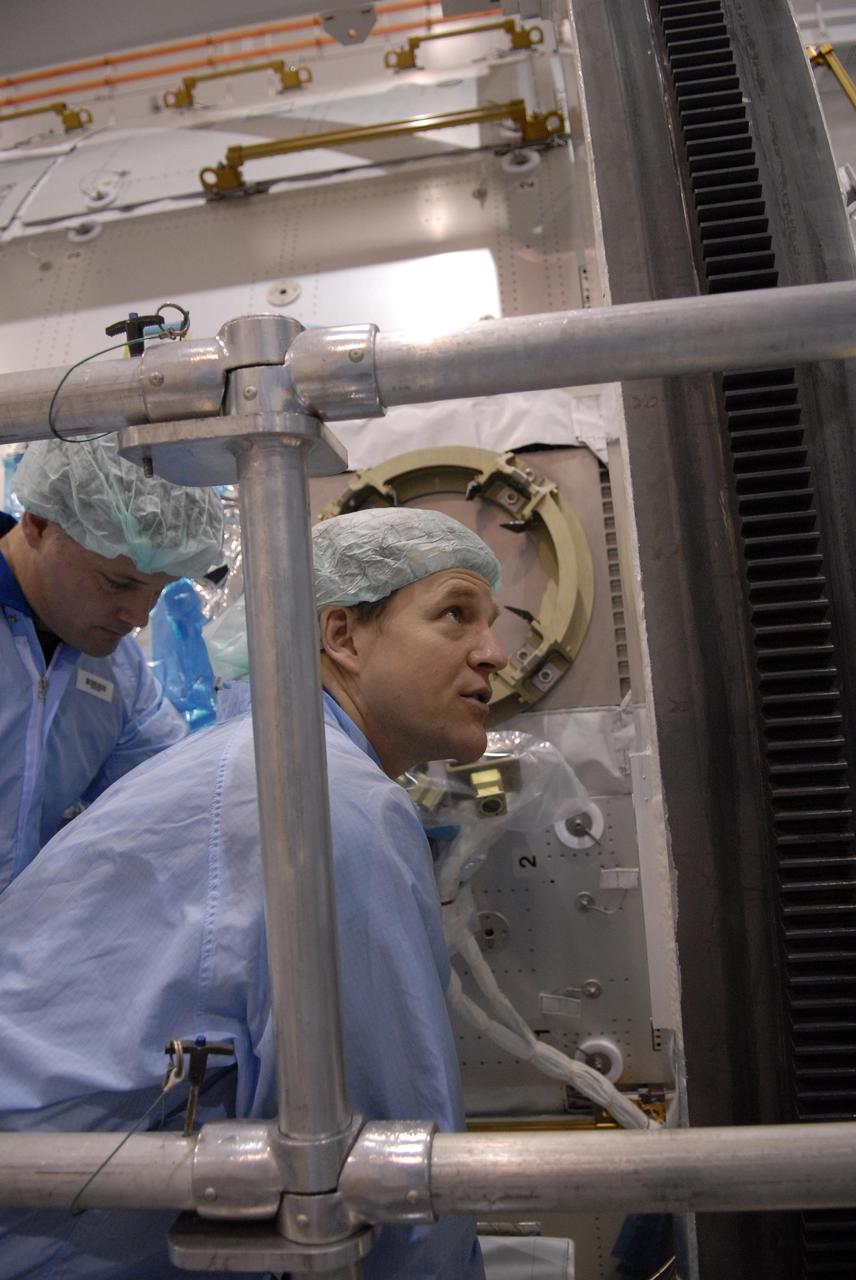
KENNEDY SPACE CENTER, FLA. -- In the Space Station Processing Facility at NASA's Kennedy Space Center, STS-120 Mission Specialist Scott Parazynski checks out the primary payload for the mission: the U.S. Node 2, another element to be added to the International Space Station. Parazynski and other crew members are familiarizing themselves with the payload. Node 2 will provide a passageway between three station science experiment facilities: the U.S. Destiny Laboratory, the Kibo Japanese Experiment Module, and the European Columbus Laboratory. STS-120 is targeted for launch on Sept. 7 with a crew of six, including Commander Pam Melroy, Pilot George Zamka, and Mission Specialist Mike Foreman. Photo credit: NASA/Kim Shiflett
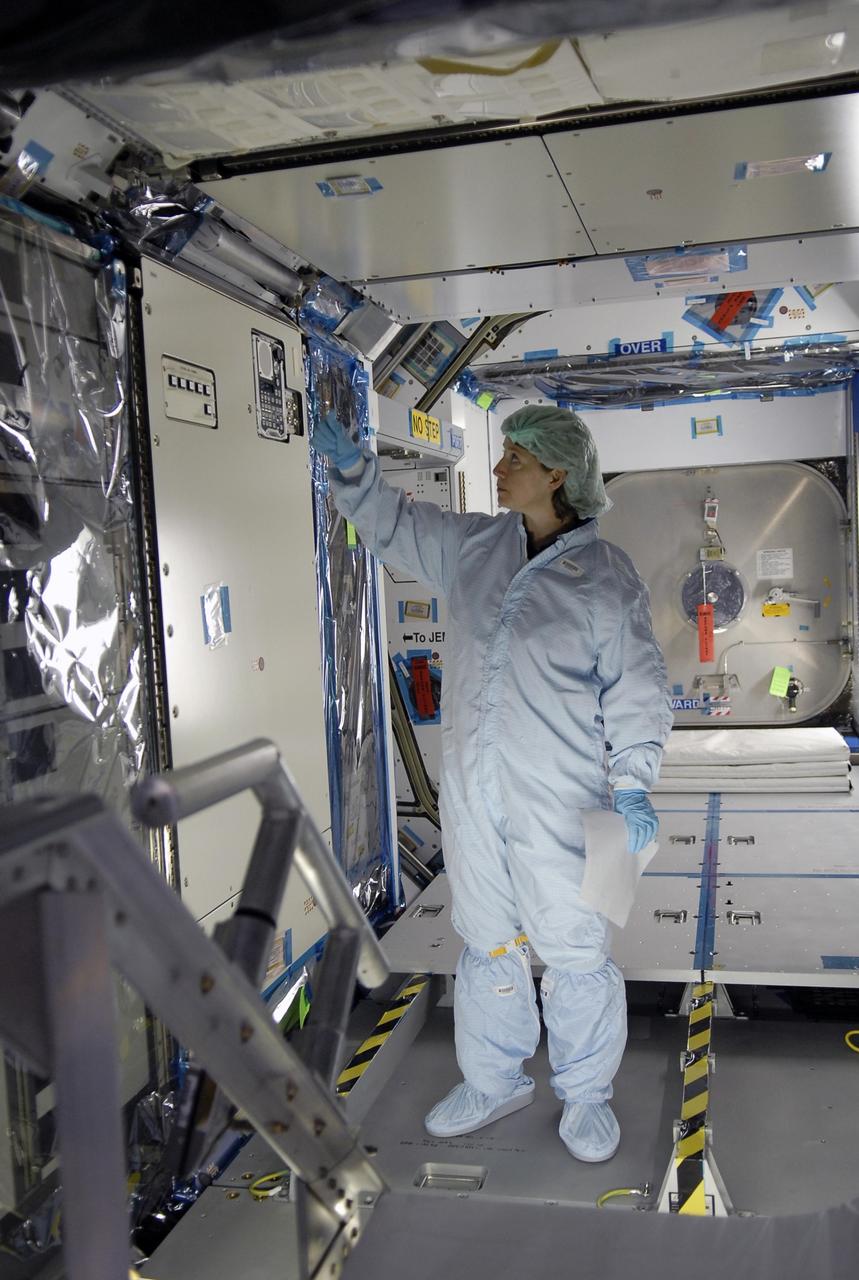
KENNEDY SPACE CENTER, FLA. -- Mission STS-120 Commander Pam Melroy familiarizes herself with the Node 2 Harmony module inside the Space Station Processing Facility during a visit to Kennedy Space Center. Other STS-120 crew members include Pilot George Zamka and Mission Specialists Scott Parazynski, Douglas Wheelock, Stephanie Wilson, Paolo Nespoli (with the European Space Agency), Daniel Tani and Clayton Anderson. Mission STS-120 will deliver the Node 2 "Harmony" connecting module to the station. During the mission, Tani and Anderson will transfer to the station and remain as flight engineers for Expedition 15. The mission is tentatively scheduled for August of this year. Photo credit: NASA/Kim Shiflett
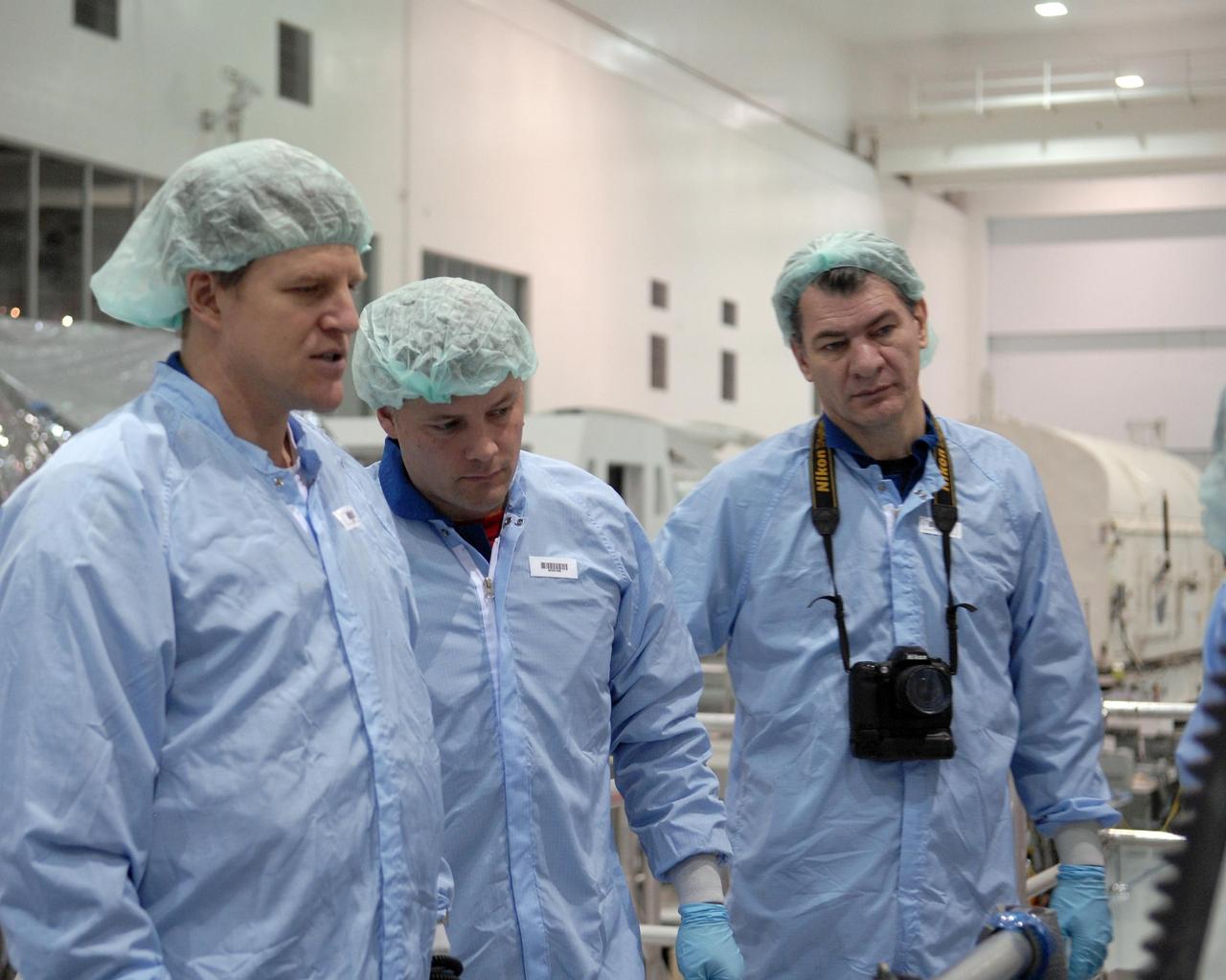
KENNEDY SPACE CENTER, FLA. -- STS-120 Mission Specialists Scott Parazynski (left), Doug Wheelock (center) and Paolo Nespoli (right) check out the primary payload for the mission: the U.S. Node 2, another element to be added to the International Space Station. Nespoli represents the European Space Agency. Node 2 will provide a passageway between three station science experiment facilities: the U.S. Destiny Laboratory, the Kibo Japanese Experiment Module, and the European Columbus Laboratory. STS-120 is targeted for launch on Sept. 7 with a crew of six, including Commander Pam Melroy, Pilot George Zamka, and Mission Specialist Mike Foreman. Photo credit: NASA/Kim Shiflett
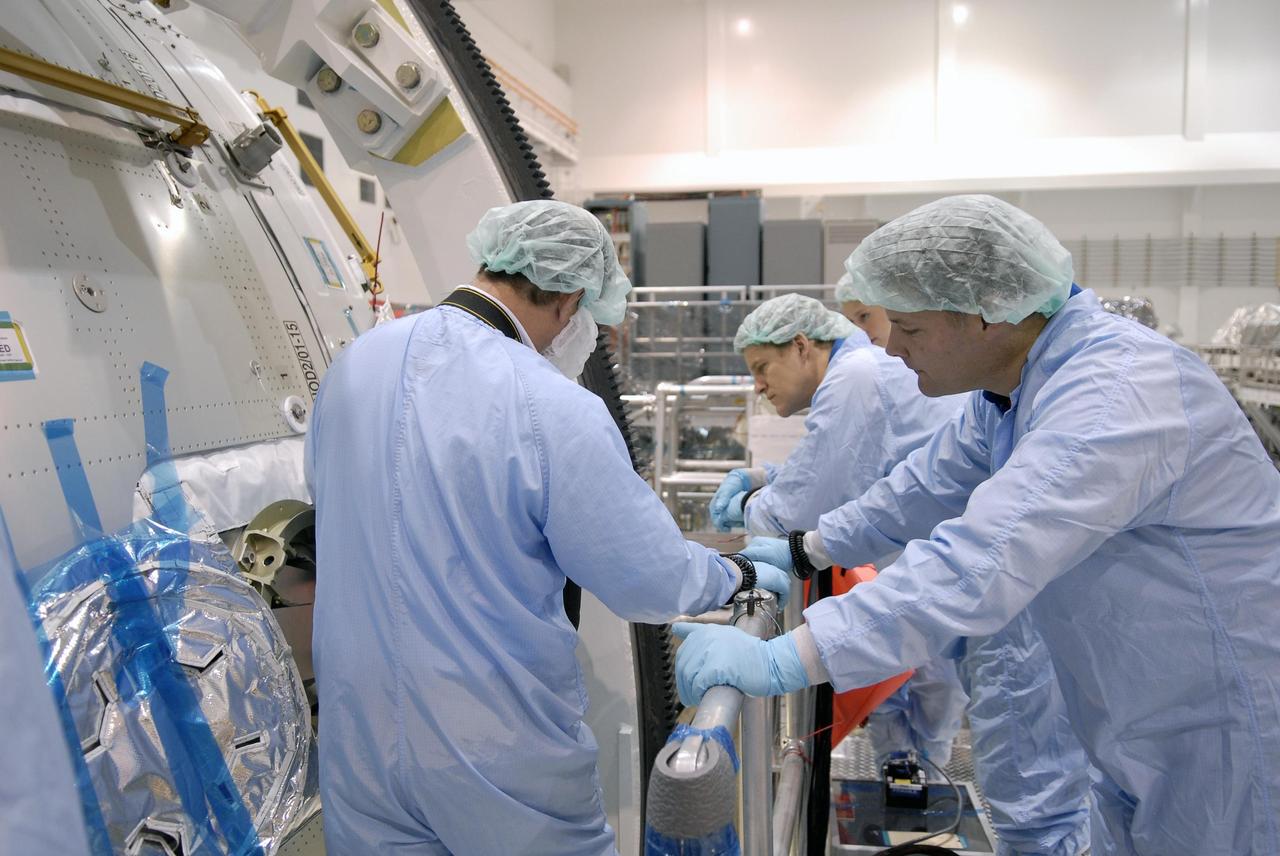
KENNEDY SPACE CENTER, FLA. -- At right are STS-120 Mission Specialists Scott Parazynski (background) and Doug Wheelock (foreground), looking over the primary payload for the mission: the U.S. Node 2, another element to be added to the International Space Station. Node 2 will provide a passageway between three station science experiment facilities: the U.S. Destiny Laboratory, the Kibo Japanese Experiment Module, and the European Columbus Laboratory. STS-120 is targeted for launch on Sept. 7 with a crew of six, including Commander Pam Melroy, Pilot George Zamka, and Mission Specialist Mike Foreman. Photo credit: NASA/Kim Shiflett
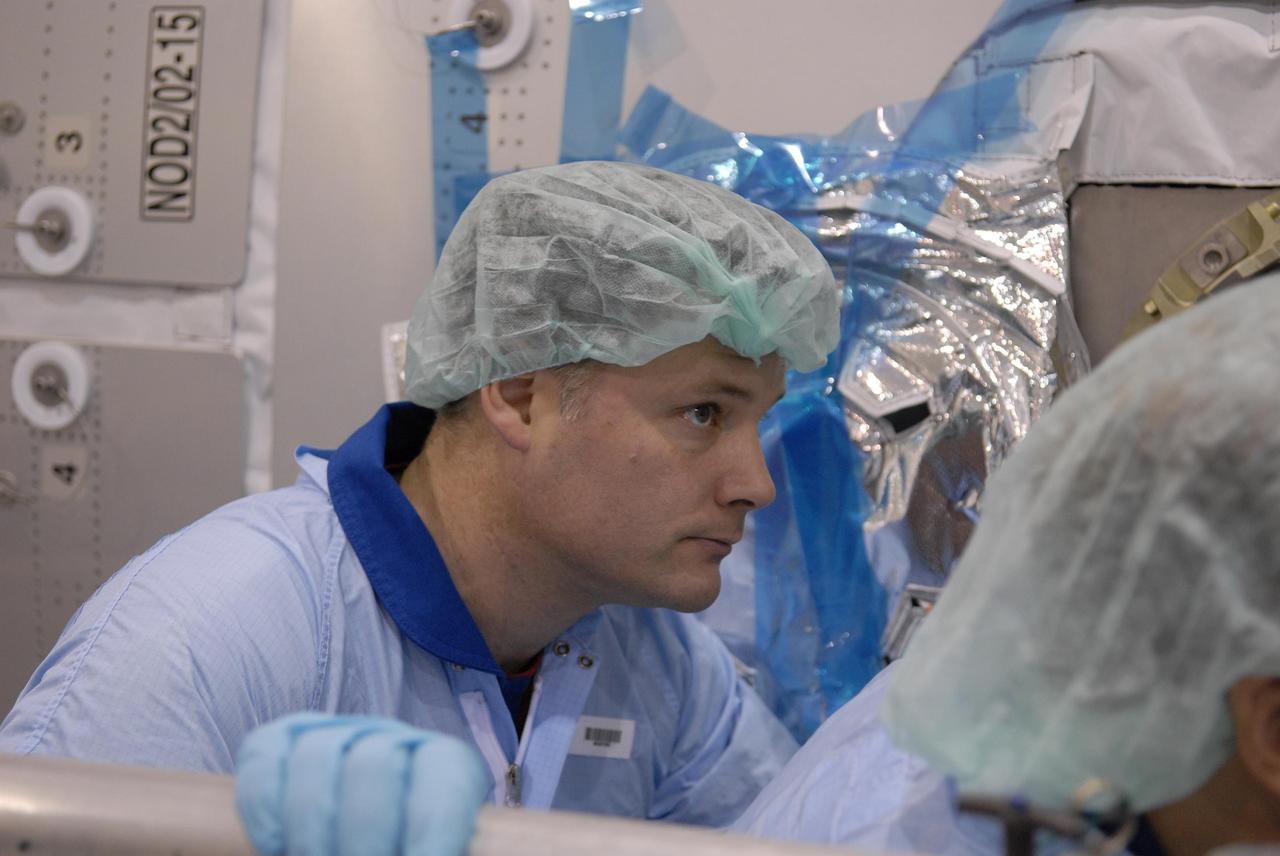
KENNEDY SPACE CENTER, FLA. -- STS-120 Mission Specialist Doug Wheelock checks out the primary payload for the mission: the U.S. Node 2, another element to be added to the International Space Station. Wheelock and other crew members are familiarizing themselves with the payload. Node 2 will provide a passageway between three station science experiment facilities: the U.S. Destiny Laboratory, the Kibo Japanese Experiment Module, and the European Columbus Laboratory. STS-120 is targeted for launch on Sept. 7 with a crew of six, including Commander Pam Melroy, Pilot George Zamka, and Mission Specialist Mike Foreman. Photo credit: NASA/Kim Shiflett
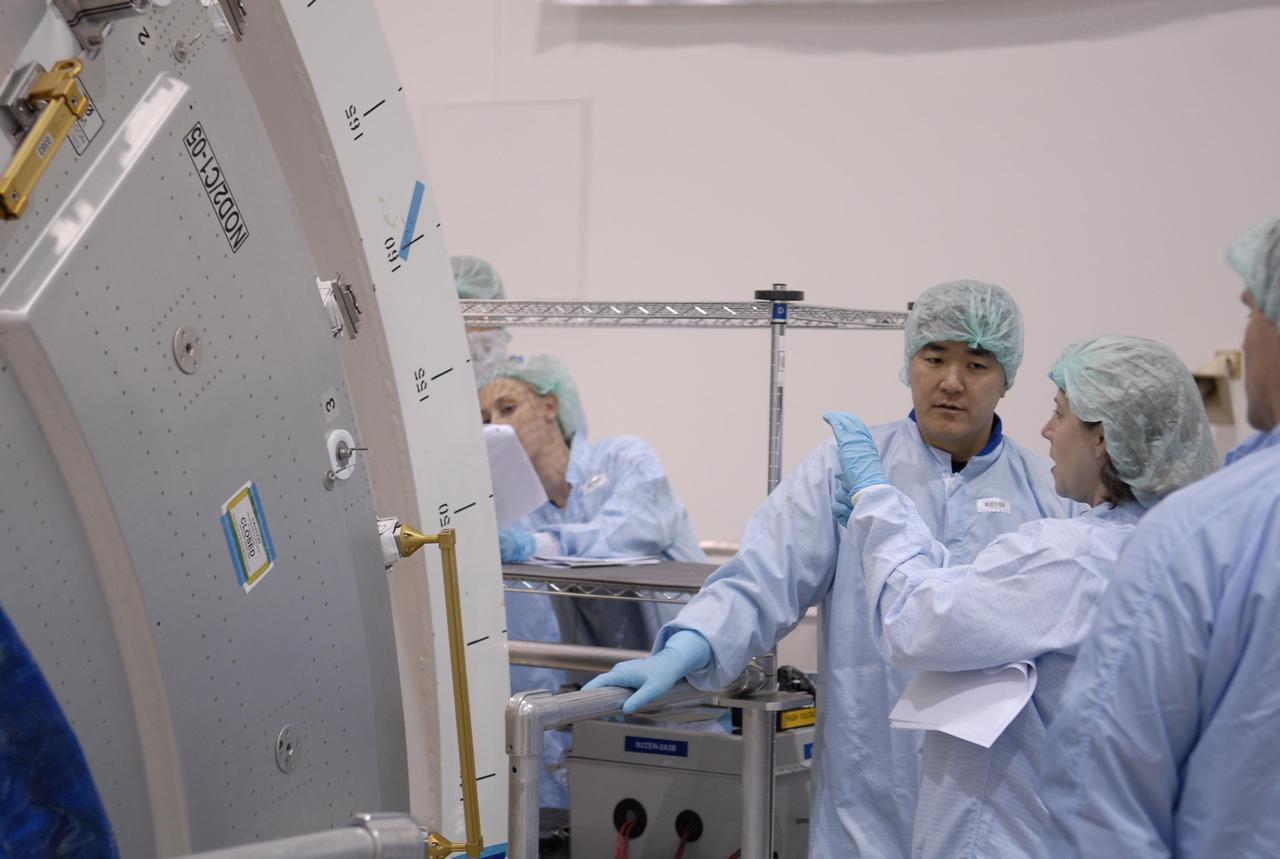
KENNEDY SPACE CENTER, FLA. -- Mission STS-120 Mission Specialist Daniel Tani and Commander Pam Melroy familiarize themselves with the Node 2 Harmony module inside the Space Station Processing Facility during a visit to Kennedy Space Center. Other crew members include Pilot George Zamka and Mission Specialists Scott Parazynski, Douglas Wheelock, Stephanie Wilson, Paolo Nespoli (with the European Space Agency) and Clayton Anderson. Mission STS-120 will deliver the Node 2 "Harmony" connecting module to the station. During the mission, Tani and Anderson will transfer to the station and remain as flight engineers for Expedition 15. The mission is tentatively scheduled for August of this year. Photo credit: NASA/Kim Shiflett
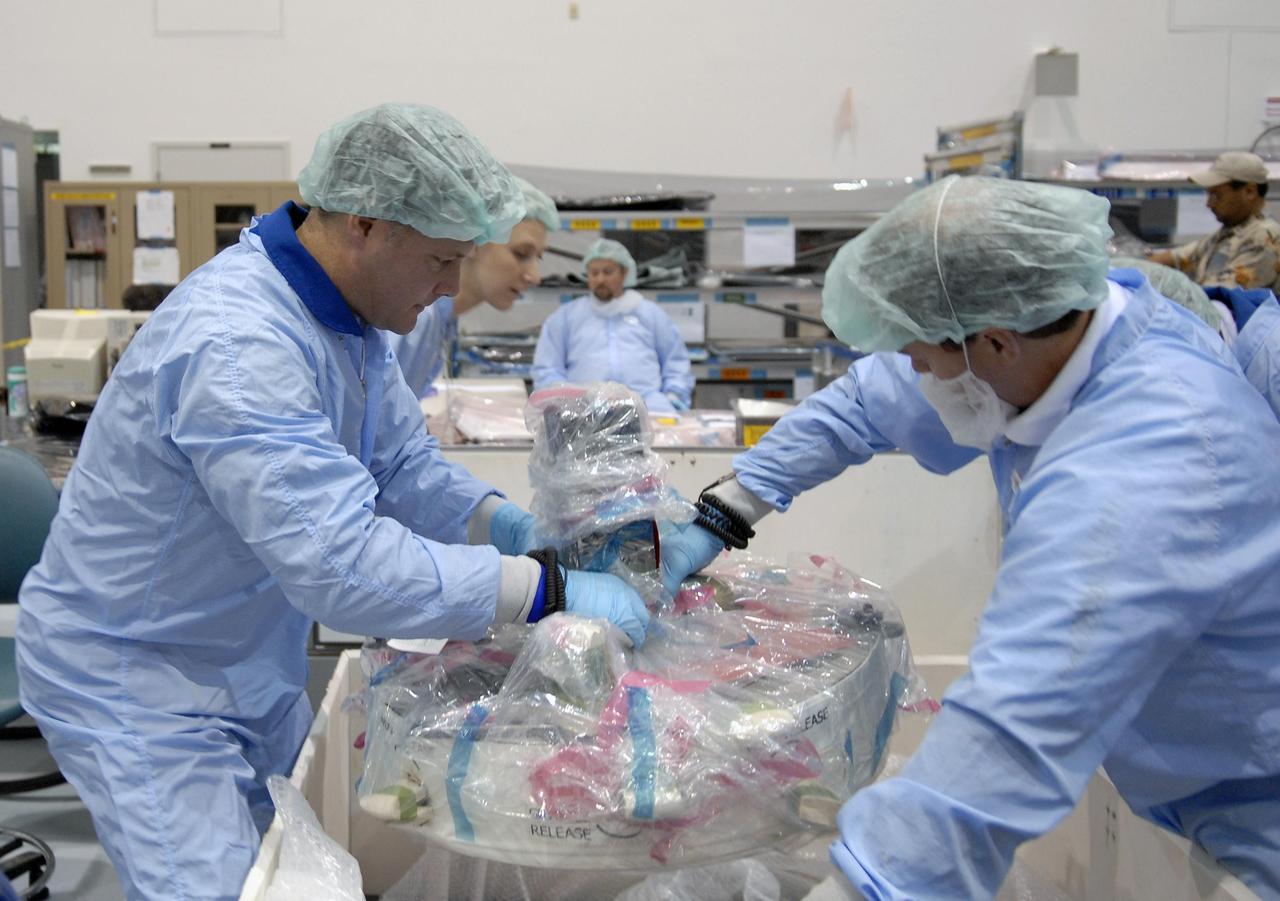
KENNEDY SPACE CENTER, FLA. -- STS-120 Mission Specialist Doug Wheelock (left) gets hands-on experience with equipment earmarked for the mission. The primary payload for mission STS-120 is the U.S. Node 2, another element to be added to the International Space Station. Node 2 will provide a passageway between three station science experiment facilities: the U.S. Destiny Laboratory, the Kibo Japanese Experiment Module, and the European Columbus Laboratory. STS-120 is targeted for launch on Sept. 7 with a crew of six, including Commander Pam Melroy, Pilot George Zamka, and Mission Specialist Mike Foreman. Photo credit: NASA/Kim Shiflett
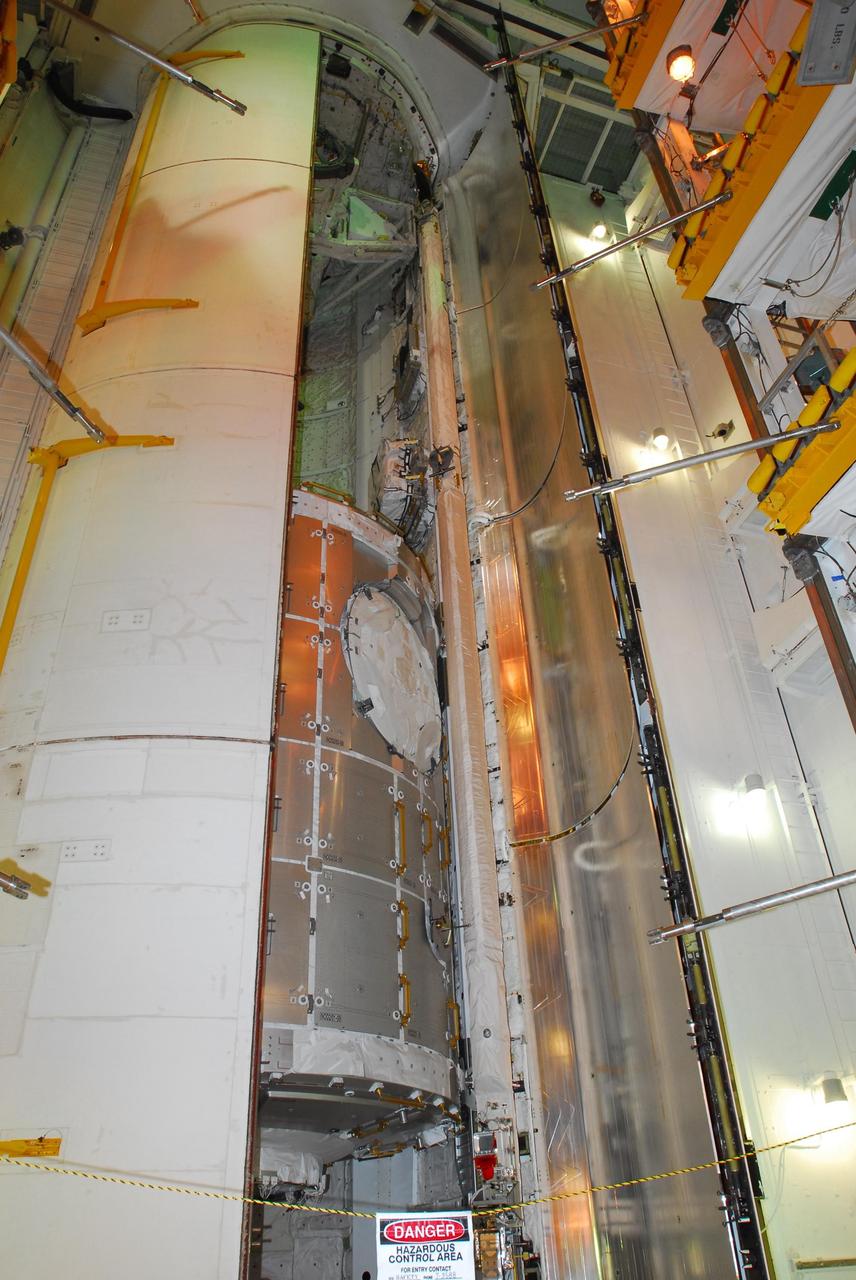
KENNEDY SPACE CENTER, FLA. -- On Launch Pad 39A, one of space shuttle Discovery's payload bay doors is closed. Inside can still be seen the payloads, the U.S. Node 2, named Harmony (lower), and orbital docking system (upper). Mission STS-120 will bring the Harmony module that will provide attachment points for European and Japanese laboratory modules to the International Space Station. Launch of Discovery is targeted for Oct. 23. Photo credit: NASA/George Shelton
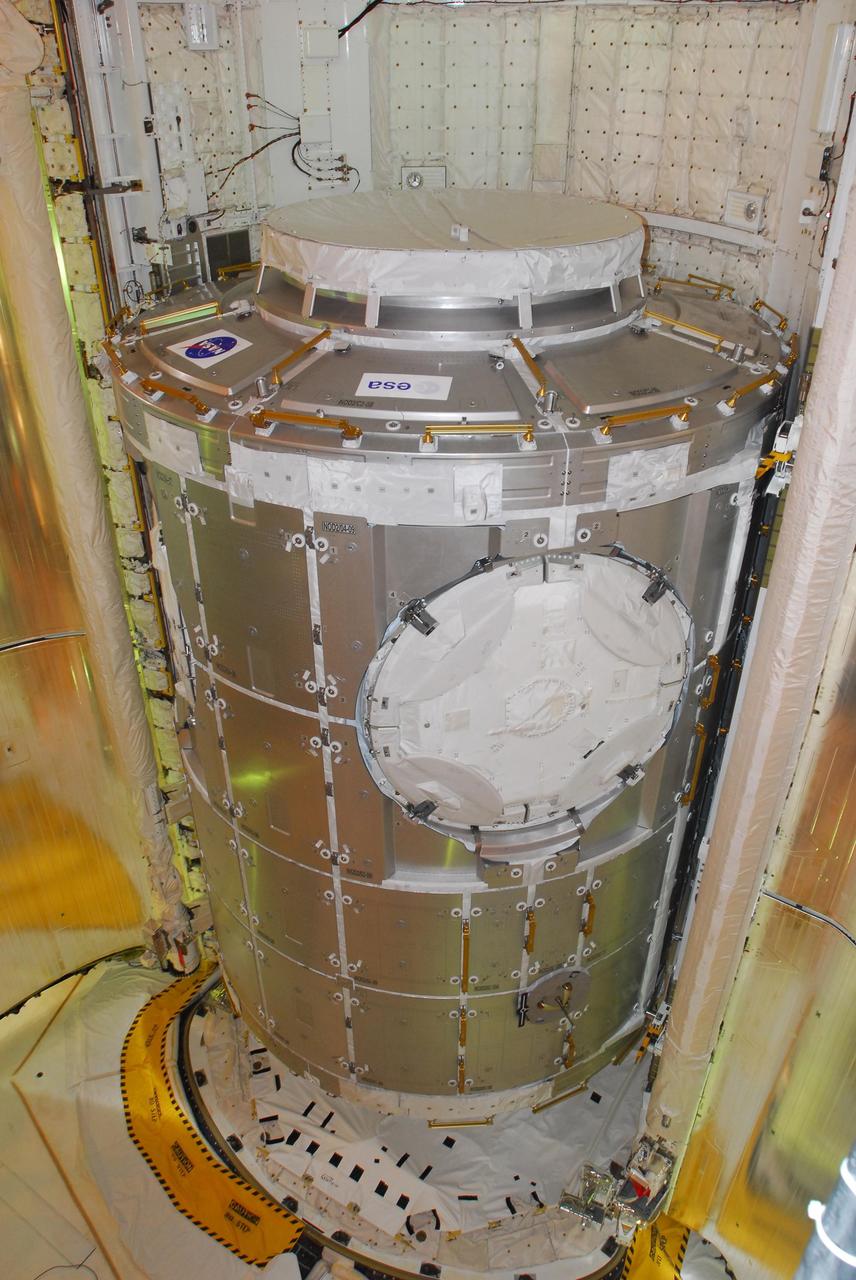
KENNEDY SPACE CENTER, FLA. -- From the payload changeout room on Launch Pad 39A, the payloads for mission STS-120 have been transferred into space shuttle Discovery's payload bay. Seen here is the Italian-built U.S. Node 2 module, named Harmony. Mission STS-120 will bring the Harmony module that will provide attachment points for European and Japanese laboratory modules to the International Space Station. Launch of Discovery is targeted for Oct. 23. Photo credit: NASA/George Shelton
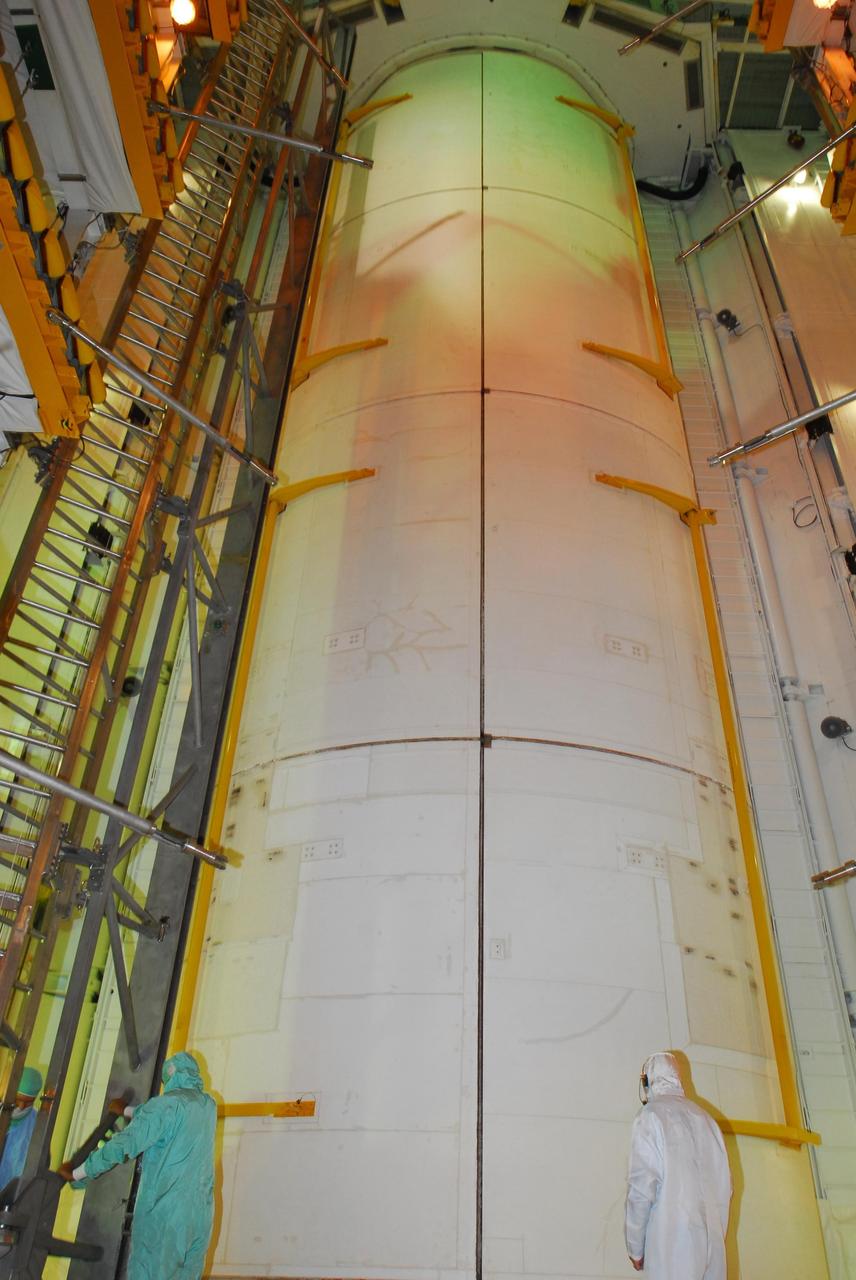
KENNEDY SPACE CENTER, FLA. -- On Launch Pad 39A, space shuttle Discovery's payload bay doors are closed for launch. Inside are the payloads, the U.S. Node 2, named Harmony and orbital docking system. Mission STS-120 will bring the Harmony module that will provide attachment points for European and Japanese laboratory modules to the International Space Station. Launch of Discovery is targeted for Oct. 23. Photo credit: NASA/George Shelton
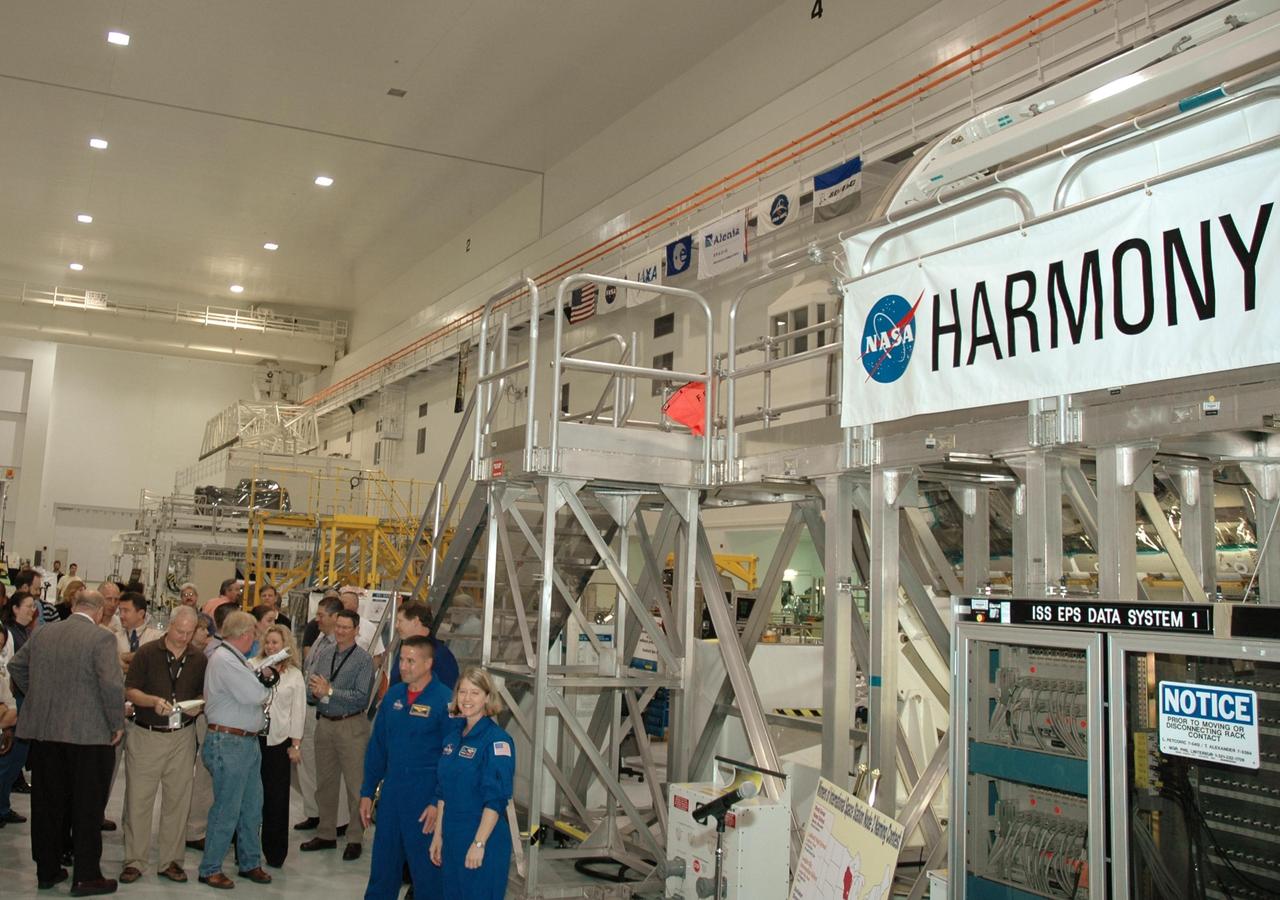
KENNEDY SPACE CENTER, FLA. -- In the Space Station Processing Facility, Mission STS-120 Pilot George Zamka (left) and Commander Pam Melroy stand in front of the Node 2 module with it's new name, Harmony, unveiled. The name, Harmony, was chosen from an academic competition involving thousands of students in kindergarten through high school. The Node 2 Challenge required students to learn about the International Space Station, build a scale model of the module, and write an essay explaining their proposed name. This will be the first U.S. piece of the space station named by someone other than a NASA official. Node 2 is a pressurized module that will act as a connecting port and passageway to additional international science labs and supply spacecraft. It also will be a work platform for the station's robotic arm. The module is scheduled to fly on mission STS-120 aboard Space Shuttle Atlantis targeted for later this year. Photo credit: NASA/Jim Grossmann
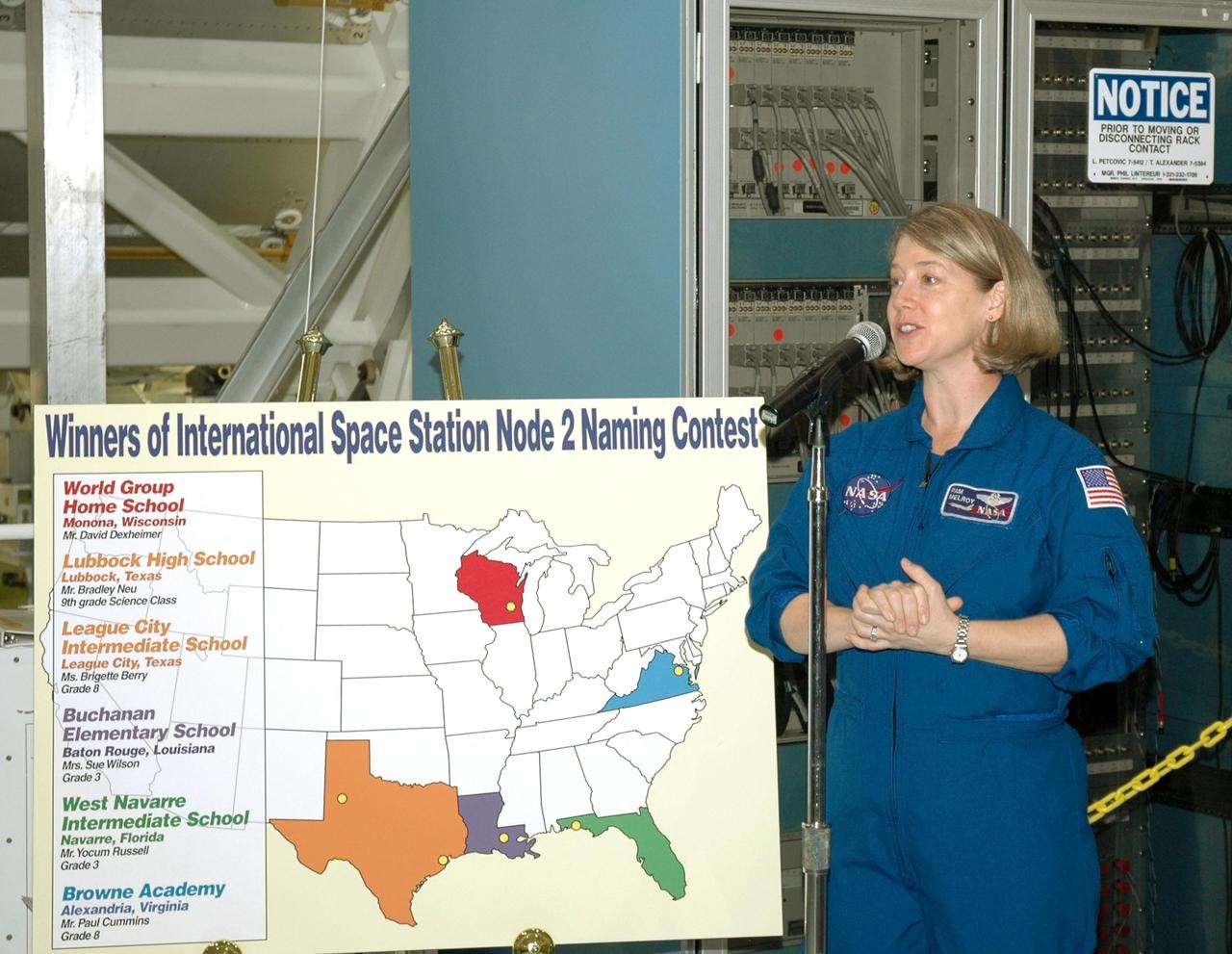
KENNEDY SPACE CENTER, FLA. -- In the Space Station Processing Facility, Mission STS-120 Commander Pam Melroy speaks to members of the press and guests during a ceremony to unveil the new name of NASA's Node 2 module, Harmony. The name, Harmony, was chosen from an academic competition involving thousands of students in kindergarten through high school. The Node 2 Challenge required students to learn about the International Space Station, build a scale model of the module, and write an essay explaining their proposed name. This will be the first U.S. piece of the space station named by someone other than a NASA official. Node 2 is a pressurized module that will act as a connecting port and passageway to additional international science labs and supply spacecraft. It also will be a work platform for the station's robotic arm. The module is scheduled to fly on mission STS-120 aboard Space Shuttle Atlantis targeted for later this year. Photo credit: NASA/Jim Grossmann
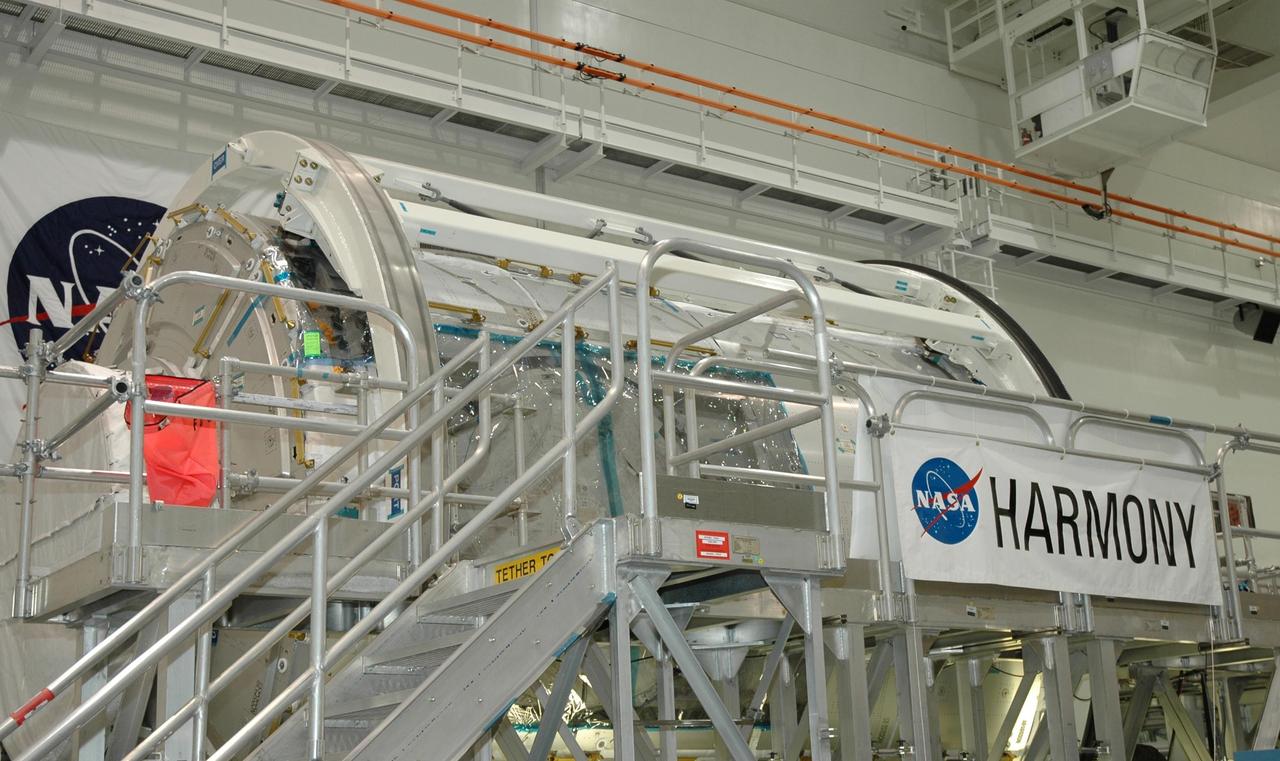
KENNEDY SPACE CENTER, FLA. -- NASA Node 2 module sits inside the Space Station Processing Facility highbay with its new name, Harmony, revealed. The name, Harmony, was chosen from an academic competition involving thousands of students in kindergarten through high school. The Node 2 Challenge required students to learn about the International Space Station, build a scale model of the module, and write an essay explaining their proposed name. This will be the first U.S. piece of the space station named by someone other than a NASA official. Node 2 is a pressurized module that will act as a connecting port and passageway to additional international science labs and supply spacecraft. It also will be a work platform for the station's robotic arm. The module is scheduled to fly on mission STS-120 aboard Space Shuttle Atlantis targeted for later this year. Photo credit: NASA/Jim Grossmann
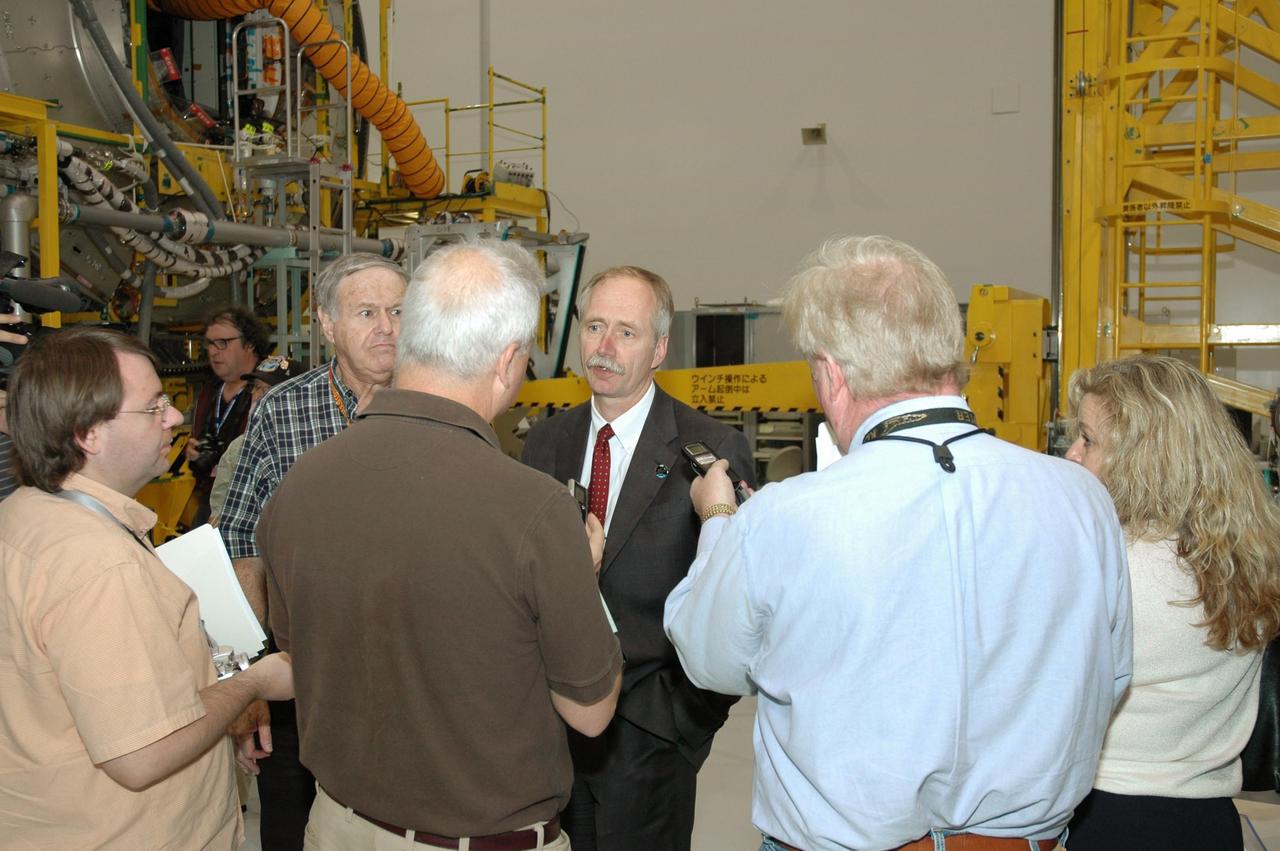
KENNEDY SPACE CENTER, FLA. -- Inside the Space Station Processing Facility, William Gerstenmaier, NASA's associate administrator for Space Operations, talks to members of the media during a ceremony to unveil the Node 2 module's new name, Harmony. The name, Harmony, was chosen from an academic competition involving thousands of students in kindergarten through high school. The Node 2 Challenge required students to learn about the International Space Station, build a scale model of the module, and write an essay explaining their proposed name. This will be the first U.S. piece of the space station named by someone other than a NASA official. Node 2 is a pressurized module that will act as a connecting port and passageway to additional international science labs and supply spacecraft. It also will be a work platform for the station's robotic arm. The module is scheduled to fly on mission STS-120 aboard Space Shuttle Atlantis targeted for later this year. Photo credit: NASA/Jim Grossmann
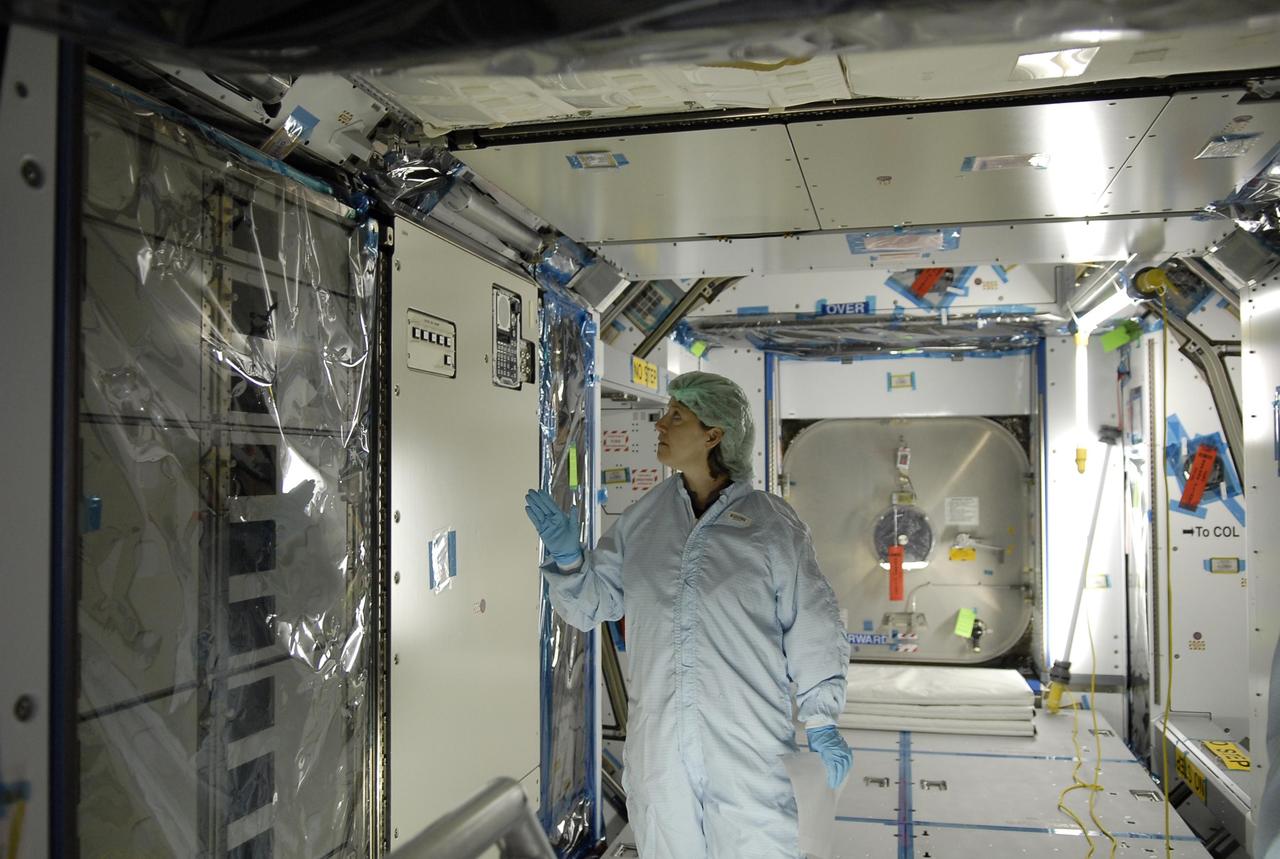
KENNEDY SPACE CENTER, FLA. -- Inside the Space Station Processing Facility, mission STS-120 Commander Pam Melroy stands inside the Node 2 Harmony module to familiarize herself with equipment during a visit to Kennedy Space Center. Other STS-120 crew members include Pilot George Zamka and Mission Specialists Scott Parazynski, Douglas Wheelock, Stephanie Wilson, Paolo Nespoli (with the European Space Agency), Daniel Tani and Clayton Anderson. Mission STS-120 will deliver the Node 2 "Harmony" connecting module to the station. During the mission, Tani and Anderson will transfer to the station and remain as flight engineers for Expedition 15. The mission is tentatively scheduled for August of this year. Photo credit: NASA/Kim Shiflett
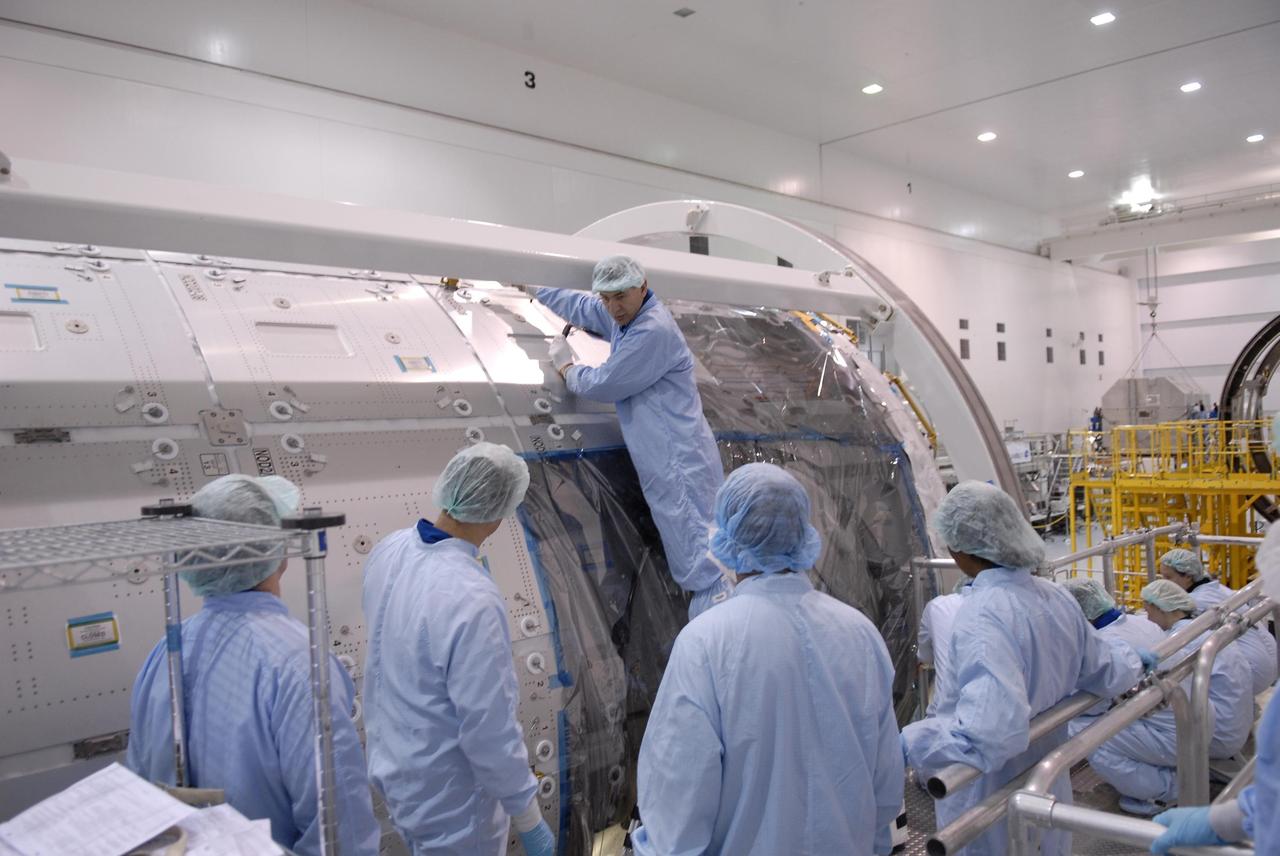
KENNEDY SPACE CENTER, FLA. -- Mission STS-120 crew members familiarize themselves with equipment and payloads inside the Space Station Processing Facility during a visit to Kennedy Space Center. Standing in front of the Node 2 Harmony module is Paolo Nespoli, who is with the European Space Agency. Other STS-120 crew members include Commander Pam Melroy, Pilot George Zamka and Mission Specialists Scott Parazynski, Douglas Wheelock, Stephanie Wilson, Daniel Tani and Clayton Anderson. Mission STS-120 will deliver the Node 2 "Harmony" connecting module to the station. During the mission, Tani and Anderson will transfer to the station and remain as flight engineers for Expedition 15. The mission is tentatively scheduled for August of this year. Photo credit: NASA/Kim Shiflett
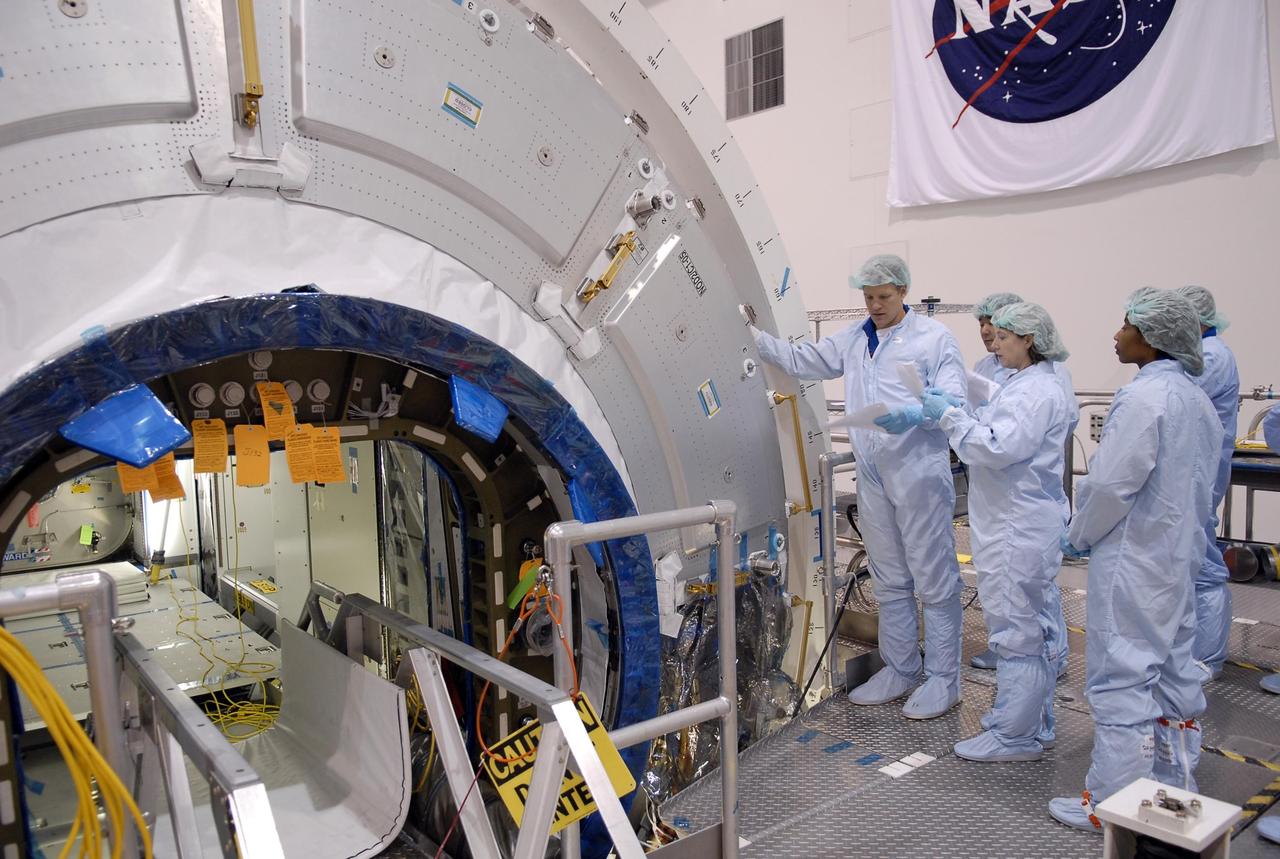
KENNEDY SPACE CENTER, FLA. -- Inside the Space Station Processing Facility, mission STS-120 crew members familiarize themselves with the Node 2 Harmony module during a visit to Kennedy Space Center. From left are Mission Specialist Scott Parazynski, Commander Pam Melroy and Mission Specialist Stephanie Wilson. Other crew members include Pilot George Zamka and Mission Specialists Douglas Wheelock, Paoli Nespoli (with the European Space Agency), Daniel Tani and Clayton Anderson. Mission STS-120 will deliver the Node 2 "Harmony" connecting module to the station. During the mission, Tani and Anderson will transfer to the station and remain as flight engineers for Expedition 15. The mission is tentatively scheduled for August of this year. Photo credit: NASA/Kim Shiflett
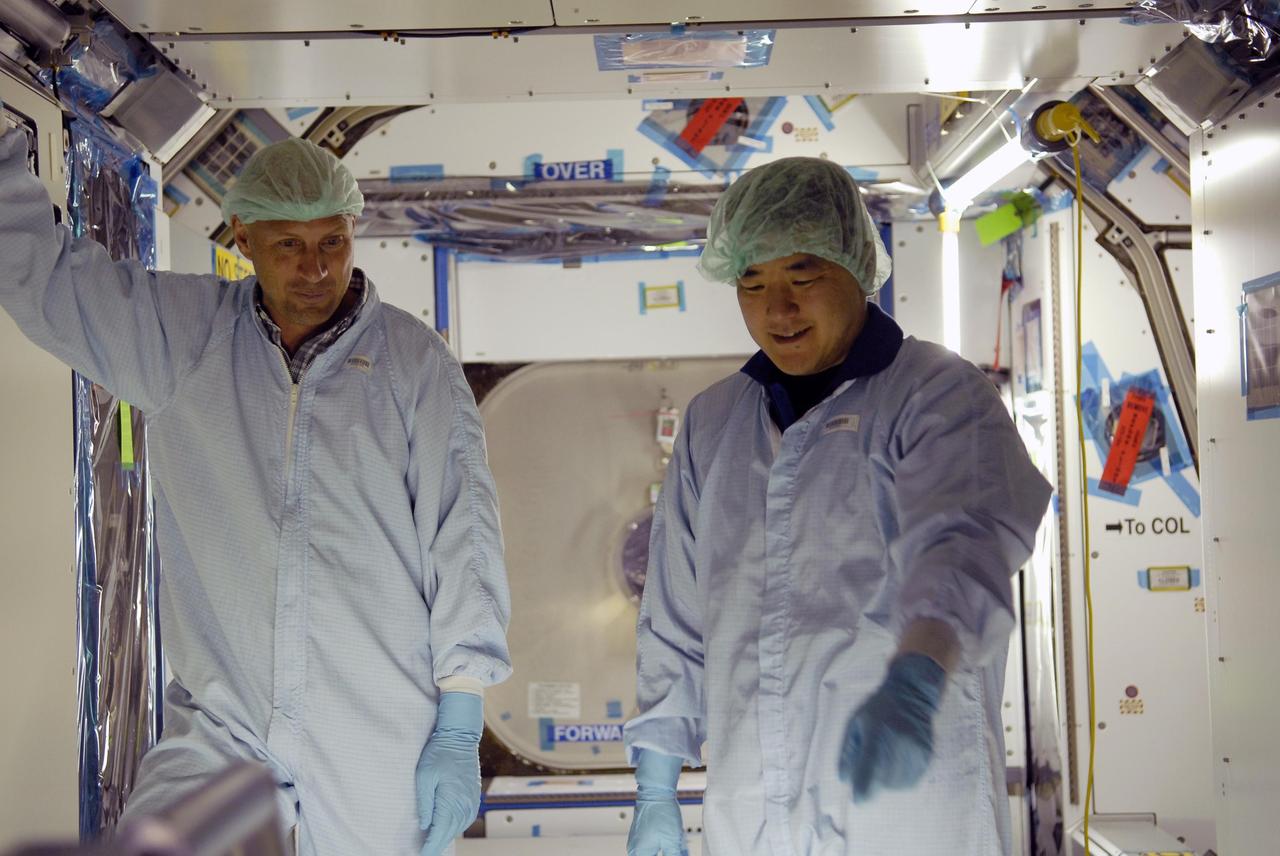
KENNEDY SPACE CENTER, FLA. -- Mission STS-120 Mission Specialists Clayton Anderson (left) and Daniel Tani familiarize themselves with the Node 2 Harmony module inside the Space Station Processing Facility during a visit to Kennedy Space Center. Other crew members include Commander Pam Melroy, Pilot George Zamka, and Mission Specialists Scott Parazynski, Douglas Wheelock, Stephanie Wilson and Paolo Nespoli (with the European Space Agency). Mission STS-120 will deliver the Node 2 "Harmony" connecting module to the station. During the mission, Tani and Anderson will transfer to the station and remain as flight engineers for Expedition 15. The mission is tentatively scheduled for August of this year. Photo credit: NASA/Kim Shiflett
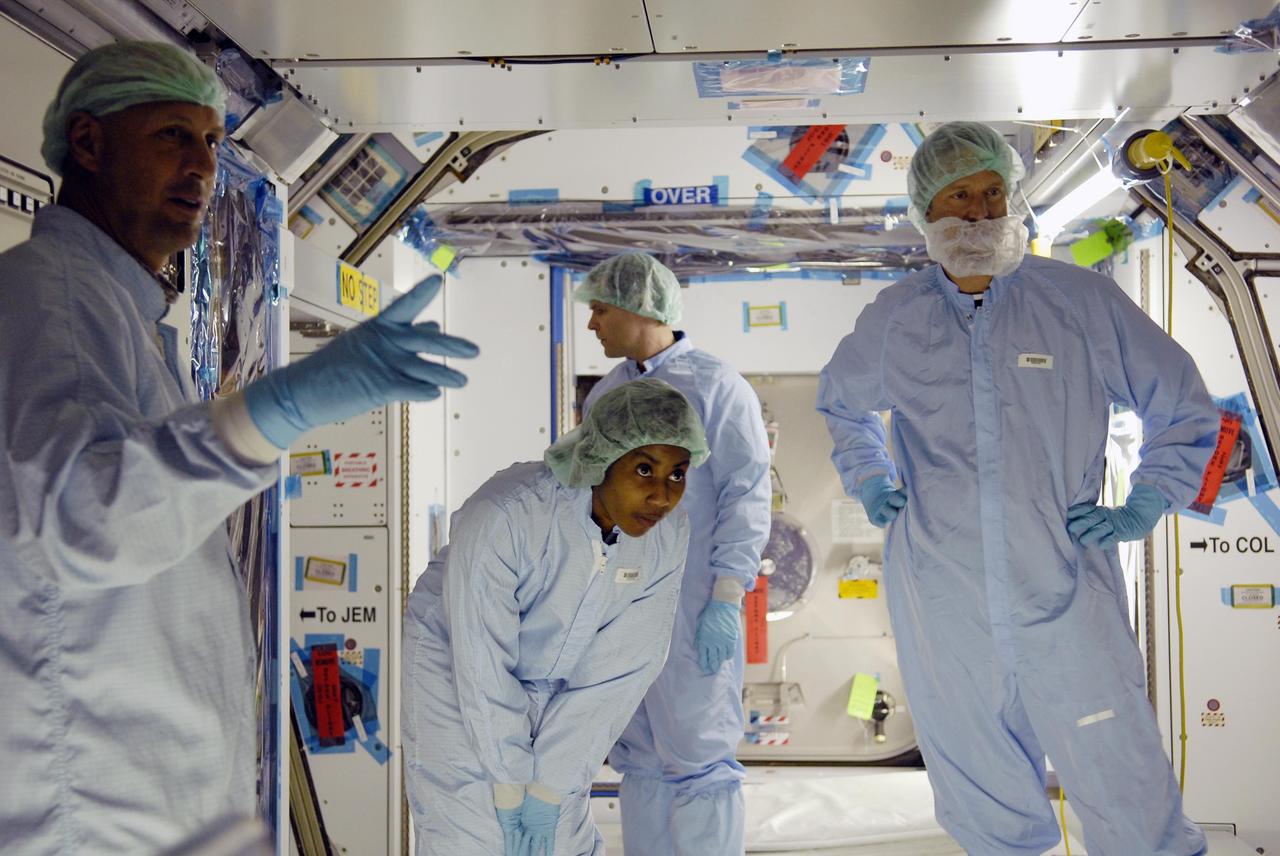
KENNEDY SPACE CENTER, FLA. -- Mission STS-120 crew members familiarize themselves with equipment and payloads inside the Space Station Processing Facility during a visit to Kennedy Space Center. Standing inside the Node 2 Harmony module are (from left) Mission Specialists Clayton Anderson and Stephanie Wilson. Other crew members include Commander Pam Melroy, Pilot George Zamka and Mission Specialists Scott Parazynski, Douglas Wheelock, Daniel Tani, Paolo Nespoli (with the European Space Agency) and Clayton Anderson. Mission STS-120 will deliver the Node 2 "Harmony" connecting module to the station. During the mission, Tani and Anderson will transfer to the station and remain as flight engineers for Expedition 15. The mission is tentatively scheduled for August of this year. Photo credit: NASA/Kim Shiflett
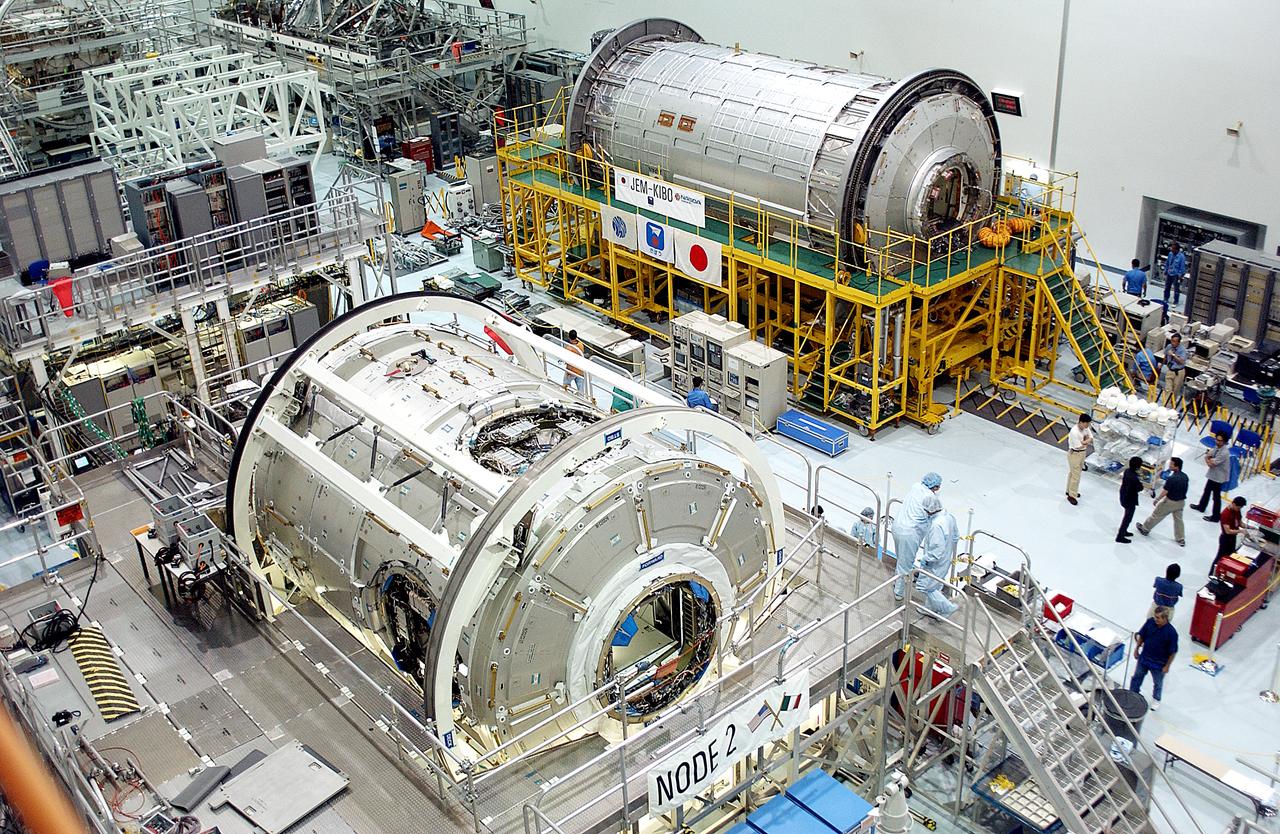
Lining the walls of the Space Station Processing Facility at the Kennedy Space Center (KSC) are the launch awaiting U.S. Node 2 (lower left). and the first pressurized module of the Japanese Experimental Module (JEM) (upper right), named "Kibo" (Hope). Node 2, the "utility hub" and second of three connectors between International Space Station (ISS) modules, was built in the Torino, Italy facility of Alenia Spazio, an International contractor based in Rome. Japan's major contribution to the station, the JEM, was built by the Space Development Agency of Japan (NASDA) at the Tsukuba Space Center near Tokyo and will expand research capabilities aboard the station. Both were part of an agreement between NASA and the European Space Agency (ESA). The Node 2 will be the next pressurized module installed on the Station. Once the Japanese and European laboratories are attached to it, the resulting roomier Station will expand from the equivalent space of a 3-bedroom house to a 5-bedroom house. The Marshall Space Center in Huntsville, Alabama manages the Node program for NASA.
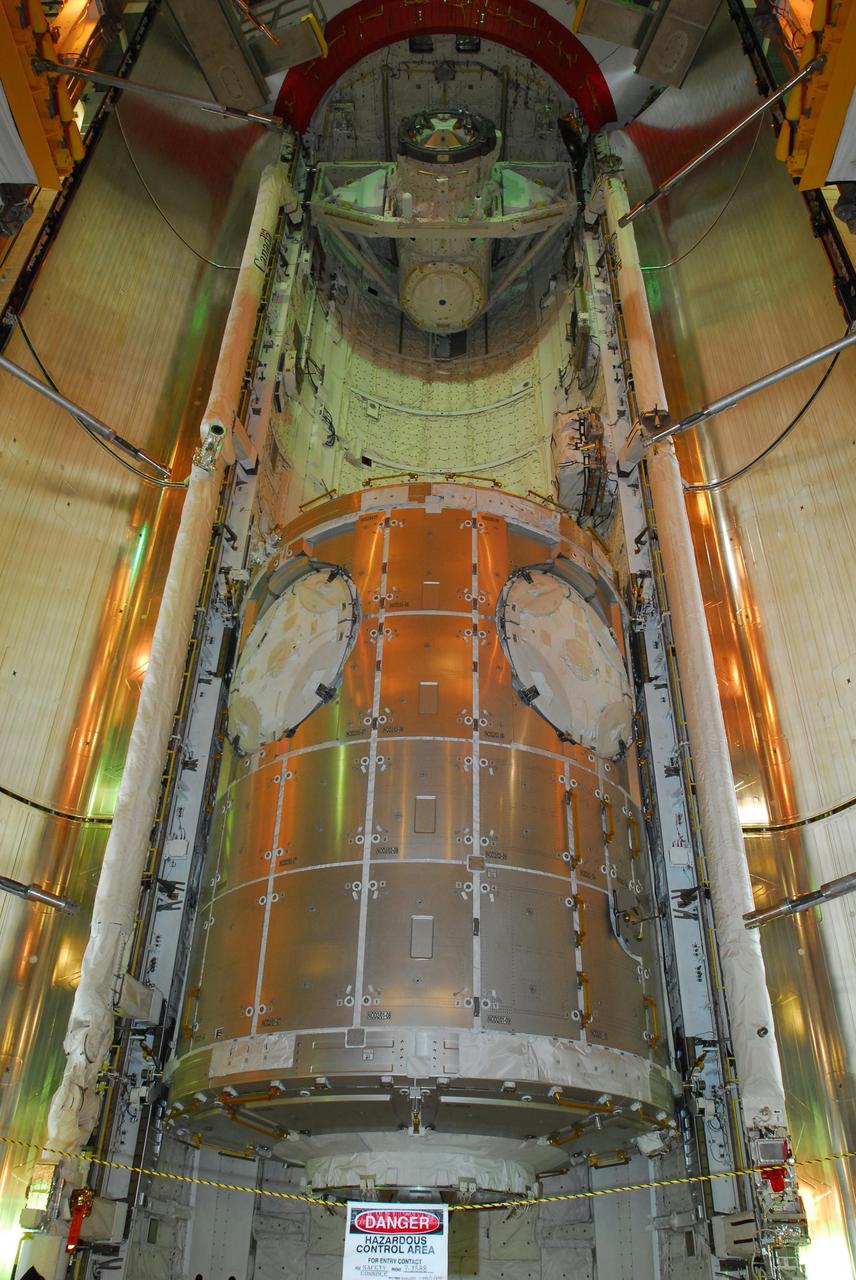
KENNEDY SPACE CENTER, FLA. -- From the payload changeout room on Launch Pad 39A, the payloads for mission STS-120 have been transferred into space shuttle Discovery's payload bay. Seen at the lower end is the Italian-built U.S. Node 2 module, named Harmony. At the top is the orbital docking system. The red ring at top comprises rain gutters to prevent leaks into the bay from rain while the shuttle is on the pad. Mission STS-120 will bring the Harmony module that will provide attachment points for European and Japanese laboratory modules to the International Space Station. Launch of Discovery is targeted for Oct. 23. Photo credit: NASA/George Shelton
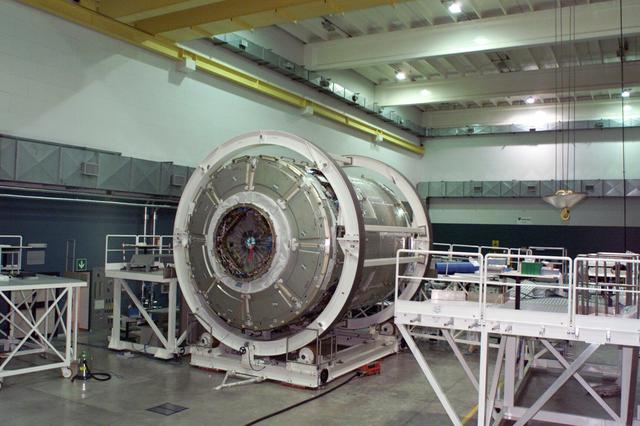
JSC2003-E-40244 (28 May 2003) --- The International Space Station Node 2 module is shown in a processing facility. Under contract of the Italian Space Agency (ASI), Alenia Spazio in Turin, Italy led a consortium of European sub-contractors to build Node 2. The module was built for NASA under a barter agreement with the European Space Agency (ESA) in exchange for the launch of the European Columbus Laboratory by the space shuttle to the International Space Station. Node 2 will provide a passageway between four International Space Station science experiment modules: the U.S. Destiny Laboratory, the Kibo Japanese Experiment Module, the European Columbus Laboratory and the Centrifuge Accommodation Module. The addition of Node 2 to the station will signify the U.S. Core Complete stage of assembly, at which time the station can support the addition of international laboratories from Europe and Japan. Photo Credit: NASA
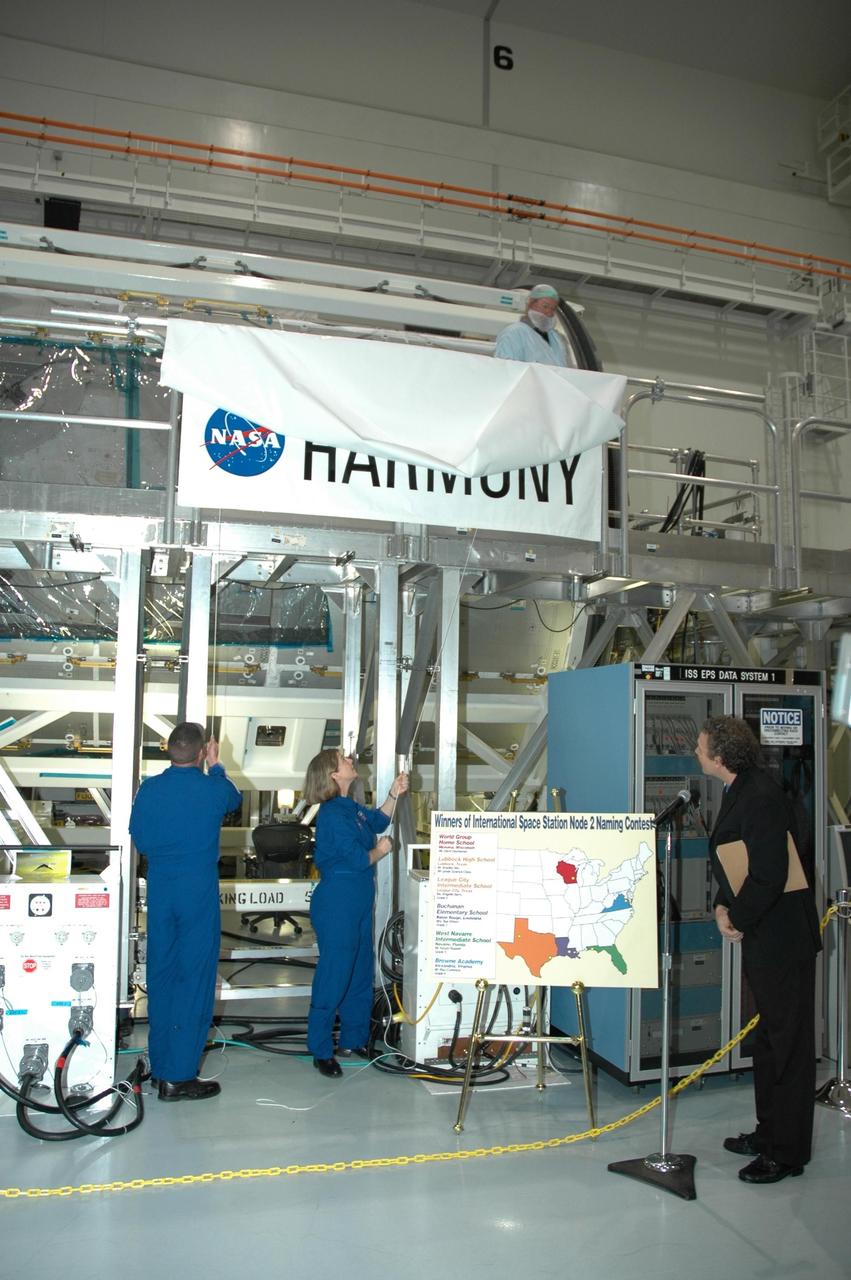
KENNEDY SPACE CENTER, FLA. -- In the Space Station Processing Facility, Mission STS-120 Pilot George Zamka (left) and Commander Pam Melroy begin to unveil the Node 2 module's new name, Harmony, as Russ Romanella, director of International Space Station and Spacecraft Processing presides over the ceremony. The name, Harmony, was chosen from an academic competition involving thousands of students in kindergarten through high school. The Node 2 Challenge required students to learn about the International Space Station, build a scale model of the module, and write an essay explaining their proposed name. This will be the first U.S. piece of the space station named by someone other than a NASA official. Node 2 is a pressurized module that will act as a connecting port and passageway to additional international science labs and supply spacecraft. It also will be a work platform for the station's robotic arm. The module is scheduled to fly on mission STS-120 aboard Space Shuttle Atlantis targeted for later this year. Photo credit: NASA/Jim Grossmann
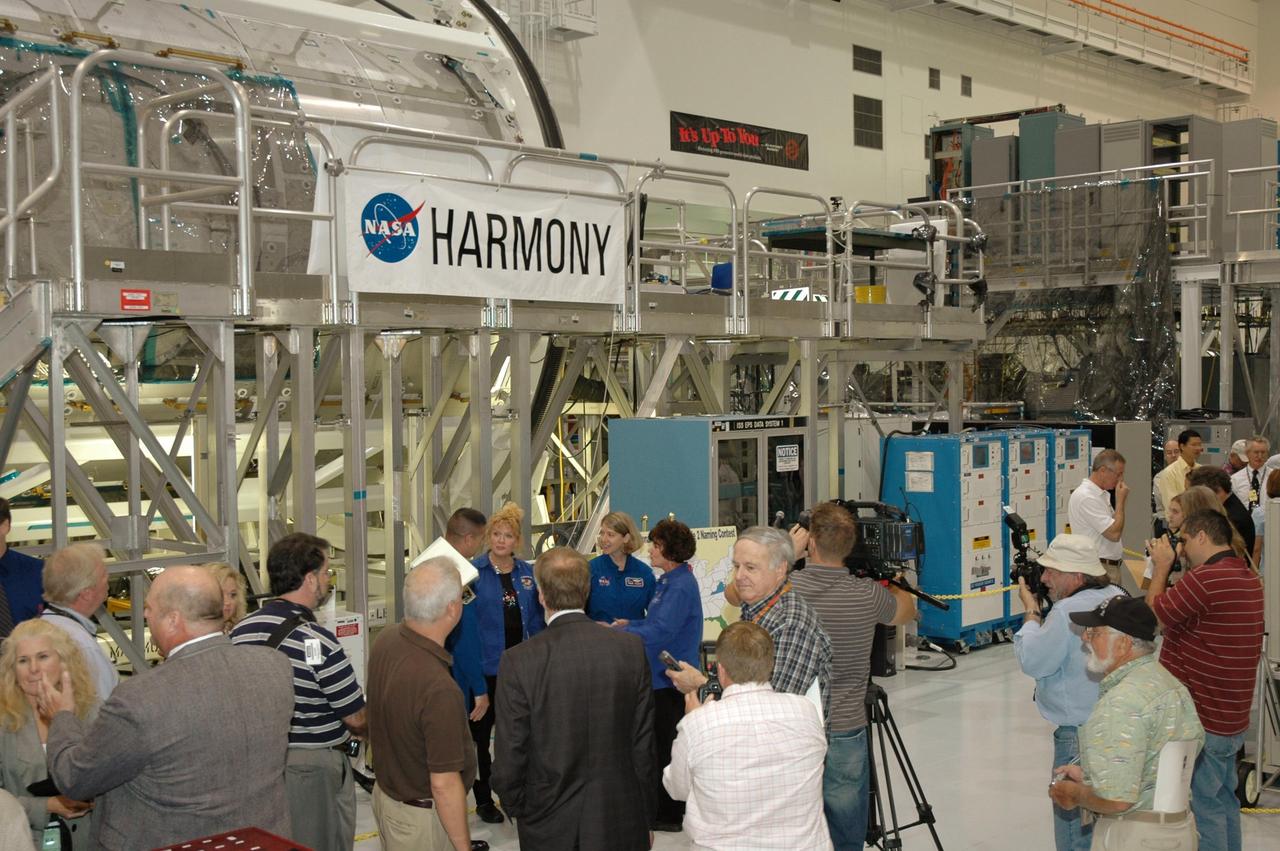
KENNEDY SPACE CENTER, FLA. -- In the Space Station Processing Facility, Mission STS-120 Pilot George Zamka (left, partially hidden) and Commander Pam Melroy (second from right in group), talk with members of the media and guests after a ceremony to unveil NASA's Node 2 module's new name, Harmony. The name, Harmony, was chosen from an academic competition involving thousands of students in kindergarten through high school. The Node 2 Challenge required students to learn about the International Space Station, build a scale model of the module, and write an essay explaining their proposed name. This will be the first U.S. piece of the space station named by someone other than a NASA official. Node 2 is a pressurized module that will act as a connecting port and passageway to additional international science labs and supply spacecraft. It also will be a work platform for the station's robotic arm. The module is scheduled to fly on mission STS-120 aboard Space Shuttle Atlantis targeted for later this year. Photo credit: NASA/Jim Grossmann
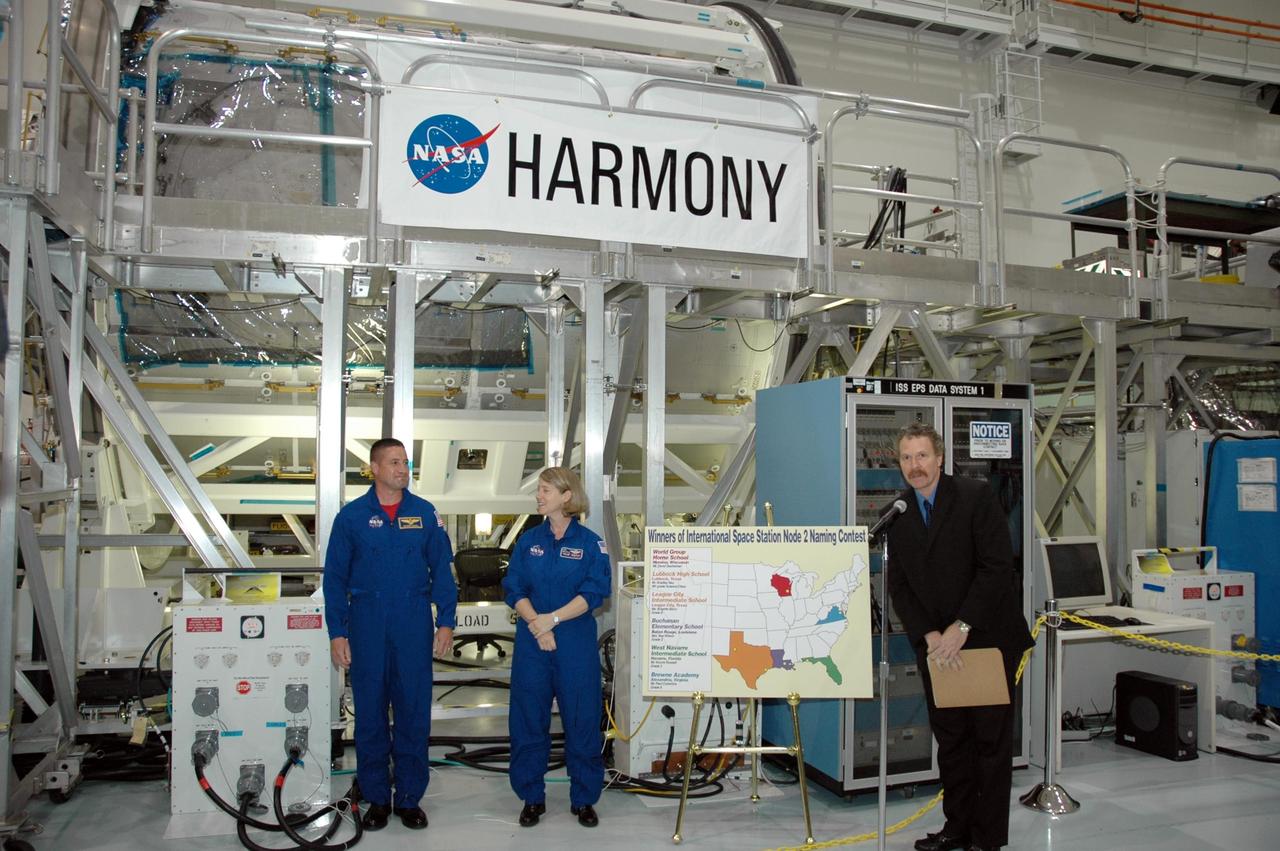
KENNEDY SPACE CENTER, FLA. -- In the Space Station Processing Facility, Mission STS-120 Pilot George Zamka (left) and Commander Pam Melroy stand in front of the Node 2 module with it's new name, Harmony, unveiled, as Russ Romanella, director of International Space Station and Spacecraft Processing presides over the ceremony. The name, Harmony, was chosen from an academic competition involving thousands of students in kindergarten through high school. The Node 2 Challenge required students to learn about the International Space Station, build a scale model of the module, and write an essay explaining their proposed name. This will be the first U.S. piece of the space station named by someone other than a NASA official. Node 2 is a pressurized module that will act as a connecting port and passageway to additional international science labs and supply spacecraft. It also will be a work platform for the station's robotic arm. The module is scheduled to fly on mission STS-120 aboard Space Shuttle Atlantis targeted for later this year. Photo credit: NASA/Jim Grossmann
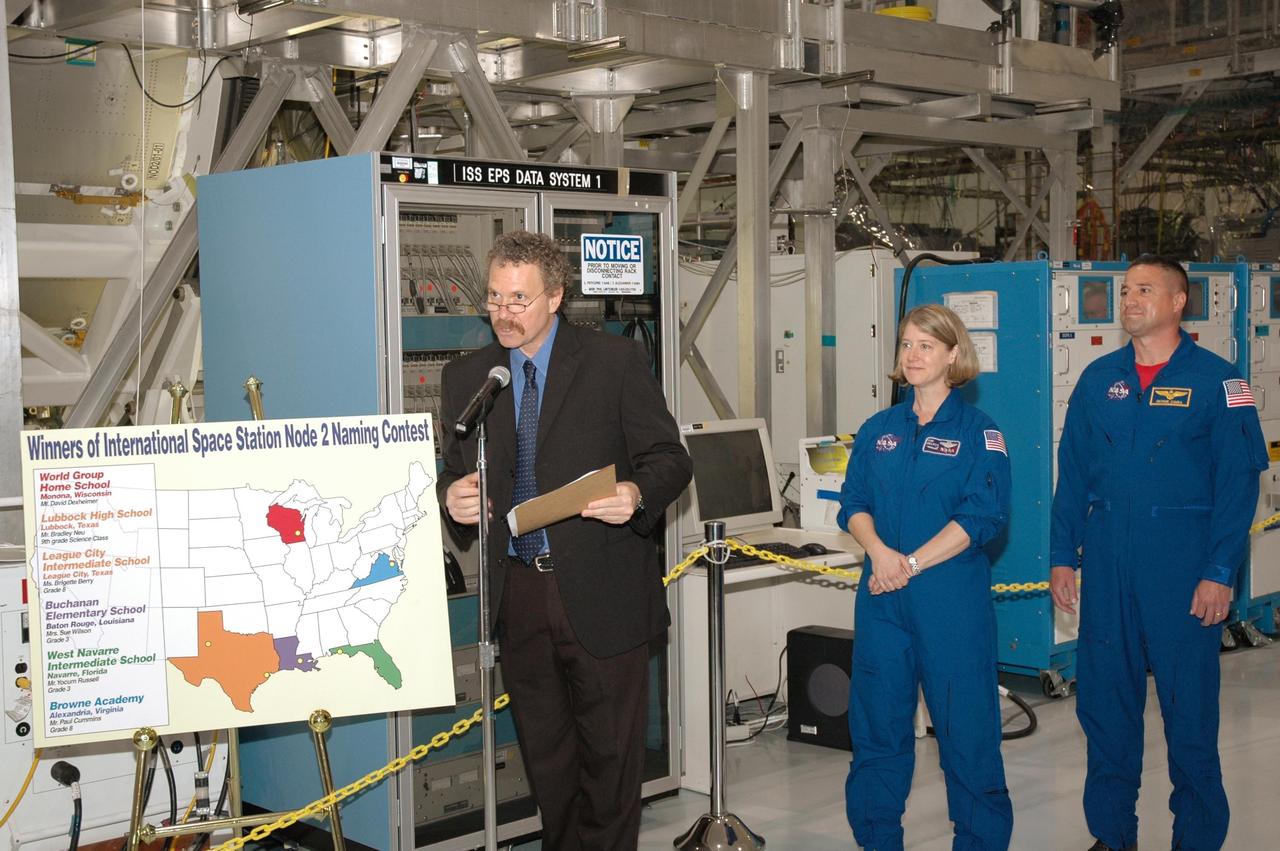
KENNEDY SPACE CENTER, FLA. -- In the Space Station Processing Facility, Russ Romanella (left), director of International Space Station and Spacecraft Processing, presides over a ceremony to unveil the new name of NASA's Node 2 module, Harmony. With him are Mission STS-120 Commander Pam Melroy and Pilot George Zamka. The name, Harmony, was chosen from an academic competition involving thousands of students in kindergarten through high school. The Node 2 Challenge required students to learn about the International Space Station, build a scale model of the module, and write an essay explaining their proposed name. This will be the first U.S. piece of the space station named by someone other than a NASA official. Node 2 is a pressurized module that will act as a connecting port and passageway to additional international science labs and supply spacecraft. It also will be a work platform for the station's robotic arm. The module is scheduled to fly on mission STS-120 aboard Space Shuttle Atlantis targeted for later this year. Photo credit: NASA/Jim Grossmann
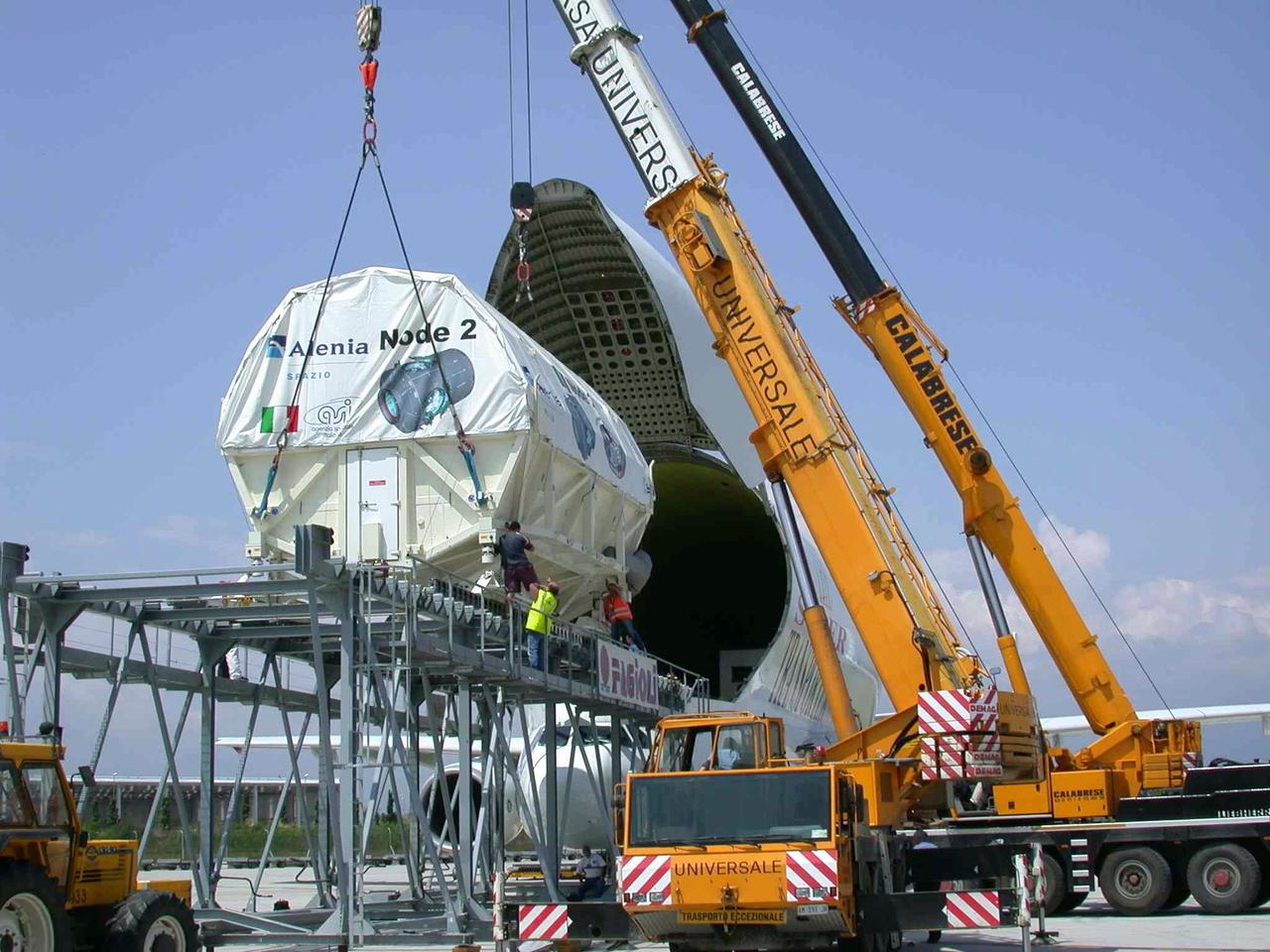
JSC2003-E-40266 (30 May 2003) --- The International Space Station U.S. Node 2 module is hoisted into an Airbus Beluga heavy-lift aircraft. The aircraft departed May 30 from Turin, Italy and arrived at the Kennedy Space Center June 1 with Node 2. Under contract of the Italian Space Agency (ASI), Alenia Spazio led a consortium of European sub-contractors to build Node 2. The module was built for NASA under a barter agreement with the European Space Agency (ESA) in exchange for the launch of the European Columbus Laboratory by the space shuttle to the International Space Station. Node 2 will provide a passageway between four International Space Station science experiment modules: the U.S. Destiny Laboratory, the Kibo Japanese Experiment Module, the European Columbus Laboratory and the Centrifuge Accommodation Module. The addition of Node 2 to the station will signify the U.S. Core Complete stage of assembly, at which time the station can support the addition of international laboratories from Europe and Japan. Photo Credit: Italian Space Agency (ASI)
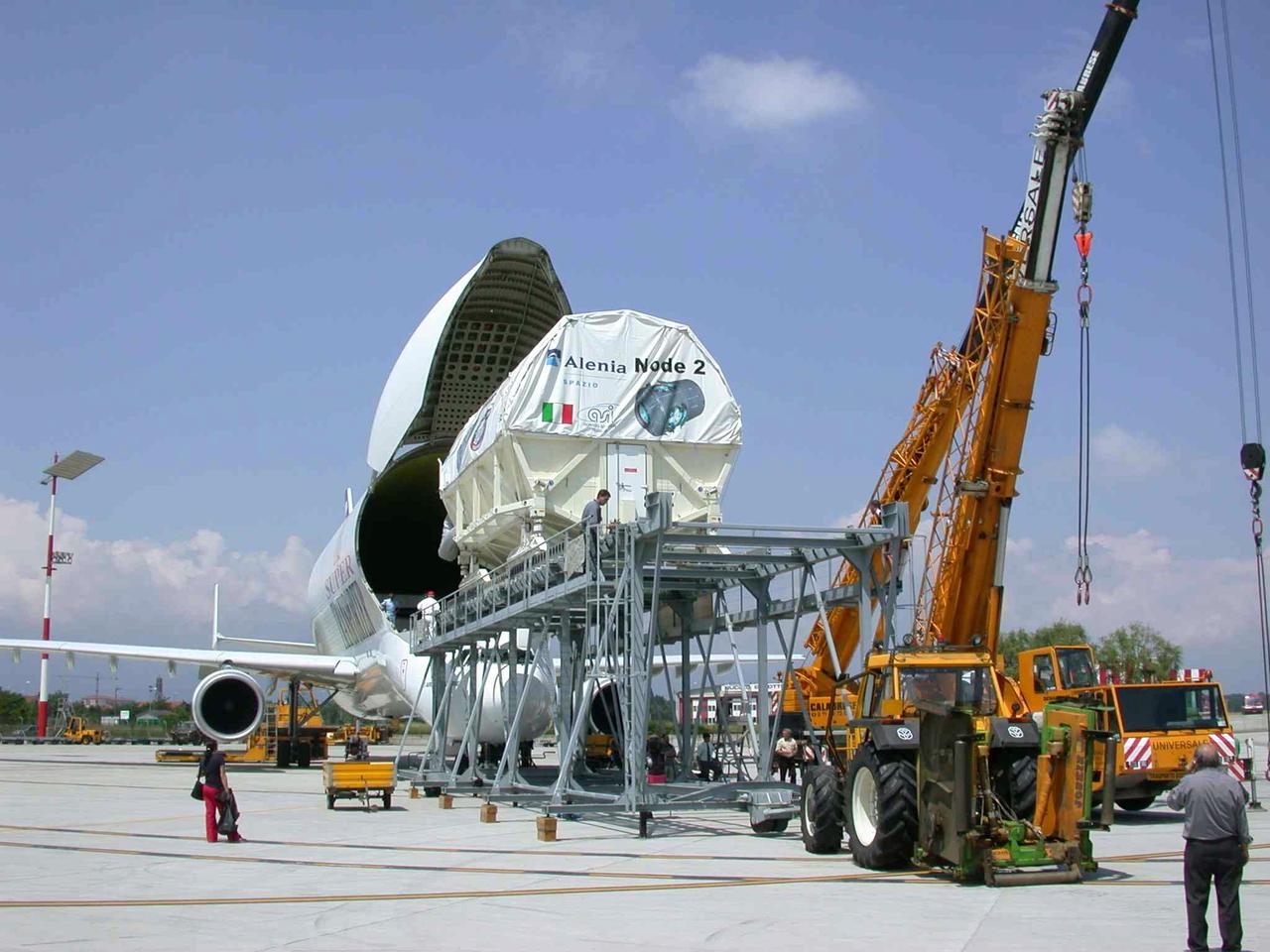
JSC2003-E-40248 (30 May 2003) --- The International Space Station U.S. Node 2 module is placed into an Airbus Beluga heavy-lift aircraft. The aircraft departed May 30 from Turin, Italy and arrived at the Kennedy Space Center June 1 with Node 2. Under contract of the Italian Space Agency (ASI), Alenia Spazio led a consortium of European sub-contractors to build Node 2. The module was built for NASA under a barter agreement with the European Space Agency (ESA) in exchange for the launch of the European Columbus Laboratory by the space shuttle to the International Space Station. Node 2 will provide a passageway between four International Space Station science experiment modules: the U.S. Destiny Laboratory, the Kibo Japanese Experiment Module, the European Columbus Laboratory and the Centrifuge Accommodation Module. The addition of Node 2 to the station will signify the U.S. Core Complete stage of assembly, at which time the station can support the addition of international laboratories from Europe and Japan. Photo Credit: Italian Space Agency (ASI )
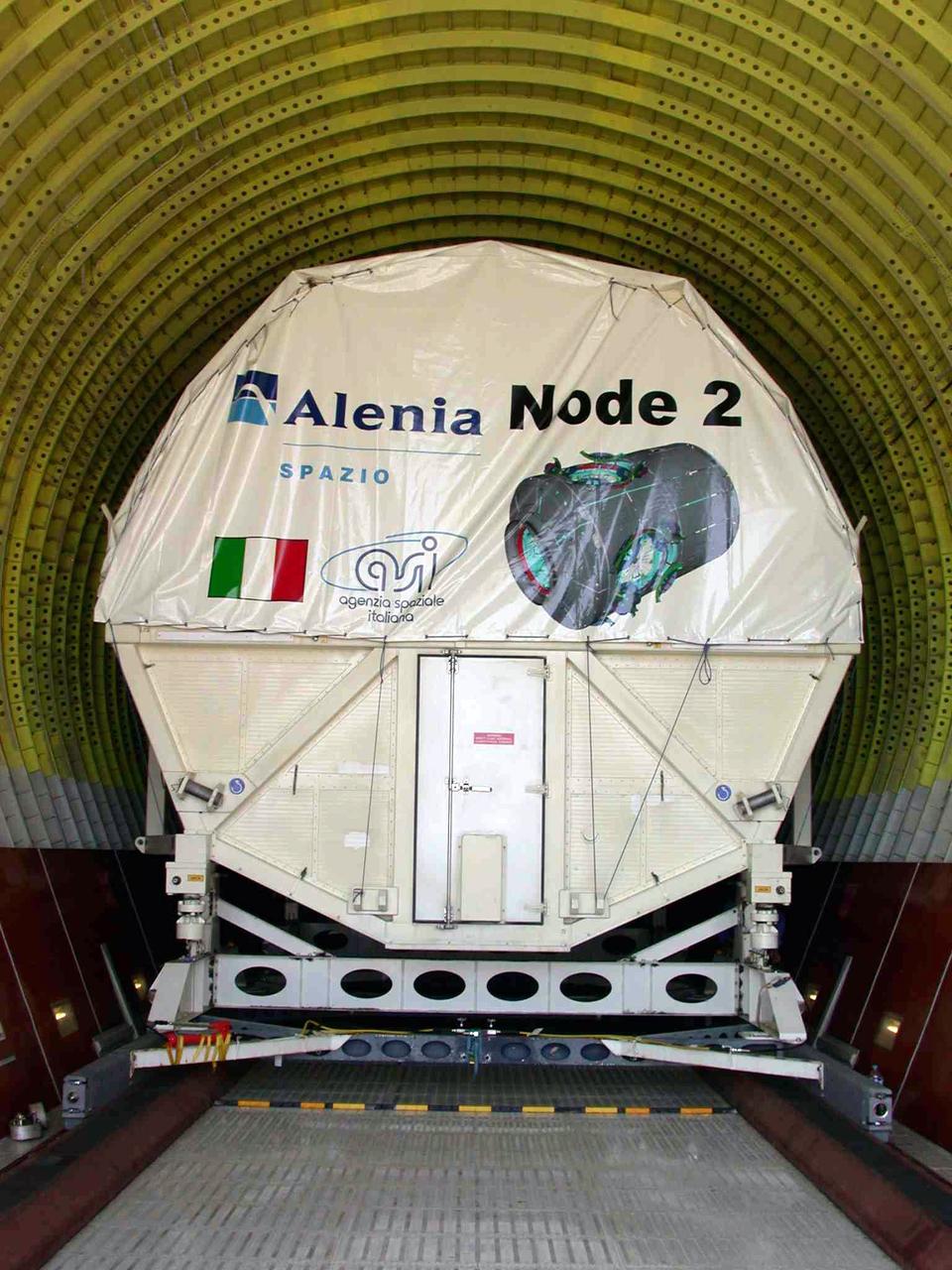
JSC2003-E-40252 (30 May 2003) --- The International Space Station U.S. Node 2 module is pictured shortly after being placed into an Airbus Beluga heavy-lift aircraft. The aircraft departed May 30 from Turin, Italy and arrived at the Kennedy Space Center June 1 with Node 2. Under contract of the Italian Space Agency (ASI), Alenia Spazio led a consortium of European sub-contractors to build Node 2. The module was built for NASA under a barter agreement with the European Space Agency (ESA) in exchange for the launch of the European Columbus Laboratory by the space shuttle to the International Space Station. Node 2 will provide a passageway between four International Space Station science experiment modules: the U.S. Destiny Laboratory, the Kibo Japanese Experiment Module, the European Columbus Laboratory and the Centrifuge Accommodation Module. The addition of Node 2 to the station will signify the U.S. Core Complete stage of assembly, at which time the station can support the addition of international laboratories from Europe and Japan. Photo Credit: Italian Space Agency (ASI)
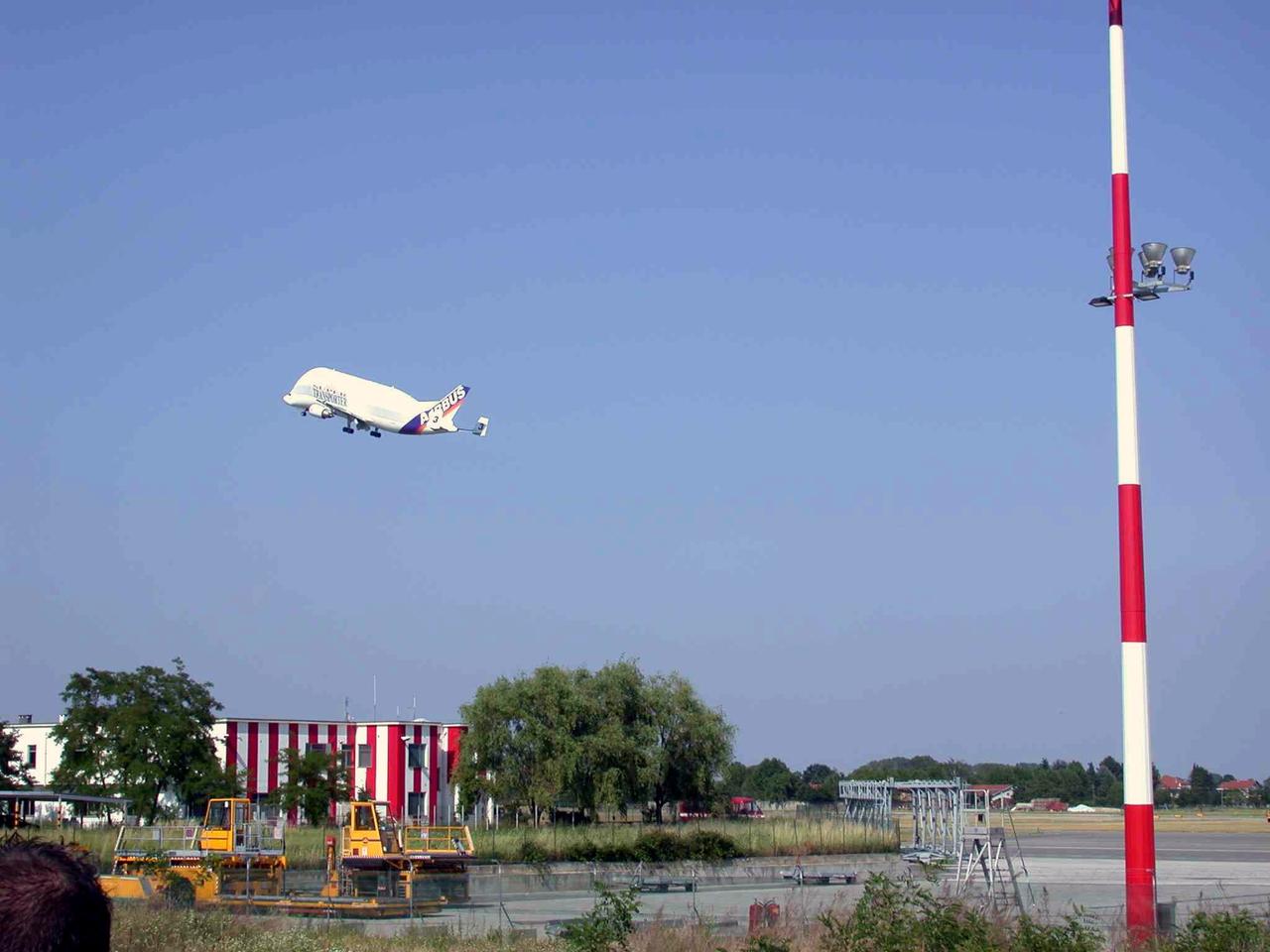
JSC2003-E-40257 (30 May 2003) --- An Airbus Beluga heavy-lift aircraft takes off from Turin International Airport carrying the International Space Station U.S. Node 2 inside. The aircraft departed May 30 from Turin, Italy and arrived at the Kennedy Space Center June 1 with Node 2. Under contract of the Italian Space Agency (ASI), Alenia Spazio led a consortium of European sub-contractors to build Node 2. The module was built for NASA under a barter agreement with the European Space Agency (ESA) in exchange for the launch of the European Columbus Laboratory by the space shuttle to the International Space Station. Node 2 will provide a passageway between four International Space Station science experiment modules: the U.S. Destiny Laboratory, the Kibo Japanese Experiment Module, the European Columbus Laboratory and the Centrifuge Accommodation Module. The addition of Node 2 to the station will signify the U.S. Core Complete stage of assembly, at which time the station can support the addition of international laboratories from Europe and Japan. Credit: ASI
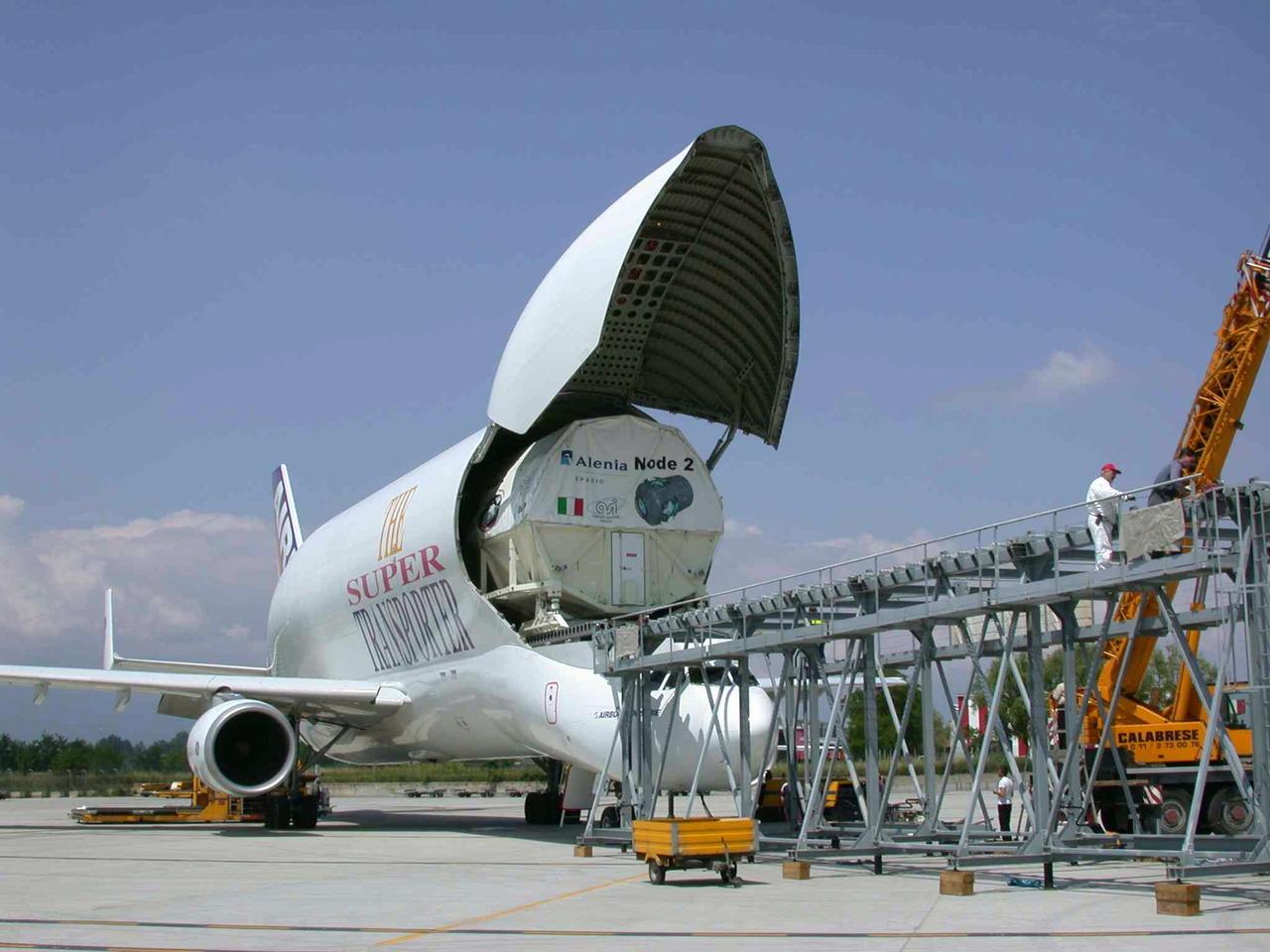
JSC2003-E-40250 (30 May 2003) --- The International Space Station U.S. Node 2 module is placed into an Airbus Beluga heavy-lift aircraft. The aircraft departed May 30 from Turin, Italy and arrived at the Kennedy Space Center June 1 with Node 2. Under contract of the Italian Space Agency (ASI), Alenia Spazio led a consortium of European sub-contractors to build Node 2. The module was built for NASA under a barter agreement with the European Space Agency (ESA) in exchange for the launch of the European Columbus Laboratory by the space shuttle to the International Space Station. Node 2 will provide a passageway between four International Space Station science experiment modules: the U.S. Destiny Laboratory, the Kibo Japanese Experiment Module, the European Columbus Laboratory and the Centrifuge Accommodation Module. The addition of Node 2 to the station will signify the U.S. Core Complete stage of assembly, at which time the station can support the addition of international laboratories from Europe and Japan. Photo Credit: Italian Space Agency (ASI)
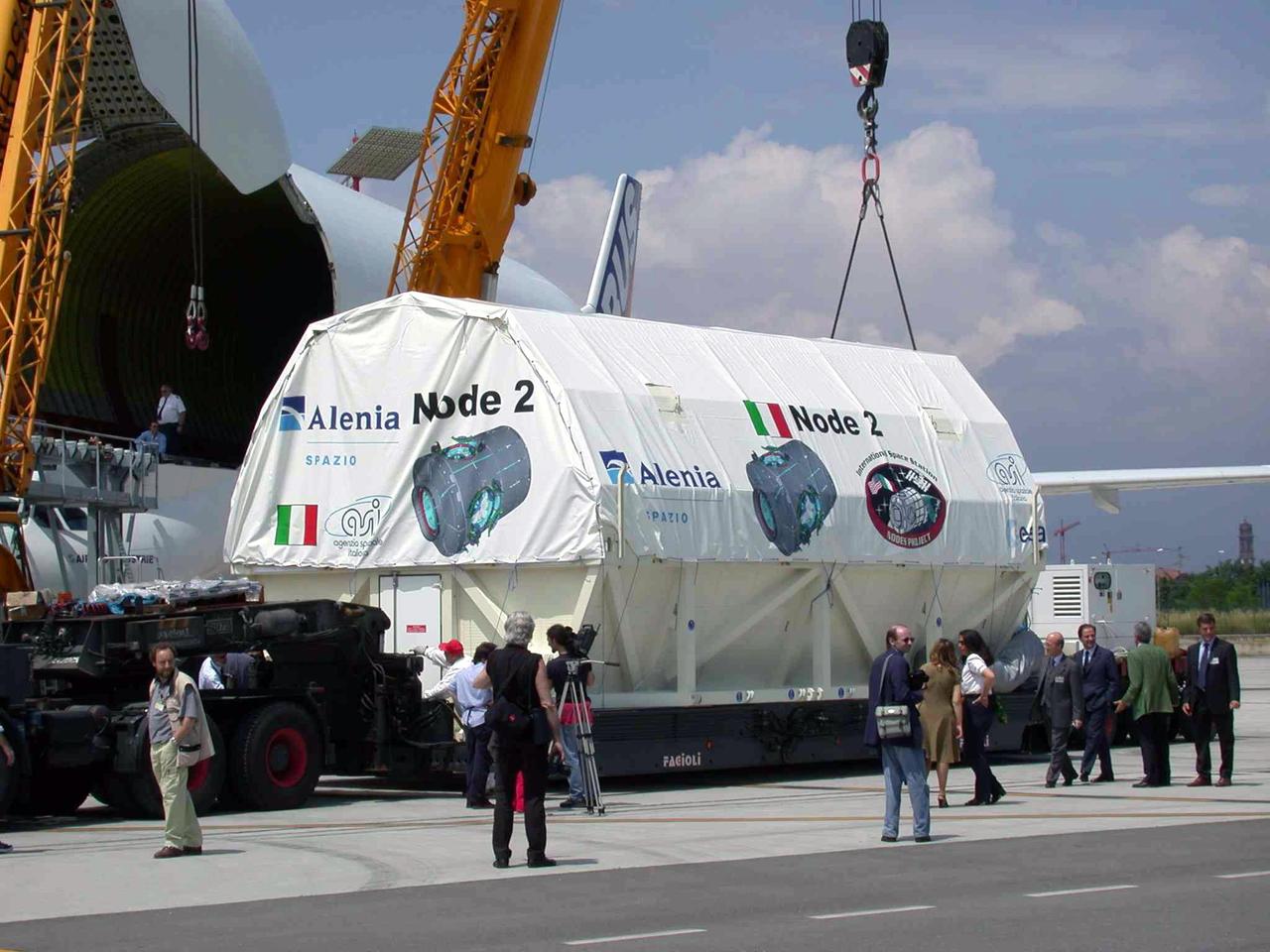
JSC2003-E-40262 (30 May 2003) --- The International Space Station U.S. Node 2 module is brought to an Airbus Beluga heavy-lift aircraft. The aircraft departed May 30 from Turin, Italy and arrived at the Kennedy Space Center June 1 with Node 2. Under contract of the Italian Space Agency (ASI), Alenia Spazio led a consortium of European sub-contractors to build Node 2. The module was built for NASA under a barter agreement with the European Space Agency (ESA) in exchange for the launch of the European Columbus Laboratory by the space shuttle to the International Space Station. Node 2 will provide a passageway between four International Space Station science experiment modules: the U.S. Destiny Laboratory, the Kibo Japanese Experiment Module, the European Columbus Laboratory and the Centrifuge Accommodation Module. The addition of Node 2 to the station will signify the U.S. Core Complete stage of assembly, at which time the station can support the addition of international laboratories from Europe and Japan. Photo Credit: Italian Space Agency (ASI)
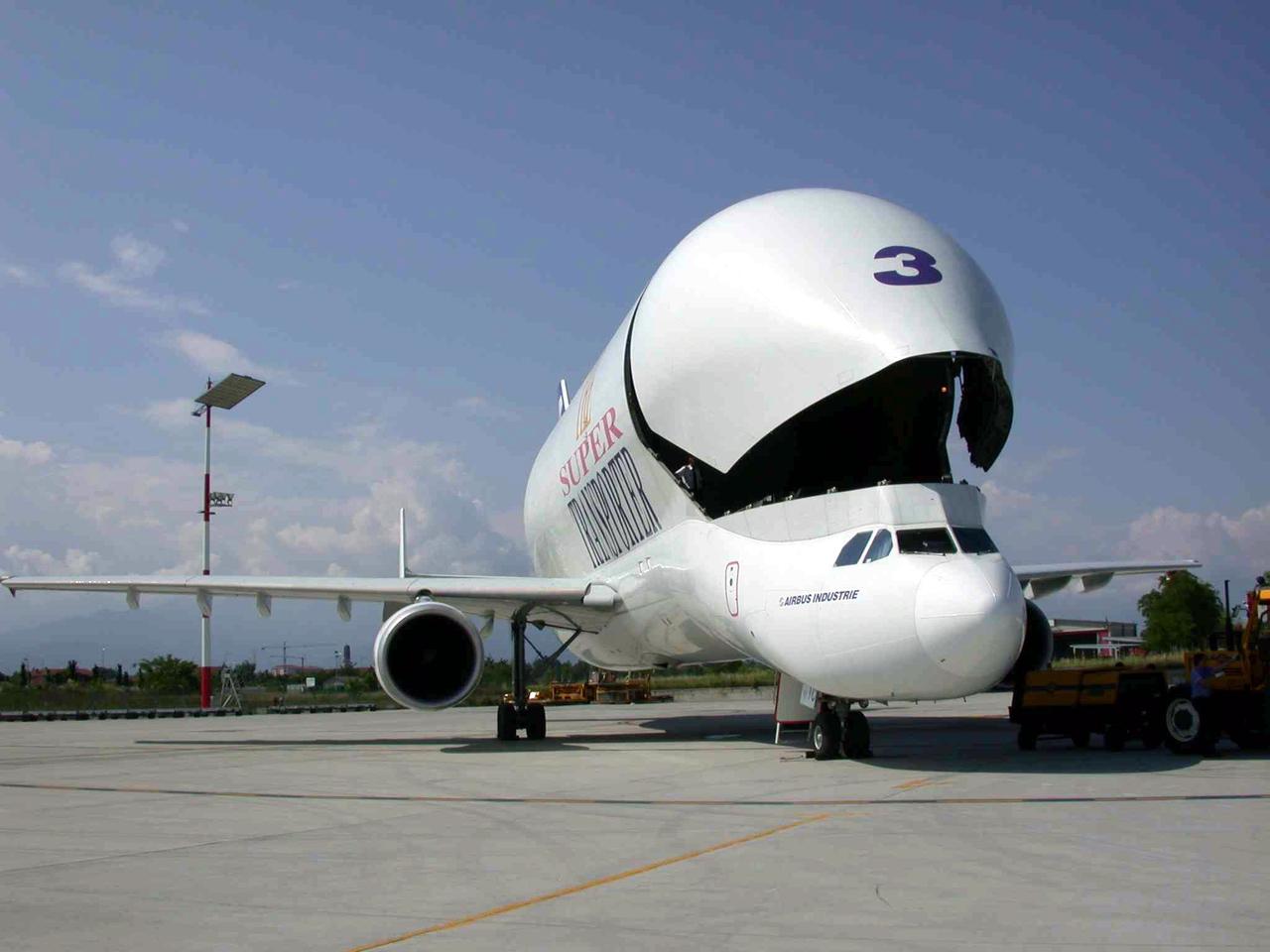
JSC20003-E-40254 (30 May 2003) --- The access door of an Airbus Beluga heavy-lift aircraft is about to be closed with the International Space Station U.S. Node 2 inside. The aircraft departed May 30 from Turin, Italy and arrived at the Kennedy Space Center June 1 with Node 2. Under contract of the Italian Space Agency (ASI), Alenia Spazio led a consortium of European sub-contractors to build Node 2. The module was built for NASA under a barter agreement with the European Space Agency (ESA) in exchange for the launch of the European Columbus Laboratory by the space shuttle to the International Space Station. Node 2 will provide a passageway between four International Space Station science experiment modules: the U.S. Destiny Laboratory, the Kibo Japanese Experiment Module, the European Columbus Laboratory and the Centrifuge Accommodation Module. The addition of Node 2 to the station will signify the U.S. Core Complete stage of assembly, at which time the station can support the addition of international laboratories from Europe and Japan. Photo Credit: Italian Space Agency (ASI )

JSC2003-E-40259 (30 May 2003) --- The International Space Station U.S. Node 2 module is brought to an Airbus Beluga heavy-lift aircraft. The aircraft departed May 30 from Turin, Italy and arrived at the Kennedy Space Center June 1 with Node 2. Under contract of the Italian Space Agency (ASI), Alenia Spazio led a consortium of European sub-contractors to build Node 2. The module was built for NASA under a barter agreement with the European Space Agency (ESA) in exchange for the launch of the European Columbus Laboratory by the space shuttle to the International Space Station. Node 2 will provide a passageway between four International Space Station science experiment modules: the U.S. Destiny Laboratory, the Kibo Japanese Experiment Module, the European Columbus Laboratory and the Centrifuge Accommodation Module. The addition of Node 2 to the station will signify the U.S. Core Complete stage of assembly, at which time the station can support the addition of international laboratories from Europe and Japan.
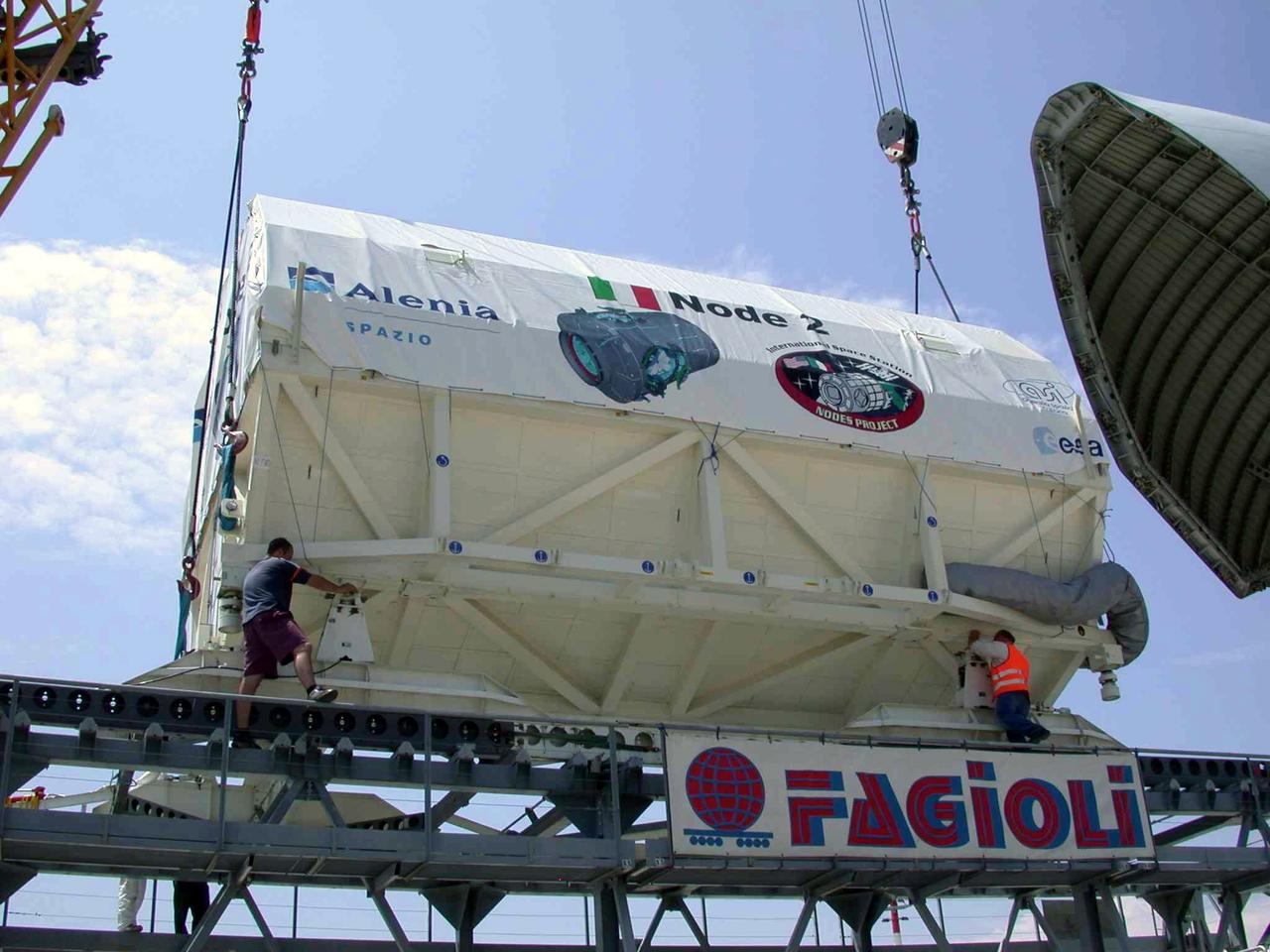
JSC2003-E-40247 (30 May 2003) --- The International Space Station U.S. Node 2 module is placed into an Airbus Beluga heavy-lift aircraft. The aircraft departed May 30 from Turin, Italy and arrived at the Kennedy Space Center June 1 with Node 2. Under contract of the Italian Space Agency (ASI), Alenia Spazio led a consortium of European sub-contractors to build Node 2. The module was built for NASA under a barter agreement with the European Space Agency (ESA) in exchange for the launch of the European Columbus Laboratory by the space shuttle to the International Space Station. Node 2 will provide a passageway between four International Space Station science experiment modules: the U.S. Destiny Laboratory, the Kibo Japanese Experiment Module, the European Columbus Laboratory and the Centrifuge Accommodation Module. The addition of Node 2 to the station will signify the U.S. Core Complete stage of assembly, at which time the station can support the addition of international laboratories from Europe and Japan. Photo Credit: Italian Space Agency (ASI )
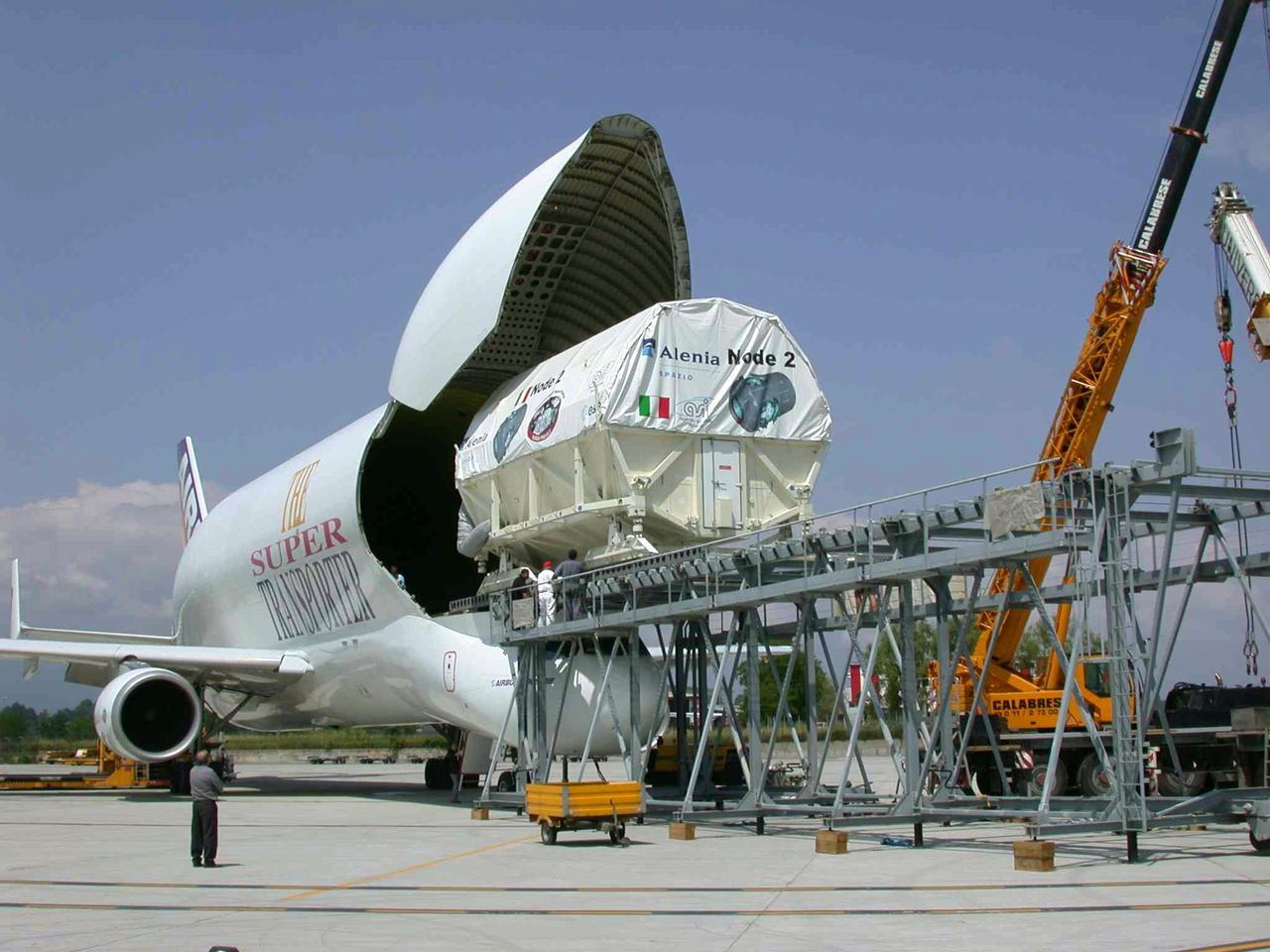
JSC2003-E-40249 (30 May 2003) --- The International Space Station U.S. Node 2 module is placed into an Airbus Beluga heavy-lift aircraft. The aircraft departed May 30 from Turin, Italy and arrived at the Kennedy Space Center June 1 with Node 2. Under contract of the Italian Space Agency (ASI), Alenia Spazio led a consortium of European sub-contractors to build Node 2. The module was built for NASA under a barter agreement with the European Space Agency (ESA) in exchange for the launch of the European Columbus Laboratory by the space shuttle to the International Space Station. Node 2 will provide a passageway between four International Space Station science experiment modules: the U.S. Destiny Laboratory, the Kibo Japanese Experiment Module, the European Columbus Laboratory and the Centrifuge Accommodation Module. The addition of Node 2 to the station will signify the U.S. Core Complete stage of assembly, at which time the station can support the addition of international laboratories from Europe and Japan. Photo Credit: Italian Space Agency (ASI)
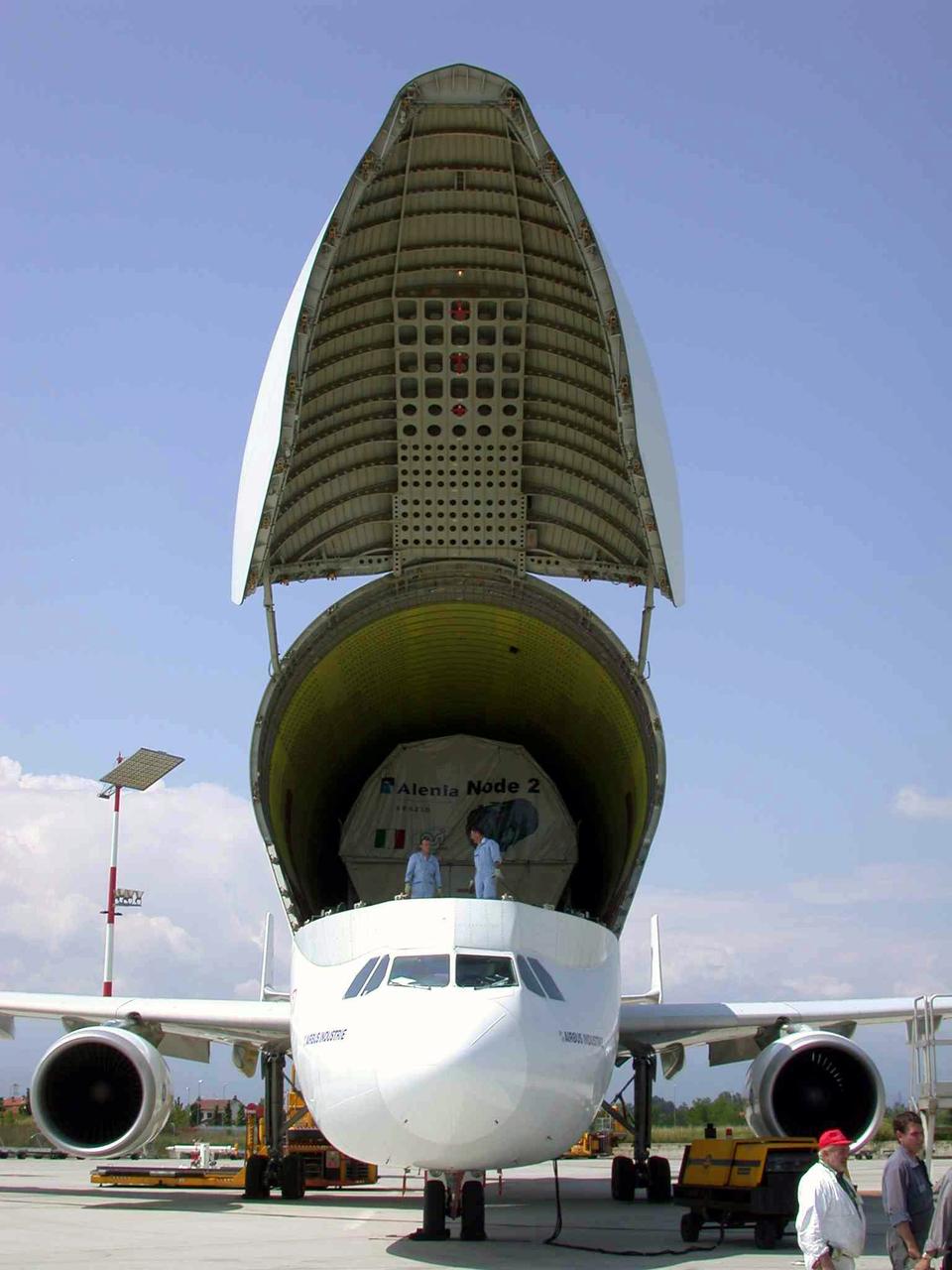
JSC2003-E-40253 (30 May 2003) --- The International Space Station U.S. Node 2 module is shown inside an Airbus Beluga heavy-lift aircraft. The aircraft departed May 30 from Turin, Italy and arrived at the Kennedy Space Center June 1 with Node 2. Under contract of the Italian Space Agency (ASI), Alenia Spazio led a consortium of European sub-contractors to build Node 2. The module was built for NASA under a barter agreement with the European Space Agency (ESA) in exchange for the launch of the European Columbus Laboratory by the space shuttle to the International Space Station. Node 2 will provide a passageway between four International Space Station science experiment modules: the U.S. Destiny Laboratory, the Kibo Japanese Experiment Module, the European Columbus Laboratory and the Centrifuge Accommodation Module. The addition of Node 2 to the station will signify the U.S. Core Complete stage of assembly, at which time the station can support the addition of international laboratories from Europe and Japan. Photo Credit: Italian Space Agency (ASI)
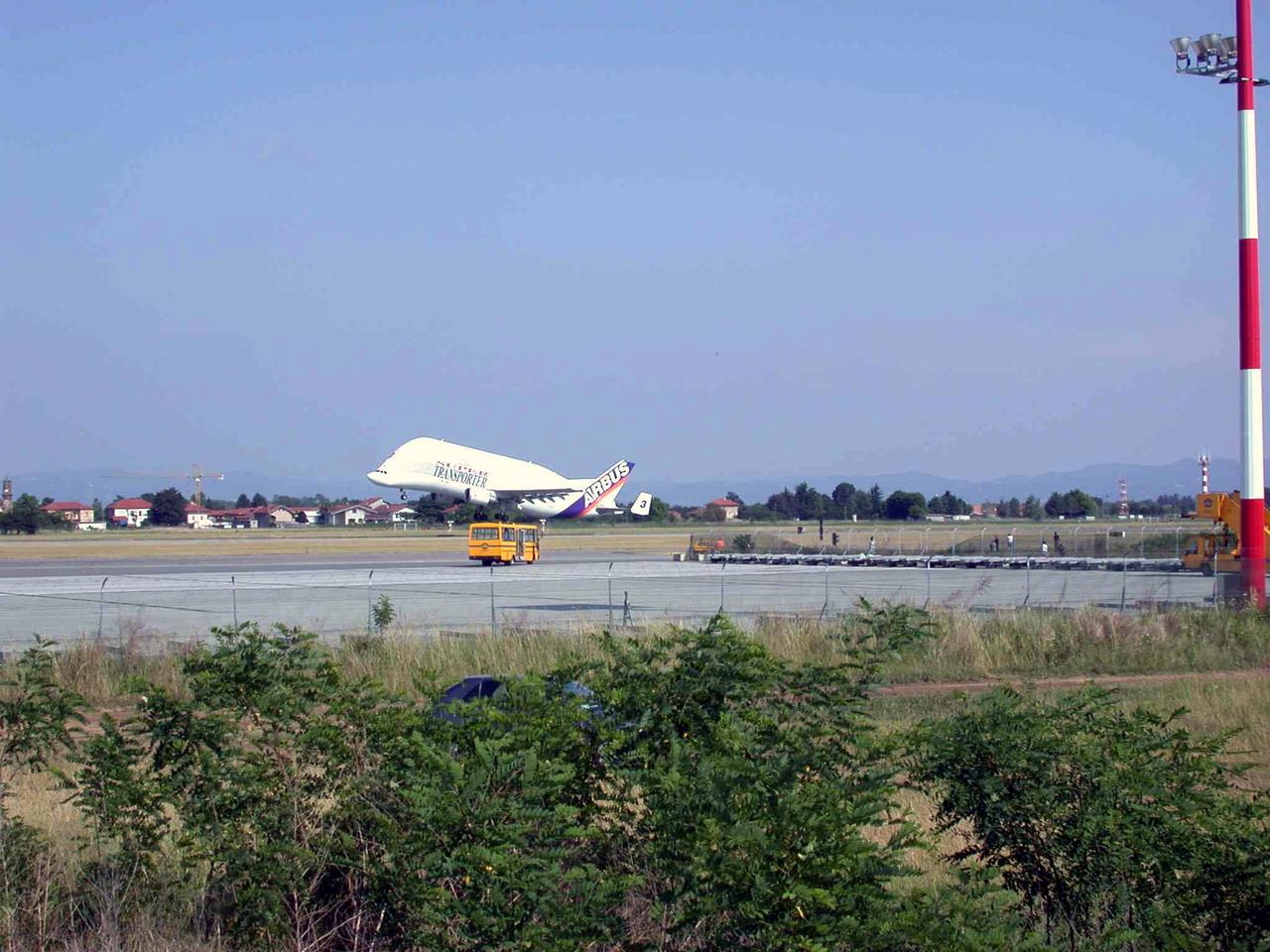
JSC2003-E-40256 (30 May 2003) An Airbus Beluga heavy-lift aircraft prepares to take off from Turin International Airport carrying the International Space Station U.S. Node 2 inside. The aircraft departed May 30 from Turin, Italy and arrived at the Kennedy Space Center June 1 with Node 2. Under contract of the Italian Space Agency (ASI), Alenia Spazio led a consortium of European sub-contractors to build Node 2. The module was built for NASA under a barter agreement with the European Space Agency (ESA) in exchange for the launch of the European Columbus Laboratory by the space shuttle to the International Space Station. Node 2 will provide a passageway between four International Space Station science experiment modules: the U.S. Destiny Laboratory, the Kibo Japanese Experiment Module, the European Columbus Laboratory and the Centrifuge Accommodation Module. The addition of Node 2 to the station will signify the U.S. Core Complete stage of assembly, at which time the station can support the addition of international laboratories from Europe and Japan. Photo Credit: Italian Space Agency (ASI)

JSC2003-E-40251 (30 May 2003) --- The International Space Station U.S. Node 2 module is shown inside an Airbus Beluga heavy-lift aircraft. The aircraft departed May 30 from Turin, Italy and arrived at the Kennedy Space Center June 1 with Node 2. Under contract of the Italian Space Agency (ASI), Alenia Spazio led a consortium of European sub-contractors to build Node 2. The module was built for NASA under a barter agreement with the European Space Agency (ESA) in exchange for the launch of the European Columbus Laboratory by the space shuttle to the International Space Station. Node 2 will provide a passageway between four International Space Station science experiment modules: the U.S. Destiny Laboratory, the Kibo Japanese Experiment Module, the European Columbus Laboratory and the Centrifuge Accommodation Module. The addition of Node 2 to the station will signify the U.S. Core Complete stage of assembly, at which time the station can support the addition of international laboratories from Europe and Japan. Photo Credit: Italian Space Agency (ASI)
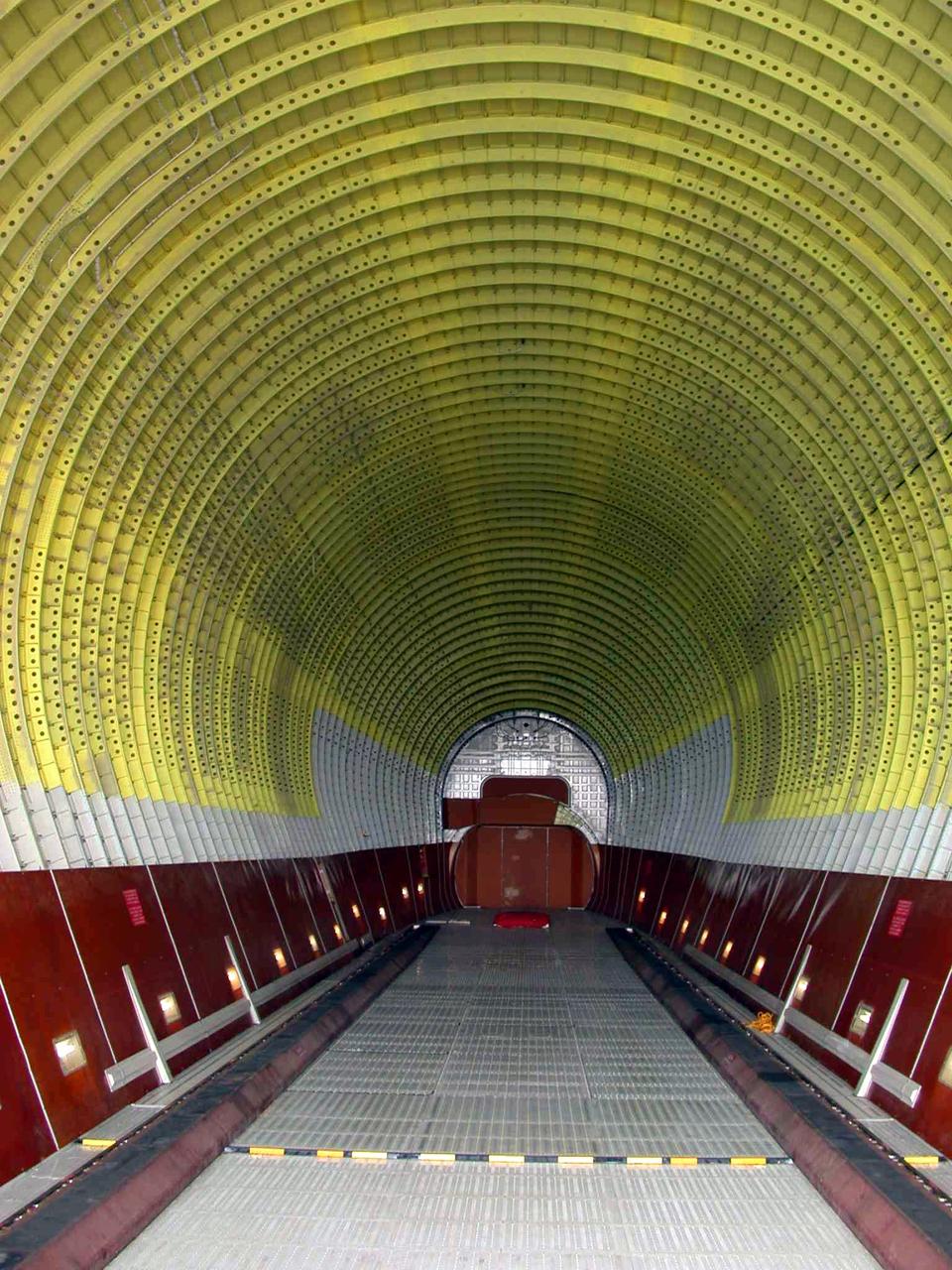
JSC2003-E-40260 (30 May 2003) --- A view inside the empty Airbus Beluga heavy-lift aircraft before the International Space Station Node 2 is placed inside for transportation to the United States. The aircraft left Turin, Italy where, under contract of the Italian Space Agency (ASI), Alenia Spazio led a consortium of European sub-contractors to build Node 2. The Node 2 was delivered to the Kennedy Space Center June 1 and where it will be processed for launch to the space station. Node 2 will provide a passageway between four International Space Station science experiment modules: the U.S. Destiny Laboratory, the Kibo Japanese Experiment Module, the European Columbus Laboratory and the Centrifuge Accommodation Module. The addition of Node 2 to the station will signify the U.S. Core Complete stage of assembly, at which time the station can support the addition of international laboratories from Europe and Japan. The module was built for NASA under a barter agreement with the European Space Agency (ESA) in exchange for the launch of the European Columbus Laboratory by the space shuttle to the International Space Station. Photo Credit: Italian Space Agency (ASI)
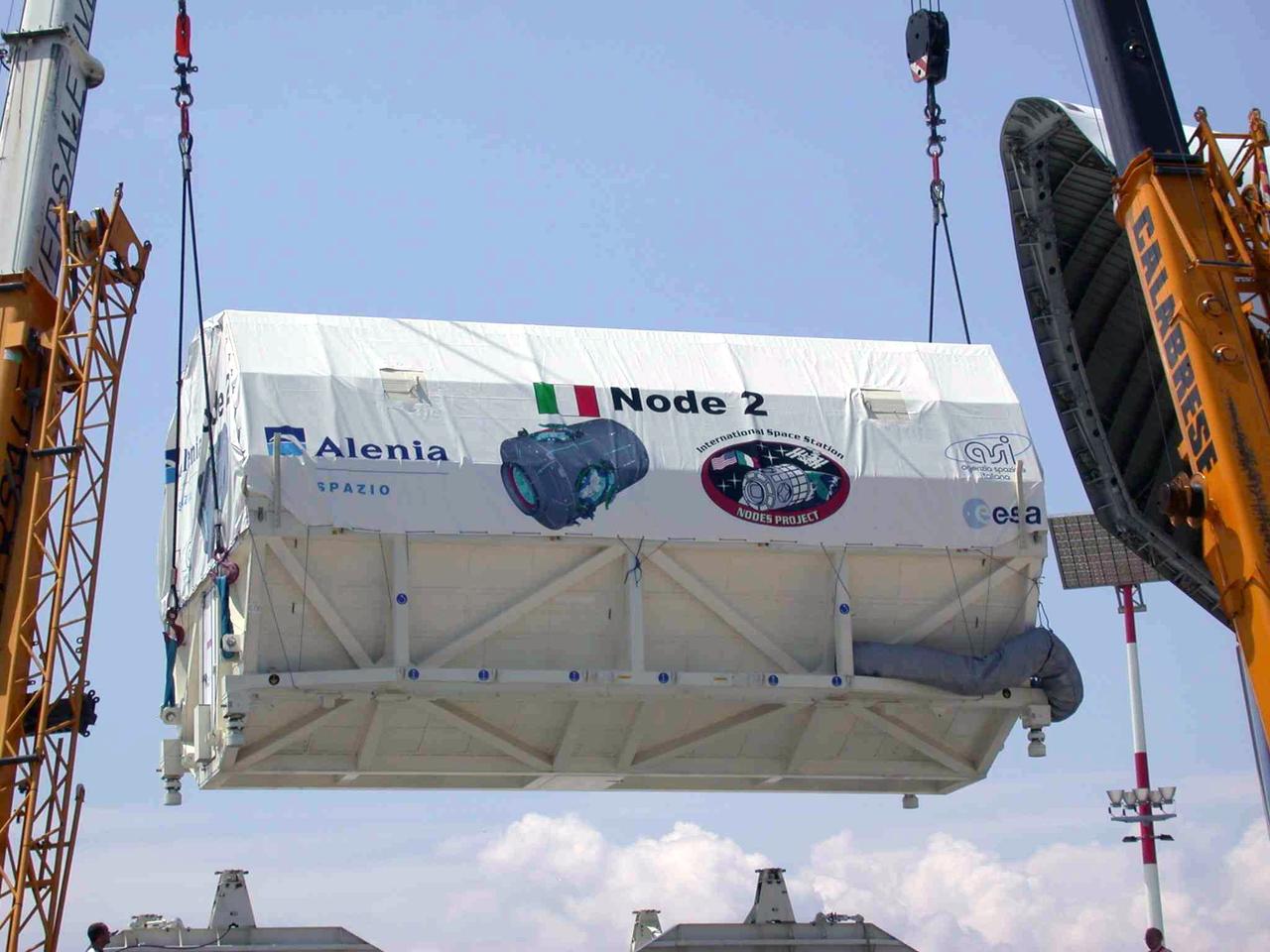
JSC2003-E-40264 (30 May 2003) --- The International Space Station U.S. Node 2 module is hoisted into an Airbus Beluga heavy-lift aircraft. The aircraft departed May 30 from Turin, Italy and arrived at the Kennedy Space Center June 1 with Node 2. Under contract of the Italian Space Agency (ASI), Alenia Spazio led a consortium of European sub-contractors to build Node 2. The module was built for NASA under a barter agreement with the European Space Agency (ESA) in exchange for the launch of the European Columbus Laboratory by the space shuttle to the International Space Station. Node 2 will provide a passageway between four International Space Station science experiment modules: the U.S. Destiny Laboratory, the Kibo Japanese Experiment Module, the European Columbus Laboratory and the Centrifuge Accommodation Module. The addition of Node 2 to the station will signify the U.S. Core Complete stage of assembly, at which time the station can support the addition of international laboratories from Europe and Japan. Photo Credit: Italian Space Agency (ASI)
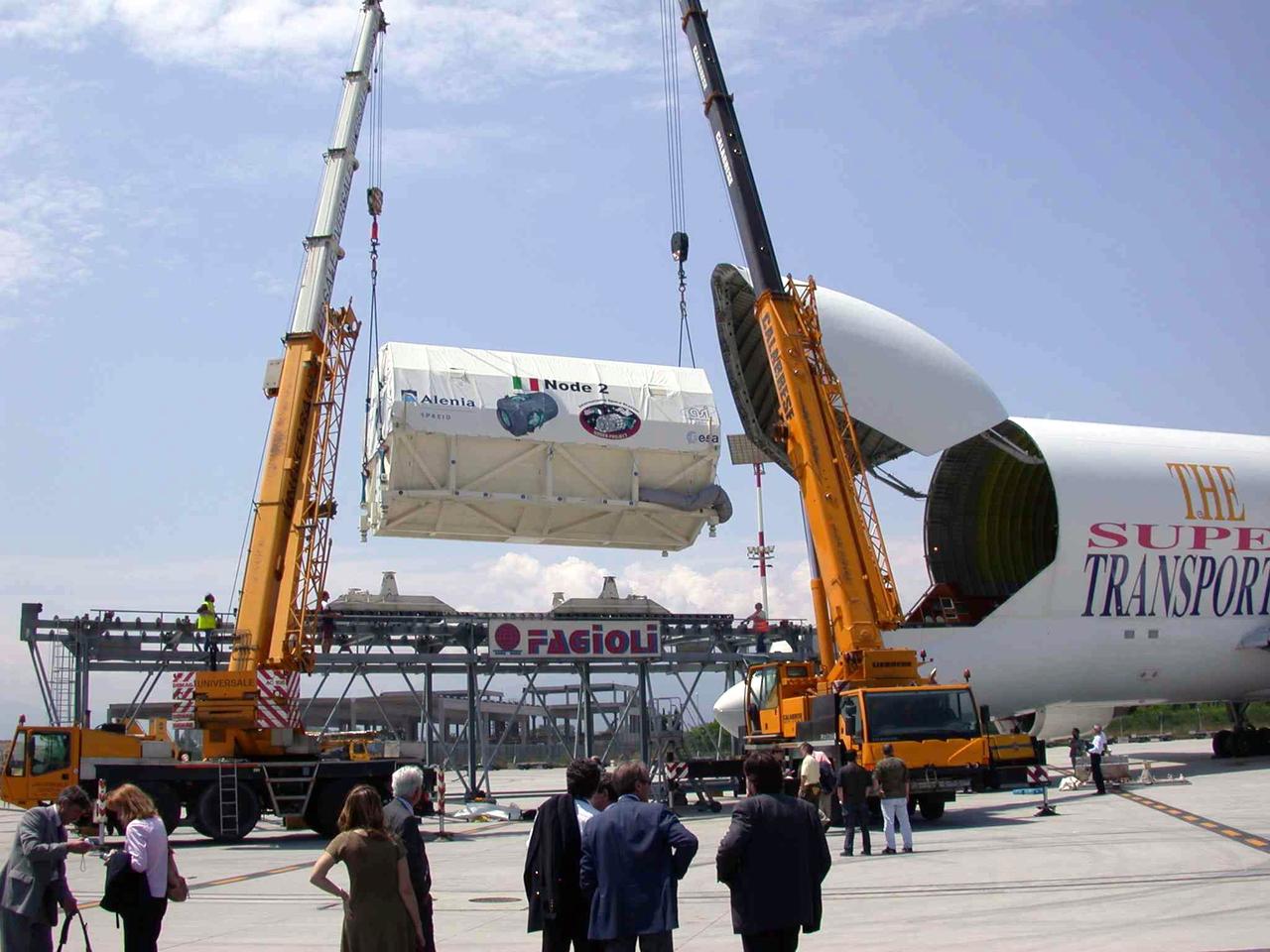
JSC2003-E-40265 (30 May 2003) --- The International Space Station U.S. Node 2 module is hoisted into an Airbus Beluga heavy-lift aircraft. The aircraft departed May 30 from Turin, Italy and arrived at the Kennedy Space Center June 1 with Node 2. Under contract of the Italian Space Agency (ASI), Alenia Spazio led a consortium of European sub-contractors to build Node 2. The module was built for NASA under a barter agreement with the European Space Agency (ESA) in exchange for the launch of the European Columbus Laboratory by the space shuttle to the International Space Station. Node 2 will provide a passageway between four International Space Station science experiment modules: the U.S. Destiny Laboratory, the Kibo Japanese Experiment Module, the European Columbus Laboratory and the Centrifuge Accommodation Module. The addition of Node 2 to the station will signify the U.S. Core Complete stage of assembly, at which time the station can support the addition of international laboratories from Europe and Japan. Photo Credit: Italian Space Agency (ASI)

Astronaut Karen Nyberg,Expedition 36 flight engineer,is photographed holding a drink packet in the Node 2 module.

Astronaut Reid Wiseman,Expedition 40 flight engineer,is photographed playing with a yoyo in the Node 2 module.
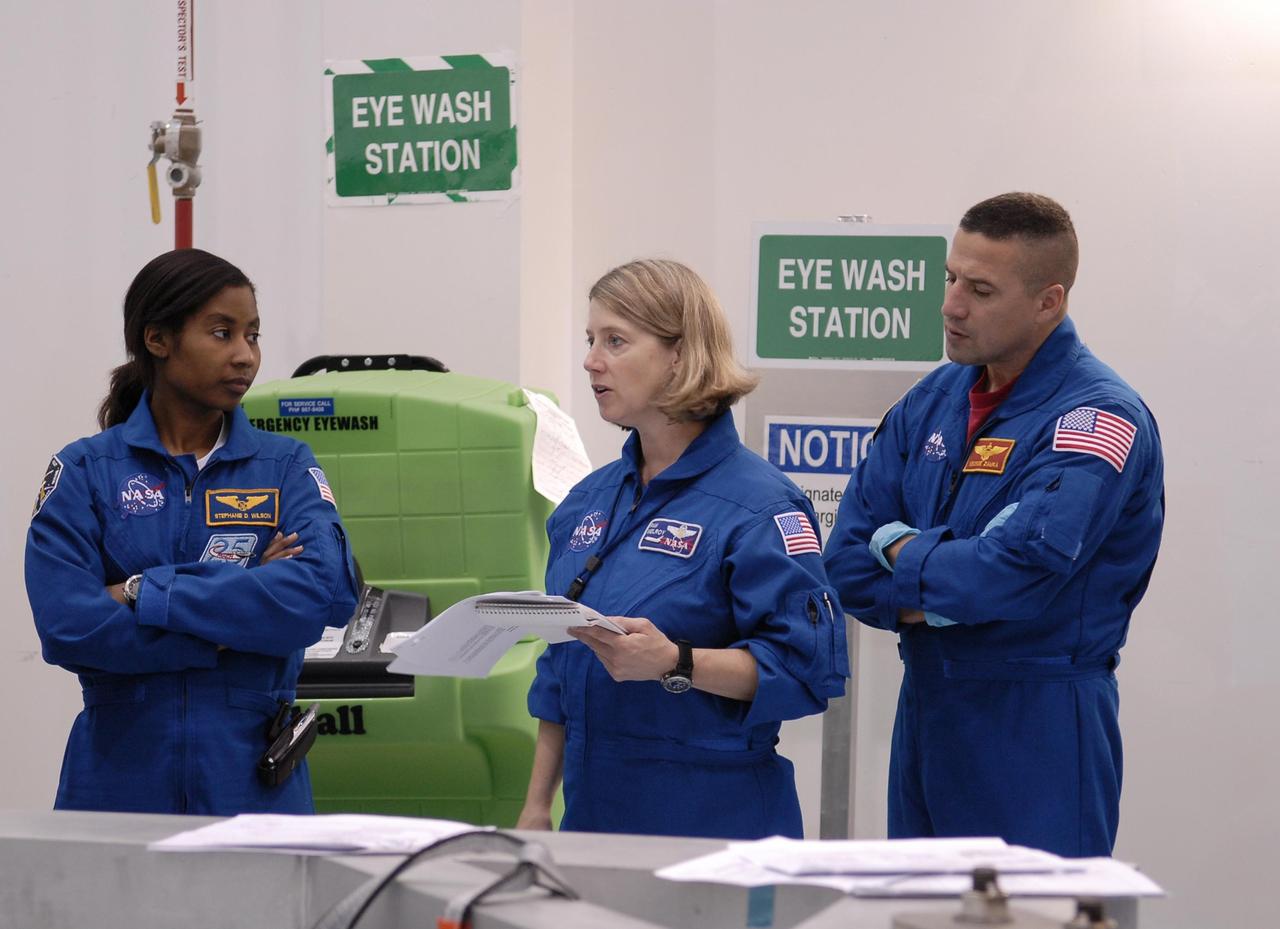
KENNEDY SPACE CENTER, FLA. -- During a familiarization visit to the Space Station Processing Facility, mission STS-120 Mission Specialist Stephanie Wilson, Commander Pam Melroy and Pilot George Zamka review safety procedures. Other STS-120 crew members include Mission Specialists Scott Parazynski, Douglas Wheelock, Daniel Tani, Paolo Nespoli (with the European Space Agency) and Clayton Anderson. Mission STS-120 will deliver the Node 2 "Harmony" connecting module to the station. During the mission, Tani and Anderson will transfer to the station and remain as flight engineers for Expedition 15. The mission is tentatively scheduled for August of this year. Photo credit: NASA/Kim Shiflett
KENNEDY SPACE CENTER, FLA. -- Inside the Space Station Processing Facility, mission STS-120 crew members familiarize themselves with equipment during a visit to Kennedy Space Center. Crew members are Commander Pam Melroy, Pilot George Zamka and Mission Specialists Scott Parazynski, Douglas Wheelock, Stephanie Wilson, Paolo Nespoli (with the European Space Agency), Daniel Tani and Clayton Anderson. Mission STS-120 will deliver the Node 2 "Harmony" connecting module to the station. During the mission, Tani and Anderson will transfer to the station and remain as flight engineers for Expedition 15. The mission is tentatively scheduled for August of this year. Photo credit: NASA/Kim Shiflett
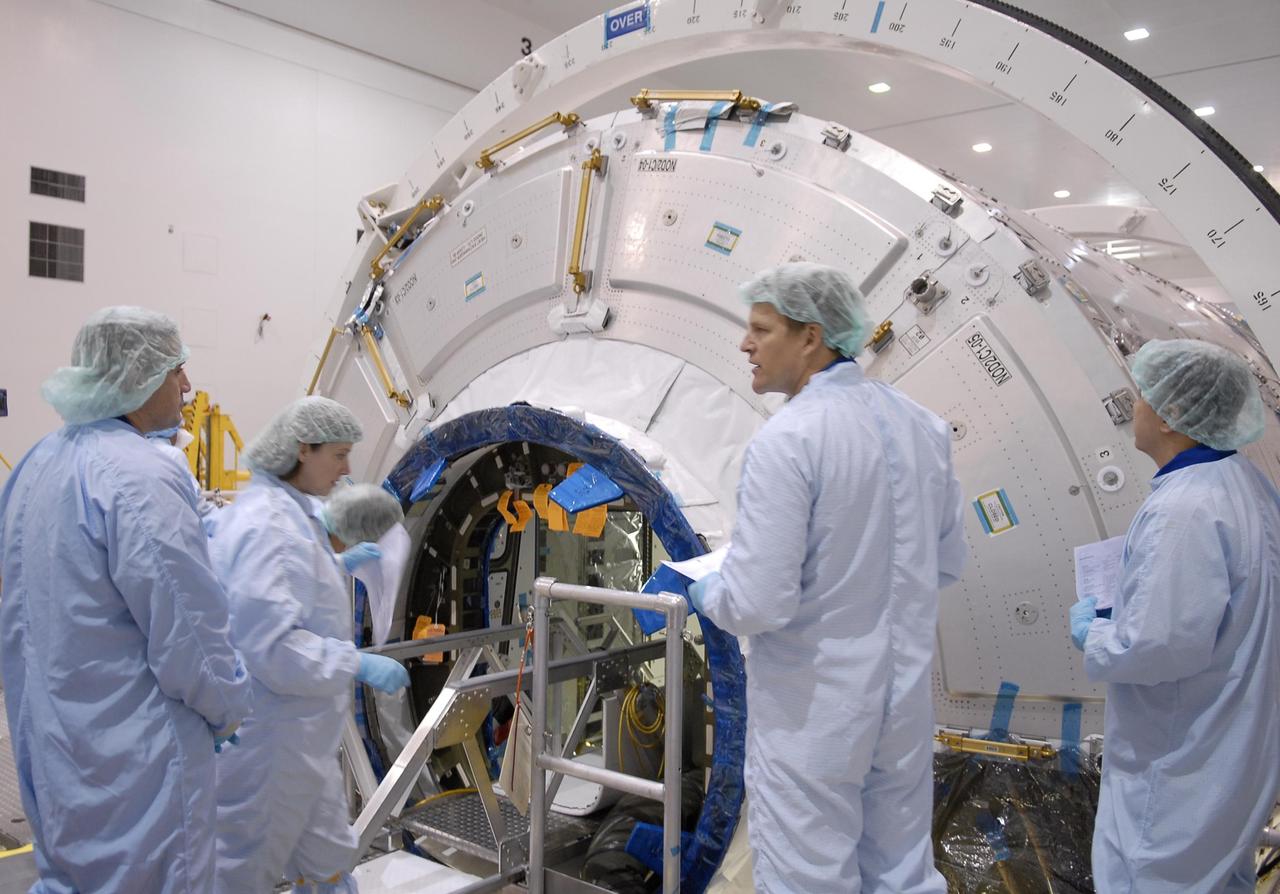
KENNEDY SPACE CENTER, FLA. -- Inside the Space Station Processing Facility, mission STS-120 crew members familiarize themselves with equipment during a visit to Kennedy Space Center. Crew members are Commander Pam Melroy, Pilot George Zamka and Mission Specialists Scott Parazynski, Douglas Wheelock, Stephanie Wilson, Paolo Nespoli (with the European Space Agency), Daniel Tani and Clayton Anderson. Mission STS-120 will deliver the Node 2 "Harmony" connecting module to the station. During the mission, Tani and Anderson will transfer to the station and remain as flight engineers for Expedition 15. The mission is tentatively scheduled for August of this year. Photo credit: NASA/Kim Shiflett
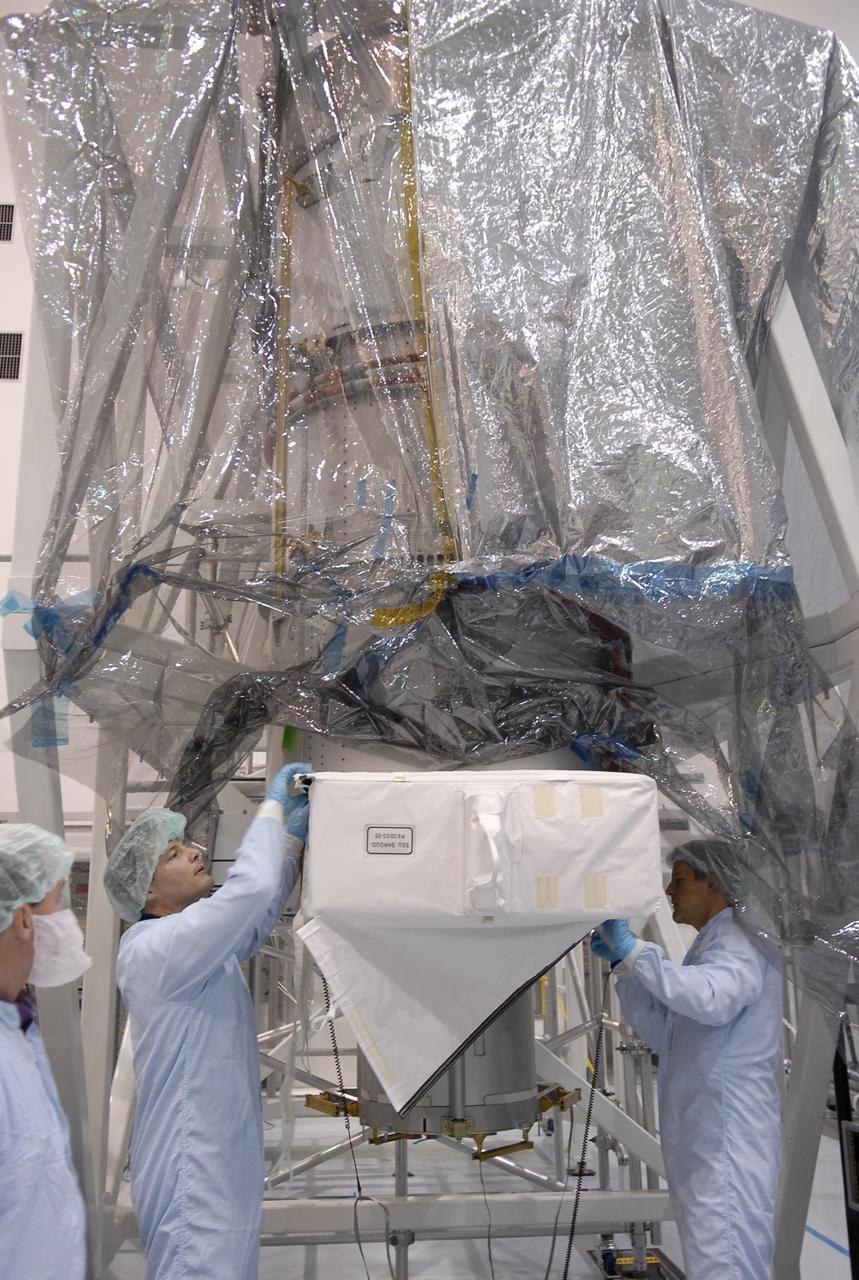
KENNEDY SPACE CENTER, FLA. -- Mission STS-120 Mission Specialists Douglas Wheelock (left) and Scott Parazynski familiarize themselves with equipment inside the Space Station Processing Facility during a visit to Kennedy Space Center. Other crew members include Commander Pam Melroy, Pilot George Zamka and Mission Specialists Stephanie Wilson, Paolo Nespoli (with the European Space Agency), Daniel Tani and Clayton Anderson. Mission STS-120 will deliver the Node 2 "Harmony" connecting module to the station. During the mission, Tani and Anderson will transfer to the station and remain as flight engineers for Expedition 15. The mission is tentatively scheduled for August of this year. Photo credit: NASA/Kim Shiflett
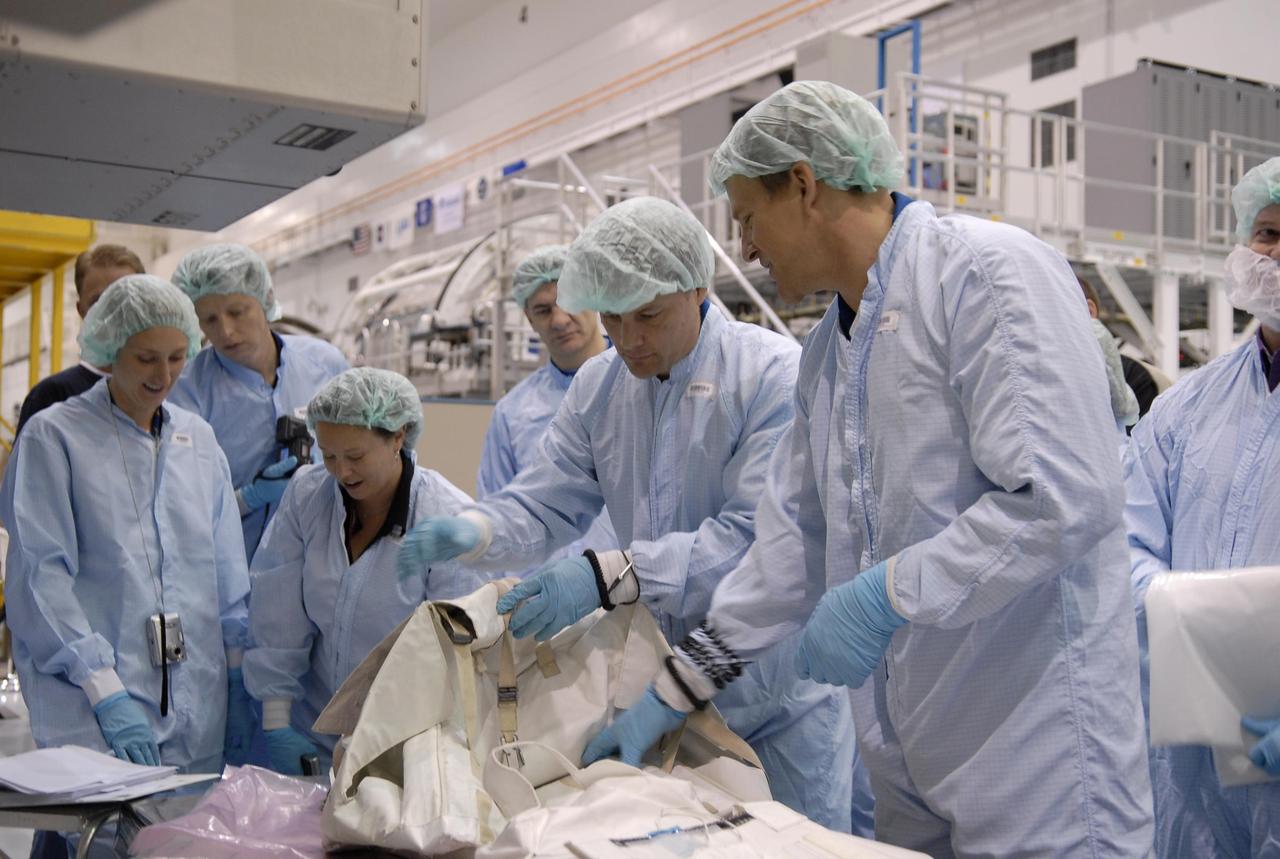
KENNEDY SPACE CENTER, FLA. -- Inside the Space Station Processing Facility, mission STS-120 crew members familiarize themselves with equipment. Beginning third from left are Commander Pam Melroy, Mission Specialists Paolo Nespoli (with the European Space Agency), Douglas Wheelock and Scott Parazynski. Other crew members include Pilot George Zamka and Mission Specialists Stephanie Wilson, Daniel Tani and Clayton Anderson. Mission STS-120 will deliver the Node 2 "Harmony" connecting module to the station. During the mission, Tani and Anderson will transfer to the station and remain as flight engineers for Expedition 15. The mission is tentatively scheduled for August of this year. Photo credit: NASA/Kim Shiflett
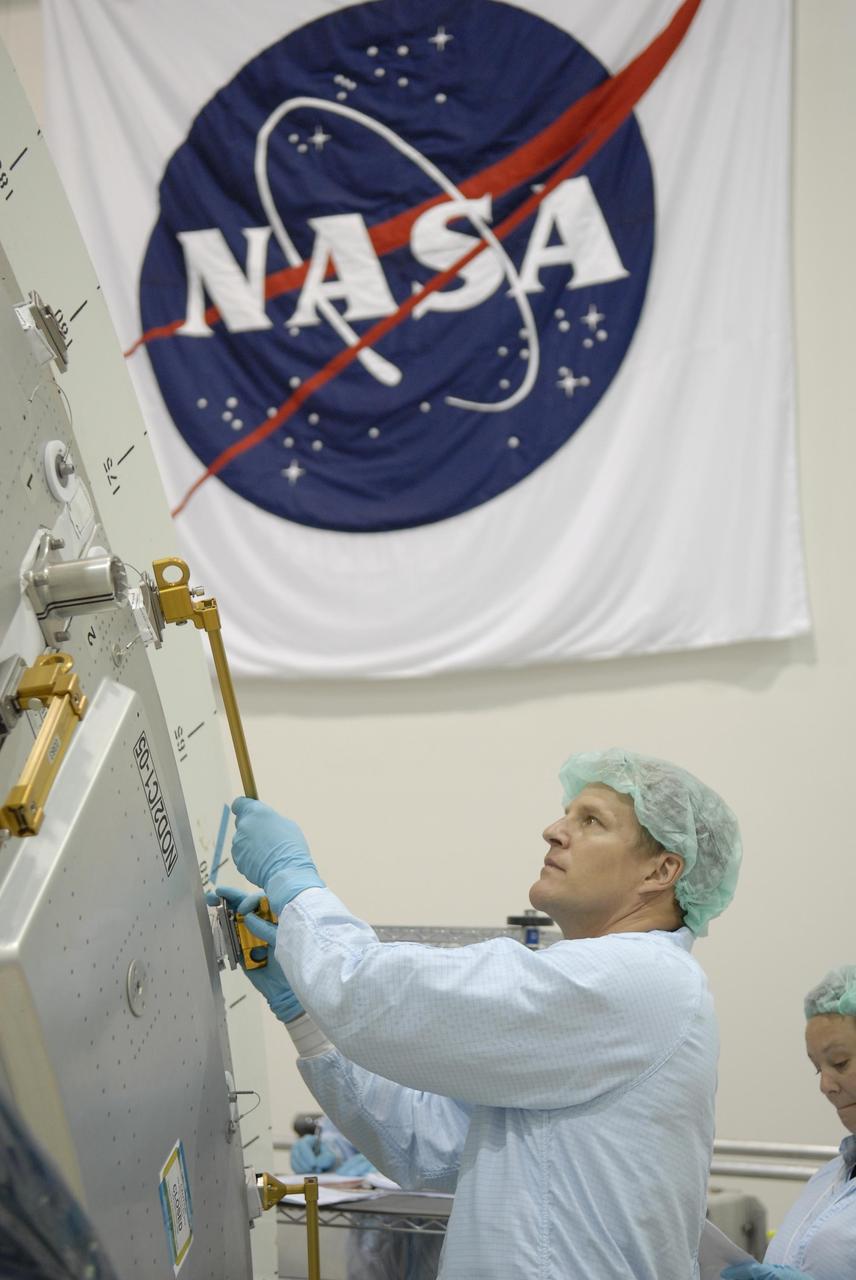
KENNEDY SPACE CENTER, FLA. -- With the NASA logo serving as a backdrop, STS-120 Mission Specialist Scott Parazynski familiarizes himself with equipment inside the Space Station Processing Facility during a visit to Kennedy Space Center. Other crew members include Commander Pam Melroy, Pilot George Zamka, and Mission Specialists Douglas Wheelock, Stephanie Wilson, Daniel Tani, Paolo Nespoli (with the European Space Agency) and Clayton Anderson. Mission STS-120 will deliver the Node 2 "Harmony" connecting module to the station. During the mission, Tani and Anderson will transfer to the station and remain as flight engineers for Expedition 15. The mission is tentatively scheduled for August of this year. Photo credit: NASA/Kim Shiflett
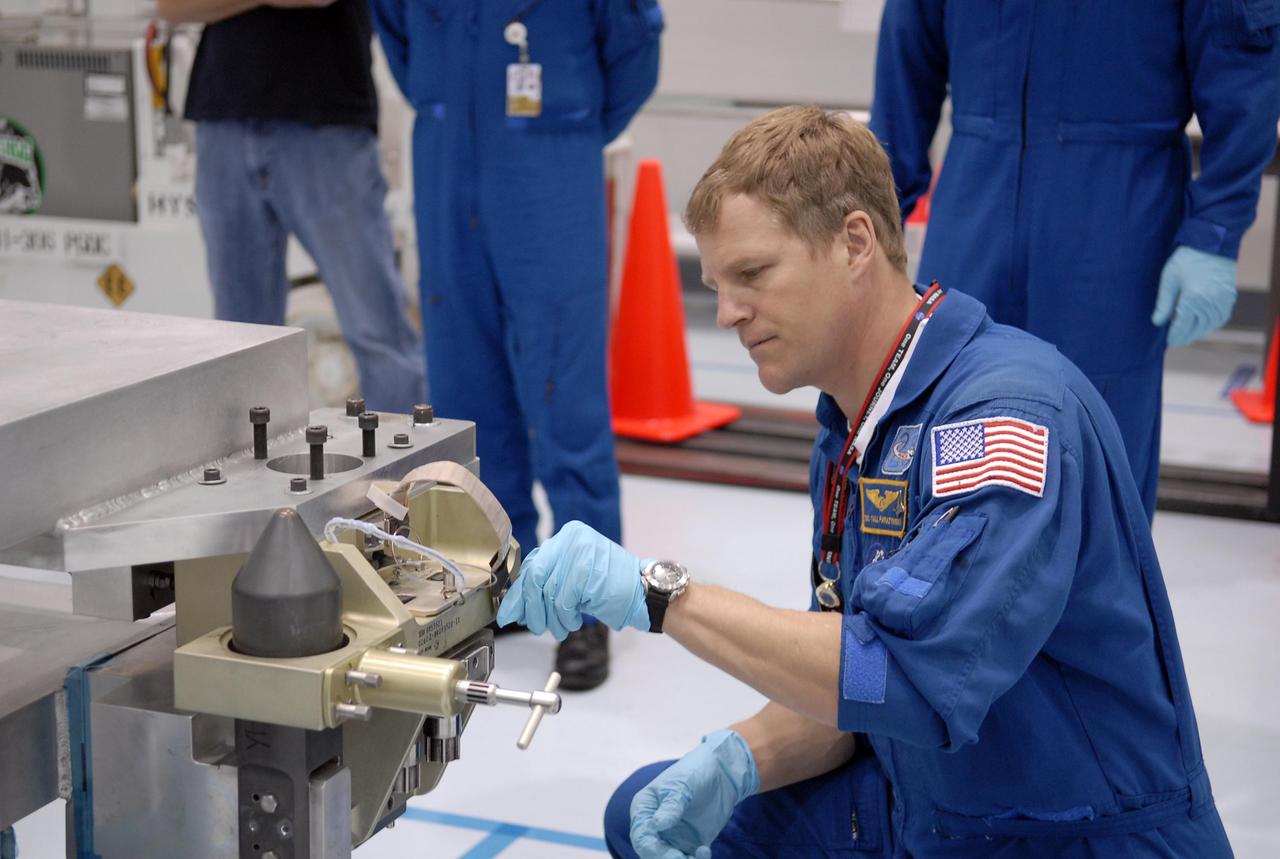
KENNEDY SPACE CENTER, FLA. -- Mission STS-120 Mission Specialist Scott Parazynski familiarizes himself with equipment inside the Space Station Processing Facility during a visit to Kennedy Space Center. Other STS-120 crew members include Commander Pam Melroy, Pilot George Zamka, and Mission Specialists Douglas Wheelock, Stephanie Wilson, Daniel Tani, Paolo Nespoli (with the European Space Agency) and Clayton Anderson. Mission STS-120 will deliver the Node 2 "Harmony" connecting module to the station. During the mission, Tani and Anderson will transfer to the station and remain as flight engineers for Expedition 15. The mission is tentatively scheduled for August of this year. Photo credit: NASA/Kim Shiflett
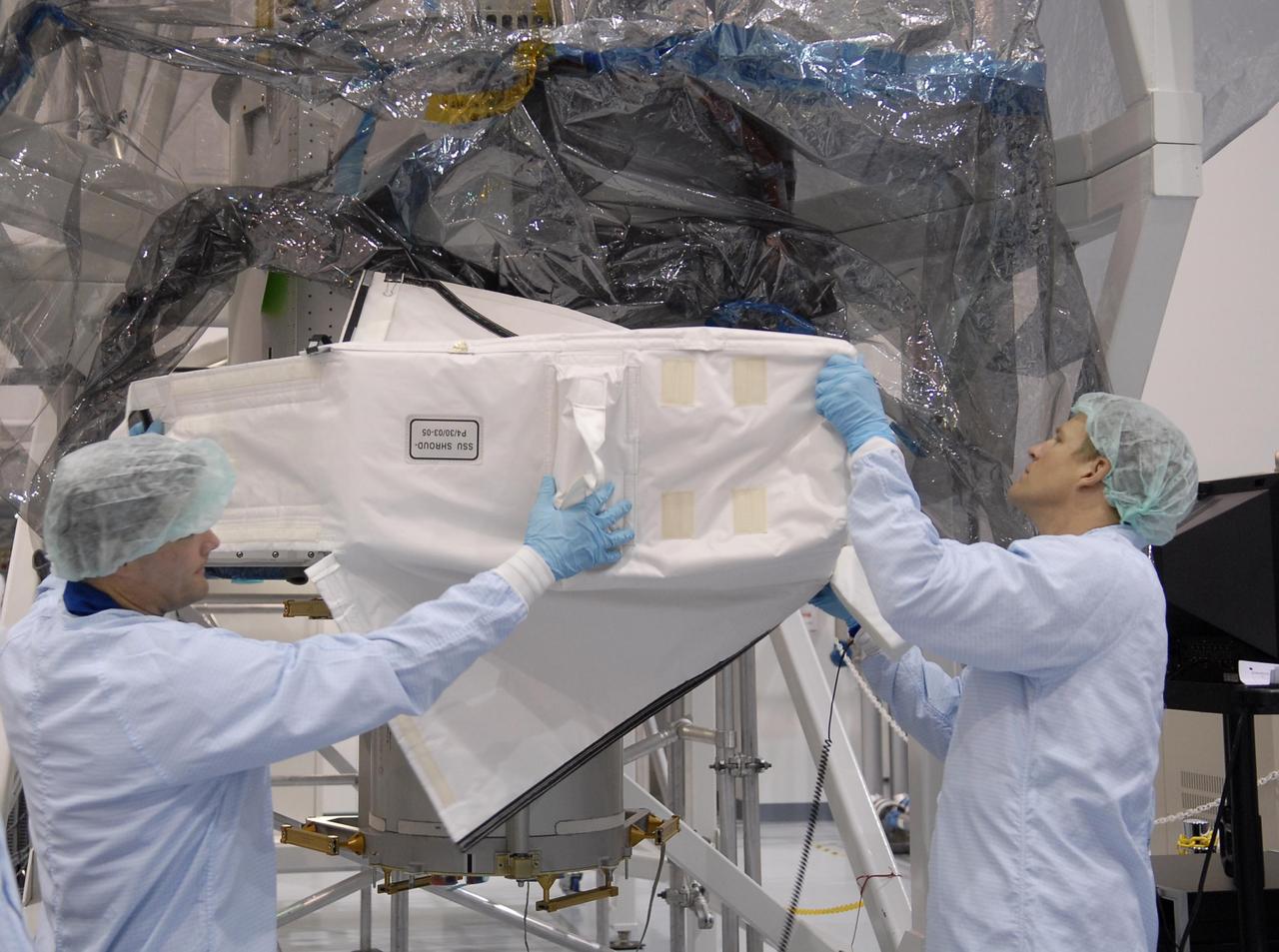
KENNEDY SPACE CENTER, FLA. -- Mission STS-120 Mission Specialists Douglas Wheelock (left) and Scott Parazynski familiarize themselves with equipment inside the Space Station Processing Facility during a visit to Kennedy Space Center. Other crew members include Commander Pam Melroy, Pilot George Zamka and Mission Specialists Stephanie Wilson, Paolo Nespoli (with the European Space Agency), Daniel Tani and Clayton Anderson. Mission STS-120 will deliver the Node 2 "Harmony" connecting module to the station. During the mission, Tani and Anderson will transfer to the station and remain as flight engineers for Expedition 15. The mission is tentatively scheduled for August of this year. Photo credit: NASA/Kim Shiflett
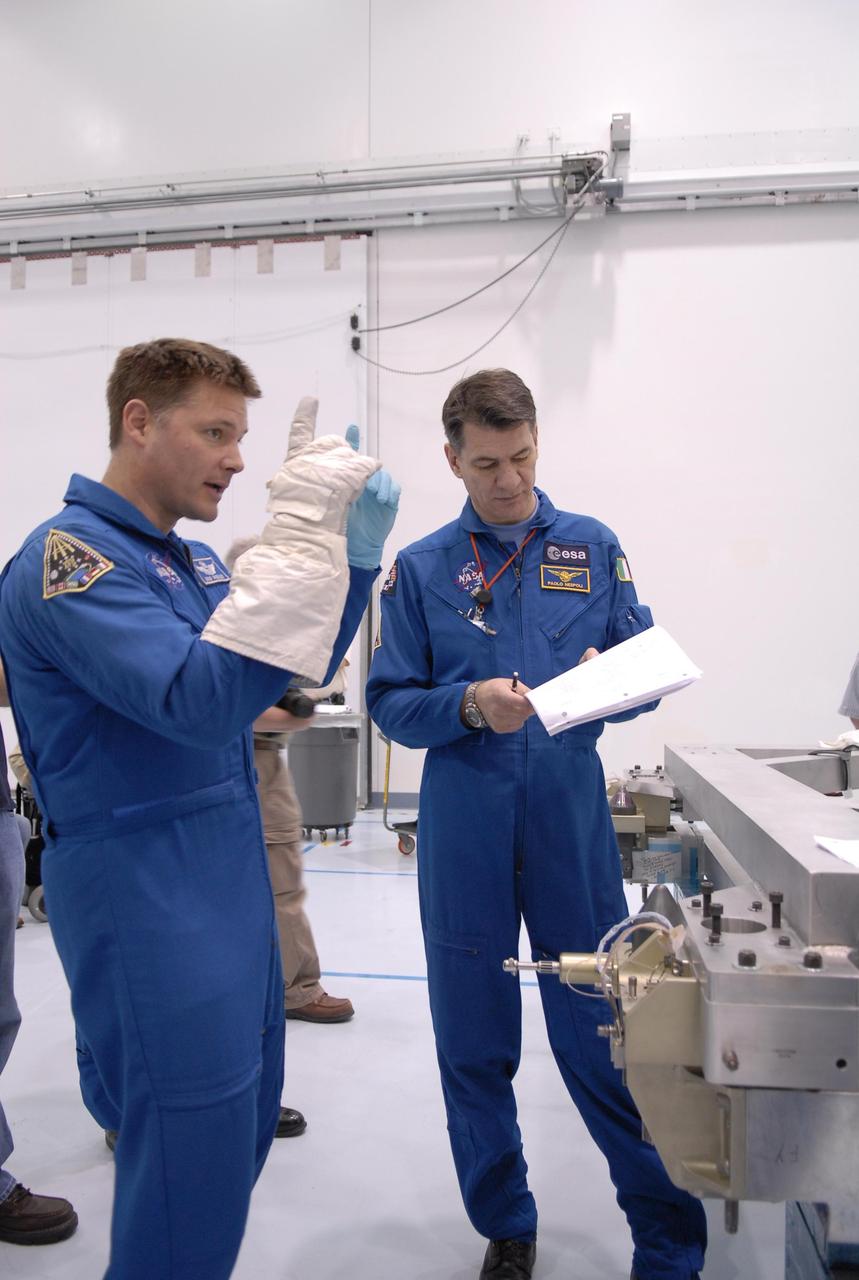
KENNEDY SPACE CENTER, FLA. -- Mission STS-120 Mission Specialists Douglas Wheelock and Paolo Nespoli (with the European Space Agency) familiarize themselves with equipment inside the Space Station Processing Facility during a visit to Kennedy Space Center. Other crew members include Commander Pam Melroy, Pilot George Zamka and Mission Specialists Scott Parazynski, Stephanie Wilson, Daniel Tani and Clayton Anderson. Mission STS-120 will deliver the Node 2 "Harmony" connecting module to the station. During the mission, Tani and Anderson will transfer to the station and remain as flight engineers for Expedition 15. The mission is tentatively scheduled for August of this year. Photo credit: NASA/Kim Shiflett
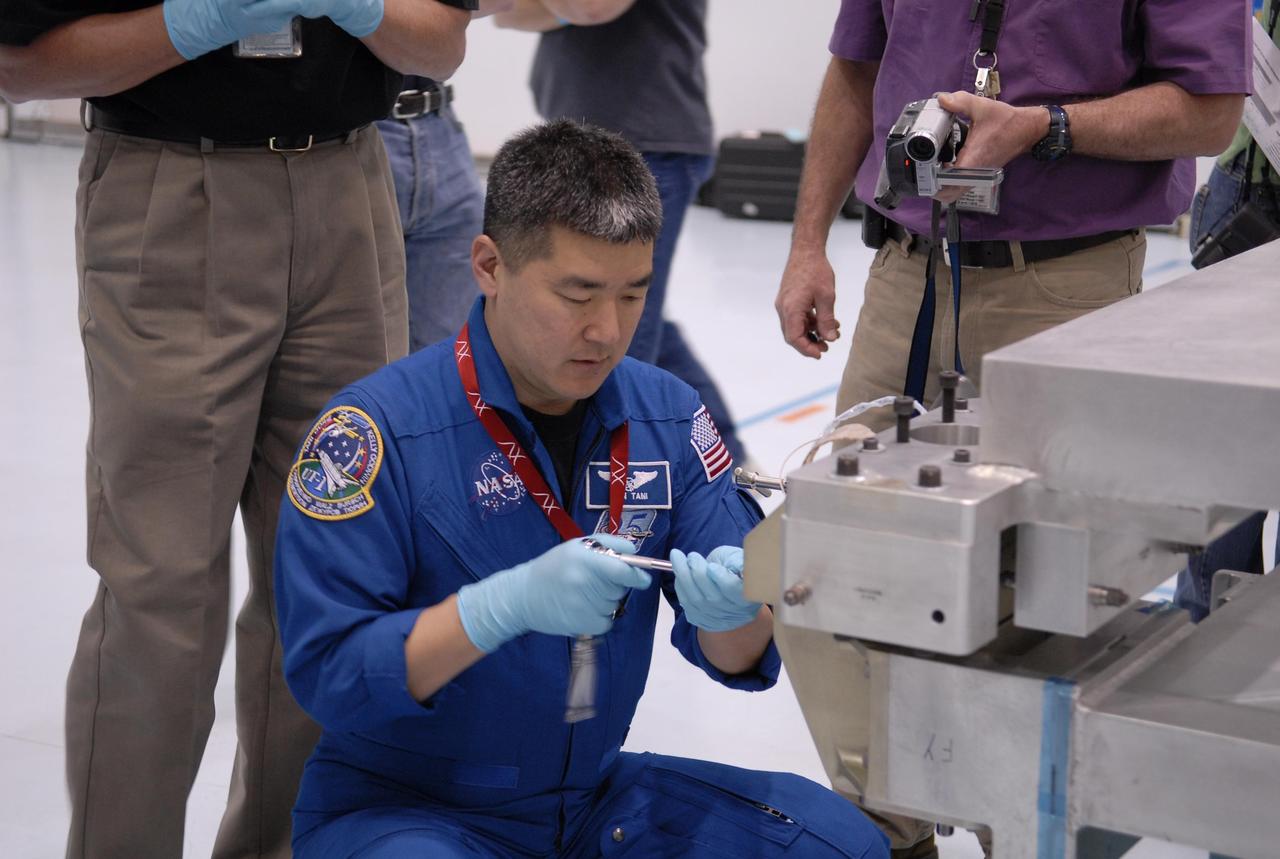
KENNEDY SPACE CENTER, FLA. -- Mission STS-120 Mission Specialist Daniel Tani familiarizes himself with equipment inside the Space Station Processing Facility during a visit to Kennedy Space Center. Other STS-120 crew members include Commander Pam Melroy, Pilot George Zamka, and Mission Specialists Scott Parazynski, Douglas Wheelock, Stephanie Wilson, Paolo Nespoli (with the European Space Agency) and Clayton Anderson. Mission STS-120 will deliver the Node 2 "Harmony" connecting module to the station. During the mission, Tani and Anderson will transfer to the station and remain as flight engineers for Expedition 15. The mission is tentatively scheduled for August of this year. Photo credit: NASA/Kim Shiflett
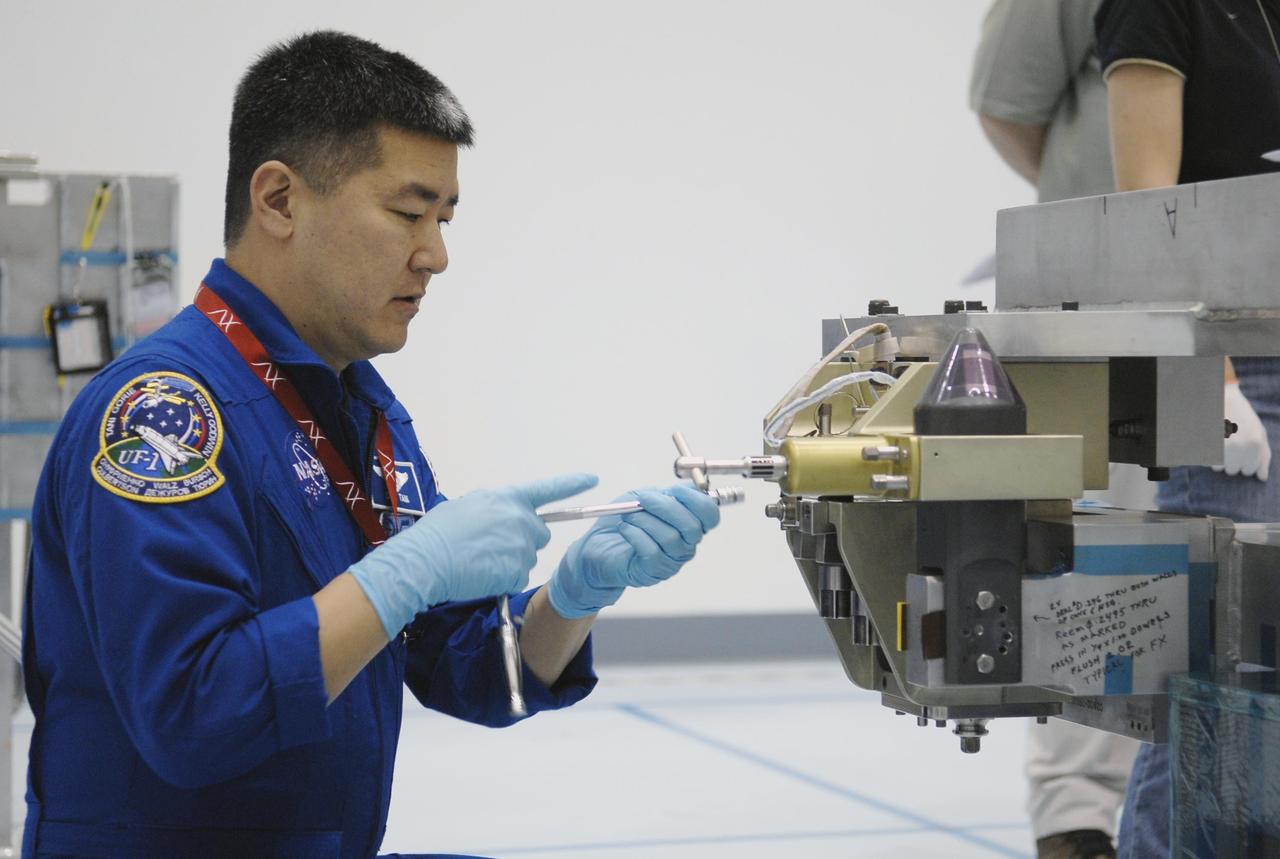
KENNEDY SPACE CENTER, FLA. -- Mission STS-120 Mission Specialist Daniel Tani familiarizes himself with equipment inside the Space Station Processing Facility during a visit to Kennedy Space Center. Other STS-120 crew members include Commander Pam Melroy, Pilot George Zamka, and Mission Specialists Scott Parazynski, Douglas Wheelock, Stephanie Wilson, Paolo Nespoli (with the European Space Agency) and Clayton Anderson. Mission STS-120 will deliver the Node 2 "Harmony" connecting module to the station. During the mission, Tani and Anderson will transfer to the station and remain as flight engineers for Expedition 15. The mission is tentatively scheduled for August of this year. Photo credit: NASA/Kim Shiflett
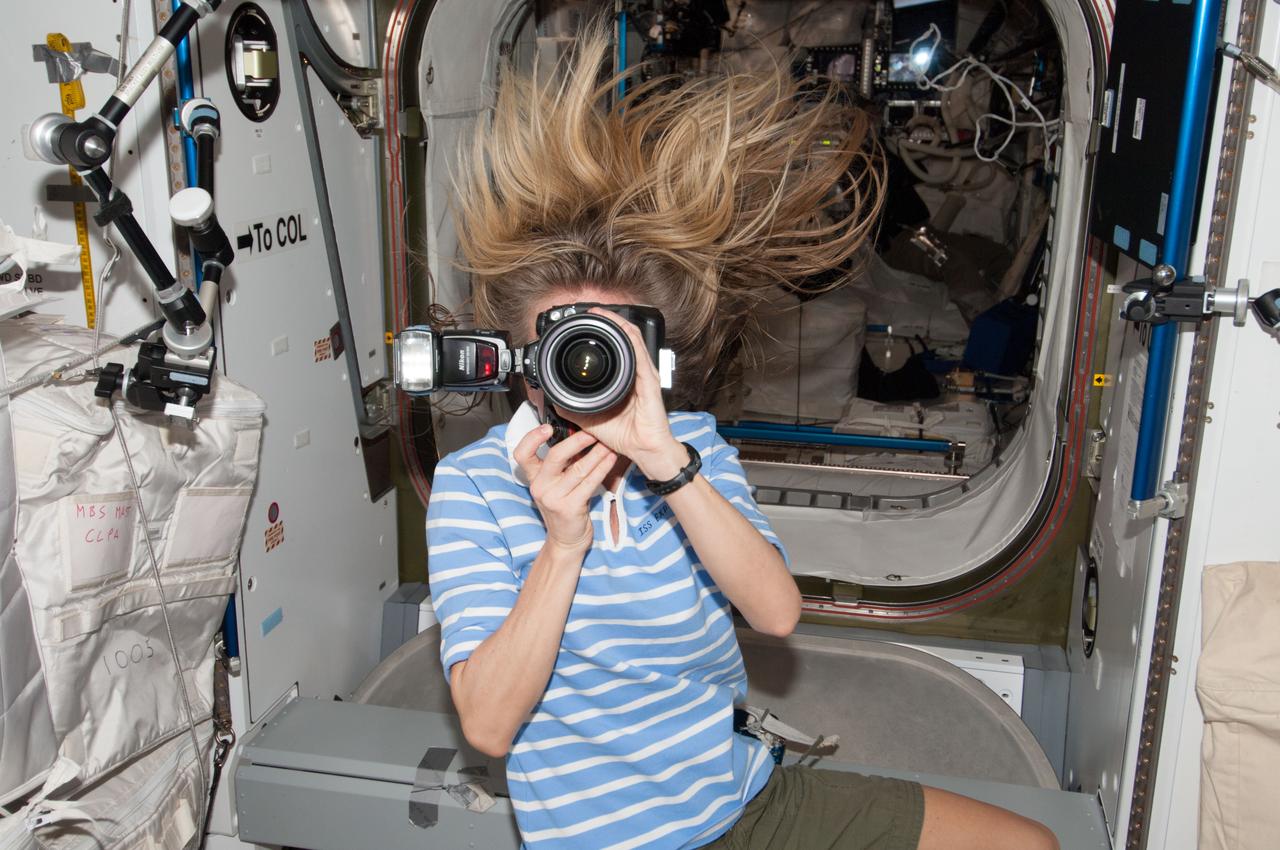
Expedition 37 Flight engineer Karen Nyberg uses a camera to document activities in the Node 2 module. Also sent as Twitter message.
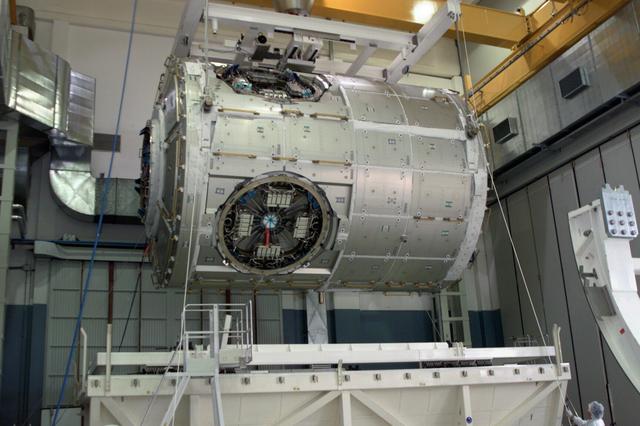
JSC2003-E-40245 (28 May 2003) --- The International Space Station Node 2 module is lowered into an environmentally controlled container in preparation for its transportation to the United States. An Airbus Beluga heavy-lift aircraft carrying Node 2 departed May 30 from Turin, Italy where the Italian Space Agency's (ASI) contractor, Alenia Spazio, leading a consortium of European companies, built it. The module was built for NASA under a barter agreement with the European Space Agency (ESA) in exchange for the launch of the European Columbus Laboratory by the space shuttle to the International Space Station. Node 2 will provide a passageway between four International Space Station science experiment modules: the U.S. Destiny Laboratory, the Kibo Japanese Experiment Module, the European Columbus Laboratory and the Centrifuge Accommodation Module. The addition of Node 2 to the station will signify the U.S. Core Complete stage of assembly, at which time the station can support the addition of international laboratories from Europe and Japan. Photo Credit: NASA
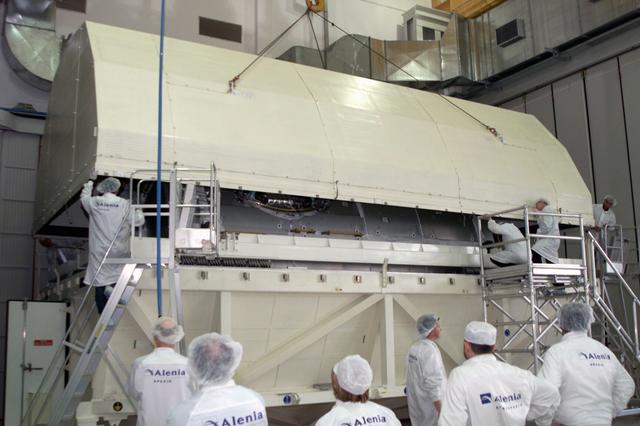
JSC2003-E-40246 (28 May 2003) ---The International Space Station Node 2 module is sealed into an environmentally controlled container in preparation for its transportation to the United States. An Airbus Beluga heavy-lift aircraft carrying Node 2 departed May 30 from Turin, Italy where the Italian Space Agency's (ASI) contractor, Alenia Spazio, leading a consortium of European companies, built it. The module was built for NASA under a barter agreement with the European Space Agency (ESA) in exchange for the launch of the European Columbus Laboratory by the space shuttle to the International Space Station. Node 2 will provide a passageway between four International Space Station science experiment modules: the U.S. Destiny Laboratory, the Kibo Japanese Experiment Module, the European Columbus Laboratory and the Centrifuge Accommodation Module. The addition of Node 2 to the station will signify the U.S. Core Complete stage of assembly, at which time the station can support the addition of international laboratories from Europe and Japan. Photo Credit: NASA
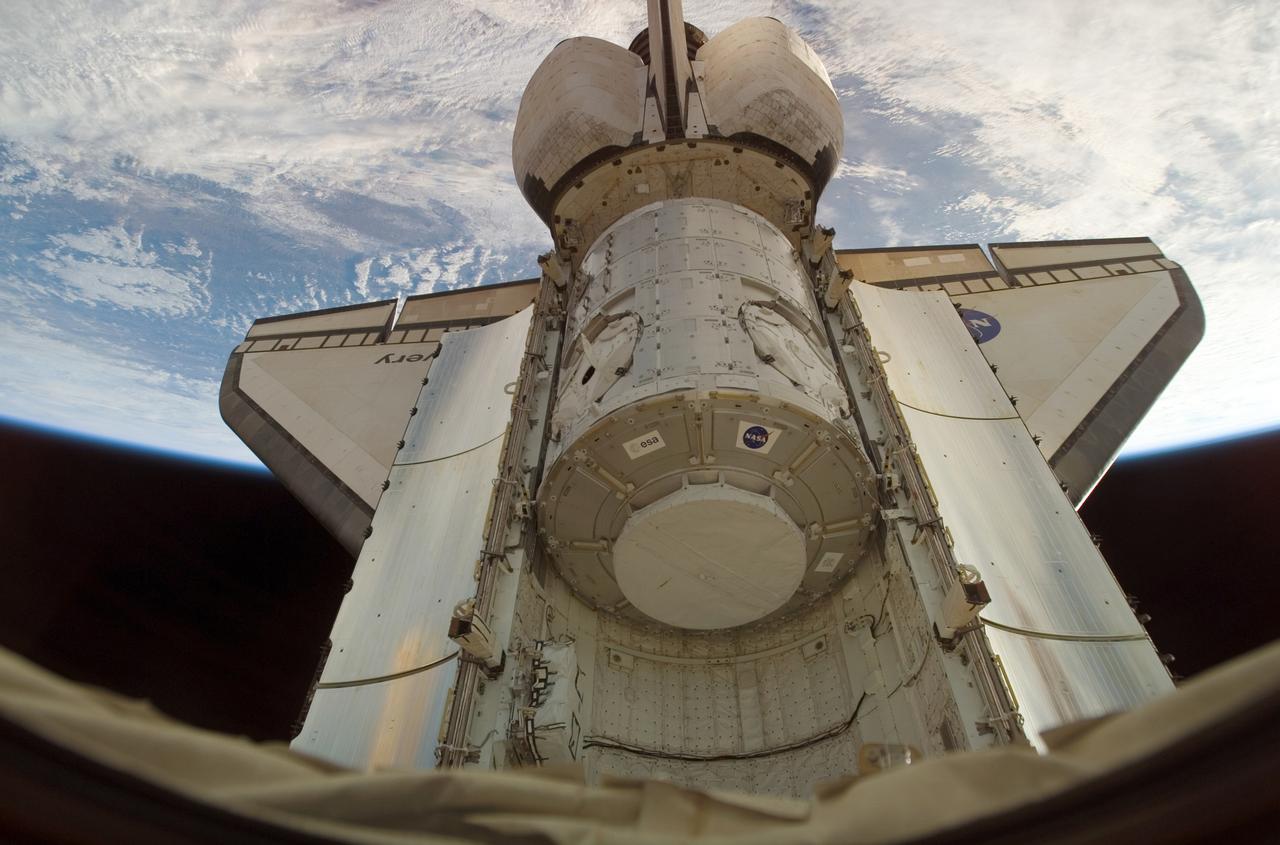
Back dropped by Earth's horizon and the blackness of space, the Italian-built U.S. Node 2, Harmony, is featured in Space Shuttle Discovery's cargo bay during the STS-120 mission. This image was photographed by an Expedition 16 crew member on the International Space Station (ISS) while Discovery was docked with the station. The aluminum node is 7.2 meters (23.6 feet) long and 4.4 meters (14.5 feet) in diameter. Its pressurized volume is 75.5 cubic meters (2666 cubic feet), and its launch weight is approximately 14,288 kilograms (31,500 pounds). The installation of Harmony increases the living and working space inside the station to approximately 500 cubic meters (18,000 cubic feet). It also allows the addition of international laboratories from Europe and Japan to the station.
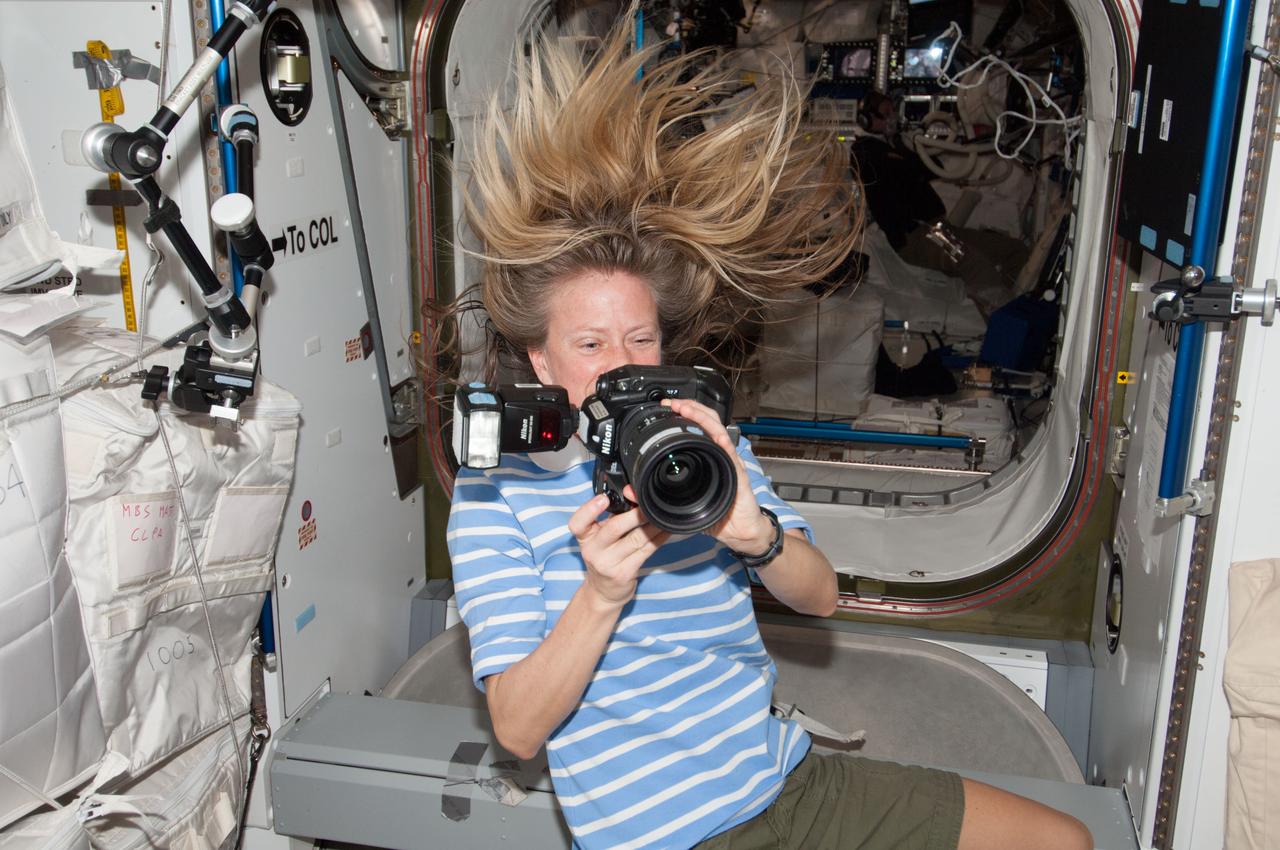
ISS037-E-004949 (2 Oct. 2013) --- NASA astronaut Karen Nyberg, Expedition 37 flight engineer, uses a still camera to document activities in the Harmony node of the International Space Station.
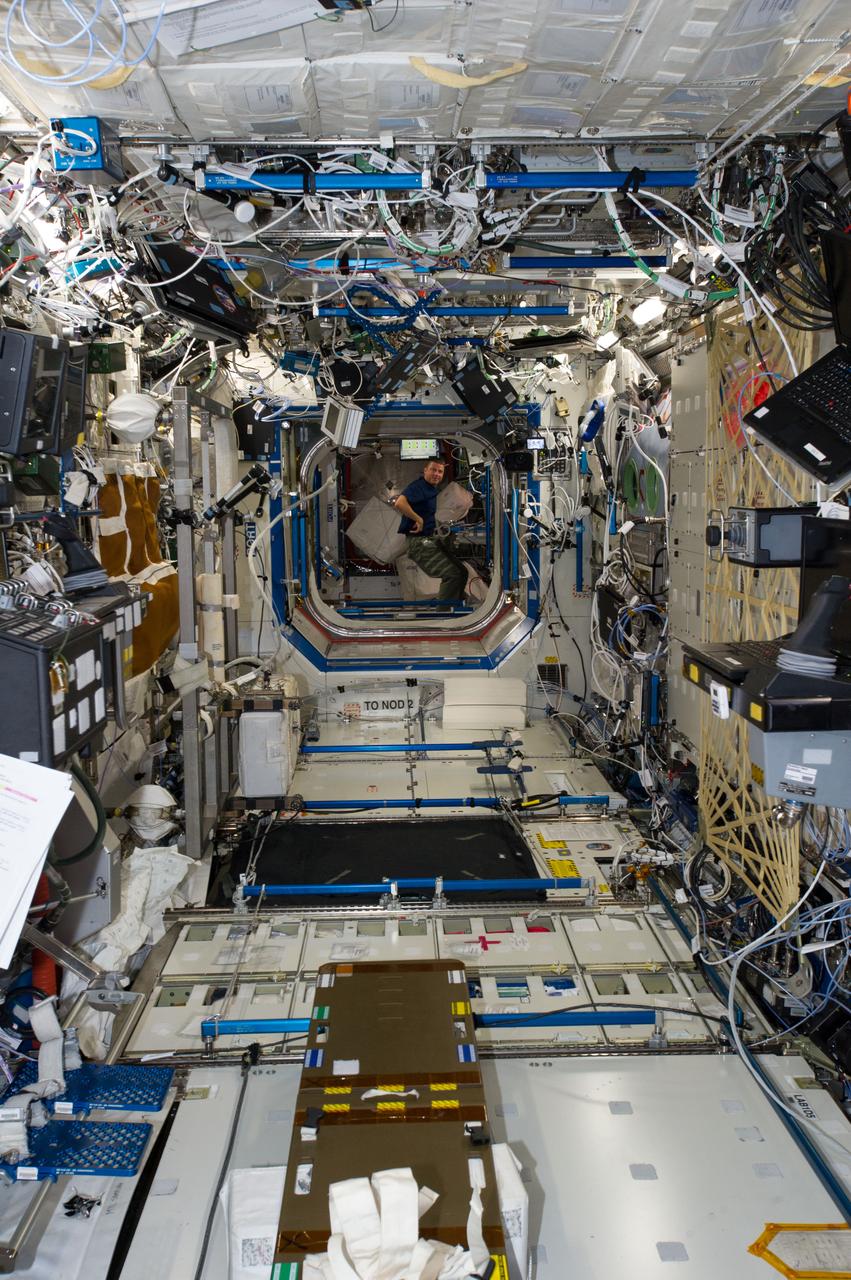
ISS040-E-006702 (2 June 2014) --- Looking through the Destiny laboratory, NASA astronaut Reid Wiseman, Expedition 40 flight engineer, is pictured in the background while working in the Harmony node of the International Space Station.
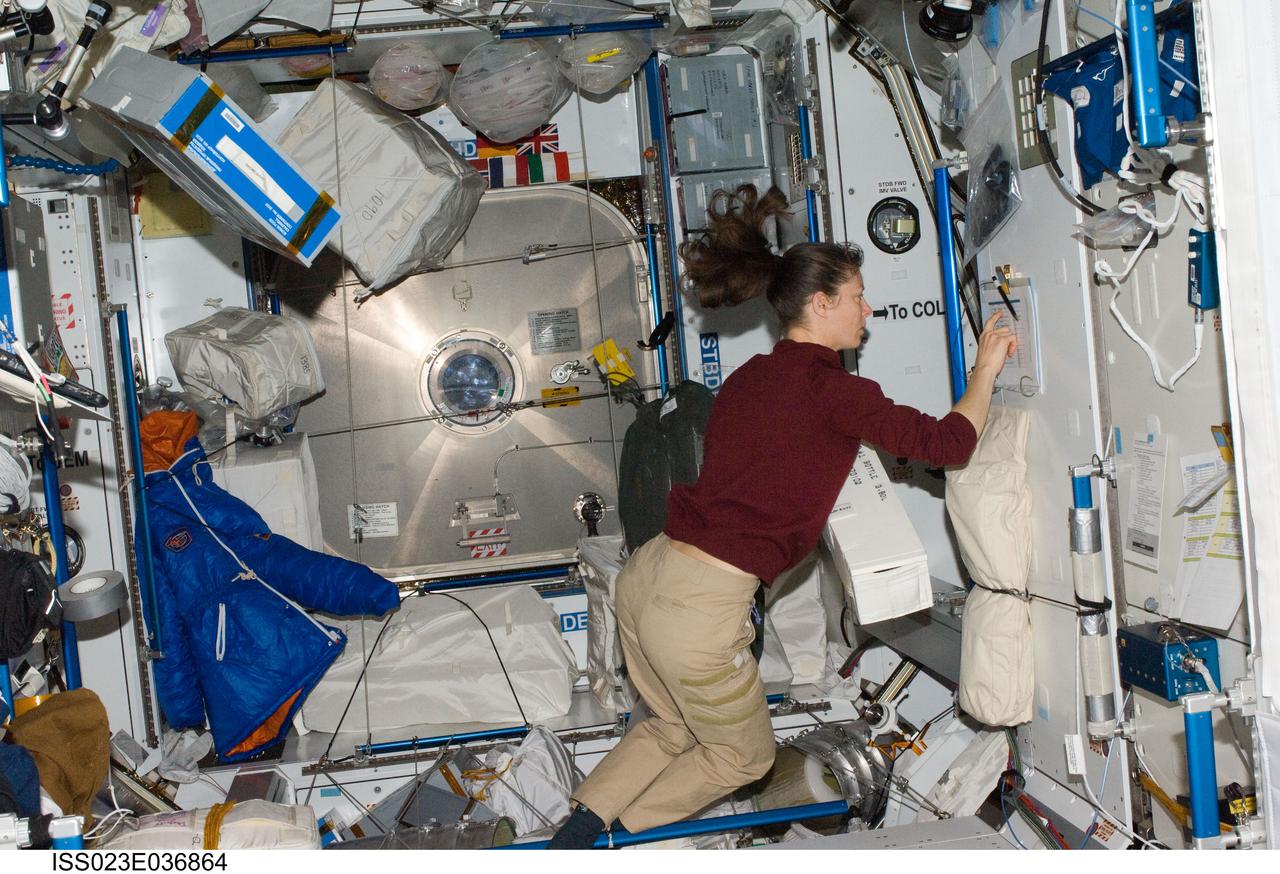
ISS023-E-036864 (2 May 2010) --- NASA astronaut Tracy Caldwell Dyson, Expedition 23 flight engineer, works in the Harmony node of the International Space Station.
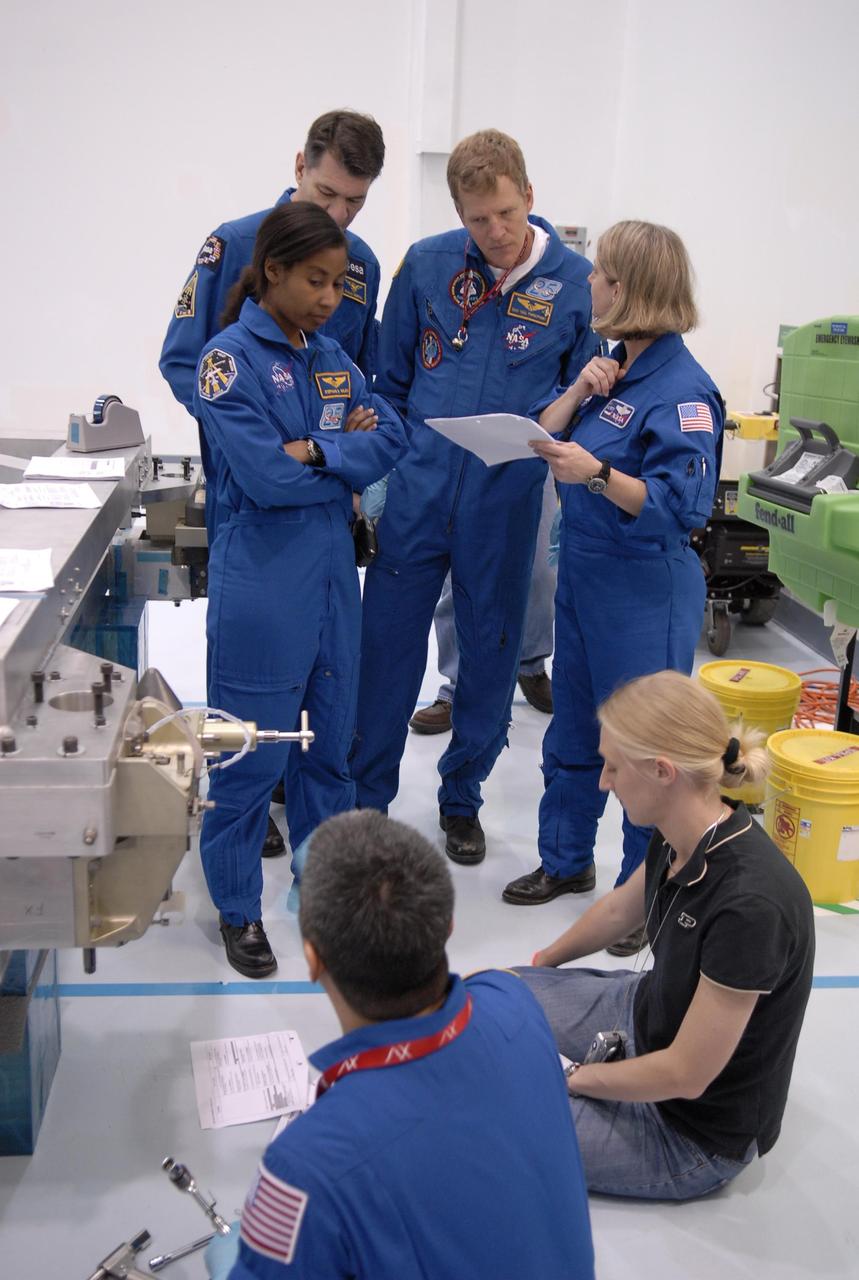
KENNEDY SPACE CENTER, FLA. -- Mission STS-120 crew members familiarize themselves with equipment inside the Space Station Processing Facility during a visit to Kennedy Space Center. Standing from left, are Mission Specialists Stephanie Wilson, Paolo Nespoli (with the European Space Agency), Scott Parazynski and Commander Pam Melroy. In the foreground at left is Mission Specialist Daniel Tani. Other crew members include Pilot George Zamka and Mission Specialists Douglas Wheelock and Clayton Anderson. Mission STS-120 will deliver the Node 2 "Harmony" connecting module to the station. During the mission, Tani and Anderson will transfer to the station and remain as flight engineers for Expedition 15. The mission is tentatively scheduled for August of this year. Photo credit: NASA/Kim Shiflett
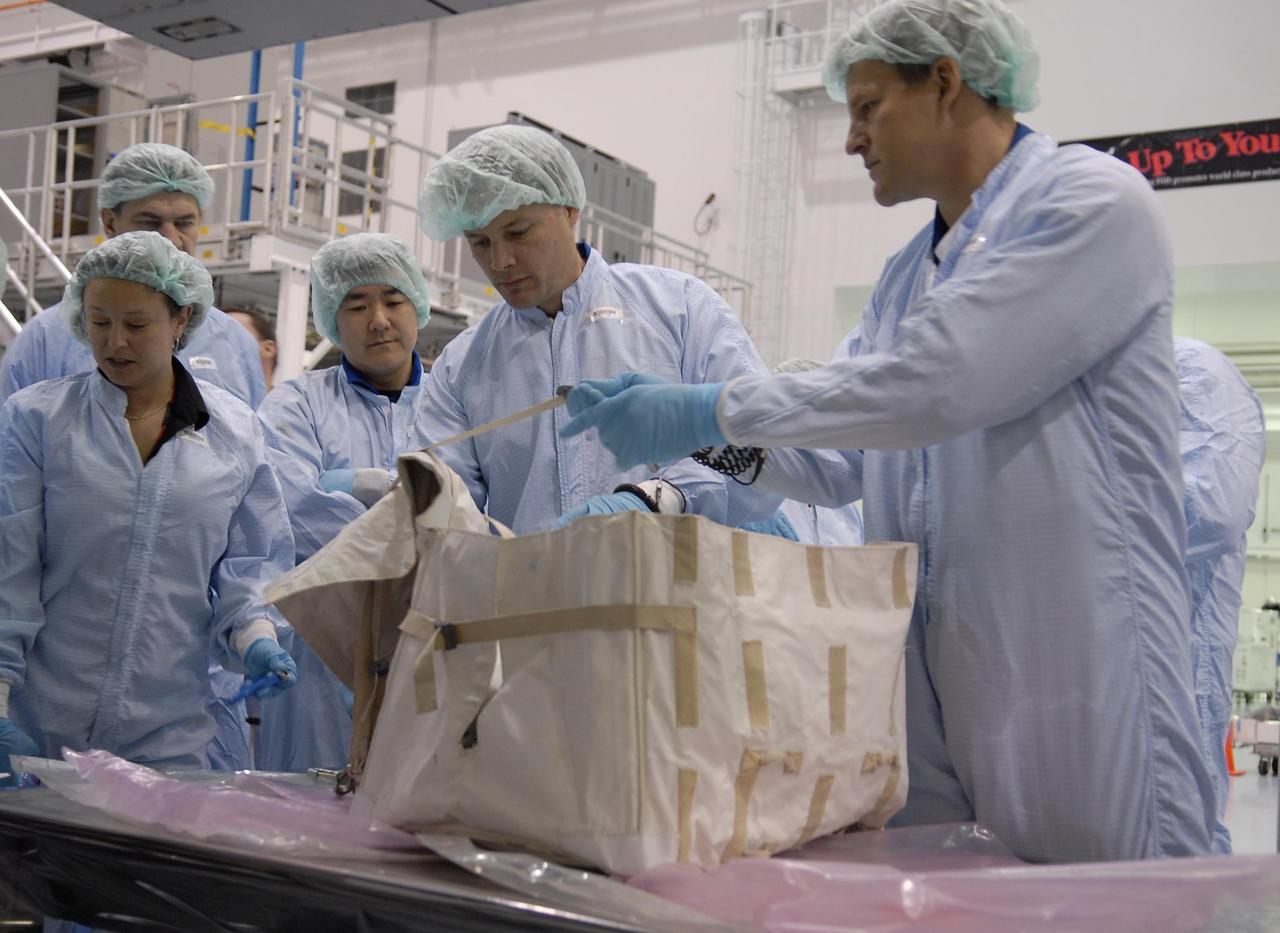
KENNEDY SPACE CENTER, FLA. -- Mission STS-120 crew members familiarize themselves with equipment inside the Space Station Processing Facility during a visit to Kennedy Space Center. From the left are Commander Pam Melroy and Mission Specialists Paolo Nespoli (with the European Space Agency), Daniel Tani, Douglas Wheelock and Scott Parazynski. Other crew members include Pilot George Zamka and Mission Specialists Stephanie Wilson and Clayton Anderson. Mission STS-120 will deliver the Node 2 "Harmony" connecting module to the station. During the mission, Tani and Anderson will transfer to the station and remain as flight engineers for Expedition 15. The mission is tentatively scheduled for August of this year. Photo credit: NASA/Kim Shiflett
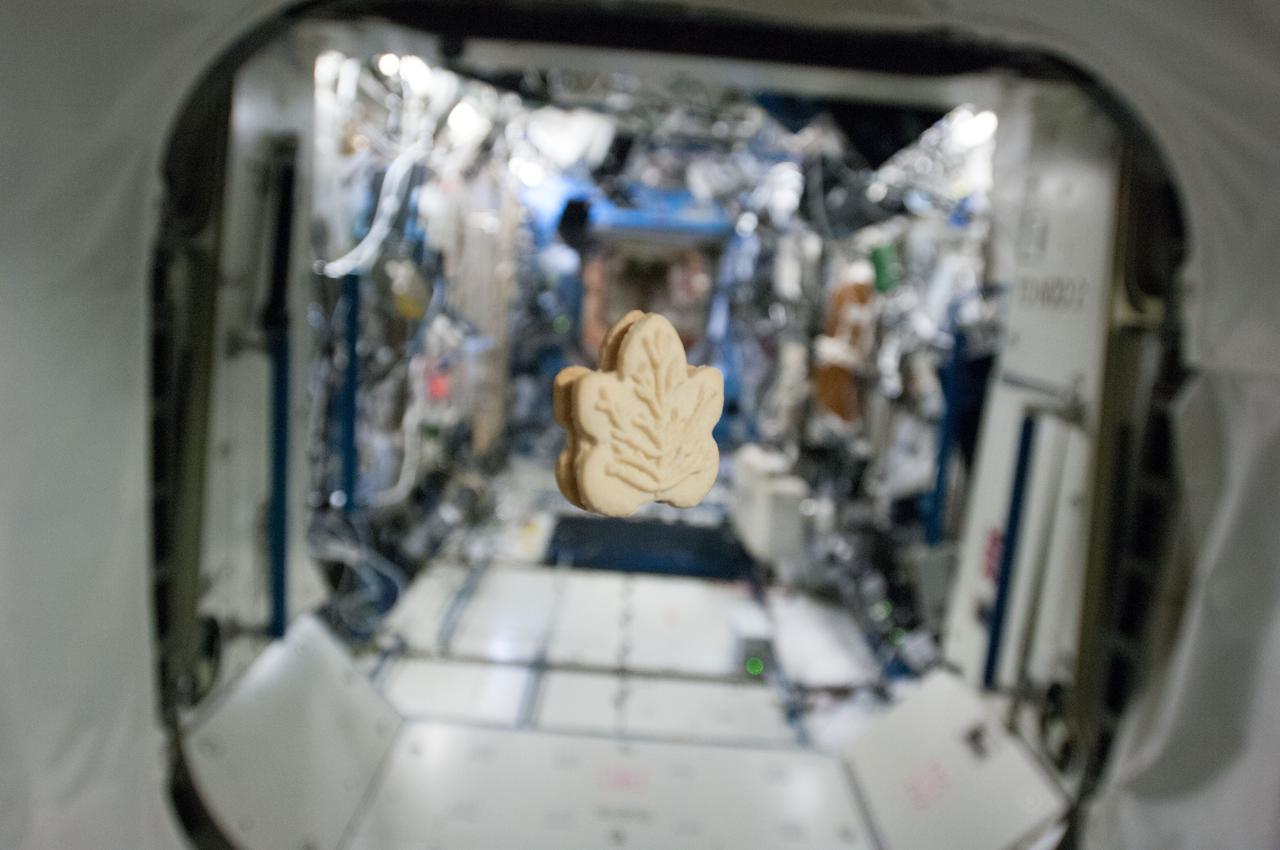
View of a maple cookie floating in the Harmony Node 2. The hatch into the Destiny U.S. Laboratory is in the background. Image was taken during Expedition 35.
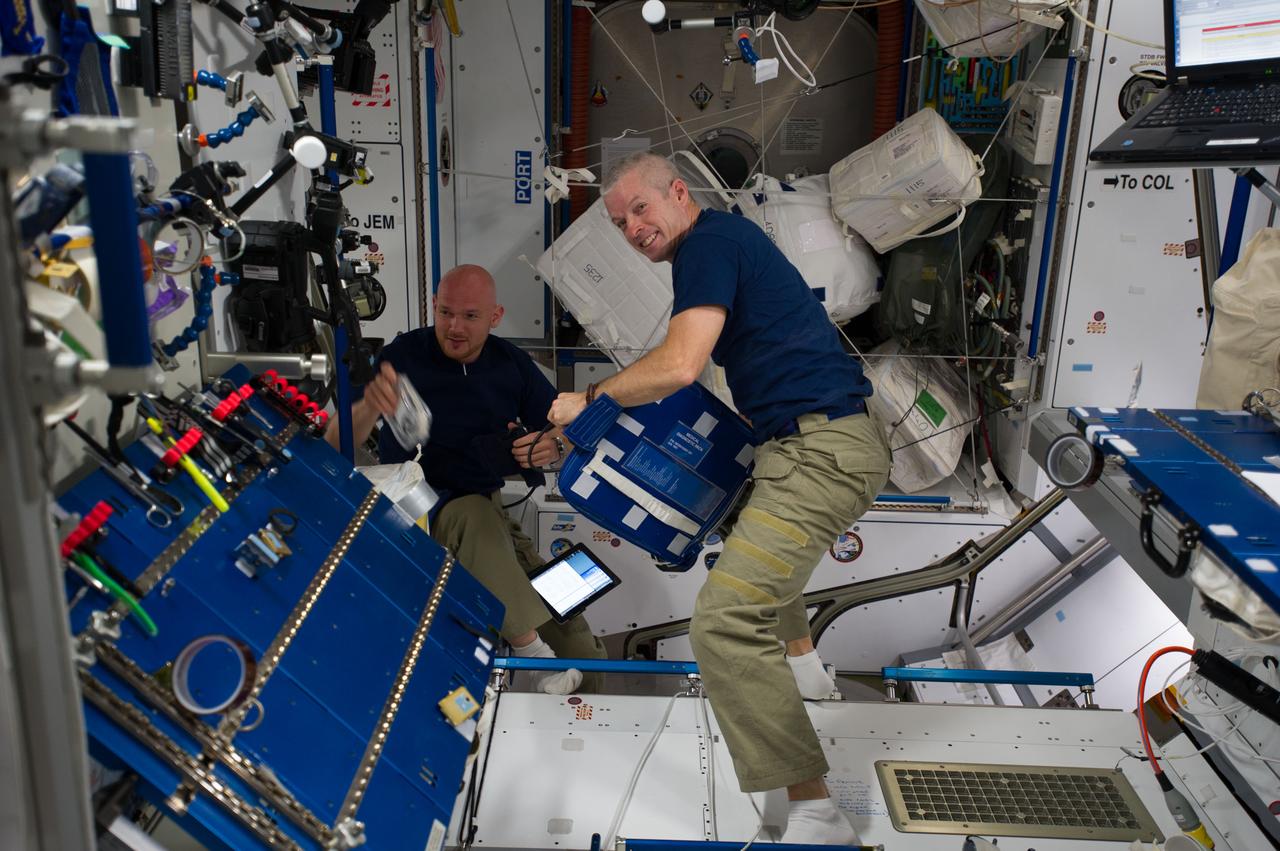
ISS040-E-006697 (2 June 2014) --- NASA astronaut Steve Swanson (right), Expedition 40 commander; and European Space Agency astronaut Alexander Gerst, flight engineer, retrieve items from a medical diagnostic pack in the Harmony node of the International Space Station.
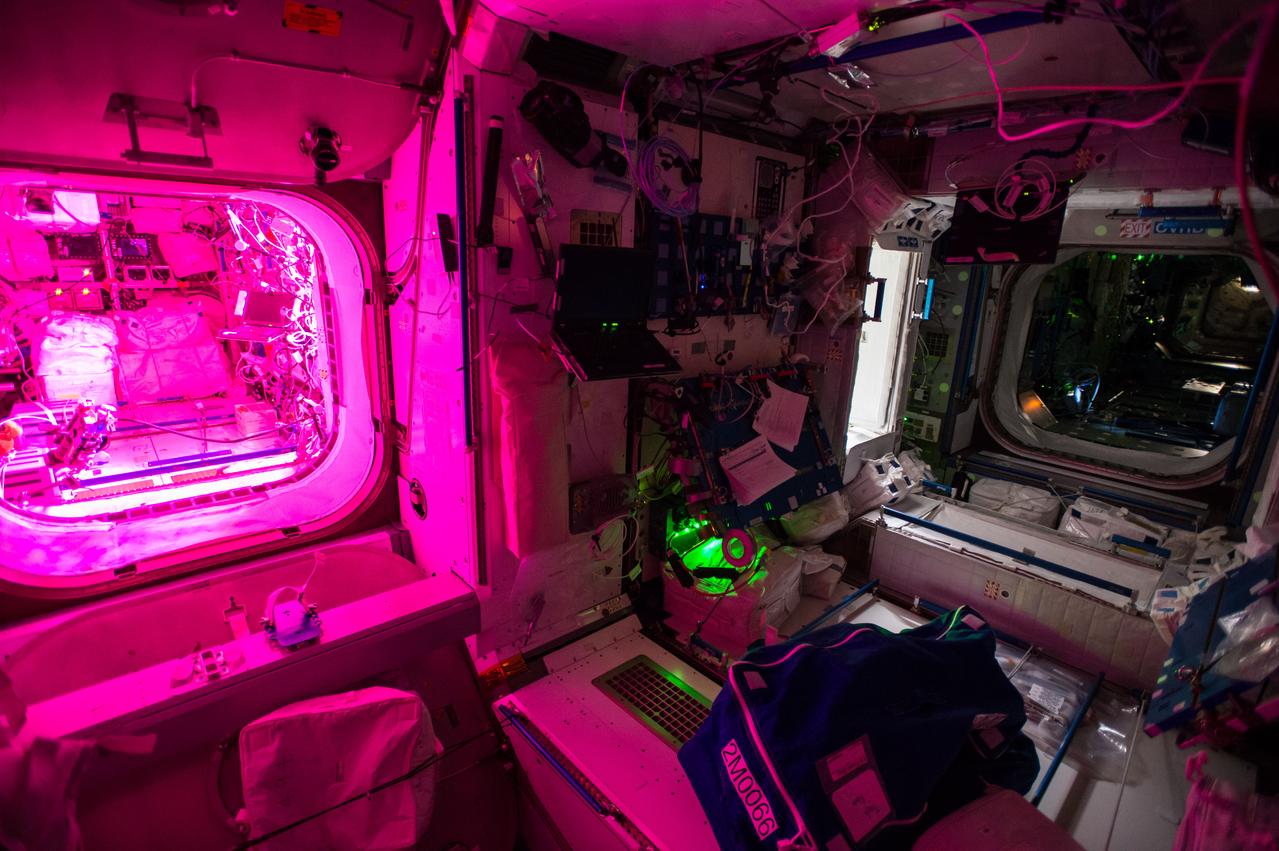
Interior view looking starboard (STBD) and aft in the Harmony Node 2, taken during the crew's sleep period (main lights are turned off). Hatches into the Columbus European Laboratory and Destiny U.S. Laboratory are in view. The pink glow comes from the Vegetable Production System (Veggie) greenhouse, housed in Columbus.
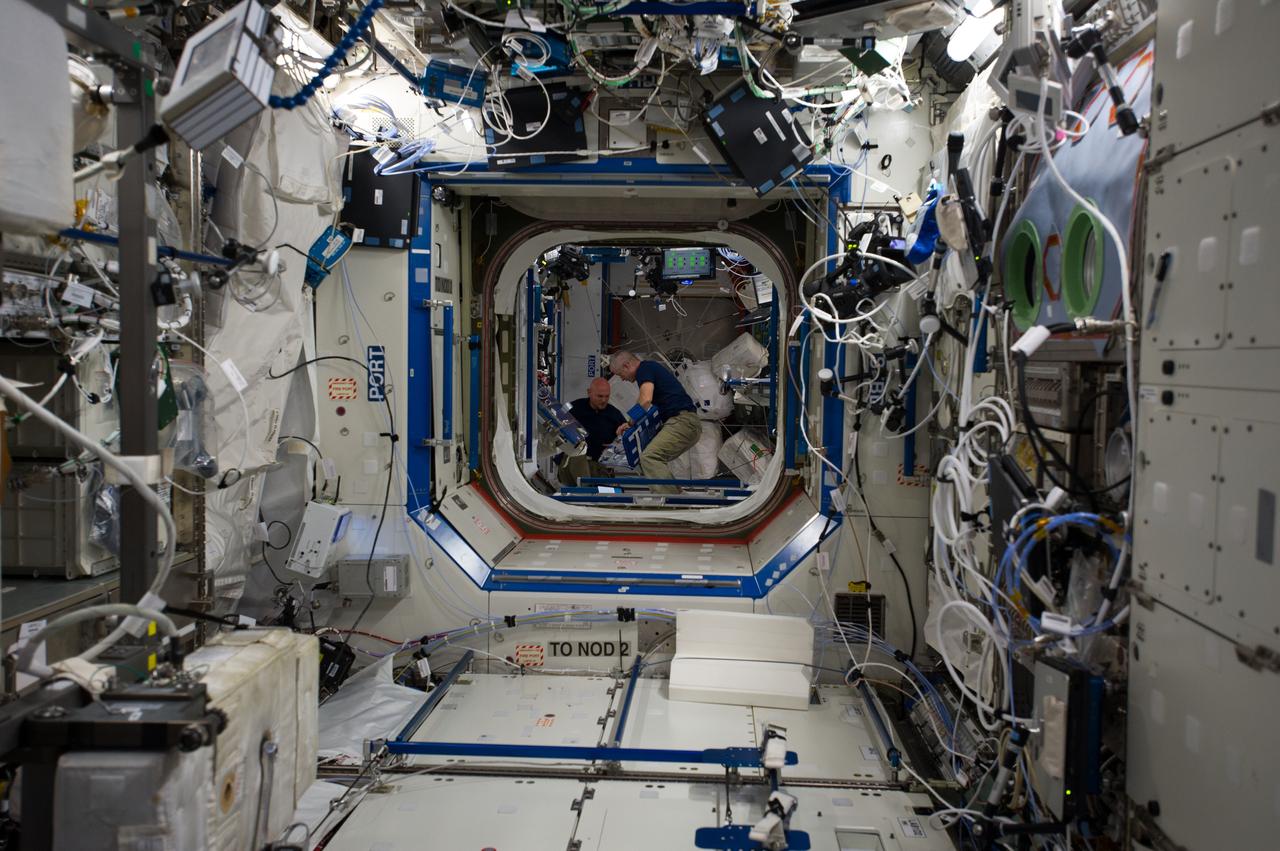
ISS040-E-006696 (2 June 2014) --- NASA astronaut Steve Swanson (right), Expedition 40 commander; and European Space Agency astronaut Alexander Gerst, flight engineer, retrieve items from a medical diagnostic pack in the Harmony node of the International Space Station. The view is taken from the Destiny laboratory.
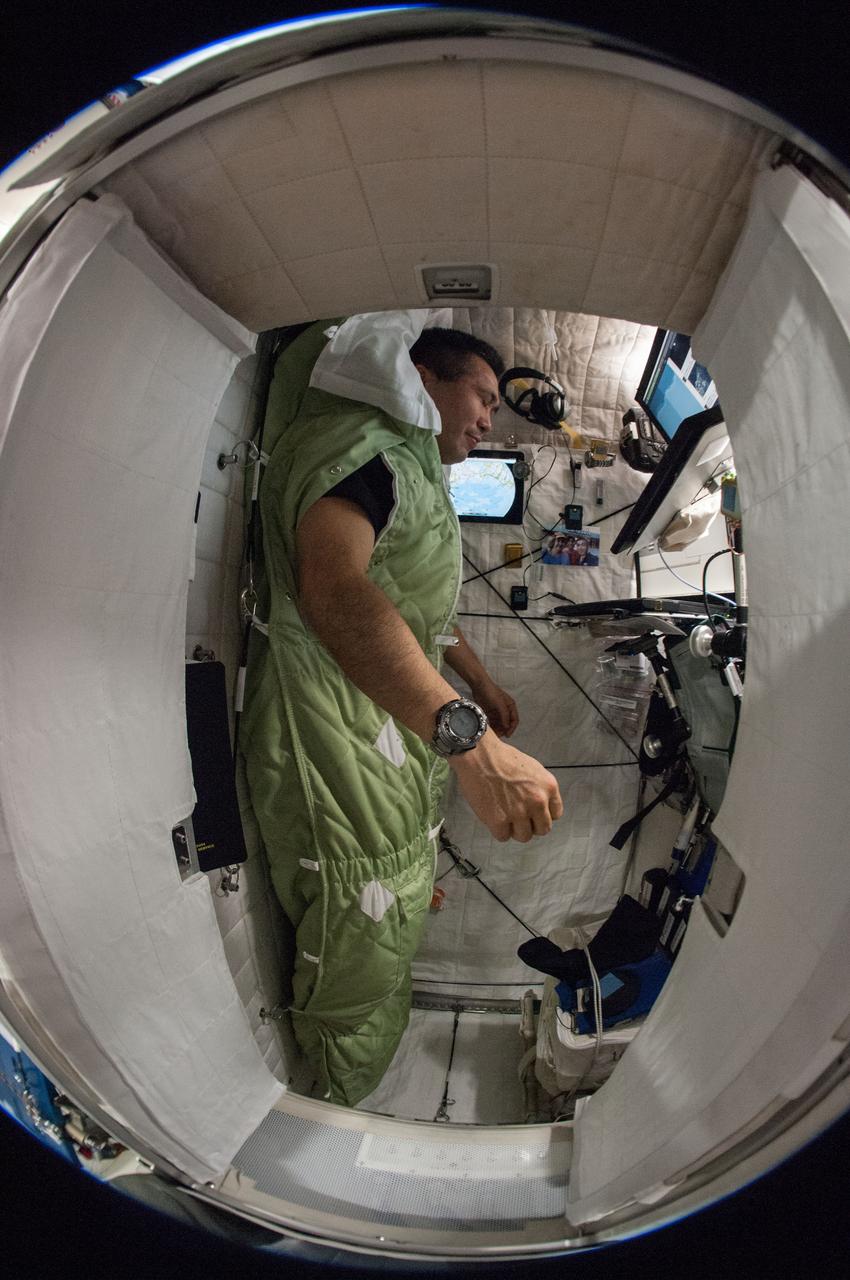
iss038e024951 (1/5/2014) --- Japan Aerospace Exploration Agency (JAXA) Koichi Wakata strapped into his sleeping bag in his sleep station located in the Node 2. Circadian Rhythms investigates the role of synchronized circadian rhythms, or the “biological clock,” and how it changes during long-duration spaceflight.
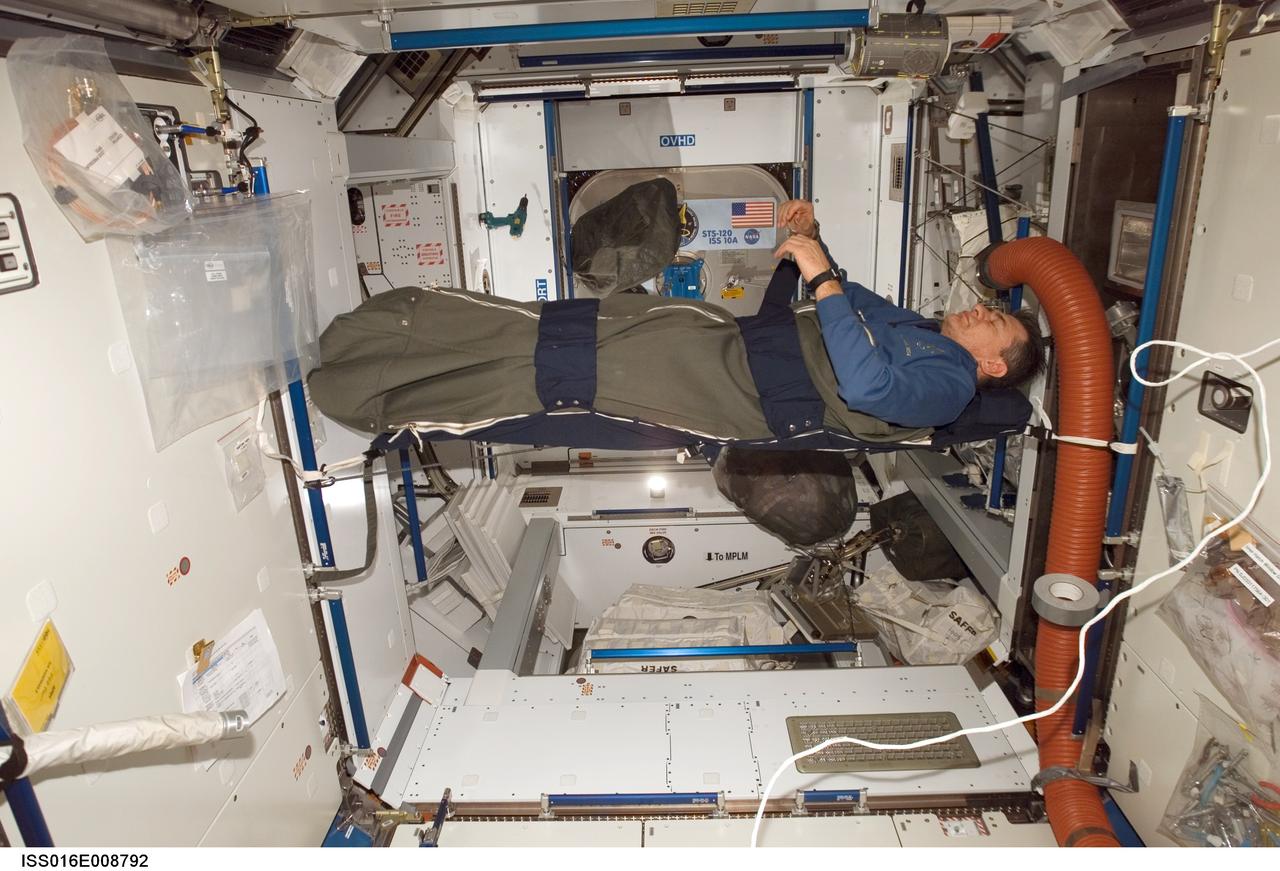
ISS016-E-008792 (2 Nov. 2007) --- European Space Agency (ESA) astronaut Paolo Nespoli, STS-120 mission specialist, rests in his sleeping bag in the Harmony node of the International Space Station while Space Shuttle Discovery is docked with the station.
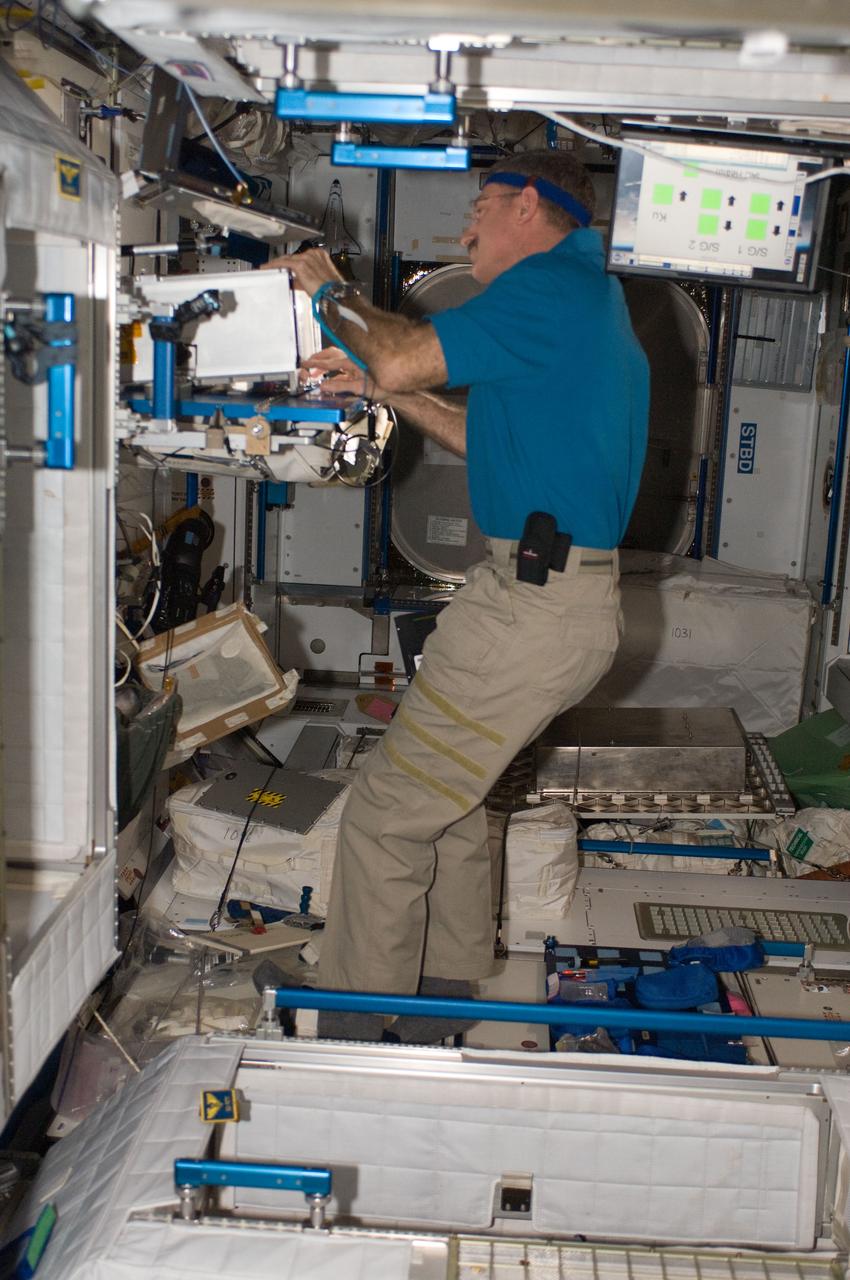
ISS030-E-114408 (28 Feb. 2012) --- NASA astronaut Dan Burbank, Expedition 30 commander, works in Node 2 Harmony as the six crew members onboard the International Space Station wrap up a busy February.
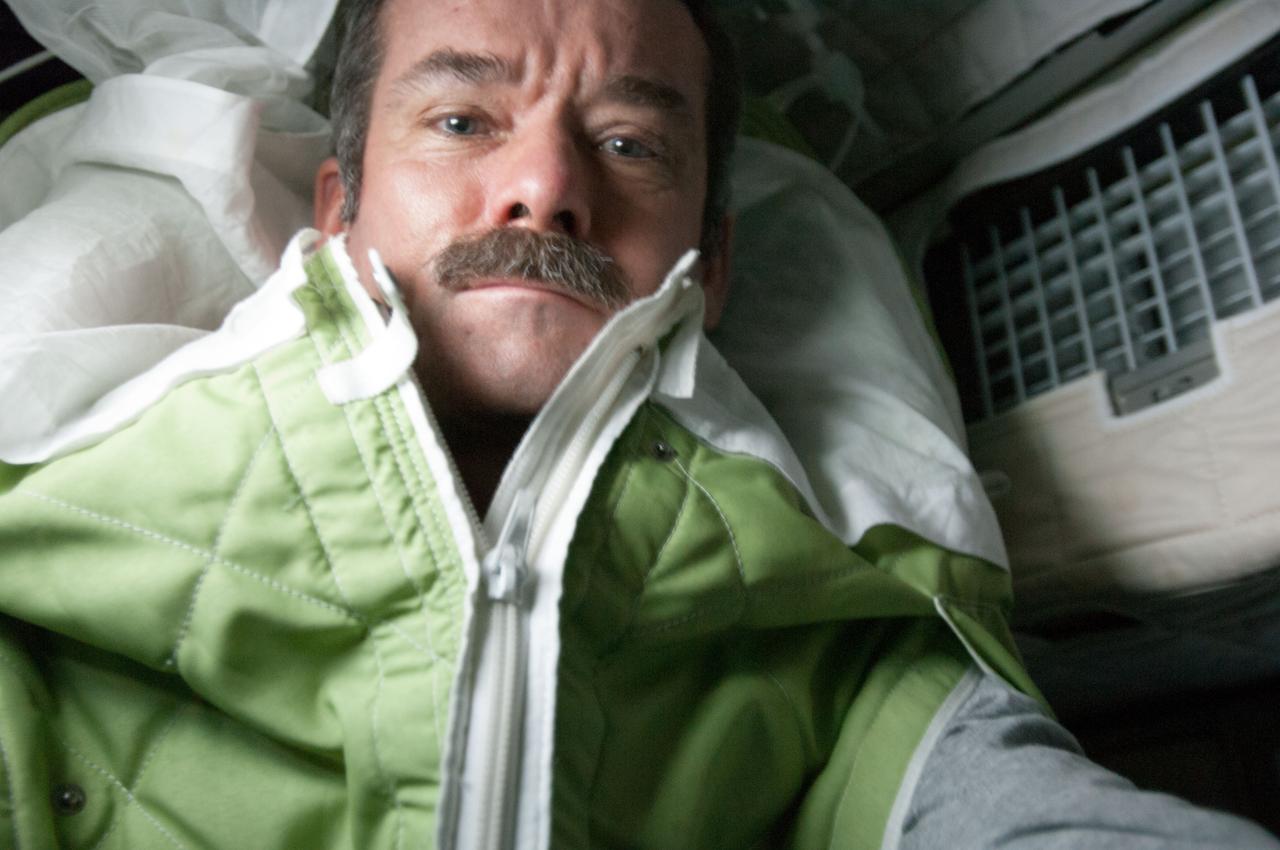
View of Canadian Space Agency (CSA) Chris Hadfield, Expedition 34 Flight Engineer (FE), in sleep station, in the Node 2. Photo was taken during Expedition 34.
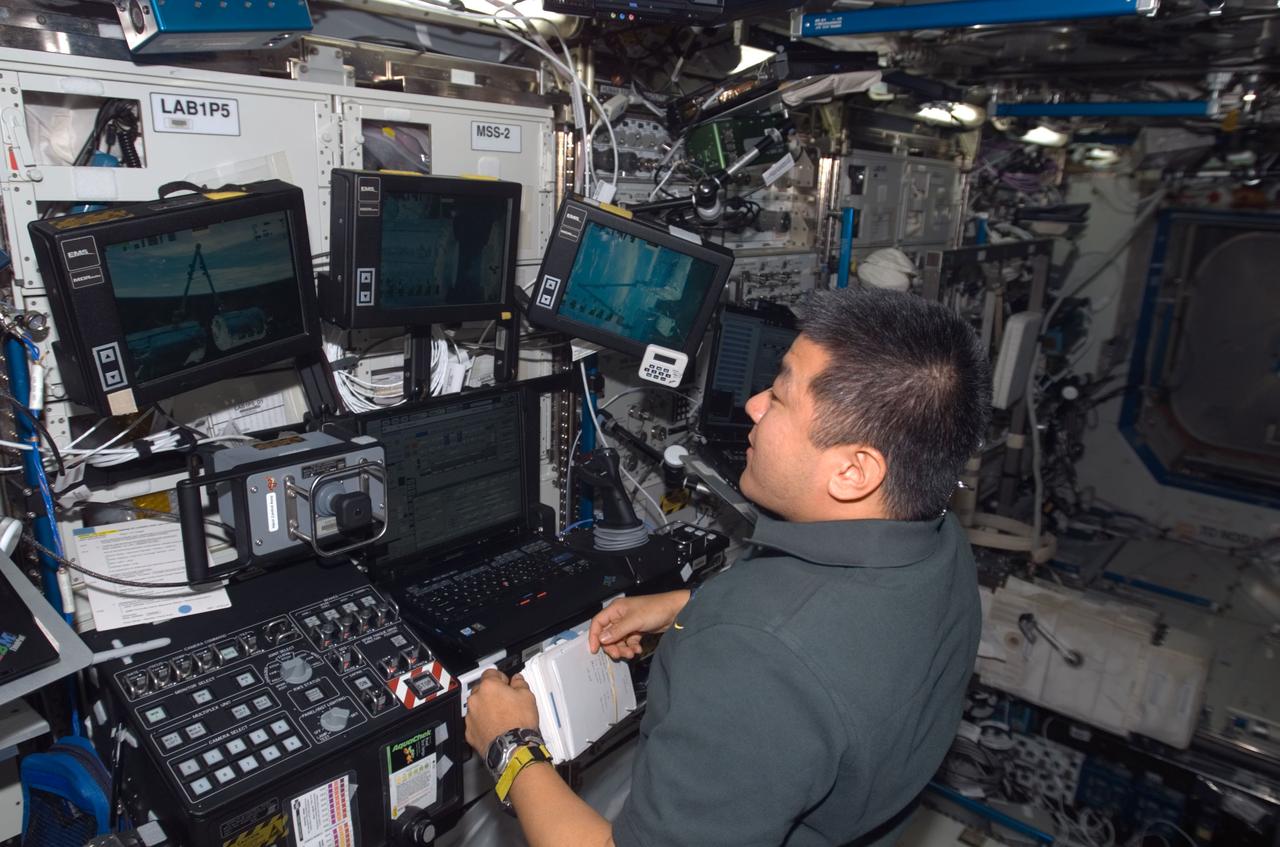
ISS016-E-011253 (14 Nov. 2007) --- Astronaut Daniel Tani, Expedition 16 flight engineer, works the controls of the space station's robotic Canadarm2 in the Destiny laboratory of the International Space Station, during the relocation of the Harmony node and Pressurized Mating Adapter 2 (PMA2) from the Unity node to the front of Destiny.
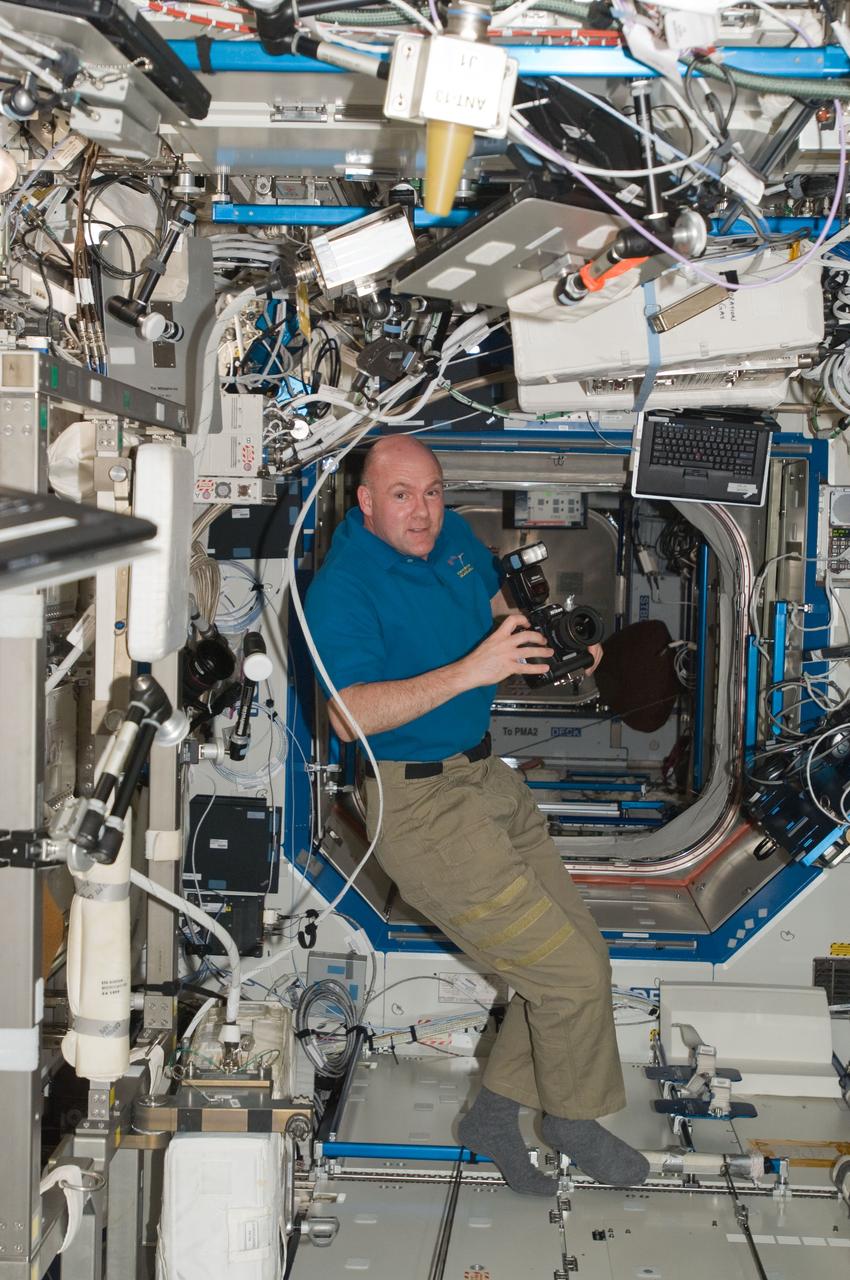
ISS030-E-015658 (25 Dec. 2011) --- European Space Agency astronaut Andre Kuipers takes pictures in Node 2 (Harmony) aboard the International Space Station. The Expedition 30/31 flight engineer came aboard the orbital outpost about two days ago, joining a total of five other astronauts and cosmonauts.
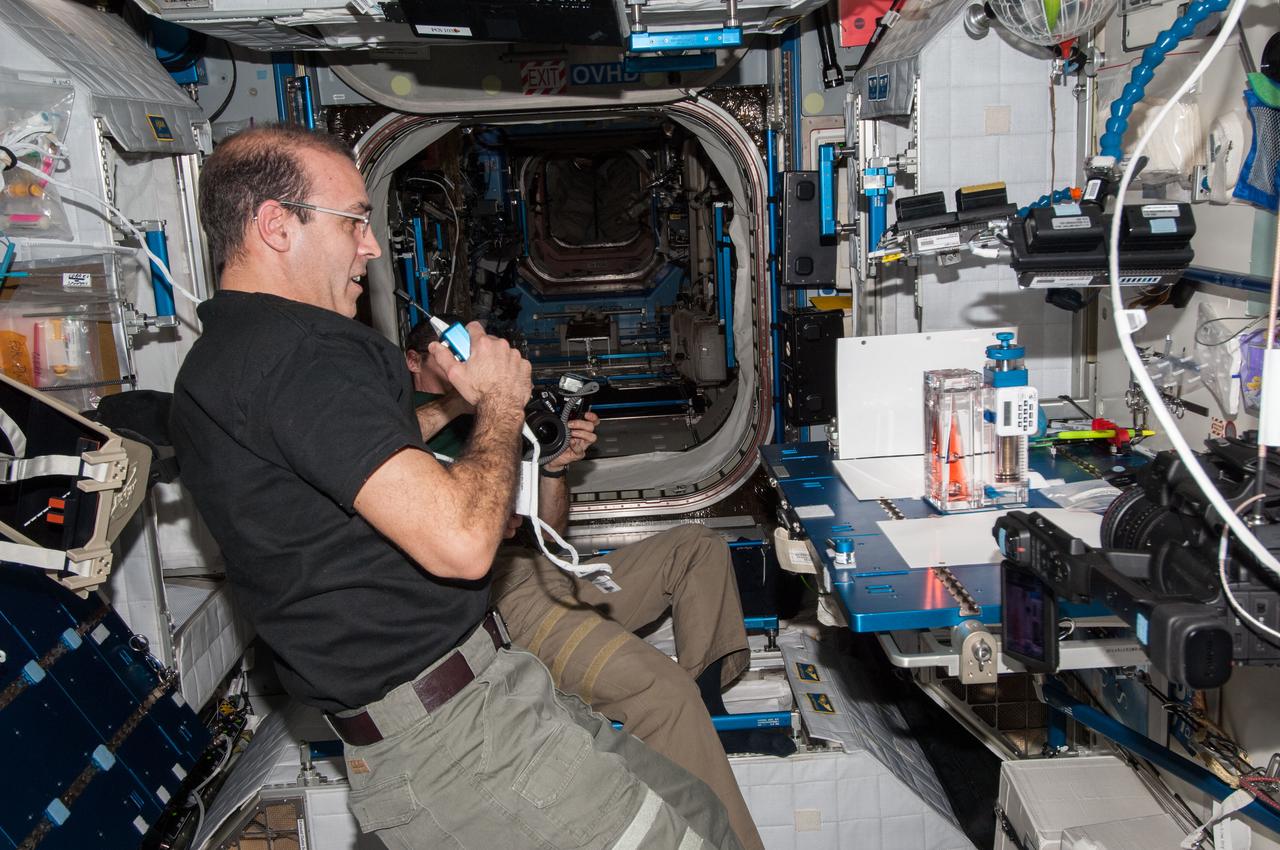
ISS038-E-025000 (3 Jan. 2014) --- NASA astronaut Rick Mastracchio, Expedition 38 flight engineer, speaks in a microphone while conducting a session with the Capillary Flow Experiment (CFE-2) in the Harmony node of the International Space Station. CFE is a suite of fluid physics experiments that investigate how fluids behave in microgravity which could benefit water and fuel delivery systems on future spacecraft. Scientists designed the CFE-2 to study properties of fluids and bubbles inside containers with a specific 3-D geometry.
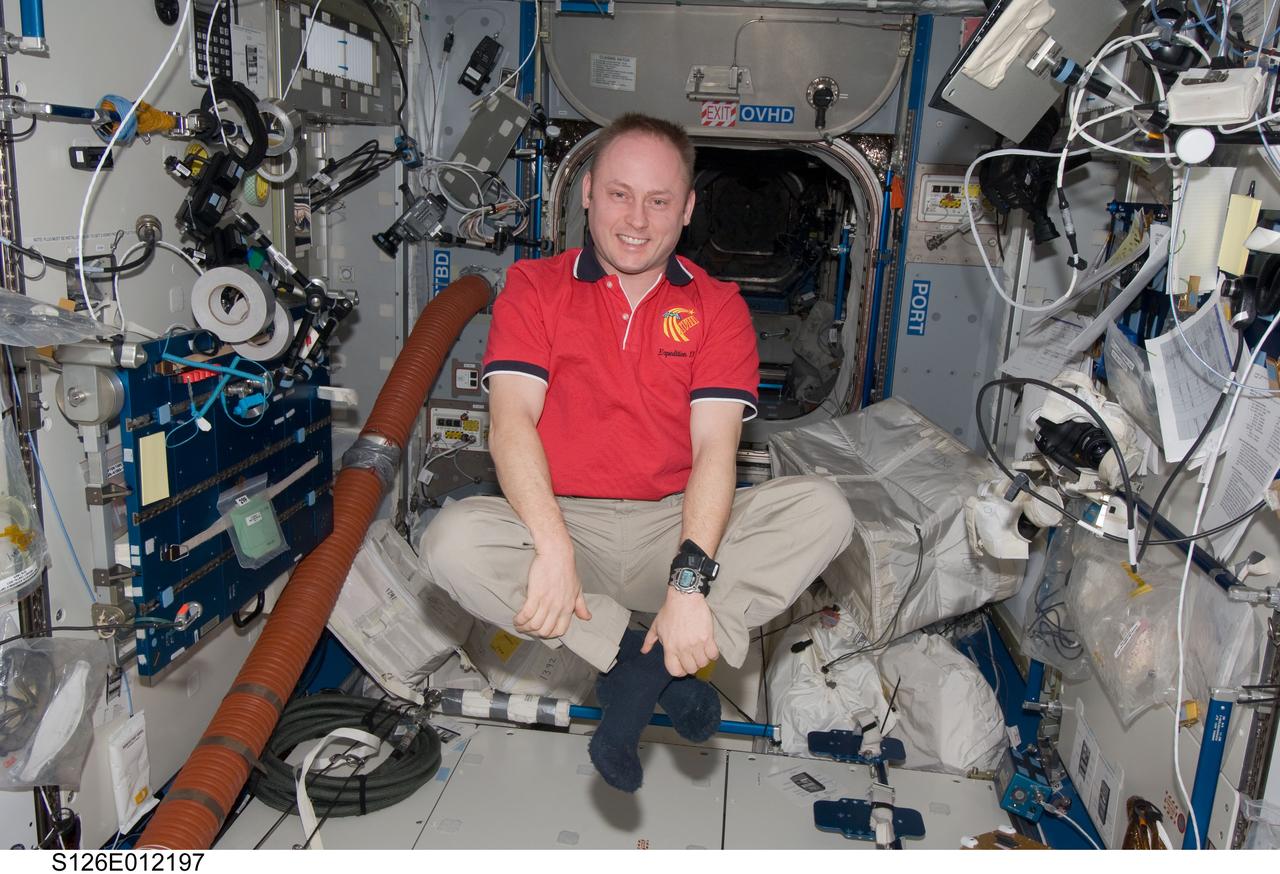
S126-E-012197 (27 Nov. 2008) --- It appears astronaut Michael Fincke, Expedition 18 commander, may be practicing his seating for an upcoming Thanksgiving meal. He had to leave this position in the Harmony or Node 2 of the International Space Station and traverse over to the Space Shuttle Endeavour for the meal, which he shared with two other station crew members and seven Endeavour astronauts.
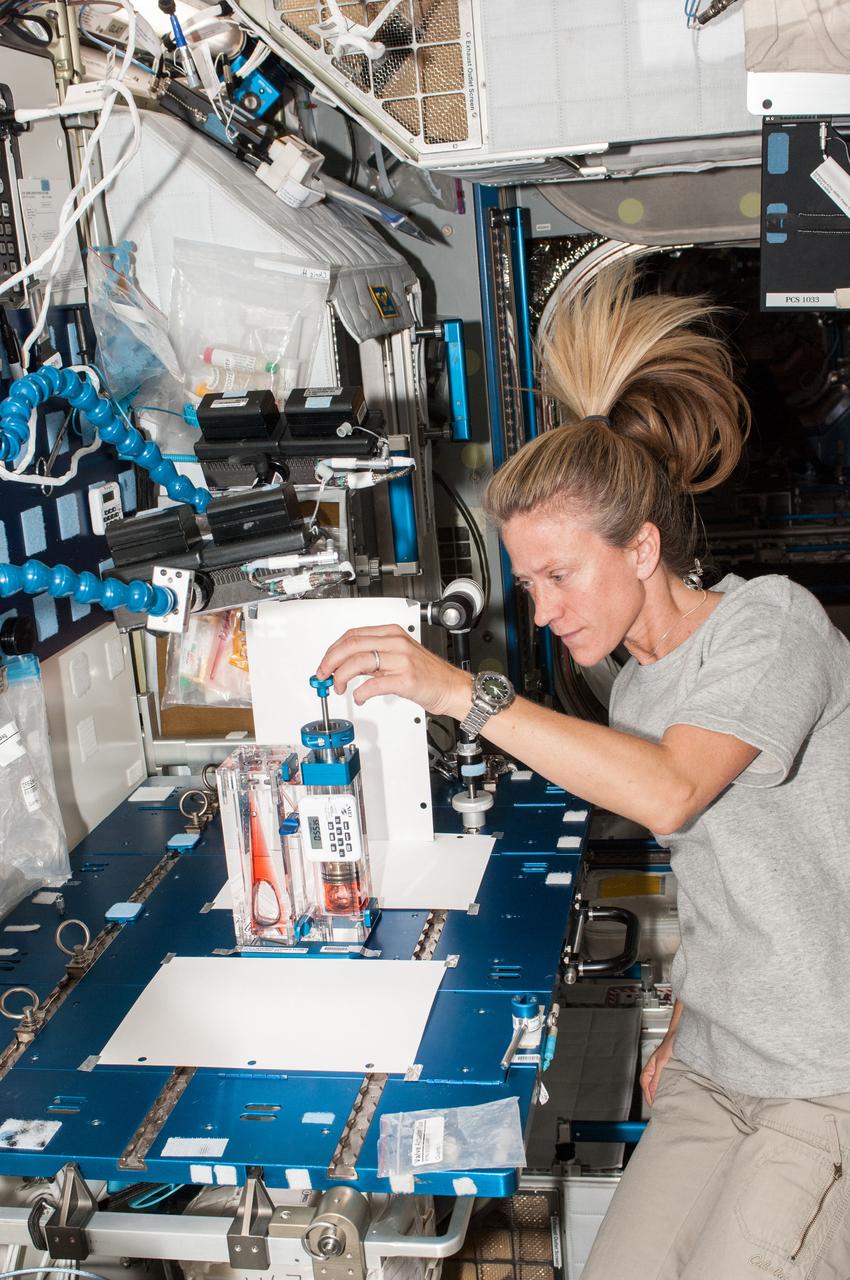
Astronaut Karen Nyberg,Expedition 36 flight engineer,works on the Capillary Flow Experiment (CFE) Vane Gap-1 (VG-1) setup in the Node 2/Harmony. The CFE-2 vessel is used to observe fluid interface and critical wetting behavior in a cylindrical chamber with elliptic cross-section and an adjustable central perforated vane. The primary objective of the Vane Gap experiments is to determine equilibrium interface configurations and critical wetting conditions for interfaces between interior corners separated by a gap.
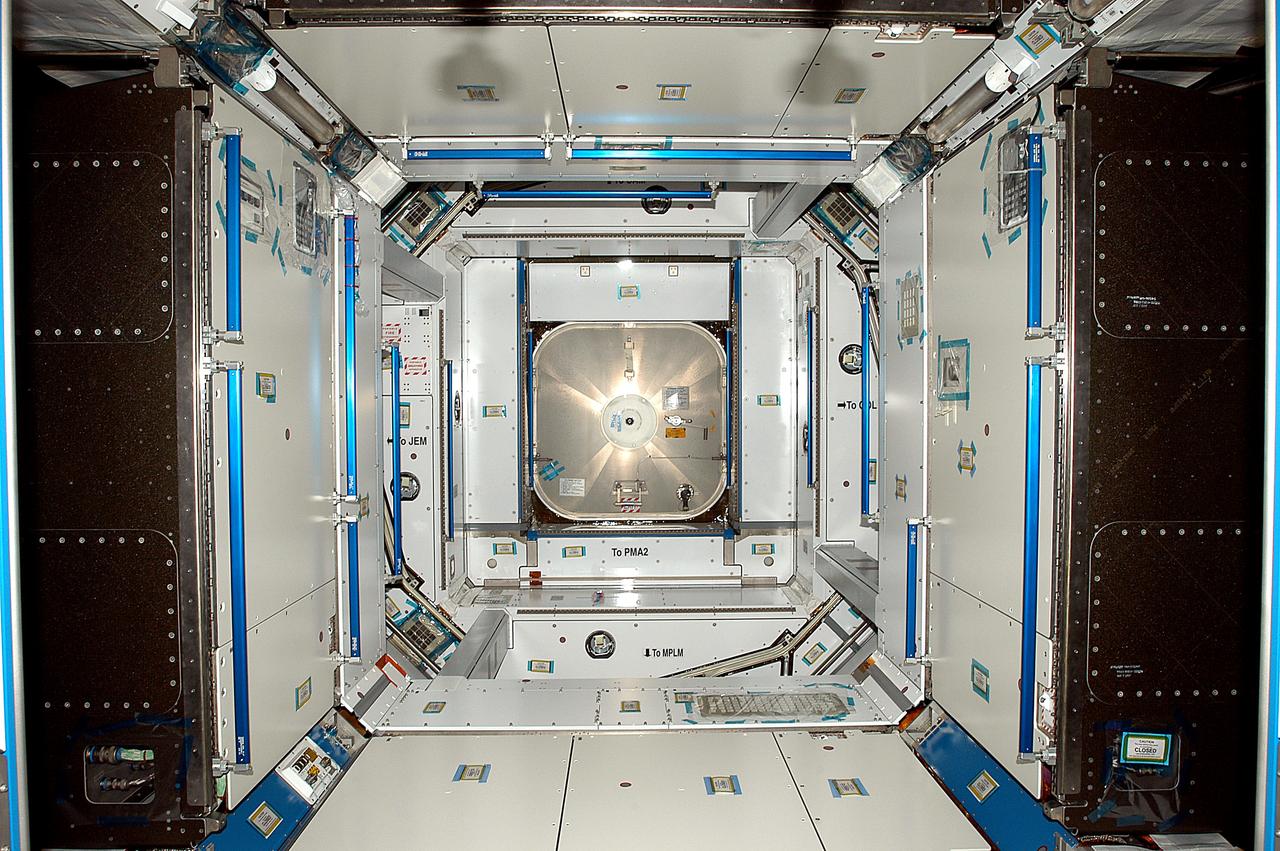
KENNEDY SPACE CENTER, FLA. - The inside of the Italian-built Node 2 looks pristine after opening of the hatch. A future element of the International Space Station, Node 2 arrived at KSC June 1. The second of three Station connecting modules, Node 2 attaches to the end of the U.S. Lab and provides attach locations for the Japanese laboratory, European laboratory, the Centrifuge Accommodation Module and, later, Multipurpose Logistics Modules. It will provide the primary docking location for the Shuttle when a pressurized mating adapter is attached to Node 2. Installation of the module will complete the U.S. Core of the ISS. Node 2 is the designated payload for mission STS-120. No orbiter or launch date has been determined yet.
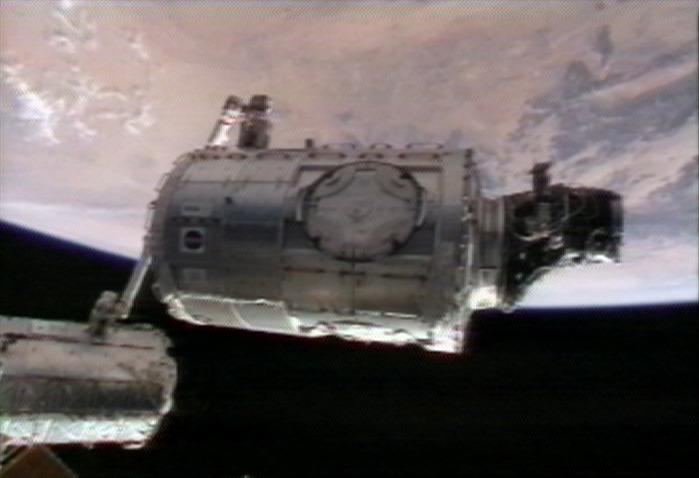
ISS016-E-011442 (14 Nov. 2007) --- In the grasp of the International Space Station's Canadarm2, the Harmony node with the Pressurized Mating Adapter (PMA-2) attached is moved from its temporary location on the left side of the Unity node to its new home on the front of the Destiny laboratory. Astronaut Daniel Tani, Expedition 16 flight engineer, operated the station's robotic arm from inside Destiny. The blackness of space and Earth's horizon provide the backdrop for the view, which was taken from NASA television.
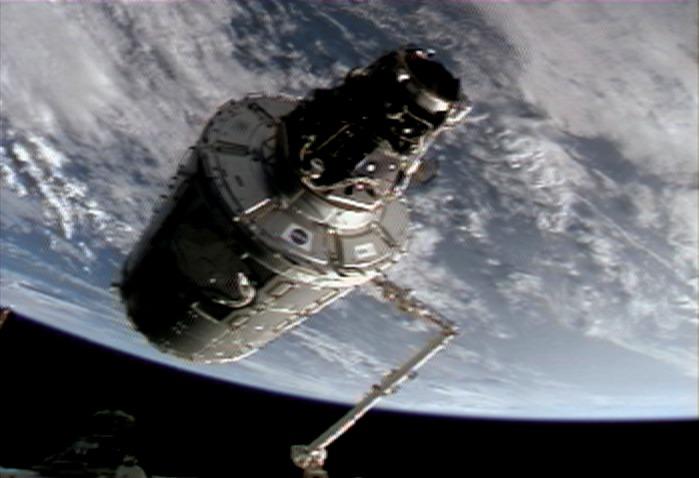
ISS016-E-011441 (14 Nov. 2007) --- In the grasp of the International Space Station's Canadarm2, the Harmony node with the Pressurized Mating Adapter (PMA-2) attached is moved from its temporary location on the left side of the Unity node to its new home on the front of the Destiny laboratory. Astronaut Daniel Tani, Expedition 16 flight engineer, operated the station's robotic arm from inside Destiny. The blackness of space and Earth's horizon provide the backdrop for the view, which was taken from NASA television.
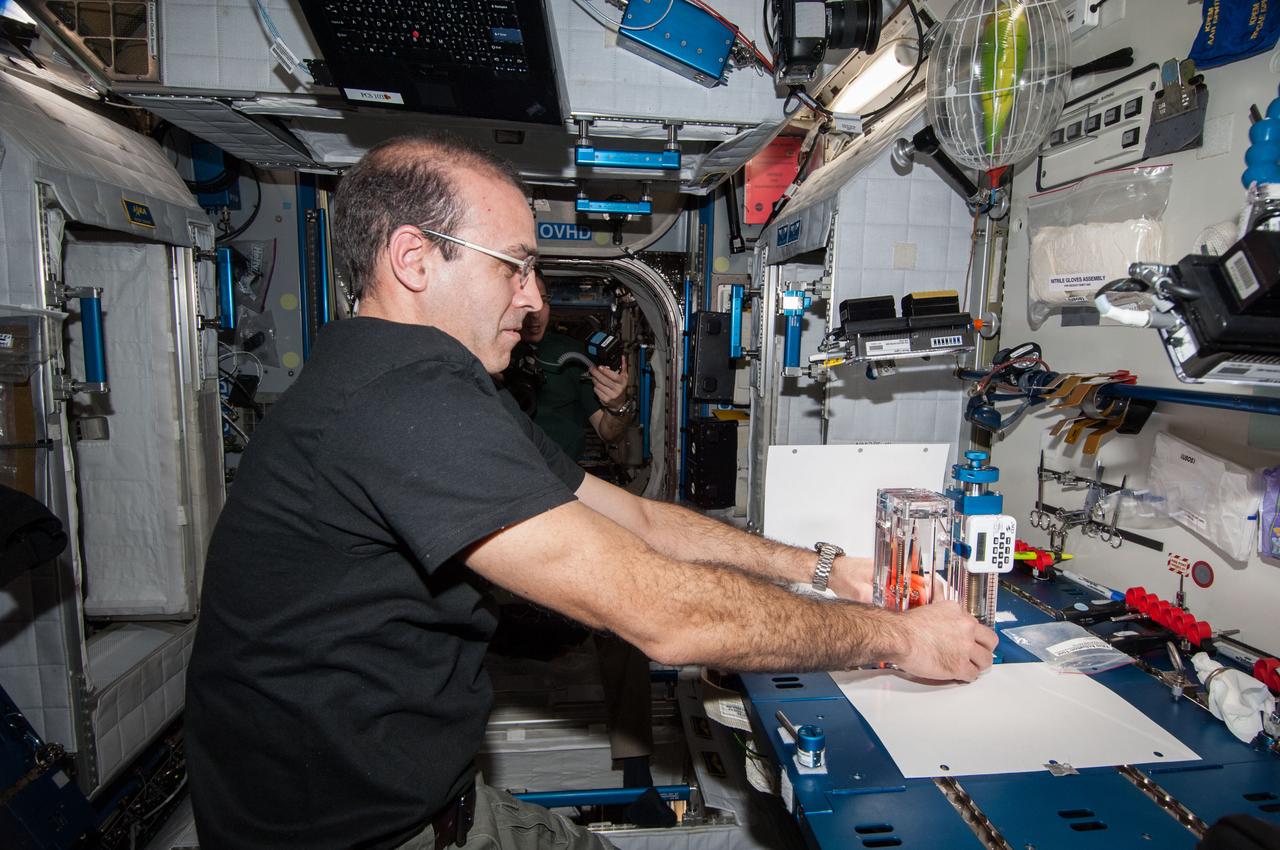
ISS038-E-025002 (3 Jan. 2014) --- NASA astronaut Rick Mastracchio, Expedition 38 flight engineer, conducts a session with the Capillary Flow Experiment (CFE-2) in the Harmony node of the International Space Station. CFE is a suite of fluid physics experiments that investigate how fluids behave in microgravity which could benefit water and fuel delivery systems on future spacecraft. Scientists designed the CFE-2 to study properties of fluids and bubbles inside containers with a specific 3-D geometry. NASA astronaut Mike Hopkins (mostly obscured in the background), flight engineer, uses a still camera to photograph the session.
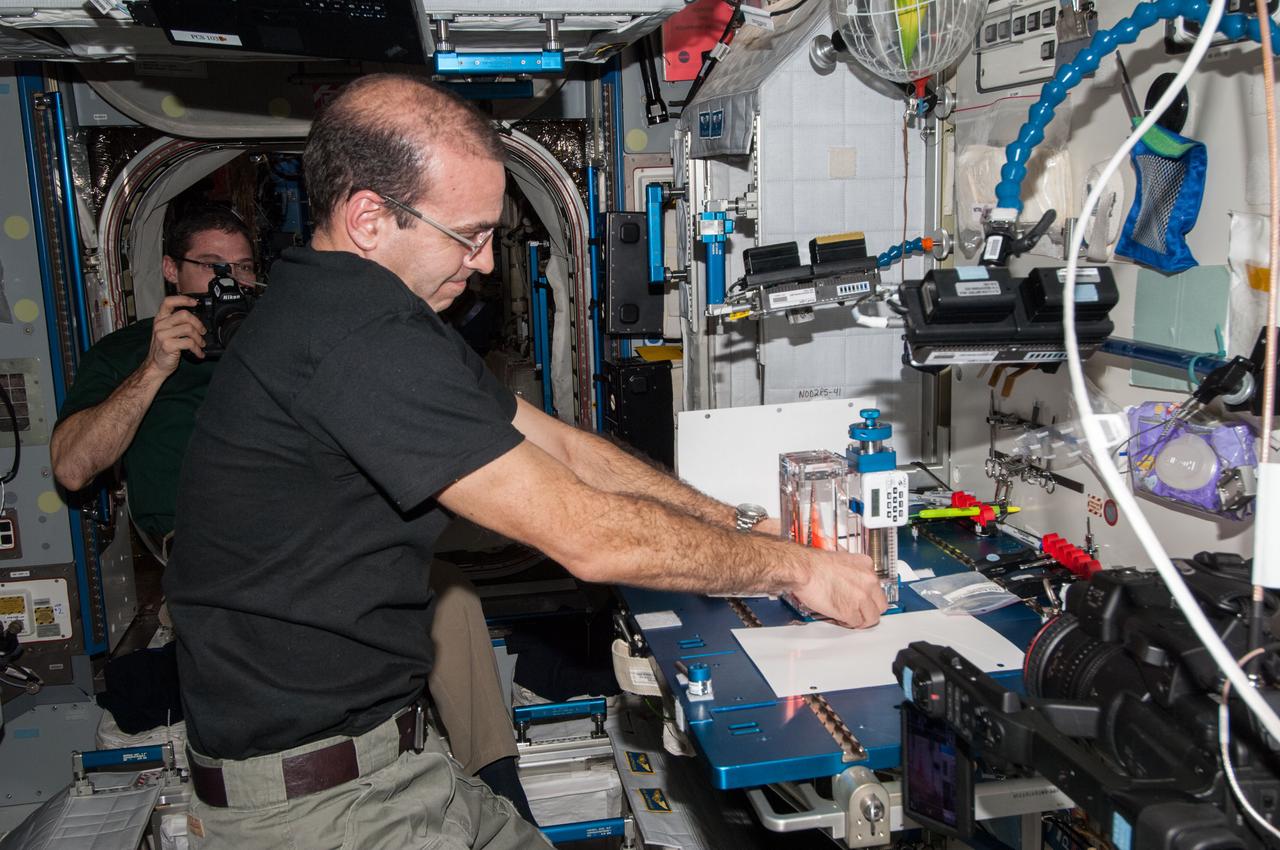
ISS038-E-025002 (3 Jan. 2014) --- NASA astronaut Rick Mastracchio, Expedition 38 flight engineer, conducts a session with the Capillary Flow Experiment (CFE-2) in the Harmony node of the International Space Station. CFE is a suite of fluid physics experiments that investigate how fluids behave in microgravity which could benefit water and fuel delivery systems on future spacecraft. Scientists designed the CFE-2 to study properties of fluids and bubbles inside containers with a specific 3-D geometry. NASA astronaut Mike Hopkins (mostly obscured in the background), flight engineer, uses a still camera to photograph the session.

ISS030-E-051116 (28 Jan. 2012) --- NASA astronaut Dan Burbank, Expedition 30 commander, performs in-flight maintenance on the Water Recovery System 2 (WRS-2) in the Tranquility node of the International Space Station.

KENNEDY SPACE CENTER, FLA. - An overhead crane in the Space Station Processing Facility is attached to the U.S. Node 2 to lift it out of its shipping container. The node will be moved to a workstand. The second of three connecting modules on the International Space Station, the Italian-built Node 2 attaches to the end of the U.S. Lab and provides attach locations for the Japanese laboratory, European laboratory, the Centrifuge Accommodation Module and, later, Multipurpose Logistics Modules. It will provide the primary docking location for the Shuttle when a pressurized mating adapter is attached to Node 2. Installation of the module will complete the U.S. Core of the ISS. Node 2 is the designated payload for mission STS-120. No orbiter or launch date has been determined yet.
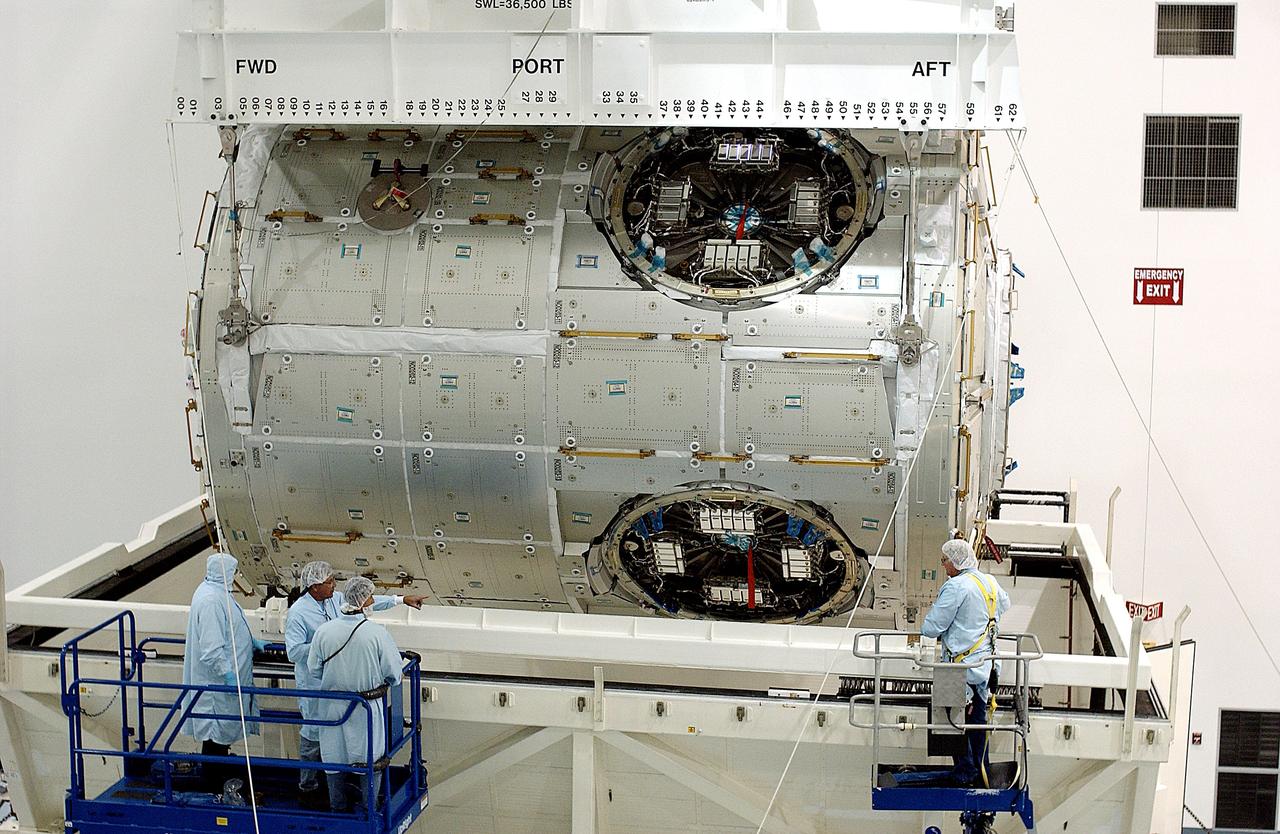
KENNEDY SPACE CENTER, FLA. - An overhead crane in the Space Station Processing Facility lifts the U.S. Node 2 out of its shipping container. The node will be moved to a workstand. The second of three connecting modules on the International Space Station, the Italian-built Node 2 attaches to the end of the U.S. Lab and provides attach locations for the Japanese laboratory, European laboratory, the Centrifuge Accommodation Module and, later, Multipurpose Logistics Modules. It will provide the primary docking location for the Shuttle when a pressurized mating adapter is attached to Node 2. Installation of the module will complete the U.S. Core of the ISS. Node 2 is the designated payload for mission STS-120. No orbiter or launch date has been determined yet.
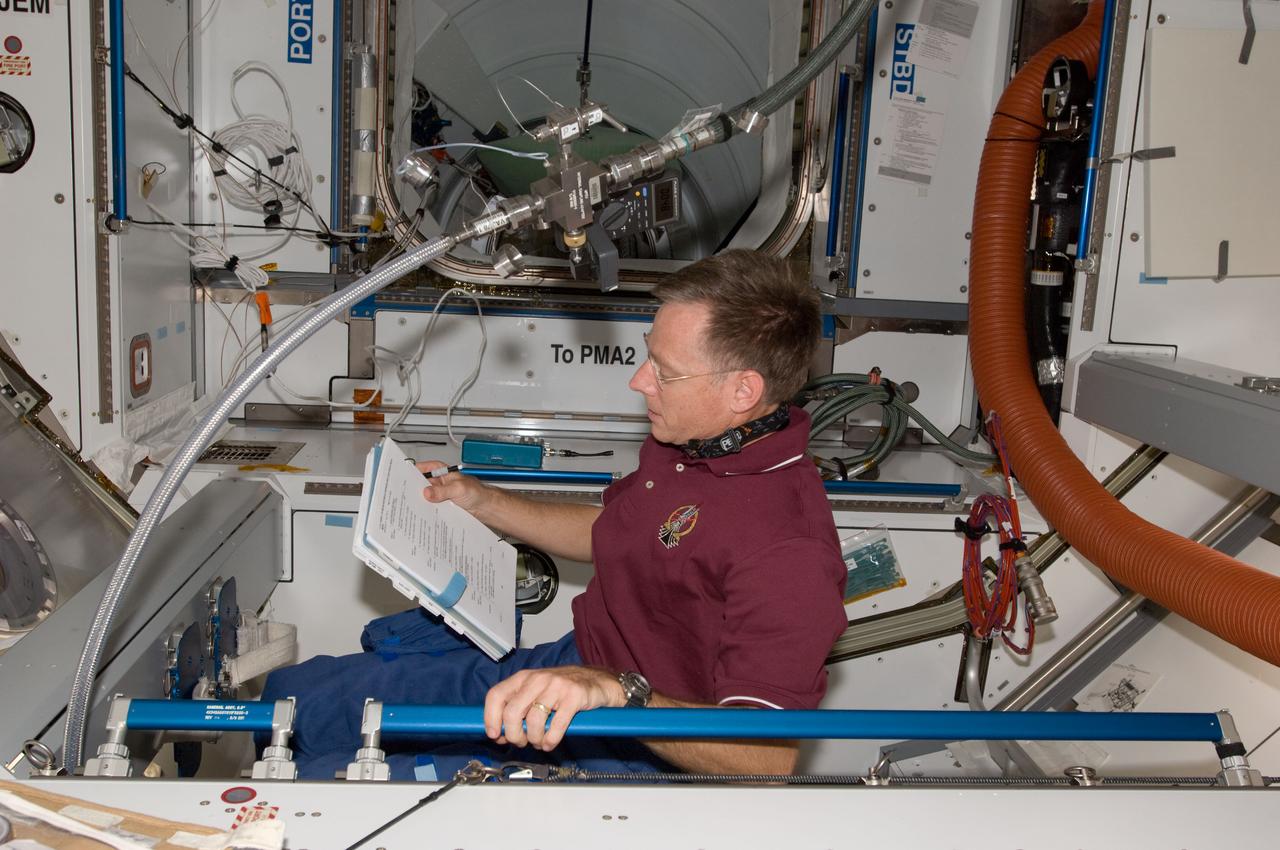
S135-E-009509 (18 July 2011) --- In the Node 2 or Harmony on the International Space Station, NASA astronaut Chris Ferguson, STS-135 commander, is getting ready to join crewmates (out of frame) to uninstall the Raffaello multi-purpose logistics module and transfer it back to the payload bay of Atlantis. Photo credit: NASA
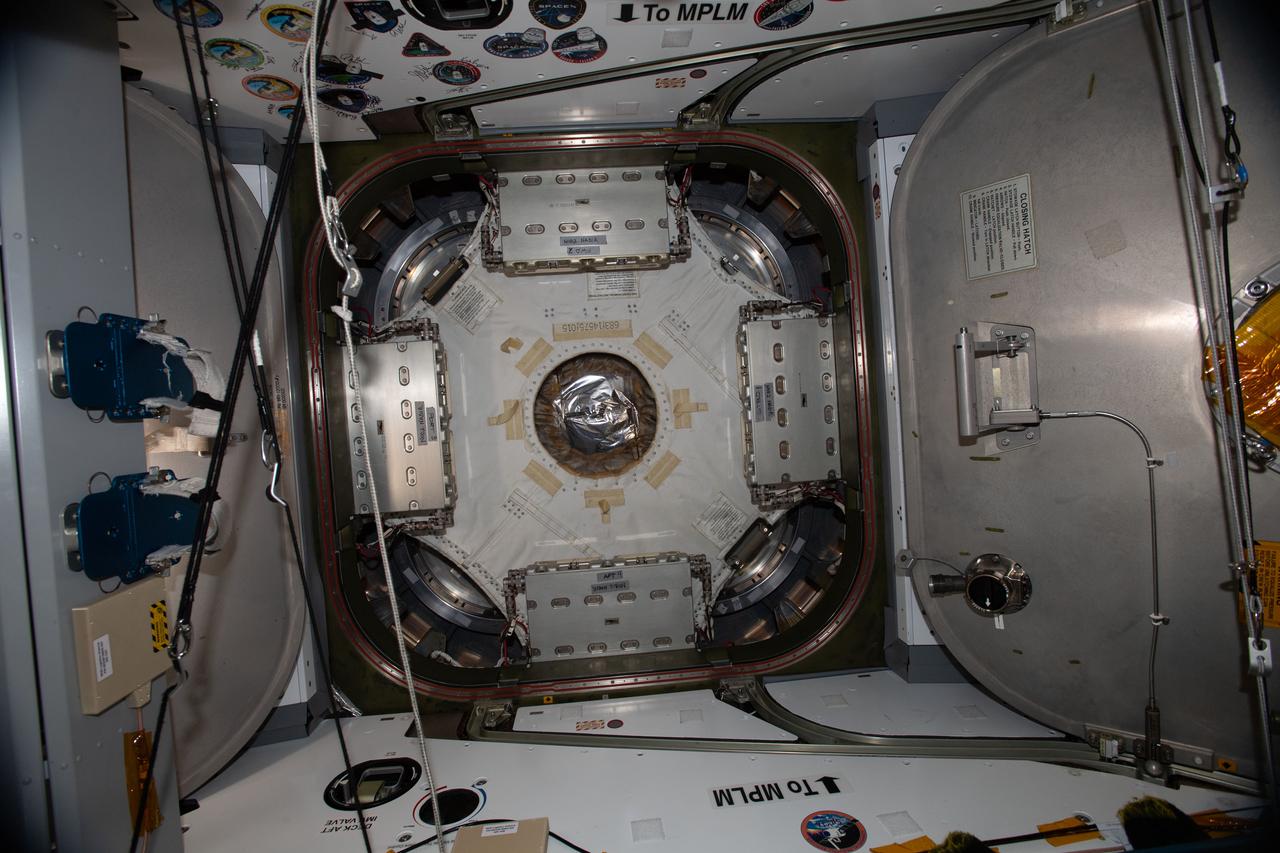
iss057e059085 (11/7/2018) --- Photo documentation of the Common Berthing Mechanism (CBM) Center Disk Cover in the Harmony Node 2 nadir hatch during part 2 of Kounotori H-II Transfer Vehicle 7 (HTV-7) Vestibule configuration for demating. The HTV Small Re-entry Capsule (HSRC) Protective Cover has been removed.

iss057e059103 (11/7/2018) --- Photo documentation of the area behind the Common Berthing Mechanism (CBM) Center Disk Cover in the Harmony Node 2 nadir hatch during part 2 of Kounotori H-II Transfer Vehicle 7 (HTV-7) Vestibule configuration for demating. The HTV Small Re-entry Capsule (HSRC) Protective Cover has been removed.
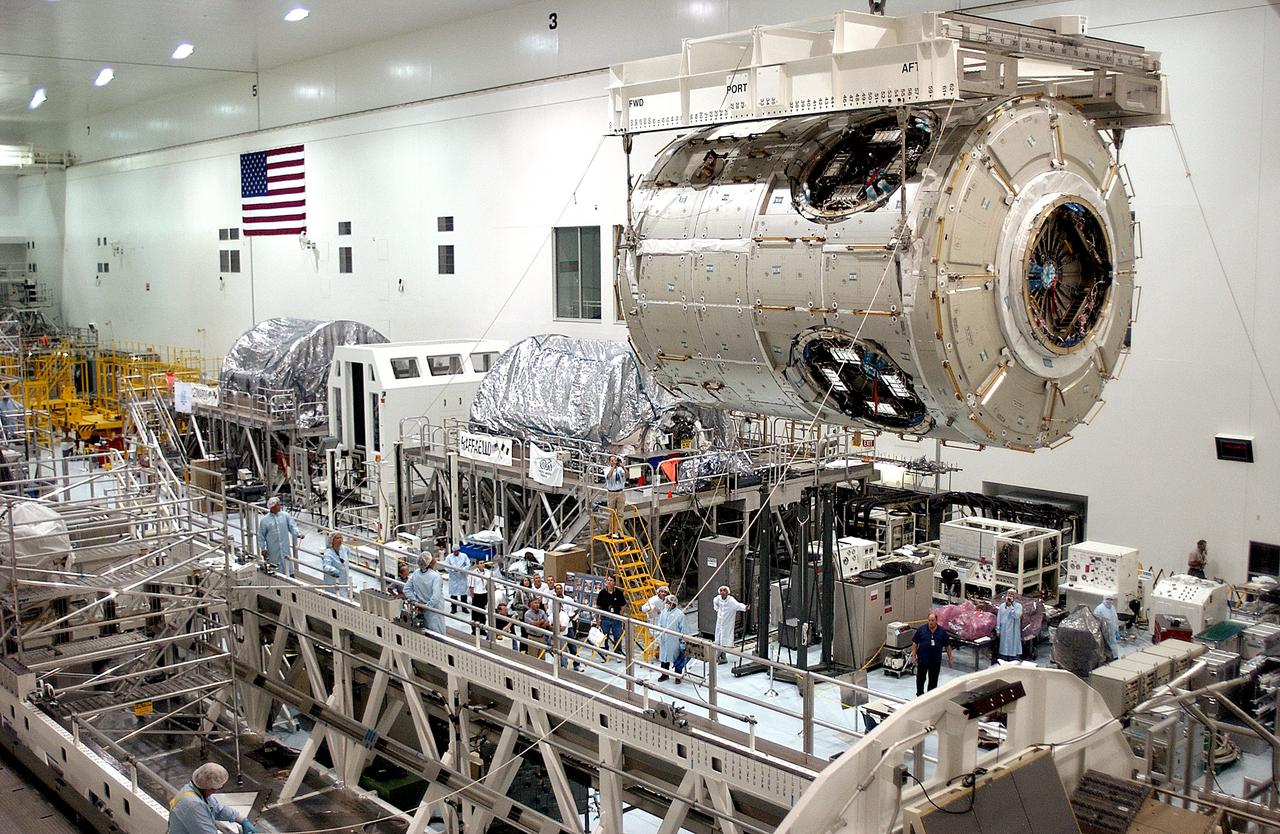
KENNEDY SPACE CENTER, FLA. - The U.S. Node 2 is moved toward a workstand in the Space Station Processing Facility. The second of three connecting modules on the International Space Station, the Italian-built Node 2 attaches to the end of the U.S. Lab and provides attach locations for the Japanese laboratory, European laboratory, the Centrifuge Accommodation Module and, later, Multipurpose Logistics Modules. It will provide the primary docking location for the Shuttle when a pressurized mating adapter is attached to Node 2. Installation of the module will complete the U.S. Core of the ISS. Node 2 is the designated payload for mission STS-120. No orbiter or launch date has been determined yet.
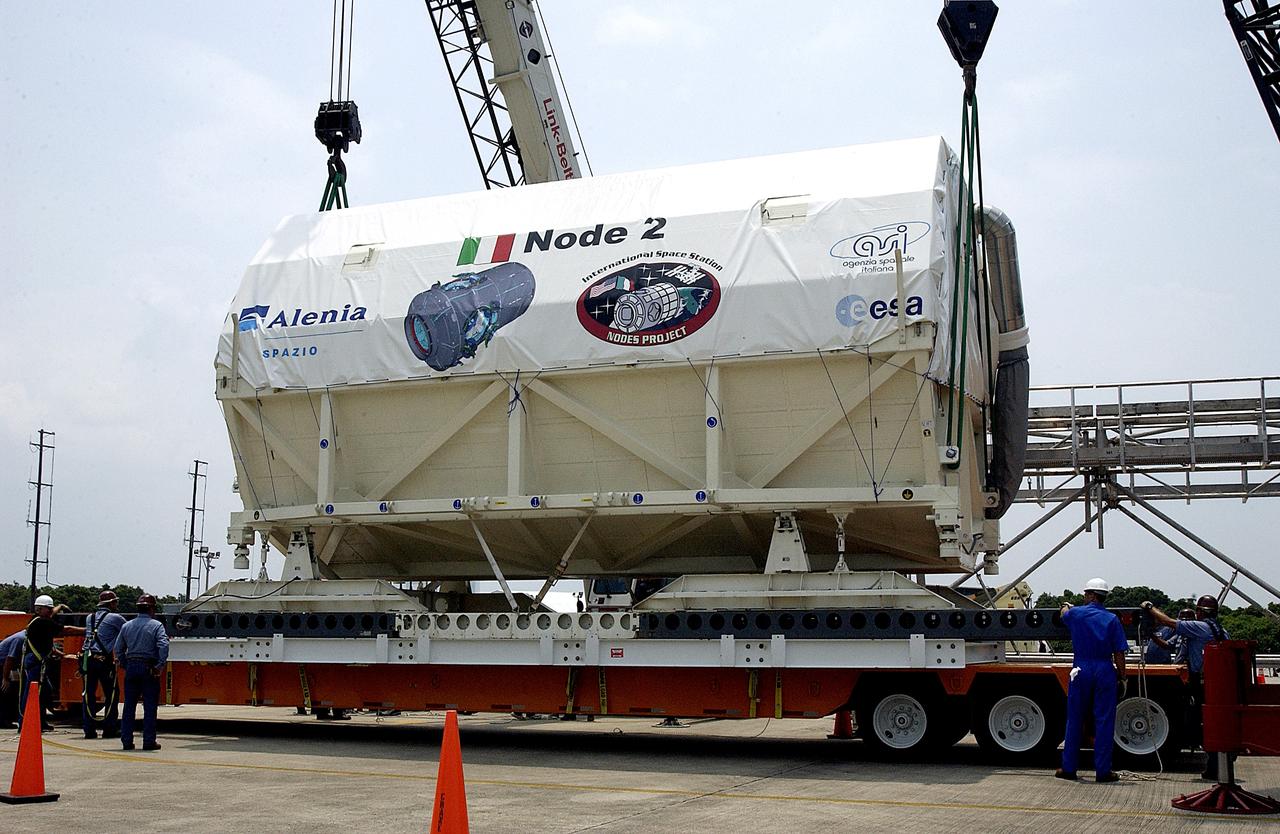
KENNEDY SPACE CENTER, FLA. - The Italian-built module, U.S. Node 2, is lowered onto a transporter after its arrival at the Shuttle Landing Facility. It will be taken to the Space Station Processing Facility. The second of three connecting modules on the International Space Station, Node 2 attaches to the end of the U.S. Lab and provides attach locations for the Japanese laboratory, European laboratory, the Centrifuge Accommodation Module and, later, Multipurpose Logistics Modules. It will provide the primary docking location for the Shuttle when a pressurized mating adapter is attached to Node 2. Installation of the module will complete the U.S. Core of the ISS. Node 2 is the designated payload for mission STS-120. No orbiter or launch date has been determined yet.

KENNEDY SPACE CENTER, FLA. - The U.S. Node 2 is lowered onto a workstand in the Space Station Processing Facility. The second of three connecting modules on the International Space Station, the Italian-built Node 2 attaches to the end of the U.S. Lab and provides attach locations for the Japanese laboratory, European laboratory, the Centrifuge Accommodation Module and, later, Multipurpose Logistics Modules. It will provide the primary docking location for the Shuttle when a pressurized mating adapter is attached to Node 2. Installation of the module will complete the U.S. Core of the ISS. Node 2 is the designated payload for mission STS-120. No orbiter or launch date has been determined yet.
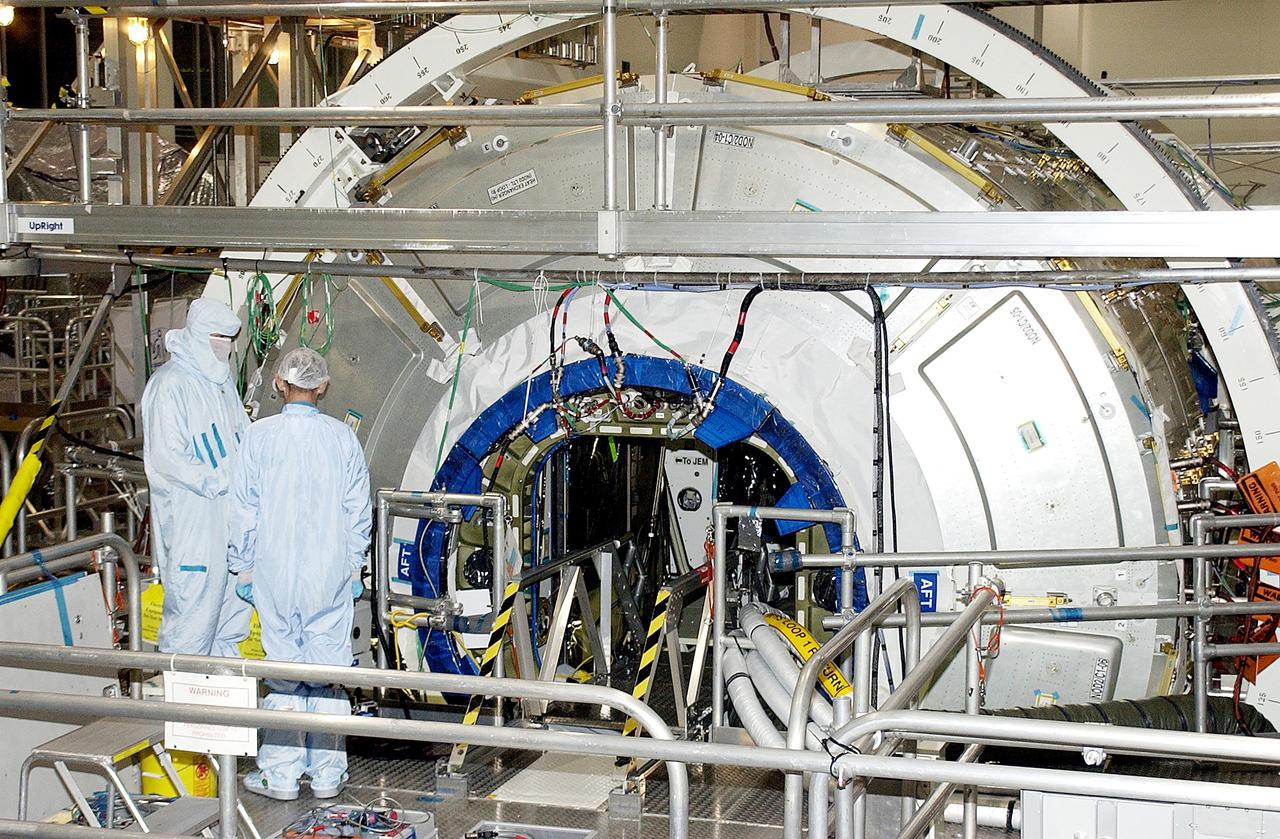
KENNEDY SPACE CENTER, FLA. - Work is ongoing on the U.S. Node 2 in the Space Station Processing Facility. The second of three Space Station connecting modules, the Italian-built Node 2 attaches to the end of the U.S. Lab and will provide attach locations for the Japanese laboratory, European laboratory, the Centrifuge Accommodation Module and, later, Multipurpose Logistics Modules. It will provide the primary docking location for the Shuttle when a pressurized mating adapter is attached to Node 2. Installation of the module will complete the U.S. Core of the ISS. Node 2 is the designated payload for mission STS-120. No orbiter or launch date has been determined yet.
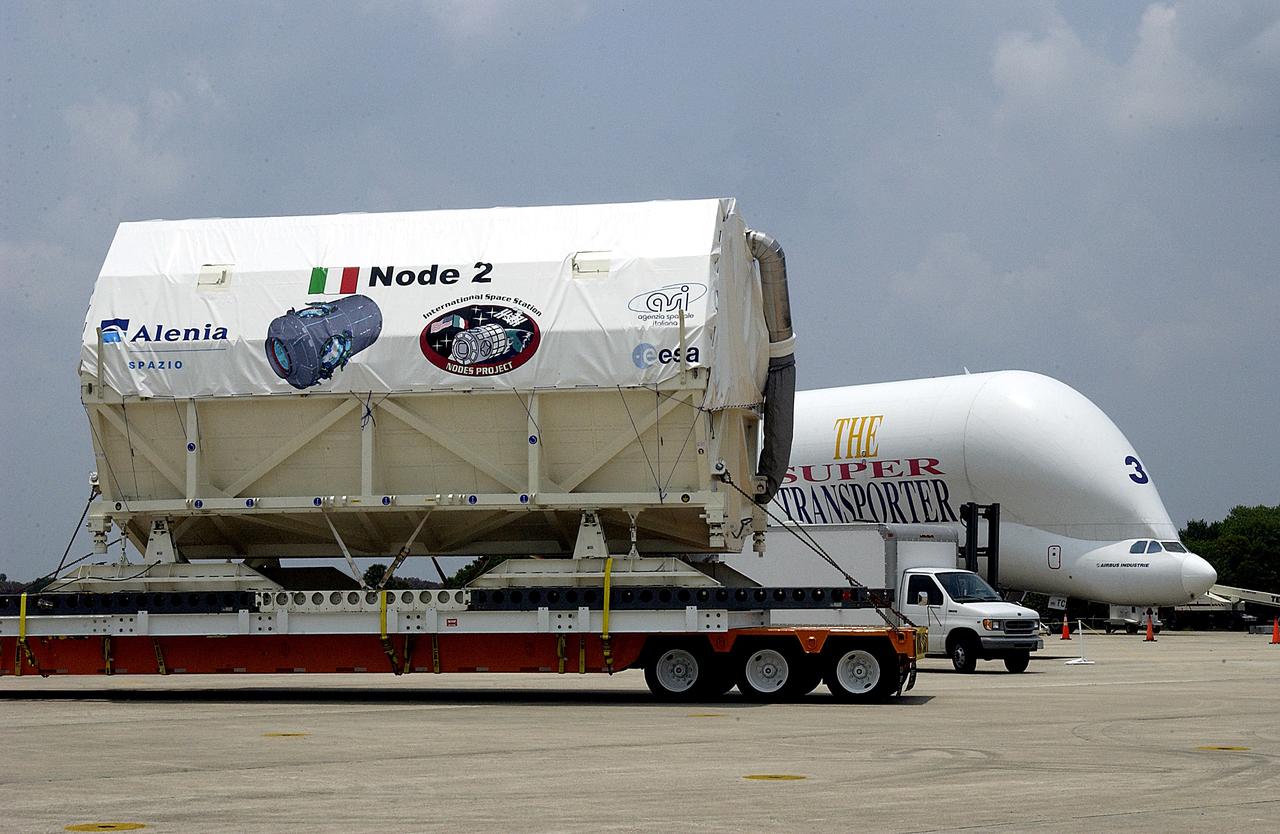
KENNEDY SPACE CENTER, FLA. - The Italian-built module, U.S. Node 2, moves past the Beluga aircraft that brought it to KSC as it is transferred to the Space Station Processing Facility. The second of three connecting modules on the International Space Station, Node 2 attaches to the end of the U.S. Lab and provides attach locations for the Japanese laboratory, European laboratory, the Centrifuge Accommodation Module and, later, Multipurpose Logistics Modules. It will provide the primary docking location for the Shuttle when a pressurized mating adapter is attached to Node 2. Installation of the module will complete the U.S. Core of the ISS. Node 2 is the designated payload for mission STS-120. No orbiter or launch date has been determined yet.
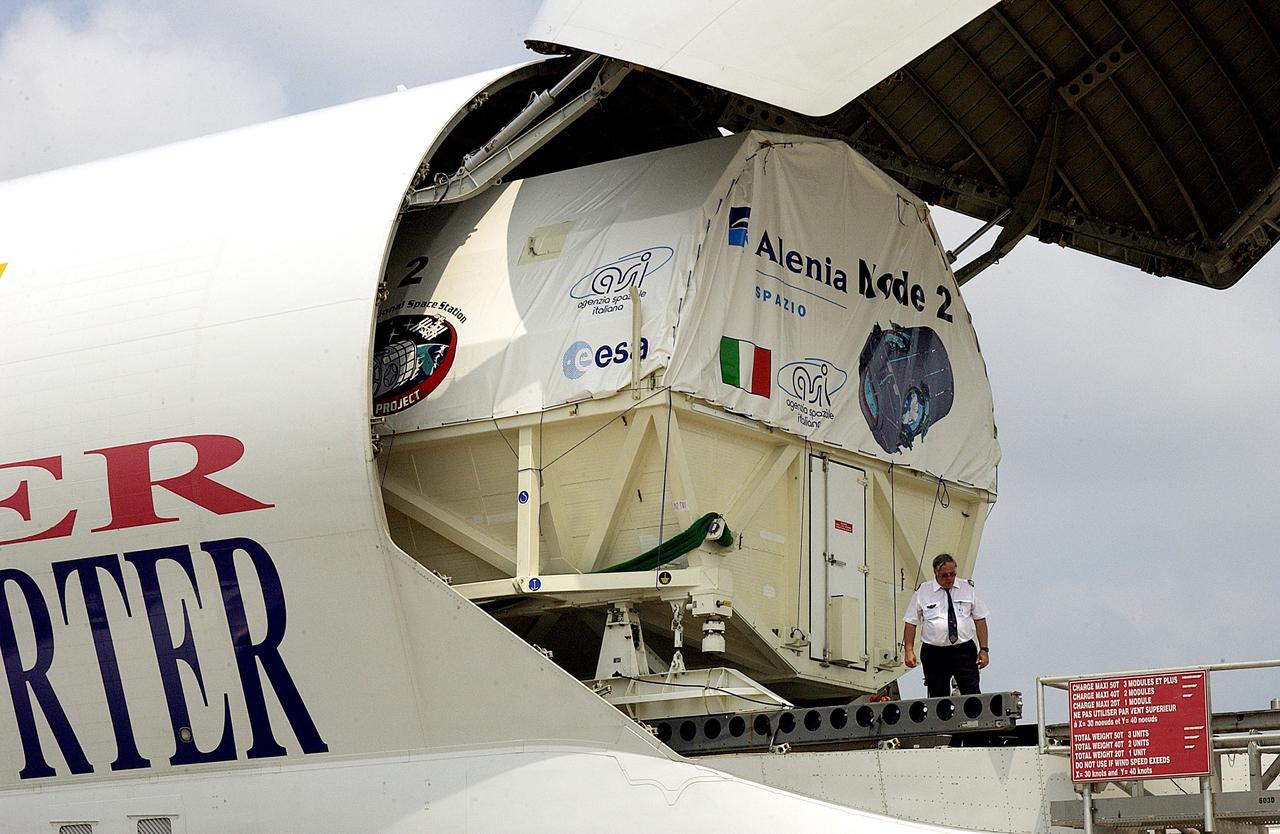
KENNEDY SPACE CENTER, FLA. - The Italian-built module, U.S. Node 2, for the International Space Station is offloaded from a Beluga at the Shuttle Landing Facility. The second of three Station connecting modules, Node 2 attaches to the end of the U.S. Lab and provides attach locations for the Japanese laboratory, European laboratory, the Centrifuge Accommodation Module and, later, Multipurpose Logistics Modules. It will provide the primary docking location for the Shuttle when a pressurized mating adapter is attached to Node 2. Installation of the module will complete the U.S. Core of the ISS. Node 2 is the designated payload for mission STS-120. No orbiter or launch date has been determined yet.
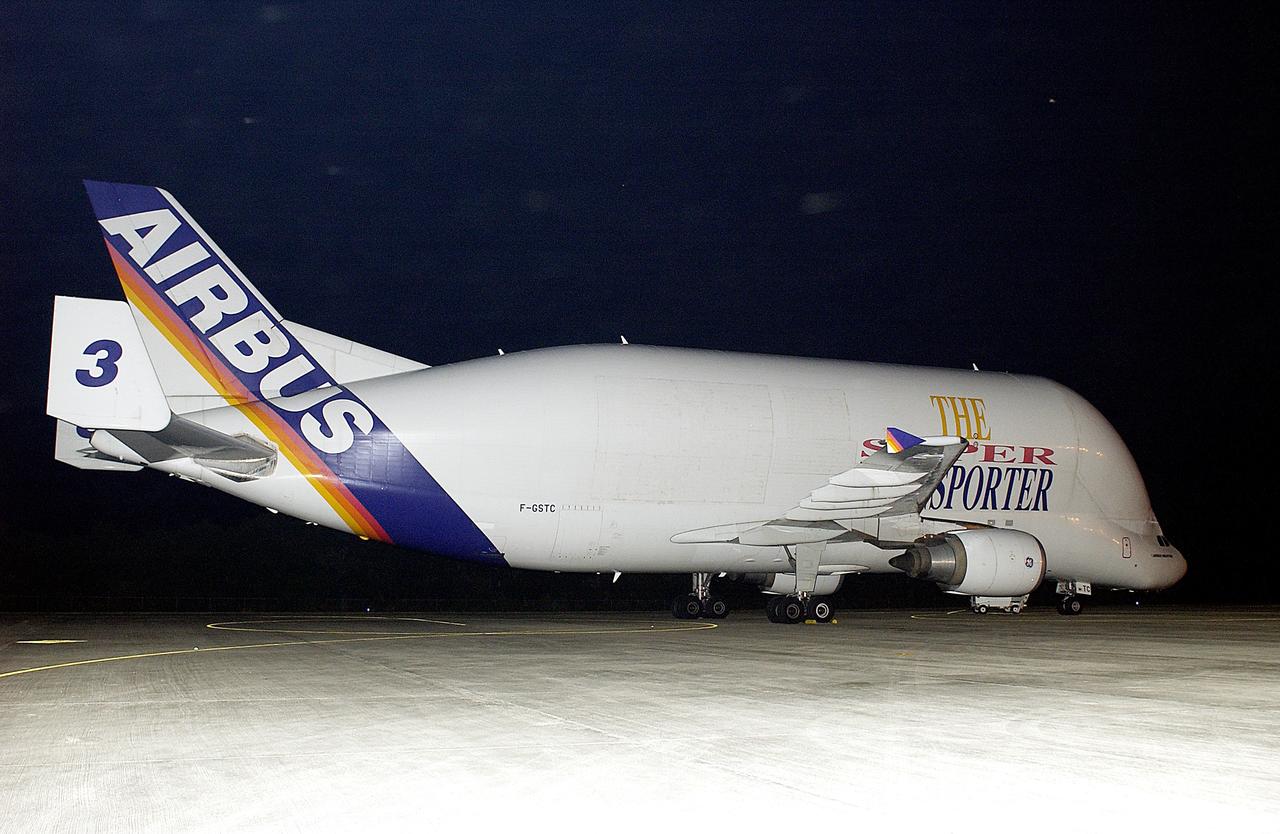
KENNEDY SPACE CENTER, FLA. - A Beluga aircraft arrives at the Shuttle Landing Facility with its cargo of the Italian-built module, U.S. Node 2, for the International Space Station. The second of three Station connecting modules, Node 2 attaches to the end of the U.S. Lab and provides attach locations for the Japanese laboratory, European laboratory, the Centrifuge Accommodation Module and, later, Multipurpose Logistics Modules. It will provide the primary docking location for the Shuttle when a pressurized mating adapter is attached to Node 2. Installation of the module will complete the U.S. Core of the ISS. Node 2 is the designated payload for mission STS-120. No orbiter or launch date has been determined yet.
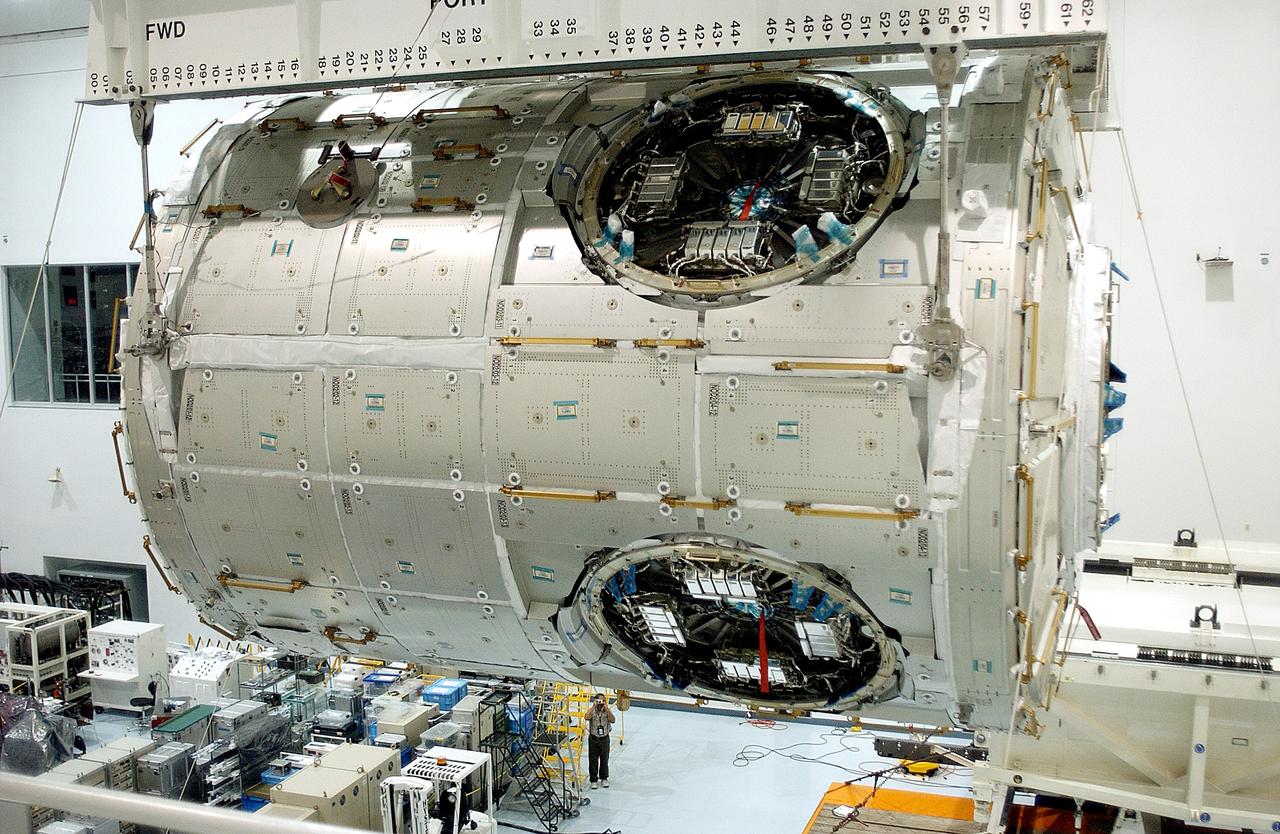
KENNEDY SPACE CENTER, FLA. - An overhead crane in the Space Station Processing Facility moves the U.S. Node 2 across the floor to a workstand. The second of three connecting modules on the International Space Station, the Italian-built Node 2 attaches to the end of the U.S. Lab and provides attach locations for the Japanese laboratory, European laboratory, the Centrifuge Accommodation Module and, later, Multipurpose Logistics Modules. It will provide the primary docking location for the Shuttle when a pressurized mating adapter is attached to Node 2. Installation of the module will complete the U.S. Core of the ISS. Node 2 is the designated payload for mission STS-120. No orbiter or launch date has been determined yet.
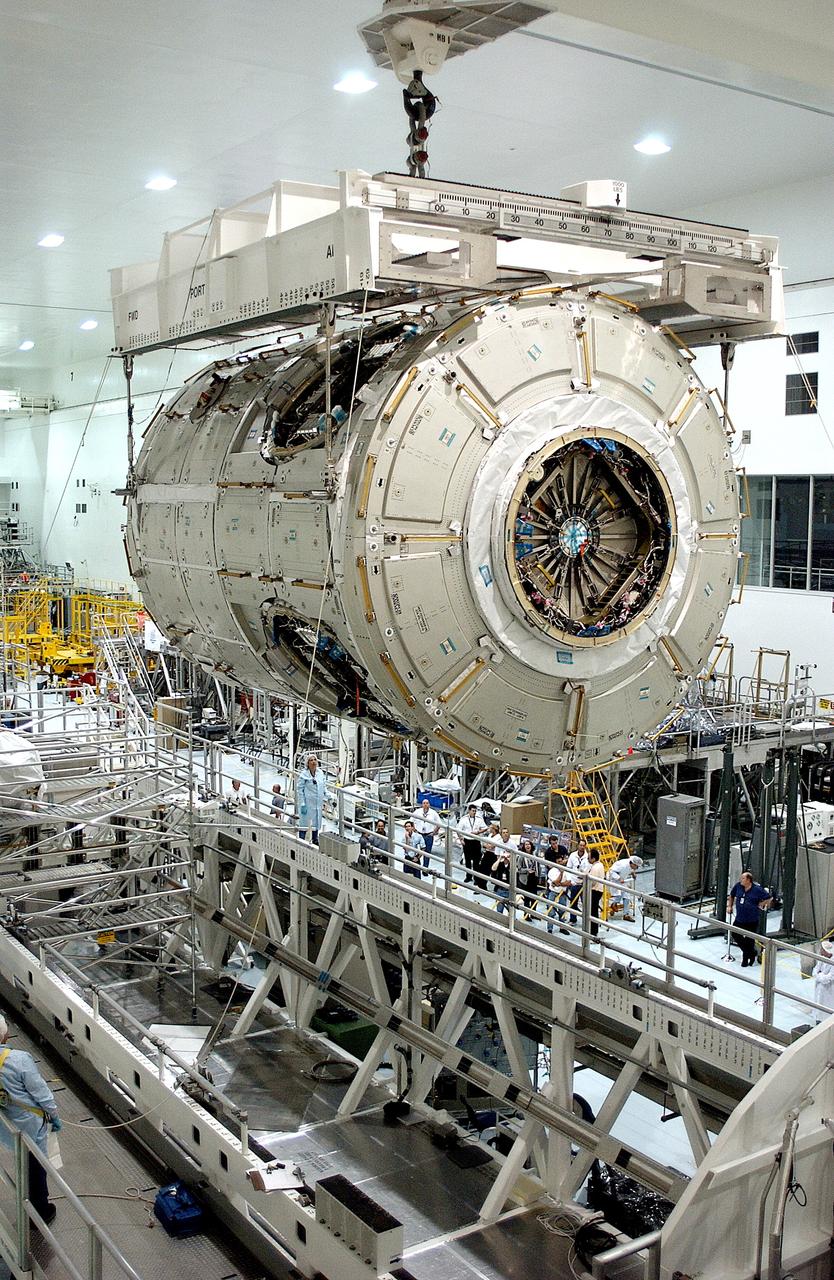
KENNEDY SPACE CENTER, FLA. - The U.S. Node 2 moves toward a workstand in the Space Station Processing Facility. The second of three connecting modules on the International Space Station, the Italian-built Node 2 attaches to the end of the U.S. Lab and provides attach locations for the Japanese laboratory, European laboratory, the Centrifuge Accommodation Module and, later, Multipurpose Logistics Modules. It will provide the primary docking location for the Shuttle when a pressurized mating adapter is attached to Node 2. Installation of the module will complete the U.S. Core of the ISS. Node 2 is the designated payload for mission STS-120. No orbiter or launch date has been determined yet.