
Norman Augustine, chair, listens to a speaker's presentation during the final meeting of the Human Space Flight Review Committee, Wednesday, Aug. 12, 2009, in Washington. Photo Credit: (NASA/Paul E. Alers)

Former astronaut Dr. Sally Ride, left, confers with Norman Augustine, chair, prior to the start of the final meeting of the Human Space Flight Review Committee, Wednesday, Aug. 12, 2009, in Washington. Photo Credit: (NASA/Paul E. Alers)

Former astronaut Dr. Sally Ride, left, confers with Norman Augustine, chair, prior to the start of the final meeting of the Human Space Flight Review Committee, Wednesday, Aug. 12, 2009, in Washington. Photo Credit: (NASA/Paul E. Alers)

Chairman of the U.S. Human Space Flight Plans Committee Norman Augustine answers a reporters question during a press conference where the committee released it's report on Thursday, Oct., 22, 2009 at the National Press Club in Washington. The Obama Administration tasked the committee to do an independent review of planned U.S. human space flight activities with the goal of ensuring that the nation is on a vigorous and sustainable path to achieving its boldest aspirations in space. Photo Credit: (NASA/Bill Ingalls)

Norman Augustine, chair of the Human Space Flight Review Committee, makes a point during the first of several public meetings at different U.S. locations, Wednesday, June 17, 2009, at the Carnegie Institution in Washington. The panel will examine ongoing and planned NASA development activities and potential alternatives in order to present options for advancing a safe, innovative, affordable and sustainable human space flight program following the space shuttle's retirement. The committee wil present its results by August 2009. Photo Credit: (NASA/Paul E. Alers)

Chairman of the U.S. Human Space Flight Plans Committee Norman Augustine, center, listens to reporters questions during a press conference where the committee released it's report on Thursday, Oct., 22, 2009 at the National Press Club in Washington. The Obama Administration tasked the committee to do an independent review of planned U.S. human space flight activities with the goal of ensuring that the nation is on a vigorous and sustainable path to achieving its boldest aspirations in space. Photo Credit: (NASA/Bill Ingalls)
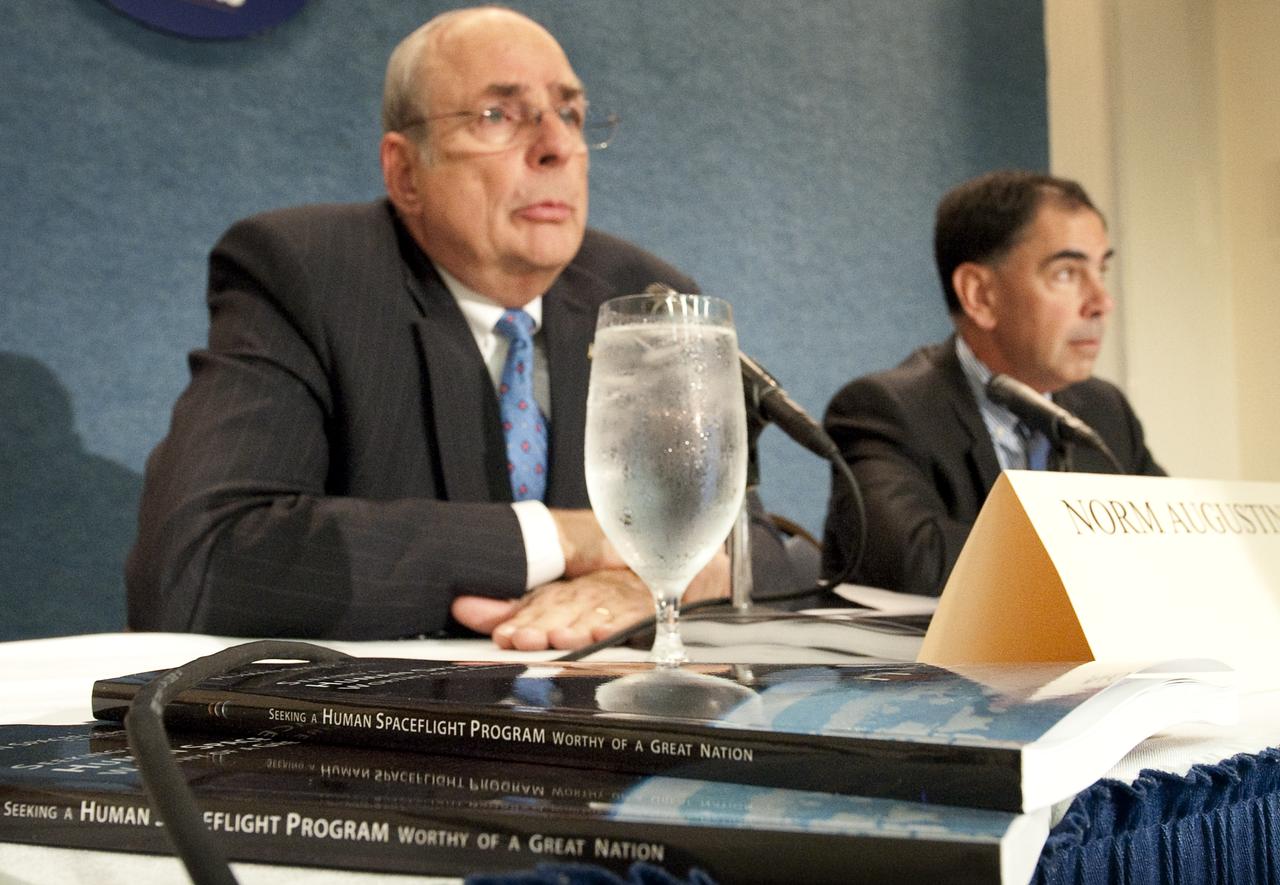
Copies of the U.S. Human Space Flight Plans Committee report are seen in the foreground of Chairman of the U.S. Human Space Flight Plans Committee Norman Augustine, left, and committee member Ed Crawley, right, during a press conference where the committee released it's report on Thursday, Oct., 22, 2009 at the National Press Club in Washington. The Obama Administration tasked the committee to do an independent review of planned U.S. human space flight activities with the goal of ensuring that the nation is on a vigorous and sustainable path to achieving its boldest aspirations in space. Photo Credit: (NASA/Bill Ingalls)

Norman Augustine, chair of the Human Space Flight Review Committee, listens to a comment from the audience during the first of several public meetings at different U.S. locations, Wednesday, June 17, 2009, at the Carnegie Institution in Washington. The panel will examine ongoing and planned NASA development activities and potential alternatives in order to present options for advancing a safe, innovative, affordable and sustainable human space flight program following the space shuttle's retirement. The committee wil present its results by August 2009. Photo Credit: (NASA/Paul E. Alers)
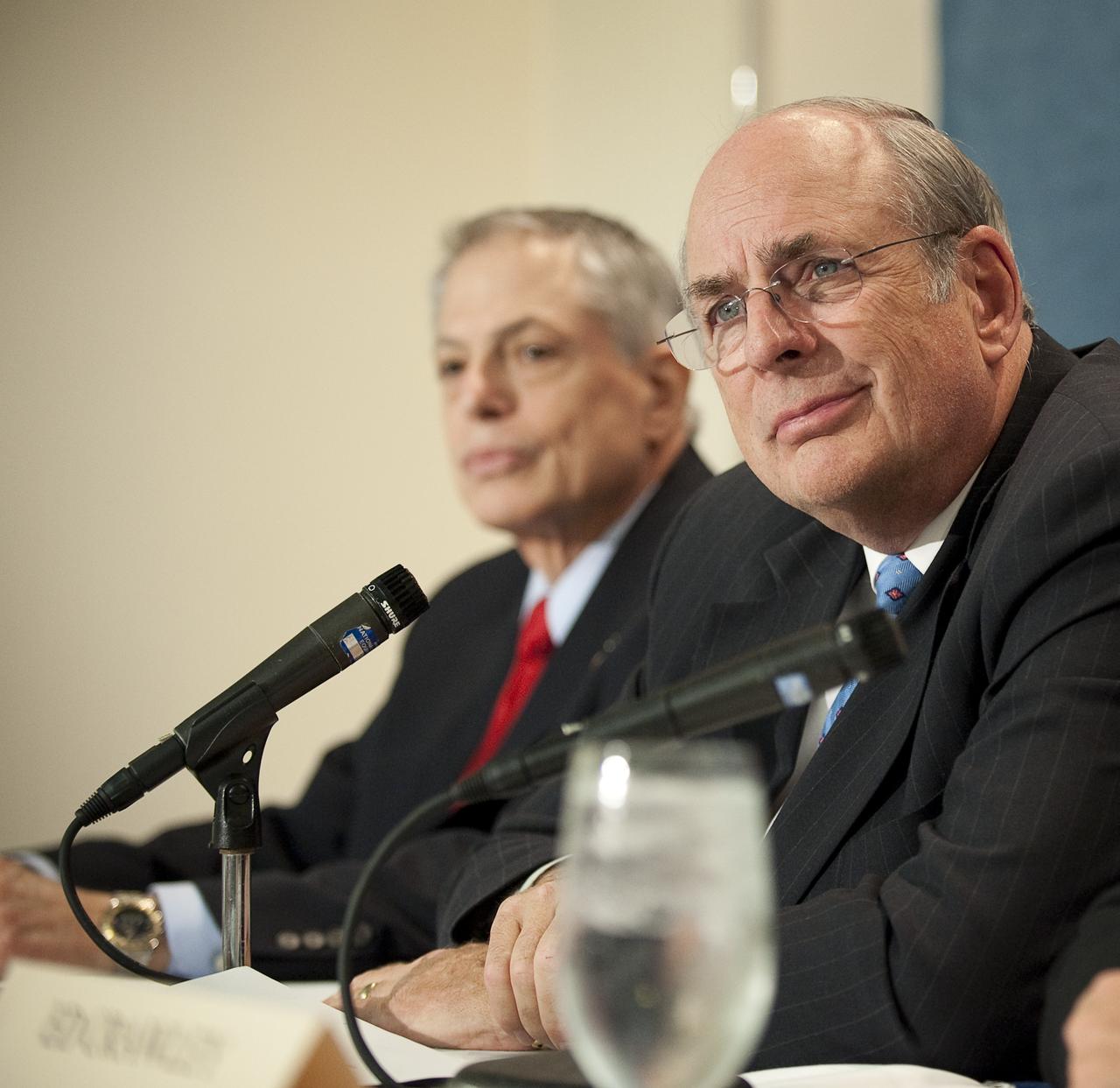
NASA Public Affairs Officer Doc Mirelson, left, and Chairman of the U.S. Human Space Flight Plans Committee Norman Augustine, right, listen to reporters questions during a press conference where the committee released it's report on Thursday, Oct., 22, 2009 at the National Press Club in Washington. The Obama Administration tasked the committee to do an independent review of planned U.S. human space flight activities with the goal of ensuring that the nation is on a vigorous and sustainable path to achieving its boldest aspirations in space. Photo Credit: (NASA/Bill Ingalls)
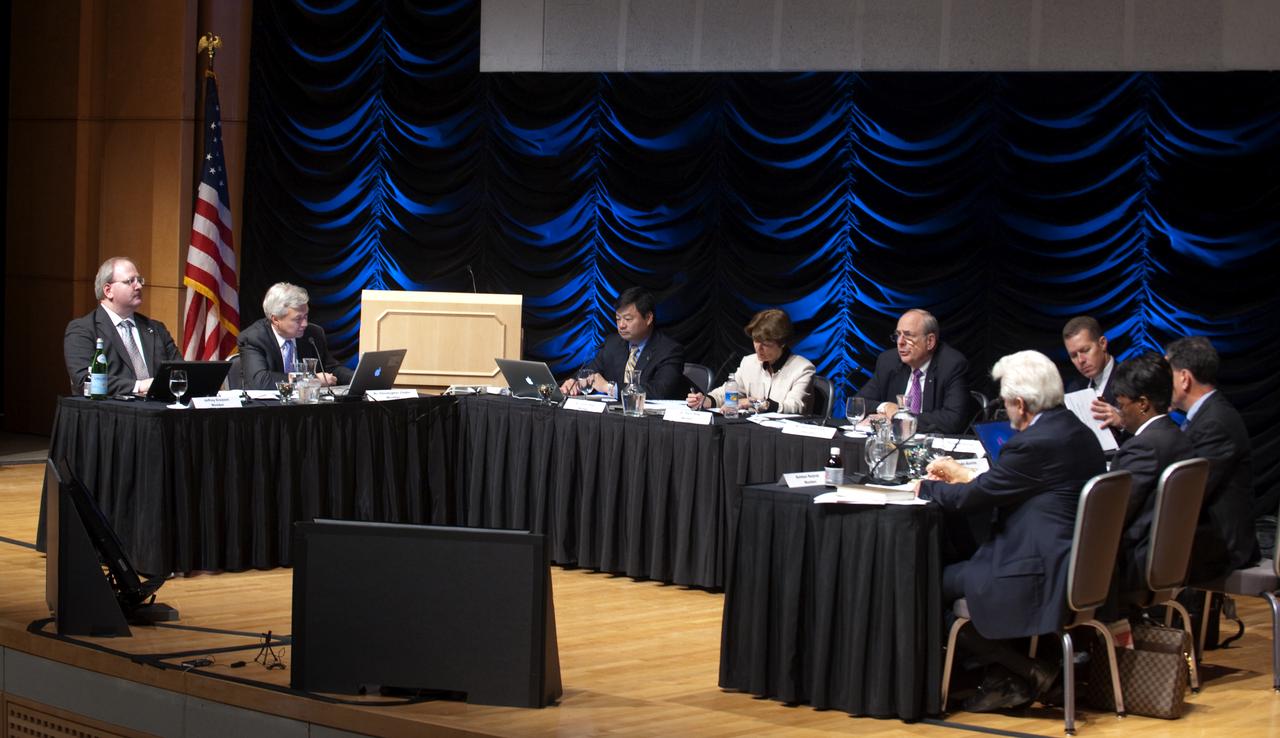
Members of the Human Space Flight Review Committee from left, Jeffrey Greason, Dr. Christopher Chyba, Dr. Leroy Chiao, Dr. Sally Ride, Norman Augustine (chair), Philip McAllister, Dr. Edward Crawley, Dr. Wanda Austin, and Bhodan Bejmuk review their notes prior to the start of a public meeting, Wednesday, Aug. 12, 2009, in Washington. Photo Credit: (NASA/Paul E. Alers)
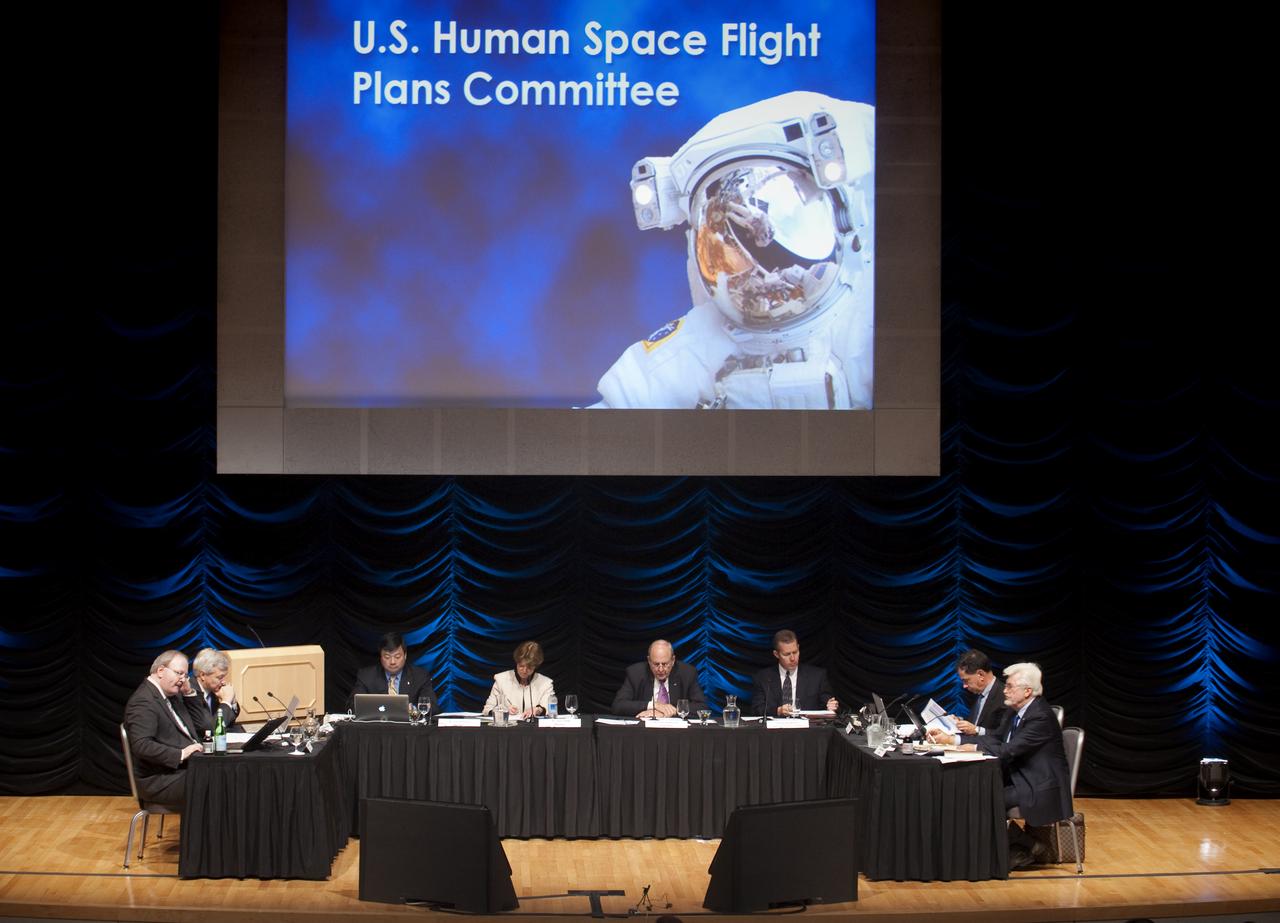
Members of the Human Space Flight Review Committee from left, Jeffrey Greason, Dr. Christopher Chyba, Dr. Leroy Chiao, Dr. Sally Ride, Norman Augustine (chair), Philip McAllister, Dr. Edward Crawley, Dr. Wanda Austin (not seen), and Bhodan Bejmuk review their notes prior to the start of a public meeting, Wednesday, Aug. 12, 2009, in Washington. Photo Credit: (NASA/Paul E. Alers)
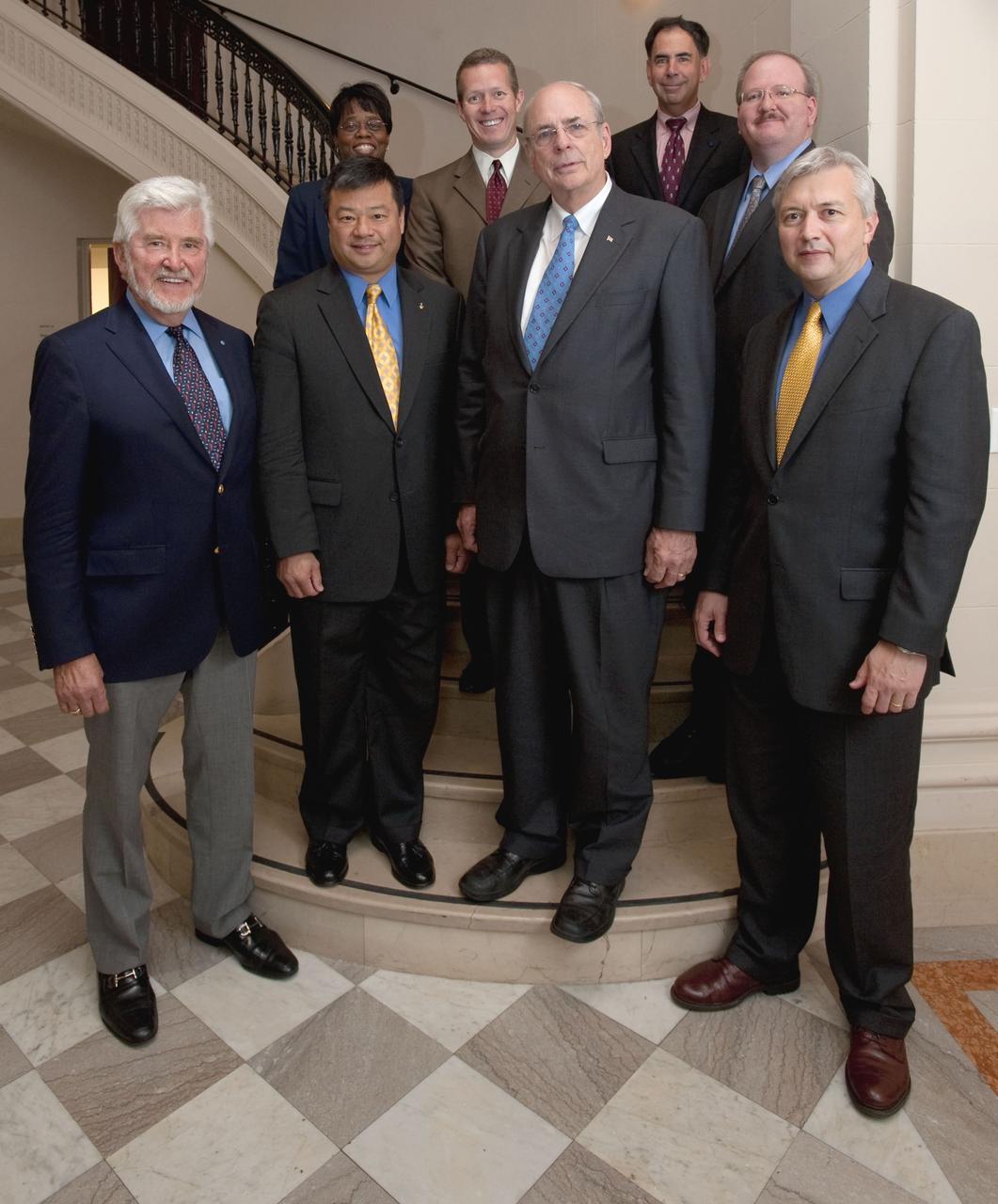
Norman Augustine, chair of the Human Space Flight Review Committee, front center, is joined by other members of the committee, clockwise from left, Bohdan Bejmuk, Leroy Chiao, Dr. Wanda Austin, Philip McAlister, Dr. Edward Crawley, Jeffrey Greason and Dr. Christopher Chyba prior to the start of the first of several public meetings at different U.S. locations, Wednesday, June 17, 2009, at the Carnegie Institution in Washington. The panel will examine ongoing and planned NASA development activities and potential alternatives in order to present options for advancing a safe, innovative, affordable and sustainable human space flight program following the space shuttle's retirement. The committee wil present its results by August 2009. Members of the committee that were not in attendance and are not pictured are Dr. Charles Kennel, Retired Air Force Gen. Lester Lyles and former astronaut Sally Ride. Photo Credit: (NASA/Paul E. Alers)
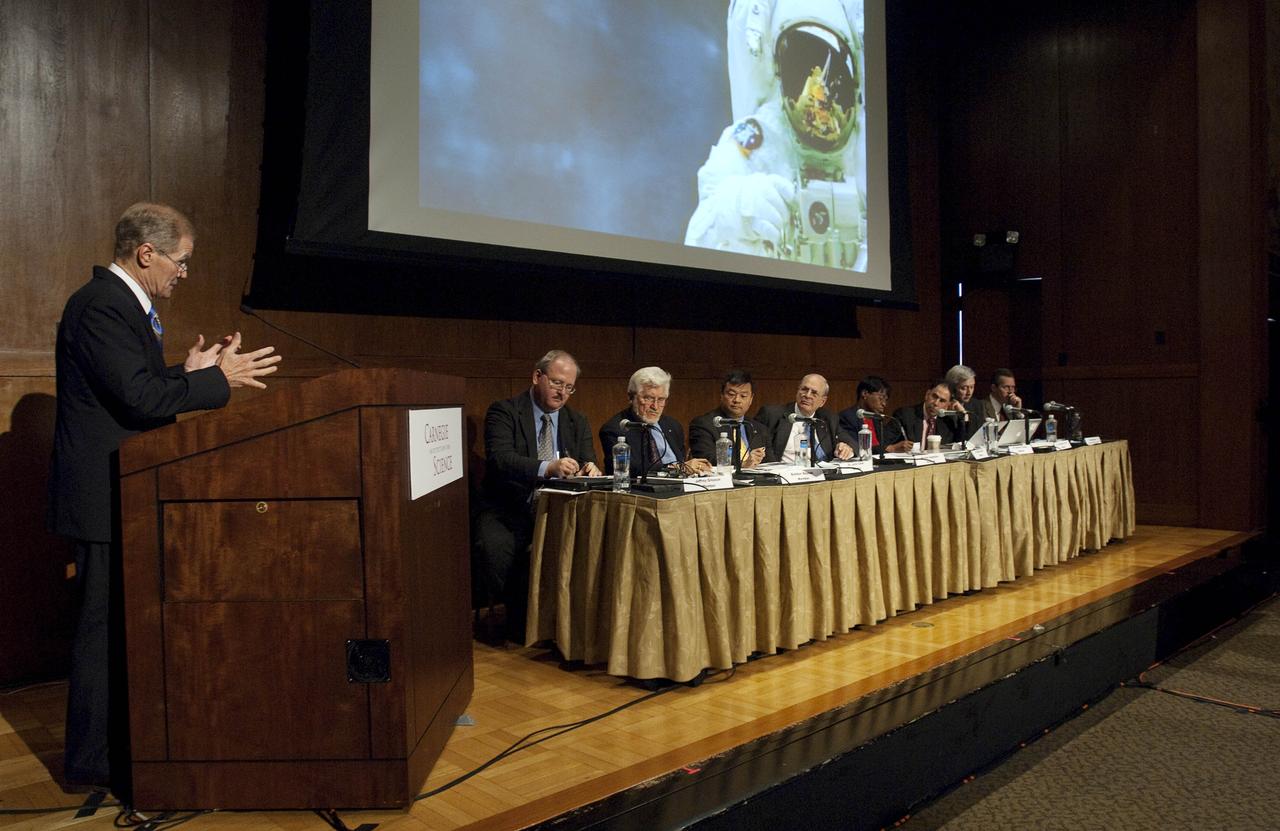
U.S. Sen. Bill Nelson, D-Fla., at podium, addresses members of the Human Space Flight Review Committee, Wednesday, June 17, 2009, at the Carnegie Institution in Washington. Seated from left are Jeffrey Greason, Bohdan Bejmuk, Dr. Leroy Chiao, Norman Augustine (chair), Dr. Wanda Austin, Dr. Edward Crawley, Dr. Christopher Chyba and Philip McAlister. The panel will examine ongoing and planned NASA development activities and potential alternatives in order to present options for advancing a safe, innovative, affordable and sustainable human space flight program following the space shuttle's retirement. The committee wil present its results by August 2009. Photo Credit: (NASA/Paul E. Alers)
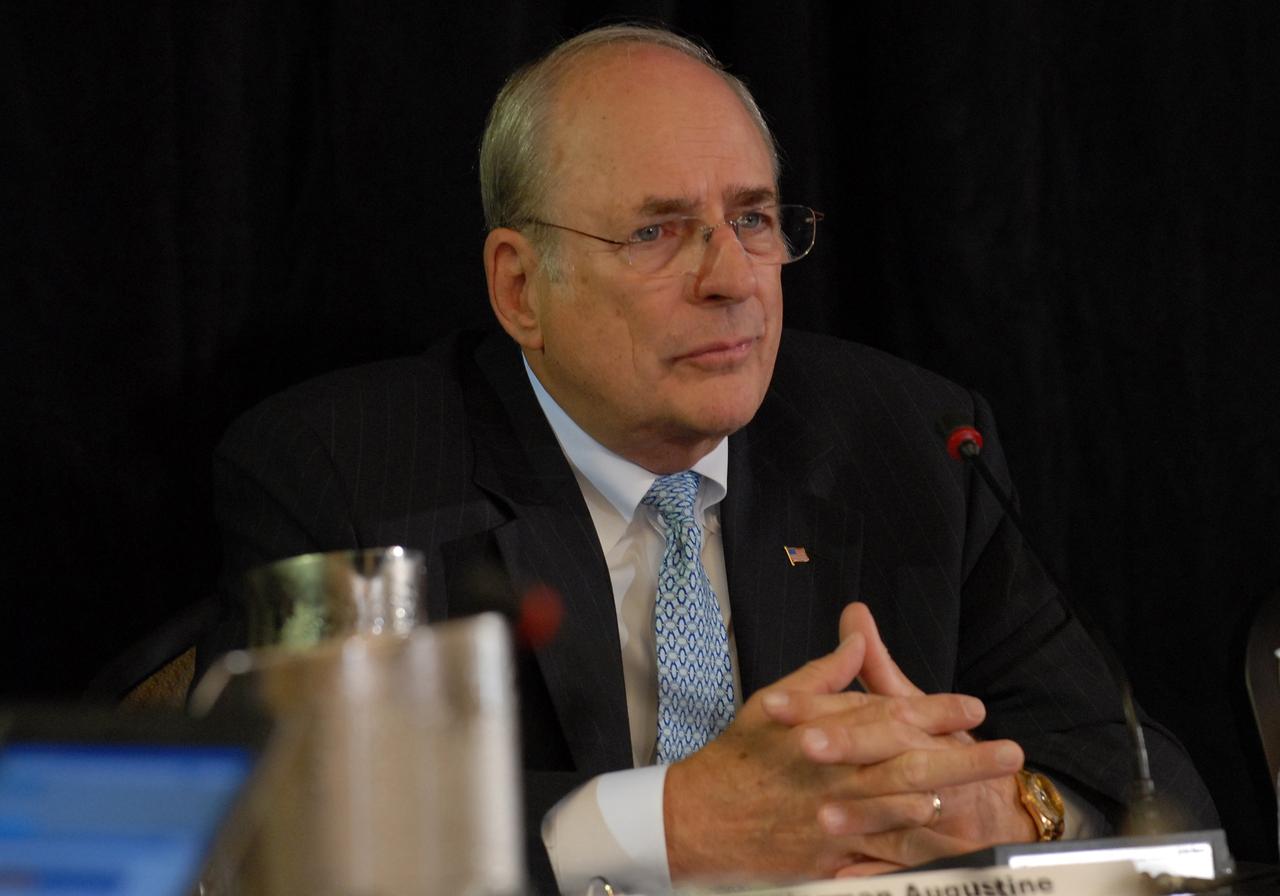
CAPE CANAVERAL, Fla. – Norman R. Augustine, retired chairman and CEO of Lockheed Martin Corp., is seated at the conference table for the Augustine Commission, meeting in Cocoa Beach, Fla. At the request of the Office of Science and Technology Policy, NASA established the Review of U.S. Human Space Flight Plans Committee, known as the Augustine Commission. Chaired by Augustine, the committee is conducting an independent review of ongoing U.S. human spaceflight plans and programs, as well as alternatives, to ensure the nation is pursuing the best trajectory for the future of human space flight - one that is safe, innovative, affordable, and sustainable. Photo credit: NASA/Jim Grossmann
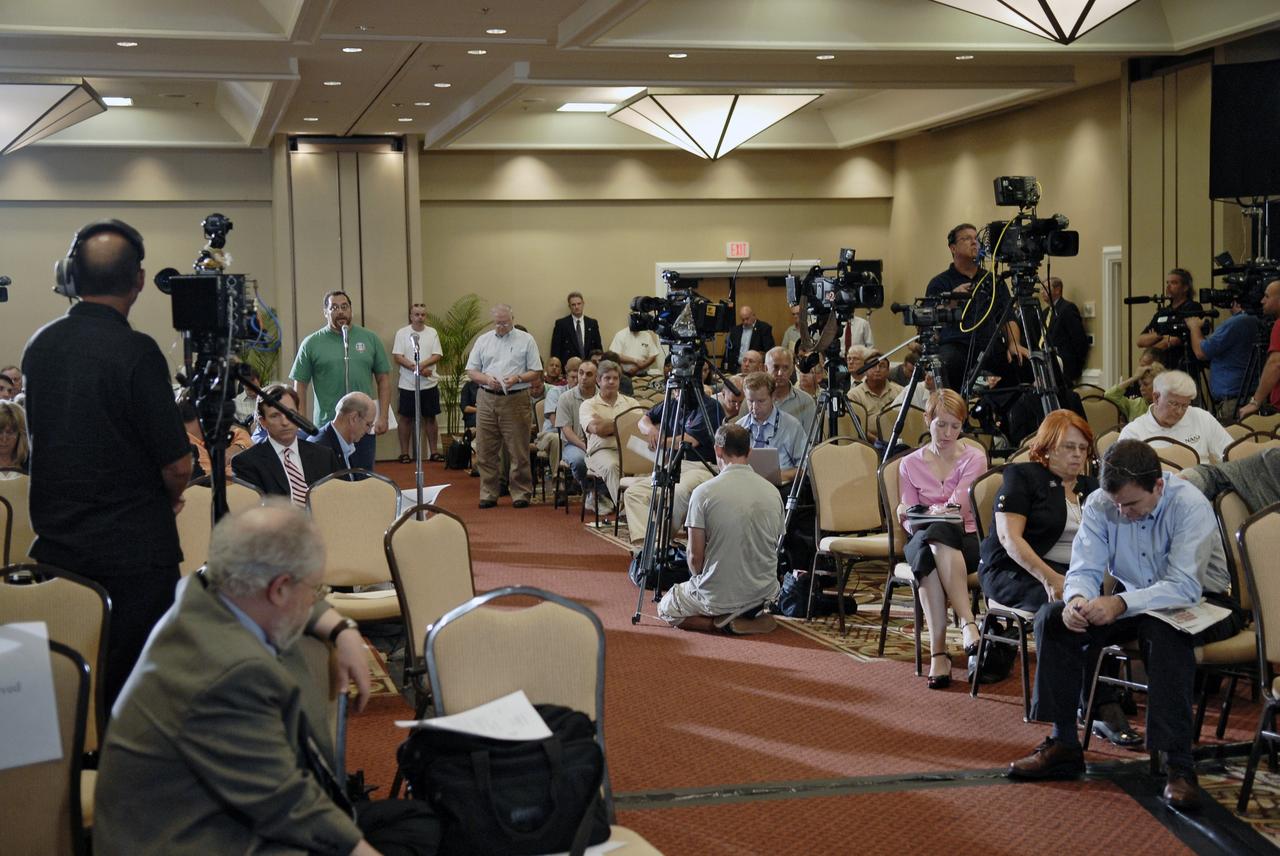
CAPE CANAVERAL, Fla. – Media representatives and the public are gathered in the Hilton Hotel in Cocoa Beach, Fla., to question the Augustine Commission meeting there. At the request of the Office of Science and Technology Policy, NASA established the Review of U.S. Human Space Flight Plans Committee, known as the Augustine Commission. Chaired by Norman R. Augustine, retired chairman and CEO of Lockheed Martin Corp., the committee is conducting an independent review of ongoing U.S. human spaceflight plans and programs, as well as alternatives, to ensure the nation is pursuing the best trajectory for the future of human space flight - one that is safe, innovative, affordable, and sustainable. Photo credit: NASA/Kim Shiflett
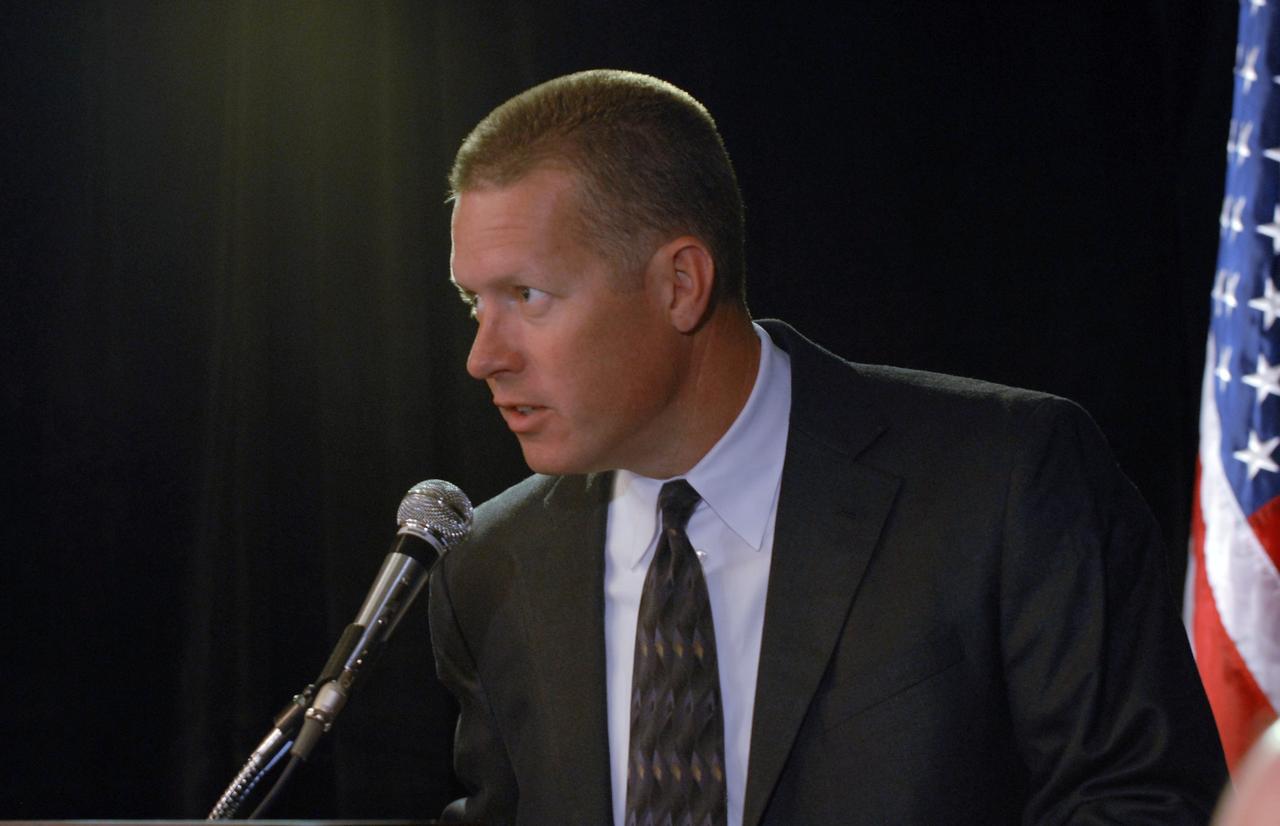
CAPE CANAVERAL, Fla. – Phil McAlister, special assistant for Program Analysis in NASA's Office of Program Analysis and Evaluation, introduces the Augustine Commission, meeting in Cocoa Beach, Fla. At the request of the Office of Science and Technology Policy, NASA established the Review of U.S. Human Space Flight Plans Committee, known as the Augustine Commission. Chaired by Norman R. Augustine, retired chairman and CEO of Lockheed Martin Corp., the committee is conducting an independent review of ongoing U.S. human spaceflight plans and programs, as well as alternatives, to ensure the nation is pursuing the best trajectory for the future of human space flight - one that is safe, innovative, affordable, and sustainable. Photo credit: NASA/Jim Grossmann
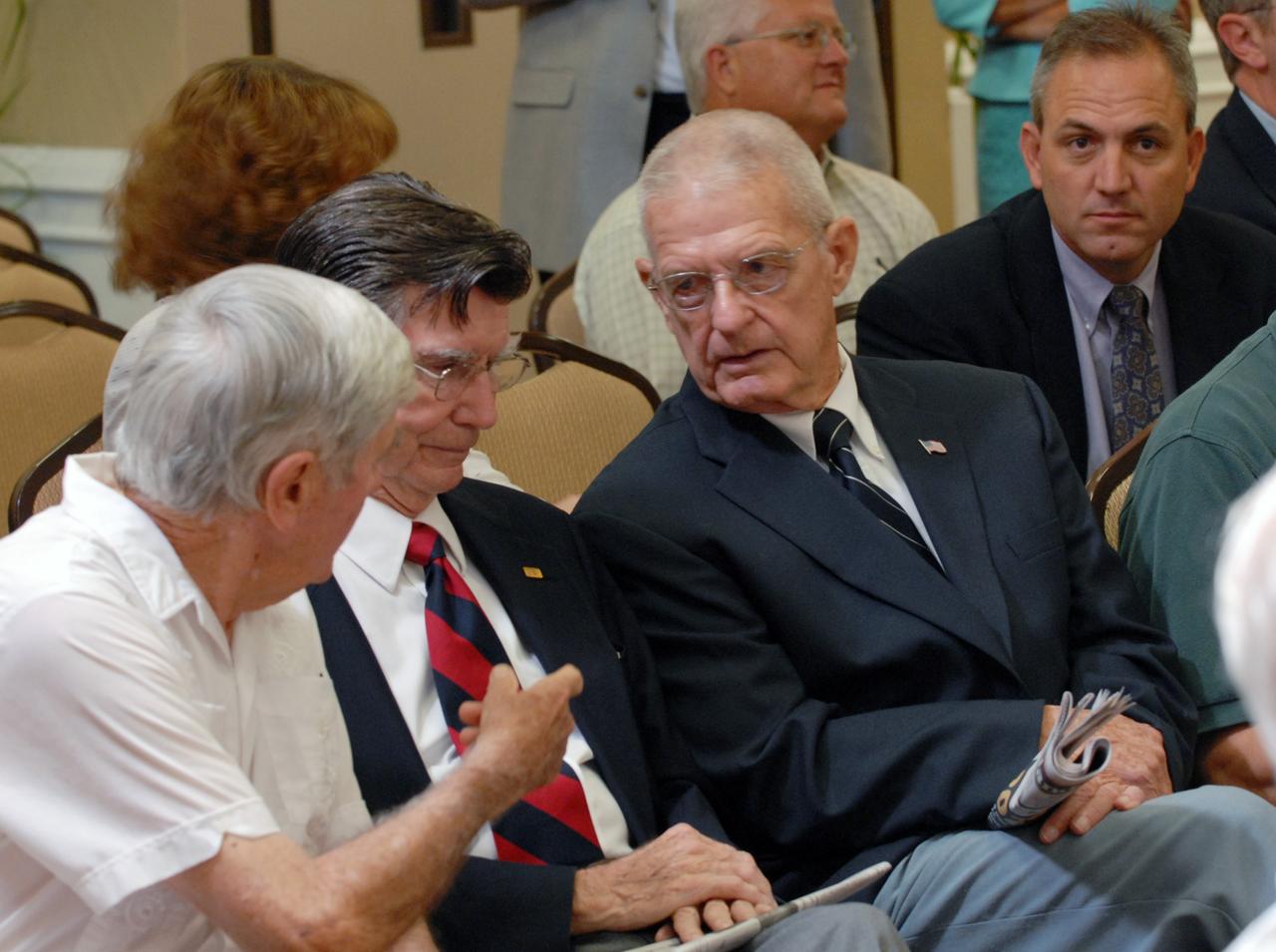
CAPE CANAVERAL, Fla. – Spectators interested in the future of the Space Program discuss statements made during the public meeting of the Augustine Commission in Cocoa Beach, Fla. At the request of the Office of Science and Technology Policy, NASA established the Review of U.S. Human Space Flight Plans Committee, known as the Augustine Commission. Chaired by Norman R. Augustine, retired chairman and CEO of Lockheed Martin Corp., the committee is conducting an independent review of ongoing U.S. human spaceflight plans and programs, as well as alternatives, to ensure the nation is pursuing the best trajectory for the future of human space flight - one that is safe, innovative, affordable, and sustainable. Photo credit: NASA/Jim Grossmann
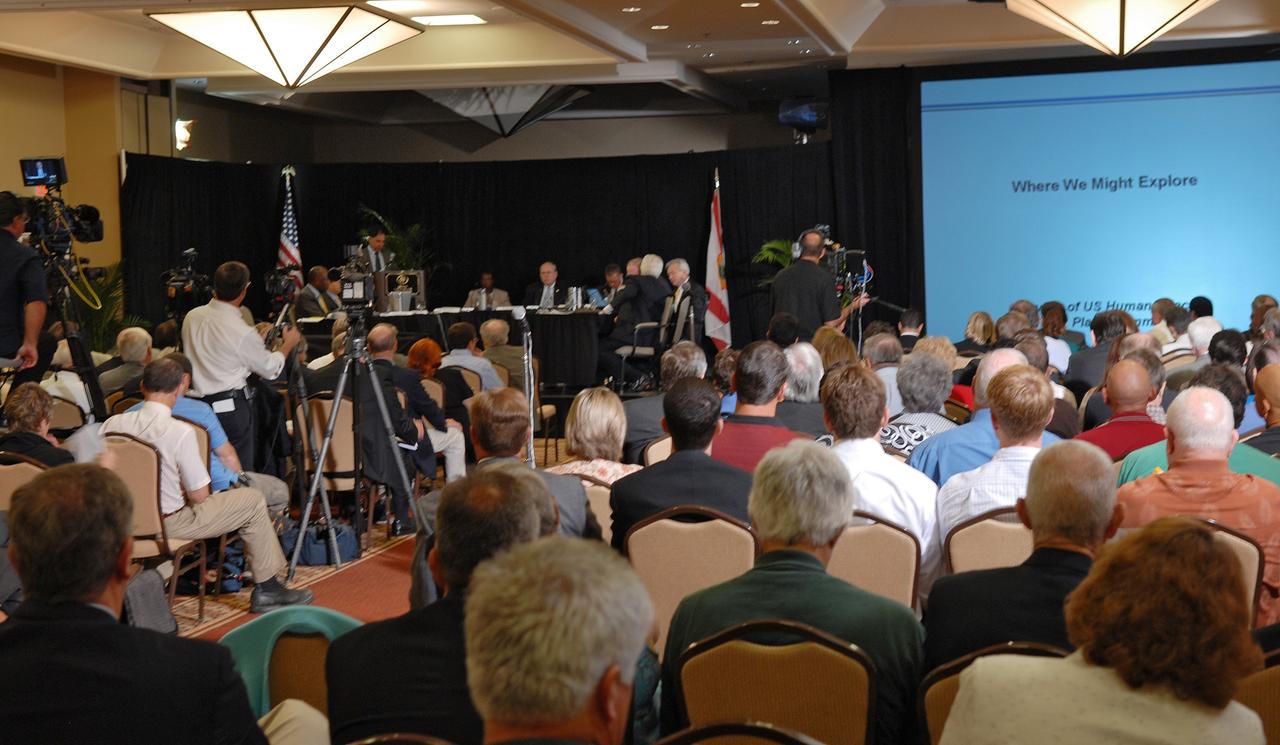
CAPE CANAVERAL, Fla. – – Photographers and spectators show their interest in the Augustine Commission, meeting in Cocoa Beach, Fla. At the request of the Office of Science and Technology Policy, NASA established the Review of U.S. Human Space Flight Plans Committee, known as the Augustine Commission. Chaired by Norman R. Augustine, retired chairman and CEO of Lockheed Martin Corp., the committee is conducting an independent review of ongoing U.S. human spaceflight plans and programs, as well as alternatives, to ensure the nation is pursuing the best trajectory for the future of human space flight - one that is safe, innovative, affordable, and sustainable. Photo credit: NASA/Jim Grossmann
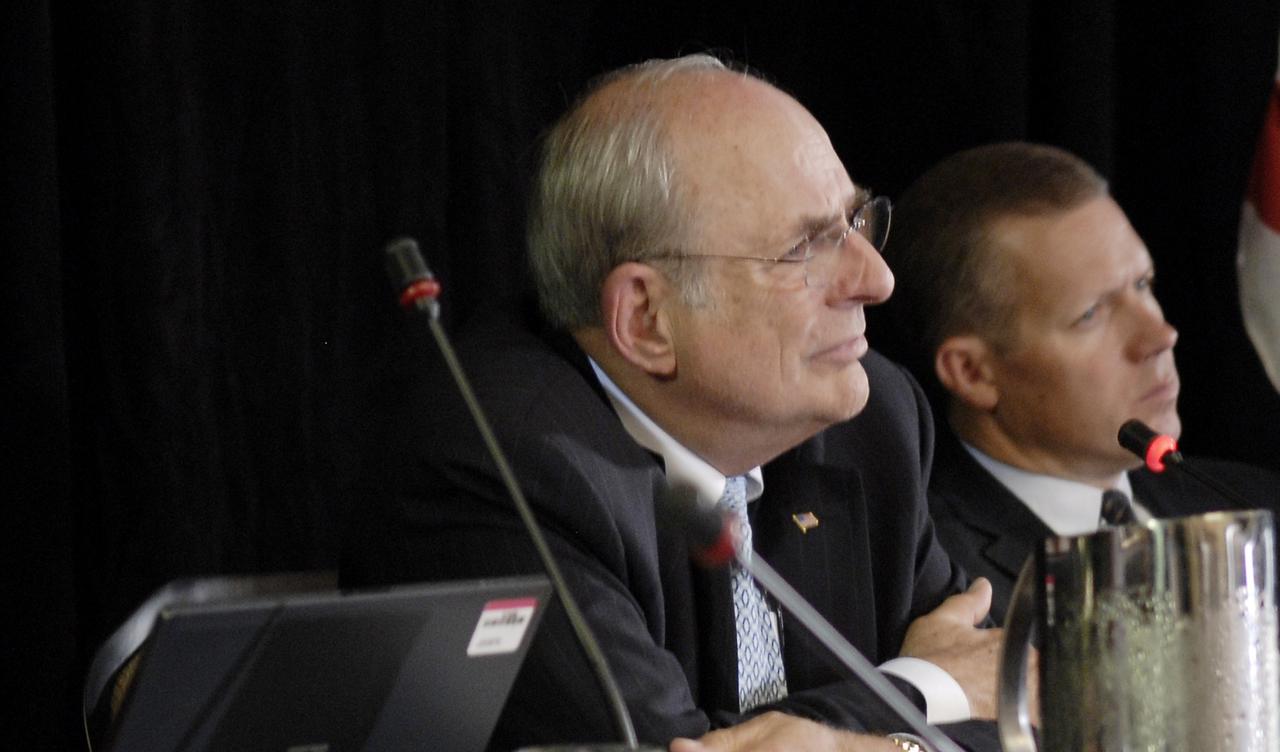
CAPE CANAVERAL, Fla. – Members of the Augustine Commission are meeting in Cocoa Beach, Fla. At left is Chairman Norman R. Augustine, retired chairman and CEO of Lockheed Martin Corp., and, at right, is Phil McAlister, special assistant for Program Analysis in NASA's Office of Program Analysis and Evaluation. At the request of the Office of Science and Technology Policy, NASA established the Review of U.S. Human Space Flight Plans Committee, known as the Augustine Commission. The committee is conducting an independent review of ongoing U.S. human spaceflight plans and programs, as well as alternatives, to ensure the nation is pursuing the best trajectory for the future of human space flight - one that is safe, innovative, affordable, and sustainable. Photo credit: NASA/Kim Shiflett
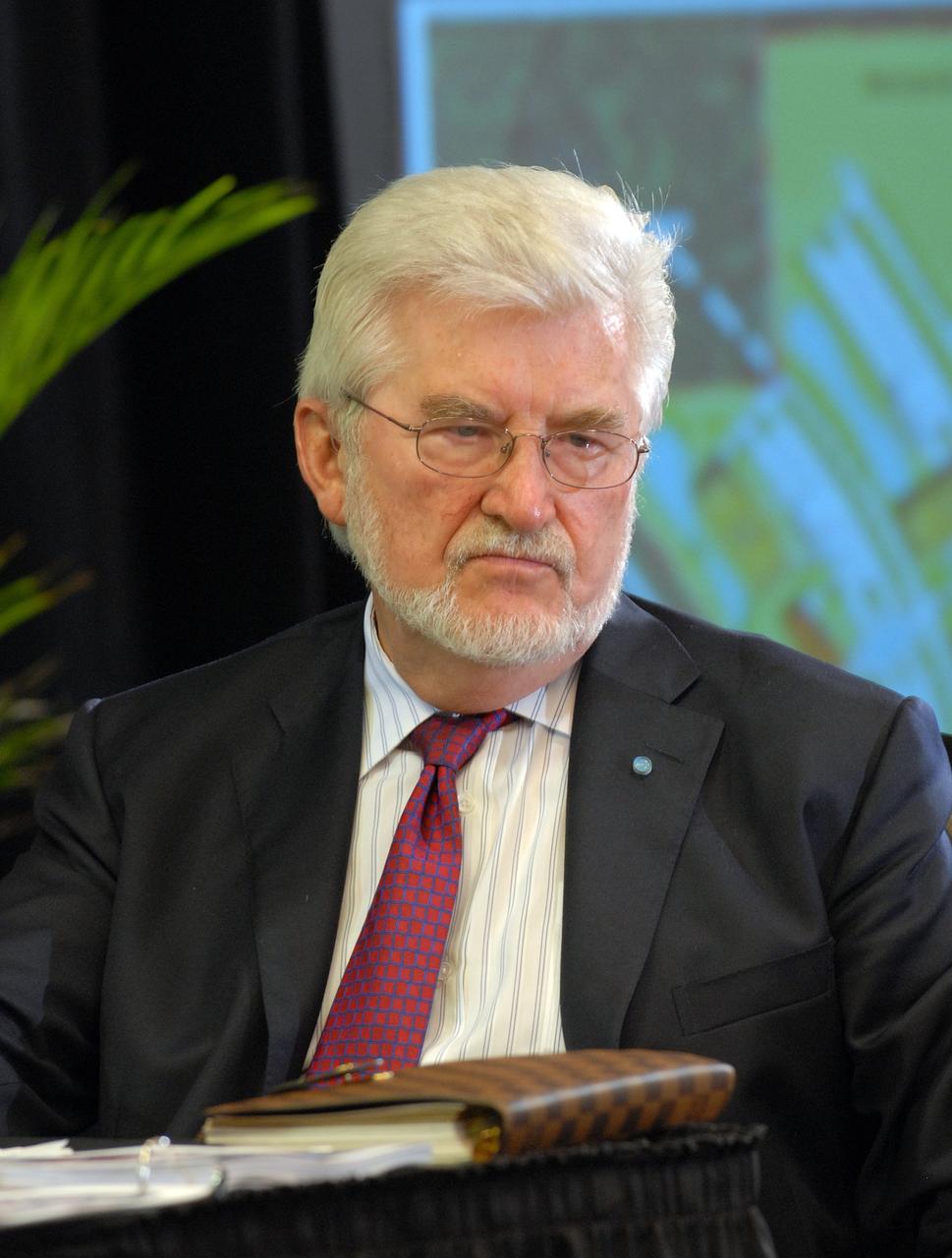
CAPE CANAVERAL, Fla. – Bohdan Bejmuk, chair of Constellation Program Standing Review Board, is seated at the conference table for the introduces the Augustine Commission, meeting in Cocoa Beach, Fla. At the request of the Office of Science and Technology Policy, NASA established the Review of U.S. Human Space Flight Plans Committee, known as the Augustine Commission. Chaired by Norman R. Augustine, retired chairman and CEO of Lockheed Martin Corp., the committee is conducting an independent review of ongoing U.S. human spaceflight plans and programs, as well as alternatives, to ensure the nation is pursuing the best trajectory for the future of human space flight - one that is safe, innovative, affordable, and sustainable. Photo credit: NASA/Jim Grossmann
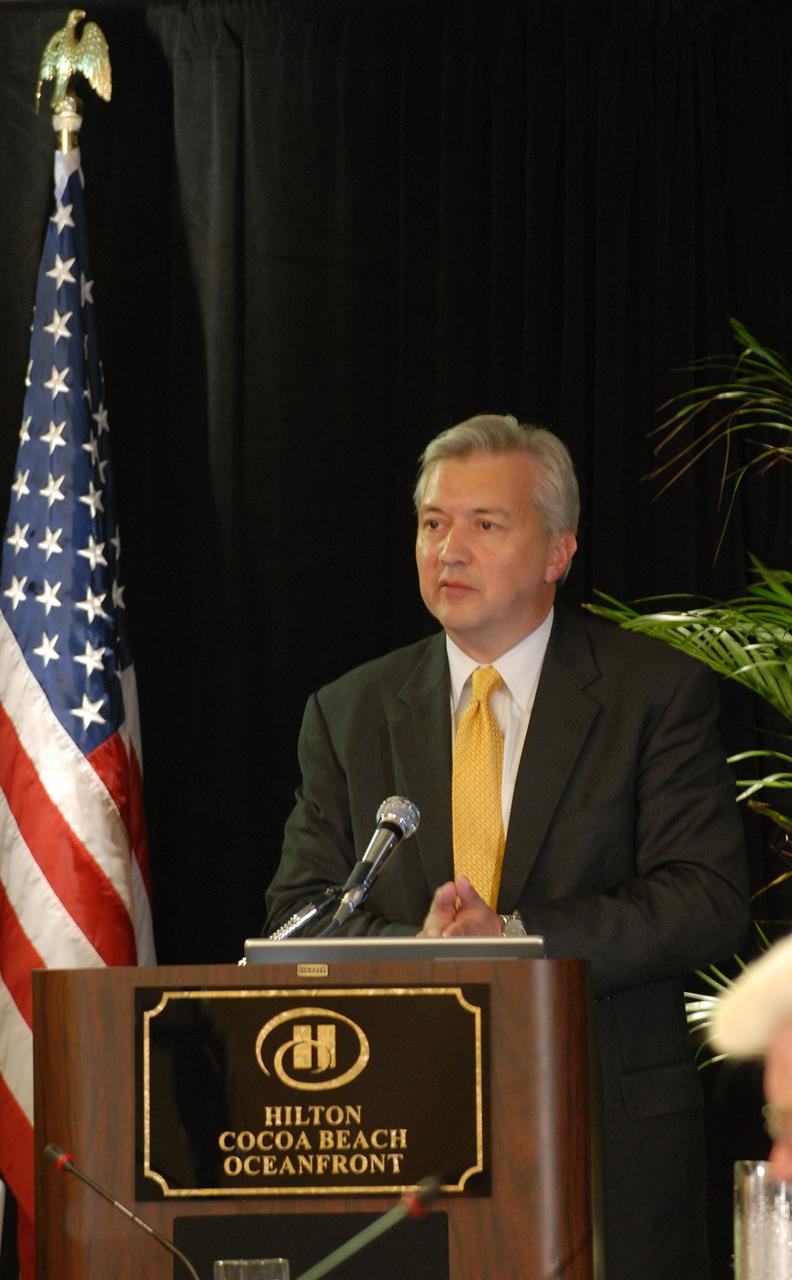
CAPE CANAVERAL, Fla. – Dr. Christopher Chyba, professor of Astrophysical Sciences and International Affairs at Princeton University, speaks during the Augustine Commission, meeting in Cocoa Beach, Fla. At the request of the Office of Science and Technology Policy, NASA established the Review of U.S. Human Space Flight Plans Committee, known as the Augustine Commission. Chaired by Norman R. Augustine, retired chairman and CEO of Lockheed Martin Corp., the committee is conducting an independent review of ongoing U.S. human spaceflight plans and programs, as well as alternatives, to ensure the nation is pursuing the best trajectory for the future of human space flight - one that is safe, innovative, affordable, and sustainable. Photo credit: NASA/Jim Grossmann
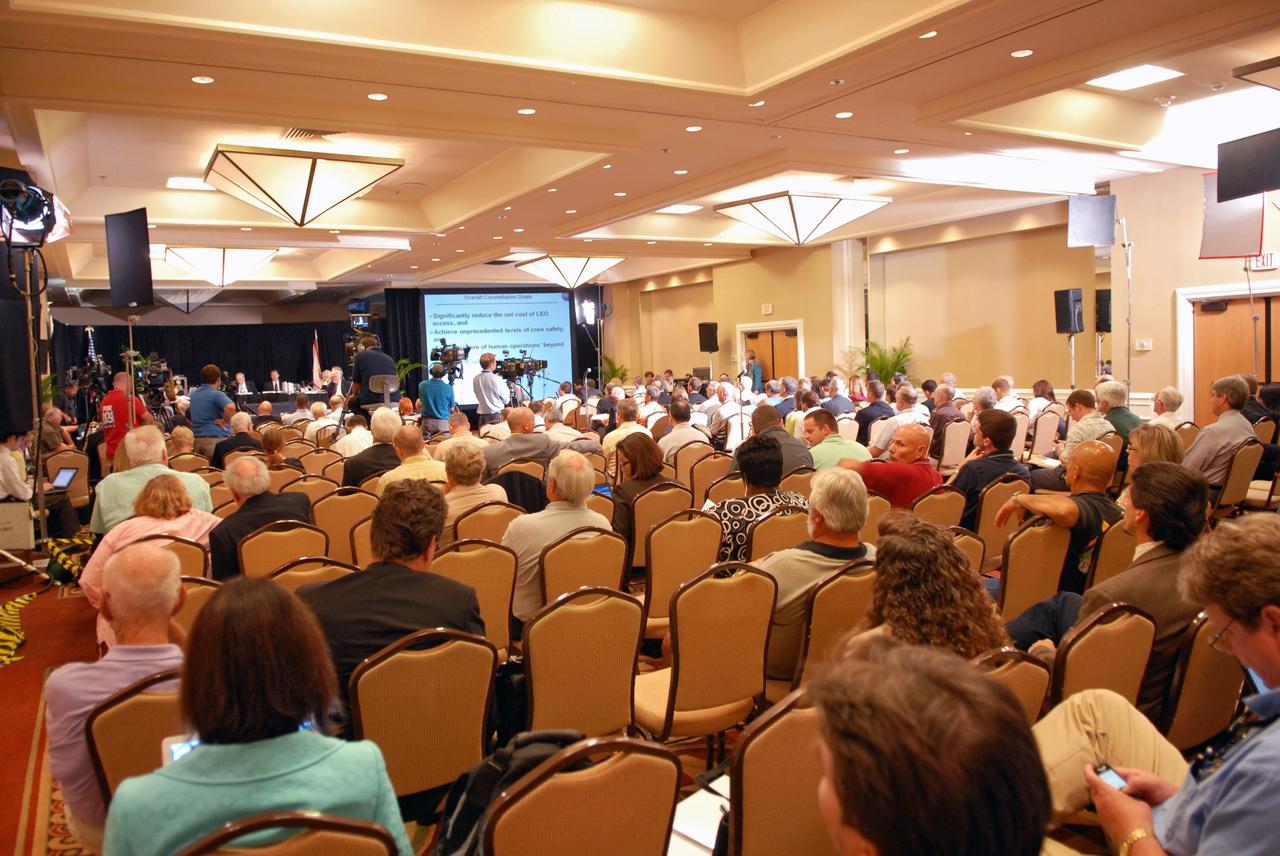
CAPE CANAVERAL, Fla. – Photographers and spectators show their interest in the Augustine Commission, meeting in Cocoa Beach, Fla. At the request of the Office of Science and Technology Policy, NASA established the Review of U.S. Human Space Flight Plans Committee, known as the Augustine Commission. Chaired by Norman R. Augustine, retired chairman and CEO of Lockheed Martin Corp., the committee is conducting an independent review of ongoing U.S. human spaceflight plans and programs, as well as alternatives, to ensure the nation is pursuing the best trajectory for the future of human space flight - one that is safe, innovative, affordable, and sustainable. Photo credit: NASA/Jim Grossmann
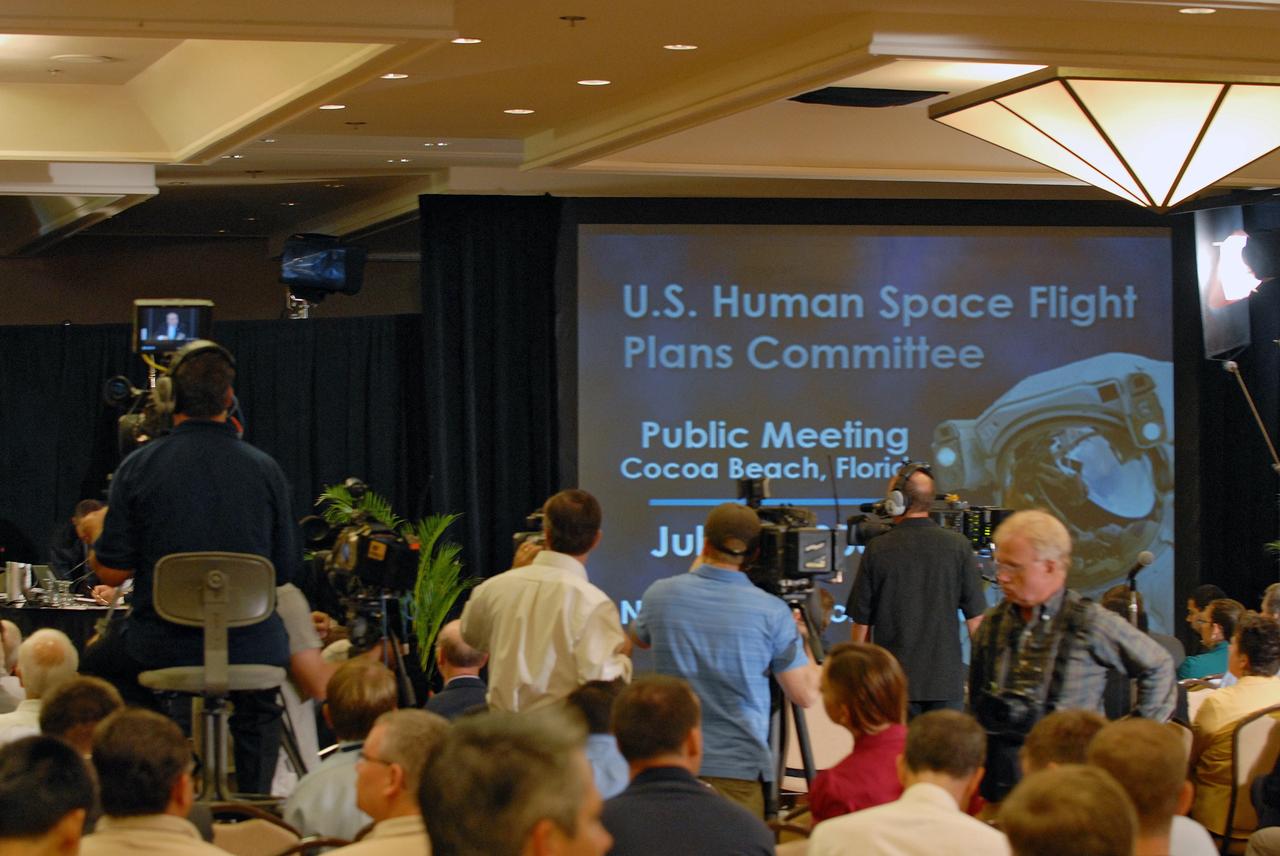
CAPE CANAVERAL, Fla. – Photographers and spectators show their interest in the Augustine Commission, meeting in Cocoa Beach, Fla. At the request of the Office of Science and Technology Policy, NASA established the Review of U.S. Human Space Flight Plans Committee, known as the Augustine Commission. Chaired by Norman R. Augustine, retired chairman and CEO of Lockheed Martin Corp., the committee is conducting an independent review of ongoing U.S. human spaceflight plans and programs, as well as alternatives, to ensure the nation is pursuing the best trajectory for the future of human space flight - one that is safe, innovative, affordable, and sustainable. Photo credit: NASA/Jim Grossmann
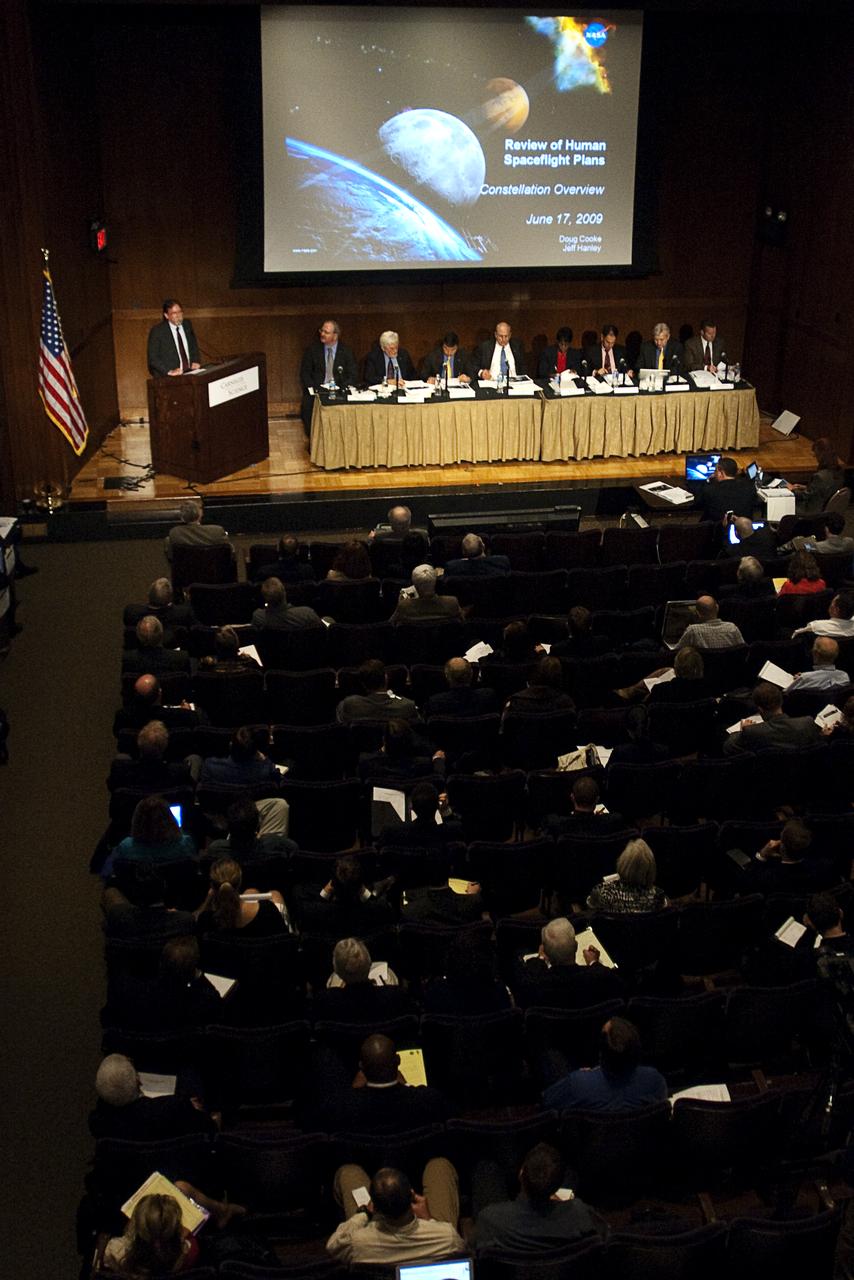
Douglas R. Cooke, Associate Administrator for Exploration Systems Mission Directorate, at podium, addresses the Human Space Flight Review Committee, Wednesday, June 17, 2009, at the Carnegie Institution in Washington. The panel will examine ongoing and planned NASA development activities and potential alternatives in order to present options for advancing a safe, innovative, affordable and sustainable human space flight program following the space shuttle's retirement. The committee wil present its results by August 2009. Seated from left on the panel is Jeffrey Greason, Bohdan Bejmuk, Dr. Leroy Chiao, Norman Augustine (chair), Dr. Wanda Austin, Dr. Edward Crawley, Dr. Christopher Chyba and Philip McAlister. Photo Credit: (NASA/Paul E. Alers)
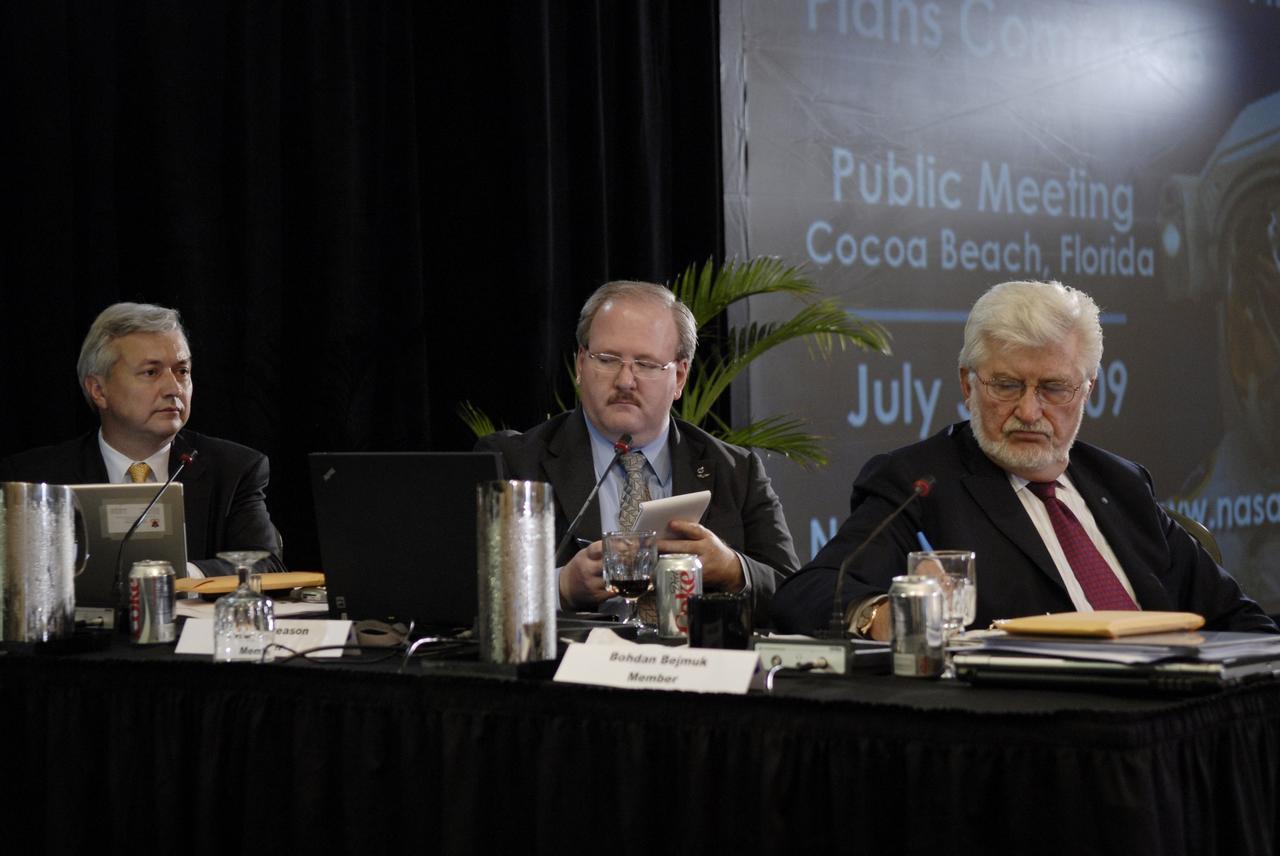
CAPE CANAVERAL, Fla. – Members of the Augustine Commission are meeting in Cocoa Beach, Fla. From left are Dr. Christopher Chyba, Professor of Astrophysical Sciences and international Affairs at Princeton University; Jeff Greason, co-founder and CEO of XCOR Aerospace; and Bohdan Bejmuk, chair of Constellation Program Standing Review Board. At the request of the Office of Science and Technology Policy, NASA established the Review of U.S. Human Space Flight Plans Committee, known as the Augustine Commission. Chaired by Norman R. Augustine, retired chairman and CEO of Lockheed Martin Corp., the committee is conducting an independent review of ongoing U.S. human spaceflight plans and programs, as well as alternatives, to ensure the nation is pursuing the best trajectory for the future of human space flight - one that is safe, innovative, affordable, and sustainable. Photo credit: NASA/Kim Shiflett
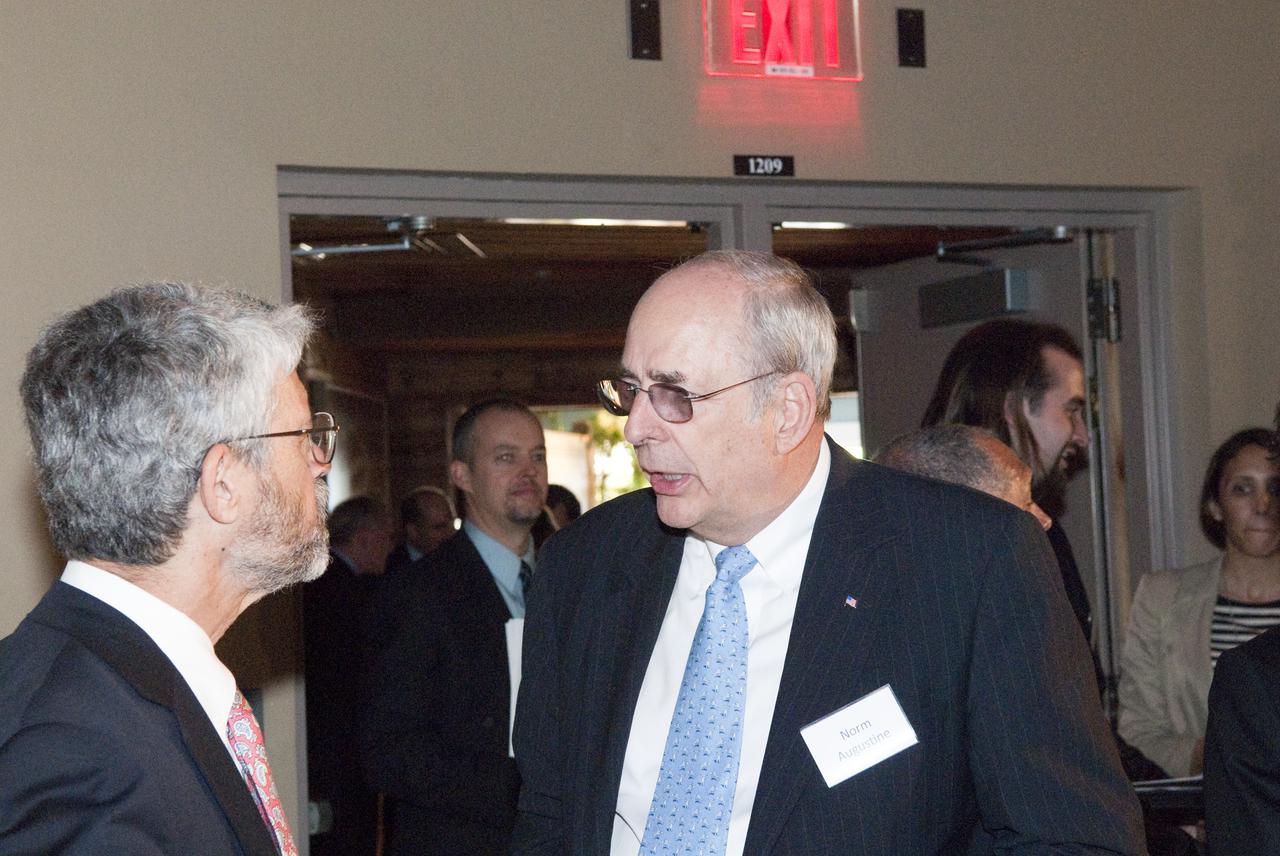
CAPE CANAVERAL, Fla. - Prior to the wrap up of the Conference on the American Space Program for the 21st Century held in the Astronaut Encounter Theater at the NASA Kennedy Space Center Visitor Complex in Florida, John Holdren, assistant to the President for science and technology and director of the White House Office of Science and Technology Policy and Norman R. Augustine, chair of the Review of U.S. Human Space Flight Plans Committee, took a few moments to discuss the event. Photo Credit: NASA_Jim Grossmann
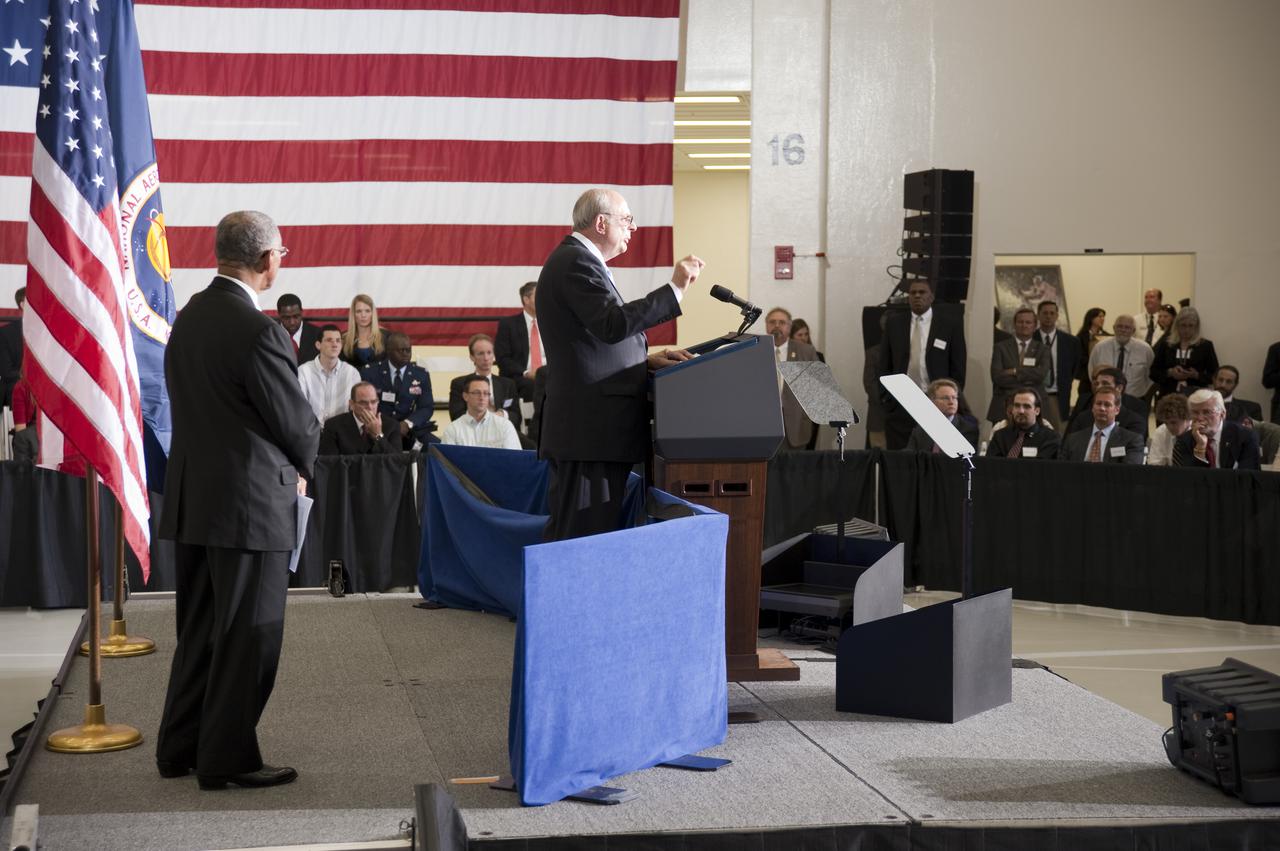
CAPE CANAVERAL, Fla. - In the Operations and Checkout Building at NASA's Kennedy Space Center in Florida, Norman R. Augustine, retired chairman and CEO of Lockheed Martin Corp. and chair of the Review of U.S. Human Space Flight Plans Committee, addresses the participants of the Conference on the American Space Program for the 21st Century, prior to President Barack Obama's remarks outlining the new course his administration is charting for NASA and the future of U.S. leadership in human spaceflight. Photo credit: NASA_Kim Shiflett
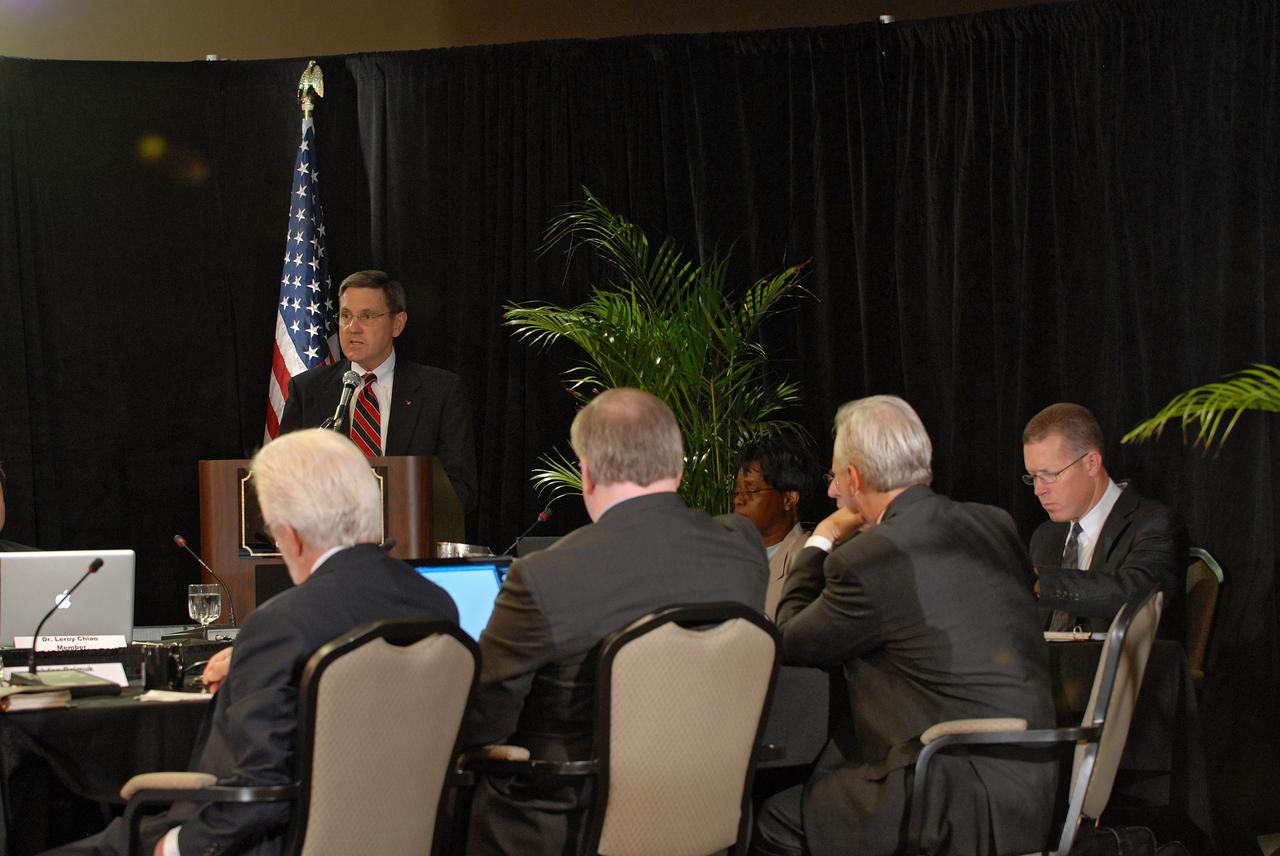
CAPE CANAVERAL, Fla. – NASA Kennedy Space Center's Center Director Bob Cabana (right) speaks during the meeting of the Augustine Commission in Cocoa Beach, Fla. At the conference table in the foreground are members of the commission: (from left) Bohdan Bejmuk, chair of Constellation Program Standing Review Board; Jeff Greason, co-founder and CEO of XCOR Aerospace; Dr. Christopher Chyba, professor of Astrophysical Sciences and international Affairs at Princeton University; and Phil McAlister, special assistant for Program Analysis in NASA's Office of Program Analysis and Evaluation. At the request of the Office of Science and Technology Policy, NASA established the Review of U.S. Human Space Flight Plans Committee, known as the Augustine Commission. Chaired by Norman R. Augustine, retired chairman and CEO of Lockheed Martin Corp., the committee is conducting an independent review of ongoing U.S. human spaceflight plans and programs, as well as alternatives, to ensure the nation is pursuing the best trajectory for the future of human space flight - one that is safe, innovative, affordable, and sustainable. Photo credit: NASA/Jim Grossmann
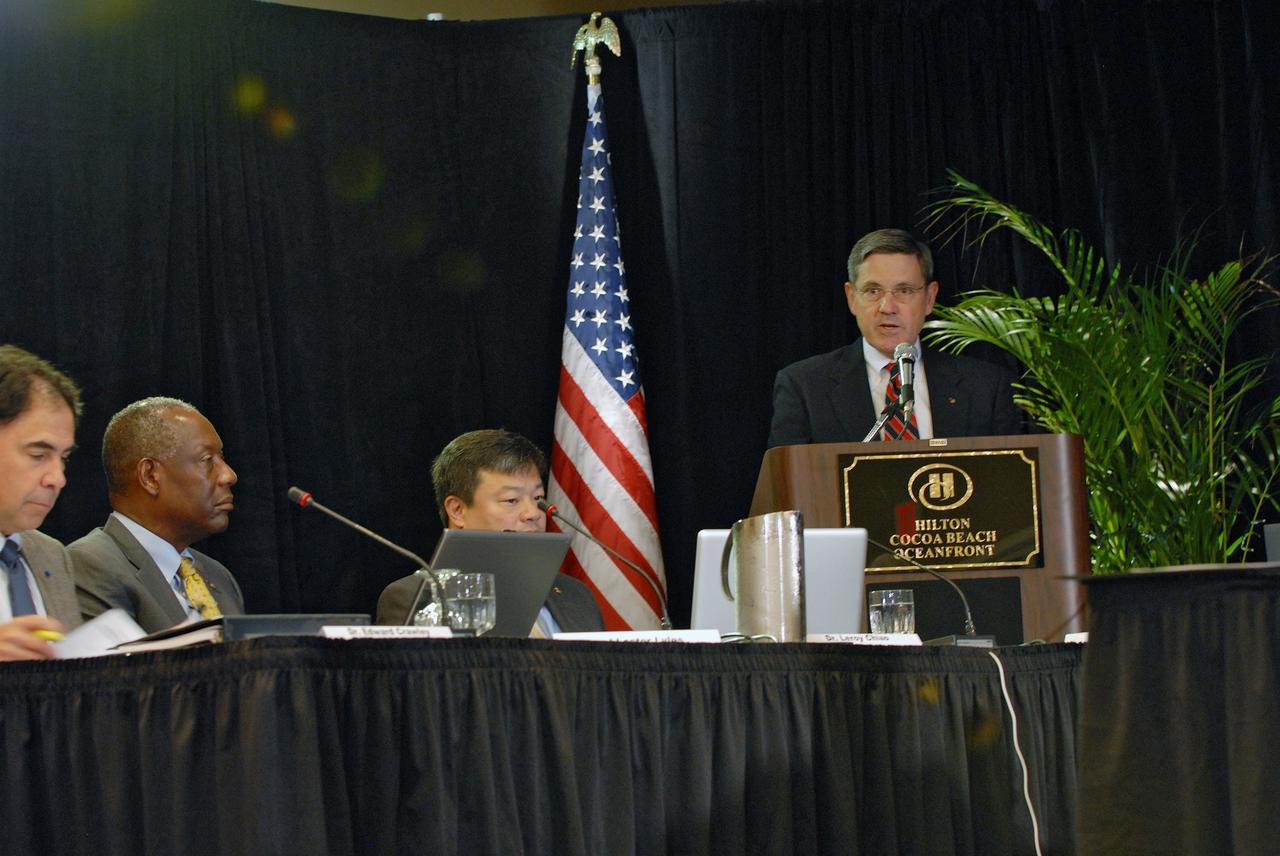
CAPE CANAVERAL, Fla. – NASA Kennedy Space Center's Center Director Bob Cabana (right) speaks during the meeting of the Augustine Commission in Cocoa Beach, Fla. At the conference table at left are members of the commission: Dr. Edward F. Crawley, Ford professor of engineering at MIT; General (ret.) Lester L. Lyles, chair of the National Academies Committee on the Rationale and Goals of the U.S. Civil Space Program; and former astronaut Dr. Leroy Chiao, former International Space Station commander and engineering consultant. At the request of the Office of Science and Technology Policy, NASA established the Review of U.S. Human Space Flight Plans Committee, known as the Augustine Commission. Chaired by Norman R. Augustine, retired chairman and CEO of Lockheed Martin Corp., the committee is conducting an independent review of ongoing U.S. human spaceflight plans and programs, as well as alternatives, to ensure the nation is pursuing the best trajectory for the future of human space flight - one that is safe, innovative, affordable, and sustainable. Photo credit: NASA/Jim Grossmann
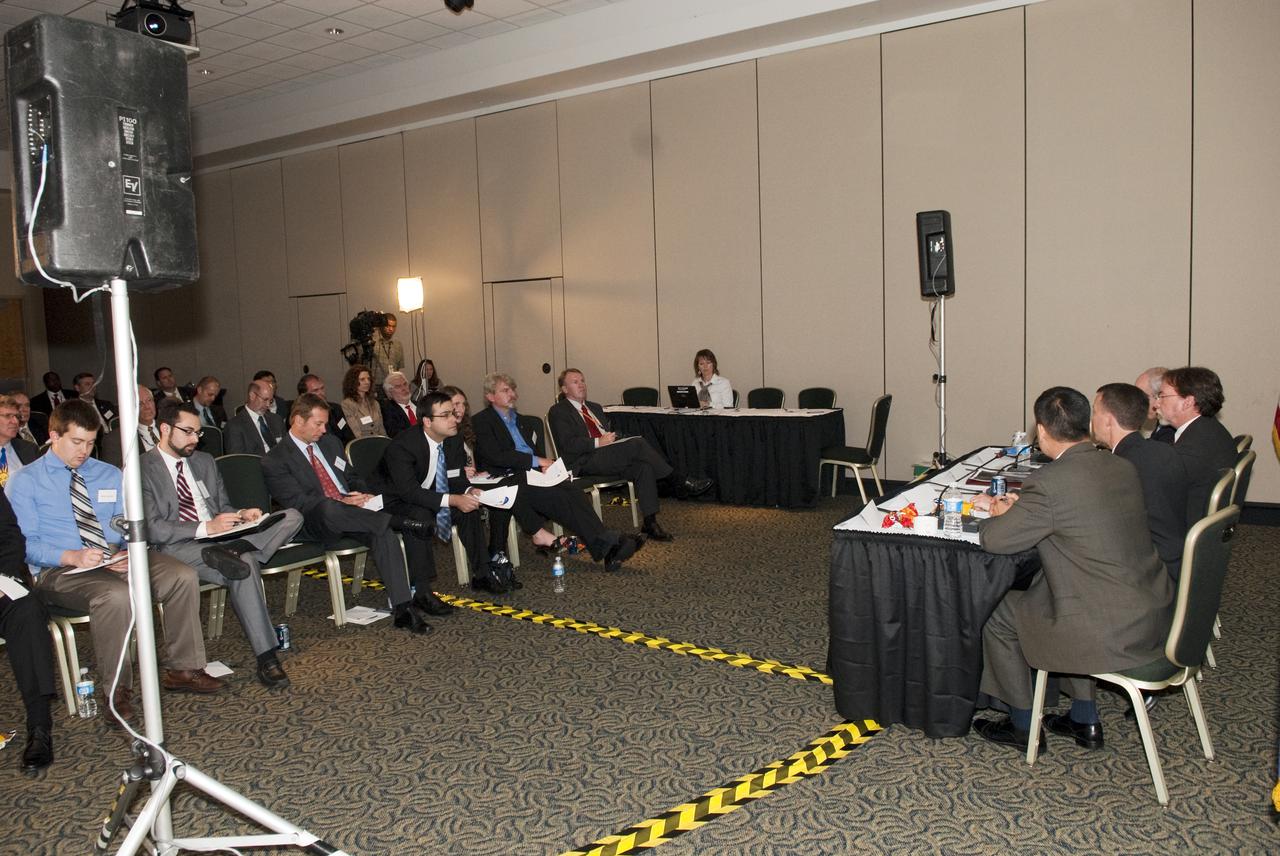
CAPE CANAVERAL, Fla. - In the Vanguard room of the Debus Center at NASA Kennedy Space Center Visitor Complex in Florida, a participant asks a question of the panel during the 'Jumpstarting the New Technologies to Take Us Beyond,' break-out session that is part of the Conference on the American Space Program for the 21st Century. The distinguished panel for this session is: Norman R. Augustine, chair of the Review of U.S. Human Space Flight Plans Committee and panel moderator; Doug Cooke Associate Administrator Exploration Systems for NASA; Robert Braun, NASA Chief Technologist and Ed Lu, Advanced Projects Program Manager for Google. Photo Credit: NASA_Jim Grossmann
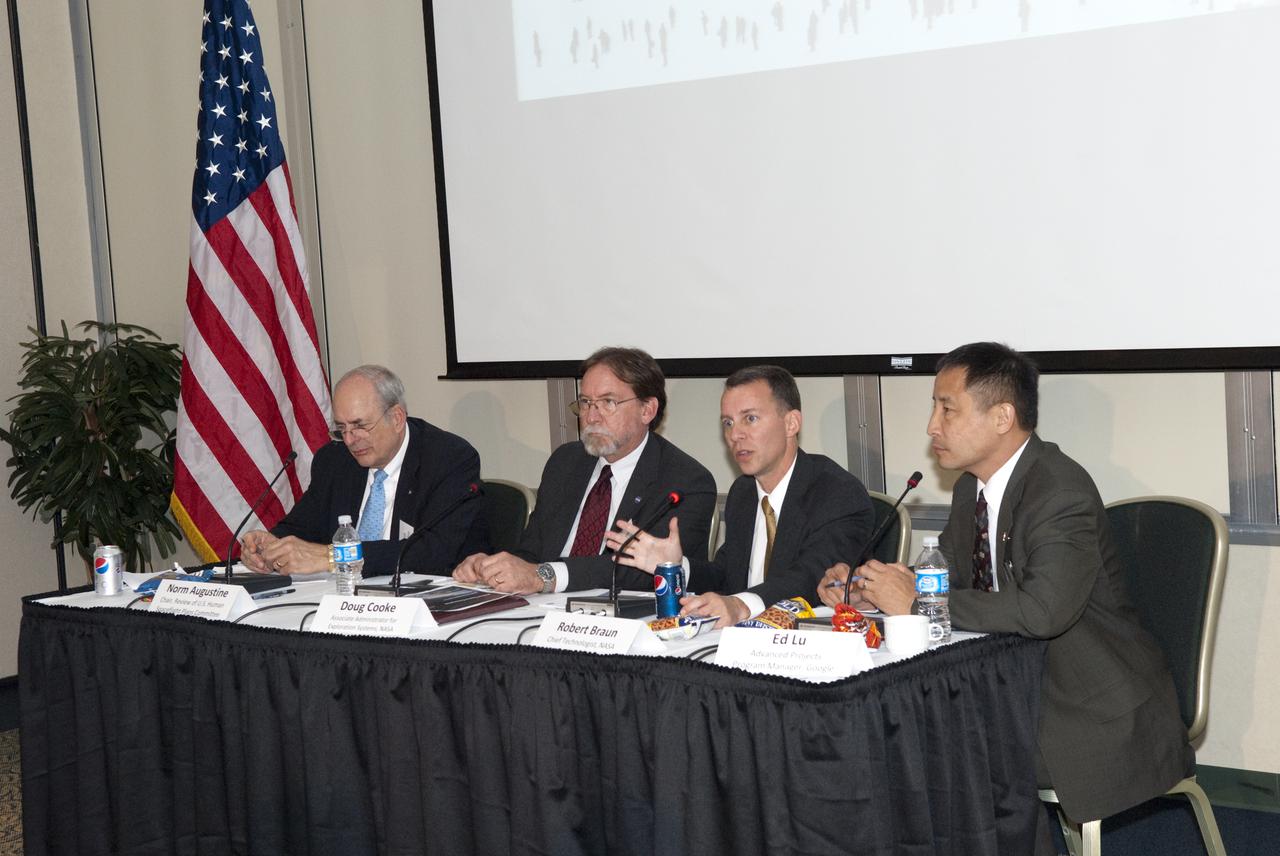
CAPE CANAVERAL, Fla. - In the Vanguard room of the Debus Center at NASA Kennedy Space Center Visitor Complex in Florida, Norman R. Augustine (left), chair of the Review of U.S. Human Space Flight Plans Committee and panel moderator heads up the third break-out session, 'Jumpstarting the New Technologies to Take Us Beyond,' that is part of the Conference on the American Space Program for the 21st Century. The distinguished panel for this session is: Doug Cooke Associate Administrator Exploration Systems for NASA; Robert Braun, NASA Chief Technologist and Ed Lu, Advanced Projects Program Manager for Google. Photo Credit: NASA_Jim Grossmann
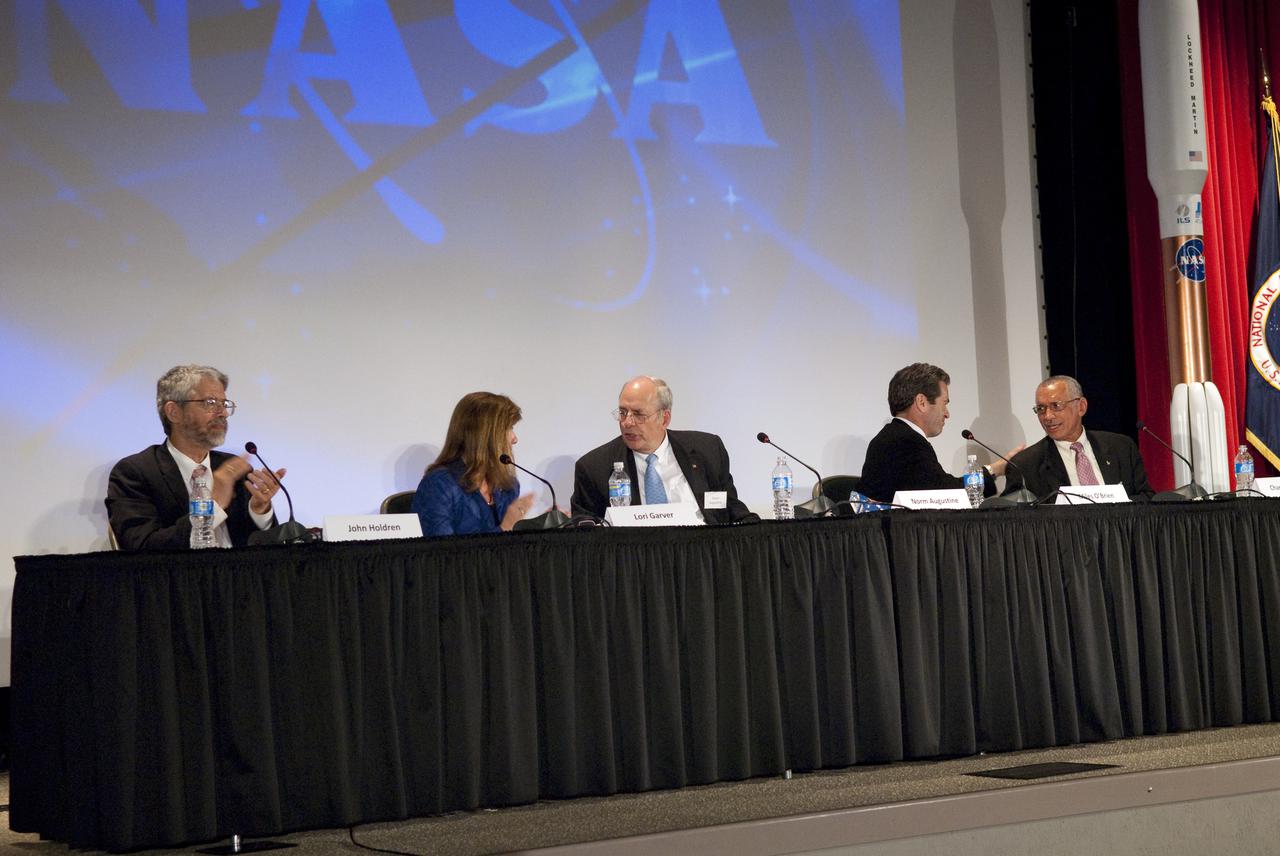
CAPE CANAVERAL, Fla. - In the Astronaut Encounter Theater at the NASA Kennedy Space Center Visitor Complex in Florida, the Conference on the American Space Program for the 21st Century wrapped up with a lively panel discussion. Pictured is, left to right, John Holdren, assistant to the President for science and technology and director of the White House Office of Science and Technology Policy; Lori Garver, NASA Deputy Administrator; Norman R. Augustine, chair of the Review of U.S. Human Space Flight Plans Committee; Miles O'Brien, a member of the NASA Advisory Council and NASA Administrator Charles Bolden. Photo Credit: NASA_Jim Grossmann
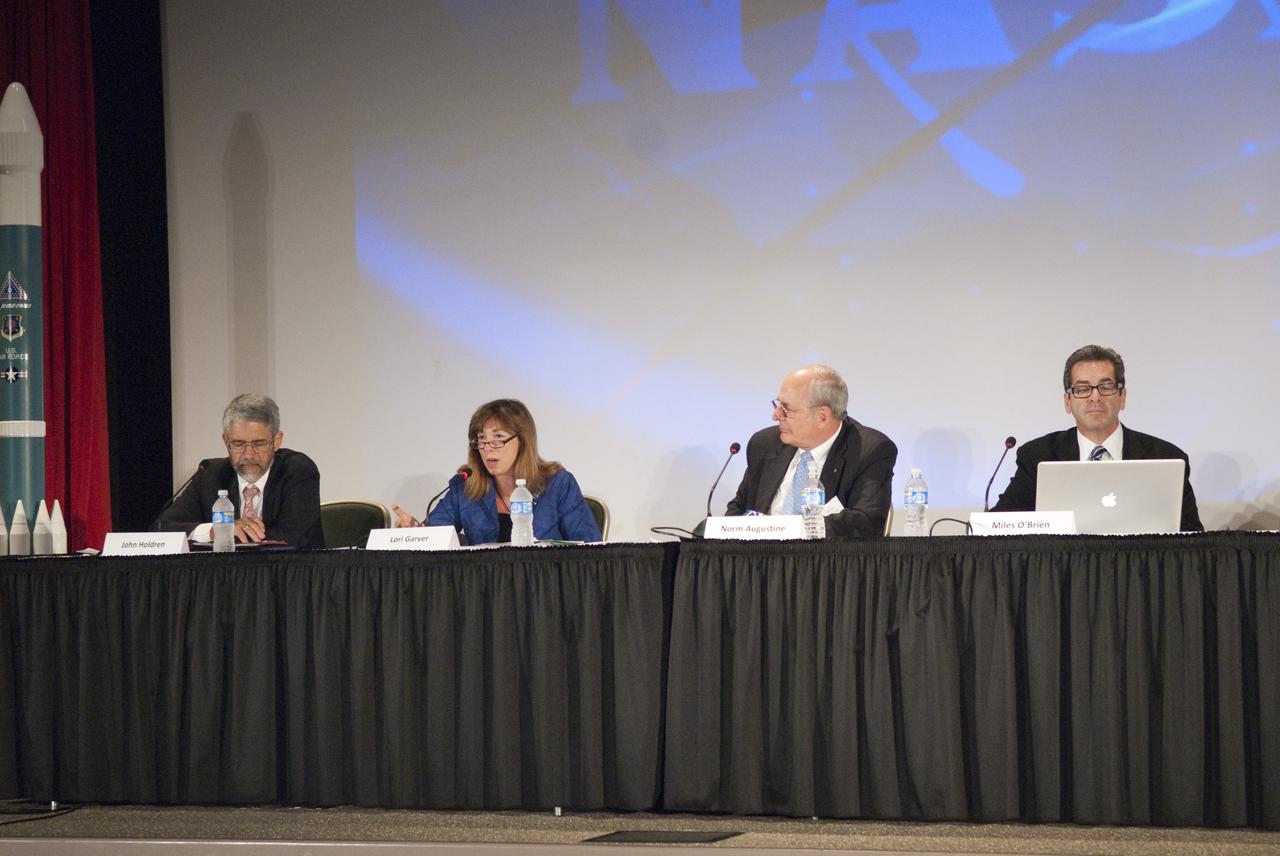
CAPE CANAVERAL, Fla. - In the Astronaut Encounter Theater at the NASA Kennedy Space Center Visitor Complex in Florida, a distinguished panel gathered to wrap up the Conference on the American Space Program for the 21st Century. The panel included John Holdren, assistant to the President for science and technology and director of the White House Office of Science and Technology Policy (left); Lori Garver, NASA Deputy Administrator; Norman R. Augustine, chair of the Review of U.S. Human Space Flight Plans Committee, and Miles O'Brien, a member of the NASA Advisory Council. Photo Credit: NASA_Jim Grossmann
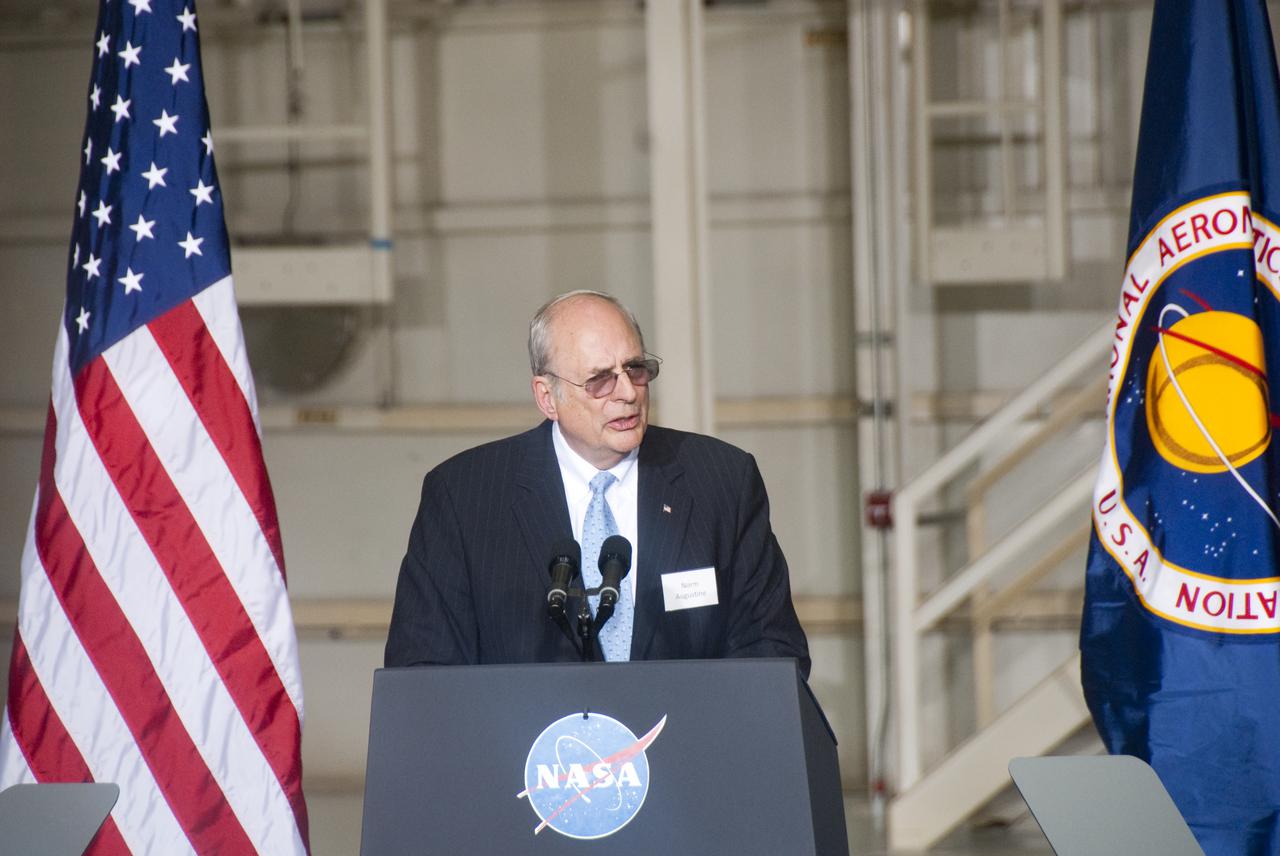
CAPE CANAVERAL, Fla. - In the Operations and Checkout Building at NASA's Kennedy Space Center in Florida, Norman R. Augustine, chair of the Review of U.S. Human Space Flight Plans Committee, co-hosts the official opening of the Conference on the American Space Program for the 21st Century following President Barack Obama's remarks describing the new course his administration is charting for NASA and the future of U.S. leadership in human spaceflight. The four break-out conference sessions that will take place in the Operations and Checkout Building and in the Kennedy Space Center Visitor Complex will include these topics: Increasing Access to and Utilization of the International Space Station; Jumpstarting the New Technologies to Take Us Beyond; Expanding our Reach into the Solar System and Harnessing Space to Expand Economic Opportunity. Photo credit: NASA_Jim Grossmann
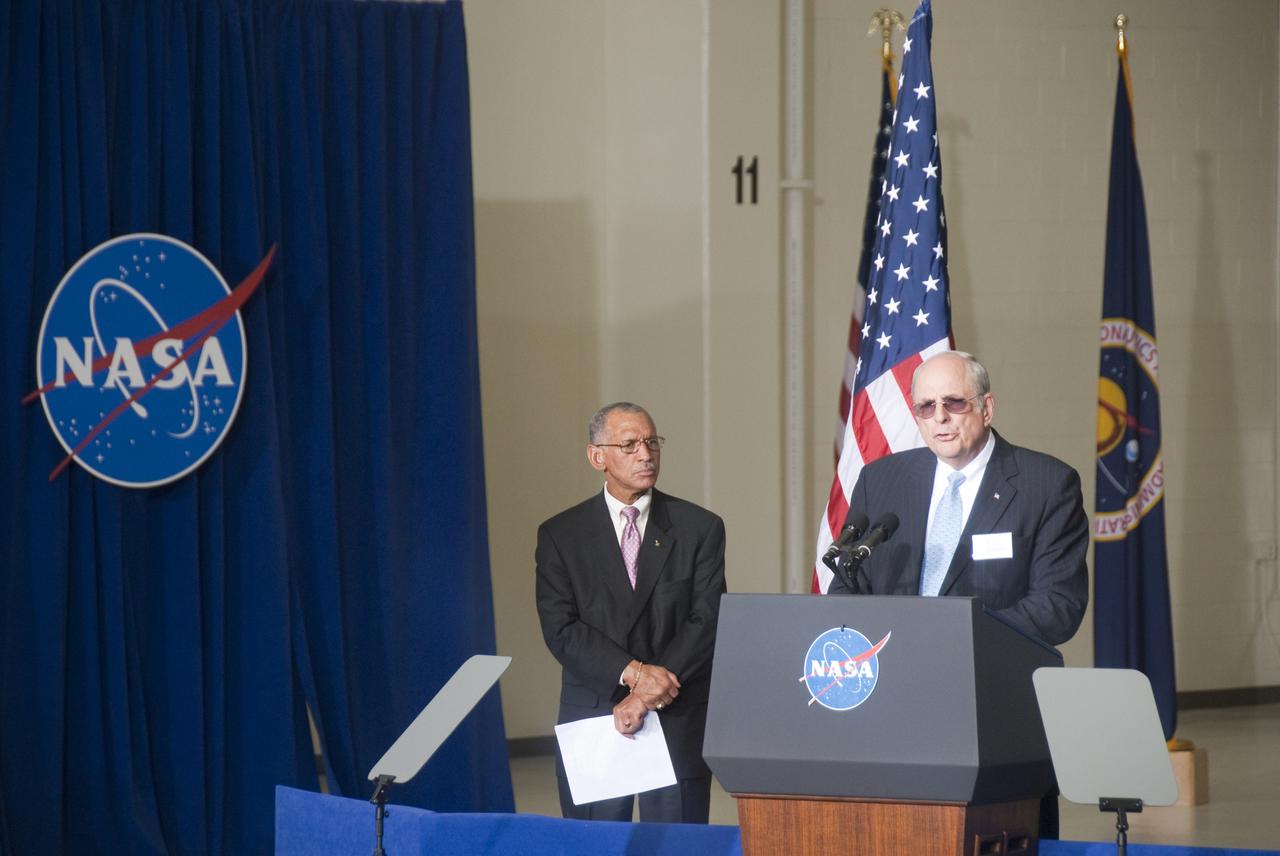
CAPE CANAVERAL, Fla. - In the Operations and Checkout Building at NASA's Kennedy Space Center in Florida, NASA Administrator Charles Bolden looks on as Norman R. Augustine, chair of the Review of U.S. Human Space Flight Plans Committee, co-hosts the official opening of the Conference on the American Space Program for the 21st Century following President Barack Obama's remarks describing the new course his administration is charting for NASA and the future of U.S. leadership in human spaceflight. The four break-out conference sessions that will take place in the Operations and Checkout Building and in the Kennedy Space Center Visitor Complex will include these topics: Increasing Access to and Utilization of the International Space Station; Jumpstarting the New Technologies to Take Us Beyond; Expanding our Reach into the Solar System and Harnessing Space to Expand Economic Opportunity. Photo credit: NASA_Jim Grossmann