
iss064e059520 (April 14, 2021) --- Northrop Grumman's Cygnus space freighter, with one of its prominent cymbal-shaped solar arrays, is pictured as the International Space Station orbited 266 miles above British Columbia, Canada.
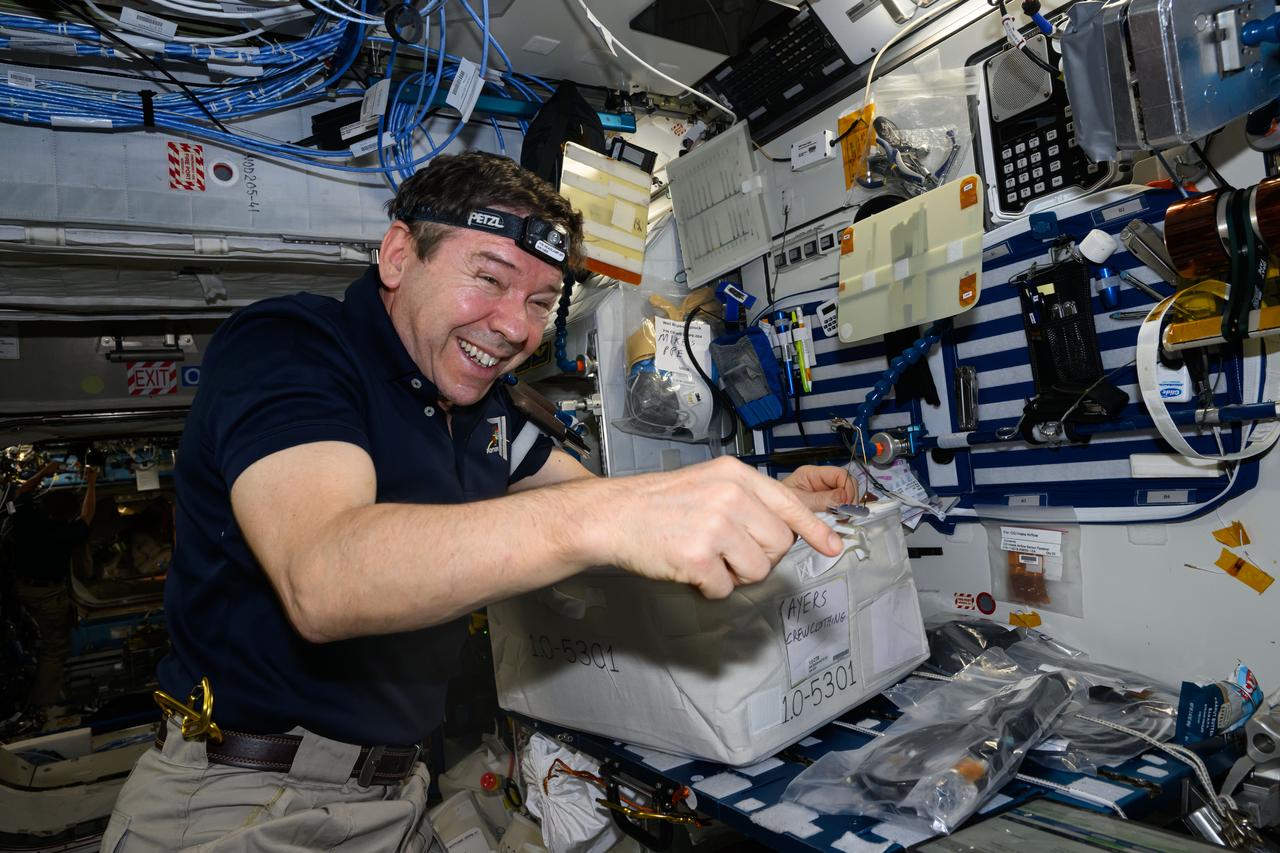
iss071e547719 (Aug. 14, 2024) --- NASA astronaut and Expedition 71 Flight Engineer Mike Barratt transfers cargo bags delivered aboard the Northrop Grumman Cygnus space freighter into the International Space Station's Harmony module.
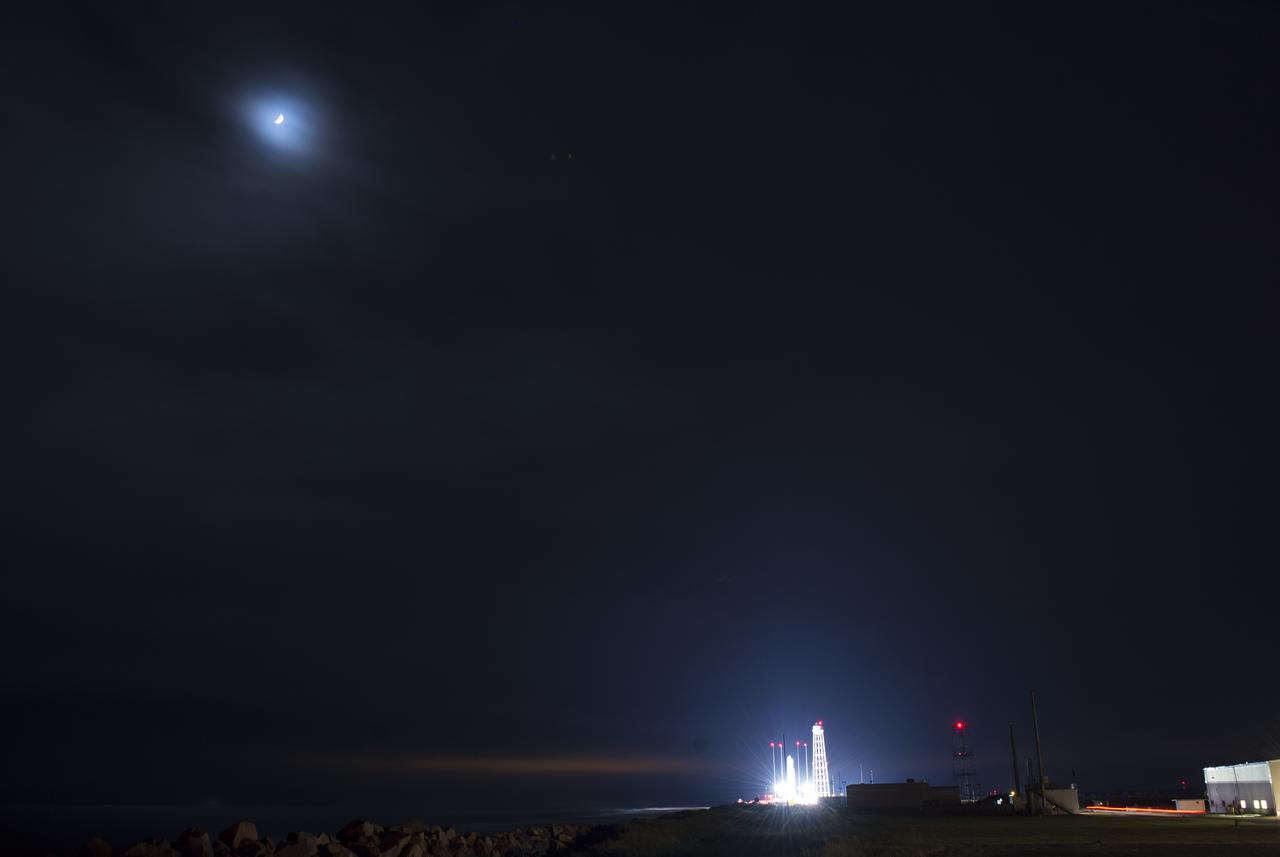
The Northrop Grumman Antares rocket, with Cygnus resupply spacecraft onboard, is seen on Pad-0A, Wednesday, Nov. 14, 2018 at NASA's Wallops Flight Facility in Virginia. Northrop Grumman's 10th contracted cargo resupply mission for NASA to the International Space Station will deliver about 7,400 pounds of science and research, crew supplies and vehicle hardware to the orbital laboratory and its crew. Launch is currently scheduled for Friday, Nov. 16 at 4:23 a.m. EST. Photo Credit: (NASA/Joel Kowsky)
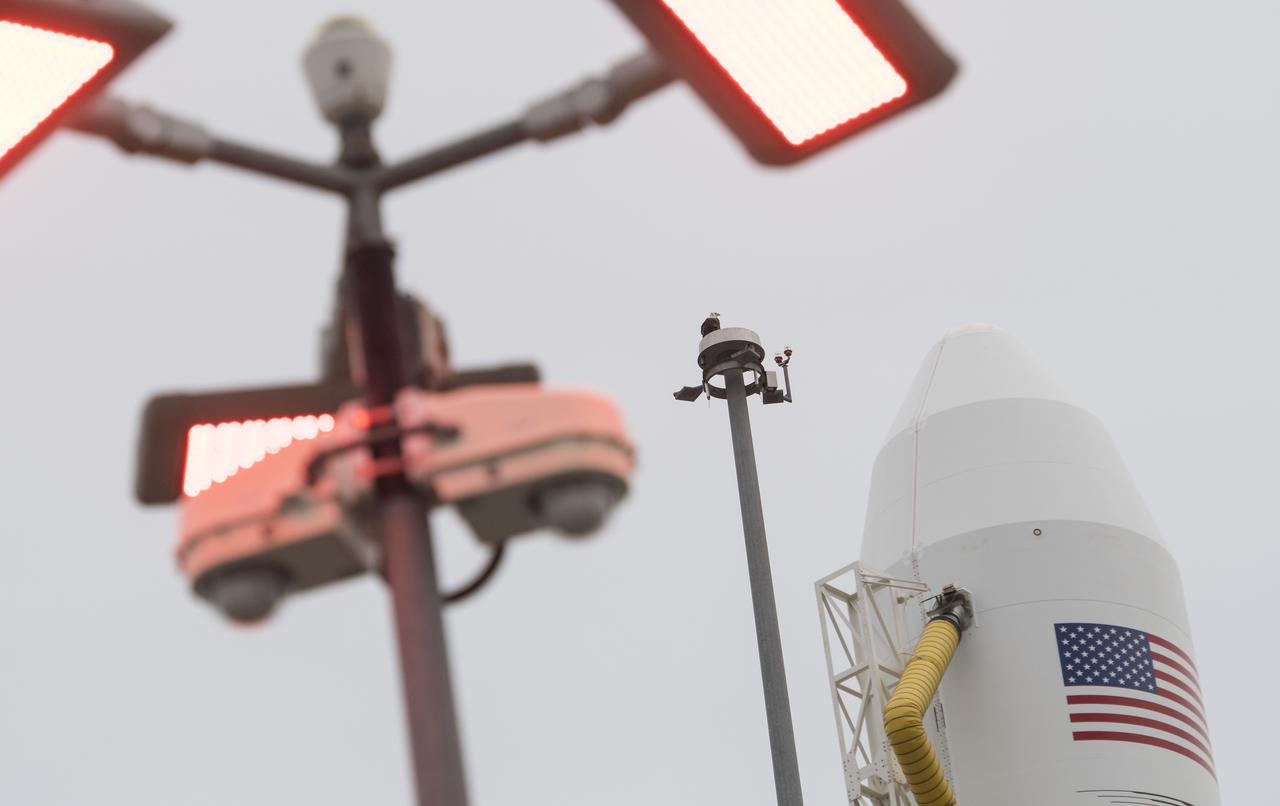
A bald eagle is seen atop a lightning tower next to the Northrop Grumman Antares rocket with, Cygnus spacecraft onboard, at Pad-0A, Wednesday, Nov. 14, 2018 at NASA's Wallops Flight Facility in Virginia. Northrop Grumman's 10th contracted cargo resupply mission for NASA to the International Space Station will deliver about 7,400 pounds of science and research, crew supplies and vehicle hardware to the orbital laboratory and its crew. Launch is currently scheduled for Nov. 16 at 4:23 a.m. EST. Photo Credit: (NASA/Joel Kowsky)
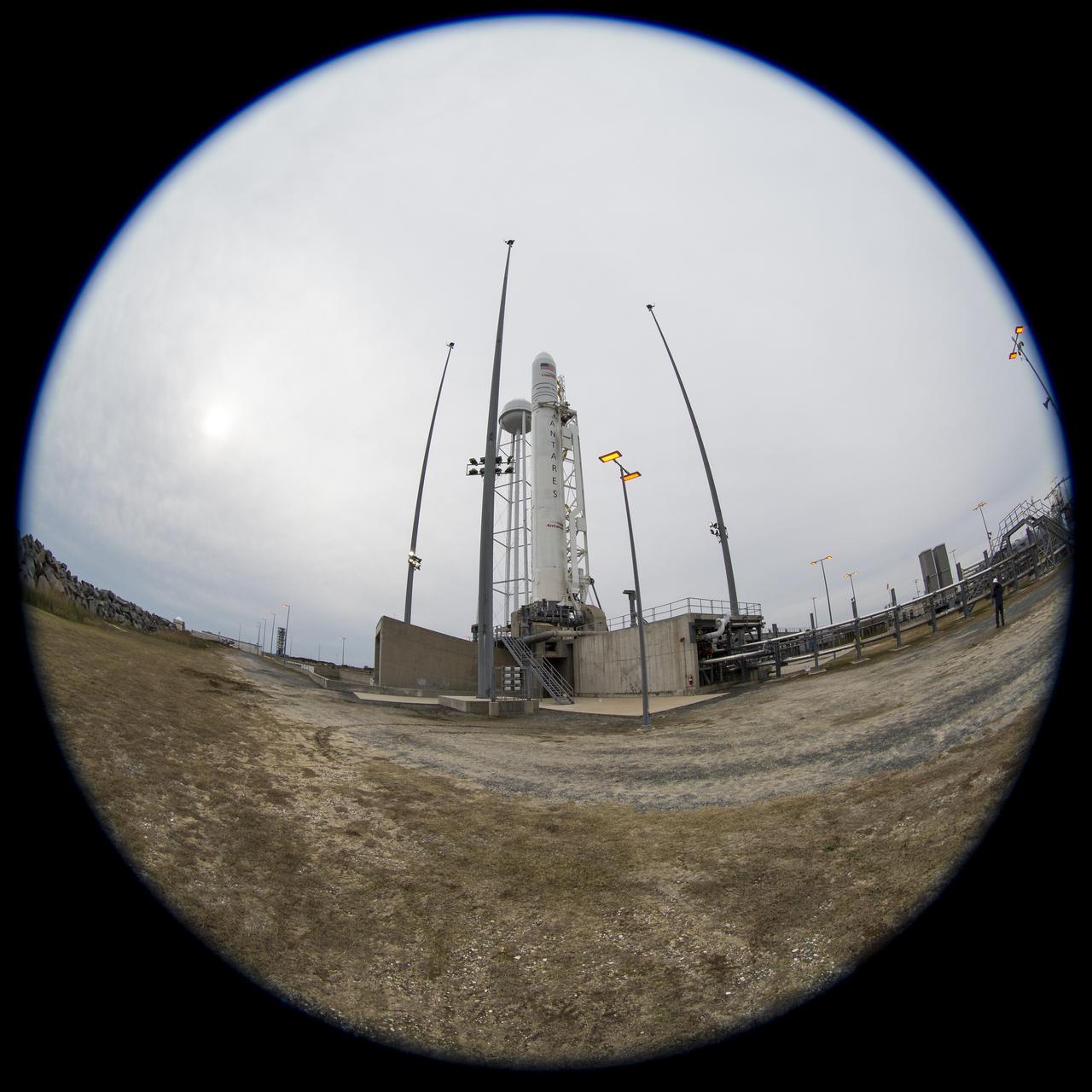
In this image taken with a circular fisheye lens, the Northrop Grumman Antares rocket, with Cygnus resupply spacecraft onboard, is seen on Pad-0A, Wednesday, Nov. 14, 2018 at NASA's Wallops Flight Facility in Virginia. Northrop Grumman's 10th contracted cargo resupply mission for NASA to the International Space Station will deliver about 7,400 pounds of science and research, crew supplies and vehicle hardware to the orbital laboratory and its crew. Launch is currently scheduled for Nov. 16 at 4:23 a.m. EST. Photo Credit: (NASA/Joel Kowsky)
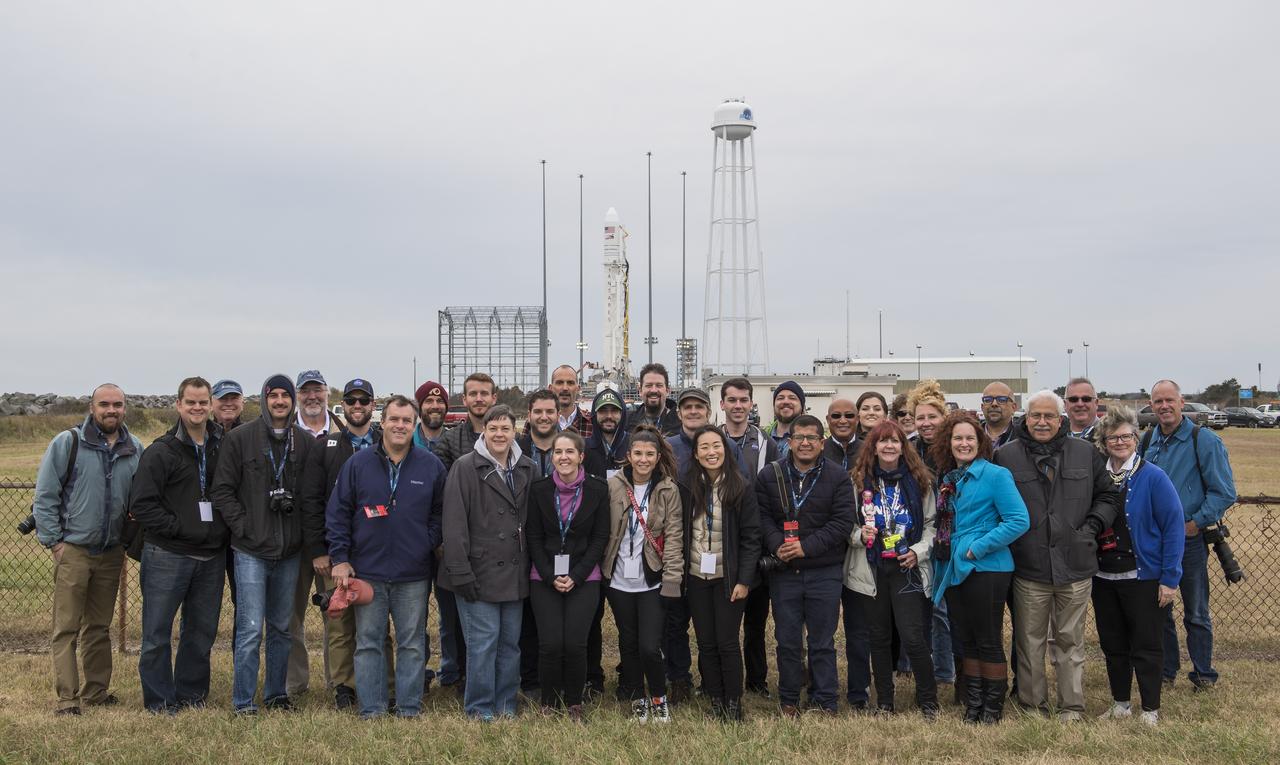
NASA social media attendees pose for a group photograph in front of a Northrop Grumman Antares rocket with Cygnus resupply spacecraft onboard, Wednesday, Nov. 14, 2018 at NASA's Wallops Flight Facility in Virginia. Northrop Grumman's 10th contracted cargo resupply mission for NASA to the International Space Station will deliver about 7,400 pounds of science and research, crew supplies and vehicle hardware to the orbital laboratory and its crew. Launch is currently scheduled for Nov. 16 at 4:23 a.m. EST. Photo Credit: (NASA/Joel Kowsky)

A bald eagle is seen atop a lightning tower next to the Northrop Grumman Antares rocket with, Cygnus spacecraft onboard, at Pad-0A, Wednesday, Nov. 14, 2018 at NASA's Wallops Flight Facility in Virginia. Northrop Grumman's 10th contracted cargo resupply mission for NASA to the International Space Station will deliver about 7,400 pounds of science and research, crew supplies and vehicle hardware to the orbital laboratory and its crew. Launch is currently scheduled for Nov. 16 at 4:23 a.m. EST. Photo Credit: (NASA/Joel Kowsky)
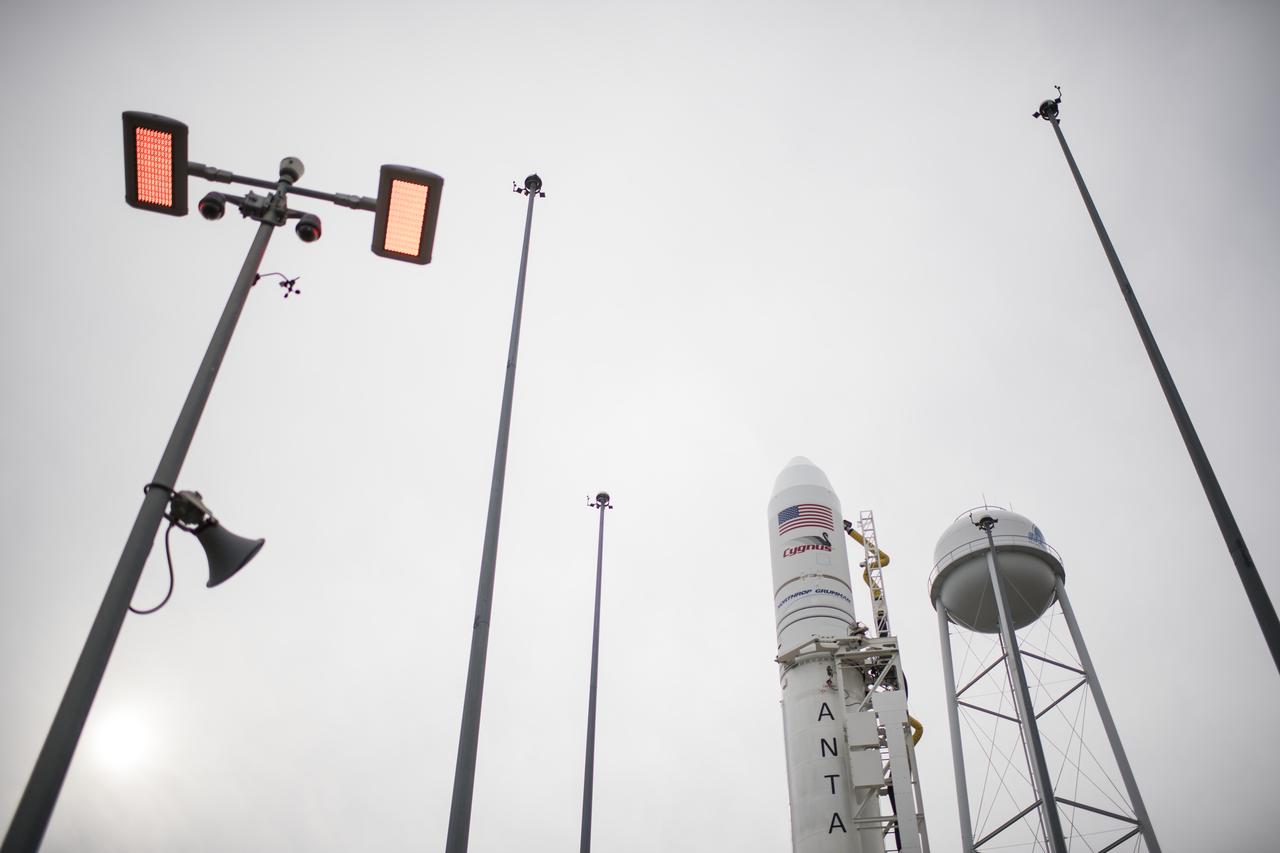
The Northrop Grumman Antares rocket, with Cygnus resupply spacecraft onboard, is seen on Pad-0A, Wednesday, Nov. 14, 2018 at NASA's Wallops Flight Facility in Virginia. Northrop Grumman's 10th contracted cargo resupply mission for NASA to the International Space Station will deliver about 7,400 pounds of science and research, crew supplies and vehicle hardware to the orbital laboratory and its crew. Launch is currently scheduled for Nov. 16 at 4:23 a.m. EST. Photo Credit: (NASA/Joel Kowsky)
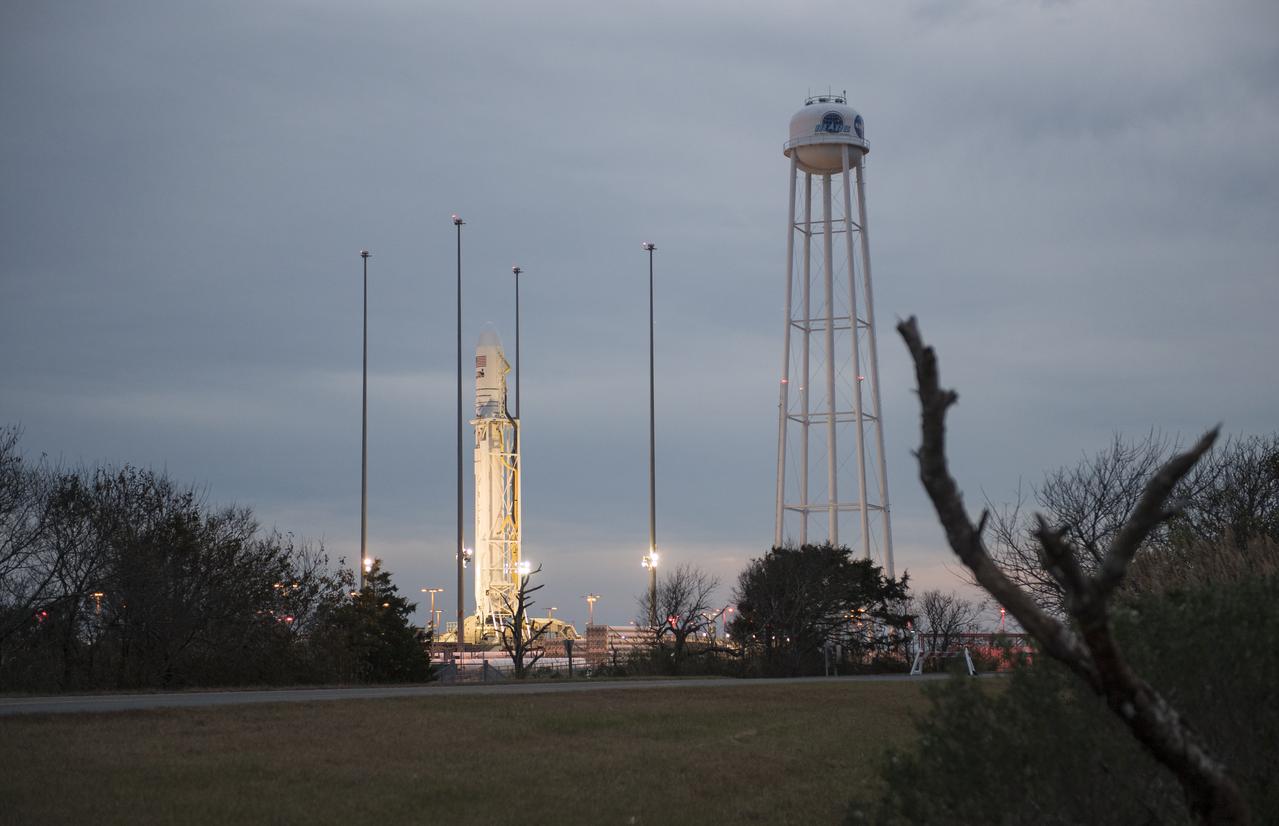
The Northrop Grumman Antares rocket, with Cygnus resupply spacecraft onboard, is seen on Pad-0A, Wednesday, Nov. 14, 2018 at NASA's Wallops Flight Facility in Virginia. Northrop Grumman's 10th contracted cargo resupply mission for NASA to the International Space Station will deliver about 7,400 pounds of science and research, crew supplies and vehicle hardware to the orbital laboratory and its crew. Launch is currently scheduled for Nov. 16 at 4:23 a.m. EST. Photo Credit: (NASA/Joel Kowsky)
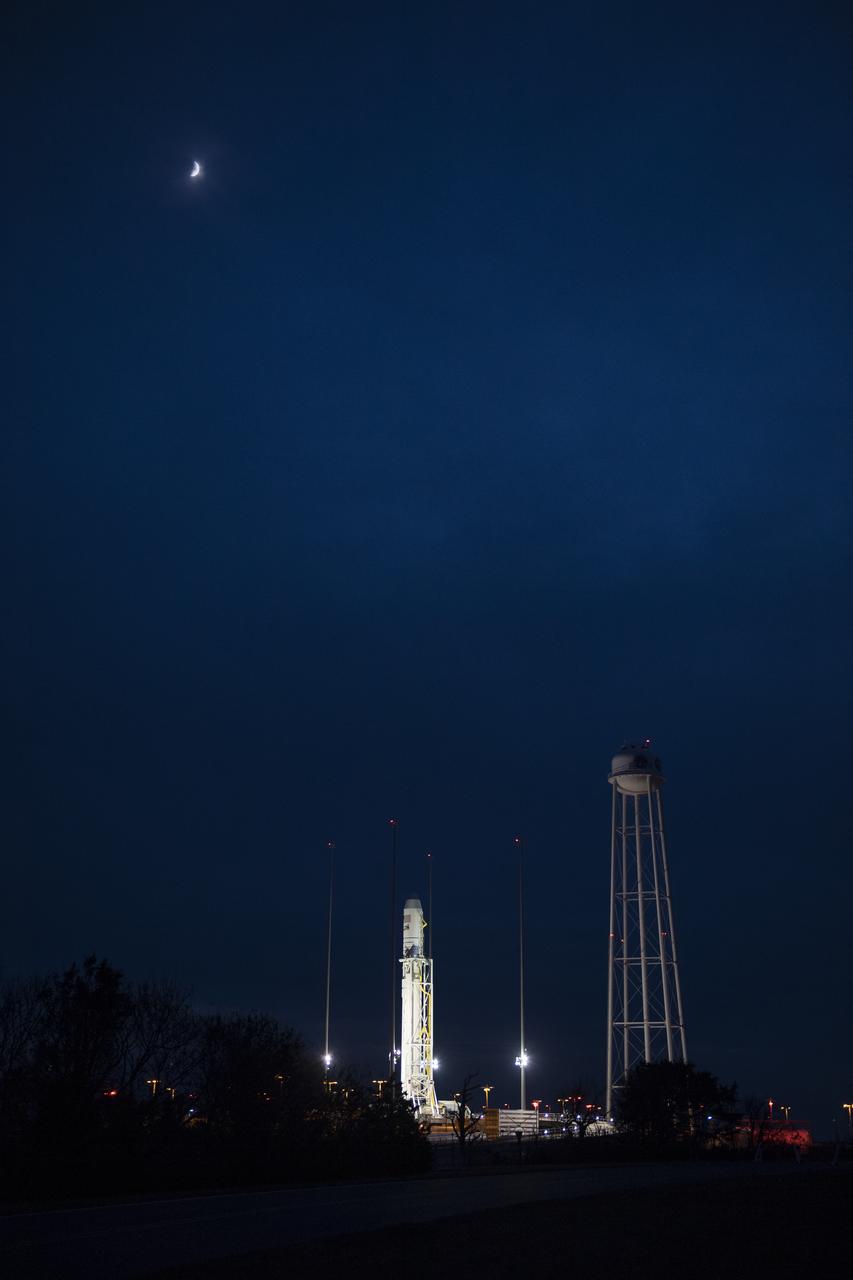
The Northrop Grumman Antares rocket, with Cygnus resupply spacecraft onboard, is seen on Pad-0A, Wednesday, Nov. 14, 2018 at NASA's Wallops Flight Facility in Virginia. Northrop Grumman's 10th contracted cargo resupply mission for NASA to the International Space Station will deliver about 7,400 pounds of science and research, crew supplies and vehicle hardware to the orbital laboratory and its crew. Launch is currently scheduled for Nov. 16 at 4:23 a.m. EST. Photo Credit: (NASA/Joel Kowsky)
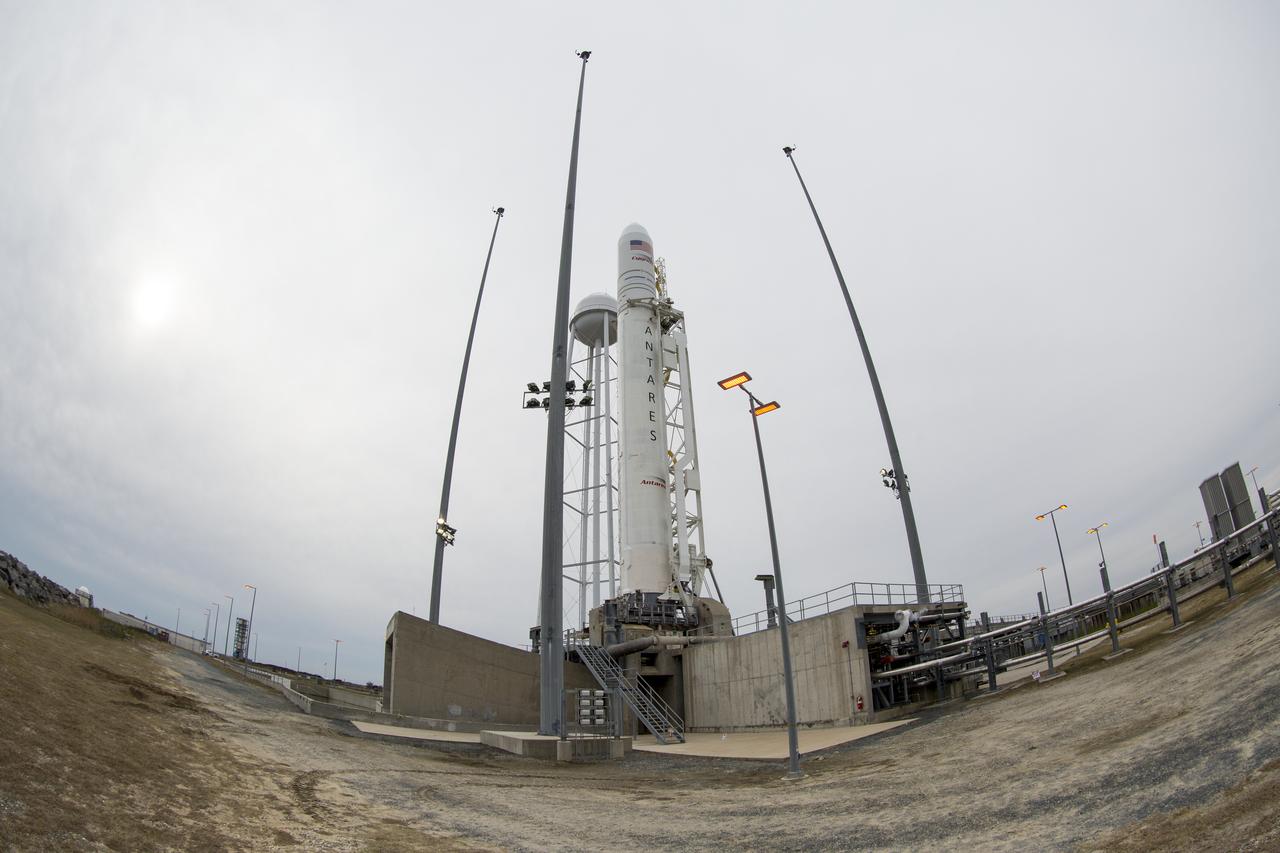
The Northrop Grumman Antares rocket, with Cygnus resupply spacecraft onboard, is seen on Pad-0A, Wednesday, Nov. 14, 2018 at NASA's Wallops Flight Facility in Virginia. Northrop Grumman's 10th contracted cargo resupply mission for NASA to the International Space Station will deliver about 7,400 pounds of science and research, crew supplies and vehicle hardware to the orbital laboratory and its crew. Launch is currently scheduled for Nov. 16 at 4:23 a.m. EST. Photo Credit: (NASA/Joel Kowsky)
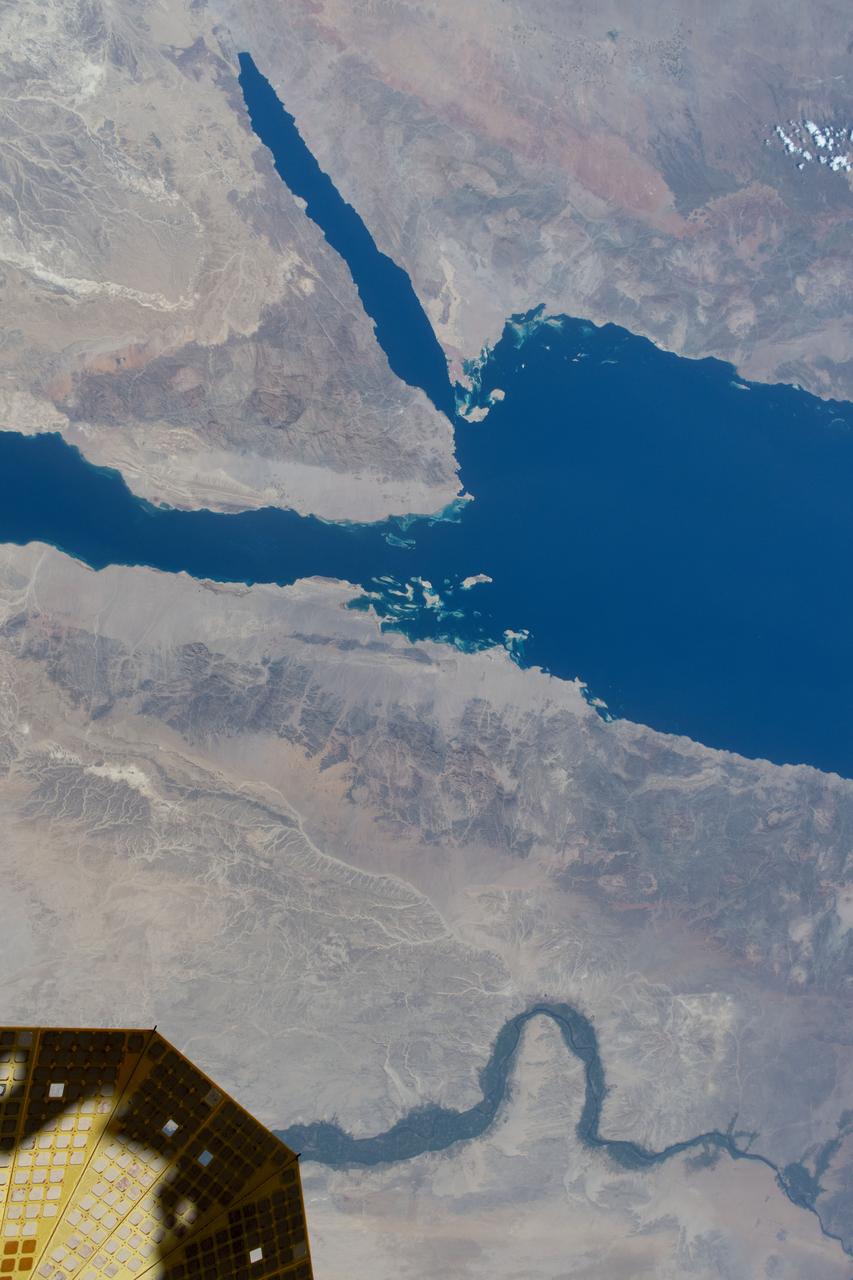
iss071e578476 (Aug. 14, 2024) --- The Nile River runs alongside the Red Sea in this photograph from the International Space Station as it orbited 258 miles above the Middle East. At lower left, is one of the two cymbal-shaped UltraFlex solar arrays that power the Northrop Grumman space freighter.

iss069e056918 (Aug. 14, 2023) --- The Strait of Hormuz (bottom left) connects the Gulf of Oman with the Persian Gulf in this photograph from the International Space Station as it orbited 262 miles above southwestern Iran. In the right foreground, is the Northrop Grumman Cygnus space freighter and one of its cymbal-shaped UltraFlex solar arrays.
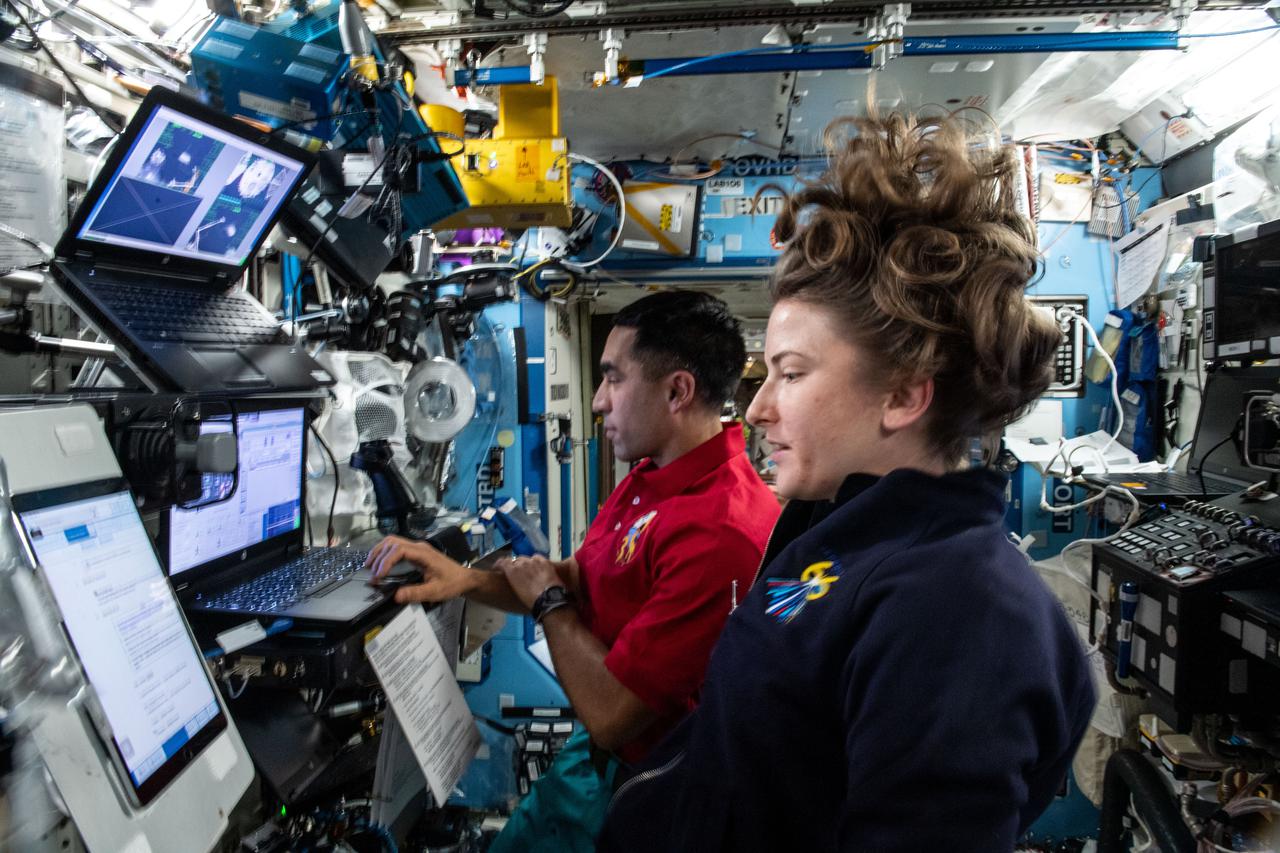
iss066e143757 (Feb. 14, 2022) --- NASA's Expedition 66 Flight Engineers Raja Chari and Kayla Barron train on the U.S. Destiny laboratory module's robotics workstation for the capture of Northrop Grumman's Cygnus space freighter when it arrives on Feb. 21, 2022.
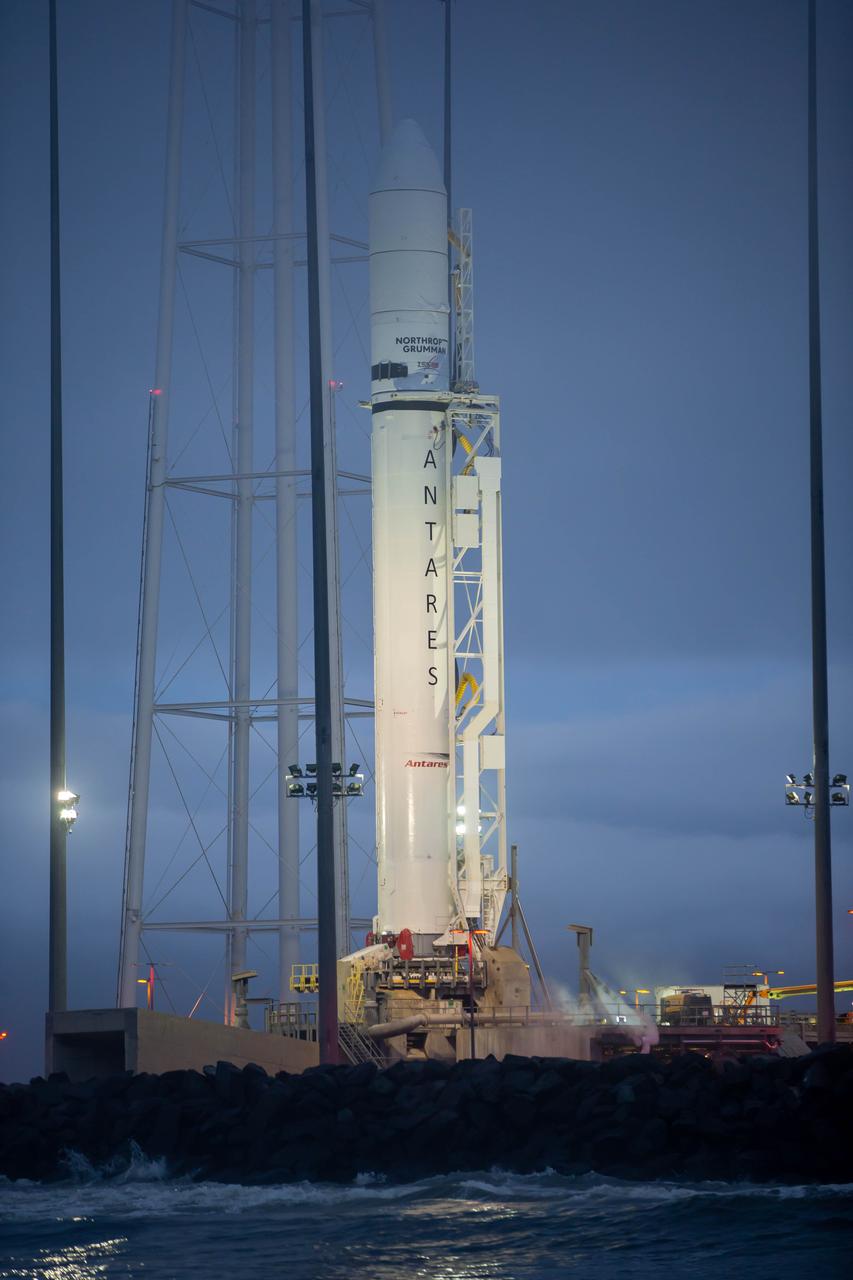
A Northrop Grumman Antares rocket carrying a Cygnus resupply spacecraft is raised into the vertical position on the Mid-Atlantic Regional Spaceport’s Pad-0A, Saturday, September 26, 2020, at NASA's Wallops Flight Facility in Virginia. Northrop Grumman’s 14th contracted cargo resupply mission with NASA to the International Space Station will deliver about 8,000 pounds of science and research, crew supplies and vehicle hardware to the orbital laboratory and its crew. The CRS-14 Cygnus spacecraft is named after the first female astronaut of Indian descent, Kalpana Chawla, and is scheduled to launch at 10:27 p.m., Tuesday, September 29, 2020 EDT. Photo Credit: (NASA/Patrick Black)
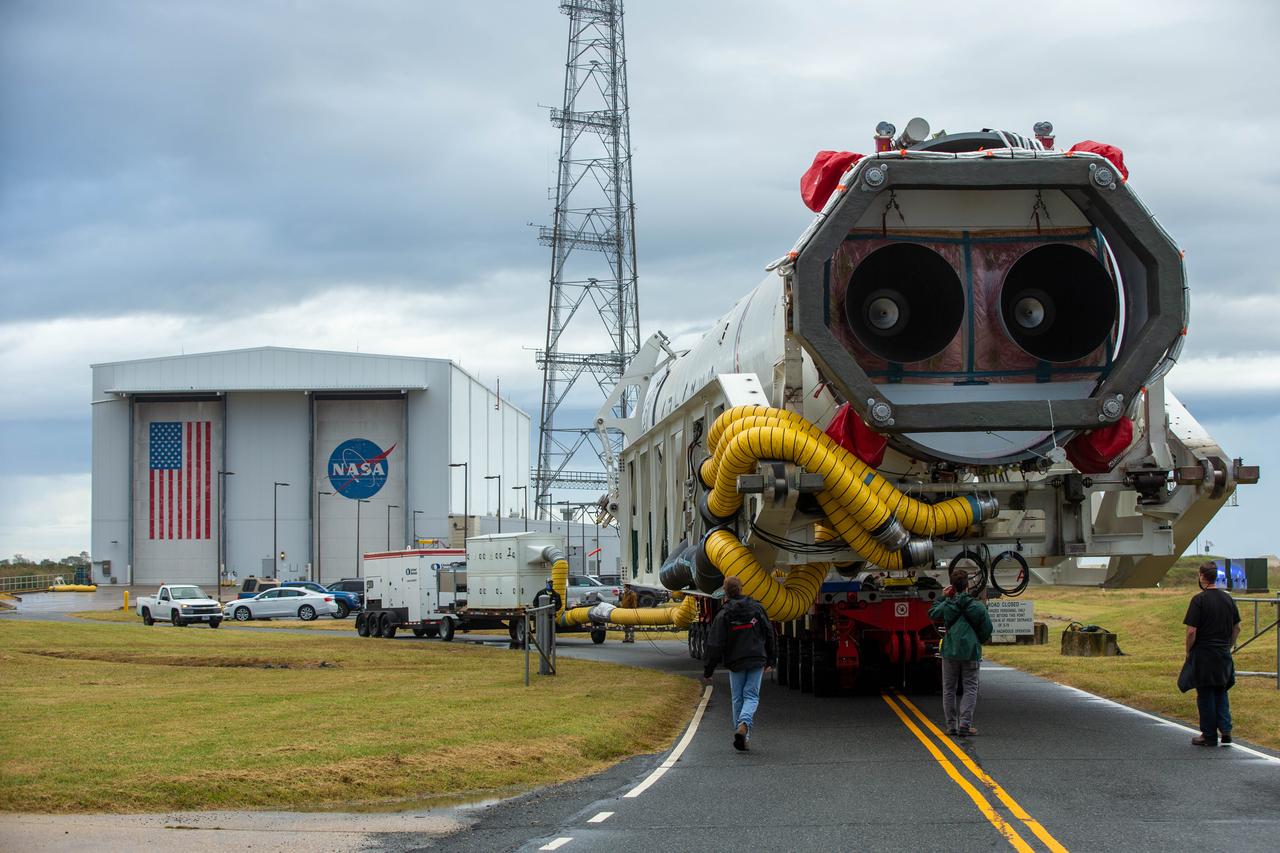
A Northrop Grumman Antares rocket carrying a Cygnus resupply spacecraft is seen as it is rolled out of the Horizontal Integration Facility to the Mid-Atlantic Regional Spaceport’s Pad-0A, Saturday, September 26, 2020, at NASA's Wallops Flight Facility in Virginia. Northrop Grumman’s 14th contracted cargo resupply mission with NASA to the International Space Station will deliver about 8,000 pounds of science and research, crew supplies and vehicle hardware to the orbital laboratory and its crew. The CRS-14 Cygnus spacecraft is named after the first female astronaut of Indian descent, Kaplana Chawla, and is scheduled to launch at 10:27 p.m., Tuesday, September 29, 2020 EDT. Photo Credit: (NASA/Patrick Black)
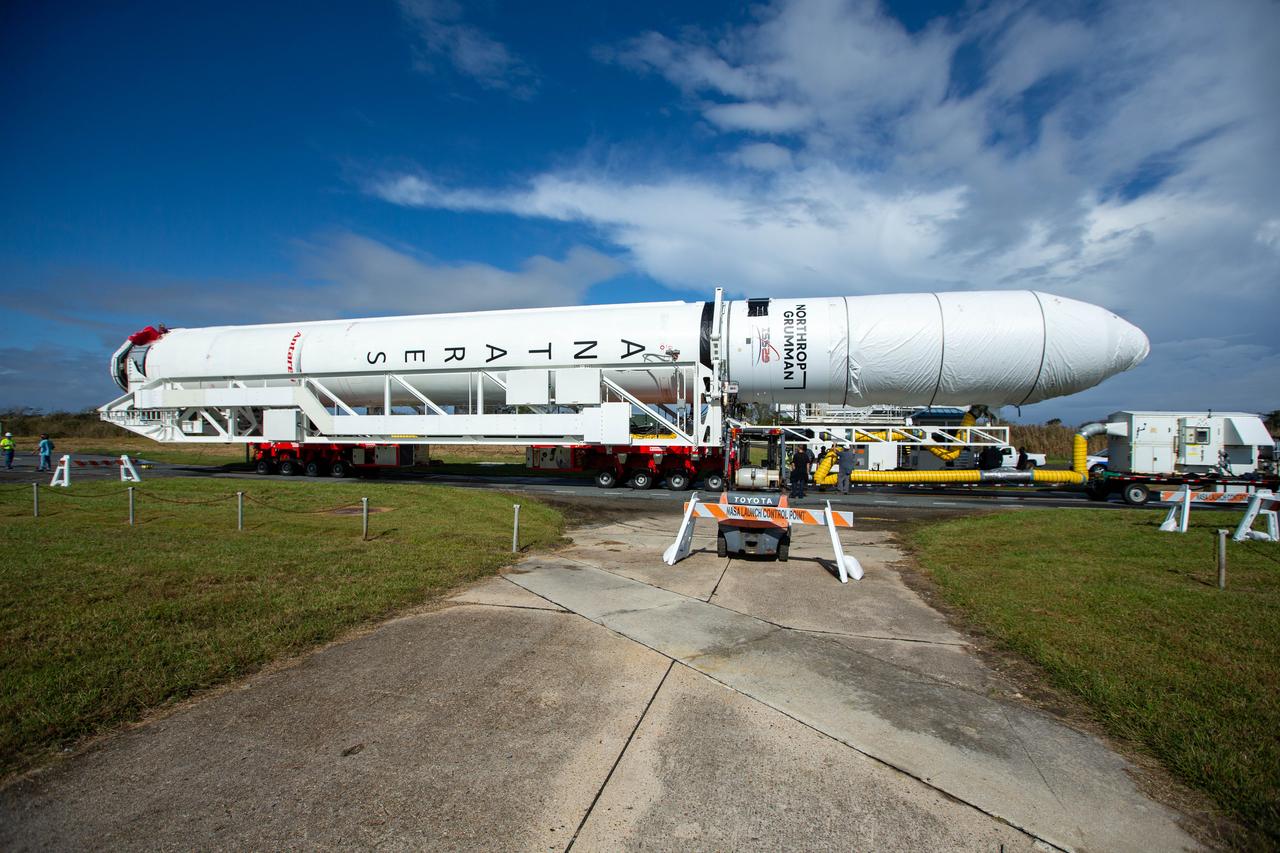
A Northrop Grumman Antares rocket carrying a Cygnus resupply spacecraft is seen as it is rolled out of the Horizontal Integration Facility to the Mid-Atlantic Regional Spaceport’s Pad-0A, Saturday, September 26, 2020, at NASA's Wallops Flight Facility in Virginia. Northrop Grumman’s 14th contracted cargo resupply mission with NASA to the International Space Station will deliver about 8,000 pounds of science and research, crew supplies and vehicle hardware to the orbital laboratory and its crew. The CRS-14 Cygnus spacecraft is named after the first female astronaut of Indian descent, Kaplana Chawla, and is scheduled to launch at 10:27 p.m., Tuesday, September 29, 2020 EDT. Photo Credit: (NASA/Patrick Black)
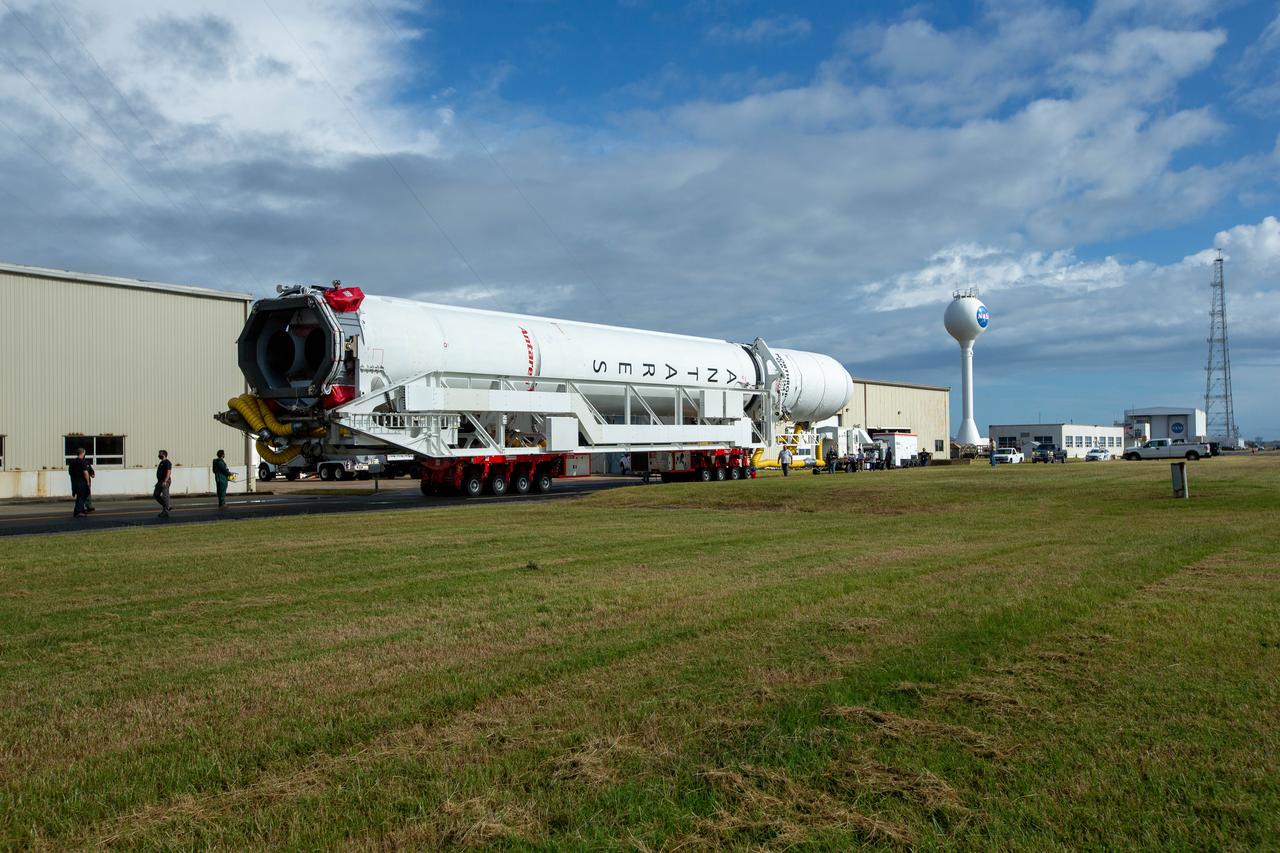
A Northrop Grumman Antares rocket carrying a Cygnus resupply spacecraft is seen as it is rolled out of the Horizontal Integration Facility to the Mid-Atlantic Regional Spaceport’s Pad-0A, Saturday, September 26, 2020, at NASA's Wallops Flight Facility in Virginia. Northrop Grumman’s 14th contracted cargo resupply mission with NASA to the International Space Station will deliver about 8,000 pounds of science and research, crew supplies and vehicle hardware to the orbital laboratory and its crew. The CRS-14 Cygnus spacecraft is named after the first female astronaut of Indian descent, Kaplana Chawla, and is scheduled to launch at 10:27 p.m., Tuesday, September 29, 2020 EDT. Photo Credit: (NASA/Patrick Black)

A Northrop Grumman Antares rocket carrying a Cygnus resupply spacecraft is seen as it is rolled out of the Horizontal Integration Facility to the Mid-Atlantic Regional Spaceport’s Pad-0A, Saturday, September 26, 2020, at NASA's Wallops Flight Facility in Virginia. Northrop Grumman’s 14th contracted cargo resupply mission with NASA to the International Space Station will deliver about 8,000 pounds of science and research, crew supplies and vehicle hardware to the orbital laboratory and its crew. The CRS-14 Cygnus spacecraft is named after the first female astronaut of Indian descent, Kaplana Chawla, and is scheduled to launch at 10:27 p.m., Tuesday, September 29, 2020 EDT. Photo Credit: (NASA/Patrick Black)

A Northrop Grumman Antares rocket carrying a Cygnus resupply spacecraft is seen on Pad-0A, Friday, Feb. 14, 2020, at NASA's Wallops Flight Facility in Virginia. Northrop Grumman’s 13th contracted cargo resupply mission with NASA to the International Space Station will deliver more than 7,500 pounds of science and research, crew supplies and vehicle hardware to the orbital laboratory and its crew. The CRS-13 Cygnus spacecraft is named after the first African American astronaut, Major Robert Henry Lawrence Jr., and is scheduled to launch at 3:43pm EST. Photo Credit: (NASA/Aubrey Gemignani)
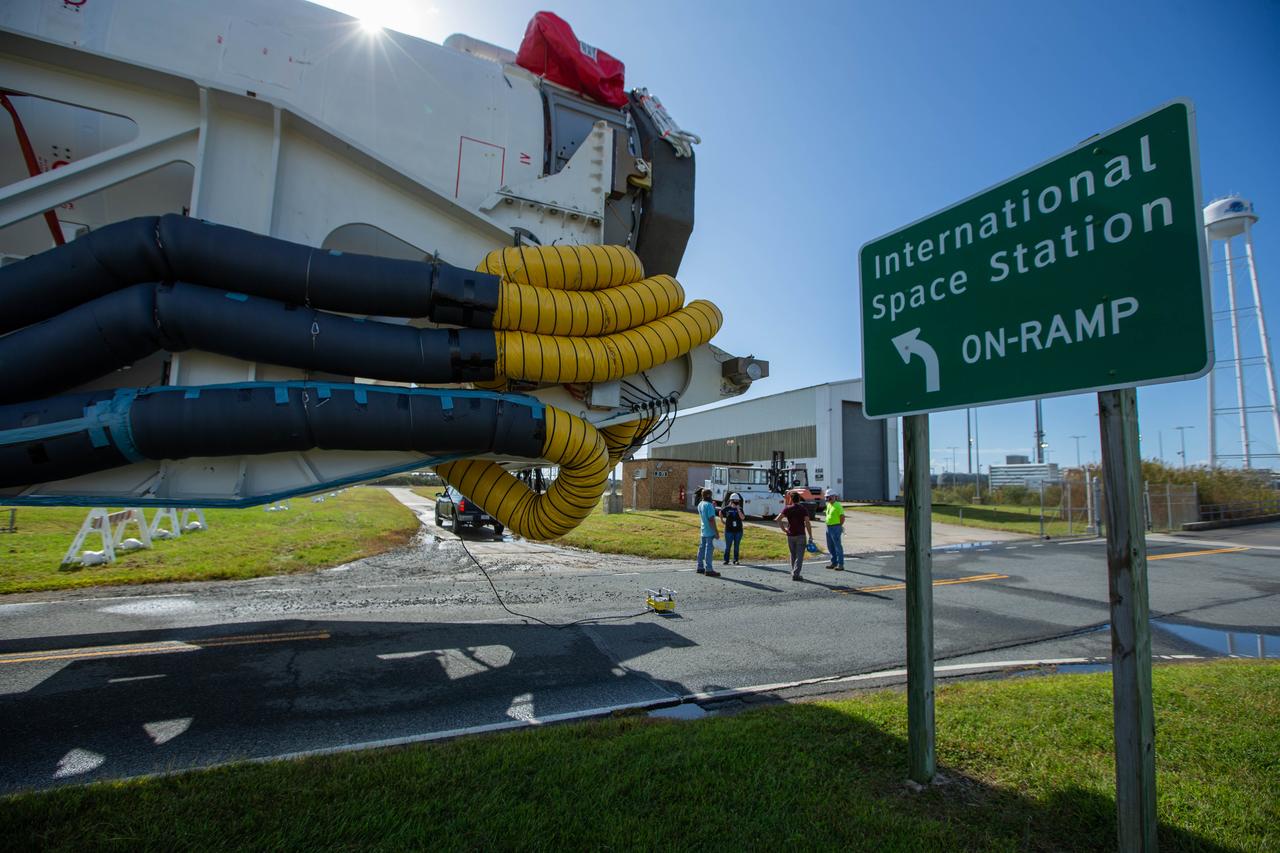
A Northrop Grumman Antares rocket carrying a Cygnus resupply spacecraft is seen as it is rolled out of the Horizontal Integration Facility to the Mid-Atlantic Regional Spaceport’s Pad-0A, Saturday, September 26, 2020, at NASA's Wallops Flight Facility in Virginia. Northrop Grumman’s 14th contracted cargo resupply mission with NASA to the International Space Station will deliver about 8,000 pounds of science and research, crew supplies and vehicle hardware to the orbital laboratory and its crew. The CRS-14 Cygnus spacecraft is named after the first female astronaut of Indian descent, Kaplana Chawla, and is scheduled to launch at 10:27 p.m., Tuesday, September 29, 2020 EDT. Photo Credit: (NASA/Patrick Black)

A Northrop Grumman Antares rocket carrying a Cygnus resupply spacecraft is seen as it is rolled out of the Horizontal Integration Facility to the Mid-Atlantic Regional Spaceport’s Pad-0A, Saturday, September 26, 2020, at NASA's Wallops Flight Facility in Virginia. Northrop Grumman’s 14th contracted cargo resupply mission with NASA to the International Space Station will deliver about 8,000 pounds of science and research, crew supplies and vehicle hardware to the orbital laboratory and its crew. The CRS-14 Cygnus spacecraft is named after the first female astronaut of Indian descent, Kaplana Chawla, and is scheduled to launch at 10:27 p.m., Tuesday, September 29, 2020 EDT. Photo Credit: (NASA/Patrick Black)
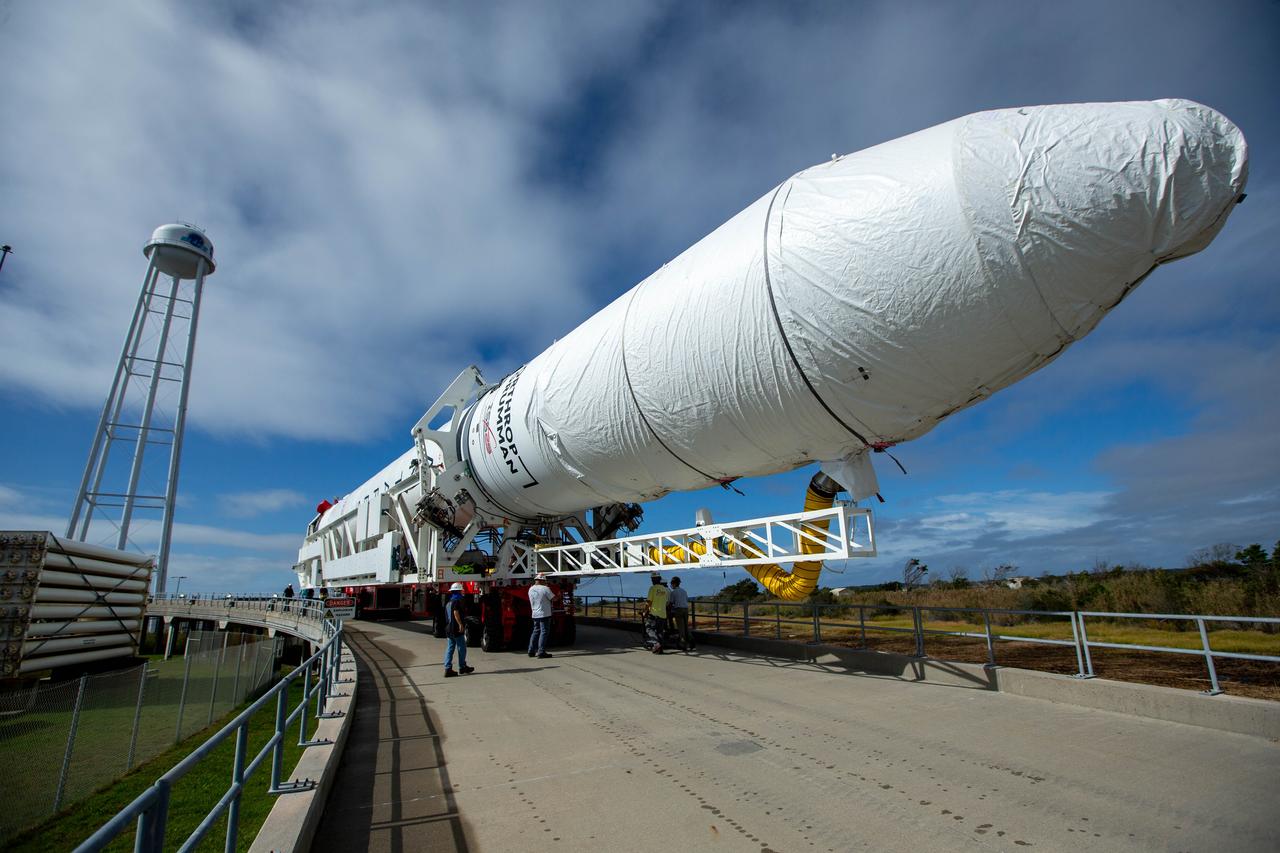
A Northrop Grumman Antares rocket carrying a Cygnus resupply spacecraft is seen as it is rolled out of the Horizontal Integration Facility to the Mid-Atlantic Regional Spaceport’s Pad-0A, Saturday, September 26, 2020, at NASA's Wallops Flight Facility in Virginia. Northrop Grumman’s 14th contracted cargo resupply mission with NASA to the International Space Station will deliver about 8,000 pounds of science and research, crew supplies and vehicle hardware to the orbital laboratory and its crew. The CRS-14 Cygnus spacecraft is named after the first female astronaut of Indian descent, Kalpana Chawla, and is scheduled to launch at 10:27 p.m., Tuesday, September 29, 2020 EDT. Photo Credit: (NASA/Patrick Black)
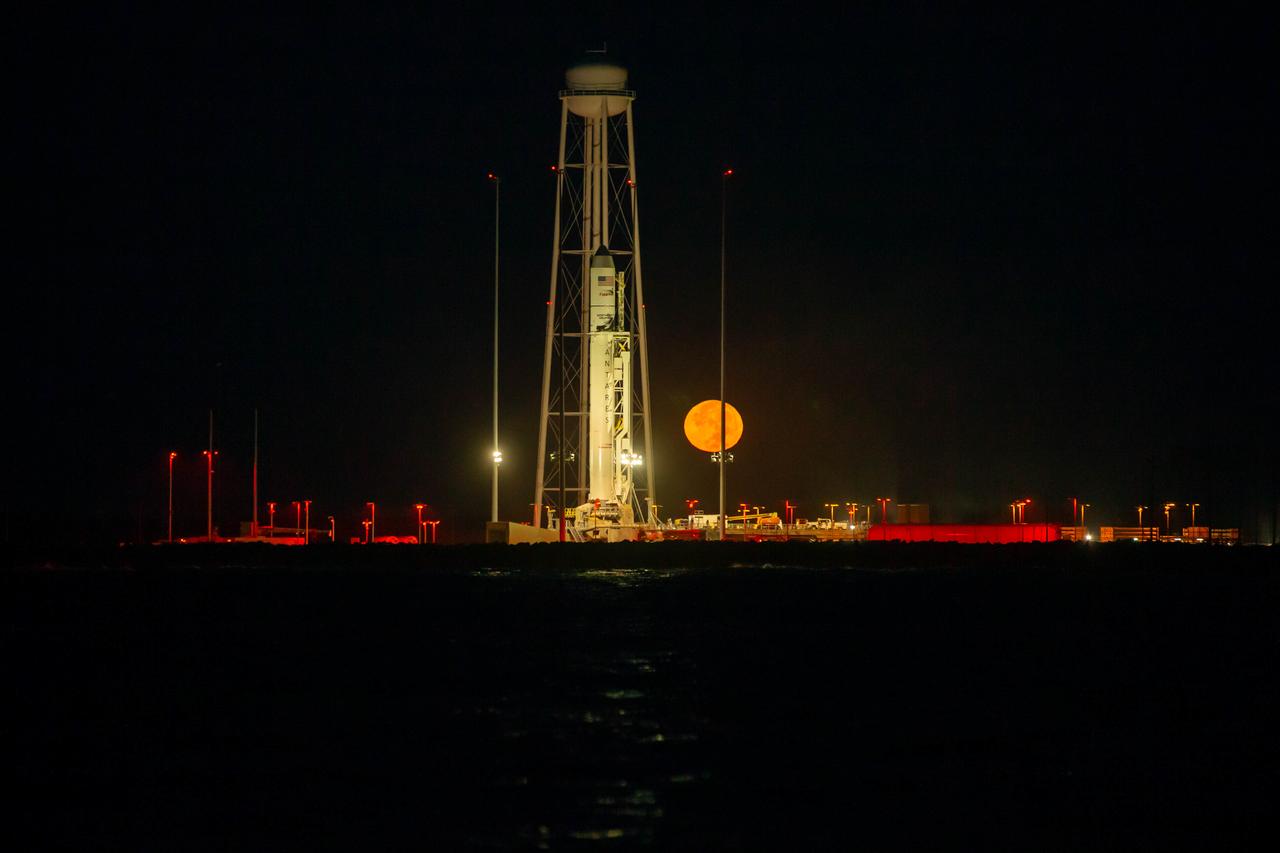
A Northrop Grumman Antares rocket carrying a Cygnus resupply spacecraft is seen on the Mid-Atlantic Regional Spaceport’s Pad-0A, Thursday, October 1, 2020, at NASA's Wallops Flight Facility in Virginia as the Harvest Moon sets. Northrop Grumman’s 14th contracted cargo resupply mission with NASA to the International Space Station will deliver nearly 8,000 pounds of science and research, crew supplies and vehicle hardware to the orbital laboratory and its crew. The CRS-14 Cygnus spacecraft is named after the first female astronaut of Indian descent, Kalpana Chawla, and is scheduled to launch at 9:38 p.m., Thursday, October 1, 2020 EDT. Photo Credit: (NASA/Patrick Black)
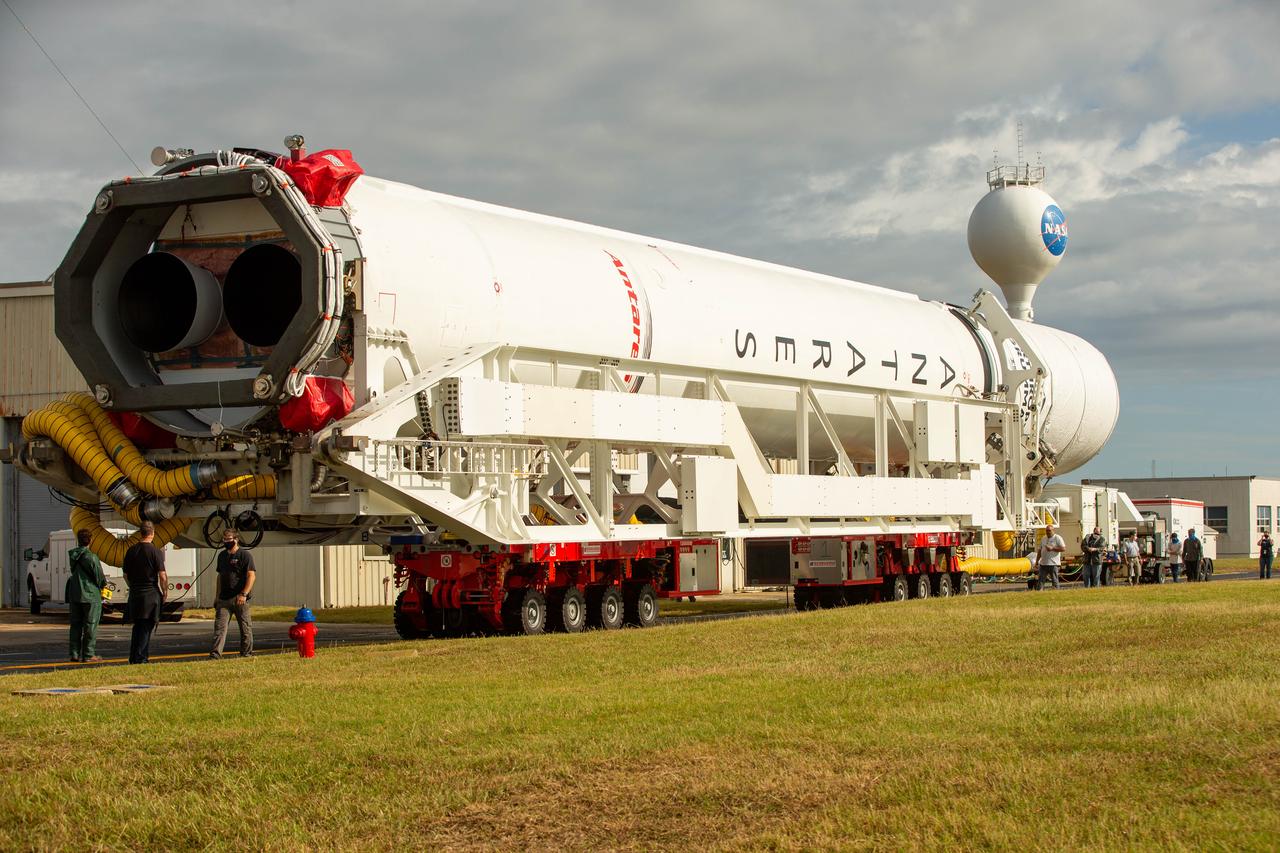
A Northrop Grumman Antares rocket carrying a Cygnus resupply spacecraft is seen as it is rolled out of the Horizontal Integration Facility to the Mid-Atlantic Regional Spaceport’s Pad-0A, Saturday, September 26, 2020, at NASA's Wallops Flight Facility in Virginia. Northrop Grumman’s 14th contracted cargo resupply mission with NASA to the International Space Station will deliver about 8,000 pounds of science and research, crew supplies and vehicle hardware to the orbital laboratory and its crew. The CRS-14 Cygnus spacecraft is named after the first female astronaut of Indian descent, Kaplana Chawla, and is scheduled to launch at 10:27 p.m., Tuesday, September 29, 2020 EDT. Photo Credit: (NASA/Patrick Black)

A Northrop Grumman Antares rocket carrying a Cygnus resupply spacecraft is seen on the Mid-Atlantic Regional Spaceport’s Pad-0A, Thursday, October 1, 2020, at NASA's Wallops Flight Facility in Virginia. Northrop Grumman’s 14th contracted cargo resupply mission with NASA to the International Space Station will deliver nearly 8,000 pounds of science and research, crew supplies and vehicle hardware to the orbital laboratory and its crew. The CRS-14 Cygnus spacecraft is named after the first female astronaut of Indian descent, Kalpana Chawla, and is scheduled to launch at 9:38 p.m., Thursday, October 1, 2020 EDT. Photo Credit: (NASA/Patrick Black)
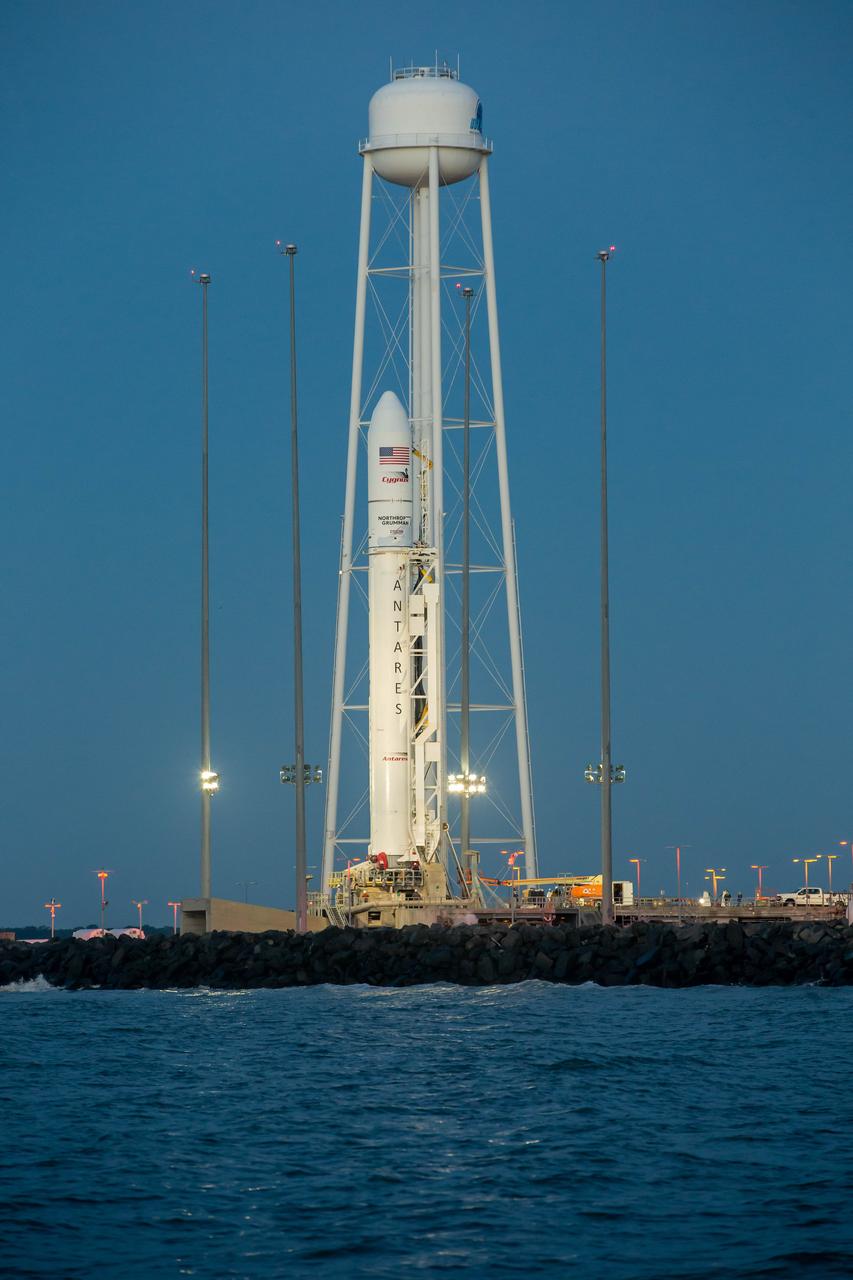
A Northrop Grumman Antares rocket carrying a Cygnus resupply spacecraft is seen on the Mid-Atlantic Regional Spaceport’s Pad-0A, Thursday, October 1, 2020, at NASA's Wallops Flight Facility in Virginia. Northrop Grumman’s 14th contracted cargo resupply mission with NASA to the International Space Station will deliver nearly 8,000 pounds of science and research, crew supplies and vehicle hardware to the orbital laboratory and its crew. The CRS-14 Cygnus spacecraft is named after the first female astronaut of Indian descent, Kalpana Chawla, and is scheduled to launch at 9:38 p.m., Thursday, October 1, 2020 EDT. Photo Credit: (NASA/Patrick Black)
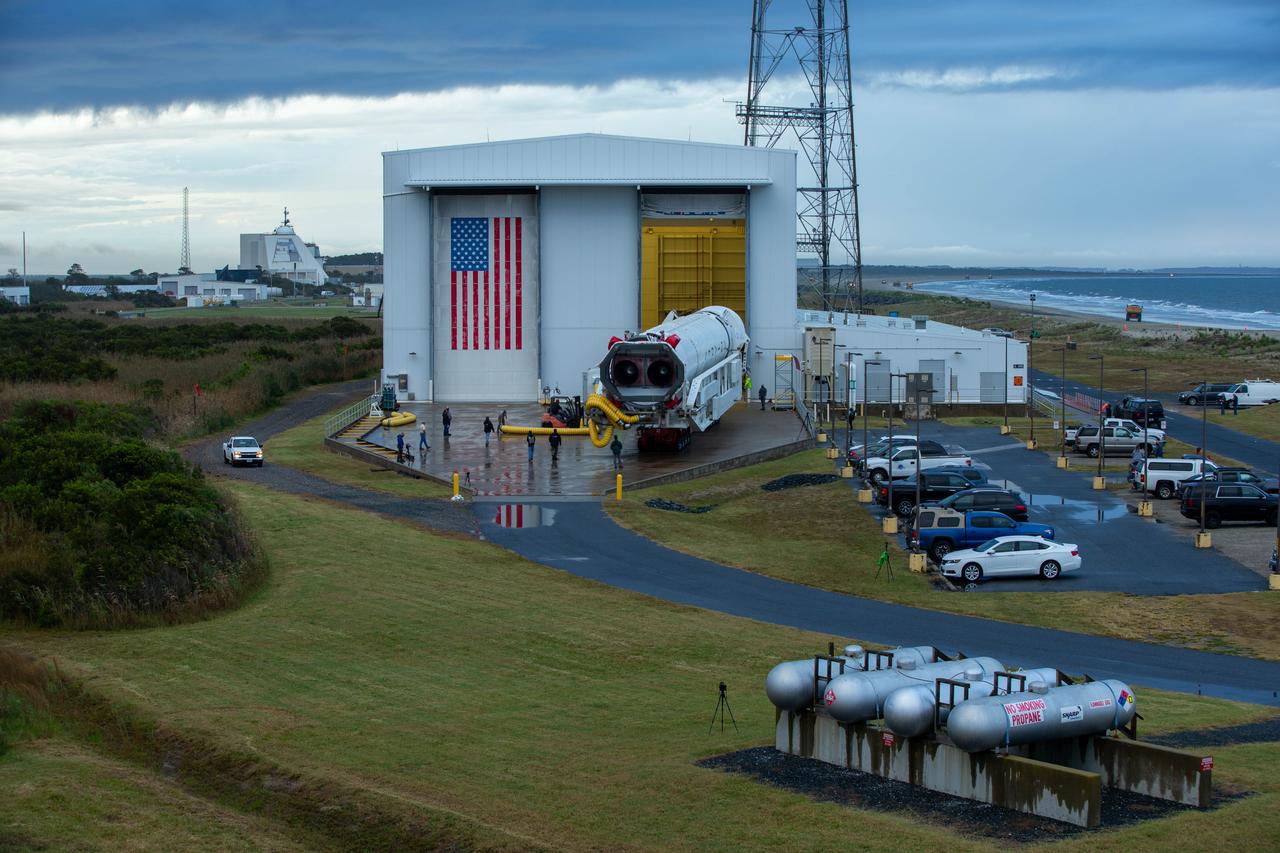
A Northrop Grumman Antares rocket carrying a Cygnus resupply spacecraft is seen as it is rolled out of the Horizontal Integration Facility to the Mid-Atlantic Regional Spaceport’s Pad-0A, Saturday, September 26, 2020, at NASA's Wallops Flight Facility in Virginia. Northrop Grumman’s 14th contracted cargo resupply mission with NASA to the International Space Station will deliver about 8,000 pounds of science and research, crew supplies and vehicle hardware to the orbital laboratory and its crew. The CRS-14 Cygnus spacecraft is named after the first female astronaut of Indian descent, Kalpana Chawla, and is scheduled to launch at 10:27 p.m., Tuesday, September 29, 2020 EDT. Photo Credit: (NASA/Patrick Black)
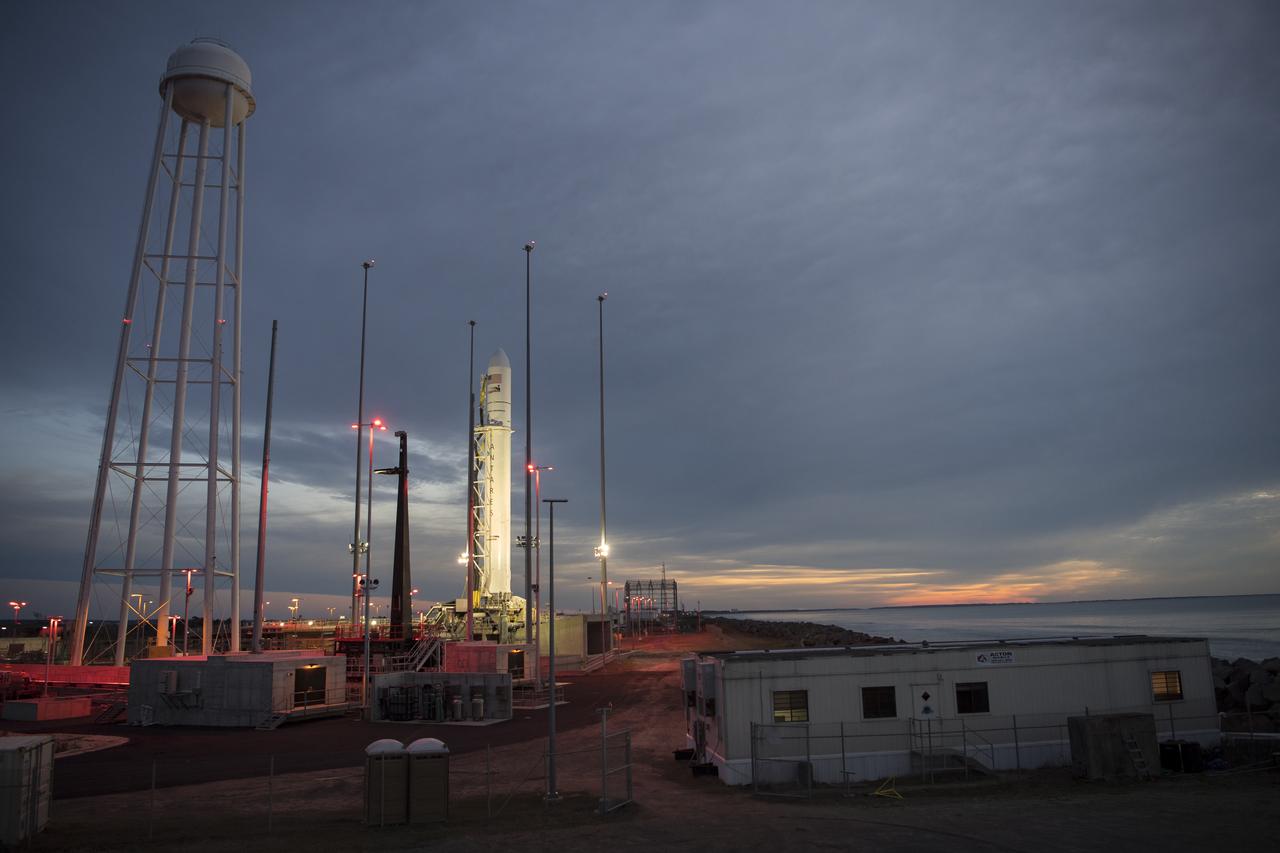
A Northrop Grumman Antares rocket carrying a Cygnus resupply spacecraft is seen at sunrise on Pad-0A, Friday, Feb. 14, 2020, at NASA's Wallops Flight Facility in Virginia. Northrop Grumman’s 13th contracted cargo resupply mission with NASA to the International Space Station will deliver more than 7,500 pounds of science and research, crew supplies and vehicle hardware to the orbital laboratory and its crew. The CRS-13 Cygnus spacecraft is named after the first African American astronaut, Major Robert Henry Lawrence Jr., and is scheduled to launch at 3:43pm EST. Photo Credit: (NASA/Aubrey Gemignani)
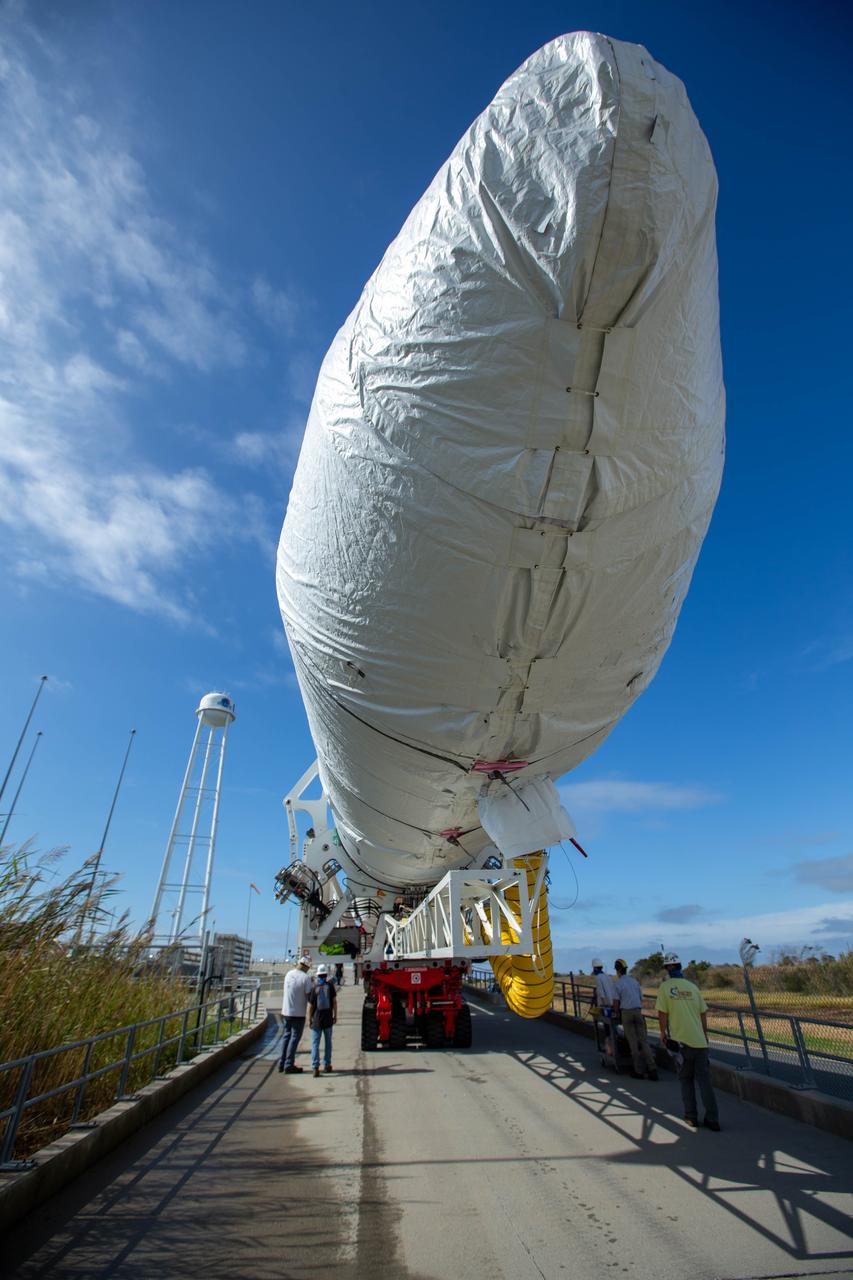
A Northrop Grumman Antares rocket carrying a Cygnus resupply spacecraft is seen as it is rolled out of the Horizontal Integration Facility to the Mid-Atlantic Regional Spaceport’s Pad-0A, Saturday, September 26, 2020, at NASA's Wallops Flight Facility in Virginia. Northrop Grumman’s 14th contracted cargo resupply mission with NASA to the International Space Station will deliver about 8,000 pounds of science and research, crew supplies and vehicle hardware to the orbital laboratory and its crew. The CRS-14 Cygnus spacecraft is named after the first female astronaut of Indian descent, Kaplana Chawla, and is scheduled to launch at 10:27 p.m., Tuesday, September 29, 2020 EDT. Photo Credit: (NASA/Patrick Black)
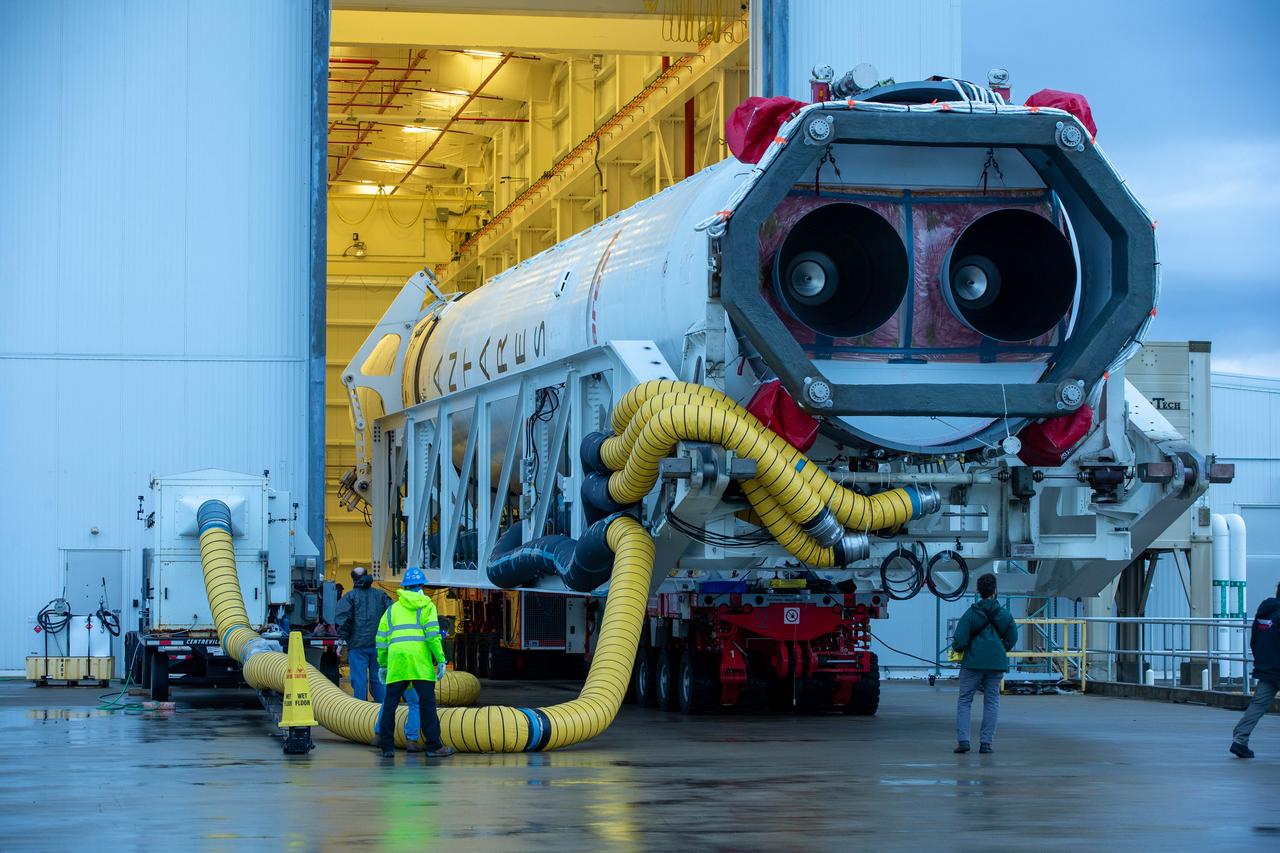
A Northrop Grumman Antares rocket carrying a Cygnus resupply spacecraft is seen as it is rolled out of the Horizontal Integration Facility to the Mid-Atlantic Regional Spaceport’s Pad-0A, Saturday, September 26, 2020, at NASA's Wallops Flight Facility in Virginia. Northrop Grumman’s 14th contracted cargo resupply mission with NASA to the International Space Station will deliver about 8,000 pounds of science and research, crew supplies and vehicle hardware to the orbital laboratory and its crew. The CRS-14 Cygnus spacecraft is named after the first female astronaut of Indian descent, Kaplana Chawla, and is scheduled to launch at 10:27 p.m., Tuesday, September 29, 2020 EDT. Photo Credit: (NASA/Patrick Black)
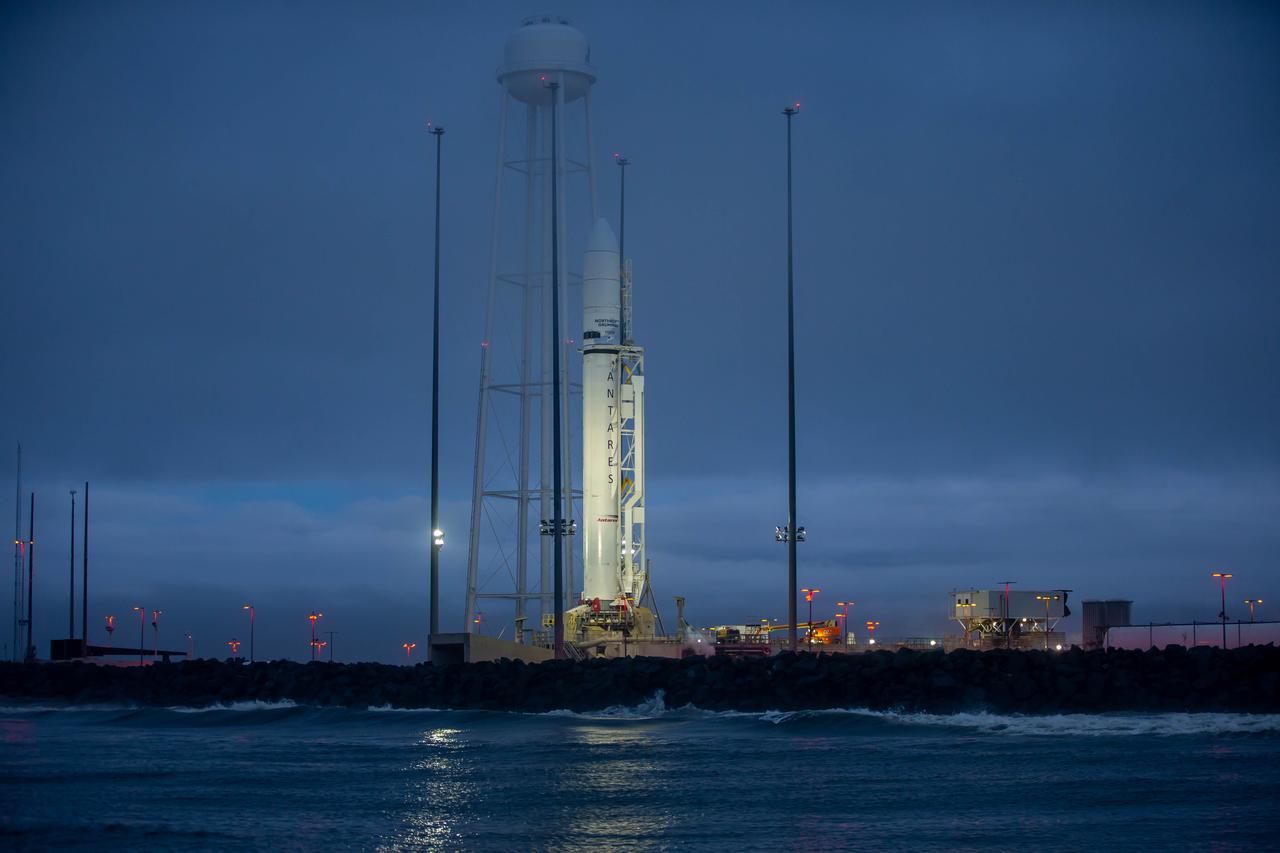
A Northrop Grumman Antares rocket carrying a Cygnus resupply spacecraft is raised into the vertical position on the Mid-Atlantic Regional Spaceport’s Pad-0A, Saturday, September 26, 2020, at NASA's Wallops Flight Facility in Virginia. Northrop Grumman’s 14th contracted cargo resupply mission with NASA to the International Space Station will deliver about 8,000 pounds of science and research, crew supplies and vehicle hardware to the orbital laboratory and its crew. The CRS-14 Cygnus spacecraft is named after the first female astronaut of Indian descent, Kalpana Chawla, and is scheduled to launch at 10:27 p.m., Tuesday, September 29, 2020 EDT. Photo Credit: (NASA/Patrick Black)
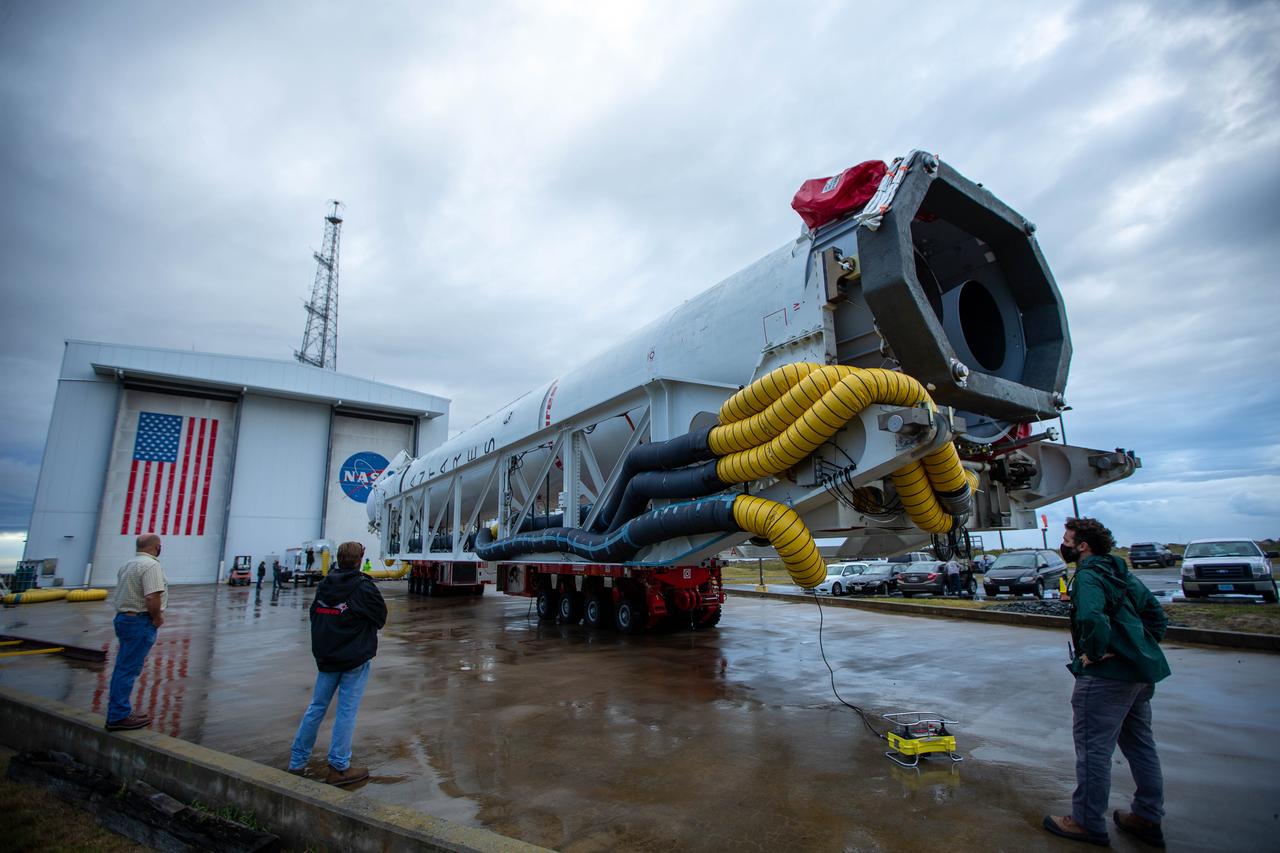
A Northrop Grumman Antares rocket carrying a Cygnus resupply spacecraft is seen as it is rolled out of the Horizontal Integration Facility to the Mid-Atlantic Regional Spaceport’s Pad-0A, Saturday, September 26, 2020, at NASA's Wallops Flight Facility in Virginia. Northrop Grumman’s 14th contracted cargo resupply mission with NASA to the International Space Station will deliver about 8,000 pounds of science and research, crew supplies and vehicle hardware to the orbital laboratory and its crew. The CRS-14 Cygnus spacecraft is named after the first female astronaut of Indian descent, Kaplana Chawla, and is scheduled to launch at 10:27 p.m., Tuesday, September 29, 2020 EDT. Photo Credit: (NASA/Patrick Black)
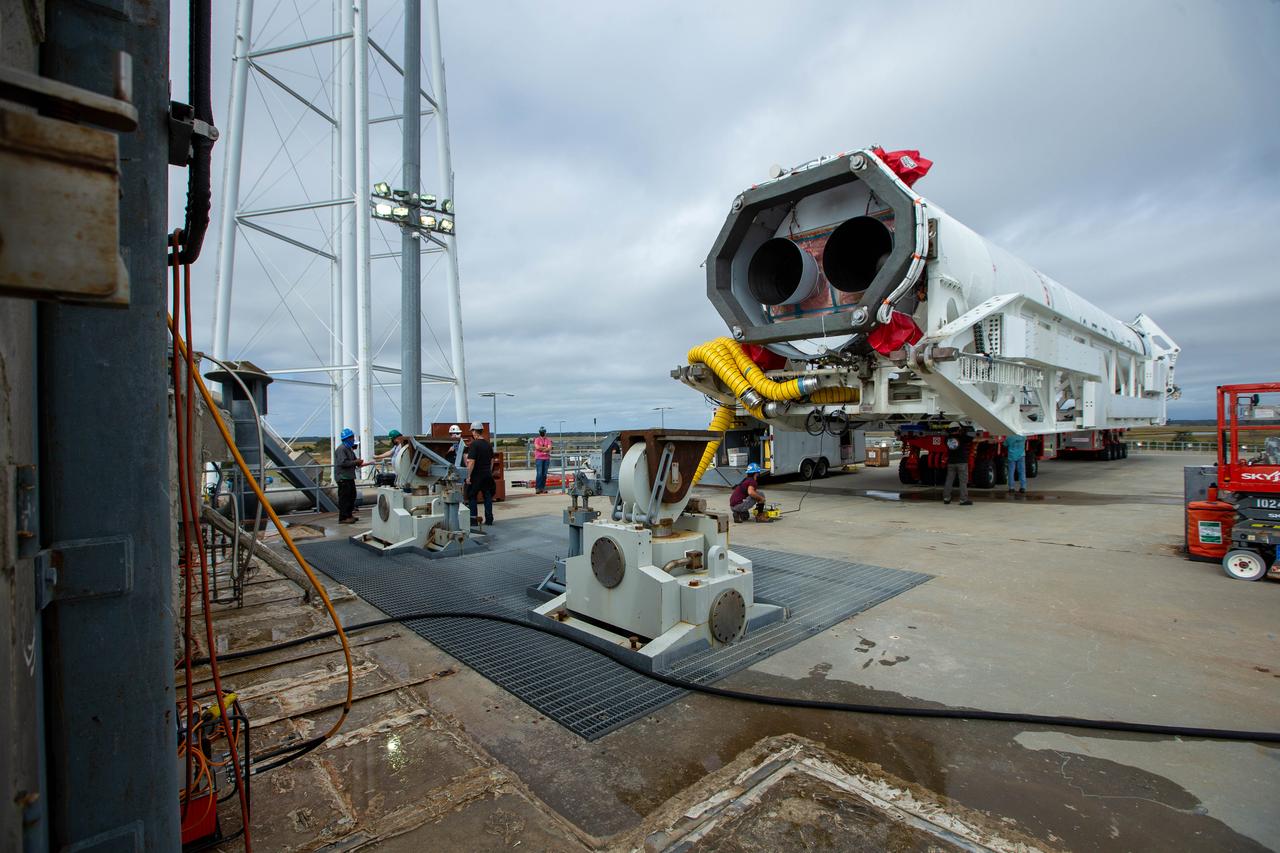
A Northrop Grumman Antares rocket carrying a Cygnus resupply spacecraft is seen as it is rolled out of the Horizontal Integration Facility to the Mid-Atlantic Regional Spaceport’s Pad-0A, Saturday, September 26, 2020, at NASA's Wallops Flight Facility in Virginia. Northrop Grumman’s 14th contracted cargo resupply mission with NASA to the International Space Station will deliver about 8,000 pounds of science and research, crew supplies and vehicle hardware to the orbital laboratory and its crew. The CRS-14 Cygnus spacecraft is named after the first female astronaut of Indian descent, Kalpana Chawla, and is scheduled to launch at 10:27 p.m., Tuesday, September 29, 2020, EDT. Photo Credit: (NASA/Patrick Black)
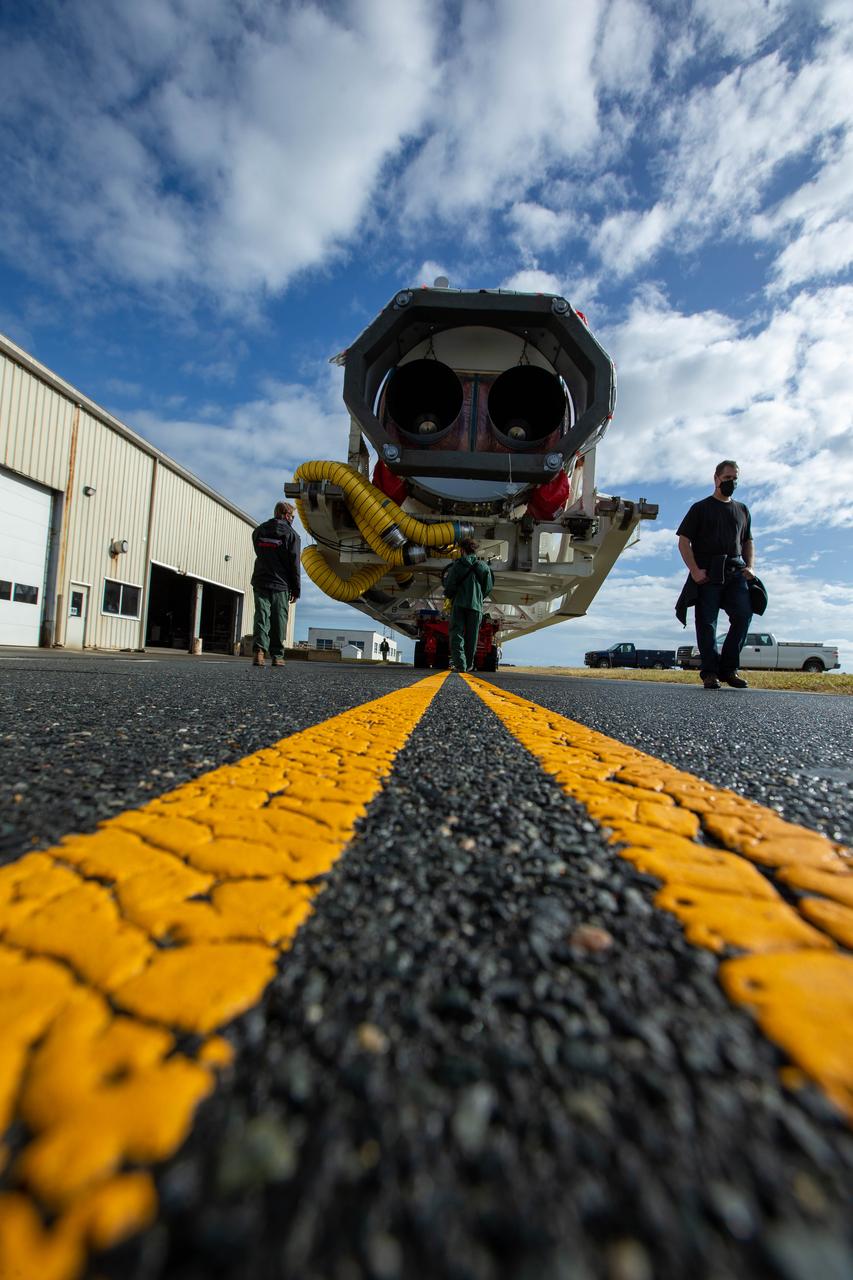
A Northrop Grumman Antares rocket carrying a Cygnus resupply spacecraft is seen as it is rolled out of the Horizontal Integration Facility to the Mid-Atlantic Regional Spaceport’s Pad-0A, Saturday, September 26, 2020, at NASA's Wallops Flight Facility in Virginia. Northrop Grumman’s 14th contracted cargo resupply mission with NASA to the International Space Station will deliver about 8,000 pounds of science and research, crew supplies and vehicle hardware to the orbital laboratory and its crew. The CRS-14 Cygnus spacecraft is named after the first female astronaut of Indian descent, Kaplana Chawla, and is scheduled to launch at 10:27 p.m., Tuesday, September 29, 2020 EDT. Photo Credit: (NASA/Patrick Black)
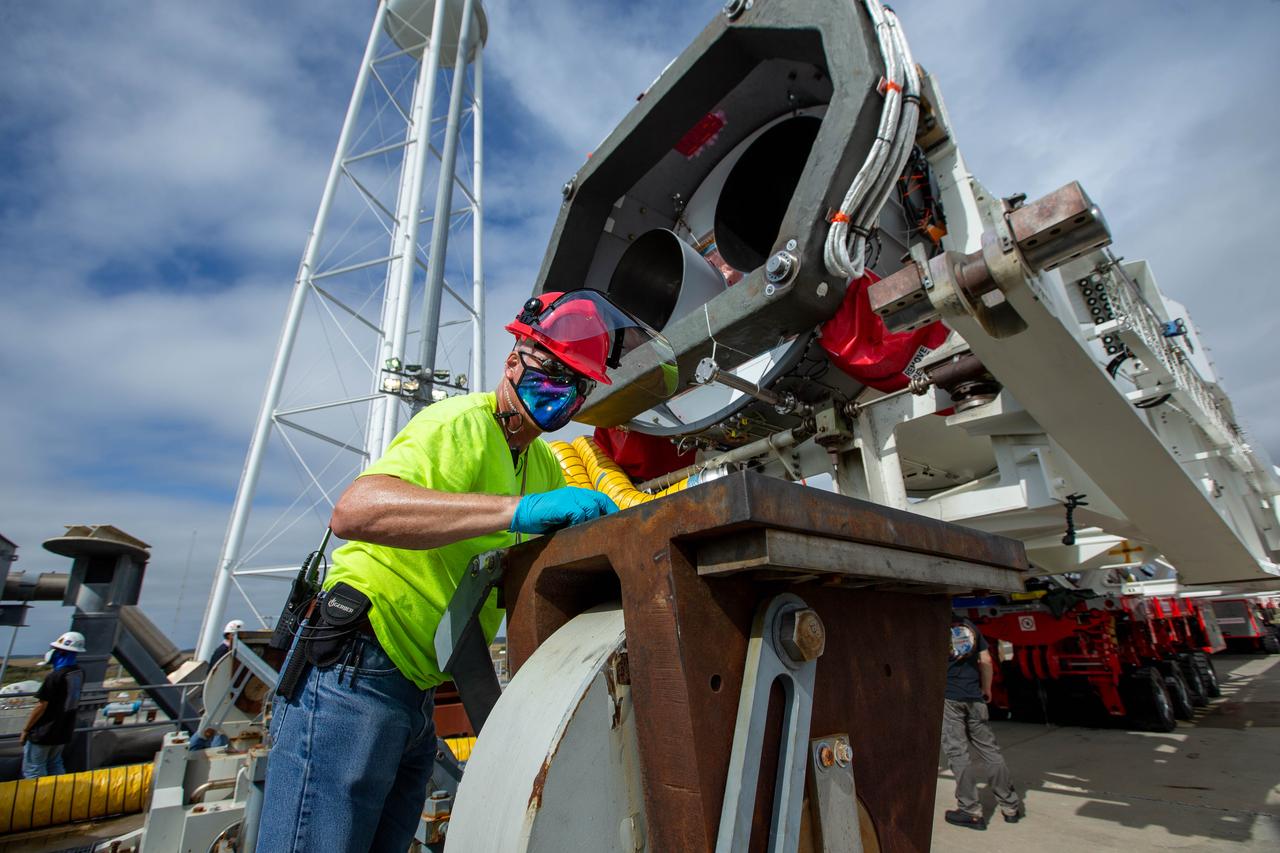
A Northrop Grumman Antares rocket carrying a Cygnus resupply spacecraft is seen as it is rolled out of the Horizontal Integration Facility to the Mid-Atlantic Regional Spaceport’s Pad-0A, Saturday, September 26, 2020, at NASA's Wallops Flight Facility in Virginia. Northrop Grumman’s 14th contracted cargo resupply mission with NASA to the International Space Station will deliver about 8,000 pounds of science and research, crew supplies and vehicle hardware to the orbital laboratory and its crew. The CRS-14 Cygnus spacecraft is named after the first female astronaut of Indian descent, Kaplana Chawla, and is scheduled to launch at 10:27 p.m., Tuesday, September 29, 2020 EDT. Photo Credit: (NASA/Patrick Black)
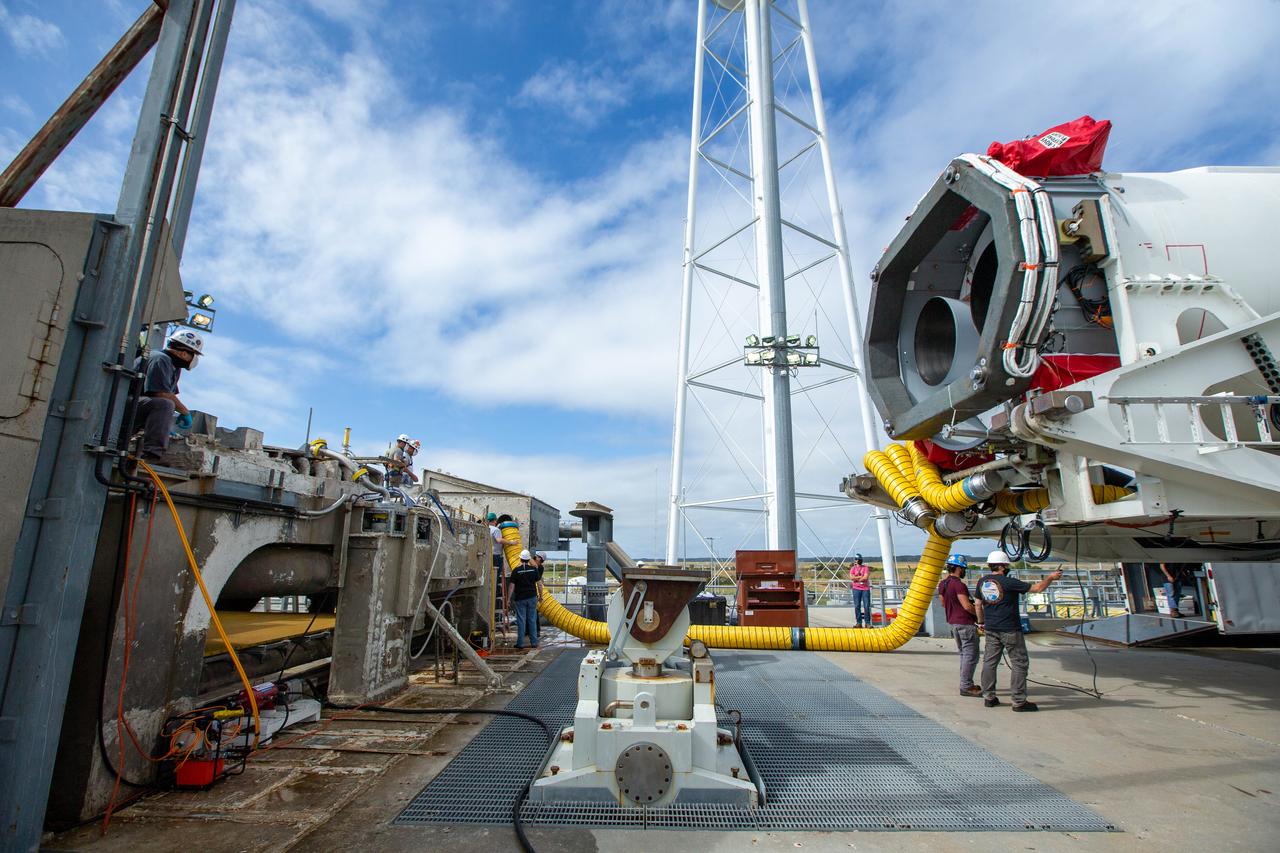
A Northrop Grumman Antares rocket carrying a Cygnus resupply spacecraft is seen as it is rolled out of the Horizontal Integration Facility to the Mid-Atlantic Regional Spaceport’s Pad-0A, Saturday, September 26, 2020, at NASA's Wallops Flight Facility in Virginia. Northrop Grumman’s 14th contracted cargo resupply mission with NASA to the International Space Station will deliver about 8,000 pounds of science and research, crew supplies and vehicle hardware to the orbital laboratory and its crew. The CRS-14 Cygnus spacecraft is named after the first female astronaut of Indian descent, Kaplana Chawla, and is scheduled to launch at 10:27 p.m., Tuesday, September 29, 2020 EDT. Photo Credit: (NASA/Patrick Black)

A Northrop Grumman Antares rocket carrying a Cygnus resupply spacecraft is seen on the Mid-Atlantic Regional Spaceport’s Pad-0A, Thursday, October 1, 2020, at NASA's Wallops Flight Facility in Virginia as the Harvest Moon sets. Northrop Grumman’s 14th contracted cargo resupply mission with NASA to the International Space Station will deliver nearly 8,000 pounds of science and research, crew supplies and vehicle hardware to the orbital laboratory and its crew. The CRS-14 Cygnus spacecraft is named after the first female astronaut of Indian descent, Kalpana Chawla, and is scheduled to launch at 9:38 p.m., Thursday, October 1, 2020 EDT. Photo Credit: (NASA/Patrick Black)
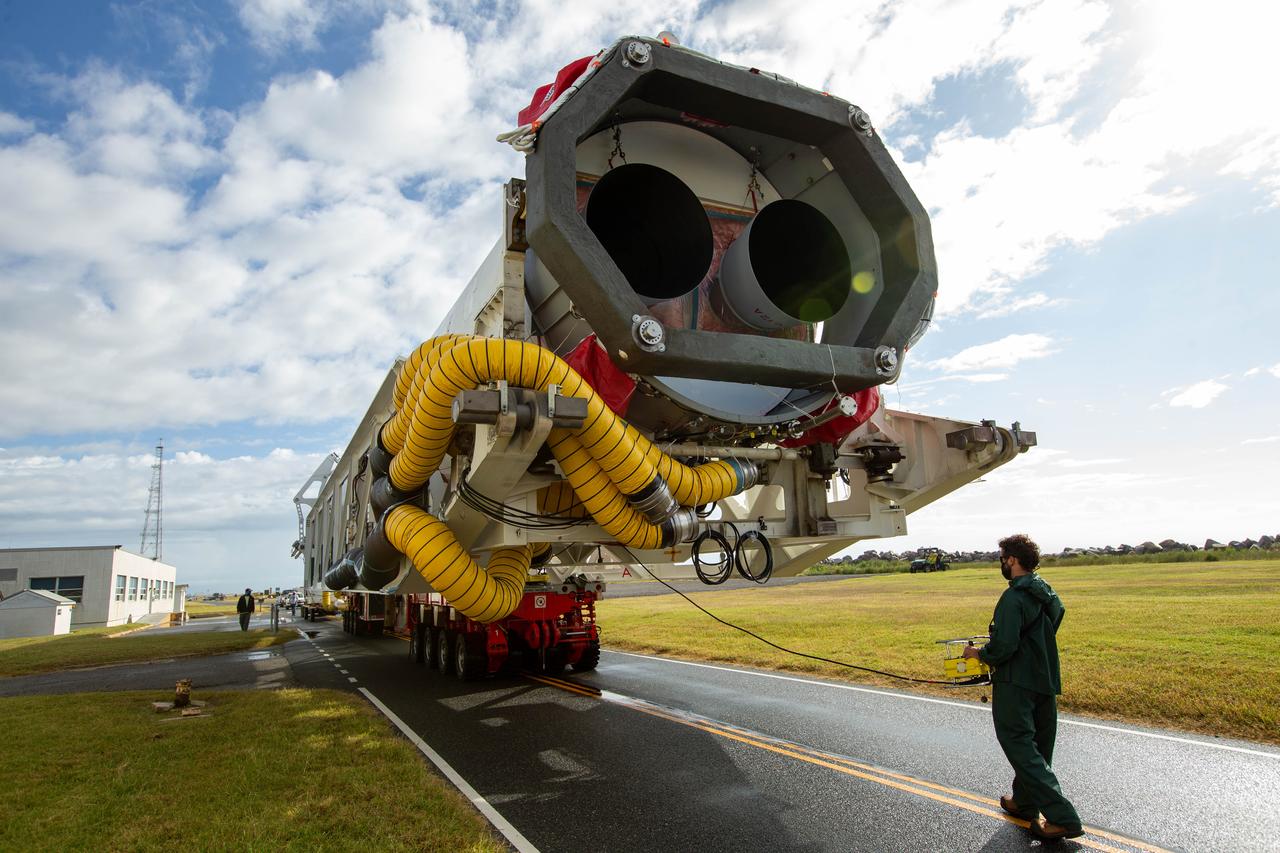
A Northrop Grumman Antares rocket carrying a Cygnus resupply spacecraft is seen as it is rolled out of the Horizontal Integration Facility to the Mid-Atlantic Regional Spaceport’s Pad-0A, Saturday, September 26, 2020, at NASA's Wallops Flight Facility in Virginia. Northrop Grumman’s 14th contracted cargo resupply mission with NASA to the International Space Station will deliver about 8,000 pounds of science and research, crew supplies and vehicle hardware to the orbital laboratory and its crew. The CRS-14 Cygnus spacecraft is named after the first female astronaut of Indian descent, Kaplana Chawla, and is scheduled to launch at 10:27 p.m., Tuesday, September 29, 2020 EDT. Photo Credit: (NASA/Patrick Black)
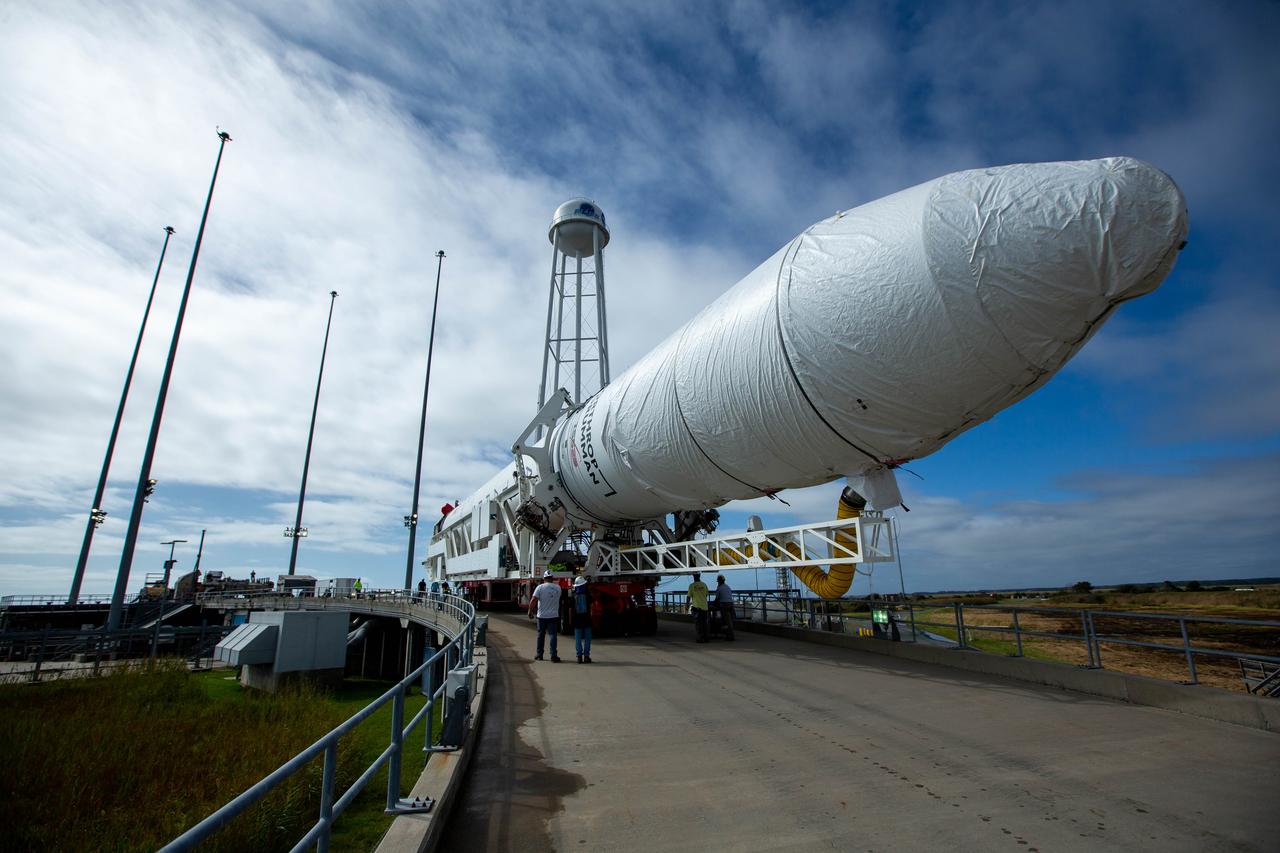
A Northrop Grumman Antares rocket carrying a Cygnus resupply spacecraft is seen as it is rolled out of the Horizontal Integration Facility to the Mid-Atlantic Regional Spaceport’s Pad-0A, Saturday, September 26, 2020, at NASA's Wallops Flight Facility in Virginia. Northrop Grumman’s 14th contracted cargo resupply mission with NASA to the International Space Station will deliver about 8,000 pounds of science and research, crew supplies and vehicle hardware to the orbital laboratory and its crew. The CRS-14 Cygnus spacecraft is named after the first female astronaut of Indian descent, Kalpana Chawla, and is scheduled to launch at 10:27 p.m., Tuesday, September 29, 2020 EDT. Photo Credit: (NASA/Patrick Black)
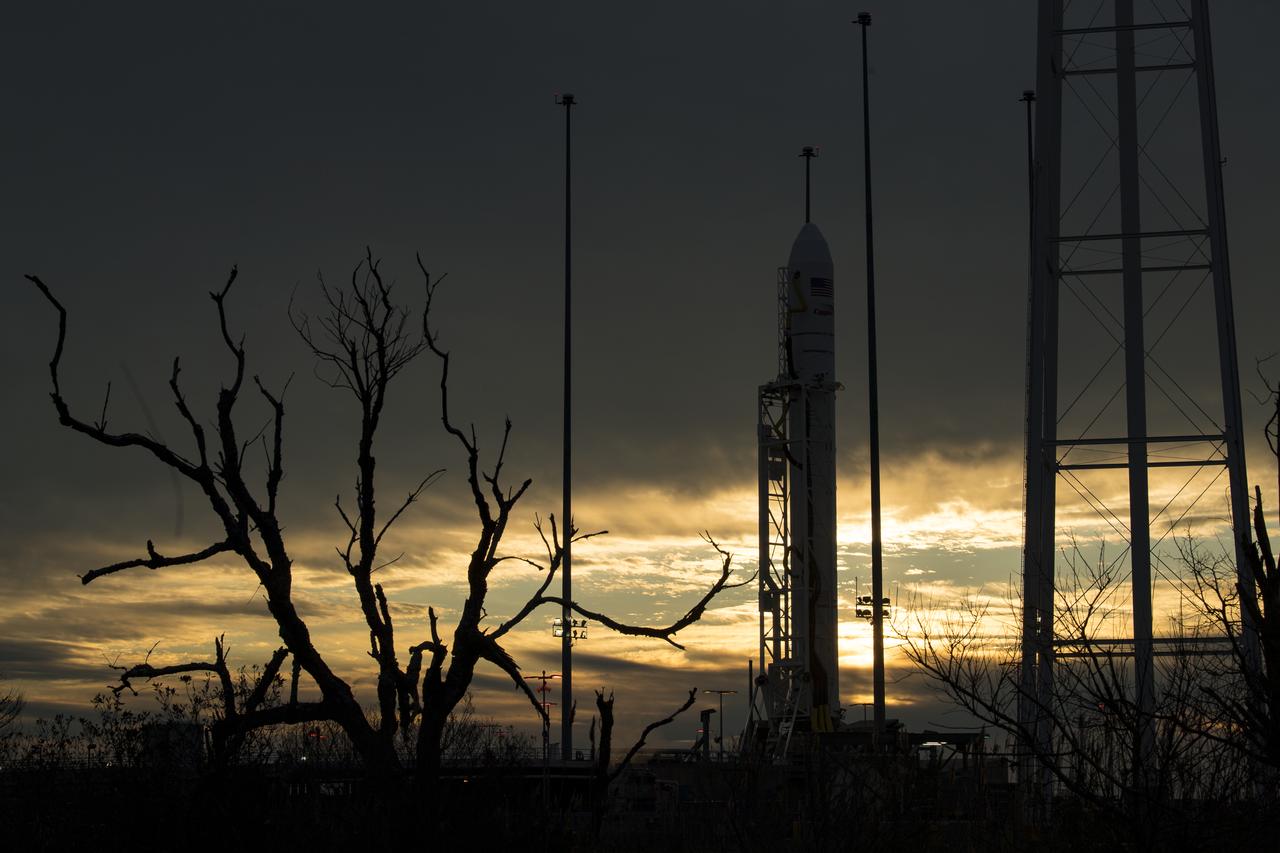
A Northrop Grumman Antares rocket carrying a Cygnus resupply spacecraft is seen at sunrise on Pad-0A, Friday, Feb. 14, 2020, at NASA's Wallops Flight Facility in Virginia. Northrop Grumman’s 13th contracted cargo resupply mission with NASA to the International Space Station will deliver more than 7,500 pounds of science and research, crew supplies and vehicle hardware to the orbital laboratory and its crew. The CRS-13 Cygnus spacecraft is named after the first African American astronaut, Major Robert Henry Lawrence Jr., and is scheduled to launch at 3:43pm EST. Photo Credit: (NASA/Aubrey Gemignani)
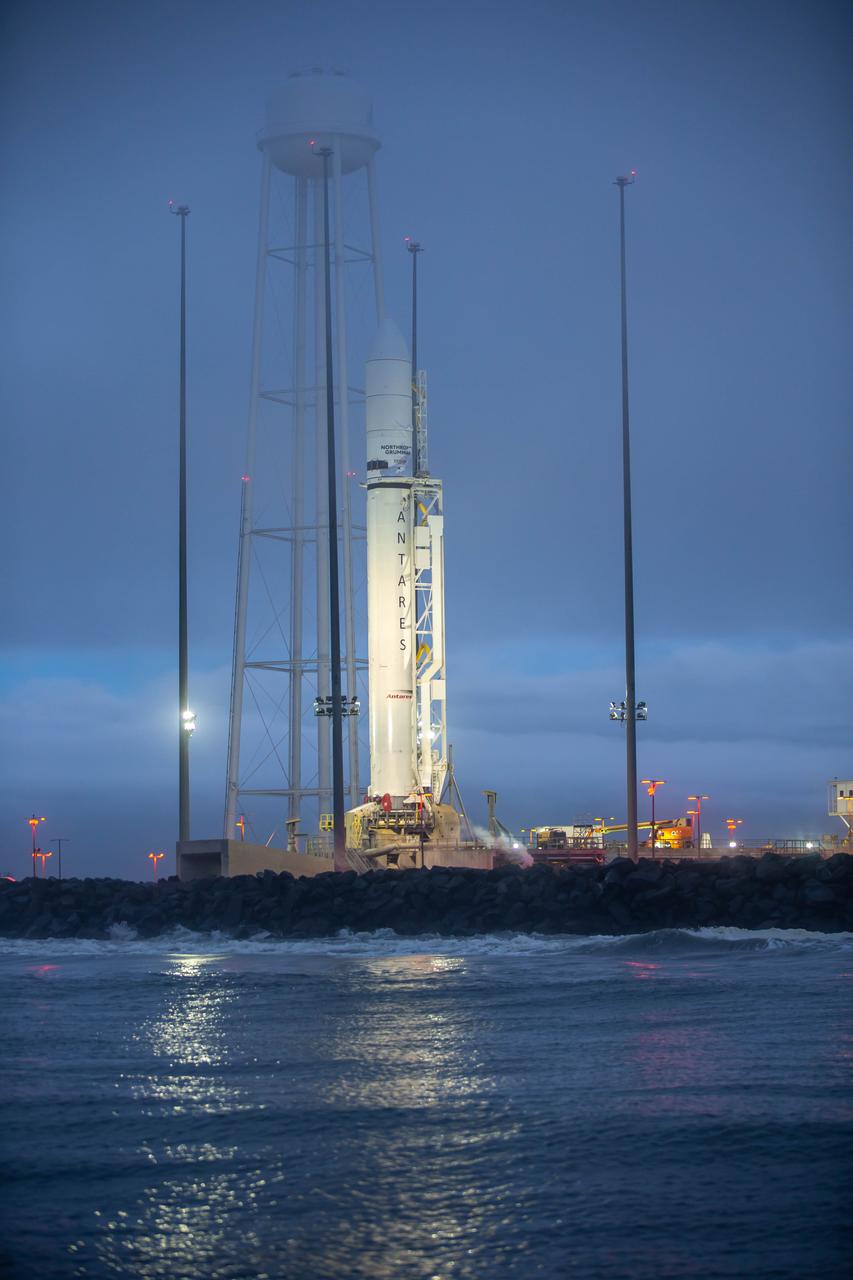
A Northrop Grumman Antares rocket carrying a Cygnus resupply spacecraft is raised into the vertical position on the Mid-Atlantic Regional Spaceport’s Pad-0A, Saturday, September 26, 2020, at NASA's Wallops Flight Facility in Virginia. Northrop Grumman’s 14th contracted cargo resupply mission with NASA to the International Space Station will deliver about 8,000 pounds of science and research, crew supplies and vehicle hardware to the orbital laboratory and its crew. The CRS-14 Cygnus spacecraft is named after the first female astronaut of Indian descent, Kalpana Chawla, and is scheduled to launch at 10:27 p.m., Tuesday, September 29, 2020 EDT. Photo Credit: (NASA/Patrick Black)
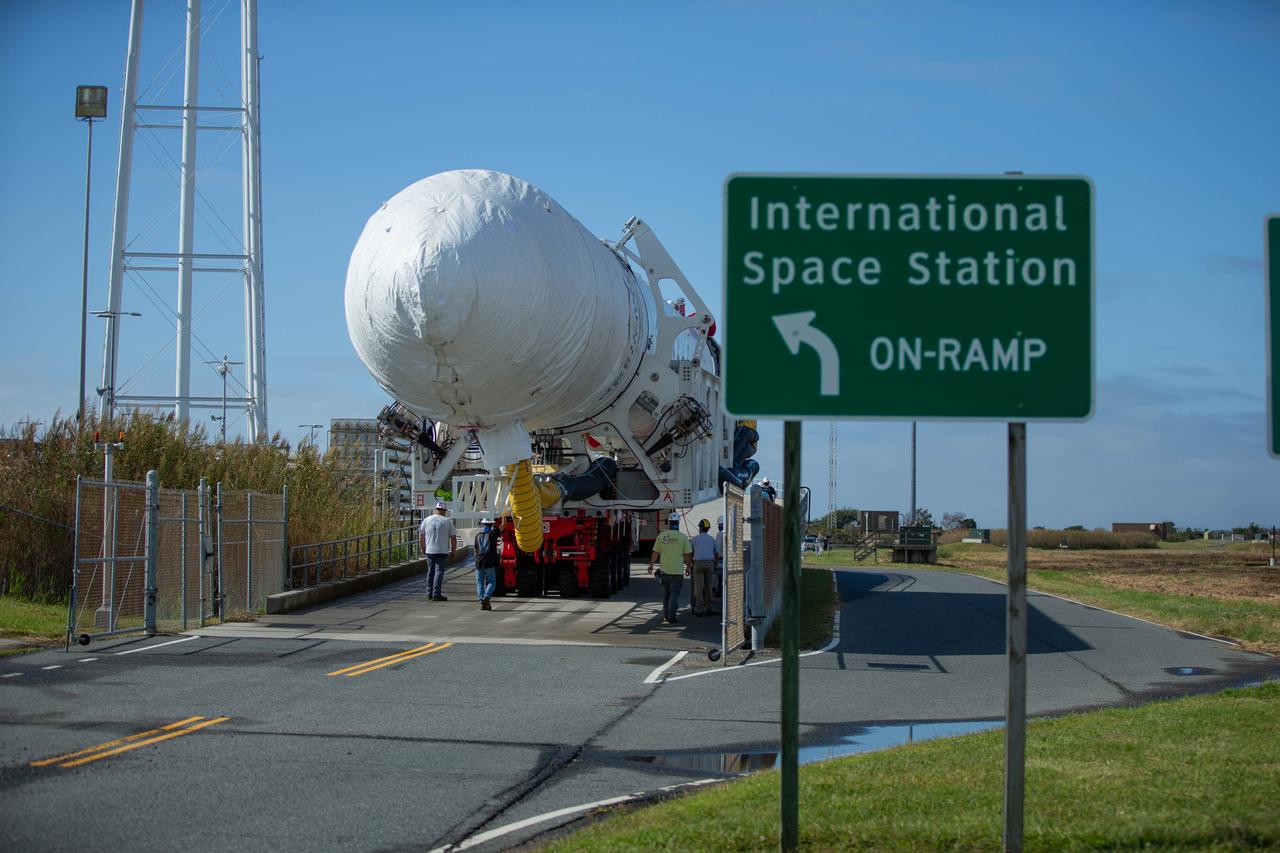
A Northrop Grumman Antares rocket carrying a Cygnus resupply spacecraft is seen as it is rolled out of the Horizontal Integration Facility to the Mid-Atlantic Regional Spaceport’s Pad-0A, Saturday, September 26, 2020, at NASA's Wallops Flight Facility in Virginia. Northrop Grumman’s 14th contracted cargo resupply mission with NASA to the International Space Station will deliver about 8,000 pounds of science and research, crew supplies and vehicle hardware to the orbital laboratory and its crew. The CRS-14 Cygnus spacecraft is named after the first female astronaut of Indian descent, Kaplana Chawla, and is scheduled to launch at 10:27 p.m., Tuesday, September 29, 2020 EDT. Photo Credit: (NASA/Patrick Black)
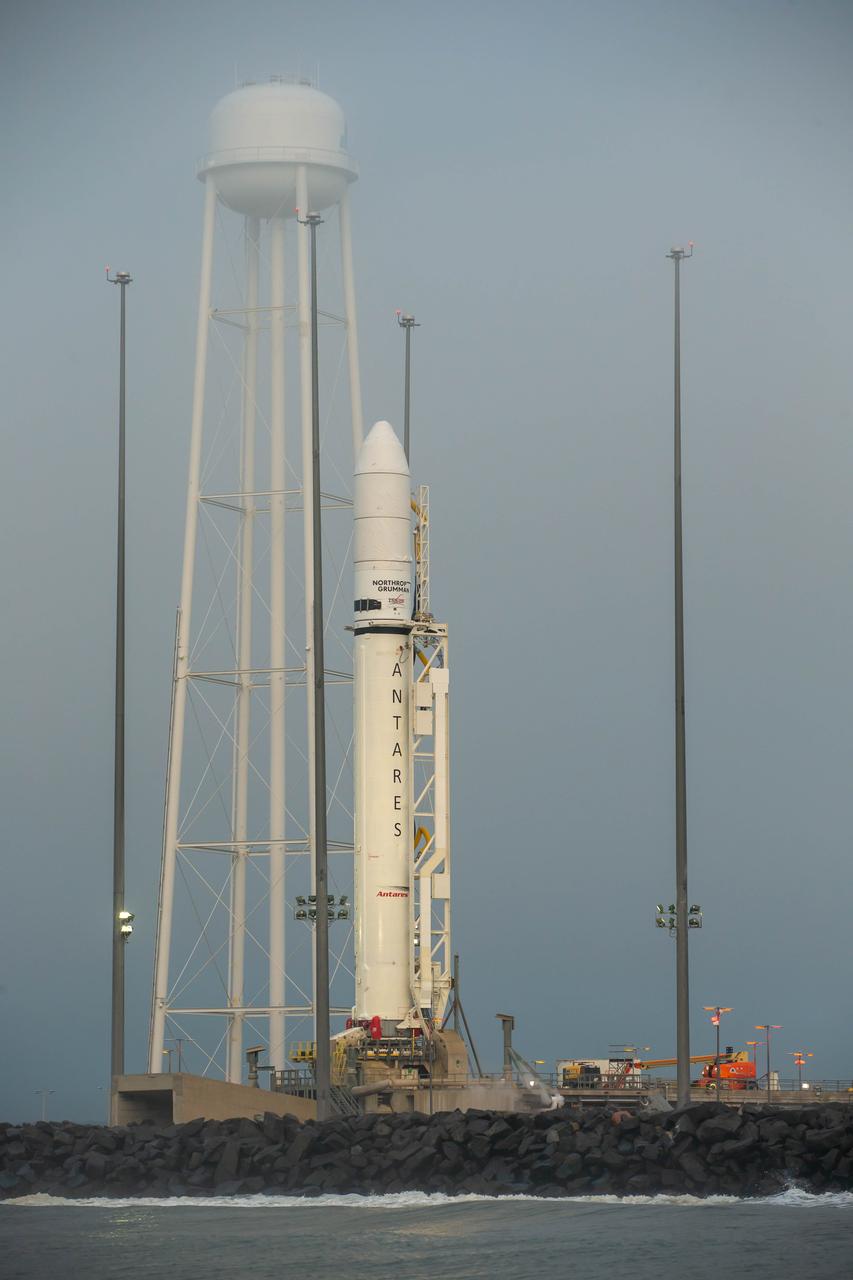
A Northrop Grumman Antares rocket carrying a Cygnus resupply spacecraft is raised into the vertical position on the Mid-Atlantic Regional Spaceport’s Pad-0A, Saturday, September 26, 2020, at NASA's Wallops Flight Facility in Virginia. Northrop Grumman’s 14th contracted cargo resupply mission with NASA to the International Space Station will deliver about 8,000 pounds of science and research, crew supplies and vehicle hardware to the orbital laboratory and its crew. The CRS-14 Cygnus spacecraft is named after the first female astronaut of Indian descent, Kalpana Chawla, and is scheduled to launch at 10:27 p.m., Tuesday, September 29, 2020 EDT. Photo Credit: (NASA/Patrick Black)
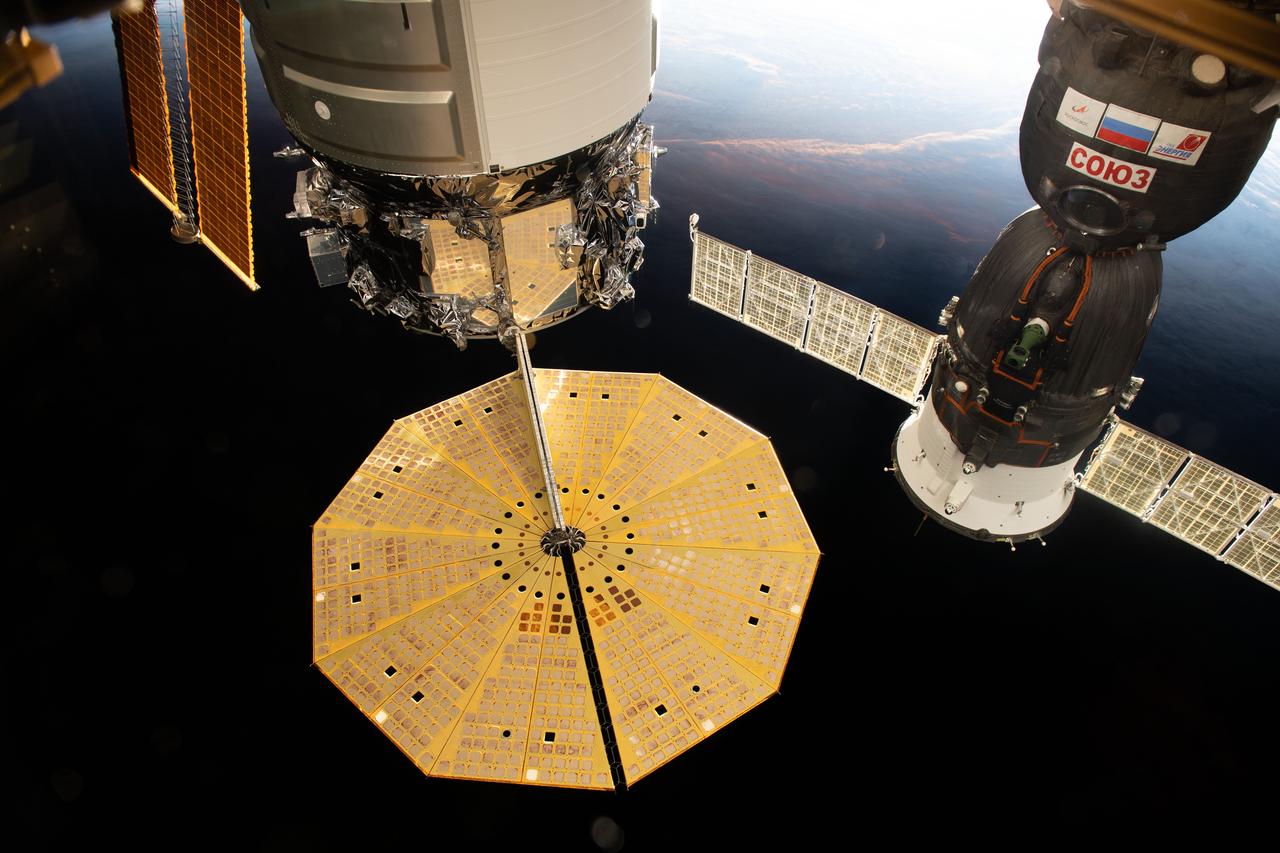
iss063e110863 (Oct. 18, 2020) --- Two spacecraft are pictured docked to the International Space Station as the complex flew into an orbital sunset above the Tasman Sea in between Australia and New Zealand. At left, with its prominent cymbal-shaped UltraFlex solar arrays is the Northrop Grumman's Cygnus resupply ship. To the right, is the Soyuz MS-17 crew ship that docked to the station on Oct. 14 carrying the Expedition 64 crew.
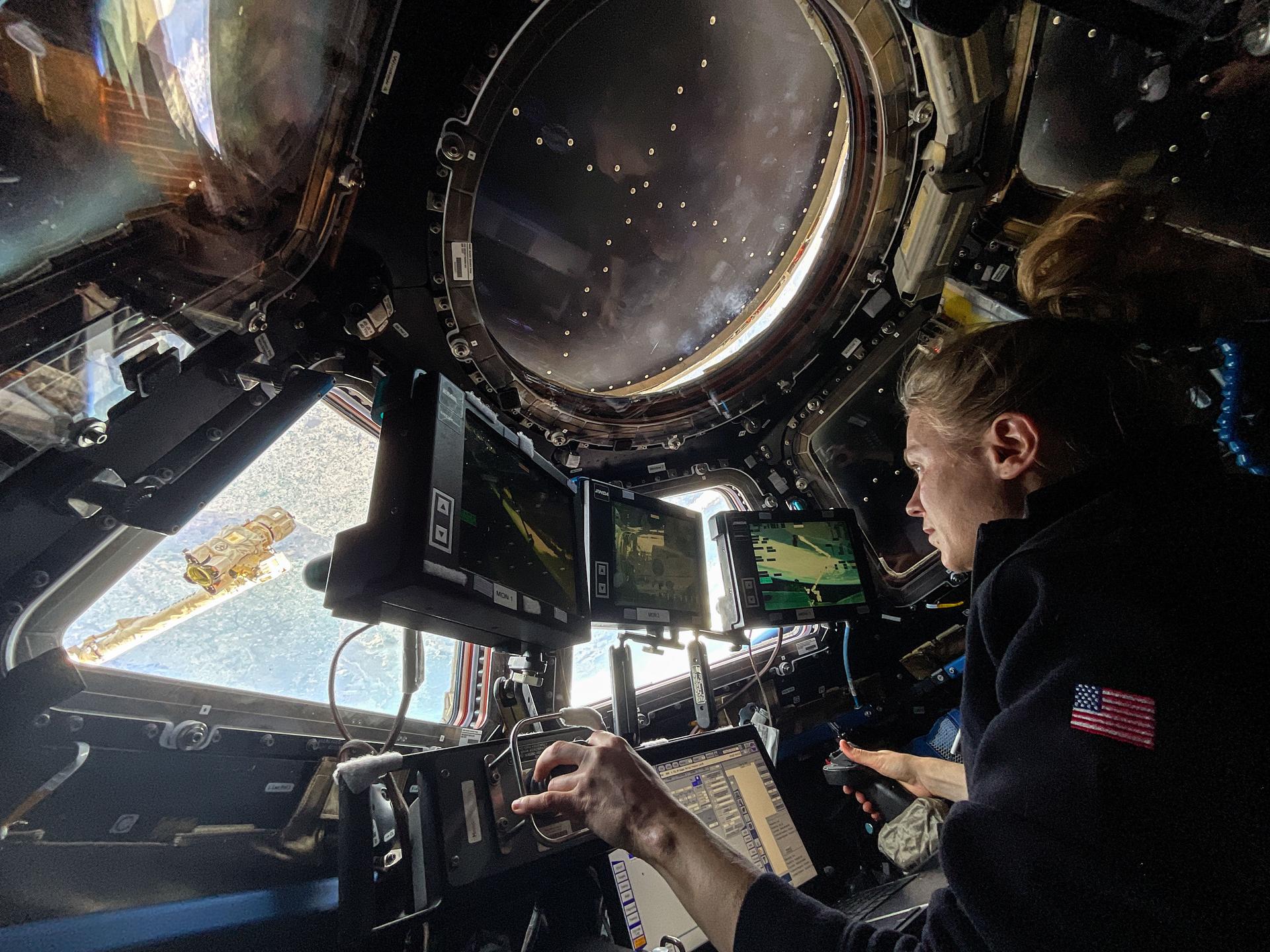
iss073e0981639 (Sept. 11, 2025) --- NASA astronaut and Expedition 73 Flight Engineer Zena Cardman practices Canadarm2 robotic maneuvers at the robotics workstation inside the International Space Station's cupola. Kim was preparing for the robotic capture of the Northrop Grumman Cygnus XL cargo spacecraft that launched on Sept. 14, 2025, and arrived on Sept. 18 delivering about 11,000 pounds of science, supplies, and hardware to the Expedition 73 crew.
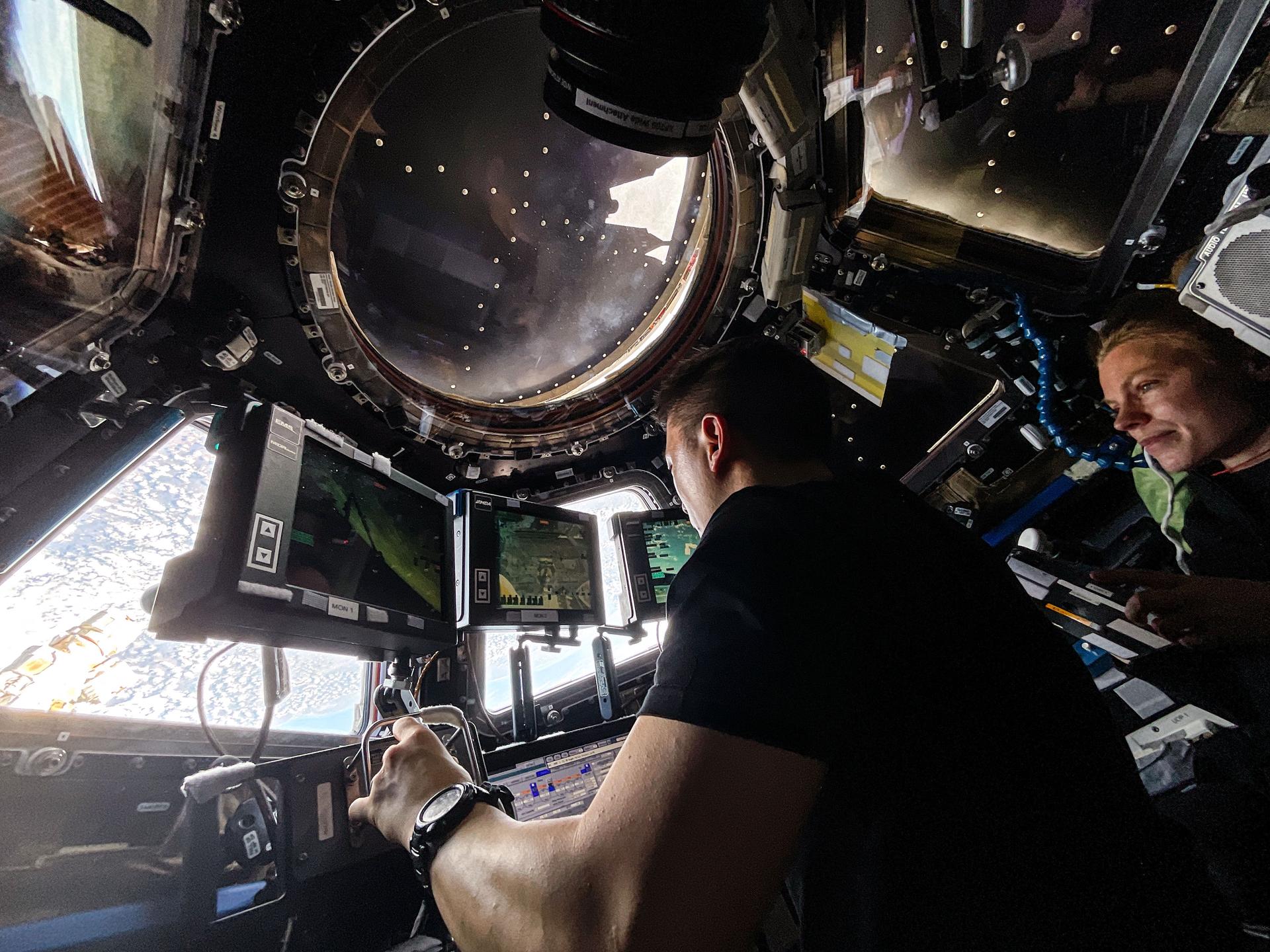
iss073e0981653 (Sept. 11, 2025) --- Expedition 73 Flight Engineers Jonny Kim and Zena Cardman, both NASA astronauts, practice Canadarm2 robotic maneuvers at the robotics workstation inside the International Space Station's cupola. The duo was preparing for the robotic capture of the Northrop Grumman Cygnus XL cargo spacecraft that launched on Sept. 14, 2025, and arrived on Sept. 18 delivering about 11,000 pounds of science, supplies, and hardware to the Expedition 73 crew.
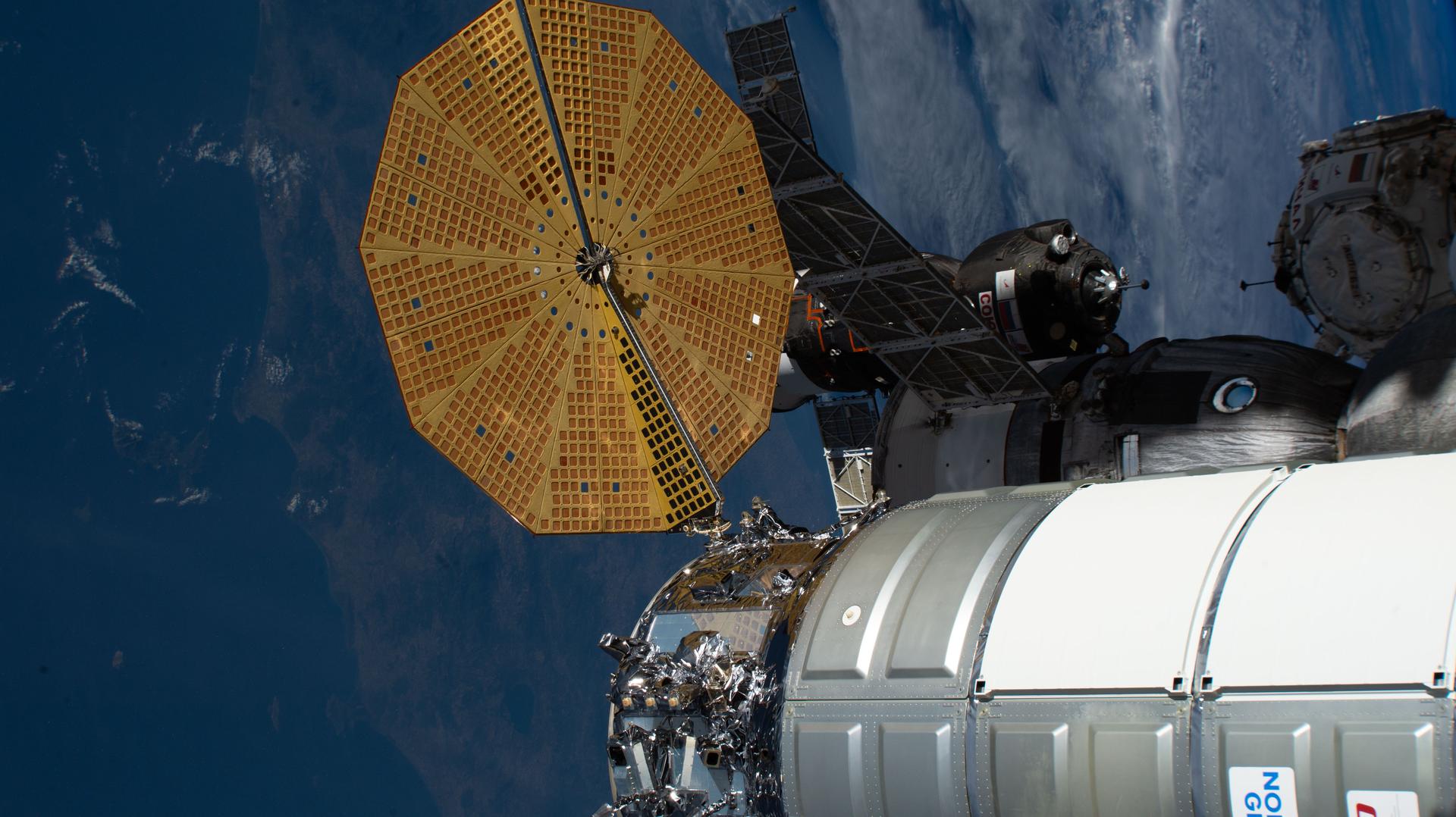
iss074e0814102 (June 14, 2026) --- In the background, the Soyuz MS-29 spacecraft, carrying NASA astronaut Anil Menon and Roscosmos cosmonauts Pyotr Dubrov and Anna Kikina, approaches the International Space Station for an automated docking to the Prichal module while both spacecraft were orbiting 264 miles above the Mediterranean Sea in between Spain and Italy. In the foreground, is the Northrop Grumman Cygnus XL cargo spacecraft with one of its prominent cymbal-shaped UltraFlex solar arrays. Credit: NASA
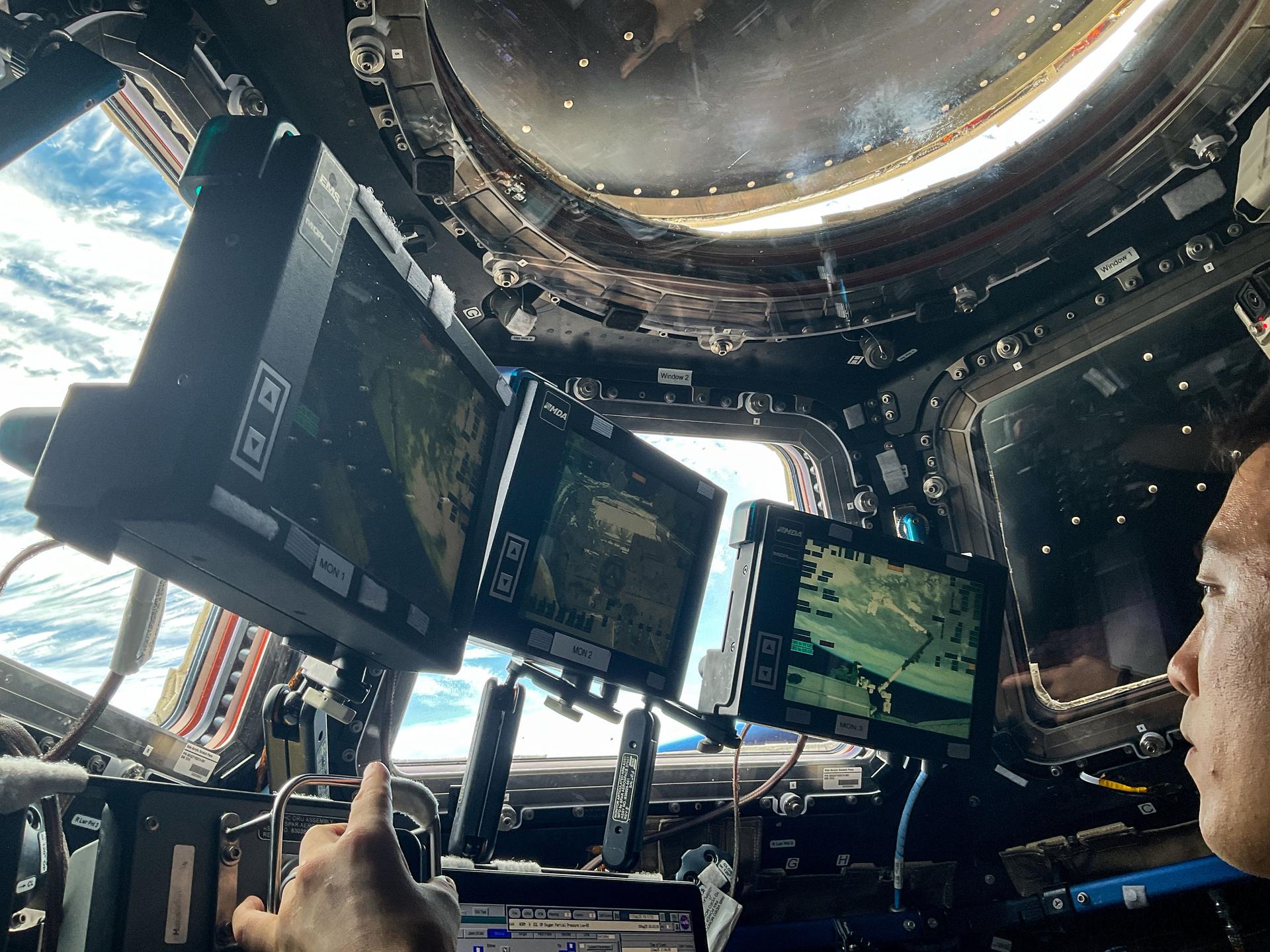
iss073e0981611 (Sept. 11, 2025) --- NASA astronaut and Expedition 73 Flight Engineer Jonny Kim practices Canadarm2 robotic maneuvers at the robotics workstation inside the International Space Station's cupola. Kim was preparing for the robotic capture of the Northrop Grumman Cygnus XL cargo spacecraft that launched on Sept. 14, 2025, and arrived on Sept. 18 delivering about 11,000 pounds of science, supplies, and hardware to the Expedition 73 crew.
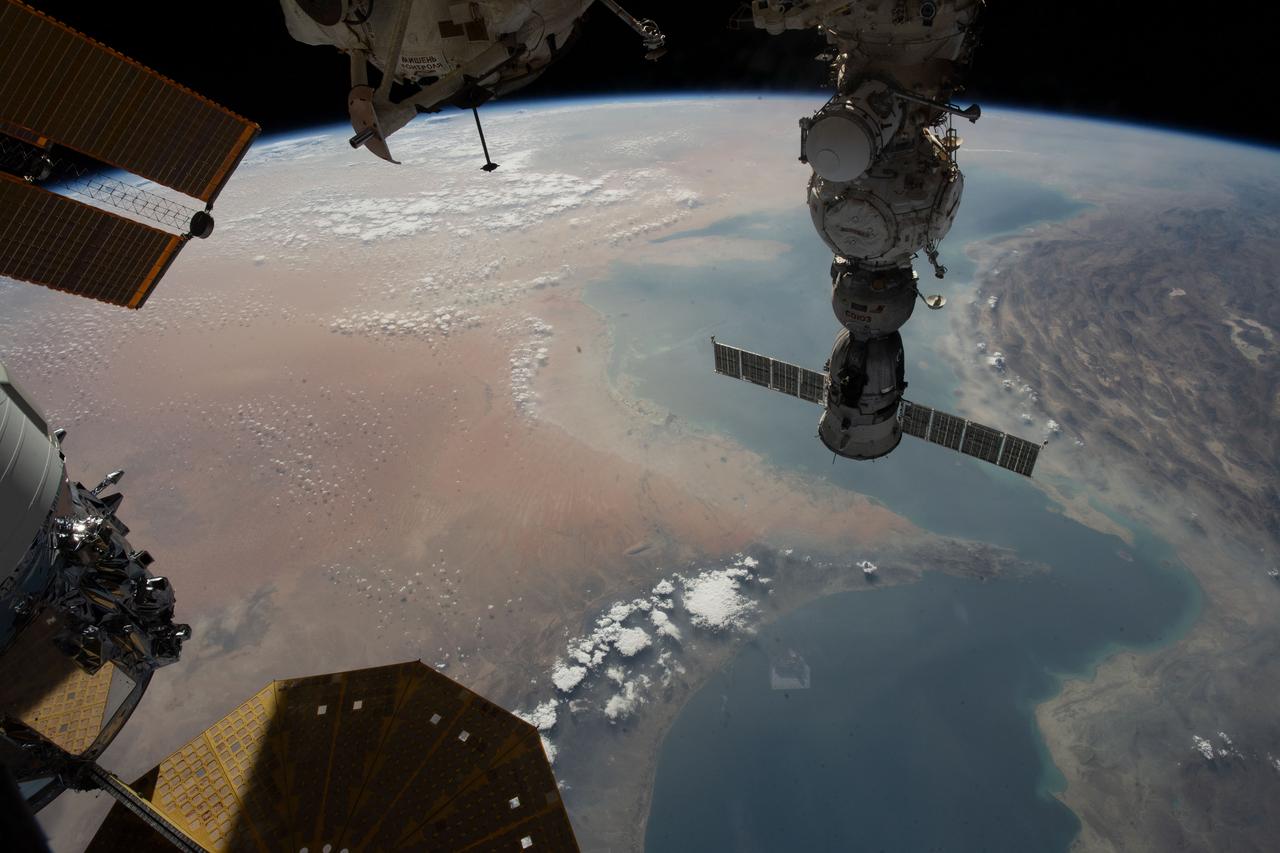
iss069e056939 (Aug. 14, 2023) --- The Strait of Hormuz connects the Gulf of Oman with the Persian Gulf in this photograph from the International Space Station as it orbited 262 miles above. In the right foreground, is the Soyuz MS-23 crew ship docked to the Prichal docking module. At bottom left, is a portion of the Northrop Grumman Cygnus space freighter and one of its cymbal-shaped UltraFlex solar arrays.
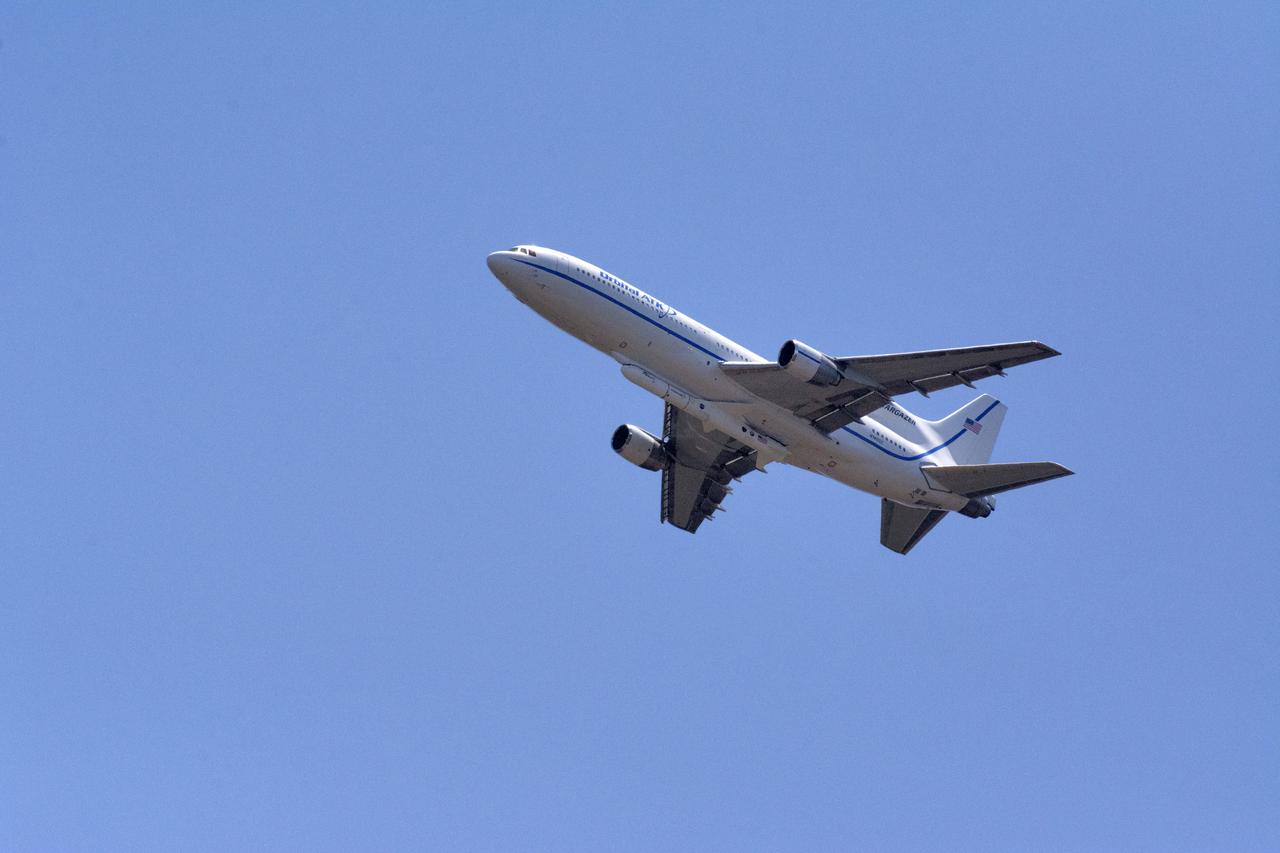
Northrop Grumman's L-1011 Stargazer takes off from the hot pad at Vandenberg Air Force Base in California on June 6, 2018. The company's Pegasus XL rocket, containing NASA's Ionospheric Connection Explorer (ICON), is attached beneath the aircraft. The explorer will launch on June 15, 2018, from Kwajalein Atoll in the Marshall Islands (June 14 in the continental United States). ICON will study the frontier of space - the dynamic zone high in Earth's atmosphere where terrestrial weather from below meets space weather above. The explorer will help determine the physics of Earth's space environment and pave the way for mitigating its effects on our technology, communications systems and society.
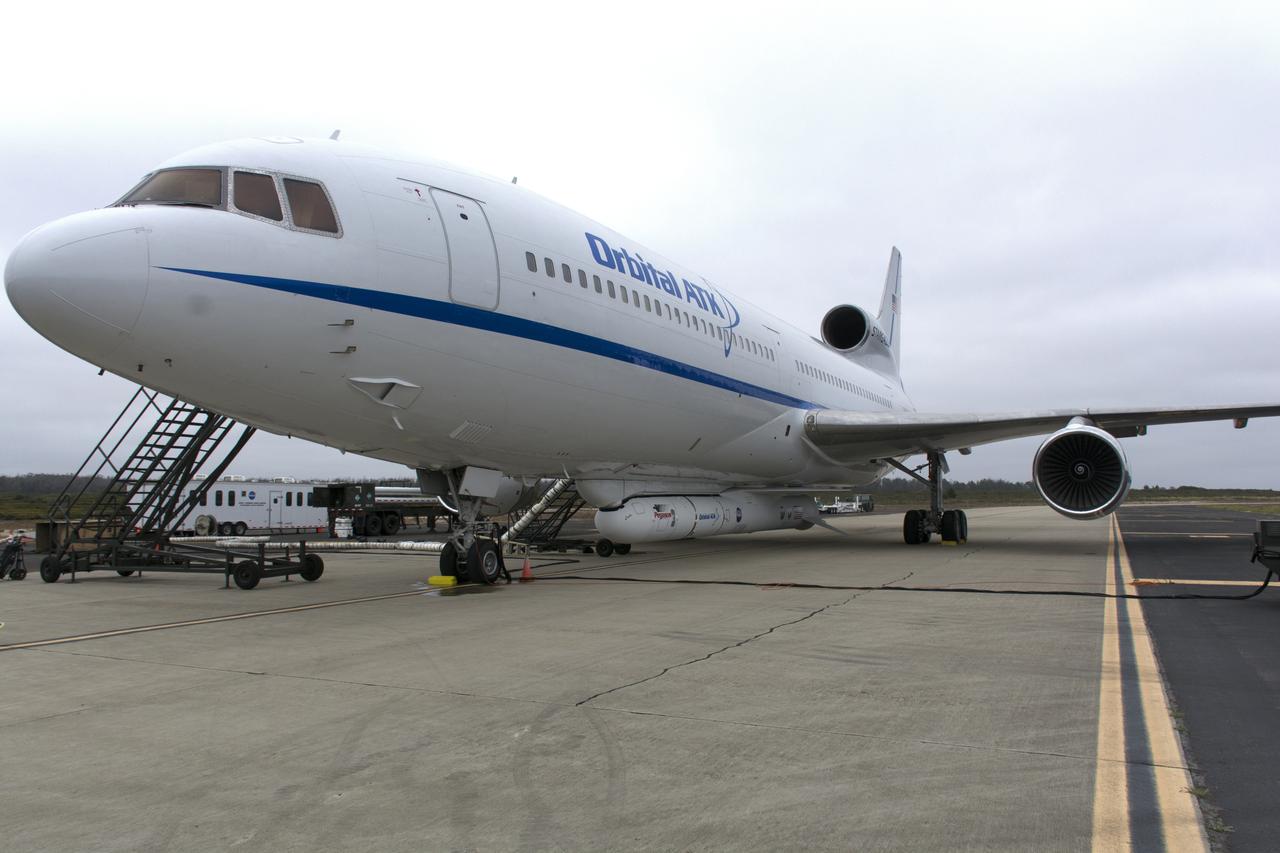
Northrop Grumman's L-1011 Stargazer is being readied for takeoff June 6, 2018, from the hot pad at Vandenberg Air Force Base in California. The company's Pegasus XL rocket, containing NASA's Ionospheric Connection Explorer (ICON), is attached beneath the aircraft. The explorer will launch on June 15, 2018, from Kwajalein Atoll in the Marshall Islands (June 14 in the continental United States). ICON will study the frontier of space - the dynamic zone high in Earth's atmosphere where terrestrial weather from below meets space weather above. The explorer will help determine the physics of Earth's space environment and pave the way for mitigating its effects on our technology, communications systems and society.
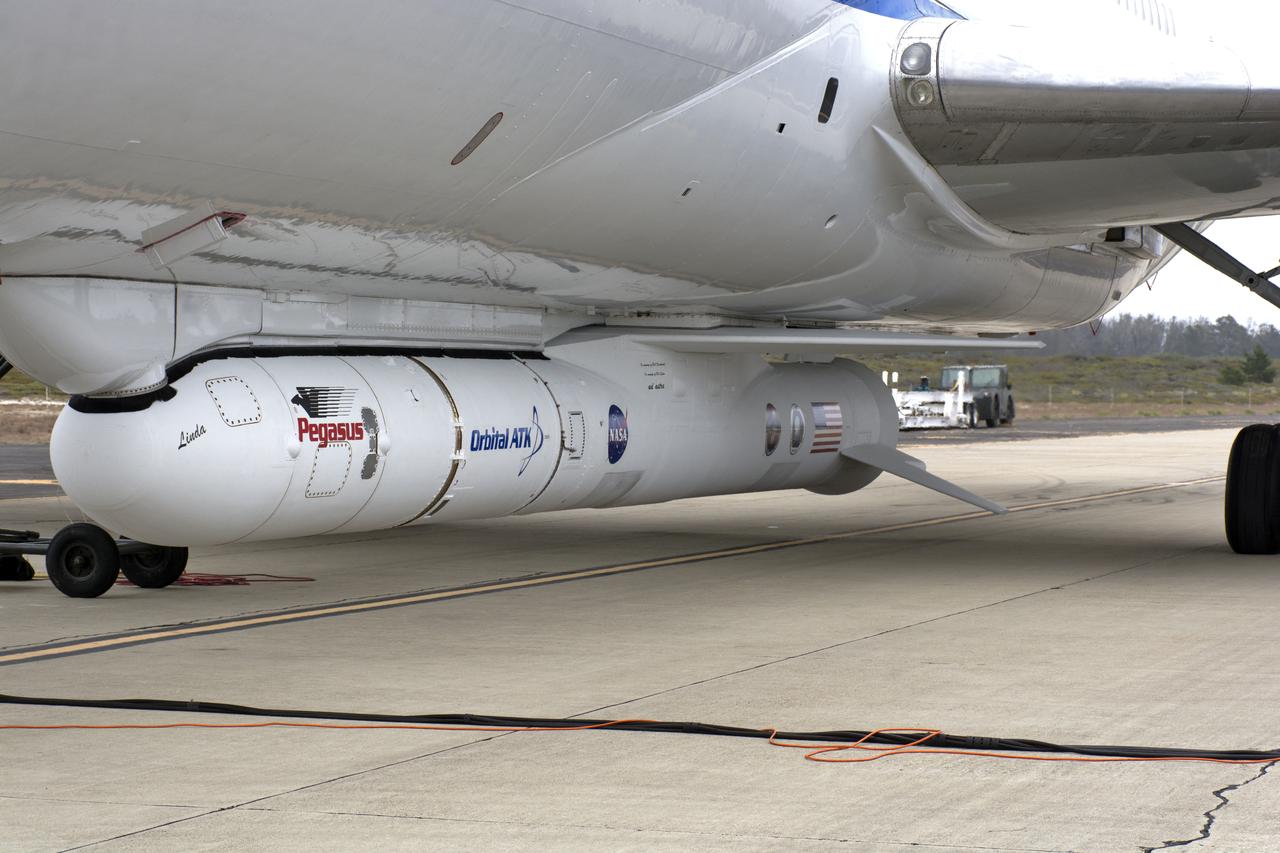
Northrop Grumman's L-1011 Stargazer is being readied for takeoff June 6, 2018, from the hot pad at Vandenberg Air Force Base in California. The company's Pegasus XL rocket, containing NASA's Ionospheric Connection Explorer (ICON), is attached beneath the aircraft. The explorer will launch on June 15, 2018, from Kwajalein Atoll in the Marshall Islands (June 14 in the continental United States). ICON will study the frontier of space - the dynamic zone high in Earth's atmosphere where terrestrial weather from below meets space weather above. The explorer will help determine the physics of Earth's space environment and pave the way for mitigating its effects on our technology, communications systems and society.
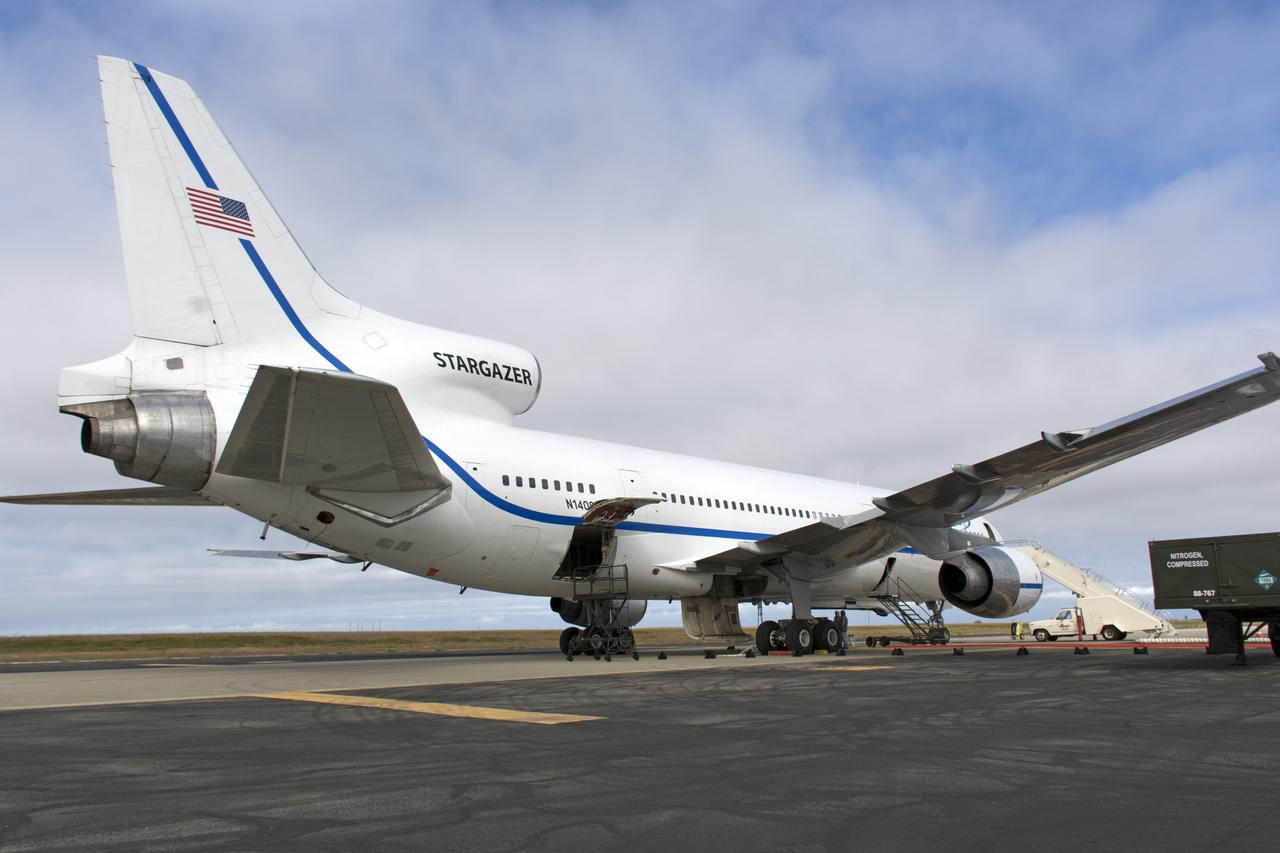
Northrop Grumman's L-1011 Stargazer aircraft is at the hot pad at Vandenberg Air Force Base in California on May 26, 2018. Preparations are underway to attach the company's Pegasus XL rocket, containing NASA's Ionospheric Connection Explorer (ICON), beneath the aircraft. The explorer will launch on June 15, 2018, from Kwajalein Atoll in the Marshall Islands (June 14 in the continental United States). ICON will study the frontier of space - the dynamic zone high in Earth's atmosphere where terrestrial weather from below meets space weather above. The explorer will help determine the physics of Earth's space environment and pave the way for mitigating its effects on our technology, communications systems and society.
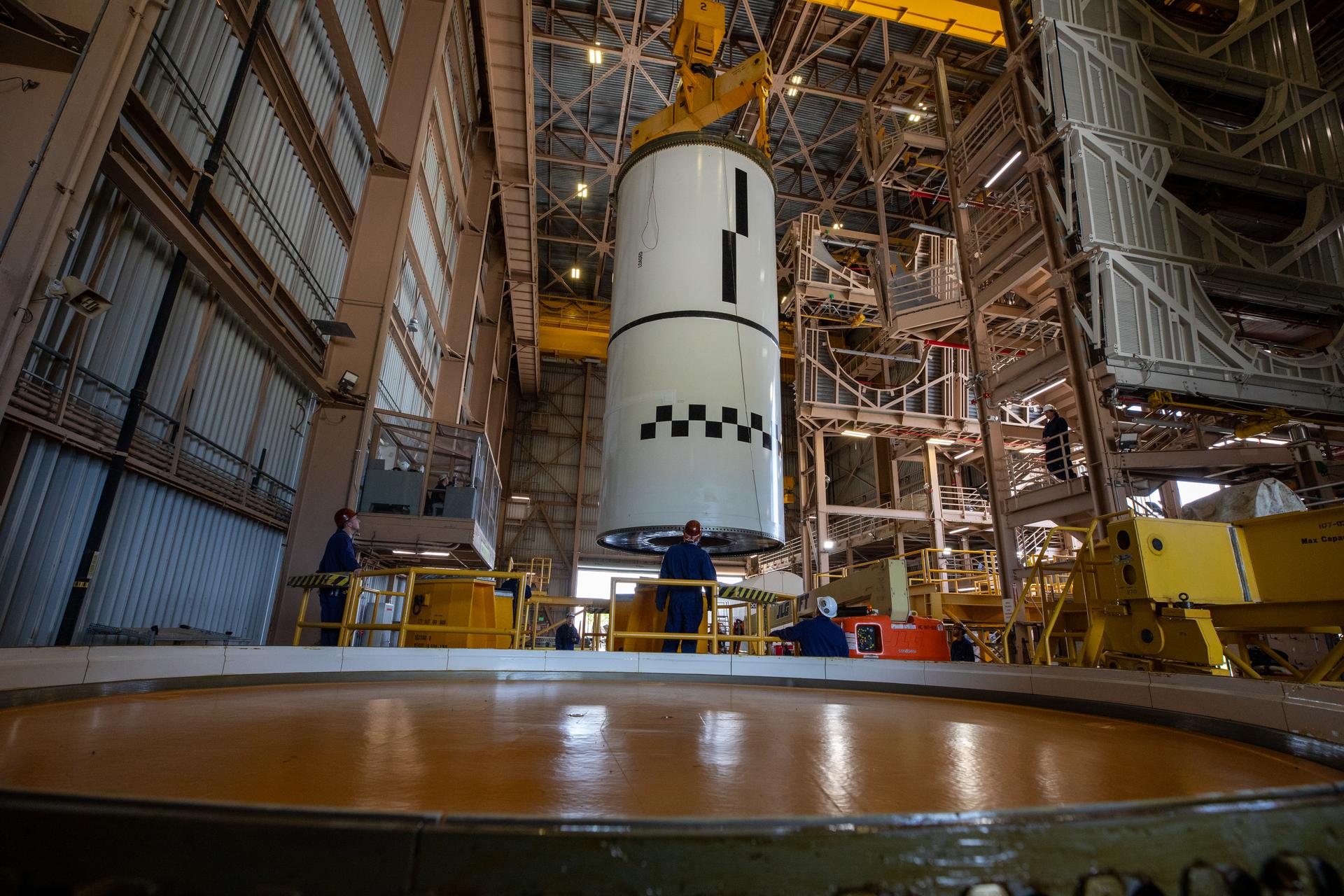
Technicians use a massive crane to lift the right-hand forward center assembly solid rocket booster segment for the Artemis III SLS (Space Launch System) rocket inside the Rotation, Processing, and Surge Facility at NASA’s Kennedy Space Center in Florida on Tuesday, July 14, 2026. The twin boosters, manufactured by Northrop Grumman in Utah, will provide more than 75 percent of the SLS rocket’s total thrust at launch. The Artemis III mission will launch astronauts in the Orion spacecraft on top of the SLS rocket to test rendezvous and docking capabilities between Orion and commercial spacecraft needed to land astronauts on the Moon.
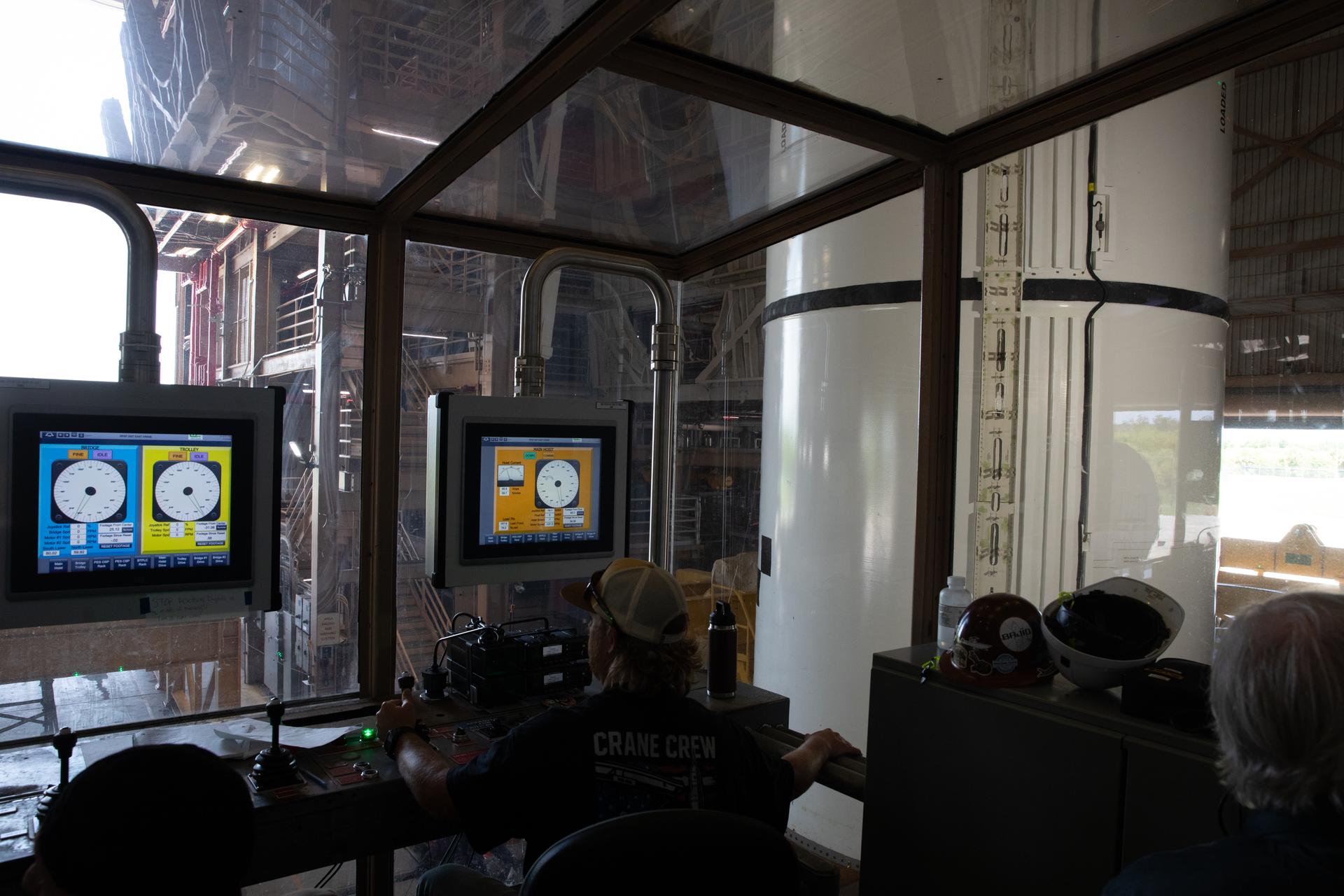
This photograph captures the view from inside a crane cabin as technicians prepare to lift the right-hand forward center assembly solid rocket booster segment for the Artemis III SLS (Space Launch System) rocket inside the Rotation, Processing, and Surge Facility at NASA’s Kennedy Space Center in Florida on Tuesday, July 14, 2026. The twin boosters, manufactured by Northrop Grumman in Utah, will provide more than 75 percent of the SLS rocket’s total thrust at launch. The Artemis III mission will launch astronauts in the Orion spacecraft on top of the SLS rocket to test rendezvous and docking capabilities between Orion and commercial spacecraft needed to land astronauts on the Moon.
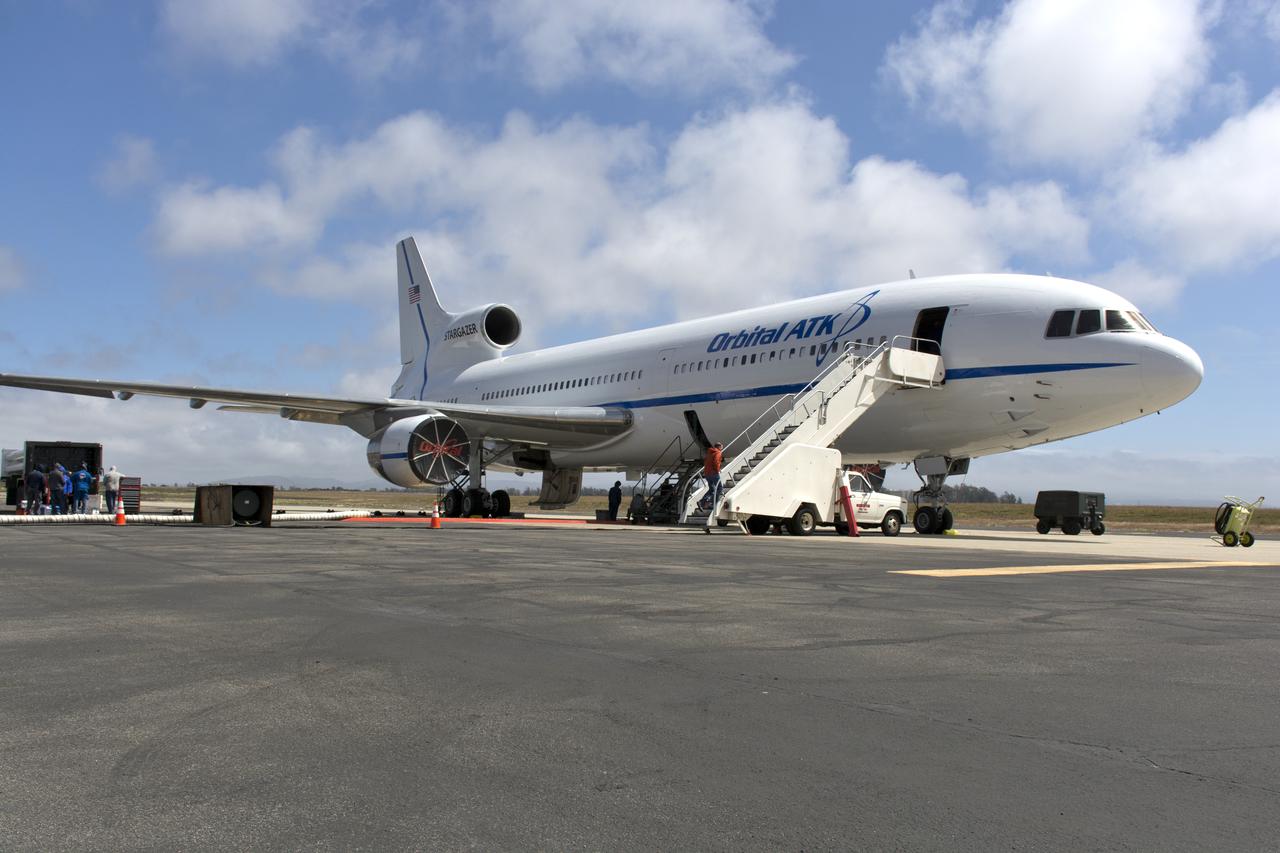
Northrop Grumman's L-1011 Stargazer aircraft is at the hot pad at Vandenberg Air Force Base in California on May 26, 2018. Preparations are underway to attach the company's Pegasus XL rocket, containing NASA's Ionospheric Connection Explorer (ICON), beneath the aircraft. The explorer will launch on June 15, 2018, from Kwajalein Atoll in the Marshall Islands (June 14 in the continental United States). ICON will study the frontier of space - the dynamic zone high in Earth's atmosphere where terrestrial weather from below meets space weather above. The explorer will help determine the physics of Earth's space environment and pave the way for mitigating its effects on our technology, communications systems and society.
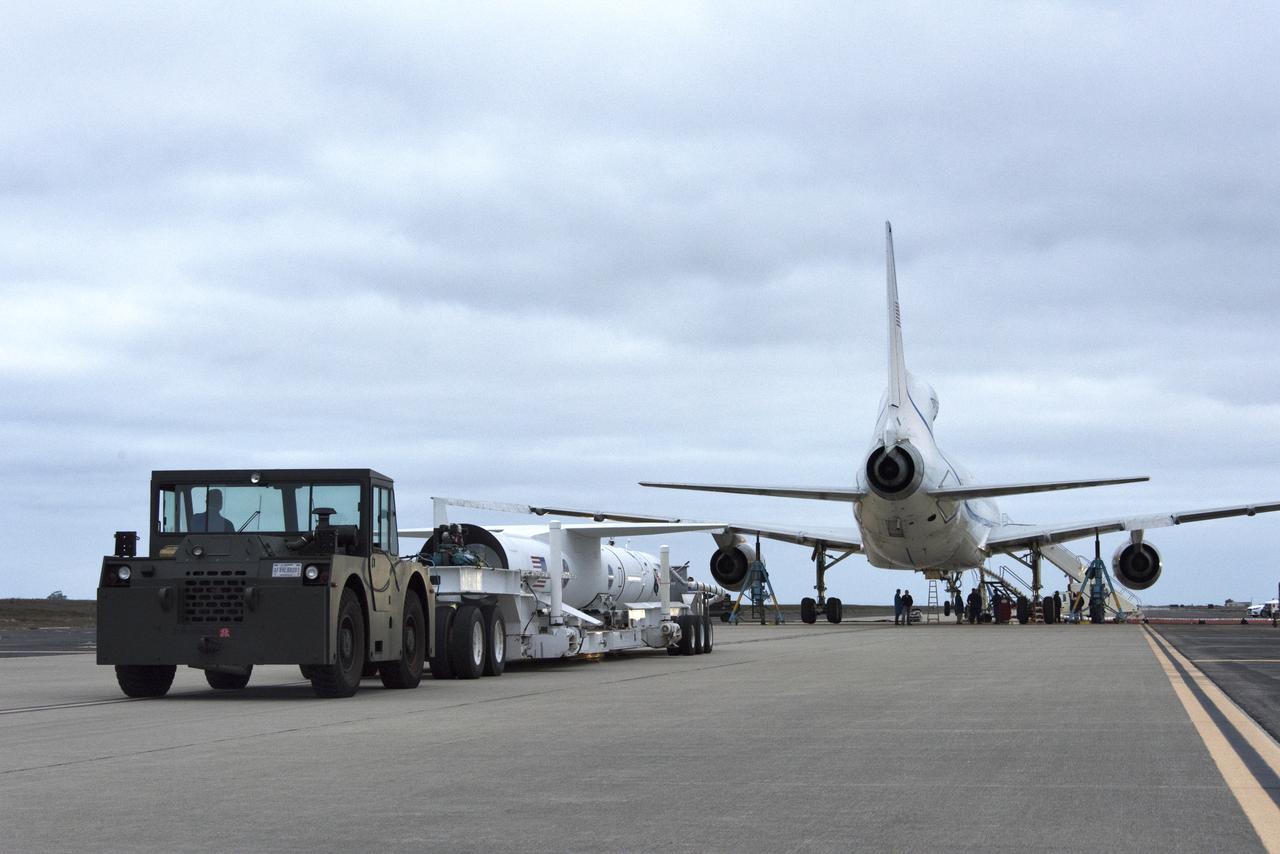
Northrop Grumman's Pegasus XL rocket, containing NASA's Ionospheric Connection Explorer (ICON), is transported to the hot pad at Vandenberg Air Force Base in California, on Oct. 14, 2018. Pegasus will be attached beneath the company's L-1011 Stargazer aircraft for the trip to Cape Canaveral Air Force Station in Florida. The Pegasus XL rocket will launch ICON from the Skid Strip at the Cape. ICON will study the frontier of space - the dynamic zone high in Earth's atmosphere where terrestrial weather from below meets space weather above. The explorer will help determine the physics of Earth's space environment and pave the way for mitigating its effects on our technology and communications systems.
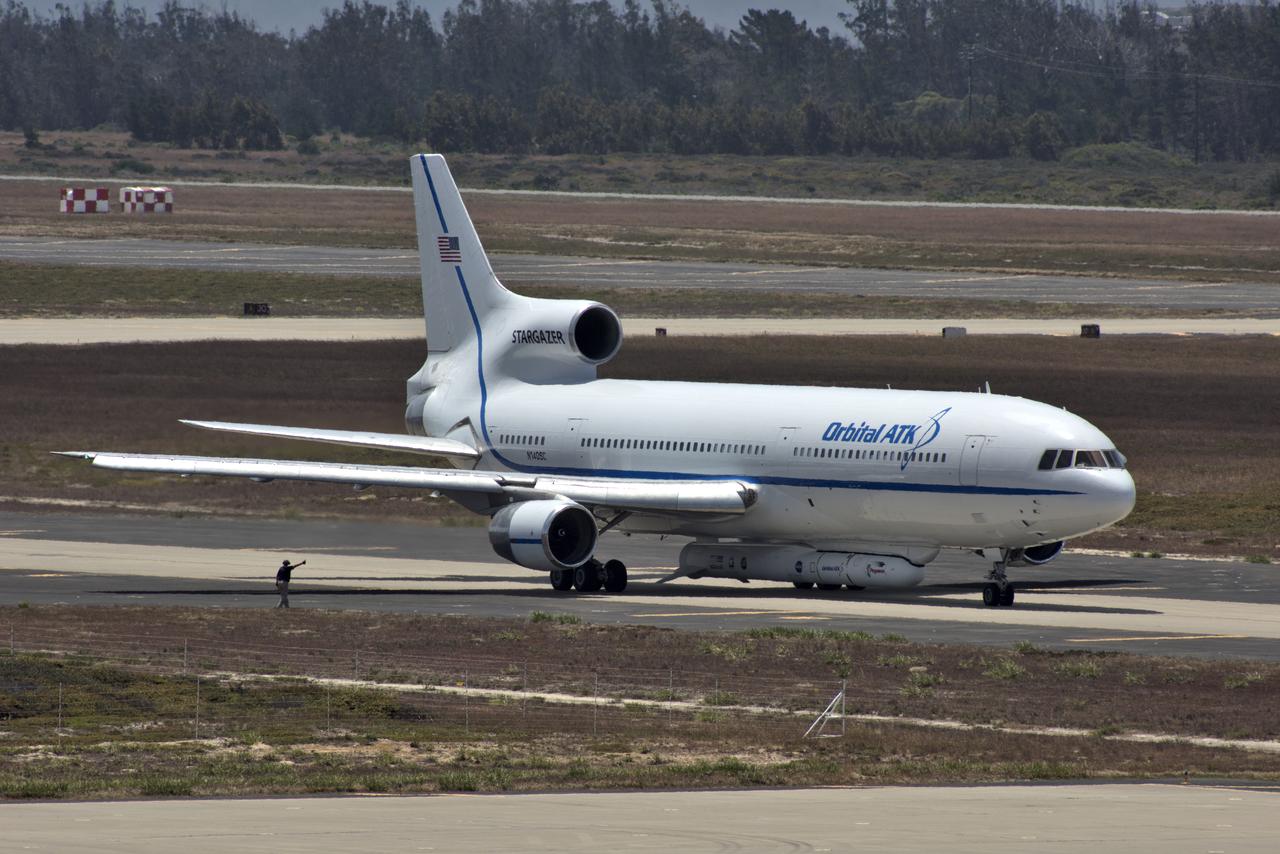
Northrop Grumman's L-1011 Stargazer prepares for takeoff June 6, 2018, from the hot pad at Vandenberg Air Force Base in California. The company's Pegasus XL rocket, containing NASA's Ionospheric Connection Explorer (ICON), is attached beneath the aircraft. The explorer will launch on June 15, 2018, from Kwajalein Atoll in the Marshall Islands (June 14 in the continental United States). ICON will study the frontier of space - the dynamic zone high in Earth's atmosphere where terrestrial weather from below meets space weather above. The explorer will help determine the physics of Earth's space environment and pave the way for mitigating its effects on our technology, communications systems and society.
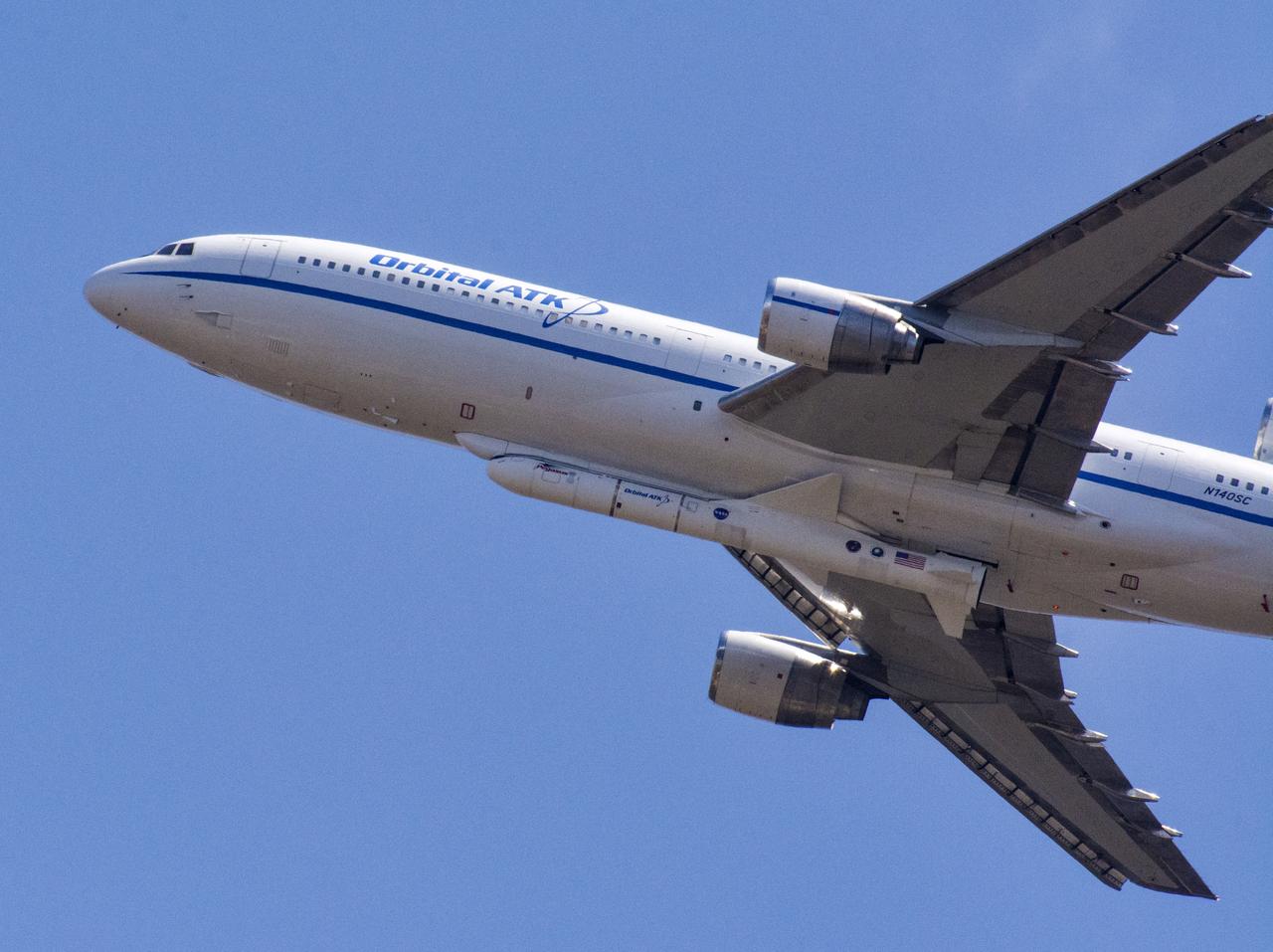
Northrop Grumman's L-1011 Stargazer soars upward after takeoff from the hot pad at Vandenberg Air Force Base in California on June 6, 2018. The company's Pegasus XL rocket, containing NASA's Ionospheric Connection Explorer (ICON), is attached beneath the aircraft. The explorer will launch on June 15, 2018, from Kwajalein Atoll in the Marshall Islands (June 14 in the continental United States). ICON will study the frontier of space - the dynamic zone high in Earth's atmosphere where terrestrial weather from below meets space weather above. The explorer will help determine the physics of Earth's space environment and pave the way for mitigating its effects on our technology, communications systems and society.

Northrop Grumman's L-1011 Stargazer prepares for takeoff June 6, 2018, from the hot pad at Vandenberg Air Force Base in California. The company's Pegasus XL rocket, containing NASA's Ionospheric Connection Explorer (ICON), is attached beneath the aircraft. The explorer will launch on June 15, 2018, from Kwajalein Atoll in the Marshall Islands (June 14 in the continental United States). ICON will study the frontier of space - the dynamic zone high in Earth's atmosphere where terrestrial weather from below meets space weather above. The explorer will help determine the physics of Earth's space environment and pave the way for mitigating its effects on our technology, communications systems and society.
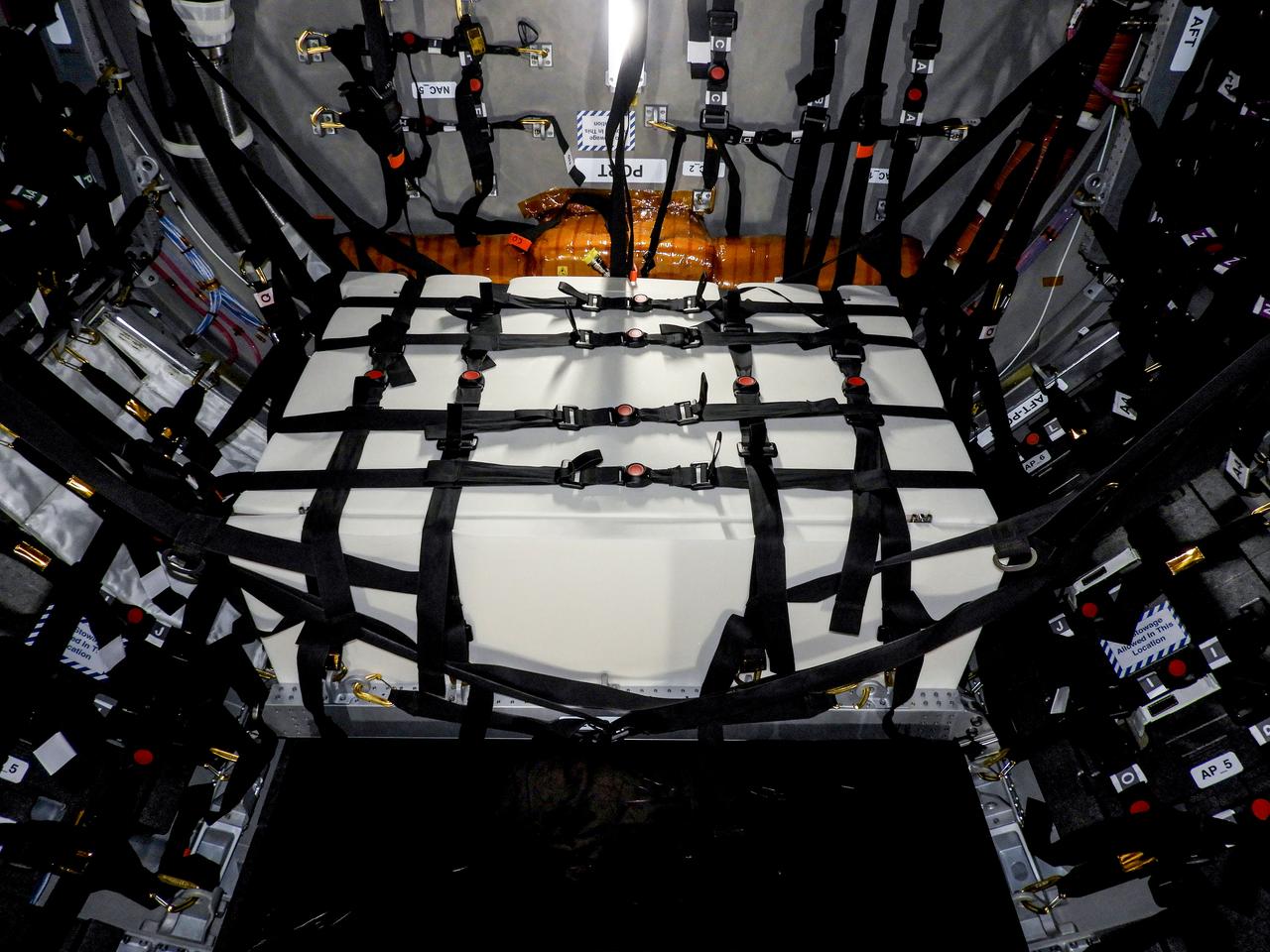
jsc2023e046377 (12/14/2019) --- A view of the Spacecraft Fire Safety Experiments (Saffire) VI experiment hardware, loaded inside the Northrop Grumman (NG) Cygnus cargo vehicle for the 19th NG resupply mission to the International Space Station. Saffire is a series of experiments to investigate how fire spreads on a variety of combustible materials in the microgravity environment. The experiments are ignited in the Cygnus cargo spacecraft after it departs the space station and before it reenters the Earth's atmosphere. Saffire-VI builds on prior results to test flammability at different oxygen levels and aims to further knowledge of realistic flame spread to aid the development of fire safety equipment and strategies for future spacecraft.
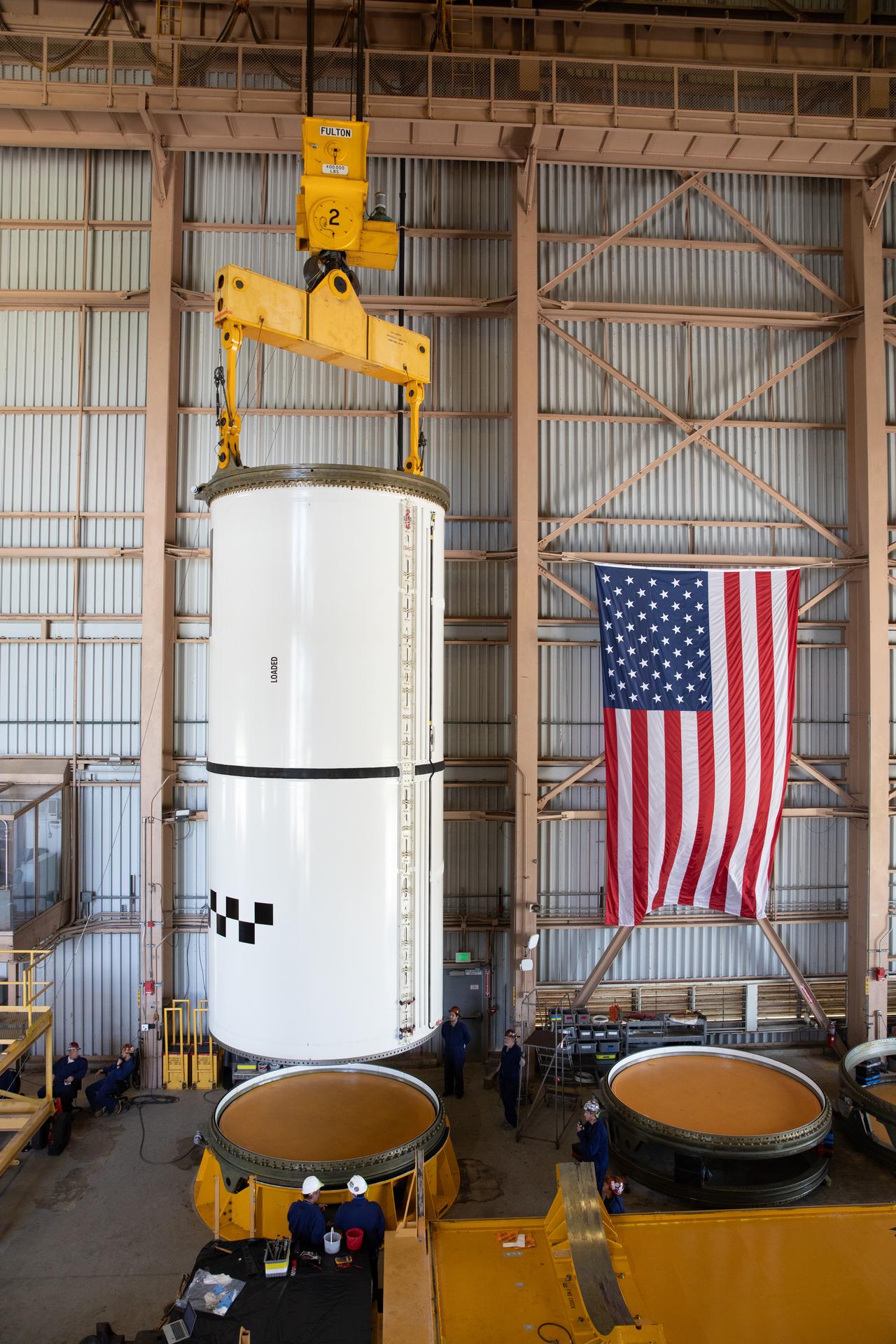
Technicians use a massive crane to lift the right-hand forward center assembly solid rocket booster segment for the Artemis III SLS (Space Launch System) rocket inside the Rotation, Processing, and Surge Facility at NASA’s Kennedy Space Center in Florida on Tuesday, July 14, 2026. The twin boosters, manufactured by Northrop Grumman in Utah, will provide more than 75 percent of the SLS rocket’s total thrust at launch. The Artemis III mission will launch astronauts in the Orion spacecraft on top of the SLS rocket to test rendezvous and docking capabilities between Orion and commercial spacecraft needed to land astronauts on the Moon.
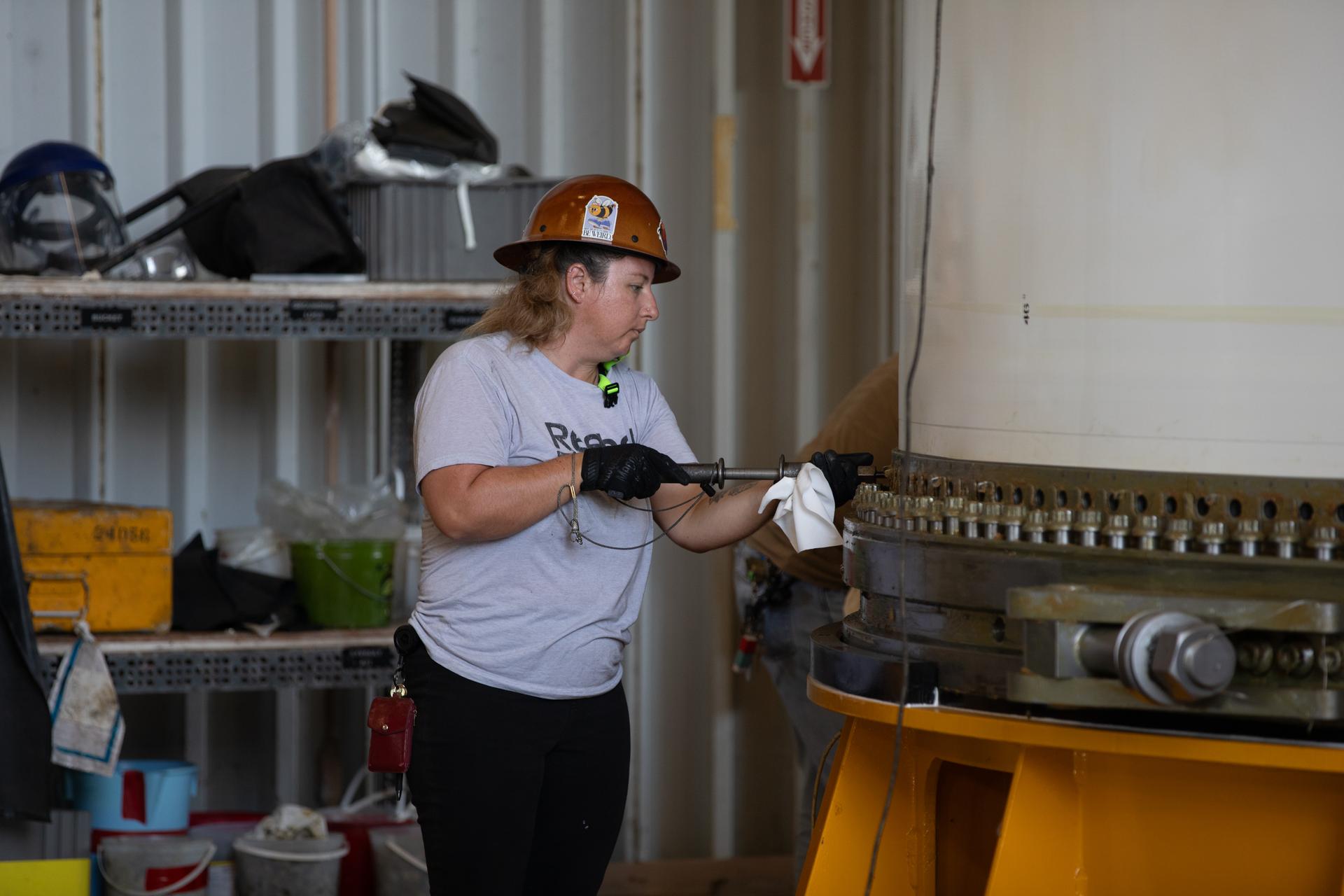
Tia Harbour, engineering technician, COMET (Consolidated Operations, Management, Engineering, and Test) employee secures the right-hand forward center assembly solid rocket booster segment for the Artemis III SLS (Space Launch System) rocket onto a work stand inside the Rotation, Processing, and Surge Facility at NASA’s Kennedy Space Center in Florida on Tuesday, July 14, 2026. The twin boosters, manufactured by Northrop Grumman in Utah, will provide more than 75 percent of the SLS rocket’s total thrust at launch. The Artemis III mission will launch astronauts in the Orion spacecraft on top of the SLS rocket to test rendezvous and docking capabilities between Orion and commercial spacecraft needed to land astronauts on the Moon.
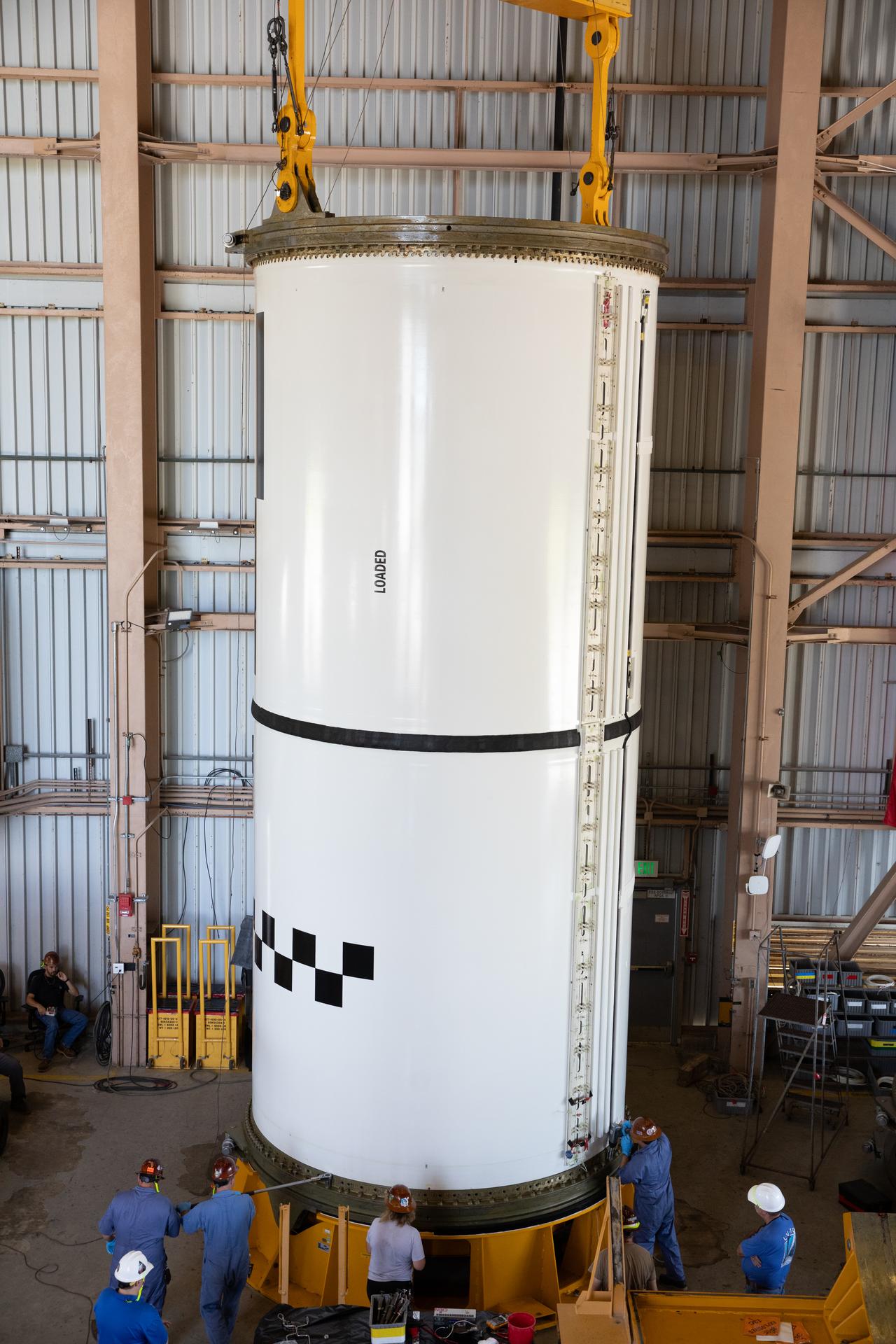
Technicians use a massive crane to lift the right-hand forward center assembly solid rocket booster segment for the Artemis III SLS (Space Launch System) rocket inside the Rotation, Processing, and Surge Facility at NASA’s Kennedy Space Center in Florida on Tuesday, July 14, 2026. The twin boosters, manufactured by Northrop Grumman in Utah, will provide more than 75 percent of the SLS rocket’s total thrust at launch. The Artemis III mission will launch astronauts in the Orion spacecraft on top of the SLS rocket to test rendezvous and docking capabilities between Orion and commercial spacecraft needed to land astronauts on the Moon.
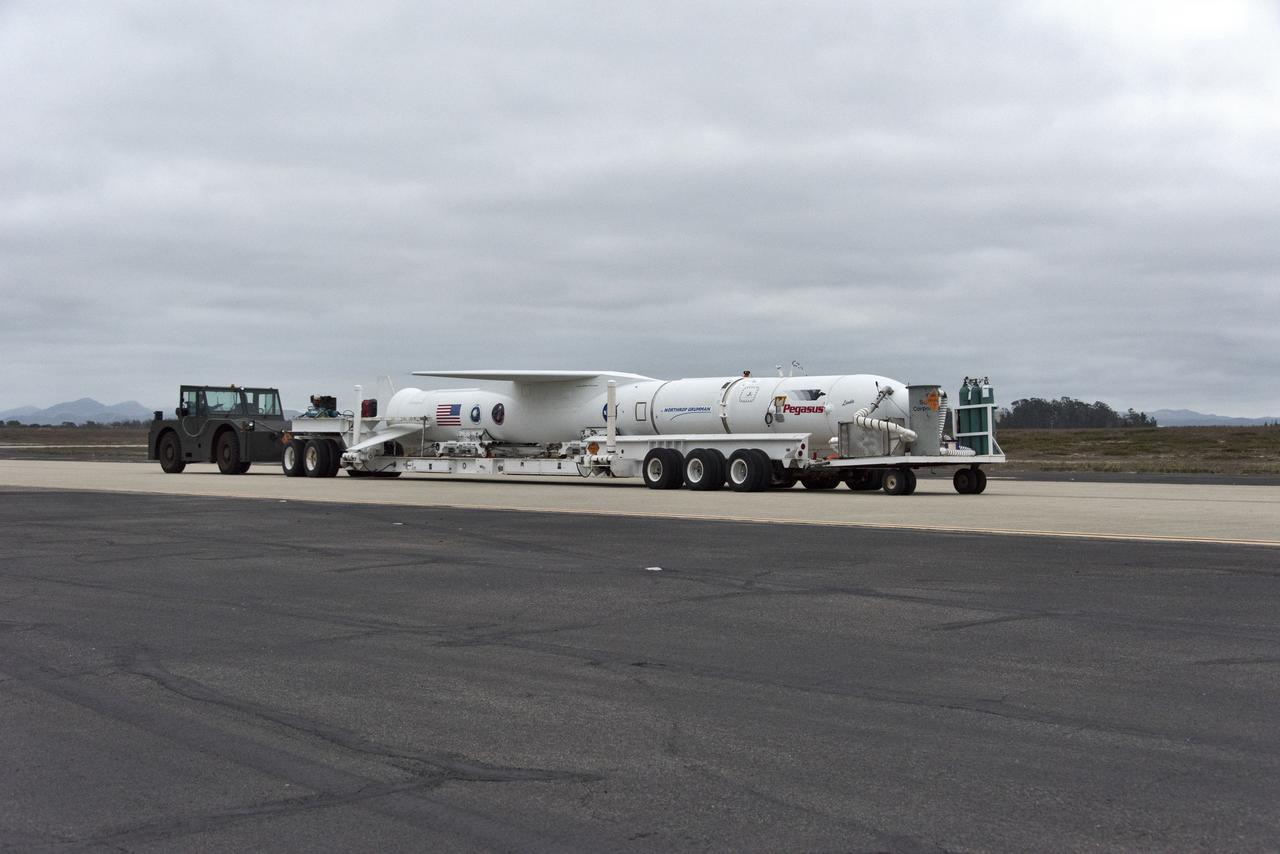
Northrop Grumman's Pegasus XL rocket, containing NASA's Ionospheric Connection Explorer (ICON), is transported to the hot pad at Vandenberg Air Force Base in California, on Oct. 14, 2018. Pegasus will be attached beneath the company's L-1011 Stargazer aircraft for the trip to Cape Canaveral Air Force Station in Florida. The Pegasus XL rocket will launch ICON from the Skid Strip at the Cape. ICON will study the frontier of space - the dynamic zone high in Earth's atmosphere where terrestrial weather from below meets space weather above. The explorer will help determine the physics of Earth's space environment and pave the way for mitigating its effects on our technology and communications systems.
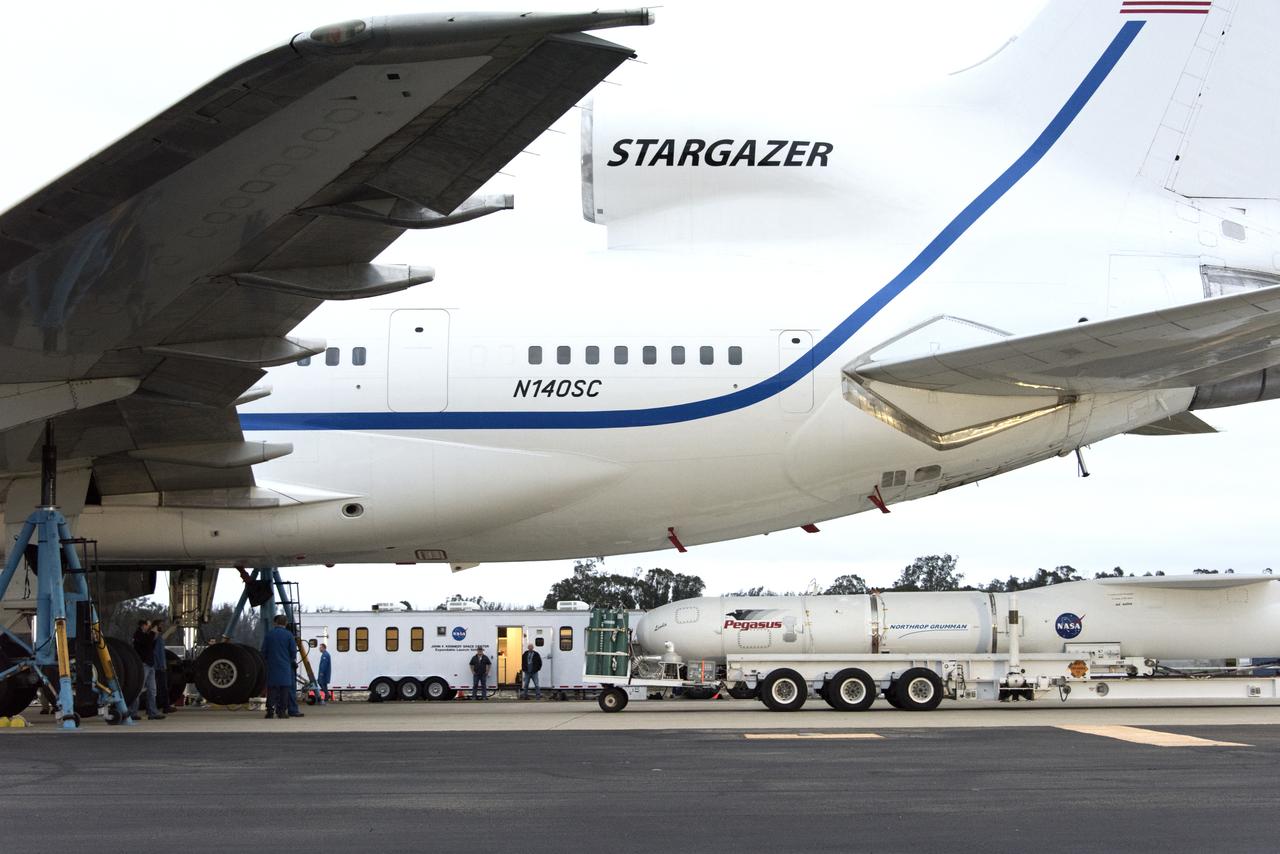
Preparations are underway to attach Northrop Grumman's Pegasus XL rocket, containing NASA's Ionospheric Connection Explorer (ICON), beneath the company's L-1011 Stargazer aircraft at the hot pad at Vandenberg Air Force Base in California, on Oct. 14, 2018. The Stargazer will take off from the hot pad and travel to Cape Canaveral Air Force Station in Florida. The Pegasus XL rocket will launch ICON from the Skid Strip at the Cape. ICON will study the frontier of space - the dynamic zone high in Earth's atmosphere where terrestrial weather from below meets space weather above. The explorer will help determine the physics of Earth's space environment and pave the way for mitigating its effects on our technology and communications systems.
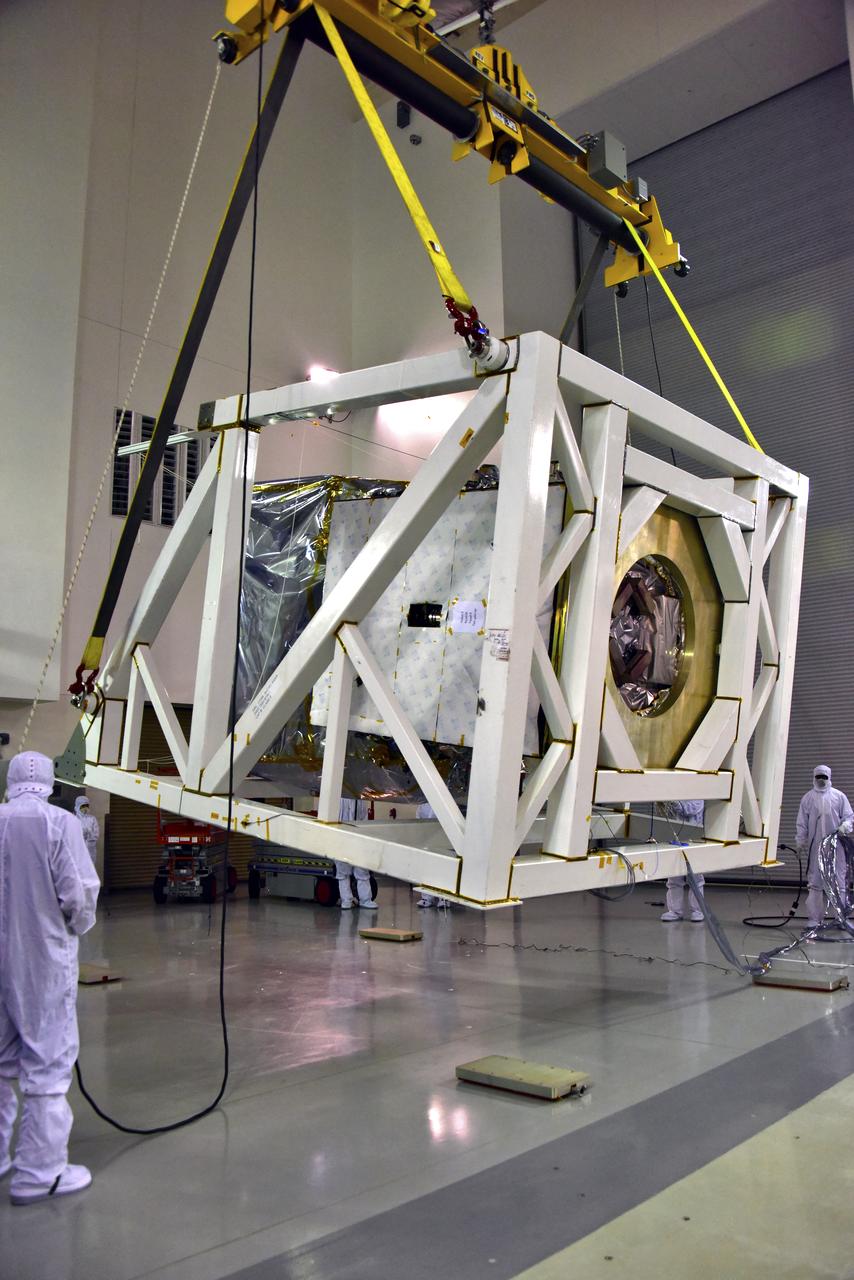
NASA's Ice, Cloud and land Elevation Satellite-2 (ICESat-2) is lifted in its fixture inside the high bay of the Astrotech Space Operations facility on June 14, 2018, at Vandenberg Air Force Base in California. ICESat-2 was shipped from the Northrop Grumman facility in Gilbert, Arizona, where it was built and tested. The satellite is scheduled to launch from Space Launch Complex-2 at Vandenberg on the final United Launch Alliance Delta II rocket. ICESat-2 will measure the height of a changing Earth, one laser pulse at a time, 10,000 laser pulses a second. The satellite will carry the Advanced Topographic Laser Altimeter System. ICESat-2 will help scientists investigate why, and how much our planet's frozen and icy areas, called the cryosphere, is changing in a warming climate.
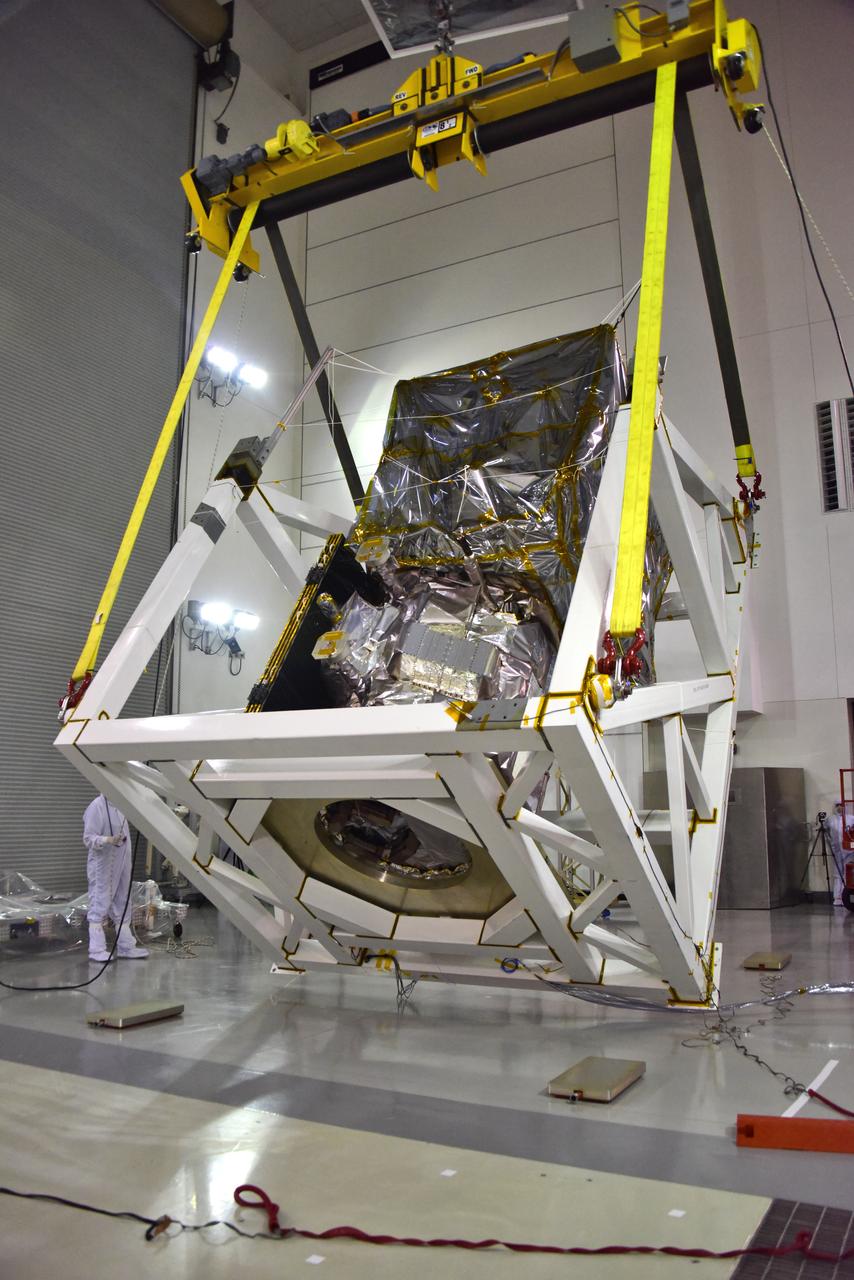
A crane is used to rotate NASA's Ice, Cloud and land Elevation Satellite-2 (ICESat-2) in its fixture inside the high bay of the Astrotech Space Operations facility on June 14, 2018, at Vandenberg Air Force Base in California. ICESat-2 was shipped from the Northrop Grumman facility in Gilbert, Arizona, where it was built and tested. The satellite is scheduled to launch from Space Launch Complex-2 at Vandenberg on the final United Launch Alliance Delta II rocket. ICESat-2 will measure the height of a changing Earth, one laser pulse at a time, 10,000 laser pulses a second. The satellite will carry the Advanced Topographic Laser Altimeter System. ICESat-2 will help scientists investigate why, and how much our planet's frozen and icy areas, called the cryosphere, is changing in a warming climate.
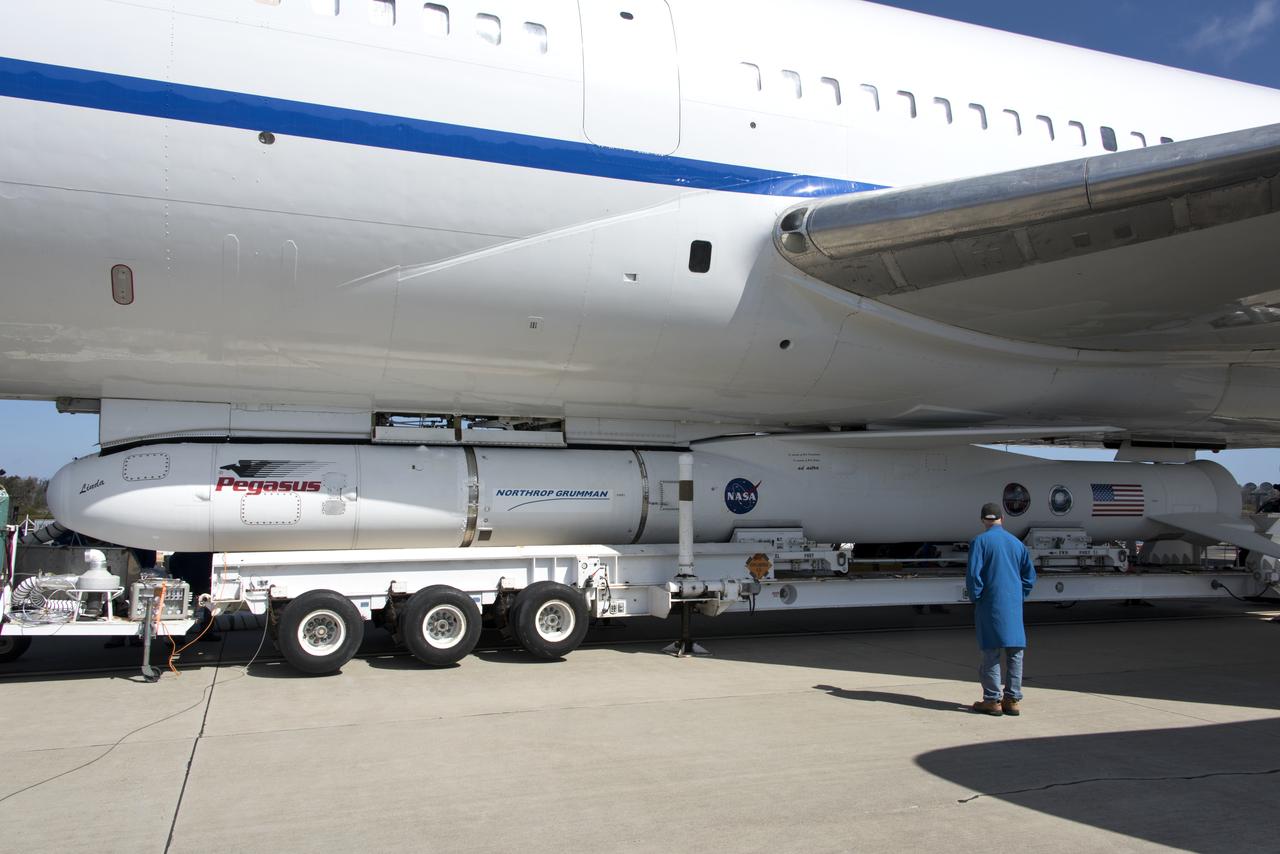
Northrop Grumman's Pegasus XL rocket, containing NASA's Ionospheric Connection Explorer (ICON), is attached beneath the company's L-1011 Stargazer aircraft at the hot pad at Vandenberg Air Force Base in California, on Oct. 14, 2018. The Stargazer will take off from the hot pad and travel to Cape Canaveral Air Force Station in Florida. The Pegasus XL rocket will launch ICON from the Skid Strip at the Cape. ICON will study the frontier of space - the dynamic zone high in Earth's atmosphere where terrestrial weather from below meets space weather above. The explorer will help determine the physics of Earth's space environment and pave the way for mitigating its effects on our technology and communications systems.
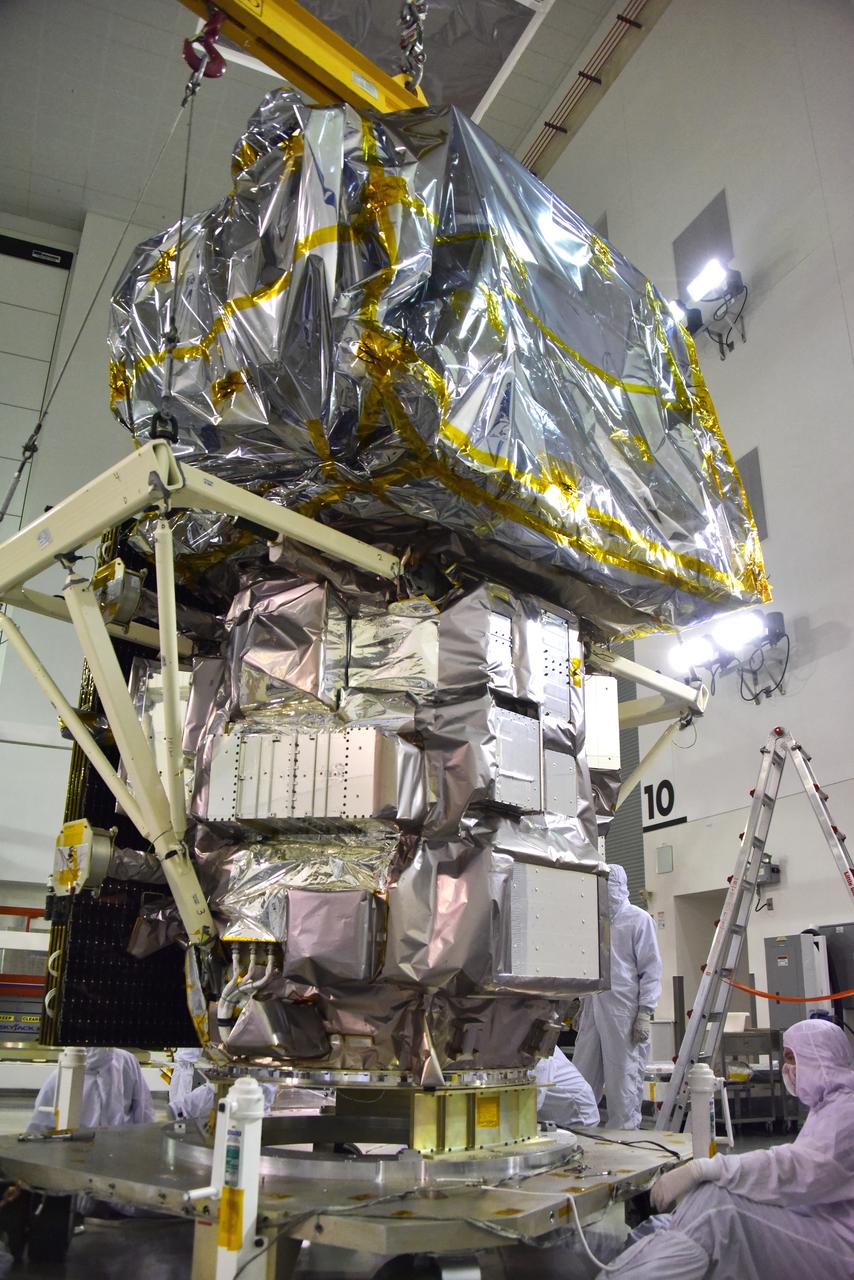
Technicians assist as a crane lowers NASA's Ice, Cloud and land Elevation Satellite-2 (ICESat-2) onto a work stand in the high bay of the Astrotech Space Operations facility on June 14, 2018, at Vandenberg Air Force Base in California. ICESat-2 was shipped from the Northrop Grumman facility in Gilbert, Arizona, where it was built and tested. The satellite is scheduled to launch from Space Launch Complex-2 at Vandenberg on the final United Launch Alliance Delta II rocket. ICESat-2 will measure the height of a changing Earth, one laser pulse at a time, 10,000 laser pulses a second. The satellite will carry the Advanced Topographic Laser Altimeter System. ICESat-2 will help scientists investigate why, and how much our planet's frozen and icy areas, called the cryosphere, is changing in a warming climate.
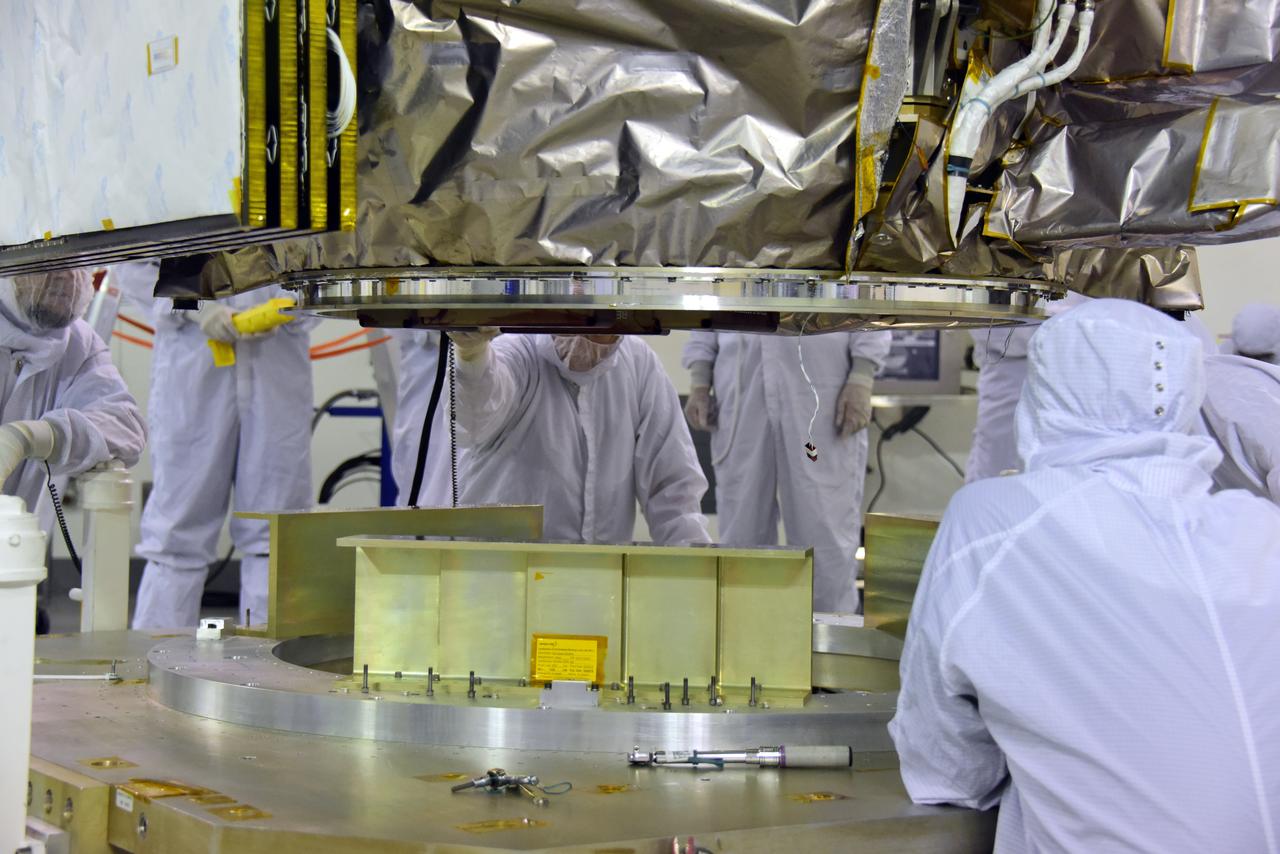
Technicians assist as a crane lowers NASA's Ice, Cloud and land Elevation Satellite-2 (ICESat-2) onto a work stand in the high bay of the Astrotech Space Operations facility on June 14, 2018, at Vandenberg Air Force Base in California. ICESat-2 was shipped from the Northrop Grumman facility in Gilbert, Arizona, where it was built and tested. The satellite is scheduled to launch from Space Launch Complex-2 at Vandenberg on the final United Launch Alliance Delta II rocket. ICESat-2 will measure the height of a changing Earth, one laser pulse at a time, 10,000 laser pulses a second. The satellite will carry the Advanced Topographic Laser Altimeter System. ICESat-2 will help scientists investigate why, and how much our planet's frozen and icy areas, called the cryosphere, is changing in a warming climate.
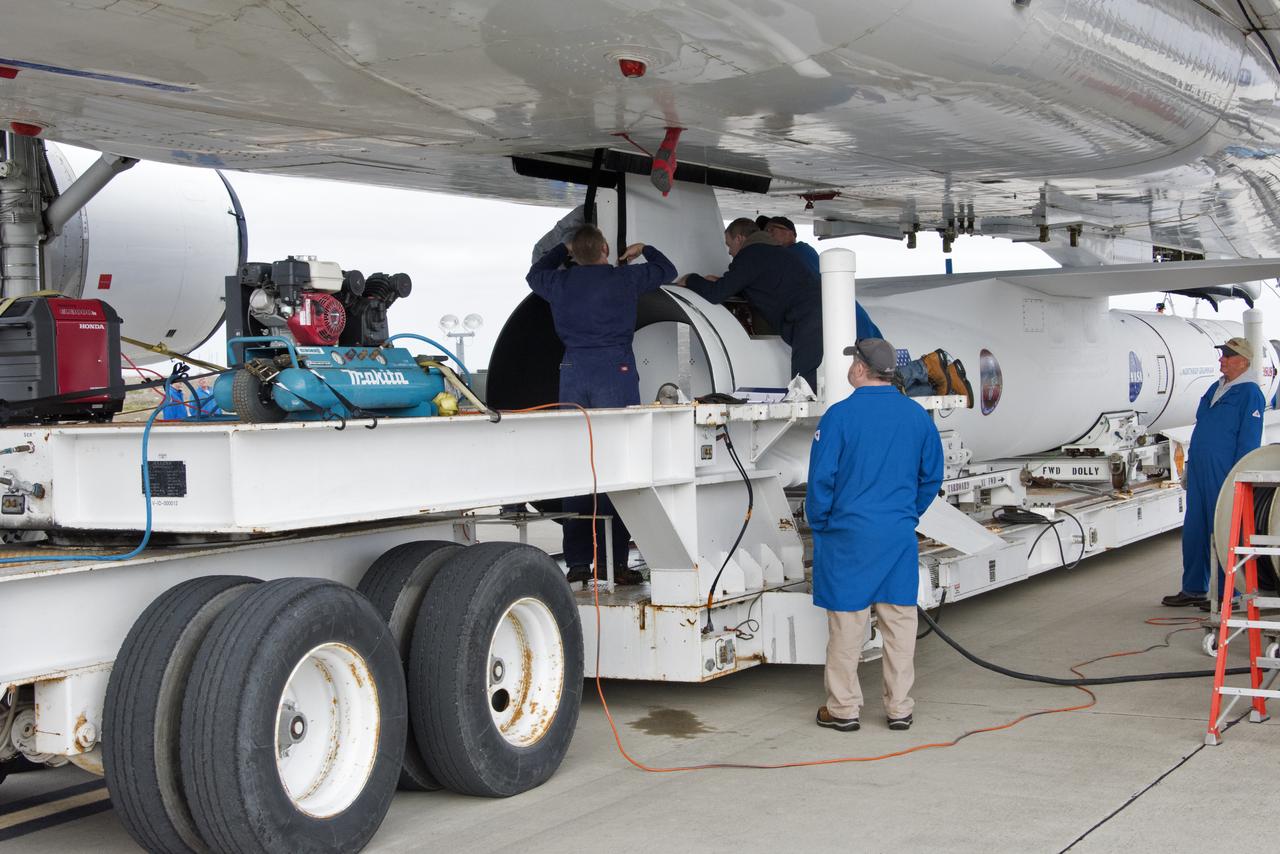
Technicians secure Northrop Grumman's Pegasus XL rocket, containing NASA's Ionospheric Connection Explorer (ICON), beneath the company's L-1011 Stargazer aircraft at the hot pad at Vandenberg Air Force Base in California, on Oct. 14, 2018. The Stargazer will take off from the hot pad and travel to Cape Canaveral Air Force Station in Florida. The Pegasus XL rocket will launch ICON from the Skid Strip at the Cape. ICON will study the frontier of space - the dynamic zone high in Earth's atmosphere where terrestrial weather from below meets space weather above. The explorer will help determine the physics of Earth's space environment and pave the way for mitigating its effects on our technology and communications systems.
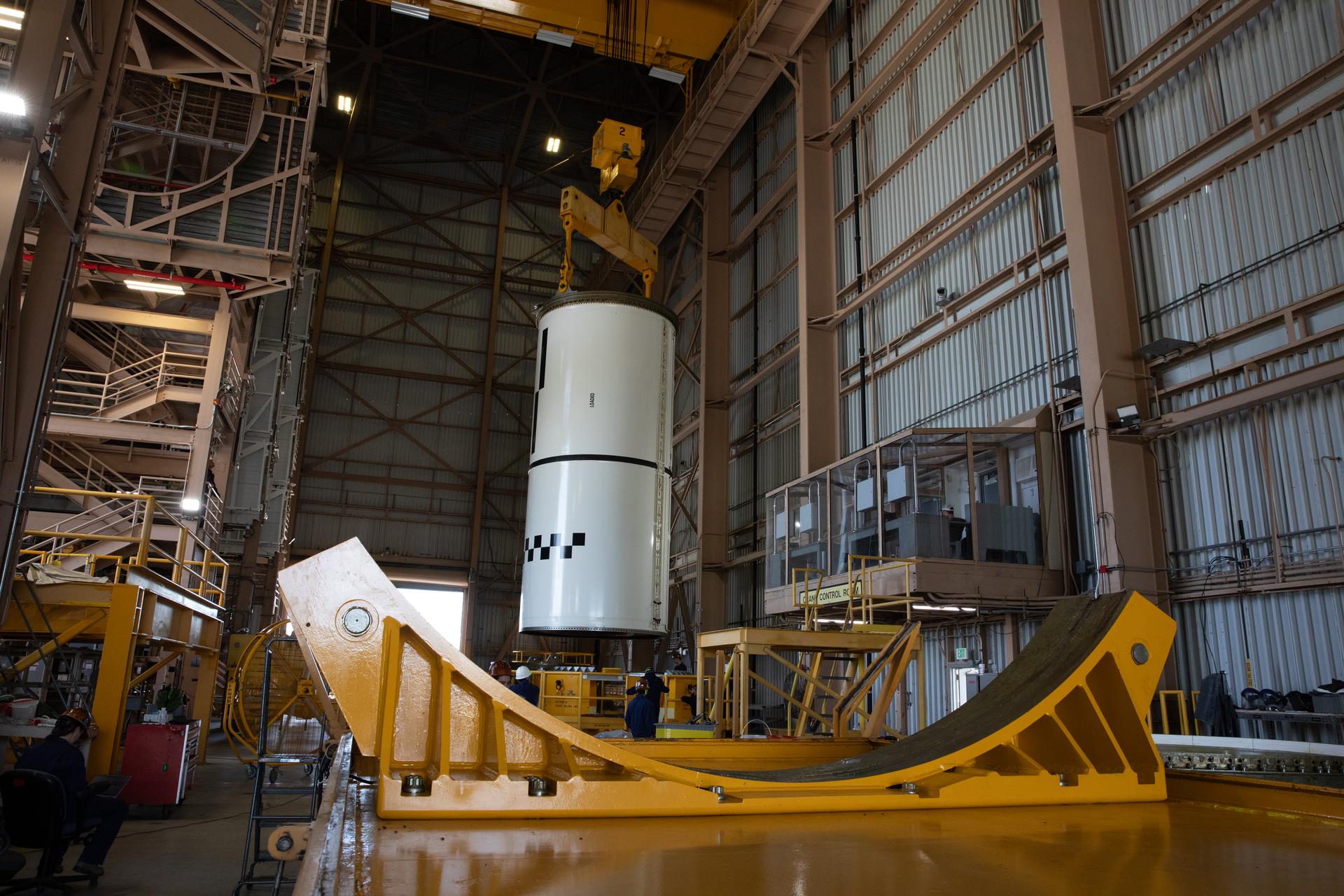
From left, Kat Ternus, NASA handling engineer at NASA’s Kennedy Space Center in Florida, and other technicians use a massive crane to transport the right-hand forward center assembly solid rocket booster segment for the Artemis III SLS (Space Launch System) rocket inside the Rotation, Processing, and Surge Facility at NASA’s Kennedy Space Center in Florida on Tuesday, July 14, 2026. The twin boosters, manufactured by Northrop Grumman in Utah, will provide more than 75 percent of the SLS rocket’s total thrust at launch. The Artemis III mission will launch astronauts in the Orion spacecraft on top of the SLS rocket to test rendezvous and docking capabilities between Orion and commercial spacecraft needed to land astronauts on the Moon.
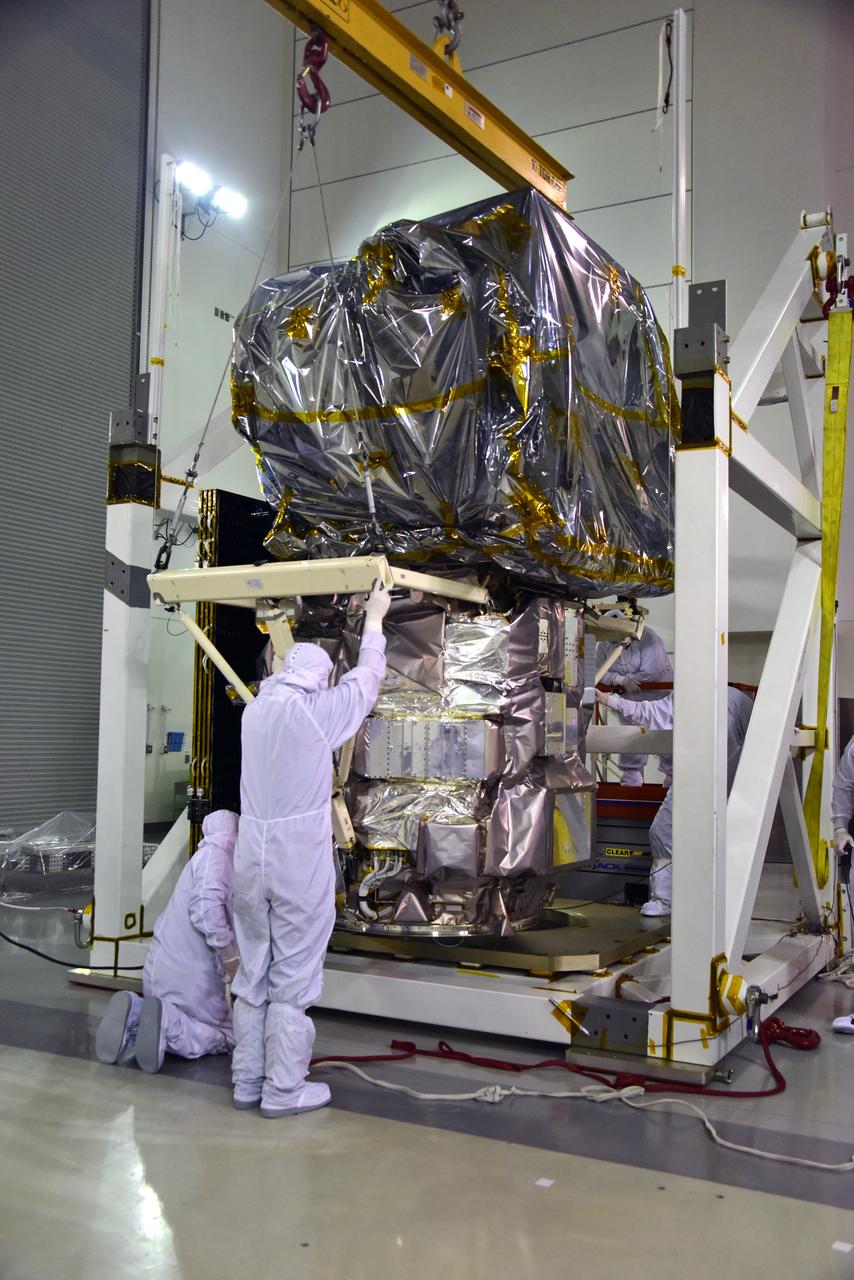
Technicians assist as a crane rotates NASA's Ice, Cloud and land Elevation Satellite-2 (ICESat-2) into position for removal and lift to a work stand in the high bay of the Astrotech Space Operations facility on June 14, 2018, at Vandenberg Air Force Base in California. ICESat-2 was shipped from the Northrop Grumman facility in Gilbert, Arizona, where it was built and tested. The satellite is scheduled to launch from Space Launch Complex-2 at Vandenberg on the final United Launch Alliance Delta II rocket. ICESat-2 will measure the height of a changing Earth, one laser pulse at a time, 10,000 laser pulses a second. The satellite will carry the Advanced Topographic Laser Altimeter System. ICESat-2 will help scientists investigate why, and how much our planet's frozen and icy areas, called the cryosphere, is changing in a warming climate.
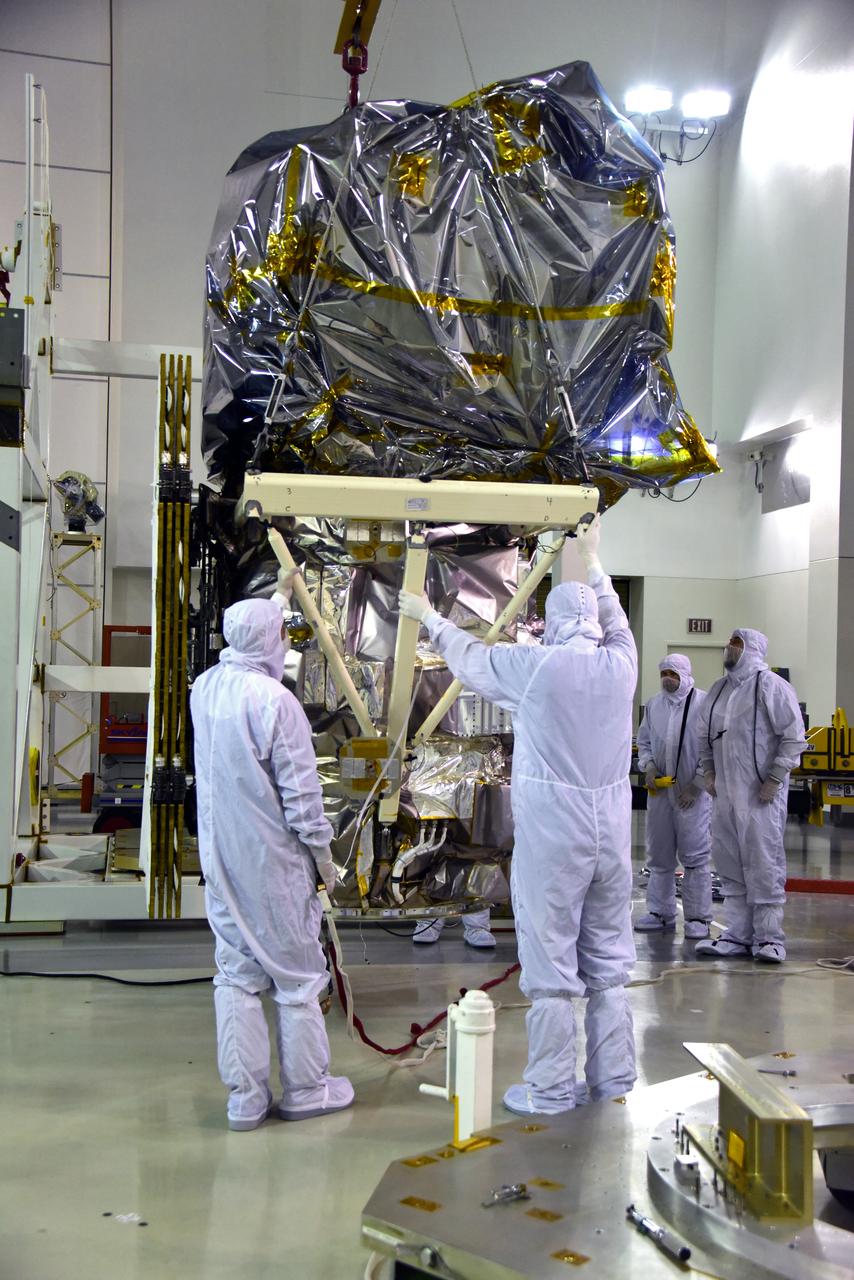
Technicians remove NASA's Ice, Cloud and land Elevation Satellite-2 (ICESat-2) from its fixture inside the high bay of the Astrotech Space Operations facility on June 14, 2018, at Vandenberg Air Force Base in California. The satellite will be secured on a work stand for processing. ICESat-2 was shipped from the Northrop Grumman facility in Gilbert, Arizona, where it was built and tested. The satellite is scheduled to launch from Space Launch Complex-2 at Vandenberg on the final United Launch Alliance Delta II rocket. ICESat-2 will measure the height of a changing Earth, one laser pulse at a time, 10,000 laser pulses a second. The satellite will carry the Advanced Topographic Laser Altimeter System. ICESat-2 will help scientists investigate why, and how much our planet's frozen and icy areas, called the cryosphere, is changing in a warming climate.
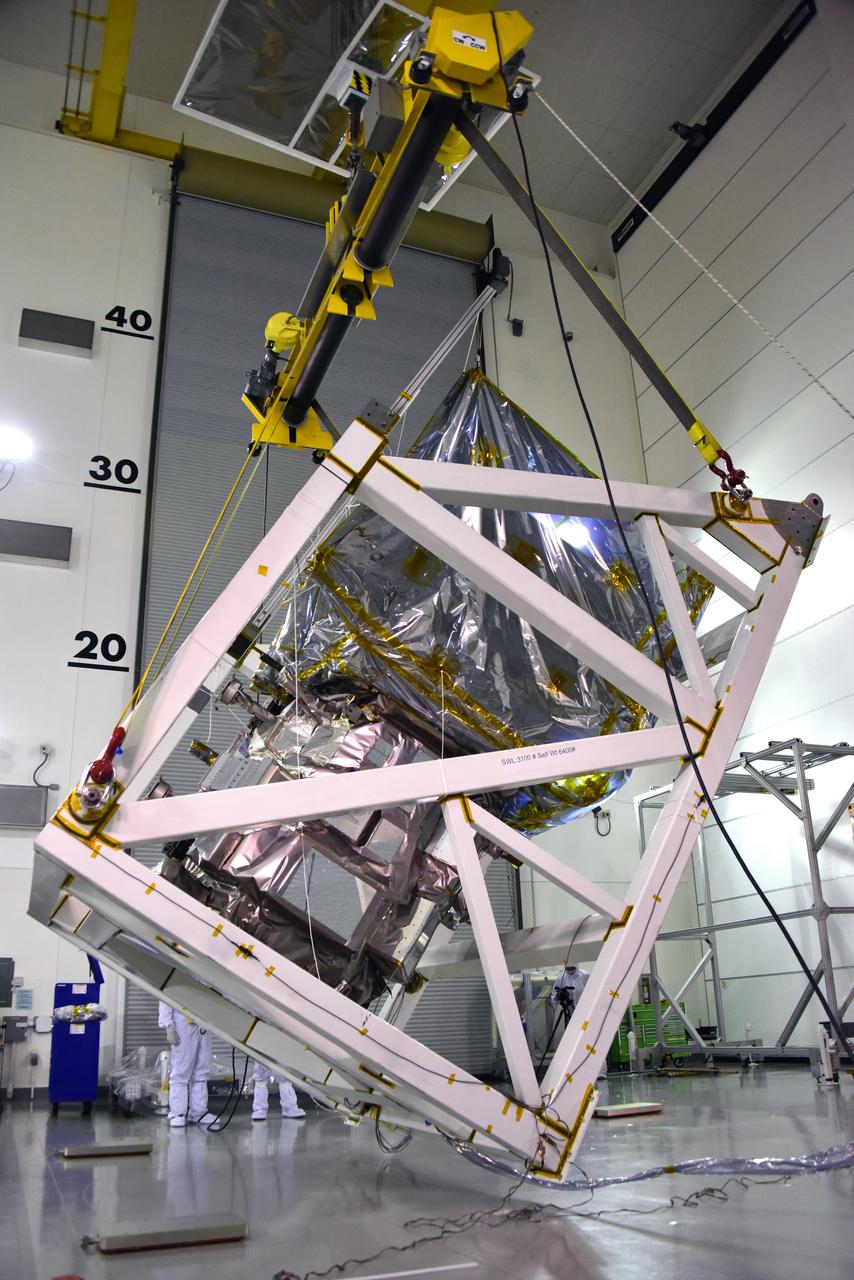
A crane is used to rotate NASA's Ice, Cloud and land Elevation Satellite-2 (ICESat-2) in its fixture inside the high bay of the Astrotech Space Operations facility on June 14, 2018, at Vandenberg Air Force Base in California. ICESat-2 was shipped from the Northrop Grumman facility in Gilbert, Arizona, where it was built and tested. The satellite is scheduled to launch from Space Launch Complex-2 at Vandenberg on the final United Launch Alliance Delta II rocket. ICESat-2 will measure the height of a changing Earth, one laser pulse at a time, 10,000 laser pulses a second. The satellite will carry the Advanced Topographic Laser Altimeter System. ICESat-2 will help scientists investigate why, and how much our planet's frozen and icy areas, called the cryosphere, is changing in a warming climate.
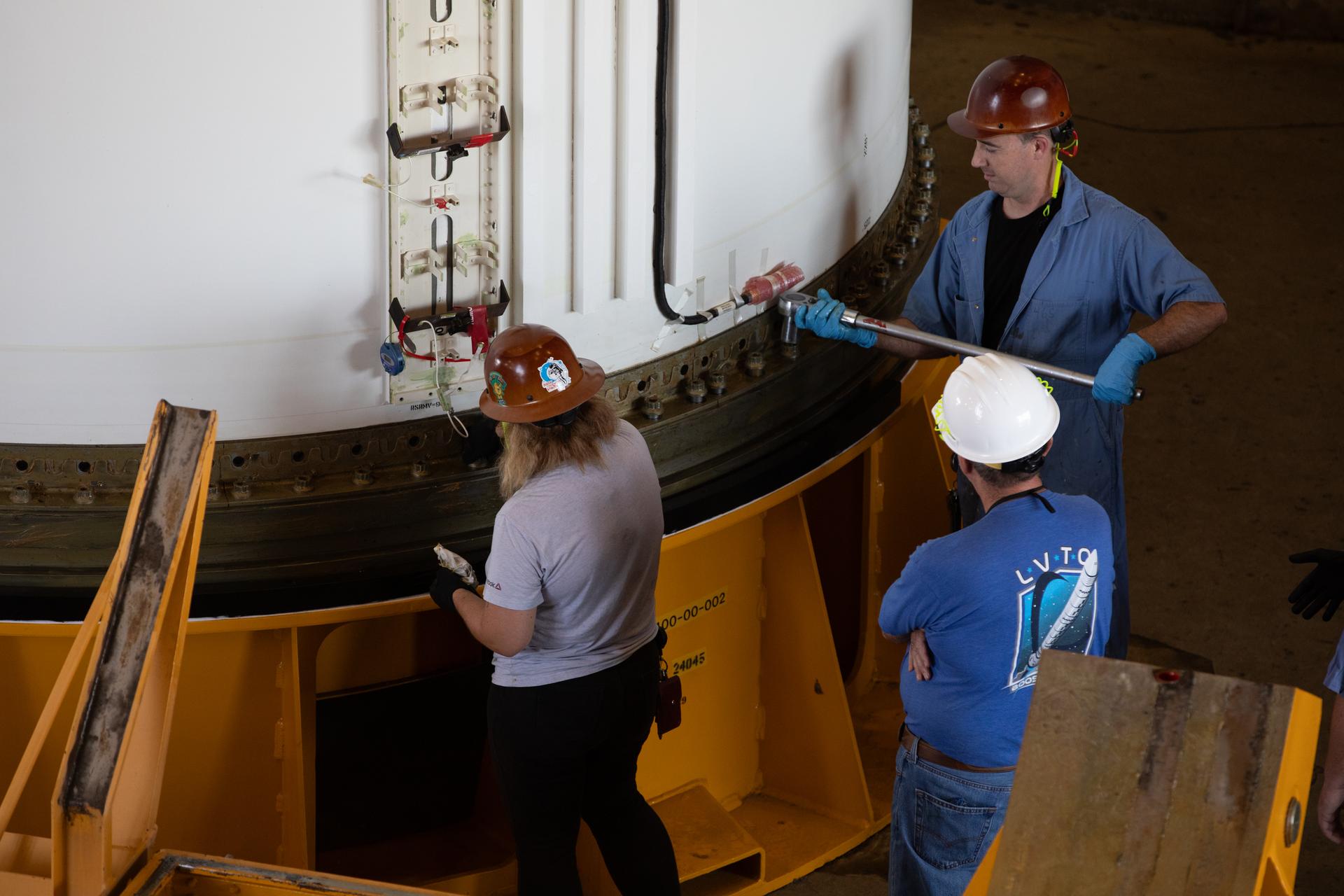
From left, COMET (Consolidated Operations, Management, Engineering, and Test) employees Tia Harbour, engineering technician; Caleb Waters, engineering technician; and Kenny Wright, Booster Element Office representative, monitor the right-hand forward center assembly solid rocket booster segment for the Artemis III SLS (Space Launch System) rocket lowered onto a work stand inside the Rotation, Processing, and Surge Facility at NASA’s Kennedy Space Center in Florida on Tuesday, July 14, 2026. The twin boosters, manufactured by Northrop Grumman in Utah, will provide more than 75 percent of the SLS rocket’s total thrust at launch. The Artemis III mission will launch astronauts in the Orion spacecraft on top of the SLS rocket to test rendezvous and docking capabilities between Orion and commercial spacecraft needed to land astronauts on the Moon.
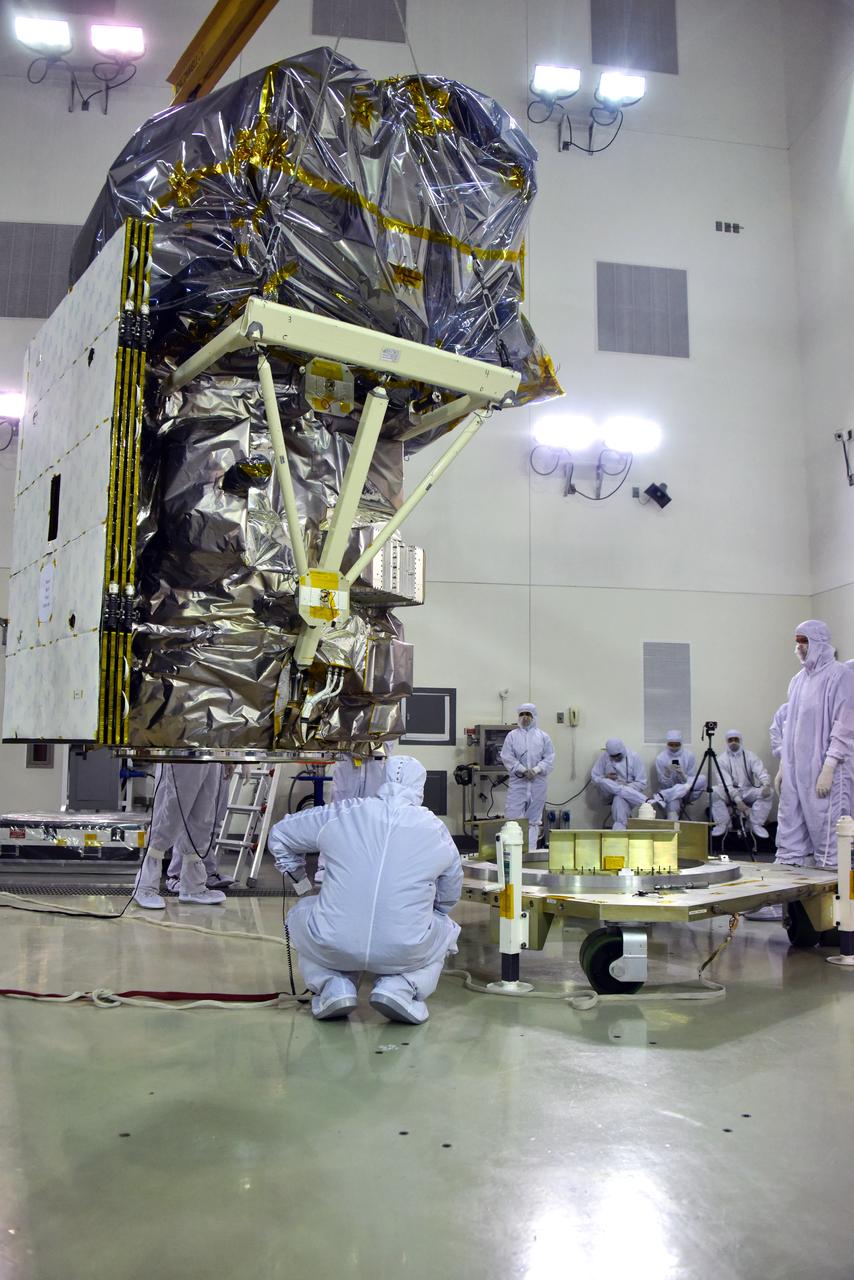
Technicians monitor the progress as NASA's Ice, Cloud and land Elevation Satellite-2 (ICESat-2) is removed from its fixture in the high bay of the Astrotech Space Operations facility on June 14, 2018, at Vandenberg Air Force Base in California. The satellite will be secured on a work stand for processing. ICESat-2 was shipped from the Northrop Grumman facility in Gilbert, Arizona, where it was built and tested. The satellite is scheduled to launch from Space Launch Complex-2 at Vandenberg on the final United Launch Alliance Delta II rocket. ICESat-2 will measure the height of a changing Earth, one laser pulse at a time, 10,000 laser pulses a second. The satellite will carry the Advanced Topographic Laser Altimeter System. ICESat-2 will help scientists investigate why, and how much our planet's frozen and icy areas, called the cryosphere, is changing in a warming climate.
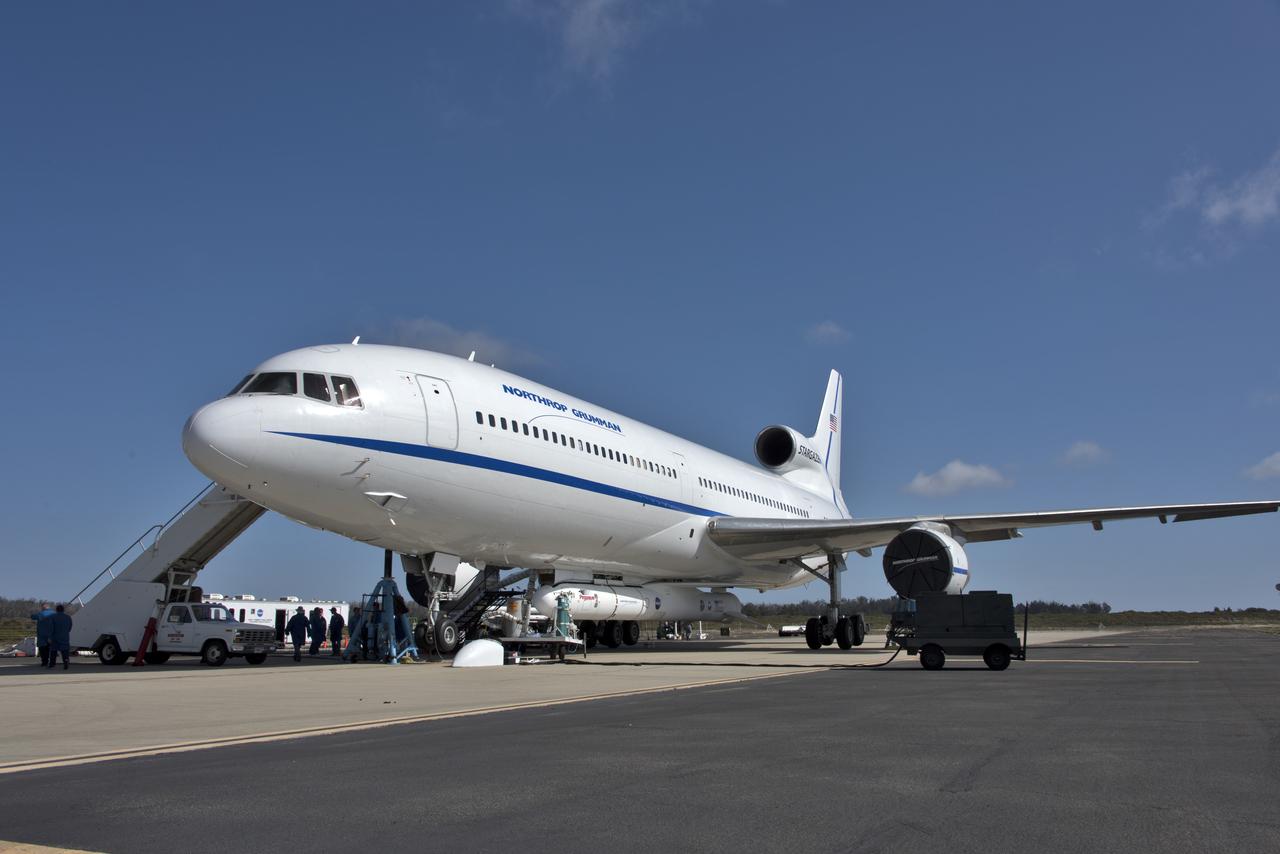
Northrop Grumman's Pegasus XL rocket, containing NASA's Ionospheric Connection Explorer (ICON), is attached beneath the company's L-1011 Stargazer aircraft at the hot pad at Vandenberg Air Force Base in California, on Oct. 14, 2018. The Stargazer will take off from the hot pad and travel to Cape Canaveral Air Force Station in Florida. The Pegasus XL rocket will launch ICON from the Skid Strip at the Cape. ICON will study the frontier of space - the dynamic zone high in Earth's atmosphere where terrestrial weather from below meets space weather above. The explorer will help determine the physics of Earth's space environment and pave the way for mitigating its effects on our technology and communications systems.
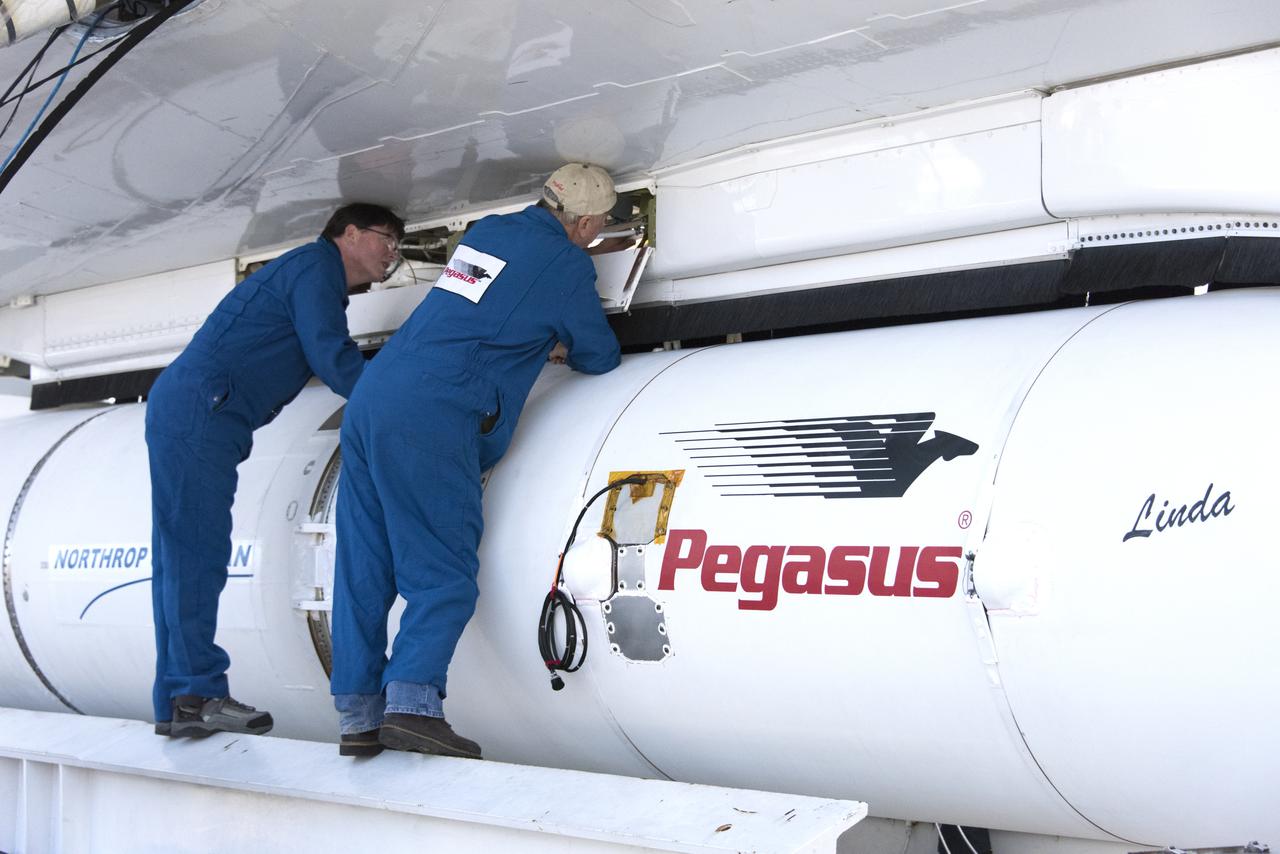
Technicians secure Northrop Grumman's Pegasus XL rocket, containing NASA's Ionospheric Connection Explorer (ICON), beneath the company's L-1011 Stargazer aircraft at the hot pad at Vandenberg Air Force Base in California, on Oct. 14, 2018. The Stargazer will take off from the hot pad and travel to Cape Canaveral Air Force Station in Florida. The Pegasus XL rocket will launch ICON from the Skid Strip at the Cape. ICON will study the frontier of space - the dynamic zone high in Earth's atmosphere where terrestrial weather from below meets space weather above. The explorer will help determine the physics of Earth's space environment and pave the way for mitigating its effects on our technology and communications systems.
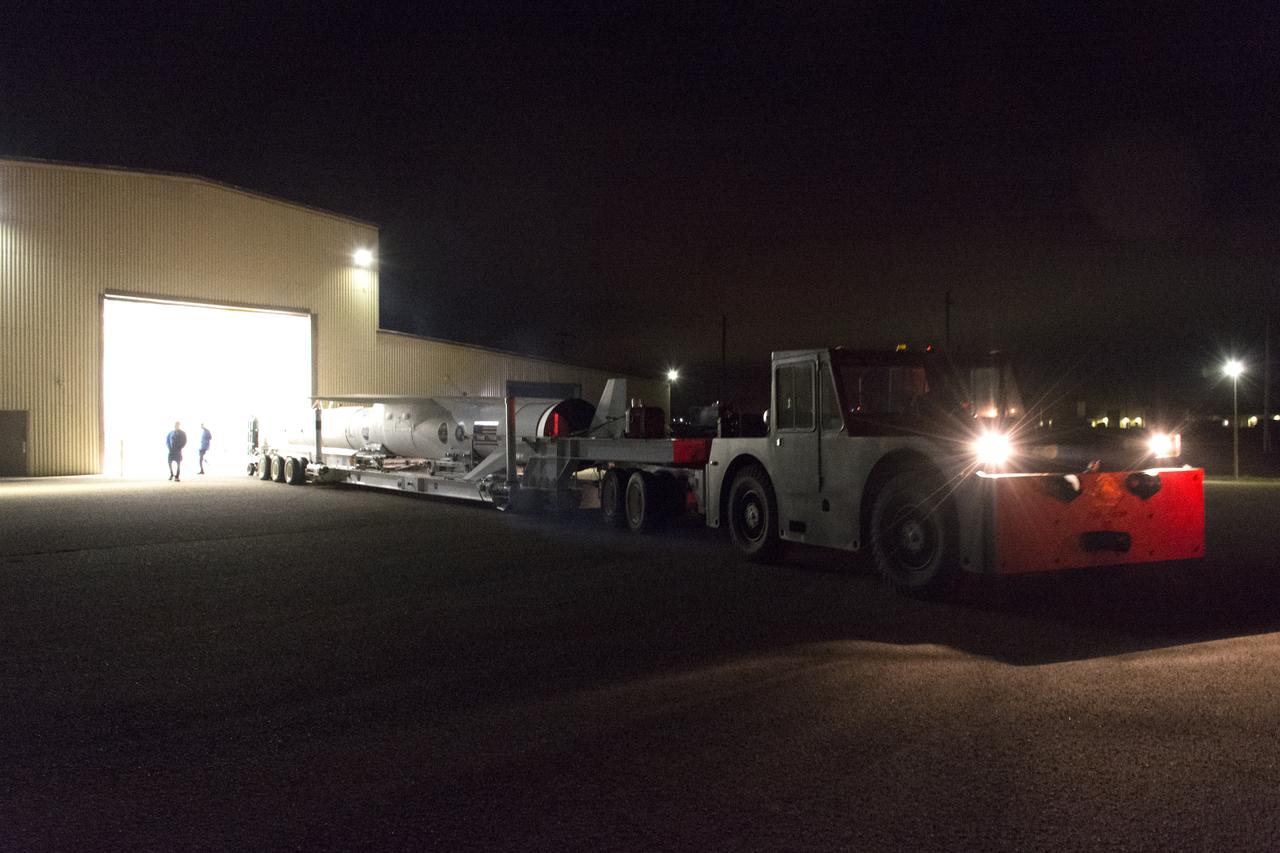
The Northrop Grumman Pegasus XL vehicle is transported from Building 1555 to the hot pad at Vandenberg Air Force Base in California, on Oct. 14, 2018. NASA's Ionospheric Connection Explorer (ICON) is secured inside the rocket's payload fairing. The Pegasus XL rocket will be attached beneath the company's L-1011 Stargazer aircraft, and travel to the Skid Strip at Cape Canaveral Air Force Station in Florida. ICON will launch aboard the Pegasus XL rocket on Oct. 26, 2018, from the Skid Strip at the Cape. ICON will study the frontier of space - the dynamic zone high in Earth's atmosphere where terrestrial weather from below meets space weather above. The explorer will help determine the physics of Earth's space environment and pave the way for mitigating its effects on our technology, communications systems and society.
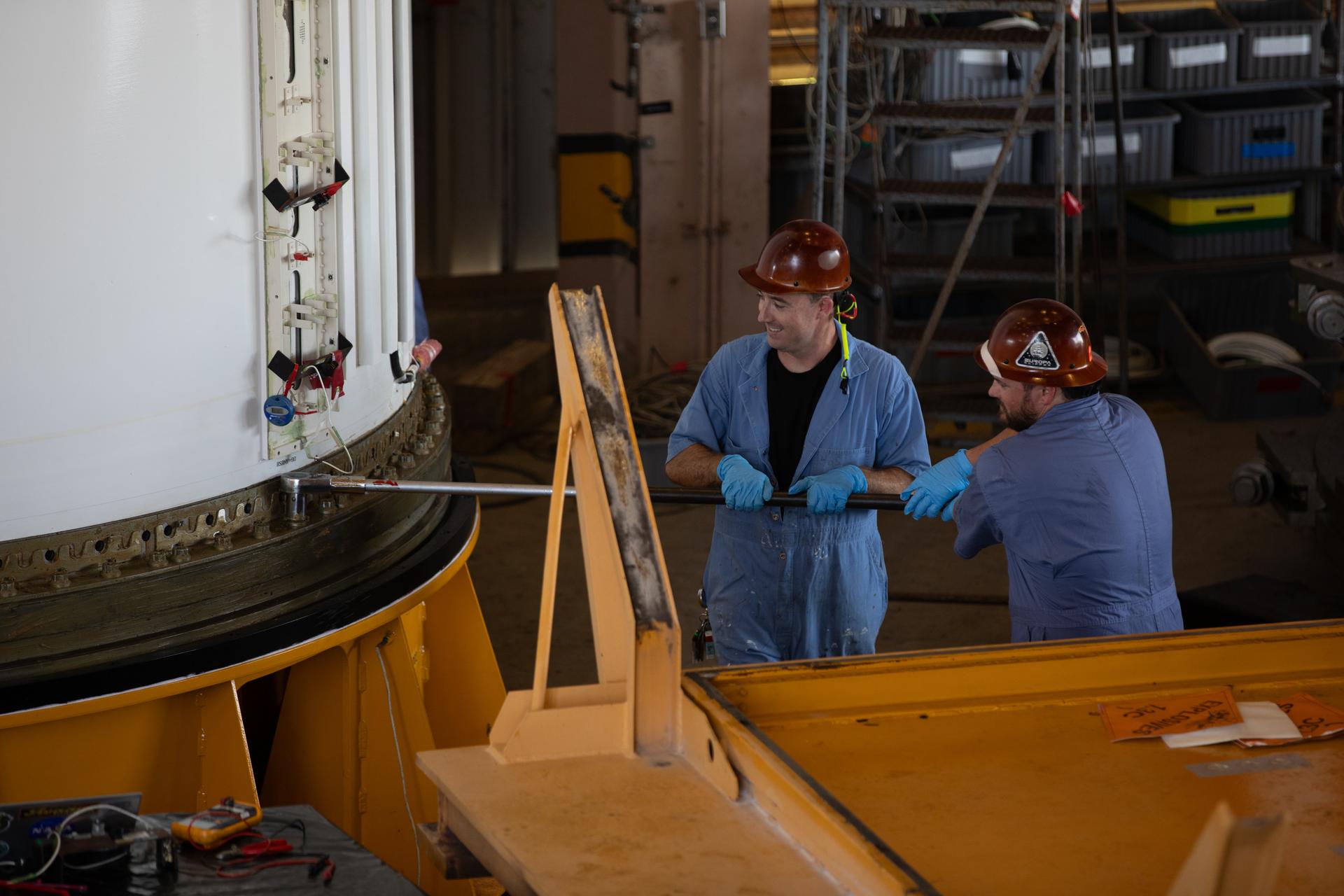
From left, COMET (Consolidated Operations, Management, Engineering, and Test) employees Caleb Waters and Alex Novratil, engineer technicians, secure the right-hand forward center assembly solid rocket booster segment for the Artemis III SLS (Space Launch System) rocket onto a work stand inside the Rotation, Processing, and Surge Facility at NASA’s Kennedy Space Center in Florida on Tuesday, July 14, 2026. The twin boosters, manufactured by Northrop Grumman in Utah, will provide more than 75 percent of the SLS rocket’s total thrust at launch. The Artemis III mission will launch astronauts in the Orion spacecraft on top of the SLS rocket to test rendezvous and docking capabilities between Orion and commercial spacecraft needed to land astronauts on the Moon.
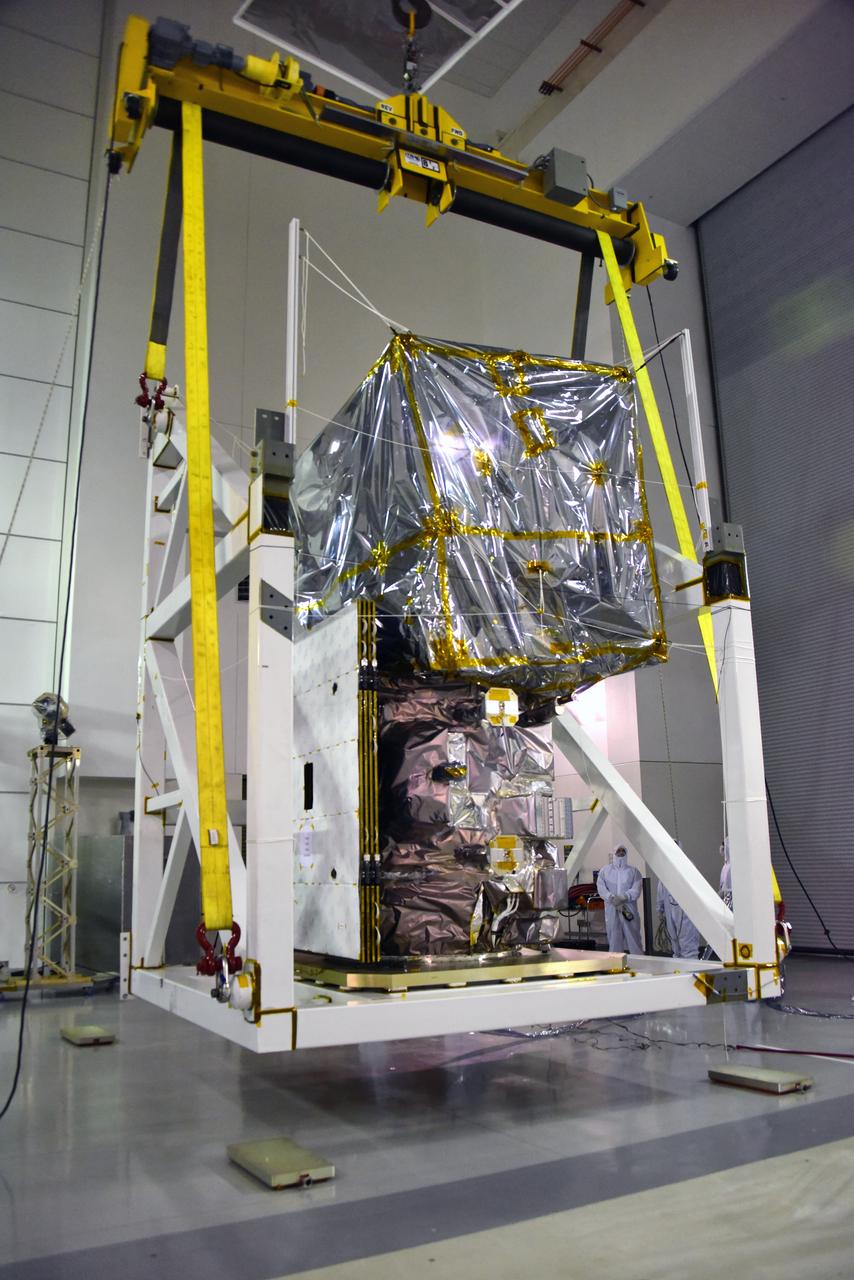
A crane rotates NASA's Ice, Cloud and land Elevation Satellite-2 (ICESat-2) in its fixture inside the high bay of the Astrotech Space Operations facility on June 14, 2018, at Vandenberg Air Force Base in California. ICESat-2 was shipped from the Northrop Grumman facility in Gilbert, Arizona, where it was built and tested. The satellite is scheduled to launch from Space Launch Complex-2 at Vandenberg on the final United Launch Alliance Delta II rocket. ICESat-2 will measure the height of a changing Earth, one laser pulse at a time, 10,000 laser pulses a second. The satellite will carry the Advanced Topographic Laser Altimeter System. ICESat-2 will help scientists investigate why, and how much our planet's frozen and icy areas, called the cryosphere, is changing in a warming climate.
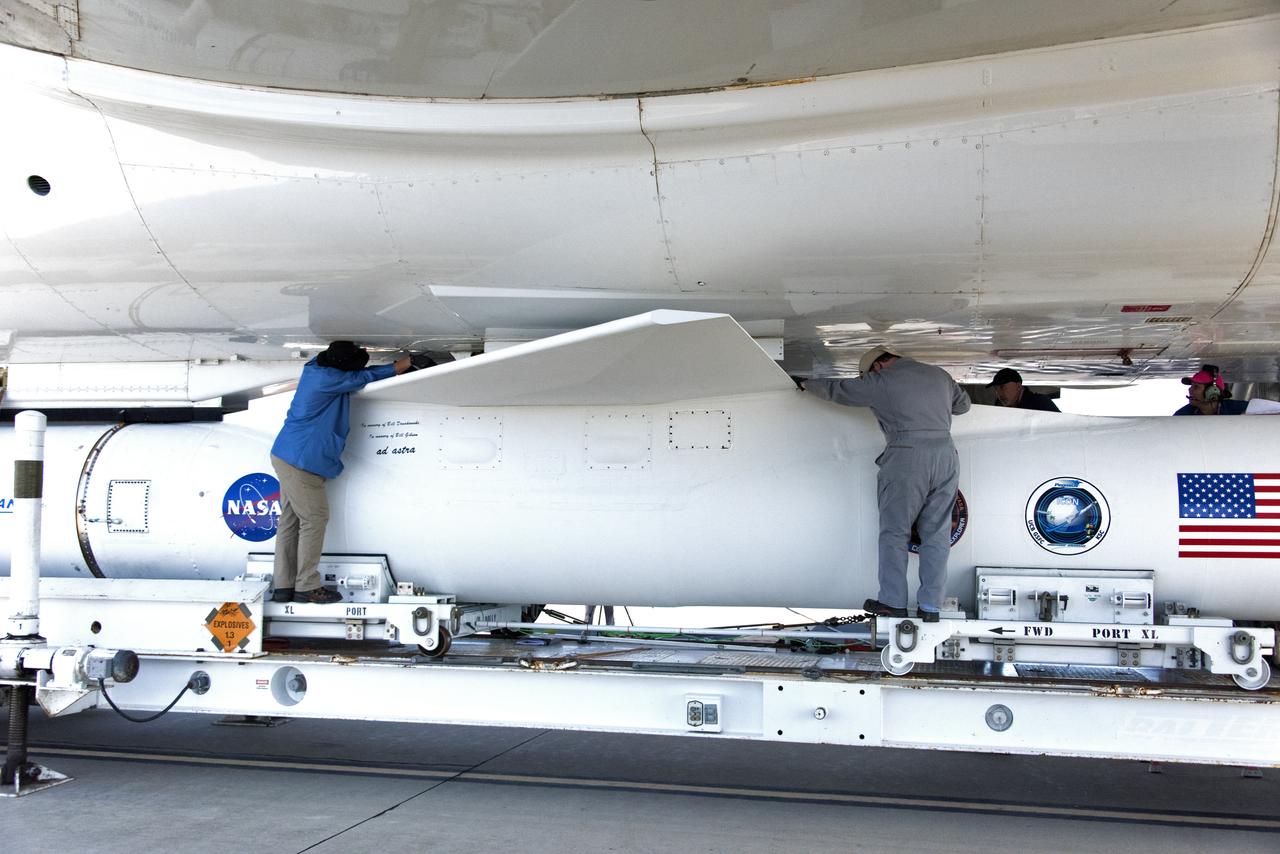
Technicians secure Northrop Grumman's Pegasus XL rocket, containing NASA's Ionospheric Connection Explorer (ICON), beneath the company's L-1011 Stargazer aircraft at the hot pad at Vandenberg Air Force Base in California, on Oct. 14, 2018. The Stargazer will take off from the hot pad and travel to Cape Canaveral Air Force Station in Florida. The Pegasus XL rocket will launch ICON from the Skid Strip at the Cape. ICON will study the frontier of space - the dynamic zone high in Earth's atmosphere where terrestrial weather from below meets space weather above. The explorer will help determine the physics of Earth's space environment and pave the way for mitigating its effects on our technology and communications systems.
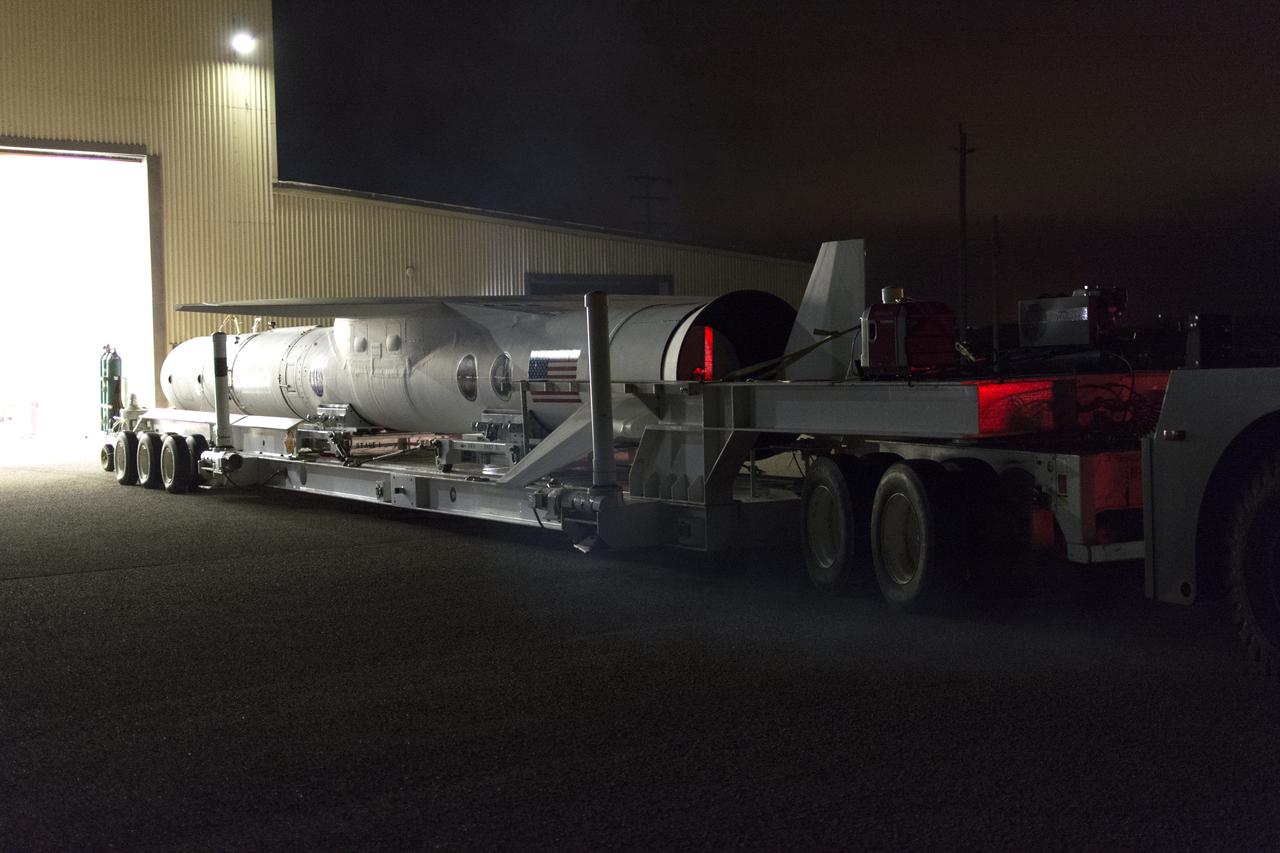
The Northrop Grumman Pegasus XL vehicle is transported from Building 1555 to the hot pad at Vandenberg Air Force Base in California, on Oct. 14, 2018. NASA's Ionospheric Connection Explorer (ICON) is secured inside the rocket's payload fairing. The Pegasus XL rocket will be attached beneath the company's L-1011 Stargazer aircraft, and travel to the Skid Strip at Cape Canaveral Air Force Station in Florida. ICON will launch aboard the Pegasus XL rocket on Oct. 26, 2018, from the Skid Strip at the Cape. ICON will study the frontier of space - the dynamic zone high in Earth's atmosphere where terrestrial weather from below meets space weather above. The explorer will help determine the physics of Earth's space environment and pave the way for mitigating its effects on our technology, communications systems and society.
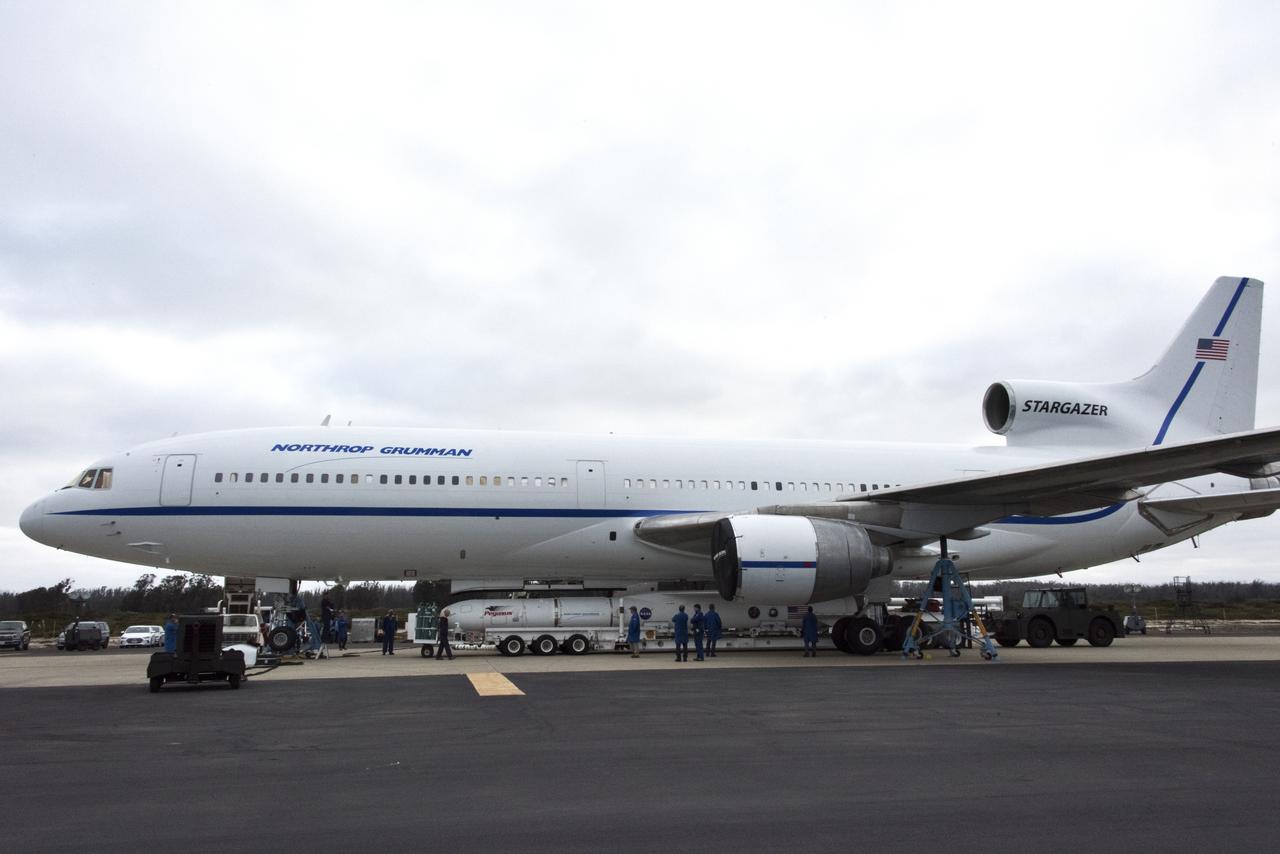
Northrop Grumman's Pegasus XL rocket, containing NASA's Ionospheric Connection Explorer (ICON), is attached beneath the company's L-1011 Stargazer aircraft at the hot pad at Vandenberg Air Force Base in California, on Oct. 14, 2018. The Stargazer will take off from the hot pad and travel to Cape Canaveral Air Force Station in Florida. The Pegasus XL rocket will launch ICON from the Skid Strip at the Cape. ICON will study the frontier of space - the dynamic zone high in Earth's atmosphere where terrestrial weather from below meets space weather above. The explorer will help determine the physics of Earth's space environment and pave the way for mitigating its effects on our technology and communications systems.
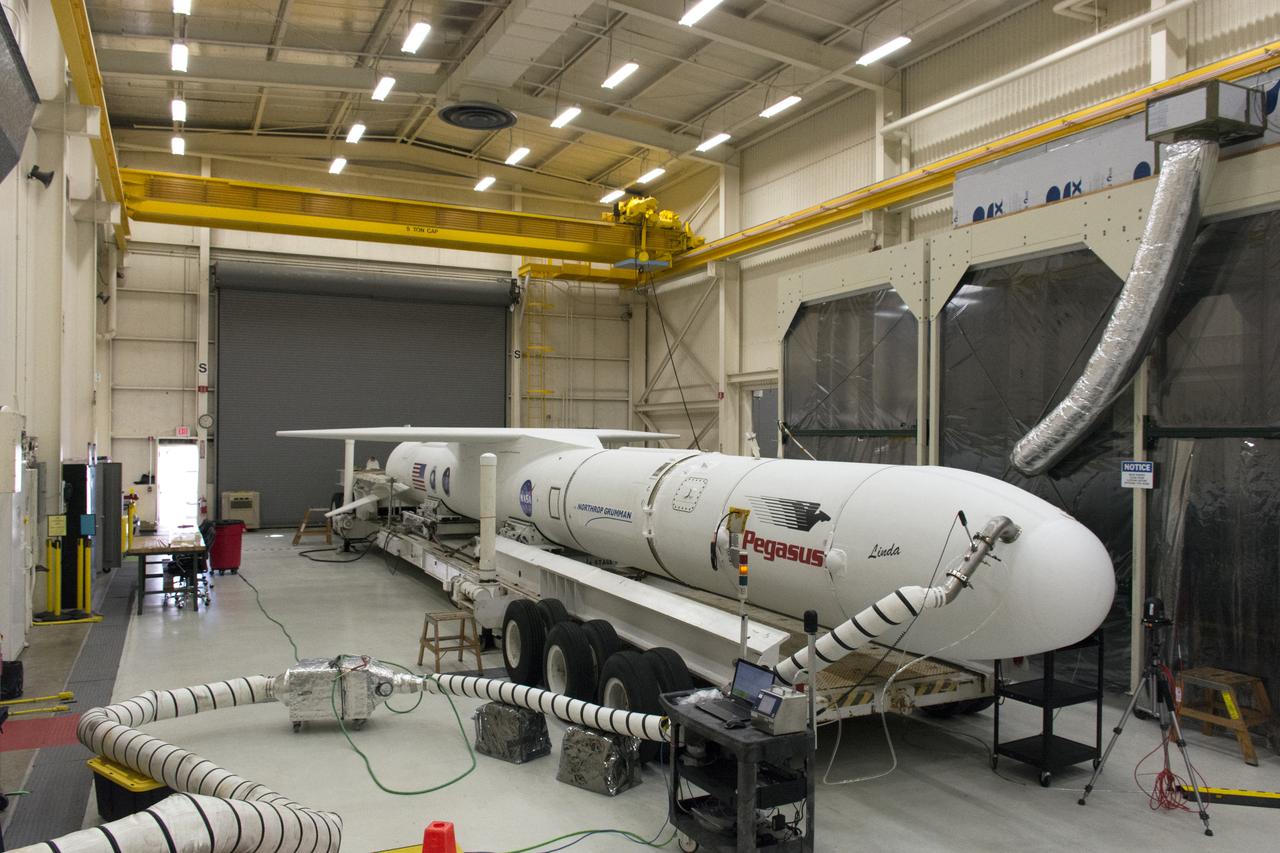
The Northrop Grumman Pegasus XL vehicle is being prepared for its move from Building 1555 to the hot pad at Vandenberg Air Force Base in California, on Oct. 14, 2018. NASA's Ionospheric Connection Explorer (ICON) is secured inside the rocket's payload fairing. The Pegasus XL rocket will be attached beneath the company's L-1011 Stargazer aircraft, and travel to the Skid Strip at Cape Canaveral Air Force Station in Florida. ICON will launch aboard the Pegasus XL rocket on Oct. 26, 2018, from the Skid Strip at the Cape. ICON will study the frontier of space - the dynamic zone high in Earth's atmosphere where terrestrial weather from below meets space weather above. The explorer will help determine the physics of Earth's space environment and pave the way for mitigating its effects on our technology, communications systems and society.
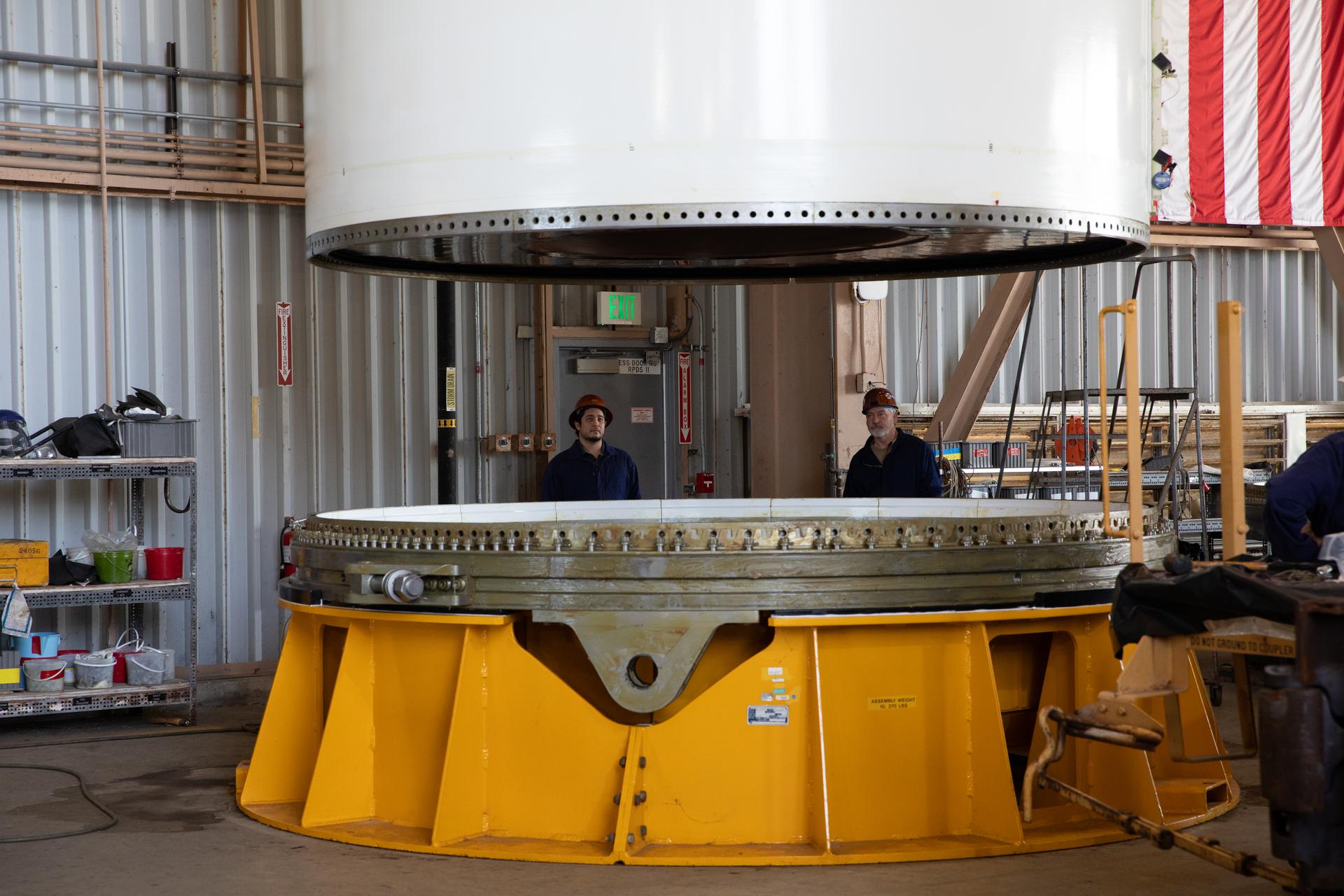
From left, COMET (Consolidated Operations, Management, Engineering, and Test) employees Corbin Nappi, quality assurance inspector, and Terry Williams, engineering technician, monitor the right-hand forward center assembly solid rocket booster segment for the Artemis III SLS (Space Launch System) rocket as it is lowered onto a work stand inside the Rotation, Processing, and Surge Facility at NASA’s Kennedy Space Center in Florida on Tuesday, July 14, 2026. The twin boosters, manufactured by Northrop Grumman in Utah, will provide more than 75 percent of the SLS rocket’s total thrust at launch. The Artemis III mission will launch astronauts in the Orion spacecraft on top of the SLS rocket to test rendezvous and docking capabilities between Orion and commercial spacecraft needed to land astronauts on the Moon.

Karl Hasenstein, the principal investigator for the Plant Habitat-02, or PH-02, plants radish seeds in seed carriers for the Addvanced Plant Habitat (APH) in the Space Life Sciences Lab at Kennedy Space Center on Sept. 23, 2020. The carriers will fly aboard Northrop Grumman’s 14th commercial resupply services mission to the International Space Station. The launch, aboard Northrop Grumman’s Cygnus spacecraft, is targeted for Sept. 29 from NASA’s Wallops Flight Facility in Virginia. Astronauts will grow radish plants in the APH, NASA’s largest and most advanced growth chamber on station.

Karl Hasenstein, the principal investigator for the Plant Habitat-02, or PH-02, plants radish seeds in seed carriers for the Addvanced Plant Habitat (APH) in the Space Life Sciences Lab at Kennedy Space Center on Sept. 23, 2020. The carriers will fly aboard Northrop Grumman’s 14th commercial resupply services mission to the International Space Station. The launch, aboard Northrop Grumman’s Cygnus spacecraft, is targeted for Sept. 29 from NASA’s Wallops Flight Facility in Virginia. Astronauts will grow radish plants in the APH, NASA’s largest and most advanced growth chamber on station.

Karl Hasenstein, the principal investigator for the Plant Habitat-02, or PH-02, plants radish seeds in seed carriers for the Addvanced Plant Habitat (APH) in the Space Life Sciences Lab at Kennedy Space Center on Sept. 23, 2020. The carriers will fly aboard Northrop Grumman’s 14th commercial resupply services mission to the International Space Station. The launch, aboard Northrop Grumman’s Cygnus spacecraft, is targeted for Sept. 29 from NASA’s Wallops Flight Facility in Virginia. Astronauts will grow radish plants in the APH, NASA’s largest and most advanced growth chamber on station.

Karl Hasenstein, the principal investigator for the Plant Habitat-02, or PH-02, plants radish seeds in seed carriers for the Addvanced Plant Habitat (APH) in the Space Life Sciences Lab at Kennedy Space Center on Sept. 23, 2020. The carriers will fly aboard Northrop Grumman’s 14th commercial resupply services mission to the International Space Station. The launch, aboard Northrop Grumman’s Cygnus spacecraft, is targeted for Sept. 29 from NASA’s Wallops Flight Facility in Virginia. Astronauts will grow radish plants in the APH, NASA’s largest and most advanced growth chamber on station.

Karl Hasenstein, the principal investigator for the Plant Habitat-02, or PH-02, plants radish seeds in seed carriers for the Addvanced Plant Habitat (APH) in the Space Life Sciences Lab at Kennedy Space Center on Sept. 23, 2020. The carriers will fly aboard Northrop Grumman’s 14th commercial resupply services mission to the International Space Station. The launch, aboard Northrop Grumman’s Cygnus spacecraft, is targeted for Sept. 29 from NASA’s Wallops Flight Facility in Virginia. Astronauts will grow radish plants in the APH, NASA’s largest and most advanced growth chamber on station.

Karl Hasenstein, the principal investigator for the Plant Habitat-02, or PH-02, plants radish seeds in seed carriers for the Addvanced Plant Habitat (APH) in the Space Life Sciences Lab at Kennedy Space Center on Sept. 23, 2020. The carriers will fly aboard Northrop Grumman’s 14th commercial resupply services mission to the International Space Station. The launch, aboard Northrop Grumman’s Cygnus spacecraft, is targeted for Sept. 29 from NASA’s Wallops Flight Facility in Virginia. Astronauts will grow radish plants in the APH, NASA’s largest and most advanced growth chamber on station.

Karl Hasenstein, the principal investigator for the Plant Habitat-02, or PH-02, plants radish seeds in seed carriers for the Addvanced Plant Habitat (APH) in the Space Life Sciences Lab at Kennedy Space Center on Sept. 23, 2020. The carriers will fly aboard Northrop Grumman’s 14th commercial resupply services mission to the International Space Station. The launch, aboard Northrop Grumman’s Cygnus spacecraft, is targeted for Sept. 29 from NASA’s Wallops Flight Facility in Virginia. Astronauts will grow radish plants in the APH, NASA’s largest and most advanced growth chamber on station.

Karl Hasenstein, the principal investigator for the Plant Habitat-02, or PH-02, plants radish seeds in seed carriers for the Addvanced Plant Habitat (APH) in the Space Life Sciences Lab at Kennedy Space Center on Sept. 23, 2020. The carriers will fly aboard Northrop Grumman’s 14th commercial resupply services mission to the International Space Station. The launch, aboard Northrop Grumman’s Cygnus spacecraft, is targeted for Sept. 29 from NASA’s Wallops Flight Facility in Virginia. Astronauts will grow radish plants in the APH, NASA’s largest and most advanced growth chamber on station.

Karl Hasenstein, the principal investigator for the Plant Habitat-02, or PH-02, plants radish seeds in seed carriers for the Addvanced Plant Habitat (APH) in the Space Life Sciences Lab at Kennedy Space Center on Sept. 23, 2020. The carriers will fly aboard Northrop Grumman’s 14th commercial resupply services mission to the International Space Station. The launch, aboard Northrop Grumman’s Cygnus spacecraft, is targeted for Sept. 29 from NASA’s Wallops Flight Facility in Virginia. Astronauts will grow radish plants in the APH, NASA’s largest and most advanced growth chamber on station.

Karl Hasenstein, the principal investigator for the Plant Habitat-02, or PH-02, plants radish seeds in seed carriers for the Addvanced Plant Habitat (APH) in the Space Life Sciences Lab at Kennedy Space Center on Sept. 23, 2020. The carriers will fly aboard Northrop Grumman’s 14th commercial resupply services mission to the International Space Station. The launch, aboard Northrop Grumman’s Cygnus spacecraft, is targeted for Sept. 29 from NASA’s Wallops Flight Facility in Virginia. Astronauts will grow radish plants in the APH, NASA’s largest and most advanced growth chamber on station.
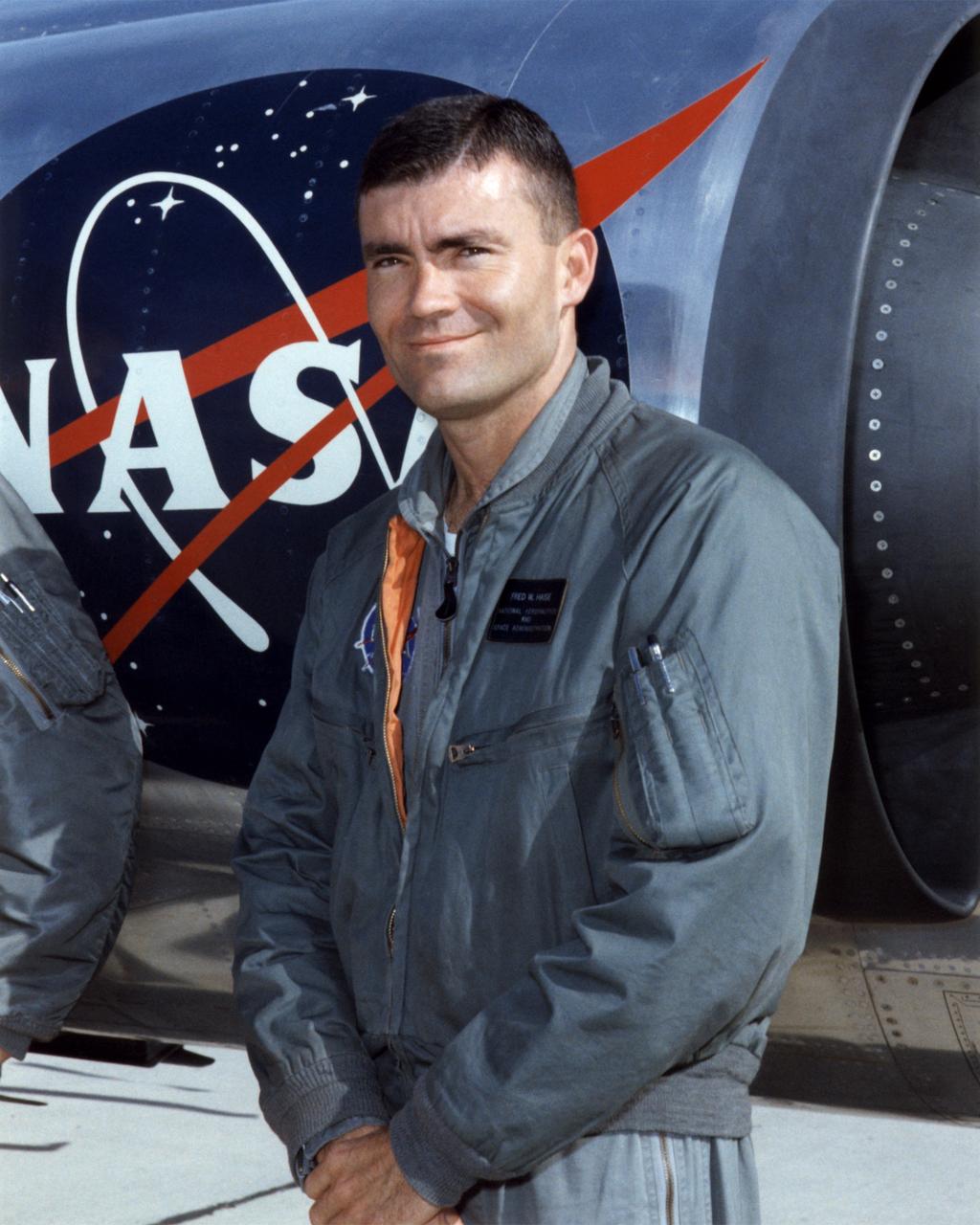
Fred W. Haise Jr. was a research pilot and an astronaut for the National Aeronautics and Space Administration from 1959 to 1979. He began flying at the Lewis Research Center in Cleveland, Ohio (today the Glenn Research Center), in 1959. He became a research pilot at the NASA Flight Research Center (FRC), Edwards, Calif., in 1963, serving NASA in that position for three years until being selected to be an astronaut in 1966 His best-known assignment at the FRC (later redesignated the Dryden Flight Research Center) was as a lifting body pilot. Shortly after flying the M2-F1 on a car tow to about 25 feet on April 22, 1966, he was assigned as an astronaut to the Johnson Space Center in Houston, Texas. While at the FRC he had also flown a variety of other research and support aircraft, including the variable-stability T-33A to simulate the M2-F2 heavyweight lifting body, some light aircraft including the Piper PA-30 to evaluate their handling qualities, the Apache helicopter, the Aero Commander, the Cessna 310, the Douglas F5D, the Lockheed F-104 and T-33, the Cessna T-37, and the Douglas C-47. After becoming an astronaut, Haise served as a backup crewmember for the Apollo 8, 11, and 16 missions. He flew on the aborted Apollo 13 lunar mission in 1970, spending 142 hours and 54 minutes in space before returning safely to Earth. In 1977, he was the commander of three free flights of the Space Shuttle prototype Enterprise when it flew its Approach and Landing Tests at Edwards Air Force Base, Calif. Meanwhile, from April 1973 to January 1976, Haise served as the Technical Assistant to the Manager of the Space Shuttle Orbiter Project. In 1979, he left NASA to become the Vice President for Space Programs with the Grumman Aerospace Corporation. He then served as President of Grumman Technical Services, an operating division of Northrop Grumman Corporation, from January 1992 until his retirement. Haise was born in Biloxi, Miss., on November 14, 1933. He underwent flight traini