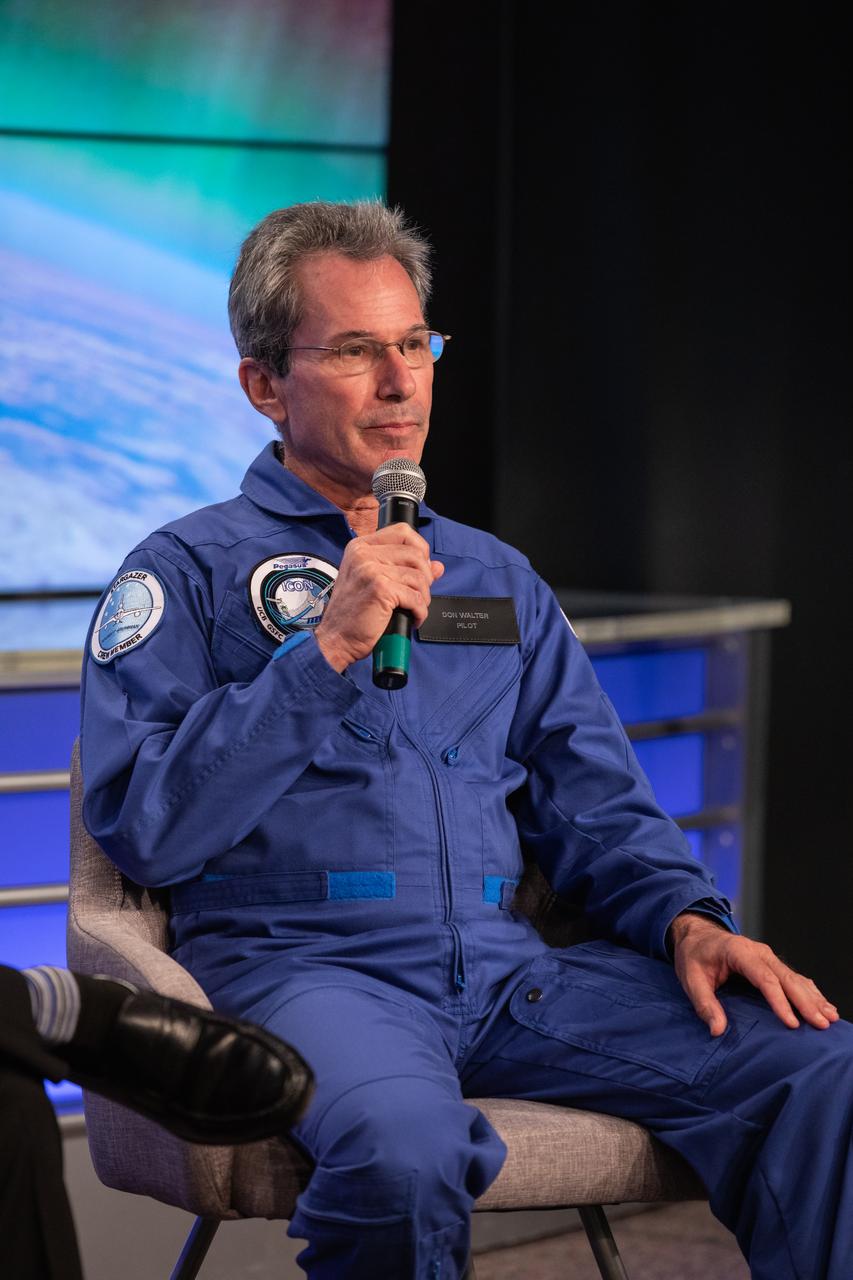
Don Walters, chief pilot of the L-1011 Stargazer aircraft for Northrop Grumman Innovation Systems, speaks to news media during a prelaunch mission briefing for NASA’s Ionospheric Connection Explorer (ICON), on Oct. 8, 2019, in the News Center auditorium at the agency’s Kennedy Space Center in Florida. ICON is targeted to launch from Cape Canaveral Air Force Station in Florida on Oct. 9, 2019, aboard a Northrop Grumman Pegasus XL rocket carried aloft by the company’s Stargazer L-1011 aircraft. The explorer will study the frontier of space - the dynamic zone high in Earth's atmosphere where terrestrial weather from below meets space weather above.

Steve Krein, vice president of civil and commercial space for Northrop Grumman Innovation Systems, speaks to news media during a prelaunch mission briefing for NASA’s Ionospheric Connection Explorer (ICON), on Oct. 8, 2019, in the News Center auditorium at the agency’s Kennedy Space Center in Florida. ICON is targeted to launch from Cape Canaveral Air Force Station in Florida on Oct. 9, 2019, aboard a Northrop Grumman Pegasus XL rocket carried aloft by the company’s Stargazer L-1011 aircraft. The explorer will study the frontier of space - the dynamic zone high in Earth's atmosphere where terrestrial weather from below meets space weather above.
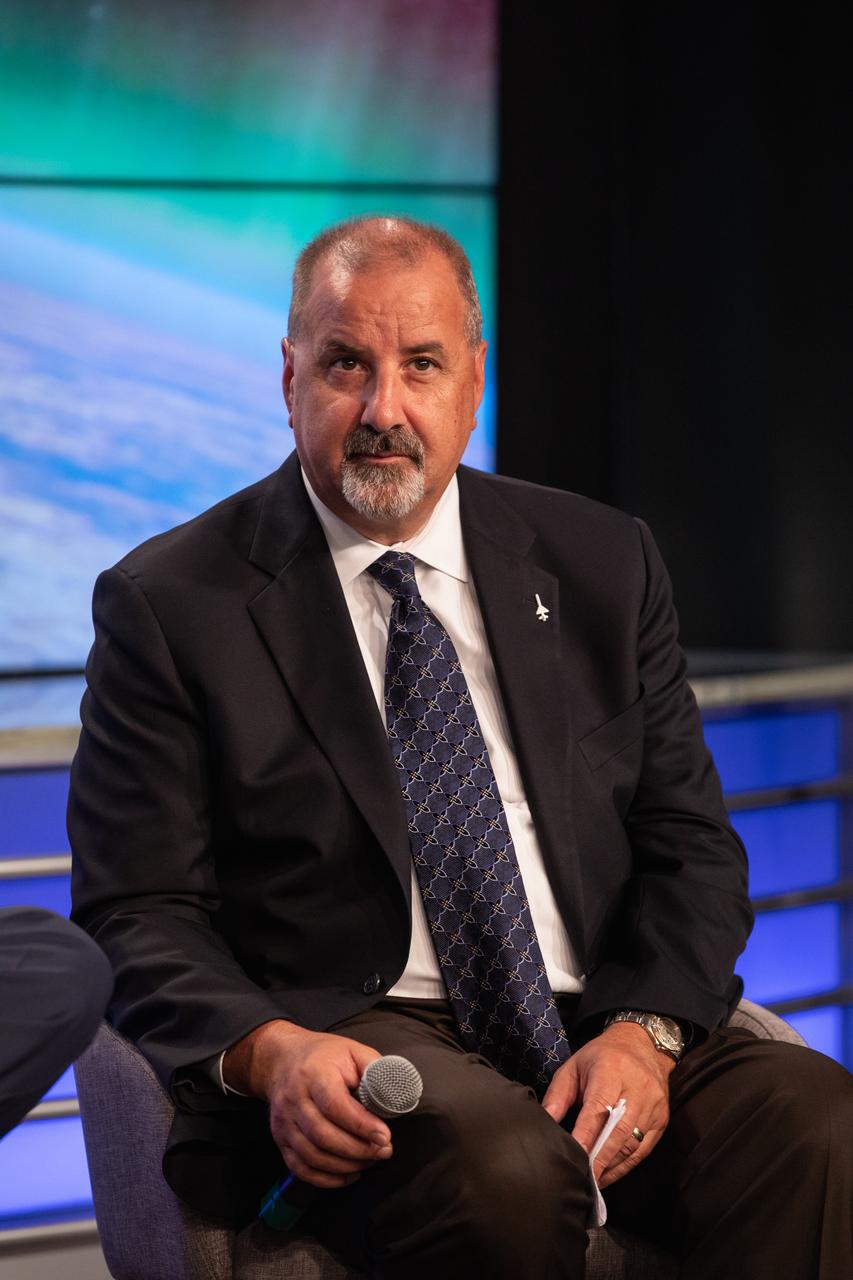
Phil Joyce, vice president of space launch programs for Northrop Grumman Innovation Systems, speaks to news media during a prelaunch mission briefing for NASA’s Ionospheric Connection Explorer (ICON), on Oct. 8, 2019, in the News Center auditorium at the agency’s Kennedy Space Center in Florida. ICON is targeted to launch from Cape Canaveral Air Force Station in Florida on Oct. 9, 2019, aboard a Northrop Grumman Pegasus XL rocket carried aloft by the company’s Stargazer L-1011 aircraft. The explorer will study the frontier of space - the dynamic zone high in Earth's atmosphere where terrestrial weather from below meets space weather above.
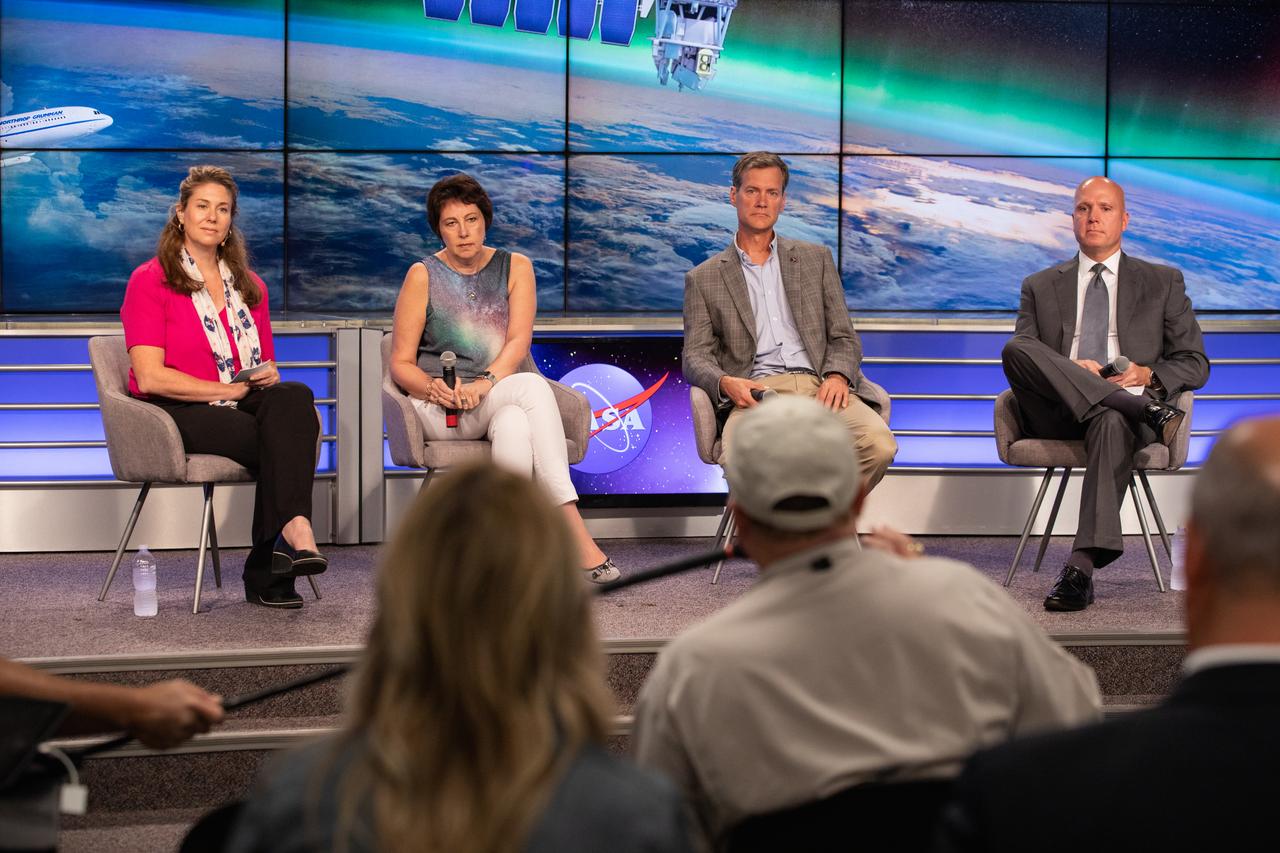
Launch and mission managers for NASA’s Ionospheric Connection Explorer (ICON) participate in a prelaunch mission briefing on Oct. 8, 2019, in the News Center auditorium at the agency’s Kennedy Space Center in Florida. From left to right are Karen Fox, NASA Communications; Nicola Fox, Heliophysics division director in NASA’s Science Mission Directorate; Thomas Immel, ICON principal investigator at the Space Sciences Laboratory at the University of California Berkeley; and Steve Krein, vice president of civil and commercial space for Northrop Grumman Innovation Systems. ICON is targeted to launch from Cape Canaveral Air Force Station in Florida on Oct. 9, 2019, aboard a Northrop Grumman Pegasus XL rocket carried aloft by the company’s Stargazer L-1011 aircraft. The explorer will study the frontier of space - the dynamic zone high in Earth's atmosphere where terrestrial weather from below meets space weather above.
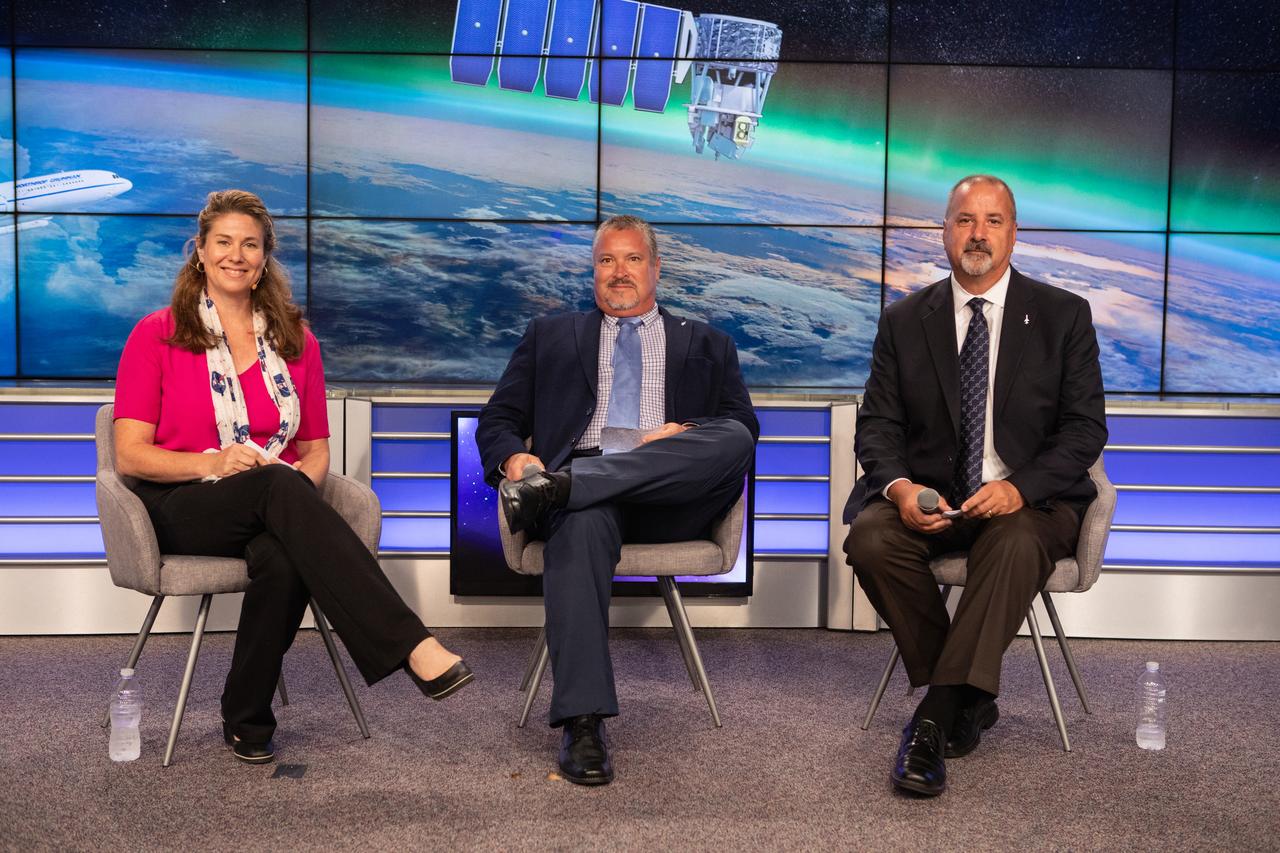
Launch and mission managers for NASA’s Ionospheric Connection Explorer (ICON) participate in a prelaunch mission briefing on Oct. 8, 2019, in the News Center auditorium at the agency’s Kennedy Space Center in Florida. From left to right are Karen Fox, NASA Communications; Omar Baez, launch director in NASA’s Launch Services Program; and Phil Joyce, vice president of space launch programs for Northrop Grumman Innovation Systems. ICON is targeted to launch from Cape Canaveral Air Force Station in Florida on Oct. 9, 2019, aboard a Northrop Grumman Pegasus XL rocket carried aloft by the company’s Stargazer L-1011 aircraft. The explorer will study the frontier of space - the dynamic zone high in Earth's atmosphere where terrestrial weather from below meets space weather above.
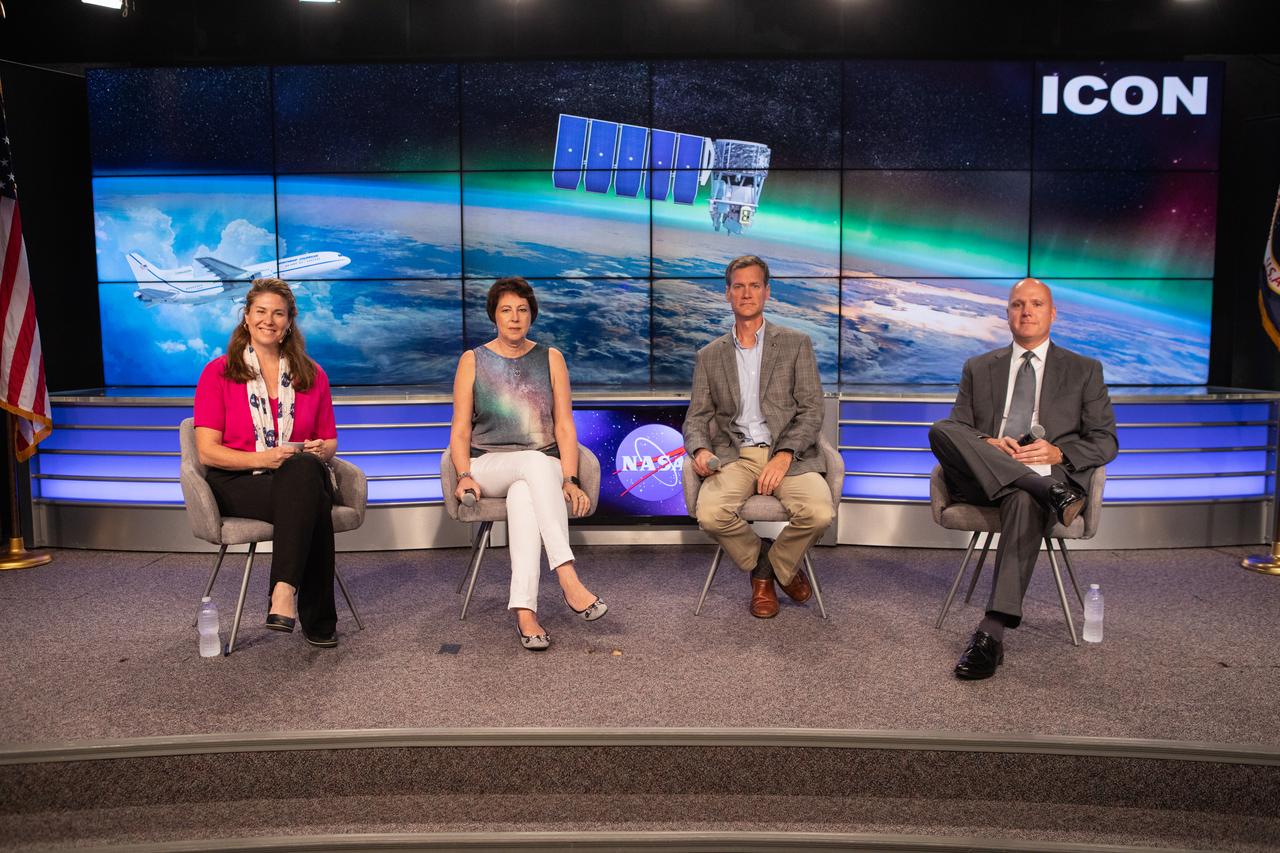
Launch and mission managers for NASA’s Ionospheric Connection Explorer (ICON) participate in a prelaunch mission briefing on Oct. 8, 2019, in the News Center auditorium at the agency’s Kennedy Space Center in Florida. From left to right are Karen Fox, NASA Communications; Nicola Fox, Heliophysics division director in NASA’s Science Mission Directorate; Thomas Immel, ICON principal investigator at the Space Sciences Laboratory at the University of California Berkeley; and Steve Krein, vice president of civil and commercial space for Northrop Grumman Innovation Systems. ICON is targeted to launch from Cape Canaveral Air Force Station in Florida on Oct. 9, 2019, aboard a Northrop Grumman Pegasus XL rocket carried aloft by the company’s Stargazer L-1011 aircraft. The explorer will study the frontier of space - the dynamic zone high in Earth's atmosphere where terrestrial weather from below meets space weather above.
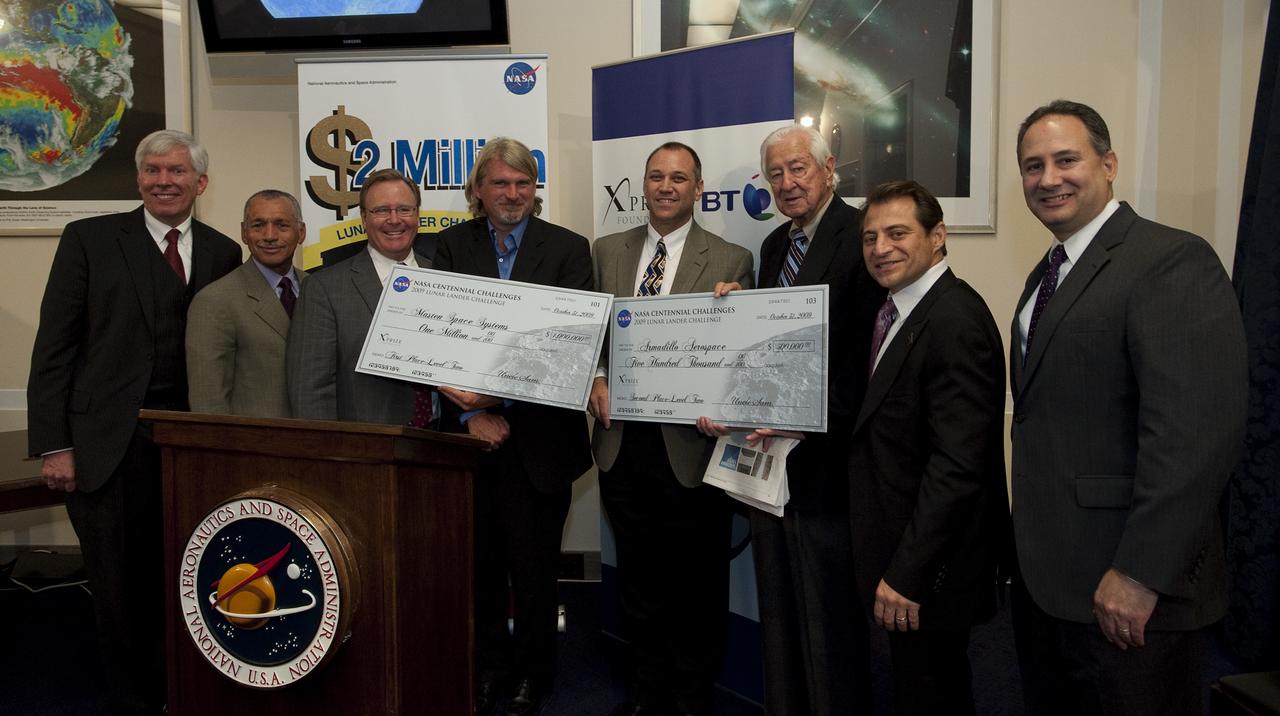
NASA and the X PRIZE Foundation announced the winners of the Northrop Grumman Lunar Lander Challenge at an awards ceremony at the Rayburn House Office Building, Thursday, Nov. 5, 2009 in Washington, DC. From left to right, George Nield, Associate Administrator of Commercial Space Transportation, FAA; Charles Bolden, NASA Administrator; Doug Comstock, Director, Innovative Partnerships Program, NASA; David Masten, CEO, Masten Space Systems; Phil Eaton, VP, Operations, Armadillo Aerospace; U.S. Rep. Ralph Hall (R-TX); Peter Diamandis, Chairman and CEO, X PRIZE Foundation and Mitch Waldman, VP, Advanced Programs & Technology, Northrop Grumman. Photo Credit: (NASA/Carla Cioffi)
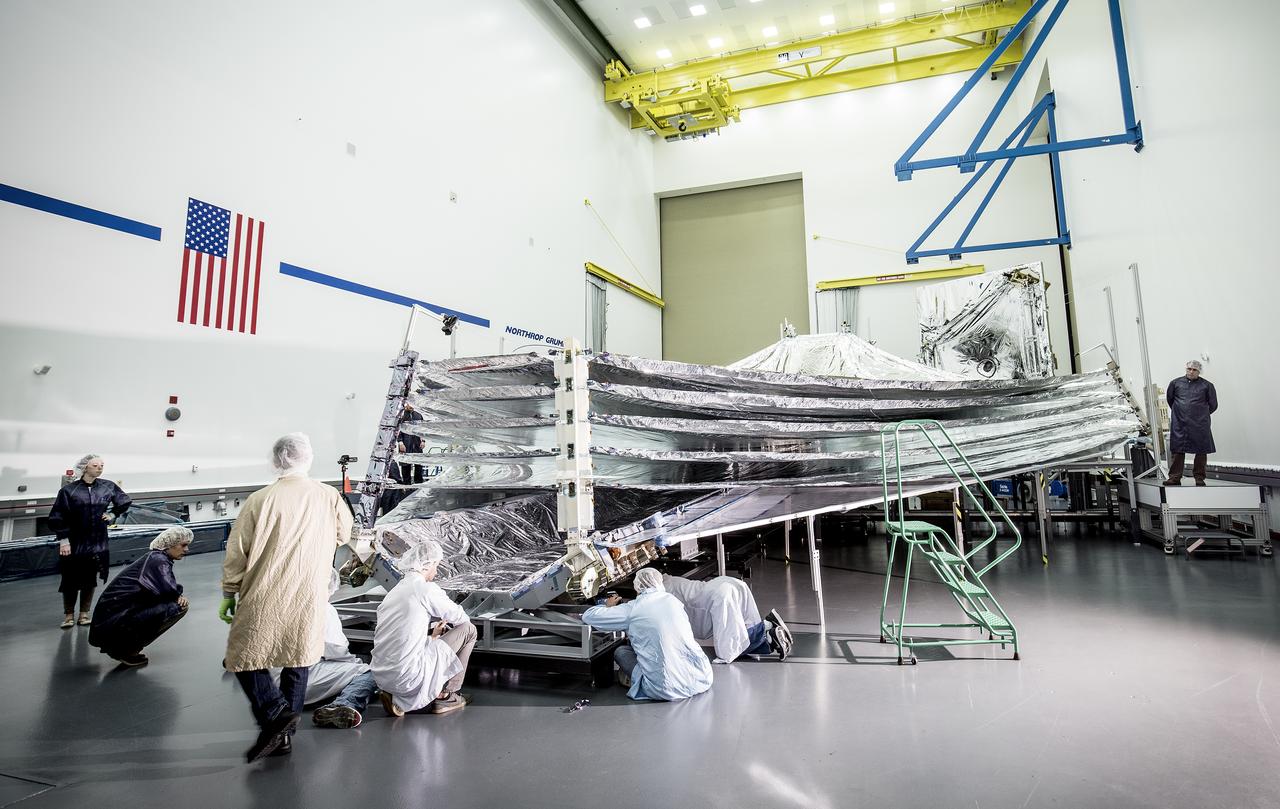
The sunshield on NASA's James Webb Space Telescope is the largest part of the observatory—five layers of thin, silvery membrane that must unfurl reliably in space. The precision in which the tennis-court sized sunshield has to open must be no more than a few centimeters different from its planned position. In this photo, engineers and scientists examine the sunshield layers on this full-sized test unit. Because there's a layer of the shiny silver material on the base under the five layers of the sunshield, it appears as if the sunshield has a mouth that is "open wide" while engineers take a look. The photo was taken in a clean room at Northrop Grumman Corporation, Redondo Beach, California. The sunshield separates the observatory into a warm sun-facing side and a cold side where the sunshine is blocked from interfering with the sensitive infrared instruments. The infrared instruments need to be kept very cold (under 50 K or -370 degrees Fahrenheit) to operate. The sunshield protects these sensitive instruments with an effective sun protection factor, or SPF, of 1,000,000. Sunscreen generally has an SPF of 8 to 50. In addition to providing a cold environment, the sunshield provides a thermally stable environment. This stability is essential to maintaining proper alignment of the primary mirror segments as the telescope changes its orientation to the sun. Earlier this year, the first flight layer of the sunshield was delivered to Northrop Grumman. Northrop Grumman is designing the Webb Telescope’s sunshield for NASA’s Goddard Space Flight Center, in Greenbelt, Maryland. Innovative sunshield membranes are being designed and manufactured by NeXolve Corporation of Huntsville, Alabama. The James Webb Space Telescope is the successor to NASA's Hubble Space Telescope. It will be the most powerful space telescope ever built. Webb is an international project led by NASA with its partners, the European Space Agency and the Canadian Space Agency. For more information about the Webb telescope, visit: <a href="http://www.jwst.nasa.gov" rel="nofollow">www.jwst.nasa.gov</a> or <a href="http://www.nasa.gov/webb" rel="nofollow">www.nasa.gov/webb</a> For more information on the Webb Sunshield, visit: <a href="http://jwst.nasa.gov/sunshield.html" rel="nofollow">jwst.nasa.gov/sunshield.html</a> Photo credit: Alex Evers/Northrop Grumman Corporation <b><a href="http://www.nasa.gov/audience/formedia/features/MP_Photo_Guidelines.html" rel="nofollow">NASA image use policy.</a></b> <b><a href="http://www.nasa.gov/centers/goddard/home/index.html" rel="nofollow">NASA Goddard Space Flight Center</a></b> enables NASA’s mission through four scientific endeavors: Earth Science, Heliophysics, Solar System Exploration, and Astrophysics. Goddard plays a leading role in NASA’s accomplishments by contributing compelling scientific knowledge to advance the Agency’s mission. <b>Follow us on <a href="http://twitter.com/NASAGoddardPix" rel="nofollow">Twitter</a></b> <b>Like us on <a href="http://www.facebook.com/pages/Greenbelt-MD/NASA-Goddard/395013845897?ref=tsd" rel="nofollow">Facebook</a></b> <b>Find us on <a href="http://instagrid.me/nasagoddard/?vm=grid" rel="nofollow">Instagram</a></b>
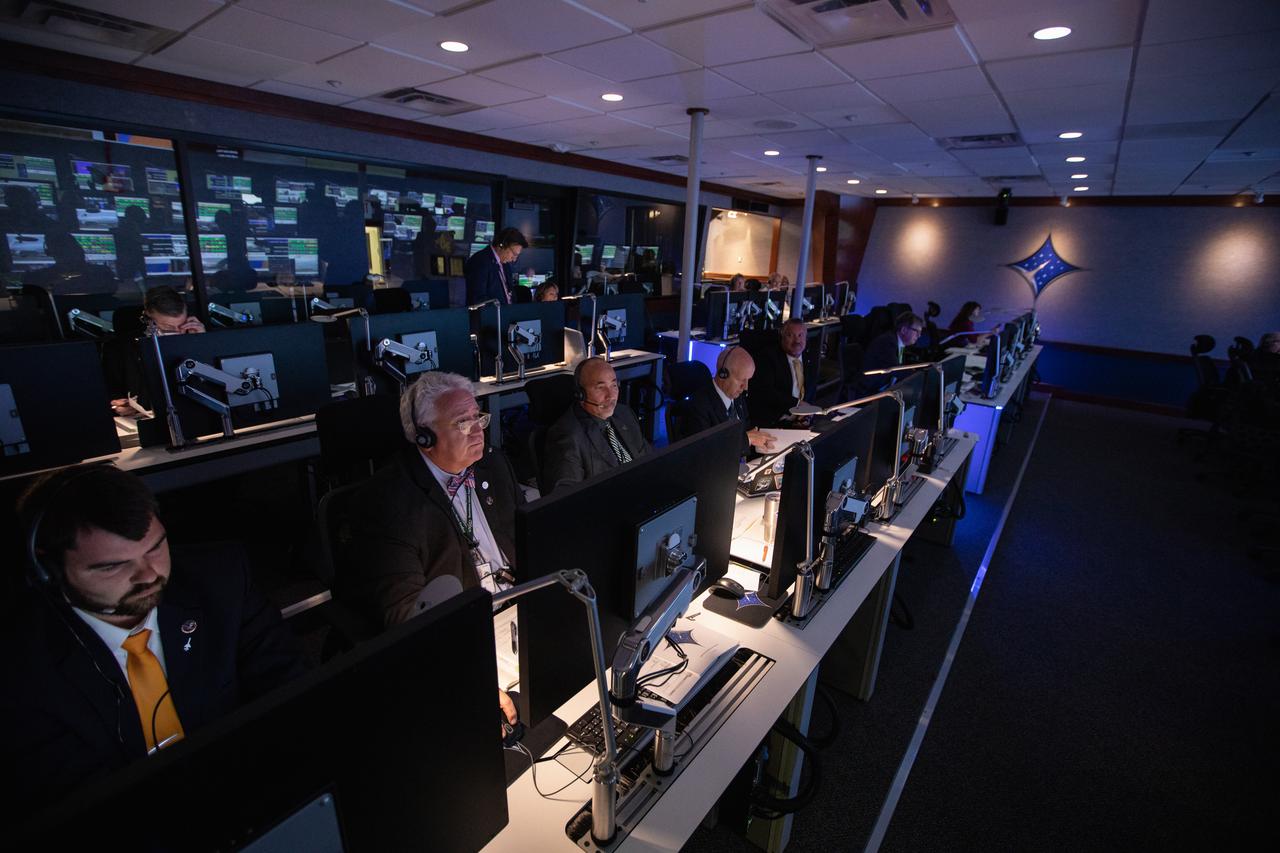
Inside Hangar AE’s Mission Director’s Center at Cape Canaveral Air Force Station (CCAFS), members of the launch team monitor the launch of NASA’s Ionospheric Connection Explorer (ICON) satellite. The Northrop Grumman Pegasus XL rocket carrying ICON was released from the company’s L-1011 Stargazer aircraft at 9:59 p.m. EDT on Oct. 10, 2019, over the Atlantic Ocean about 50 miles from Daytona Beach, Florida, following takeoff from CCAFS. ICON will spend two years studying the Earth’s ionosphere – the dynamic zone in our atmosphere where terrestrial weather from below meets space weather from above. The launch was managed by the agency’s Launch Services Program.

Inside Hangar AE’s Mission Director’s Center at Cape Canaveral Air Force Station (CCAFS), Amanda Mitskevich, right, program manager in NASA’s Launch Services Program (LSP), and Chuck Dovale, second from right, LSP deputy program manager, monitor the launch of the agency’s Ionospheric Connection Explorer (ICON). The Northrop Grumman Pegasus XL rocket carrying ICON was released from the company’s L-1011 Stargazer aircraft at 9:59 p.m. EDT on Oct. 10, 2019, over the Atlantic Ocean about 50 miles from Daytona Beach, Florida, following takeoff from CCAFS. ICON will spend two years studying the Earth’s ionosphere – the dynamic zone in our atmosphere where terrestrial weather from below meets space weather from above. The ICON launch was managed by LSP.
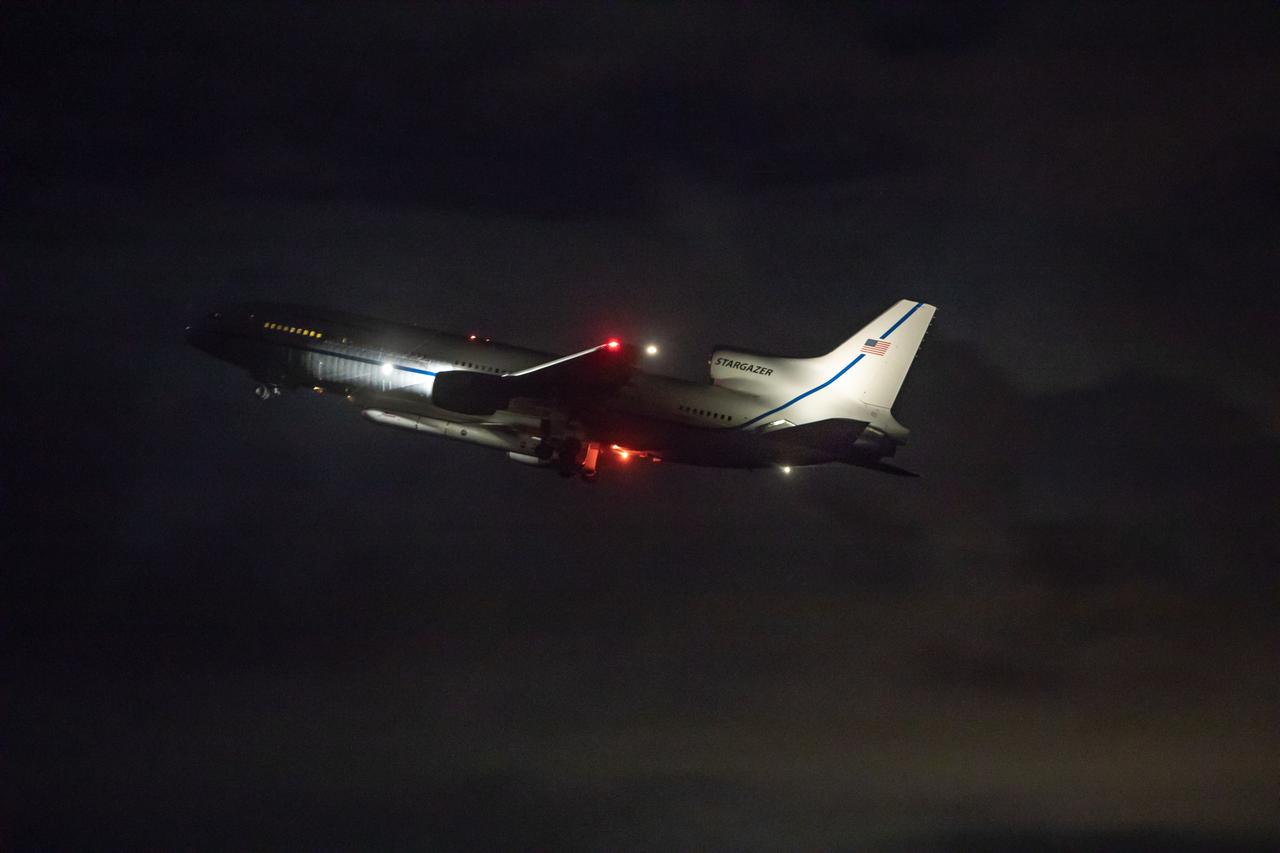
Northrop Grumman’s L-1011 Stargazer aircraft, with the company’s Pegasus XL rocket attached beneath, takes off from the Skid Strip runway at Cape Canaveral Air Force Station in Florida on Oct. 10, 2019. NASA's Ionospheric Connection Explorer (ICON) is secured inside the rocket's payload fairing. The air-launched Pegasus XL was released from the aircraft at 9:59 p.m. EDT to start ICON’s journey to space. The explorer will study the frontier of space - the dynamic zone high in Earth's atmosphere where terrestrial weather from below meets space weather above.

Members of the launch team monitor the launch of NASA’s Ionospheric Connection Explorer (ICON) satellite inside Hangar AE at Cape Canaveral Air Force Station (CCAFS) in Florida. The Northrop Grumman Pegasus XL rocket carrying ICON was released from the company’s L-1011 Stargazer aircraft at 9:59 p.m. EDT on Oct. 10, 2019, over the Atlantic Ocean about 50 miles from Daytona Beach following takeoff from CCAFS. ICON will spend two years studying the Earth’s ionosphere – the dynamic zone in our atmosphere where terrestrial weather from below meets space weather from above. The launch was managed by the agency’s Launch Services Program.

Thomas Immel of the Space Sciences Laboratory at the University of California Berkeley speaks to news media during a prelaunch mission briefing for NASA’s Ionospheric Connection Explorer (ICON), on Oct. 8, 2019, in the News Center auditorium at the agency’s Kennedy Space Center in Florida. Immel is ICON’s principal investigator. ICON is targeted to launch from Cape Canaveral Air Force Station in Florida on Oct. 9, 2019, aboard a Northrop Grumman Pegasus XL rocket carried aloft by the company’s Stargazer L-1011 aircraft. The explorer will study the frontier of space - the dynamic zone high in Earth's atmosphere where terrestrial weather from below meets space weather above.
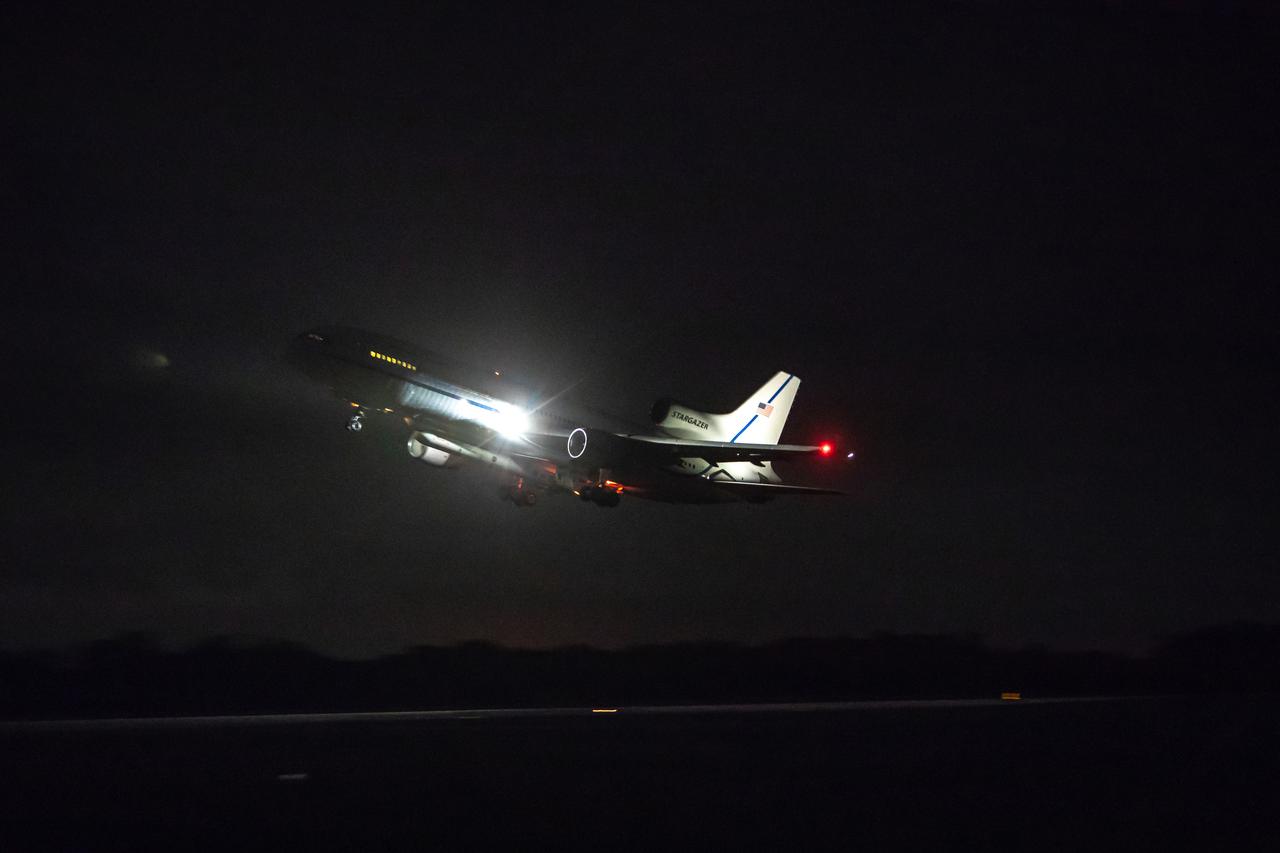
Northrop Grumman’s L-1011 Stargazer aircraft, with the company’s Pegasus XL rocket attached beneath, takes off from the Skid Strip runway at Cape Canaveral Air Force Station in Florida on Oct. 10, 2019. NASA's Ionospheric Connection Explorer (ICON) is secured inside the rocket's payload fairing. The air-launched Pegasus XL was released from the aircraft at 9:59 p.m. EDT to start ICON’s journey to space. The explorer will study the frontier of space - the dynamic zone high in Earth's atmosphere where terrestrial weather from below meets space weather above.

Karen Fox of NASA Communications moderates a prelaunch mission briefing for NASA’s Ionospheric Connection Explorer (ICON), on Oct. 8, 2019, in the News Center auditorium at the agency’s Kennedy Space Center in Florida. ICON is targeted to launch from Cape Canaveral Air Force Station in Florida on Oct. 9, 2019, aboard a Northrop Grumman Pegasus XL rocket carried aloft by the company’s Stargazer L-1011 aircraft. The explorer will study the frontier of space - the dynamic zone high in Earth's atmosphere where terrestrial weather from below meets space weather above.

From left, Kennedy Space Center Director Bob Cabana, NASA’s Launch Services Program (LSP) Deputy Program Manager Chuck Dovale and LSP Program Manager Amanda Mitskevich monitor the launch of the agency’s Ionospheric Connection Explorer (ICON) satellite inside Hangar AE’s Mission Director’s Center at Cape Canaveral Air Force Station (CCAFS). The Northrop Grumman Pegasus XL rocket carrying ICON was released from the company’s L-1011 Stargazer aircraft at 9:59 p.m. EDT on Oct. 10, 2019, over the Atlantic Ocean about 50 miles from Daytona Beach, Florida, following takeoff from CCAFS. ICON will spend two years studying the Earth’s ionosphere – the dynamic zone in our atmosphere where terrestrial weather from below meets space weather from above. The ICON launch was managed by LSP.

A member of the launch team monitors the launch of NASA’s Ionospheric Connection Explorer (ICON) satellite inside Hangar AE at Cape Canaveral Air Force Station (CCAFS) in Florida. The Northrop Grumman Pegasus XL rocket carrying ICON was released from the company’s L-1011 Stargazer aircraft at 9:59 p.m. EDT on Oct. 10, 2019, over the Atlantic Ocean about 50 miles from Daytona Beach following takeoff from CCAFS. ICON will spend two years studying the Earth’s ionosphere – the dynamic zone in our atmosphere where terrestrial weather from below meets space weather from above. The launch was managed by the agency’s Launch Services Program.
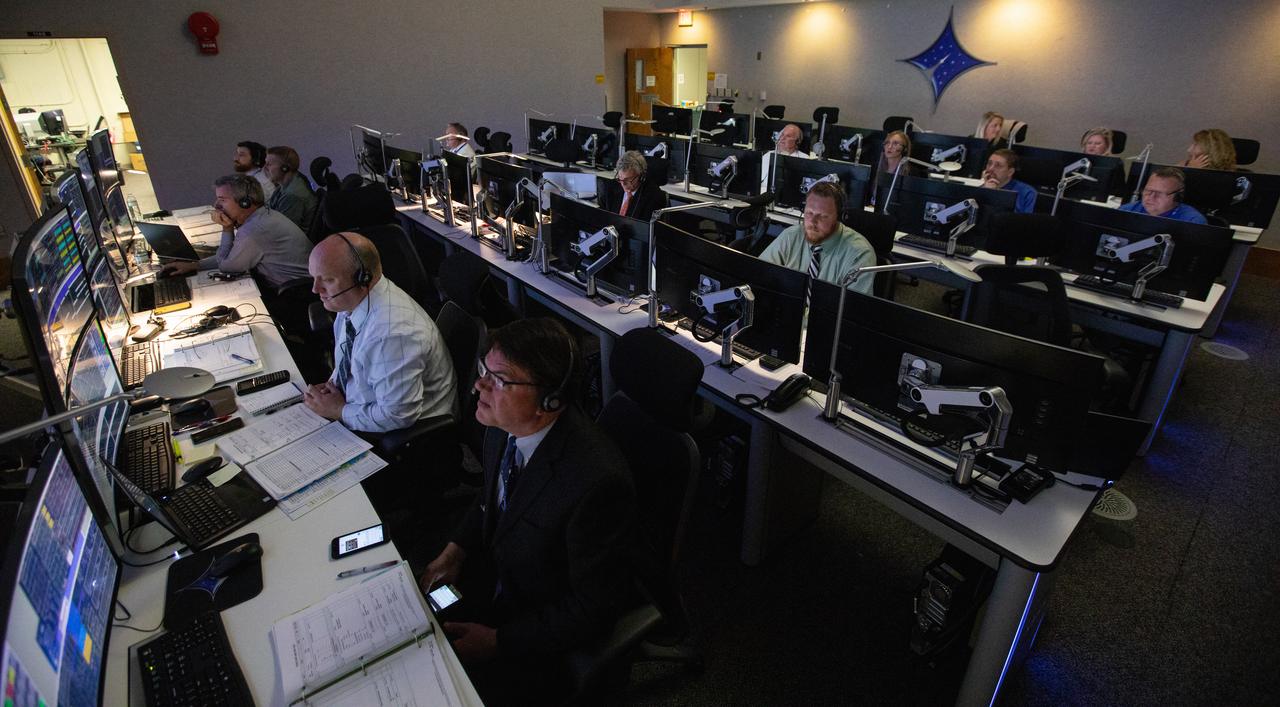
Members of the launch team monitor the launch of NASA’s Ionospheric Connection Explorer (ICON) satellite inside Hangar AE at Cape Canaveral Air Force Station (CCAFS) in Florida. The Northrop Grumman Pegasus XL rocket carrying ICON was released from the company’s L-1011 Stargazer aircraft at 9:59 p.m. EDT on Oct. 10, 2019, over the Atlantic Ocean about 50 miles from Daytona Beach following takeoff from CCAFS. ICON will spend two years studying the Earth’s ionosphere – the dynamic zone in our atmosphere where terrestrial weather from below meets space weather from above. The launch was managed by the agency’s Launch Services Program.
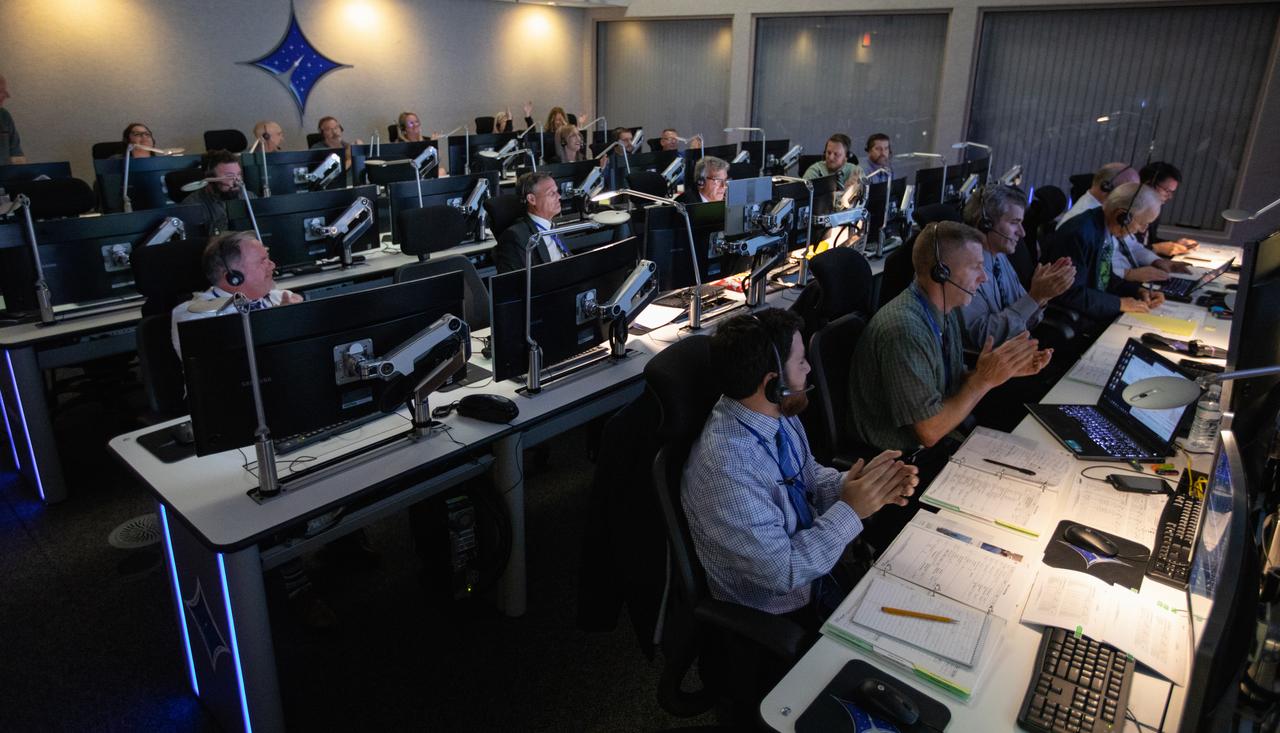
Inside Hangar AE at Cape Canaveral Air Force Station (CCAFS), members of the launch team applaud the successful launch of NASA’s Ionospheric Connection Explorer (ICON) satellite on Oct. 10, 2019. The Northrop Grumman Pegasus XL rocket carrying ICON was released from the company’s L-1011 Stargazer aircraft at 9:59 p.m. EDT over the Atlantic Ocean about 50 miles from Daytona Beach, Florida, following takeoff from CCAFS. ICON will spend two years studying the Earth’s ionosphere – the dynamic zone in our atmosphere where terrestrial weather from below meets space weather from above. The launch was managed by the agency’s Launch Services Program.

Inside Hangar AE’s Mission Director’s Center at Cape Canaveral Air Force Station (CCAFS), Kennedy Space Center Director Bob Cabana monitors the launch of NASA’s Ionospheric Connection Explorer (ICON) satellite. The Northrop Grumman Pegasus XL rocket carrying ICON was released from the company’s L-1011 Stargazer aircraft at 9:59 p.m. EDT on Oct. 10, 2019, over the Atlantic Ocean about 50 miles from Daytona Beach, Florida, following takeoff from CCAFS. ICON will spend two years studying the Earth’s ionosphere – the dynamic zone in our atmosphere where terrestrial weather from below meets space weather from above. The launch was managed by the agency’s Launch Services Program.

Omar Baez, right, launch director in NASA’s Launch Services Program (LSP), monitors the launch of the agency’s Ionospheric Connection Explorer (ICON) satellite inside Hangar AE’s Mission Director’s Center at Cape Canaveral Air Force Station (CCAFS). The Northrop Grumman Pegasus XL rocket carrying ICON was released from the company’s L-1011 Stargazer aircraft at 9:59 p.m. EDT on Oct. 10, 2019, over the Atlantic Ocean about 50 miles from Daytona Beach, Florida, following takeoff from CCAFS. ICON will spend two years studying the Earth’s ionosphere – the dynamic zone in our atmosphere where terrestrial weather from below meets space weather from above. The ICON launch was managed by LSP.

Members of the launch team monitor the launch of NASA’s Ionospheric Connection Explorer (ICON) satellite inside Hangar AE at Cape Canaveral Air Force Station (CCAFS) in Florida. The Northrop Grumman Pegasus XL rocket carrying ICON was released from the company’s L-1011 Stargazer aircraft at 9:59 p.m. EDT on Oct. 10, 2019, over the Atlantic Ocean about 50 miles from Daytona Beach following takeoff from CCAFS. ICON will spend two years studying the Earth’s ionosphere – the dynamic zone in our atmosphere where terrestrial weather from below meets space weather from above. The launch was managed by the agency’s Launch Services Program.

Members of the launch team monitor the launch of NASA’s Ionospheric Connection Explorer (ICON) satellite inside Hangar AE at Cape Canaveral Air Force Station (CCAFS) in Florida. The Northrop Grumman Pegasus XL rocket carrying ICON was released from the company’s L-1011 Stargazer aircraft at 9:59 p.m. EDT on Oct. 10, 2019, over the Atlantic Ocean about 50 miles from Daytona Beach following takeoff from CCAFS. ICON will spend two years studying the Earth’s ionosphere – the dynamic zone in our atmosphere where terrestrial weather from below meets space weather from above. The launch was managed by the agency’s Launch Services Program.

Will Ulrich, launch weather officer with the U.S. Air Force 45th Space Wing, speaks to news media during a prelaunch mission briefing for NASA’s Ionospheric Connection Explorer (ICON), on Oct. 8, 2019, in the News Center auditorium at the agency’s Kennedy Space Center in Florida. ICON is targeted to launch from Cape Canaveral Air Force Station in Florida on Oct. 9, 2019, aboard a Northrop Grumman Pegasus XL rocket carried aloft by the company’s Stargazer L-1011 aircraft. The explorer will study the frontier of space - the dynamic zone high in Earth's atmosphere where terrestrial weather from below meets space weather above.

Members of the launch team monitor the launch of NASA’s Ionospheric Connection Explorer (ICON) satellite inside Hangar AE at Cape Canaveral Air Force Station (CCAFS) in Florida. The Northrop Grumman Pegasus XL rocket carrying ICON was released from the company’s L-1011 Stargazer aircraft at 9:59 p.m. EDT on Oct. 10, 2019, over the Atlantic Ocean about 50 miles from Daytona Beach following takeoff from CCAFS. ICON will spend two years studying the Earth’s ionosphere – the dynamic zone in our atmosphere where terrestrial weather from below meets space weather from above. The launch was managed by the agency’s Launch Services Program.
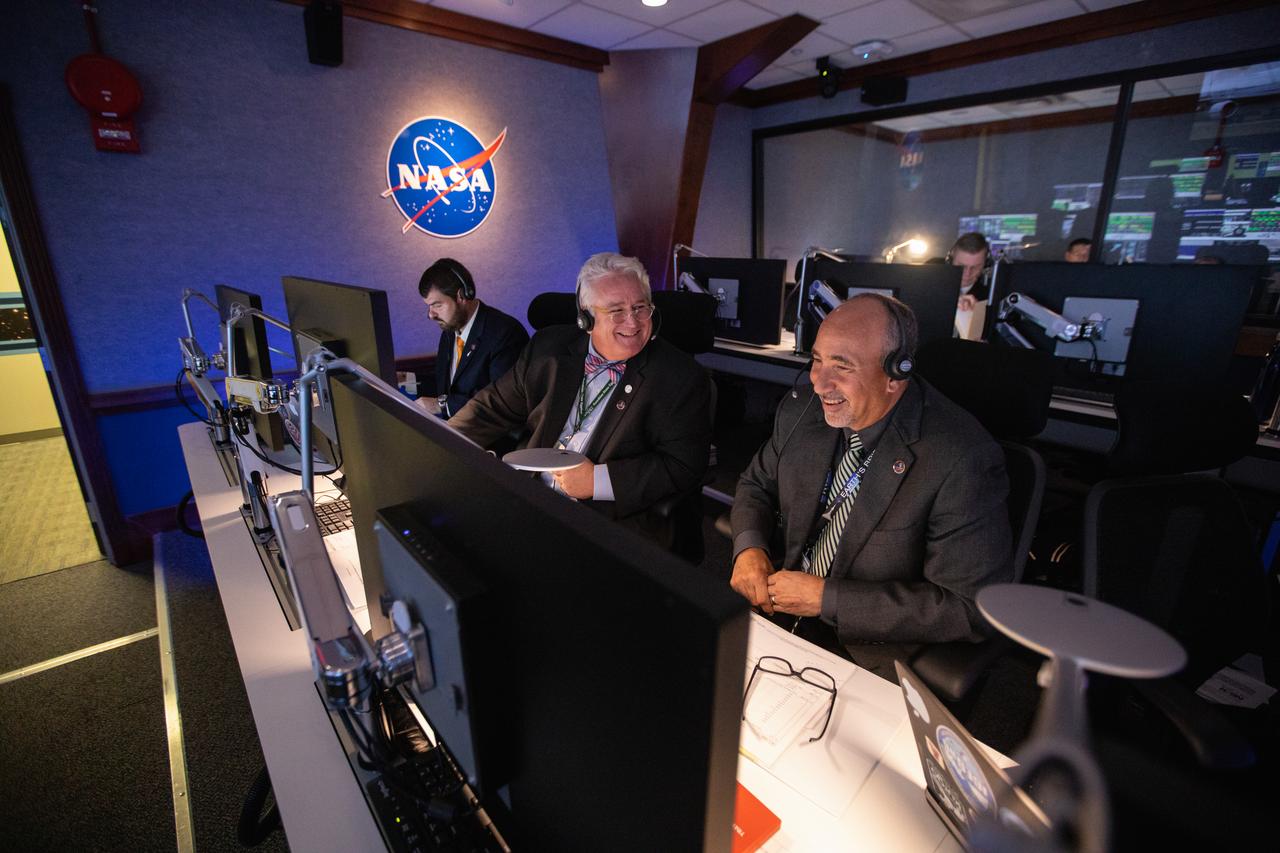
Albert Sierra (right), chief of NASA’s Launch Services Program’s (LSP) Flight Projects Office, and Garrett Lee Skrobot (second from right), senior mission manager, monitor the launch of the agency’s Ionospheric Connection Explorer (ICON) inside Hangar AE’s Mission Director’s Center at Cape Canaveral Air Force Station (CCAFS). The Northrop Grumman Pegasus XL rocket carrying ICON was released from the company’s L-1011 Stargazer aircraft at 9:59 p.m. EDT on Oct. 10, 2019, over the Atlantic Ocean about 50 miles from Daytona Beach, Florida, following takeoff from CCAFS. ICON will spend two years studying the Earth’s ionosphere – the dynamic zone in our atmosphere where terrestrial weather from below meets space weather from above. The ICON launch was managed by LSP.

Members of the launch team monitor the launch of NASA’s Ionospheric Connection Explorer (ICON) satellite inside Hangar AE at Cape Canaveral Air Force Station (CCAFS) in Florida. The Northrop Grumman Pegasus XL rocket carrying ICON was released from the company’s L-1011 Stargazer aircraft at 9:59 p.m. EDT on Oct. 10, 2019, over the Atlantic Ocean about 50 miles from Daytona Beach following takeoff from CCAFS. ICON will spend two years studying the Earth’s ionosphere – the dynamic zone in our atmosphere where terrestrial weather from below meets space weather from above. The launch was managed by the agency’s Launch Services Program.

Nicola Fox, Heliophysics division director in NASA’s Science Mission Directorate, speaks to news media during a prelaunch mission briefing for NASA’s Ionospheric Connection Explorer (ICON), on Oct. 8, 2019, in the News Center auditorium at the agency’s Kennedy Space Center in Florida. ICON is targeted to launch from Cape Canaveral Air Force Station in Florida on Oct. 9, 2019, aboard a Northrop Grumman Pegasus XL rocket carried aloft by the company’s Stargazer L-1011 aircraft. The explorer will study the frontier of space - the dynamic zone high in Earth's atmosphere where terrestrial weather from below meets space weather above.

Members of the launch team monitor the launch of NASA’s Ionospheric Connection Explorer (ICON) satellite inside Hangar AE at Cape Canaveral Air Force Station (CCAFS) in Florida. The Northrop Grumman Pegasus XL rocket carrying ICON was released from the company’s L-1011 Stargazer aircraft at 9:59 p.m. EDT on Oct. 10, 2019, over the Atlantic Ocean about 50 miles from Daytona Beach following takeoff from CCAFS. ICON will spend two years studying the Earth’s ionosphere – the dynamic zone in our atmosphere where terrestrial weather from below meets space weather from above. The launch was managed by the agency’s Launch Services Program.
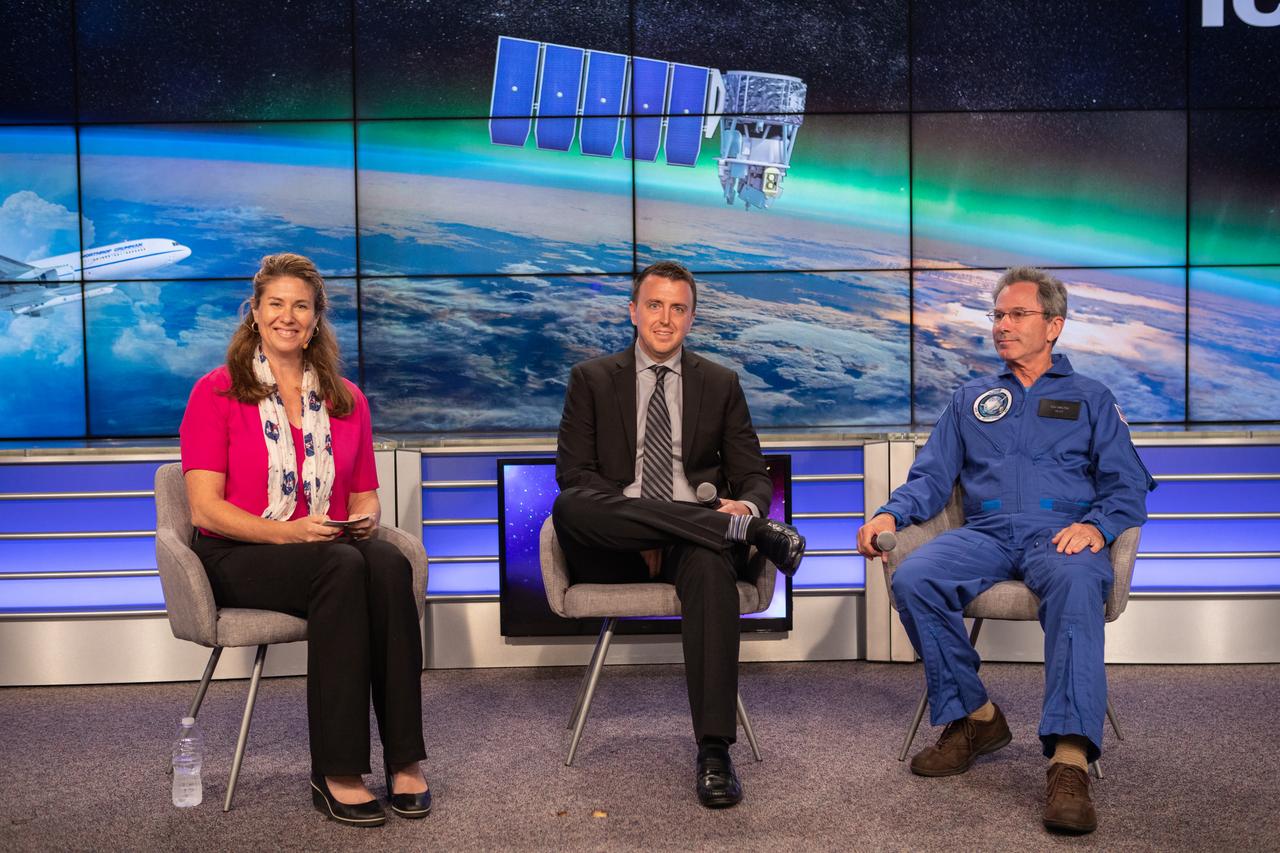
Launch and mission managers for NASA’s Ionospheric Connection Explorer (ICON) participate in a prelaunch mission briefing on Oct. 8, 2019, in the News Center auditorium at the agency’s Kennedy Space Center in Florida. From left to right are Karen Fox, NASA Communications; Will Ulrich, launch weather officer with the U.S. Air Force 45th Space Wing; and Don Walters, chief pilot of the L-1011 Stargazer aircraft. ICON is targeted to launch from Cape Canaveral Air Force Station in Florida on Oct. 9, 2019, aboard a Northrop Grumman Pegasus XL rocket carried aloft by the company’s Stargazer L-1011 aircraft. The explorer will study the frontier of space - the dynamic zone high in Earth's atmosphere where terrestrial weather from below meets space weather above.

Members of the launch team monitor the launch of NASA’s Ionospheric Connection Explorer (ICON) satellite inside Hangar AE at Cape Canaveral Air Force Station (CCAFS) in Florida. The Northrop Grumman Pegasus XL rocket carrying ICON was released from the company’s L-1011 Stargazer aircraft at 9:59 p.m. EDT on Oct. 10, 2019, over the Atlantic Ocean about 50 miles from Daytona Beach following takeoff from CCAFS. ICON will spend two years studying the Earth’s ionosphere – the dynamic zone in our atmosphere where terrestrial weather from below meets space weather from above. The launch was managed by the agency’s Launch Services Program.

From left, Kennedy Space Center Director Bob Cabana, NASA’s Launch Services Program (LSP) Deputy Program Manager Chuck Dovale and LSP Program Manager Amanda Mitskevich monitor the launch of the agency’s Ionospheric Connection Explorer (ICON) satellite inside Hangar AE’s Mission Director’s Center at Cape Canaveral Air Force Station (CCAFS). The Northrop Grumman Pegasus XL rocket carrying ICON was released from the company’s L-1011 Stargazer aircraft at 9:59 p.m. EDT on Oct. 10, 2019, over the Atlantic Ocean about 50 miles from Daytona Beach, Florida, following takeoff from CCAFS. ICON will spend two years studying the Earth’s ionosphere – the dynamic zone in our atmosphere where terrestrial weather from below meets space weather from above. The ICON launch was managed by LSP.

Inside Hangar AE’s Mission Director’s Center at Cape Canaveral Air Force Station (CCAFS), Nicola Fox, left, Heliophysics division director in NASA’s Science Mission Directorate, monitors the launch of the agency’s Ionospheric Connection Explorer (ICON) satellite. The Northrop Grumman Pegasus XL rocket carrying ICON was released from the company’s L-1011 Stargazer aircraft at 9:59 p.m. EDT on Oct. 10, 2019, over the Atlantic Ocean about 50 miles from Daytona Beach, Florida, following takeoff from CCAFS. ICON will spend two years studying the Earth’s ionosphere – the dynamic zone in our atmosphere where terrestrial weather from below meets space weather from above. The launch was managed by the agency’s Launch Services Program.

Members of the launch team monitor the launch of NASA’s Ionospheric Connection Explorer (ICON) satellite inside Hangar AE at Cape Canaveral Air Force Station (CCAFS) in Florida. The Northrop Grumman Pegasus XL rocket carrying ICON was released from the company’s L-1011 Stargazer aircraft at 9:59 p.m. EDT on Oct. 10, 2019, over the Atlantic Ocean about 50 miles from Daytona Beach following takeoff from CCAFS. ICON will spend two years studying the Earth’s ionosphere – the dynamic zone in our atmosphere where terrestrial weather from below meets space weather from above. The launch was managed by the agency’s Launch Services Program.

Members of the launch team monitor the launch of NASA’s Ionospheric Connection Explorer (ICON) satellite inside Hangar AE at Cape Canaveral Air Force Station (CCAFS) in Florida. The Northrop Grumman Pegasus XL rocket carrying ICON was released from the company’s L-1011 Stargazer aircraft at 9:59 p.m. EDT on Oct. 10, 2019, over the Atlantic Ocean about 50 miles from Daytona Beach following takeoff from CCAFS. ICON will spend two years studying the Earth’s ionosphere – the dynamic zone in our atmosphere where terrestrial weather from below meets space weather from above. The launch was managed by the agency’s Launch Services Program.
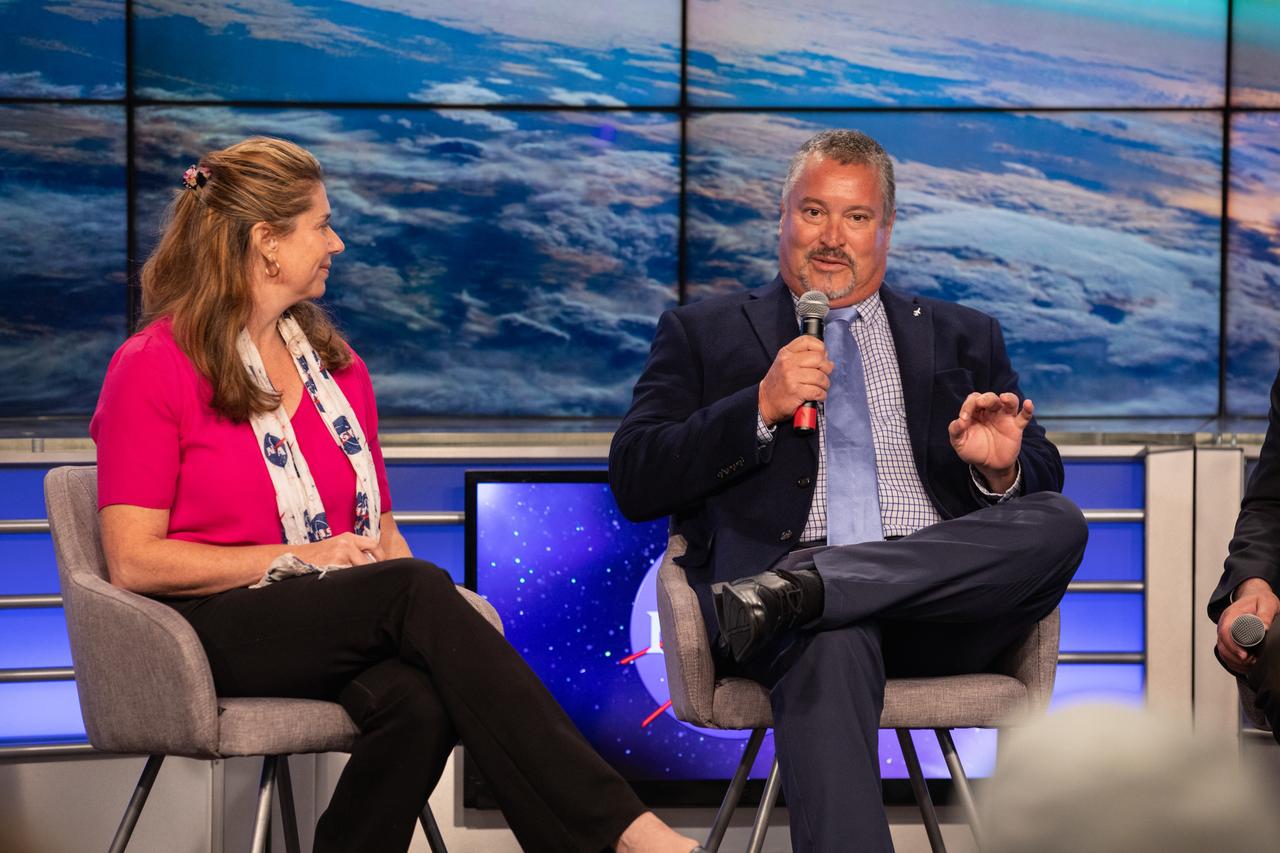
Omar Baez, launch director in NASA’s Launch Services Program, speaks to news media during a prelaunch mission briefing for NASA’s Ionospheric Connection Explorer (ICON), on Oct. 8, 2019, in the News Center auditorium at the agency’s Kennedy Space Center in Florida. At left is Karen Fox of NASA Communications. ICON is targeted to launch from Cape Canaveral Air Force Station in Florida on Oct. 9, 2019, aboard a Northrop Grumman Pegasus XL rocket carried aloft by the company’s Stargazer L-1011 aircraft. The explorer will study the frontier of space - the dynamic zone high in Earth's atmosphere where terrestrial weather from below meets space weather above.
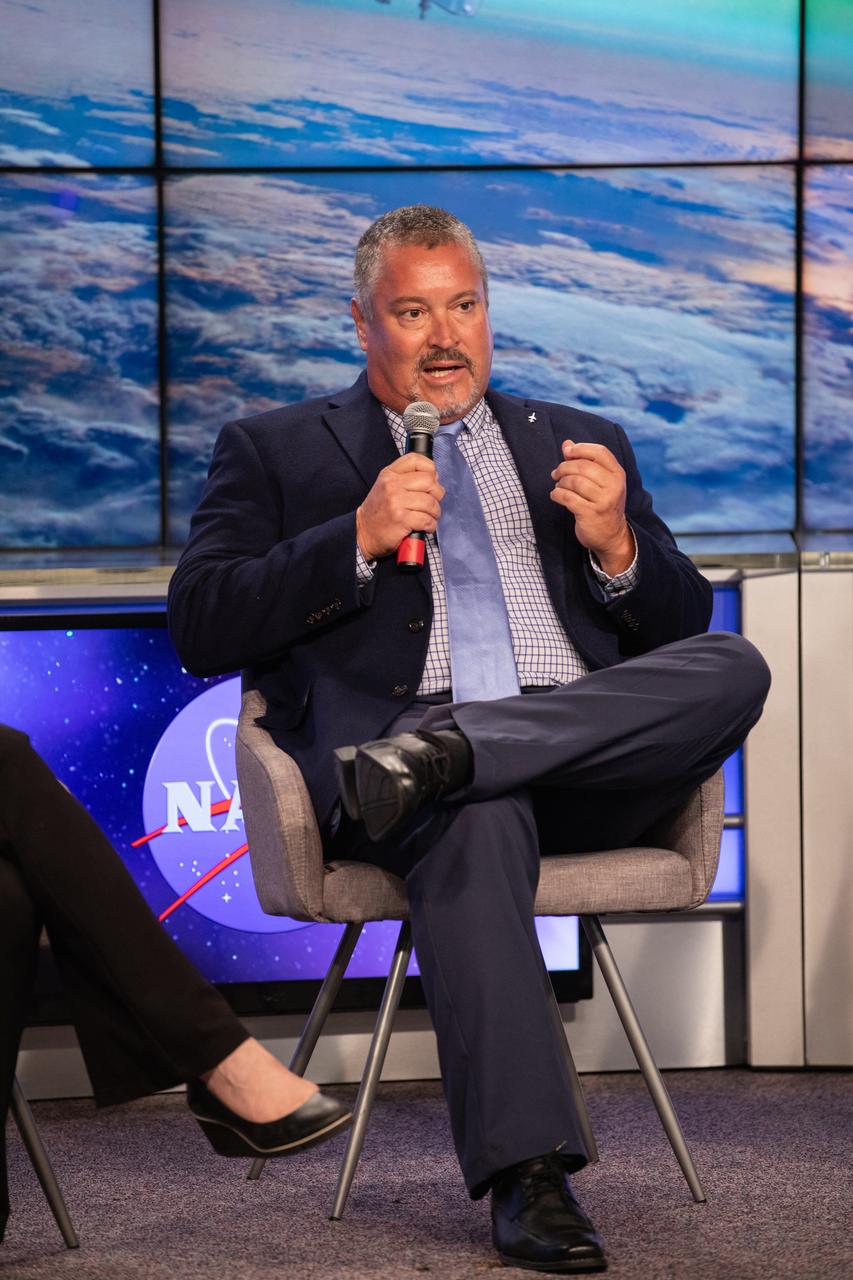
Omar Baez, launch director in NASA’s Launch Services Program, speaks to news media during a prelaunch mission briefing for NASA’s Ionospheric Connection Explorer (ICON), on Oct. 8, 2019, in the News Center auditorium at the agency’s Kennedy Space Center in Florida. ICON is targeted to launch from Cape Canaveral Air Force Station in Florida on Oct. 9, 2019, aboard a Northrop Grumman Pegasus XL rocket carried aloft by the company’s Stargazer L-1011 aircraft. The explorer will study the frontier of space - the dynamic zone high in Earth's atmosphere where terrestrial weather from below meets space weather above.
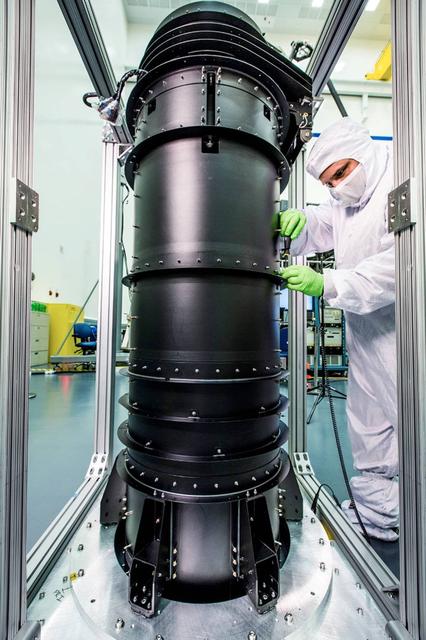
Building a space telescope to see the light from the earliest stars of our universe is a pretty complex task. Although much of the attention goes to instruments and the giant mirrors on NASA's James Webb Space Telescope, there are other components that have big jobs to do and that required imagination, engineering, and innovation to become a reality. For example, engineers working on the Webb telescope have to think of everything from keeping instruments from overheating or freezing, to packing up the Webb, which is as big as a tennis court, to fit inside the rocket that will take it to space. Those are two areas where the "DTA" or Deployable Tower Assembly (DTA) plays a major role. The DTA looks like a big black pipe and is made out of graphite-epoxy composite material to ensure stability and strength with extreme changes in temperature like those encountered in space. When fully deployed, the DTA reaches ten feet in length. The DTA interfaces and supports the spacecraft and the telescope structures. It features two large nested telescoping tubes, connected by a mechanized lead screw. It is a deployable structure that is both very light and extremely strong and stable. The Webb telescope’s secondary mirror support structure and DTA contribute to how the telescope and instruments fit into the rocket fairing in preparation for launch. The DTA allows the Webb to be short enough when stowed to fit in the rocket fairing with an acceptably low center of gravity for launch. Several days after the Webb telescope is launched, the DTA will deploy, or separate, the telescope mirrors and instruments from the spacecraft bus and sunshield. This separation allows the sunshield to unfurl and shade the telescope and instruments from radiant heat and stray light from the sun and Earth. The DTA was designed, built and tested by Astro Aerospace - a Northrop Grumman Company, in Carpinteria, California. The James Webb Space Telescope is the scientific successor to NASA's Hubble Space Telescope. It will be the most powerful space telescope ever built. The Webb telescope is an international project led by NASA with its partners, the European Space Agency and the Canadian Space Agency. For more information about the Webb telescope, visit: <a href="http://www.nasa.gov/webb" rel="nofollow">www.nasa.gov/webb</a> or jwst.nasa.gov <b><a href="http://www.nasa.gov/audience/formedia/features/MP_Photo_Guidelines.html" rel="nofollow">NASA image use policy.</a></b> <b><a href="http://www.nasa.gov/centers/goddard/home/index.html" rel="nofollow">NASA Goddard Space Flight Center</a></b> enables NASA’s mission through four scientific endeavors: Earth Science, Heliophysics, Solar System Exploration, and Astrophysics. Goddard plays a leading role in NASA’s accomplishments by contributing compelling scientific knowledge to advance the Agency’s mission. <b>Follow us on <a href="http://twitter.com/NASAGoddardPix" rel="nofollow">Twitter</a></b> <b>Like us on <a href="http://www.facebook.com/pages/Greenbelt-MD/NASA-Goddard/395013845897?ref=tsd" rel="nofollow">Facebook</a></b> <b>Find us on <a href="http://instagrid.me/nasagoddard/?vm=grid" rel="nofollow">Instagram</a></b>