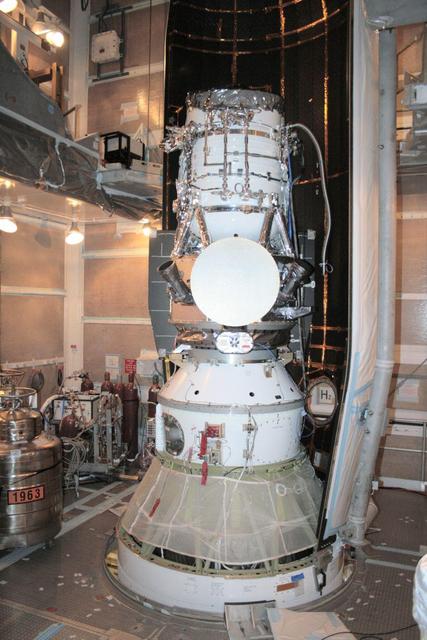
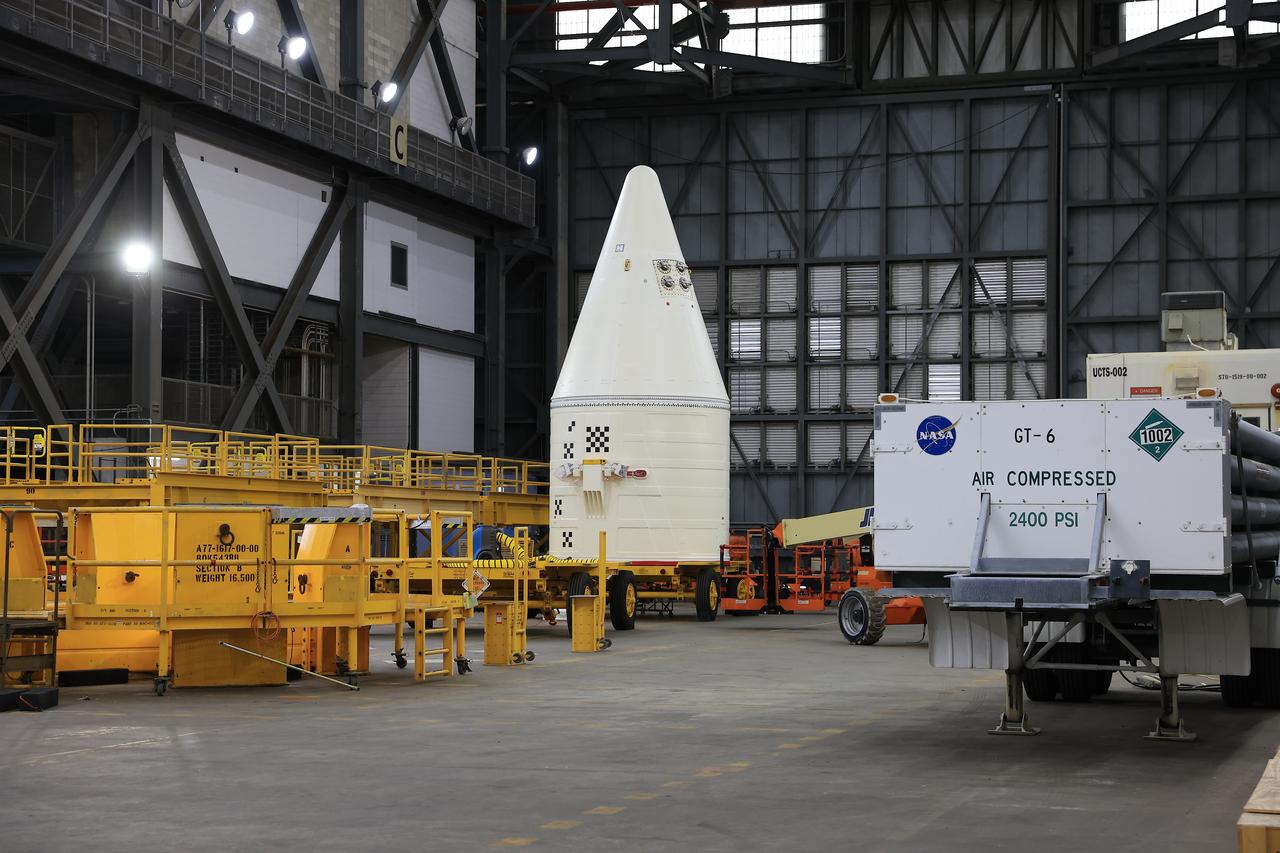
NASA Wide-field Infrared Survey Explorer is shown inside one-half of the nose cone, or fairing, that will protect it during launch.
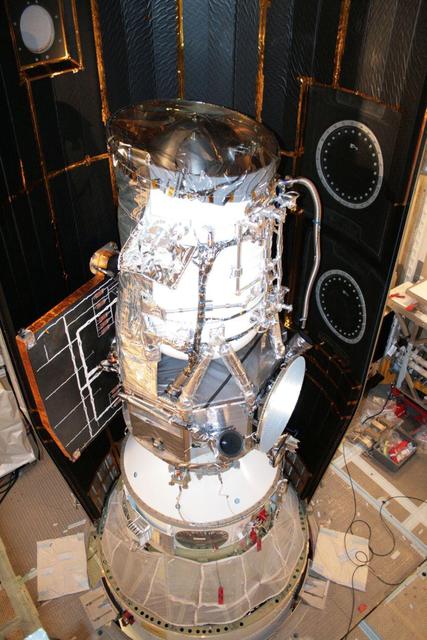
NASA Wide-field Infrared Survey Explorer is shown inside one-half of the nose cone, or fairing, that will protect it during launch.
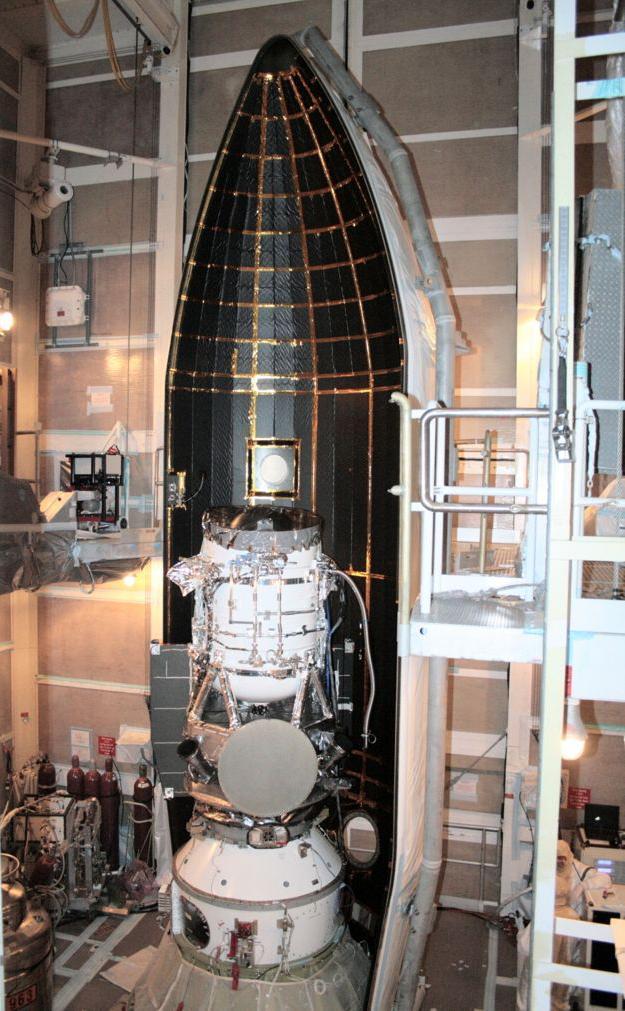
NASA Wide-field Infrared Survey Explorer is shown inside one-half of the nose cone, or fairing, that will protect it during launch.
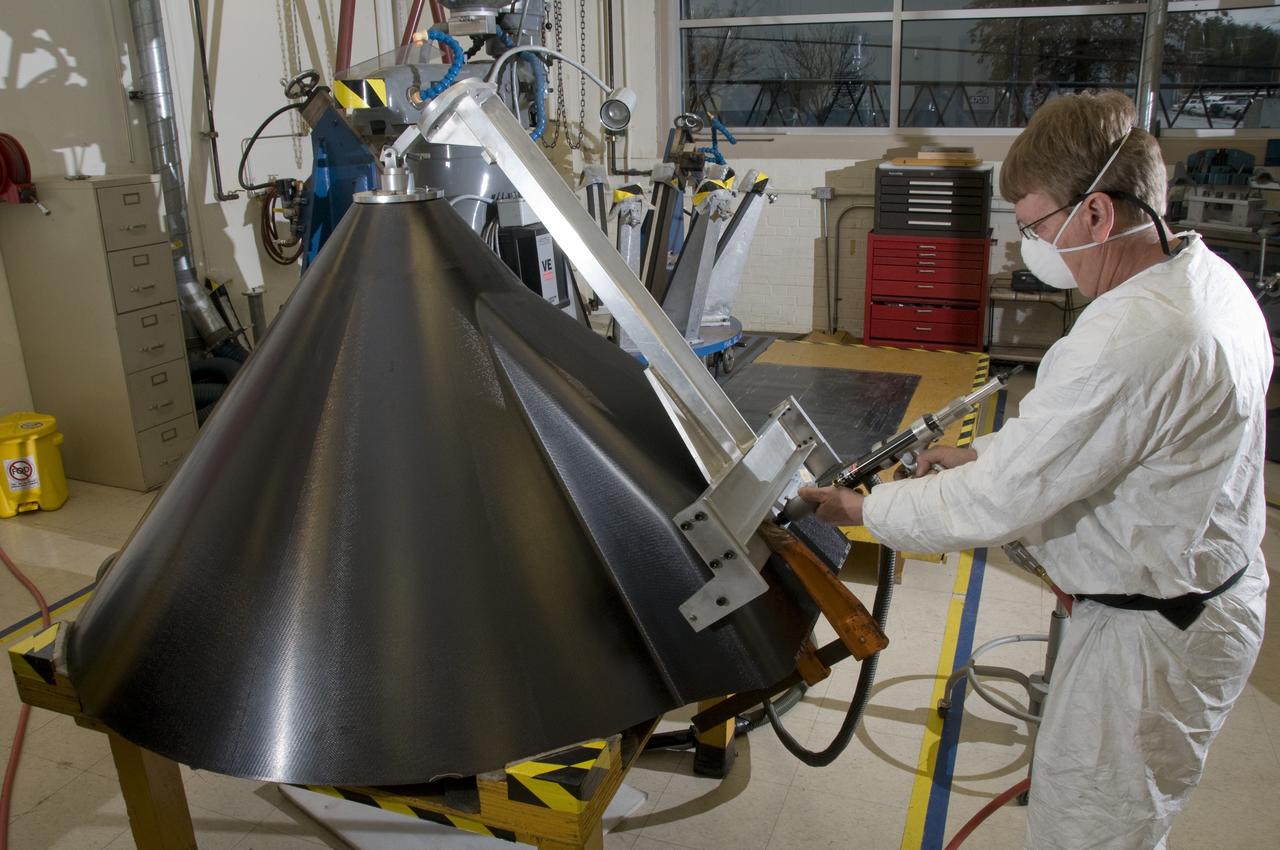
ROBERT CARROLL, A MACHINIST WITH LOCKHEED MARTIN, DRILLS ALIGNMENT HOLES ON THE EXTERNAL TANK COMPOSITE NOSE CONE
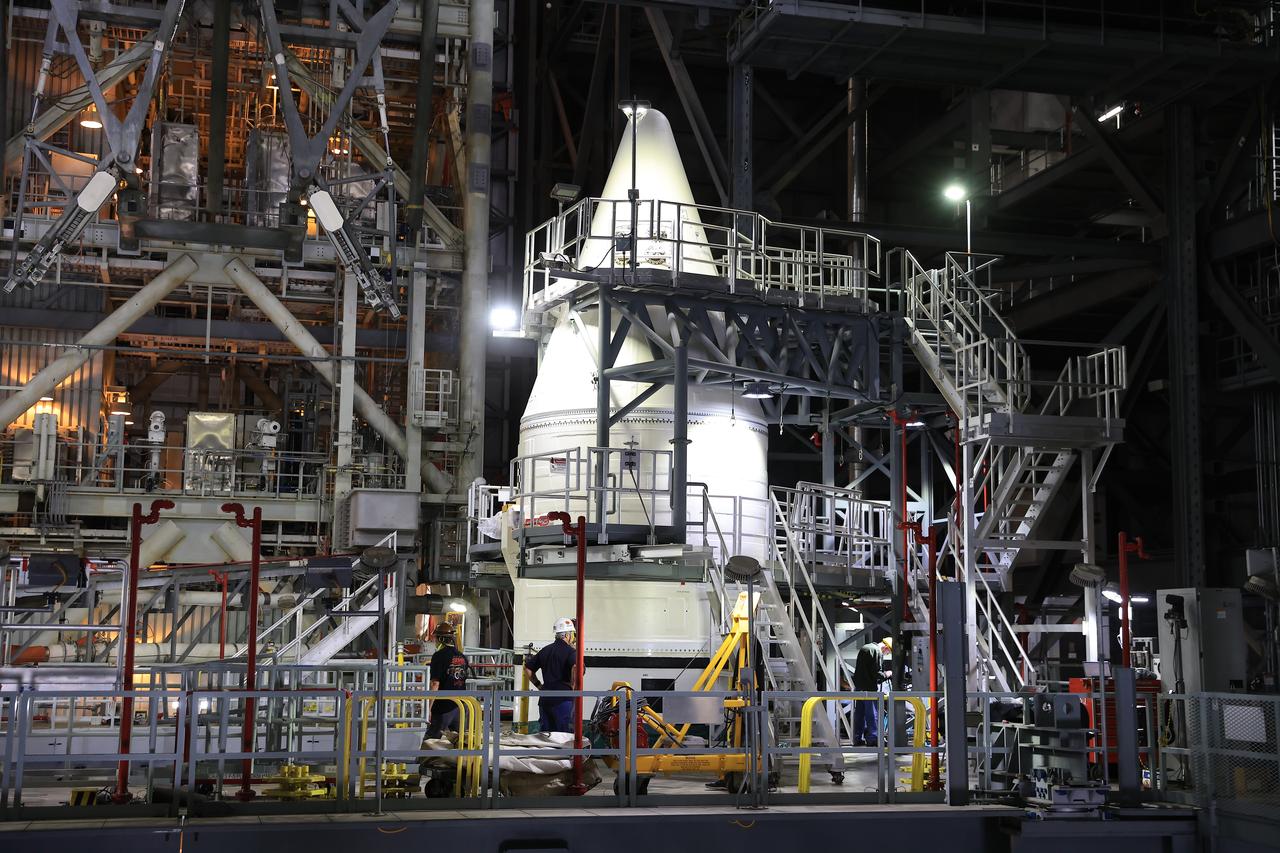
Engineers with NASA’s Exploration Ground Systems complete stacking operations on the twin SLS (Space Launch System) solid rocket boosters for Artemis II by integrating the nose cones atop the forward assemblies inside the Vehicle Assembly Building’s High Bay 3 at NASA’s Kennedy Space Center in Florida on Wednesday, Feb. 19, 2025. During three months of stacking operations, technicians used a massive overhead crane to lift 10 booster segments – five segments per booster – and aerodynamic nose cones into place on mobile launcher 1. The twin solid boosters will help support the remaining rocket components and the Orion spacecraft during final assembly of the Artemis II Moon rocket and provide more than 75 percent of the total SLS thrust during liftoff from NASA Kennedy’s Launch Pad 39B.

Engineers with NASA’s Exploration Ground Systems complete stacking operations on the twin SLS (Space Launch System) solid rocket boosters for Artemis II by integrating the nose cones atop the forward assemblies inside the Vehicle Assembly Building’s High Bay 3 at NASA’s Kennedy Space Center in Florida on Wednesday, Feb. 19, 2025. During three months of stacking operations, technicians used a massive overhead crane to lift 10 booster segments – five segments per booster – and aerodynamic nose cones into place on mobile launcher 1. The twin solid boosters will help support the remaining rocket components and the Orion spacecraft during final assembly of the Artemis II Moon rocket and provide more than 75 percent of the total SLS thrust during liftoff from NASA Kennedy’s Launch Pad 39B.
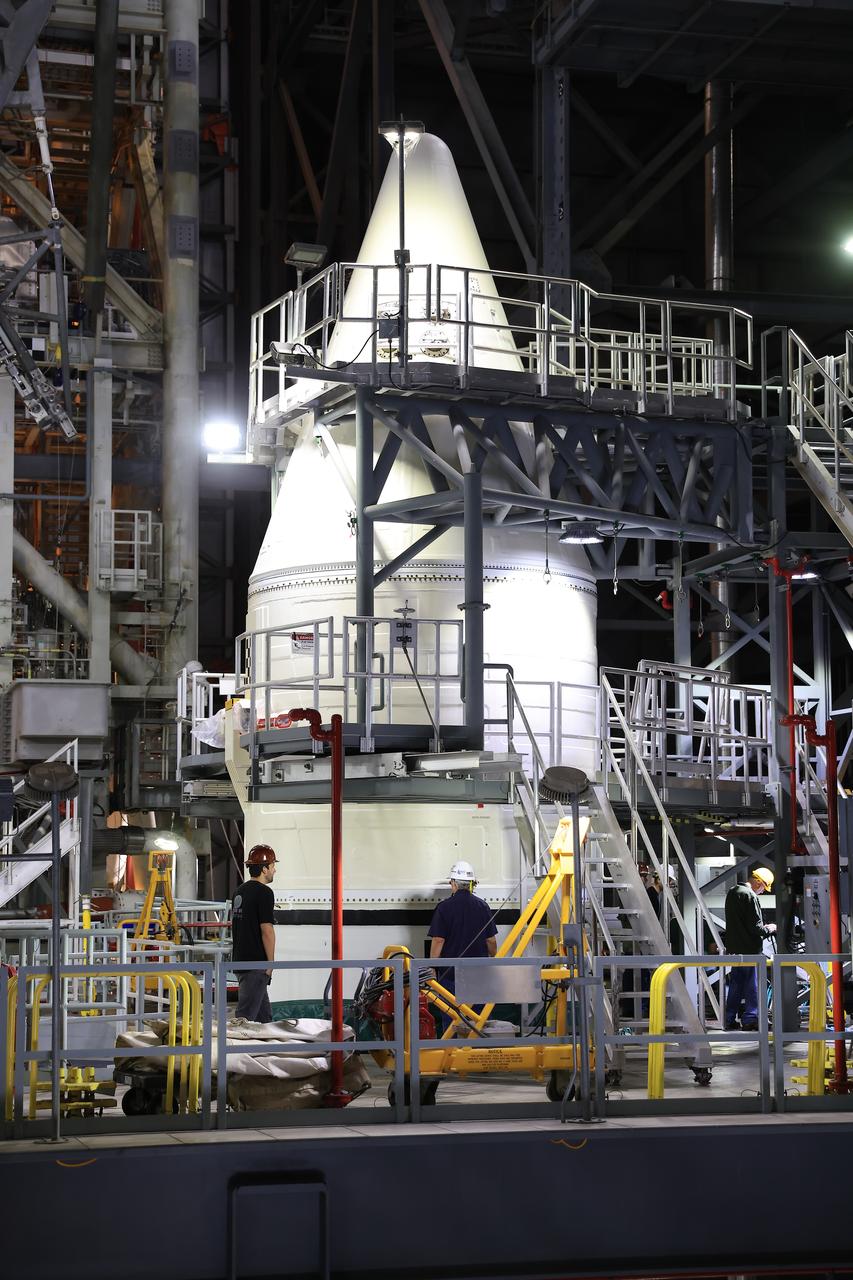
Engineers with NASA’s Exploration Ground Systems complete stacking operations on the twin SLS (Space Launch System) solid rocket boosters for Artemis II by integrating the nose cones atop the forward assemblies inside the Vehicle Assembly Building’s High Bay 3 at NASA’s Kennedy Space Center in Florida on Wednesday, Feb. 19, 2025. During three months of stacking operations, technicians used a massive overhead crane to lift 10 booster segments – five segments per booster – and aerodynamic nose cones into place on mobile launcher 1. The twin solid boosters will help support the remaining rocket components and the Orion spacecraft during final assembly of the Artemis II Moon rocket and provide more than 75 percent of the total SLS thrust during liftoff from NASA Kennedy’s Launch Pad 39B.
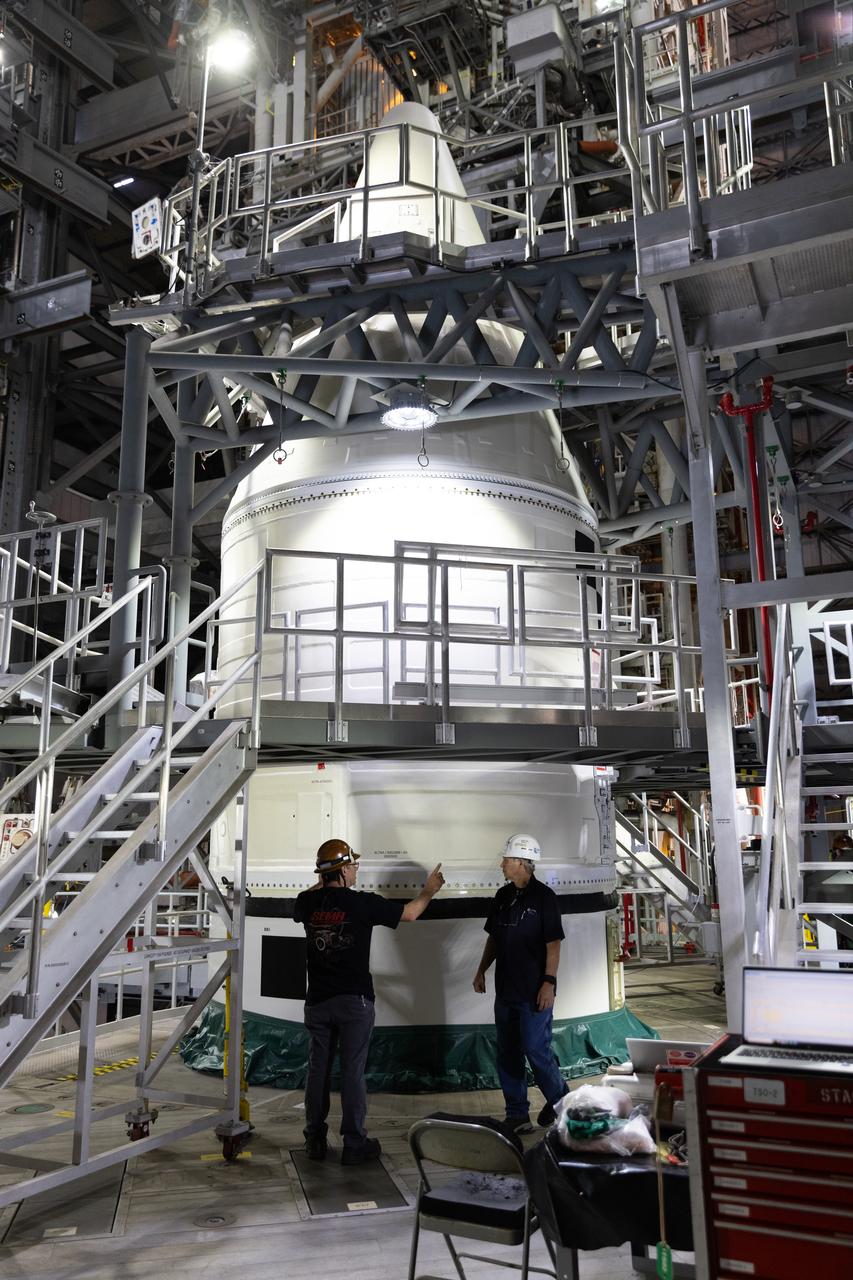
Engineers with NASA’s Exploration Ground Systems complete stacking operations on the twin SLS (Space Launch System) solid rocket boosters for Artemis II by integrating the nose cones atop the forward assemblies inside the Vehicle Assembly Building’s High Bay 3 at NASA’s Kennedy Space Center in Florida on Wednesday, Feb. 19, 2025. During three months of stacking operations, technicians used a massive overhead crane to lift 10 booster segments – five segments per booster – and aerodynamic nose cones into place on mobile launcher 1. The twin solid boosters will help support the remaining rocket components and the Orion spacecraft during final assembly of the Artemis II Moon rocket and provide more than 75 percent of the total SLS thrust during liftoff from NASA Kennedy’s Launch Pad 39B.
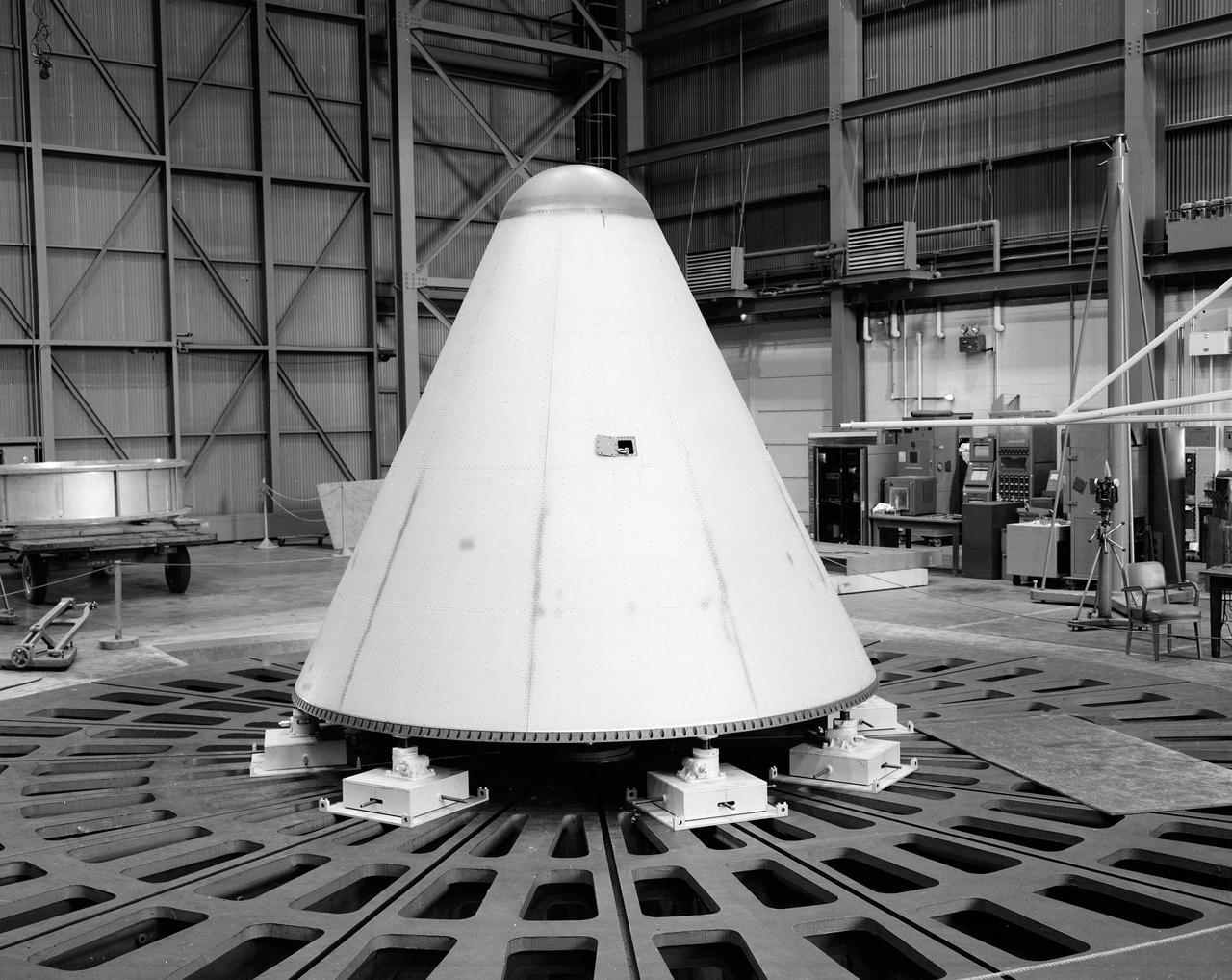
Developed by the Marshall Space Flight Center (MSFC) as an interim vehicle in MSFC’s “building block” approach to the Saturn rocket development, the Saturn IB utilized Saturn I technology to further develop and refine the larger boosters and the Apollo spacecraft capabilities required for the manned lunar missions. The Saturn IB vehicle was a two-stage rocket and had a payload capability about 50 percent greater than the Saturn I vehicle. The first stage, S-IB stage, was a redesigned first stage of the Saturn I. This photograph is of the S-IB nose cone #3 during assembly in building 4752.
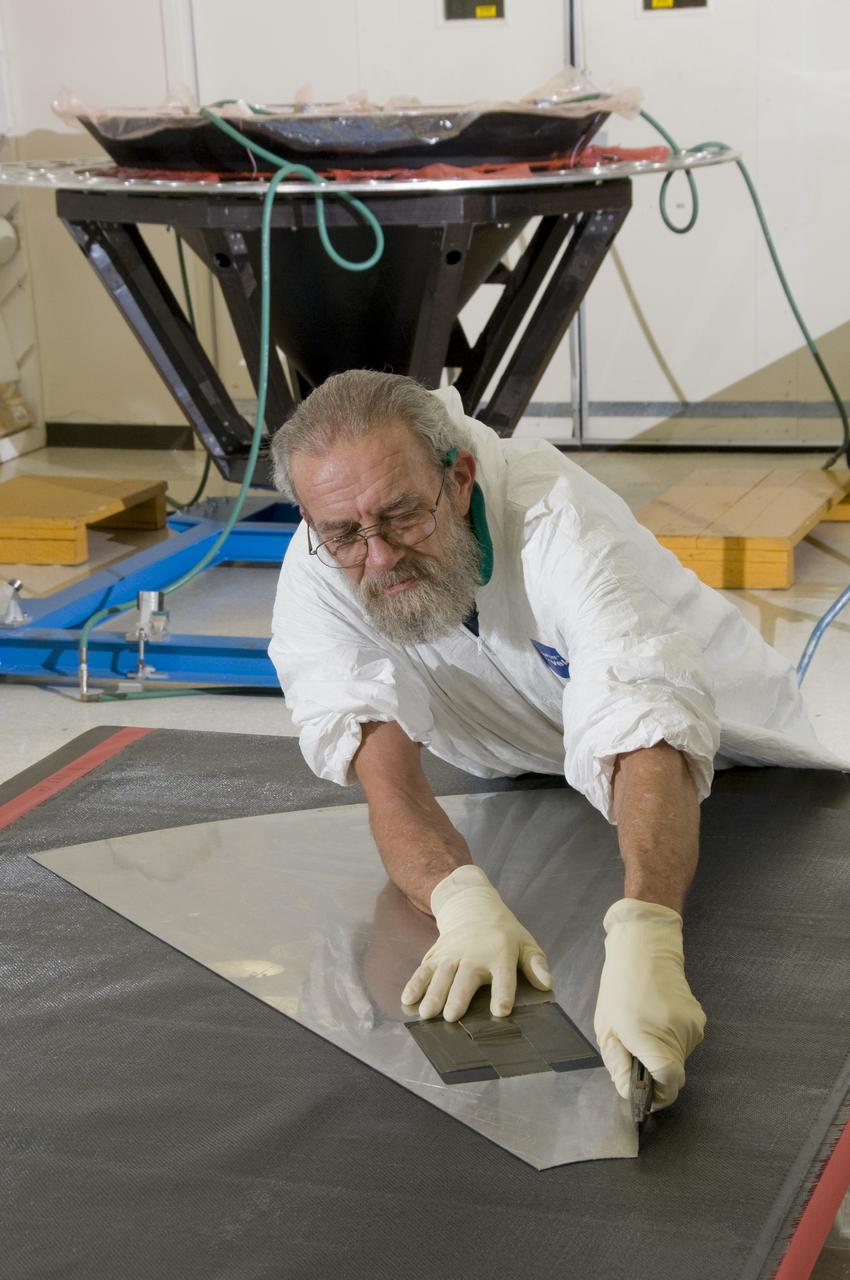
ED KIRCH, A LOCKHEED MARTIN TECHNICIAN, CUTS A PATTERN FROM COMPOSITE MATERIAL THAT WILL BE PLACED IN A MOLD TO BUILD A SPACE SHUTTLE EXTERNAL TANK COMPOSITE NOSE CONE.
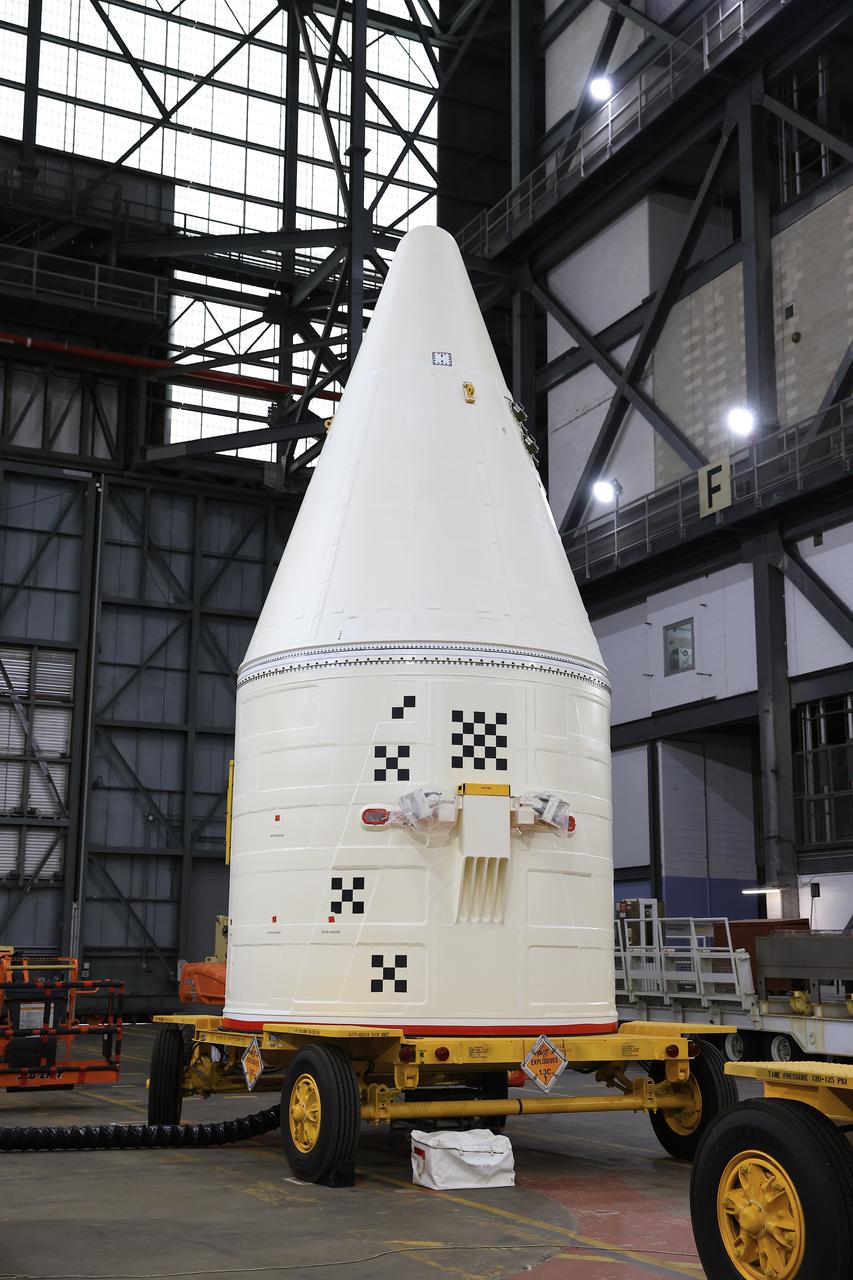
Engineers with NASA’s Exploration Ground Systems integrate the aerodynamic nose cone onto the right-hand forward assembly of the twin SLS (Space Launch System) solid rocket boosters for Artemis II inside the Vehicle Assembly Building’s High Bay 3 at NASA’s Kennedy Space Center in Florida on Tuesday, Feb. 18, 2025. Each forward assembly contains an aerodynamic top, a forward skirt housing avionics, and frustum housing motors that allow the boosters to separate from the SLS core stage after launch. The twin solid boosters will help support the remaining rocket components and the Orion spacecraft during final assembly of the Artemis II Moon rocket and provide more than 75 percent of the total SLS thrust during liftoff from NASA Kennedy’s Launch Pad 39B.
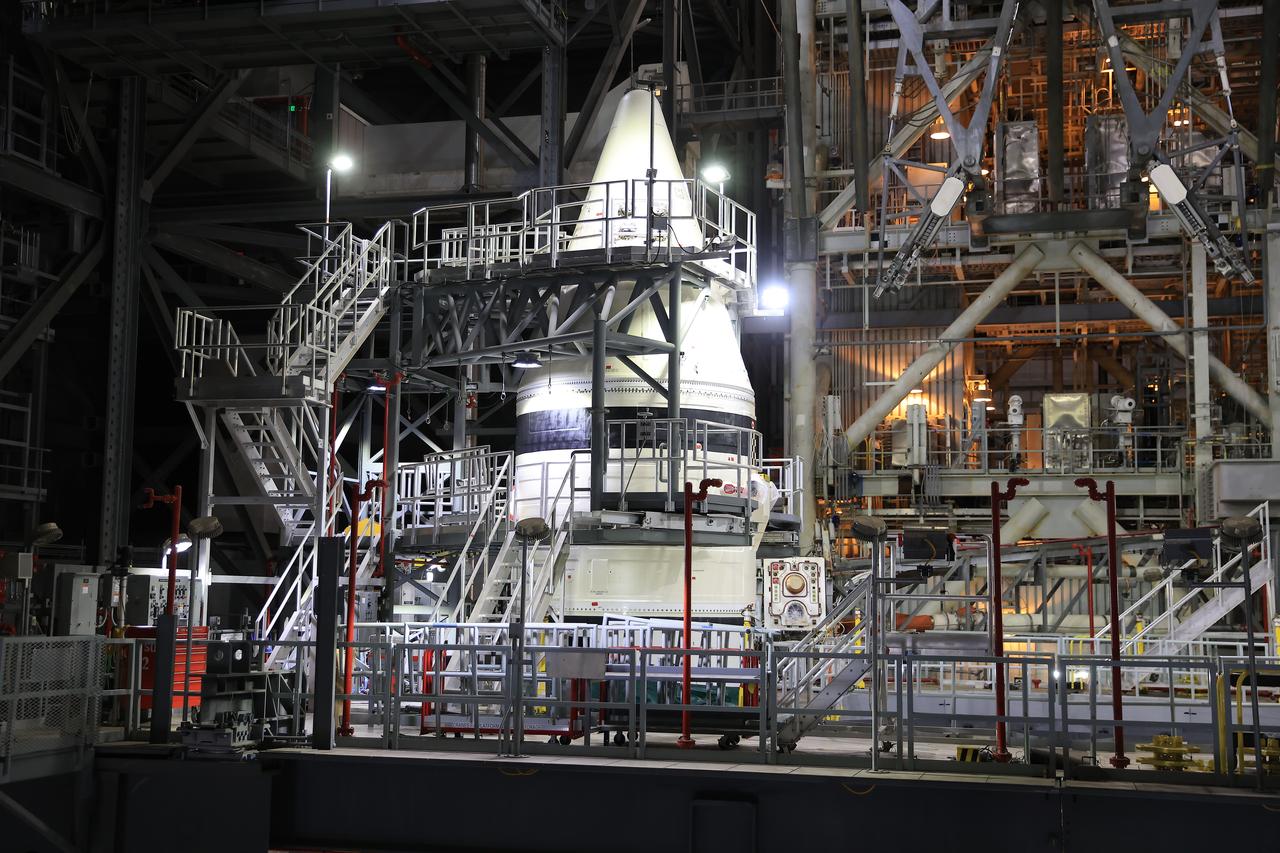
Engineers with NASA’s Exploration Ground Systems integrate the aerodynamic nose cone onto the left-hand forward assembly on the twin SLS (Space Launch System) solid rocket boosters for Artemis II inside the Vehicle Assembly Building’s High Bay 3 at NASA’s Kennedy Space Center in Florida on Tuesday, Feb. 18, 2025. Each forward assembly contains an aerodynamic top, a forward skirt housing avionics, and frustum housing motors that allow the boosters to separate from the SLS core stage after launch. The twin solid boosters will help support the remaining rocket components and the Orion spacecraft during final assembly of the Artemis II Moon rocket and provide more than 75 percent of the total SLS thrust during liftoff from NASA Kennedy’s Launch Pad 39B.
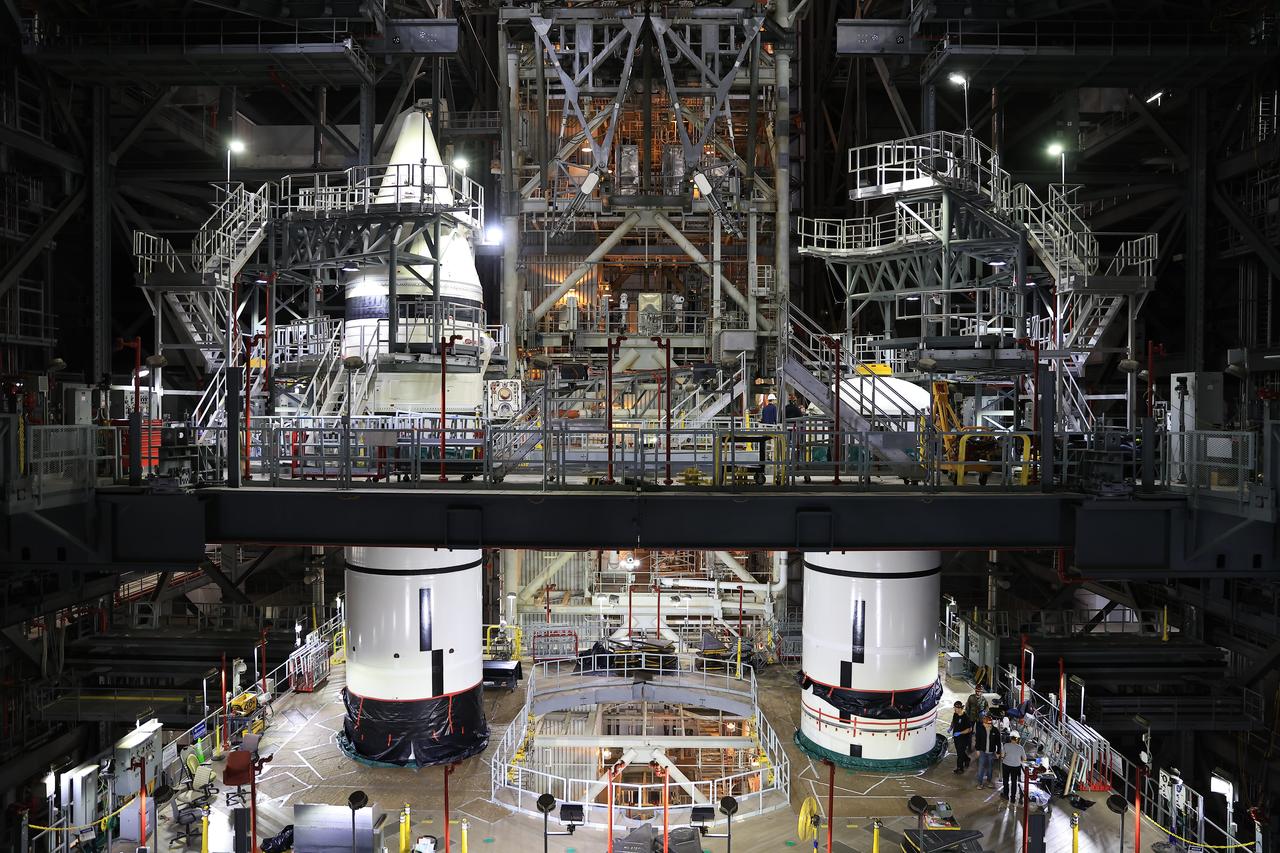
Engineers with NASA’s Exploration Ground Systems integrate the aerodynamic nose cone onto the left-hand forward assembly on the twin SLS (Space Launch System) solid rocket boosters for Artemis II inside the Vehicle Assembly Building’s High Bay 3 at NASA’s Kennedy Space Center in Florida on Tuesday, Feb. 18, 2025. Each forward assembly contains an aerodynamic top, a forward skirt housing avionics, and frustum housing motors that allow the boosters to separate from the SLS core stage after launch. The twin solid boosters will help support the remaining rocket components and the Orion spacecraft during final assembly of the Artemis II Moon rocket and provide more than 75 percent of the total SLS thrust during liftoff from NASA Kennedy’s Launch Pad 39B.
Engineers with NASA’s Exploration Ground Systems integrate the aerodynamic nose cone onto the right-hand forward assembly of the twin SLS (Space Launch System) solid rocket boosters for Artemis II inside the Vehicle Assembly Building’s High Bay 3 at NASA’s Kennedy Space Center in Florida on Tuesday, Feb. 18, 2025. Each forward assembly contains an aerodynamic top, a forward skirt housing avionics, and frustum housing motors that allow the boosters to separate from the SLS core stage after launch. The twin solid boosters will help support the remaining rocket components and the Orion spacecraft during final assembly of the Artemis II Moon rocket and provide more than 75 percent of the total SLS thrust during liftoff from NASA Kennedy’s Launch Pad 39B.

Engineers with NASA’s Exploration Ground Systems integrate the aerodynamic nose cone onto the left-hand forward assembly on the twin SLS (Space Launch System) solid rocket boosters for Artemis II inside the Vehicle Assembly Building’s High Bay 3 at NASA’s Kennedy Space Center in Florida on Tuesday, Feb. 18, 2025. Each forward assembly contains an aerodynamic top, a forward skirt housing avionics, and frustum housing motors that allow the boosters to separate from the SLS core stage after launch. The twin solid boosters will help support the remaining rocket components and the Orion spacecraft during final assembly of the Artemis II Moon rocket and provide more than 75 percent of the total SLS thrust during liftoff from NASA Kennedy’s Launch Pad 39B.

NASA Dryden aircraft and avionics technicians (from left) Bryan Hookland, Art Cope, Herman Rijfkogel and Jonathan Richards install the nose cone on a Phoenix missile prior to a fit check on the center's F-15B research aircraft.
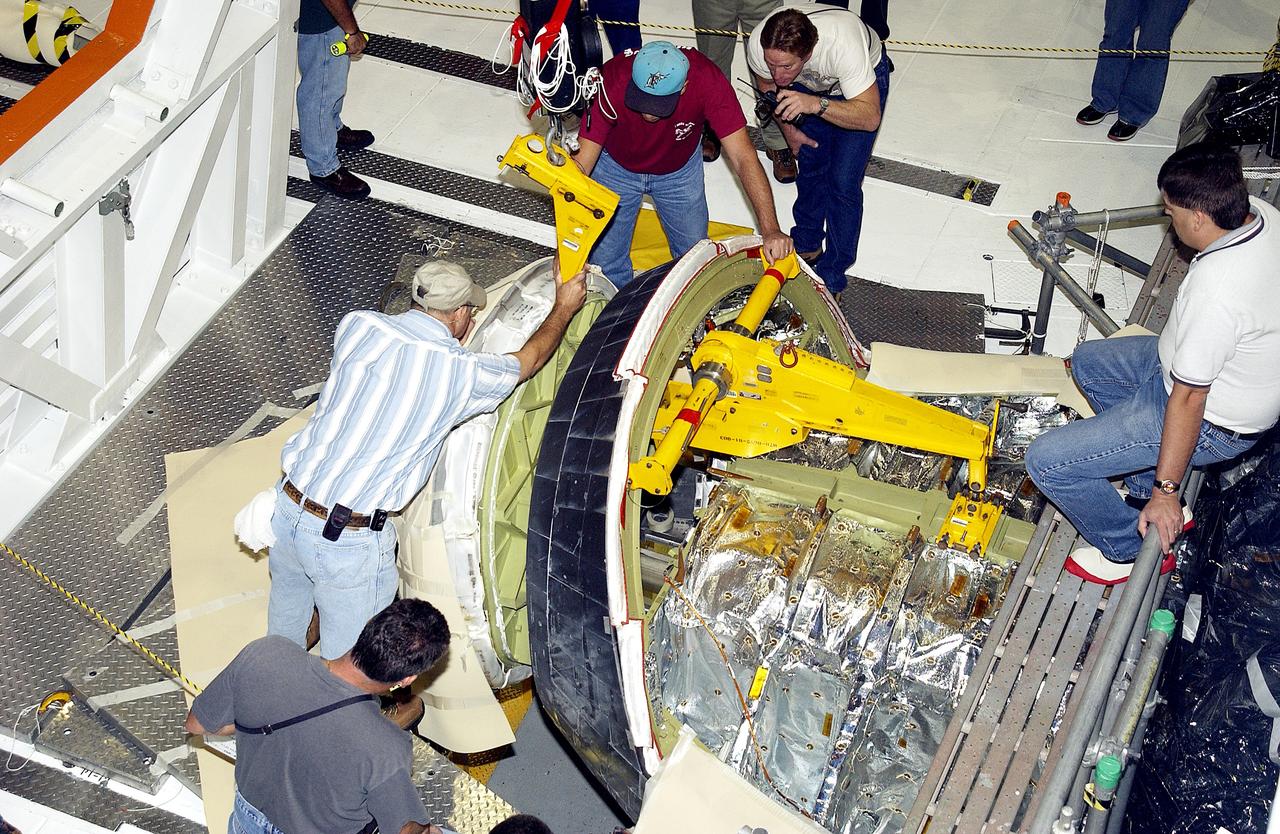
KENNEDY SPACE CENTER, FLA. - In the Orbiter Processing Facility, workers remove the nose cone of the orbiter Atlantis for routine inspection. The nose cap is made of reinforced carbon-carbon (RCC), which has an operating range of minus 250° F to about 3,000° F.
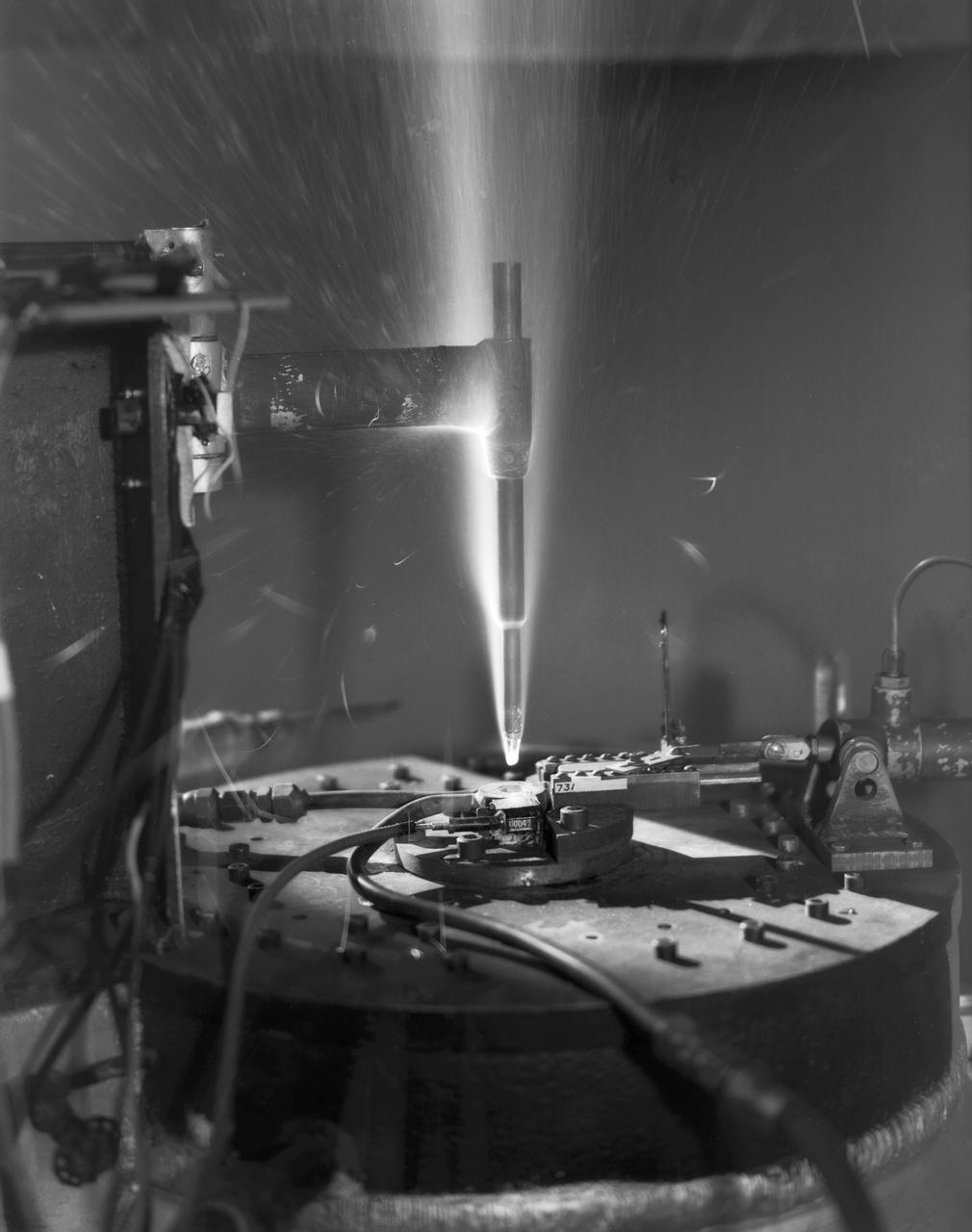
L57-5383 Hot-air jets employing ceramic heat exchangers played an important role at Langley in the study of materials for ballistic missile nose cones and re-entry vehicles. Here a model is being tested in one of theses jets at 4000 degrees Fahrenheit in 1957. Photograph published in Engineer in Charge: A History of the Langley Aeronautical Laboratory, 1917-1958 by James R. Hansen. Page 477.
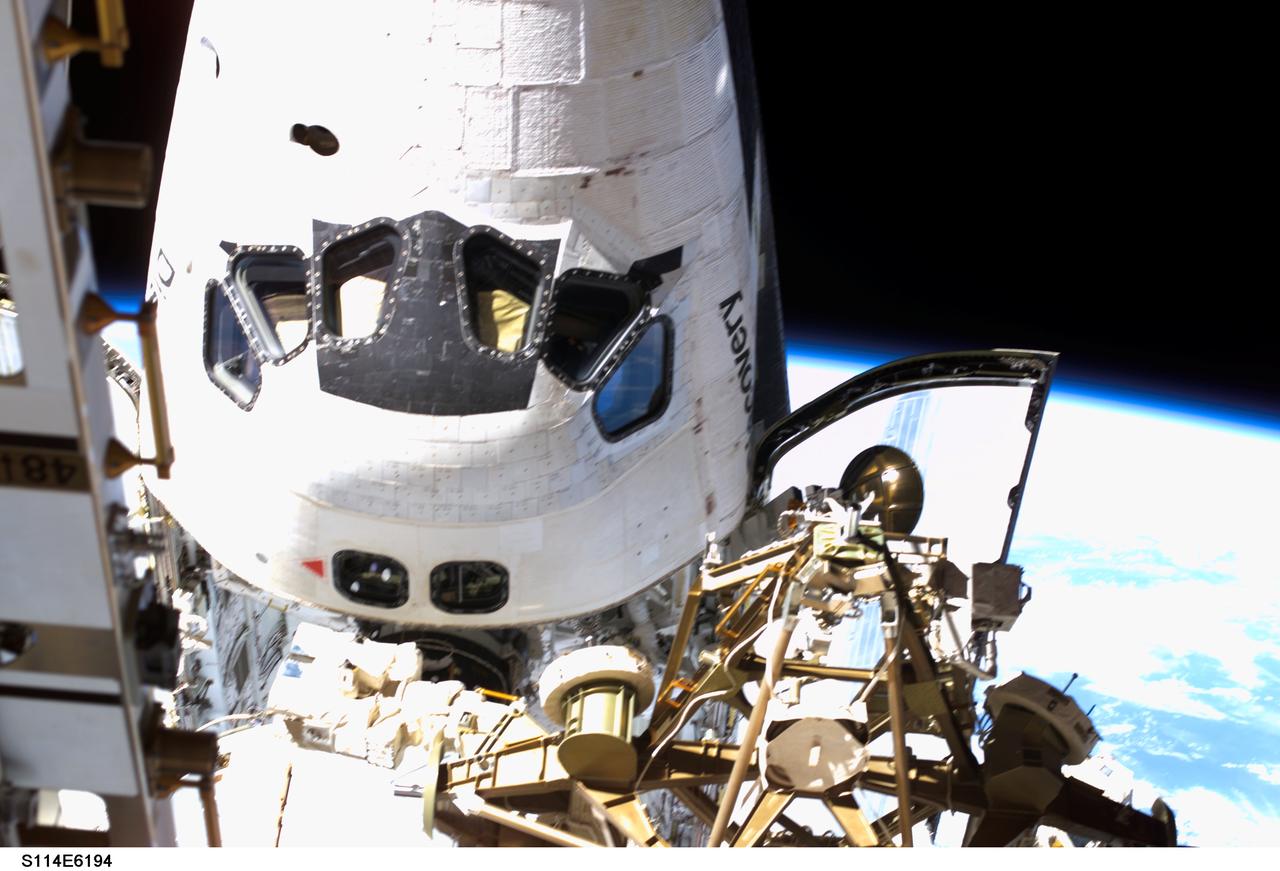
S114-E-6194 (3 August 2005) --- This picture of the forward section of the Space Shuttle Discovery docked to the International Space Station was taken by Japan Aerospace Exploration Agency Astronaut Soichi Noguchi during the third and final spacewalk for the STS-114 mission. Both Noguchi and his crewmate Astronaut Stephen K. Robinson were equipped with digital still cameras on the spacewalks.
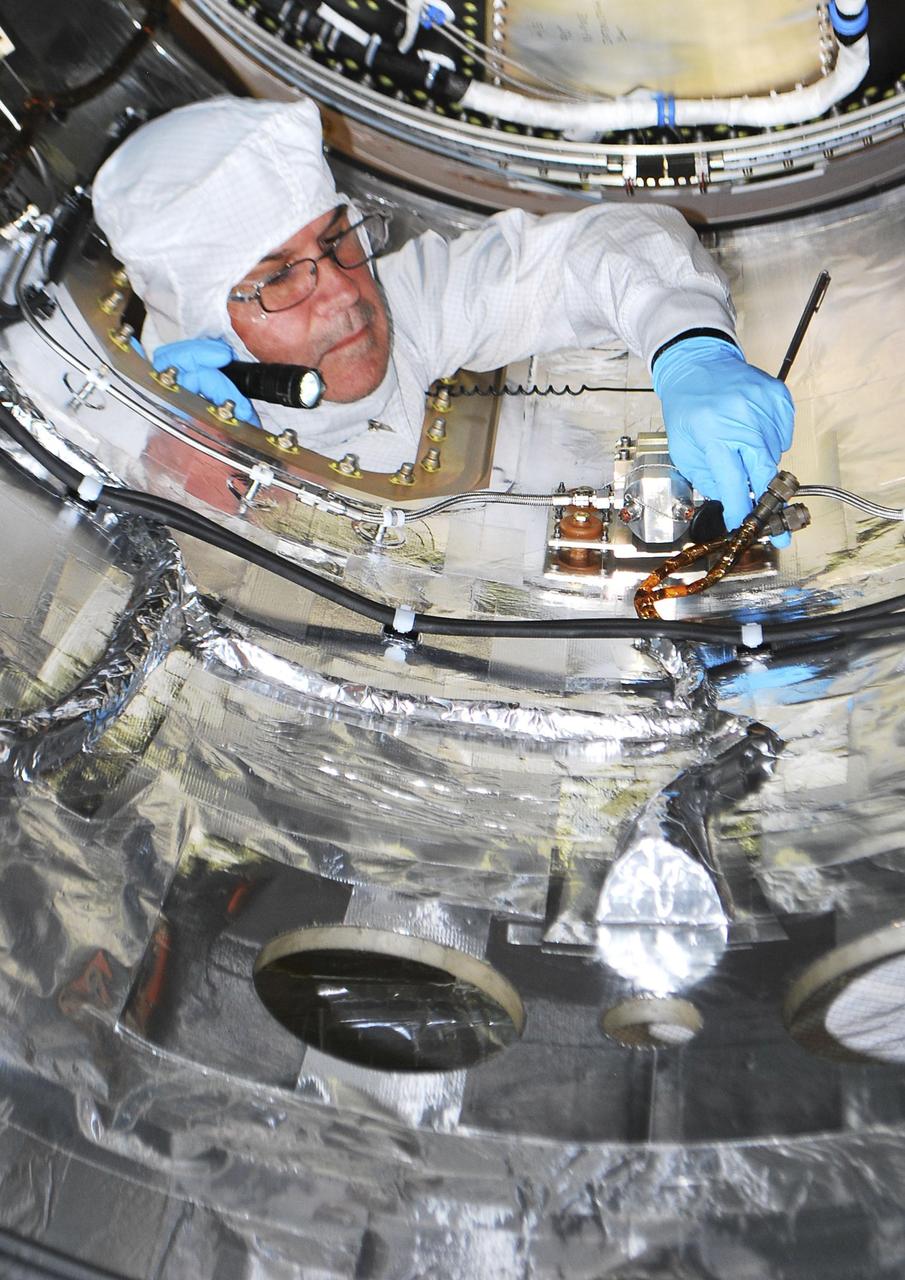
A spacecraft technician is performing closeout work inside the fairing that will be installed around NASA Nuclear Spectroscopic Telescope Array NuSTAR spacecraft in a processing facility at Vandenberg Air Force Base in California.
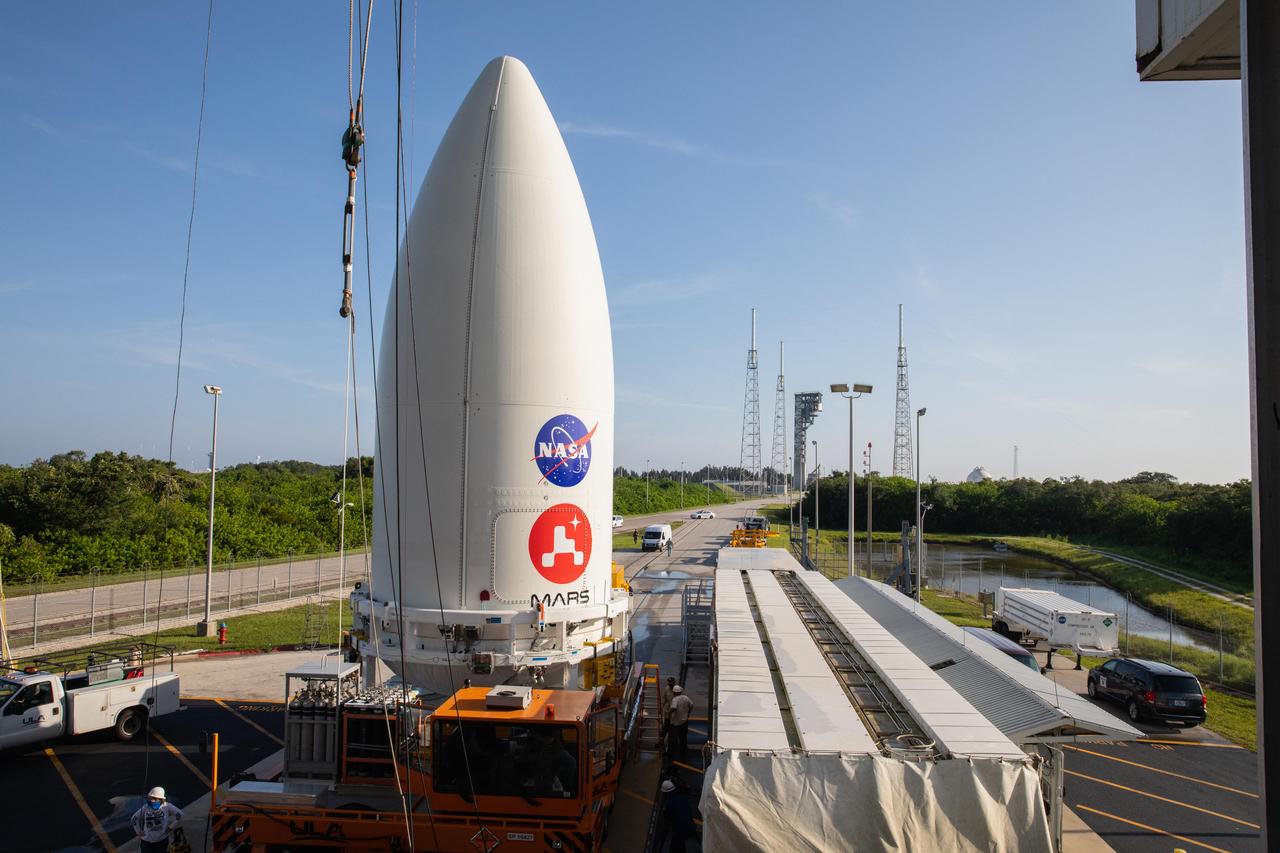
The payload fairing, or nose cone, containing the Mars 2020 Perseverance rover sits atop the motorized payload transporter that will carry it to Space Launch Complex 41 on Cape Canaveral Air Force Station in Florida. The image was taken on July 7, 2020. https://photojournal.jpl.nasa.gov/catalog/PIA23985
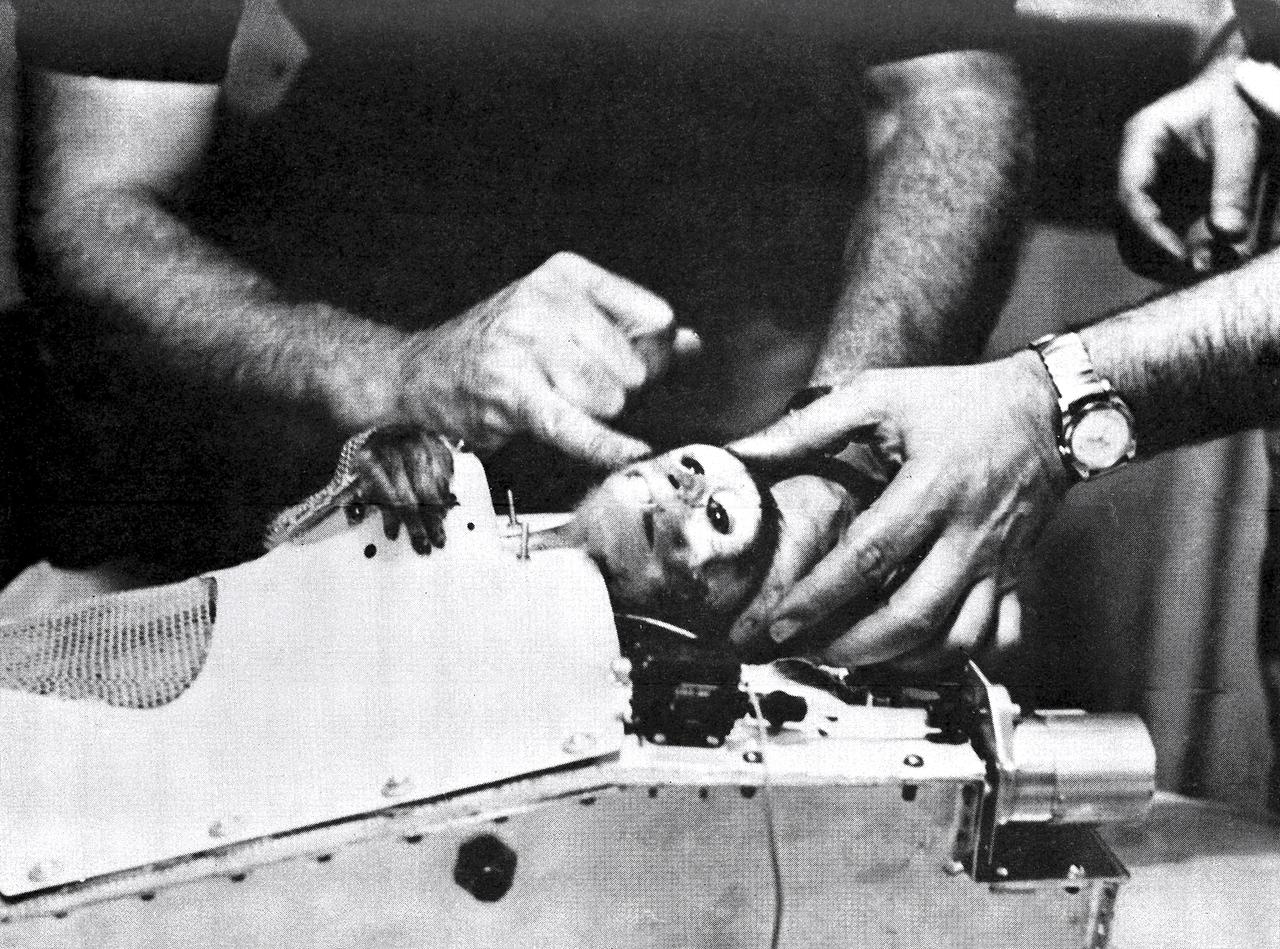
On May 28, 1959, a Jupiter Intermediate Range Ballistic Missile provided by a U.S. Army team in Redstone Arsenal, Alabama, launched a nose cone carrying Baker, A South American squirrel monkey and Able, An American-born rhesus monkey. This photograph shows Able after recovery of the nose cone of the Jupiter rocket by U.S.S. Kiowa.
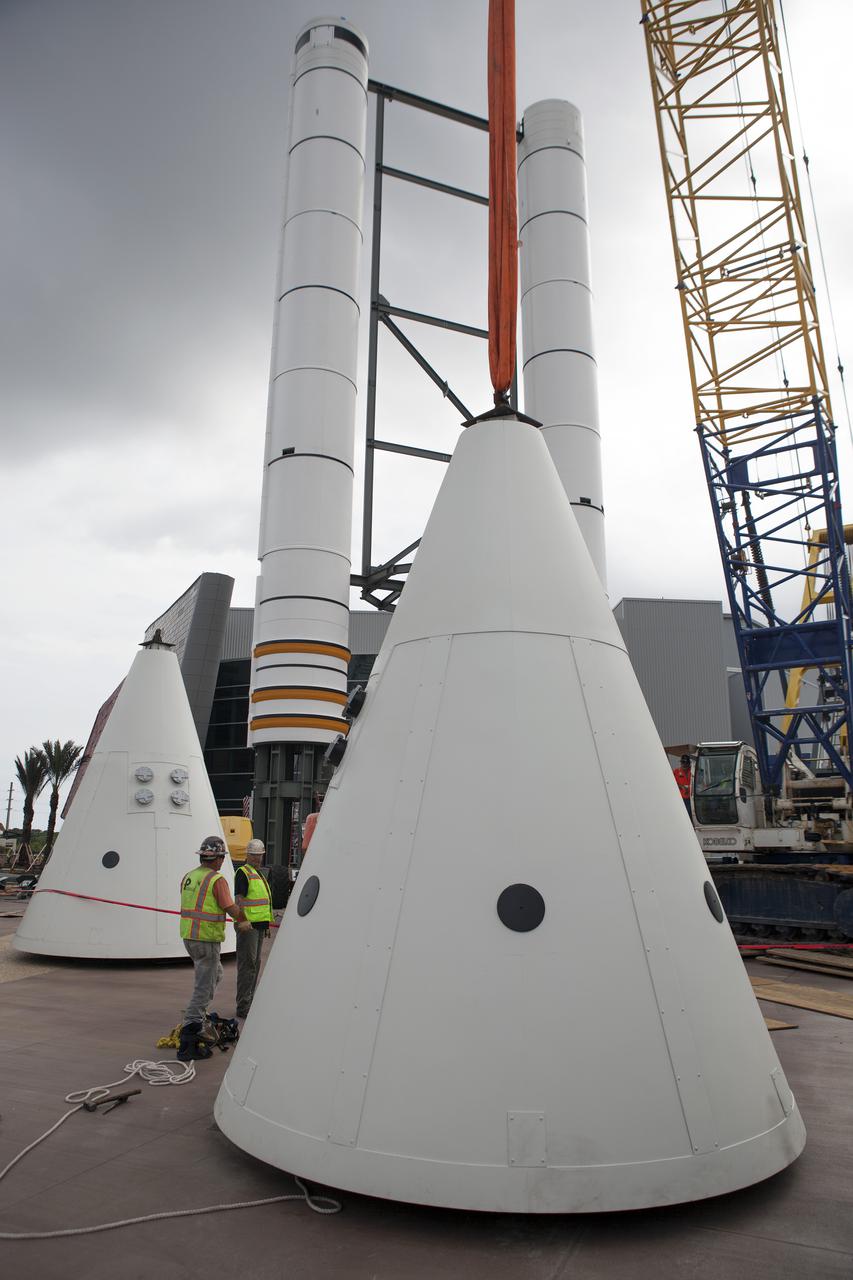
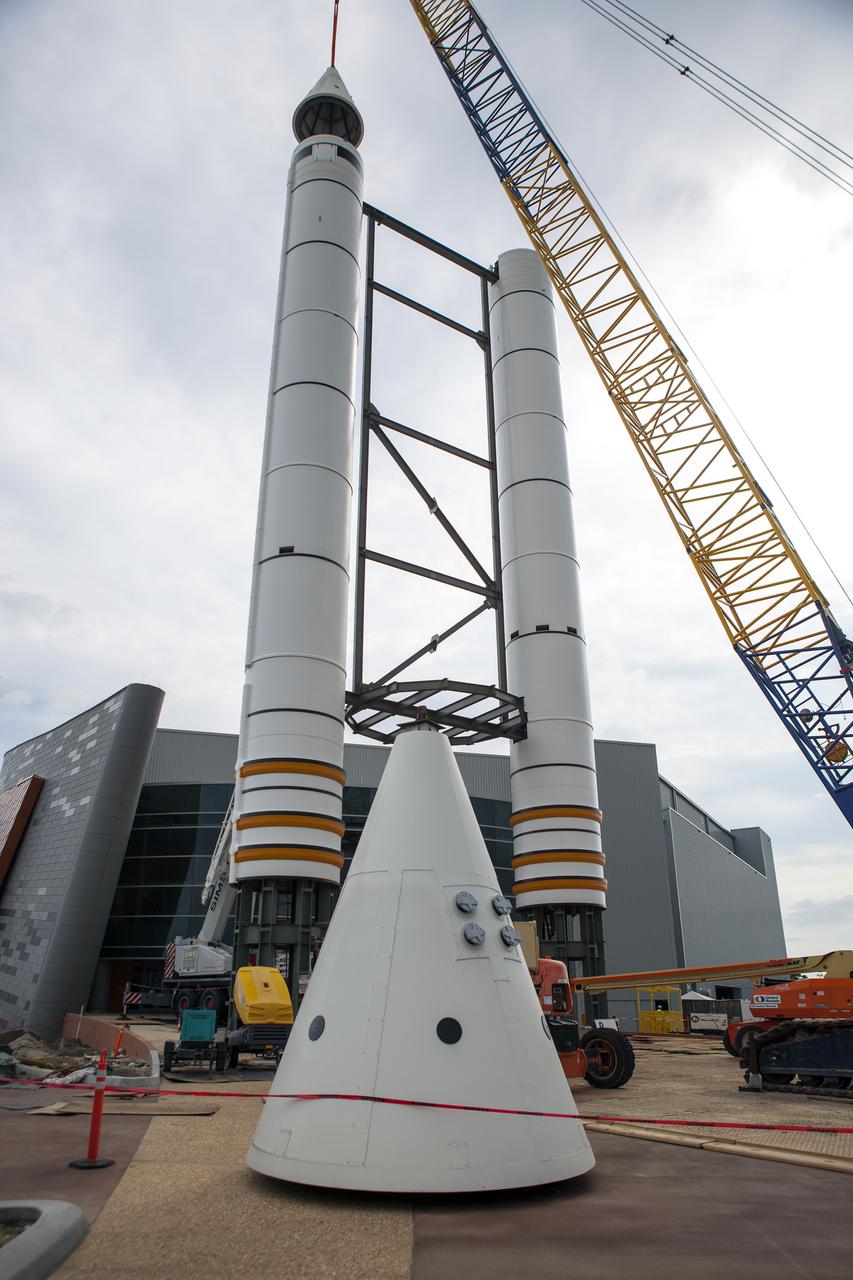
CAPE CANAVERAL, Fla. – Workers prepare to lift a nose cone to top out one of a pair of replica space shuttle solid rocket boosters at the entry of the space shuttle Atlantis attraction under construction at the Kennedy Space Center Visitor Complex. Workers will use cranes to place the nose cones atop each of the model boosters. The building in the background houses the actual shuttle Atlantis. Photo credit: NASA_Dmitri Gerondidakis
CAPE CANAVERAL, Fla. – A crane lifts a nose cone to top out one of a pair of replica space shuttle solid rocket boosters at the entry of the space shuttle Atlantis attraction under construction at the Kennedy Space Center Visitor Complex. Workers will use cranes to place the nose cones atop each of the model boosters. The building in the background houses the actual shuttle Atlantis. Photo credit: NASA_Dmitri Gerondidakis
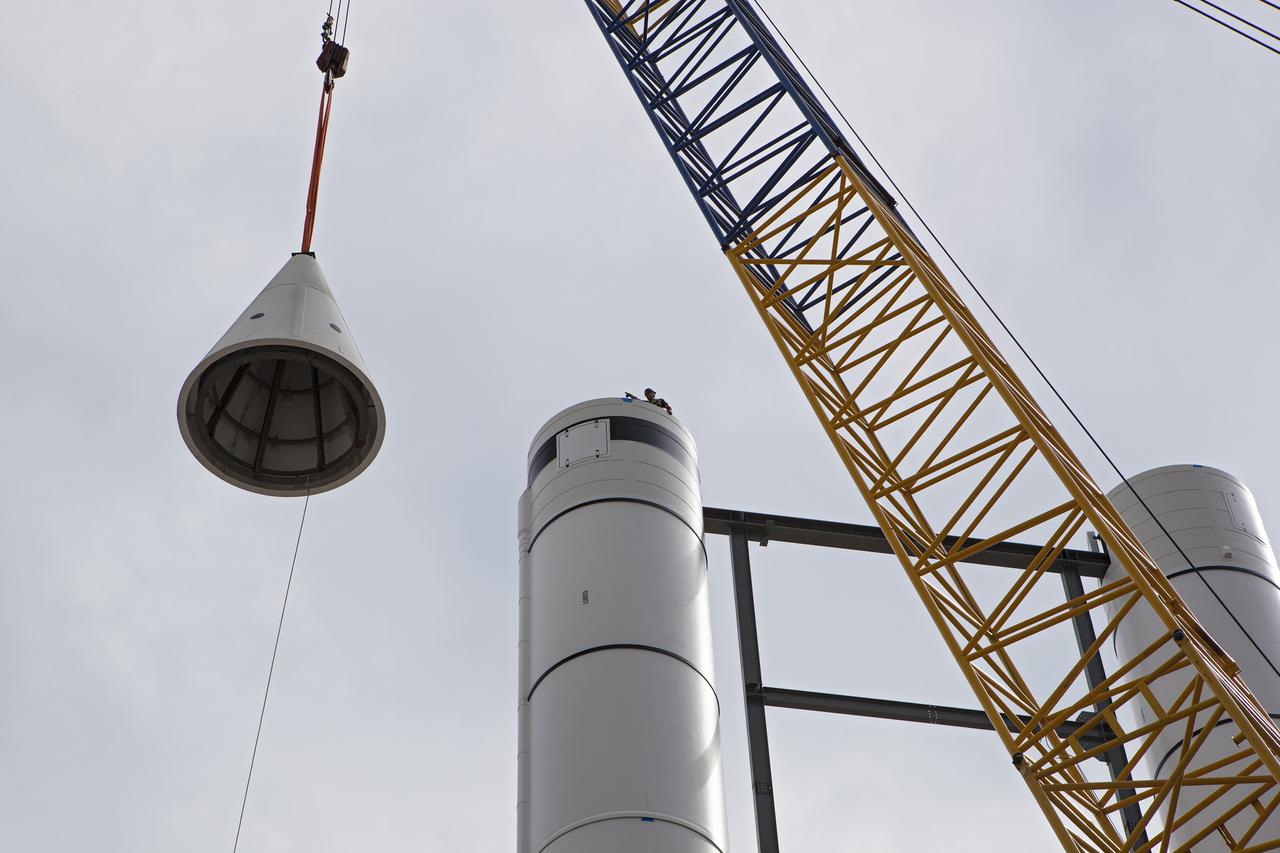
CAPE CANAVERAL, Fla. – A crane lifts a nose cone to top out one of a pair of replica space shuttle solid rocket boosters at the entry of the space shuttle Atlantis attraction under construction at the Kennedy Space Center Visitor Complex. Workers will use cranes to place the nose cones atop each of the model boosters. The building in the background houses the actual shuttle Atlantis. Photo credit: NASA_Dmitri Gerondidakis
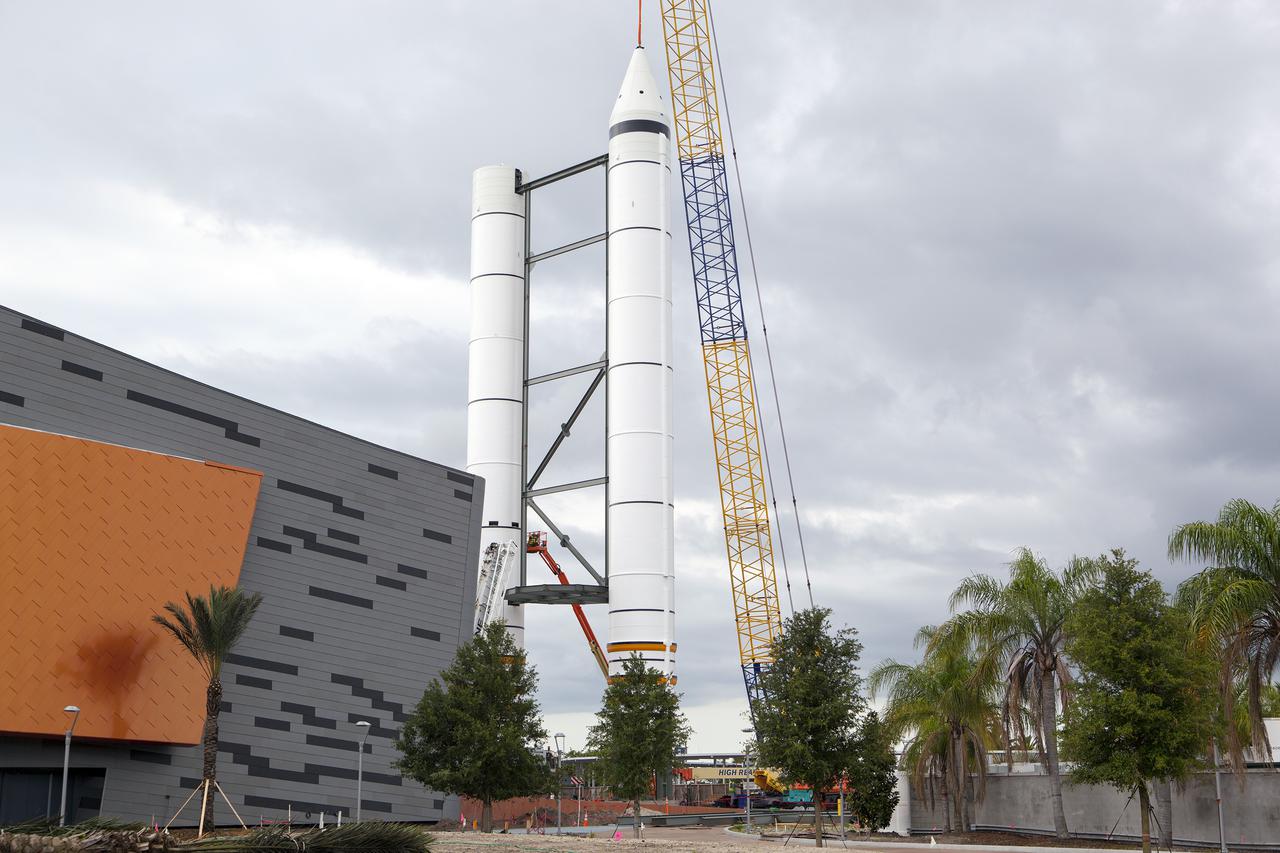
CAPE CANAVERAL, Fla. – A crane places a nose cone to top out one of a pair of replica space shuttle solid rocket boosters at the entry of the space shuttle Atlantis attraction under construction at the Kennedy Space Center Visitor Complex. Workers will use cranes to place the nose cones atop each of the model boosters. The building in the background houses the actual shuttle Atlantis. Photo credit: NASA_Dmitri Gerondidakis
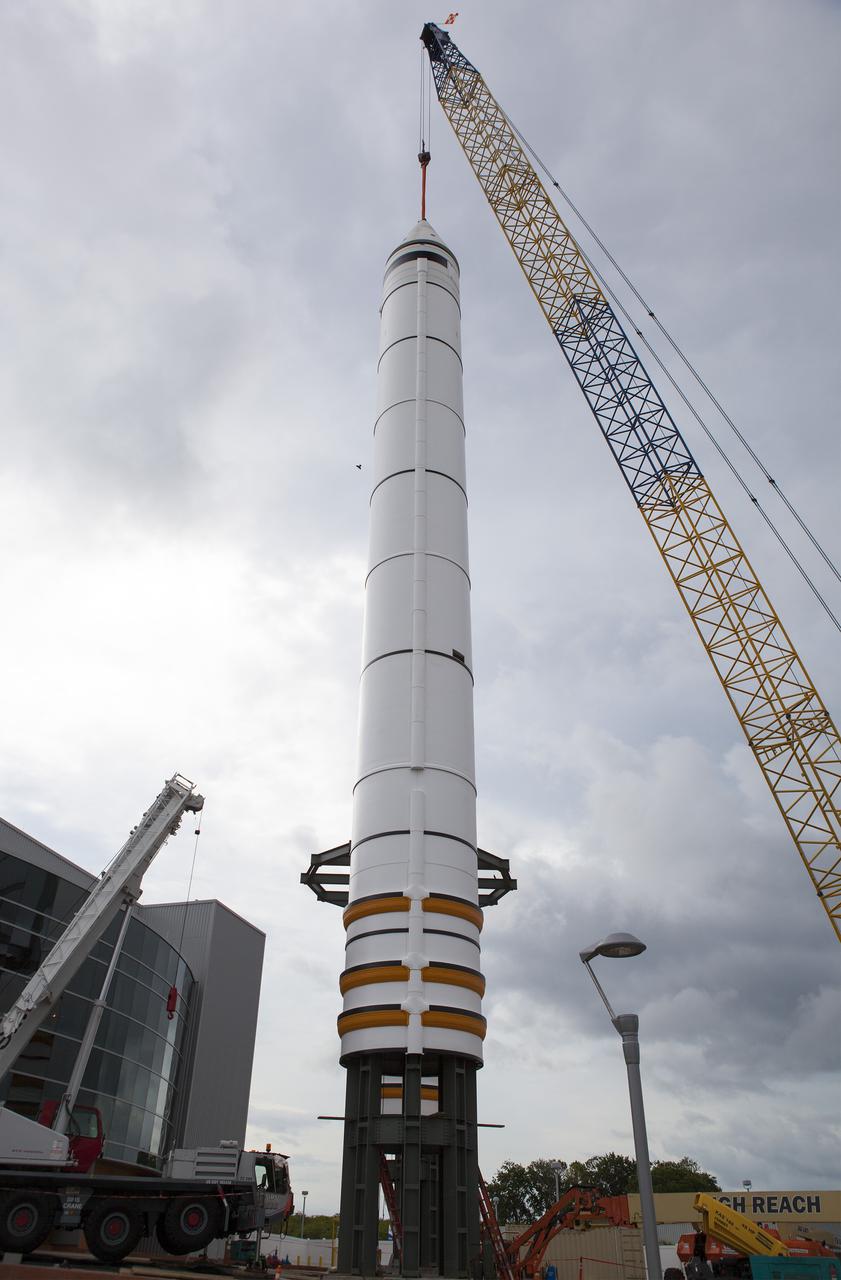
CAPE CANAVERAL, Fla. – A crane places a nose cone to top out one of a pair of replica space shuttle solid rocket boosters at the entry of the space shuttle Atlantis attraction under construction at the Kennedy Space Center Visitor Complex. Workers will use cranes to place the nose cones atop each of the model boosters. The building in the background houses the actual shuttle Atlantis. Photo credit: NASA_Dmitri Gerondidakis
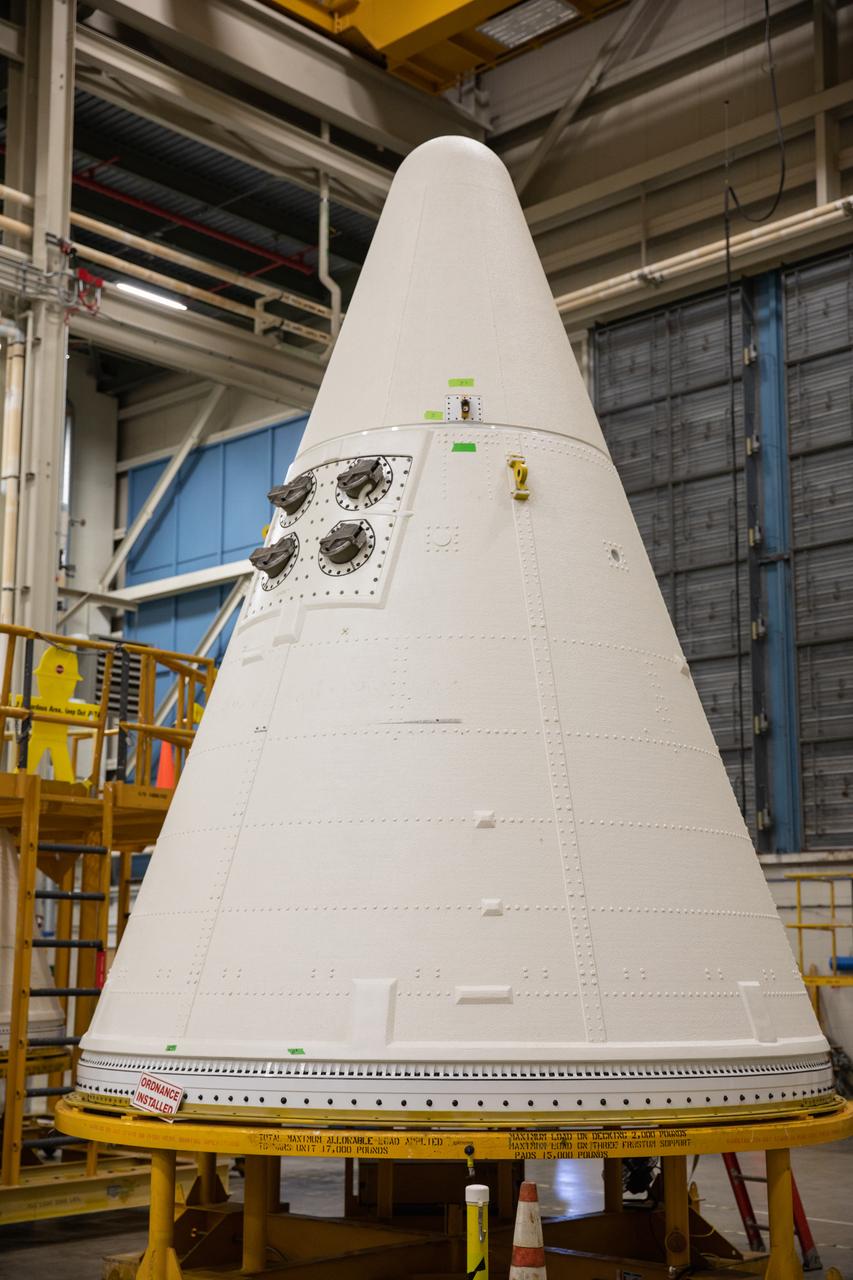
A nose cone for one of the Space Launch System’s (SLS) two solid rocket boosters is inside the Booster Fabrication Facility at NASA’s Kennedy Space Center in Florida on Oct. 16, 2019. Segments of the boosters are being inspected and prepared for Artemis I, the agency’s first uncrewed flight of Orion atop the SLS. The nose cone, along with a frustrum, will serve as the aerodynamic fairing for the boosters during launch.
A nose cone for one of the Space Launch System’s (SLS) two solid rocket boosters is inside the Booster Fabrication Facility at NASA’s Kennedy Space Center in Florida on Oct. 16, 2019. Segments of the boosters are being inspected and prepared for Artemis I, the agency’s first uncrewed flight of Orion atop the SLS. The nose cone, along with a frustrum, will serve as the aerodynamic fairing for the boosters during launch.
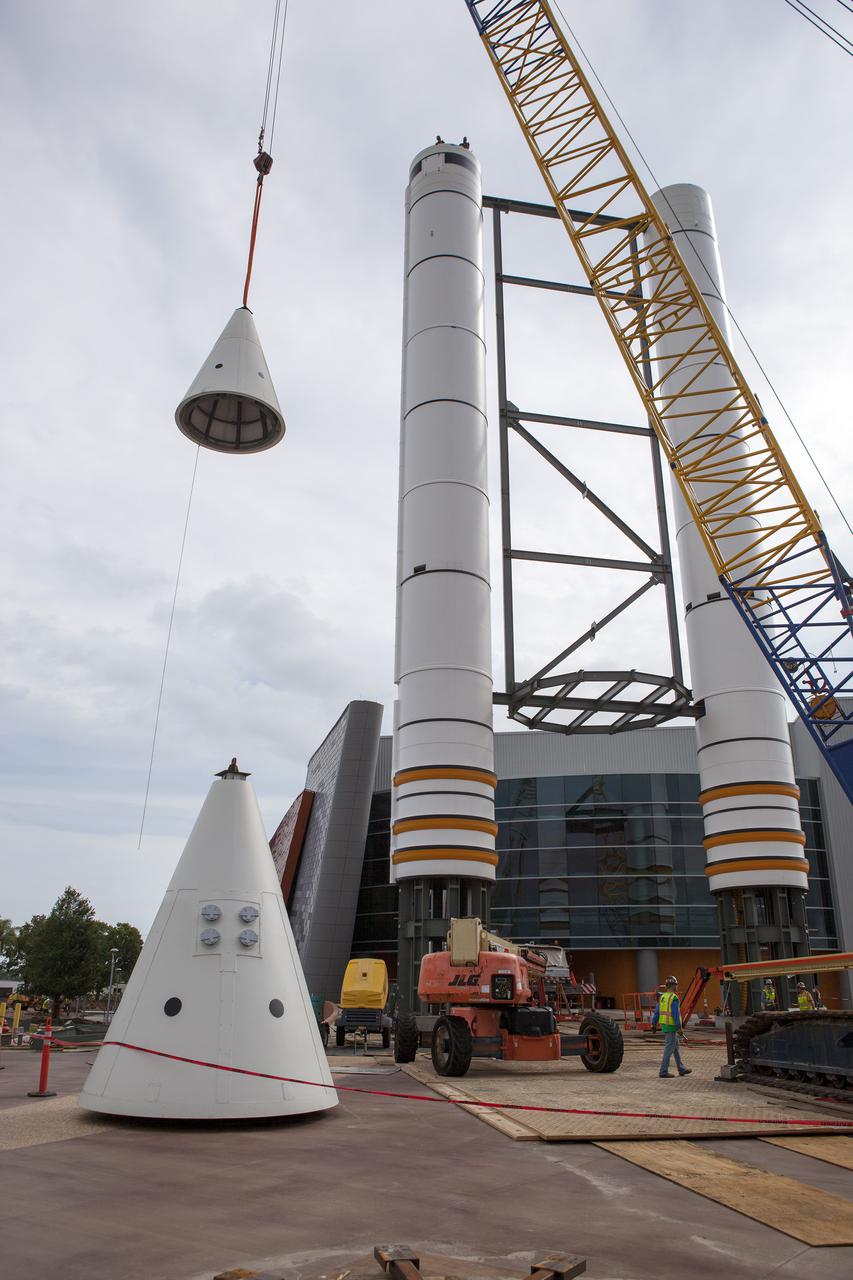
CAPE CANAVERAL, Fla. – A crane lifts a nose cone to top out one of a pair of replica space shuttle solid rocket boosters at the entry of the space shuttle Atlantis attraction under construction at the Kennedy Space Center Visitor Complex. Workers will use cranes to place the nose cones atop each of the model boosters. The building in the background houses the actual shuttle Atlantis. Photo credit: NASA_Dmitri Gerondidakis
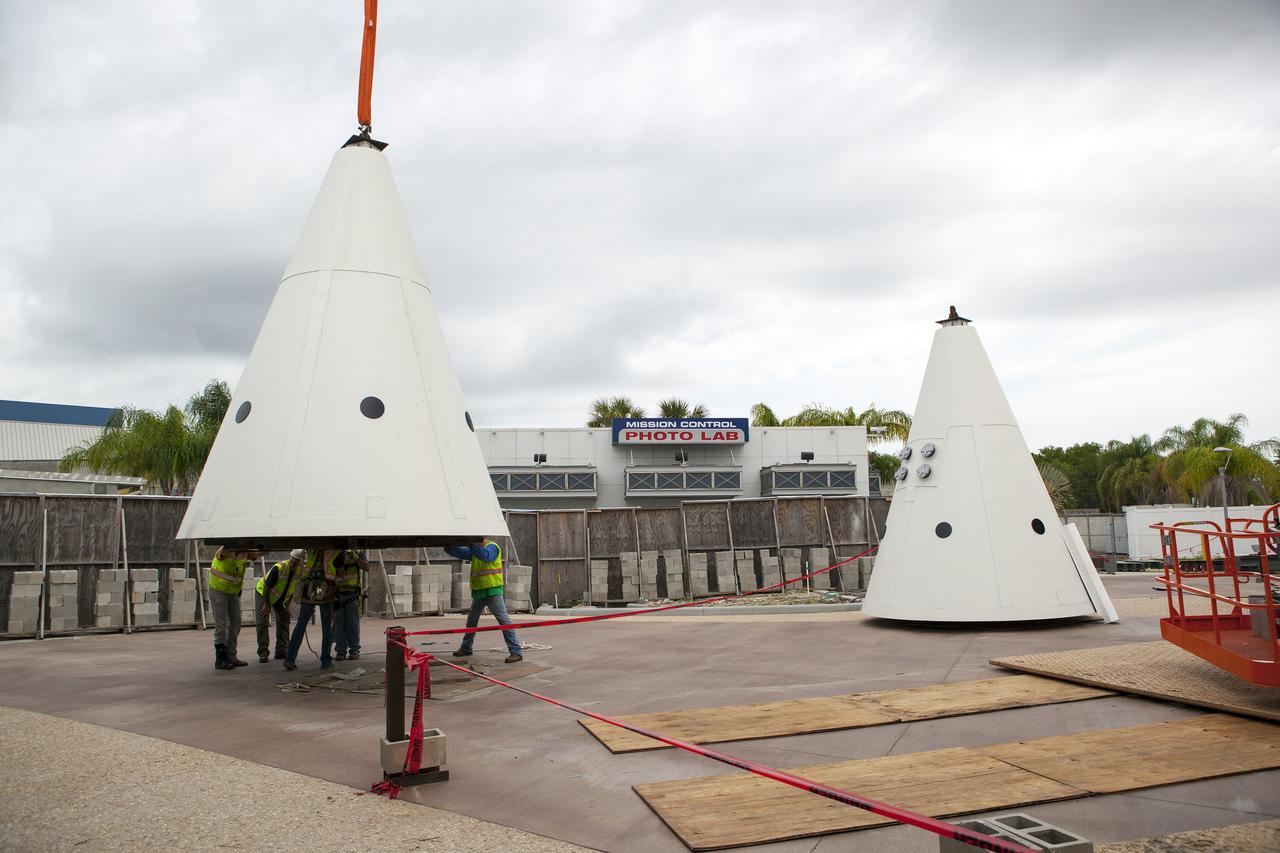
CAPE CANAVERAL, Fla. – Workers prepare to lift a nose cone to top out one of a pair of replica space shuttle solid rocket boosters at the entry of the space shuttle Atlantis attraction under construction at the Kennedy Space Center Visitor Complex. Workers will use cranes to place the nose cones atop each of the model boosters. Photo credit: NASA_Dmitri Gerondidakis
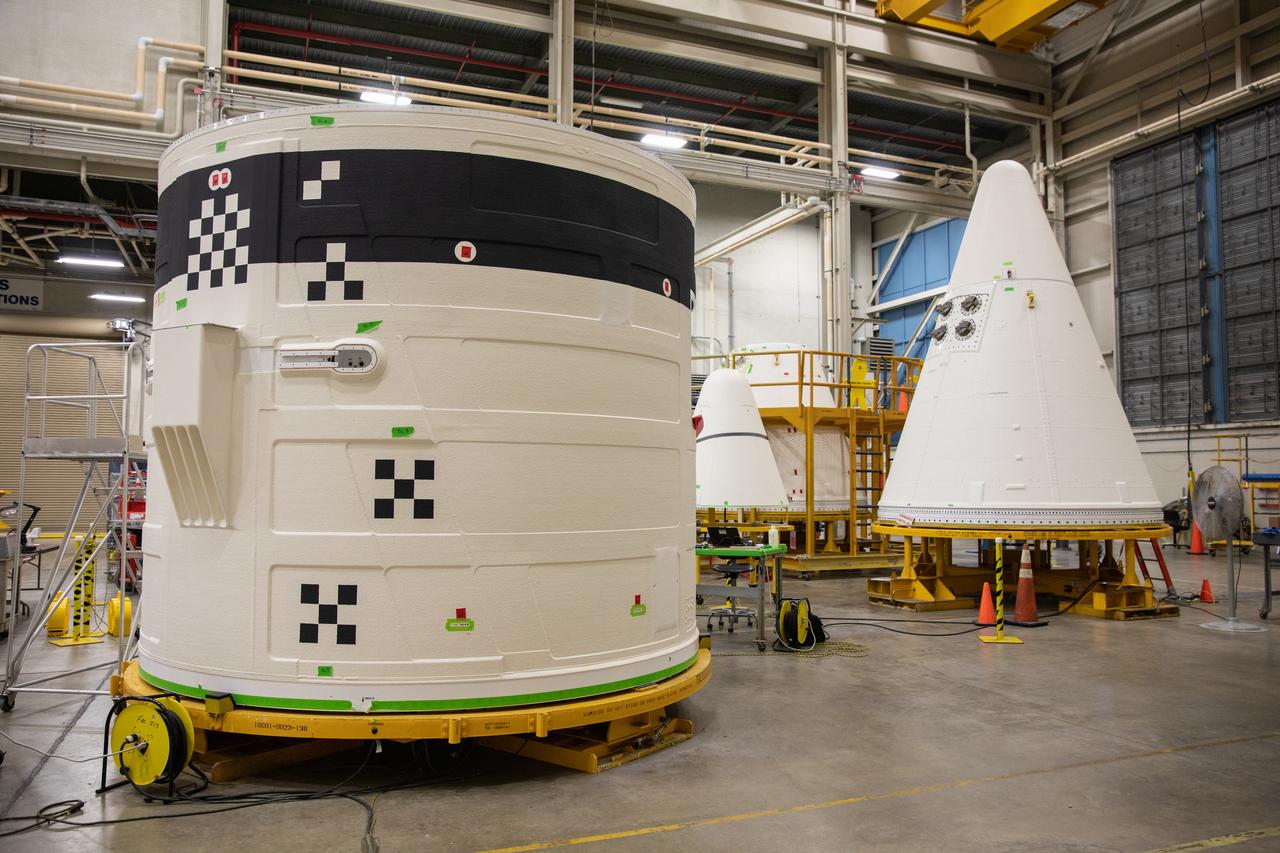
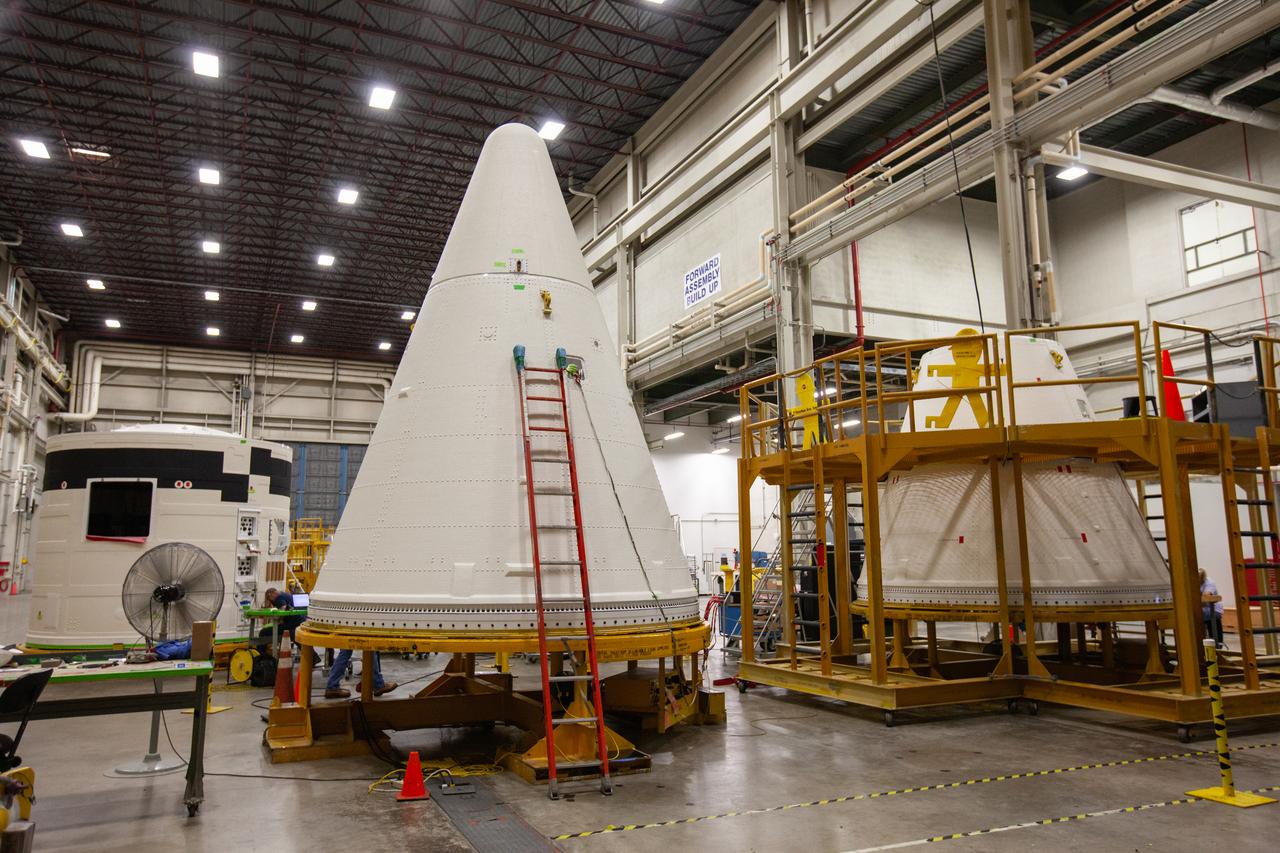
A forward skirt and two nose cones for the Space Launch System’s (SLS) two solid boosters are in view inside the Booster Fabrication Facility at NASA’s Kennedy Space Center in Florida on Oct. 16, 2019. Segments of the boosters are being inspected and prepared for Artemis I, the agency’s first uncrewed flight of Orion atop the SLS. The forward skirt houses booster avionics that communicate with the SLS avionics to monitor booster conditions and steer the booster exhaust nozzle. The nose cone, along with a frustrum, will serve as the aerodynamic fairing for the boosters during launch.
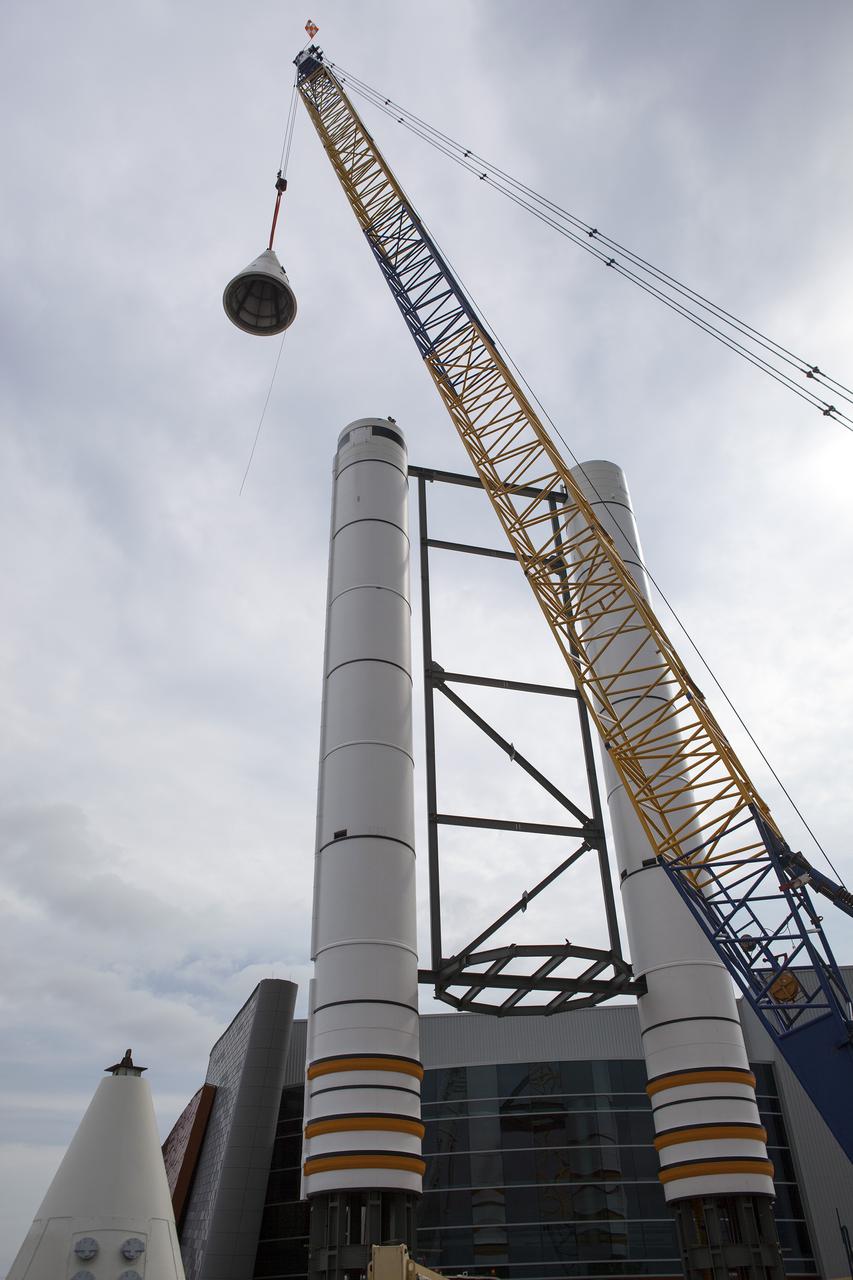
CAPE CANAVERAL, Fla. – A crane lifts a nose cone to top out one of a pair of replica space shuttle solid rocket boosters at the entry of the space shuttle Atlantis attraction under construction at the Kennedy Space Center Visitor Complex. Workers will use cranes to place the nose cones atop each of the model boosters. The building in the background houses the actual shuttle Atlantis. Photo credit: NASA_Dmitri Gerondidakis
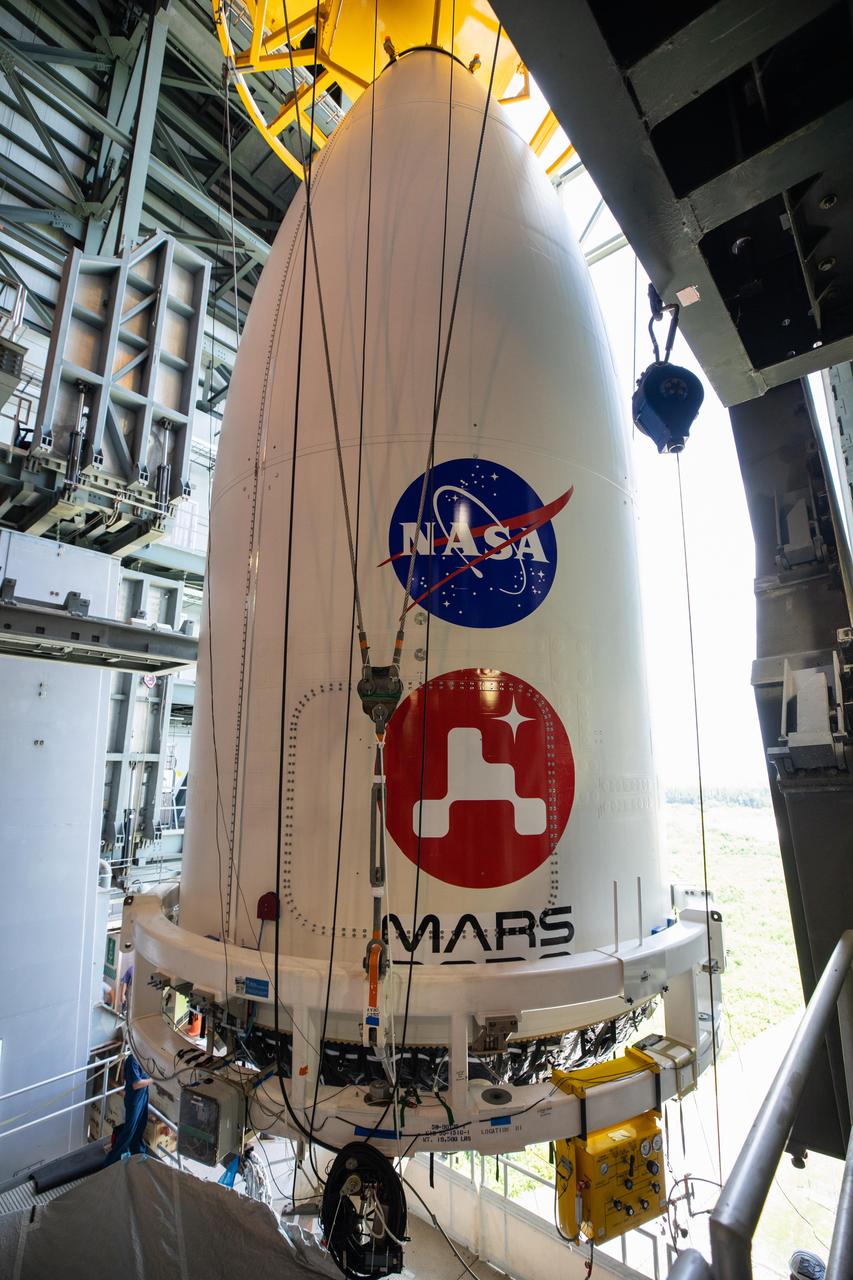
The payload fairing, or nose cone, containing NASA's Mars 2020 Perseverance rover is maneuvered into place atop the Atlas V rocket that will hurl it toward Mars. The image was taken on July 7, 2020, inside the Vertical Integration Facility at Cape Canaveral Air Force Station's Space Launch Complex 41 in Florida. https://photojournal.jpl.nasa.gov/catalog/PIA23986
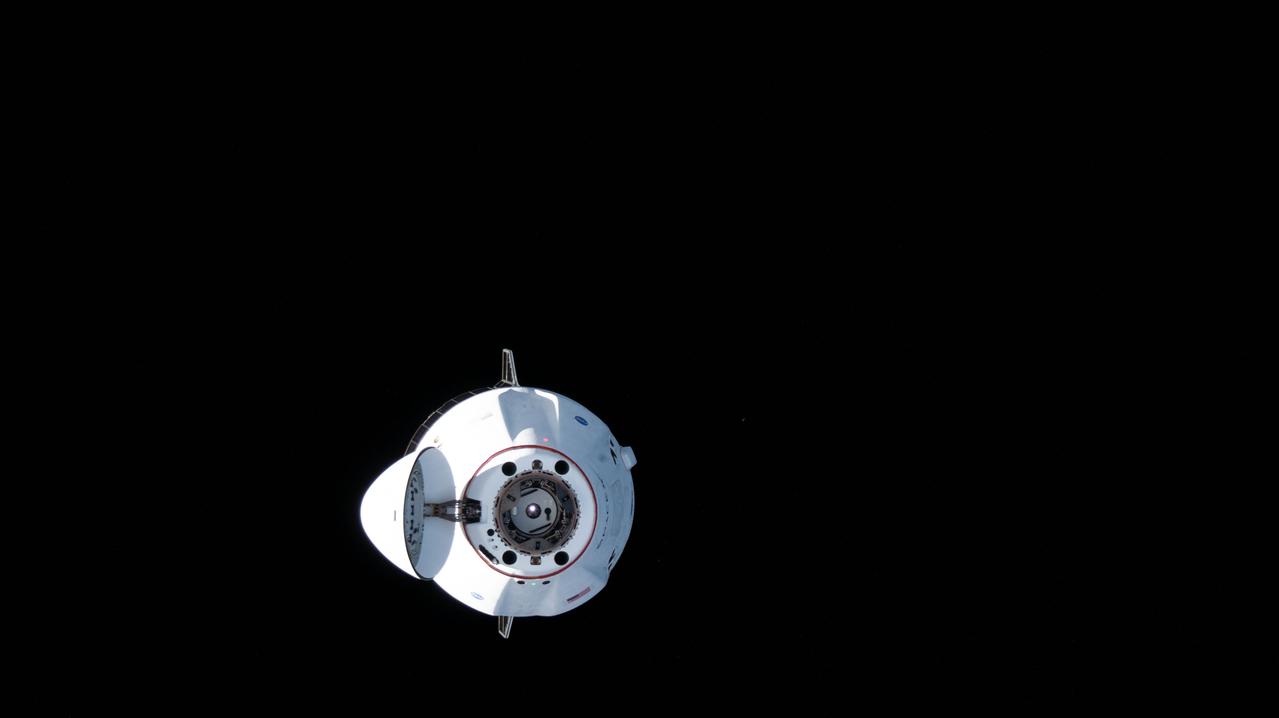
iss065e086721 (June 5, 2021) --- The SpaceX Cargo Dragon resupply ship is pictured approaching the International Space Station carrying over 7,300 pounds of new science, supplies and solar arrays to replenish the Expedition 65 crew. The Cargo Dragon's nose cone is open revealing its hatch and forward docking cone.
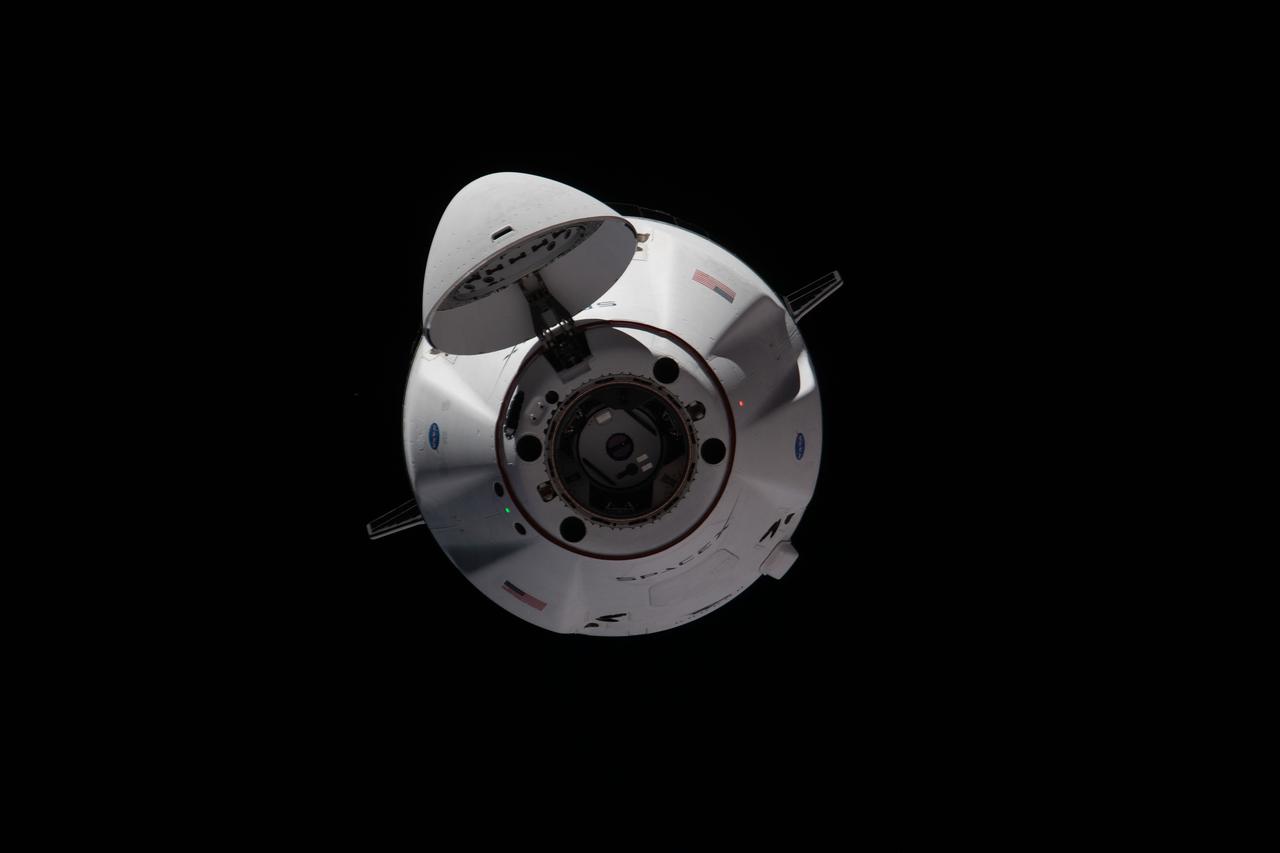
iss065e087366 (June 5, 2021) --- The SpaceX Cargo Dragon resupply ship is pictured approaching the International Space Station carrying over 7,300 pounds of new science, supplies and solar arrays to replenish the Expedition 65 crew. The Cargo Dragon's nose cone is open revealing its hatch and forward docking cone.
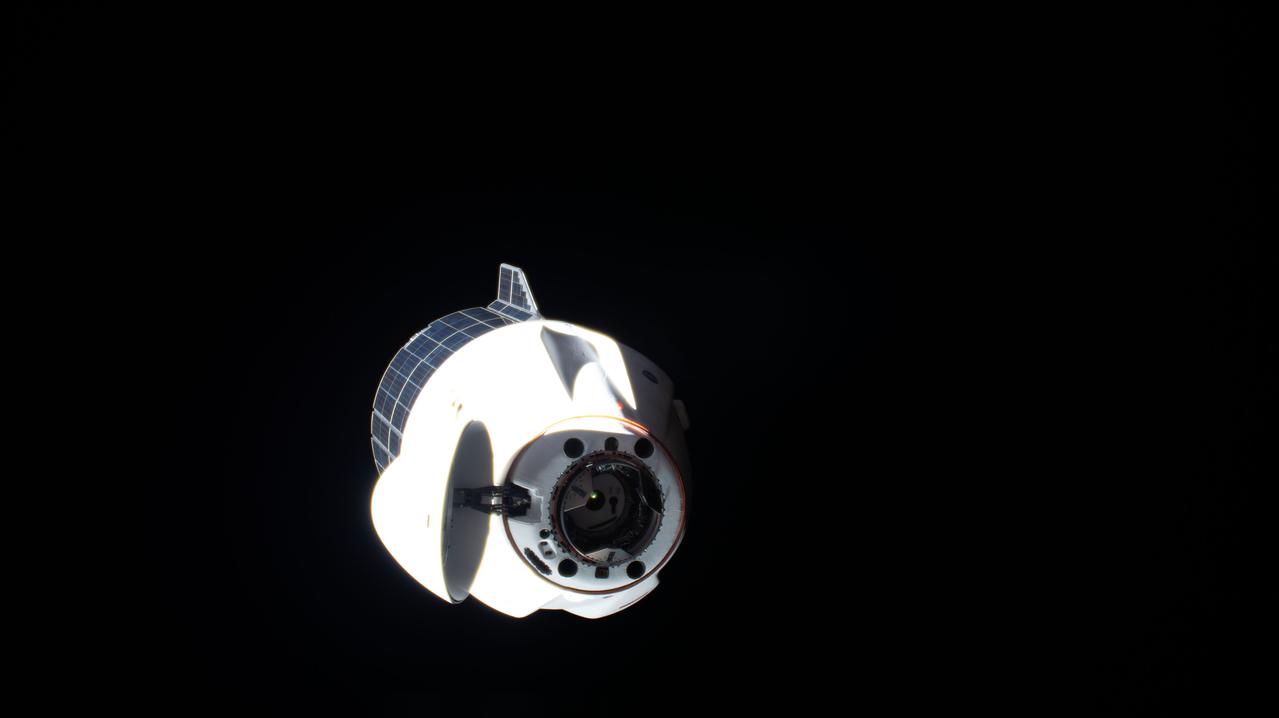
iss065e086723 (June 5, 2021) --- The SpaceX Cargo Dragon resupply ship is pictured approaching the International Space Station carrying over 7,300 pounds of new science, supplies and solar arrays to replenish the Expedition 65 crew. The Cargo Dragon's nose cone is open revealing its hatch and forward docking cone.
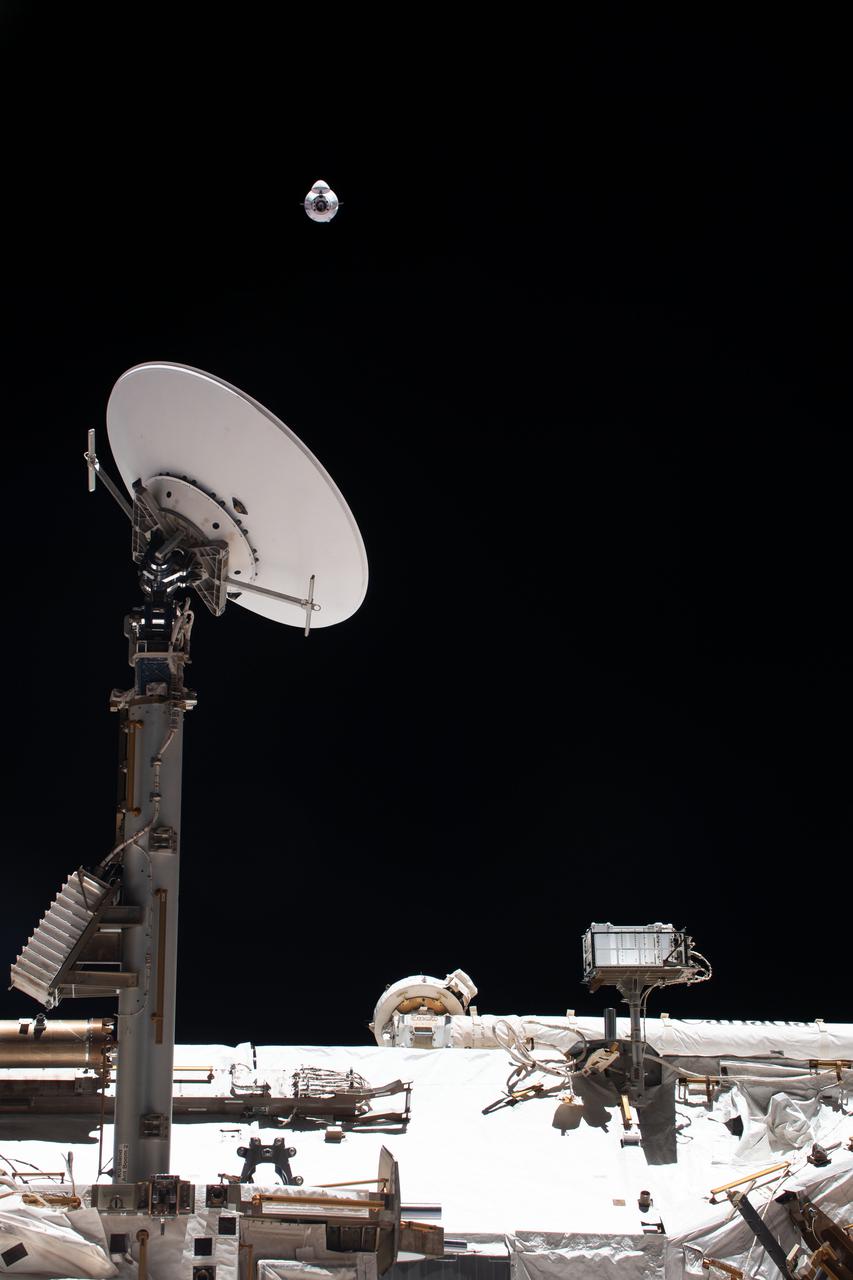
iss065e086893 (June 5, 2021) --- The SpaceX Cargo Dragon resupply ship is pictured approaching the International Space Station carrying over 7,300 pounds of new science, supplies and solar arrays to replenish the Expedition 65 crew. The Cargo Dragon's nose cone is open revealing its hatch and forward docking cone.
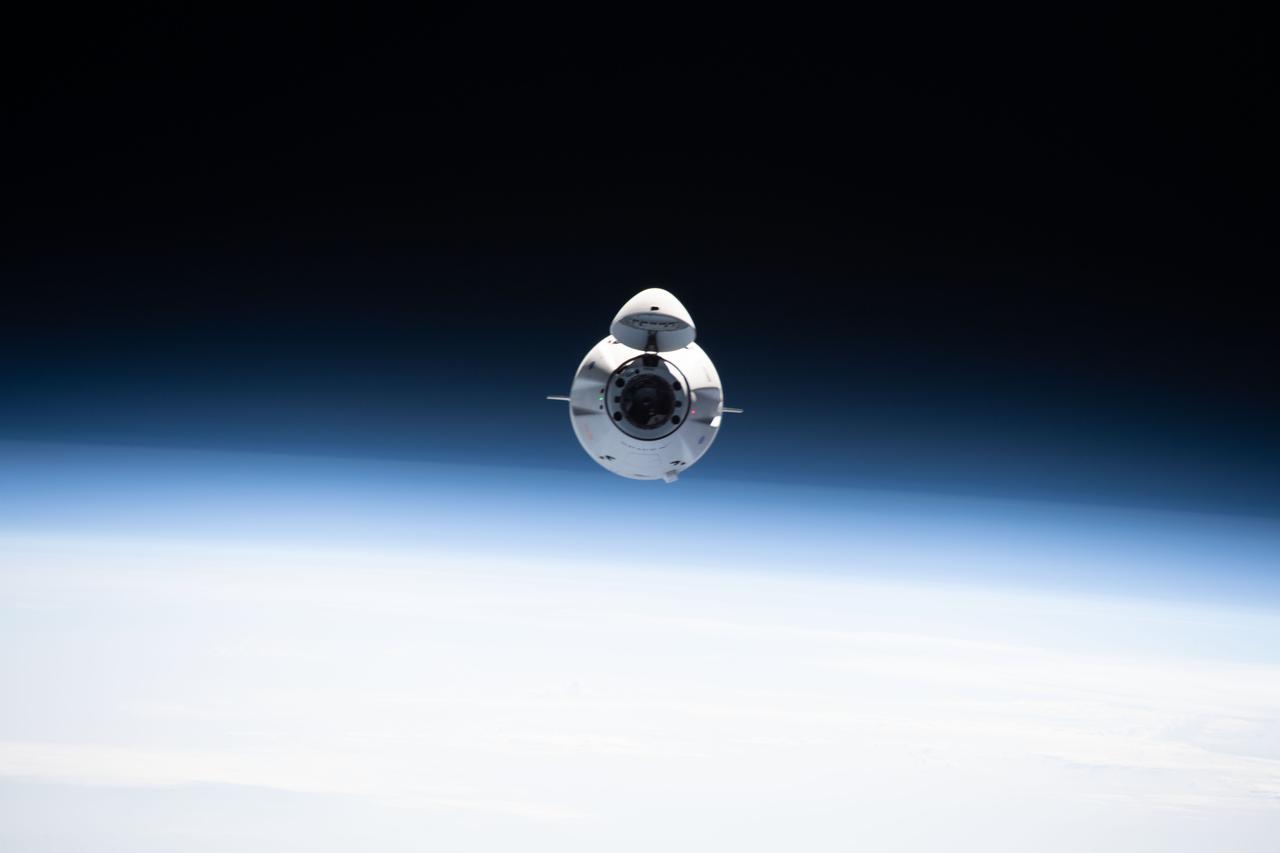
iss065e086833 (June 5, 2021) --- The SpaceX Cargo Dragon resupply ship is pictured approaching the International Space Station carrying over 7,300 pounds of new science, supplies and solar arrays to replenish the Expedition 65 crew. The Cargo Dragon's nose cone is open revealing its hatch and forward docking cone.
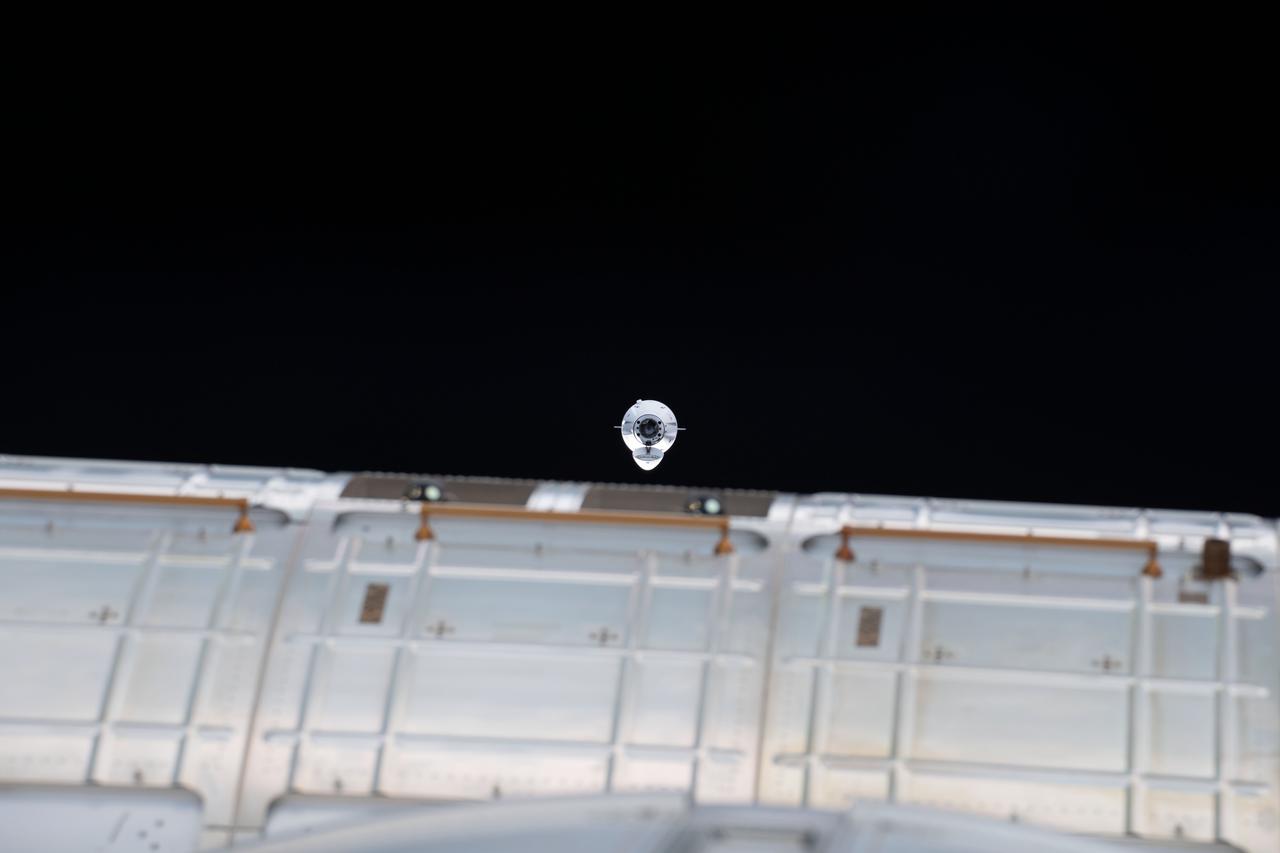
iss065e086862 (June 5, 2021) --- The SpaceX Cargo Dragon resupply ship is pictured approaching the International Space Station carrying over 7,300 pounds of new science, supplies and solar arrays to replenish the Expedition 65 crew. The Cargo Dragon's nose cone is open revealing its hatch and forward docking cone.
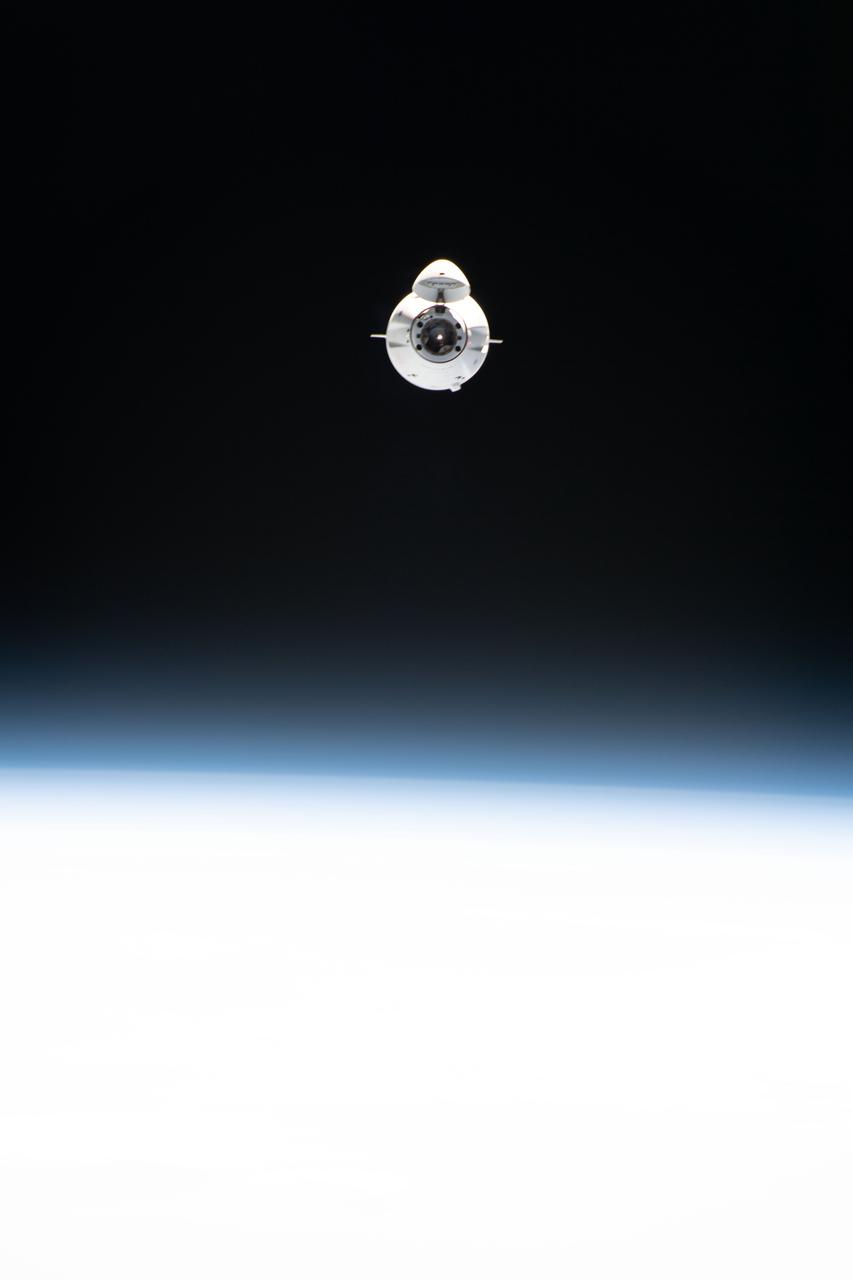
iss065e086842 (June 5, 2021) --- The SpaceX Cargo Dragon resupply ship is pictured approaching the International Space Station carrying over 7,300 pounds of new science, supplies and solar arrays to replenish the Expedition 65 crew. The Cargo Dragon's nose cone is open revealing its hatch and forward docking cone.
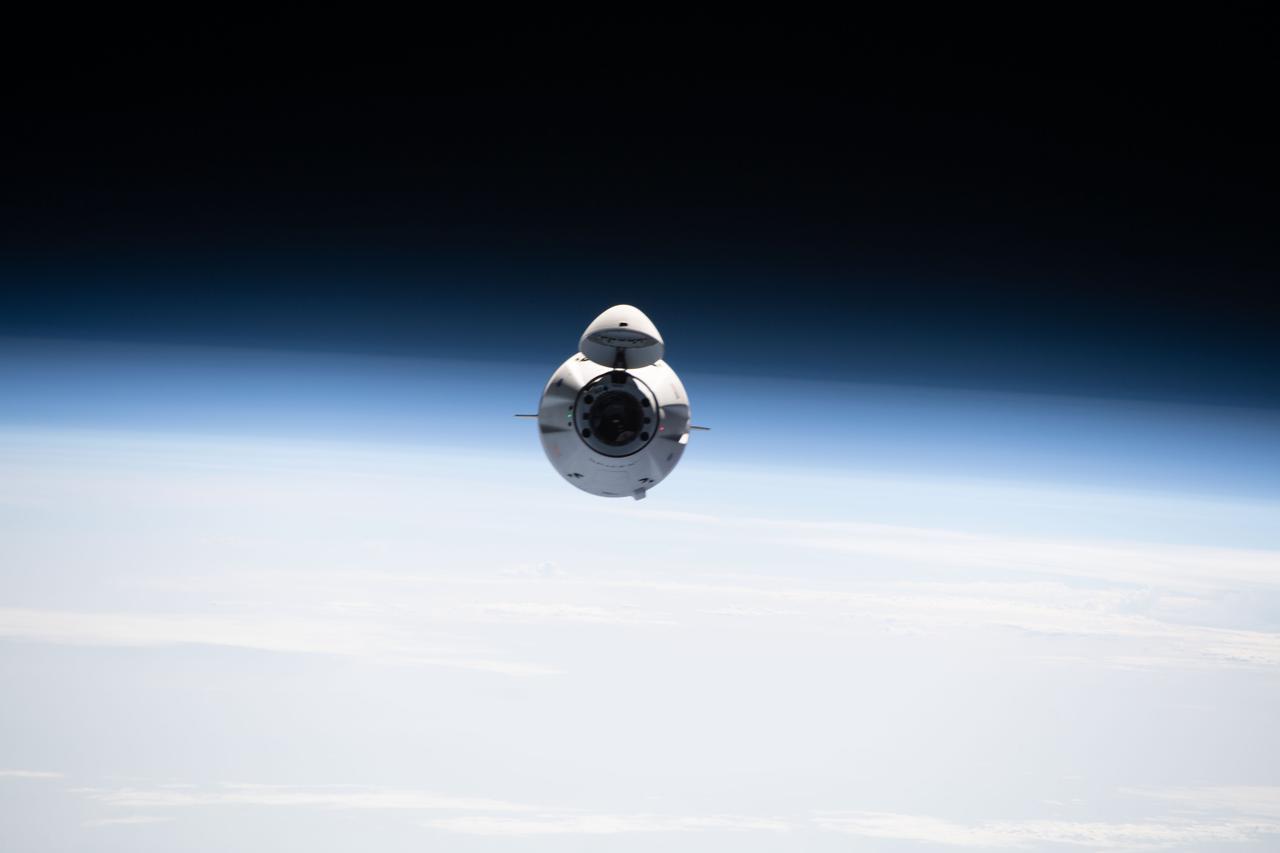
iss065e086819 (June 5, 2021) --- The SpaceX Cargo Dragon resupply ship is pictured approaching the International Space Station carrying over 7,300 pounds of new science, supplies and solar arrays to replenish the Expedition 65 crew. The Cargo Dragon's nose cone is open revealing its hatch and forward docking cone.
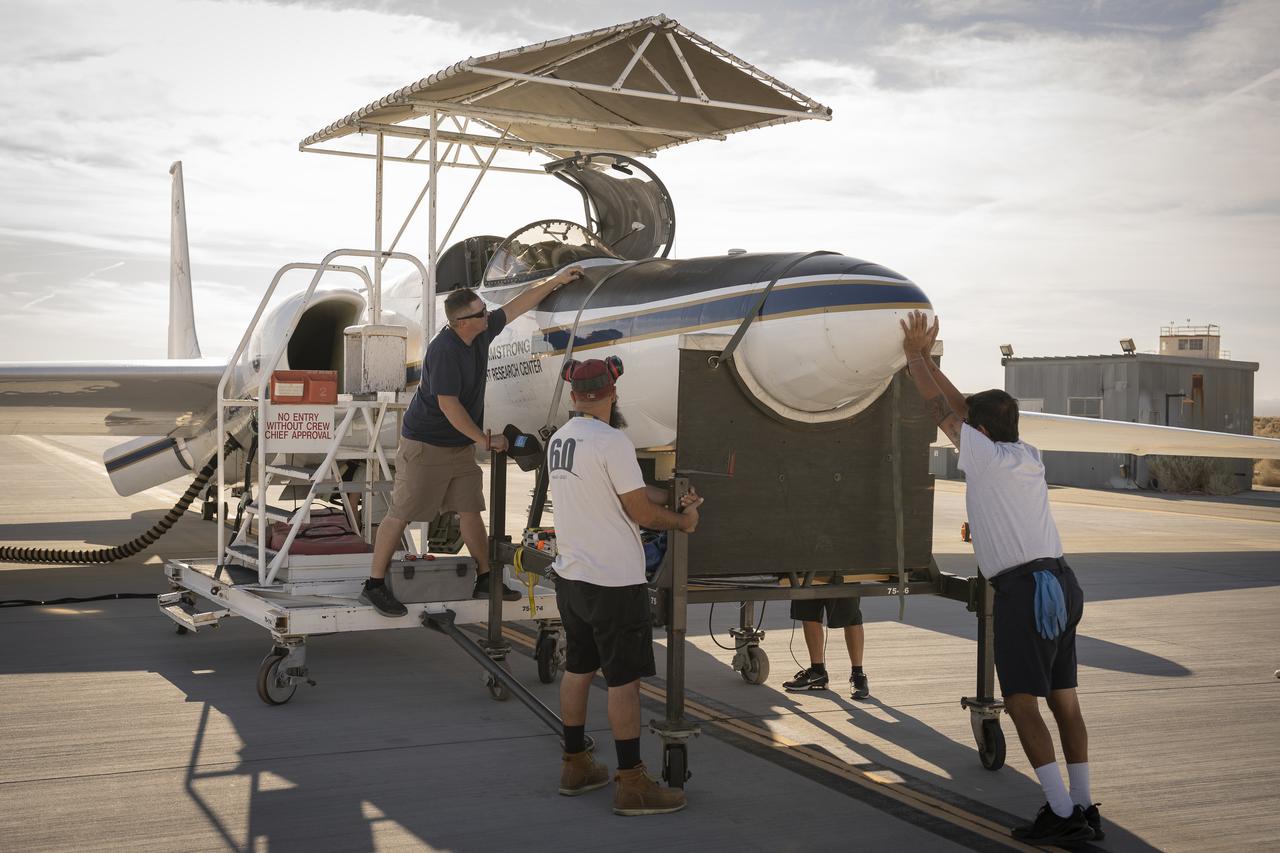
Crew members reattach the nose cone of NASA’s Armstrong Flight Research Center’s ER-2 aircraft at Edwards, California, on Thursday, Aug. 21, 2025, ahead of a mission for the Geological Earth Mapping Experiment (GEMx). The aircraft’s nose houses key science instruments used to collect data during flight.
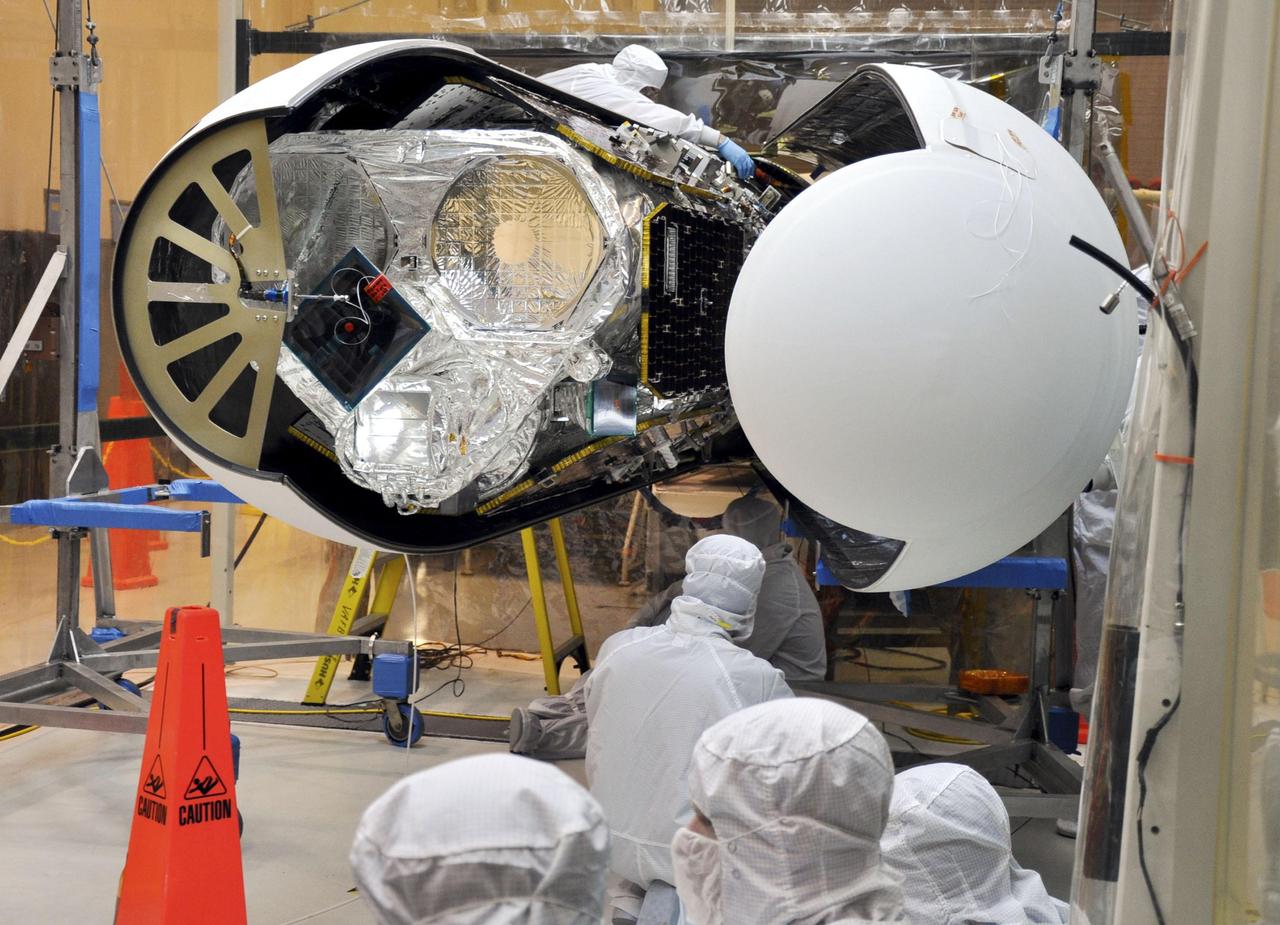
An Orbital Sciences technician completes final checks of NASA Nuclear Spectroscopic Telescope Array, or NuSTAR, before the Pegasus payload fairing is secured around it.
iss065e434115 (Sept. 30, 2021) --- The SpaceX Cargo Dragon, with its nose cone open, is pictured from an external high definition camera departing the vicinity of the International Space Station.
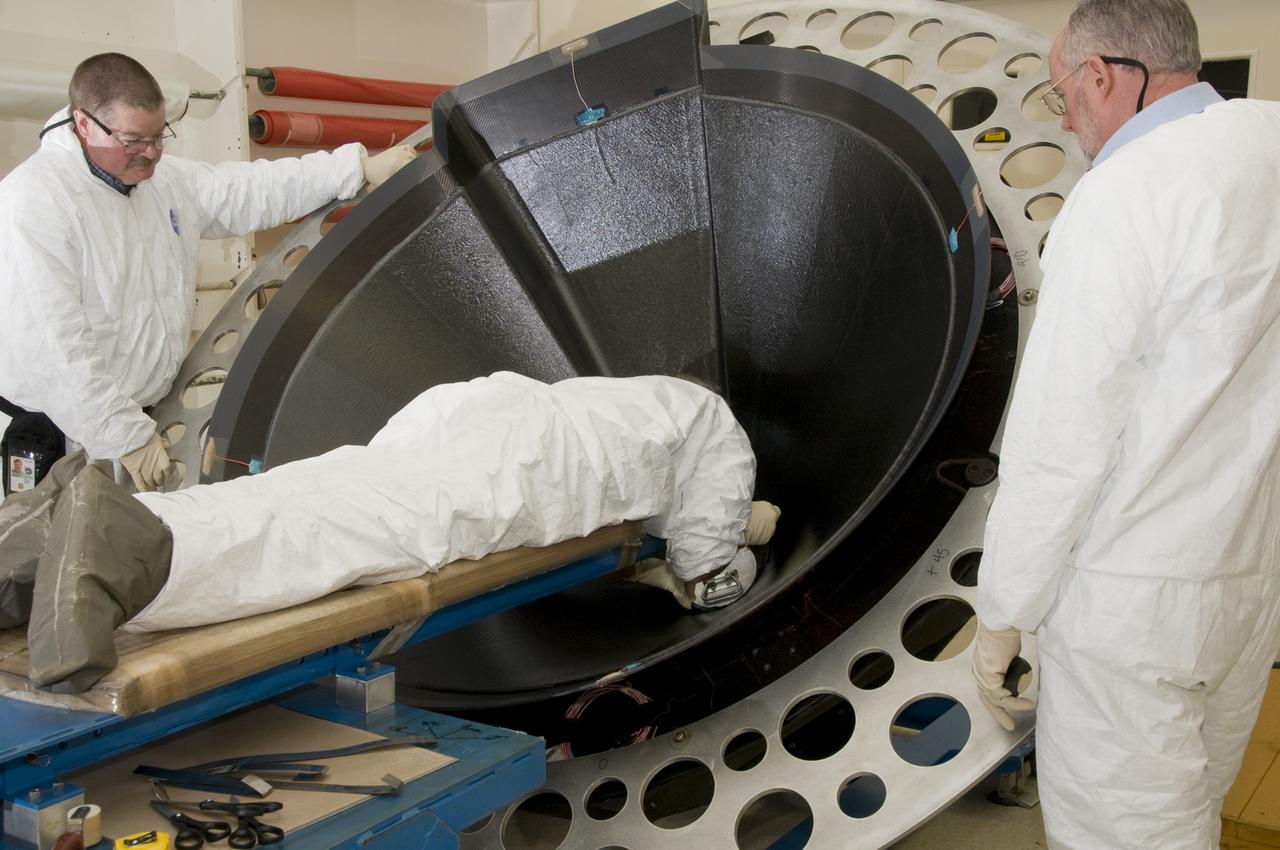
STEVE FRANKLIN, LEFT, AND RICHARD WELCH STAND READY TO ASSIST ED KIRSCH AS HE INSTALLS A ROUND PIECE OF COMPOSITE MATERIAL IN THE "BEANIE CAP" AT THE VERY TOP INSIDE THE COMPOSITE NOSE CONE.
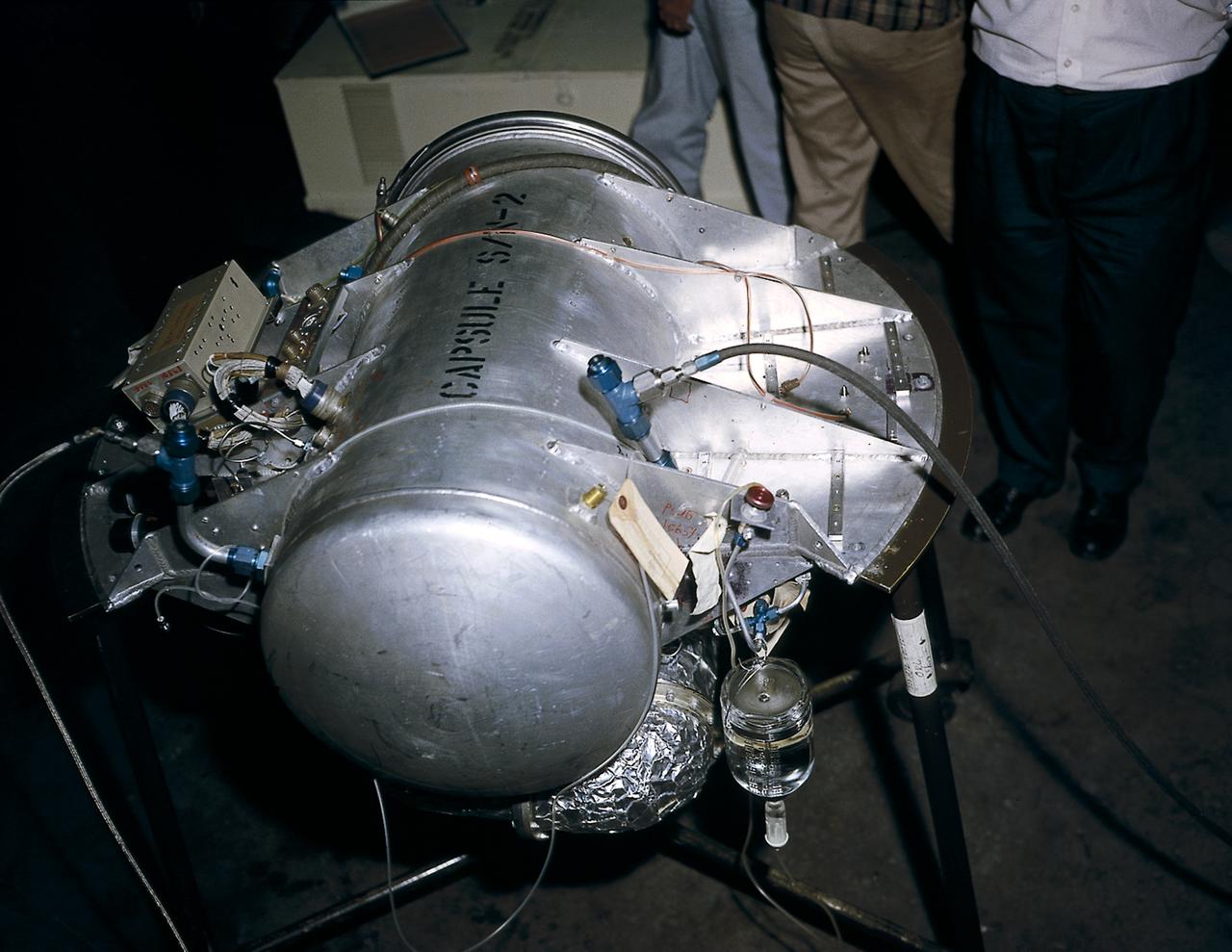
The capsule ready to be installed in the nose cone of Jupiter, AM-18, for pre-flight test, May 18, 1959. The capsule carried monkeys, Baker and Able, as the payload of AM-18 mission
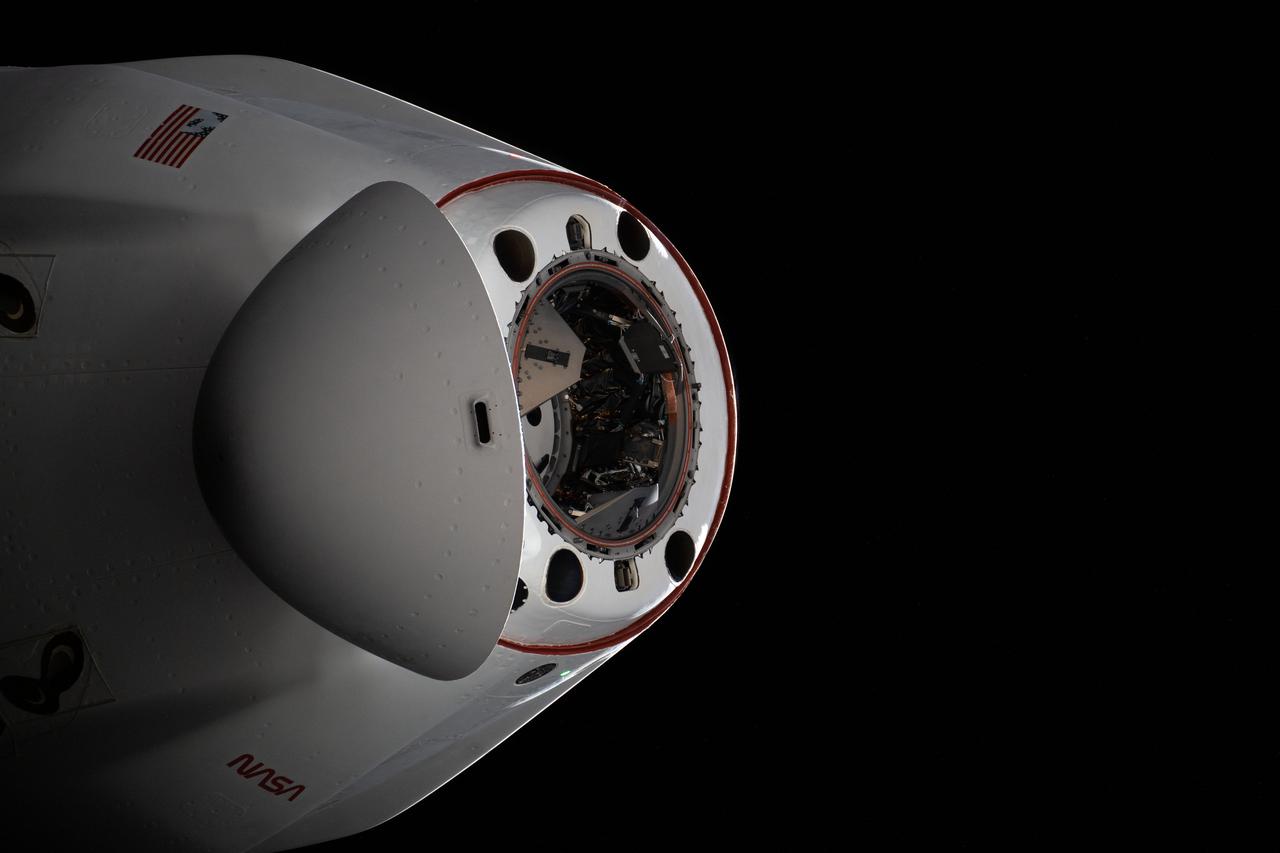
iss066e125308 (Jan. 23, 2022) --- The pressurized capsule of the SpaceX Cargo Dragon resupply ship with its nose cone open is pictured as the vehicle departs the International Space Station.

KENNEDY SPACE CENTER, FLA. -- In NASA Kennedy Space Center's Vehicle Assembly Building, technicians are inspecting the sanding performed on Atlantis' nose cone to repair hail damage. The equipment on the side of the nose cone is the sander. In late February, Atlantis' external tank received hail damage during a severe thunderstorm that passed through the Kennedy Space Center Launch Complex 39 area. The hail caused visible divots in the giant tank's foam insulation as well as minor surface damage to about 26 heat shield tiles on the shuttle's left wing. The launch of Space Shuttle Atlantis on mission STS-117 now is targeted for June 8. Photo credit: NASA/Jack Pfaller

On an upper level of high bay 1 of the Vehicle Assembly Building, technicians secure protective material around the base of the nose cone of Atlantis' external tank. The nose cone will undergo repair for hail damage. A severe thunderstorm with golf ball-sized hail caused visible divots in the giant tank's foam insulation and minor surface damage to about 26 heat shield tiles on the shuttle's left wing. Further evaluation of the tank is necessary to get an accurate accounting of foam damage and determine the type of repair required and the time needed for that work. A new target launch date has not been determined, but teams will focus on preparing Atlantis for liftoff in late April on mission STS-117.
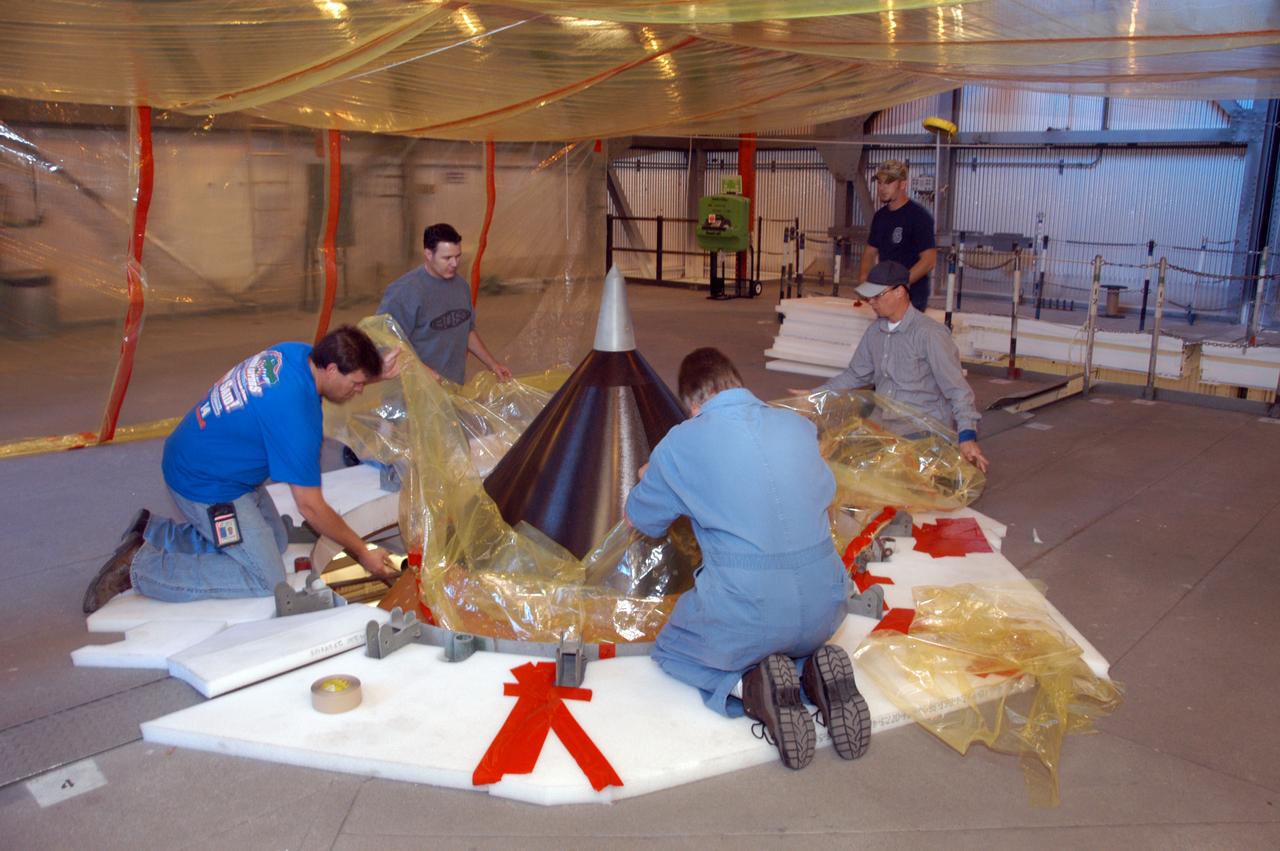
On an upper level of high bay 1 of the Vehicle Assembly Building, technicians place protective material around the nose cone of Atlantis' external tank. The nose cone will undergo repair for hail damage. A severe thunderstorm with golf ball-sized hail caused visible divots in the giant tank's foam insulation and minor surface damage to about 26 heat shield tiles on the shuttle's left wing. Further evaluation of the tank is necessary to get an accurate accounting of foam damage and determine the type of repair required and the time needed for that work. A new target launch date has not been determined, but teams will focus on preparing Atlantis for liftoff in late April on mission STS-117.
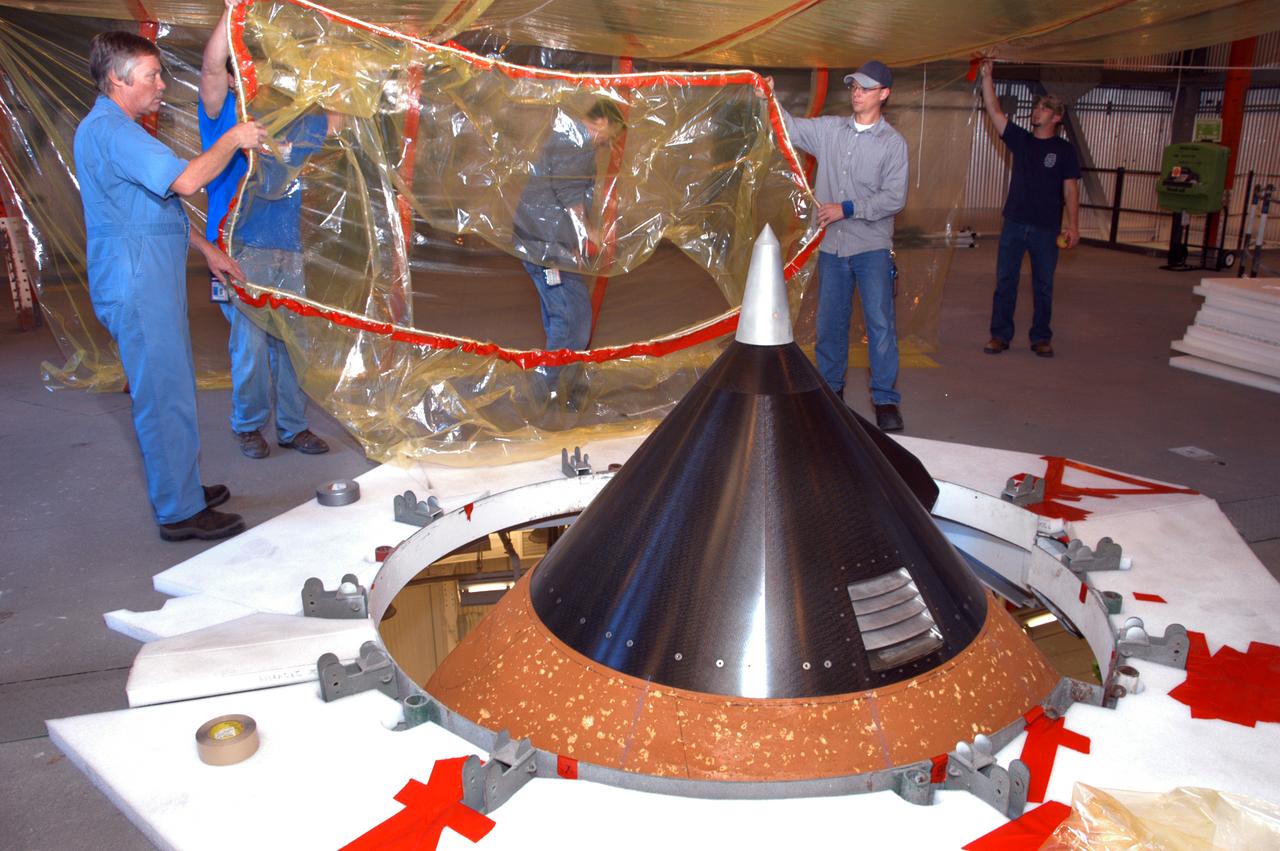
On an upper level of high bay 1 of the Vehicle Assembly Building, technicians move protective material toward the nose cone (foreground) of Atlantis' external tank. The nose cone will undergo repair for hail damage. A severe thunderstorm with golf ball-sized hail caused visible divots in the giant tank's foam insulation and minor surface damage to about 26 heat shield tiles on the shuttle's left wing. Further evaluation of the tank is necessary to get an accurate accounting of foam damage and determine the type of repair required and the time needed for that work. A new target launch date has not been determined, but teams will focus on preparing Atlantis for liftoff in late April on mission STS-117.
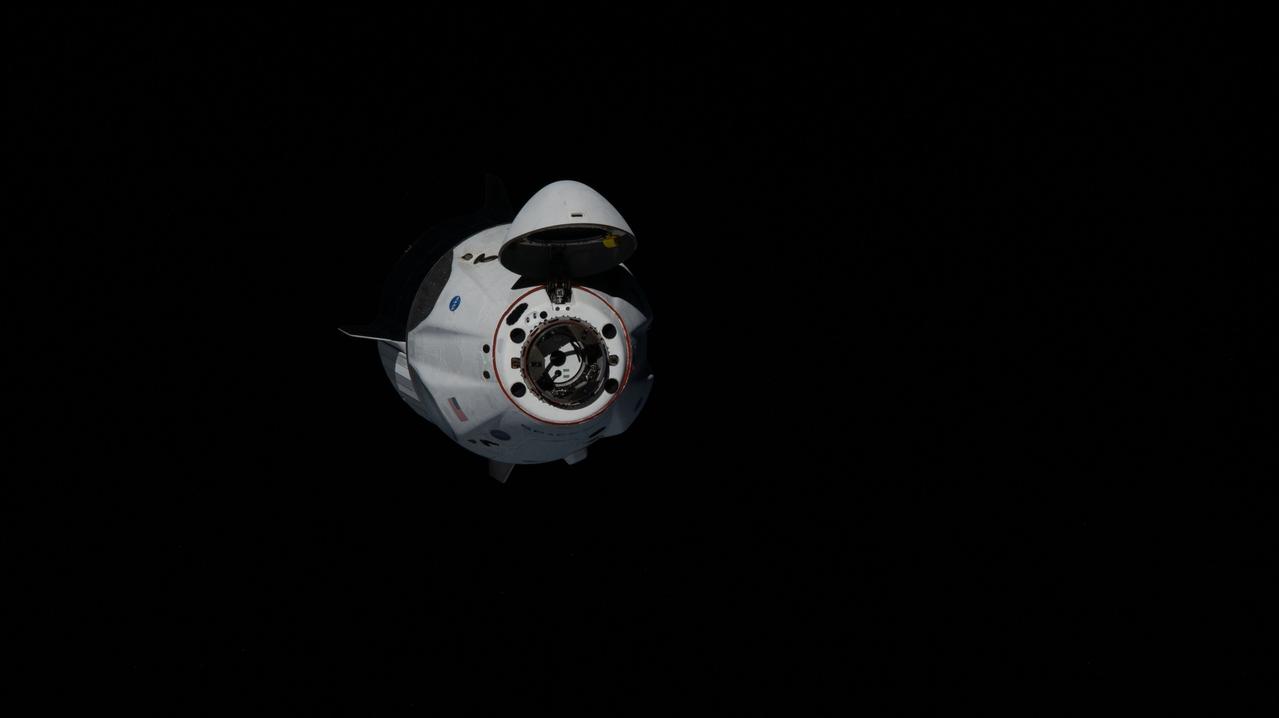
iss063e021460 (May 31, 2020) --- Astronauts Doug Hurley and Bob Behnken of NASA's Commercial Crew Program were aboard the SpaceX Crew Dragon as it approached the International Space Station. The Crew Dragon's nose cone is open revealing the spacecraft's docking mechanism that would connect to the Harmony module's forward International Docking Adapter.
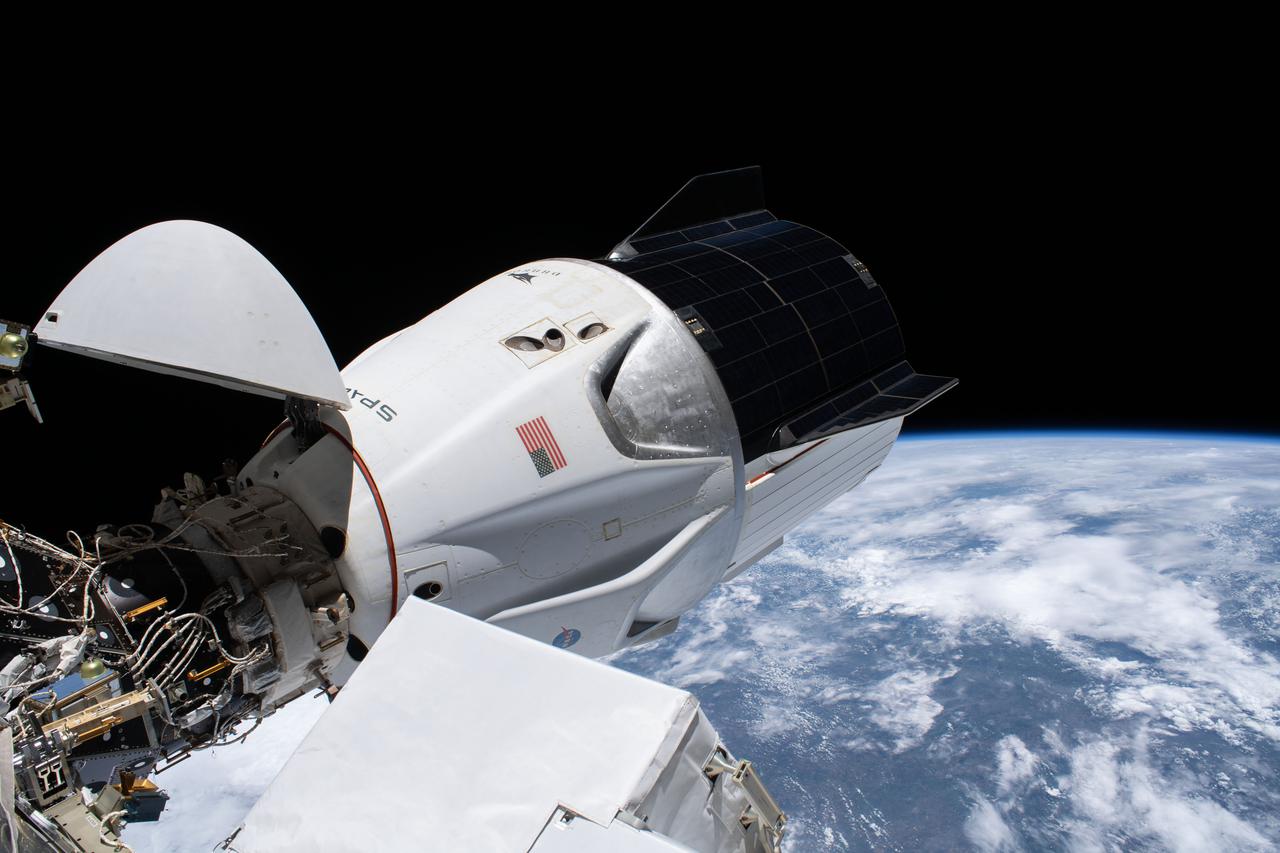
iss064e027440 (Jan. 27, 2021) --- The SpaceX Crew Dragon spacecraft, with its nose cone open, is pictured docked to the Harmony module's forward international docking adapter. The International Space Station was orbiting 264 miles above southern Brazil when this photograph was taken.
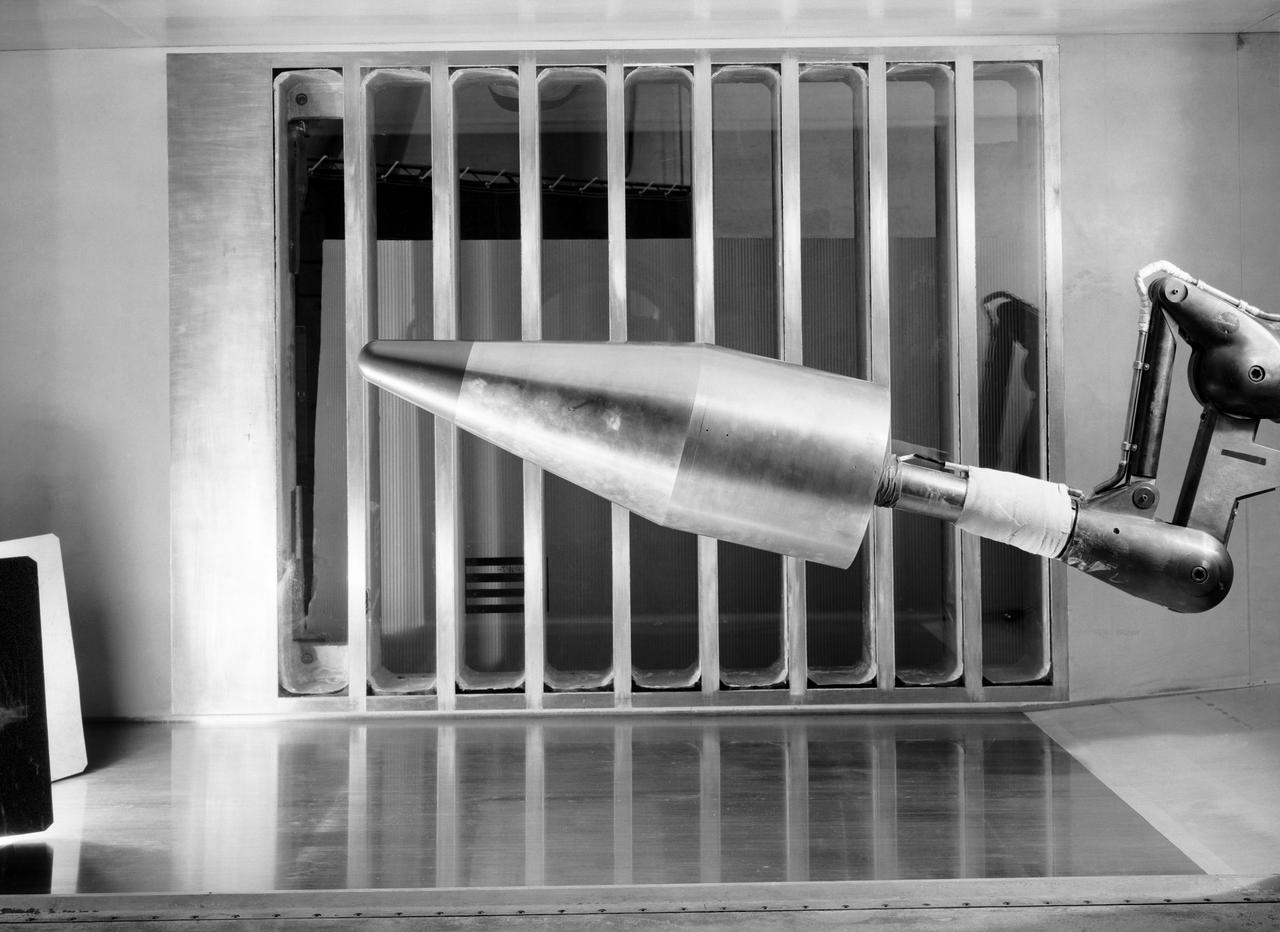
L57-700 In the reentry flight path of this nose cone model of a Jupiter Intermediate range ballistic missile (IRBM) was tested in the Unitary Plan Wind Tunnel. Photograph published in Engineer in Charge: A History of the Langley Aeronautical Laboratory, 1917-1958 by James R. Hansen. Page 475.
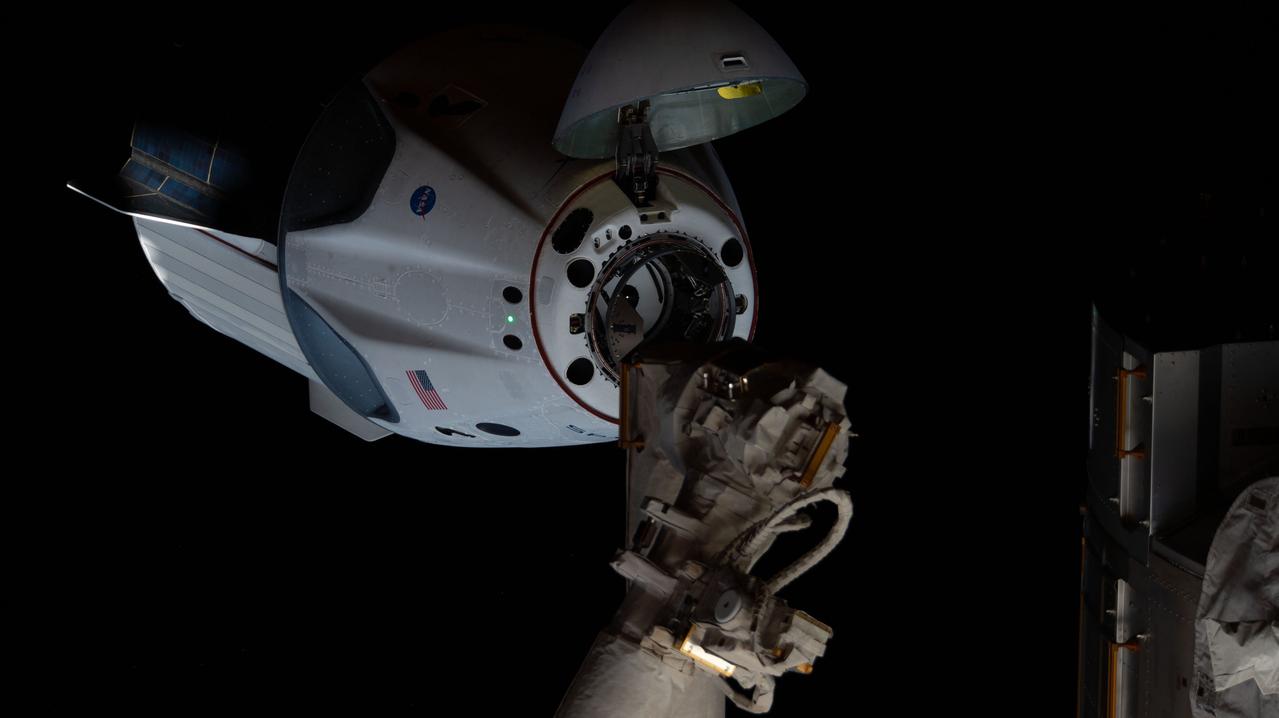
iss063e021463 (May 31, 2020) --- Astronauts Doug Hurley and Bob Behnken of NASA's Commercial Crew Program were aboard the SpaceX Crew Dragon as it approached the International Space Station. The Crew Dragon's nose cone is open revealing the spacecraft's docking mechanism that would connect to the Harmony module's forward International Docking Adapter.
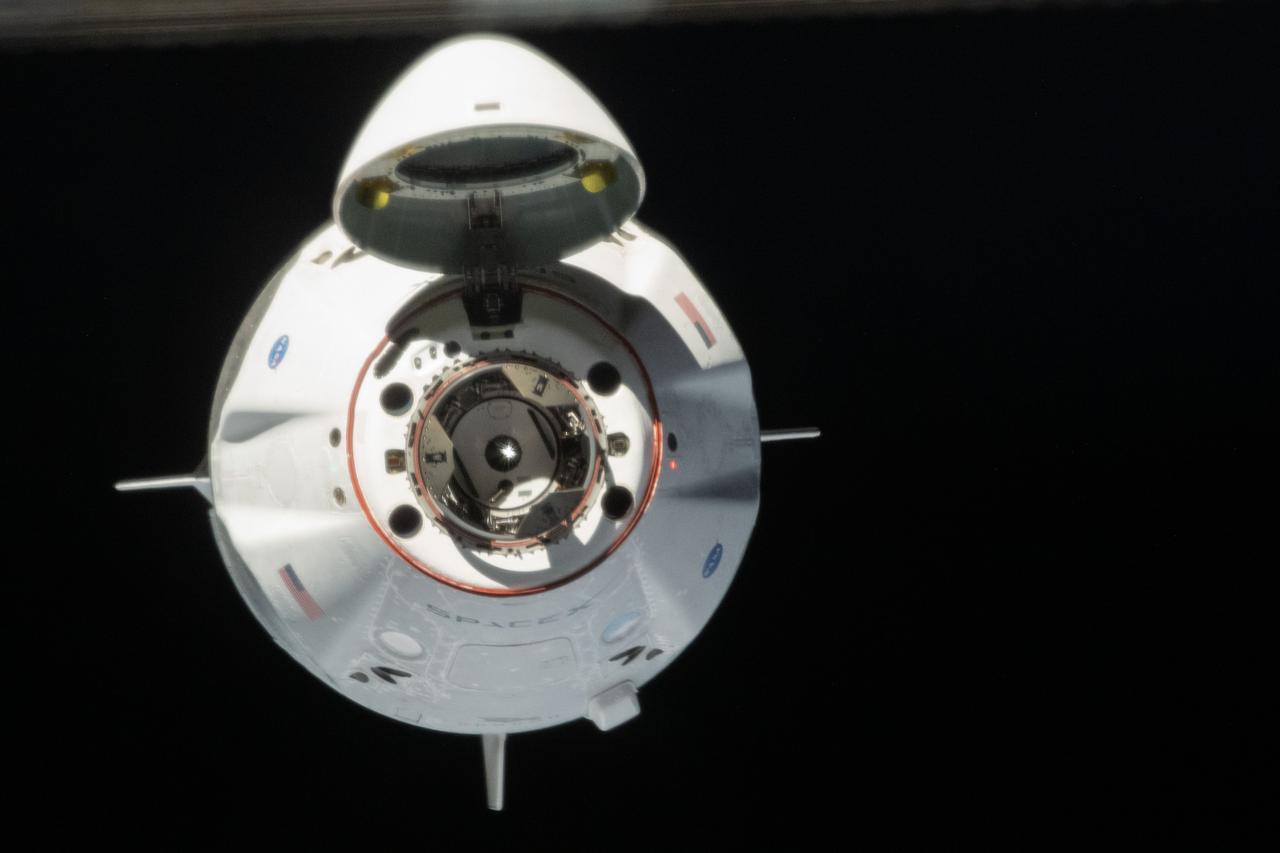
iss063e021563 (May 31, 2020) --- Astronauts Doug Hurley and Bob Behnken of NASA's Commercial Crew Program were aboard the SpaceX Crew Dragon as it approached the International Space Station. The Crew Dragon's nose cone is open revealing the spacecraft's docking mechanism that would connect to the Harmony module's forward International Docking Adapter.
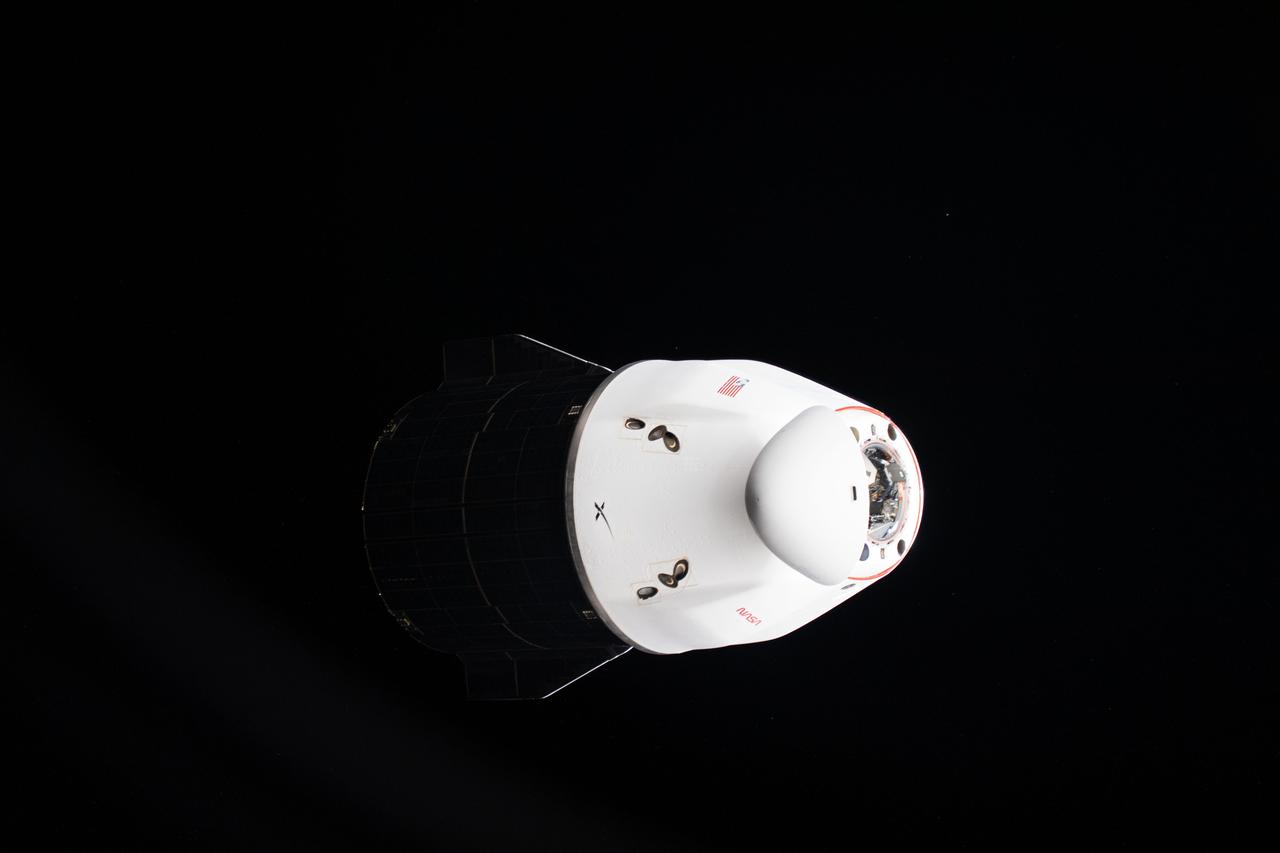
iss066e125299 (Jan. 23, 2022) --- The bright, white pressurized capsule of the SpaceX Cargo Dragon resupply ship with its nose cone open nearly obscures its dark solar panel-covered, unpressurized trunk as the vehicle departs the International Space Station.
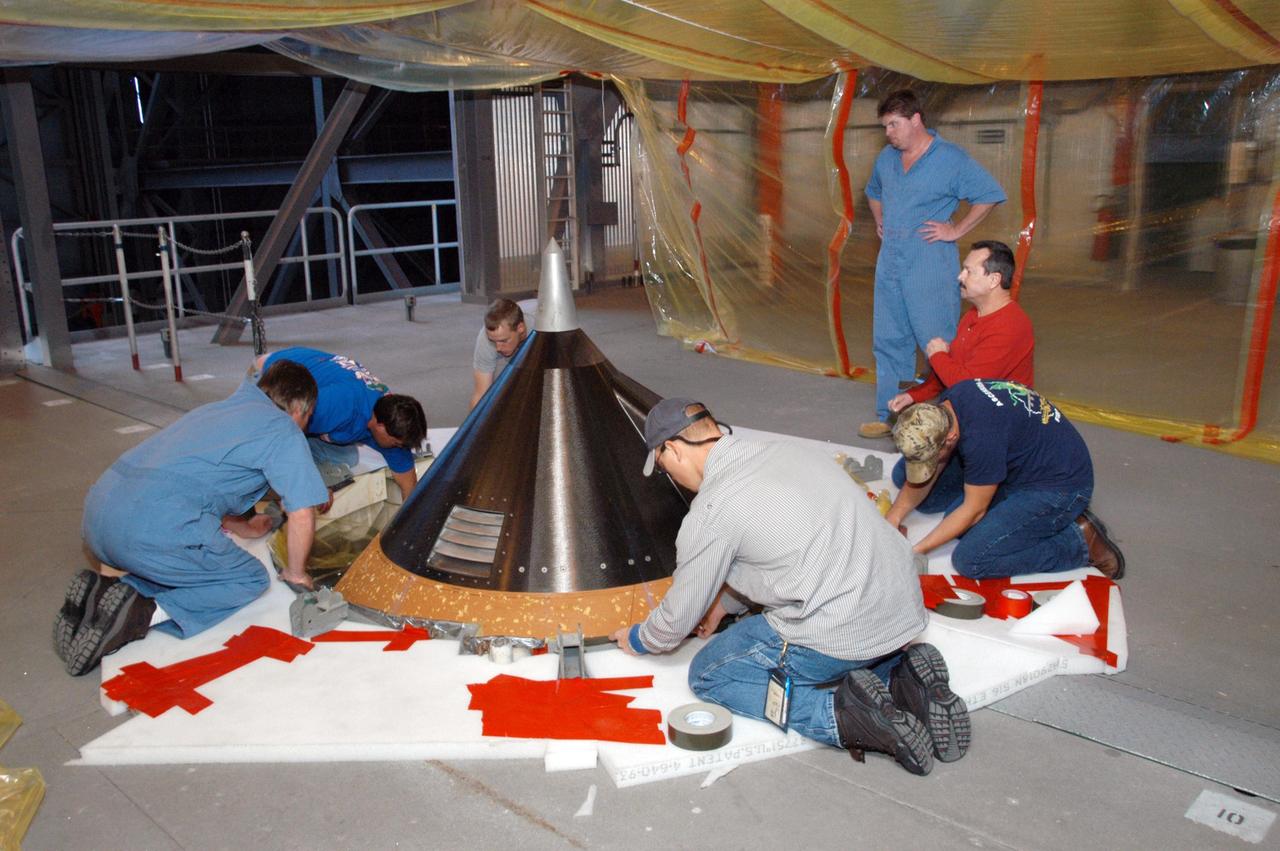
KENNEDY SPACE CENTER, FLA. -- On an upper level of high bay 1 of the Vehicle Assembly Building, technicians secure protective material around the base of the nose cone of Atlantis' external tank. The nose cone will undergo repair for hail damage. A severe thunderstorm with golf ball-sized hail caused visible divots in the giant tank's foam insulation and minor surface damage to about 26 heat shield tiles on the shuttle's left wing. Further evaluation of the tank is necessary to get an accurate accounting of foam damage and determine the type of repair required and the time needed for that work. A new target launch date has not been determined, but teams will focus on preparing Atlantis for liftoff in late April on mission STS-117. Photo credit: NASA/George Shelton

KENNEDY SPACE CENTER, FLA. -- On an upper level of high bay 1 of the Vehicle Assembly Building, technicians move protective material toward the nose cone (foreground) of Atlantis' external tank. The nose cone will undergo repair for hail damage. A severe thunderstorm with golf ball-sized hail caused visible divots in the giant tank's foam insulation and minor surface damage to about 26 heat shield tiles on the shuttle's left wing. Further evaluation of the tank is necessary to get an accurate accounting of foam damage and determine the type of repair required and the time needed for that work. A new target launch date has not been determined, but teams will focus on preparing Atlantis for liftoff in late April on mission STS-117. Photo credit: NASA/George Shelton
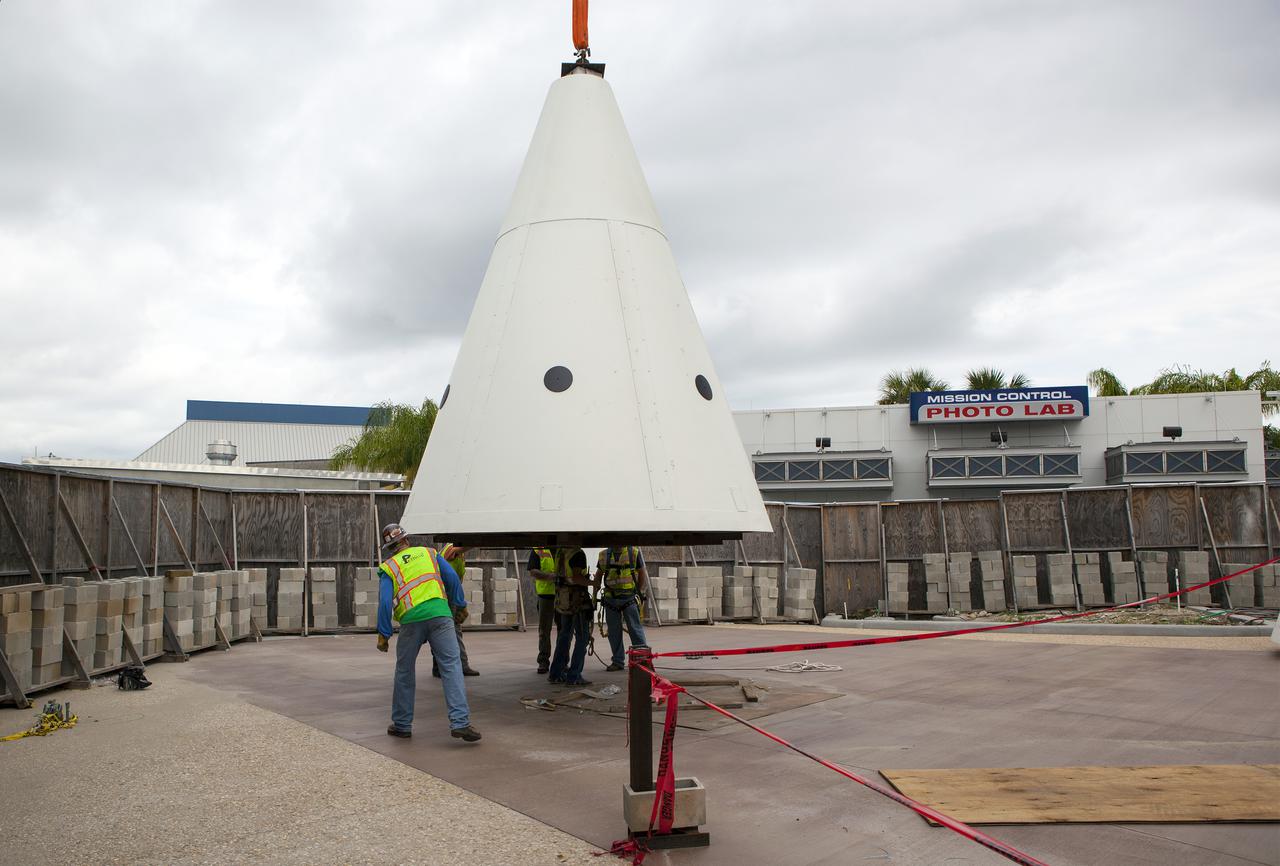
CAPE CANAVERAL, Fla. – Workers prepare to lift a nose cone to top out one of a pair of replica space shuttle solid rocket boosters at the entry of the space shuttle Atlantis attraction under construction at the Kennedy Space Center Visitor Complex. Workers will use cranes to place the nose cones atop each of the model boosters. The building at right houses the actual shuttle Atlantis. Photo credit: NASA_Dmitri Gerondidakis IRIS will open a new window of discovery by tracing the flow of energy and plasma through the chromospheres and transition region into the sun’s corona using spectrometry and imaging. IRIS fills a crucial gap in our ability to advance studies of the sun-to-Earth connection by tracing the flow of energy and plasma through the foundation of the corona and the region around the sun known as the heliosphere. Photo credit: VAFB_Randy Beaudoin
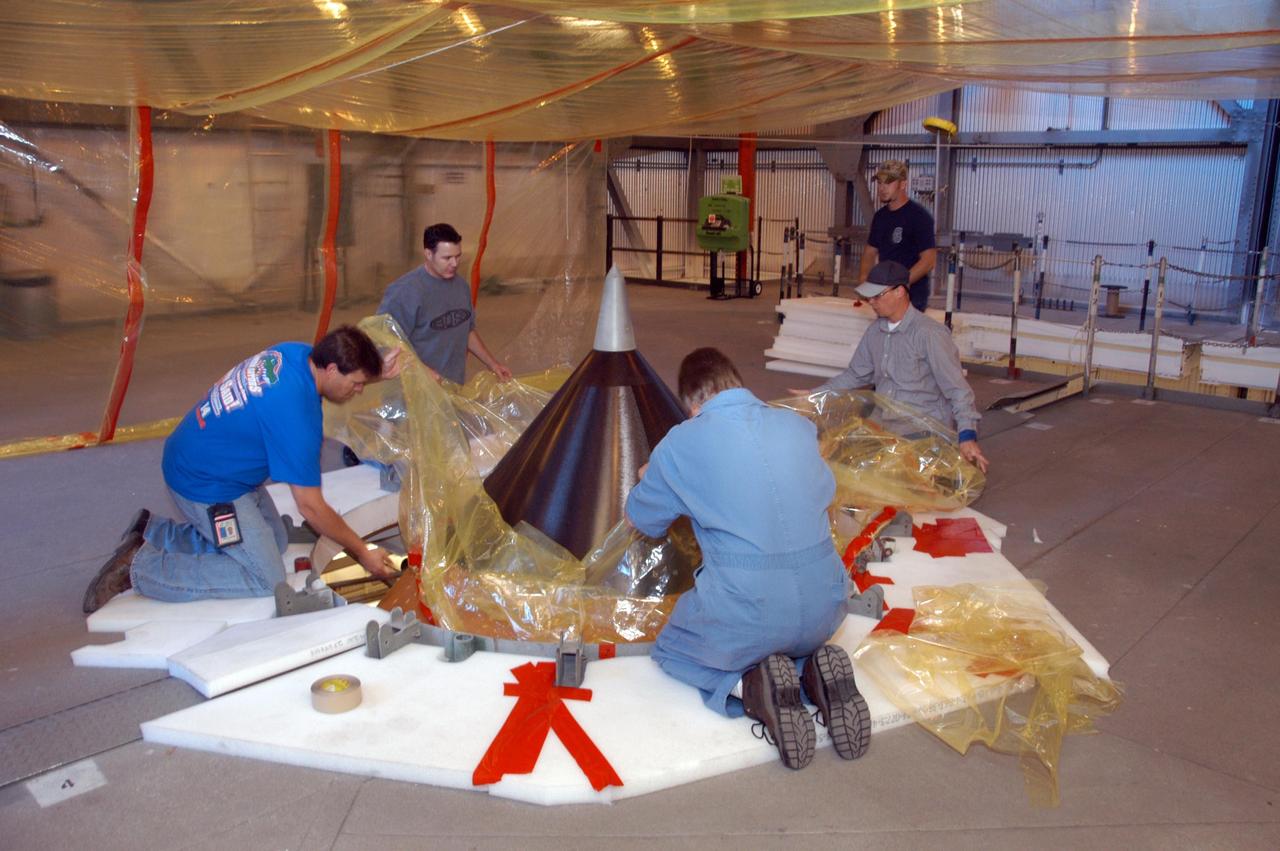
KENNEDY SPACE CENTER, FLA. -- On an upper level of high bay 1 of the Vehicle Assembly Building, technicians place protective material around the nose cone of Atlantis' external tank. The nose cone will undergo repair for hail damage. A severe thunderstorm with golf ball-sized hail caused visible divots in the giant tank's foam insulation and minor surface damage to about 26 heat shield tiles on the shuttle's left wing. Further evaluation of the tank is necessary to get an accurate accounting of foam damage and determine the type of repair required and the time needed for that work. A new target launch date has not been determined, but teams will focus on preparing Atlantis for liftoff in late April on mission STS-117. Photo credit: NASA/George Shelton
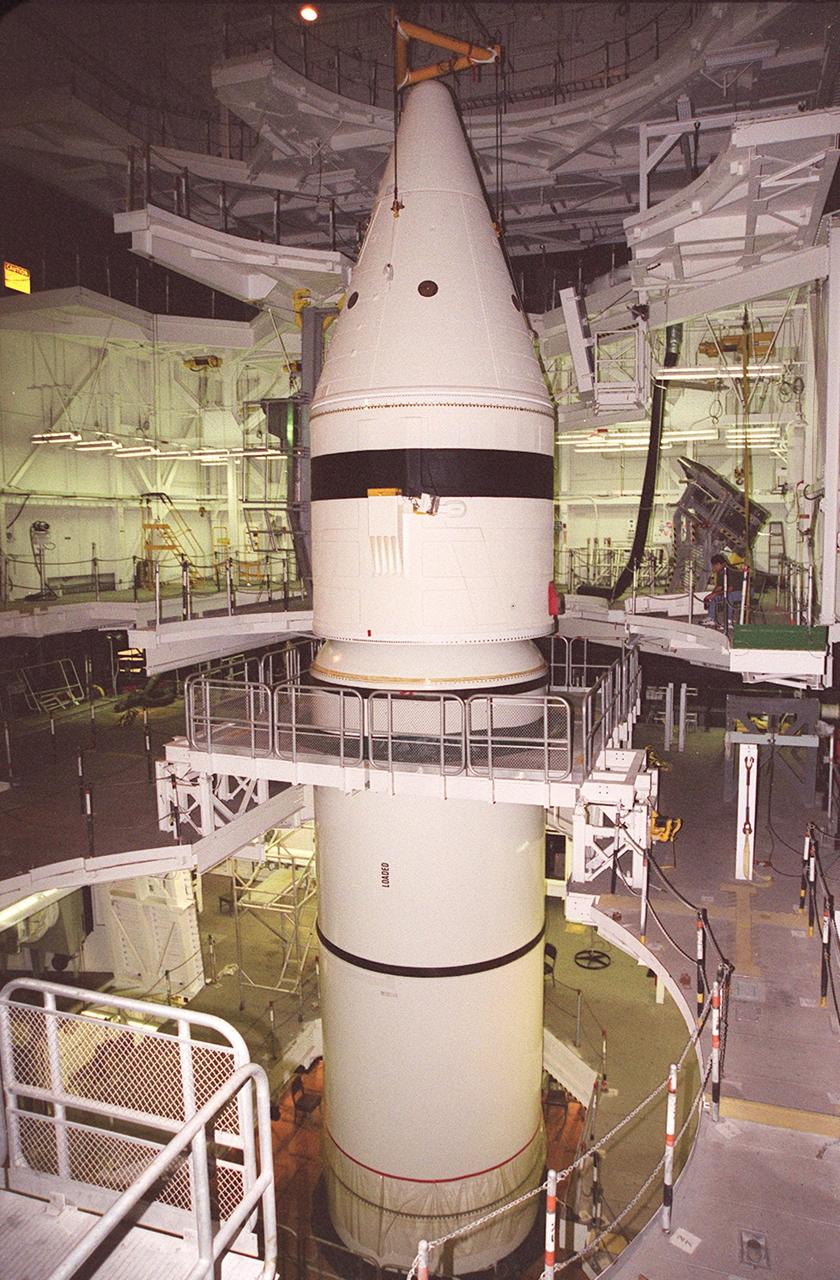
Inside the Vehicle Assembly Building, the forward section of a solid rocket booster (SRB) is lowered onto the rest of the stack for mating. The forward section of each booster, from nose cap to forward skirt contains avionics, a sequencer, forward separation motors, a nose cone separation system, drogue and main parachutes, a recovery beacon, a recovery light, a parachute camera on selected flights and a range safety system. Each SRB weighs approximately 1.3 million pounds at launch. The SRB is part of the stack for Space Shuttle Discovery and the STS-92 mission, scheduled for launch Oct. 5, from Launch Pad 39A, on the fifth flight to the International Space Station
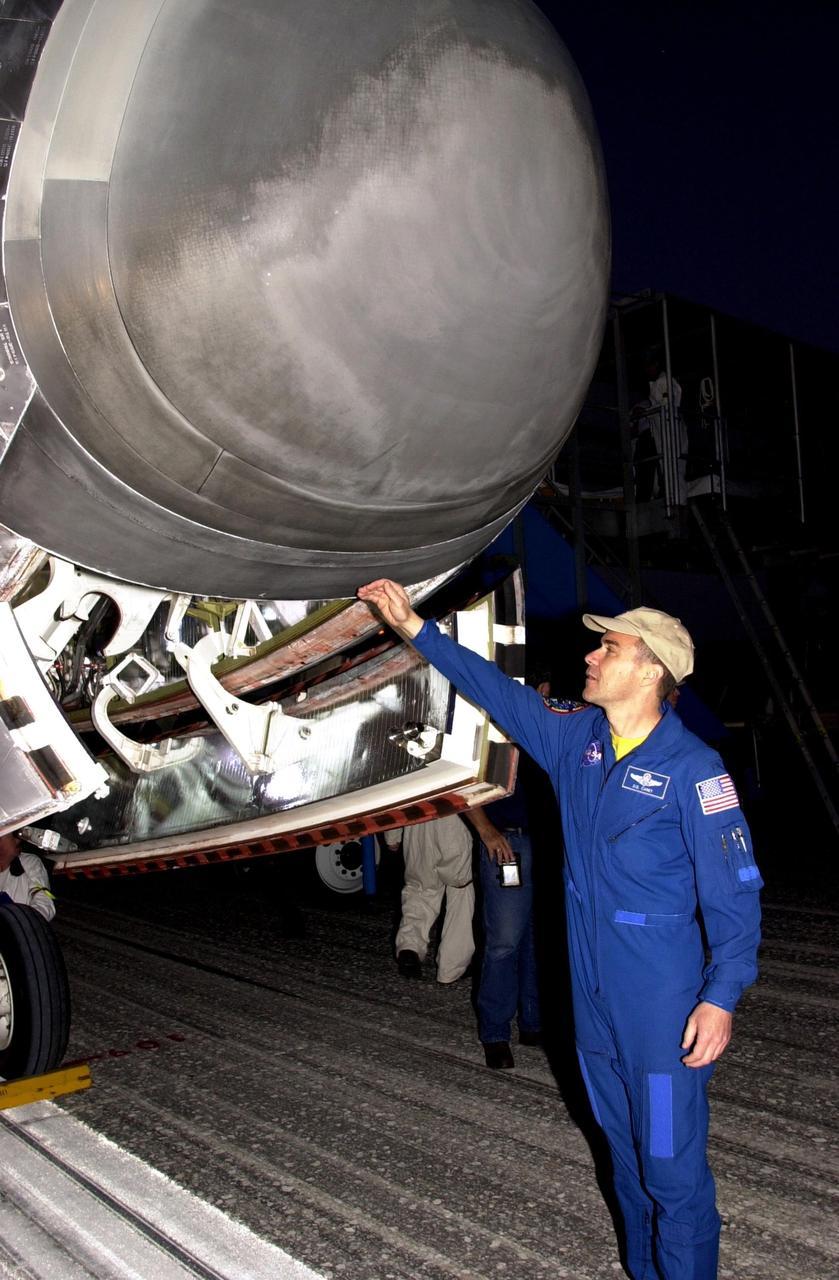
KENNEDY SPACE CENTER, FLA. -- During a post-flight walk around orbiter Columbia at the Shuttle Landing Facility, STS-109 Pilot Duane Carey gingerly checks the heat of the nose cone. The crew returned to Earth after an 11-day mission servicing the Hubble Space Telescope. Wheel stop occurred on orbit 165 at 4:33:09 a.m. EST. Main gear touchdown occurred at 4:31:52 a.m. and nose wheel touchdown at 4:32:02. Rollout time was 1 minute, 17 seconds. This was the 58th landing at KSC out of 108 missions in the history of the Shuttle program
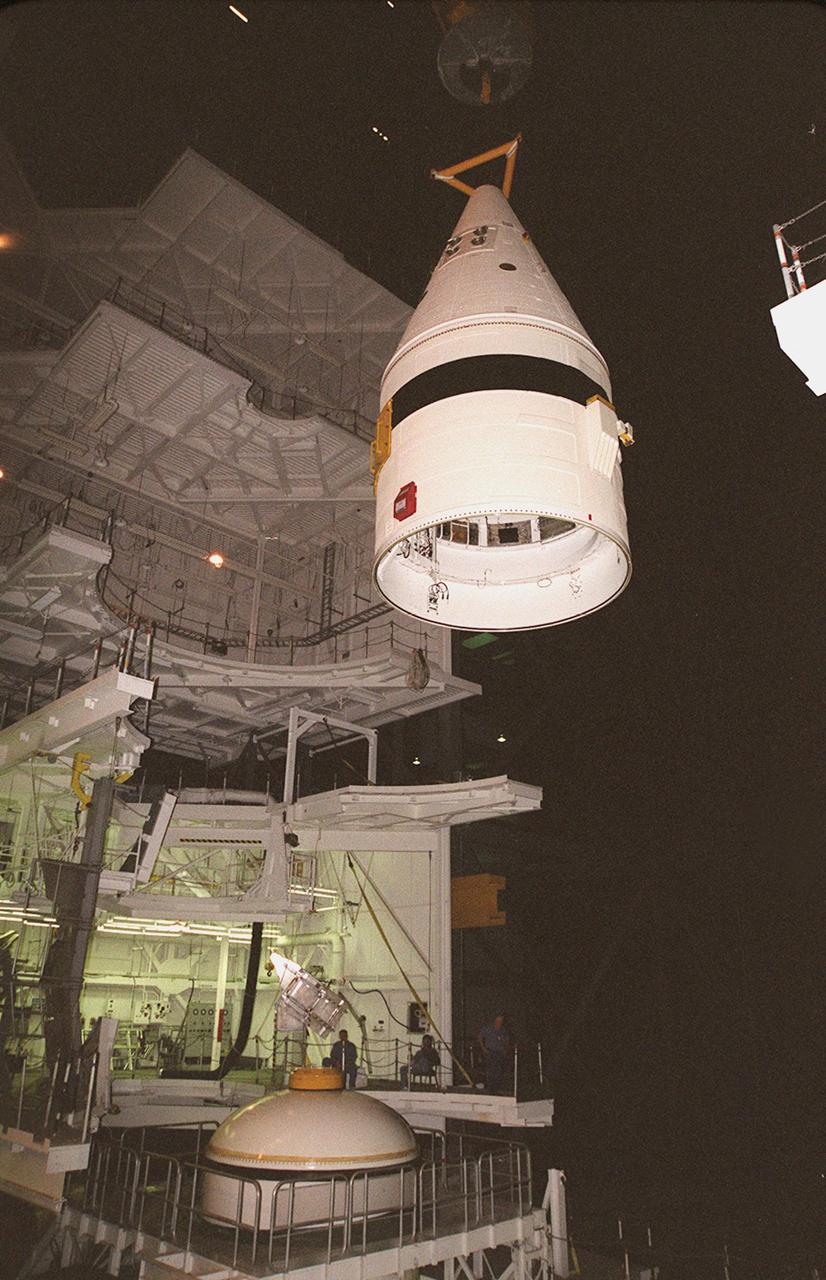
Inside the Vehicle Assembly Building, an overhead crane lifts the forward section of a solid rocket booster (SRB) to mate it with the components seen at lower left in the photo. The forward section of each booster, from nose cap to forward skirt contains avionics, a sequencer, forward separation motors, a nose cone separation system, drogue and main parachutes, a recovery beacon, a recovery light, a parachute camera on selected flights and a range safety system. Each SRB weighs approximately 1.3 million pounds at launch. The SRB is part of the stack for Space Shuttle Discovery and the STS-92 mission, scheduled for launch Oct. 5, from Launch Pad 39A, on the fifth flight to the International Space Station

Inside the Vehicle Assembly Building, an overhead crane moves the forward section of a solid rocket booster (SRB) toward the previously stacked elements at lower left in the photo. The forward section of each booster, from nose cap to forward skirt contains avionics, a sequencer, forward separation motors, a nose cone separation system, drogue and main parachutes, a recovery beacon, a recovery light, a parachute camera on selected flights and a range safety system. Each SRB weighs approximately 1.3 million pounds at launch. The SRB is part of the stack for Space Shuttle Discovery and the STS-92 mission, scheduled for launch Oct. 5, from Launch Pad 39A, on the fifth flight to the International Space Station
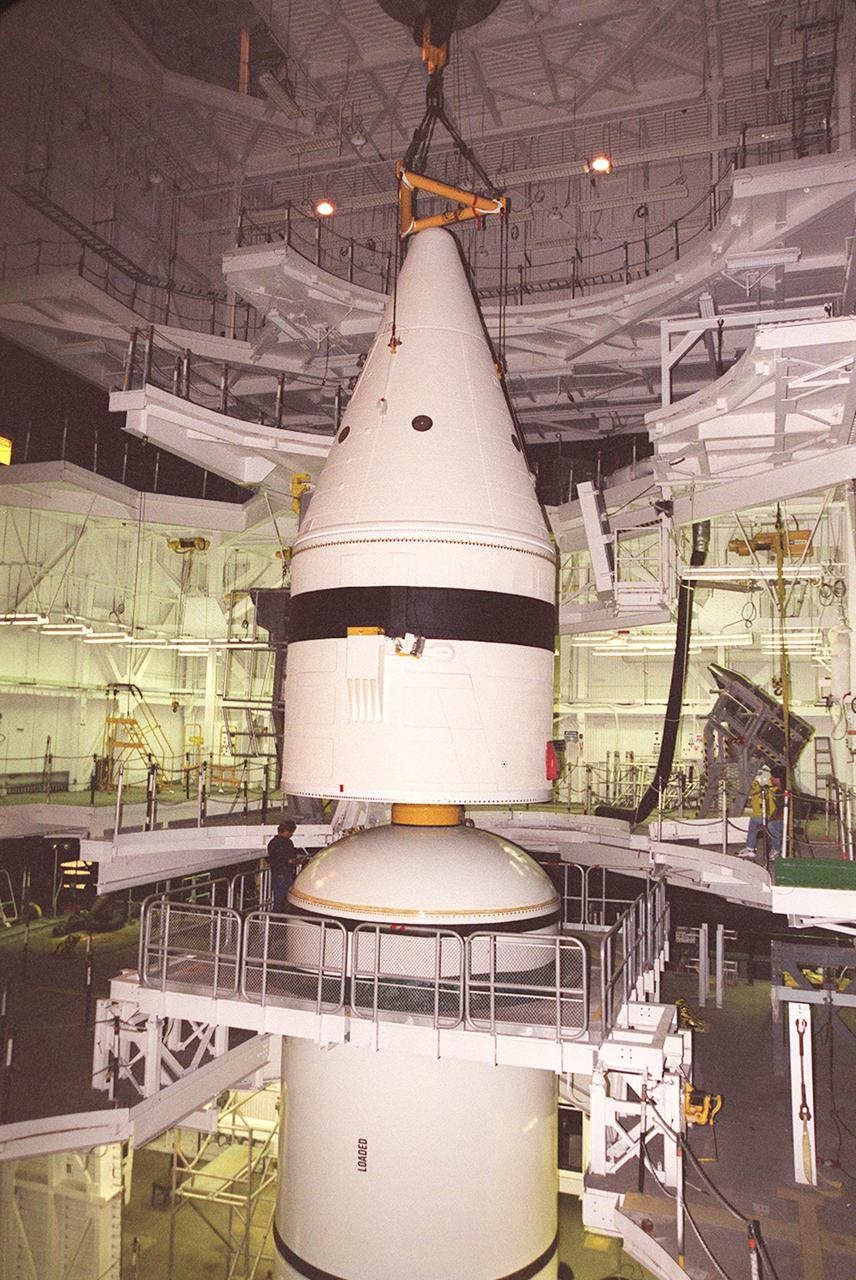
Inside the Vehicle Assembly Building, an overhead crane lowers the forward section of a solid rocket booster (SRB) toward the rest of the stack for mating. The forward section of each booster, from nose cap to forward skirt contains avionics, a sequencer, forward separation motors, a nose cone separation system, drogue and main parachutes, a recovery beacon, a recovery light, a parachute camera on selected flights and a range safety system. Each SRB weighs approximately 1.3 million pounds at launch. The SRB is part of the stack for Space Shuttle Discovery and the STS-92 mission, scheduled for launch Oct. 5, from Launch Pad 39A, on the fifth flight to the International Space Station
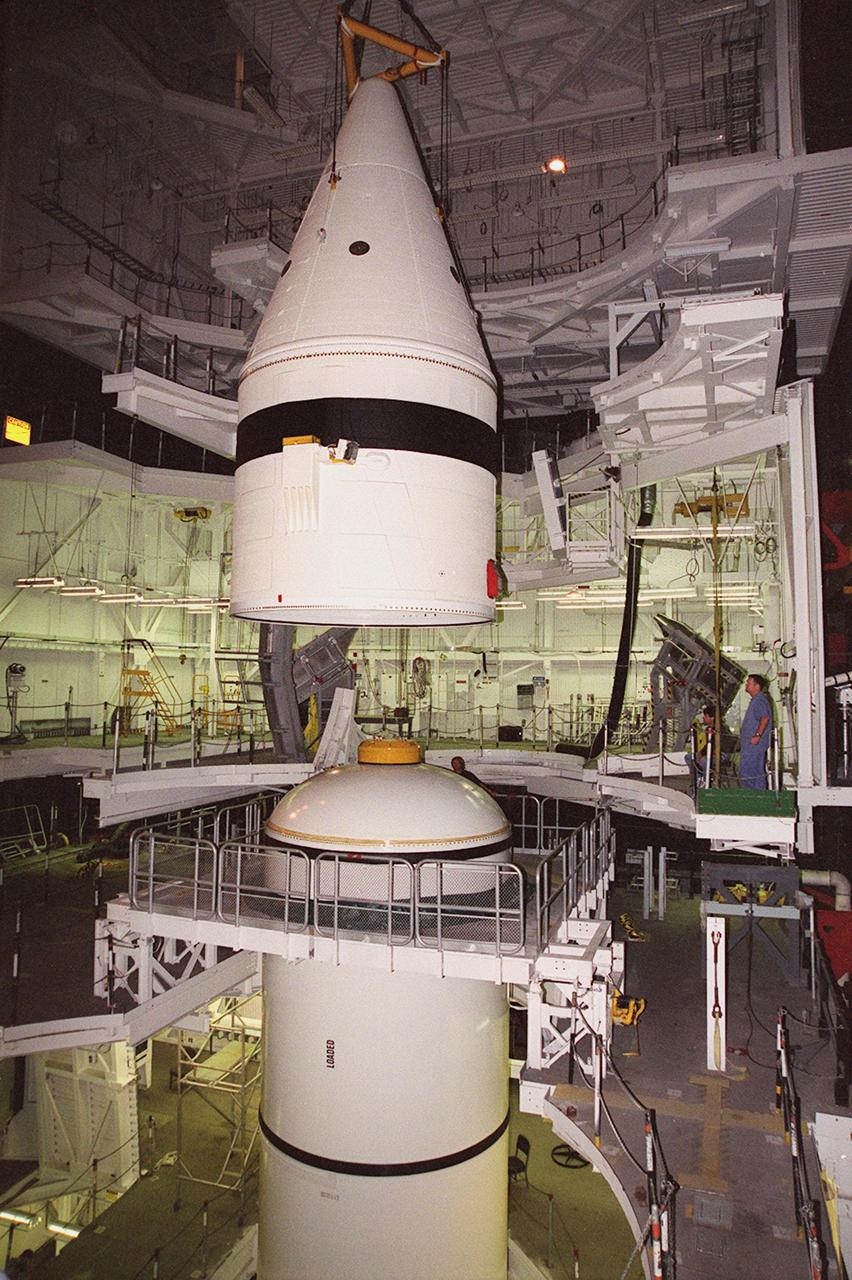
Inside the Vehicle Assembly Building, an overhead crane centers the forward section of a solid rocket booster (SRB) above the rest of the stack it will be mated to. The forward section of each booster, from nose cap to forward skirt contains avionics, a sequencer, forward separation motors, a nose cone separation system, drogue and main parachutes, a recovery beacon, a recovery light, a parachute camera on selected flights and a range safety system. Each SRB weighs approximately 1.3 million pounds at launch. The SRB is part of the stack for Space Shuttle Discovery and the STS-92 mission, scheduled for launch Oct. 5, from Launch Pad 39A, on the fifth flight to the International Space Station
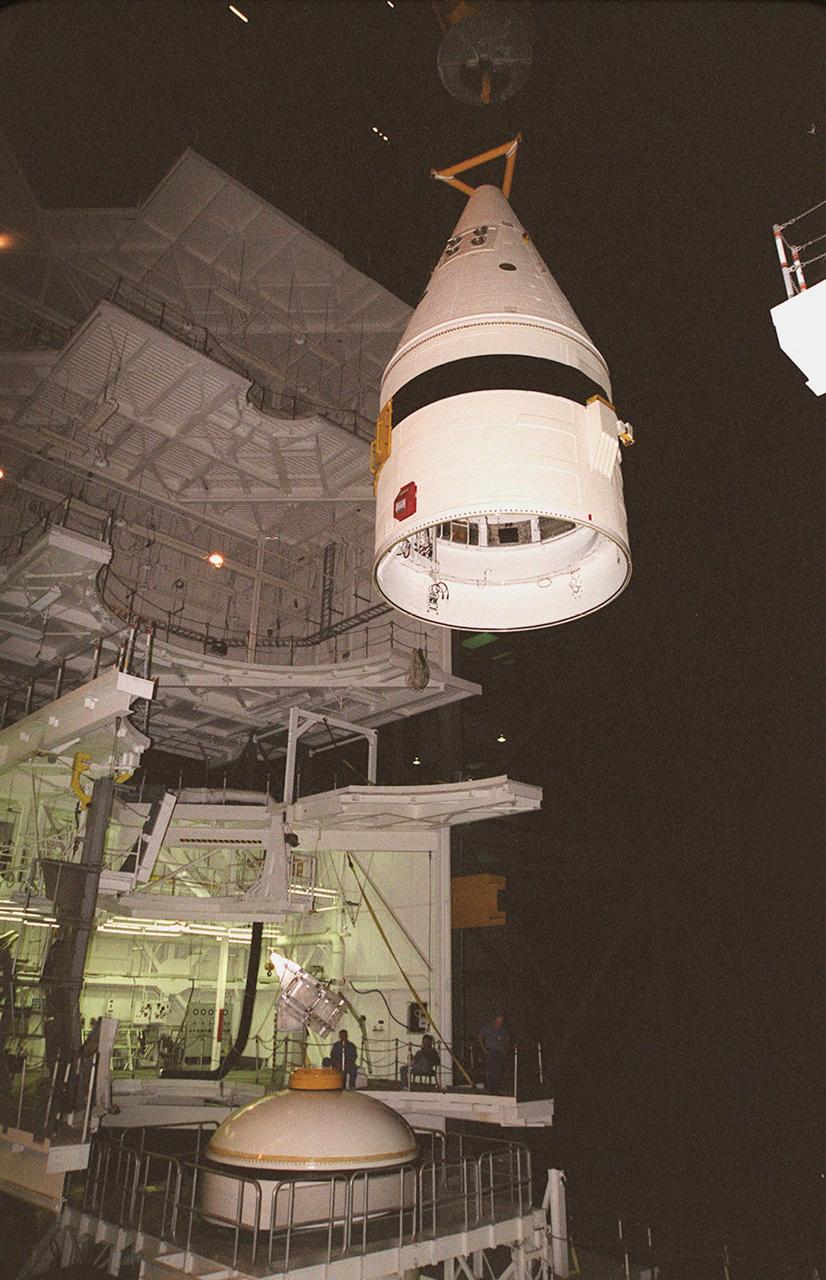
Inside the Vehicle Assembly Building, an overhead crane lifts the forward section of a solid rocket booster (SRB) to mate it with the components seen at lower left in the photo. The forward section of each booster, from nose cap to forward skirt contains avionics, a sequencer, forward separation motors, a nose cone separation system, drogue and main parachutes, a recovery beacon, a recovery light, a parachute camera on selected flights and a range safety system. Each SRB weighs approximately 1.3 million pounds at launch. The SRB is part of the stack for Space Shuttle Discovery and the STS-92 mission, scheduled for launch Oct. 5, from Launch Pad 39A, on the fifth flight to the International Space Station
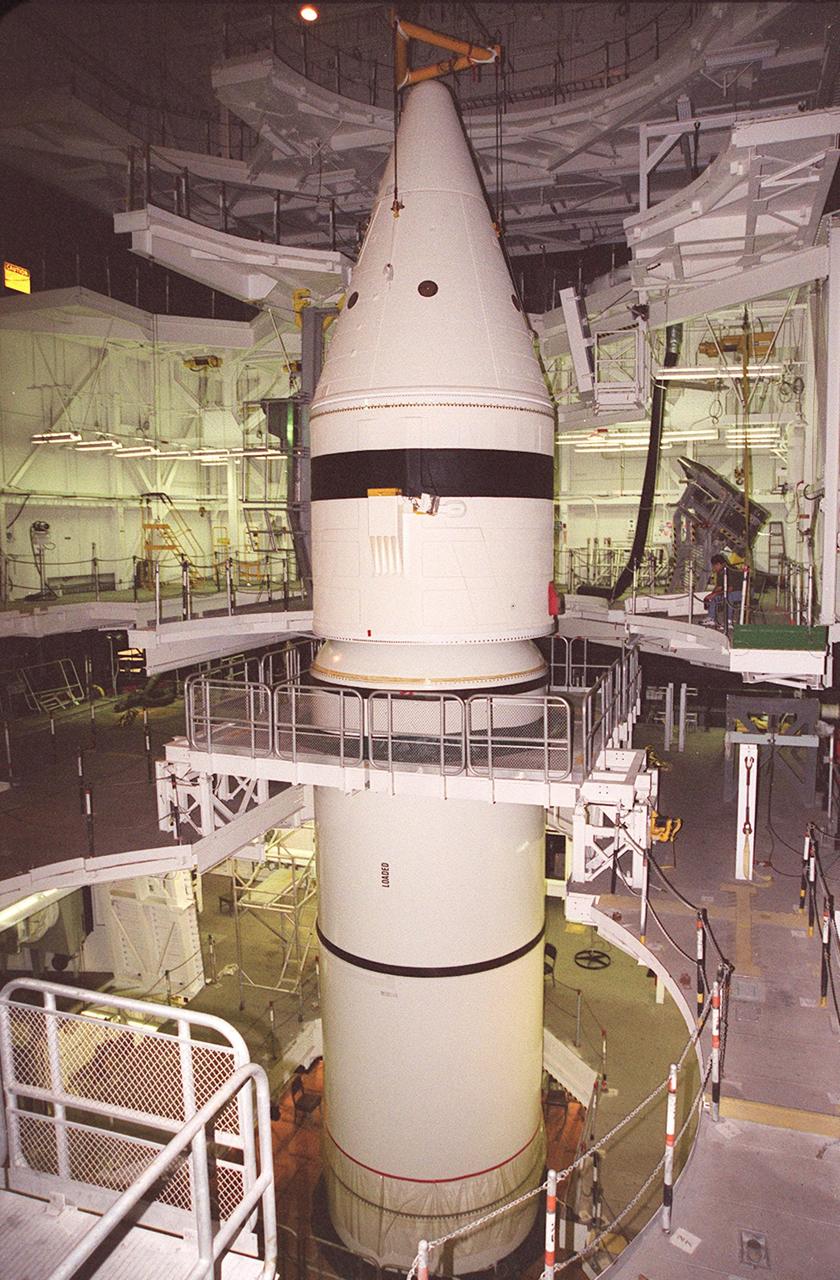
Inside the Vehicle Assembly Building, the forward section of a solid rocket booster (SRB) is lowered onto the rest of the stack for mating. The forward section of each booster, from nose cap to forward skirt contains avionics, a sequencer, forward separation motors, a nose cone separation system, drogue and main parachutes, a recovery beacon, a recovery light, a parachute camera on selected flights and a range safety system. Each SRB weighs approximately 1.3 million pounds at launch. The SRB is part of the stack for Space Shuttle Discovery and the STS-92 mission, scheduled for launch Oct. 5, from Launch Pad 39A, on the fifth flight to the International Space Station
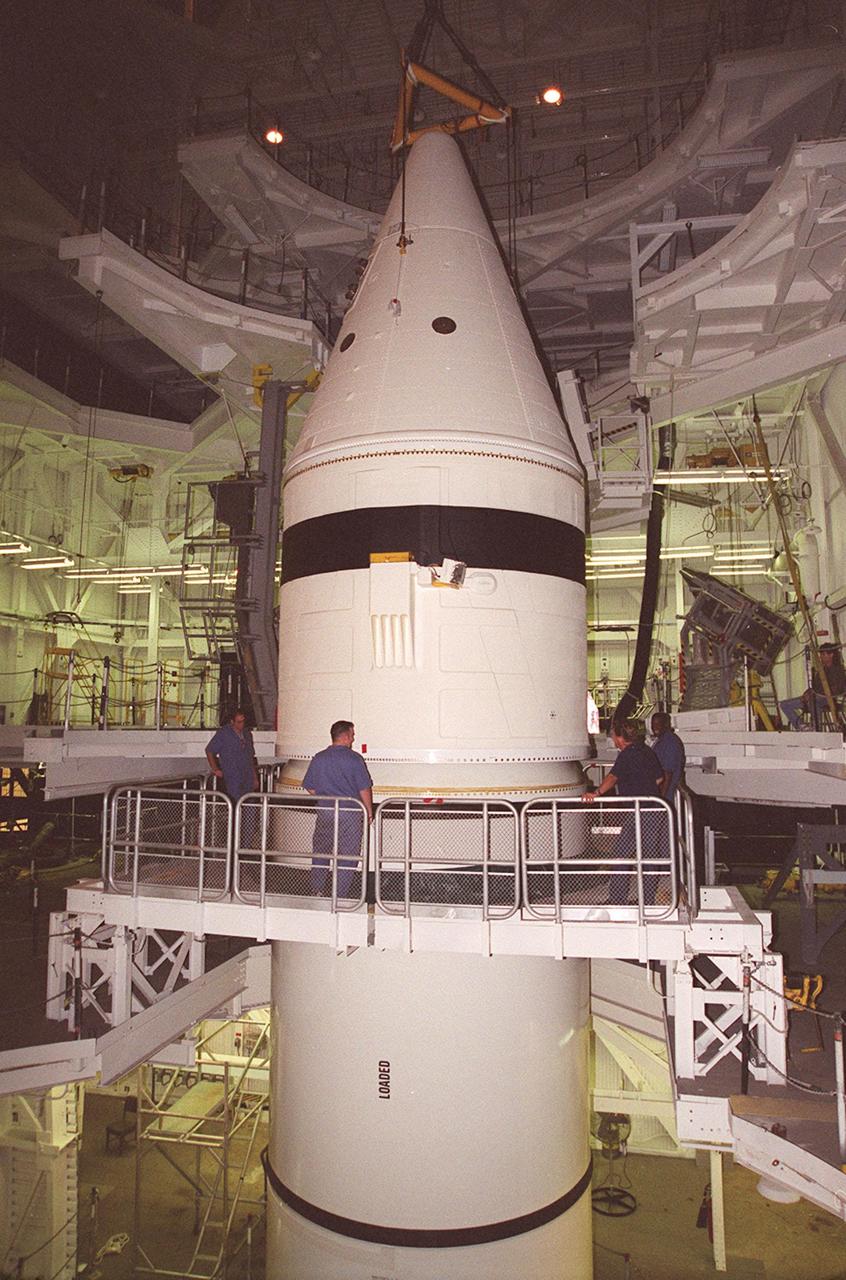
Inside the Vehicle Assembly Building, the forward section of a solid rocket booster (SRB) sits on top of the rest of the stack for mating. The forward section of each booster, from nose cap to forward skirt contains avionics, a sequencer, forward separation motors, a nose cone separation system, drogue and main parachutes, a recovery beacon, a recovery light, a parachute camera on selected flights and a range safety system. Each SRB weighs approximately 1.3 million pounds at launch. The SRB is part of the stack for Space Shuttle Discovery and the STS-92 mission, scheduled for launch Oct. 5, from Launch Pad 39A, on the fifth flight to the International Space Station
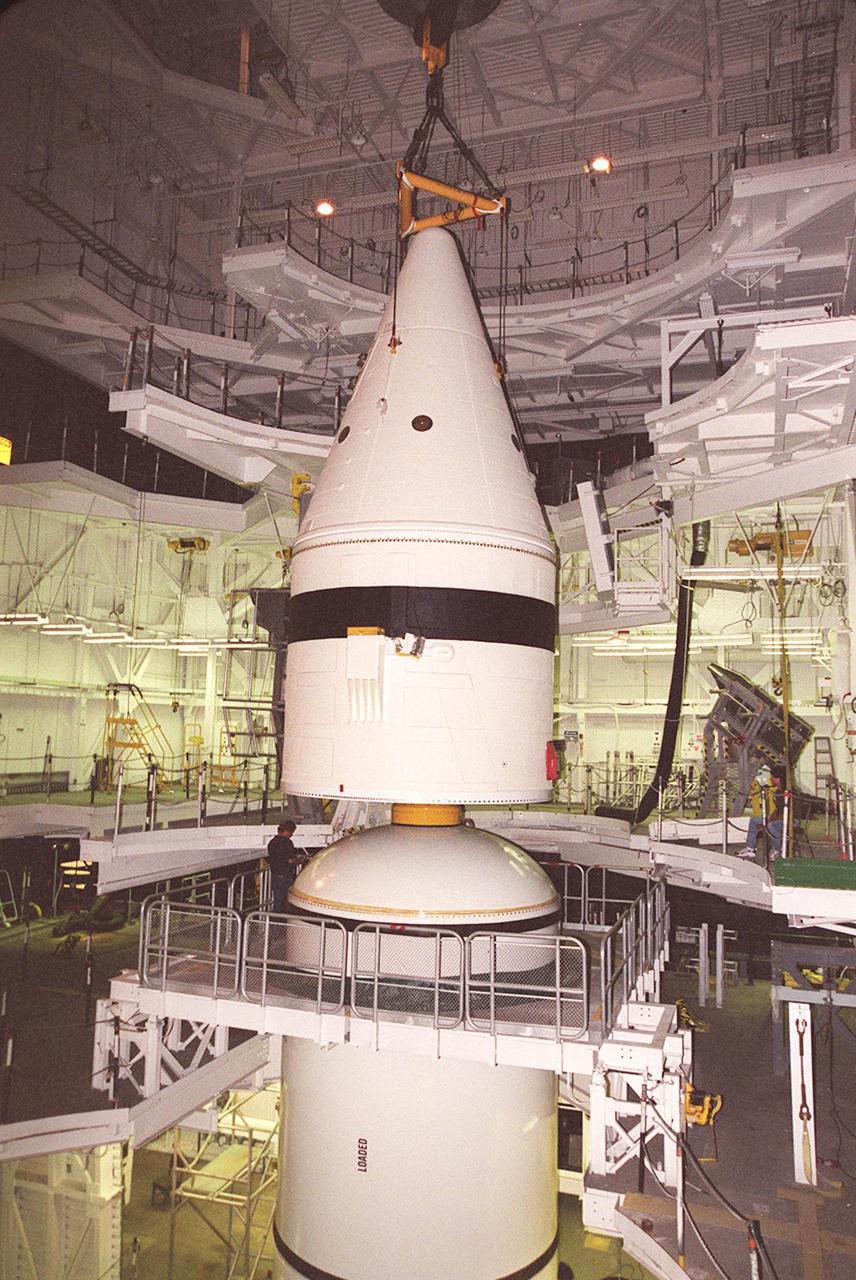
Inside the Vehicle Assembly Building, an overhead crane lowers the forward section of a solid rocket booster (SRB) toward the rest of the stack for mating. The forward section of each booster, from nose cap to forward skirt contains avionics, a sequencer, forward separation motors, a nose cone separation system, drogue and main parachutes, a recovery beacon, a recovery light, a parachute camera on selected flights and a range safety system. Each SRB weighs approximately 1.3 million pounds at launch. The SRB is part of the stack for Space Shuttle Discovery and the STS-92 mission, scheduled for launch Oct. 5, from Launch Pad 39A, on the fifth flight to the International Space Station
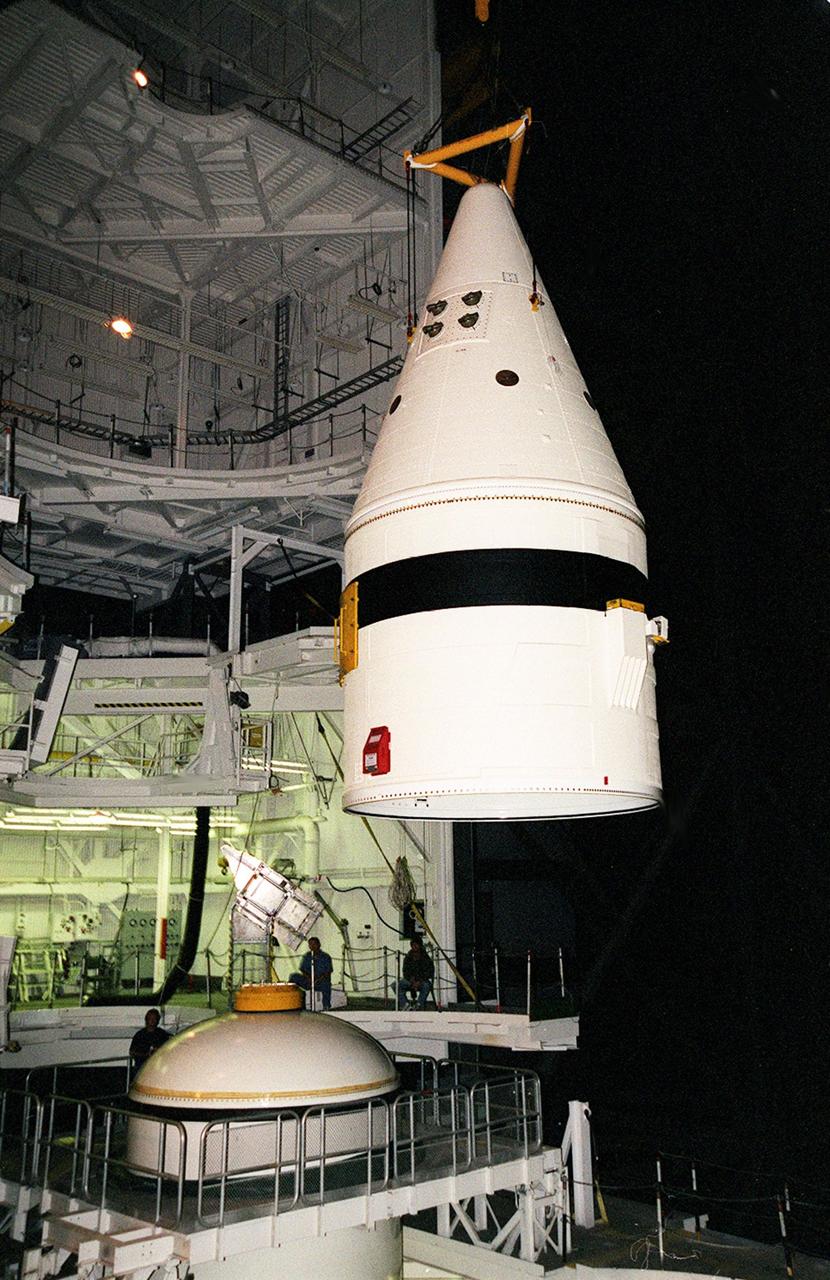
Inside the Vehicle Assembly Building, an overhead crane moves the forward section of a solid rocket booster (SRB) toward the previously stacked elements at lower left in the photo. The forward section of each booster, from nose cap to forward skirt contains avionics, a sequencer, forward separation motors, a nose cone separation system, drogue and main parachutes, a recovery beacon, a recovery light, a parachute camera on selected flights and a range safety system. Each SRB weighs approximately 1.3 million pounds at launch. The SRB is part of the stack for Space Shuttle Discovery and the STS-92 mission, scheduled for launch Oct. 5, from Launch Pad 39A, on the fifth flight to the International Space Station
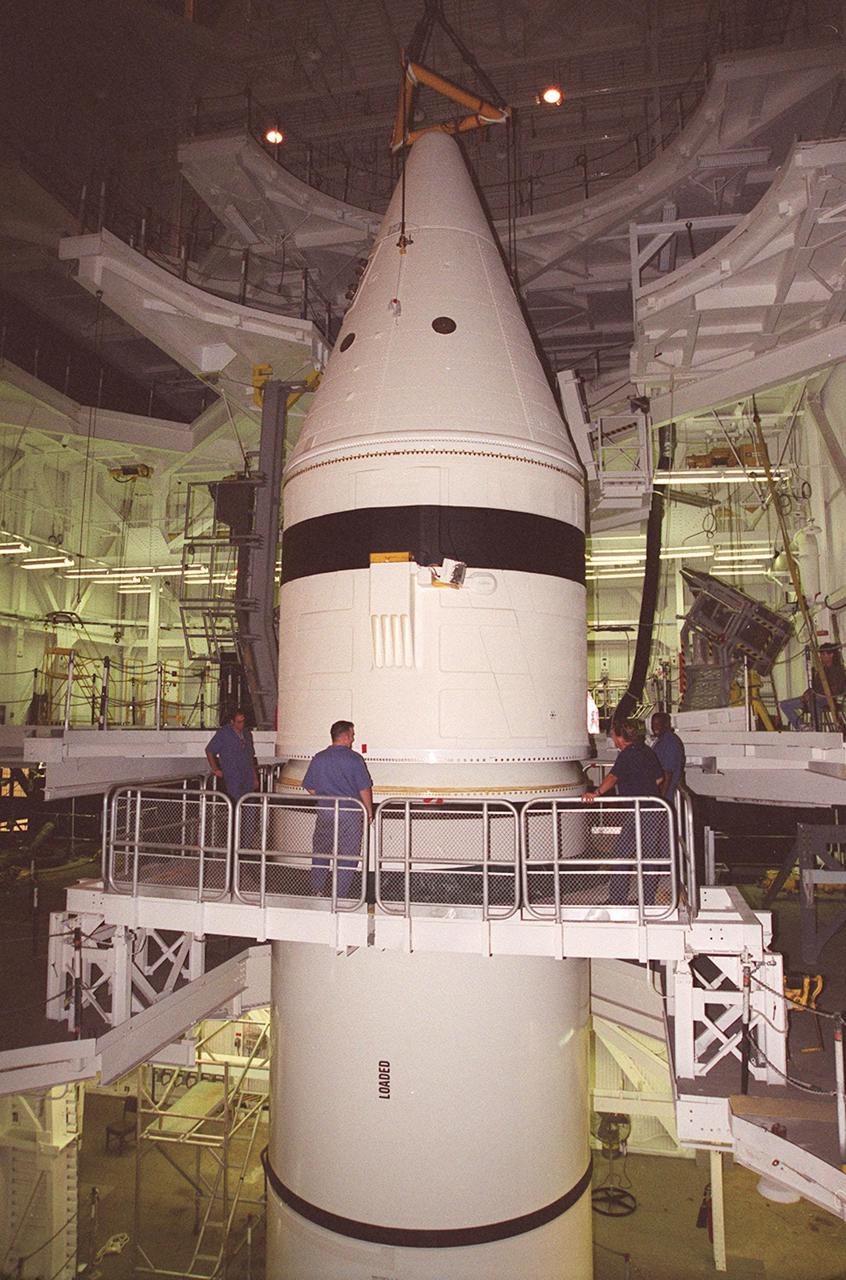
Inside the Vehicle Assembly Building, the forward section of a solid rocket booster (SRB) sits on top of the rest of the stack for mating. The forward section of each booster, from nose cap to forward skirt contains avionics, a sequencer, forward separation motors, a nose cone separation system, drogue and main parachutes, a recovery beacon, a recovery light, a parachute camera on selected flights and a range safety system. Each SRB weighs approximately 1.3 million pounds at launch. The SRB is part of the stack for Space Shuttle Discovery and the STS-92 mission, scheduled for launch Oct. 5, from Launch Pad 39A, on the fifth flight to the International Space Station
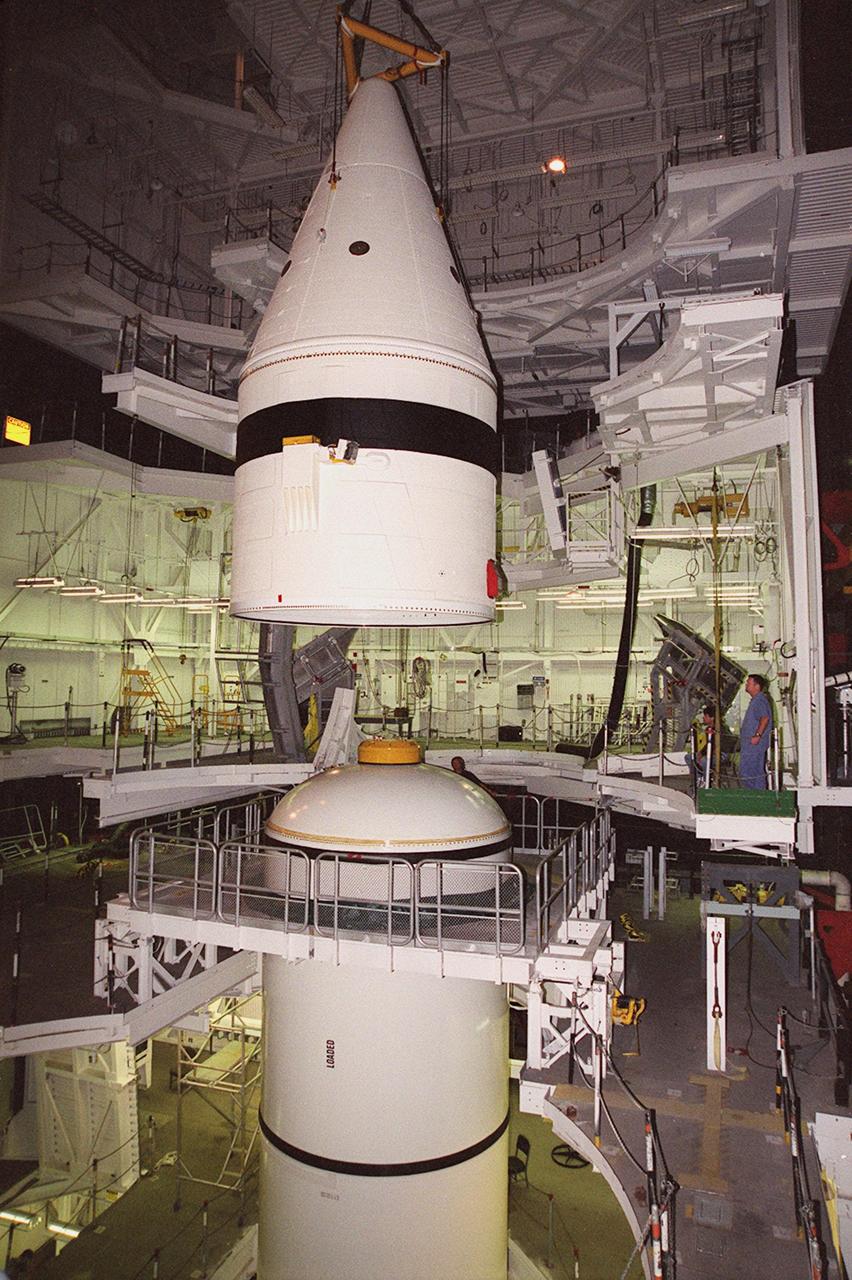
Inside the Vehicle Assembly Building, an overhead crane centers the forward section of a solid rocket booster (SRB) above the rest of the stack it will be mated to. The forward section of each booster, from nose cap to forward skirt contains avionics, a sequencer, forward separation motors, a nose cone separation system, drogue and main parachutes, a recovery beacon, a recovery light, a parachute camera on selected flights and a range safety system. Each SRB weighs approximately 1.3 million pounds at launch. The SRB is part of the stack for Space Shuttle Discovery and the STS-92 mission, scheduled for launch Oct. 5, from Launch Pad 39A, on the fifth flight to the International Space Station

ISS015-E-21344 (10 Aug. 2007) --- This is one of a series of images photographed with a digital still camera using an 800mm focal length featuring the different areas of the Space Shuttle Endeavour as it approached the International Space Station and performed a back-flip to accommodate close scrutiny by eyeballs and cameras. This image shows the nose cone of Endeavour and surrounding area. Distance between the station and shuttle at this time was approximately 600 feet.
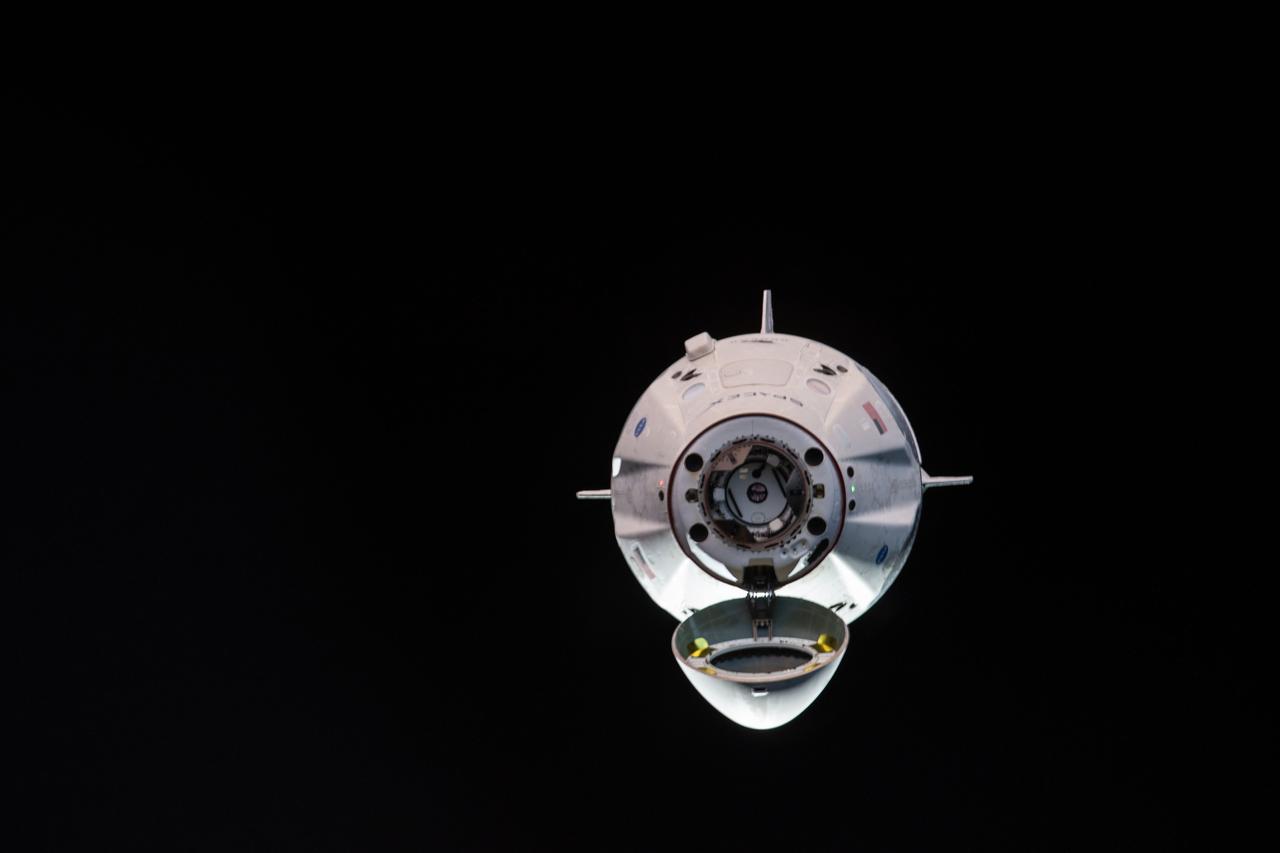
iss058e027069 (March 4, 2019) --- The uncrewed SpaceX Crew Dragon spacecraft is the first Commercial Crew vehicle to visit the International Space Station. Here it is pictured with its nose cone open revealing its docking mechanism while approaching the station's Harmony module. The Crew Dragon would automatically dock moments later to the international docking adapter attached to the forward end of Harmony.
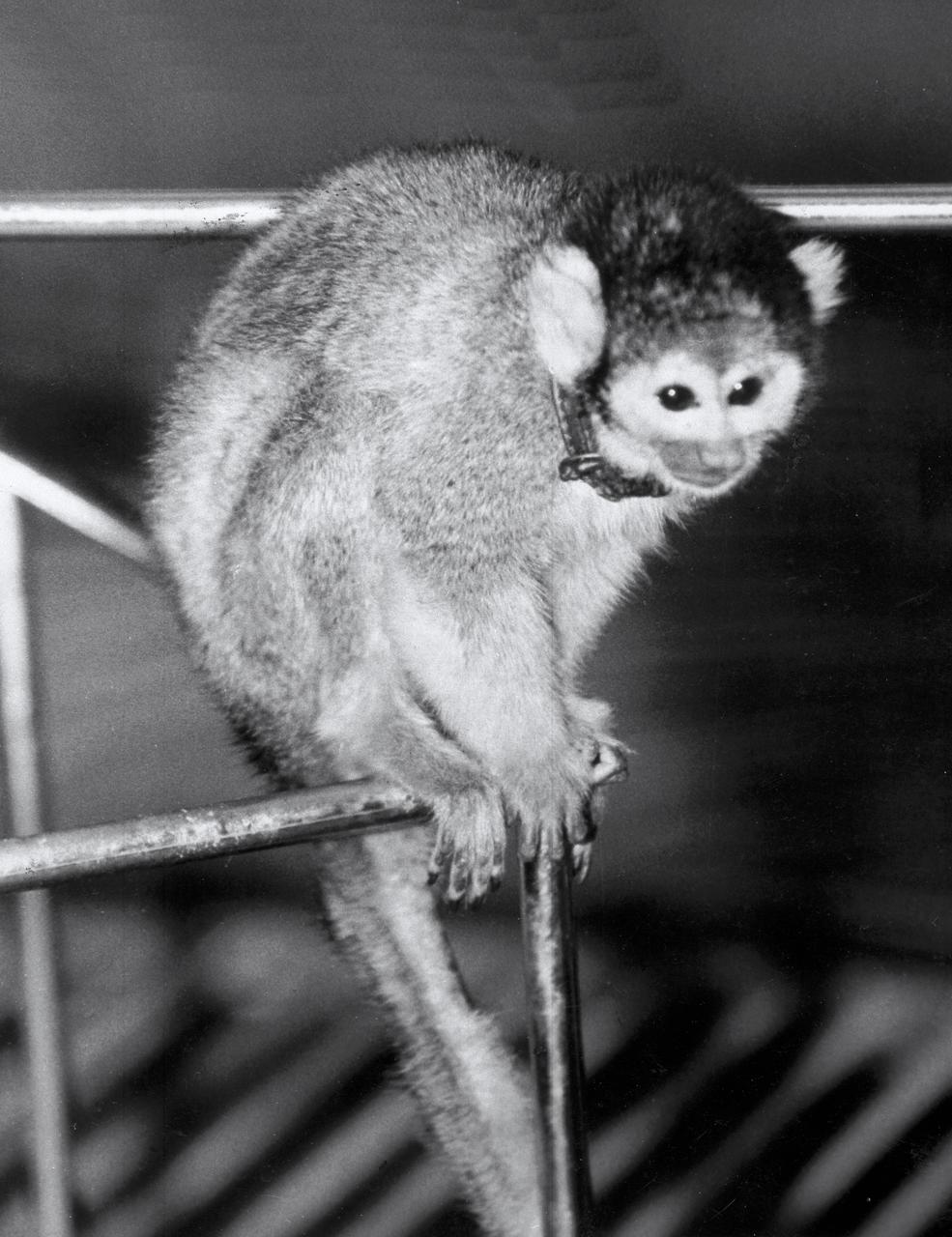
On May 28, 1958, Jupiter Intermediate Range Ballistic Missile provided by U.S. Army team in Huntsville, Alabama, launched a nose cone carrying Baker, a South American squirrel monkey and Able, an American-born rhesus monkey. Baker, pictured here and commonly known as "Miss Baker", was later given a home at the U.S. Space and Rocket Center until her death on November 29, 1984. Able died in 1958. (Photo - Courtesy of Huntsville/Madison County Public Library)
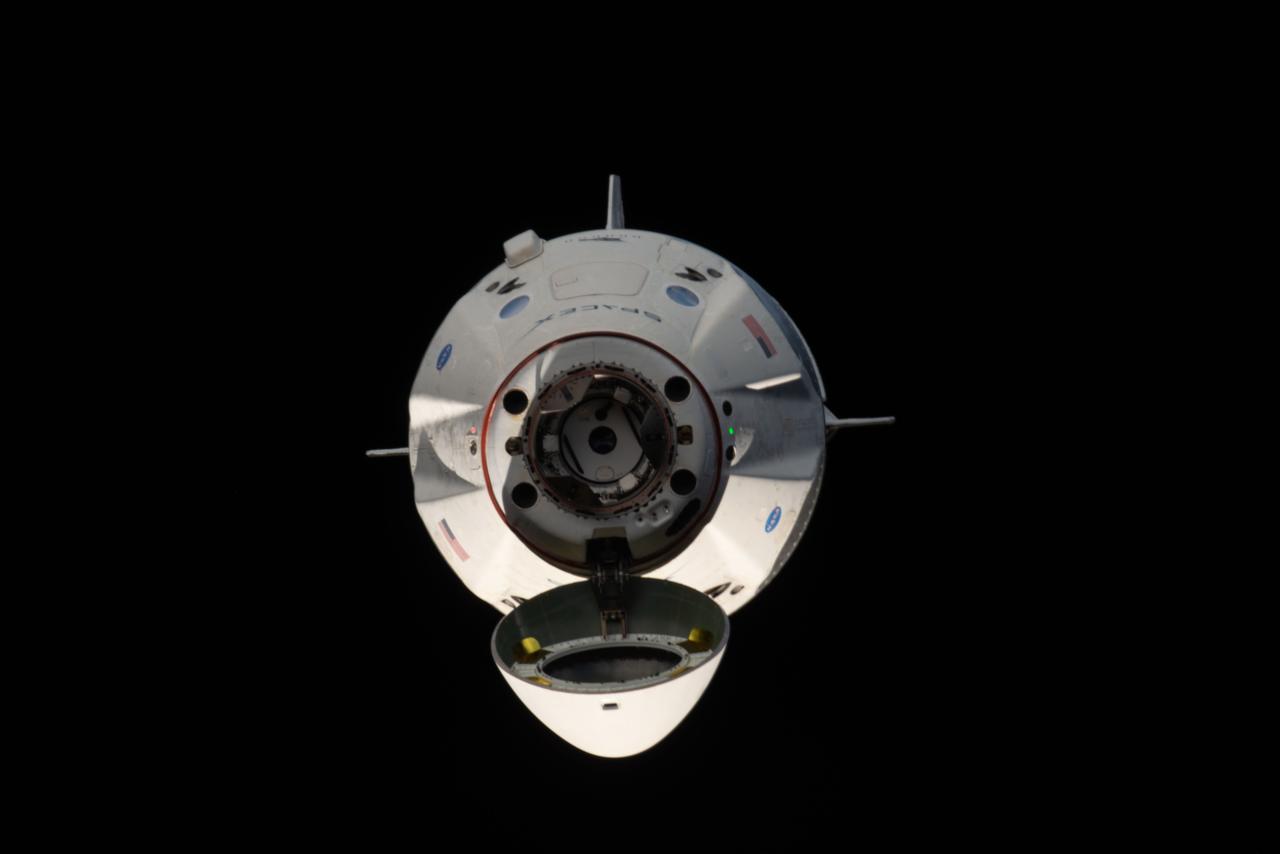
iss058e027548 (March 4, 2019) --- The uncrewed SpaceX Crew Dragon spacecraft is the first Commercial Crew vehicle to visit the International Space Station. Here it is pictured with its nose cone open revealing its docking mechanism while approaching the station's Harmony module. The Crew Dragon would automatically dock moments later to the international docking adapter attached to the forward end of Harmony.
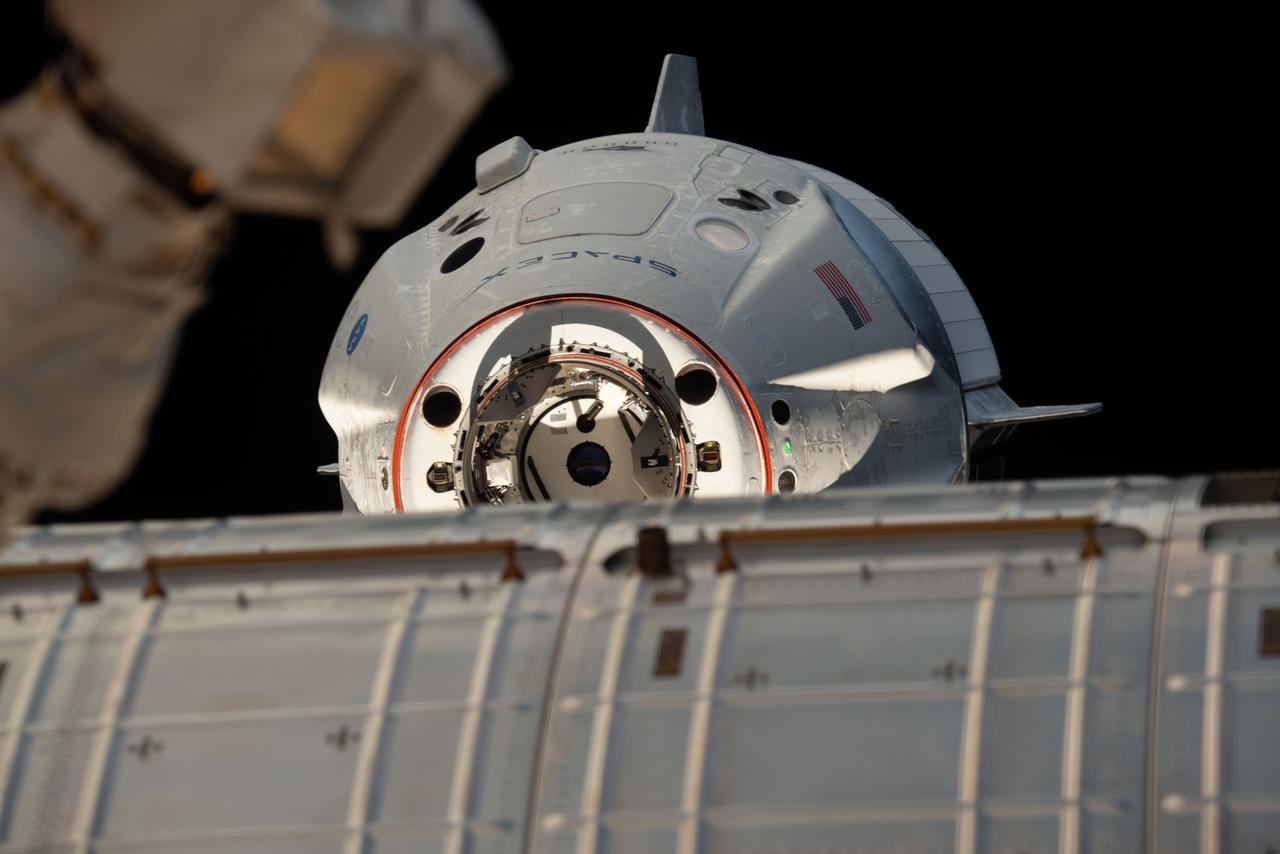
iss058e027550 (March 4, 2019) --- The uncrewed SpaceX Crew Dragon spacecraft is the first Commercial Crew vehicle to visit the International Space Station. Here it is pictured with its nose cone open revealing its docking mechanism while approaching the station's Harmony module. The Crew Dragon would automatically dock moments later to the international docking adapter attached to the forward end of Harmony.
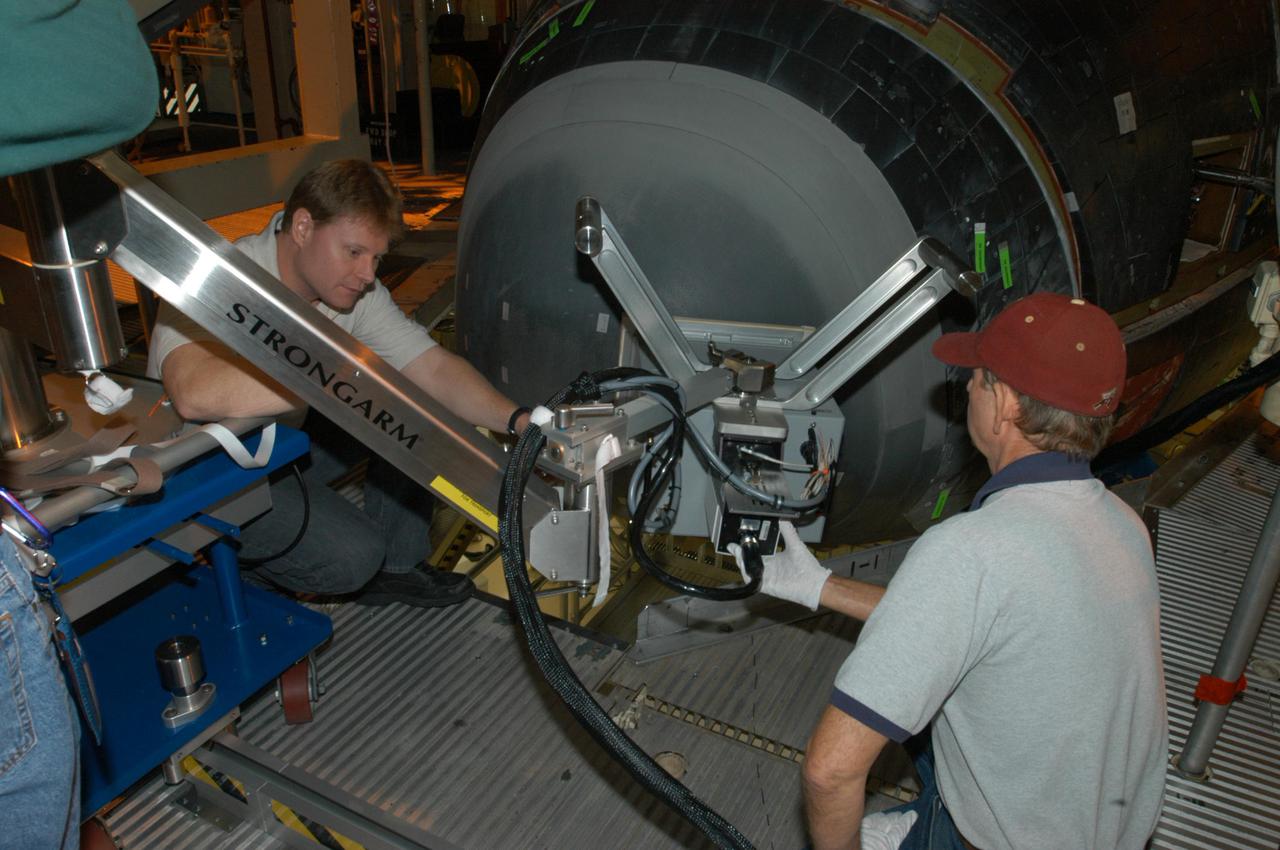
KENNEDY SPACE CENTER, FLA. - In NASA Kennedy Space Center’s Orbiter Processing Facility, bay 3, NDE Specialist Jim Landy (left) and Dick Logsdon, with United Space Alliance, set up thermography equipment in front of Discovery’s nose cone. Thermography uses high-intensity light to heat specific areas, which are then immediately scanned with an infrared camera. As the area cools, internal flaws are revealed. Discovery has been identified as the orbiter to fly on mission STS-121.
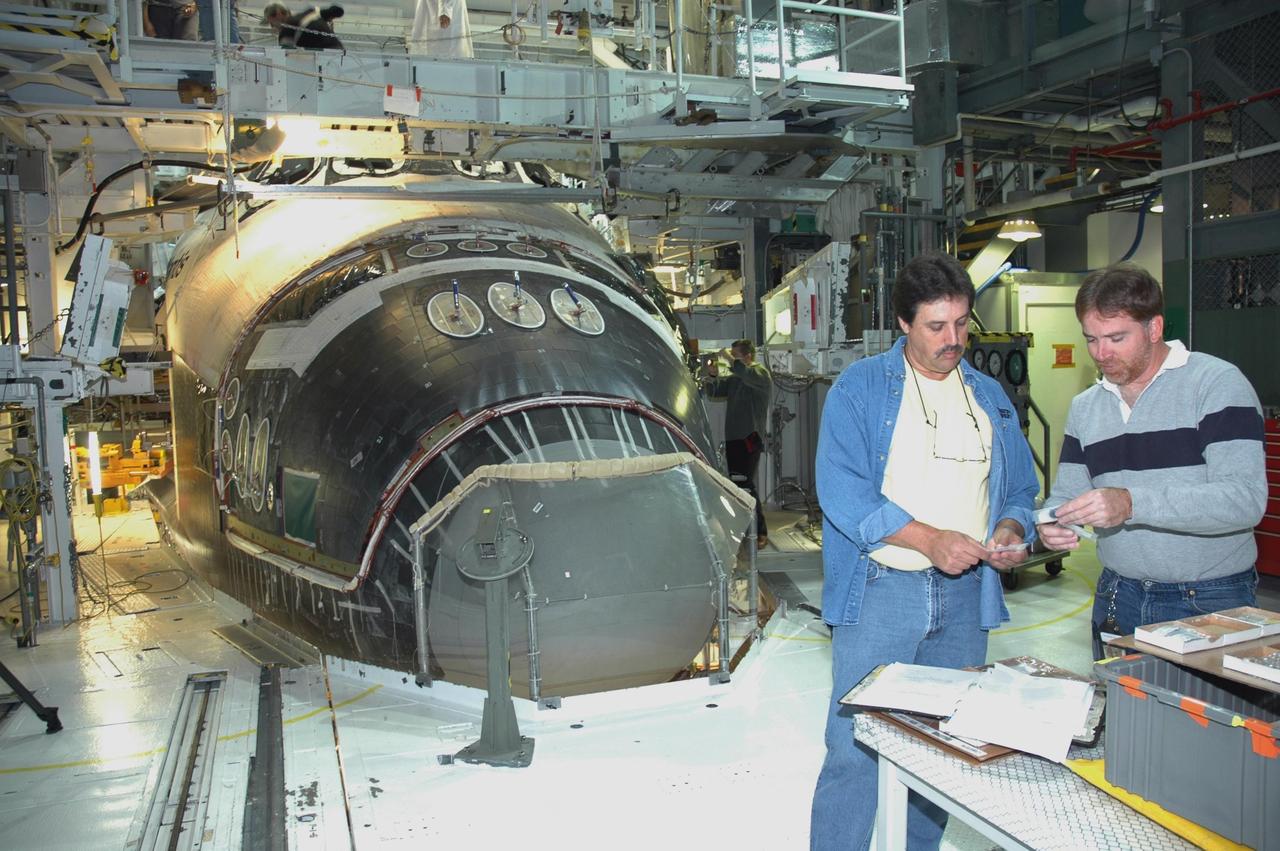
KENNEDY SPACE CENTER, FLA. -- In NASA Kennedy Space Center’s Orbiter Processing Facility Bay 1, technicians check details for the installation of the forward reaction control system on Atlantis (behind them). The control system fits just behind the nose cone and provides the thrust for attitude (rotational) maneuvers (pitch, yaw and roll) and for small velocity changes along the orbiter axis (translation maneuvers). Processing of Atlantis is under way for mission STS-115, the 19th flight to the International Space Station.

Workmen at the Kennedy Space Center position the nose cone for the 204LM-1, an unmanned Apollo mission that tested the Apollo Lunar Module (LM) in Earth orbit. Also known as Apollo 5, the spacecraft was launched on the fourth Saturn IBC launch vehicle. Developed by the Marshall Space Flight Center (MSFC) as an interim vehicle in MSFC's "building block" approach to the Saturn rocket development, the Saturn IBC utilized Saturn I technology to further develop and refine a larger booster and the Apollo spacecraft capabilities required for the manned lunar missions.
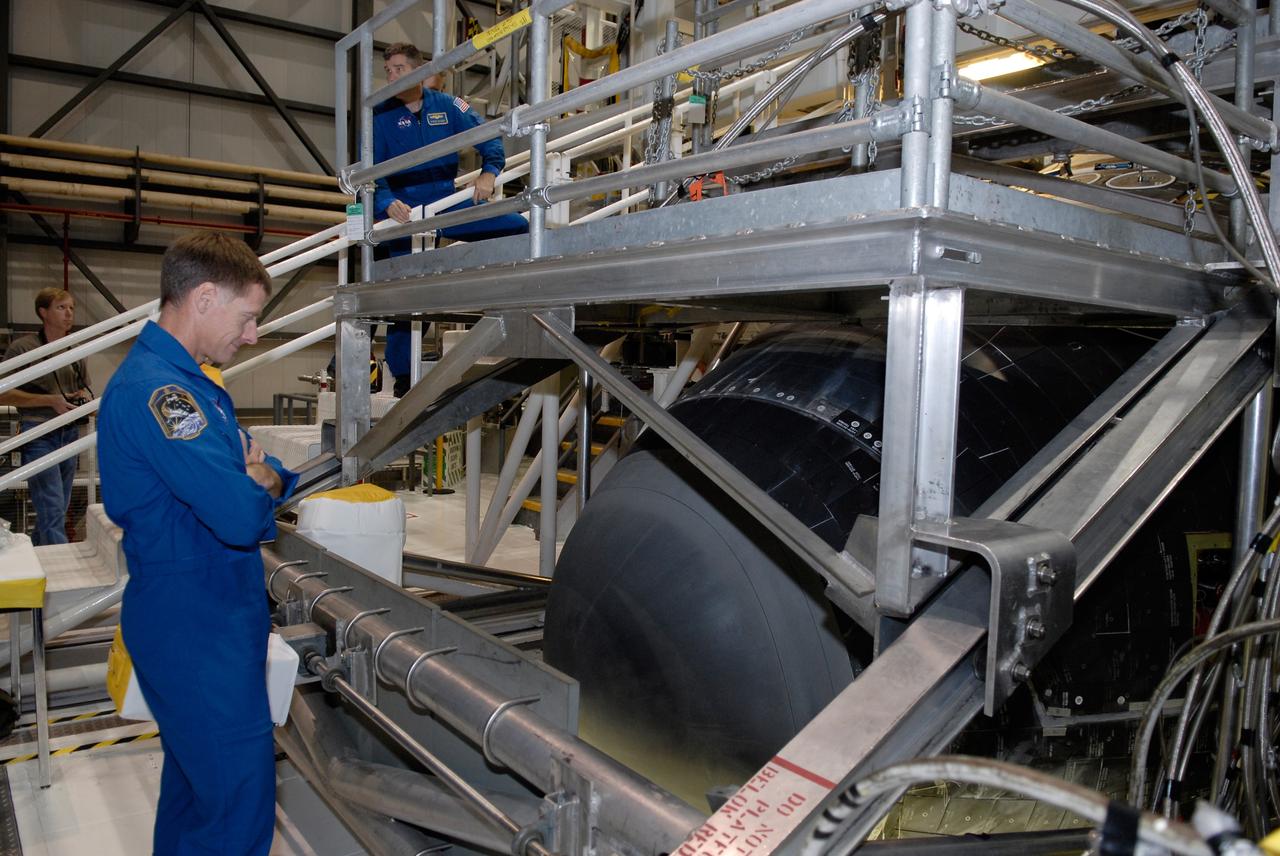
CAPE CANAVERAL, Fla. – In Orbiter Processing Facility 2 at NASA's Kennedy Space Center, members of space shuttle Endeavour's STS-126 crew participate in a crew equipment interface test, or CEIT. Here, Commander Chris Ferguson examines the nose cone of Endeavour. The CEIT provides hands-on experience with hardware and equipment slated to fly on their mission. Endeavour will deliver a multi-purpose logistics module to the International Space Station on the STS-126 mission. Launch is targeted for Nov. 10. Photo credit: NASA/Kim Shiflett

Workmen at the Kennedy Space Center position the nose cone for the 204LM-1, an unmanned Apollo mission that tested the Apollo Lunar Module (LM) in Earth orbit. Also known as Apollo 5, the spacecraft was launched on the fourth Saturn IBC launch vehicle. Developed by the Marshall Space Flight Center (MSFC) as an interim vehicle in MSFC's "building block" approach to the Saturn rocket development, the Saturn IBC utilized Saturn I technology to further develop and refine a larger booster and the Apollo spacecraft capabilities required for the manned lunar missions.
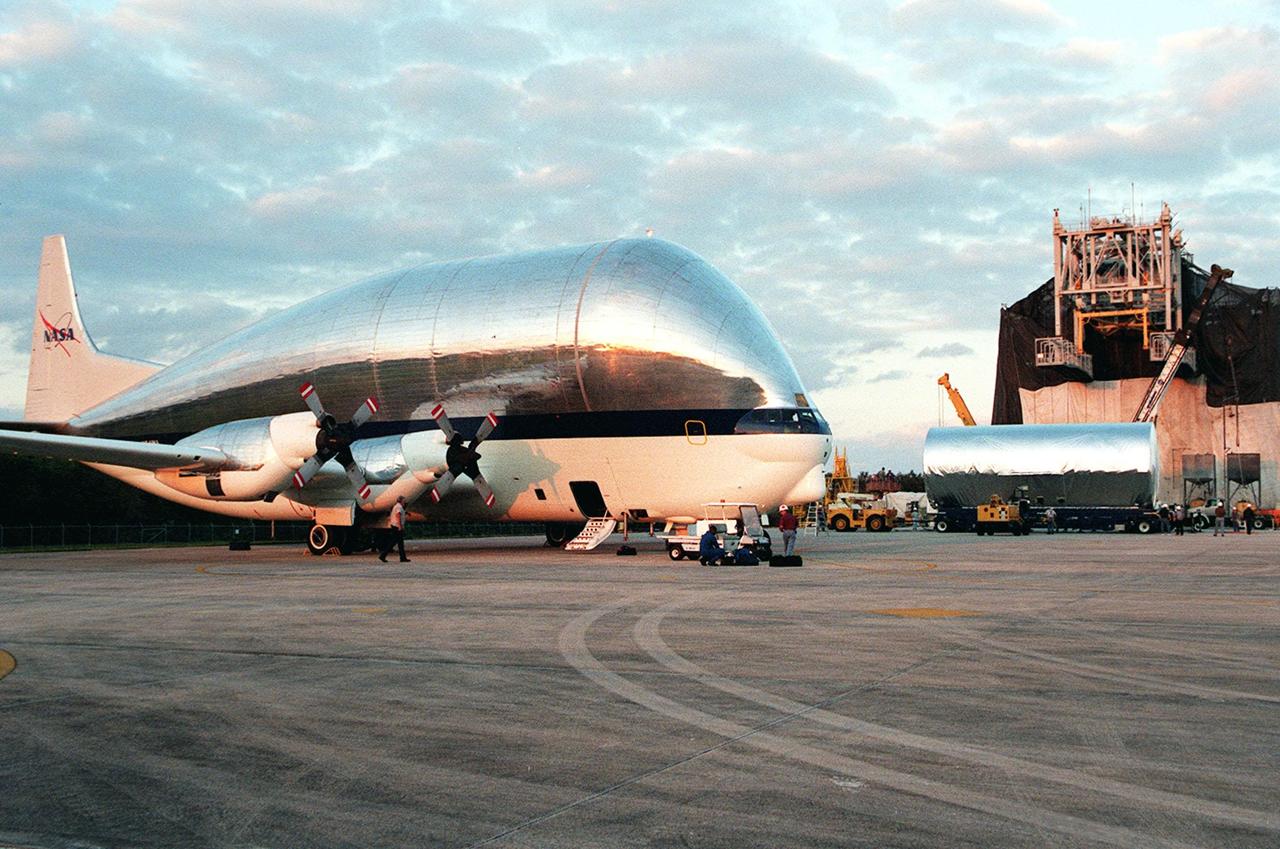
With its cargo off-loaded (background), the nose cone of the Super Guppy aircraft is closed. The cargo is a P3 port-side truss, a segment of the International Space Station (ISS). The truss is scheduled to be added to the ISS on mission STS-115 in 2002 aboard Space Shuttle Atlantis. The second port truss segment, P3 will be attached to the first port truss segment (P1). The P3 truss will be taken to the Operations and Checkout Building.

Ahead of launch as part of NASA’s Commercial Lunar Payload Services (CLPS) initiative, Astrobotic’s Peregrine lunar lander is encapsulated in the payload fairing, or nose cone, of United Launch Alliance’s Vulcan rocket on Nov. 21, 2023, at Astrotech Space Operations Facility near the agency’s Kennedy Space Center in Florida. Launch of Astrobotic’s Peregrine Mission One will carry NASA and commercial payloads to the Moon in early 2024 to study the lunar exosphere, thermal properties, and hydrogen abundance of the lunar regolith, magnetic fields, and the radiation environment of the lunar surface.
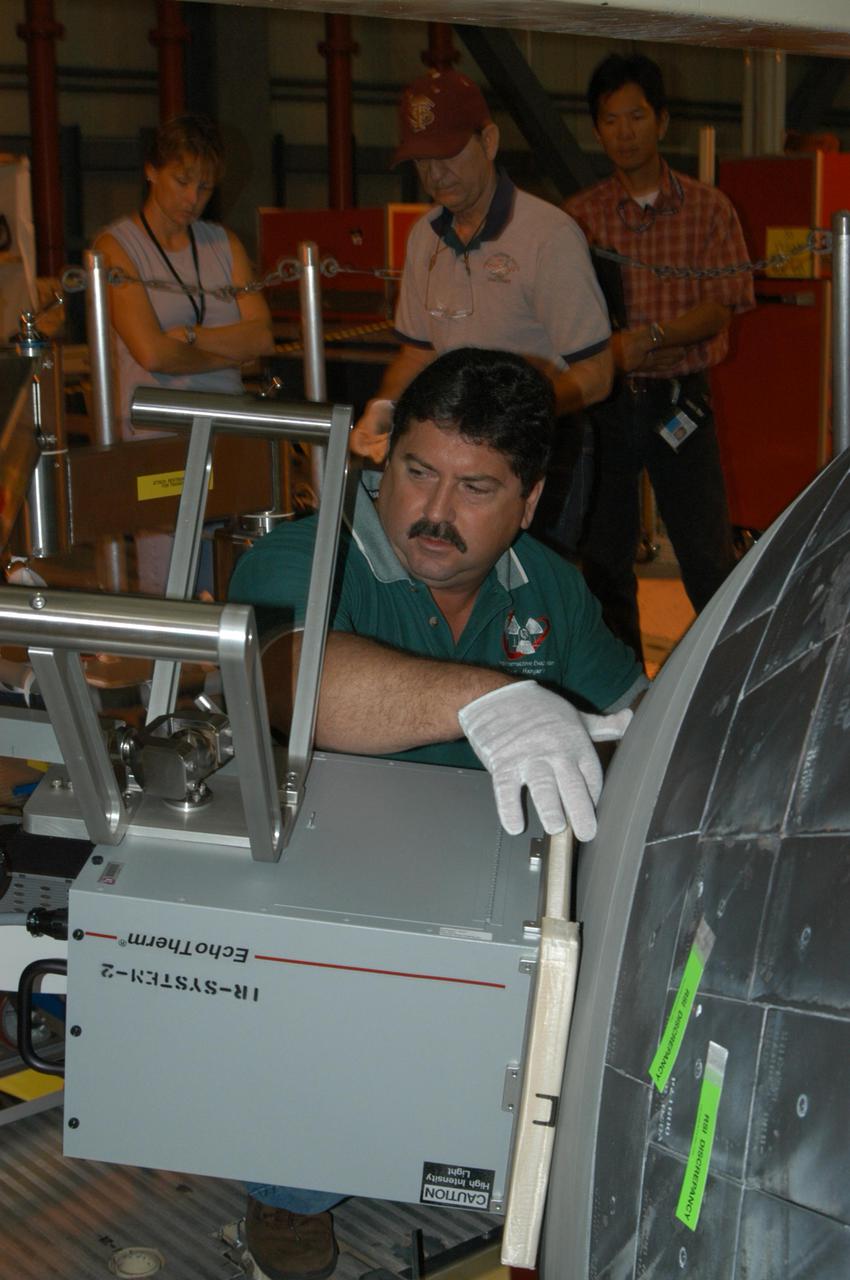
KENNEDY SPACE CENTER, FLA. - In NASA Kennedy Space Center’s Orbiter Processing Facility, bay 3, Don Neilen (front), with United Space Alliance, adjusts thermography equipment in front of Discovery’s nose cone. In the background are (from left) Lisa Huddleston, Dick Logsdon and Mike Hess, also with USA. Thermography uses high-intensity light to heat specific areas, which are then immediately scanned with an infrared camera. As the area cools, internal flaws are revealed. Discovery has been identified as the orbiter to fly on mission STS-121.
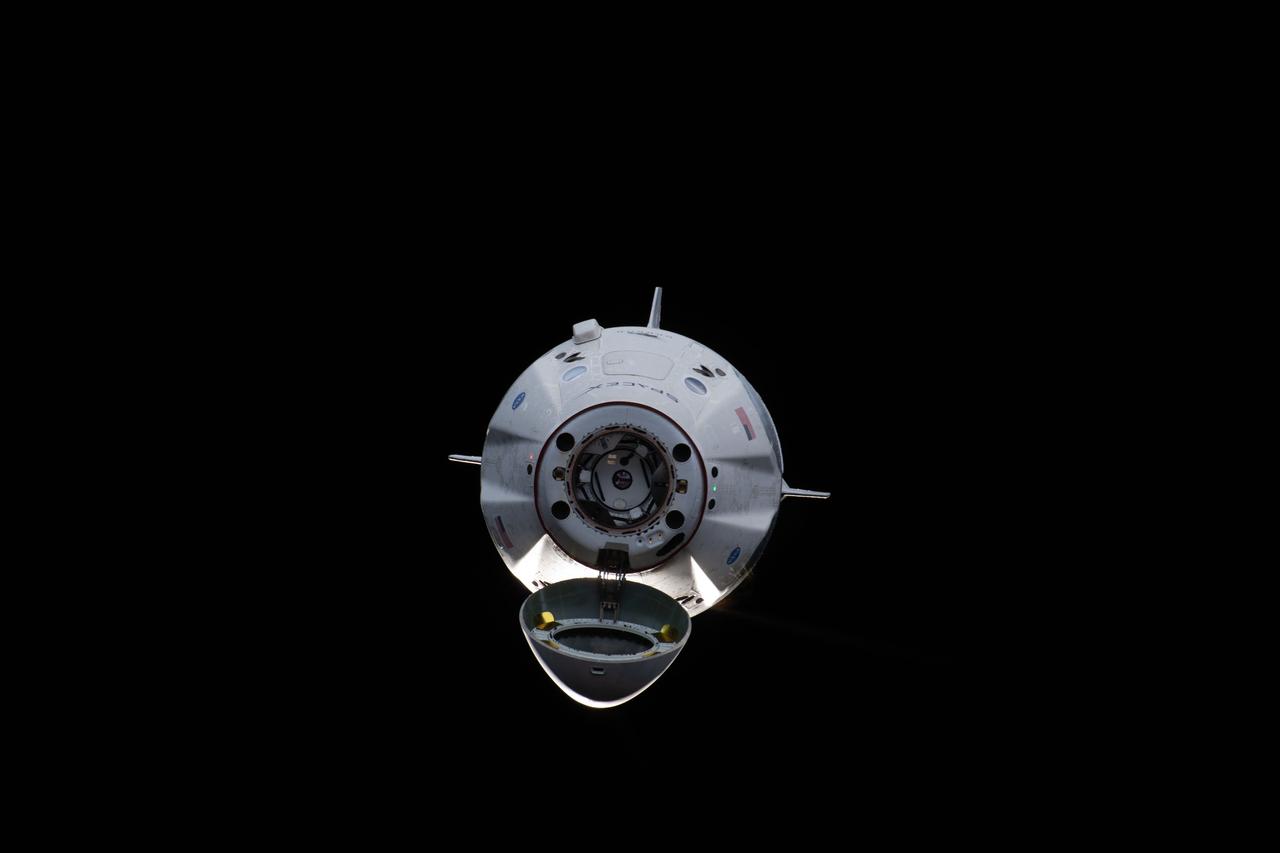
iss058e027332 (March 4, 2019) --- The uncrewed SpaceX Crew Dragon spacecraft is the first Commercial Crew vehicle to visit the International Space Station. Here it is pictured with its nose cone open revealing its docking mechanism while approaching the station's Harmony module. The Crew Dragon would automatically dock moments later to the international docking adapter attached to the forward end of Harmony.
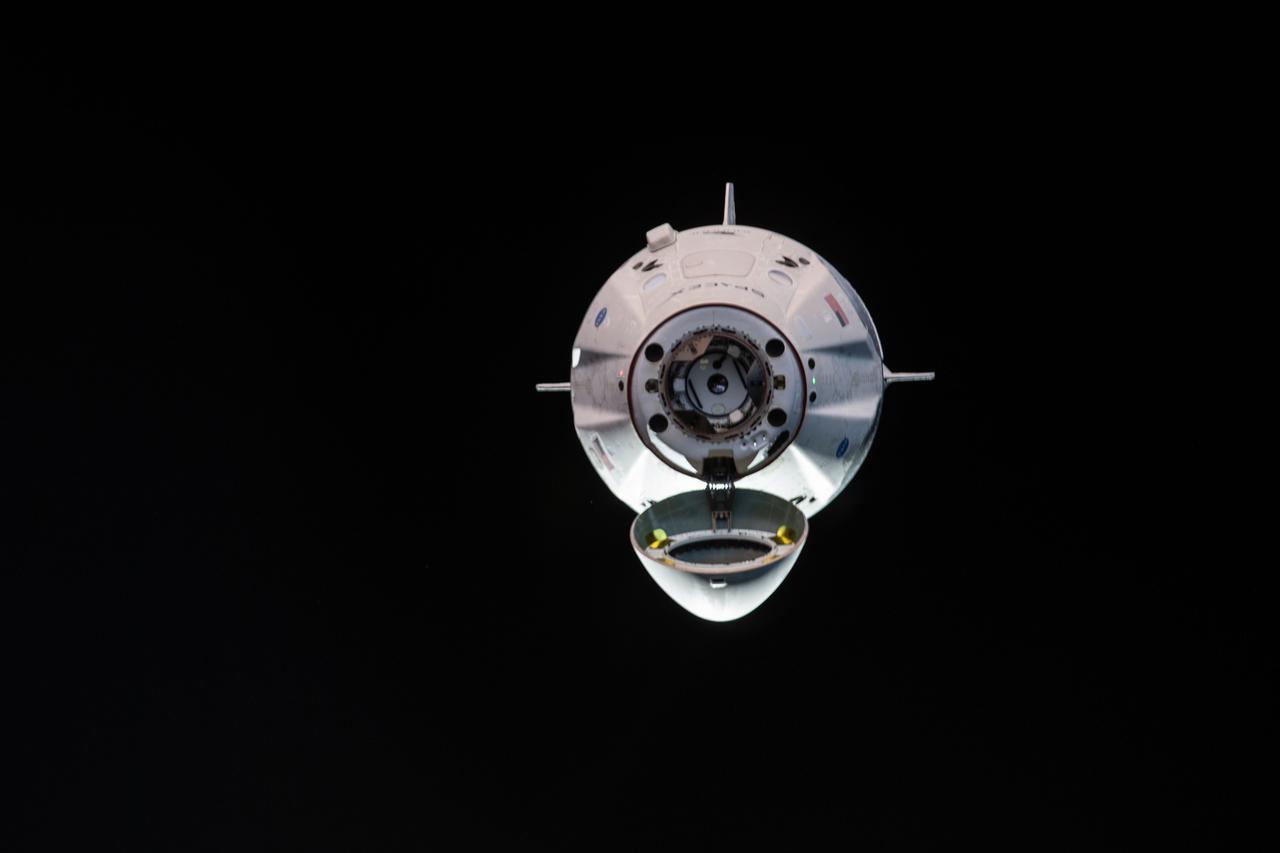
iss058e027064 (March 4, 2019) --- The uncrewed SpaceX Crew Dragon spacecraft is the first Commercial Crew vehicle to visit the International Space Station. Here it is pictured with its nose cone open revealing its docking mechanism while approaching the station's Harmony module. The Crew Dragon would automatically dock moments later to the international docking adapter attached to the forward end of Harmony.

Ahead of launch as part of NASA’s Commercial Lunar Payload Services (CLPS) initiative, Astrobotic’s Peregrine lunar lander is encapsulated in the payload fairing, or nose cone, of United Launch Alliance’s Vulcan rocket on Nov. 21, 2023, at Astrotech Space Operations Facility near the agency’s Kennedy Space Center in Florida. Launch of Astrobotic’s Peregrine Mission One will carry NASA and commercial payloads to the Moon in early 2024 to study the lunar exosphere, thermal properties, and hydrogen abundance of the lunar regolith, magnetic fields, and the radiation environment of the lunar surface.
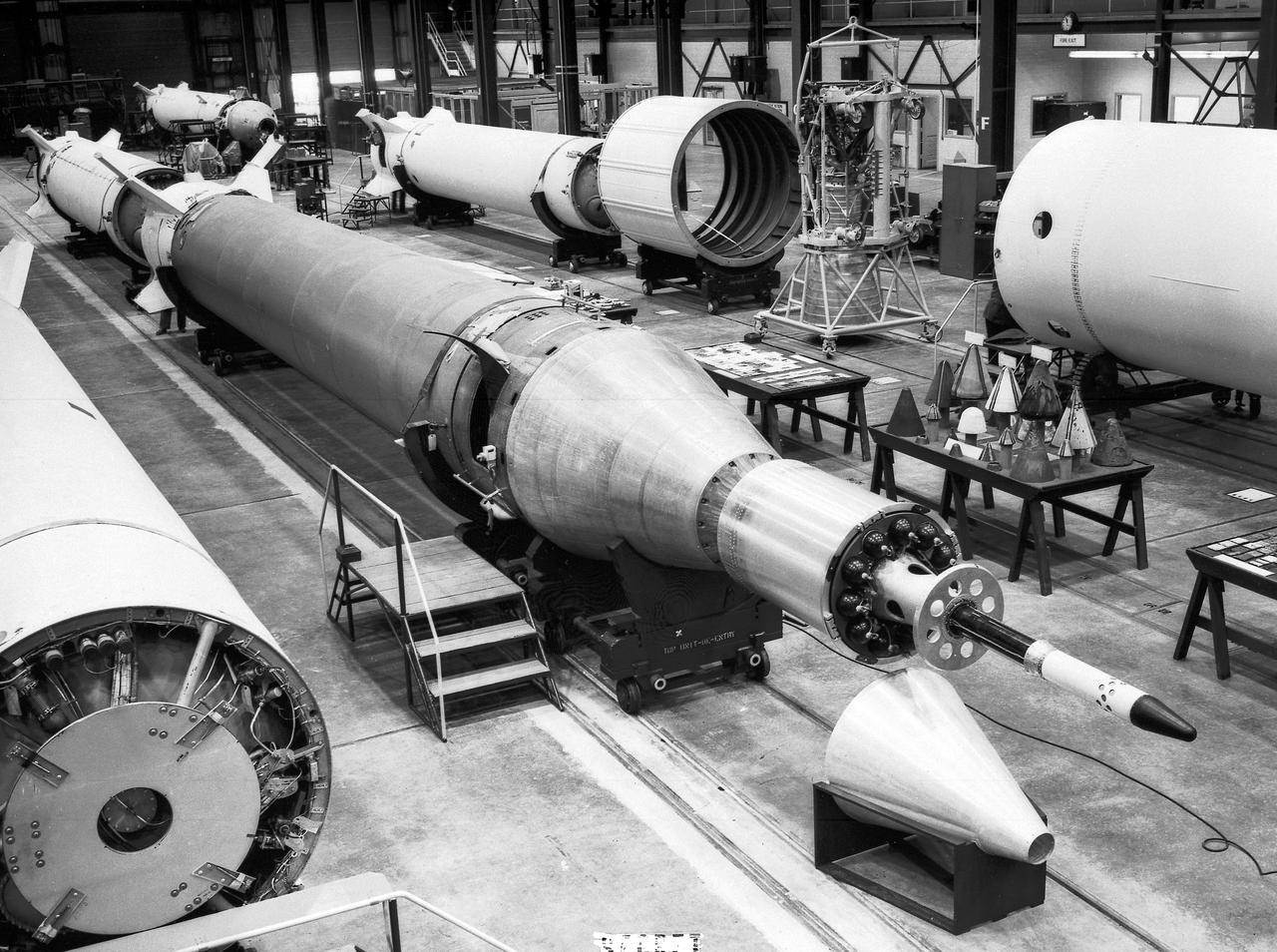
Jupiter-C Missile No. 27 assembly at the Army Ballistic Missile Agency (ABMA), Redstone Arsenal, in Huntsville, Aalabama. The Jupiter-C was a modification of the Redstone Missile, and originally developed as a nose cone re-entry test vehicle for the Jupiter Intermediate Range Ballistic Missile (IRBM). Jupiter-C successfully launched the first American Satellite, Explorer 1, in orbit on January 31, 1958.
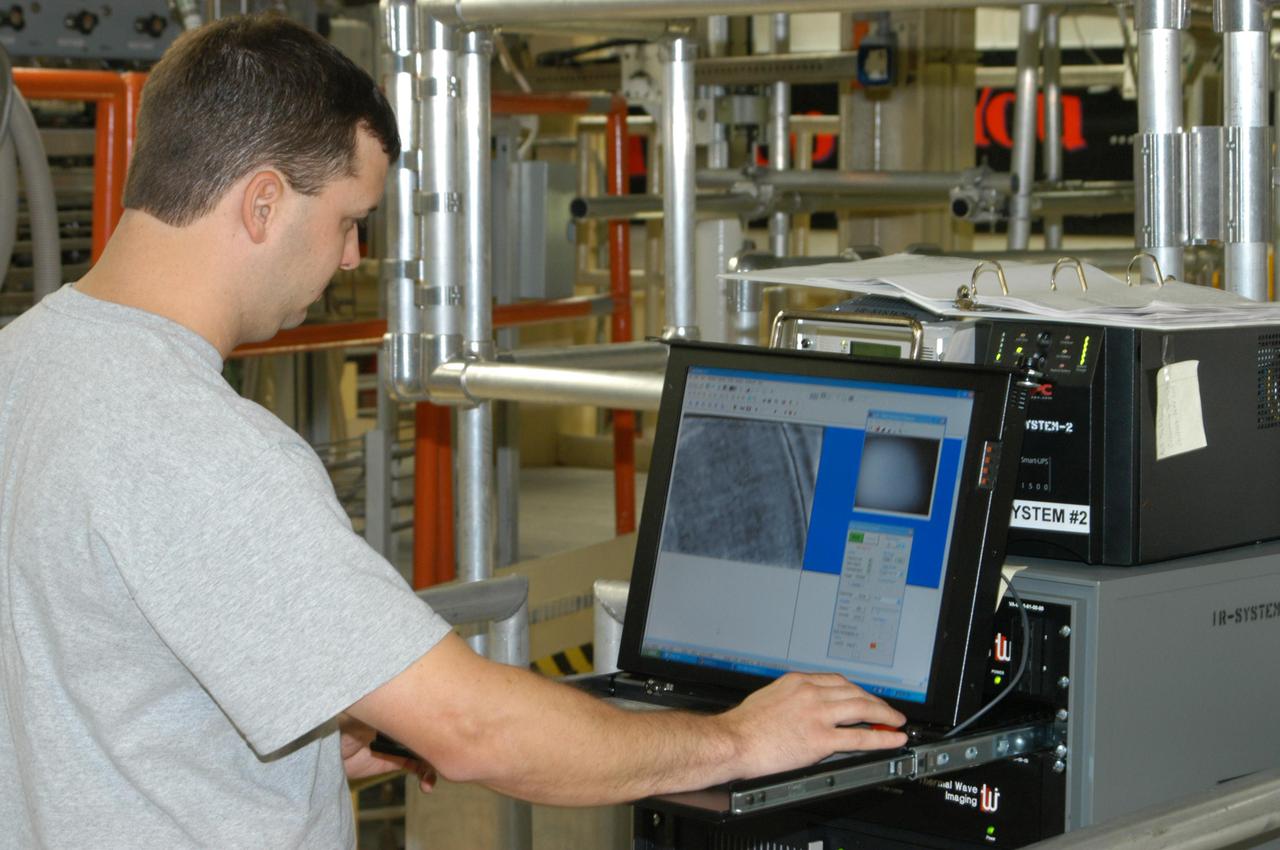
KENNEDY SPACE CENTER, FLA. - In NASA Kennedy Space Center’s Orbiter Processing Facility, bay 3, Pat Cerny, with United Space Alliance, monitors readings from thermography testing on Discovery’s nose cone. Thermography uses high-intensity light to heat specific areas, which are then immediately scanned with an infrared camera. As the area cools, internal flaws are revealed. Discovery has been identified as the orbiter to fly on mission STS-121.
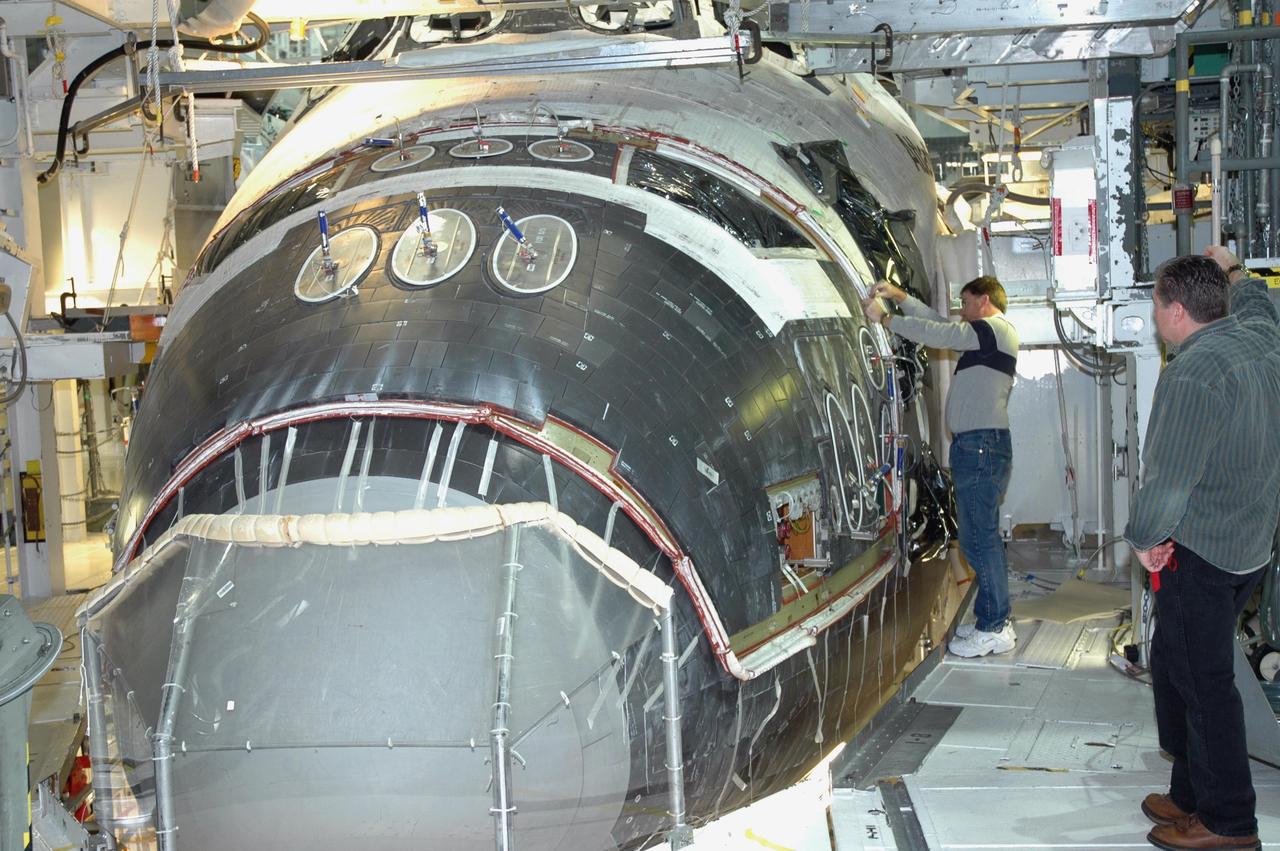
KENNEDY SPACE CENTER, FLA. -- In NASA Kennedy Space Center’s Orbiter Processing Facility Bay 1, workers are installing the forward reaction control system on Atlantis. The control system fits just behind the nose cone and provides the thrust for attitude (rotational) maneuvers (pitch, yaw and roll) and for small velocity changes along the orbiter axis (translation maneuvers). Processing of Atlantis is under way for mission STS-115, the 19th flight to the International Space Station.
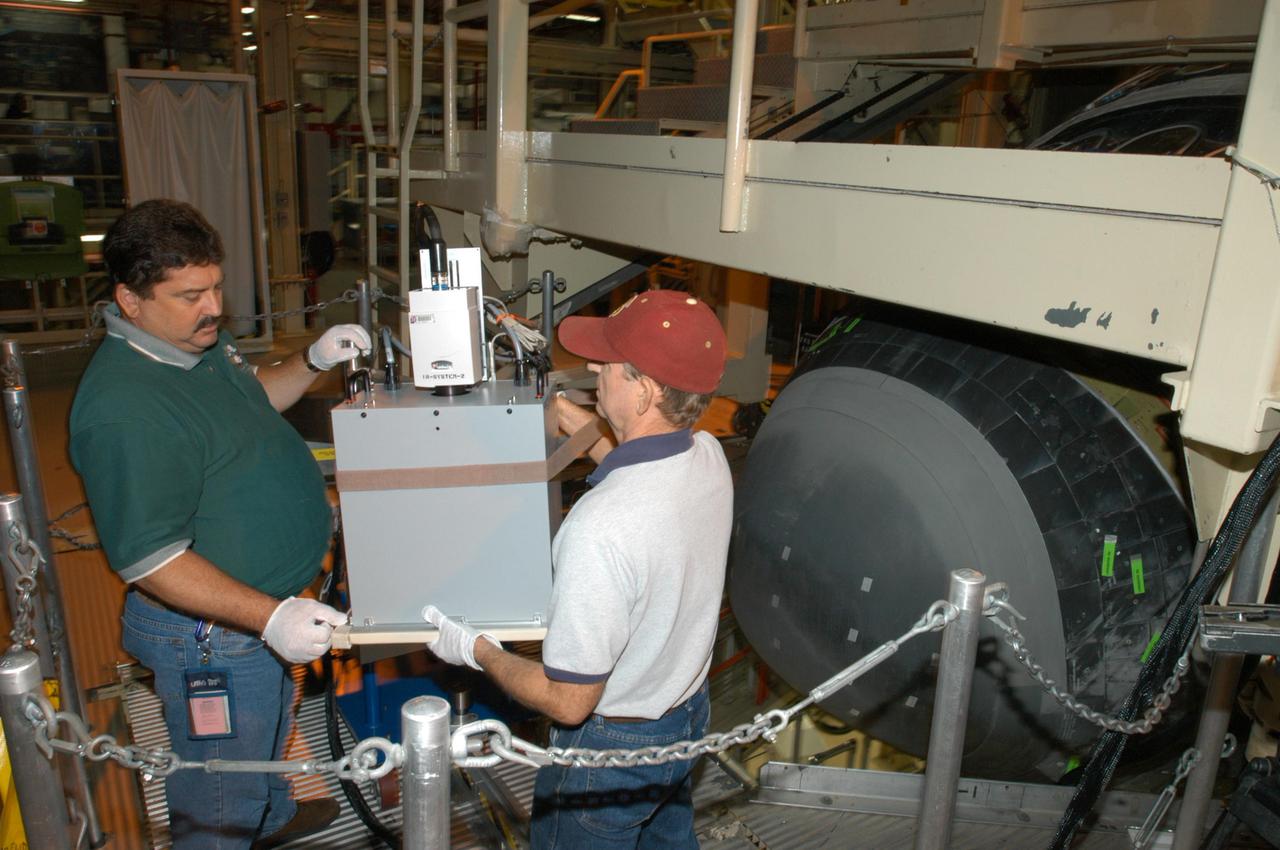
KENNEDY SPACE CENTER, FLA. - In NASA Kennedy Space Center’s Orbiter Processing Facility, bay 3, Don Nielen (left) and Dick Logsdon, both with United Space Alliance, prepare the equipment to be used for thermography of Discovery’s nose cone. Thermography uses high-intensity light to heat specific areas, which are then immediately scanned with an infrared camera. As the area cools, internal flaws are revealed. Discovery has been identified as the orbiter to fly on mission STS-121.
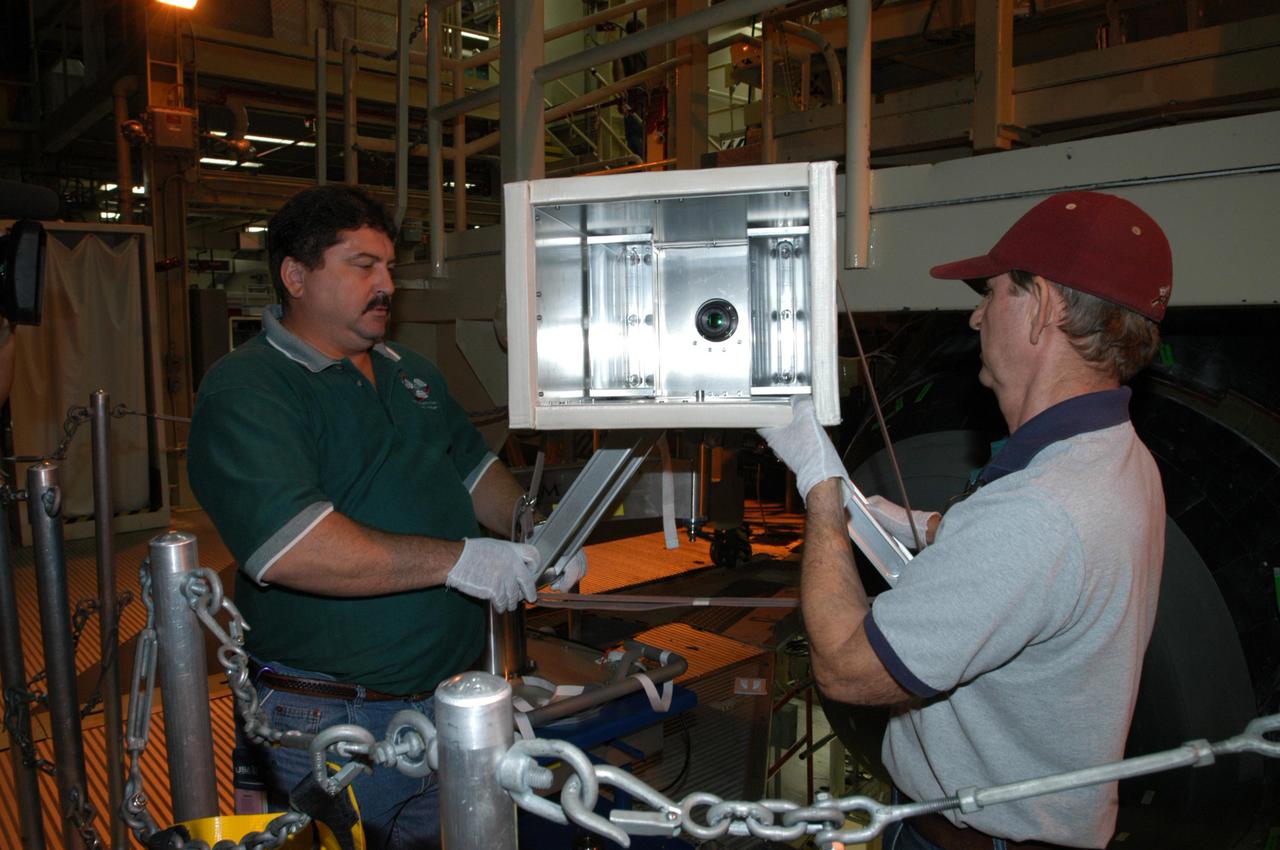
KENNEDY SPACE CENTER, FLA. - In NASA Kennedy Space Center’s Orbiter Processing Facility, bay 3, Don Nielen (left) and Dick Logsdon, both with United Space Alliance, set up equipment to be used for thermography of Discovery’s nose cone. Thermography uses high-intensity light to heat specific areas, which are then immediately scanned with an infrared camera. As the area cools, internal flaws are revealed. Discovery has been identified as the orbiter to fly on mission STS-121.
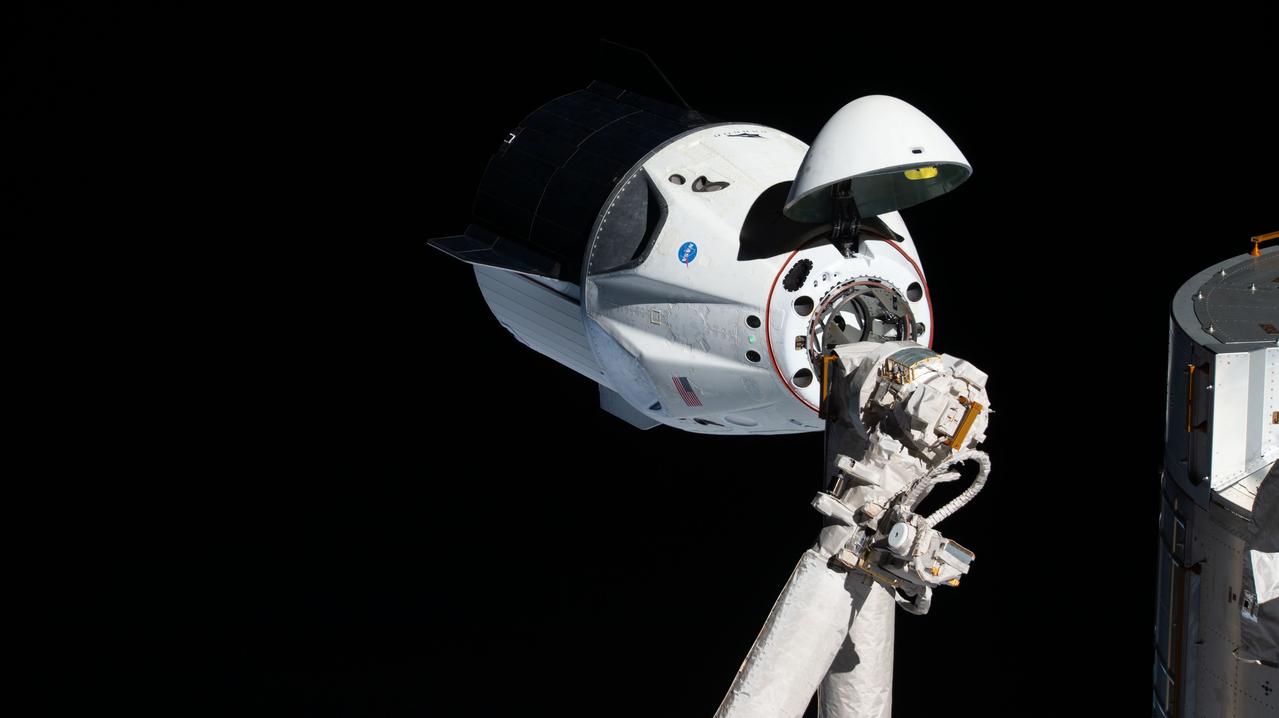
iss058e027464 (March 4, 2019) --- The uncrewed SpaceX Crew Dragon spacecraft is the first Commercial Crew vehicle to visit the International Space Station. Here it is pictured with its nose cone open revealing its docking mechanism while approaching the station's Harmony module. The Crew Dragon would automatically dock moments later to the international docking adapter attached to the forward end of Harmony.
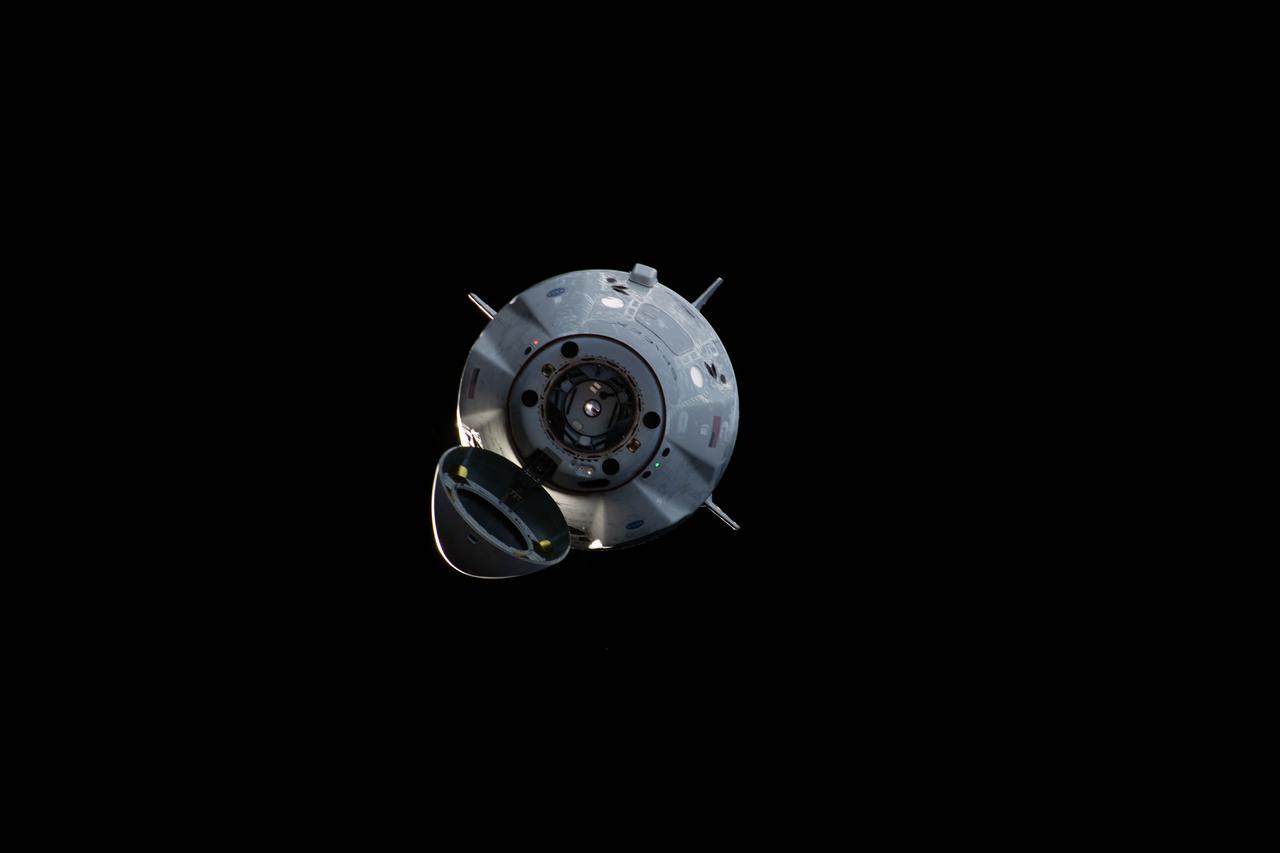
iss058e027295 (March 4, 2019) --- The uncrewed SpaceX Crew Dragon spacecraft is the first Commercial Crew vehicle to visit the International Space Station. Here it is pictured with its nose cone open revealing its docking mechanism while approaching the station's Harmony module. The Crew Dragon would automatically dock moments later to the international docking adapter attached to the forward end of Harmony.
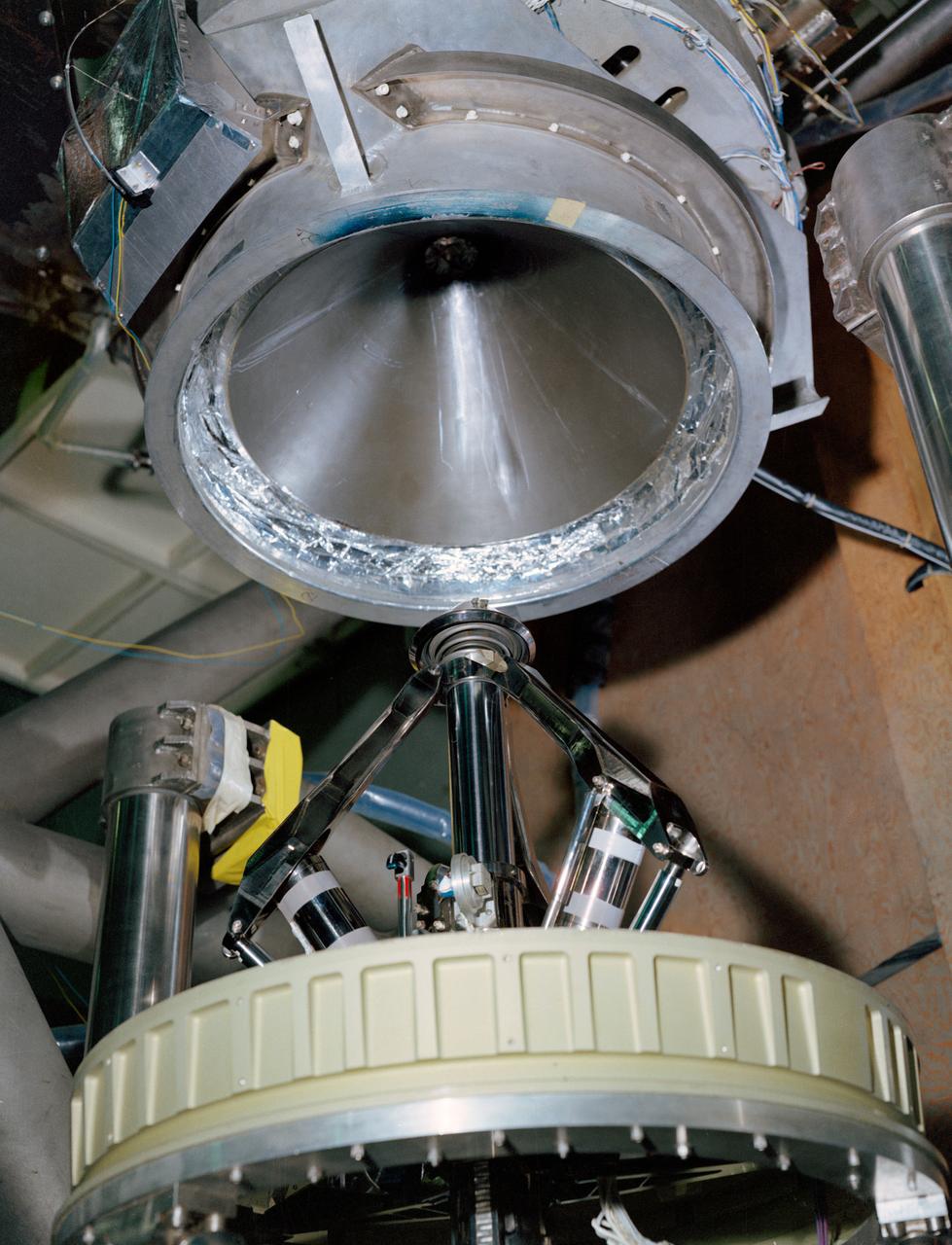
S68-50869 (1968) --- An engineering set up illustrating the docking system of the Apollo spacecraft. During docking maneuvers the docking probe on the Command Module engages the cone-shaped drogue of the Lunar Module. The primary docking structure is the tunnel through which the astronauts transfer from one module to the other. This tunnel is partly in the nose of the Command Module and partly in the top of the Lunar Module. Following CSM/LM docking the drogue and probe are removed to open the passageway between the modules.
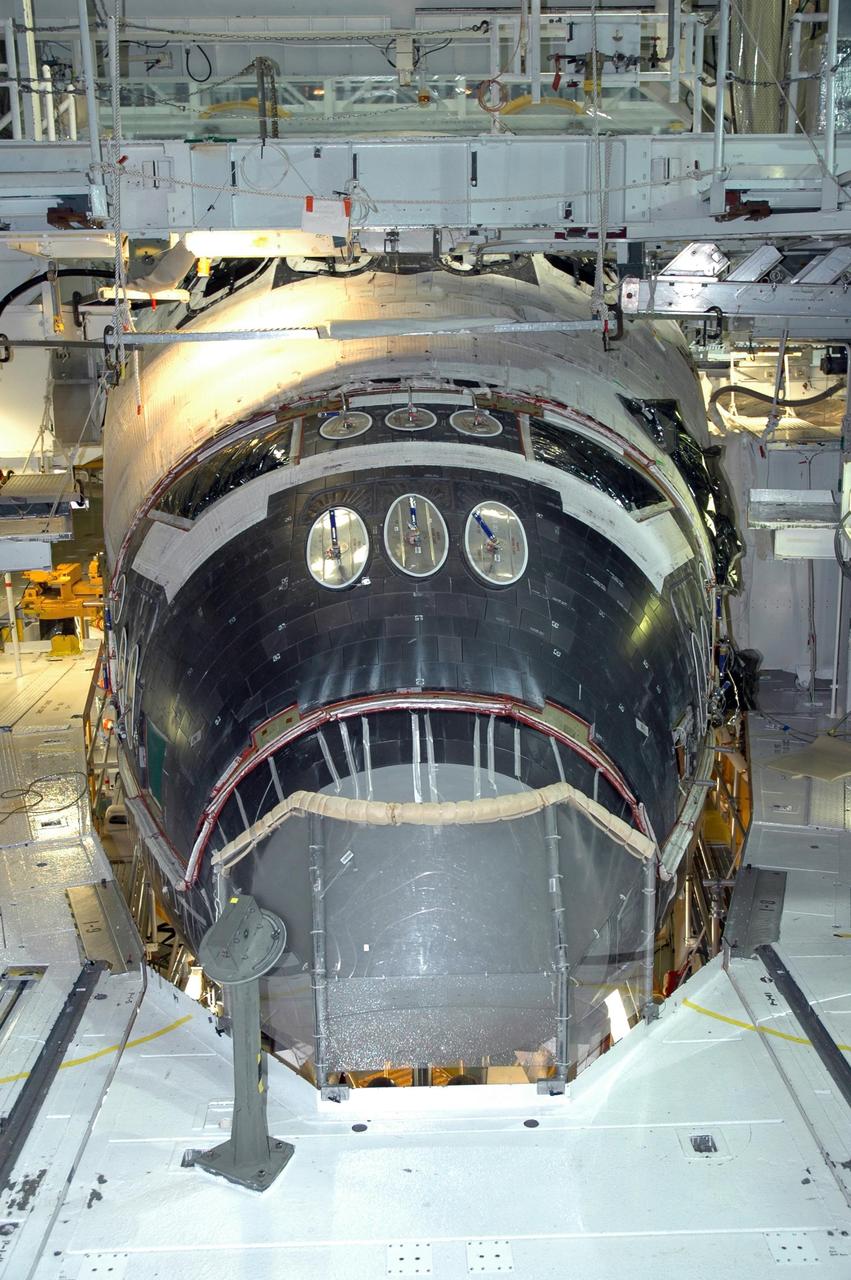
KENNEDY SPACE CENTER, FLA. -- In NASA Kennedy Space Center’s Orbiter Processing Facility Bay 1, installation of the forward reaction control system on Atlantis is complete. The control system fits just behind the nose cone and provides the thrust for attitude (rotational) maneuvers (pitch, yaw and roll) and for small velocity changes along the orbiter axis (translation maneuvers). Processing of Atlantis is under way for mission STS-115, the 19th flight to the International Space Station.