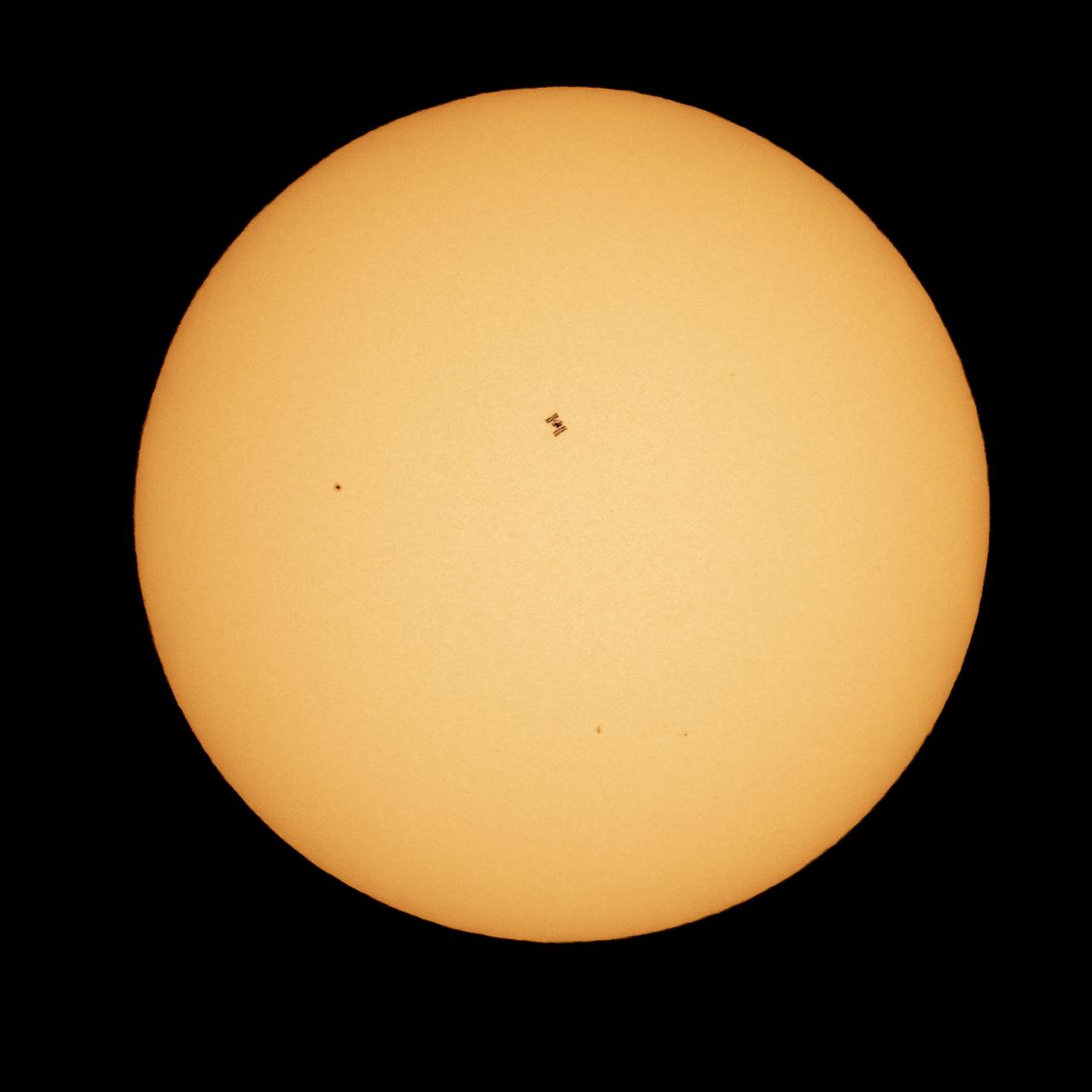
The International Space Station, with a crew of seven aboard, is seen in silhouette as it transits the sun at roughly five miles per second, Friday, April 23, 2021, as seen from Nottingham, Maryland. Aboard are: NASA astronauts Shannon Walker, Mike Hopkins, Victor Glover, Mark Vande Hei; Roscosmos cosmonauts Oleg Novitskiy, Pyotr Dubrov; and Japan Aerospace Exploration Agency (JAXA) astronaut Soichi Noguchi. Joining the crew aboard station tomorrow will be Crew-2 mission crew members: NASA astronauts Shane Kimbrough and Megan McArthur, JAXA astronaut Akihiko Hoshide, and ESA (European Space Agency) astronaut Thomas Pesquet. Photo Credit: (NASA/Bill Ingalls)
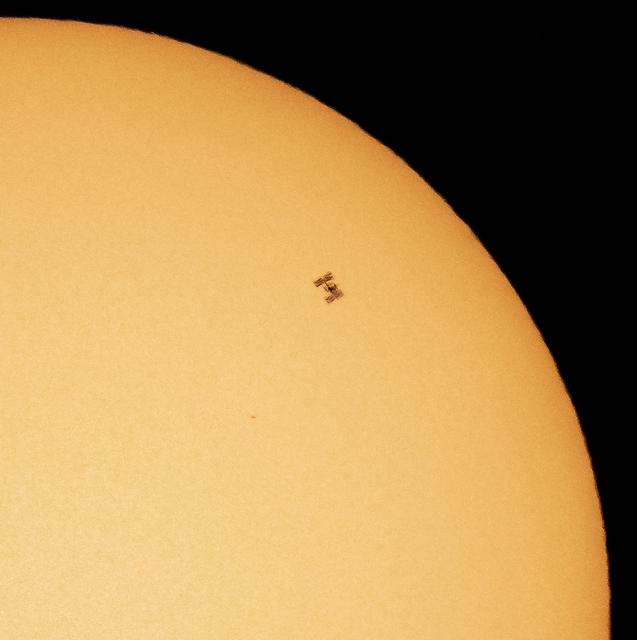
The International Space Station, with a crew of seven aboard, is seen in silhouette as it transits the sun at roughly five miles per second, Friday, April 23, 2021, as seen from Nottingham, Maryland. Aboard are: NASA astronauts Shannon Walker, Mike Hopkins, Victor Glover, Mark Vande Hei; Roscosmos cosmonauts Oleg Novitskiy, Pyotr Dubrov; and Japan Aerospace Exploration Agency (JAXA) astronaut Soichi Noguchi. Joining the crew aboard station tomorrow will be Crew-2 mission crew members: NASA astronauts Shane Kimbrough and Megan McArthur, JAXA astronaut Akihiko Hoshide, and ESA (European Space Agency) astronaut Thomas Pesquet. Photo Credit: (NASA/Bill Ingalls)
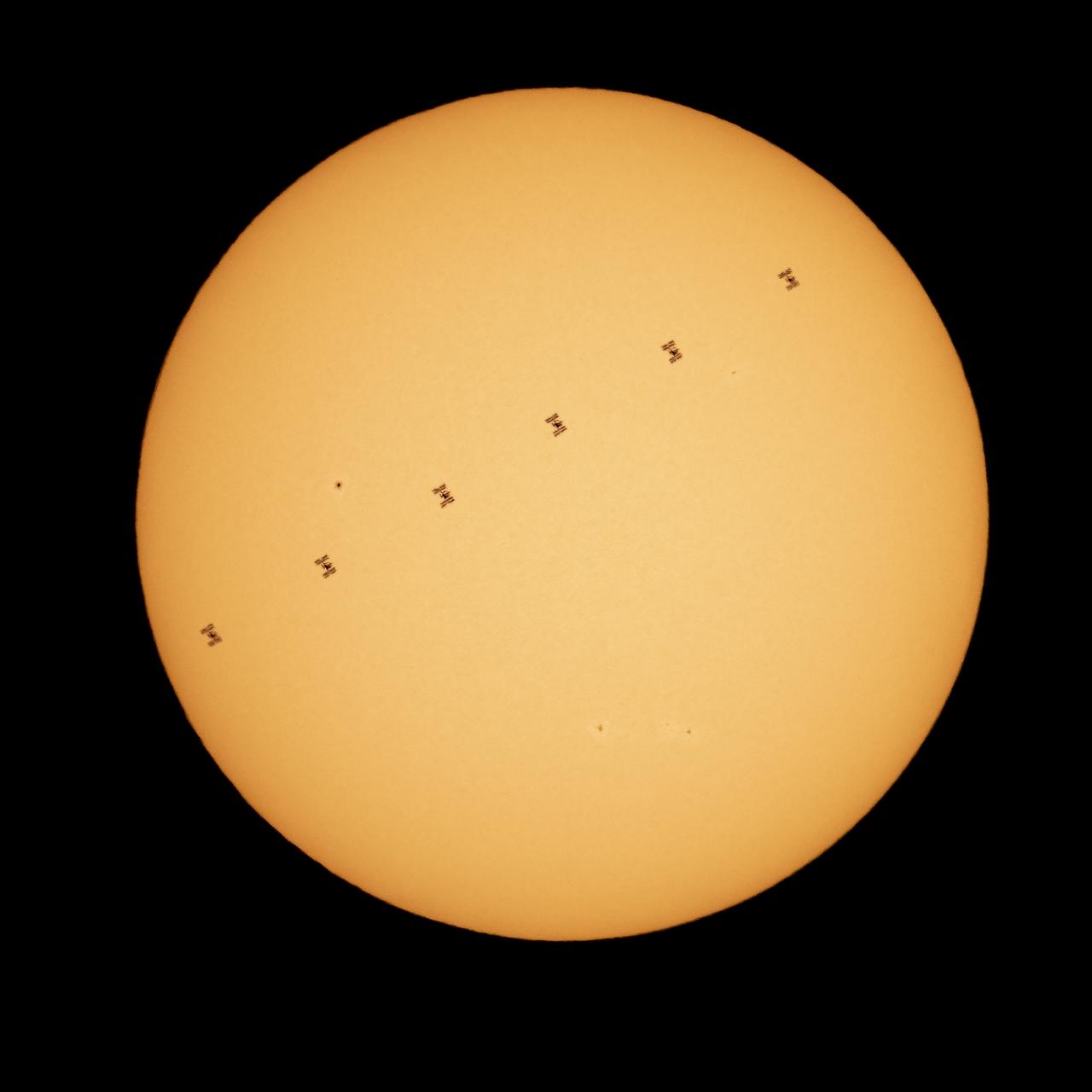
This composite image made from six frames shows the International Space Station, with a crew of seven aboard, in silhouette as it transits the sun at roughly five miles per second, Friday, April 23, 2021, as seen from Nottingham, Maryland. Aboard are: NASA astronauts Shannon Walker, Mike Hopkins, Victor Glover, Mark Vande Hei; Roscosmos cosmonauts Oleg Novitskiy, Pyotr Dubrov; and Japan Aerospace Exploration Agency (JAXA) astronaut Soichi Noguchi. Joining the crew aboard station tomorrow will be Crew-2 mission crew members: NASA astronauts Shane Kimbrough and Megan McArthur, JAXA astronaut Akihiko Hoshide, and ESA (European Space Agency) astronaut Thomas Pesquet. Photo Credit: (NASA/Bill Ingalls)
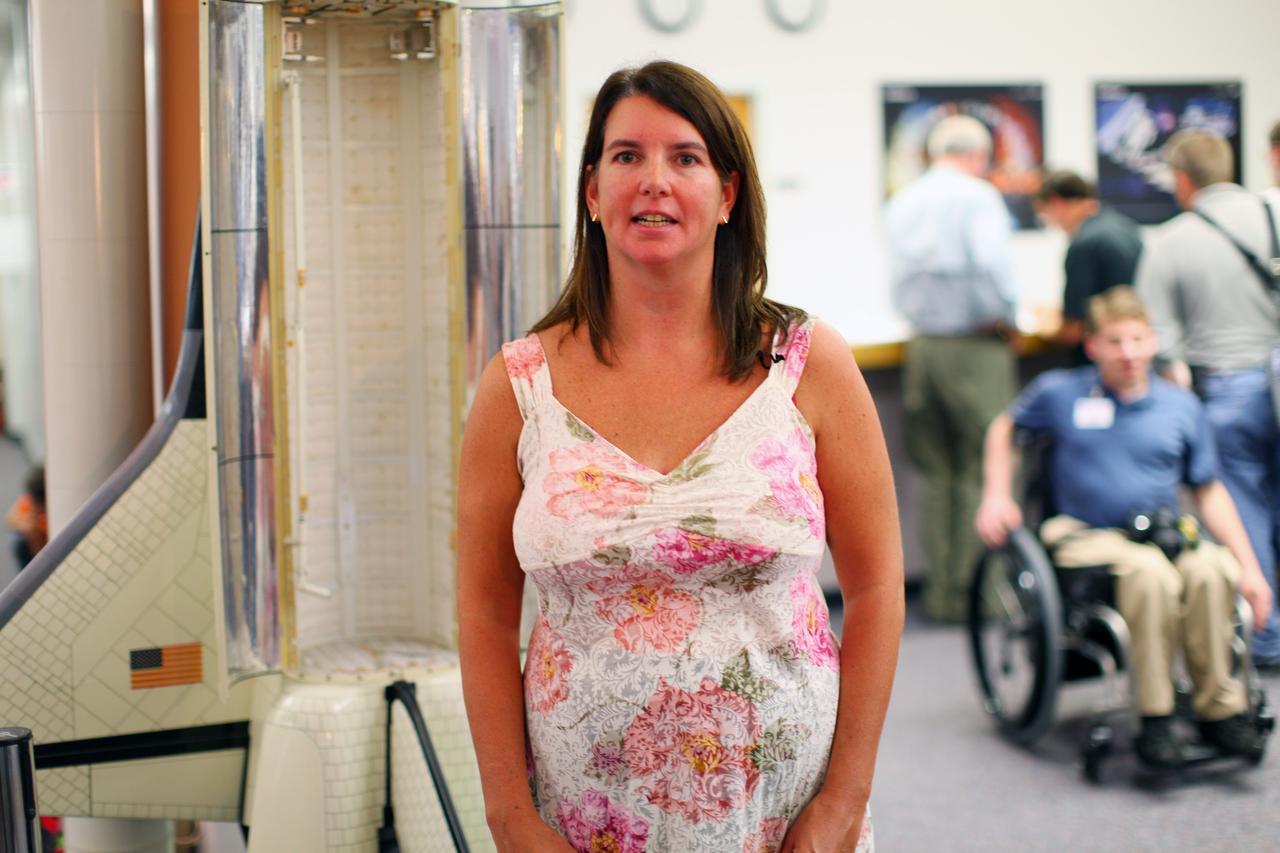
CAPE CANAVERAL, Fla. – Dr. Freya Shephard is interviewed by the media in the NASA Newsroom at Kennedy Space Center in Florida during prelaunch activities for the SpaceX demonstration test flight. Shephard is a researcher from the University of Nottingham in the United Kingdom and mentor to Paul Warren, an eleventh-grade student investigator from Henry E. Lackey High School in Charles County, Md. Warren’s experiment “Physiological Effects of Microgravity and Increased Levels of Radiation on Wild Type and Genetically Engineered Caenorhabditis elegans,” is one of 15 in the Student Spaceflight Experiments Program, or SSEP, being ferried to the International Space Station inside the Dragon capsule. The launch will be the second demonstration test flight for SpaceX for NASA's Commercial Orbital Transportation Services program, or COTS. SSEP, which began operation in June 2010 through a partnership of the National Center for Earth and Space Science Education with NanoRacks LLC, is a U.S. national science, technology, engineering and mathematics STEM education initiative that gives students across a community the opportunity to propose and design real experiments to fly in low Earth orbit. SSEP experiments flew on space shuttle missions STS-134 and STS-135 in 2011, the final flights of space shuttles Endeavour and Atlantis. For more information on SSEP, visit http://www.nasa.gov/audience/foreducators/station-here-we-come.html. Photo credit: NASA/Gianni Woods