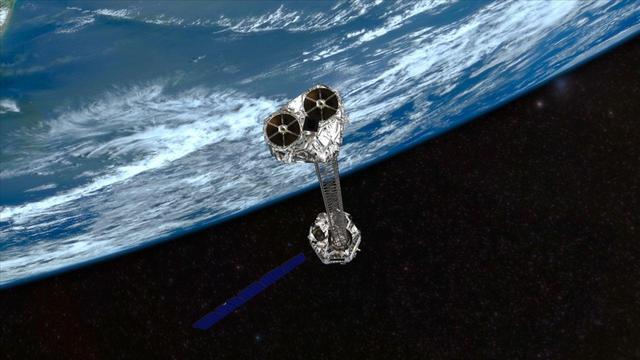
This artist concept shows NASA NuSTAR mission orbiting Earth. NuSTAR will hunt for hidden black holes and other exotic cosmic objects.
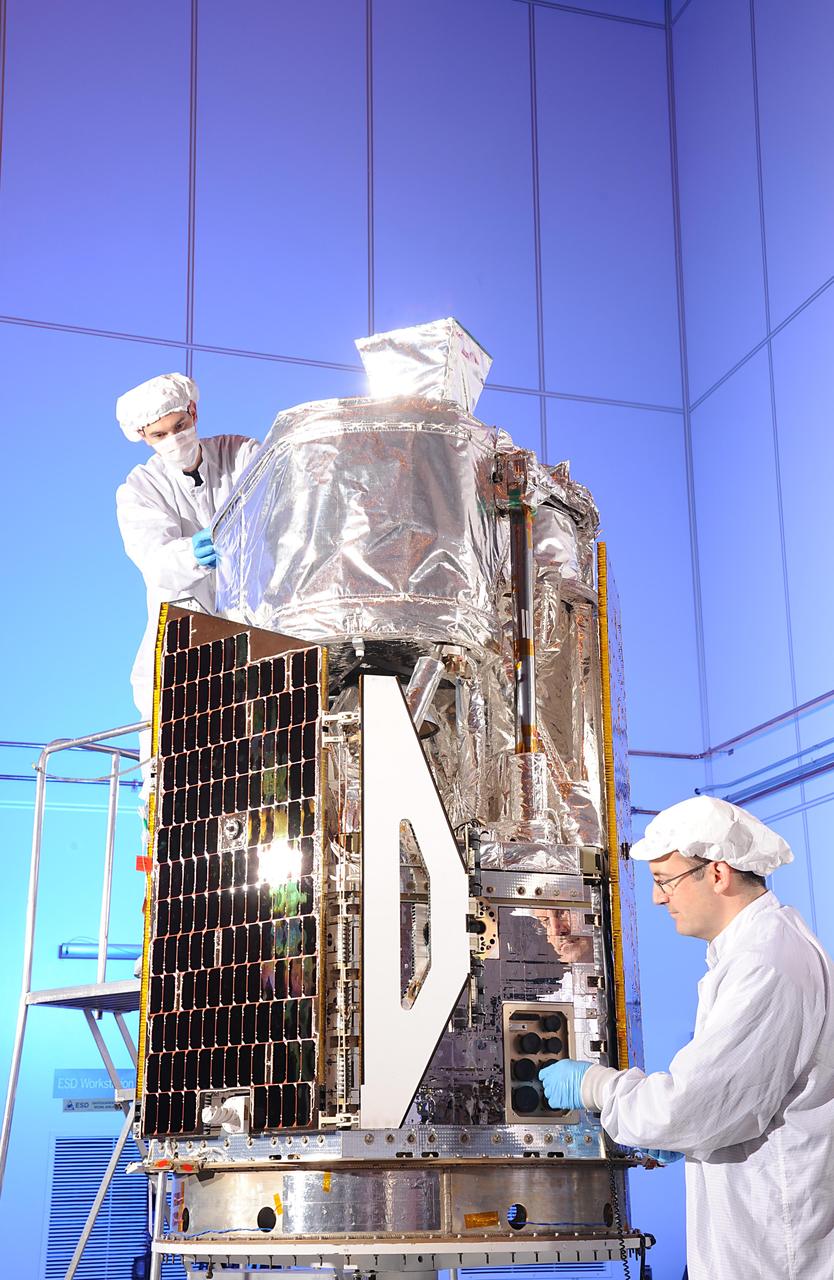
Engineers in the final stages of assembling NASA Nuclear Spectroscopic Telescope Array, or NuSTAR, at Orbital Sciences Corporation in Dulles, Va., January 2012.
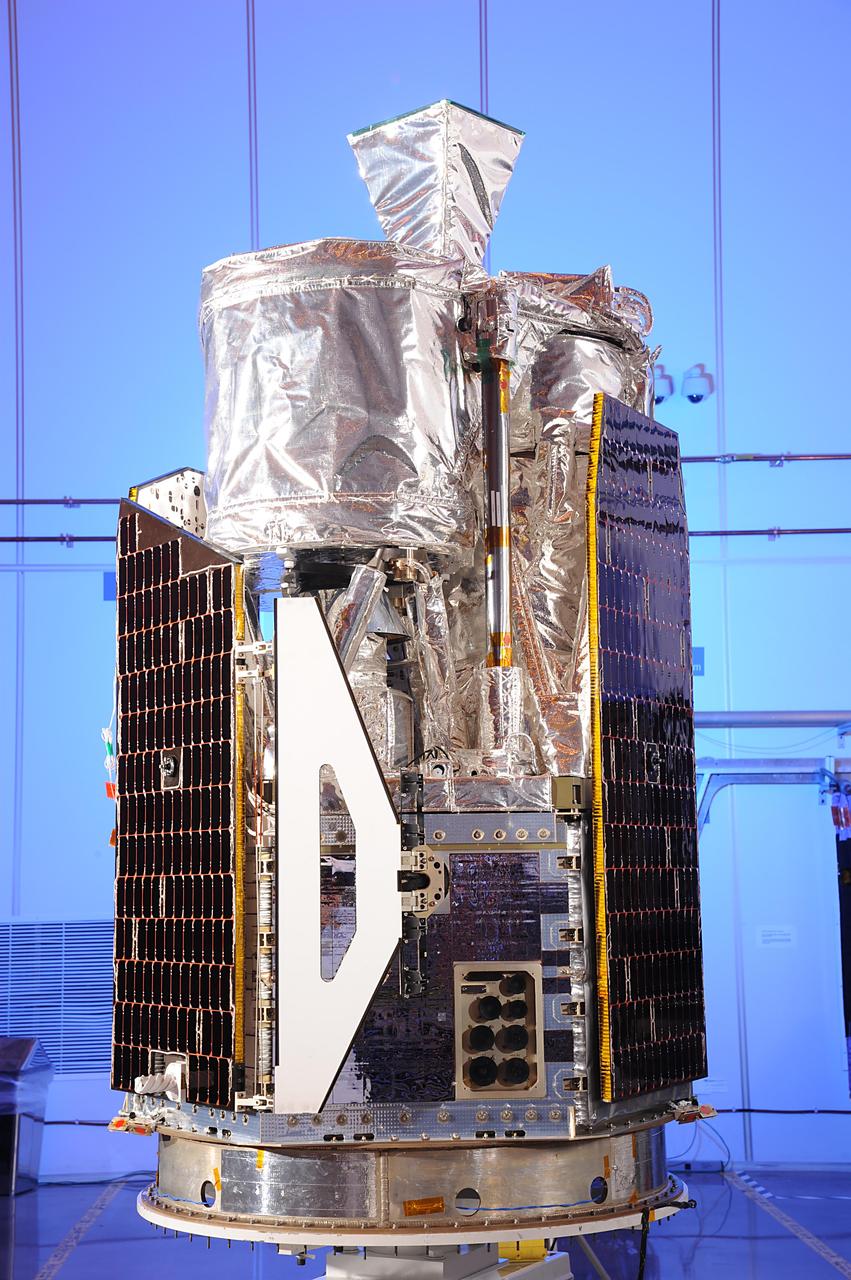
NASA Nuclear Spectroscopic Telescope Array, or NuSTAR, at Orbital Sciences Corporation in Dulles, Va., January 2012.
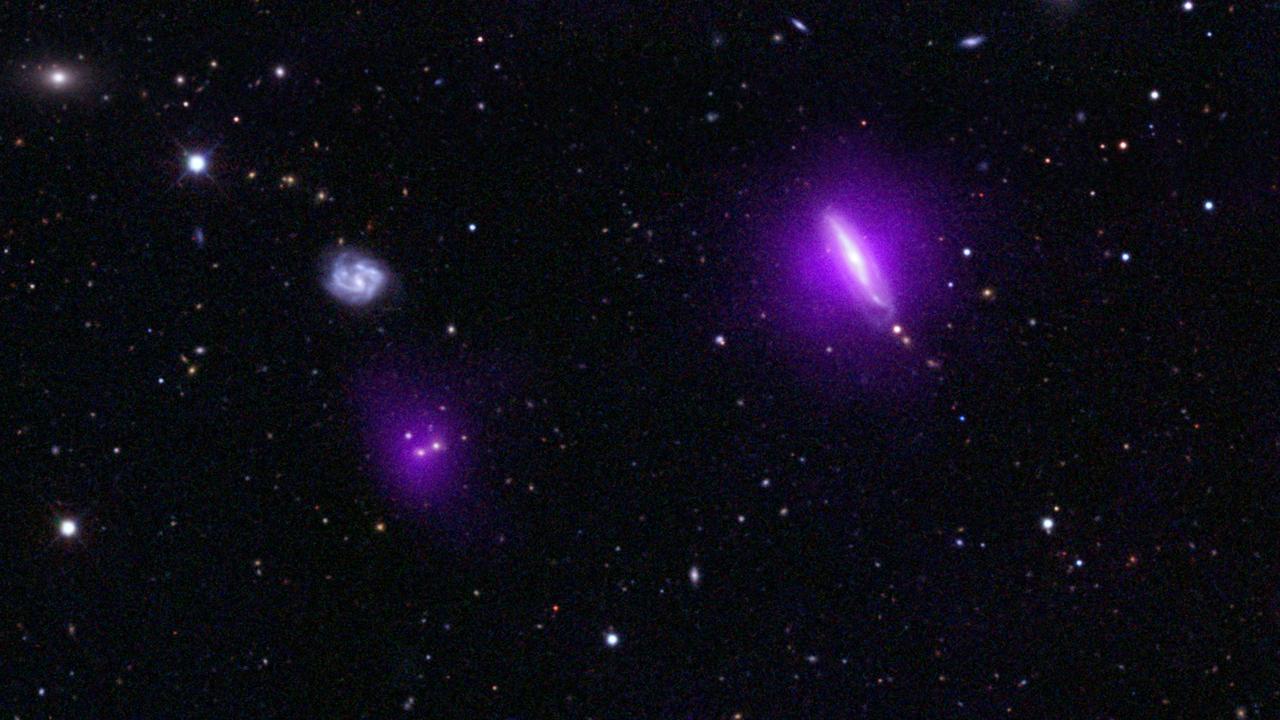
NASA NuSTAR serendipitous discovery in this field lies to the left of a galaxy, called IC751, at which the telescope originally intended to look.
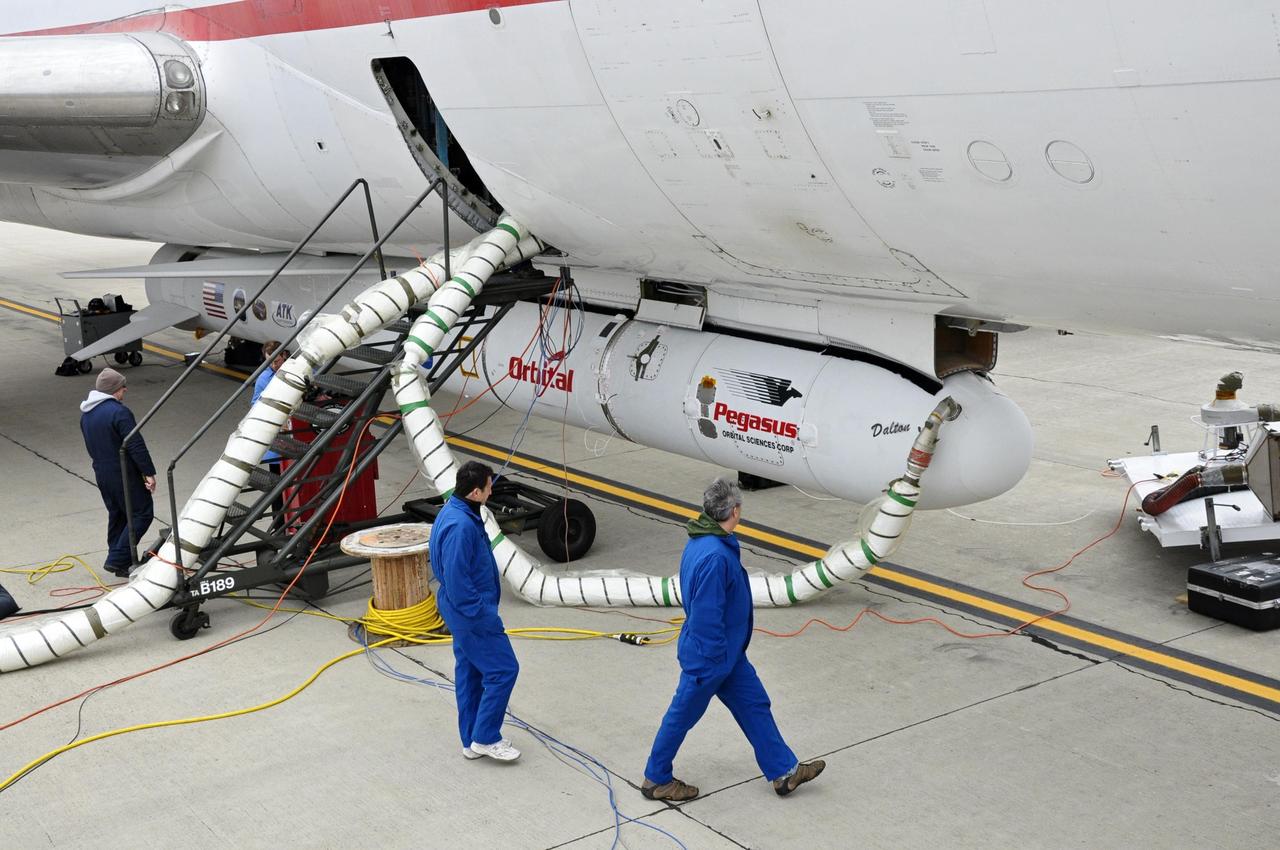
This photo shows the Orbital Sciences Corporation Pegasus XL rocket with NASA NuSTAR spacecraft after attachment to the L-1011 carrier aircraft known as Stargazer.

Top: An illustration of NASA's Nuclear Spectroscopic Telescope Array, or NuSTAR, in orbit. The unique school bus-long mast allows NuSTAR to focus high energy X-rays. Lower-left: A color image from NASA's Hubble Space Telescope of one of the nine galaxies targeted by NuSTAR in search of hidden black holes. Bottom-right: An artist's illustration of a supermassive black hole, actively feasting on its surroundings. The central black hole is hidden from direct view by a thick layer of encircling gas and dust. http://photojournal.jpl.nasa.gov/catalog/PIA19348
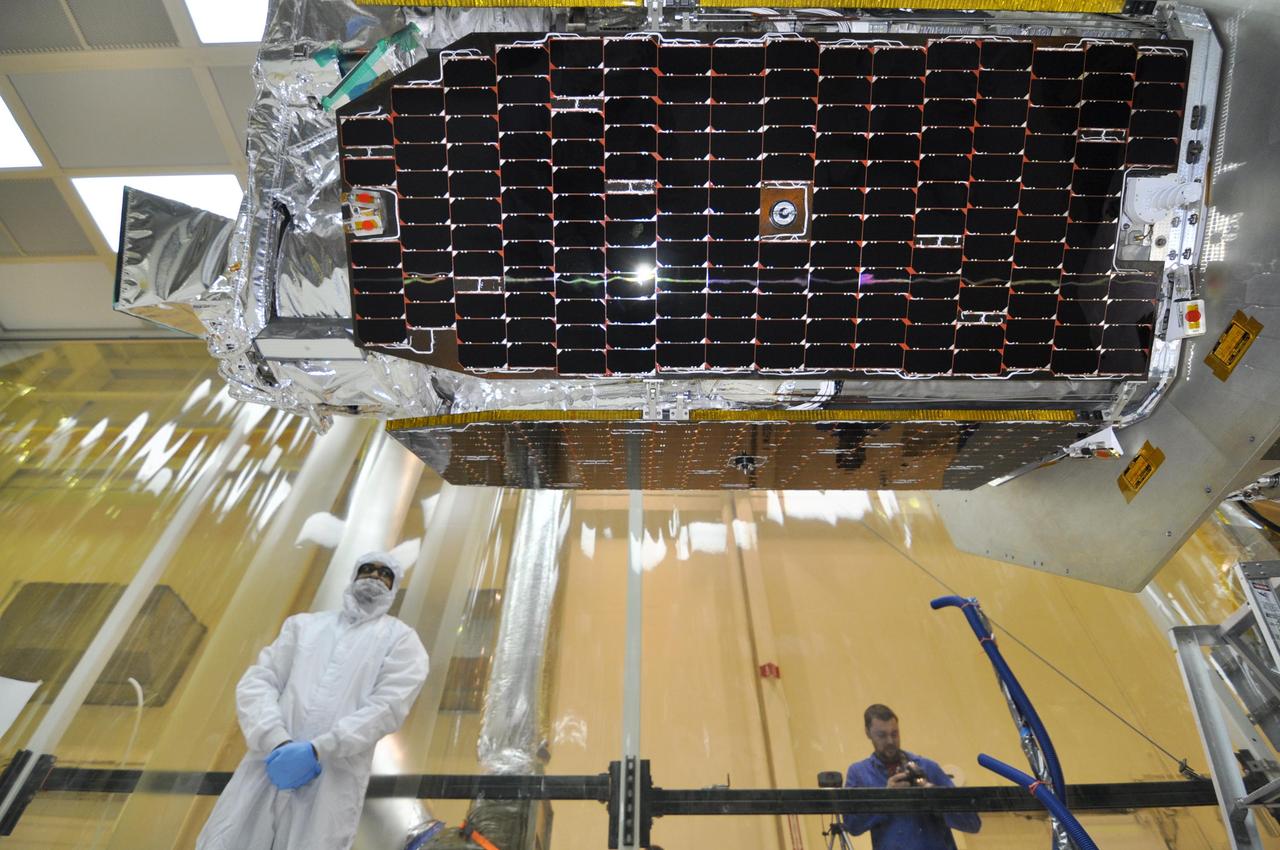
Inside an environmental enclosure at Vandenberg Air Force Base processing facility in California, solar panels line the sides of NASA Nuclear Spectroscopic Telescope Array NuSTAR, which was just joined to the Orbital Sciences Pegasus XL rocket.
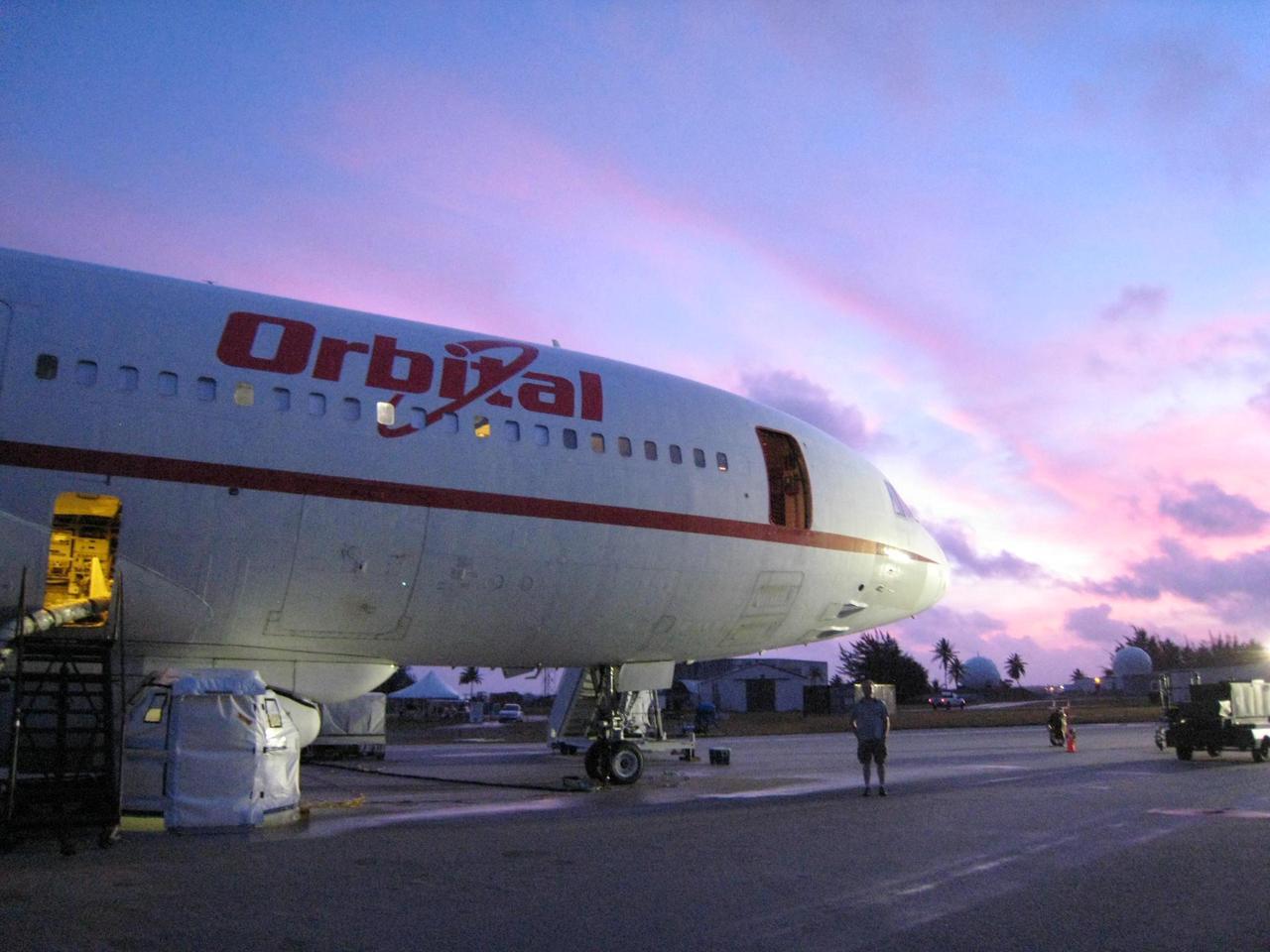
The carrier plane, L-1011 Stargazer, that will give NASA NuSTAR and its rocket a lift to their airborne launch site is seen here at sunrise on Kwajalein Atoll in the Pacific Ocean.
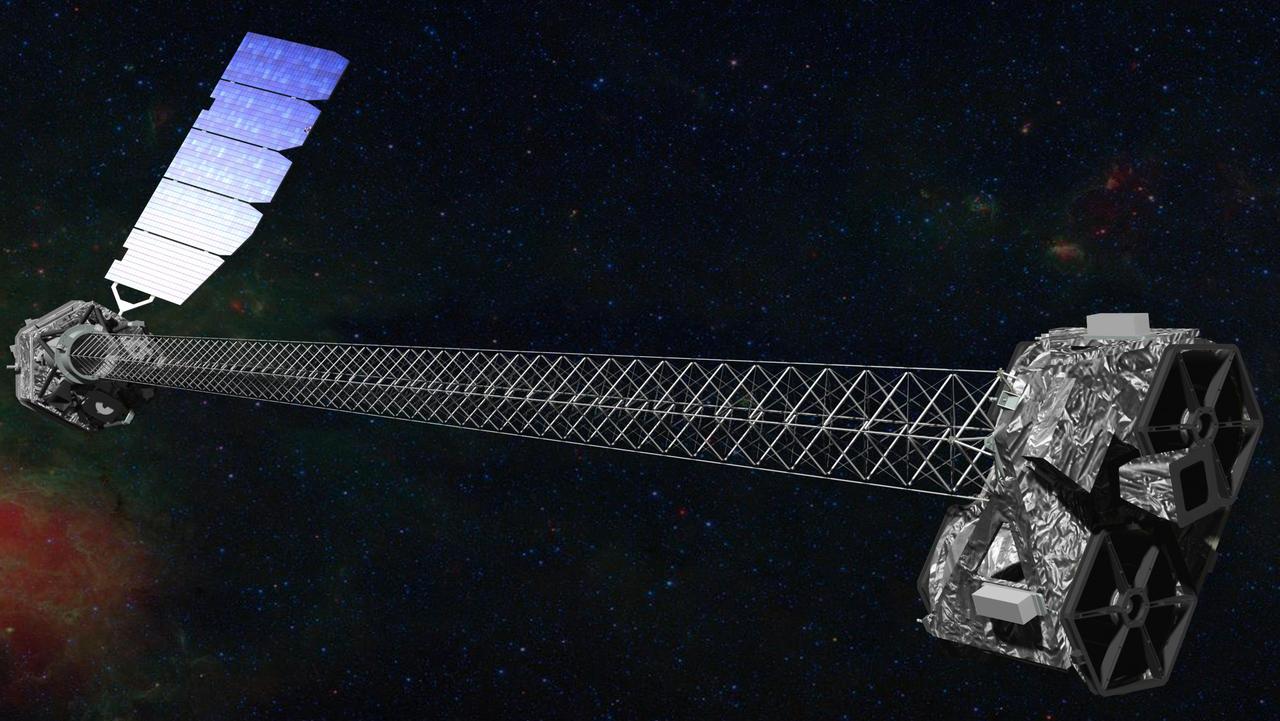
This is an artist concept of NASA NuSTAR spacecraft which has a 10-meter mast that deploys after launch to separate the optics modules right from the detectors in the focal plane left.
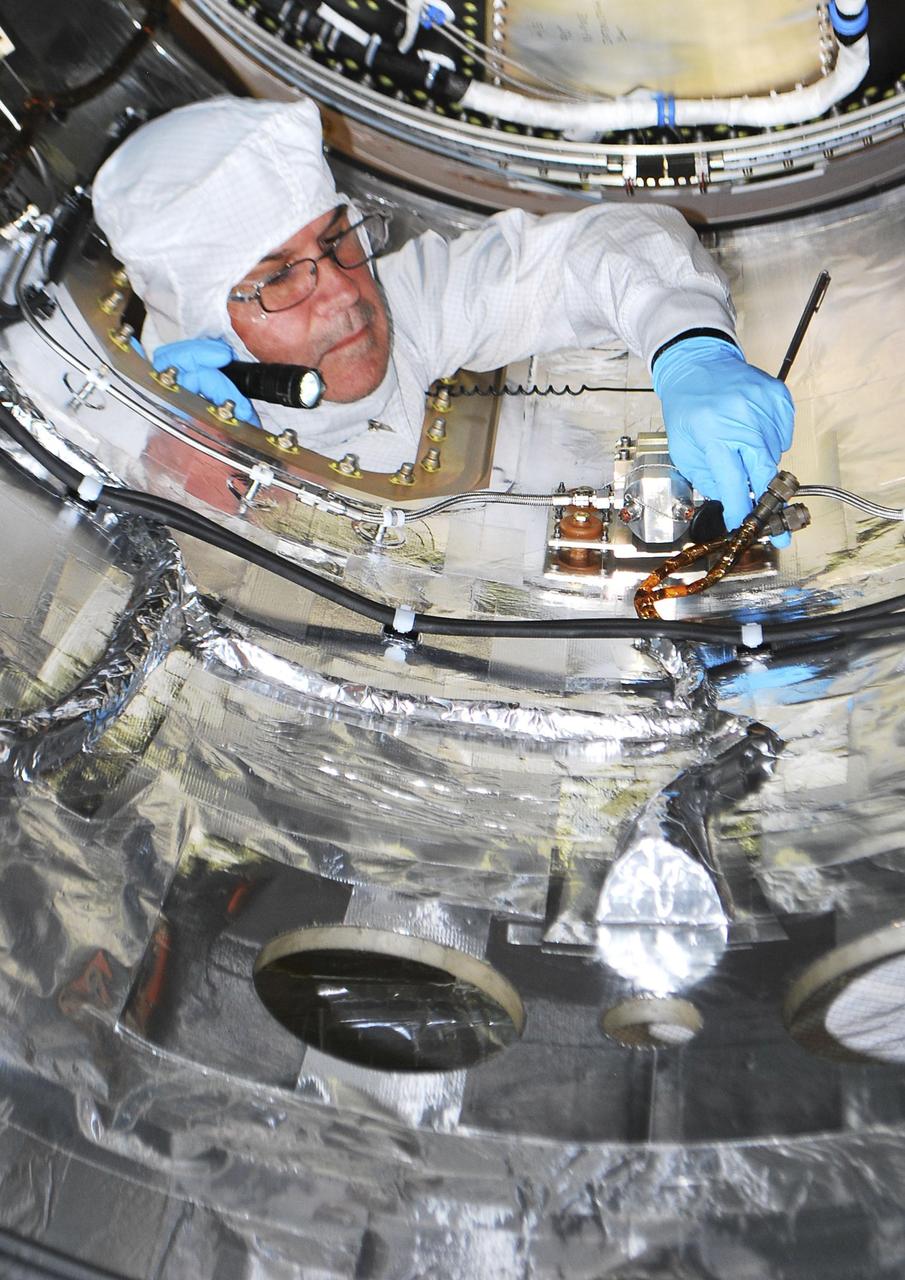
A spacecraft technician is performing closeout work inside the fairing that will be installed around NASA Nuclear Spectroscopic Telescope Array NuSTAR spacecraft in a processing facility at Vandenberg Air Force Base in California.
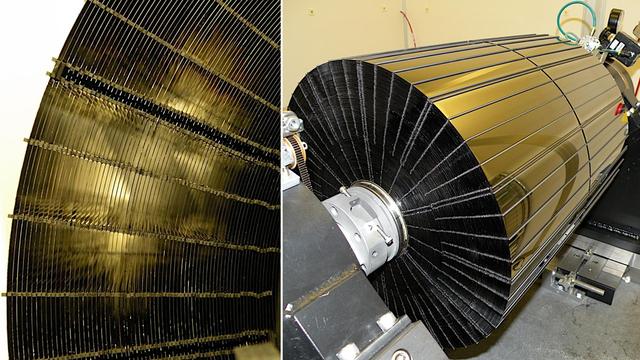
NASA Nuclear Spectroscopic Telescope Array, or NuSTAR, has a complex set of mirrors, or optics, that will help it see high-energy X-ray light in greater detail than ever before.
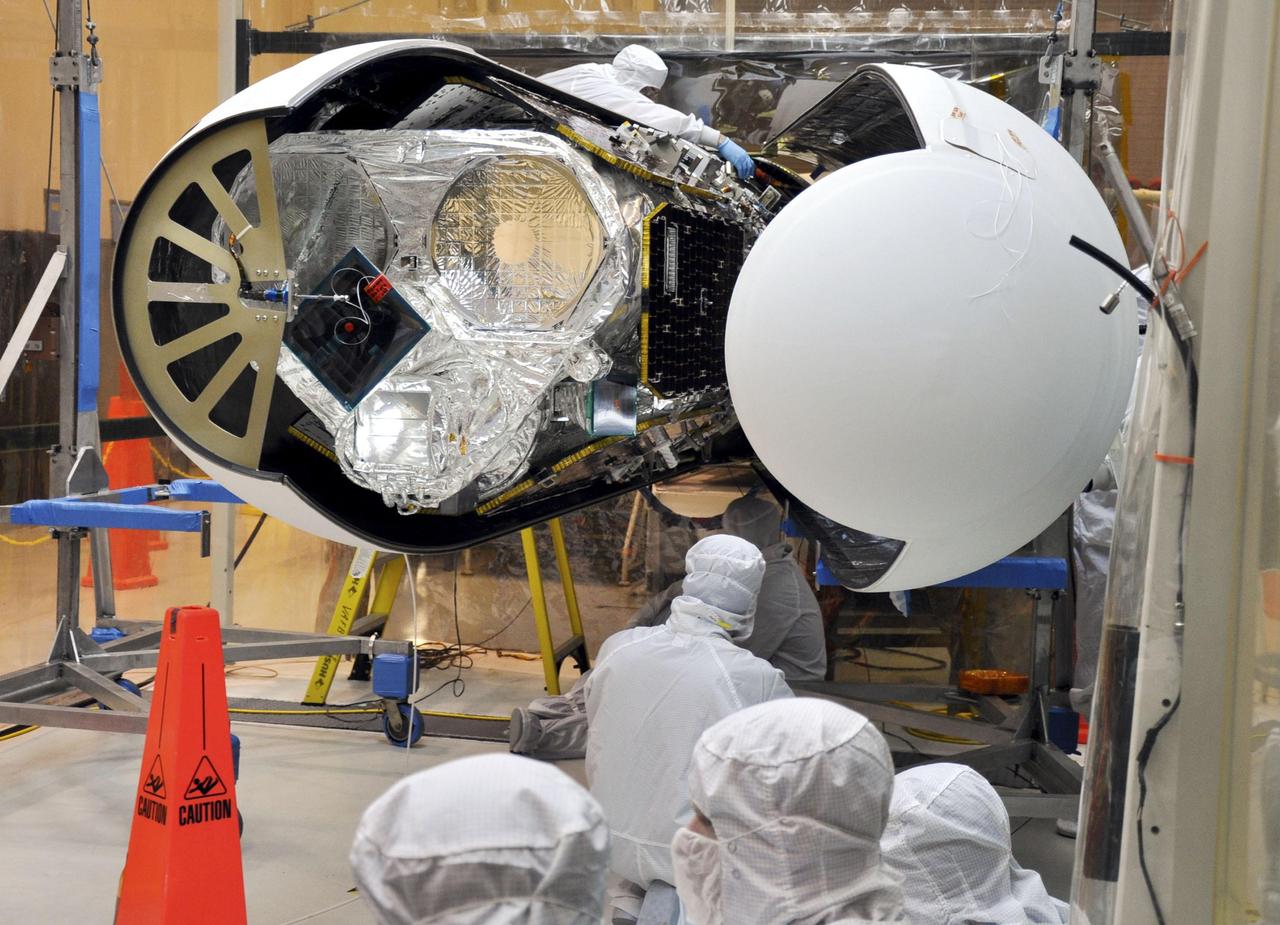
An Orbital Sciences technician completes final checks of NASA Nuclear Spectroscopic Telescope Array, or NuSTAR, before the Pegasus payload fairing is secured around it.

Flaring, active regions of our sun are highlighted in this image combining observations from several telescopes. High-energy X-rays from NASA's Nuclear Spectroscopic Telescope Array (NuSTAR) are shown in blue; low-energy X-rays from Japan's Hinode spacecraft are green; and extreme ultraviolet light from NASA's Solar Dynamics Observatory (SDO) is yellow and red. All three telescopes captured their solar images around the same time on April 29, 2015. The NuSTAR image is a mosaic made from combining smaller images. The active regions across the sun's surface contain material heated to several millions of degrees. The blue-white areas showing the NuSTAR data pinpoint the most energetic spots. During the observations, microflares went off, which are smaller versions of the larger flares that also erupt from the sun's surface. The microflares rapidly release energy and heat the material in the active regions. NuSTAR typically stares deeper into the cosmos to observe X-rays from supernovas, black holes and other extreme objects. But it can also look safely at the sun and capture images of its high-energy X-rays with more sensitivity than before. Scientists plan to continue to study the sun with NuSTAR to learn more about microflares, as well as hypothesized nanoflares, which are even smaller. In this image, the NuSTAR data shows X-rays with energies between 2 and 6 kiloelectron volts; the Hinode data, which is from the X-ray Telescope instrument, has energies of 0.2 to 2.4 kiloelectron volts; and the Solar Dynamics Observatory data, taken using the Atmospheric Imaging Assembly instrument, shows extreme ultraviolet light with wavelengths of 171 and 193 Angstroms. Note the green Hinode image frame edge does not extend as far as the SDO ultraviolet image, resulting in the green portion of the image being truncated on the right and left sides. http://photojournal.jpl.nasa.gov/catalog/PIA19821
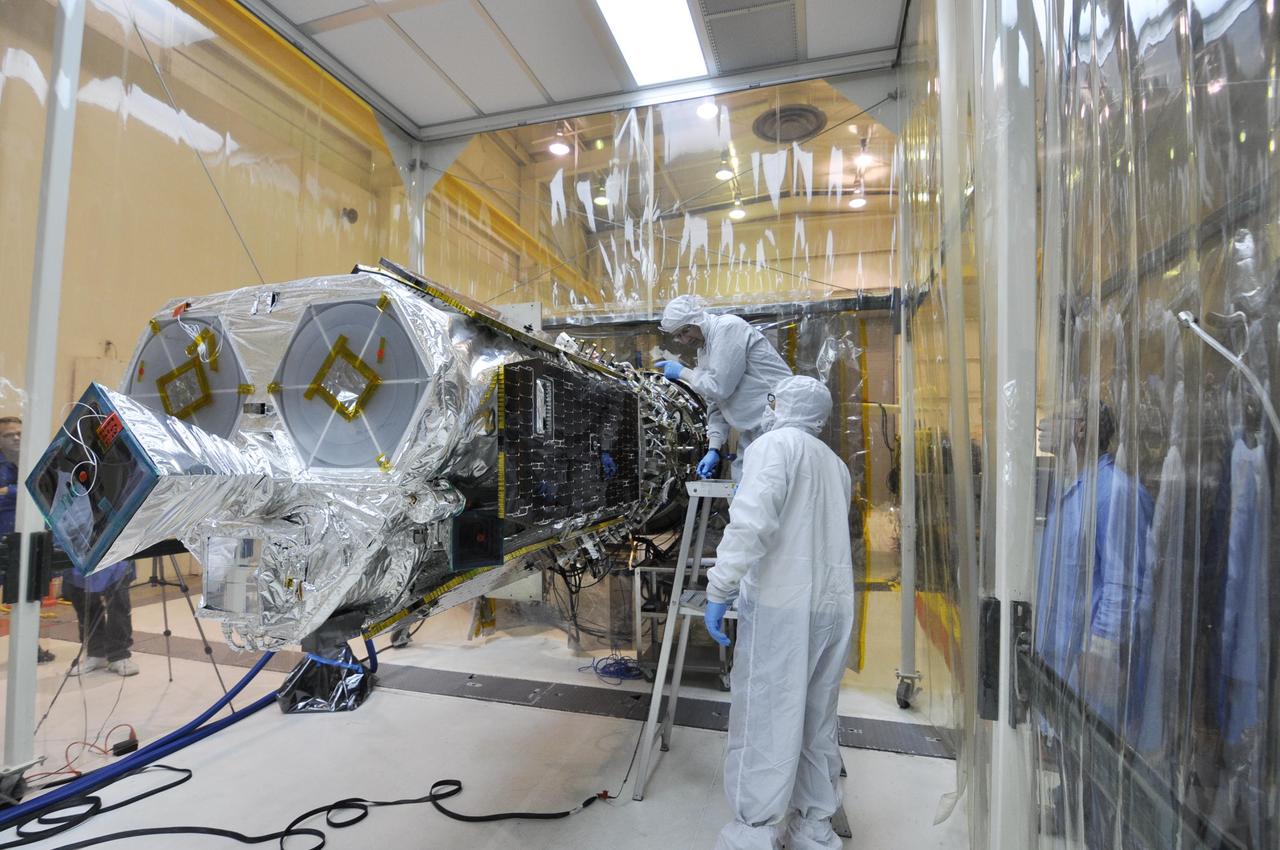
Inside an environmental enclosure at Vandenberg Air Force Base processing facility in California, technicians complete the final steps in mating NASA Nuclear Spectroscopic Telescope Array NuSTAR and its Orbital Sciences Pegasus XL rocket.
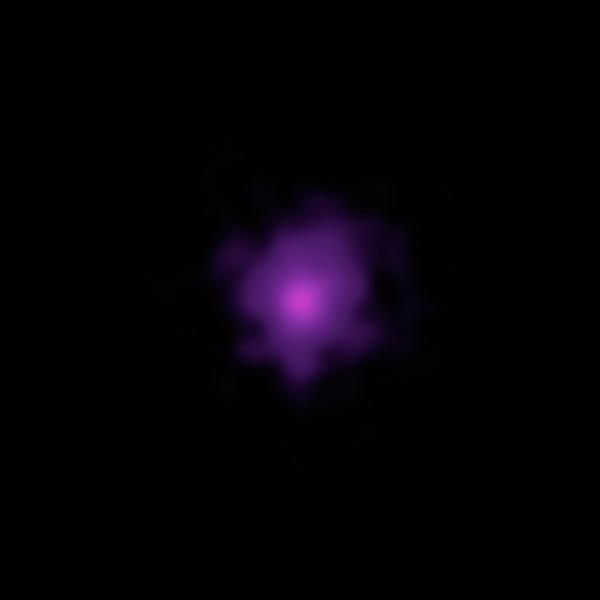
The brightest pulsar detected to date is shown in this frame from an animation that flips back and forth between images captured by NASA NuSTAR. A pulsar is a type of neutron star, the leftover core of a star that exploded in a supernova.
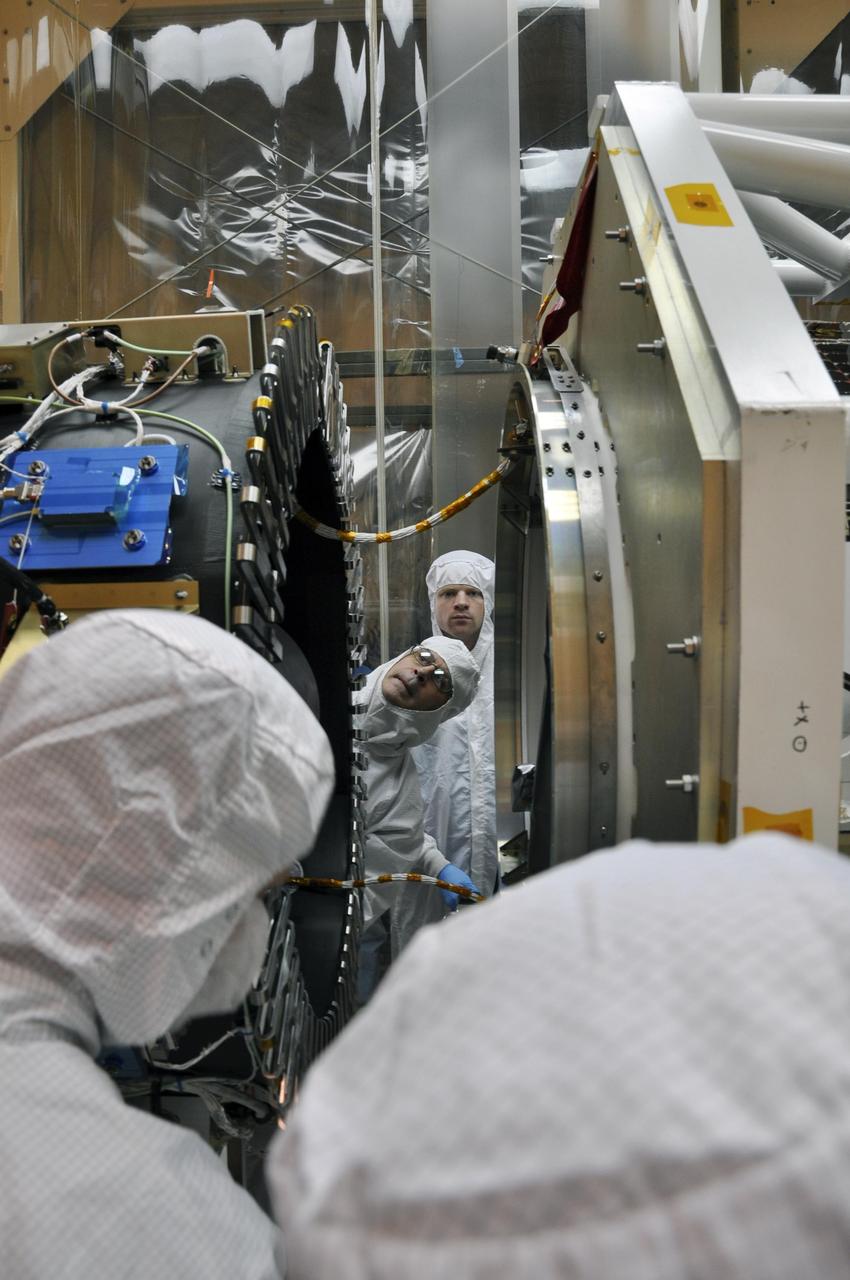
At Vandenberg Air Force Base processing facility in California, the separation ring on the aft end of NASA Nuclear Spectroscopic Telescope Array NuSTAR, at right, inches its way toward the third stage of an Orbital Sciences Pegasus XL rocket.

NASA NuSTAR will be able to identify individual black holes making up the diffuse X-ray glow, also called the X-ray background. At bottom right is a simulated view of what NuSTAR will see.

Yunjin Kim, NuSTAR project manager at the Jet Propulsion Laborartory (JPL), talks about NASA's Spectroscopic Telescope Array (NuStar) during a briefing, Wednesday, May 30, 2012, at NASA Headquarters in Washington. Imaging light in the high-energy, short-wavelength X-ray range, the telescope will aim to study how black holes form and evolve along with galaxies. The instrument, packed aboard an Orbital Sciences Pegasus XL rocket is set to launch from a plane in midair no earlier than June 13 from Kwajalein Atoll in the Marshall Islands. Photo Credit: (NASA/Paul E. Alers)
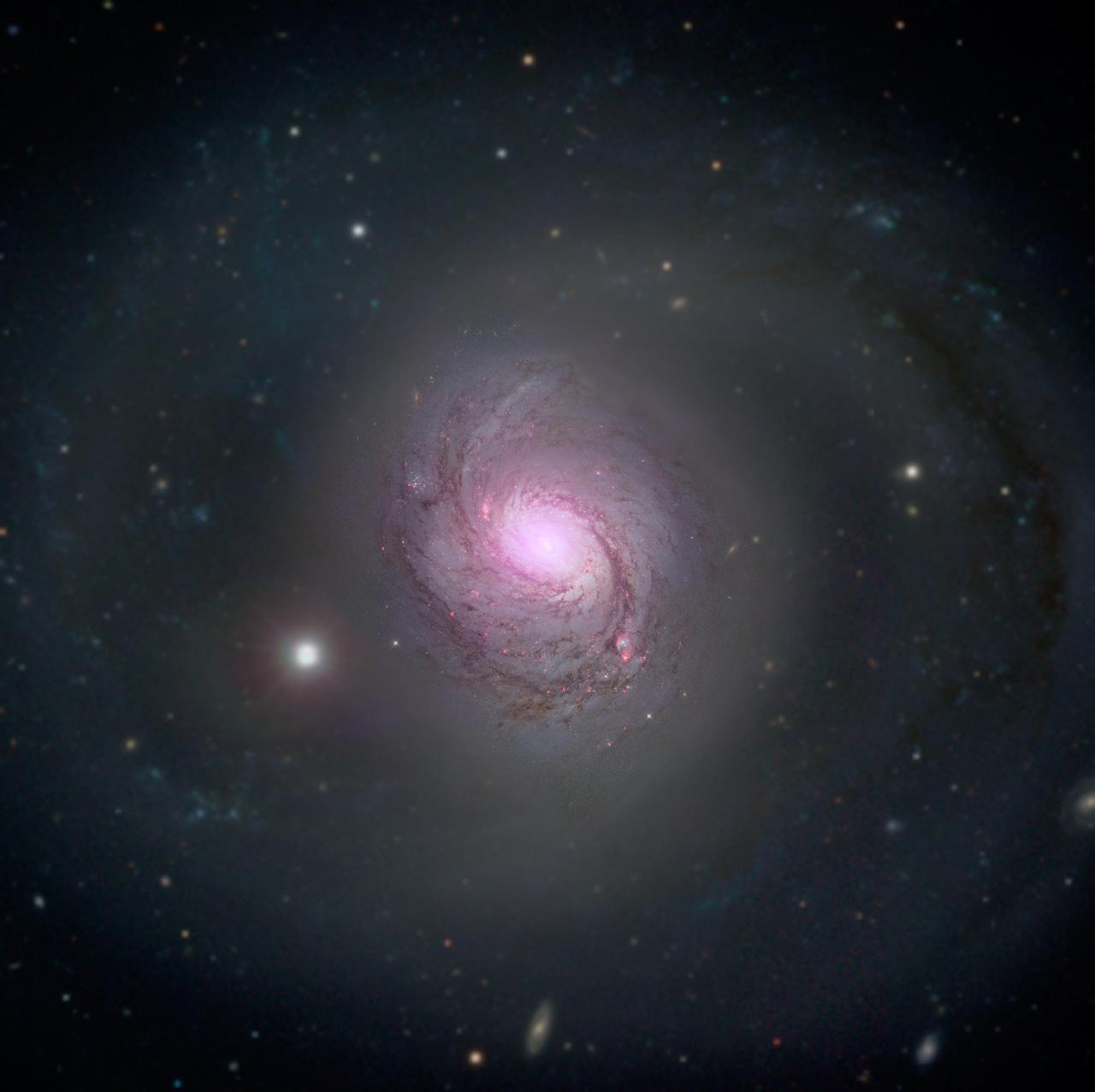
Galaxy NGC 1068 is shown in visible light and X-rays in this composite image. High-energy X-rays (magenta) captured by NASA's Nuclear Spectroscopic Telescope Array, or NuSTAR, are overlaid on visible-light images from both NASA's Hubble Space Telescope and the Sloan Digital Sky Survey. The X-ray light is coming from an active supermassive black hole, also known as a quasar, in the center of the galaxy. This supermassive black hole has been extensively studied due to its relatively close proximity to our galaxy. NGC 1068 is about 47 million light-years away in the constellation Cetus. The supermassive black hole is also one of the most obscured known, blanketed by thick clouds of gas and dust. NuSTAR's high-energy X-ray view is the first to penetrate the walls of this black hole's hidden lair. http://photojournal.jpl.nasa.gov/catalog/PIA20057

Nicknamed the Hand of God, this object is called a pulsar wind nebula, imaged by NASA NuSTAR. It powered by the leftover, dense core of a star that blew up in a supernova explosion.

NASA NuSTAR has captured these first, focused views of the supermassive black hole at the heart of our Milky Way galaxy in high-energy X-ray light.
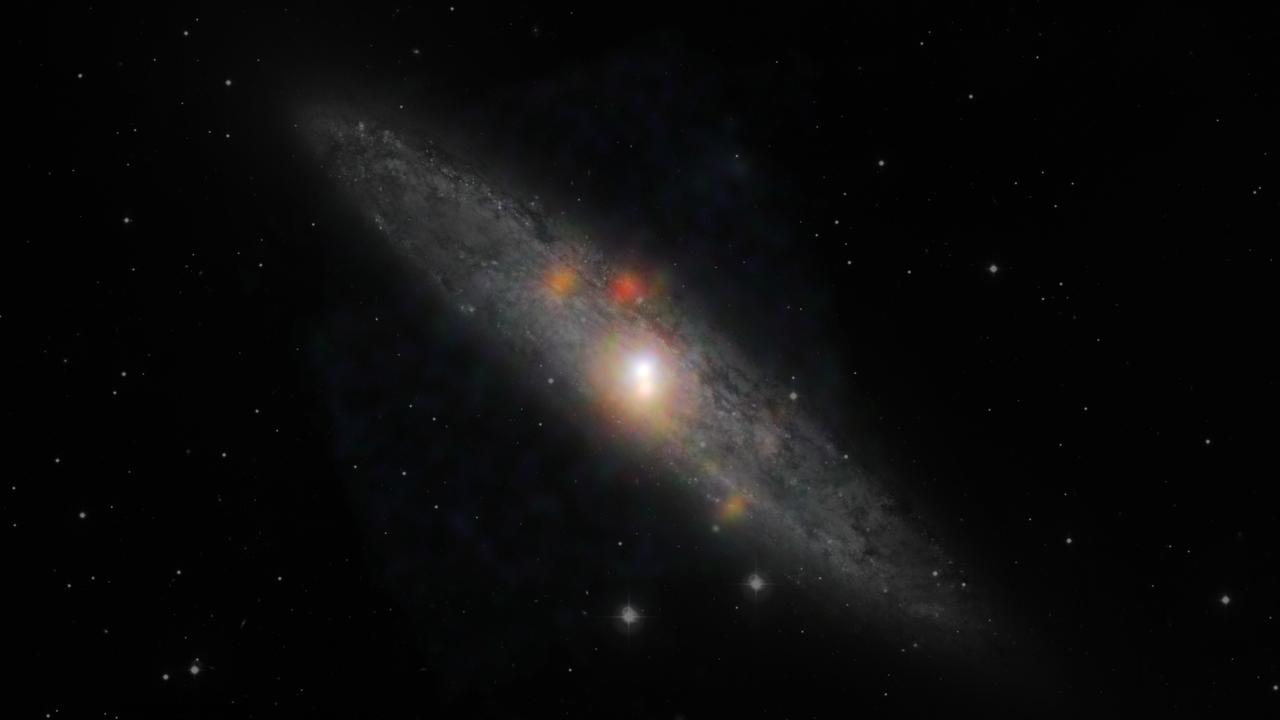
The Sculptor galaxy is seen in a new light, in this composite image from NASA Nuclear Spectroscopic Telescope Array NuSTAR and the European Southern Observatory in Chile.
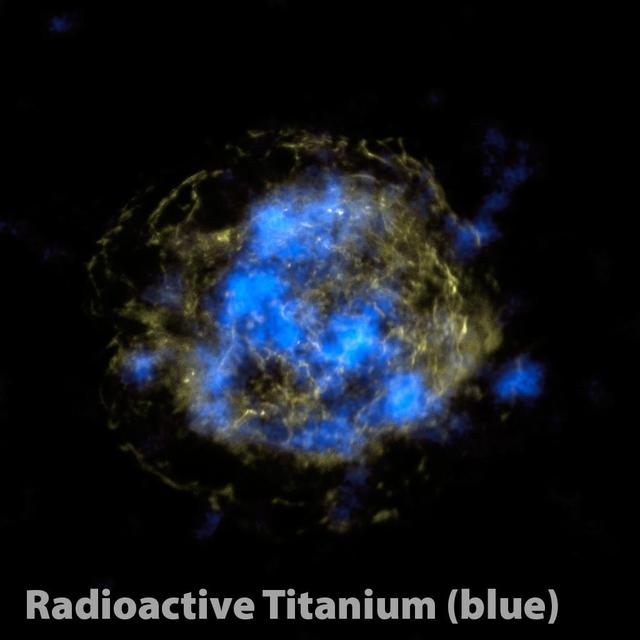
NASA NuSTAR has, for the first time, imaged the radioactive guts of a supernova remnant, the leftover remains of a star that exploded. The NuSTAR data are blue, and show high-energy X-rays.
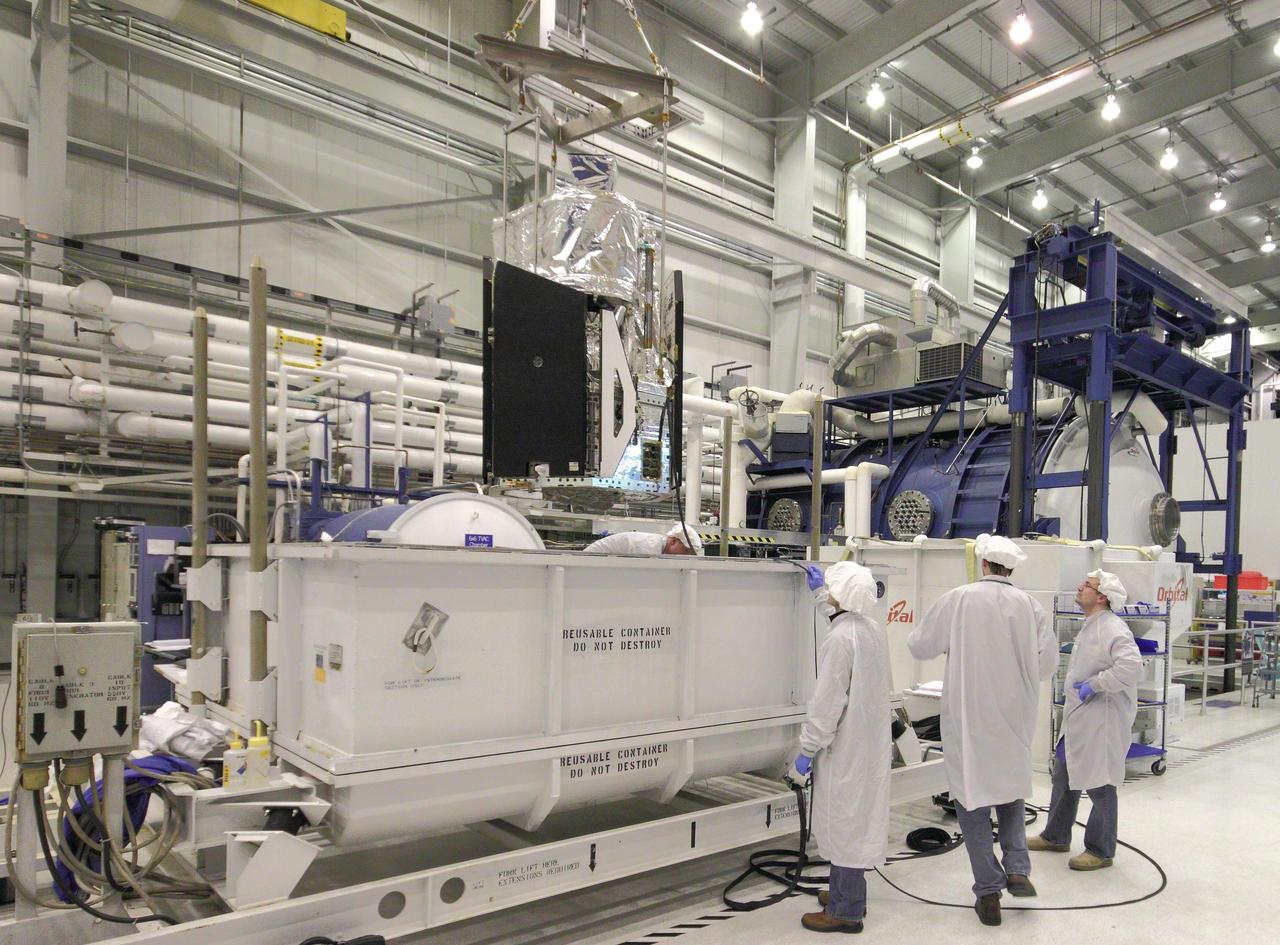
NASA Nuclear Spectroscopic Telescope Array, or NuSTAR, mission is lowered into its shipping container at Orbital Sciences Corporation in Dulles, Va. It is scheduled to launch from Kwajalein Atoll in the Marshall Islands on March 14, 2012.

This data plot captured by NASA Nuclear Spectroscopic Telescope Array, or NuSTAR, shows X-ray light streaming from regions near a supermassive black hole known as Markarian 335.

A range of supermassive black holes lights up this new image from NASA NuSTAR. All of the dots are active black holes tucked inside the hearts of galaxies, with colors representing different energies of X-ray light.
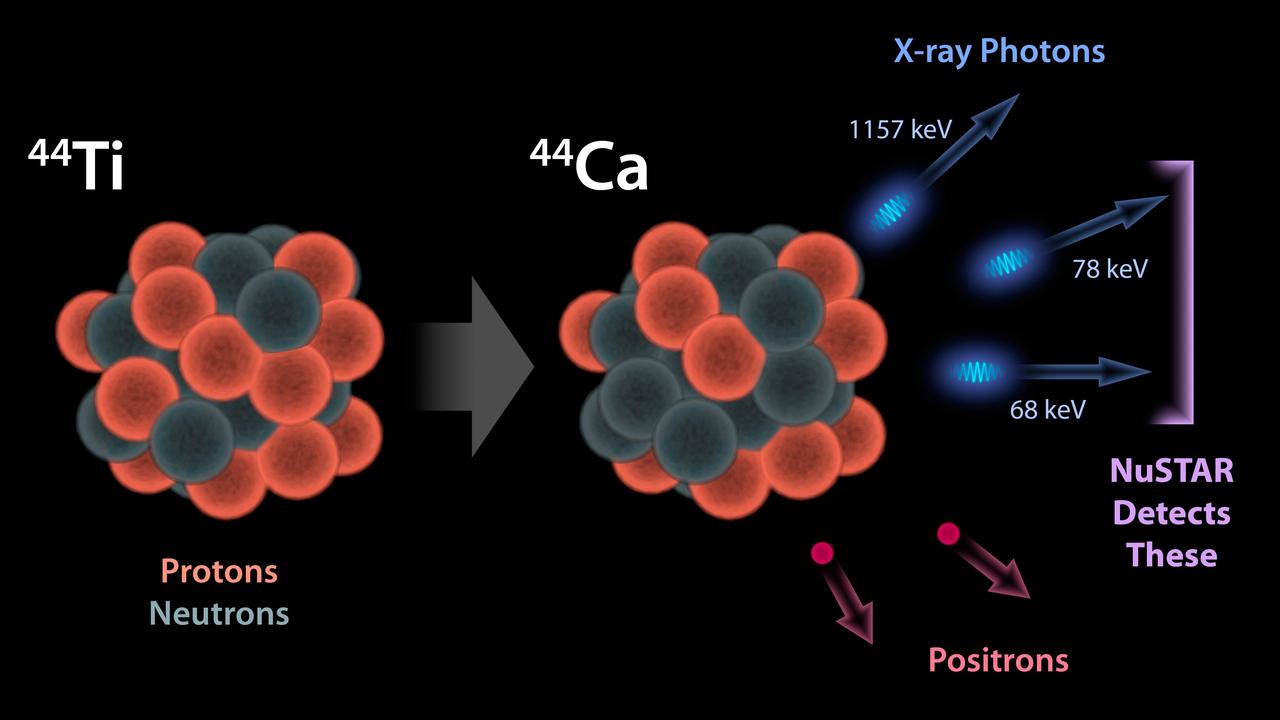
This diagram illustrates why NASA NuSTAR can see radioactivity in the remains of exploded stars for the first time. The observatory detects high-energy X-ray photons that are released by a radioactive substance called titanium-44.

Magenta spots in this image from NASA NuSTAR show two black holes in the Circinus galaxy, located 13 million light-years from Earth in the Circinus constellation.

The magenta spots in this image from NASA NuSTAR show two black holes in the spiral galaxy called NGC 1313, or the Topsy Turvy galaxy, located about 13 million light-years away in the Reticulum constellation.

These images, taken by NASA black-hole hunter, NuSTAR, are the first, focused high-energy X-ray views of the area surrounding the supermassive black hole, called Sagittarius A*, at the center of our galaxy.
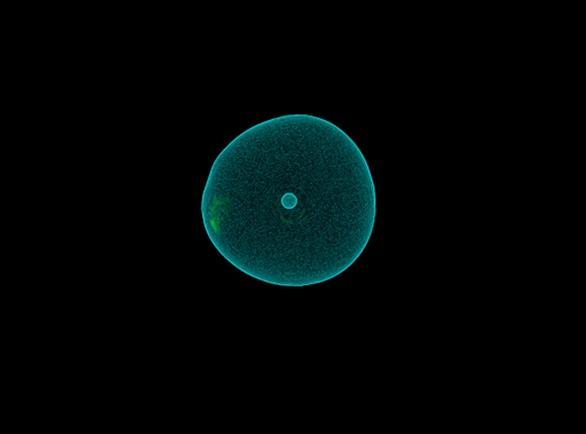
NuSTAR has provided the first observational evidence in support of a theory that says exploding stars slosh around before detonating. That theory, referred to as mild asymmetries, is shown here in a simulation by Christian Ott.
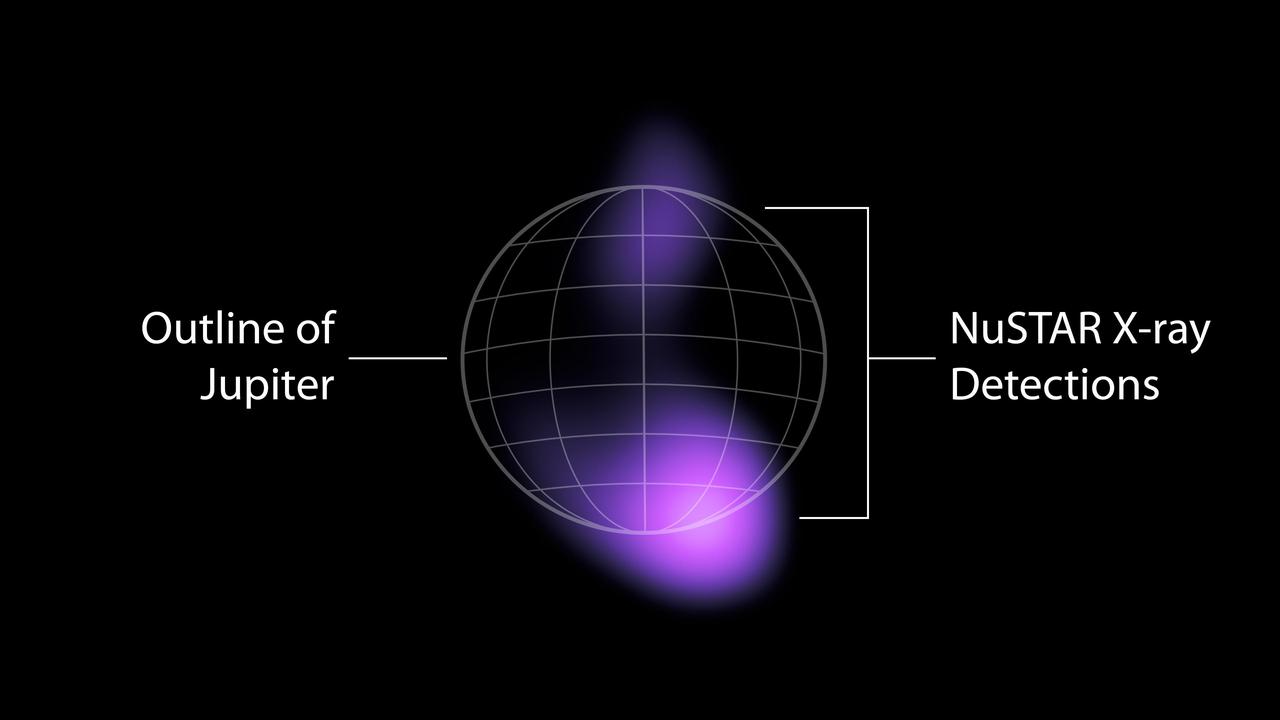
The areas where high-energy X-rays were detected by NASA's NuSTAR (Nuclear Spectroscopic Telescope Array) from the auroras near Jupiter's north and south poles are shown in purple in this graphic. The emissions are the highest-energy light ever seen at Jupiter and the highest-energy light ever detected from a planet in our solar system other than Earth. The light comes from accelerated electrons colliding with the atmosphere. NuSTAR cannot pinpoint the source of the light with high precision, but can only find that it is coming from somewhere in the purple-colored regions. X-rays are a form of light, but with much higher energies and shorter wavelengths than the visible light human eyes can see. NASA's Chandra X-ray Observatory and the ESA (European Space Agency) XMM-Newton observatory have both studied X-rays from Jupiter's auroras – produced when volcanos on Jupiter's moon Io shower the planet with ions (atoms stripped of their electrons). Jupiter's powerful magnetic field accelerates the particles and funnels them toward the planet's poles, where they collide with its atmosphere and release energy in the form of light, including X-rays. Electrons from Io are also accelerated by the planet's magnetic field, according to observations by the Jovian Auroral Distributions Experiment (JADE) and Jupiter Energetic-particle Detector Instrument (JEDI) on NASA's Juno spacecraft, which arrived at Jupiter in 2016. Researchers suspected that those electrons should produce even higher-energy X-rays than those observed by Chandra and XMM-Newton, and the NuSTAR detections confirm that hypothesis. The high-energy X-rays are relatively faint, and required a week of NuSTAR observations to detect. Scientists have detected X-rays in Earth's auroras with even higher energies than what NuSTAR saw at Jupiter, but those emissions can only be spotted by small satellites or high-altitude balloons that get extremely close to the locations in the atmosphere that generate those X-rays. https://photojournal.jpl.nasa.gov/catalog/PIA25131
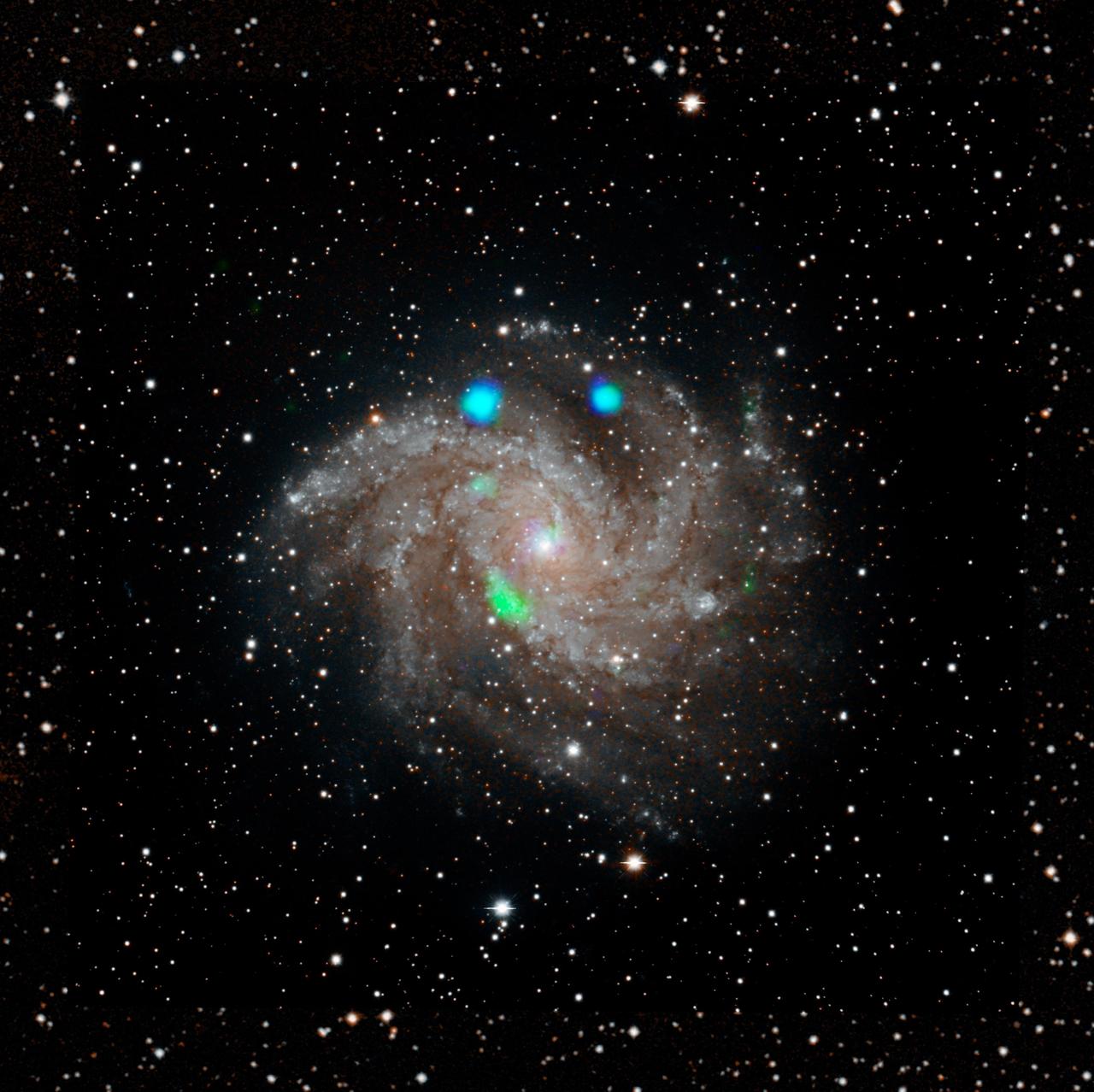
This visible-light image of the Fireworks galaxy (NGC 6946) comes from the Digital Sky Survey and is overlaid with data from NASA's NuSTAR observatory (shown in blue and green). Blue light indicates X-rays captured during the first of two observations by NuSTAR, in May 2017. Green light indicates X-rays seen less than two weeks later in the second observation. This means that the source of the green spot to the lower left of the galactic center began radiating in the time between those two observations. Two bright sources near the top of the image show a combination of blue and green, indicating those sources were visible during both observations. The X-ray data don't have the same spatial resolution as the visible-light image, so the X-ray sources appear larger. https://photojournal.jpl.nasa.gov/catalog/PIA23401
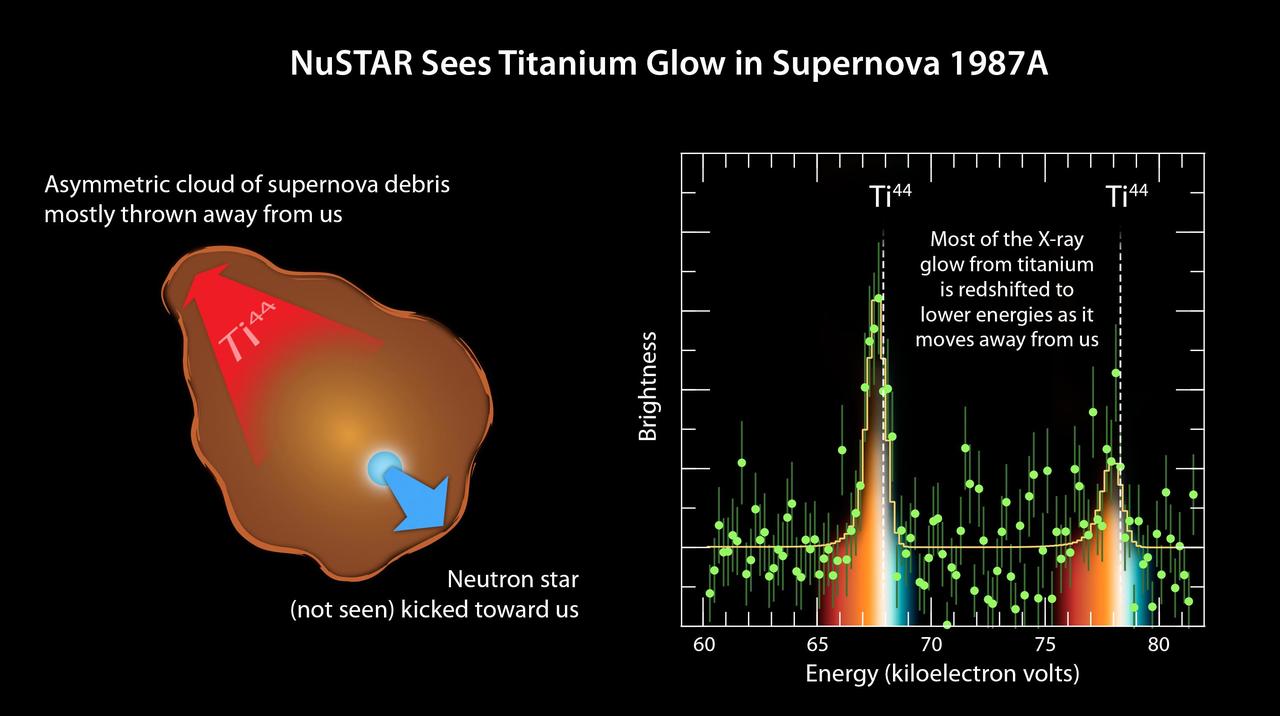
The plot of data from NASA's Nuclear Spectroscopic Telescope Array, or NuSTAR (right), amounts to a "smoking gun" of evidence in the mystery of how massive stars explode. The observations indicate that supernovae belonging to a class called Type II or core-collapse blast apart in a lopsided fashion, with the core of the star hurtling in one direction, and the ejected material mostly expanding the other way (see diagram in Figure 1). NuSTAR made the most precise measurements yet of a radioactive element, called titanium-44, in the supernova remnant called 1987A. NuSTAR sees high-energy X-rays, as shown here in the plot ranging from 60 to more than 80 kiloelectron volts. The spectral signature of titanium-44 is apparent as the two tall peaks. The white line shows where one would expect to see these spectral signatures if the titanium were not moving. The fact that the spectral peaks have shifted to lower energies indicates that the titanium has "redshifted," and is moving way from us. This is similar to what happens to a train's whistle as the train leaves the station. The whistle's sound shifts to lower frequencies. NuSTAR's detection of redshifted titanium reveals that the bulk of material ejected in the 1987A supernova is flying way from us at a velocity of 1.6 million miles per hour (2.6 million kilometers per hour). Had the explosion been spherical in nature, the titanium would have been seen flying uniformly in all directions. This is proof that this explosion occurred in an asymmetrical fashion. http://photojournal.jpl.nasa.gov/catalog/PIA19335
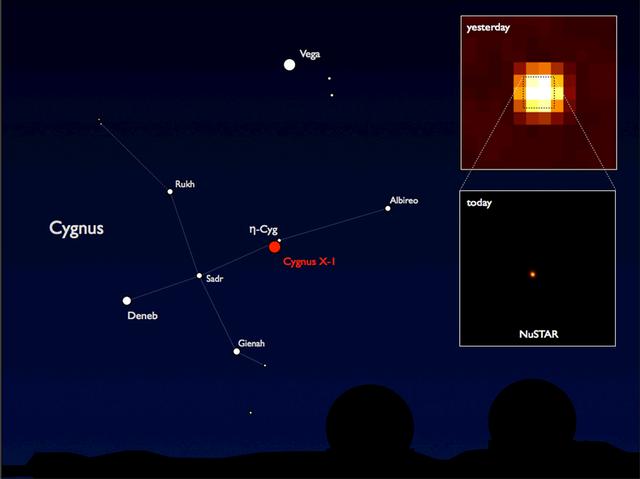
converted PNM file
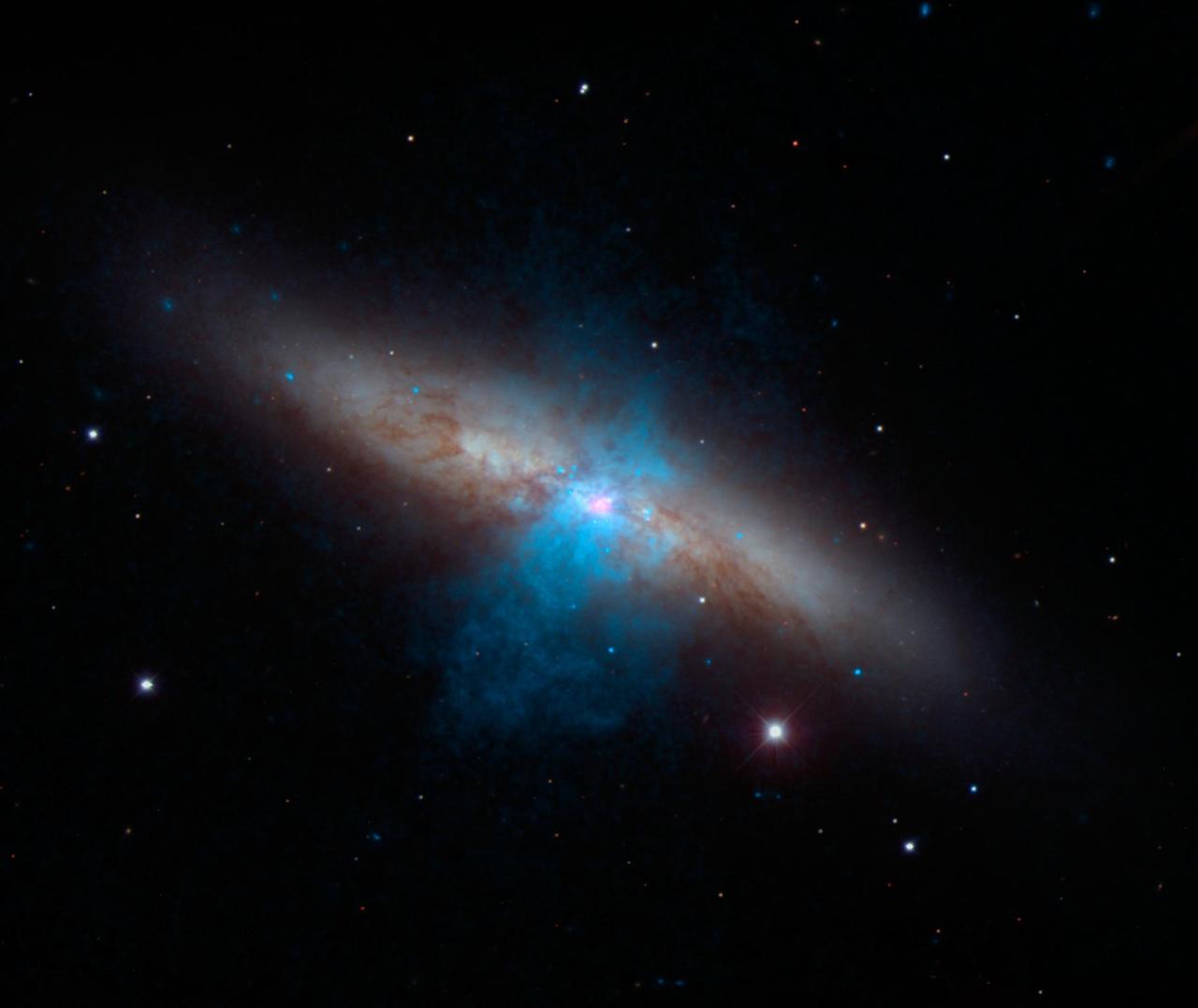
The bulk of a galaxy called Messier 82 M82, or the Cigar galaxy, is seen in visible-light data captured by the National Optical Astronomy Observatory 2.1-meter telescope at Kitt Peak in Arizona.
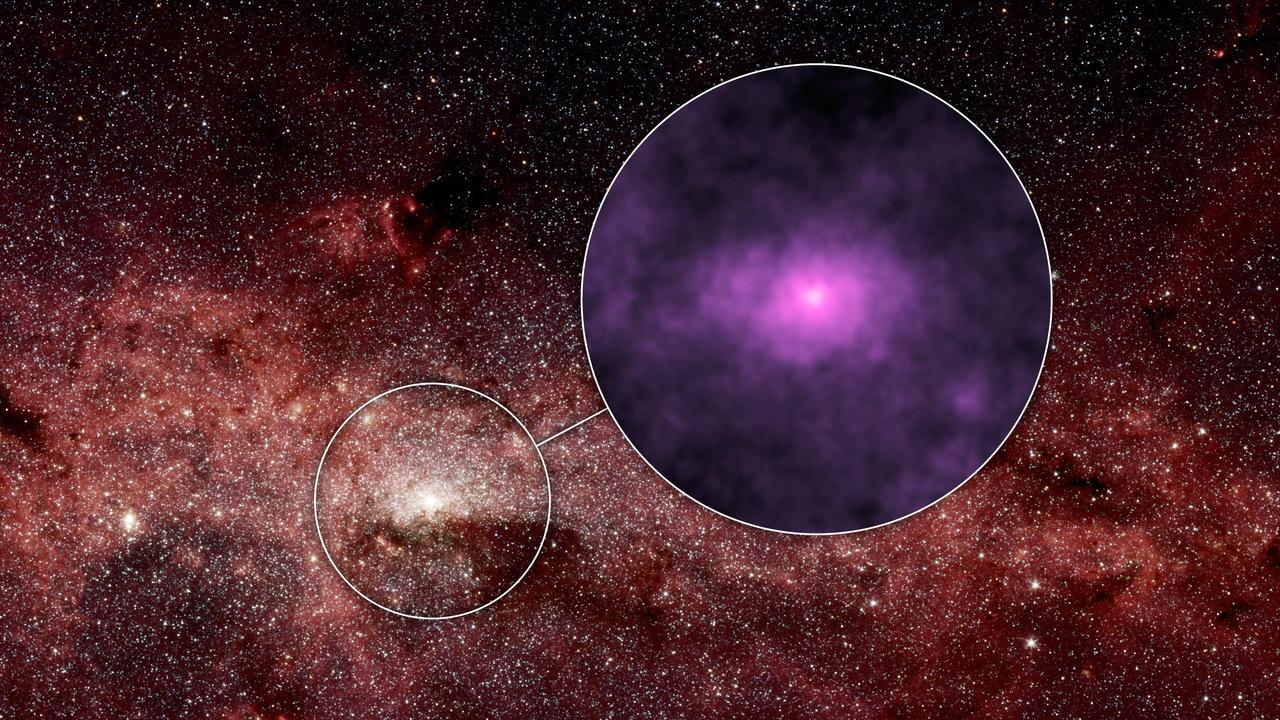
NASA's Nuclear Spectroscopic Telescope Array, or NuSTAR, has captured a new high-energy X-ray view (magenta, Figure 1) of the bustling center of our Milky Way galaxy. The smaller circle shows the area where the NuSTAR image was taken -- the very center of our galaxy, where a giant black hole resides. That region is enlarged to the right, in the larger circle, to show the NuSTAR data. The NuSTAR picture is one of the most detailed ever taken of the center of our galaxy in high-energy X-rays. The X-ray light, normally invisible to our eyes, has been assigned the color magenta. The brightest point of light near the center of the X-ray picture is coming from a spinning dead star, known as a pulsar, which is near the giant black hole. While the pulsar's X-ray emissions were known before, scientists were surprised to find more high-energy X-rays than predicted in the surrounding regions, seen here as the elliptical haze. Astronomers aren't sure what the sources of the extra X-rays are, but one possibility is a population of dead stars. The background picture was captured in infrared light by NASA's Spitzer Space Telescope. The NuSTAR image has an X-ray energy range of 20 to 40 kiloelectron volts. http://photojournal.jpl.nasa.gov/catalog/PIA19334

X-rays stream off the sun in this first picture of the sun, overlaid on a picture taken by NASA Solar Dynamics Observatory SDO, taken by NASA NuSTAR. The field of view covers the west limb of the sun.
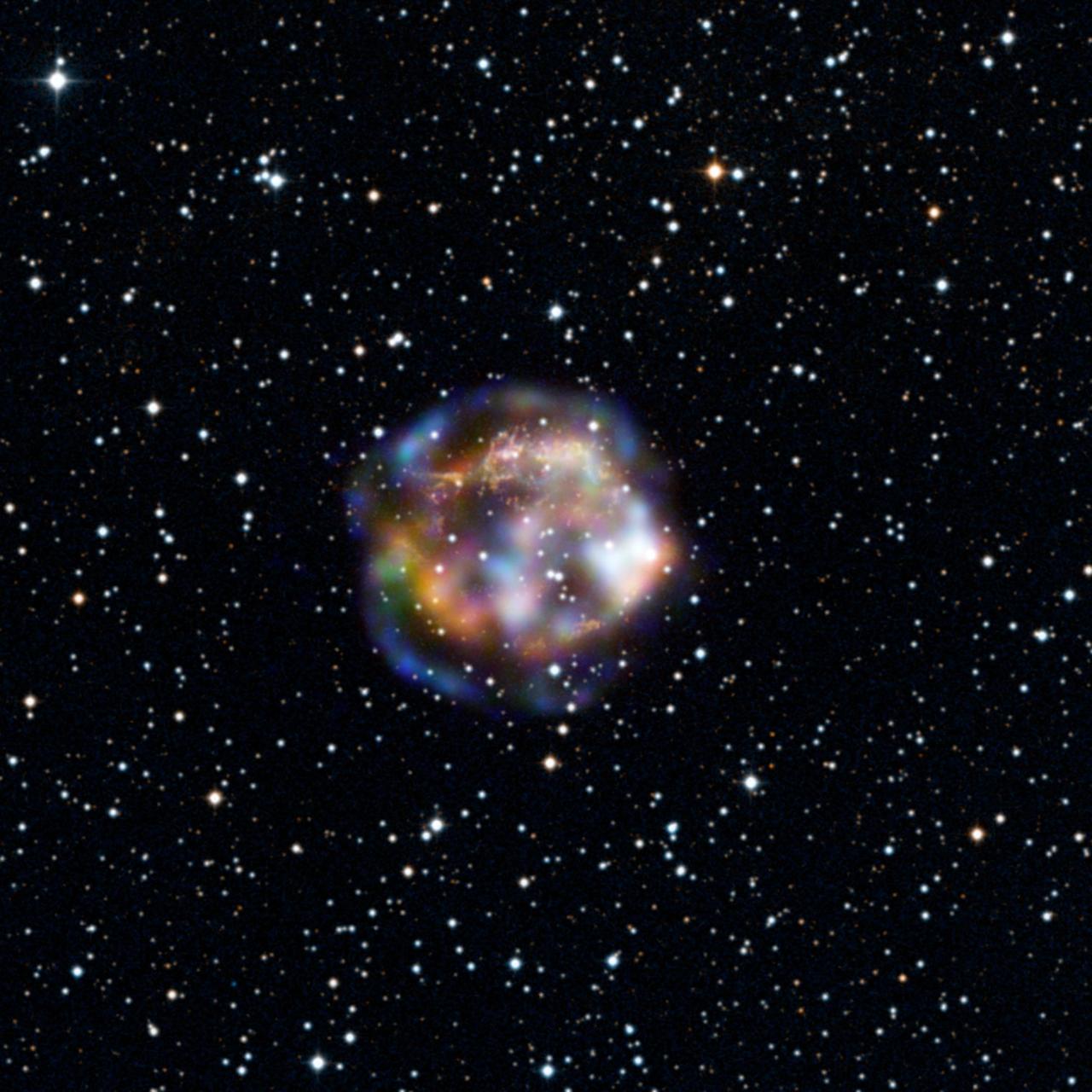
This new view of the historical supernova remnant Cassiopeia A, located 11,000 light-years away, was taken by NASA Nuclear Spectroscopic Telescope Array, or NuSTAR. While the star is long dead, its remains are still bursting with action.
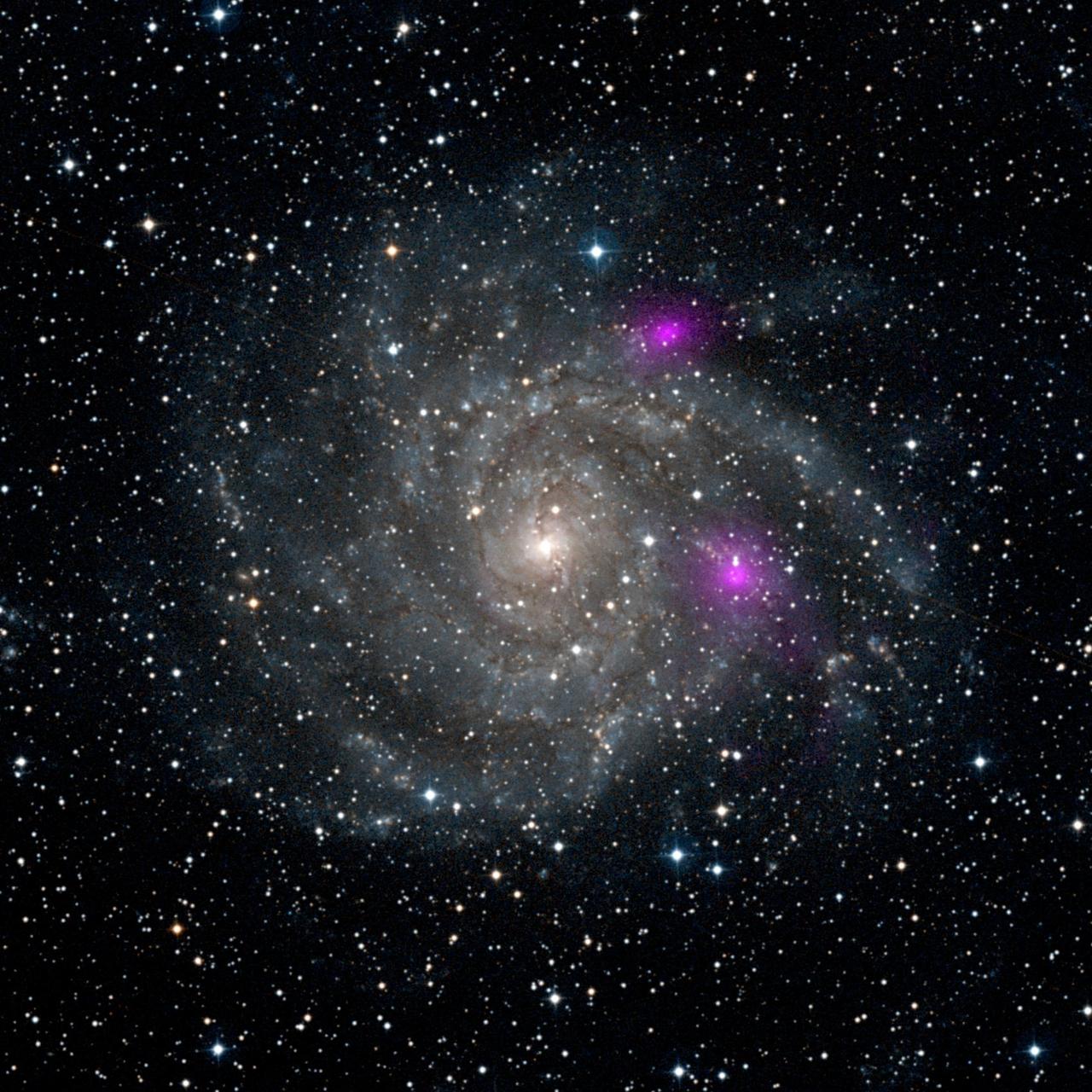
This new view of spiral galaxy IC 342, also known as Caldwell 5, includes data from NASA Nuclear Spectroscopic Telescope Array, or NuSTAR. IC 342 lies 7 million light-years away in the Camelopardalis constellation.
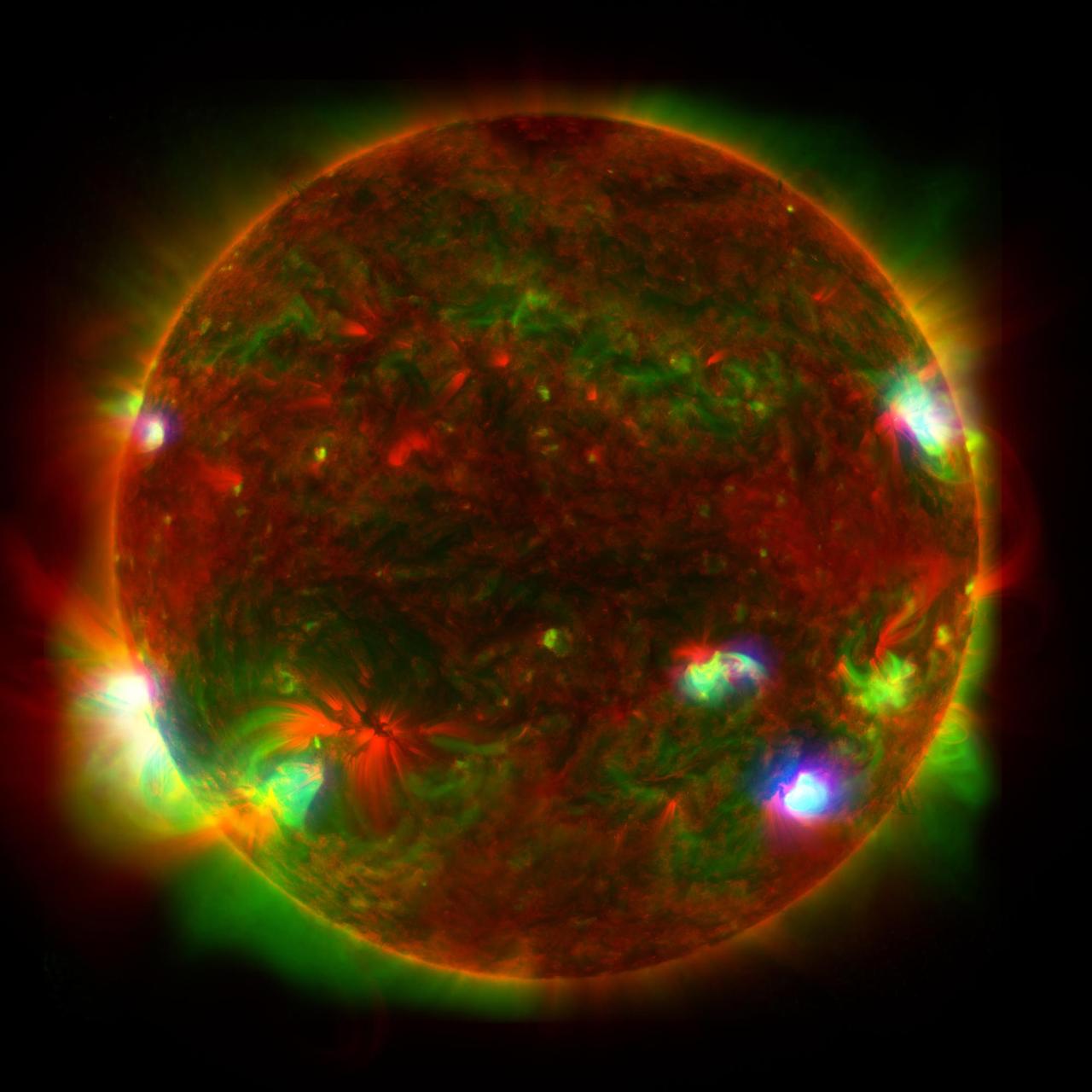
This composite image of the Sun includes high-energy X-ray data from NASA's Nuclear Spectroscopic Telescope Array (NuSTAR) shown in blue; lower energy X-ray data from the X-ray Telescope (XRT) on the Japanese Aerospace Exploration Agency's Hinode mission shown in green; and ultraviolet light detected by the Atmospheric Imaging Assembly (AIA) on NASA's Solar Dynamics Observatory (SDO) shown in red. NuSTAR's relatively small field of view means it can't see the entire Sun from its position in Earth orbit, so Figure A is a composite of 25 images, which were taken by the observatory in June 2022. NuSTAR sees high-energy X-rays that appear at only a few locations, where the hottest material is present in the Sun's atmopshere. By contrast, Hinode's XRT and SDO's AIA detect detect wavelengths emitted across the entire face of the Sun. The hotspots observed by NuSTAR might be caused by collections of nanoflares, or small outbursts of heat, light, and particles from the Sun's surface that subsequently heat the atmosphere. Individual nanoflares are too faint to directly observe amid the Sun's blazing light. https://photojournal.jpl.nasa.gov/catalog/PIA25628
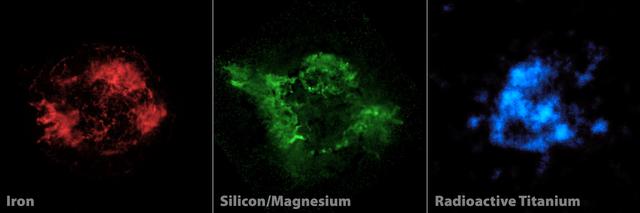
NASA NuSTAR is complementing previous observations of the Cassiopeia A supernova remnant red and green by providing the first maps of radioactive material forged in the fiery explosion blue.

This image taken by the ultraviolet-light monitoring camera on the European Space Agency ESA XMM-Newton telescope shows the beautiful spiral arms of the galaxy NGC1365.
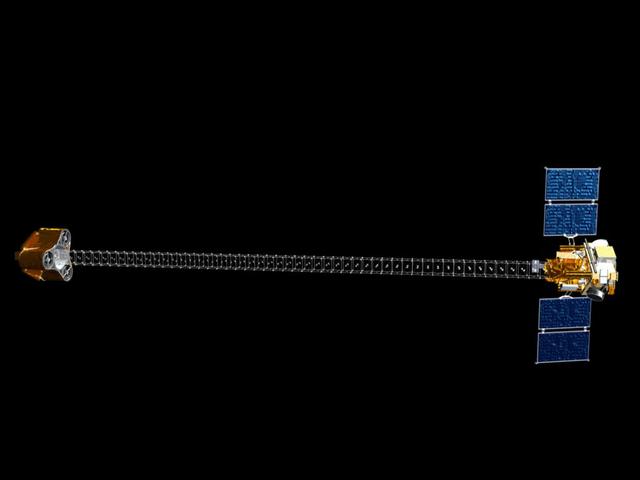
Artist concept of NASA Nuclear Spectroscopic Telescope Array, managed by JPL. It will expand our understanding of the origins and destinies of stars and galaxies.
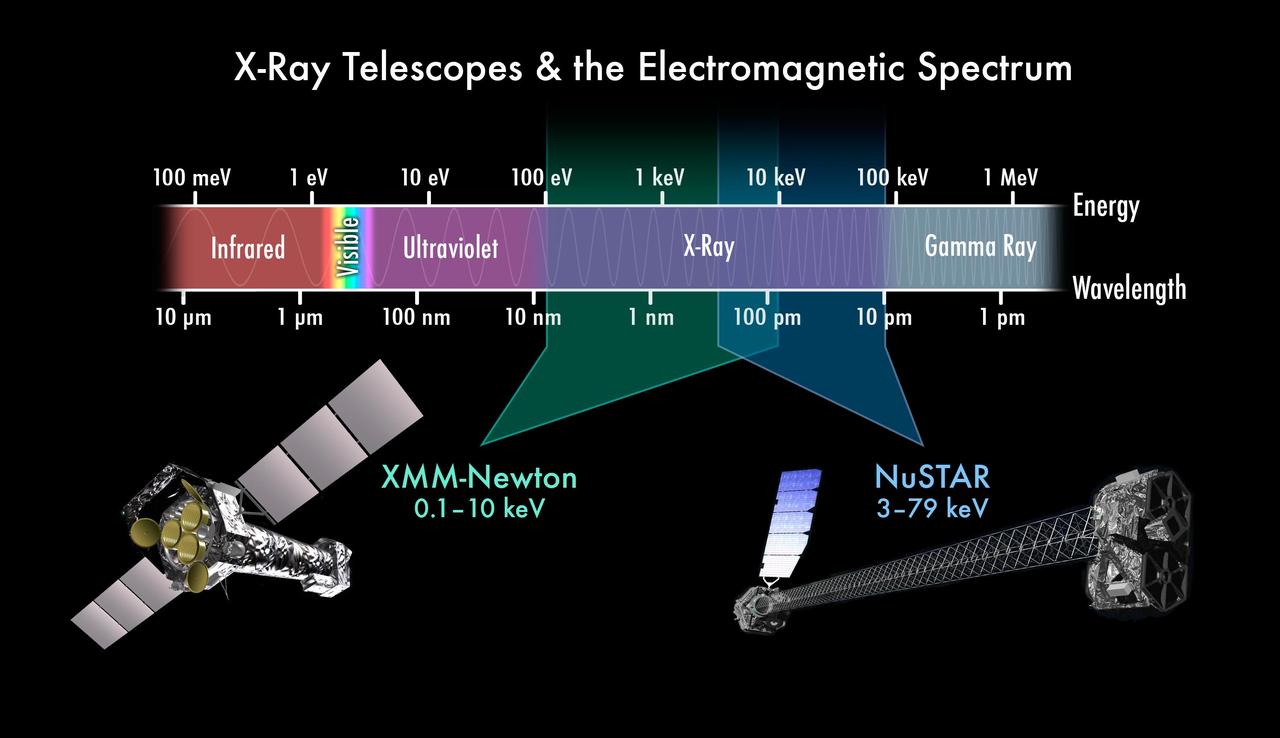
This chart depicts the electromagnetic spectrum, highlighting the X-ray portion. NASA NuSTAR and ESA XMM-Newton telescope complement each other by seeing different colors of X-ray light.

Black holes are tremendous objects whose immense gravity can distort and twist space-time, the fabric that shapes our universe as this chart from NASA NuSTAR and ESA XMM-Newton telescope illustrates.

Supermassive black holes at the cores of galaxies blast radiation and ultra-fast winds outward, as illustrated in this artist conception based on NASA NuSTAR and ESA XMM-Newton telescopes.

This plot of data from two space telescopes, NASA NuSTAR and ESA XMM-Newton determines for the first time the shape of ultra-fast winds from supermassive black holes, or quasars.
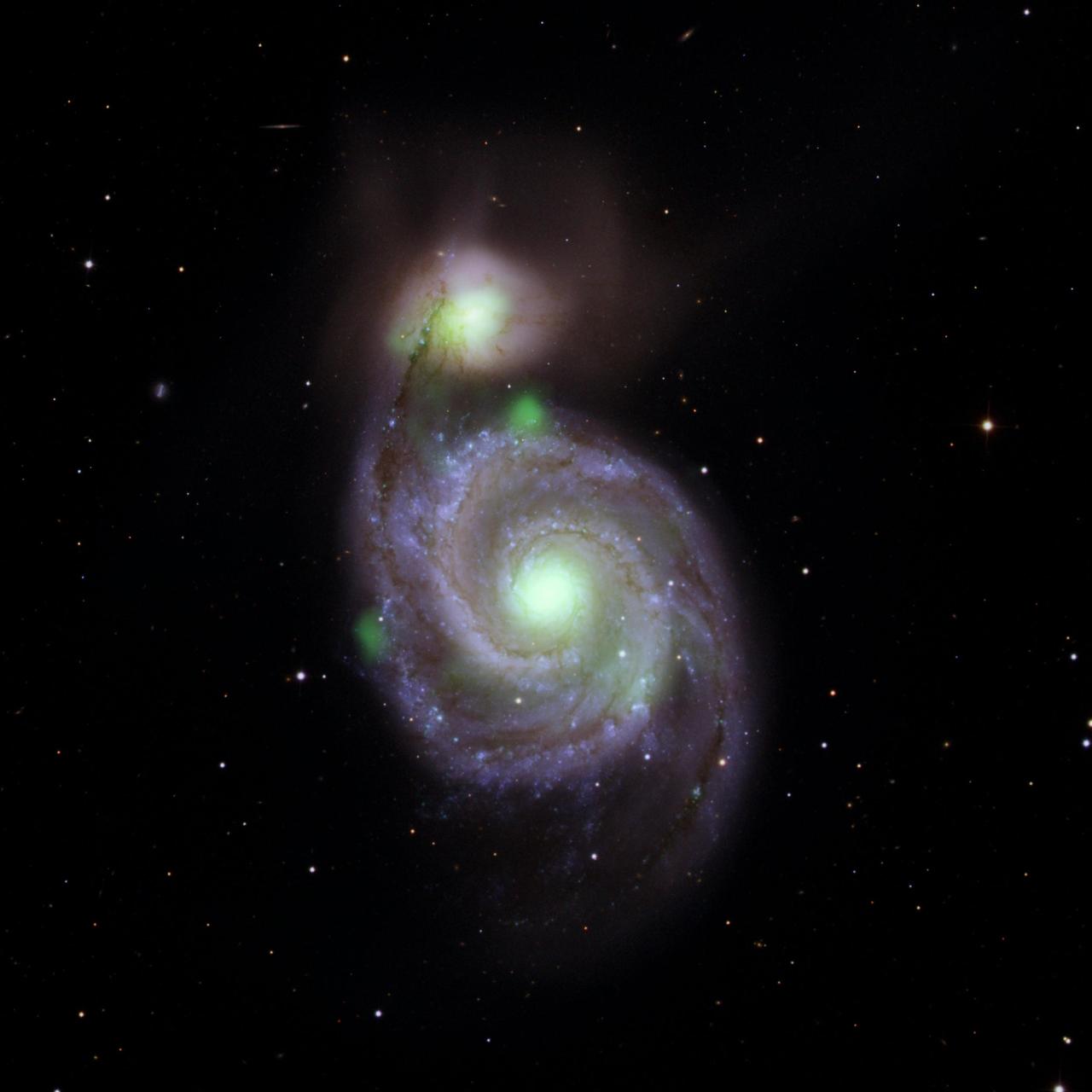
Bright green sources of high-energy X-ray light captured by NASA's NuSTAR mission are overlaid on an optical-light image of the Whirlpool galaxy (the spiral in the center of the image) and its companion galaxy, M51b (the bright greenish-white spot above the Whirlpool), taken by the Sloan Digital Sky Survey. The bright green spots at the center of the Whirlpool and M51b are created by material surrounding supermassive black holes; additional X-ray sources in the vicinity contribute to the emission. The known ultraluminous neutron star is located on the left side of the Whirlpool. https://photojournal.jpl.nasa.gov/catalog/PIA23005
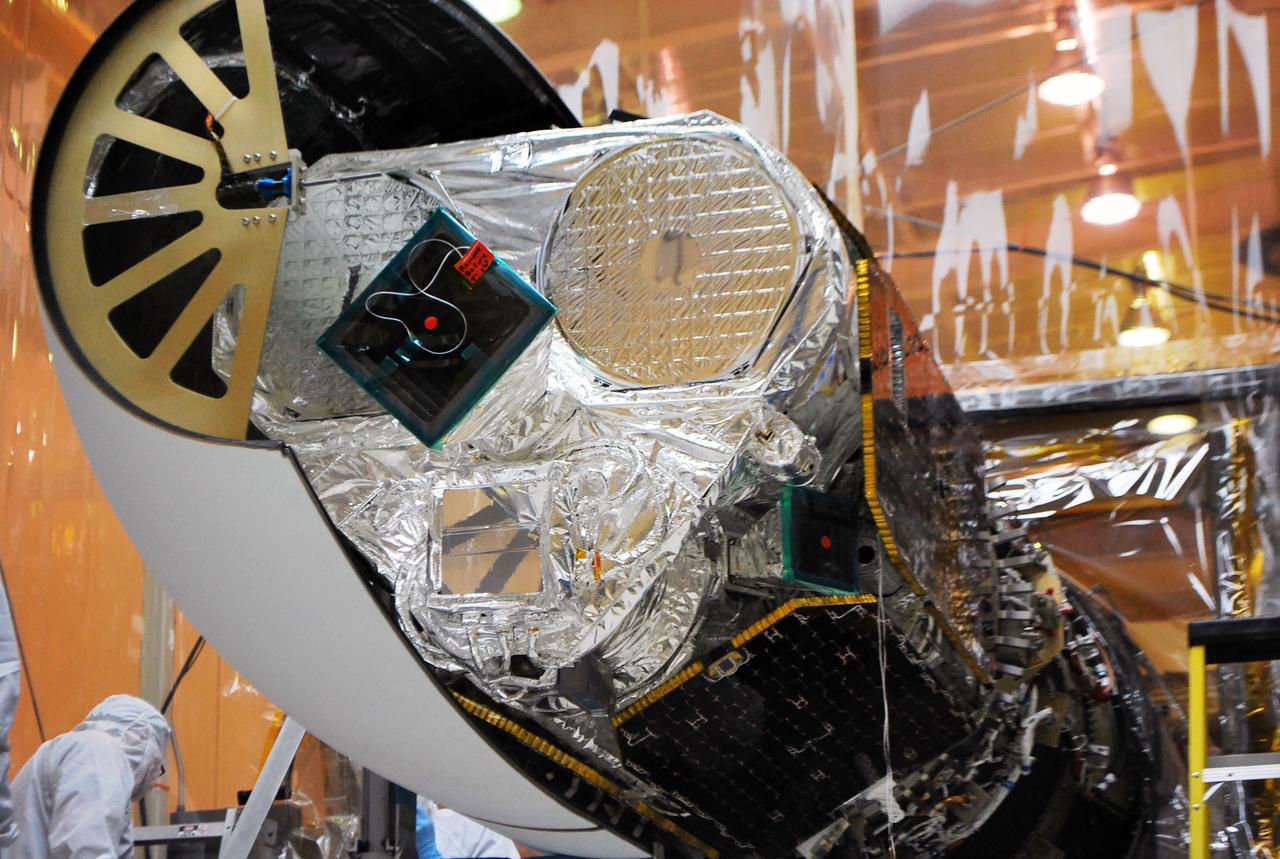
VANDENBERG AFB, Calif. – Technicians install one half of the payload fairing over the NuSTAR spacecraft as they continue to process the spacecraft and its Pegasus rocket for launch. NuSTAR stands for Nuclear Spectroscopic Telescope Array. Photo credit: NASA/Randy Beaudoin
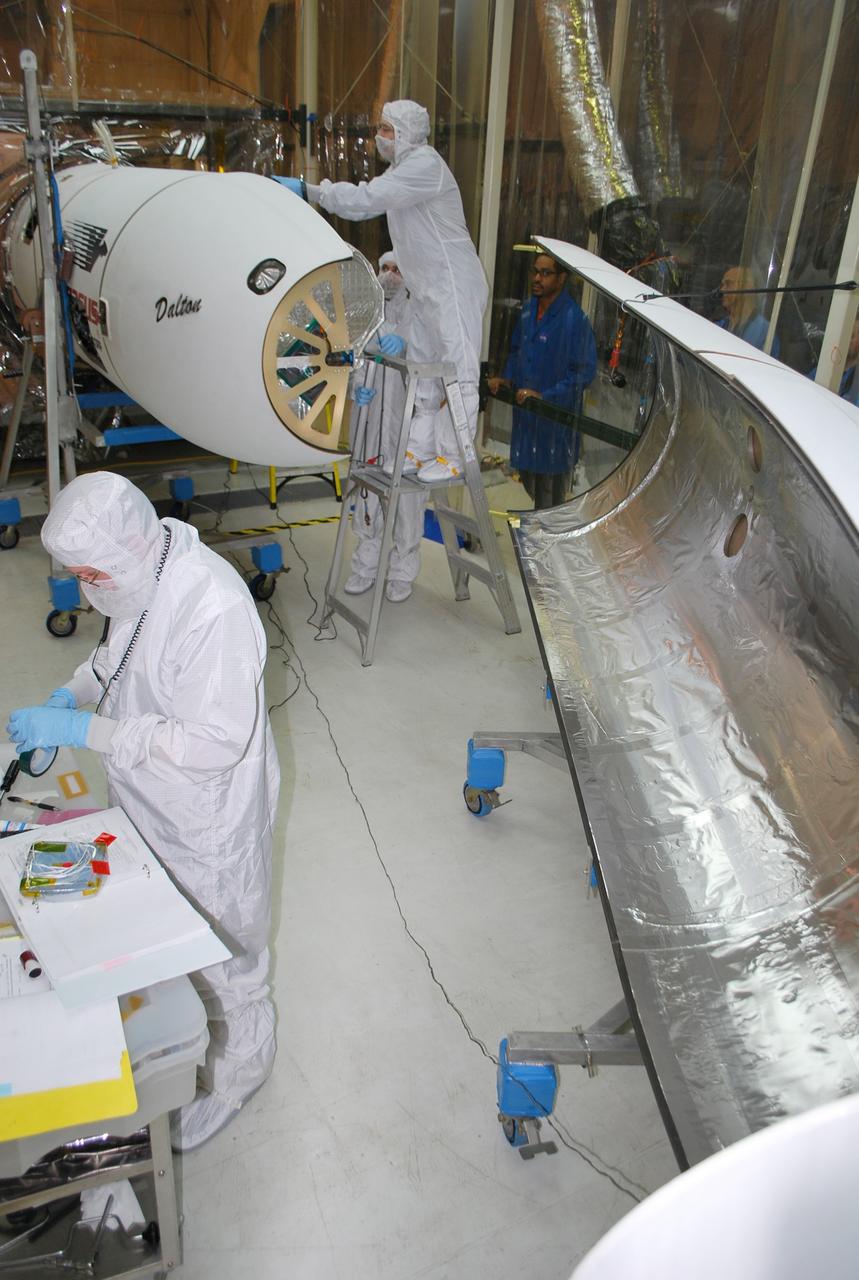
VANDENBERG AFB, Calif. – Technicians install one half of the payload fairing over the NuSTAR spacecraft as they continue to process the spacecraft and its Pegasus rocket for launch. The second half of the fairing stands ready for installation. NuSTAR stands for Nuclear Spectroscopic Telescope Array. Photo credit: NASA/Randy Beaudoin
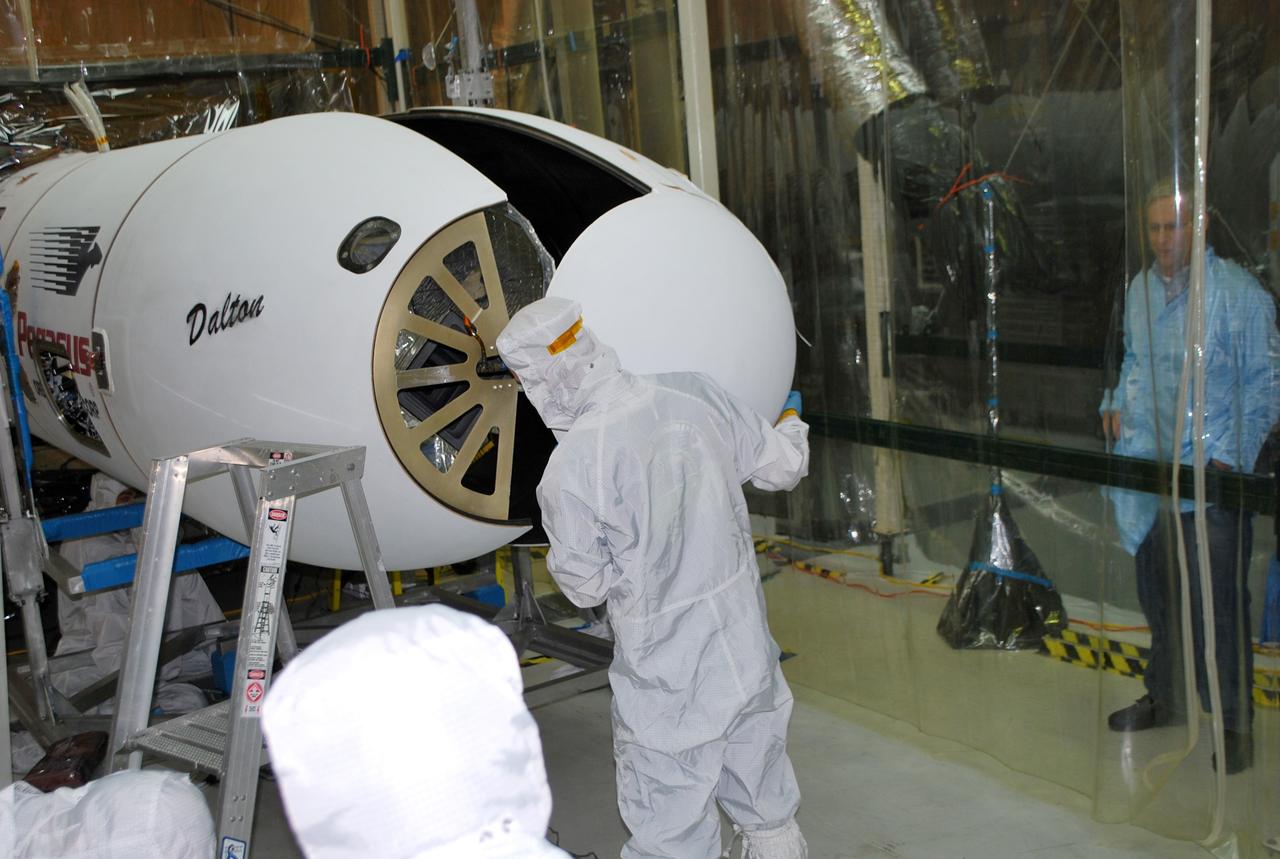
VANDENBERG AFB, Calif. – Technicians install the second half of the payload fairing over the NuSTAR spacecraft as they continue to process the spacecraft and its Pegasus rocket for launch. NuSTAR stands for Nuclear Spectroscopic Telescope Array. Photo credit: NASA/Randy Beaudoin
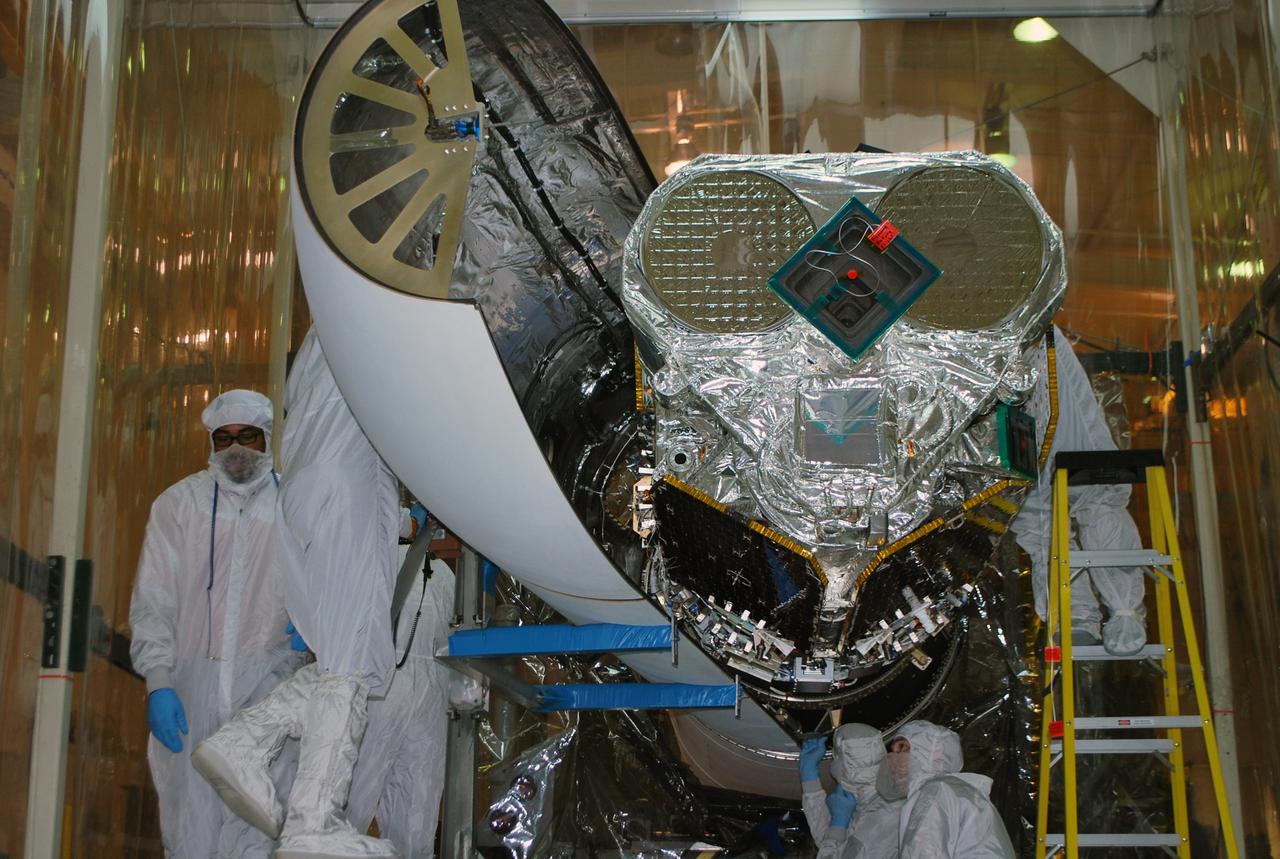
VANDENBERG AFB, Calif. – Technicians install one half of the payload fairing over the NuSTAR spacecraft as they continue to process the spacecraft and its Pegasus rocket for launch. NuSTAR stands for Nuclear Spectroscopic Telescope Array. Photo credit: NASA/Randy Beaudoin
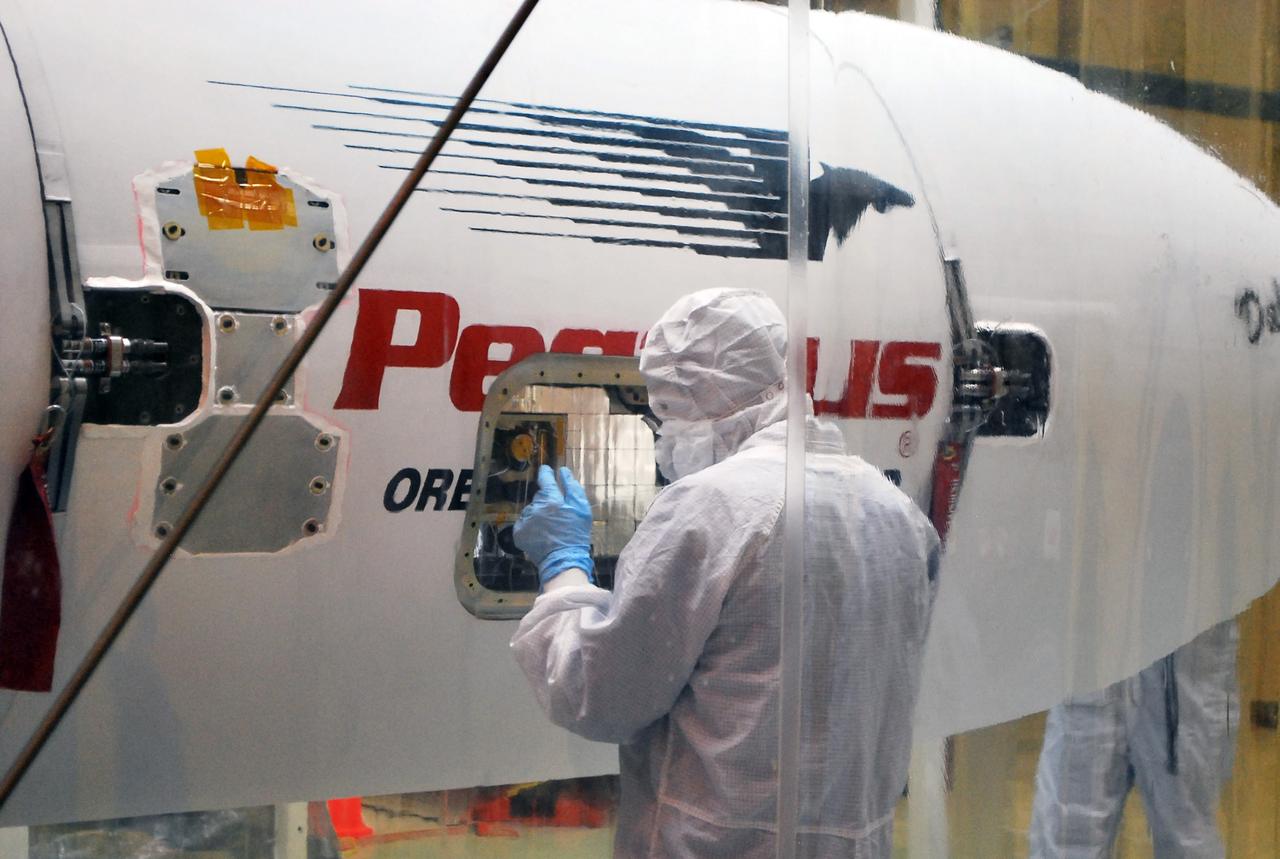
VANDENBERG AFB, Calif. – A technicians checks the installation of the payload fairing over the NuSTAR spacecraft as processing continues for the spacecraft and its Pegasus rocket for launch. NuSTAR stands for Nuclear Spectroscopic Telescope Array. Photo credit: NASA/Randy Beaudoin
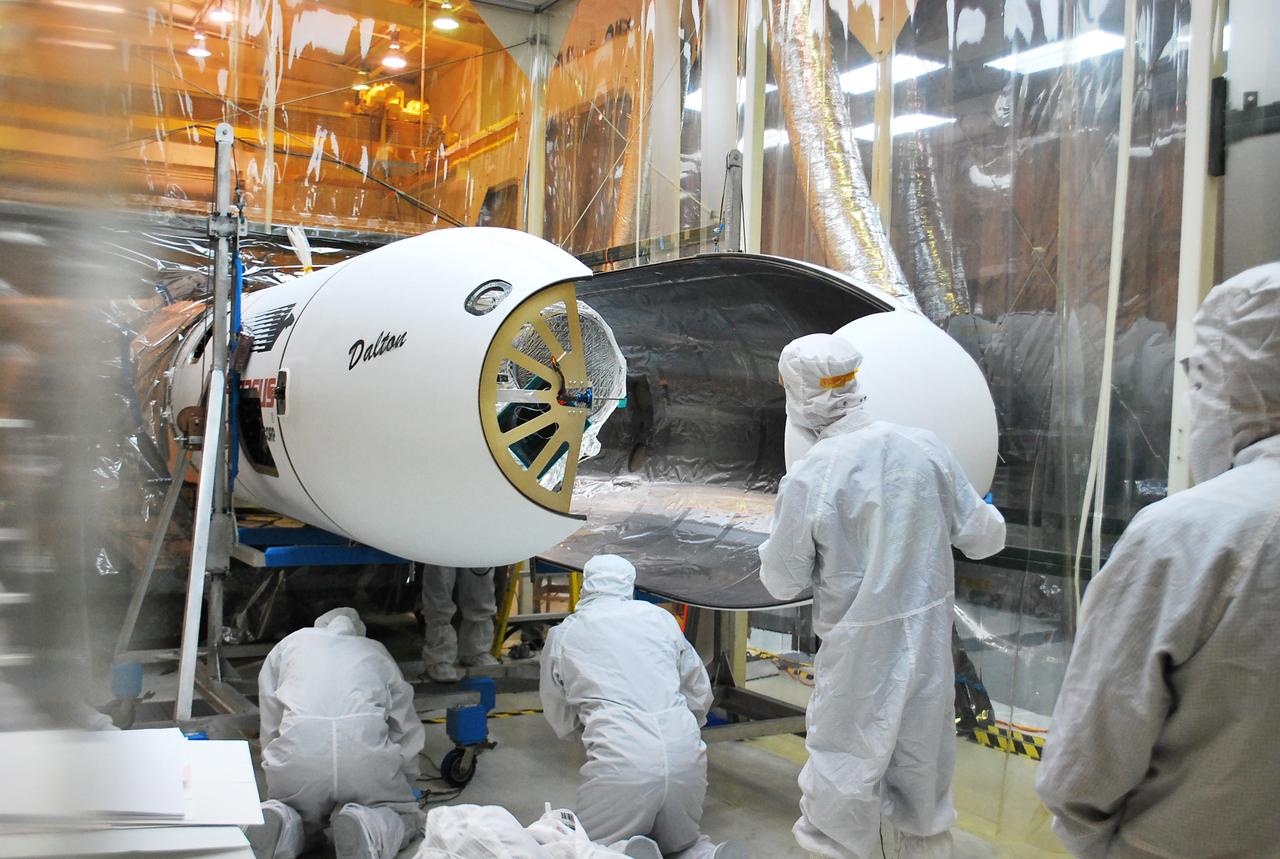
VANDENBERG AFB, Calif. – Technicians install the second half of the payload fairing over the NuSTAR spacecraft as they continue to process the spacecraft and its Pegasus rocket for launch. NuSTAR stands for Nuclear Spectroscopic Telescope Array. Photo credit: NASA/Randy Beaudoin
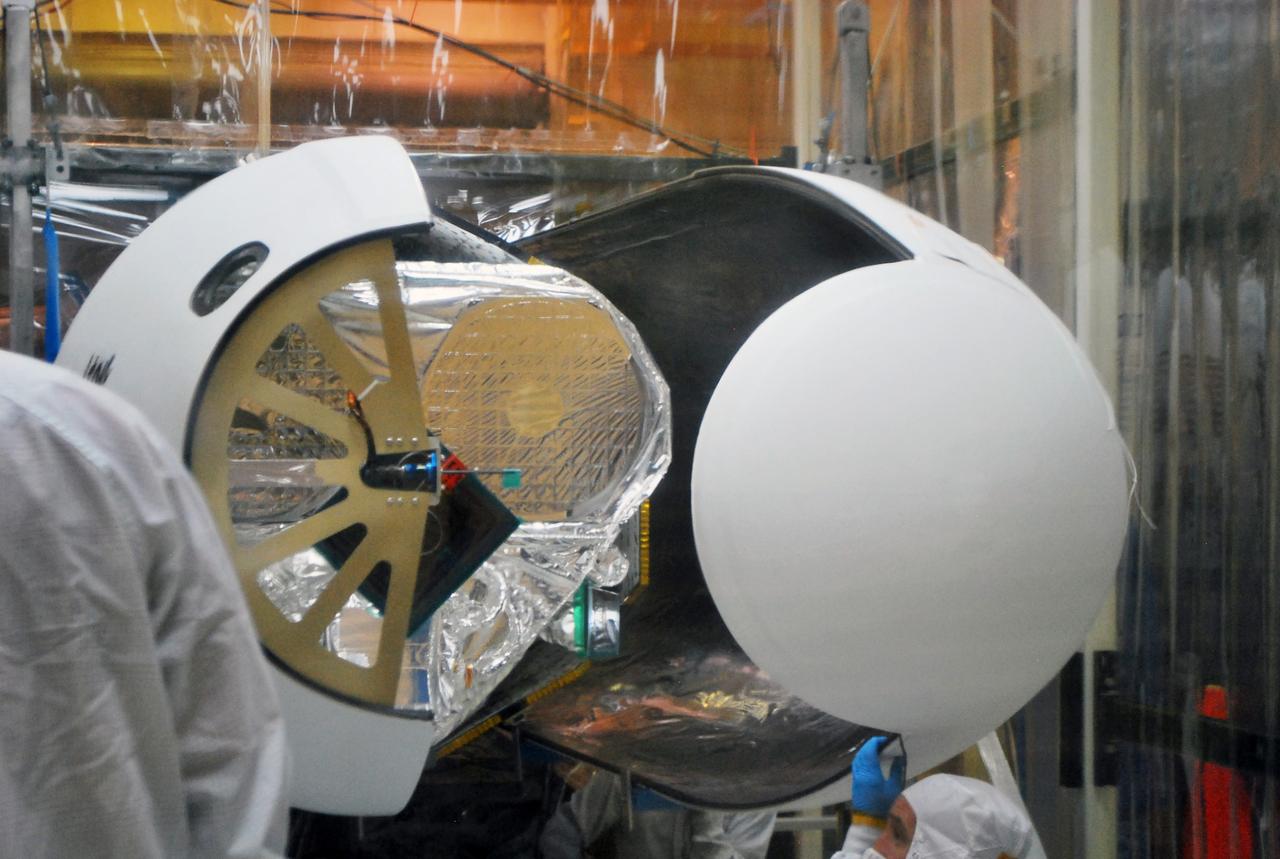
VANDENBERG AFB, Calif. – Technicians install the second half of the payload fairing over the NuSTAR spacecraft as they continue to process the spacecraft and its Pegasus rocket for launch. NuSTAR stands for Nuclear Spectroscopic Telescope Array. Photo credit: NASA/Randy Beaudoin
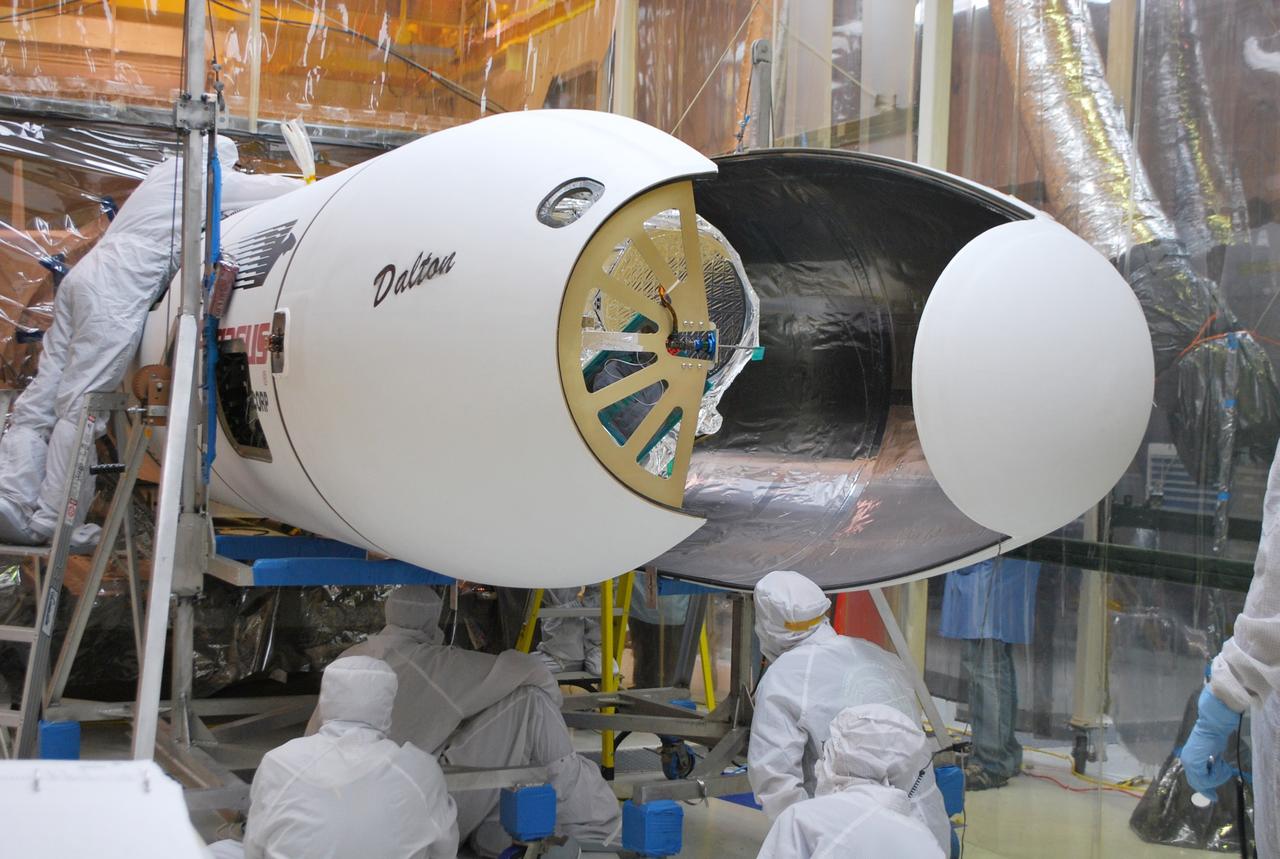
VANDENBERG AFB, Calif. – Technicians install the second half of the payload fairing over the NuSTAR spacecraft as they continue to process the spacecraft and its Pegasus rocket for launch. NuSTAR stands for Nuclear Spectroscopic Telescope Array. Photo credit: NASA/Randy Beaudoin
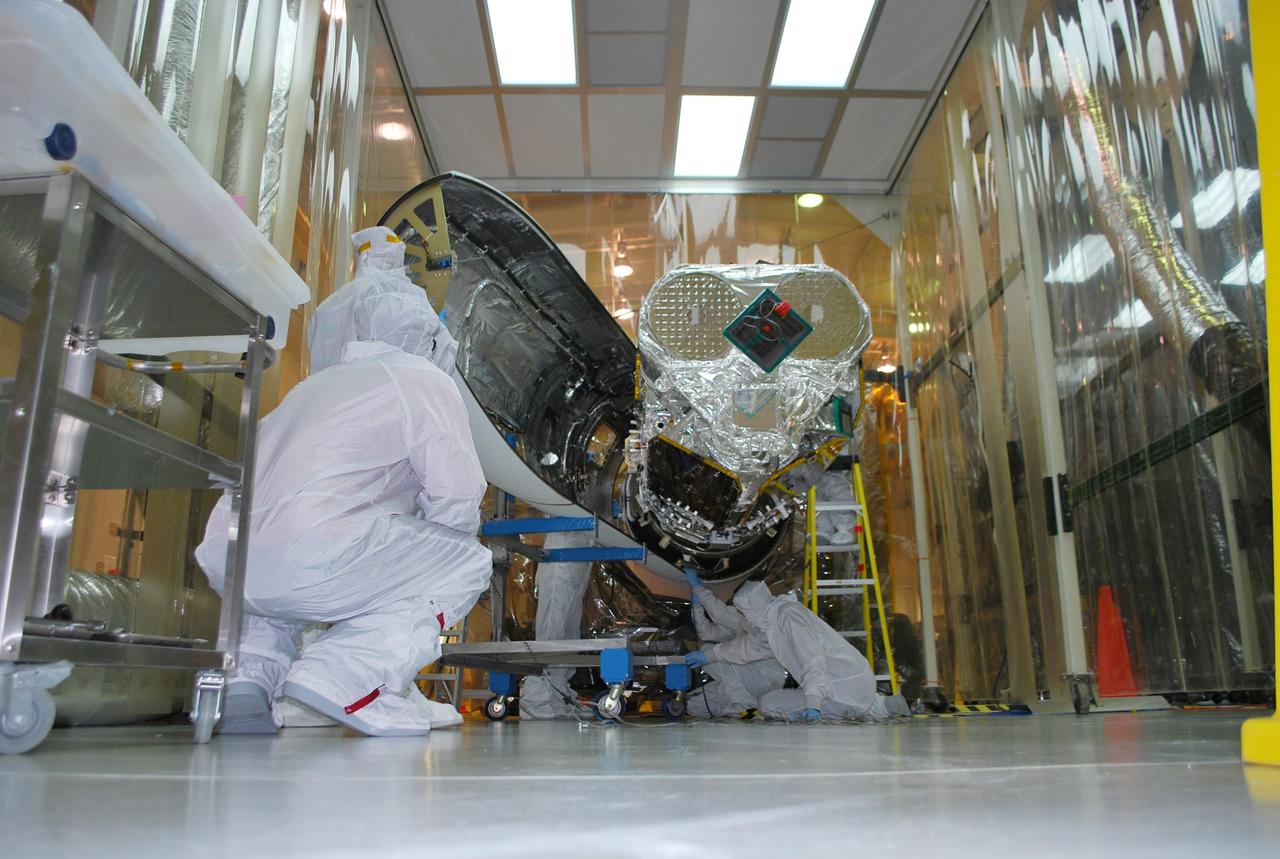
VANDENBERG AFB, Calif. – Technicians install one half of the payload fairing over the NuSTAR spacecraft as they continue to process the spacecraft and its Pegasus rocket for launch. NuSTAR stands for Nuclear Spectroscopic Telescope Array. Photo credit: NASA/Randy Beaudoin
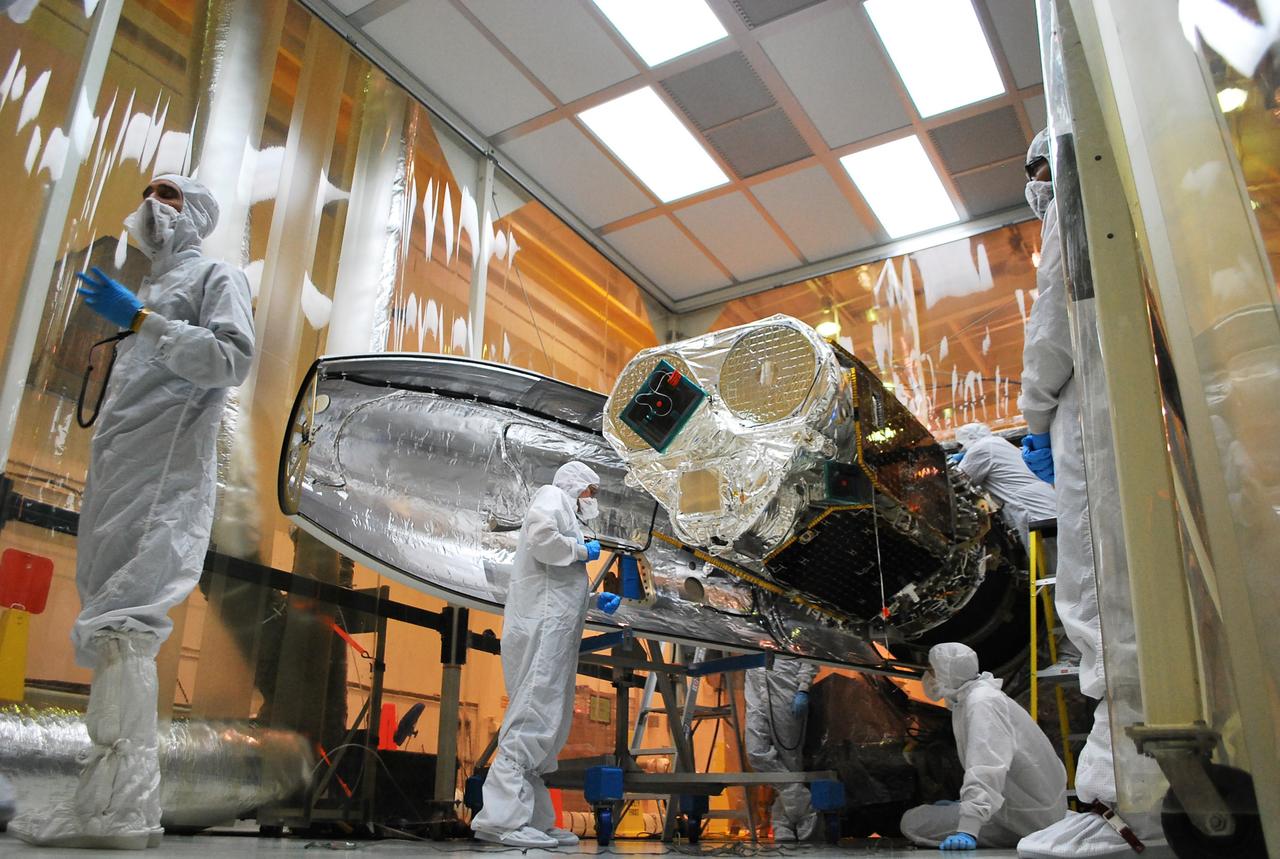
VANDENBERG AFB, Calif. – Technicians install one half of the payload fairing over the NuSTAR spacecraft as they continue to process the spacecraft and its Pegasus rocket for launch. NuSTAR stands for Nuclear Spectroscopic Telescope Array. Photo credit: NASA/Randy Beaudoin
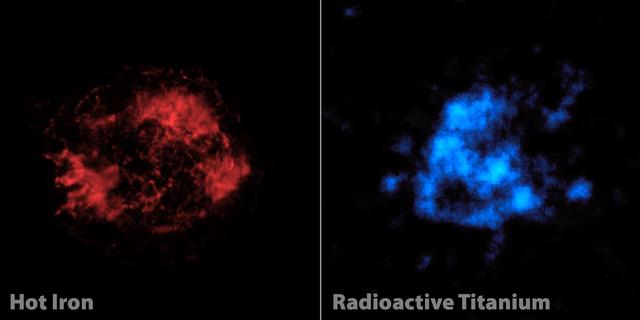
When astronomers first looked at images of a supernova remnant called Cassiopeia A, captured by NASA NuSTAR. The mystery of Cassiopeia A Cas A, a massive star that exploded in a supernova more than 11,000 years ago continues to confound scientists.
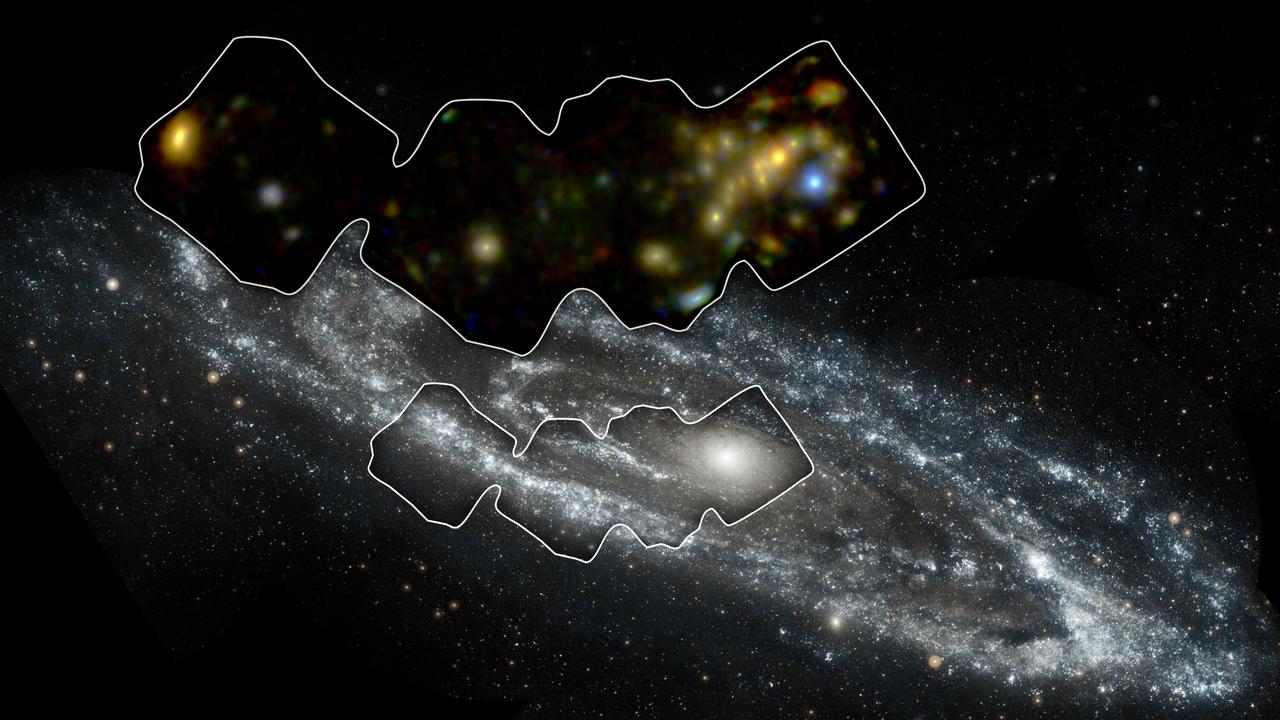
These images from NASA GALEX and NuSTAR is of Andromeda, a spiral galaxy like our Milky Way but larger in size. It lies 2.5 million light-years away in the Andromeda constellation.
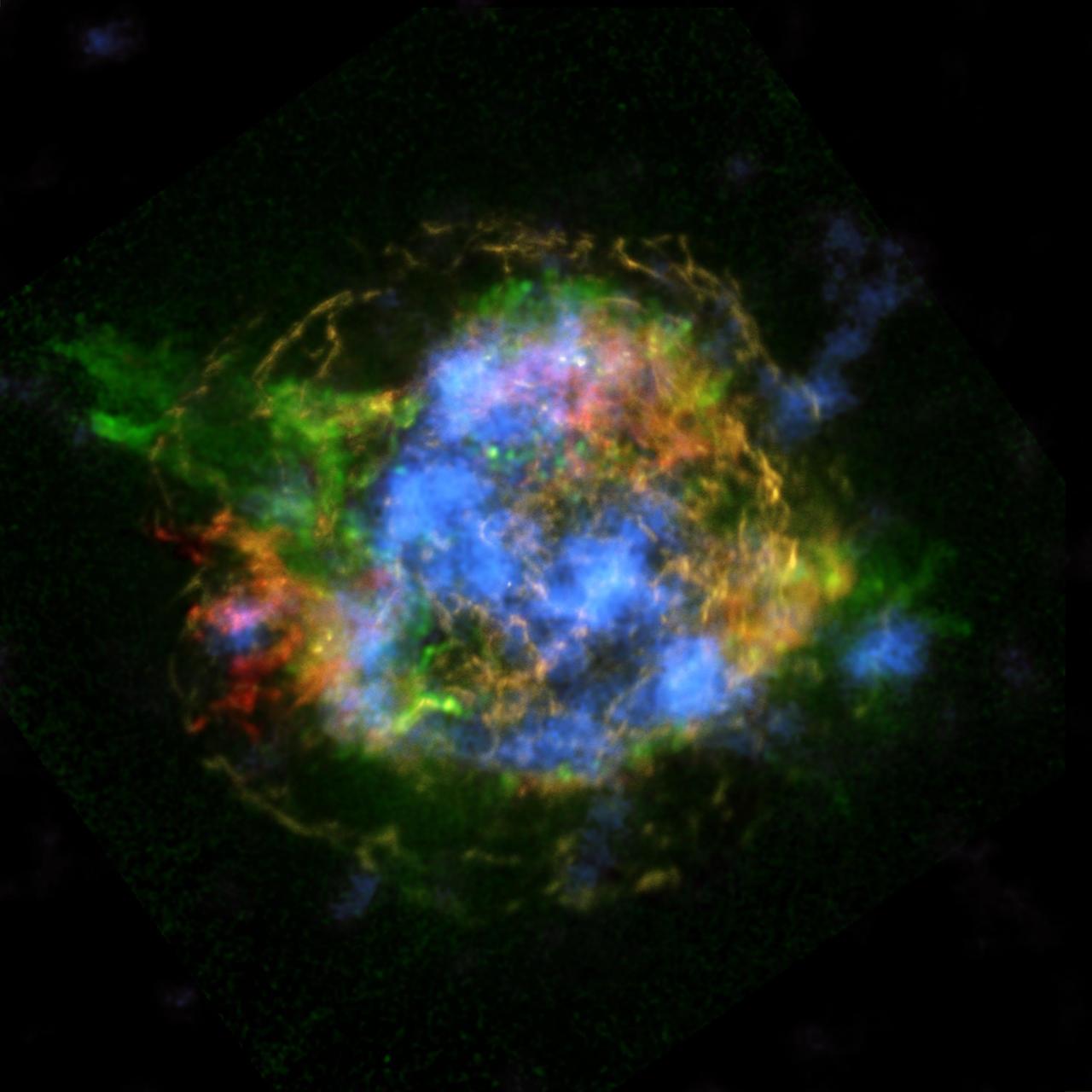
This is the first map of radioactivity in a supernova remnant, the blown-out bits and pieces of a massive star that exploded. The blue color shows radioactive material mapped in high-energy X-rays using NASA NuSTAR.
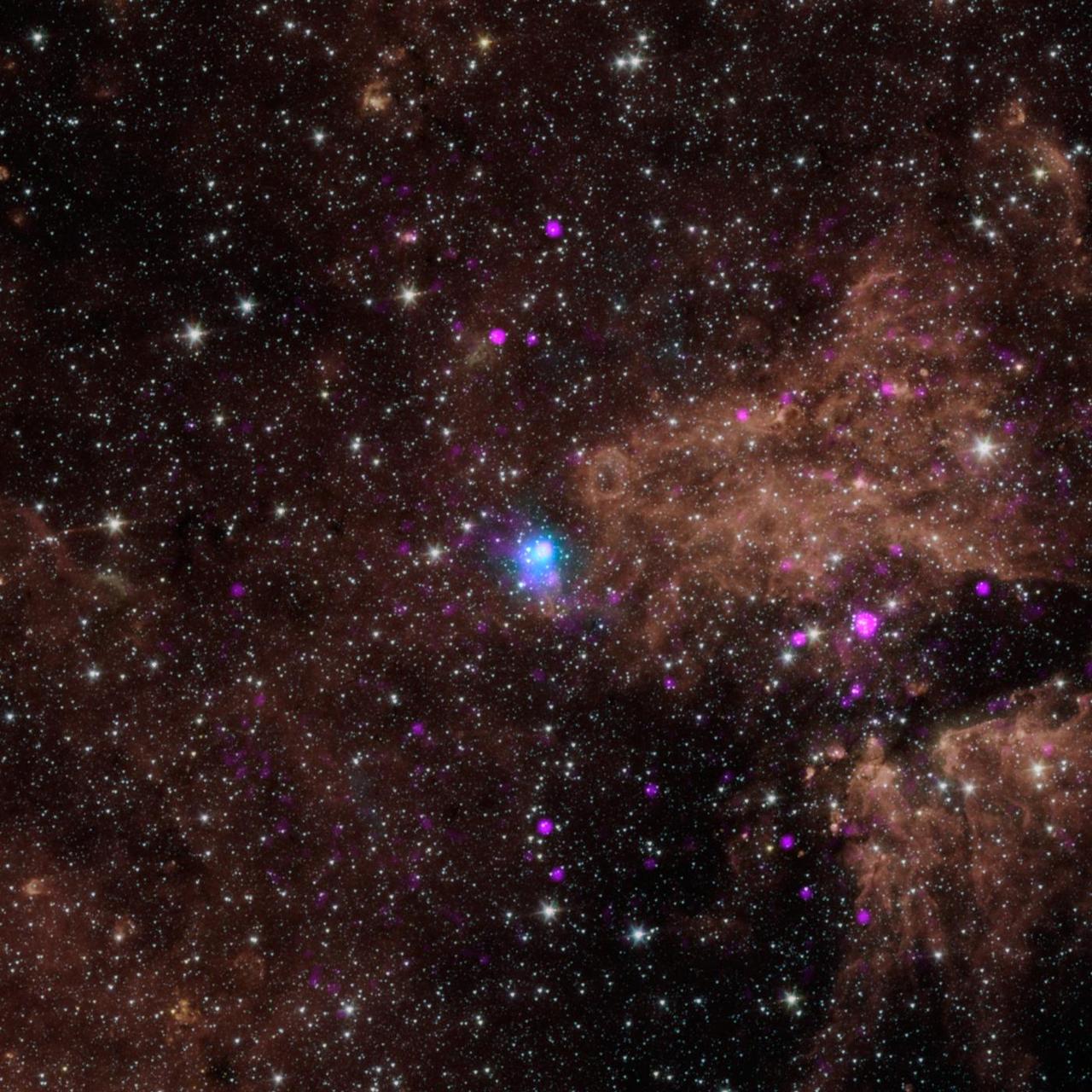
The blue dot in this image marks the spot of an energetic pulsar -- the magnetic, spinning core of star that blew up in a supernova explosion. NASA NuSTAR discovered the pulsar by identifying its telltale pulse.
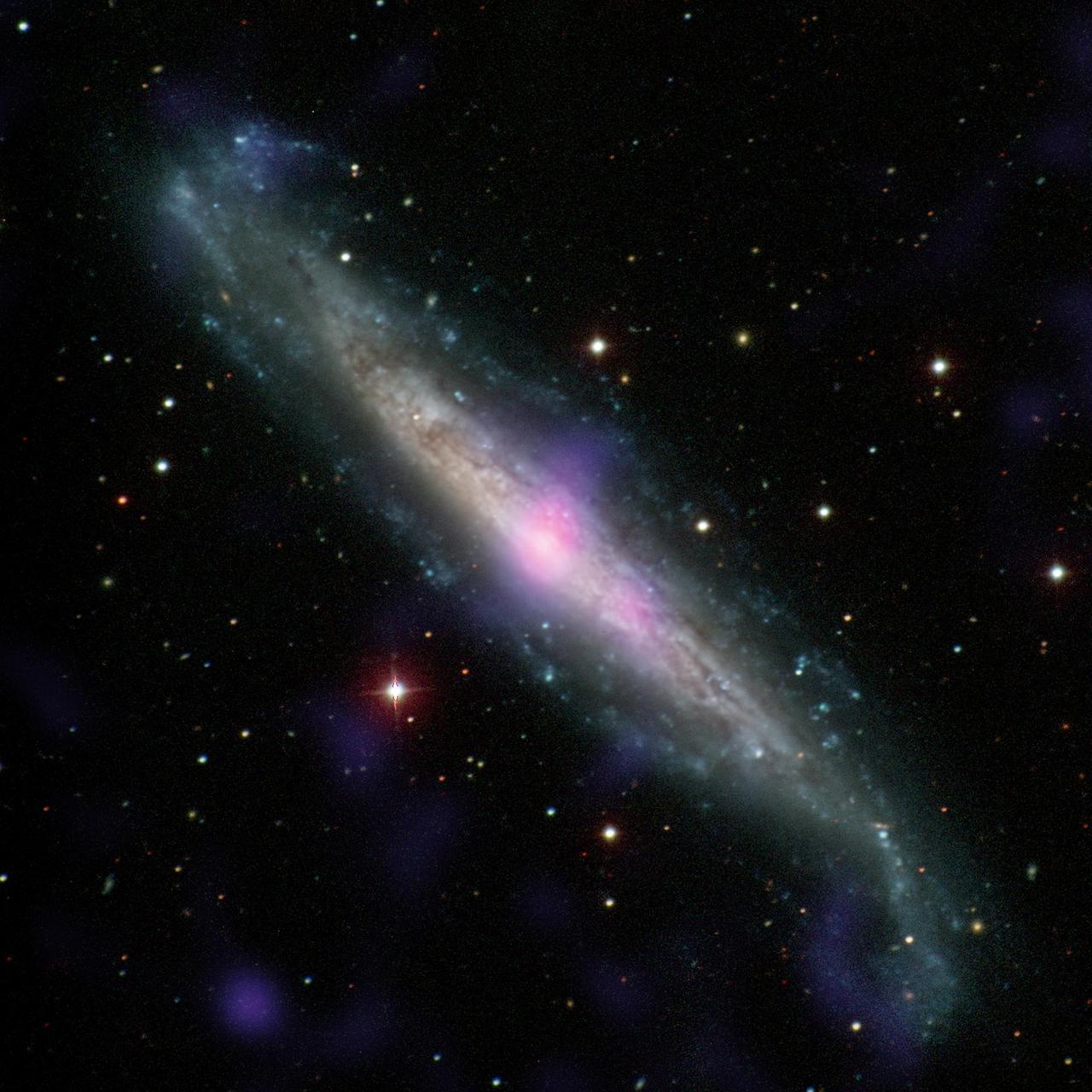
NGC 1448, a galaxy with an active galactic nucleus, is seen in this image combining data from the Carnegie-Irvine Galaxy Survey in the optical range and NuSTAR in the X-ray range. This galaxy contains an example of a supermassive black hole hidden by gas and dust. X-ray emissions from NGC 1448, as seen by NuSTAR and Chandra, suggests for the first time that, like IC 3639 in PIA21087, there must be a thick layer of gas and dust hiding the active black hole in this galaxy from our line of sight. http://photojournal.jpl.nasa.gov/catalog/PIA21086
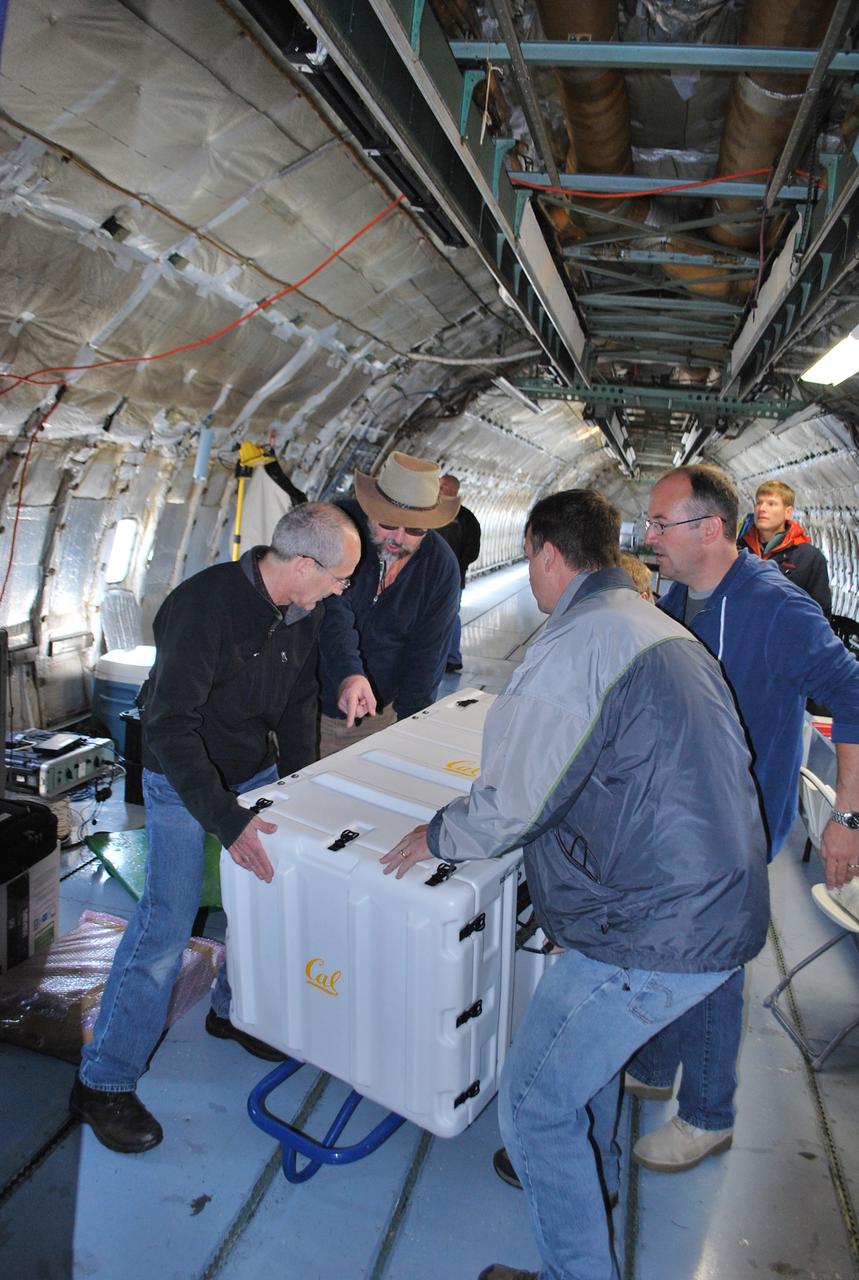
VANDENBERG AIR FORCE BASE, Calif. -- Technicians load the spacecraft airborne support equipment to the Orbital Sciences' L-1011 carrier aircraft. This equipment will maintain the in-flight monitoring and control of the NuSTAR spacecraft before the release of the Pegasus XL rocket The Pegasus will launch NuSTAR into space where the high-energy x-ray telescope will conduct a census for black holes, map radioactive material in young supernovae remnants, and study the origins of cosmic rays and the extreme physics around collapsed stars. For more information, visit science.nasa.gov/missions/nustar/. Photo credit: NASA/Randy Beaudoin, VAFB
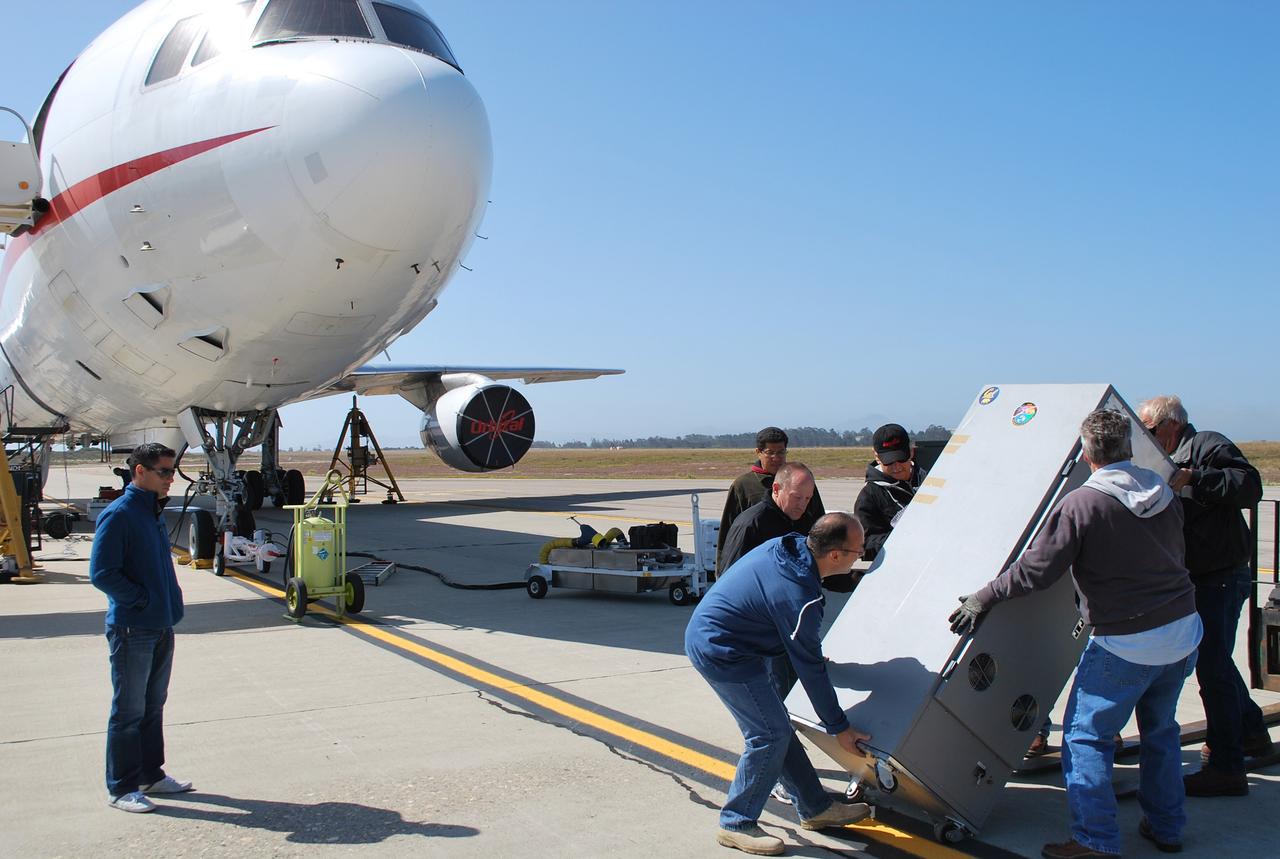
VANDENBERG AIR FORCE BASE, Calif. -- Technicians transfer the spacecraft airborne support equipment to the Orbital Sciences' L-1011 carrier aircraft. This equipment will maintain the in-flight monitoring and control of the NuSTAR spacecraft before the release of the Pegasus XL rocket. The Pegasus will launch NuSTAR into space where the high-energy x-ray telescope will conduct a census for black holes, map radioactive material in young supernovae remnants, and study the origins of cosmic rays and the extreme physics around collapsed stars. For more information, visit science.nasa.gov/missions/nustar/. Photo credit: NASA/Randy Beaudoin, VAFB
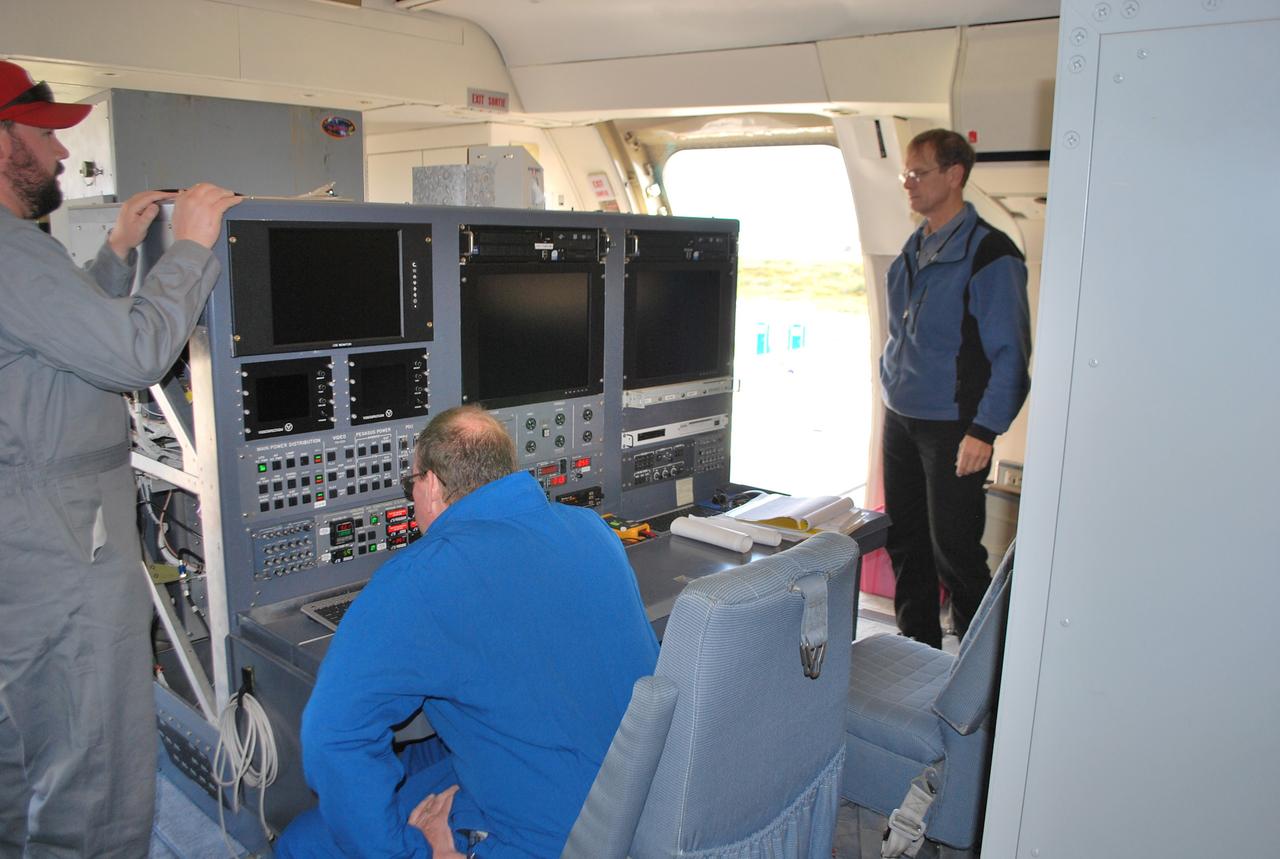
VANDENBERG AIR FORCE BASE, Calif. -- Technicians install the spacecraft airborne support equipment to the Orbital Sciences' L-1011 carrier aircraft. This equipment will maintain the in-flight monitoring and control of the NuSTAR spacecraft before the release of the Pegasus XL rocket. The Pegasus will launch NuSTAR into space where the high-energy x-ray telescope will conduct a census for black holes, map radioactive material in young supernovae remnants, and study the origins of cosmic rays and the extreme physics around collapsed stars. For more information, visit science.nasa.gov/missions/nustar/. Photo credit: NASA/Randy Beaudoin, VAFB
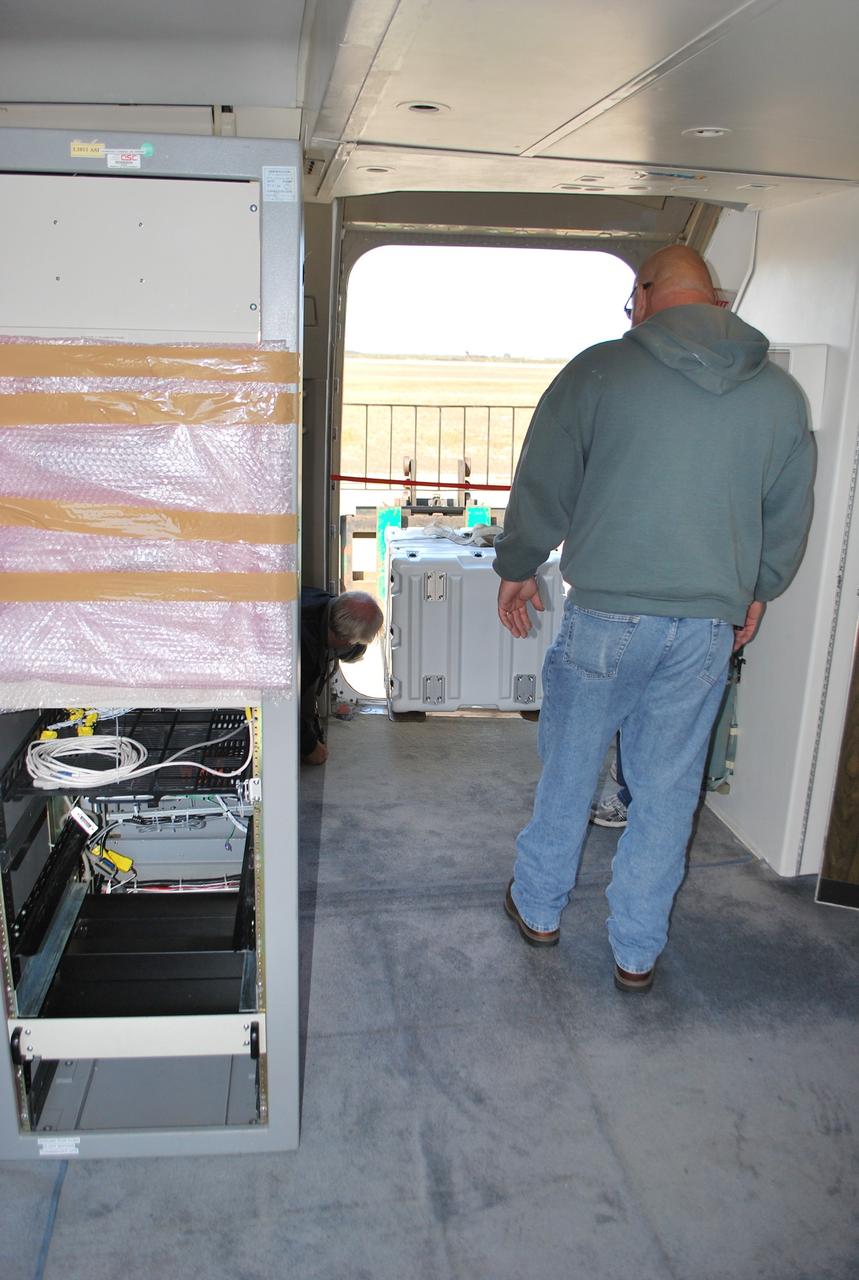
VANDENBERG AIR FORCE BASE, Calif. -- Technicians load the spacecraft airborne support equipment to the Orbital Sciences' L-1011 carrier aircraft. This equipment will maintain the in-flight monitoring and control of the NuSTAR spacecraft before the release of the Pegasus XL rocket. The Pegasus will launch NuSTAR into space where the high-energy x-ray telescope will conduct a census for black holes, map radioactive material in young supernovae remnants, and study the origins of cosmic rays and the extreme physics around collapsed stars. For more information, visit science.nasa.gov/missions/nustar/. Photo credit: NASA/Randy Beaudoin, VAFB
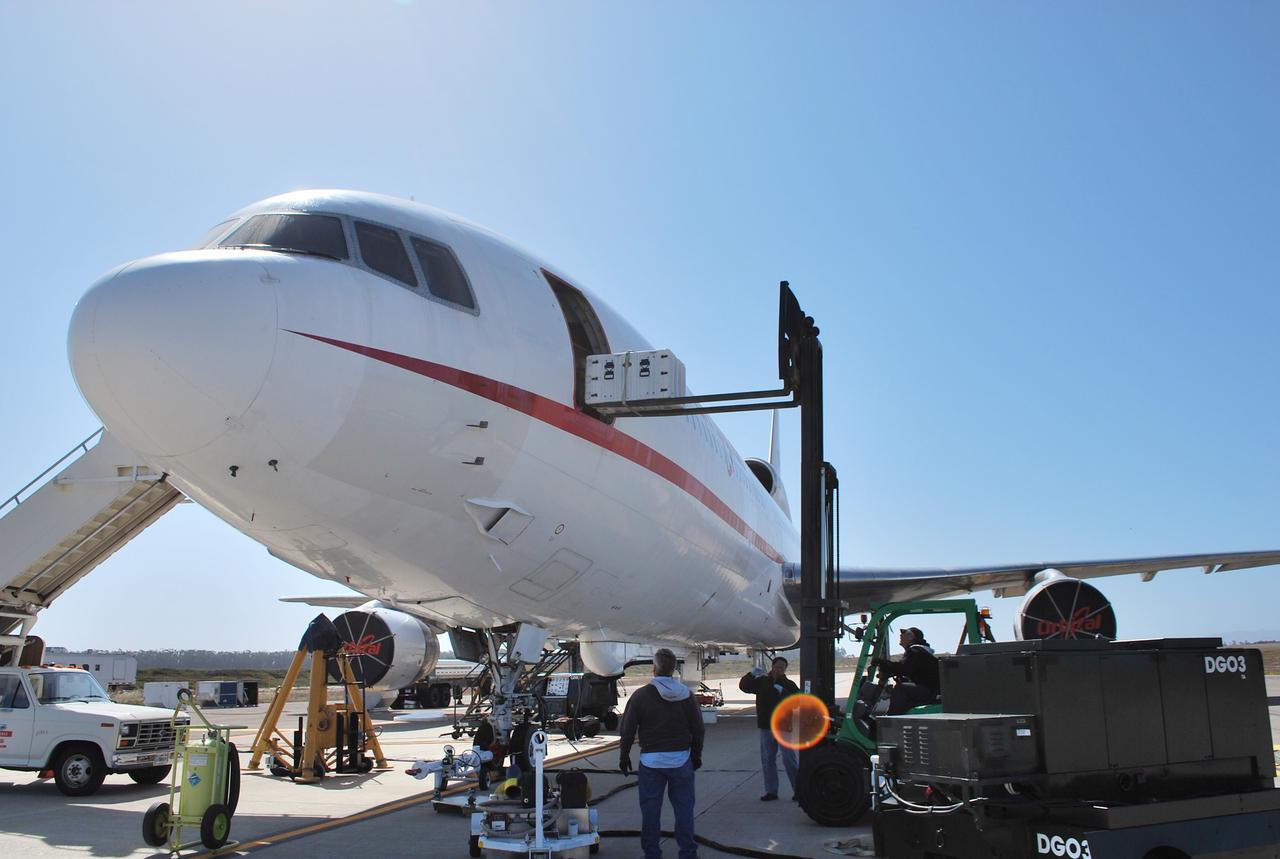
VANDENBERG AIR FORCE BASE, Calif. -- Technicians load the spacecraft airborne support equipment to the Orbital Sciences' L-1011 carrier aircraft. This equipment will maintain the in-flight monitoring and control of the NuSTAR spacecraft before the release of the Pegasus XL rocket. The Pegasus will launch NuSTAR into space where the high-energy x-ray telescope will conduct a census for black holes, map radioactive material in young supernovae remnants, and study the origins of cosmic rays and the extreme physics around collapsed stars. For more information, visit science.nasa.gov/missions/nustar/. Photo credit: NASA/Randy Beaudoin, VAFB
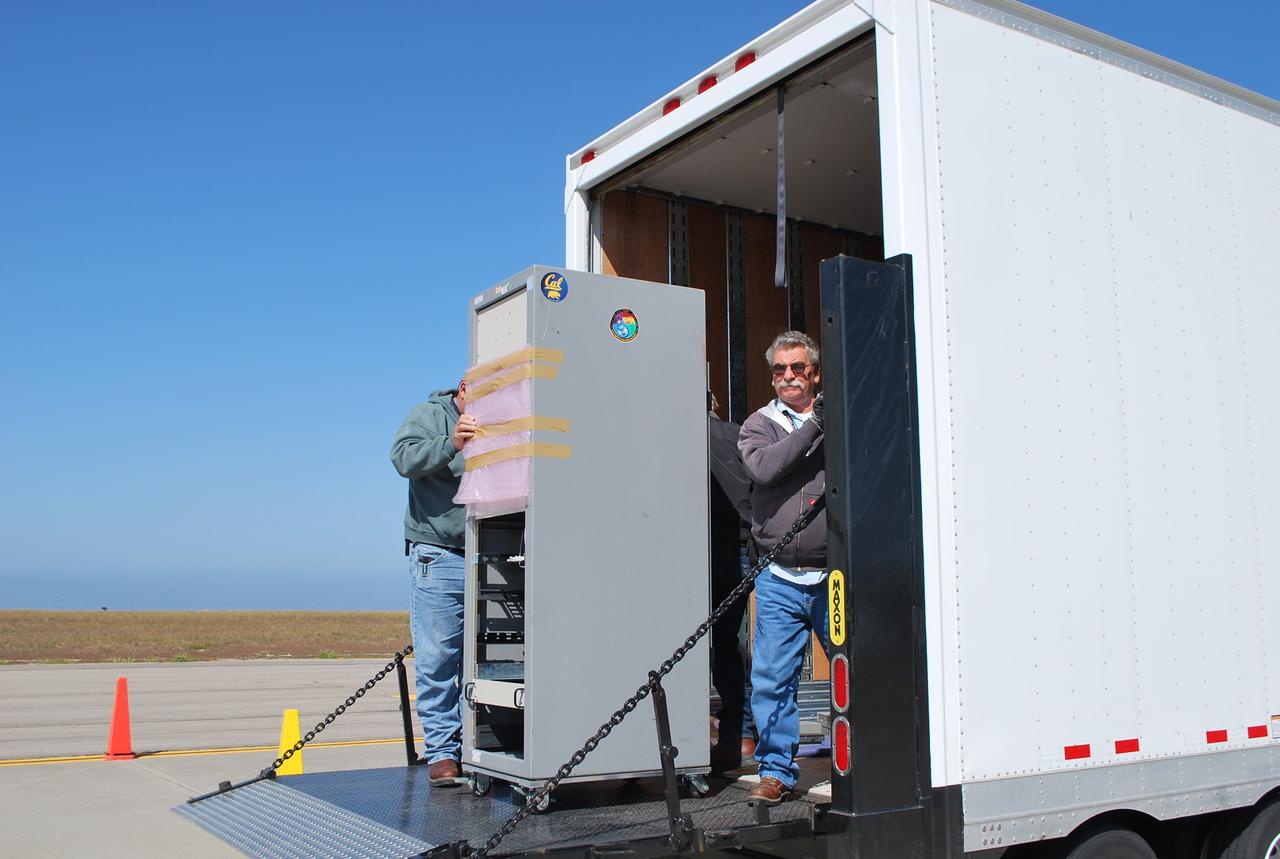
VANDENBERG AIR FORCE BASE, Calif. -- Technicians prepare to offload the spacecraft airborne support equipment for the Orbital Sciences' L-1011 carrier aircraft. This equipment will maintain the in-flight monitoring and control of the NuSTAR spacecraft before the release of the Pegasus XL rocket. The Pegasus will launch NuSTAR into space where the high-energy x-ray telescope will conduct a census for black holes, map radioactive material in young supernovae remnants, and study the origins of cosmic rays and the extreme physics around collapsed stars. For more information, visit science.nasa.gov/missions/nustar/. Photo credit: NASA/Randy Beaudoin, VAFB
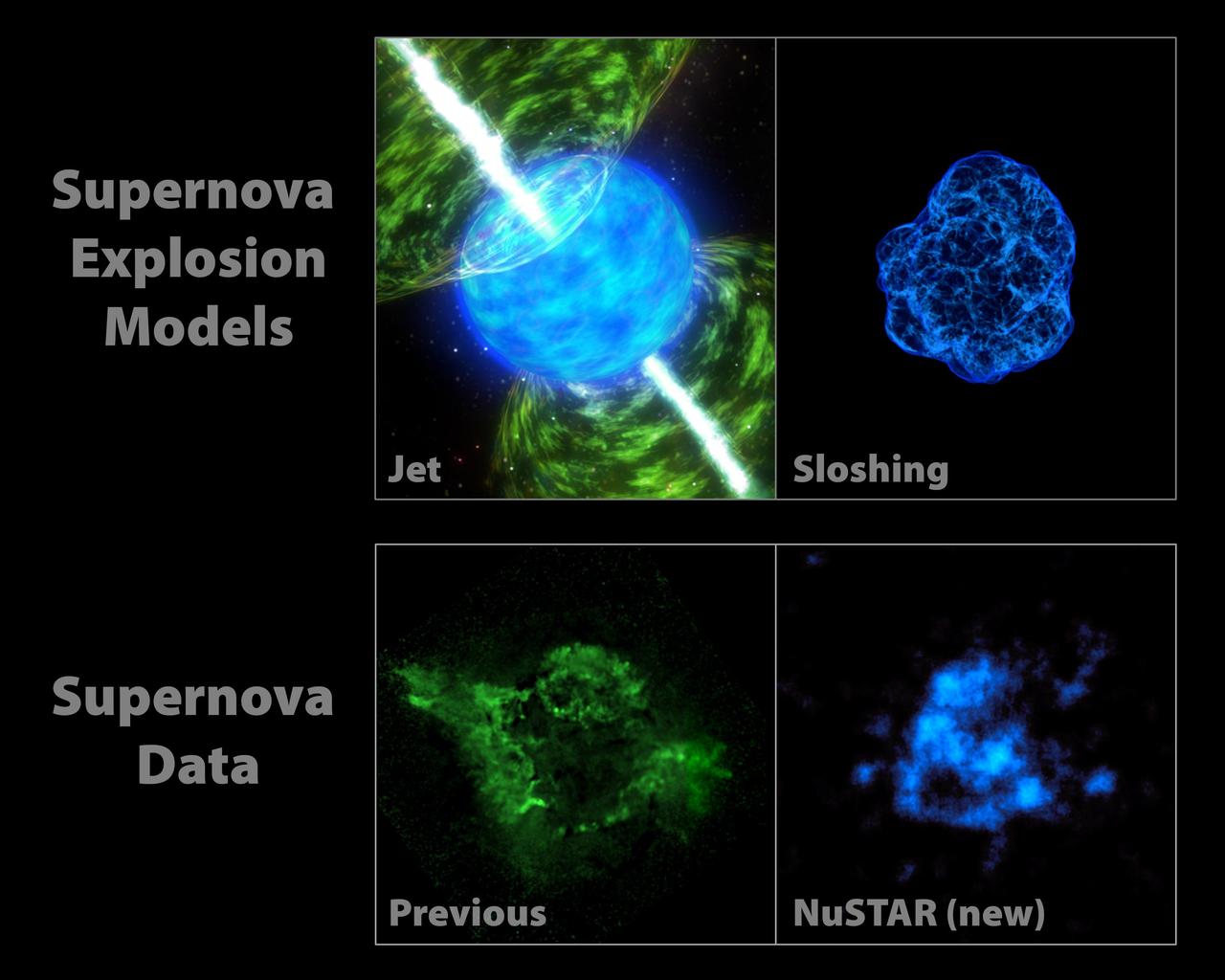
The images at the top of this graphic represent two popular models describing how stars blast apart. The models point to different triggers of the explosion. Jet-driven models are illustrated with an artist concept shown at left.
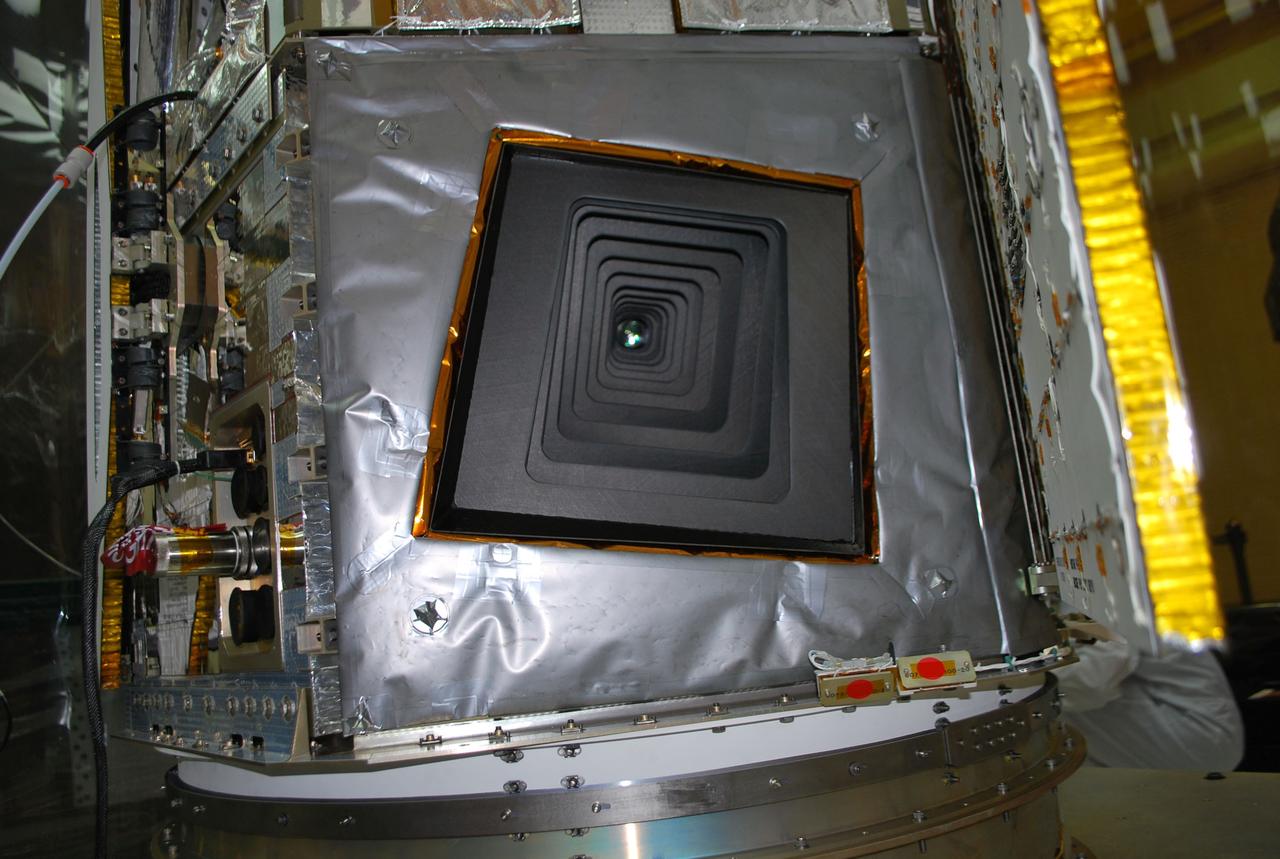
VANDENBERG AIR FORCE BASE, Calif. -- NuSTAR’s X-ray telescope is visible during the solar array deployment test at Vandenberg Air Force Base's processing facility in California. The Pegasus will launch NASA's Nuclear Spectroscopic Telescope Array NuSTAR into space. After the rocket and spacecraft are processed at Vandenberg, they will be flown on the Orbital Sciences’ L-1011 carrier aircraft to the Ronald Reagan Ballistic Missile Defense Test Site at the Pacific Ocean’s Kwajalein Atoll for launch. The high-energy x-ray telescope will conduct a census for black holes, map radioactive material in young supernovae remnants, and study the origins of cosmic rays and the extreme physics around collapsed stars. For more information, visit science.nasa.gov/missions/nustar/. Photo credit: NASA/Randy Beaudoin, VAFB
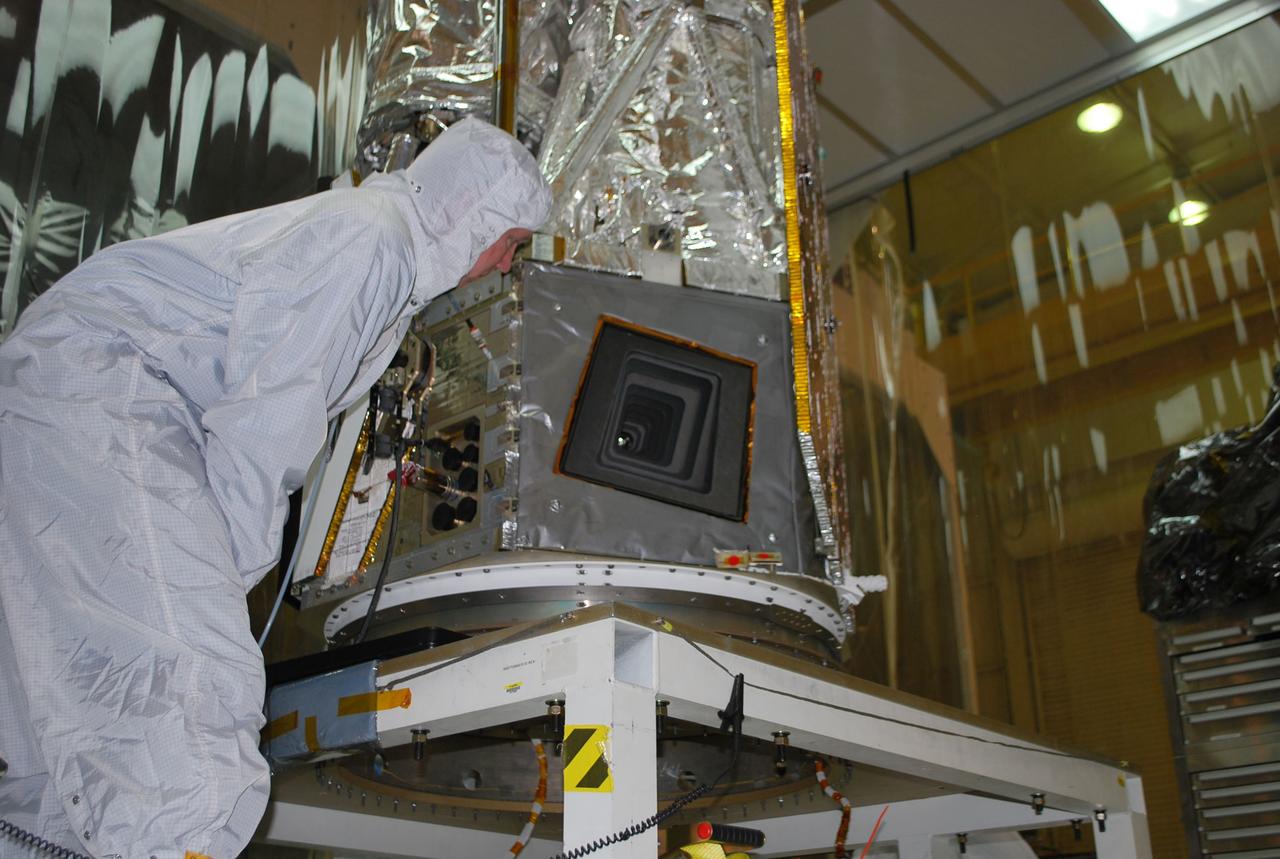
VANDENBERG AIR FORCE BASE, Calif. -- As a technician monitors the solar array deployment test at Vandenberg Air Force Base's processing facility in California, NuSTAR’s X-ray telescope is visible. The Pegasus will launch NASA's Nuclear Spectroscopic Telescope Array NuSTAR into space. After the rocket and spacecraft are processed at Vandenberg, they will be flown on the Orbital Sciences’ L-1011 carrier aircraft to the Ronald Reagan Ballistic Missile Defense Test Site at the Pacific Ocean’s Kwajalein Atoll for launch. The high-energy x-ray telescope will conduct a census for black holes, map radioactive material in young supernovae remnants, and study the origins of cosmic rays and the extreme physics around collapsed stars. For more information, visit science.nasa.gov/missions/nustar/. Photo credit: NASA/Randy Beaudoin, VAFB
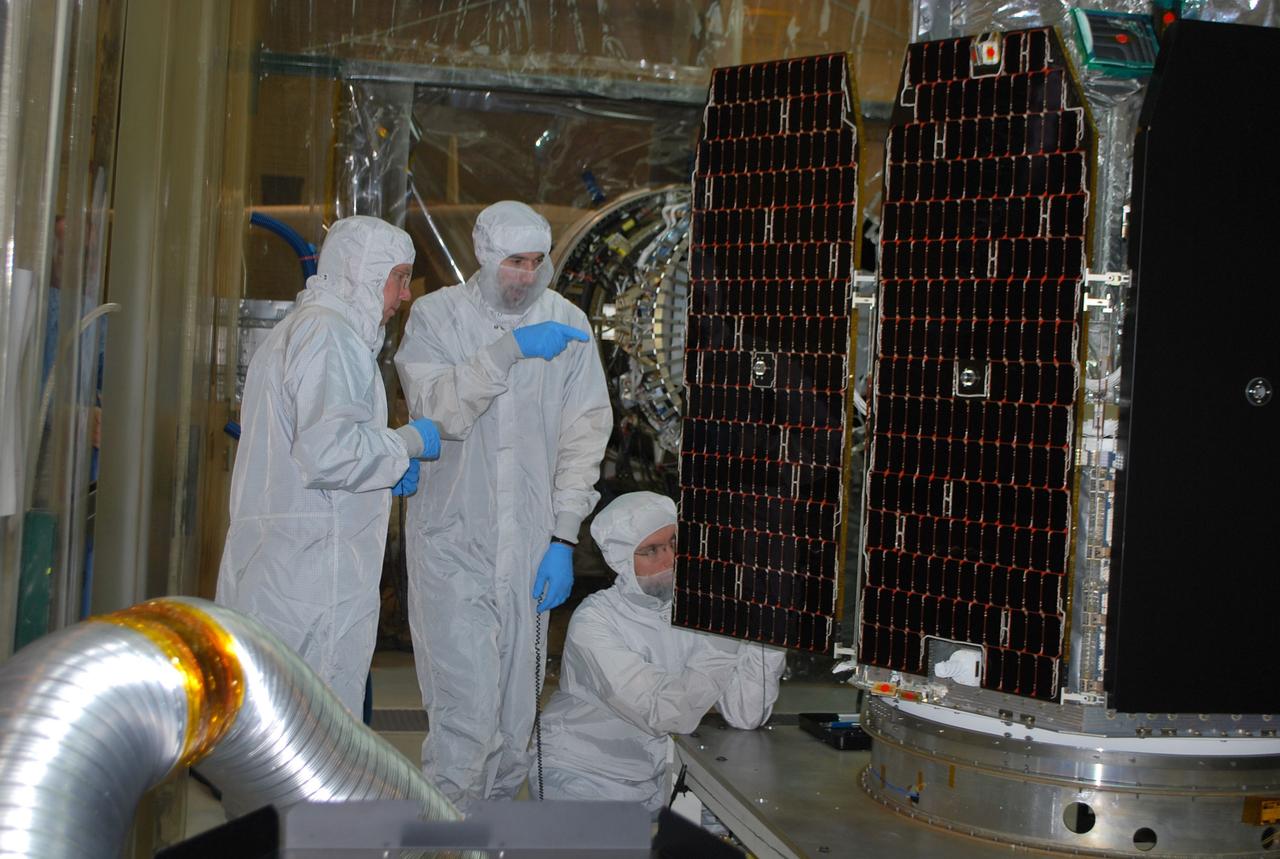
VANDENBERG AIR FORCE BASE, Calif. -- At Vandenberg Air Force Base's processing facility in California, NASA’s NuSTAR spacecraft undergoes a solar array deployment test. The Pegasus will launch NASA's Nuclear Spectroscopic Telescope Array NuSTAR into space. After the rocket and spacecraft are processed at Vandenberg, they will be flown on the Orbital Sciences’ L-1011 carrier aircraft to the Ronald Reagan Ballistic Missile Defense Test Site at the Pacific Ocean’s Kwajalein Atoll for launch. The high-energy x-ray telescope will conduct a census for black holes, map radioactive material in young supernovae remnants, and study the origins of cosmic rays and the extreme physics around collapsed stars. For more information, visit science.nasa.gov/missions/nustar/. Photo credit: NASA/Randy Beaudoin, VAFB
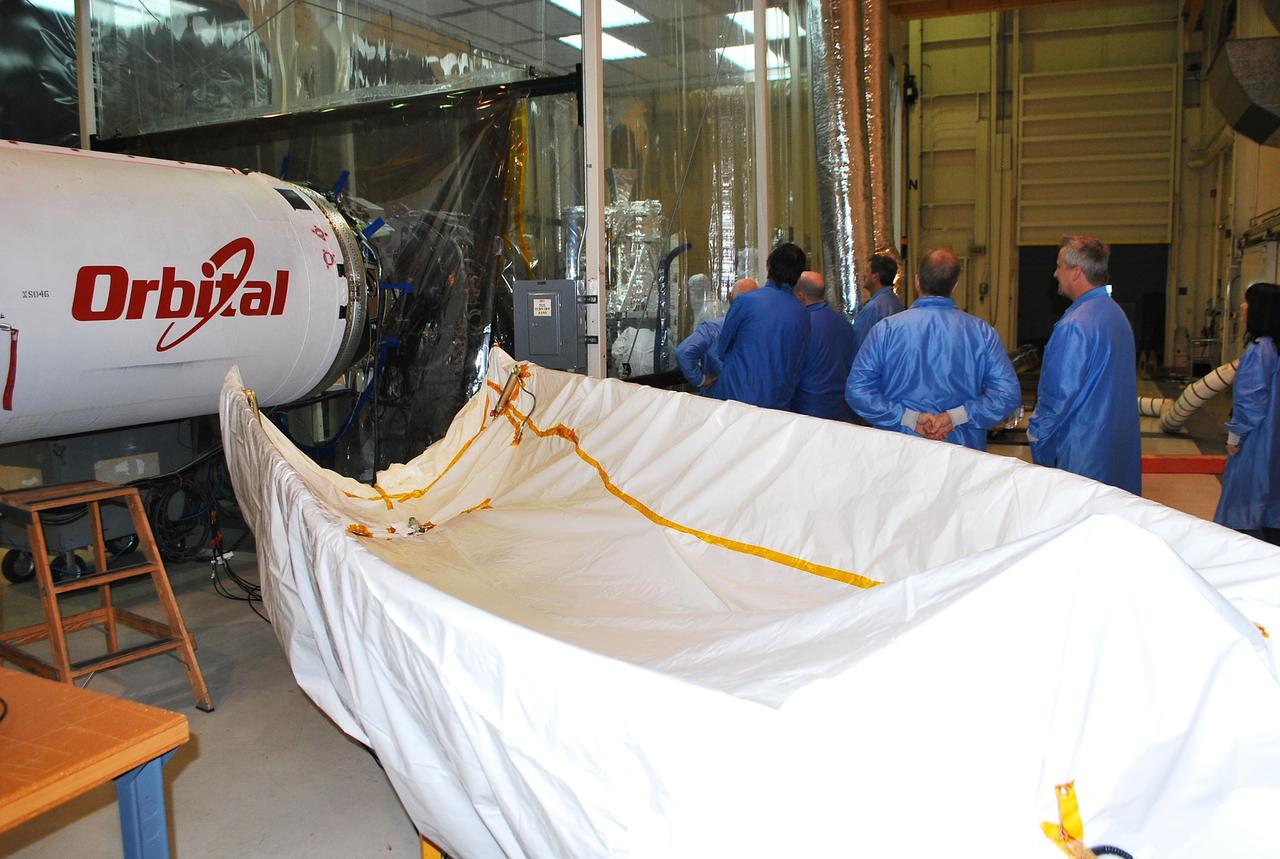
VANDENBERG AIR FORCE BASE, Calif. -- With the Pegasus XL rocket and fairing inside Orbital Science's processing facility at Vandenberg Air Force Base in California, technicians watch the NuSTAR solar array test from inside a clean room environmental enclosure. The Pegasus will launch NASA's Nuclear Spectroscopic Telescope Array NuSTAR into space. After the rocket and spacecraft are processed at Vandenberg, they will be flown on the Orbital Sciences’ L-1011 carrier aircraft to the Ronald Reagan Ballistic Missile Defense Test Site at the Pacific Ocean’s Kwajalein Atoll for launch. The high-energy x-ray telescope will conduct a census for black holes, map radioactive material in young supernovae remnants, and study the origins of cosmic rays and the extreme physics around collapsed stars. For more information, visit science.nasa.gov/missions/nustar/. Photo credit: NASA/Randy Beaudoin, VAFB

VANDENBERG AIR FORCE BASE, Calif. -- As a technician monitors the solar array deployment test at Vandenberg Air Force Base's processing facility in California, NuSTAR’s X-ray telescope is visible. The Pegasus will launch NASA's Nuclear Spectroscopic Telescope Array NuSTAR into space. After the rocket and spacecraft are processed at Vandenberg, they will be flown on the Orbital Sciences’ L-1011 carrier aircraft to the Ronald Reagan Ballistic Missile Defense Test Site at the Pacific Ocean’s Kwajalein Atoll for launch. The high-energy x-ray telescope will conduct a census for black holes, map radioactive material in young supernovae remnants, and study the origins of cosmic rays and the extreme physics around collapsed stars. For more information, visit science.nasa.gov/missions/nustar/. Photo credit: NASA/Randy Beaudoin, VAFB
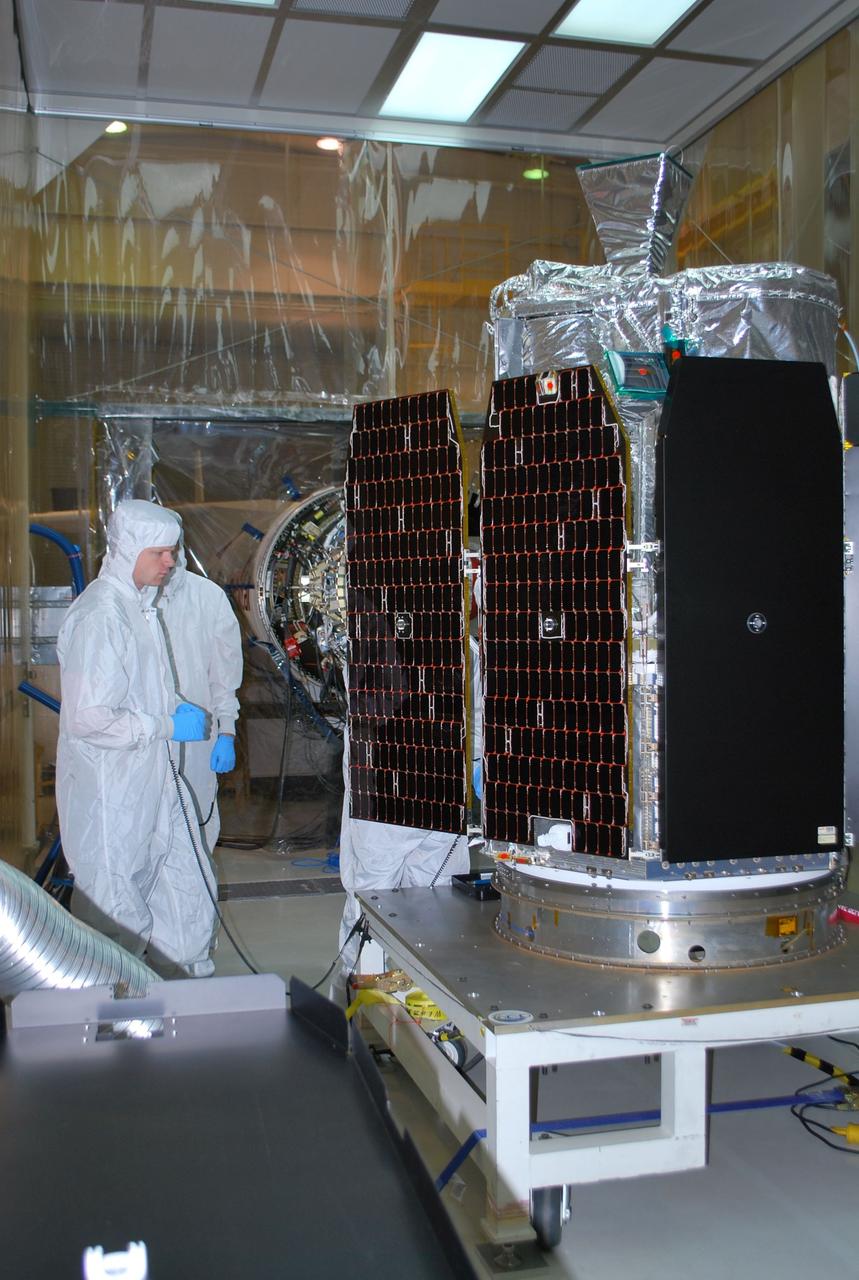
VANDENBERG AIR FORCE BASE, Calif. -- At Vandenberg Air Force Base's processing facility in California, NASA’s NuSTAR spacecraft undergoes a solar array deployment test. The Pegasus will launch NASA's Nuclear Spectroscopic Telescope Array NuSTAR into space. After the rocket and spacecraft are processed at Vandenberg, they will be flown on the Orbital Sciences’ L-1011 carrier aircraft to the Ronald Reagan Ballistic Missile Defense Test Site at the Pacific Ocean’s Kwajalein Atoll for launch. The high-energy x-ray telescope will conduct a census for black holes, map radioactive material in young supernovae remnants, and study the origins of cosmic rays and the extreme physics around collapsed stars. For more information, visit science.nasa.gov/missions/nustar/. Photo credit: NASA/Randy Beaudoin, VAFB
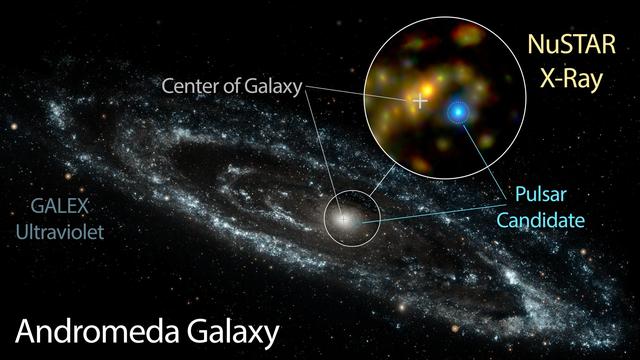
NASA's Nuclear Spectroscope Telescope Array, or NuSTAR, has identified a candidate pulsar in Andromeda -- the nearest large galaxy to the Milky Way. This likely pulsar is brighter at high energies than the Andromeda galaxy's entire black hole population. The inset image shows the pulsar candidate in blue, as seen in X-ray light by NuSTAR. The background image of Andromeda was taken by NASA's Galaxy Evolution Explorer in ultraviolet light. Andromeda is a spiral galaxy like our Milky Way but larger in size. It lies 2.5 million light-years away in the Andromeda constellation. http://photojournal.jpl.nasa.gov/catalog/PIA20970
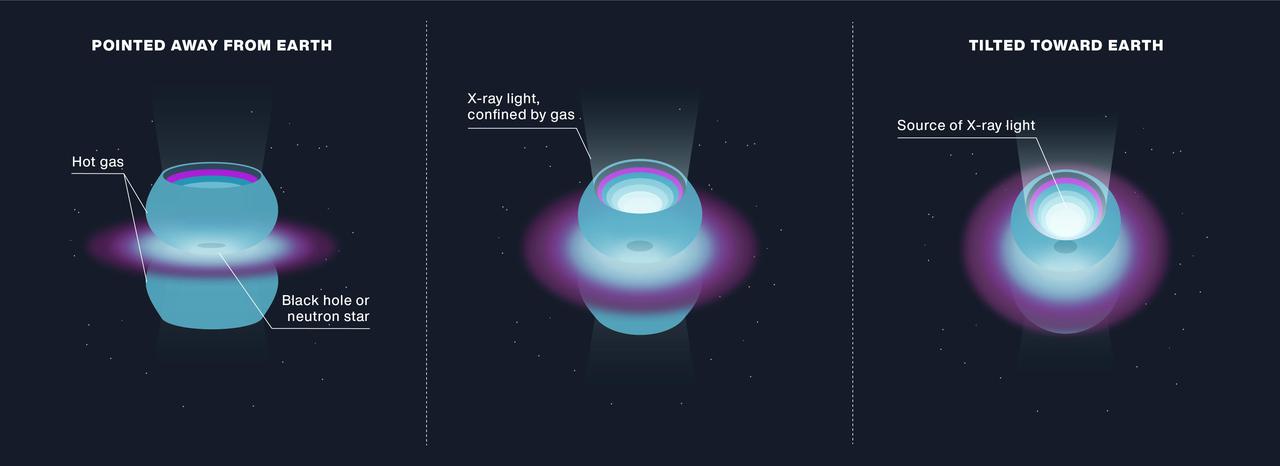
This illustration shows the object known as SS 433, located in the Milky Way galaxy and only about 20,000 light-years from Earth. Researchers think SS 433 is an ultraluminous X-ray source, or ULX, a compact cosmic object that must have an X-ray luminosity that is about a million times the total luminosity output of the Sun (at all wavelengths). ULXs are so bright, they can be seen millions of light-years away, in other galaxies. SS 433 appears to be about 1,000 times dimmer than the minimum threshold to be considered a ULX. This faintness is likely a trick of perspective: The high-energy X-rays from SS 433 are initially confined within two cones of gas extending outward from opposite sides of the central object. These cones are similar to a mirrored bowl that surrounds a flashlight bulb: They corral the X-ray light from SS 433 into a narrow beam, until it escapes and is detected by NuSTAR. But because the cones are not pointing directly at Earth, NuSTAR can't see the object's full brightness. Animation available at https://photojournal.jpl.nasa.gov/catalog/PIA24574
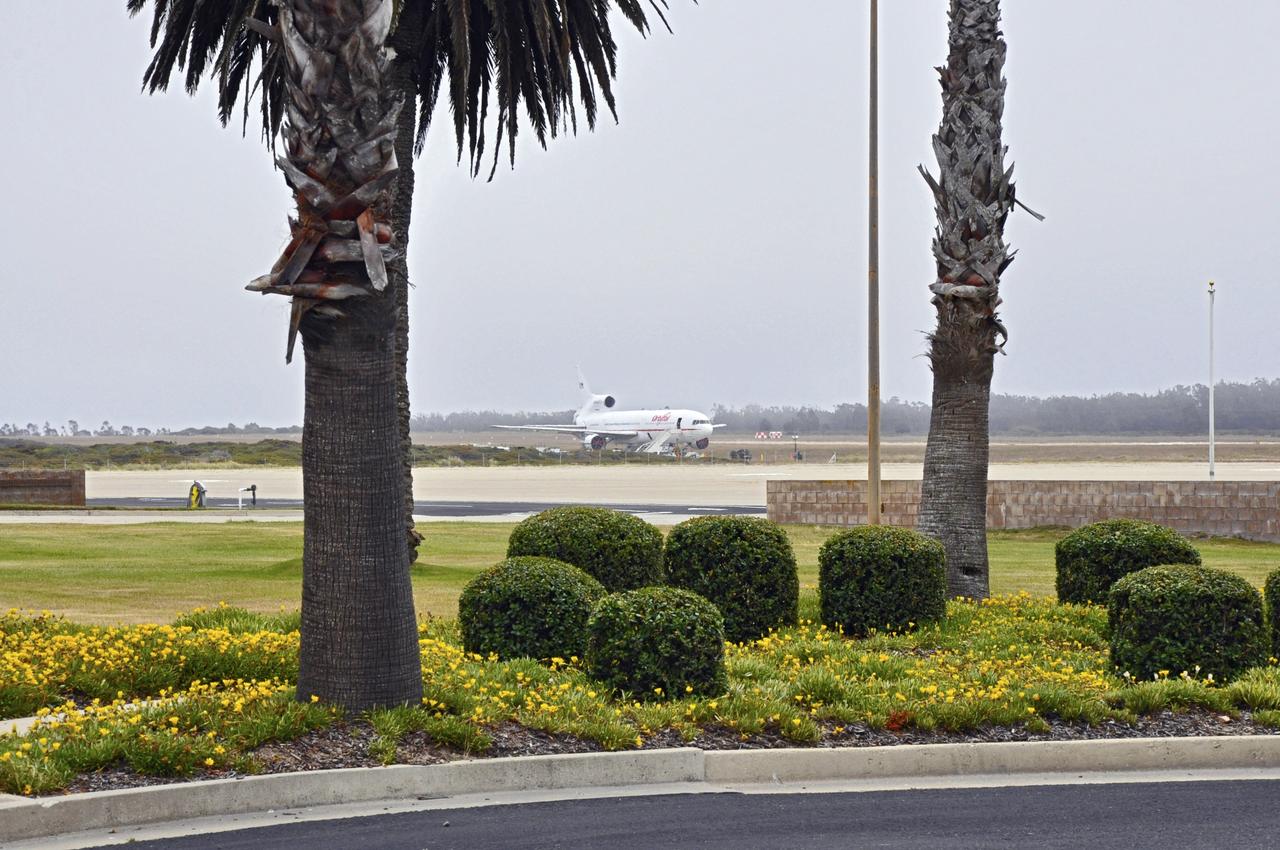
VANDENBERG AFB, Calif. – Technicians connect the Orbital Sciences Pegasus XL rocket with its NuSTAR spacecraft to the L-1011 carrier aircraft known as "Stargazer." The Pegasus will launch NuSTAR into space where the high-energy x-ray telescope will conduct a census for black holes, map radioactive material in young supernovae remnants, and study the origins of cosmic rays and the extreme physics around collapsed stars. Photo credit: NASA/Randy Beaudoin, VAFB
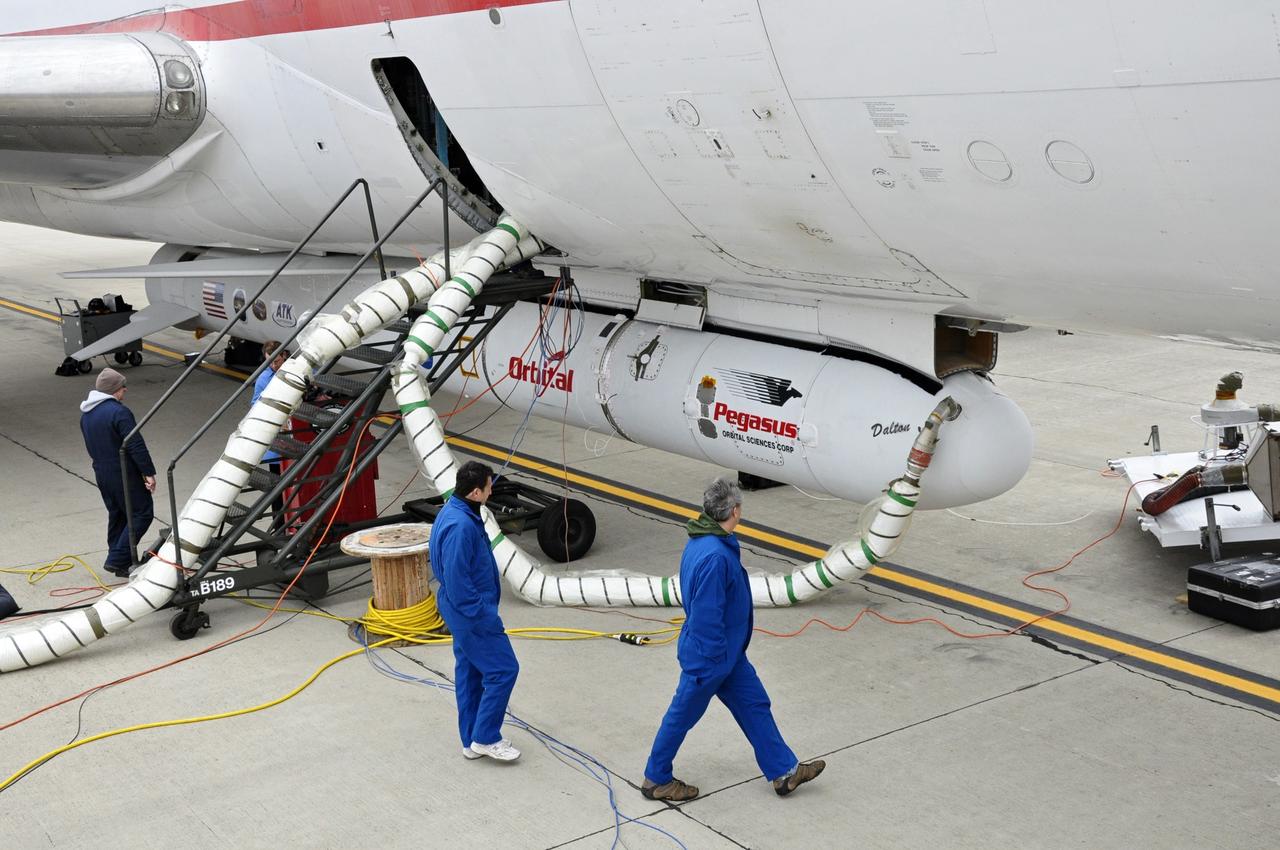
VANDENBERG AFB, Calif. – The Orbital Sciences Pegasus XL rocket with its NuSTAR spacecraft after attachment to the L-1011 carrier aircraft known as "Stargazer." The Pegasus will launch NuSTAR into space where the high-energy x-ray telescope will conduct a census for black holes, map radioactive material in young supernovae remnants, and study the origins of cosmic rays and the extreme physics around collapsed stars. Photo credit: NASA/Randy Beaudoin, VAFB

VANDENBERG AFB, Calif. – The Orbital Sciences Pegasus XL rocket with its NuSTAR spacecraft after attachment to the L-1011 carrier aircraft known as "Stargazer." The Pegasus will launch NuSTAR into space where the high-energy x-ray telescope will conduct a census for black holes, map radioactive material in young supernovae remnants, and study the origins of cosmic rays and the extreme physics around collapsed stars. Photo credit: NASA/Randy Beaudoin, VAFB
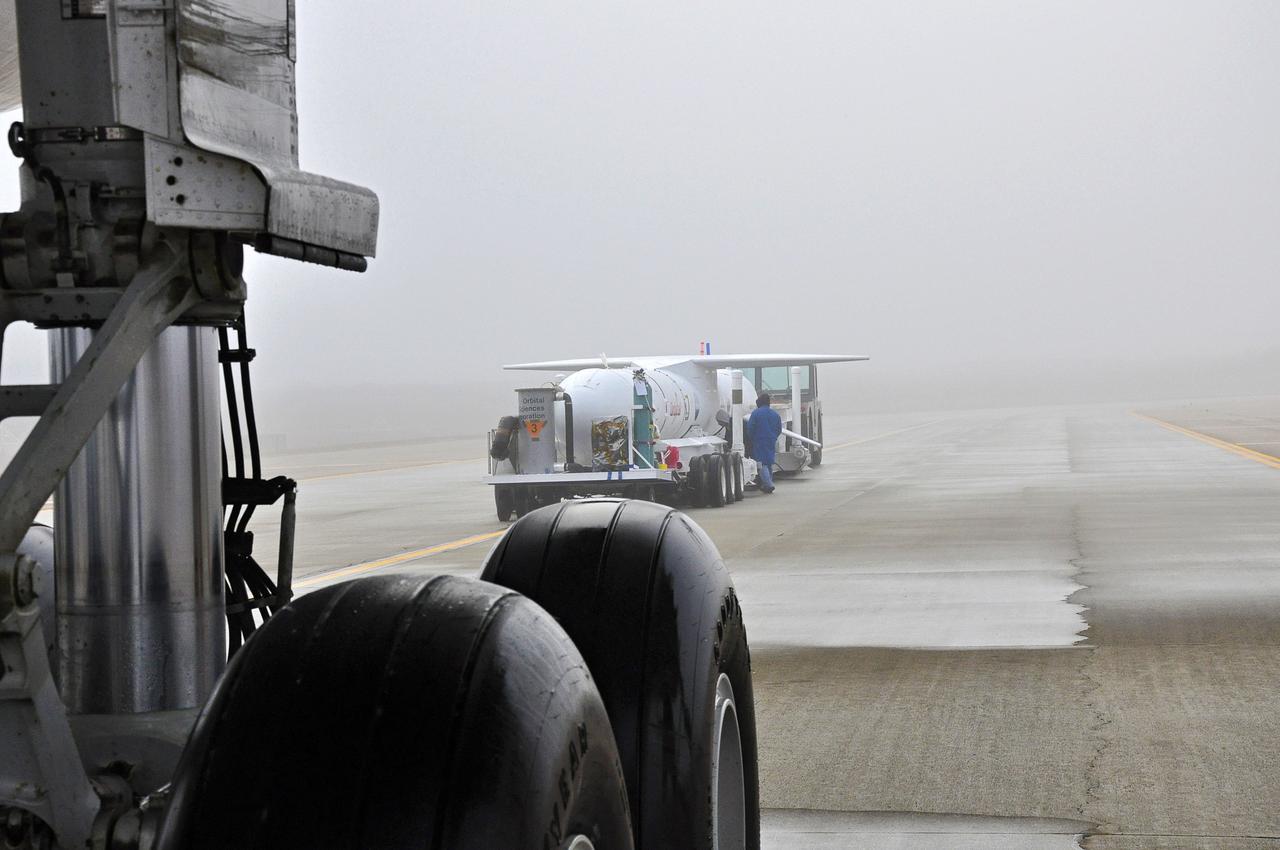
VANDENBERG AFB, Calif. – Technicians roll the Orbital Sciences Pegasus XL rocket with its NuSTAR spacecraft to the waiting L-1011 carrier aircraft known as "Stargazer." The Pegasus will launch NuSTAR into space where the high-energy x-ray telescope will conduct a census for black holes, map radioactive material in young supernovae remnants, and study the origins of cosmic rays and the extreme physics around collapsed stars. Photo credit: NASA/Randy Beaudoin, VAFB
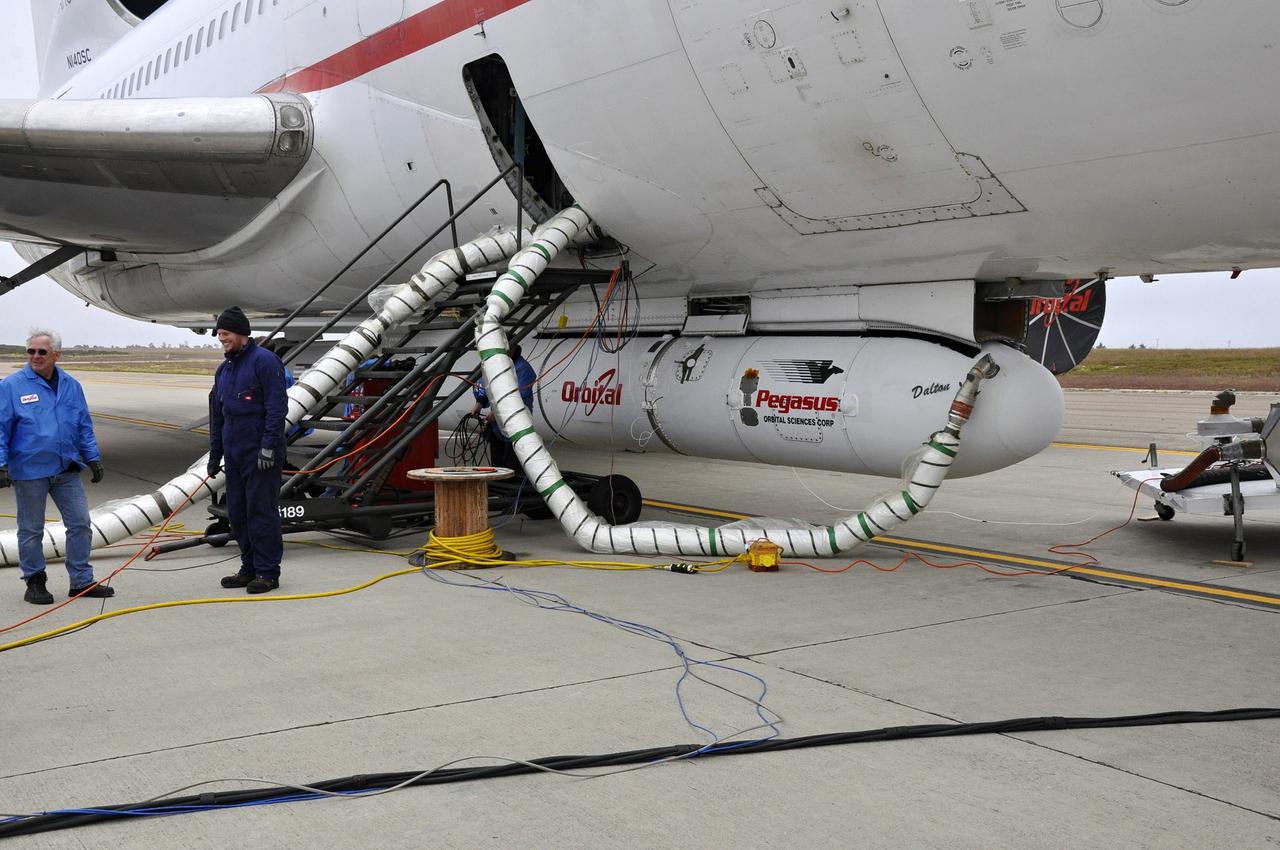
VANDENBERG AFB, Calif. – Technicians connect the Orbital Sciences Pegasus XL rocket with its NuSTAR spacecraft to the L-1011 carrier aircraft known as "Stargazer." The Pegasus will launch NuSTAR into space where the high-energy x-ray telescope will conduct a census for black holes, map radioactive material in young supernovae remnants, and study the origins of cosmic rays and the extreme physics around collapsed stars. Photo credit: NASA/Randy Beaudoin, VAFB

VANDENBERG AFB, Calif. – The Orbital Sciences L-1011 known as "Stargazer" awaits the Orbital Sciences Pegasus XL rocket with its NuSTAR spacecraft. The Pegasus will launch NuSTAR into space where the high-energy x-ray telescope will conduct a census for black holes, map radioactive material in young supernovae remnants, and study the origins of cosmic rays and the extreme physics around collapsed stars. Photo credit: NASA/Randy Beaudoin, VAFB
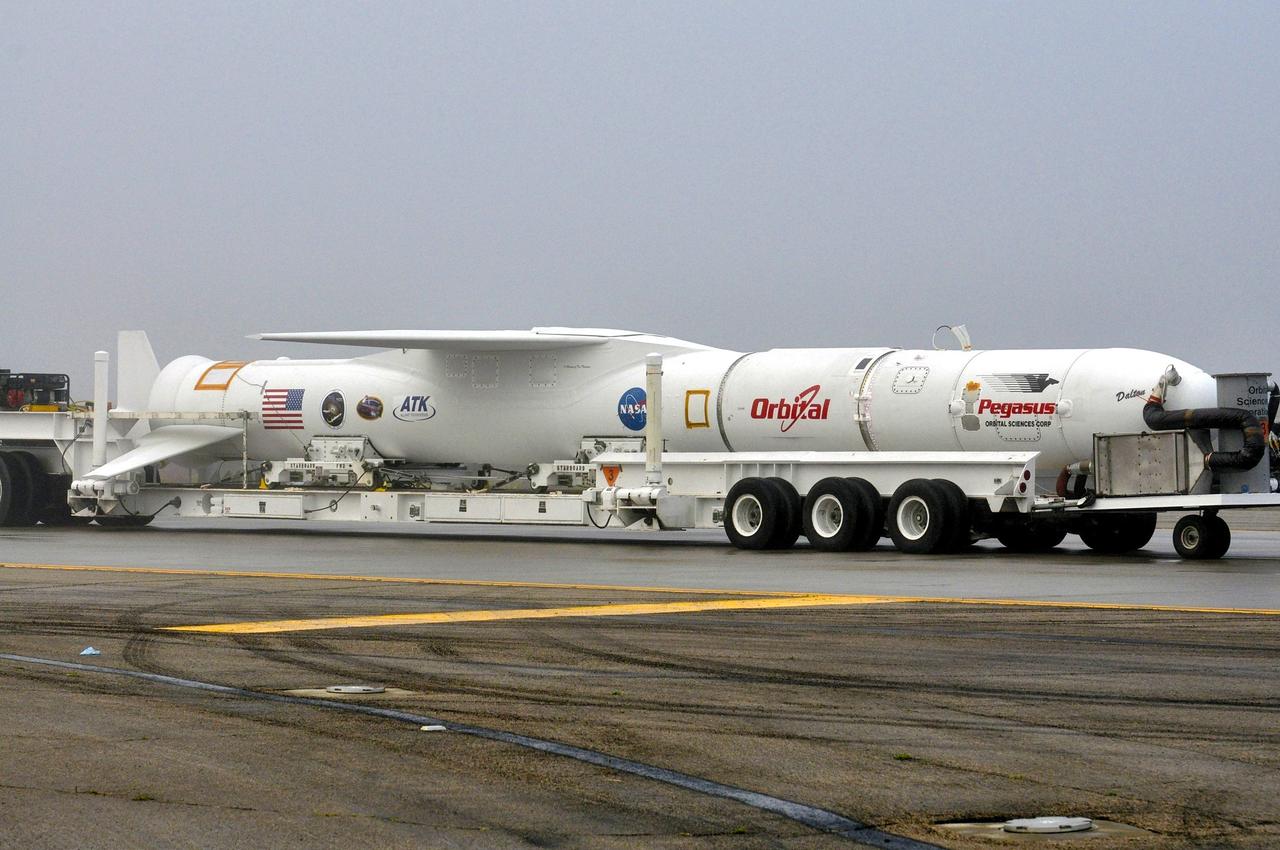
VANDENBERG AFB, Calif. – Technicians roll the Orbital Sciences Pegasus XL rocket with its NuSTAR spacecraft to the waiting L-1011 carrier aircraft known as "Stargazer." The Pegasus will launch NuSTAR into space where the high-energy x-ray telescope will conduct a census for black holes, map radioactive material in young supernovae remnants, and study the origins of cosmic rays and the extreme physics around collapsed stars. Photo credit: NASA/Randy Beaudoin, VAFB
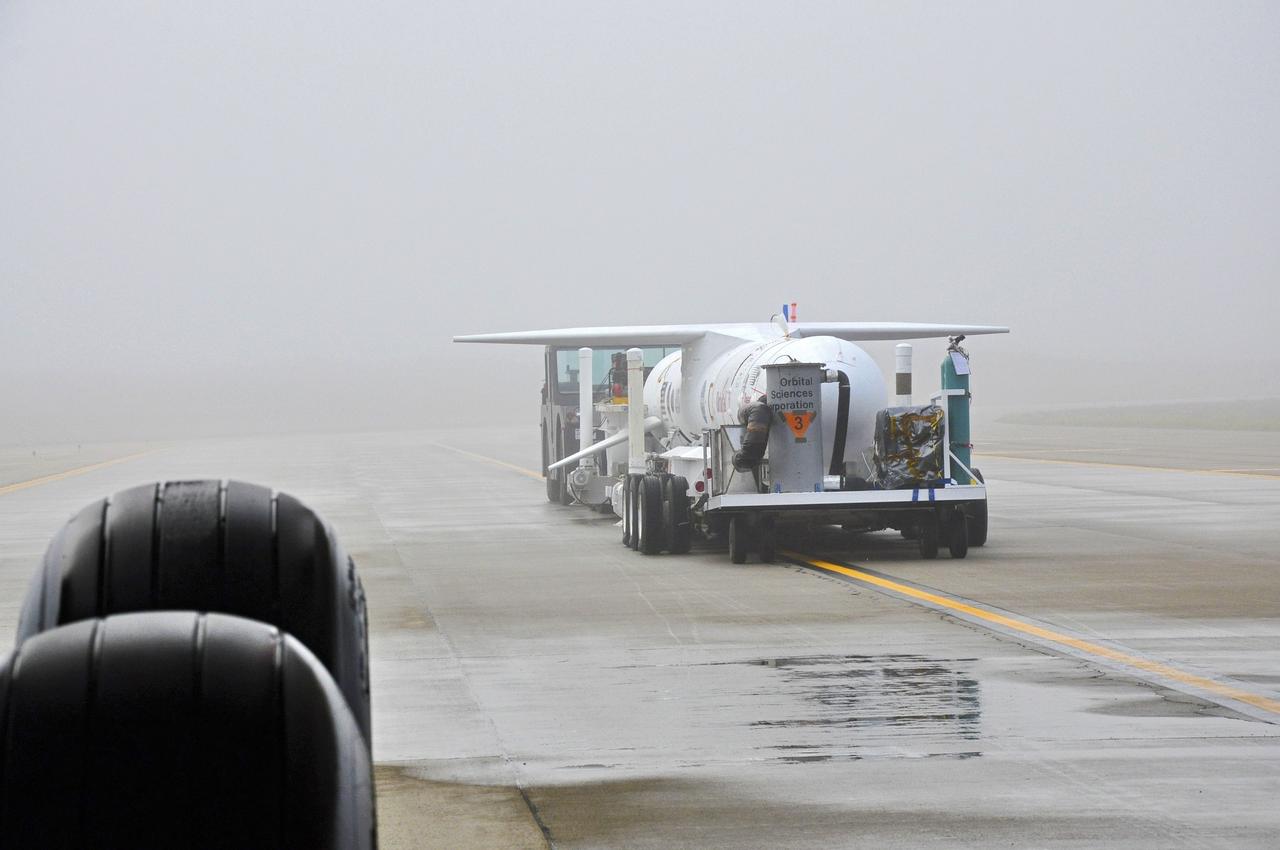
VANDENBERG AFB, Calif. – Technicians roll the Orbital Sciences Pegasus XL rocket with its NuSTAR spacecraft to the waiting L-1011 carrier aircraft known as "Stargazer." The Pegasus will launch NuSTAR into space where the high-energy x-ray telescope will conduct a census for black holes, map radioactive material in young supernovae remnants, and study the origins of cosmic rays and the extreme physics around collapsed stars. Photo credit: NASA/Randy Beaudoin, VAFB
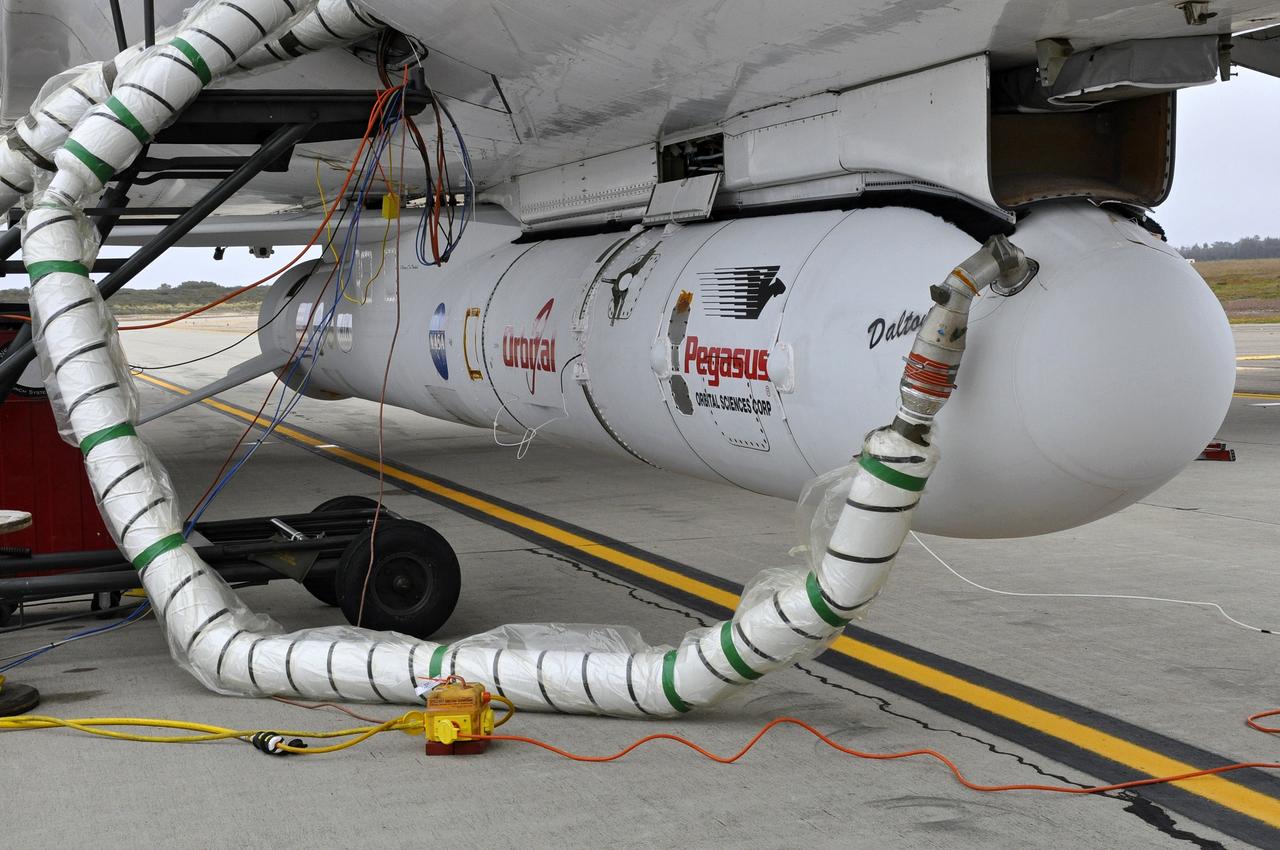
VANDENBERG AFB, Calif. – The Orbital Sciences Pegasus XL rocket with its NuSTAR spacecraft after attachment to the L-1011 carrier aircraft known as "Stargazer." The Pegasus will launch NuSTAR into space where the high-energy x-ray telescope will conduct a census for black holes, map radioactive material in young supernovae remnants, and study the origins of cosmic rays and the extreme physics around collapsed stars. Photo credit: NASA/Randy Beaudoin, VAFB
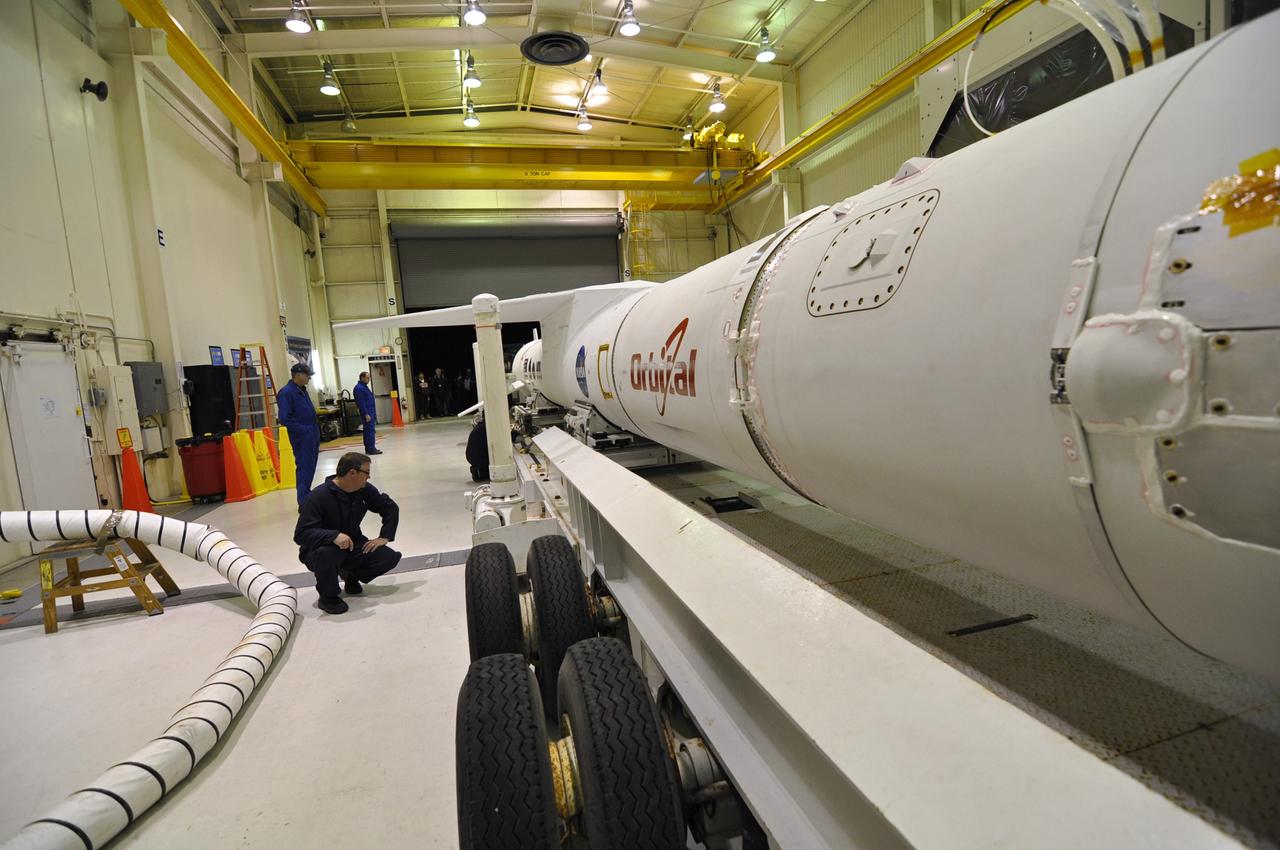
VANDENBERG AFB, Calif. – Technicians prepare to roll the Orbital Sciences Pegasus XL rocket with its NuSTAR spacecraft to the waiting L-1011 carrier aircraft known as "Stargazer." The Pegasus will launch NuSTAR into space where the high-energy x-ray telescope will conduct a census for black holes, map radioactive material in young supernovae remnants, and study the origins of cosmic rays and the extreme physics around collapsed stars. Photo credit: NASA/Randy Beaudoin, VAFB
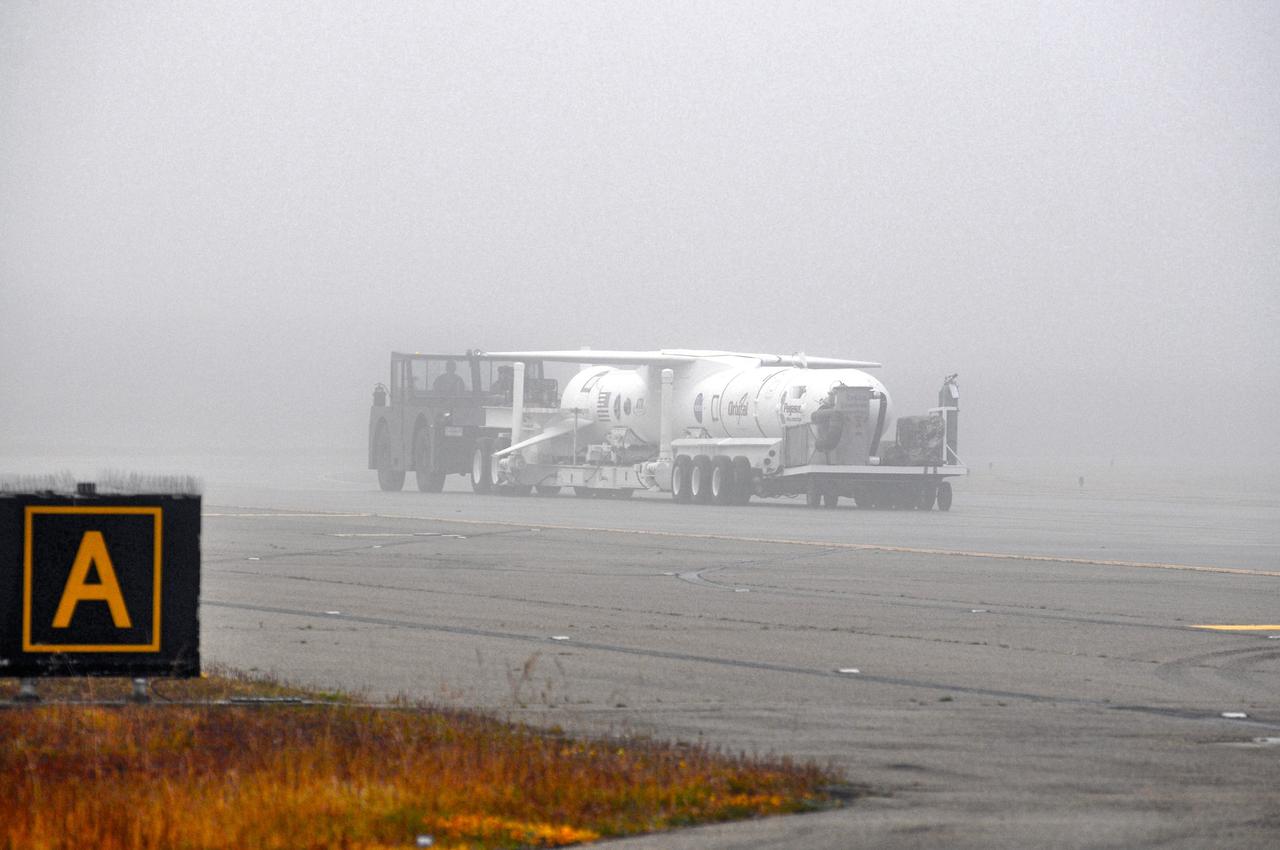
VANDENBERG AFB, Calif. – Technicians roll the Orbital Sciences Pegasus XL rocket with its NuSTAR spacecraft to the waiting L-1011 carrier aircraft known as "Stargazer." The Pegasus will launch NuSTAR into space where the high-energy x-ray telescope will conduct a census for black holes, map radioactive material in young supernovae remnants, and study the origins of cosmic rays and the extreme physics around collapsed stars. Photo credit: NASA/Randy Beaudoin, VAFB
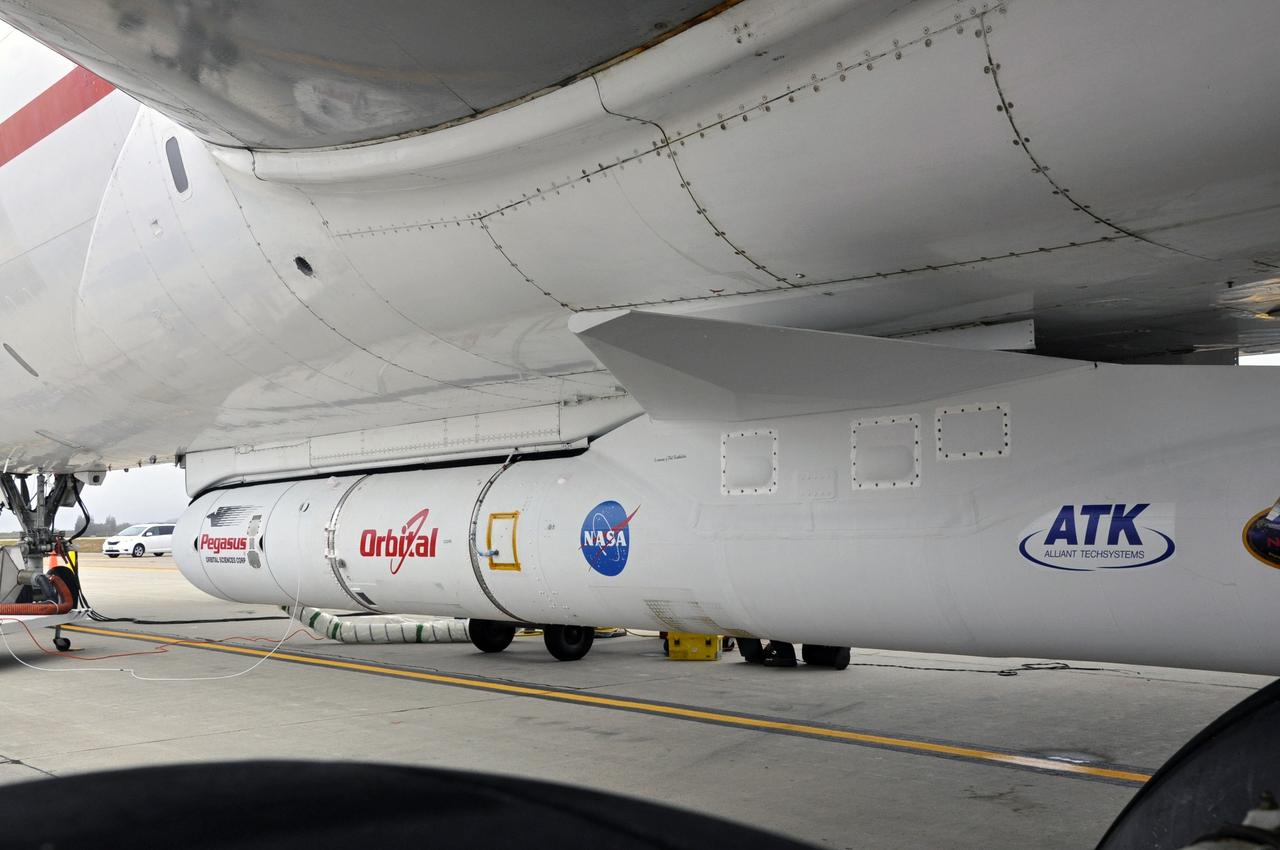
VANDENBERG AFB, Calif. – The Orbital Sciences Pegasus XL rocket with its NuSTAR spacecraft after attachment to the L-1011 carrier aircraft known as "Stargazer." The Pegasus will launch NuSTAR into space where the high-energy x-ray telescope will conduct a census for black holes, map radioactive material in young supernovae remnants, and study the origins of cosmic rays and the extreme physics around collapsed stars. Photo credit: NASA/Randy Beaudoin, VAFB
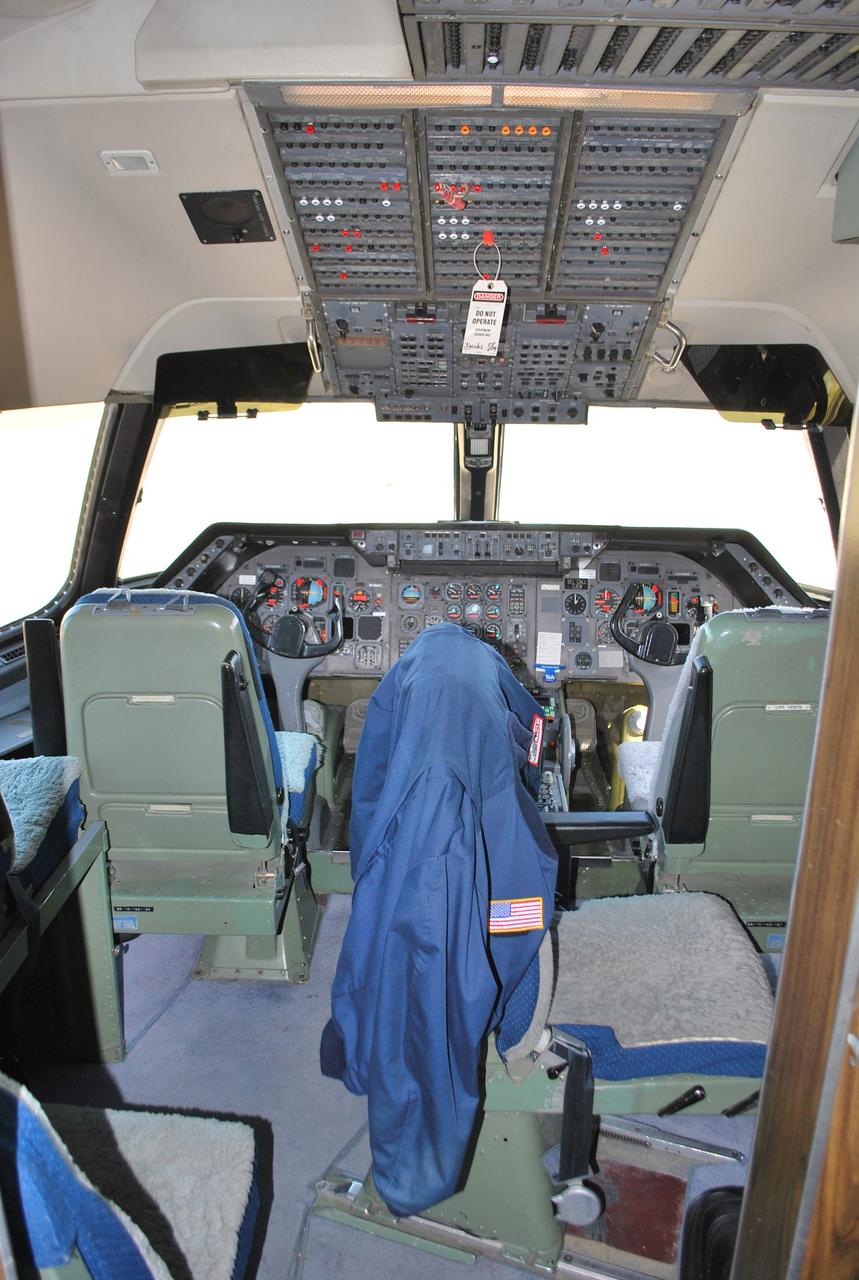
VANDENBERG AIR FORCE BASE, Calif. -- The cockpit and flight instrumentation of the Orbital Sciences' L-1011 carrier aircraft is readied for the launch of the Pegasus XL rocket. The Pegasus will launch NuSTAR into space where the high-energy x-ray telescope will conduct a census for black holes, map radioactive material in young supernovae remnants, and study the origins of cosmic rays and the extreme physics around collapsed stars. For more information, visit science.nasa.gov/missions/nustar/. Photo credit: NASA/Randy Beaudoin, VAFB
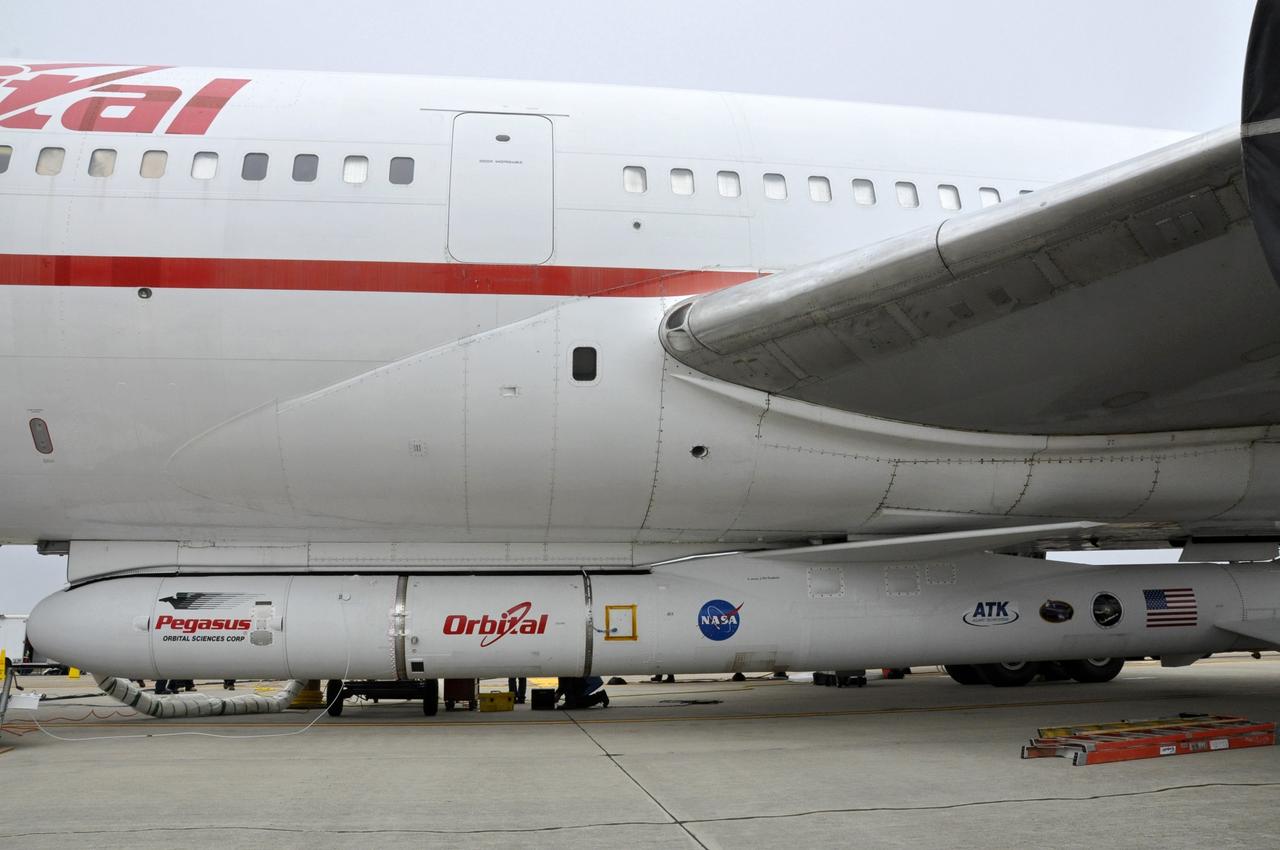
VANDENBERG AFB, Calif. – The Orbital Sciences Pegasus XL rocket with its NuSTAR spacecraft after attachment to the L-1011 carrier aircraft known as "Stargazer." The Pegasus will launch NuSTAR into space where the high-energy x-ray telescope will conduct a census for black holes, map radioactive material in young supernovae remnants, and study the origins of cosmic rays and the extreme physics around collapsed stars. Photo credit: NASA/Randy Beaudoin, VAFB
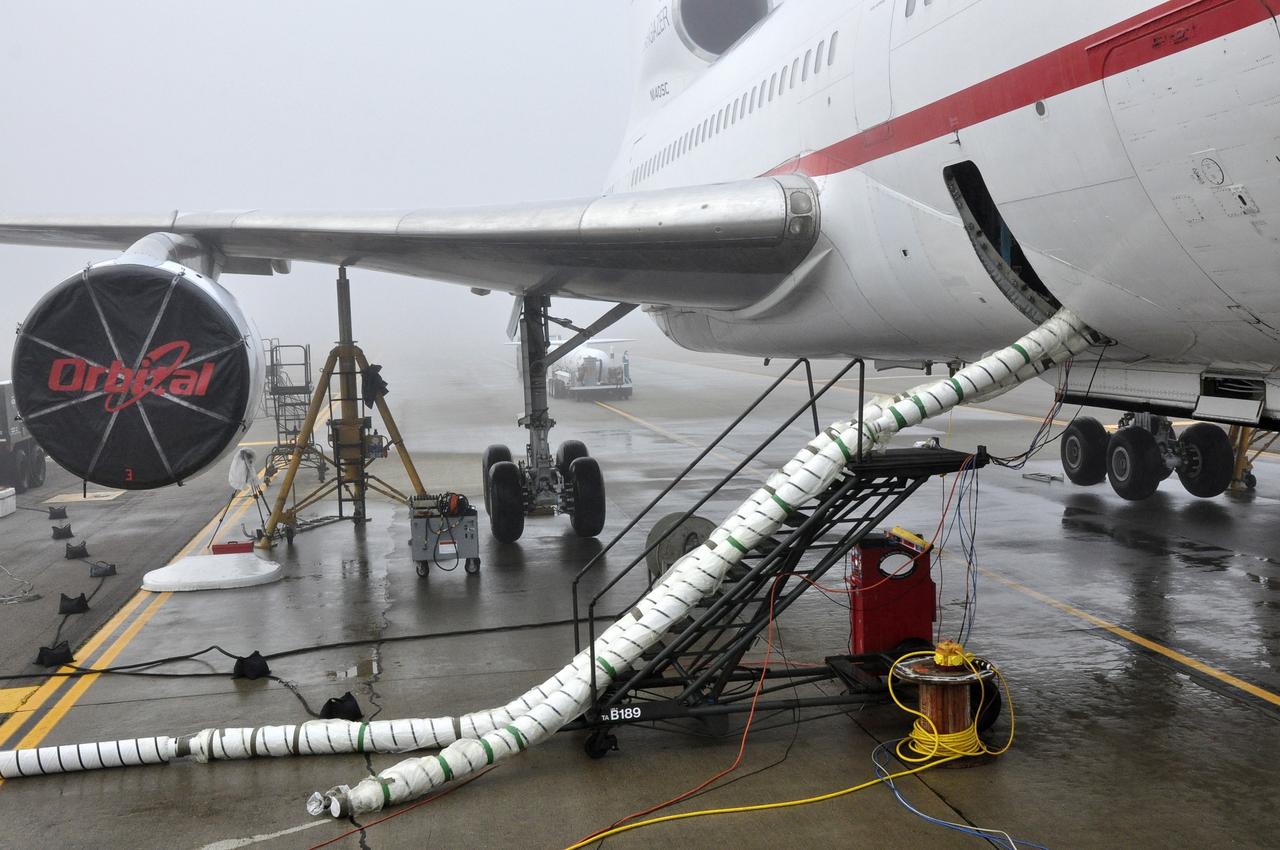
VANDENBERG AFB, Calif. – The Orbital Sciences L-1011 known as "Stargazer" awaits the Orbital Sciences Pegasus XL rocket with its NuSTAR spacecraft. The Pegasus will launch NuSTAR into space where the high-energy x-ray telescope will conduct a census for black holes, map radioactive material in young supernovae remnants, and study the origins of cosmic rays and the extreme physics around collapsed stars. Photo credit: NASA/Randy Beaudoin, VAFB
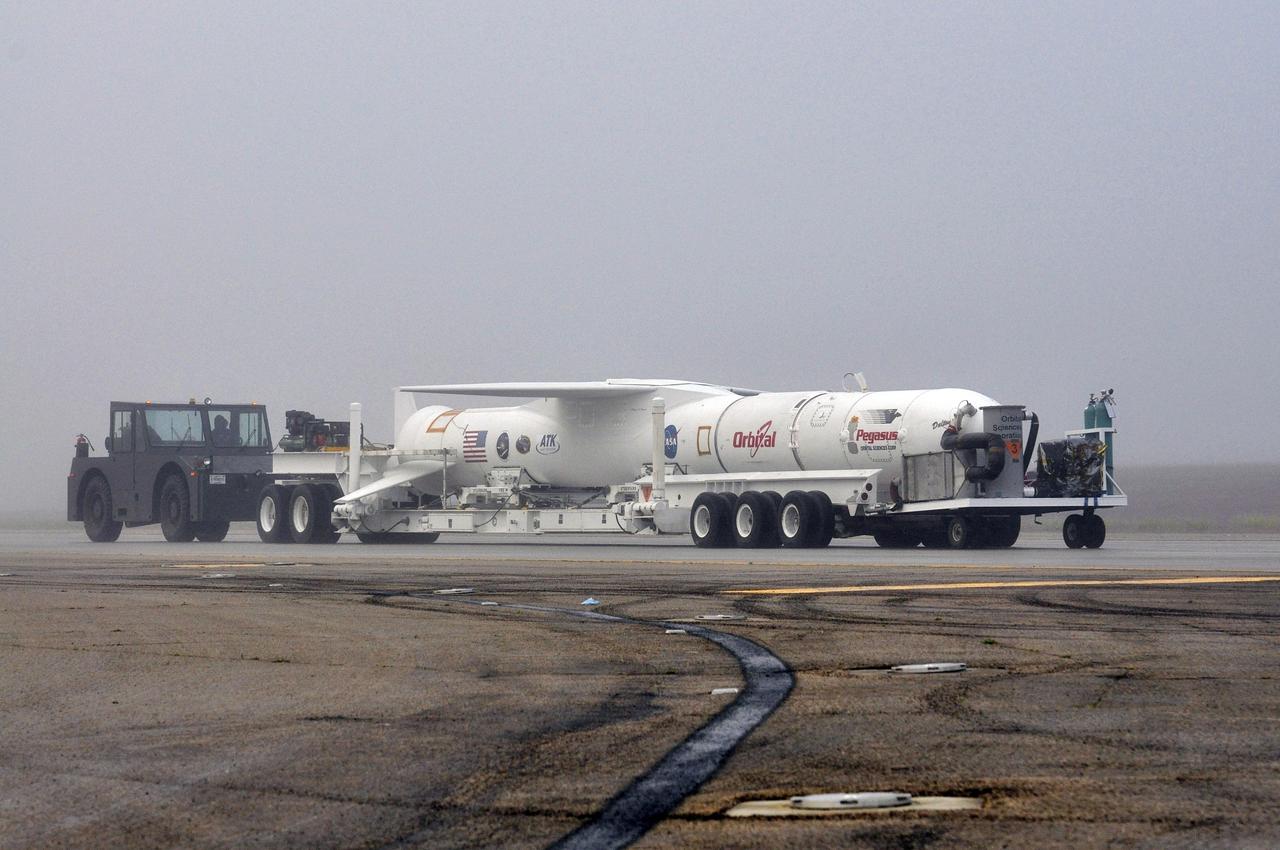
VANDENBERG AFB, Calif. – Technicians roll the Orbital Sciences Pegasus XL rocket with its NuSTAR spacecraft to the waiting L-1011 carrier aircraft known as "Stargazer." The Pegasus will launch NuSTAR into space where the high-energy x-ray telescope will conduct a census for black holes, map radioactive material in young supernovae remnants, and study the origins of cosmic rays and the extreme physics around collapsed stars. Photo credit: NASA/Randy Beaudoin, VAFB
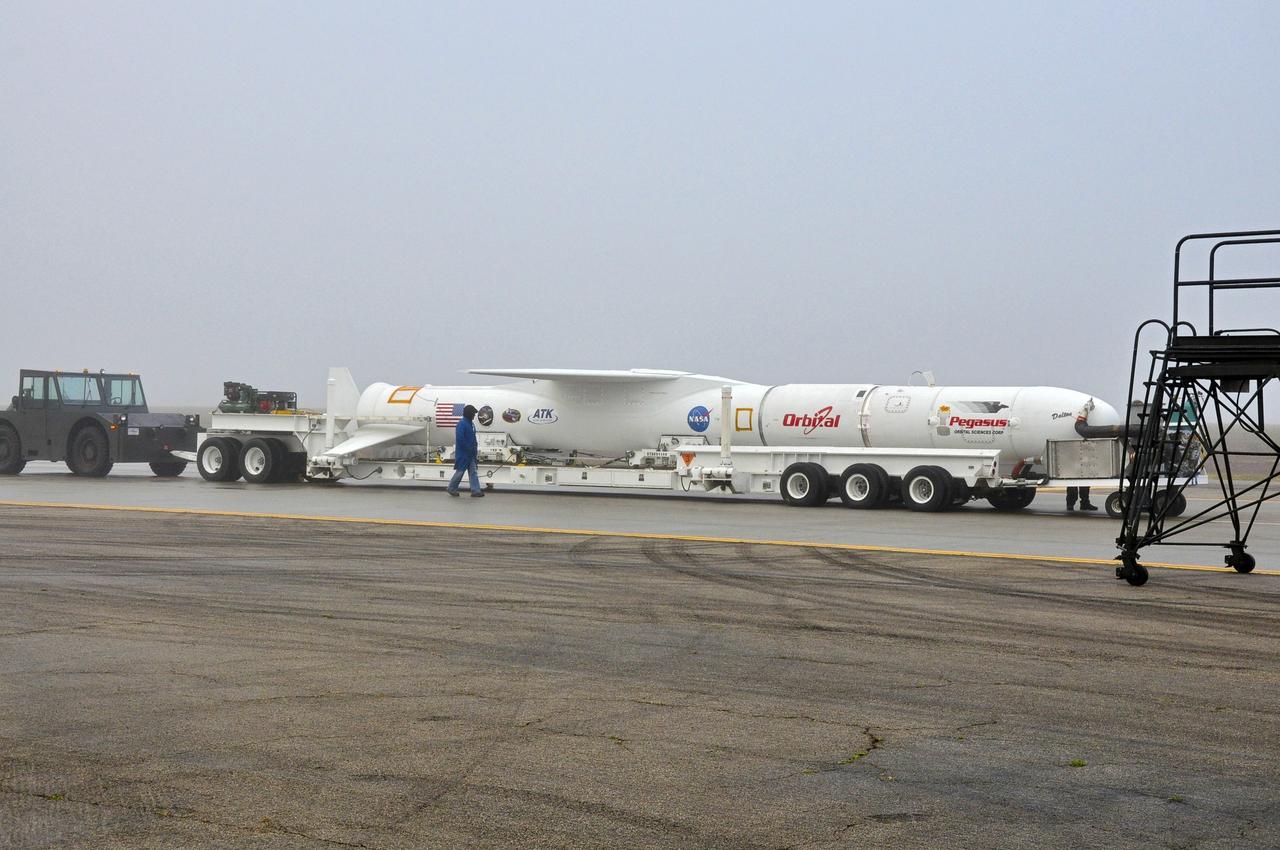
VANDENBERG AFB, Calif. – Technicians roll the Orbital Sciences Pegasus XL rocket with its NuSTAR spacecraft to the waiting L-1011 carrier aircraft known as "Stargazer." The Pegasus will launch NuSTAR into space where the high-energy x-ray telescope will conduct a census for black holes, map radioactive material in young supernovae remnants, and study the origins of cosmic rays and the extreme physics around collapsed stars. Photo credit: NASA/Randy Beaudoin, VAFB
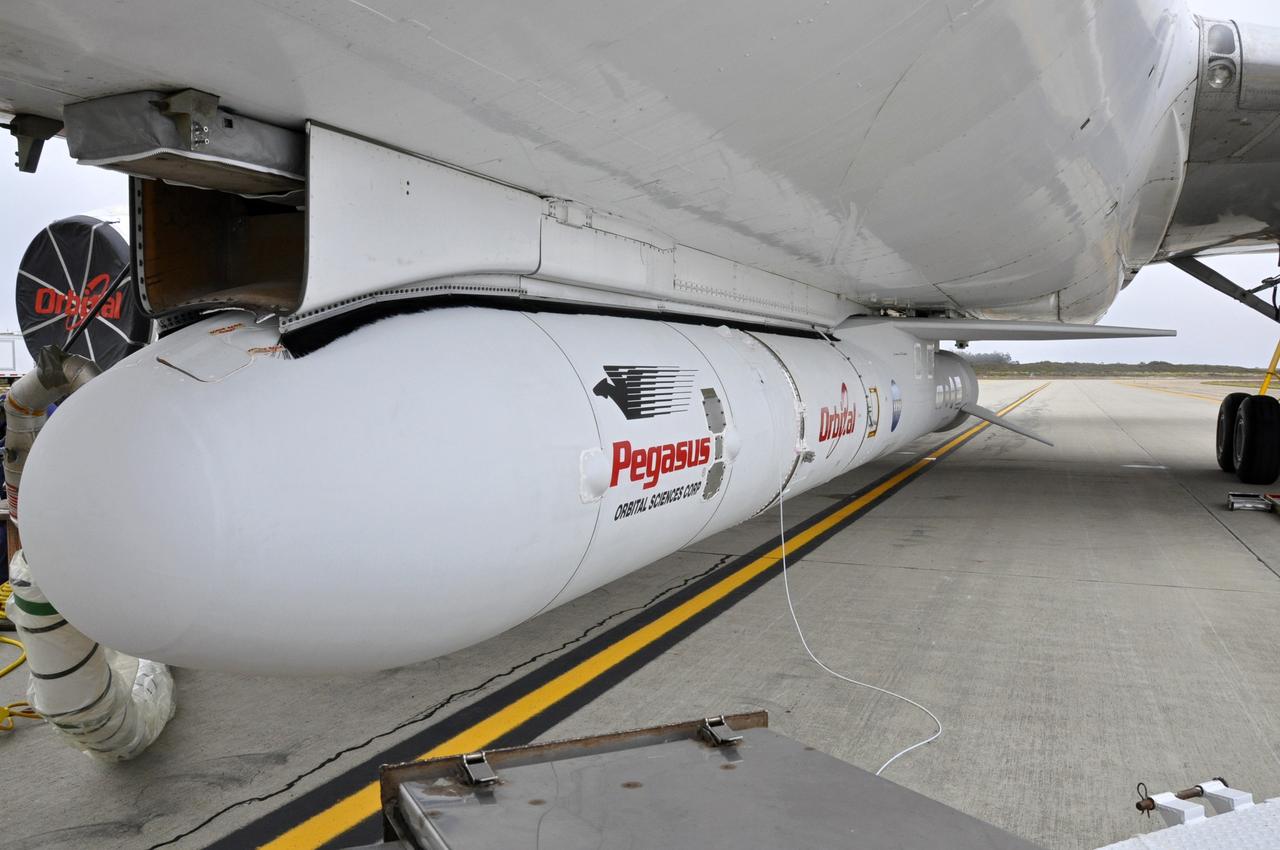
VANDENBERG AFB, Calif. – The Orbital Sciences Pegasus XL rocket with its NuSTAR spacecraft after attachment to the L-1011 carrier aircraft known as "Stargazer." The Pegasus will launch NuSTAR into space where the high-energy x-ray telescope will conduct a census for black holes, map radioactive material in young supernovae remnants, and study the origins of cosmic rays and the extreme physics around collapsed stars. Photo credit: NASA/Randy Beaudoin, VAFB
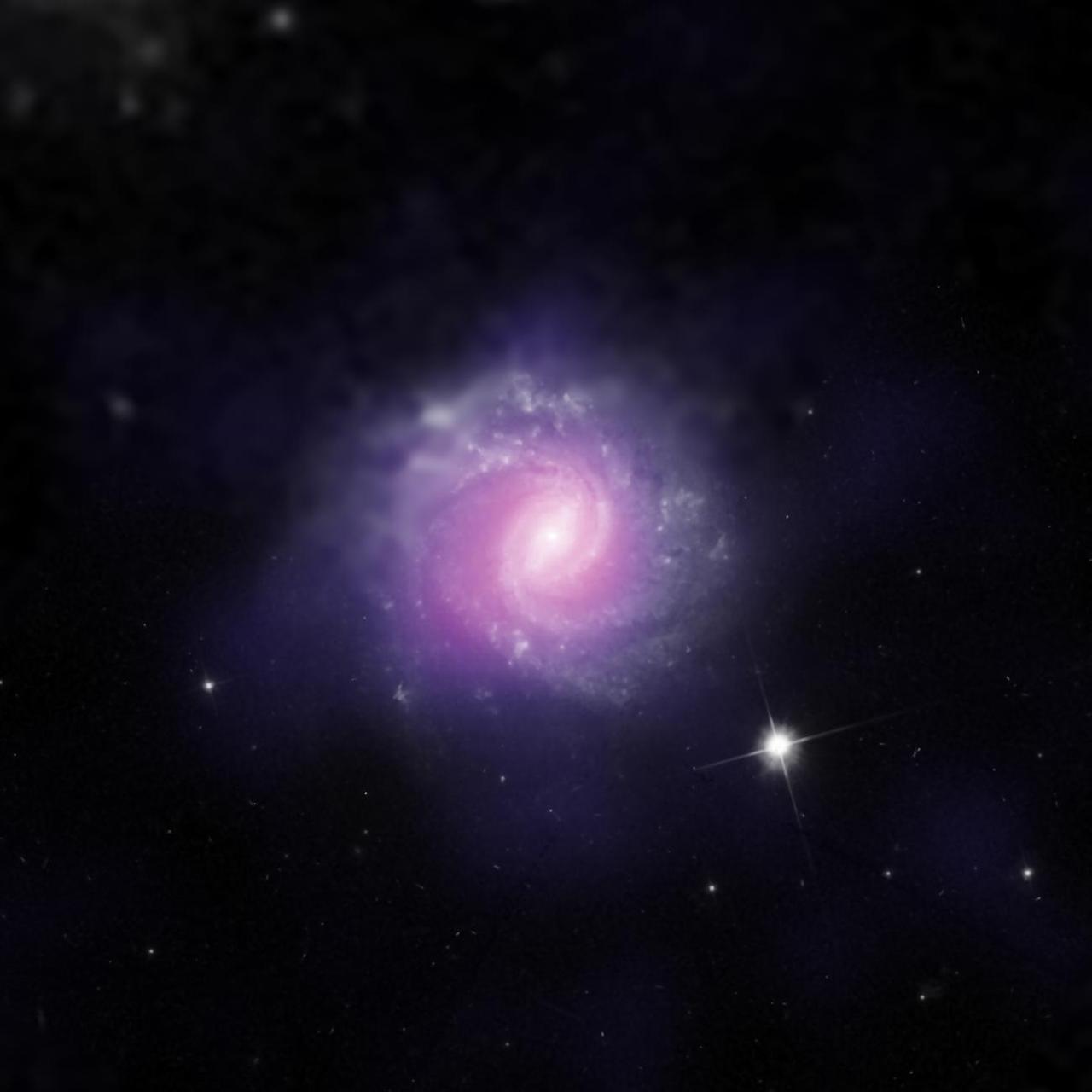
IC 3639, a galaxy with an active galactic nucleus, is seen in this image combining data from the Hubble Space Telescope and the European Southern Observatory. This galaxy contains an example of a supermassive black hole hidden by gas and dust. Researchers analyzed NuSTAR data from this object and compared them with previous observations from NASA's Chandra X-Ray Observatory and the Japanese-led Suzaku satellite. The findings from NuSTAR, which is more sensitive to higher energy X-rays than these observatories, confirm the nature of IC 3639 as an active galactic nucleus that is heavily obscured, and intrinsically much brighter than observed. http://photojournal.jpl.nasa.gov/catalog/PIA21087
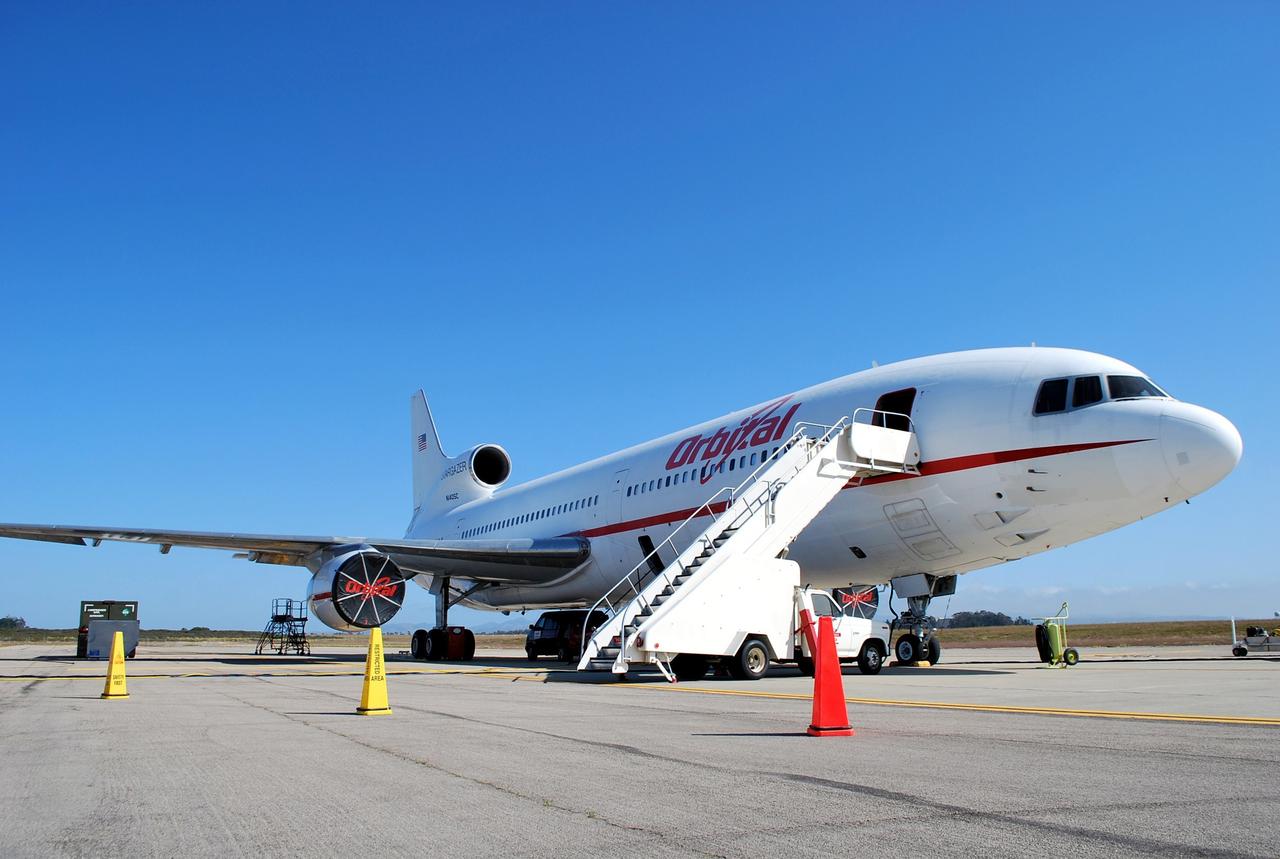
VANDENBERG AIR FORCE BASE, Calif. -- On the runway at Vandenberg Air Force Base in California, the Orbital Sciences L-1011 carrier aircraft is readied for flight. Once the Pegasus XL rocket with NASA's Nuclear Spectroscopic Telescope Array NuSTAR spacecraft is attached, the L-1011 will fly to the Ronald Reagan Ballistic Missile Defense Test Site at the Pacific Ocean’s Kwajalein Atoll. The Pegasus will launch NuSTAR into space where the high-energy x-ray telescope will conduct a census for black holes, map radioactive material in young supernovae remnants, and study the origins of cosmic rays and the extreme physics around collapsed stars. For more information, visit science.nasa.gov/missions/nustar/. Photo credit: NASA/Randy Beaudoin, VAFB
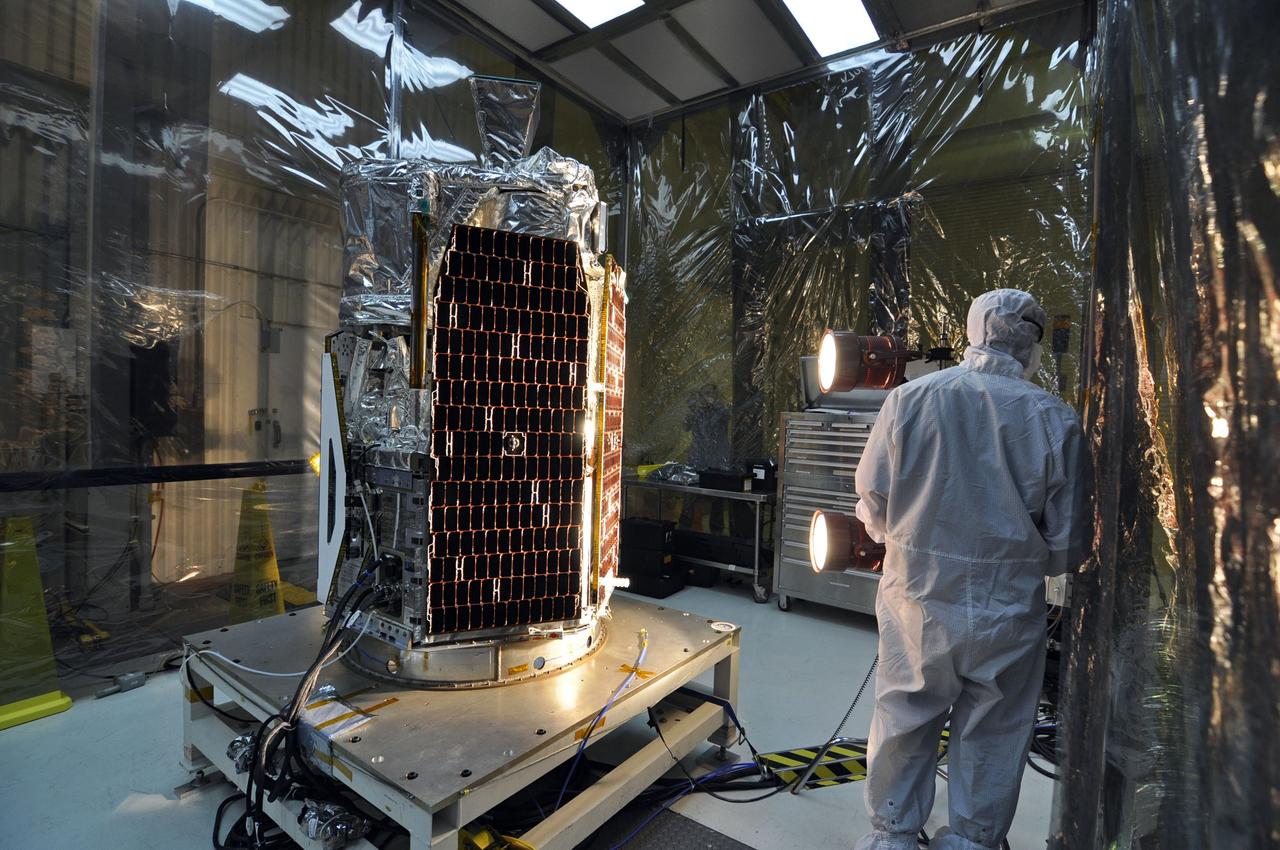
VANDENBERG AIR FORCE BASE, Calif. -- In a clean room at Vandenberg Air Force Base's processing facility in California, a technician conducts a solar array illumination test on NASA's NuSTAR spacecraft. A Pegasus XL rocket is set to launch NuSTAR into space. Once the rocket and spacecraft are processed at Vandenberg, they will be flown on the Orbital Sciences’ L-1011 carrier aircraft to the Ronald Reagan Ballistic Missile Defense Test Site at the Pacific Ocean’s Kwajalein Atoll for launch. The high-energy x-ray telescope will conduct a census for black holes, map radioactive material in young supernovae remnants, and study the origins of cosmic rays and the extreme physics around collapsed stars. For more information, visit science.nasa.gov/missions/nustar/. Photo credit: NASA/Randy Beaudoin, VAFB