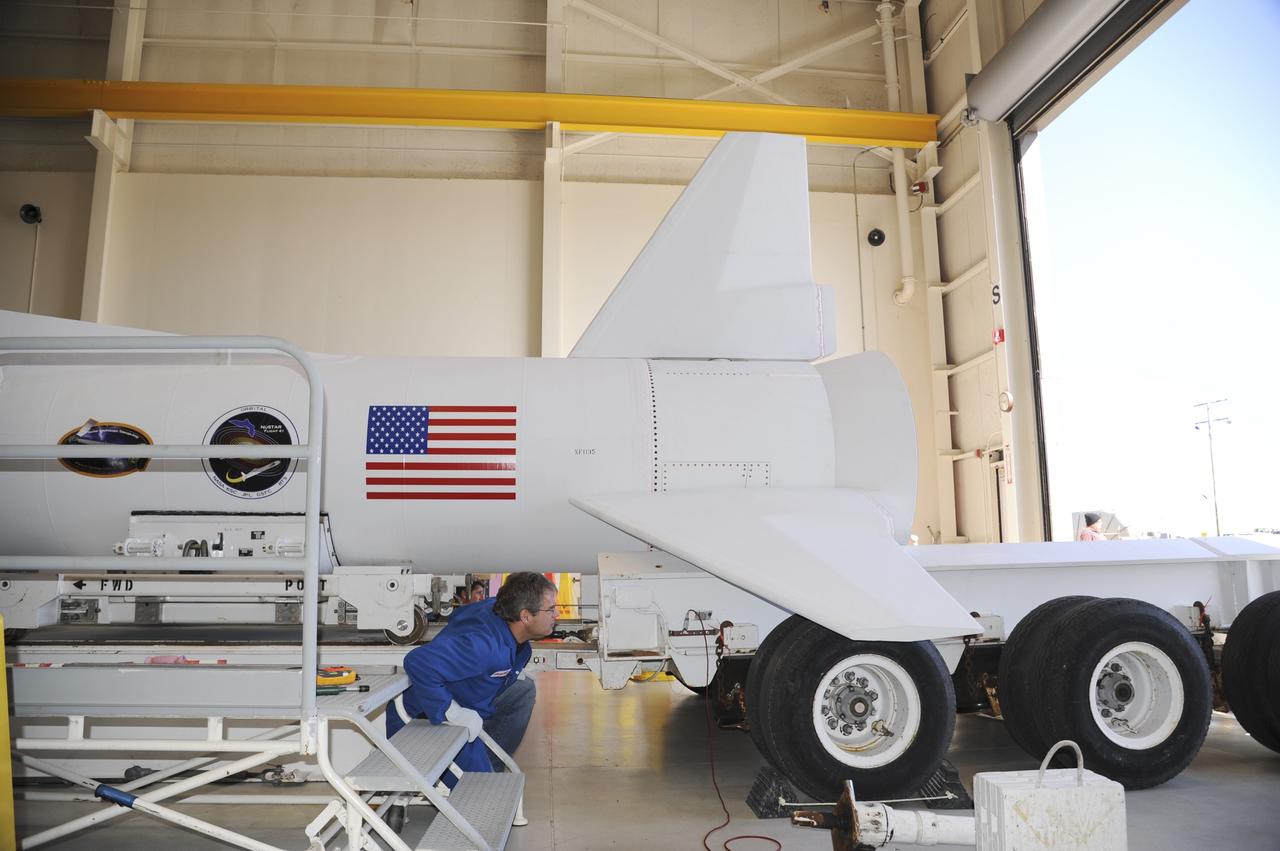
VANDENBERG AIR FORCE BASE, Calif. – At Vandenberg Air Force Base in California, a technician monitors the progress as a transporter is moved underneath the Orbital Science’s Pegasus XL inside Orbital’s hangar. The rocket is mated to NASA’s encapsulated Nuclear Spectroscopic Telescope Array, or NuSTAR, out of sight inside the hangar. The transporter will move them to the runway ramp where they will be attached to the underside of Orbital’s L-1011 carrier aircraft. The aircraft will fly the pair from Vandenberg to the Ronald Reagan Ballistic Missile Defense Test Site on the Pacific Ocean’s Kwajalein Atoll for launch. A revised launch date is expected to be set at the Flight Readiness Review. The high-energy X-ray telescope will conduct a census of black holes, map radioactive material in young supernovae remnants, and study the origins of cosmic rays and the extreme physics around collapsed stars. For more information, visit http://www.nasa.gov/nustar. Photo credit: NASA/Mark Mackiey
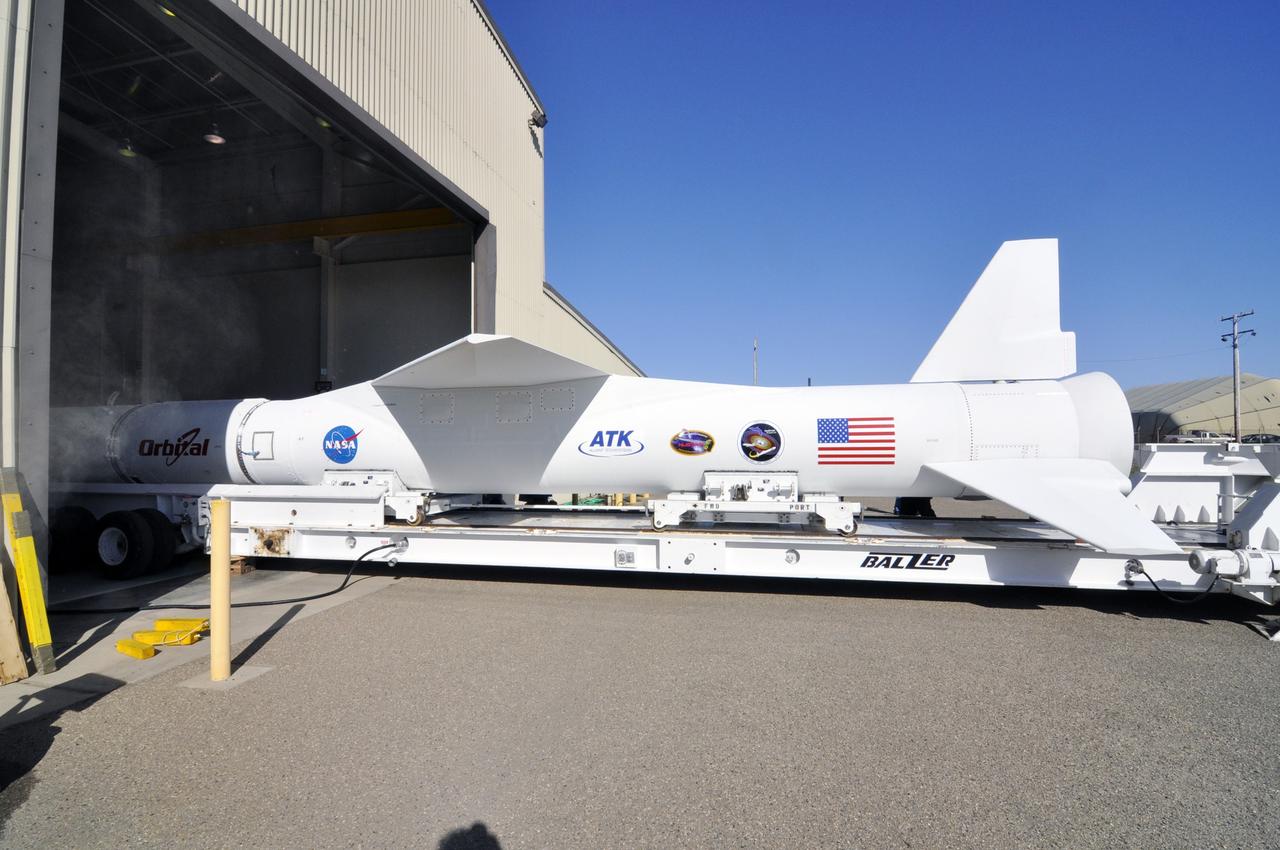
VANDENBERG AIR FORCE BASE, Calif. – At Vandenberg Air Force Base in California, a transporter has been positioned underneath the Orbital Science’s Pegasus XL at Orbital’s hangar. The rocket is mated to NASA’s encapsulated Nuclear Spectroscopic Telescope Array, or NuSTAR, partially out of sight inside the hangar. The transporter will move them to the runway ramp where they will be attached to the underside of Orbital’s L-1011 carrier aircraft. The aircraft will fly the pair from Vandenberg to the Ronald Reagan Ballistic Missile Defense Test Site on the Pacific Ocean’s Kwajalein Atoll for launch. A revised launch date is expected to be set at the Flight Readiness Review. The high-energy X-ray telescope will conduct a census of black holes, map radioactive material in young supernovae remnants, and study the origins of cosmic rays and the extreme physics around collapsed stars. For more information, visit http://www.nasa.gov/nustar. Photo credit: NASA/Randy Beaudoin
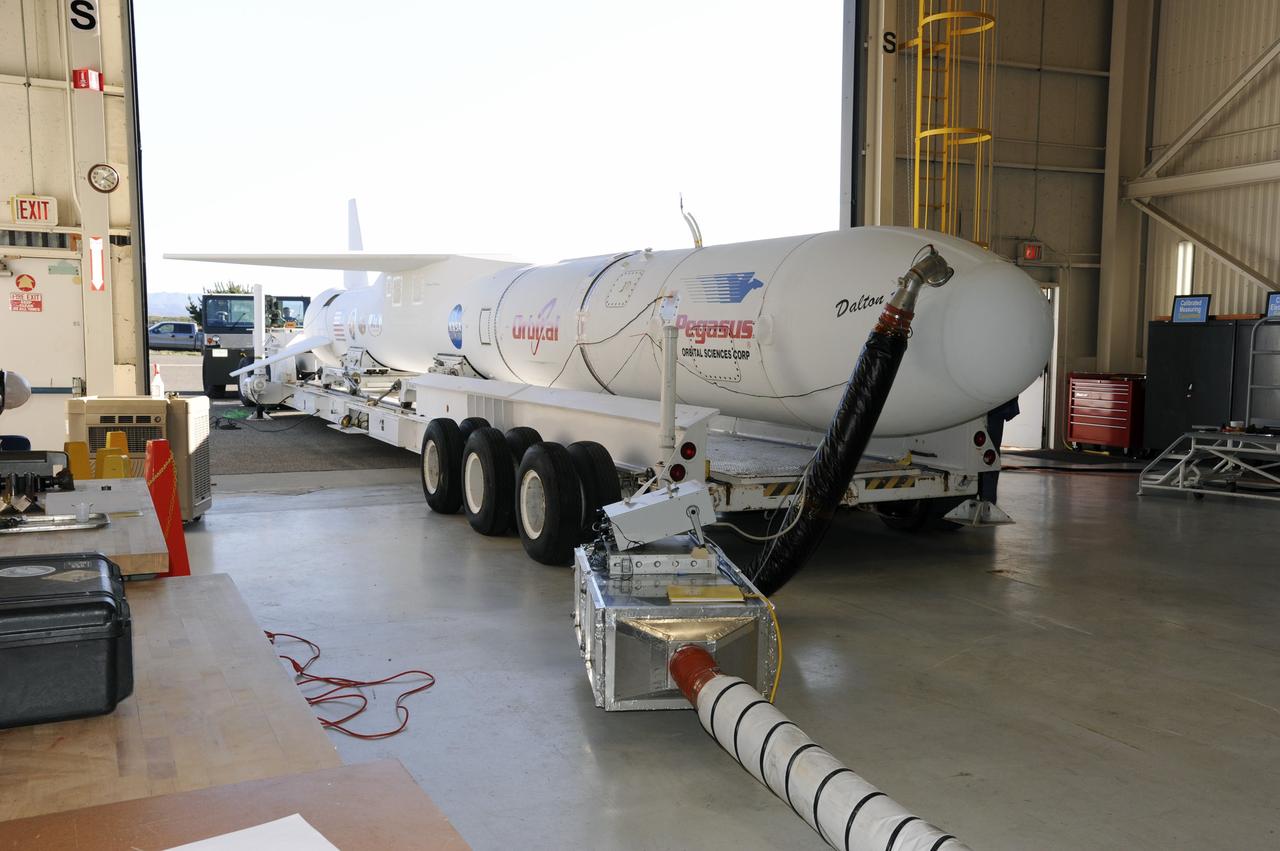
VANDENBERG AIR FORCE BASE, Calif. – At Vandenberg Air Force Base in California, the Orbital Science’s Pegasus LX has been moved onto a transporter inside Orbital’s hangar. The rocket is mated to NASA’s encapsulated Nuclear Spectroscopic Telescope Array, or NuSTAR, spacecraft. The transporter will move them to the runway ramp where they will be attached to the underside of Orbital’s L-1011 carrier aircraft. The aircraft will fly the pair from Vandenberg to the Ronald Reagan Ballistic Missile Defense Test Site on the Pacific Ocean’s Kwajalein Atoll for launch. A revised launch date is expected to be set at the Flight Readiness Review. The high-energy X-ray telescope will conduct a census of black holes, map radioactive material in young supernovae remnants, and study the origins of cosmic rays and the extreme physics around collapsed stars. For more information, visit http://www.nasa.gov/nustar. Photo credit: NASA/Mark Mackiey
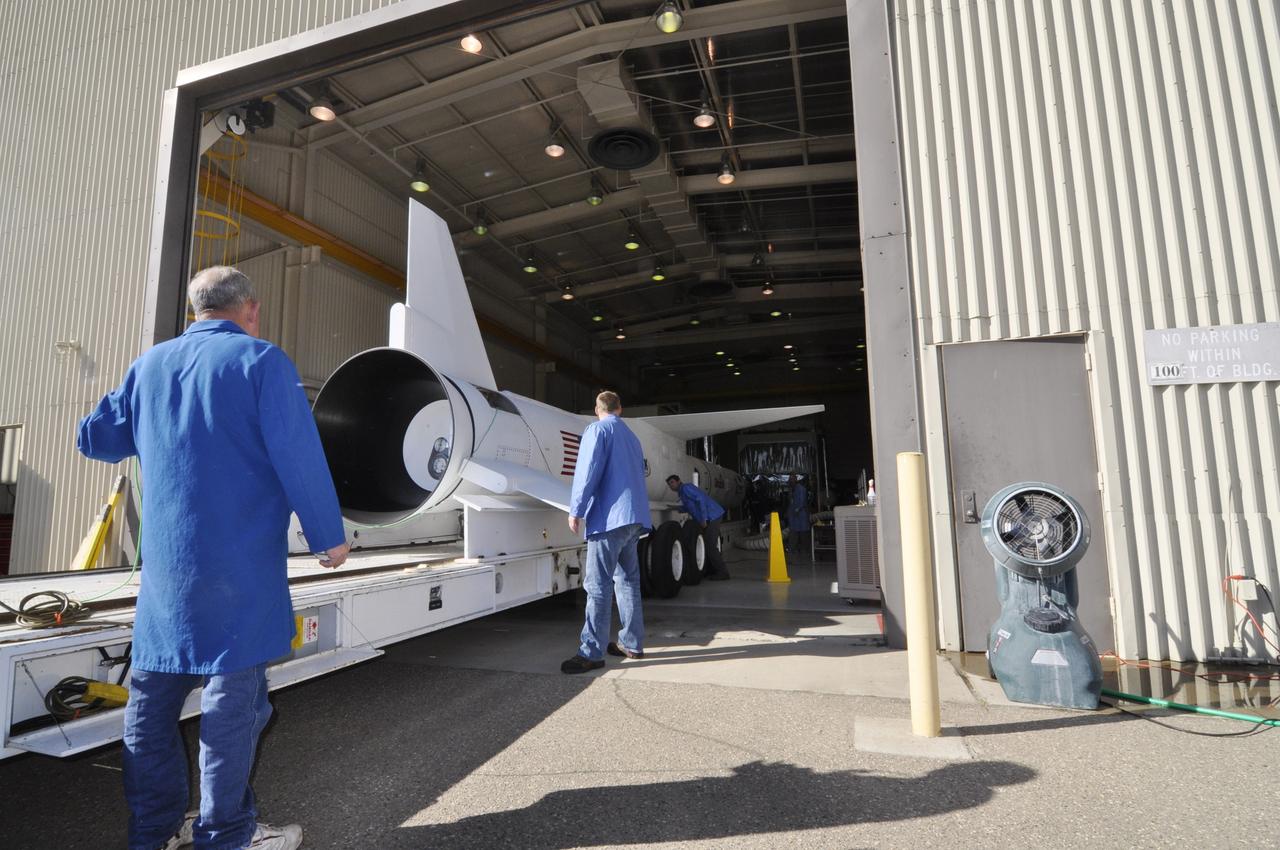
VANDENBERG AIR FORCE BASE, Calif. – At Vandenberg Air Force Base in California, technicians monitor the progress as a transporter is moved underneath the Orbital Science’s Pegasus XL inside Orbital’s hangar. The rocket is mated to NASA’s encapsulated Nuclear Spectroscopic Telescope Array, or NuSTAR, out of sight inside the hangar. The transporter will move them to the runway ramp where they will be attached to the underside of Orbital’s L-1011 carrier aircraft. The aircraft will fly the pair from Vandenberg to the Ronald Reagan Ballistic Missile Defense Test Site on the Pacific Ocean’s Kwajalein Atoll for launch. A revised launch date is expected to be set at the Flight Readiness Review. The high-energy X-ray telescope will conduct a census of black holes, map radioactive material in young supernovae remnants, and study the origins of cosmic rays and the extreme physics around collapsed stars. For more information, visit http://www.nasa.gov/nustar. Photo credit: NASA/Randy Beaudoin

VANDENBERG AIR FORCE BASE, Calif. – At Vandenberg Air Force Base in California, a transporter is moved toward the Orbital Science’s Pegasus XL inside Orbital’s hangar. The rocket is mated to NASA’s encapsulated Nuclear Spectroscopic Telescope Array, or NuSTAR, out of sight inside the hangar. The transporter will move them to the runway ramp where they will be attached to the underside of Orbital’s L-1011 carrier aircraft. The aircraft will fly the pair from Vandenberg to the Ronald Reagan Ballistic Missile Defense Test Site on the Pacific Ocean’s Kwajalein Atoll for launch. A revised launch date is expected to be set at the Flight Readiness Review. The high-energy X-ray telescope will conduct a census of black holes, map radioactive material in young supernovae remnants, and study the origins of cosmic rays and the extreme physics around collapsed stars. For more information, visit http://www.nasa.gov/nustar. Photo credit: NASA/Mark Mackiey
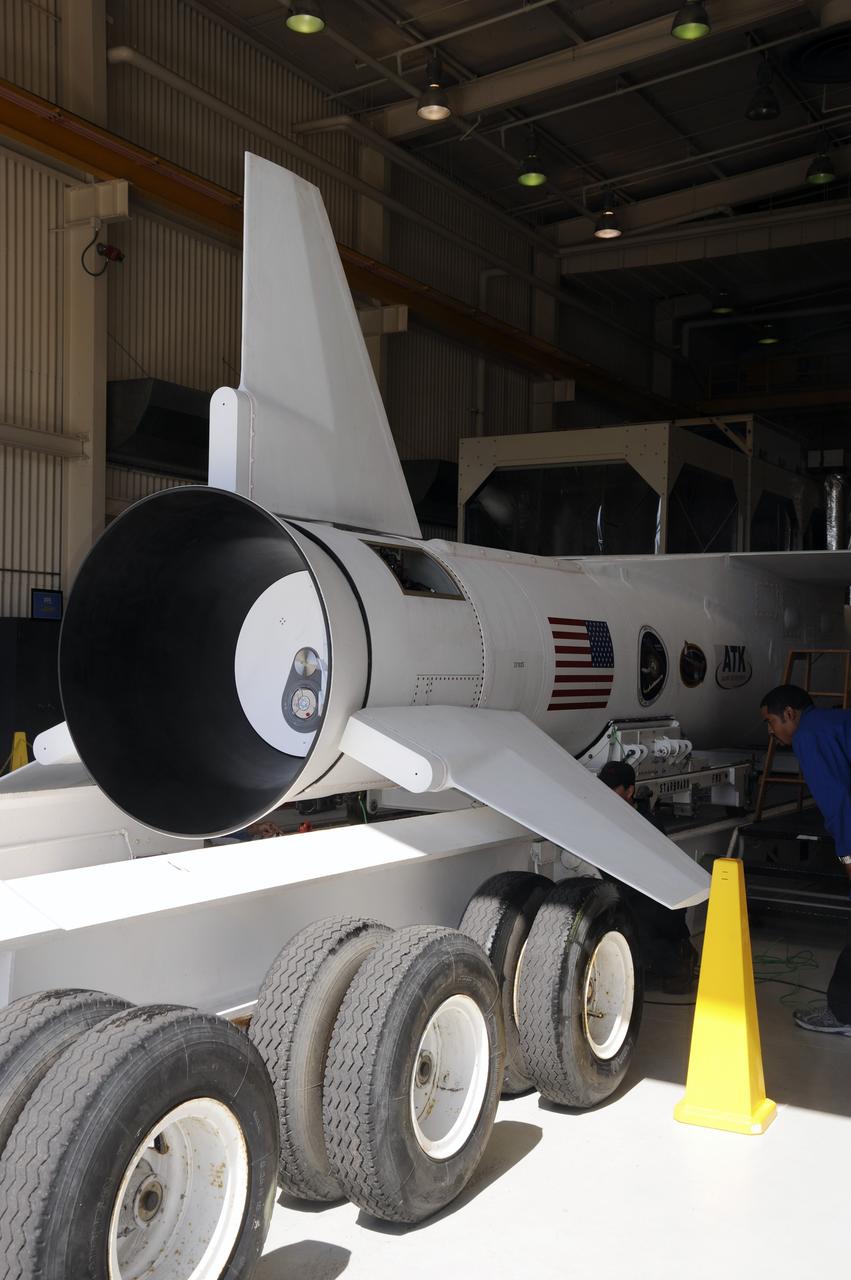
VANDENBERG AIR FORCE BASE, Calif. – At Vandenberg Air Force Base in California, a transporter is moved underneath the Orbital Science’s Pegasus XL inside Orbital’s hangar. The rocket is mated to NASA’s encapsulated Nuclear Spectroscopic Telescope Array, or NuSTAR, out of sight inside the hangar. The transporter will move them to the runway ramp where they will be attached to the underside of Orbital’s L-1011 carrier aircraft. The aircraft will fly the pair from Vandenberg to the Ronald Reagan Ballistic Missile Defense Test Site on the Pacific Ocean’s Kwajalein Atoll for launch. A revised launch date is expected to be set at the Flight Readiness Review. The high-energy X-ray telescope will conduct a census of black holes, map radioactive material in young supernovae remnants, and study the origins of cosmic rays and the extreme physics around collapsed stars. For more information, visit http://www.nasa.gov/nustar. Photo credit: NASA/Mark Mackiey
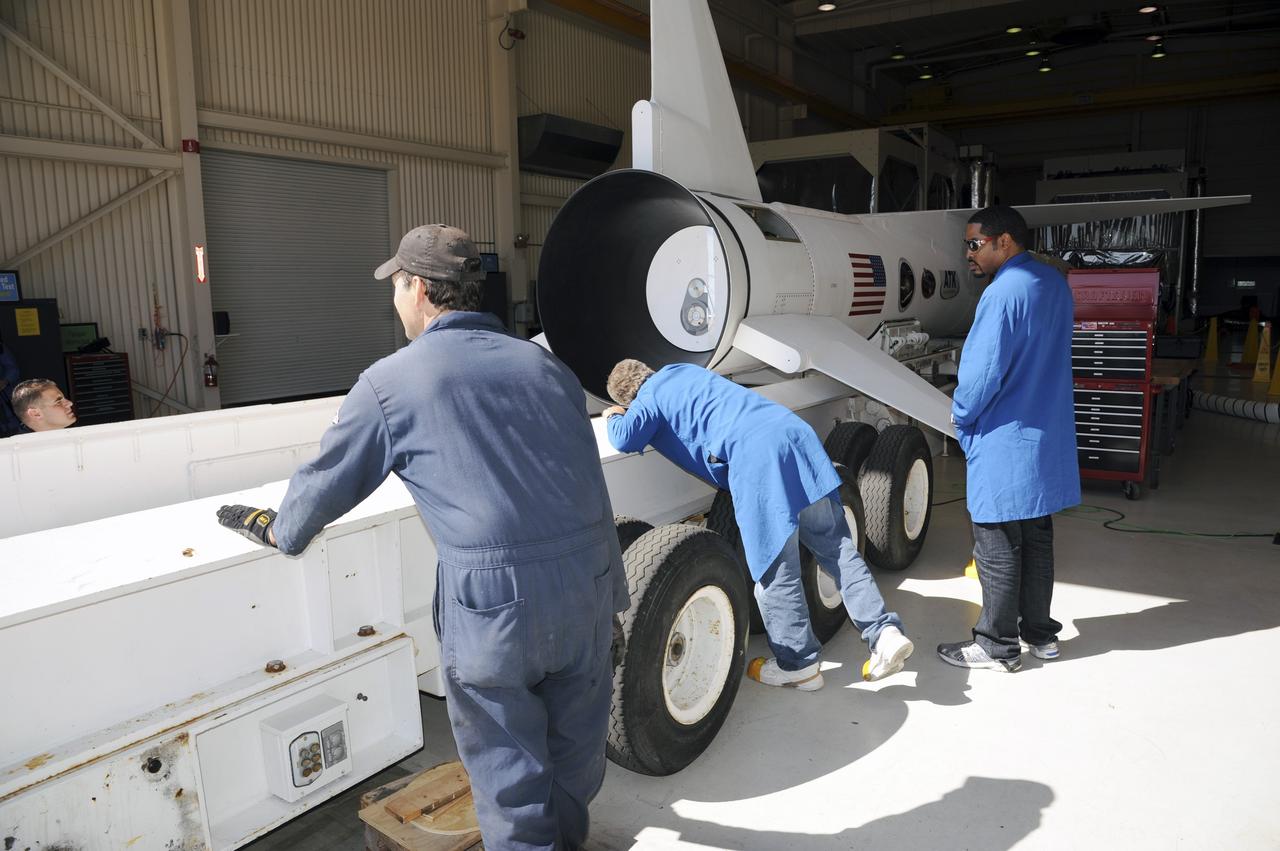
VANDENBERG AIR FORCE BASE, Calif. – At Vandenberg Air Force Base in California, technicians monitor the progress as a transporter is moved underneath the Orbital Science’s Pegasus XL inside Orbital’s hangar. The rocket is mated to NASA’s encapsulated Nuclear Spectroscopic Telescope Array, or NuSTAR, out of sight inside the hangar. The transporter will move them to the runway ramp where they will be attached to the underside of Orbital’s L-1011 carrier aircraft. The aircraft will fly the pair from Vandenberg to the Ronald Reagan Ballistic Missile Defense Test Site on the Pacific Ocean’s Kwajalein Atoll for launch. A revised launch date is expected to be set at the Flight Readiness Review. The high-energy X-ray telescope will conduct a census of black holes, map radioactive material in young supernovae remnants, and study the origins of cosmic rays and the extreme physics around collapsed stars. For more information, visit http://www.nasa.gov/nustar. Photo credit: NASA/Mark Mackiey
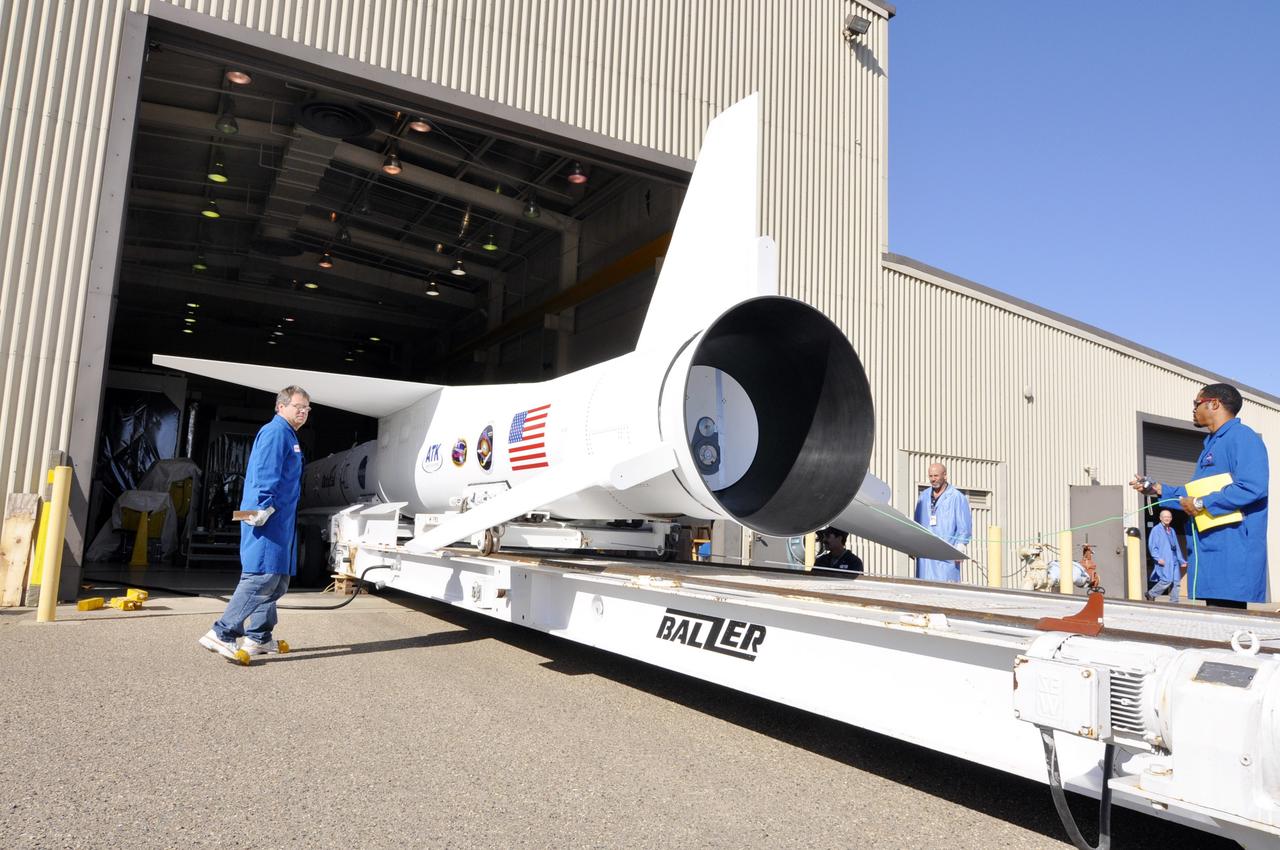
VANDENBERG AIR FORCE BASE, Calif. – At Vandenberg Air Force Base in California, technicians monitor the progress as a transporter is moved underneath the Orbital Science’s Pegasus XL at Orbital’s hangar. The rocket is mated to NASA’s encapsulated Nuclear Spectroscopic Telescope Array, or NuSTAR, spacecraft. The transporter will move them to the runway ramp where they will be attached to the underside of Orbital’s L-1011 carrier aircraft. The aircraft will fly the pair from Vandenberg to the Ronald Reagan Ballistic Missile Defense Test Site on the Pacific Ocean’s Kwajalein Atoll for launch. A revised launch date is expected to be set at the Flight Readiness Review. The high-energy X-ray telescope will conduct a census of black holes, map radioactive material in young supernovae remnants, and study the origins of cosmic rays and the extreme physics around collapsed stars. For more information, visit http://www.nasa.gov/nustar. Photo credit: NASA/Randy Beaudoin
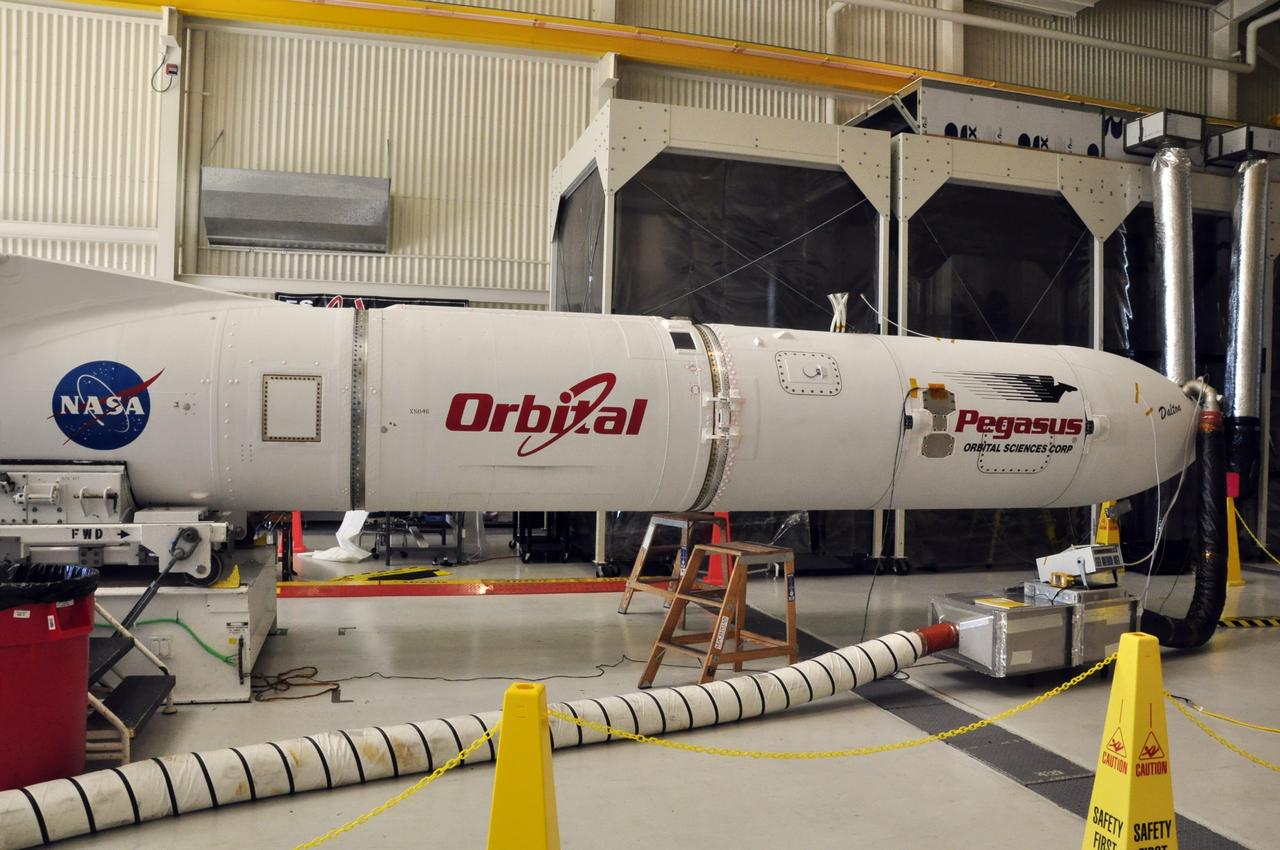
VANDENBERG AIR FORCE BASE, Calif. – At Vandenberg Air Force Base in California, an Orbital Science’s Pegasus XL sits inside Orbital’s hangar before it is prepared to be loaded on to a transporter. The rocket is mated to NASA’s encapsulated Nuclear Spectroscopic Telescope Array, or NuSTAR, spacecraft. The transporter will move them to the runway ramp where they will be attached to the underside of Orbital’s L-1011 carrier aircraft. The aircraft will fly the pair from Vandenberg to the Ronald Reagan Ballistic Missile Defense Test Site on the Pacific Ocean’s Kwajalein Atoll for launch. A revised launch date is expected to be set at the Flight Readiness Review. The high-energy X-ray telescope will conduct a census of black holes, map radioactive material in young supernovae remnants, and study the origins of cosmic rays and the extreme physics around collapsed stars. For more information, visit http://www.nasa.gov/nustar. Photo credit: NASA/Randy Beaudoin
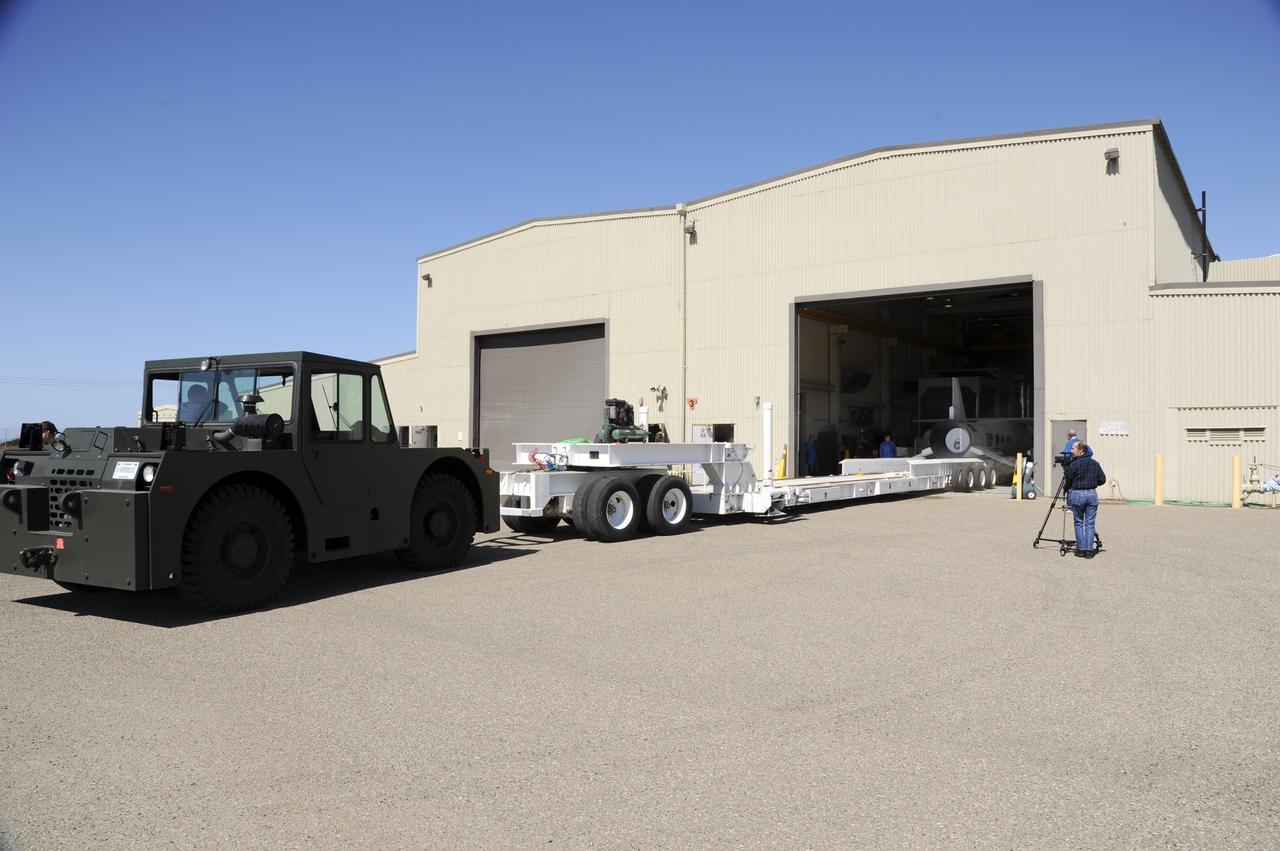
VANDENBERG AIR FORCE BASE, Calif. – At Vandenberg Air Force Base in California, a transporter is moved toward the Orbital Science’s Pegasus XL inside Orbital’s hangar. The rocket is mated to NASA’s encapsulated Nuclear Spectroscopic Telescope Array, or NuSTAR, out of sight inside the hangar. The transporter will move them to the runway ramp where they will be attached to the underside of Orbital’s L-1011 carrier aircraft. The aircraft will fly the pair from Vandenberg to the Ronald Reagan Ballistic Missile Defense Test Site on the Pacific Ocean’s Kwajalein Atoll for launch. A revised launch date is expected to be set at the Flight Readiness Review. The high-energy X-ray telescope will conduct a census of black holes, map radioactive material in young supernovae remnants, and study the origins of cosmic rays and the extreme physics around collapsed stars. For more information, visit http://www.nasa.gov/nustar. Photo credit: NASA/Mark Mackiey
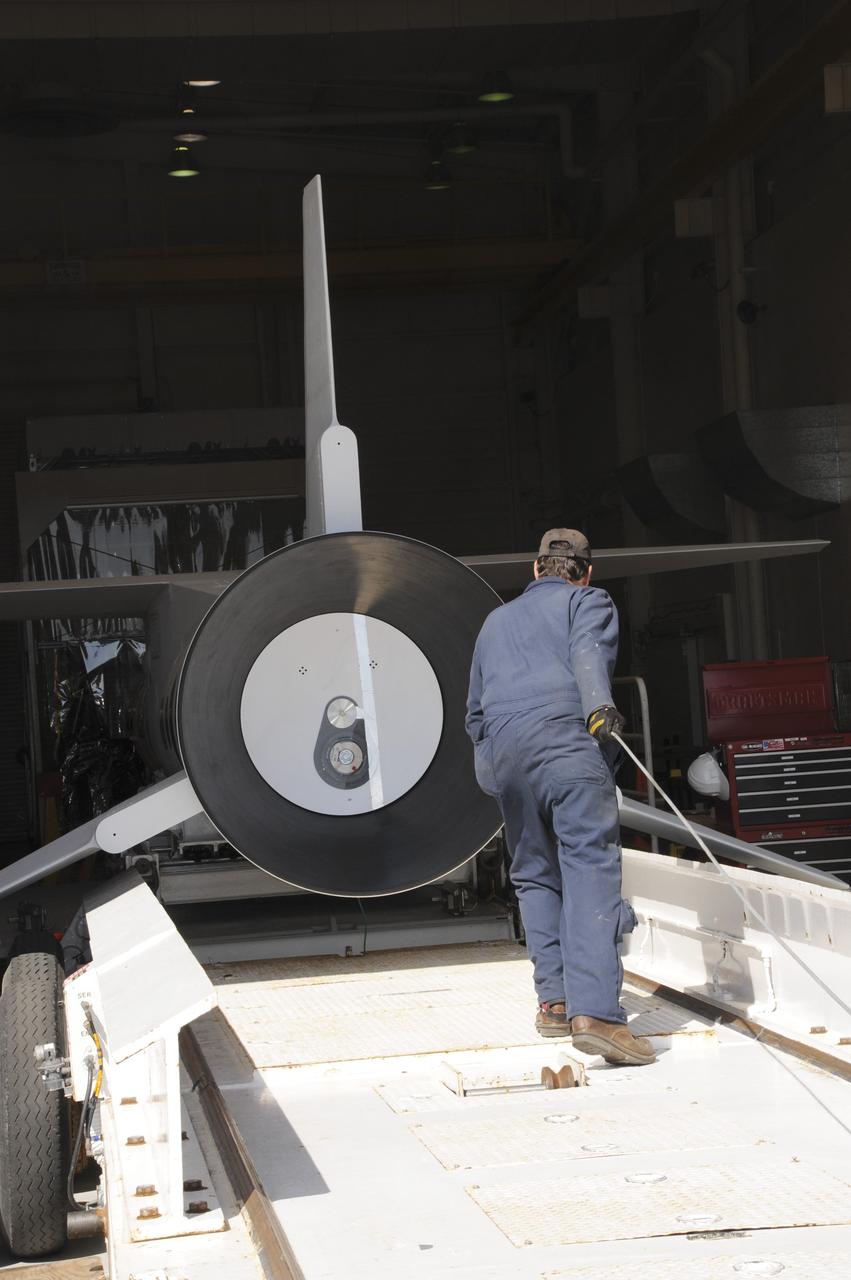
VANDENBERG AIR FORCE BASE, Calif. – At Vandenberg Air Force Base in California, a technician monitors the progress as a transporter is moved underneath the Orbital Science’s Pegasus XL inside Orbital’s hangar. The rocket is mated to NASA’s encapsulated Nuclear Spectroscopic Telescope Array, or NuSTAR, out of sight inside the hangar. The transporter will move them to the runway ramp where they will be attached to the underside of Orbital’s L-1011 carrier aircraft. The aircraft will fly the pair from Vandenberg to the Ronald Reagan Ballistic Missile Defense Test Site on the Pacific Ocean’s Kwajalein Atoll for launch. A revised launch date is expected to be set at the Flight Readiness Review. The high-energy X-ray telescope will conduct a census of black holes, map radioactive material in young supernovae remnants, and study the origins of cosmic rays and the extreme physics around collapsed stars. For more information, visit http://www.nasa.gov/nustar. Photo credit: NASA/Mark Mackiey
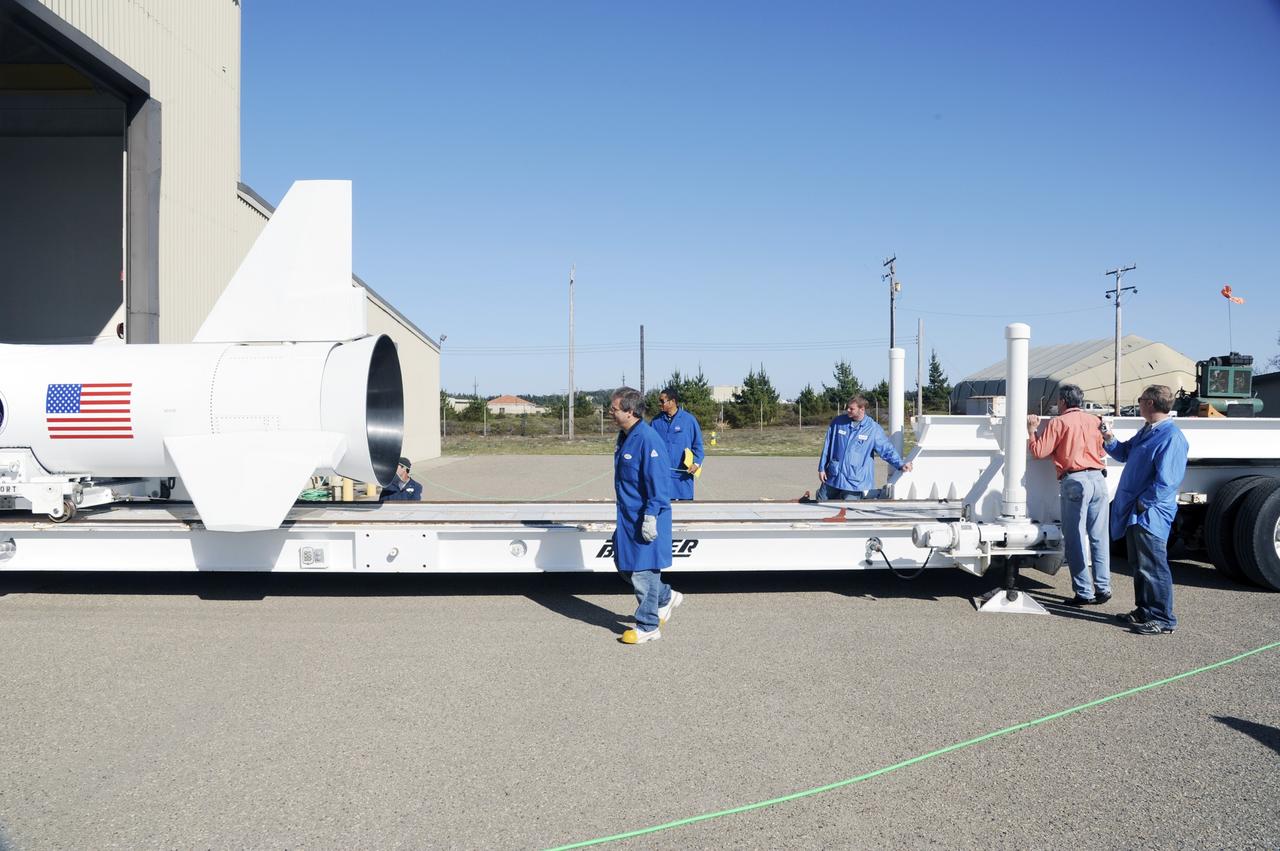
VANDENBERG AIR FORCE BASE, Calif. – At Vandenberg Air Force Base in California, technicians monitor the progress as the Orbital Science’s Pegasus XL is moved onto a transporter inside Orbital’s hangar. The rocket is mated to NASA’s encapsulated Nuclear Spectroscopic Telescope Array, or NuSTAR, out of sight inside the hangar. The transporter will move them to the runway ramp where they will be attached to the underside of Orbital’s L-1011 carrier aircraft. The aircraft will fly the pair from Vandenberg to the Ronald Reagan Ballistic Missile Defense Test Site on the Pacific Ocean’s Kwajalein Atoll for launch. A revised launch date is expected to be set at the Flight Readiness Review. The high-energy X-ray telescope will conduct a census of black holes, map radioactive material in young supernovae remnants, and study the origins of cosmic rays and the extreme physics around collapsed stars. For more information, visit http://www.nasa.gov/nustar. Photo credit: NASA/Mark Mackiey
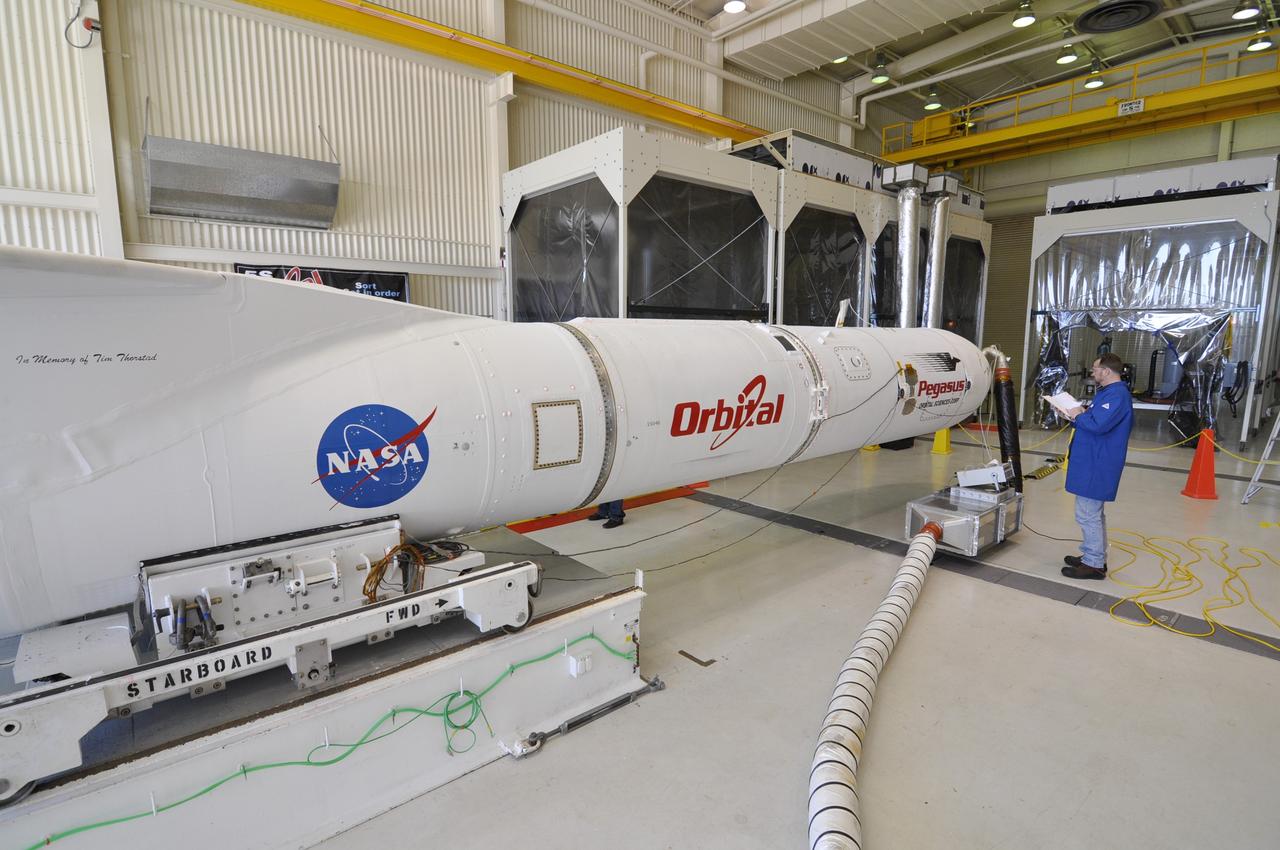
VANDENBERG AIR FORCE BASE, Calif. – At Vandenberg Air Force Base in California, a technician checks on the status of the Orbital Science’s Pegasus XL inside Orbital’s hangar. The rocket is mated to NASA’s encapsulated Nuclear Spectroscopic Telescope Array, or NuSTAR, spacecraft. A transporter will be used to move them to the runway ramp where they will be attached to the underside of Orbital’s L-1011 carrier aircraft. The aircraft will fly the pair from Vandenberg to the Ronald Reagan Ballistic Missile Defense Test Site on the Pacific Ocean’s Kwajalein Atoll for launch. A revised launch date is expected to be set at the Flight Readiness Review. The high-energy X-ray telescope will conduct a census of black holes, map radioactive material in young supernovae remnants, and study the origins of cosmic rays and the extreme physics around collapsed stars. For more information, visit http://www.nasa.gov/nustar. Photo credit: NASA/Randy Beaudoin
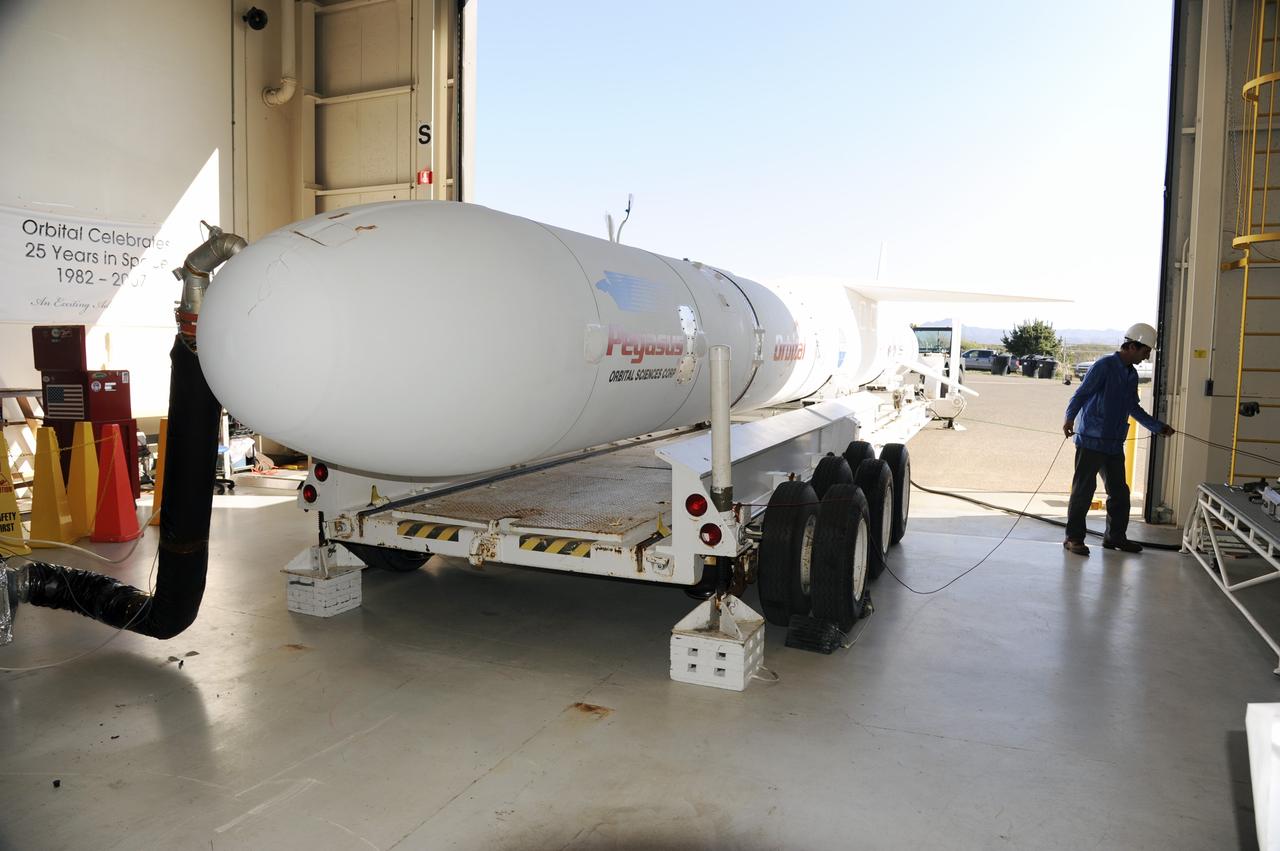
VANDENBERG AIR FORCE BASE, Calif. – At Vandenberg Air Force Base in California, the Orbital Science’s Pegasus LX has been moved onto a transporter inside Orbital’s hangar. The rocket is mated to NASA’s encapsulated Nuclear Spectroscopic Telescope Array, or NuSTAR, spacecraft. The transporter will move them to the runway ramp where they will be attached to the underside of Orbital’s L-1011 carrier aircraft. The aircraft will fly the pair from Vandenberg to the Ronald Reagan Ballistic Missile Defense Test Site on the Pacific Ocean’s Kwajalein Atoll for launch. A revised launch date is expected to be set at the Flight Readiness Review. The high-energy X-ray telescope will conduct a census of black holes, map radioactive material in young supernovae remnants, and study the origins of cosmic rays and the extreme physics around collapsed stars. For more information, visit http://www.nasa.gov/nustar. Photo credit: NASA/Mark Mackiey
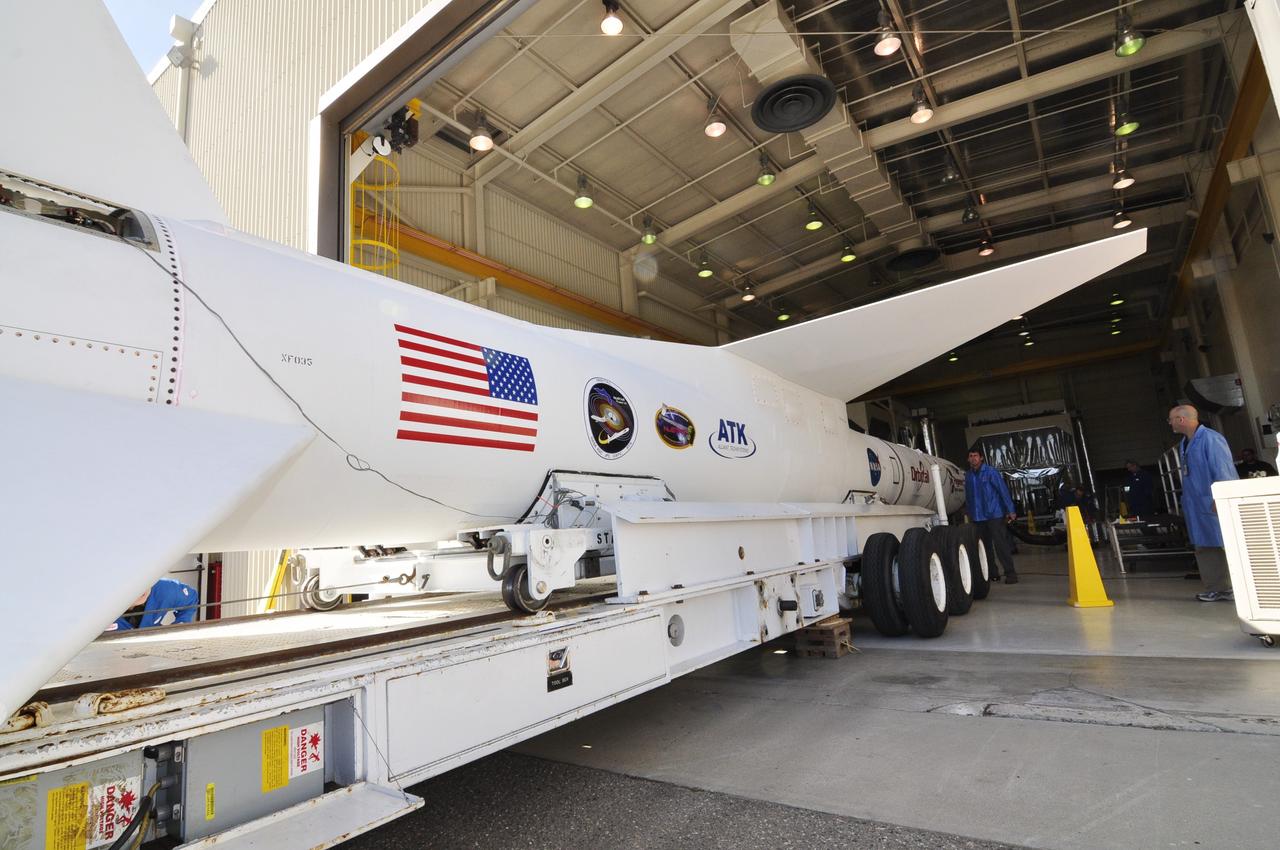
VANDENBERG AIR FORCE BASE, Calif. – At Vandenberg Air Force Base in California, technicians monitor the progress as a transporter is moved underneath the Orbital Science’s Pegasus XL inside Orbital’s hangar. The rocket is mated to NASA’s encapsulated Nuclear Spectroscopic Telescope Array, or NuSTAR, spacecraft. The transporter will move them to the runway ramp where they will be attached to the underside of Orbital’s L-1011 carrier aircraft. The aircraft will fly the pair from Vandenberg to the Ronald Reagan Ballistic Missile Defense Test Site on the Pacific Ocean’s Kwajalein Atoll for launch. A revised launch date is expected to be set at the Flight Readiness Review. The high-energy X-ray telescope will conduct a census of black holes, map radioactive material in young supernovae remnants, and study the origins of cosmic rays and the extreme physics around collapsed stars. For more information, visit http://www.nasa.gov/nustar. Photo credit: NASA/Randy Beaudoin