
The Exploration Flight Test-1 (EFT-1) Orion service module in the Operations and Checkout (O&C) Building at NASA’s Kennedy Space Center on Dec. 31, 2011. Part of Batch image transfer from Flickr.
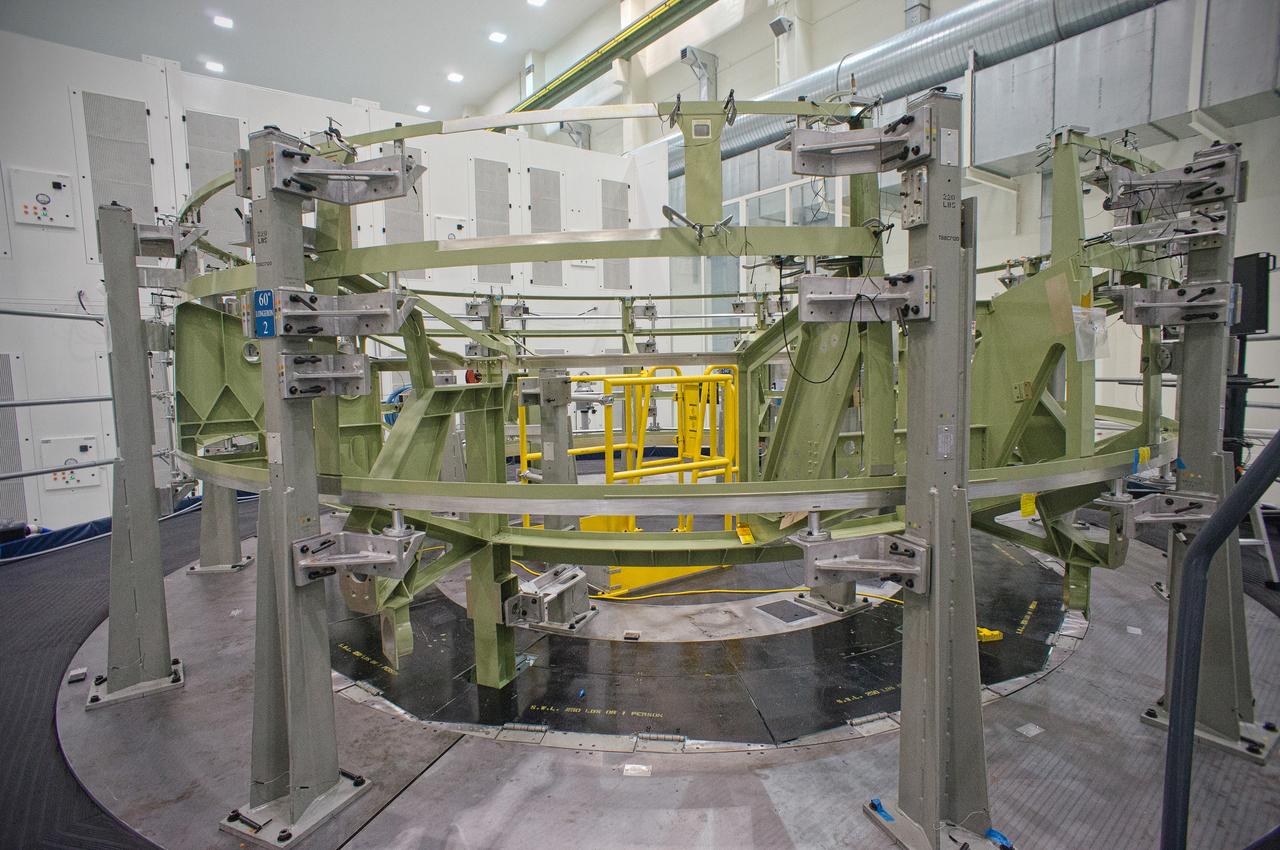
The Exploration Flight Test-1 (EFT-1) Orion service module in the Operations and Checkout (O&C) Building at NASA’s Kennedy Space Center on Dec. 31, 2011. Part of Batch image transfer from Flickr.
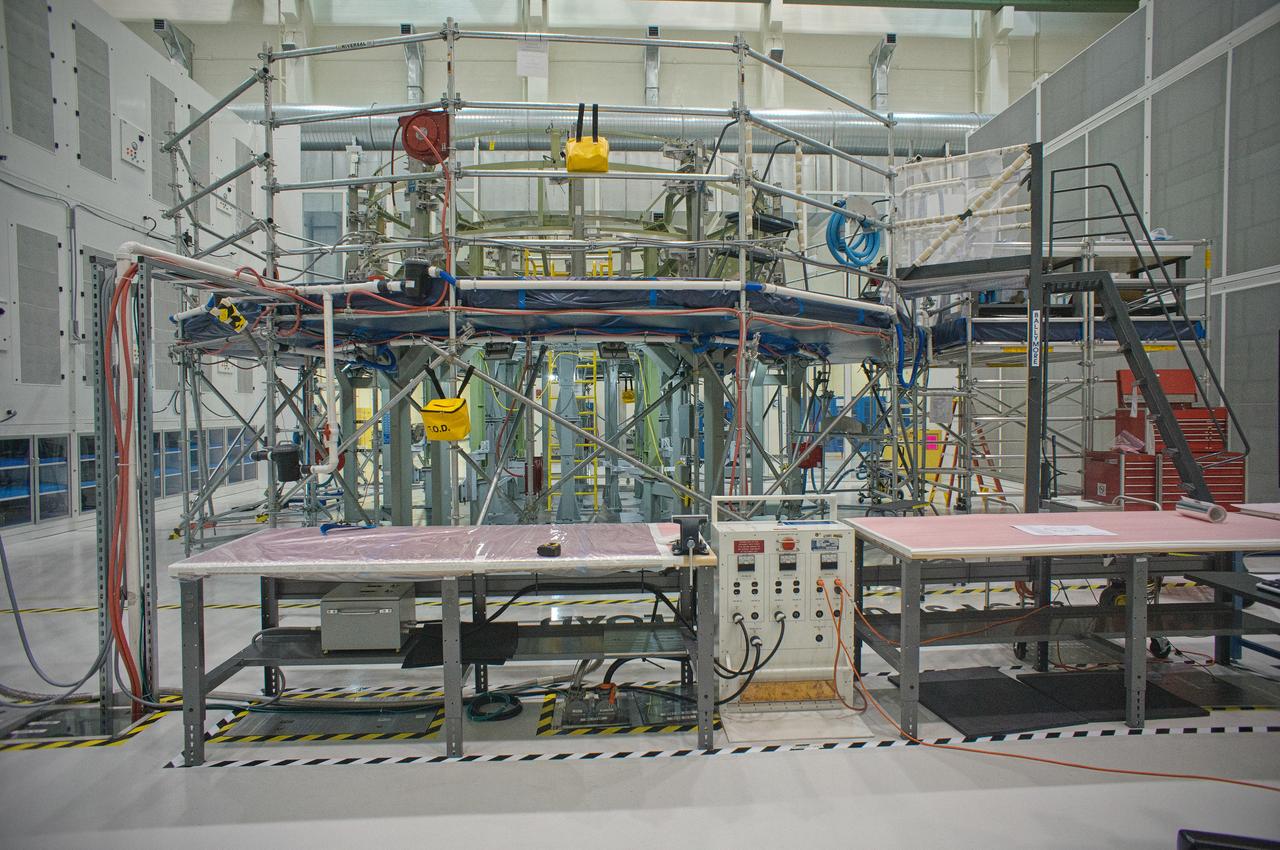
The Exploration Flight Test-1 (EFT-1) Orion service module in the Operations and Checkout (O&C) Building at NASA’s Kennedy Space Center on Dec. 31, 2011. Part of Batch image transfer from Flickr.
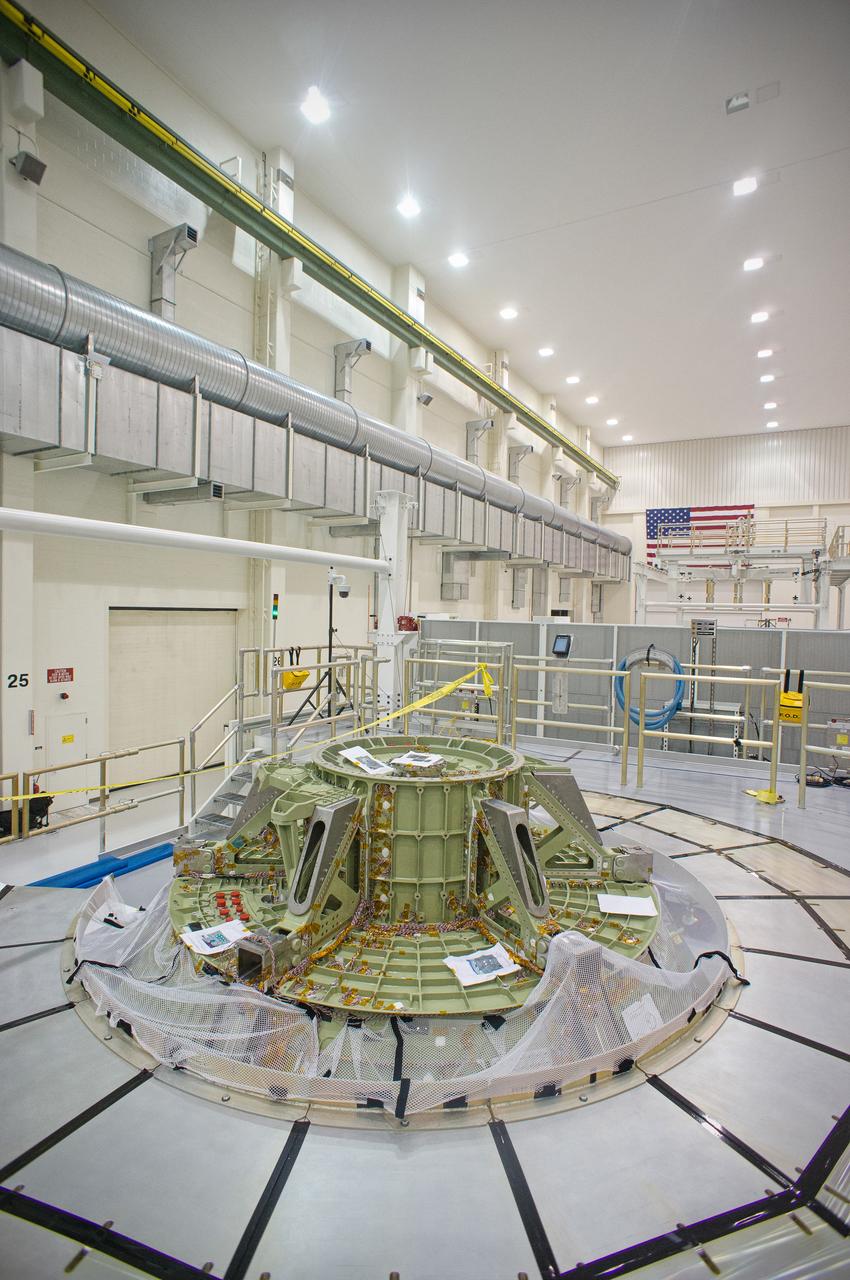
The Exploration Flight Test-1 (EFT-1) Orion crew module in the Operations and Checkout (O&C) Building at NASA’s Kennedy Space Center on Dec. 31, 2011. Part of Batch image transfer from Flickr.
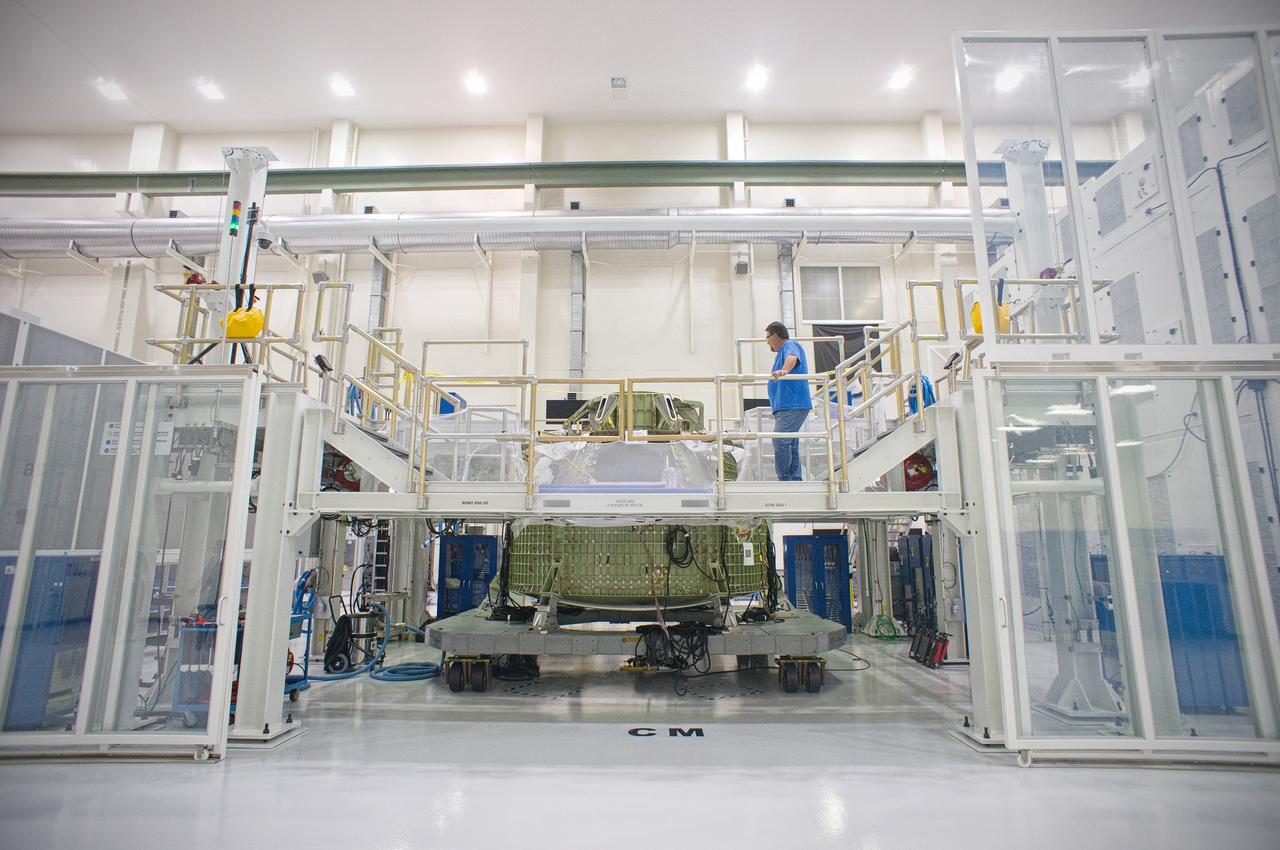
The Exploration Flight Test-1 (EFT-1) Orion service module in the Operations and Checkout (O&C) Building at NASA’s Kennedy Space Center on Dec. 31, 2011. Part of Batch image transfer from Flickr.
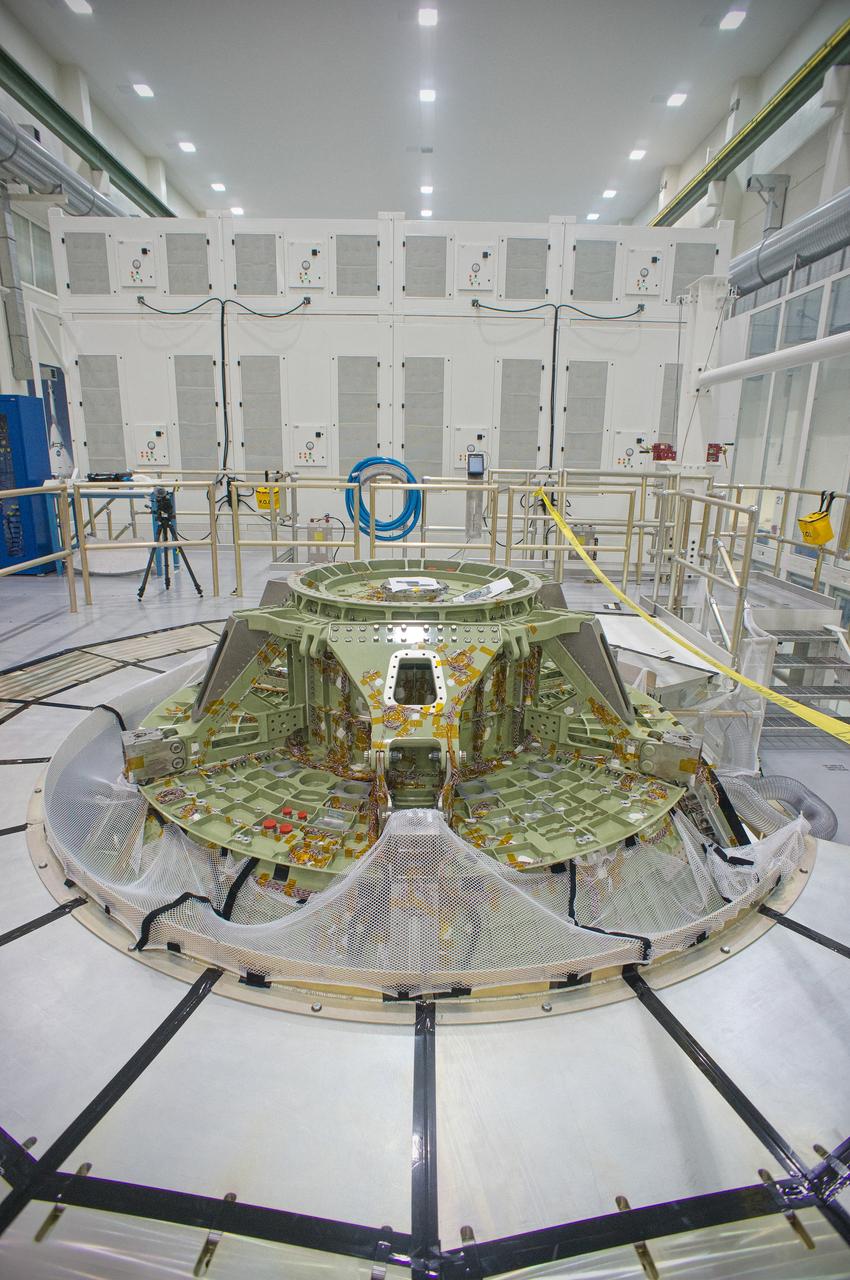
The Exploration Flight Test-1 (EFT-1) Orion service module in the Operations and Checkout (O&C) Building at NASA’s Kennedy Space Center on Dec. 31, 2011. Part of Batch image transfer from Flickr.
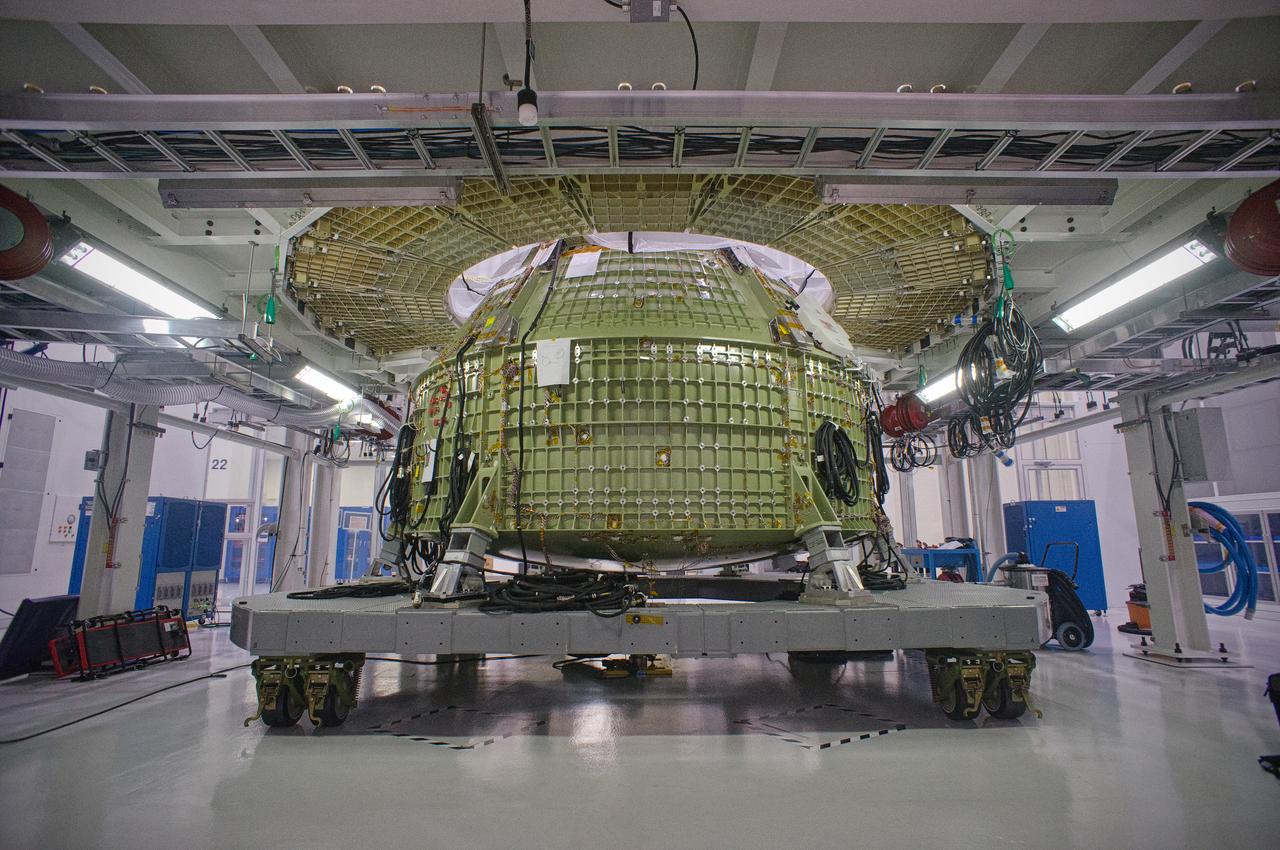
The Exploration Flight Test-1 (EFT-1) Orion service module in the Operations and Checkout (O&C) Building at NASA’s Kennedy Space Center on Dec. 31, 2011. Part of Batch image transfer from Flickr.
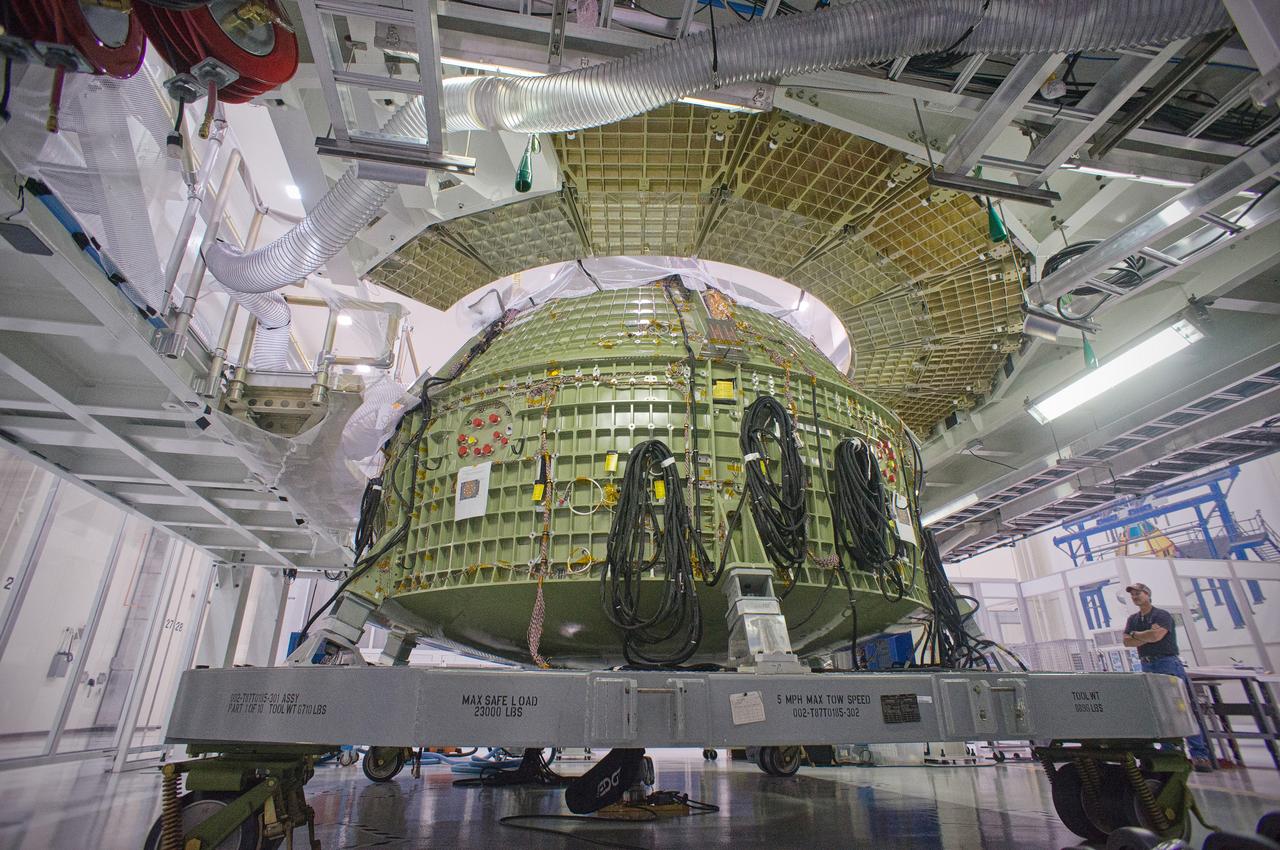
The Exploration Flight Test-1 (EFT-1) Orion service module in the Operations and Checkout (O&C) Building at NASA’s Kennedy Space Center on Dec. 31, 2011. Part of Batch image transfer from Flickr.

The Exploration Flight Test-1 (EFT-1) Orion service module in the Operations and Checkout (O&C) Building at NASA’s Kennedy Space Center on Dec. 31, 2011. Part of Batch image transfer from Flickr.
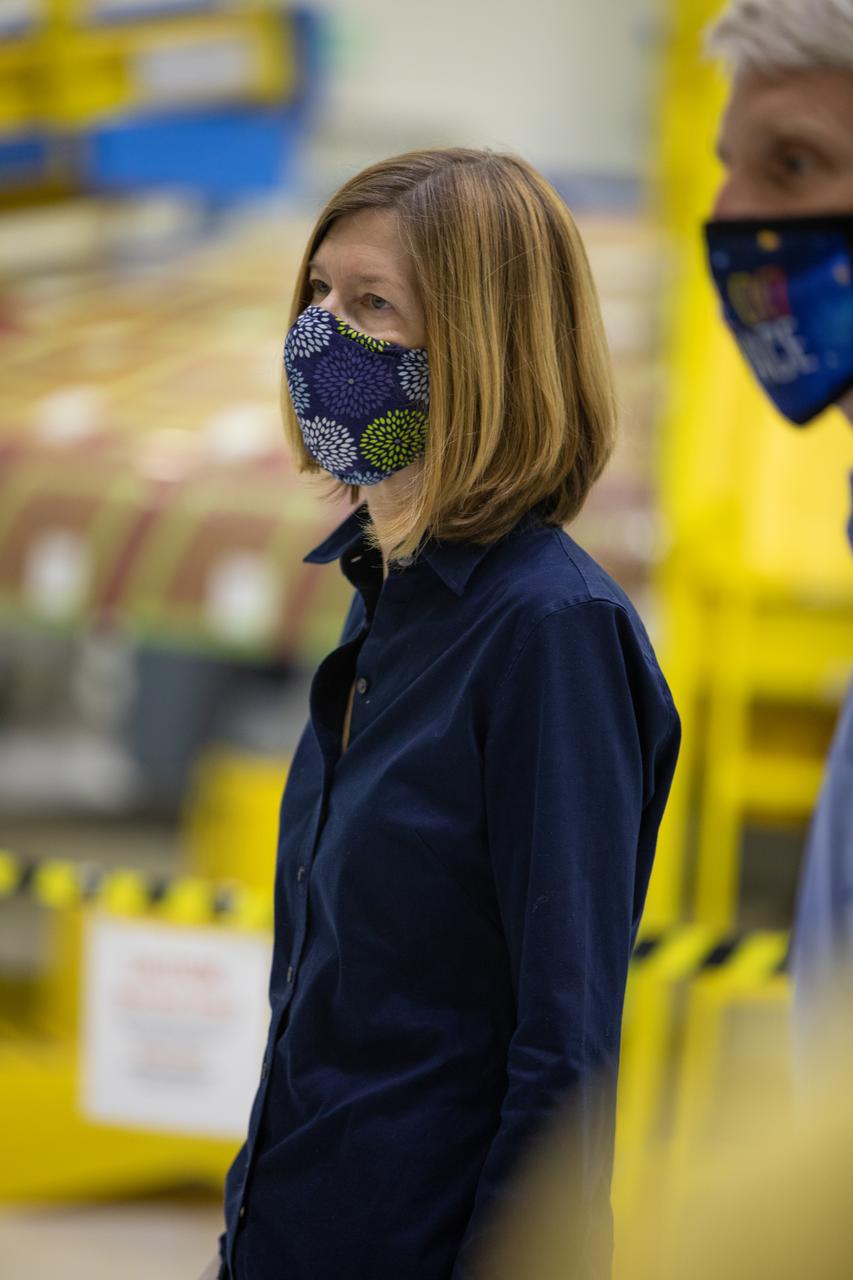
Kathy Lueders, associate administrator of NASA’s Human Exploration and Operations Mission Directorate, visits the Neil Armstrong Operations and Checkout (O&C) Building high bay at the agency’s Kennedy Space Center in Florida on Nov. 5, 2020. While at the O&C, Lueders and senior managers of Orion and Lockheed Martin had the opportunity to view the Artemis I and II spacecraft. In the background is the heat shield for Artemis II. The first in a series of increasingly complex missions, Artemis I will test the Space Launch System rocket and Orion spacecraft as an integrated system prior to crewed flights to the Moon. Under the Artemis program, NASA is planning to land the first woman and the next man on the lunar surface by 2024.
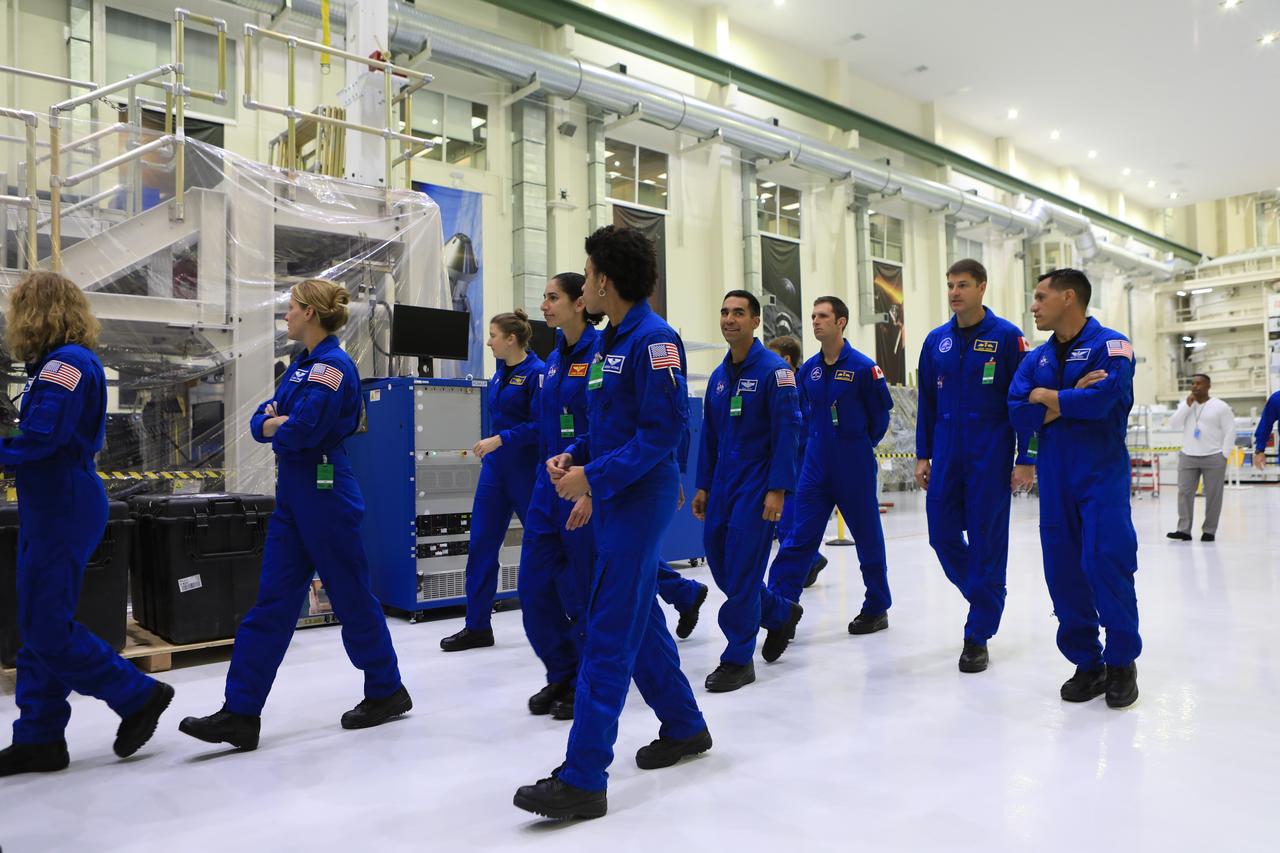
2017 ASCAN Tour of KSC at O&C Hi-Bay Orion Tour
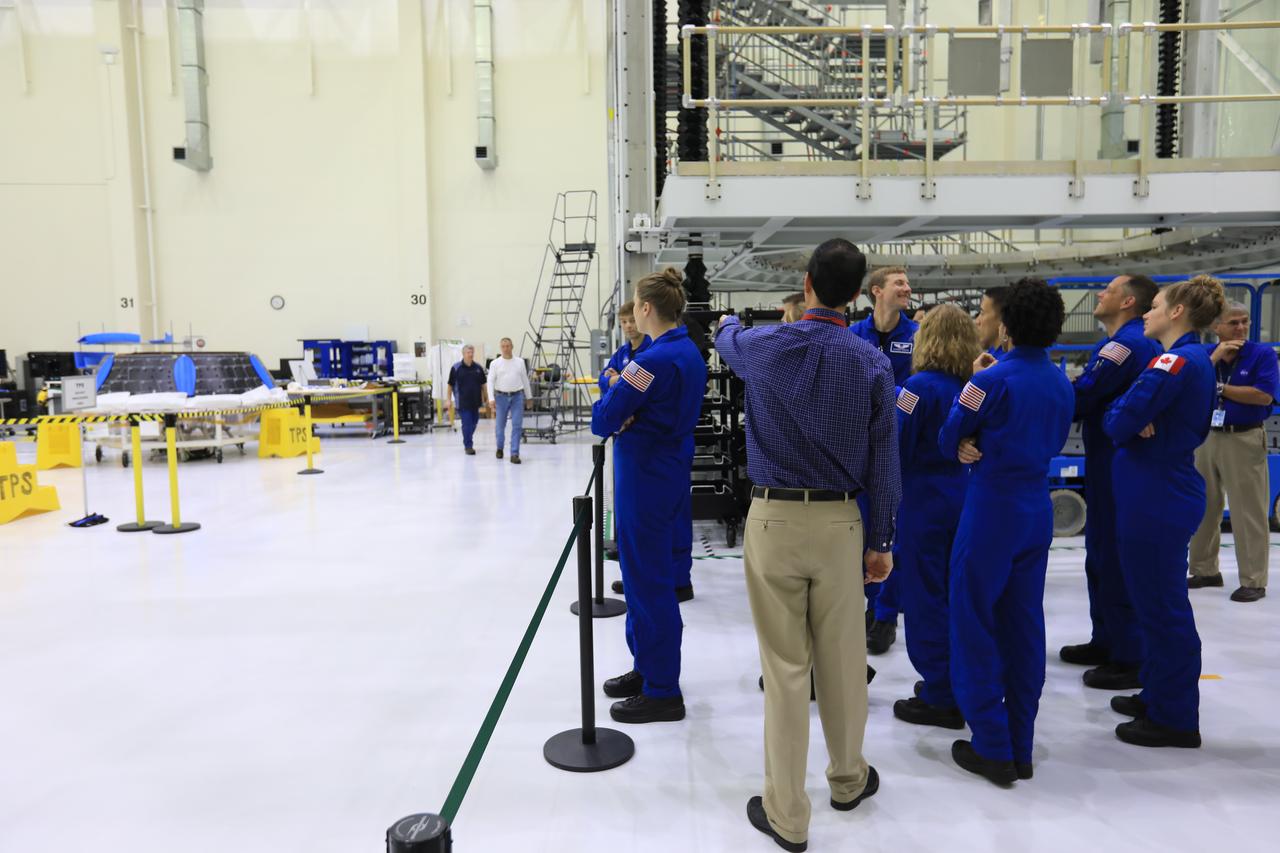
2017 ASCAN Tour of KSC at O&C Hi-Bay Orion Tour
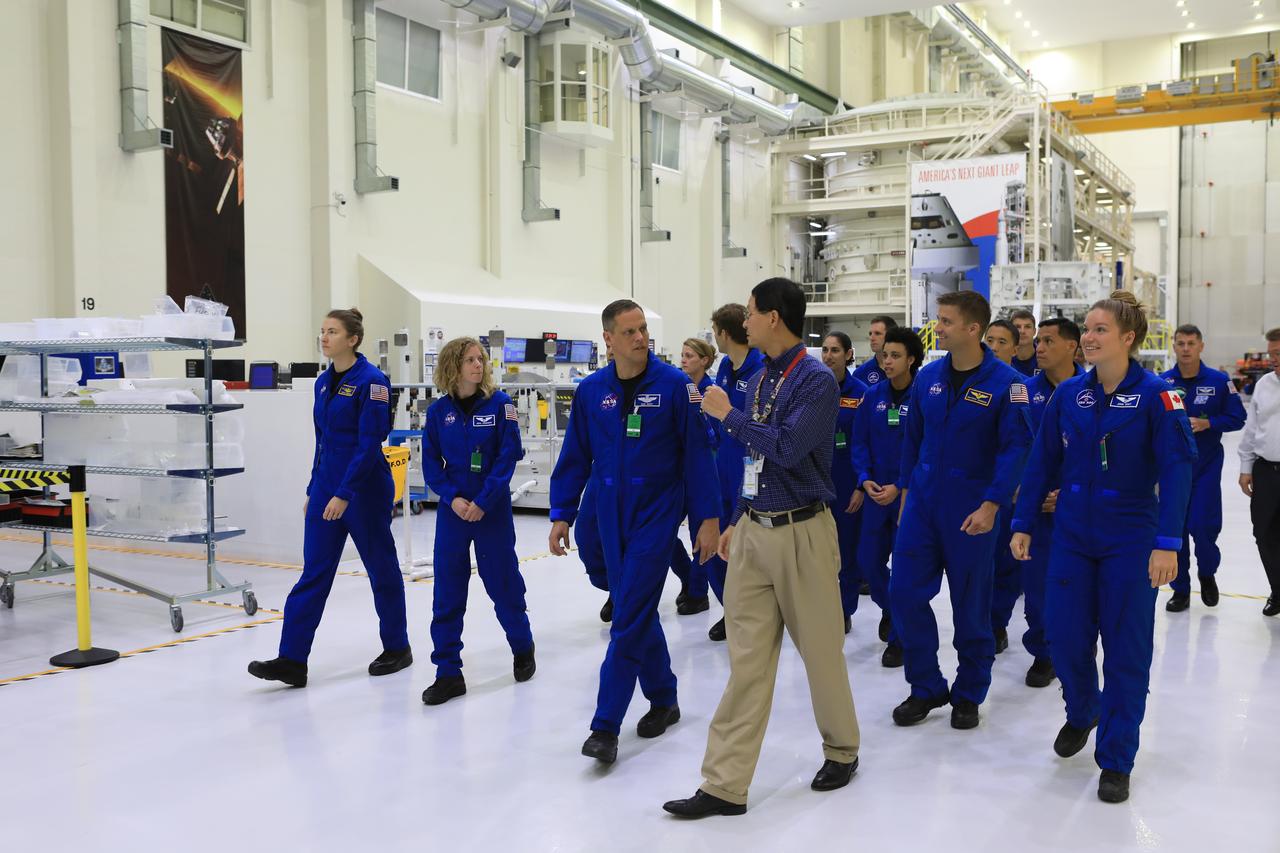
2017 ASCAN Tour of KSC at O&C Hi-Bay Orion Tour
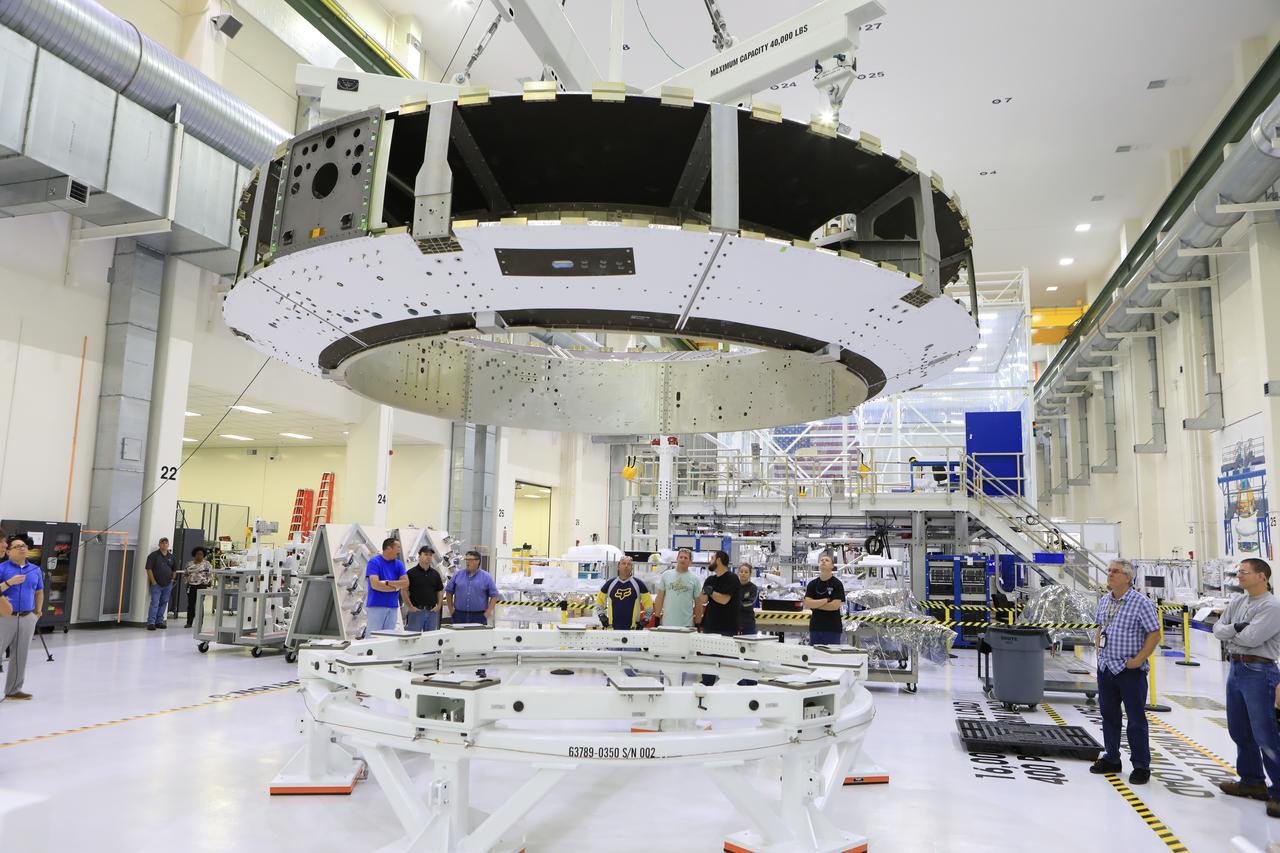
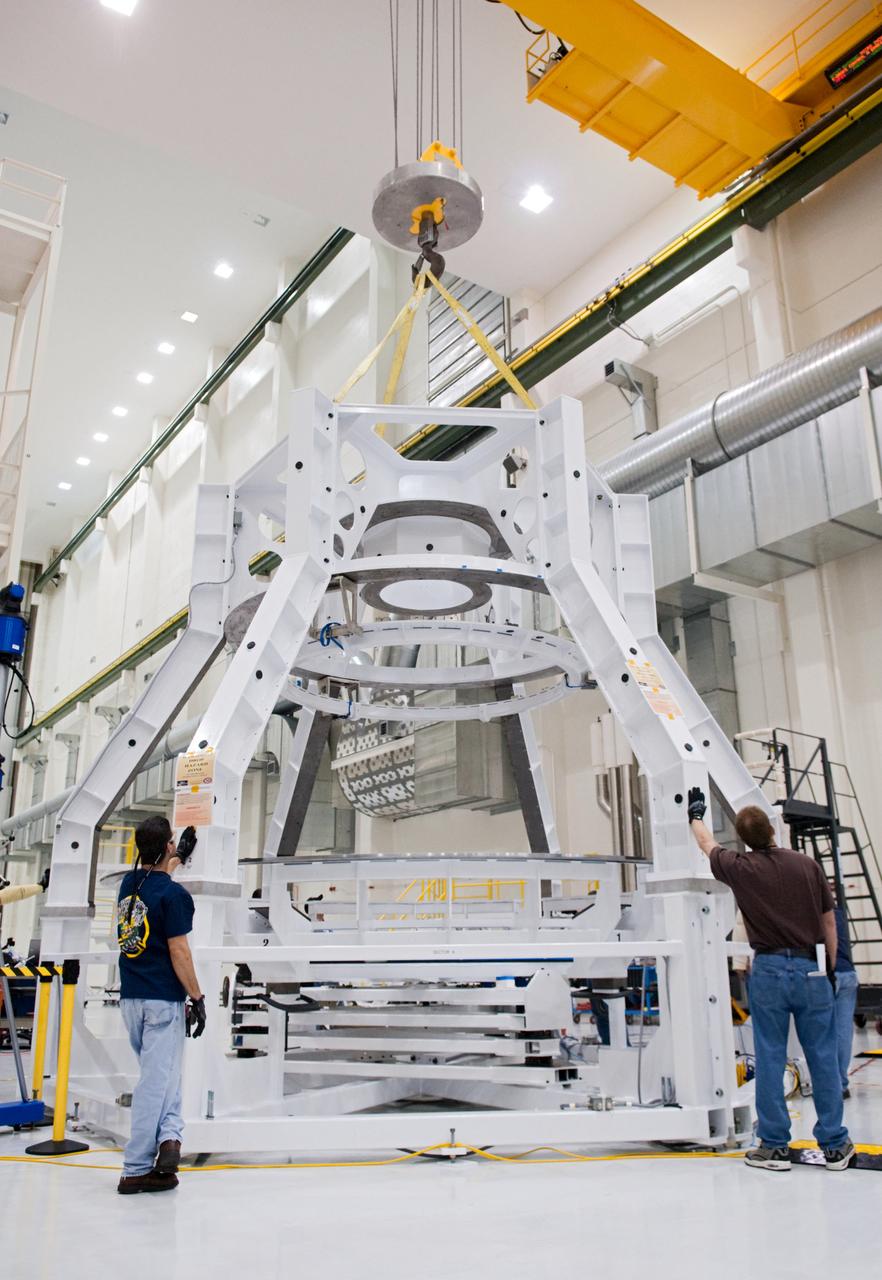
The Orion crew module adapter (CMA) for Exploration Mission 1 was lifted for the first and only time, Nov. 11, during its processing flow inside the Neil Armstrong Operations and Checkout (O&C) Building high bay at the agency's Kennedy Space Center in Florida. The CMA is now undergoing secondary structure outfitting.
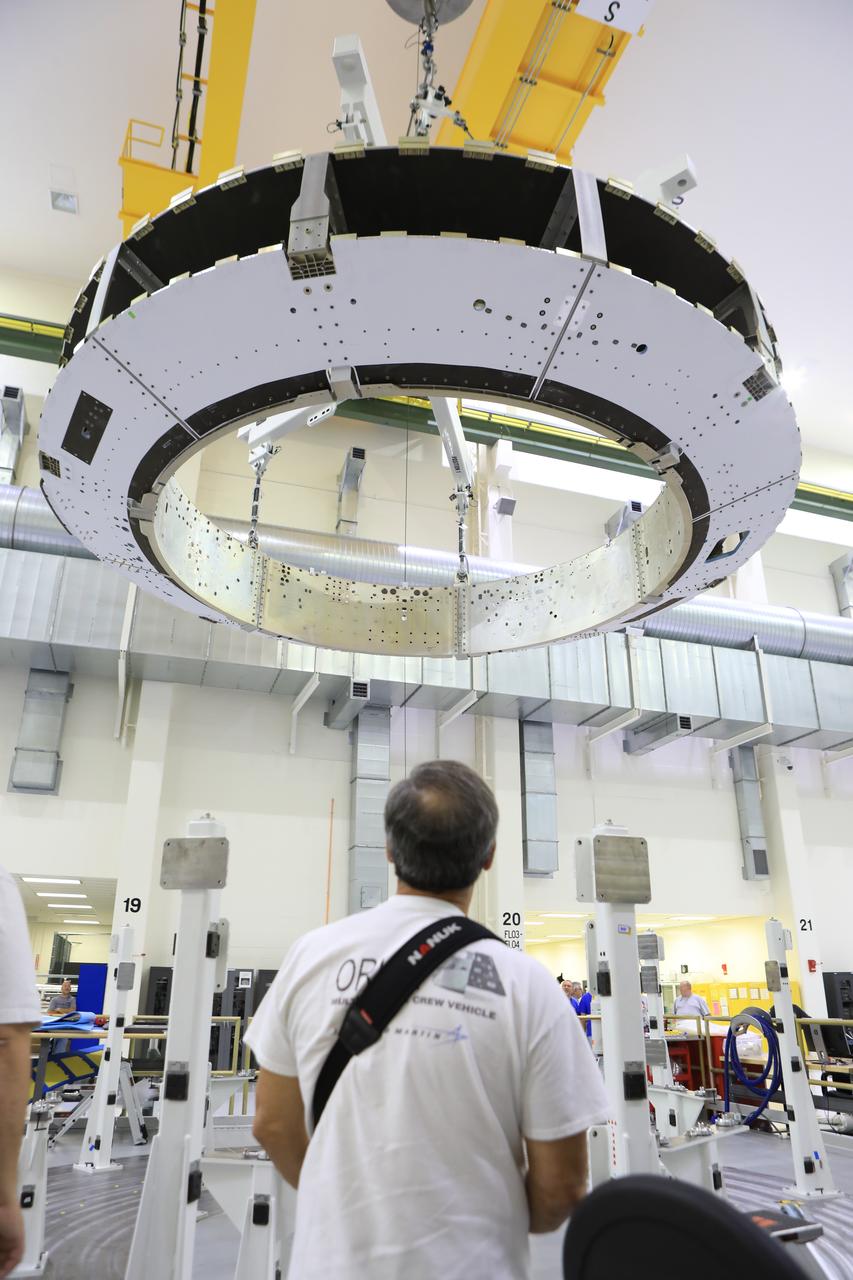
The Orion crew module adapter (CMA) for Exploration Mission 1 was lifted for the first and only time, Nov. 11, during its processing flow inside the Neil Armstrong Operations and Checkout (O&C) Building high bay at the agency's Kennedy Space Center in Florida. The CMA is now undergoing secondary structure outfitting.
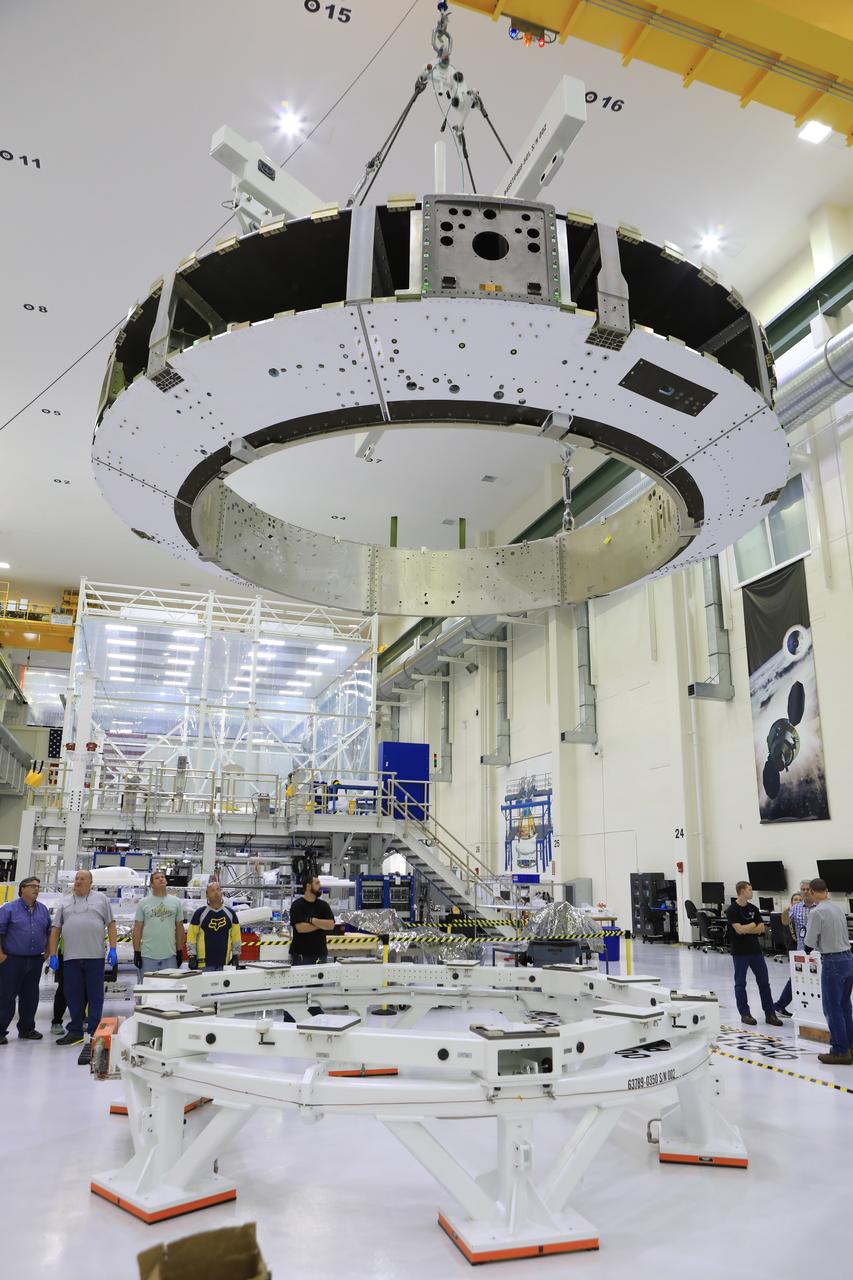
The Orion crew module adapter (CMA) for Exploration Mission 1 was lifted for the first and only time, Nov. 11, during its processing flow inside the Neil Armstrong Operations and Checkout (O&C) Building high bay at the agency's Kennedy Space Center in Florida. The CMA is now undergoing secondary structure outfitting.
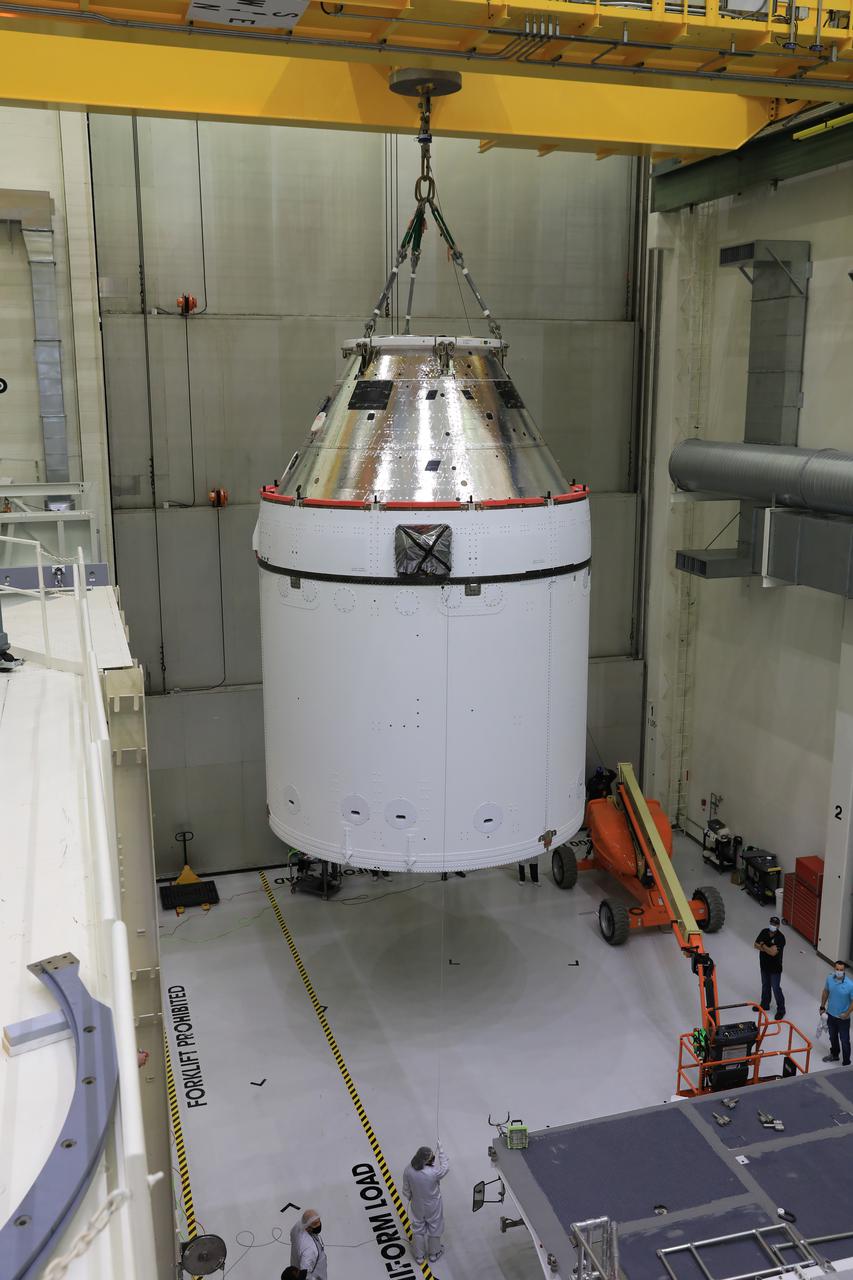
Orion is revealed for one of the final times on Jan. 14, as it is lowered by crane onto its transport pallet inside the Neil Armstrong Operations and Checkout Building at NASA’s Kennedy Space Center in Florida, along its path to the pad ahead of the Artemis I launch. Teams across the globe have worked tirelessly to assemble the spacecraft which will receive a protective covering prior to departing for the Multi-Payload Processing Facility to begin ground processing by the Exploration Ground Systems and Jacobs teams.
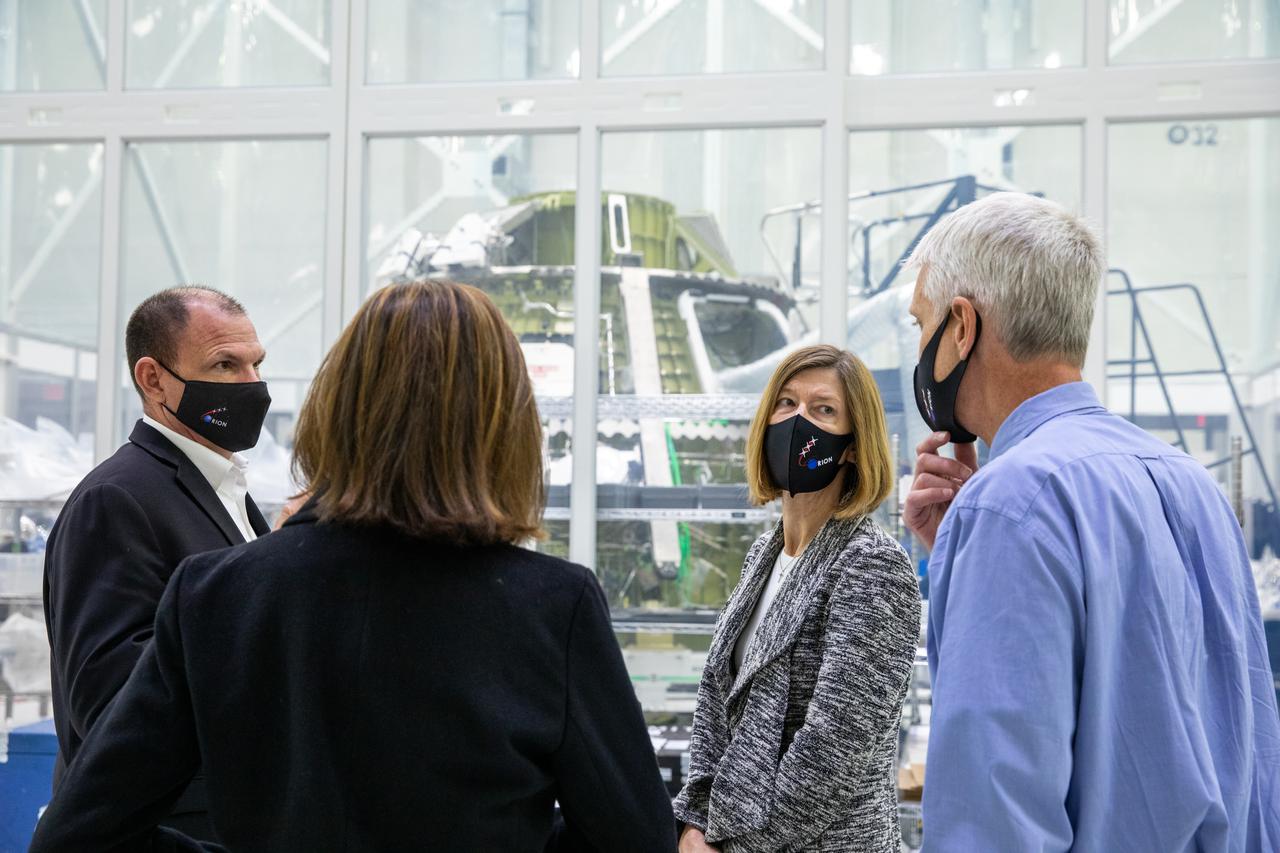
Kathy Lueders, second from right, associate administrator of the Human Exploration and Operations Mission Directorate, tours the Neil Armstrong Operations and Checkout Building high bay at NASA’s Kennedy Space Center in Florida on Jan. 14, 2021. In the background is the Orion crew module for the Artemis II mission. From left are Tony Antonelli, Lockheed Martin Orion Program director and Artemis II Mission director; Cathy Koerner, Orion Program manager; and Scott Wilson, Orion Production Operations manager. The group also viewed the Orion spacecraft for Artemis I as it was lowered onto a transporter for the move to the Multi-Payload Processing Facility to begin ground processing by the Exploration Ground Systems and Jacobs teams.
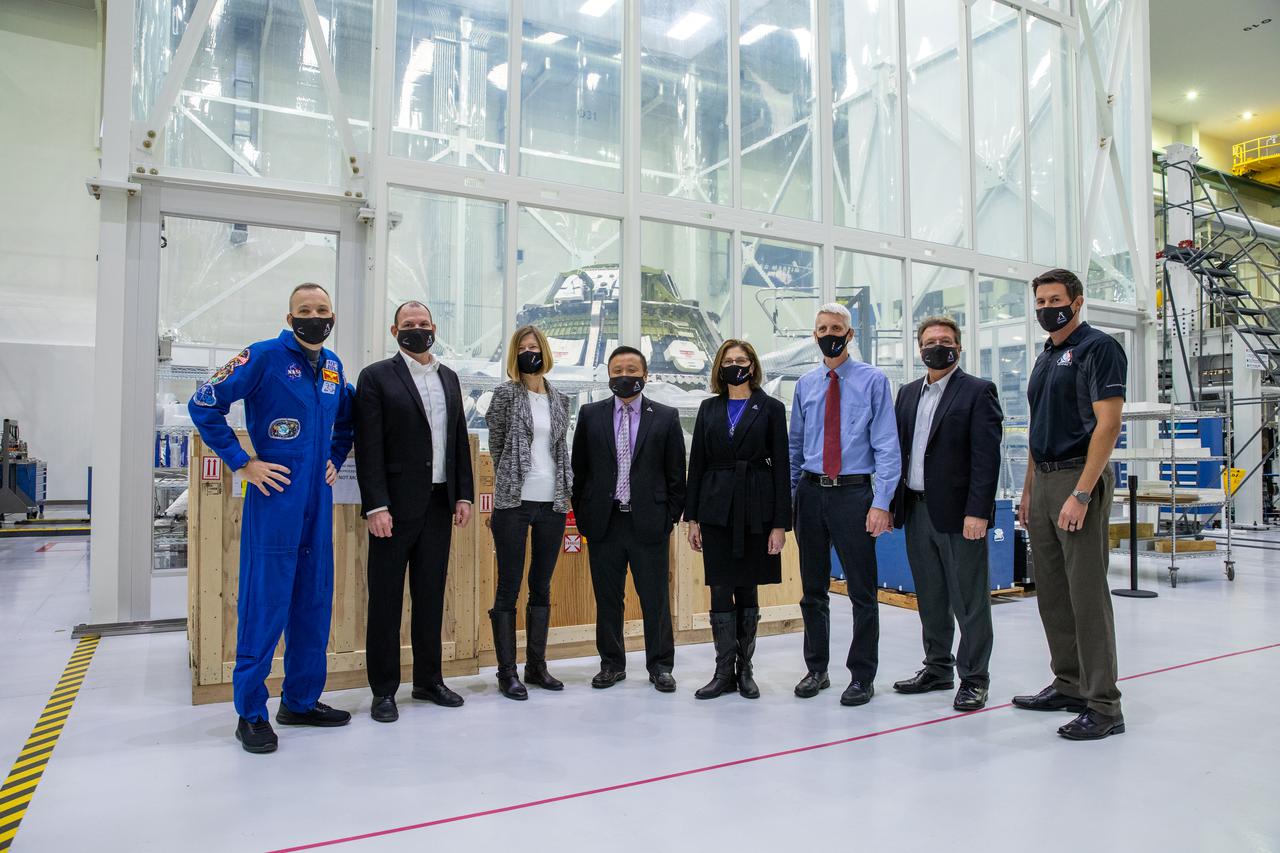
Kathy Lueders, third from left, associate administrator of the Human Exploration and Operations Mission Directorate, tours the Neil Armstrong Operations and Checkout Building high bay at NASA’s Kennedy Space Center in Florida on Jan. 14, 2021. In the background is the Orion crew module for the Artemis II mission. From left are NASA astronaut Randy Bresnik; Tony Antonelli, Lockheed Martin Orion Program director and Artemis II Mission director; Howard Hu, Orion deputy program manager; Cathy Koerner, Orion Program manager; Scott Wilson, Orion Production Operations manager; Jules Schneider, Lockheed Martin director of Orion Assembly, Test and Launch Operations at Kennedy; and Nathan Varn, Lockheed Martin Production Control director. The group also viewed the Orion spacecraft for Artemis I as it was lowered onto a transporter for the move to the Multi-Payload Processing Facility to begin ground processing by the Exploration Ground Systems and Jacobs teams.
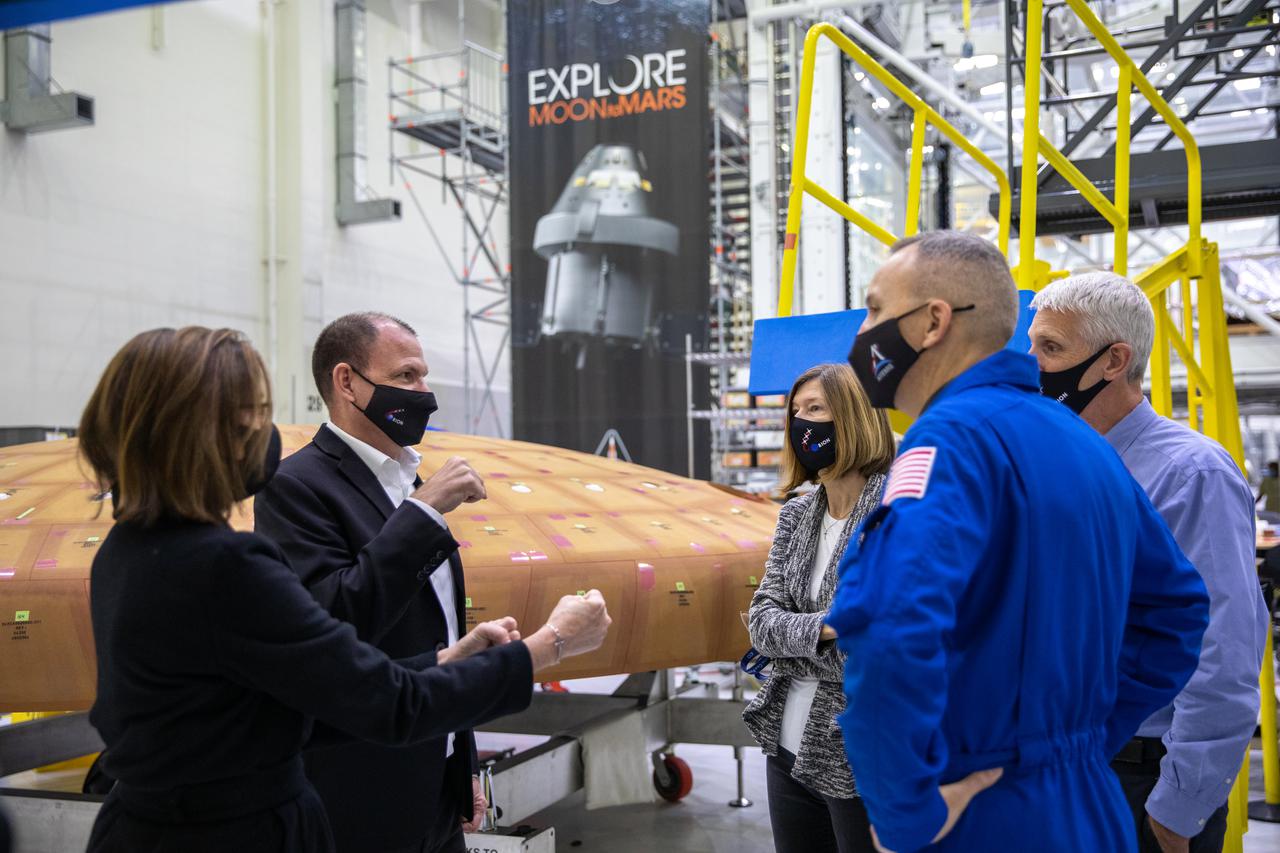
Kathy Lueders, third from right, associate administrator of the Human Exploration and Operations Mission Directorate, tours the Neil Armstrong Operations and Checkout Building high bay at NASA’s Kennedy Space Center in Florida on Jan. 14, 2021. In the background is the heat shield for the Orion crew module for the Artemis II mission. From left are Cathy Koerner, Orion Program manager; Tony Antonelli, Lockheed Martin Orion Program director and Artemis II Mission director; NASA astronaut Randy Bresnik; and Scott Wilson, Orion Production Operations manager. The group also viewed the Orion spacecraft for Artemis I as it was lowered onto a transporter for the move to the Multi-Payload Processing Facility to begin ground processing by the Exploration Ground Systems and Jacobs teams.
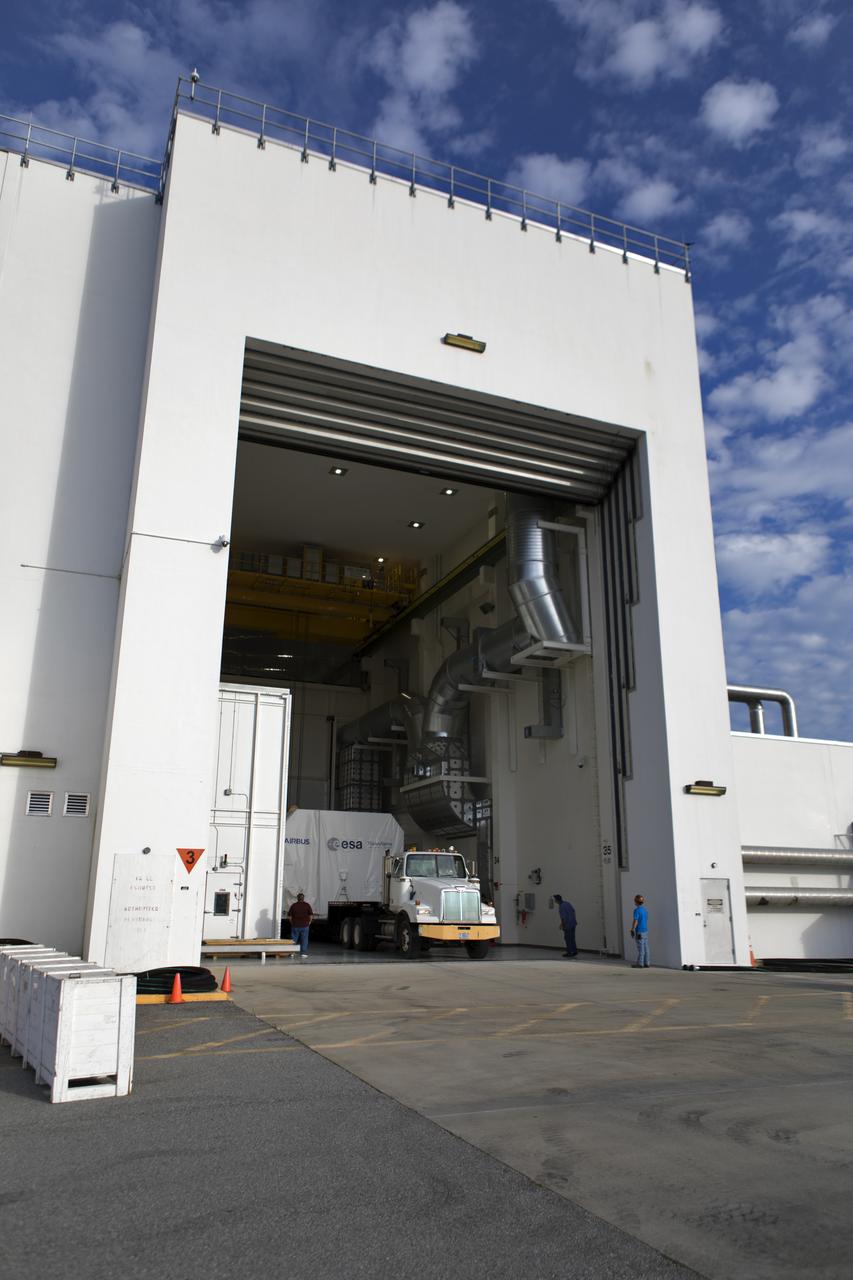
A flatbed truck carrying the European Space Agency's European Service Module (ESM) in its shipping container backs into the airlock of the Neil Armstrong Operations and Checkout Building on Nov. 6, 2018, at NASA's Kennedy Space Center in Florida. The ESM will supply the main propulsion system and power to the Orion spacecraft for Exploration Mission-1 (EM-1), a mission to the Moon. The ESM also will house air and water for astronauts on future missions. EM-1 will be an uncrewed flight test that will provide a foundation for human deep space exploration to destinations beyond Earth orbit. EM-1 will be the first integrated test of NASA's Space Launch System, Orion and the ground systems at Kennedy.
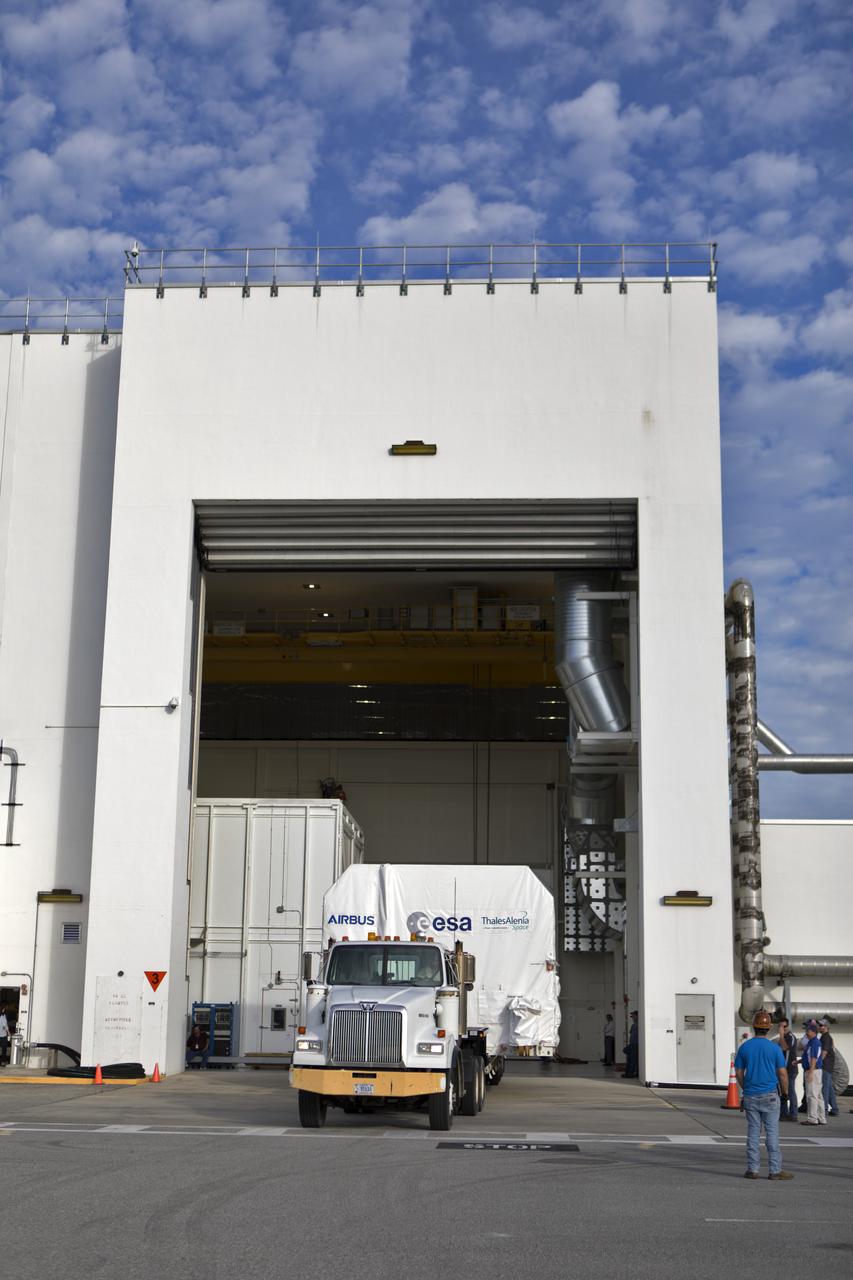
A flatbed truck carrying the European Space Agency's European Service Module (ESM) in its shipping container backs into the airlock of the Neil Armstrong Operations and Checkout Building on Nov. 6, 2018, at NASA's Kennedy Space Center in Florida. The ESM will supply the main propulsion system and power to the Orion spacecraft for Exploration Mission-1 (EM-1), a mission to the Moon. The ESM also will house air and water for astronauts on future missions. EM-1 will be an uncrewed flight test that will provide a foundation for human deep space exploration to destinations beyond Earth orbit. EM-1 will be the first integrated test of NASA's Space Launch System, Orion and the ground systems at Kennedy.
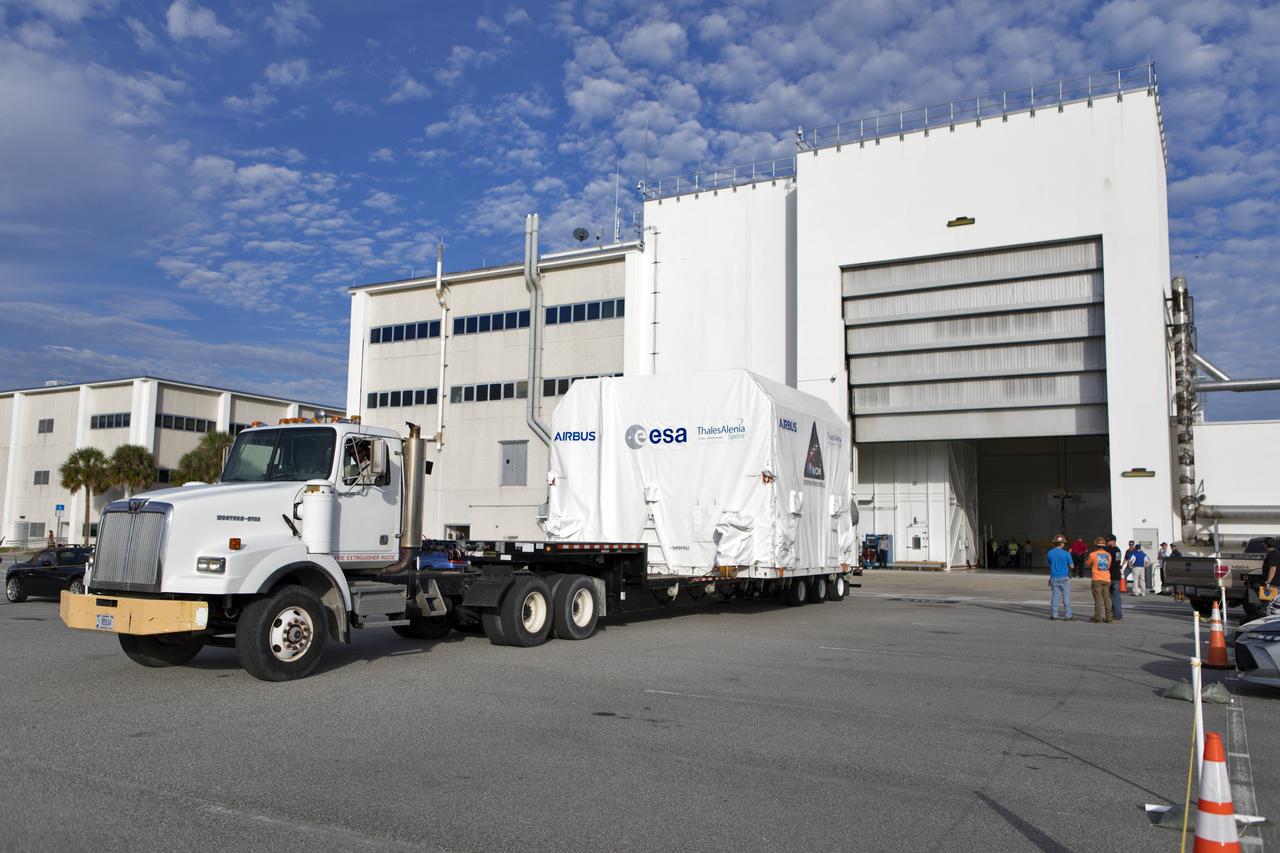
A flatbed truck carrying the European Space Agency's European Service Module (ESM) in its shipping container begins to back into the airlock of the Neil Armstrong Operations and Checkout Building on Nov. 6, 2018, at NASA's Kennedy Space Center in Florida. The ESM will supply the main propulsion system and power to the Orion spacecraft for Exploration Mission-1 (EM-1), a mission to the Moon. The ESM also will house air and water for astronauts on future missions. EM-1 will be an uncrewed flight test that will provide a foundation for human deep space exploration to destinations beyond Earth orbit. EM-1 will be the first integrated test of NASA's Space Launch System, Orion and the ground systems at Kennedy.
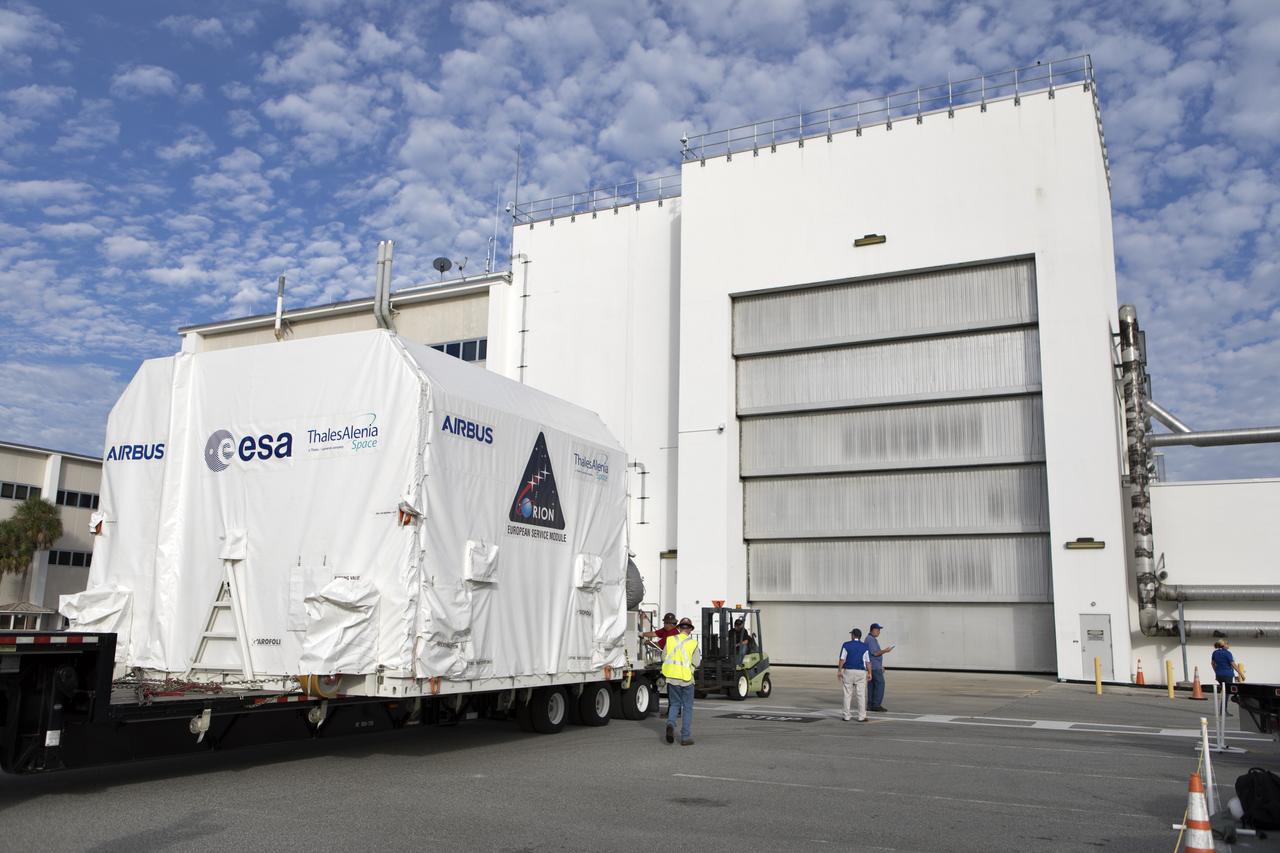
A flatbed truck carrying the European Space Agency's European Service Module (ESM) in its shipping container arrives at the Neil Armstrong Operations and Checkout Building on Nov. 6, 2018, at NASA's Kennedy Space Center in Florida. The ESM will supply the main propulsion system and power to the Orion spacecraft for Exploration Mission-1 (EM-1), a mission to the Moon. The ESM also will house air and water for astronauts on future missions. EM-1 will be an uncrewed flight test that will provide a foundation for human deep space exploration to destinations beyond Earth orbit. EM-1 will be the first integrated test of NASA's Space Launch System, Orion and the ground systems at Kennedy.
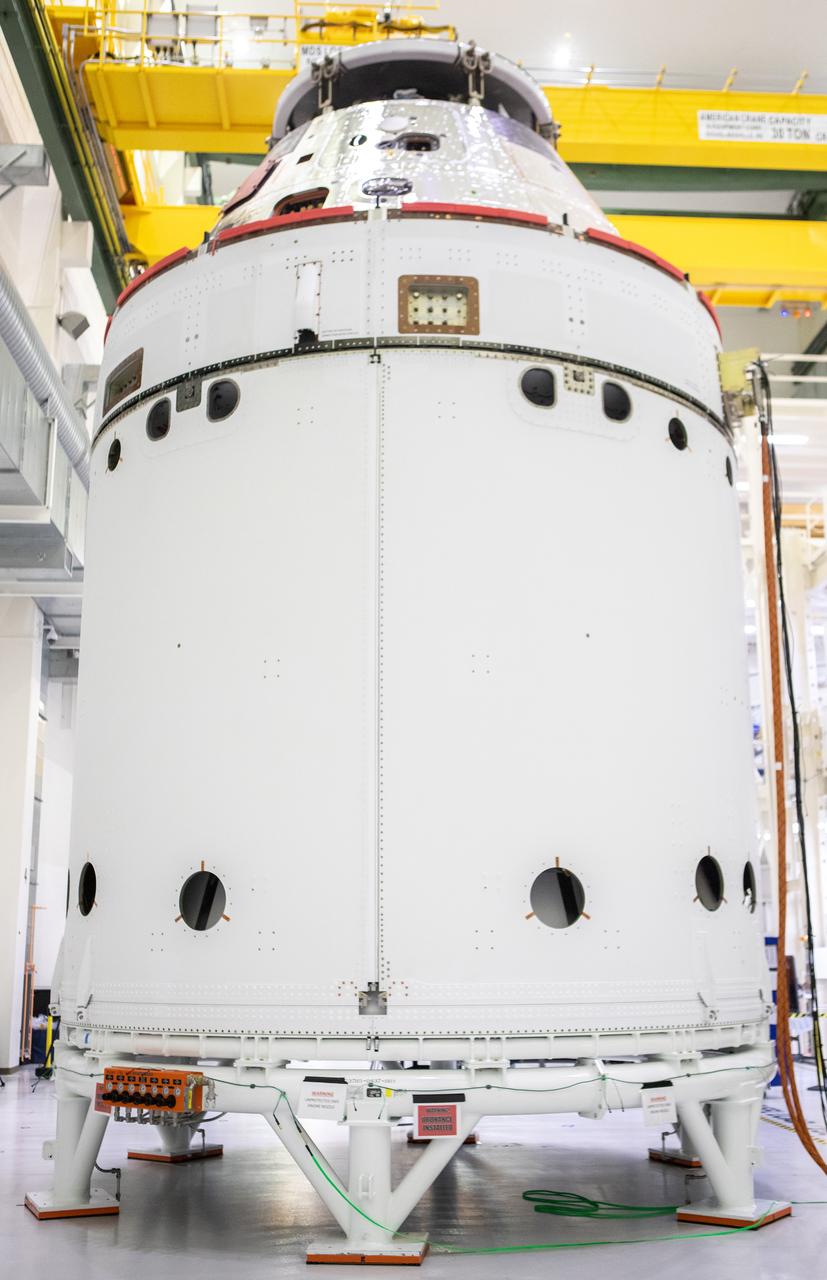
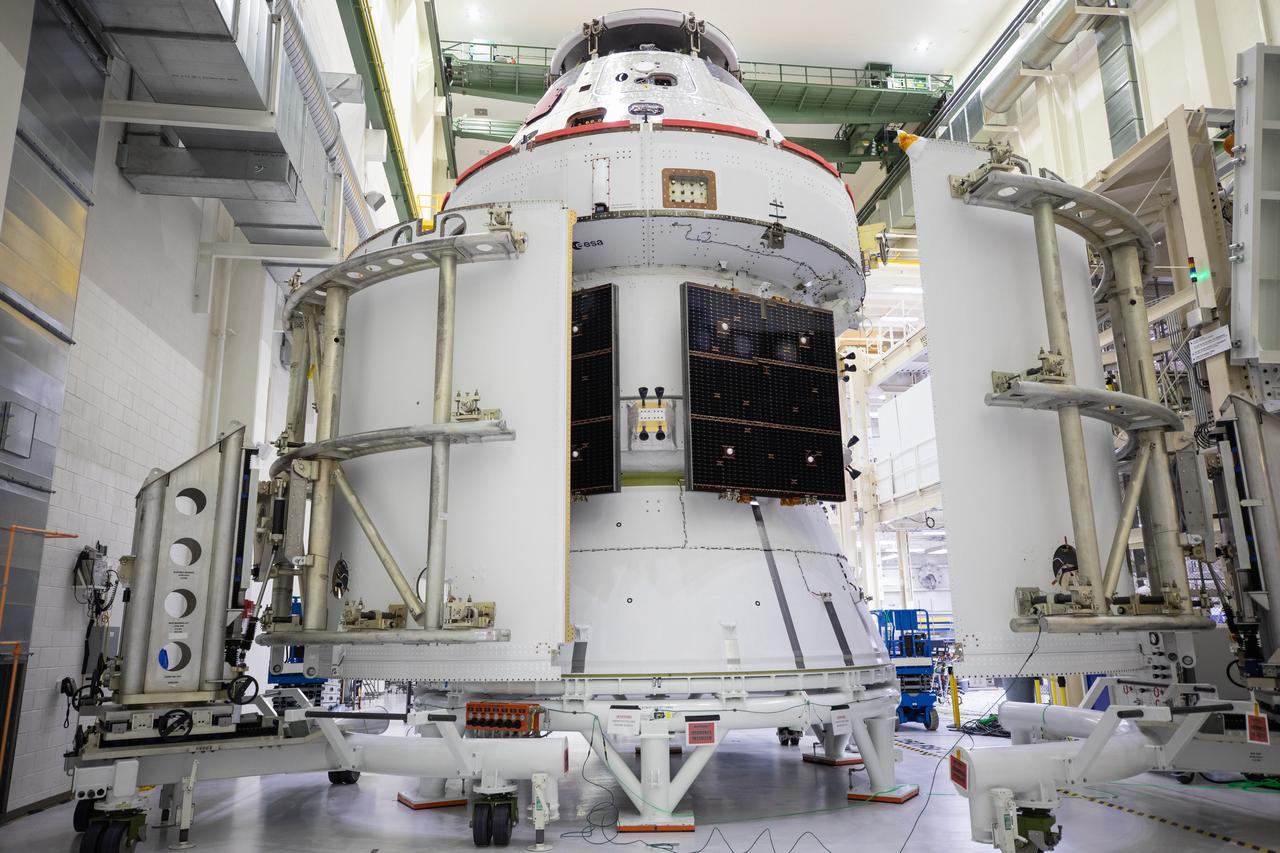
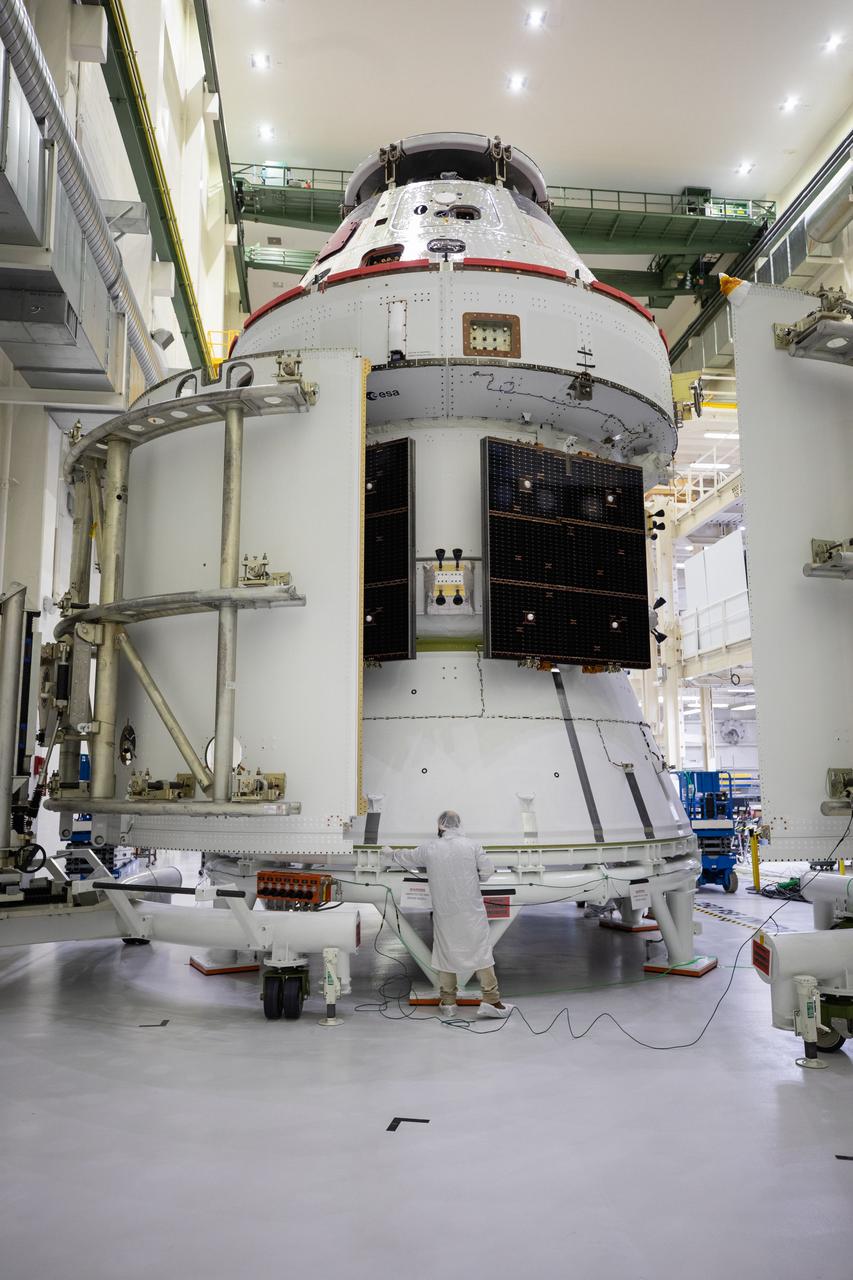
The spacecraft adapter jettison fairing panels are secured onto Orion’s European Service Module (ESM) on Oct. 27, 2020, inside the Neil Armstrong Operations and Checkout Building (O&C) at NASA’s Kennedy Space Center in Florida. The three panels were inspected and moved into place for installation by technicians with Lockheed Martin. Recently, teams from across the globe installed the four solar array wings, which are housed inside the protective covering of the fairings. The fairing panels will encapsulate the ESM to protect it from harsh environments such as heat, wind, and acoustics as the spacecraft is propelled out of Earth’s atmosphere atop the Space Launch System rocket during NASA’s Artemis I mission.
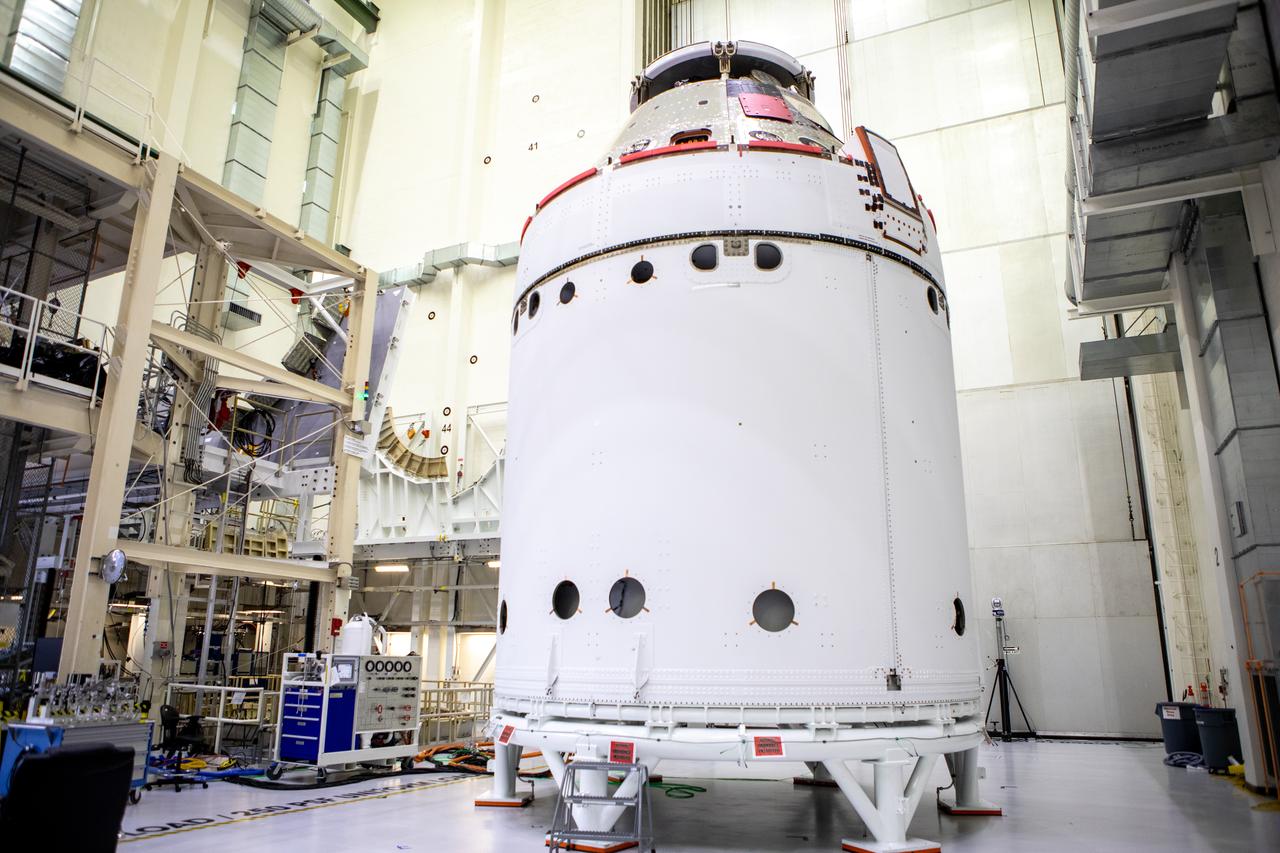
The spacecraft adapter jettison fairing panels are secured onto Orion’s European Service Module (ESM) on Oct. 27, 2020, inside the Neil Armstrong Operations and Checkout Building (O&C) at NASA’s Kennedy Space Center in Florida. The three panels were inspected and moved into place for installation by technicians with Lockheed Martin. Recently, teams from across the globe installed the four solar array wings, which are housed inside the protective covering of the fairings. The fairing panels will encapsulate the ESM to protect it from harsh environments such as heat, wind, and acoustics as the spacecraft is propelled out of Earth’s atmosphere atop the Space Launch System rocket during NASA’s Artemis I mission.
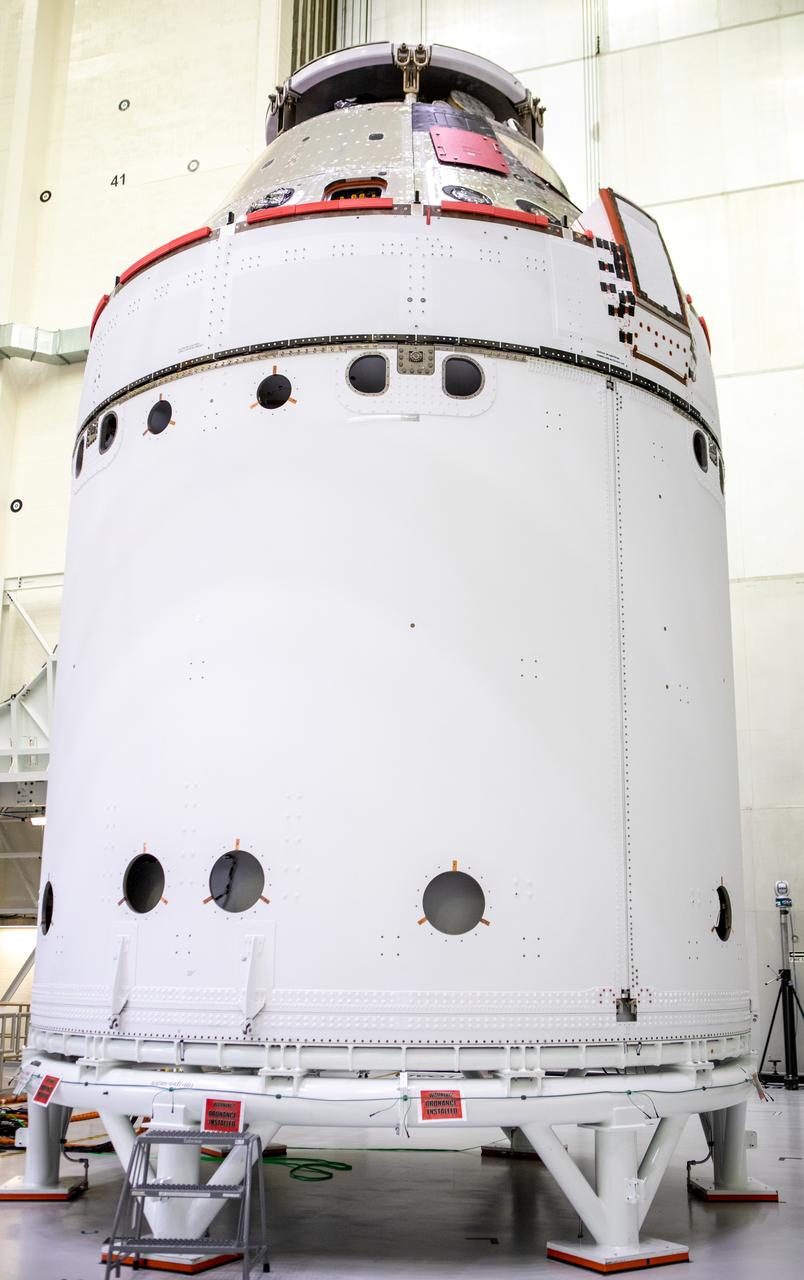
The spacecraft adapter jettison fairing panels are secured onto Orion’s European Service Module (ESM) on Oct. 27, 2020, inside the Neil Armstrong Operations and Checkout Building (O&C) at NASA’s Kennedy Space Center in Florida. The three panels were inspected and moved into place for installation by technicians with Lockheed Martin. Recently, teams from across the globe installed the four solar array wings, which are housed inside the protective covering of the fairings. The fairing panels will encapsulate the ESM to protect it from harsh environments such as heat, wind, and acoustics as the spacecraft is propelled out of Earth’s atmosphere atop the Space Launch System rocket during NASA’s Artemis I mission.
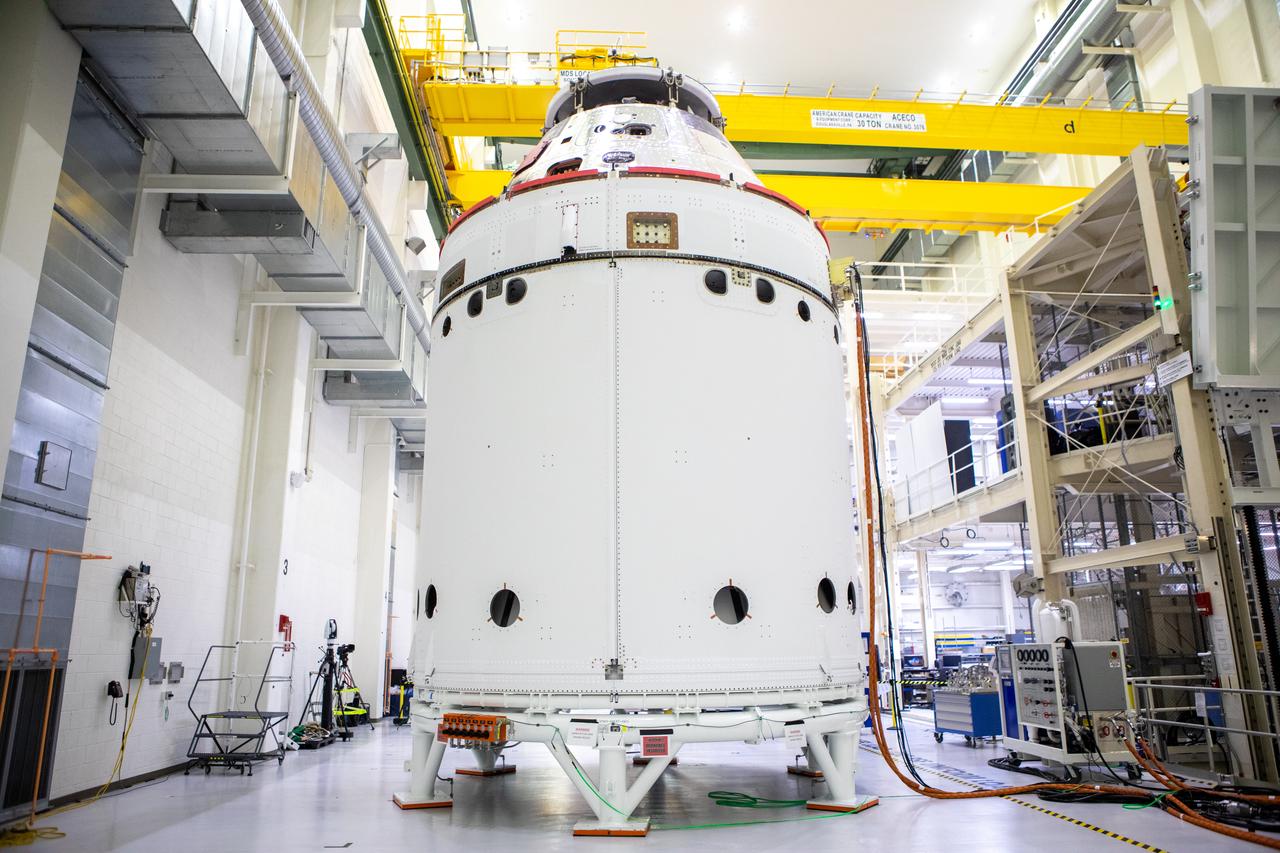
The spacecraft adapter jettison fairing panels are secured onto Orion’s European Service Module (ESM) on Oct. 27, 2020, inside the Neil Armstrong Operations and Checkout Building (O&C) at NASA’s Kennedy Space Center in Florida. The three panels were inspected and moved into place for installation by technicians with Lockheed Martin. Recently, teams from across the globe installed the four solar array wings, which are housed inside the protective covering of the fairings. The fairing panels will encapsulate the ESM to protect it from harsh environments such as heat, wind, and acoustics as the spacecraft is propelled out of Earth’s atmosphere atop the Space Launch System rocket during NASA’s Artemis I mission.
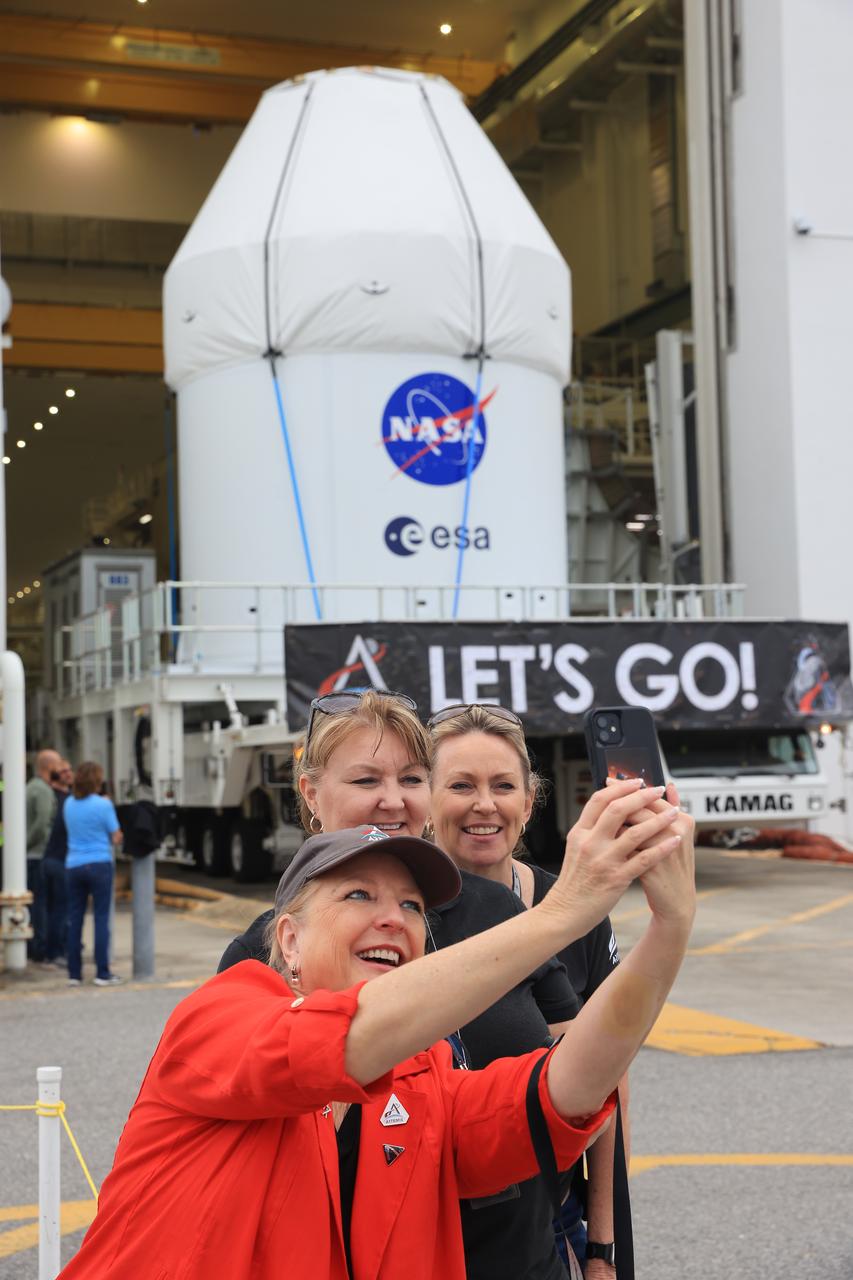
NASA’s KAMAG transporter carries the agency’s Artemis II Orion spacecraft from the Neil A. Armstrong Operations and Checkout Building to the Multi-Payload Processing Facility at Kennedy Space Center in Florida on Saturday, May 3, 2025. The Orion spacecraft will undergo fueling and processing operations at the Multi-Function Facility. The Artemis II test flight is the first crewed flight under NASA’s Artemis campaign and is another step toward missions on the lunar surface and helping the agency prepare for future human missions to Mars.
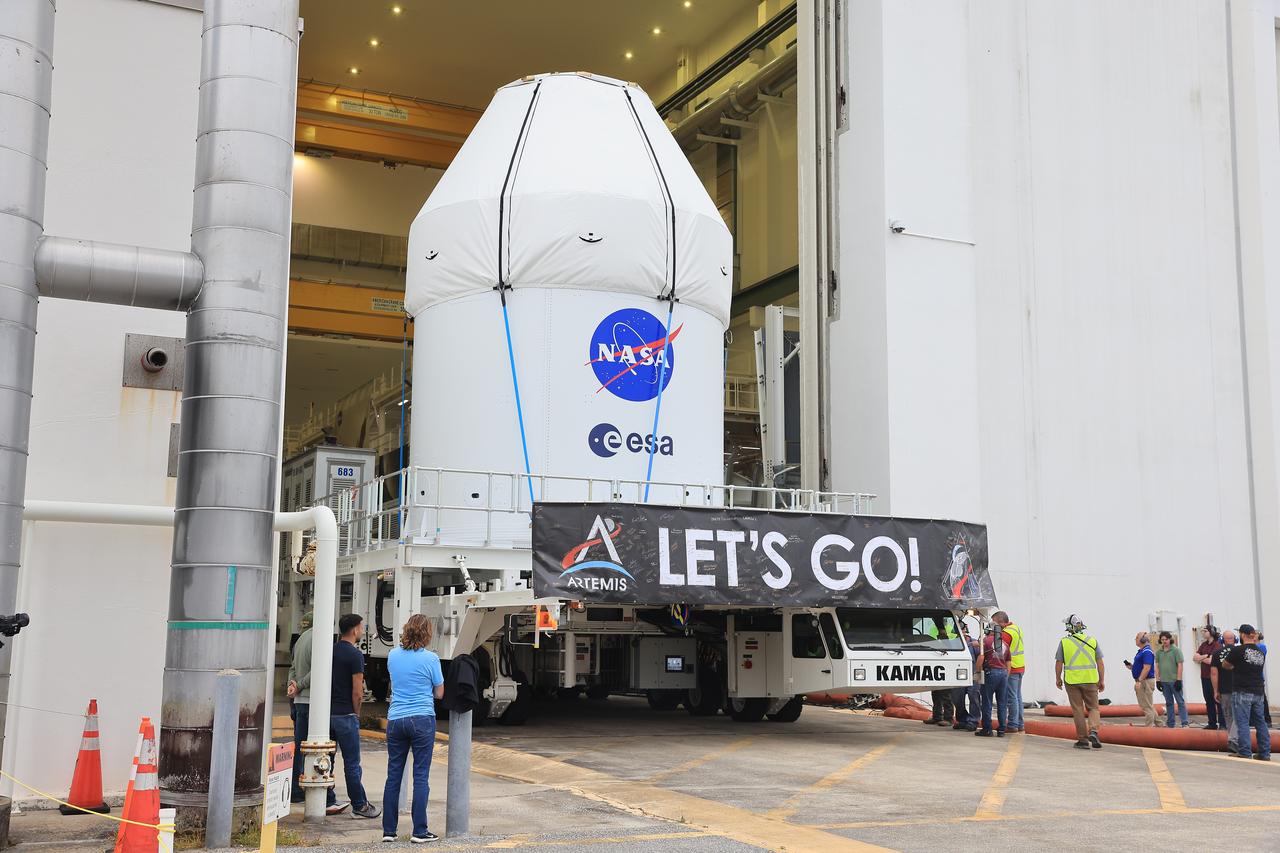
NASA’s KAMAG transporter carries the agency’s Artemis II Orion spacecraft from the Neil A. Armstrong Operations and Checkout Building to the Multi-Payload Processing Facility at Kennedy Space Center in Florida on Saturday, May 3, 2025. The Orion spacecraft will undergo fueling and processing operations at the Multi-Function Facility. The Artemis II test flight is the first crewed flight under NASA’s Artemis campaign and is another step toward missions on the lunar surface and helping the agency prepare for future human missions to Mars.
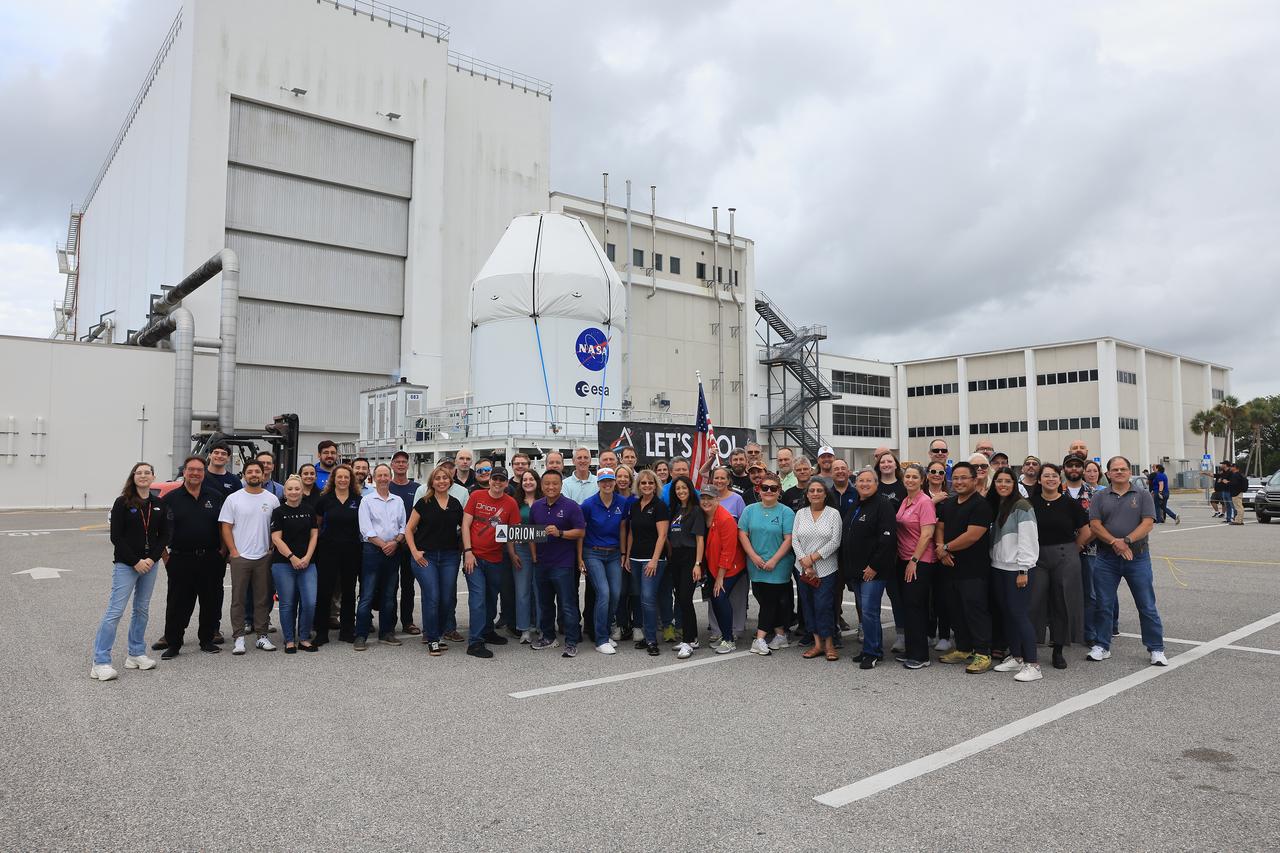
NASA’s KAMAG transporter carries the agency’s Artemis II Orion spacecraft from the Neil A. Armstrong Operations and Checkout Building to the Multi-Payload Processing Facility at Kennedy Space Center in Florida on Saturday, May 3, 2025. The Orion spacecraft will undergo fueling and processing operations at the Multi-Function Facility. The Artemis II test flight is the first crewed flight under NASA’s Artemis campaign and is another step toward missions on the lunar surface and helping the agency prepare for future human missions to Mars.

NASA’s KAMAG transporter carries the agency’s Artemis II Orion spacecraft from the Neil A. Armstrong Operations and Checkout Building to the Multi-Payload Processing Facility at Kennedy Space Center in Florida on Saturday, May 3, 2025. The Orion spacecraft will undergo fueling and processing operations at the Multi-Function Facility. The Artemis II test flight is the first crewed flight under NASA’s Artemis campaign and is another step toward missions on the lunar surface and helping the agency prepare for future human missions to Mars.
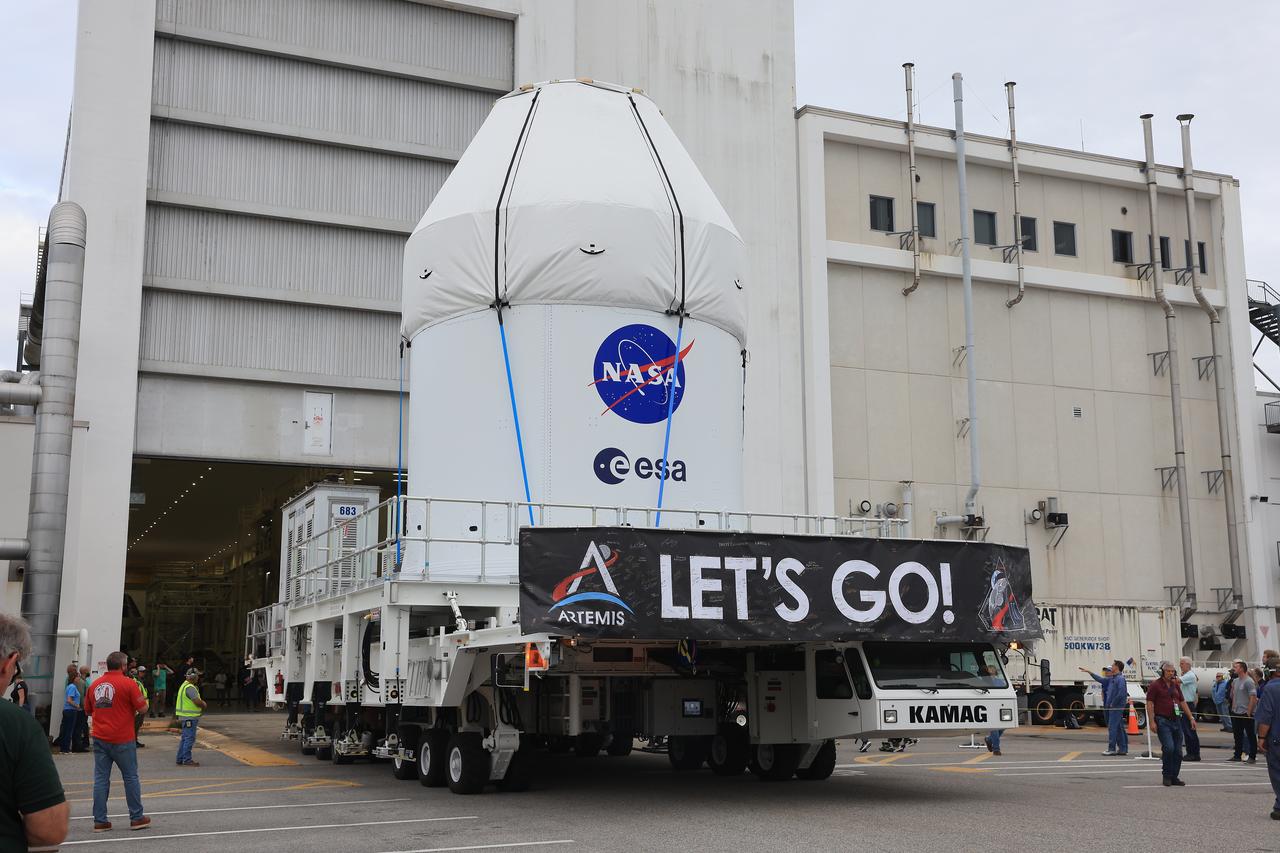
NASA’s KAMAG transporter carries the agency’s Artemis II Orion spacecraft from the Neil A. Armstrong Operations and Checkout Building to the Multi-Payload Processing Facility at Kennedy Space Center in Florida on Saturday, May 3, 2025. The Orion spacecraft will undergo fueling and processing operations at the Multi-Function Facility. The Artemis II test flight is the first crewed flight under NASA’s Artemis campaign and is another step toward missions on the lunar surface and helping the agency prepare for future human missions to Mars.
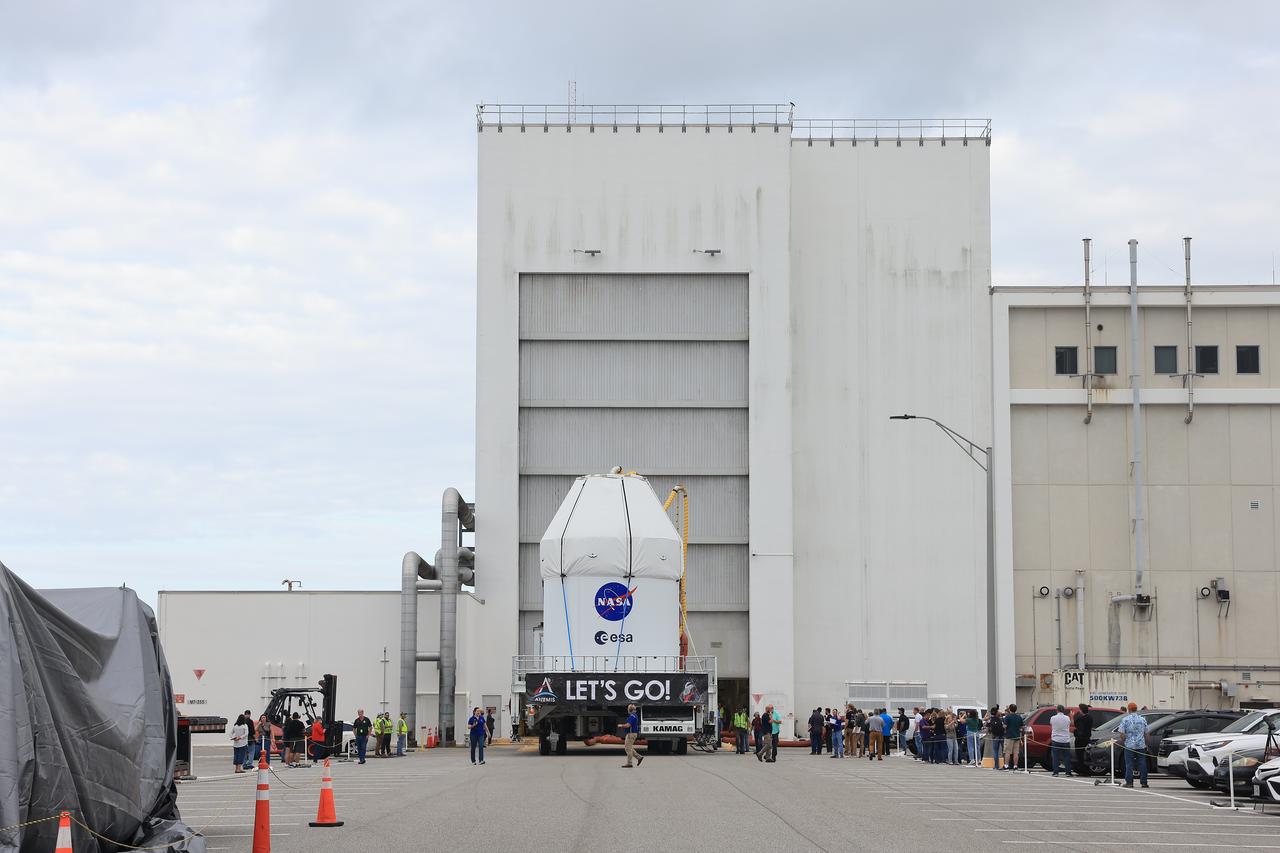
NASA’s KAMAG transporter carries the agency’s Artemis II Orion spacecraft from the Neil A. Armstrong Operations and Checkout Building to the Multi-Payload Processing Facility at Kennedy Space Center in Florida on Saturday, May 3, 2025. The Orion spacecraft will undergo fueling and processing operations at the Multi-Function Facility. The Artemis II test flight is the first crewed flight under NASA’s Artemis campaign and is another step toward missions on the lunar surface and helping the agency prepare for future human missions to Mars.
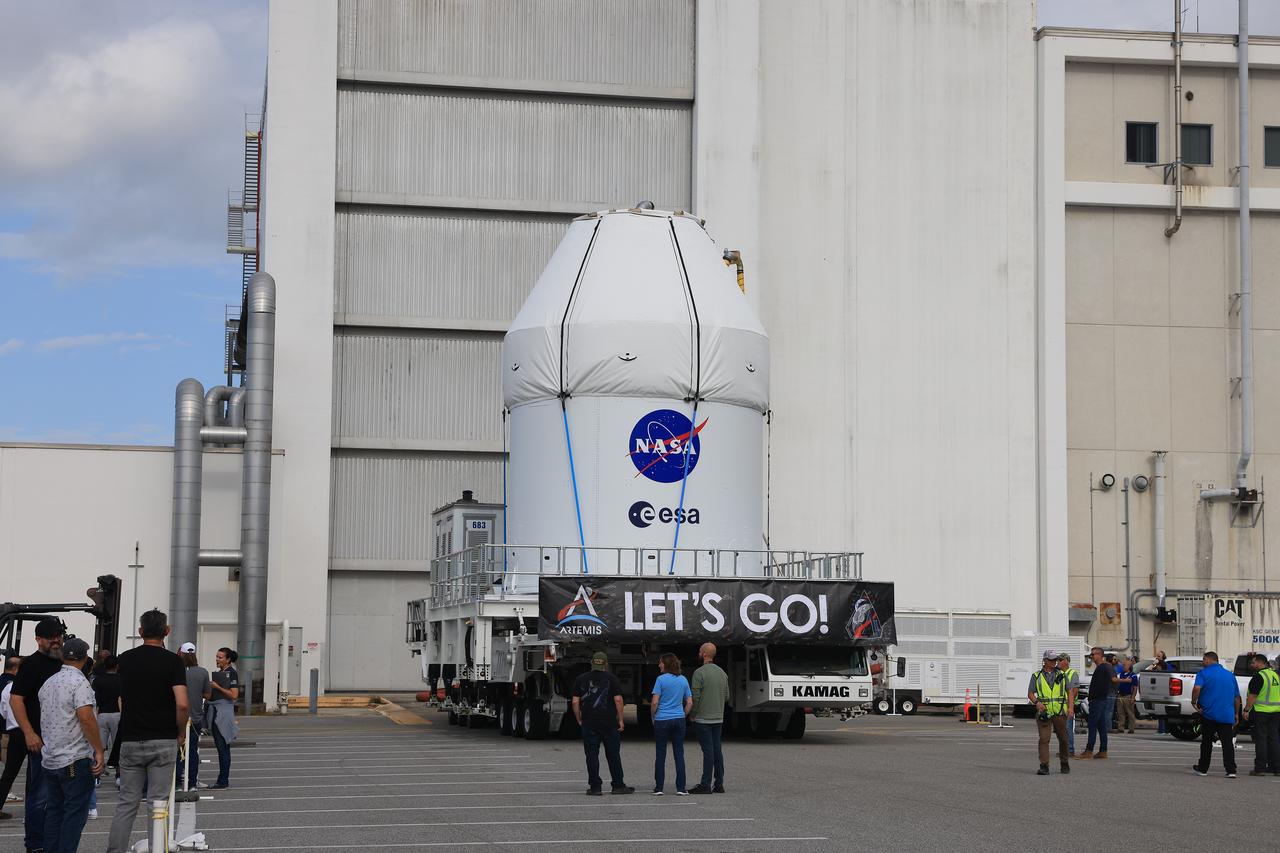
NASA’s KAMAG transporter carries the agency’s Artemis II Orion spacecraft from the Neil A. Armstrong Operations and Checkout Building to the Multi-Payload Processing Facility at Kennedy Space Center in Florida on Saturday, May 3, 2025. The Orion spacecraft will undergo fueling and processing operations at the Multi-Function Facility. The Artemis II test flight is the first crewed flight under NASA’s Artemis campaign and is another step toward missions on the lunar surface and helping the agency prepare for future human missions to Mars.
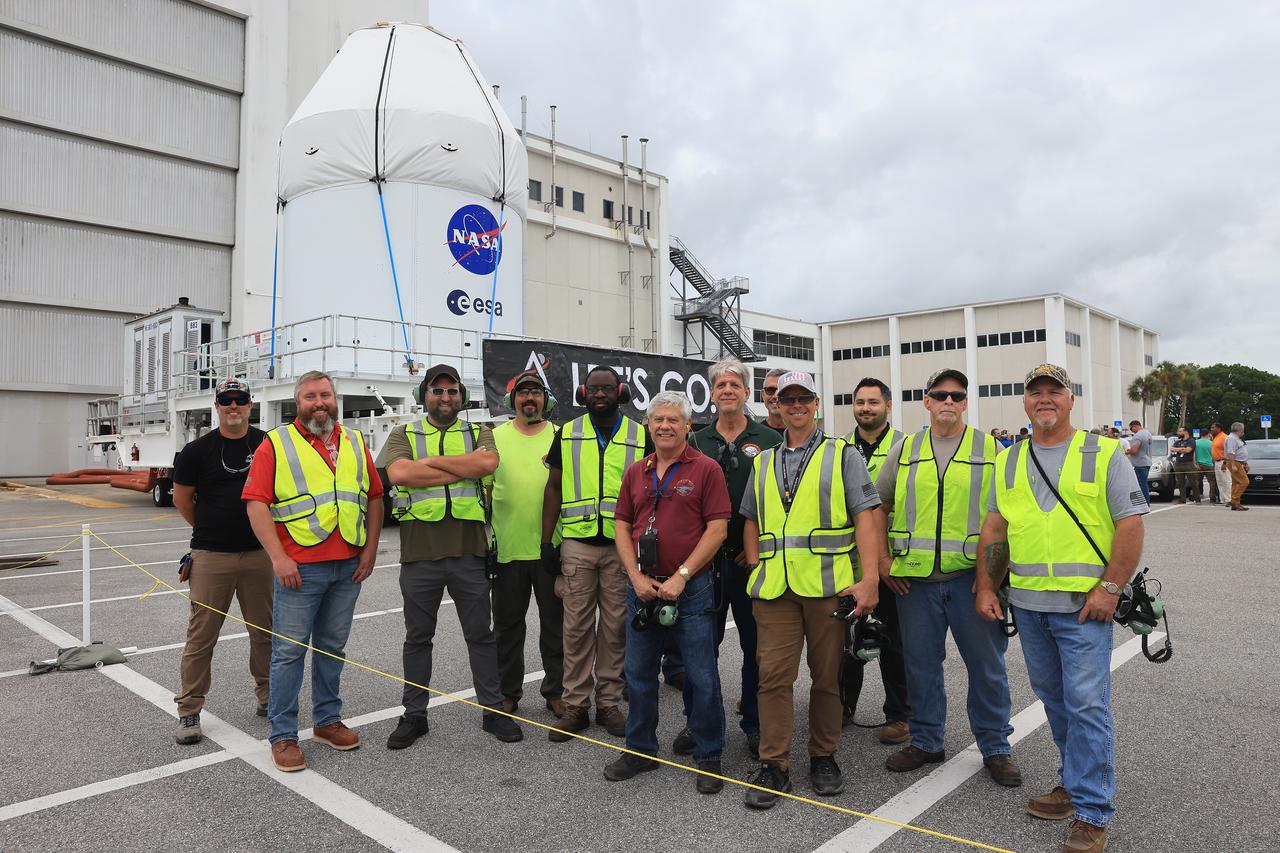
NASA’s KAMAG transporter carries the agency’s Artemis II Orion spacecraft from the Neil A. Armstrong Operations and Checkout Building to the Multi-Payload Processing Facility at Kennedy Space Center in Florida on Saturday, May 3, 2025. The Orion spacecraft will undergo fueling and processing operations at the Multi-Function Facility. The Artemis II test flight is the first crewed flight under NASA’s Artemis campaign and is another step toward missions on the lunar surface and helping the agency prepare for future human missions to Mars.

Executive Vice President of Lockheed and Bob Cabana Tour Orion and O&C
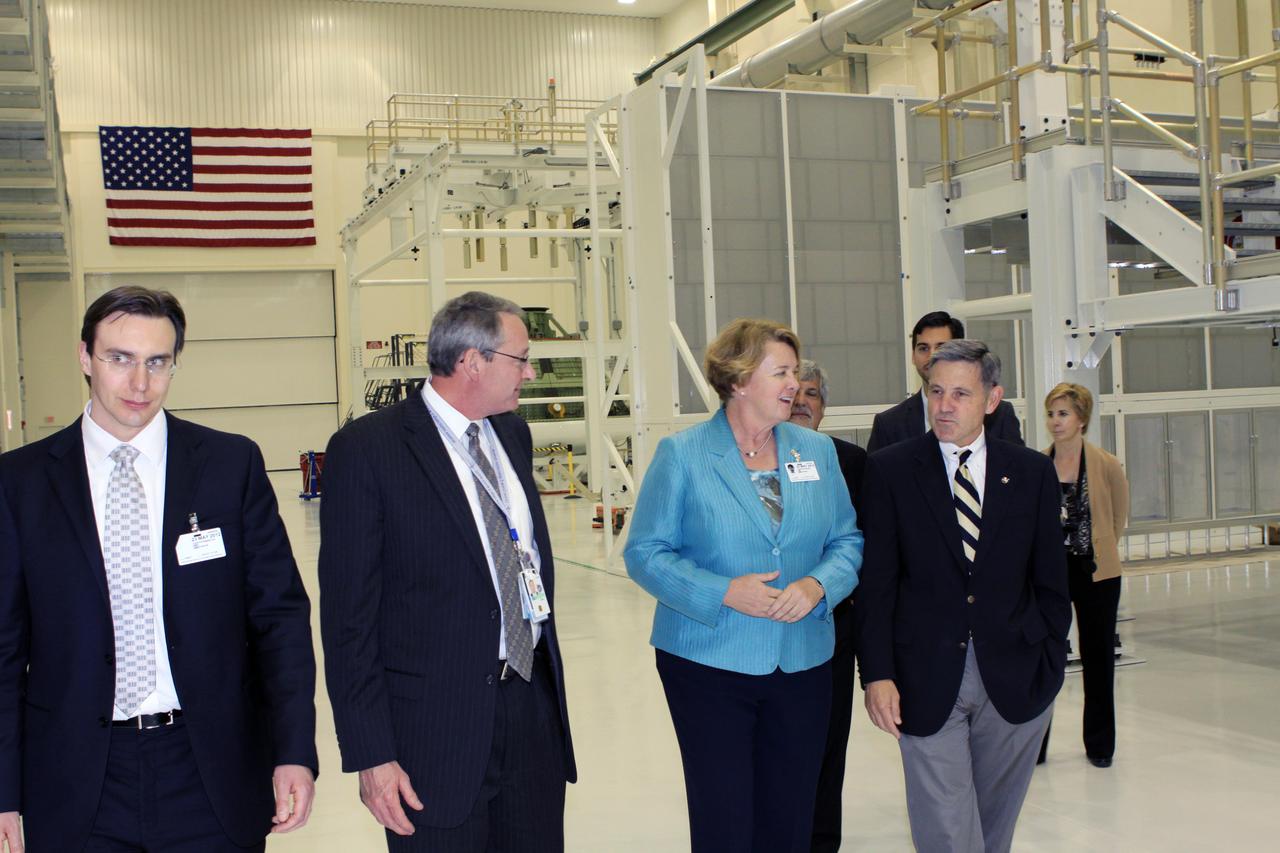
Executive Vice President of Lockheed and Bob Cabana Tour Orion and O&C
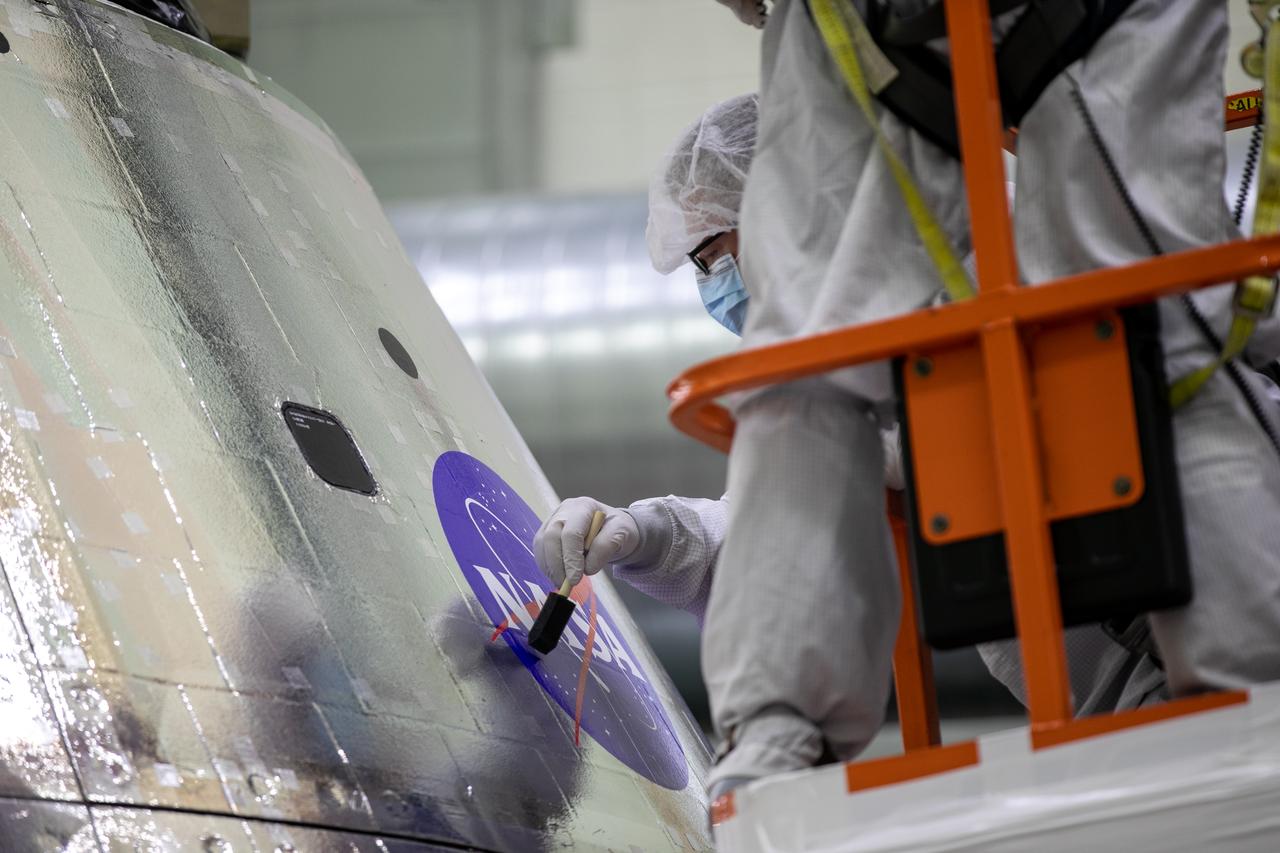
Frank Pelkey, ASRC technician, paints a clear adhesive over the NASA insignia, also called the “meatball,” on the Orion crew module back shell for the Artemis I mission on Oct. 28, 2020, inside the Neil Armstrong Operations and Checkout Building (O&C) at NASA’s Kennedy Space Center in Florida. The American Flag also has been added. Attached below Orion (not in view) are the crew module adapter and the European Service Module (ESM) with spacecraft adapter jettison fairings installed. Recently, teams from across the globe installed the four solar array wings, which are housed inside the protective covering of the fairings. The fairing panels will encapsulate the ESM to protect it from harsh environments such as heat, wind, and acoustics as the spacecraft is propelled out of Earth’s atmosphere atop the Space Launch System rocket during NASA’s Artemis I mission.
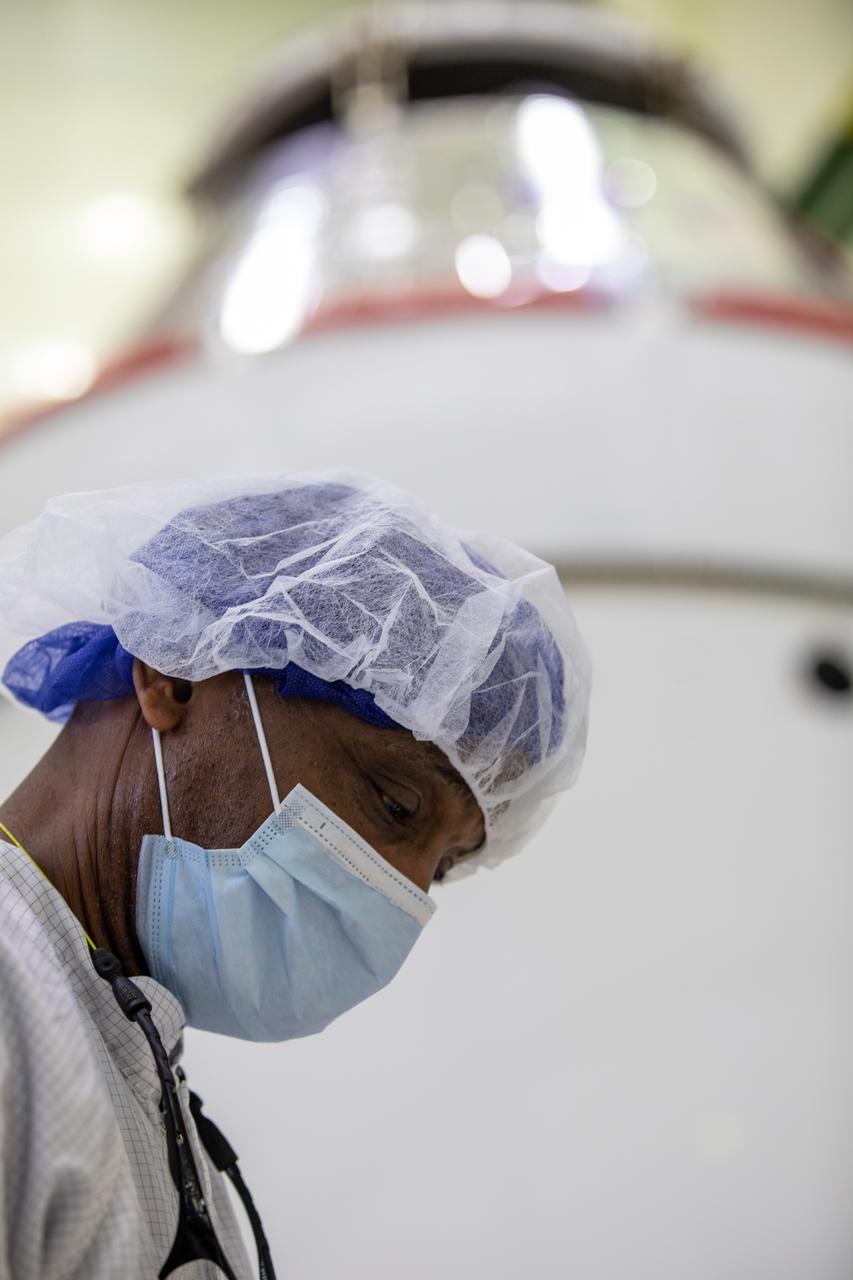
Izeal Battle, ASRC technician, is shown in the foreground with the Orion spacecraft for the Artemis I mission on Oct. 28, 2020, inside the Neil Armstrong Operations and Checkout Building (O&C) at NASA’s Kennedy Space Center in Florida. Attached below Orion (not in view) are the crew module adapter and the European Service Module (ESM) with spacecraft adapter jettison fairings installed. Recently, teams from across the globe installed the four solar array wings, which are housed inside the protective covering of the fairings. The fairing panels will encapsulate the ESM to protect it from harsh environments such as heat, wind, and acoustics as the spacecraft is propelled out of Earth’s atmosphere atop the Space Launch System rocket during NASA’s Artemis I mission.
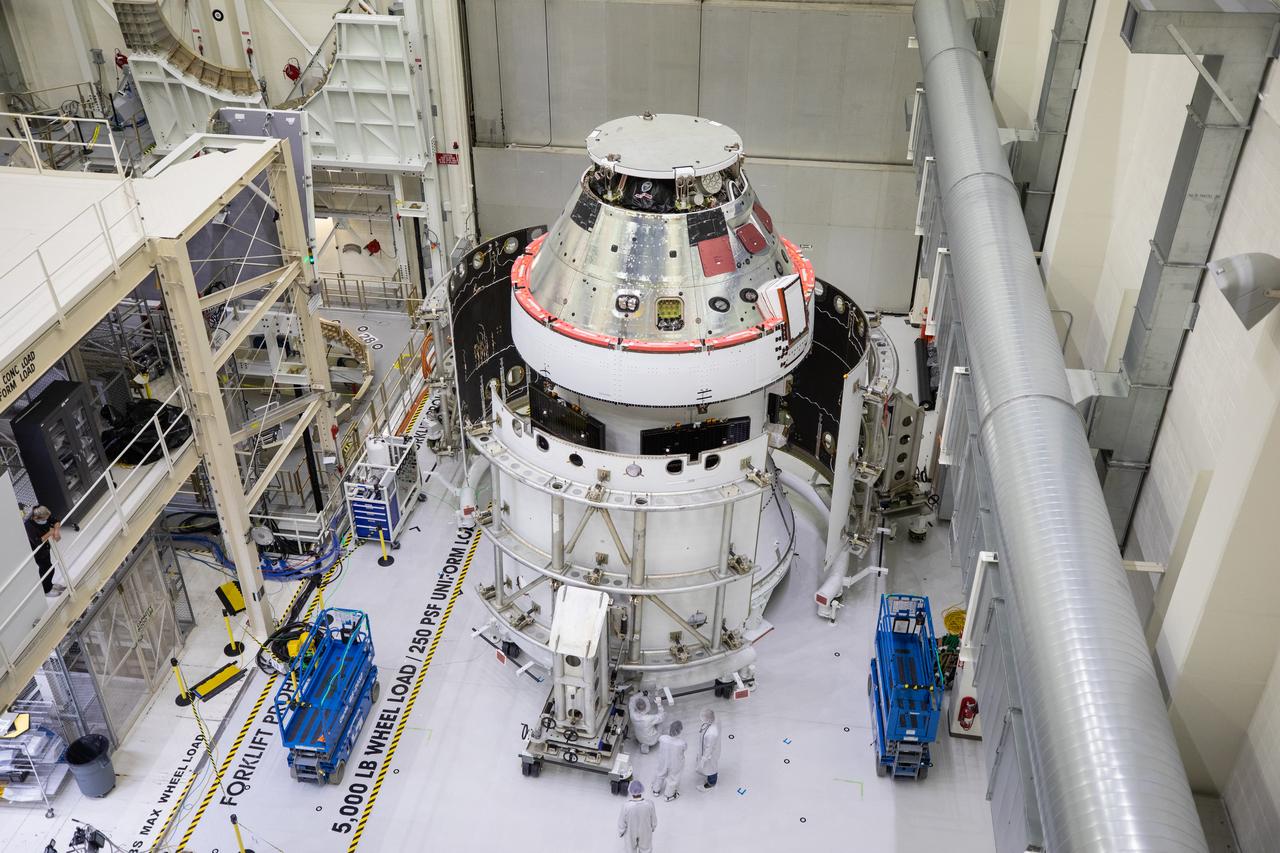
Shown is an overhead view of three spacecraft adapter jettison fairing panels fitted onto Orion’s European Service Module (ESM) on Oct. 13, 2020, inside the Neil Armstrong Operations and Checkout Building (O&C) at NASA’s Kennedy Space Center in Florida. The panels were inspected and moved into place for installation by technicians with Lockheed Martin. Recently, teams from across the globe installed the four solar array wings, which are housed inside the protective covering of the fairings. Once secured, they will encapsulate the ESM to protect it from harsh environments such as heat, wind, and acoustics as the spacecraft is propelled out of Earth’s atmosphere atop the Space Launch System (SLS) rocket during NASA’s Artemis I mission.
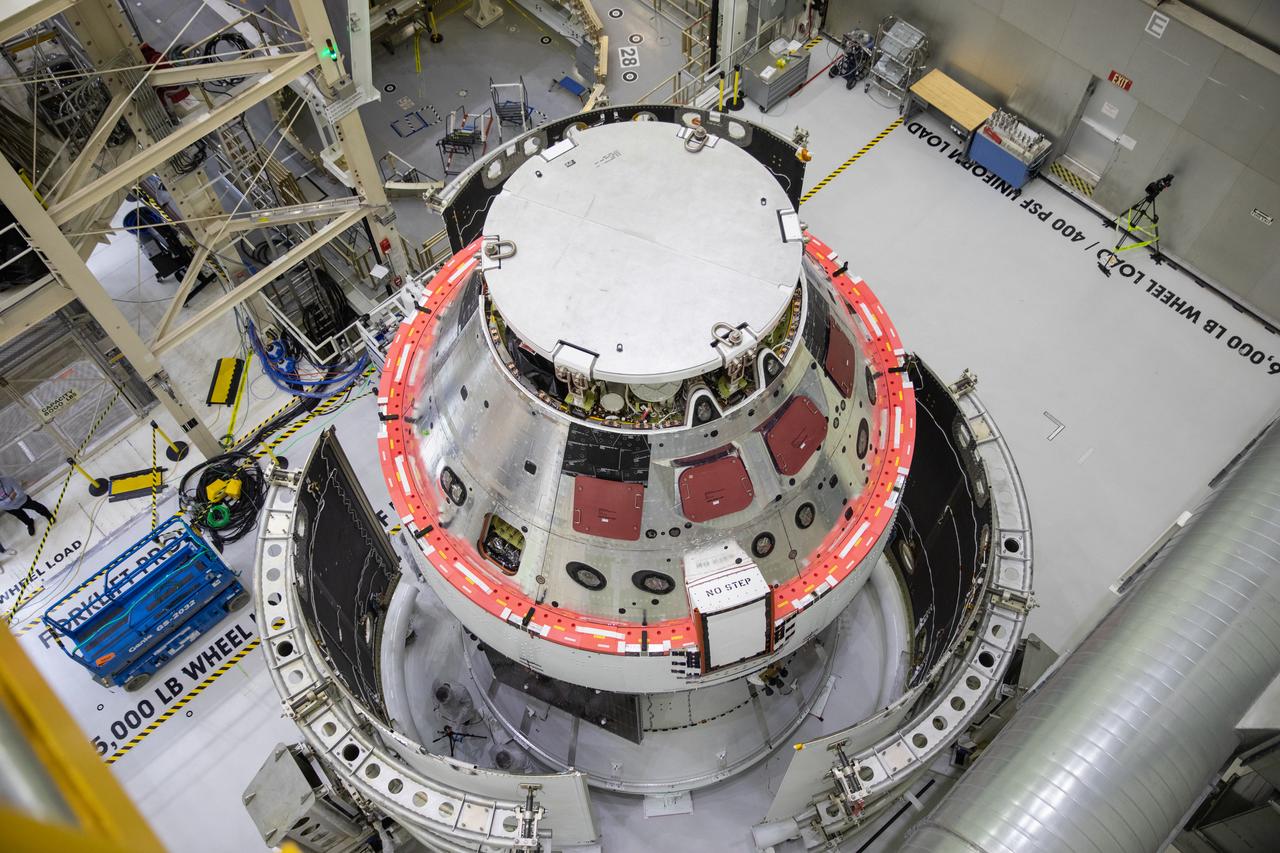
Shown is an overhead view of three spacecraft adapter jettison fairing panels fitted onto Orion’s European Service Module (ESM) on Oct. 13, 2020, inside the Neil Armstrong Operations and Checkout Building (O&C) at NASA’s Kennedy Space Center in Florida. The panels were inspected and moved into place for installation by technicians with Lockheed Martin. Recently, teams from across the globe installed the four solar array wings, which are housed inside the protective covering of the fairings. Once secured, they will encapsulate the ESM to protect it from harsh environments such as heat, wind, and acoustics as the spacecraft is propelled out of Earth’s atmosphere atop the Space Launch System (SLS) rocket during NASA’s Artemis I mission.
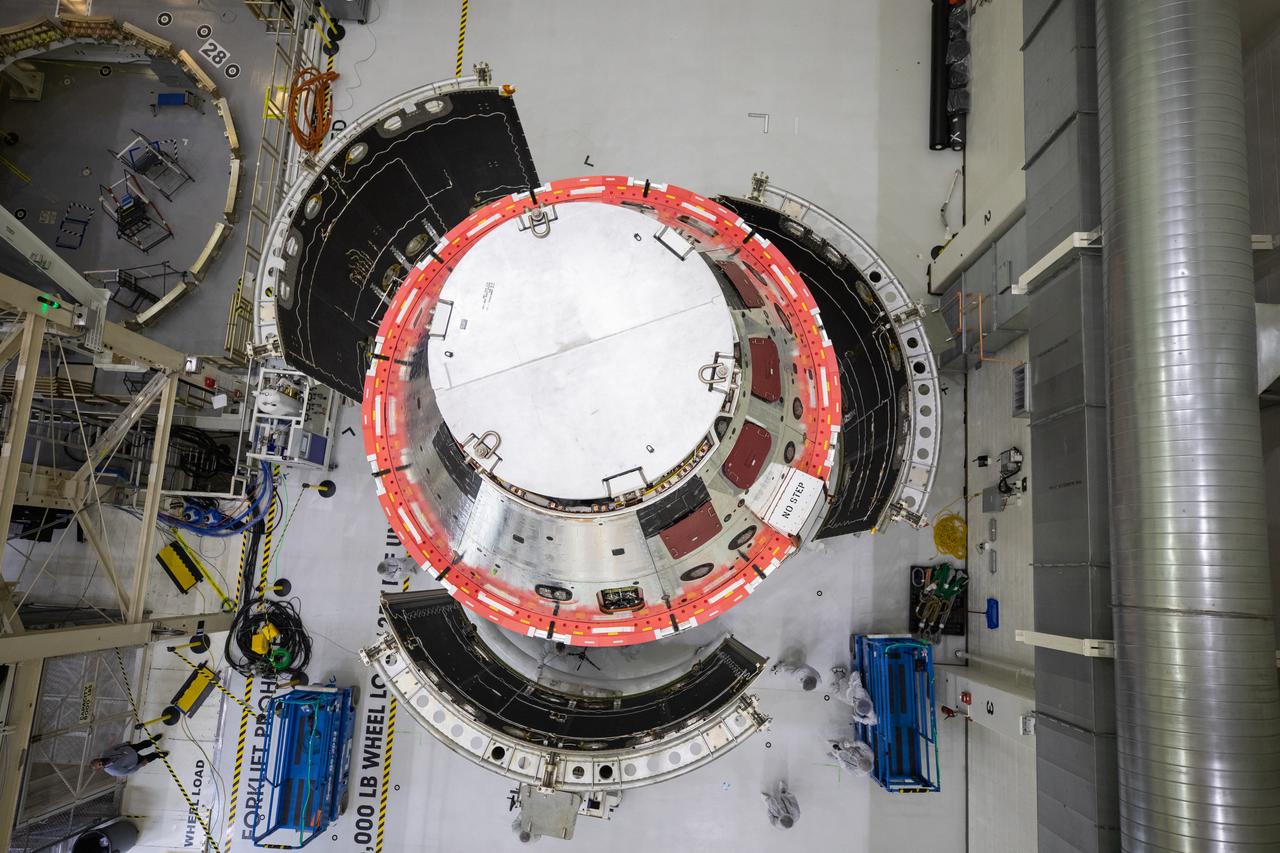
Shown is an overhead view of three spacecraft adapter jettison fairing panels fitted onto Orion’s European Service Module (ESM) on Oct. 13, 2020, inside the Neil Armstrong Operations and Checkout Building (O&C) at NASA’s Kennedy Space Center in Florida. The panels were inspected and moved into place for installation by technicians with Lockheed Martin. Recently, teams from across the globe installed the four solar array wings, which are housed inside the protective covering of the fairings. Once secured, they will encapsulate the ESM to protect it from harsh environments such as heat, wind, and acoustics as the spacecraft is propelled out of Earth’s atmosphere atop the Space Launch System (SLS) rocket during NASA’s Artemis I mission.
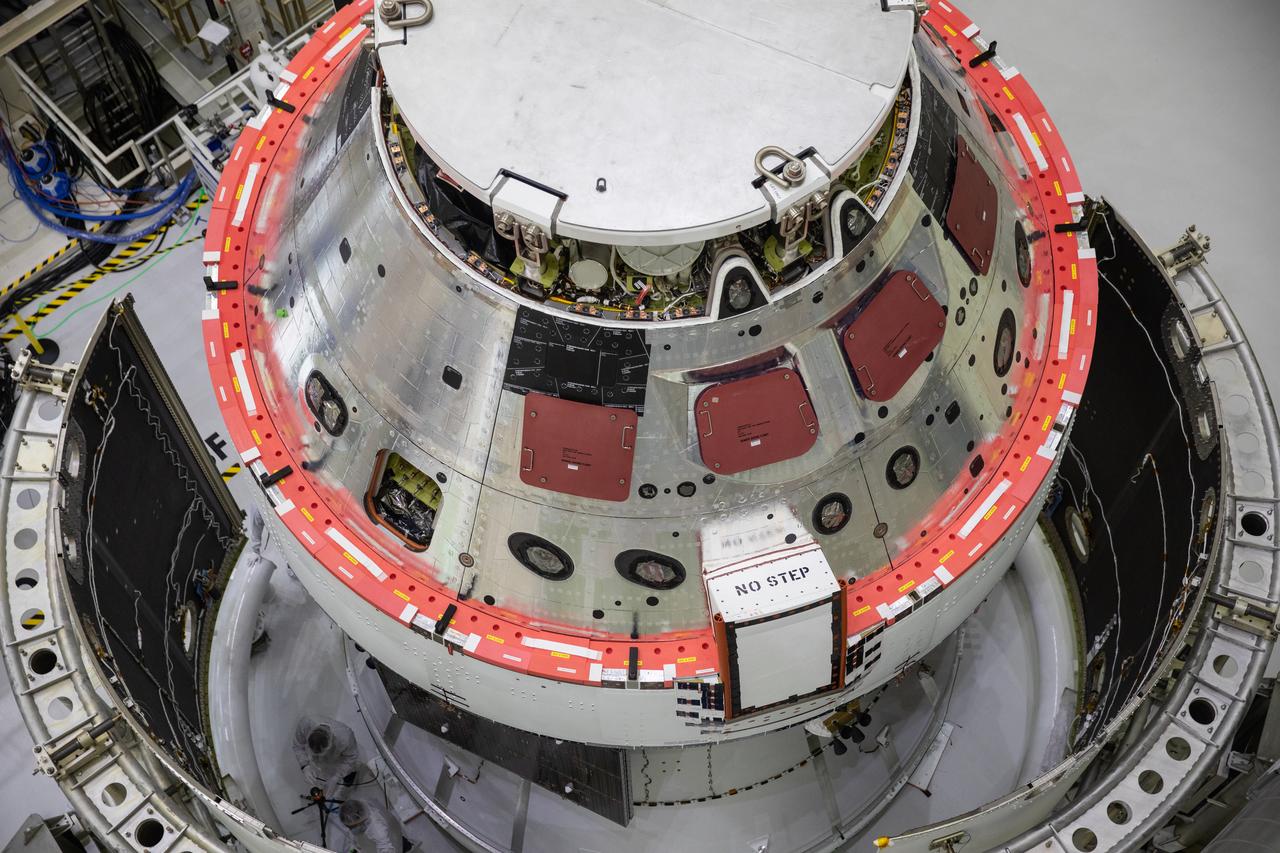
Shown is an overhead view of three spacecraft adapter jettison fairing panels fitted onto Orion’s European Service Module (ESM) on Oct. 13, 2020, inside the Neil Armstrong Operations and Checkout Building (O&C) at NASA’s Kennedy Space Center in Florida. The panels were inspected and moved into place for installation by technicians with Lockheed Martin. Recently, teams from across the globe installed the four solar array wings, which are housed inside the protective covering of the fairings. Once secured, they will encapsulate the ESM to protect it from harsh environments such as heat, wind, and acoustics as the spacecraft is propelled out of Earth’s atmosphere atop the Space Launch System (SLS) rocket during NASA’s Artemis I mission.
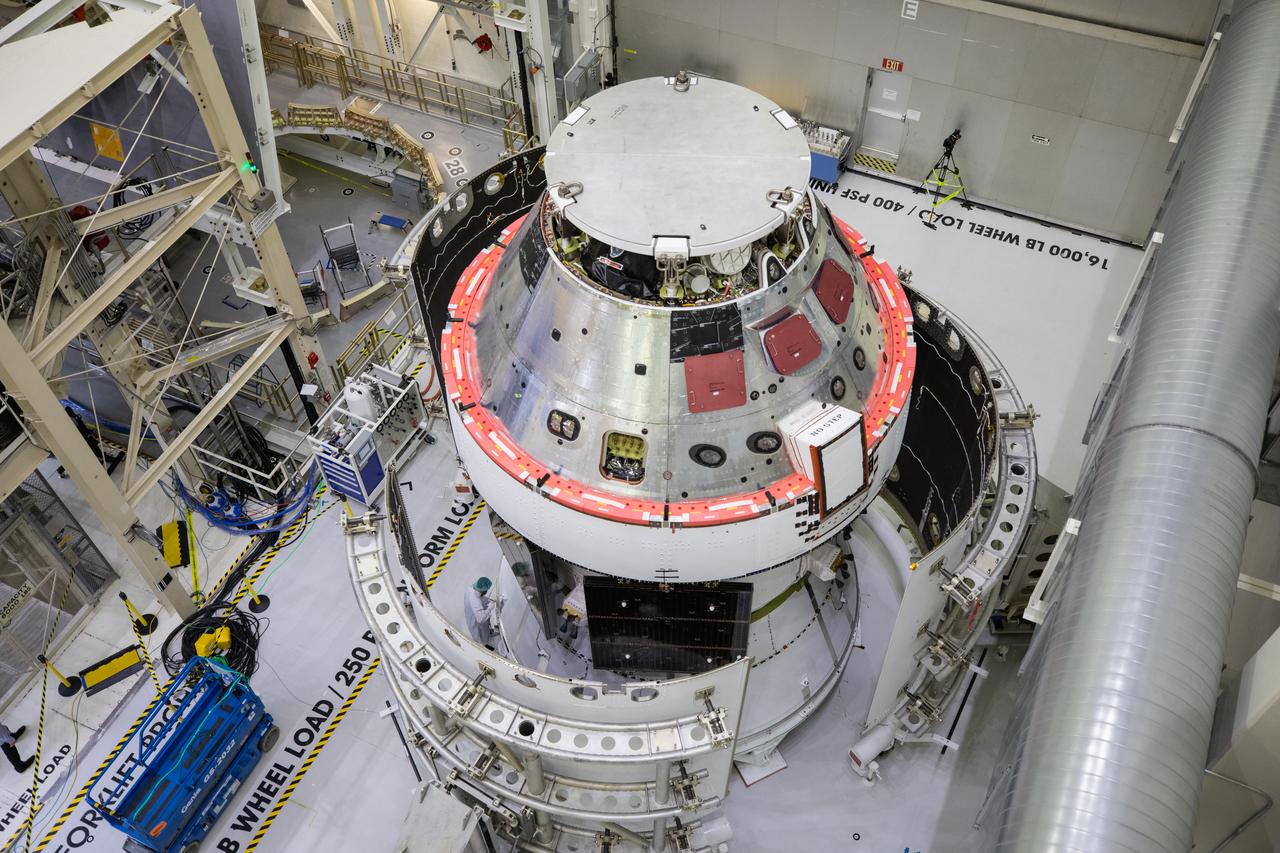
Shown is an overhead view of three spacecraft adapter jettison fairing panels fitted onto Orion’s European Service Module (ESM) on Oct. 13, 2020, inside the Neil Armstrong Operations and Checkout Building (O&C) at NASA’s Kennedy Space Center in Florida. The panels were inspected and moved into place for installation by technicians with Lockheed Martin. Recently, teams from across the globe installed the four solar array wings, which are housed inside the protective covering of the fairings. Once secured, they will encapsulate the ESM to protect it from harsh environments such as heat, wind, and acoustics as the spacecraft is propelled out of Earth’s atmosphere atop the Space Launch System (SLS) rocket during NASA’s Artemis I mission.
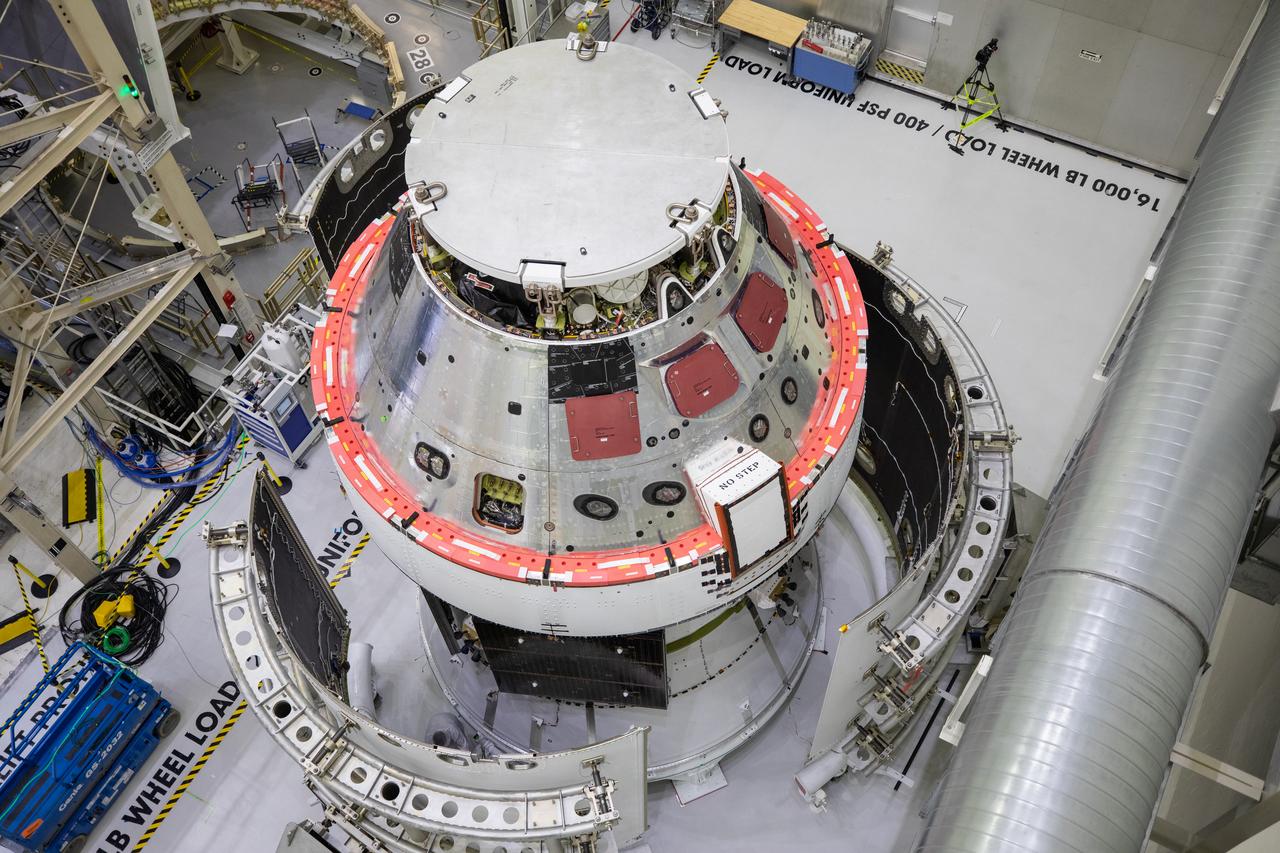
Shown is an overhead view of three spacecraft adapter jettison fairing panels fitted onto Orion’s European Service Module (ESM) on Oct. 13, 2020, inside the Neil Armstrong Operations and Checkout Building (O&C) at NASA’s Kennedy Space Center in Florida. The panels were inspected and moved into place for installation by technicians with Lockheed Martin. Recently, teams from across the globe installed the four solar array wings, which are housed inside the protective covering of the fairings. Once secured, they will encapsulate the ESM to protect it from harsh environments such as heat, wind, and acoustics as the spacecraft is propelled out of Earth’s atmosphere atop the Space Launch System (SLS) rocket during NASA’s Artemis I mission.
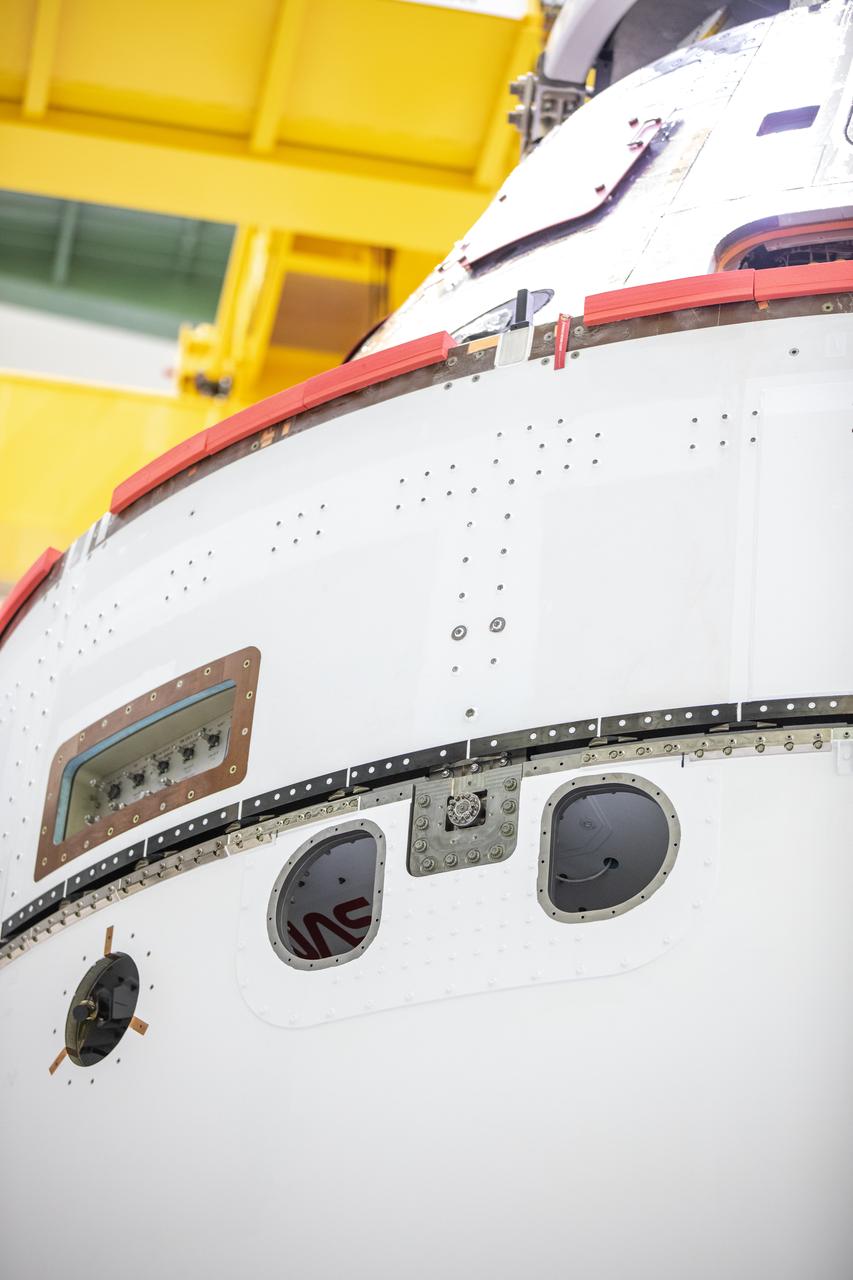
A close-up view of the Orion’s crew module adapter with the spacecraft adapter jettison fairing panels secured in place shows a peak of the iconic NASA worm insignia on Oct. 27, 2020, inside the Neil Armstrong Operations and Checkout Building (O&C) at NASA’s Kennedy Space Center in Florida. The panels were inspected and moved into place for installation by technicians with Lockheed Martin. Recently, teams from across the globe installed the four solar array wings, which are housed inside the protective covering of the fairings. Once secured, they will encapsulate the ESM to protect it from harsh environments such as heat, wind, and acoustics as the spacecraft is propelled out of Earth’s atmosphere atop the Space Launch System (SLS) rocket during NASA’s Artemis I mission.
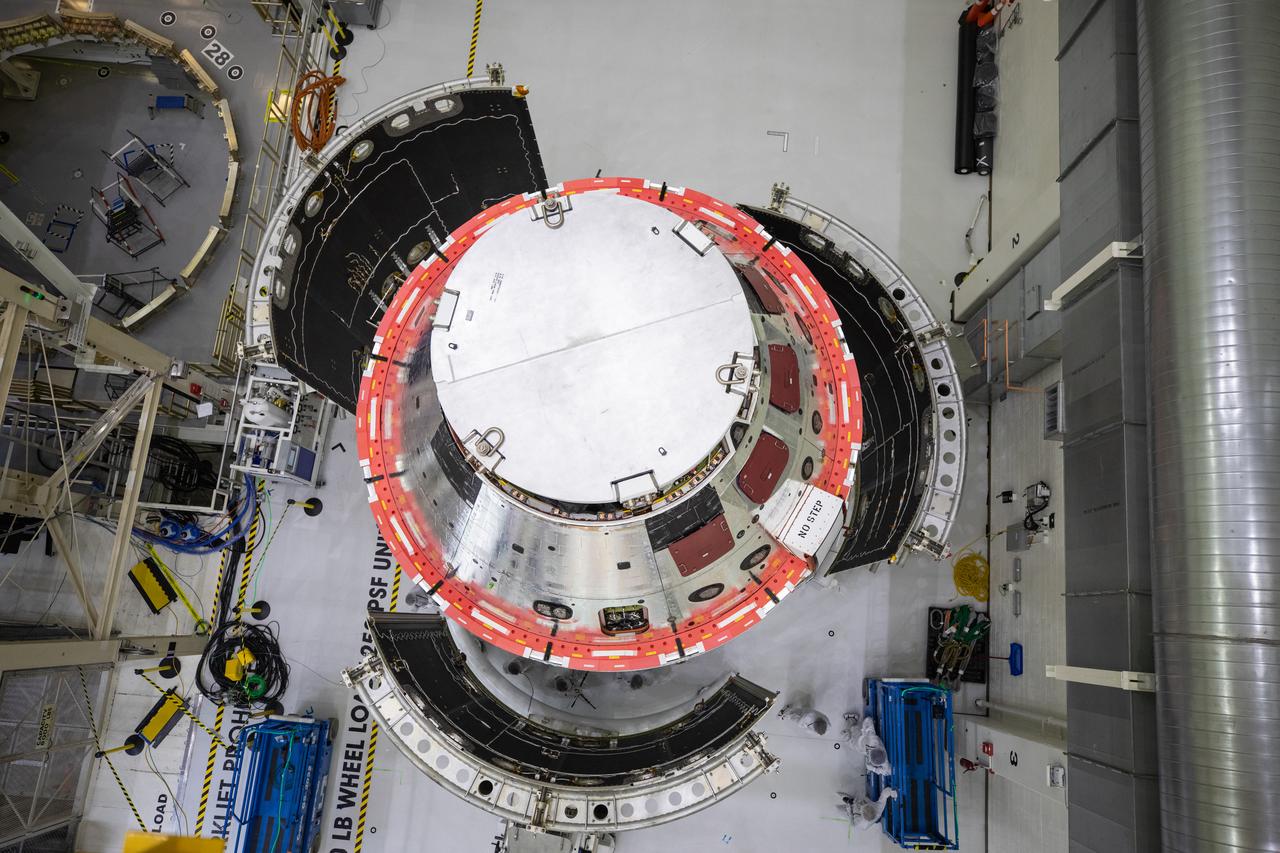
Shown is an overhead view of three spacecraft adapter jettison fairing panels fitted onto Orion’s European Service Module (ESM) on Oct. 13, 2020, inside the Neil Armstrong Operations and Checkout Building (O&C) at NASA’s Kennedy Space Center in Florida. The panels were inspected and moved into place for installation by technicians with Lockheed Martin. Recently, teams from across the globe installed the four solar array wings, which are housed inside the protective covering of the fairings. Once secured, they will encapsulate the ESM to protect it from harsh environments such as heat, wind, and acoustics as the spacecraft is propelled out of Earth’s atmosphere atop the Space Launch System (SLS) rocket during NASA’s Artemis I mission.
Shown is an overhead view of three spacecraft adapter jettison fairing panels fitted onto Orion’s European Service Module (ESM) on Oct. 13, 2020, inside the Neil Armstrong Operations and Checkout Building (O&C) at NASA’s Kennedy Space Center in Florida. The panels were inspected and moved into place for installation by technicians with Lockheed Martin. Recently, teams from across the globe installed the four solar array wings, which are housed inside the protective covering of the fairings. Once secured, they will encapsulate the ESM to protect it from harsh environments such as heat, wind, and acoustics as the spacecraft is propelled out of Earth’s atmosphere atop the Space Launch System (SLS) rocket during NASA’s Artemis I mission.
Shown is an overhead view of three spacecraft adapter jettison fairing panels fitted onto Orion’s European Service Module (ESM) on Oct. 13, 2020, inside the Neil Armstrong Operations and Checkout Building (O&C) at NASA’s Kennedy Space Center in Florida. The panels were inspected and moved into place for installation by technicians with Lockheed Martin. Recently, teams from across the globe installed the four solar array wings, which are housed inside the protective covering of the fairings. Once secured, they will encapsulate the ESM to protect it from harsh environments such as heat, wind, and acoustics as the spacecraft is propelled out of Earth’s atmosphere atop the Space Launch System (SLS) rocket during NASA’s Artemis I mission.
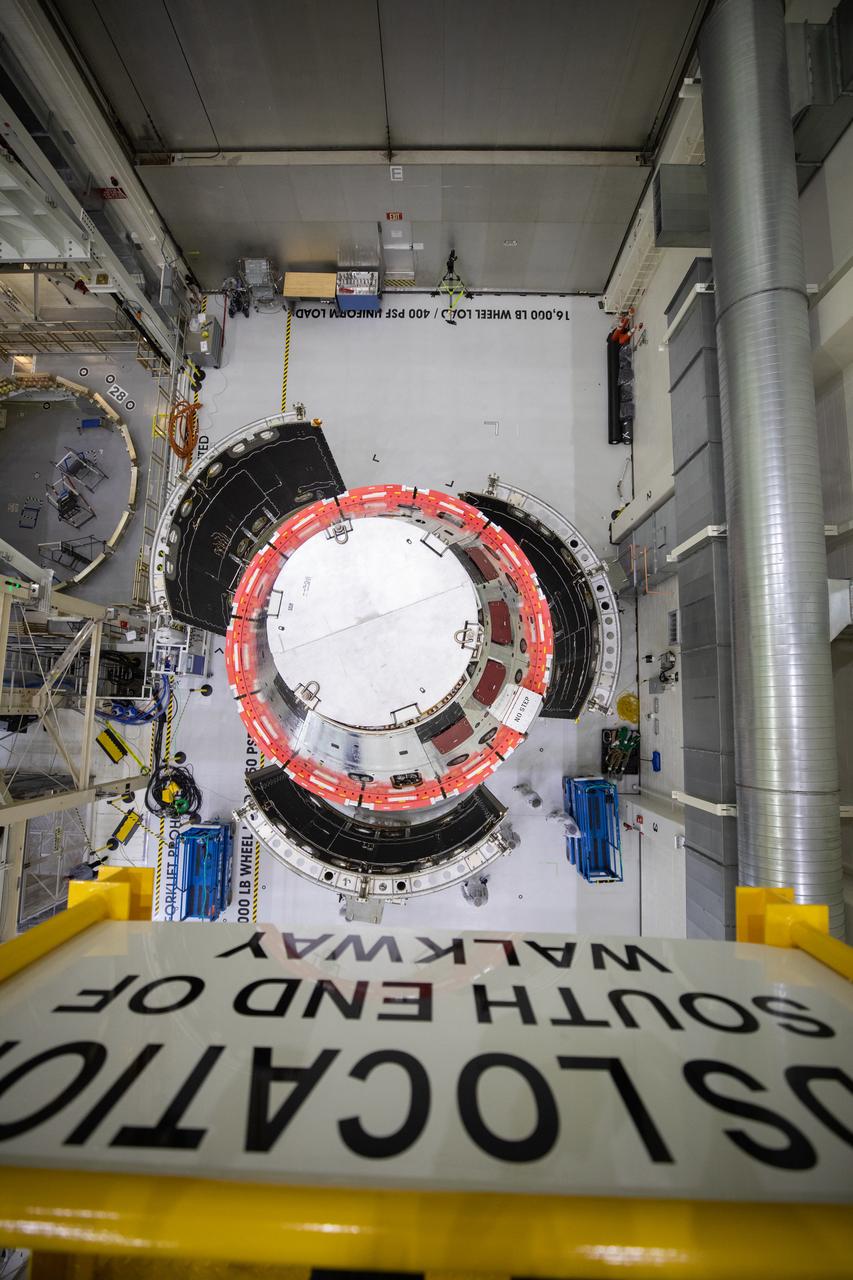
Shown is an overhead view of three spacecraft adapter jettison fairing panels fitted onto Orion’s European Service Module (ESM) on Oct. 13, 2020, inside the Neil Armstrong Operations and Checkout Building (O&C) at NASA’s Kennedy Space Center in Florida. The panels were inspected and moved into place for installation by technicians with Lockheed Martin. Recently, teams from across the globe installed the four solar array wings, which are housed inside the protective covering of the fairings. Once secured, they will encapsulate the ESM to protect it from harsh environments such as heat, wind, and acoustics as the spacecraft is propelled out of Earth’s atmosphere atop the Space Launch System (SLS) rocket during NASA’s Artemis I mission.
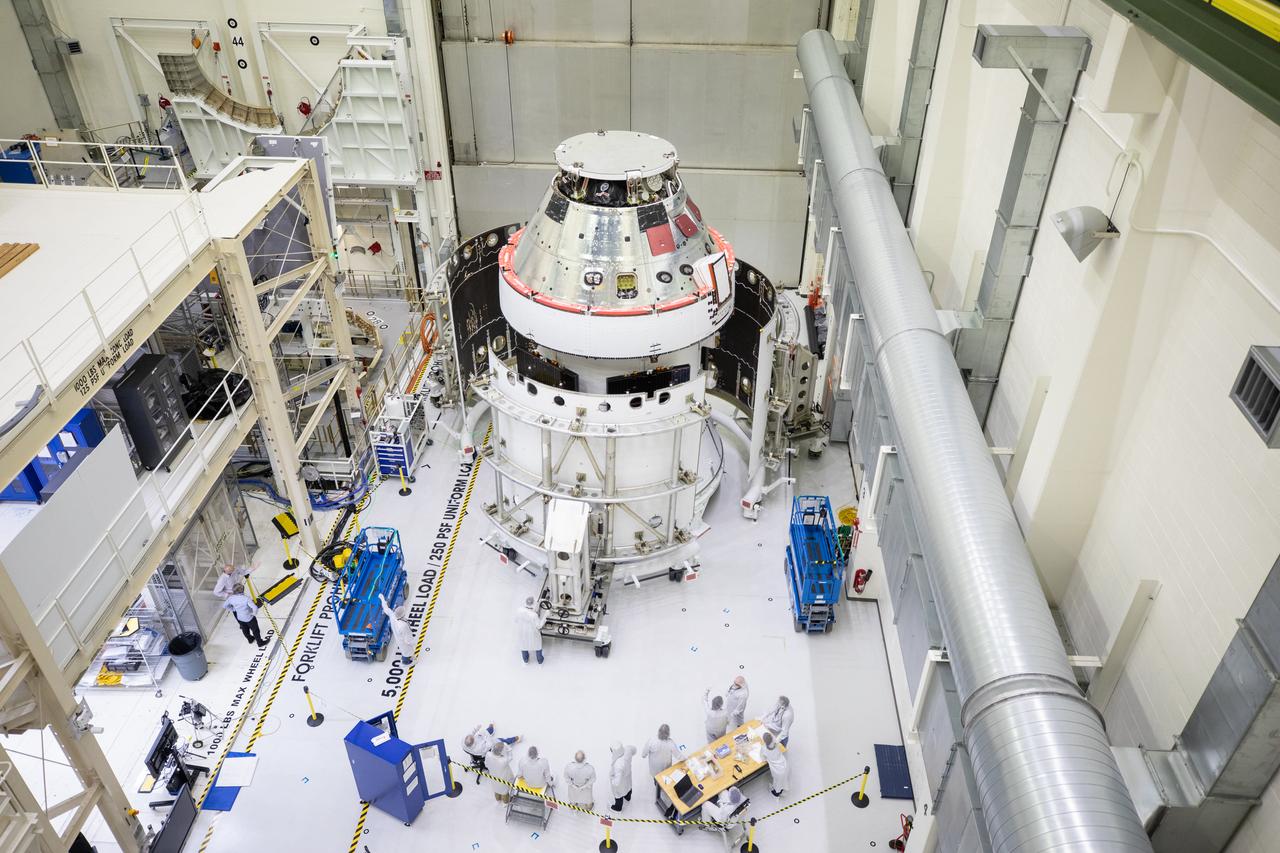
Shown is an overhead view of three spacecraft adapter jettison fairing panels fitted onto Orion’s European Service Module (ESM) on Oct. 13, 2020, inside the Neil Armstrong Operations and Checkout Building (O&C) at NASA’s Kennedy Space Center in Florida. The panels were inspected and moved into place for installation by technicians with Lockheed Martin. Recently, teams from across the globe installed the four solar array wings, which are housed inside the protective covering of the fairings. Once secured, they will encapsulate the ESM to protect it from harsh environments such as heat, wind, and acoustics as the spacecraft is propelled out of Earth’s atmosphere atop the Space Launch System (SLS) rocket during NASA’s Artemis I mission.
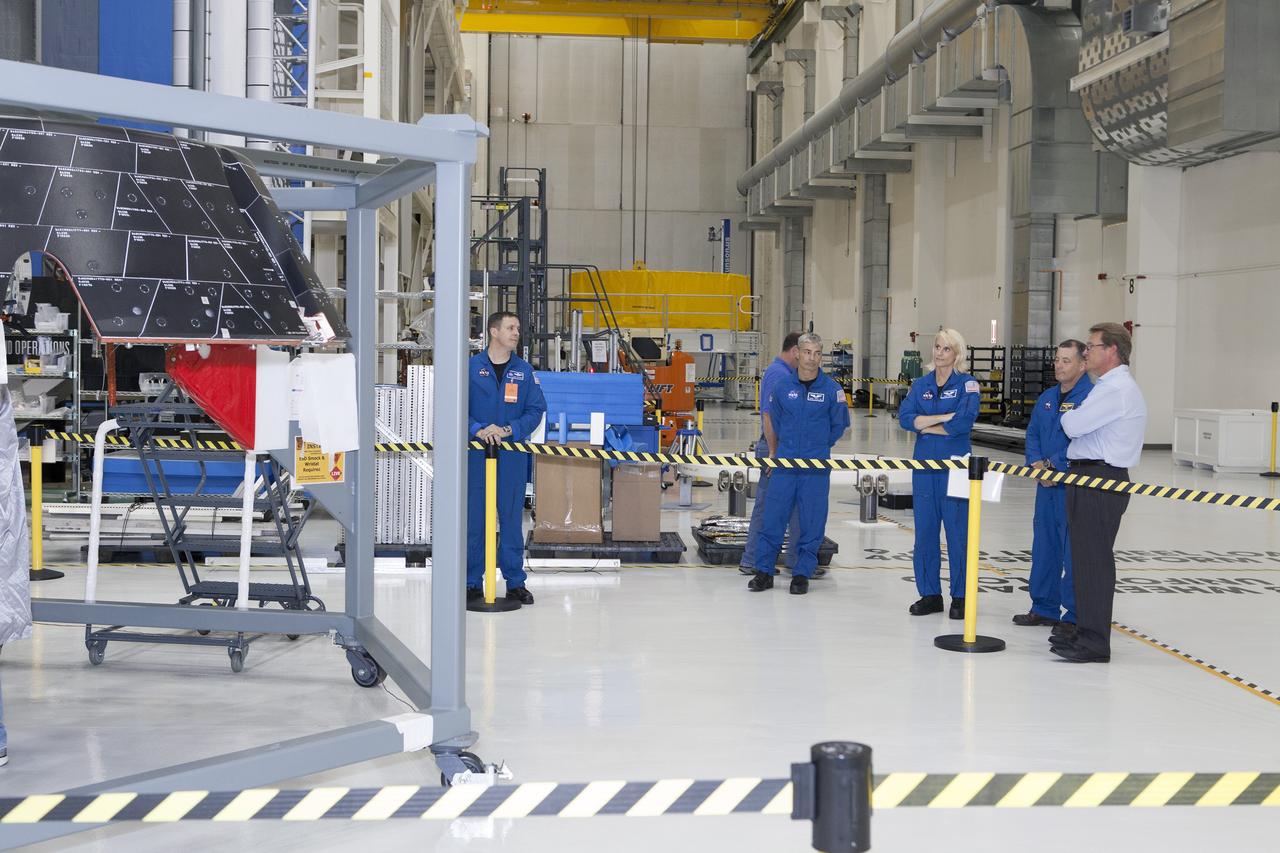
CAPE CANAVERAL, Fla. – NASA astronauts tour the Neil Armstrong Operations and Checkout Building high bay at NASA's Kennedy Space Center in Florida, and view the Orion forward bay cover for Exploration Flight Test-1. From left, are Jack Fischer, Mark Vande Hei, Katie Rubins and Scott Tingle. At far right is Jules Schneider, Lockheed Martin senior manager. Orion is the exploration spacecraft designed to carry astronauts to destinations not yet explored by humans, including an asteroid and Mars. It will have emergency abort capability, sustain the crew during space travel and provide safe re-entry from deep space return velocities. The first unpiloted test flight of Orion is scheduled to launch in 2014 atop a United Launch Alliance Delta IV rocket and in 2018 on NASA’s Space Launch System rocket. For more information, visit www.nasa.gov/orion. Photo credit: Dimitri Gerondidakis
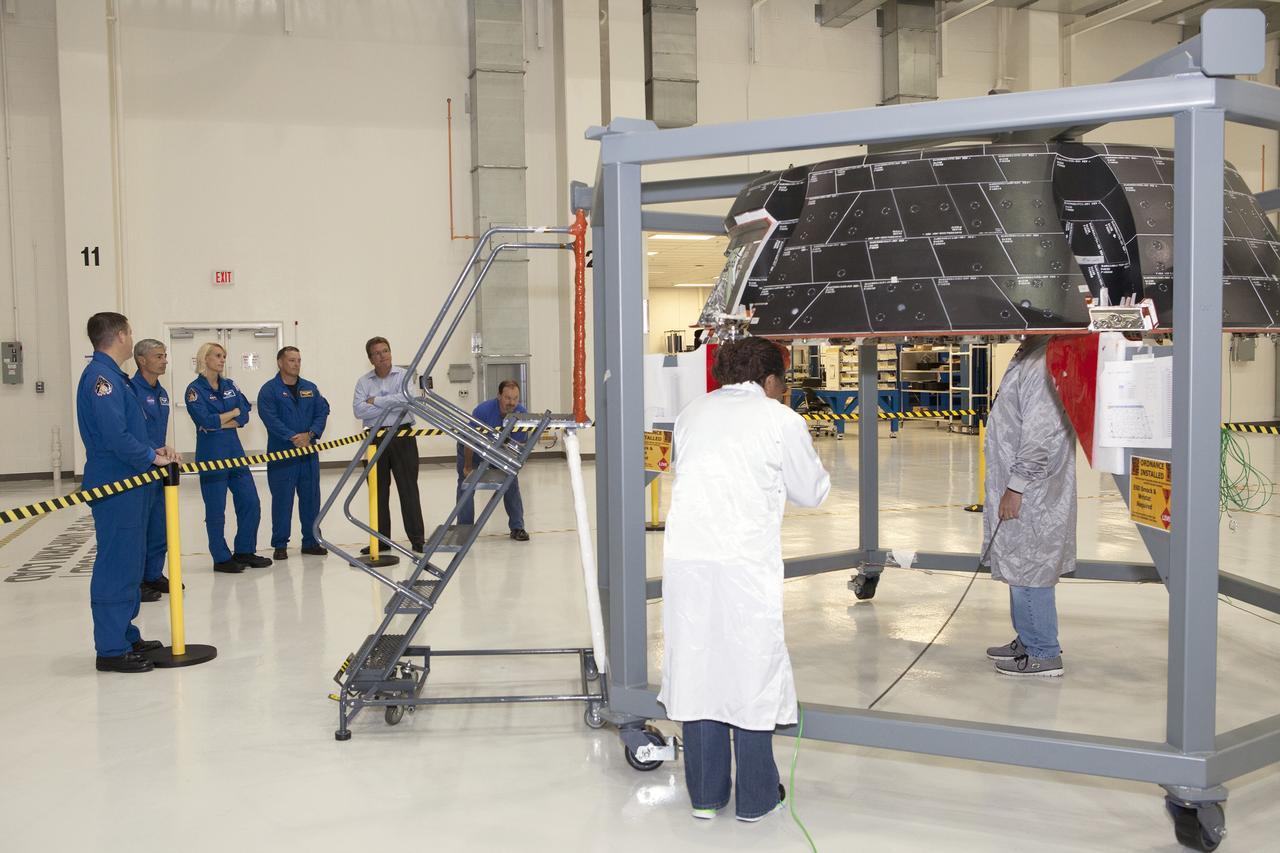
CAPE CANAVERAL, Fla. – NASA astronauts tour the Neil Armstrong Operations and Checkout Building high bay at NASA's Kennedy Space Center in Florida, and view the Orion forward bay cover for Exploration Flight Test-1. From left, are Jack Fischer, Mark Vande Hei, Katie Rubins and Scott Tingle. Orion is the exploration spacecraft designed to carry astronauts to destinations not yet explored by humans, including an asteroid and Mars. It will have emergency abort capability, sustain the crew during space travel and provide safe re-entry from deep space return velocities. The first unpiloted test flight of Orion is scheduled to launch in 2014 atop a United Launch Alliance Delta IV rocket and in 2018 on NASA’s Space Launch System rocket. For more information, visit www.nasa.gov/orion. Photo credit: Dimitri Gerondidakis
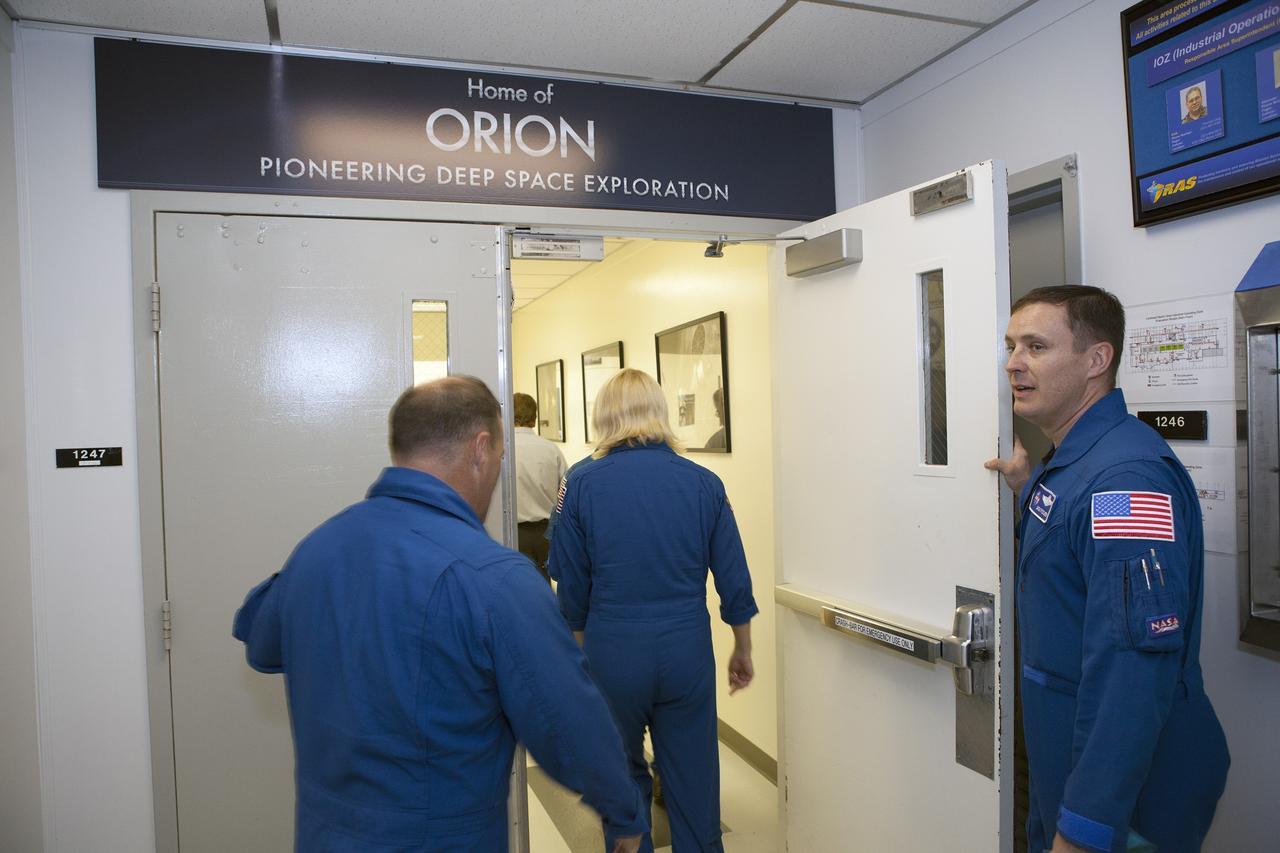
CAPE CANAVERAL, Fla. – NASA astronauts tour the Neil Armstrong Operations and Checkout Building high bay at NASA's Kennedy Space Center in Florida, and view the Orion forward bay cover for Exploration Flight Test-1. Holding the door is Jack Fischer. Going through the entrance are Katie Rubins and Scott Tingle. Orion is the exploration spacecraft designed to carry astronauts to destinations not yet explored by humans, including an asteroid and Mars. It will have emergency abort capability, sustain the crew during space travel and provide safe re-entry from deep space return velocities. The first unpiloted test flight of Orion is scheduled to launch in 2014 atop a United Launch Alliance Delta IV rocket and in 2018 on NASA’s Space Launch System rocket. For more information, visit www.nasa.gov/orion. Photo credit: Dimitri Gerondidakis
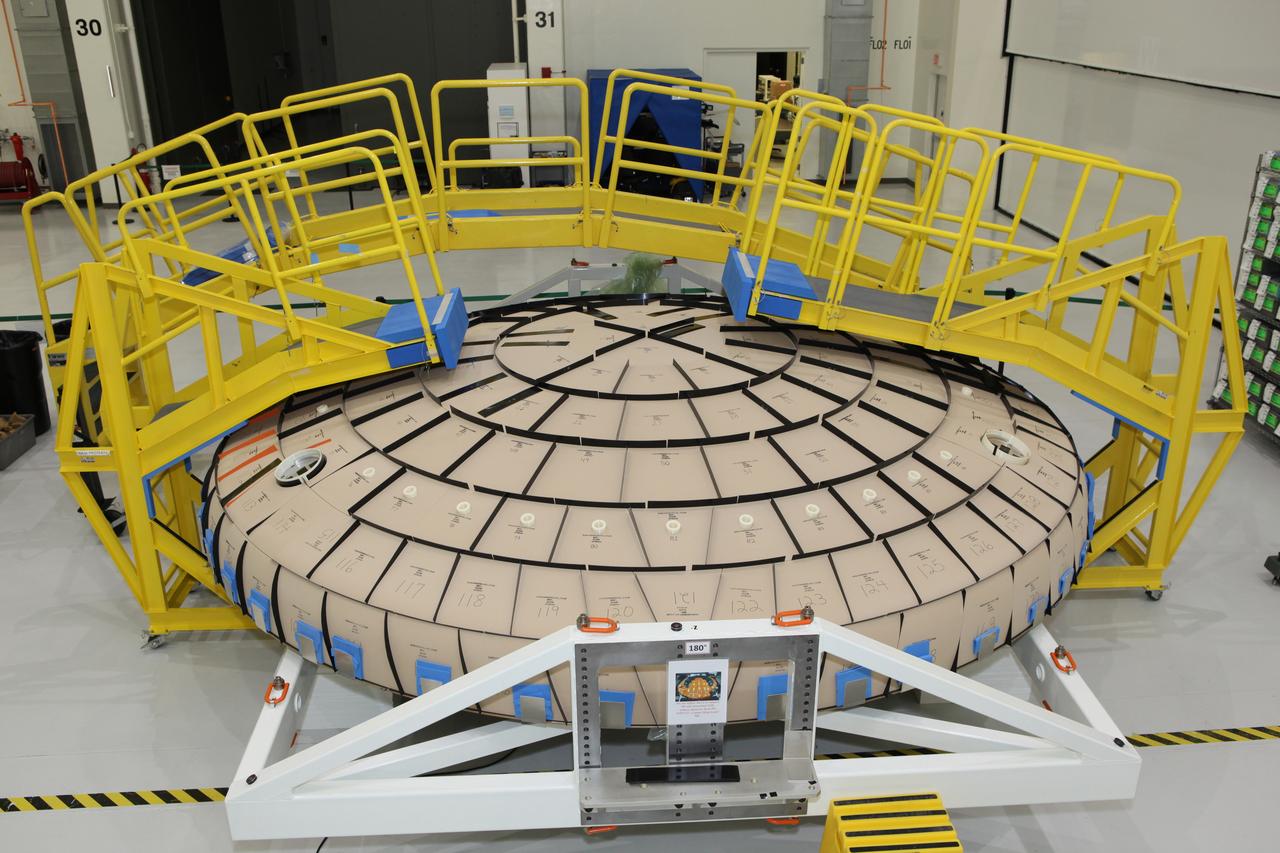
Tile blocks are prefitted around the heat shield for the Orion crew module inside the Neil Armstrong Operations and Checkout Building high bay at NASA’s Kennedy Space Center in Florida on Oct. 24, 2016. Part of Batch images transfer from Flickr.
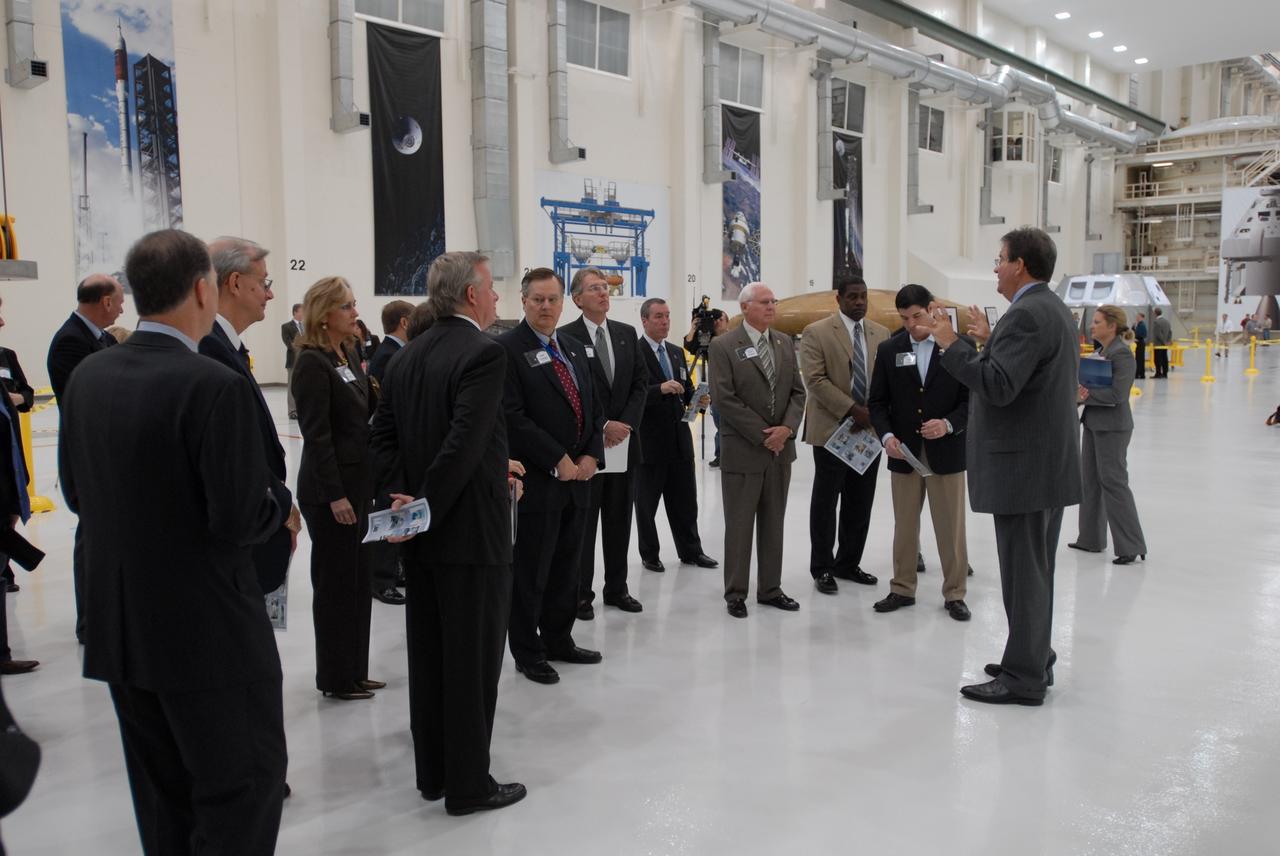
CAPE CANAVERAL, Fla. – Representatives from NASA, Lockheed Martin, Space Florida and the state of Florida participate in a ceremony at NASA's Kennedy Space Center in Florida to mark the completion of renovations on the historic Operations and Checkout Building high bay for use by the Constellation Program. At right, Richard Harris, with Lockheed Martin, describes activities that will take place in the building. Originally built to process space vehicles in the Apollo era, the building will serve as the final assembly facility for the Orion crew exploration vehicle. Orion, America's future human spaceflight vehicle, will be capable of transporting four crew members to the moon and later will support crew transfers to Mars. The Orion spacecraft also will be used to transport crew members to the International Space Station after space shuttles are retired in 2010. The first operational launch of Orion atop an Ares I rocket is planned for 2015. Photo credit: NASA/Dimitri Gerondidakis
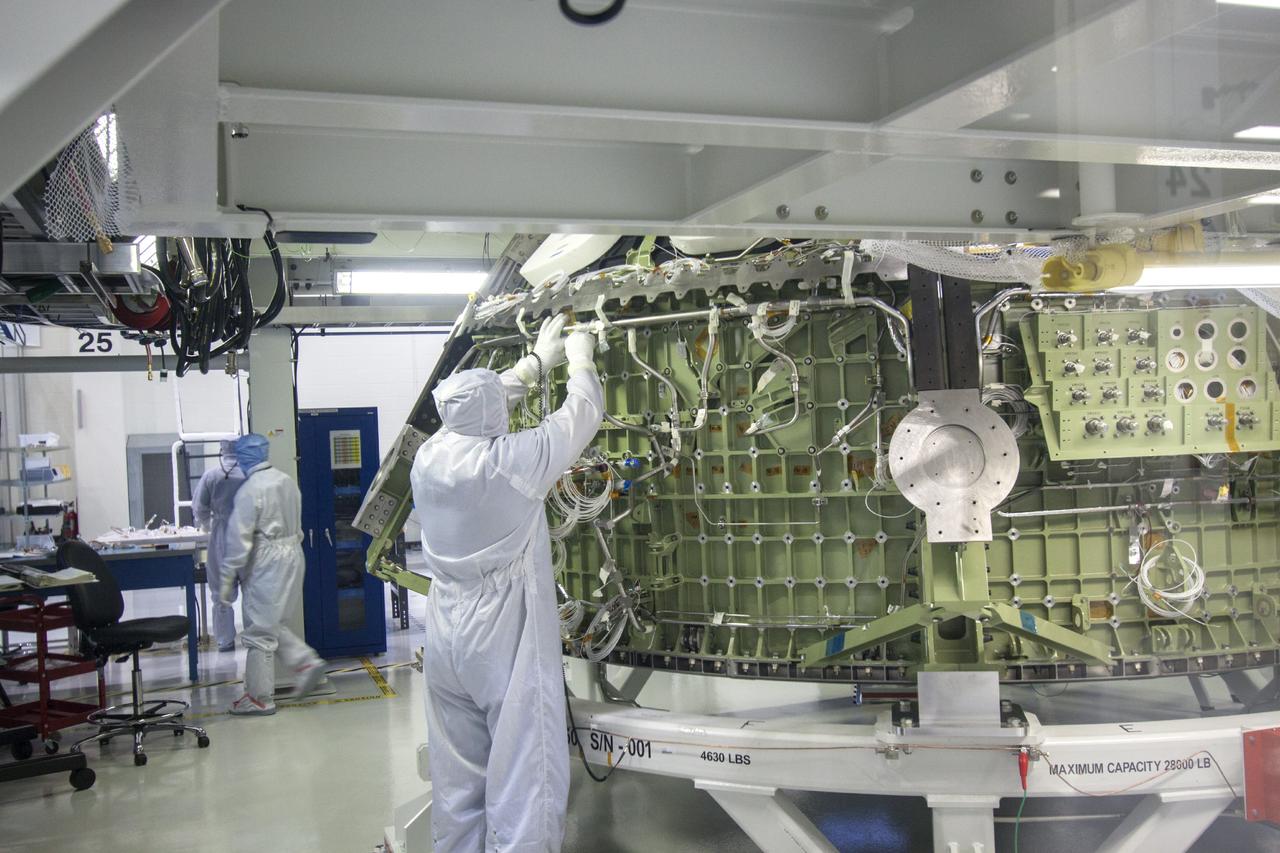
CAPE CANAVERAL, Fla. – A Lockheed Martin technician performs tube welding on the Orion crew module for Exploration Flight Test 1 inside a clean room processing cell in the Operations and Checkout Building high bay at NASA’s Kennedy Space Center in Florida. Orion is the exploration spacecraft designed to carry crews to space beyond low Earth orbit. It will provide emergency abort capability, sustain the crew during the space travel and provide safe re-entry from deep space return velocities. The first unpiloted test flight of the Orion is scheduled to launch in 2014 atop a Delta IV rocket and in 2017 on a Space Launch System rocket. For more information, visit http://www.nasa.gov/orion. Photo credit: NASA/Jim Grossmann
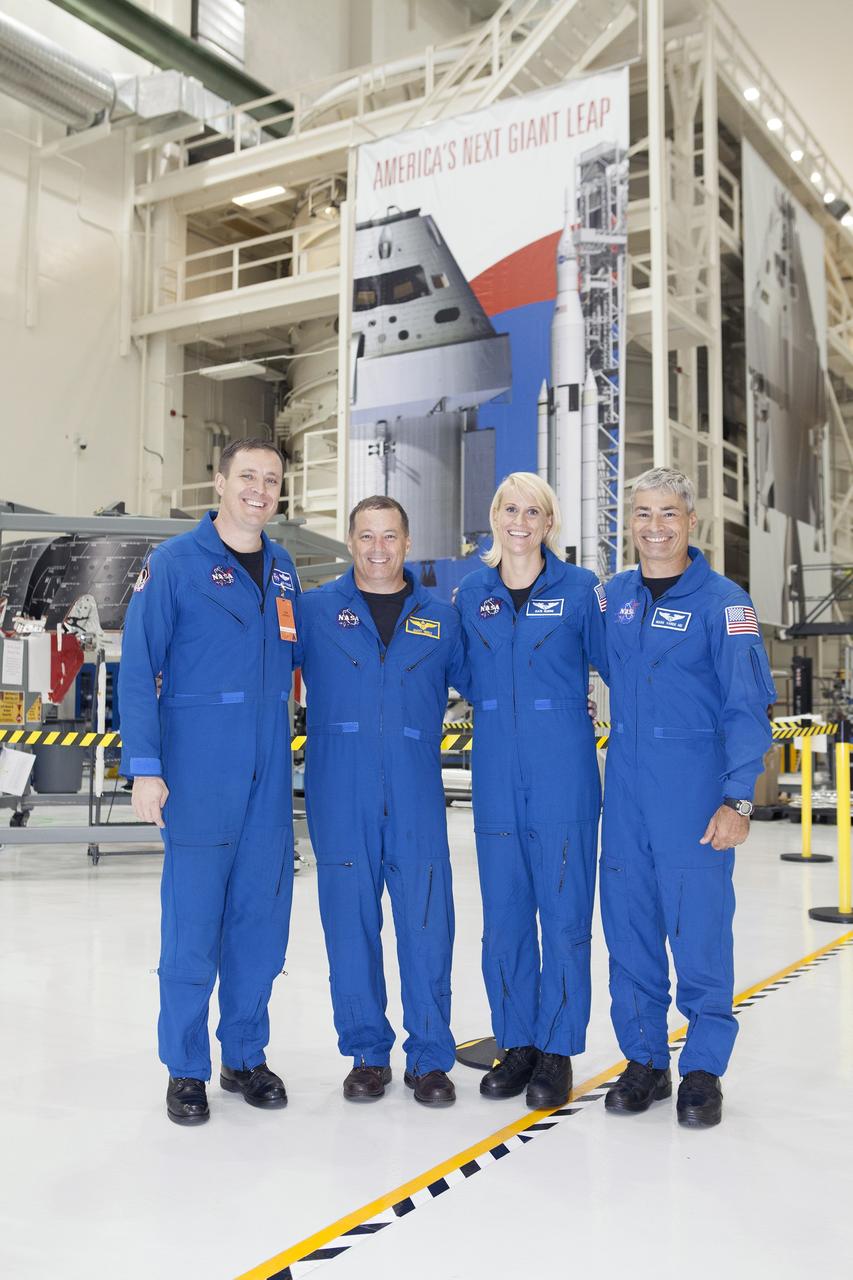
CAPE CANAVERAL, Fla. – NASA astronauts tour the Neil Armstrong Operations and Checkout Building high bay at NASA's Kennedy Space Center in Florida, and view the Orion forward bay cover for Exploration Flight Test-1. From left, are Jack Fischer, Scott Tingle, Katie Rubins and Mark Vande Hei. Orion is the exploration spacecraft designed to carry astronauts to destinations not yet explored by humans, including an asteroid and Mars. It will have emergency abort capability, sustain the crew during space travel and provide safe re-entry from deep space return velocities. The first unpiloted test flight of Orion is scheduled to launch in 2014 atop a United Launch Alliance Delta IV rocket and in 2018 on NASA’s Space Launch System rocket. For more information, visit www.nasa.gov/orion. Photo credit: Dimitri Gerondidakis
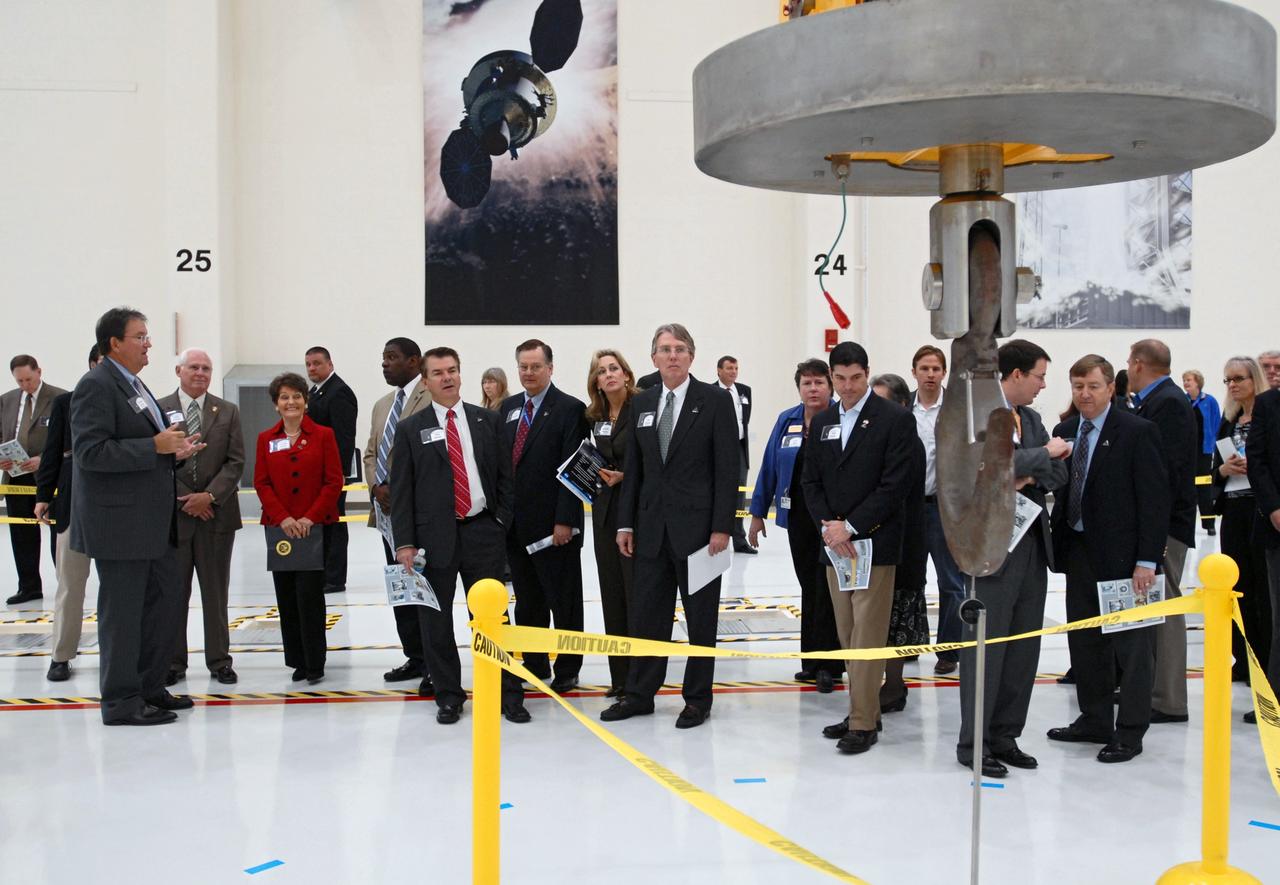
CAPE CANAVERAL, Fla. – Representatives from NASA, Lockheed Martin, Space Florida and the state of Florida participate in a ceremony at NASA's Kennedy Space Center in Florida to mark the completion of renovations on the historic Operations and Checkout Building high bay for use by the Constellation Program. At left, Richard Harris, with Lockheed Martin, describes activities that will take place in the building. Originally built to process space vehicles in the Apollo era, the building will serve as the final assembly facility for the Orion crew exploration vehicle. Orion, America's future human spaceflight vehicle, will be capable of transporting four crew members to the moon and later will support crew transfers to Mars. The Orion spacecraft also will be used to transport crew members to the International Space Station after space shuttles are retired in 2010. The first operational launch of Orion atop an Ares I rocket is planned for 2015. Photo credit: NASA/Dimitri Gerondidakis
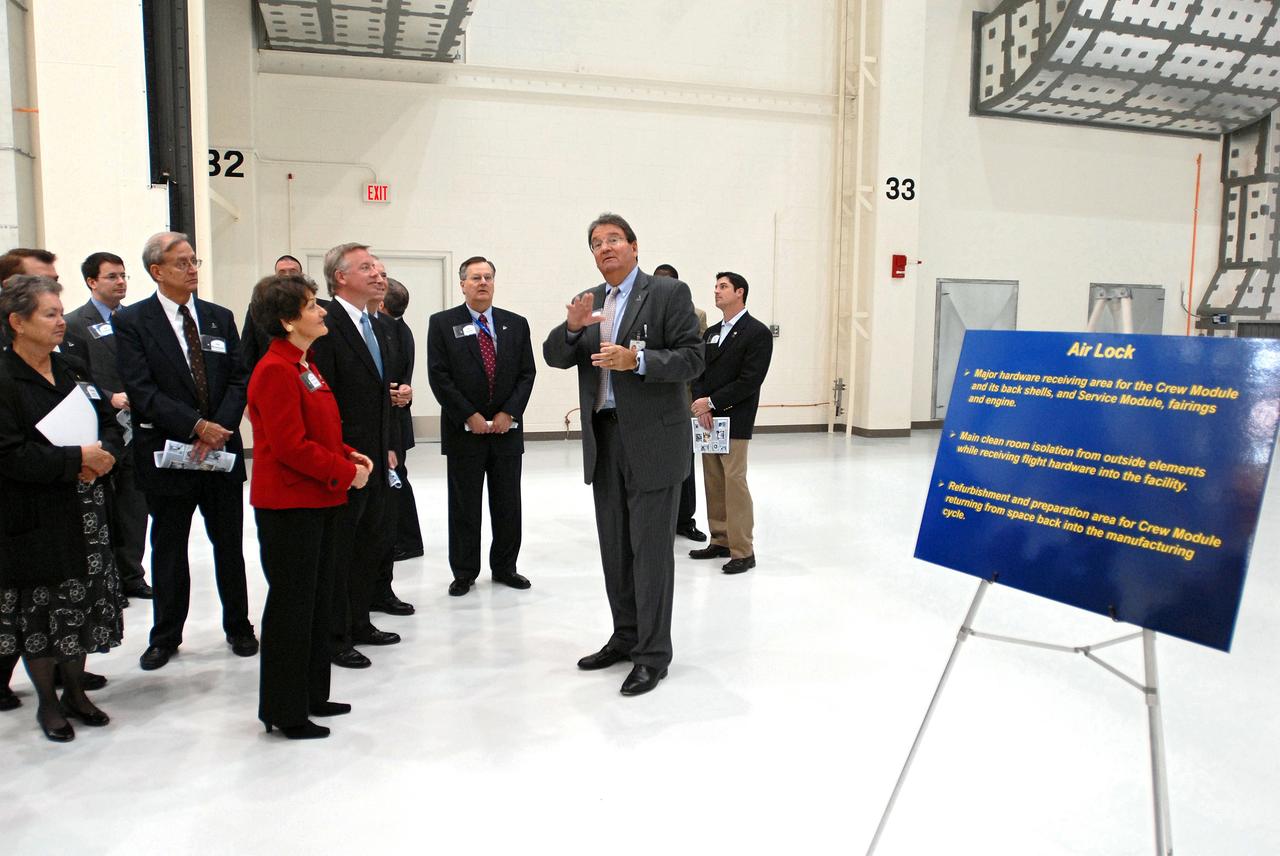
CAPE CANAVERAL, Fla. – Representatives from NASA, Lockheed Martin, Space Florida and the state of Florida participate in a ceremony at NASA's Kennedy Space Center in Florida to mark the completion of renovations on the historic Operations and Checkout Building high bay for use by the Constellation Program. At center, U.S. Rep. Suzanne Kosmas and Lt. Governor Jeff Kottcamp listen to Richard Harris, with Lockheed Martin, describe some of the hardware that will be used in the building. Originally built to process space vehicles in the Apollo era, the building will serve as the final assembly facility for the Orion crew exploration vehicle. Orion, America's future human spaceflight vehicle, will be capable of transporting four crew members to the moon and later will support crew transfers to Mars. The Orion spacecraft also will be used to transport crew members to the International Space Station after space shuttles are retired in 2010. The first operational launch of Orion atop an Ares I rocket is planned for 2015. Photo credit: NASA/Dimitri Gerondidakis
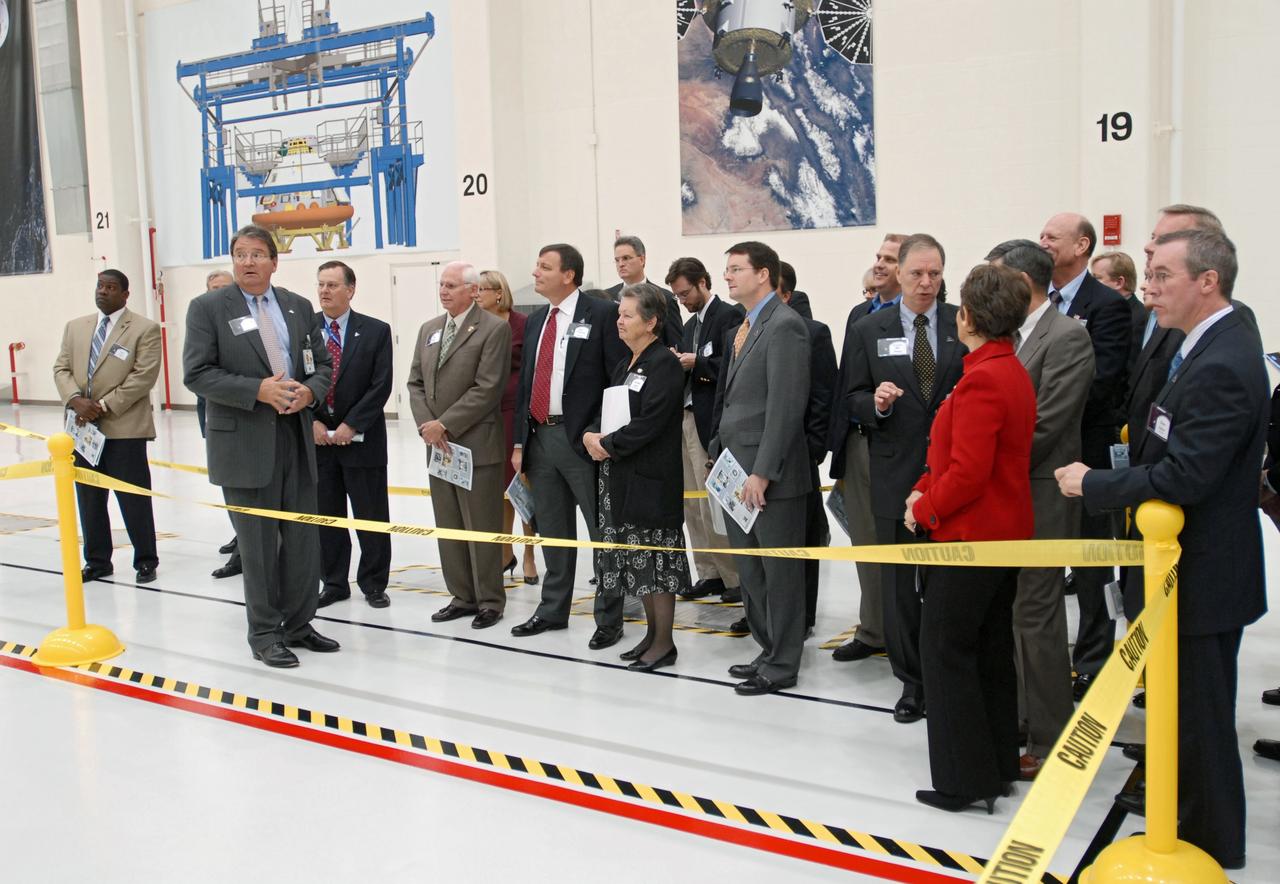
CAPE CANAVERAL, Fla. – Representatives from NASA, Lockheed Martin, Space Florida and the state of Florida participate in a ceremony at NASA's Kennedy Space Center in Florida to mark the completion of renovations on the historic Operations and Checkout Building high bay for use by the Constellation Program. At right, U.S. Rep. Suzanne Kosmas talks with U.S. Rep. Bill Posey and Center Director Robert Cabana. At far right is Steve Kohler with Space Florida. Originally built to process space vehicles in the Apollo era, the building will serve as the final assembly facility for the Orion crew exploration vehicle. Orion, America's future human spaceflight vehicle, will be capable of transporting four crew members to the moon and later will support crew transfers to Mars. The Orion spacecraft also will be used to transport crew members to the International Space Station after space shuttles are retired in 2010. The first operational launch of Orion atop an Ares I rocket is planned for 2015. Photo credit: NASA/Dimitri Gerondidakis
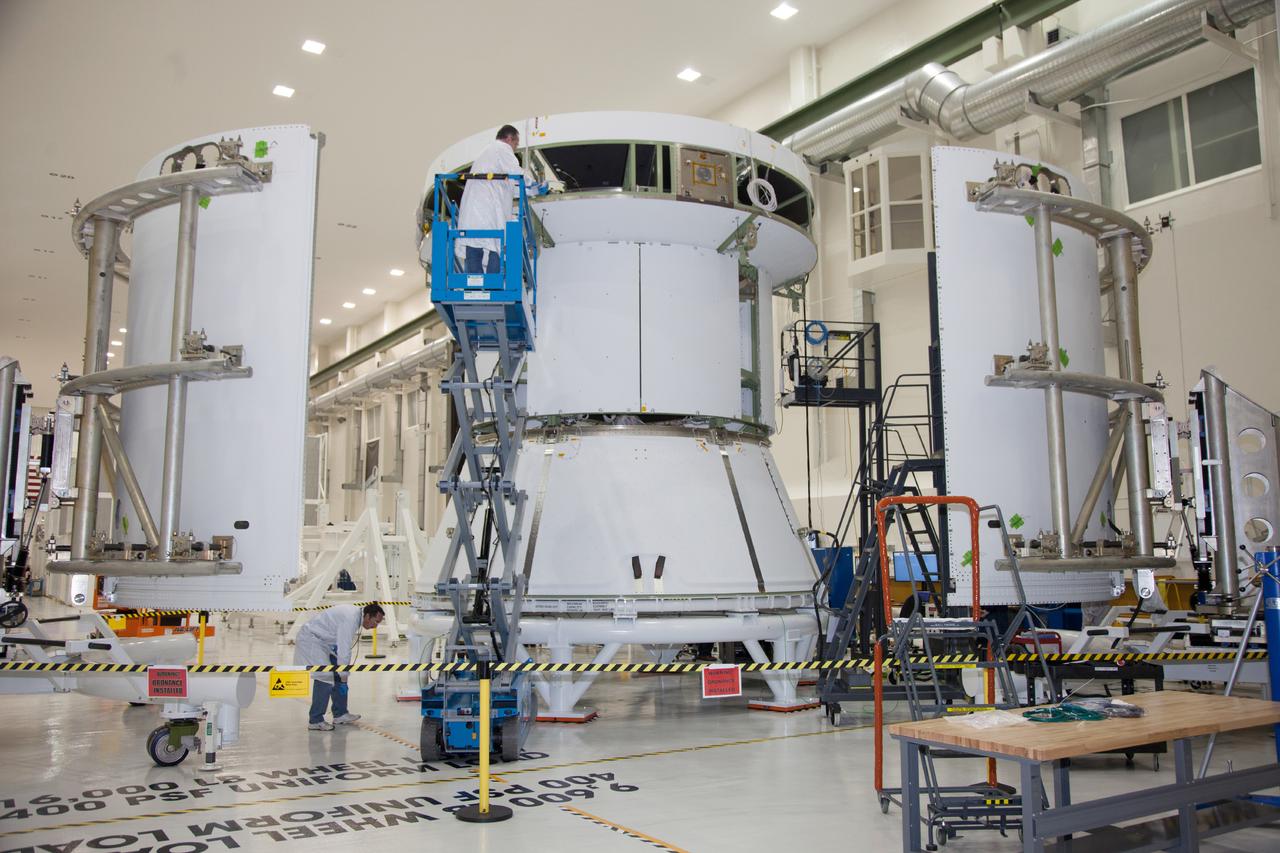
Technicians work on the Exploration Flight Test-1 (EFT-1) Orion service module in the Operations and Checkout Building (O&C) at Kennedy Space Center on Dec. 2, 2013. Part of Batch image transfer from Flickr.
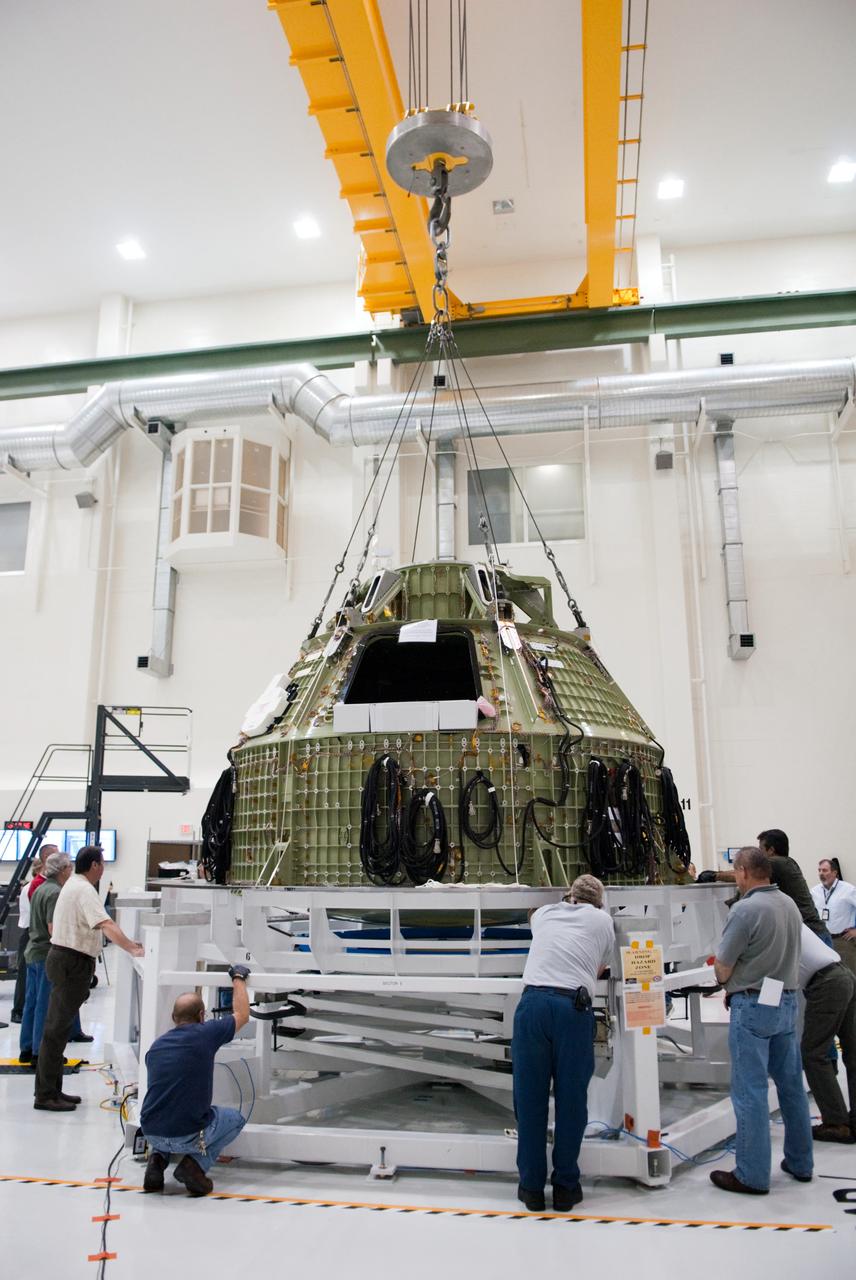
Orion technicians at the Operations and Checkout (O&C) Facility at the Kennedy Space Center move the Orion Exploration Flight Test-1 (EFT-1) crew module from the clean room into the birdcage fixture on Dec. 5, 2012. The fixture is designed to enable precise pre-launch processing of the Orion spacecraft.
Orion technicians at the Operations and Checkout (O&C) Facility at the Kennedy Space Center move the Orion Exploration Flight Test-1 (EFT-1) crew module from the clean room into the birdcage fixture on Dec. 5, 2012. The fixture is designed to enable precise pre-launch processing of the Orion spacecraft.
Orion technicians at the Operations and Checkout (O&C) Facility at the Kennedy Space Center move the Orion Exploration Flight Test-1 (EFT-1) crew module from the clean room into the birdcage fixture on Dec. 5, 2012. The fixture is designed to enable precise pre-launch processing of the Orion spacecraft.

Orion technicians at the Operations and Checkout (O&C) Facility at the Kennedy Space Center move the Orion Exploration Flight Test-1 (EFT-1) crew module from the clean room into the birdcage fixture on Dec. 5, 2012. The fixture is designed to enable precise pre-launch processing of the Orion spacecraft.
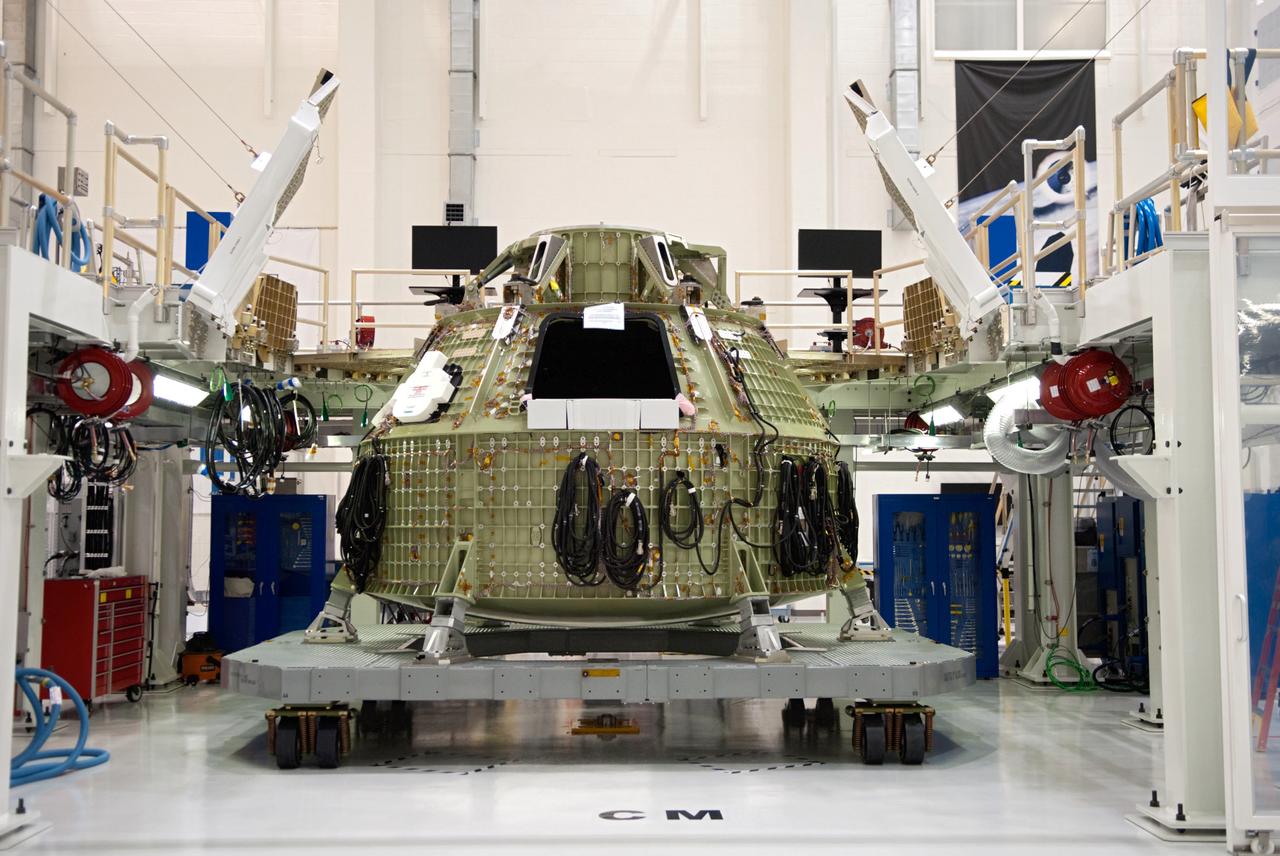
Orion technicians at the Operations and Checkout (O&C) Facility at the Kennedy Space Center move the Orion Exploration Flight Test-1 (EFT-1) crew module from the clean room into the birdcage fixture on Dec. 5, 2012. The fixture is designed to enable precise pre-launch processing of the Orion spacecraft.
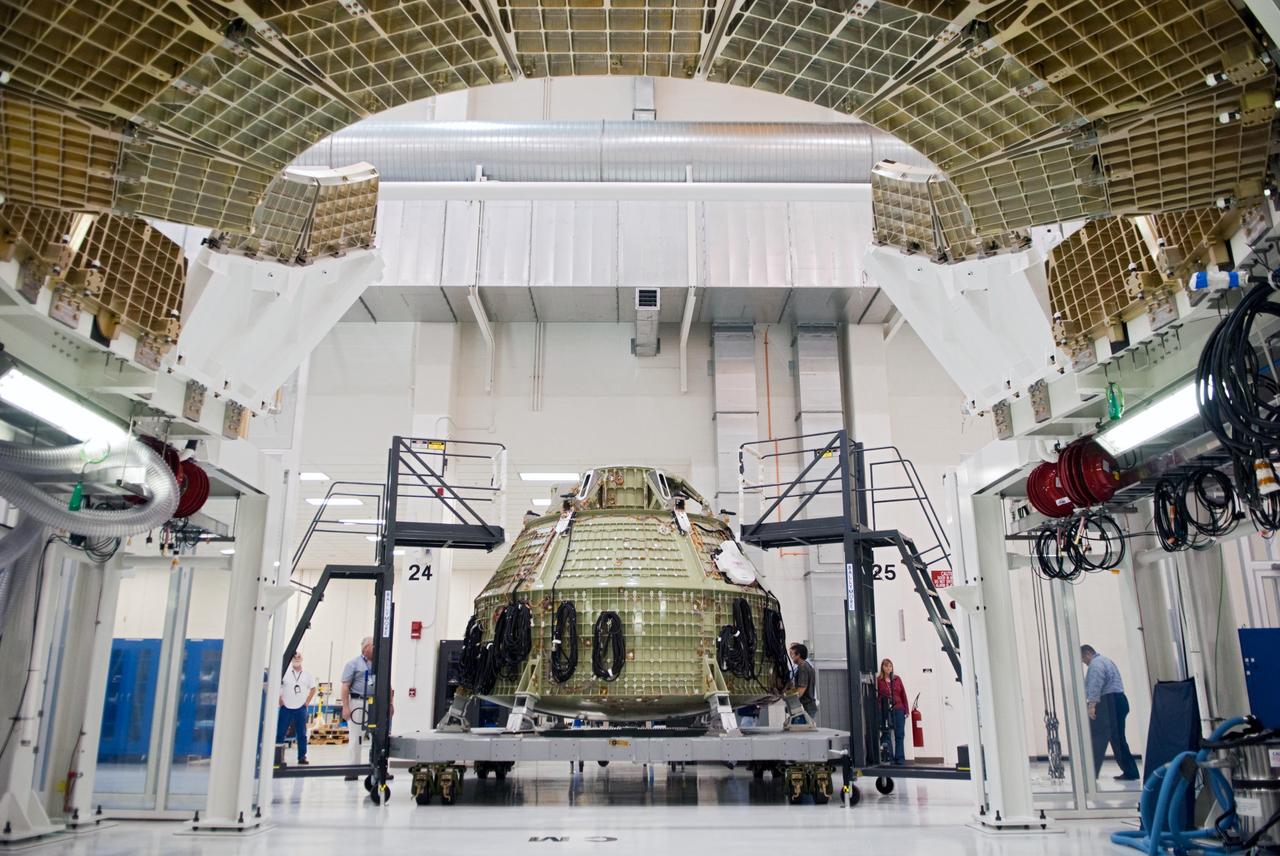
Orion technicians at the Operations and Checkout (O&C) Facility at the Kennedy Space Center move the Orion Exploration Flight Test-1 (EFT-1) crew module from the clean room into the birdcage fixture on Dec. 5, 2012. The fixture is designed to enable precise pre-launch processing of the Orion spacecraft.
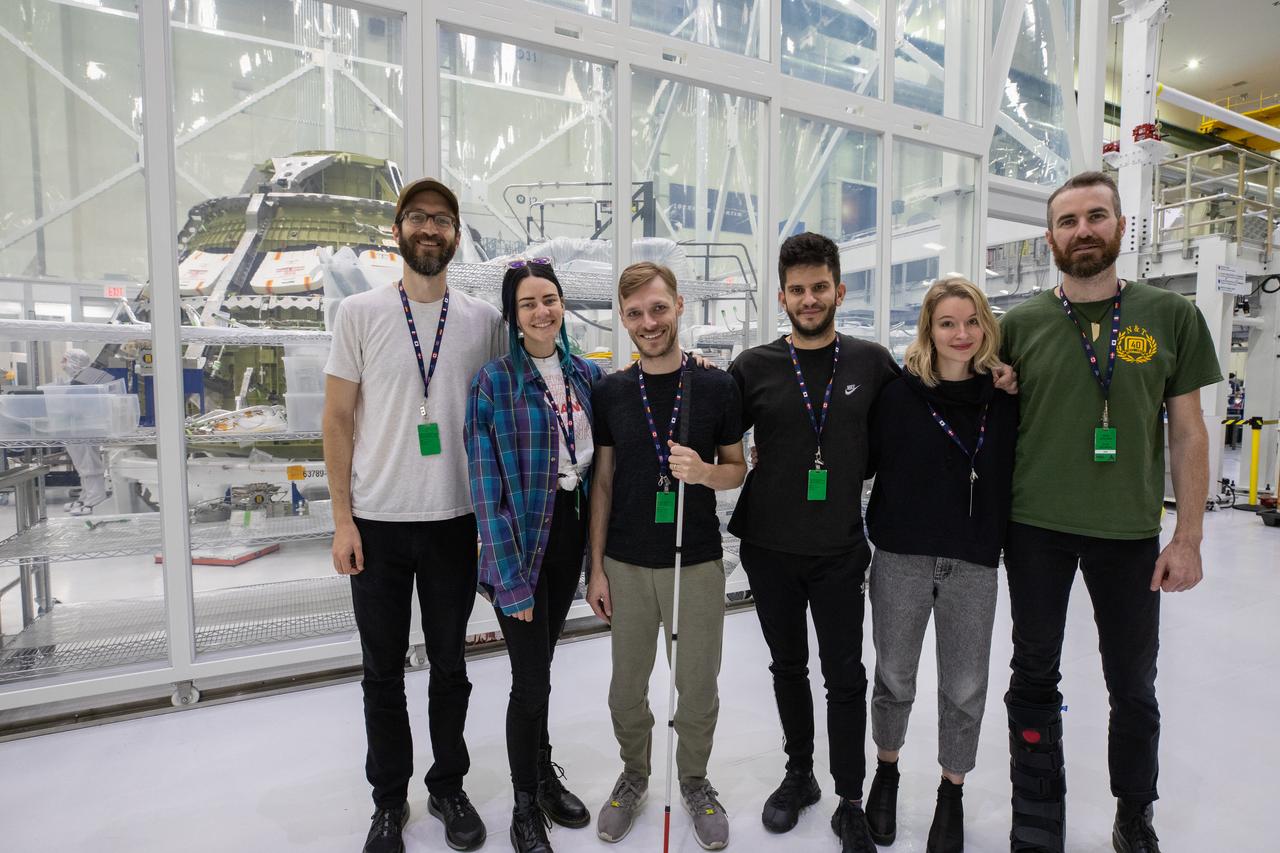
The rock band X Ambassadors is photographed in front of NASA’s Artemis II Orion crew module inside the Neil Armstrong Operations and Checkout (O&C) Building high bay at the agency’s Kennedy Space Center in Florida. X Ambassadors visited Kennedy on Oct. 21, 2019, and had the opportunity to tour areas around the multi-user spaceport such as the O&C, Launch Complex 39B and Swamp Works. The title of the band’s latest album, Orion, led them to an up-close look at the spacecraft that will take humans farther than they’ve ever gone before.
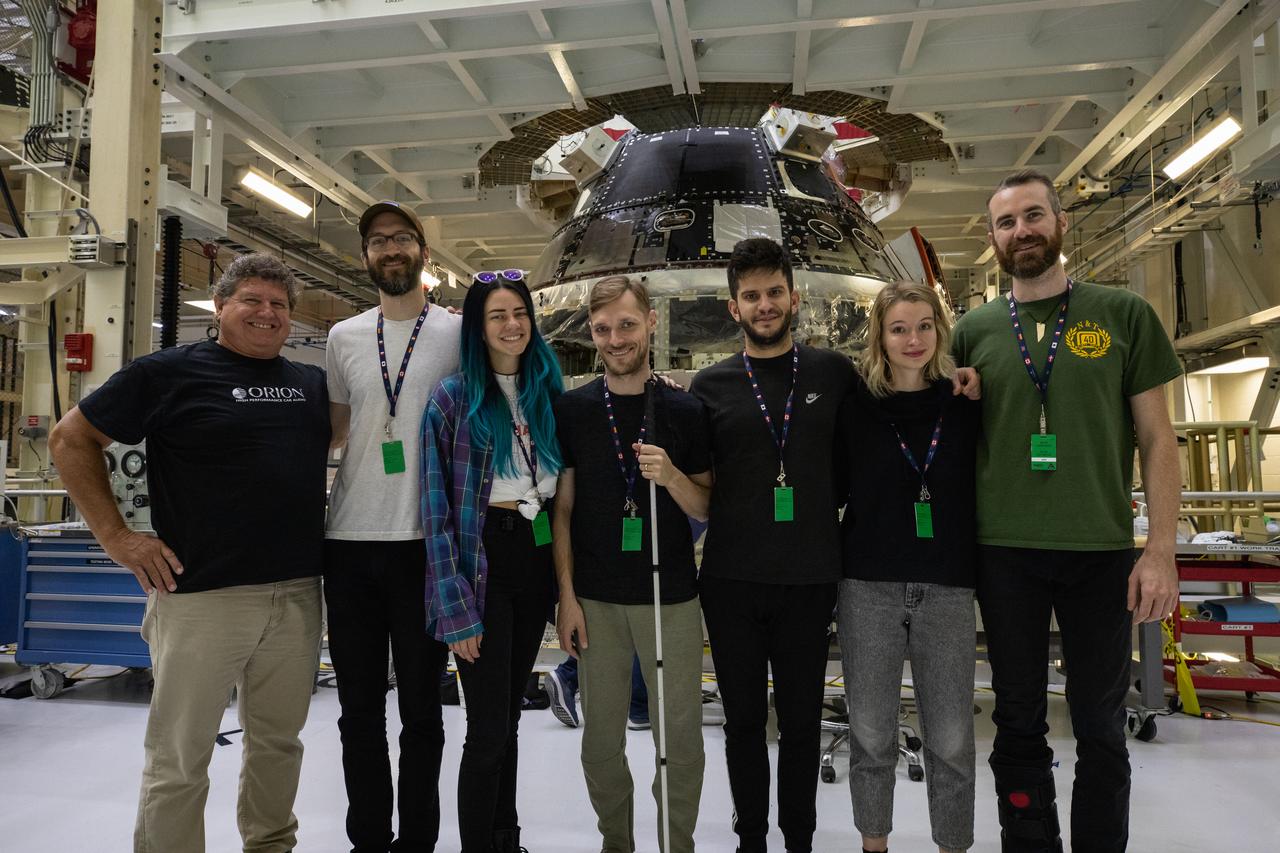
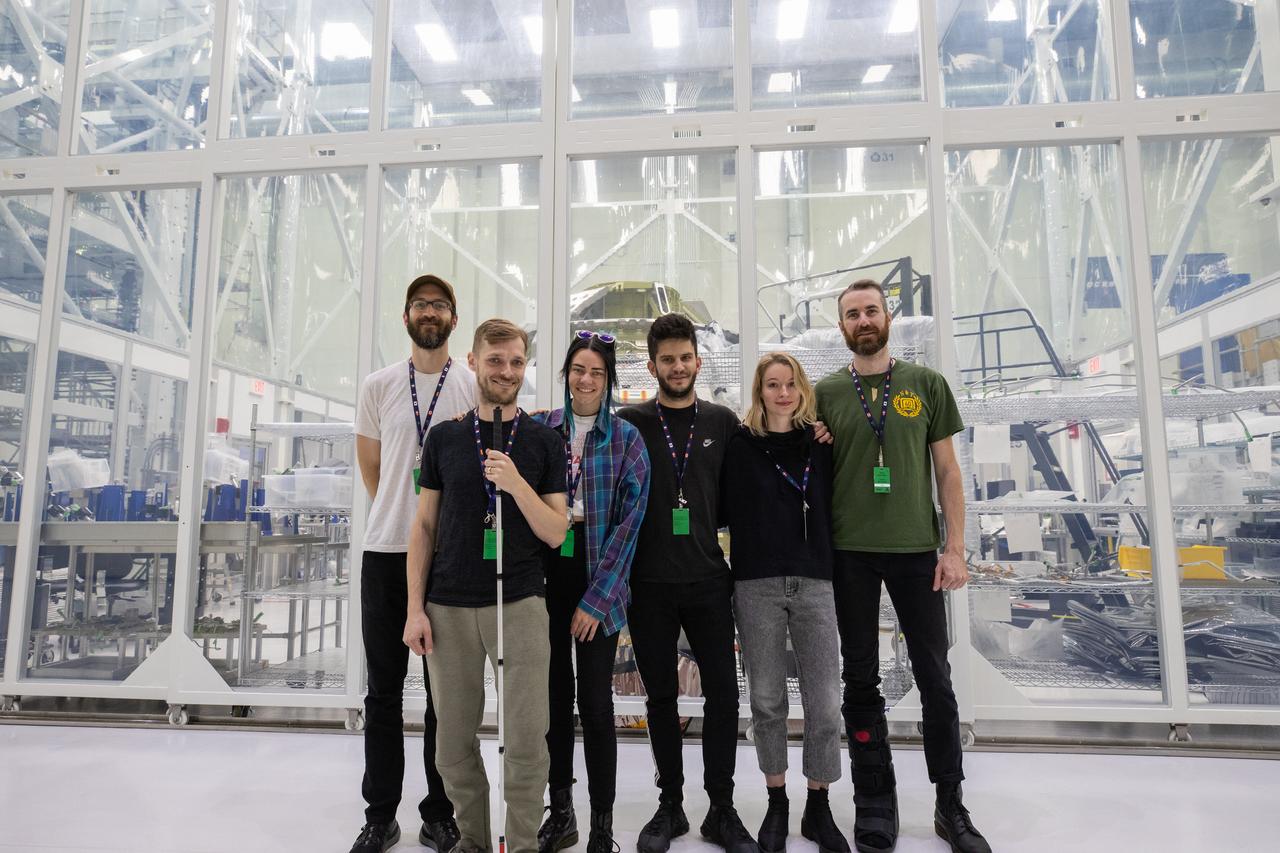
A Kennedy employee is photographed with the rock band X Ambassadors in front of NASA’s Artemis I Orion spacecraft inside the Neil Armstrong Operations and Checkout (O&C) Building high bay at the agency’s Kennedy Space Center in Florida. X Ambassadors visited Kennedy on Oct. 21, 2019, and had the opportunity to tour areas around the multi-user spaceport such as the O&C, Launch Complex 39B and Swamp Works. The title of the band’s latest album, Orion, led them to an up-close look at the spacecraft that will take humans farther than they’ve ever gone before.
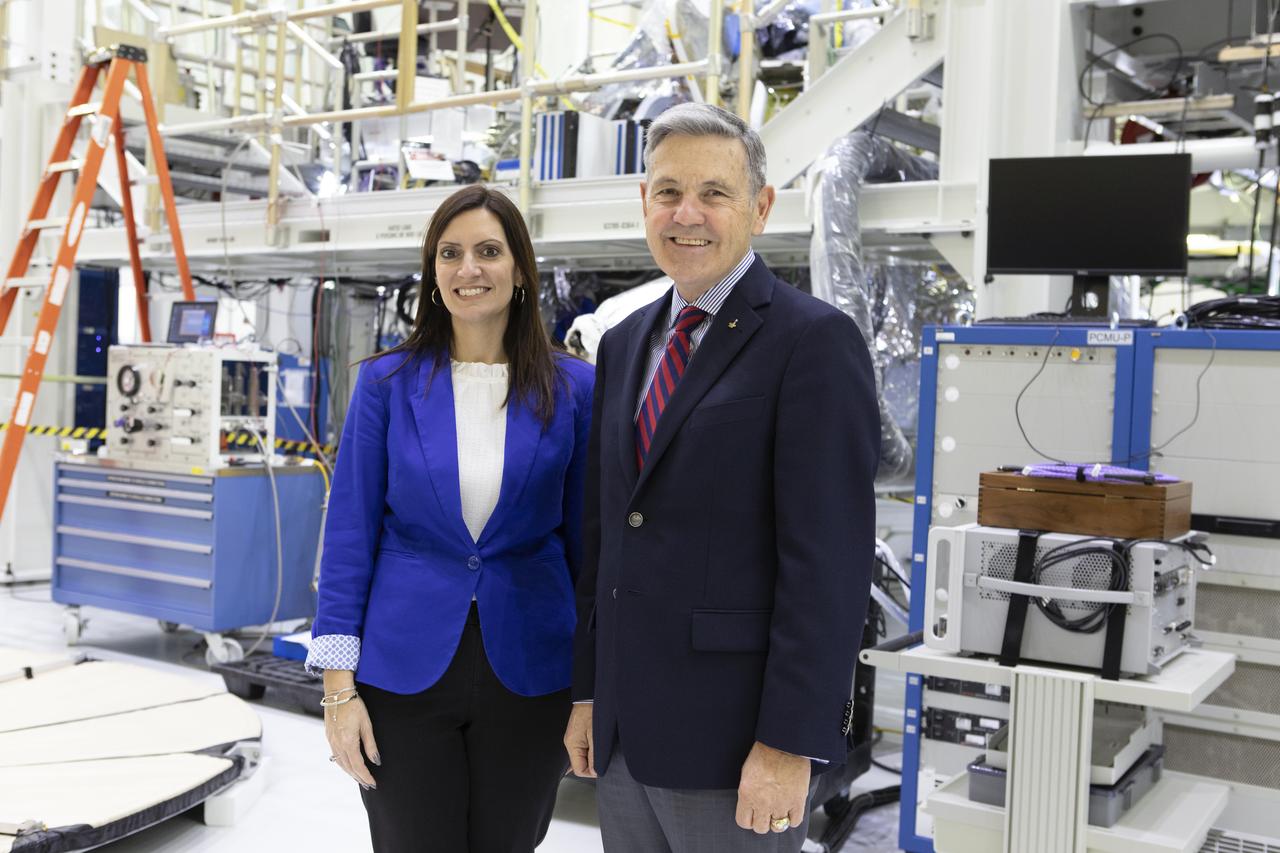
Florida Lt. Governor Jeanette Nunez and Kennedy Space Center Director Bob Cabana are photographed inside the Florida spaceport’s Neil Armstrong Operations and Checkout (O&C) Building high bay on April 5, 2019. During her tour of the O&C, Nunez was shown NASA’s Orion spacecraft, which will be flown on the agency’s Exploration Mission-1 (EM-1). Orion will launch atop the Space Launch System rocket from Kennedy’s Launch Complex 39B. This uncrewed mission will provide the foundation for human deep space exploration and pave the way for the crewed EM-2 mission.
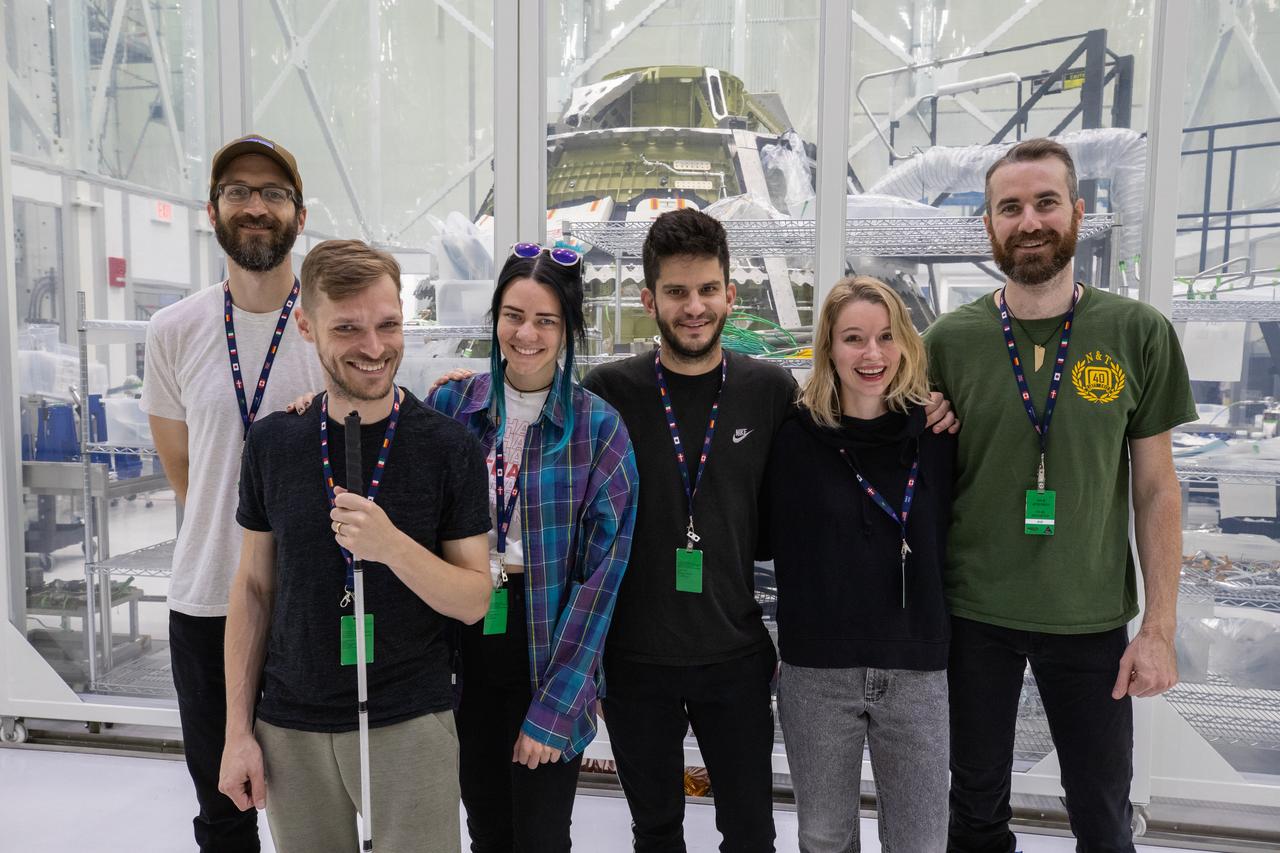
The rock band X Ambassadors is photographed in front of NASA’s Artemis II Orion crew module inside the Neil Armstrong Operations and Checkout (O&C) Building high bay at the agency’s Kennedy Space Center in Florida. X Ambassadors visited Kennedy on Oct. 21, 2019, and had the opportunity to tour areas around the multi-user spaceport such as the O&C, Launch Complex 39B and Swamp Works. The title of the band’s latest album, Orion, led them to an up-close look at the spacecraft that will take humans farther than they’ve ever gone before.
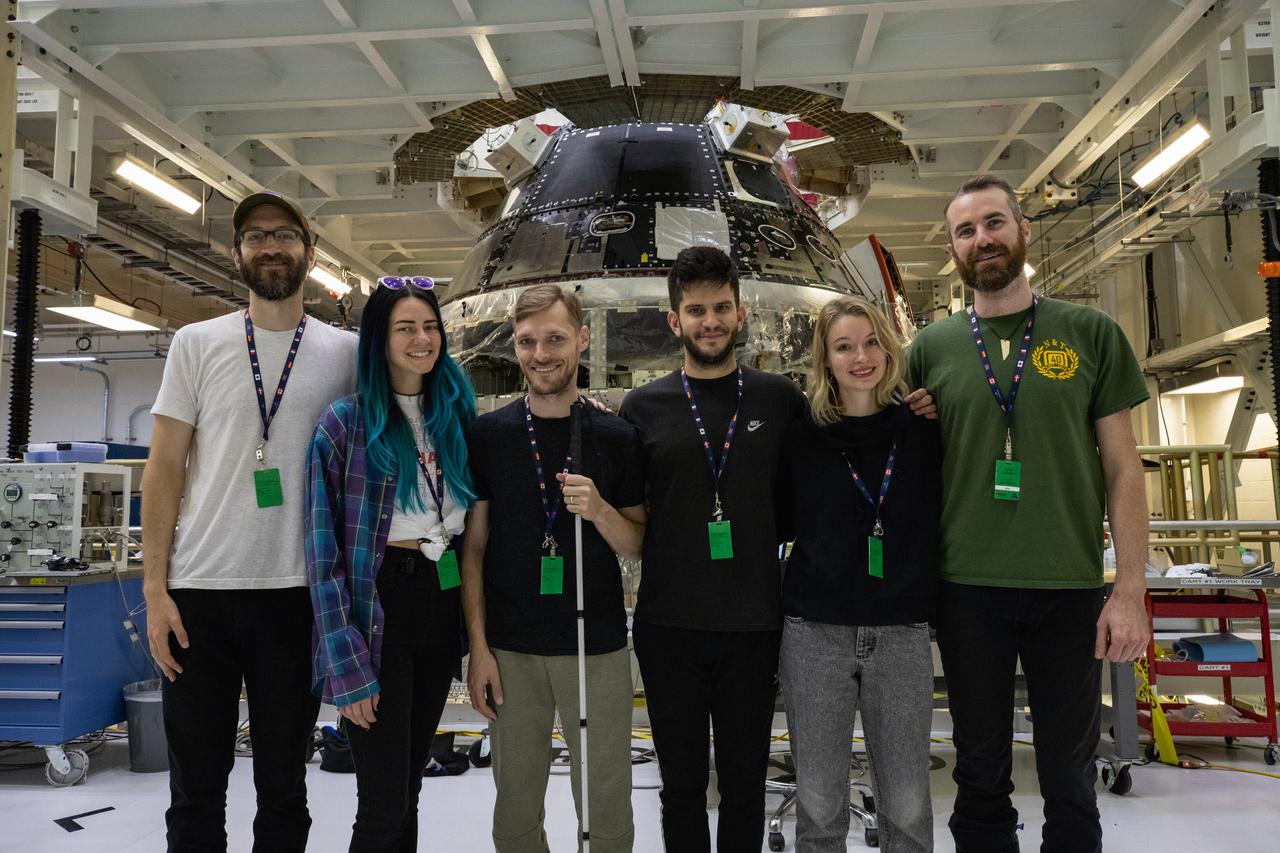
The rock band X Ambassadors is photographed in front of NASA’s Artemis I Orion spacecraft inside the Neil Armstrong Operations and Checkout (O&C) Building high bay at the agency’s Kennedy Space Center in Florida. X Ambassadors visited Kennedy on Oct. 21, 2019, and had the opportunity to tour areas around the multi-user spaceport such as the O&C, Launch Complex 39B and Swamp Works. The title of the band’s latest album, Orion, led them to an up-close look at the spacecraft that will take humans farther than they’ve ever gone before.
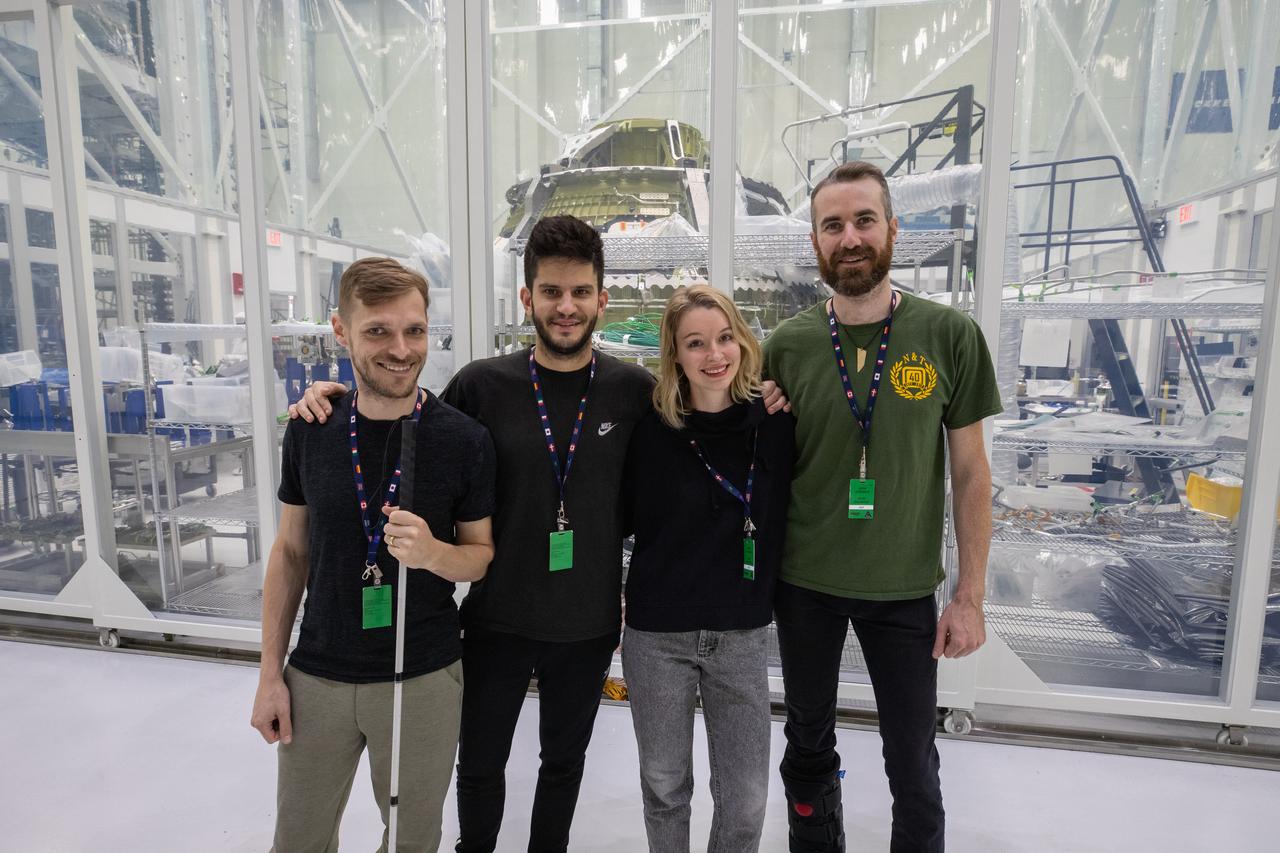
The rock band X Ambassadors is photographed in front of NASA’s Artemis II Orion crew module inside the Neil Armstrong Operations and Checkout (O&C) Building high bay at the agency’s Kennedy Space Center in Florida. X Ambassadors visited Kennedy on Oct. 21, 2019, and had the opportunity to tour areas around the multi-user spaceport such as the O&C, Launch Complex 39B and Swamp Works. The title of the band’s latest album, Orion, led them to an up-close look at the spacecraft that will take humans farther than they’ve ever gone before.
The rock band X Ambassadors is photographed in front of NASA’s Artemis II Orion crew module inside the Neil Armstrong Operations and Checkout (O&C) Building high bay at the agency’s Kennedy Space Center in Florida. X Ambassadors visited Kennedy on Oct. 21, 2019, and had the opportunity to tour areas around the multi-user spaceport such as the O&C, Launch Complex 39B and Swamp Works. The title of the band’s latest album, Orion, led them to an up-close look at the spacecraft that will take humans farther than they’ve ever gone before.

The rock band X Ambassadors is photographed in front of NASA’s Artemis II Orion crew module inside the Neil Armstrong Operations and Checkout (O&C) Building high bay at the agency’s Kennedy Space Center in Florida. X Ambassadors visited Kennedy on Oct. 21, 2019, and had the opportunity to tour areas around the multi-user spaceport such as the O&C, Launch Complex 39B and Swamp Works. The title of the band’s latest album, Orion, led them to an up-close look at the spacecraft that will take humans farther than they’ve ever gone before.
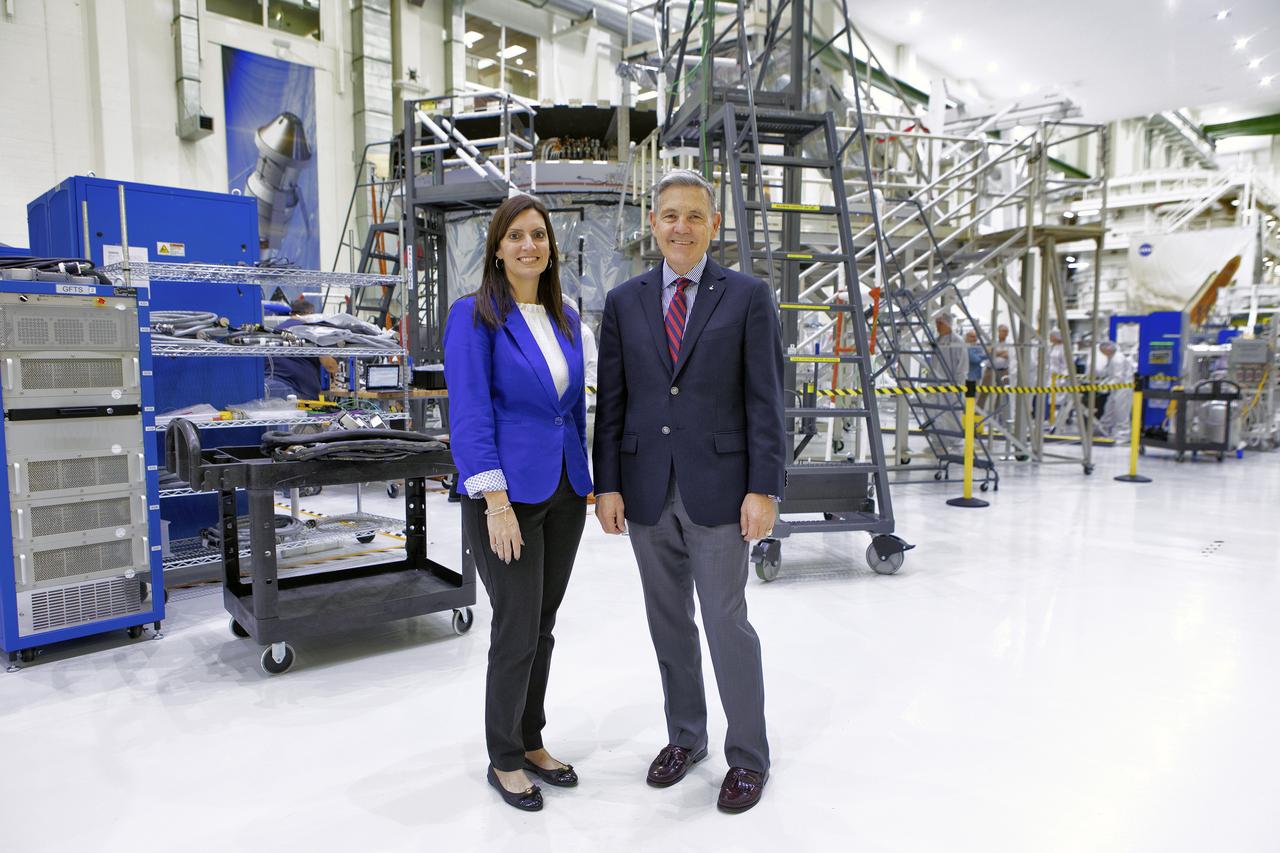
Florida Lt. Governor Jeanette Nunez and Kennedy Space Center Director Bob Cabana are photographed inside the Florida spaceport’s Neil Armstrong Operations and Checkout (O&C) Building high bay on April 5, 2019. During her tour of the O&C, Nunez was shown NASA’s Orion spacecraft, which will be flown on the agency’s Exploration Mission-1 (EM-1). Orion will launch atop the Space Launch System rocket from Kennedy’s Launch Complex 39B. This uncrewed mission will provide the foundation for human deep space exploration and pave the way for the crewed EM-2 mission.
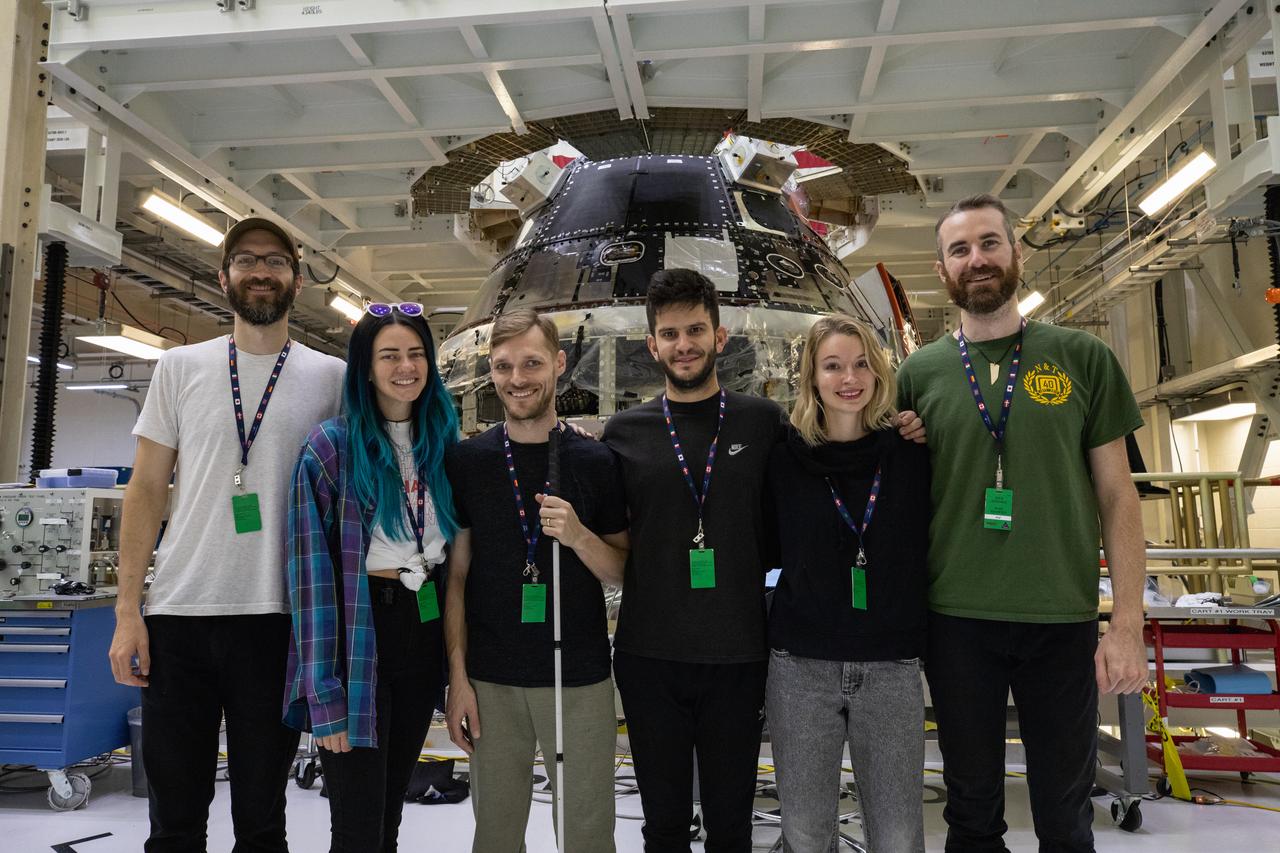
The rock band X Ambassadors is photographed in front of NASA’s Artemis I Orion spacecraft inside the Neil Armstrong Operations and Checkout (O&C) Building high bay at the agency’s Kennedy Space Center in Florida. X Ambassadors visited Kennedy on Oct. 21, 2019, and had the opportunity to tour areas around the multi-user spaceport such as the O&C, Launch Complex 39B and Swamp Works. The title of the band’s latest album, Orion, led them to an up-close look at the spacecraft that will take humans farther than they’ve ever gone before.
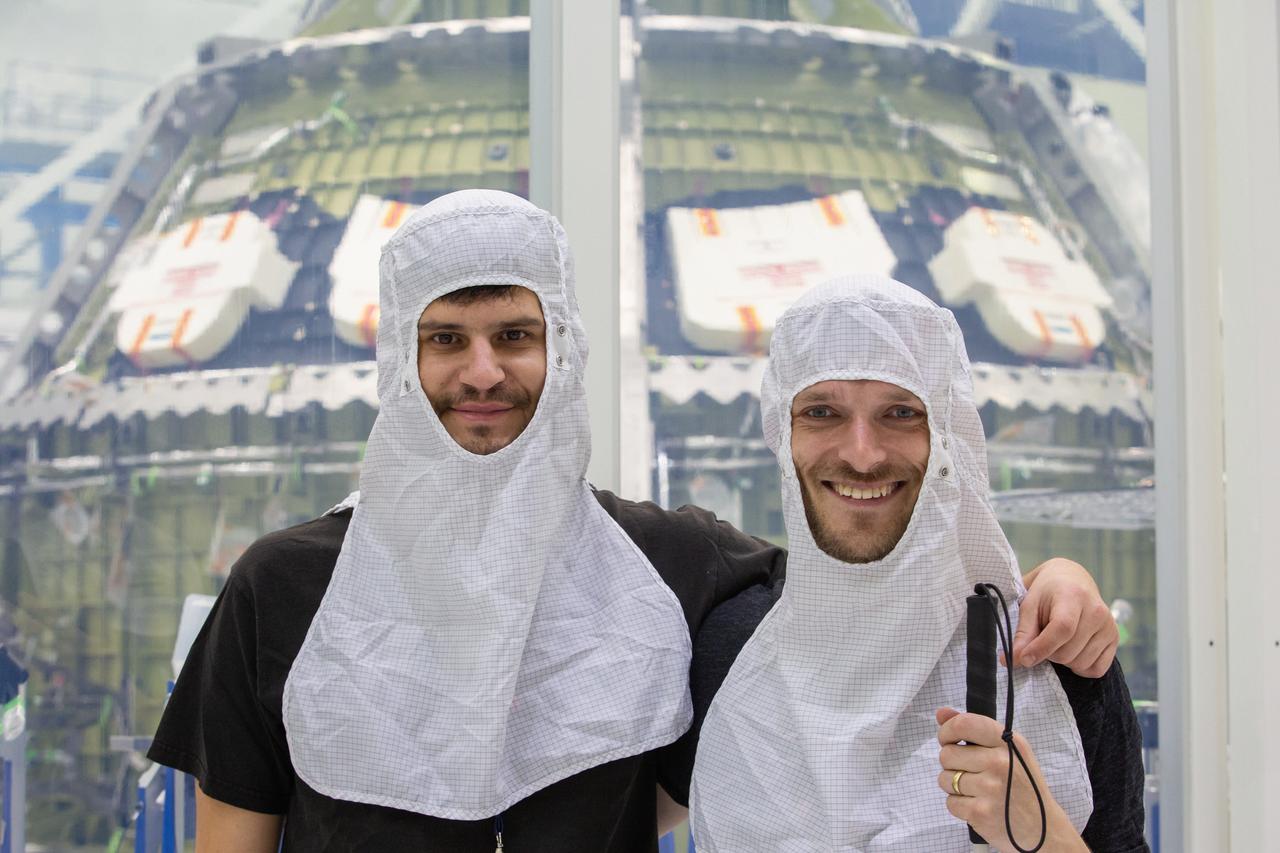
Two members of the rock band X Ambassadors are photographed in front of NASA’s Artemis II Orion crew module inside the Neil Armstrong Operations and Checkout (O&C) Building high bay at the agency’s Kennedy Space Center in Florida. X Ambassadors visited Kennedy on Oct. 21, 2019, and had the opportunity to tour areas around the multi-user spaceport such as the O&C, Launch Complex 39B and Swamp Works. The title of the band’s latest album, Orion, led them to an up-close look at the spacecraft that will take humans farther than they’ve ever gone before.
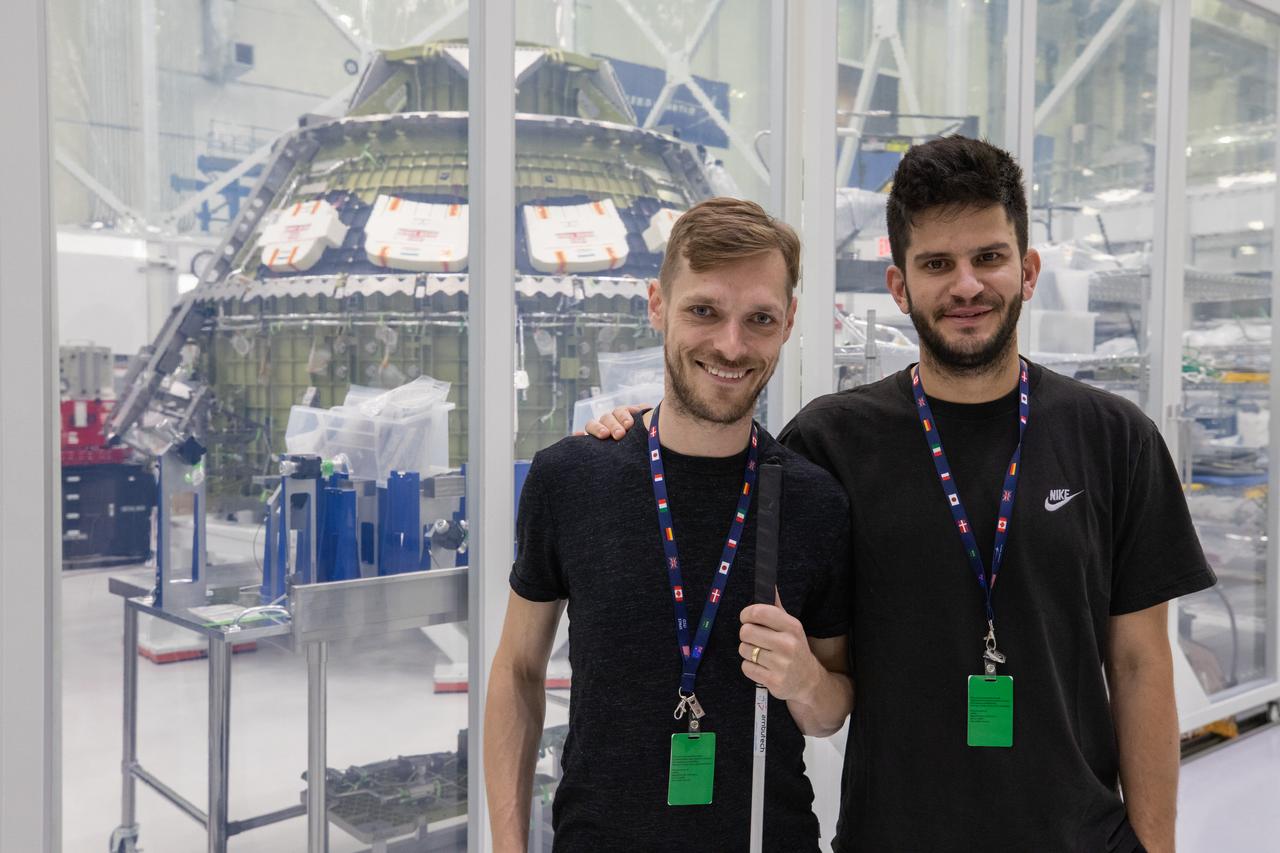
Two members of the rock band X Ambassadors are photographed in front of NASA’s Artemis II Orion crew module inside the Neil Armstrong Operations and Checkout (O&C) Building high bay at the agency’s Kennedy Space Center in Florida. X Ambassadors visited Kennedy on Oct. 21, 2019, and had the opportunity to tour areas around the multi-user spaceport such as the O&C, Launch Complex 39B and Swamp Works. The title of the band’s latest album, Orion, led them to an up-close look at the spacecraft that will take humans farther than they’ve ever gone before.

CAPE CANAVERAL, Fla. – In the Operations and Checkout Building's high bay, a large poster displays an image of the completed Orion crew module. Part of NASA's Constellation Program, the Orion spacecraft will return humans to the moon and prepare for future voyages to Mars and other destinations in our solar system. Orion is targeted to begin carrying humans to the International Space Station in 2015 and to the moon by 2020. Photo credit: NASA/Kim Shiflett
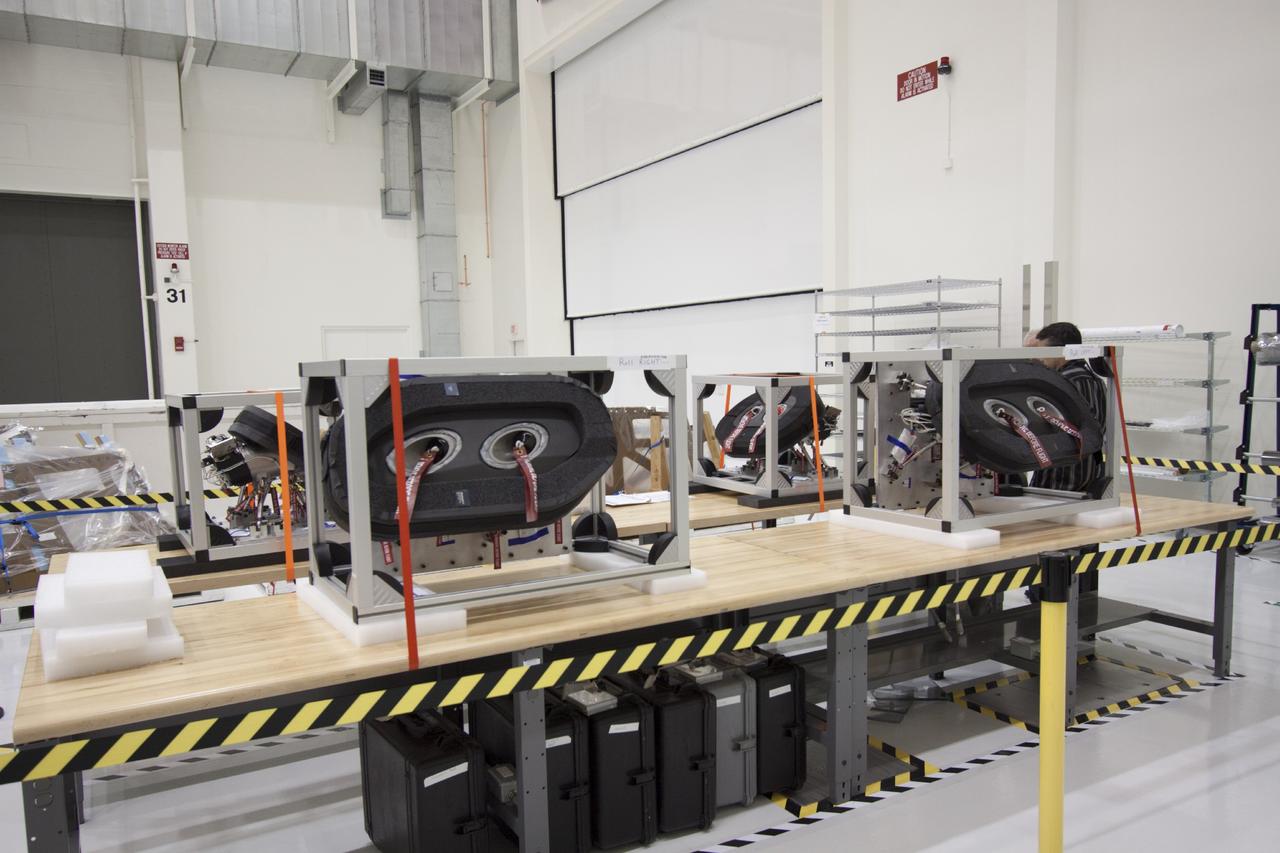
CAPE CANAVERAL, Fla. – Inside the Operations and Checkout Building high bay at NASA’s Kennedy Space Center in Florida, several of the reaction control system roll and yaw thrusters for the Orion crew module have been unpacked and placed on stands for processing. Orion is the exploration spacecraft designed to carry crews to space beyond low Earth orbit. It will provide emergency abort capability, sustain the crew during the space travel and provide safe re-entry from deep space return velocities. The first unpiloted test flight of the Orion is scheduled to launch in 2014 atop a Delta IV rocket and in 2017 on a Space Launch System rocket. For more information, visit http://www.nasa.gov/orion. Photo credit: NASA/Jim Grossmann
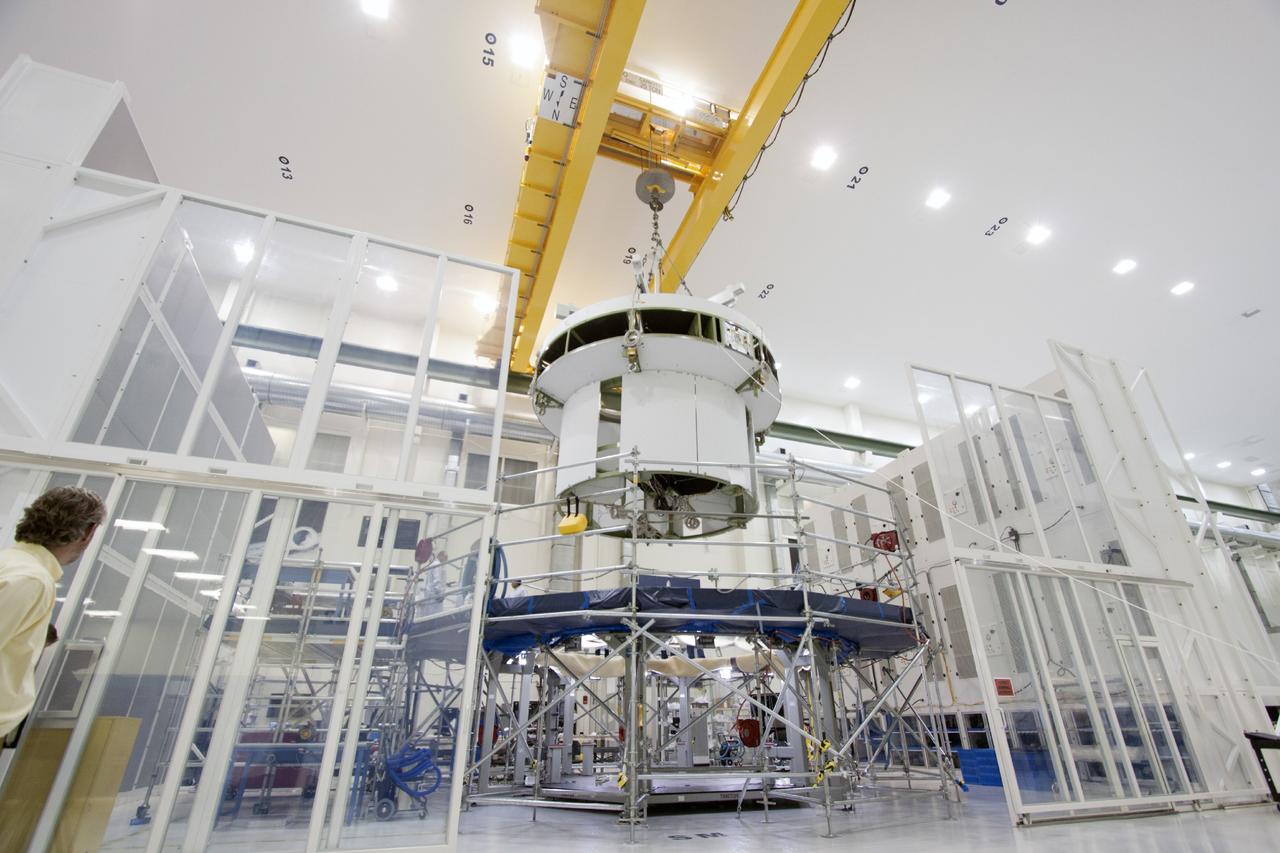
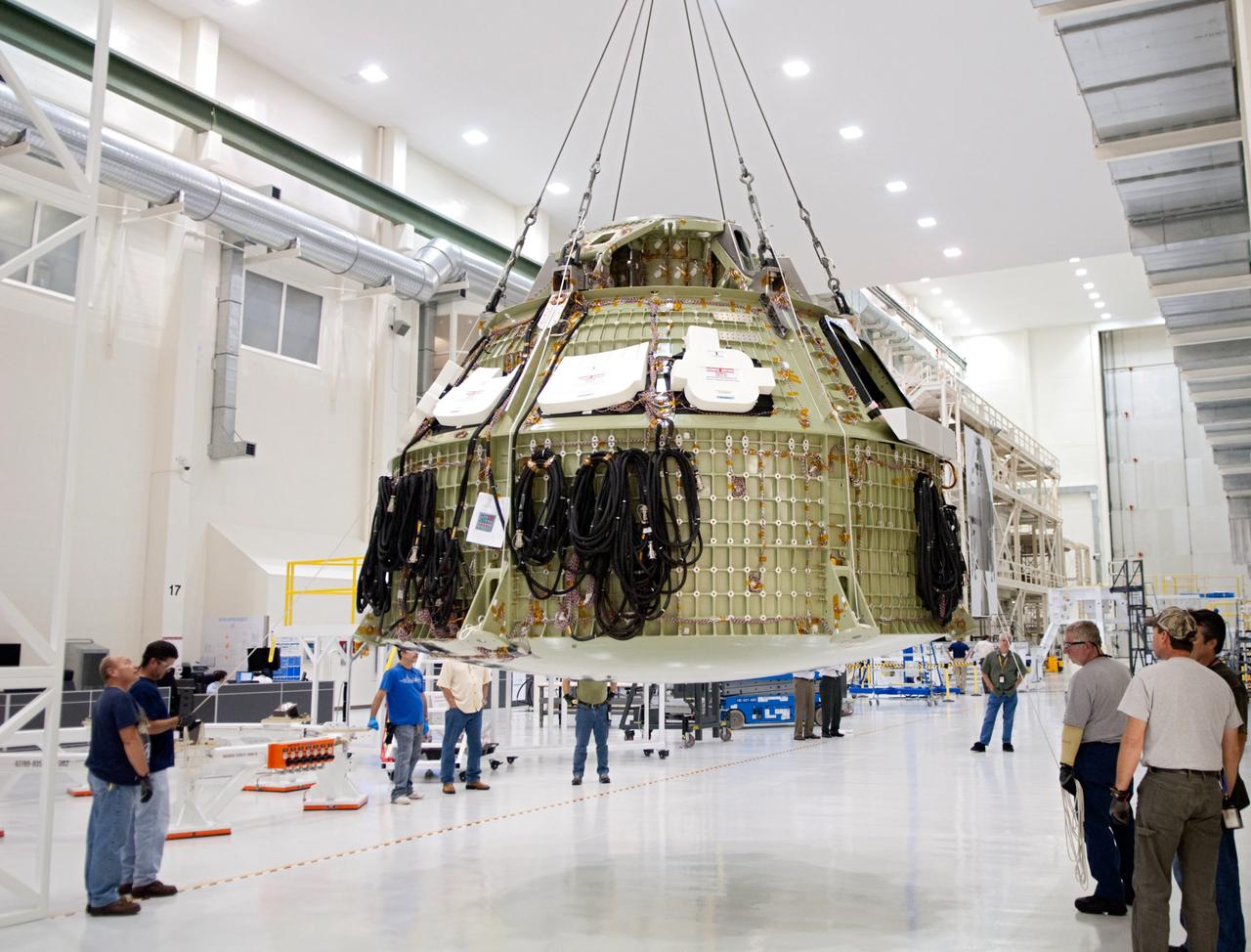
CAPE CANAVERAL, Fla. – Inside the Operations and Checkout Building high bay at NASA’s Kennedy Space Center in Florida, a crane is used to lift the service module for the Orion spacecraft from the tooling stand. The service module will be transferred to a lift station where it will be mated to the spacecraft adapter cone. Orion is the exploration spacecraft designed to carry astronauts to destinations not yet explored by humans, including an asteroid and Mars. It will have emergency abort capability, sustain the crew during space travel and provide safe re-entry from deep space return velocities. The first unpiloted test flight of the Orion is scheduled to launch in 2014 atop a Delta IV rocket and in 2017 on NASA’s Space Launch System rocket. For more information, visit http://www.nasa.gov/orion. Photo credit: NASA/Jim Grossmann
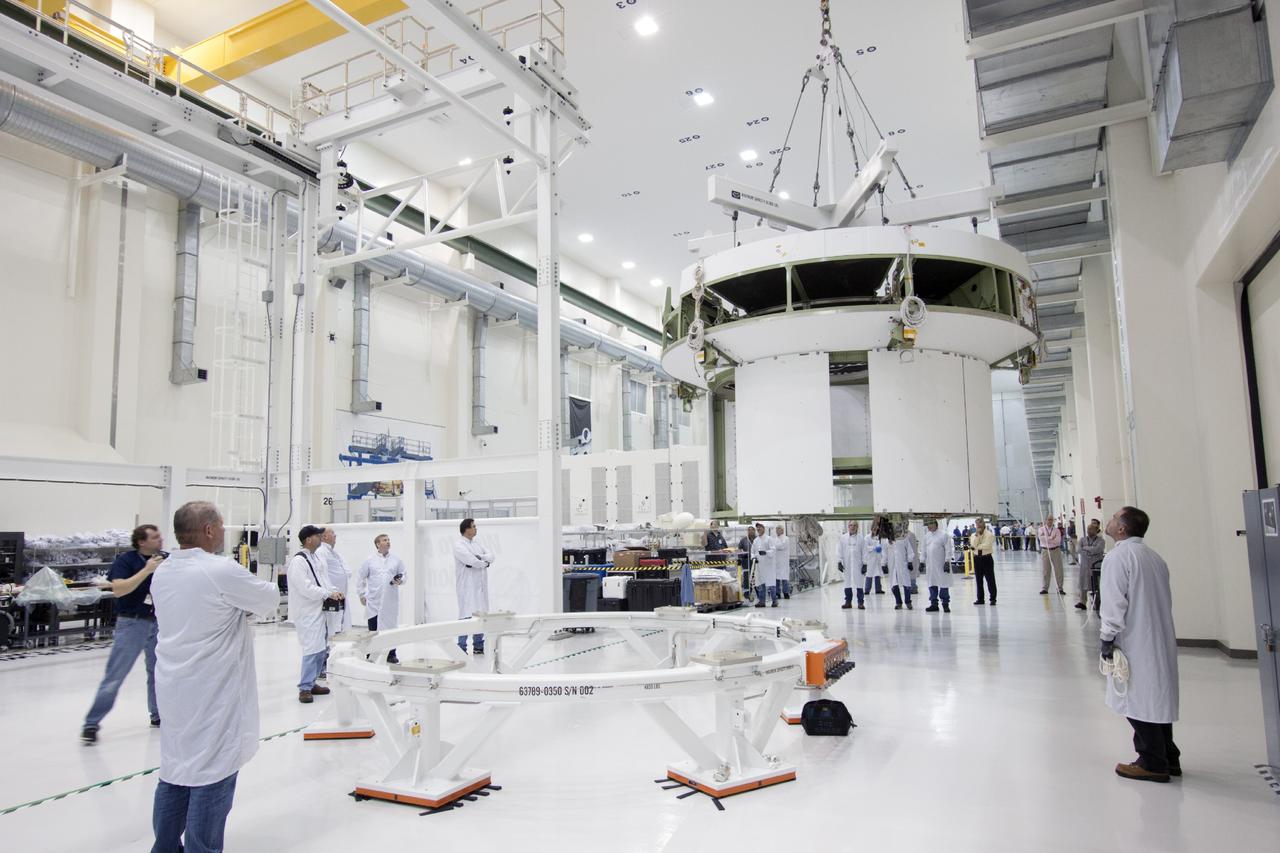
CAPE CANAVERAL, Fla. – Inside the Operations and Checkout Building high bay at NASA’s Kennedy Space Center in Florida, a crane lowers the service module for the Orion spacecraft toward a lift station where it will be mated to the spacecraft adapter cone. The service module was lifted and transferred from the tooling station. Orion is the exploration spacecraft designed to carry astronauts to destinations not yet explored by humans, including an asteroid and Mars. It will have emergency abort capability, sustain the crew during space travel and provide safe re-entry from deep space return velocities. The first unpiloted test flight of the Orion is scheduled to launch in 2014 atop a Delta IV rocket and in 2017 on NASA’s Space Launch System rocket. For more information, visit http://www.nasa.gov/orion. Photo credit: NASA/Jim Grossmann
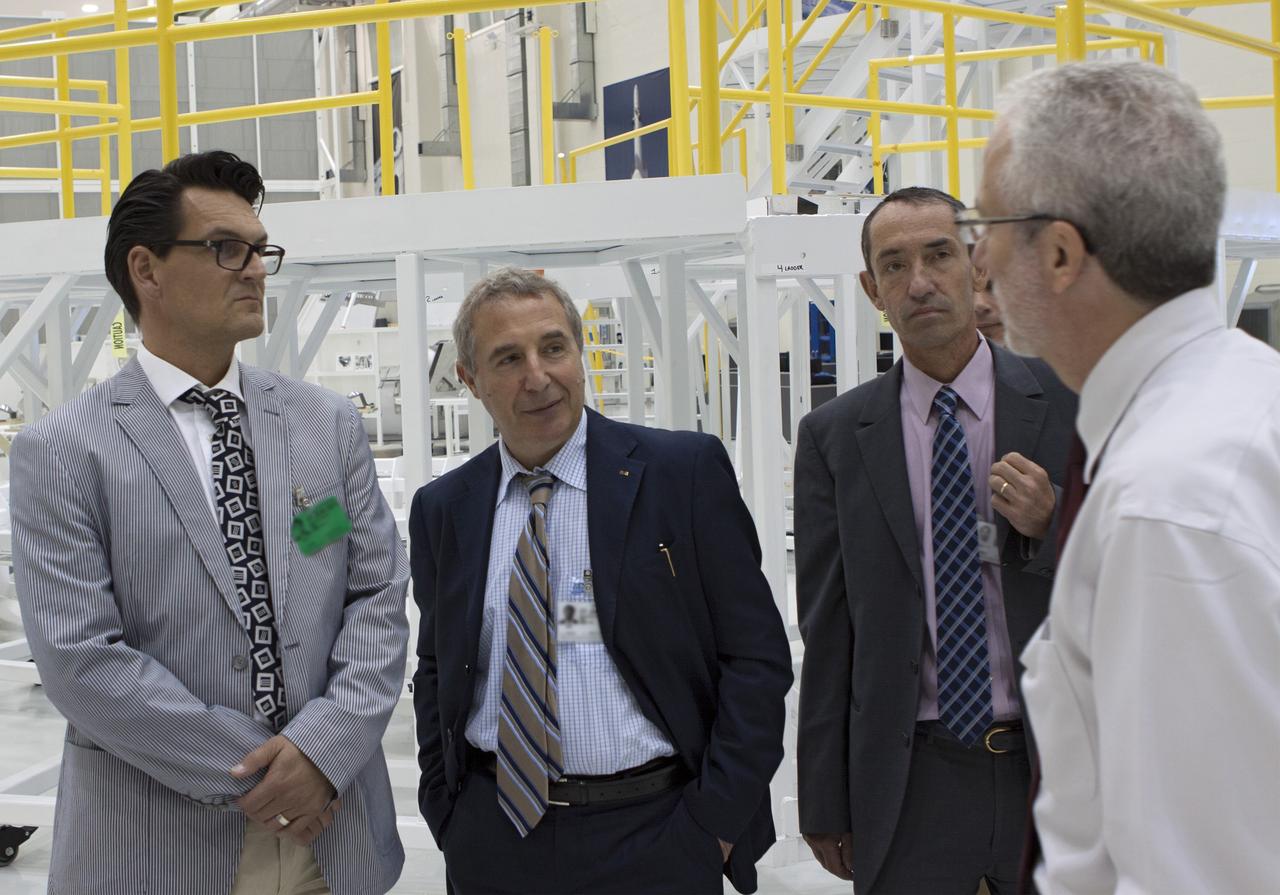
CAPE CANAVERAL, Fla. – Representatives from the European Space Agency, or ESA, toured the Operations and Checkout Building high bay at NASA’s Kennedy Space Center in Florida. From the left, are Nico Dettman, ESA Space Transportation Department director Bernardo Patti, ESA manager of International Space Station Operations Philippe Deloo, ESA European Service Module study manager and Mark Geyer, Orion Production Operations manager. Orion is the exploration spacecraft designed to carry crews to space beyond low Earth orbit. It will provide emergency abort capability, sustain the crew during the space travel and provide safe re-entry from deep space return velocities. Orion’s first unpiloted test flight is scheduled to launch in 2014 atop a Delta IV rocket. A second uncrewed flight test is scheduled for 2017 on NASA’s Space Launch System rocket. For more information, visit http://www.nasa.gov/orion. Photo credit: NASA/Jim Grossmann
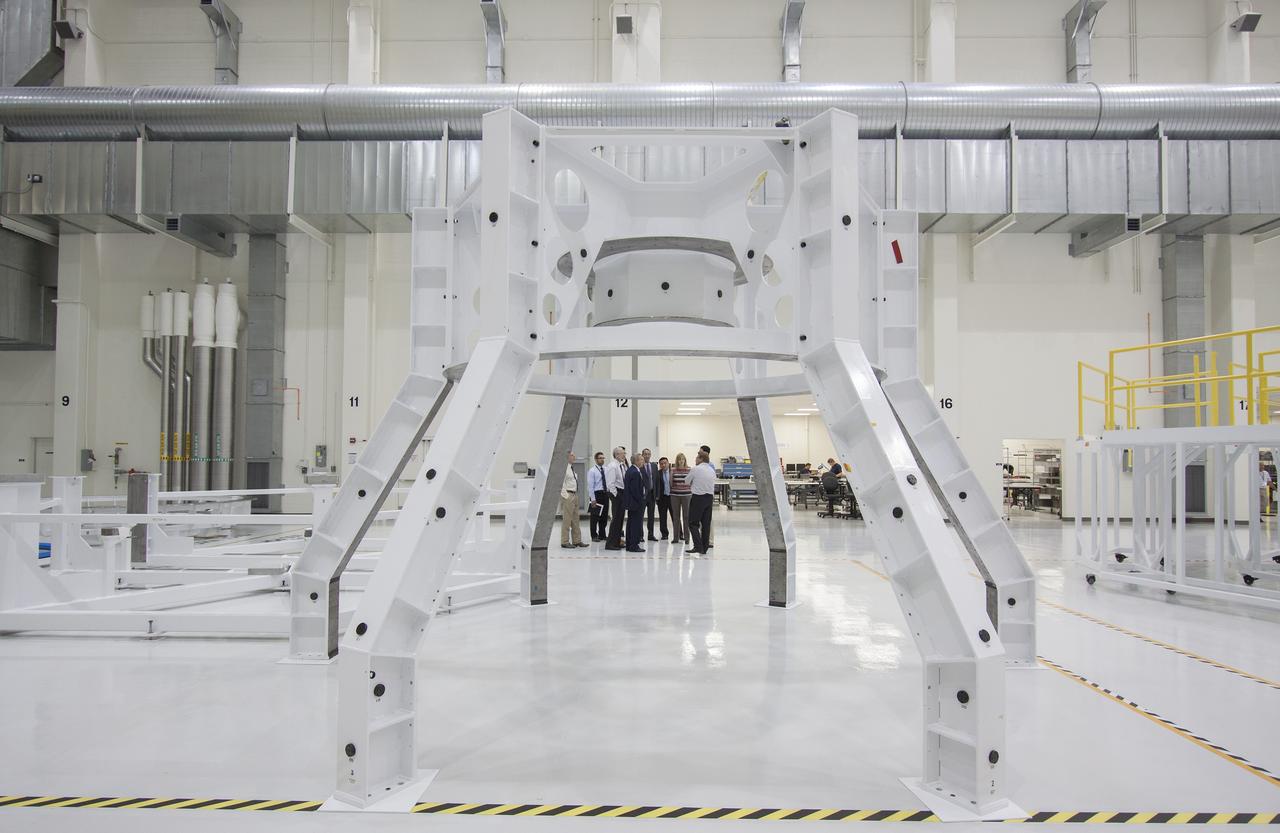
CAPE CANAVERAL, Fla. – Representatives from the European Space Agency, or ESA, toured the Operations and Checkout Building high bay and viewed the Orion crew module at NASA’s Kennedy Space Center in Florida. Among the group were Nico Dettman, ESA Space Transportation Department director Bernardo Patti, ESA International Space Station Operations manager and Philippe Deloo, ESA European Service Module Study manager. Orion is the exploration spacecraft designed to carry crews to space beyond low Earth orbit. It will provide emergency abort capability, sustain the crew during the space travel and provide safe re-entry from deep space return velocities. Orion’s first unpiloted test flight is scheduled to launch in 2014 atop a Delta IV rocket. A second uncrewed flight test is scheduled for 2017 on NASA’s Space Launch System rocket. For more information, visit http://www.nasa.gov/orion. Photo credit: NASA/Jim Grossmann
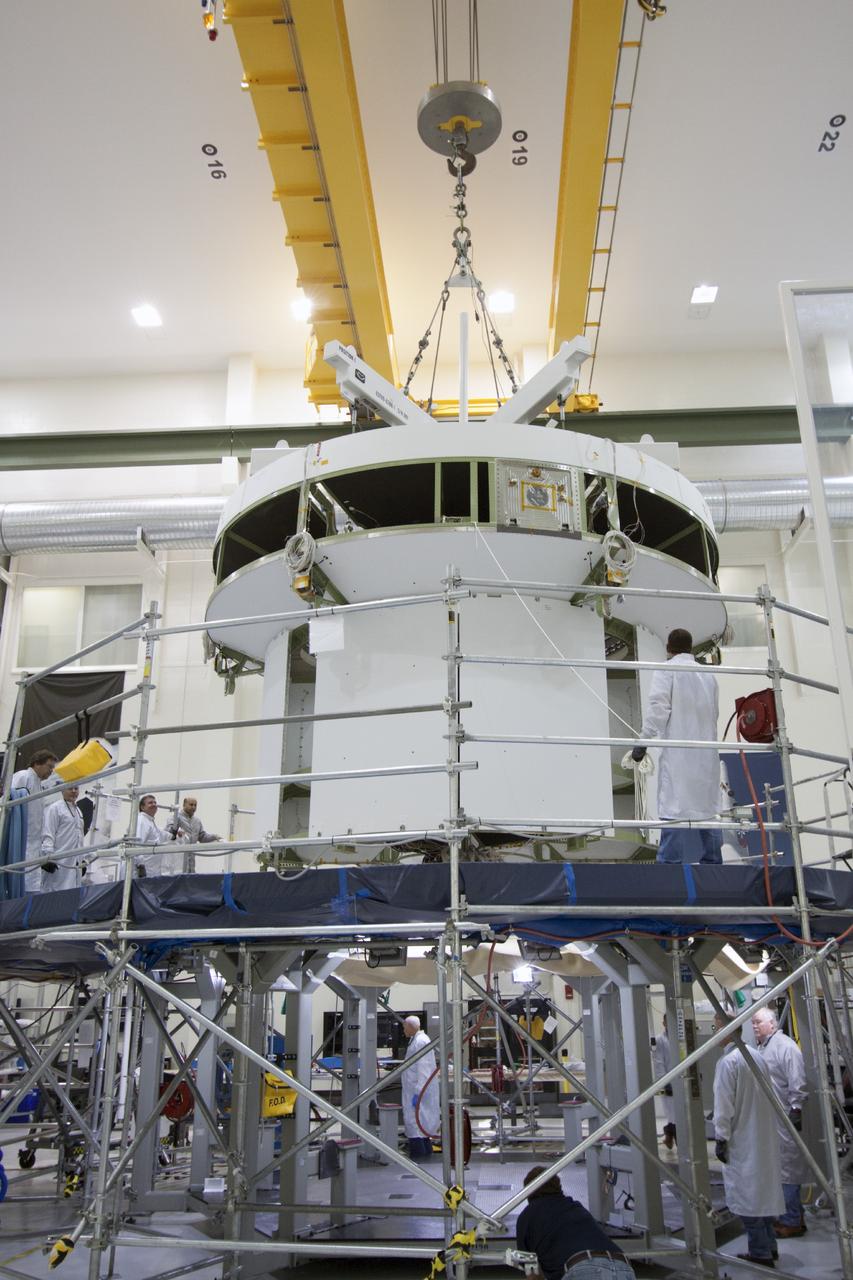
CAPE CANAVERAL, Fla. – Inside the Operations and Checkout Building high bay at NASA’s Kennedy Space Center in Florida, a crane is used to lift the service module for the Orion spacecraft from the tooling stand. The service module will be transferred to a lift station where it will be mated to the spacecraft adapter cone. Orion is the exploration spacecraft designed to carry astronauts to destinations not yet explored by humans, including an asteroid and Mars. It will have emergency abort capability, sustain the crew during space travel and provide safe re-entry from deep space return velocities. The first unpiloted test flight of the Orion is scheduled to launch in 2014 atop a Delta IV rocket and in 2017 on NASA’s Space Launch System rocket. For more information, visit http://www.nasa.gov/orion. Photo credit: NASA/Jim Grossmann
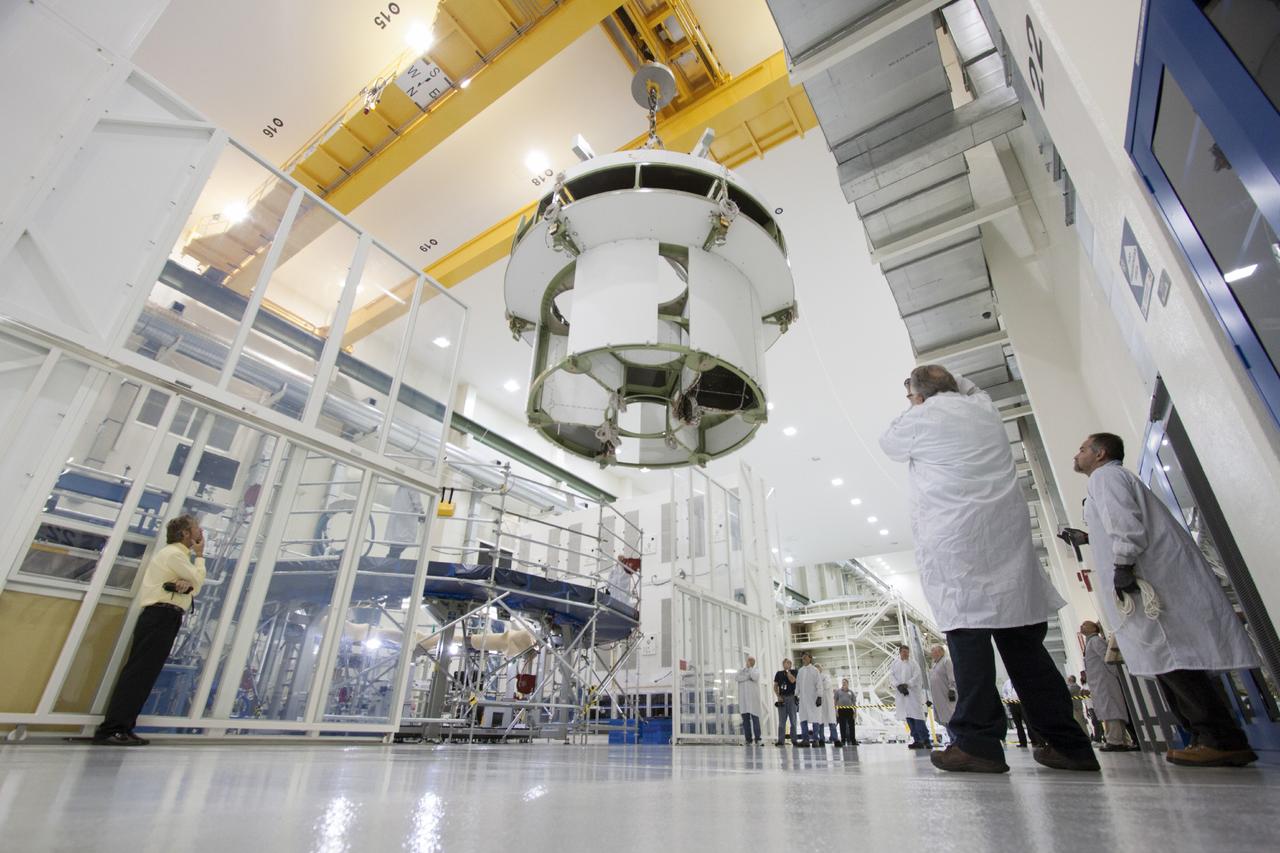
CAPE CANAVERAL, Fla. – Inside the Operations and Checkout Building high bay at NASA’s Kennedy Space Center in Florida, a crane is used to move the service module for the Orion spacecraft from the tooling stand. The service module will be transferred to a lift station where it will be mated to the spacecraft adapter cone. Orion is the exploration spacecraft designed to carry astronauts to destinations not yet explored by humans, including an asteroid and Mars. It will have emergency abort capability, sustain the crew during space travel and provide safe re-entry from deep space return velocities. The first unpiloted test flight of the Orion is scheduled to launch in 2014 atop a Delta IV rocket and in 2017 on NASA’s Space Launch System rocket. For more information, visit http://www.nasa.gov/orion. Photo credit: NASA/Jim Grossmann

CAPE CANAVERAL, Fla. – In the Operations and Checkout Building's high bay, technicians pick up one of the "skins" to apply to the outer mold of the simulator Orion crew module. Part of NASA's Constellation Program, the Orion spacecraft will return humans to the moon and prepare for future voyages to Mars and other destinations in our solar system. Orion is targeted to begin carrying humans to the International Space Station in 2015 and to the moon by 2020. Photo credit: NASA/Kim Shiflett
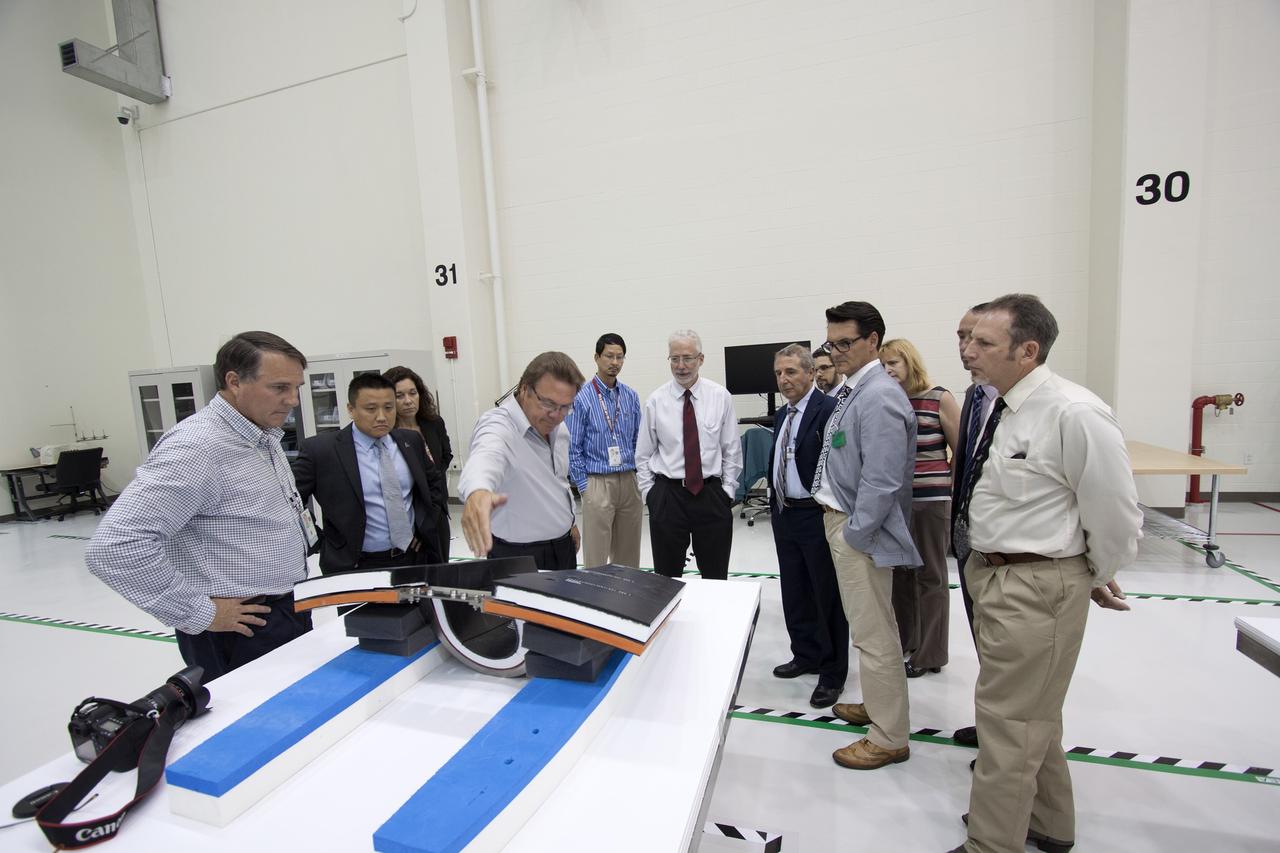
CAPE CANAVERAL, Fla. – Representatives from the European Space Agency, or ESA, toured the Operations and Checkout Building high bay at NASA’s Kennedy Space Center in Florida. Pointing at thermal protection system tiles is Jules Schneider, Lockheed Martin senior manager. At right, in the blue suit, is Bernardo Patti, ESA manager of International Space Station Operations. Standing next to Patti is Nico Dettman, ESA Space Transportation Department director. Orion is the exploration spacecraft designed to carry crews to space beyond low Earth orbit. It will provide emergency abort capability, sustain the crew during the space travel and provide safe re-entry from deep space return velocities. Orion’s first unpiloted test flight is scheduled to launch in 2014 atop a Delta IV rocket. A second uncrewed flight test is scheduled for 2017 on NASA’s Space Launch System rocket. For more information, visit http://www.nasa.gov/orion. Photo credit: NASA/Jim Grossmann

CAPE CANAVERAL, Fla. – In the Operations and Checkout Building's high bay, "skins" are being applied to the outer mold of the simulator Orion crew module. Part of NASA's Constellation Program, the Orion spacecraft will return humans to the moon and prepare for future voyages to Mars and other destinations in our solar system. Orion is targeted to begin carrying humans to the International Space Station in 2015 and to the moon by 2020. Photo credit: NASA/Kim Shiflett

CAPE CANAVERAL, Fla. – In the Operations and Checkout Building's high bay, technicians are preparing to start testing how to put the "skins" on the outer mold of the simulator Orion crew module. Part of NASA's Constellation Program, the Orion spacecraft will return humans to the moon and prepare for future voyages to Mars and other destinations in our solar system. Orion is targeted to begin carrying humans to the International Space Station in 2015 and to the moon by 2020. Photo credit: NASA/Kim Shiflett
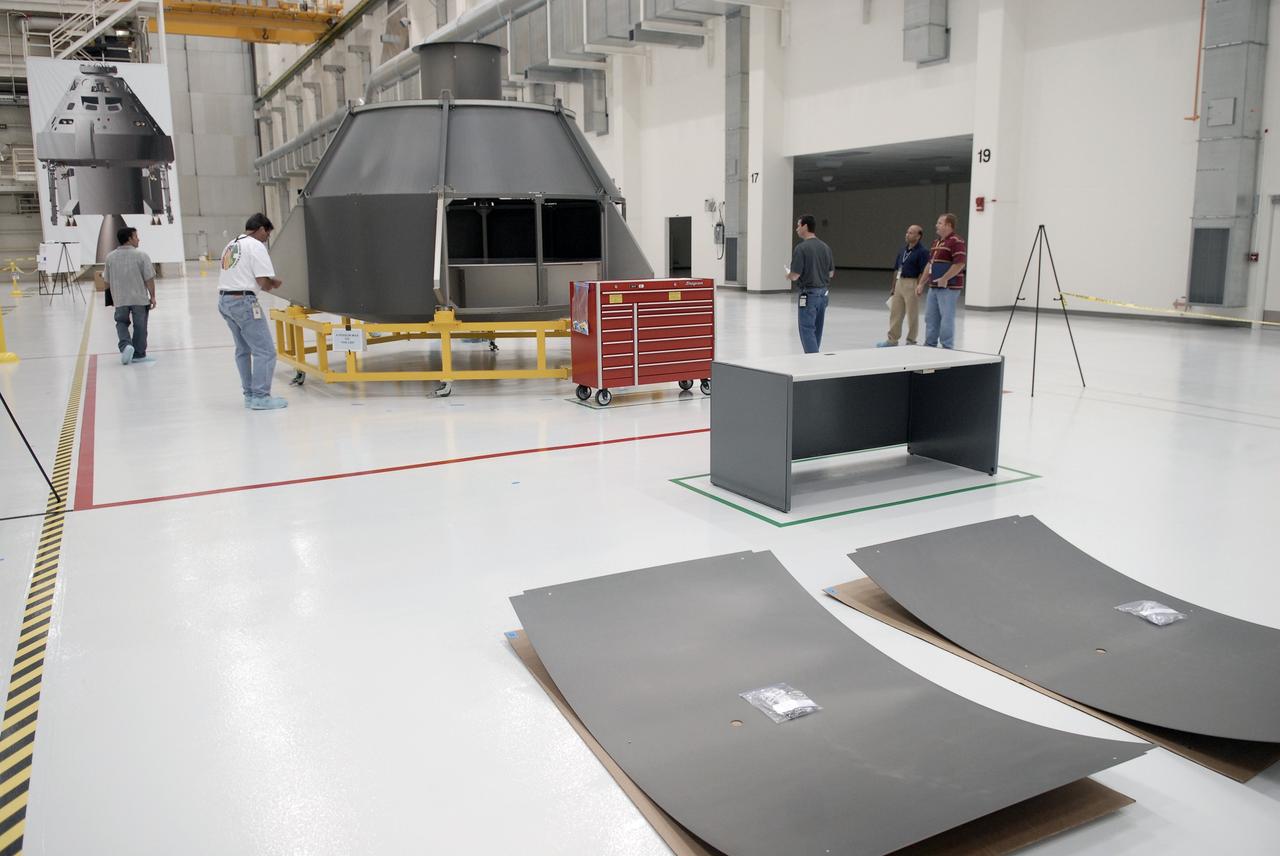
CAPE CANAVERAL, Fla. – In the Operations and Checkout Building's high bay, technicians begin testing how to put the "skins" on the outer mold of the simulator Orion crew module.Part of NASA's Constellation Program, the Orion spacecraft will return humans to the moon and prepare for future voyages to Mars and other destinations in our solar system. Orion is targeted to begin carrying humans to the International Space Station in 2015 and to the moon by 2020. Photo credit: NASA/Kim Shiflett
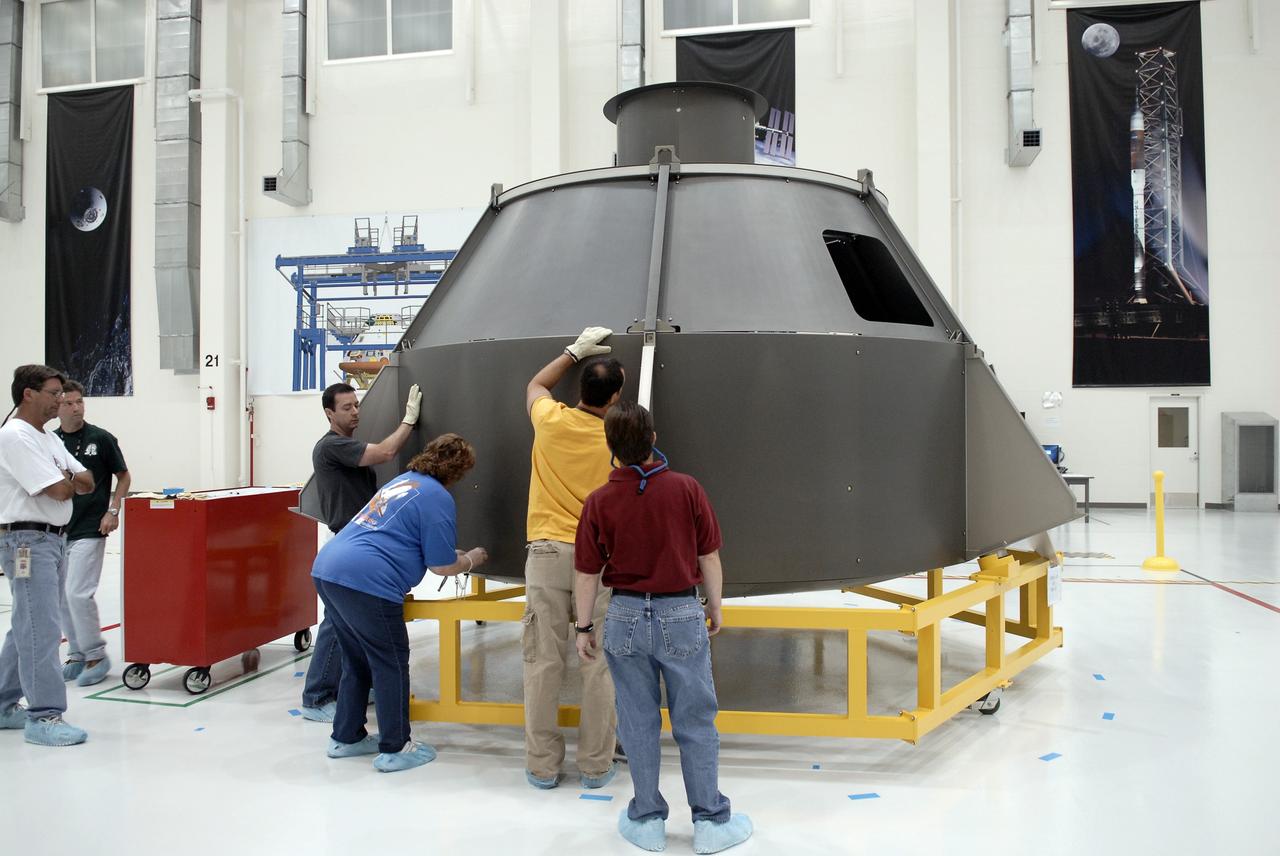
CAPE CANAVERAL, Fla. – In the Operations and Checkout Building's high bay, technicians test how to put the "skins" on the outer mold of the simulator Orion crew module. Part of NASA's Constellation Program, the Orion spacecraft will return humans to the moon and prepare for future voyages to Mars and other destinations in our solar system. Orion is targeted to begin carrying humans to the International Space Station in 2015 and to the moon by 2020. Photo credit: NASA/Kim Shiflett
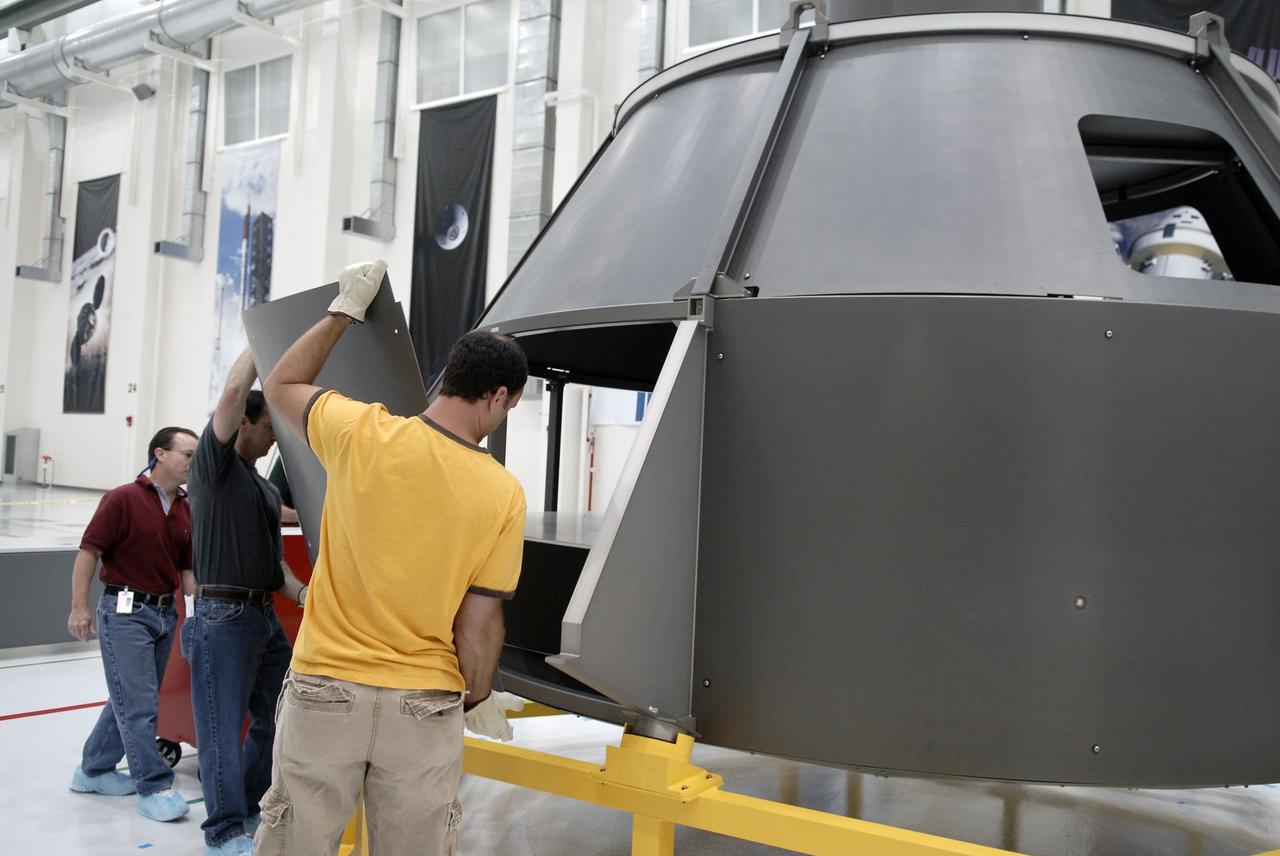
CAPE CANAVERAL, Fla. – In the Operations and Checkout Building's high bay, technicians test how to put the "skins" on the outer mold of the simulator Orion crew module. Part of NASA's Constellation Program, the Orion spacecraft will return humans to the moon and prepare for future voyages to Mars and other destinations in our solar system. Orion is targeted to begin carrying humans to the International Space Station in 2015 and to the moon by 2020. Photo credit: NASA/Kim Shiflett
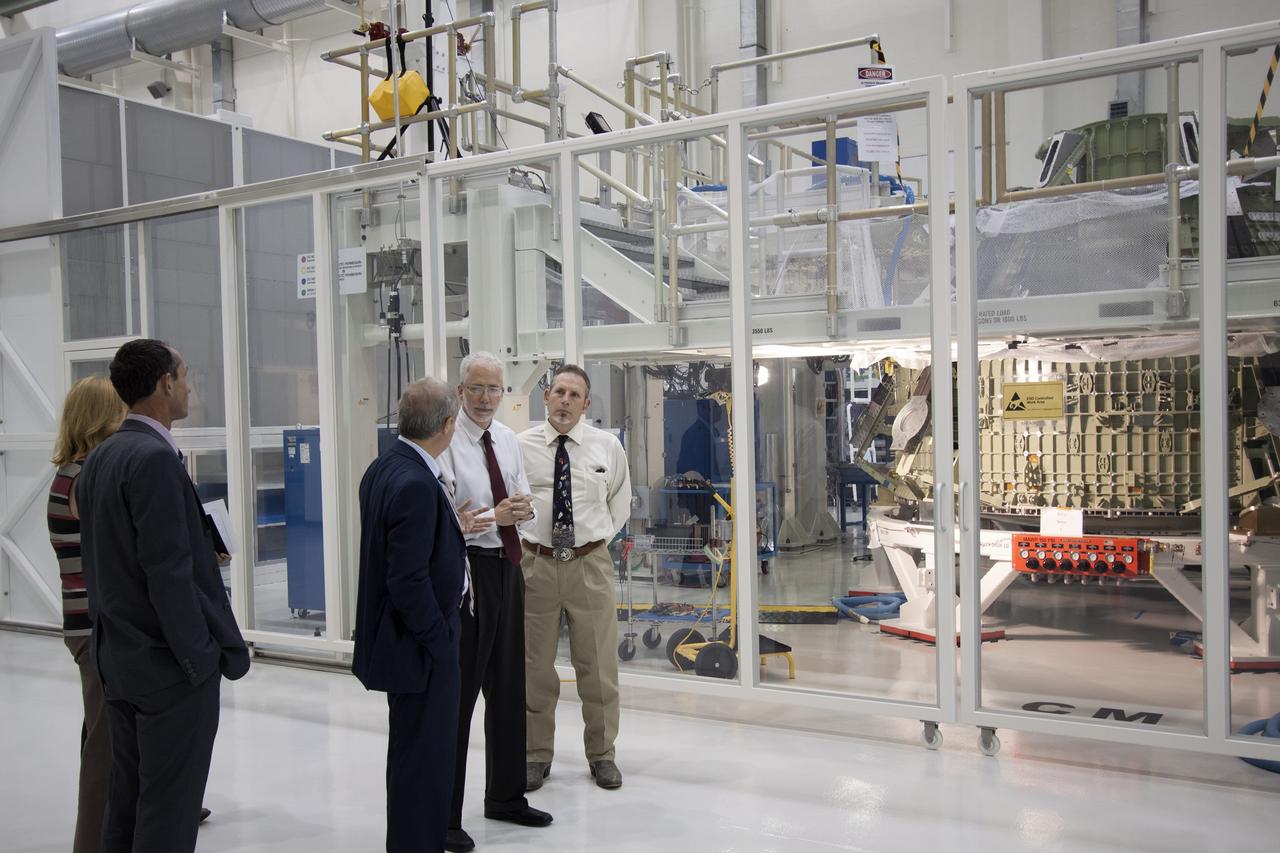
CAPE CANAVERAL, Fla. – Representatives from the European Space Agency, or ESA, toured the Operations and Checkout Building high bay and viewed the Orion crew module at NASA’s Kennedy Space Center in Florida. From the left, are Philippe Deloo, ESA European Service Module Study manager Kathleen Schubert, NASA crew and service module deputy manager Bernardo Patti, ESA manager of International Space Station Operations Mark Geyer, NASA Orion program manager and Ari Blum, NASA export administrator at Johnson Space Center in Houston. Orion is the exploration spacecraft designed to carry crews to space beyond low Earth orbit. It will provide emergency abort capability, sustain the crew during the space travel and provide safe re-entry from deep space return velocities. Orion’s first unpiloted test flight is scheduled to launch in 2014 atop a Delta IV rocket. A second uncrewed flight test is scheduled for 2017 on NASA’s Space Launch System rocket. For more information, visit http://www.nasa.gov/orion. Photo credit: NASA/Jim Grossmann
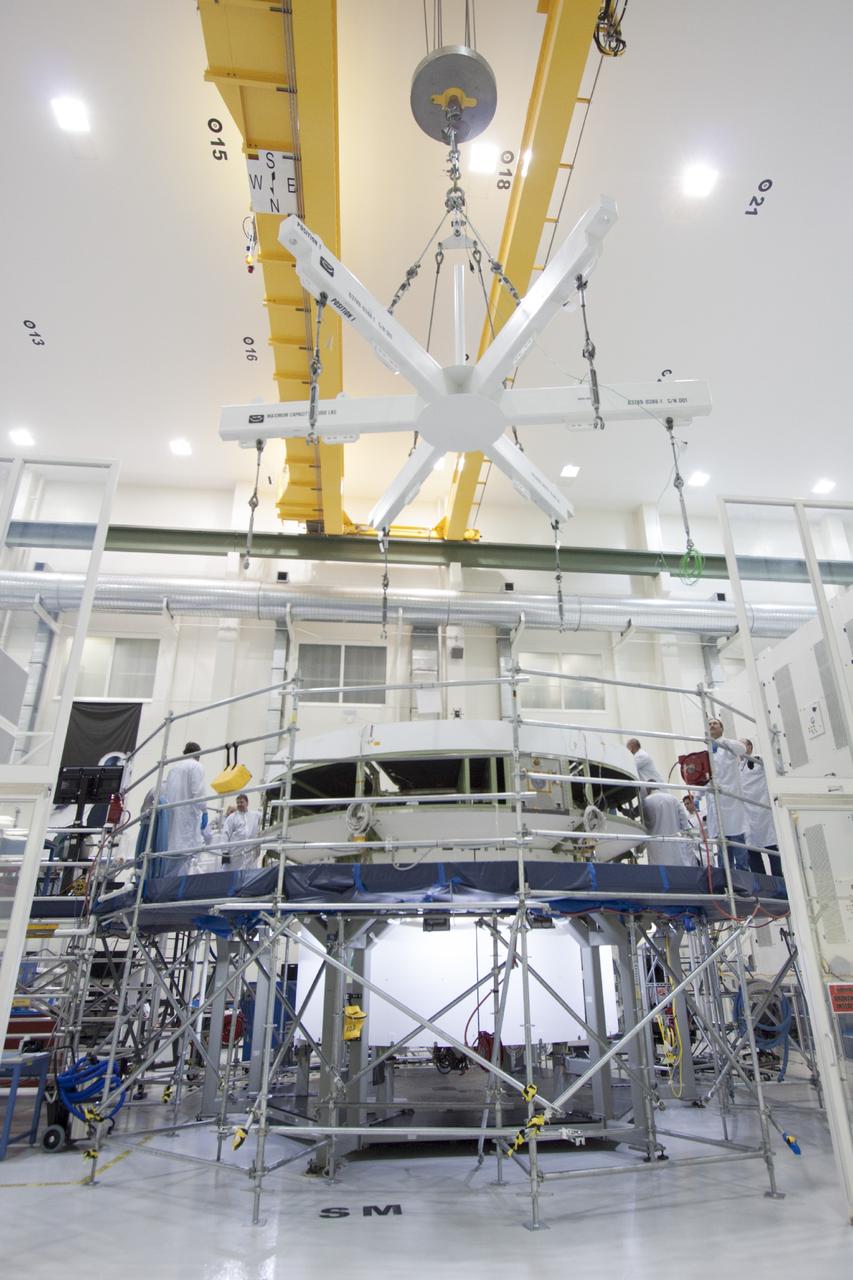
CAPE CANAVERAL, Fla. – Inside the Operations and Checkout Building high bay at NASA’s Kennedy Space Center in Florida, a lifting crane is lowered toward the service module for the Orion spacecraft. The service module will be transferred from the tooling stand onto a lift station where it will be mated to the spacecraft adapter cone. Orion is the exploration spacecraft designed to carry astronauts to destinations not yet explored by humans, including an asteroid and Mars. It will have emergency abort capability, sustain the crew during space travel and provide safe re-entry from deep space return velocities. The first unpiloted test flight of the Orion is scheduled to launch in 2014 atop a Delta IV rocket and in 2017 on NASA’s Space Launch System rocket. For more information, visit http://www.nasa.gov/orion. Photo credit: NASA/Jim Grossmann
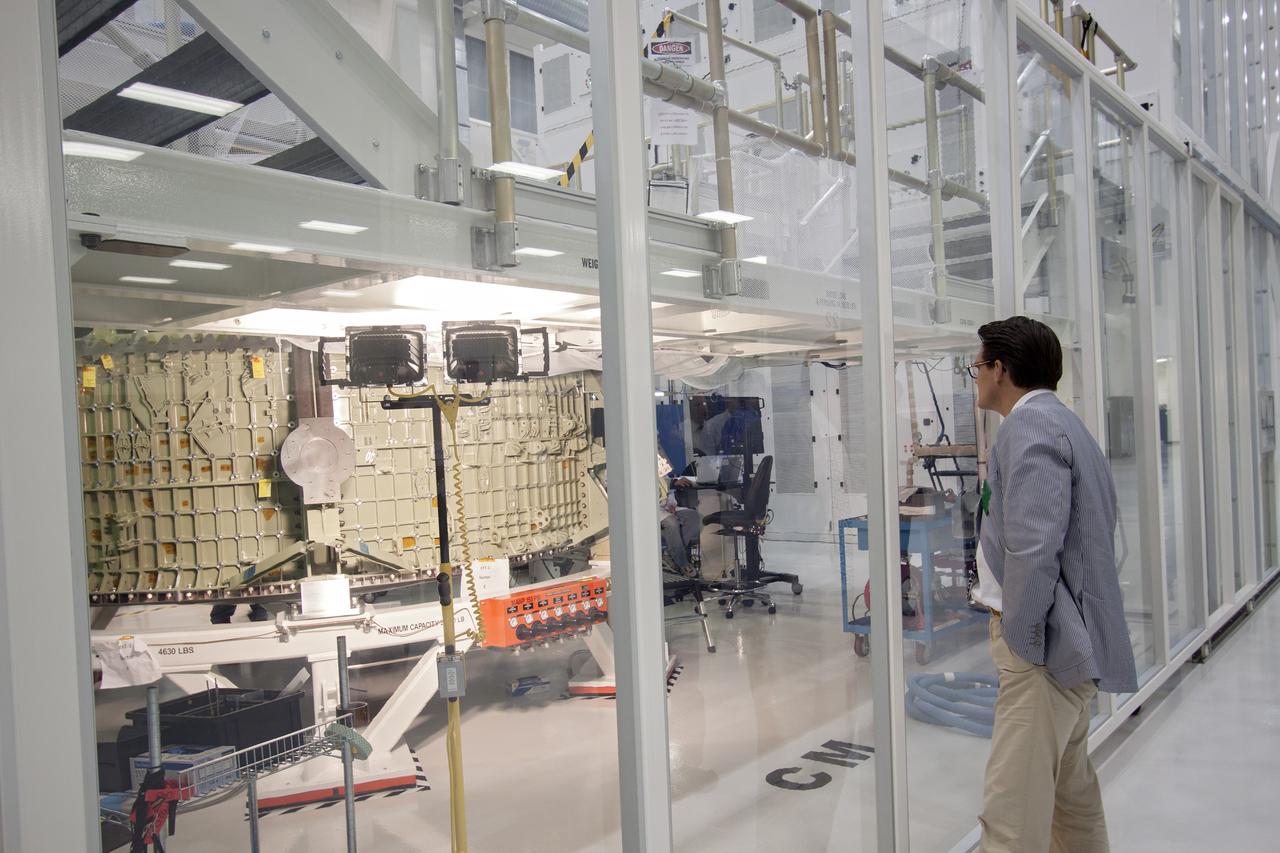
CAPE CANAVERAL, Fla. – Representatives from the European Space Agency, or ESA, including Nico Dettman, ESA Space Transportation Department director, toured the Operations and Checkout Building high bay and viewed the Orion crew module at NASA’s Kennedy Space Center in Florida. Orion is the exploration spacecraft designed to carry crews to space beyond low Earth orbit. It will provide emergency abort capability, sustain the crew during the space travel and provide safe re-entry from deep space return velocities. Orion’s first unpiloted test flight is scheduled to launch in 2014 atop a Delta IV rocket. A second uncrewed flight test is scheduled for 2017 on NASA’s Space Launch System rocket. For more information, visit http://www.nasa.gov/orion. Photo credit: NASA/Jim Grossmann
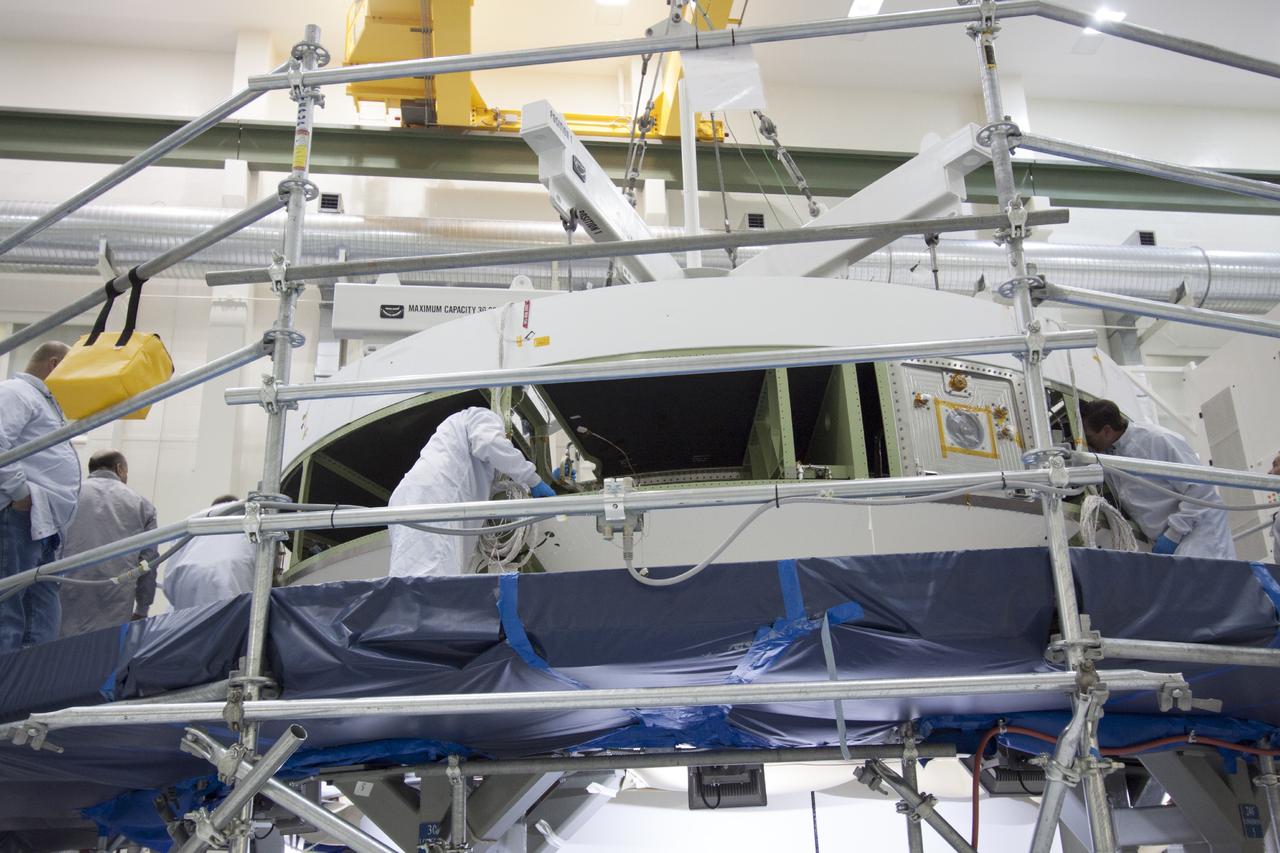
CAPE CANAVERAL, Fla. – Inside the Operations and Checkout Building high bay at NASA’s Kennedy Space Center in Florida, technicians check to make sure the service module for the Orion spacecraft is secured to the lifting crane. The service module will be transferred from the tooling stand onto a lift station where it will be mated to the spacecraft adapter cone. Orion is the exploration spacecraft designed to carry astronauts to destinations not yet explored by humans, including an asteroid and Mars. It will have emergency abort capability, sustain the crew during space travel and provide safe re-entry from deep space return velocities. The first unpiloted test flight of the Orion is scheduled to launch in 2014 atop a Delta IV rocket and in 2017 on NASA’s Space Launch System rocket. For more information, visit http://www.nasa.gov/orion. Photo credit: NASA/Jim Grossmann