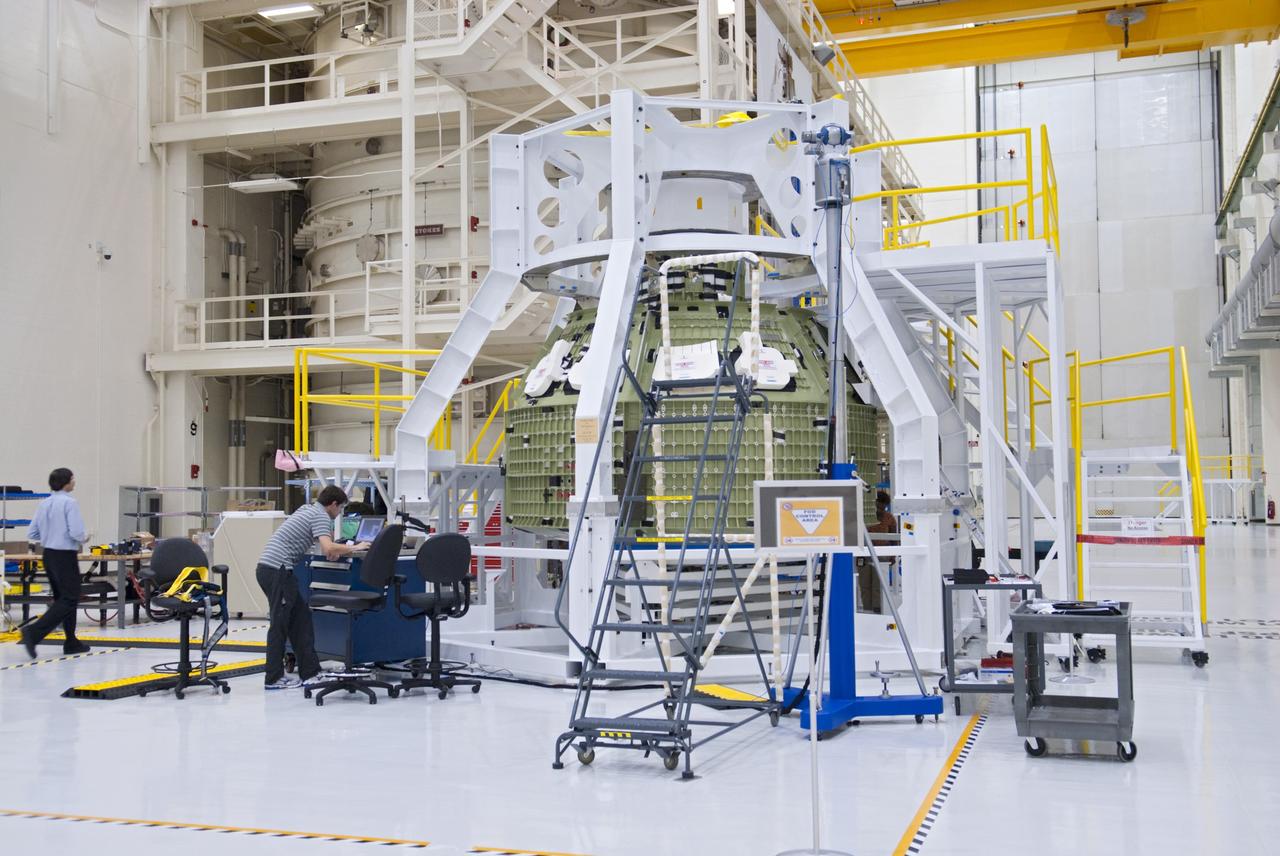
CAPE CANAVERAL, Fla. – Inside the Operations and Checkout Building at NASA’s Kennedy Space Center in Florida, a birdcage tool along with work platforms have been placed around the Orion Exploration Flight Test 1 crew module. The birdcage will be used to continue installation of external components in preparation for Orion’s first uncrewed test flight in 2014 atop a Delta IV rocket. Orion is the exploration spacecraft designed to carry crews to space beyond low Earth orbit. It will provide emergency abort capability, sustain the crew during the space travel and provide safe re-entry from deep space return velocities. A second uncrewed flight test is scheduled for 2017 on NASA’s Space Launch System rocket. For more information, visit http://www.nasa.gov/orion. Photo credit: NASA/Charisse Nahser
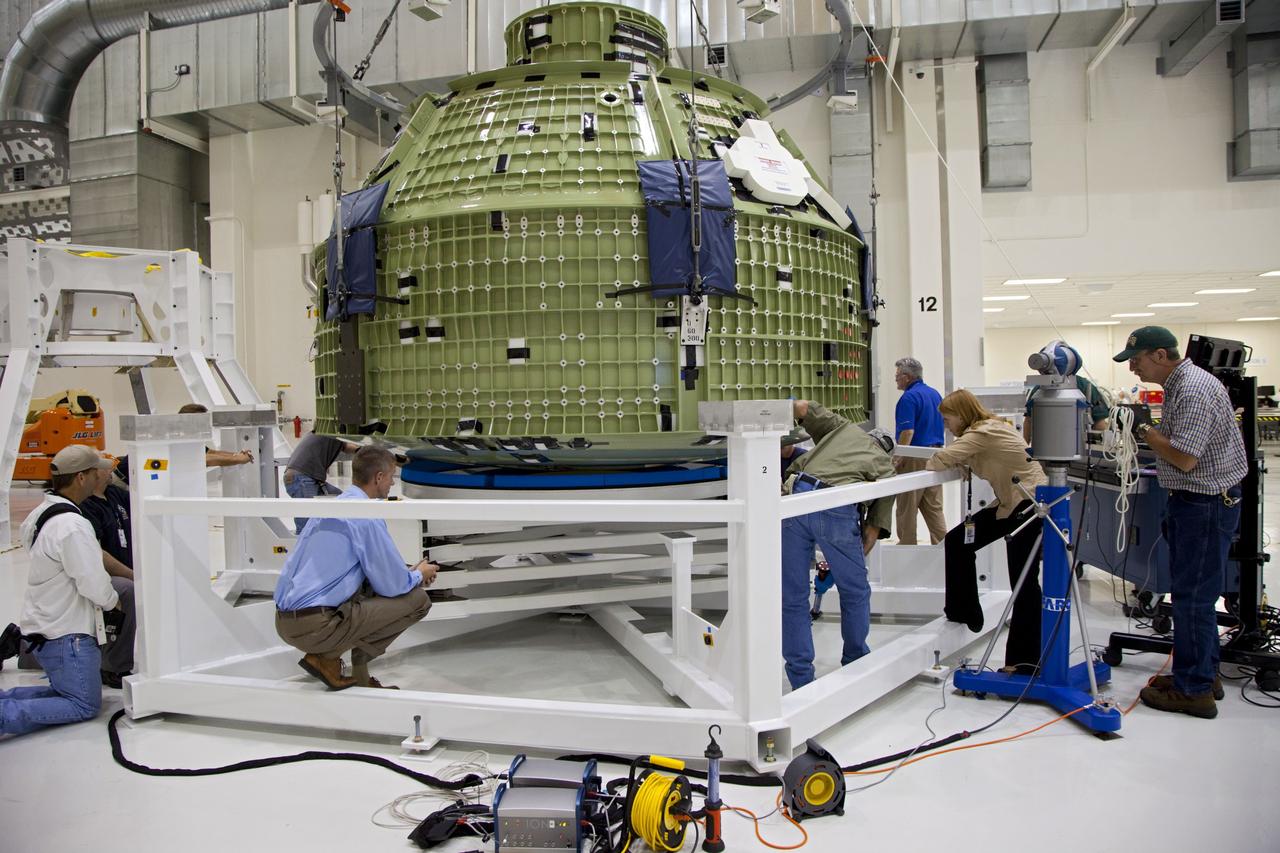
CAPE CANAVERAL, Fla. – Inside the Operations and Checkout Building at NASA’s Kennedy Space Center in Florida, technicians provide assistance as a crane lowers the Orion Exploration Flight Test 1 crew module onto the base of a birdcage tool. The birdcage will be used to continue installation of external components in preparation for Orion’s first uncrewed test flight in 2014 atop a Delta IV rocket. Orion is the exploration spacecraft designed to carry crews to space beyond low Earth orbit. It will provide emergency abort capability, sustain the crew during the space travel and provide safe re-entry from deep space return velocities. A second uncrewed flight test is scheduled for 2017 on NASA’s Space Launch System rocket. For more information, visit http://www.nasa.gov/orion. Photo credit: NASA/Kim Shiflett
CAPE CANAVERAL, Fla. – Inside the Operations and Checkout Building at NASA’s Kennedy Space Center in Florida, technicians monitor the progress as a crane is used to move the Orion Exploration Flight Test 1 crew module to the base of a birdcage tool. The birdcage will be used to continue installation of external components in preparation for Orion’s first uncrewed test flight in 2014 atop a Delta IV rocket. Orion is the exploration spacecraft designed to carry crews to space beyond low Earth orbit. It will provide emergency abort capability, sustain the crew during the space travel and provide safe re-entry from deep space return velocities. A second uncrewed flight test is scheduled for 2017 on NASA’s Space Launch System rocket. For more information, visit http://www.nasa.gov/orion. Photo credit: NASA/Kim Shiflett
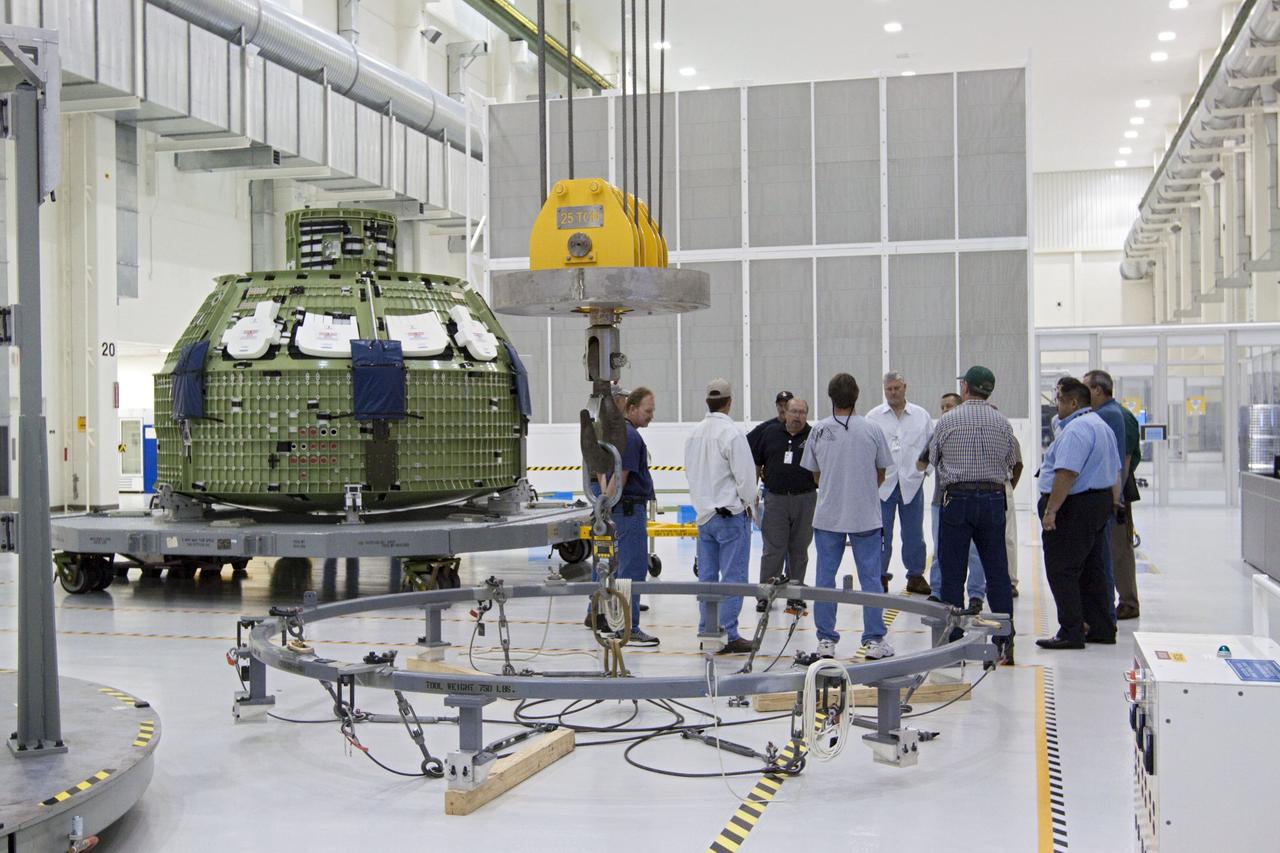
CAPE CANAVERAL, Fla. – Inside the Operations and Checkout Building high bay at NASA’s Kennedy Space Center in Florida, workers meet to go over the details for lifting and moving the Orion Exploration Flight Test 1 crew module on to the base of a birdcage tool. The birdcage will be used to continue installation of external components in preparation for Orion’s first uncrewed test flight in 2014 atop a Delta IV rocket. Orion is the exploration spacecraft designed to carry crews to space beyond low Earth orbit. It will provide emergency abort capability, sustain the crew during the space travel and provide safe re-entry from deep space return velocities. A second uncrewed flight test is scheduled for 2017 on NASA’s Space Launch System rocket. For more information, visit http://www.nasa.gov/orion. Photo credit: NASA/Kim Shiflett

CAPE CANAVERAL, Fla. – Inside the Operations and Checkout Building at NASA’s Kennedy Space Center in Florida, a birdcage tool along with work platforms have been placed around the Orion Exploration Flight Test 1 crew module. The birdcage will be used to continue installation of external components in preparation for Orion’s first uncrewed test flight in 2014 atop a Delta IV rocket. Orion is the exploration spacecraft designed to carry crews to space beyond low Earth orbit. It will provide emergency abort capability, sustain the crew during the space travel and provide safe re-entry from deep space return velocities. A second uncrewed flight test is scheduled for 2017 on NASA’s Space Launch System rocket. For more information, visit http://www.nasa.gov/orion. Photo credit: NASA/Charisse Nahser
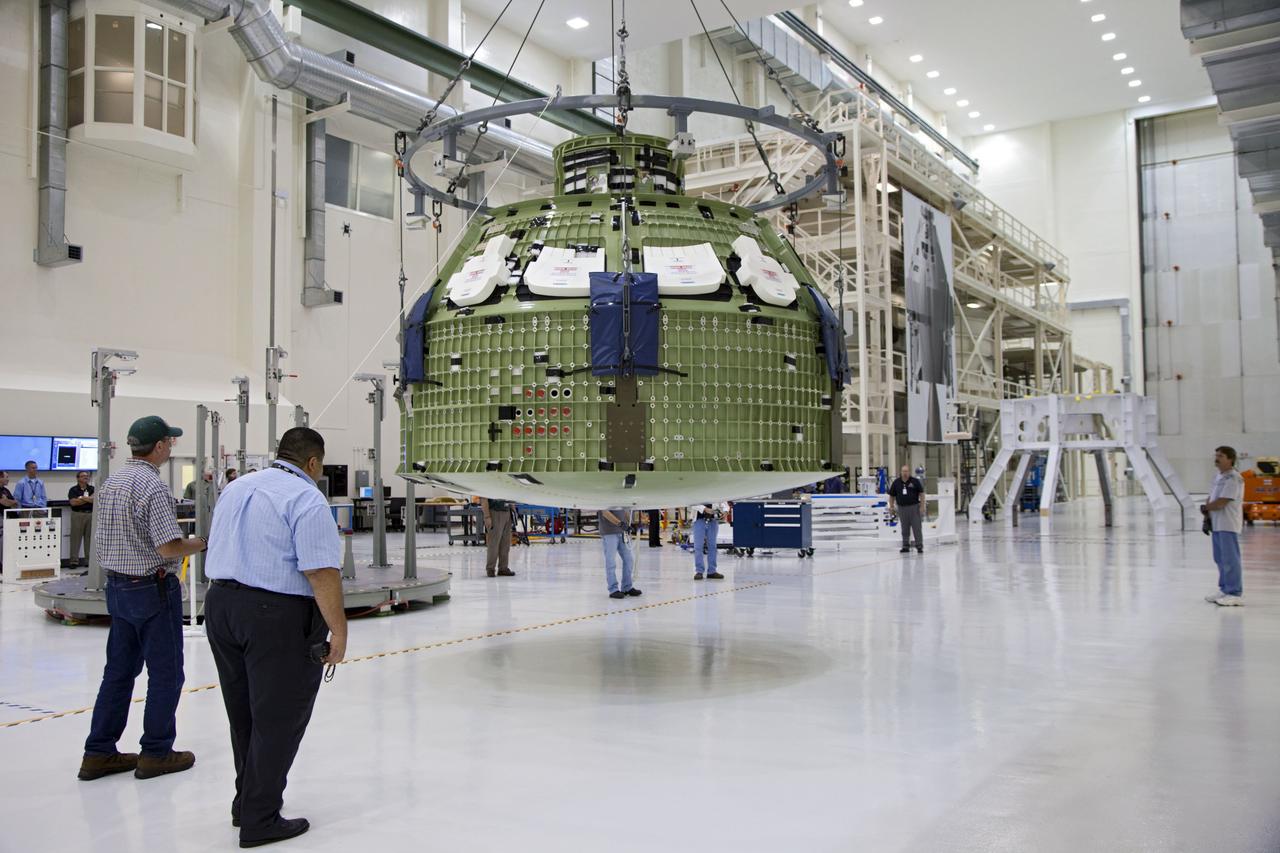
CAPE CANAVERAL, Fla. – Inside the Operations and Checkout Building at NASA’s Kennedy Space Center in Florida, technicians monitor the progress as a crane is used to move the Orion Exploration Flight Test 1 crew module to the base of a birdcage tool. The birdcage will be used to continue installation of external components in preparation for Orion’s first uncrewed test flight in 2014 atop a Delta IV rocket. Orion is the exploration spacecraft designed to carry crews to space beyond low Earth orbit. It will provide emergency abort capability, sustain the crew during the space travel and provide safe re-entry from deep space return velocities. A second uncrewed flight test is scheduled for 2017 on NASA’s Space Launch System rocket. For more information, visit http://www.nasa.gov/orion. Photo credit: NASA/Kim Shiflett
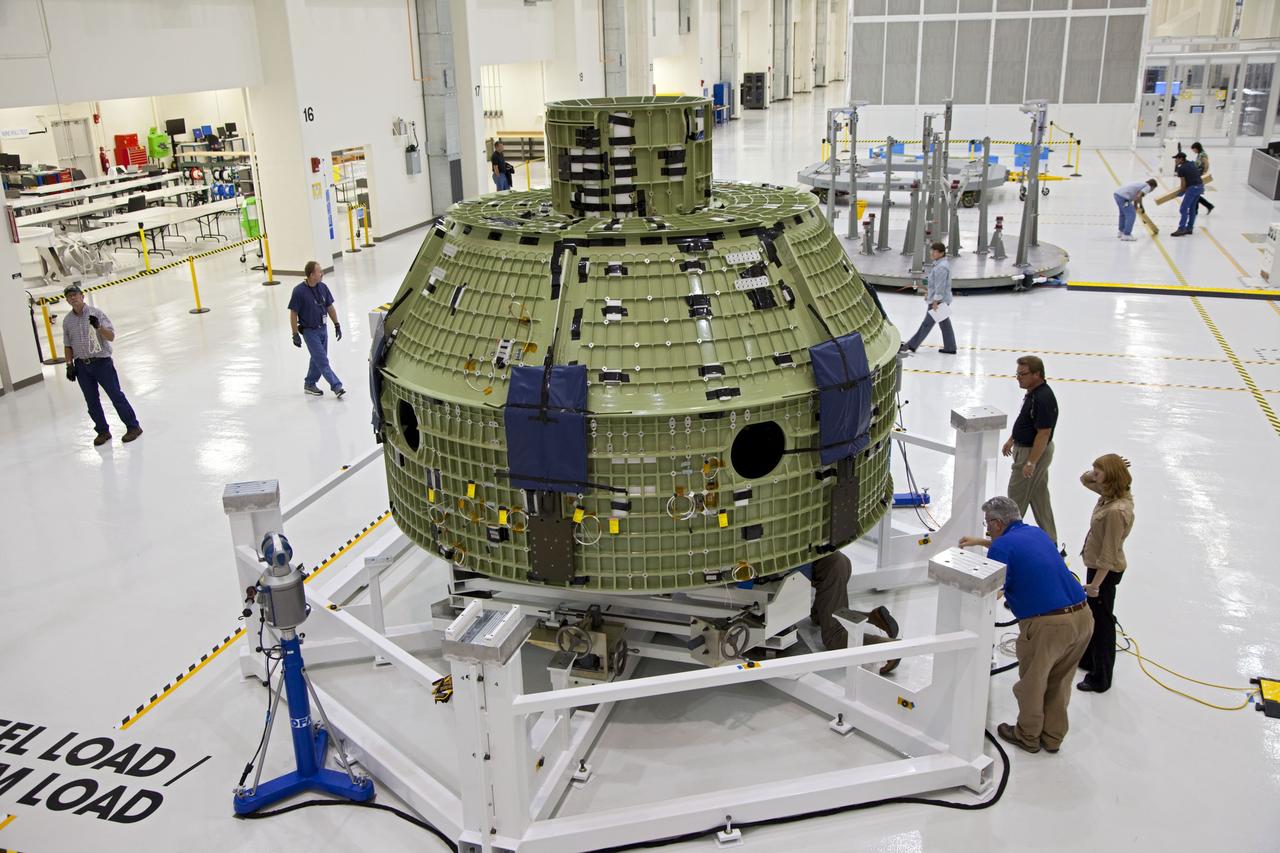
CAPE CANAVERAL, Fla. – Inside the Operations and Checkout Building at NASA’s Kennedy Space Center in Florida, the Orion Exploration Flight Test 1 crew module has been moved onto the base of a birdcage tool. The birdcage will be used to continue installation of external components in preparation for Orion’s first uncrewed test flight in 2014 atop a Delta IV rocket. Orion is the exploration spacecraft designed to carry crews to space beyond low Earth orbit. It will provide emergency abort capability, sustain the crew during the space travel and provide safe re-entry from deep space return velocities. A second uncrewed flight test is scheduled for 2017 on NASA’s Space Launch System rocket. For more information, visit http://www.nasa.gov/orion. Photo credit: NASA/Kim Shiflett
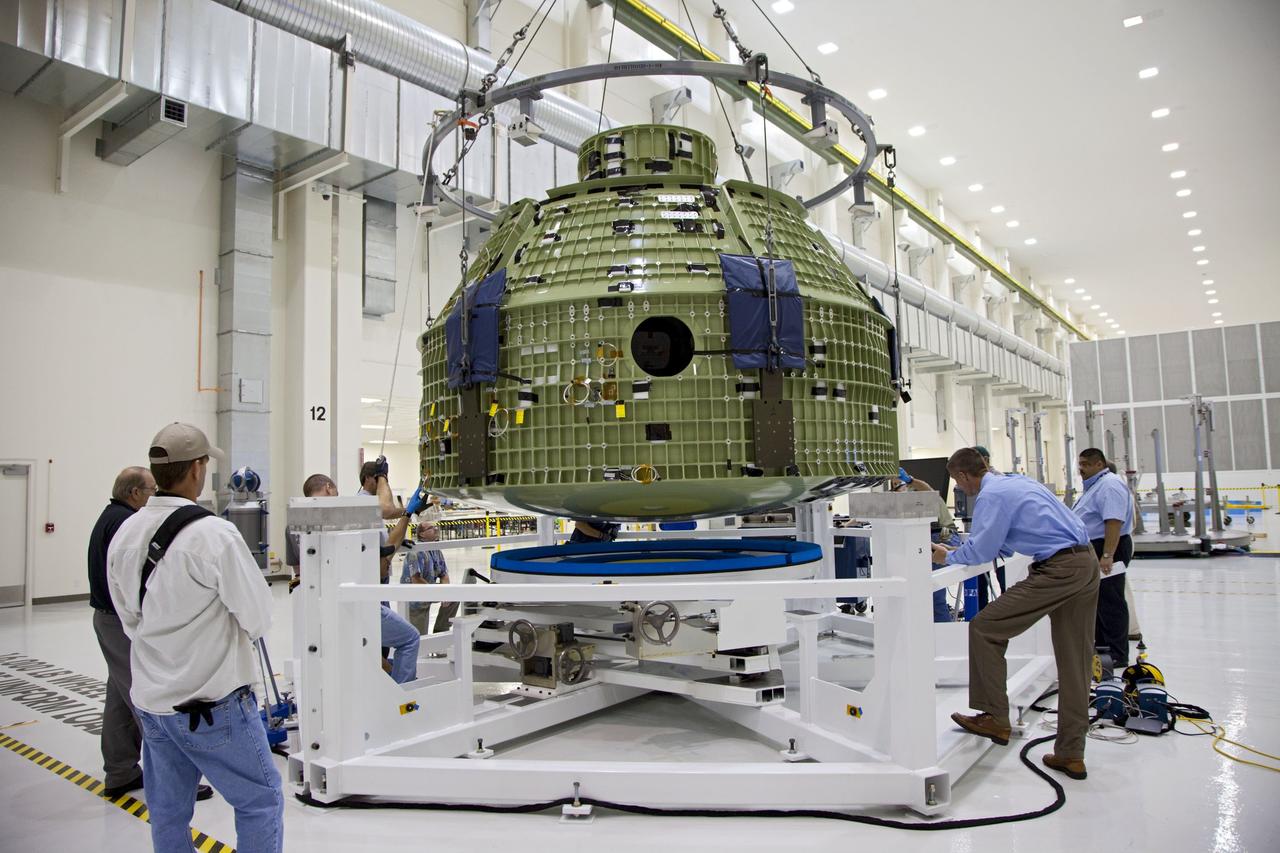
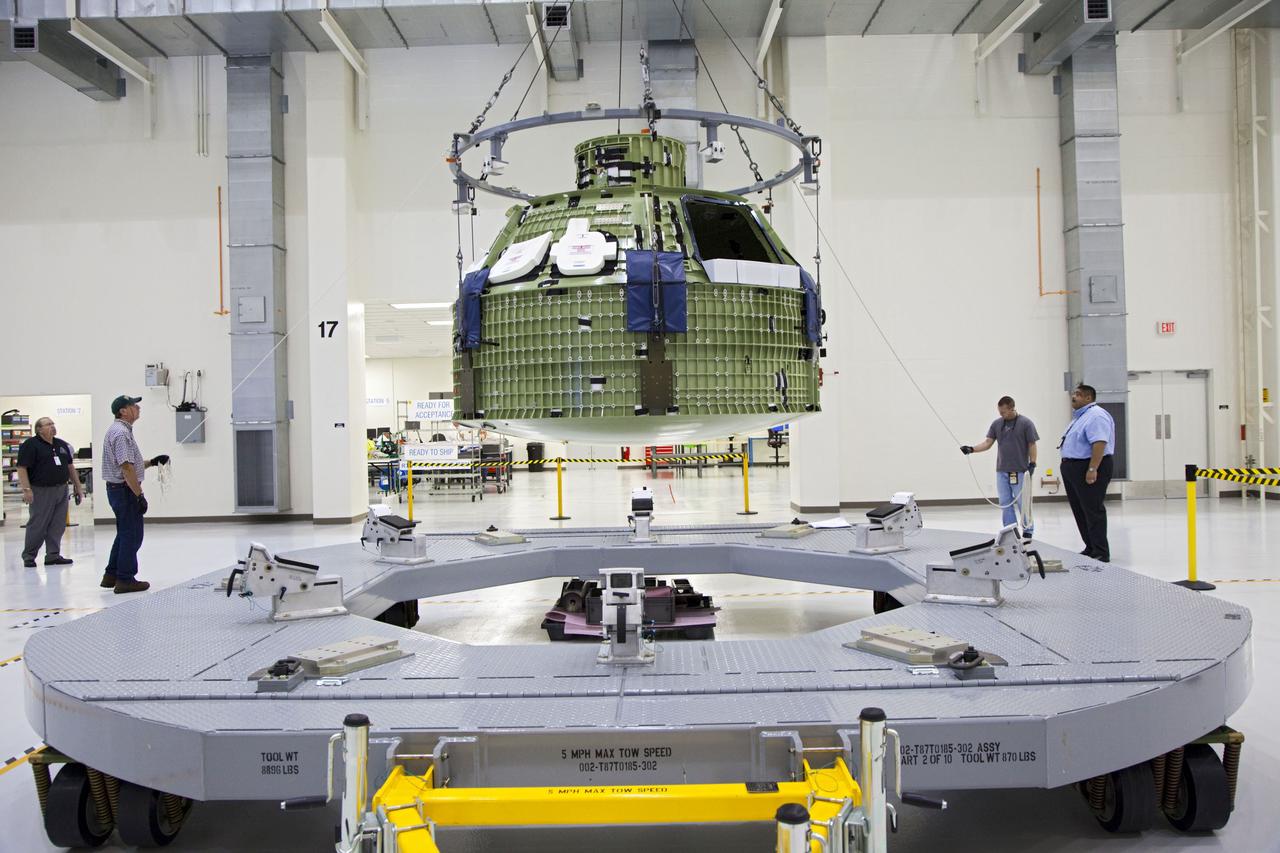
CAPE CANAVERAL, Fla. – Inside the Operations and Checkout Building at NASA’s Kennedy Space Center in Florida, technicians monitor the progress as a crane lowers the Orion Exploration Flight Test 1 crew module toward the base of a birdcage tool. The birdcage will be used to continue installation of external components in preparation for Orion’s first uncrewed test flight in 2014 atop a Delta IV rocket. Orion is the exploration spacecraft designed to carry crews to space beyond low Earth orbit. It will provide emergency abort capability, sustain the crew during the space travel and provide safe re-entry from deep space return velocities. A second uncrewed flight test is scheduled for 2017 on NASA’s Space Launch System rocket. For more information, visit http://www.nasa.gov/orion. Photo credit: NASA/Kim Shiflett
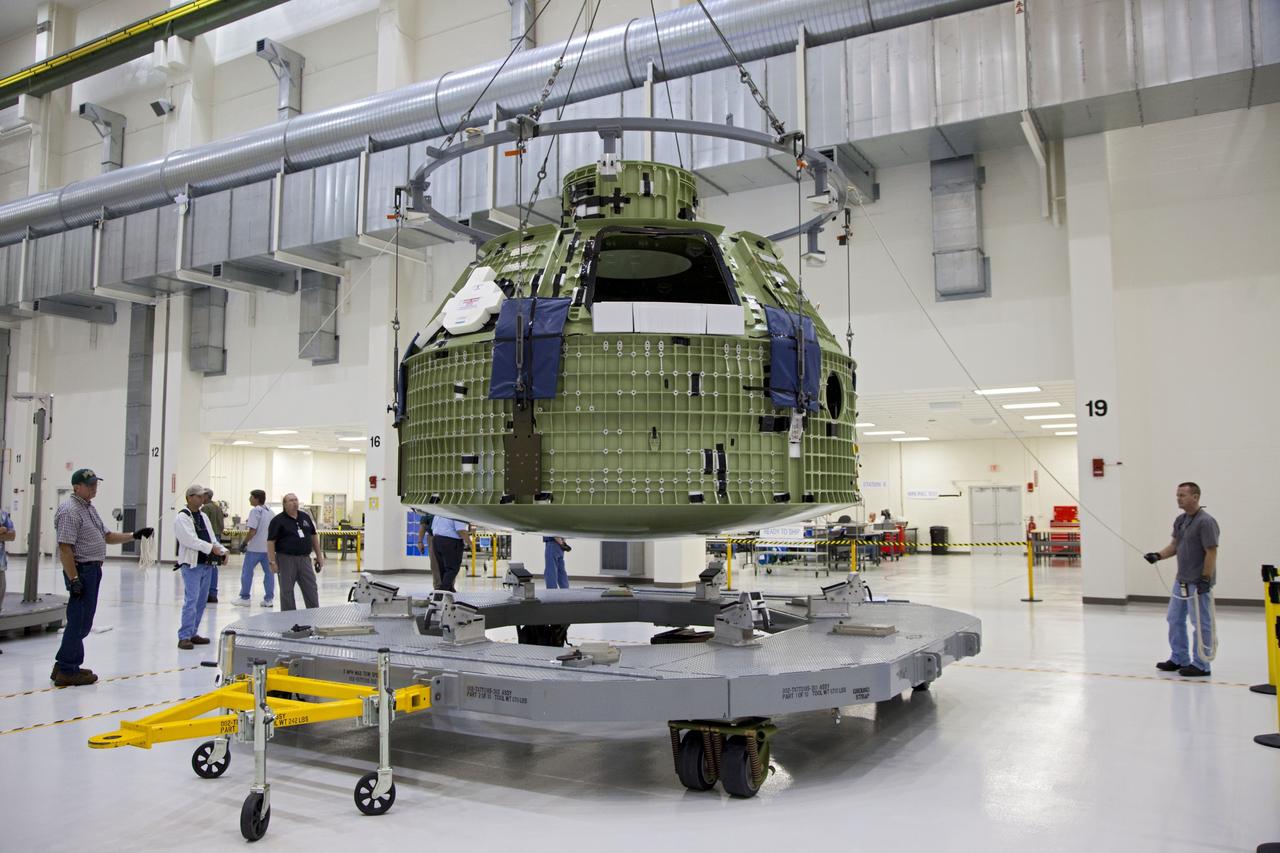
CAPE CANAVERAL, Fla. –Inside the Operations and Checkout Building at NASA’s Kennedy Space Center in Florida, technicians monitor the progress as a crane begins to lift the Orion Exploration Flight Test 1 crew module so that it can be moved to the base of a birdcage tool. The birdcage will be used to continue installation of external components in preparation for Orion’s first uncrewed test flight in 2014 atop a Delta IV rocket. Orion is the exploration spacecraft designed to carry crews to space beyond low Earth orbit. It will provide emergency abort capability, sustain the crew during the space travel and provide safe re-entry from deep space return velocities. A second uncrewed flight test is scheduled for 2017 on NASA’s Space Launch System rocket. For more information, visit http://www.nasa.gov/orion. Photo credit: NASA/Kim Shiflett
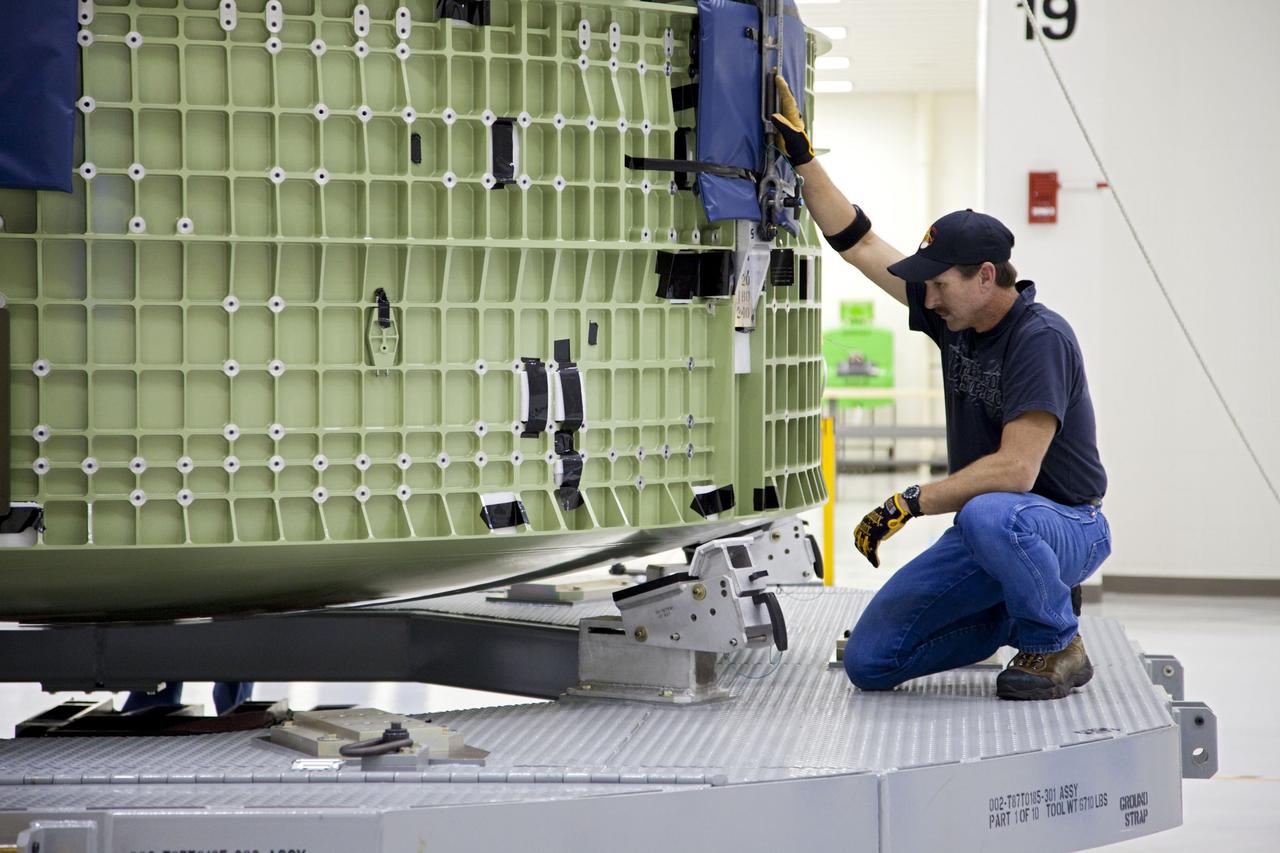
CAPE CANAVERAL, Fla. – Inside the Operations and Checkout Building high bay at NASA’s Kennedy Space Center in Florida, a technician attaches a crane to the Orion Exploration Flight Test 1 crew module so that it can be moved to the base of a birdcage tool. The birdcage will be used to continue installation of external components in preparation for Orion’s first uncrewed test flight in 2014 atop a Delta IV rocket. Orion is the exploration spacecraft designed to carry crews to space beyond low Earth orbit. It will provide emergency abort capability, sustain the crew during the space travel and provide safe re-entry from deep space return velocities. A second uncrewed flight test is scheduled for 2017 on NASA’s Space Launch System rocket. For more information, visit http://www.nasa.gov/orion. Photo credit: NASA/Kim Shiflett
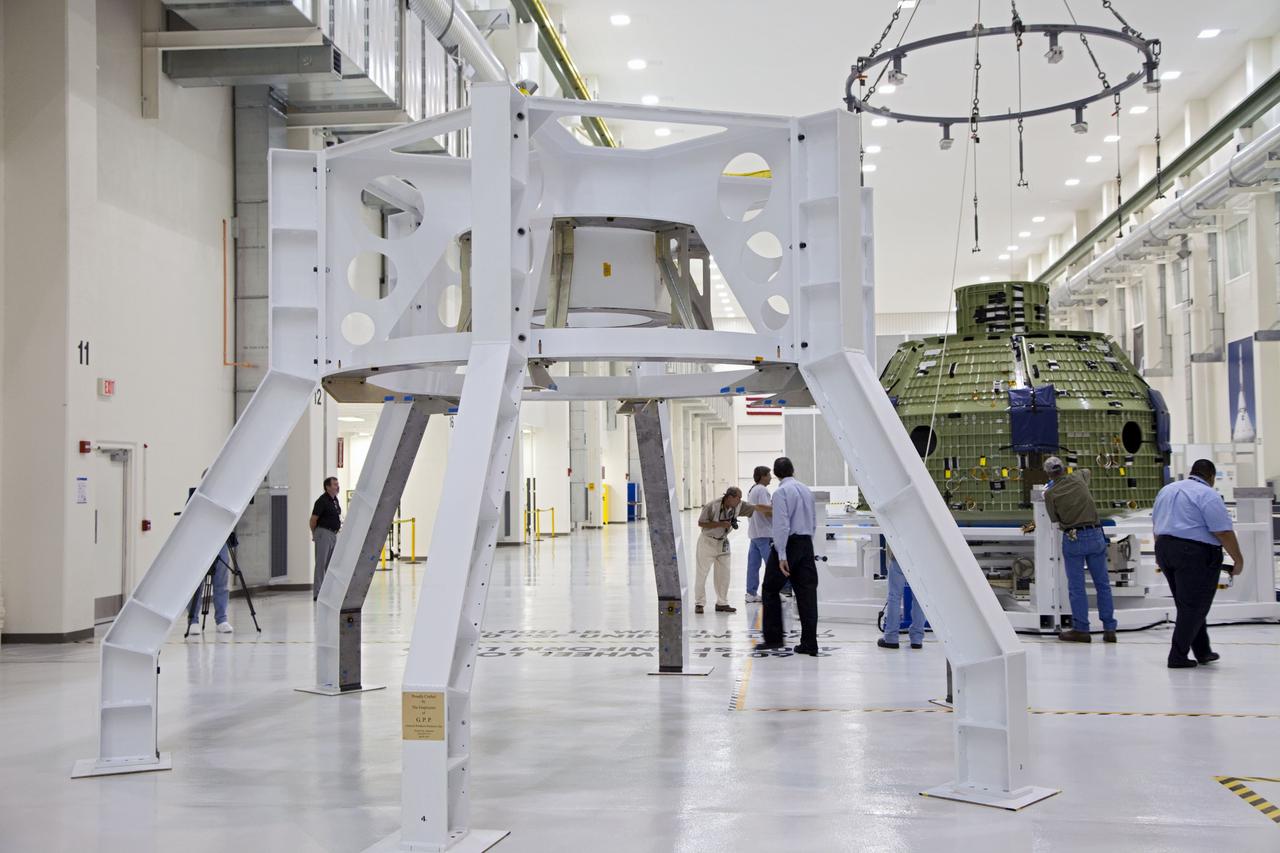
CAPE CANAVERAL, Fla. – Inside the Operations and Checkout Building at NASA’s Kennedy Space Center in Florida, technicians provide assistance as a crane lowers the Orion Exploration Flight Test 1 crew module onto the base of a birdcage tool. The birdcage will be used to continue installation of external components in preparation for Orion’s first uncrewed test flight in 2014 atop a Delta IV rocket. Orion is the exploration spacecraft designed to carry crews to space beyond low Earth orbit. It will provide emergency abort capability, sustain the crew during the space travel and provide safe re-entry from deep space return velocities. A second uncrewed flight test is scheduled for 2017 on NASA’s Space Launch System rocket. For more information, visit http://www.nasa.gov/orion. Photo credit: NASA/Kim Shiflett
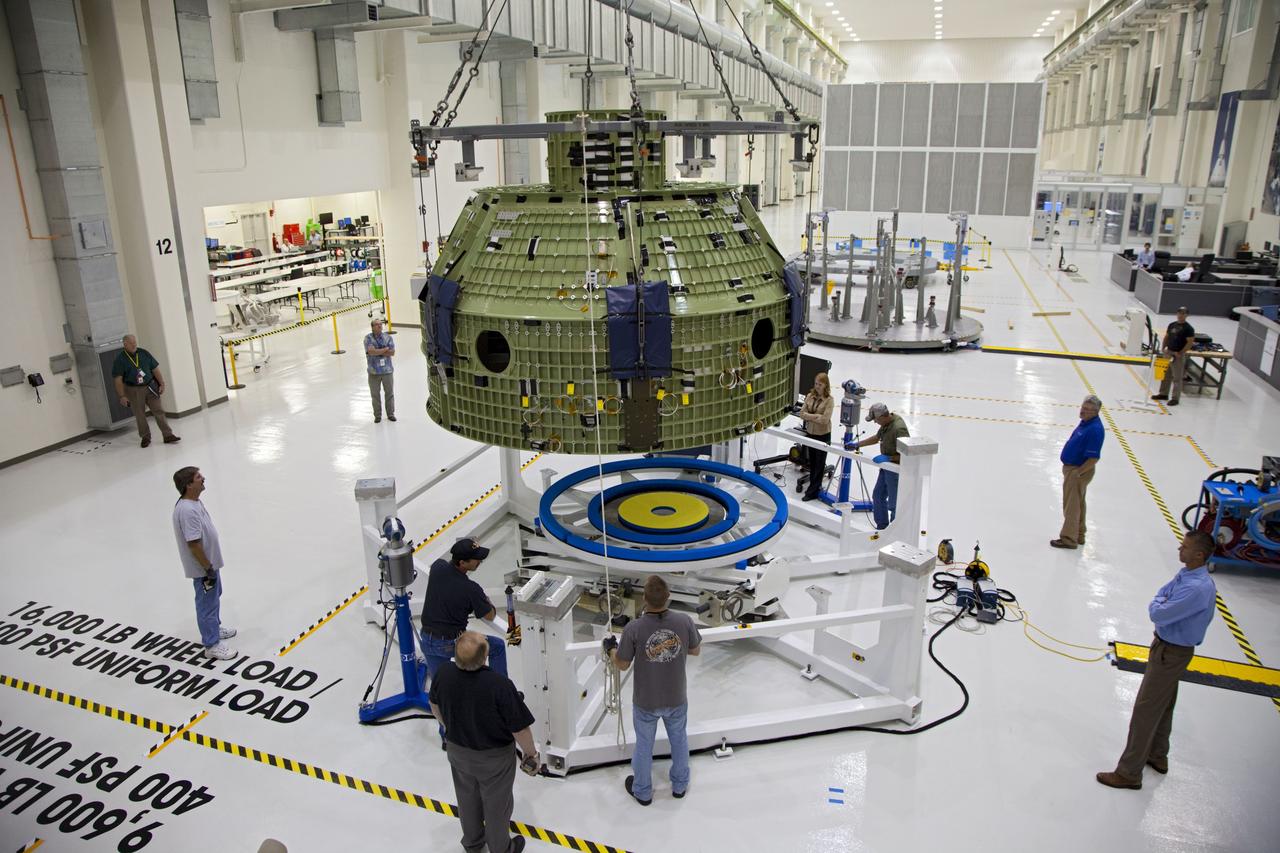
CAPE CANAVERAL, Fla. – Inside the Operations and Checkout Building at NASA’s Kennedy Space Center in Florida, technicians monitor the progress as a crane lowers the Orion Exploration Flight Test 1 crew module toward the base of a birdcage tool. The birdcage will be used to continue installation of external components in preparation for Orion’s first uncrewed test flight in 2014 atop a Delta IV rocket. Orion is the exploration spacecraft designed to carry crews to space beyond low Earth orbit. It will provide emergency abort capability, sustain the crew during the space travel and provide safe re-entry from deep space return velocities. A second uncrewed flight test is scheduled for 2017 on NASA’s Space Launch System rocket. For more information, visit http://www.nasa.gov/orion. Photo credit: NASA/Kim Shiflett
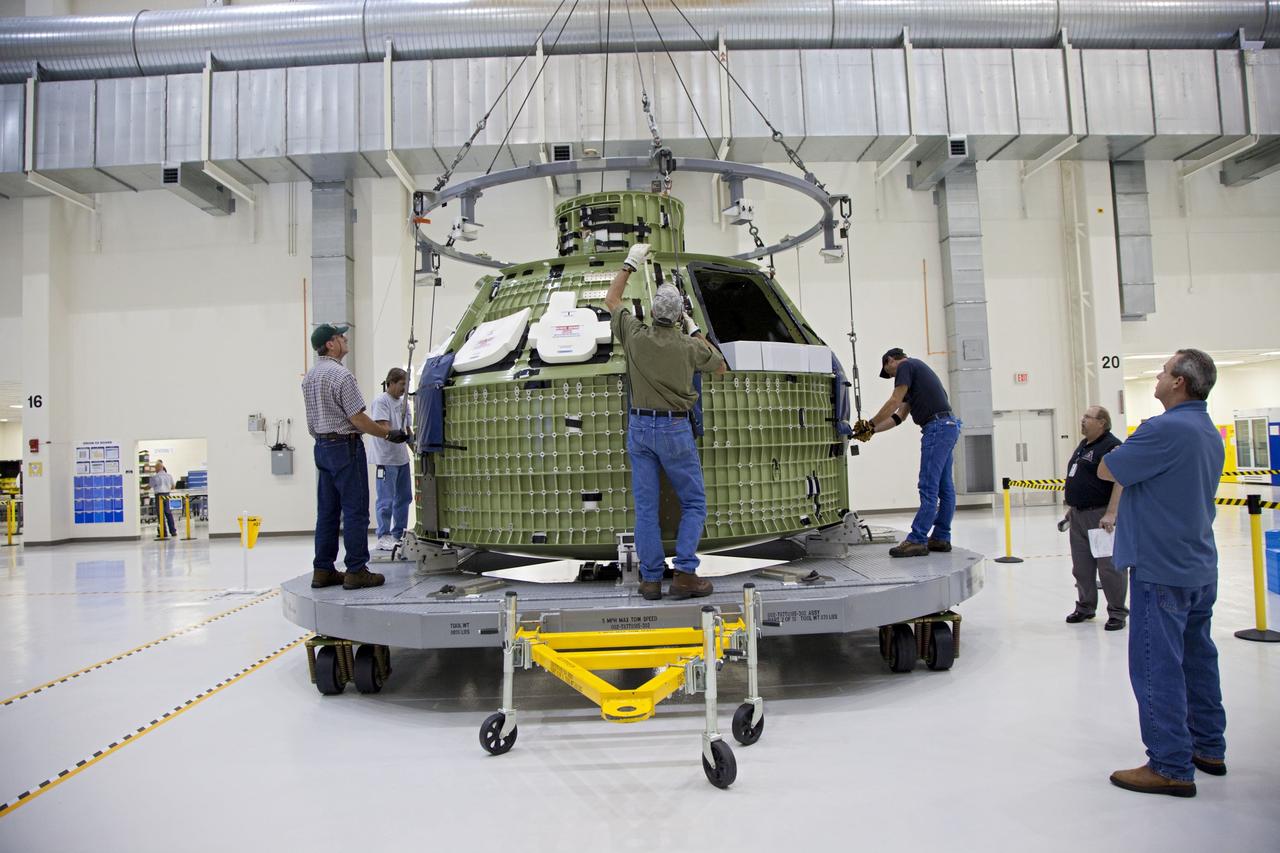
CAPE CANAVERAL, Fla. – Inside the Operations and Checkout Building high bay at NASA’s Kennedy Space Center in Florida, technicians attach a crane to the Orion Exploration Flight Test 1 crew module so that it can be moved to the base of a birdcage tool. The birdcage will be used to continue installation of external components in preparation for Orion’s first uncrewed test flight in 2014 atop a Delta IV rocket. Orion is the exploration spacecraft designed to carry crews to space beyond low Earth orbit. It will provide emergency abort capability, sustain the crew during the space travel and provide safe re-entry from deep space return velocities. A second uncrewed flight test is scheduled for 2017 on NASA’s Space Launch System rocket. For more information, visit http://www.nasa.gov/orion. Photo credit: NASA/Kim Shiflett

CAPE CANAVERAL, Fla. – Inside the Operations and Checkout Building at NASA’s Kennedy Space Center in Florida, technicians provide assistance as a crane lowers the Orion Exploration Flight Test 1 crew module onto the base of a birdcage tool. The birdcage will be used to continue installation of external components in preparation for Orion’s first uncrewed test flight in 2014 atop a Delta IV rocket. Orion is the exploration spacecraft designed to carry crews to space beyond low Earth orbit. It will provide emergency abort capability, sustain the crew during the space travel and provide safe re-entry from deep space return velocities. A second uncrewed flight test is scheduled for 2017 on NASA’s Space Launch System rocket. For more information, visit http://www.nasa.gov/orion. Photo credit: NASA/Kim Shiflett
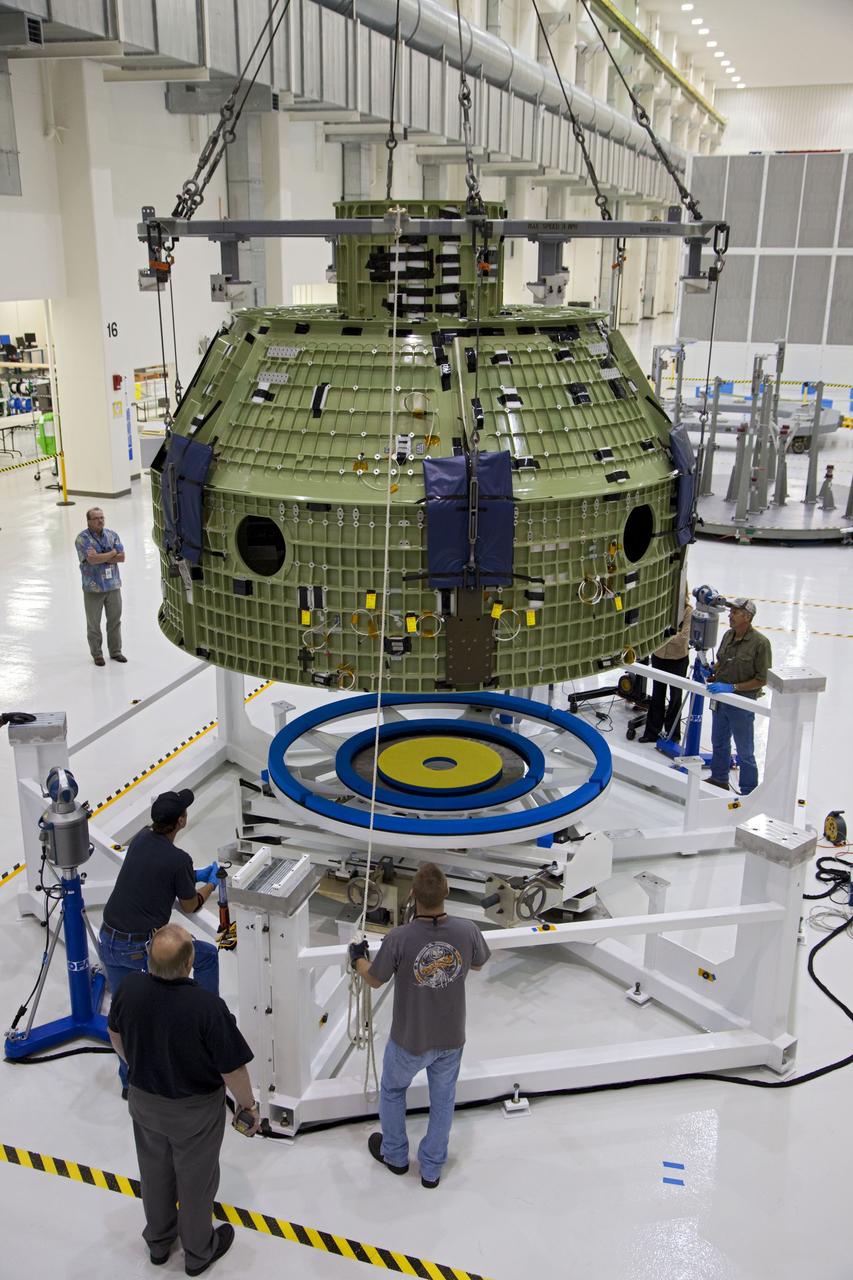
CAPE CANAVERAL, Fla. – Inside the Operations and Checkout Building at NASA’s Kennedy Space Center in Florida, technicians monitor the progress as a crane lowers the Orion Exploration Flight Test 1 crew module toward the base of a birdcage tool. The birdcage will be used to continue installation of external components in preparation for Orion’s first uncrewed test flight in 2014 atop a Delta IV rocket. Orion is the exploration spacecraft designed to carry crews to space beyond low Earth orbit. It will provide emergency abort capability, sustain the crew during the space travel and provide safe re-entry from deep space return velocities. A second uncrewed flight test is scheduled for 2017 on NASA’s Space Launch System rocket. For more information, visit http://www.nasa.gov/orion. Photo credit: NASA/Kim Shiflett
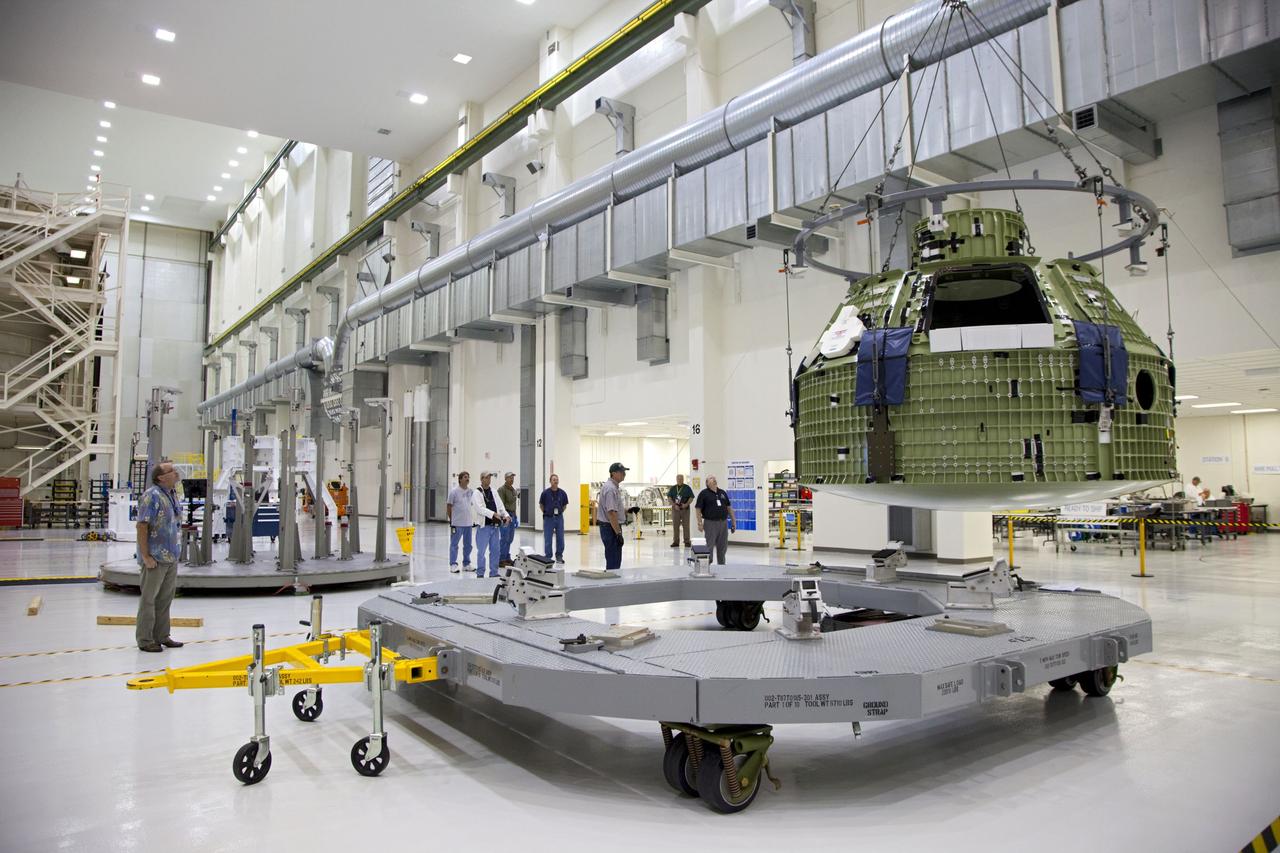
CAPE CANAVERAL, Fla. – Inside the Operations and Checkout Building at NASA’s Kennedy Space Center in Florida, technicians monitor the progress as a crane is used to move the Orion Exploration Flight Test 1 crew module to the base of a birdcage tool. The birdcage will be used to continue installation of external components in preparation for Orion’s first uncrewed test flight in 2014 atop a Delta IV rocket. Orion is the exploration spacecraft designed to carry crews to space beyond low Earth orbit. It will provide emergency abort capability, sustain the crew during the space travel and provide safe re-entry from deep space return velocities. A second uncrewed flight test is scheduled for 2017 on NASA’s Space Launch System rocket. For more information, visit http://www.nasa.gov/orion. Photo credit: NASA/Kim Shiflett
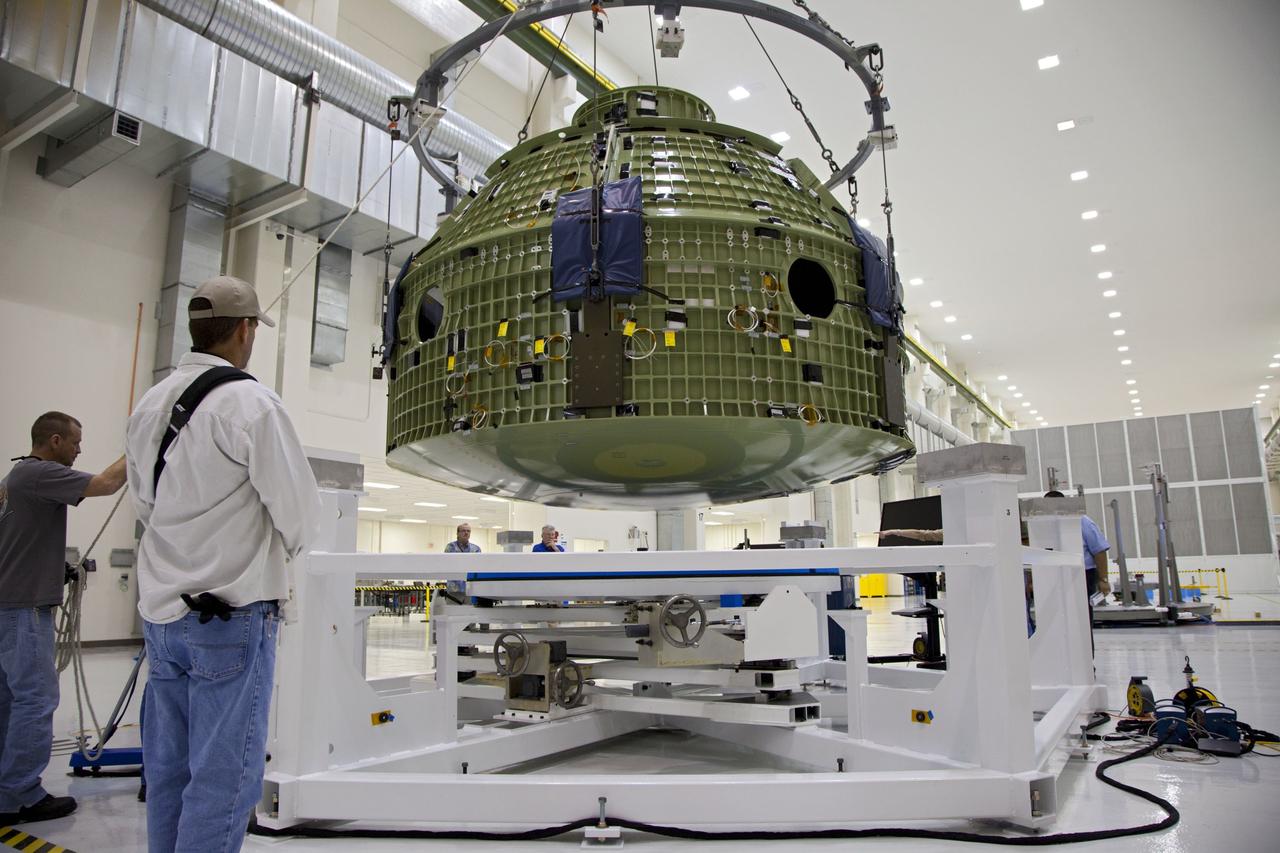
CAPE CANAVERAL, Fla. – Inside the Operations and Checkout Building at NASA’s Kennedy Space Center in Florida, technicians monitor the progress as a crane lowers the Orion Exploration Flight Test 1 crew module toward the base of a birdcage tool. The birdcage will be used to continue installation of external components in preparation for Orion’s first uncrewed test flight in 2014 atop a Delta IV rocket. Orion is the exploration spacecraft designed to carry crews to space beyond low Earth orbit. It will provide emergency abort capability, sustain the crew during the space travel and provide safe re-entry from deep space return velocities. A second uncrewed flight test is scheduled for 2017 on NASA’s Space Launch System rocket. For more information, visit http://www.nasa.gov/orion. Photo credit: NASA/Kim Shiflett
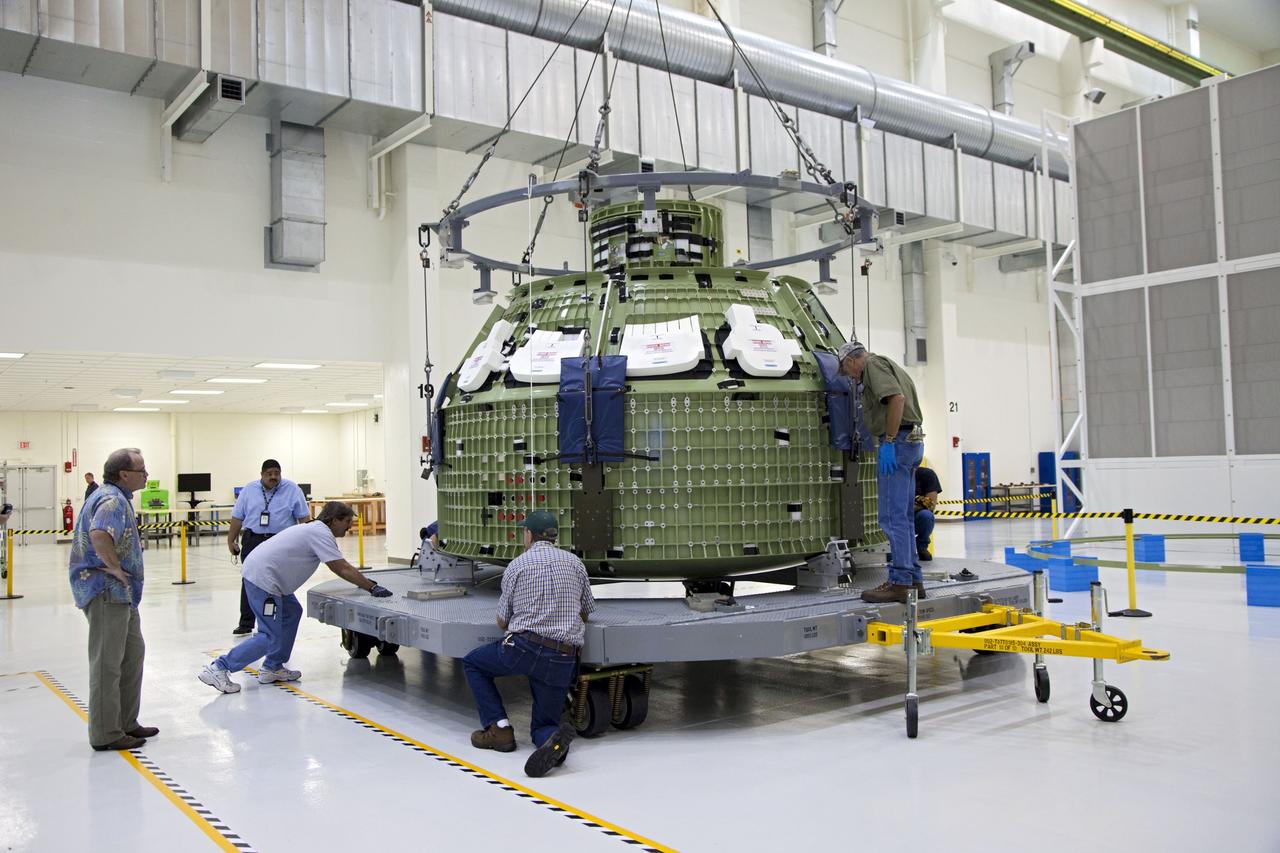
CAPE CANAVERAL, Fla. – Inside the Operations and Checkout Building high bay at NASA’s Kennedy Space Center in Florida, technicians attach a crane to the Orion Exploration Flight Test 1 crew module so that it can be moved to the base of a birdcage tool. The birdcage will be used to continue installation of external components in preparation for Orion’s first uncrewed test flight in 2014 atop a Delta IV rocket. Orion is the exploration spacecraft designed to carry crews to space beyond low Earth orbit. It will provide emergency abort capability, sustain the crew during the space travel and provide safe re-entry from deep space return velocities. A second uncrewed flight test is scheduled for 2017 on NASA’s Space Launch System rocket. For more information, visit http://www.nasa.gov/orion. Photo credit: NASA/Kim Shiflett
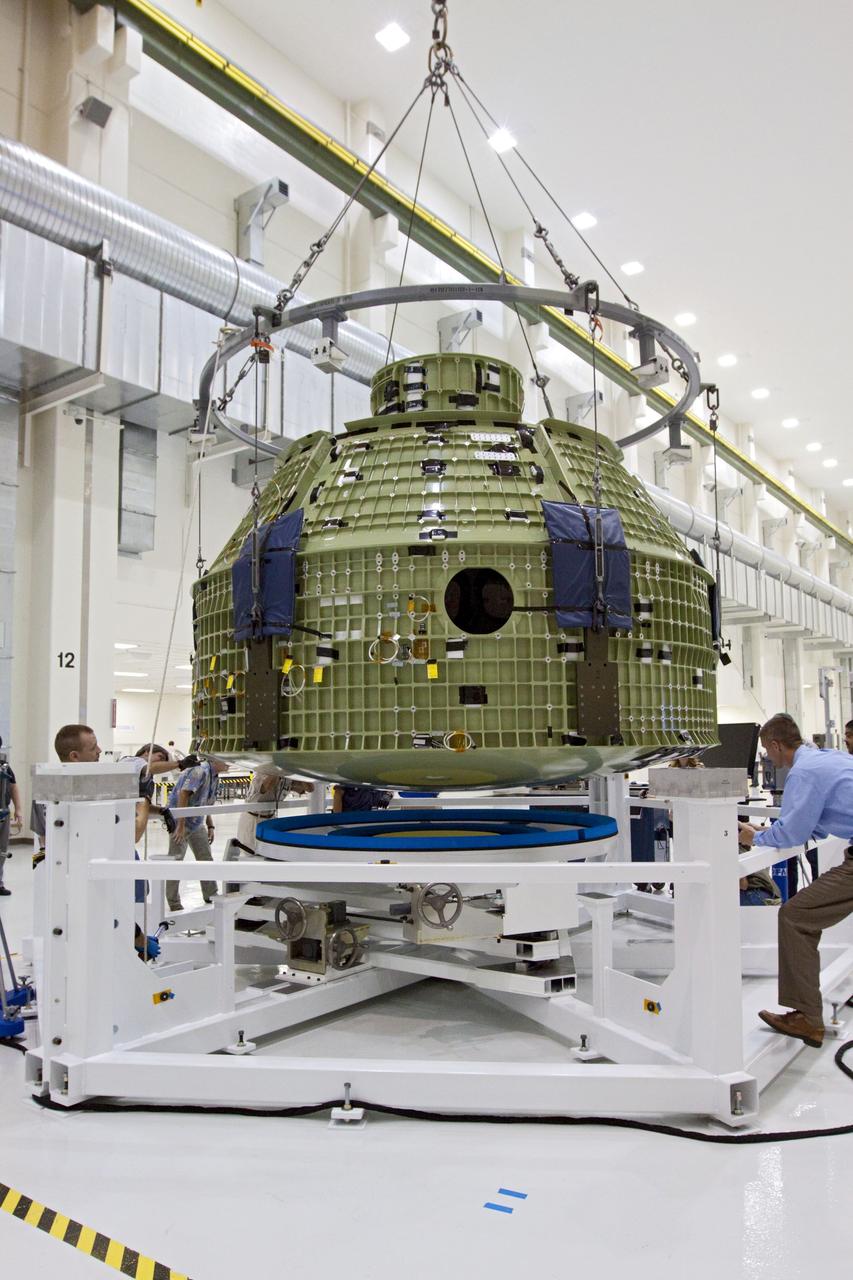
CAPE CANAVERAL, Fla. – Inside the Operations and Checkout Building at NASA’s Kennedy Space Center in Florida, technicians provide assistance as a crane lowers the Orion Exploration Flight Test 1 crew module onto the base of a birdcage tool. The birdcage will be used to continue installation of external components in preparation for Orion’s first uncrewed test flight in 2014 atop a Delta IV rocket. Orion is the exploration spacecraft designed to carry crews to space beyond low Earth orbit. It will provide emergency abort capability, sustain the crew during the space travel and provide safe re-entry from deep space return velocities. A second uncrewed flight test is scheduled for 2017 on NASA’s Space Launch System rocket. For more information, visit http://www.nasa.gov/orion. Photo credit: NASA/Kim Shiflett
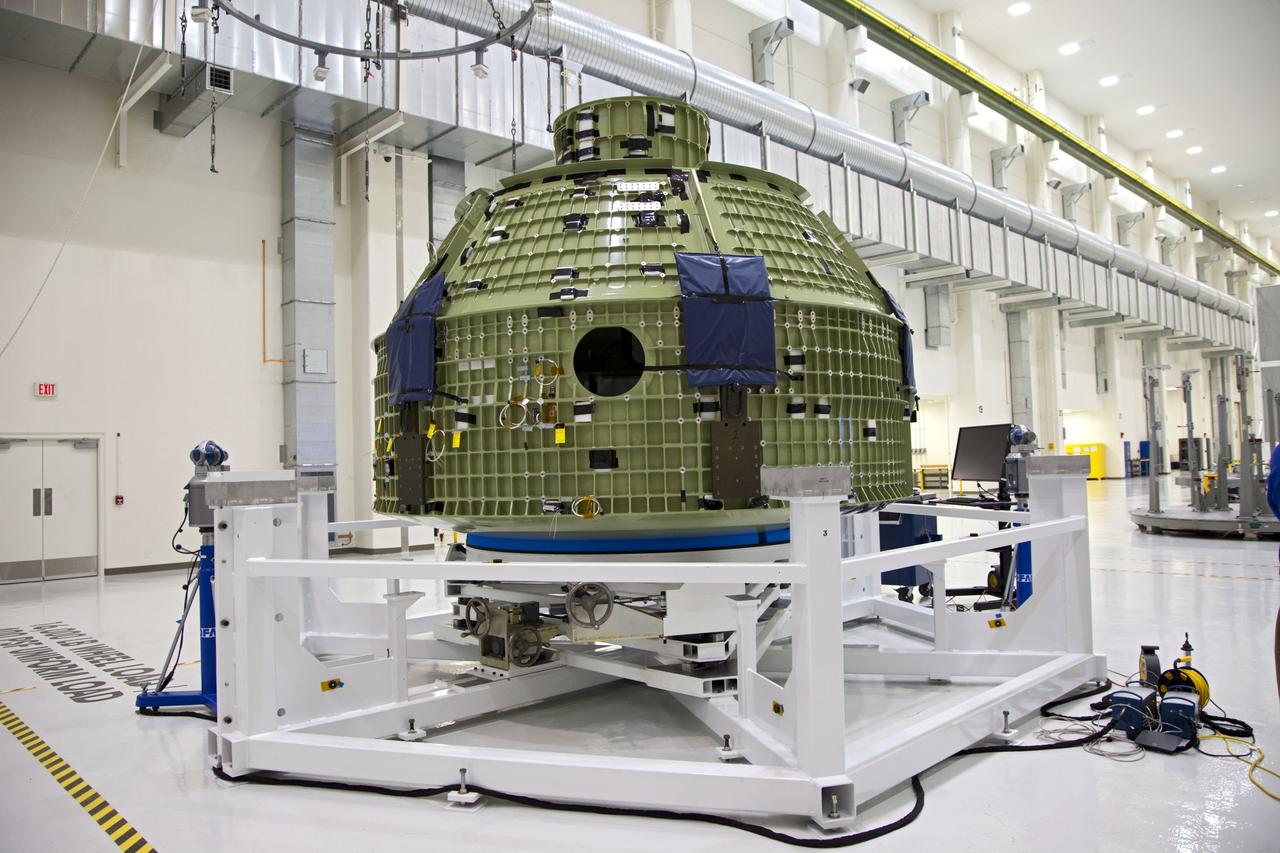
CAPE CANAVERAL, Fla. – Inside the Operations and Checkout Building at NASA’s Kennedy Space Center in Florida, the Orion Exploration Flight Test 1 crew module has been moved onto the base of a birdcage tool. The birdcage will be used to continue installation of external components in preparation for Orion’s first uncrewed test flight in 2014 atop a Delta IV rocket. Orion is the exploration spacecraft designed to carry crews to space beyond low Earth orbit. It will provide emergency abort capability, sustain the crew during the space travel and provide safe re-entry from deep space return velocities. A second uncrewed flight test is scheduled for 2017 on NASA’s Space Launch System rocket. For more information, visit http://www.nasa.gov/orion. Photo credit: NASA/Kim Shiflett
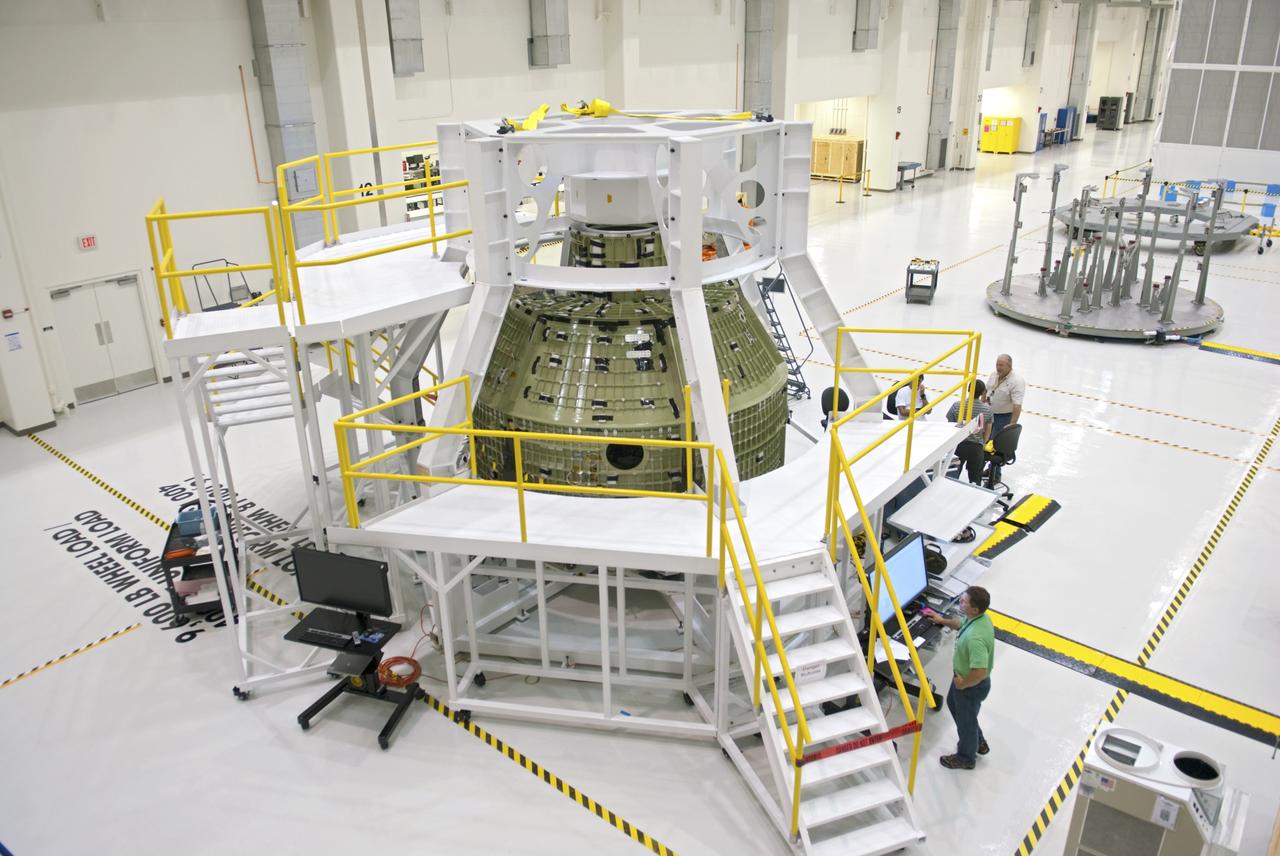
CAPE CANAVERAL, Fla. – Inside the Operations and Checkout Building at NASA’s Kennedy Space Center in Florida, a birdcage tool along with work platforms have been placed around the Orion Exploration Flight Test 1 crew module. The birdcage will be used to continue installation of external components in preparation for Orion’s first uncrewed test flight in 2014 atop a Delta IV rocket. Orion is the exploration spacecraft designed to carry crews to space beyond low Earth orbit. It will provide emergency abort capability, sustain the crew during the space travel and provide safe re-entry from deep space return velocities. A second uncrewed flight test is scheduled for 2017 on NASA’s Space Launch System rocket. For more information, visit http://www.nasa.gov/orion. Photo credit: NASA/Charisse Nahser

On Feb. 13, 2015, Lockheed Martin engineers remove the heat shield from the Orion vehicle that flew on Exploration Flight Test-1 (EFT-1) in December 2014 in Operations and Checkout Building (O&C) at Kennedy Space Center. The heat shield will be transported to the Marshall Space Flight Center for testing. Part of Batch image transfer from Flickr.
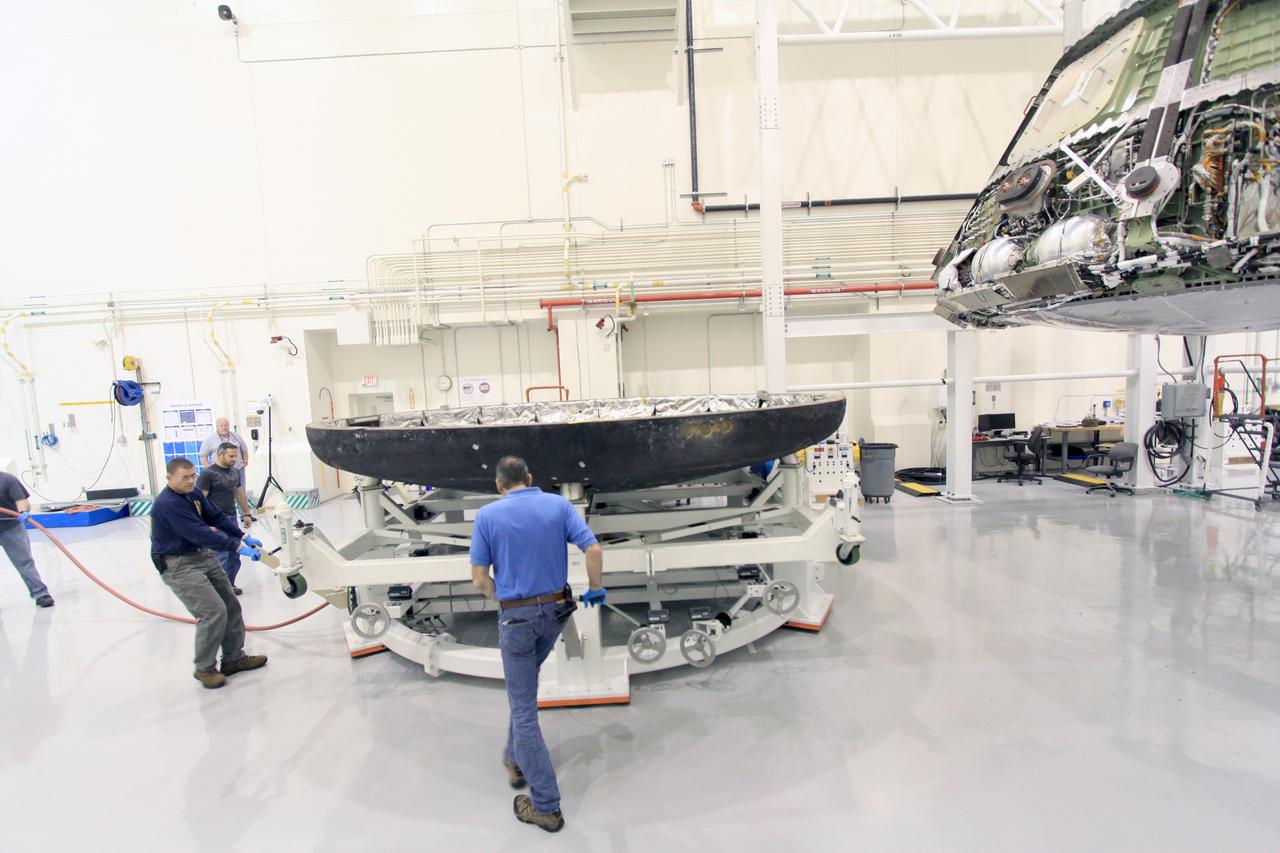
On Feb. 13, 2015, Lockheed Martin engineers remove the heat shield from the Orion vehicle that flew on Exploration Flight Test-1 (EFT-1) in December 2014 in Operations and Checkout Building (O&C) at Kennedy Space Center. The heat shield will be transported to the Marshall Space Flight Center for testing. Part of Batch image transfer from Flickr.
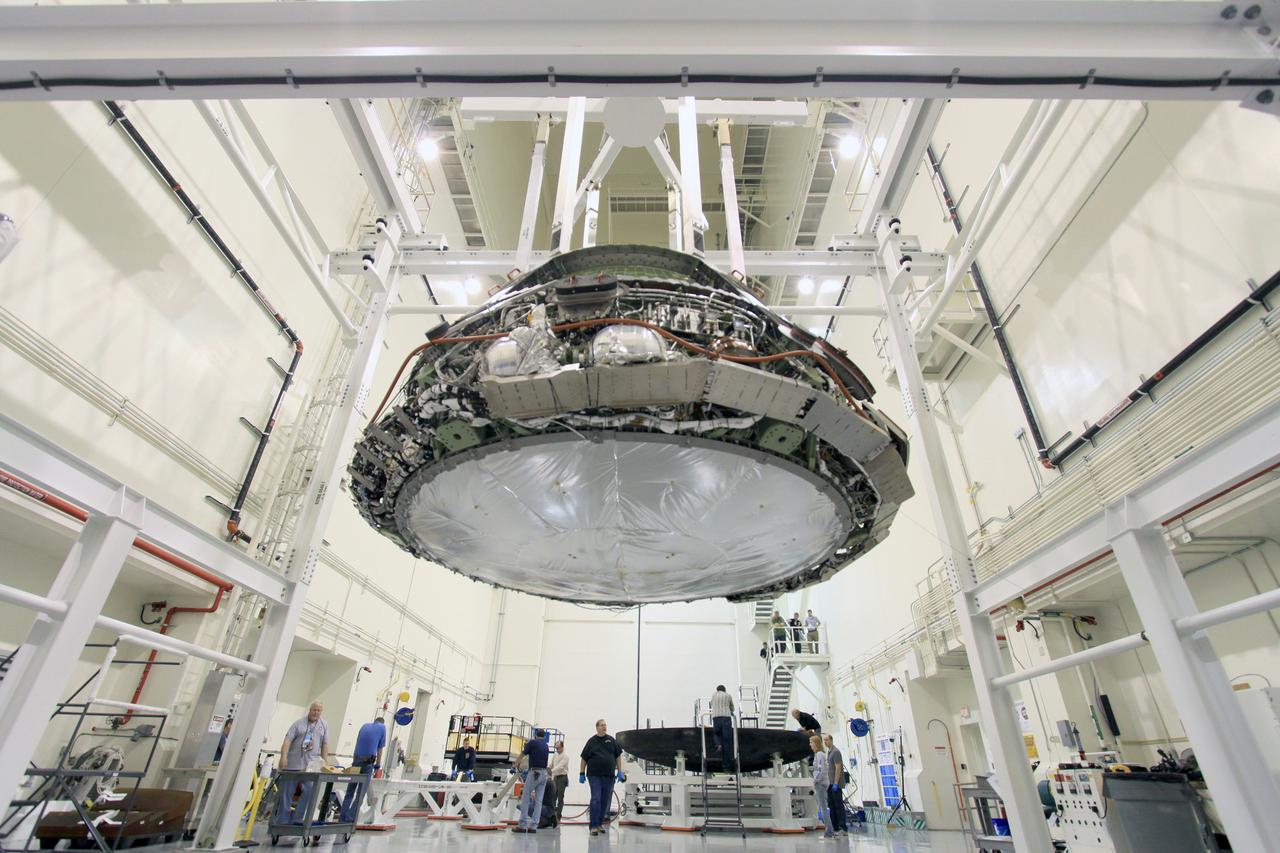
On Feb. 13, 2015, Lockheed Martin engineers remove the heat shield from the Orion vehicle that flew on Exploration Flight Test-1 (EFT-1) in December 2014 in Operations and Checkout Building (O&C) at Kennedy Space Center. The heat shield will be transported to the Marshall Space Flight Center for testing. Part of Batch image transfer from Flickr.
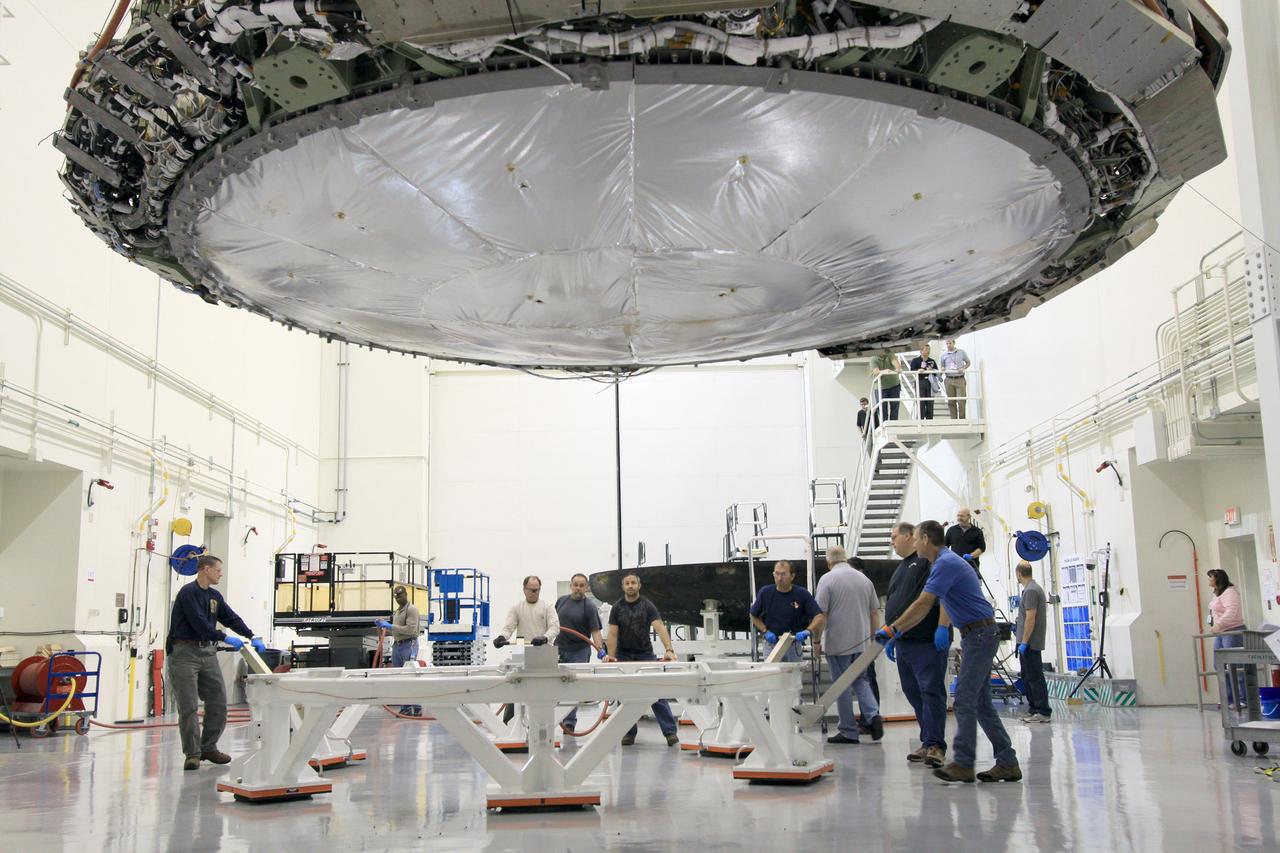
On Feb. 13, 2015, Lockheed Martin engineers remove the heat shield from the Orion vehicle that flew on Exploration Flight Test-1 (EFT-1) in December 2014 in Operations and Checkout Building (O&C) at Kennedy Space Center. The heat shield will be transported to the Marshall Space Flight Center for testing. Part of Batch image transfer from Flickr.
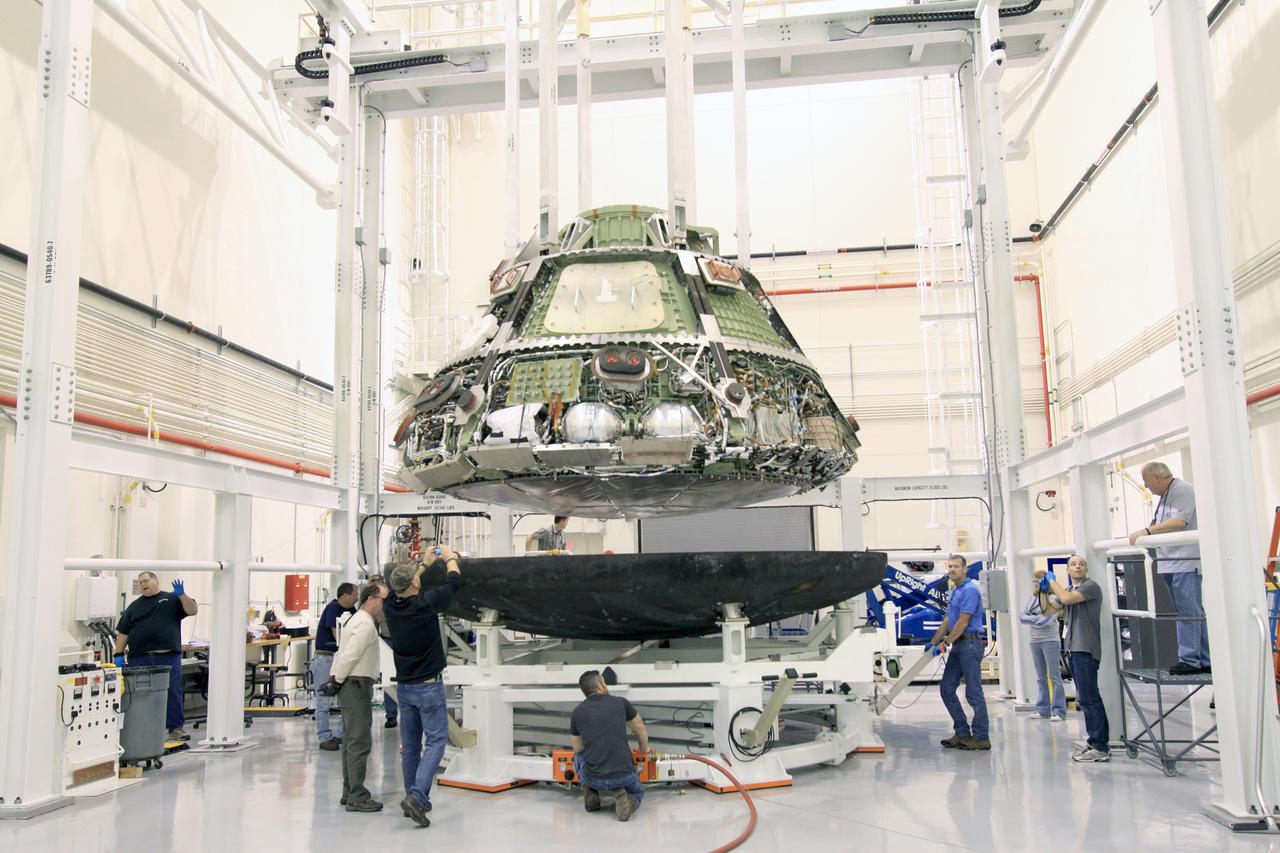
On Feb. 13, 2015, Lockheed Martin engineers remove the heat shield from the Orion vehicle that flew on Exploration Flight Test-1 (EFT-1) in December 2014 in Operations and Checkout Building (O&C) at Kennedy Space Center. The heat shield will be transported to the Marshall Space Flight Center for testing. Part of Batch image transfer from Flickr.