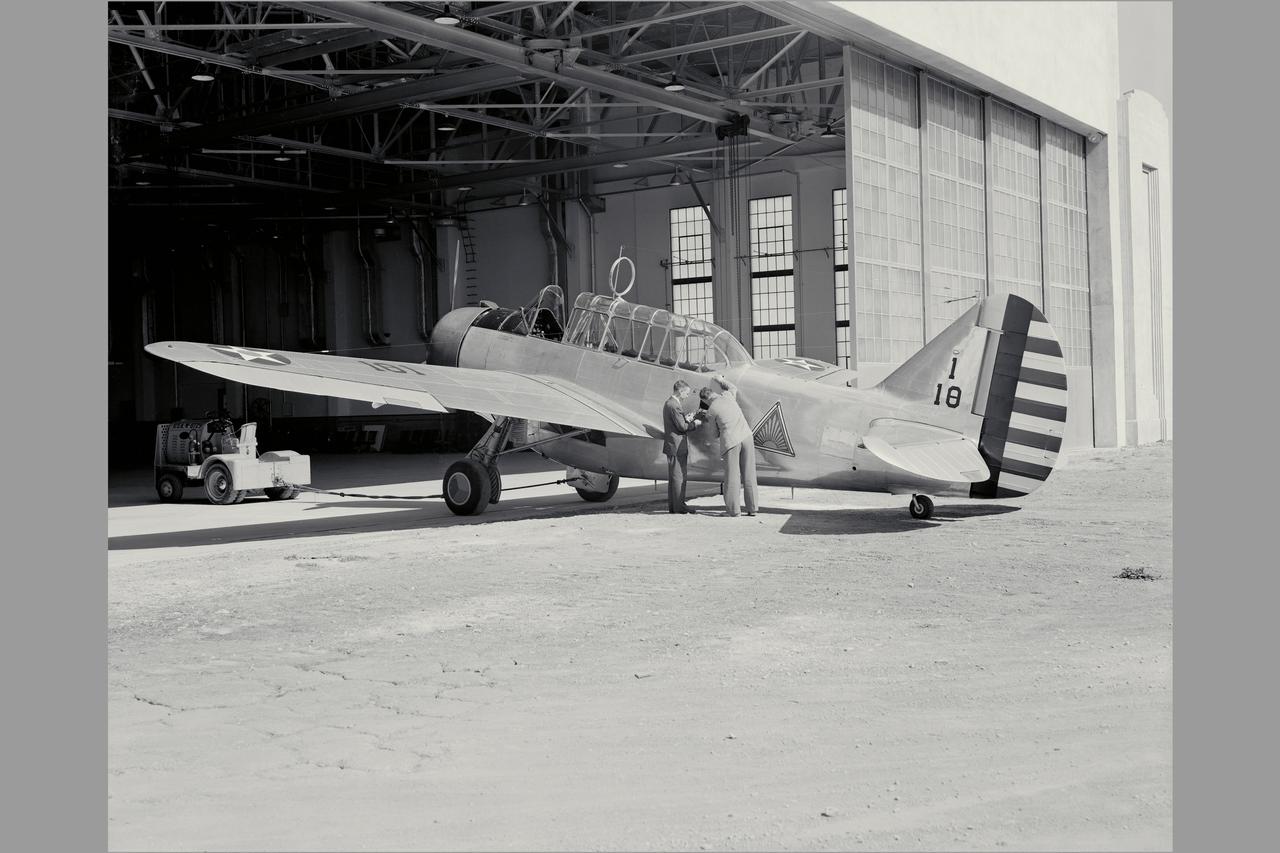
O-47A airplane arrival at Ames Aeronautical Lab The O-47A was Ames first test plane
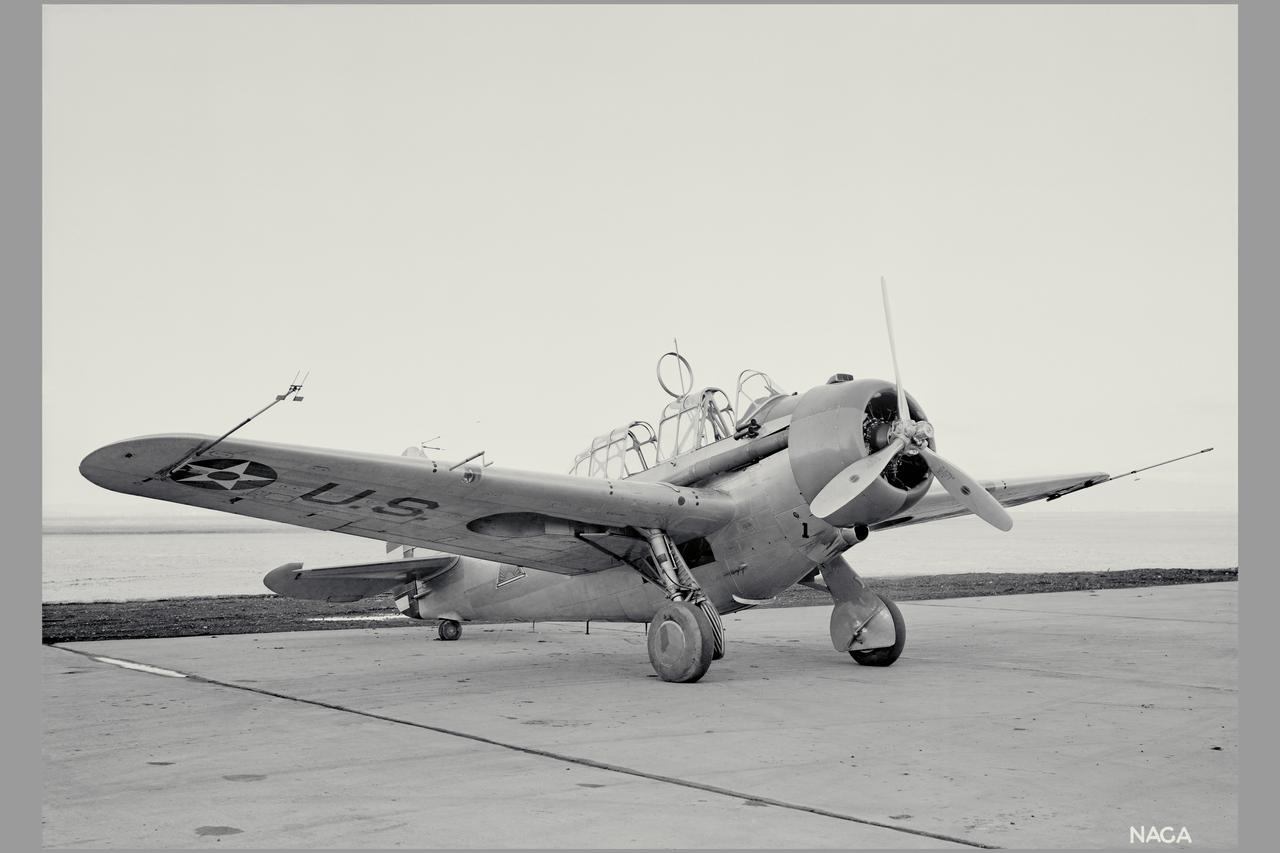
O-47A Airplane - first test airplane at Ames
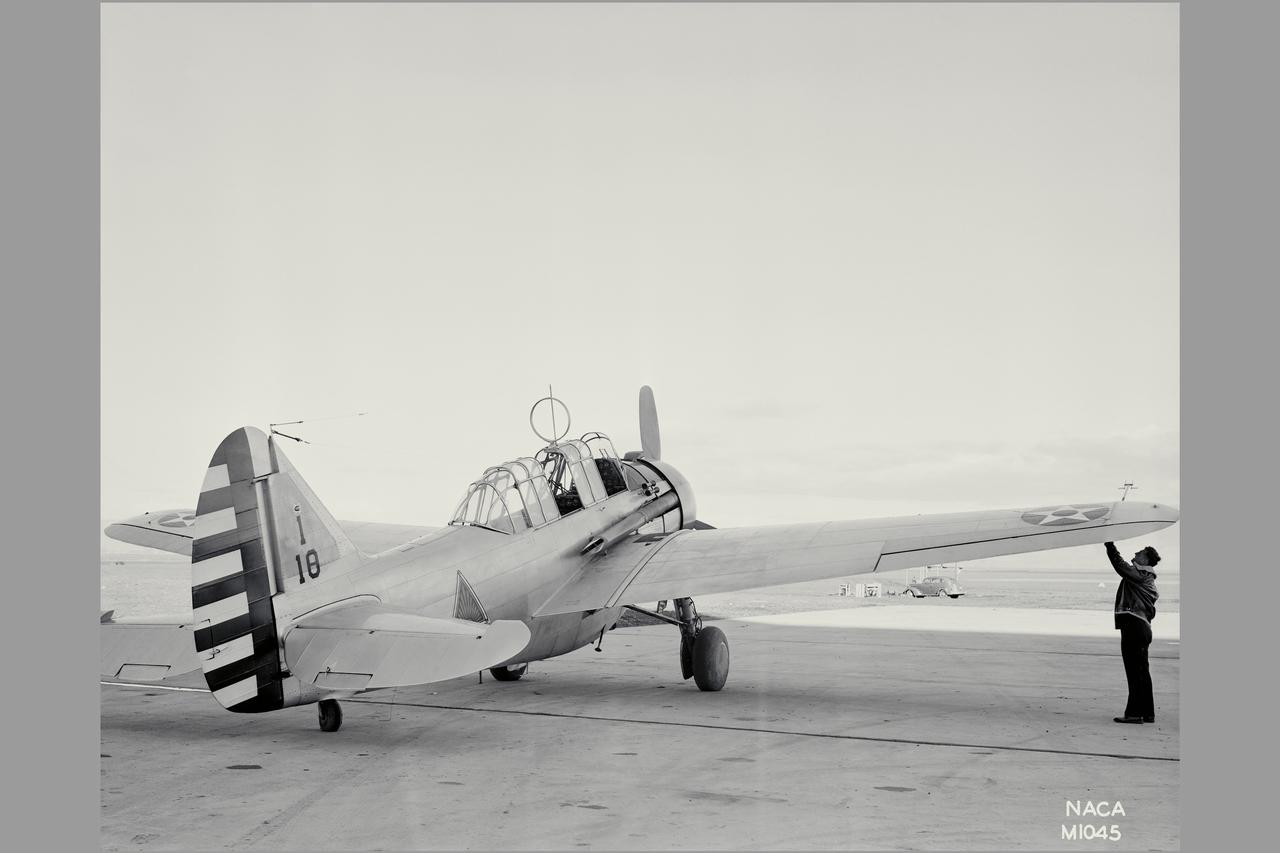
O-47A Airplane - first test airplane at Ames
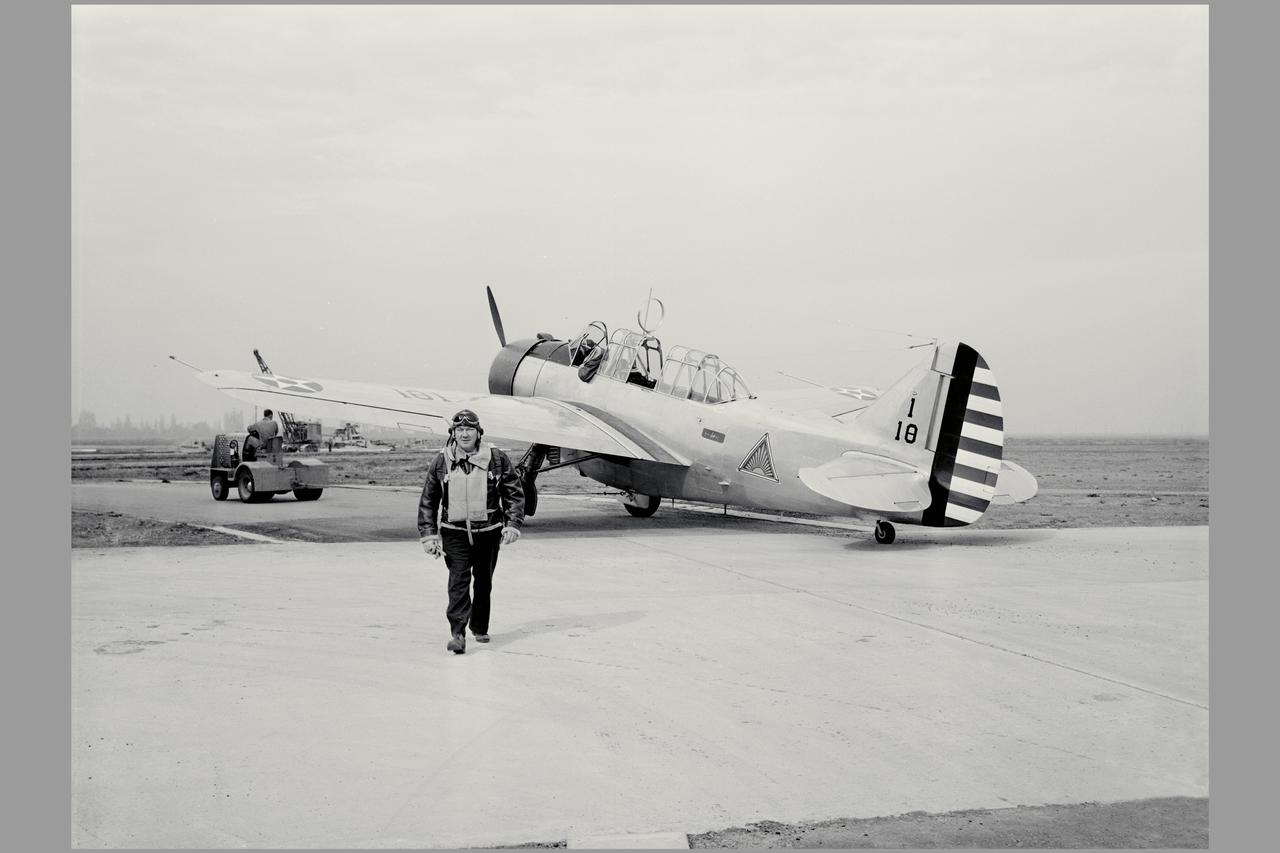
A new three-place North American O-47A observation airplane with Army Air Corps marking was the first ircraft to arrive at Ames. The Circular antenna on top of the canopy is for direction finding. A close look show that help from the front cockpit was needed for directional control when using a rope (instead of a tow bar) to tow the aircraft. (Sept 1940). W.H. McAvoy Ames test pilot returning from an early flight of first test airplane at Ames, a North American O-47A-1 (or 0-47 AAC37-323) This aircraft severed for a short time upon arrival as a research aircraft for heated-wing deicing. NOTE: printed in NASA Ames Publications: Adventures in Research - SP-4320 57 Years - Flight Research at AMES - NASA SP-1998-3300
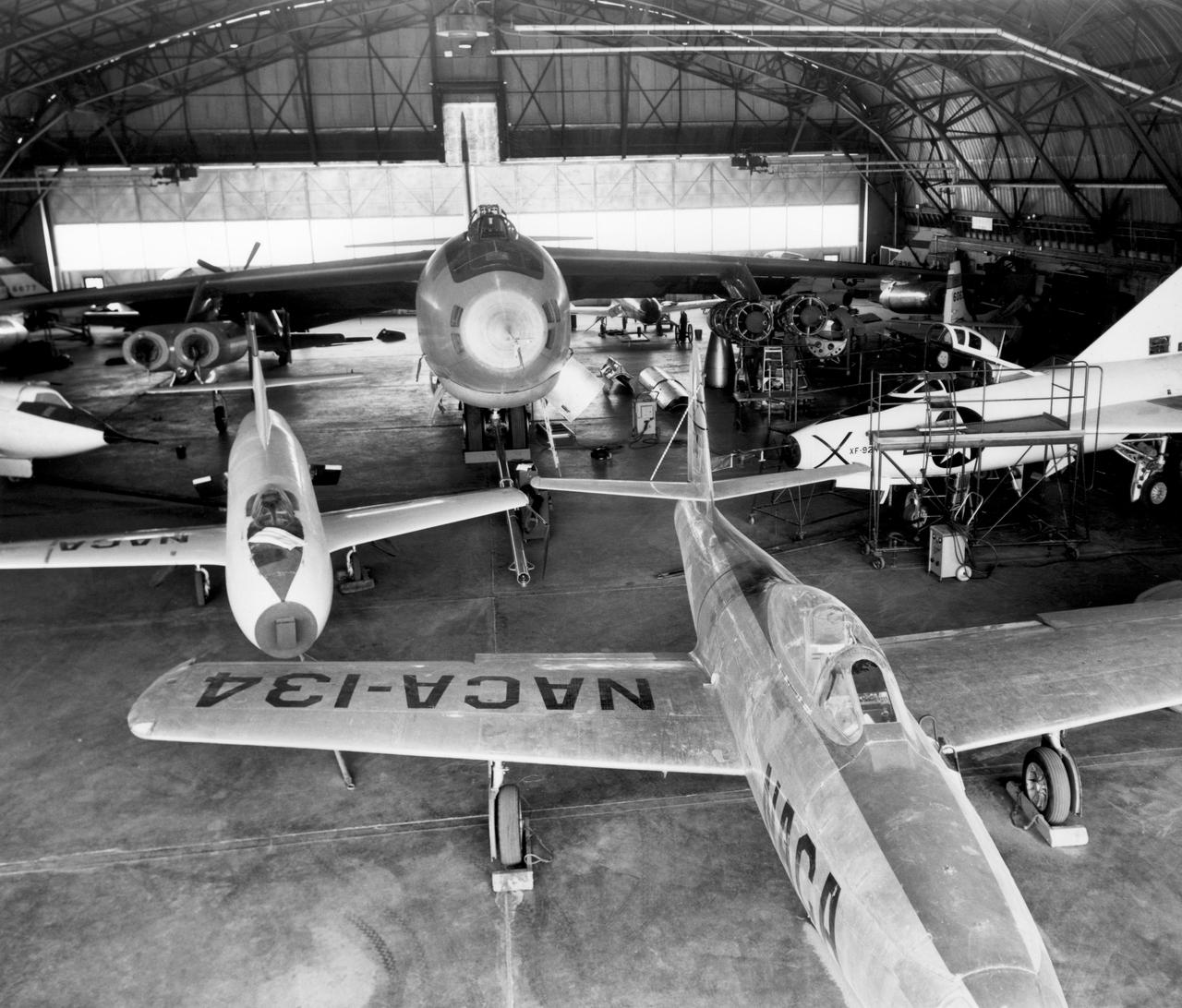
In the center foreground of this 1953 hangar photo is the YF-84A (NACA 134/Air Force 45-59490) used for vortex generator research. It arrived on November 28, 1949, and departed on April 21, 1954. Beside it is the third D-558-1 aircraft (NACA 142/Navy 37972). This aircraft was used for a total of 78 transonic research flights from April 1949 to June 1954. It replaced the second D-558-1, lost in the crash which killed Howard Lilly. Just visible on the left edge is the nose of the first D-558-2 (NACA 143/Navy 37973). Douglas turned the aircraft over to NACA on August 31, 1951, after the contractor had completed its initial test flights. NACA only made a single flight with the aircraft, on September 17, 1956, before the program was cancelled. In the center of the photo is the B-47A (NACA 150/Air Force 49-1900). The B-47 jet bomber, with its thin, swept-back wings, and six podded engines, represented the state of the art in aircraft design in the early 1950s. The aircraft undertook a number of research activities between May 1953 and its 78th and final research flight on November 22, 1957. The tests showed that the aircraft had a buffeting problem at speeds above Mach 0.8. Among the pilots who flew the B-47 were later X-15 pilots Joe Walker, A. Scott Crossfield, John B. McKay, and Neil A. Armstrong. On the right side of the B-47 is NACA's X-1 (Air Force 46-063). The second XS-1 aircraft built, it was fitted with a thicker wing than that on the first aircraft, which had exceeded Mach 1 on October 14, 1947. Flight research by NACA pilots indicated that this thicker wing produced 30 percent more drag at transonic speeds compared to the thinner wing on the first X-1. After a final flight on October 23, 1951, the aircraft was grounded due to the possibility of fatigue failure of the nitrogen spheres used to pressurize the fuel tanks. At the time of this photo, in 1953, the aircraft was in storage. In 1955, the aircraft was extensively modified, becoming the X-1E. In front o