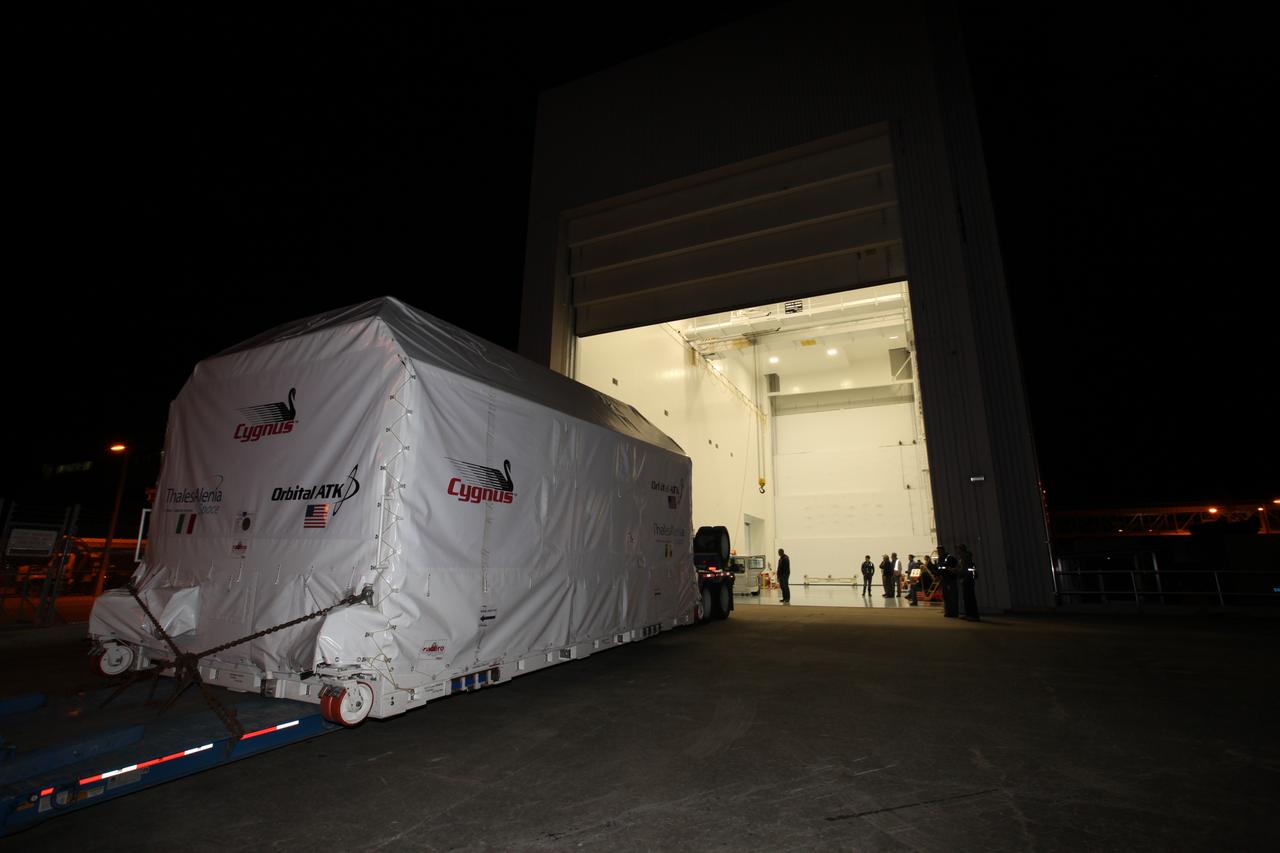
The Orbital ATK OA-7 Cygnus spacecraft's pressurized cargo module (PCM) arrives at the Space Station Processing Facility of NASA's Kennedy Space Center in Florida. The PCM is sealed in an environmentally controlled shipping container, pulled in by truck on a low-boy flatbed trailer. Scheduled to launch in March 2017, the Orbital ATK OA-7 mission will lift off atop a United Launch Alliance Atlas V rocket from Space launch Complex 41 at Cape Canaveral Air Force Station. The commercial resupply services mission to the International Space Station will deliver thousands of pounds of supplies, equipment and scientific research materials that improve life on Earth and drive progress toward future space exploration.
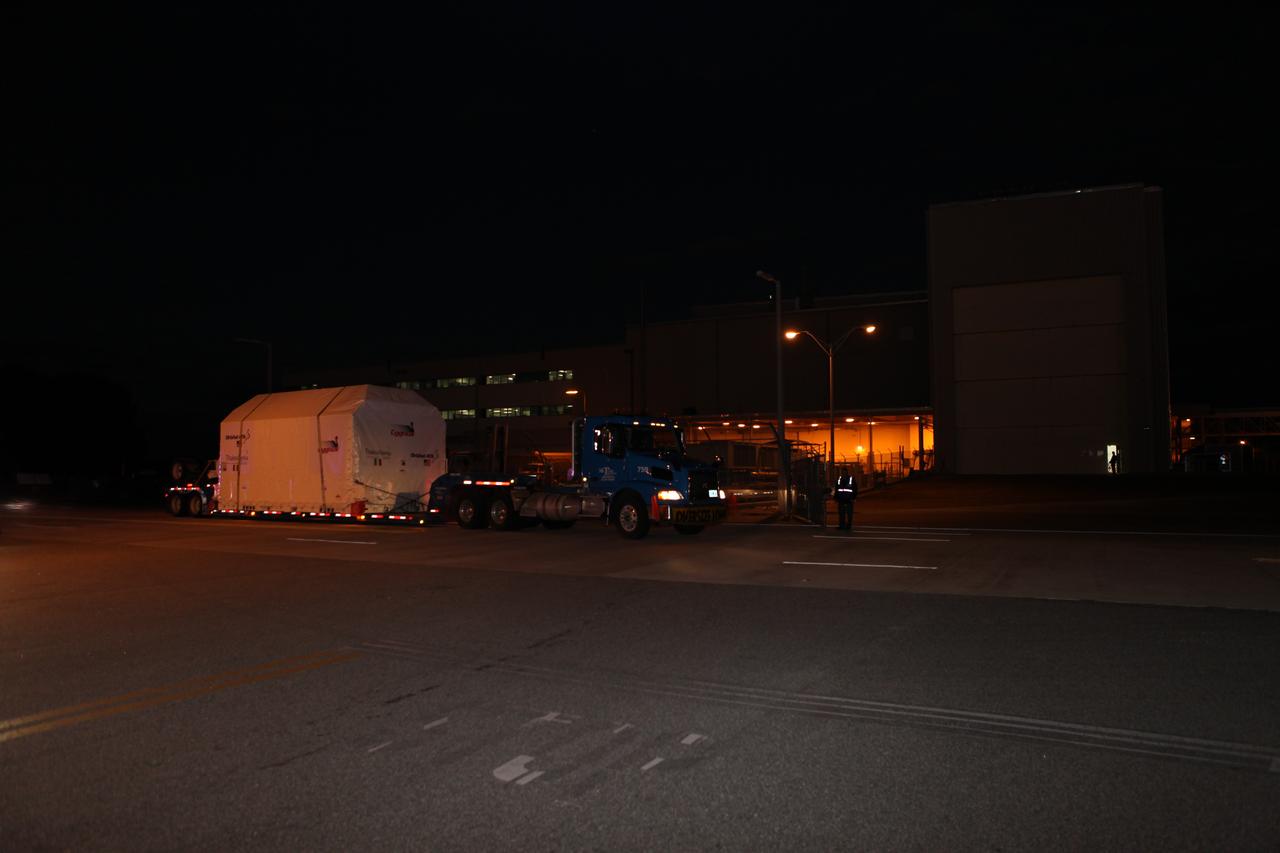
The Orbital ATK OA-7 Cygnus spacecraft's pressurized cargo module (PCM) arrives at the Space Station Processing Facility of NASA's Kennedy Space Center in Florida. The PCM is sealed in an environmentally controlled shipping container, pulled in by truck on a low-boy flatbed trailer. Scheduled to launch in March 2017, the Orbital ATK OA-7 mission will lift off atop a United Launch Alliance Atlas V rocket from Space launch Complex 41 at Cape Canaveral Air Force Station. The commercial resupply services mission to the International Space Station will deliver thousands of pounds of supplies, equipment and scientific research materials that improve life on Earth and drive progress toward future space exploration.
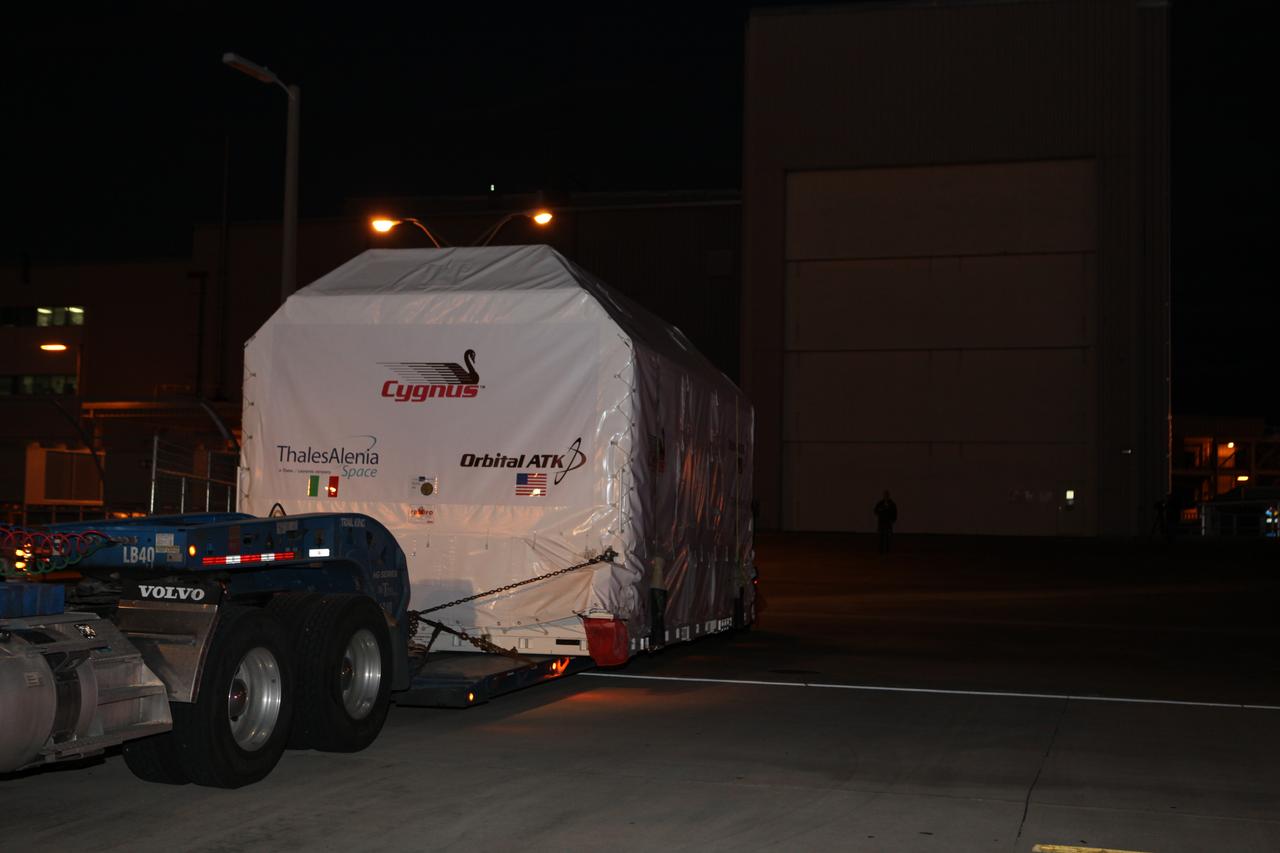
The Orbital ATK OA-7 Cygnus spacecraft's pressurized cargo module (PCM) arrives at the Space Station Processing Facility of NASA's Kennedy Space Center in Florida. The PCM is sealed in an environmentally controlled shipping container, pulled in by truck on a low-boy flatbed trailer. Scheduled to launch in March 2017, the Orbital ATK OA-7 mission will lift off atop a United Launch Alliance Atlas V rocket from Space launch Complex 41 at Cape Canaveral Air Force Station. The commercial resupply services mission to the International Space Station will deliver thousands of pounds of supplies, equipment and scientific research materials that improve life on Earth and drive progress toward future space exploration.
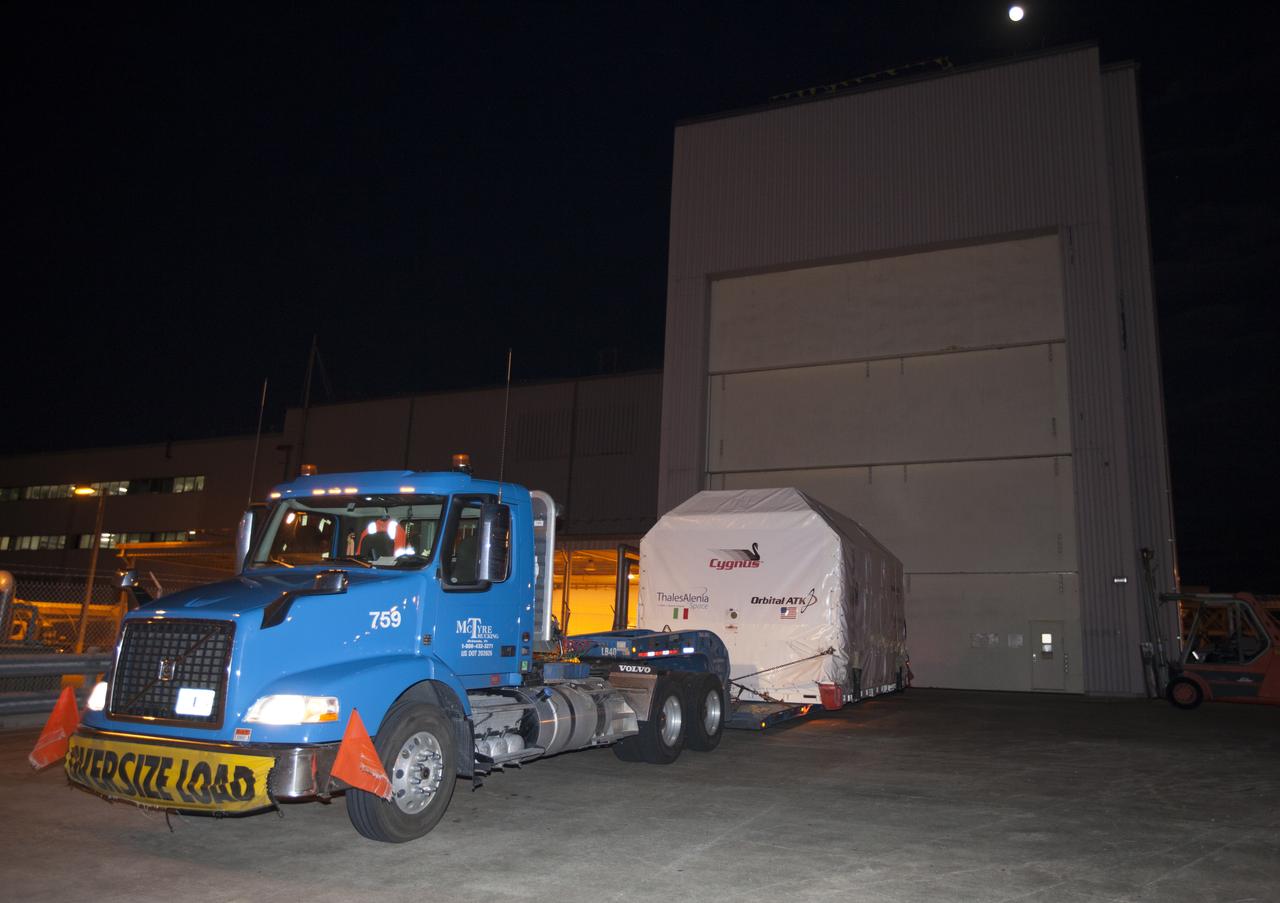
The Orbital ATK OA-7 Cygnus spacecraft's pressurized cargo module (PCM) arrives at the Space Station Processing Facility of NASA's Kennedy Space Center in Florida. The PCM is sealed in an environmentally controlled shipping container, pulled in by truck on a low-boy flatbed trailer. Scheduled to launch in March 2017, the Orbital ATK OA-7 mission will lift off atop a United Launch Alliance Atlas V rocket from Space launch Complex 41 at Cape Canaveral Air Force Station. The commercial resupply services mission to the International Space Station will deliver thousands of pounds of supplies, equipment and scientific research materials that improve life on Earth and drive progress toward future space exploration.

Inside the Space Station Processing Facility low bay at NASA’s Kennedy Space Center in Florida, technicians use a crane to lift the cover off ground support equipment for the Orbital ATK OA-7 commercial resupply services mission. The Orbital ATK CRS-7 with the Cygnus cargo module will lift off atop a United Launch Alliance Atlas V rocket from Space launch Complex 41 at Cape Canaveral Air Force Station. The commercial resupply services mission to the International Space Station will deliver thousands of pounds of supplies, equipment and scientific research materials that improve life on Earth and drive progress toward future space exploration.

Sealed in its shipping container, the ground support equipment for the Orbital ATK OA-7 commercial resupply services mission has arrived at the Space Station Processing Facility at NASA's Kennedy Space Center in Florida. The container will be moved inside the low bay of the facility. The Orbital ATK CRS-7 with the Cygnus cargo module will lift off atop a United Launch Alliance Atlas V rocket from Space launch Complex 41 at Cape Canaveral Air Force Station. The commercial resupply services mission to the International Space Station will deliver thousands of pounds of supplies, equipment and scientific research materials that improve life on Earth and drive progress toward future space exploration.
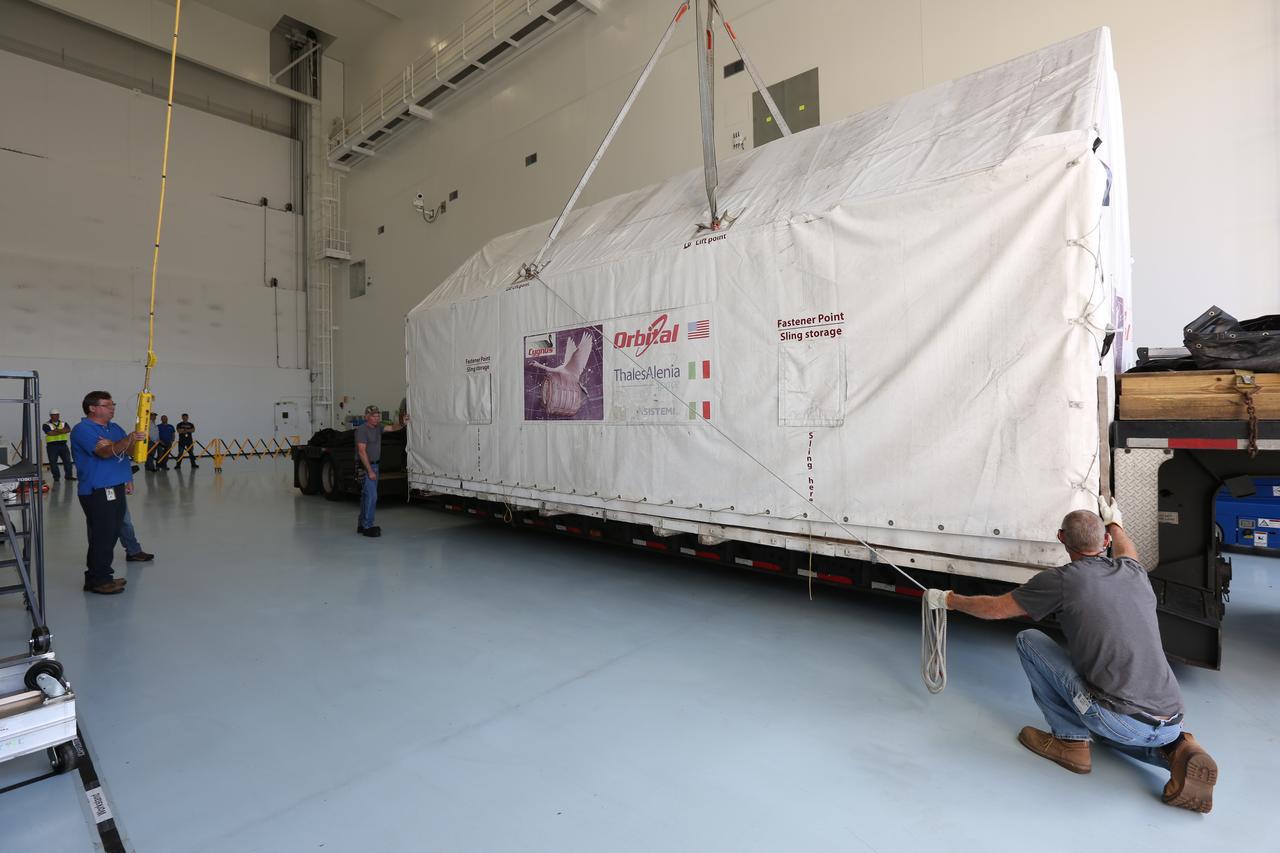
Sealed in its shipping container, the ground support equipment for the Orbital ATK OA-7 commercial resupply services mission was moved inside the low bay of the Space Station Processing Facility at NASA's Kennedy Space Center in Florida. The Orbital ATK CRS-7 with the Cygnus cargo module will lift off atop a United Launch Alliance Atlas V rocket from Space launch Complex 41 at Cape Canaveral Air Force Station. The commercial resupply services mission to the International Space Station will deliver thousands of pounds of supplies, equipment and scientific research materials that improve life on Earth and drive progress toward future space exploration.
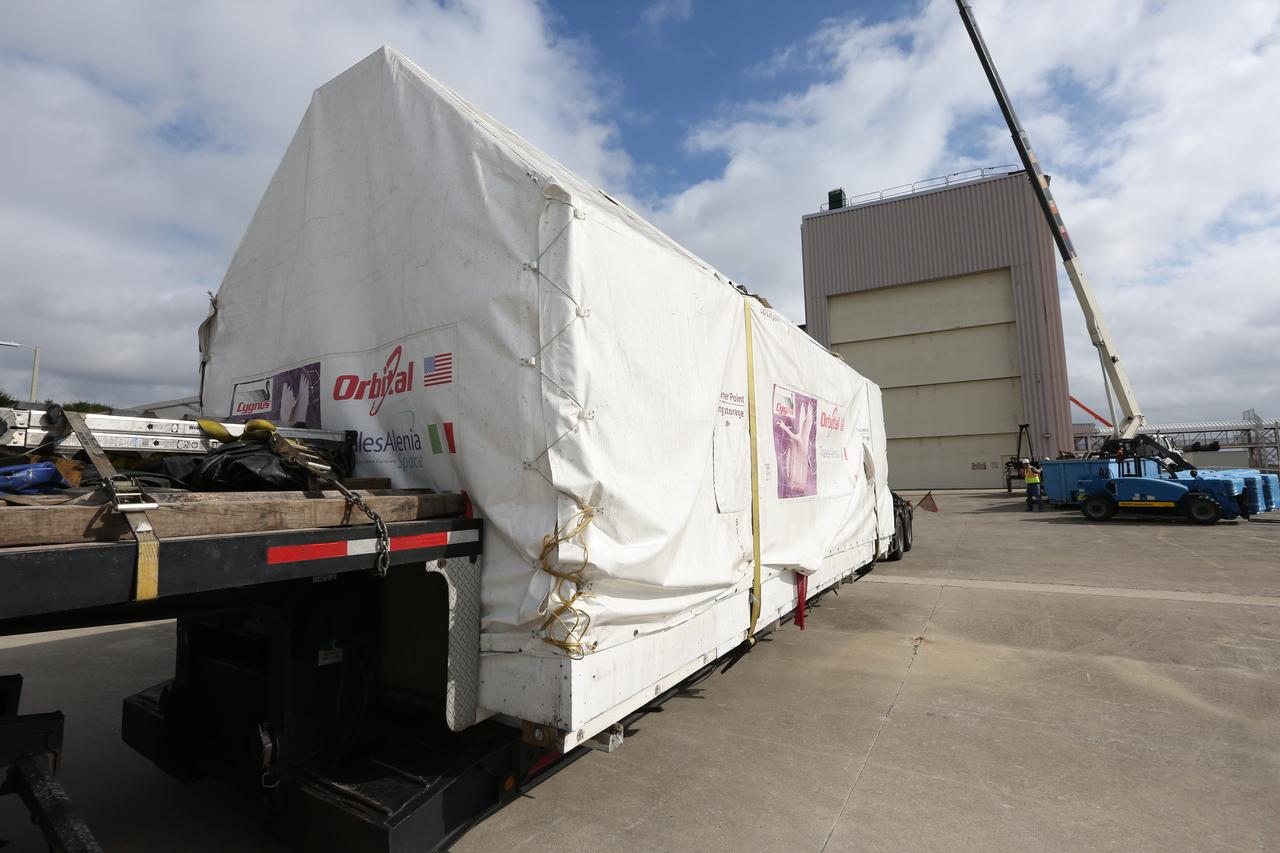
Sealed in its shipping container, the ground support equipment for the Orbital ATK OA-7 commercial resupply services mission has arrived at the Space Station Processing Facility at NASA's Kennedy Space Center in Florida. The container will be moved inside the low bay of the facility. The Orbital ATK CRS-7 with the Cygnus cargo module will lift off atop a United Launch Alliance Atlas V rocket from Space launch Complex 41 at Cape Canaveral Air Force Station. The commercial resupply services mission to the International Space Station will deliver thousands of pounds of supplies, equipment and scientific research materials that improve life on Earth and drive progress toward future space exploration.
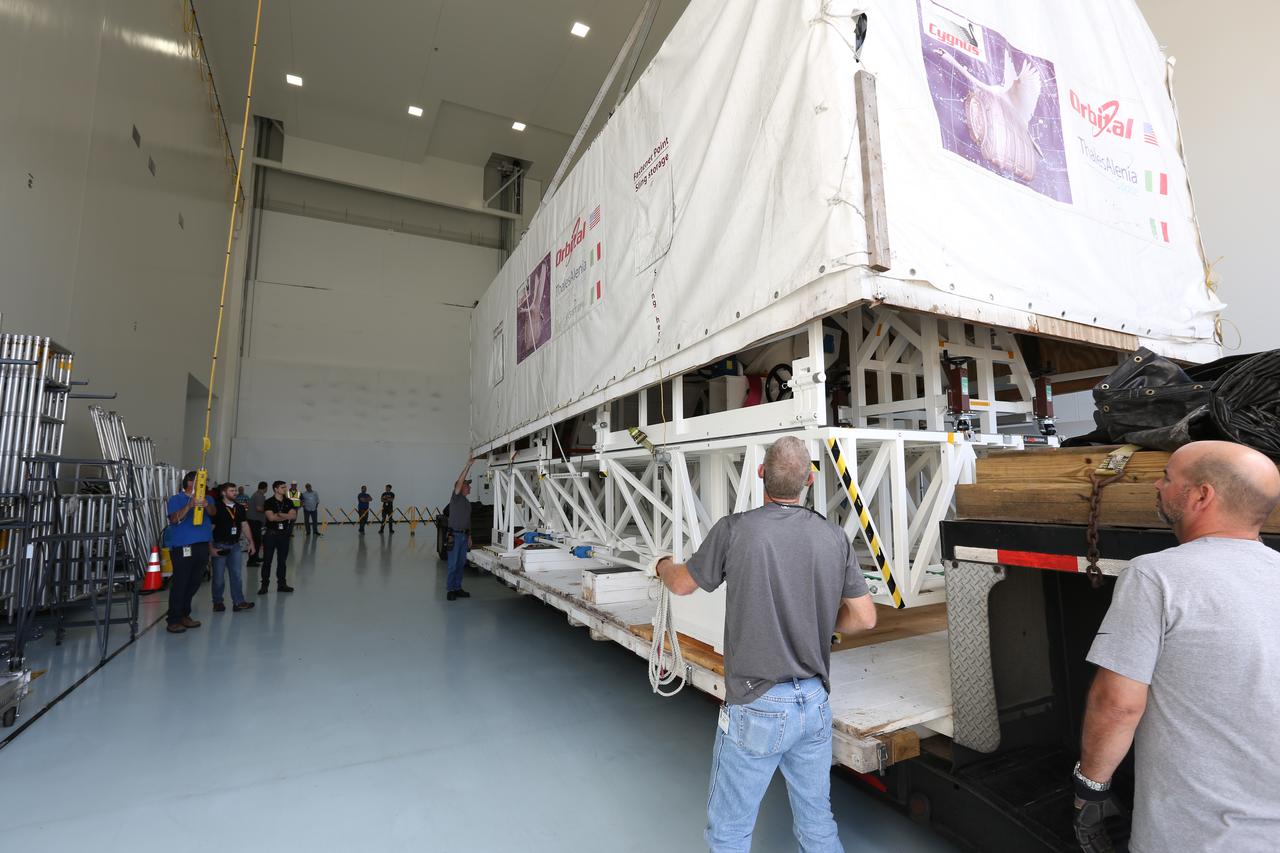
Inside the Space Station Processing Facility low bay at NASA’s Kennedy Space Center in Florida, technicians use a crane to lift the cover off ground support equipment for the Orbital ATK OA-7 commercial resupply services mission. The Orbital ATK CRS-7 with the Cygnus cargo module will lift off atop a United Launch Alliance Atlas V rocket from Space launch Complex 41 at Cape Canaveral Air Force Station. The commercial resupply services mission to the International Space Station will deliver thousands of pounds of supplies, equipment and scientific research materials that improve life on Earth and drive progress toward future space exploration.
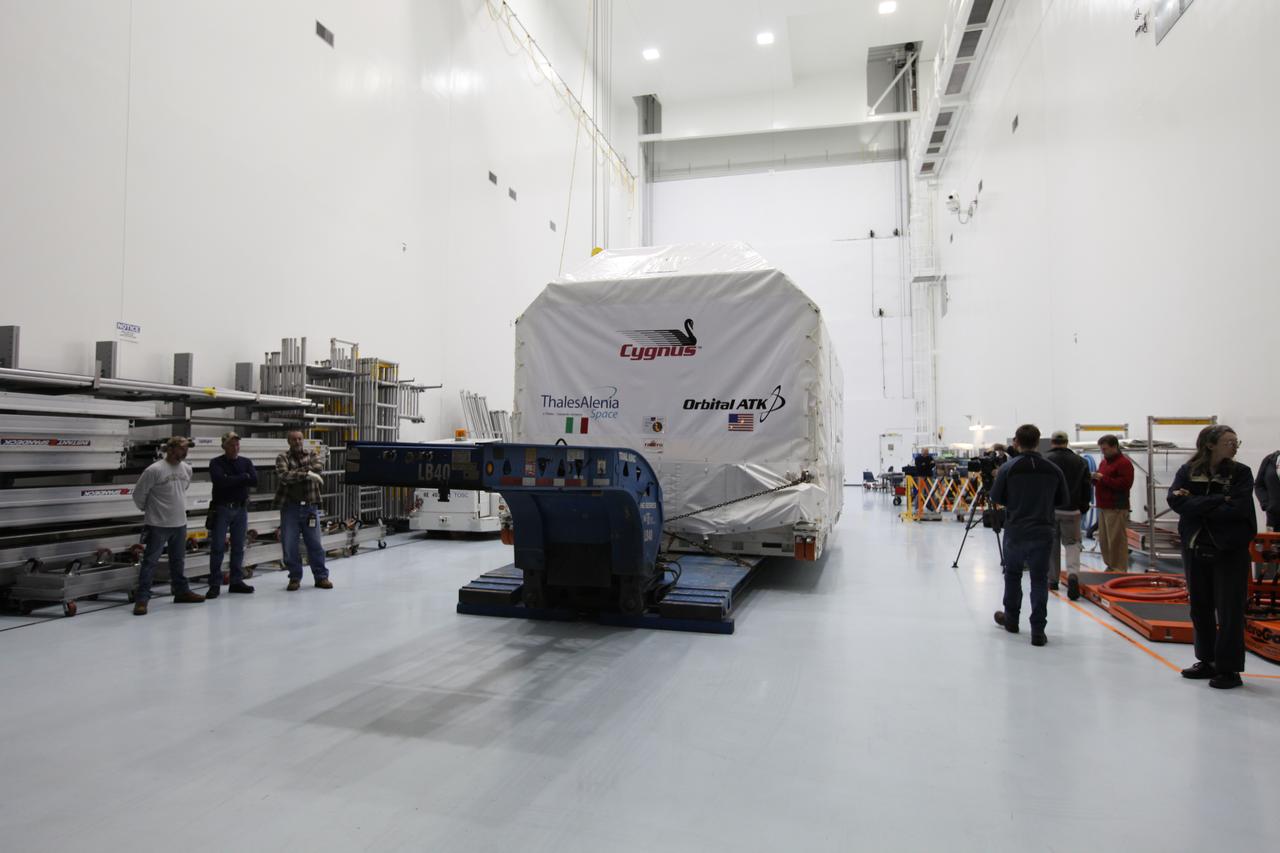
Still sealed in its environmentally controlled shipping container, the Orbital ATK OA-7 Cygnus spacecraft's pressurized cargo module (PCM) has arrived inside the Space Station Processing Facility at NASA's Kennedy Space Center in Florida. Once the Cygnus spacecraft is removed from its shipping container, engineers and technicians will begin preparing for launch scheduled for March 2017. Orbital ATK CRS-7 will lift off atop a United Launch Alliance Atlas V rocket from Space launch Complex 41 at Cape Canaveral Air Force Station. The commercial resupply services mission to the International Space Station will deliver thousands of pounds of supplies, equipment and scientific research materials that improve life on Earth and drive progress toward future space exploration.
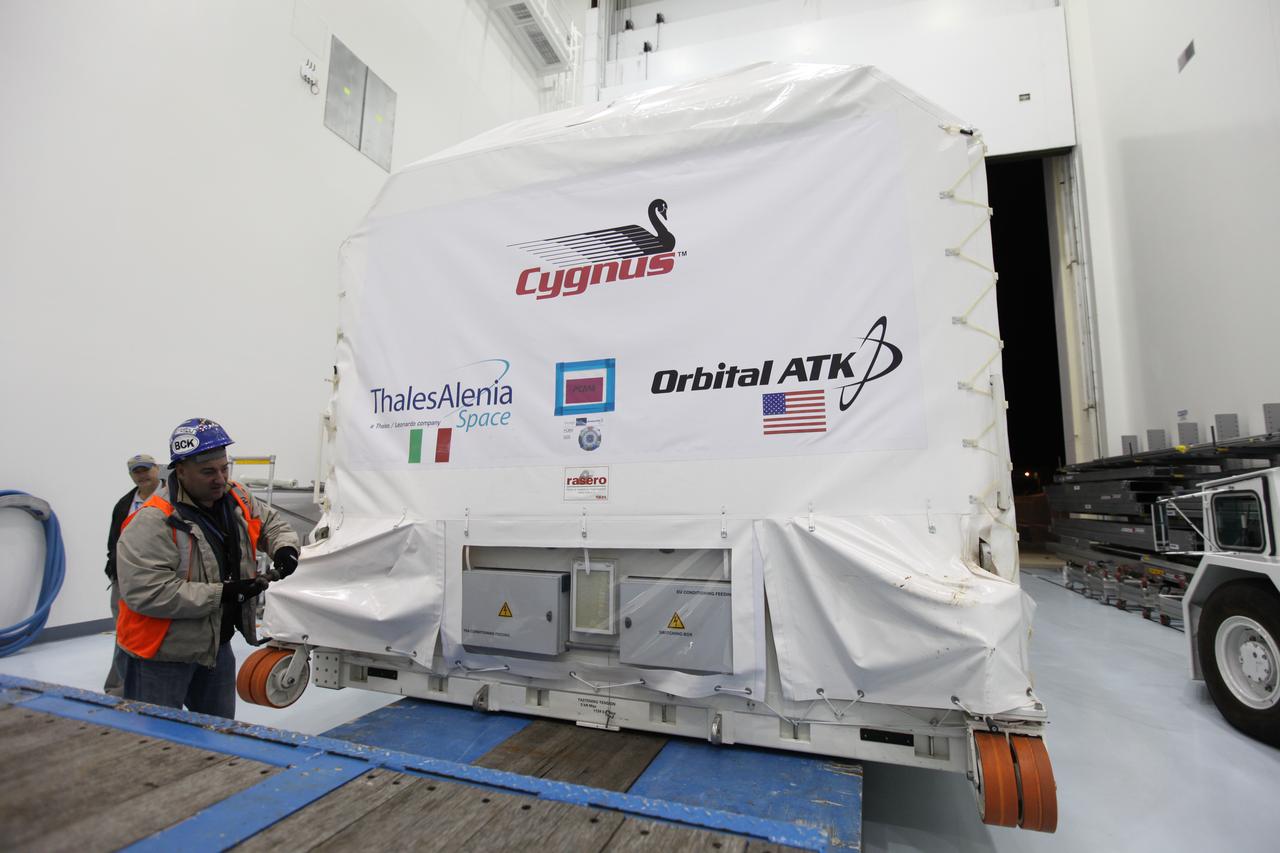
Still sealed in its environmentally controlled shipping container, the Orbital ATK OA-7 Cygnus spacecraft's pressurized cargo module (PCM) has arrived inside the Space Station Processing Facility at NASA's Kennedy Space Center in Florida. Once the Cygnus spacecraft is removed from its shipping container, engineers and technicians will begin preparing for launch scheduled for March 2017. Orbital ATK CRS-7 will lift off atop a United Launch Alliance Atlas V rocket from Space launch Complex 41 at Cape Canaveral Air Force Station. The commercial resupply services mission to the International Space Station will deliver thousands of pounds of supplies, equipment and scientific research materials that improve life on Earth and drive progress toward future space exploration.
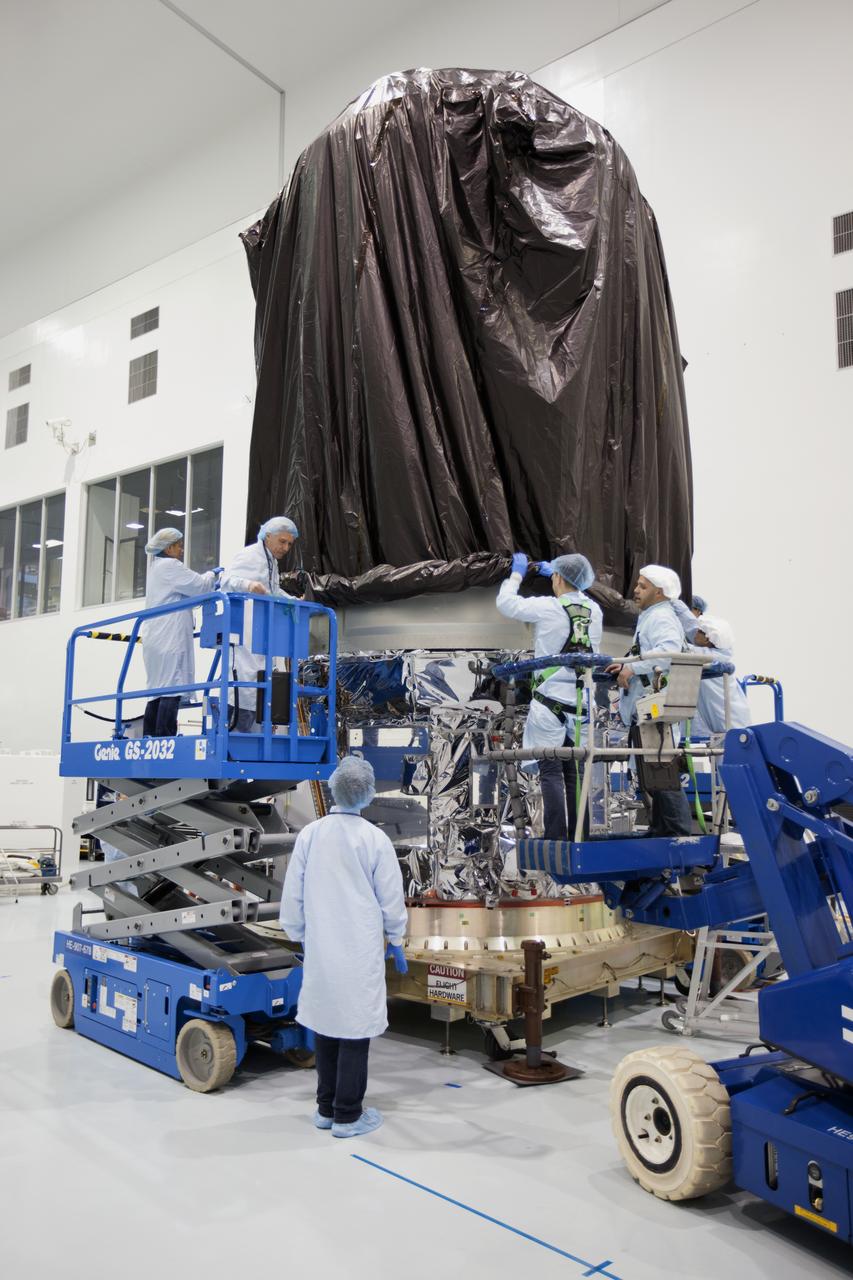
In the Space Station Processing Facility high bay at NASA's Kennedy Space Center in Florida, technicians secure a protective covering around Orbital ATK's CYGNUS pressurized cargo module. The Orbital ATK CRS-7 commercial resupply services mission to the International Space Station is scheduled to launch atop a United Launch Alliance Atlas V rocket from Space Launch Complex 41 at Cape Canaveral Air Force Station on March 19, 2017. CYGNUS will deliver thousands of pounds of supplies, equipment and scientific research materials to the space station.
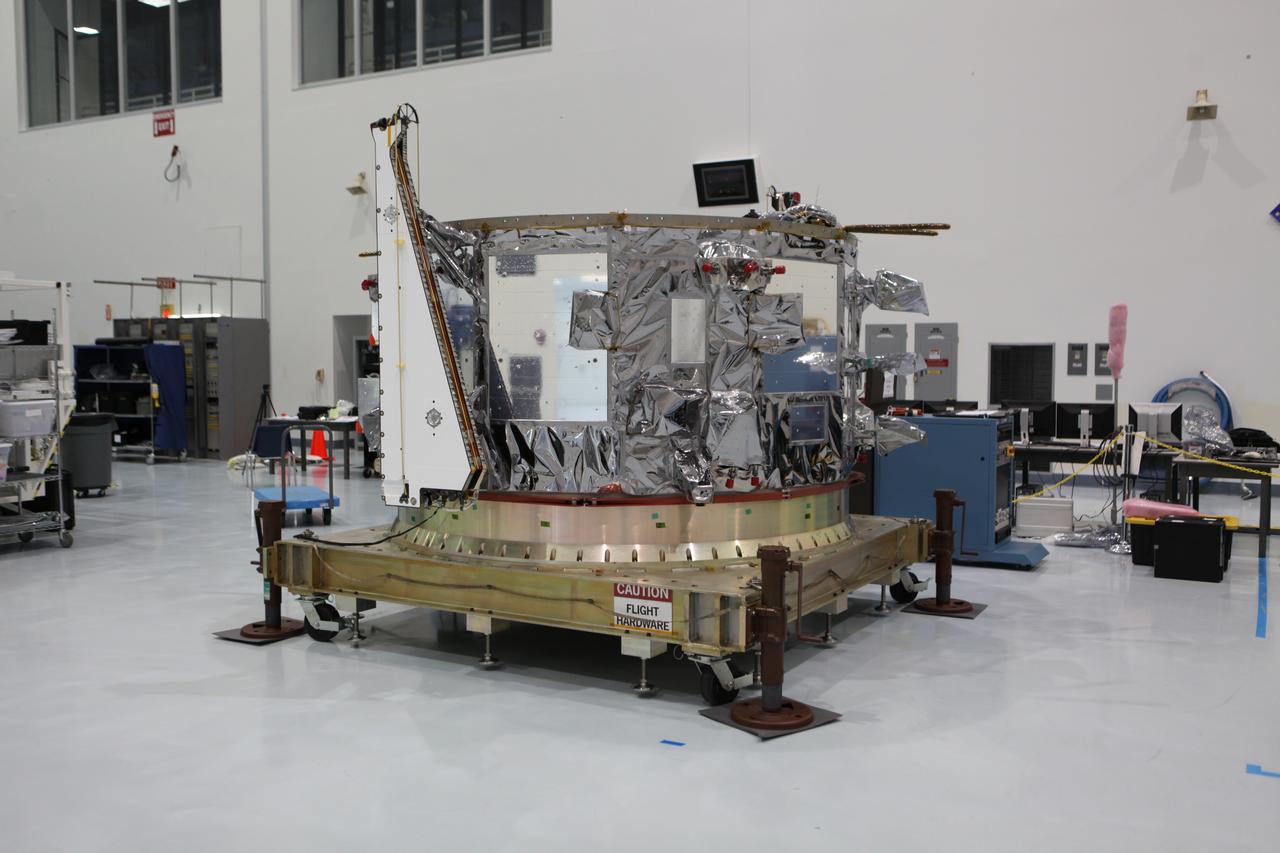
Inside the Space Station Processing Facility at NASA's Kennedy Space Center in Florida, engineers and technicians placed the Orbital ATK OA-7 Cygnus spacecraft's service module on a test stand. Scheduled to launch on March 19, 2017, the Orbital ATK OA-7 mission will lift off atop a United Launch Alliance Atlas V rocket from Space launch Complex 41 at Cape Canaveral Air Force Station. The commercial resupply services mission to the International Space Station will deliver thousands of pounds of supplies, equipment and scientific research materials that improve life on Earth and drive progress toward future space exploration.
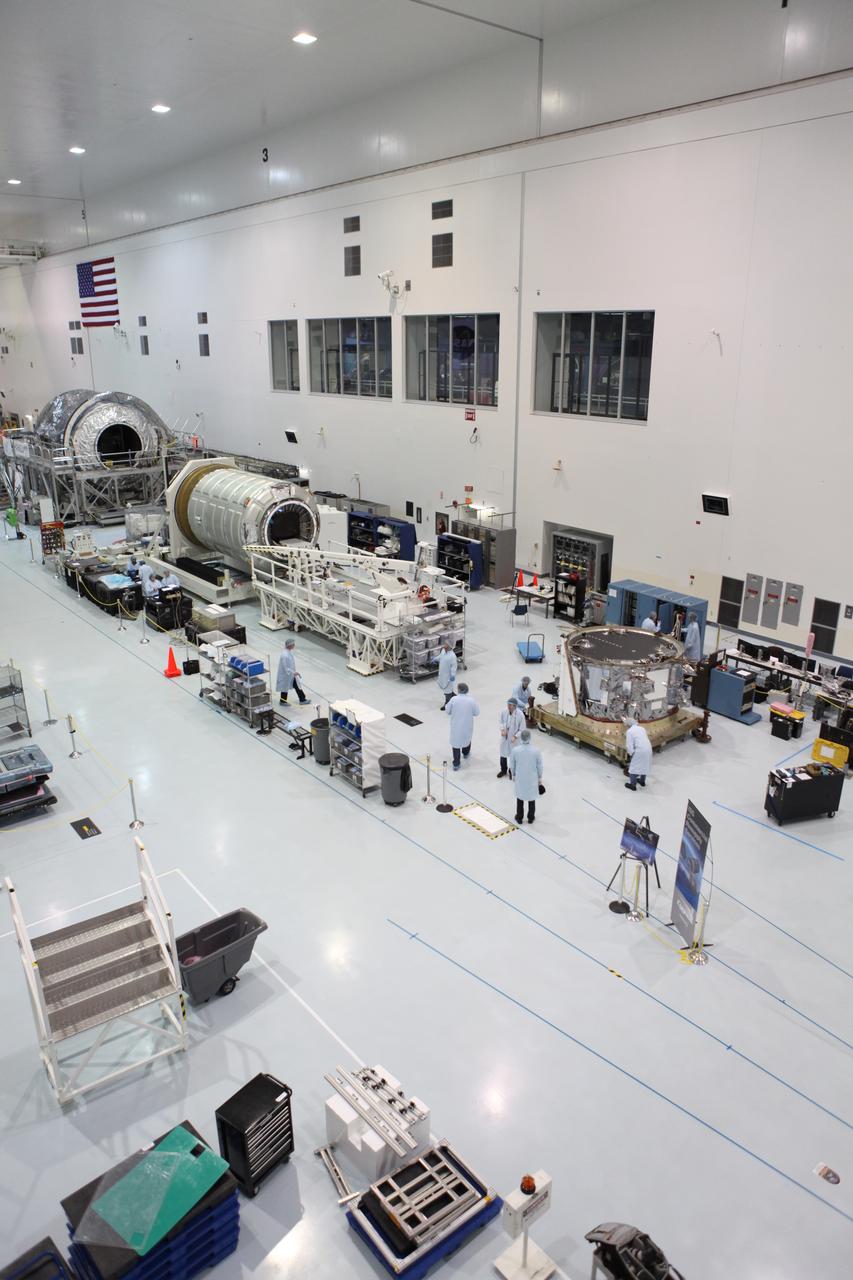
Inside the Space Station Processing Facility at NASA's Kennedy Space Center in Florida, engineers and technicians use a crane to place the Orbital ATK OA-7 Cygnus spacecraft's service module on a test stand. Scheduled to launch on March 19, 2017, the Orbital ATK OA-7 mission will lift off atop a United Launch Alliance Atlas V rocket from Space launch Complex 41 at Cape Canaveral Air Force Station. The commercial resupply services mission to the International Space Station will deliver thousands of pounds of supplies, equipment and scientific research materials that improve life on Earth and drive progress toward future space exploration.
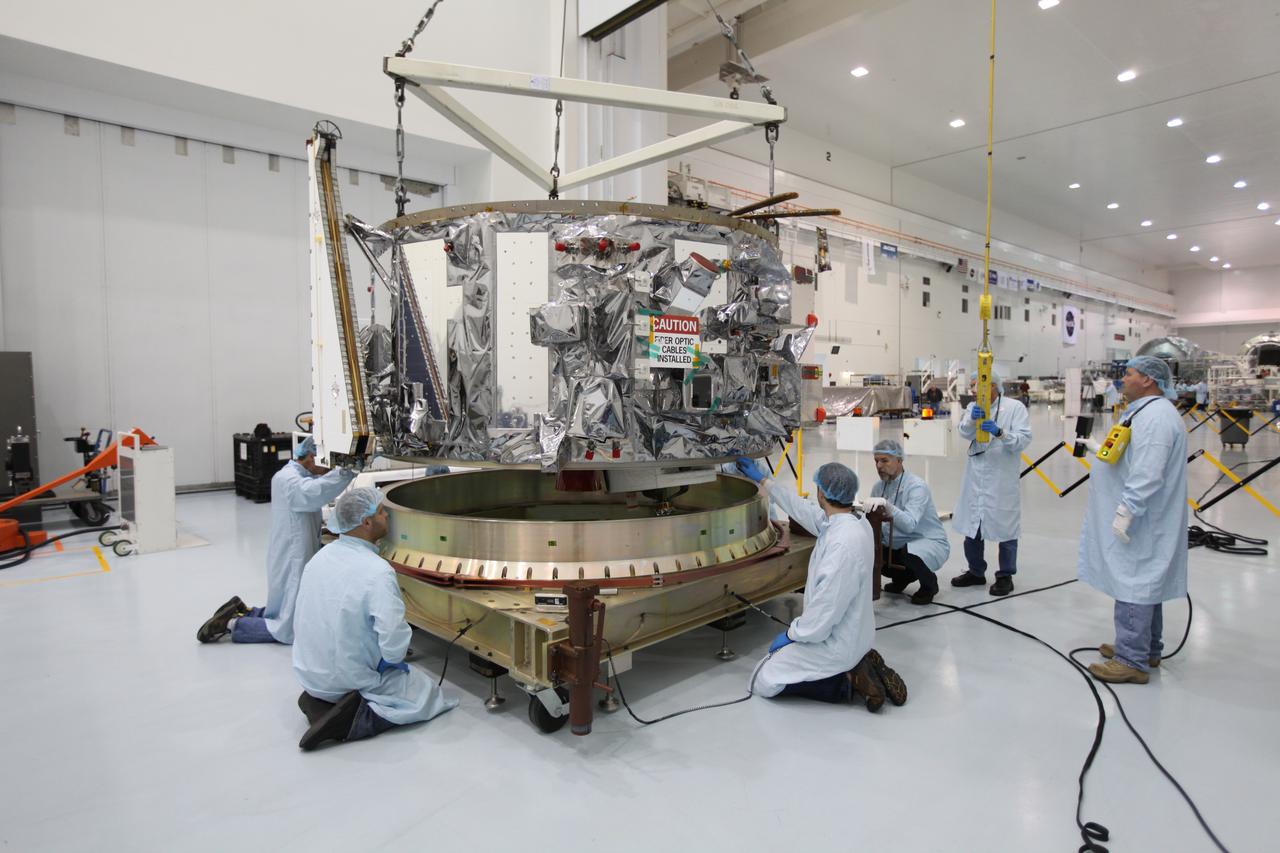
Inside the Space Station Processing Facility at NASA's Kennedy Space Center in Florida, engineers and technicians use a crane to place the Orbital ATK OA-7 Cygnus spacecraft's service module on a test stand. Scheduled to launch on March 19, 2017, the Orbital ATK OA-7 mission will lift off atop a United Launch Alliance Atlas V rocket from Space launch Complex 41 at Cape Canaveral Air Force Station. The commercial resupply services mission to the International Space Station will deliver thousands of pounds of supplies, equipment and scientific research materials that improve life on Earth and drive progress toward future space exploration.
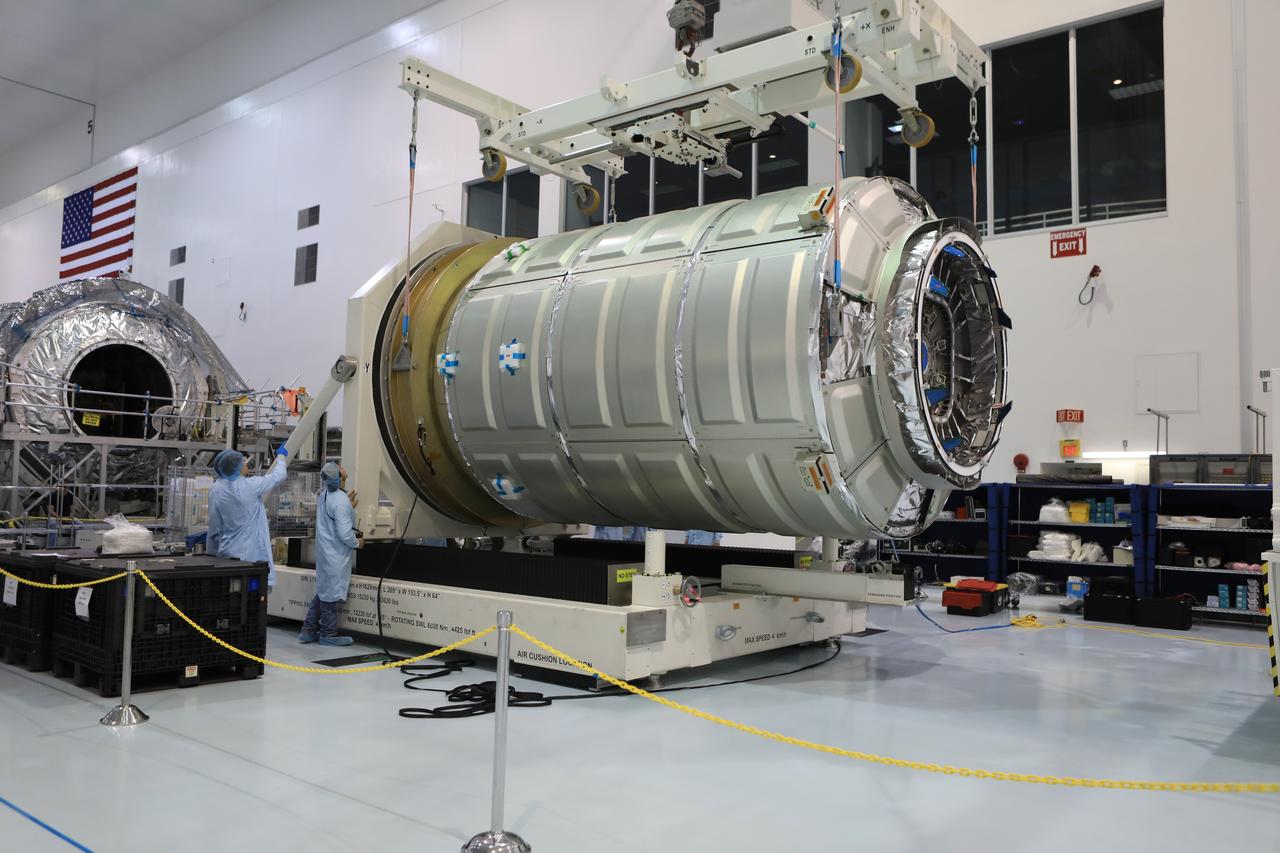
Engineers and technicians at NASA's Kennedy Space Center in Florida move the Orbital ATK OA-7 Cygnus spacecraft's pressurized cargo module (PCM) to a test stand inside the high bay of the Space Station Processing Facility. Scheduled to launch on March 19, 2017, the Orbital ATK OA-7 mission will lift off atop a United Launch Alliance Atlas V rocket from Space launch Complex 41 at Cape Canaveral Air Force Station. The commercial resupply services mission to the International Space Station will deliver thousands of pounds of supplies, equipment and scientific research materials that improve life on Earth and drive progress toward future space exploration.
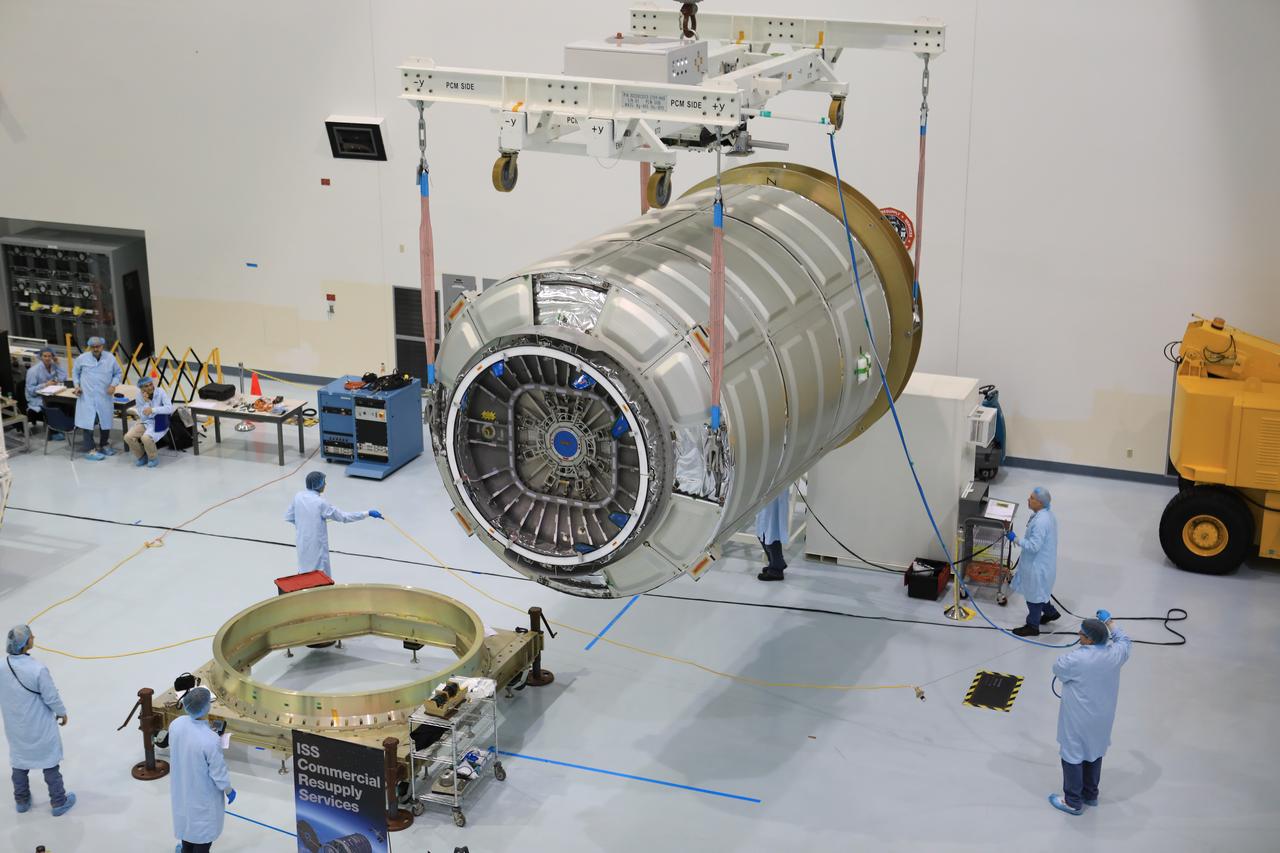
Engineers and technicians at NASA's Kennedy Space Center in Florida move the Orbital ATK OA-7 Cygnus spacecraft's pressurized cargo module (PCM) to a test stand inside the high bay of the Space Station Processing Facility. Scheduled to launch on March 19, 2017, the Orbital ATK OA-7 mission will lift off atop a United Launch Alliance Atlas V rocket from Space launch Complex 41 at Cape Canaveral Air Force Station. The commercial resupply services mission to the International Space Station will deliver thousands of pounds of supplies, equipment and scientific research materials that improve life on Earth and drive progress toward future space exploration.
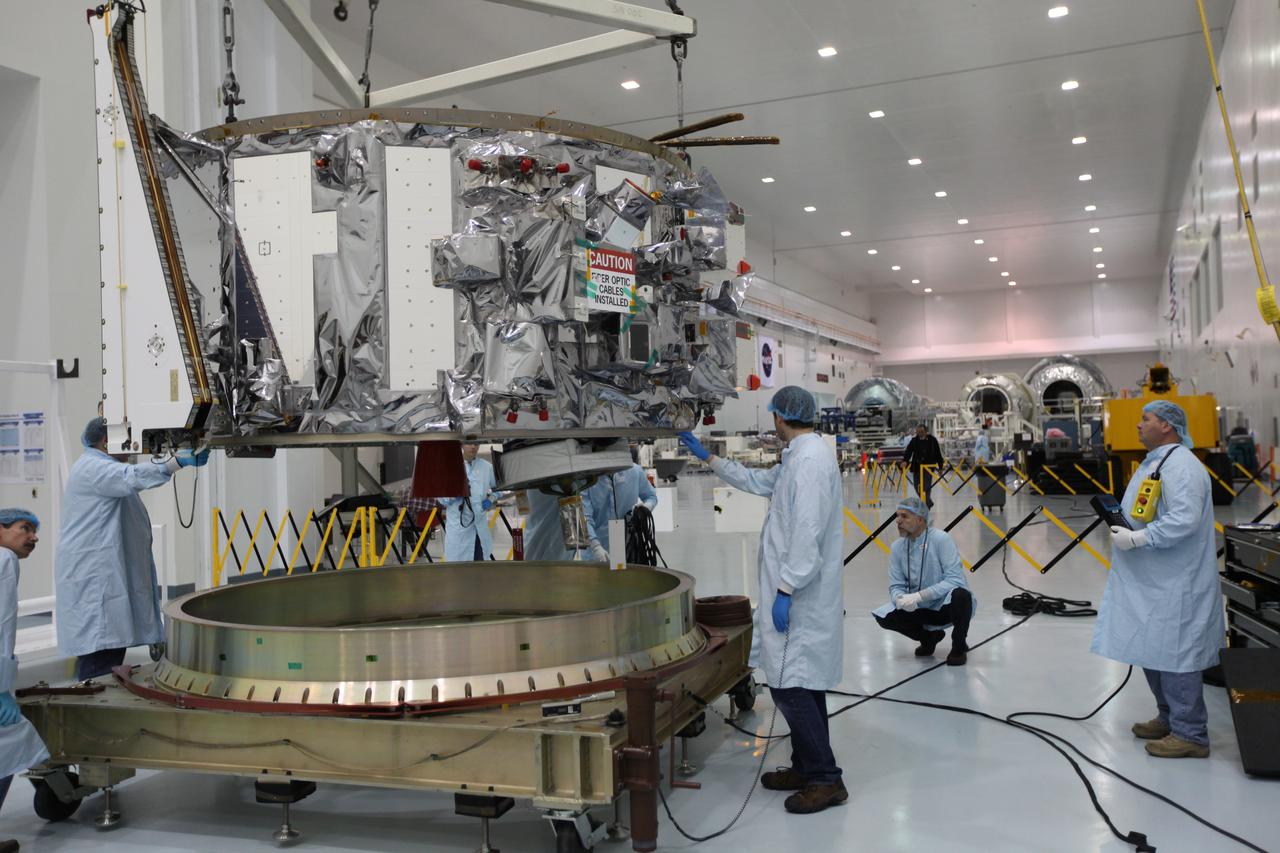
Inside the Space Station Processing Facility at NASA's Kennedy Space Center in Florida, Engineers and technicians use a crane to move the Orbital ATK OA-7 Cygnus spacecraft's service module to a test stand. Scheduled to launch on March 19, 2017, the Orbital ATK OA-7 mission will lift off atop a United Launch Alliance Atlas V rocket from Space launch Complex 41 at Cape Canaveral Air Force Station. The commercial resupply services mission to the International Space Station will deliver thousands of pounds of supplies, equipment and scientific research materials that improve life on Earth and drive progress toward future space exploration.
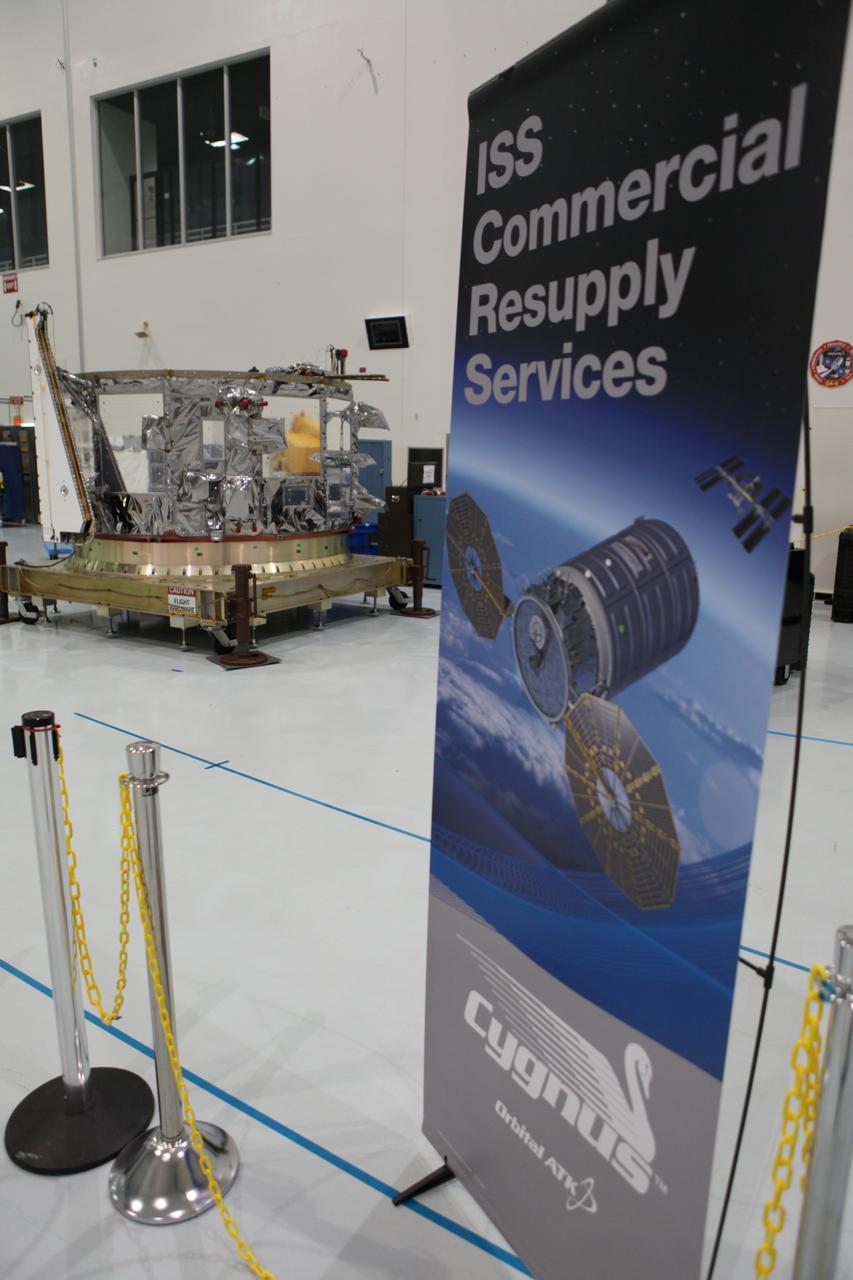
Inside the Space Station Processing Facility at NASA's Kennedy Space Center in Florida, engineers and technicians placed the Orbital ATK OA-7 Cygnus spacecraft's service module on a test stand. Scheduled to launch on March 19, 2017, the Orbital ATK OA-7 mission will lift off atop a United Launch Alliance Atlas V rocket from Space launch Complex 41 at Cape Canaveral Air Force Station. The commercial resupply services mission to the International Space Station will deliver thousands of pounds of supplies, equipment and scientific research materials that improve life on Earth and drive progress toward future space exploration.
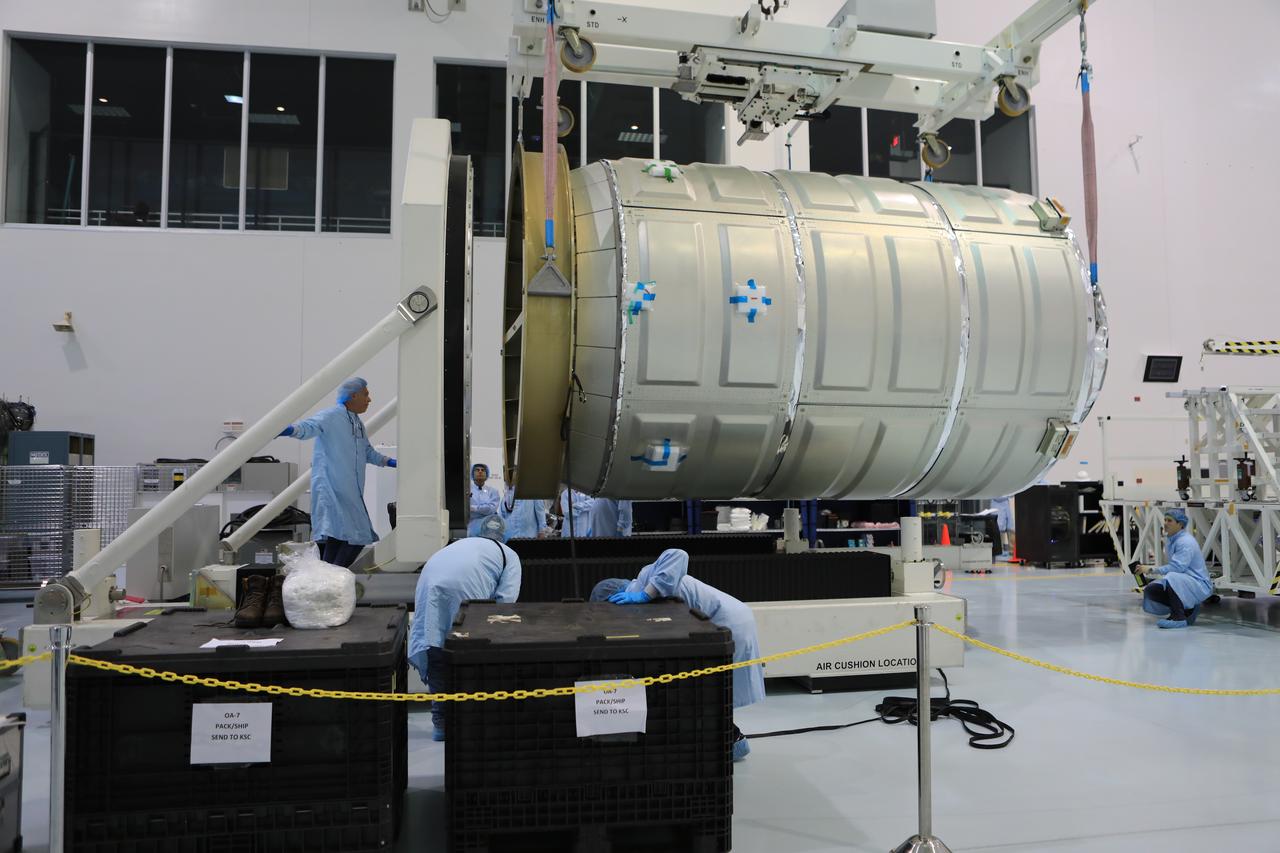
Engineers and technicians at NASA's Kennedy Space Center in Florida move the Orbital ATK OA-7 Cygnus spacecraft's pressurized cargo module (PCM) to a test stand inside the high bay of the Space Station Processing Facility. Scheduled to launch on March 19, 2017, the Orbital ATK OA-7 mission will lift off atop a United Launch Alliance Atlas V rocket from Space launch Complex 41 at Cape Canaveral Air Force Station. The commercial resupply services mission to the International Space Station will deliver thousands of pounds of supplies, equipment and scientific research materials that improve life on Earth and drive progress toward future space exploration.
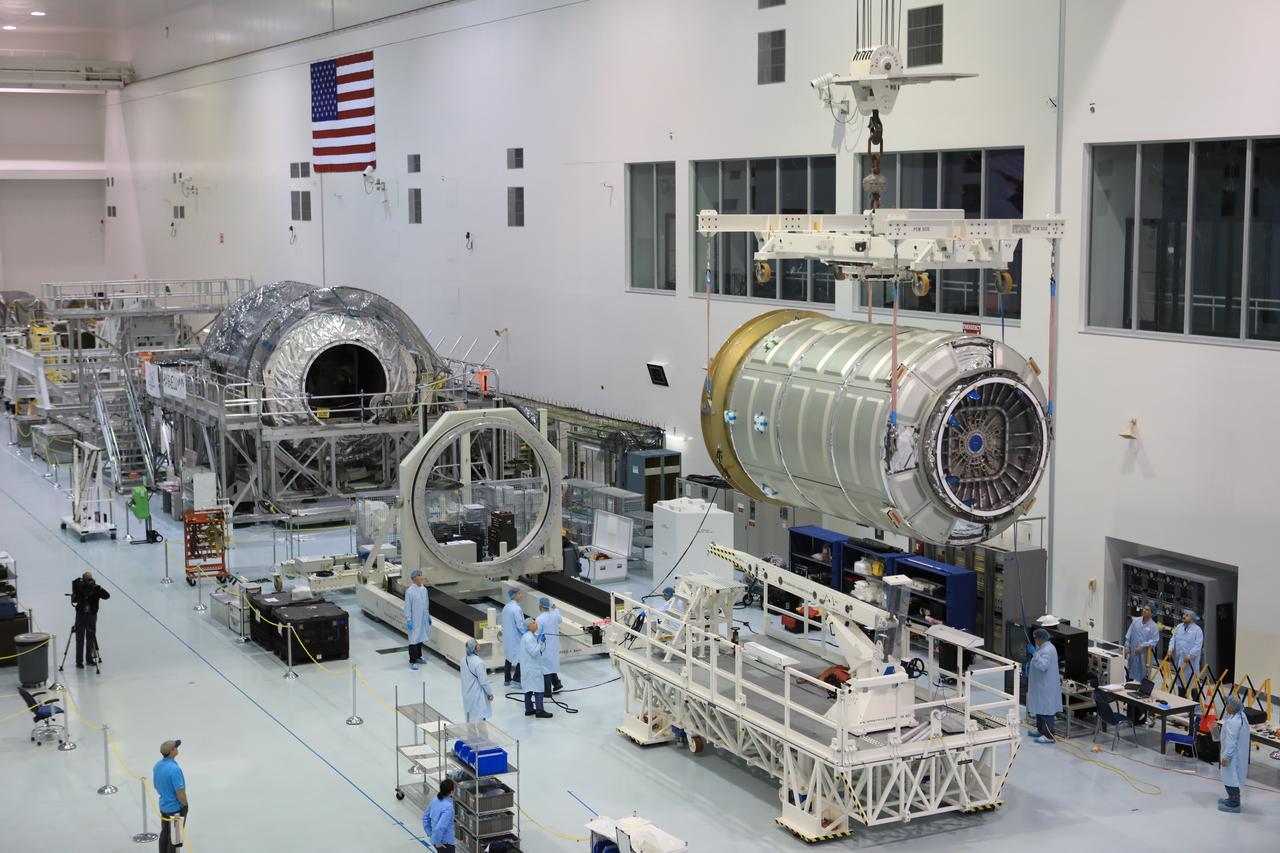
Engineers and technicians at NASA's Kennedy Space Center in Florida move the Orbital ATK OA-7 Cygnus spacecraft's pressurized cargo module (PCM) to a test stand inside the high bay of the Space Station Processing Facility. Scheduled to launch on March 19, 2017, the Orbital ATK OA-7 mission will lift off atop a United Launch Alliance Atlas V rocket from Space launch Complex 41 at Cape Canaveral Air Force Station. The commercial resupply services mission to the International Space Station will deliver thousands of pounds of supplies, equipment and scientific research materials that improve life on Earth and drive progress toward future space exploration.
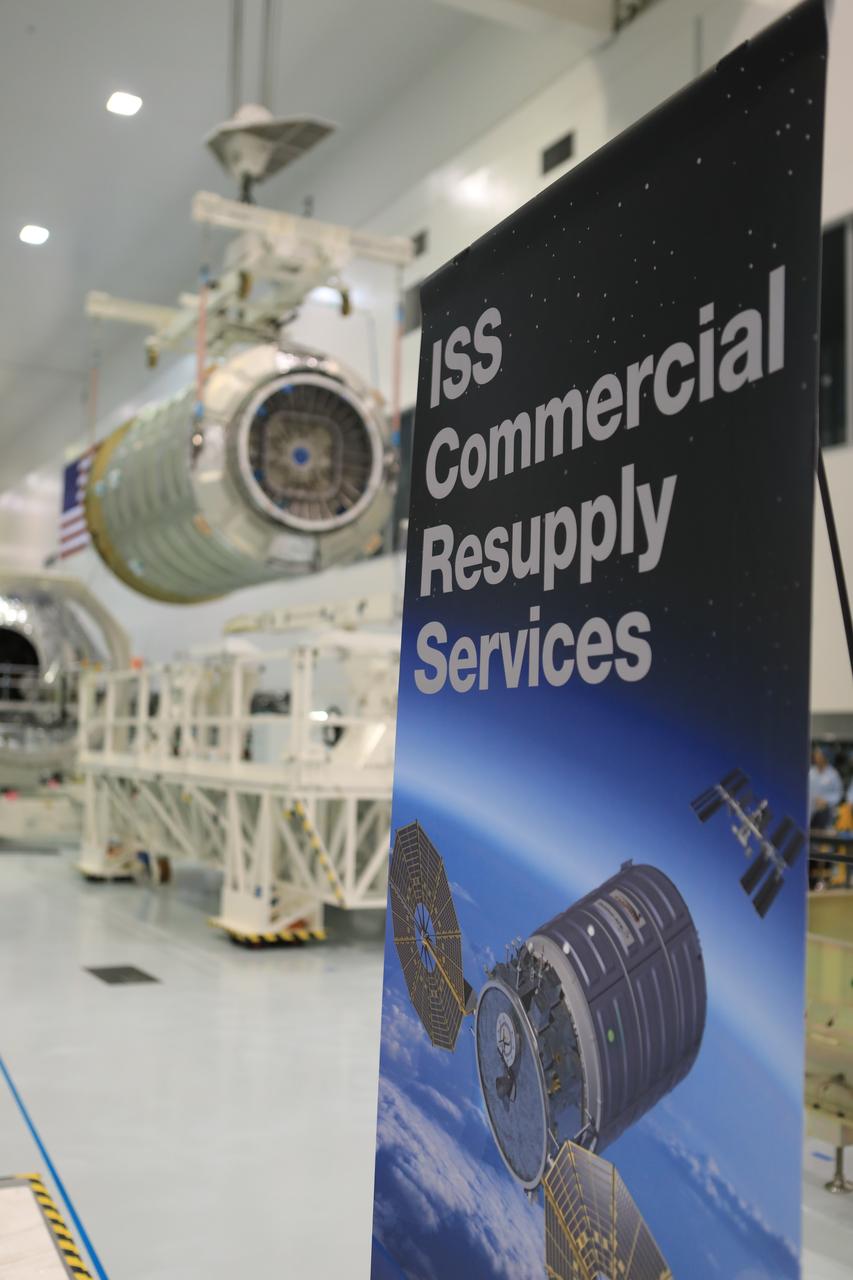
Engineers and technicians at NASA's Kennedy Space Center in Florida move the Orbital ATK OA-7 Cygnus spacecraft's pressurized cargo module (PCM) to a test stand inside the high bay of the Space Station Processing Facility. Scheduled to launch on March 19, 2017, the Orbital ATK OA-7 mission will lift off atop a United Launch Alliance Atlas V rocket from Space launch Complex 41 at Cape Canaveral Air Force Station. The commercial resupply services mission to the International Space Station will deliver thousands of pounds of supplies, equipment and scientific research materials that improve life on Earth and drive progress toward future space exploration.
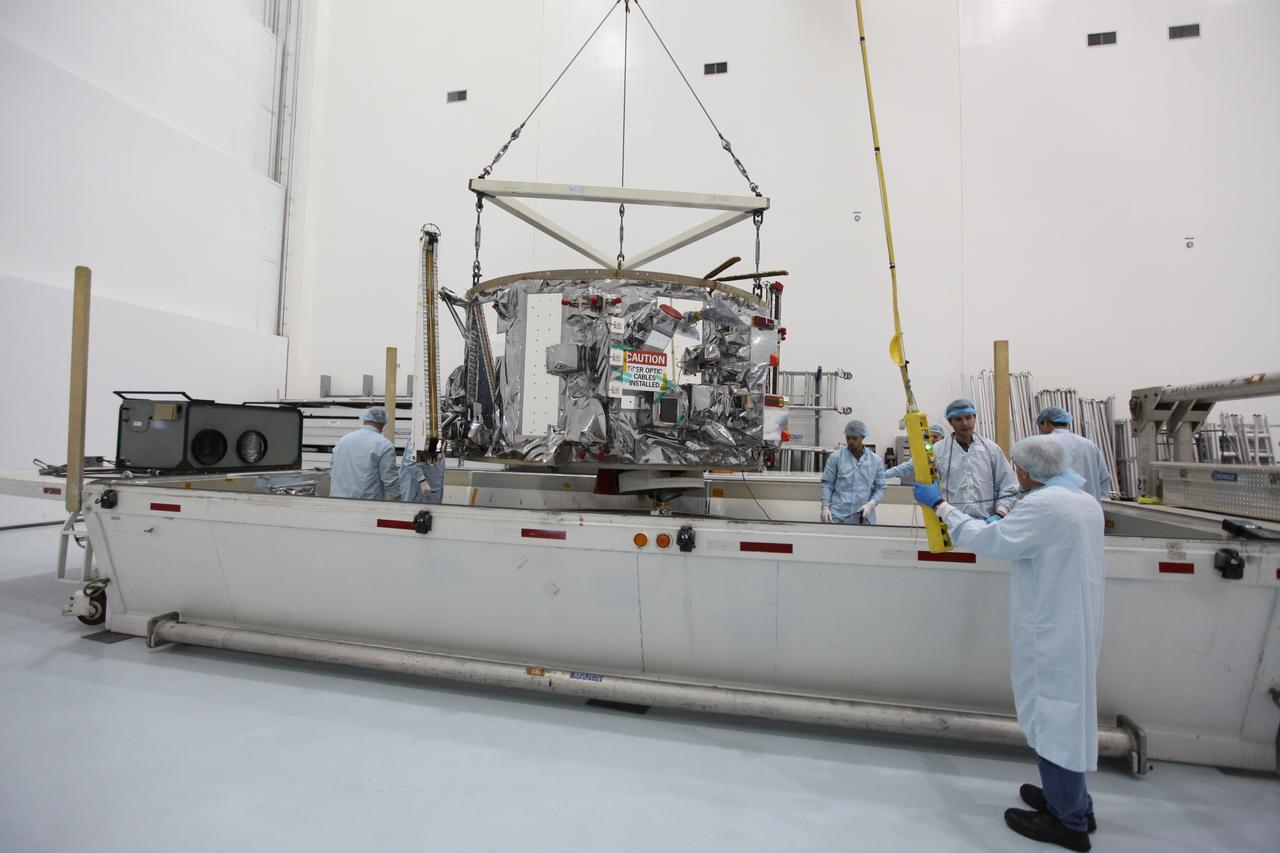
Inside the Space Station Processing Facility at NASA's Kennedy Space Center in Florida, Engineers and technicians use a crane to lift the Orbital ATK OA-7 Cygnus spacecraft's service module from its shipping container. Scheduled to launch on March 19, 2017, the Orbital ATK OA-7 mission will lift off atop a United Launch Alliance Atlas V rocket from Space launch Complex 41 at Cape Canaveral Air Force Station. The commercial resupply services mission to the International Space Station will deliver thousands of pounds of supplies, equipment and scientific research materials that improve life on Earth and drive progress toward future space exploration.
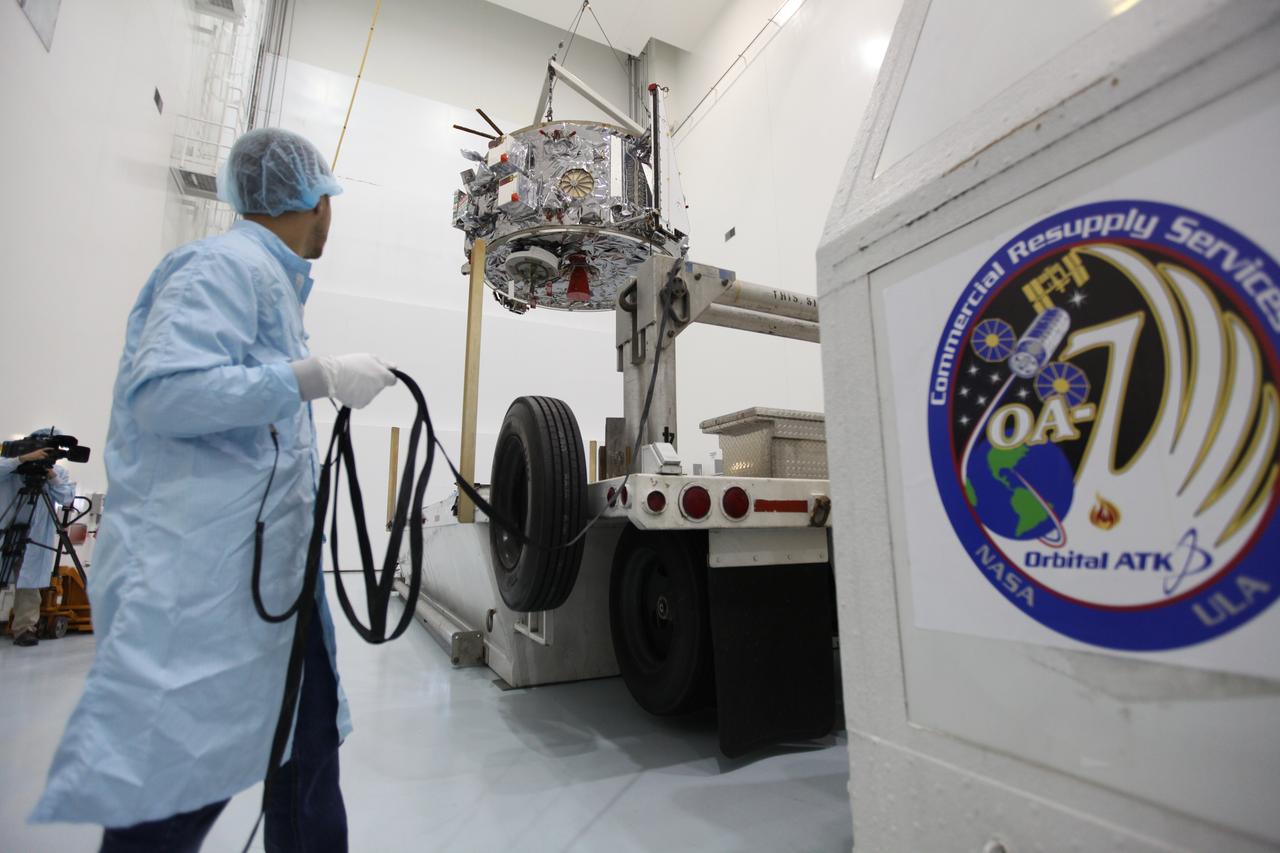
Inside the Space Station Processing Facility at NASA's Kennedy Space Center in Florida, Engineers and technicians use a crane to lift the Orbital ATK OA-7 Cygnus spacecraft's service module from its shipping container. Scheduled to launch on March 19, 2017, the Orbital ATK OA-7 mission will lift off atop a United Launch Alliance Atlas V rocket from Space launch Complex 41 at Cape Canaveral Air Force Station. The commercial resupply services mission to the International Space Station will deliver thousands of pounds of supplies, equipment and scientific research materials that improve life on Earth and drive progress toward future space exploration.
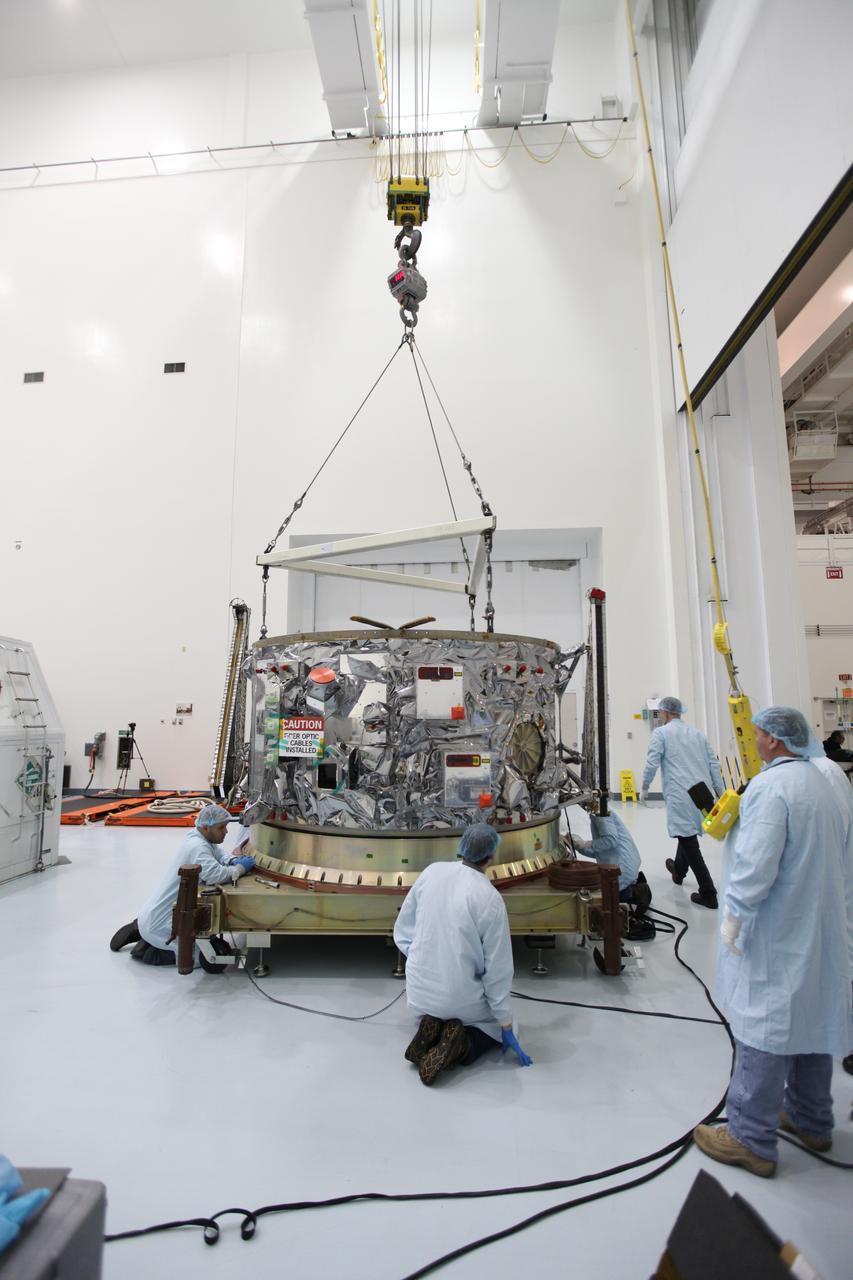
Inside the Space Station Processing Facility at NASA's Kennedy Space Center in Florida, engineers and technicians use a crane to place the Orbital ATK OA-7 Cygnus spacecraft's service module on a test stand. Scheduled to launch on March 19, 2017, the Orbital ATK OA-7 mission will lift off atop a United Launch Alliance Atlas V rocket from Space launch Complex 41 at Cape Canaveral Air Force Station. The commercial resupply services mission to the International Space Station will deliver thousands of pounds of supplies, equipment and scientific research materials that improve life on Earth and drive progress toward future space exploration.
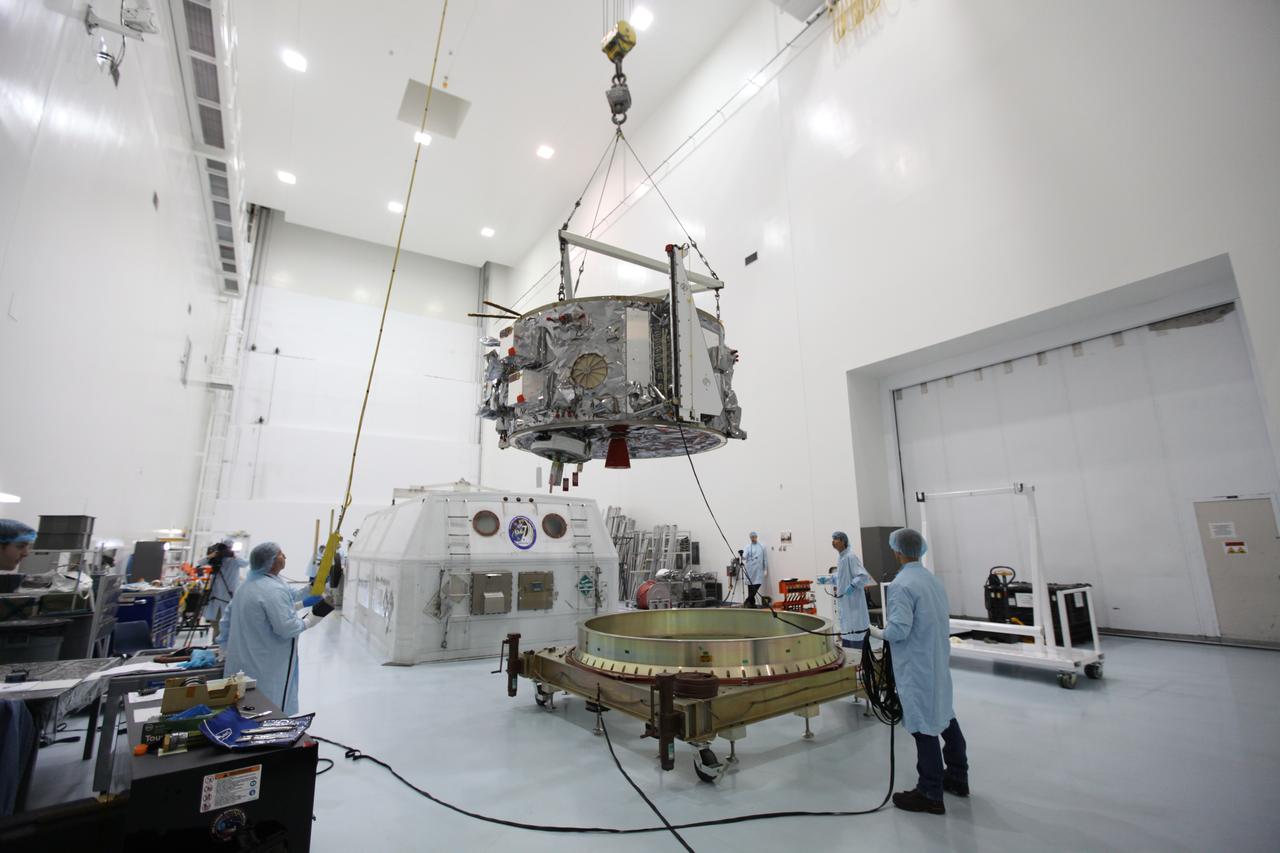
Inside the Space Station Processing Facility at NASA's Kennedy Space Center in Florida, Engineers and technicians use a crane to lift the Orbital ATK OA-7 Cygnus spacecraft's service module from its shipping container and move it to a test stand. Scheduled to launch on March 19, 2017, the Orbital ATK OA-7 mission will lift off atop a United Launch Alliance Atlas V rocket from Space launch Complex 41 at Cape Canaveral Air Force Station. The commercial resupply services mission to the International Space Station will deliver thousands of pounds of supplies, equipment and scientific research materials that improve life on Earth and drive progress toward future space exploration.
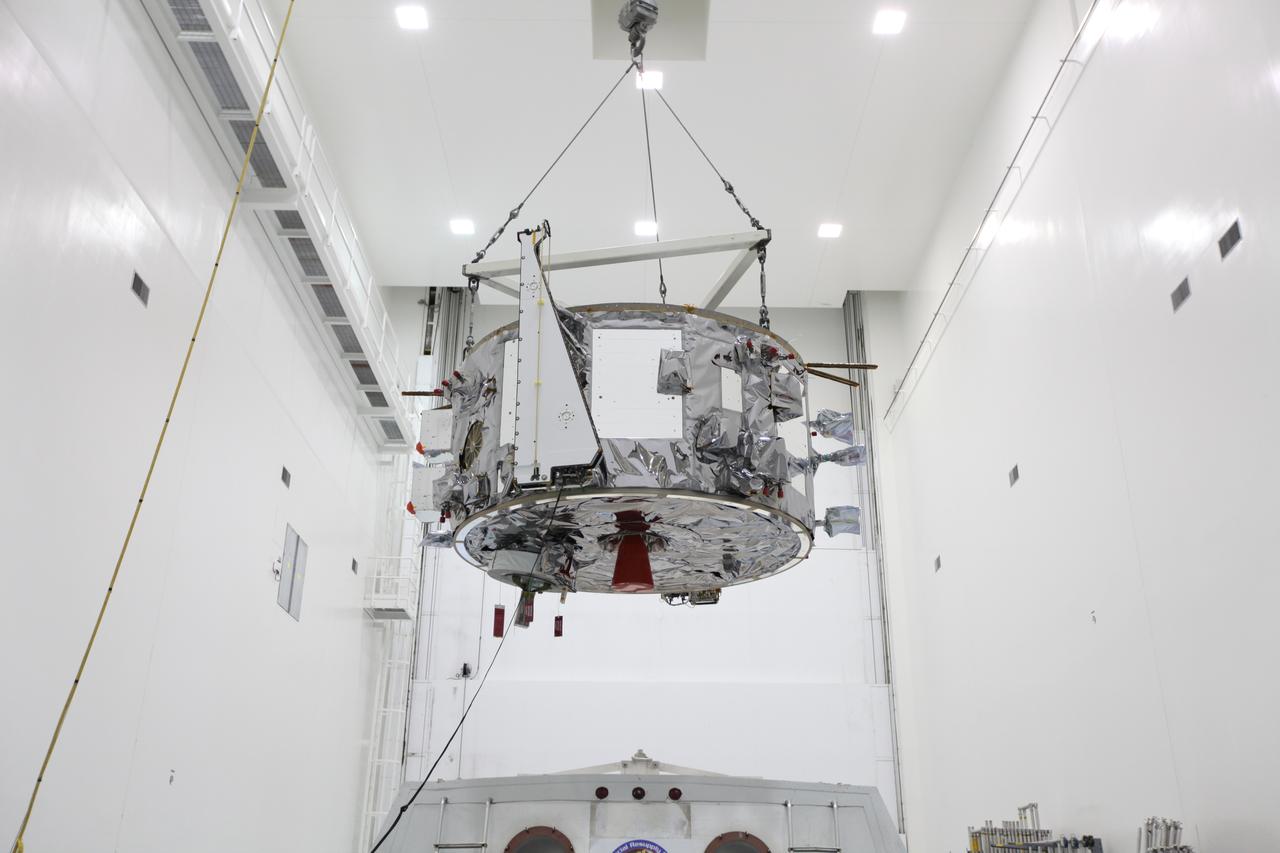
Inside the Space Station Processing Facility at NASA's Kennedy Space Center in Florida, a crane is used to lift the Orbital ATK OA-7 Cygnus spacecraft's service module from its shipping container. Scheduled to launch on March 19, 2017, the Orbital ATK OA-7 mission will lift off atop a United Launch Alliance Atlas V rocket from Space launch Complex 41 at Cape Canaveral Air Force Station. The commercial resupply services mission to the International Space Station will deliver thousands of pounds of supplies, equipment and scientific research materials that improve life on Earth and drive progress toward future space exploration.
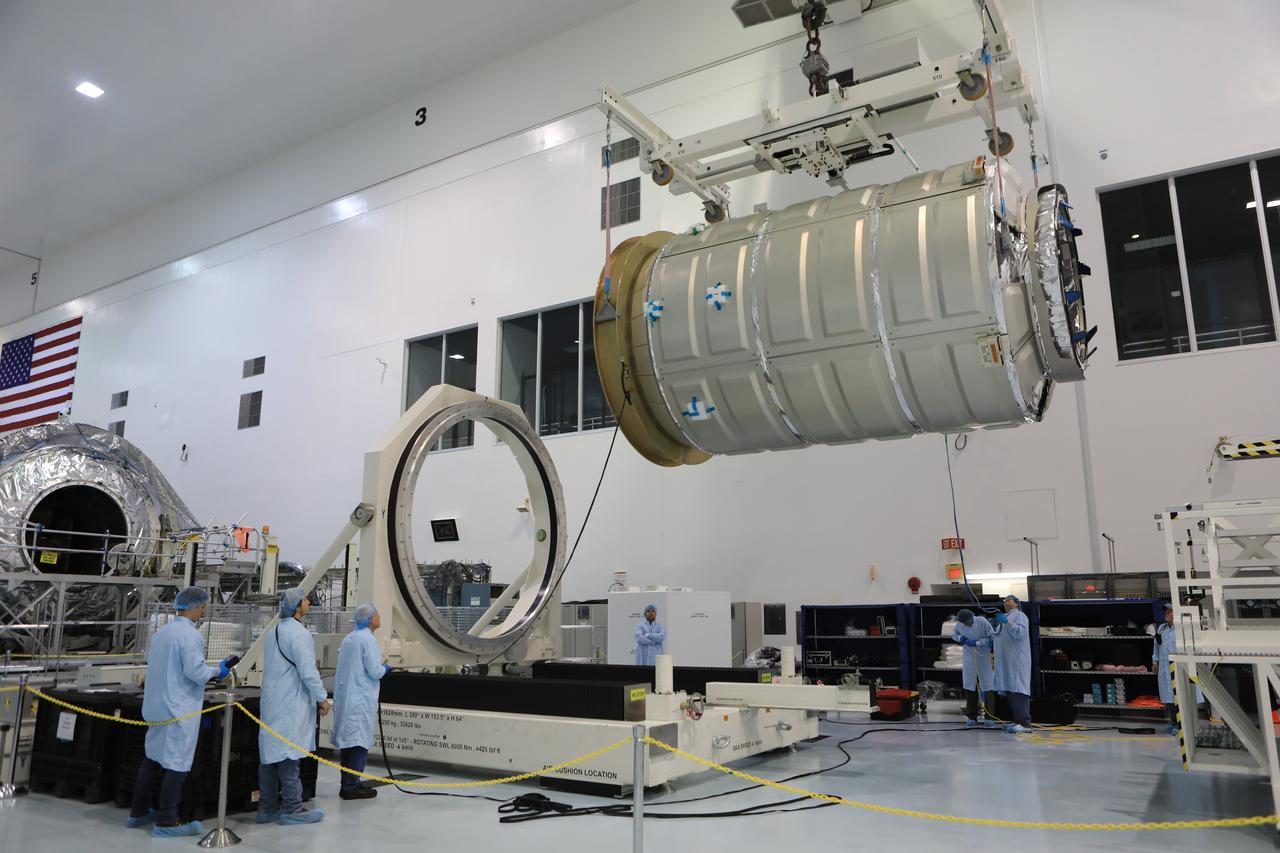
Engineers and technicians at NASA's Kennedy Space Center in Florida move the Orbital ATK OA-7 Cygnus spacecraft's pressurized cargo module (PCM) to a test stand inside the high bay of the Space Station Processing Facility. Scheduled to launch on March 19, 2017, the Orbital ATK OA-7 mission will lift off atop a United Launch Alliance Atlas V rocket from Space launch Complex 41 at Cape Canaveral Air Force Station. The commercial resupply services mission to the International Space Station will deliver thousands of pounds of supplies, equipment and scientific research materials that improve life on Earth and drive progress toward future space exploration.
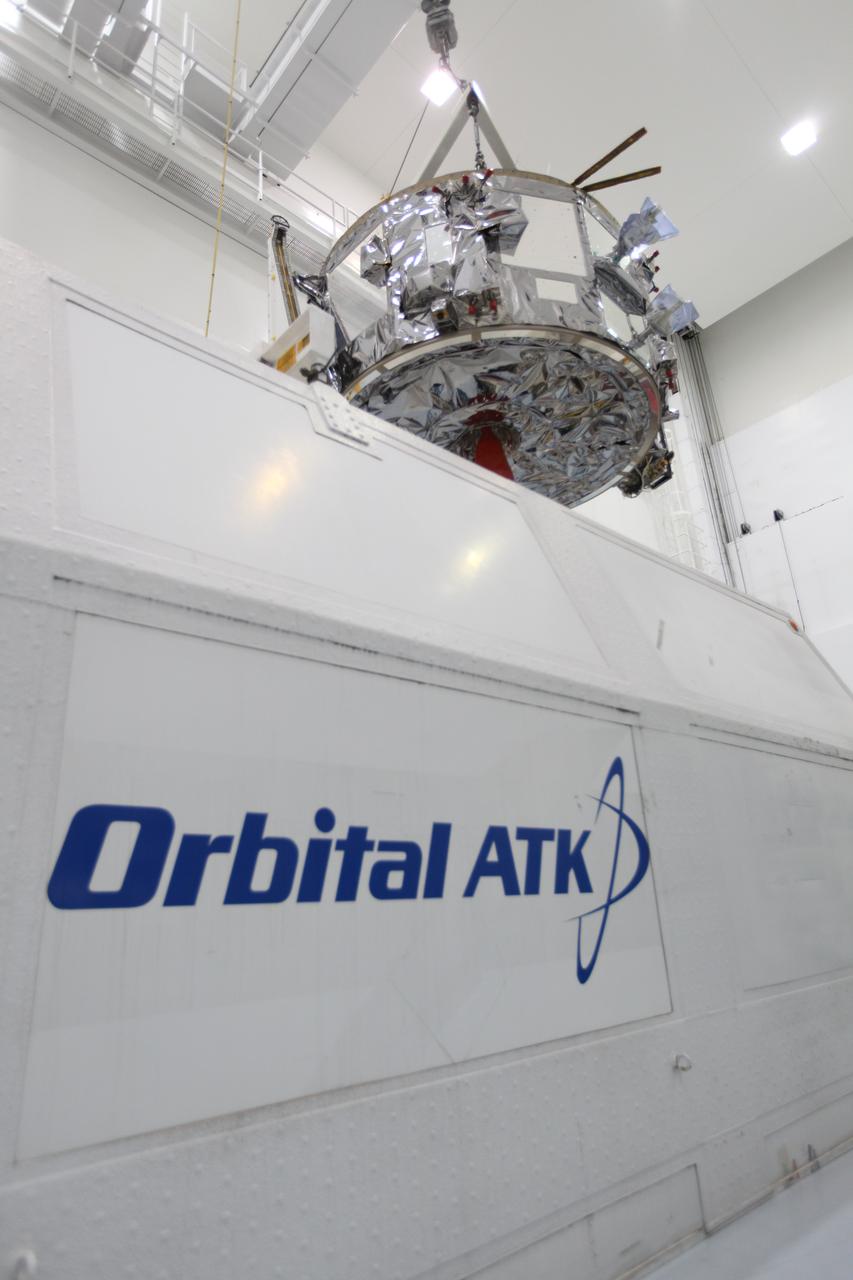
Inside the Space Station Processing Facility at NASA's Kennedy Space Center in Florida, a crane is used to lift the Orbital ATK OA-7 Cygnus spacecraft's service module from its shipping container. Scheduled to launch on March 19, 2017, the Orbital ATK OA-7 mission will lift off atop a United Launch Alliance Atlas V rocket from Space launch Complex 41 at Cape Canaveral Air Force Station. The commercial resupply services mission to the International Space Station will deliver thousands of pounds of supplies, equipment and scientific research materials that improve life on Earth and drive progress toward future space exploration.
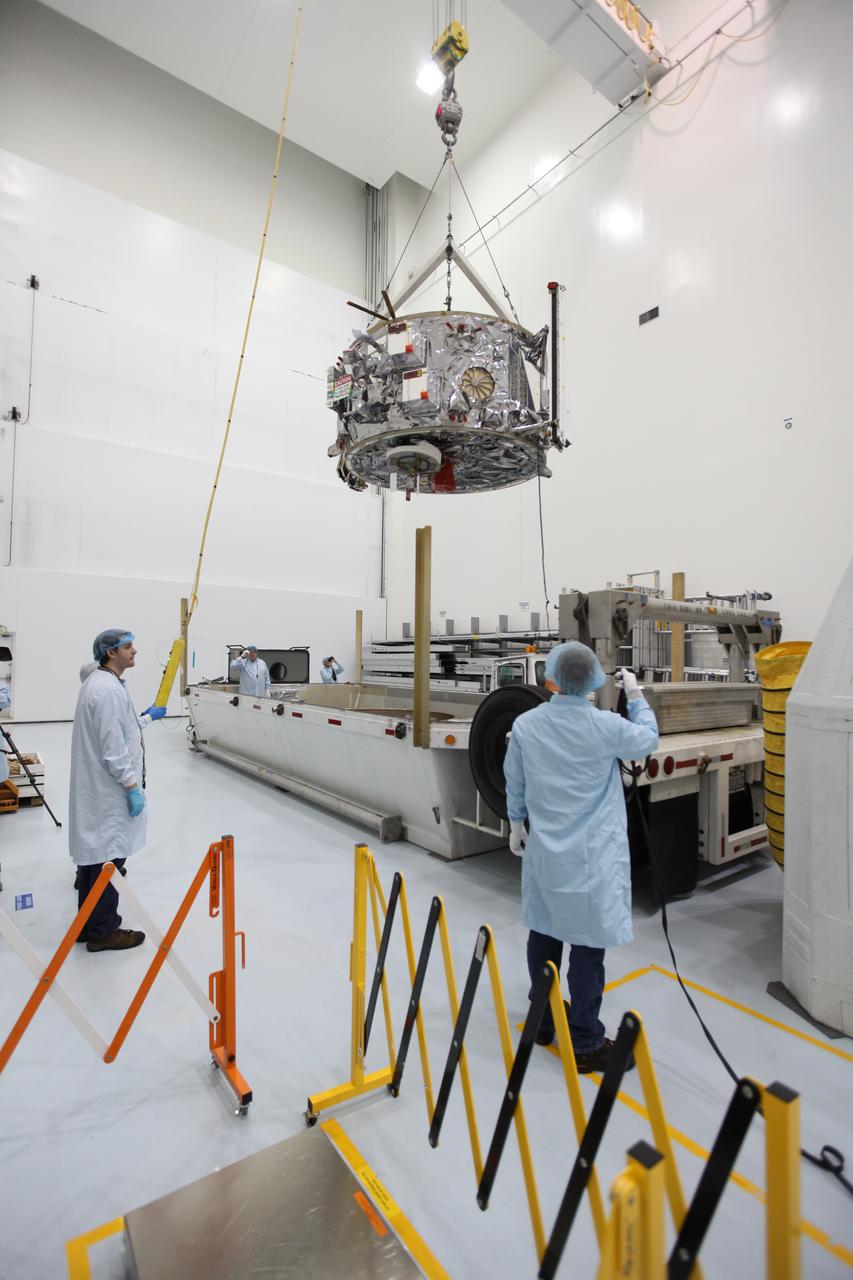
Inside the Space Station Processing Facility at NASA's Kennedy Space Center in Florida, Engineers and technicians use a crane to lift the Orbital ATK OA-7 Cygnus spacecraft's service module from its shipping container. Scheduled to launch on March 19, 2017, the Orbital ATK OA-7 mission will lift off atop a United Launch Alliance Atlas V rocket from Space launch Complex 41 at Cape Canaveral Air Force Station. The commercial resupply services mission to the International Space Station will deliver thousands of pounds of supplies, equipment and scientific research materials that improve life on Earth and drive progress toward future space exploration.
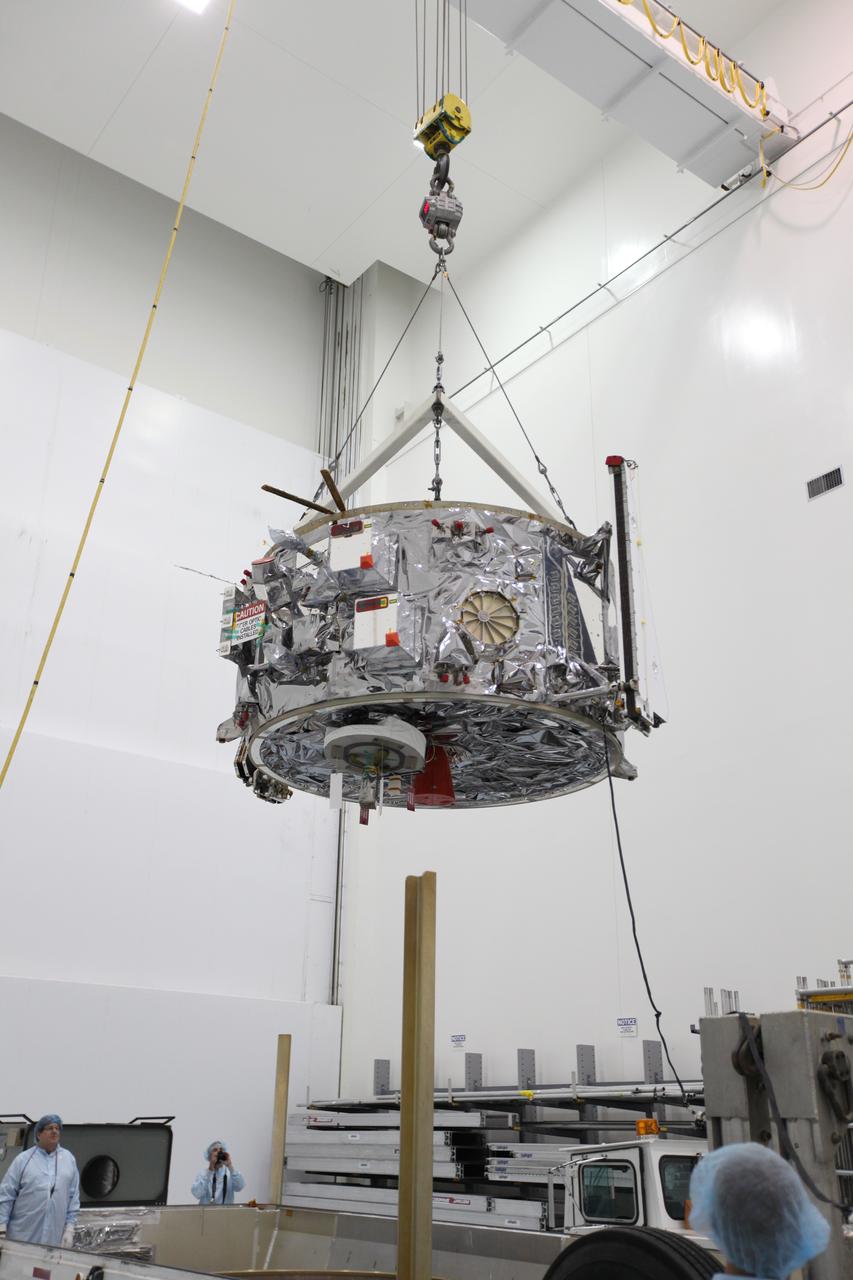
Inside the Space Station Processing Facility at NASA's Kennedy Space Center in Florida, Engineers and technicians use a crane to lift the Orbital ATK OA-7 Cygnus spacecraft's service module from its shipping container. Scheduled to launch on March 19, 2017, the Orbital ATK OA-7 mission will lift off atop a United Launch Alliance Atlas V rocket from Space launch Complex 41 at Cape Canaveral Air Force Station. The commercial resupply services mission to the International Space Station will deliver thousands of pounds of supplies, equipment and scientific research materials that improve life on Earth and drive progress toward future space exploration.
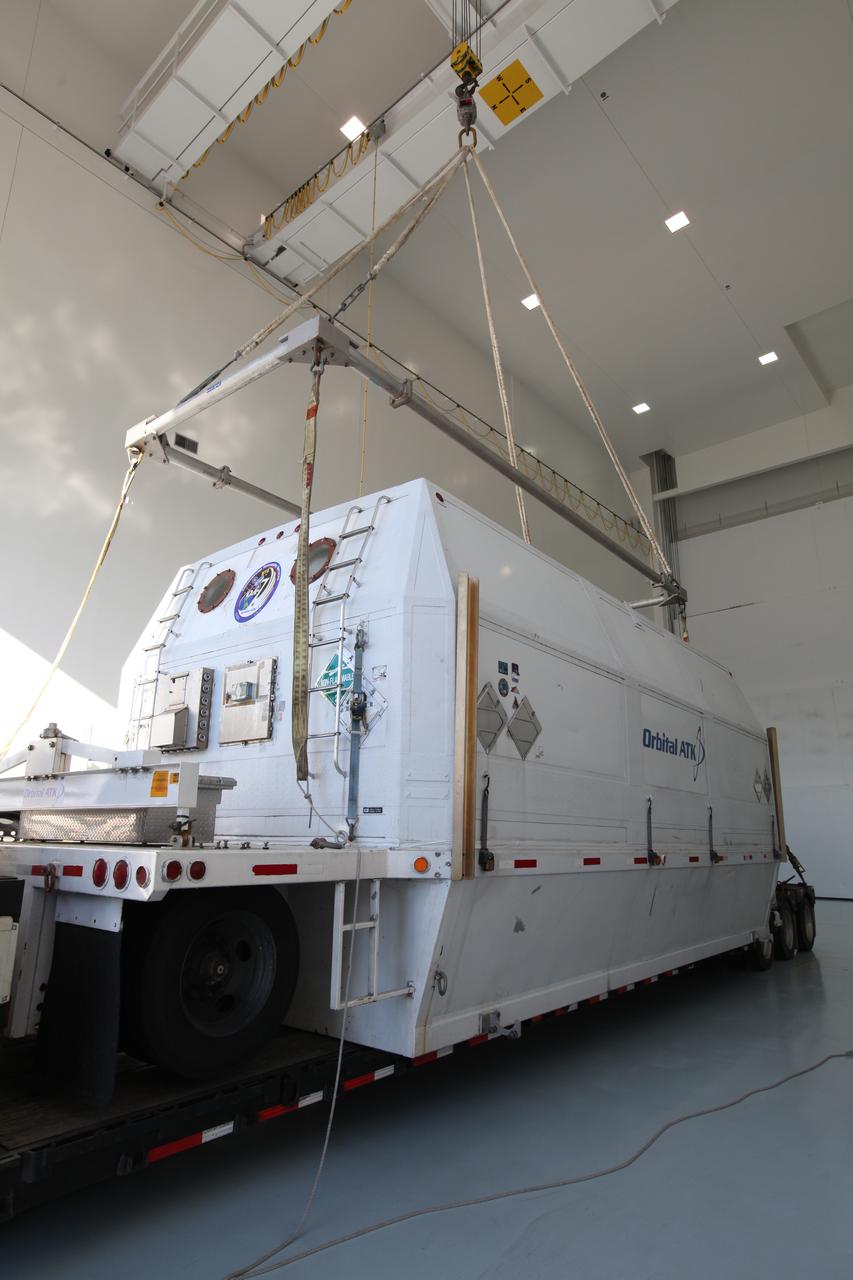
A crane is used to lift the Orbital ATK OA-7 Cygnus spacecraft's service module off a flatbed truck after arrival at the Space Station Processing Facility of NASA's Kennedy Space Center in Florida. The service module is sealed in an environmentally controlled shipping container. Scheduled to launch on March 19, 2017, the Orbital ATK OA-7 mission will lift off atop a United Launch Alliance Atlas V rocket from Space launch Complex 41 at Cape Canaveral Air Force Station. The commercial resupply services mission to the International Space Station will deliver thousands of pounds of supplies, equipment and scientific research materials that improve life on Earth and drive progress toward future space exploration.
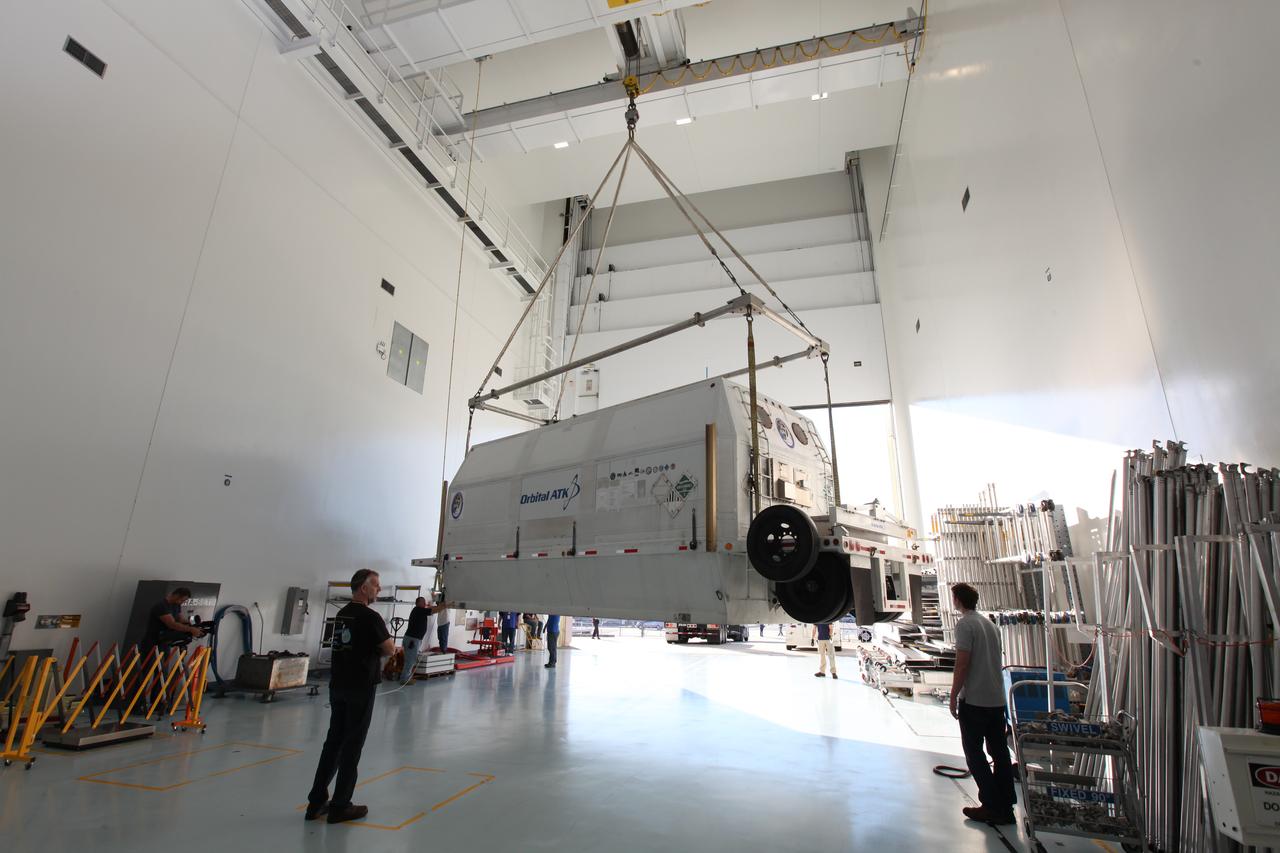
A crane is used to lift the Orbital ATK OA-7 Cygnus spacecraft's service module off a flatbed truck after arrival at the Space Station Processing Facility of NASA's Kennedy Space Center in Florida. The service module is sealed in an environmentally controlled shipping container. Scheduled to launch on March 19, 2017, the Orbital ATK OA-7 mission will lift off atop a United Launch Alliance Atlas V rocket from Space launch Complex 41 at Cape Canaveral Air Force Station. The commercial resupply services mission to the International Space Station will deliver thousands of pounds of supplies, equipment and scientific research materials that improve life on Earth and drive progress toward future space exploration.
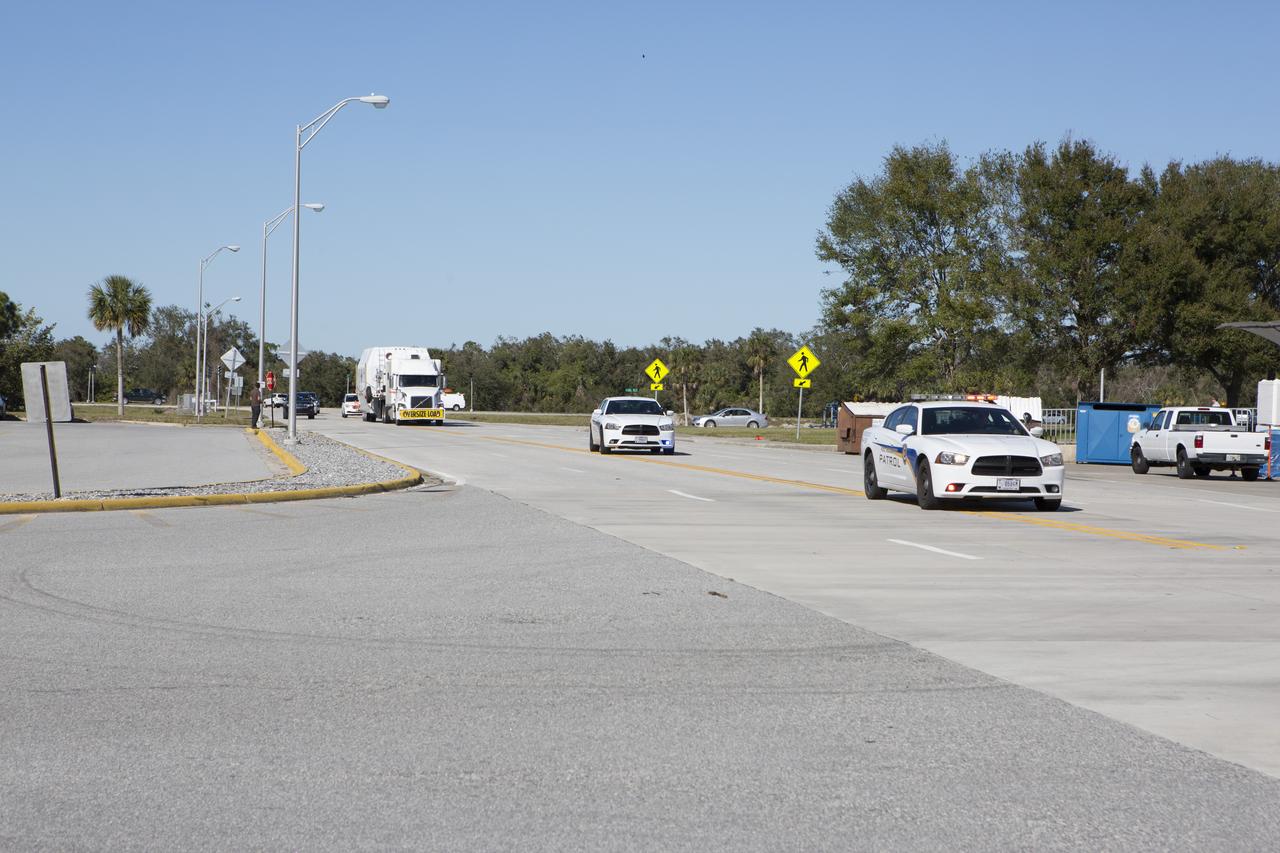
The Orbital ATK OA-7 Cygnus spacecraft's service module arrives inside the Space Station Processing Facility of NASA's Kennedy Space Center in Florida. The service module is sealed in an environmentally controlled shipping container, pulled in by truck on a low-boy flatbed trailer. Scheduled to launch on March 19, 2017, the Orbital ATK OA-7 mission will lift off atop a United Launch Alliance Atlas V rocket from Space launch Complex 41 at Cape Canaveral Air Force Station. The commercial resupply services mission to the International Space Station will deliver thousands of pounds of supplies, equipment and scientific research materials that improve life on Earth and drive progress toward future space exploration.
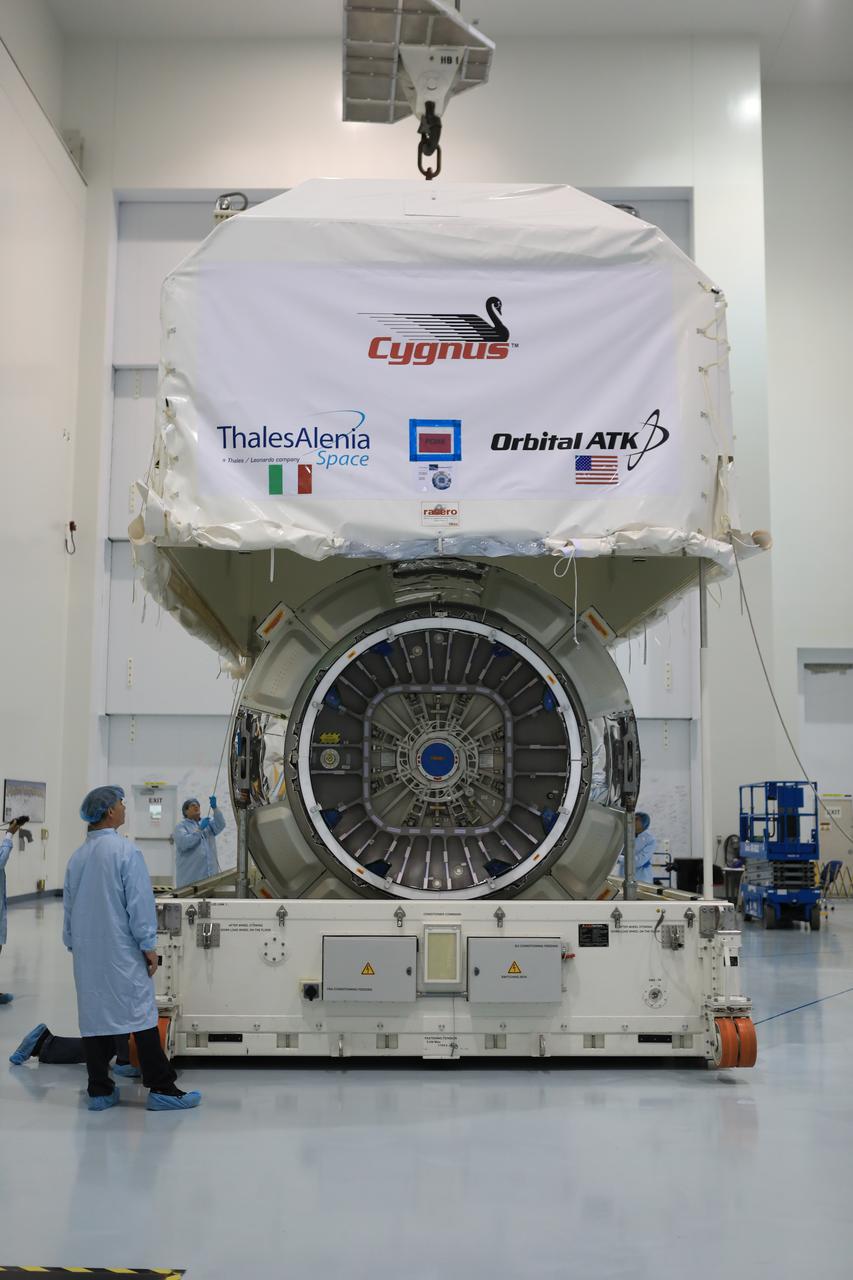
Inside the high bay of the Space Station Processing Facility of NASA's Kennedy Space Center in Florida engineers and technicians remove the Orbital ATK OA-7 Cygnus spacecraft's pressurized cargo module (PCM) from its environmentally controlled shipping container. Scheduled to launch on March 19, 2017, the Orbital ATK OA-7 mission will lift off atop a United Launch Alliance Atlas V rocket from Space launch Complex 41 at Cape Canaveral Air Force Station. The commercial resupply services mission to the International Space Station will deliver thousands of pounds of supplies, equipment and scientific research materials that improve life on Earth and drive progress toward future space exploration.
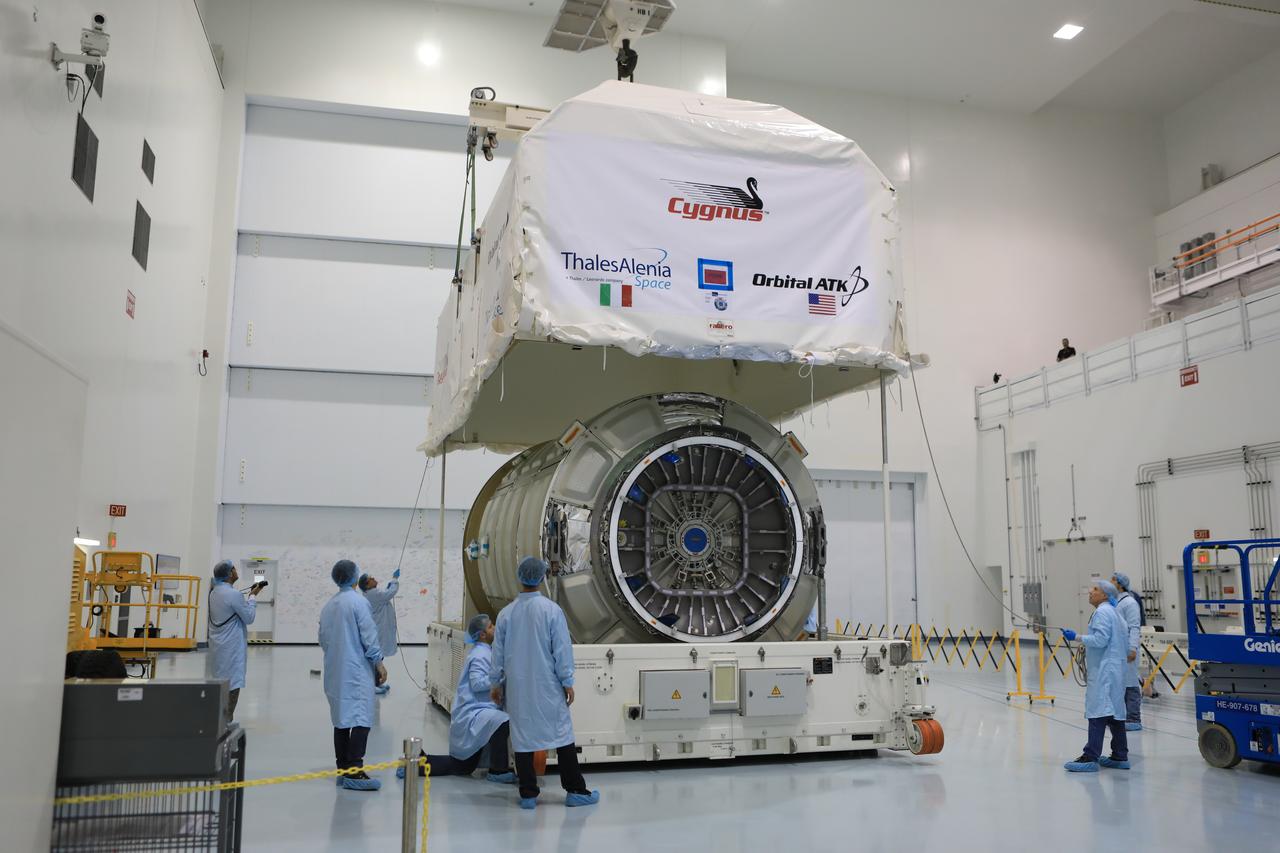
Inside the high bay of the Space Station Processing Facility of NASA's Kennedy Space Center in Florida engineers and technicians remove the Orbital ATK OA-7 Cygnus spacecraft's pressurized cargo module (PCM) from its environmentally controlled shipping container. Scheduled to launch on March 19, 2017, the Orbital ATK OA-7 mission will lift off atop a United Launch Alliance Atlas V rocket from Space launch Complex 41 at Cape Canaveral Air Force Station. The commercial resupply services mission to the International Space Station will deliver thousands of pounds of supplies, equipment and scientific research materials that improve life on Earth and drive progress toward future space exploration.
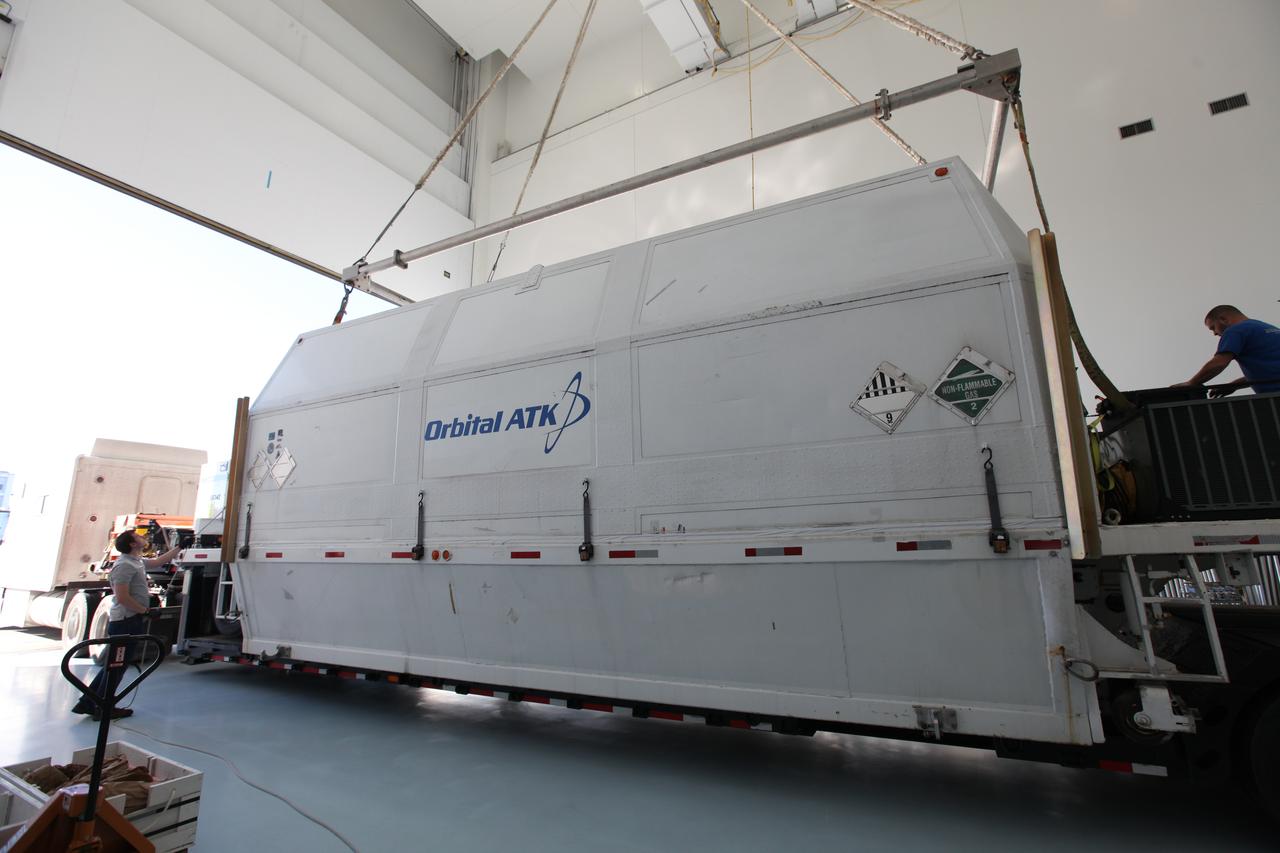
The Orbital ATK OA-7 Cygnus spacecraft's service module arrives inside the Space Station Processing Facility of NASA's Kennedy Space Center in Florida. The service module is sealed in an environmentally controlled shipping container, pulled in by truck on a low-boy flatbed trailer. Scheduled to launch on March 19, 2017, the Orbital ATK OA-7 mission will lift off atop a United Launch Alliance Atlas V rocket from Space launch Complex 41 at Cape Canaveral Air Force Station. The commercial resupply services mission to the International Space Station will deliver thousands of pounds of supplies, equipment and scientific research materials that improve life on Earth and drive progress toward future space exploration.
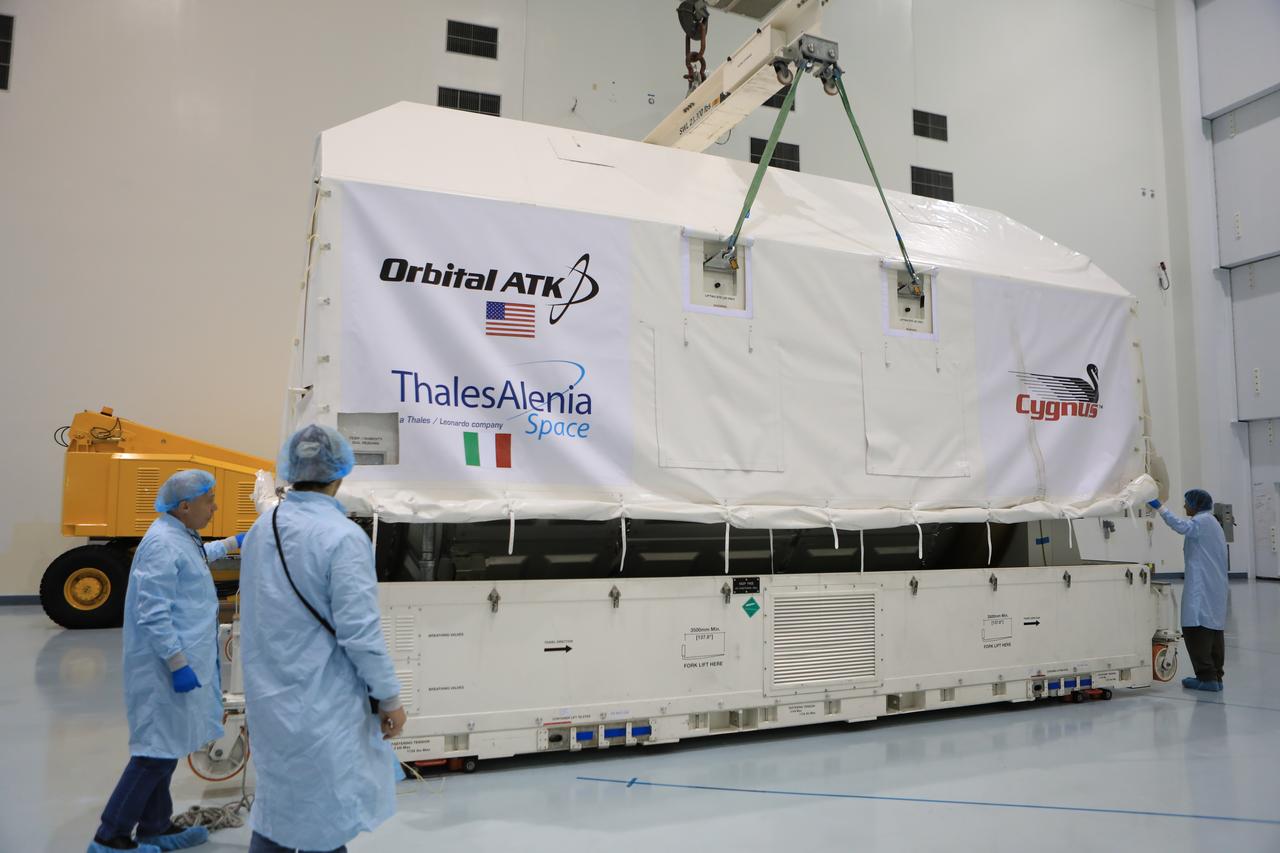
Inside the high bay of the Space Station Processing Facility of NASA's Kennedy Space Center in Florida engineers and technicians remove the Orbital ATK OA-7 Cygnus spacecraft's pressurized cargo module (PCM) from its environmentally controlled shipping container. Scheduled to launch on March 19, 2017, the Orbital ATK OA-7 mission will lift off atop a United Launch Alliance Atlas V rocket from Space launch Complex 41 at Cape Canaveral Air Force Station. The commercial resupply services mission to the International Space Station will deliver thousands of pounds of supplies, equipment and scientific research materials that improve life on Earth and drive progress toward future space exploration.

The Orbital ATK OA-7 Cygnus spacecraft's service module arrives inside the Space Station Processing Facility of NASA's Kennedy Space Center in Florida. The service module is sealed in an environmentally controlled shipping container, pulled in by truck on a low-boy flatbed trailer. Scheduled to launch on March 19, 2017, the Orbital ATK OA-7 mission will lift off atop a United Launch Alliance Atlas V rocket from Space launch Complex 41 at Cape Canaveral Air Force Station. The commercial resupply services mission to the International Space Station will deliver thousands of pounds of supplies, equipment and scientific research materials that improve life on Earth and drive progress toward future space exploration.
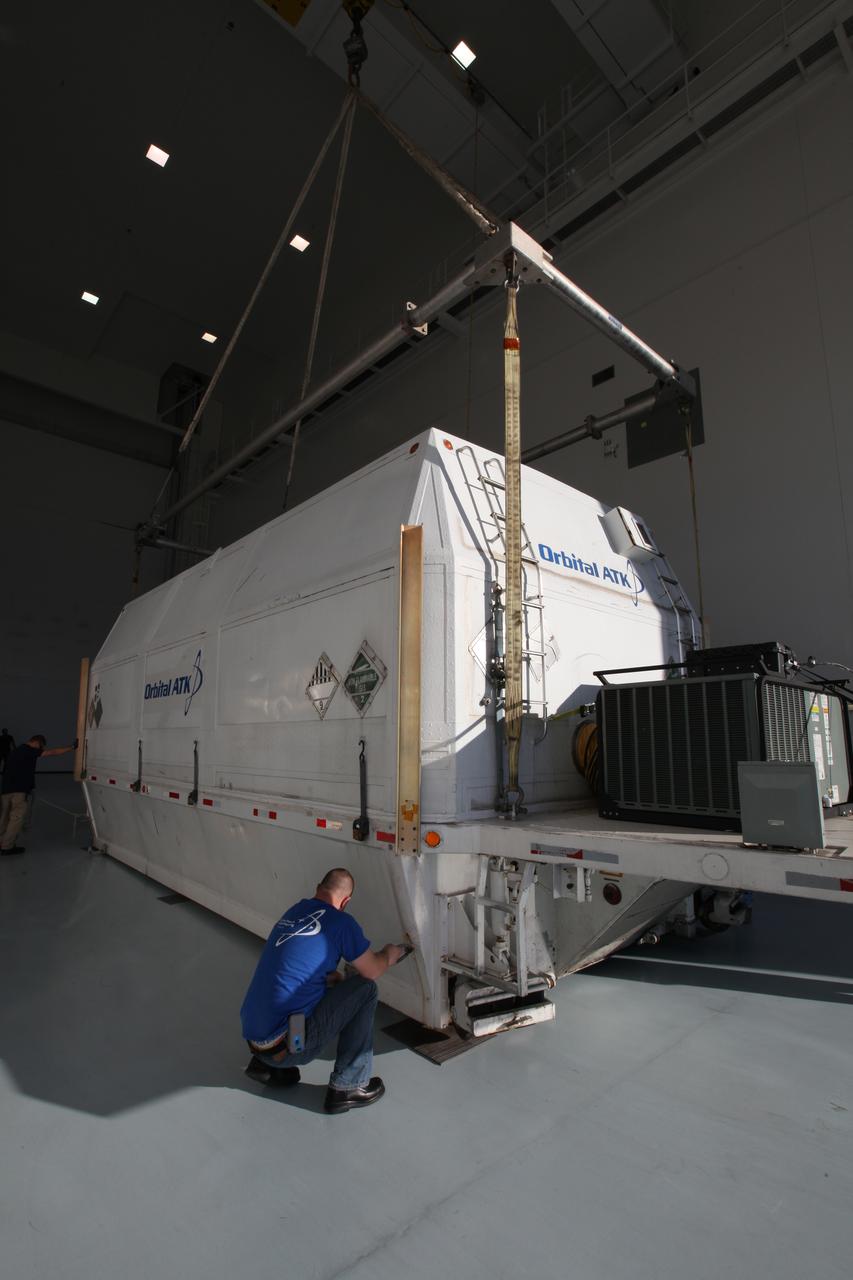
A crane is used to lift the Orbital ATK OA-7 Cygnus spacecraft's service module off a flatbed truck after arrival at the Space Station Processing Facility of NASA's Kennedy Space Center in Florida. The service module is sealed in an environmentally controlled shipping container. Scheduled to launch on March 19, 2017, the Orbital ATK OA-7 mission will lift off atop a United Launch Alliance Atlas V rocket from Space launch Complex 41 at Cape Canaveral Air Force Station. The commercial resupply services mission to the International Space Station will deliver thousands of pounds of supplies, equipment and scientific research materials that improve life on Earth and drive progress toward future space exploration.
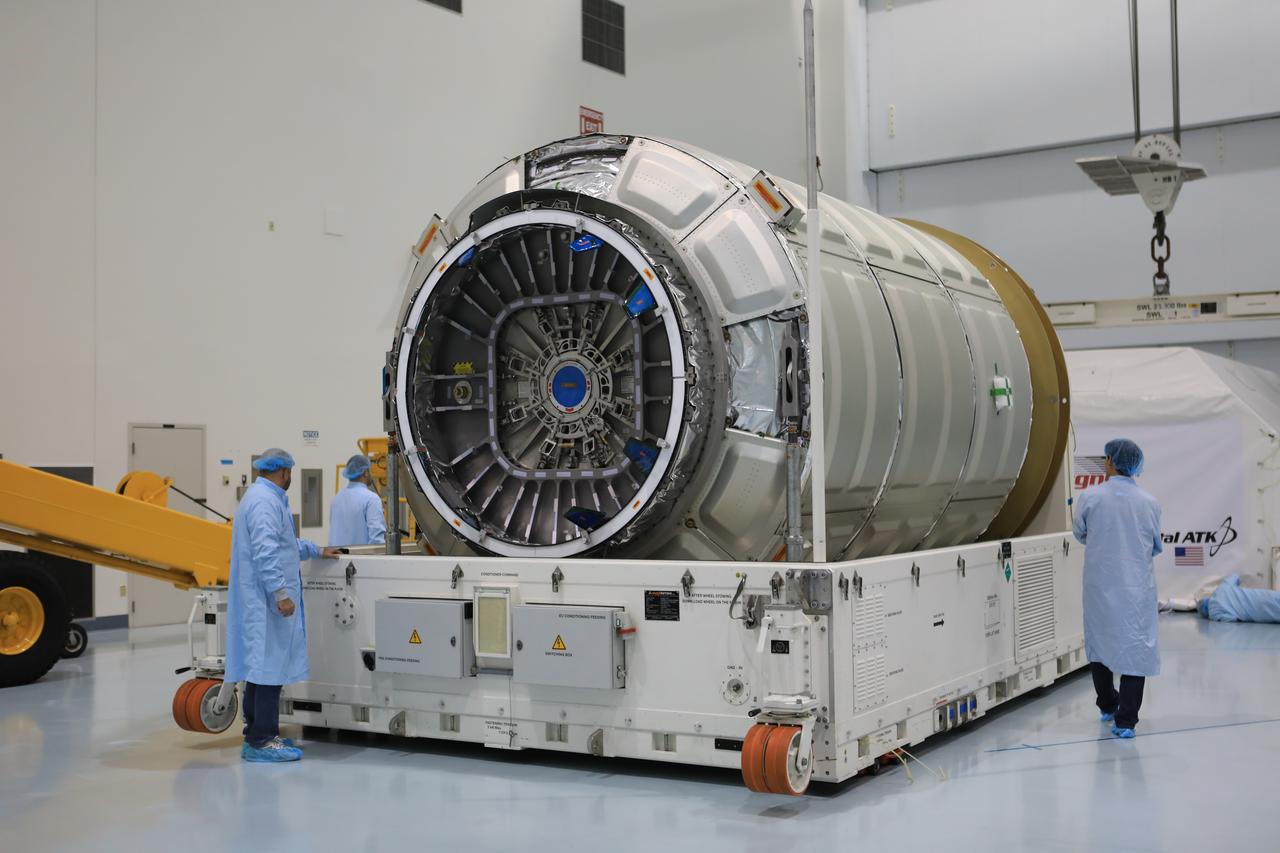
Inside the high bay of the Space Station Processing Facility of NASA's Kennedy Space Center in Florida engineers and technicians remove the Orbital ATK OA-7 Cygnus spacecraft's pressurized cargo module (PCM) from its environmentally controlled shipping container. Scheduled to launch on March 19, 2017, the Orbital ATK OA-7 mission will lift off atop a United Launch Alliance Atlas V rocket from Space launch Complex 41 at Cape Canaveral Air Force Station. The commercial resupply services mission to the International Space Station will deliver thousands of pounds of supplies, equipment and scientific research materials that improve life on Earth and drive progress toward future space exploration.
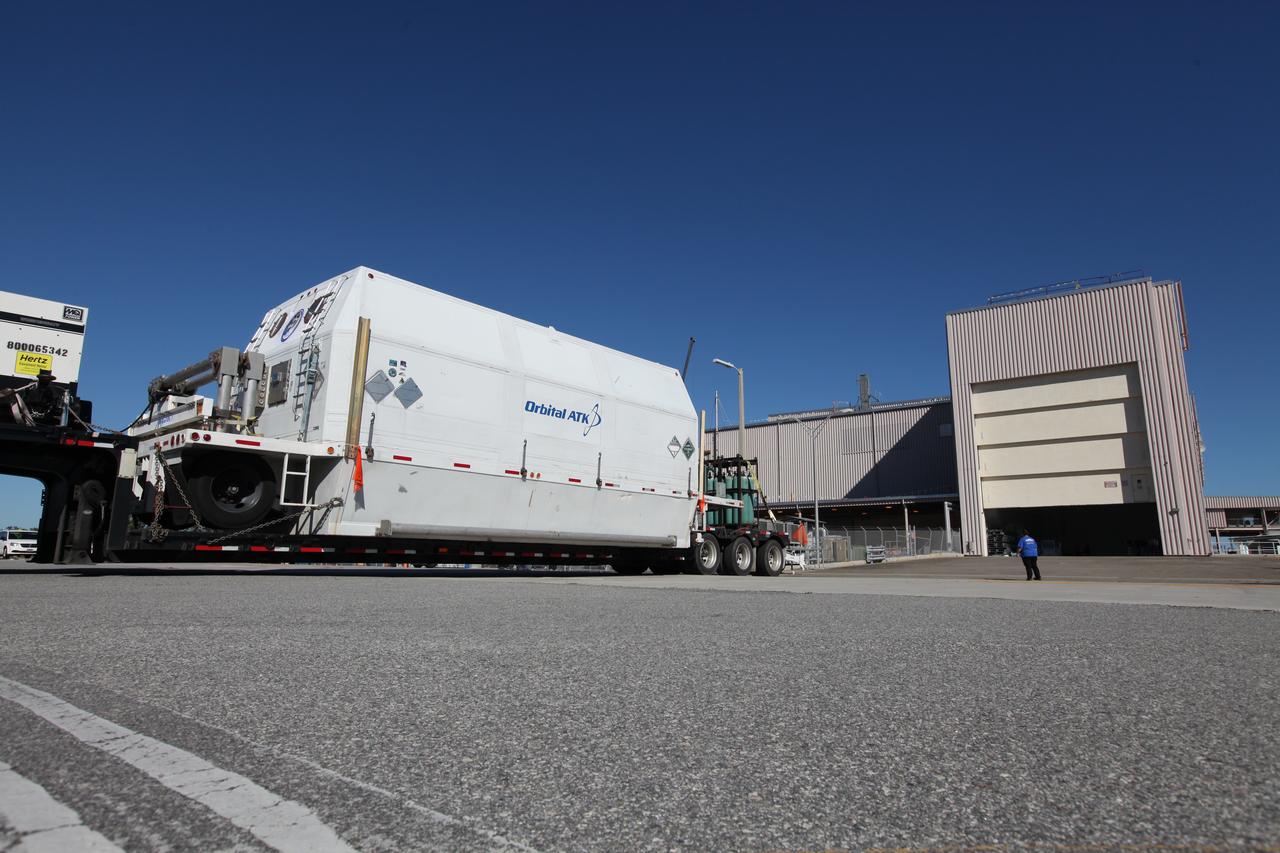
The Orbital ATK OA-7 Cygnus spacecraft's service module arrives inside the Space Station Processing Facility of NASA's Kennedy Space Center in Florida. The service module is sealed in an environmentally controlled shipping container, pulled in by truck on a low-boy flatbed trailer. Scheduled to launch on March 19, 2017, the Orbital ATK OA-7 mission will lift off atop a United Launch Alliance Atlas V rocket from Space launch Complex 41 at Cape Canaveral Air Force Station. The commercial resupply services mission to the International Space Station will deliver thousands of pounds of supplies, equipment and scientific research materials that improve life on Earth and drive progress toward future space exploration.
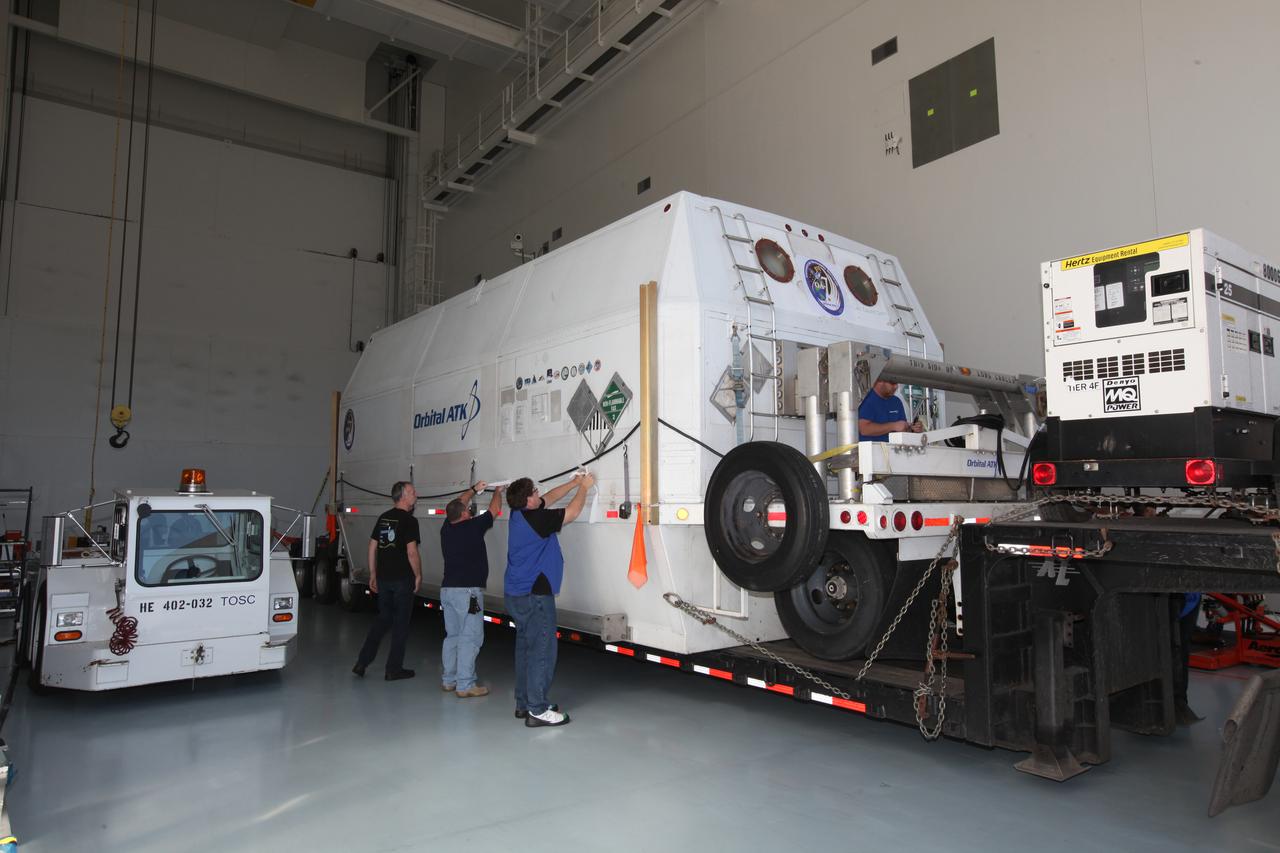
The Orbital ATK OA-7 Cygnus spacecraft's service module arrives inside the Space Station Processing Facility of NASA's Kennedy Space Center in Florida. The service module is sealed in an environmentally controlled shipping container, pulled in by truck on a low-boy flatbed trailer. Scheduled to launch on March 19, 2017, the Orbital ATK OA-7 mission will lift off atop a United Launch Alliance Atlas V rocket from Space launch Complex 41 at Cape Canaveral Air Force Station. The commercial resupply services mission to the International Space Station will deliver thousands of pounds of supplies, equipment and scientific research materials that improve life on Earth and drive progress toward future space exploration.
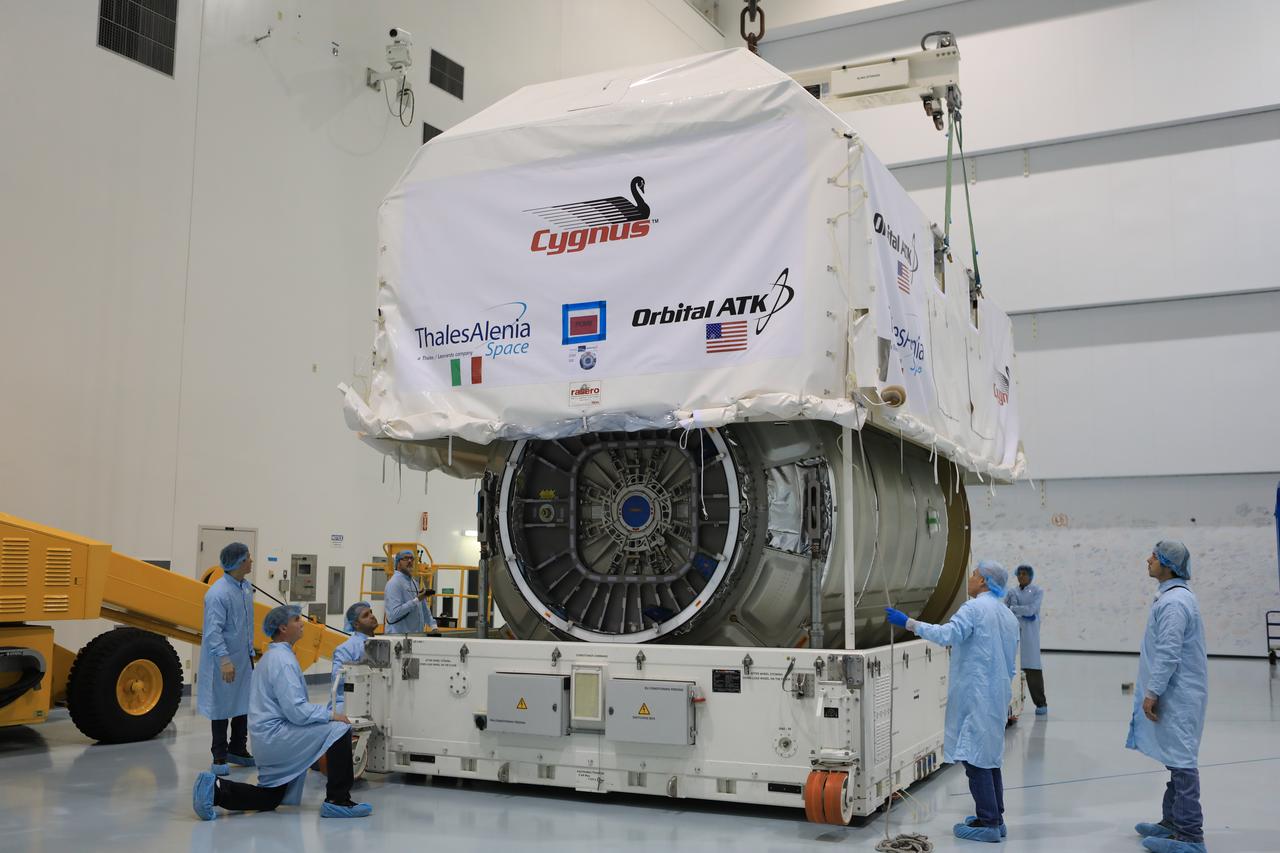
Inside the high bay of the Space Station Processing Facility of NASA's Kennedy Space Center in Florida engineers and technicians remove the Orbital ATK OA-7 Cygnus spacecraft's pressurized cargo module (PCM) from its environmentally controlled shipping container. Scheduled to launch on March 19, 2017, the Orbital ATK OA-7 mission will lift off atop a United Launch Alliance Atlas V rocket from Space launch Complex 41 at Cape Canaveral Air Force Station. The commercial resupply services mission to the International Space Station will deliver thousands of pounds of supplies, equipment and scientific research materials that improve life on Earth and drive progress toward future space exploration.
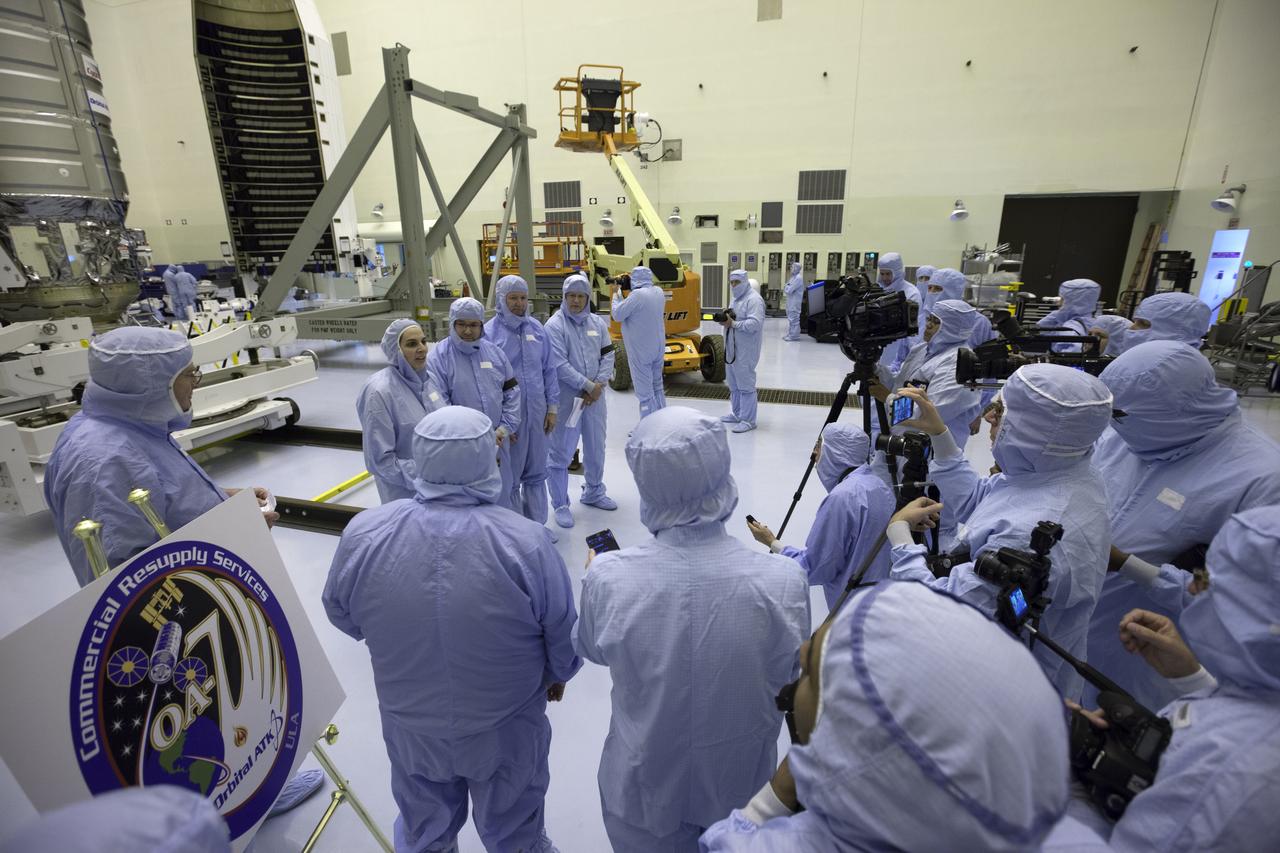
Members of the news media had the opportunity to view the Orbital ATK Cygnus spacecraft before it was enclosed in its payload fairing inside the Payload Hazardous Servicing Facility at NASA's Kennedy Space Center in Florida. They also heard from representatives from Orbital ATK, United Launch Alliance and the International Space Station Office at the agency's Johnson Space Center in Houston. The Orbital ATK CRS-7 commercial resupply services mission to the International Space Station is scheduled to launch atop a United Launch Alliance Atlas V rocket from Space Launch Complex 41 at Cape Canaveral Air Force Station on March 19, 2017. CYGNUS will deliver 7,600 of pounds of supplies, equipment and scientific research materials to the space station.
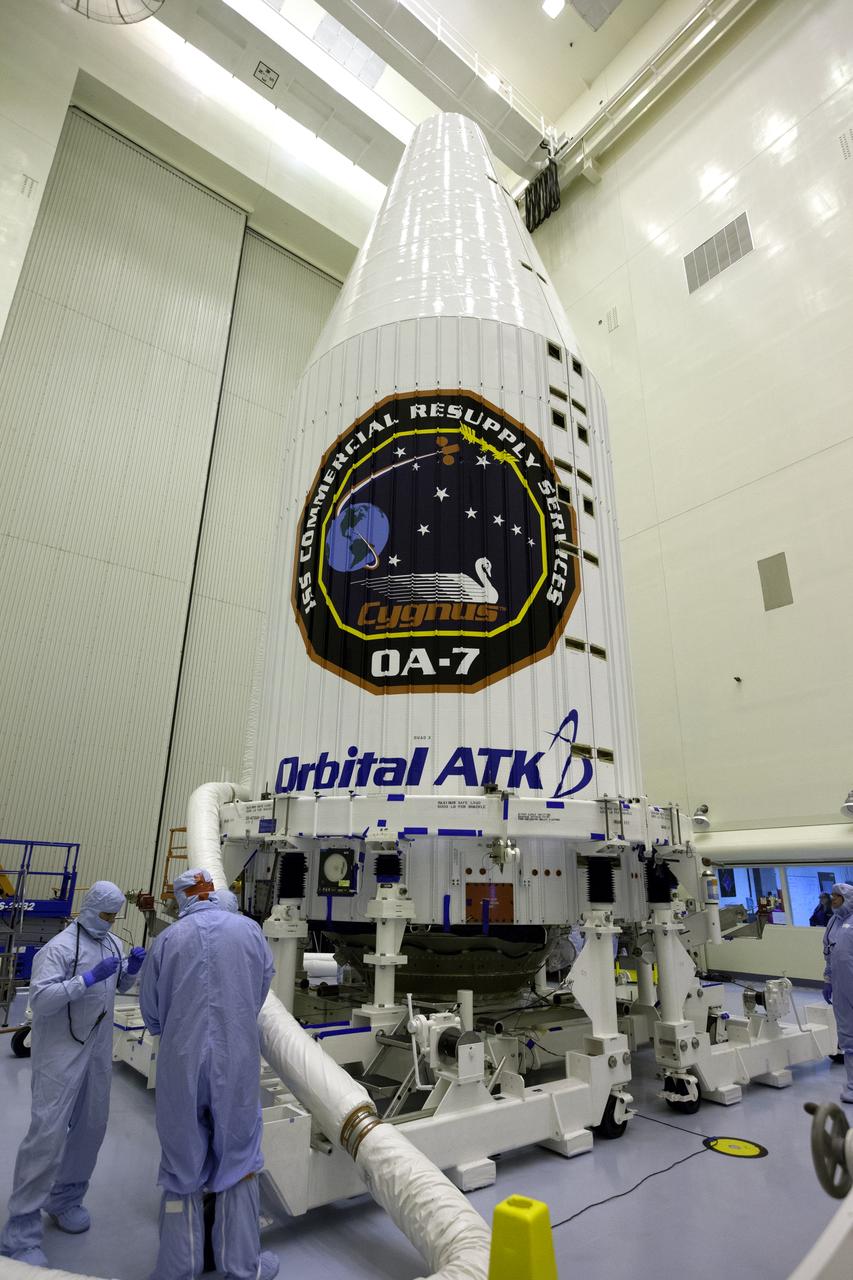
Inside the Payload Hazardous Servicing Facility at NASA's Kennedy Space Center in Florida, the Orbital ATK Cygnus pressurized cargo module has been encapsulated in the United Launch Alliance (ULA) Atlas V payload fairing. The Orbital ATK CRS-7 commercial resupply services mission to the International Space Station is scheduled to launch atop a ULA Atlas V rocket from Space Launch Complex 41 at Cape Canaveral Air Force Station targeted for March 24, 2017. Cygnus will deliver 7,600 pounds of supplies, equipment and scientific research materials to the space station.
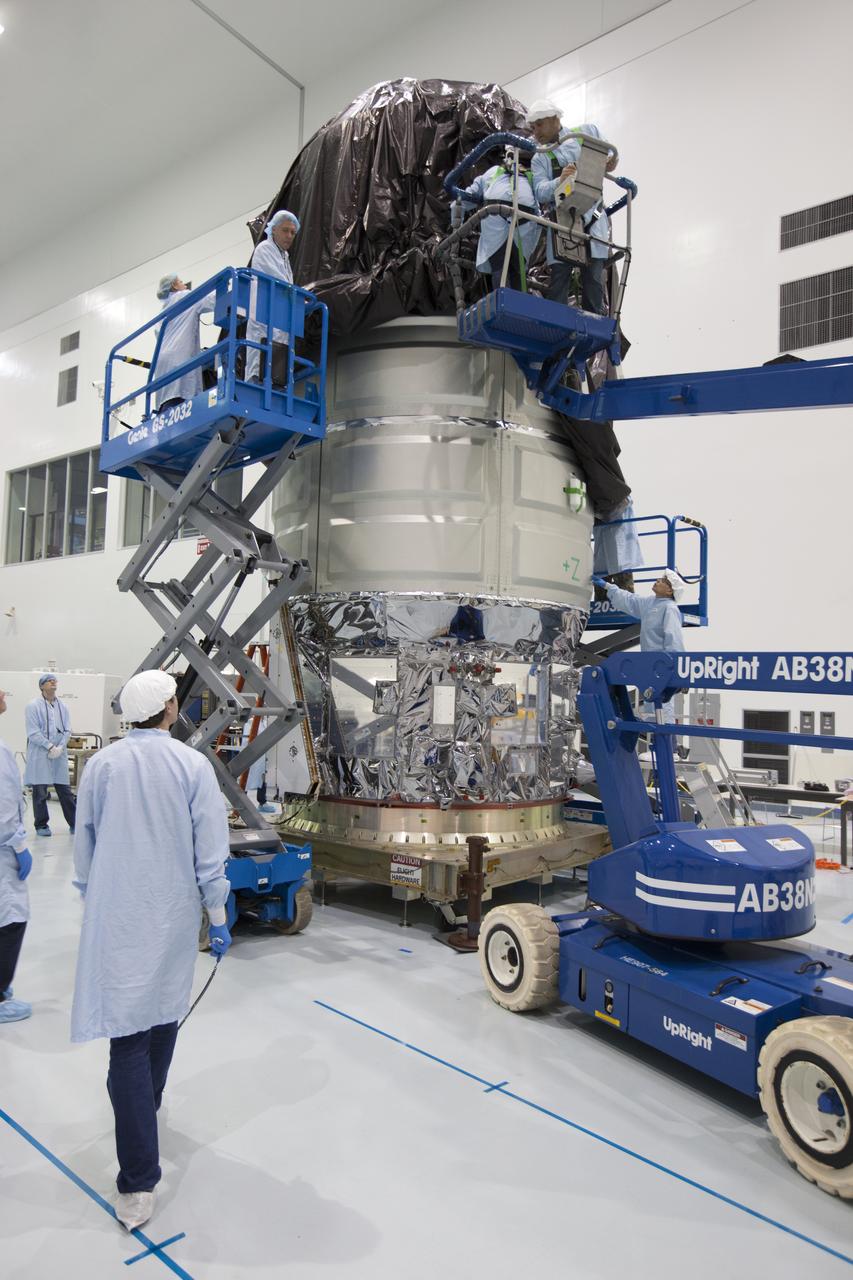
In the Space Station Processing Facility high bay at NASA's Kennedy Space Center in Florida, technicians position a protective covering around Orbital ATK's CYGNUS pressurized cargo module. The Orbital ATK CRS-7 commercial resupply services mission to the International Space Station is scheduled to launch atop a United Launch Alliance Atlas V rocket from Space Launch Complex 41 at Cape Canaveral Air Force Station on March 19, 2017. CYGNUS will deliver thousands of pounds of supplies, equipment and scientific research materials to the space station.
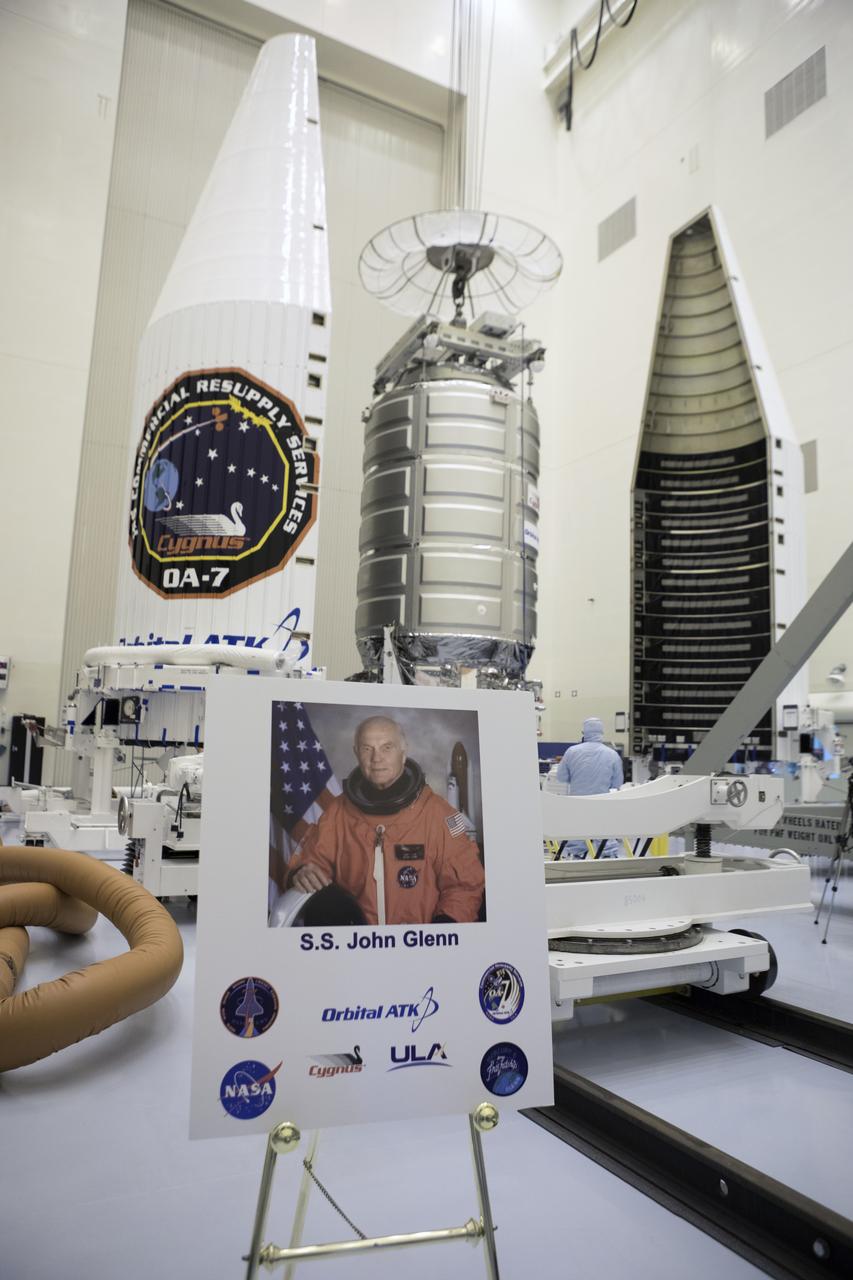
Continuing the company's tradition, the Orbital ATK Cygnus spacecraft has been renamed the S.S. John Glenn, in honor of the late former Project Mercury and space shuttle astronaut John Glenn. Members of the news media had the opportunity to view the Cygnus spacecraft before it was enclosed in its payload fairing inside the Payload Hazardous Servicing Facility at NASA's Kennedy Space Center in Florida. The Orbital ATK CRS-7 commercial resupply services mission to the International Space Station is scheduled to launch atop a United Launch Alliance Atlas V rocket from Space Launch Complex 41 at Cape Canaveral Air Force Station on March 19, 2017. CYGNUS will deliver 7,600 of pounds of supplies, equipment and scientific research materials to the space station.
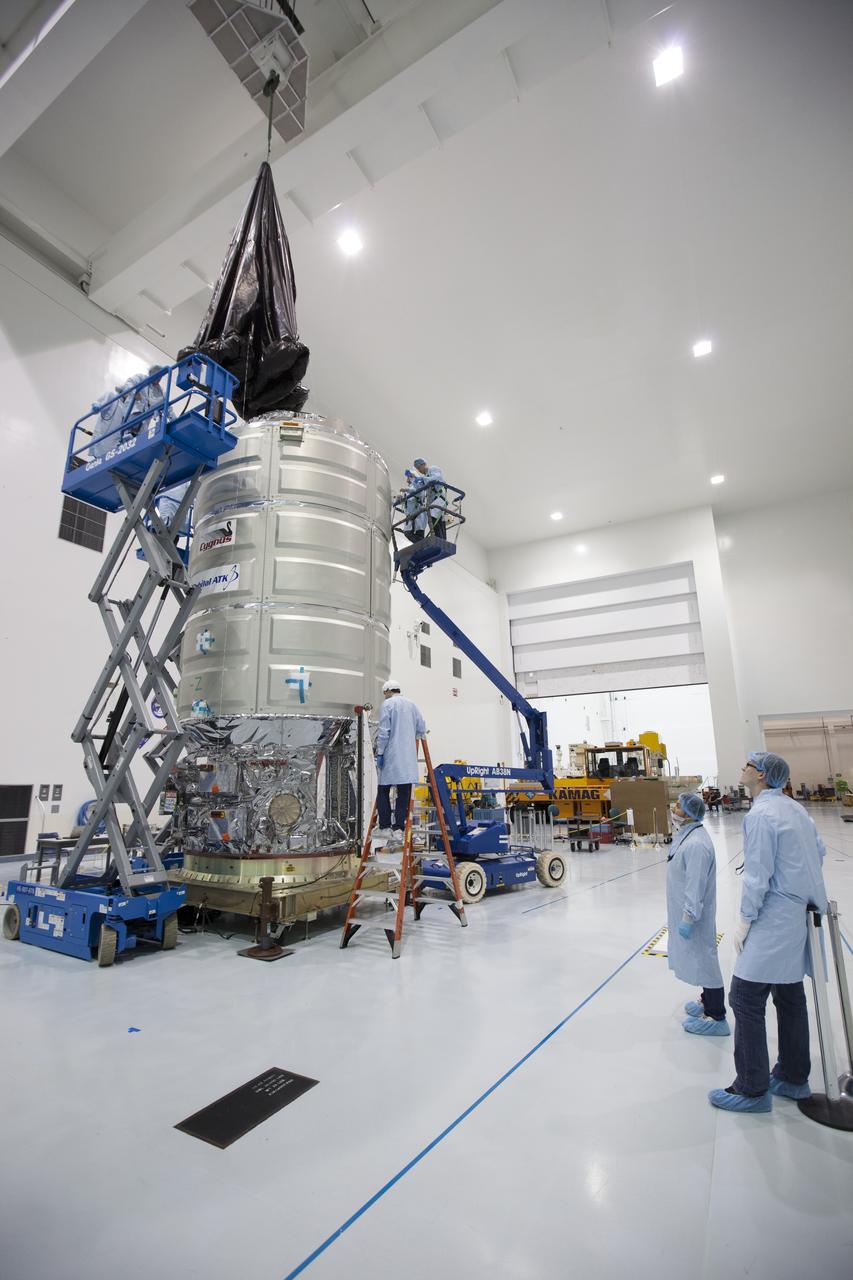
In the Space Station Processing Facility high bay at NASA's Kennedy Space Center in Florida, technicians assist as a crane is used to lower a protective covering around Orbital ATK's CYGNUS pressurized cargo module. The Orbital ATK CRS-7 commercial resupply services mission to the International Space Station is scheduled to launch atop a United Launch Alliance Atlas V rocket from Space Launch Complex 41 at Cape Canaveral Air Force Station on March 19, 2017. CYGNUS will deliver thousands of pounds of supplies, equipment and scientific research materials to the space station.
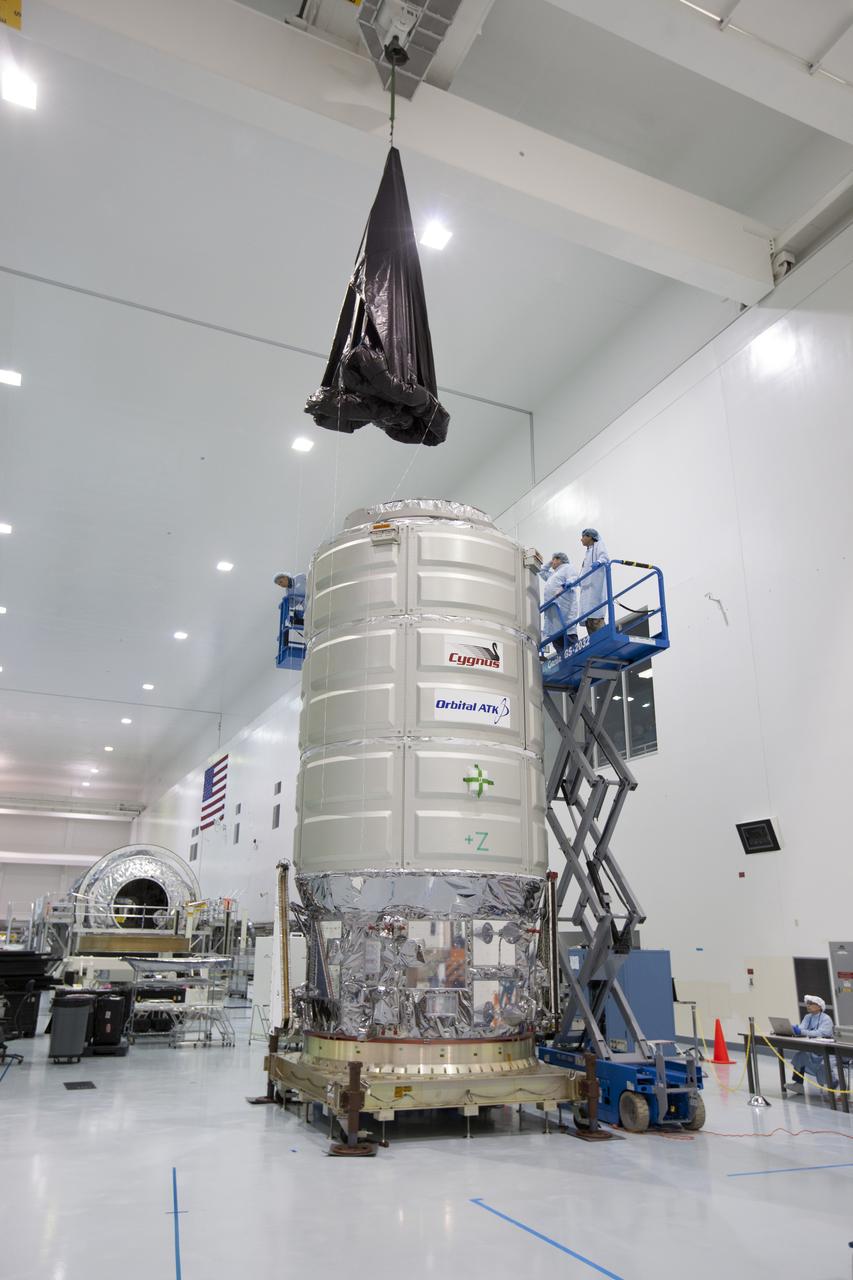
In the Space Station Processing Facility high bay at NASA's Kennedy Space Center in Florida, technicians are preparing to assist as a crane is used to lower a protective covering around Orbital ATK's CYGNUS pressurized cargo module. The Orbital ATK CRS-7 commercial resupply services mission to the International Space Station is scheduled to launch atop a United Launch Alliance Atlas V rocket from Space Launch Complex 41 at Cape Canaveral Air Force Station on March 19, 2017. CYGNUS will deliver thousands of pounds of supplies, equipment and scientific research materials to the space station.

In the Space Station Processing Facility high bay at NASA's Kennedy Space Center in Florida, technicians assist as a crane is used to lower a protective covering around Orbital ATK's CYGNUS pressurized cargo module. The Orbital ATK CRS-7 commercial resupply services mission to the International Space Station is scheduled to launch atop a United Launch Alliance Atlas V rocket from Space Launch Complex 41 at Cape Canaveral Air Force Station on March 19, 2017. CYGNUS will deliver thousands of pounds of supplies, equipment and scientific research materials to the space station.
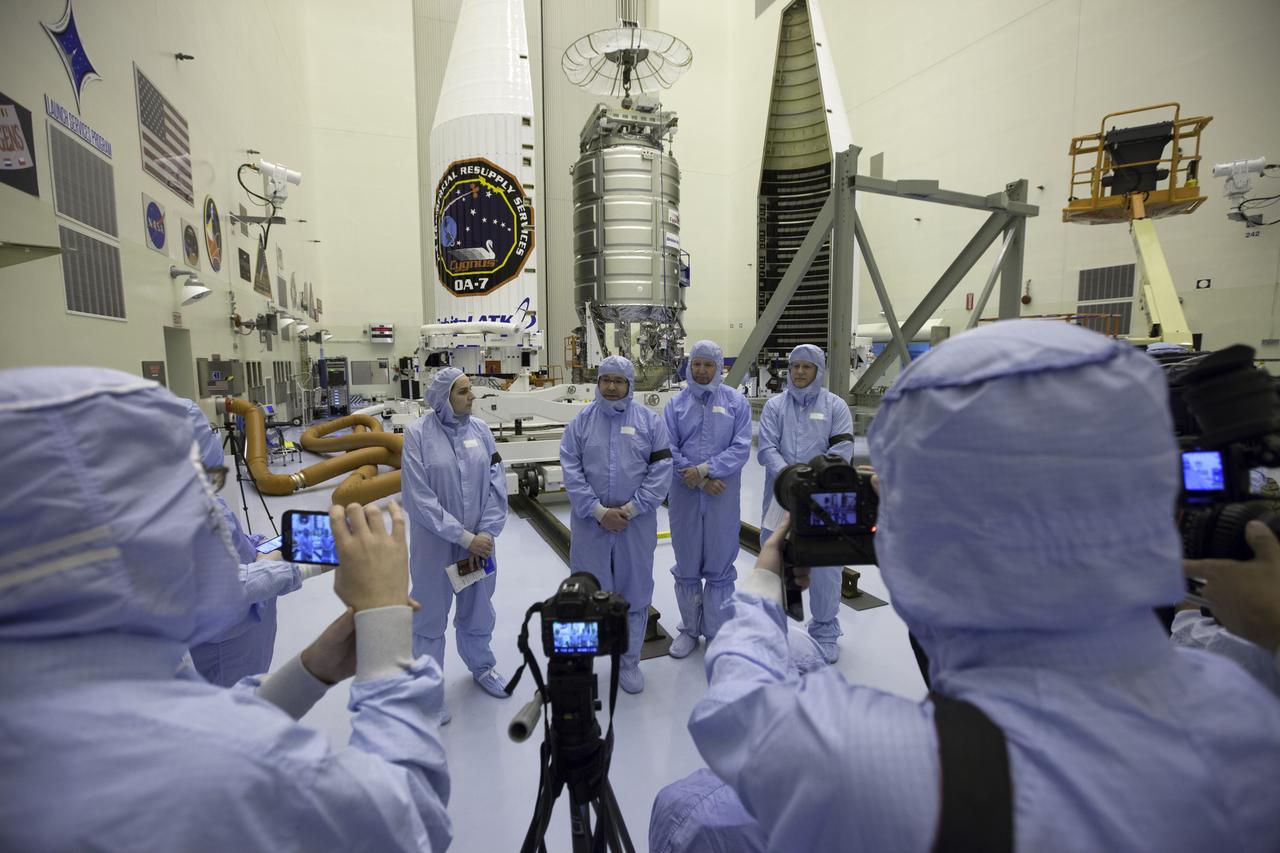
Members of the news media had the opportunity to view the Orbital ATK Cygnus spacecraft before it was enclosed in its payload fairing inside the Payload Hazardous Servicing Facility at NASA's Kennedy Space Center in Florida. They also heard from representatives from Orbital ATK, United Launch Alliance and the International Space Station Office at the agency's Johnson Space Center in Houston. The Orbital ATK CRS-7 commercial resupply services mission to the International Space Station is scheduled to launch atop a United Launch Alliance Atlas V rocket from Space Launch Complex 41 at Cape Canaveral Air Force Station on March 19, 2017. CYGNUS will deliver 7,600 of pounds of supplies, equipment and scientific research materials to the space station.
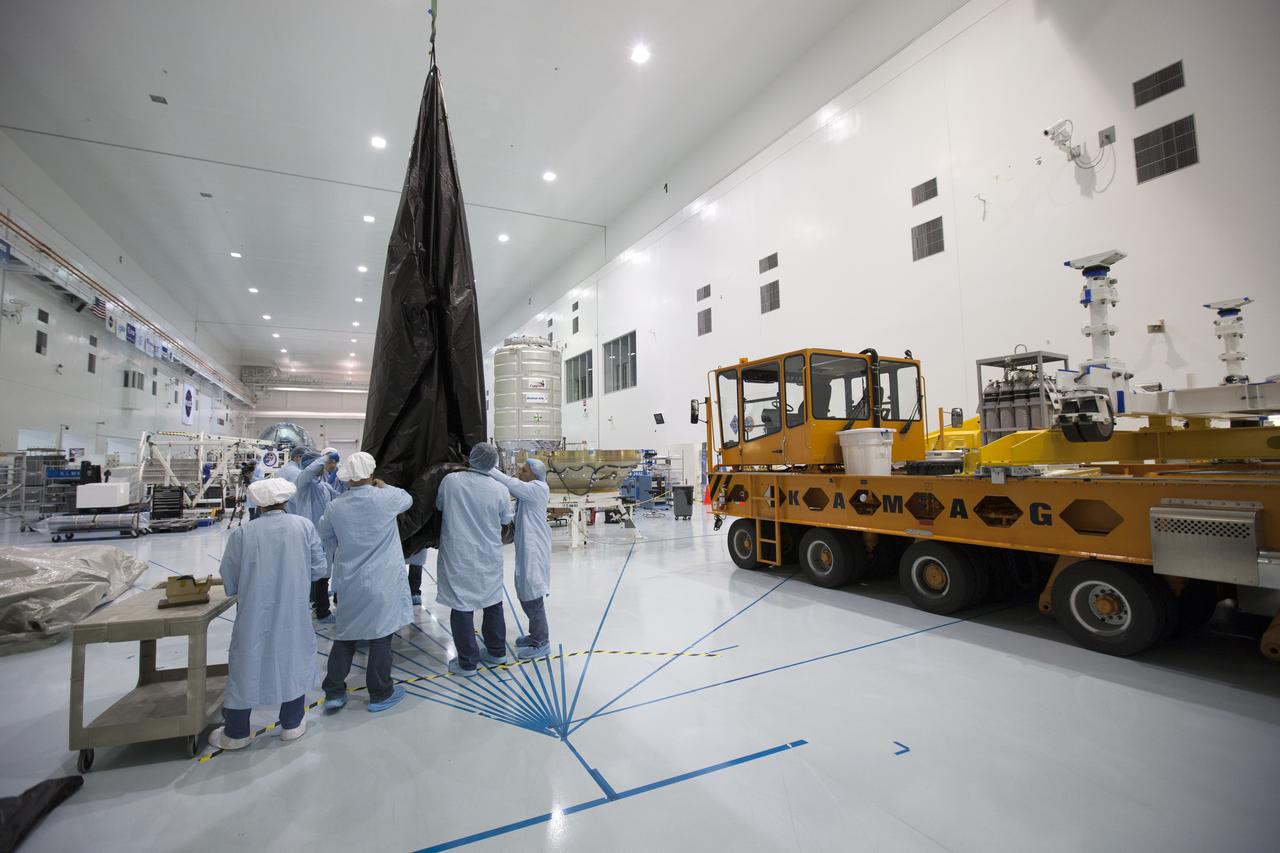
In the Space Station Processing Facility at NASA's Kennedy Space Center in Florida, a KAMAG transporter has arrived in the high bay. Technicians are preparing the protective covering for Orbital ATK's CYGNUS pressurized cargo module. The Orbital ATK CRS-7 commercial resupply services mission to the International Space Station is scheduled to launch atop a United Launch Alliance Atlas V rocket from Space Launch Complex 41 at Cape Canaveral Air Force Station on March 19, 2017. CYGNUS will deliver thousands of pounds of supplies, equipment and scientific research materials to the space station.
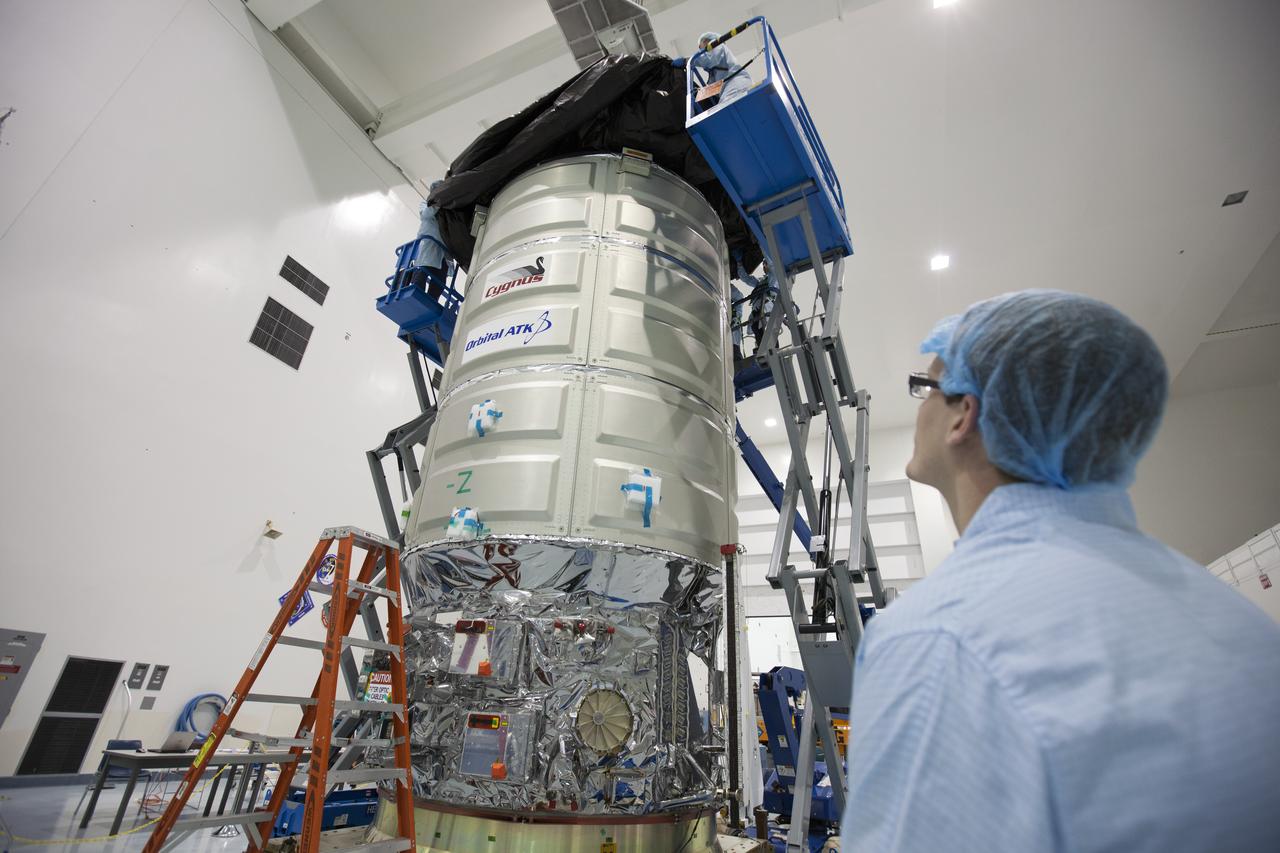
In the Space Station Processing Facility high bay at NASA's Kennedy Space Center in Florida, technicians assist as a crane is used to lower a protective covering around Orbital ATK's CYGNUS pressurized cargo module. The Orbital ATK CRS-7 commercial resupply services mission to the International Space Station is scheduled to launch atop a United Launch Alliance Atlas V rocket from Space Launch Complex 41 at Cape Canaveral Air Force Station on March 19, 2017. CYGNUS will deliver thousands of pounds of supplies, equipment and scientific research materials to the space station.
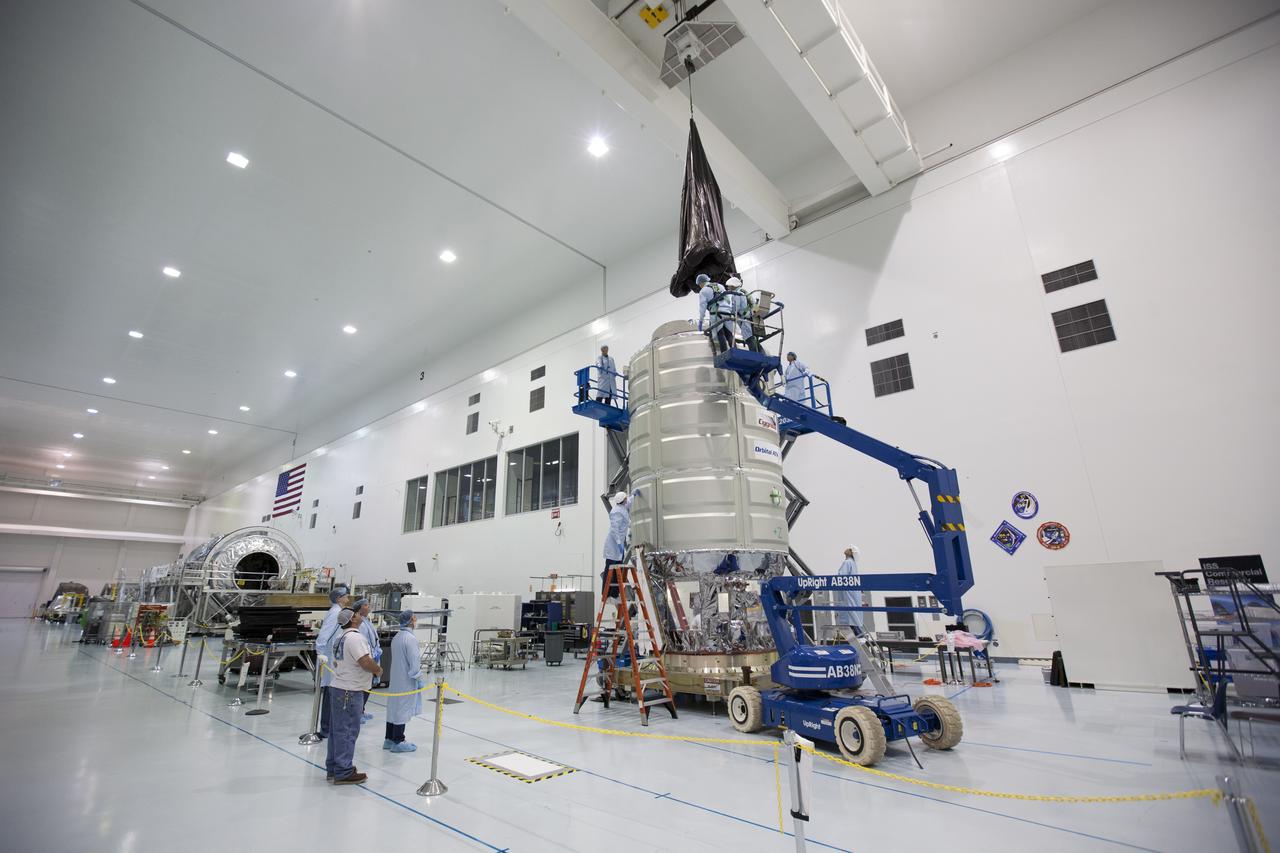
In the Space Station Processing Facility high bay at NASA's Kennedy Space Center in Florida, technicians assist as a crane is used to lower a protective covering around Orbital ATK's CYGNUS pressurized cargo module. The Orbital ATK CRS-7 commercial resupply services mission to the International Space Station is scheduled to launch atop a United Launch Alliance Atlas V rocket from Space Launch Complex 41 at Cape Canaveral Air Force Station on March 19, 2017. CYGNUS will deliver thousands of pounds of supplies, equipment and scientific research materials to the space station.
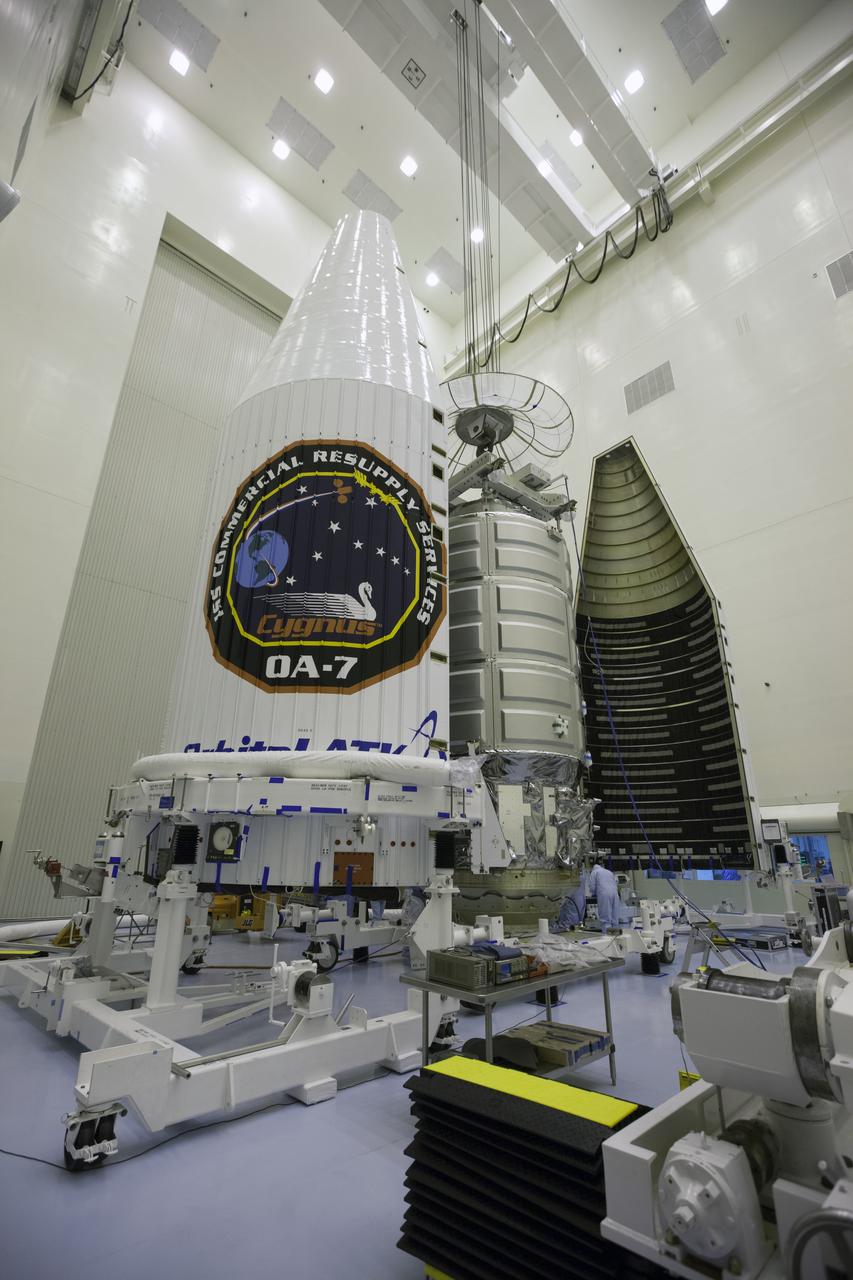
Members of the news media had the opportunity to view the Orbital ATK Cygnus spacecraft before it was enclosed in its payload fairing inside the Payload Hazardous Servicing Facility at NASA's Kennedy Space Center in Florida. The Orbital ATK CRS-7 commercial resupply services mission to the International Space Station is scheduled to launch atop a United Launch Alliance Atlas V rocket from Space Launch Complex 41 at Cape Canaveral Air Force Station on March 19, 2017. CYGNUS will deliver 7,600 of pounds of supplies, equipment and scientific research materials to the space station.
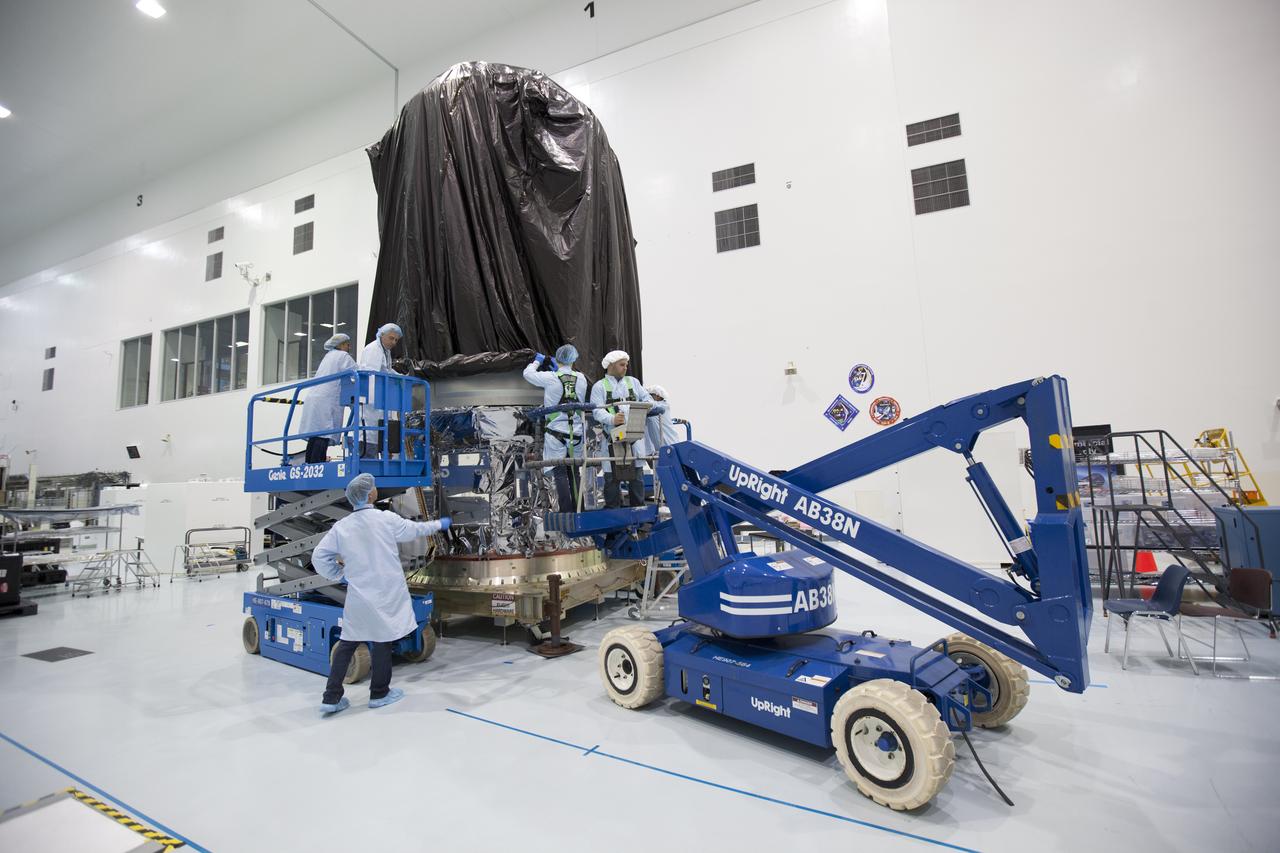
In the Space Station Processing Facility high bay at NASA's Kennedy Space Center in Florida, technicians secure a protective covering around Orbital ATK's CYGNUS pressurized cargo module. The Orbital ATK CRS-7 commercial resupply services mission to the International Space Station is scheduled to launch atop a United Launch Alliance Atlas V rocket from Space Launch Complex 41 at Cape Canaveral Air Force Station on March 19, 2017. CYGNUS will deliver thousands of pounds of supplies, equipment and scientific research materials to the space station.
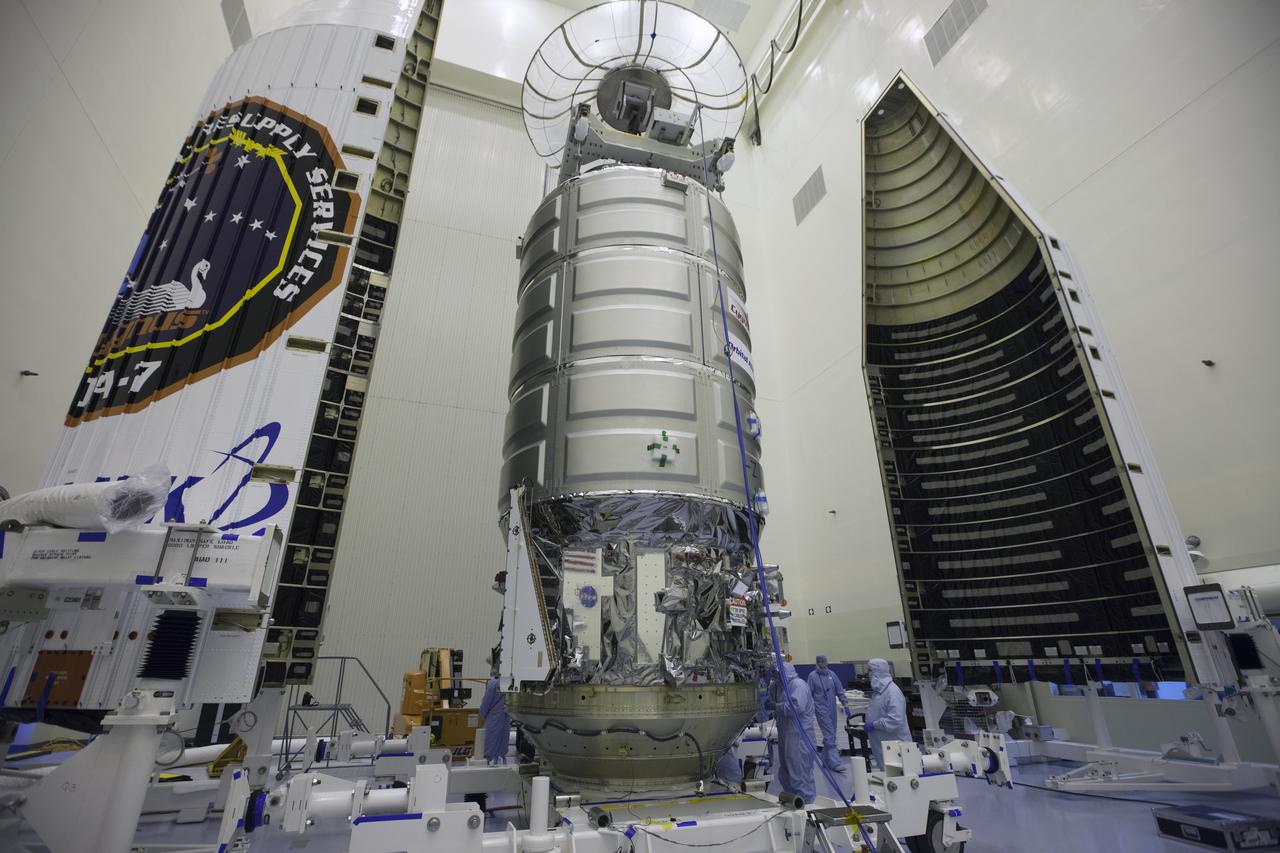
Members of the news media had the opportunity to view the Orbital ATK Cygnus spacecraft before it was enclosed in its payload fairing inside the Payload Hazardous Servicing Facility at NASA's Kennedy Space Center in Florida. The Orbital ATK CRS-7 commercial resupply services mission to the International Space Station is scheduled to launch atop a United Launch Alliance Atlas V rocket from Space Launch Complex 41 at Cape Canaveral Air Force Station on March 19, 2017. CYGNUS will deliver 7,600 of pounds of supplies, equipment and scientific research materials to the space station.
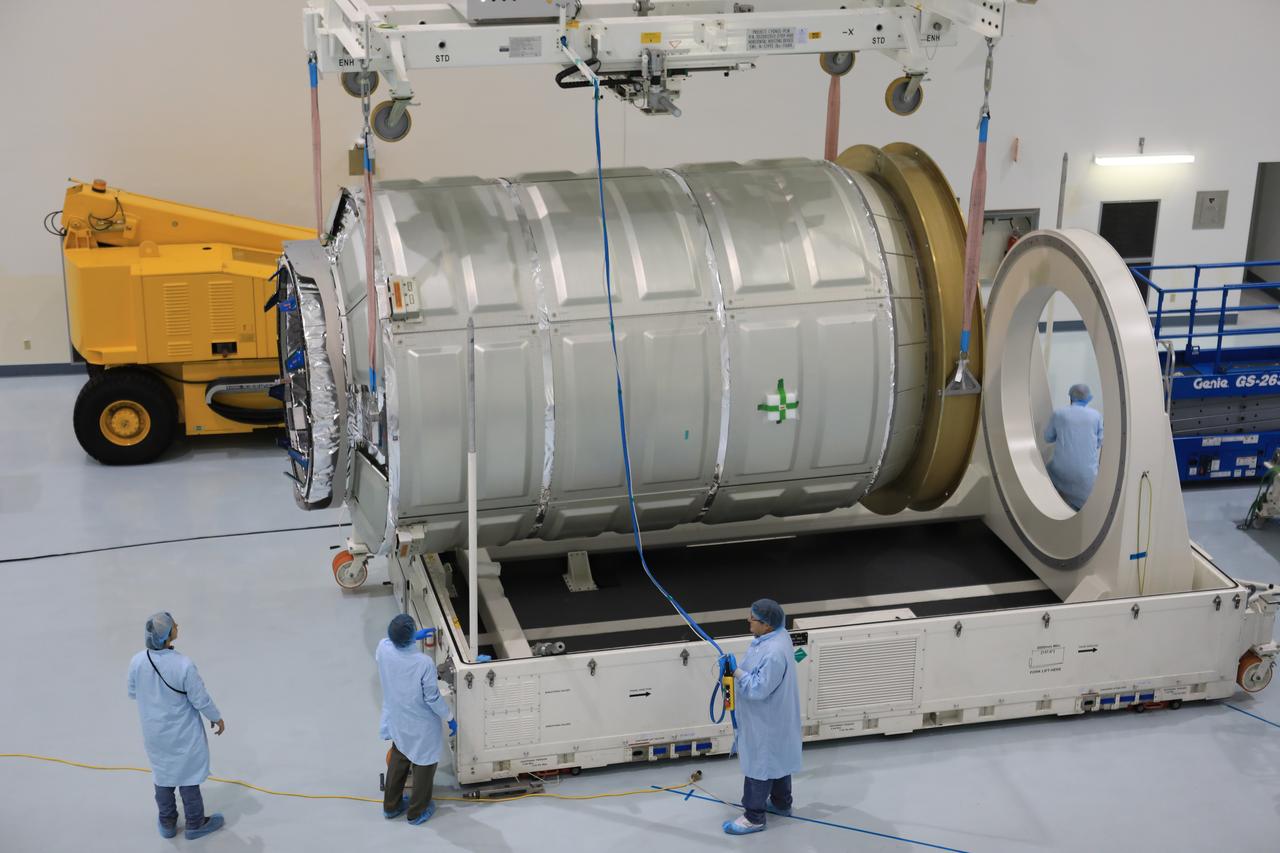
Inside the high bay of the Space Station Processing Facility of NASA's Kennedy Space Center in Florida engineers and technicians remove the Orbital ATK OA-7 Cygnus spacecraft's pressurized cargo module (PCM) from its environmentally controlled shipping container. Scheduled to launch on March 19, 2017, the Orbital ATK OA-7 mission will lift off atop a United Launch Alliance Atlas V rocket from Space launch Complex 41 at Cape Canaveral Air Force Station. The commercial resupply services mission to the International Space Station will deliver thousands of pounds of supplies, equipment and scientific research materials that improve life on Earth and drive progress toward future space exploration.
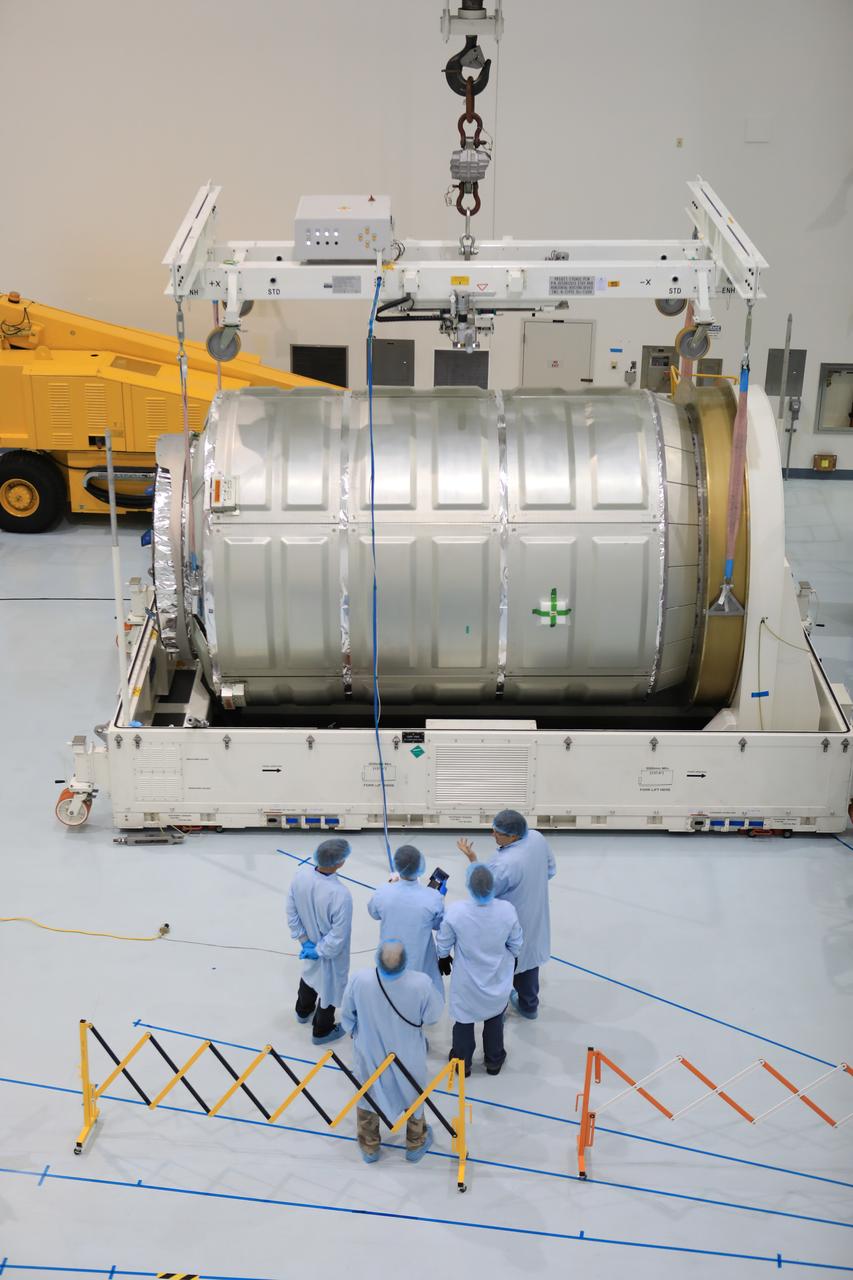
Inside the high bay of the Space Station Processing Facility of NASA's Kennedy Space Center in Florida engineers and technicians remove the Orbital ATK OA-7 Cygnus spacecraft's pressurized cargo module (PCM) from its environmentally controlled shipping container. Scheduled to launch on March 19, 2017, the Orbital ATK OA-7 mission will lift off atop a United Launch Alliance Atlas V rocket from Space launch Complex 41 at Cape Canaveral Air Force Station. The commercial resupply services mission to the International Space Station will deliver thousands of pounds of supplies, equipment and scientific research materials that improve life on Earth and drive progress toward future space exploration.
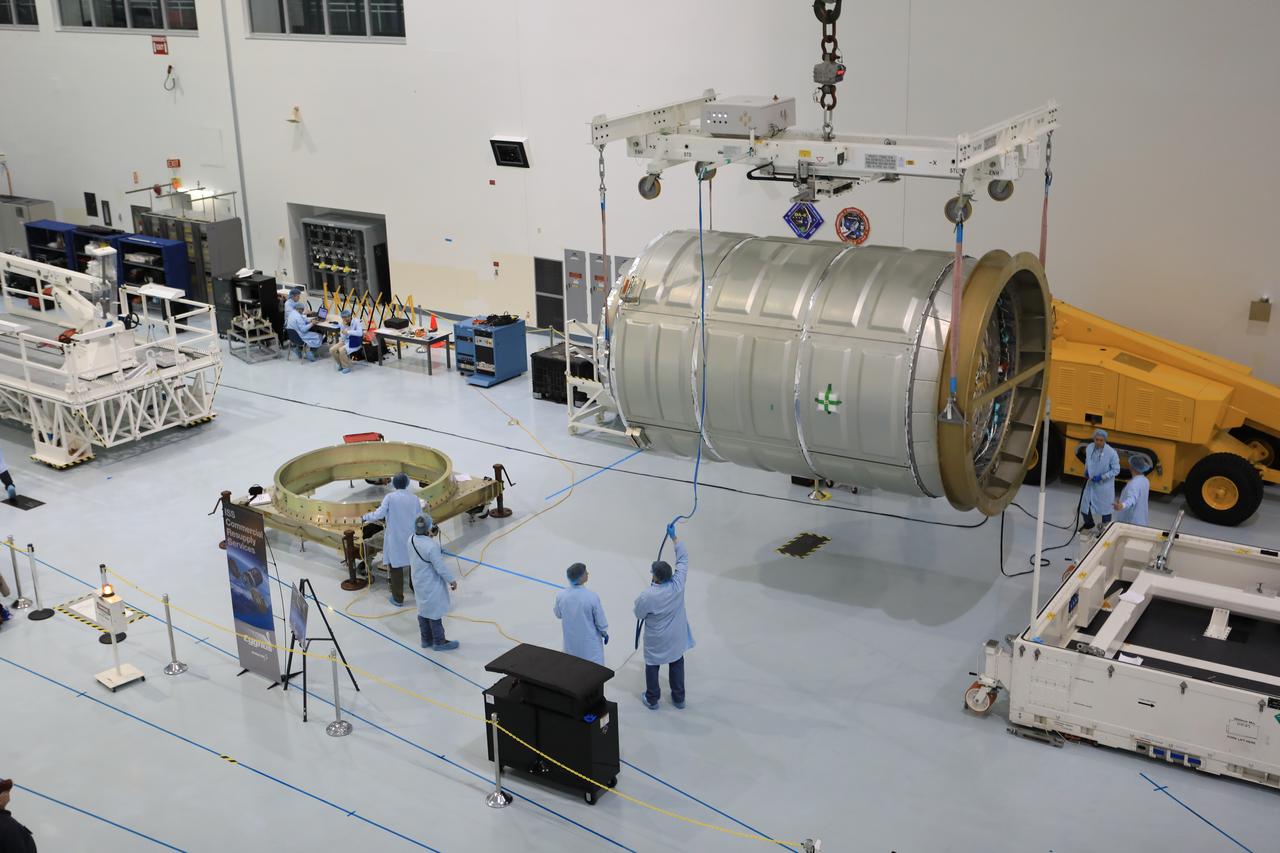
Inside the high bay of the Space Station Processing Facility of NASA's Kennedy Space Center in Florida engineers and technicians remove the Orbital ATK OA-7 Cygnus spacecraft's pressurized cargo module (PCM) from its environmentally controlled shipping container. Scheduled to launch on March 19, 2017, the Orbital ATK OA-7 mission will lift off atop a United Launch Alliance Atlas V rocket from Space launch Complex 41 at Cape Canaveral Air Force Station. The commercial resupply services mission to the International Space Station will deliver thousands of pounds of supplies, equipment and scientific research materials that improve life on Earth and drive progress toward future space exploration.
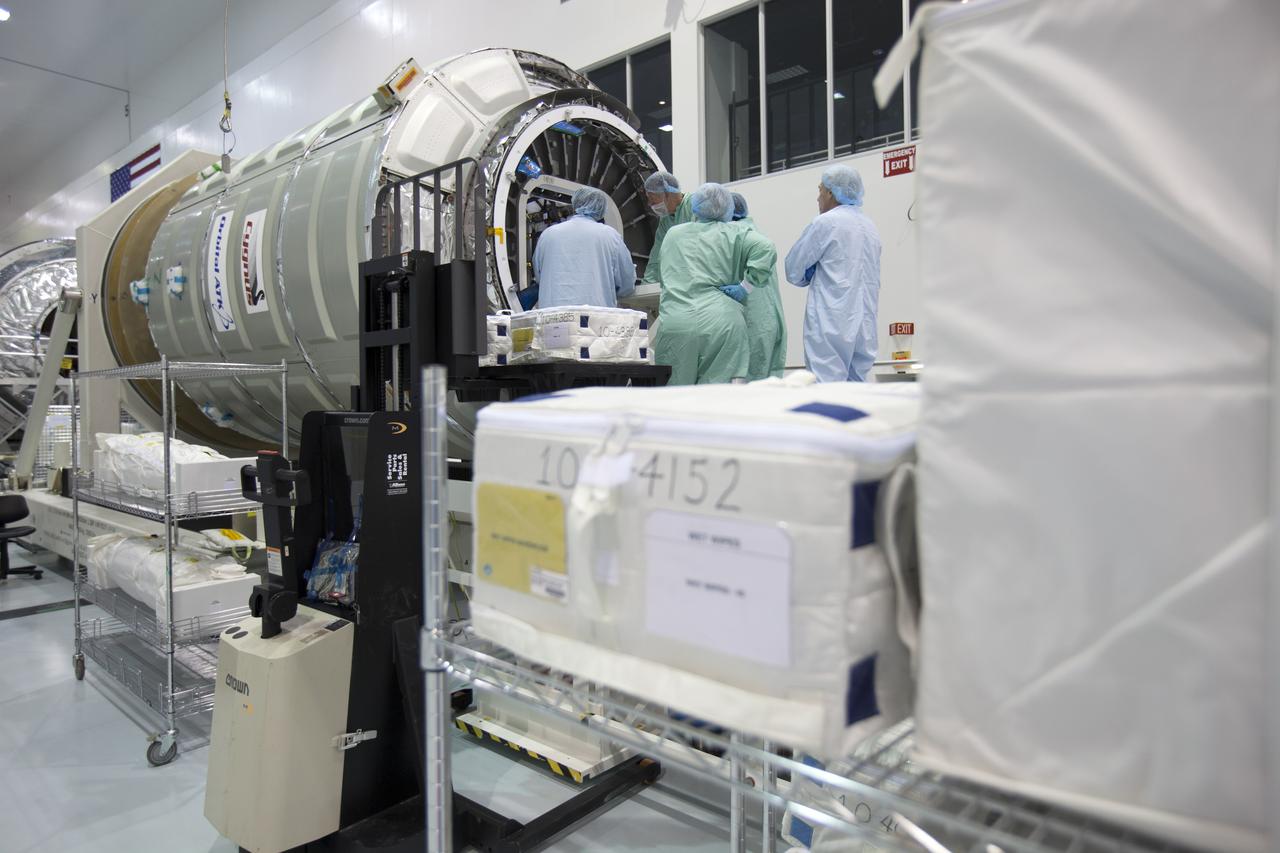
OA-7 Cargo Module In the Space Station Processing Facility at NASA's Kennedy Space Center in Florida, technicians and engineers load thousands of pounds of supplies, equipment and scientific research materials aboard a Cygnus spacecraft's pressurized cargo module (PCM) for the Orbital ATK CRS-7 mission to the International Space Station. Scheduled to launch on March 19, 2017, the commercial resupply services mission will lift off atop a United Launch Alliance Atlas V rocket from Space launch Complex 41 at Cape Canaveral Air Force Stationbeing loaded inside the SSPF building, located at Kennedy Space Center.
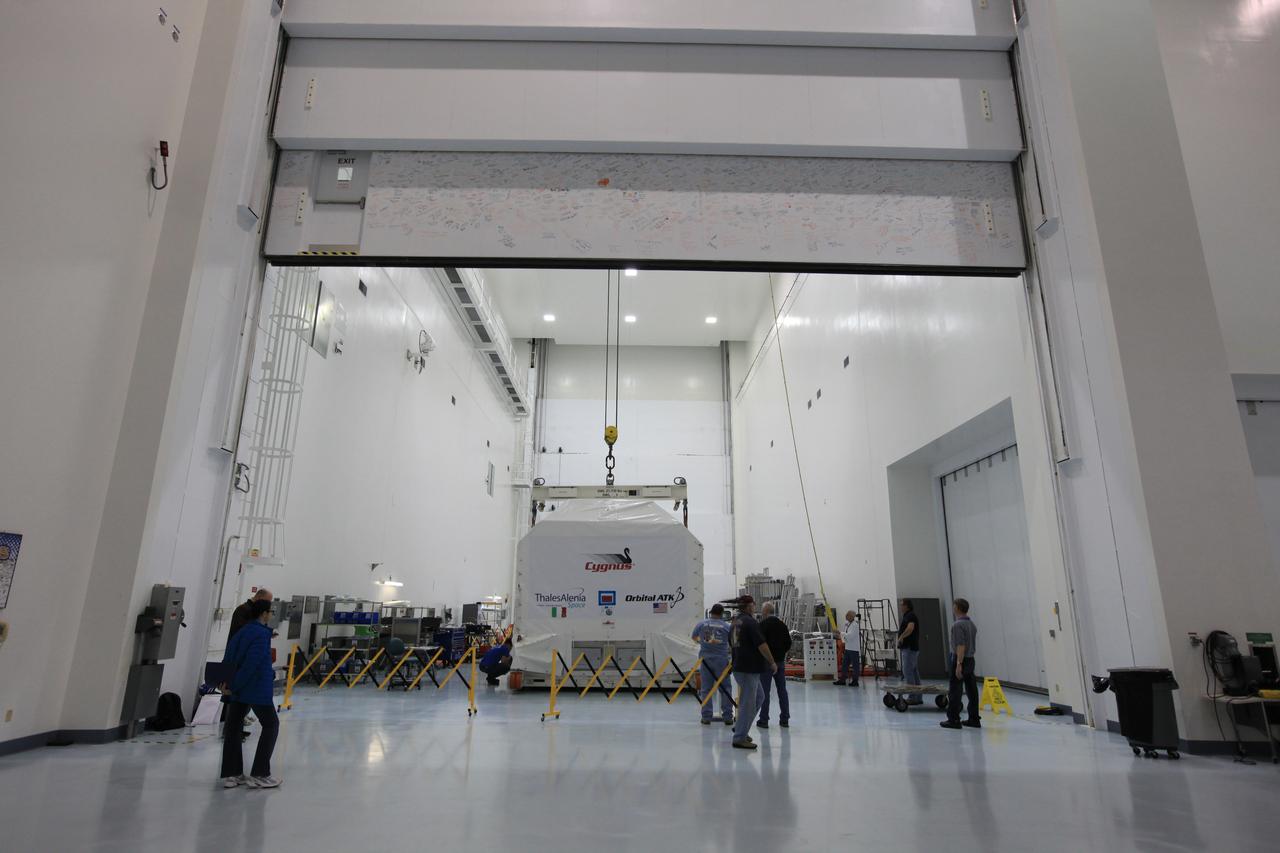
Inside an environmentally controlled shipping container the Orbital ATK OA-7 Cygnus spacecraft's pressurized cargo module (PCM) moves from an airlock to the high bay of the Space Station Processing Facility of NASA's Kennedy Space Center in Florida. Scheduled to launch on March 19, 2017, the Orbital ATK OA-7 mission will lift off atop a United Launch Alliance Atlas V rocket from Space launch Complex 41 at Cape Canaveral Air Force Station. The commercial resupply services mission to the International Space Station will deliver thousands of pounds of supplies, equipment and scientific research materials that improve life on Earth and drive progress toward future space exploration.
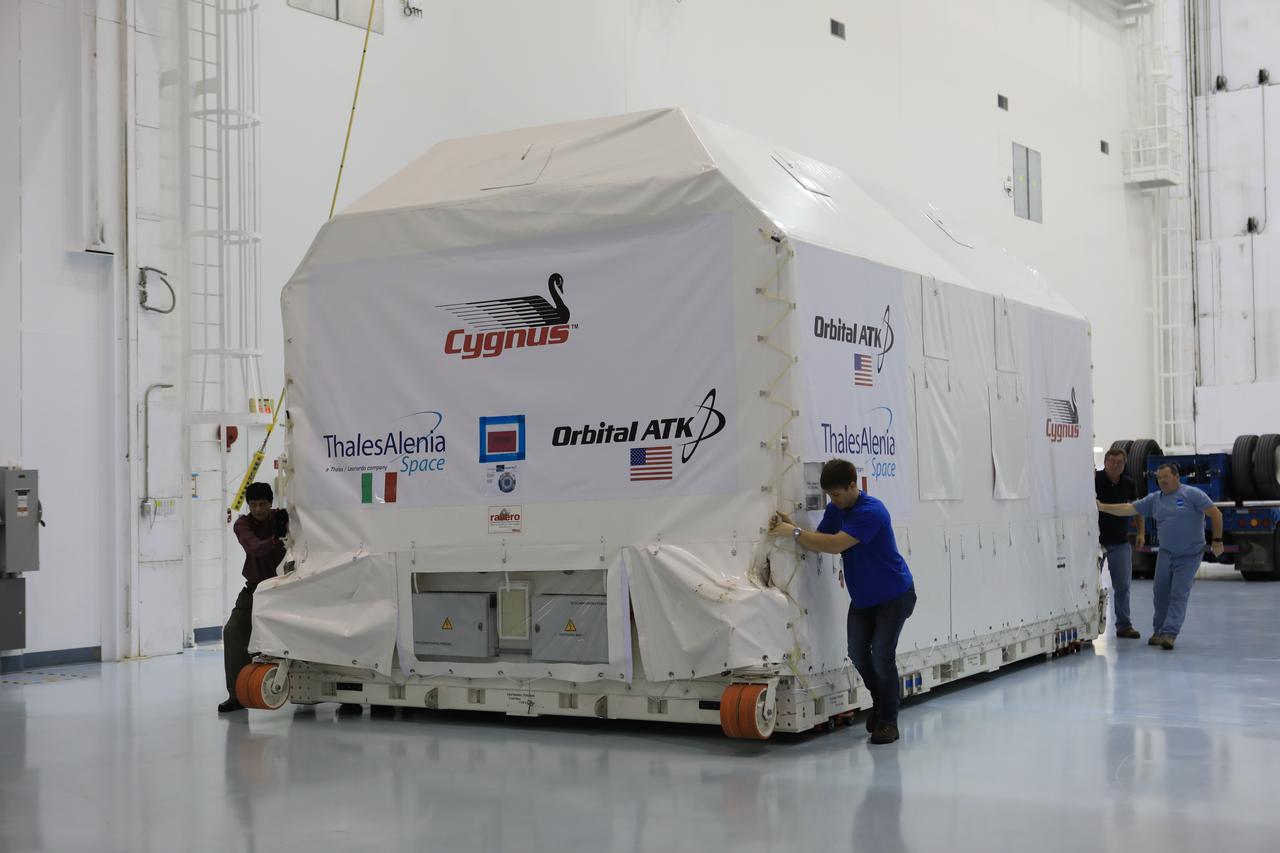
Inside an environmentally controlled shipping container the Orbital ATK OA-7 Cygnus spacecraft's pressurized cargo module (PCM) moves from an airlock to the high bay of the Space Station Processing Facility of NASA's Kennedy Space Center in Florida. Scheduled to launch on March 19, 2017, the Orbital ATK OA-7 mission will lift off atop a United Launch Alliance Atlas V rocket from Space launch Complex 41 at Cape Canaveral Air Force Station. The commercial resupply services mission to the International Space Station will deliver thousands of pounds of supplies, equipment and scientific research materials that improve life on Earth and drive progress toward future space exploration.
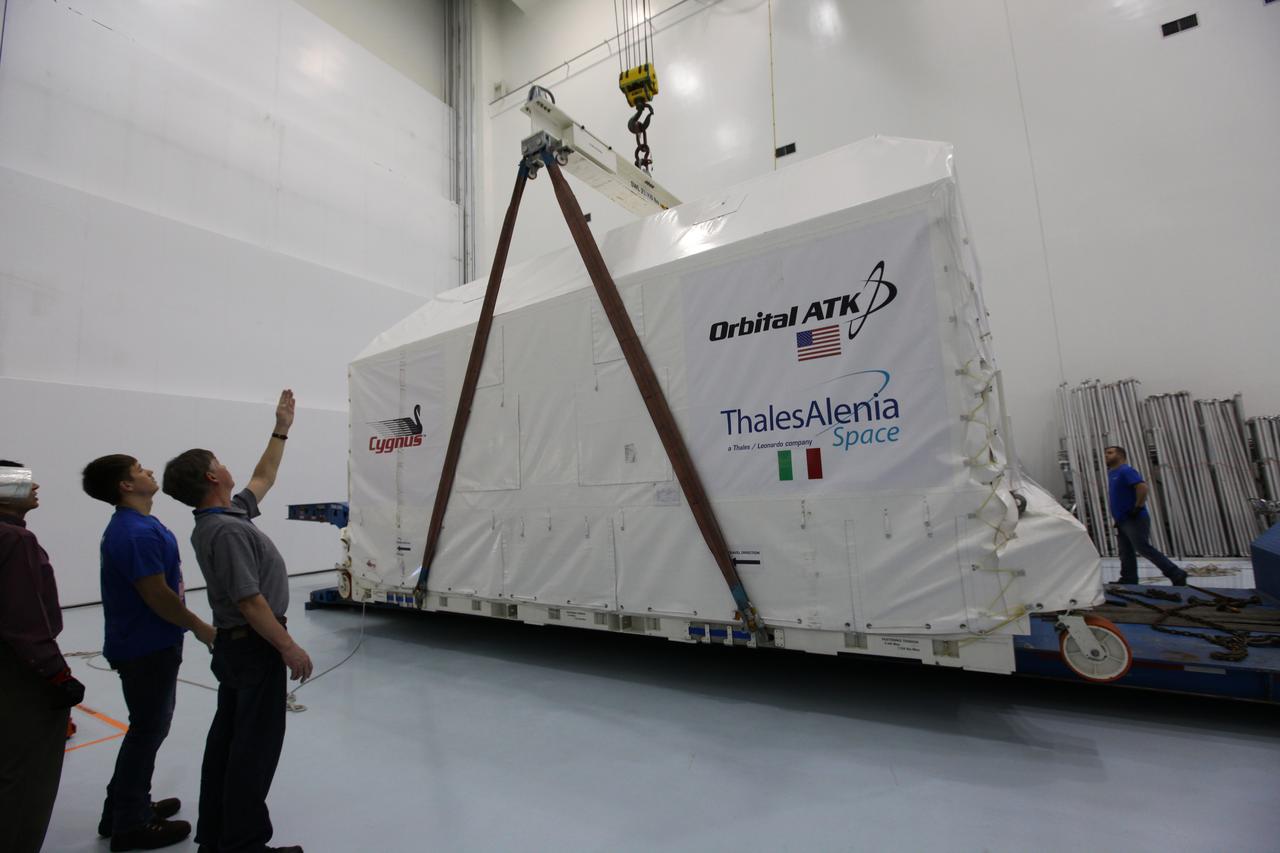
The Orbital ATK OA-7 Cygnus spacecraft's pressurized cargo module (PCM) arrives at the Space Station Processing Facility of NASA's Kennedy Space Center in Florida. The PCM is sealed in an environmentally controlled shipping container. Scheduled to launch on March 19, 2017, the Orbital ATK OA-7 mission will lift off atop a United Launch Alliance Atlas V rocket from Space launch Complex 41 at Cape Canaveral Air Force Station. The commercial resupply services mission to the International Space Station will deliver thousands of pounds of supplies, equipment and scientific research materials that improve life on Earth and drive progress toward future space exploration.
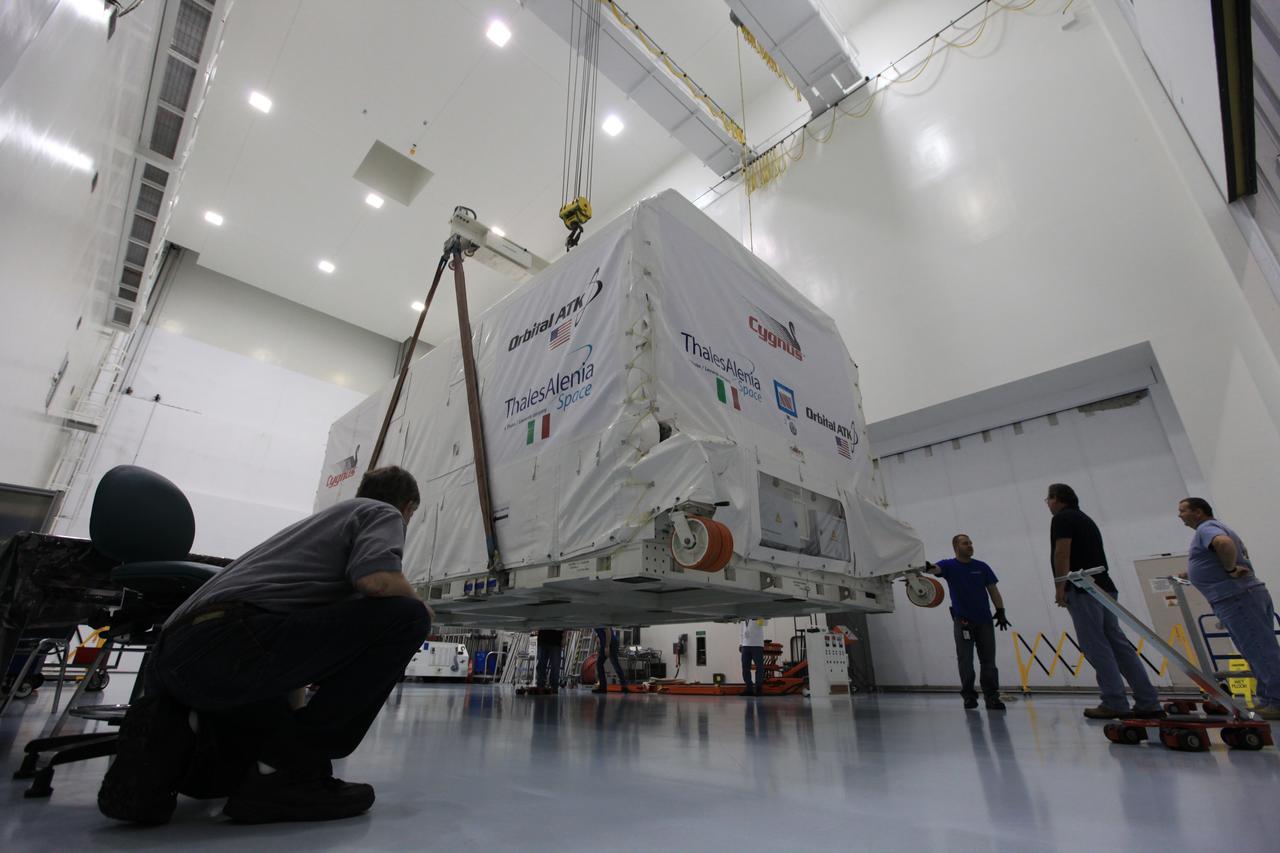
A crane lowers an environmentally controlled shipping container with the Orbital ATK OA-7 Cygnus spacecraft's pressurized cargo module (PCM) inside to the floor of the Space Station Processing Facility of NASA's Kennedy Space Center in Florida. Scheduled to launch on March 19, 2017, the Orbital ATK OA-7 mission will lift off atop a United Launch Alliance Atlas V rocket from Space launch Complex 41 at Cape Canaveral Air Force Station. The commercial resupply services mission to the International Space Station will deliver thousands of pounds of supplies, equipment and scientific research materials that improve life on Earth and drive progress toward future space exploration.
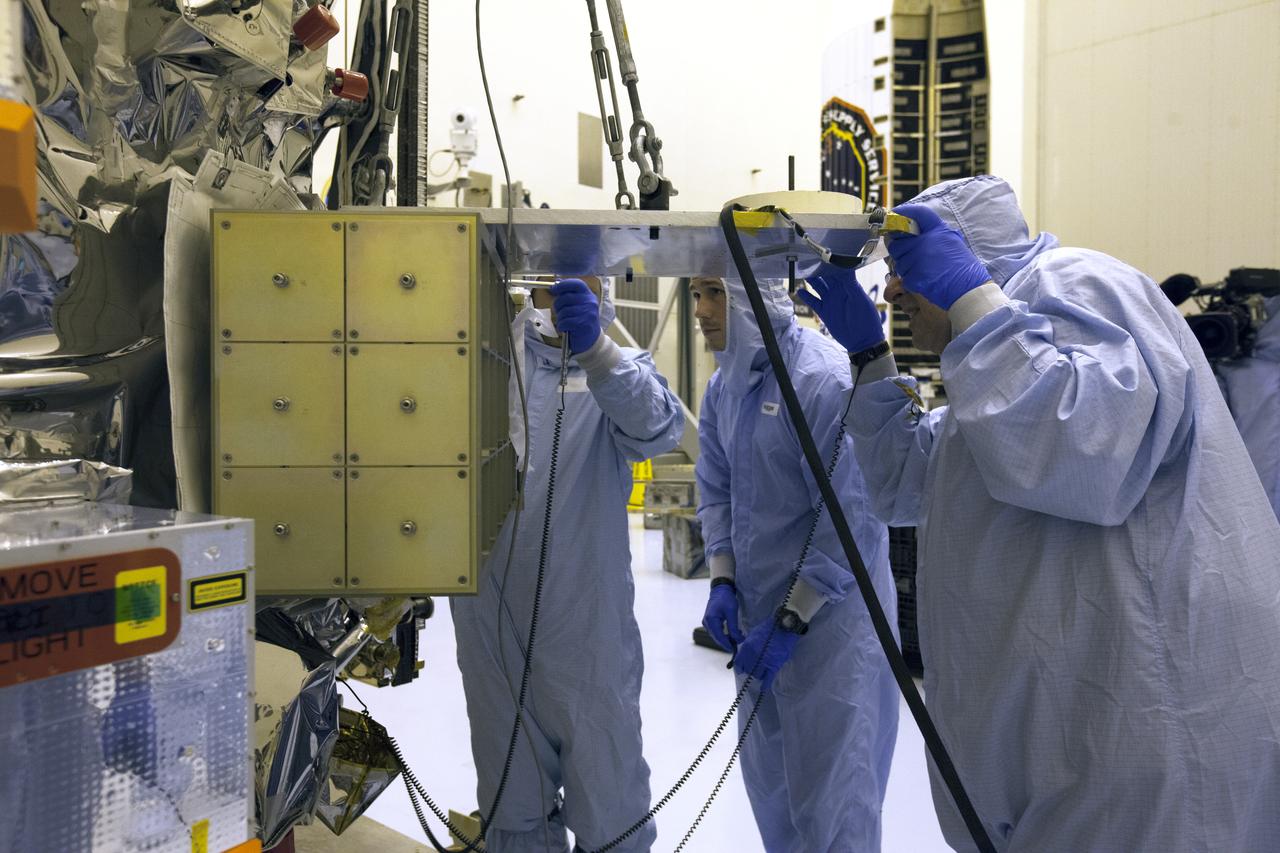
Inside the Payload Hazardous Servicing Facility at NASA's Kennedy Space Center in Florida, technicians begin the process to install several Nanoracks on the exterior of the Orbital ATK Cygnus pressurized cargo module. The Orbital ATK CRS-7 commercial resupply services mission to the International Space Station is scheduled to launch atop a United Launch Alliance Atlas V rocket from Space Launch Complex 41 at Cape Canaveral Air Force Station no earlier than March 21, 2017. Cygnus will deliver 7,600 pounds of supplies, equipment and scientific research materials to the space station.
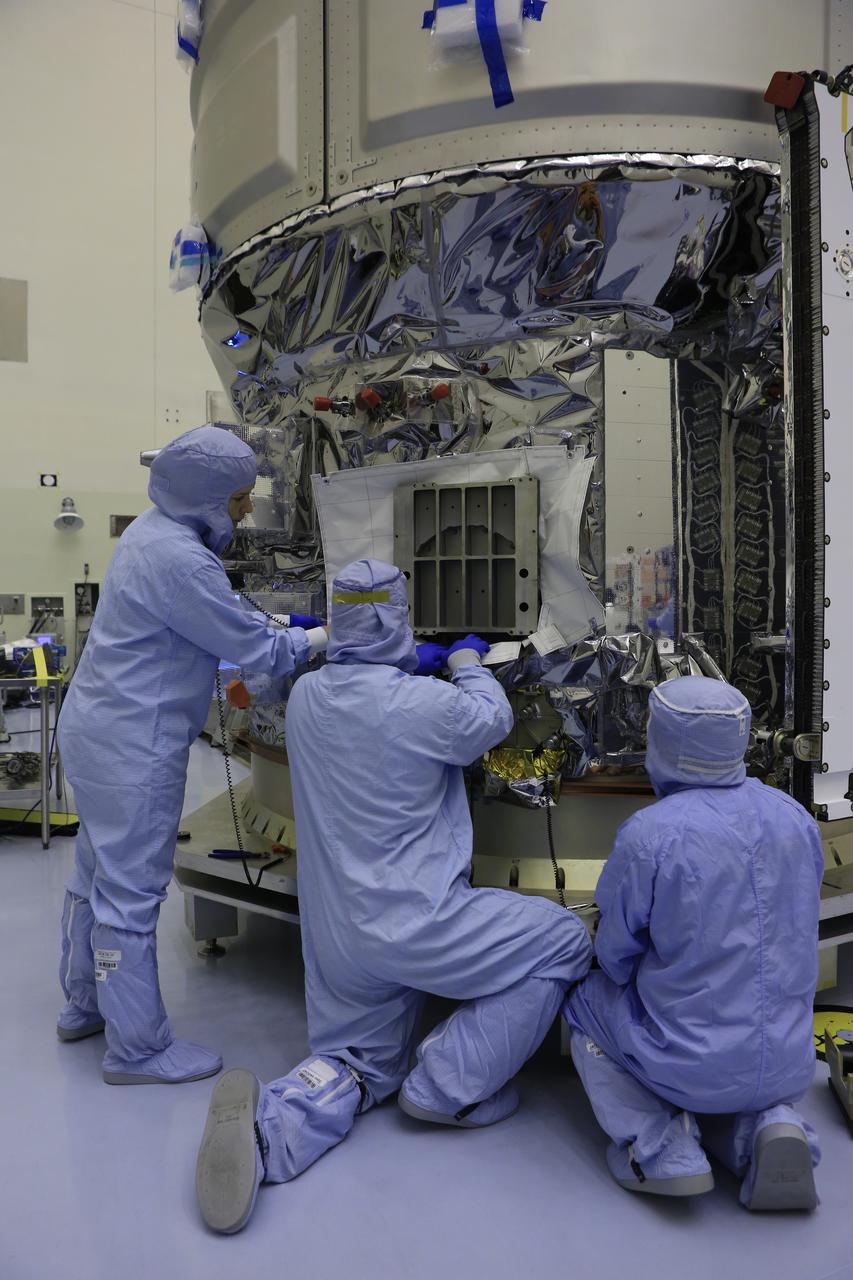
Inside the Payload Hazardous Servicing Facility at NASA's Kennedy Space Center in Florida, technicians install thermal blankets around the area where several Nanoracks will be installed on the exterior of the Orbital ATK Cygnus pressurized cargo module. The Orbital ATK CRS-7 commercial resupply services mission to the International Space Station is scheduled to launch atop a United Launch Alliance Atlas V rocket from Space Launch Complex 41 at Cape Canaveral Air Force Station no earlier than March 21, 2017. Cygnus will deliver 7,600 pounds of supplies, equipment and scientific research materials to the space station.
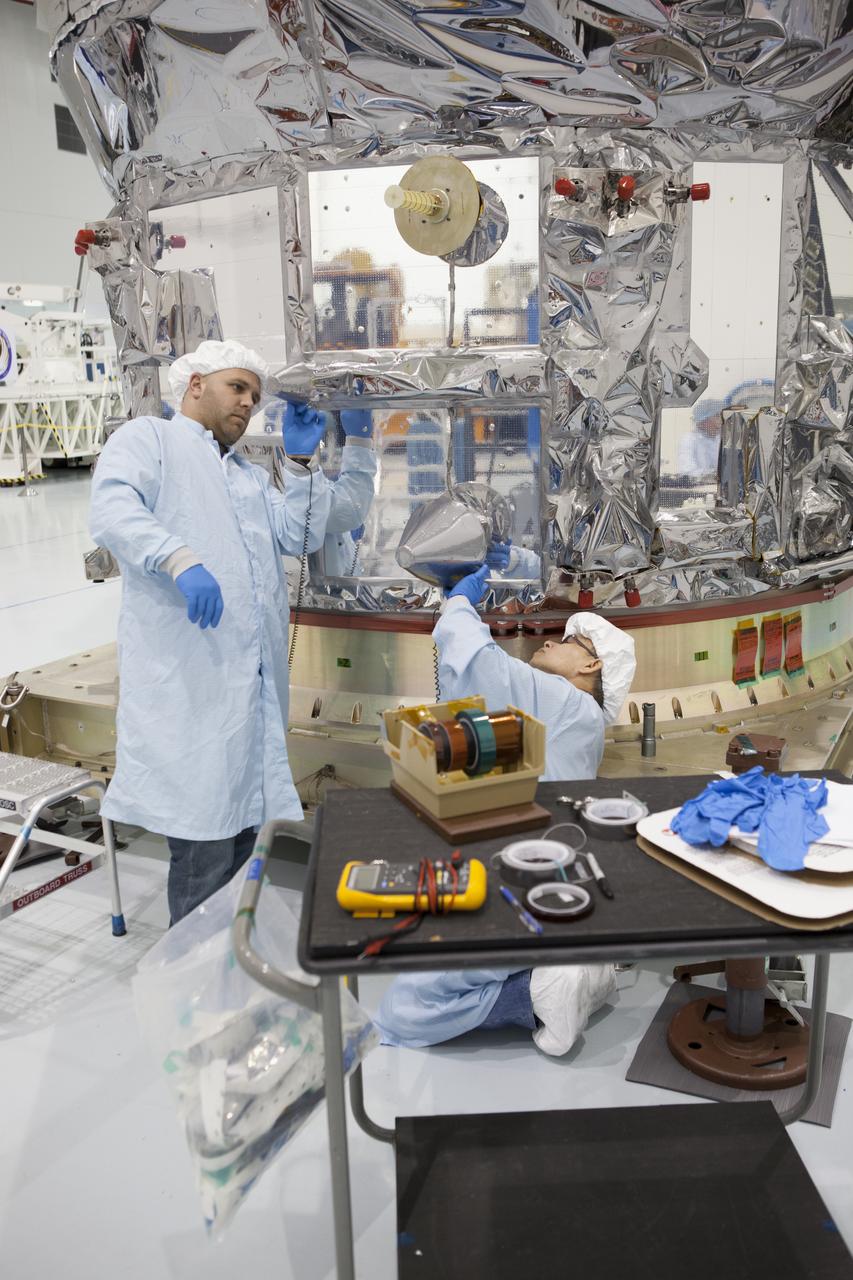
In the Space Station Processing Facility high bay at NASA's Kennedy Space Center in Florida, technicians are preparing Orbital ATK's CYGNUS pressurized cargo module for bagging. The Orbital ATK CRS-7 commercial resupply services mission to the International Space Station is scheduled to launch atop a United Launch Alliance Atlas V rocket from Space Launch Complex 41 at Cape Canaveral Air Force Station on March 19, 2017. CYGNUS will deliver thousands of pounds of supplies, equipment and scientific research materials to the space station.
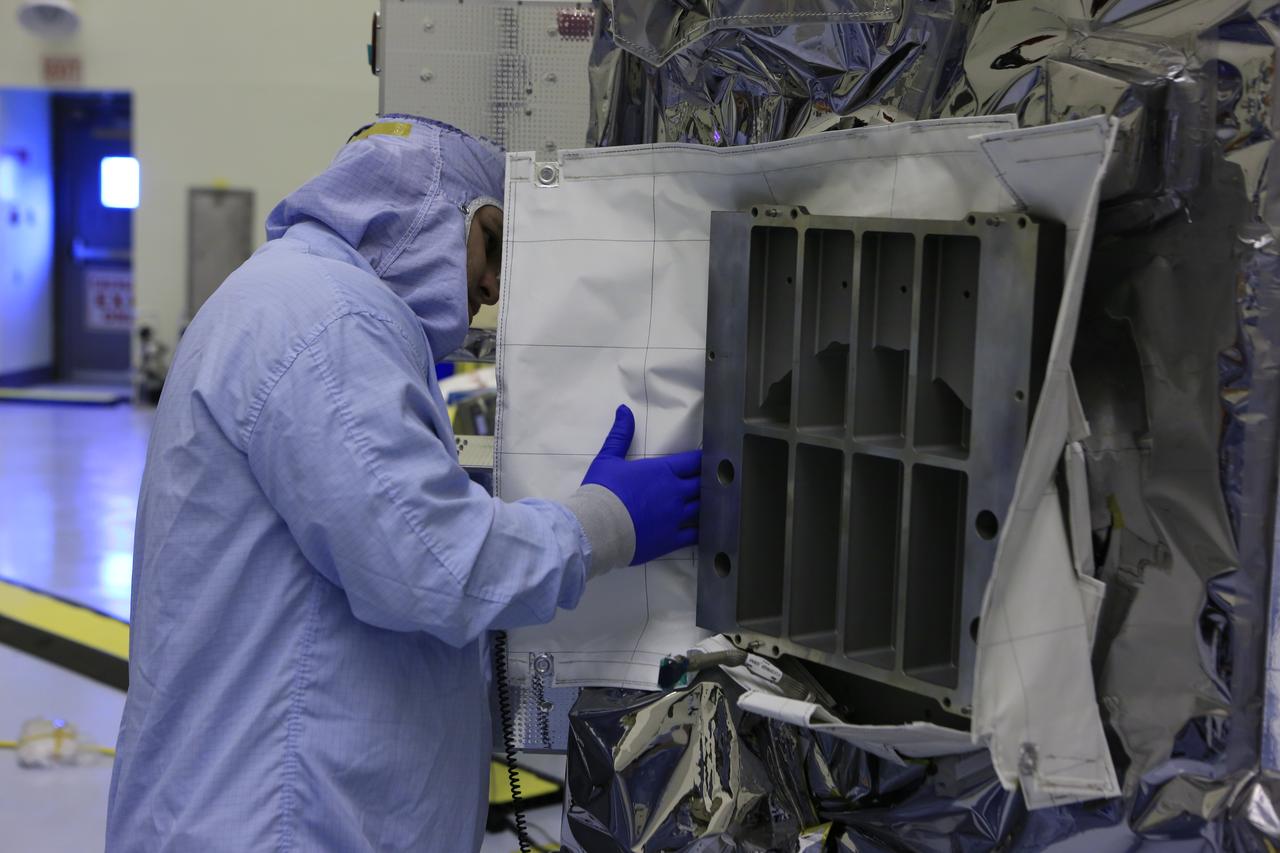
Inside the Payload Hazardous Servicing Facility at NASA's Kennedy Space Center in Florida, a technician adjusts the thermal blankets around the area where several Nanoracks will be installed on the exterior of the Orbital ATK Cygnus pressurized cargo module. The Orbital ATK CRS-7 commercial resupply services mission to the International Space Station is scheduled to launch atop a United Launch Alliance Atlas V rocket from Space Launch Complex 41 at Cape Canaveral Air Force Station no earlier than March 21, 2017. Cygnus will deliver 7,600 pounds of supplies, equipment and scientific research materials to the space station.
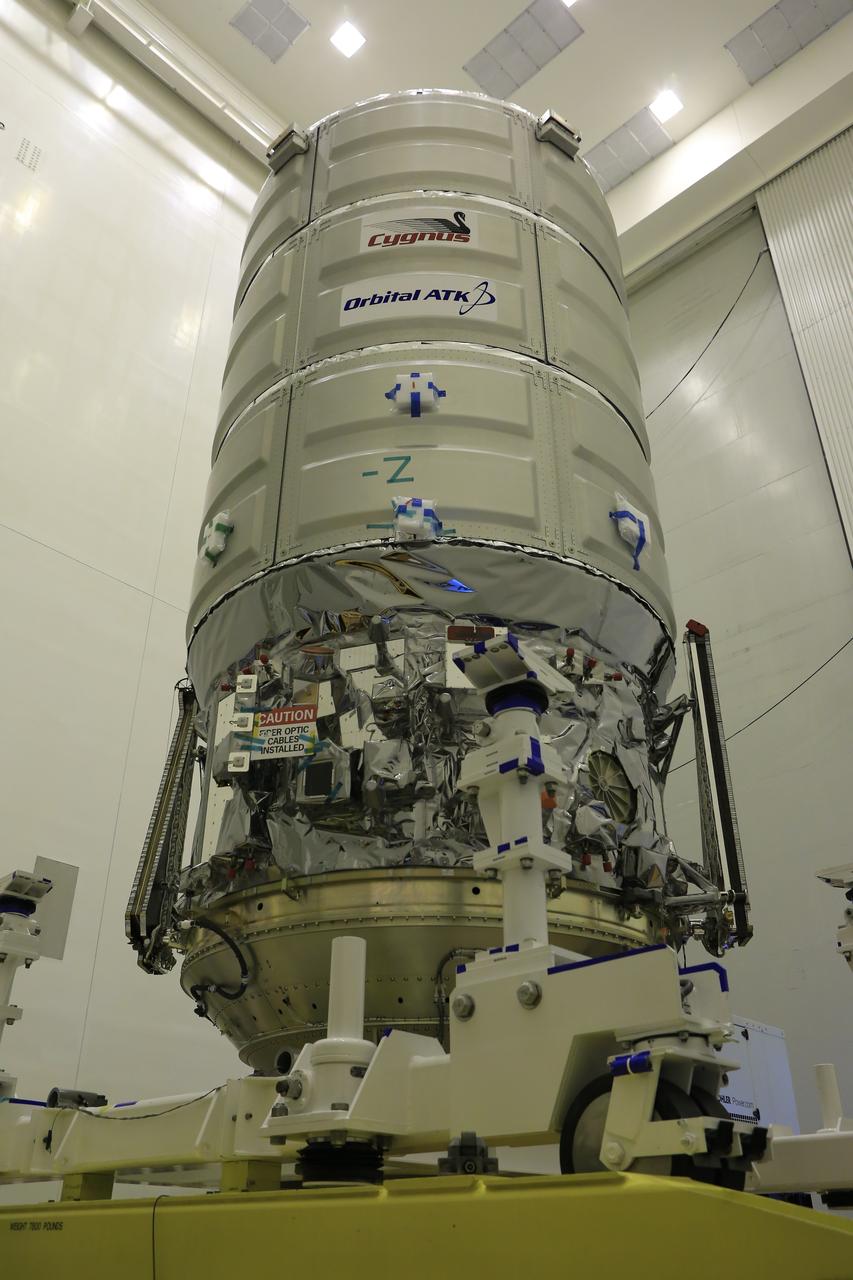
Inside the Payload Hazardous Servicing Facility at NASA's Kennedy Space Center in Florida, the protective covering was removed from Orbital ATK's CYGNUS pressurized cargo module on a KAMAG transporter. In the PHSF, Cygnus will be moved to a work stand for final propellant loading and late cargo stowage. The Orbital ATK CRS-7 commercial resupply services mission to the International Space Station is scheduled to launch atop a United Launch Alliance Atlas V rocket from Space Launch Complex 41 at Cape Canaveral Air Force Station on March 19, 2017. CYGNUS will deliver thousands of pounds of supplies, equipment and scientific research materials to the space station.
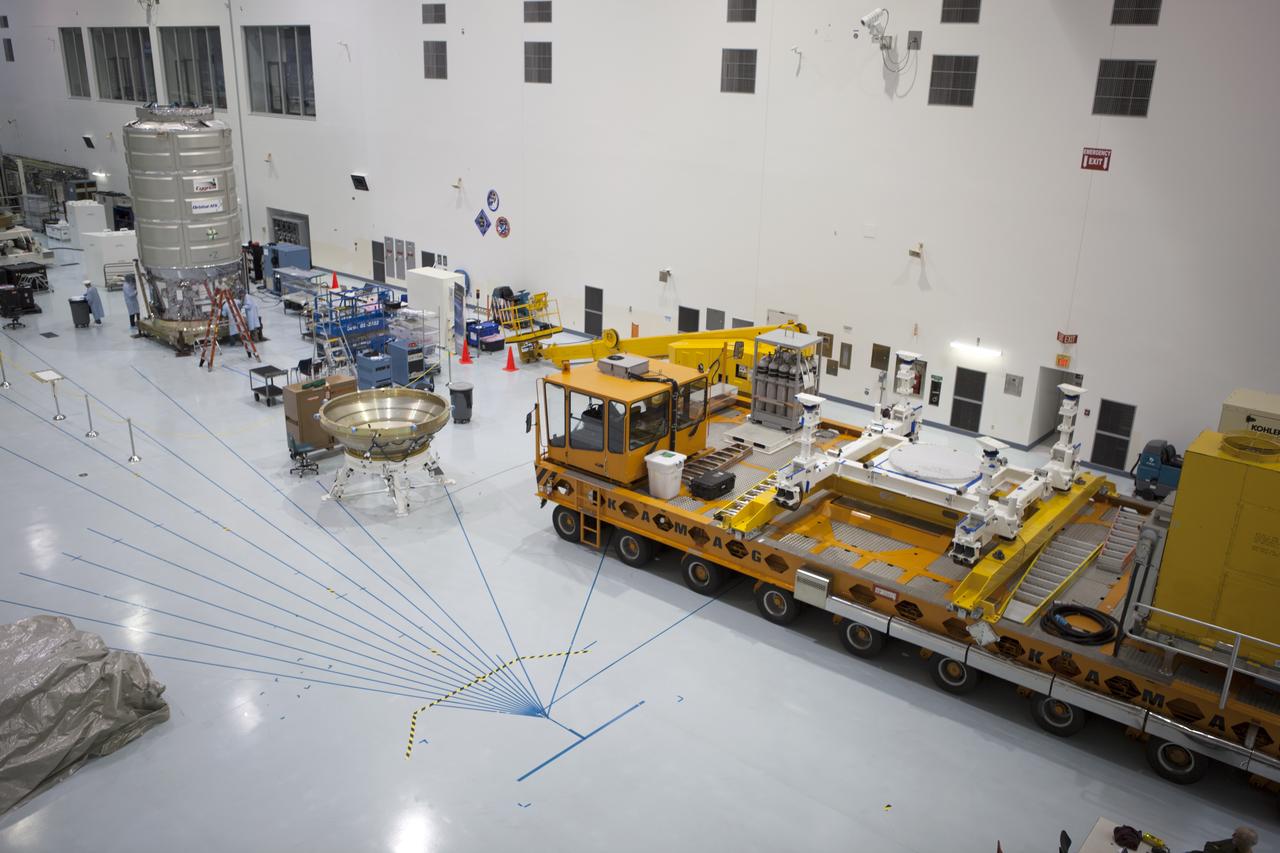
In the Space Station Processing Facility at NASA's Kennedy Space Center in Florida, a KAMAG transporter has arrived in the high bay. Technicians are preparing Orbital ATK's CYGNUS pressurized cargo module for bagging. The Orbital ATK CRS-7 commercial resupply services mission to the International Space Station is scheduled to launch atop a United Launch Alliance Atlas V rocket from Space Launch Complex 41 at Cape Canaveral Air Force Station on March 19, 2017. CYGNUS will deliver thousands of pounds of supplies, equipment and scientific research materials to the space station.
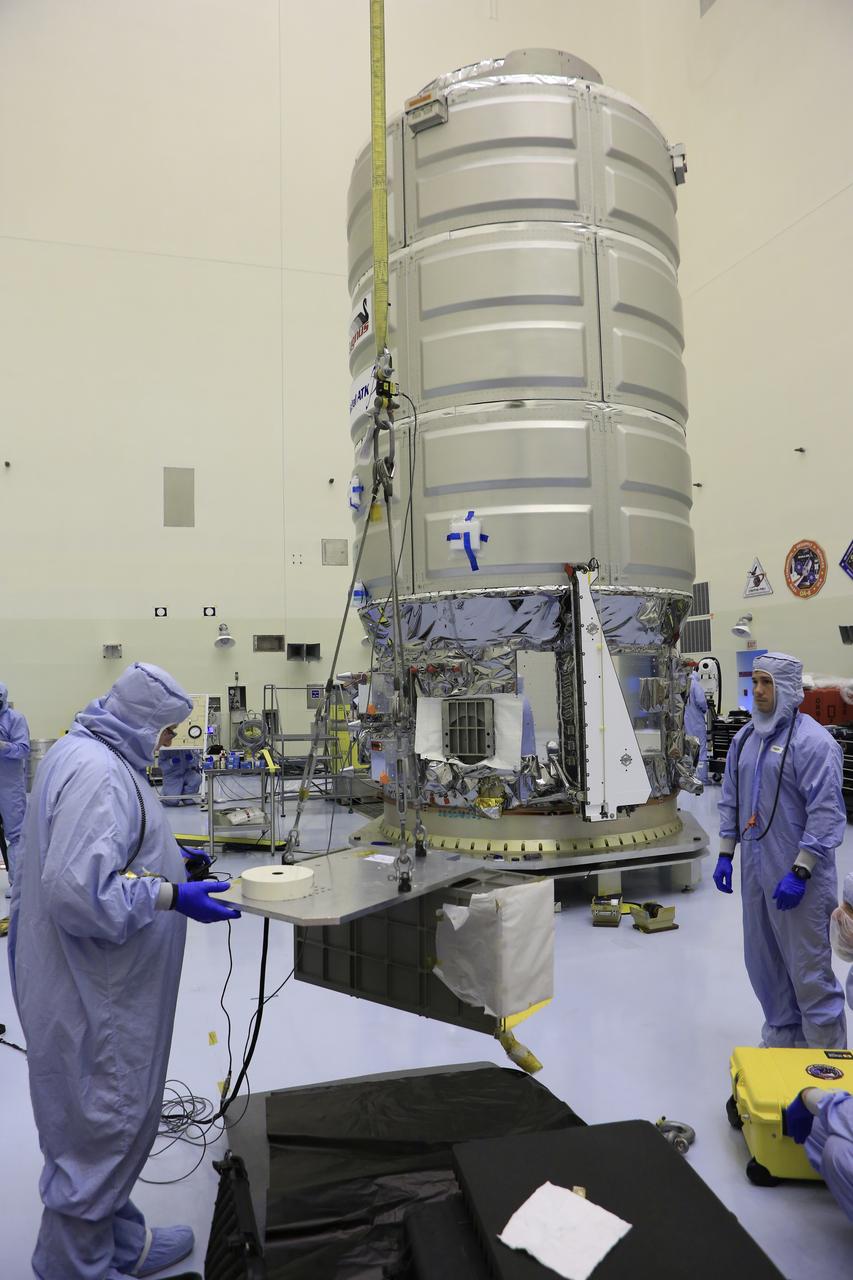
Inside the Payload Hazardous Servicing Facility at NASA's Kennedy Space Center in Florida, technicians prepare several Nanoracks for installation on the exterior of the Orbital ATK Cygnus pressurized cargo module. The Orbital ATK CRS-7 commercial resupply services mission to the International Space Station is scheduled to launch atop a United Launch Alliance Atlas V rocket from Space Launch Complex 41 at Cape Canaveral Air Force Station no earlier than March 21, 2017. Cygnus will deliver 7,600 pounds of supplies, equipment and scientific research materials to the space station.
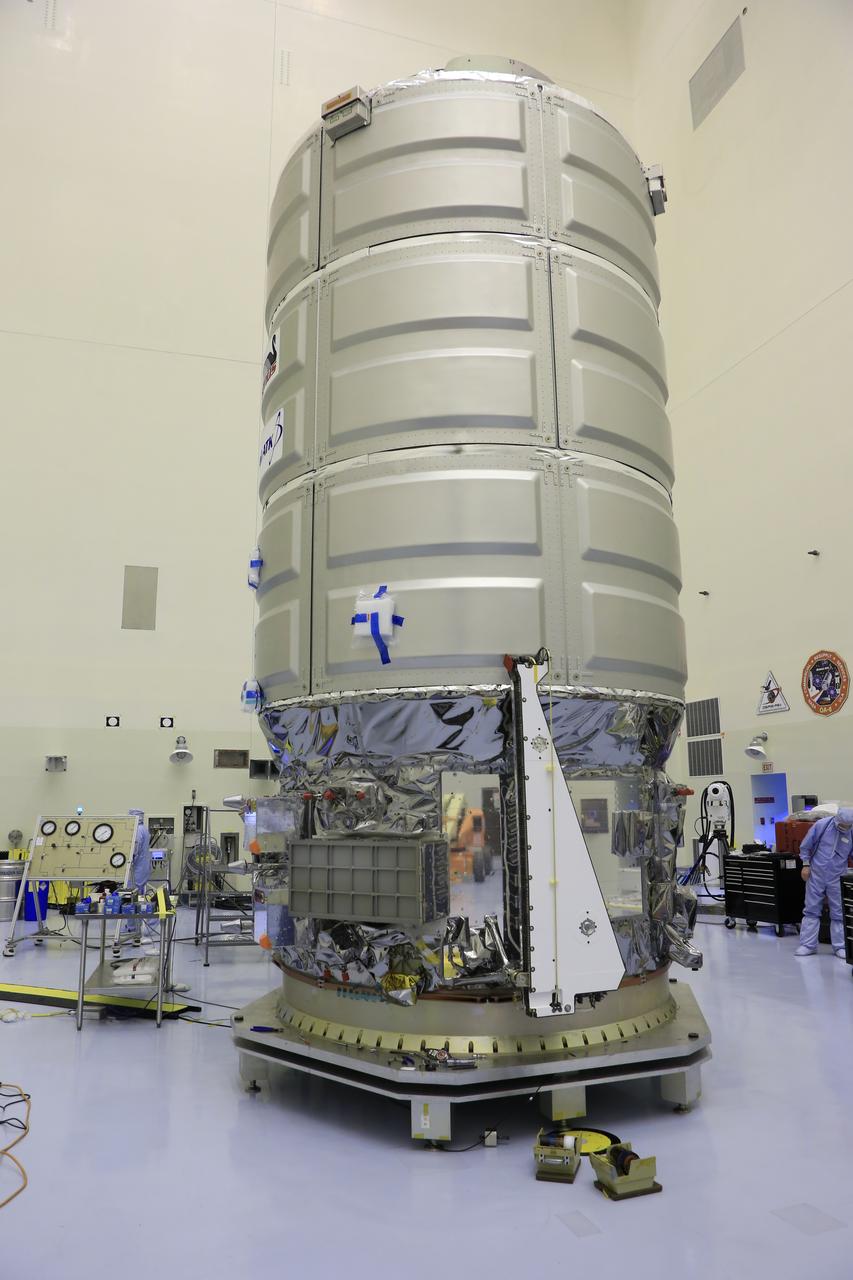
Inside the Payload Hazardous Servicing Facility at NASA's Kennedy Space Center in Florida, technicians have installed several Nanoracks on the exterior of the Orbital ATK Cygnus pressurized cargo module. The Orbital ATK CRS-7 commercial resupply services mission to the International Space Station is scheduled to launch atop a United Launch Alliance Atlas V rocket from Space Launch Complex 41 at Cape Canaveral Air Force Station no earlier than March 21, 2017. Cygnus will deliver 7,600 pounds of supplies, equipment and scientific research materials to the space station.
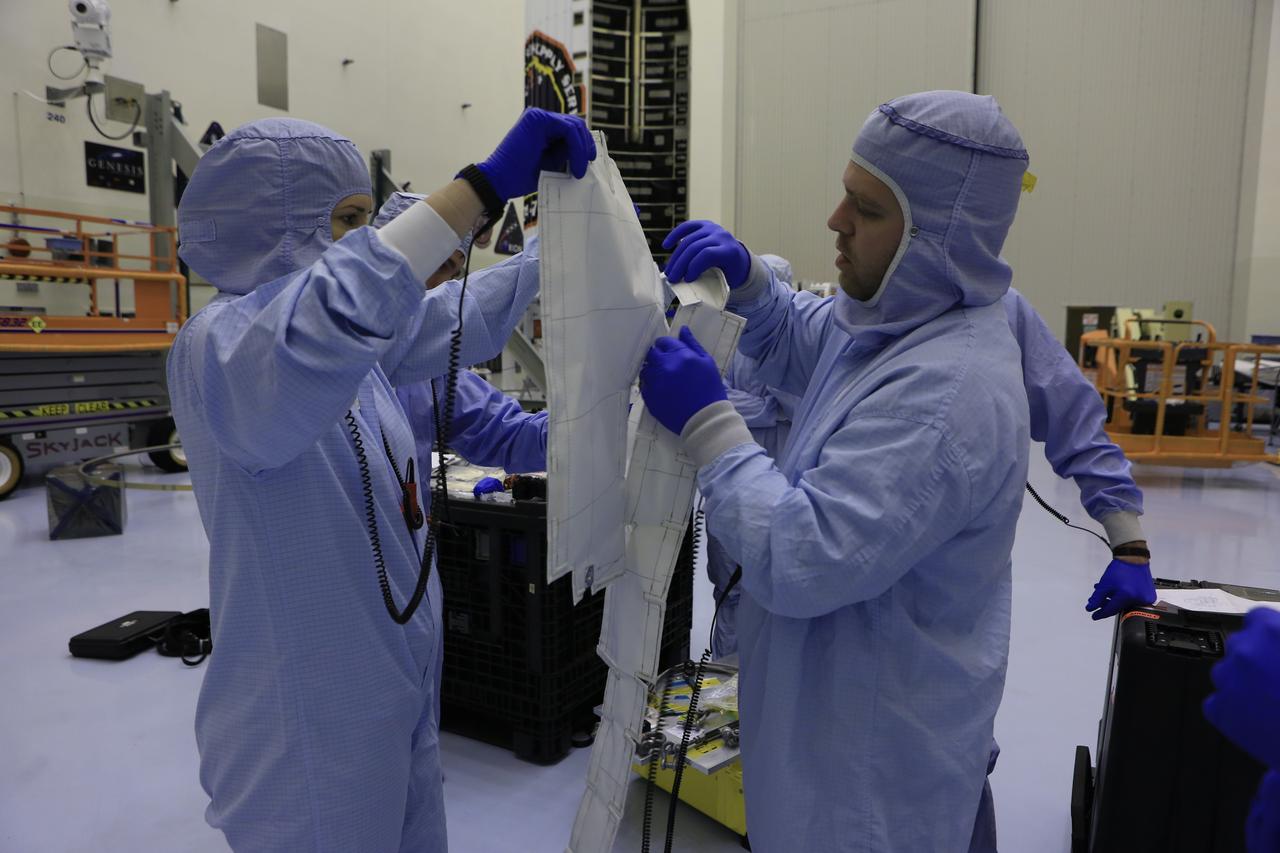
Inside the Payload Hazardous Servicing Facility at NASA's Kennedy Space Center in Florida, technicians prepare thermal blankets for several Nanoracks that will be installed on the exterior of the Orbital ATK Cygnus pressurized cargo module. The Orbital ATK CRS-7 commercial resupply services mission to the International Space Station is scheduled to launch atop a United Launch Alliance Atlas V rocket from Space Launch Complex 41 at Cape Canaveral Air Force Station no earlier than March 21, 2017. Cygnus will deliver 7,600 pounds of supplies, equipment and scientific research materials to the space station.
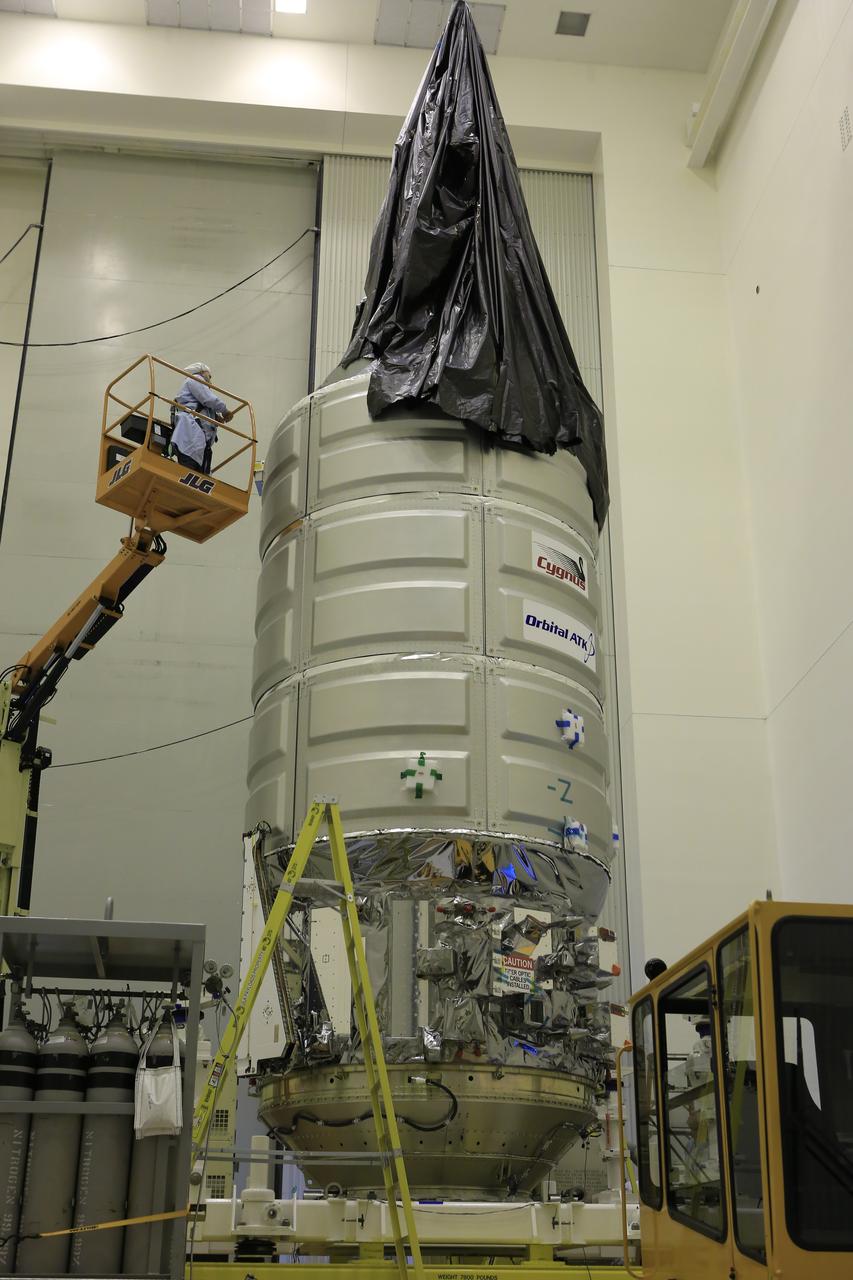
Inside the Payload Hazardous Servicing Facility at NASA's Kennedy Space Center in Florida, technicians assist as a crane is used to remove the protective covering from Orbital ATK's CYGNUS pressurized cargo module on a KAMAG transporter. In the PHSF, Cygnus will be moved to a work stand for final propellant loading and late cargo stowage. The Orbital ATK CRS-7 commercial resupply services mission to the International Space Station is scheduled to launch atop a United Launch Alliance Atlas V rocket from Space Launch Complex 41 at Cape Canaveral Air Force Station on March 19, 2017. CYGNUS will deliver thousands of pounds of supplies, equipment and scientific research materials to the space station.
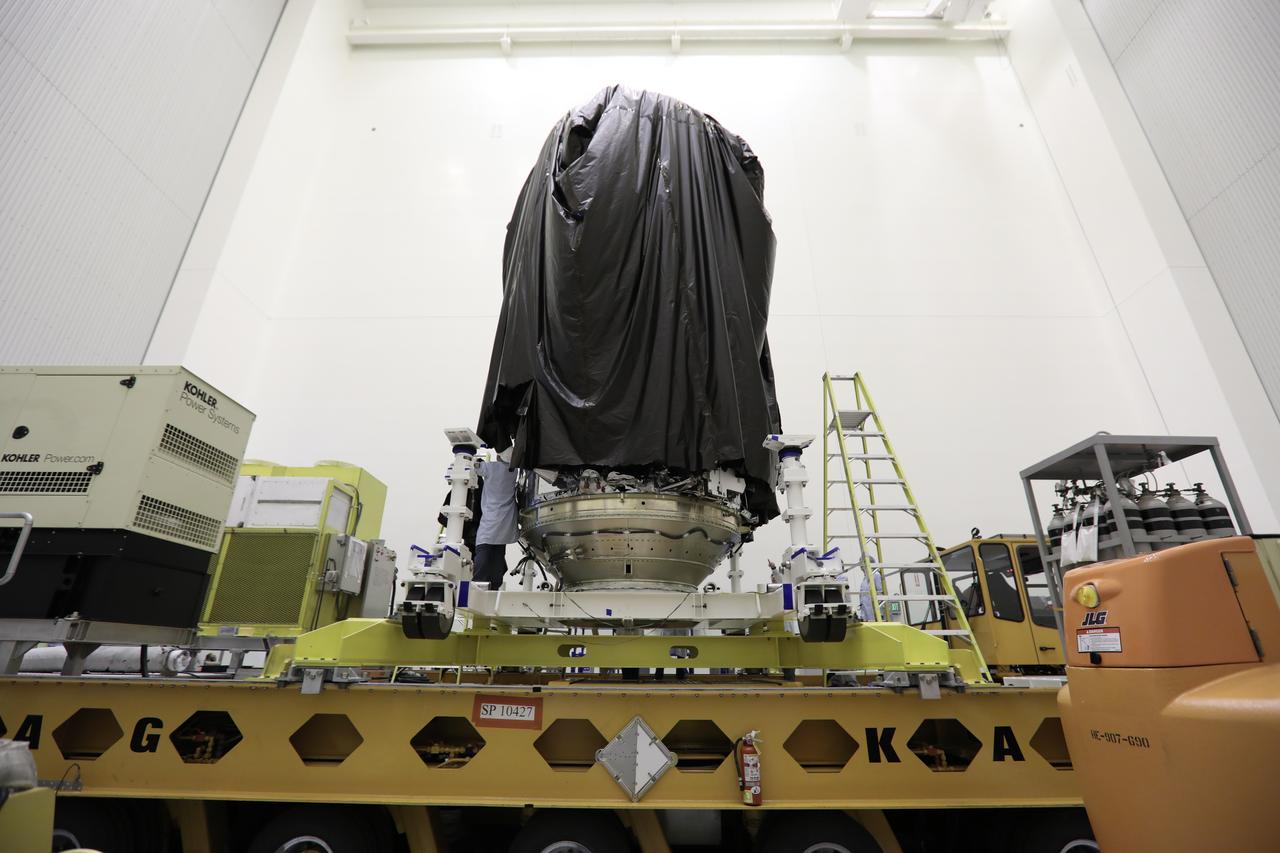
Inside the Payload Hazardous Servicing Facility at NASA's Kennedy Space Center in Florida, technicians begin to remove the protective covering from Orbital ATK's CYGNUS pressurized cargo module on a KAMAG transporter. In the PHSF, Cygnus will be move to a work stand for final propellant loading and late cargo stowage. The Orbital ATK CRS-7 commercial resupply services mission to the International Space Station is scheduled to launch atop a United Launch Alliance Atlas V rocket from Space Launch Complex 41 at Cape Canaveral Air Force Station on March 19, 2017. CYGNUS will deliver thousands of pounds of supplies, equipment and scientific research materials to the space station.
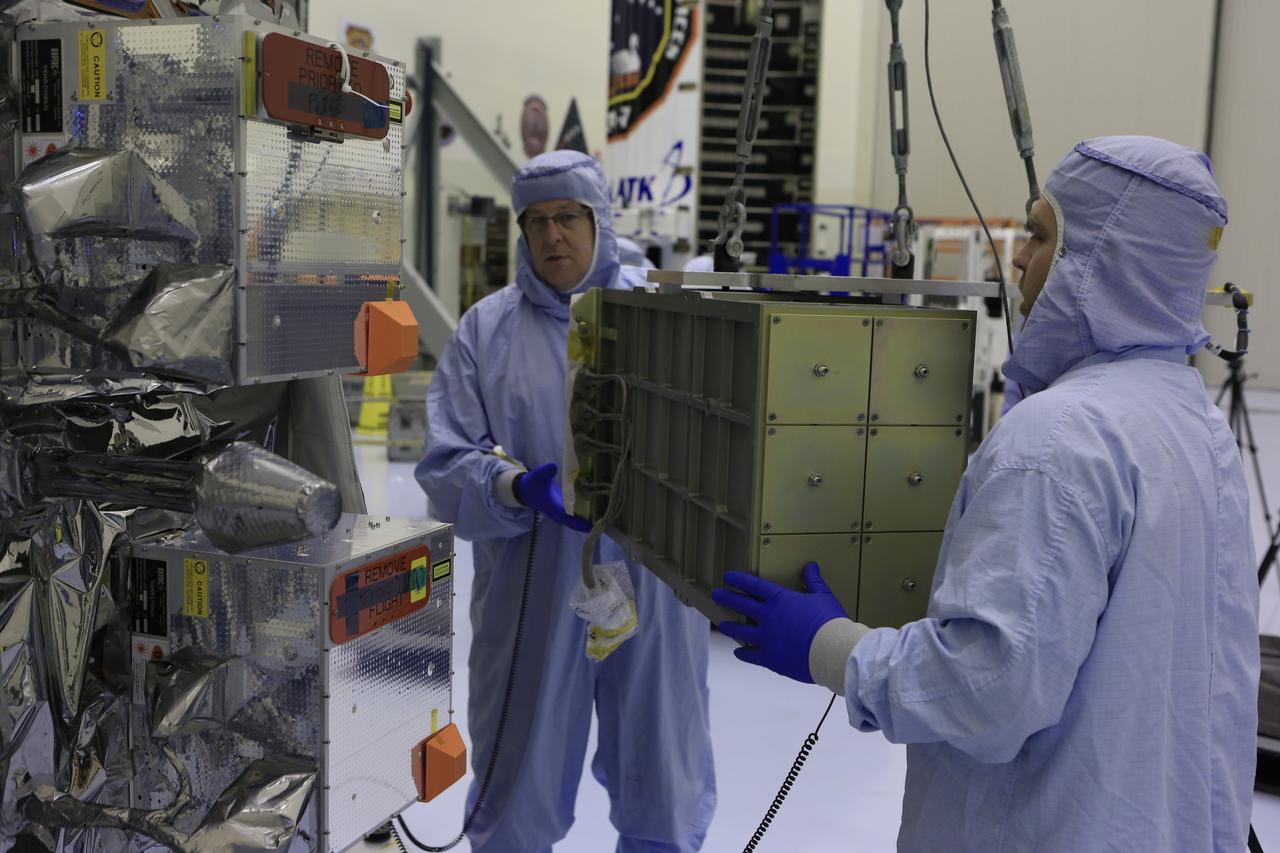
Inside the Payload Hazardous Servicing Facility at NASA's Kennedy Space Center in Florida, technicians prepare to install several Nanoracks on the exterior of the Orbital ATK Cygnus pressurized cargo module. The Orbital ATK CRS-7 commercial resupply services mission to the International Space Station is scheduled to launch atop a United Launch Alliance Atlas V rocket from Space Launch Complex 41 at Cape Canaveral Air Force Station no earlier than March 21, 2017. Cygnus will deliver 7,600 pounds of supplies, equipment and scientific research materials to the space station.
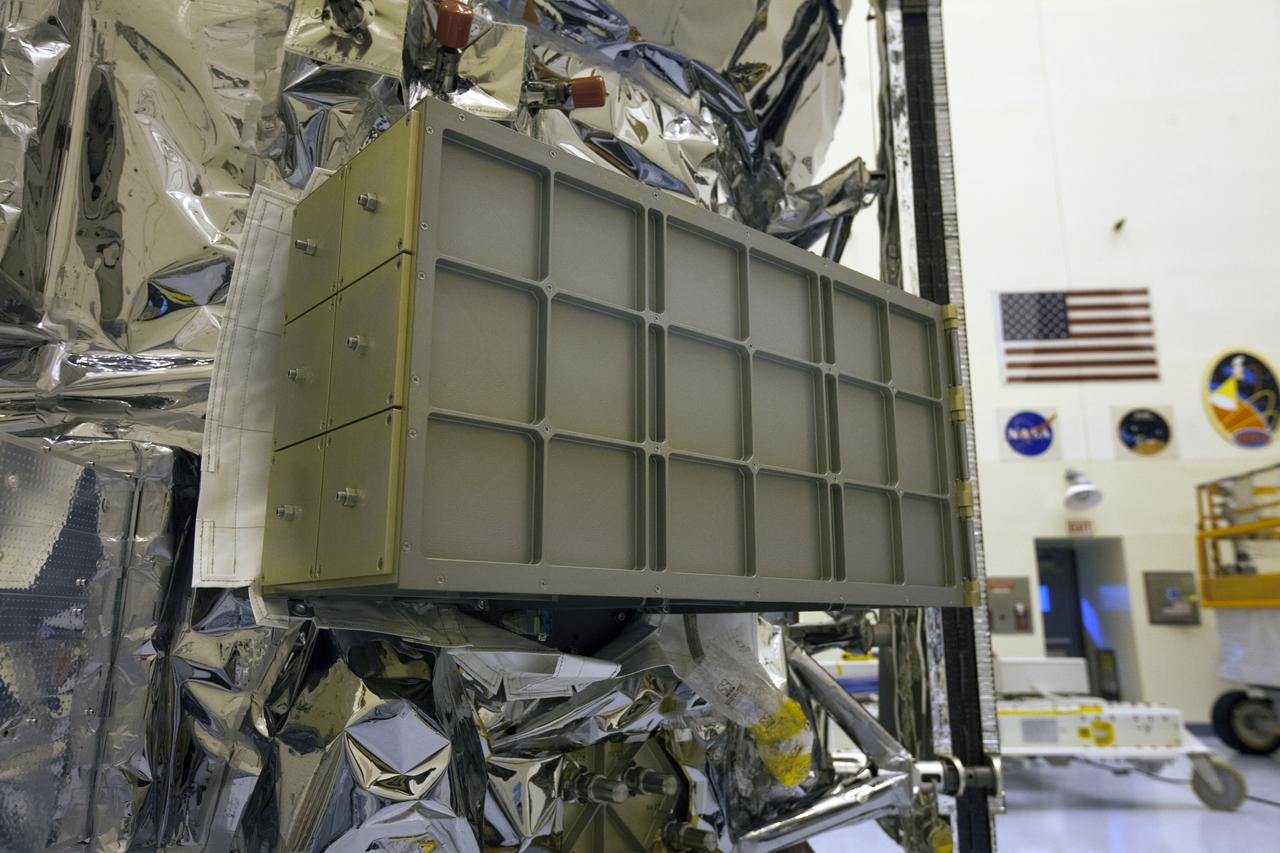
Inside the Payload Hazardous Servicing Facility at NASA's Kennedy Space Center in Florida, technicians have installed several Nanoracks on the exterior of the Orbital ATK Cygnus pressurized cargo module. The Orbital ATK CRS-7 commercial resupply services mission to the International Space Station is scheduled to launch atop a United Launch Alliance Atlas V rocket from Space Launch Complex 41 at Cape Canaveral Air Force Station no earlier than March 21, 2017. Cygnus will deliver 7,600 pounds of supplies, equipment and scientific research materials to the space station.
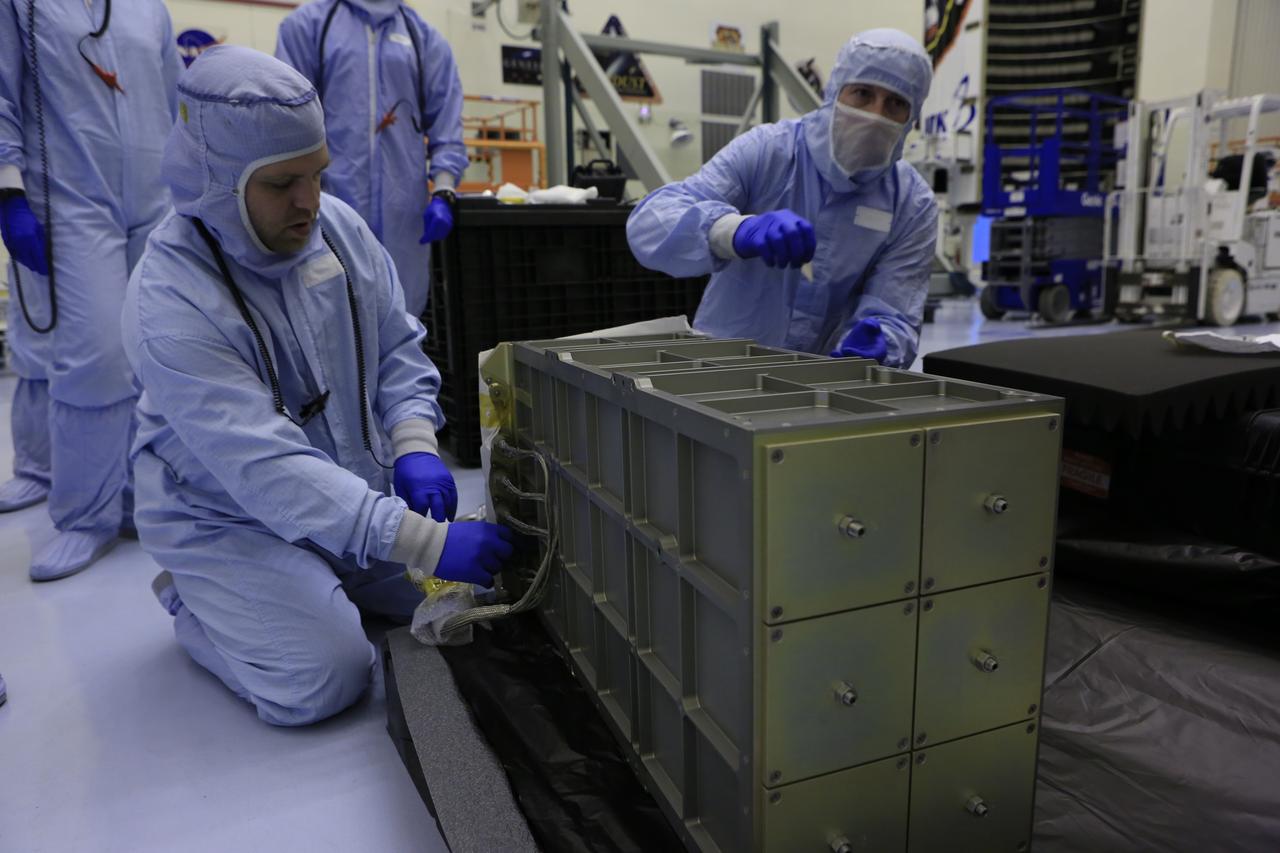
Inside the Payload Hazardous Servicing Facility at NASA's Kennedy Space Center in Florida, technicians prepare several Nanoracks for installation on the exterior of the Orbital ATK Cygnus pressurized cargo module. The Orbital ATK CRS-7 commercial resupply services mission to the International Space Station is scheduled to launch atop a United Launch Alliance Atlas V rocket from Space Launch Complex 41 at Cape Canaveral Air Force Station no earlier than March 21, 2017. Cygnus will deliver 7,600 pounds of supplies, equipment and scientific research materials to the space station.
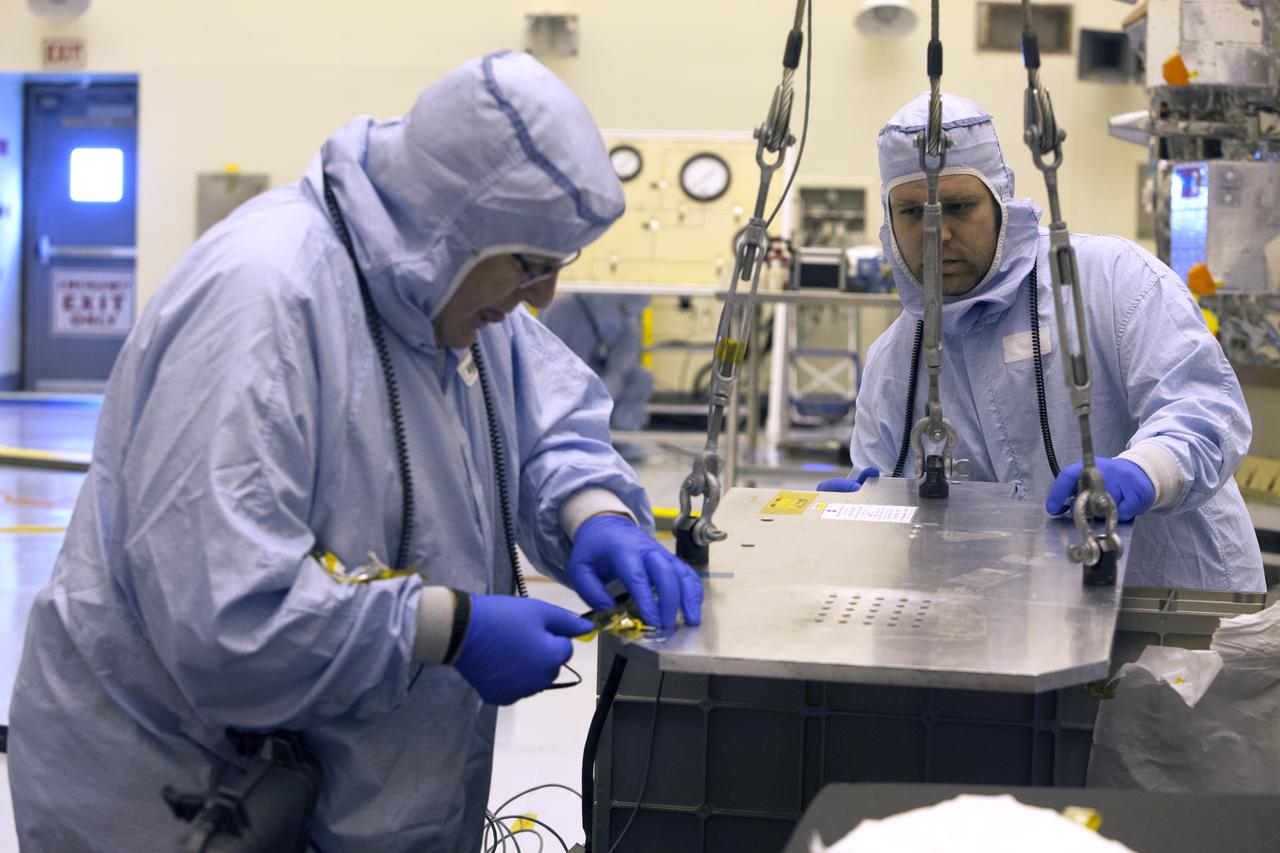
Inside the Payload Hazardous Servicing Facility at NASA's Kennedy Space Center in Florida, technicians prepare several Nanoracks for installation on the exterior of the Orbital ATK Cygnus pressurized cargo module. The Orbital ATK CRS-7 commercial resupply services mission to the International Space Station is scheduled to launch atop a United Launch Alliance Atlas V rocket from Space Launch Complex 41 at Cape Canaveral Air Force Station no earlier than March 21, 2017. Cygnus will deliver 7,600 pounds of supplies, equipment and scientific research materials to the space station.
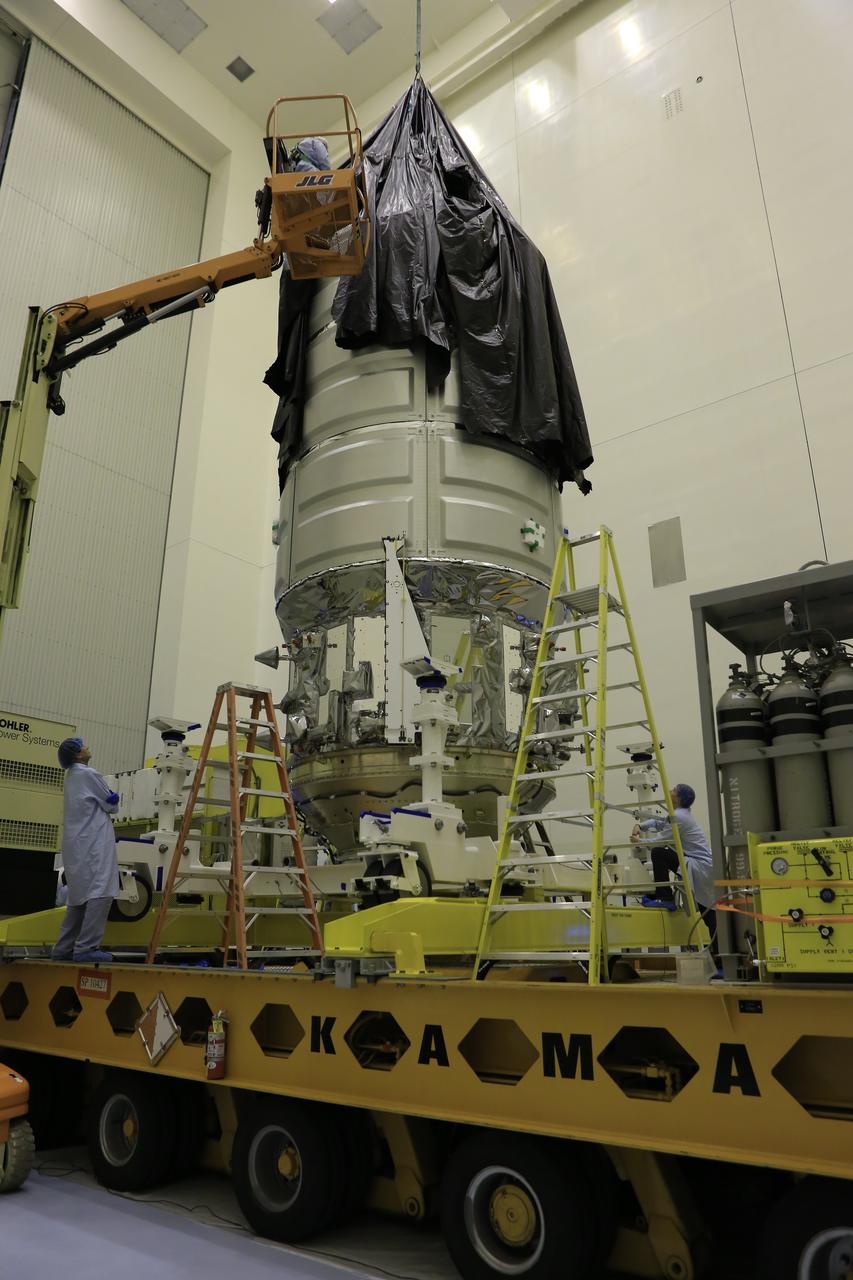
Inside the Payload Hazardous Servicing Facility at NASA's Kennedy Space Center in Florida, technicians assist as a crane is used to remove the protective covering from Orbital ATK's CYGNUS pressurized cargo module on a KAMAG transporter. In the PHSF, Cygnus will be moved to a work stand for final propellant loading and late cargo stowage. The Orbital ATK CRS-7 commercial resupply services mission to the International Space Station is scheduled to launch atop a United Launch Alliance Atlas V rocket from Space Launch Complex 41 at Cape Canaveral Air Force Station on March 19, 2017. CYGNUS will deliver thousands of pounds of supplies, equipment and scientific research materials to the space station.
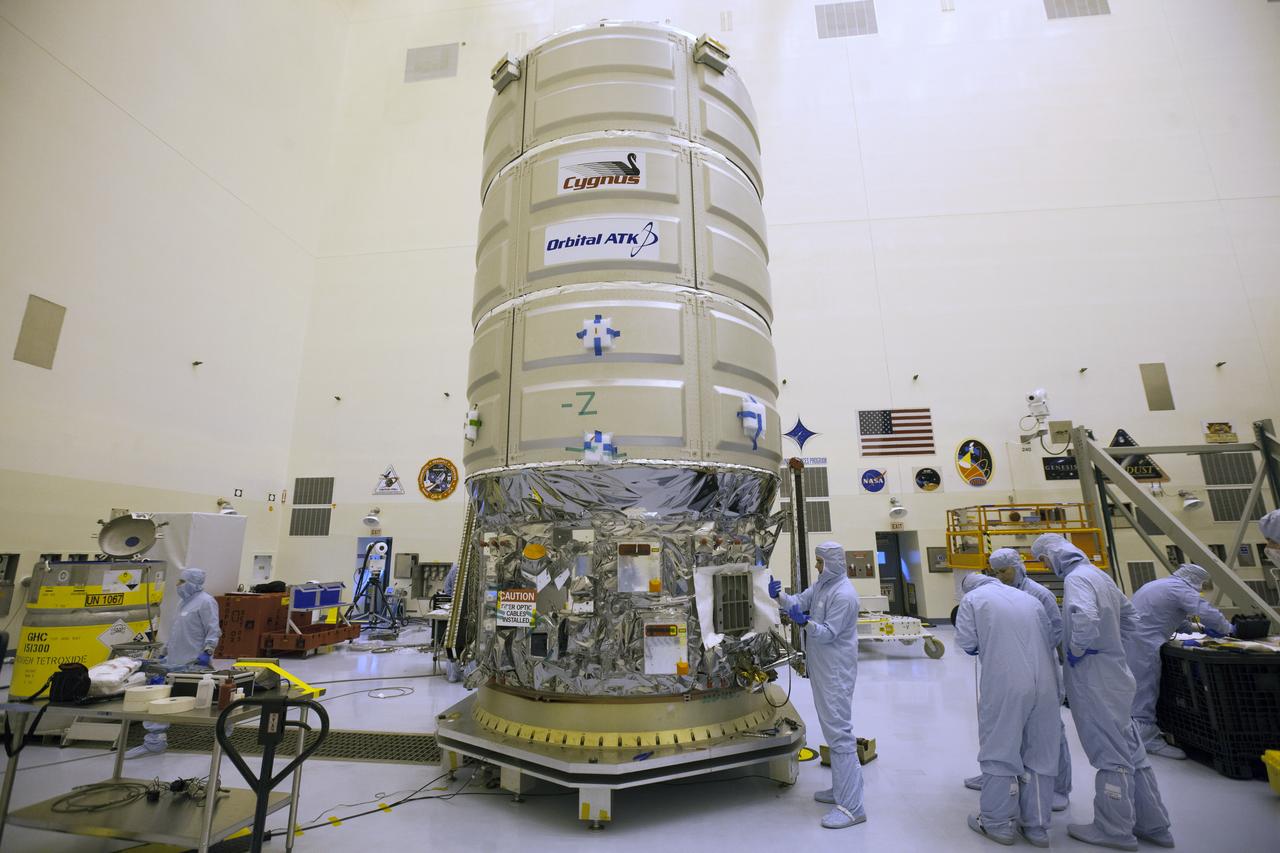
Inside the Payload Hazardous Servicing Facility at NASA's Kennedy Space Center in Florida, preparations are underway to install the Nanoracks on the exterior of the Orbital ATK Cygnus pressurized cargo module. The Orbital ATK CRS-7 commercial resupply services mission to the International Space Station is scheduled to launch atop a United Launch Alliance Atlas V rocket from Space Launch Complex 41 at Cape Canaveral Air Force Station no earlier than March 21, 2017. Cygnus will deliver 7,600 pounds of supplies, equipment and scientific research materials to the space station.
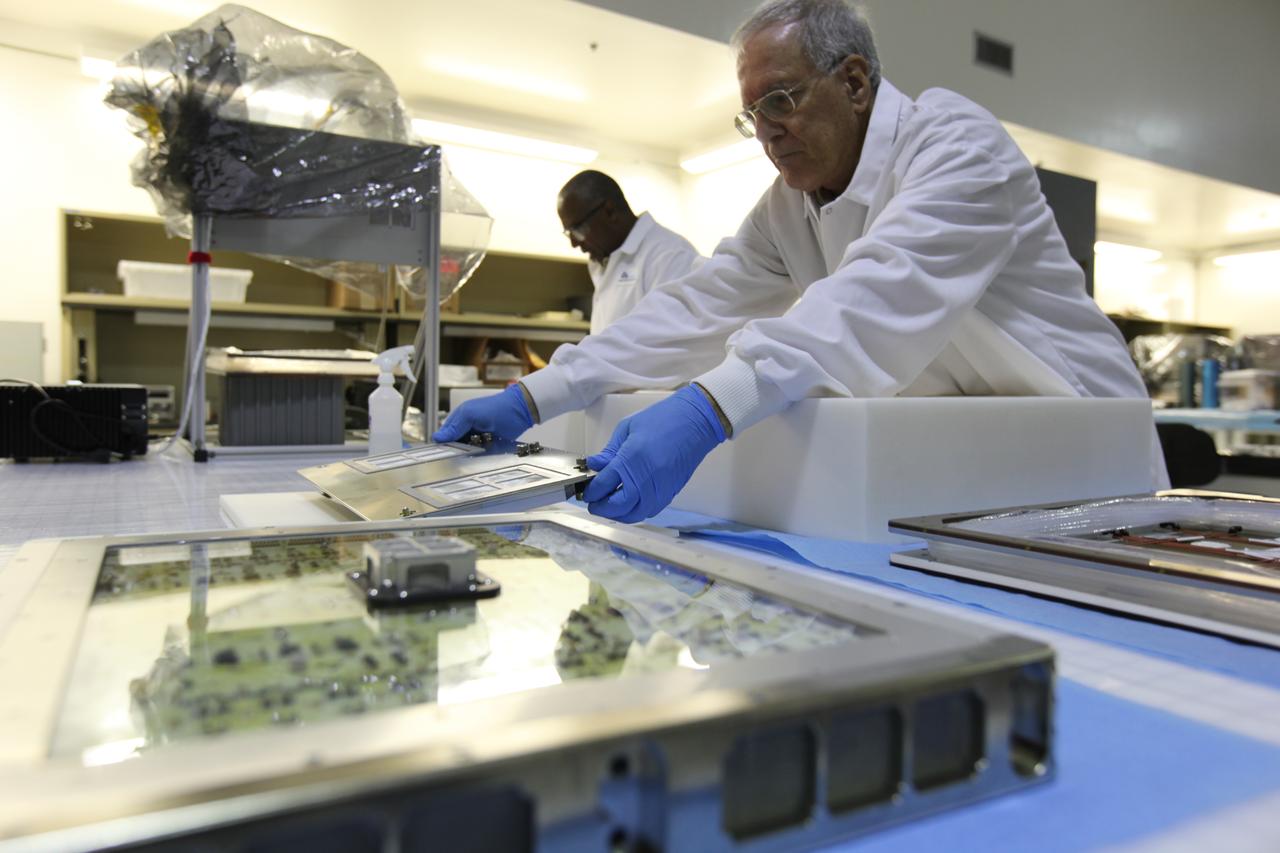
Charles Spern, at right, project manager on the Engineering Services Contract (ESC), and Glenn Washington, ESC quality assurance specialist, perform final inspections of the Veggie Series 1 plant experiment inside a laboratory in the Space Station Processing Facility at NASA's Kennedy Space Center in Florida. The Series 1 experiment is being readied for flight aboard Orbital ATK's Cygnus module on its seventh (OA-7) Commercial Resupply Services mission to the International Space Station. The Veggie system is on the space station.
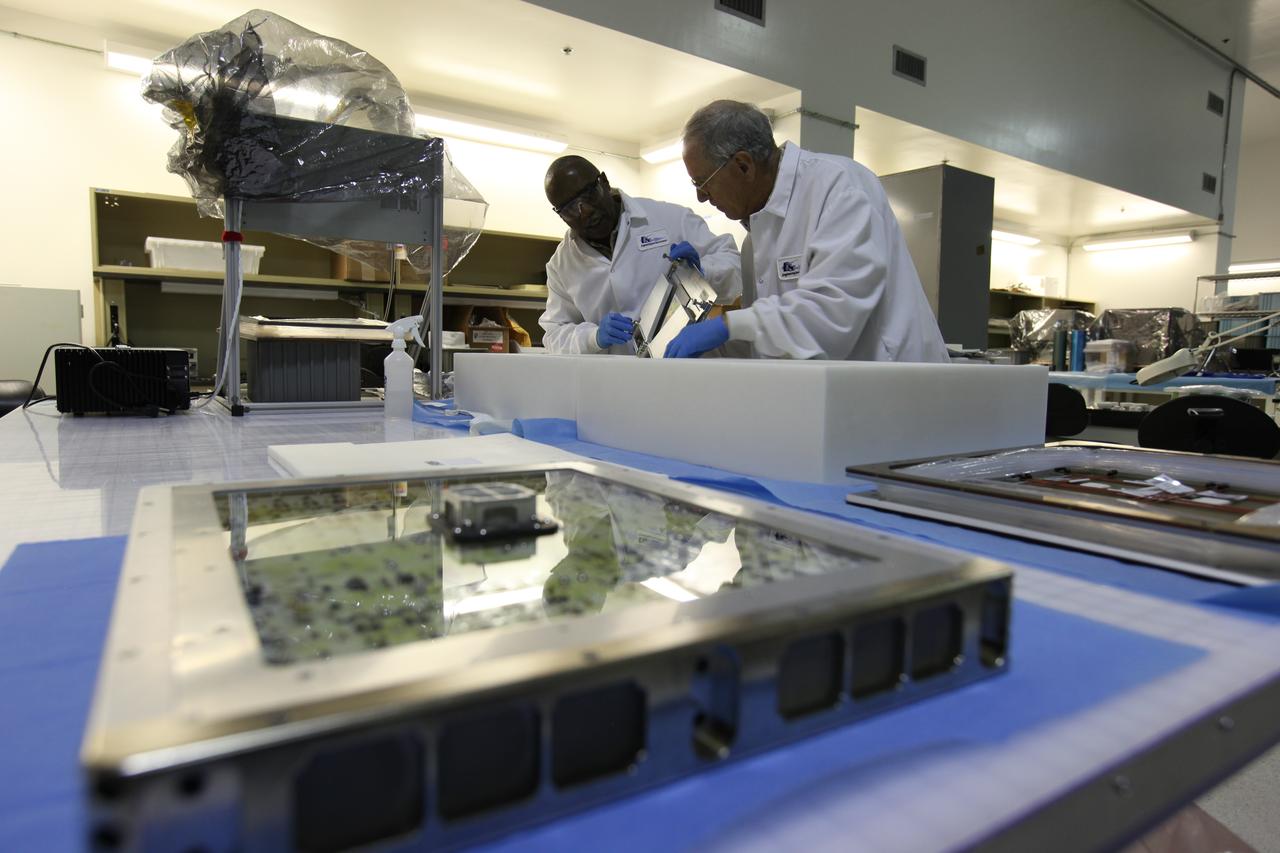
Charles Spern, at right, project manager on the Engineering Services Contract (ESC), and Glenn Washington, ESC quality assurance specialist, perform final inspections of the Veggie Series 1 plant experiment inside a laboratory in the Space Station Processing Facility at NASA's Kennedy Space Center in Florida. The Series 1 experiment is being readied for flight aboard Orbital ATK's Cygnus module on its seventh (OA-7) Commercial Resupply Services mission to the International Space Station. The Veggie system is on the space station.
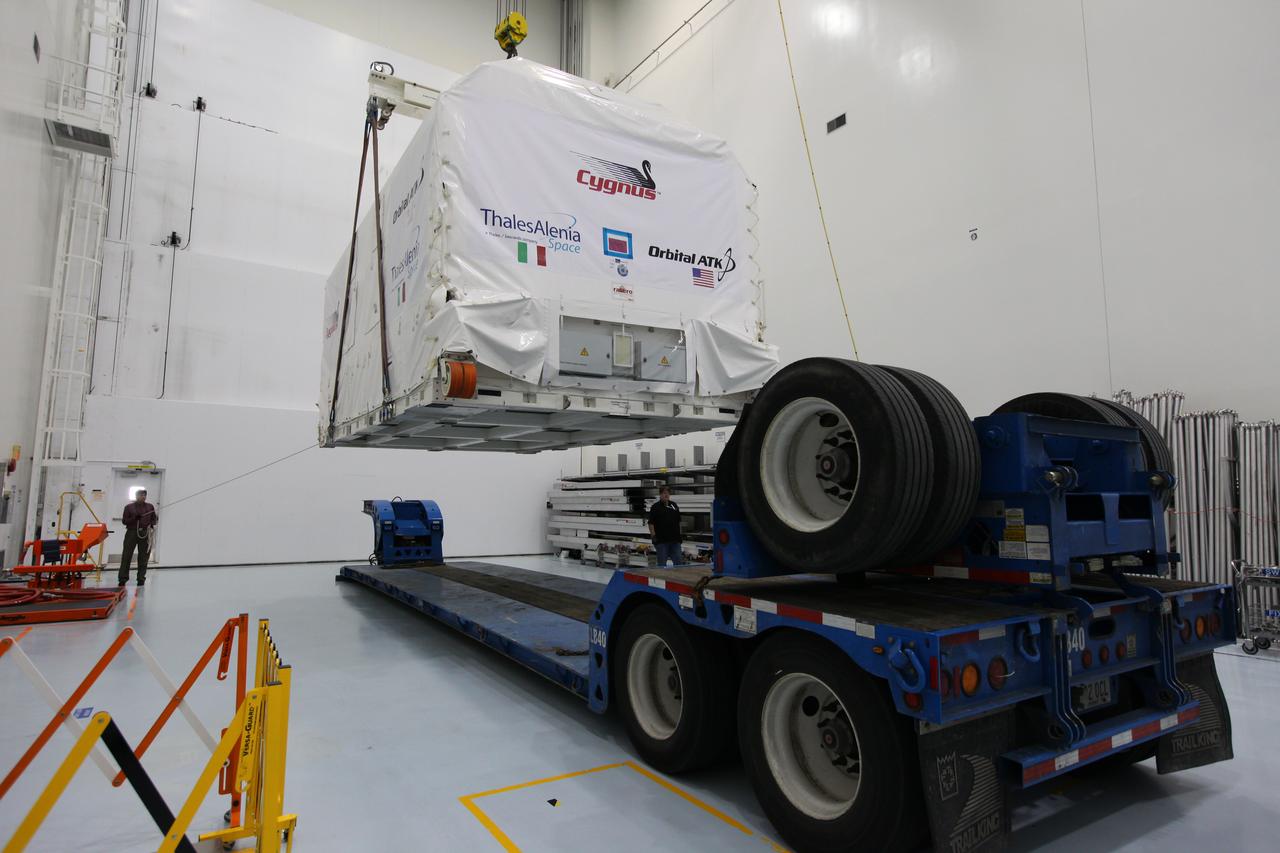
A crane is used to lift the Orbital ATK OA-7 Cygnus spacecraft's pressurized cargo module (PCM) off a flatbed truck after arrival at the Space Station Processing Facility of NASA's Kennedy Space Center in Florida. The PCM is sealed in an environmentally controlled shipping container. Scheduled to launch on March 19, 2017, the Orbital ATK OA-7 mission will lift off atop a United Launch Alliance Atlas V rocket from Space launch Complex 41 at Cape Canaveral Air Force Station. The commercial resupply services mission to the International Space Station will deliver thousands of pounds of supplies, equipment and scientific research materials that improve life on Earth and drive progress toward future space exploration.
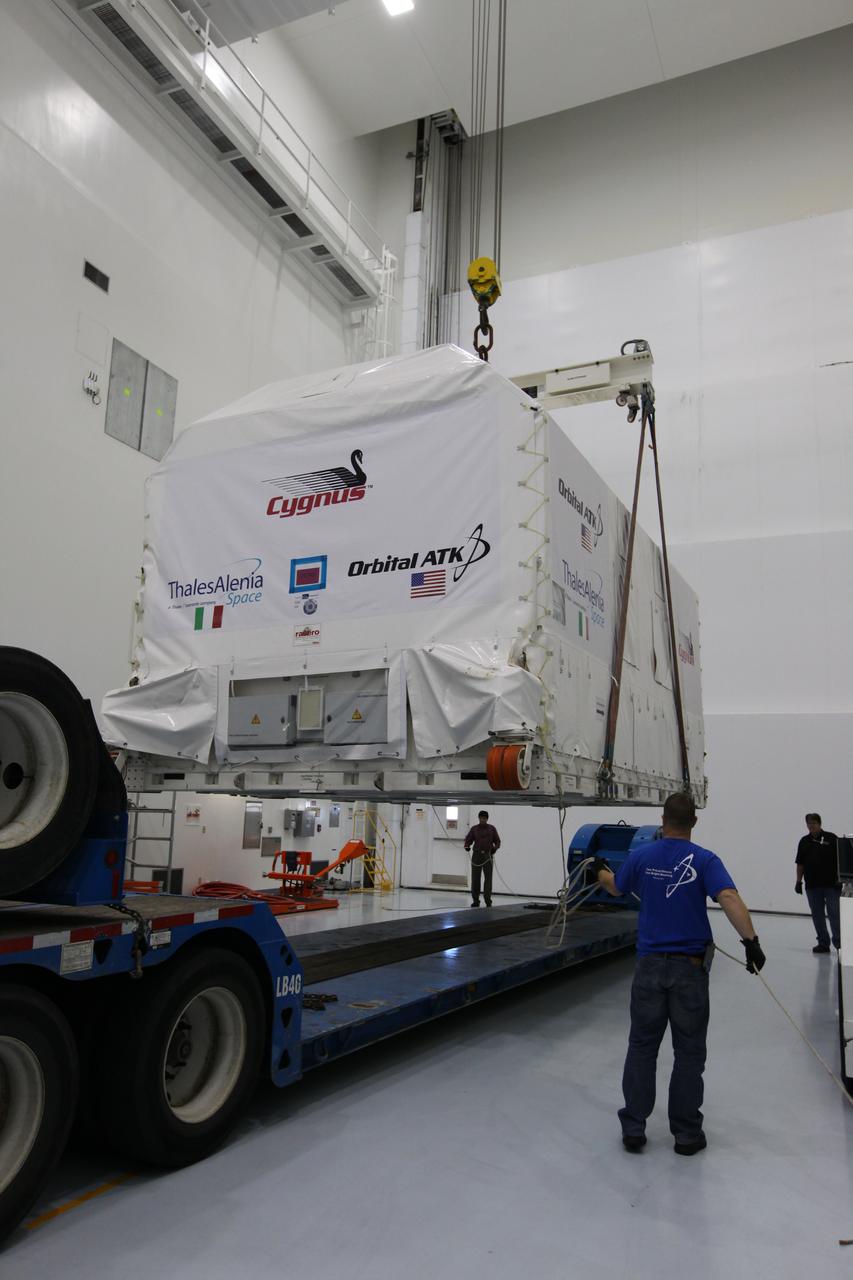
A crane is used to lift the Orbital ATK OA-7 Cygnus spacecraft's pressurized cargo module (PCM) off a flatbed truck after arrival at the Space Station Processing Facility of NASA's Kennedy Space Center in Florida. The PCM is sealed in an environmentally controlled shipping container. Scheduled to launch on March 19, 2017, the Orbital ATK OA-7 mission will lift off atop a United Launch Alliance Atlas V rocket from Space launch Complex 41 at Cape Canaveral Air Force Station. The commercial resupply services mission to the International Space Station will deliver thousands of pounds of supplies, equipment and scientific research materials that improve life on Earth and drive progress toward future space exploration.
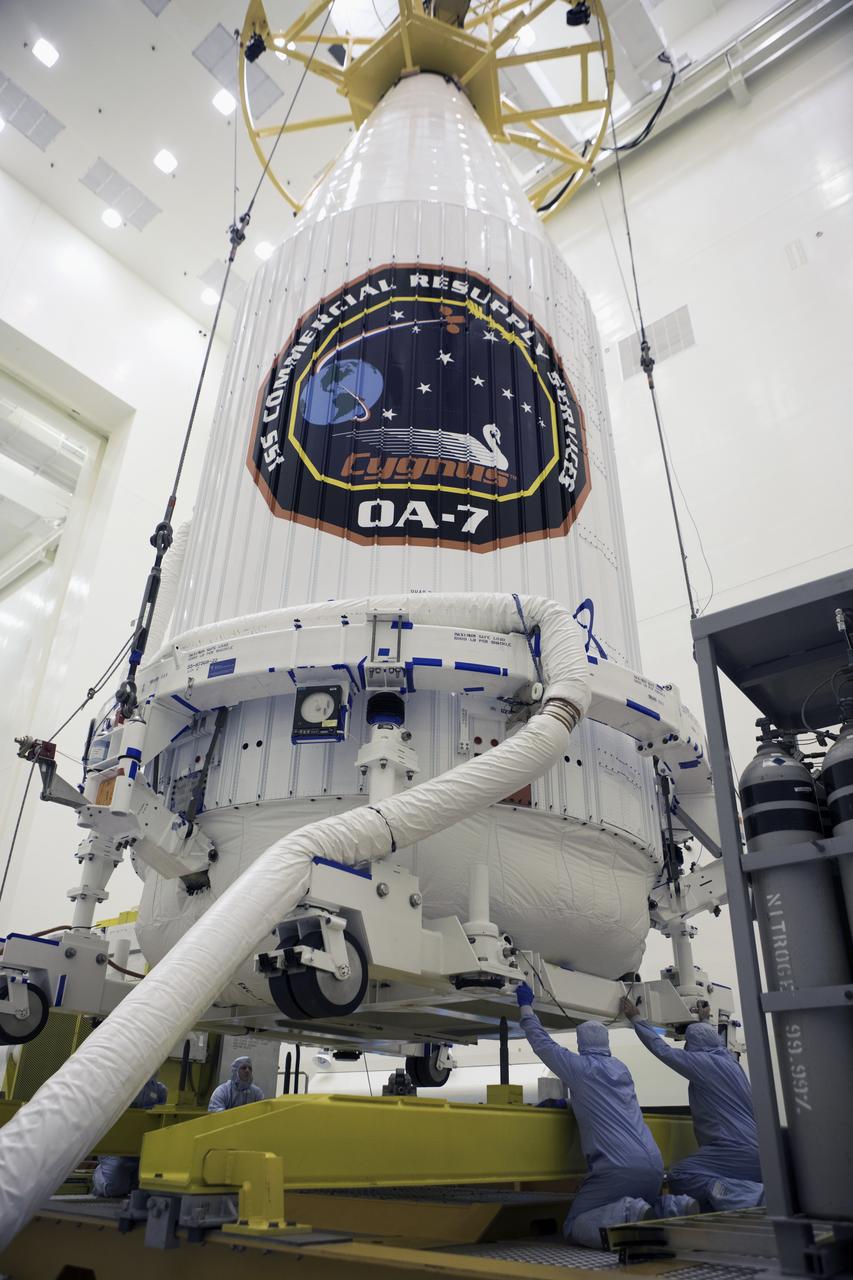
Inside the Payload Hazardous Servicing Facility at NASA's Kennedy Space Center in Florida, technicians assist as a crane lowers the Orbital ATK Cygnus pressurized cargo module, enclosed in its payload fairing, onto a KAMAG transporter. The Orbital ATK CRS-7 commercial resupply services mission to the International Space Station is scheduled to launch atop a United Launch Alliance Atlas V rocket from Space Launch Complex 41 at Cape Canaveral Air Force Station. Cygnus will deliver 7,600 pounds of supplies, equipment and scientific research materials to the space station.
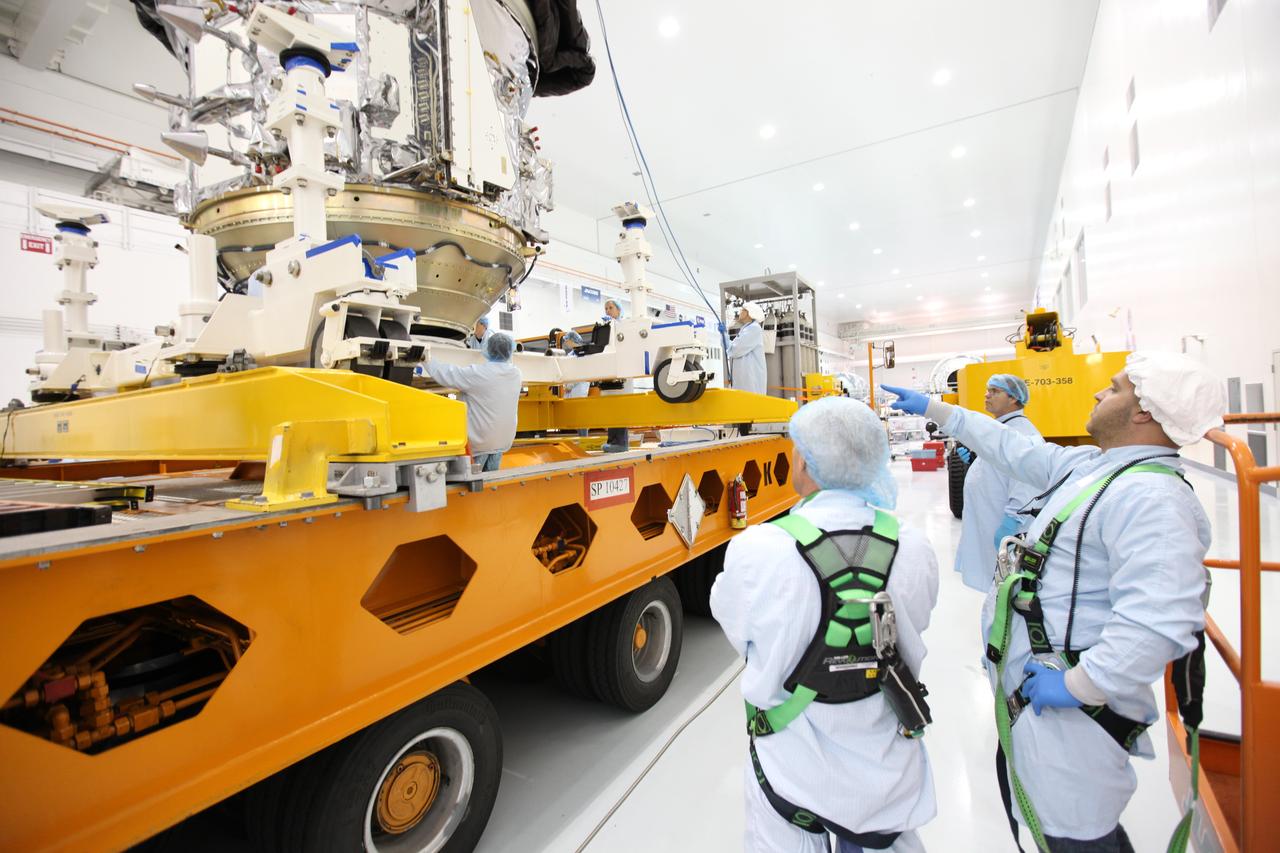
In the Space Station Processing Facility high bay at NASA's Kennedy Space Center in Florida, technicians assist as the Orbital ATK CYGNUS pressurized cargo module is secured on the KAMAG transporter. The module will be transported to the Payload Hazardous Servicing Facility. The Orbital ATK CRS-7 commercial resupply services mission to the International Space Station is scheduled to launch atop a United Launch Alliance Atlas V rocket from Space Launch Complex 41 at Cape Canaveral Air Force Station on March 19, 2017. CYGNUS will deliver thousands of pounds of supplies, equipment and scientific research materials to the space station.
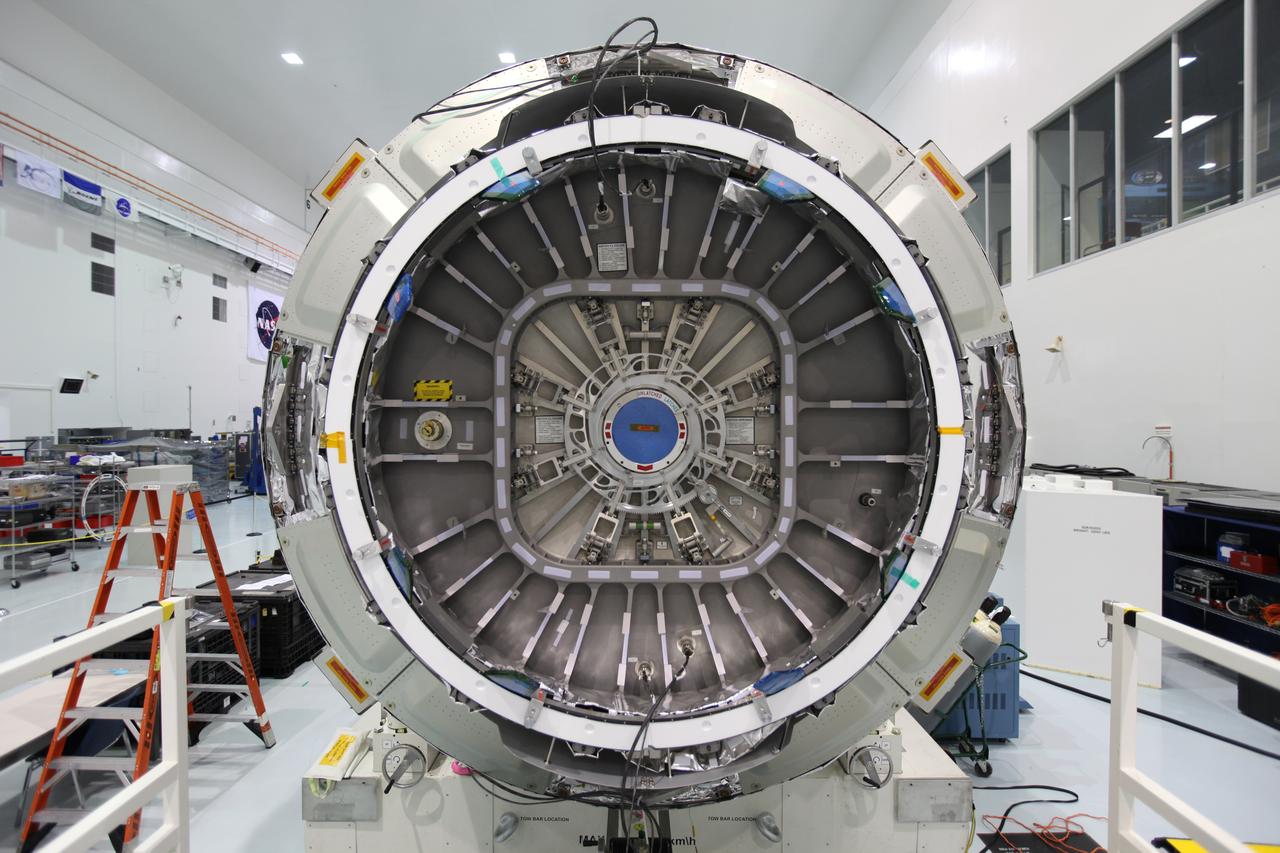
In the Space Station Processing Facility at NASA's Kennedy Space Center in Florida, the hatch has been closed on the Cygnus spacecraft's pressurized cargo module (PCM) for the Orbital ATK CRS-7 mission to the International Space Station. The module will be rotated to vertical for mating to the service module. Scheduled to launch on March 19, 2017, the commercial resupply services mission will lift off atop a United Launch Alliance Atlas V rocket from Space launch Complex 41 at Cape Canaveral Air Force Station.
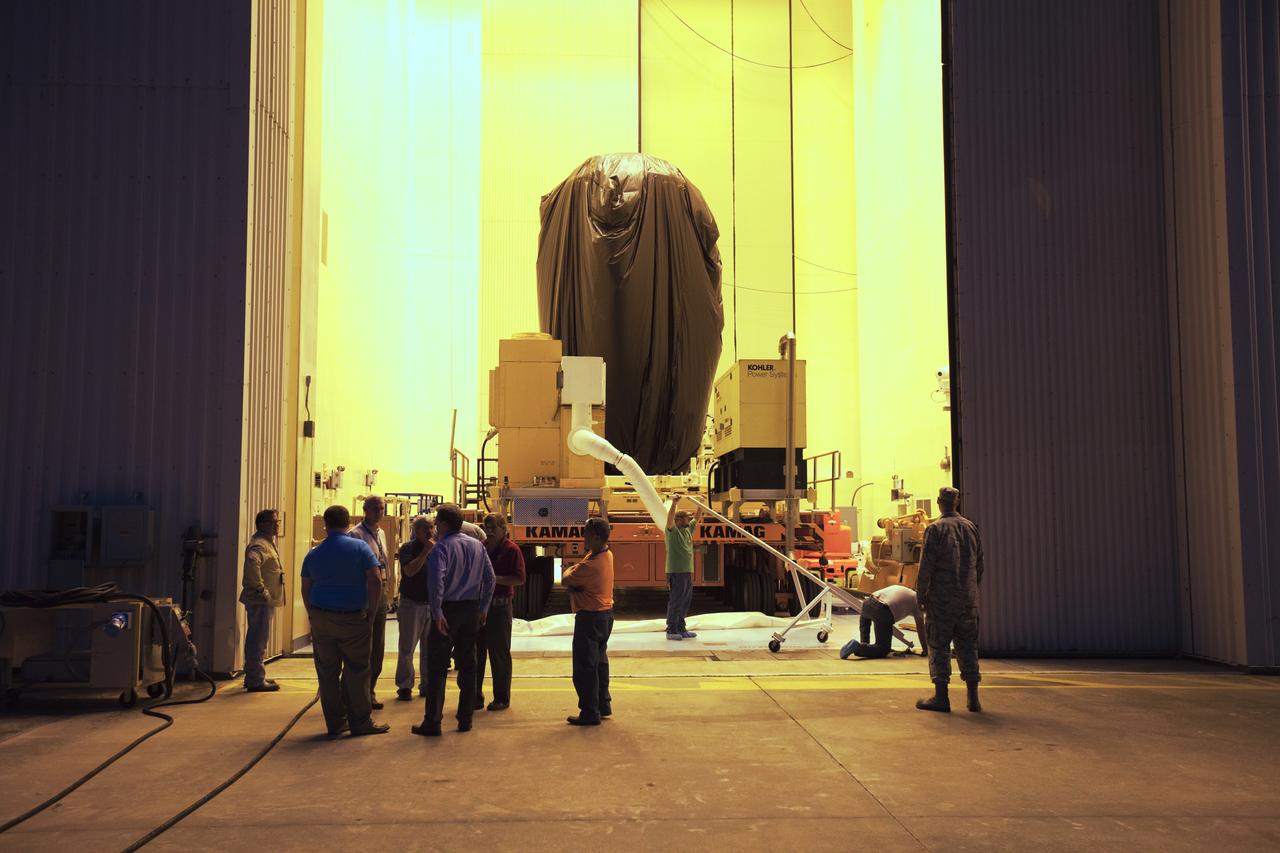
A KAMAG transporter with Orbital ATK's CYGNUS pressurized cargo module secured on top is moved inside the Payload Hazardous Servicing Facility at NASA's Kennedy Space Center in Florida. CYGNUS will be lifted off of the transporter and lowered onto a processing stand for final propellant loading and late cargo stowage. The Orbital ATK CRS-7 commercial resupply services mission to the International Space Station is scheduled to launch atop a United Launch Alliance Atlas V rocket from Space Launch Complex 41 at Cape Canaveral Air Force Station on March 19, 2017. CYGNUS will deliver thousands of pounds of supplies, equipment and scientific research materials to the space station.
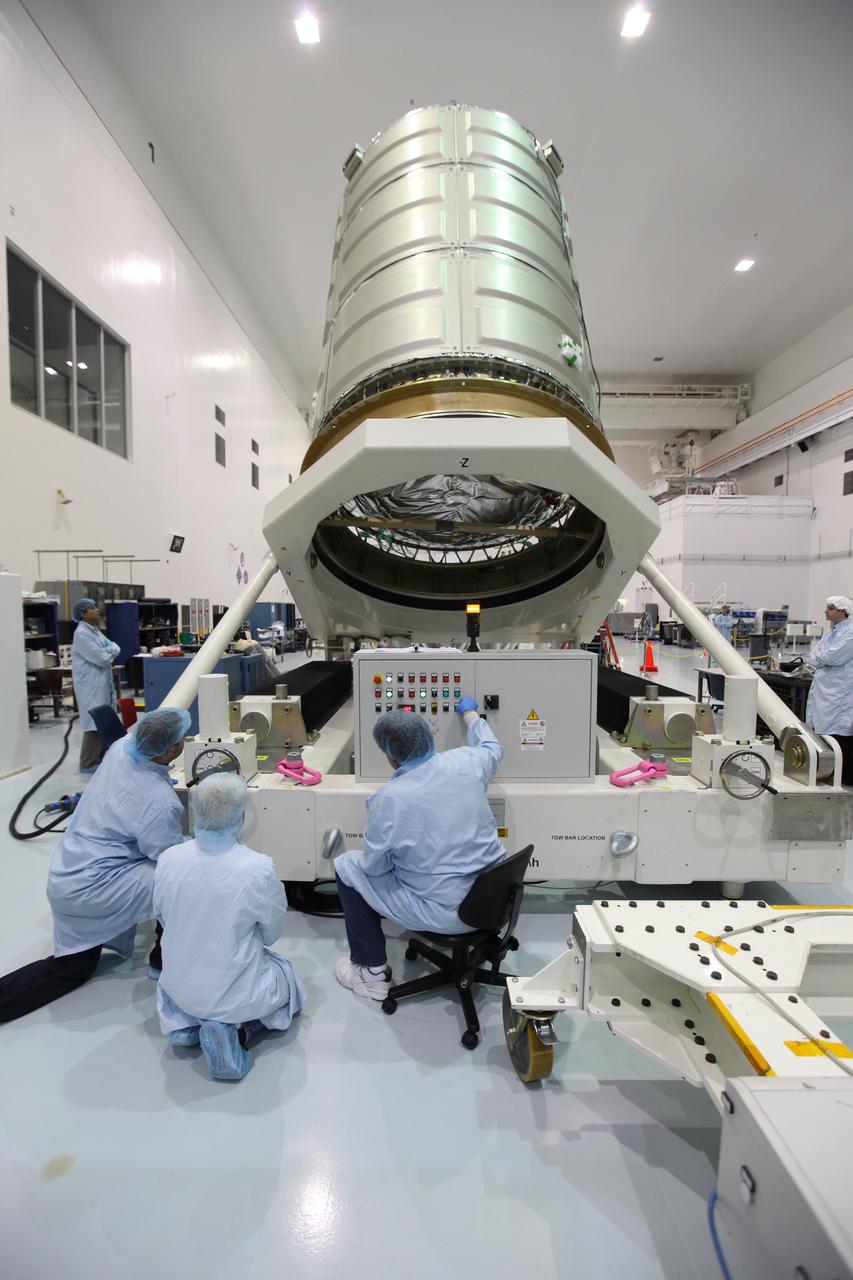
In the Space Station Processing Facility at NASA's Kennedy Space Center in Florida, technicians monitor the progress as the Cygnus spacecraft's pressurized cargo module (PCM) for the Orbital ATK CRS-7 mission to the International Space Station is rotated to vertical for mating to the service module. Scheduled to launch on March 19, 2017, the commercial resupply services mission will lift off atop a United Launch Alliance Atlas V rocket from Space launch Complex 41 at Cape Canaveral Air Force Station.
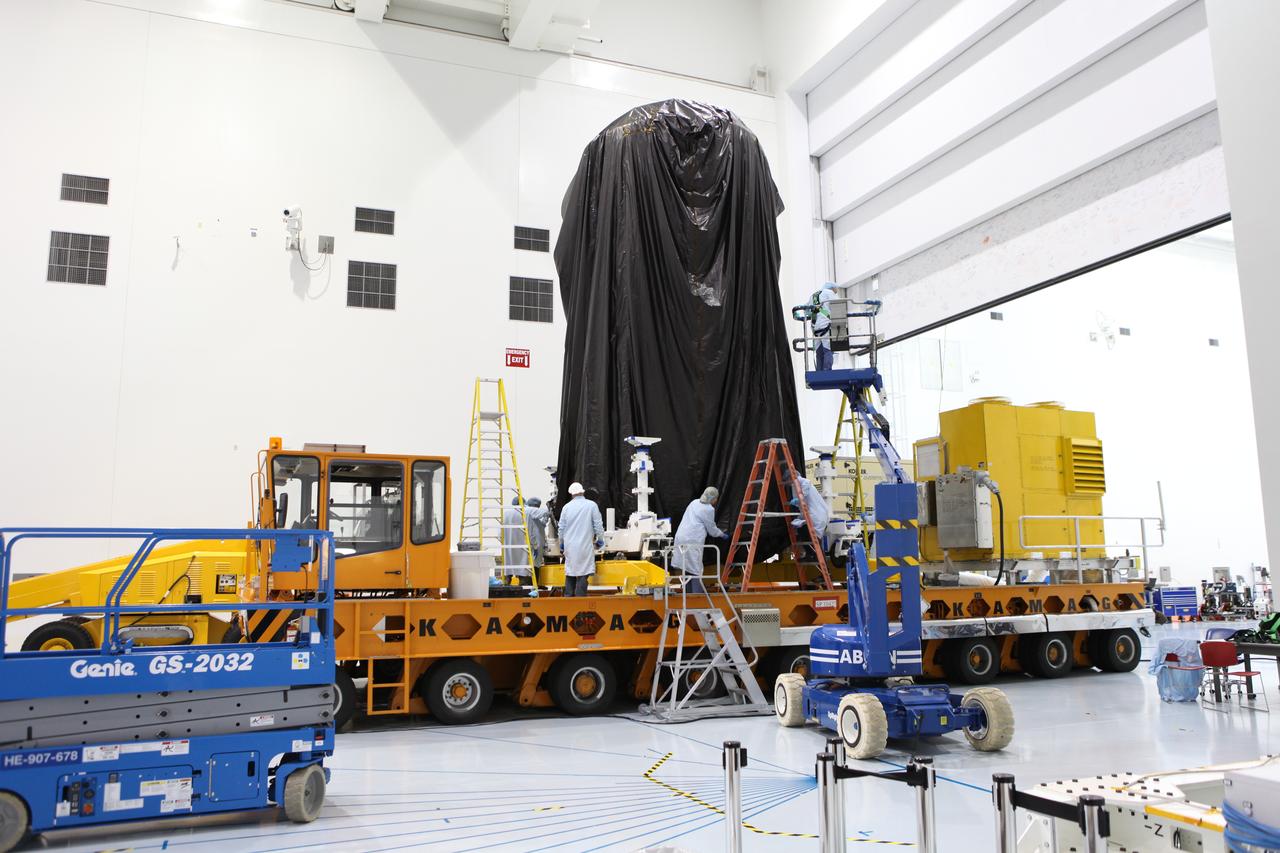
In the Space Station Processing Facility high bay at NASA's Kennedy Space Center in Florida, the Orbital ATK CYGNUS pressurized cargo module is secured the KAMAG transporter and the crane has been removed. Technicians have secured the protective covering around CYGNUS. The module will be transported to the Payload Hazardous Servicing Facility. The Orbital ATK CRS-7 commercial resupply services mission to the International Space Station is scheduled to launch atop a United Launch Alliance Atlas V rocket from Space Launch Complex 41 at Cape Canaveral Air Force Station on March 19, 2017. CYGNUS will deliver thousands of pounds of supplies, equipment and scientific research materials to the space station.
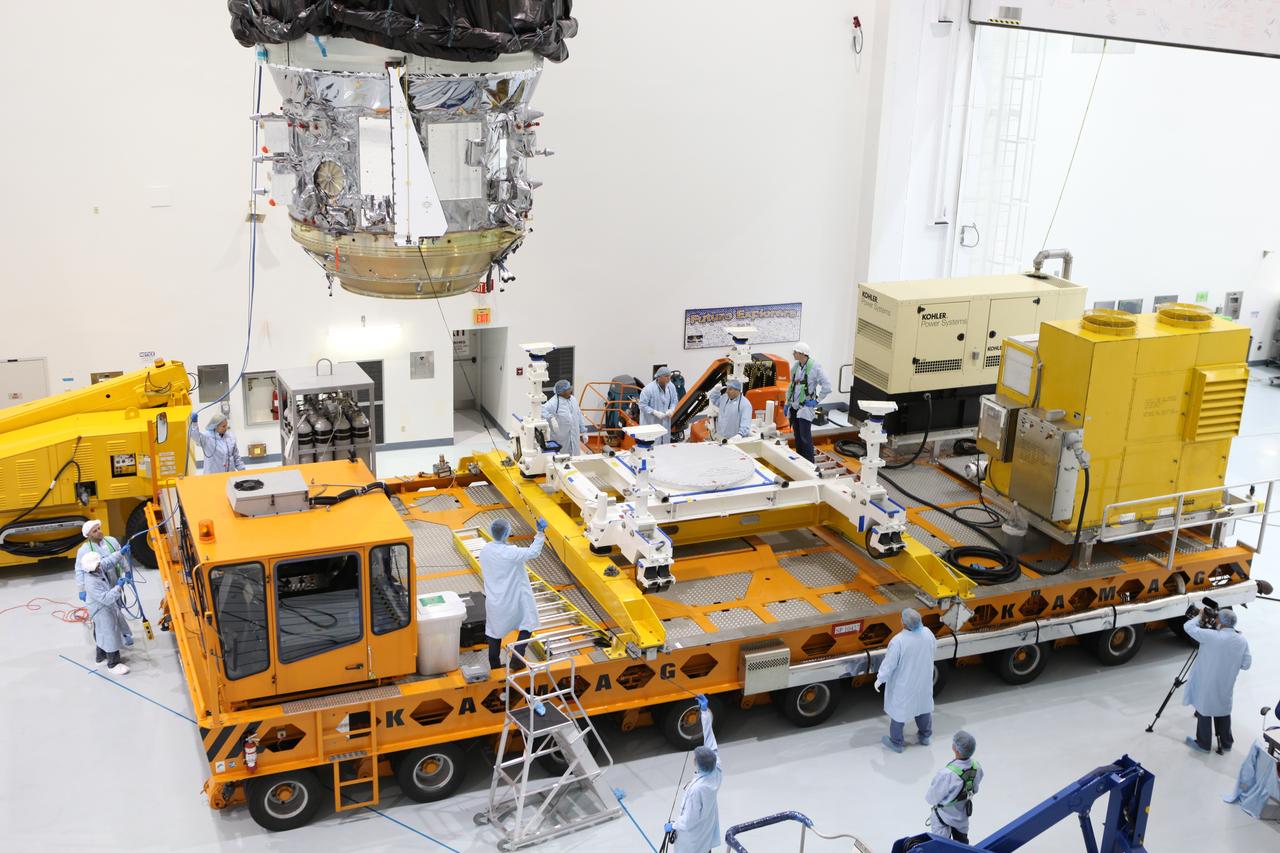
In the Space Station Processing Facility high bay at NASA's Kennedy Space Center in Florida, technicians monitor the progress as a crane moves the Orbital ATK CYGNUS pressurized cargo module closer to the KAMAG transporter. The module will be secured on the transporter and moved to the Payload Hazardous Servicing Facility. The Orbital ATK CRS-7 commercial resupply services mission to the International Space Station is scheduled to launch atop a United Launch Alliance Atlas V rocket from Space Launch Complex 41 at Cape Canaveral Air Force Station on March 19, 2017. CYGNUS will deliver thousands of pounds of supplies, equipment and scientific research materials to the space station.
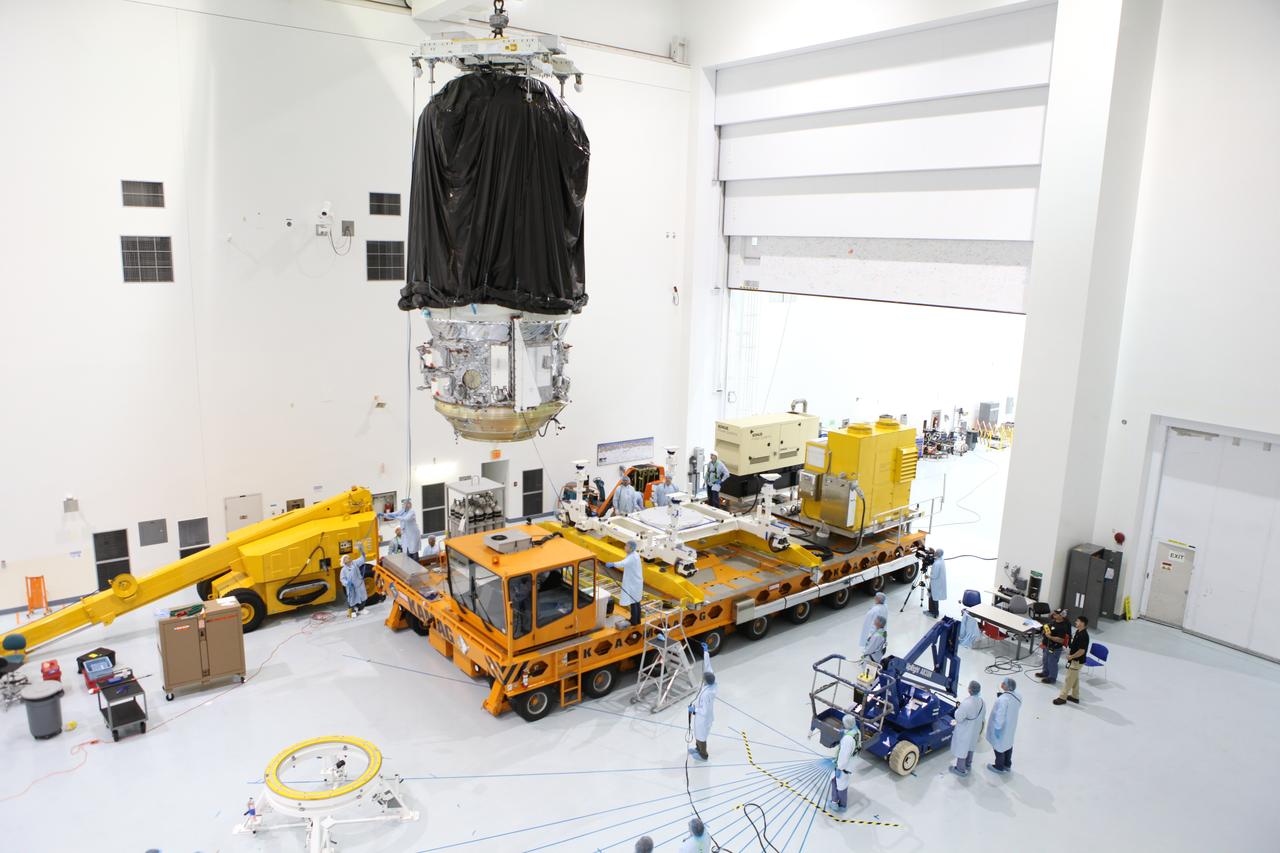
In the Space Station Processing Facility at NASA's Kennedy Space Center in Florida, a crane moves the Orbital ATK CYGNUS pressurized cargo module to the KAMAG transporter. The module will be secured on the transporter and moved to the Payload Hazardous Servicing Facility. The Orbital ATK CRS-7 commercial resupply services mission to the International Space Station is scheduled to launch atop a United Launch Alliance Atlas V rocket from Space Launch Complex 41 at Cape Canaveral Air Force Station on March 19, 2017. CYGNUS will deliver thousands of pounds of supplies, equipment and scientific research materials to the space station.
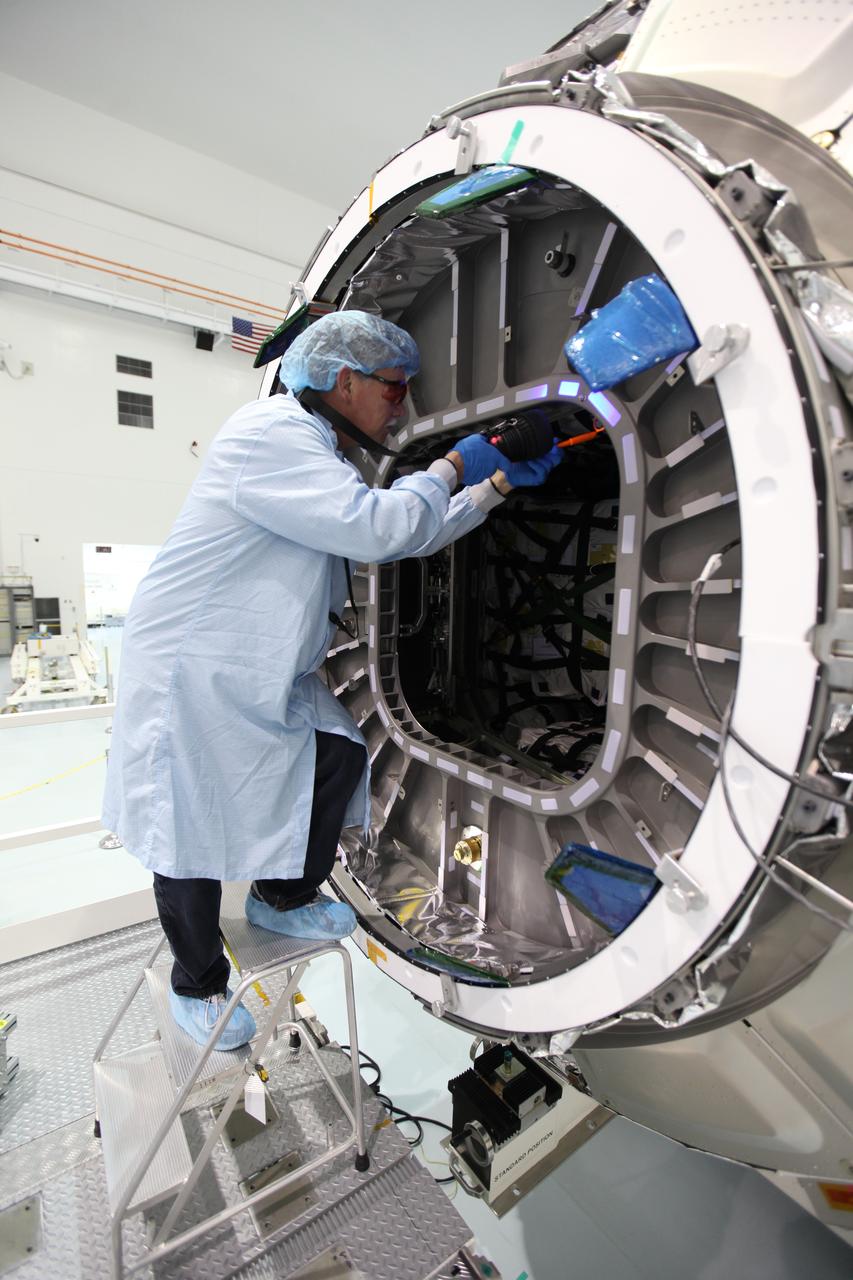
In the Space Station Processing Facility at NASA's Kennedy Space Center in Florida, preparations are underway to close the hatch of the Cygnus spacecraft's pressurized cargo module (PCM) for the Orbital ATK CRS-7 mission to the International Space Station. Scheduled to launch on March 19, 2017, the commercial resupply services mission will lift off atop a United Launch Alliance Atlas V rocket from Space launch Complex 41 at Cape Canaveral Air Force Station.
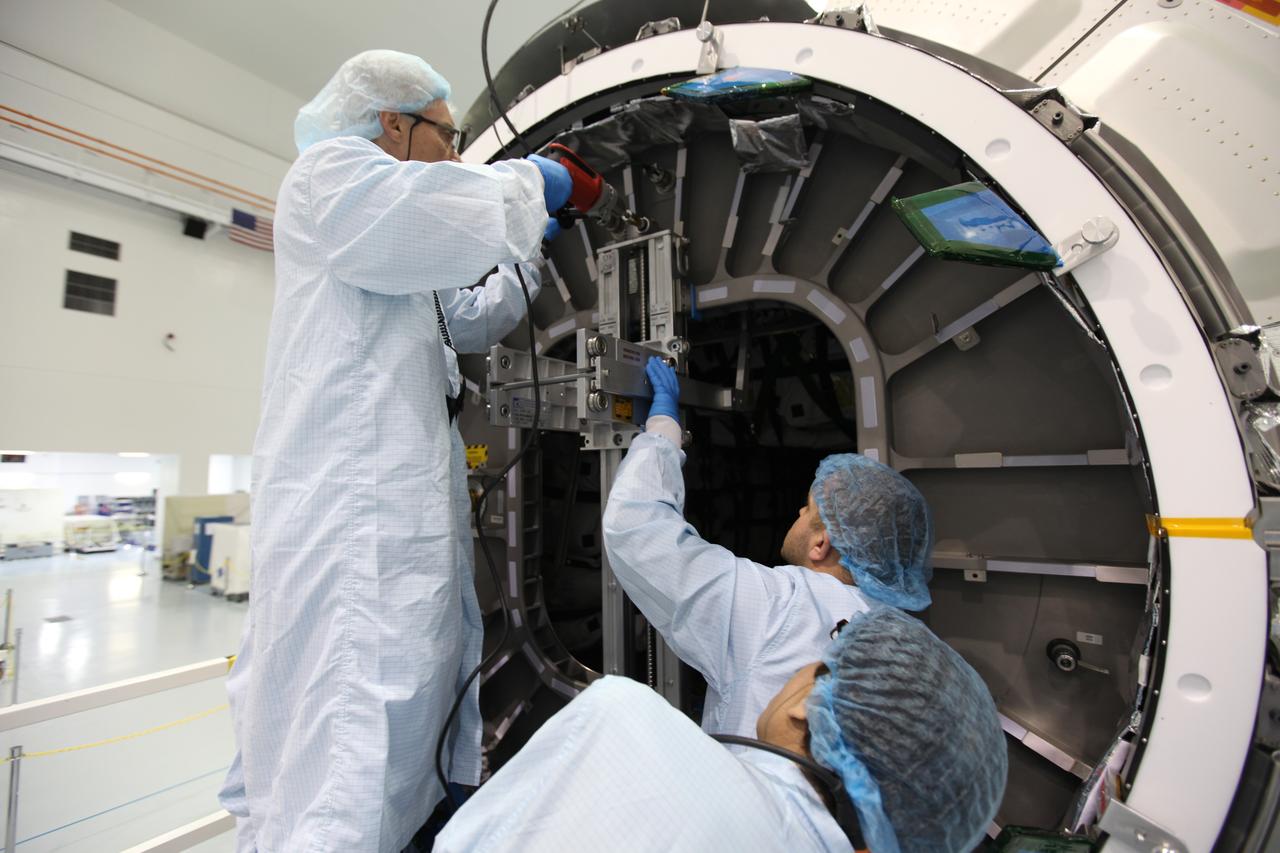
In the Space Station Processing Facility at NASA's Kennedy Space Center in Florida, technicians help secure the hatch for closure on the Cygnus spacecraft's pressurized cargo module (PCM) for the Orbital ATK CRS-7 mission to the International Space Station. Scheduled to launch on March 19, 2017, the commercial resupply services mission will lift off atop a United Launch Alliance Atlas V rocket from Space launch Complex 41 at Cape Canaveral Air Force Station.
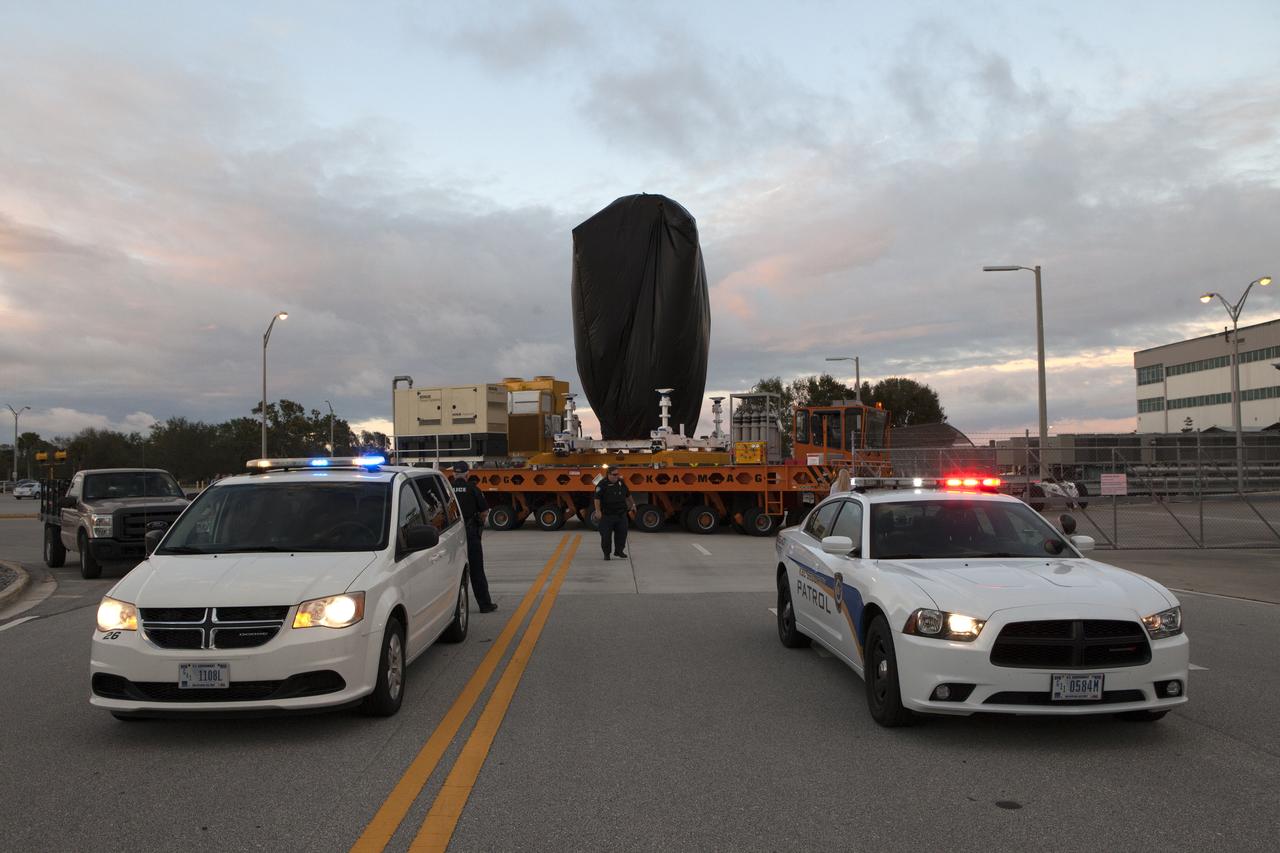
A KAMAG transporter with Orbital ATK's CYGNUS pressurized cargo module secured on top departs the Space Station Processing Facility at NASA's Kennedy Space Center in Florida. CYGNUS will be transported to the Payload Hazardous Servicing Facility for final propellant loading and late cargo stowage. The Orbital ATK CRS-7 commercial resupply services mission to the International Space Station is scheduled to launch atop a United Launch Alliance Atlas V rocket from Space Launch Complex 41 at Cape Canaveral Air Force Station on March 19, 2017. CYGNUS will deliver thousands of pounds of supplies, equipment and scientific research materials to the space station.
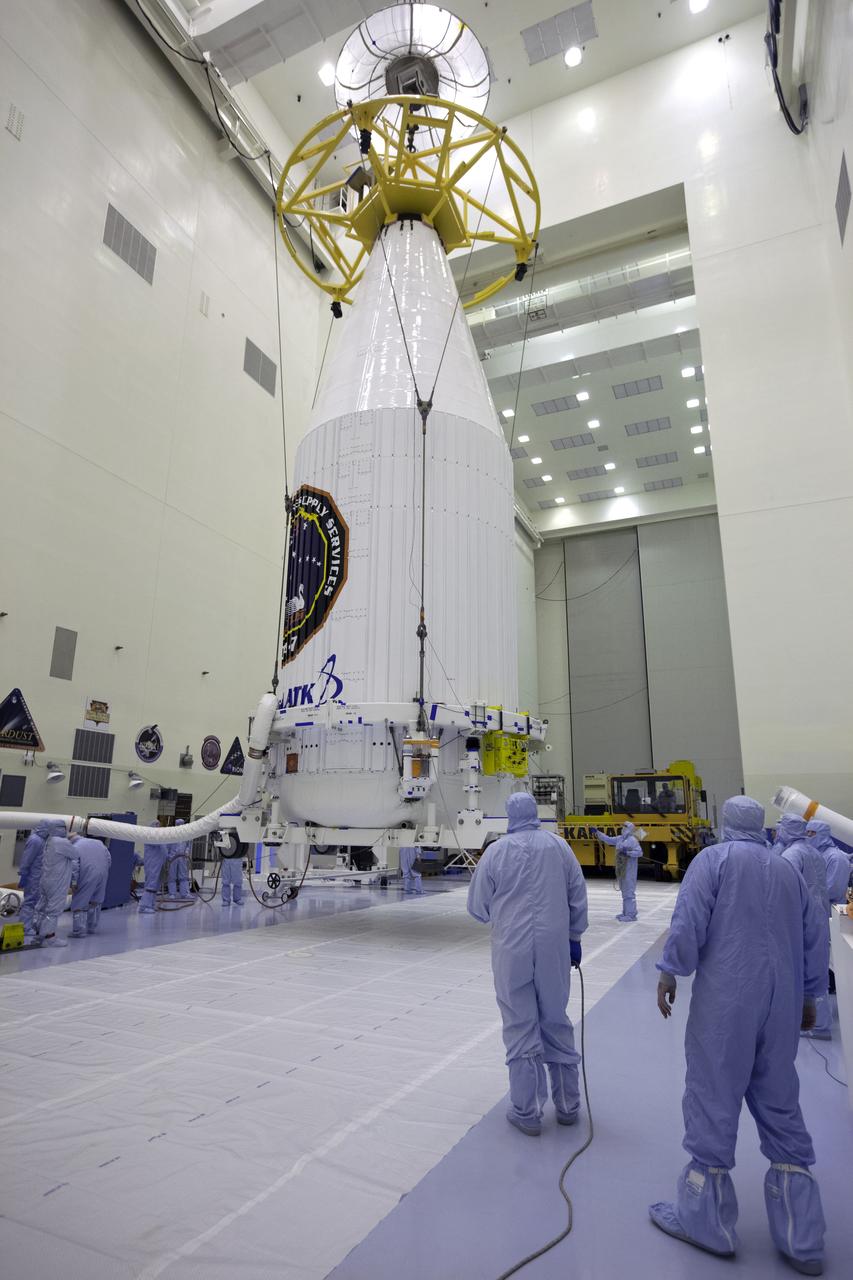
Inside the Payload Hazardous Servicing Facility at NASA's Kennedy Space Center in Florida, technicians monitor the progress as a crane is used to lift the Orbital ATK Cygnus pressurized cargo module, enclosed in its payload fairing, for transfer to a KAMAG transporter. The Orbital ATK CRS-7 commercial resupply services mission to the International Space Station is scheduled to launch atop a United Launch Alliance Atlas V rocket from Space Launch Complex 41 at Cape Canaveral Air Force Station. Cygnus will deliver 7,600 pounds of supplies, equipment and scientific research materials to the space station.
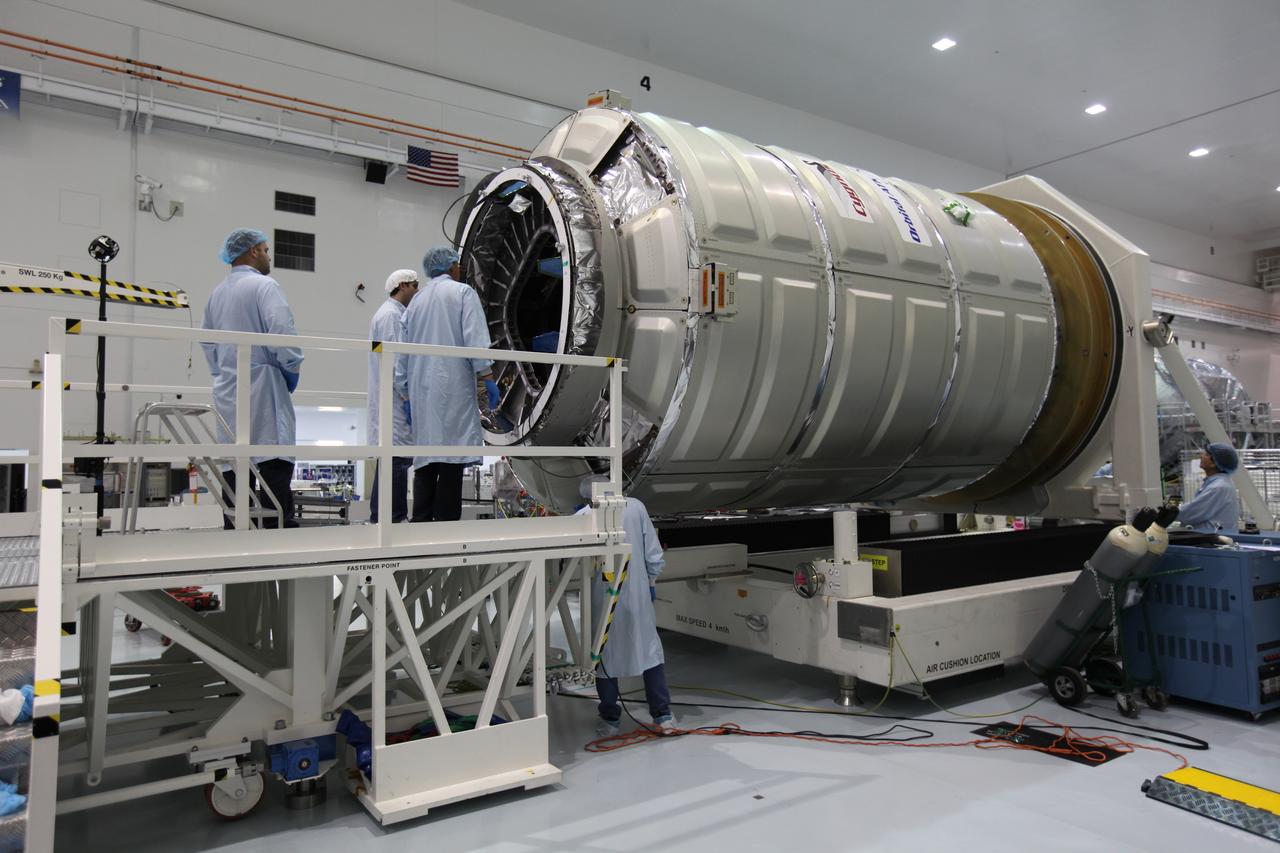
In the Space Station Processing Facility at NASA's Kennedy Space Center in Florida, technicians help prepare the hatch for closure on the Cygnus spacecraft's pressurized cargo module (PCM) for the Orbital ATK CRS-7 mission to the International Space Station. Scheduled to launch on March 19, 2017, the commercial resupply services mission will lift off atop a United Launch Alliance Atlas V rocket from Space launch Complex 41 at Cape Canaveral Air Force Station.